The Orion team visits Major Tool and Machine in Indianapolis, Indiana to see the progress on the cone panel for the Artemis I Orion spacecraft on June 10, 2015. Part of Batch image transfer from Flickr.
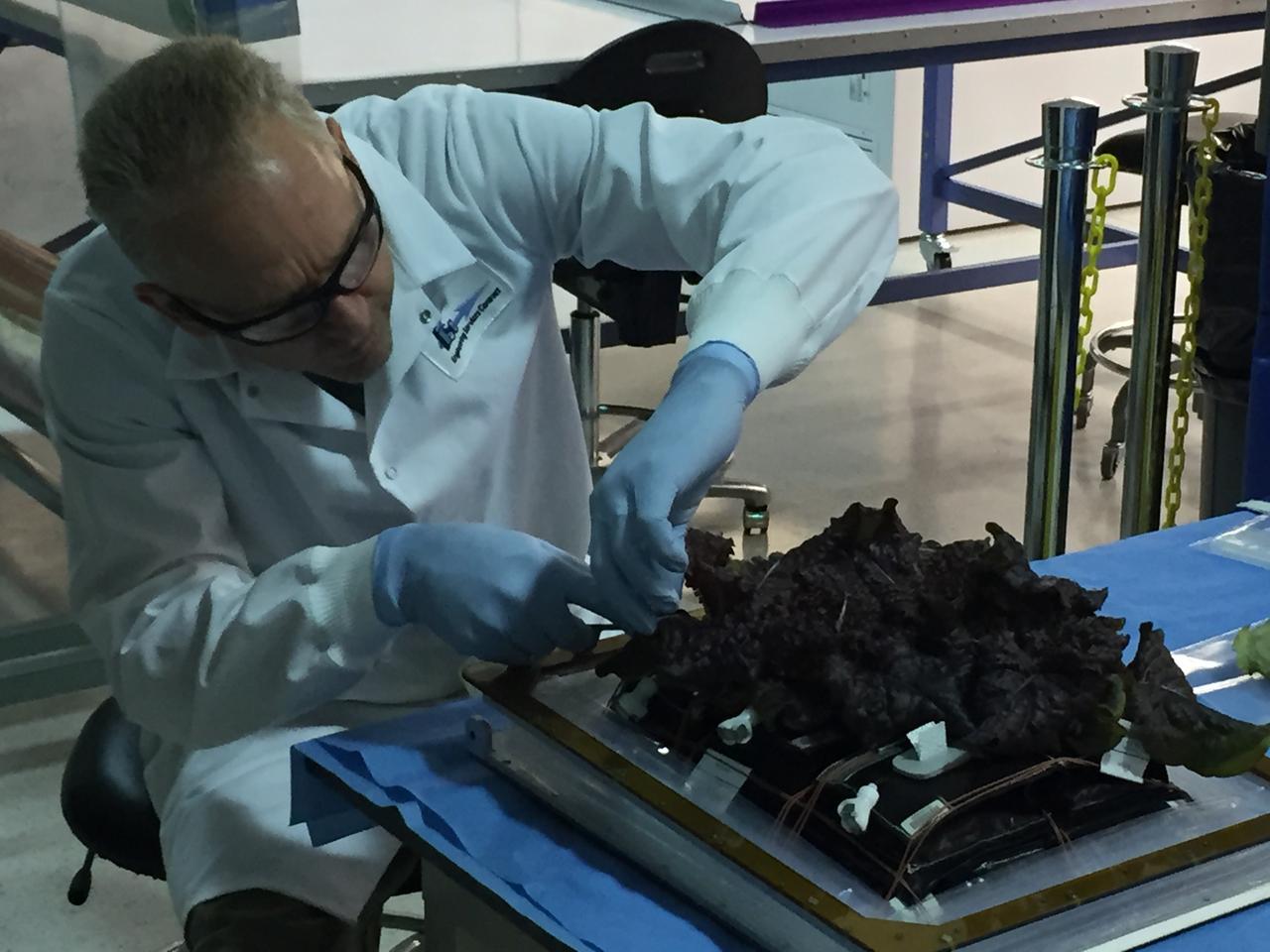
Astronaut Scott Kelly initiated VEG-01 B, the second crop of lettuce, on July, 8, 2015, and both Kelly and Astronaut Kjell Lindgren cared for the plants. The crop grew for 33 days. VEG-01 B included one set of six plant pillows planted with red romaine lettuce seeds. On Aug. 10, 2015, the crew harvested and consumed leaves from each plant. This was the first crop grown and consumed in NASA hardware. They harvested the rest of the plant tissue and froze it in the station’s Minus Eighty-Degree Laboratory Freezer for ISS (MELFI) for return to Earth for further study including microbial analysis, antioxidant capacity, mineral analysis and anthocyanin concentration.
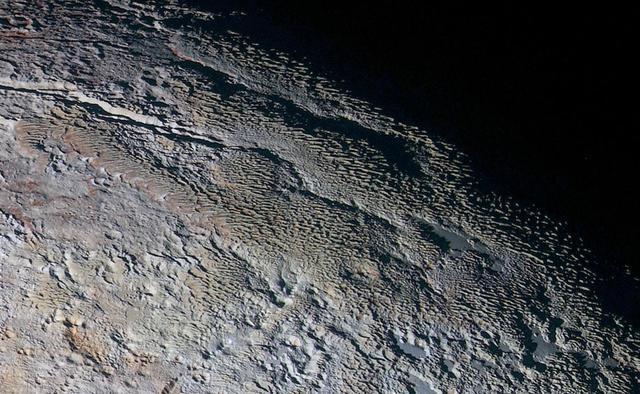
In this extended color image of Pluto taken by NASA New Horizons spacecraft, rounded and bizarrely textured mountains, informally named the Tartarus Dorsa, rise up along Pluto's day-night terminator and show intricate but puzzling patterns of blue-gray ridges and reddish material in between. This view, roughly 330 miles (530 kilometers) across, combines blue, red and infrared images taken by the Ralph/Multispectral Visual Imaging Camera (MVIC) on July 14, 2015, and resolves details and colors on scales as small as 0.8 miles (1.3 kilometers). http://photojournal.jpl.nasa.gov/catalog/PIA19957
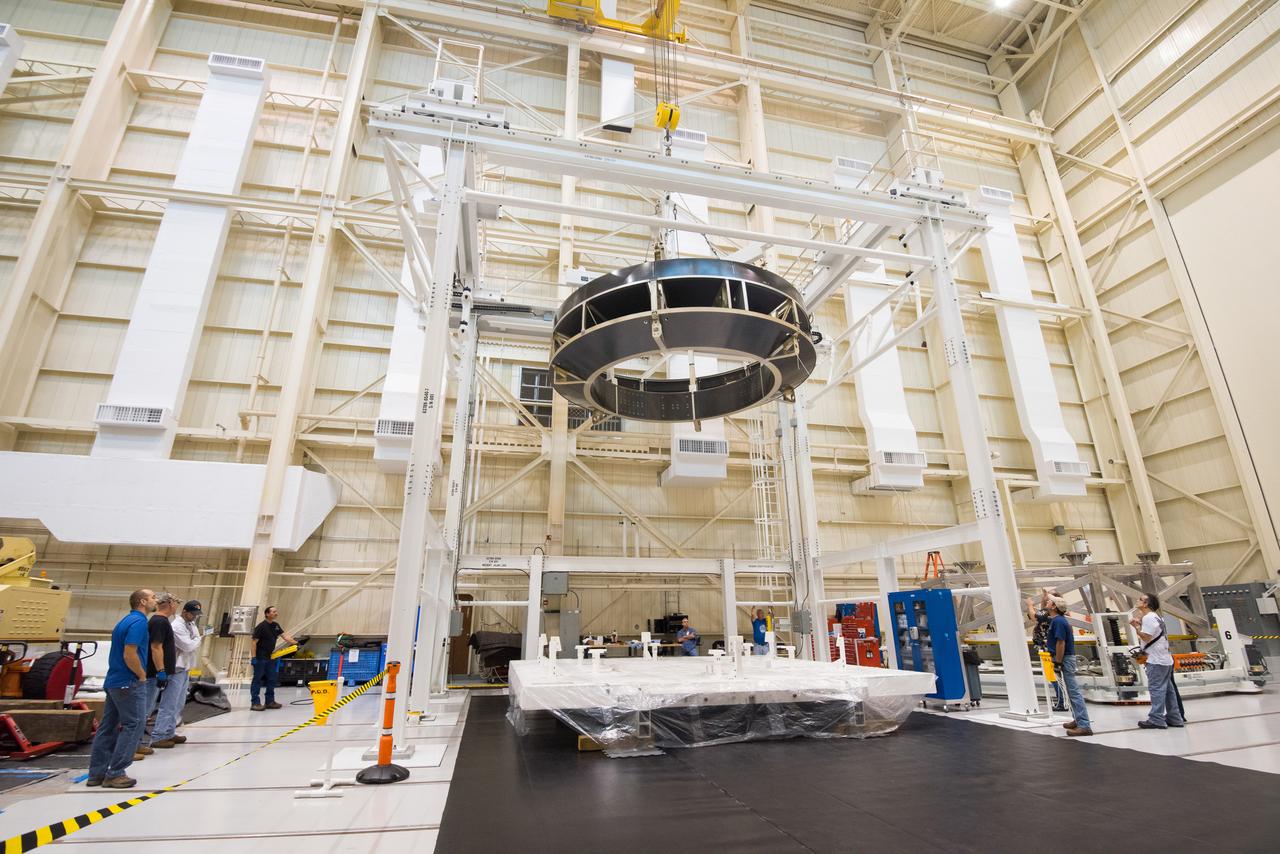
Engineers lift the Orion Crew Module Adapter Structural Test Article into the test stand at NASA Glenn Research Center Plum Brook Facility on Sept. 23, 2015. Part of Batch image transfer from Flickr.
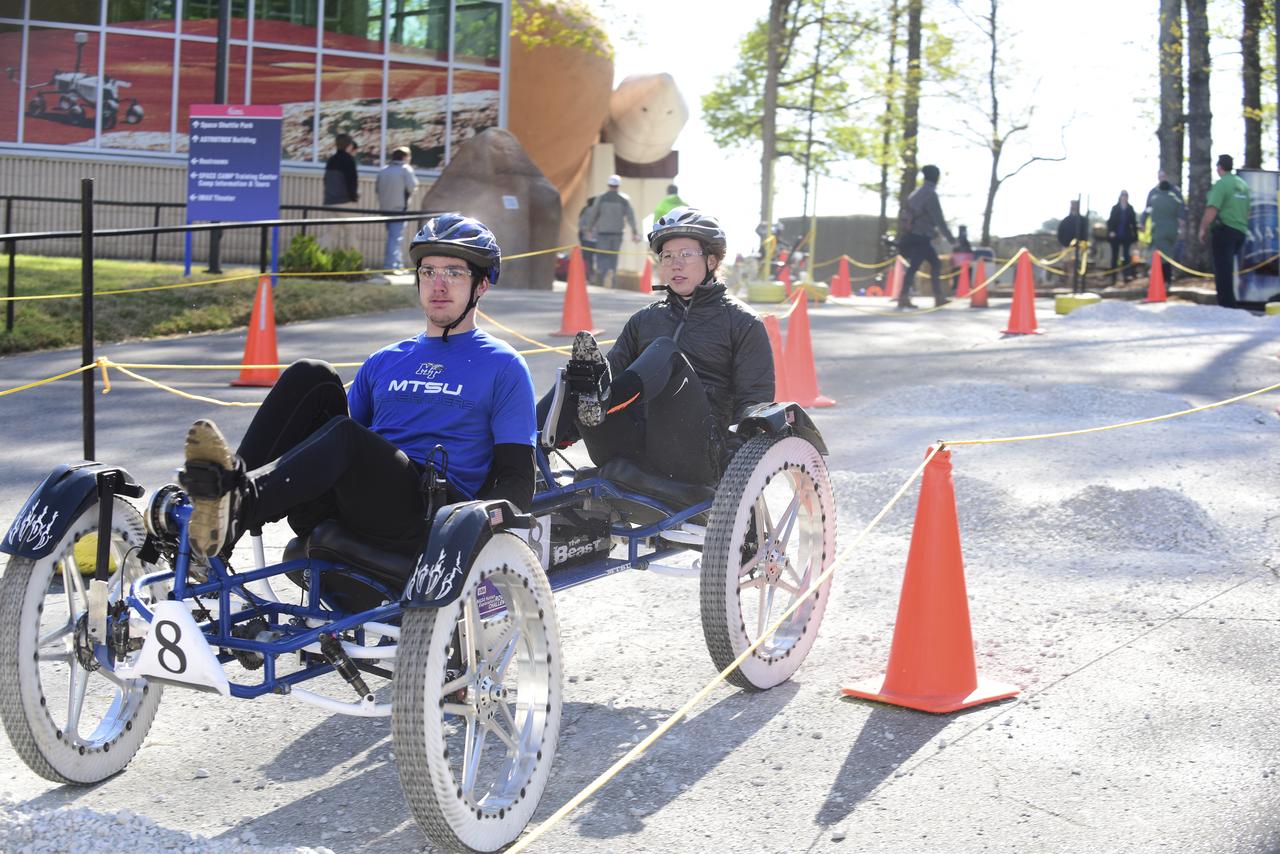
2016 ROVER CHALLENGE EVENTS AT THE U.S. SPACE AND ROCKET CENTER IN HUNTSVILLE, ALABAMA. NATIONAL AND INTERNATIONAL COLLEGE AND HIGH SCHOOL STUDENTS COME TOGETHER TO TEST THEIR ENGINEERING SKILLS OVER A SIMULATED OUTER PLANET OBSTACLE COURSE.
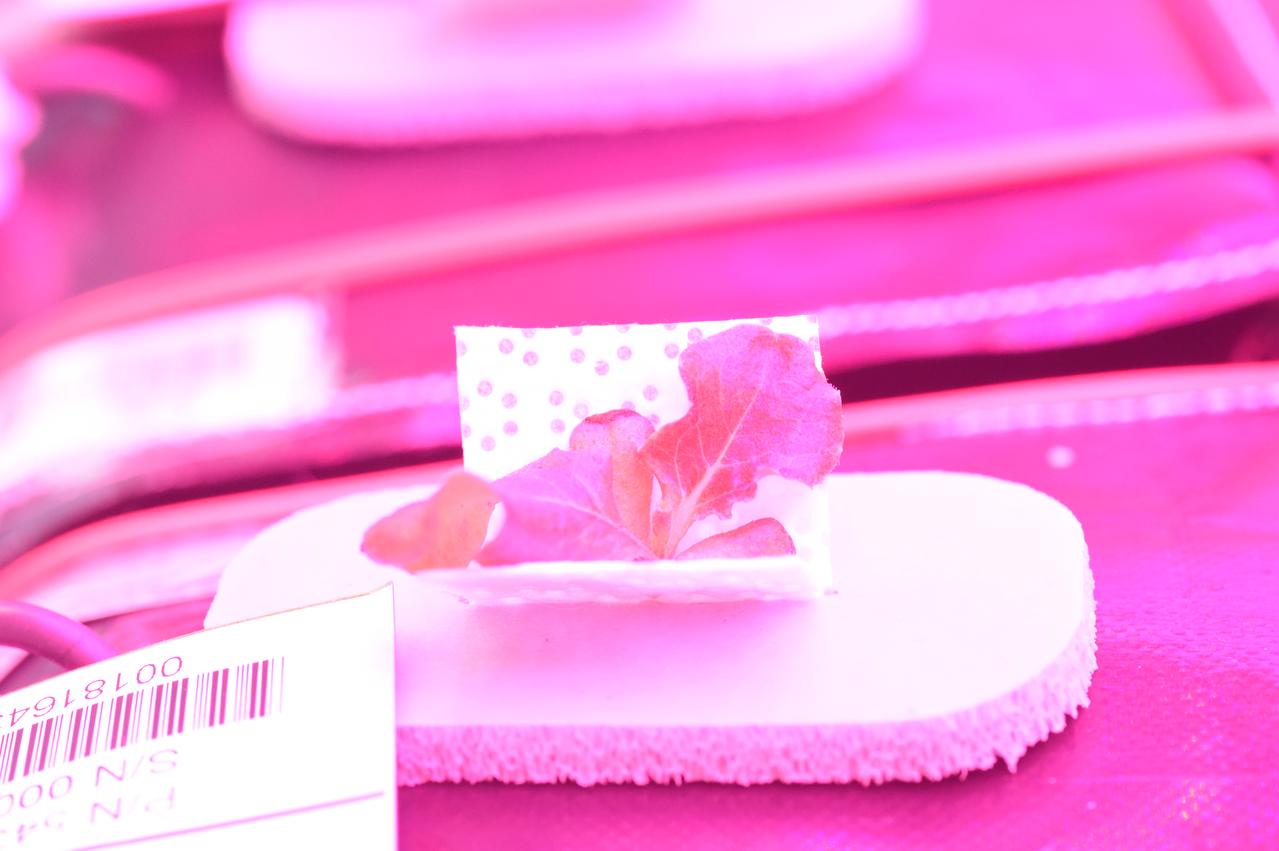
Astronaut Scott Kelly initiated VEG-01 B, the second crop of lettuce, on July, 8, 2015, and both Kelly and Astronaut Kjell Lindgren cared for the plants. The crop grew for 33 days. VEG-01 B included one set of six plant pillows planted with red romaine lettuce seeds. On Aug. 10, 2015, the crew harvested and consumed leaves from each plant. This was the first crop grown and consumed in NASA hardware. They harvested the rest of the plant tissue and froze it in the station’s Minus Eighty-Degree Laboratory Freezer for ISS (MELFI) for return to Earth for further study including microbial analysis, antioxidant capacity, mineral analysis and anthocyanin concentration.
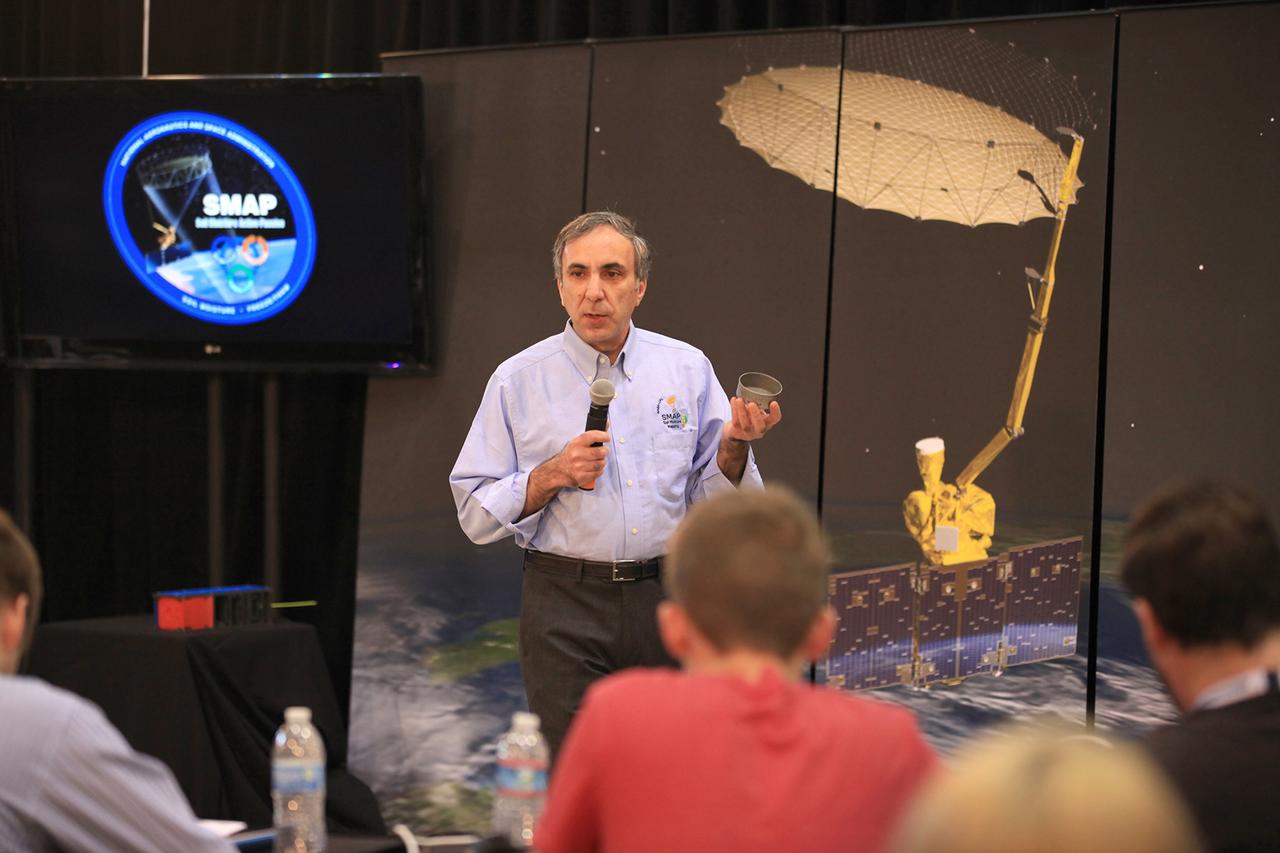
VANDENBERG AIR FORCE BASE, Calif. – Dara Entekhabi, science team leader at the Massachusetts Institute of Technology in Cambridge, Massachusetts, discusses the science and engineering of NASA's Soil Moisture Active Passive mission, or SMAP, with the audience of a NASA Social held at Vandenberg Air Force Base in California. This NASA Social brought together mission scientists and engineers with an audience of 70 students, educators, social media managers, bloggers, photographers and videographers who were selected from a pool of 325 applicants from 45 countries to participate in launch activities and communicate their experience with social media followers. The SMAP mission is scheduled to launch from Vandenberg on Jan. 29. To learn more about SMAP, visit http://www.nasa.gov/smap. Photo credit: NASA/Kim Shiflett
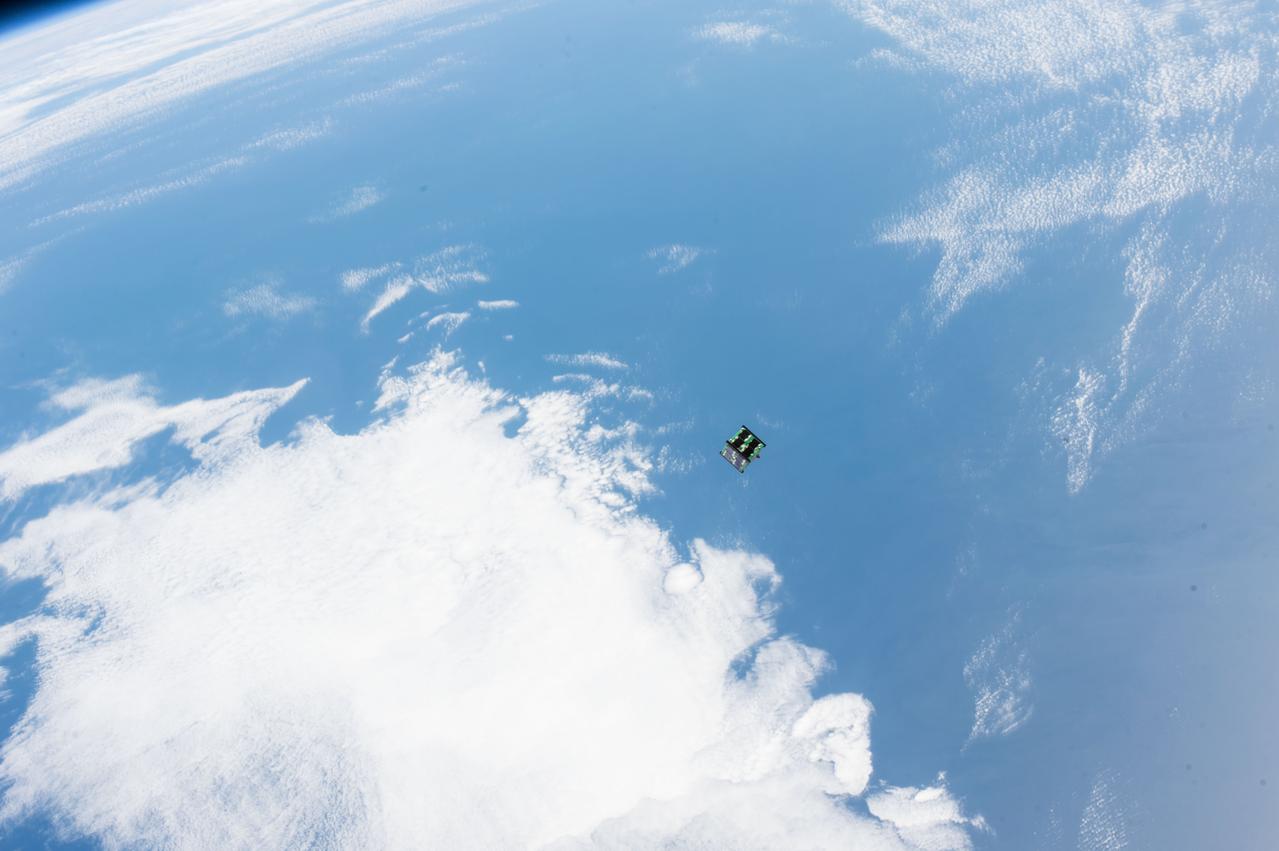
iss042e222241 (2/5/2015) --- Photographic documentation of the JEM Small Satellite Orbital Deployer-3 (J-SSOD-3) mission deploy of the CubeSat AESP-14 from Kibo. The satellite was developed by the Technological Institute of Aeronautics (ITA), with support from the Brazilian Space Agency (AEB), and the National Institute for Space Research (INPE).

Astronaut Scott Kelly initiated VEG-01 B, the second crop of lettuce, on July, 8, 2015, and both Kelly and Astronaut Kjell Lindgren cared for the plants. The crop grew for 33 days. VEG-01 B included one set of six plant pillows planted with red romaine lettuce seeds. On Aug. 10, 2015, the crew harvested and consumed leaves from each plant. This was the first crop grown and consumed in NASA hardware. They harvested the rest of the plant tissue and froze it in the station’s Minus Eighty-Degree Laboratory Freezer for ISS (MELFI) for return to Earth for further study including microbial analysis, antioxidant capacity, mineral analysis and anthocyanin concentration.
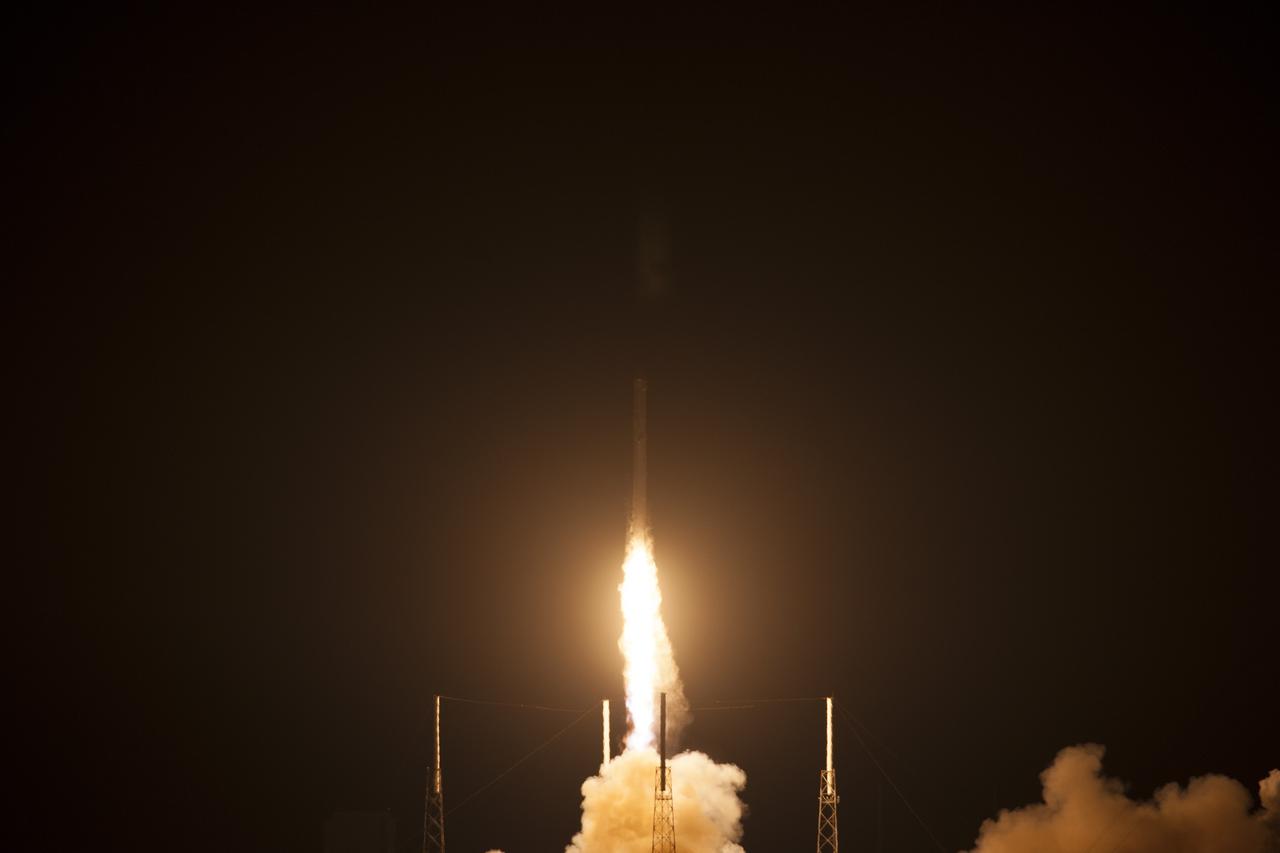
CAPE CANAVERAL, Fla. – SpaceX rocket lifts off from Space Launch Complex 40 at Cape Canaveral Air Force Station carrying the Dragon resupply spacecraft to the International Space Station. Liftoff was at 4:47 a.m. EST. The commercial resupply mission will deliver 3,700 pounds of scientific experiments, technology demonstrations and supplies, including critical materials to support 256 science and research investigations that will take place on the space station. Photo credit: NASA/Tony Gray
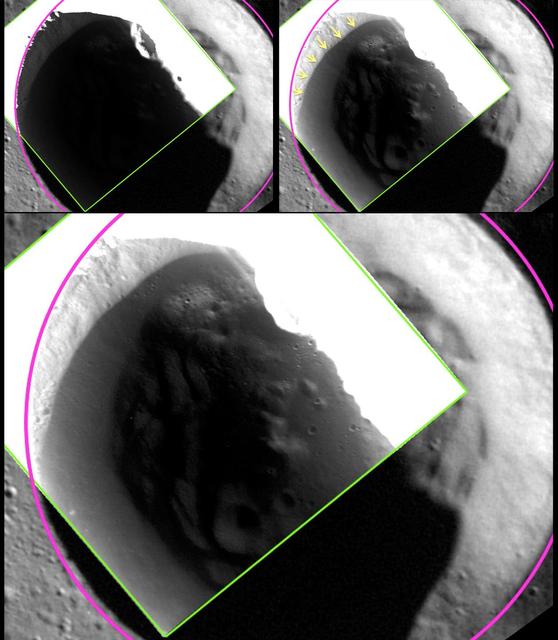
The image shown here was acquired at 24 m/pixel, the highest resolution that has been obtained for any of Mercury's shadowed polar craters. The top left panel shows a view of an unnamed crater in Mercury's north polar region, with the crater rim outlined in pink and the edge of the 24-meter/pixel, low-altitude broadband MDIS image in green. In the large bottom panel, a different stretch has been applied to the same MDIS broadband image, revealing details of the shadowed surface inside the crater. In particular, as highlighted with yellow arrows in the top right panel, the image reveals a region inside the crater that has a lower reflectance. The edge of the low-reflectance region has a sharp and well-defined boundary, even as imaged at this highest resolution of 24 m/pixel. The sharp boundary suggests that the low-reflectance material is sufficiently young to have preserved a sharp boundary against lateral mixing by impact craters. The sharp boundary matches the location predicted by temperature models for the stability of a surficial layer of volatile, organic-rich material tens of centimeters thick that overlies a thicker layer of water ice. http://photojournal.jpl.nasa.gov/catalog/PIA19253
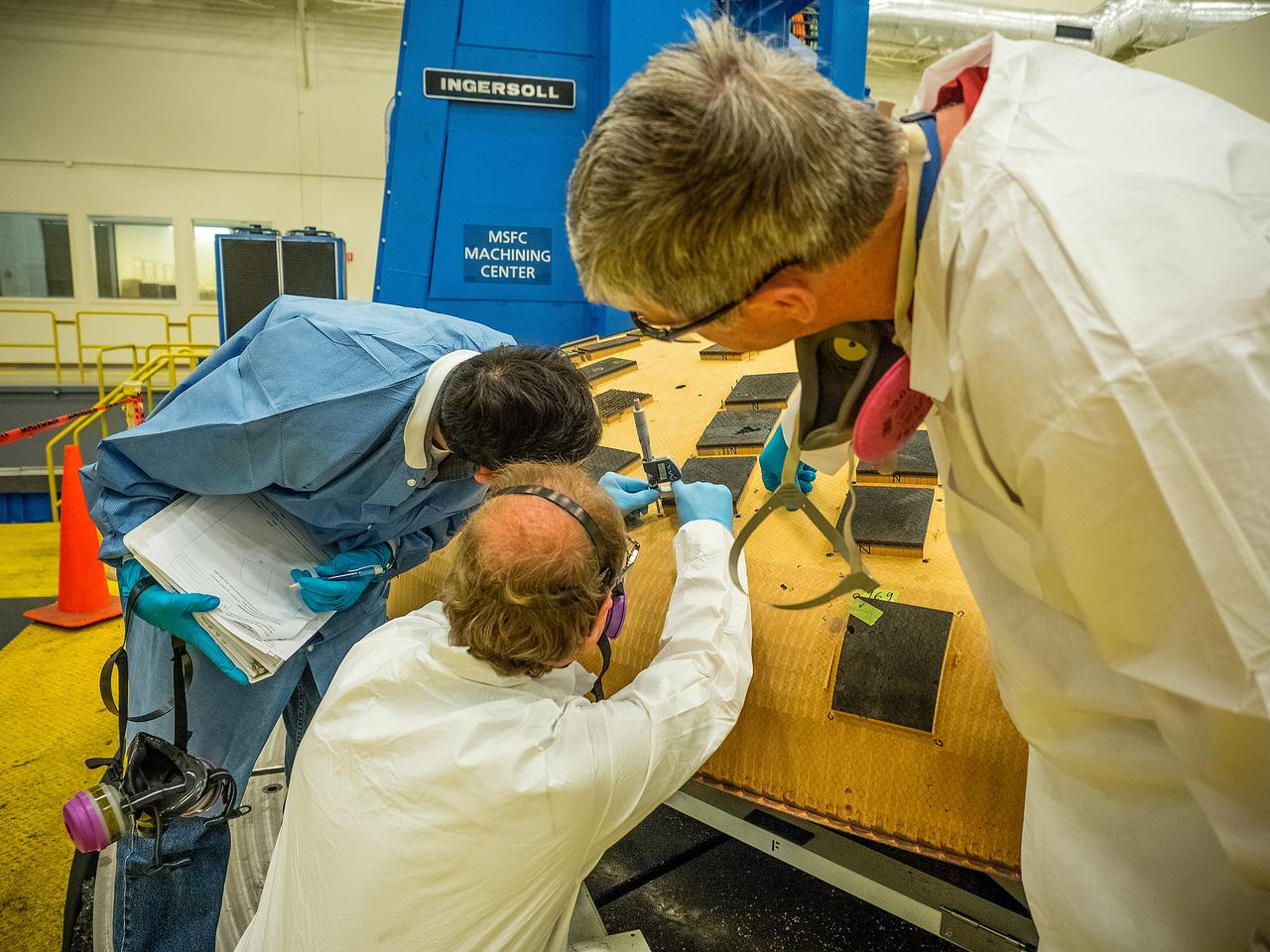
Engineers from NASA's Ames Research Center at Moffett Field, California, and Marshall Space Flight Center in Huntsville, Alabama, remove samples on May 4, 2015, from Orion's heat shield which flew on Exploration Flight Test-1 (EFT-1) in 2014. The heat shield protected the spacecraft from temperatures reaching 4000 degrees F. Part of Batch image transfer from Flickr.

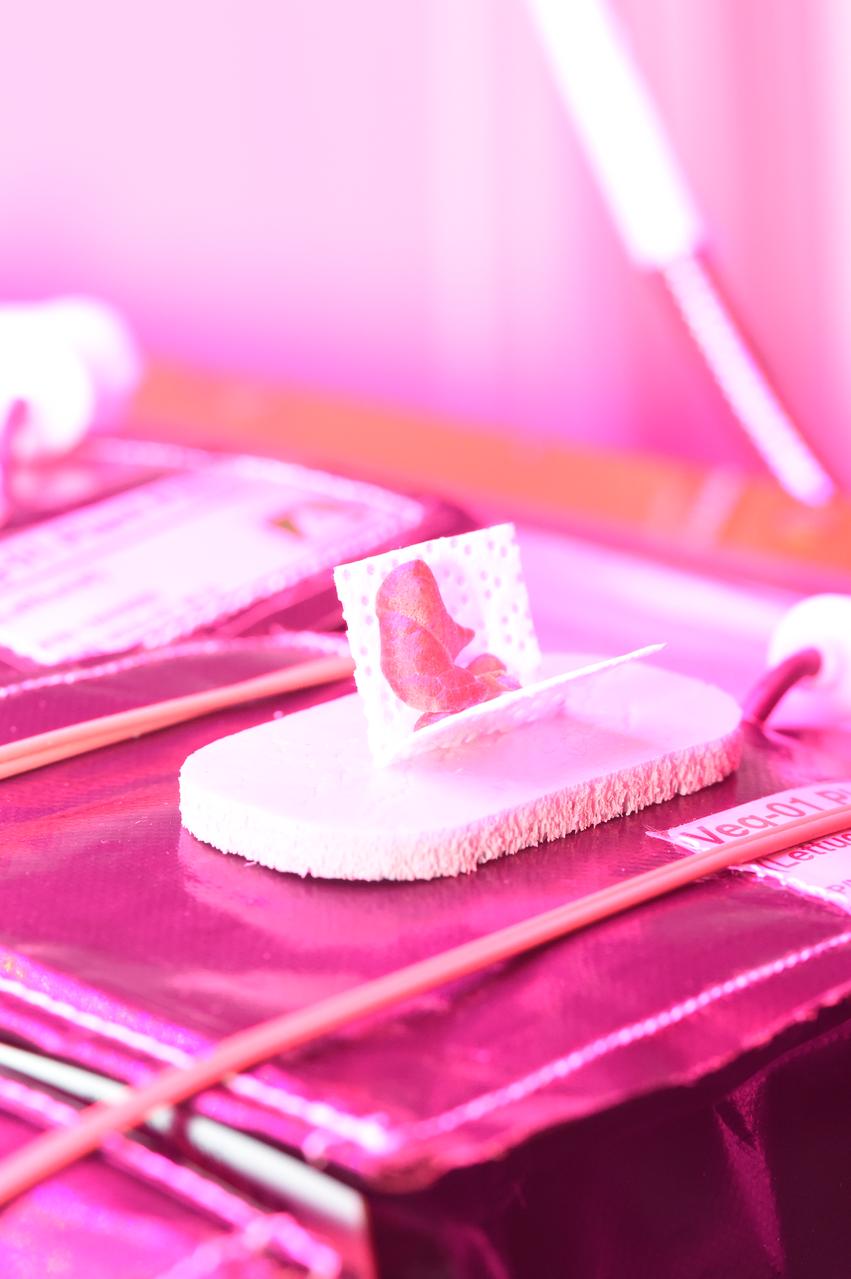
Astronaut Scott Kelly initiated VEG-01 B, the second crop of lettuce, on July, 8, 2015, and both Kelly and Astronaut Kjell Lindgren cared for the plants. The crop grew for 33 days. VEG-01 B included one set of six plant pillows planted with red romaine lettuce seeds. On Aug. 10, 2015, the crew harvested and consumed leaves from each plant. This was the first crop grown and consumed in NASA hardware. They harvested the rest of the plant tissue and froze it in the station’s Minus Eighty-Degree Laboratory Freezer for ISS (MELFI) for return to Earth for further study including microbial analysis, antioxidant capacity, mineral analysis and anthocyanin concentration.

In this image, dwarf planet Ceres is seen on Feb. 4, 2015, from a distance of about 90,000 miles 145,000 kilometers. NASA Dawn spacecraft is due to arrive at Ceres on March 6, 2015. http://photojournal.jpl.nasa.gov/catalog/PIA19181
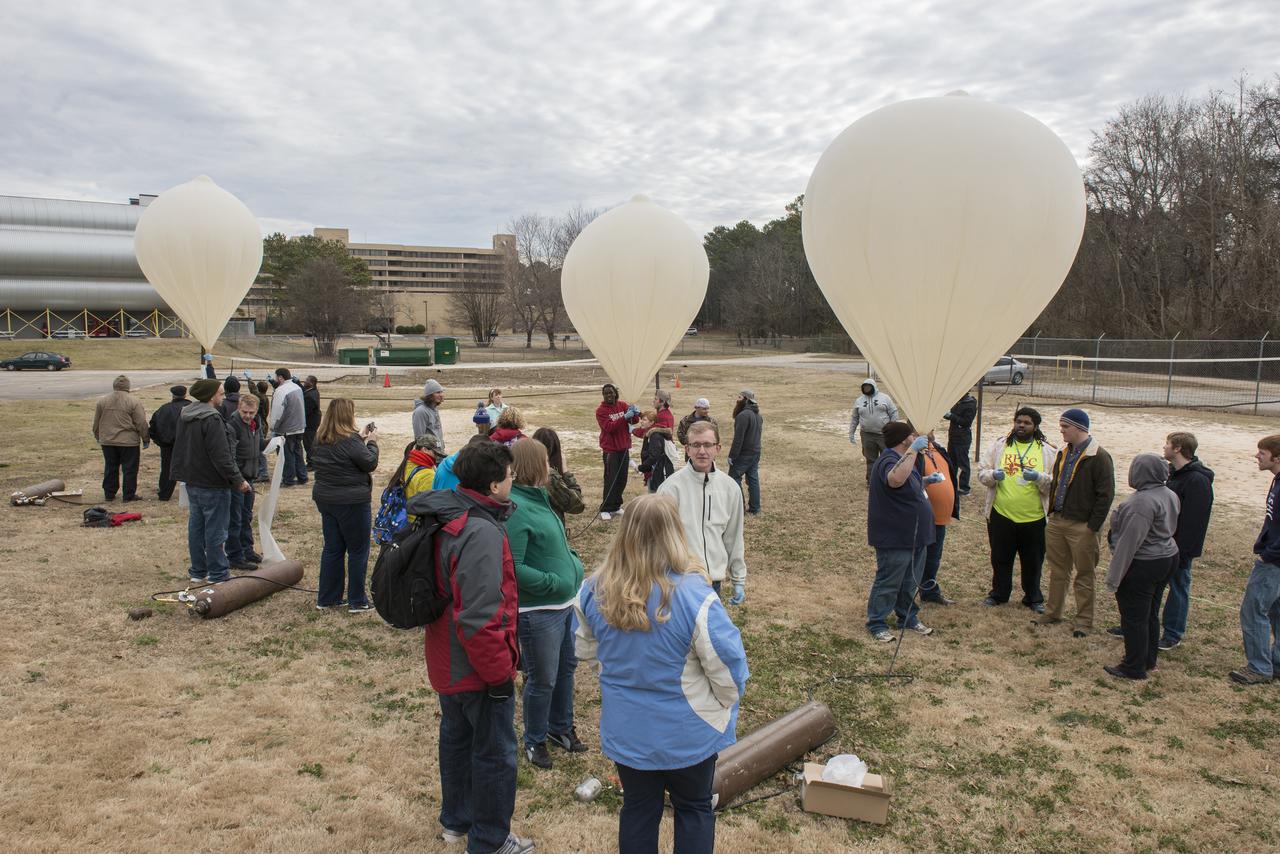
STUDENTS FROM COMMUNITY COLLEGES THROUGHOUT THE SOUTH CAME TOGETHER AT THE U.S. SPACE AND ROCKET CENTER FOR THE BALLOONSAT LAUNCH EVENT. EACH COMMUNITY COLLEGE TEAM ASSEMBLED ITS OWN PAYLOAD, DESIGNED TO DOWNLOAD SCIENTIFIC AND ATMOSPHERIC INFORMATION, AND THEN 2 WEATHER BALLOONS WERE SENT ALOFT TO APPROXIMATELY 100,000 FEET WITH THE PAYLOADS. THE PAYLOADS WERE RECOVERED IN N. GEORGIA AND TAKEN BACK TO THE INDIVIDUAL SCHOOLS FOR DOWNLOADING.
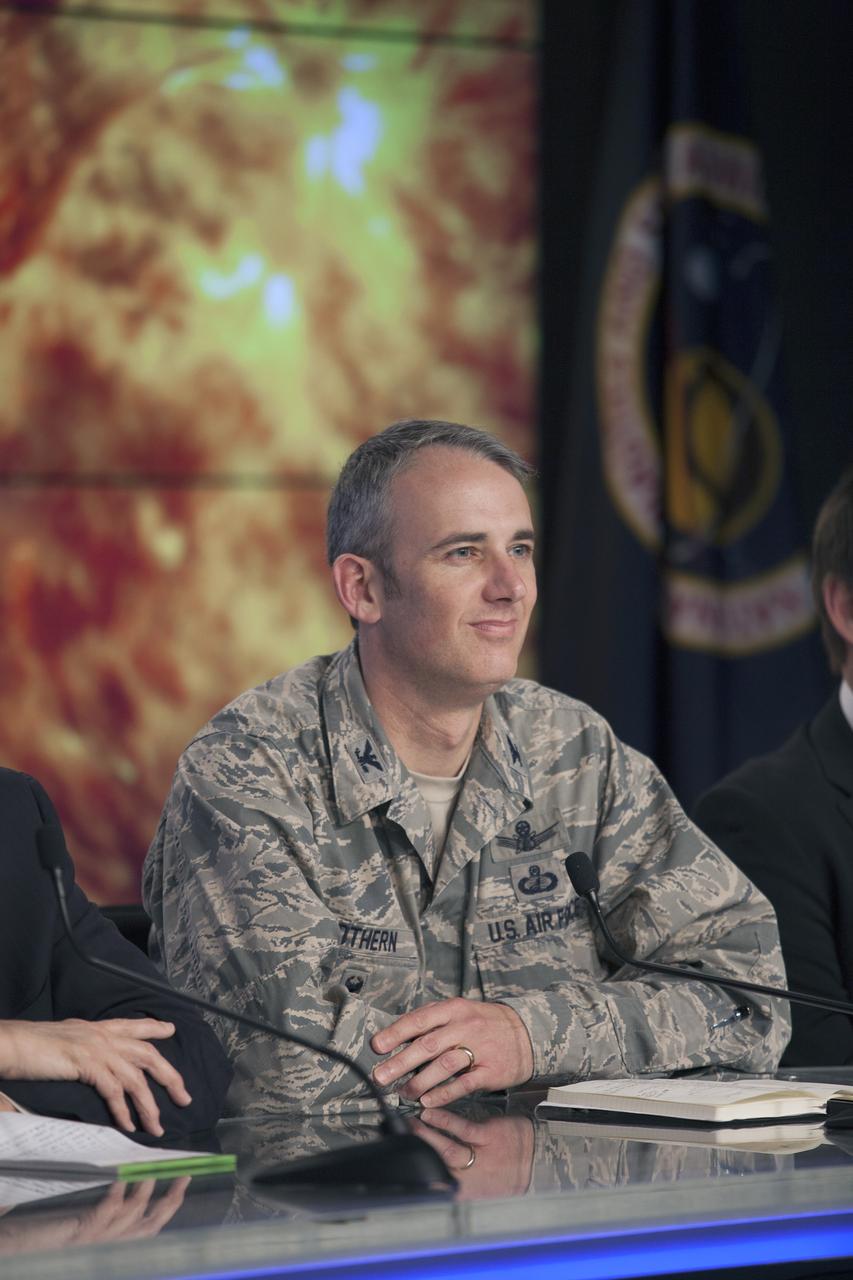
CAPE CANAVERAL, Fla. – Col. D. Jason Cothern, Space Demonstrations Division chief at Kirtland Air Force Base in Albuquerque, New Mexico, listens to a question from a member of the news media during a briefing regarding NOAA’s Deep Space Climate Observatory spacecraft, or DSCOVR. DSCOVR will launch aboard a SpaceX Falcon 9 rocket. The mission is a partnership between NOAA, NASA and the U.S. Air Force. DSCOVR will maintain the nation's real-time solar wind monitoring capabilities which are critical to the accuracy and lead time of NOAA's space weather alerts and forecasts. To learn more about DSCOVR, visit http://www.nesdis.noaa.gov/DSCOVR. Photo credit: NASA/Kim Shiflett
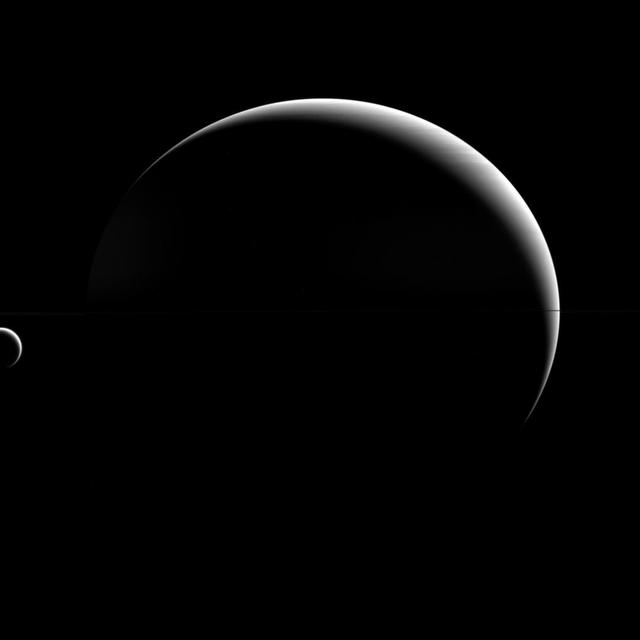
Titan may be a "large" moon -- its name even implies it! -- but it is still dwarfed by its parent planet, Saturn. As it turns out, this is perfectly normal. Although Titan (3200 miles or 5150 kilometers across) is the second-largest moon in the solar system, Saturn is still much bigger, with a diameter almost 23 times larger than Titan's. This disparity between planet and moon is the norm in the solar system. Earth's diameter is "only" 3.7 times our moon's diameter, making our natural satellite something of an oddity. (Another exception to the rule: dwarf planet Pluto's diameter is just under two times that of its moon.) So the question isn't why is Titan so small (relatively speaking), but why is Earth's moon so big? This view looks toward the anti-Saturn hemisphere of Titan. North on Titan is up. The image was taken with the Cassini spacecraft wide-angle camera on April 18, 2015 using a near-infrared spectral filter with a passband centered at 752 nanometers. The view was acquired at a distance of approximately 930,000 miles (1.5 million kilometers) from Titan. Image scale is 56 miles (90 kilometers) per pixel. http://photojournal.jpl.nasa.gov/catalog/PIA18326
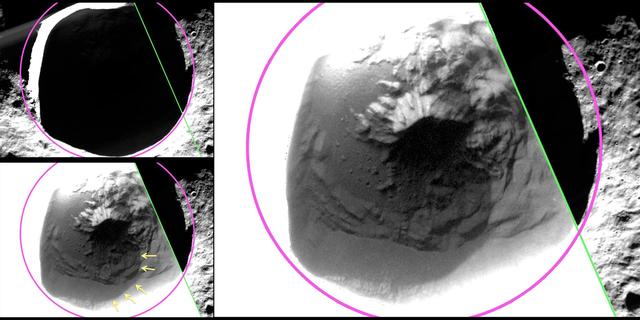
MESSENGER's low-altitude campaign has enabled imaging of Fuller crater (named after American architect Buckminster Fuller) in greater detail than previously possible. The top left panel shows an image of Fuller, with the crater rim outlined in pink and the edge of a low-altitude broadband MDIS image in green. The large panel applies a different stretch to the same MDIS broadband image in the first panel, revealing details of the shadowed surface inside Fuller! In particular, as highlighted with yellow arrows in the bottom left panel, the image reveals a region inside Fuller that is lower in reflectance. The edge of the low-reflectance region has a sharp and well-defined boundary, even when imaged at 46 m/pixel, suggesting that the low-reflectance material is sufficiently young to have preserved a sharp boundary against lateral mixing by impact cratering. Models for surface and near-surface temperature within Fuller crater predict a region that is sufficiently cold to host long-lived water ice beneath the surface but too hot to support water ice at the surface. The low-reflectance region revealed in the images matches the thermal characteristics expected for a lag deposit of volatile, organic-rich material that overlies the water ice. http://photojournal.jpl.nasa.gov/catalog/PIA19244
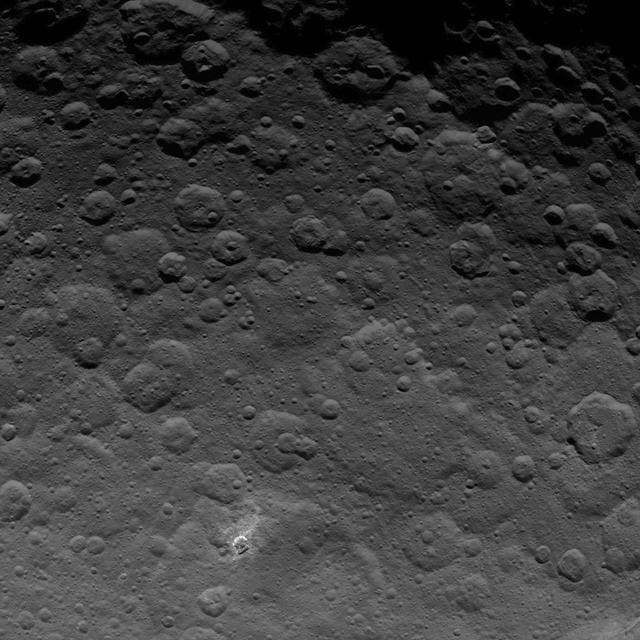
The north pole of Ceres can be seen in this image taken on June 9, 2015 by NASA Dawn spacecraft, shows dwarf planet Ceres from an altitude of 2,700 miles 4,400 kilometers with a resolution of 1,400 feet 410 meters per pixel. http://photojournal.jpl.nasa.gov/catalog/PIA19581

The THEMIS VIS camera contains 5 filters. The data from different filters can be combined in multiple ways to create a false color image. These false color images may reveal subtle variations of the surface not easily identified in a single band image. Today's false color image shows dunes on the floor of Moreux Crater. Orbit Number: 10384 Latitude: 41.841 Longitude: 44.087 Instrument: VIS Captured: 2004-04-17 10:07 http://photojournal.jpl.nasa.gov/catalog/PIA19769
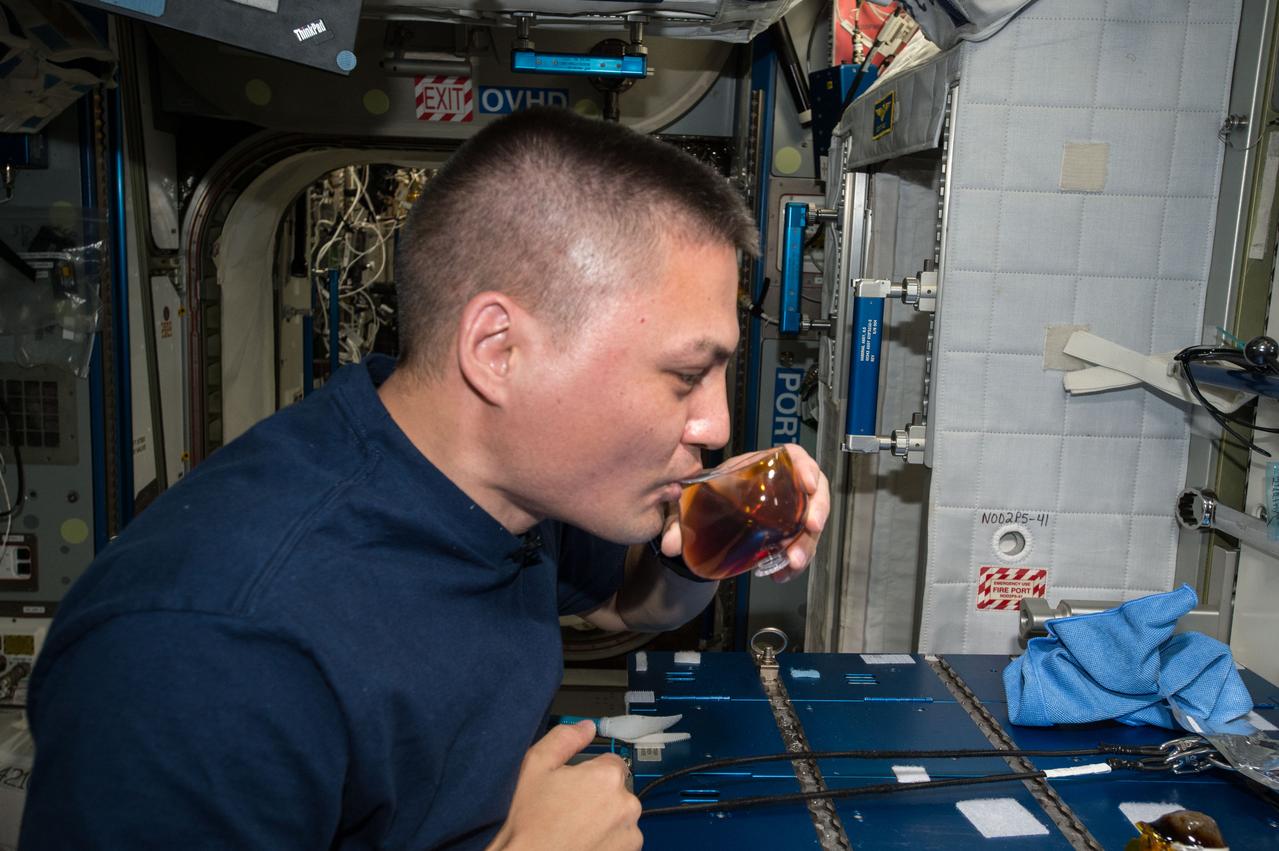
iss045e035341 (9/29/2015) --- NASA astronaut Kjell Lindgren celebrates International Coffee Day aboard the International Space Station (ISS) with his first hand-brewed cup of coffee in space, brewed using the Capillary Beverage Cup.
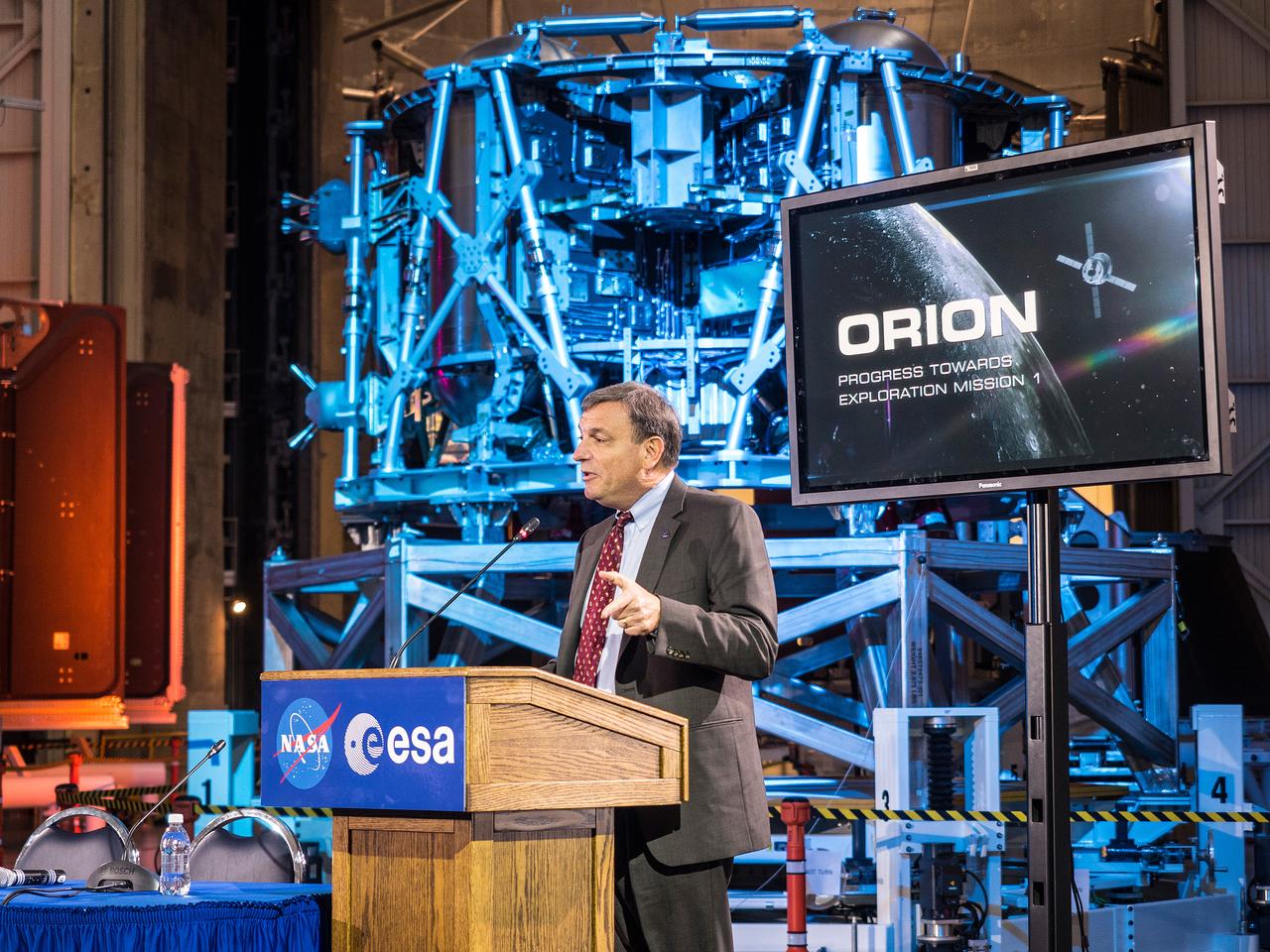
The European Service Module Structural Test Article (in the background) photographed at the Space Power Facility at NASA Glenn Research Center's Plum Brook Station in Sandusky, Ohio on Nov. 30, 2015. Part of Batch image transfer from Flickr.

Expedition 43 NASA Astronaut Scott Kelly, left, Russian cosmonaut Gennady Padalka of the Russian Federal Space Agency (Roscosmos), center, and Russian cosmonaut Mikhail Kornienko of Roscosmos pose for a photograph in front of St. Basil's Cathedral in Moscow as part of traditional pre-launch ceremonies, Friday, March 6, 2015. The trio is preparing for launch to the International Space Station in their Soyuz TMA-16M spacecraft from the Baikonur Cosmodrome in Kazakhstan March 28, Kazakh time. As the one-year crew, Kelly and Kornienko will return to Earth on Soyuz TMA-18M in March 2016. Photo Credit: (NASA/Bill Ingalls)
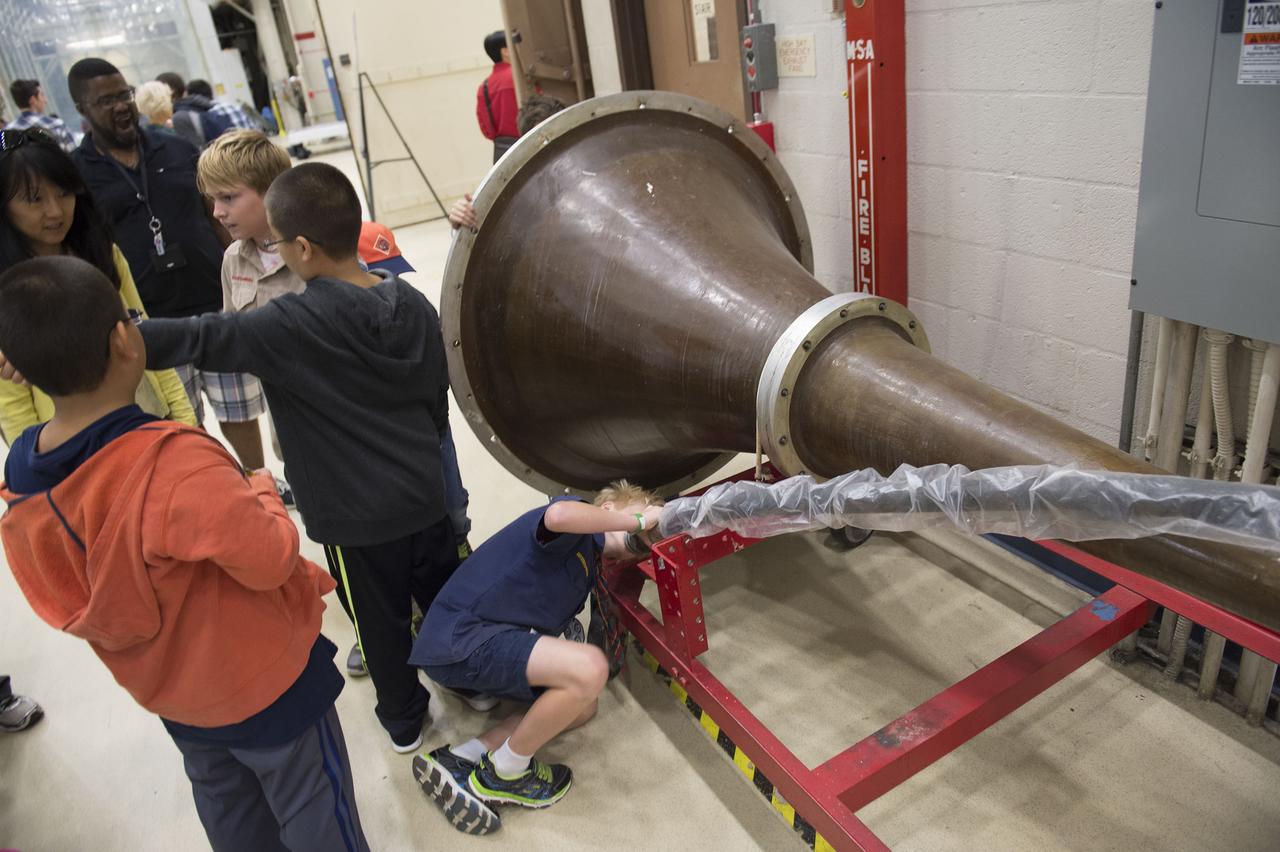
Buildings 7 & 29. Explore@NASAGoddard celebrates the 25th anniversary of the launch of the Hubble Space Telescope. All areas of Goddard’s research – Earth science, heliophysics, planetary science, astrophysics, and engineering and technology – will be presented, as each discipline plays a critical part in NASA's ongoing journey to reach new heights.
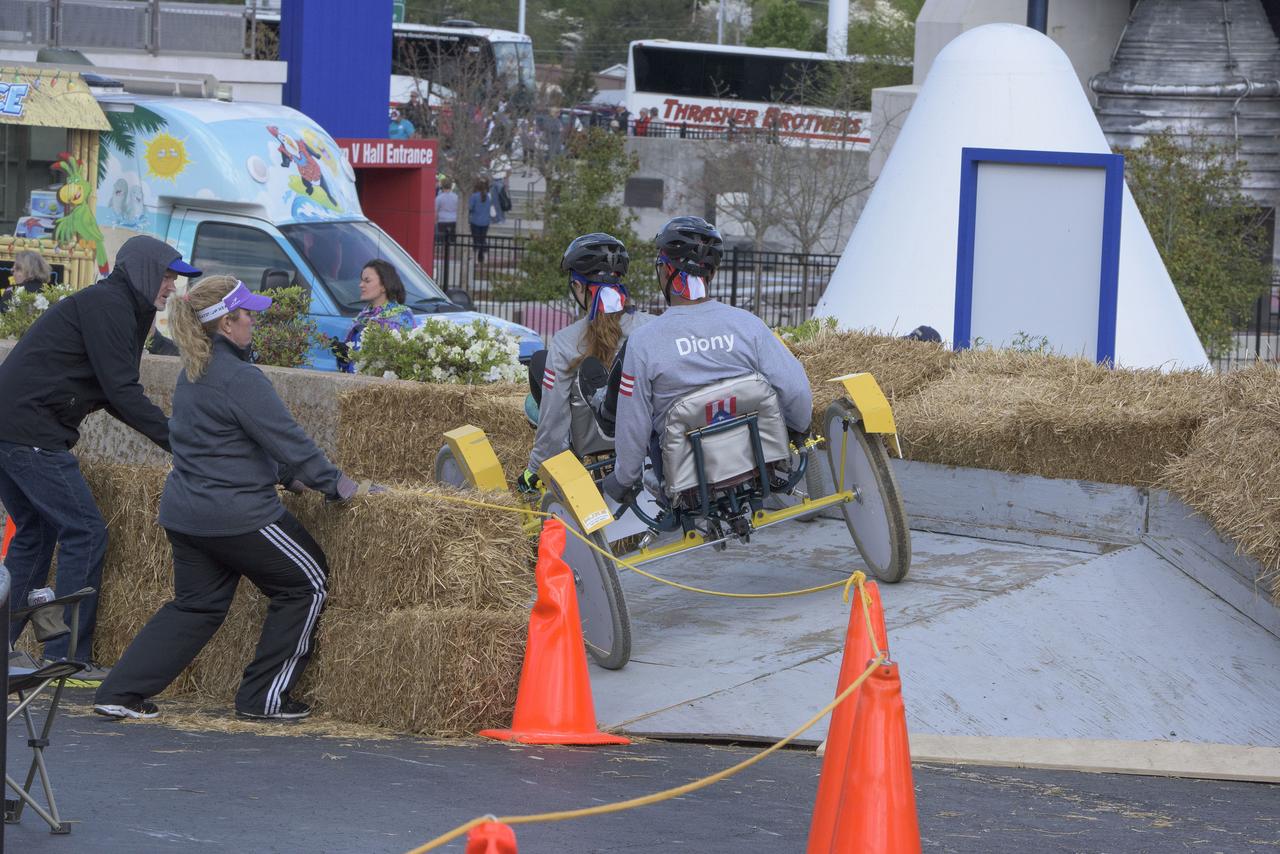
2016 ROVER CHALLENGE EVENTS AT THE U.S. SPACE AND ROCKET CENTER IN HUNTSVILLE, ALABAMA. NATIONAL AND INTERNATIONAL COLLEGE AND HIGH SCHOOL STUDENTS COME TOGETHER TO TEST THEIR ENGINEERING SKILLS OVER A SIMULATED OUTER PLANET OBSTACLE COURSE.
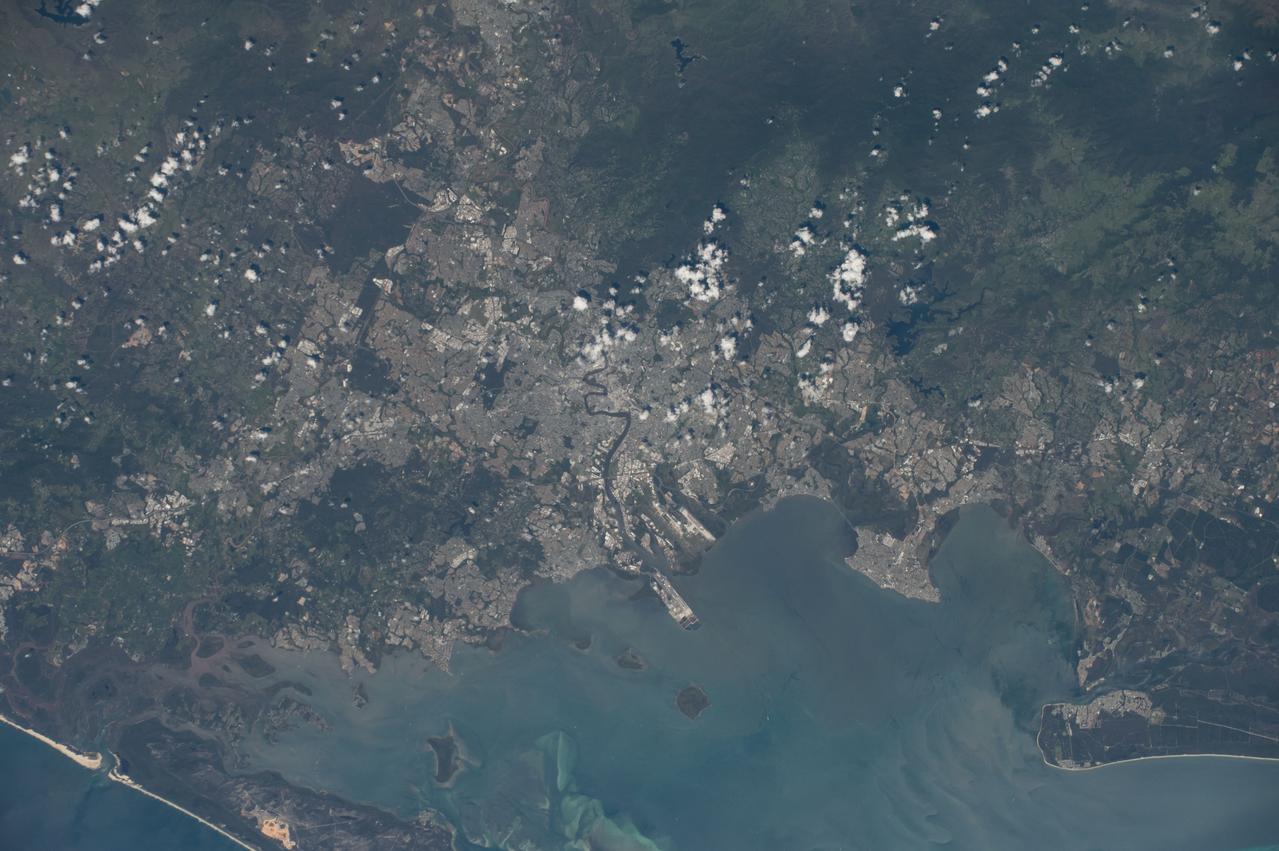
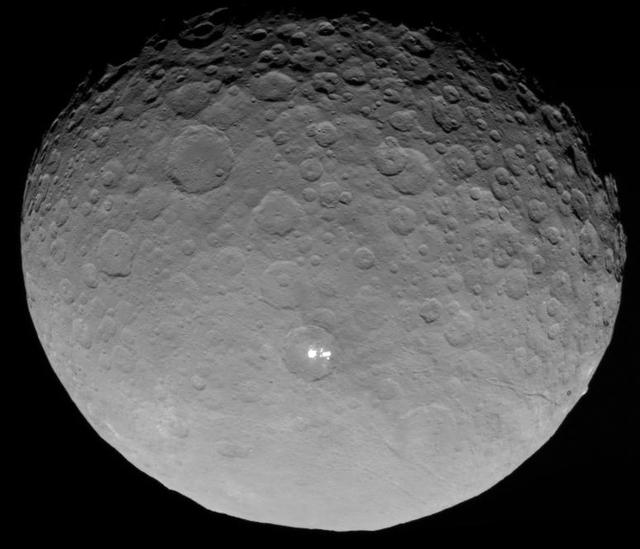
In this closest-yet view of Ceres, the brightest spots within a crater in the northern hemisphere are revealed to be composed of many smaller spots. This frame is from an animation of sequences taken by NASA Dawn spacecraft on May 4, 2015. http://photojournal.jpl.nasa.gov/catalog/PIA19547
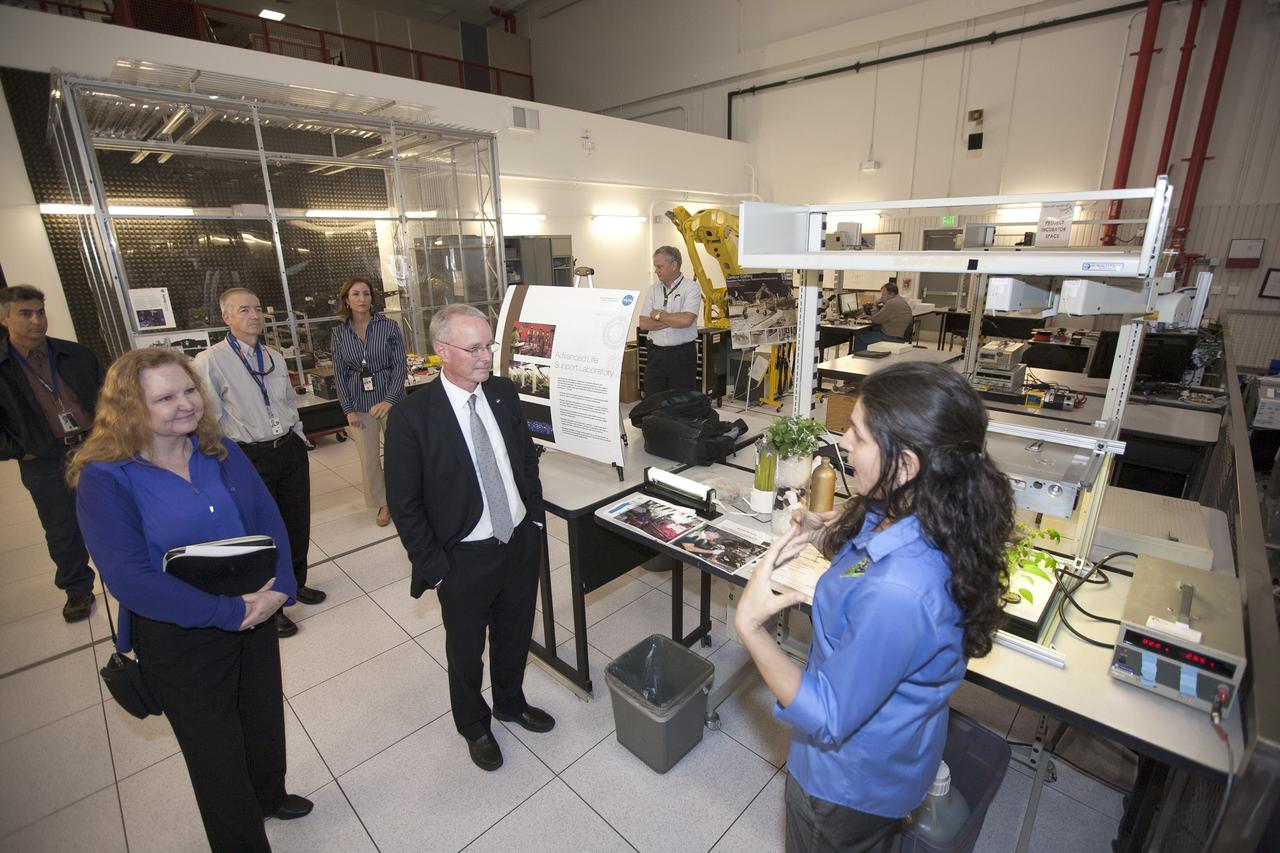
CAPE CANAVERAL, Fla. -- During a visit to NASA's Kennedy Space Center in Florida, NASA Chief Technologist David Miller, center, tours laboratories inside the Swamp Works facility. At right, Dr. Gioia Massa, NASA project scientist in the Engineering and Technology Directorate, discusses the VEGGIE plant growth system. At left is Karen Thompson, Kennedy's chief technologist. Photo credit: NASA/Kim Shiflett
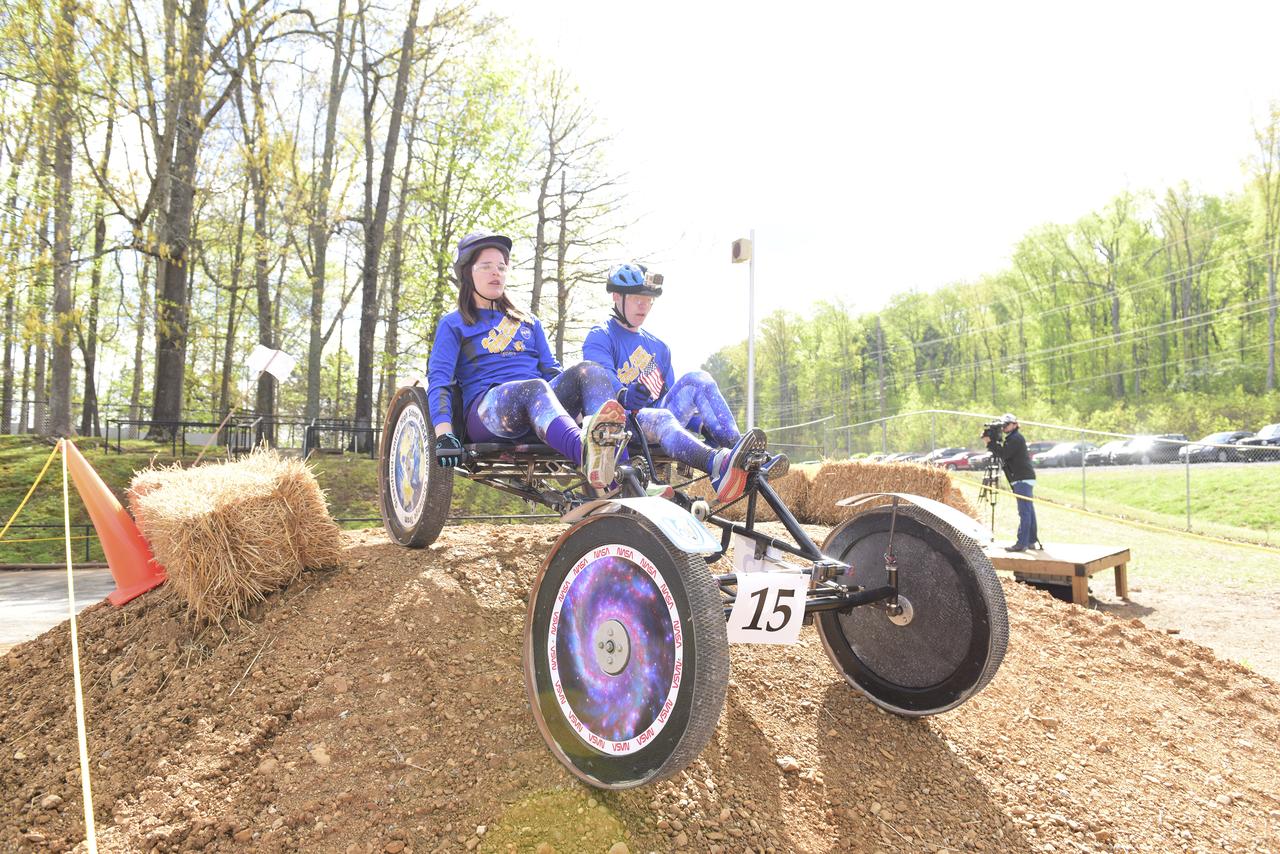
2016 ROVER CHALLENGE EVENTS AT THE U.S. SPACE AND ROCKET CENTER IN HUNTSVILLE, ALABAMA. NATIONAL AND INTERNATIONAL COLLEGE AND HIGH SCHOOL STUDENTS COME TOGETHER TO TEST THEIR ENGINEERING SKILLS OVER A SIMULATED OUTER PLANET OBSTACLE COURSE.
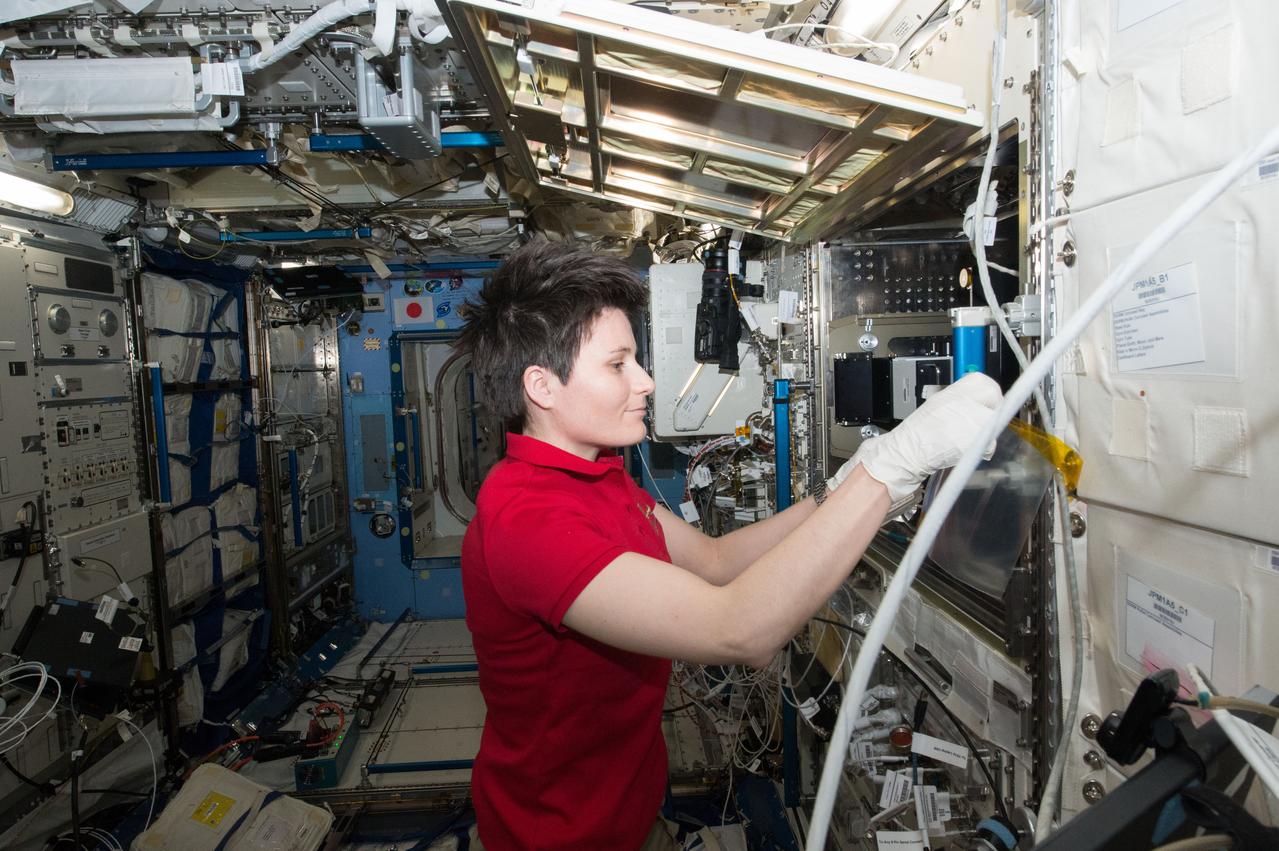
ISS043E087335 (04/03/2015) --- ESA (European Space Agency) astronaut Samantha Cristoforetti works to retrieve samples for the Aniso Tubule experiment from the Cell Biology Experiment Facility (CBEF) on Apr. 3, 2015. Aniso Tubule examines growth modifications of Arabidopsis hypocotyls in space. Scientists will analyze the changes in dynamics of cortical microtubules and microtubule associated proteins with a fluorescence microscope.
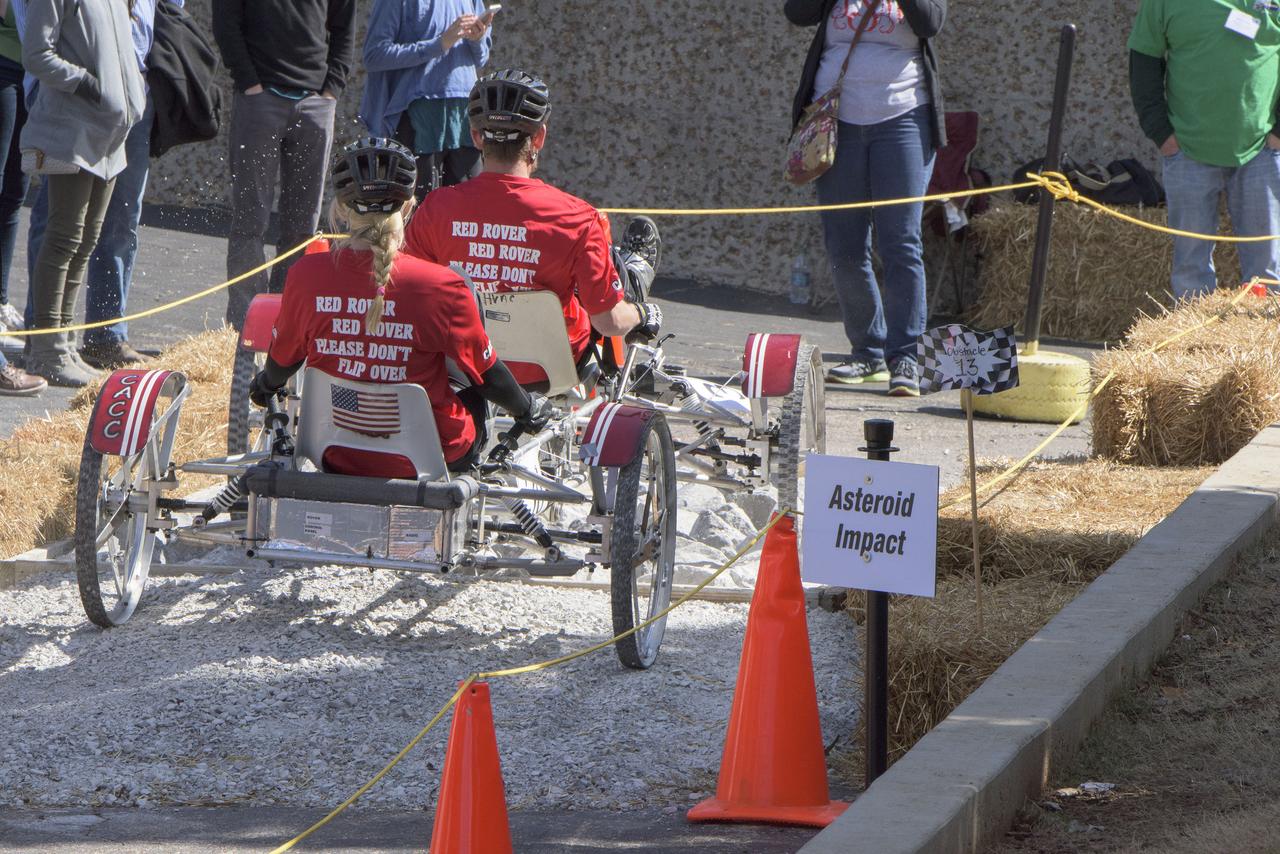
2016 ROVER CHALLENGE EVENTS AT THE U.S. SPACE AND ROCKET CENTER IN HUNTSVILLE, ALABAMA. NATIONAL AND INTERNATIONAL COLLEGE AND HIGH SCHOOL STUDENTS COME TOGETHER TO TEST THEIR ENGINEERING SKILLS OVER A SIMULATED OUTER PLANET OBSTACLE COURSE.
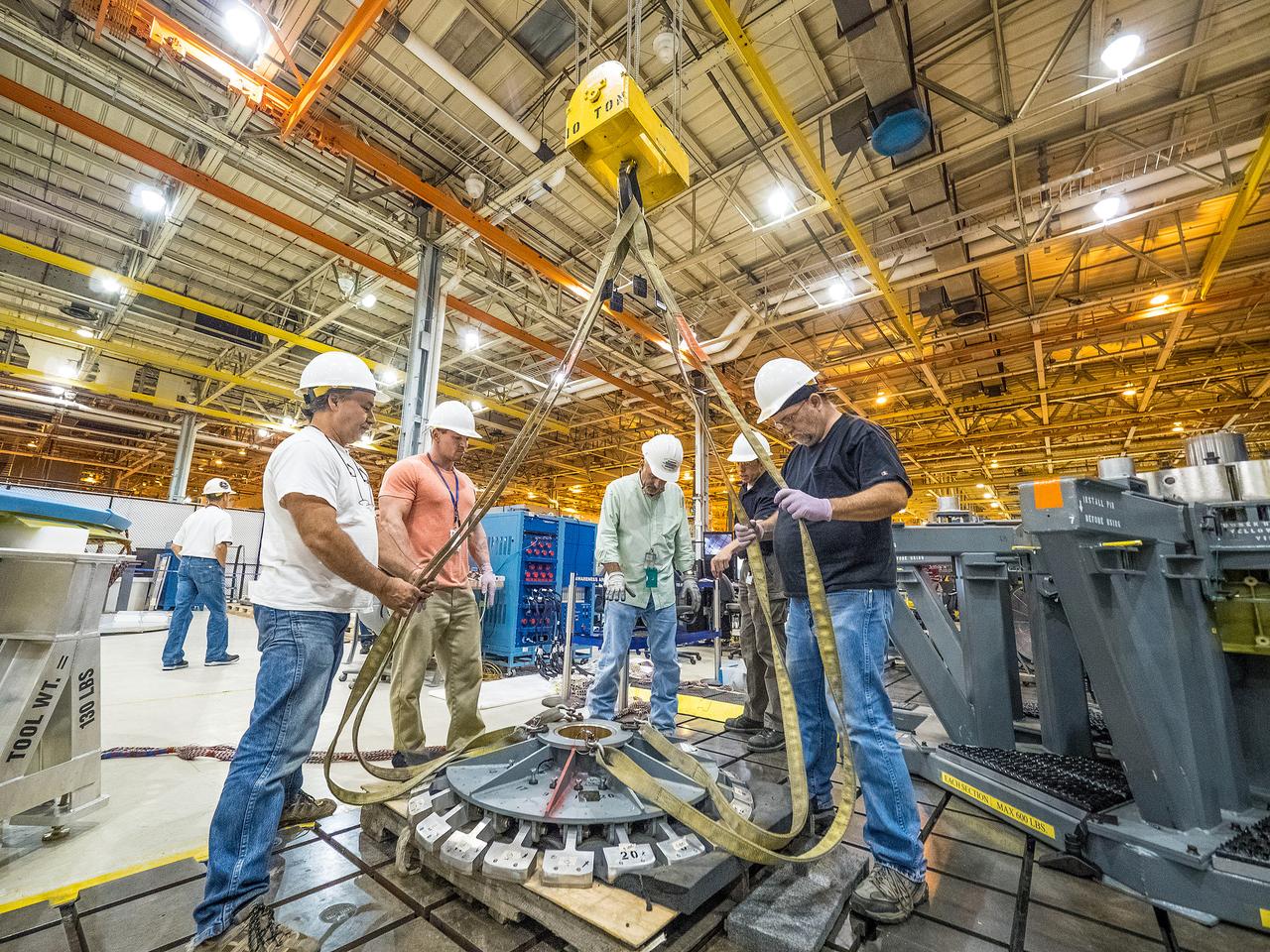
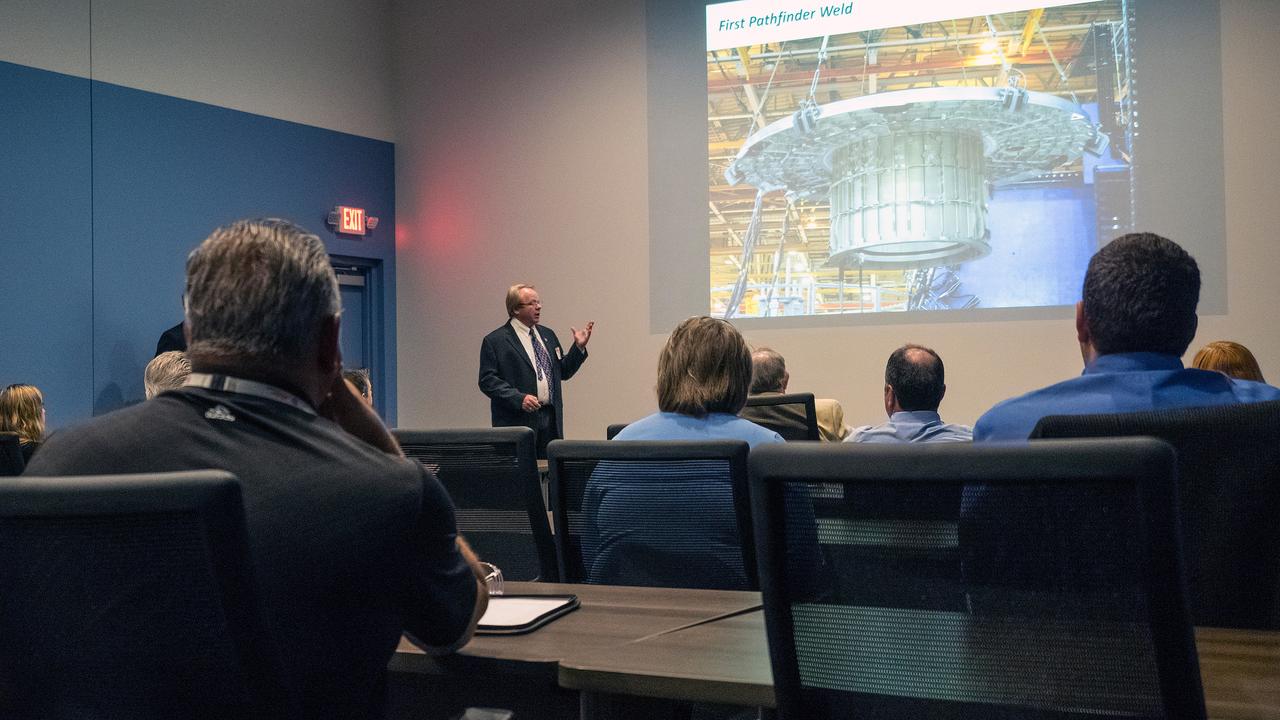
First weld of Orion Exploration Mission 1 crew module
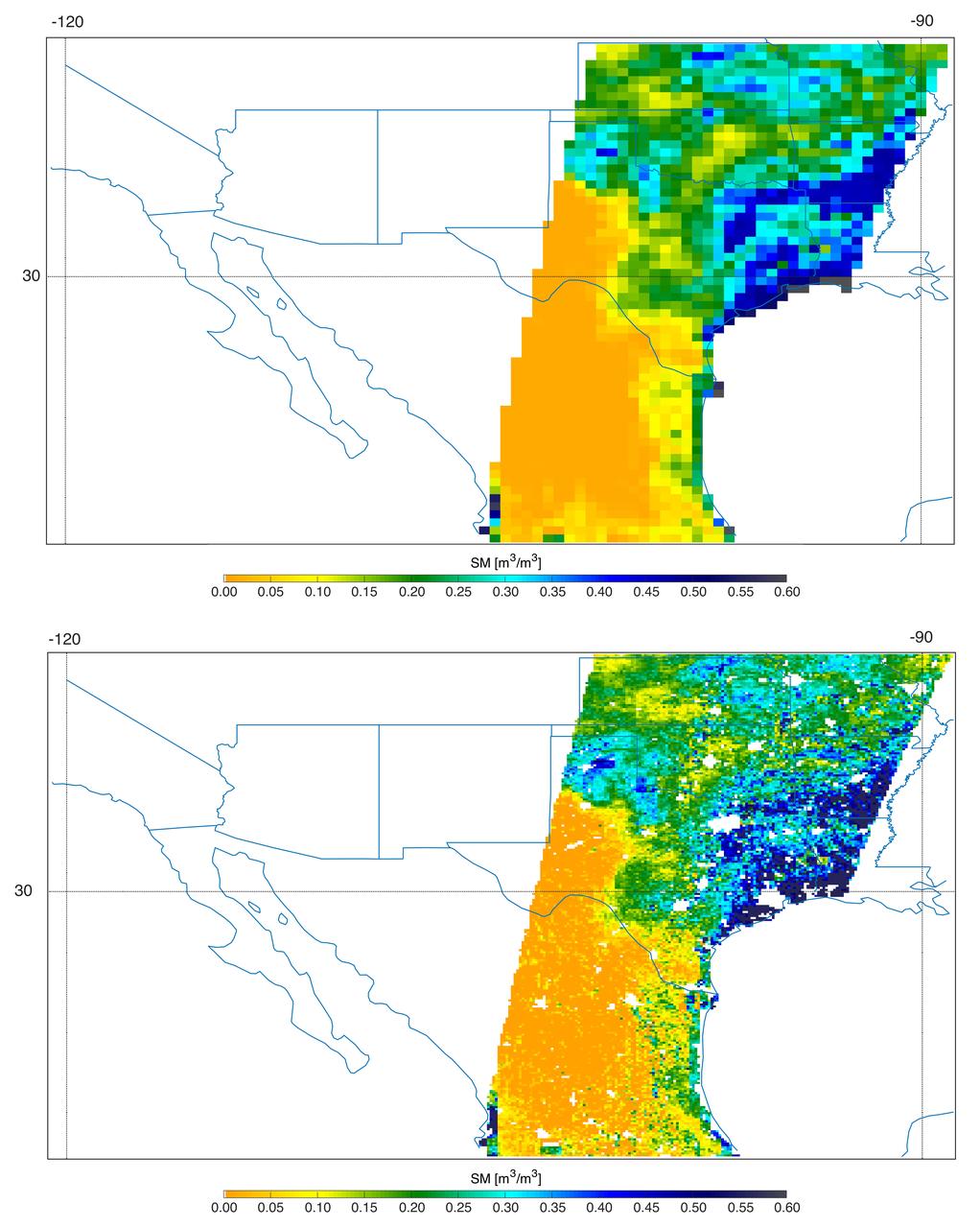
Southern U.S. NASA's SMAP soil moisture retrievals from April 27, 2015, when severe storms were affecting Texas. Top: radiometer data alone. Bottom: combined radar and radiometer data with a resolution of 5.6 miles (9 kilometers). The combined product reveals more detailed surface soil moisture features. http://photojournal.jpl.nasa.gov/catalog/PIA19338
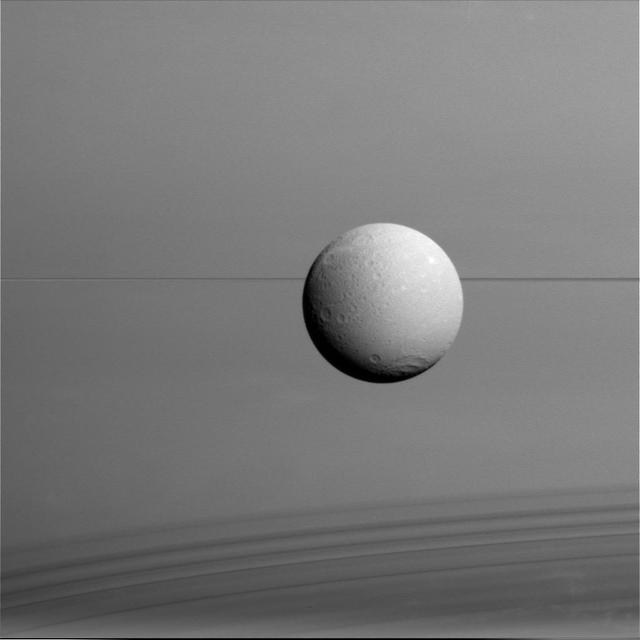
Dione hangs in front of Saturn and its icy rings in this view, captured during Cassini final close flyby of the icy moon. North on Dione is up.
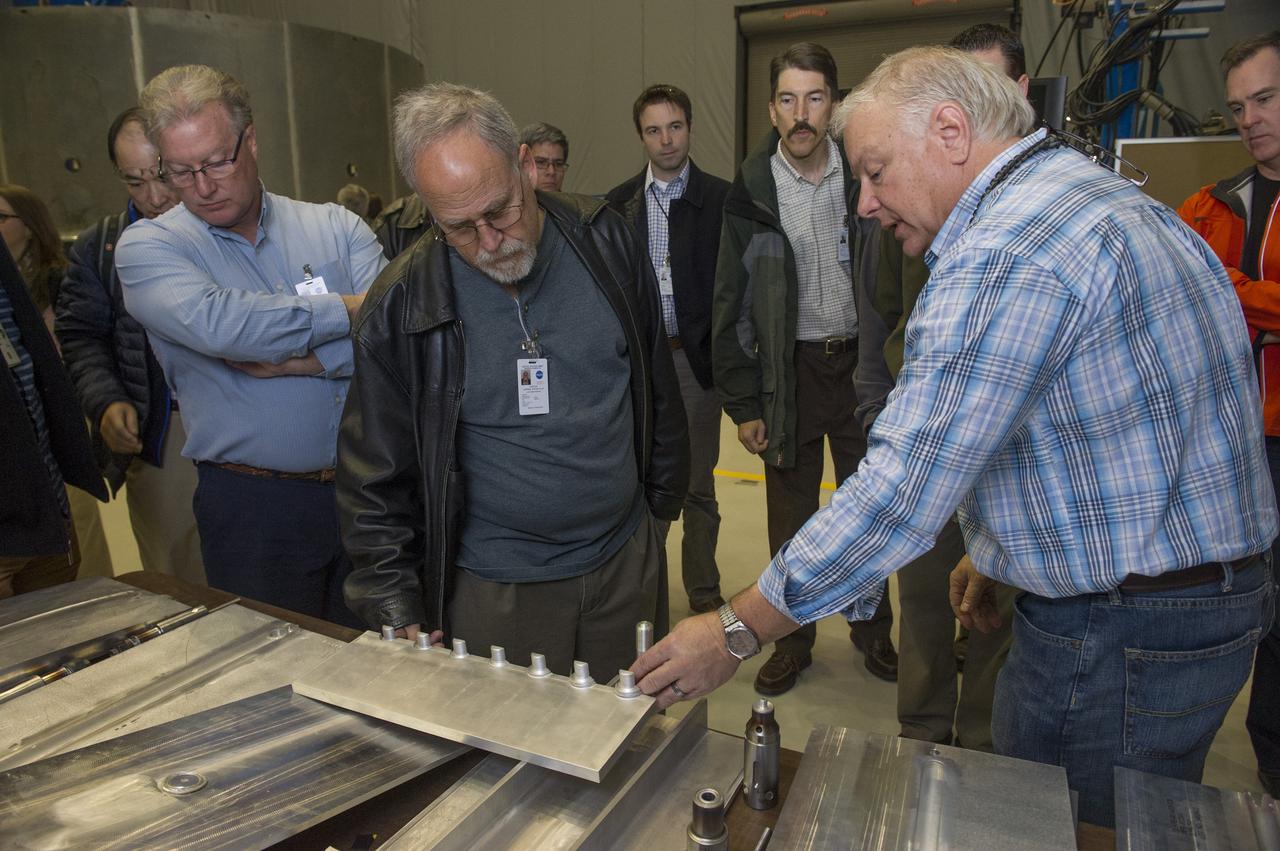
5TH SBKF (SHELL BUCKLE KNOCKDOWN FACTOR) WORKSHOP, MSFC, FEB. 3-4, 2015
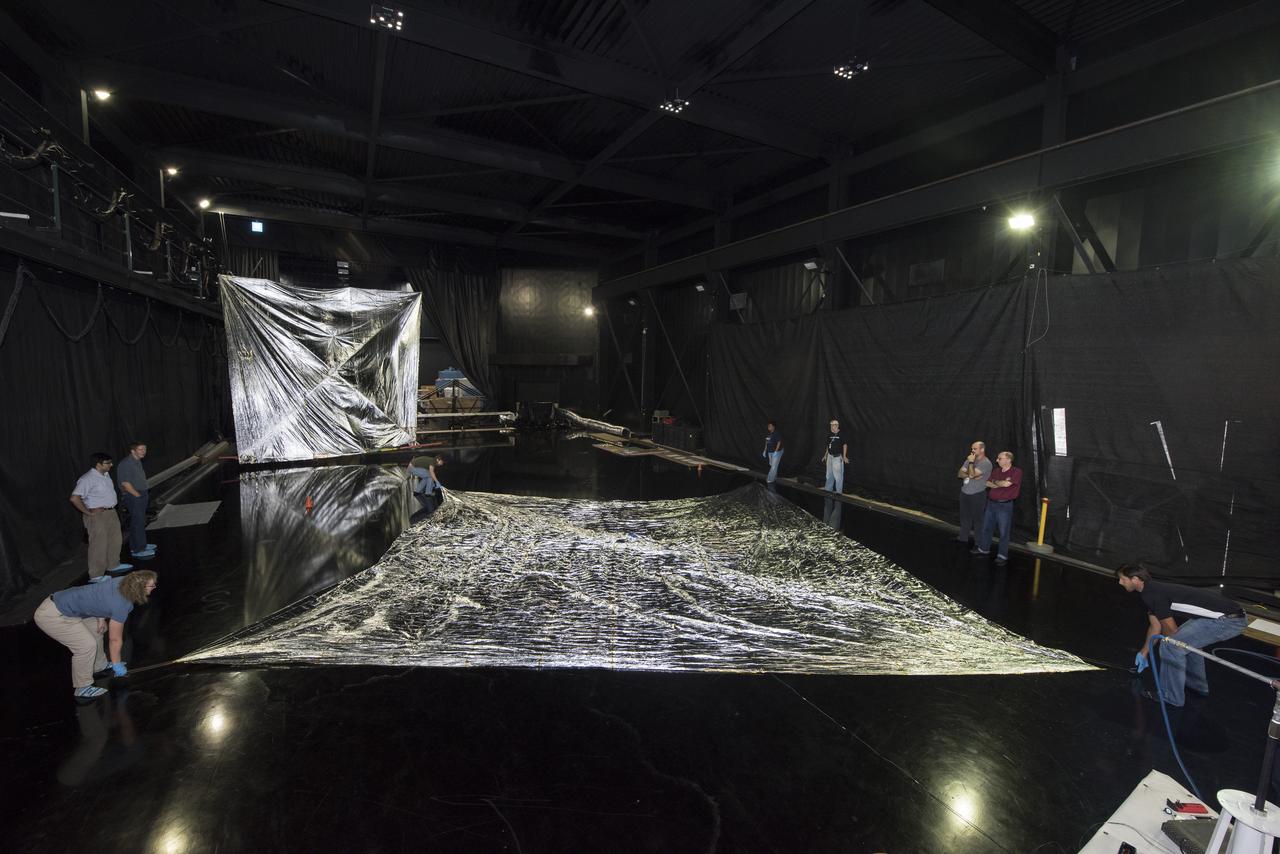
NEAR EARTH ASTEROID (NEA) SAIL TEAM PERFORMING A DEPLOYMENT OF THE FLIGHT-LIKE ENGINEERING DEVELOPMENT UNIT SOLAR SAIL. THE SAIL WAS MANUFACTURED AT NEXOLVE (HSV, AL) AND DEPLOYED FOR THE FIRST TIME AT MSFC ON AUGUST 4TH, 2016
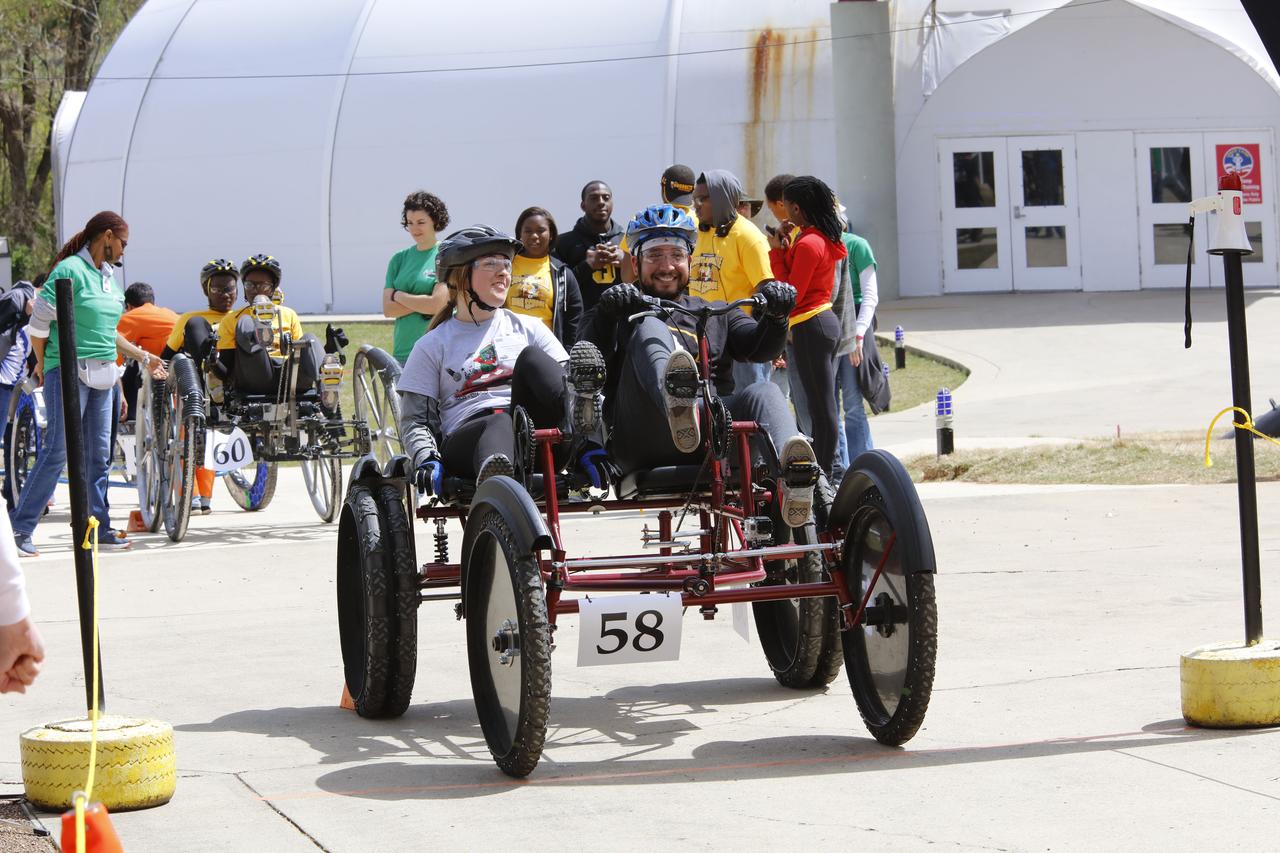
2016 ROVER CHALLENGE EVENTS AT THE U.S. SPACE AND ROCKET CENTER IN HUNTSVILLE, ALABAMA. NATIONAL AND INTERNATIONAL COLLEGE AND HIGH SCHOOL STUDENTS COME TOGETHER TO TEST THEIR ENGINEERING SKILLS OVER A SIMULATED OUTER PLANET OBSTACLE COURSE.
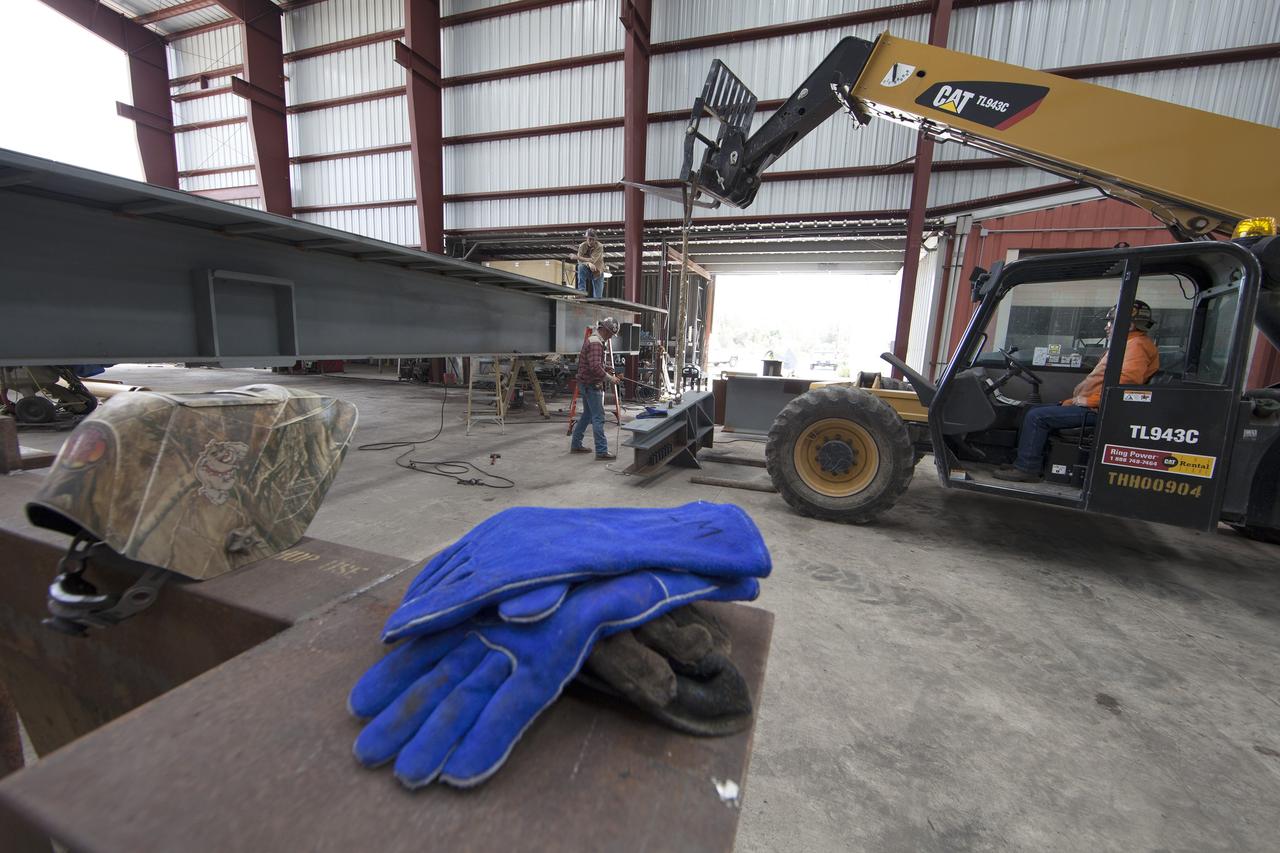
Bright-colored work gloves in the foreground are a stark contrast to the construction work going on at Sauer in Oak Hill, Florida. A forklift is being used to lift a segment of the first of 10 new work platforms for high bay 3 in the Vehicle Assembly Building at NASA's Kennedy Space Center in Florida, for buildup. A contract to modify high bay 3 was awarded by NASA to the Hensel Phelps Construction Co. of Orlando, Florida in March 2014. Sauer is a subcontractor to Hensel Phelps. The Ground Systems Development and Operations Program is overseeing upgrades and modifications to the high bay to support processing of NASA's Space Launch System and Orion spacecraft, and other exploration vehicles. Photo credit: NASA/Ben Smegelsky
NASA's Curiosity Mars rover used its Navigation Camera (Navcam) to capture this scene toward the west just after completing a drive that took the mission's total driving distance past 10 kilometers (6.214 miles). The drive on April 16, 2015, during the 957th Martian day, or sol of Curiosity's work on Mars covered 208 feet (63.5 meters). It advanced the rover westward through a sandy-floored valley. The valley is on the rover's route toward a higher site on Mount Sharp than sites it has investigated previously. http://photojournal.jpl.nasa.gov/catalog/PIA19391
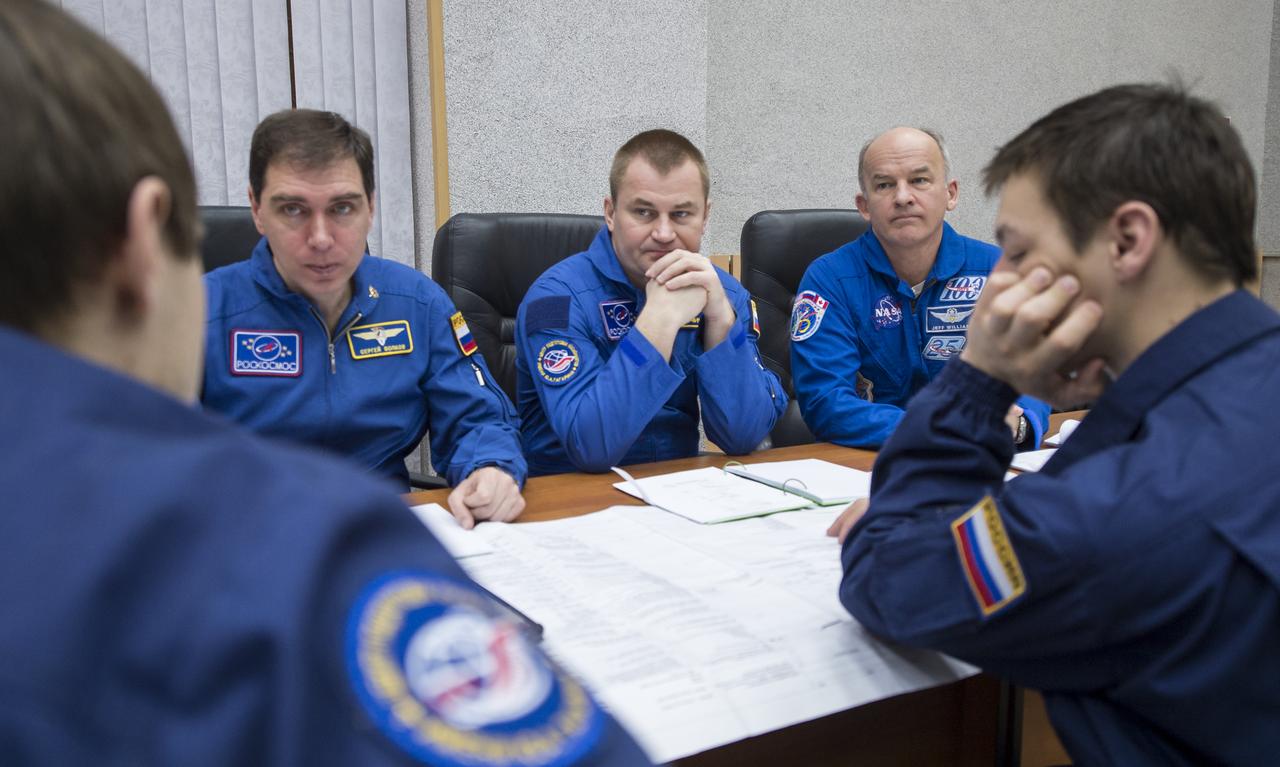
Expedition 43 backup crew members Sergei Volkov, left, and Alexey Ovchinin and of the Russian Federal Space Agency (Roscosmos), center, and NASA Astronaut Jeff Williams attend a training briefing, Saturday, March 21, 2015 at the Cosmonaut Hotel in Baikonur, Kazakhstan. Expedition 43 prime crew members: NASA Astronaut Scott Kelly, and Russian Cosmonauts Gennady Padalka, and Mikhail Kornienko of the Russian Federal Space Agency (Roscosmos) are scheduled to launch to the International Space Station in the Soyuz TMA-16M spacecraft from the Baikonur Cosmodrome in Kazakhstan March 28, Kazakh time (March 27 Eastern time.) As the one-year crew, Kelly and Kornienko will return to Earth on Soyuz TMA-18M in March 2016. Photo Credit: (NASA/Bill Ingalls)
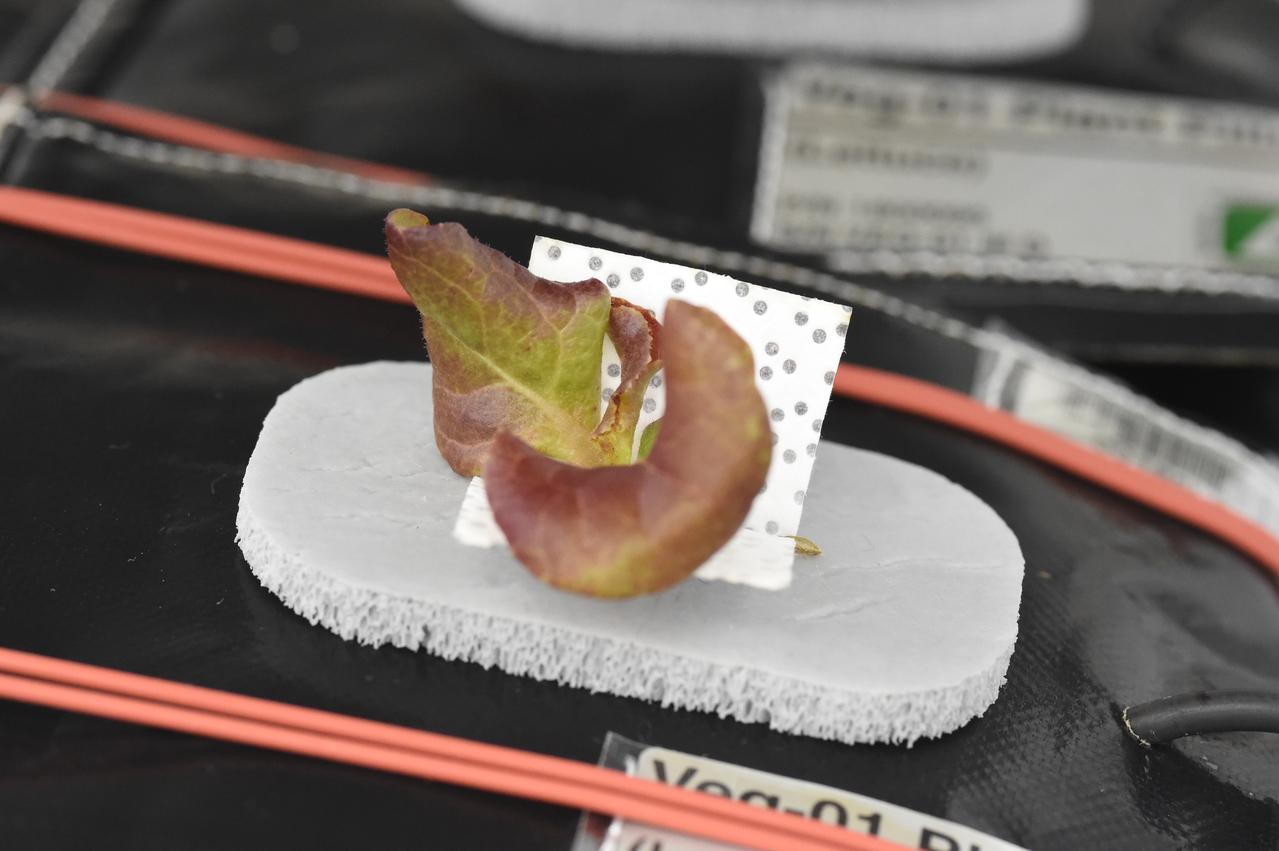
Astronaut Scott Kelly initiated VEG-01 B, the second crop of lettuce, on July, 8, 2015, and both Kelly and Astronaut Kjell Lindgren cared for the plants. The crop grew for 33 days. VEG-01 B included one set of six plant pillows planted with red romaine lettuce seeds. On Aug. 10, 2015, the crew harvested and consumed leaves from each plant. This was the first crop grown and consumed in NASA hardware. They harvested the rest of the plant tissue and froze it in the station’s Minus Eighty-Degree Laboratory Freezer for ISS (MELFI) for return to Earth for further study including microbial analysis, antioxidant capacity, mineral analysis and anthocyanin concentration.
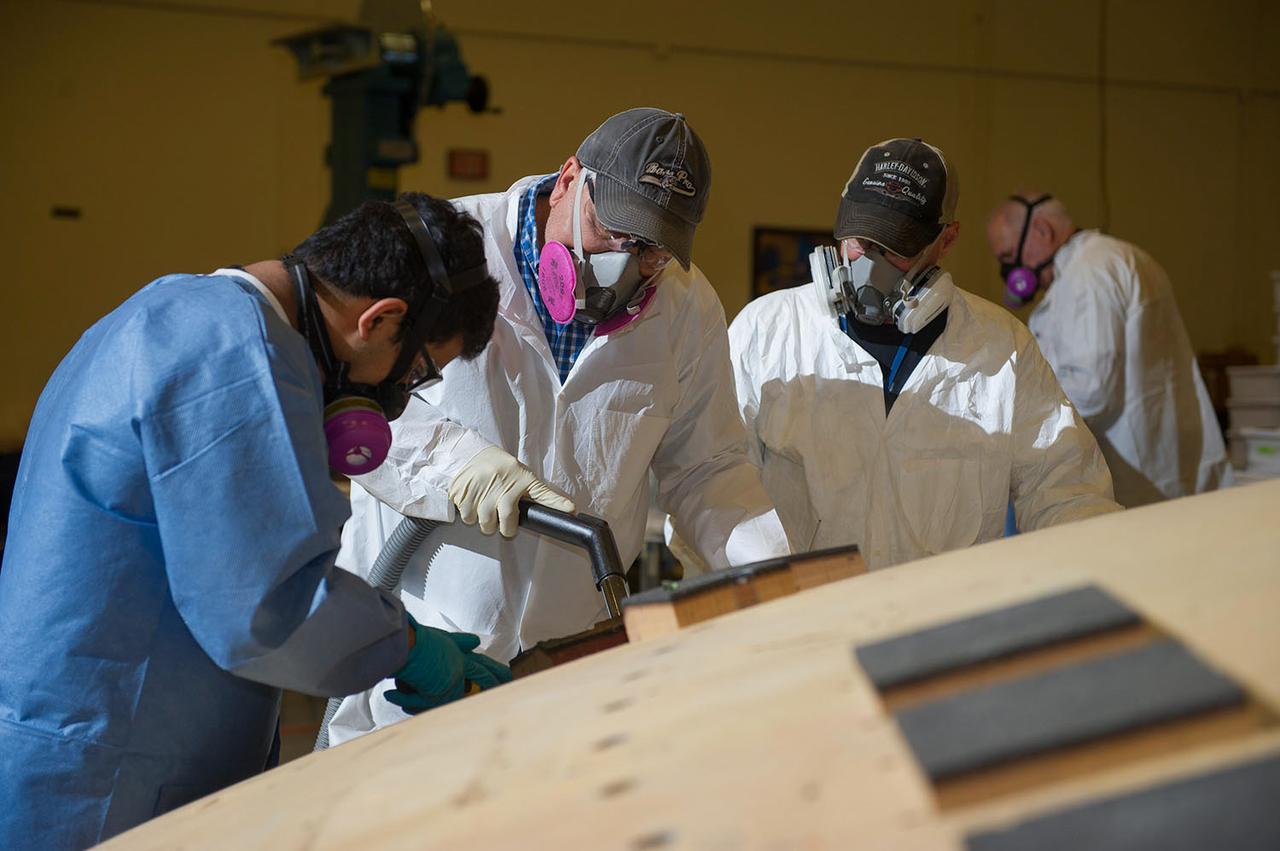
Engineers from NASA's Ames Research Center at Moffett Field, California, and Marshall Space Flight Center in Huntsville, Alabama, remove samples on May 4, 2015, from Orion's heat shield which flew on Exploration Flight Test-1 (EFT-1) in 2014. The heat shield protected the spacecraft from temperatures reaching 4000 degrees F. Part of Batch image transfer from Flickr.

VANDENBERG AIR FORCE BASE, Calif. – Technicians connect NASA's Soil Moisture Active Passive, or SMAP, spacecraft to the Delta II payload attach structure in the Astrotech payload processing facility on Vandenberg Air Force Base in California. The structure will secure the spacecraft to the rocket's second stage. SMAP will launch on a Delta II 7320 configuration vehicle featuring a United Launch Alliance first stage booster powered by an Aerojet Rocketdyne RS-27A main engine and three Alliant Techsystems, or ATK, strap-on solid rocket motors. Once on station in Earth orbit, SMAP will provide global measurements of soil moisture and its freeze/thaw state. These measurements will be used to enhance understanding of processes that link the water, energy and carbon cycles, and to extend the capabilities of weather and climate prediction models. SMAP data also will be used to quantify net carbon flux in boreal landscapes and to develop improved flood prediction and drought monitoring capabilities. Launch from Space Launch Complex 2 is targeted for Jan. 29, 2015. To learn more about SMAP, visit http://www.nasa.gov/smap. Photo credit: NASA/Chris Wiant, U.S. Air Force Photo Squadron
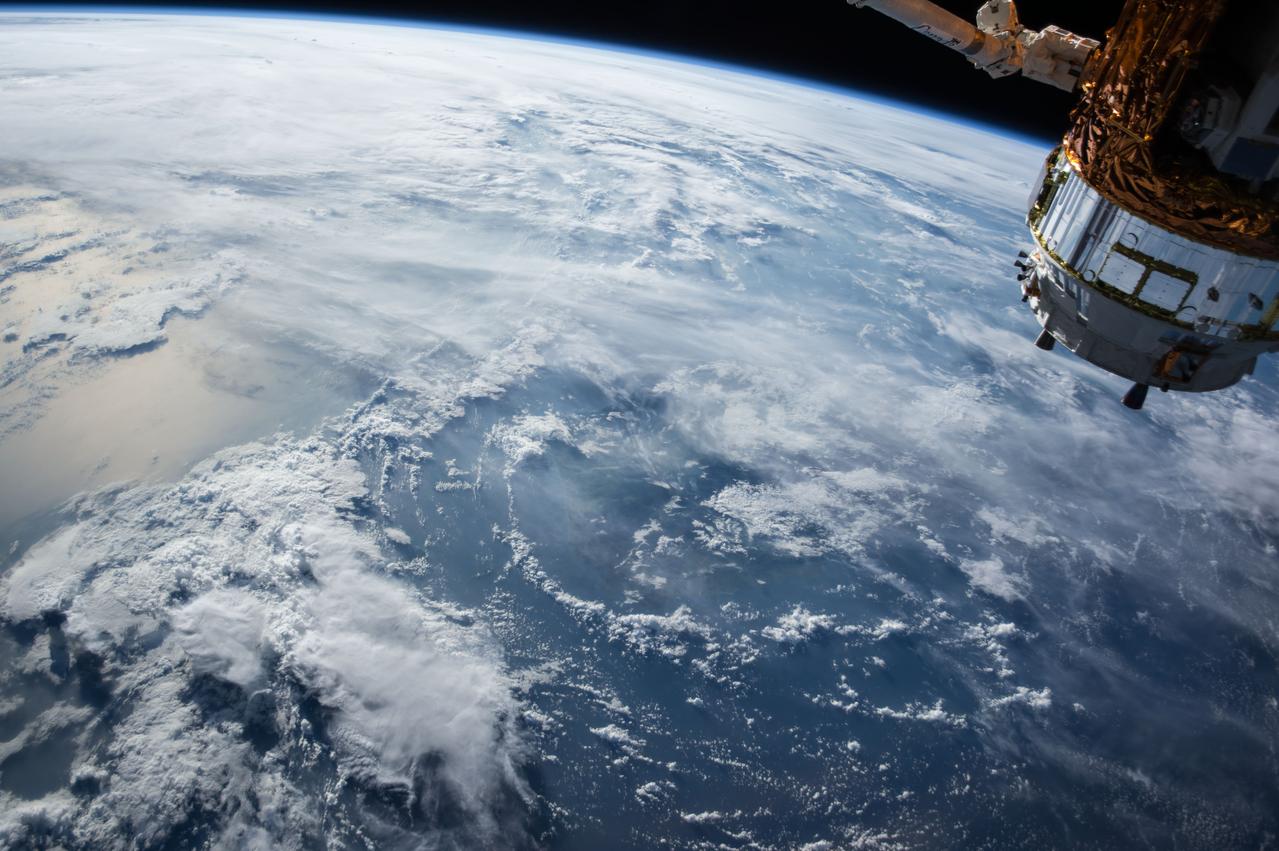
ISS045E028460 (09/24/2015) --- The aft end of the Japanese HTV-5 cargo vehicle is seen as the International Space Station passes over a cloud covered ocean. The unmanned cargo craft delivered almost 5 tons of supplies to the orbiting laboratory and was released on Sept. 28, 2015.
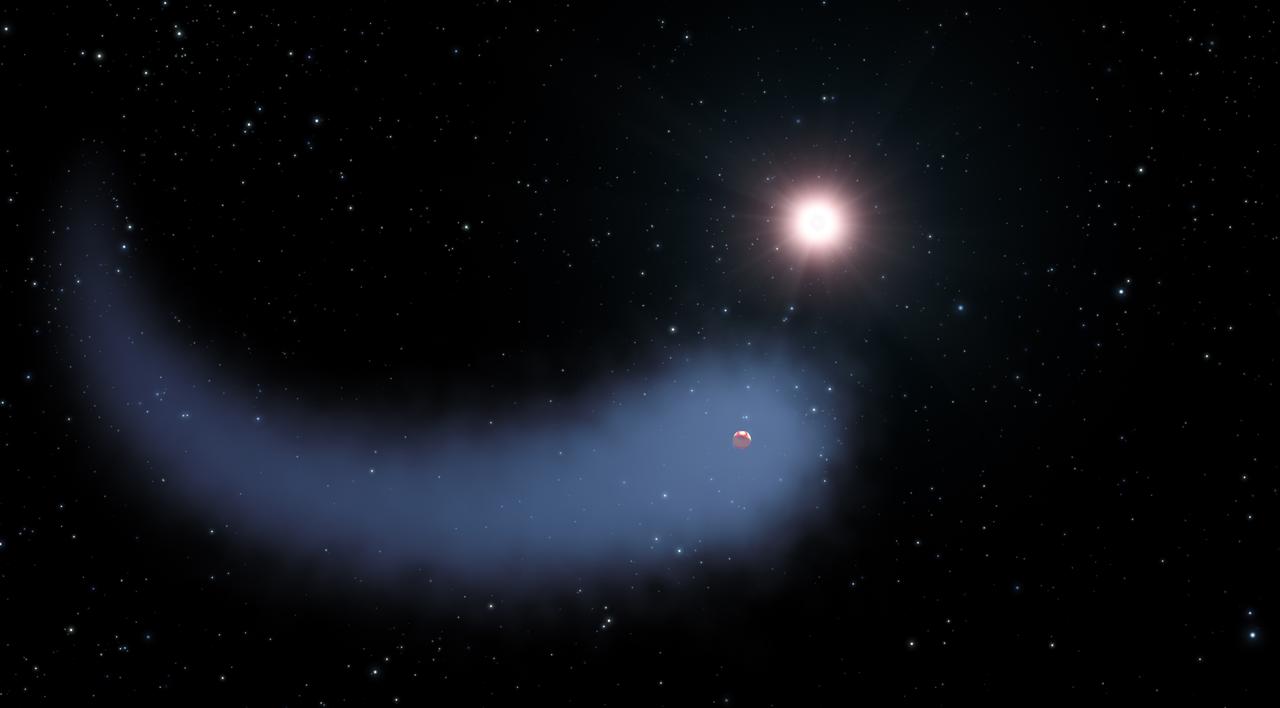
Astronomers using NASA’s Hubble Space Telescope have discovered an immense cloud of hydrogen dubbed “The Behemoth” bleeding from a planet orbiting a nearby star. The enormous, comet-like feature is about 50 times the size of the parent star. The hydrogen is evaporating from a warm, Neptune-sized planet, due to extreme radiation from the star. This phenomenon has never been seen around an exoplanet so small. It may offer clues to how other planets with hydrogen-enveloped atmospheres could have their outer layers evaporated by their parent star, leaving behind solid, rocky cores. Hot, rocky planets such as these that roughly the size of Earth are known as Hot-Super Earths. “This cloud is very spectacular, though the evaporation rate does not threaten the planet right now,” explains the study’s leader, David Ehrenreich of the Observatory of the University of Geneva in Switzerland. “But we know that in the past, the star, which is a faint red dwarf, was more active. This means that the planet evaporated faster during its first billion years of existence because of the strong radiation from the young star. Overall, we estimate that it may have lost up to 10 percent of its atmosphere over the past several billion years.” Caption: This artist's concept shows "The Behemoth," an enormous comet-like cloud of hydrogen bleeding off of a warm, Neptune-sized planet just 30 light-years from Earth. Also depicted is the parent star, which is a faint red dwarf named GJ 436. The hydrogen is evaporating from the planet due to extreme radiation from the star. A phenomenon this large has never before been seen around any exoplanet. Credits: NASA, ESA, and G. Bacon (STScI)

The THEMIS VIS camera contains 5 filters. The data from different filters can be combined in multiple ways to create a false color image. This false color image from NASA 2001 Mars Odyssey spacecraft show part of the floor of Schaeberle Crater. Orbit Number: 6640 Latitude: -23.7728 Longitude: 50.497 Instrument: VIS Captured: 2003-06-14 03:16 http://photojournal.jpl.nasa.gov/catalog/PIA19428

The Orion team visits Paradigm, a precision parts manufacturer in Colorado on July 15, 2015. Part of Batch image transfer from Flickr.

This image shows the large Rustaveli basin on the right portion of the view. Named in 2012 after Shota Rustaveli (1172-1216), a Georgian poet of the 12th century, this basin has a smooth floor and hints of a peak-ring structure. In particular, this mosaic shows details of Rustaveli's well-preserved ejecta field. http://photojournal.jpl.nasa.gov/catalog/PIA19283
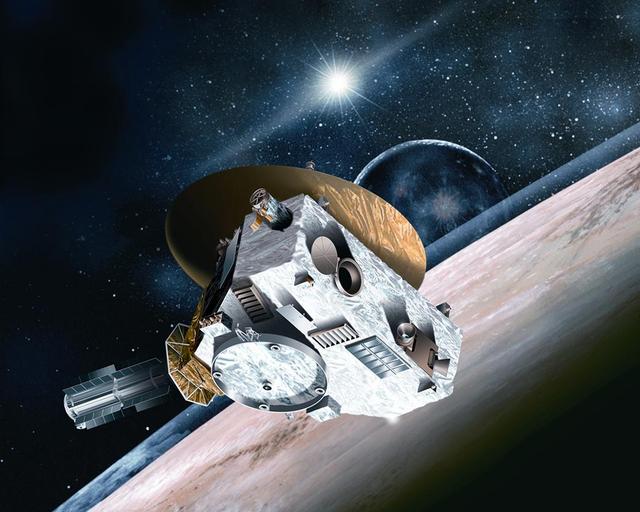
This artist concept shows NASA fleet of observatories busily gathering data before and after July 14, 2015 to help piece together what we know about Pluto, and what features New Horizons data might help explain. What's icy, has "wobbly" potato-shaped moons, and is arguably the world's favorite dwarf planet? The answer is Pluto, and NASA's New Horizons is speeding towards the edge of our solar system for a July 14 flyby. It won't be making observations alone; NASA's fleet of observatories will be busy gathering data before and after to help piece together what we know about Pluto, and what features New Horizons data might help explain. http://photojournal.jpl.nasa.gov/catalog/PIA19703

A Russian MI-8 Helicopter is seen through the airport bus decal a day before the Soyuz TMA-14M spacecraft landing with Expedition 42 commander Barry Wilmore of NASA, Alexander Samokutyaev of the Russian Federal Space Agency (Roscosmos) and Elena Serova of Roscosmos Wednesday, March 11, 2015 in Karaganda, Kazakhstan. NASA Astronaut Wilmore, Russian Cosmonauts Samokutyaev and Serova are returning after almost six months onboard the International Space Station where they served as members of the Expedition 41 and 42 crews. Photo Credit: (NASA/Bill Ingalls)
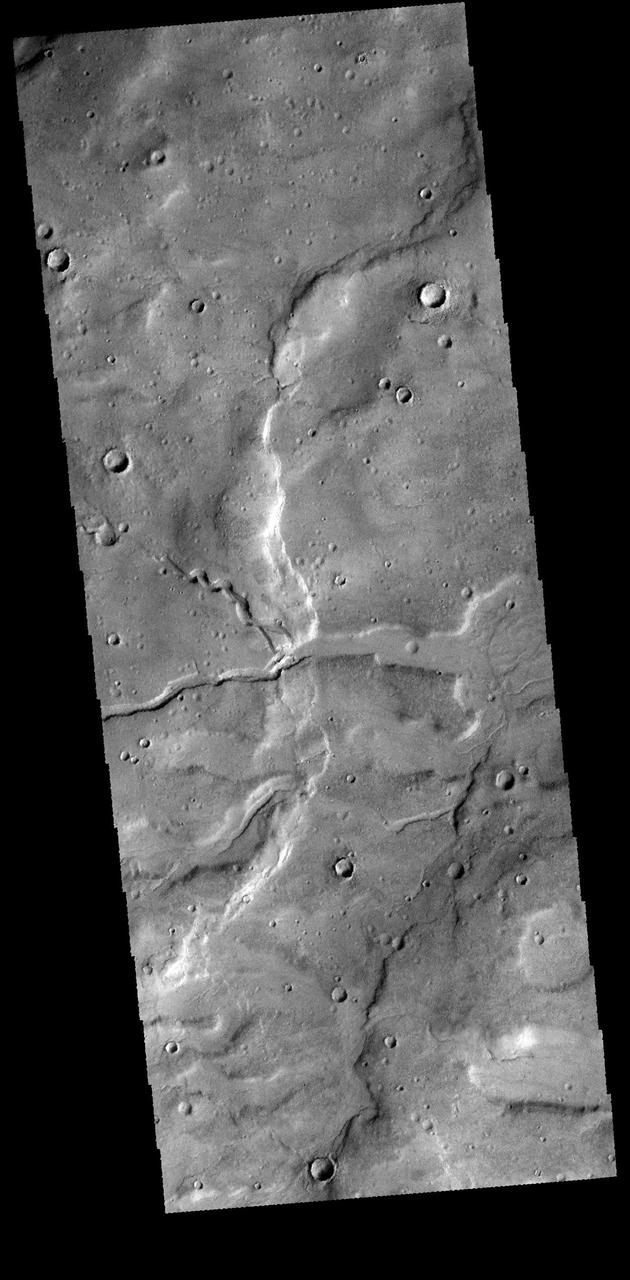
This image of Terra Cimmeria captured by NASA 2001 Mars Odyssey spacecraft shows two channels intersecting to become one larger channel. Orbit Number: 58450 Latitude: -42.1886 Longitude: 165.142 Instrument: VIS Captured: 2015-02-16 12:08 http://photojournal.jpl.nasa.gov/catalog/PIA19281
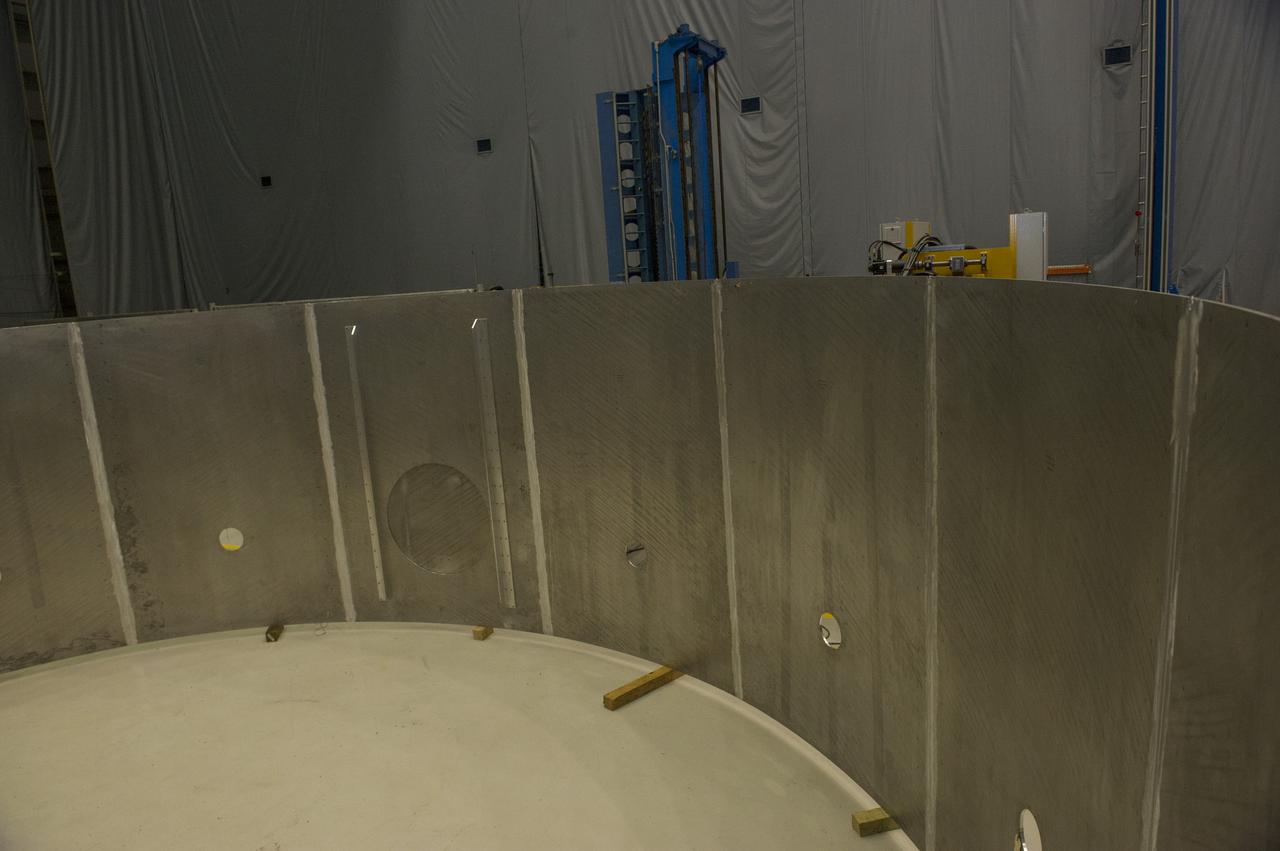
CORE STAGE SIMULATOR, BLDG. 4755, SOUTH HIGHBAY, JANUARY 13, 2015
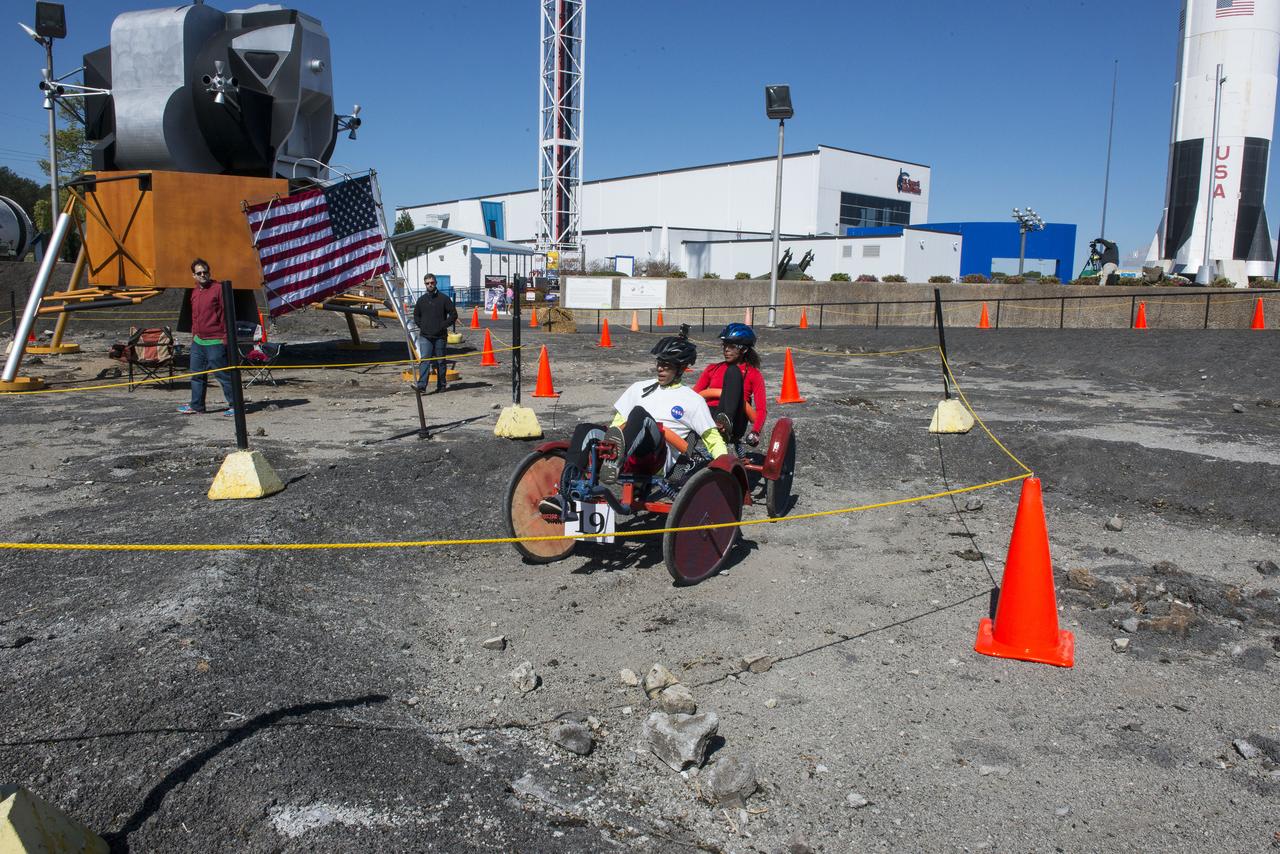
2016 ROVER CHALLENGE EVENTS AT THE U.S. SPACE AND ROCKET CENTER IN HUNTSVILLE, ALABAMA. NATIONAL AND INTERNATIONAL COLLEGE AND HIGH SCHOOL STUDENTS COME TOGETHER TO TEST THEIR ENGINEERING SKILLS OVER A SIMULATED OUTER PLANET OBSTACLE COURSE.
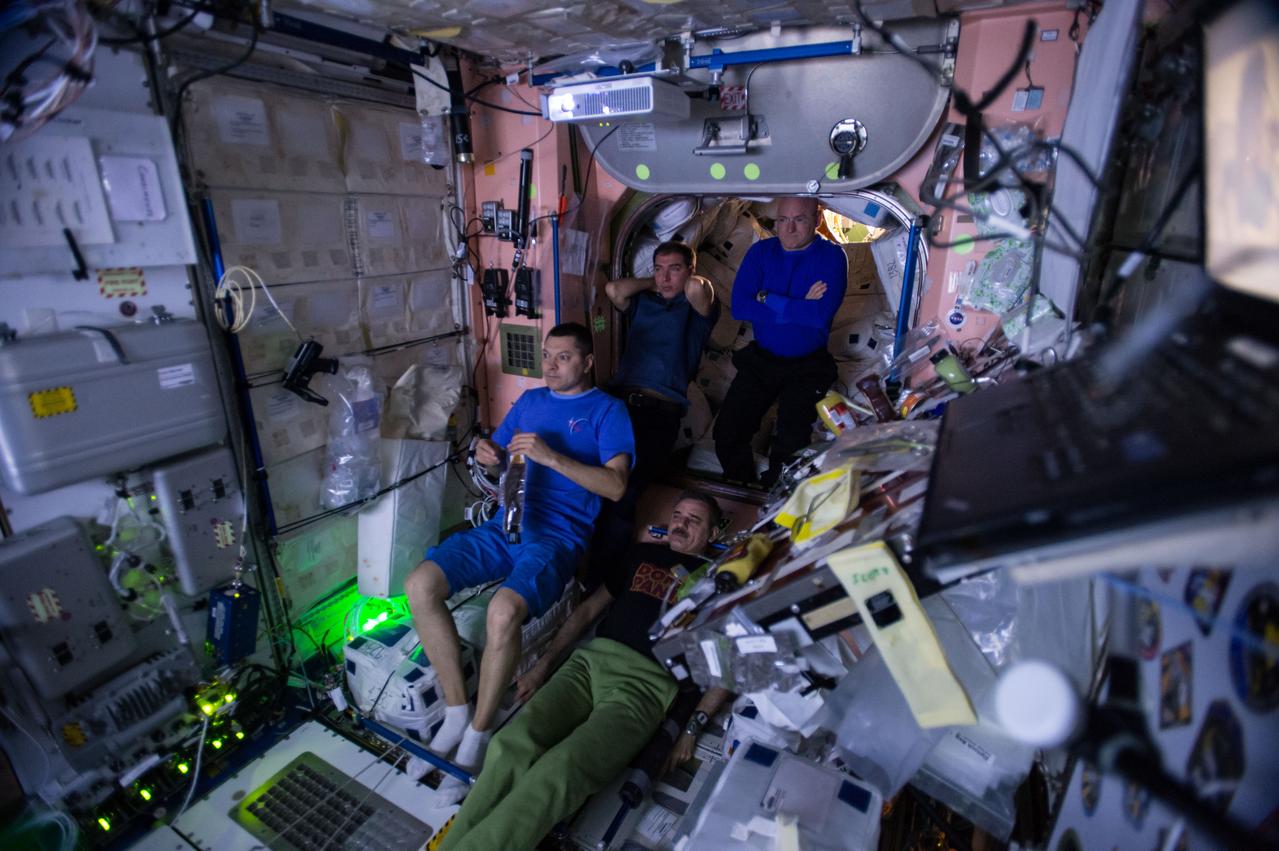
ISS045e019776 (09/19/2015) --- International Space Station Expedition 45 crewmembers watch an advance screening of "The Martian" movie in the Unity Node 1. Clockwise from left, are Russian cosmonauts flight engineers Oleg Kononenko and Sergei Volkov, NASA astronaut Commander Scott Kelly, and cosmonaut Mikhail Kornienko. This image was released on social media.
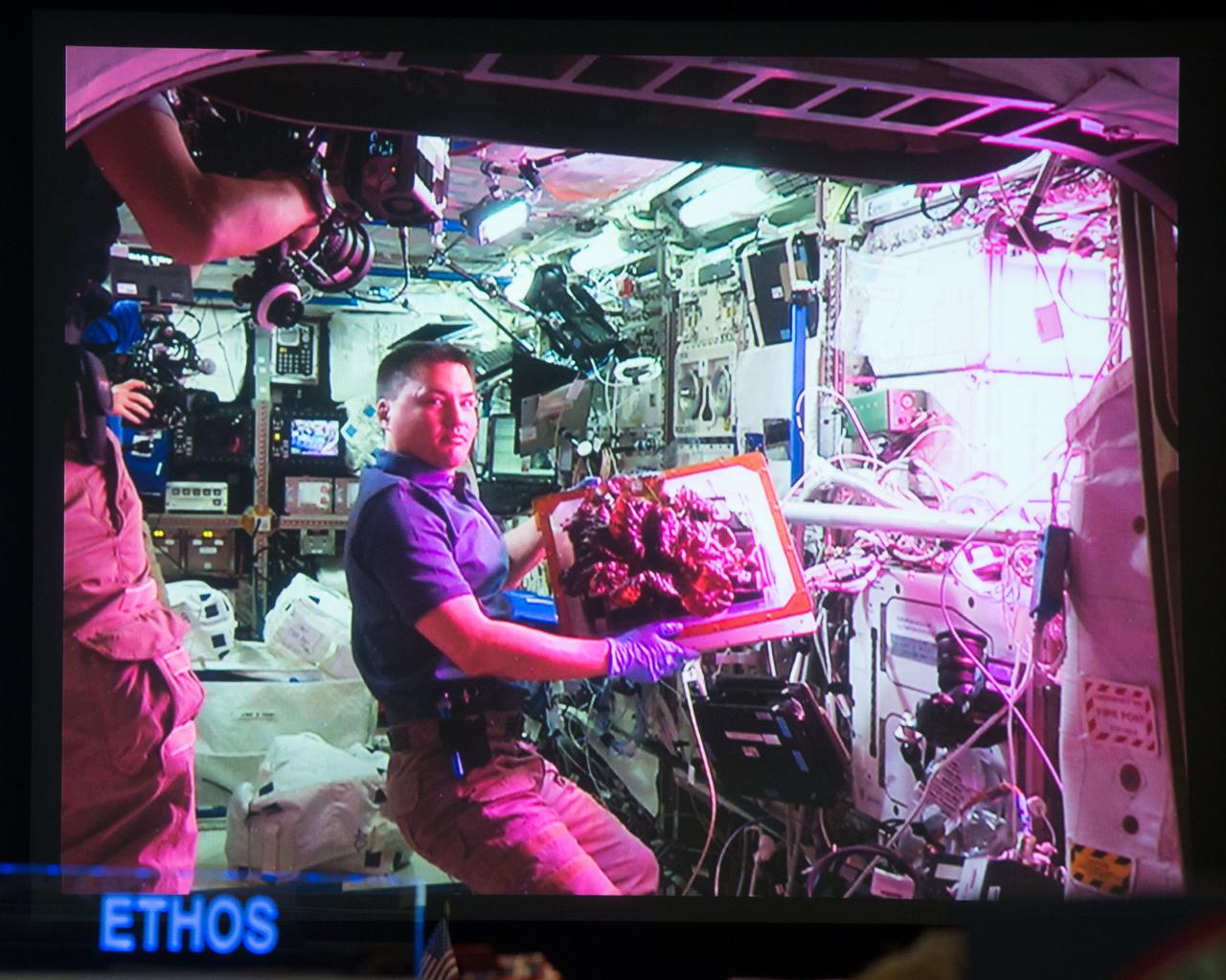
Astronaut Scott Kelly initiated VEG-01 B, the second crop of lettuce, on July, 8, 2015, and both Kelly and Astronaut Kjell Lindgren cared for the plants. The crop grew for 33 days. VEG-01 B included one set of six plant pillows planted with red romaine lettuce seeds. On Aug. 10, 2015, the crew harvested and consumed leaves from each plant. This was the first crop grown and consumed in NASA hardware. They harvested the rest of the plant tissue and froze it in the station’s Minus Eighty-Degree Laboratory Freezer for ISS (MELFI) for return to Earth for further study including microbial analysis, antioxidant capacity, mineral analysis and anthocyanin concentration.
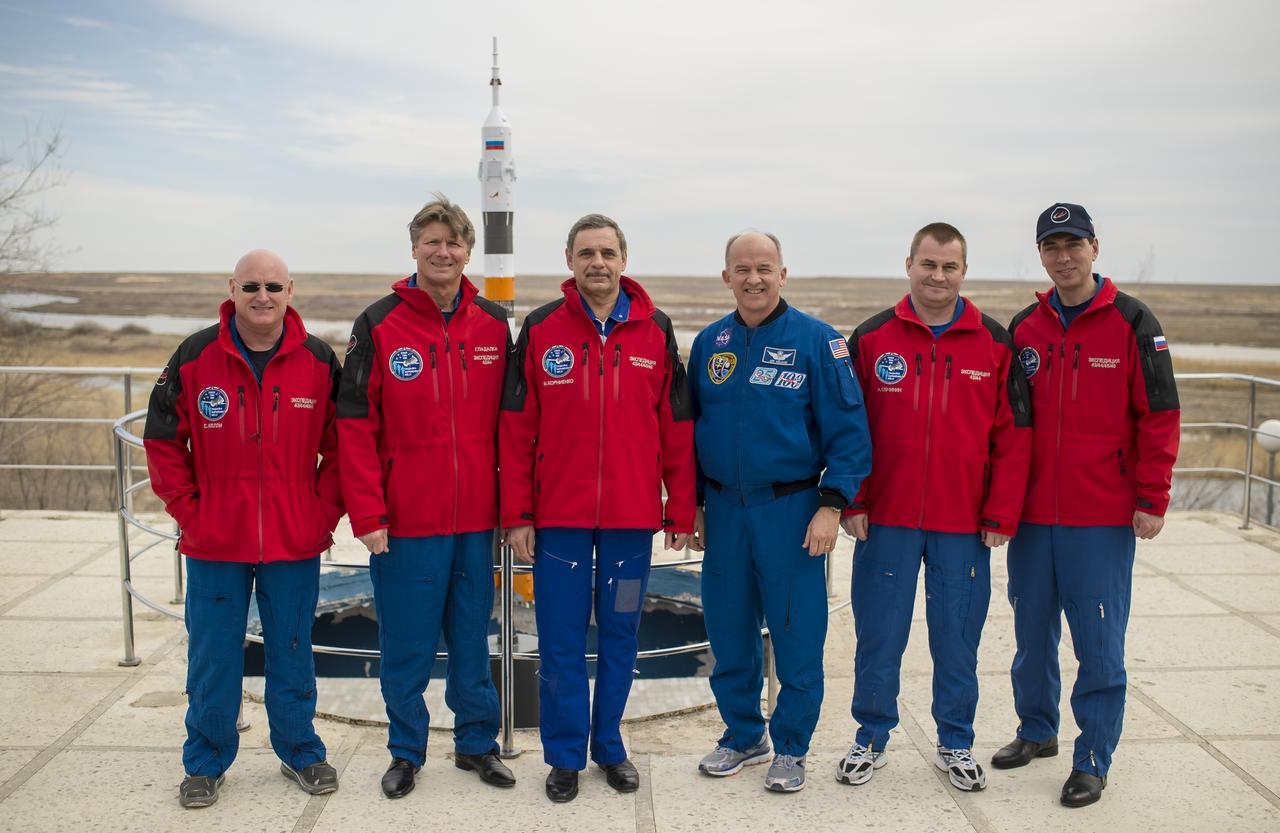
Expedition 43 NASA Astronaut Scott Kelly, left, Russian Cosmonauts Gennady Padalka, center, and Mikhail Kornienko of the Russian Federal Space Agency (Roscosmos) and backup crew members NASA Astronaut Jeff Williams, Alexey Ovchinin, and Sergei Volkov of Roscosmos pose for a group photo near a model of the Soyuz rocket during media day, Saturday, March 21, 2015 at the Cosmonaut Hotel in Baikonur, Kazakhstan. Kelly, Padalka, and Kornienko are preparing for launch to the International Space Station in their Soyuz TMA-16M spacecraft from the Baikonur Cosmodrome in Kazakhstan March 28, Kazakh time (March 27 Eastern time.) As the one-year crew, Kelly and Kornienko will return to Earth on Soyuz TMA-18M in March 2016. Photo Credit: (NASA/Bill Ingalls)
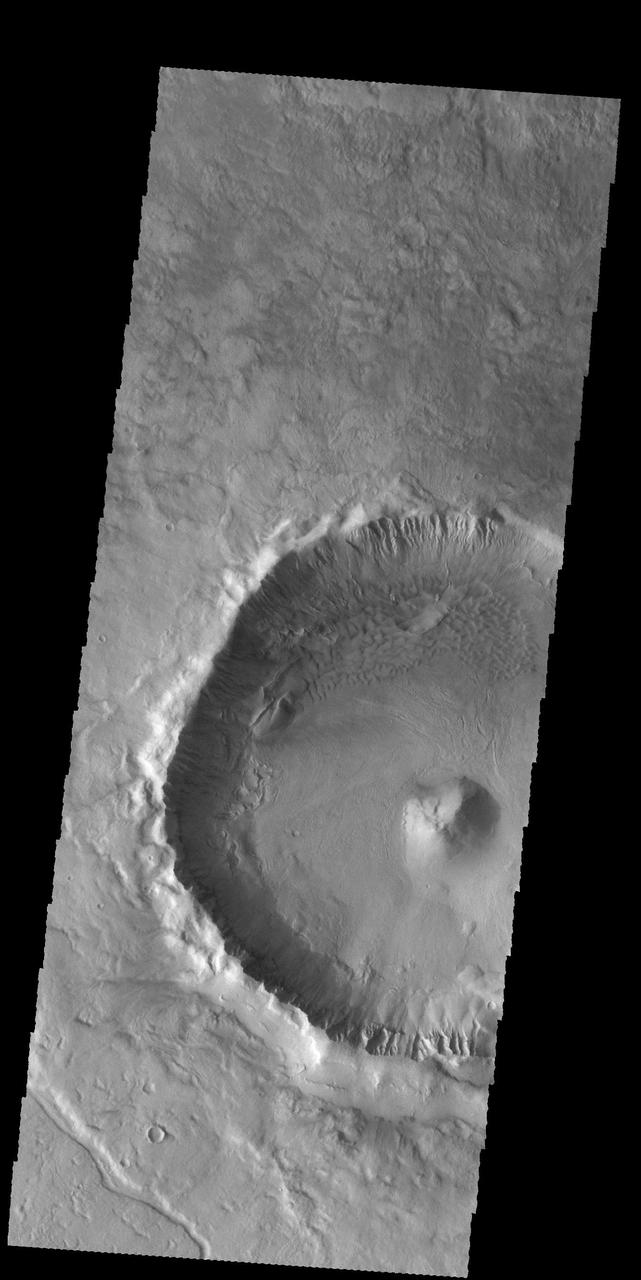
Today's VIS image is of an unnamed crater located on the floor of the much larger Newton Crater. This crater had a central peak, gullies on the inner rim and dunes on the northern part of the crater floor. Orbit Number: 59391 Latitude: -41.9785 Longitude: 201.934 Instrument: VIS Captured: 2015-05-04 23:15 http://photojournal.jpl.nasa.gov/catalog/PIA19504

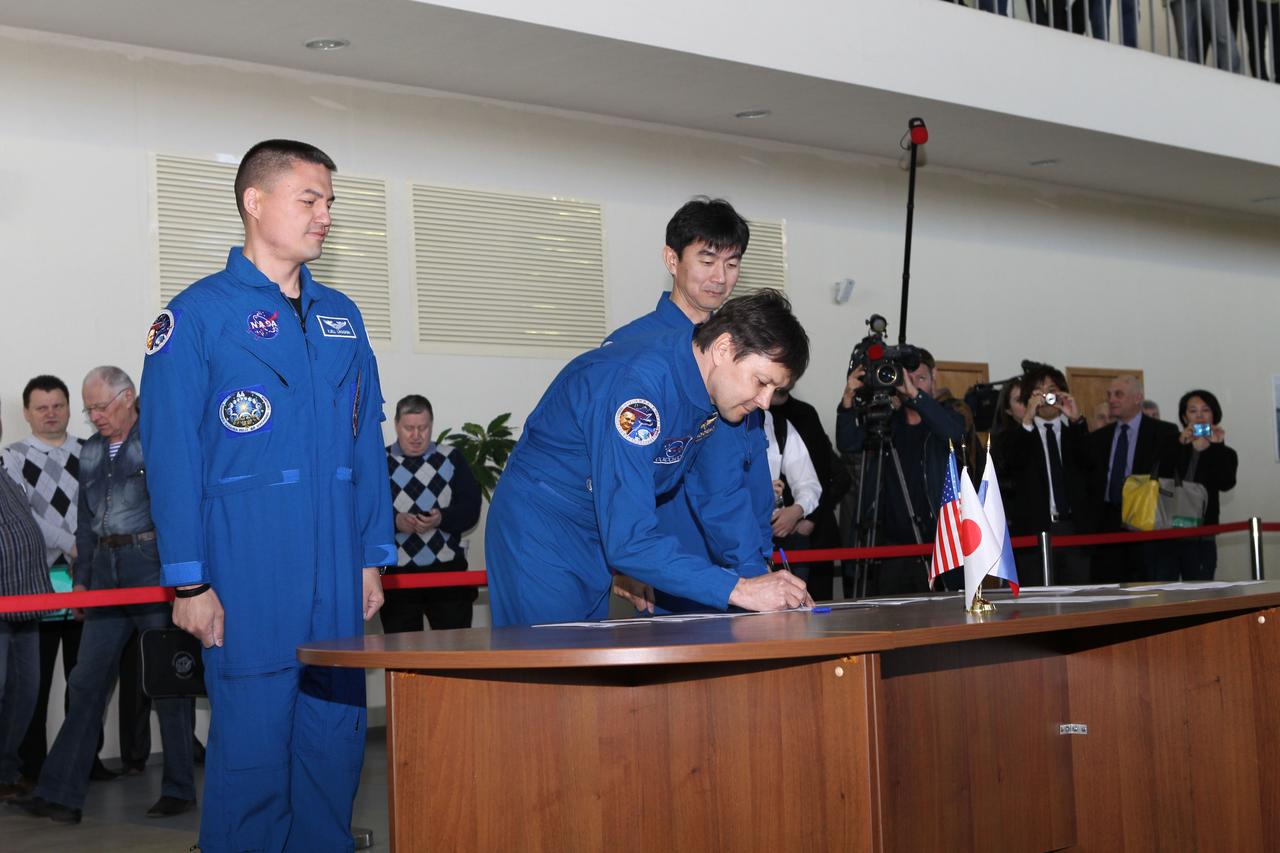
CG4G8895 --- (6 May 2015) --- At the Gagarin Cosmonaut Training Center in Star City, Russia, Expedition 44/45 Soyuz Commander Oleg Kononenko of the Russian Federal Space Agency (Roscosmos) signs in for the first of two days of qualification exams May 6 as his crewmates, Kjell Lindgren of NASA (left) and Kimya Yui of the Japan Aerospace Exploration Agency (right), look on. The trio is preparing for launch from the Baikonur Cosmodrome in Kazakhstan on May 27, Kazakh time, in the Soyuz TMA-17M spacecraft to begin a five and a half month mission to the International Space Station. Photo credit: NASA/Seth Marcantel

The THEMIS VIS camera contains 5 filters. The data from different filters can be combined in multiple ways to create a false color image. This image from NASA 2001 Mars Odyssey spacecraft shows a crater within a crater on the floor of Hadley Crater. Orbit Number: 7248 Latitude: -19.787 Longitude: 157.116 Instrument: VIS Captured: 2003-08-03 04:24 http://photojournal.jpl.nasa.gov/catalog/PIA19455
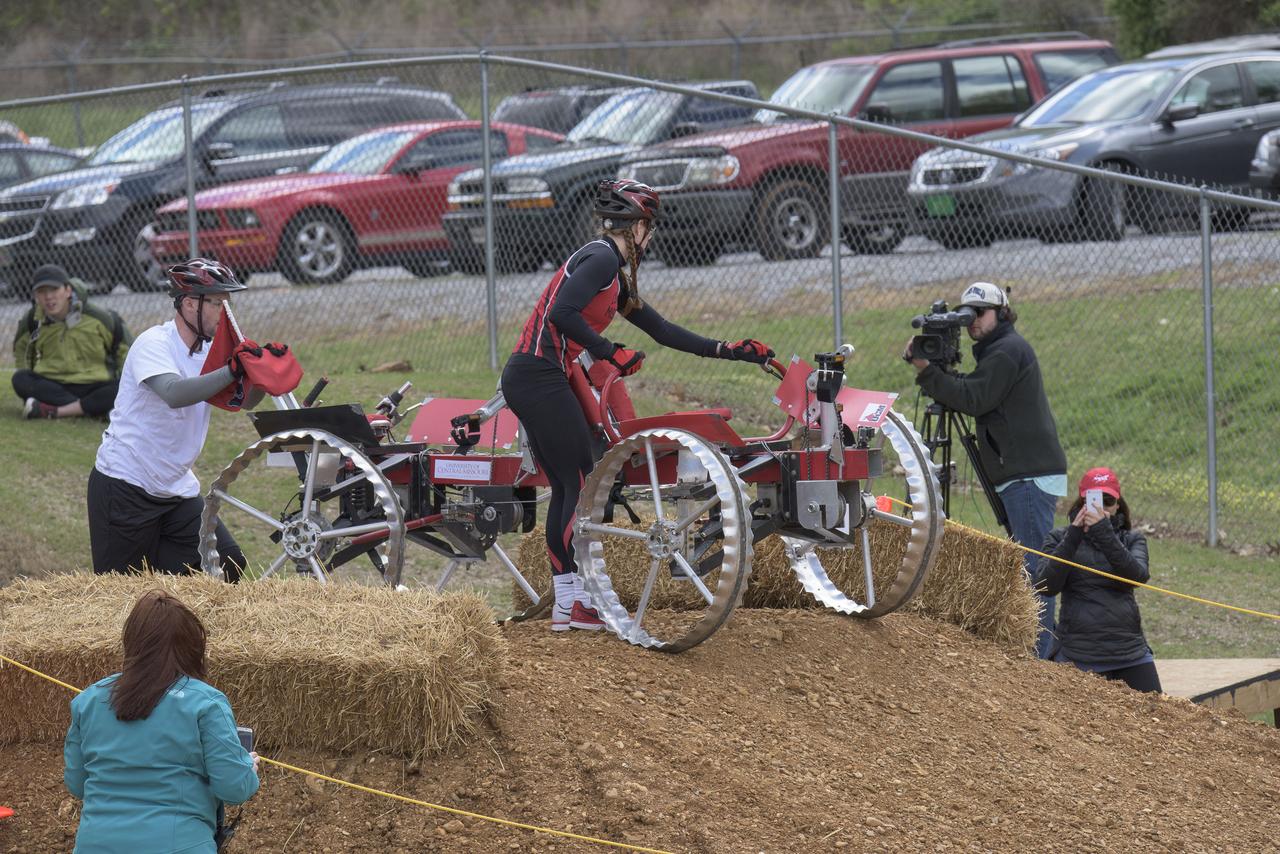
2016 ROVER CHALLENGE EVENTS AT THE U.S. SPACE AND ROCKET CENTER IN HUNTSVILLE, ALABAMA. NATIONAL AND INTERNATIONAL COLLEGE AND HIGH SCHOOL STUDENTS COME TOGETHER TO TEST THEIR ENGINEERING SKILLS OVER A SIMULATED OUTER PLANET OBSTACLE COURSE.
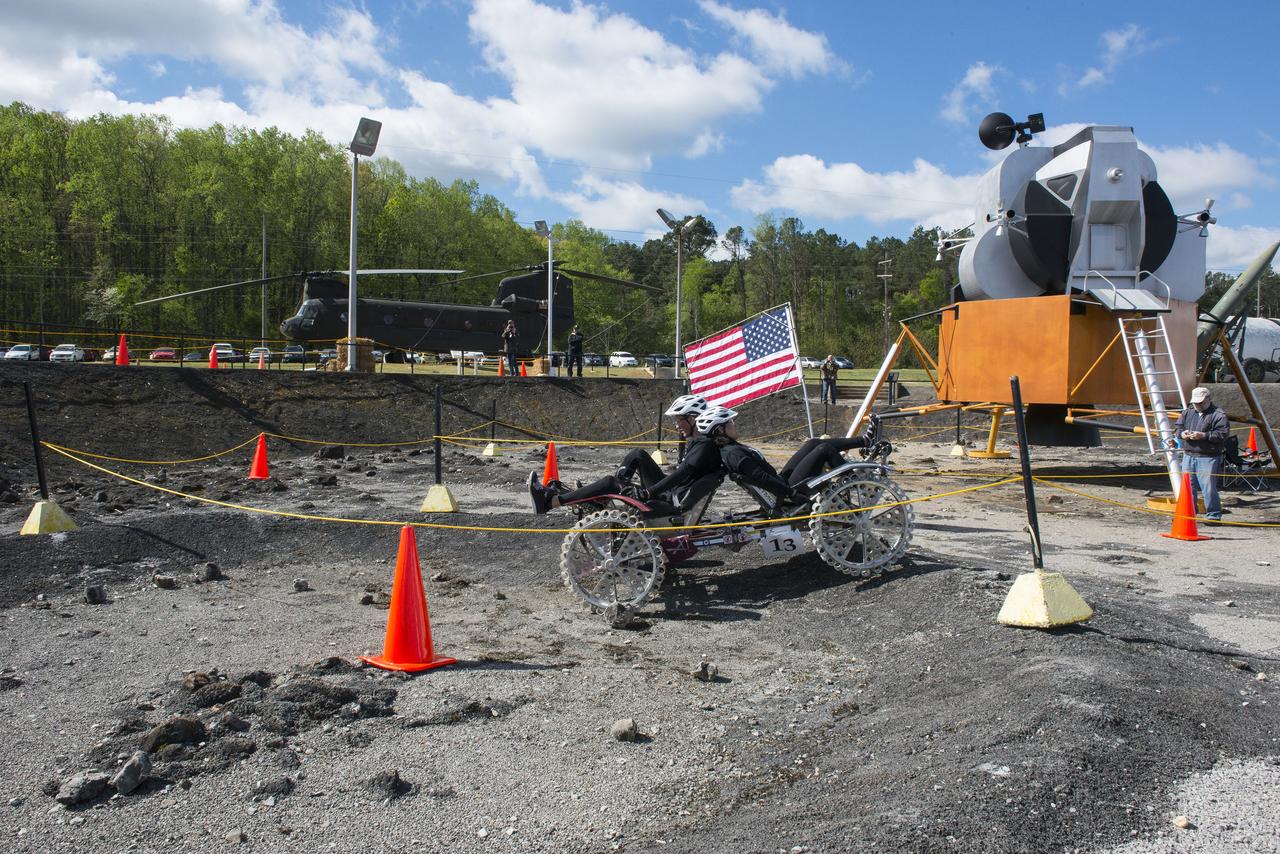
2016 ROVER CHALLENGE EVENTS AT THE U.S. SPACE AND ROCKET CENTER IN HUNTSVILLE, ALABAMA. NATIONAL AND INTERNATIONAL COLLEGE AND HIGH SCHOOL STUDENTS COME TOGETHER TO TEST THEIR ENGINEERING SKILLS OVER A SIMULATED OUTER PLANET OBSTACLE COURSE.
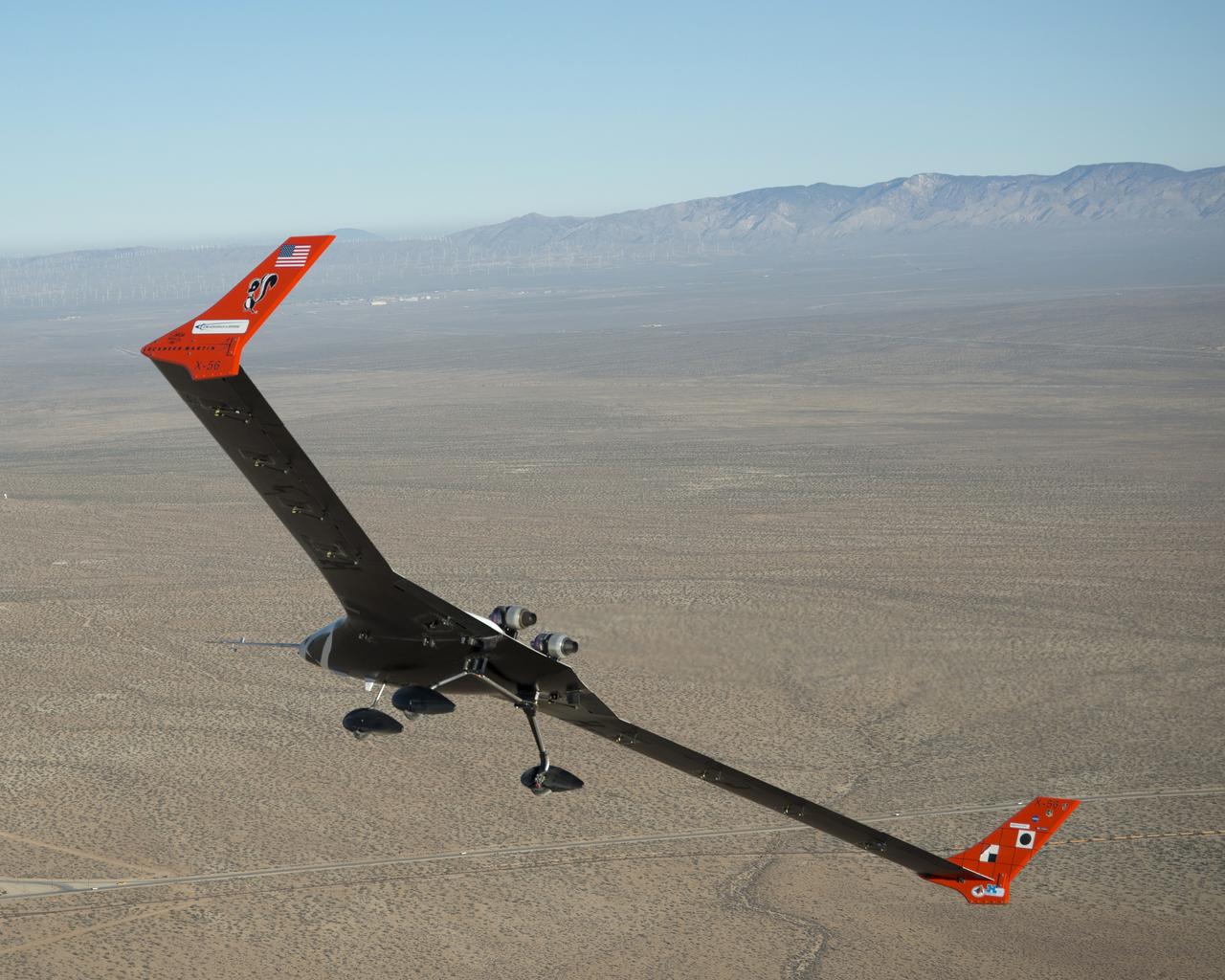
The X-56A flies over the desert near NASA Armstrong Flight Research Center, Edwards, California. NASA researchers are using the remotely piloted X-56A to explore the behavior of lightweight, flexible aircraft structures.
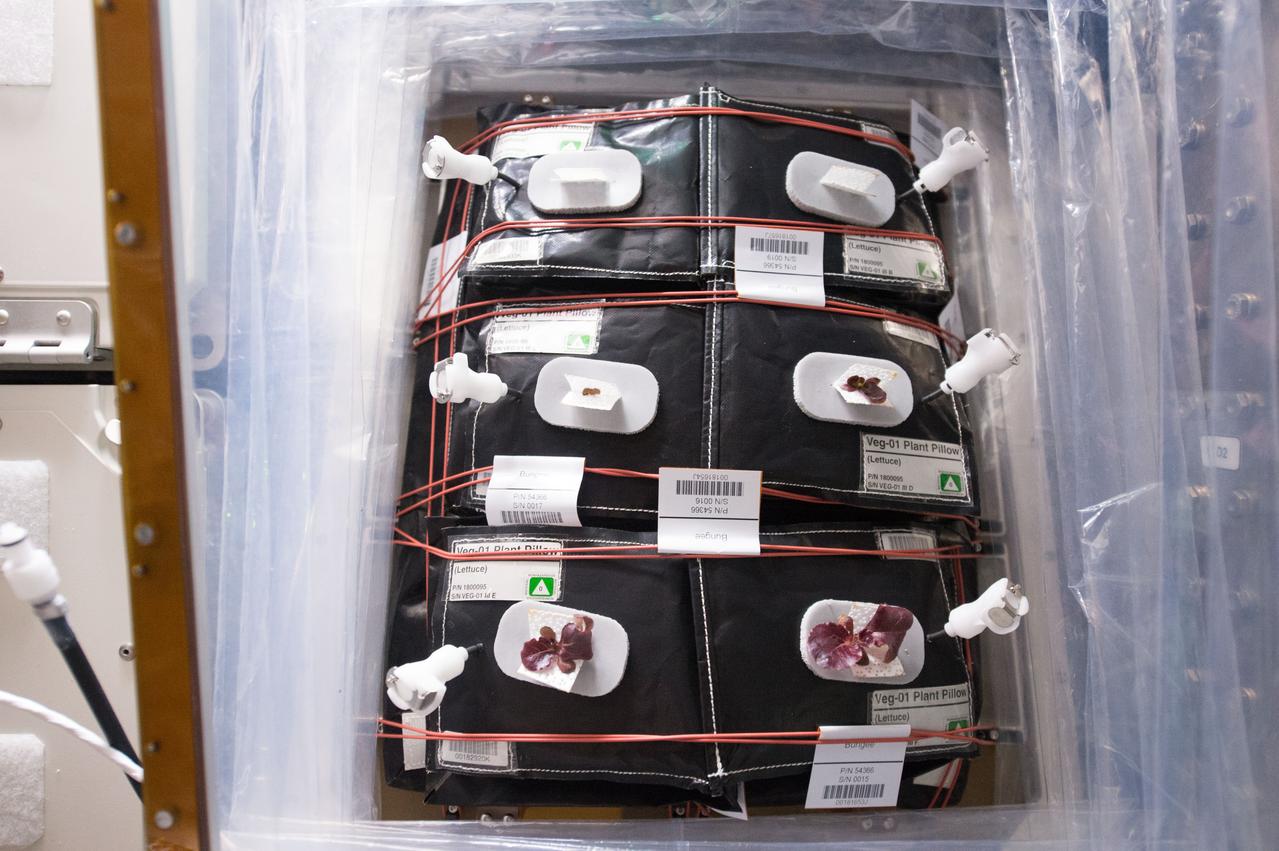
Astronaut Scott Kelly initiated VEG-01 B, the second crop of lettuce, on July, 8, 2015, and both Kelly and Astronaut Kjell Lindgren cared for the plants. The crop grew for 33 days. VEG-01 B included one set of six plant pillows planted with red romaine lettuce seeds. On Aug. 10, 2015, the crew harvested and consumed leaves from each plant. This was the first crop grown and consumed in NASA hardware. They harvested the rest of the plant tissue and froze it in the station’s Minus Eighty-Degree Laboratory Freezer for ISS (MELFI) for return to Earth for further study including microbial analysis, antioxidant capacity, mineral analysis and anthocyanin concentration.
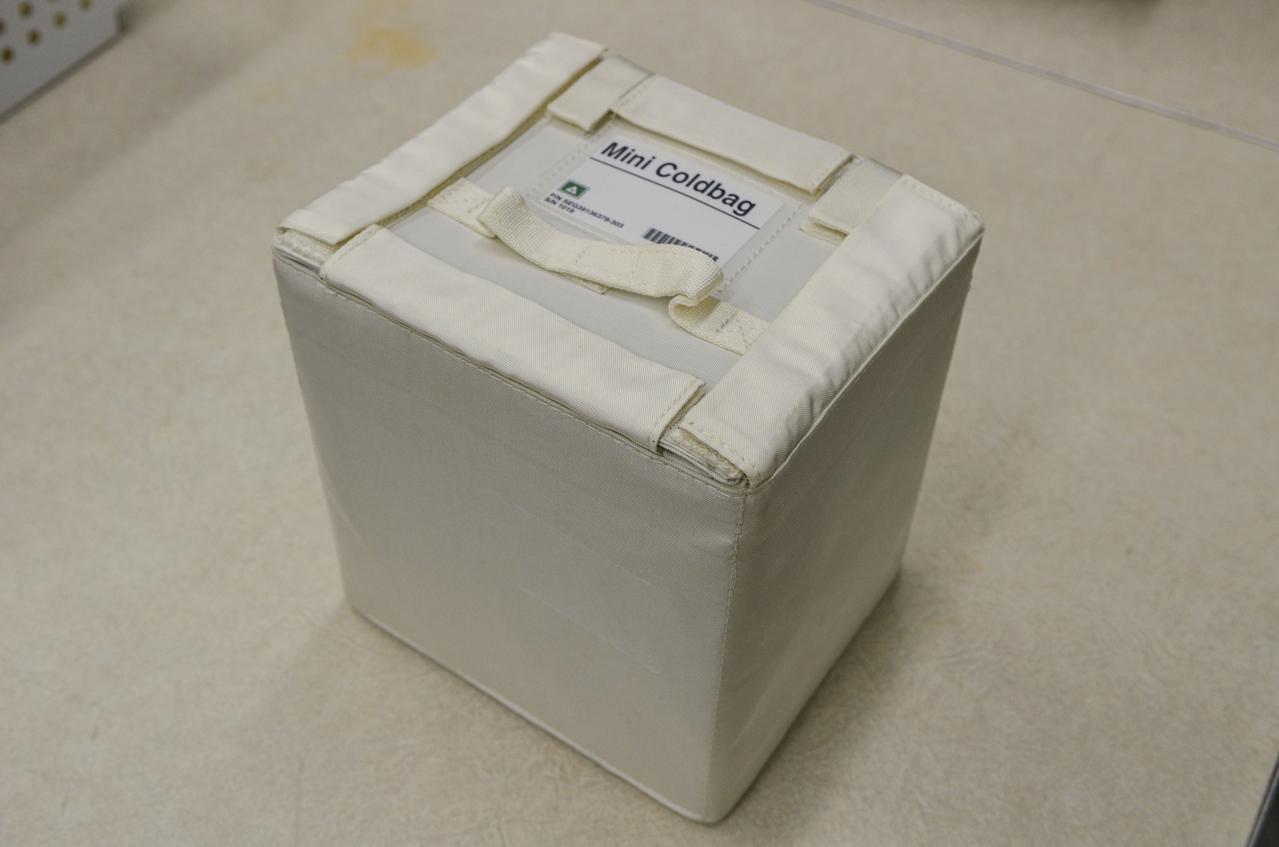
jsc2021e019955 (8/10/2015) --- A preflight photo of a Mini Coldbag. The Mini Coldbag is a temperature control resource that provides for the specific needs for scientific samples and other temperature-sensitive payload items. These options are available on the International Space Station (ISS) during launch and return operations.
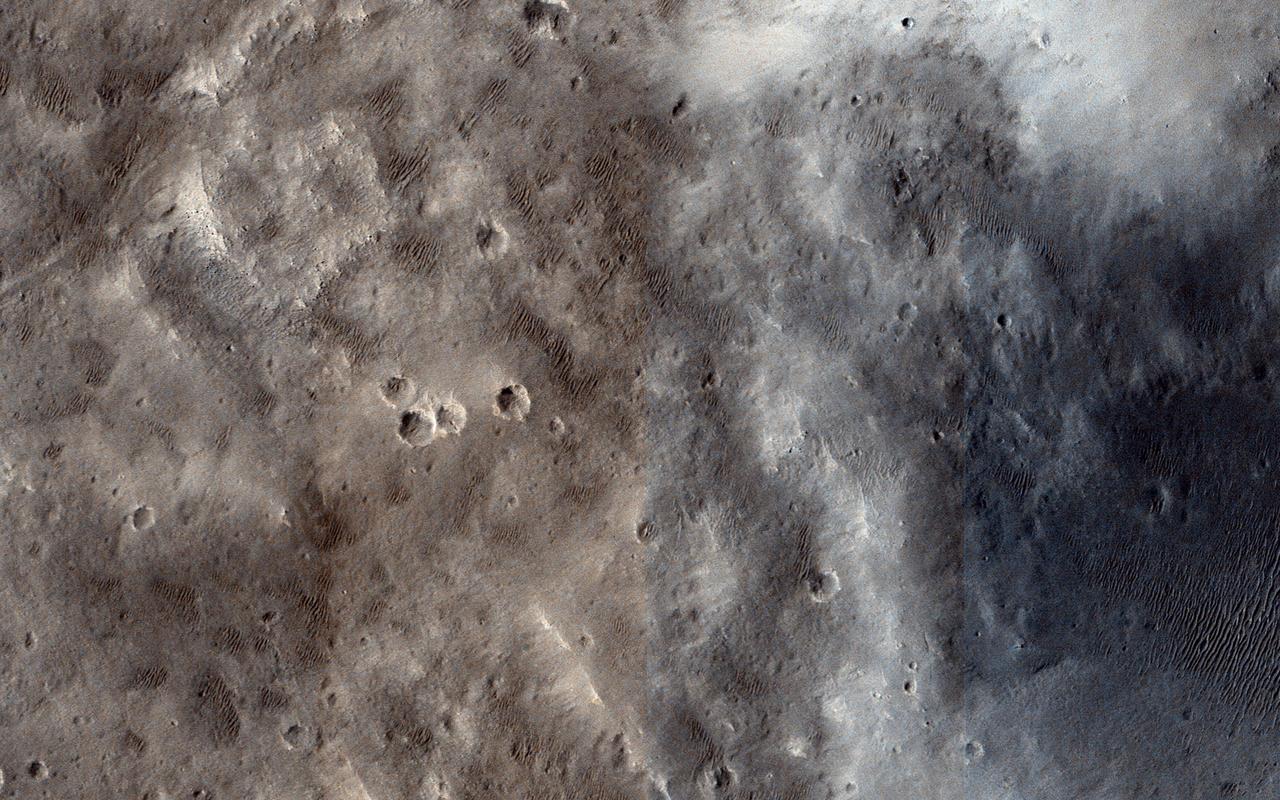
This image from NASA Mars Reconnaissance Orbiter spacecraft shows the nature of the terrain at the rim of Marth Crater. In the book "The Martian" by Andy Weir, stranded astronaut Mark Watney is headed for the Ares 4 landing site but encounters the rim of Marth Crater just as a dust storm arrives. This HiRISE image shows the nature of this terrain. The crater rim is not very distinct and from the ground it would be quite difficult to tell that you are even on the rim of a crater. The terrain is hummocky and rolling, punctuated by smaller impact craters and wind-blown drifts of sand or dust. http://photojournal.jpl.nasa.gov/catalog/PIA19959
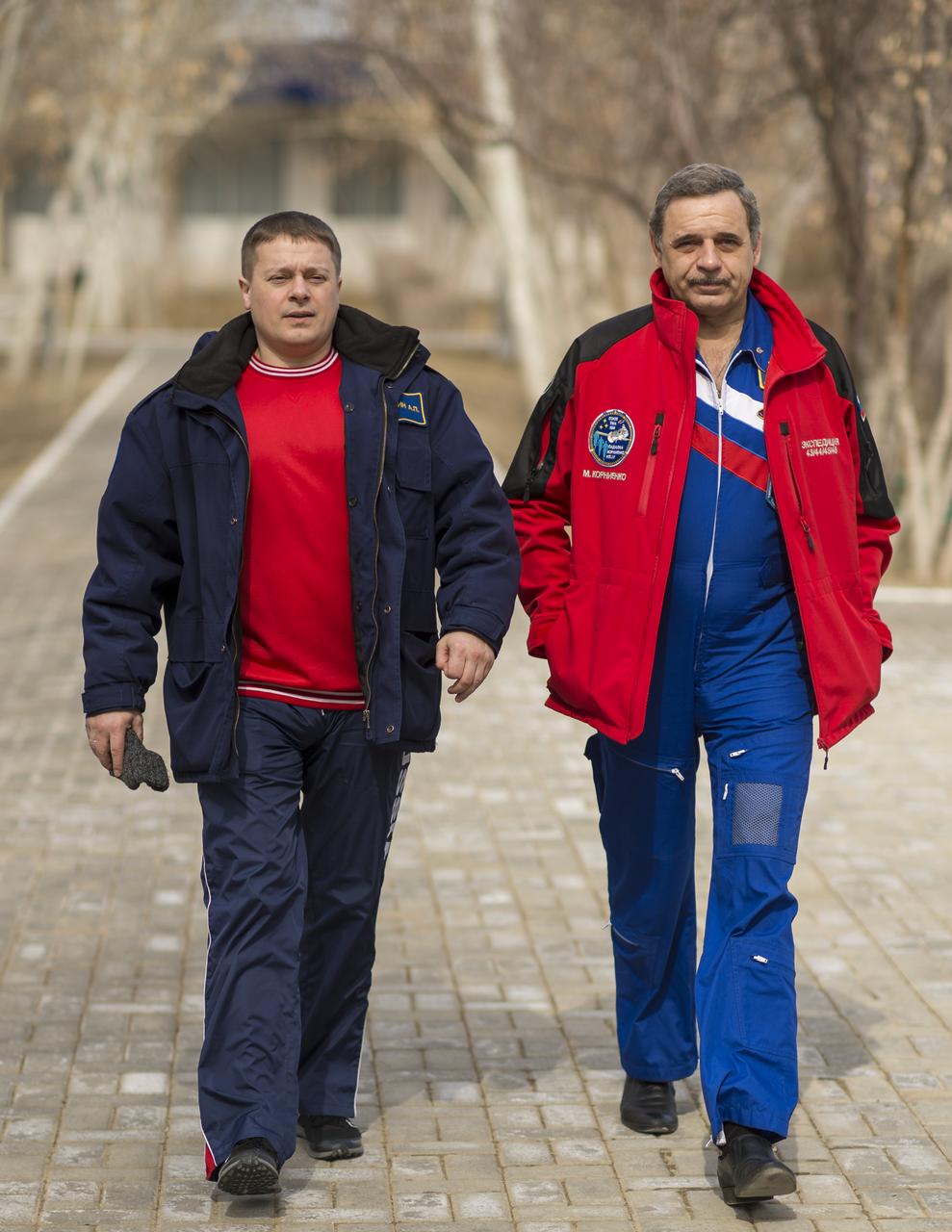
Gagarin Cosmonaut Training Center (GCTC) Flight Surgeon Alexey Grishin, left, and Expedition 43 Russian Cosmonaut Mikhail Kornienko of the Russian Federal Space Agency (Roscosmos) walk from morning classes at the Cosmonaut Hotel to the crew quarters at the Zvjozdnyj Hotel, Thursday, March 19, 2015 in Baikonur, Kazakhstan. Kornienko, Russian Cosmonaut Gennady Padalka of Roscosmos, and NASA Astoronaut Scott Kelly are preparing for launch to the International Space Station in their Soyuz TMA-16M spacecraft from the Baikonur Cosmodrome in Kazakhstan March 28, Kazakh time. As the one-year crew, Kelly and Kornienko will return to Earth on Soyuz TMA-18M in March 2016. Photo Credit: (NASA/Bill Ingalls)
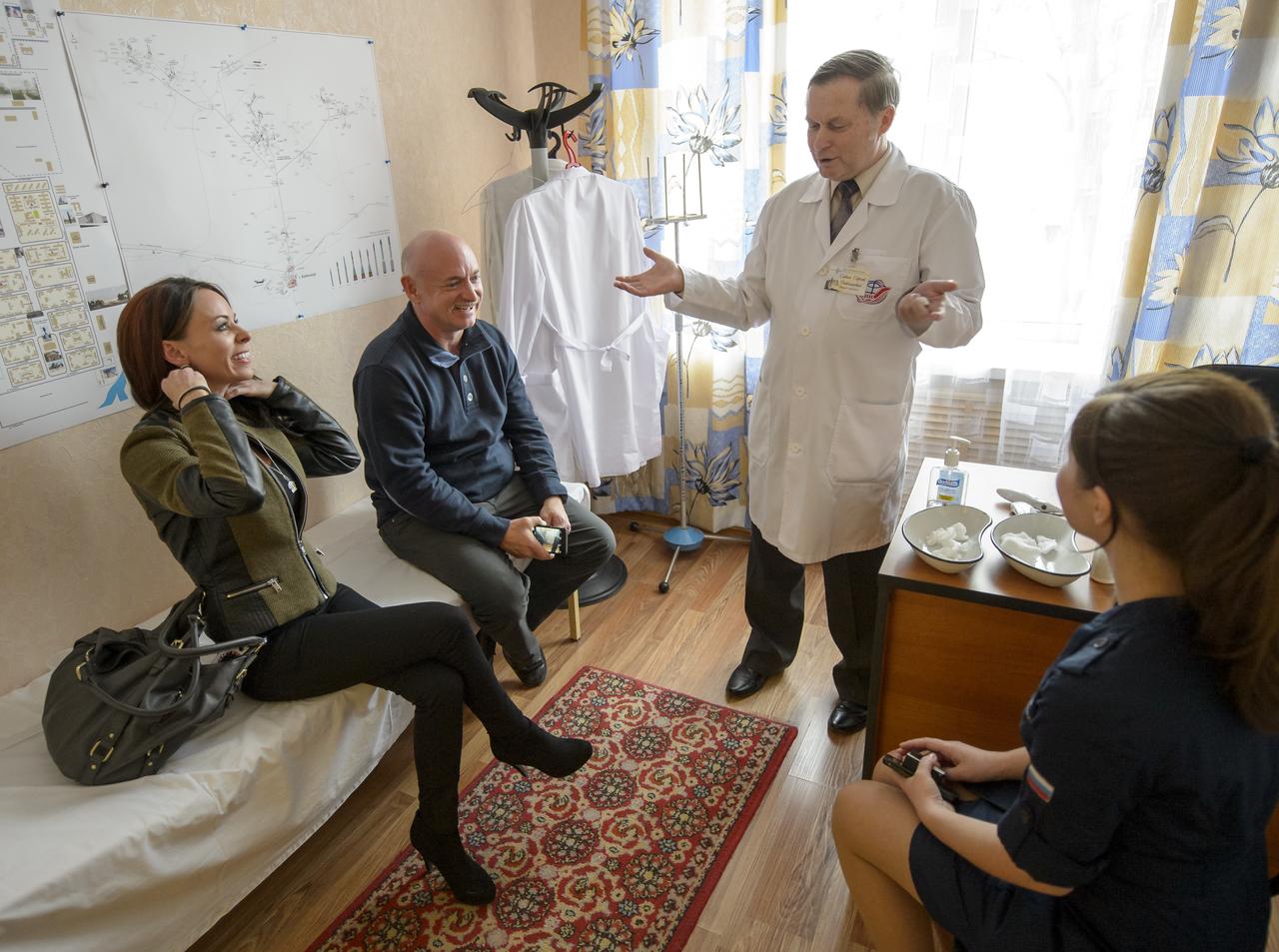
Expedition 43 NASA Astronaut Scott Kelly's girlfriend, Amiko Kauderer, and Kelly's twin brother, retired NASA Astronaut Mark Kelly, meet with Gagarin Cosmonaut Training Center (GCTC) Chief Epidemiologist Sergei Savin to be medically cleared to visit with Scott Thursday, March 26, 2015 at the Cosmonaut Hotel in Baikonur, Kazakhstan. Mark Kelly, who flew four space shuttle missions and commanded the final flight of space shuttle Endeavour, will participate in biomedical studies on the ground while his twin is on board the orbiting laboratory. Scott Kelly, Russian cosmonauts Gennady Padalka, and Mikhail Kornienko of the Russian Federal Space Agency (Roscosmos) launched to the International Space Station in the Soyuz TMA-16M spacecraft from the Baikonur Cosmodrome in Kazakhstan March 28, Kazakh time (March 27 Eastern time.) As the one-year crew, Kelly and Kornienko will return to Earth on Soyuz TMA-18M in March 2016. Photo Credit (NASA/Bill Ingalls)

2016 ROVER CHALLENGE EVENTS AT THE U.S. SPACE AND ROCKET CENTER IN HUNTSVILLE, ALABAMA. NATIONAL AND INTERNATIONAL COLLEGE AND HIGH SCHOOL STUDENTS COME TOGETHER TO TEST THEIR ENGINEERING SKILLS OVER A SIMULATED OUTER PLANET OBSTACLE COURSE.

Astronaut Scott Kelly initiated VEG-01 B, the second crop of lettuce, on July, 8, 2015, and both Kelly and Astronaut Kjell Lindgren cared for the plants. The crop grew for 33 days. VEG-01 B included one set of six plant pillows planted with red romaine lettuce seeds. On Aug. 10, 2015, the crew harvested and consumed leaves from each plant. This was the first crop grown and consumed in NASA hardware. They harvested the rest of the plant tissue and froze it in the station’s Minus Eighty-Degree Laboratory Freezer for ISS (MELFI) for return to Earth for further study including microbial analysis, antioxidant capacity, mineral analysis and anthocyanin concentration.

Sometimes a central pit forms inside some Martian craters, especially when there substantial ground ice. Such is the case in this observation from NASA Mars Reconnaissance Orbiter spacecraft. Sometimes what we call "mass wasting" processes (think small avalanches or landslides) occur on the slopes of the central pit. We took this image to search for any recent activity that would add to or modify previously identified gullies. http://photojournal.jpl.nasa.gov/catalog/PIA20005
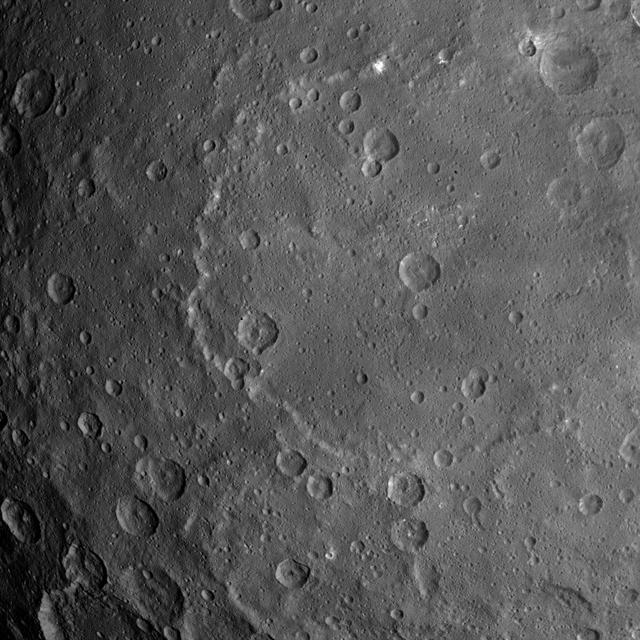
This image, taken by NASA's Dawn spacecraft, shows dwarf planet Ceres from an altitude of 2,700 miles (4,400 kilometers). The image, with a resolution of 1,400 feet (410 meters) per pixel, was taken on June 25, 2015. http://photojournal.jpl.nasa.gov/catalog/PIA19596
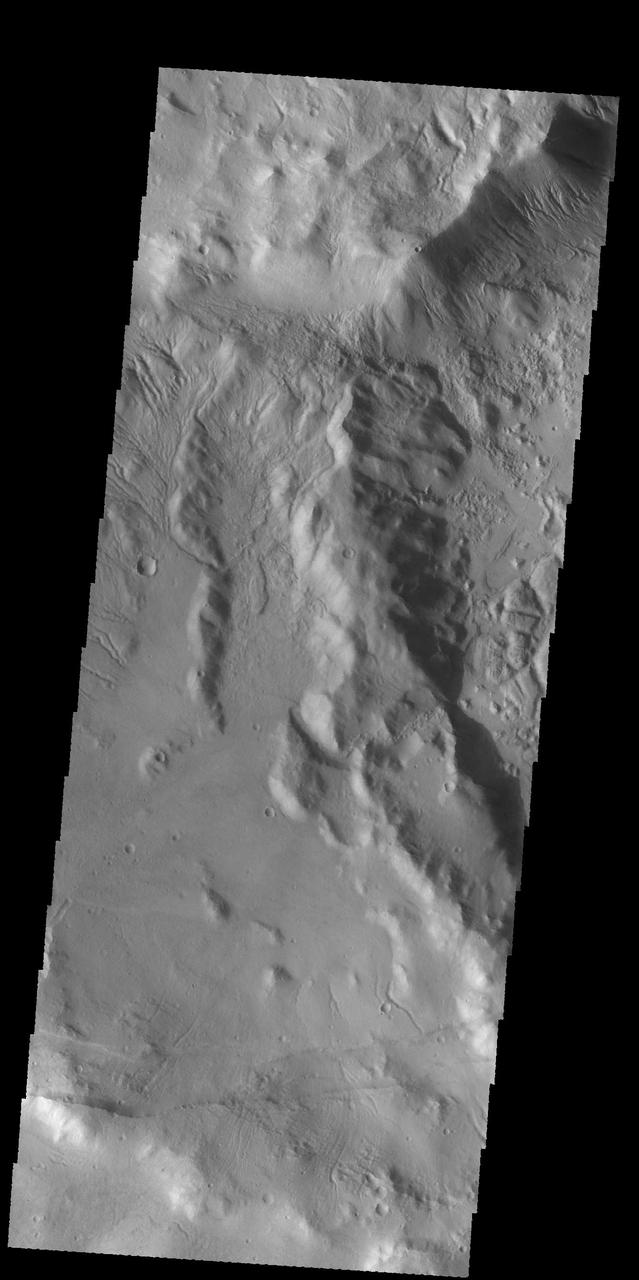
The subtle paired fractues at the bottom of this image from NASA 2001 Mars Odyssey spacecraft are part of Sirenum Fossae, though it is hundreds of km away from yesterday image location. Numerous gullies at the top of the image are located on the intersection of two crater rims. Orbit Number: 58618 Latitude: -38.9581 Longitude: 181.314 Instrument: VIS Captured: 2015-03-02 07:36 http://photojournal.jpl.nasa.gov/catalog/PIA19441
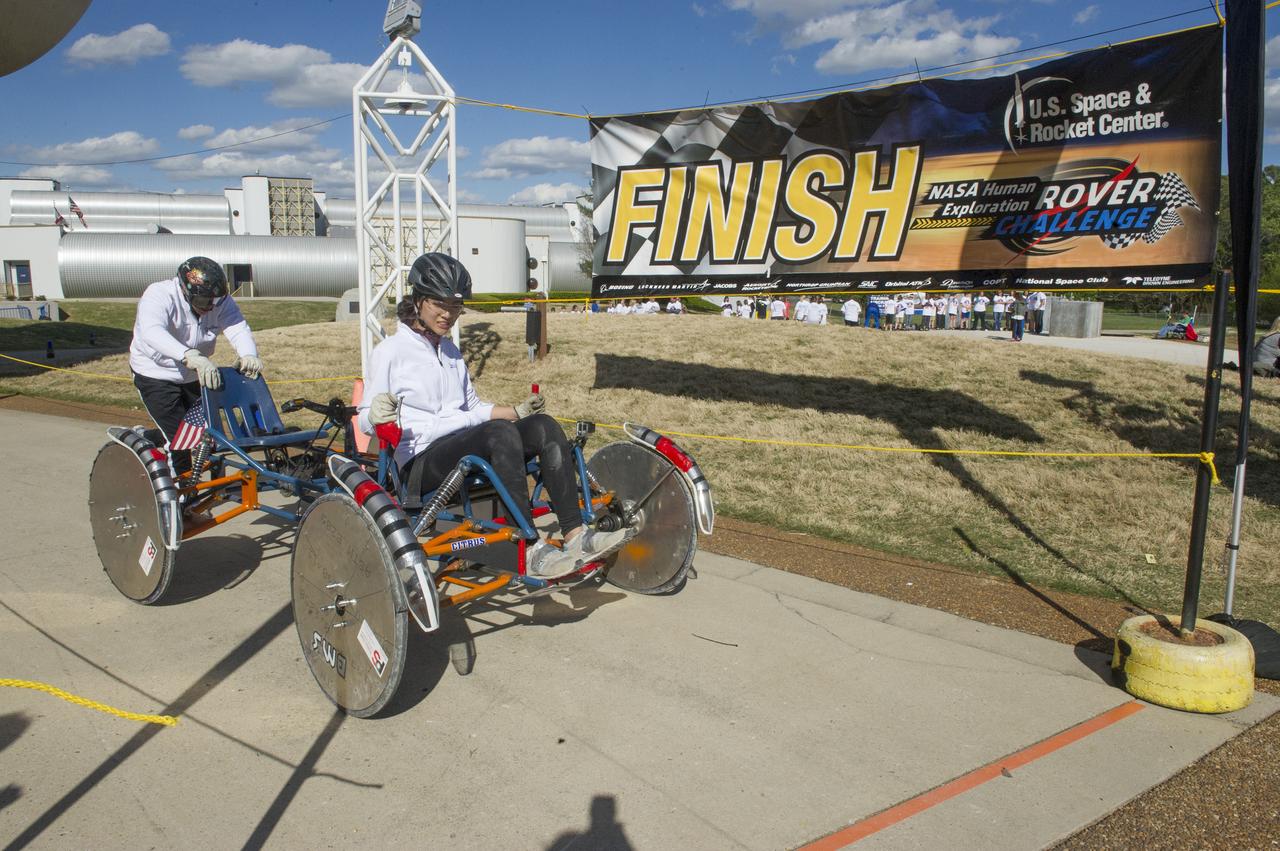
2016 ROVER CHALLENGE EVENTS AT THE U.S. SPACE AND ROCKET CENTER IN HUNTSVILLE, ALABAMA. NATIONAL AND INTERNATIONAL COLLEGE AND HIGH SCHOOL STUDENTS COME TOGETHER TO TEST THEIR ENGINEERING SKILLS OVER A SIMULATED OUTER PLANET OBSTACLE COURSE.
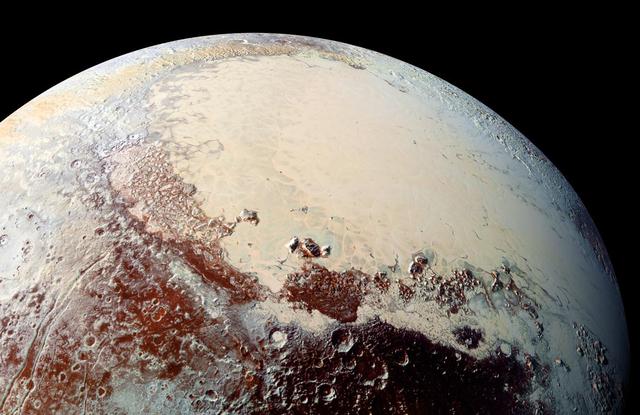
This high-resolution image captured by NASA's New Horizons spacecraft combines blue, red and infrared images taken by the Ralph/Multispectral Visual Imaging Camera (MVIC). The bright expanse is the western lobe of the "heart," informally called Sputnik Planum, which has been found to be rich in nitrogen, carbon monoxide and methane ices. http://photojournal.jpl.nasa.gov/catalog/PIA20007

This image from NASA Mars Reconnaissance Orbiter shows two small craters called tangential craters, just touching on their rims, in the much larger Ptolmaeus Crater, which is located in the Martian Southern hemisphere. These craters are called "tangential craters." The more degraded and filled-in crater is approximately 3 kilometers in diameter, and there is an unusual feature near the center. A closeup shows the feature is approximately 76 meters wide and 164 meters long. This feature is also possibly a substantially oblique impact crater, but its origin remains unknown. http://photojournal.jpl.nasa.gov/catalog/PIA19290
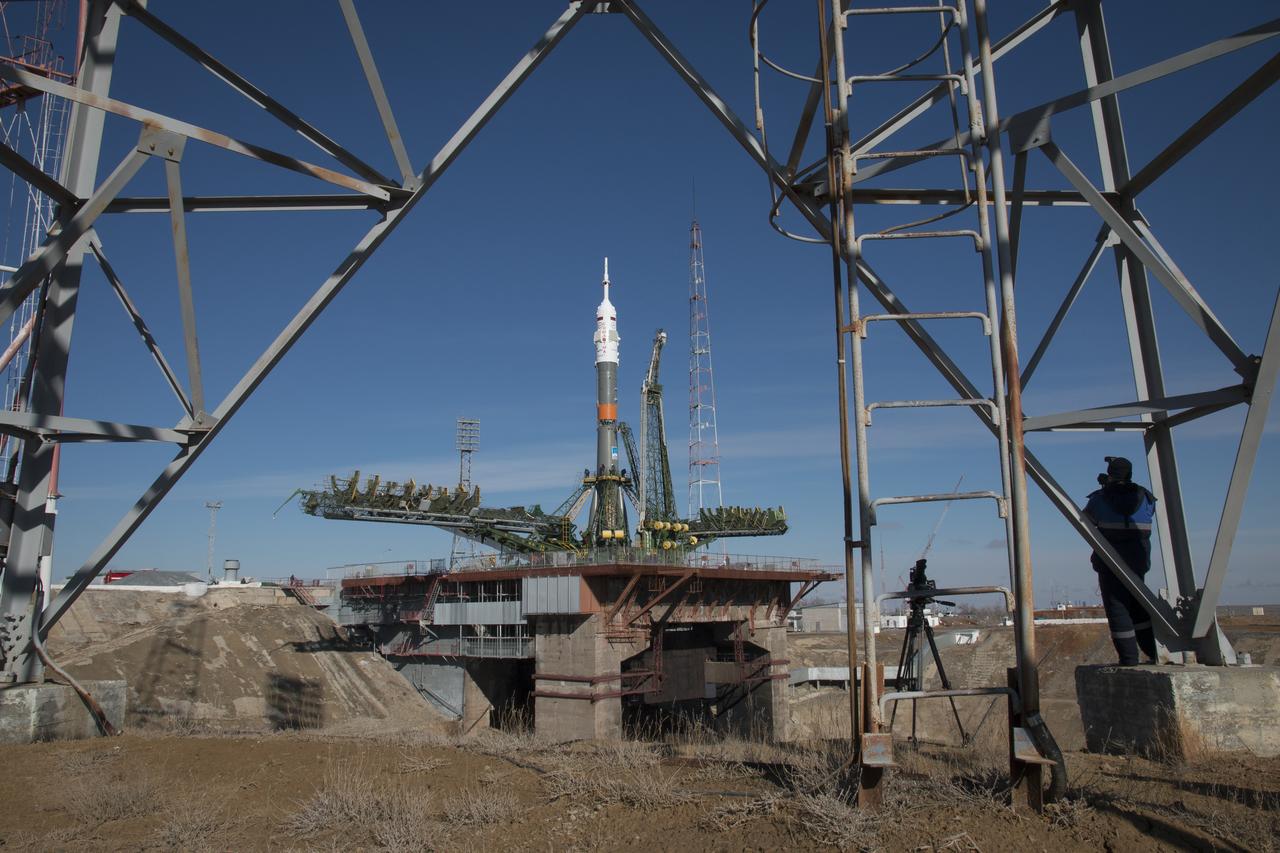
The Soyuz TMA-16M spacecraft is seen after is was rolled out by train to the launch pad at the Baikonur Cosmodrome, Kazakhstan, Wednesday, March 25, 2015. NASA Astronaut Scott Kelly, and Russian Cosmonauts Mikhail Kornienko, and Gennady Padalka of the Russian Federal Space Agency (Roscosmos) are scheduled to launch to the International Space Station in the Soyuz TMA-16M spacecraft from the Baikonur Cosmodrome in Kazakhstan March 28, Kazakh time (March 27 Eastern time.) As the one-year crew, Kelly and Kornienko will return to Earth on Soyuz TMA-18M in March 2016. Photo Credit (NASA/Victor Zelentsov)
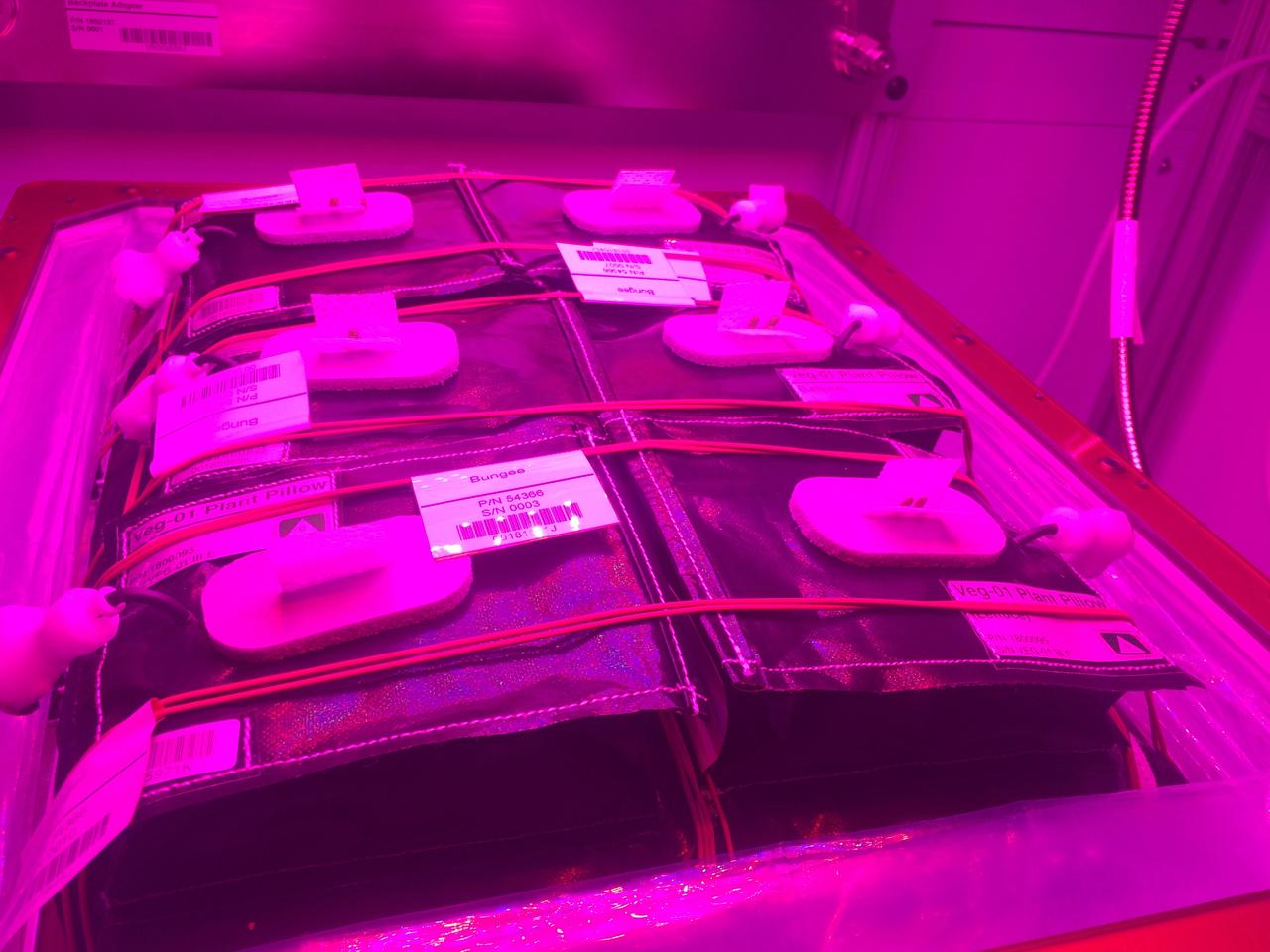
Astronaut Scott Kelly initiated VEG-01 B, the second crop of lettuce, on July, 8, 2015, and both Kelly and Astronaut Kjell Lindgren cared for the plants. The crop grew for 33 days. VEG-01 B included one set of six plant pillows planted with red romaine lettuce seeds. On Aug. 10, 2015, the crew harvested and consumed leaves from each plant. This was the first crop grown and consumed in NASA hardware. They harvested the rest of the plant tissue and froze it in the station’s Minus Eighty-Degree Laboratory Freezer for ISS (MELFI) for return to Earth for further study including microbial analysis, antioxidant capacity, mineral analysis and anthocyanin concentration.

Seen shortly after local Martian sunrise, clouds gather in the summit pit, or caldera, of Pavonis Mons, a giant volcano on Mars, in this image from the Thermal Emission Imaging System (THEMIS) on NASA's Mars Odyssey orbiter. The clouds are mostly made of ice crystals. They appear blue in the image because the cloud particles scatter blue light more strongly than other colors. Pavonis Mons stands about nine miles (14 kilometers) high, and the caldera spans about 29 miles (47 kilometers) wide. This image was made by THEMIS through three of its visual-light filters plus a near-infrared filter, and it is approximately true in color. THEMIS and other instruments on Mars Odyssey have been studying Mars from orbit since 2001. http://photojournal.jpl.nasa.gov/catalog/PIA19675
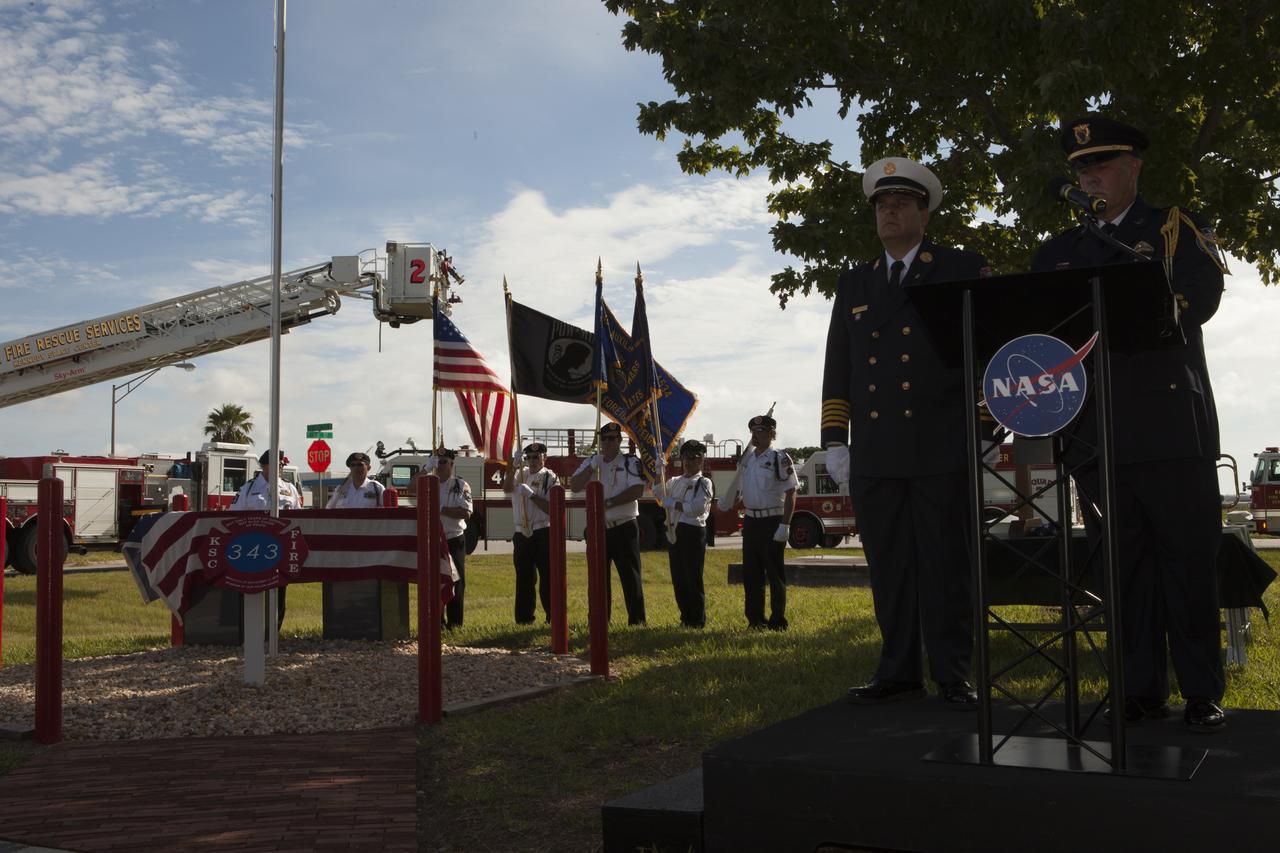
Rick Anderson, fire chief at NASA's Kennedy Space Center, on podium, left, and Lt. James Dumont lead the dedication service for a memorial to the343 first responder victims of the Sept. 11, 2001, terror attacks at Kennedy's Fire Station 1 on Sept. 11, 2015. The ceremony dedicated a monument that includes a section of steel I-beam from the World Trade Center in New York.
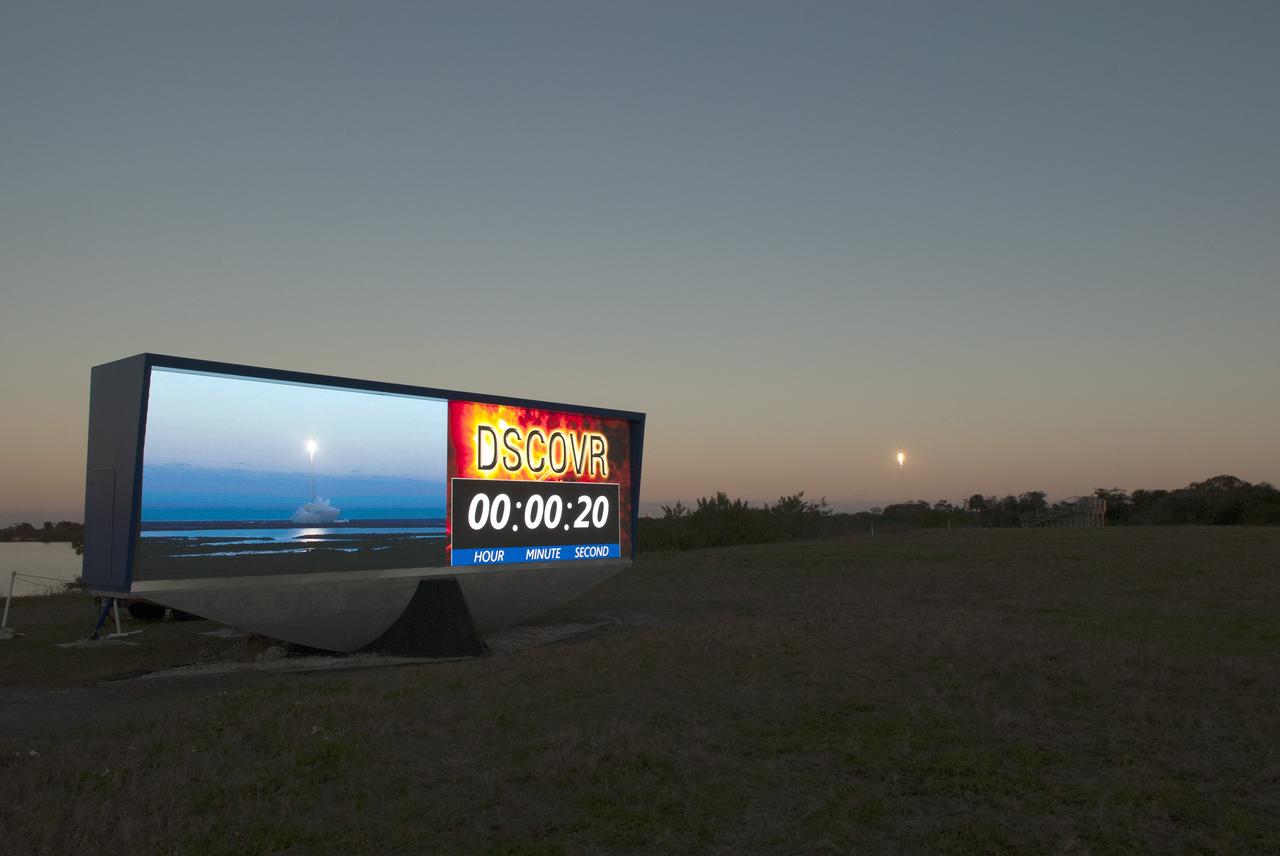
The SpaceX Falcon 9 rocket carrying NOAA’s Deep Space Climate Observatory spacecraft, or DSCOVR, rises above the treeline as a realtime camera view of the launch is visible on the countdown clock at NASA’s Kennedy Space Center in Florida. The Falcon 9 launched from Space Launch Complex 40 at Cape Canaveral Air Force Station at 6:03 p.m. EST. DSCOVR is a partnership between NOAA, NASA and the U.S. Air Force, and will maintain the nation's real-time solar wind monitoring capabilities. To learn more about DSCOVR, visit http://www.nesdis.noaa.gov/DSCOVR. Photo credit: NASA/Frankie Martin
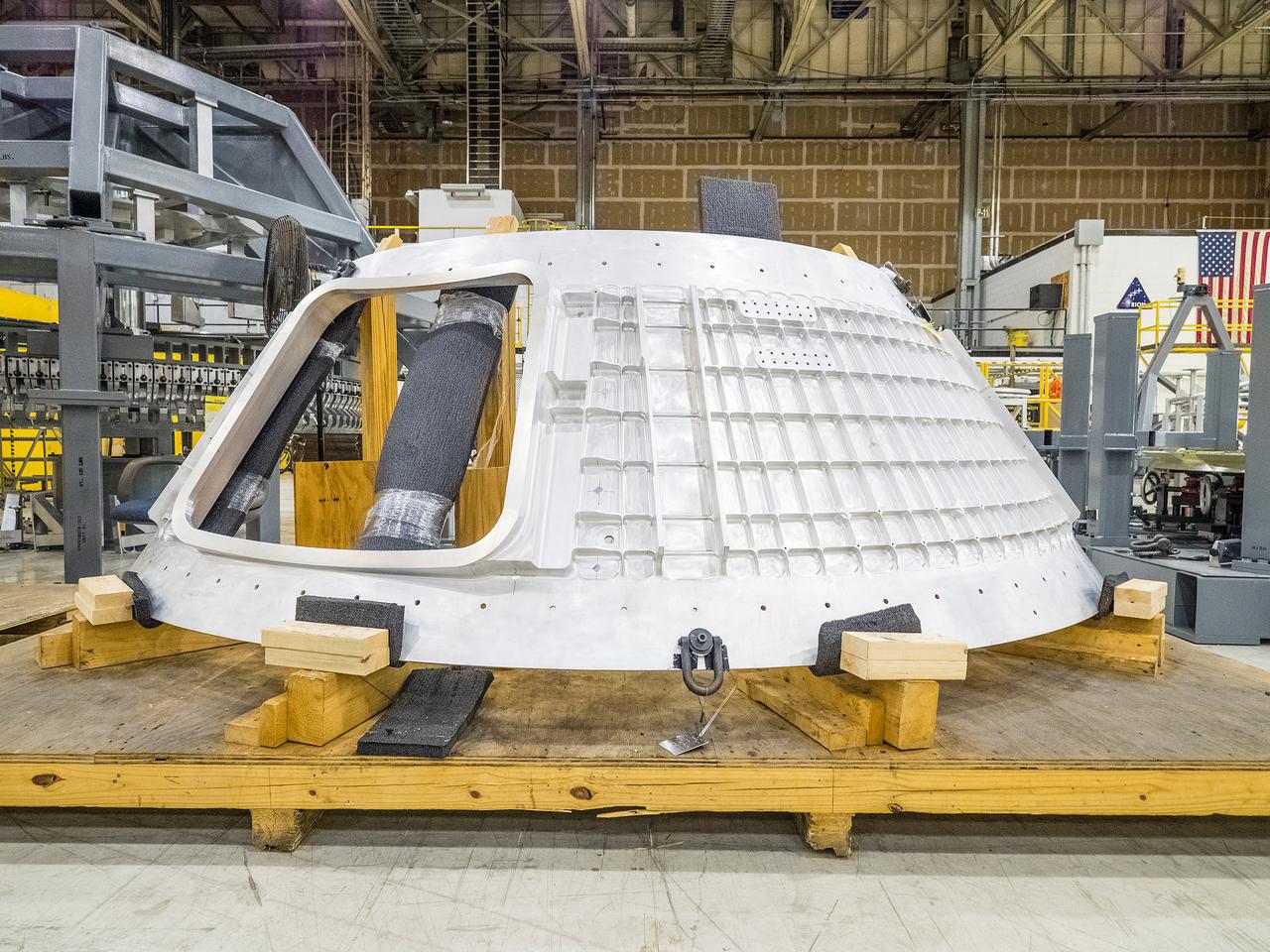
An Artemis I Orion cone panel is prepared for welding at the Michoud Assembly Facility in New Orleans, Louisiana on Oct. 12, 2015. Part of Batch image transfer from Flickr.
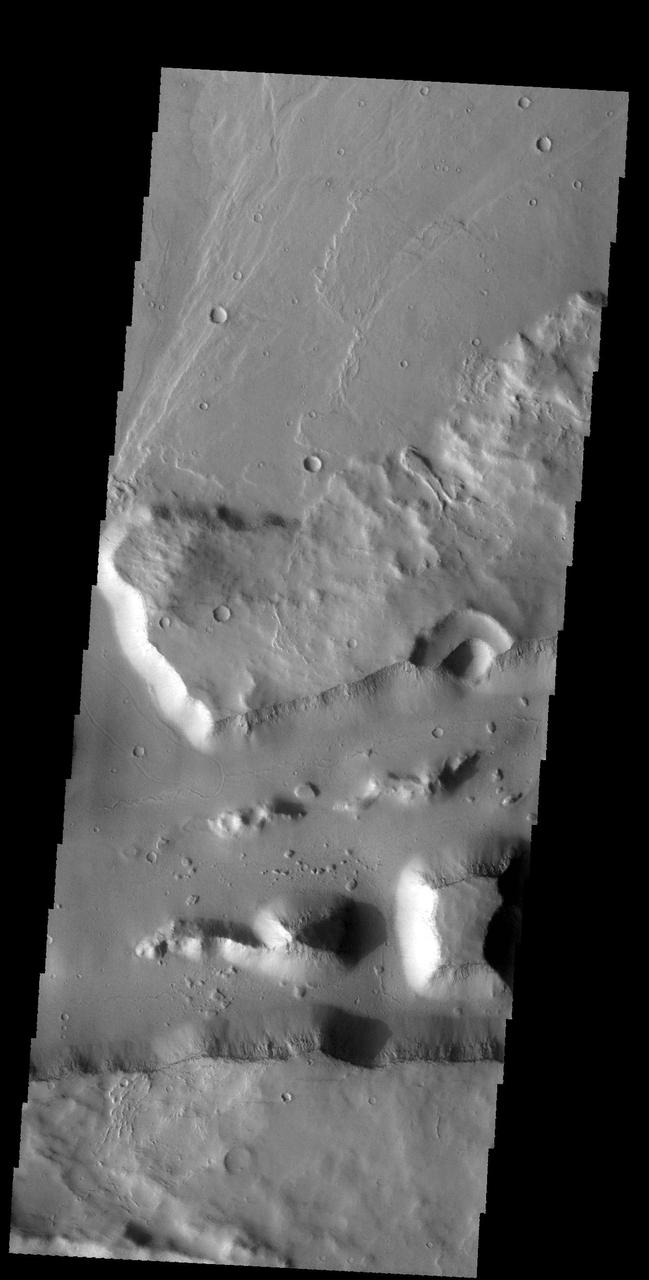
The linear wall at the bottom of this image from NASA 2001 Mars Odyssey spacecraft is a fault. The linear depression caused by faulting is part of a long depression called Mangala Fossae. Orbit Number: 58979 Latitude: -17.9823 Longitude: 210.806 Instrument: VIS Captured: 2015-04-01 00:54 http://photojournal.jpl.nasa.gov/catalog/PIA19468
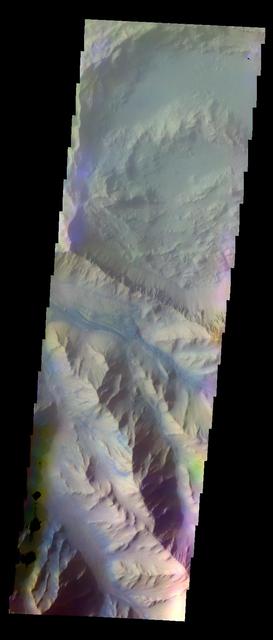
The THEMIS VIS camera contains 5 filters. The data from different filters can be combined in multiple ways to create a false color image. These false color images may reveal subtle variations of the surface not easily identified in a single band image. Today's false color image shows part of Coprates Chasma. Orbit Number: 10713 Latitude: -12.6203 Longitude: 294.663 Instrument: VIS Captured: 2004-05-14 10:33 http://photojournal.jpl.nasa.gov/catalog/PIA19771

Astronaut Scott Kelly initiated VEG-01 B, the second crop of lettuce, on July, 8, 2015, and both Kelly and Astronaut Kjell Lindgren cared for the plants. The crop grew for 33 days. VEG-01 B included one set of six plant pillows planted with red romaine lettuce seeds. On Aug. 10, 2015, the crew harvested and consumed leaves from each plant. This was the first crop grown and consumed in NASA hardware. They harvested the rest of the plant tissue and froze it in the station’s Minus Eighty-Degree Laboratory Freezer for ISS (MELFI) for return to Earth for further study including microbial analysis, antioxidant capacity, mineral analysis and anthocyanin concentration.
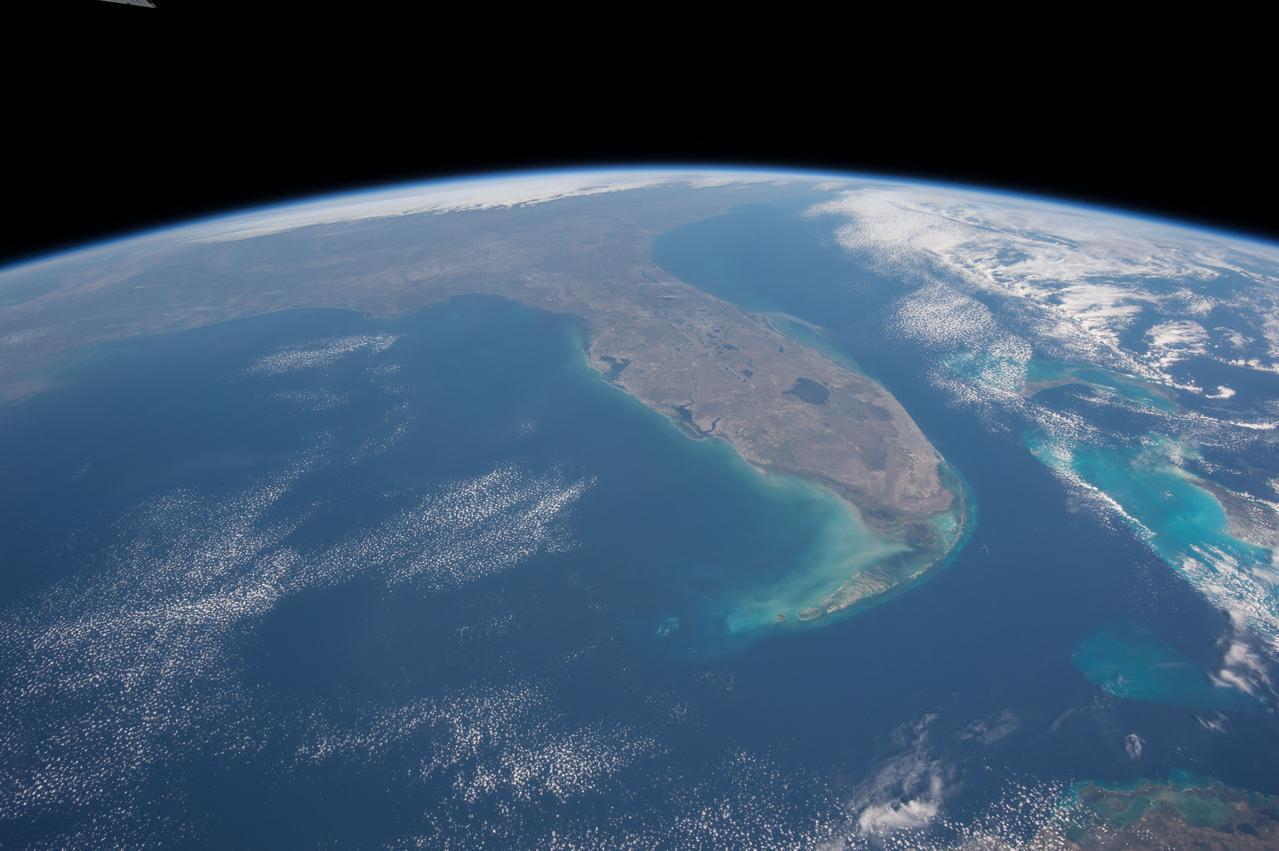
ISS042E256277 (02/14/2015) --- US Astronaut Terry Virts took this picture of Florida in the United States on Feb. 14, 2015 while he was on the International Space Station. Virts is a Flight Engineer with Expedition 42.
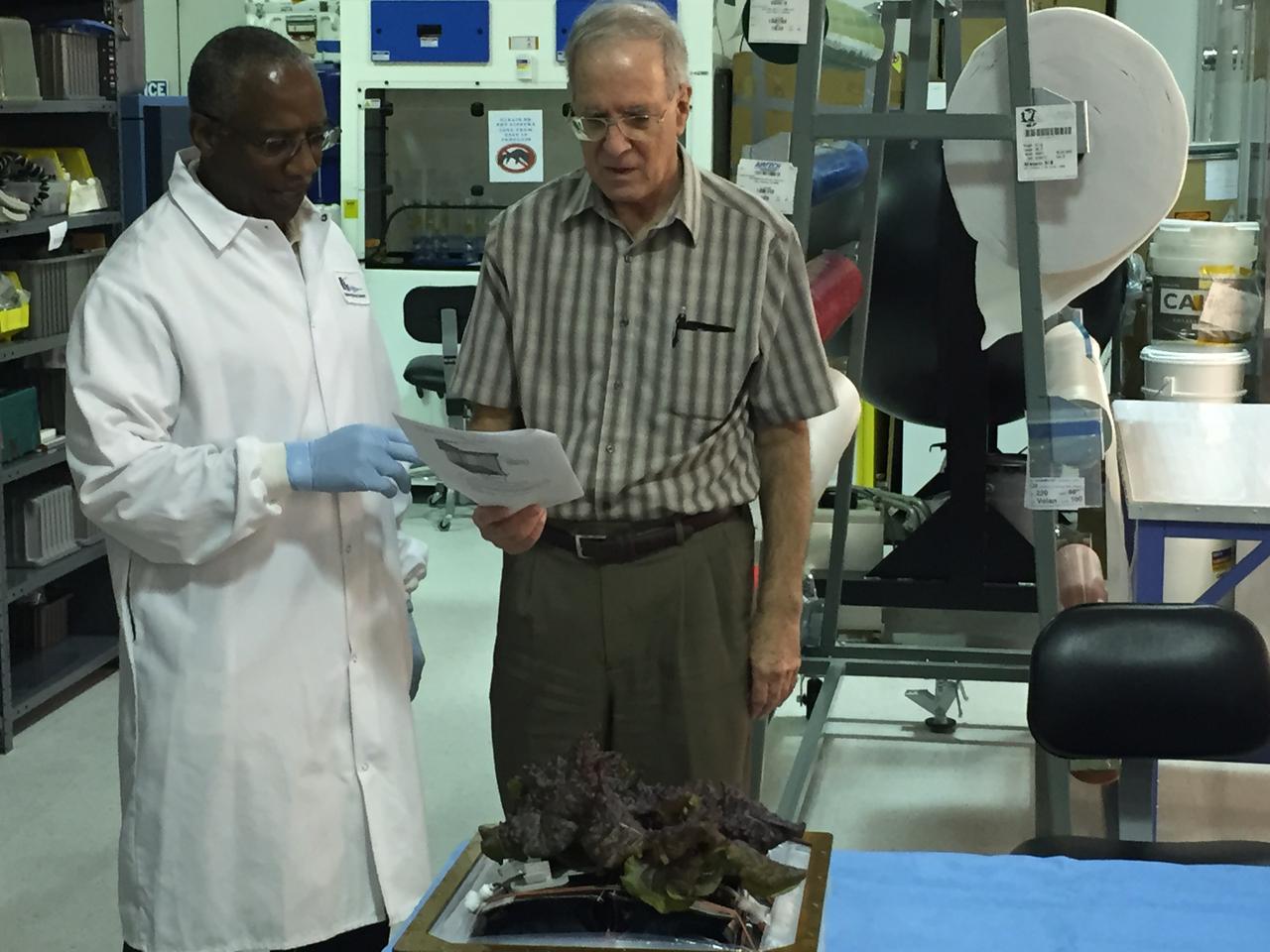
Astronaut Scott Kelly initiated VEG-01 B, the second crop of lettuce, on July, 8, 2015, and both Kelly and Astronaut Kjell Lindgren cared for the plants. The crop grew for 33 days. VEG-01 B included one set of six plant pillows planted with red romaine lettuce seeds. On Aug. 10, 2015, the crew harvested and consumed leaves from each plant. This was the first crop grown and consumed in NASA hardware. They harvested the rest of the plant tissue and froze it in the station’s Minus Eighty-Degree Laboratory Freezer for ISS (MELFI) for return to Earth for further study including microbial analysis, antioxidant capacity, mineral analysis and anthocyanin concentration.
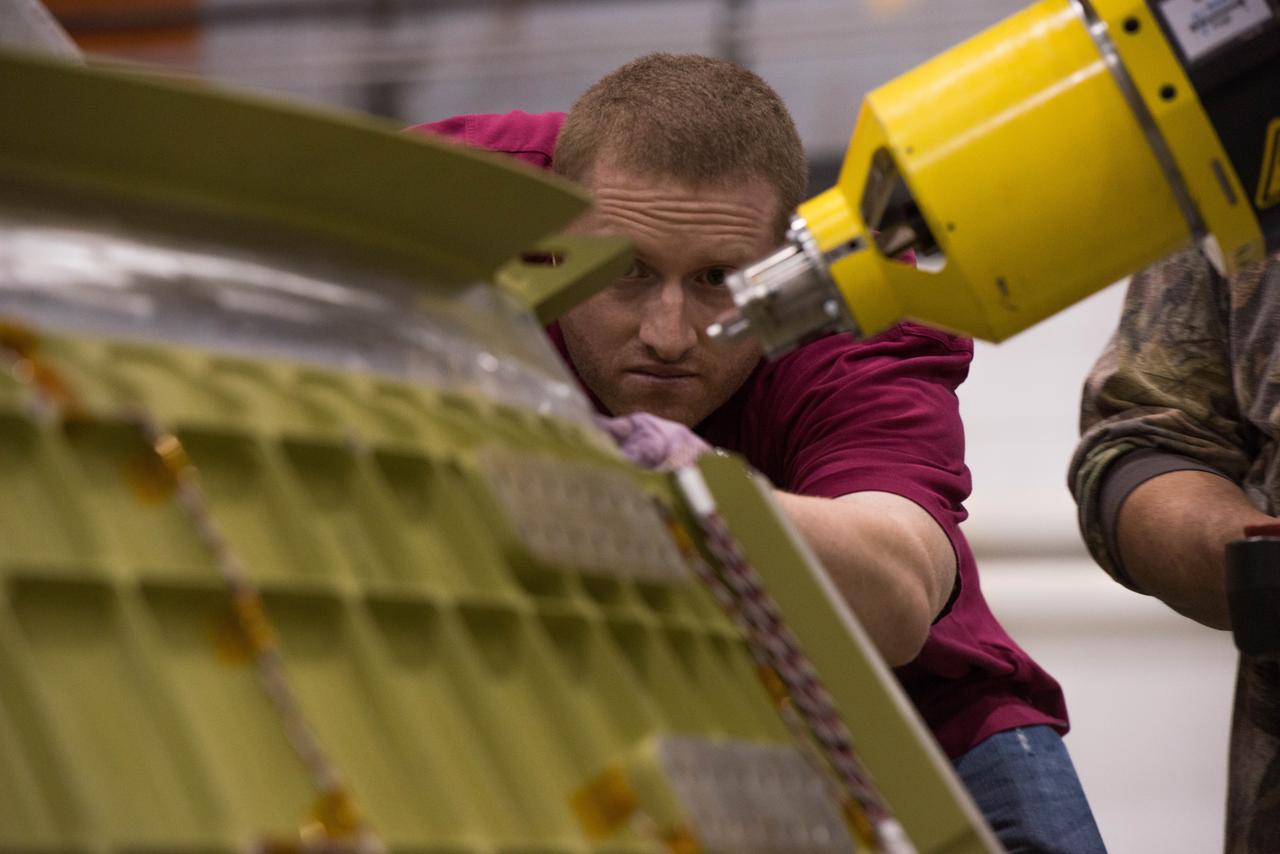
Orion EM1 plug welds in PV2 and PV3
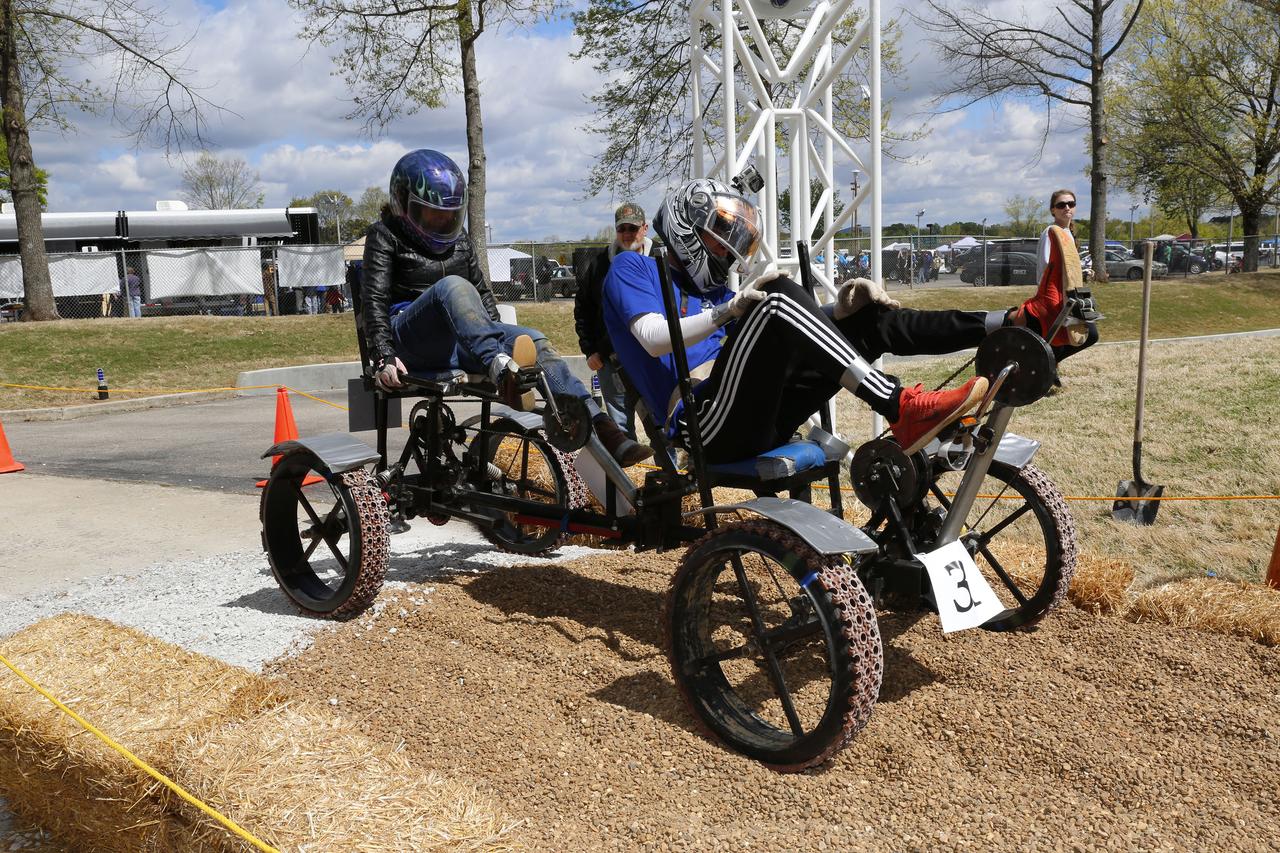
2016 ROVER CHALLENGE EVENTS AT THE U.S. SPACE AND ROCKET CENTER IN HUNTSVILLE, ALABAMA. NATIONAL AND INTERNATIONAL COLLEGE AND HIGH SCHOOL STUDENTS COME TOGETHER TO TEST THEIR ENGINEERING SKILLS OVER A SIMULATED OUTER PLANET OBSTACLE COURSE.

The Orion leadership (including Orion Program Manager Mark Geyer) visited Ames Research Center in California on March 2, 2015 to recognize the great work performed at the center in support of Orion's first flight, Exploration Flight Test-1 (EFT-1). Part of Batch image transfer from Flickr.
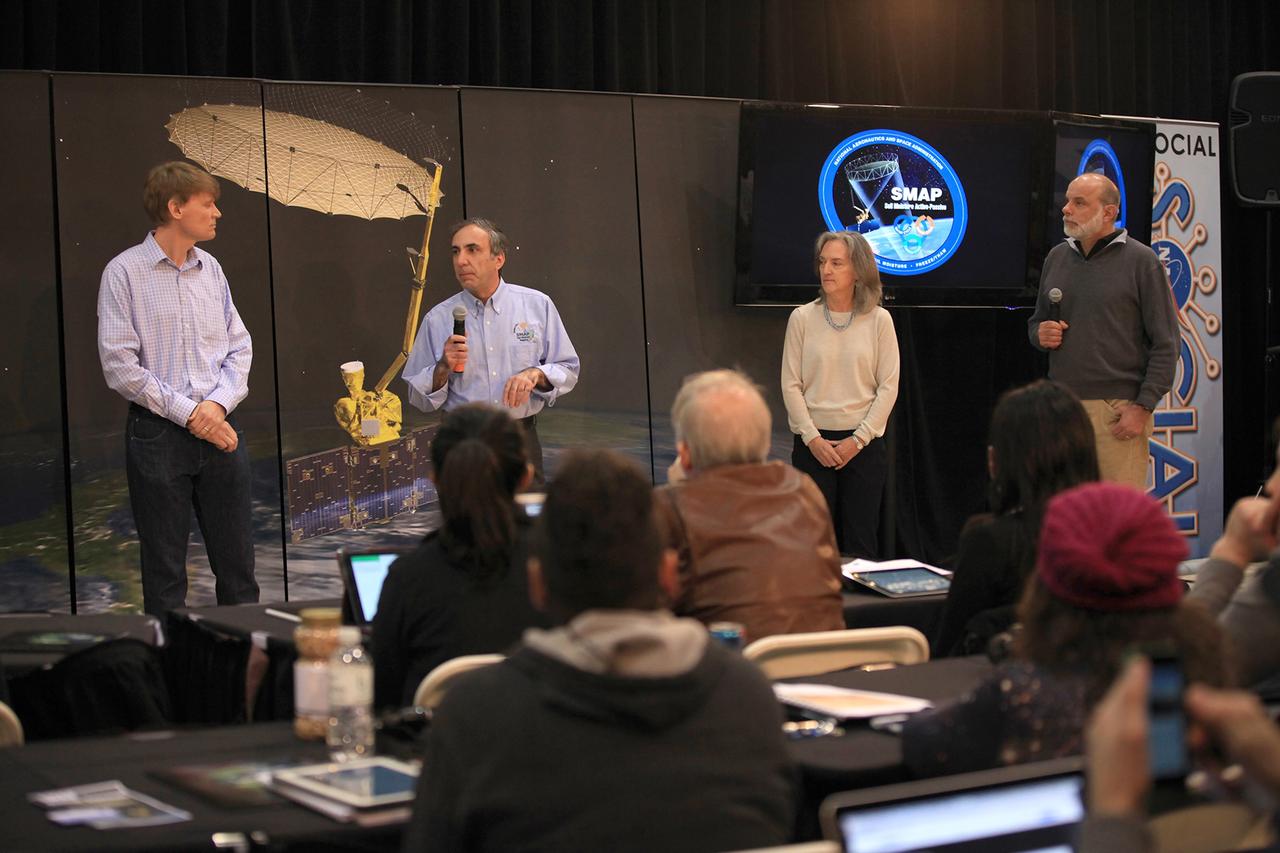
VANDENBERG AIR FORCE BASE, Calif. – Dara Entekhabi, science team leader at the Massachusetts Institute of Technology in Cambridge, Massachusetts, and other experts discuss the science and engineering of NASA's Soil Moisture Active Passive mission, or SMAP, with the audience of a NASA Social held at Vandenberg Air Force Base in California. This NASA Social brought together mission scientists and engineers with an audience of 70 students, educators, social media managers, bloggers, photographers and videographers who were selected from a pool of 325 applicants from 45 countries to participate in launch activities and communicate their experience with social media followers. The SMAP mission is scheduled to launch from Vandenberg on Jan. 29. To learn more about SMAP, visit http://www.nasa.gov/smap. Photo credit: NASA/Kim Shiflett
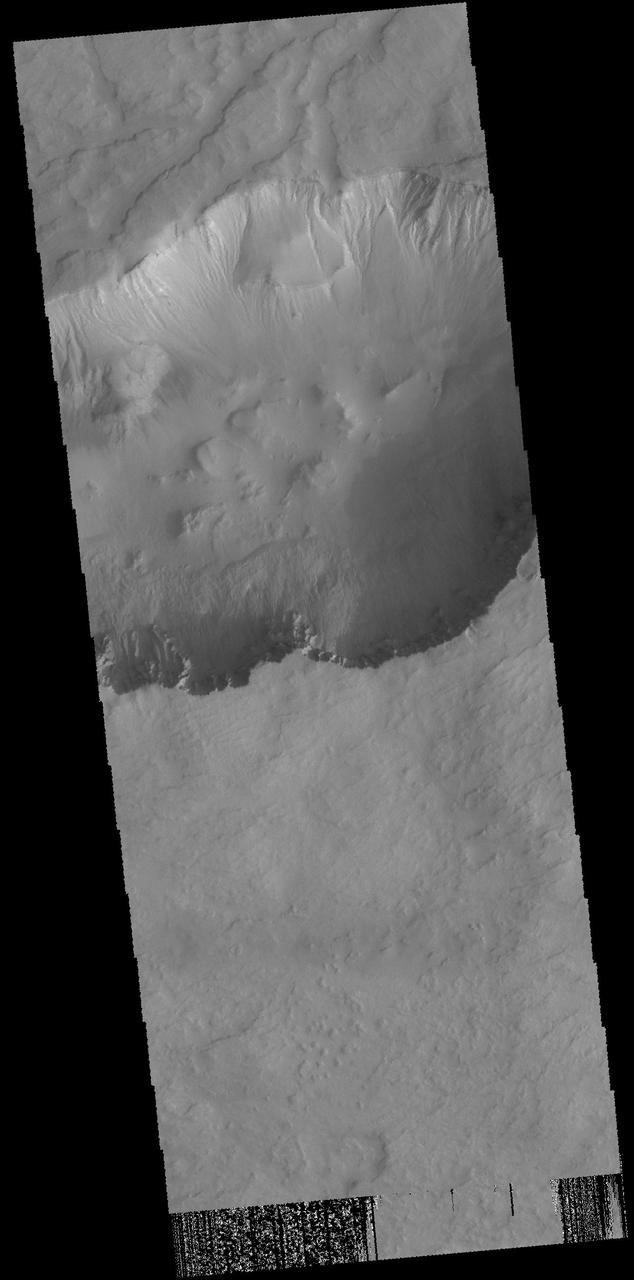
Numerous gullies are visible in this image captured by NASA 2001 Mars Odyssey spacecraft of Asimov Crater. Orbit Number: 57869 Latitude: -47.6632 Longitude: 5.48151 Instrument: VIS Captured: 2014-12-30 15:59 http://photojournal.jpl.nasa.gov/catalog/PIA19197
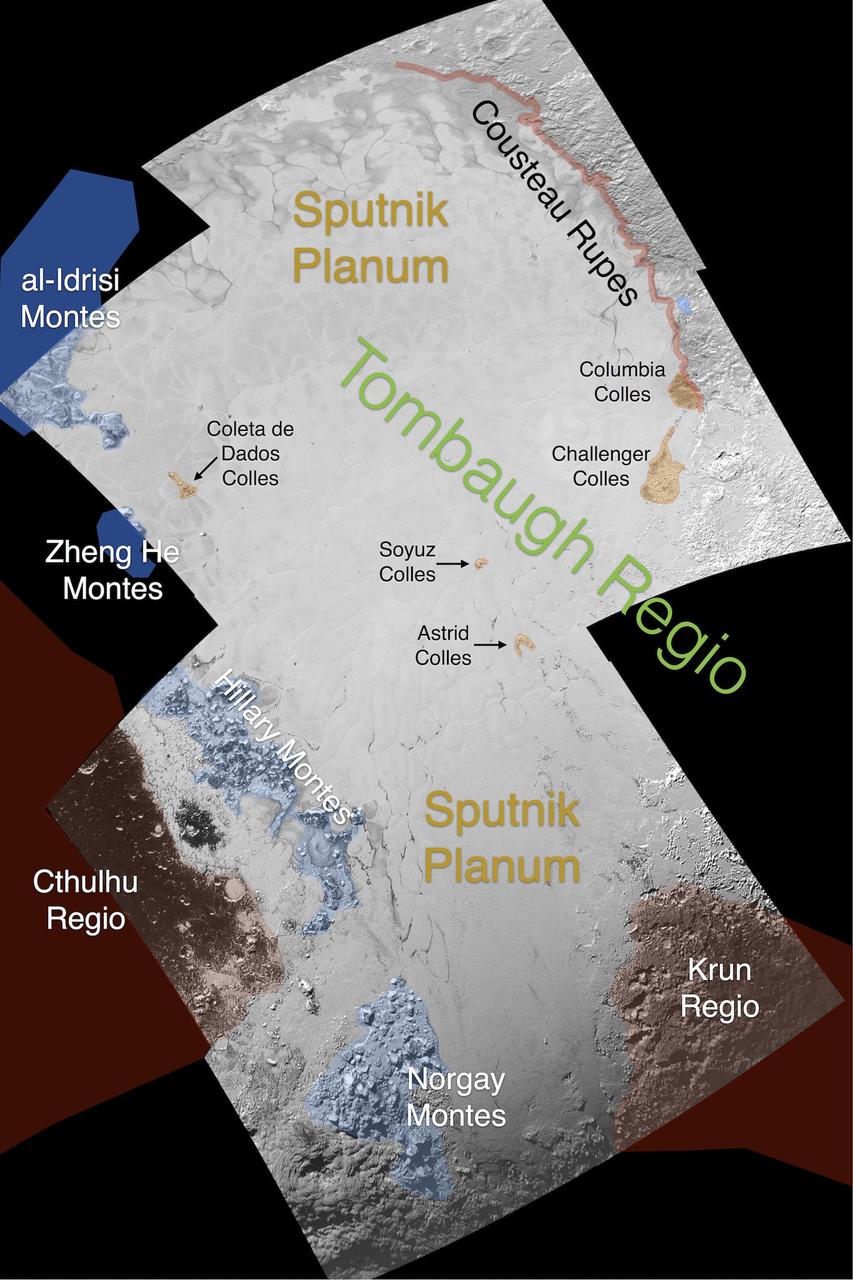
This image contains the initial, informal names being used by NASA's New Horizons team for the features on Pluto's Sputnik Planum (plain). Names were selected based on the input the team received from the Our Pluto naming campaign. Names have not yet been approved by the International Astronomical Union (IAU). For more information on the maps and feature naming, visit http://www.ourpluto.org/maps. http://photojournal.jpl.nasa.gov/catalog/PIA19865
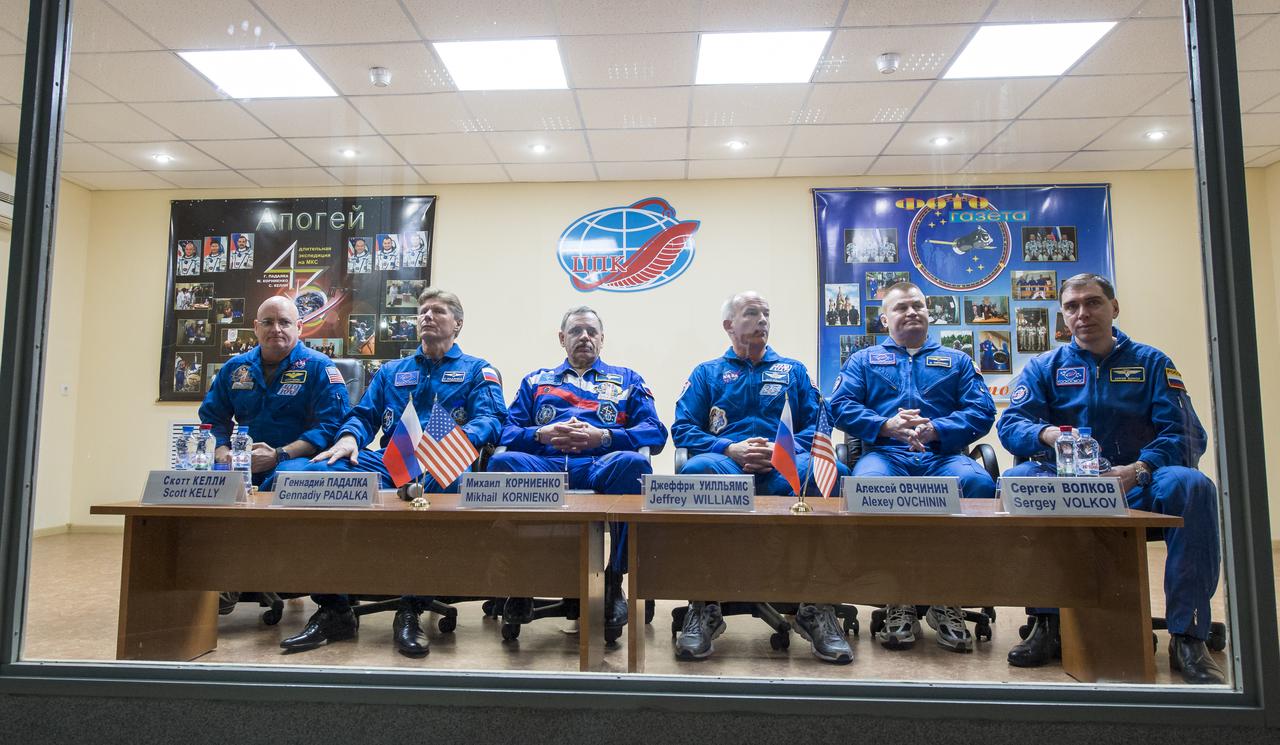
Expedition 43 prime and backup crews are seen in quarantine behind glass, from left, Expedition 43 prime crew members; NASA Astronaut Scott Kelly, Russian cosmonauts Gennady Padalka, and Mikhail Kornienko of the Russian Federal Space Agency (Roscosmos), Expedition 43 backup crew members; NASA Astronaut Jeff Williams, Russian cosmonauts Alexei Ovchinin, and Sergei Volkov during a crew press conference, Thursday, March 26, 2015, at the Cosmonaut Hotel in Baikonur, Kazakhstan. Kelly, Kornienko, and Padalka launched to the International Space Station in the Soyuz TMA-16M spacecraft from the Baikonur Cosmodrome in Kazakhstan March 28, Kazakh time (March 27 Eastern time.) As the one-year crew, Kelly and Kornienko will return to Earth on Soyuz TMA-18M in March 2016. Photo Credit (NASA/Bill Ingalls)
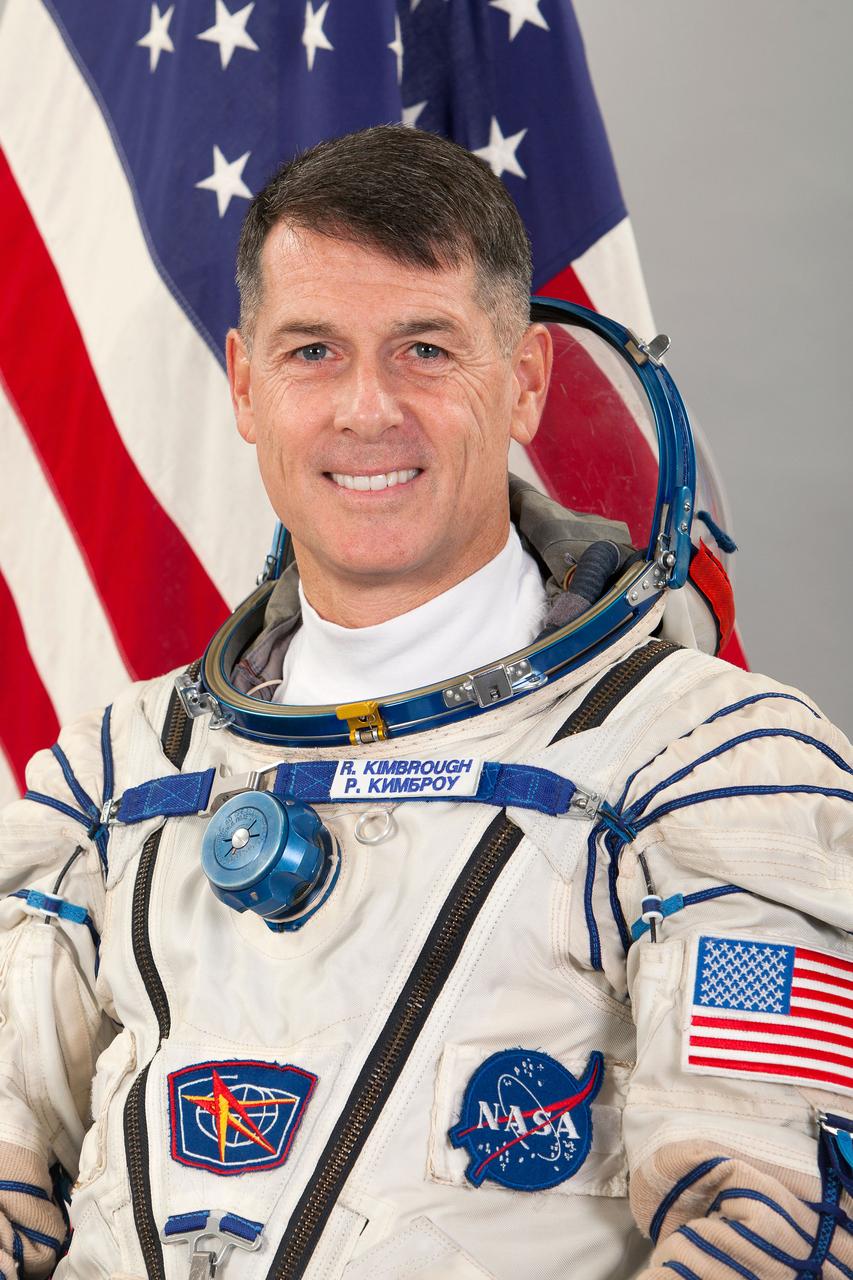
JSC2016e105229 (08/16/2016) --- NASA astronaut Shane Kimbrough of Expedition 49 to the International Space Station.
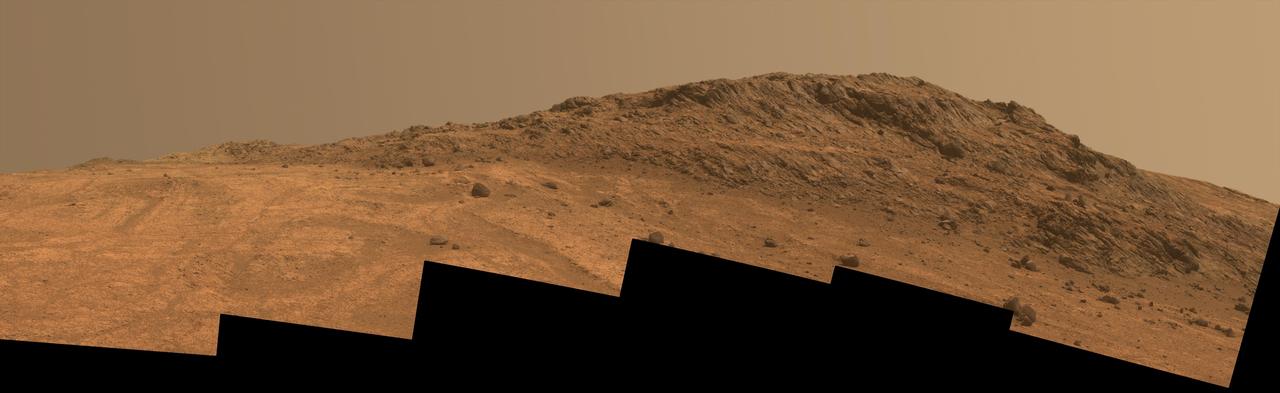
This Martian scene shows contrasting textures and colors of "Hinners Point," at the northern edge of "Marathon Valley," and swirling reddish zones on the valley floor to the left. The view combines six frames taken by the panoramic camera (Pancam) on NASA's Mars Exploration Rover Opportunity on Aug. 14, 2015, during the 4,108th Martian day, or sol, of the rover's work on Mars. The summit takes its informal name as a tribute to Noel Hinners (1935-2014). For NASA's Apollo program, Hinners played important roles in selection of landing sites on the moon and scientific training of astronauts. He then served as NASA associate administrator for space science, director of the Smithsonian National Air and Space Museum, director of NASA's Goddard Space Flight Center, NASA chief scientist and associate deputy administrator of NASA. Subsequent to responsibility for the Viking Mars missions while at NASA, he spent the latter part of his career as vice president for flight systems at Lockheed Martin, where he had responsibility for the company's roles in development and operation of NASA's Mars Global Surveyor, Mars Reconnaissance Orbiter, Mars Odyssey, Phoenix Mars Lander, Stardust and Genesis missions. Marathon Valley cuts generally east-west through the western rim of Endeavour Crater. The valley's name refers to the distance Opportunity drove from its 2004 landing site to arrival at this location in 2014. The valley was a high-priority destination for the rover mission because observations from orbit detected clay minerals there. Dark rocks on Hinners Point show a pattern dipping downward toward the interior of Endeavour, to the right from this viewing angle. The strong dip may have resulted from the violence of the impact event that excavated the crater. Brighter rocks make up the valley floor. The reddish zones there may be areas where water has altered composition. Inspections by Opportunity have found compositions there are higher in silica and lower in iron than the typical composition of rocks on Endeavour's rim. The scene spans from west-southwest at left to northwest at right. The larger of two stones close to each other in the foreground left of center is about 5 inches (12 centimeters) wide. On bright bedrock to the right of those stones, Opportunity inspected a target informally named "Pvt. George Gibson." Another inspected target, "Pvt. Silas Goodrich," is on the valley floor near the left edge of this scene. The informal names for these targets refer to members of the Lewis and Clark expedition's Corps of Discovery. This version of the image is presented in approximate true color by combing exposures taken through three of the Pancam's color filters, centered on wavelengths of 753 nanometers (near-infrared), 535 nanometers (green) and 432 nanometers (violet). http://photojournal.jpl.nasa.gov/catalog/PIA19819

The THEMIS VIS camera contains 5 filters. The data from different filters can be combined in multiple ways to create a false color image. This false color image from NASA 2001 Mars Odyssey spacecraft shows part of Ceti Mensa in Candor Chasma. Orbit Number: 5159 Latitude: -5.5447 Longitude: 283.522 Instrument: VIS Captured: 2003-02-12 05:18 http://photojournal.jpl.nasa.gov/catalog/PIA19220
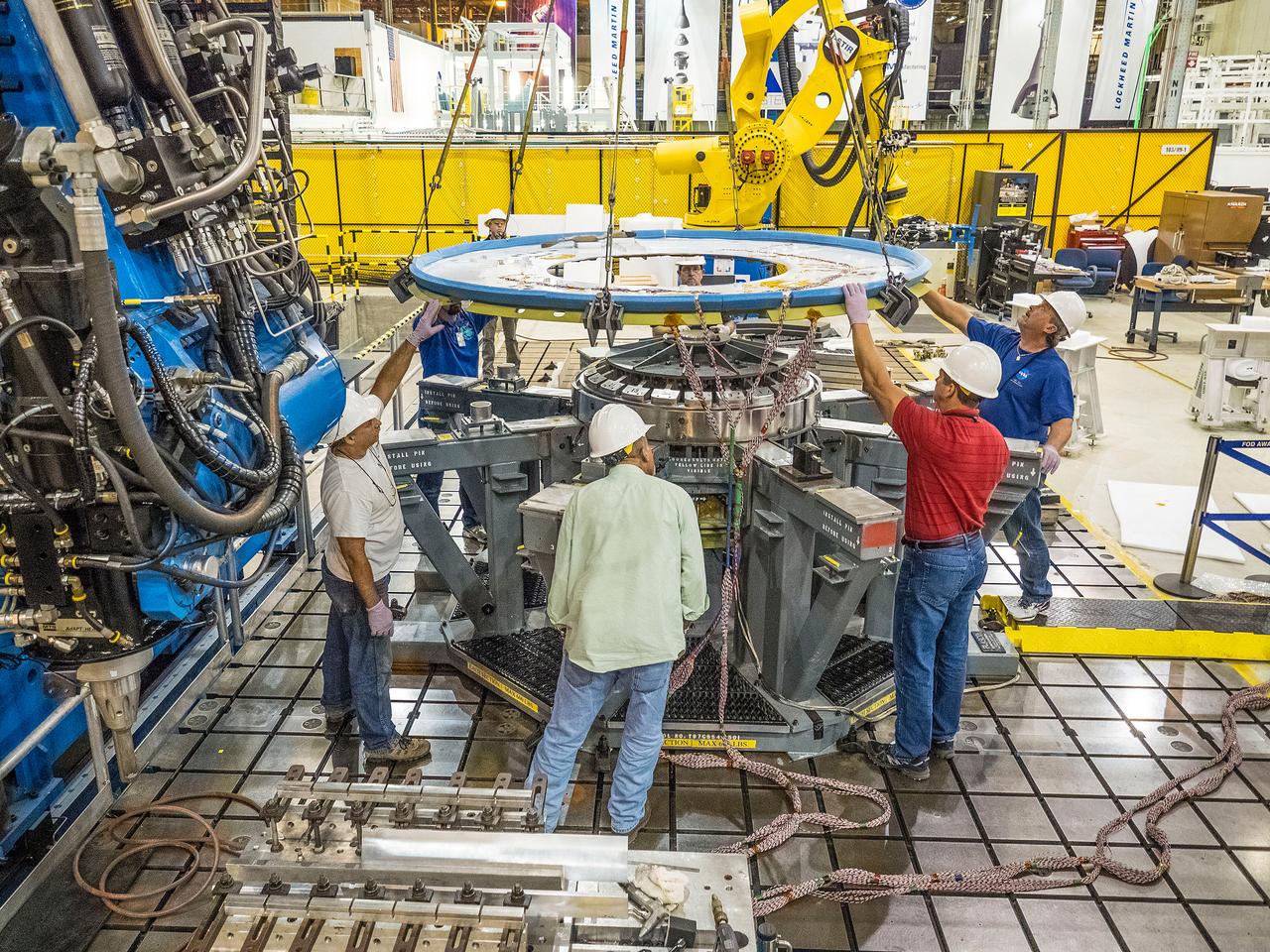
First weld of Orion Exploration Mission 1 crew module
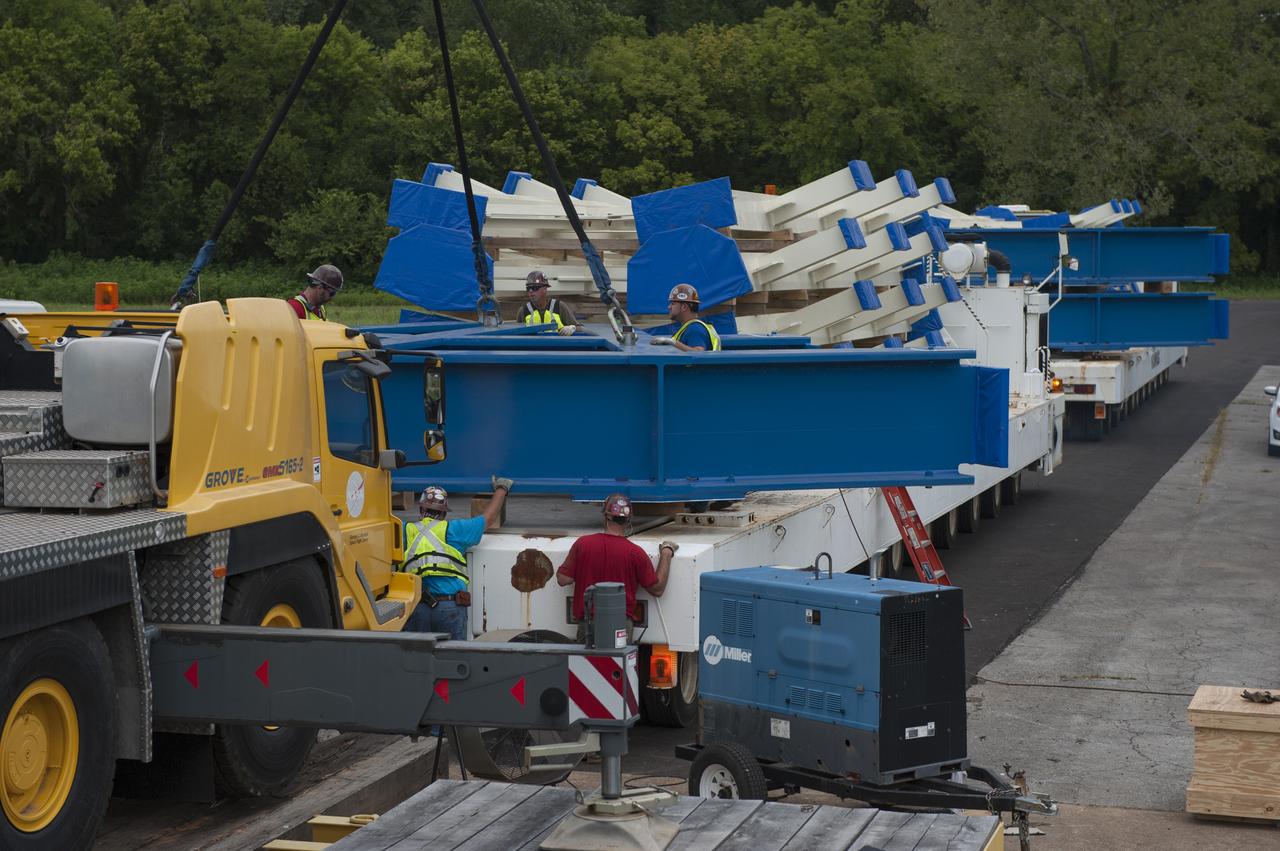
SLS ENGINE SECTION PEDESTALS AND THE ENGINE SECTION SPIDER QUADRANTS ARRIVAL AND UNLOADING AT NASA DOCK ON THE TENNESSEE RIVER.