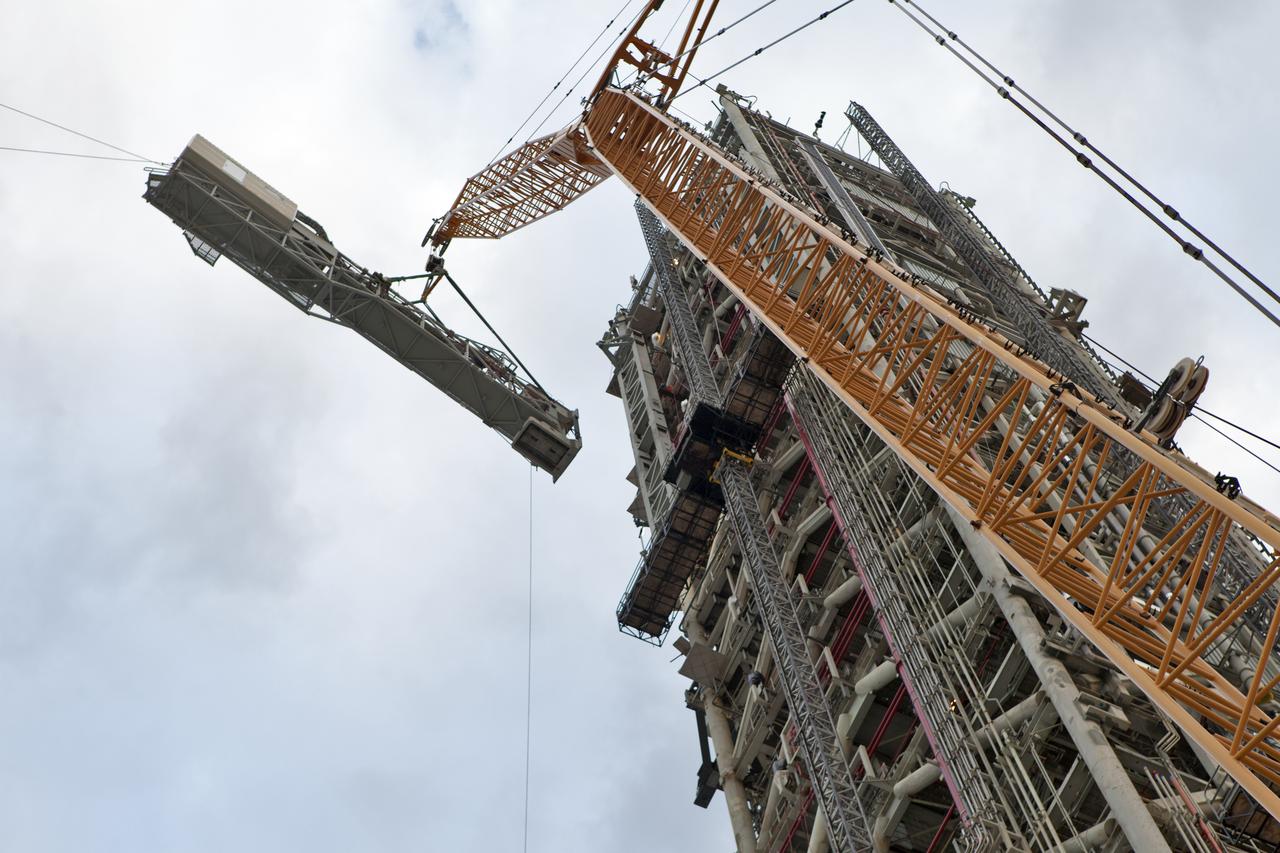
At NASA's Kennedy Space Center in Florida, a crane lifts the Orion crew access arm (CAA) so it can be attached to the mobile launcher (ML). The arm will be installed at about the 274-foot level on the ML tower. NASA's Exploration Ground Systems organization has been overseeing installation of umbilicals and other launch accessories on the 380-foot-tall ML in preparation for stacking the first launch of the Space launch System (SLS), rocket with an Orion spacecraft. The CAA is designed to rotate from its retracted position and line up with Orion's crew hatch providing entry for astronauts and technicians.
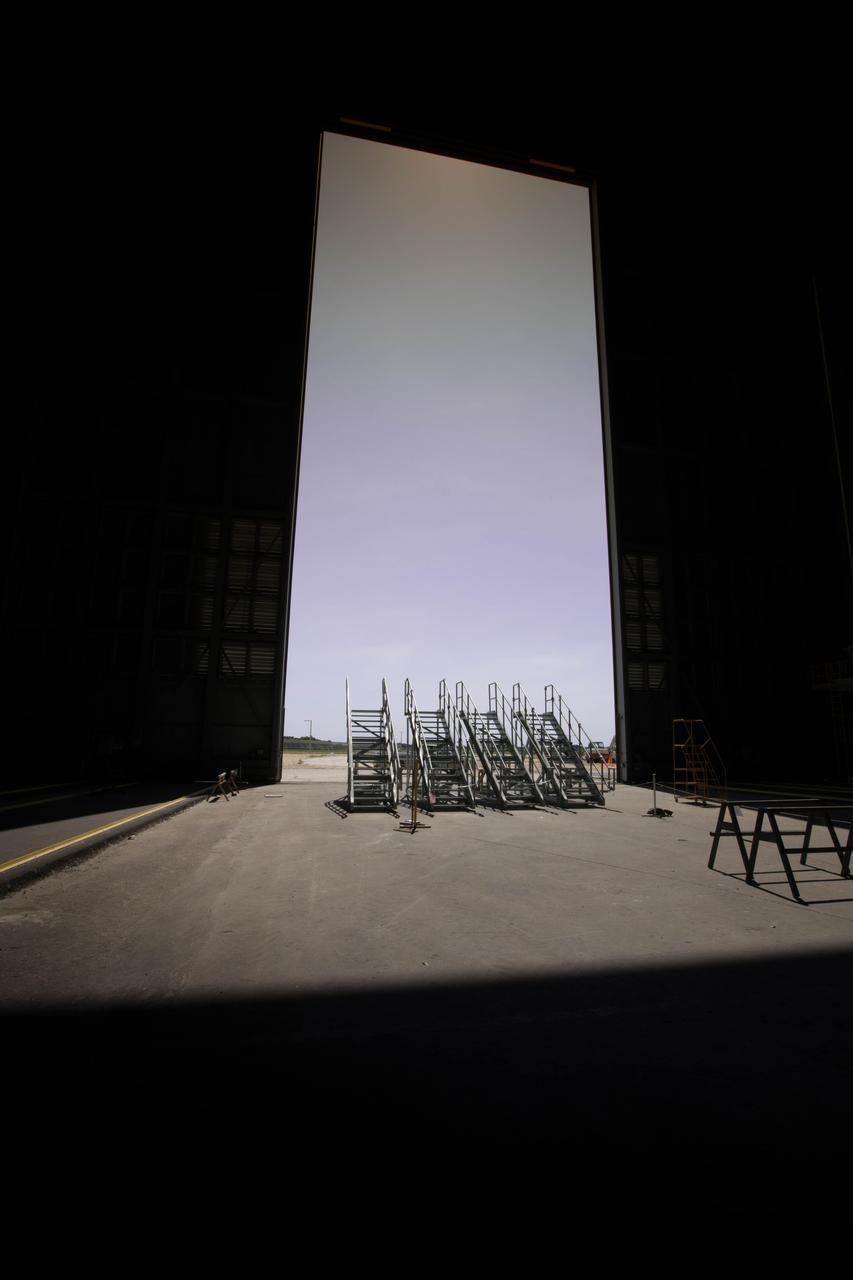
A view looking at High Bay 3 in the Vehicle Assembly Building (VAB) at NASA's Kennedy Space Center in Florida. Ten levels of new work platforms have been installed in High Bay 3. They will surround and provide access for service and processing of NASA's Space Launch System rocket and Orion spacecraft. Exploration Ground Systems oversaw the upgrades and installation of the new work platforms to support the launch of the SLS and Orion on Exploration Mission-1 and deep space missions.
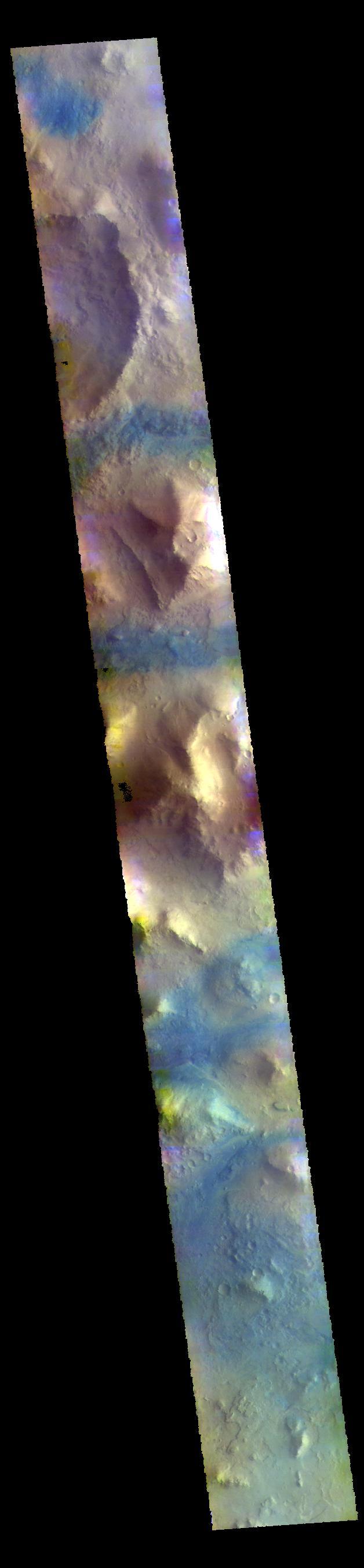
This VIS image shows part of Terra Sabaea, including plains, craters, and mesas. The dark blue tones often indicate locations of basaltic sands. The THEMIS VIS camera contains 5 filters. The data from different filters can be combined in multiple ways to create a false color image. These false color images may reveal subtle variations of the surface not easily identified in a single band image. Orbit Number: 60437 Latitude: 29.7491 Longitude: 74.5651 Instrument: VIS Captured: 2015-07-30 03:21 https://photojournal.jpl.nasa.gov/catalog/PIA22707
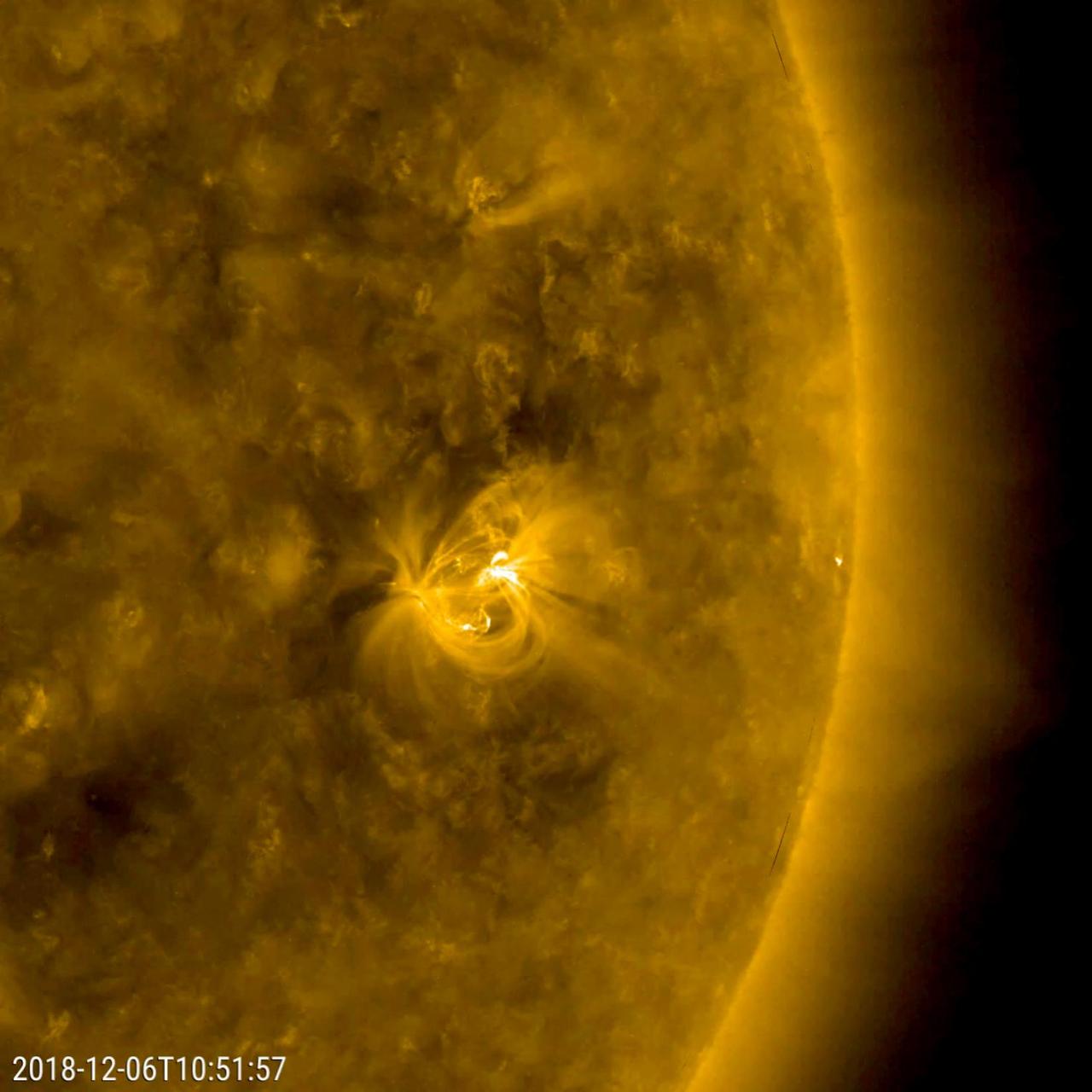
The only active region observed this week appeared on Dec. 5, 2018 and grew into an average size display of dynamic activity (Dec. 6-7, 2018). As viewed in a wavelength of extreme ultraviolet light, the region presented numerous magnetic loops of charged particles, rapidly changing their shapes and directions. As the sun is approaching its minimum level of activity in its 11 year solar cycle, we expect to see fewer and fewer active regions for quite a while. However, this active region is in the southern hemisphere of the Sun and has the North magnetic pole in the lead, so it is a sunspot of Solar Cycle 24. Movies available at https://photojournal.jpl.nasa.gov/catalog/PIA21211
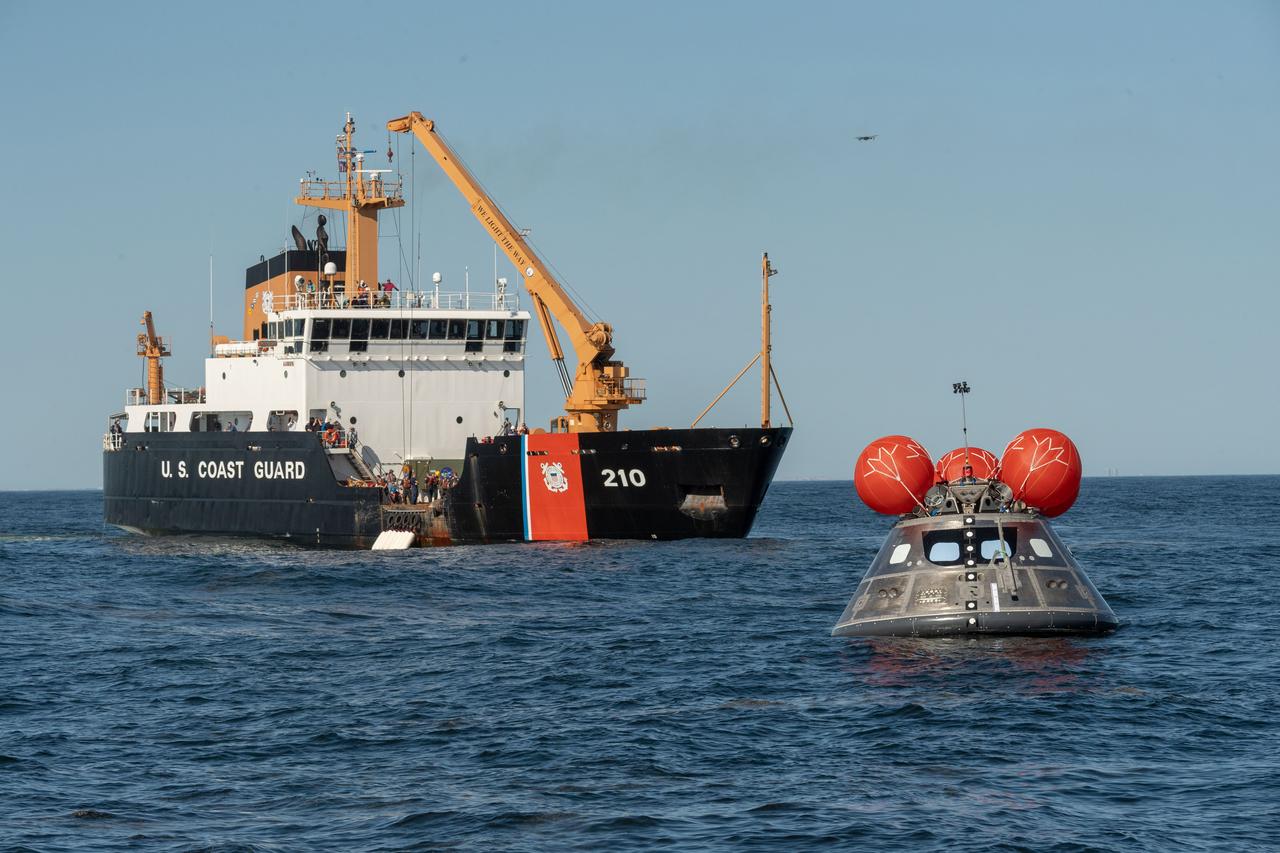
The Orion Crew Module Uprighting System (CMUS) and Neutral Buoyancy Laboratory team completed two successful sea tests off the coast of Galveston, Texas, Dec. 1-3, 2018. CMUS is designed to inflate five bags after the Orion spacecraft and its crew splash down after returning from deep space missions, enabling the capsule to upright itself. NASA partnered with United States Coast Guard and Air Force and Texas A&M Galveston teams to perform the tests operations.

Family and friends of former astronaut Alan Bean are seen during interment services, Thursday, Nov. 8, 2018 at Arlington National Cemetery in Virginia. Selected as an astronaut in 1963, Bean flew in space twice, becoming the fourth human to walk on the Moon on Nov. 19, 1969 and spent 59 days in space as commander of the second Skylab mission in 1973. Photo Credit: (NASA/Joel Kowsky)
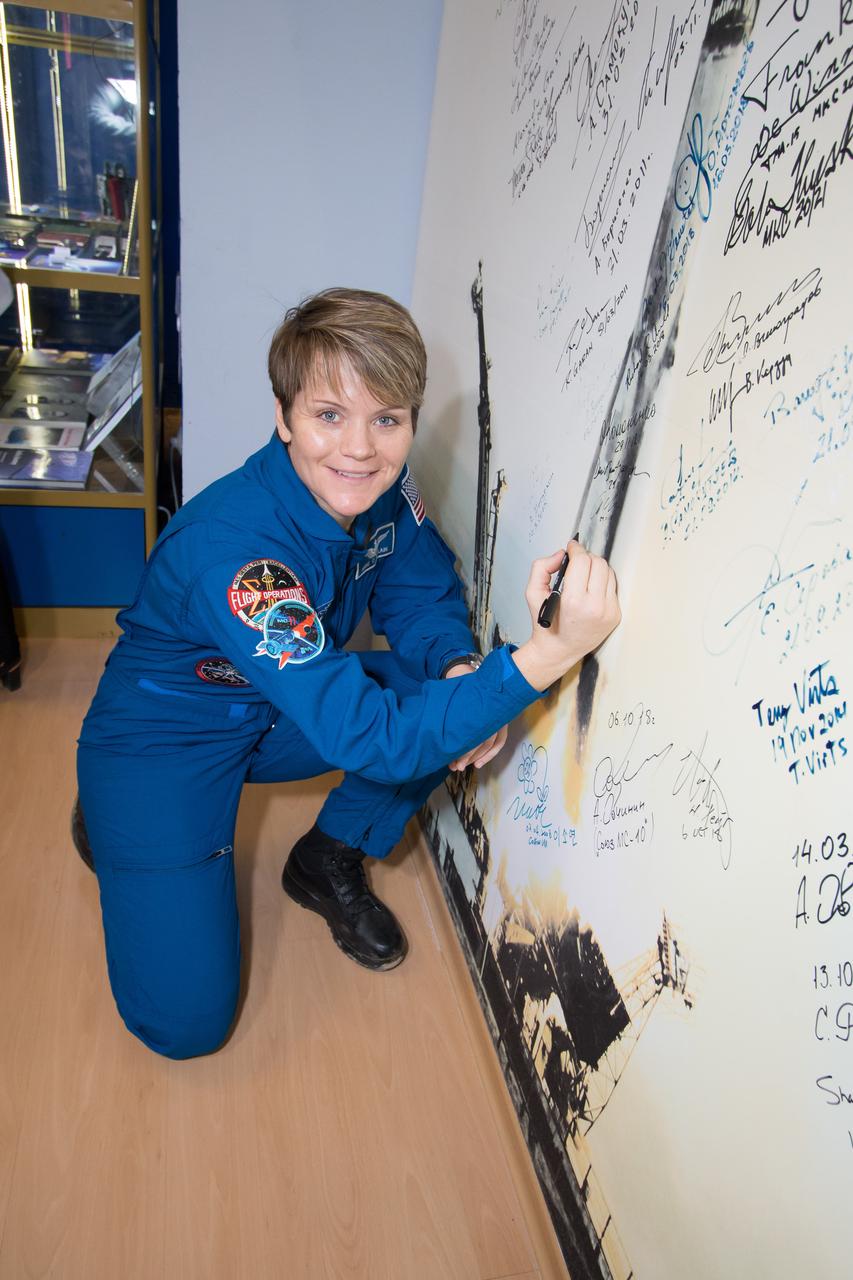
jsc2018e098093 - At the Baikonur Cosmodrome Museum in Kazakhstan, Expedition 58 crewmember Anne McClain of NASA signs a wall mural Nov. 29 as part of traditional pre-launch activities. McClain, David Saint-Jacques of the Canadian Space Agency and Oleg Kononenko of Roscosmos will launch Dec. 3 in the Soyuz MS-11 spacecraft from the Baikonur Cosmodrome in Kazakhstan for a six-and-a-half month mission on the International Space Station...NASA/Victor Zelentsov.
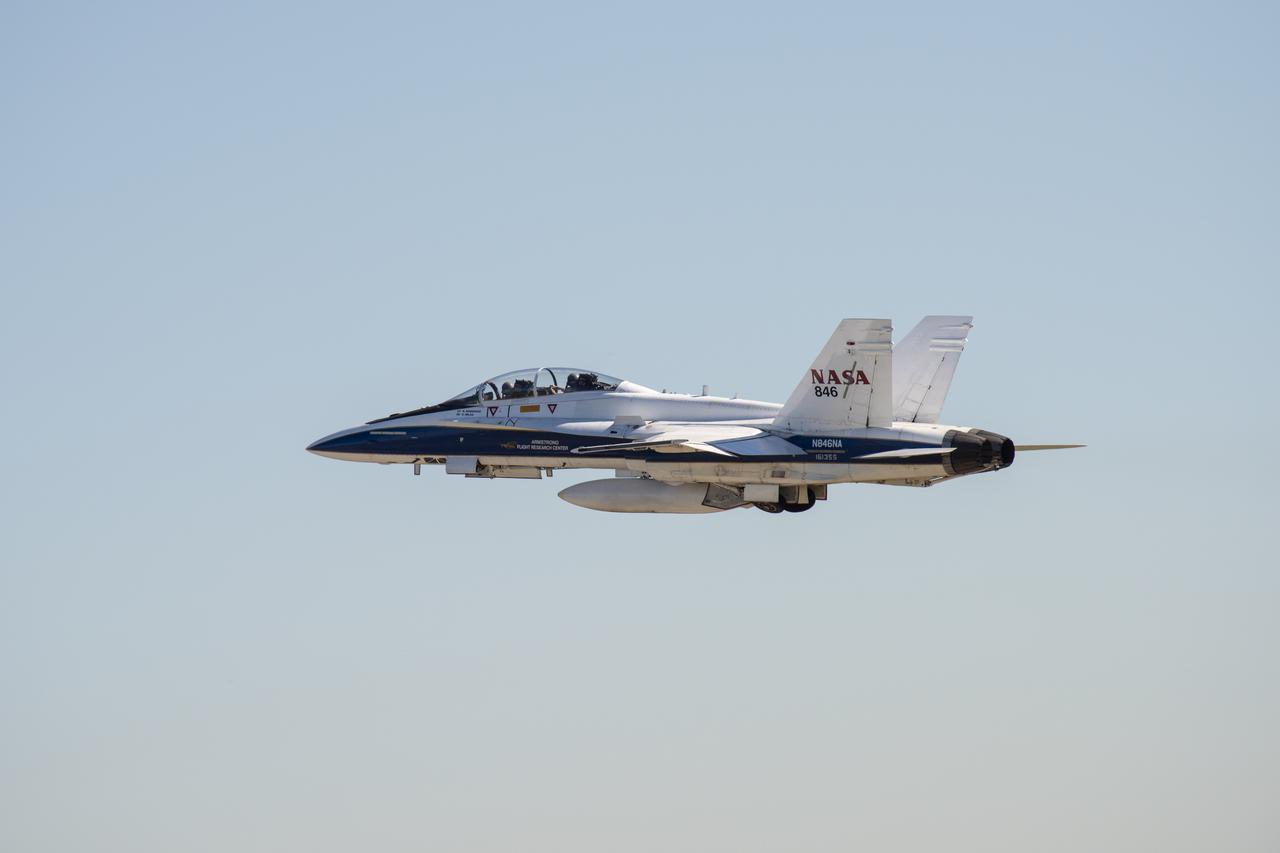
NASA’s F/A-18 research aircraft takes off from Ellington Field in Houston, Texas for a quiet supersonic research flight off the coast of Galveston, as part of the QSF18 flight series. The F/A-18 will climb to 50,000 feet over the Gulf of Mexico, where it will perform the quiet supersonic dive maneuver.

This image of galaxy W2246-0526 was created using data from the Atacama Large Millimeter/submillimeter Array (ALMA) - a collection of individual radio antennas that work together as a single telescope. The galaxy is syphoning material away from three companion galaxies through trans-galactic streamers. The main galaxy and one of its companions are in the center. To the lower left is another companion and its large tidal tail that connects it to the main galaxy. The upper left concentration is the third companion galaxy. https://photojournal.jpl.nasa.gov/catalog/PIA22359
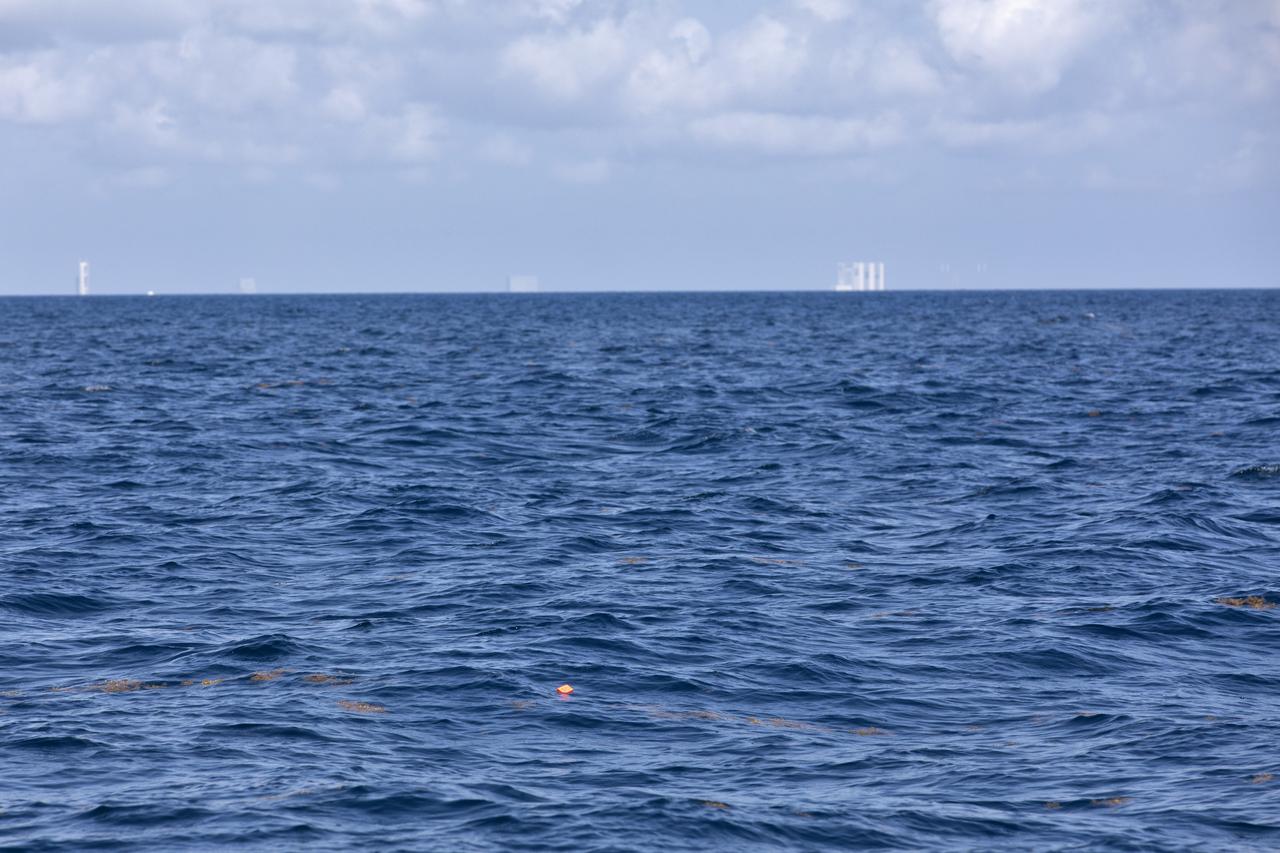
Members of the Ascent Abort-2 (AA-2) Flight Test team perform a drop test of data recording devices about 10 miles off the coast of NASA’s Kennedy Space Center in Florida on Wednesday, Aug. 8, 2018. These devices, called Ejectable Data Recorders (EDRs), were tossed out of a helicopter hovering 5,000 feet over the Atlantic Ocean and retrieved by recovery boats. The AA-2 Flight Test team is evaluating how the systems in the devices react to elements encountered from the sky to the ocean. In April 2019, the EDRs will eject from the Orion test article during a scheduled test of the spacecraft’s Launch Abort System (LAS).
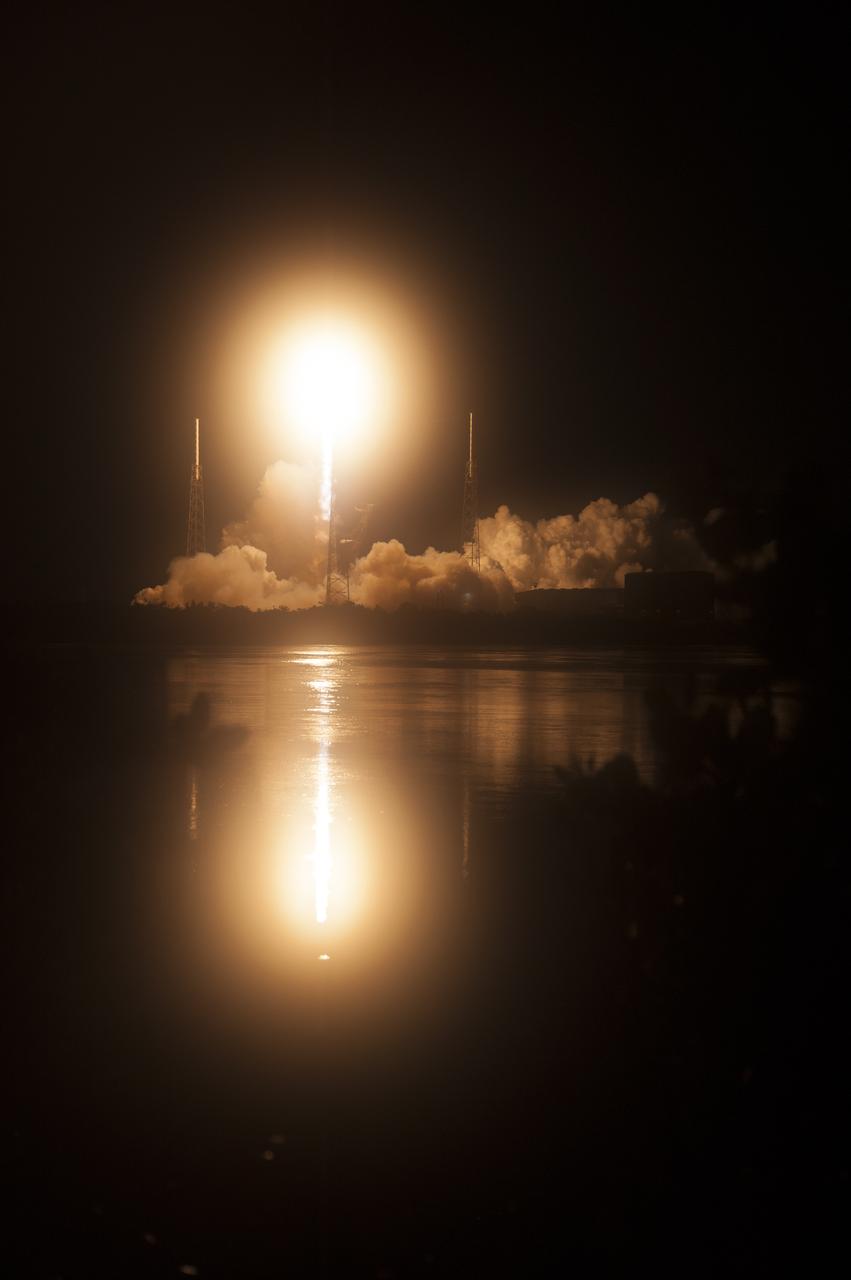
The two-stage SpaceX Falcon 9 launch vehicle lifts off from Space Launch Complex 40 at Cape Canaveral Air Force Station, carrying the SpaceX Dragon resupply spacecraft to the International Space Station. Liftoff was at 5:42 a.m. EDT on Friday, June 29, 2018. On the company’s 15th Commercial Resupply Services mission to the International Space Station, Dragon is filled with supplies and payloads, including critical materials to support several science and research investigations that will occur during Expedition 56. The spacecraft’s unpressurized trunk is carrying a Canadian-built Latching End Effector, or LEE. This new LEE will replace a failed unit astronauts removed during a series of spacewalks in the fall of 2017. Each end of the Canadarm2 robotic arm has an identical LEE, and they are used as the “hands” that grapple payloads and visiting cargo spaceships.

In northestern Siberia, along the Chukchi Sea, and 100 kilometers west of Mys Shmidta, significant evidence of mining is visible in this ASTER image. The numerous small waste piles and small ponds point to dredging operations, most likely for gold. The image was acquired July 15, 2011, covers an area of 27.8 by 36.4 kilometers, and is located at 69.3 degrees north, 178.5 degrees east. https://photojournal.jpl.nasa.gov/catalog/PIA22672
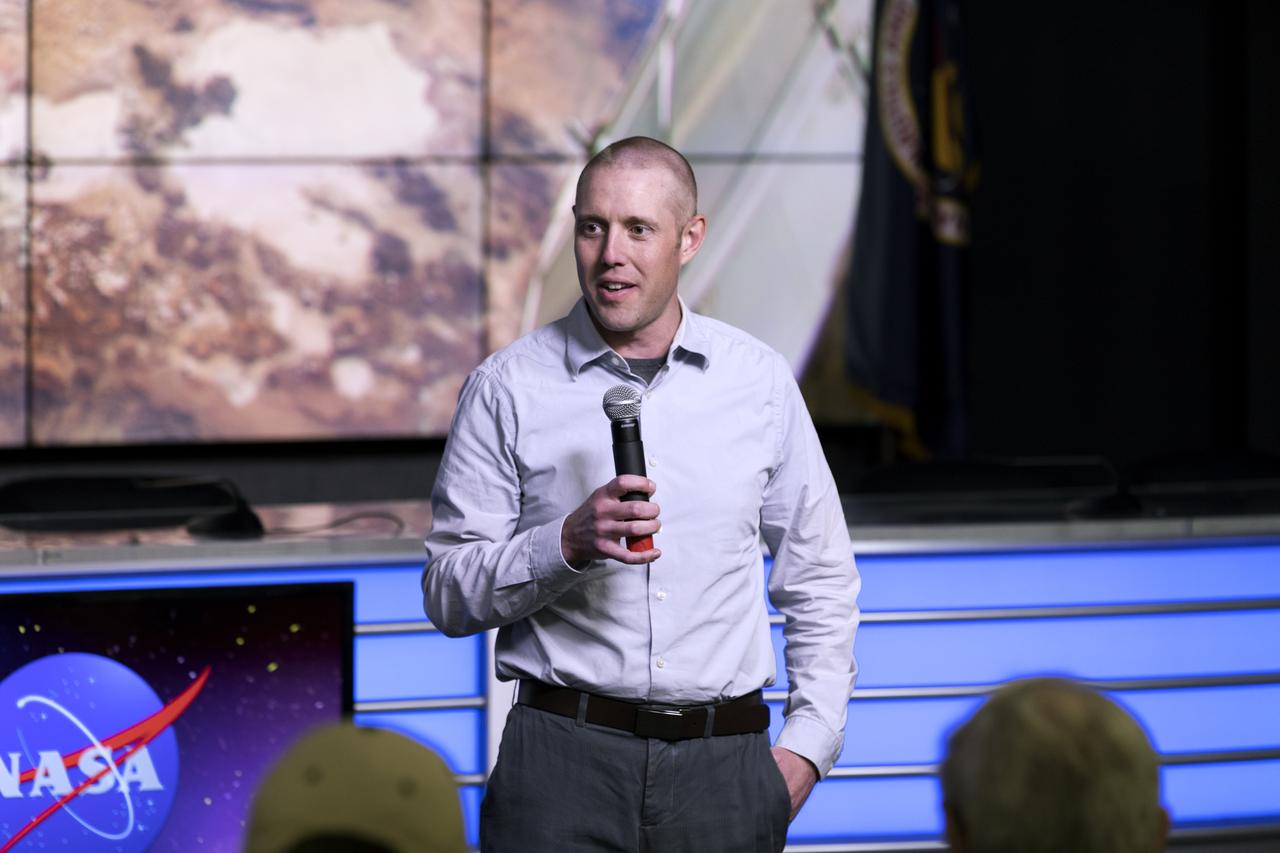
Dan Close, chief scientific officer at 490 BioTech, discusses the company's Metabolic Tracking investigation to evaluate the use of a new method to test, in microgravity, the metabolic impacts of pharmaceutical drugs. This is one of the scientific materials that will be aboard a Dragon spacecraft scheduled for liftoff from Cape Canaveral Air Force Station's Space Launch Complex 40 at 4:30 p.m. EST, on April 2, 2018. The SpaceX Falcon 9 rocket will launch the company's 14th Commercial Resupply Services mission to the space station.
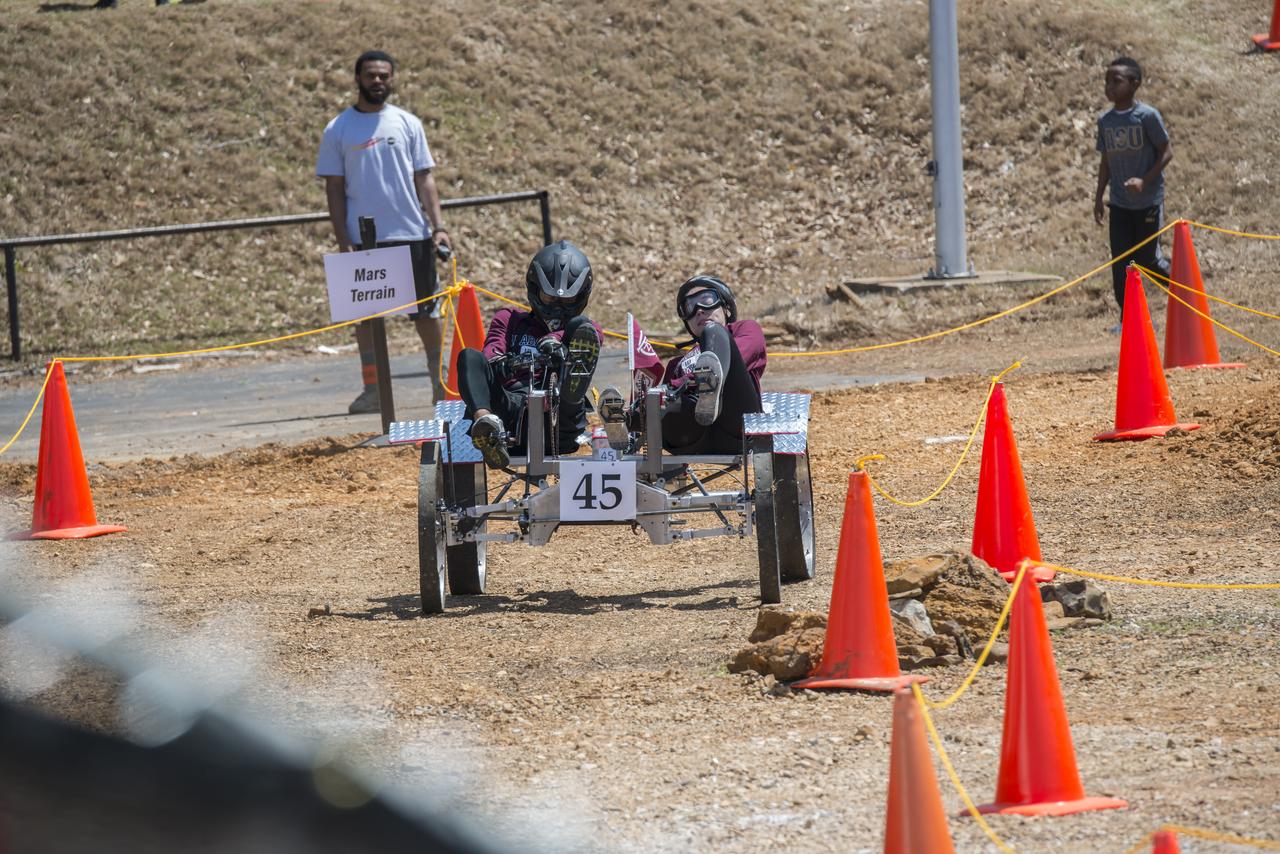
High school and university students competed in the 2018 Human Exploration Rover Challenge event at the U.S. Space and Rocket Center in Huntsville, Alabama. Students came from across the U.S. as well as several foreign countries such as Brazil, Germany, India, and Mexico. This event, which is normally a 2 day event, was shortened to 1 day in 2018 due to adverse weather conditions.
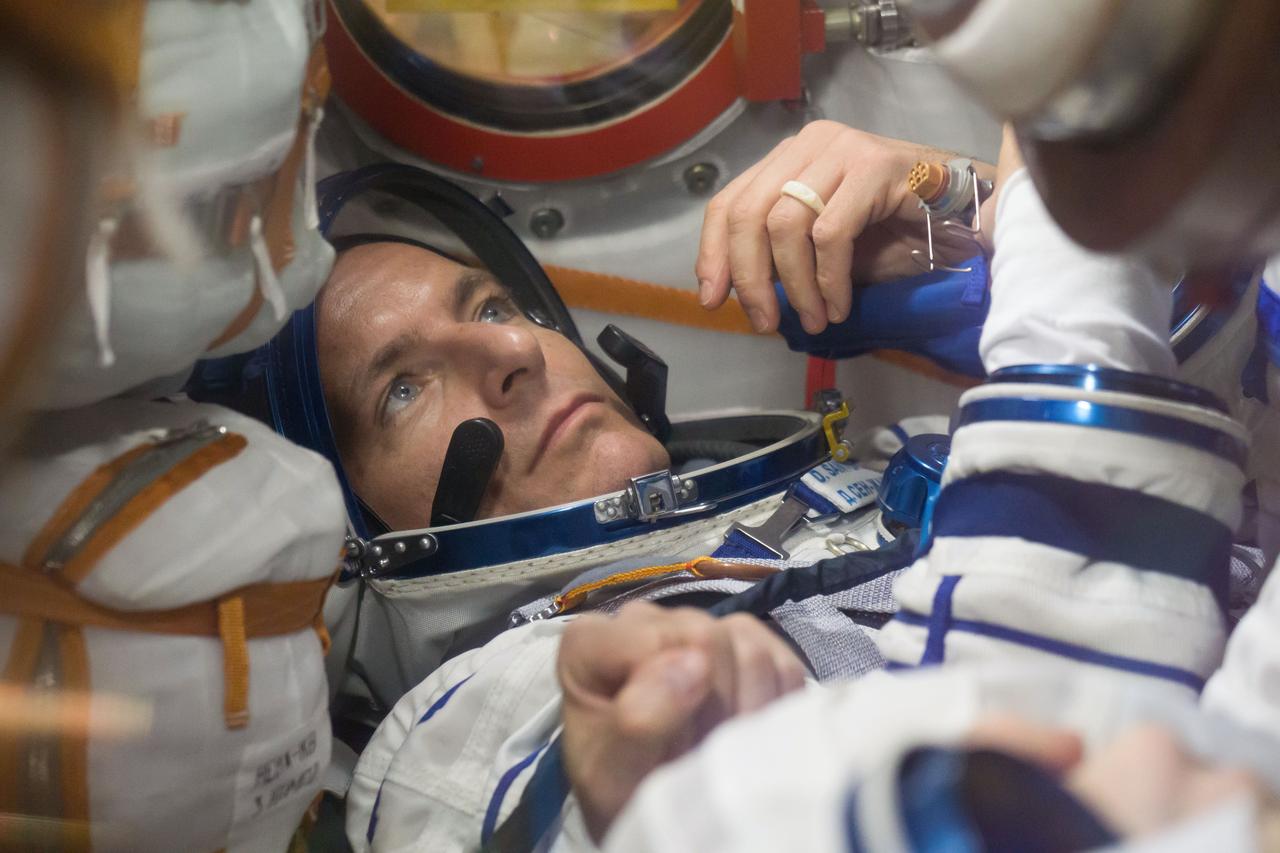
jsc2018e097303 - In the Integration Facility at the Baikonur Cosmodrome in Kazakhstan, Expedition 58 crewmember David Saint-Jacques of the Canadian Space Agency runs through his procedures Nov. 20 aboard his Soyuz spacecraft during a vehicle fit check. Saint-Jacques, Anne McClain of NASA and Oleg Kononenko of Roscosmos will launch Dec. 3 on the Soyuz MS-11 spacecraft from the Baikonur Cosmodrome for a six-and-a-half month mission on the International Space Station...NASA/Victor Zelentsov.
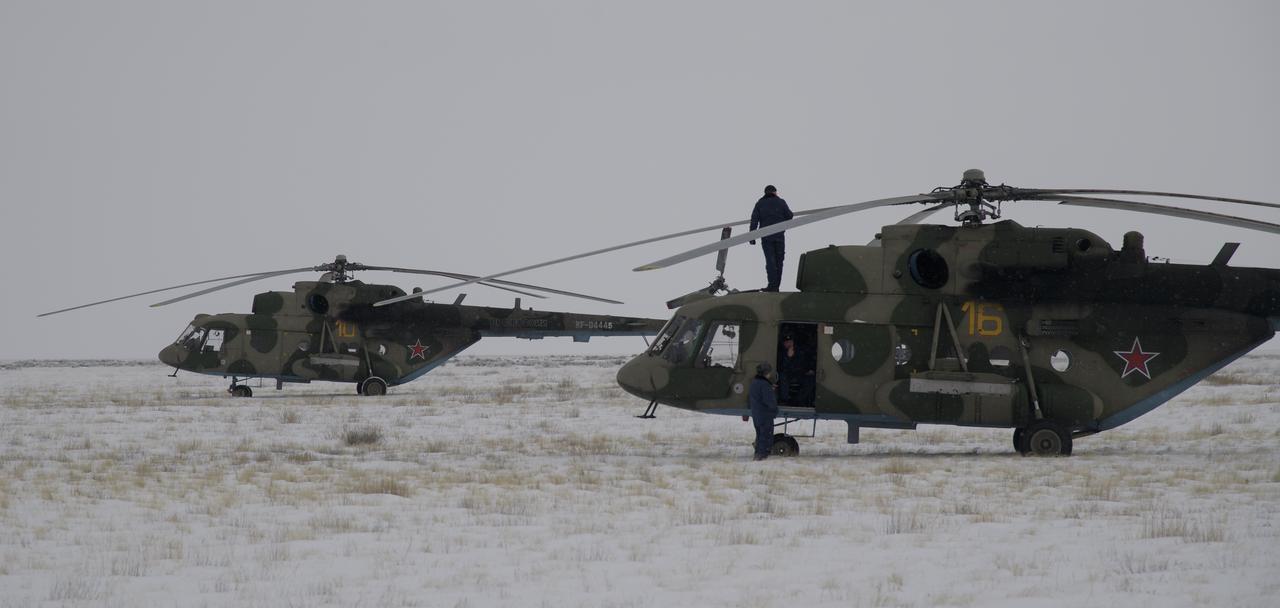
Russian Search and Rescue helicopters are parked near the Soyuz MS-09 spacecraft shortly after it landed with Expedition 57 crew members Serena Auñón-Chancellor of NASA, Alexander Gerst of ESA (European Space Agency), and Sergey Prokopyev of Roscosmos near the town of Zhezkazgan, Kazakhstan on Thursday, Dec. 20, 2018. Auñón-Chancellor, Gerst, and Prokopyev are returning after 197 days in space where they served as members of the Expedition 56 and 57 crews onboard the International Space Station. Photo Credit: (NASA/Bill Ingalls)
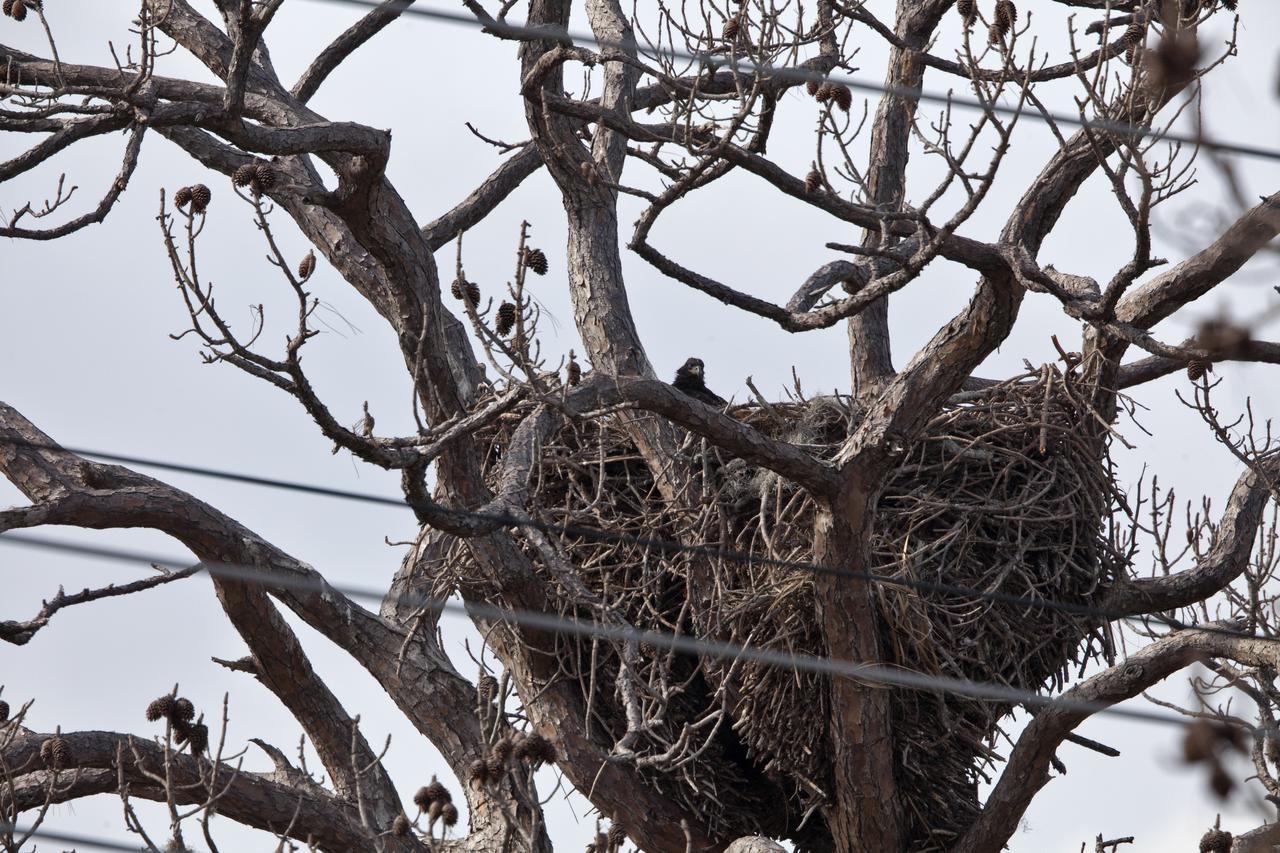
A baby eagle perches in a nest in a tree along State Road 3 at NASA's Kennedy Space Center in Florida. The center shares a border with the 140,000-acre Merritt Island National Wildlife Refuge. More than 330 native and migratory bird species, 25 mammals, 117 fishes and 65 amphibians and reptiles call Kennedy and the wildlife refuge home.
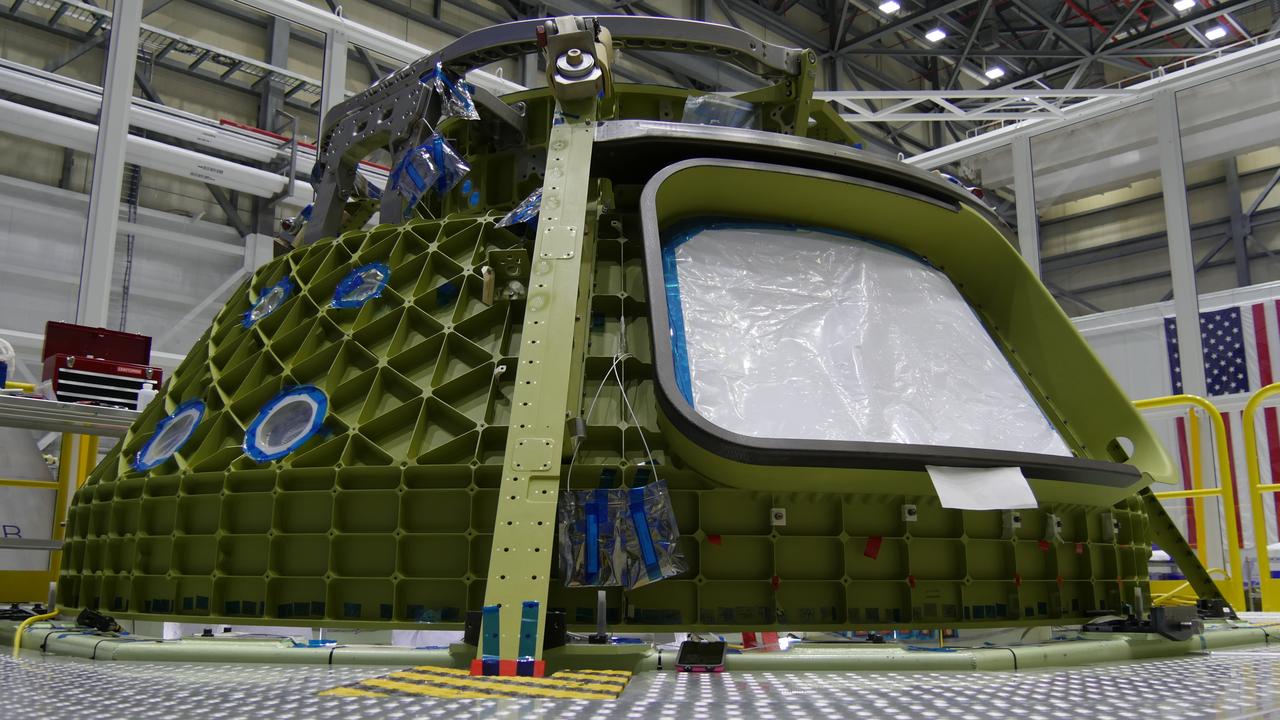
Boeing’s CST-100 Starliner Orbital Flight Test vehicle will fly the first test flight to space on an uncrewed mission to the International Space Station. Here you see the spacecraft’s upper dome undergoing the final preparations before the upper and lower dome are mated for a pressure test, and then the two domes will move on to be populated with avionics, life support and other critical hardware.
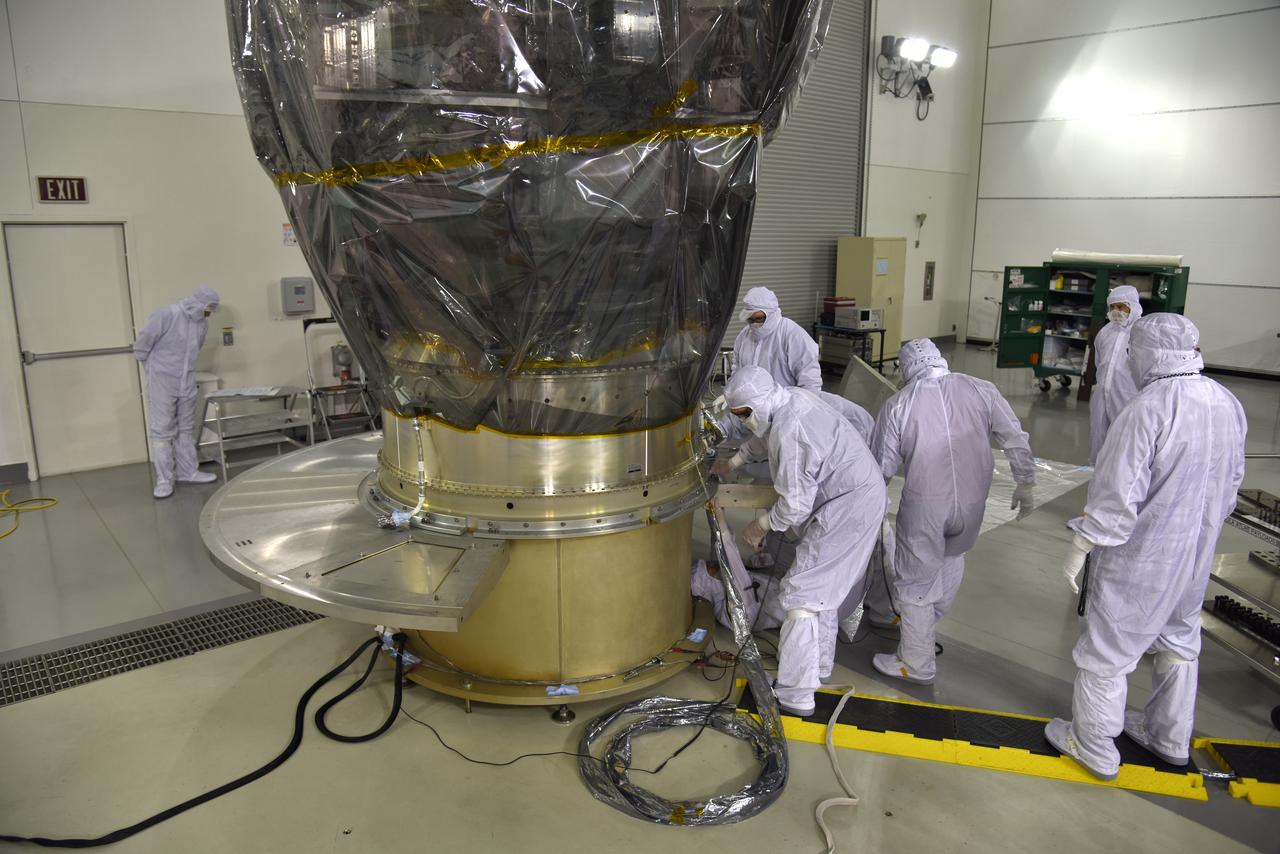
Inside the high bay of the Astrotech Space Operations facility at Vandenberg Air Force Base in California, technicians attach NASA's Ice, Cloud and land Elevation Satellite-2 (ICESat-2) to the payload direct mate adapter, on Aug. 24, 2018. The satellite is being prepared for its scheduled launch from Space Launch Complex 2 at Vandenberg on the final United Launch Alliance Delta II rocket. ICESat-2 will measure the height of a changing Earth, one laser pulse at a time, 10,000 laser pulses a second. The satellite will carry the Advanced Topographic Laser Altimeter System (ATLAS). ICESat-2 will help scientists investigate why, and how much our planet's frozen and icy areas, called the cryosphere, are changing in a warming climate.

The RainCube 6U CubeSat with fully-deployed antenna. RainCube, CubeRRT and TEMPEST-D are currently integrated aboard Orbital ATKs Cygnus spacecraft and are awaiting launch on an Antares rocket. After the CubeSats have arrived at the station, they will be deployed into low-Earth orbit and will begin their missions to test these new technologies useful for predicting weather, ensuring data quality, and helping researchers better understand storms. https://photojournal.jpl.nasa.gov/catalog/PIA22457
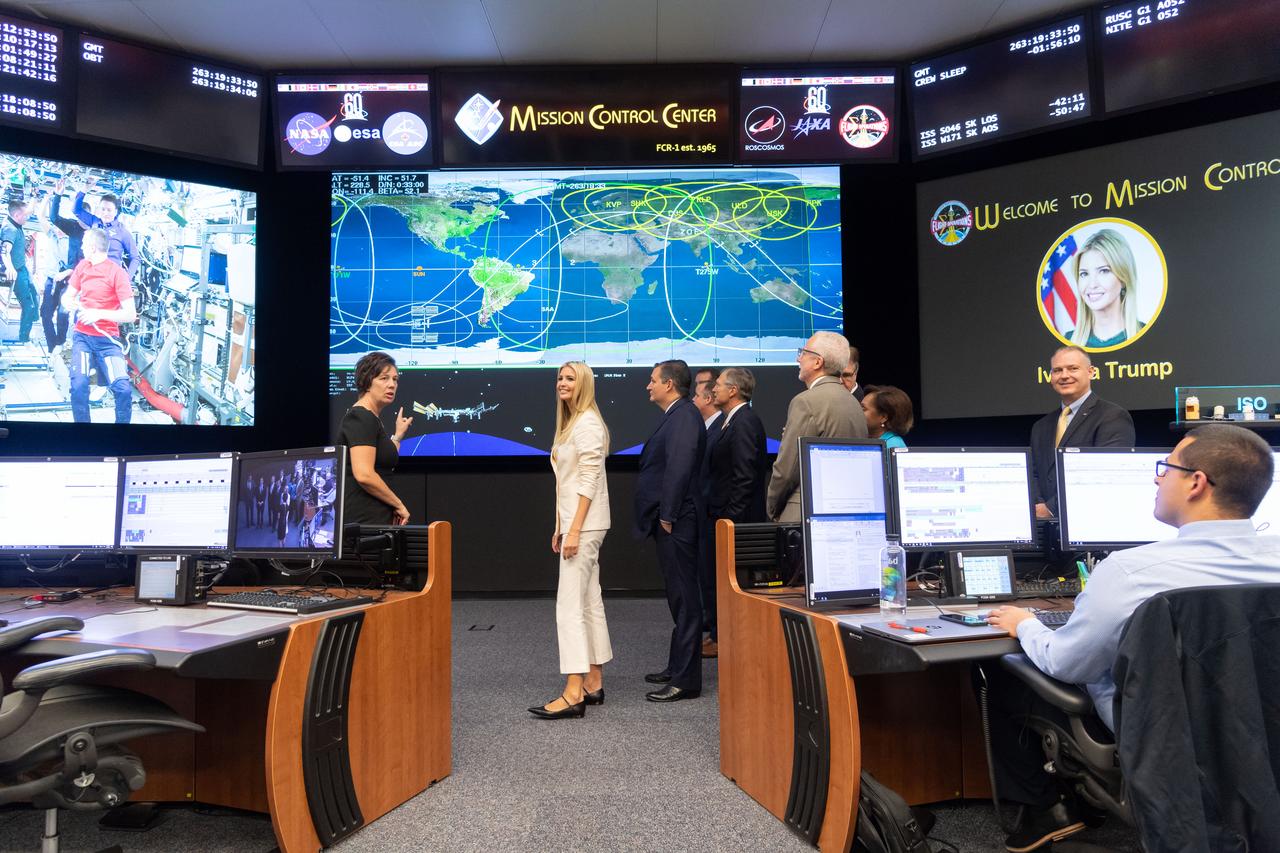
jsc2018e083375 – (Sept. 20, 2018) – NASA Chief Flight Director Holly Ridings shows Advisor to the President Ivanka Trump around the International Space Station Flight Control Room in the Mission Control Center during a visit to NASA’s Johnson Space Center. She was joined by U.S. Senator Ted Cruz, U.S. Representative Brian Babin, NASA Administrator Jim Bridenstine, and Johnson Center Director Mark Geyer.
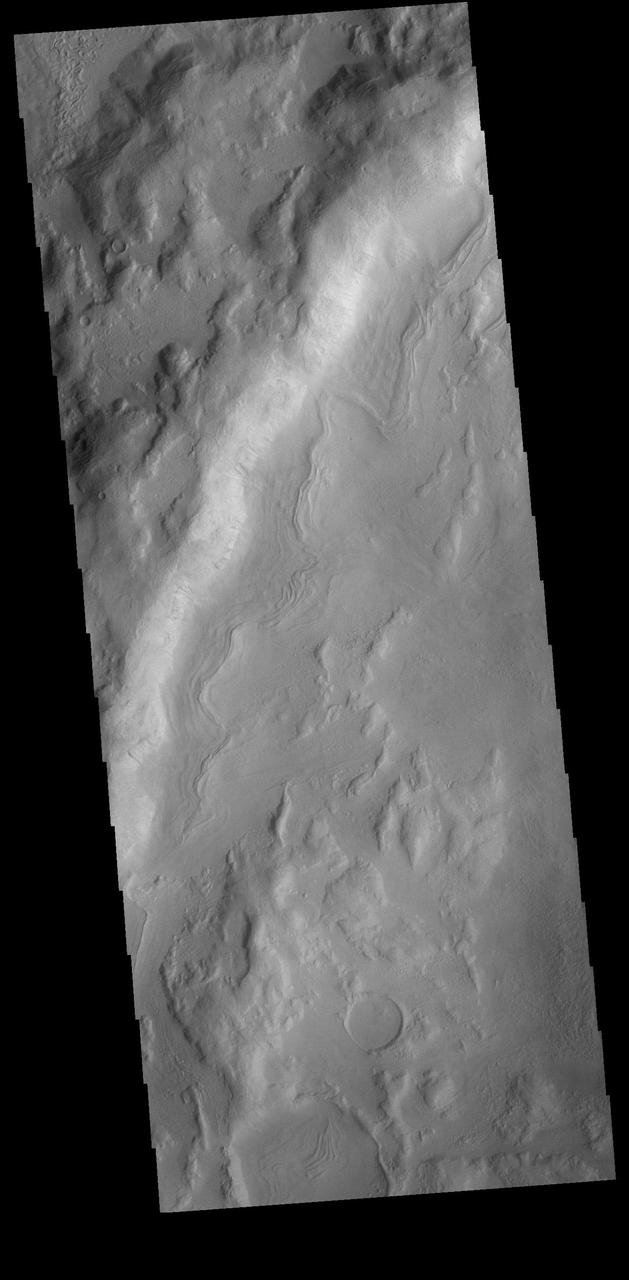
This VIS image is located in an unnamed crater in Noachis Terra. The sinuous feature near the bottom of the crater rim appears to have been caused by down slope movement of materials. The sinuous nature may have been created by inclusion of a volatile material such as ice. Orbit Number: 74447 Latitude: -39.937 Longitude: 11.1296 Instrument: VIS Captured: 2018-09-26 05:13 https://photojournal.jpl.nasa.gov/catalog/PIA22844
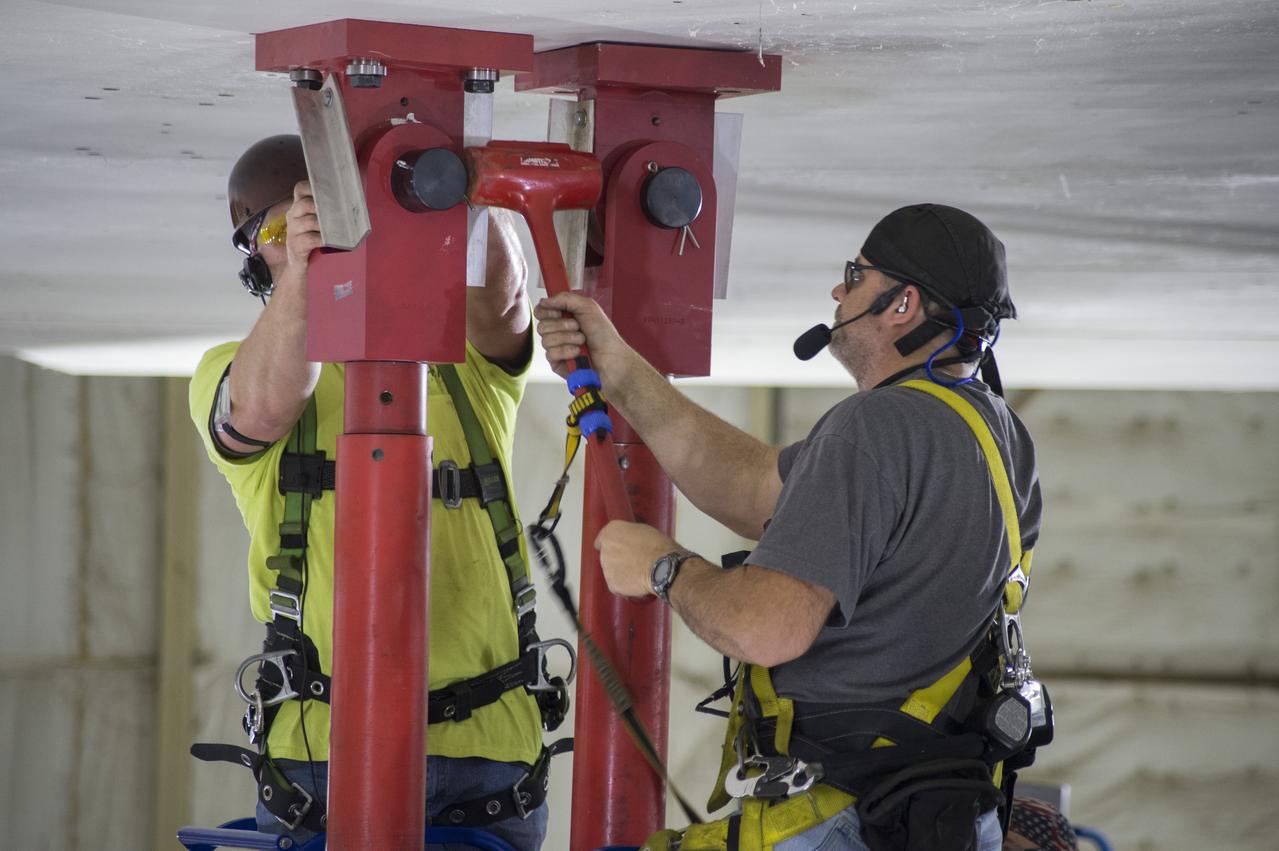
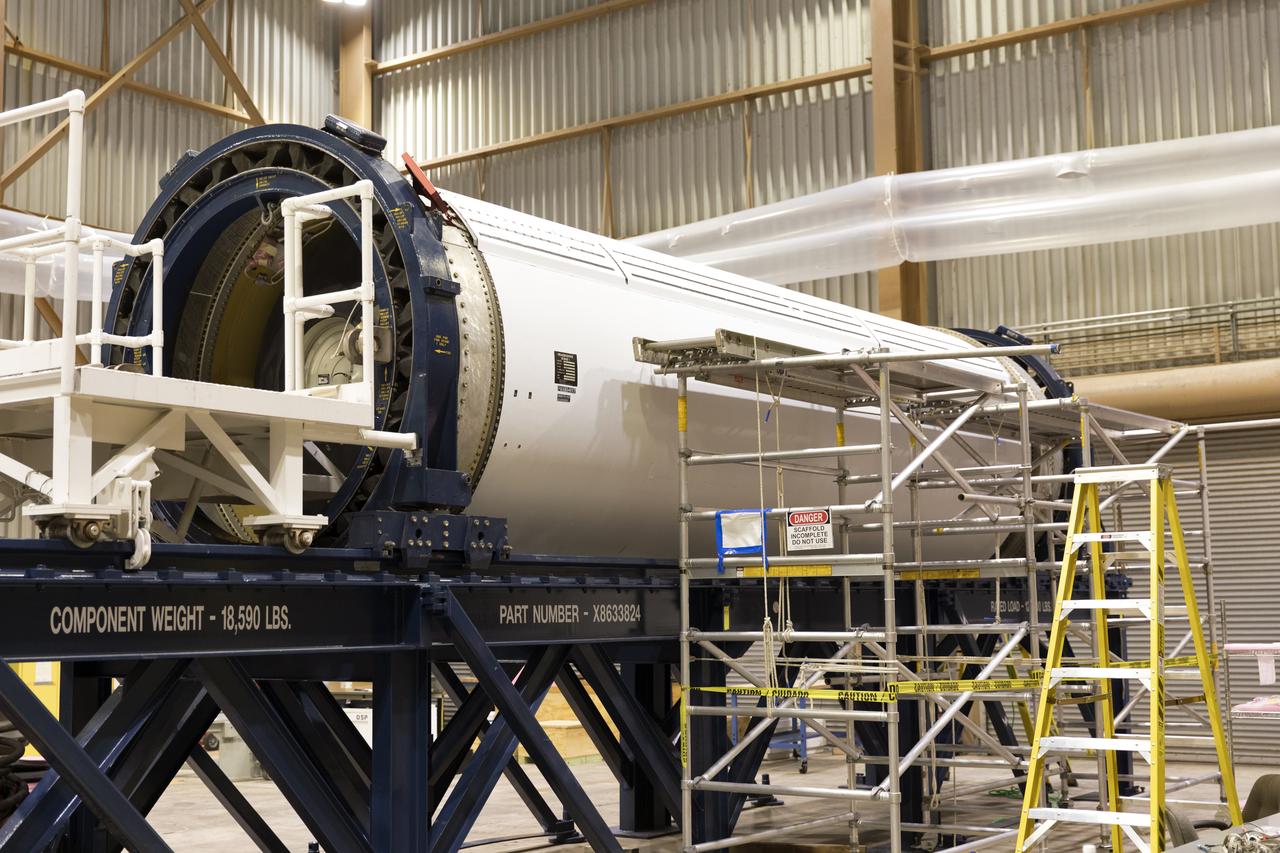
SLS Intertank Test Article, ITA, is attached to crosshead of load test Annex, Bldg. 4619, and removed from bed of KMAG transporter. Rob Ziegler, (L), and Roger Myrick (R), of Aerie Aerospace attach load lines to Aft Load Ring of Intertank Test Article.
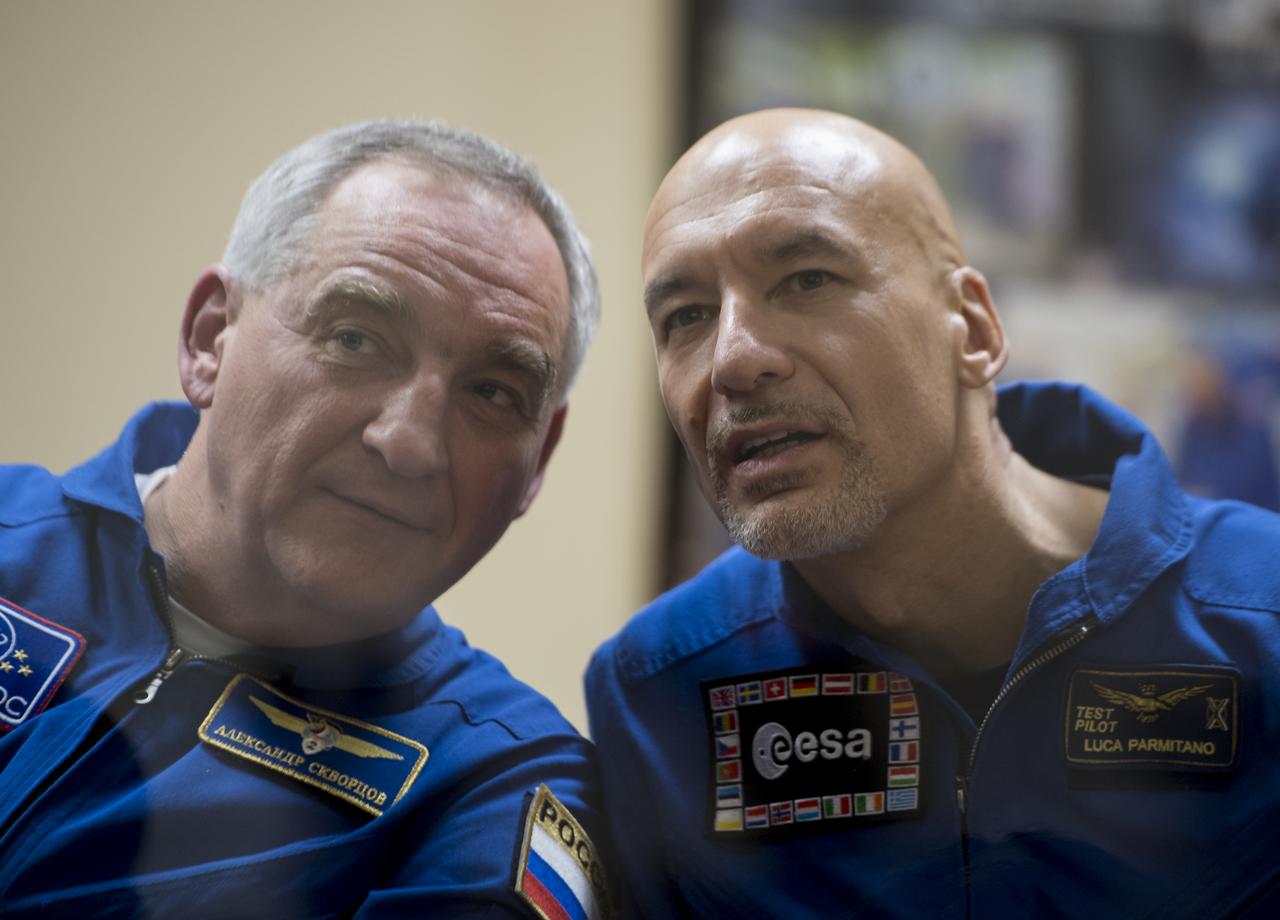
Expedition 58 backup crew members, Soyuz Commander Alexander Skvortsov of Roscosmos, left, and Flight Engineer Luca Parmitano of ESA (European Space Agency), speak during a press conference, Sunday, Dec. 2, 2018 at the Cosmonaut Hotel in Baikonur, Kazakhstan. Launch of the Soyuz rocket is scheduled for Dec. 3 and will carry Expedition 58 prime crew members, Soyuz Commander Oleg Kononenko of Roscosmos, Flight Engineer Anne McClain of NASA, and Flight Engineer David Saint-Jacques of the Canadian Space Agency (CSA) into orbit to begin their six and a half month mission on the International Space Station. Photo Credit: (NASA/Aubrey Gemignani).
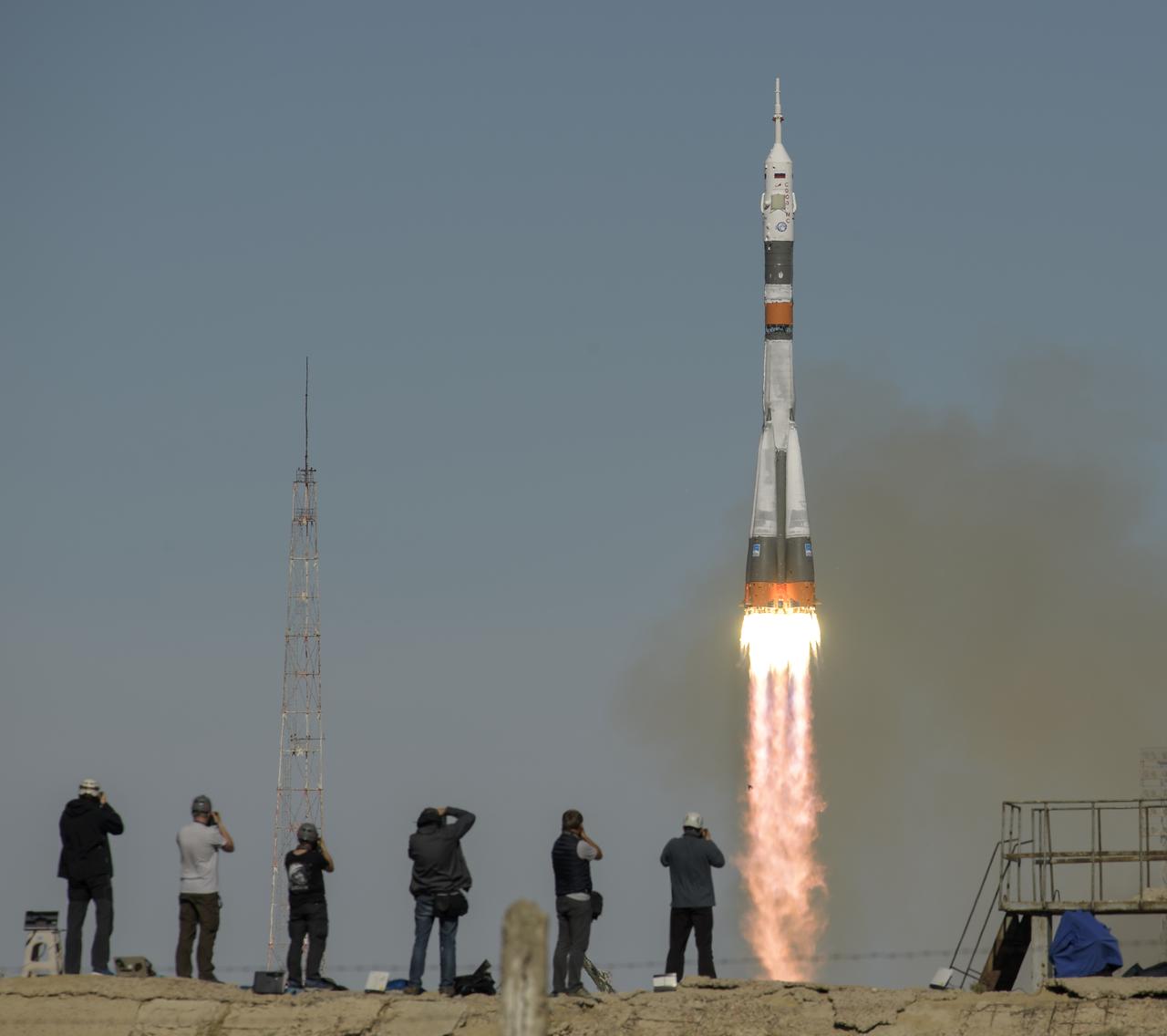
The Soyuz MS-10 spacecraft is launched with Expedition 57 Flight Engineer Nick Hague of NASA and Flight Engineer Alexey Ovchinin of Roscosmos, Thursday, Oct. 11, 2018 at the Baikonur Cosmodrome in Kazakhstan. During the Soyuz spacecraft's climb to orbit, an anomaly occurred, resulting in an abort downrange. The crew was quickly recovered and is in good condition. Photo Credit: (NASA/Bill Ingalls)
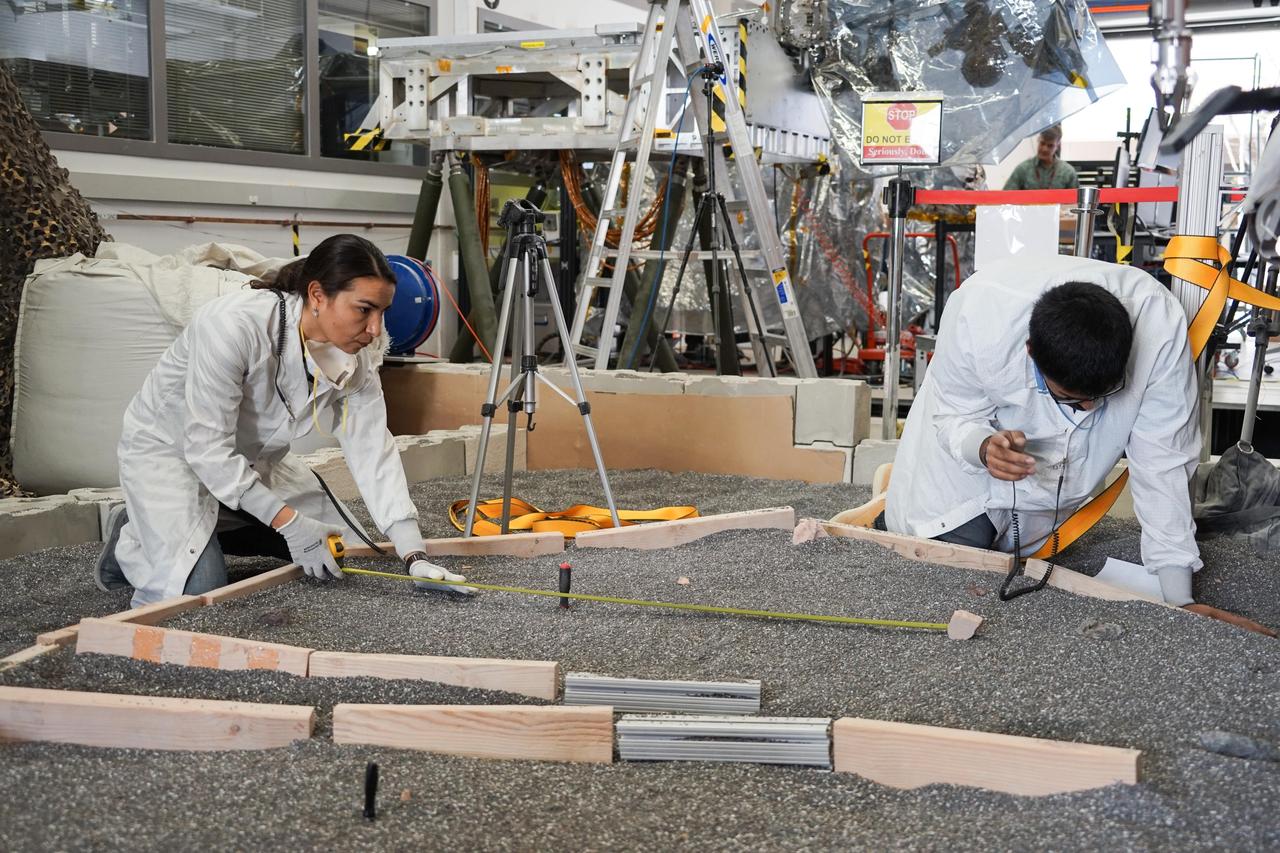
Engineers Marleen Sundgaard (left) and Pranay Mishra measure their test lander's "workspace" -- the terrain where scientists want to set InSight's instruments -- at NASA's Jet Propulsion Laboratory in Pasadena, California. Making sure each feature of the workspace on Mars is mimicked here on Earth allows for more reliable tests to be performed before actually setting down InSight's instruments. https://photojournal.jpl.nasa.gov/catalog/PIA22880
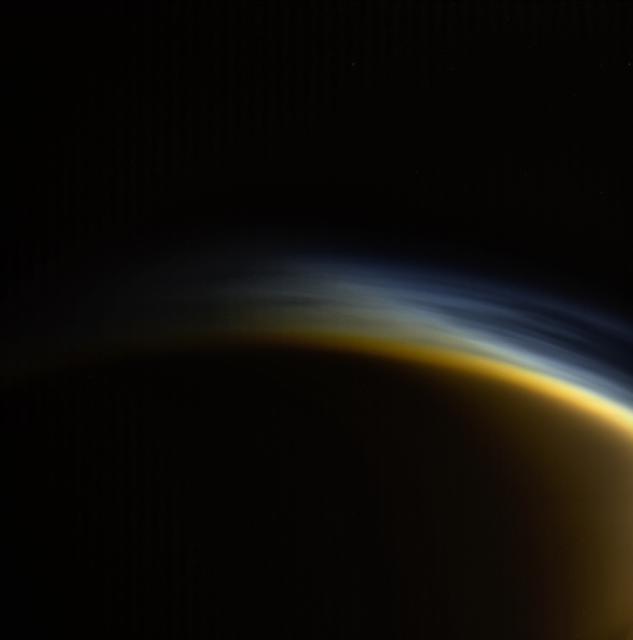
In this view, individual layers of haze can be distinguished in the upper atmosphere of Titan, Saturn's largest moon. Titan's atmosphere features a rich and complex chemistry originating from methane and nitrogen and evolving into complex molecules, eventually forming the smog that surrounds the moon. This natural color image was taken in visible light with the Cassini spacecraft wide-angle camera on March 31, 2005, at a distance of approximately 20,556 miles (33,083 kilometers) from Titan. The view looks toward the north polar region on the moon's night side. Part of Titan's sunlit crescent is visible at right. The Cassini spacecraft ended its mission on Sept. 15, 2017. https://photojournal.jpl.nasa.gov/catalog/PIA21902
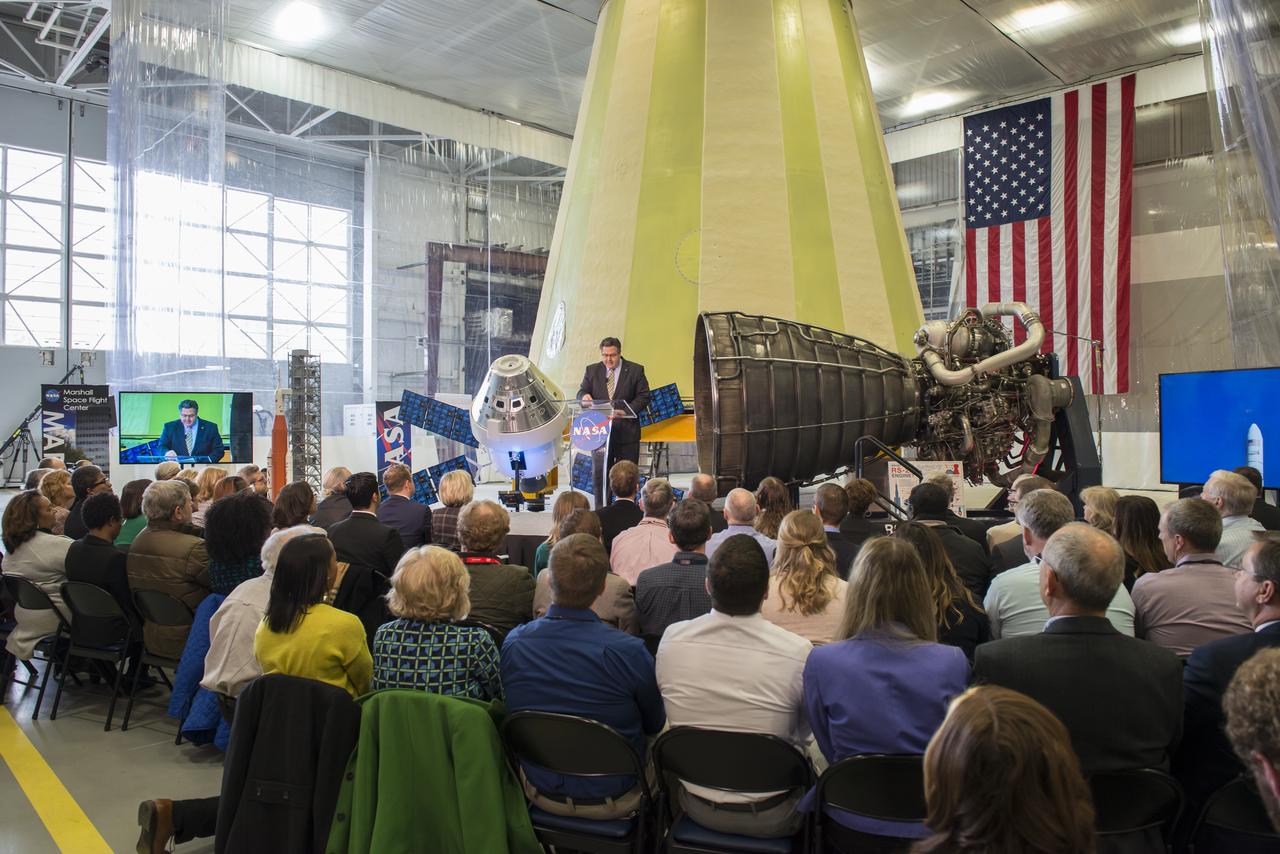
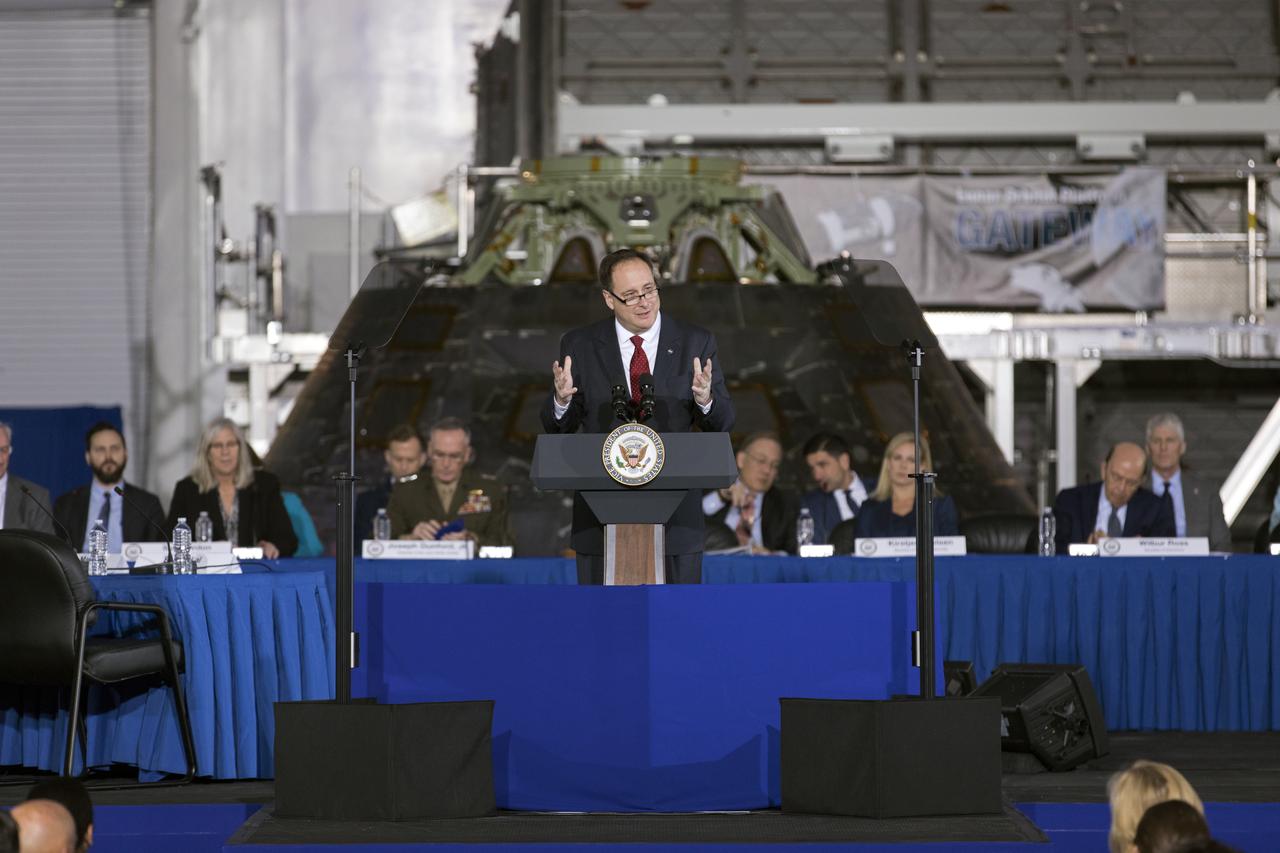
Marshall Space Flight Center Director Todd May introduces NASA Acting Adminstrator Robert Lightfoot prior to his delivery of the "State of NASA", February 12, 2018, at the Marshall Space Flight Center in Huntsville, Alabama. In his address, Lightfoot discussed what the President's Fiscal Year 2019 budget request means for America's space agency. According to Lightfoot, it "reflects the administration's confidence that America will lead the way back to the Moon and take the next giant leap". Lightfoot delivered the "State of NASA" address in Marshall's Center for Advanced Manufacturing where engineers are pushing boundaries in the fields of additive manufacturing, 3D printing, and more. Hardware for NASA's Space Launch System and a model of the agency's Orion spacecraft served as a backdrop for the annual event. SLS, which is managed by Marshall, will enable a new era of exploration beyond Earth's orbit by launching astronauts on missions to deep-space destinations including the Moon and Mars.
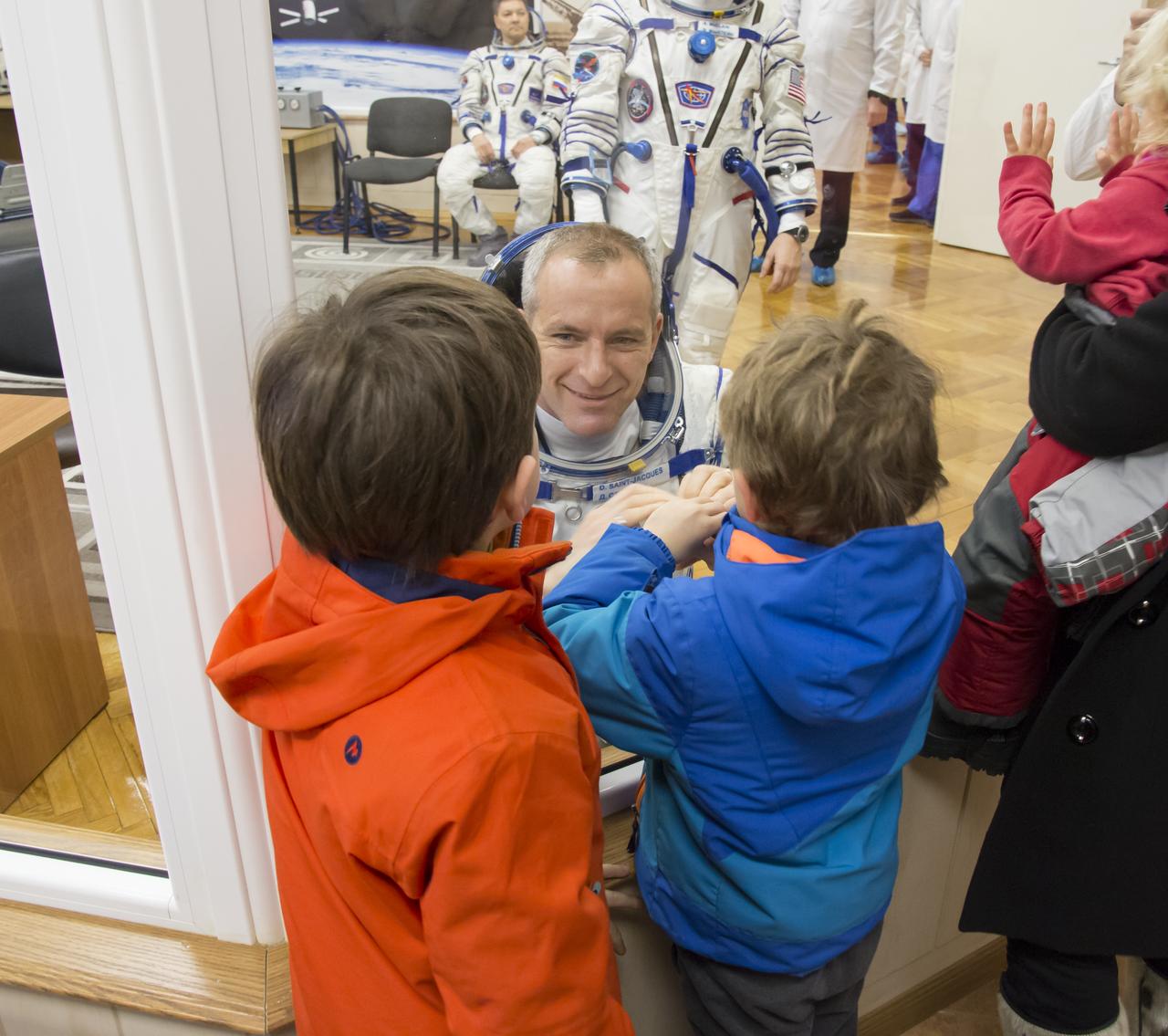
Expedition 58 Flight Engineer David Saint-Jacques of the Canadian Space Agency (CSA) puts his hands up to the glass, to meet his sons while in quarantine, after having his Russian Sokol suit pressure checked in preparation for his launch aboard the Soyuz MS-11 spacecraft on Monday, Dec. 3, 2018, at the Baikonur Cosmodrome in Kazakhstan. Launch of the Soyuz rocket is scheduled for the same day and will carry Saint-Jacques, Soyuz Commander Oleg Kononenko of Roscosmos, and Flight Engineer Anne McClain of NASA, and into orbit to begin their six and a half month mission on the International Space Station. Photo Credit: (NASA/Victor Zelentsov)
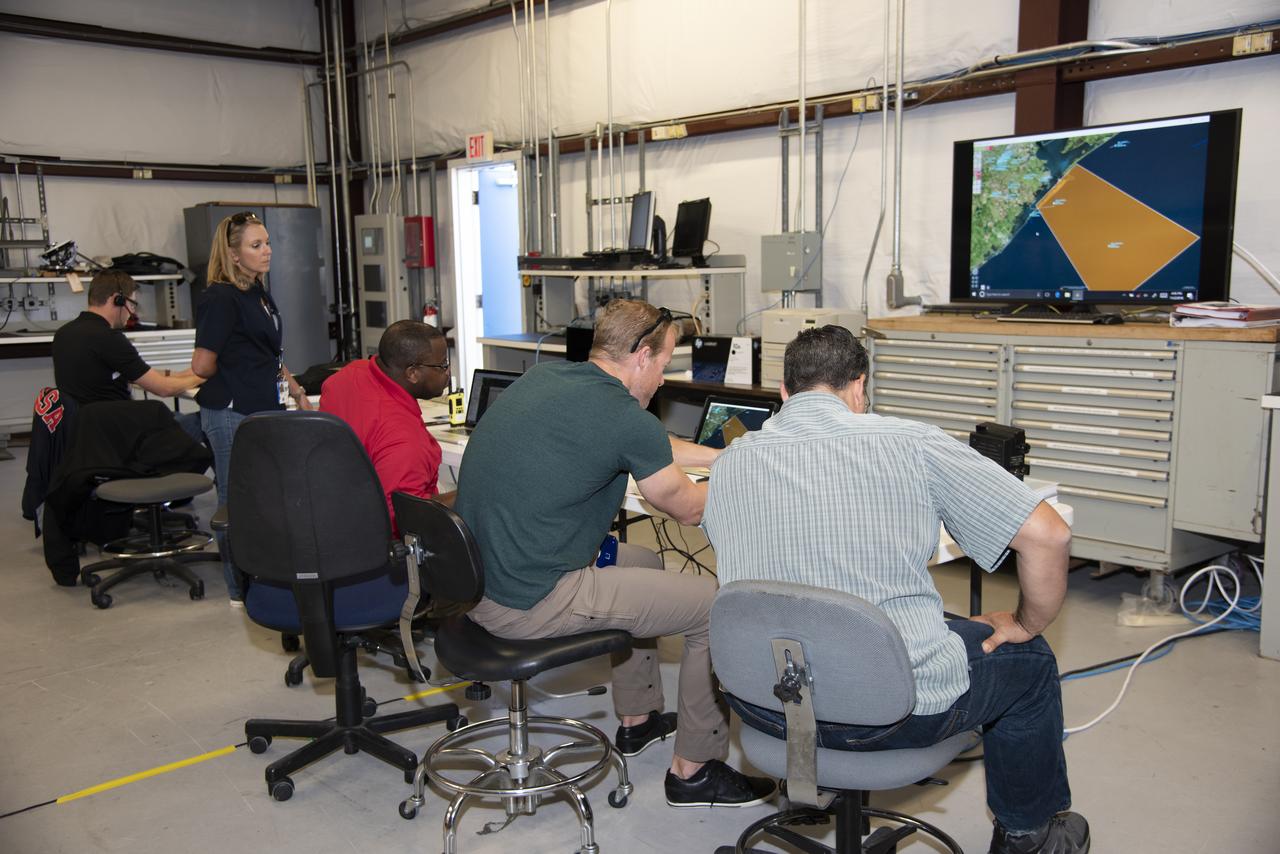
NASA mission controllers, engineers, pilots and communications specialists in the mission control room monitor the supersonic research flight off the coast of Galveston, as part of the QSF18 flight series. The flight operations crew tracks the status of the flights, maintains communications with the aircraft, communicates with U.S. Coast Guard, and coordinates community feedback data.
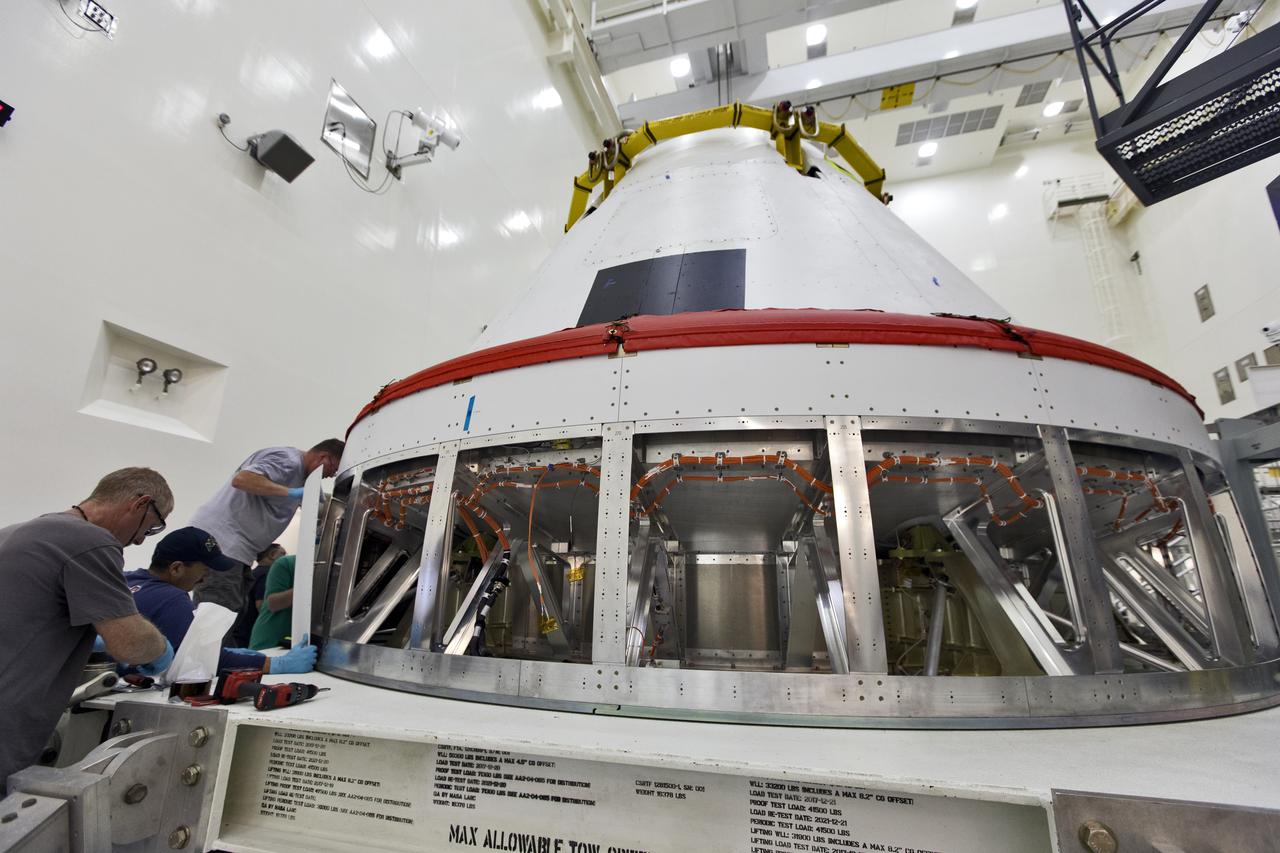
Workers remove cover plates from a mock Orion crew module inside the Multi-Payload Processing Facility at NASA’s Kennedy Space Center in Florida on Dec. 6, 2018. The crew module will be used during a full stress test of the Launch Abort System (LAS), called Ascent Abort-2 (AA-2), scheduled for April 2019. During the test, the booster will launch from Space Launch Complex 46, carrying a fully functional LAS and the 22,000-pound Orion test vehicle to an altitude of 31,000 feet and traveling at more than 1,000 miles an hour. The test will verify the LAS can steer the crew module and astronauts aboard to safety in the event of an issue with the Space Launch System (SLS) rocket when the spacecraft is under the highest aerodynamic loads it will experience during a rapid climb into space.
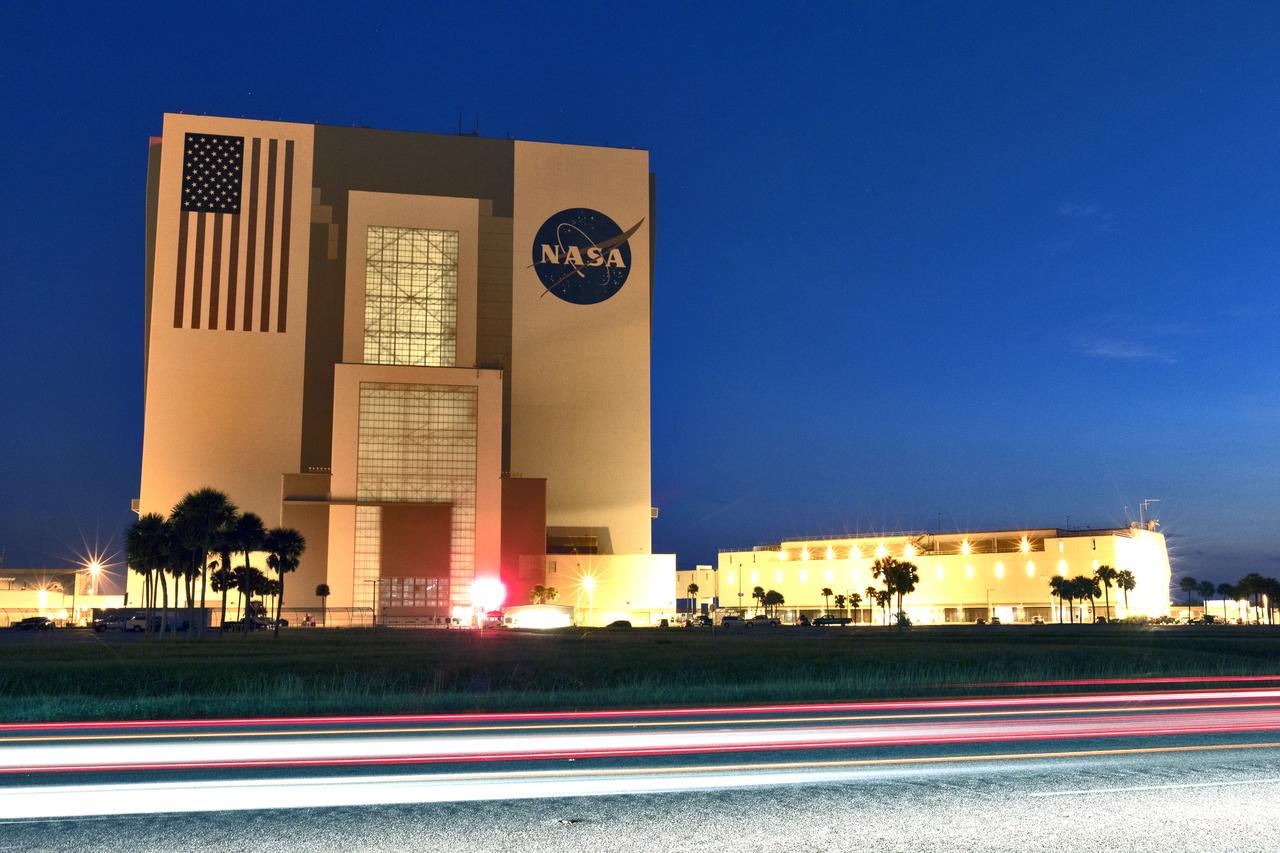
A sunrise time-lapse panoramic view of the iconic Vehicle Assembly Building (VAB) and Launch Control Center at NASA's Kennedy Space Center in Florida. Ten levels of work platforms have been installed in High Bay 3 of the VAB. They will surround and provide access for service and processing of NASA's Space Launch System (SLS) rocket and Orion spacecraft. Exploration Ground Systems oversaw the upgrades and installation of the new work platforms to support the launch of the SLS and Orion on Exploration Mission-1 and deep space missions.
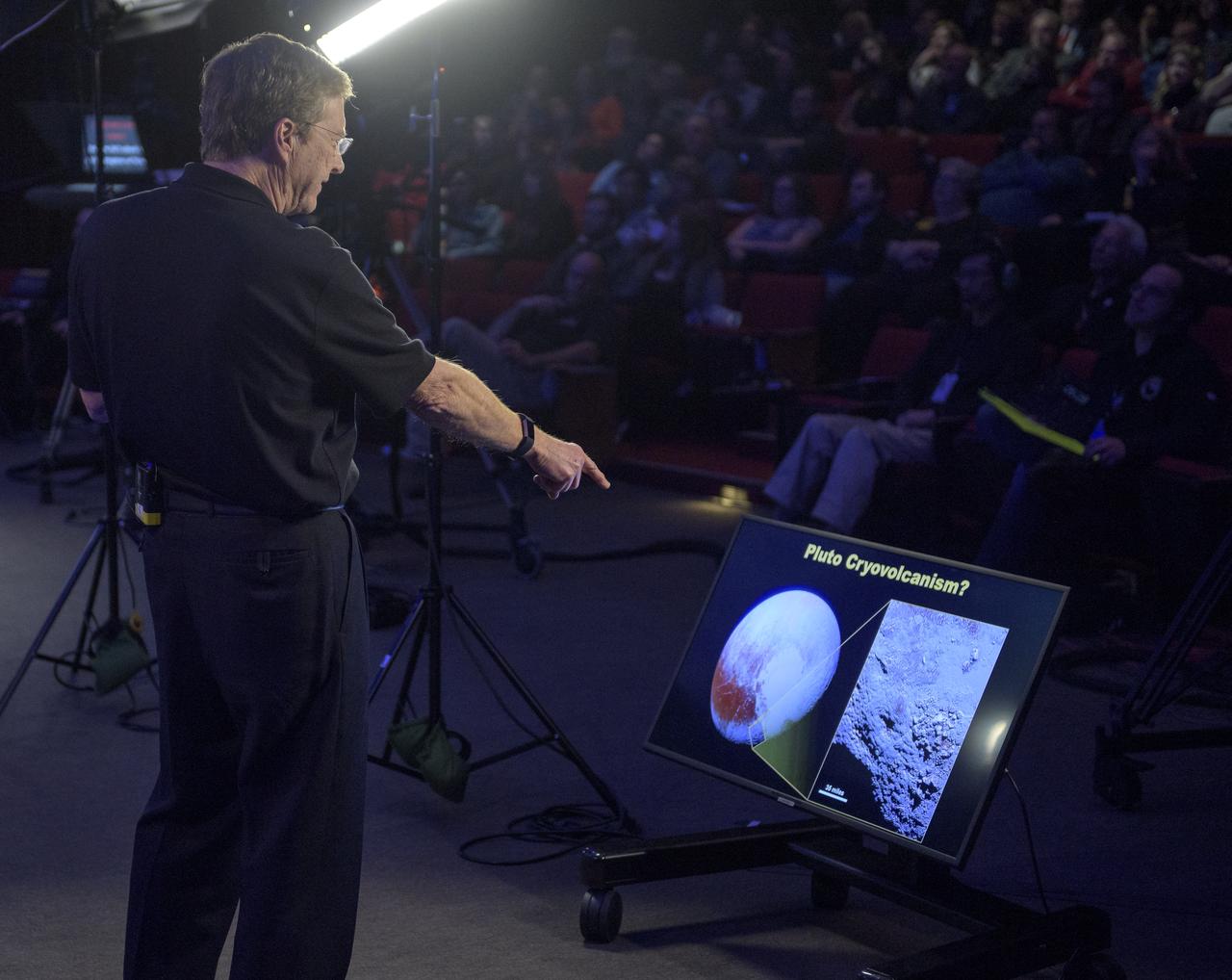
New Horizons project scientist Hal Weaver of the Johns Hopkins University Applied Physics Laboratory gives a talk titled "Pluto Flyby; Summer 2015", Monday, Dec. 31, 2018 at Johns Hopkins University Applied Physics Laboratory (APL) in Laurel, Maryland. Photo Credit: (NASA/Bill Ingalls)
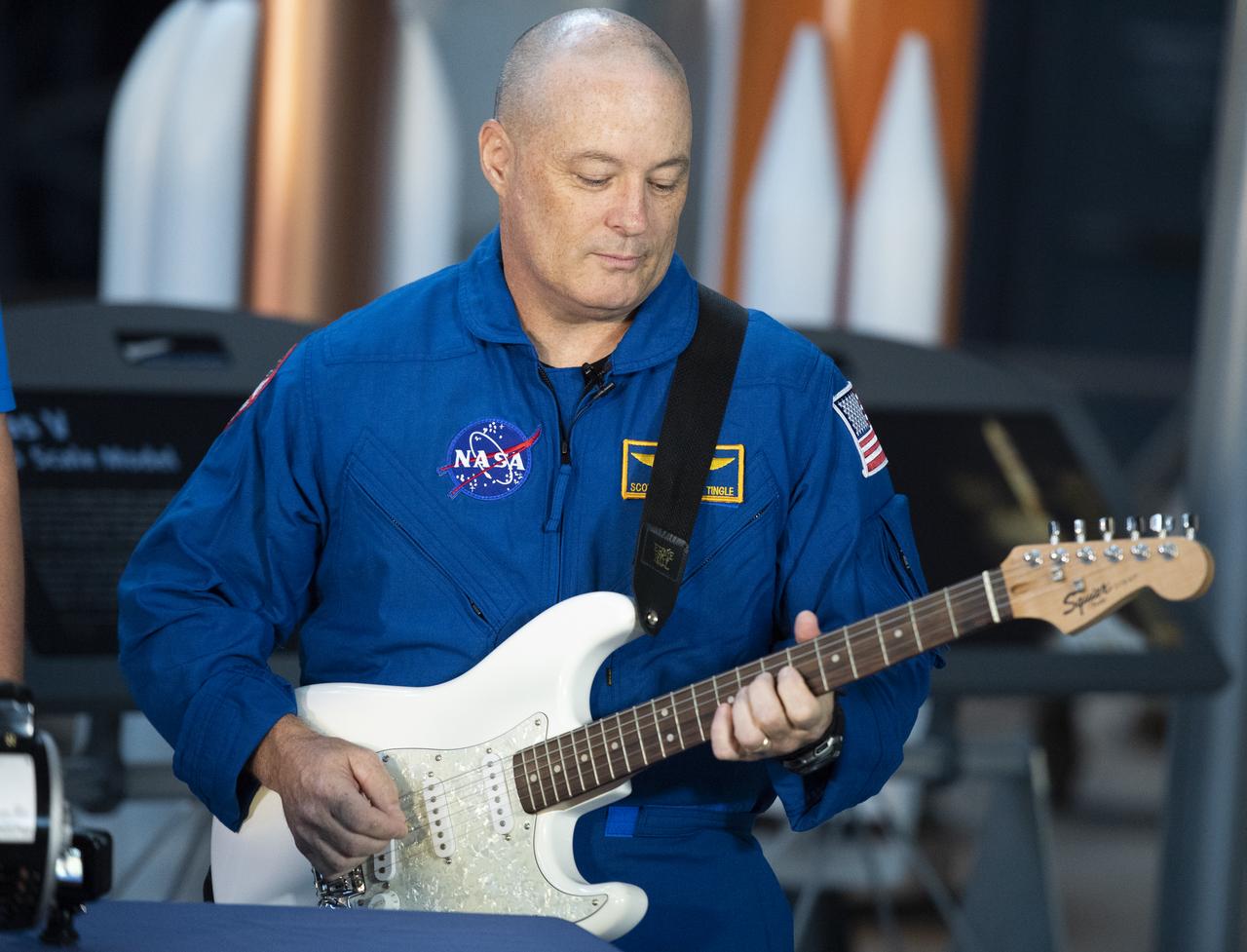
NASA astronaut Scott Tingle plays an electric guitar during a taping of STEM in 30, Wednesday, Sept. 12, 2018 at the Smithsonian National Air and Space Museum's Steven F. Udvar-Hazy Center in Chantilly, Va. Tingle spent 168 days onboard the International Space Station as part of Expeditions 54 and 55. Photo Credit: (NASA/Joel Kowsky)
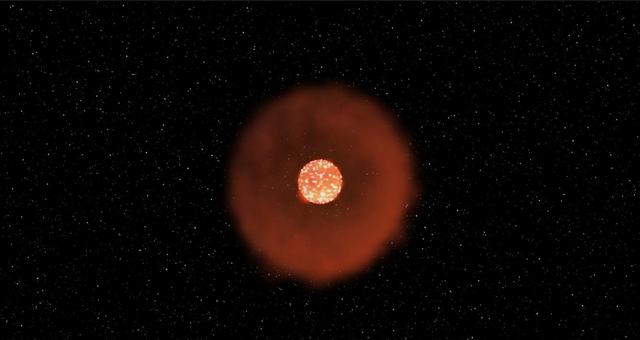
This frame from an animation shows a kind of stellar explosion called a Fast-Evolving Luminous Transient. In this case, a giant star "burps" out a shell of gas and dust about a year before exploding. Most of the energy from the supernova turns into light when it hits this previously ejected material, resulting in a short, but brilliant burst of radiation. Stellar explosions forge and distribute materials that make up the world in which we live, and also hold clues to how fast the universe is expanding. By understanding supernovae, scientists can unlock mysteries that are key to what we are made of and the fate of our universe. But to get the full picture, scientists must observe supernovae from a variety of perspectives, especially in the first moments of the explosion. That's really difficult -- there's no telling when or where a supernova might happen next. An animation is available at https://photojournal.jpl.nasa.gov/catalog/PIA22351
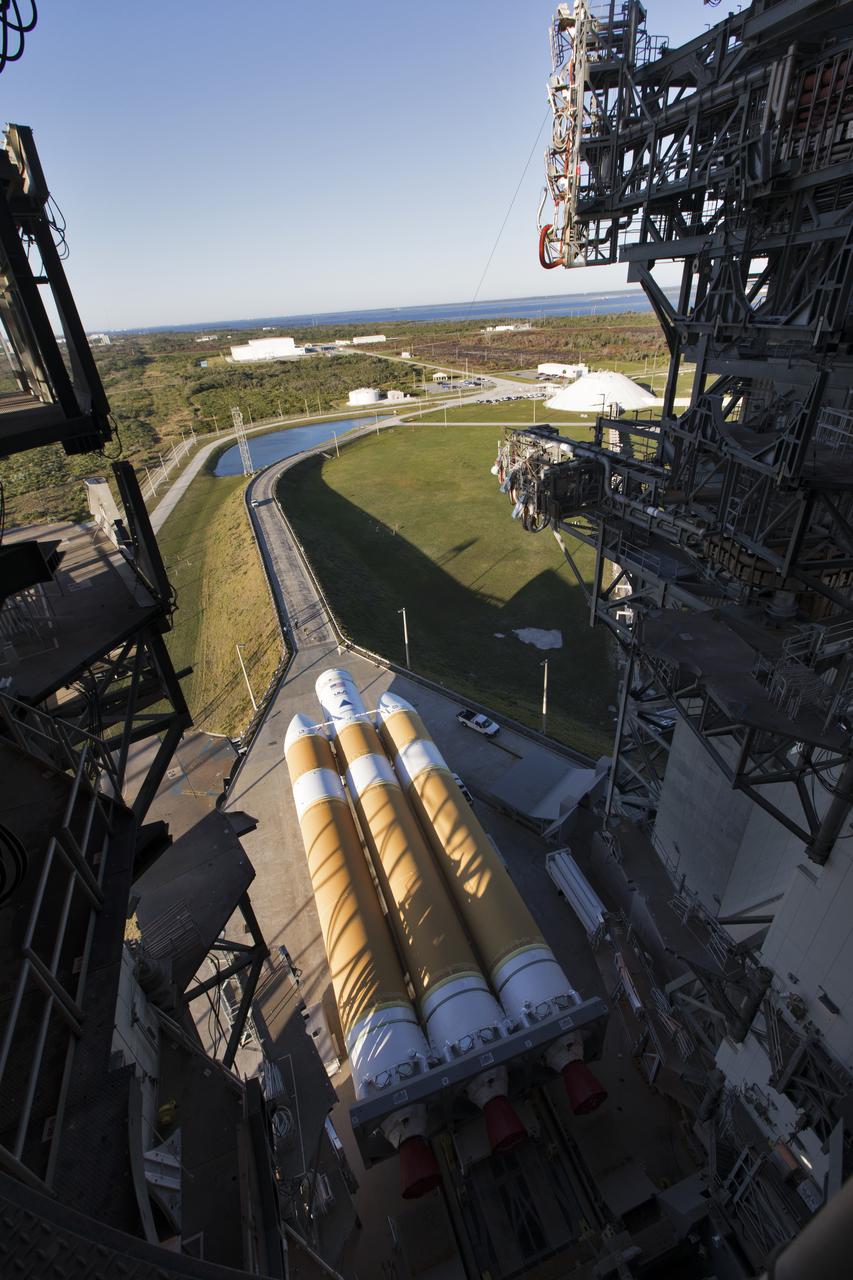
A view from above in the Vertical Integration Facility near Space Launch Complex 37 at Cape Canaveral Air Force Station in Florida. The first stage of a United Launch Alliance Delta IV Heavy is being prepared to be lifted to vertical in the facility. The Delta IV Heavy will launch NASA's upcoming Parker Solar Probe mission in July 2018. The mission will perform the closest-ever observations of a star when it travels through the Sun's atmosphere, called the corona. The probe will rely on measurements and imaging to revolutionize our understanding of the corona and the Sun-Earth connection.
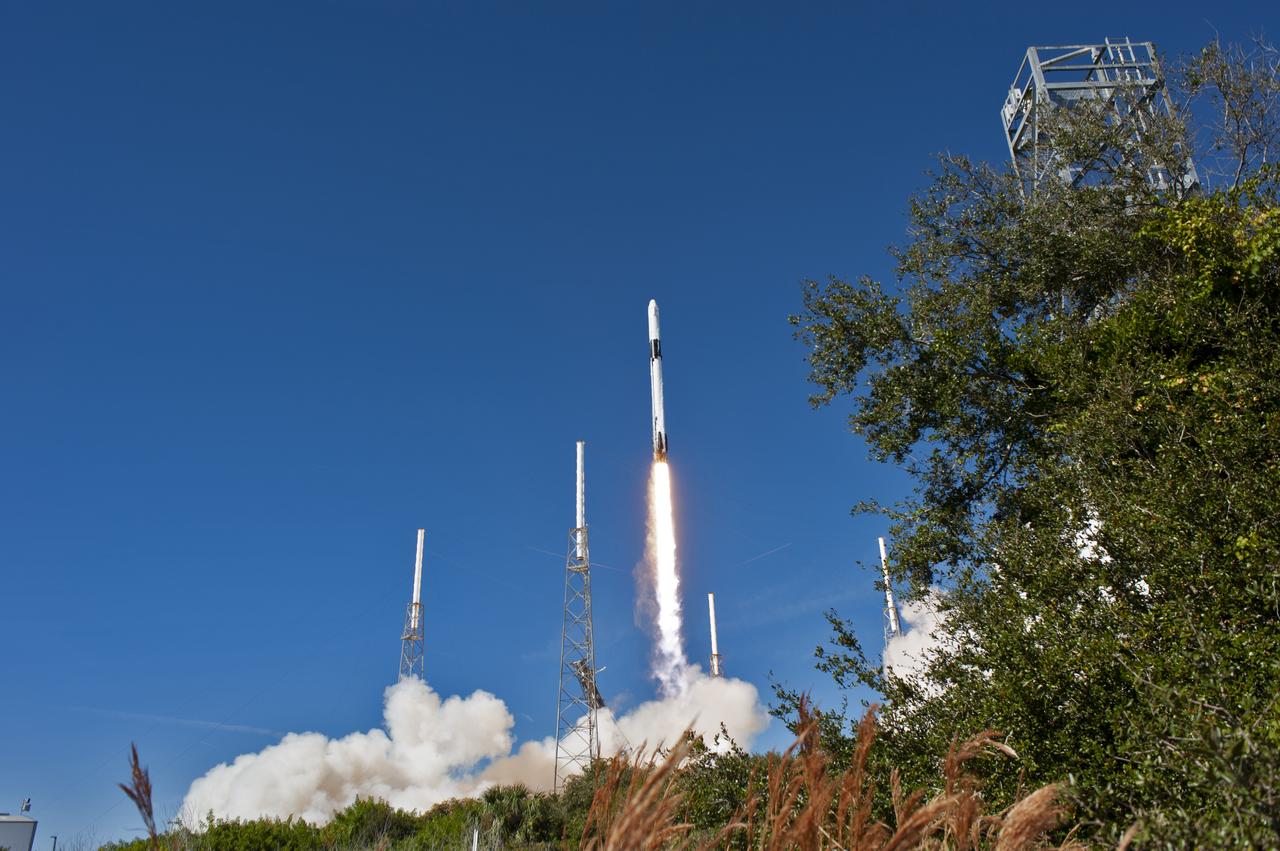
The two-stage Falcon 9 launch vehicle lifts off Space Launch Complex 40 at Cape Canaveral Air Force Station carrying the SpaceX’s Dragon resupply spacecraft to the International Space Station. Liftoff was at 1:16 p.m. EST, Dec. 5, 2018. On its 16th commercial resupply services mission to the space station, Dragon will deliver several science investigations to the space station, including the Global Ecosystem Dynamics Investigation lidar (GEDI). GEDI will provide high-quality laser ranging observations of the Earth’s forests and topography required to advance the understanding of important carbon and water cycling processes, biodiversity and habitat.
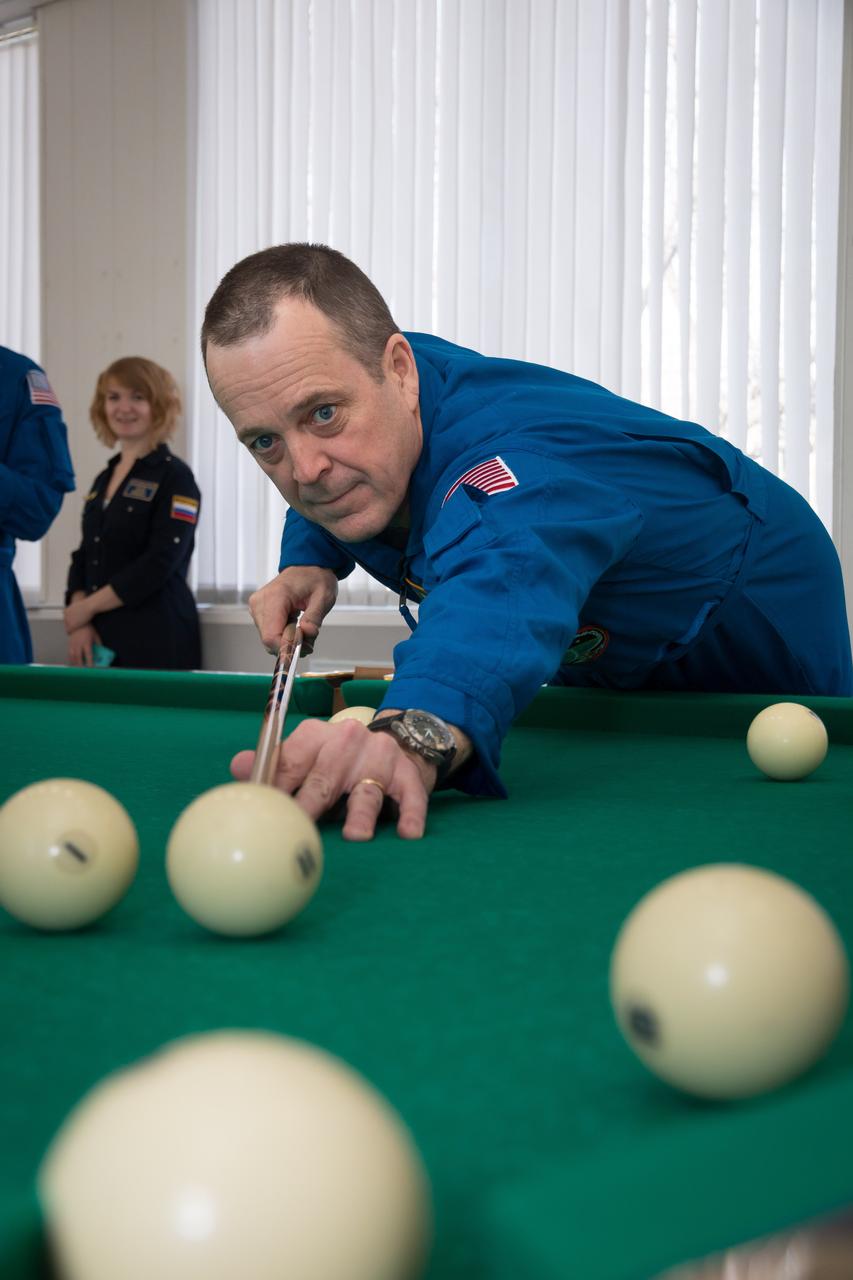
jsc2018e025554 - At the Cosmonaut Hotel crew quarters in Baikonur, Kazakhstan, Expedition 55 crewmember Ricky Arnold of NASA tries his hand at billiards March 15 as part of pre-launch activities. Arnold, Drew Feustel of NASA and Oleg Artemyev of Roscosmos will launch March 21 on the Soyuz MS-08 spacecraft from the Baikonur Cosmodrome on a five-month mission to the International Space Station...NASA/Victor Zelentsov.
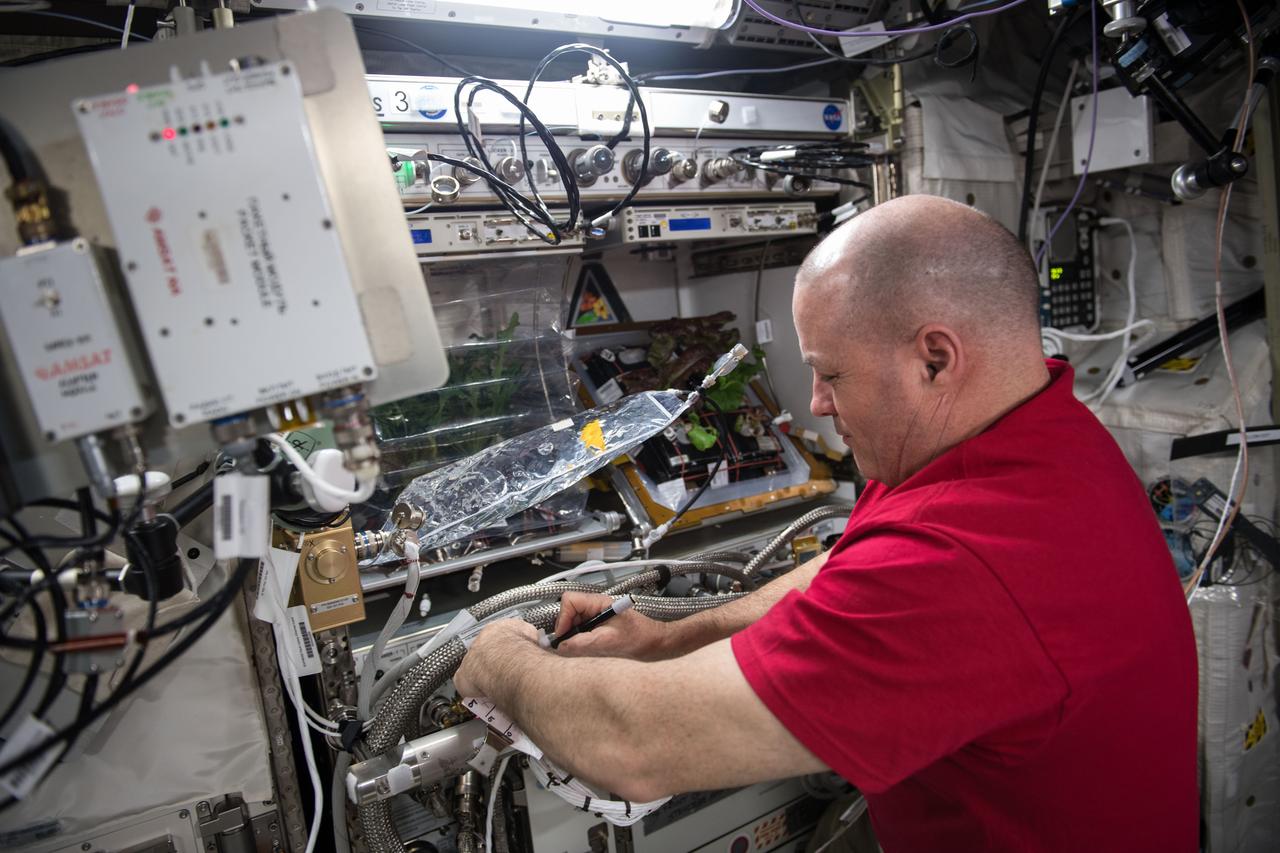
iss055e000821 (March 3, 2018) --- NASA astronaut Scott Tingle checks on red lettuce growing inside the Columbus laboratory module's Veggie facility for the Veg-03 experiment.
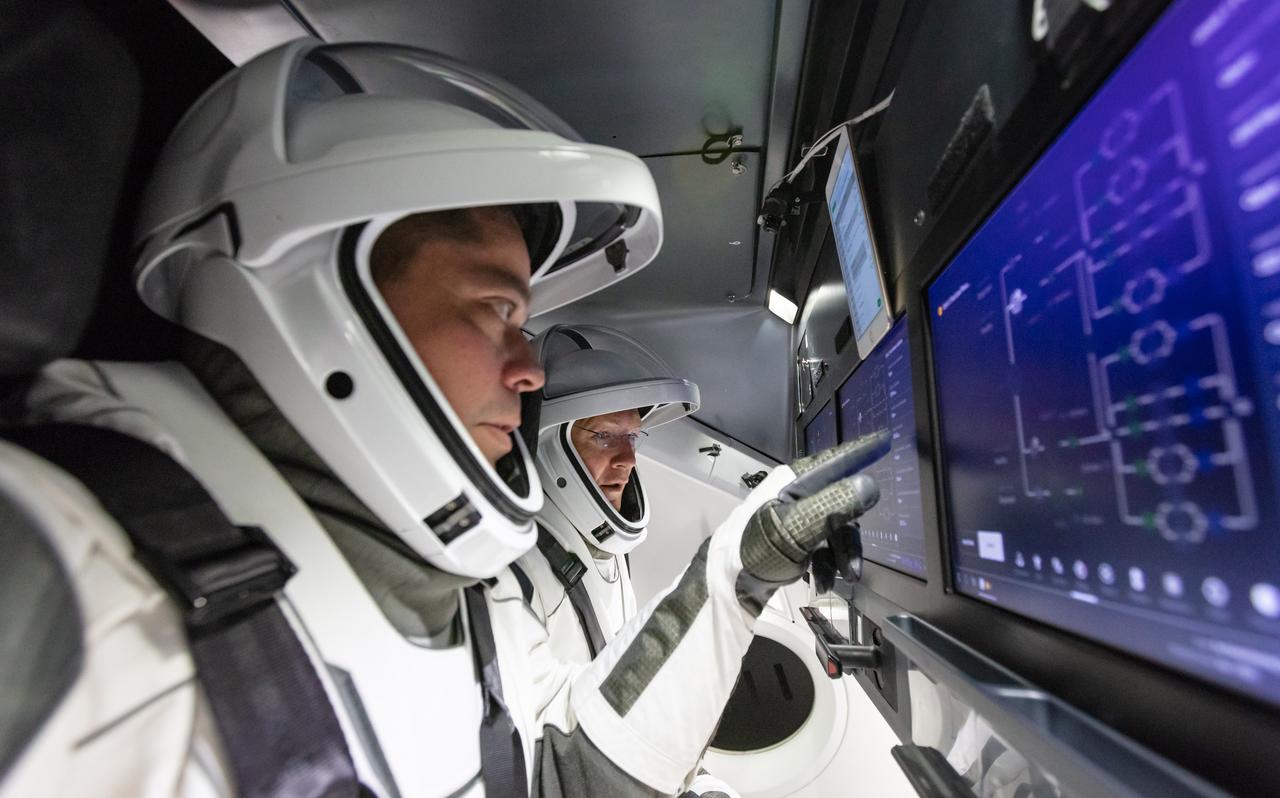
NASA astronauts Doug Hurley and Bob Behnken familiarize themselves with SpaceX’s Crew Dragon, the spacecraft that will transport them to the International Space Station as part of NASA’s Commercial Crew Program. Their upcoming flight test is known as Demo-2, short for Demonstration Mission 2. The Crew Dragon will launch on SpaceX’s Falcon 9 rocket from Launch Complex 39A at NASA’s Kennedy Space Center in Florida. In March 2019, SpaceX completed an uncrewed flight test of Crew Dragon known as Demo-1, which was designed to validate end-to-end systems and capabilities, bringing NASA closer to certification of SpaceX systems to fly a crew.
The ground test motor for Orion's Launch Abort System (LAS) is secured on a work stand inside the Rotation, Processing and Surge Facility on July 31, 2018, at NASA's Kennedy Space Center in Florida. It will be inspected and prepared for transport to Space Launch Complex 46 (SLC-46) at Cape Canaveral Air Force Station for mechanical fit testing. This inert motor will not be used for flight, but will be used to certify flight hardware assembly in preparation for a full-stress test of the LAS, called Ascent Abort-2 (AA-2) flight test, scheduled for April 2019. During the test, the booster will launch from SLC 46, carrying a fully functional LAS and a 22,000-pound Orion test vehicle to an altitude of 31,000 feet and traveling at more than 1,000 miles an hour. The test will verify the LAS can steer the crew module and astronauts aboard to safety in the event of an issue with the Space Launch System (SLS) rocket when the spacecraft is under the highest aerodynamic loads it will experience during a rapid climb into space. NASA's Orion and Exploration Ground Systems programs and their contractors from Jacob's and Northrup Grumman in conjunction with the Air Force Space and Missile Center's Launch Operations branch are performing the pathfinding exercises and flight operations for AA-2.
Acting NASA Administrator Robert Lightfoot addresses a meeting of the National Space Council in the high bay of the Space Station Processing Facility at NASA's Kennedy Space Center in Florida, on Feb. 21, 2018. Chaired by Vice President Mike Pence, the council's role is to advise the president regarding national space policy and strategy, and review the nation's long-range goals for space activities.
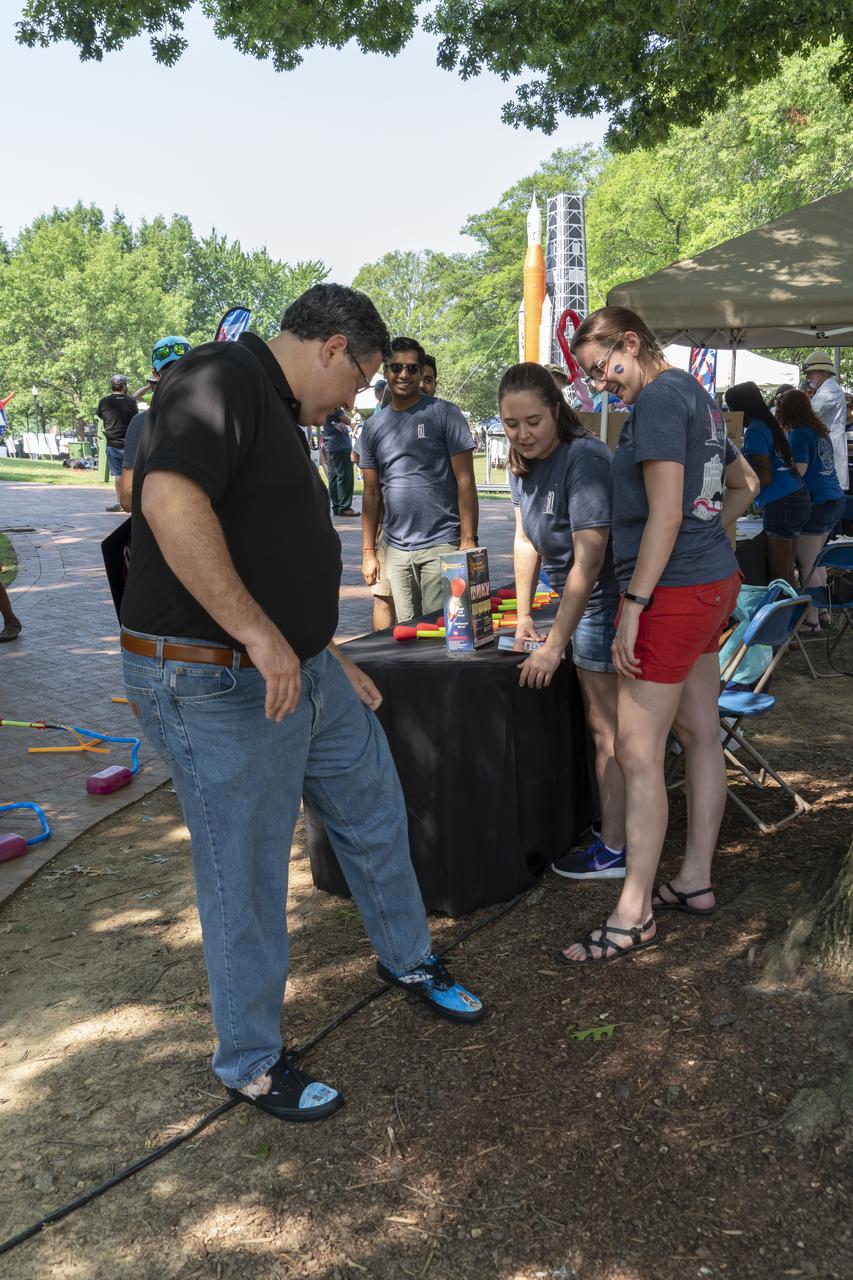
NASA's Marshall Space Flight Center showcased it's various projects for the public in Huntsville, Alabama's Big Spring Park. Exhibits were displayed by all of the various directorates of the Center with employee volunteers explaining all aspects of their projects. Adding to the festivities was the attendance of retired NASA astronaut Robert "Hoot" Gibson.
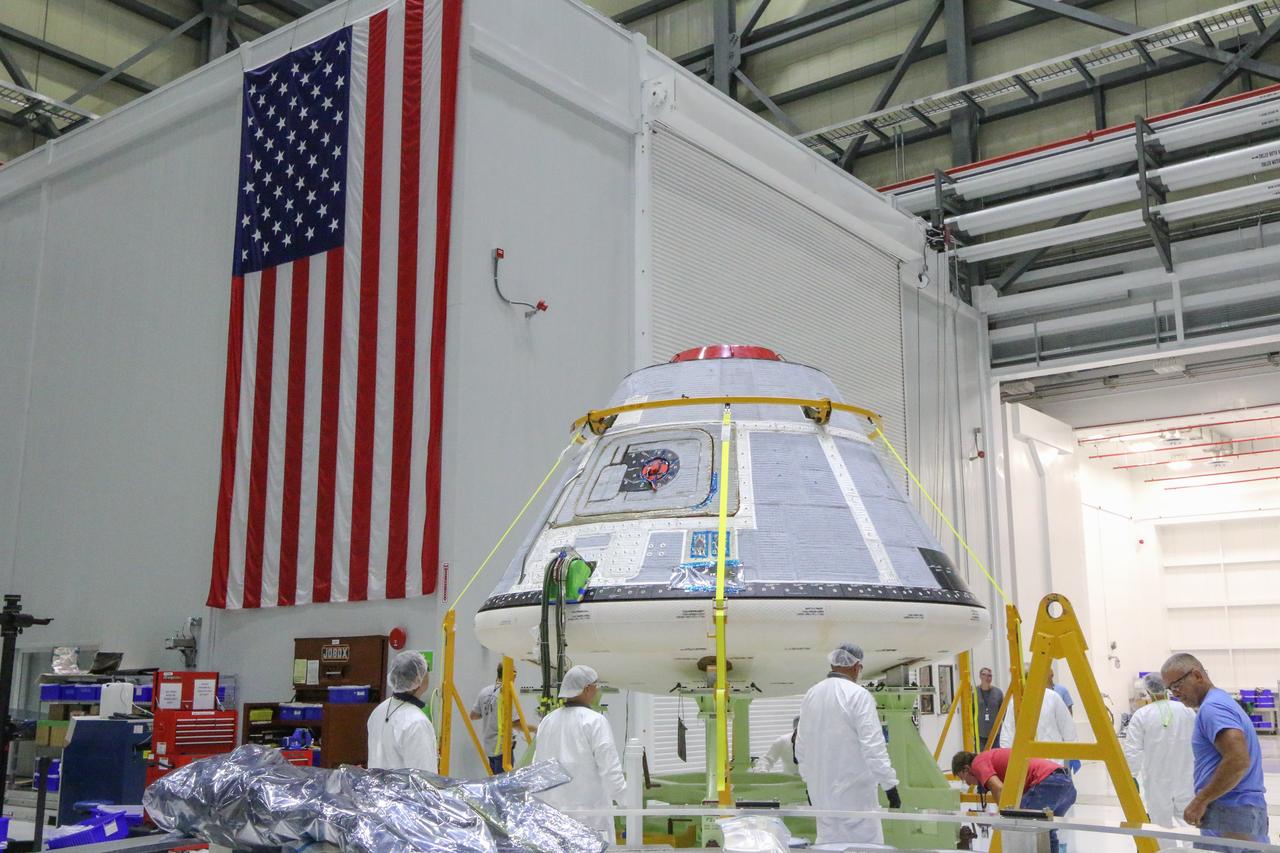
On Nov. 12, 2018, inside the Commercial Crew and Cargo Processing Facility (C3PF) at NASA's Kennedy Space Center in Florida, technicians and engineers prepare the company's CST-100 Starliner for transport to the company's testing facilities in El Segundo, California. The spacecraft is destined to fly astronauts to the International Space Station in Boeing's Crew Flight Test (CFT) as part of NASA's Commercial Crew Program (CCP). The Starliner will be undergoing a series of environmental tests designed to simulate what the spacecraft will experience during different stages of flight. The agency's CCP will return human spaceflight launches to U.S. soil, providing safe, reliable and cost-effective access to low-Earth orbit on systems that meet our safety and mission requirements.
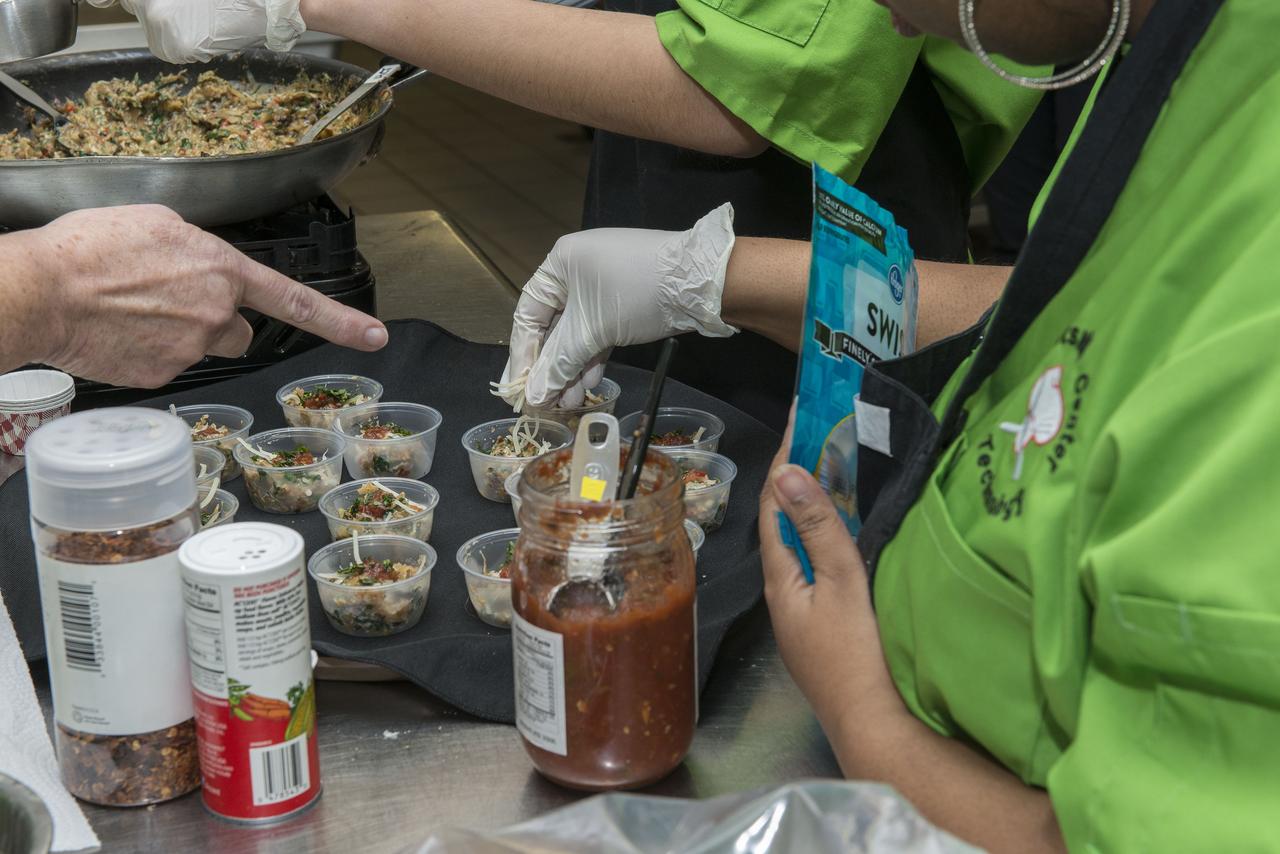
High Schools United with NASA to Create Hardware (HUNCH) students from 6 schools meet at the U.S. Space and Rocket center in order to participate in the annual culinary challenge where students create meals suitable for astronaut use in space. Students in 2018 created different dishes for breakfast dining. Other NASA centers also participate in this program with the top 10 voted recipes being judged at Johnson Space Center.
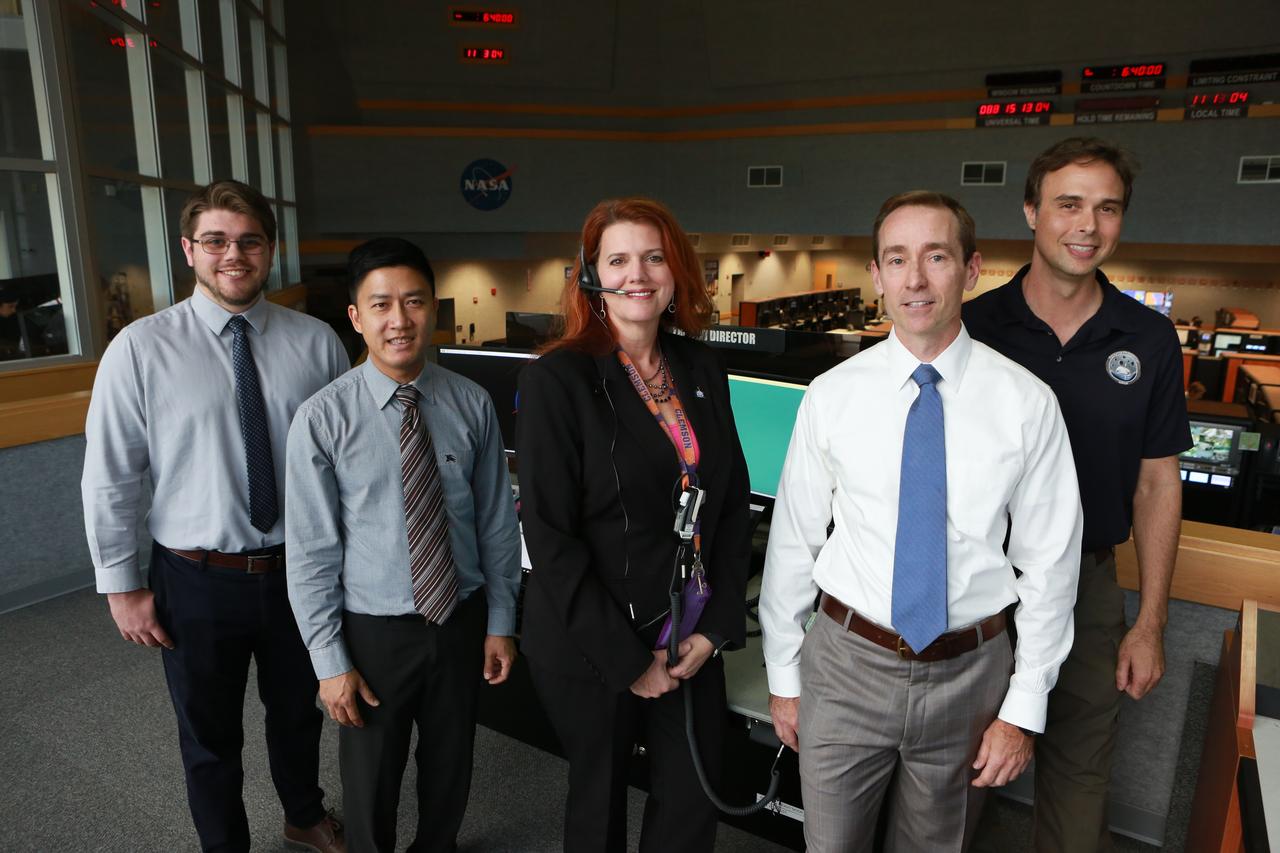
NASA Launch Director Charlie Blackwell-Thompson, center, stands next to her console in Firing Room 1 at the Kennedy Space Center's Launch Control Center. With her, from the left, are NASA intern Justin Connolly, NASA Engineering Project Manager Dan Tran, Blackwell-Thompson, Shawn Reverter, Project Manager for Red Canyon Software, Inc., and NASA Structures and Mechanisms Design Branch Chief Adam Dokos, during a countdown simulation for Exploration Mission 1. It was the agency's first simulation of a portion of the countdown for the first launch of a Space Launch System rocket and Orion spacecraft that will eventually take astronauts beyond low-Earth orbit to destinations such as the Moon and Mars.
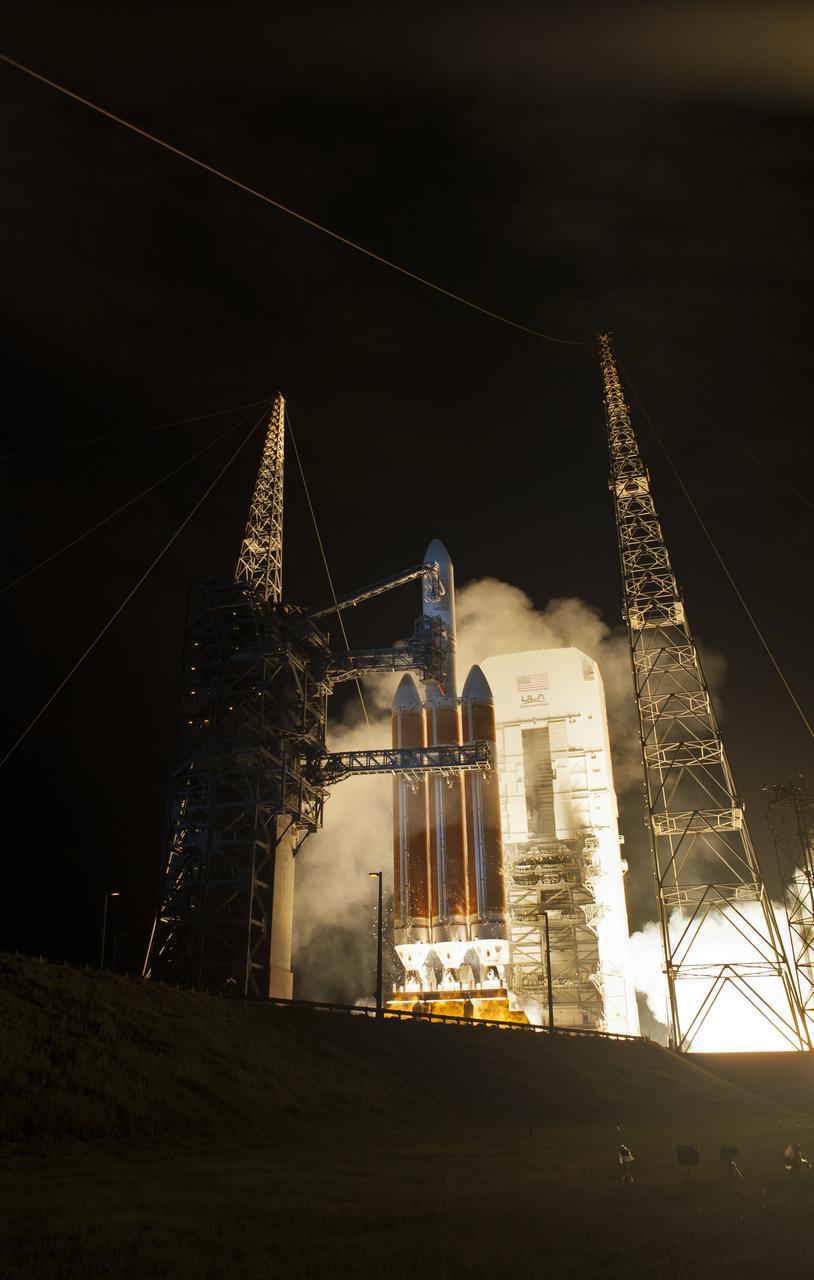
At Cape Canaveral Air Force Station's Space Launch Complex 37, the United Launch Alliance Delta IV Heavy rocket with NASA's Parker Solar Probe, lifts off at 3:31 a.m. EDT on Sunday, Aug. 12, 2018. The spacecraft was built by Applied Physics Laboratory of Johns Hopkins University in Laurel, Maryland. The mission will perform the closest-ever observations of a star when it travels through the Sun's atmosphere, called the corona. The probe will rely on measurements and imaging to revolutionize our understanding of the corona and the Sun-Earth connection.

This image captures the swirling cloud formations around the south pole of Jupiter, looking up toward the equatorial region. NASA's Juno spacecraft took the color-enhanced image during its eleventh close flyby of the gas giant planet on Feb. 7 at 7:11 a.m. PST (10:11 a.m. EST). At the time, the spacecraft was 74,896 miles (120,533 kilometers) from the tops of Jupiter's clouds at 84.9 degrees south latitude. Citizen scientist Gerald Gerald Eichstädt processed this image using data from the JunoCam imager. This image was created by reprocessing raw JunoCam data using trajectory and pointing data from the spacecraft. This image is one in a series of images taken in an experiment to capture the best results for illuminated parts of Jupiter's polar region. To make features more visible in Jupiter's terminator -- the region where day meets night -- the Juno team adjusted JunoCam so that it would perform like a portrait photographer taking multiple photos at different exposures, hoping to capture one image with the intended light balance. For JunoCam to collect enough light to reveal features in Jupiter's dark twilight zone, the much brighter illuminated day-side of Jupiter becomes overexposed with the higher exposure. https://photojournal.jpl.nasa.gov/catalog/PIA21980. - Enhanced image by Gerald Eichstädt based on images provided courtesy of NASA/JPL-Caltech/SwRI/MSSS
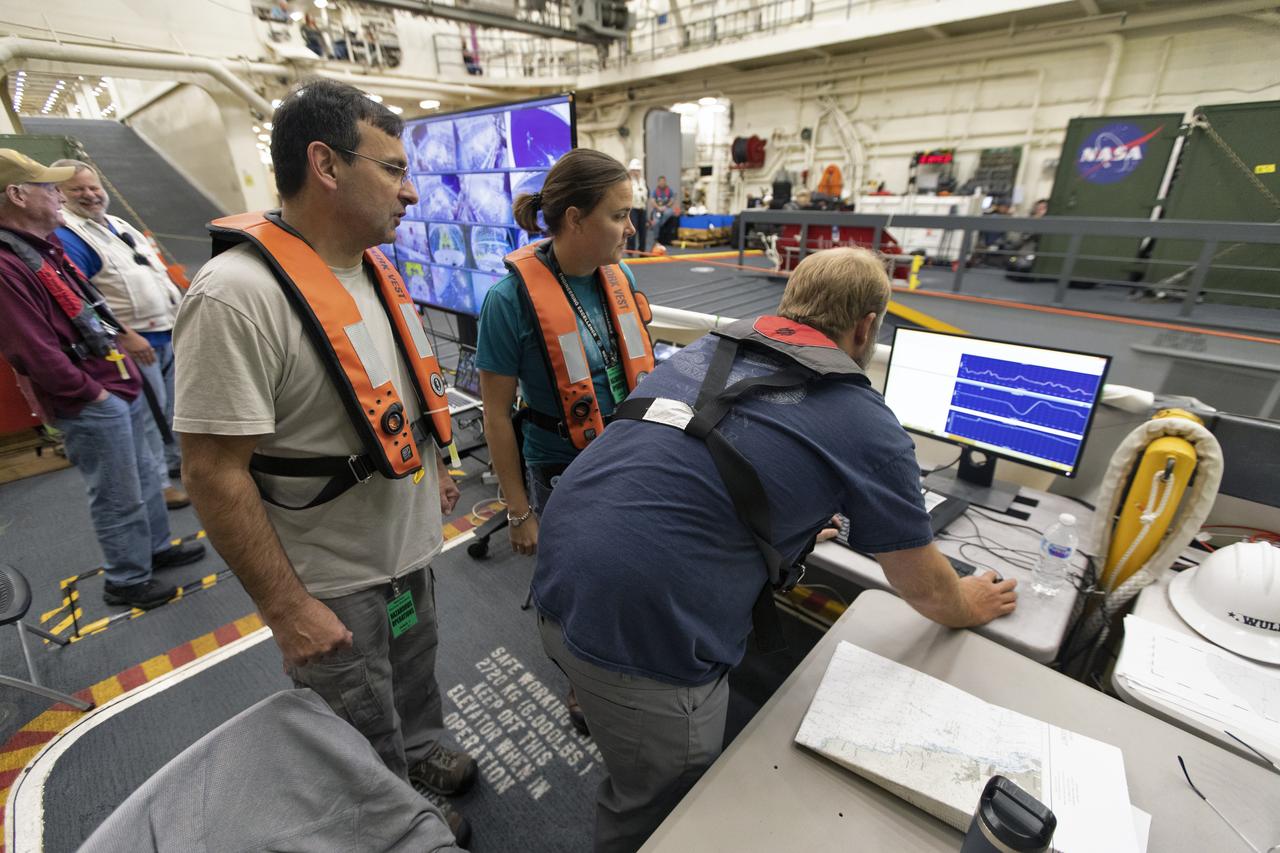
Wave trackers with Applied Physical Sciences monitor ocean wave conditions during Underway Recovery Test-7 (URT-7) aboard the USS John P. Murtha on Nov. 4, 2018. NASA's Recovery Team, along with the U.S. Navy, practice recovering a test version of the Orion capsule as part of URT-7 in the Pacific Ocean. URT-7 is one in a series of tests to verify and validate procedures and hardware that will be used to recover the Orion spacecraft after it splashes down in the Pacific Ocean following deep space exploration missions. Orion will have emergency abort capability, sustain the crew during space travel and provide safe re-entry from deep space return velocities.
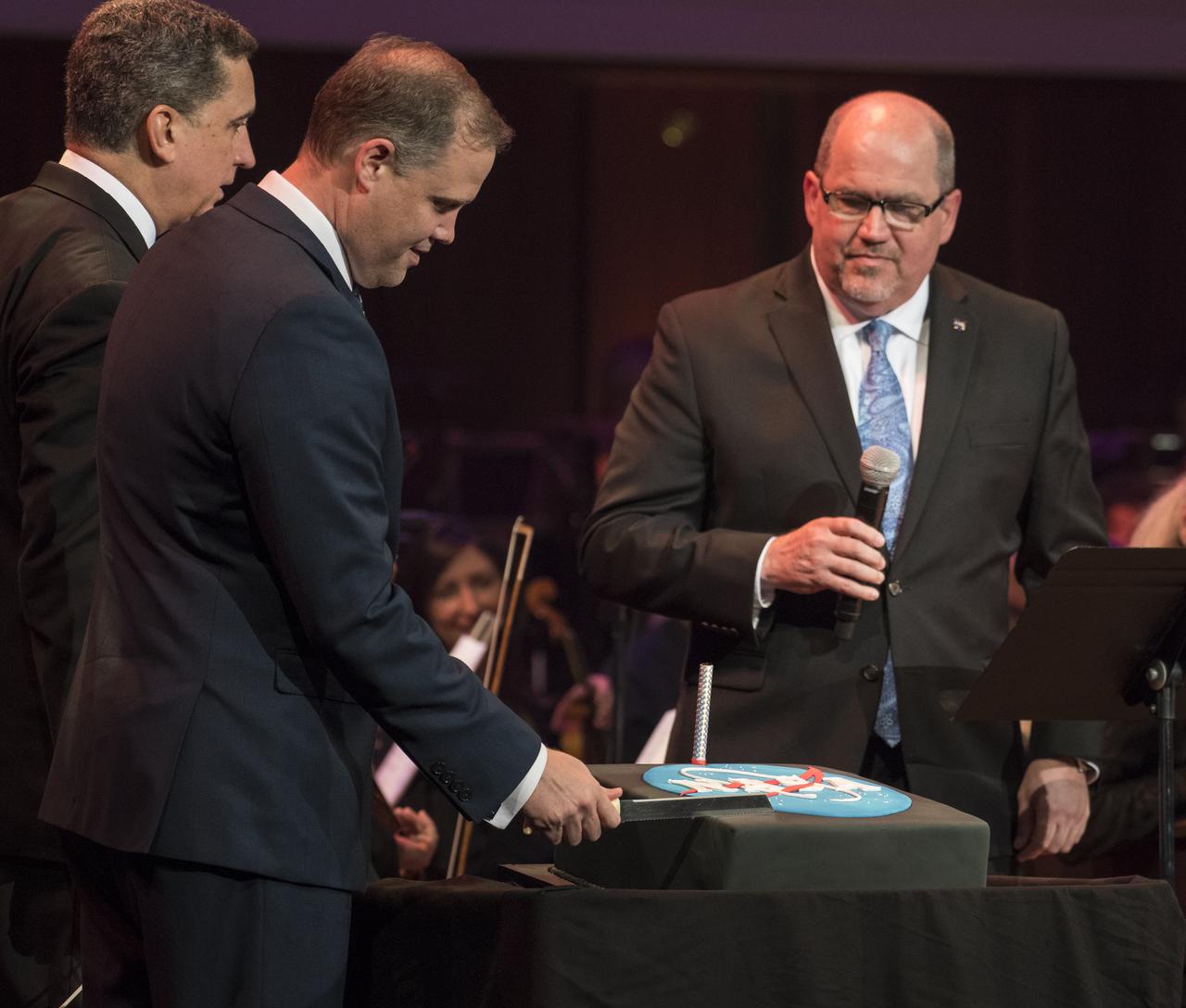
A NASA logo cake is cut by Administrator Bridenstine at the "National Symphony Orchestra Pops: Space, the Next Frontier" event celebrating NASA's 60th Anniversary, Friday, June 1, 2018 at the John F. Kennedy Center for the Performing Arts in Washington. The event featured music inspired by space including artists will.i.am, Grace Potter, Coheed & Cambria, John Cho, and guest Nick Sagan, son of Carl Sagan. Photo Credit: (NASA/Aubrey Gemignani)
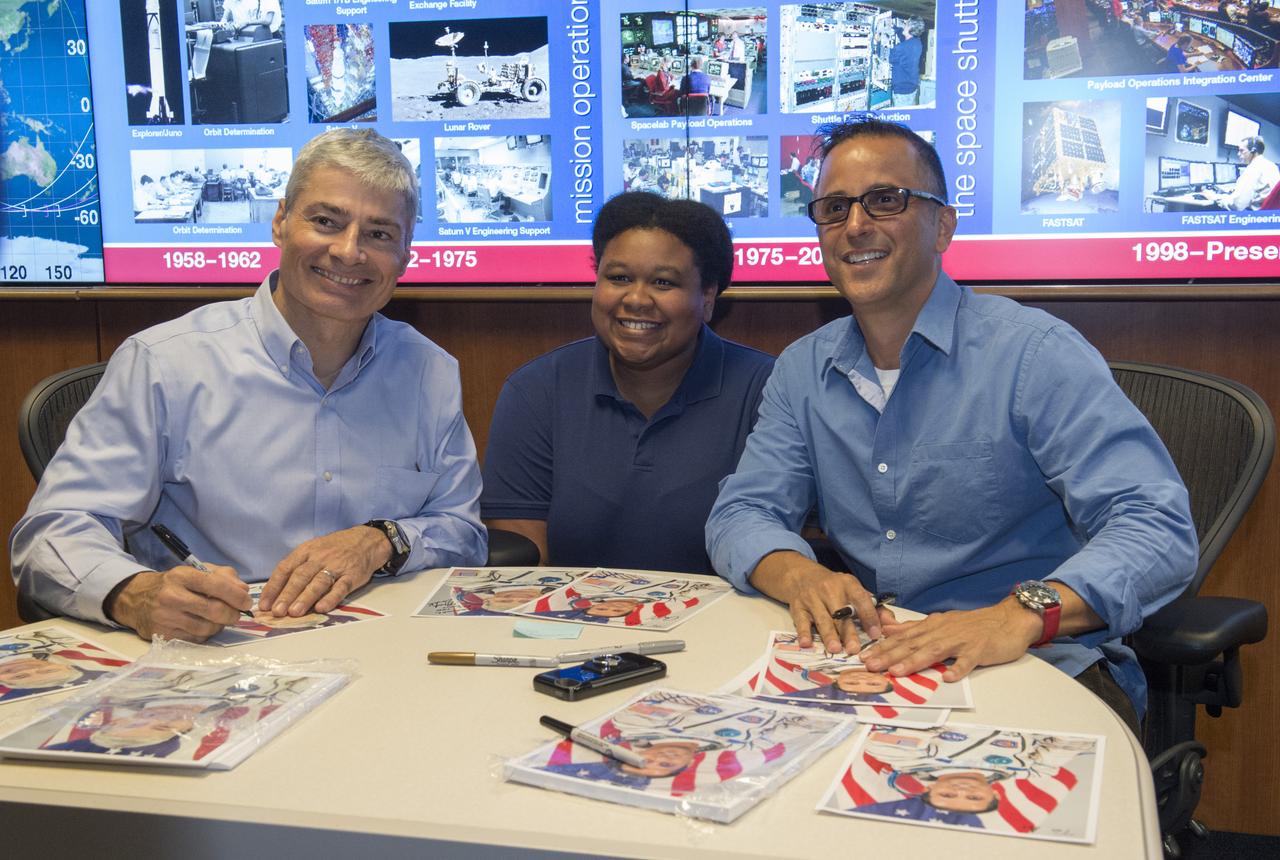
NASA astronauts Joe Acaba and Mark Vande Hei Acaba visited Marshall April 11 for their honorary Expedition 54 plaque hanging ceremony and to provide valuable feedback of their on-orbit science investigations with the Payload Operations and Integration Center team. Astronauts Mark Vande Hei (L) and Astronaut Joe Acaba sign autographs for Kassandra Stephens
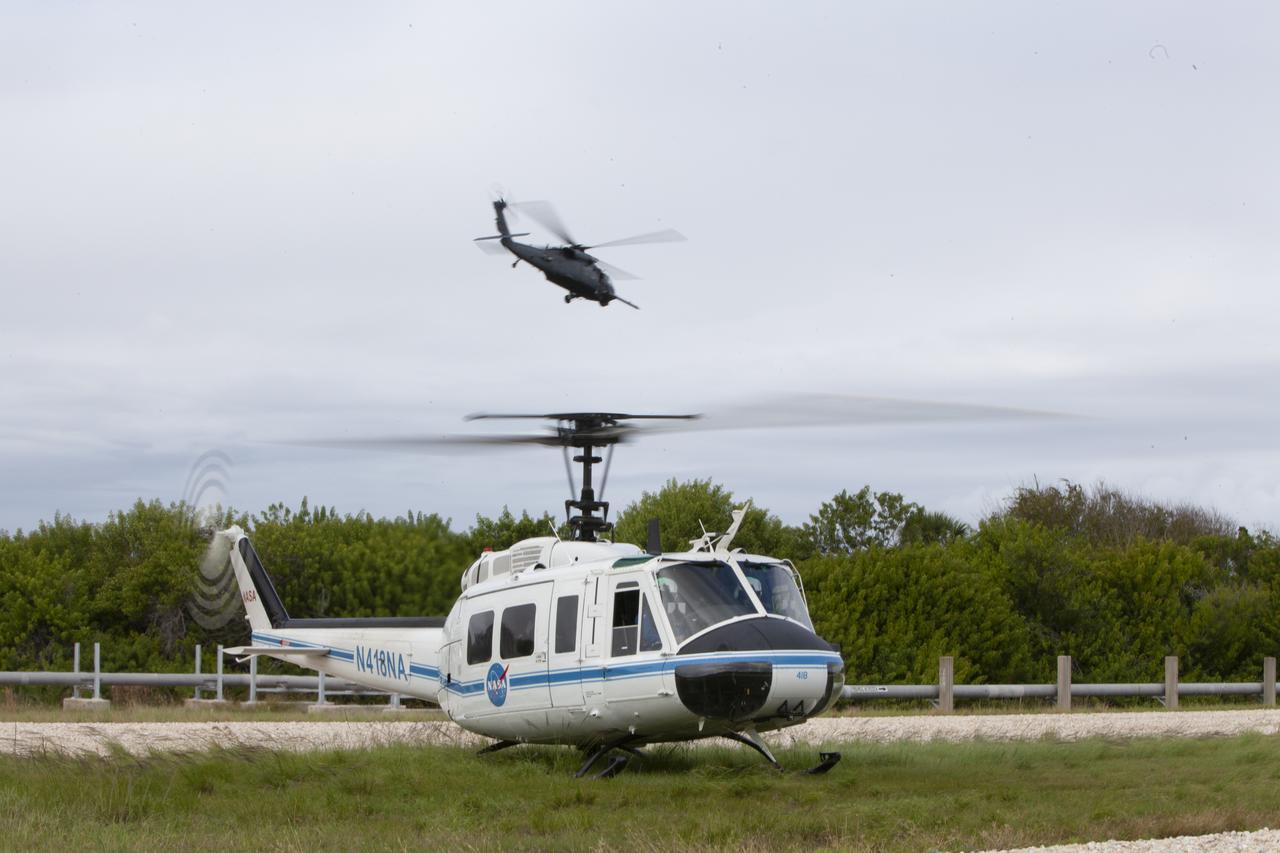
Teams from NASA, the Department of Defense Human Space Flight Support and SpaceX conduct a joint medical triage and medical evacuation (medevac) training exercise at NASA’s Kennedy Space Center in Florida. It was the second of two emergency medical services simulations performed before commercial crew flight tests, which are scheduled for 2019. As NASA’s Commercial Crew Program prepares to begin launching astronauts once again from American soil, teams are sharpening their launch day operations procedures, including responses during the unlikely event of an emergency.

The Soyuz rocket is rolled out by train to the launch pad, Monday, March 19, 2018 at the Baikonur Cosmodrome in Kazakhstan. Expedition 55 crewmembers Ricky Arnold and Drew Feustel of NASA and Oleg Artemyev of Roscosmos are scheduled to launch at 1:44 p.m. Eastern time (11:44 p.m. Baikonur time) on March 21 and will spend the next five months living and working aboard the International Space Station. Photo Credit: (NASA/Joel Kowsky)
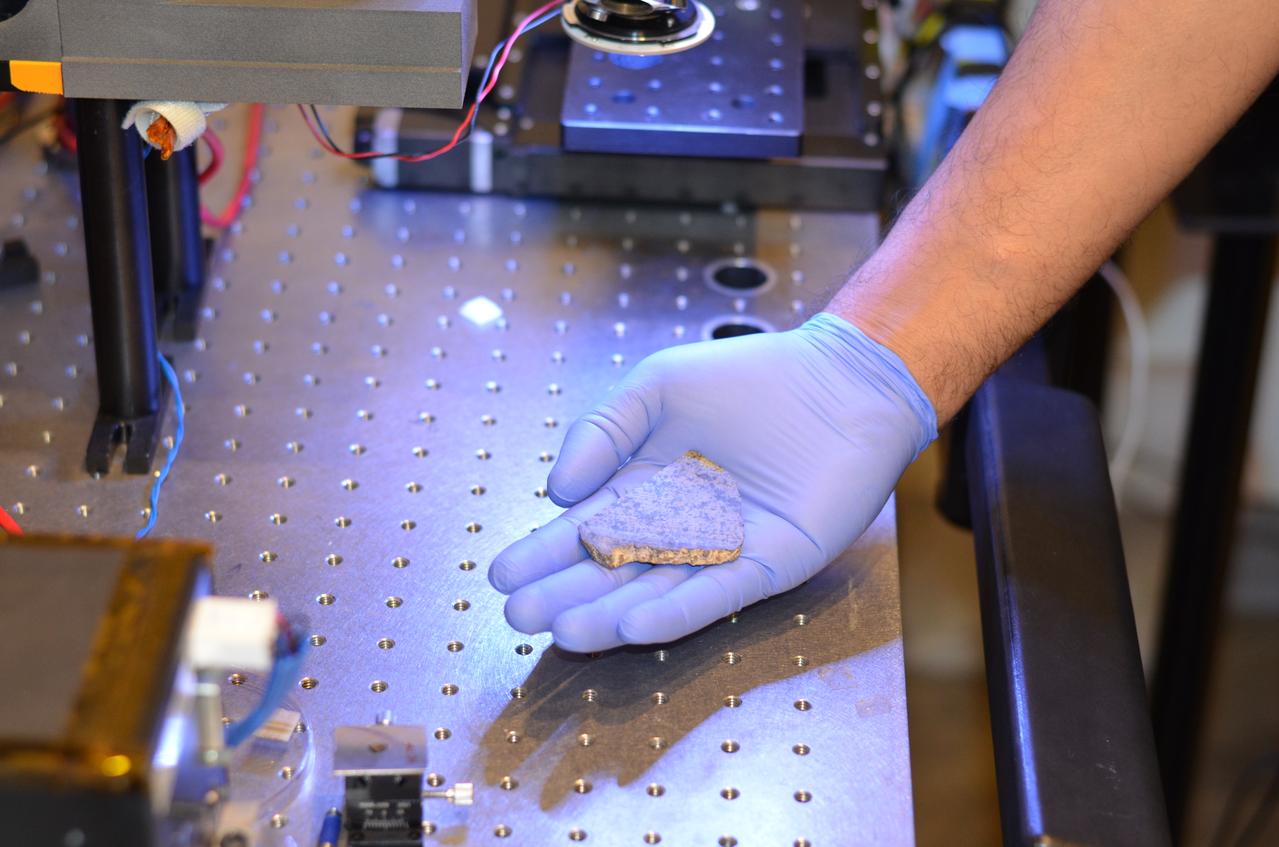
Rohit Bhartia of NASA's Mars 2020 mission holds a slice of a meteorite scientists have determined came from Mars. This slice will likely be used here on Earth for testing a laser instrument for NASA's Mars 2020 rover; a separate slice will go to Mars on the rover. Martian meteorites are believed to be the result of impacts to the Red Planet's surface, resulting in rock being blasted into the atmosphere. After traveling through space for eons, some of these rocks entered Earth's atmosphere. Scientists determine whether they are true Martian meteorites based on their rock and noble gas chemistry and mineralogy. The gases trapped in these meteorites bear the unique fingerprint of the Martian atmosphere, as recorded by NASA's Viking mission in 1976. The rock types also show clear signs of igneous processing not possible on smaller bodies, such as asteroids. https://photojournal.jpl.nasa.gov/catalog/PIA22245
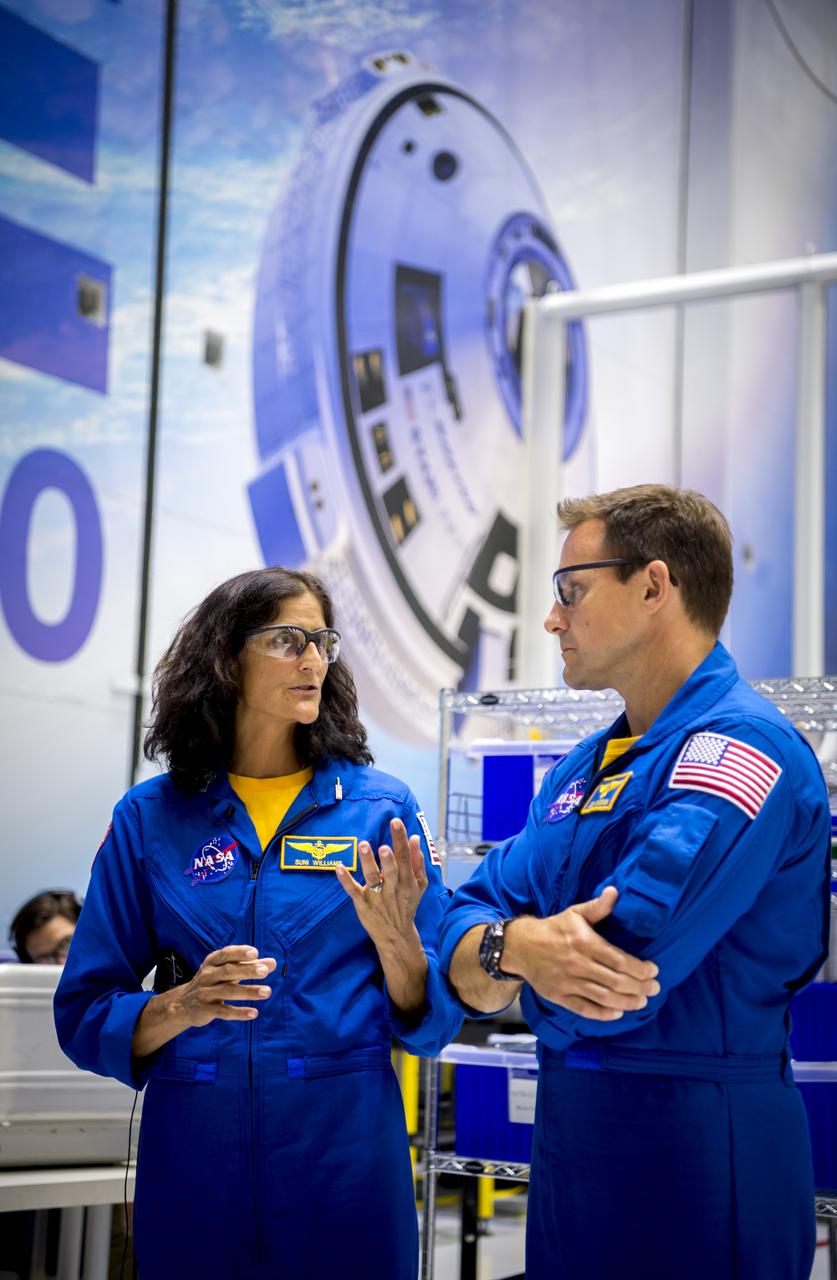
Commercial crew astronauts Suni Williams, left, and Josh Cassada visit Kennedy Space Center (KSC) in Florida shortly after they were officially assigned to fly on Boeing’s CST-100 Starliner. Fellow commercial crew astronauts Eric Boe, Chris Ferguson and Nicole Mann also attended the trip to Boeing’s Commercial Crew and Cargo Processing Facility (C3PF) at KSC and Space Launch Complex 41 at Cape Canaveral Air Force Station to view progress on the Starliner and the launch pad. Boe, Ferguson and Mann will fly on Starliner in Boeing’s upcoming Crew Flight Test to the International Space Station (ISS). Cassada and Williams are assigned to Boeing’s first operational mission to the ISS. Photo credit: Boeing
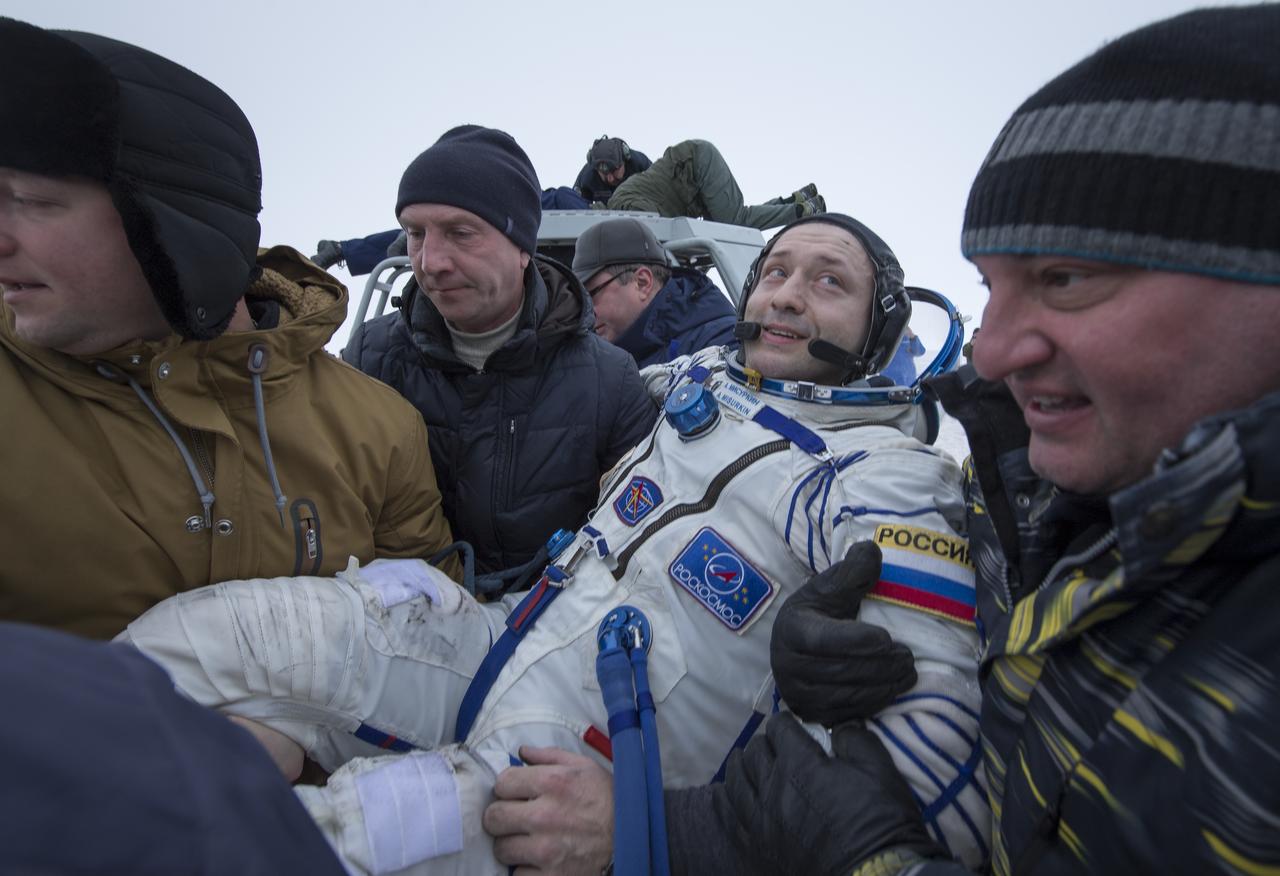
Russian cosmonaut Alexander Misurkin is helped out of the Soyuz MS-06 spacecraft just minutes after he, NASA astronauts Joe Acaba, and Mark Vande Hei, landed in a remote area near the town of Zhezkazgan, Kazakhstan on Wednesday, Feb. 28, 2018 (February 27 Eastern time.) Acaba, Vande Hei, and Misurkin are returning after 168 days in space where they served as members of the Expedition 53 and 54 crews onboard the International Space Station. Photo Credit: (NASA/Bill Ingalls)
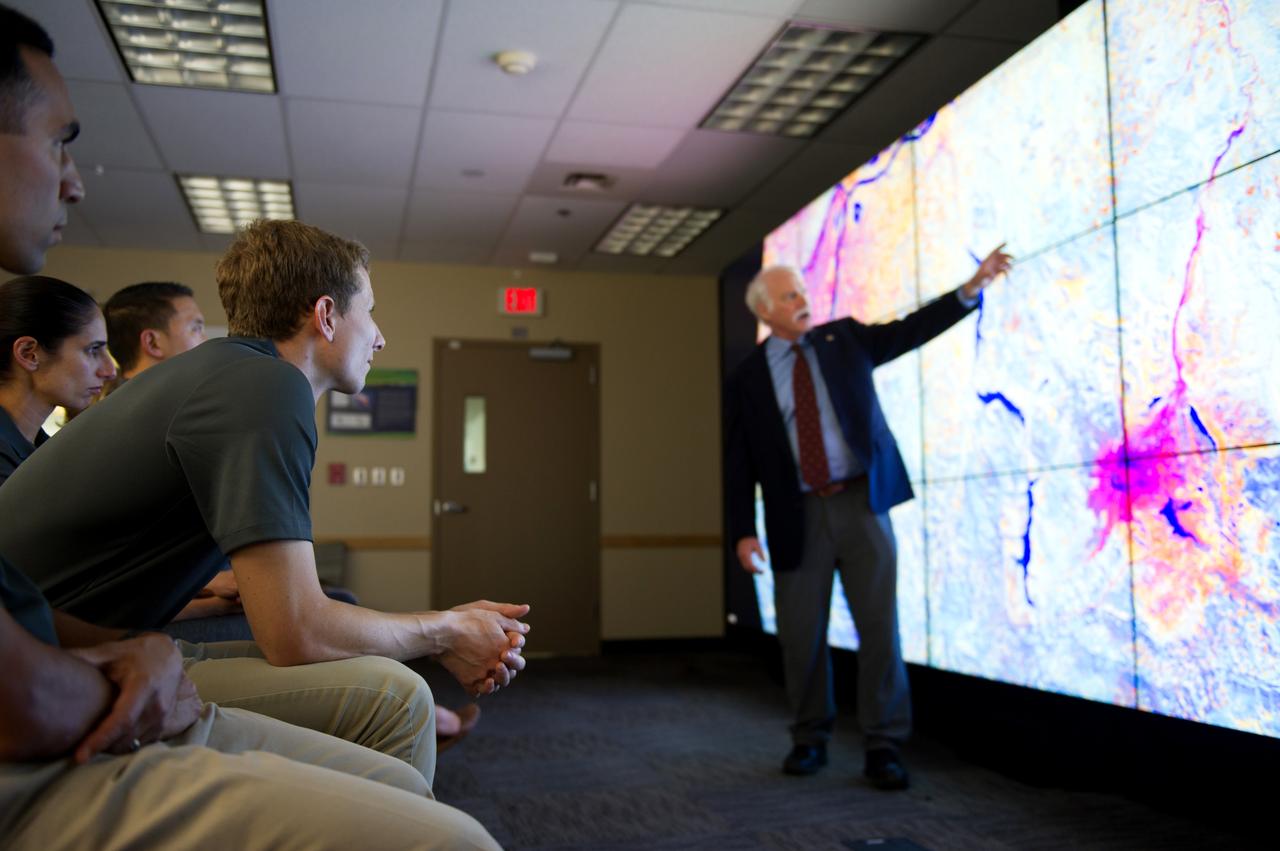
NASA Astronaut Class 22 tours Goddard Space Flight Center
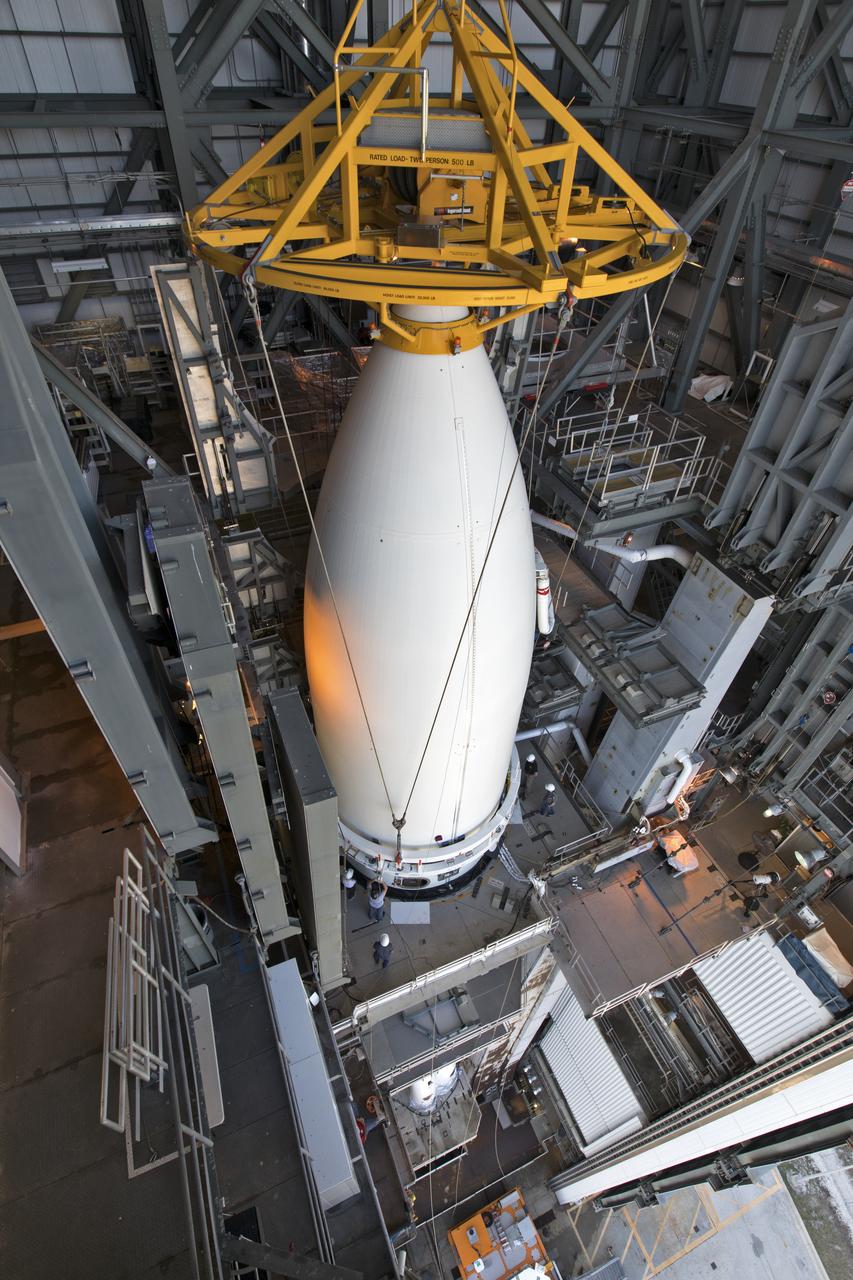
A view from above shows the payload fairing containing NOAA's Geostationary Operational Environmental Satellite-S (GOES-S) lifted and moved into the United Launch Alliance (ULA) Vertical Integration Facility at Space Launch Complex 41 at Cape Canaveral Air Force Station in Florida. The fairing will be lowered and secured on the ULA Atlas V rocket. GOES-S is the second in a series of four advanced geostationary weather satellites. The satellite is slated to launch aboard the ULA Atlas V on March 1.
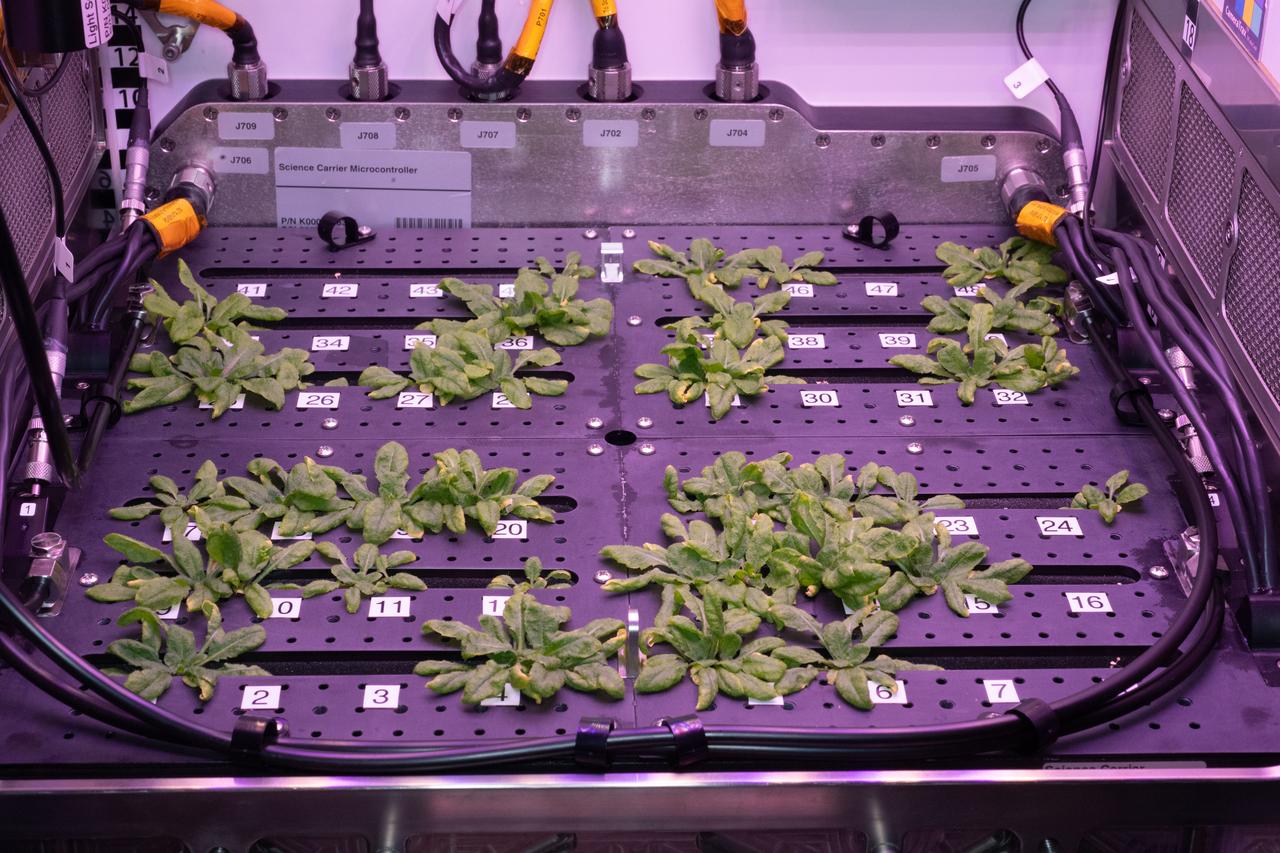
View during harvest of Arabidopsis plants. Photo was taken by Expedition 56 crew.
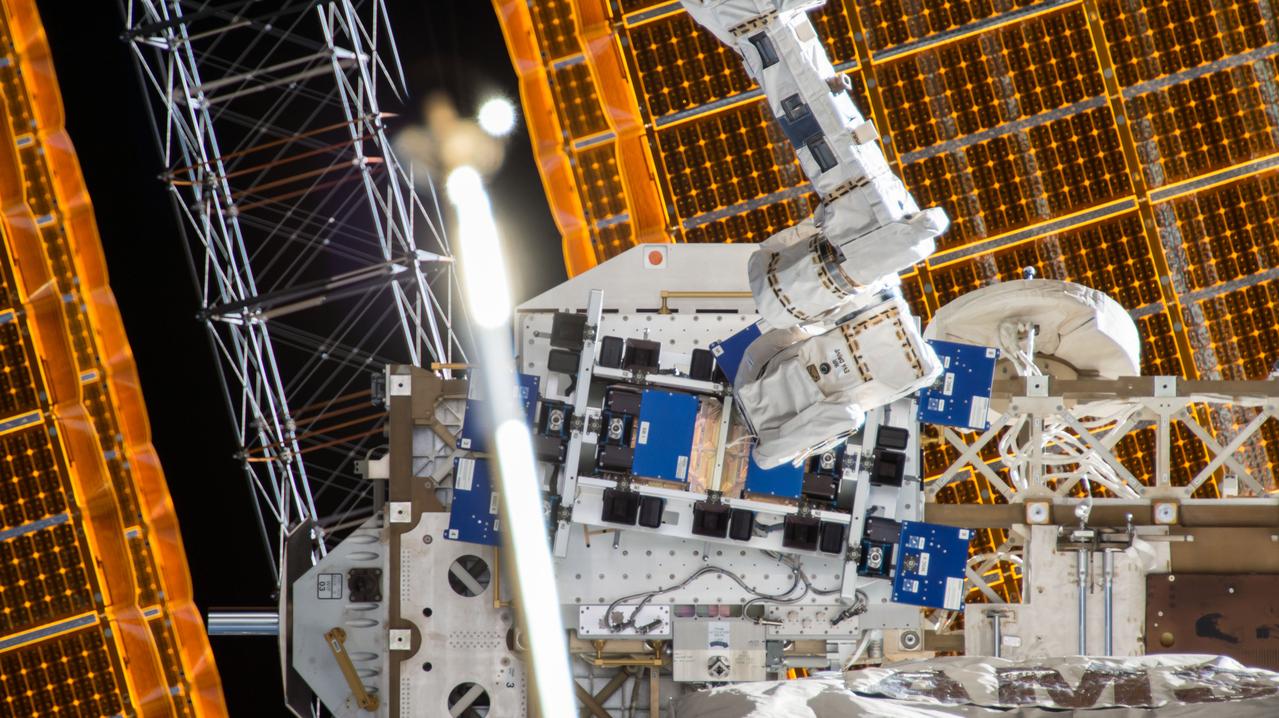
iss055e026913 (4/19/2018) --- View of the Materials ISS Experiment Flight Facility (MISSE-FF) taken by the External High Definition Camera (EHDC1). The MISSE-FF platform provides the ability to test materials, coatings, and components or other larger experiments in the harsh environment of space, which is virtually impossible to do collectively on Earth.
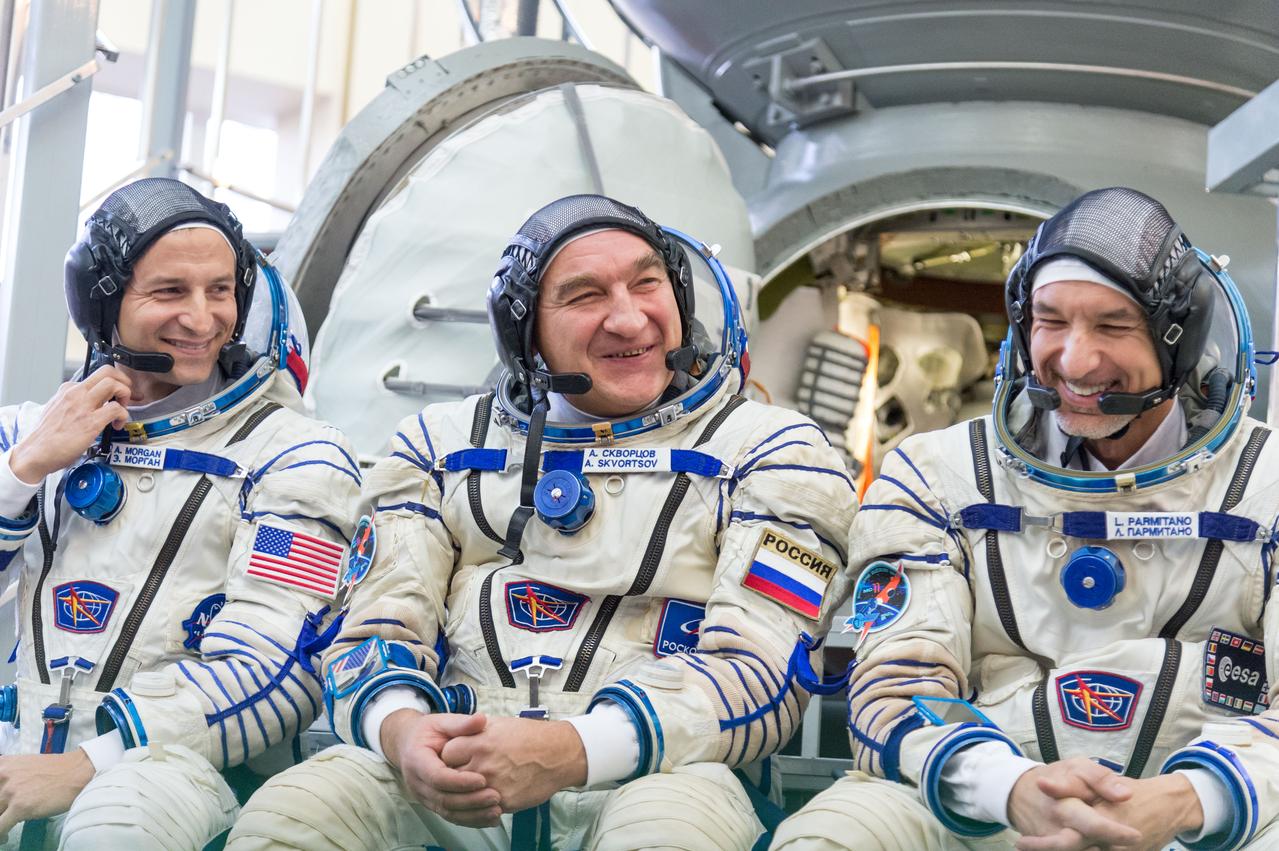
jsc2018e094959 - At the Gagarin Cosmonaut Training Center in Star City, Russia, Expedition 58 backup crewmembers Drew Morgan of NASA (left), Alexander Skvortsov of Roscosmos (center) and Luca Parmitano of the European Space Agency (right) meet with reporters Nov. 13 during qualification exam training. They are the backups to the prime crew, Oleg Kononenko of Roscosmos, Anne McClain of NASA and David Saint-Jacques of the Canadian Space Agency, who will launch Dec. 3 on the Soyuz MS-11 spacecraft from the Baikonur Cosmodrome in Kazakhstan for a six-and-a-half month mission on the International Space Station...NASA/Sarah Volkman.
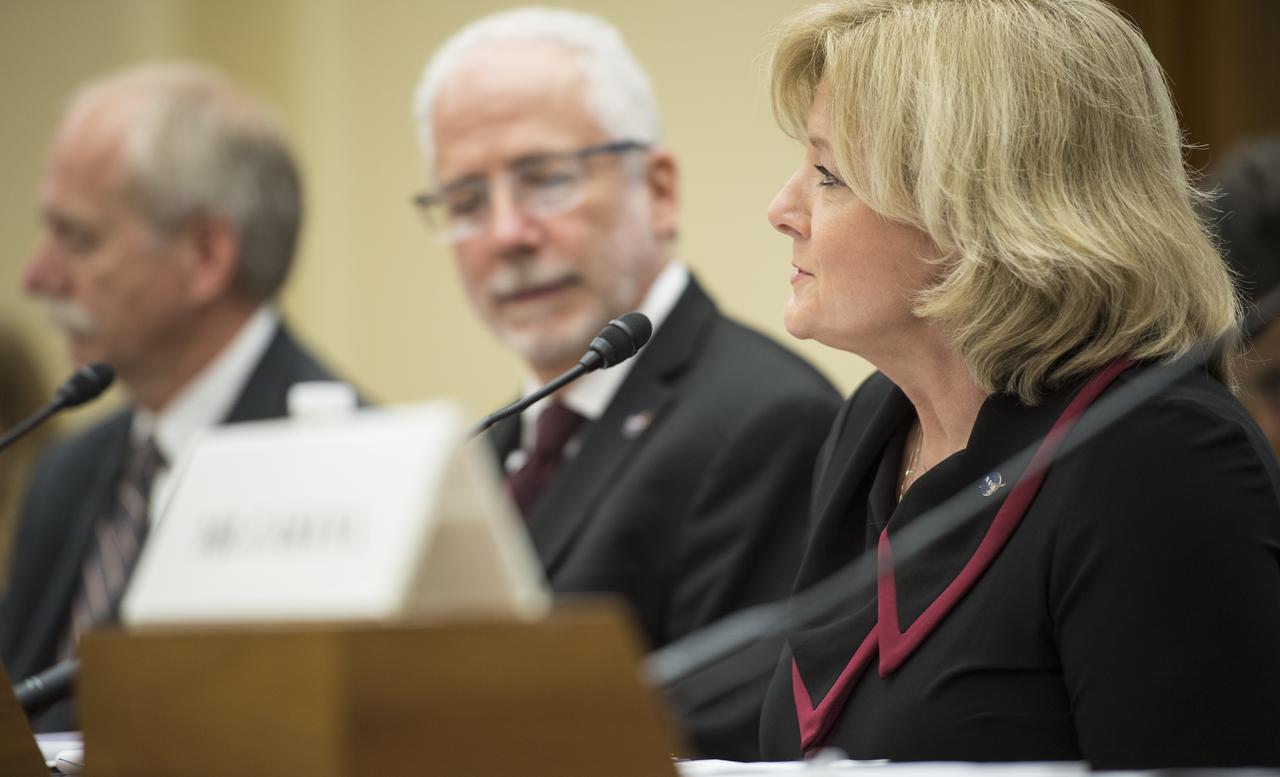
Jody Singer, Director of NASA's Marshall Space Flight Center, testifies during a House Subcommittee on Space hearing titled "60 Years of NASA Leadership in Human Space Exploration: Past, Present, and Future," Wednesday, Sept. 26, 2018 at the Rayburn House Office Building in Washington. Photo Credit: (NASA/Joel Kowsky)
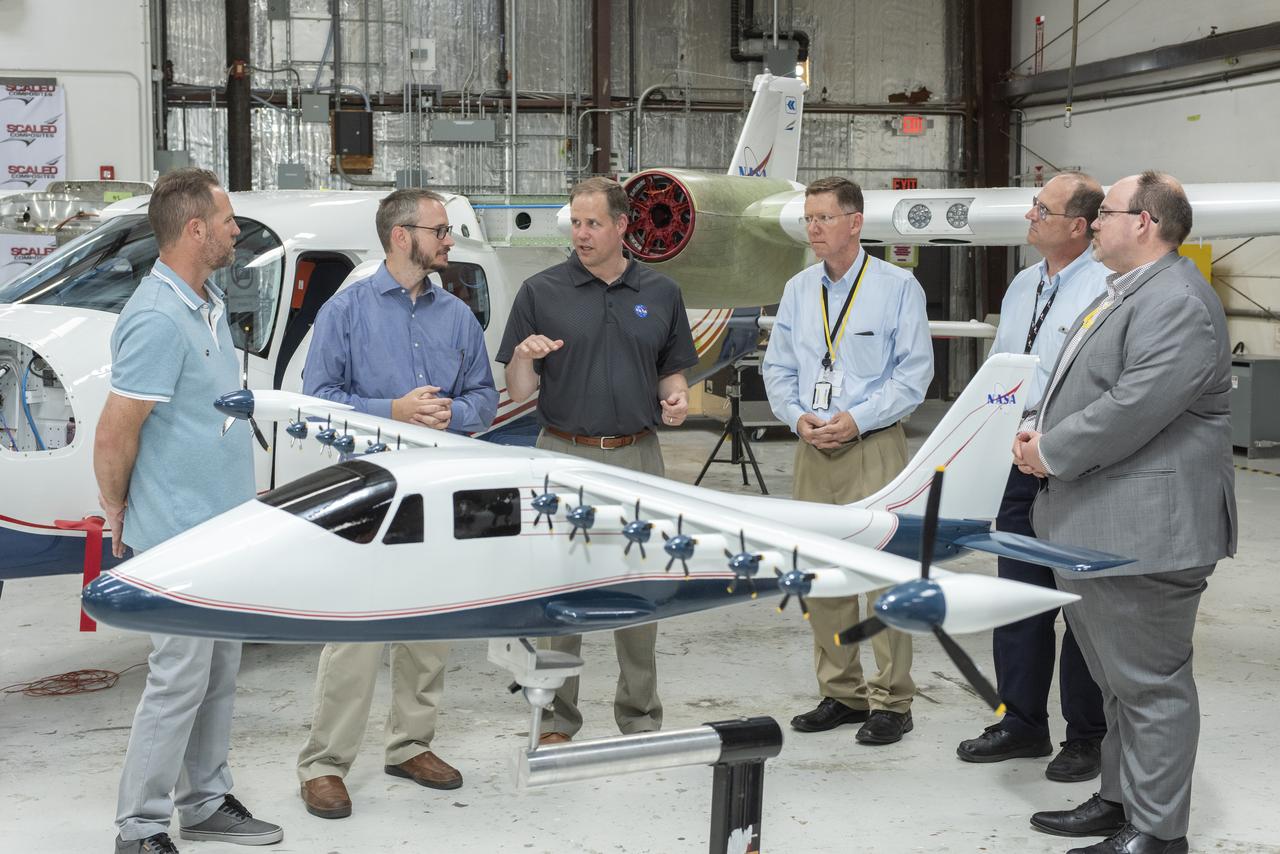
Administrator Bridenstine hears about the progress to modify the Tecnam P2006T from a combustion aircraft to an all-electric aircraft. Armstrong's X-57 team and ESAero, the prime contractor for the plane, are doing the briefing. The final configuration model of X-57 stands in front of group.
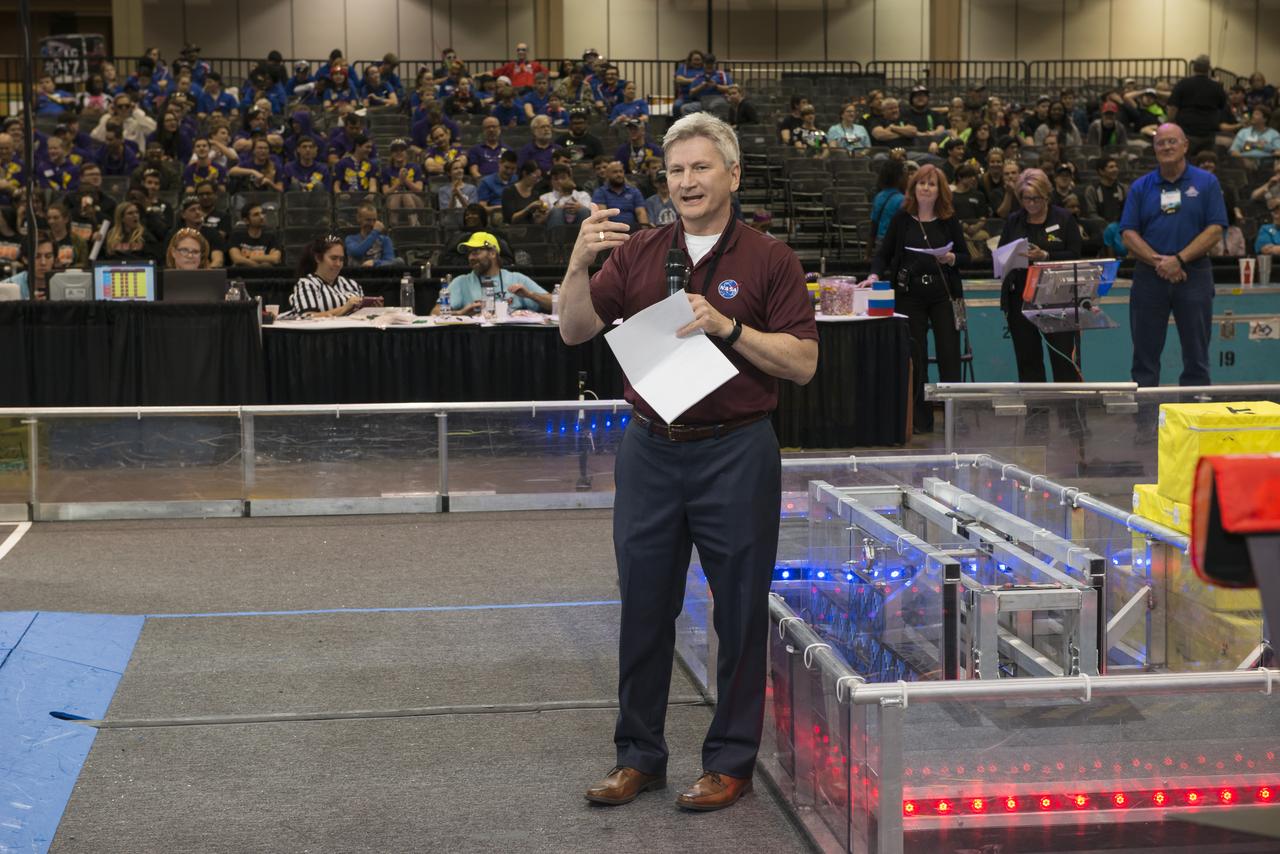
Johnny Stephenson, director of NASA Marshall Space Flight Center's Office of Strategic Analysis & Communications, addresses the crowd during the March 16 award ceremony following the first day of competition at the FIRST Robotics Rocket City Regional at the Von Braun Center in Huntsville. Ed Sparks, of the Morgan County Mech Tech team, received the award for Volunteer of the Year at the March 16 award ceremony. Mech Tech, comprised of students from five high schools in Morgan County, Alabama, also won the Industrial Design Award. The team was one of three regional finalists that will advance to the FIRST national championships April 18-21 in Houston. The other two regional finalists were Burning Magnetos of Fort Dorchester High School in North Charleston, South Carolina, and OGRE of Opelika High School in Opelika, Alabama. Mech Tech and Golden Hurricane from Columbia High School in Huntsville, were "house" teams sponsored by Marshall.
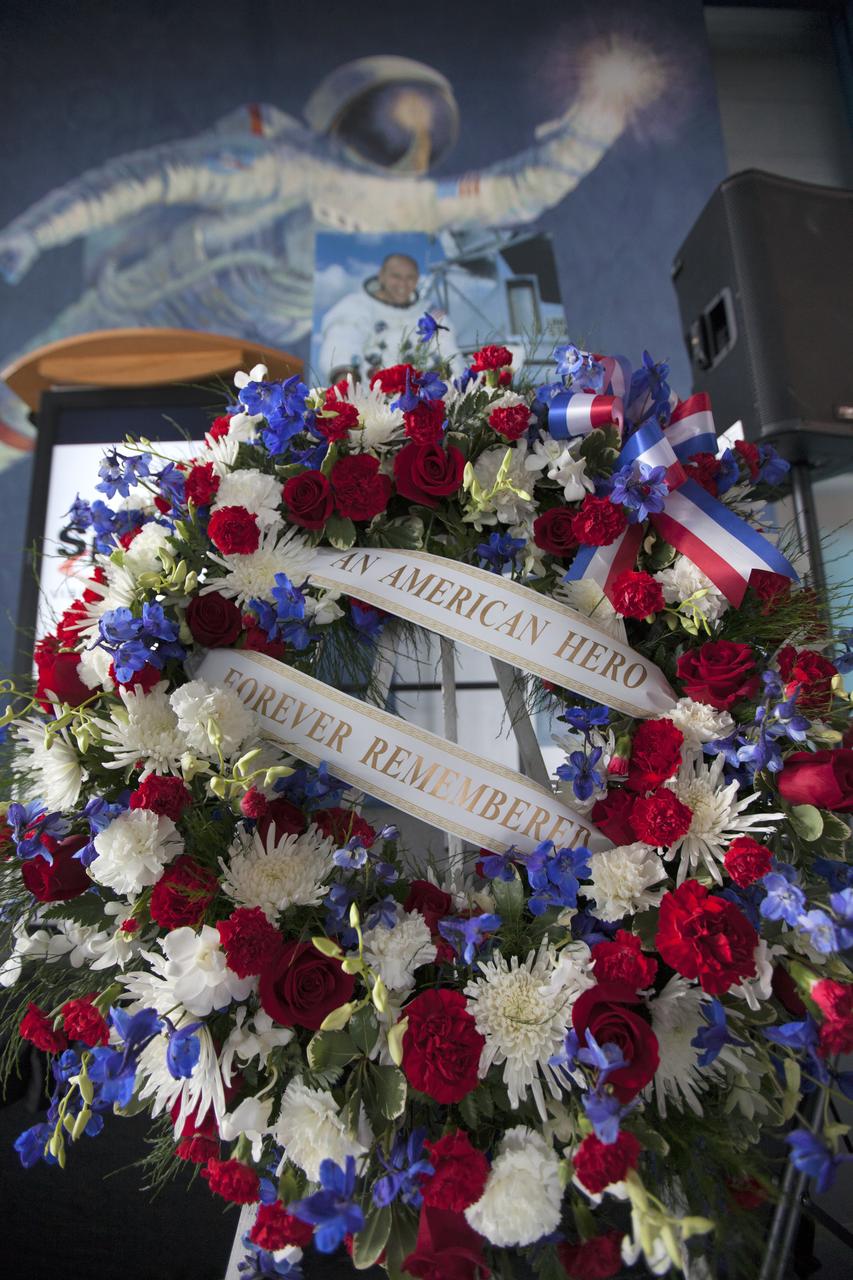
A memorial wreath placed in the Apollo-Saturn V Center of the Kennedy Space Center Visitor Complex on Wednesday, May 30, 2018, honors former NASA astronaut Alan Bean. He was the fourth person to walk on the Moon as lunar module pilot on Apollo 12 in November 1969. He went on to command the 59-day Skylab 3 mission in 1973. He died in Houston on May 26, 2018, at the age of 86.

Students from 23 states display their rockets and talk about what they did to make them fly at the NASA Student Launch Rocket Fair on Friday, April 6. Over 800 students traveled to Huntsville, Alabama, to participate in a week of activities as part of NASA Student Launch.
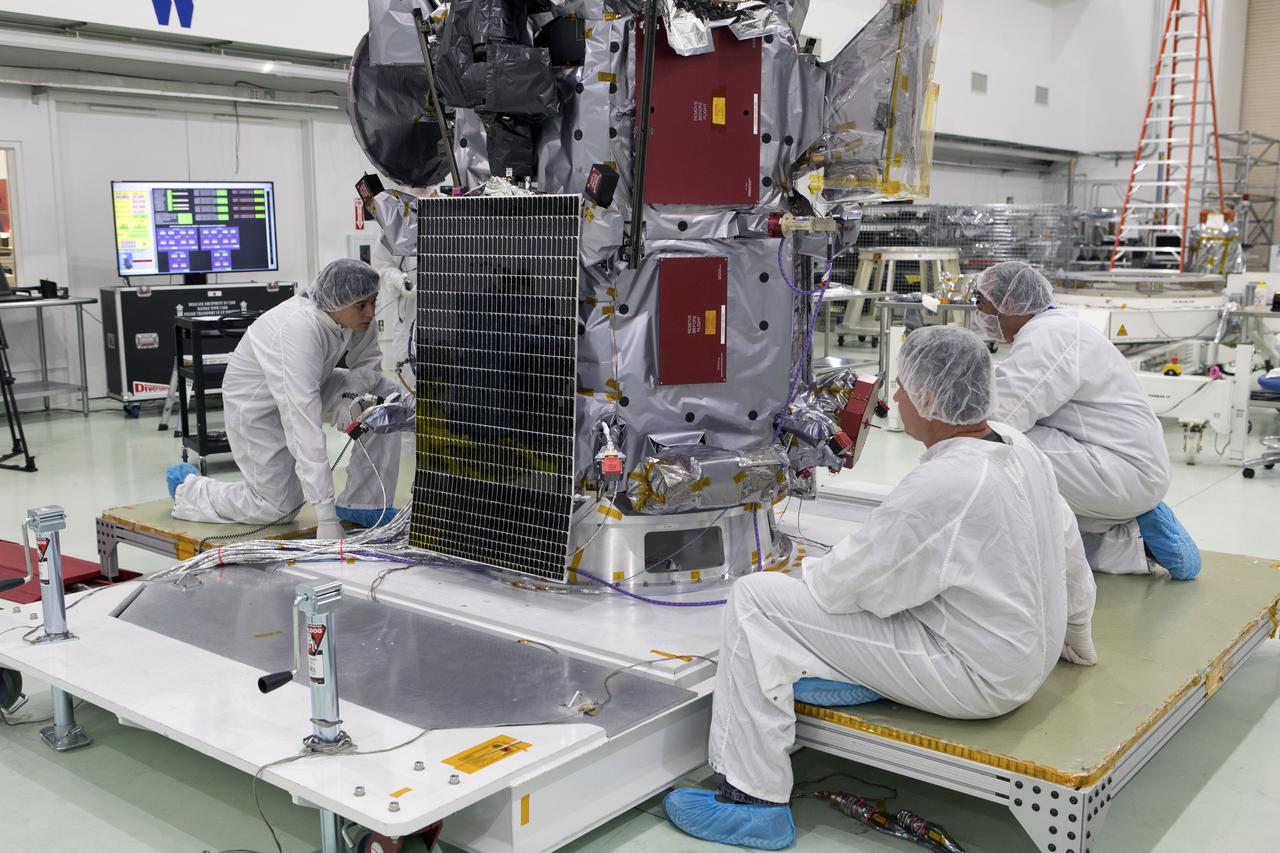
NASA's Parker Solar Probe solar arrays are deployed for testing at the Astrotech processing facility in Titusville, Florida, near NASA's Kennedy Space Center on Sunday, June 3, 2018. The Parker Solar Probe will launch on a United Launch Alliance Delta IV Heavy rocket from Space Launch Complex 37 at Cape Canaveral Air Force Station in Florida no earlier than Aug. 4, 2018. The mission will perform the closest-ever observations of a star when it travels through the Sun's atmosphere, called the corona. The probe will rely on measurements and imaging to revolutionize our understanding of the corona and the Sun-Earth connection.
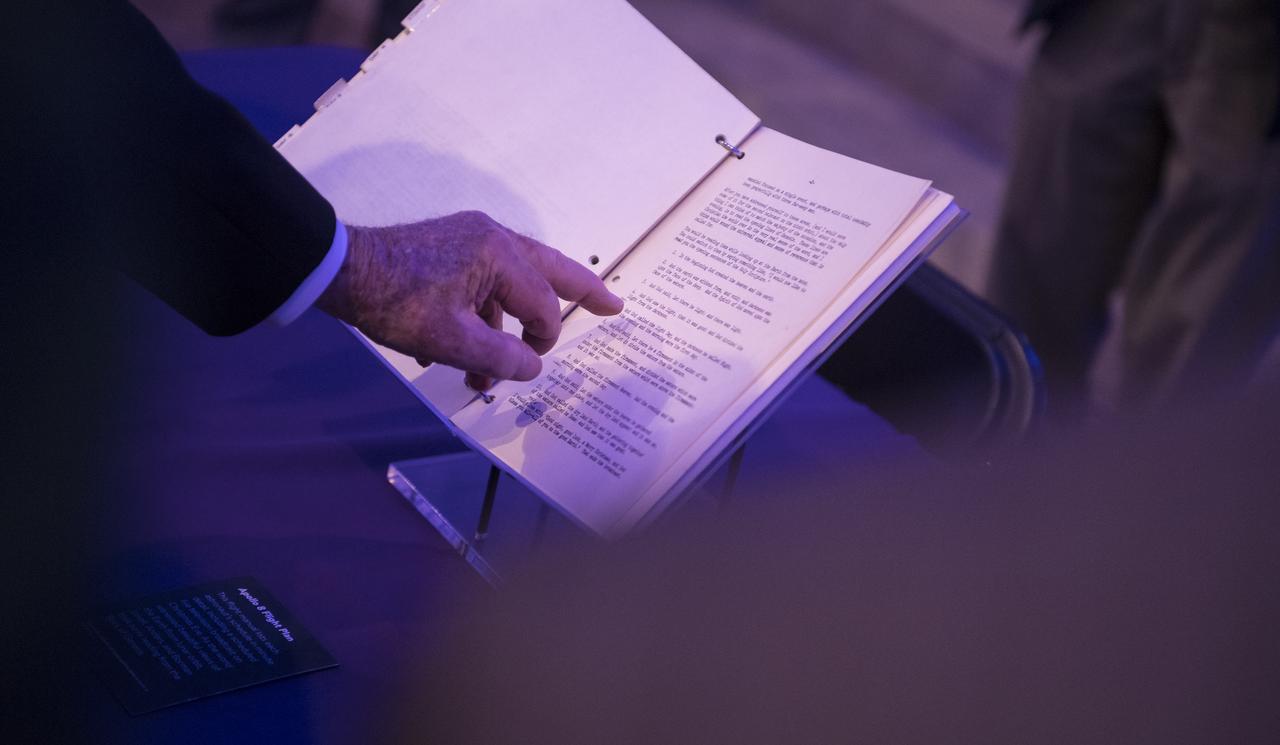
Apollo 8 astronaut Jim Lovell points to the lines from Genesis in his flight plan that were read during a television broadcast by him, Frank Borman, and William Anders as they orbited the Moon on Christmas Eve in 1968, Tuesday, Dec. 11, 2018 at the Washington National Cathedral in Washington, DC. Lovell's flight plan, which is usually displayed at the Adler Planetarium in Chicago, was one of the artifacts from the mission that were on display during the Smithsonian National Air and Space Museum's Spirit of Apollo event commemorating the 50th anniversary of Apollo 8. Apollo 8 was humanity's first journey to another world, taking astronauts Frank Borman, Jim Lovell, and William Anders to the Moon and back in December of 1968. Photo Credit: (NASA/Joel Kowsky)
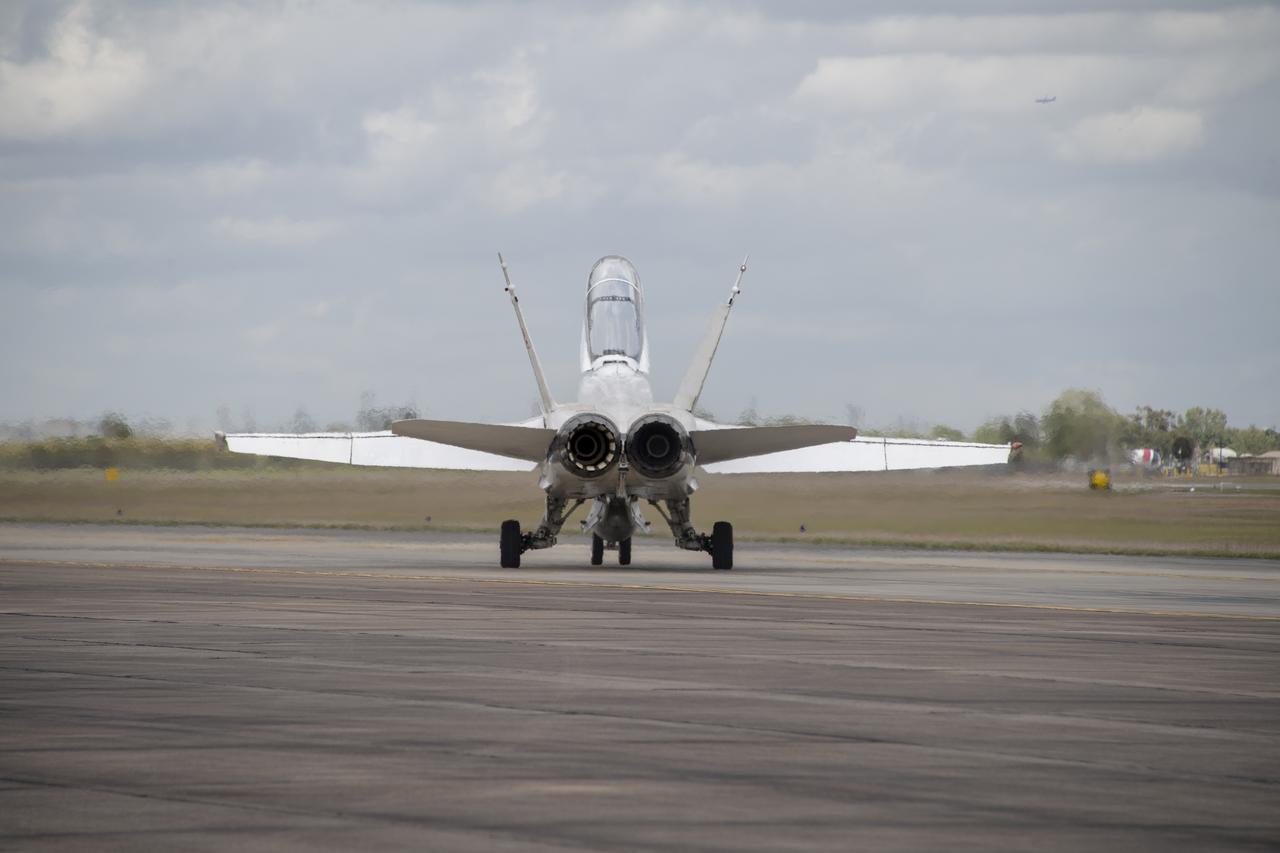
NASA ground and maintenance crews prepare the F/A-18 research aircraft for a supersonic research flight off the coast of Galveston, Texas in support of the QSF18 flight campaign. These crews are vital to making sure the aircraft is ready to operate safely and efficiently for NASA’s research.
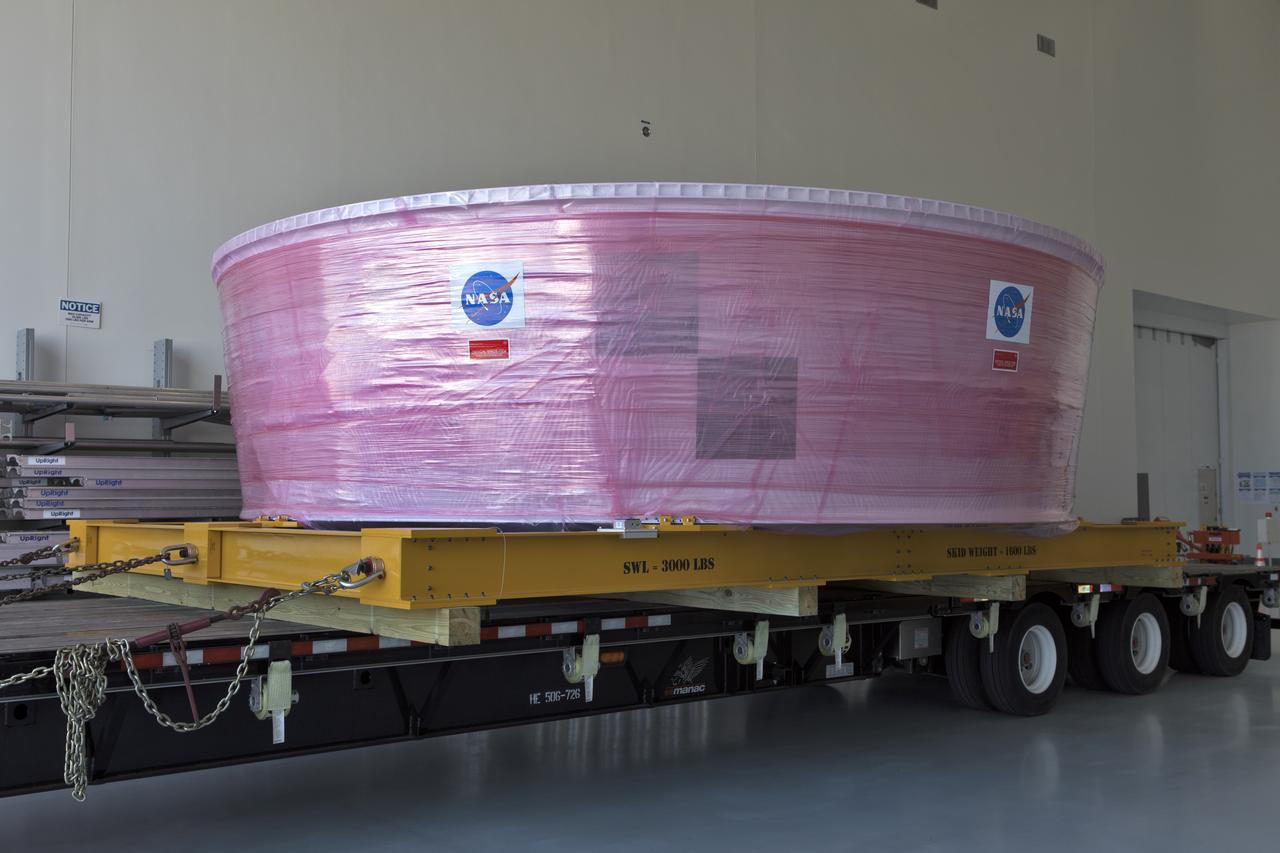
The Orion Stage Adapter (OSA), secured on flatbed transporter, is inside the low bay at the Space Station Processing Facility (SSPF) at NASA's Kennedy Space Center in Florida. The OSA is the second flight-hardware section of the agency's Space Launch System (SLS) rocket to arrive at Kennedy. The OSA will connect the Orion spacecraft to the upper part of the SLS, the interim cryogenic propulsion stage (ICPS). Both the OSA and ICPS are being stored for processing in the SSPF in preparation for Exploration Mission-1, the first uncrewed, integrated launch of the SLS rocket and Orion spacecraft.
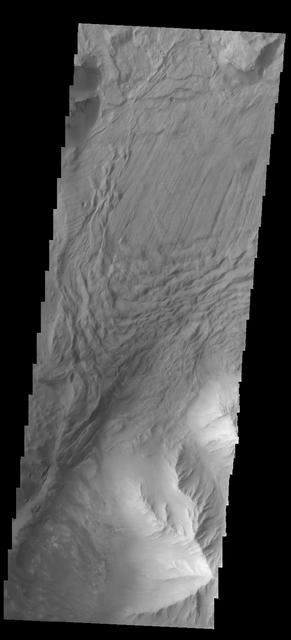
In this VIS image a complex region of multiple overlapping landslide deposits fills most the the frame. In the center of the image the top layer has the lobate edges and radial surface grooves of a low volume slide. It appears to be the top of a complex layering of materials, It is possible that all the lower layers are landslides as well. At the top of the image are a series of smaller lobate shaped landslide deposits Whether the layers formed very close in time of over thousands of years can not be determined in the image. Tithonium Chasma has numerous large landslide deposits. The resistant material of the plateau surface forms the linear ridges of the canyon wall. Large landslides have changed the walls and floor of the canyon. A landslide is a failure of slope due to gravity. They initiate due to several reasons. A lower layer of poorly cemented/resistant material may have been eroded, undermining the wall above which then collapses; earth quake seismic waves can cause the slope to collapse; and even an impact event near the canyon wall can cause collapse. As millions of tons of material fall and slide down slope a scalloped cavity forms at the upper part where the slope failure occurred. At the material speeds downhill it will pick up more of the underlying slope, increasing the volume of material entrained into the landslide. Whereas some landslides spread across the canyon floor forming lobate deposits, very large volume slope failures will completely fill the canyon floor in a large complex region of chaotic blocks. Tithonium Chasma is at the western end of Valles Marineris. Valles Marineris is over 4000 kilometers long, wider than the United States. Tithonium Chasma is almost 810 kilometers long (499 miles), 50 kilometers wide and over 6 kilometers deep. In comparison, the Grand Canyon in Arizona is about 175 kilometers long, 30 kilometers wide, and only 2 kilometers deep. The canyons of Valles Marineris were formed by extensive fracturing and pulling apart of the crust during the uplift of the vast Tharsis plateau. Landslides have enlarged the canyon walls and created deposits on the canyon floor. Weathering of the surface and influx of dust and sand have modified the canyon floor, both creating and modifying layered materials. The Odyssey spacecraft has spent over 15 years in orbit around Mars, circling the planet more than 71,000 times. It holds the record for longest working spacecraft at Mars. THEMIS, the IR/VIS camera system, has collected data for the entire mission and provides images covering all seasons and lighting conditions. Over the years many features of interest have received repeated imaging, building up a suite of images covering the entire feature. From the deepest chasma to the tallest volcano, individual dunes inside craters and dune fields that encircle the north pole, channels carved by water and lava, and a variety of other feature, THEMIS has imaged them all. For the next several months the image of the day will focus on the Tharsis volcanoes, the various chasmata of Valles Marineris, and the major dunes fields. We hope you enjoy these images! Orbit Number: 35746 Latitude: -4.47838 Longitude: 272.133 Instrument: VIS Captured: 2010-01-04 14:22 https://photojournal.jpl.nasa.gov/catalog/PIA22275
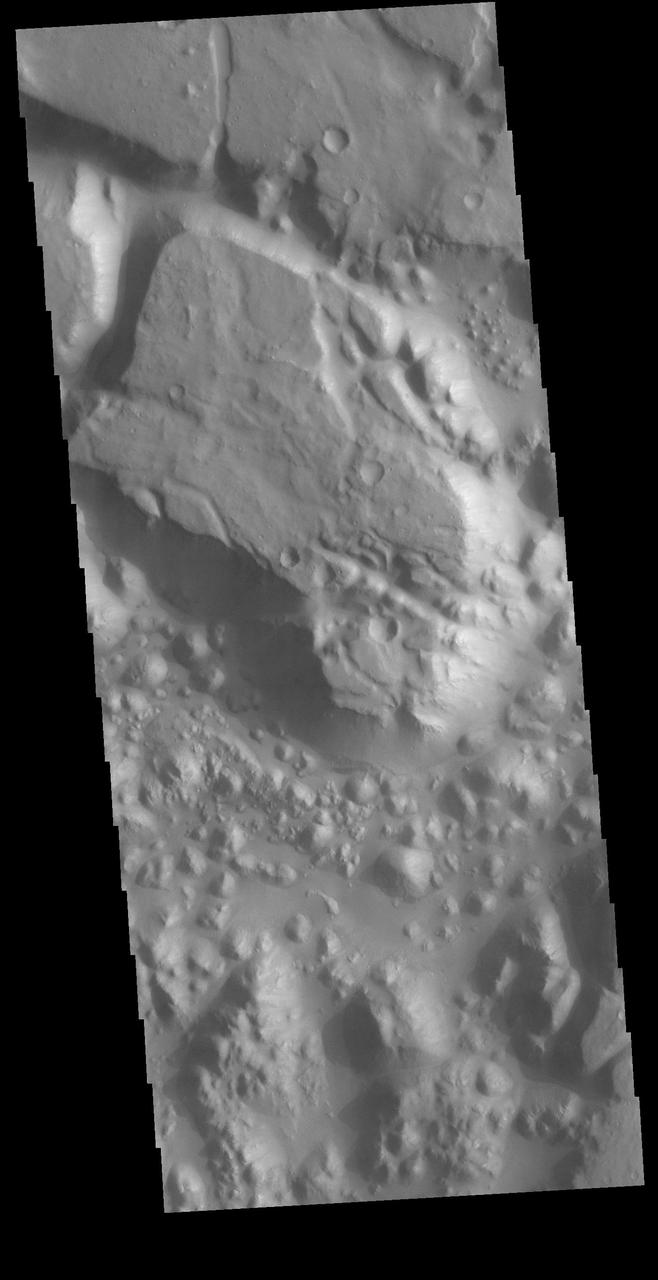
This VIS image shows a small section on Margaritifer Chaos. The term chaos is applied to regions where the surface is being eroded to form mesas. As the surface processes continue individual mesas become more isolated and take on the appearance of regions of hills. At the top of the image is Margaritifer Terra, which is being dissected into large mesas. Towards the bottom of the image the mesas have been eroded into smaller hills. Orbit Number: 72315 Latitude: -8.86121 Longitude: 339.105 Instrument: VIS Captured: 2018-04-03 14:28 https://photojournal.jpl.nasa.gov/catalog/PIA22538
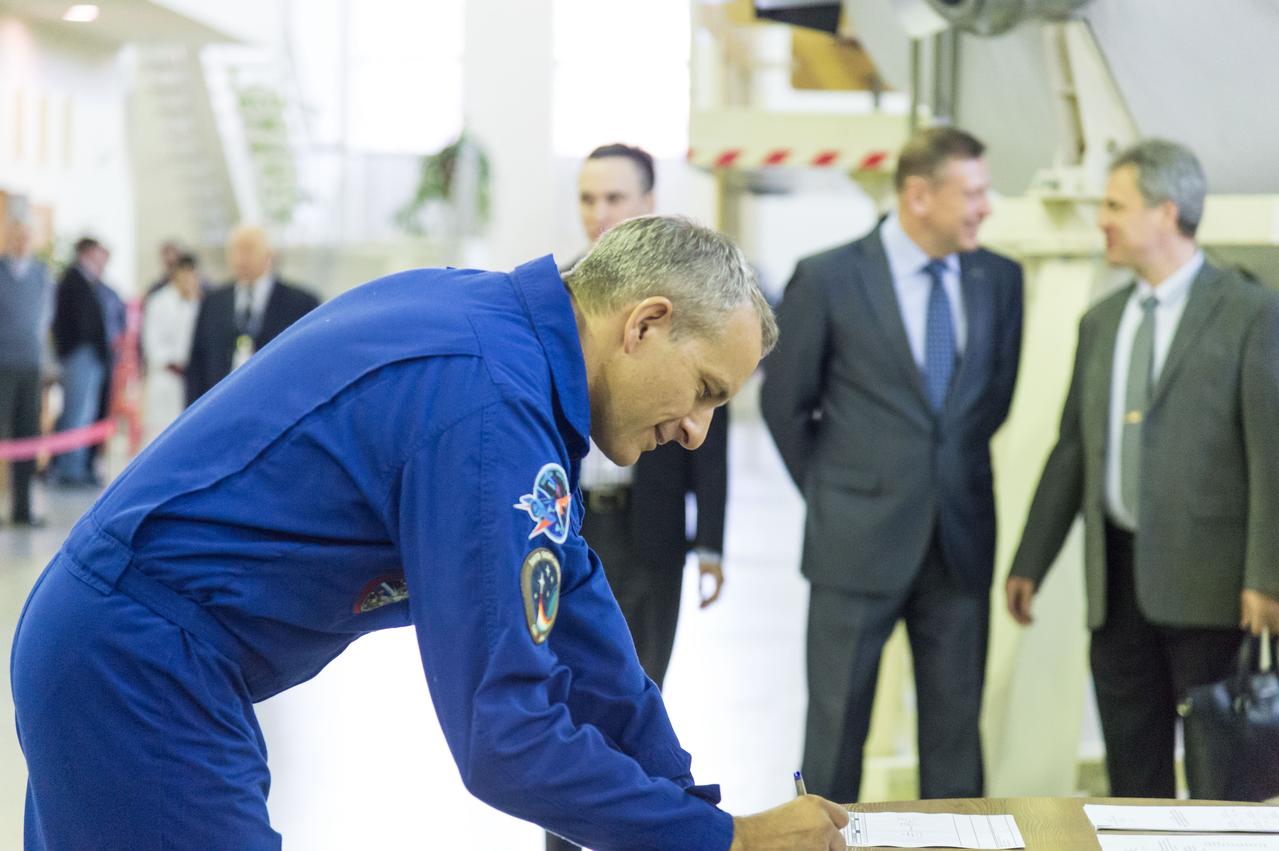
jsc2018e094963 - At the Gagarin Cosmonaut Training Center in Star City, Russia, Expedition 58 crewmember David Saint-Jacques of the Canadian Space Agency signs in for his qualification exams Nov. 13. Saint-Jacques, Anne McClain of NASA and Oleg Kononenko of Roscosmos will launch Dec. 3 on the Soyuz MS-11 spacecraft from the Baikonur Cosmodrome in Kazakhstan for a six-and-a-half month mission on the International Space Station...NASA/Sarah Volkman.
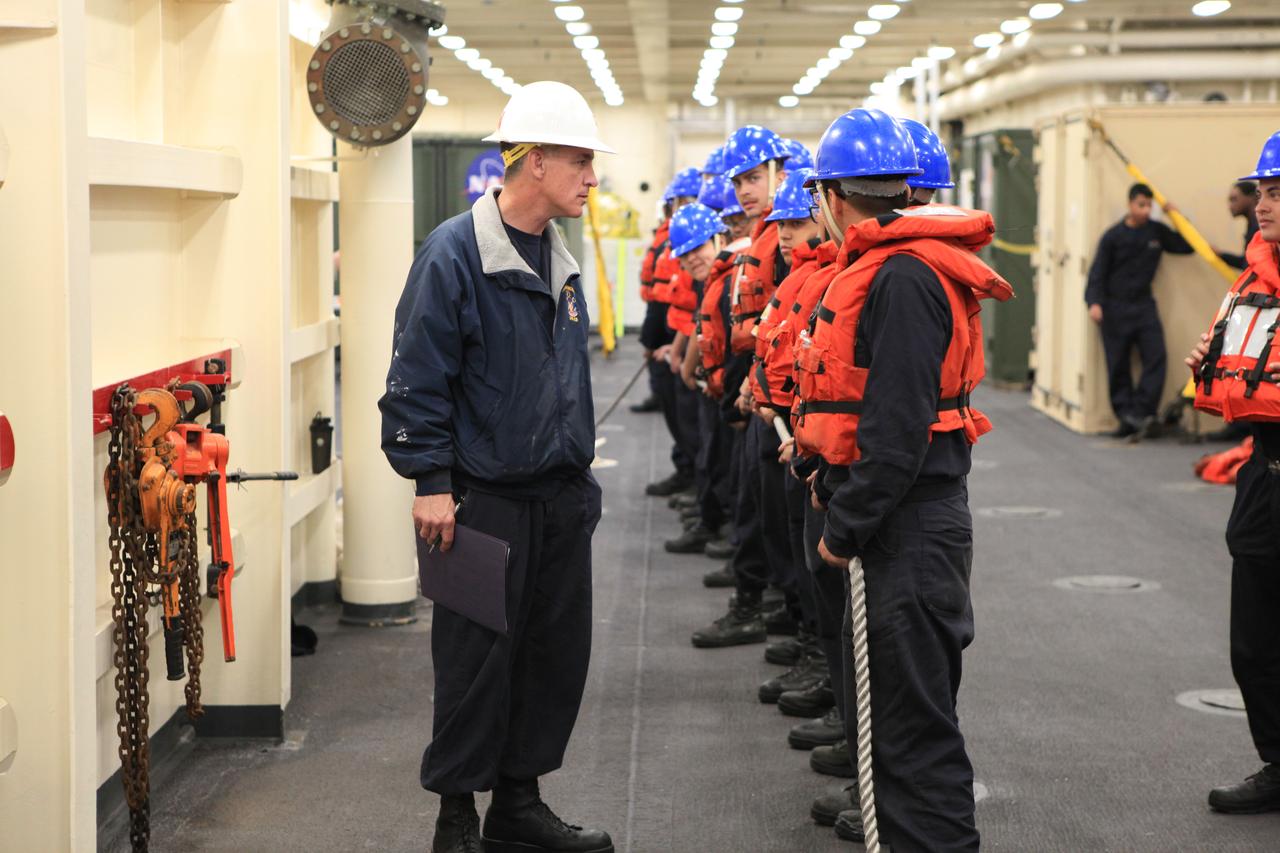
Chief Warrant Officer Ferrari from the USS Anchorage inspects the Deck Department as they prepare to bring in “Oscar,” a dummy used for man overboard drills. During Underway Recovery Test 6, the USS Anchorage’s man overboard drill gave Kennedy Space Center’s NASA Recovery Team a glimpse of one way an astronaut could be brought from a small boat onto the ship using a stretcher. Once the Orion capsule splashes down in the Pacific Ocean, astronauts can choose to stay in the capsule until it is pulled into the well deck of the Navy vessel, or have a diver retrieve them first and then get the capsule later.
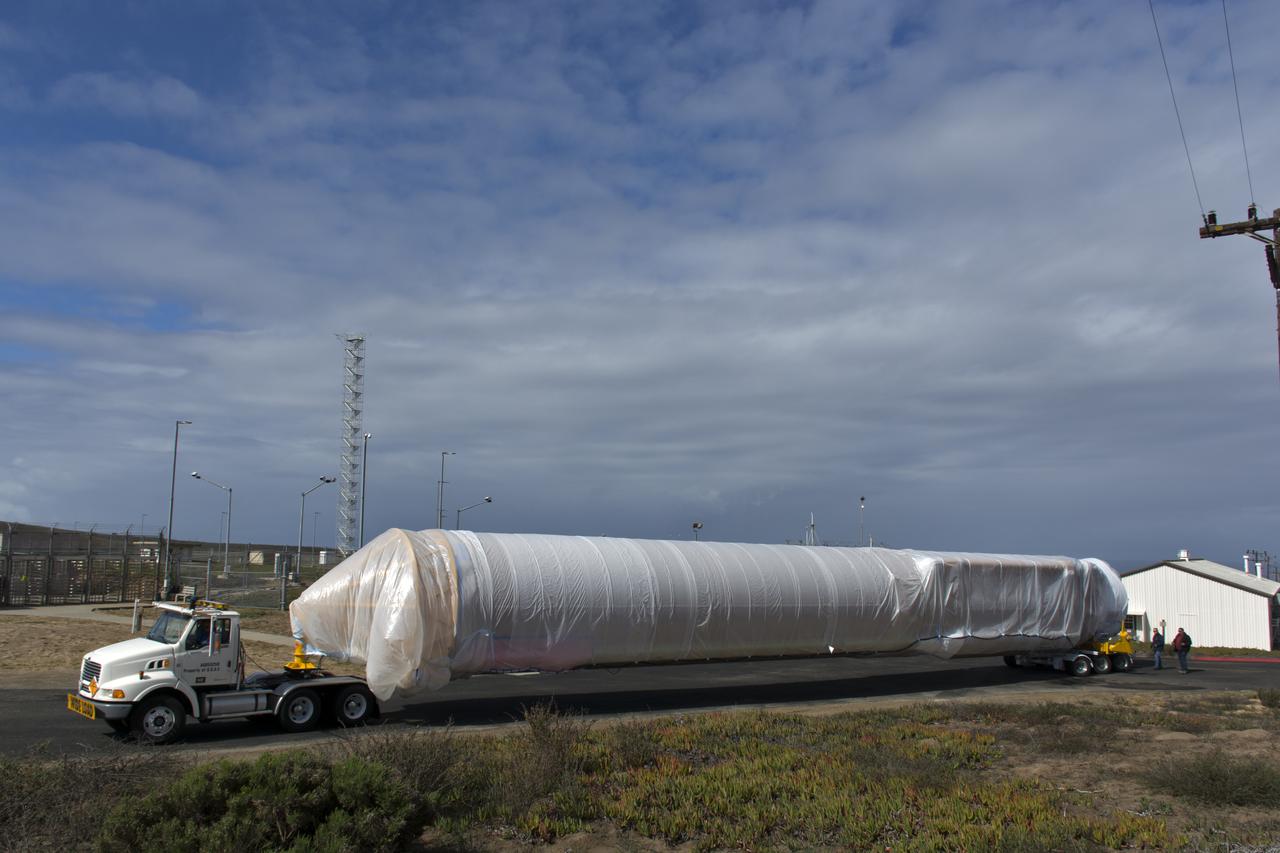
A United Launch Alliance Atlas V booster is transported to Space Launch Complex 3 at Vandenberg Air Force Base in California. The rocket will launch NASA's Interior Exploration using Seismic Investigations, Geodesy and Heat Transport, or InSight, mission to land on Mars. InSight is the first mission to explore the Red Planet's deep interior. It will investigate processes that shaped the rocky planets of the inner solar system including Earth. Liftoff is scheduled for May 5, 2018.
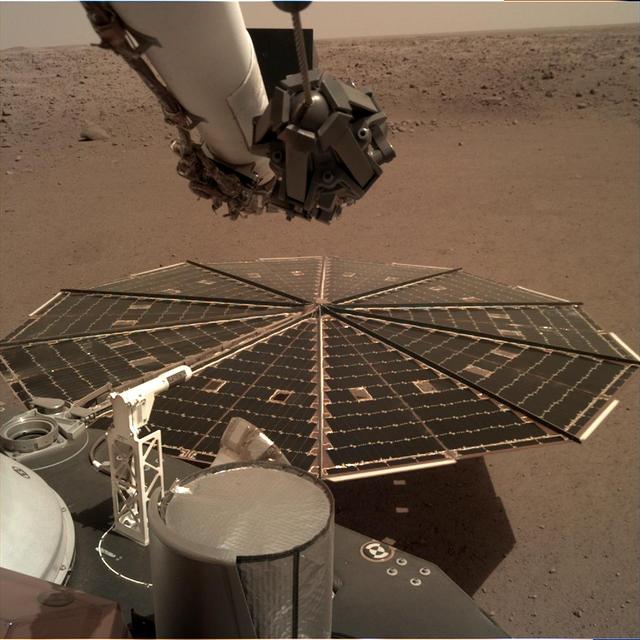
One of InSight's 7-foot (2.2 meter) wide solar panels was imaged by the lander's Instrument Deployment Camera, which is fixed to the elbow of its robotic arm. https://photojournal.jpl.nasa.gov/catalog/PIA22736
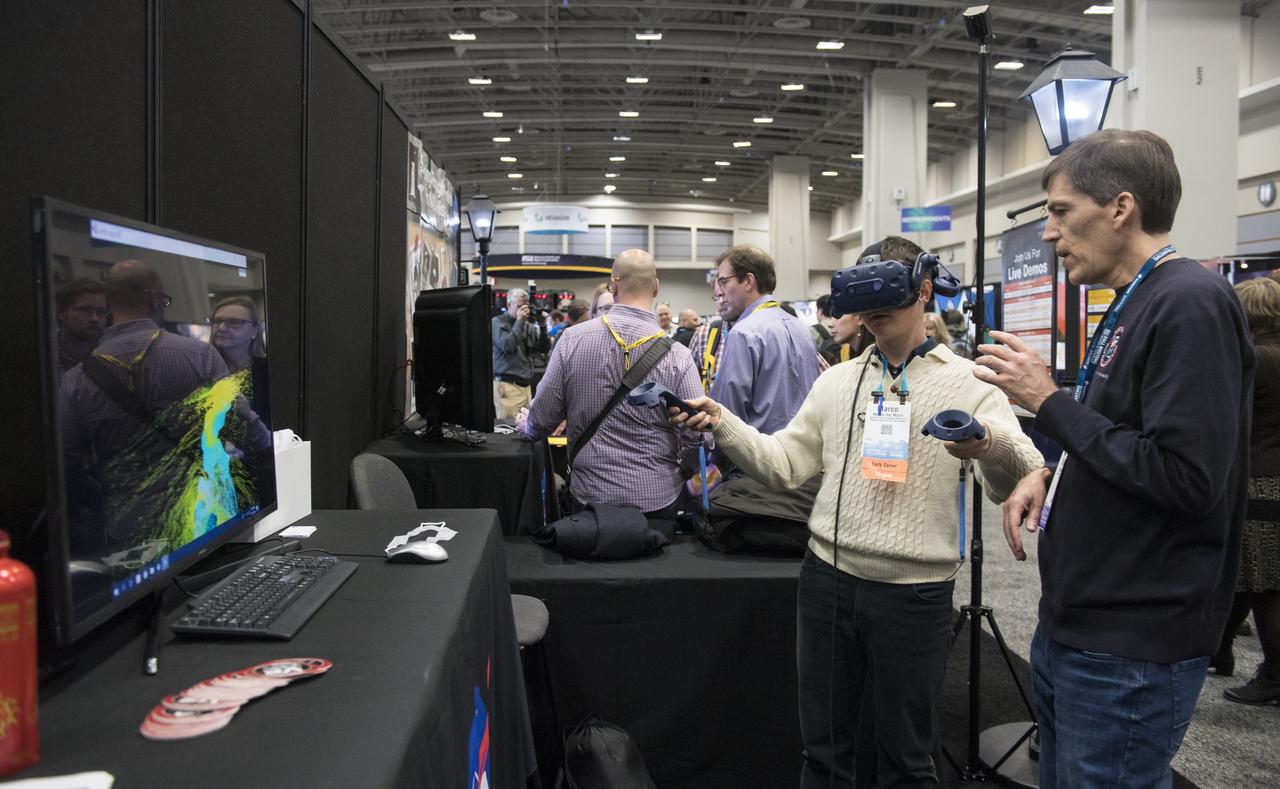
NASA booths are seen at the American Geophysical Union (AGU) annual meeting, Tuesday, Dec. 11, 2018 at the Washington Convention Center in Washington, DC. Photo Credit: (NASA/Aubrey Gemignani)
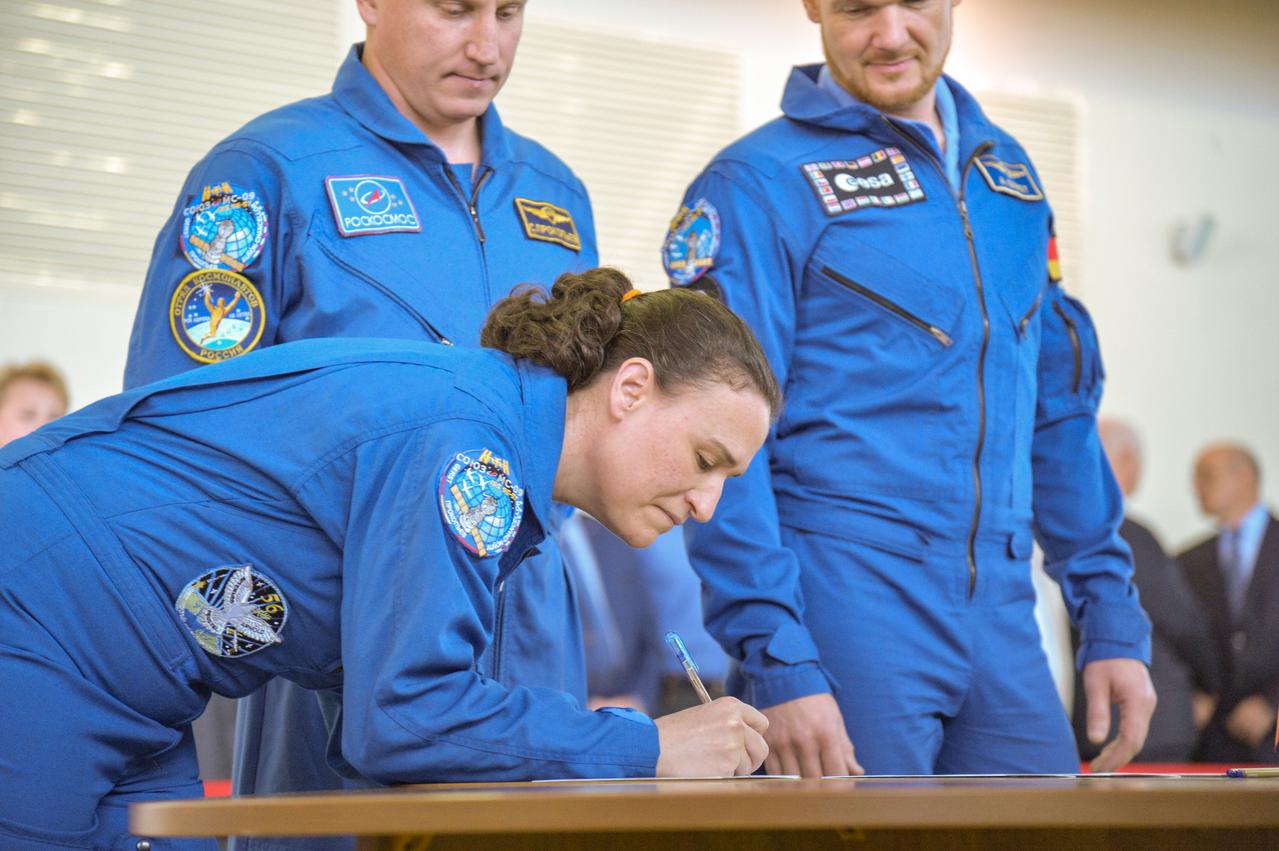
jsc2018e043412 (May 10, 2018) --- At the Gagarin Cosmonaut Training Center in Star City, Russia, Expedition 56 prime crew member Serena Aunon-Chancellor of NASA signs in for the first of two days of final Soyuz qualification exams May 10. Aunon-Chancellor, Sergey Prokopyev of Roscosmos (back, left) and Alexander Gerst of the European Space Agency (back, right) will launch June 6 from the Baikonur Cosmodrome in Kazakhstan on the Soyuz MS-09 spacecraft for a six-month mission on the International Space Station...NASA/Elizabeth Weissinger.
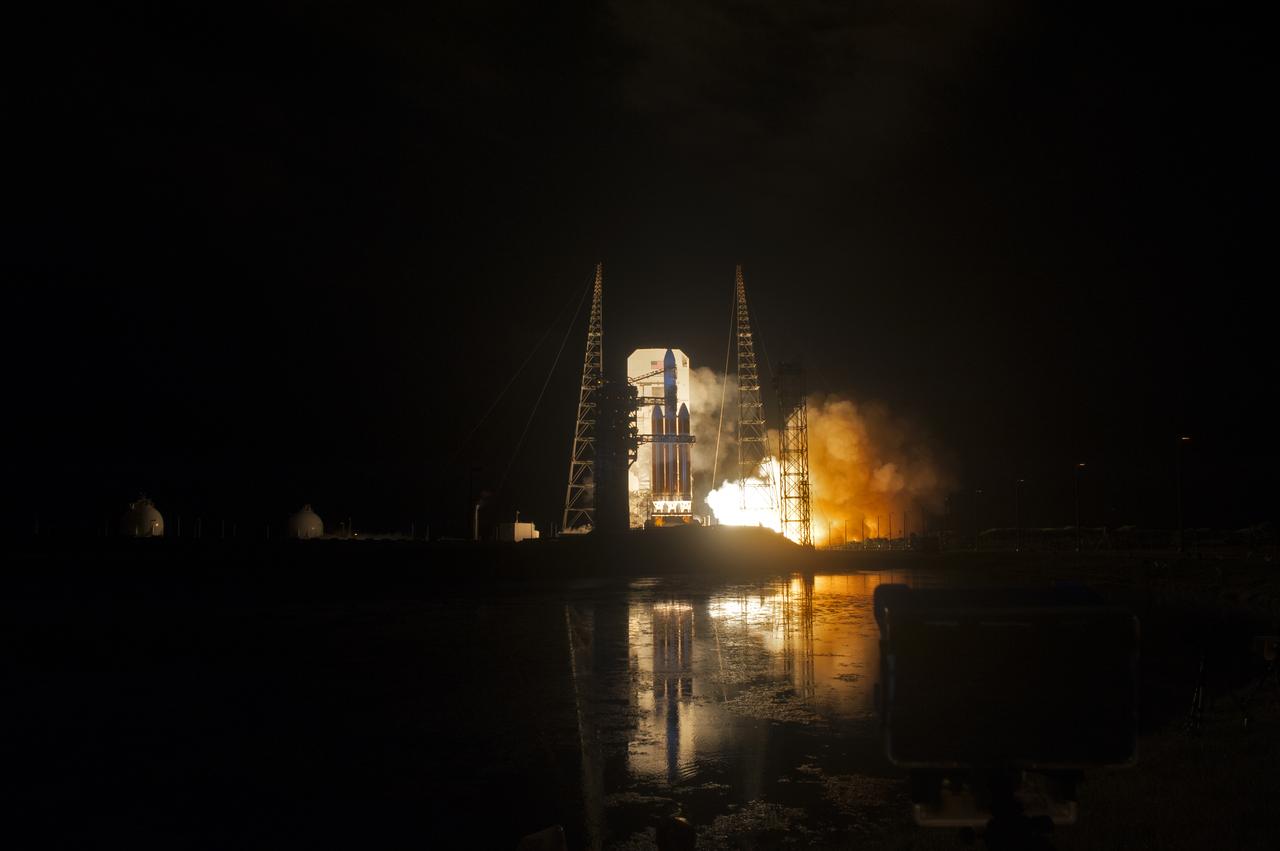
At Cape Canaveral Air Force Station's Space Launch Complex 37, the United Launch Alliance Delta IV Heavy rocket with NASA's Parker Solar Probe, lifts off at 3:31 a.m. EDT on Sunday, Aug. 12, 2018. The spacecraft was built by Applied Physics Laboratory of Johns Hopkins University in Laurel, Maryland. The mission will perform the closest-ever observations of a star when it travels through the Sun's atmosphere, called the corona. The probe will rely on measurements and imaging to revolutionize our understanding of the corona and the Sun-Earth connection.
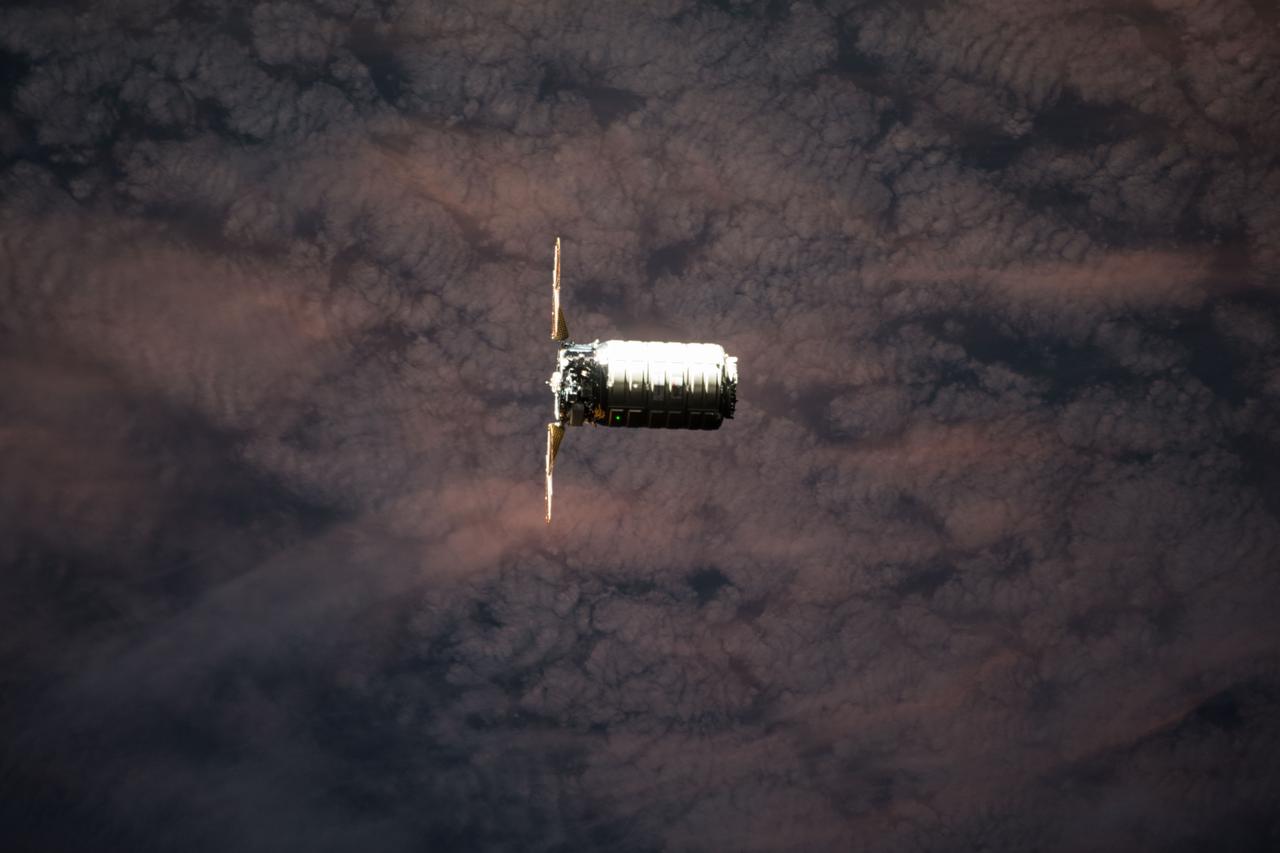
iss055e076991 (May 24, 2018) --- The Orbital ATK space freighter is pictured as it slowly and methodically approaches the International Space Station to resupply the Expedition 55 crew.

Philippe Laudet, SEIS Project Manager, French National Space Agency (CNES) talks about Mars InSight during a social media briefing, Sunday, Nov. 25, 2018 at NASA's Jet Propulsion Laboratory in Pasadena, California. InSight, short for Interior Exploration using Seismic Investigations, Geodesy and Heat Transport, is a Mars lander designed to study the "inner space" of Mars: its crust, mantle, and core. InSight is scheduled to touch down on the Red Planet at approximately noon PST (3 p.m. EST) on Nov. 26. Photo Credit: (NASA/Bill Ingalls)
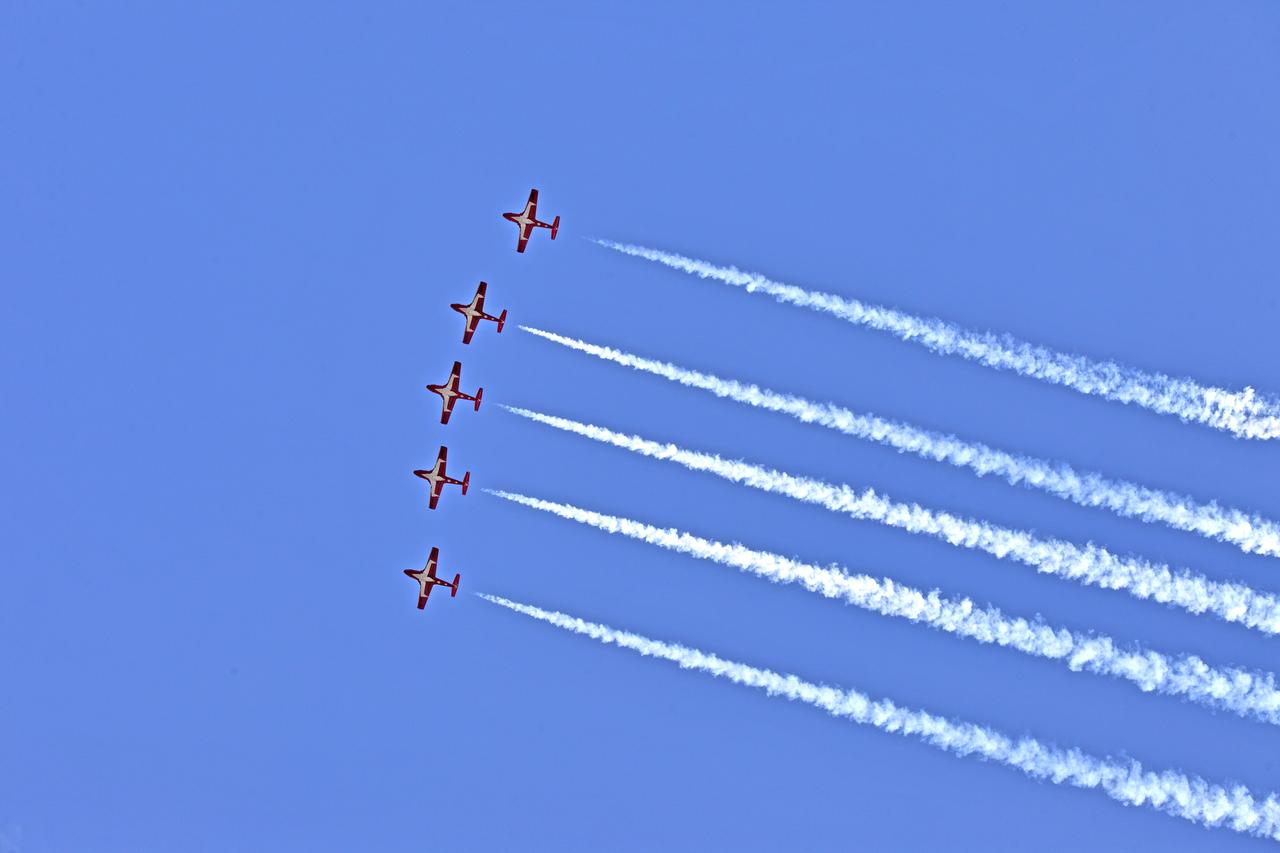
Canadian Forces Snowbirds fly in formation over NASA's Kennedy Space Center in Florida during a practice flight on May 9, 2018, between their scheduled U.S. air shows.
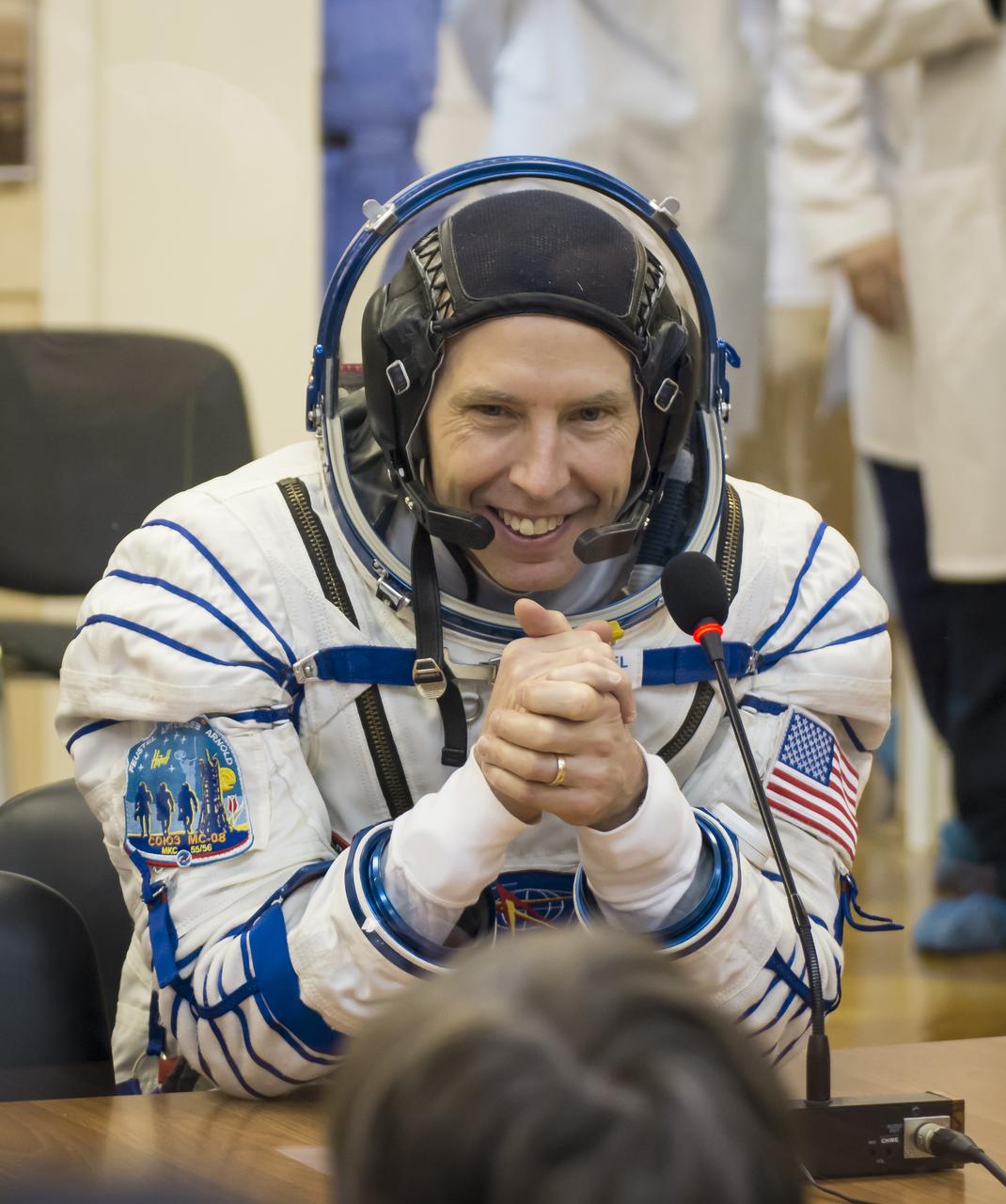
Expedition 55 flight engineer Drew Feustel of NASA speaks with family and friends after having his Russian Sokol suit pressure checked in preparation for launch aboard the Soyuz MS-08 spacecraft, Wednesday, March 21, 2018 at the Baikonur Cosmodrome Kazakhstan. Feustel, Soyuz Commander Oleg Artemyev of Roscosmos and flight engineer Ricky Arnold of NASA launched aboard the Soyuz MS-08 spacecraft at 1:44 p.m. Eastern time (11:44 p.m. Baikonur time) on March 21 to begin their journey to the International Space Station. Photo Credit: (NASA/Victor Zelentsov)
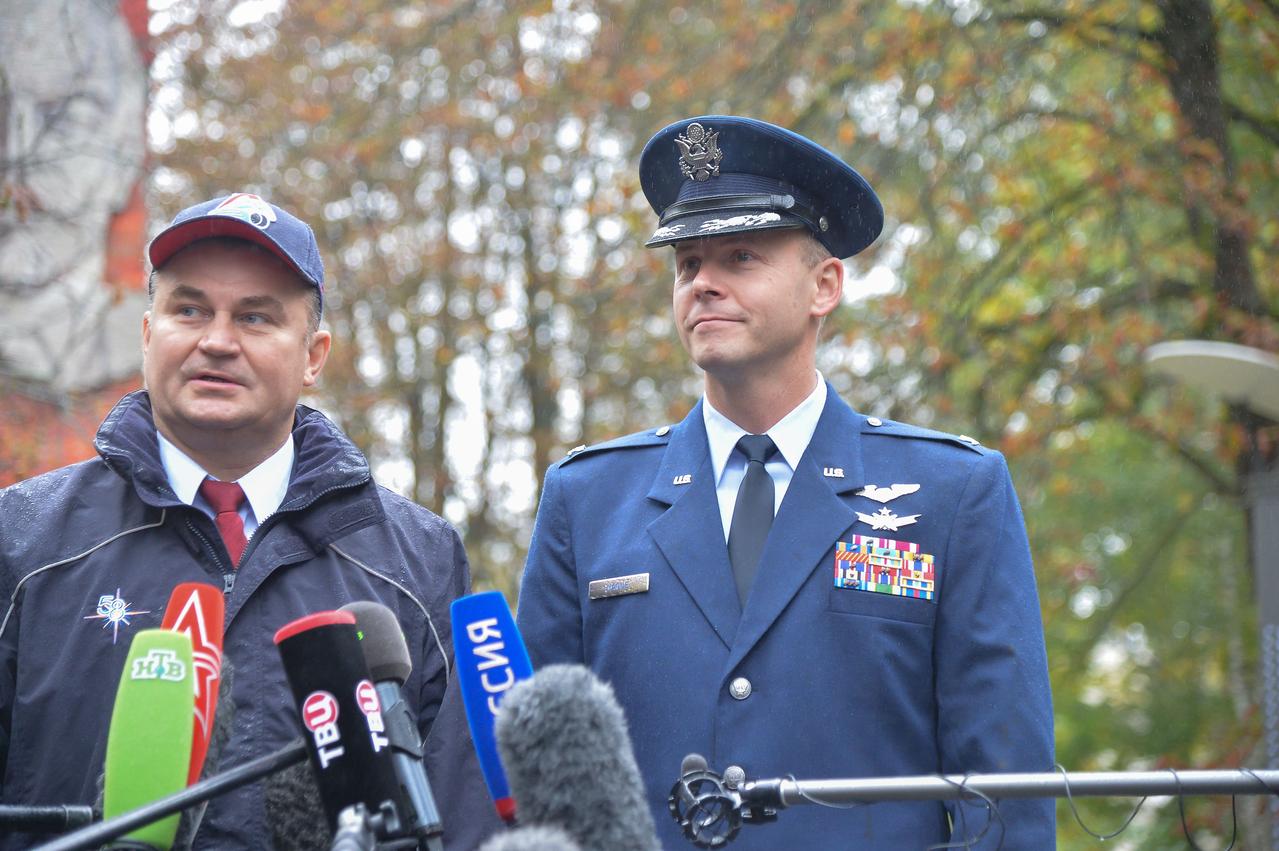
At the Gagarin Cosmonaut Training Center in Star City, Russia, Expedition 57 crewmembers Alexey Ovchinin of Roscosmos (left) and Nick Hague of NASA (right) answer reporters’ questions Sept. 25 before departing for their launch site in Baikonur, Kazakhstan for final pre-launch training. Hague and Ovchinin will launch Oct. 11 from the Baikonur Cosmodrome in Kazakhstan on the Soyuz MS-10 spacecraft for a six-month mission on the International Space Station...NASA/Sarah Volkman.
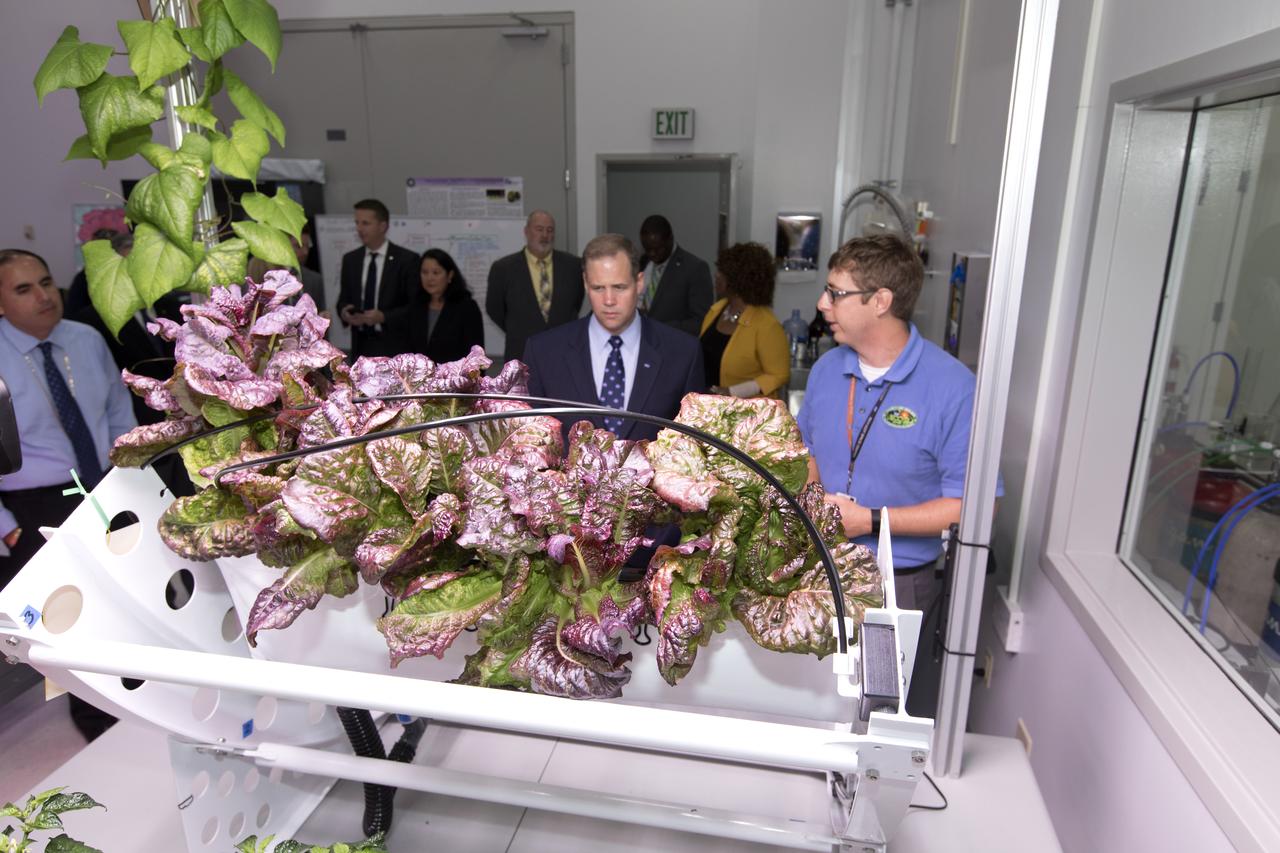
NASA Administrator Jim Bridenstine, center, tours a plant research laboratory inside the Space Station Processing Facility (SSPF) at NASA's Kennedy Space Center in Florida, on Aug. 7, 2018. To the right of Bridenstine is Matt Romeyn, project scientist. Behind him, second from left is Josie Burnett, director of Exploration Research and Technology. To Burnett's right is Ronnie Lawson, deputy director of Exploration Research and Technology. Behind Bridenstine is Barbara Brown, chief technologist. Bridenstine received updates on research and technology accomplishments during his visit to the SSPF.
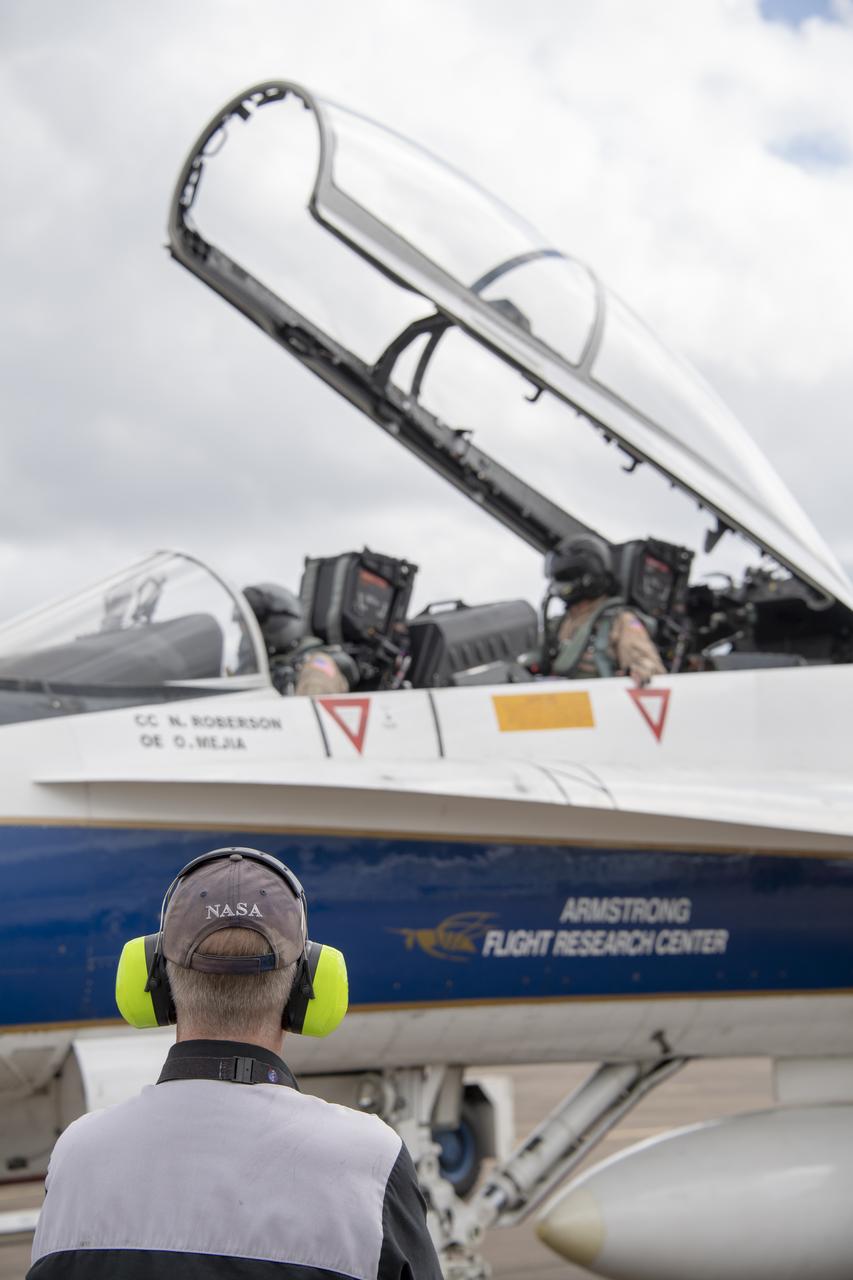
NASA ground and maintenance crews prepare the F/A-18 research aircraft for a supersonic research flight off the coast of Galveston, Texas in support of the QSF18 flight campaign. These crews are vital to making sure the aircraft is ready to operate safely and efficiently for NASA’s research.
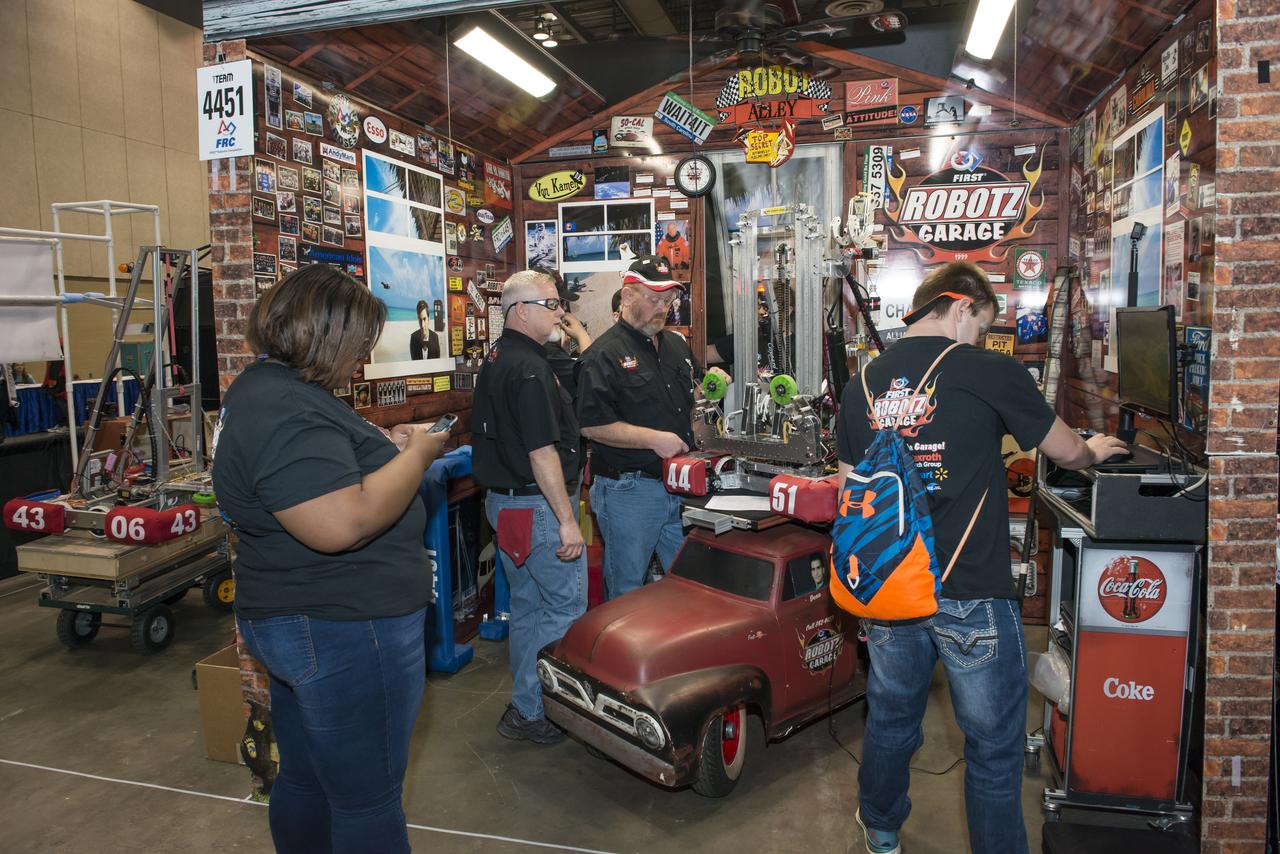
The First Robotics Rocket City Regional Competition was held at the Von Braun Civic Center in Huntsville, Alabama on March 16, 2018. High school robotics teams from throughout the U.S., as well as a team from Brazil, competed.
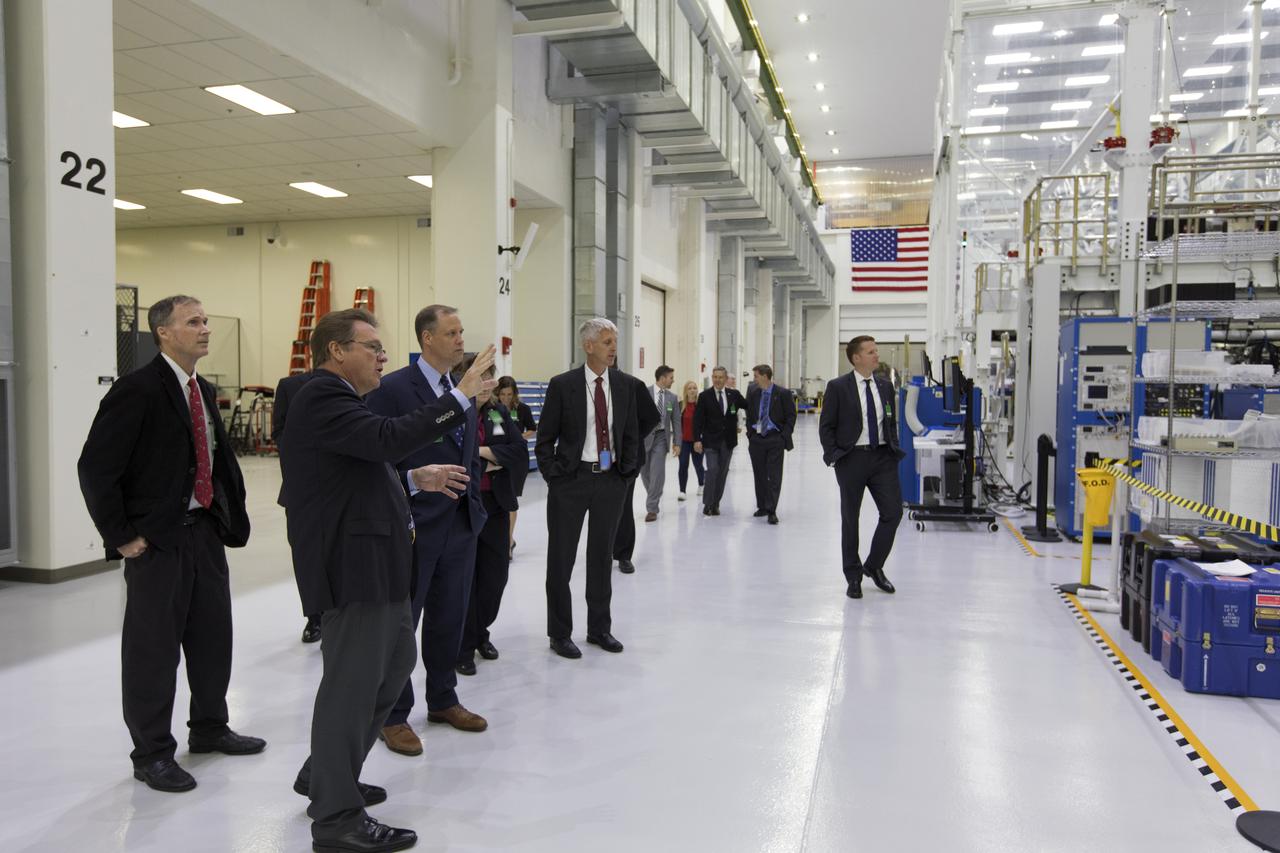
NASA Administrator Jim Bridenstine, third from left, is briefed by Jules Schneider, left, director of Orion operations for Lockheed Martin, during a tour of Kennedy Space Center’s Neil Armstrong Operations and Checkout Building on Tuesday, Aug. 7, 2018. It was Bridenstine’s first official visit to the Florida spaceport.
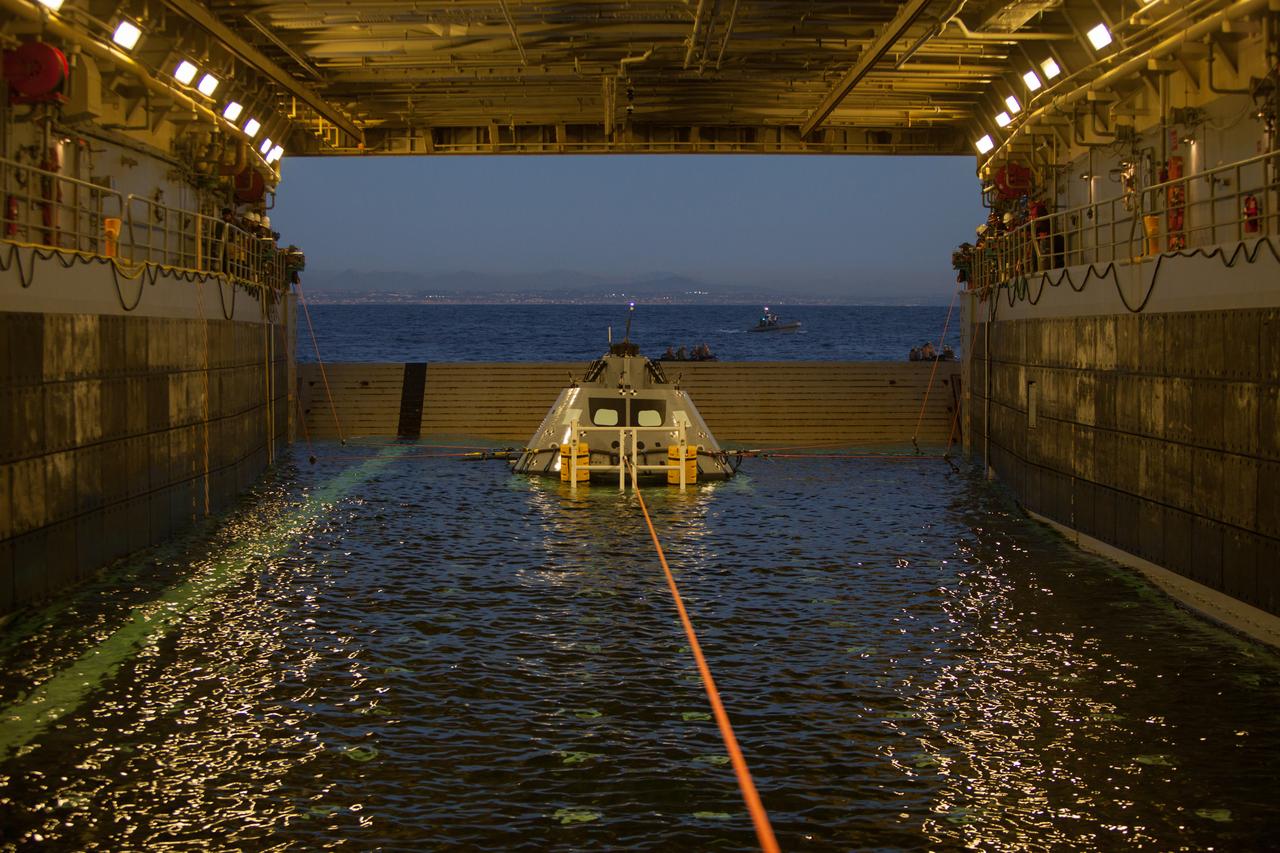
During Underway Recovery Test 6 on Jan. 22, 2018, Kennedy Space Center's NASA Recovery Team spent a week aboard the USS Anchorage where they and the U.S. Navy tested procedures and ground support equipment to improve recovery procedures and hardware ahead of Orion's next flight, Artemis I, when it splashes down in the Pacific Ocean. The Orion test article sits inside the well deck of the USS Anchorage after a successful recovery test.
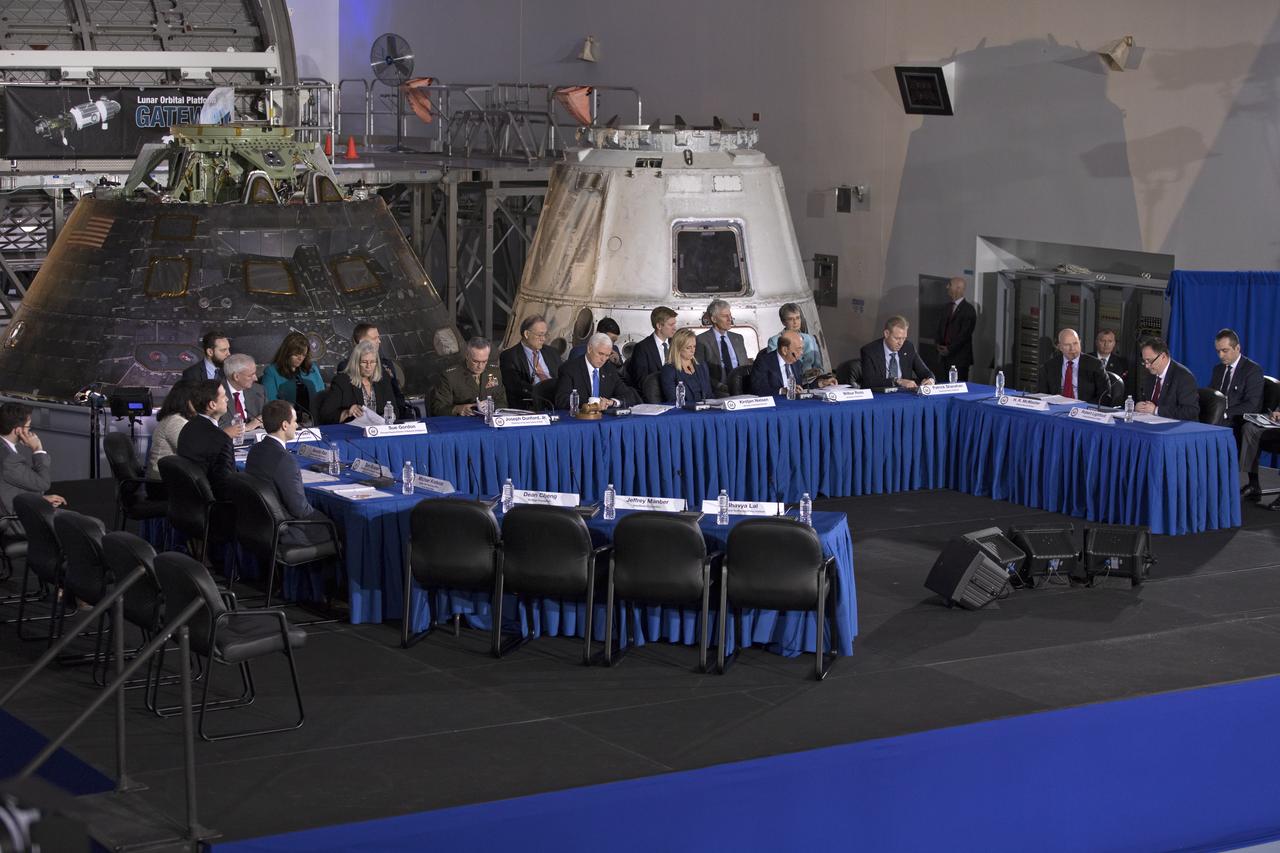
Members of the National Space Council meet in the high bay of the Space Station Processing Facility at NASA's Kennedy Space Center in Florida, on Feb. 21, 2018. Chaired by Vice President Mike Pence, the council's role is to advise the president regarding national space policy and strategy, and review the nation's long-range goals for space activities.
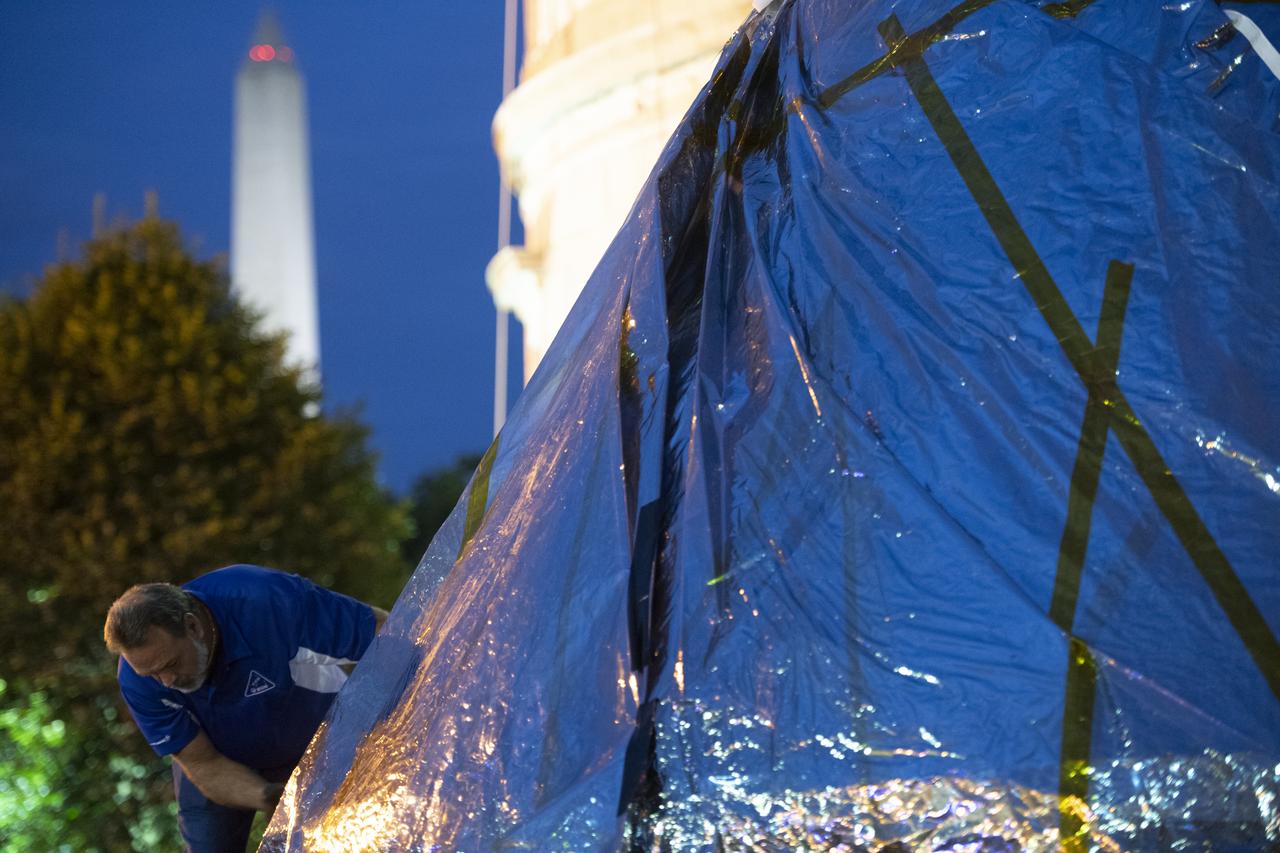
NASA's Orion spacecraft that flew Exploration Flight Test-1 on Dec. 5, 2014 is seen as it arrives at the White House complex, Saturday, July 21, 2018 in Washington, DC. Lockheed Martin, NASA’s prime contractor for Orion, began manufacturing the Orion crew module in 2011 and delivered it in July 2012 to NASA's Kennedy Space Center where final assembly, integration and testing was completed. More than 1,000 companies across the country manufactured or contributed elements to the spacecraft. Photo Credit: (NASA/Joel Kowsky)
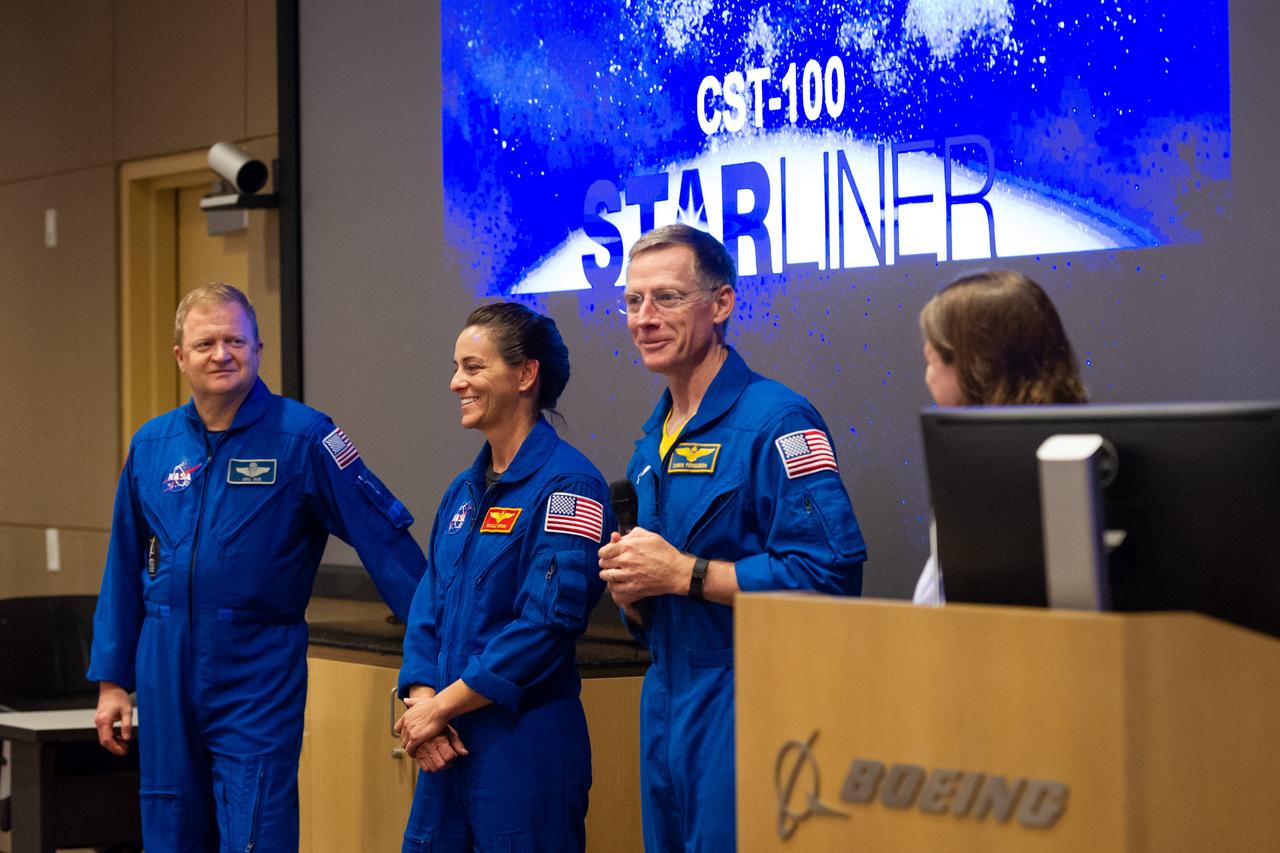
Commercial crew astronauts Eric Boe, Nicole Mann and Chris Ferguson recently toured Boeing’s spacecraft testing facilities in Huntington Beach and El Segundo, Calif. All three astronauts will fly on Boeing’s CST-100 Starliner in an upcoming Crew Flight Test to the International Space Station. Structural testing in Huntington Beach confirms the spacecraft can withstand the pressures it will experience during flight. Environmental qualification testing in El Segundo ensures the spacecraft can withstand the extreme environments of space.
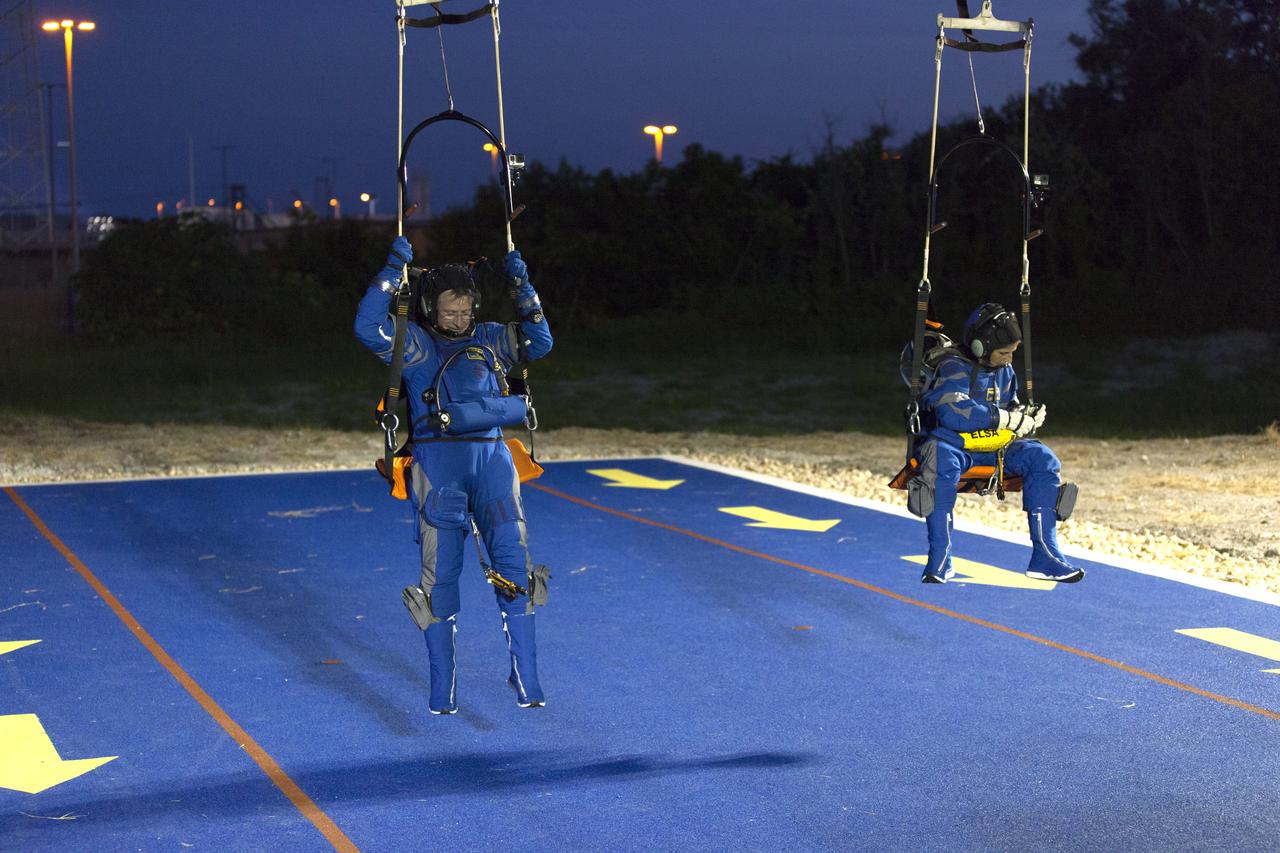
Astronauts participate in a Boeing/United Launch Alliance emergency egress system demonstration at Cape Canaveral Air Force Station’s Launch Complex 41 in Florida on June 19, 2018. The system features seats attached to slide wires which would carry astronauts and ground crew more than 1,300 feet away from the crew access tower in the unlikely event of an emergency prior to liftoff on launch day.

NASA mission controllers, engineers, pilots and communications specialists in the mission control room monitor the supersonic research flight off the coast of Galveston, as part of the QSF18 flight series. The flight operations crew tracks the status of the flights, maintains communications with the aircraft, communicates with U.S. Coast Guard, and coordinates community feedback data.
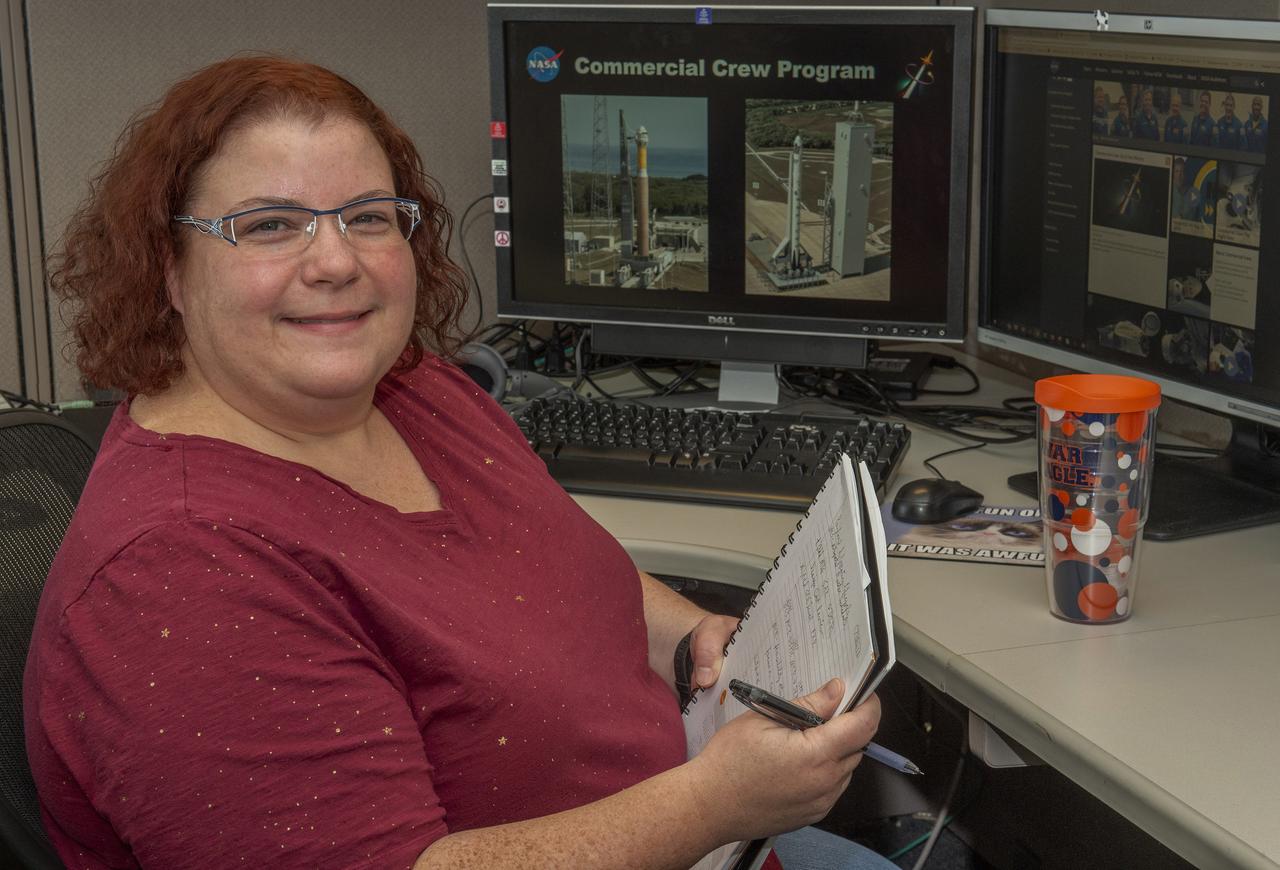
Miranda Holton is the Main Propulsion Systems (MPS) Subsystem Manager for NASA’s Commercial Crew Program. The goal of the Commercial Crew Program is to have safe, reliable and cost-effective access to and from the International Space Station and foster commercial access to other potential low-Earth orbit destinations.
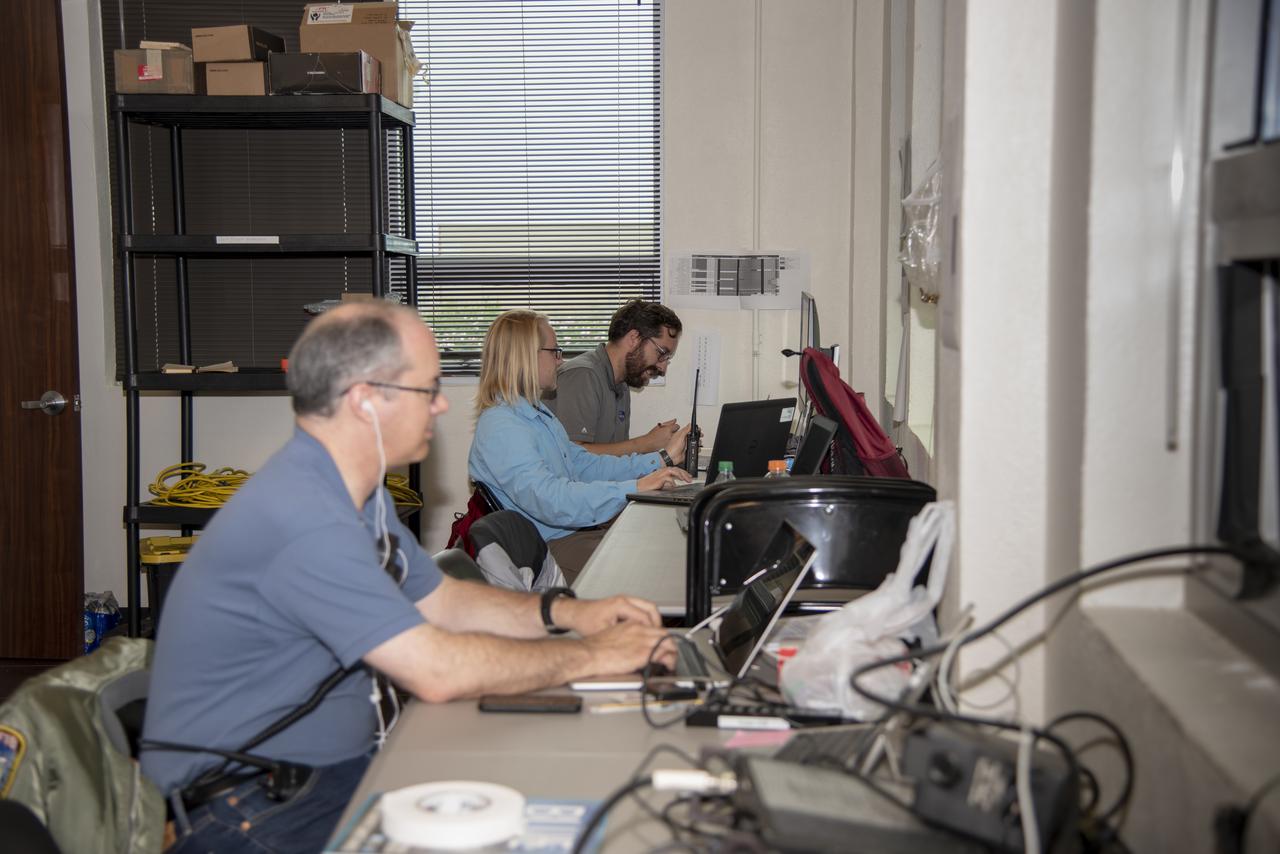
While NASA’s F/A-18 goes supersonic off the coast, a team of researchers monitor the flight and operate multiple sound monitor stations around Galveston and its surrounding area. This allows NASA to obtain accurate sound level data, which gets matched to community response data.
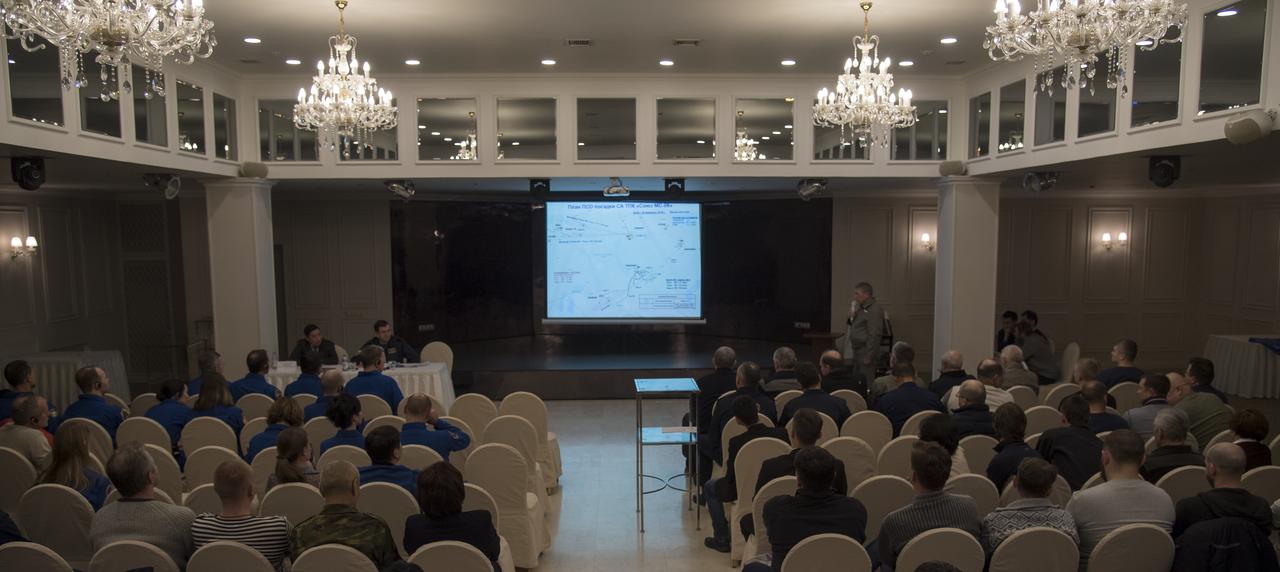
NASA and Roscosmos team members, along with Russian Search and Recovery Forces, meet to discuss the readiness for the landing of Expedition 54 crew members Joe Acaba and Mark Vande Hei of NASA and cosmonaut Alexander Misurkin Sunday, Feb. 25, 2018. Acaba, Vande Hei, and Misurkin are returning after 168 days in space where they served as members of the Expedition 53 and 54 crews onboard the International Space Station. Photo Credit: (NASA/Bill Ingalls)
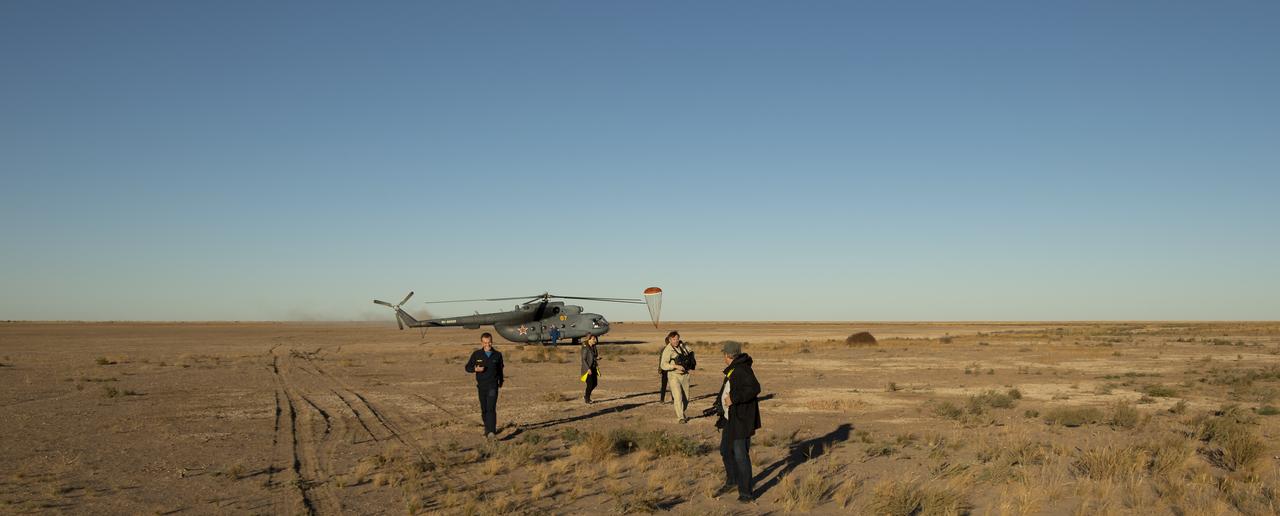
A pilot parachute for the Soyuz MS-08 spacecraft lands behind a support helicopter at the landing site of Expedition 56 Commander Drew Feustel and Flight Engineer Ricky Arnold of NASA, along with Flight Engineer and Soyuz Commander Oleg Artemyev of Roscosmos near the town of Zhezkazgan, Kazakhstan on Thursday, Oct. 4, 2018. Feustel, Arnold, and Artemyev are returning after 197 days in space where they served as members of the Expedition 55 and 56 crews onboard the International Space Station. Photo Credit: (NASA/Bill Ingalls)
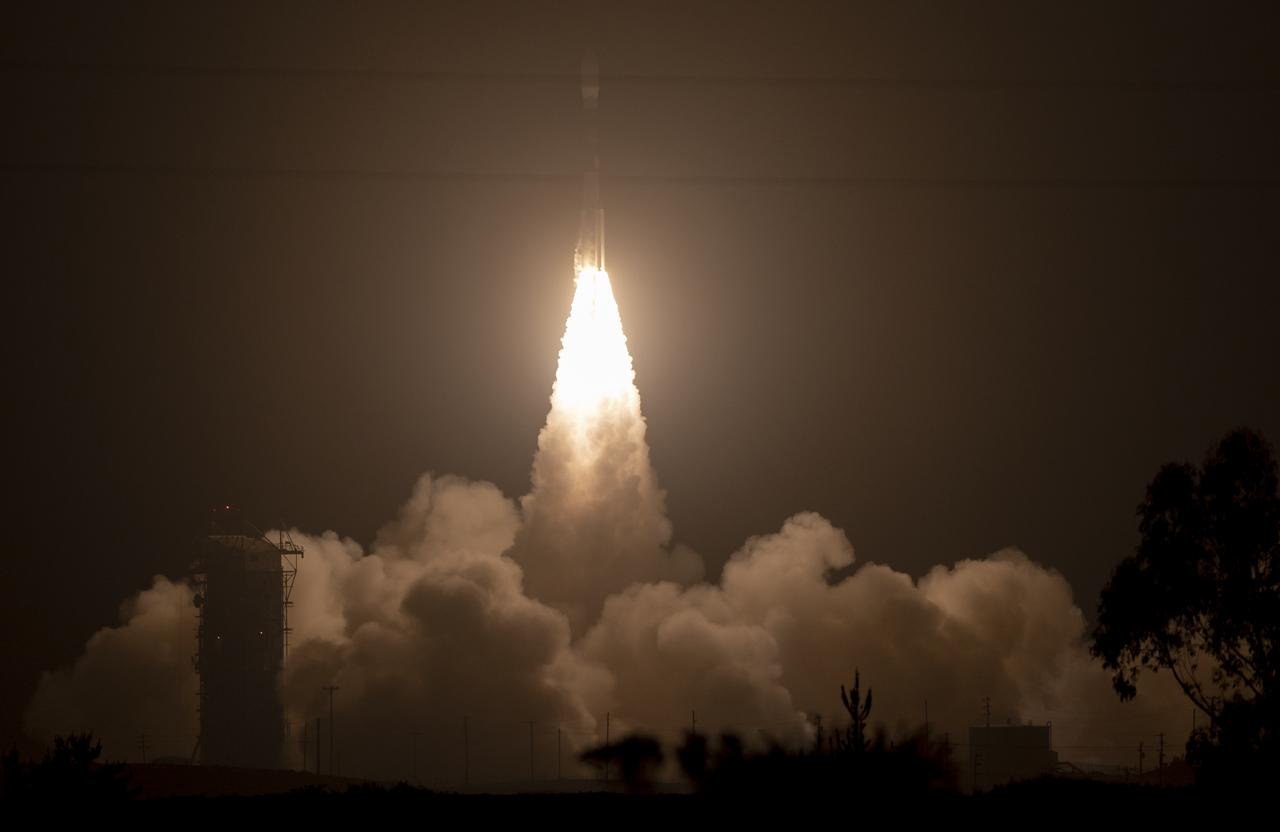
The United Launch Alliance (ULA) Delta II rocket launches with the NASA Ice, Cloud and land Elevation Satellite-2 (ICESat-2) onboard, Saturday, Sept. 15, 2018, from Vandenberg Air Force Base in California. The ICESat-2 mission will measure the changing height of Earth's ice. Photo Credit: (NASA/Bill Ingalls)
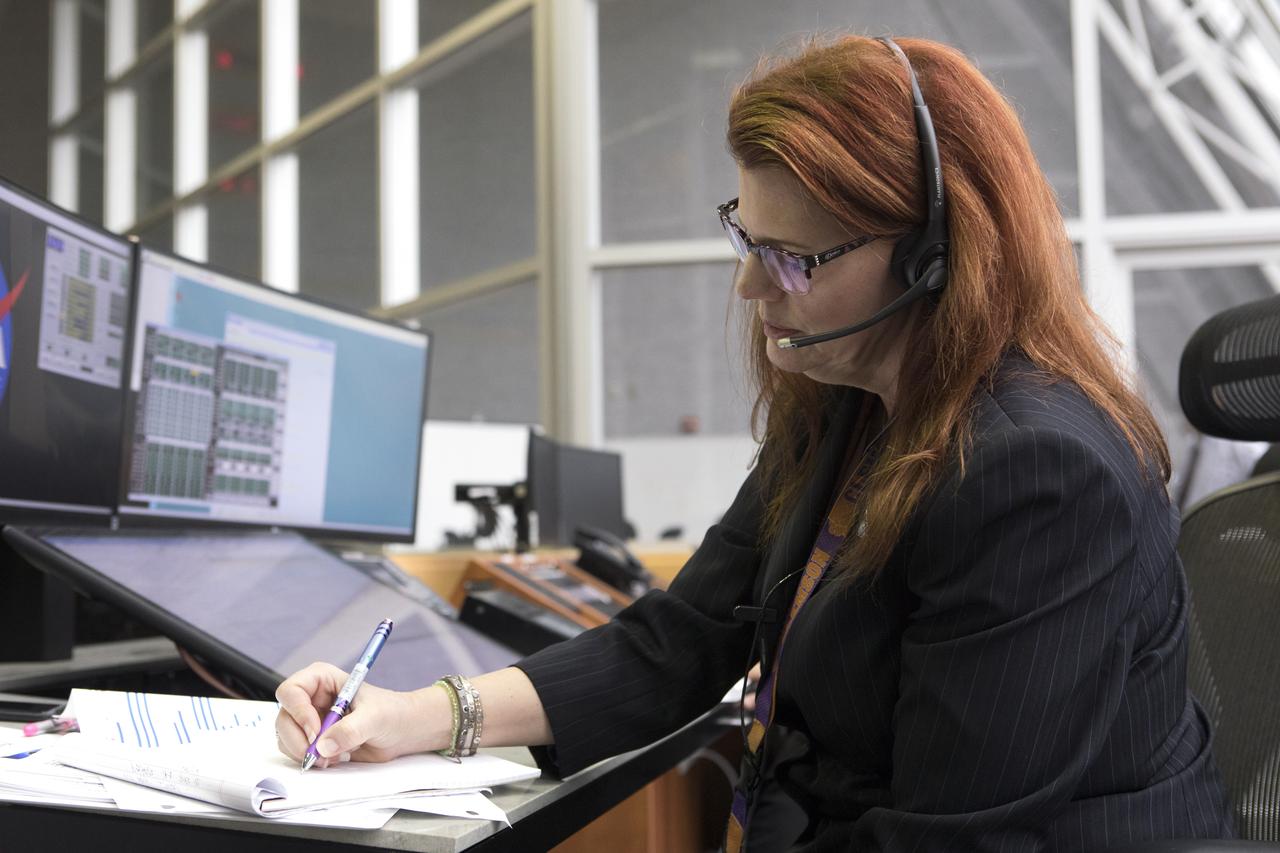
NASA Launch Director Charlie Blackwell-Thompson makes notes at her console in Firing Room 1 at the Kennedy Space Center's Launch Control Center during a terminal countdown demonstration for Exploration Mission 1, or EM-1. The launch will be the first integrated test of the Space Launch System rocket and Orion spacecraft that will eventually take astronauts beyond low-Earth orbit to destinations such as the Moon and Mars. Taking place on Dec. 14, 2018, the countdown demonstration was intended to validate the launch team's capability to perform an EM-1 countdown and respond to challenges put into the system for practice.