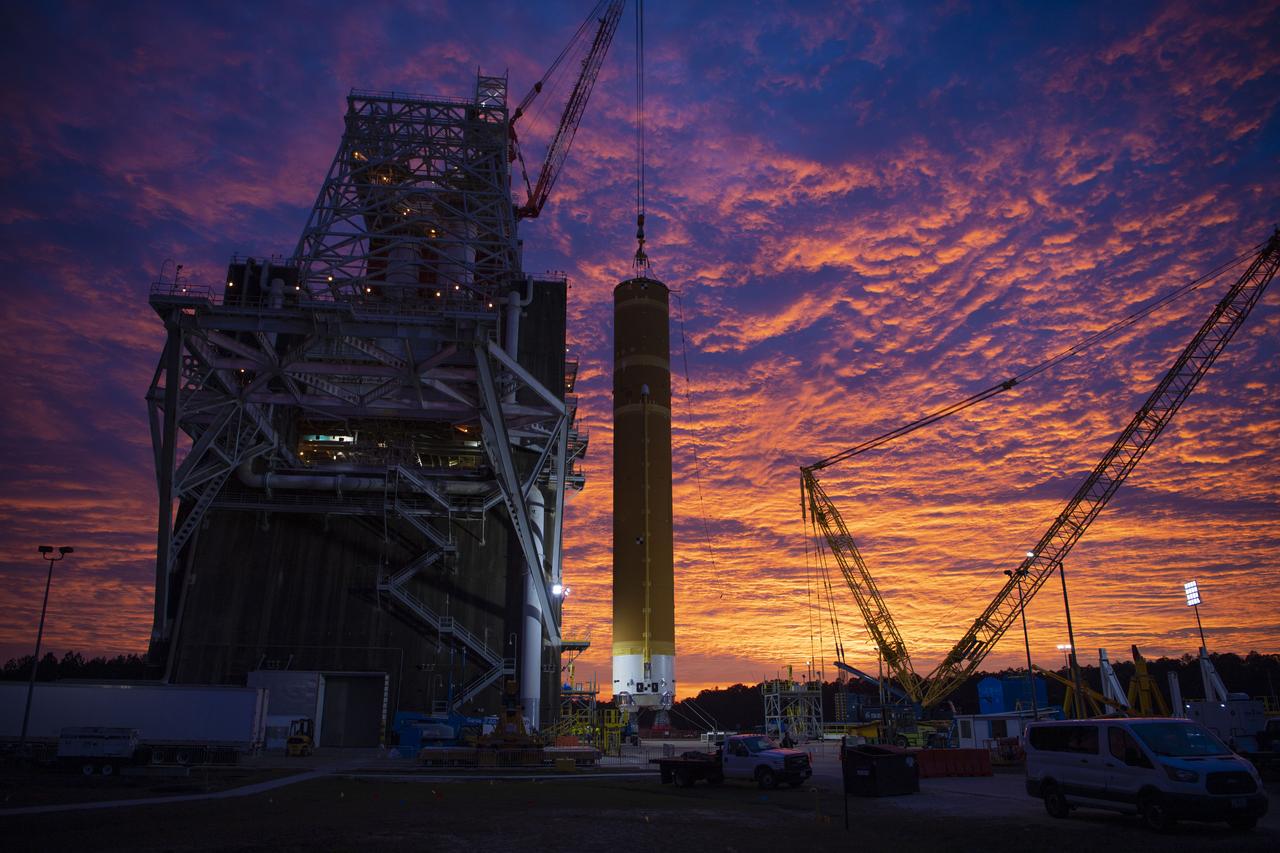
On Jan. 21-22, 2020, crews at Stennis Space Center lifted and installed the first core stage of NASA’s new Space Launch System (SLS) rocket onto the B-2 Test Stand. In upcoming months, a top-to-bottom, integrated series of Green Run tests will be conducted on the stage and its sophisticated systems. Following testing, the stage will be used to help launch the maiden Artemis I test mission of SLS and the Orion spacecraft. Through the Artemis program, NASA will send humans, including the first woman and next man, to the Moon to establish a sustainable presence.
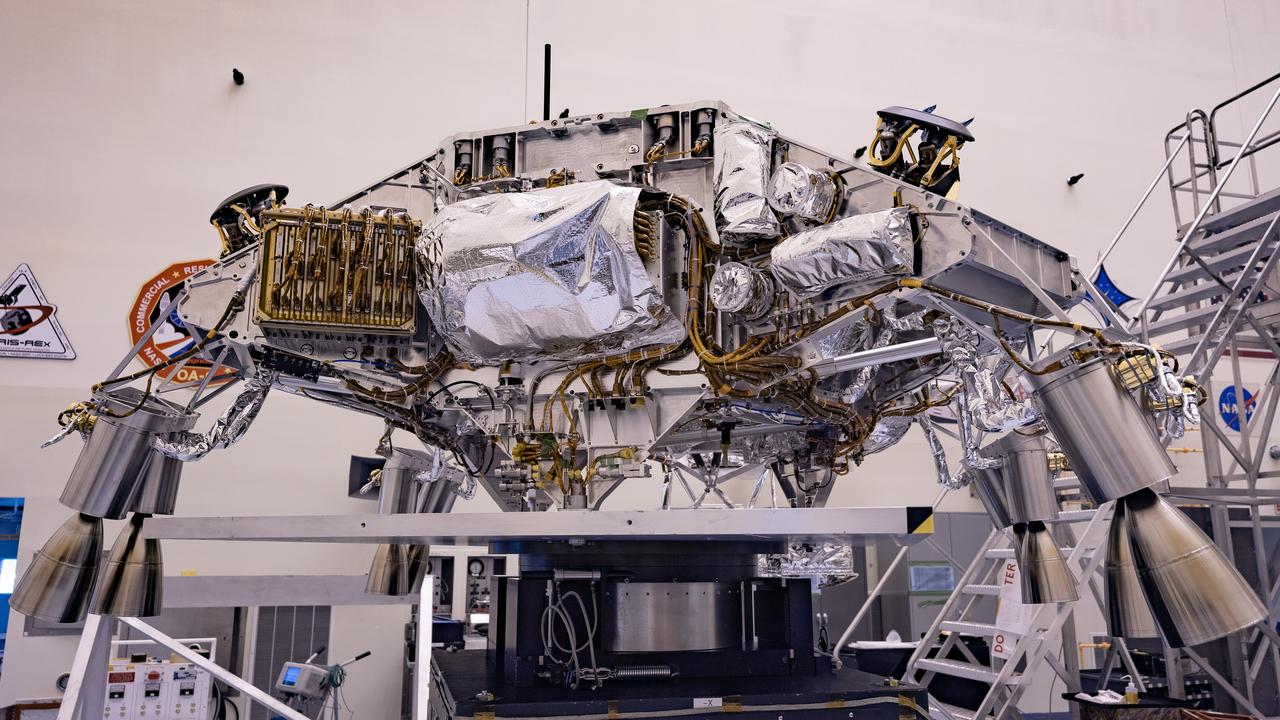
Engineers perform mass properties testing on the rocket-powered descent stage of NASA’s Mars Perseverance rover at Kennedy Space Center on April 12, 2020. The testing to determine the center of gravity, or the point at which weight is evenly dispersed on all sides, was performed inside the Florida spaceport’s Payload Hazardous Servicing Facility. The descent stage will lower the rover through the thin Martian atmosphere and onto the surface on Feb. 18, 2021. Liftoff, aboard a United Launch Alliance Atlas V 541 rocket, is targeted between July 17 and Aug. 5 from Cape Canaveral Air Force Station. NASA’s Launch Services Program based at Kennedy is managing the launch. The rover will seek signs of ancient life and collect rock and soil samples for possible return to Earth.

Today's VIS image shows a small portion of the immense lava flows that originated from Arsia Mons. Arsia Mons is the southernmost of the three large aligned volcanoes in the Tharsis region. The different surface textures are created by differences in the lava viscosity and cooling rates. The lobate margins of each flow can be traced back to the start of each flow — or to the point where they are covered by younger flows. Flows in Daedalia Planum can be as long as 180 km. Orbit Number: 80765 Latitude: -22.4517 Longitude: 237.984 Instrument: VIS Captured: 2020-02-28 12:04 https://photojournal.jpl.nasa.gov/catalog/PIA23901

NASA astronaut Mike Hopkins, center, speaks to members of the media after arriving from Houston at the Launch and Landing Facility at NASA’s Kennedy Space Center with fellow NASA astronauts Shannon Walker, Victor Glover, and Japan Aerospace Exploration Agency (JAXA) astronaut Soichi Noguchi, ahead of SpaceX’s Crew-1 mission, Sunday, Nov. 8, 2020, in Florida. NASA’s SpaceX Crew-1 mission is the first operational mission of the SpaceX Crew Dragon spacecraft and Falcon 9 rocket to the International Space Station as part of the agency’s Commercial Crew Program. Hopkins, Glover, Walker, and Noguchi are scheduled to launch at 7:49 p.m. EST on Saturday, Nov. 14, from Launch Complex 39A at the Kennedy Space Center. Photo Credit: (NASA/Joel Kowsky)
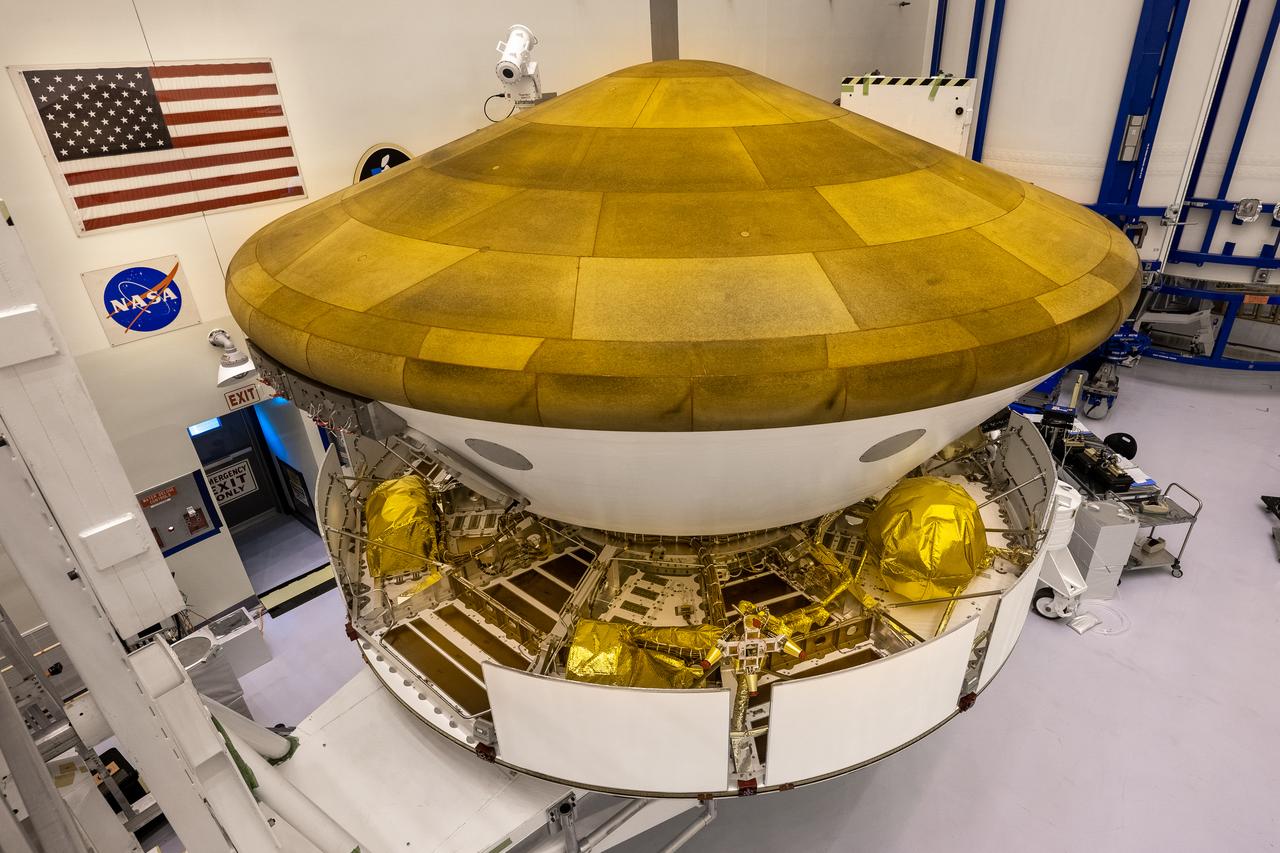
Inside the Payload Hazardous Servicing Facility at NASA’s Kennedy Space Center in Florida, the Backshell-Powered Descent Vehicle, in view, and Entry Vehicle assemblies are being attached to the Mars Perseverance rover on May 29, 2020. The cone-shaped backshell contains the parachute, and along with the mission’s heat shield, provides protection for the rover and descent stage during Martian atmospheric entry. The Mars Perseverance rover is scheduled to launch on July 20 atop a United Launch Alliance Atlas V 541 rocket from Pad 41 at nearby Cape Canaveral Air Force Station. The rover is part of NASA’s Mars Exploration Program, a long-term effort of robotic exploration of the Red Planet. The rover will search for habitable conditions in the ancient past and signs of past microbial life on Mars. The Launch Services Program at Kennedy is responsible for launch management.
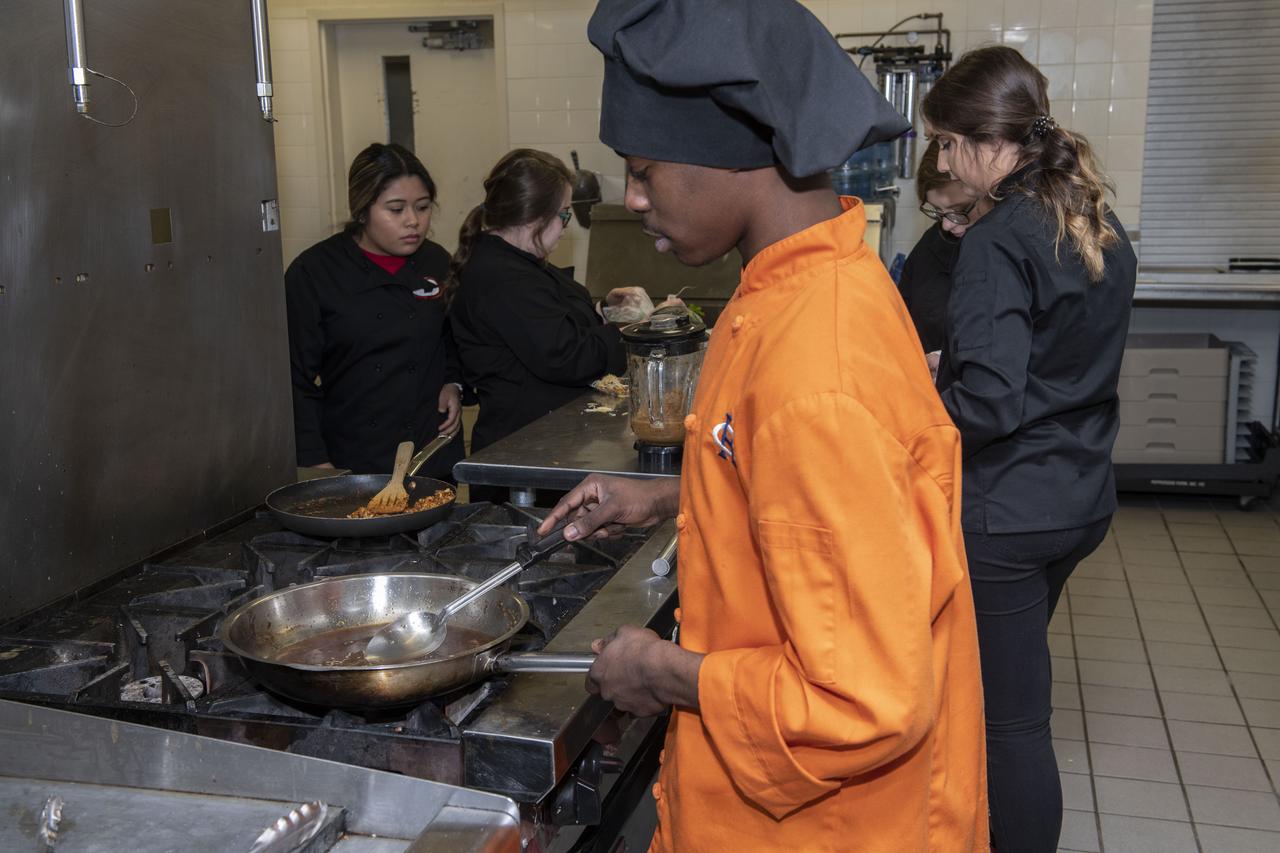
HUNCH (High School Students United with NASA to Create Hardware) students came together at the U.Sl Space and Rocket Center (USSRC) in a competition to create recipes for food to feed astronauts in space. Six teams from North Alabama and George participated. The winner will compete with students from competitions at other NASA centers later at the Johnson Space Flight Center.
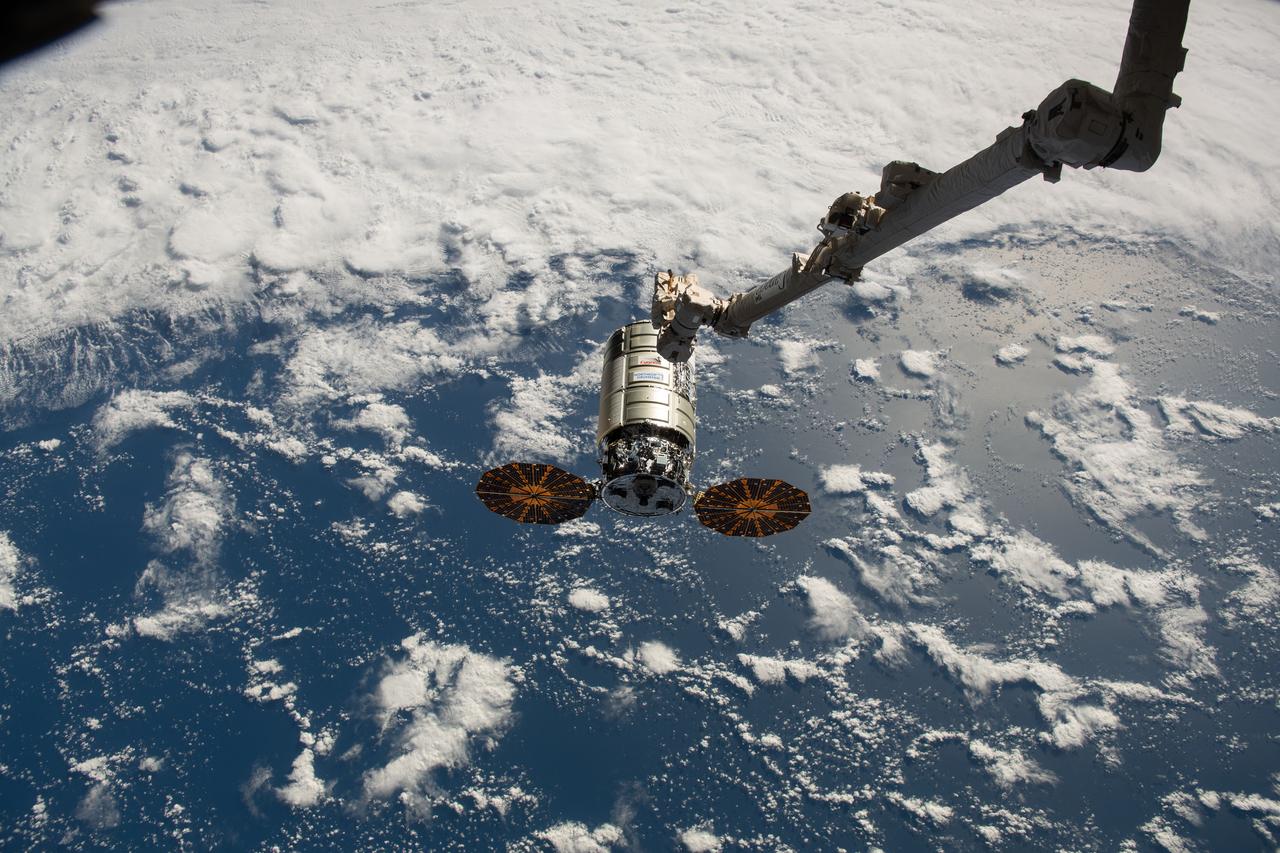
iss063e101288 (Oct. 5, 2020) --- The Northrop Grumman Cygnus space freighter approaches the International Space Station as the Canadarm2 robotic arm is poised to reach out and capture the cargo vehicle.
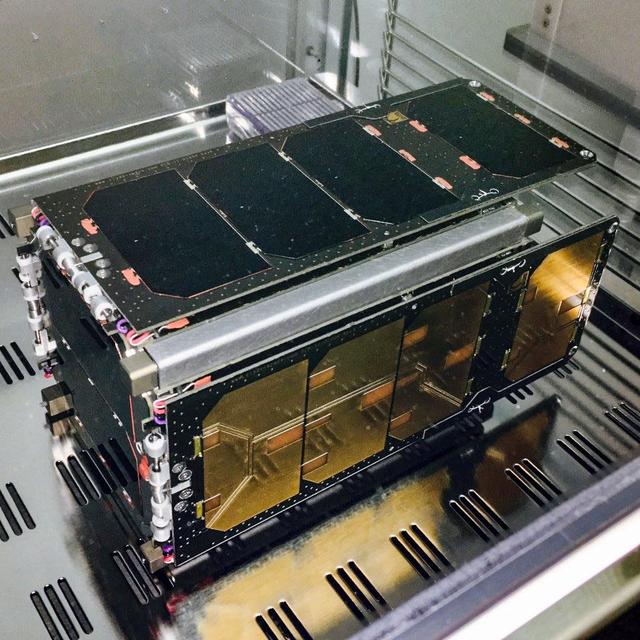
Jsc2020e004942(2/7/2020) — A preflight view of the CryoCube BUS. CryoCube demonstrates on-orbit thermal management technology. Such technology has a variety of potential applications, including storing rocket propellants in space, cooling instruments to improve their signal-to-noise ratios, and supporting future cryogenic experiments in microgravity. The small satellite uses a deployable shield to block radiation from the Sun and Earth and an attitude control system to point its experiment into deep space. Image courtesy of: Sierra Lobo Inc.
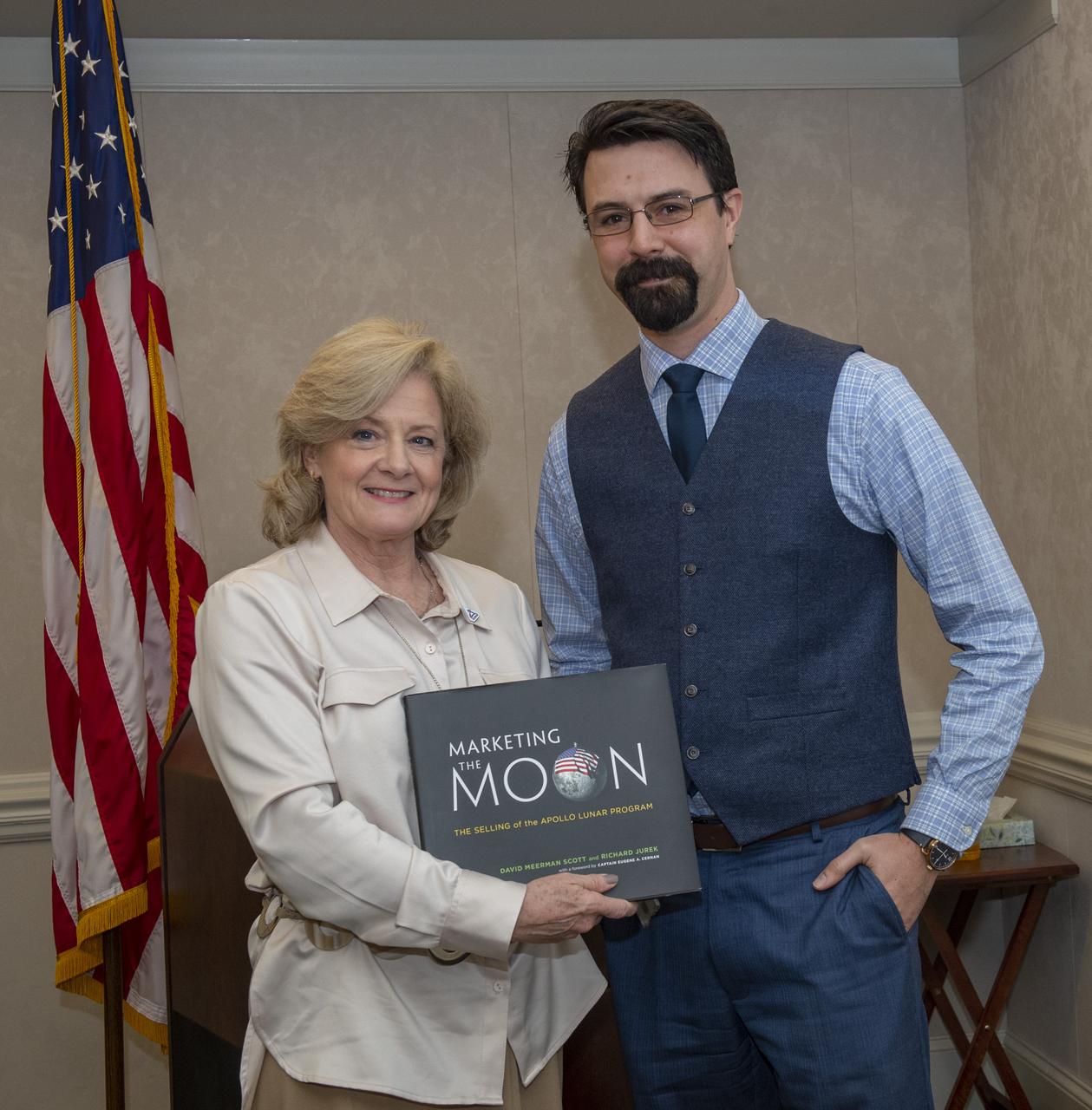
Matthew McSavaney presents memento to Jody Singer in appreciation of her speaking at February, 2020, Marshall Association Luncheon.
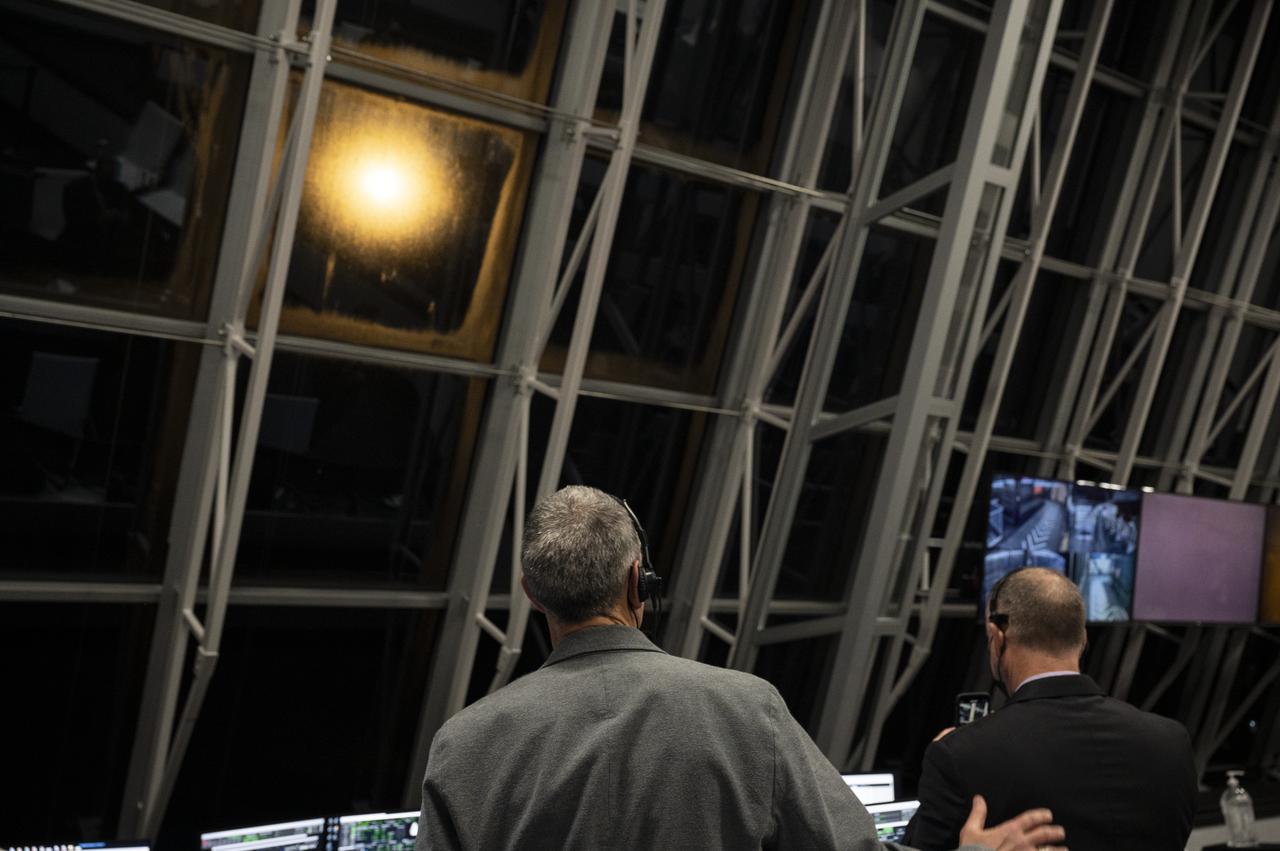
Lee Rosen, vice president, Mission and Launch Operations at SpaceX pats Norm Knight, deputy director of Flight Operations at NASA's Johnson Space Center on the back as they watch the launch of a SpaceX Falcon 9 rocket carrying the company's Crew Dragon spacecraft on NASA’s SpaceX Crew-1 mission with NASA astronauts Mike Hopkins, Victor Glover, Shannon Walker, and Japan Aerospace Exploration Agency (JAXA) astronaut Soichi Noguchi onboard, Sunday, Nov. 15, 2020, in firing room four of the Launch Control Center at NASA’s Kennedy Space Center in Florida. NASA’s SpaceX Crew-1 mission is the first crew rotation mission of the SpaceX Crew Dragon spacecraft and Falcon 9 rocket to the International Space Station as part of the agency’s Commercial Crew Program. Hopkins, Glover, Walker, and Noguchi launched at 7:27 p.m. EST, from Launch Complex 39A at the Kennedy Space Center. Photo Credit: (NASA/Aubrey Gemignani)
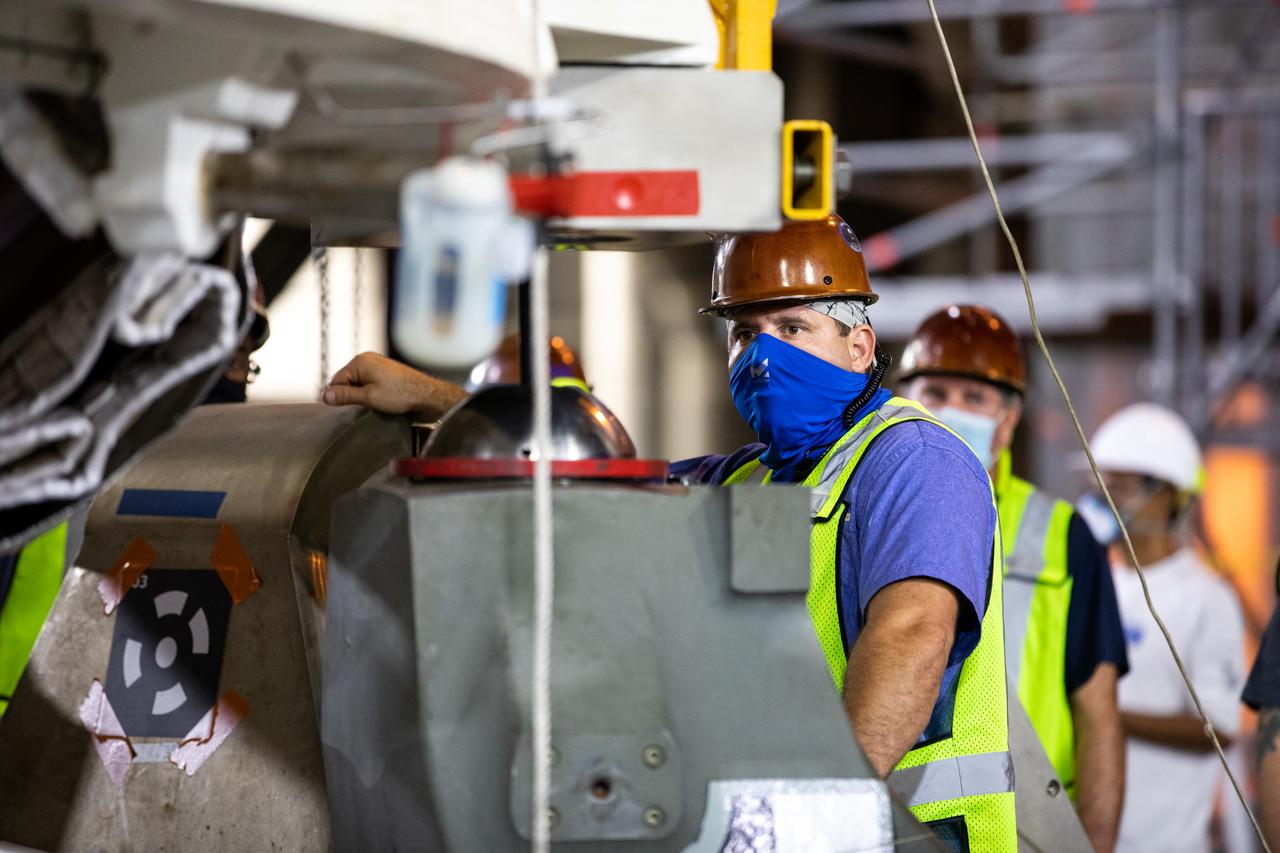
In the Vehicle Assembly Building (VAB) at NASA’s Kennedy Space Center in Florida, Tristan Bremner, a launch vehicle technician with Jacobs, helps secure the second of two Artemis I aft booster segments for the Space Launch System onto the mobile launcher in High Bay 3 on Nov. 24, 2020. Workers with Exploration Ground Systems and contractor Jacobs teams will stack the twin five-segment boosters on the mobile launcher over a number of weeks. When the core stage arrives, it will join the boosters on the mobile launcher, followed by the interim cryogenic propulsion stage and Orion spacecraft. Manufactured by Northrop Grumman in Utah, the twin boosters provide more than 75 percent of the total SLS thrust at launch. The SLS is managed by Marshall Space Flight Center in Huntsville, Alabama. Under the Artemis program, NASA will land the first woman and the next man on the Moon by 2024. The first in a series of increasingly complex missions, Artemis I will test the Orion spacecraft and SLS as an integrated system ahead of crewed flights to the Moon.
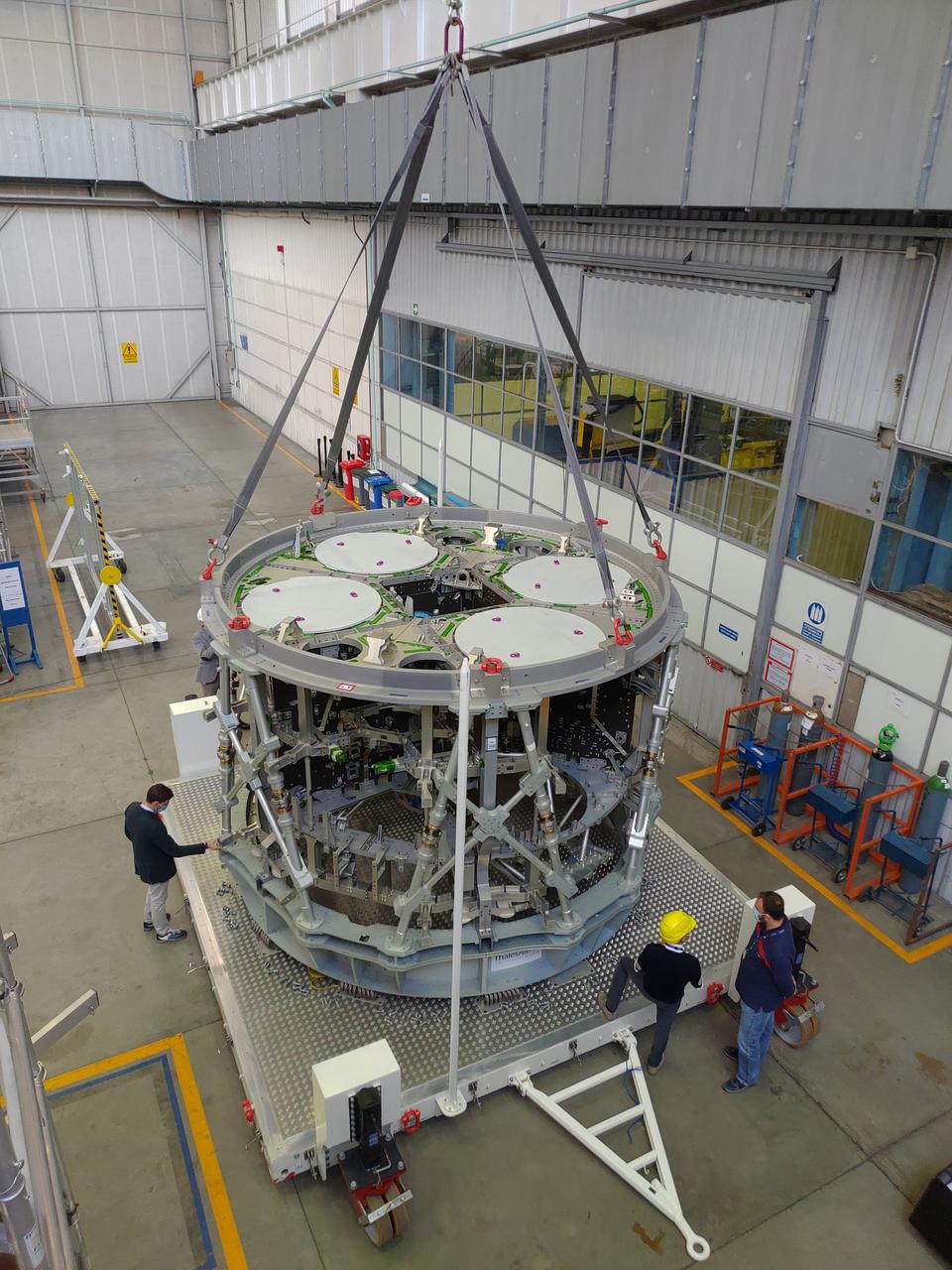
The ESA service module primary structure, which will propel Orion on the Artemis III flight carrying astronauts to land on the surface of the Moon, is ready to ship from Thales Alenia Space in Turin, Italy to Airbus in Bremen, Germany. Giorgio (Gios) Borello, Thales Alenia Space AIT (Assembly, Integration & Testing) mechanical expert, guides the service module structure to the base of the transportation container on Sept. 30, 2020. Airbus will perform final assembly on the service module ahead of shipment to Kennedy Space Center where it will be integrated with the rest of the Orion spacecraft.
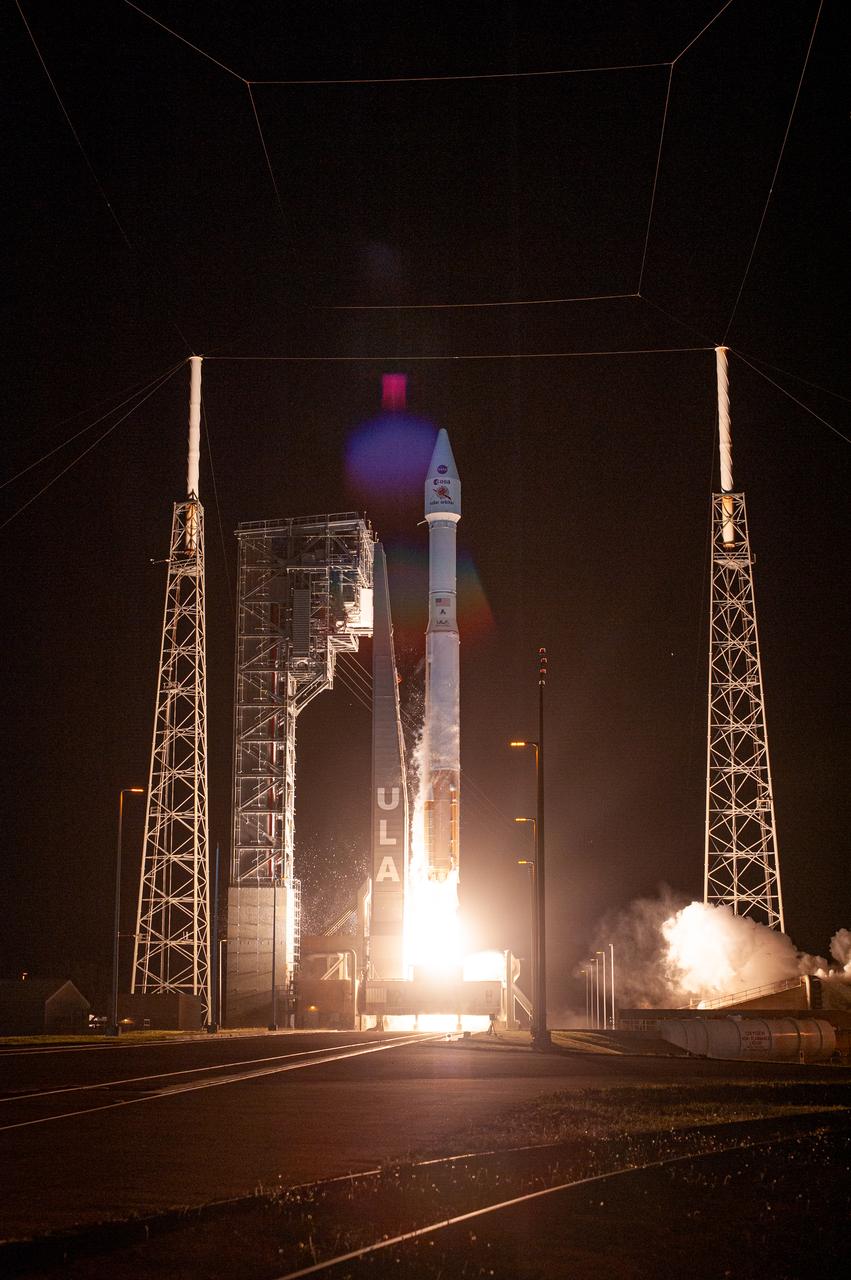
The United Launch Alliance Atlas V rocket, carrying the Solar Orbiter, lifts off Space Launch Complex 41 at Cape Canaveral Air Force Station in Florida at 11:03 p.m. EST, on Feb. 9, 2020. Solar Orbiter is an international cooperative mission between ESA (European Space Agency) and NASA. The mission aims to study the Sun, its outer atmosphere and solar wind. The spacecraft will provide the first images of the Sun’s poles. The spacecraft was developed by Airbus Defence and Space. NASA’s Launch Services Program based at Kennedy managed the launch.
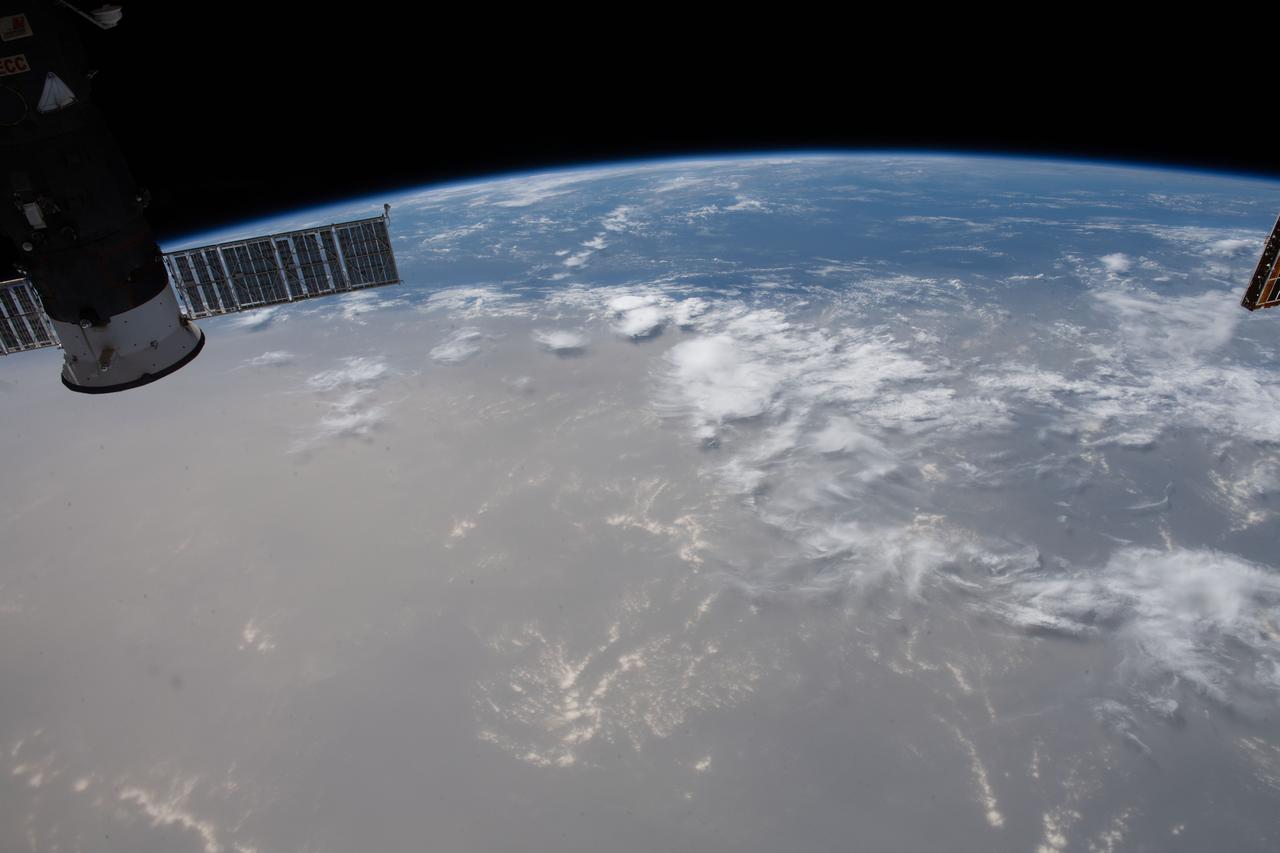
iss063e032020 (June 21, 2020) --- What looks like land is actually a Saharan dust cloud that has blown over the Atlantic Ocean and is nearing the Caribbean Sea.
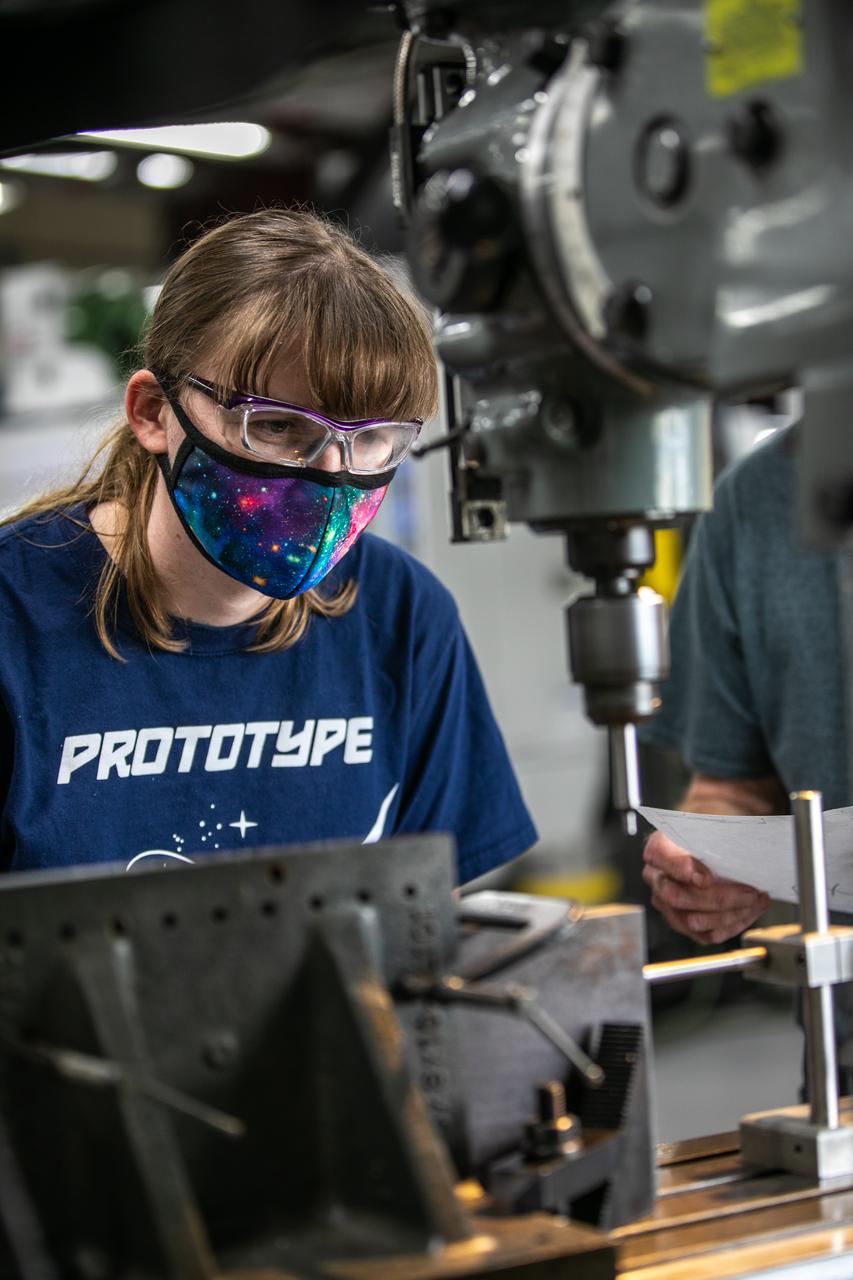
Katie Mortensen, a mechanical engineering technician, machines test article materials inside the Prototype Development Laboratory at NASA’s Kennedy Space Center in Florida on Oct. 21, 2020. The prototype laboratory designs, fabricates, and tests prototypes, test articles and test support equipment. It has a long history of providing fast solutions to complex operations problems. The lab’s teams of engineers use specialized equipment to produce exacting, one-of-a-kind items made from a range of materials depending on the design. The lab supports projects at Kennedy and at the agency level.
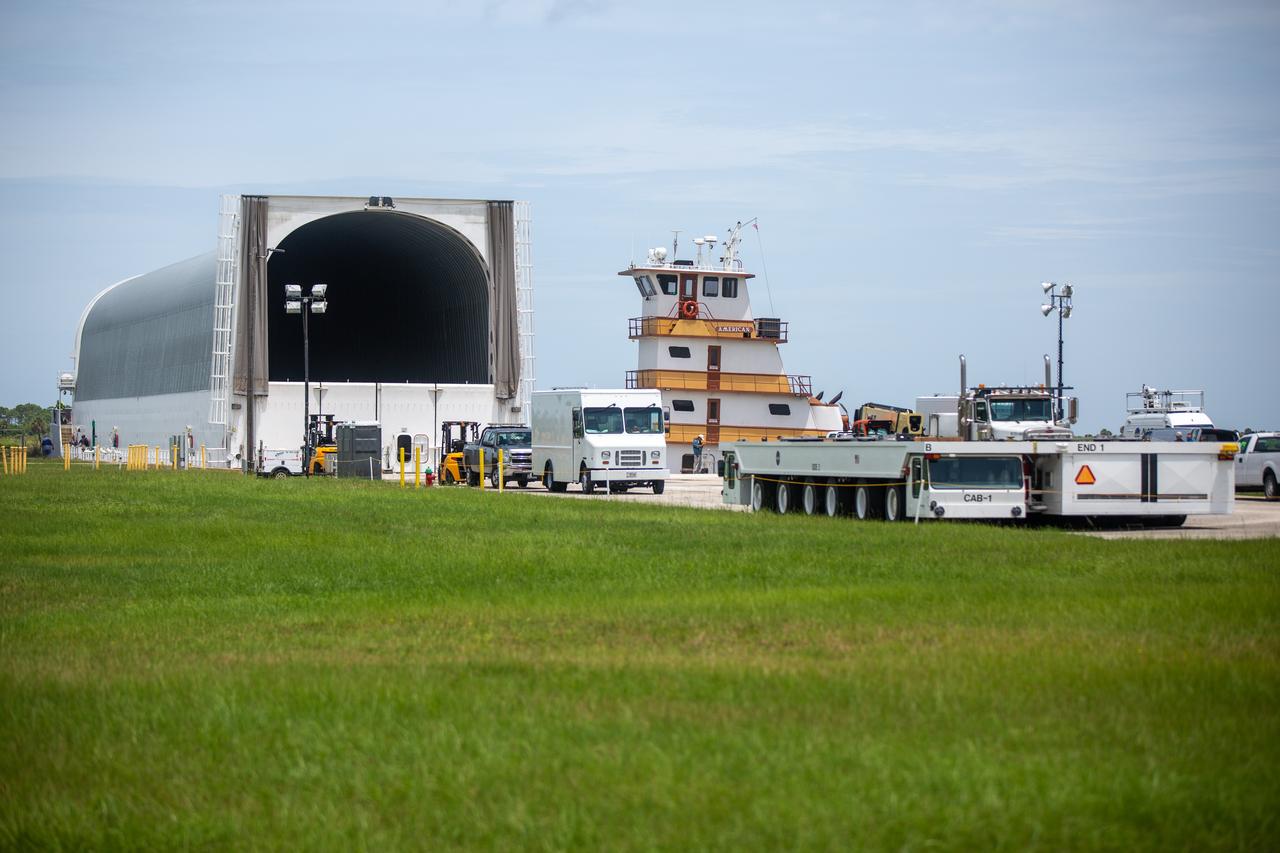
NASA’s Pegasus barge, carrying the launch vehicle stage adapter (LVSA) for the agency’s Space Launch System (SLS) rocket, arrives at the Kennedy Space Center Launch Complex 39 turn basin wharf on July 29, 2020. Traveling to Florida from NASA’s Marshall Space Flight Center in Huntsville, Alabama, the LVSA will connect the SLS core stage to the rocket’s upper stage for the Artemis I launch. Once the LVSA is offloaded, it will be moved to High Bay 4 in the Vehicle Assembly Building for processing ahead of launch. The first launch under the agency’s Artemis program, Artemis I will test SLS and the Orion spacecraft as an integrated system prior to crewed flights to the Moon.

jsc2019e017848 (April 30, 2020) --- NASA astronauts Robert Behnken (left) and Doug Hurley will launch to the International Space Station on the Demo-2 mission – the crew flight test of SpaceX’s Crew Dragon. Credit: SpaceX/Ashish Sharma

NASA Kennedy Space Center Deputy Director Janet Petro participates in a virtual town hall meeting on Aug. 20, 2020, inside the Florida spaceport’s Press Site auditorium. During the town hall, Kennedy’s senior leaders answered questions submitted by the workforce and discussed a wide range of topics, including upcoming milestones, updates on the criteria for returning to onsite work, and diversity and inclusion at the multi-user spaceport.
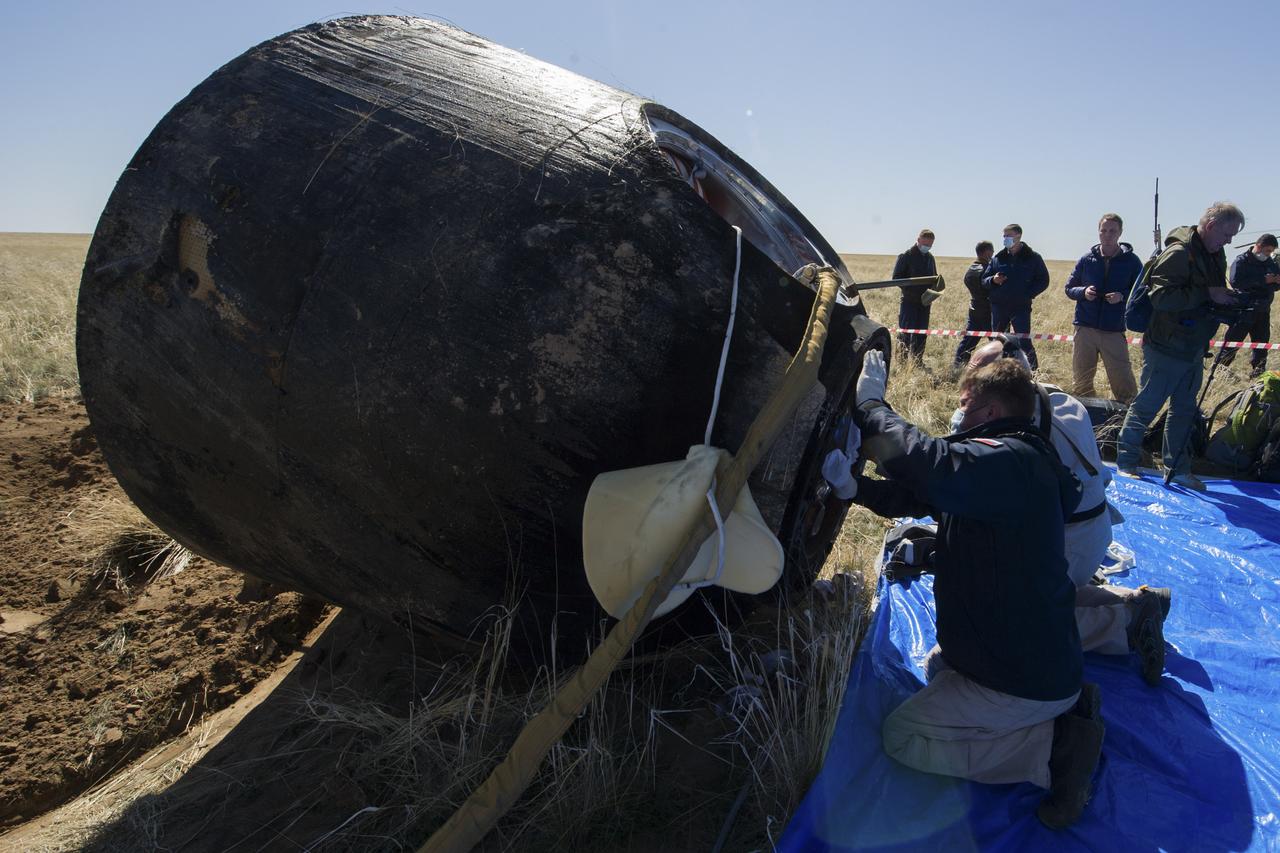
Russian Search and Rescue teams arrive at the Soyuz MS-15 spacecraft shortly after it landed in a remote area near the town of Zhezkazgan, Kazakhstan with Expedition 62 crew members Jessica Meir and Drew Morgan of NASA, and Oleg Skripochka of Roscosmos, Friday, April 17, 2020. Meir and Skripochka returned after 205 days in space, and Morgan after 272 days in space. All three served as Expedition 60-61-62 crew members onboard the International Space Station. Photo Credit: (NASA/GCTC/Andrey Shelepin)
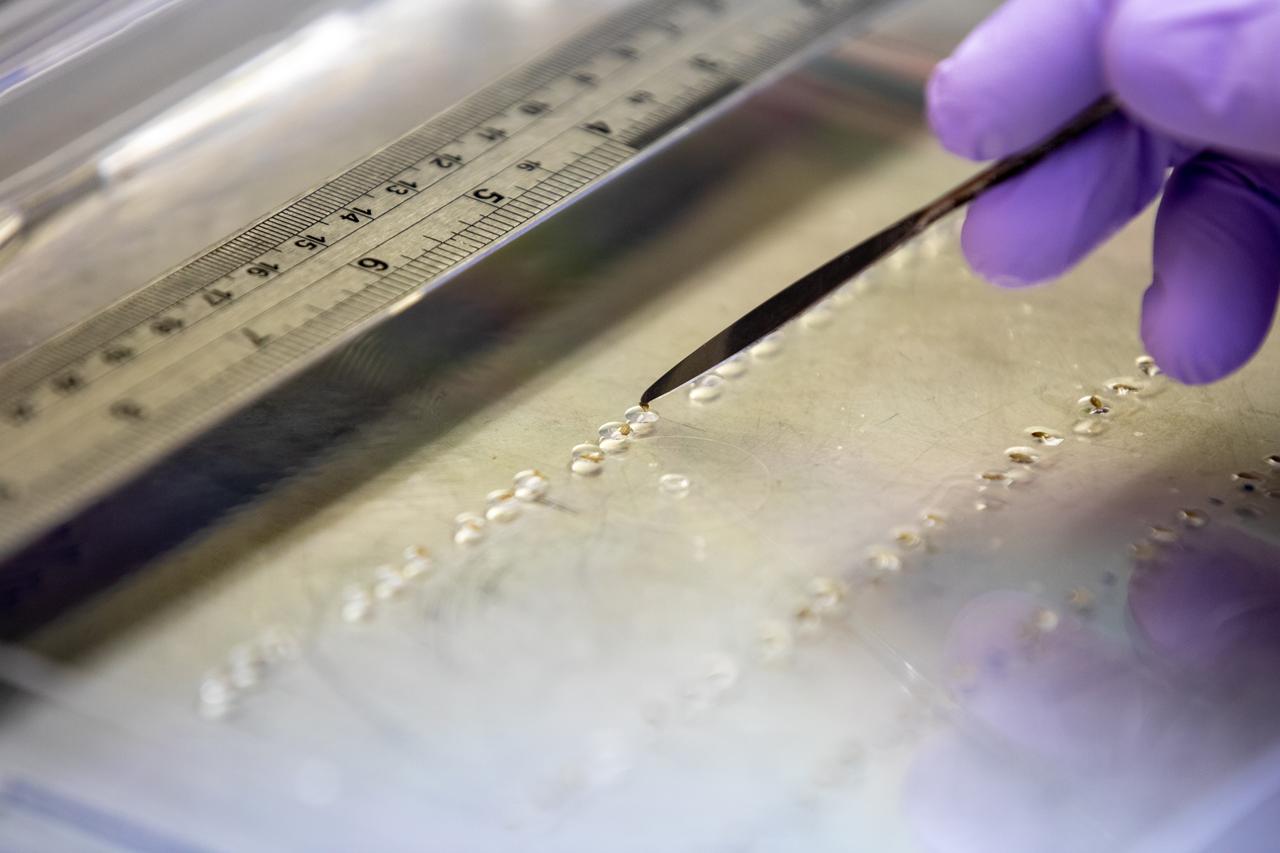
Inside the Space Station Processing Facility at NASA’s Kennedy Space Center in Florida, red romaine lettuce seeds are affixed to seed film – a new seed handling material – on Jan. 15, 2020. The seed film is being prepared for the VEG-03 J experiment that will fly to the International Space Station on Northrop Grumman’s 13th resupply services (NG-13) mission. This seed film experiment involves crew aboard the orbiting laboratory planting the seeds into plant pillows – a common method used to grow plants in space – themselves for the first time ever. The water-soluble, dissolving film addresses the challenge of handling seeds in a microgravity environment and also can be used to deliver fertilizers and other beneficial substances that help plants grow. NG-13 is scheduled to launch from the agency’s Wallops Flight Facility in Virginia on Feb. 9, 2020, at 5:39 p.m. EST.
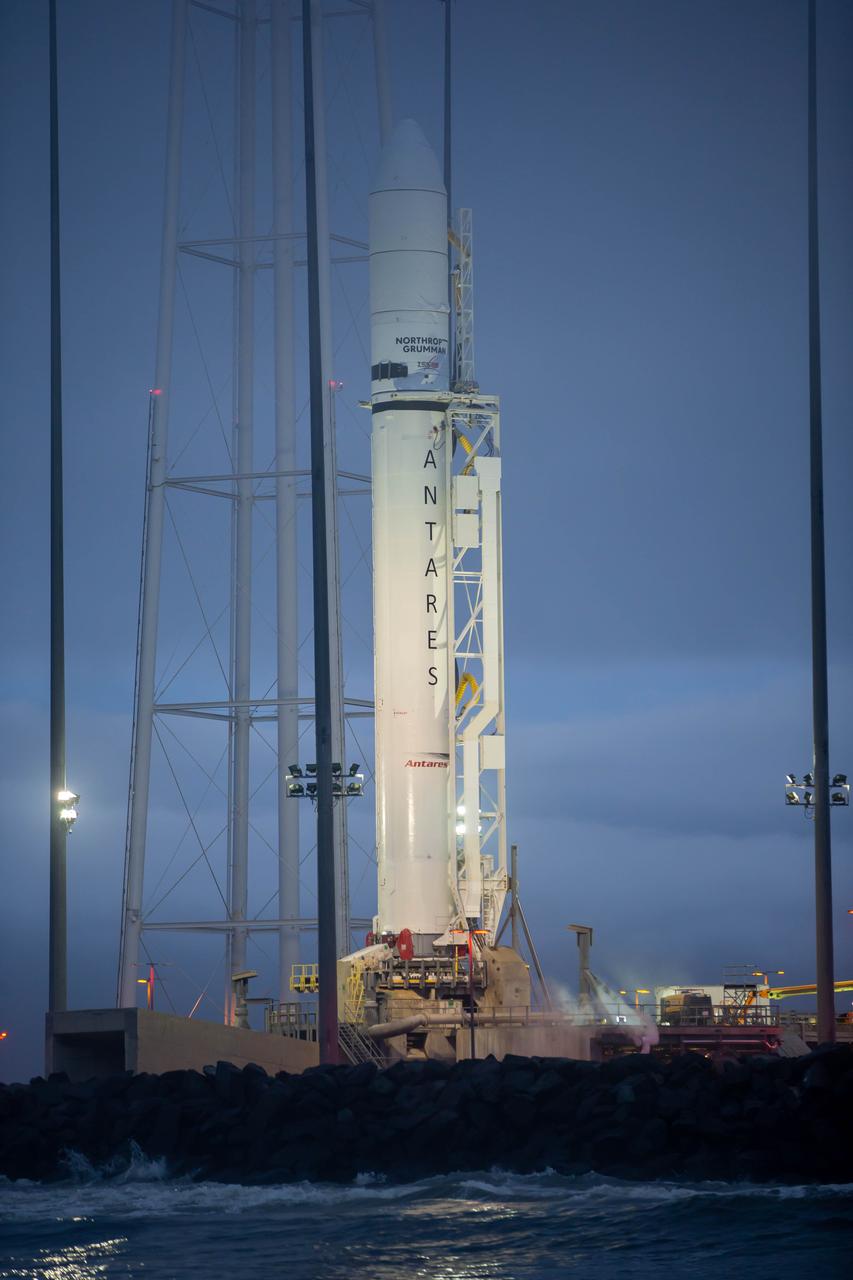
A Northrop Grumman Antares rocket carrying a Cygnus resupply spacecraft is raised into the vertical position on the Mid-Atlantic Regional Spaceport’s Pad-0A, Saturday, September 26, 2020, at NASA's Wallops Flight Facility in Virginia. Northrop Grumman’s 14th contracted cargo resupply mission with NASA to the International Space Station will deliver about 8,000 pounds of science and research, crew supplies and vehicle hardware to the orbital laboratory and its crew. The CRS-14 Cygnus spacecraft is named after the first female astronaut of Indian descent, Kalpana Chawla, and is scheduled to launch at 10:27 p.m., Tuesday, September 29, 2020 EDT. Photo Credit: (NASA/Patrick Black)

These ‘Red Robin’ dwarf tomato plants, photographed Jan. 10, 2020, inside a laboratory in the Space Station Processing Facility at NASA Kennedy Space Center in Florida, are growing from seeds that have been exposed to simulated solar particle radiation. The plants’ edible mass and nutrients will be measured and compared to those of a control crop, grown from non-irradiated seeds. The project was designed to confirm that nutritious, high-quality produce can be reliably grown in deep space, or to provide a baseline to guide development of countermeasures to protect future crop foods from radiation during missions beyond low-Earth orbit. The investigation on space radiation impact on seeds and crop production also will be carried on the Materials International Space Station Experiment (MISSE) platform outside the station, supported NASA’s Space Technology Mission Directorate and the Space Biology Program, and potentially on future beyond-low-Earth platforms.

Today's VIS image shows a portion of an unnamed channel in northern Arabia Terra. Numerous channels dissect this region of Arabia Terra where it borders the northern lowlands. Orbit Number: 81196 Latitude: 36.607 Longitude: 35.816 Instrument: VIS Captured: 2020-04-04 00:06 https://photojournal.jpl.nasa.gov/catalog/PIA23939

Inside the Launch Control Center’s Firing Room 1 at NASA’s Kennedy Space Center in Florida, members of the Artemis I launch team rehearse the procedures for fueling the Space Launch System (SLS) rocket with super cold propellants, or cryogenics, on Aug. 18, 2020. During the cryogenic simulation, potential problem scenarios were introduced to test the tools, processes, and procedures necessary for fueling the rocket. Artemis I will be the first integrated test flight of SLS and the Orion spacecraft – the system that will ultimately land the first woman and the next man on the Moon by 2024.
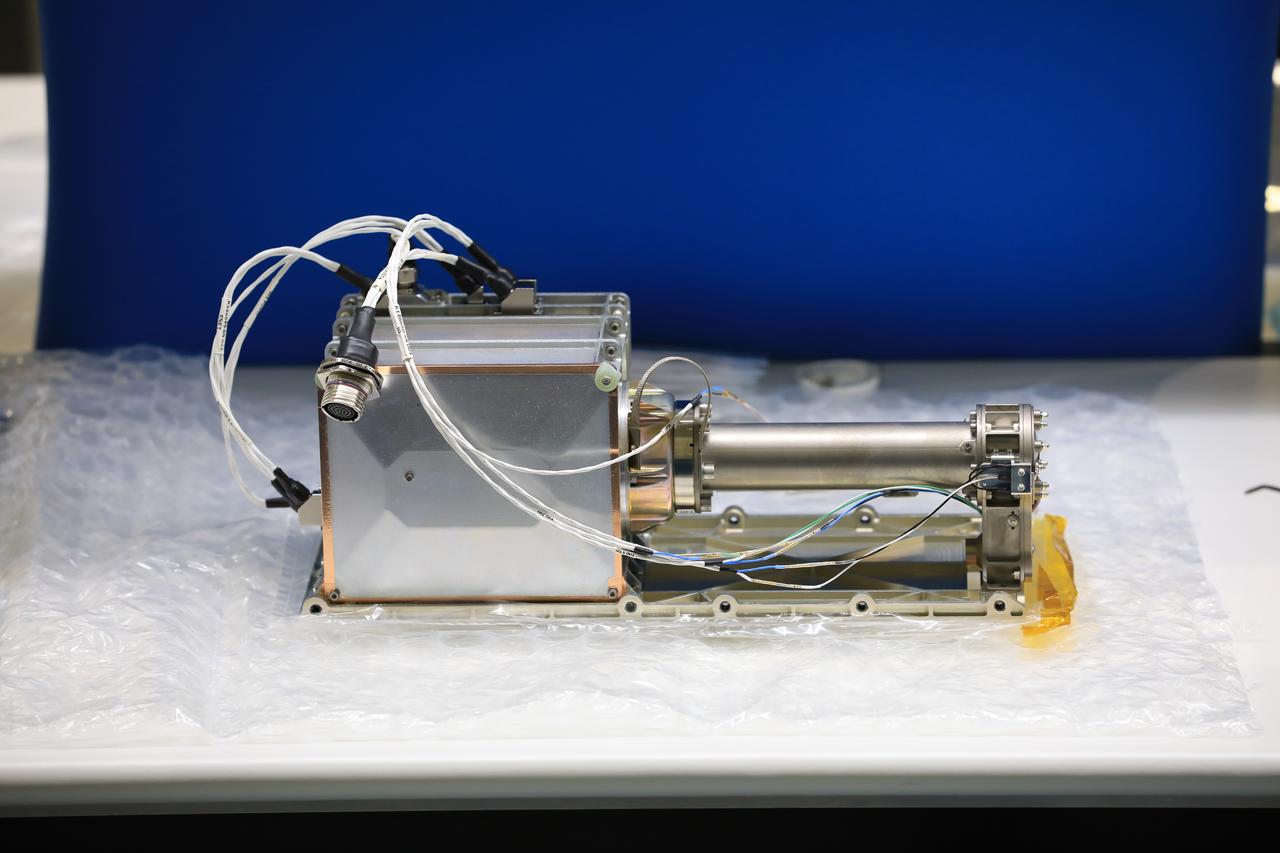
The Mass Spectrometer Observing Lunar Operations (MSolo) instrument is photographed inside the Space Station Processing Facility at NASA’s Kennedy Space Center in Florida following installation of its radiator on Sept. 25, 2020. MSolo will help analyze the chemical makeup of landing sites on the Moon, as well as study water on the lunar surface. The radiator will help keep the instrument’s temperature stable in the extreme heat and cold it will encounter. MSolo instruments are scheduled to launch on multiple robotic missions as part of NASA’s Commercial Lunar Payload Services (CLPS), with the first of these missions exploring Lacus Mortis, a large crater on the near side of the Moon, beginning in 2021. MSolo also will be one of three instruments on the agency’s water-hunting Volatiles Investigating Polar Exploration Rover, VIPER, scheduled to launch to the Moon’s South Pole in late 2023.
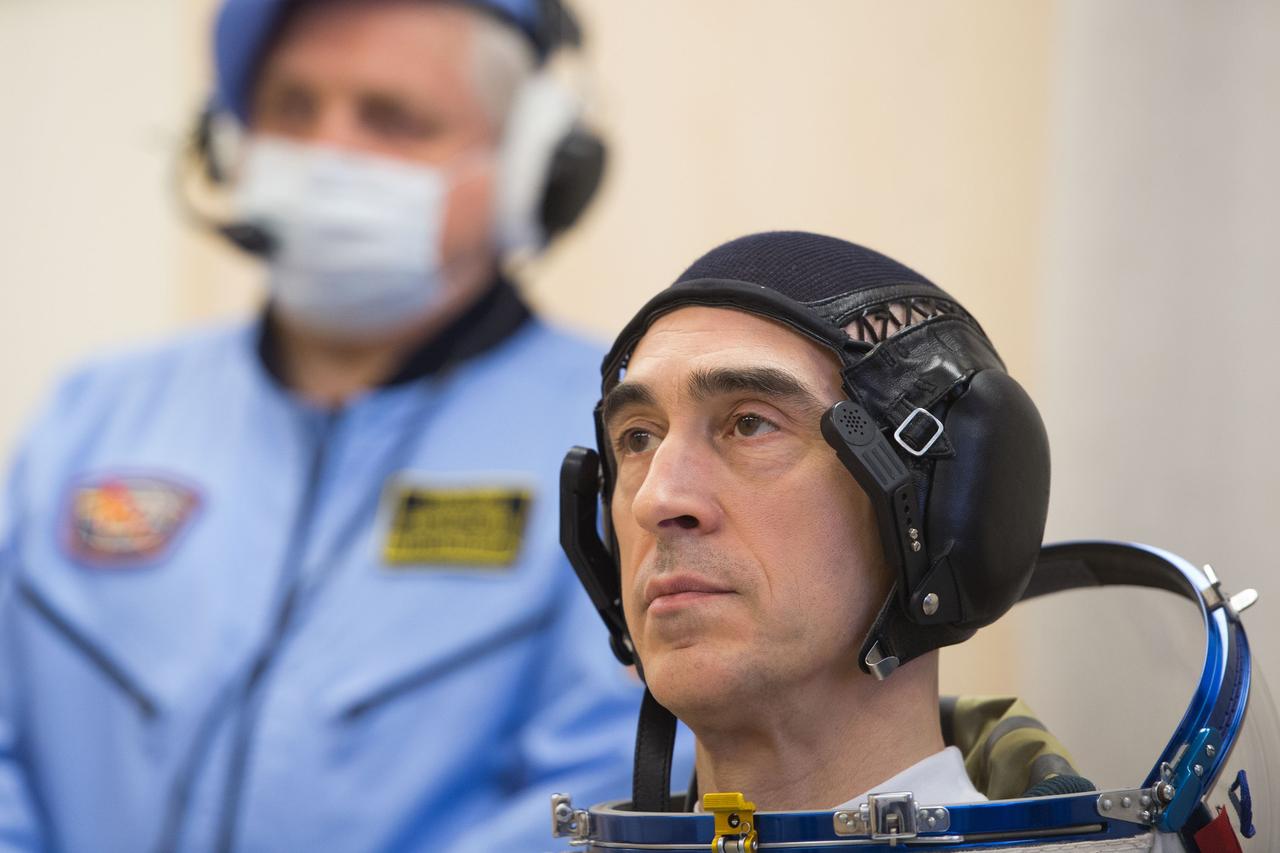
jsc2020e017070 - Expedition 63 Preflight - Expedition 63 crewmember Anatoly Ivanishin of Roscosmos dons his Sokol suit a few hours ahead of his launch on a Soyuz rocket with Ivan Vagner of Roscosmos, and Chris Cassidy of NASA, Thursday, April 9, 2020 at the Baikonur Cosmodrome in Kazakhstan. A few hours later, they lifted off for a six-and-a-half month mission on the International Space Station. Photo Credit: (NASA/GCTC/Andrey Shelepin)
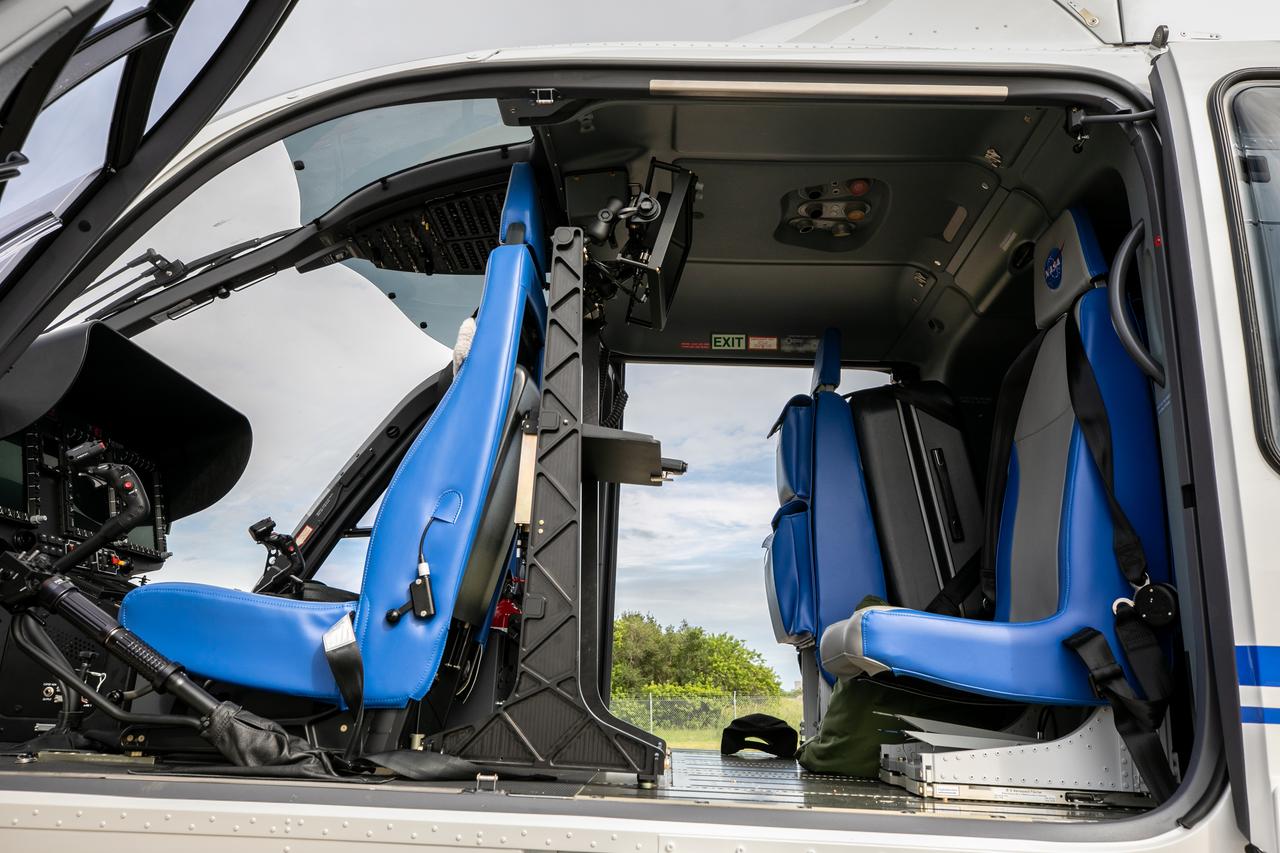
The interior of a new Airbus H135 (T3) helicopter is displayed after arriving at the Launch and Landing Facility runway at NASA’s Kennedy Space Center in Florida on Sept. 30, 2020. A second H135 helicopter also was delivered on Sept. 30, and a third is expected to arrive in early 2021. The three H135 helicopters will replace the Bell Huey 2 security aircraft in service now, maintained by Kennedy’s Flight Operations team. These new helicopters provide a number of technological and safety advantages over the Hueys, such as more lifting power, greater stability in the air, and expanded medical capabilities. The team expects to fully transition to flying the two H135s later this year, and once the third arrives, the fleet’s upgrade will be complete.
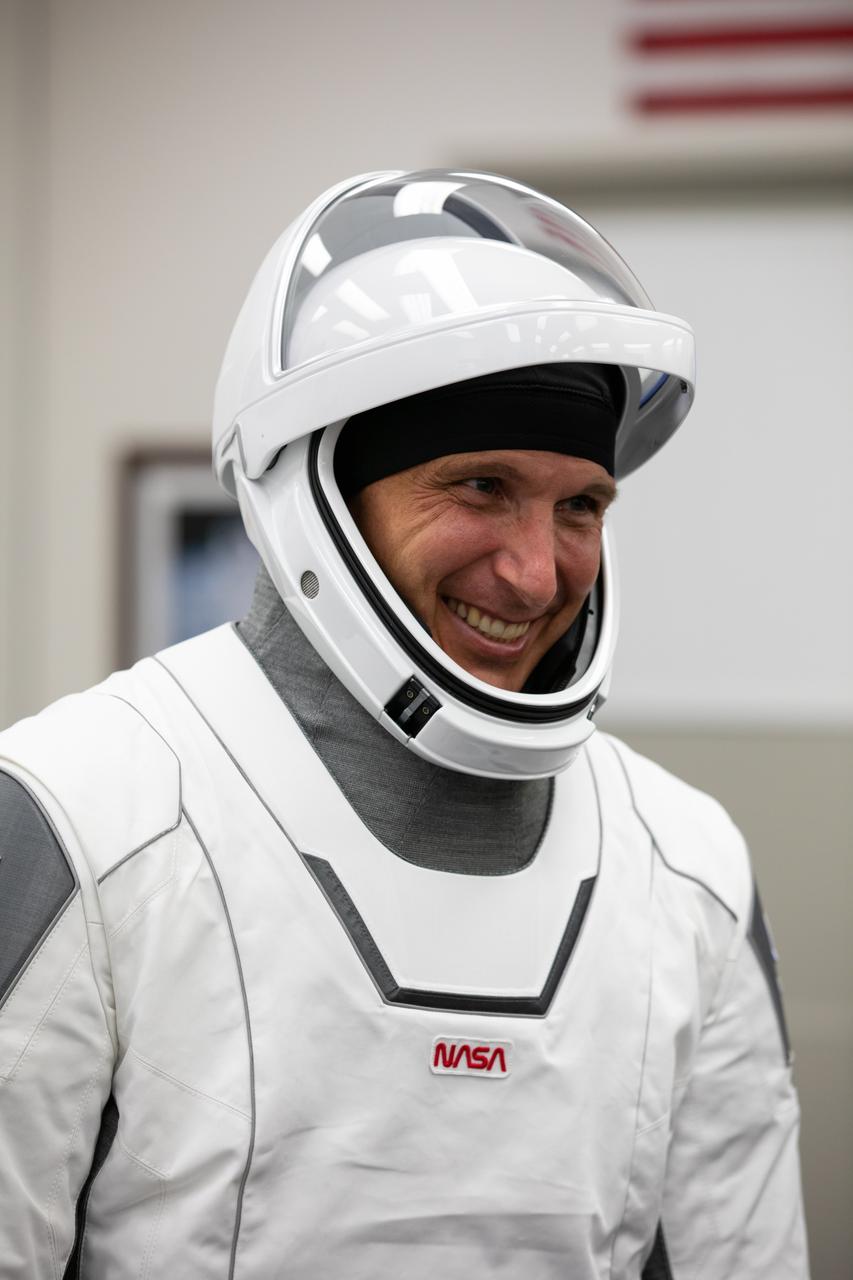
Inside the crew suit-up room in the Neil Armstrong Operations and Checkout Building at NASA’s Kennedy Space Center in Florida, on Nov. 15, 2020, NASA astronaut Michael Hopkins, spacecraft commander, is shown in a SpaceX spacesuit in preparation for NASA SpaceX’s Crew-1 mission. Crew-1 is the first regular crew mission of a U.S. commercial spacecraft with astronauts to the International Space Station as part of NASA’s Commercial Crew Program. The SpaceX Crew Dragon Resilience capsule will launch atop the company’s Falcon 9 rocket from Launch Complex 39A to the space station for a six-month science mission.
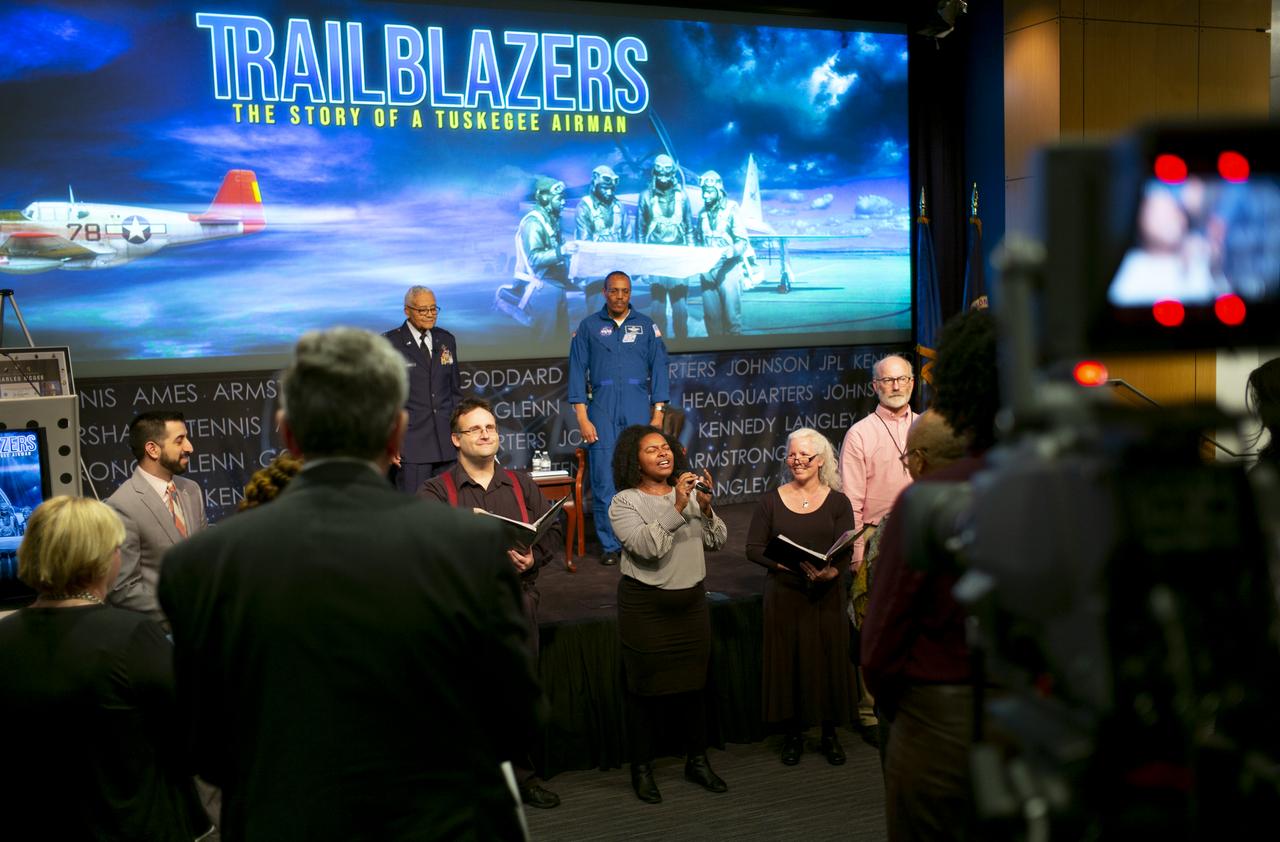
Members of the All Souls Church Unitarian Choir lead the audience in “Lift Ev’ry Voice and Sing” after a duscussion between Retired U.S. Air Force Honorary Brigadier General Charles McGee and NASA astronaut Alvin Drew during a Black History Month program titled “Trailblazers, The Story of a Tuskegee Airman,” Wednesday, Feb. 5, 2020, at NASA Headquarters in Washington, DC. McGee, a pilot with the Tuskegee Airmen during World War II, was a career officer in the Air Force also serving during the Korean and Vietnam Wars. Over his 30 years of service he flew 409 combat missions. Of the 355 Tuskegee pilots who flew in combat, McGee is one of only nine surviving. Photo Credit: (NASA/Joel Kowsky)

This VIS image is located on the South Polar Cap. A trough crosses the center of the image, showing the layered nature of the cap ice. This image was collected in early spring, and highlights the icy surface textures. Orbit Number: 81750 Latitude: -85.5564 Longitude: 308.423 Instrument: VIS Captured: 2020-05-19 14:13 https://photojournal.jpl.nasa.gov/catalog/PIA24009

Inside the Booster Fabrication Facility at NASA's Kennedy Space Center in Florida, the Artemis I aft skirts for the agency's Space Launch System (SLS) rocket’s twin solid rocket boosters are being readied for their move to the Rotation, Processing and Surge Facility (RPSF) on June 9, 2020. In view at left is the left aft skirt assembly. Behind it to the right is the right aft skirt assembly. Also in view at far right, are the Artemis I forward assemblies, with the left assembly in front and the right assembly behind it. The aft skirts were refurbished by Northrop Grumman. They house the thrust vector control system, which controls 70 percent of the steering during initial ascent of the SLS rocket. The segments will remain in the RPSF until ready for stacking with the forward and aft parts of the boosters on the mobile launcher in High Bay 3 of the Vehicle Assembly Building. Through the Artemis Program, NASA is working to land the first woman and next man on the Moon by 2024.
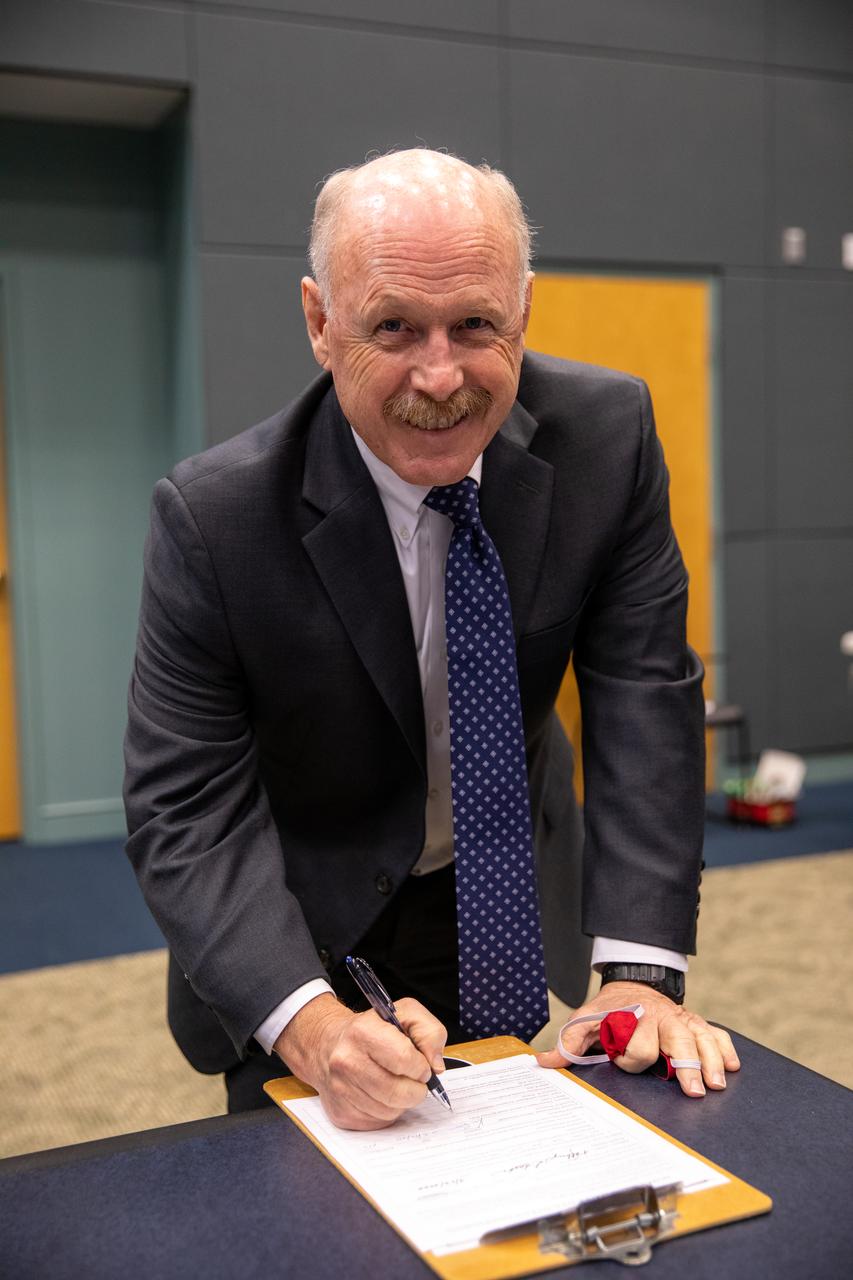
On May 22, 2020, inside the Operations Support Building II at NASA’s Kennedy Space Center in Florida, Kenneth Bowersox, deputy associate administrator for the agency’s Human Exploration and Operations Missions Directorate, signs the official document denoting the NASA and SpaceX are a ‘Go’ for the upcoming Demo-2 launch, following the conclusion of the flight readiness review. A SpaceX Falcon 9 rocket and Crew Dragon spacecraft will carry NASA astronauts Robert Behnken and Douglas Hurley to the International Space Station as part of the agency’s Commercial Crew Program, returning human spaceflight capability to the U.S. after nearly a decade. Launch is slated for 4:33 p.m. EDT on Wednesday, May 27, from Kennedy’s Launch Complex 39A.
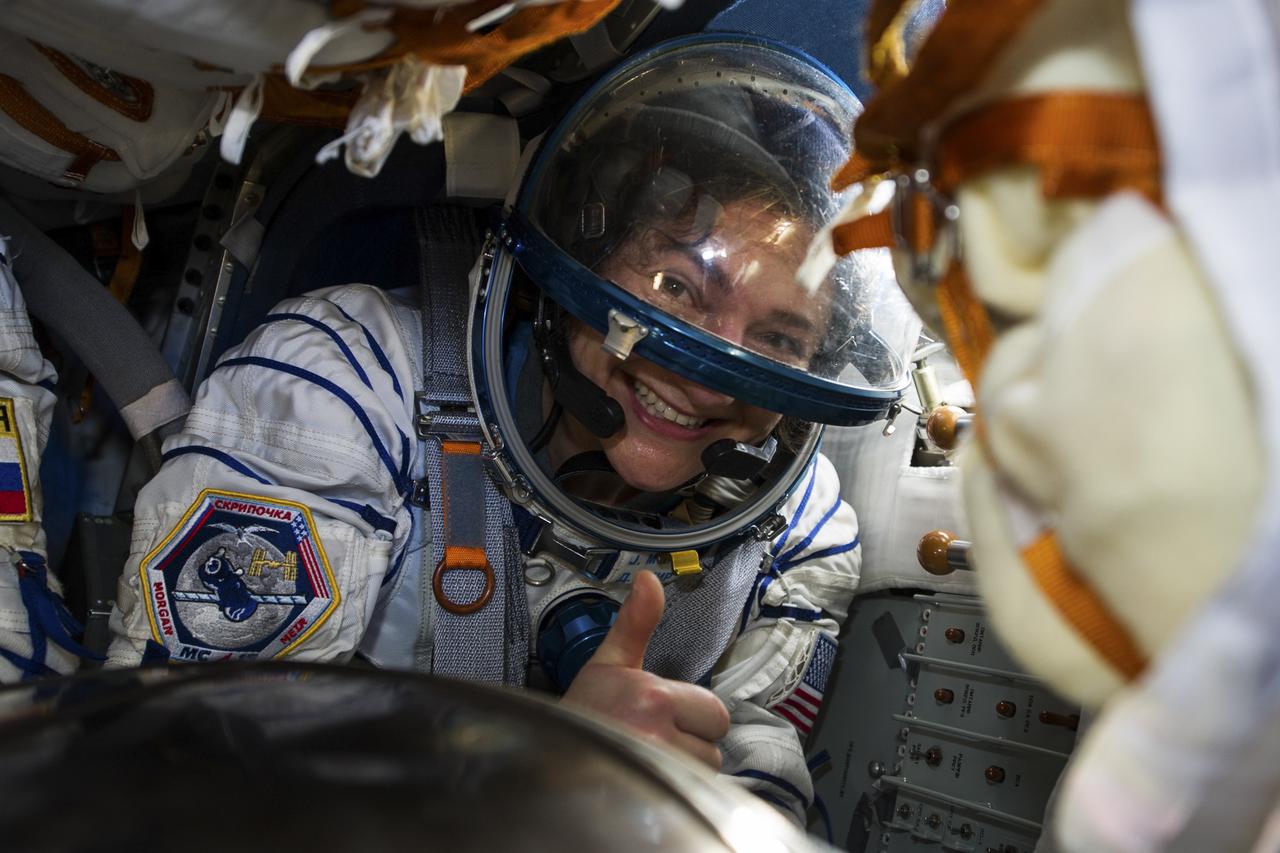
Expedition 62 crew member Jessica Meir of NASA gives a thumbs up after she, Roscosmos cosmonaut Oleg Skripochka, and NASA astronaut Andrew Morgan landed in their Soyuz MS-15 spacecraft in a remote area near the town of Zhezkazgan, Kazakhstan on Friday, April 17, 2020. Meir and Skripochka returned after 205 days in space, and Morgan after 272 days in space. All three served as Expedition 60-61-62 crew members onboard the International Space Station. Photo Credit: (NASA/GCTC/Andrey Shelepin)
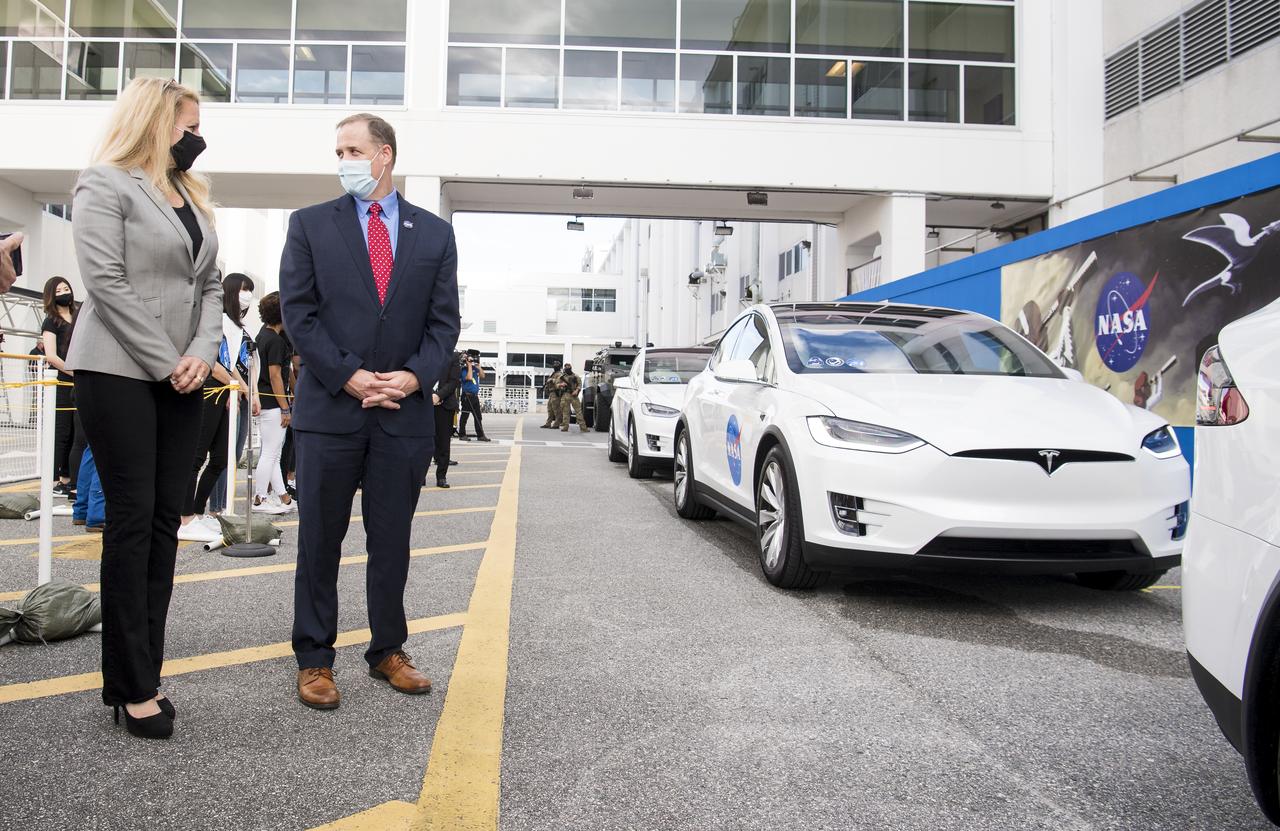
Gwynne Shotwell, president and chief operating officer of SpaceX, left, and NASA Administrator Jim Bridenstine, right, are seen as they wait to see NASA astronauts Mike Hopkins, Victor Glover, Shannon Walker, and Japan Aerospace Exploration Agency (JAXA) astronaut Soichi Noguchi, depart the Neil A. Armstrong Operations and Checkout Building for Launch Complex 39A to board the SpaceX Crew Dragon spacecraft for the Crew-1 mission launch Sunday, Nov. 15, 2020, at NASA’s Kennedy Space Center in Florida. NASA’s SpaceX Crew-1 mission is the first crew rotation mission of the SpaceX Crew Dragon spacecraft and Falcon 9 rocket to the International Space Station as part of the agency’s Commercial Crew Program. Hopkins, Glover, Walker, and Noguchi launched at 7:27 p.m. EST on Sunday, Nov. 15, from Launch Complex 39A at the Kennedy Space Center. Photo Credit: (NASA/Joel Kowsky)
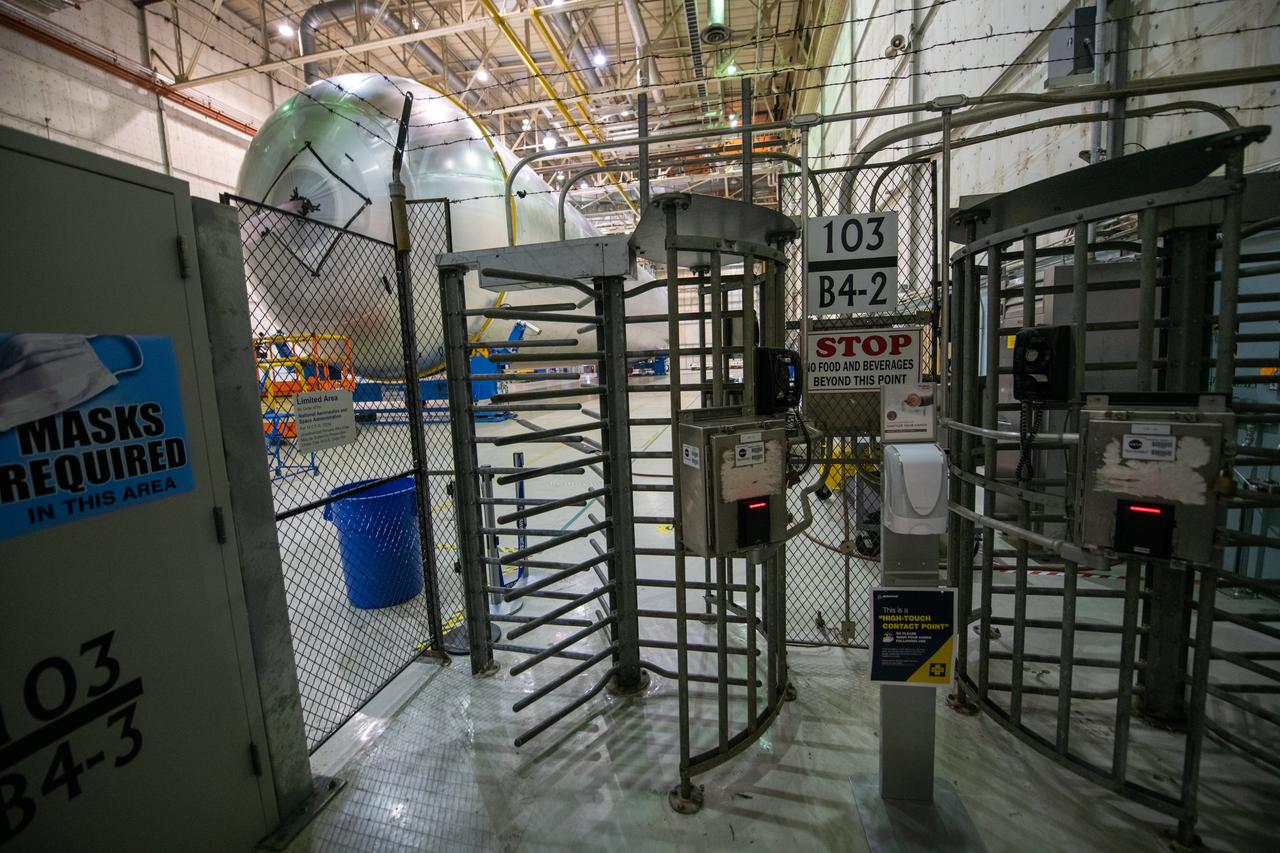
Employees wear personal protective gear at Michoud Assembly Facility as the facility transitioned to Stage 3 of NASA’s Framework for Return To On-Site Work. Employees wear the appropriate personal protective equipment (PPE) and/or cloth face coverings as required for assigned tasks. Access to the facility is limited to authorized personnel working on mission-critical tasks that must be conducted onsite. Mission-critical tasks include slowly and methodically resuming Space Launch System (SLS) Core Stage and Orion production activities, particularly critical path deliverables to support the Artemis Program, at a pace that limits personnel and follows federal guidelines for social distancing and use of personal protective equipment such as face masks. For more information about SLS, visit nasa.gov/sls.
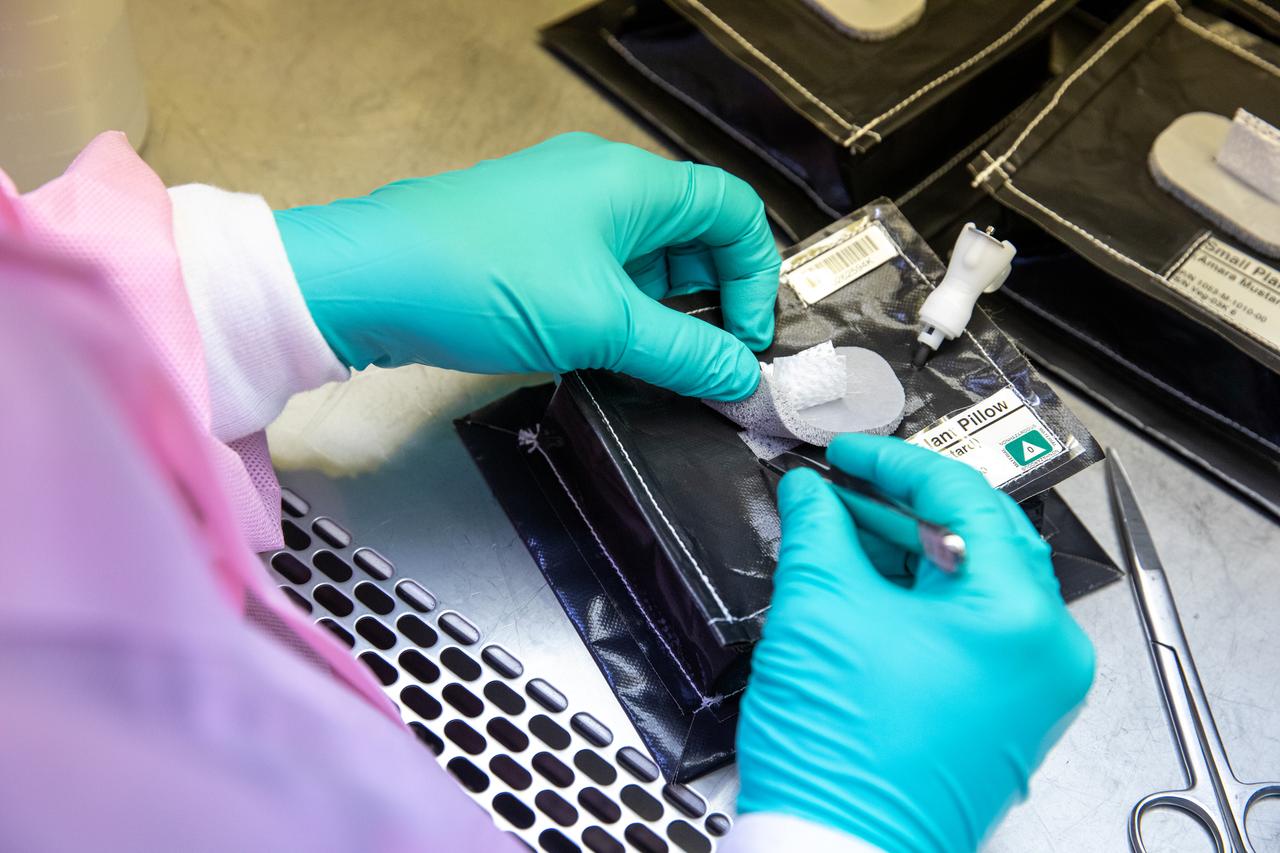
On Jan. 21, 2020, inside the Space Station Processing Facility at NASA’s Kennedy Space Center in Florida, intern Emily Kennebeck prepares plant pillows for their flight to the International Space Station. The pillows, which are a common method used to grow plants in space, are being sent to the orbiting laboratory on Northrop Grumman’s 13th resupply services (NG-13) mission for a series of VEG-03 experiments that will study the growth of three types of leafy greens in a microgravity environment. Once the pillows are assembled and packaged for flight, they will be transported to the agency’s Wallops Flight Facility in Virginia, where liftoff will occur. NG-13 is scheduled to launch on Feb. 9, 2020, at 5:39 p.m. EST.

The Mars 2020 rover arrives at the Launch and Landing Facility, formerly known as the Shuttle Landing Facility, at NASA’s Kennedy Space Center on Feb. 12, 2020. The rover was delivered to the Florida spaceport on a C-17 aircraft, making a cross-country trip that started at NASA’s Jet Propulsion Laboratory in Pasadena, California. The mission, targeted for mid-July 2020, will launch aboard an Atlas V 541 rocket from Cape Canaveral Air Force Station. NASA’s Launch Services Program based at Kennedy is managing the launch.
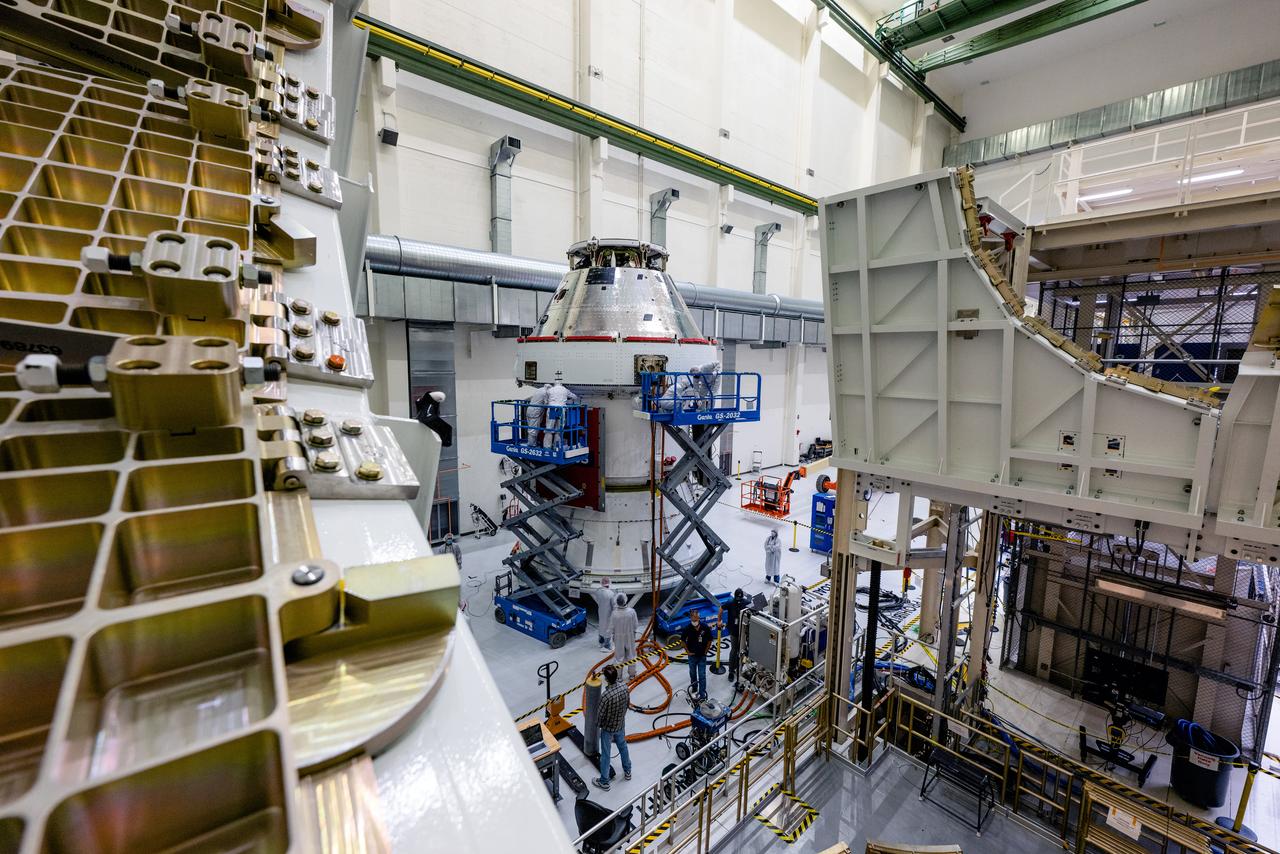
In the Operations and Checkout Building (O&C) at Kennedy Space Center, three spacecraft adapter jettison (SAJ) fairings are prepared for installation and will be moved into place by technicians with Lockheed Martin, lead contractor for Orion on Oct. 12, 2020. They will be secured around the spacecraft, encapsulating the European Service Module to protect it from the harsh environment as the spacecraft is propelled out of Earth’s atmosphere atop the Space Launch System (SLS) rocket during NASA’s Artemis I mission. The next time the solar array wings will be visible will be when Orion is in space. Artemis I will test the Orion spacecraft and SLS as an integrated system ahead of crewed flights to the Moon.
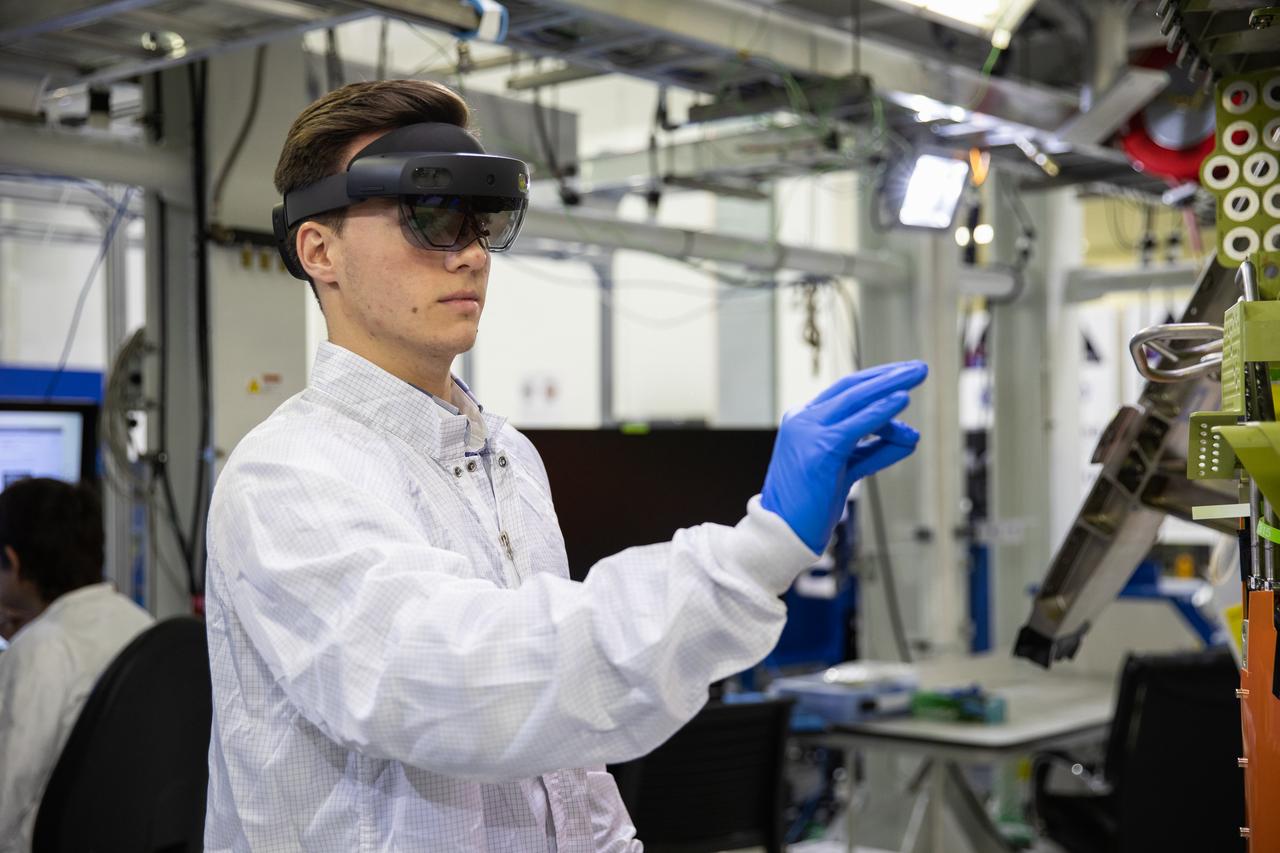
Michael Maxwell, with Lockheed Martin’s augmented reality team, wears a pair of augmented reality (AR) goggles to work on the crew module for NASA’s Artemis II mission inside the high bay of the Neil Armstrong Operations and Checkout Building at the agency’s Kennedy Space Center in Florida on March 18, 2020. Orion manufacturer Lockheed Martin provided the goggles to technicians to help place tapes where components will be installed on the crew module adapter for Artemis II, the first crewed mission aboard the spacecraft. Using the AR goggles saves significant labor and time to complete tasks. Manufactured by Microsoft, the goggles, called HoloLens2, are the second version used by Lockheed.
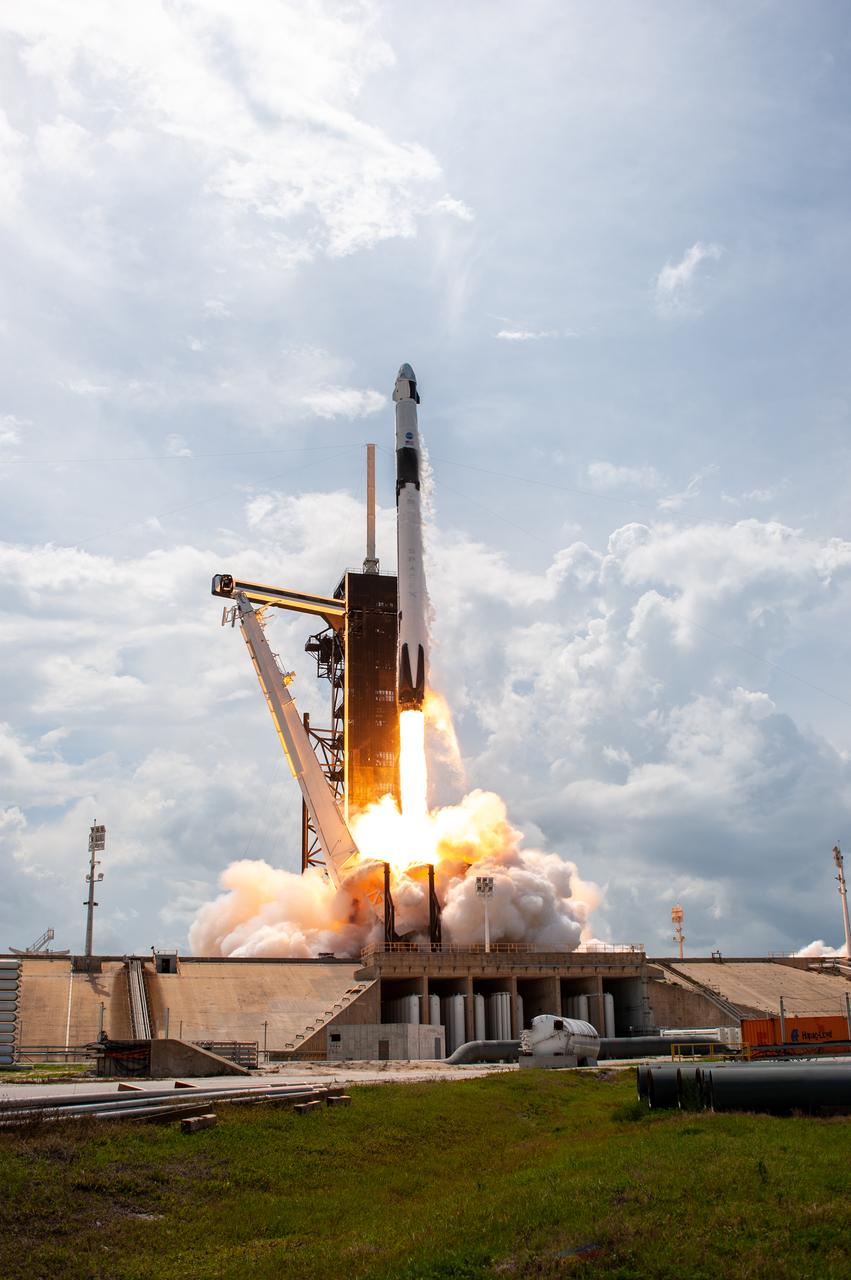
A SpaceX Falcon 9 rocket and Crew Dragon spacecraft lifts off from Launch Complex 39A at NASA’s Kennedy Space Center in Florida on May 30, 2020, carrying NASA astronauts Robert Behnken and Douglas Hurley to the International Space Station for the agency’s SpaceX Demo-2 mission. Liftoff occurred at 3:22 p.m. EDT. Behnken and Hurley are the first astronauts to launch from U.S. soil to the space station since the end of the Space Shuttle Program in 2011. Part of NASA’s Commercial Crew Program, this will be SpaceX’s final flight test, paving the way for the agency to certify the crew transportation system for regular, crewed flights to the orbiting laboratory.

President Donald Trump speaks at the Operations Support Building II after the launch of a SpaceX Falcon 9 rocket carrying the company's Crew Dragon spacecraft on NASA’s SpaceX Demo-2 mission with NASA astronauts Robert Behnken and Douglas Hurley onboard, Saturday, May 30, 2020, at NASA’s Kennedy Space Center in Florida. NASA’s SpaceX Demo-2 mission is the first launch with astronauts of the SpaceX Crew Dragon spacecraft and Falcon 9 rocket to the International Space Station as part of the agency’s Commercial Crew Program. The test flight serves as an end-to-end demonstration of SpaceX’s crew transportation system. Behnken and Hurley launched at 3:22 p.m. EDT on Saturday, May 30, from Launch Complex 39A at the Kennedy Space Center. A new era of human spaceflight is set to begin as American astronauts once again launch on an American rocket from American soil to low-Earth orbit for the first time since the conclusion of the Space Shuttle Program in 2011. Photo Credit: (NASA/Bill Ingalls)
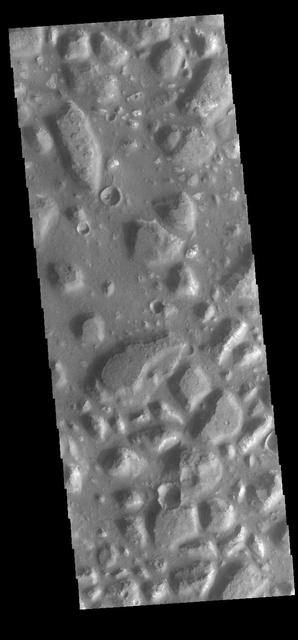
Today's VIS image shows part of Ariadnes Colles. The term colles means hills or knobs. Some hills appear brighter than the surrounding lowlands, likely due to relatively less dust cover. Ariadnes Colles is located in Terra Cimmeria. Orbit Number: 83575 Latitude: -34.2294 Longitude: 173.524 Instrument: VIS Captured: 2020-10-16 20:57 https://photojournal.jpl.nasa.gov/catalog/PIA24274
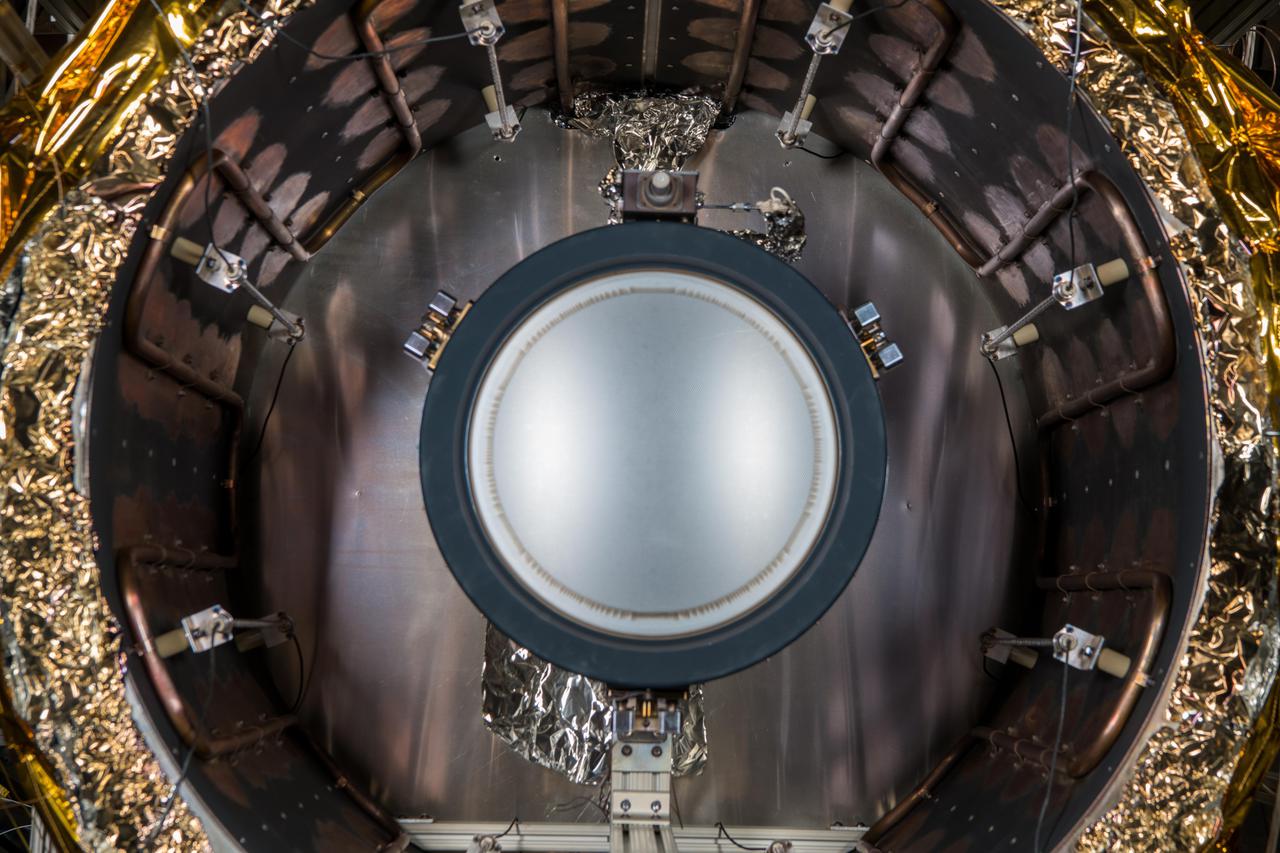
NASA Evolutionary Xenon Thruster - Commercial, NEXT-C
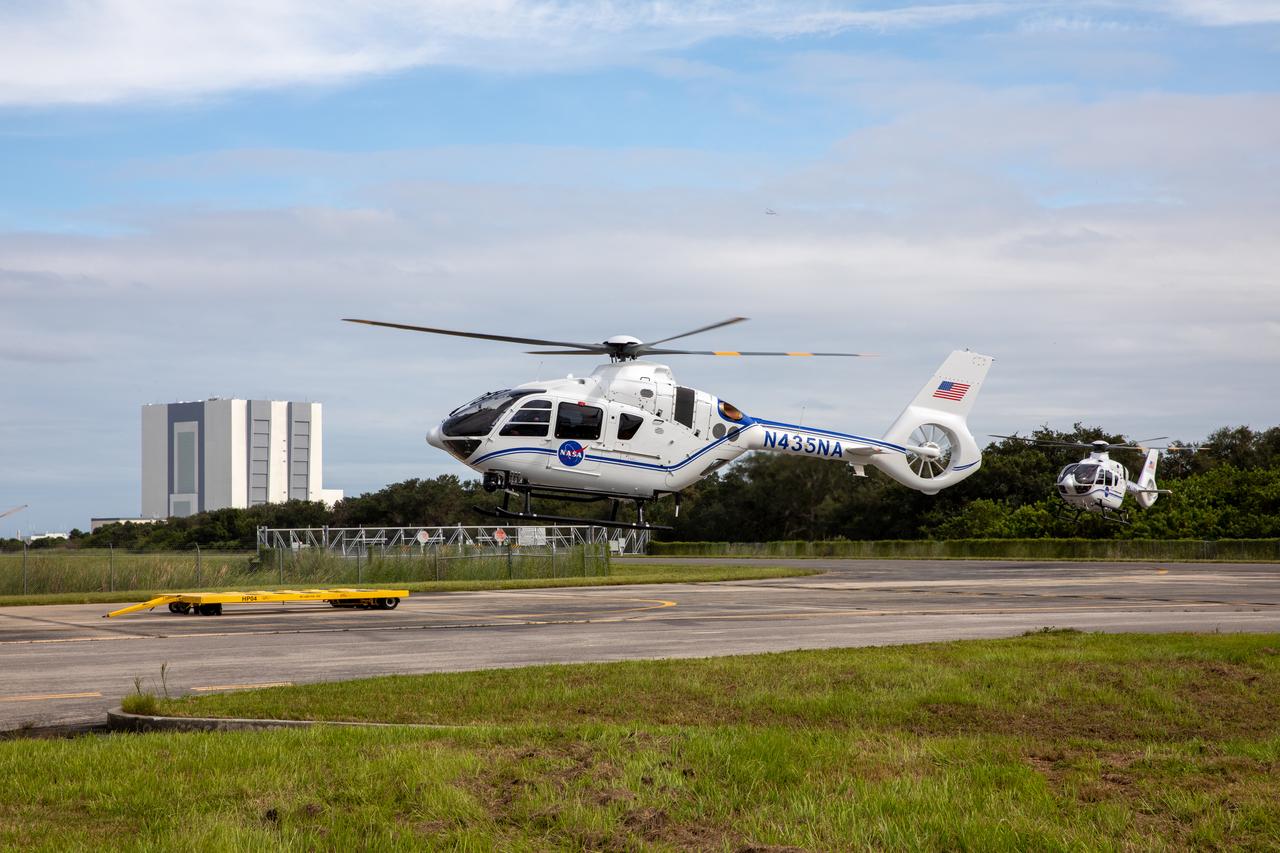
Two new Airbus H135 (T3) helicopters arrive at the Launch and Landing Facility runway at NASA’s Kennedy Space Center in Florida on Sept. 30, 2020. The H135 helicopters will replace the Bell Huey 2 security aircraft in service now, maintained by Kennedy’s Flight Operations team. These new helicopters provide a number of technological and safety advantages over the Hueys, such as more lifting power, greater stability in the air, and expanded medical capabilities. The team expects to fully transition to flying the two H135s later this year. A third is expected to arrive in early 2021, and with its arrival, will complete the fleet’s upgrade.
![]A SpaceX Falcon 9 rocket carrying the company's Crew Dragon spacecraft is launched from Launch Complex 39A on NASA’s SpaceX Demo-2 mission to the International Space Station with NASA astronauts Robert Behnken and Douglas Hurley onboard, Saturday, May 30, 2020, at NASA’s Kennedy Space Center in Florida. The Demo-2 mission is the first launch with astronauts of the SpaceX Crew Dragon spacecraft and Falcon 9 rocket to the International Space Station as part of the agency’s Commercial Crew Program. The test flight serves as an end-to-end demonstration of SpaceX’s crew transportation system. Behnken and Hurley launched at 3:22 p.m. EDT on Saturday, May 30, from Launch Complex 39A at the Kennedy Space Center. A new era of human spaceflight is set to begin as American astronauts once again launch on an American rocket from American soil to low-Earth orbit for the first time since the conclusion of the Space Shuttle Program in 2011. Photo Credit: (NASA/Joel Kowsky)](https://images-assets.nasa.gov/image/NHQ202005300040/NHQ202005300040~medium.jpg)
]A SpaceX Falcon 9 rocket carrying the company's Crew Dragon spacecraft is launched from Launch Complex 39A on NASA’s SpaceX Demo-2 mission to the International Space Station with NASA astronauts Robert Behnken and Douglas Hurley onboard, Saturday, May 30, 2020, at NASA’s Kennedy Space Center in Florida. The Demo-2 mission is the first launch with astronauts of the SpaceX Crew Dragon spacecraft and Falcon 9 rocket to the International Space Station as part of the agency’s Commercial Crew Program. The test flight serves as an end-to-end demonstration of SpaceX’s crew transportation system. Behnken and Hurley launched at 3:22 p.m. EDT on Saturday, May 30, from Launch Complex 39A at the Kennedy Space Center. A new era of human spaceflight is set to begin as American astronauts once again launch on an American rocket from American soil to low-Earth orbit for the first time since the conclusion of the Space Shuttle Program in 2011. Photo Credit: (NASA/Joel Kowsky)
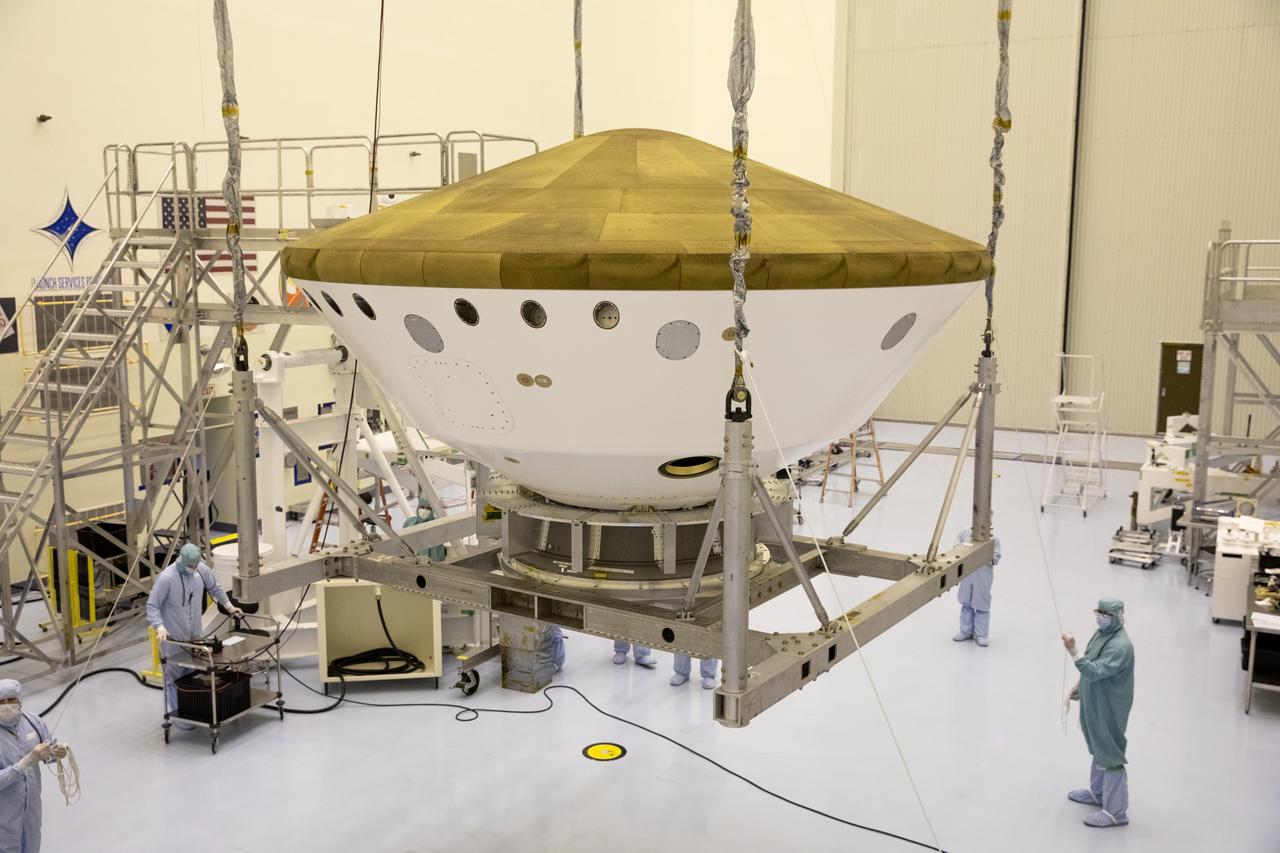
Mars 2020 Lift Activities in Payload Hazardous Serviceing Facility (PHSF)

NASA Deputy Administrator Jim Morhard speaks during a wreath laying ceremony at the Space Shuttle Challenger and Space Shuttle Columbia Memorials as part of NASA’s Day of Remembrance, Thursday, Jan. 30, 2020, at Arlington National Cemetery in Arlington, Va. The wreaths were laid in memory of those men and women who lost their lives in the quest for space exploration. Photo Credit: (NASA/Joel Kowsky)
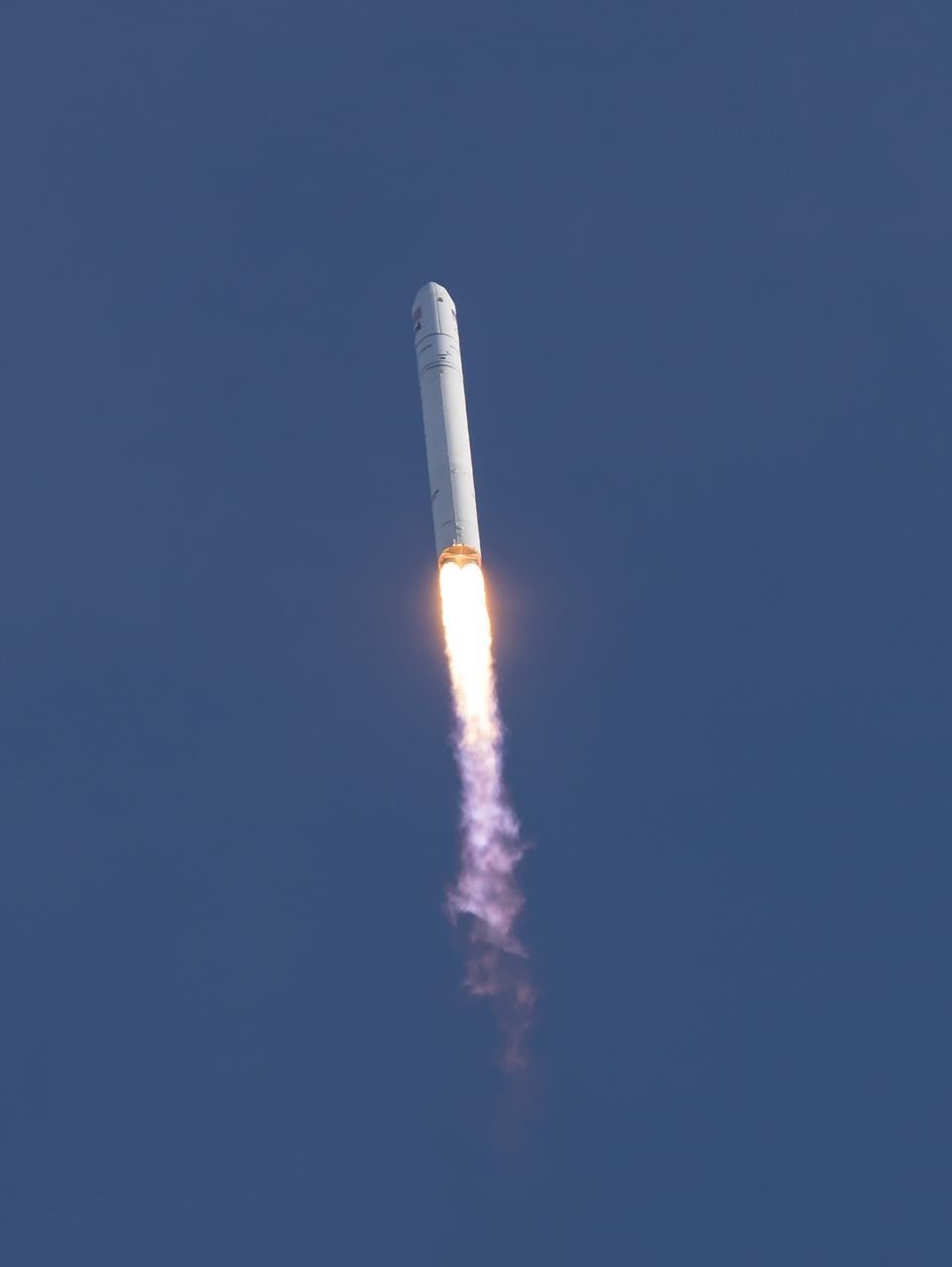
The Northrop Grumman Antares rocket, with Cygnus resupply spacecraft onboard, launches from Pad-0A, Saturday, Feb. 15, 2020 at NASA's Wallops Flight Facility in Virginia. Northrop Grumman's 13th contracted cargo resupply mission for NASA to the International Space Station will deliver more than 7,500 pounds of science and research, crew supplies and vehicle hardware to the orbital laboratory and its crew. Photo Credit: (NASA/Aubrey Gemignani)
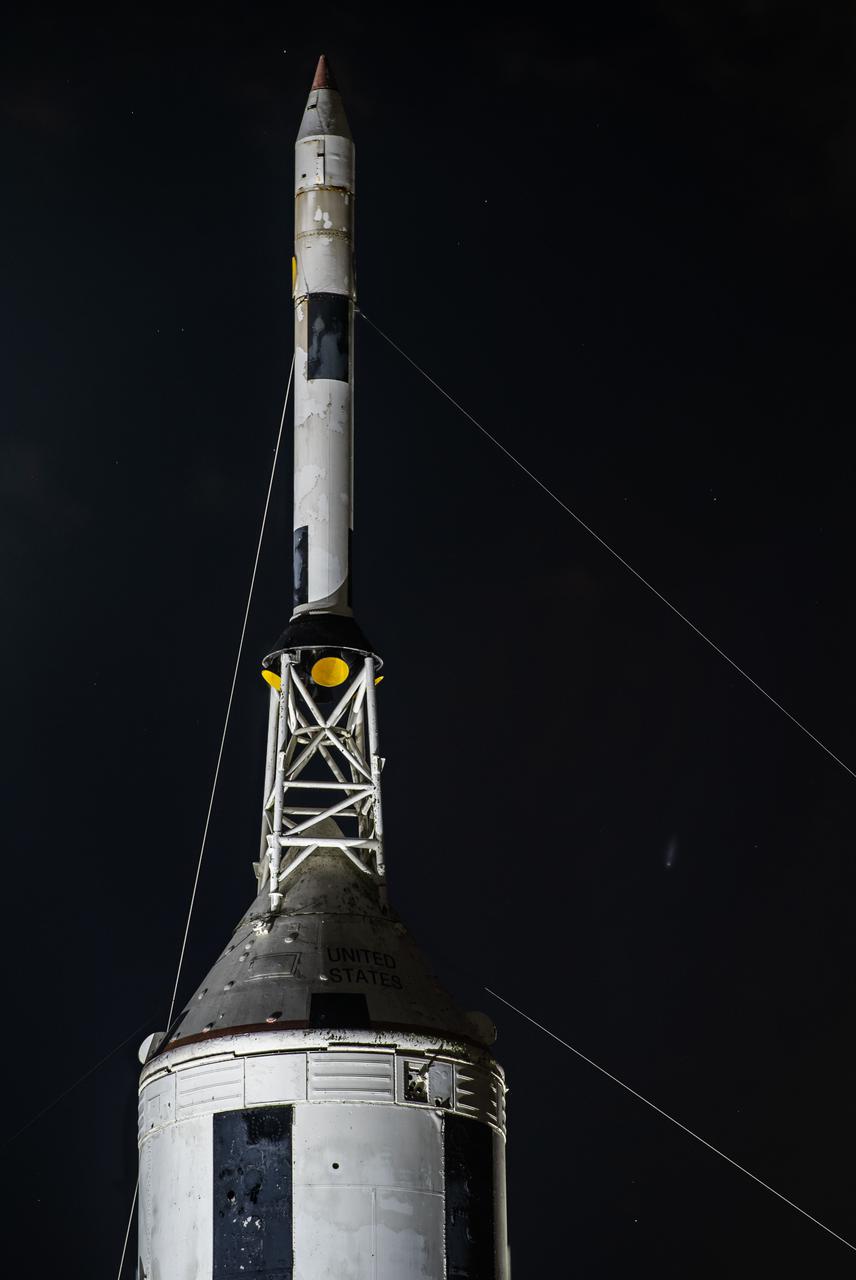
Comet NEOWISE passing over the Little Joe II rocket at NASA Johnson Space Center’s Rocket Park on July 22nd, 2020.
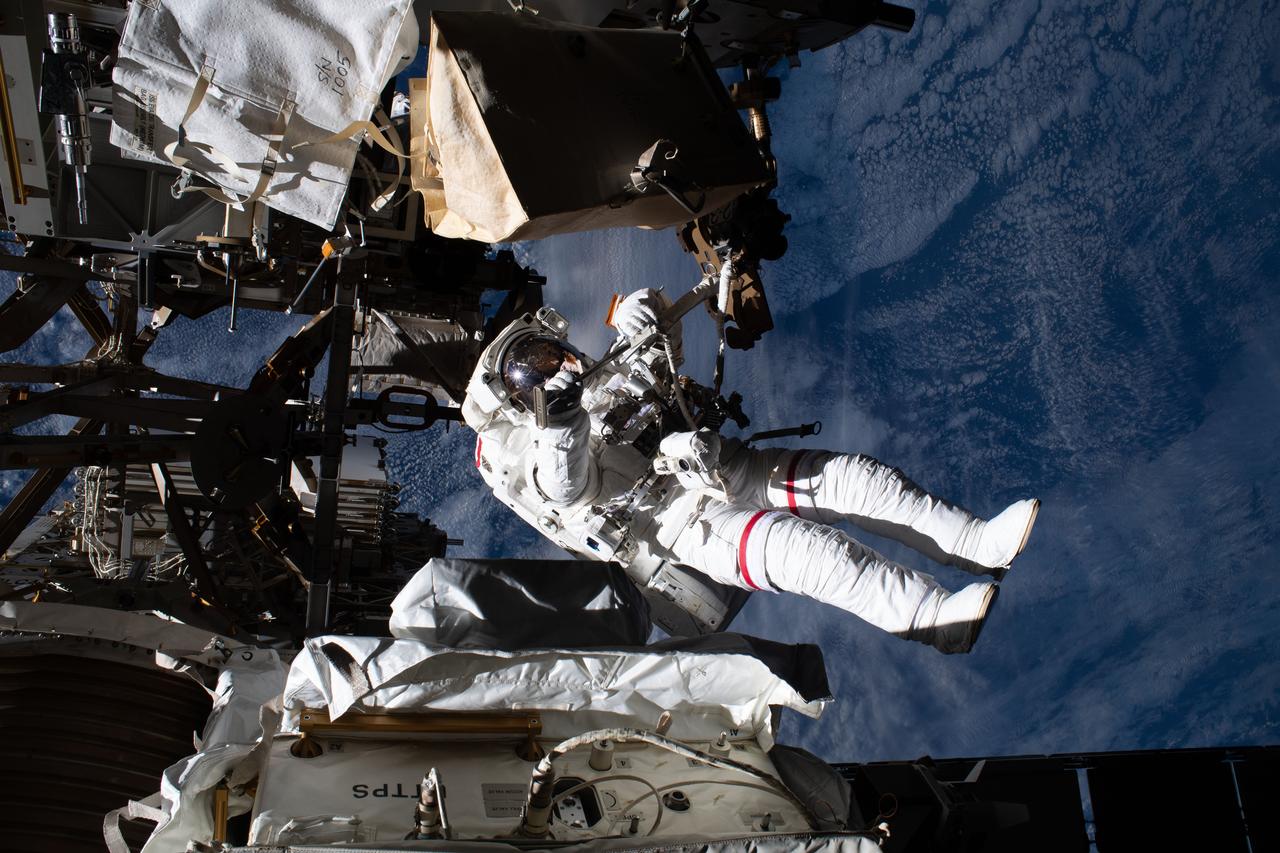
iss061e144253 (Jan. 25, 2020) --- NASA astronaut Andrew Morgan is pictured tethered to the International Space Station while finalizing thermal repairs on the Alpha Magnetic Spectrometer, a dark matter and antimatter detector, during a spacewalk that lasted 6 hours and 16 minutes.
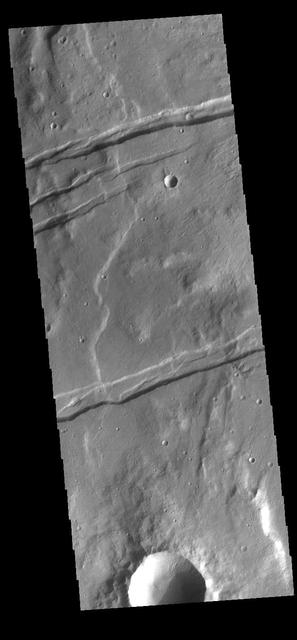
The linear depressions in this VIS image are part of Sirenum Fossae. These depressions are called graben, which form by the down drop of material between two parallel faults. The faults are caused by extensional tectonic stresses in the region. The fossae are 2735km long (1700 miles). Orbit Number: 83512 Latitude: -37.4693 Longitude: 191.543 Instrument: VIS Captured: 2020-10-11 16:26 https://photojournal.jpl.nasa.gov/catalog/PIA24272
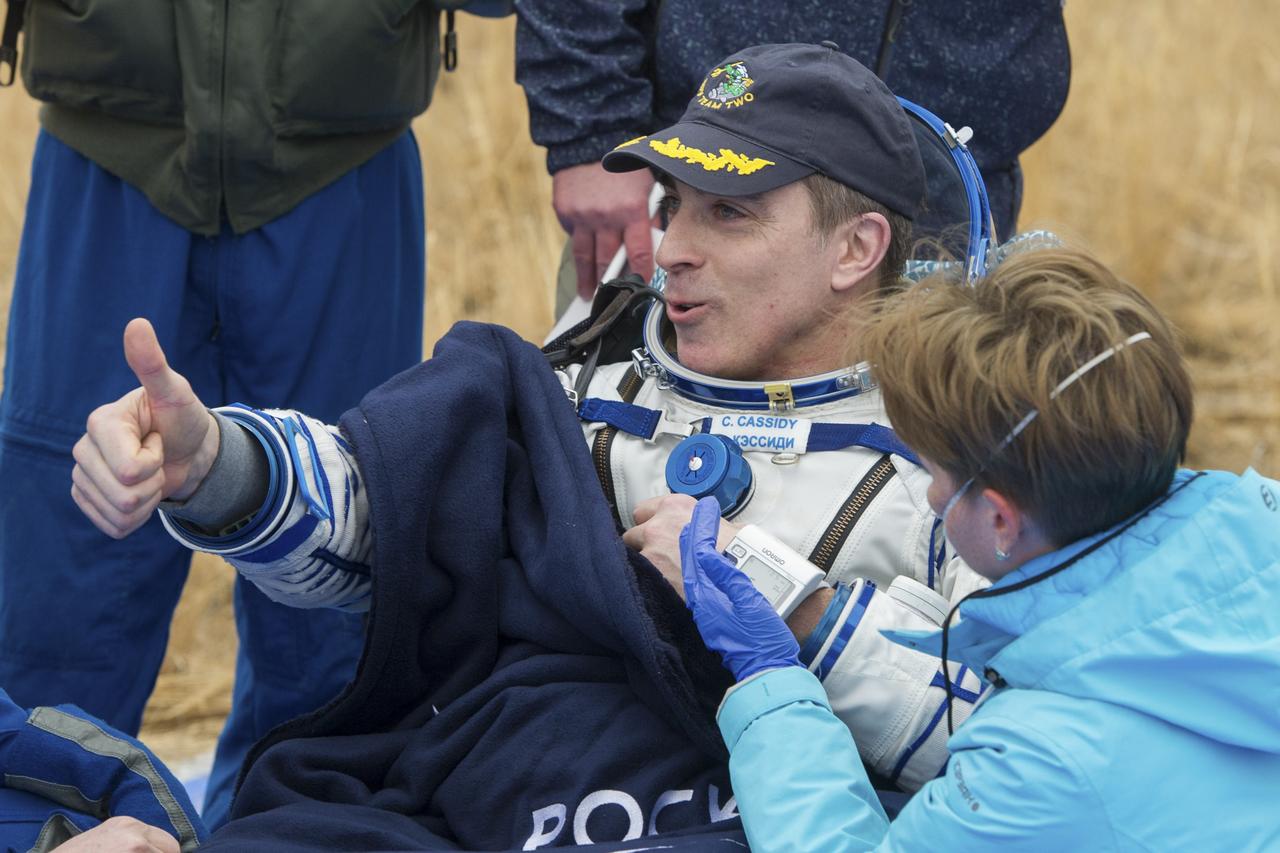
Expedition 63 NASA astronaut Chris Cassidy is seen outside the Soyuz MS-16 spacecraft after he landed with Roscosmos cosmonauts Ivan Vagner and Anatoly Ivanishin in a remote area near the town of Zhezkazgan, Kazakhstan on Thursday, October 22, 2020, Kazakh time (Oct. 21 Eastern time). Cassidy, Ivanishin and Vagner returned after 196 days in space having served as Expedition 62-63 crew members onboard the International Space Station. Photo Credit: (NASA/GCTC/Denis Derevtsov)
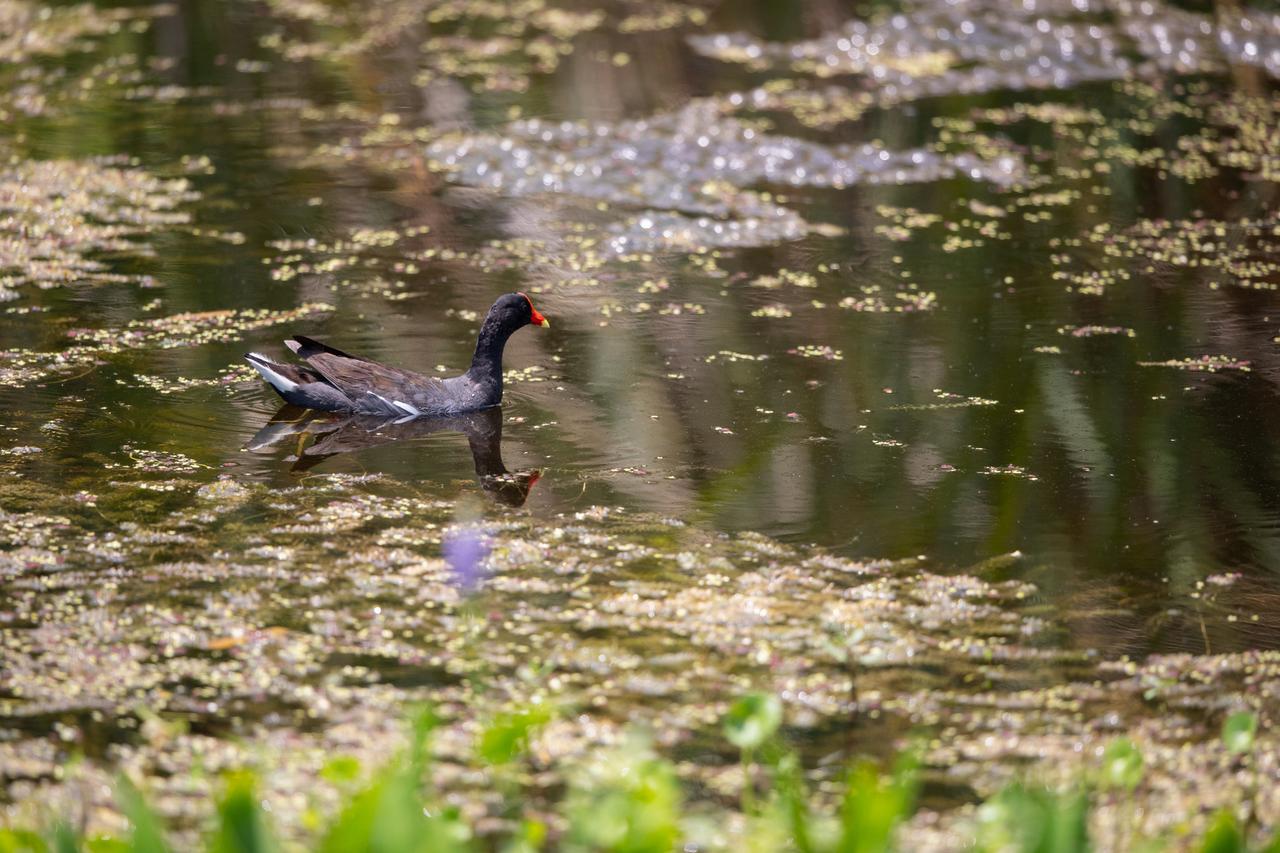
A Common Gallinule wades in a waterway at NASA’s Kennedy Space Center in Florida on June 22, 2020. The center shares a border with the Merritt Island National Wildlife Refuge. More than 330 native and migratory bird species, along with 25 mammal, 117 fish and 65 amphibian and reptile species call Kennedy and the wildlife refuge home.
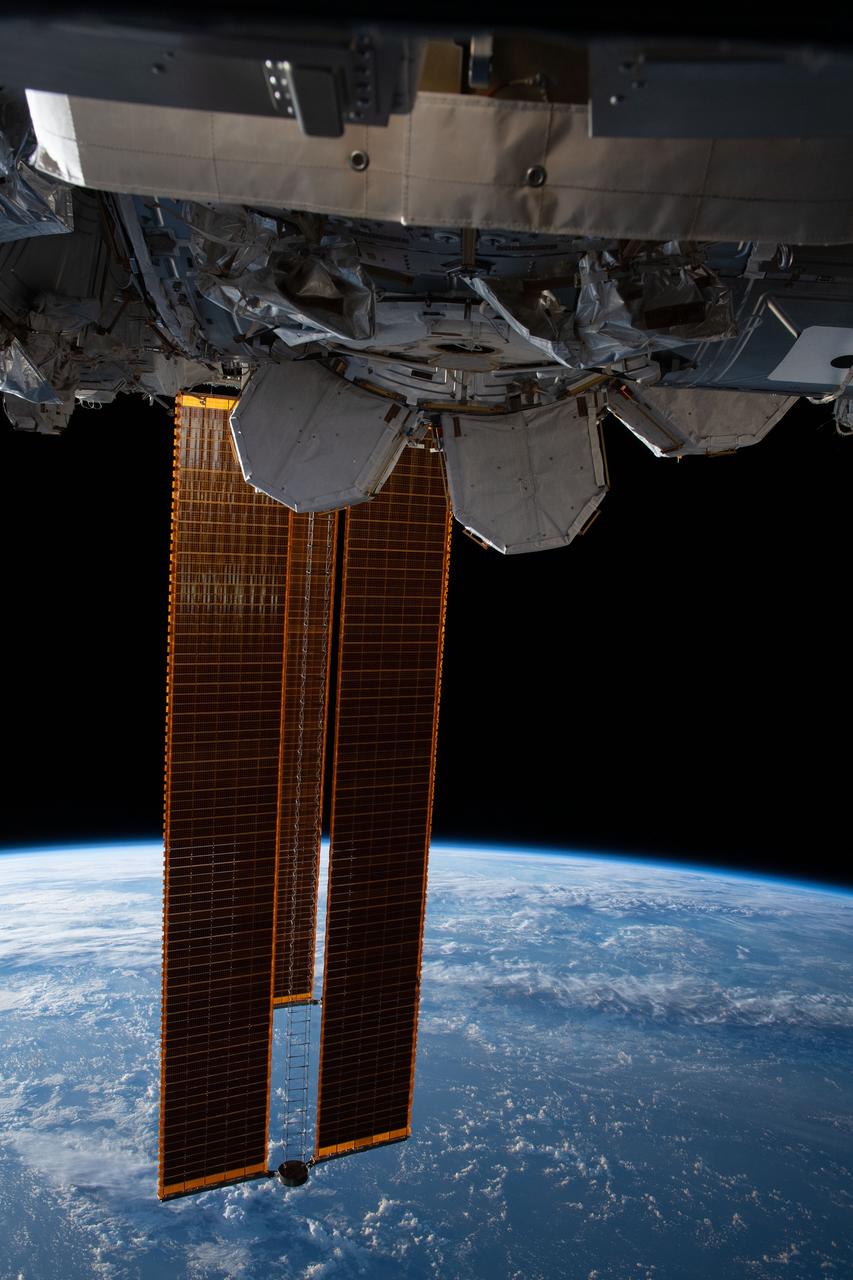
iss063e031989 (June 20, 2020) --- The International Space Station's main solar arrays drape across the Earth above the Pacific Ocean west of Hawaii.
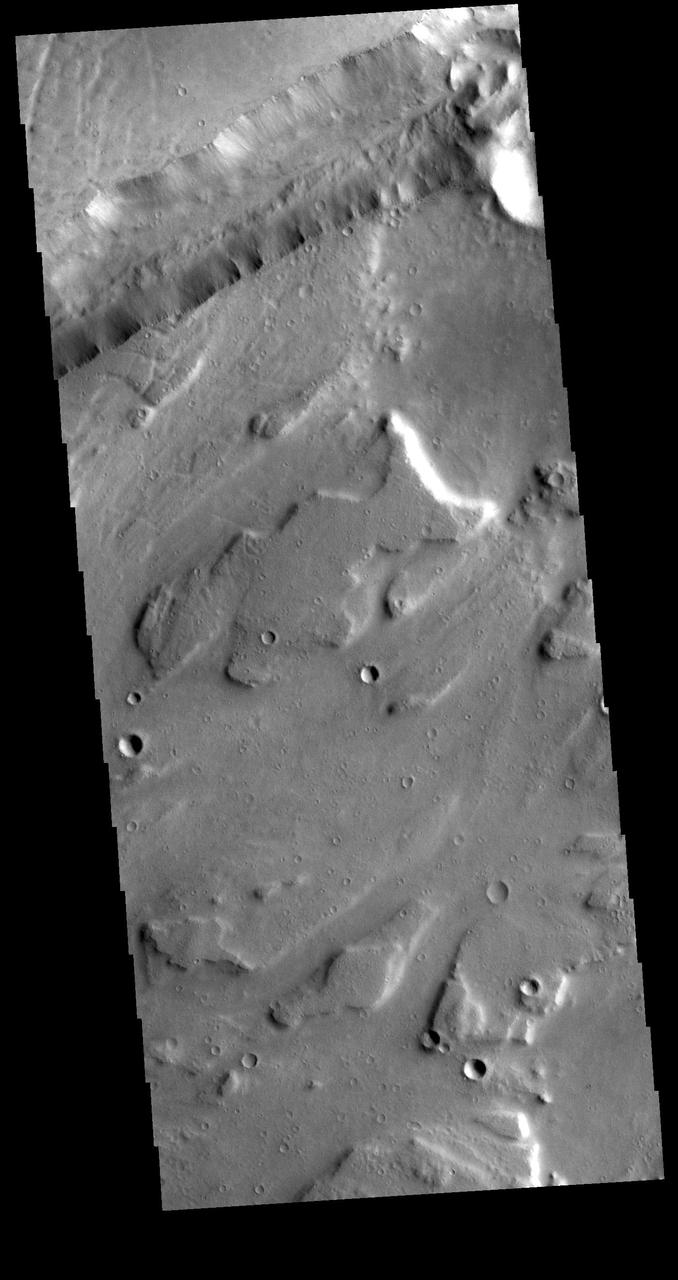
This VIS image shows part of Sacra Mensa, a large mesa located between the north and south channels of Kasei Valles. The linear feature at the top of the image is one of the many graben found in the mesa and surrounding highlands. Graben are formed by the downward motion of a block of material between paired tectonic faults. Sacra Mensa rises 3 km (almost 2 miles) above Kasei Valles. Orbit Number: 79203 Latitude: 26.0793 Longitude: 294.1 Instrument: VIS Captured: 2019-10-22 21:34 https://photojournal.jpl.nasa.gov/catalog/PIA23634

Inside the Rotation, Processing and Surge Facility (RPSF) at NASA’s Kennedy Space Center in Florida, technicians lift the right aft motor segment – one of five segments that make up one of two solid rocket boosters for the agency’s Space Launch System (SLS) – onto an inspection stand on June 23, 2020. While in the RPSF, the boosters will be mated to the rocket’s two aft skirts before they are moved to the Vehicle Assembly Building for stacking on the mobile launcher. The boosters, manufactured by Northrop Grumman in Utah, recently arrived at Kennedy for processing ahead of the Artemis I launch. Together, the twin boosters provide more than 75 percent of the total SLS thrust at launch. The first in a series of increasingly complex missions, Artemis I will test the Orion spacecraft and SLS as an integrated system ahead of crewed flights to the Moon.

Today's VIS image shows a portion of Nanedi Valles. This channel is over 500 km long (310 miles) and is located in Xanthe Terra. Orbit Number: 79240 Latitude: 4.57002 Longitude: 309.592 Instrument: VIS Captured: 2019-10-25 22:34 https://photojournal.jpl.nasa.gov/catalog/PIA23651
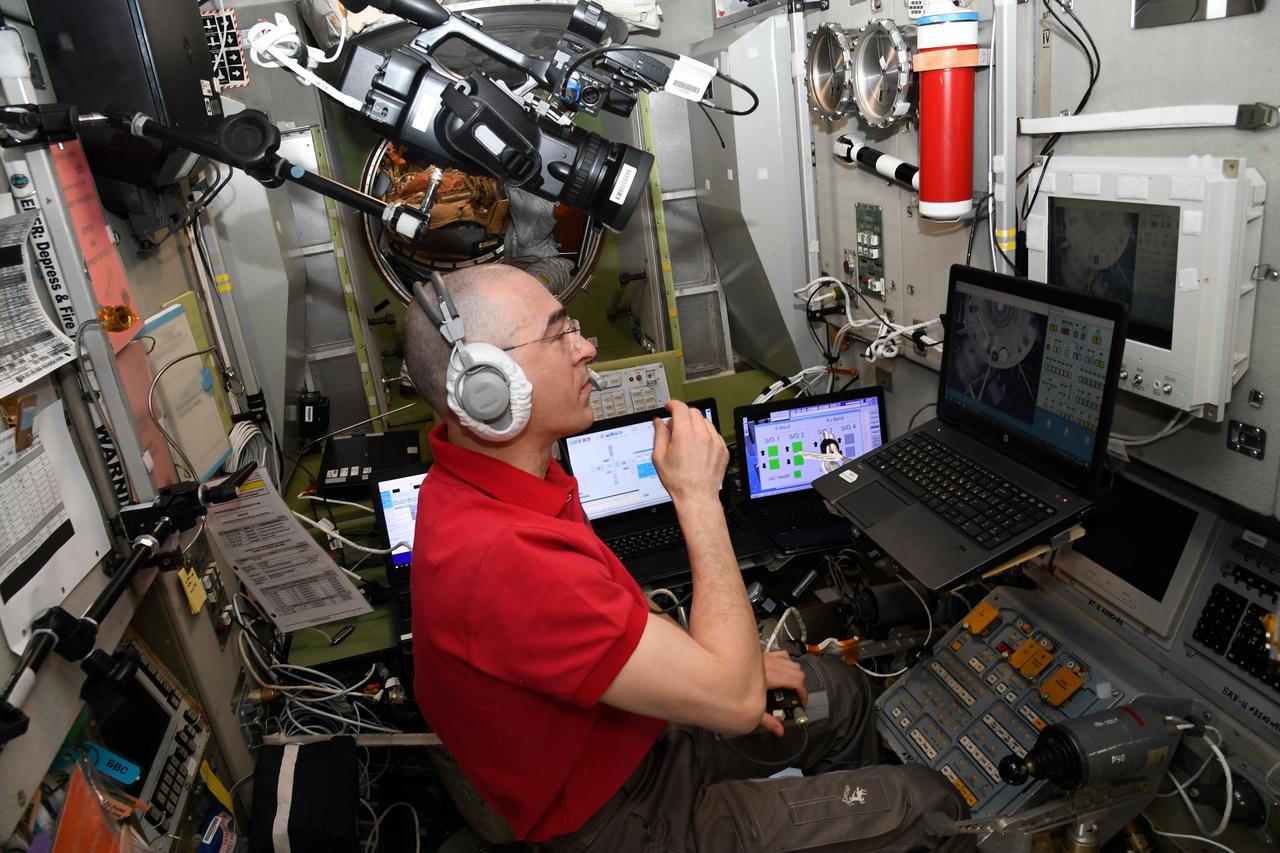
iss063e001466 (April 22, 2020) --- Roscosmos cosmonaut and Expedition 63 Flight Engineer Anatoly Ivanishin practices remote spacecraft maneuvering techniques on the Tele-Operated Robotics Unit (TORU) in the Zvezda service module. The TORU would be used in the unlikely event a Russian spacecraft would be unable to automatically rendezvous and dock to the International Space Station.
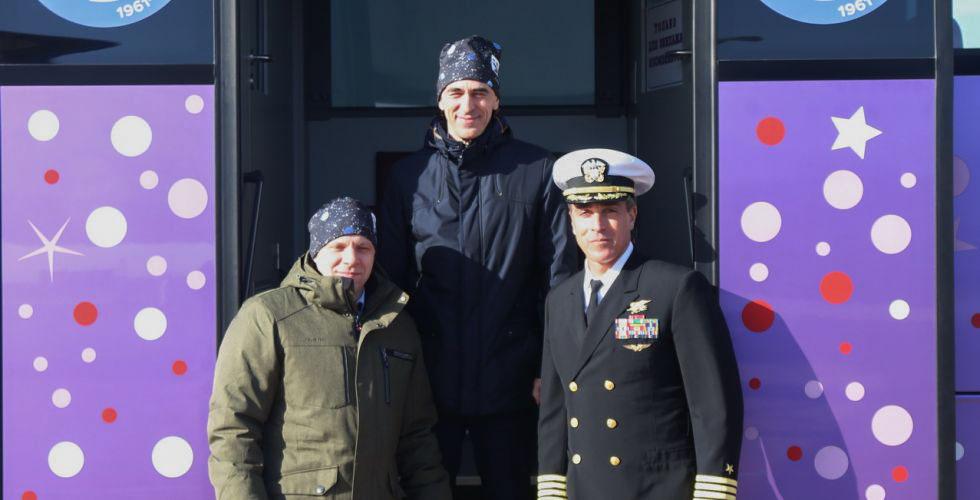
jsc2020e016835 - Expedition 63 crewmembers Ivan Vagner (left) and Anatoly Ivanishin (center) of Roscosmos and Chris Cassidy of NASA (right) pose for pictures March 24 after arriving at the Baikonur Cosmodrome in Kazakhstan for final pre-launch preparations following a flight from their training base at the Gagarin Cosmonaut Training Center in Star City, Russia. They will launch April 9 on the Soyuz MS-16 spacecraft from the Baikonur Cosmodrome for a six-and-a-half month mission on the International Space Station...Courtesy/ Roscosmos.
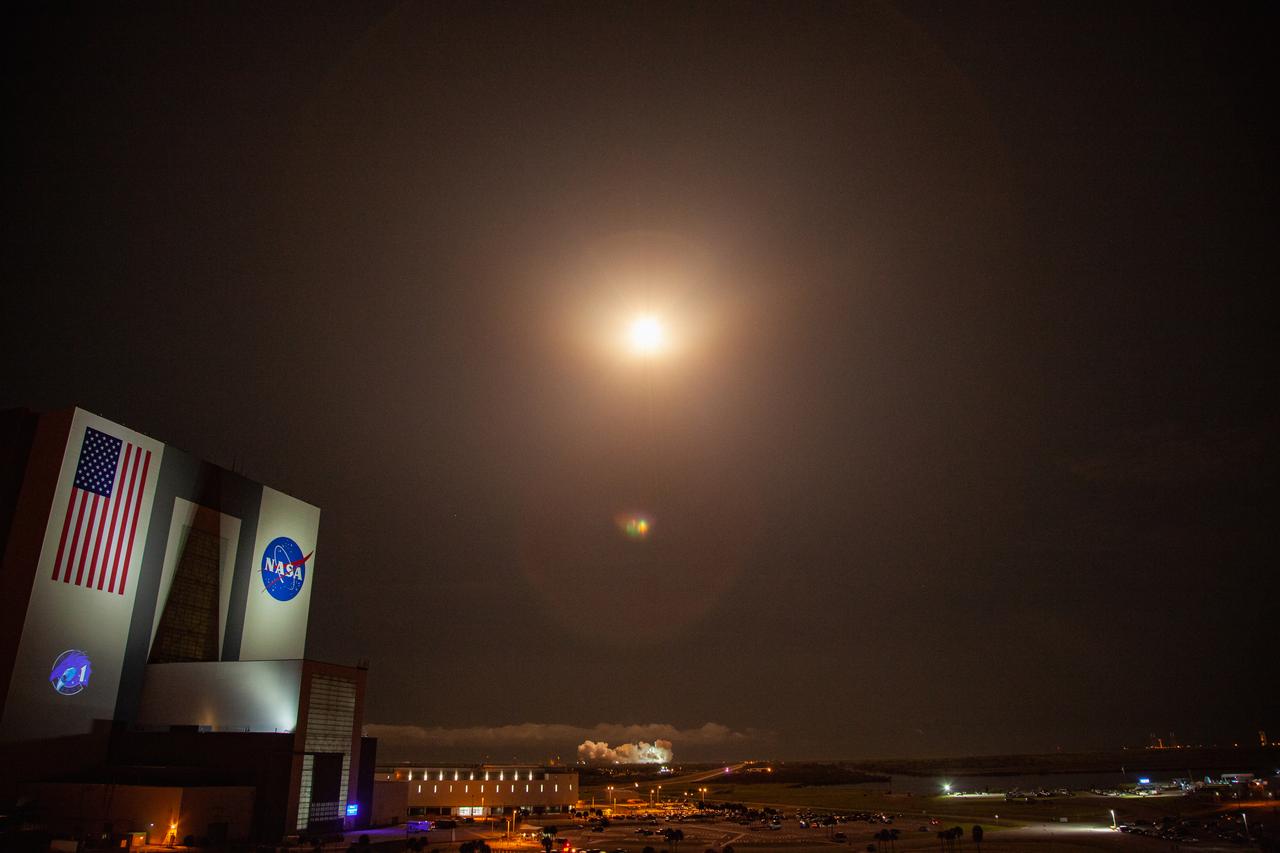
With a view of the iconic Vehicle Assembly Building at left, a SpaceX Falcon 9 rocket soars upward from Launch Complex 39A at NASA’s Kennedy Space Center in Florida on Nov. 15, 2020, carrying the company’s Crew Dragon Resilience capsule. Launch time was at 7:27 p.m. EST. Onboard the capsule are NASA’s SpaceX Crew-1 astronauts, Michael Hopkins, spacecraft commander; Victor Glover, pilot; Shannon Walker, mission specialist; and Japan Aerospace Exploration Agency astronaut Soichi Noguchi, mission specialist. Crew-1 is the first regular crew mission of a U.S. commercial spacecraft with astronauts to the International Space Station as part of NASA’s Commercial Crew Program. The Crew Dragon will dock with the space station and the crew will remain on the orbiting laboratory for a six-month science mission.
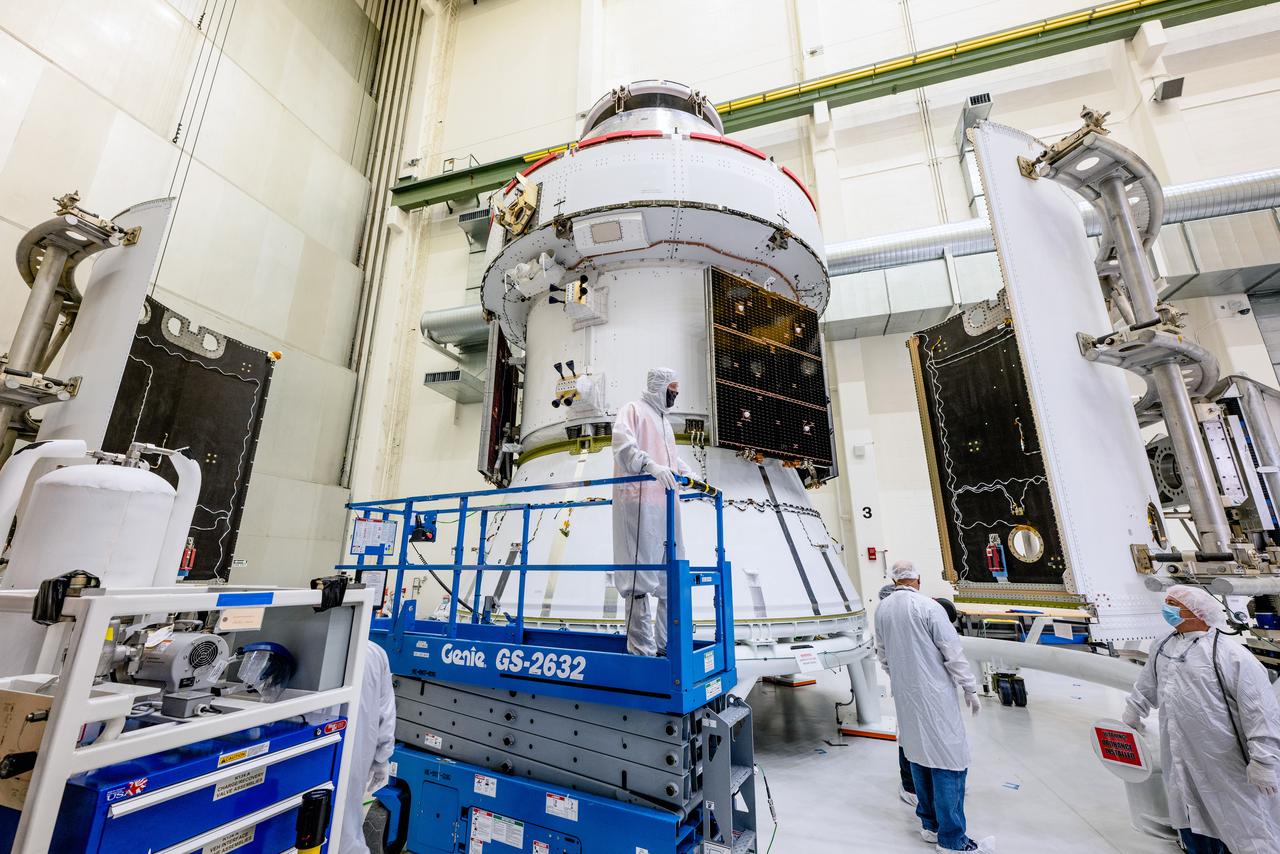
In the Operations and Checkout Building (O&C) at Kennedy Space Center, three spacecraft adapter jettison (SAJ) fairings are prepared for installation and will be moved into place by technicians with Lockheed Martin, lead contractor for Orion on Oct. 12, 2020. They will be secured around the spacecraft, encapsulating the European Service Module to protect it from the harsh environment as the spacecraft is propelled out of Earth’s atmosphere atop the Space Launch System (SLS) rocket during NASA’s Artemis I mission. The next time the solar array wings will be visible will be when Orion is in space. Artemis I will test the Orion spacecraft and SLS as an integrated system ahead of crewed flights to the Moon.
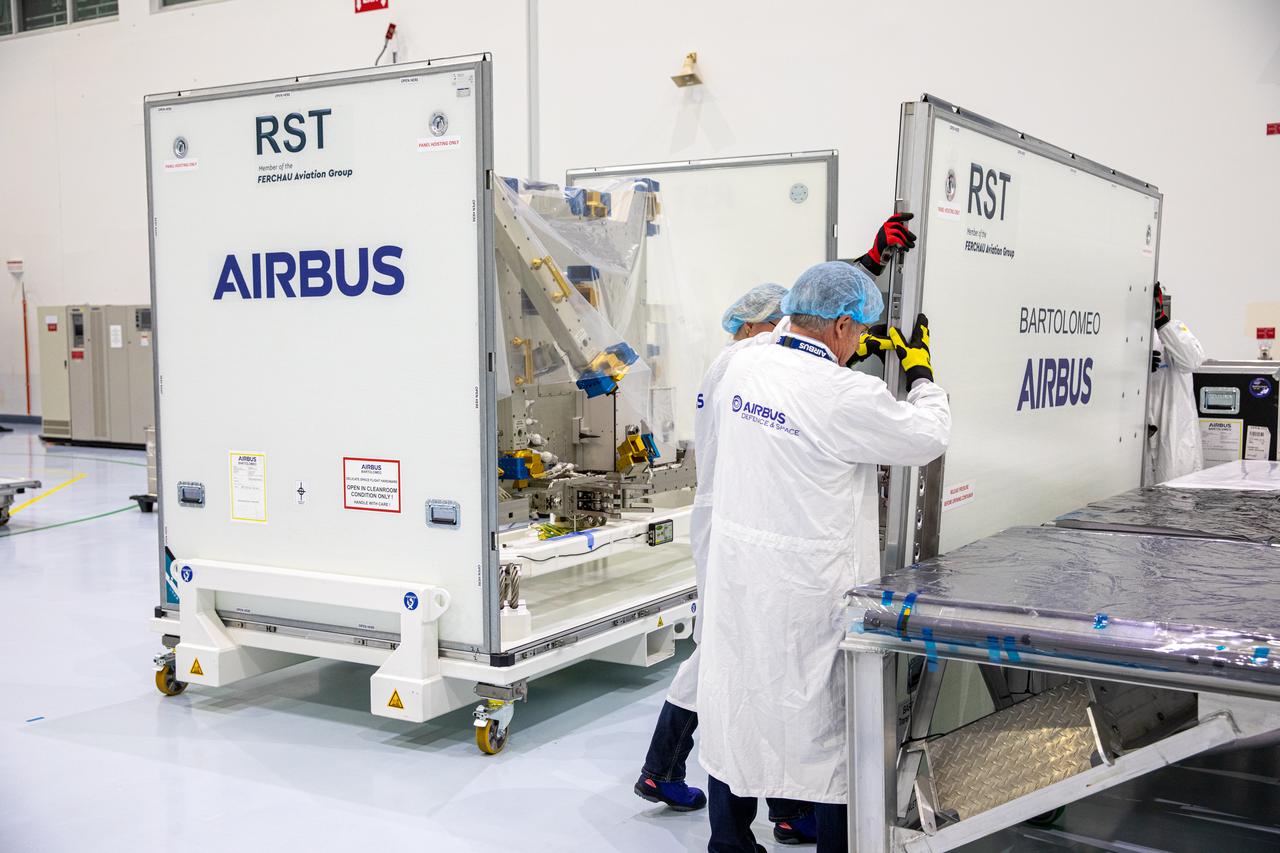
Airbus workers unpack the Bartolomeo platform in the Space Station Processing Facility high bay at NASA’s Kennedy Space Center in Florida on Jan. 30, 2020. Bartolomeo was manufactured by Airbus Defence and Space. The platform will be delivered to the International Space Station aboard SpaceX’s 20th Commercial Resupply Services (CRS-20) mission for the agency. The platform will attach to the exterior of the space station’s European Columbus Module. Named for the younger brother of Christopher Columbus, the platform has the capability to host external payloads in low-Earth orbit on the station. CRS-20 is scheduled to launch aboard SpaceX’s Dragon cargo spacecraft atop the company’s Falcon 9 rocket in March 2020.

The Artemis I aft skirts for NASA's Space Launch System (SLS) rocket’s twin solid rocket boosters are transported to the Rotation Processing and Surge Facility (RPSF) at the agency’s Kennedy Space Center in Florida on June 10, 2020. The aft skirts were refurbished by Northrop Grumman. They house the thrust vector control system, which controls 70 percent of the steering during initial ascent of the SLS rocket. The segments will remain in the RPSF until ready for stacking with the forward and aft parts of the boosters on the mobile launcher in High Bay 3 of the Vehicle Assembly Building. Through the Artemis Program, NASA is working to land the first woman and next man on the Moon by 2024.
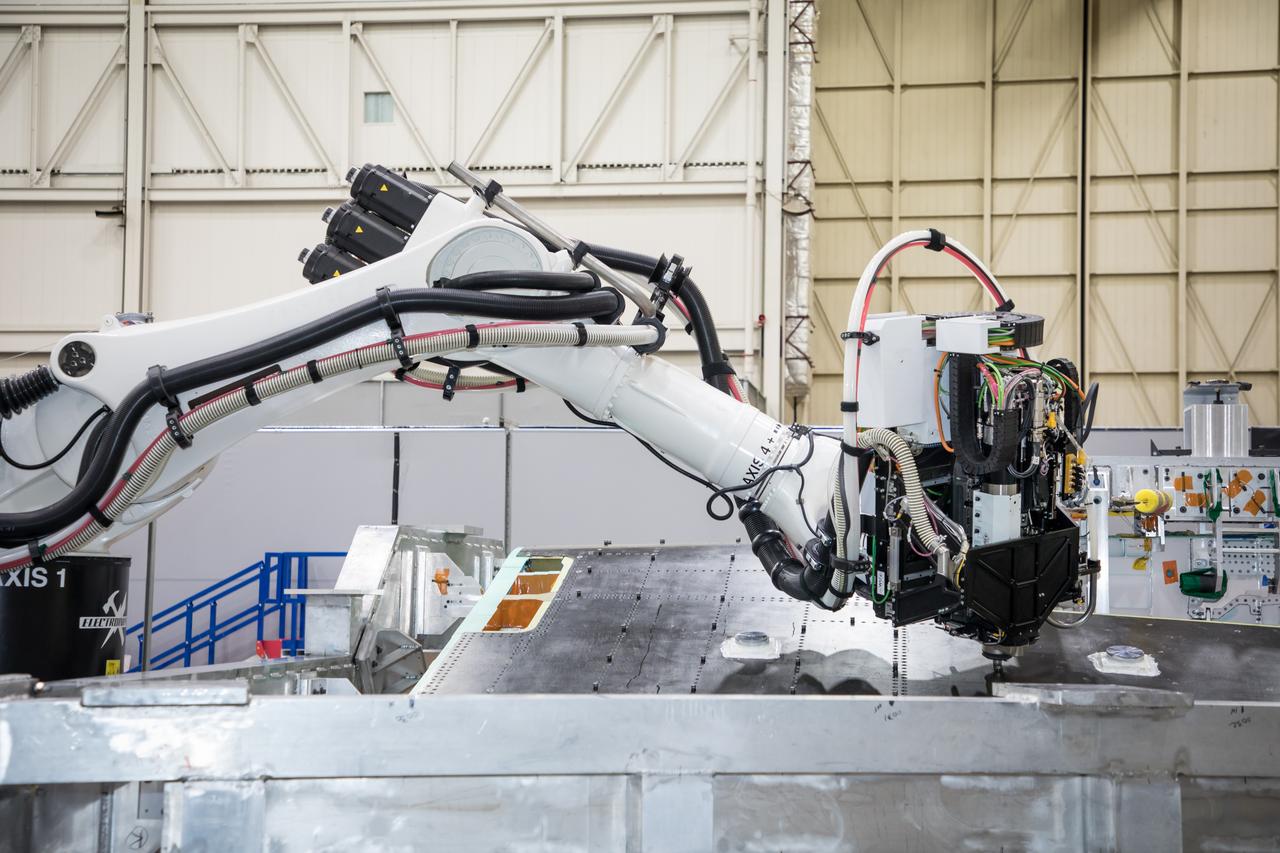
Lockheed Martin Photography By Garry Tice 1011 Lockheed Way, Palmdale, Ca. 93599 Event: SEG 410 Main Wing, COBRA Drillng Machine, Drilling Lower Wing Skins Date: 1/07/20 Additional Info:

Telemetry testing begins on the X-57 Maxwell, NASA’s first all-electric X-plane, as the operations crew at NASA’s Armstrong Flight Research Center records the results. Telemetry testing is a critical phase in X-57’s functional test series. In addition to confirming the ability of the X-57 aircraft to transmit speed, altitude, direction, and location to teams on the ground, telemetry testing also confirms the ability to transmit mission-critical-data, such as voltage, power consumption, and structural integrity. X-57’s goal is to help set certification standards for emerging electric aircraft markets.
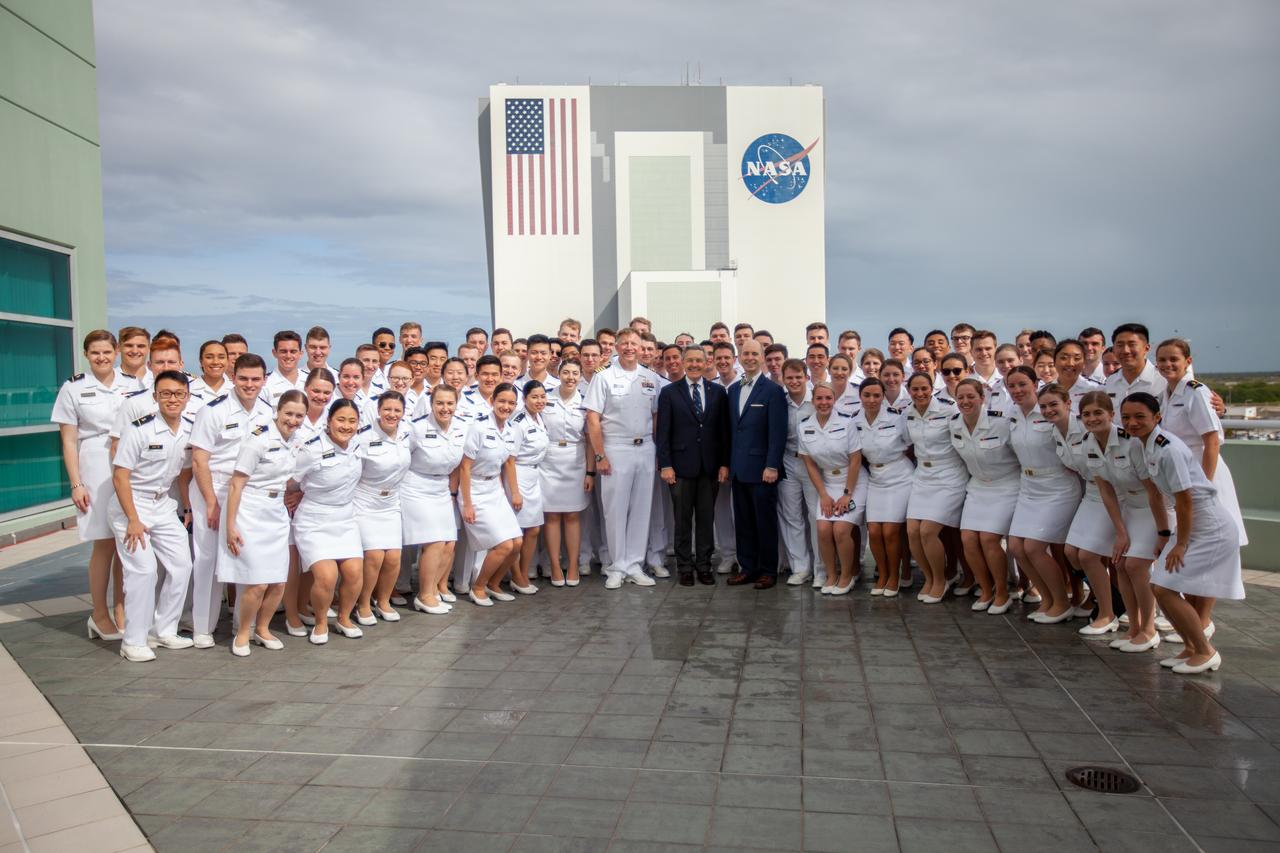
At center, from left to right, Captain Ben Shupp, commanding officer, Naval Ordnance Test Unit; Bob Cabana, Kennedy Space Center director; and Dr. Aaron Smith, director and chairman, Musical Activities Department, United States Naval Academy; pose with the U.S. Naval Academy Glee Club with the Florida spaceport’s Vehicle Assembly Building in the background on March 10, 2020. The highly acclaimed Glee Club, which performed for Kennedy employees, has achieved prominence as one of America’s premier choral ensembles.
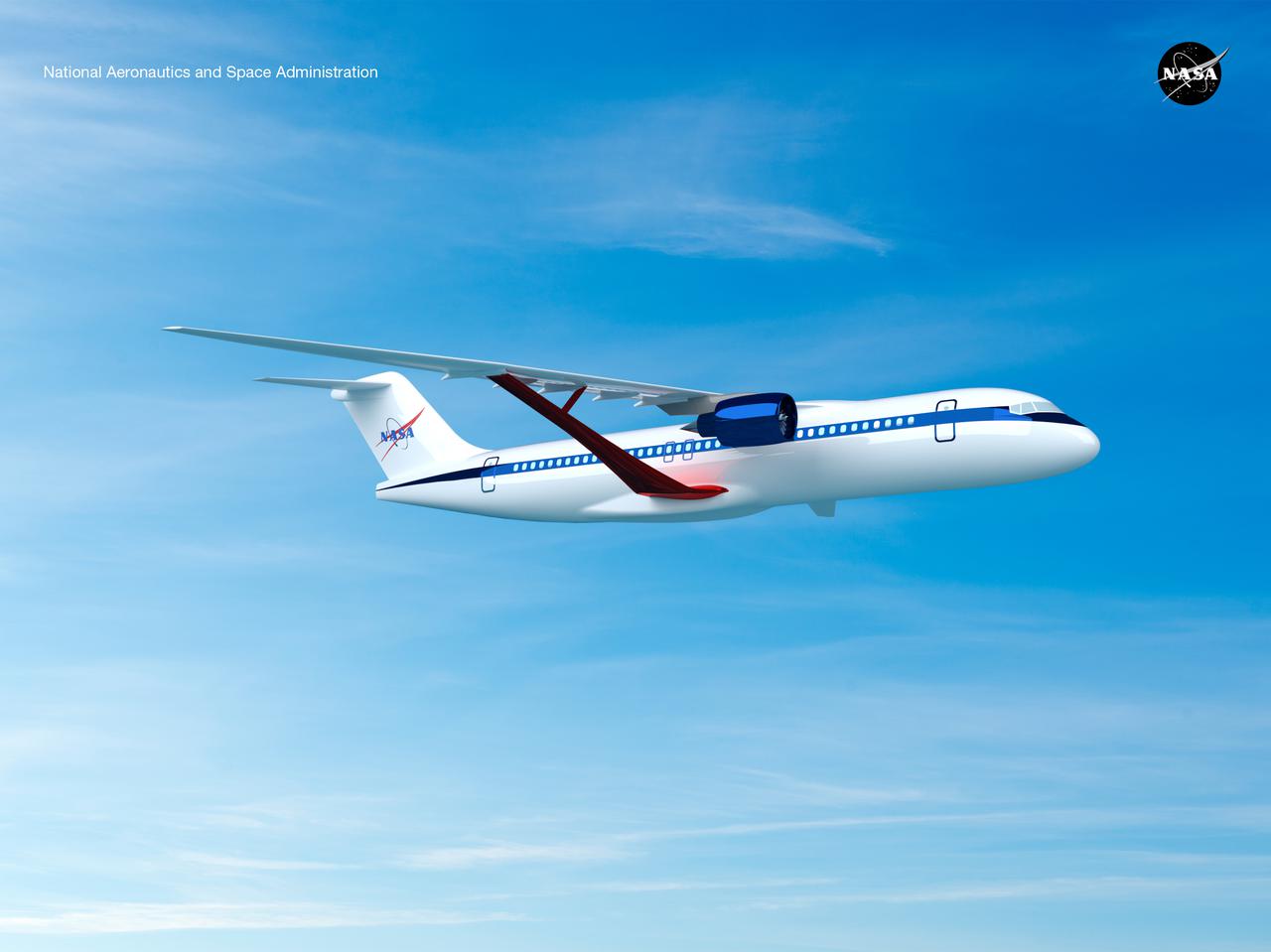
Notice anything different about the wings on this airliner? This conceptual truss-braced wing narrowbody is an aircraft with a 170ft span folding wing. By utilizing trusses, the aircraft can have longer, thinner wings with greater aspect ratios. This, in turn, translates into less drag and 5-10% less fuel burned. The Transonic Truss-Braced Wing aircraft originated from a joint effort by NASA and Boeing to develop subsonic commercial transport concepts – meeting NASA-defined metrics in terms of reduced noise, emissions, and fuel consumption. The design is currently undergoing wind tunnel testing and other studies by NASA researchers.
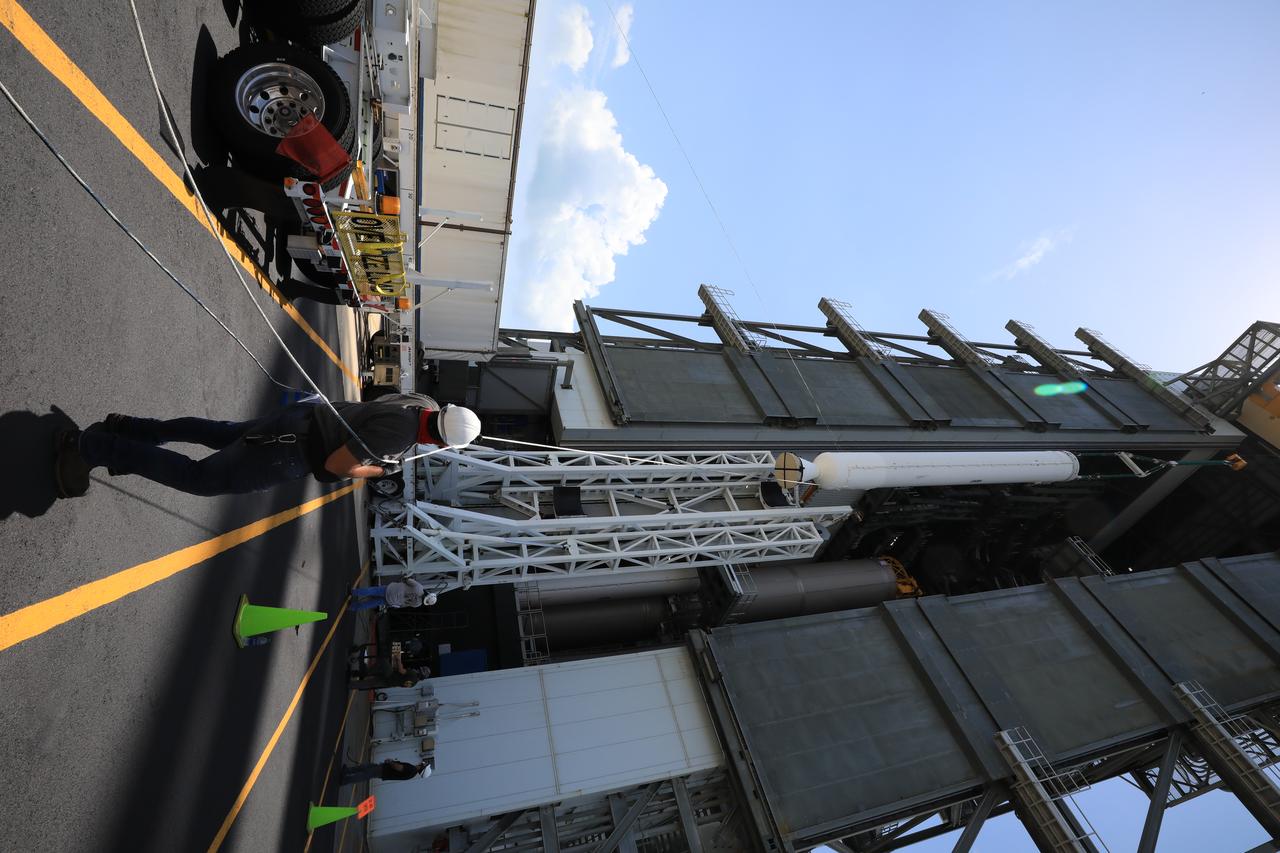
A crane is used to lift the third of four solid rocket boosters (SRB) for the United Launch Alliance Atlas V 541 rocket into the Vertical Integration Facility (VIF) at Space Launch Complex 41 at Cape Canaveral Air Force Station (CCAFS) in Florida on June 8, 2020. The SRB will be lifted up and mated to the Atlas V booster in the VIF. NASA’s Mars 2020 mission with the Perseverance rover is scheduled to launch on July 20, 2020, atop the Atlas V rocket from Pad 41. The rover is part of NASA’s Mars Exploration Program, a long-term effort of robotic exploration of the Red Planet. The rover’s seven instruments will search for habitable conditions in the ancient past and signs of past microbial life on Mars. The Launch Services Program at Kennedy is responsible for launch management.
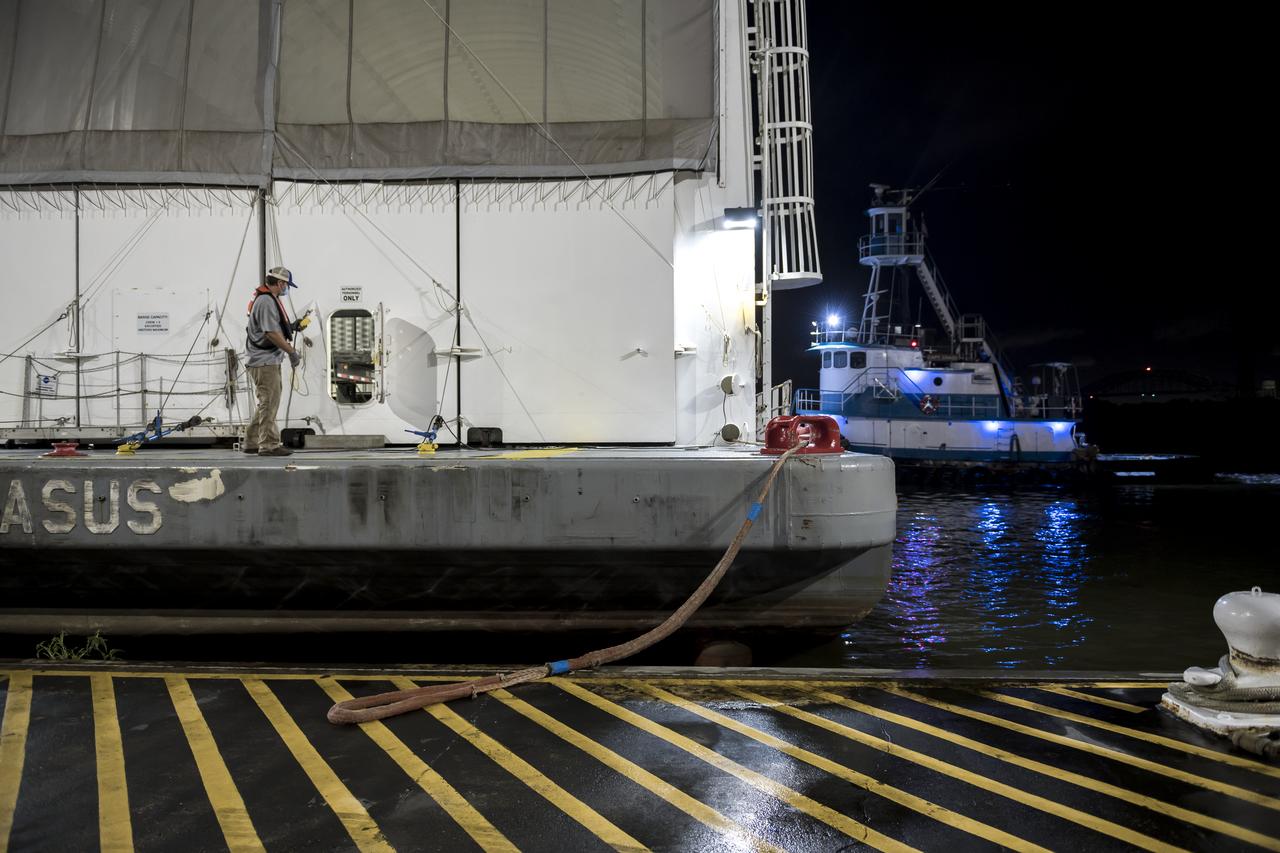
These images show NASA’s Pegasus barge at NASA’s Michoud Assembly Facility in New Orleans as it transported the Artemis I launch vehicle stage adapter (LVSA) of the agency’s Space Launch System rocket to NASA’s Kennedy Space Center in Florida. Leaving with the adapter from NASA’s Marshall Space Flight Center in Huntsville, Alabama, Pegasus made a brief stop at Michoud to offload supplies and equipment before continuing its to Kennedy. The LVSA connects the deep space rocket’s 212-foot-tall core stage to the rocket’s upper stage and will be used for Artemis I, the first in a series of increasingly complex missions to the Moon through NASA’s Artemis program. Once at Kennedy, the LVSA will undergo Artemis I launch preparations. Only the SLS core stage, currently in final testing at NASA’s Stennis Space Center near Bay St. Louis, Mississippi, remains to be shipped to Kennedy on Pegasus. The core stage is produced at Michoud. Together with four RS-25 engines, the rocket’s massive 212-foot-tall core stage — the largest stage NASA has ever built — and its twin solid rocket boosters produce 8.8 million pounds of thrust to send NASA’s Orion spacecraft, astronauts and supplies beyond Earth’s orbit to the Moon. Offering more payload mass, volume capacity and energy to speed missions through space, the SLS rocket, along with NASA’s Gateway in lunar orbit, the Human Landing System and Orion, is part of NASA’s backbone for deep space exploration and the Artemis lunar program. No other rocket is capable of carrying astronauts in Orion around the Moon in a single mission.
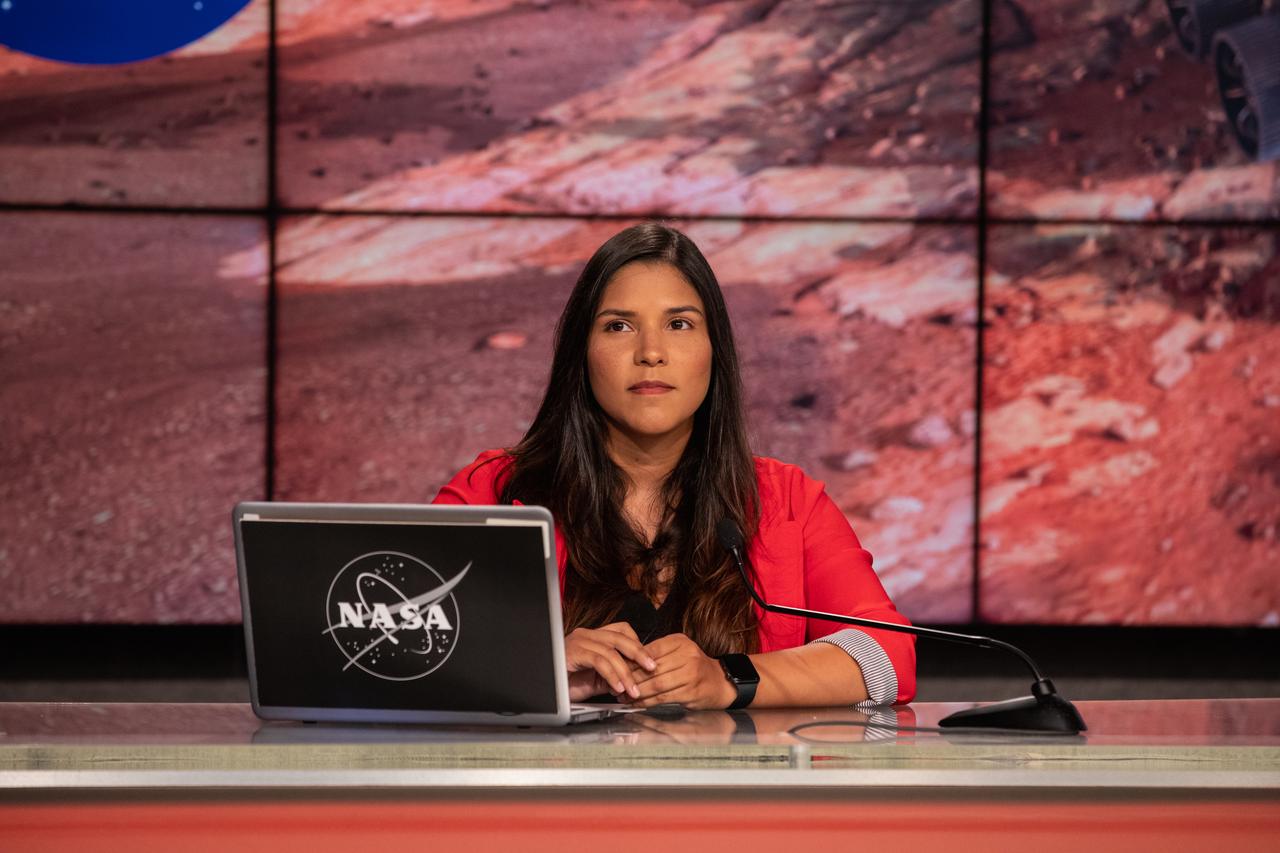
NASA Public Affairs Specialist Kristi Irastorza hosts a “Mars 2020 Social Media Q&A: En Español” program on Wednesday, July 22, at NASA’s Kennedy Space Center in Florida. The event featured representatives from NASA’s Launch Services Program (LSP) and NASA’s Jet Propulsion Laboratory. The Mars Perseverance rover is scheduled to lift off aboard a United Launch Alliance Atlas V 541 rocket from Cape Canaveral Air Force Station’s Space Launch Complex 41 on Thursday, July 30. The two-hour window opens at 7:50 a.m. EDT. LSP, based at Kennedy, is managing the launch.
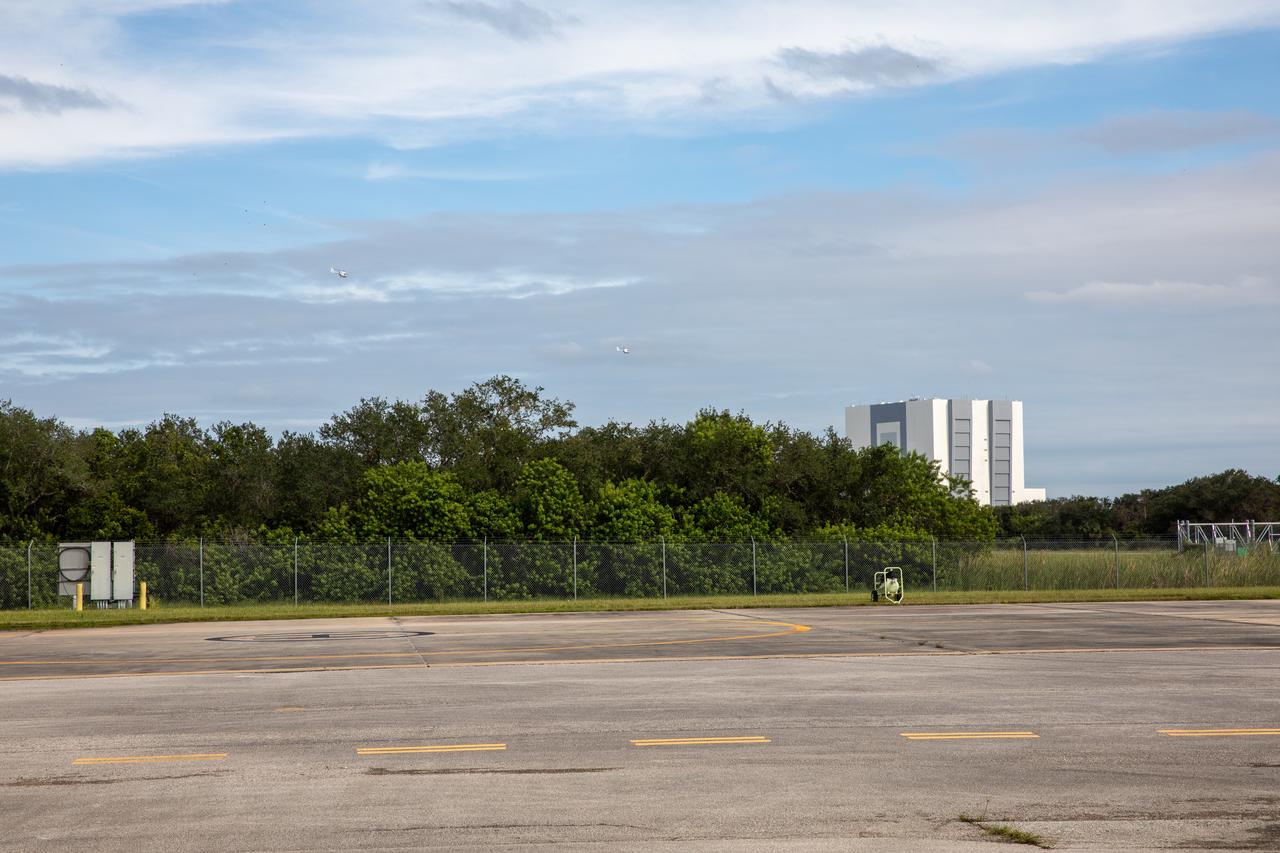
Two new Airbus H135 (T3) helicopters can be seen in the distance, arriving at the Launch and Landing Facility runway at NASA’s Kennedy Space Center in Florida on Sept. 30, 2020. The H135 helicopters will replace the Bell Huey 2 security aircraft in service now, maintained by Kennedy’s Flight Operations team. These new helicopters provide a number of technological and safety advantages over the Hueys, such as more lifting power, greater stability in the air, and expanded medical capabilities. The team expects to fully transition to flying the two H135s later this year. A third is expected to arrive in early 2021, and with its arrival, will complete the fleet’s upgrade.
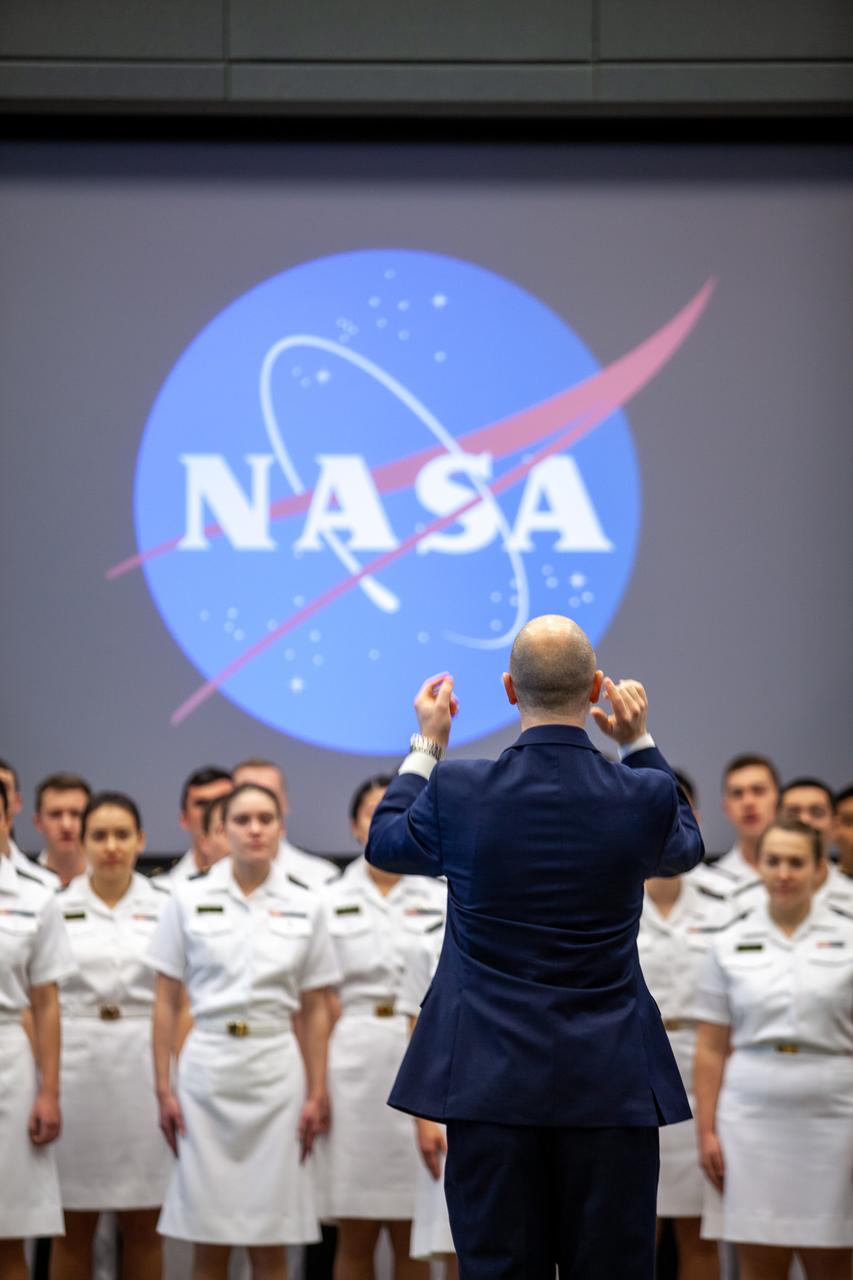
The United States Naval Academy Glee Club performs for Kennedy Space Center employees at the Florida spaceport on March 10, 2020. As part of the celebration, Kennedy Director Bob Cabana discussed the deep historical ties between NASA and the U.S. Navy. The highly acclaimed Glee Club has achieved prominence as one of America’s premier choral ensembles, performing throughout the nation each year.
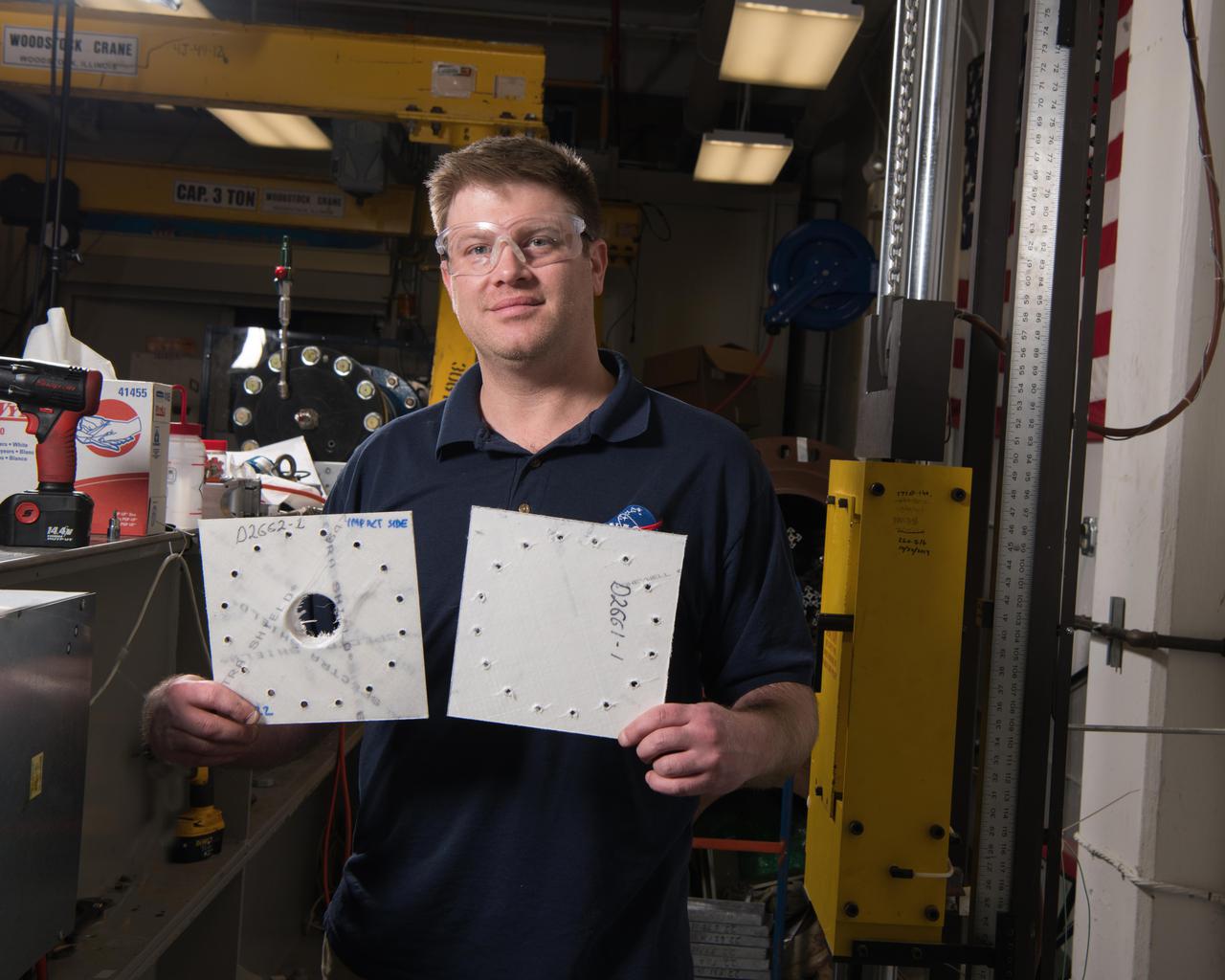
Ballistics Lab testing
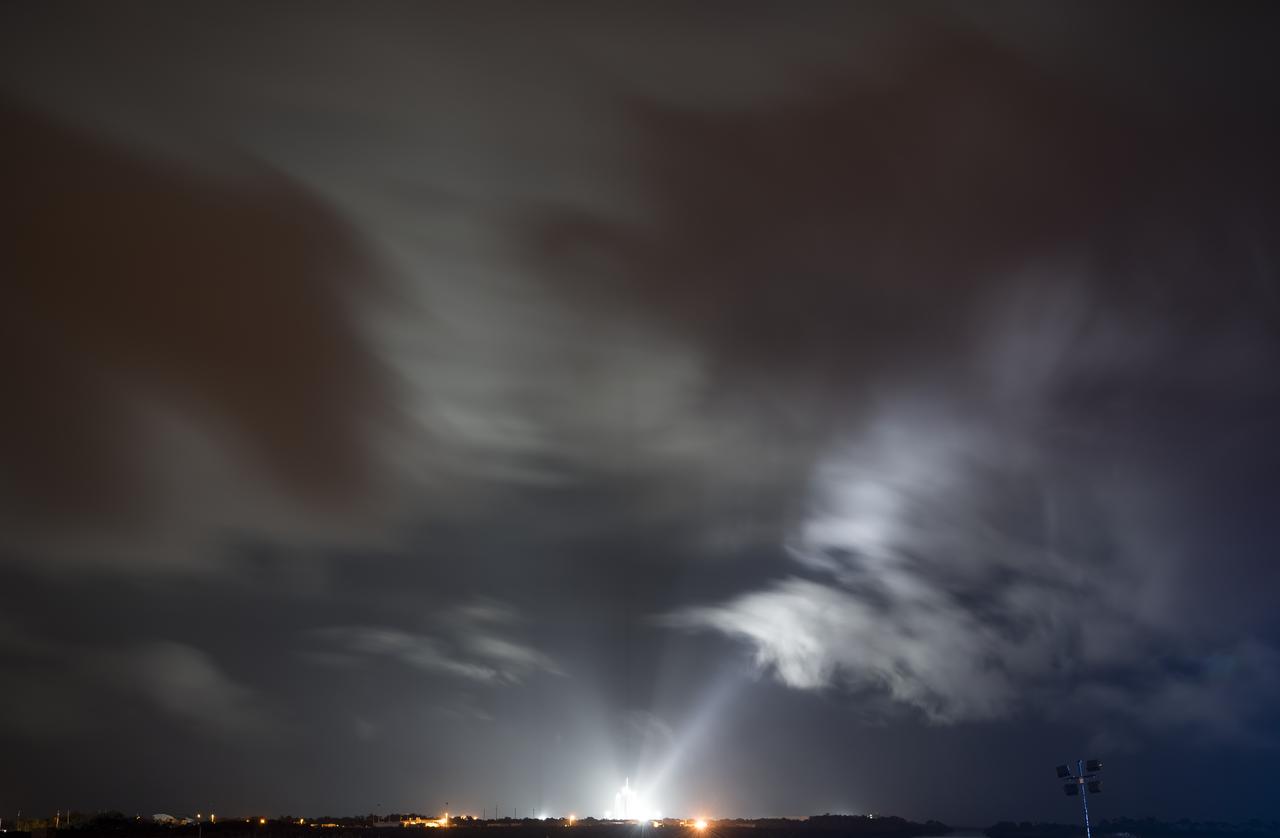
A SpaceX Falcon 9 rocket with the company's Crew Dragon spacecraft onboard is seen, in this thirty second exposure, illuminated by spotlights on the launch pad at Launch Complex 39A as preparations continue for the Crew-1 mission, Saturday, Nov. 14, 2020, at NASA’s Kennedy Space Center in Florida. NASA’s SpaceX Crew-1 mission is the first crew rotation mission of the SpaceX Crew Dragon spacecraft and Falcon 9 rocket to the International Space Station as part of the agency’s Commercial Crew Program. NASA astronauts Mike Hopkins, Victor Glover, and Shannon Walker, and astronaut Soichi Noguchi of the Japan Aerospace Exploration Agency (JAXA) are scheduled to launch at 7:27 p.m. EST on Sunday, Nov. 15, from Launch Complex 39A at the Kennedy Space Center. Photo Credit: (NASA/Joel Kowsky)
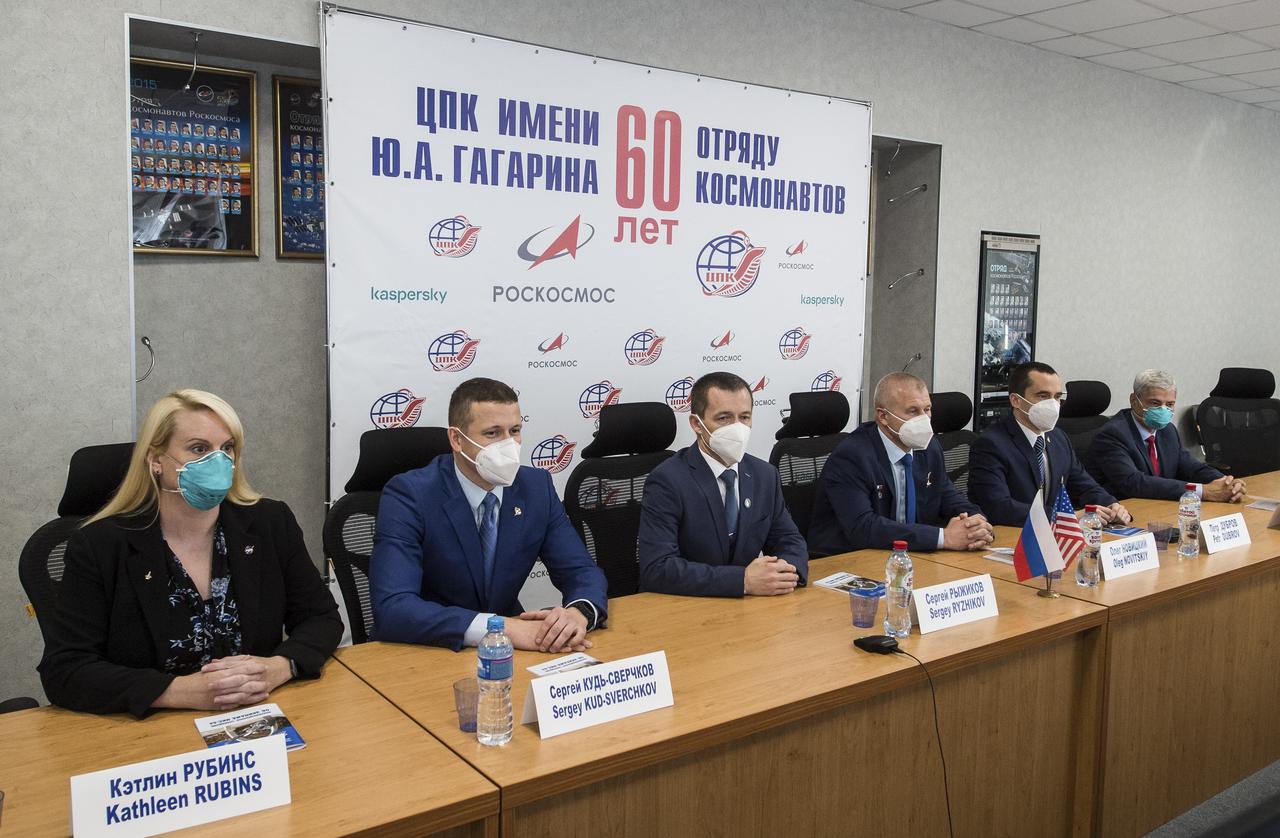
From left to right, Expedition 64 prime crew members, NASA astronaut Kate Rubins, Russian cosmonaut Sergey Kud-Sverchkov of Roscosmos, and Russian cosmonaut Sergey Ryzhikov of Roscosmos, and Expedition 64 backup crew members Russian cosmonaut Oleg Novitskiy of Roscosmos, Russian cosmonaut Petr Dubrov of Roscosmos, and NASA astronaut Mark Vande Hei, are seen during a press conference prior to the prime team’s launch from Baikonur Cosmodrome, Thursday, Sept. 24, 2020 at the Gagarin Cosmonaut Training Center (GCTC) in Star City, Russia. Photo Credit: (NASA/GCTC/Andrey Shelepin)

Inside the Launch Control Center’s Firing Room 1 at NASA’s Kennedy Space Center in Florida, members of the Artemis I launch team rehearse the procedures for fueling the Space Launch System (SLS) rocket with super cold propellants, or cryogenics, on Aug. 18, 2020. During the cryogenic simulation, potential problem scenarios were introduced to test the tools, processes, and procedures necessary for fueling the rocket. Artemis I will be the first integrated test flight of SLS and the Orion spacecraft – the system that will ultimately land the first woman and the next man on the Moon by 2024.
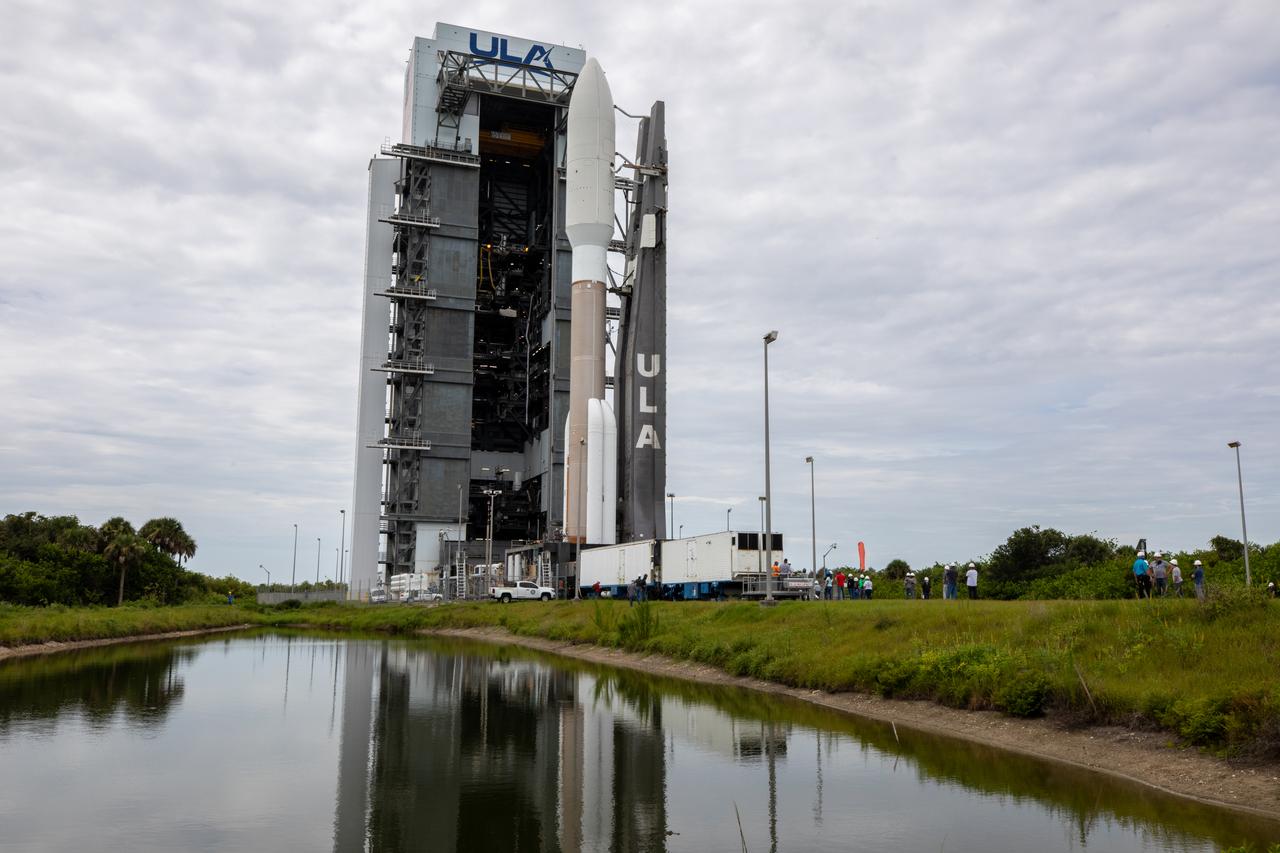
The United Launch Alliance Atlas V 541 rocket, carrying NASA’s Mars Perseverance rover and Ingenuity helicopter, rolls out from the Vertical Integration Facility and moves along to the launch pad at Space Launch Complex 41 at Cape Canaveral Air Force Station on July 28, 2020. First motion was at 10:24 a.m. EDT. Launch of the Mars 2020 mission is scheduled for July 30. The rover is part of NASA’s Mars Exploration Program, a long-term effort of robotic exploration of the Red Planet. The rover will search for habitable conditions in the ancient past and signs of past microbial life on Mars. The Launch Services Program at Kennedy is responsible for launch management.
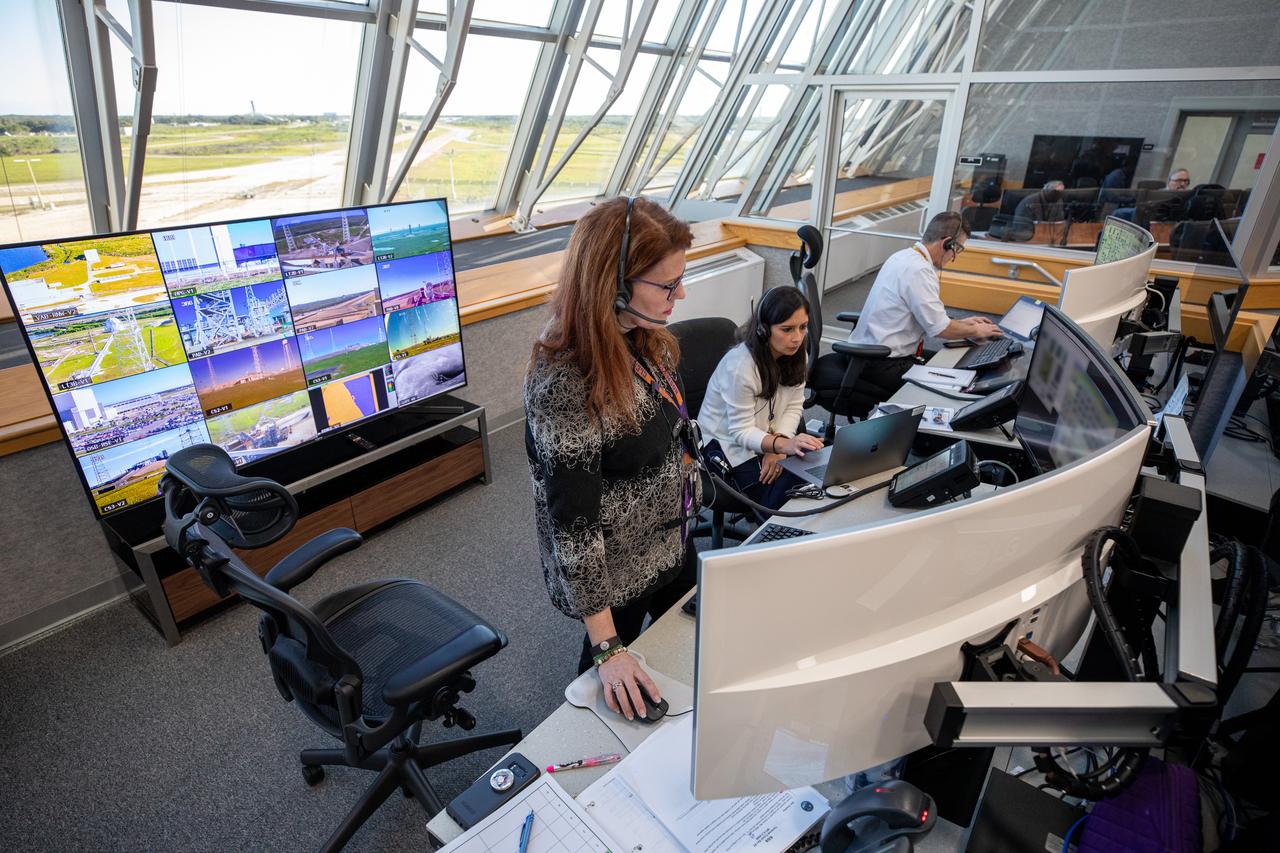
Artemis I Launch Director Charlie Blackwell-Thompson (left) stands at the launch console inside the Launch Control Center’s Firing Room 1 at the Kennedy Space Center in Florida during a countdown simulation. Next to her are Jessica Parsons, technical assistant to the launch director, and Jeremy Graeber, NASA’s Test, Launch and Recovery Operations branch chief, who also serves as the assistant launch director. A team of nearly 100 engineers from Orion, Space Launch System (SLS) and the agency’s Exploration Ground Systems coming together on Feb. 3, 2020, to work through a series of simulated challenges, as well as a final countdown procedure. During these exercises, different issues were introduced to familiarize the team with launch day operations, while providing them with an opportunity to practice how they would handle those issues in real-time. Artemis I will be the first integrated test flight of the Orion spacecraft and SLS rocket – the system that will ultimately land the first woman and the next man on the Moon.
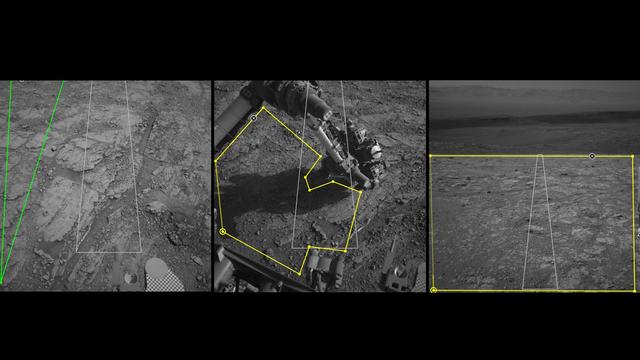
Three images from the public tool AI4Mars show different kinds of Martian terrain as seen by NASA's Curiosity rover. By drawing borders around terrain features and assigning one of four labels to them, you can help train an algorithm that will automatically identify favorable and hazardous terrain for Curiosity's rover planners. You can visit AI4Mars here. All three images were generated by Curiosity's black-and-white Navigation Cameras. In the lower right corner of the first image on the left, the circle and checkerboard on is the Sample Playground, where samples of soil or pulverized rock can be trickled to study their physical properties. In the center are Curiosity's robotic arm and turret, a collection of science tools on the end of the arm. https://photojournal.jpl.nasa.gov/catalog/PIA23897
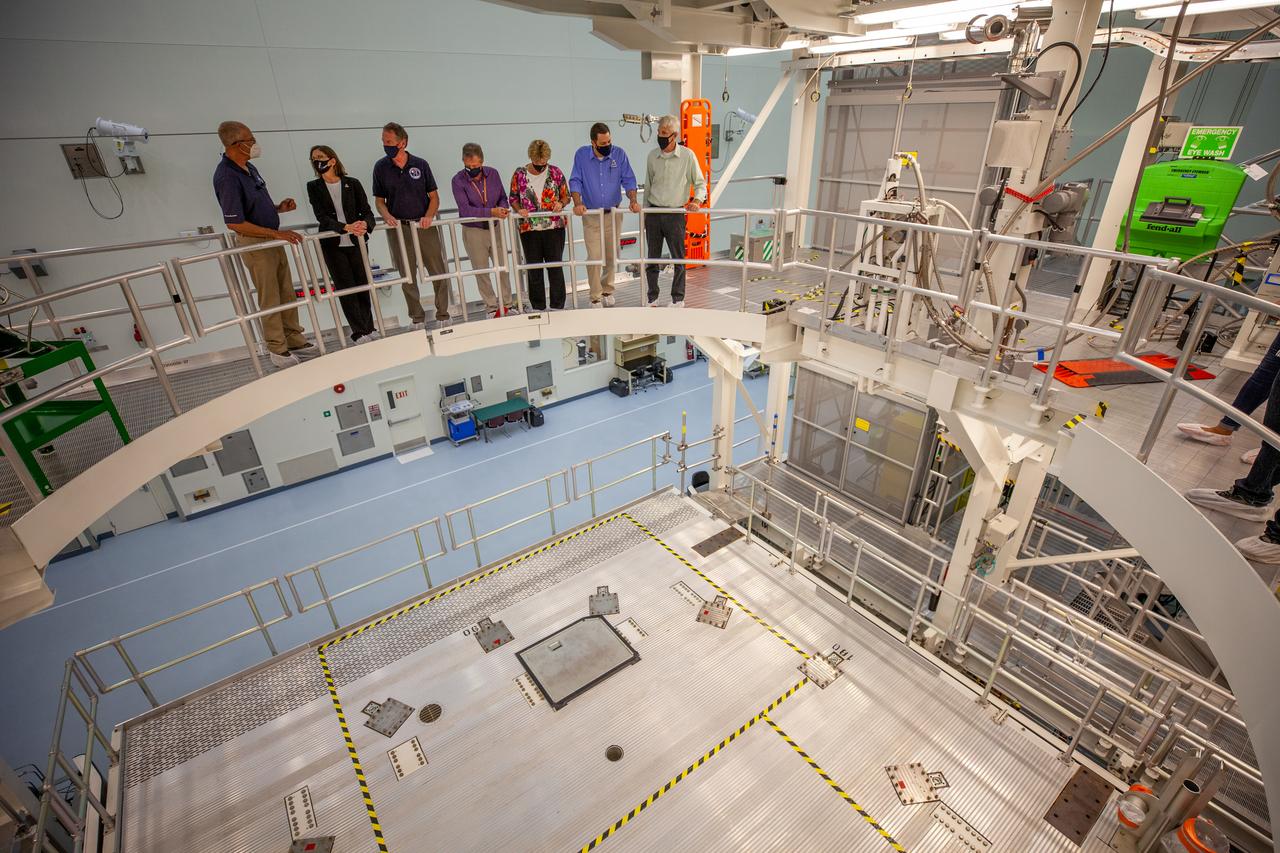
Catherine Koerner, second from left, NASA Orion Program manager, along with senior managers from Orion, Exploration Ground Systems (EGS) and TOSC, tours the Multi-Payload Processing Facility (MPPF) at NASA’s Kennedy Space Center in Florida on Oct. 5, 2020. Accompanying her, from left are Skip Williams, operations manager for the MPPF spacecraft offline element integration team; Mike Bolger, EGS manager; Nicolas Kindred, TOSC flow manager; Annette Hasbrook, Orion Program assistant manager; Jeremy Parsons, EGS deputy manager; and Scott Wilson, Orion Production Operations manager. Koerner viewed spacecraft hardware and processing facilities for the Artemis I and II missions. The first in a series of increasingly complex missions, Artemis I will test the Orion spacecraft and Space Launch System as an integrated system ahead of crewed flights to the Moon. Under the Artemis program, NASA will land the first woman and the next man on the Moon in 2024.
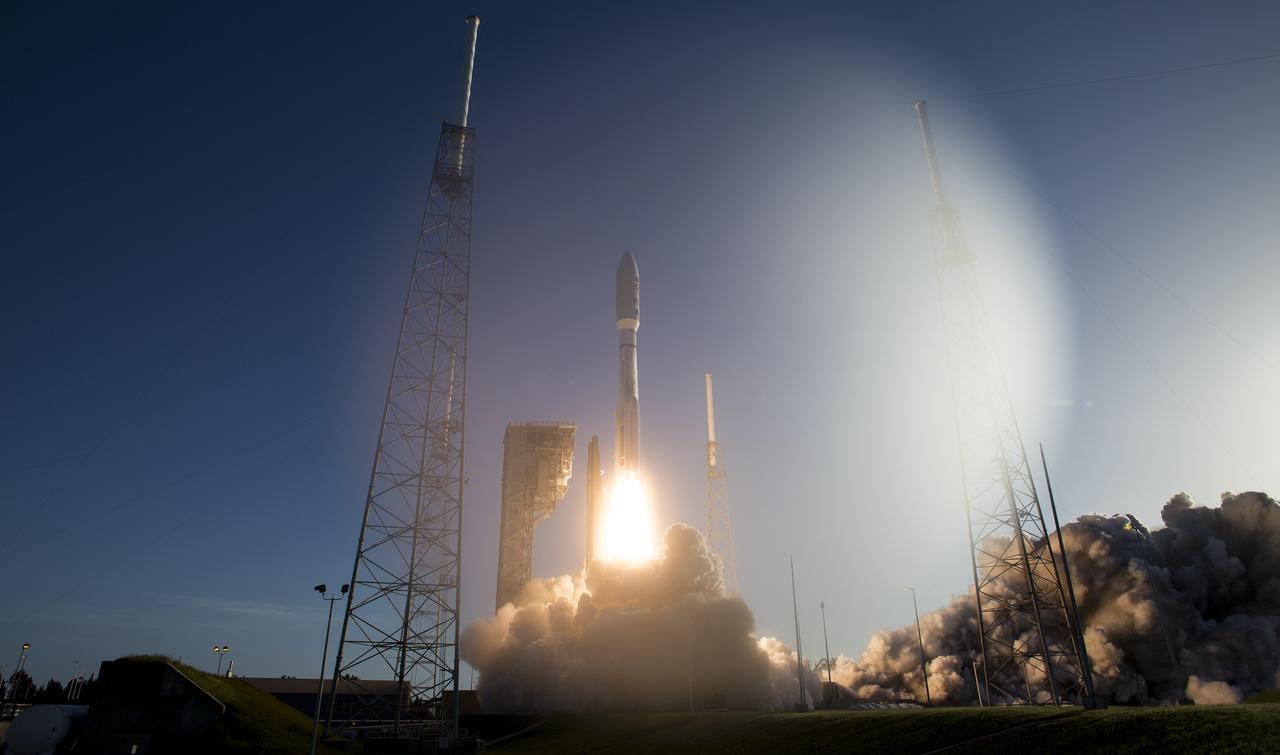
A United Launch Alliance Atlas V rocket with NASA’s Mars 2020 Perseverance rover onboard launches from Space Launch Complex 41, Thursday, July 30, 2020, at Cape Canaveral Air Force Station in Florida. The Perseverance rover is part of NASA’s Mars Exploration Program, a long-term effort of robotic exploration of the Red Planet. Photo Credit: (NASA/Joel Kowsky)

NASA astronaut Nicole Mann participates in a NASA Social Facebook Live briefing inside the Press Site auditorium on May 26, 2020, at the agency’s Kennedy Space Center in Florida ahead of NASA’s SpaceX Demo-2 launch, slated for Wednesday, May 27. A SpaceX Falcon 9 rocket and Crew Dragon spacecraft are scheduled to lift off from Kennedy’s Launch Complex 39A, carrying NASA astronauts Robert Behnken and Douglas Hurley to the International Space Station. This will mark the first launch of astronauts from U.S. soil to the space station since the conclusion of the Space Shuttle Program in 2011. Part of the agency’s Commercial Crew Program, this will be SpaceX’s final flight test, paving the way for NASA to certify the crew transportation system for regular, crewed flights to the orbiting laboratory. Liftoff is scheduled for 4:33 p.m. EDT.
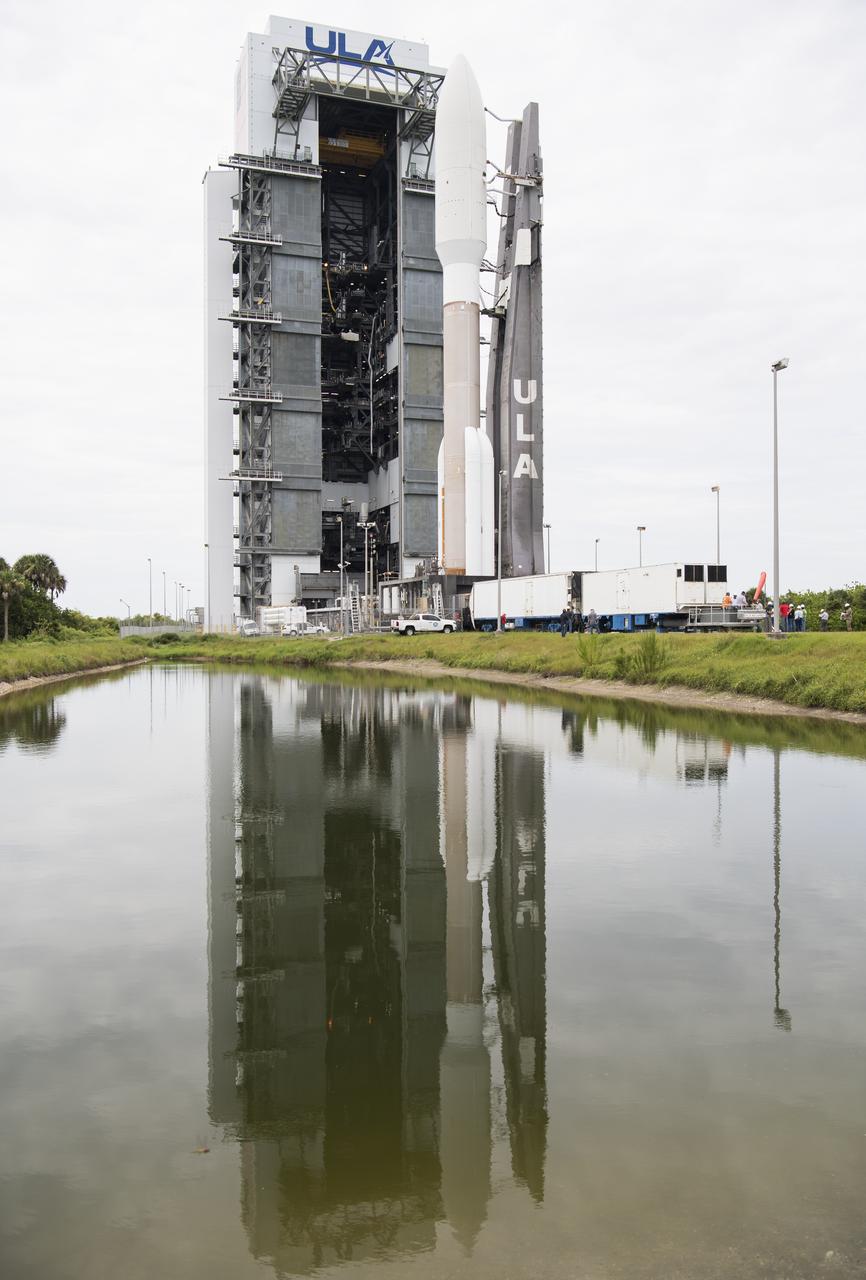
A United Launch Alliance Atlas V rocket with NASA’s Mars 2020 Perseverance rover onboard is seen as it is rolled out of the Vertical Integration Facility to the launch pad at Space Launch Complex 41, Tuesday, July 28, 2020, at Cape Canaveral Air Force Station in Florida. The Perseverance rover is part of NASA’s Mars Exploration Program, a long-term effort of robotic exploration of the Red Planet. Launch is scheduled for Thursday, July 30. Photo Credit: (NASA/Joel Kowsky)

This illustration of Jupiter's moon Europa shows how the icy surface may glow on its nightside, the side facing away from the Sun. New lab experiments re-created the environment of Europa and find that the icy moon shines, even on its nightside, due to an ice glow. As Jupiter bombards Europa with radiation, the electrons penetrate the surface, energizing the molecules underneath. When those molecules relax, they release energy as visible light. Variations in the glow and the color of the glow itself could reveal information about the composition of ice on Europa's surface. Different salty compounds react differently to the radiation and emit their own unique glimmer. Color will vary based on the real composition of Europa's surface. https://photojournal.jpl.nasa.gov/catalog/PIA24028
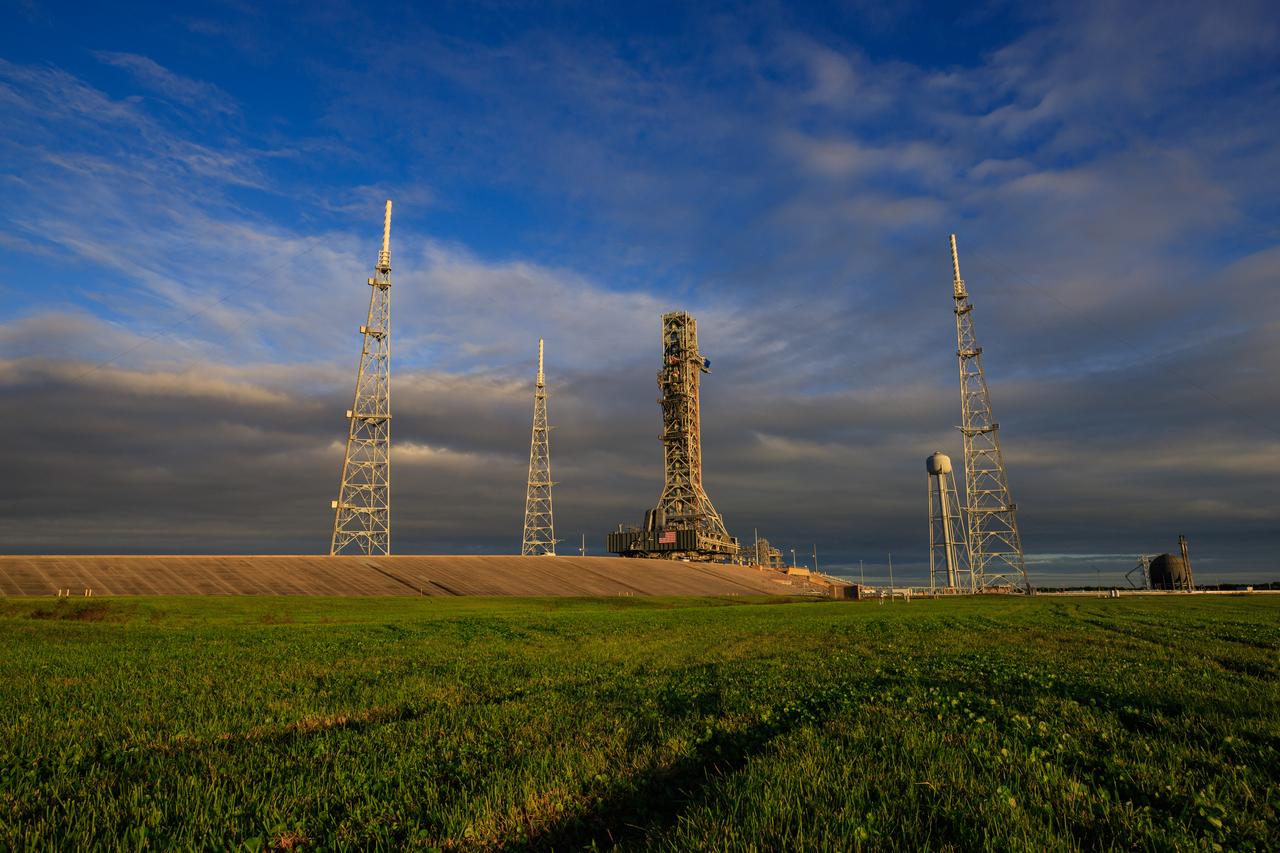
During sunrise on Oct. 30, 2020, the mobile launcher for the Artemis I mission, atop crawler-transporter 2, begins to depart Launch Pad 39B and return to the Vehicle Assembly Building at NASA’s Kennedy Space Center in Florida. The nearly 400-foot-tall mobile launcher was at the pad for 10 days, while engineers with Exploration Ground Systems and Jacobs performed several tasks, including a timing test to validate the launch team’s countdown timeline, and a thorough, top-to-bottom wash down of the mobile launcher to remove any debris remaining from construction and installation of the umbilical arms. Artemis I will test the Orion spacecraft and Space Launch System as an integrated system ahead of crewed flights to the Moon. Under the Artemis program, NASA will land the first woman and the next man on the Moon in 2024.

iss061e120106 (Jan. 4, 2020) --- The lights of South Korean cities and fishing boats on the Sea of Japan and the Yellow Sea are pictured as the International Space Station orbited 260 miles in altitude off the coast of Japan near Hiroshima. The brightest city lights toward the center represent the South Korean capital city of Seoul.

In southwest Romania, the rivers draining the Transylvanian Alps have incised the rough topography of the foothills. Only the river channels can be utilized for agriculture; the inter-stream land is rugged and forested. Agricultural fields are extremely long and narrow, oriented perpendicular to the streams and rivers. The image was acquired July 4, 2008, covers an area of 36.9 by 51.8 kilometers, and is located at 44.8 degrees north, 23.6 degrees east. https://photojournal.jpl.nasa.gov/catalog/PIA23677

Marshall team members participate in SpaceX booster review meeting for the Commercial Crew Program. The Commercial Crew Program is primarily based at NASA’s Kennedy Space Center in Florida, the space agency’s premier launch site. About 350 people are working in the Commercial Crew Program for NASA, with almost half involved in the work at other NASA centers, including Marshall and Johnson Space Center in Houston.
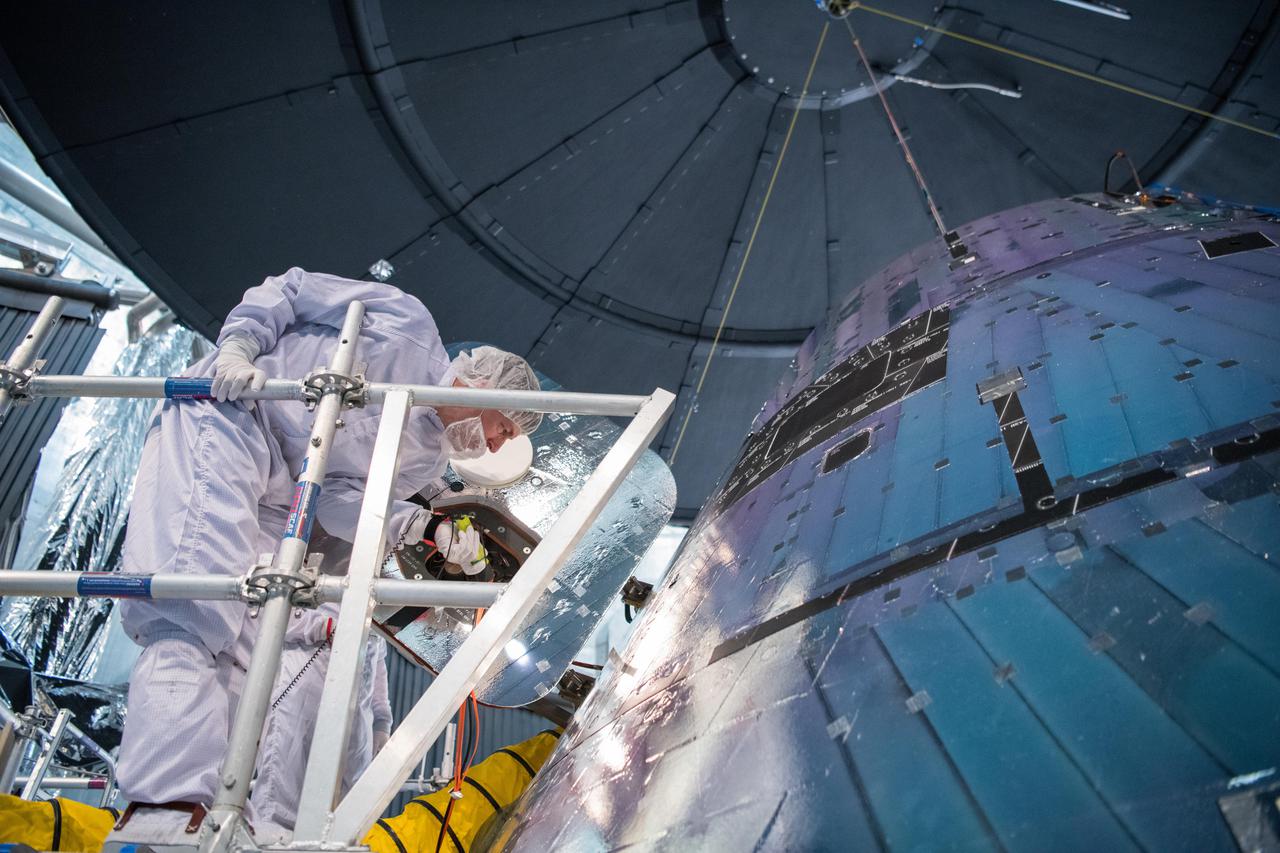
Day In The Life of Artemis Employees
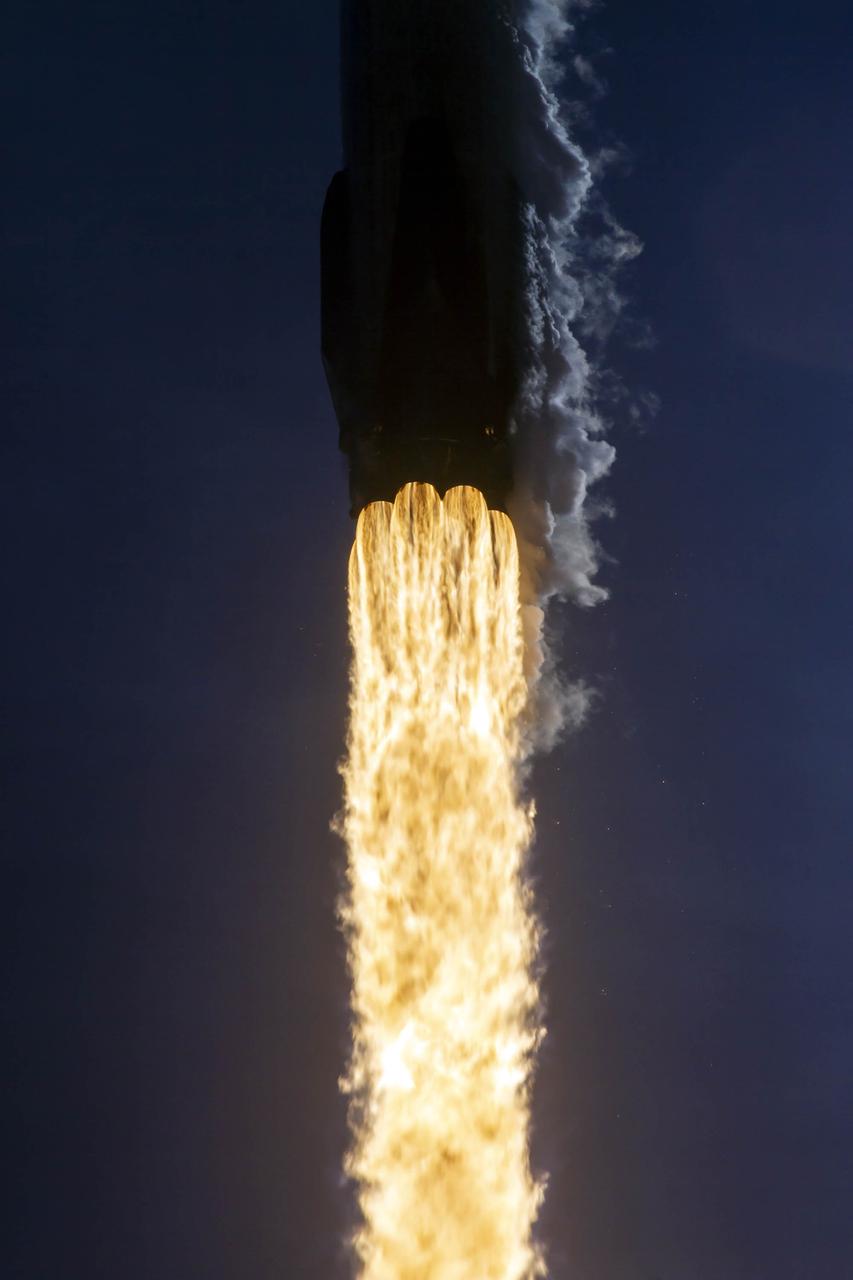
A SpaceX Falcon 9 rocket lifts off from Launch Complex 39A at Kennedy Space Center in Florida at 11:17 a.m. EST on Dec. 6, 2020, carrying the uncrewed cargo Dragon spacecraft on its journey to the International Space Station for NASA and SpaceX’s 21st Commercial Resupply Services (CRS-21) mission. Dragon will deliver more than 6,400 pounds of science investigations and cargo to the orbiting laboratory. The mission marks the first launch for SpaceX under NASA’s CRS-2 contract.
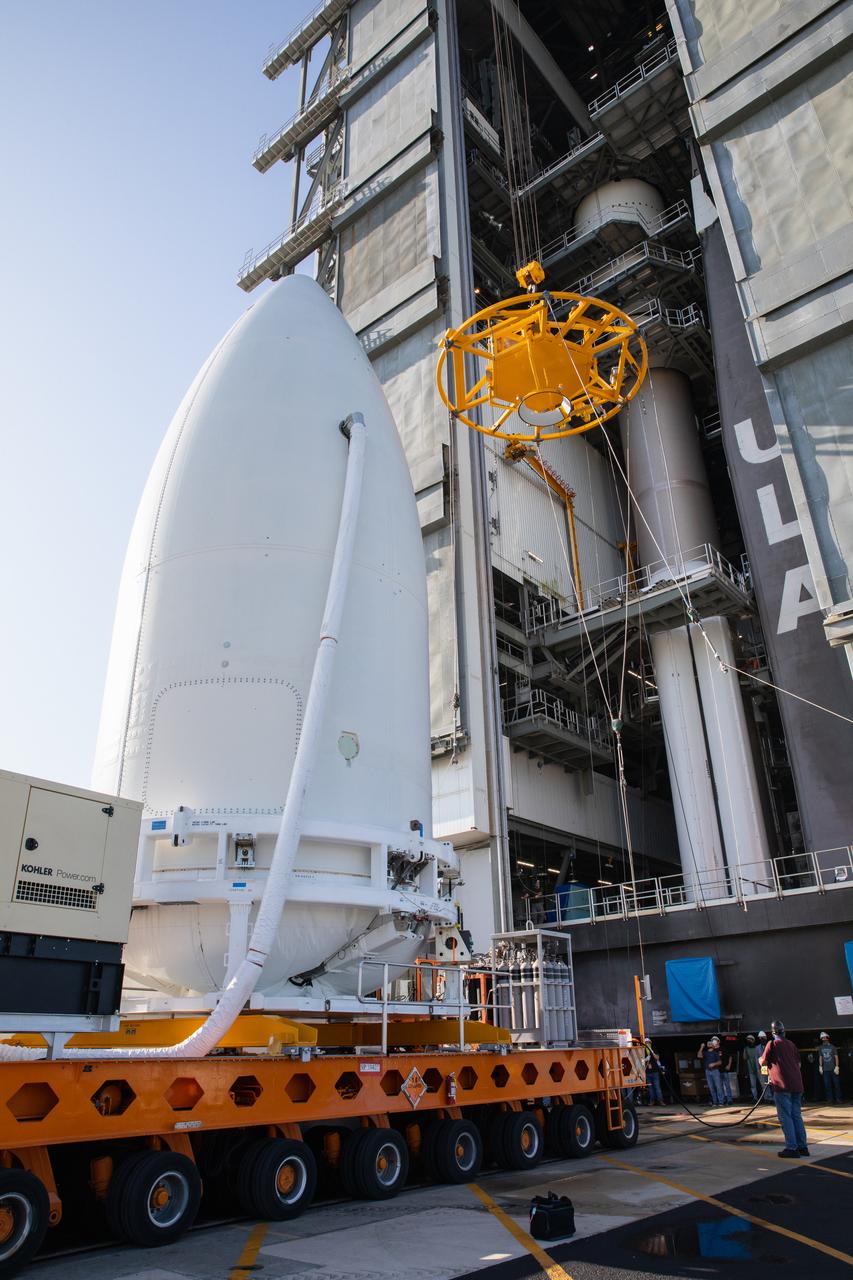
Preparations are underway to lift the United Launch Alliance (ULA) payload fairing with NASA’s Mars 2020 Perseverance rover secured inside up into the Vertical Integration Facility (VIF) at Space Launch Complex 41 at Cape Canaveral Air Force Station in Florida on July 7, 2020. Inside the VIF, the payload fairing will be lifted up by crane and secured on the ULA Atlas V rocket. The Mars Perseverance rover is scheduled to launch atop the Atlas V 541 rocket from Pad 41 on July 30. The rover is part of NASA’s Mars Exploration Program, a long-term effort of robotic exploration of the Red Planet. The rover’s seven instruments will search for habitable conditions in the ancient past and signs of past microbial life on Mars. The Launch Services Program at Kennedy is responsible for launch management.
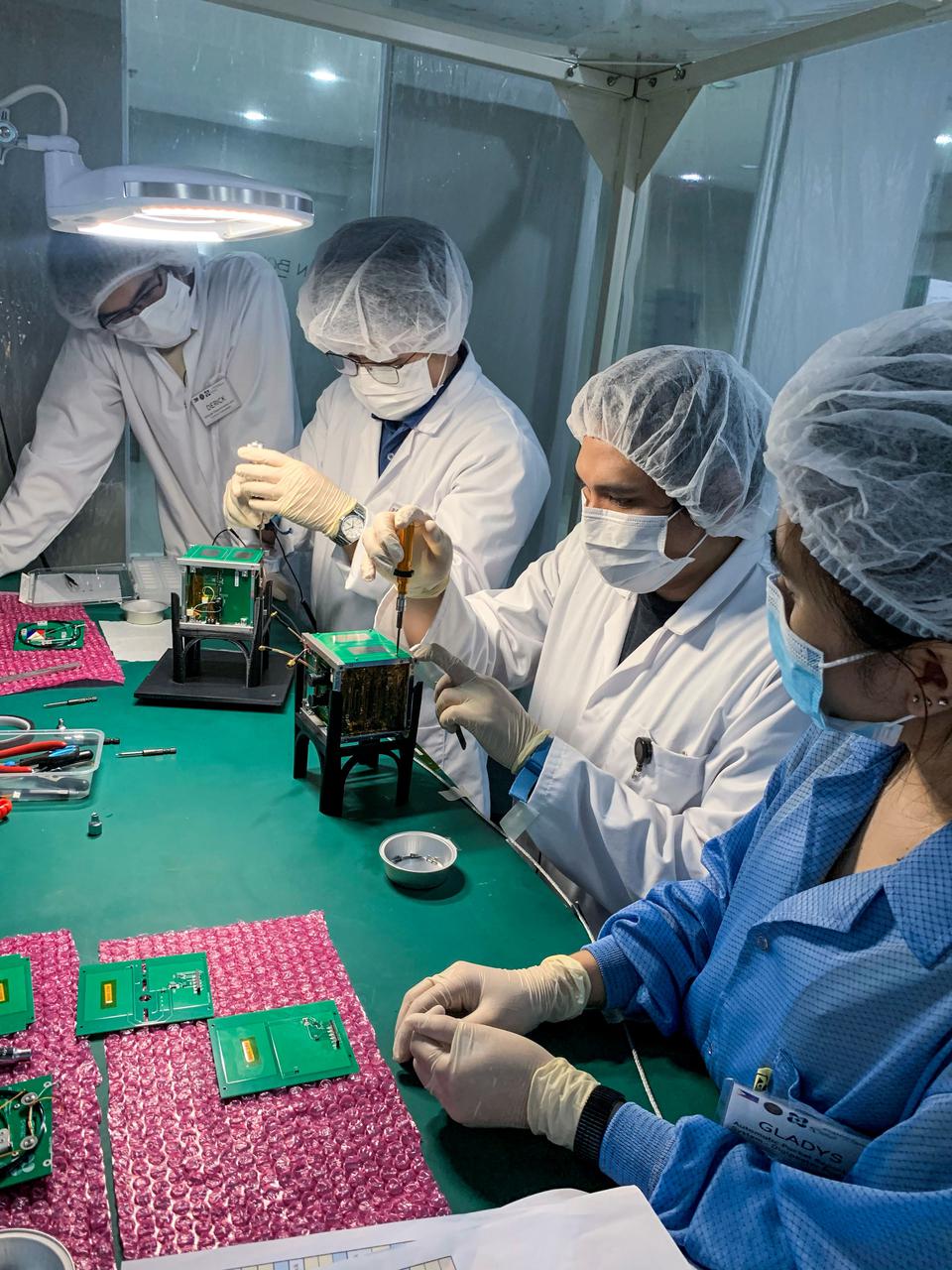
jsc2021e042552 (10/29/2020) --- Maya-3 and Maya-4 Flight Model Assembly inside the Clean Booth at the University Laboratory for Small Satellites and Space Engineering Systems (ULyS3Es), University of the Philippines-Diliman . The BIRDS-2S project consists of the Maya-3 and Maya-4 CubeSats, the first Philippine university-built cube satellites developed by eight graduate students under the Space science education and Technology Proliferation through University Partnerships (STeP-UP) Project. Image Credit: Batch-1 STeP-UP Scholars
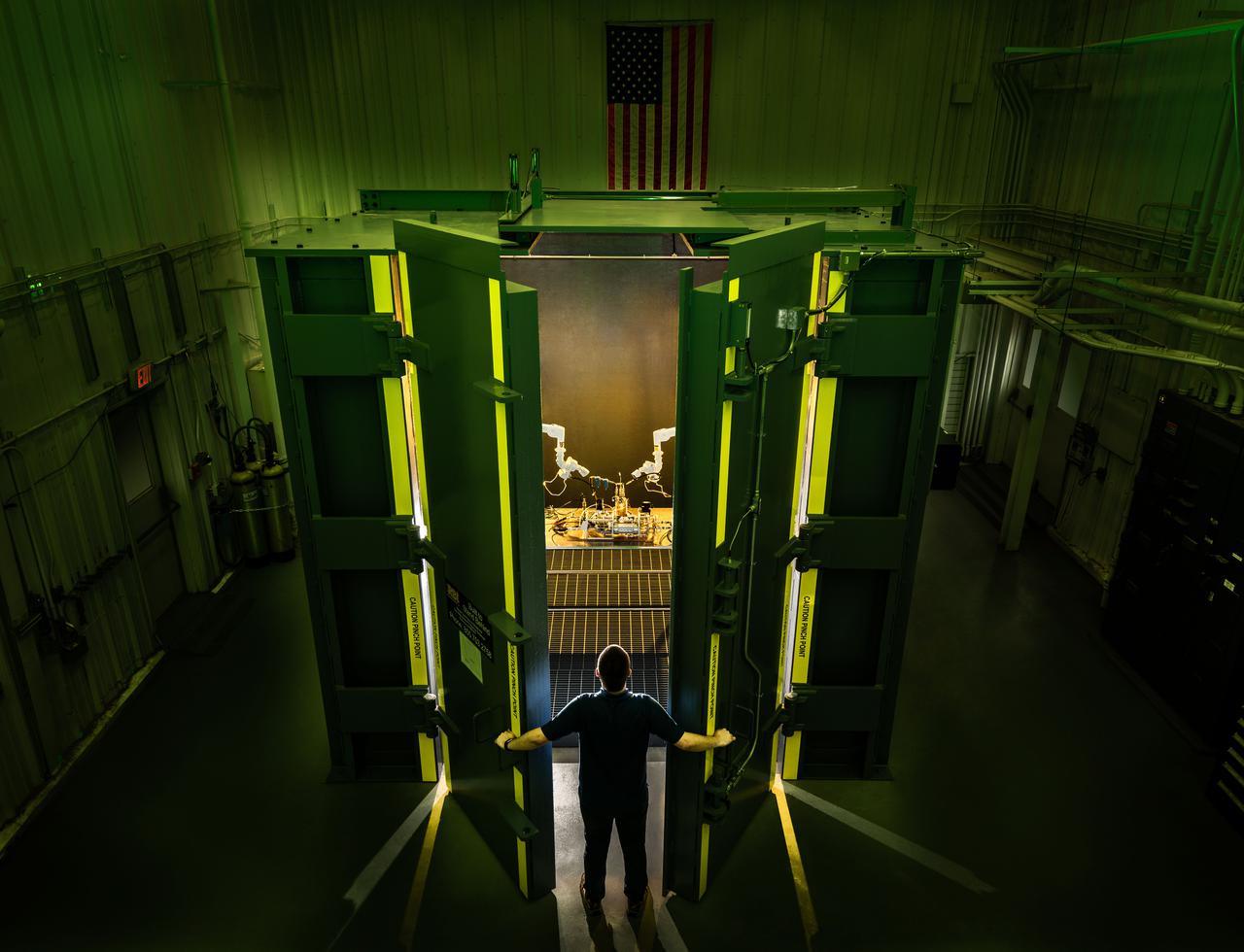
Test Engineer Chris McWilliams looks in on test equipment in the Boom Box High Pressure Test Enclosure in the Building 353H at Johnson Space Center’s Energy Systems Test Area. Photo Date: January 16, 2020. Photo Credit: (NASA/Robert Markowitz)

“I was born in India soon after we got independence from the British. So we were just beginning to get access to education. My mother was very keen that her daughters get an education. She was a big motivating force behind my interest in science. Since I was really little, she would say, ‘This daughter of mine is going to be a scientist.’ “And I loved nature. In those days, the monsoon would make India come to life with flowers and creepy-crawlies and all kinds of little creatures. I would just go out, eagerly looking for new forms of life. I was always curious. And I remember the night sky — just trying to count all the stars. We didn’t have electricity so it was very dark. You could see the Milky Way, it was so clear. “When Sputnik was launched, it came out in the newspaper that you would be able to see it pass overhead at 5 in the morning. And my grandmother woke up everyone — the entire household — to see it. There was a big crowd in the backyard to watch Sputnik go by. "Then, Yuri Gagarin made a tour of India. He came to our city — Lucknow — and there was a reception for him. My mother got invitations for all of us to see the cosmonaut. We were just little kids. We ran right to the stage — there was no security then — and said hello to him. He gave us little booklets and autographs. It was a big inspiration for me. I remember just staring at that booklet he gave me. I kept it for years.” NASA Program Scientist, Dr. Hashima Hasan, poses for a portrait in her backyard, while working from home during the COVID-19 pandemic, Monday, July 6, 2020 in Maryland. Hasan currently works at NASA Headquarters as a program scientist on the agency’s Nuclear Spectroscopic Telescope Array (NuSTAR) spacecraft, the Keck Observatory, and the NASA Astrophysics Archives, and is the deputy program scientist for NASA’s James Webb Space Telescope. Photo Credit: (NASA/Aubrey Gemignani)

Ken Bowersox, acting Associate Administrator for NASA's Human Exploration and Operations Mission Directorate, monitors the docking of SpaceX’s Crew Dragon spacecraft with NASA astronauts Douglas Hurley and Robert Behnken onboard to the International Space Station, Sunday, May 31, 2020, in firing room four of the Launch Control Center at NASA’s Kennedy Space Center in Florida. NASA’s SpaceX Demo-2 mission is the first launch with astronauts of the SpaceX Crew Dragon spacecraft and Falcon 9 rocket to the International Space Station as part of the agency’s Commercial Crew Program. The test flight serves as an end-to-end demonstration of SpaceX’s crew transportation system. Behnken and Hurley launched at 3:22 p.m. EDT on Saturday, May 30, from Launch Complex 39A at the Kennedy Space Center and docked with the International Space Station at 10:16am EDT on Sunday, May 31.. A new era of human spaceflight is set to begin as American astronauts once again launch on an American rocket from American soil to low-Earth orbit for the first time since the conclusion of the Space Shuttle Program in 2011. Photo Credit: (NASA/Joel Kowsky)
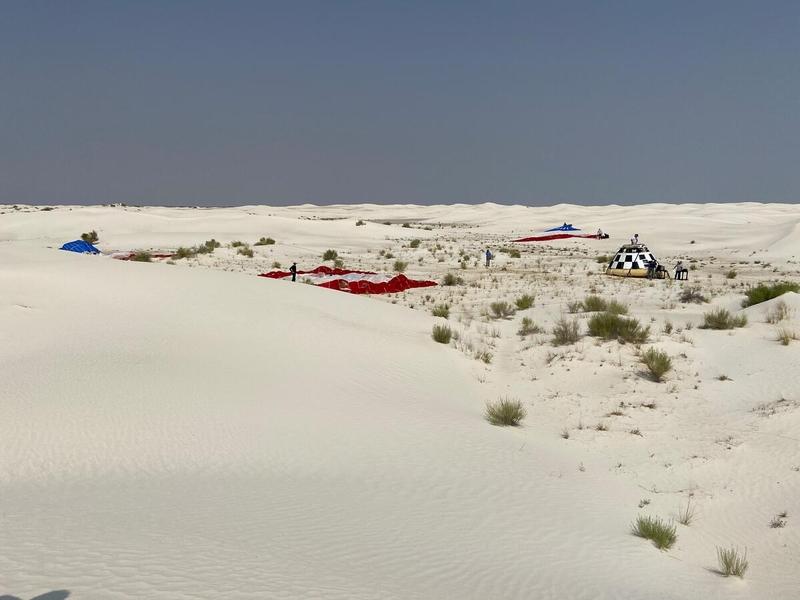
Recovery teams gather at the landing site of Boeing’s CST-100 Starliner test article used in the spacecraft's final parachute reliability test at White Sands Space Harbor, New Mexico, on Sept. 19, 2020. The test is part of a reliability campaign that will help strengthen the spacecraft’s landing system ahead of crewed flights to and from the International Space Station as part of NASA’s Commercial Crew Program.
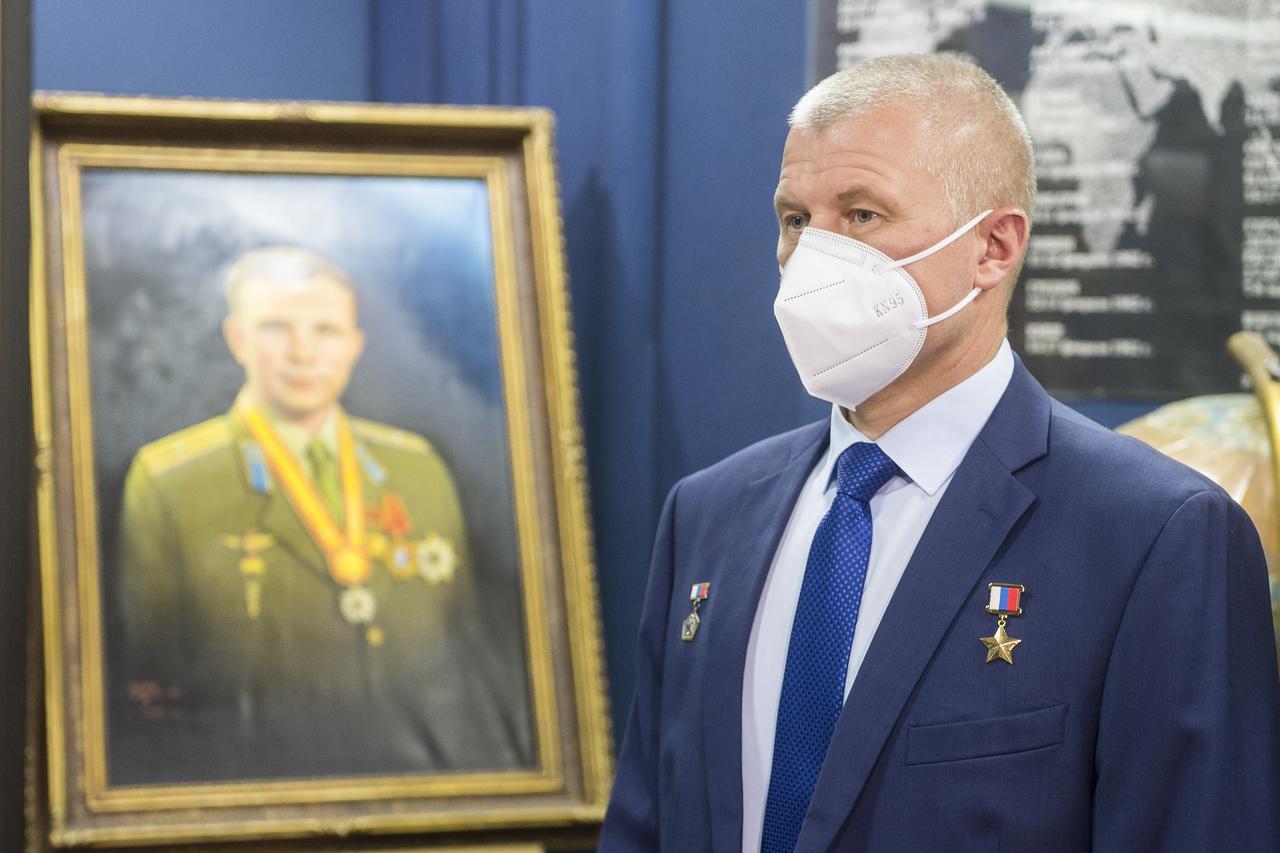
Expedition 64 backup crew member, Oleg Novitskiy of Roscosmos is seen at the conclusion of a press conference, Thursday, Sept. 24, 2020 at the Gagarin Cosmonaut Training Center (GCTC) in Star City, Russia. Photo Credit: (NASA/GCTC/Andrey Shelepin)
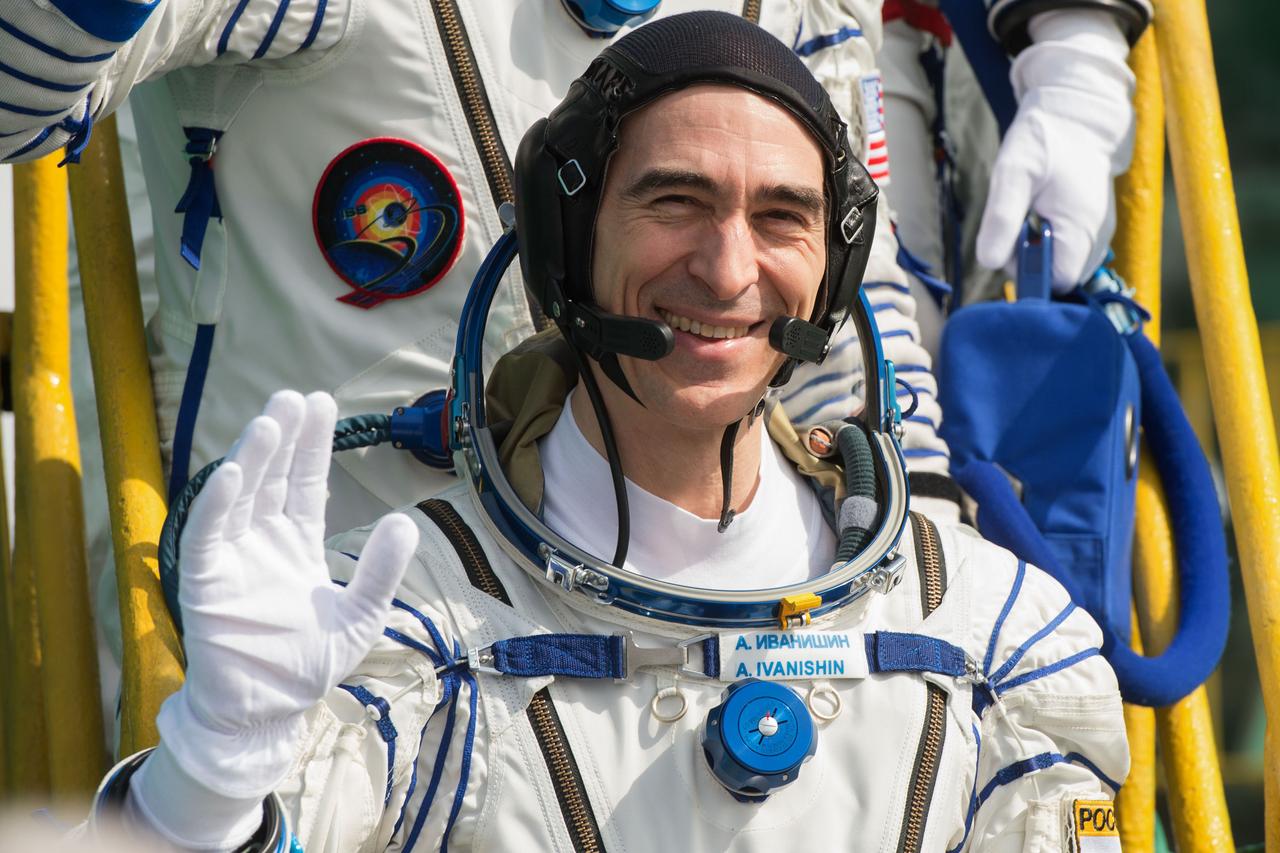
jsc2020e017125 - Expedition 63 Crew Waves Farewell - Expedition 63 crewmember Anatoly Ivanishin of Roscosmos, waves goodbye as he, Chris Cassidy of NASA, and Ivan Vagner of Roscosmos prepare to climb aboard the Soyuz MS-16 rocket at Site 31 at the Baikonur Cosmodrome in Kazakhstan, Thursday, April 9, 2020. They launched a short time later to the International Space Station for the start of a six-and-a-half month mission. Photo Credit: (NASA/GCTC/Andrey Shelepin)
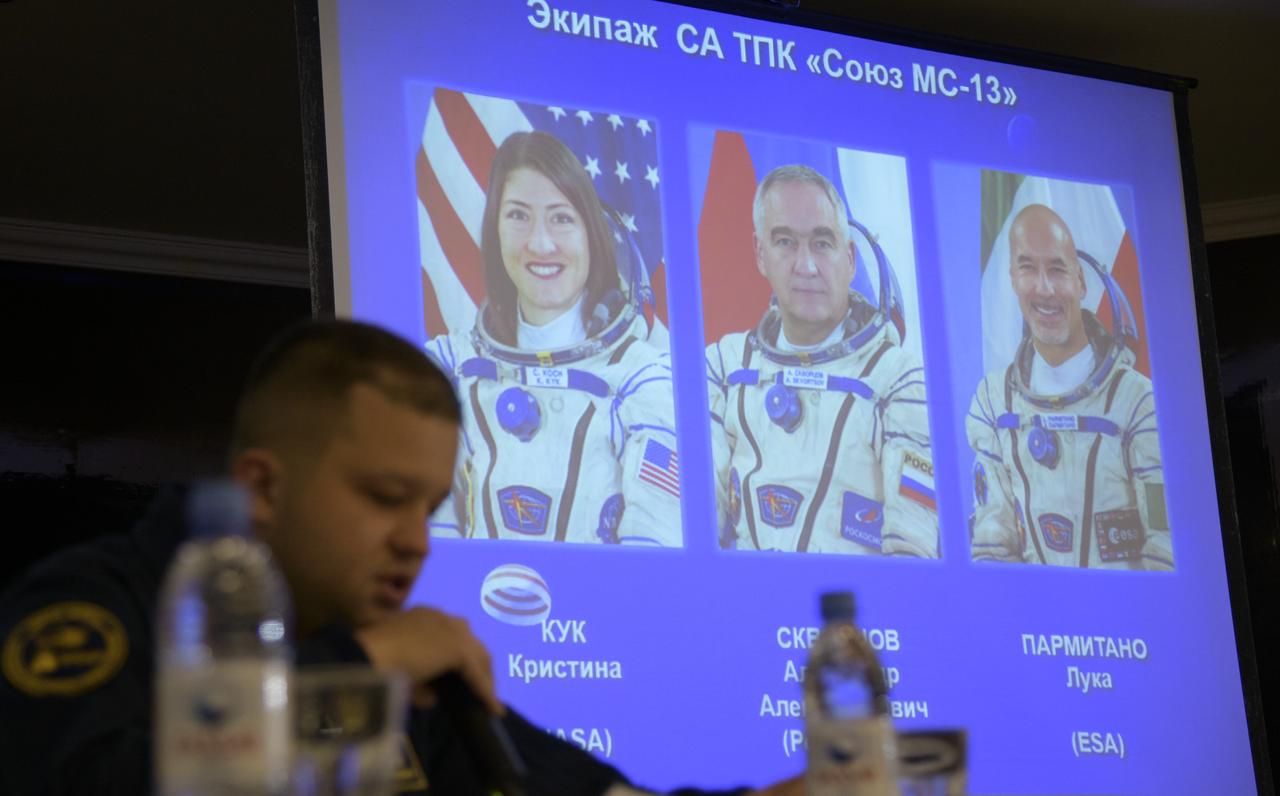
NASA, ESA, Roscosmos, and Russian Search and Recovery Forces meet at the Cosmonaut Hotel in Karaganda, Kazakhstan to discuss the readiness for the landing of Expedition 61 crew members Christina Koch of NASA, Alexander Skvortsov of the Russian space agency Roscosmos, and Luca Parmitano of ESA (European Space Agency) Tuesday, Feb. 4, 2020, at the Cosmonaut Hotel in Karaganda, Kazakhstan. Koch will be returning to Earth after logging 328 days in space --- the longest spaceflight in history by a woman --- as a member of Expeditions 59-60-61 on the International Space Station. Skvortsov and Parmitano will be returning after 201 days in space where they served as Expedition 60-61 crew members onboard the station. Photo Credit: (NASA/Bill Ingalls)
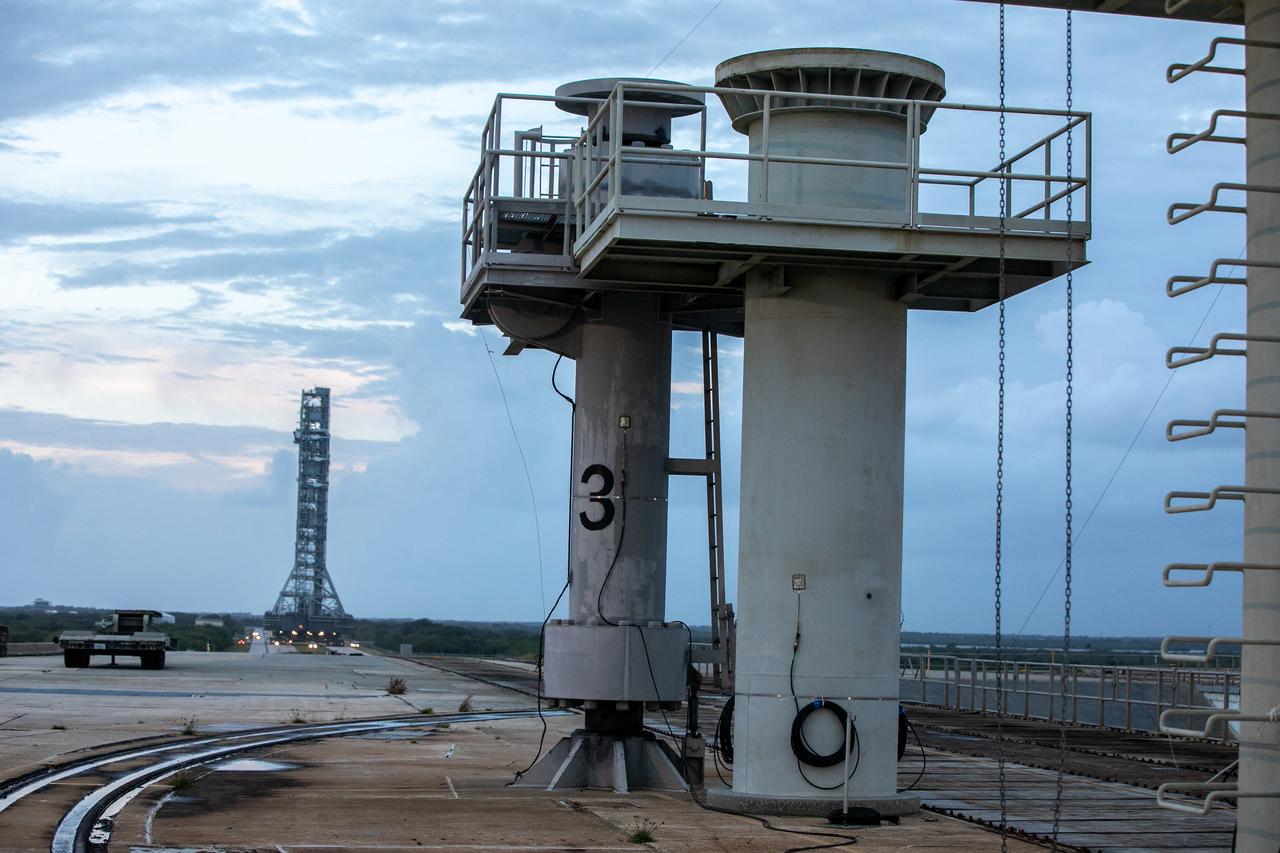
During sunrise on Oct. 20, 2020, the mobile launcher for the Artemis I mission, atop crawler-transporter 2, nears the top of Launch Pad 39B at NASA’s Kennedy Space Center in Florida. The nearly 400-foot-tall mobile launcher will remain at the pad, while engineers with Exploration Ground Systems and Jacobs will perform several tasks, including a timing test to validate the launch team’s countdown timeline, and a thorough, top-to-bottom wash down of the mobile launcher to remove any debris remaining from construction and installation of the umbilical arms. Artemis I will test the Orion spacecraft and Space Launch System as an integrated system ahead of crewed flights to the Moon. Under the Artemis program, NASA will land the first woman and the next man on the Moon in 2024.