
Foreign Affairs Minister for the Czech Republic Jan Lipavský, left, presents NASA Administrator Bill Nelson with a reproduction of an original drawing made by a Czechoslovak boy named Petr Ginz of partial Jewish background who was murdered at Auschwitz concentration camp in 1944, despite being of very young age, he had authored novels and made his own illustrations including this one depicting planet Earth seen from the moon, following the signing of the Artemis Accords, Wednesday, May 3, 2023, at The Mary W. Jackson NASA Headquarters building in Washington DC. The Czech Republic is the twenty fourth country to sign the Artemis Accords, which establish a practical set of principles to guide space exploration cooperation among nations participating in NASA’s Artemis program. Photo Credit: (NASA/Joel Kowsky)
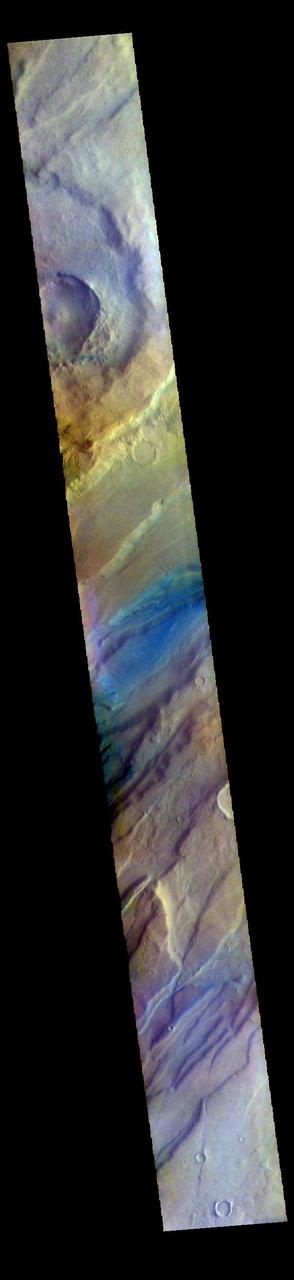
The THEMIS VIS camera contains 5 filters. The data from different filters can be combined in multiple ways to create a false color image. These false color images may reveal subtle variations of the surface not easily identified in a single band image. Today's false color image shows a small portion of Tempe Fossae. The linear features are tectonic graben. Graben are formed by extension of the crust and faulting. When large amounts of pressure or tension are applied to rocks on timescales that are fast enough that the rock cannot respond by deforming, the rock breaks along faults. In the case of a graben, two parallel faults are formed by extension of the crust and the rock in between the faults drops downward into the space created by the extension. The complete fossae system in almost 2000 km (1242 miles) long. The THEMIS VIS camera is capable of capturing color images of the Martian surface using five different color filters. In this mode of operation, the spatial resolution and coverage of the image must be reduced to accommodate the additional data volume produced from using multiple filters. To make a color image, three of the five filter images (each in grayscale) are selected. Each is contrast enhanced and then converted to a red, green, or blue intensity image. These three images are then combined to produce a full color, single image. Because the THEMIS color filters don't span the full range of colors seen by the human eye, a color THEMIS image does not represent true color. Also, because each single-filter image is contrast enhanced before inclusion in the three-color image, the apparent color variation of the scene is exaggerated. Nevertheless, the color variation that does appear is representative of some change in color, however subtle, in the actual scene. Note that the long edges of THEMIS color images typically contain color artifacts that do not represent surface variation. Orbit Number: 94065 Latitude: 46.5357 Longitude: 293.867 Instrument: VIS Captured: 2023-02-27 15:03 https://photojournal.jpl.nasa.gov/catalog/PIA26125
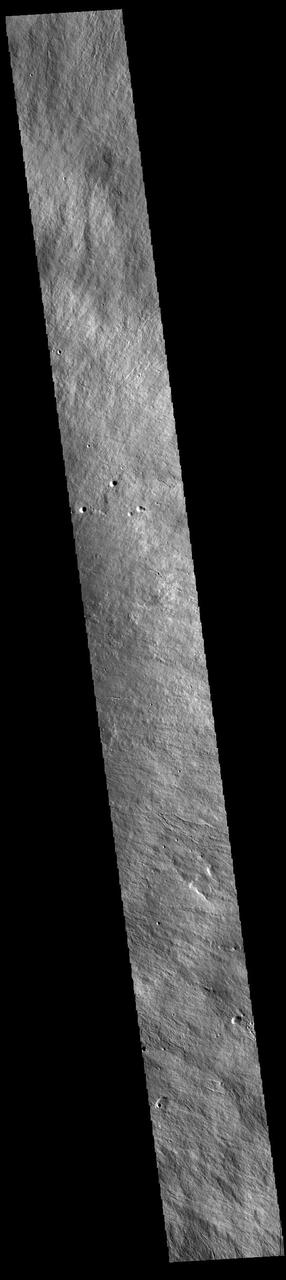
Today's VIS image is located on the upper flank of Olympus Mons. Olympus Mons is the largest volcano in the solar system, reaching heights over 25 km (16 miles) tall from base to summit, with the base covering an area as large as the state of Arizona. For comparison, Mauna Loa is 9 km (5.5 miles) tall measured from its base on the sea floor. Orbit Number: 94916 Latitude: 18.4882 Longitude: 227.856 Instrument: VIS Captured: 2023-05-08 16:34 https://photojournal.jpl.nasa.gov/catalog/PIA26219
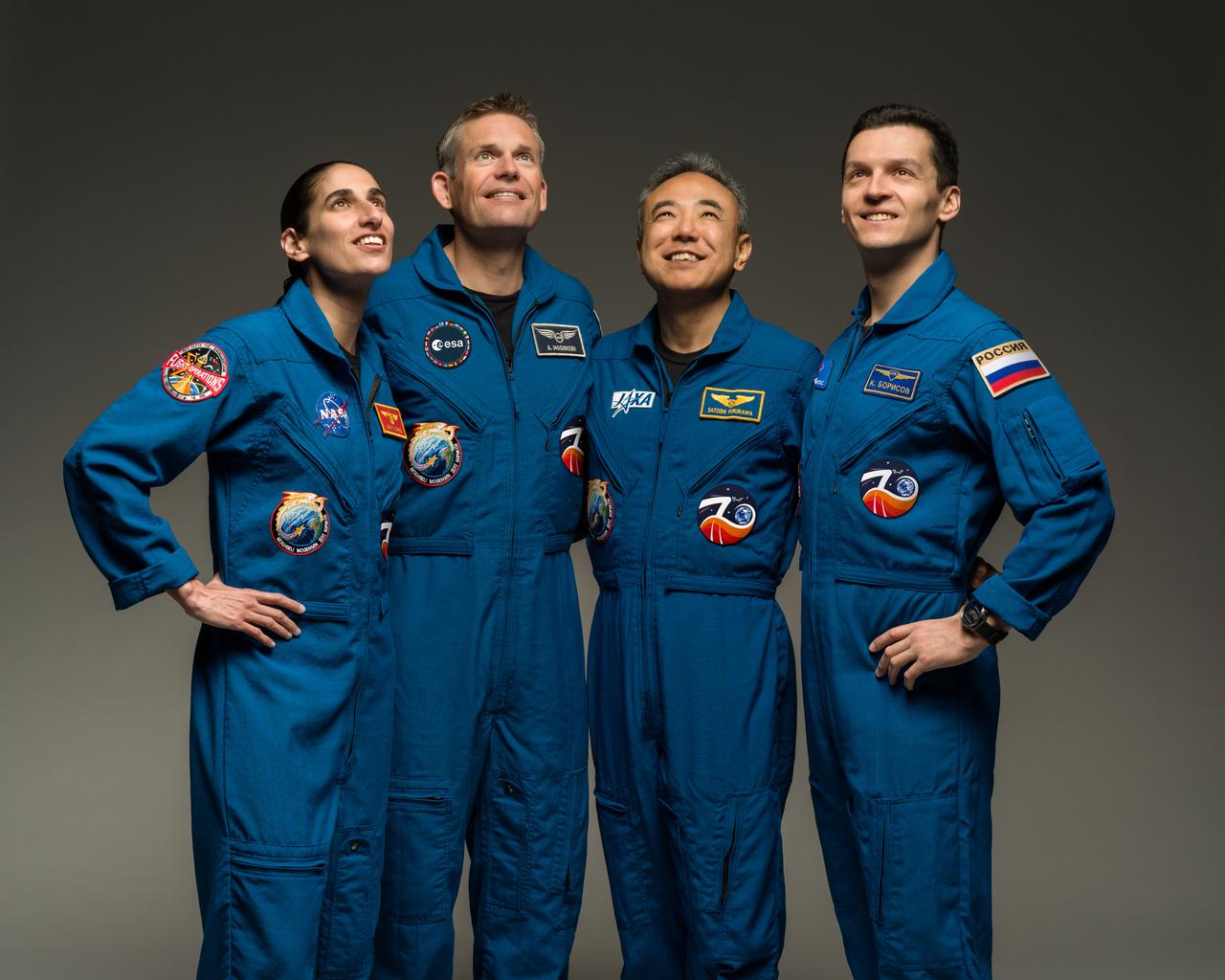
Portrait of NASA's SpaceX Crew-7 crew. From left to right: Roscosmos cosmonaut Konstantin Borisov, ESA astronaut Andreas Mogensen, NASA astronaut Jasmin Moghbeli, and JAXA astronaut Satoshi Furukawa. Credit: NASA/Bill Stafford
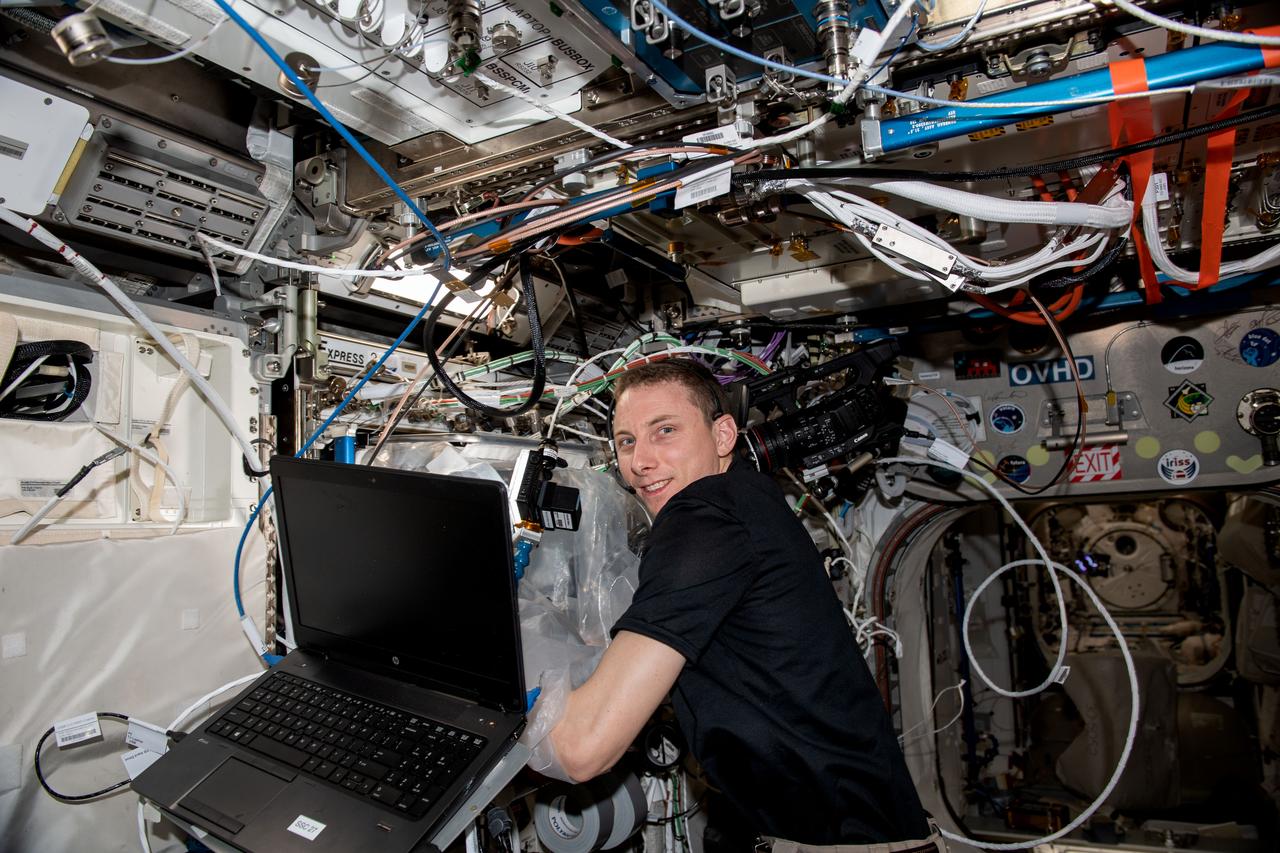
iss069e035797 (July 21, 2023) --- NASA astronaut and Expedition 69 Flight Engineer Woody Hoburg performs research activities using the Columbus laboratory module's BioFabrication Facility (BFF). The BFF is a research platform to print organ-like tissues and begin proving the viability of fabricating human organs in space.
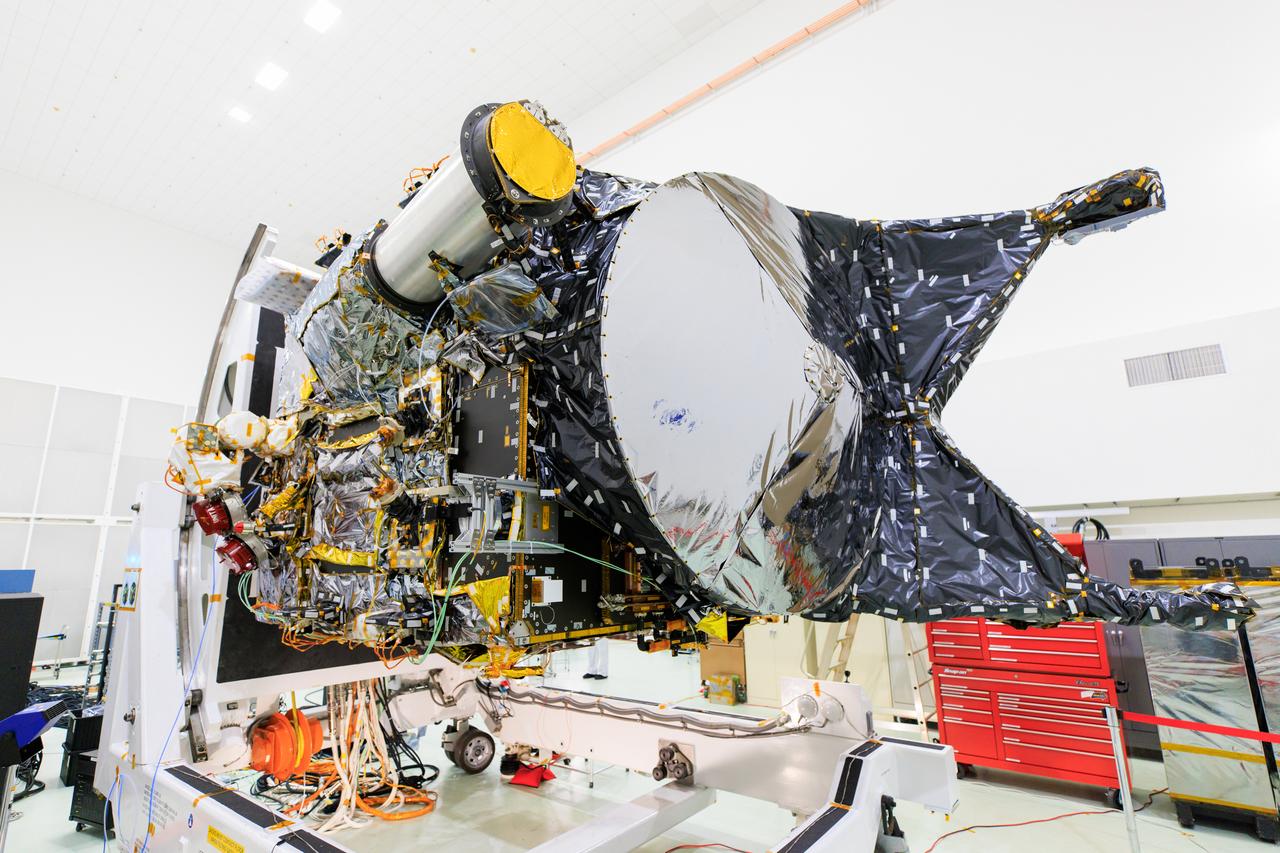
NASA's Psyche spacecraft is shown in a clean room on June 26, 2023, at Astrotech Space Operations Facility near the agency’s Kennedy Space Center in Florida. Engineers and technicians from NASA’s Jet Propulsion Laboratory in Southern California have begun final assembly, test, and launch operations on Psyche, with assembly of the spacecraft all but complete except for the installation of the solar arrays and the imagers. NASA’s Deep Space Optical Communications (DSOC) technology demonstration, testing high-data-rate laser communications, remains integrated into the spacecraft. A final suite of tests will be run on the vehicle, after which it will be fueled and then mated onto a SpaceX Falcon Heavy rocket just prior to launch, targeted for October 2023.
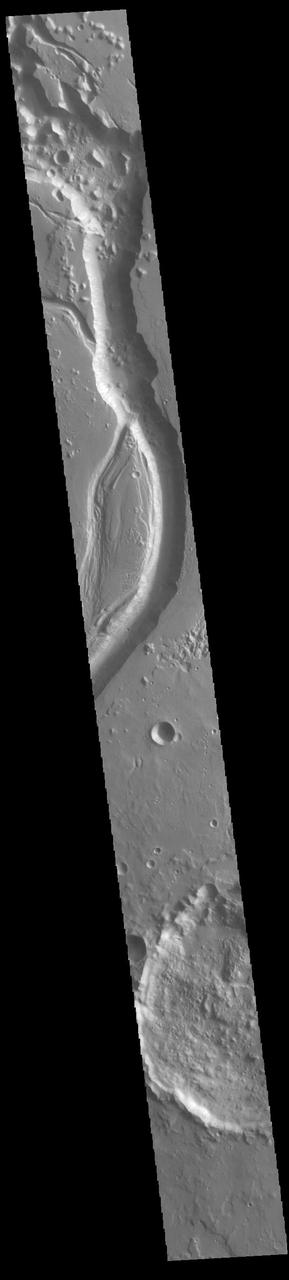
Today's VIS image shows a small section of Shalbatana Vallis. Located in Xanthe Terra, Shalbatana Vallis is an outflow channel carved by massive floods of escaping groundwater whose source lies far to the south of this image. This channel, and all others in this region, drain into Chryse Planitia. Shalbatana Vallis is 1029km long (639 miles). Orbit Number: 95150 Latitude: 10.3961 Longitude: 318.227 Instrument: VIS Captured: 2023-05-27 22:56 https://photojournal.jpl.nasa.gov/catalog/PIA26262
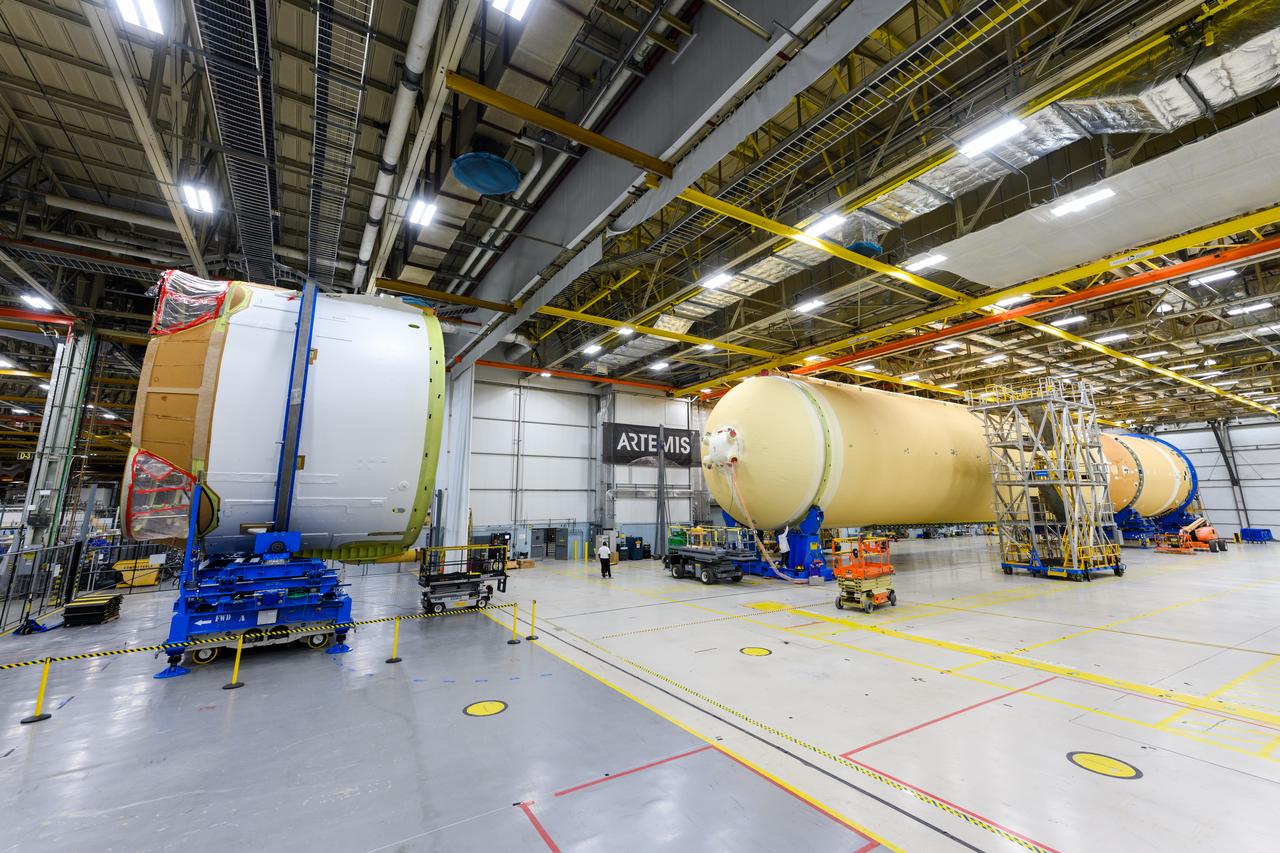
Technicians at NASA’s Michoud Assembly Facility in New Orleans moved the engine section of NASA’s Space Launch System (SLS) rocket for Artemis II, the first crewed mission to the Moon, into position for the final join of the core stage Feb. 22. The engine section is the bottom-most portion of the 212-foot-tall core stage. It is the last of five major elements that is needed to connect the stage into one major structure. In addition to its miles of cabling and hundreds of sensors, the engine section is a crucial attachment point for the four RS-25 engines and two solid rocket boosters that produce a combined 8.8 million pounds of thrust at liftoff and flight. During launch and flight, liquid propellants from the liquid hydrogen tank and liquid oxygen tanks are delivered through the engine section to the four RS-25 engines. The engine section also includes the avionics that help steer the engines after liftoff. Next, teams will join the engine section to the core stage for the second SLS rocket. After the join is complete, teams will begin to add each of the four RS-25 engines one by one to complete the stage. The completely assembled stage with its four RS-25 engines will be shipped to NASA’s Kennedy Space Center in Florida later this year. The SLS rocket is the only rocket capable of carrying astronauts in Orion around the Moon in a single mission.
NASA Administrator Bill Nelson testifies before the Senate Appropriations’ Commerce, Justice, Science, and Related Agencies subcommittee during a budget hearing, Tuesday, April 18, 2023, at the Dirksen Senate Office Building in Washington. Photo Credit: (NASA/Bill Ingalls)
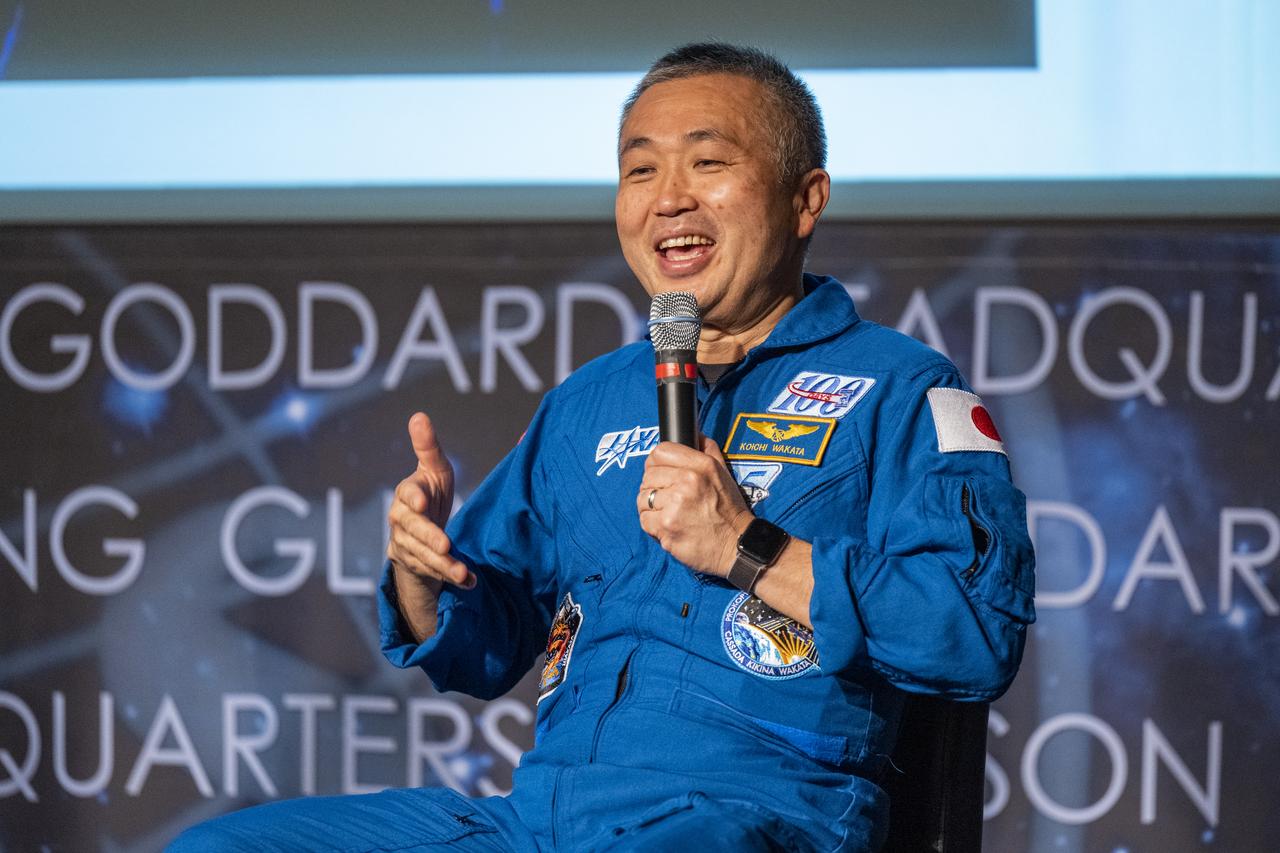
Japan Aerospace Exploration Agency (JAXA) astronaut Koichi Wakata answers questions during an employee engagement event Monday, June 5, 2023, at the Mary W. Jackson NASA Headquarters building in Washington. Mann, Cassada, and Wakata spent 157 days in space as part of Expedition 68 aboard the International Space Station. Photo Credit: (NASA/Keegan Barber)

jsc2023e067737_alt (Dec. 29, 2023) --- NASA astronaut and SpaceX Crew-9 Commander Zena Cardman poses for a portrait at NASA's Johnson Space Center in Houston. Texas. Credit: NASA/Bill Stafford/Robert Markowitz
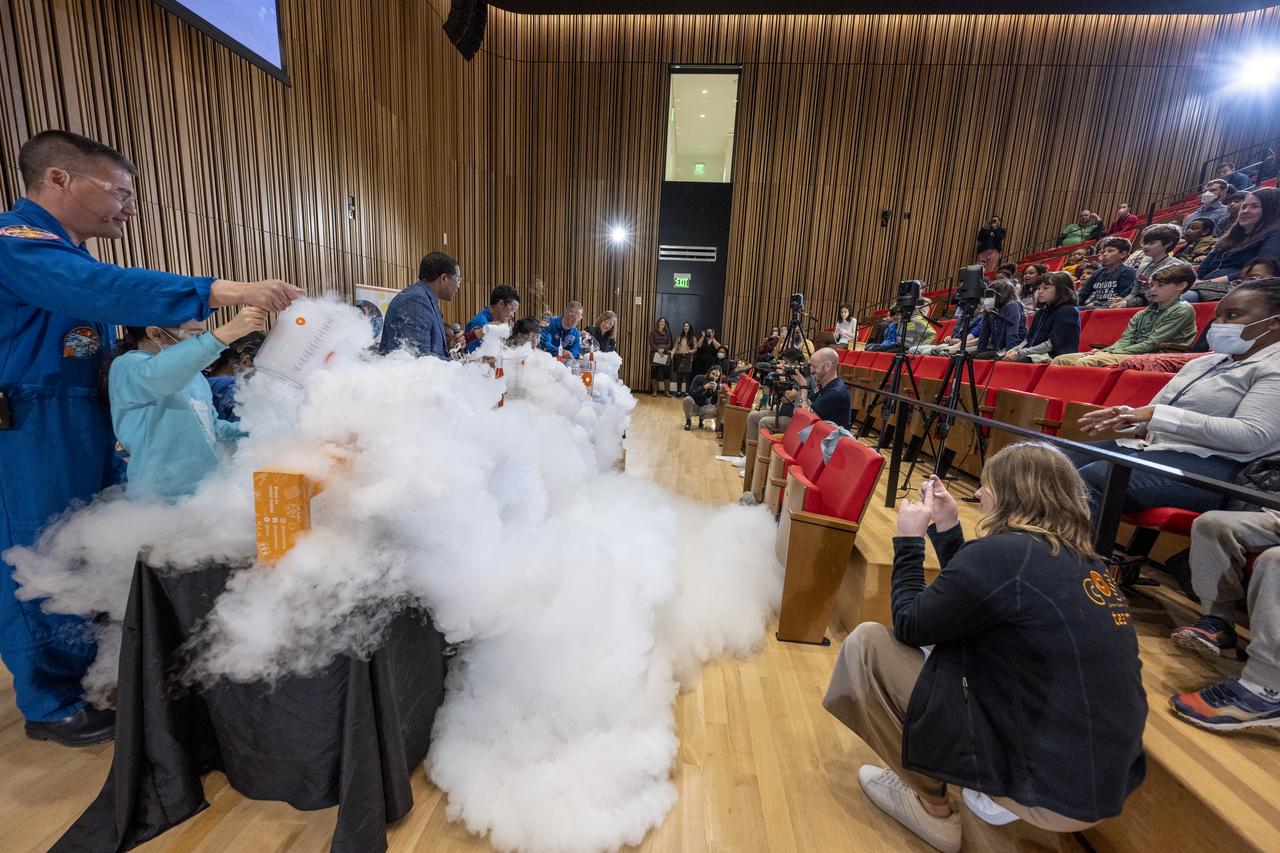
NASA astronauts Kjell Lindgren, Jessica Watkins, and Robert Hines participate in STEM demonstrations with local students at the Martin Luther King Jr Memorial Library, Thursday, March 30, 2023, in Washington. Lindgren, Hines, and Watkins spent 170 days in space as part of Expeditions 67 and 68 aboard the International Space Station. Photo Credit: (NASA/Keegan Barber)
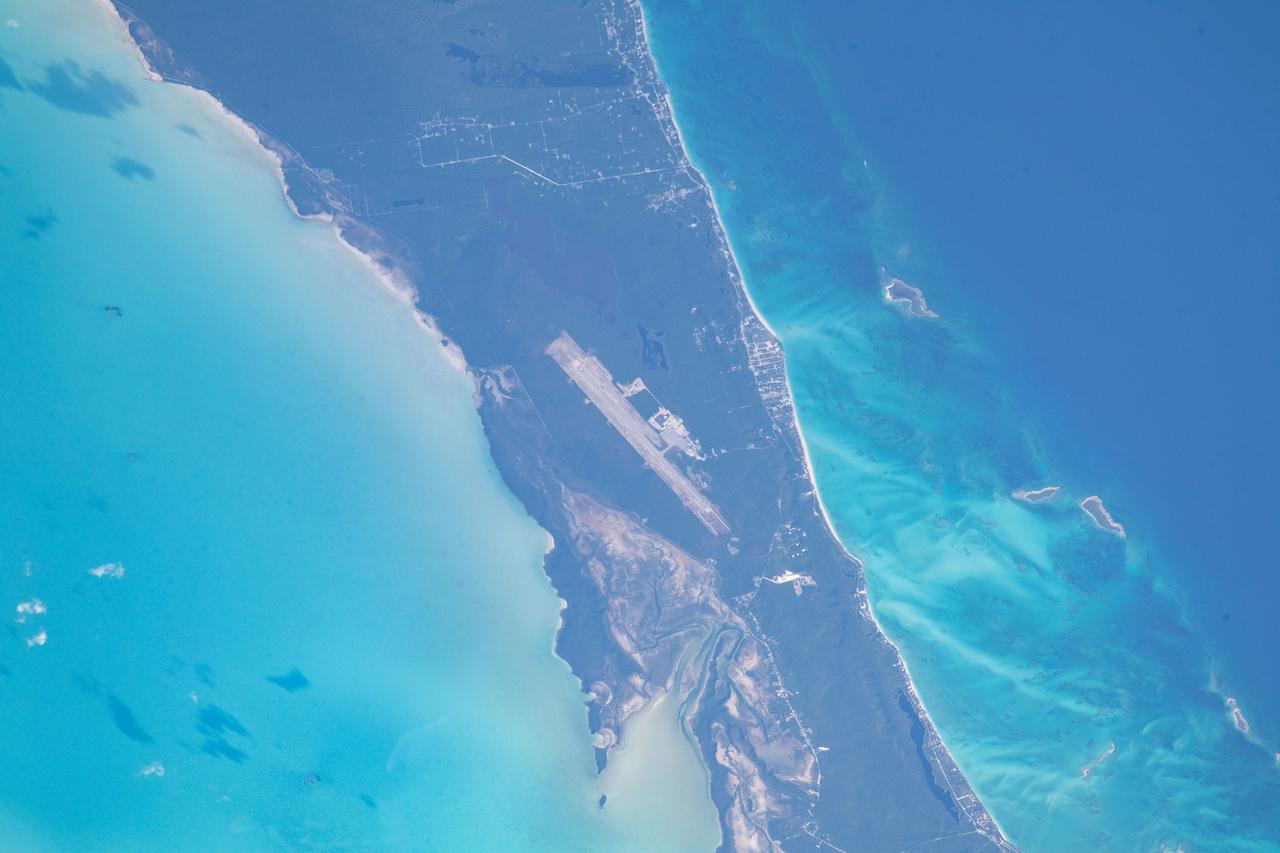
ss069e033721 (July 17, 2023) -- The Great Exuma, an island in the Bahamas, is pictured from the International Space Station as it soared 259 miles above. The bright teal water of the Atlantic Ocean can be seen surrounding the island, while the Exuma International Airport is seen near the center of the land.
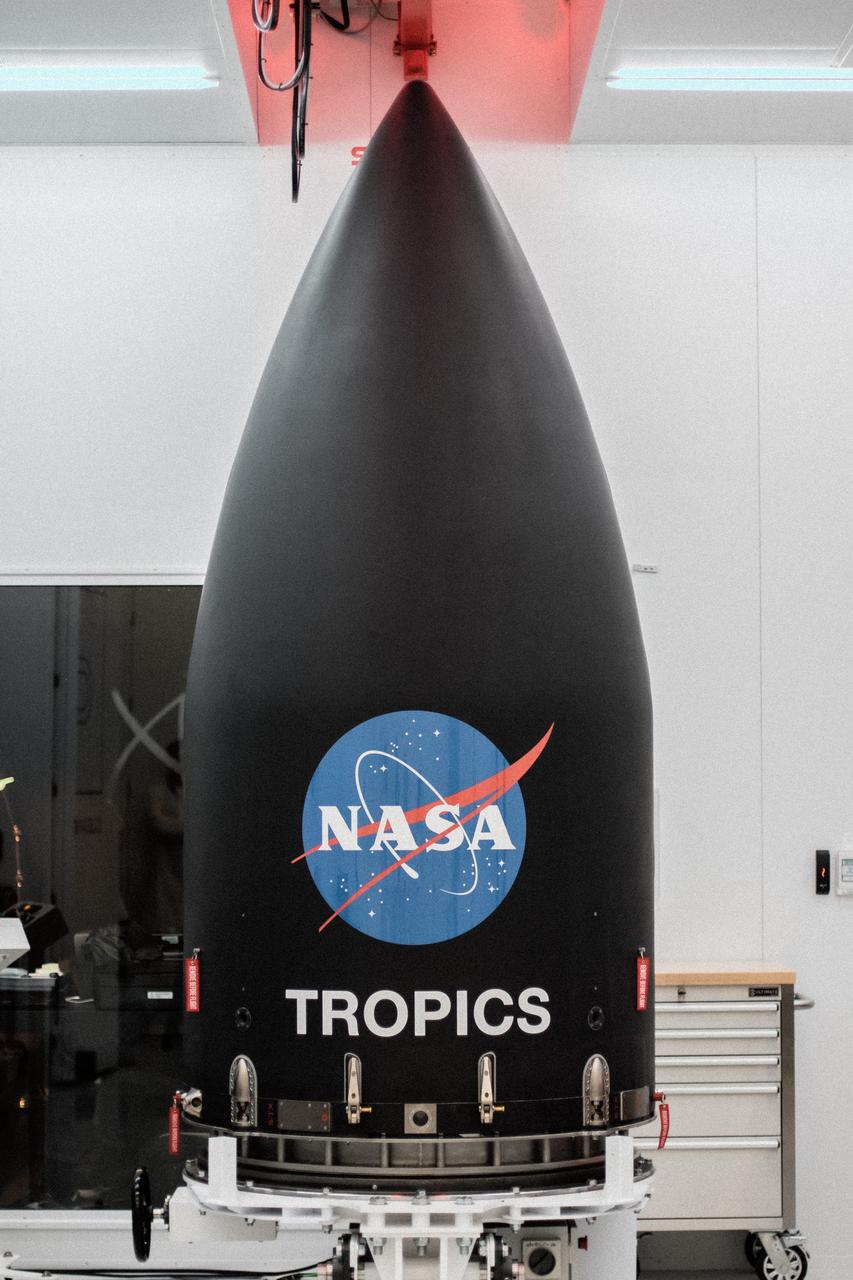
Rocket Lab’s Electron payload fairing is in view inside a processing facility near Launch Complex 1 in Mahia, New Zealand. NASA’s Time-Resolved Observations of Precipitation structure and storm Intensity with a Constellation of Smallsats (TROPICS) CubeSats have been encapsulated inside the payload fairing. TROPICS is scheduled to launch on Monday, May 1, at 1 a.m. New Zealand time from Launch Complex 1, Pad B. TROPICS will provide data on temperature, precipitation, water vapor, and clouds by measuring microwave frequencies, providing insight into storm formation and intensification.
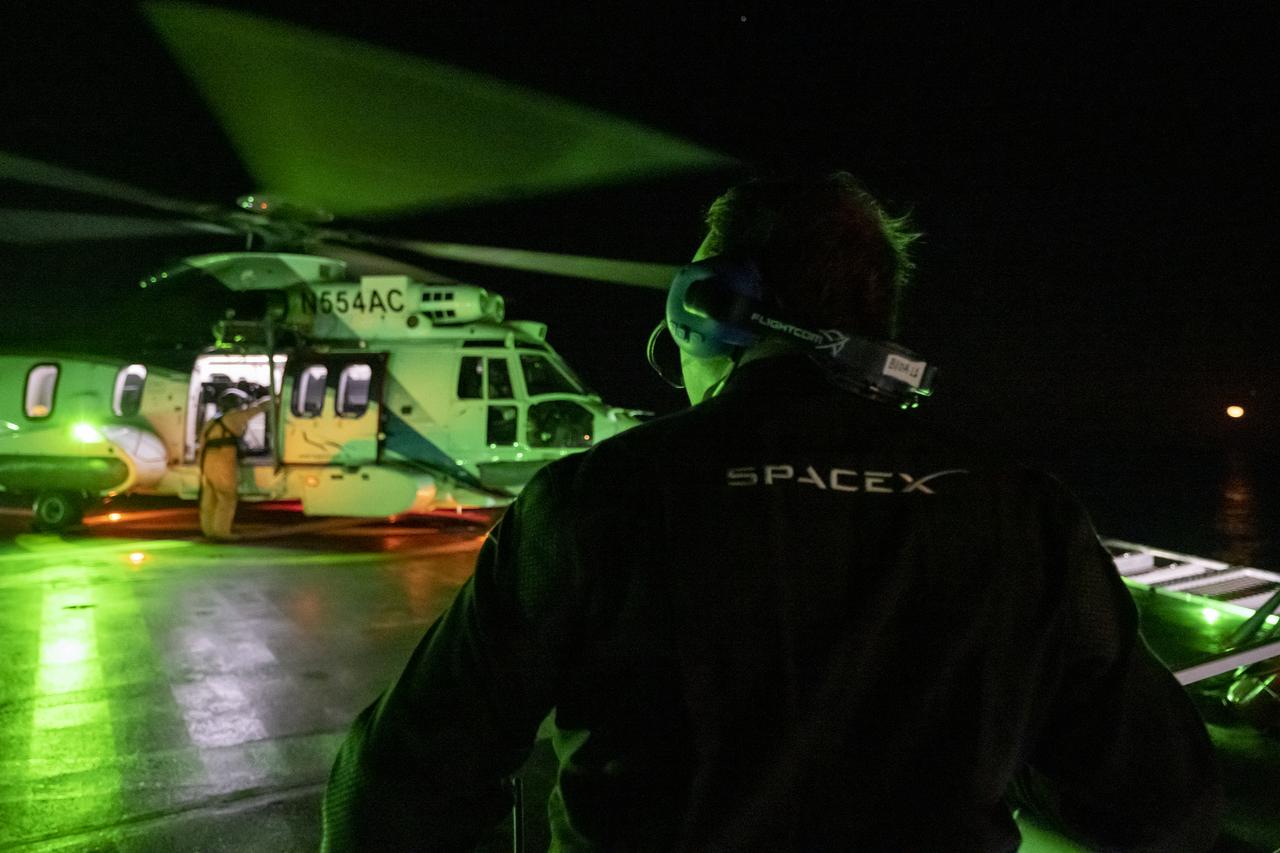
NASA Astronaut Josh Cassada is helped onto a helicopter onboard the SpaceX recovery ship Shannon shortly after he, along with NASA astronaut Nicole Mann, Roscosmos cosmonaut Anna Kikina, and Japan Aerospace Exploration Agency (JAXA) astronaut Koichi Wakata, landed while onboard SpaceX Dragon Endeavor spacecraft in the Gulf of Mexico off the coast of Tampa, Florida, Saturday, March 11, 2023. Mann, Cassada, Wakata, and Kikina are returning after 157 days in space as part of Expedition 68 aboard the International Space Station. Photo Credit: (NASA/Keegan Barber).
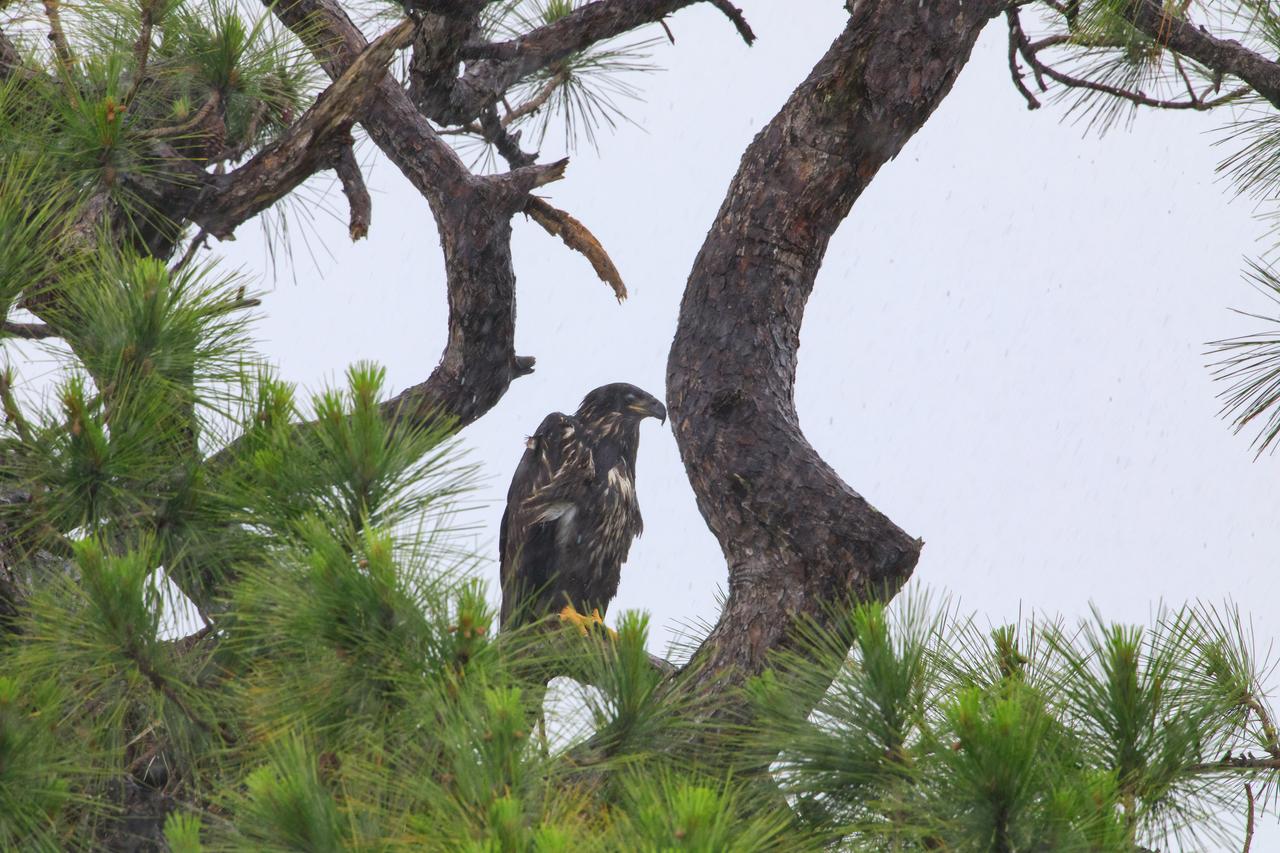
A baby American bald eagle looks out from just above its nest, located in a tree at NASA’s Kennedy Space Center in Florida on April 25, 2023. The eaglet is the lone offspring of a mated pair of eagles that recently built the new home after storms badly damaged their original nest located about 50 yards away. That nest was built in 1973 and had been used by eagles almost every year since 1975.
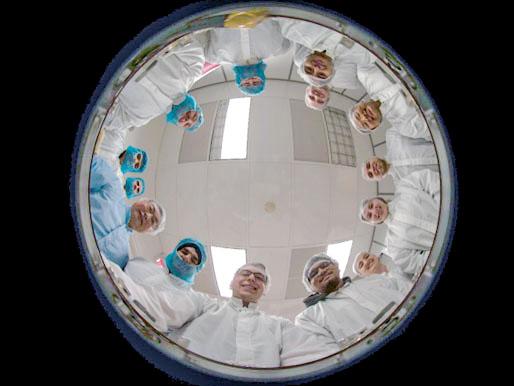
jsc2023e030776 (5/30/2023) --- The student team members who developed ESSENCE as photographed by the wide-angle lens camera installed in the CubeSat. This photo was taken during a camera test in the lab via ground station by radio link. Image courtesy of Nanoracks LLC.
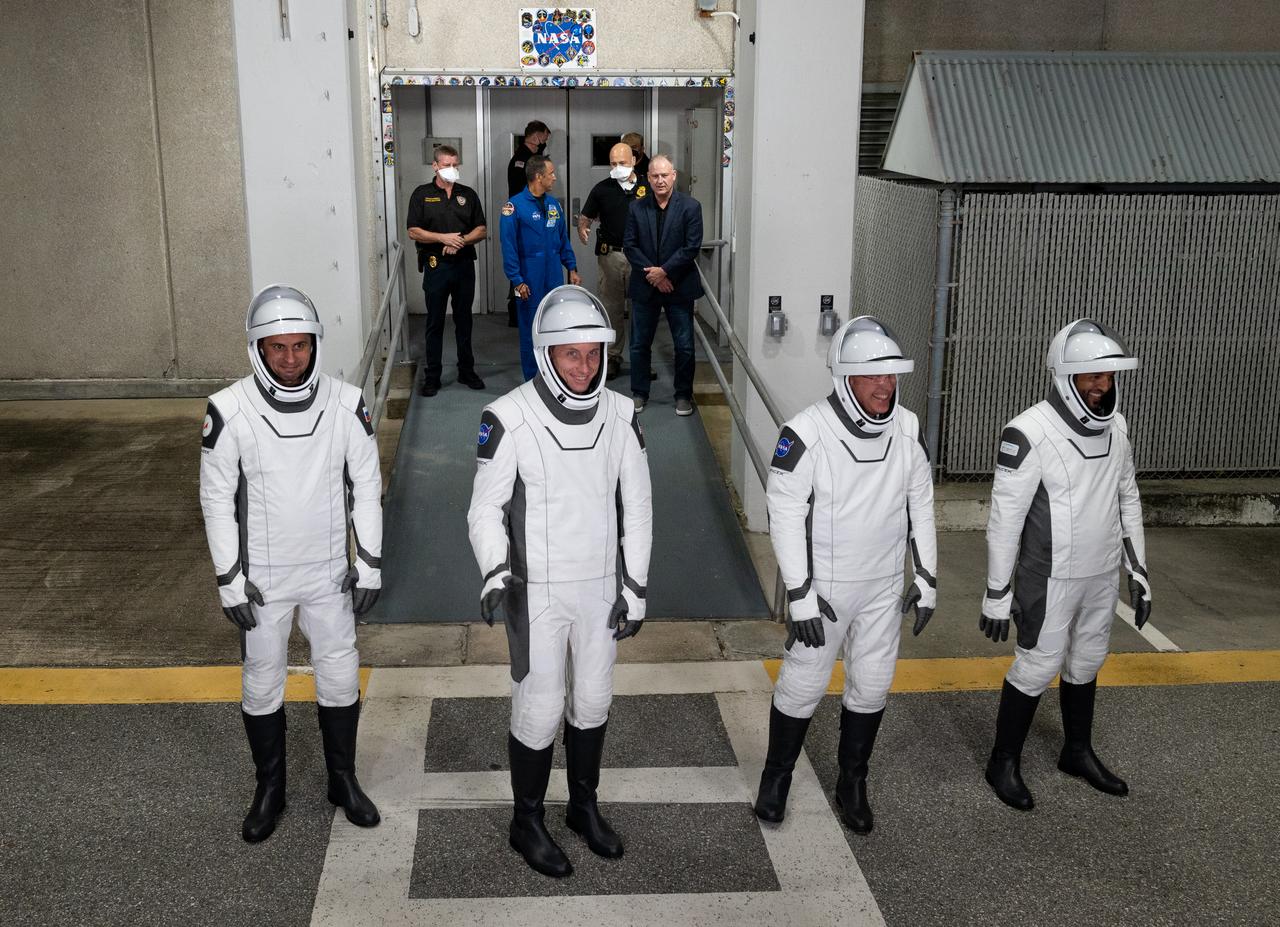
Roscosmos cosmonaut Andrey Fedyaev, NASA astronaut Warren “Woody" Hoburg, second from left, NASA astronaut Stephen Bowen, second from right, and UAE (United Arab Emirates) astronaut Sultan Alneyadi, right, wearing SpaceX spacesuits, are seen as they prepare to depart the Neil A. Armstrong Operations and Checkout Building for Launch Complex 39A during a dress rehearsal prior to the Crew-6 mission launch, Thursday, Feb. 23, 2023, at NASA’s Kennedy Space Center in Florida. NASA’s SpaceX Crew-6 mission is the sixth crew rotation mission of the SpaceX Dragon spacecraft and Falcon 9 rocket to the International Space Station as part of the agency’s Commercial Crew Program. Bowen, Hoburg, Alneyadi, and Fedyaev are scheduled to launch at 1:45 a.m. EST on Feb. 27, from Launch Complex 39A at the Kennedy Space Center. Photo Credit: (NASA/Joel Kowsky)
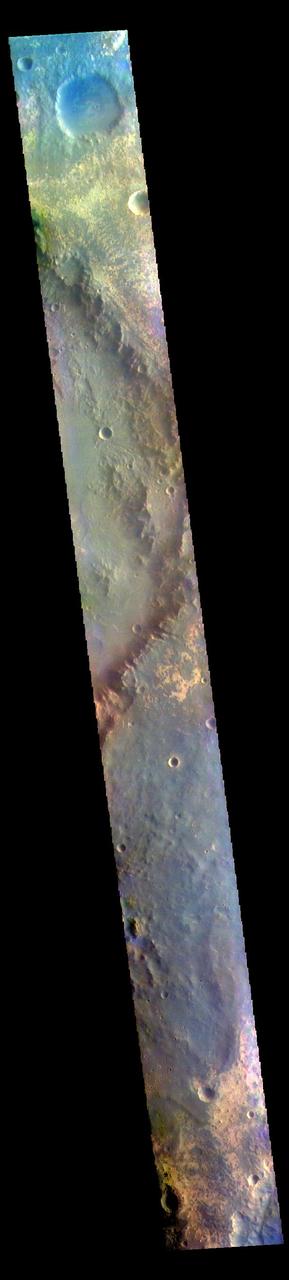
The THEMIS VIS camera contains 5 filters. The data from different filters can be combined in multiple ways to create a false color image. These false color images may reveal subtle variations of the surface not easily identified in a single band image. Today's false color image shows part of Oyama Crater. Located in Arabia Terra near Mawrth Vallis, Oyama Crater is 101km (63 miles) in diameter. The THEMIS VIS camera is capable of capturing color images of the Martian surface using five different color filters. In this mode of operation, the spatial resolution and coverage of the image must be reduced to accommodate the additional data volume produced from using multiple filters. To make a color image, three of the five filter images (each in grayscale) are selected. Each is contrast enhanced and then converted to a red, green, or blue intensity image. These three images are then combined to produce a full color, single image. Because the THEMIS color filters don't span the full range of colors seen by the human eye, a color THEMIS image does not represent true color. Also, because each single-filter image is contrast enhanced before inclusion in the three-color image, the apparent color variation of the scene is exaggerated. Nevertheless, the color variation that does appear is representative of some change in color, however subtle, in the actual scene. Note that the long edges of THEMIS color images typically contain color artifacts that do not represent surface variation. Orbit Number: 94363 Latitude: 23.2241 Longitude: 340.695 Instrument: VIS Captured: 2023-03-24 03:48 https://photojournal.jpl.nasa.gov/catalog/PIA26128
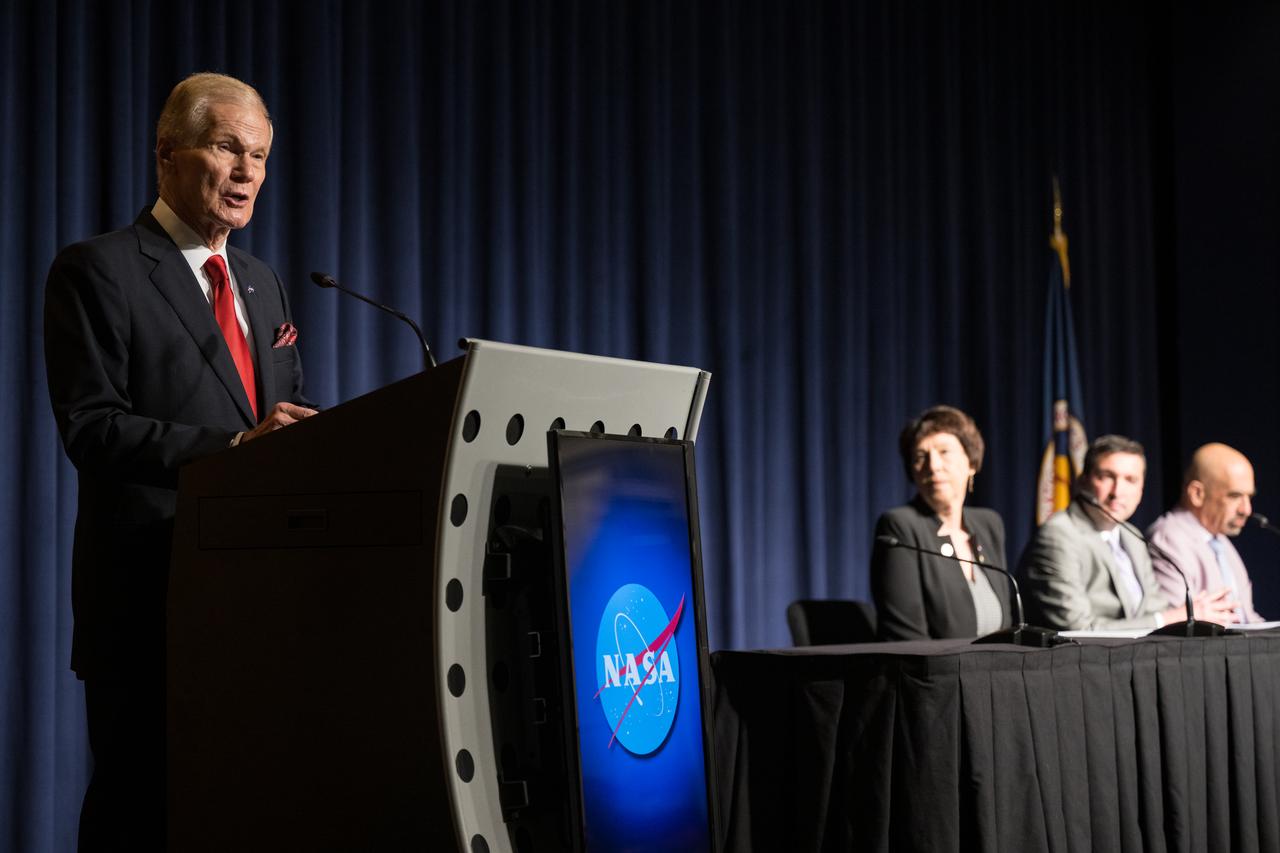
NASA Administrator Bill Nelson provides remarks during a media briefing to discuss the findings from an unidentified anomalous phenomena (UAP) independent study team, Thursday, Sept. 14, 2023, at the Mary W. Jackson NASA Headquarters building in Washington. The UAP independent study team, commissioned in 2022, is a counsel of 16 community experts across diverse areas on matters relevant to potential methods of study for unidentified anomalous phenomena. NASA published the team’s full report online, which aims to inform about what possible data could be collected in the future to shed light on the nature and origin of UAP. Photo Credit: (NASA/Aubrey Gemignani)
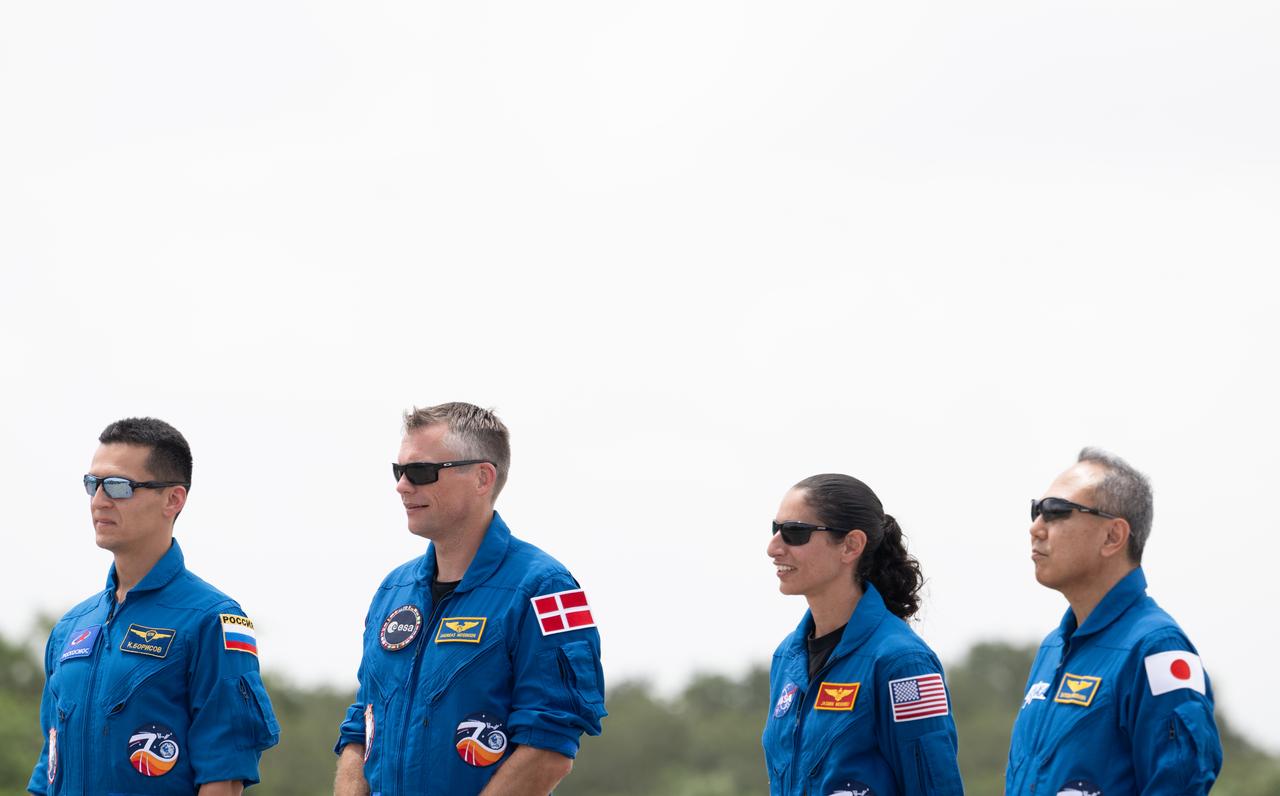
Roscosmos cosmonaut Konstantin Borisov, left, ESA (European Space Agency) astronaut Andreas Mogensen, second from left, NASA astronaut Jasmin Moghbeli, second from right, and Japan Aerospace Exploration Agency (JAXA) astronaut Satoshi Furukawa right, are seen after arriving at the Launch and Landing Facility at NASA’s Kennedy Space Center in Florida ahead of the agency’s SpaceX Crew-7 mission, Sunday, Aug. 20, 2023. NASA’s SpaceX Crew-7 mission is the seventh crew rotation mission of the SpaceX Dragon spacecraft and Falcon 9 rocket to the International Space Station as part of the agency’s Commercial Crew Program. Moghbeli, Mogensen, Furukawa, and Borisov are scheduled to launch at 3:49 a.m. EDT on August 25, from Launch Complex 39A at the Kennedy Space Center. Photo Credit: (NASA/Joel Kowsky)
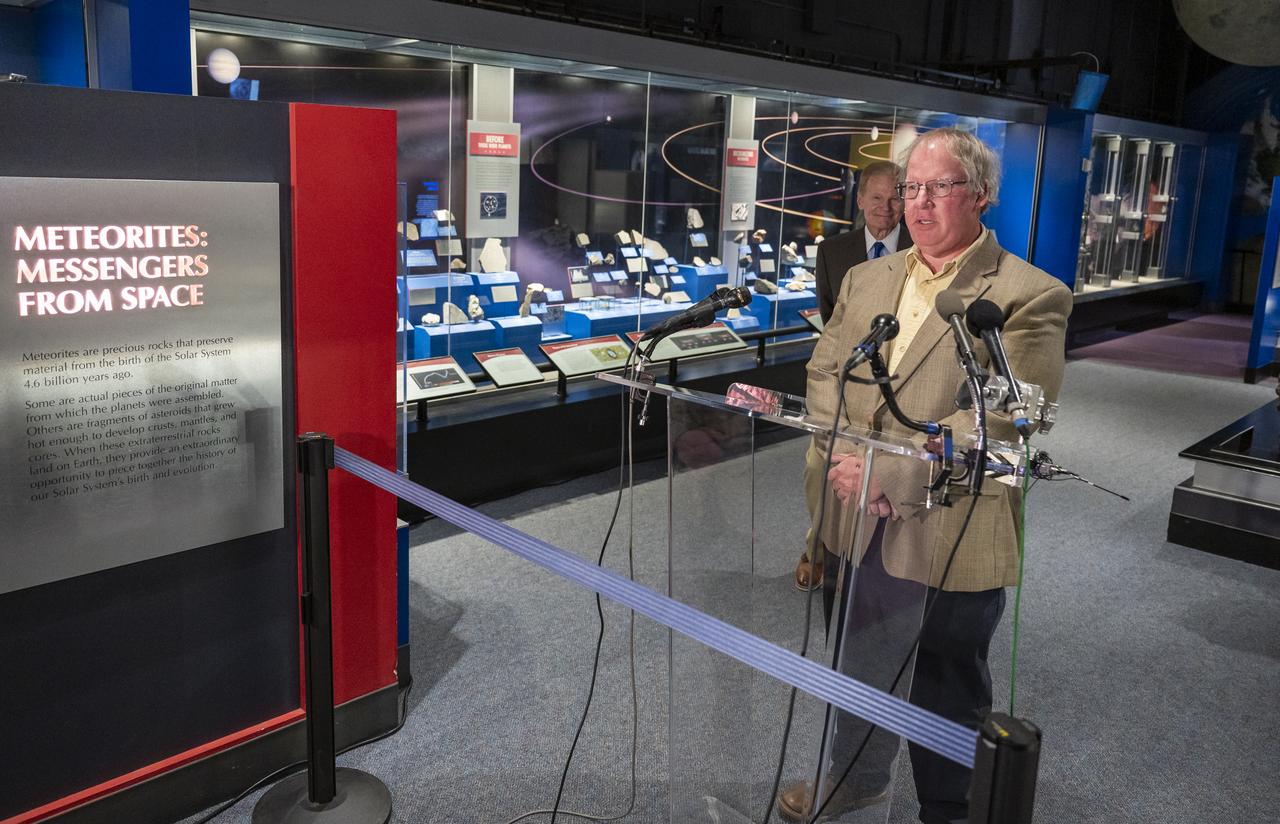
National Museum of Natural History curator of meteorites Tim McCoy delivers remarks during an event to unveil the first public display of a sample from asteroid Bennu, Friday, Nov. 3, 2023, at the Smithsonian’s National Museum of Natural History in Washington. The sample was collected from the carbon rich near Earth asteroid Bennu in October 2020 by NASA’s OSIRIS-REx spacecraft. Photo Credit: (NASA/Keegan Barber)
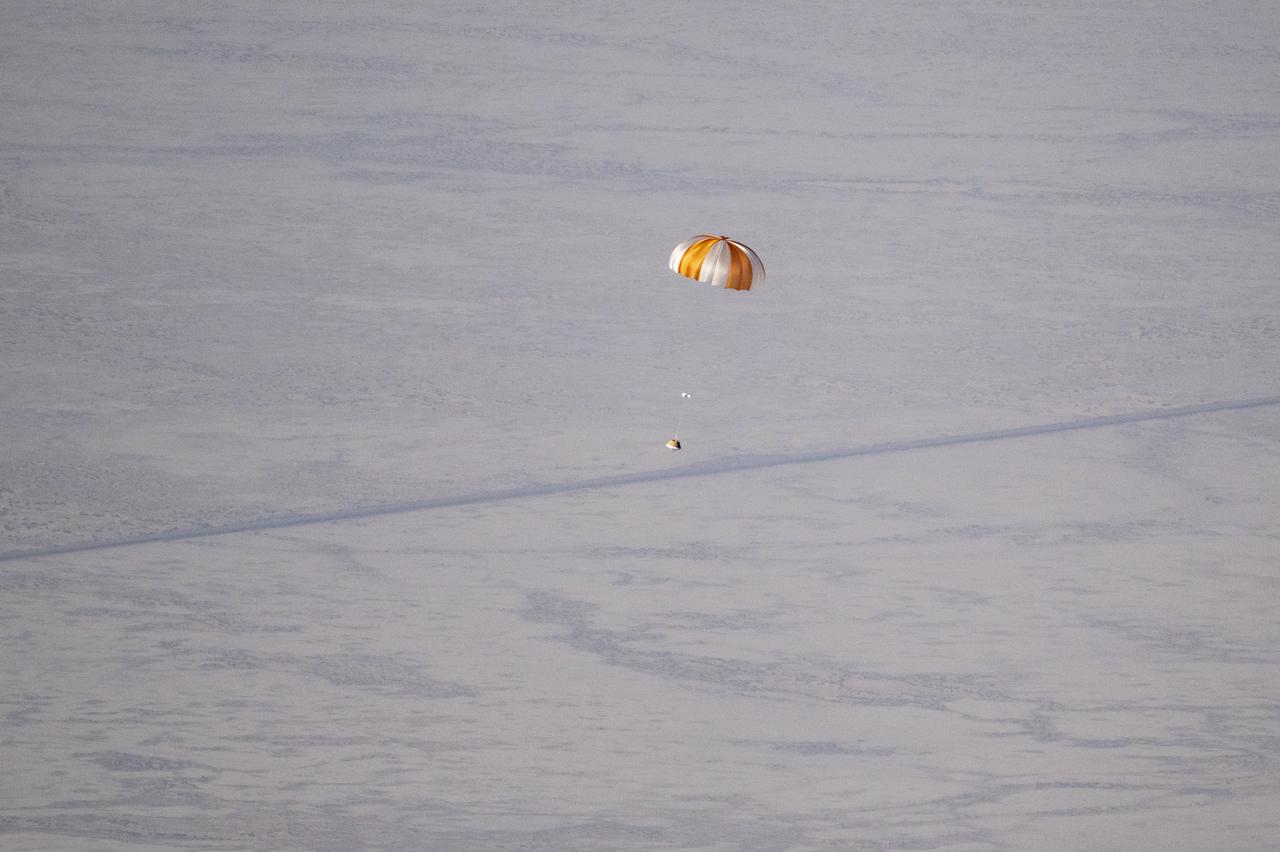
A training model of the sample return capsule is seen during a drop test in preparation for the retrieval of the sample return capsule from NASA's OSIRIS-REx mission, Wednesday, Aug. 30, 2023, at the Department of Defense's Utah Test and Training Range. The sample was collected from the asteroid Bennu in October 2020 by NASA’s OSIRIS-REx spacecraft and will return to Earth on September 24th, landing under parachute at the Utah Test and Training Range. Photo Credit: (NASA/Keegan Barber)

Blue Origin Human Landing System Program Manager, John Couluris, is seen on the monitor answering a question during an event announcing Blue Origin as the company selected to develop a sustainable human landing system for the Artemis V Moon mission, Friday, May 19, 2023 at the Mary W. Jackson NASA Headquarters building in Washington. The human landing system will take astronauts to and from Gateway in lunar orbit to the surface and back to the lunar space station as part of NASA’s return to the Moon for science, exploration, and inspiration. Photo Credit: (NASA/Aubrey Gemignani)
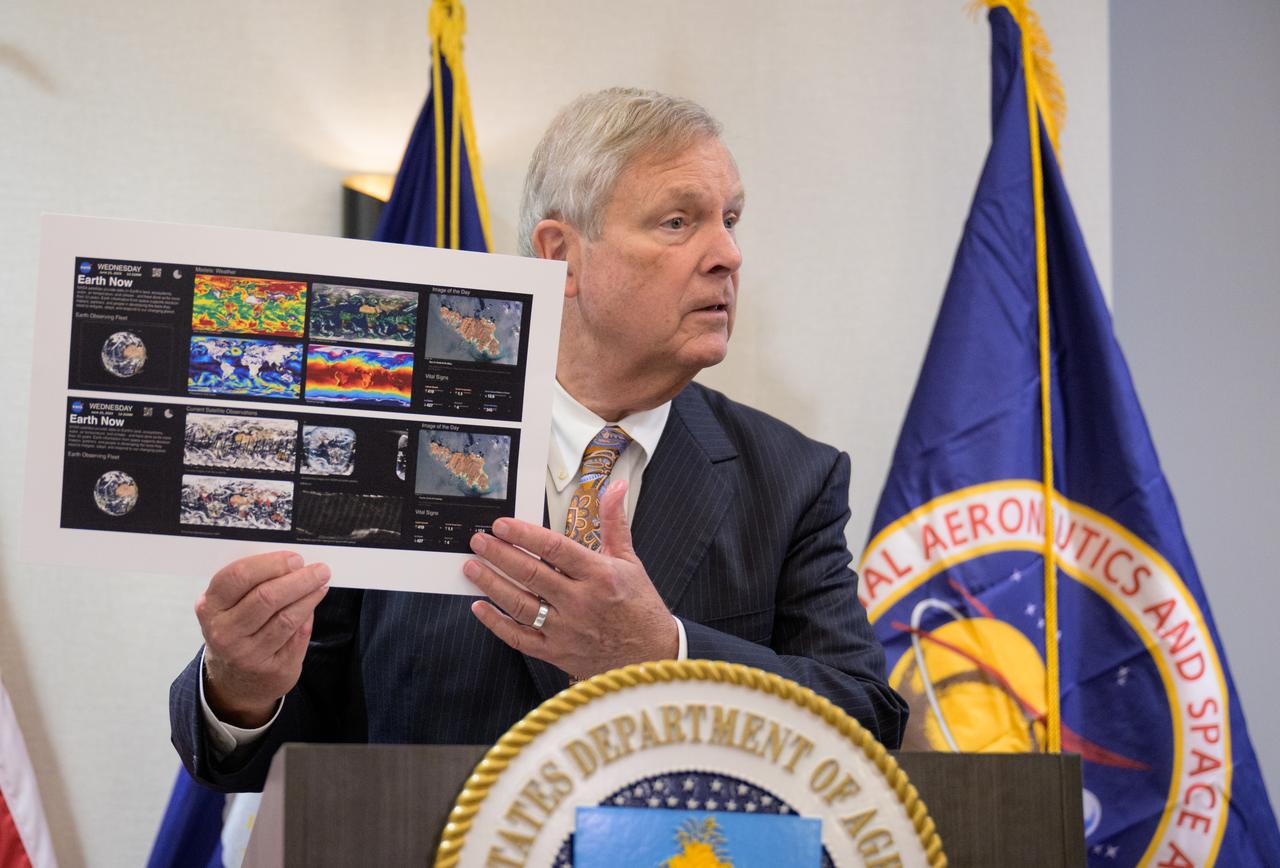
U.S. Secretary of Agriculture Thomas Vilsack gives remarks prior to signing a memorandum of understanding between NASA and USDA, Wednesday, June 21, 2023, at the USDA’s Jamie L. Whitten Building in Washington. The agreement strengthens the collaboration between the two agencies, including efforts to improve agricultural and Earth science research, technology, and agricultural management, as well as the application of science data and models to agricultural decision making. Photo Credit: (NASA/Bill Ingalls)

NASA’s SpaceX Crew-6 crewmember Sultan Alneyadi, UAE (United Arab Emirates) astronaut and mission specialist, is in his SpaceX spacesuit in the crew suit-up room inside the Neil Armstrong Operations and Checkout Building at NASA’s Kennedy Space Center in Florida on Feb. 26, 2023. He and his crewmates are preparing for their launch to the International Space Station aboard SpaceX’s Dragon spacecraft atop the Falcon 9 rocket. Launch was targeted for 1:45 a.m. EST on Feb. 27 from Launch Complex 39A, but was scrubbed for the day. Crew-6 is the sixth crew rotation mission with SpaceX to the station, and the seventh flight of Dragon with people as part of the agency’s Commercial Crew Program.
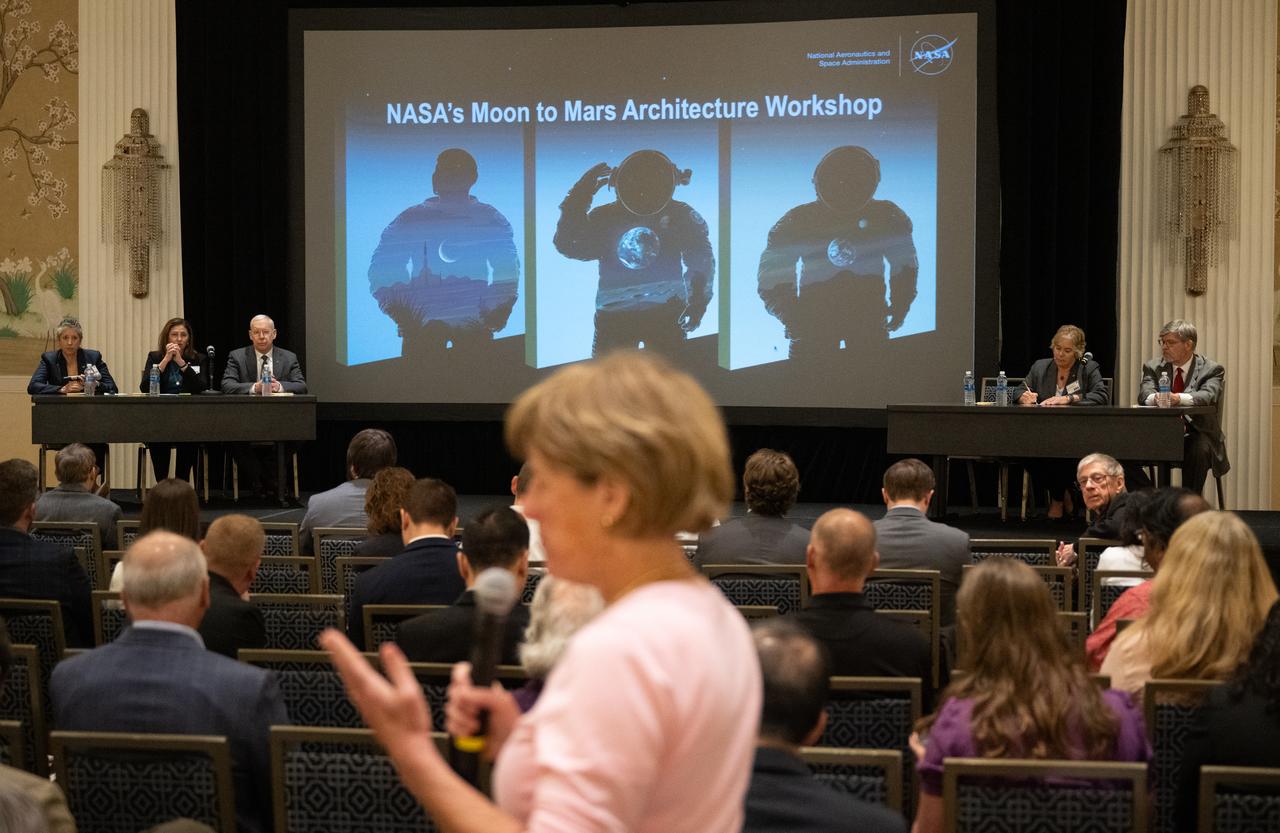
Nujoud Merancy, architecture lead for NASA's Exploration Systems Development Mission Directorate, Catherine Koerner, deputy associate administrator for NASA's Exploration Systems Development Mission Directorate, Patrick Forrester, special advisor in NASA's Space Operations Mission Directorate, Michelle Munk, chief architect for NASA’s Space Technology Mission Directorate, and Joel Kearns, deputy associate administrator for Exploration in NASA's Science Mission Directorate, listen to a question during NASA’s Moon to Mars Architecture Workshop, Tuesday, June 27, 2023, at the Gaylord National Resort and Convention Center in National Harbor, Md. Following the release of the 2022 Architecture Concept Review, NASA is conducting the workshop to engage the broader space community and collect feedback from U.S. industry and academia to inform the Moon to Mars mission architecture and operational delivery. Photo Credit: (NASA/Joel Kowsky)
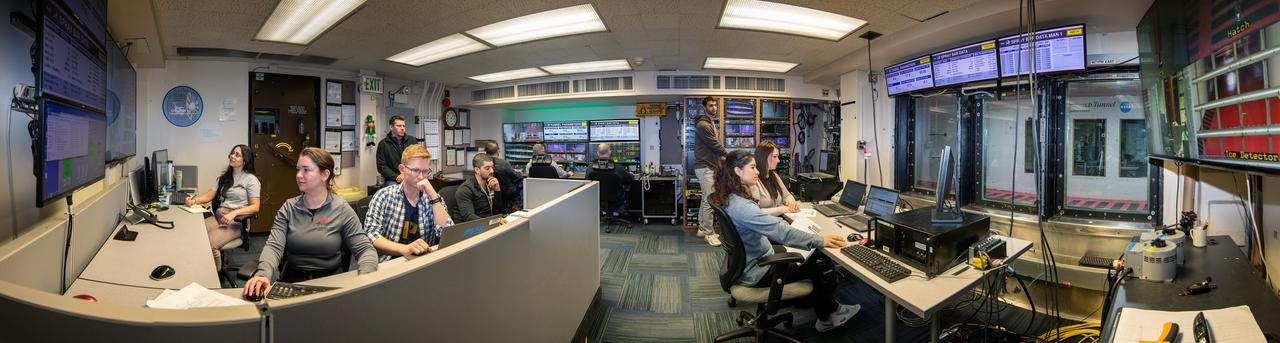
Panorama of the IRT engineering and ice cloud calibration team in the control room. Shown on the left are the data and system engineers. In the center with their backs to the camera are the wind tunnel operators who control the wind speed and super cooled water flow. In the center right of the photo is the video recording system and the test engineers. On the right side the test section can be see though the wind and the TV screen shows the pray bars that create the icing cloud.
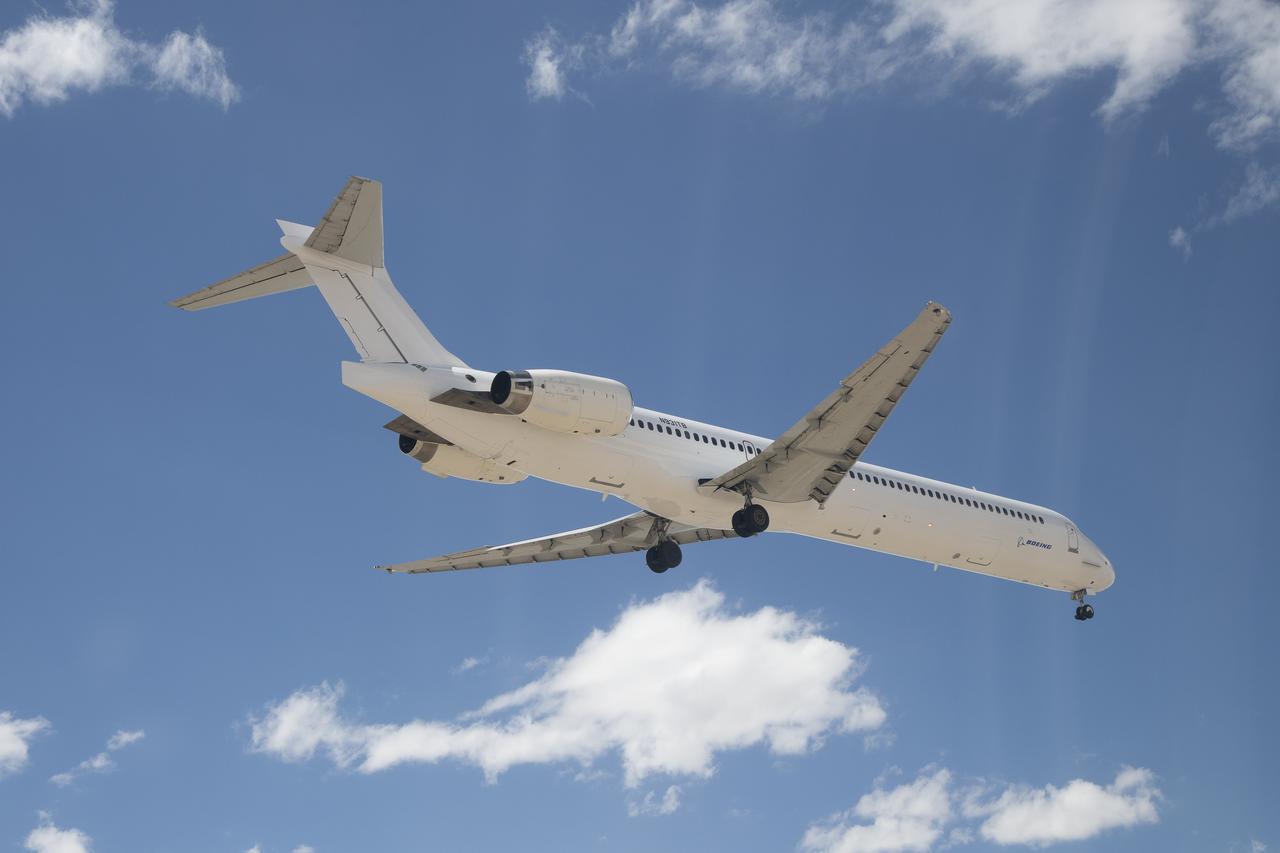
Boeing’s MD-90 aircraft flies from Victorville California to Palmdale, California on August 15, 2023. This aircraft will be NASA’s future Sustainable Flight Demonstrator. Modifications to the aircraft will include changes to the fuselage and most notably the use of a transonic truss-braced wing.
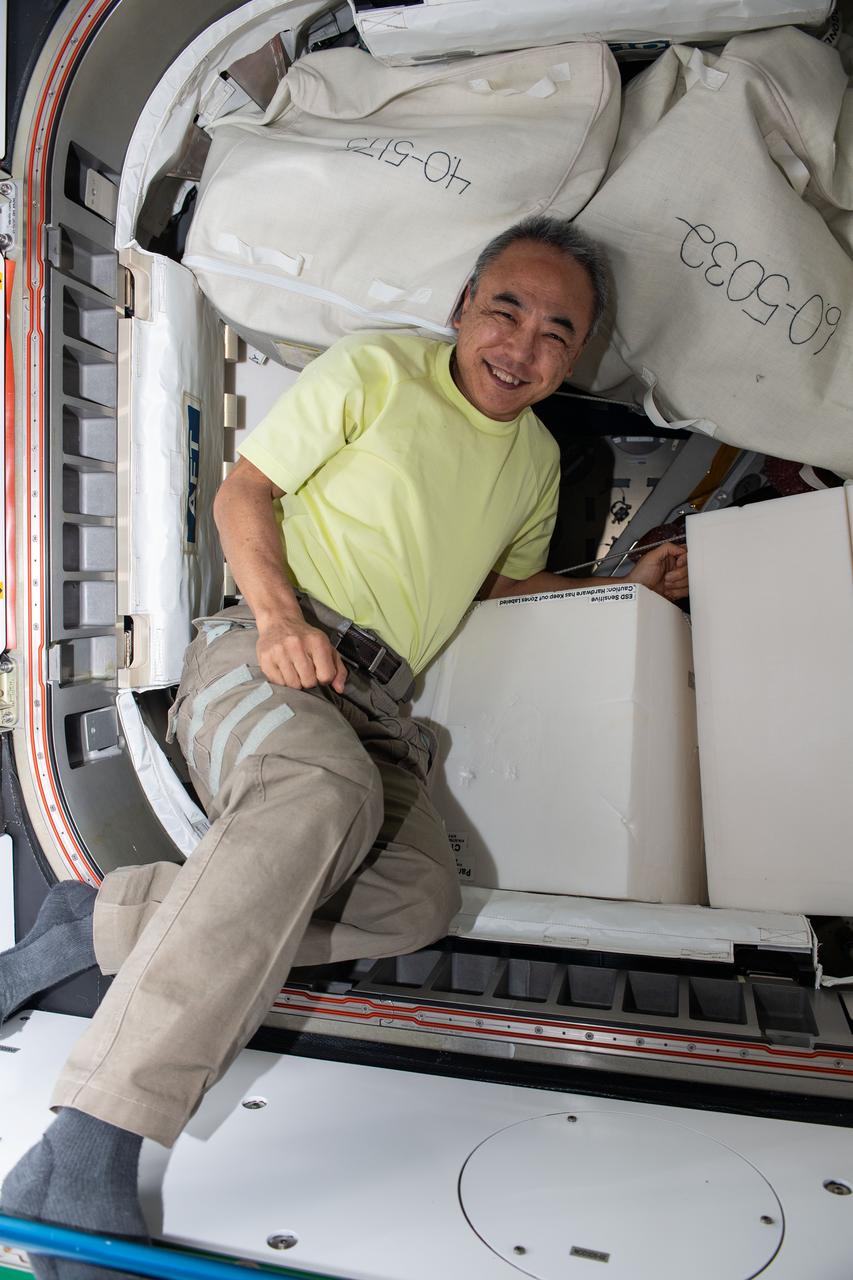
iss070e025067 (Nov. 16, 2023) --- JAXA (Japan Aerospace Exploration Agency) astronaut and Expedition 70 Flight Engineer Satoshi Furukawa works in the International Space Station's Tranquility module clearing hardware and making space inside the NanoRacks Bishop airlock.

Richard Danne, creator of the NASA worm logotype, right, answers questions during a dedication event, Monday, Nov. 6, 2023, at the Mary W. Jackson NASA Headquarters building in Washington. Photo Credit: (NASA/Keegan Barber)
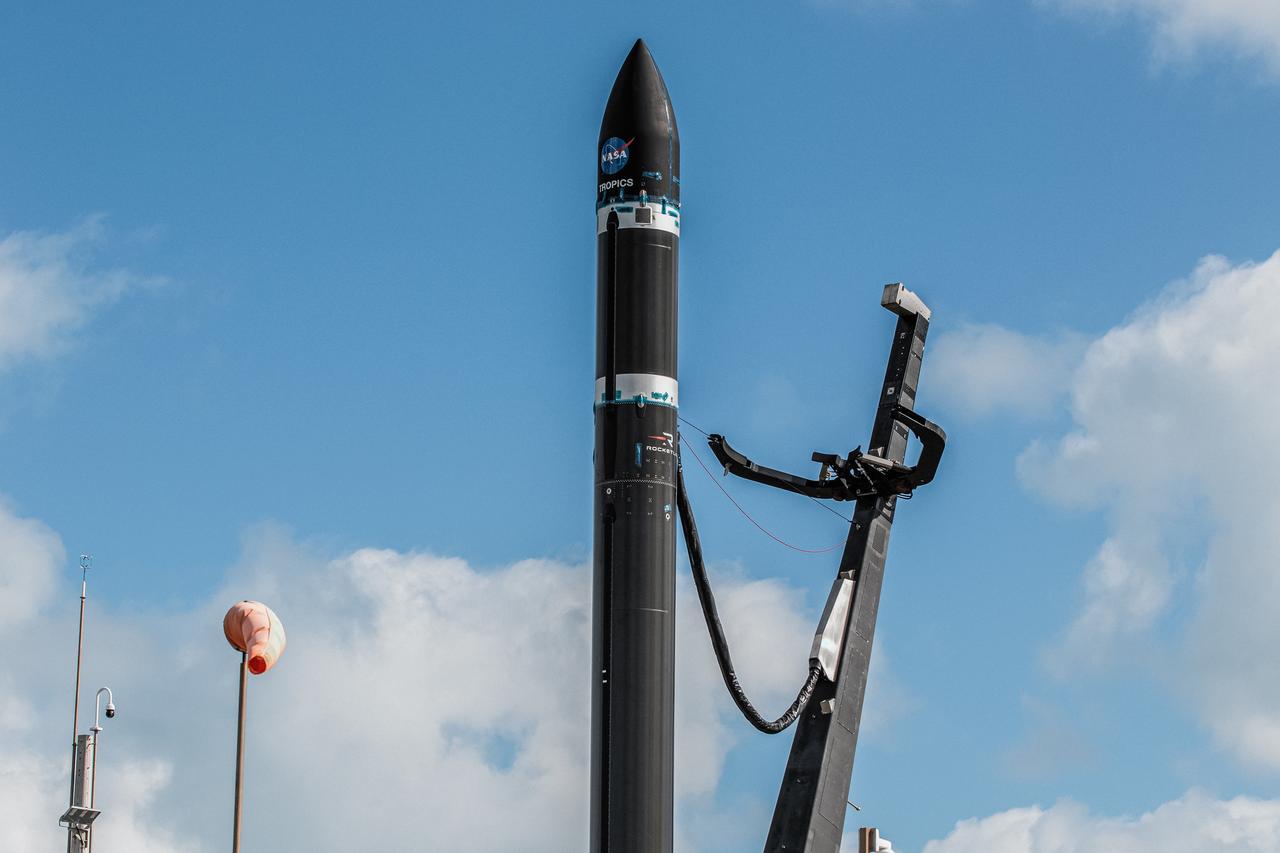
With the umbilical tower in view, Rocket Lab’s Electron rocket is vertical on the pad at Launch Complex 1 in Mahia, New Zealand. NASA’s Time-Resolved Observations of Precipitation structure and storm Intensity with a Constellation of Smallsats (TROPICS) CubeSats are secured in the payload fairing atop the rocket. TROPICS is scheduled to launch on Monday, May 1, at 1 a.m. New Zealand time from Launch Complex 1, Pad B. TROPICS will provide data on temperature, precipitation, water vapor, and clouds by measuring microwave frequencies, providing insight into storm formation and intensification.
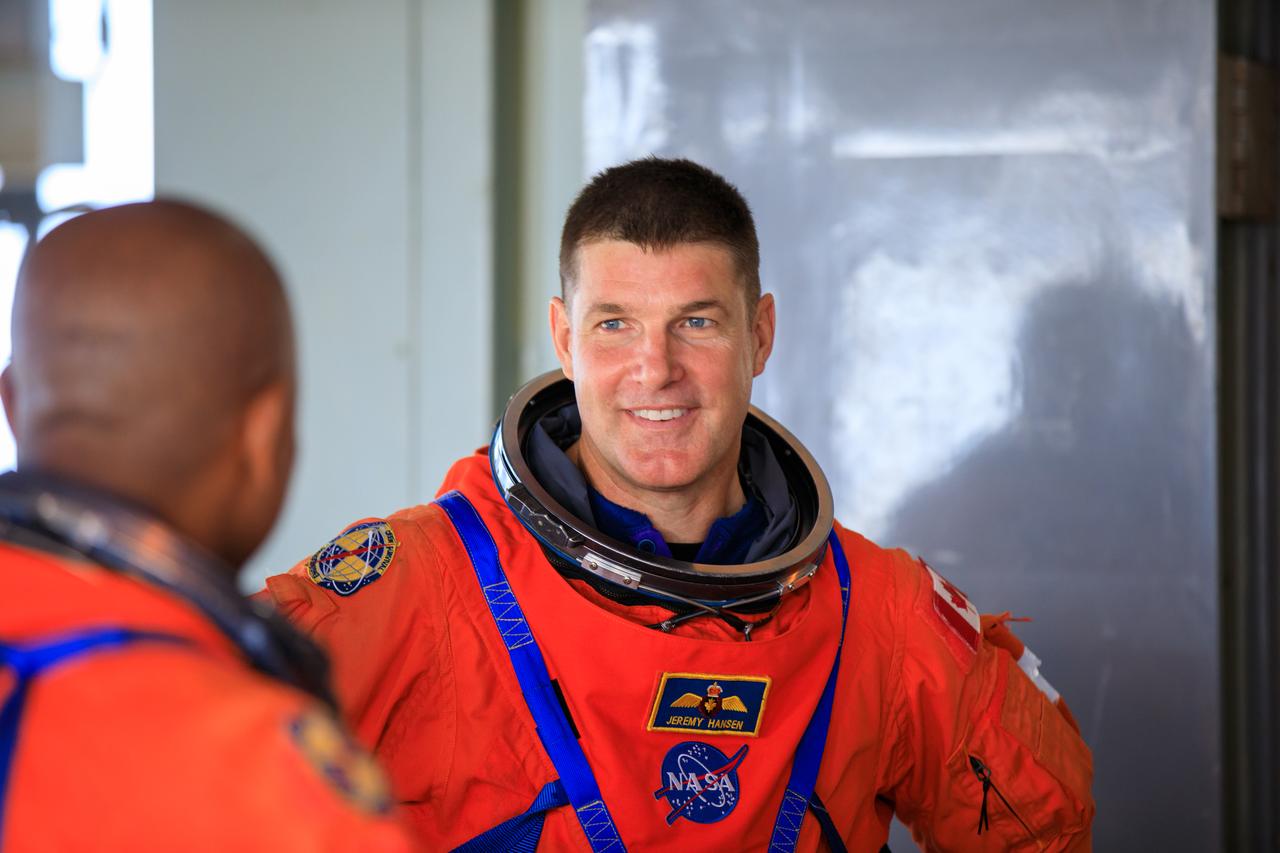
Artemis II CSA (Canadian Space Agency) astronaut Jeremy Hansen stands on the mobile launcher at Launch Pad 39B as part of an integrated ground systems test at Kennedy Space Center in Florida on Wednesday, Sept. 20, 2023. The test ensures the ground systems team is ready to support the crew timeline on launch day.
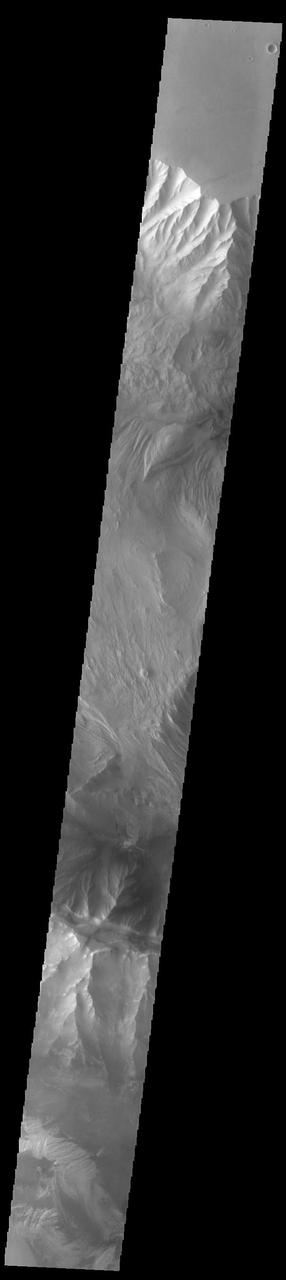
Today's VIS image shows western parts of Ophir Chasma (top of image) and Candor Chasma (bottom of image). Both are part of Valles Marineris. Candor Chasma is approximately 810 km long (503 miles) and is divided into two regions – eastern and western Candor. Ophir Chasma is approximately 317km long (197 miles). The floors of both chasmata include a variety of landforms, including layered deposits, dunes, landslide deposits and steep sided cliffs and mesas. Many forms of erosion have shaped both chasmata. There is evidence of wind and water erosion, as well as significant gravity driven mass wasting (landslides). Orbit Number: 93311 Latitude: -4.15087 Longitude: 286.533 Instrument: VIS Captured: 2022-12-27 11:51 https://photojournal.jpl.nasa.gov/catalog/PIA25850
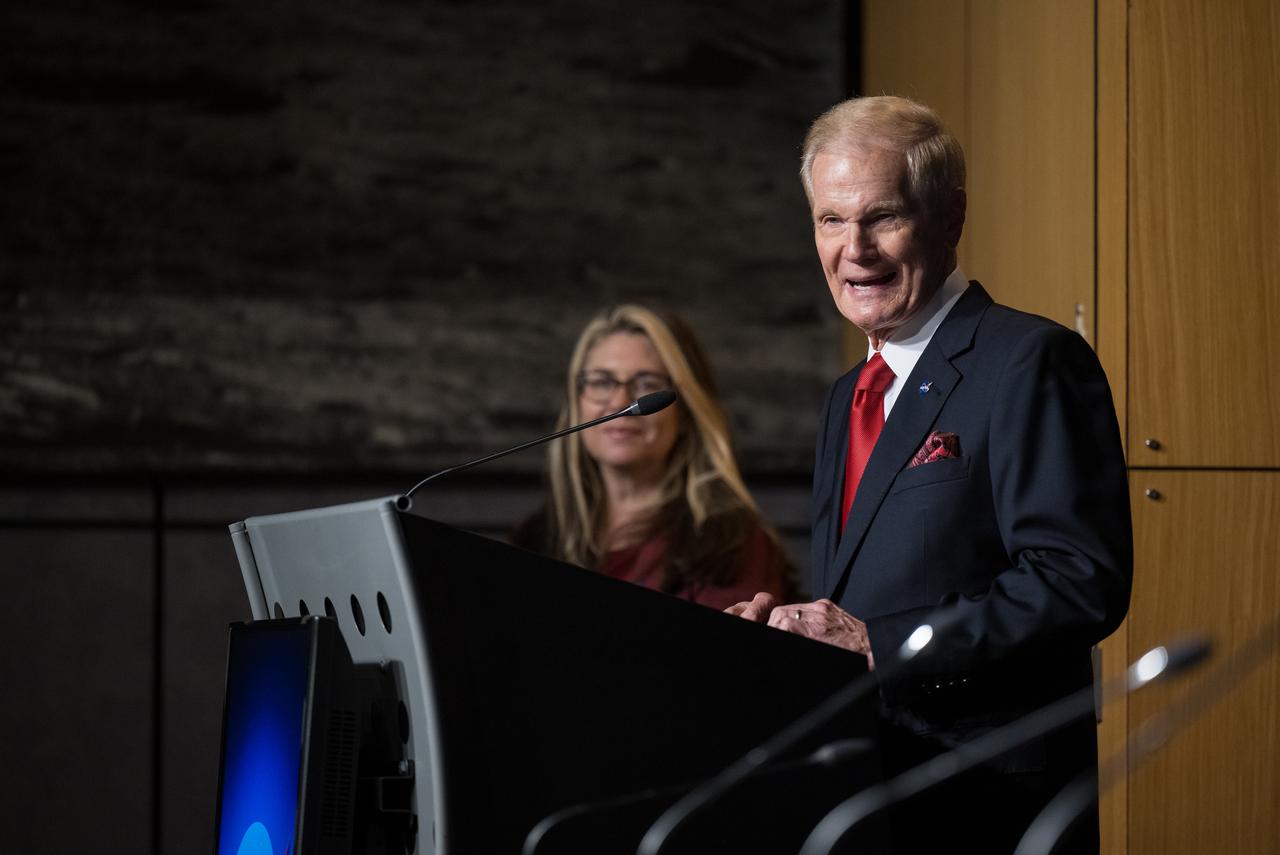
NASA Administrator Bill Nelson provides remarks during a media briefing to discuss the findings from an unidentified anomalous phenomena (UAP) independent study team, Thursday, Sept. 14, 2023, at the Mary W. Jackson NASA Headquarters building in Washington. The UAP independent study team, commissioned in 2022, is a counsel of 16 community experts across diverse areas on matters relevant to potential methods of study for unidentified anomalous phenomena. NASA published the team’s full report online, which aims to inform about what possible data could be collected in the future to shed light on the nature and origin of UAP. Photo Credit: (NASA/Aubrey Gemignani)

NASA Technical Group Supervisor for Sequence Planning and Execution and Tactical Mission Lead for the Mars Perseverance rover, Diana Trujillo, speaks to students at Rolling Terrace Elementary School, Monday, March 13, 2023, in Takoma Park, Maryland. Photo Credit: (NASA/Aubrey Gemignani)
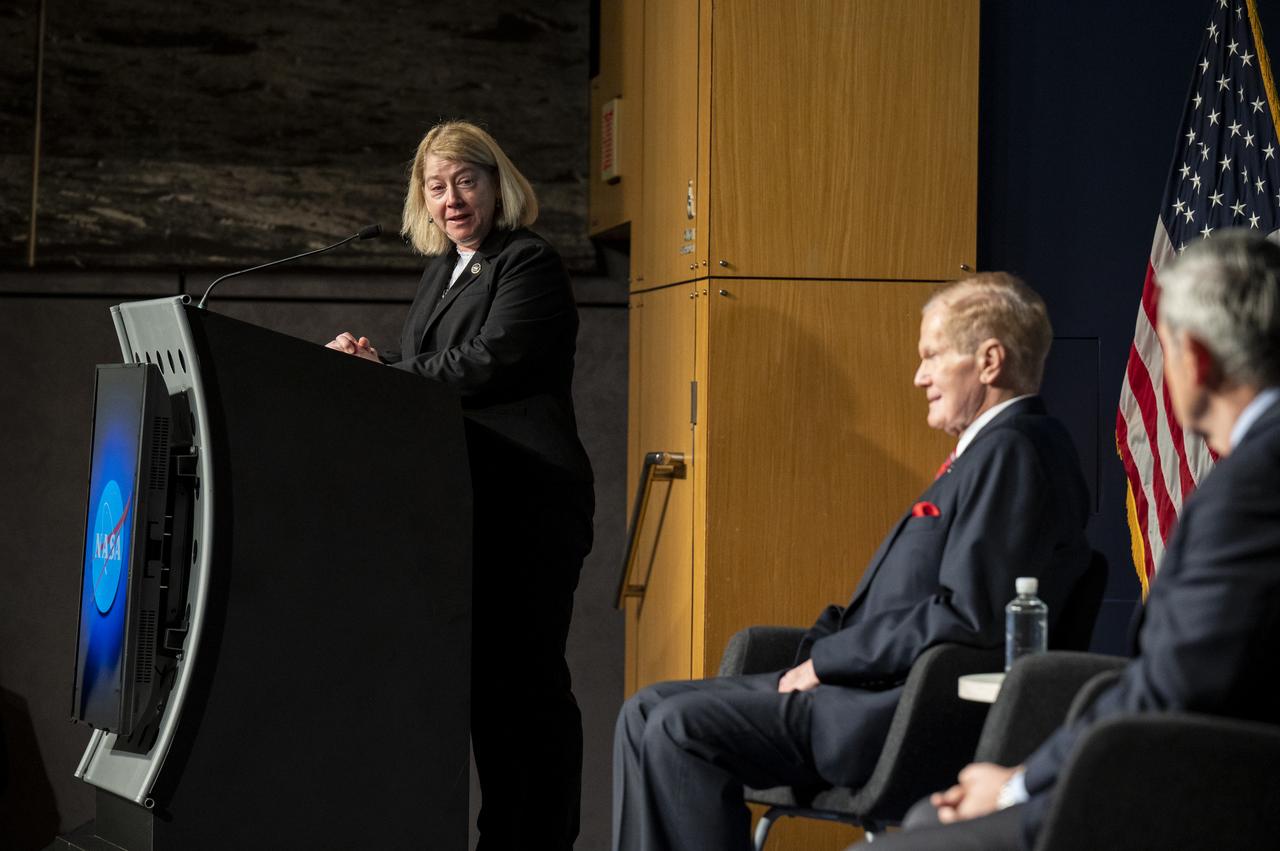
NASA Deputy Administrator Pam Melroy, left, delivers remarks during the NASA Day of Remembrance Employee Safety Town Hall as NASA Administrator Bill Nelson, center, and NASA Associate Administrator Bob Cabana, right, look on, Tuesday, Jan. 24, 2023, at the Mary W. Jackson NASA Headquarters building in Washington. Photo Credit: (NASA/Keegan Barber)

jsc2024e006092 (1/19/2024) --- Three Choctaw Nation of OK citizens remove seeds from a squash for the Choctaw Heirloom Seeds.investigation. Image courtesy of Choctaw Nation of Oklahoma.
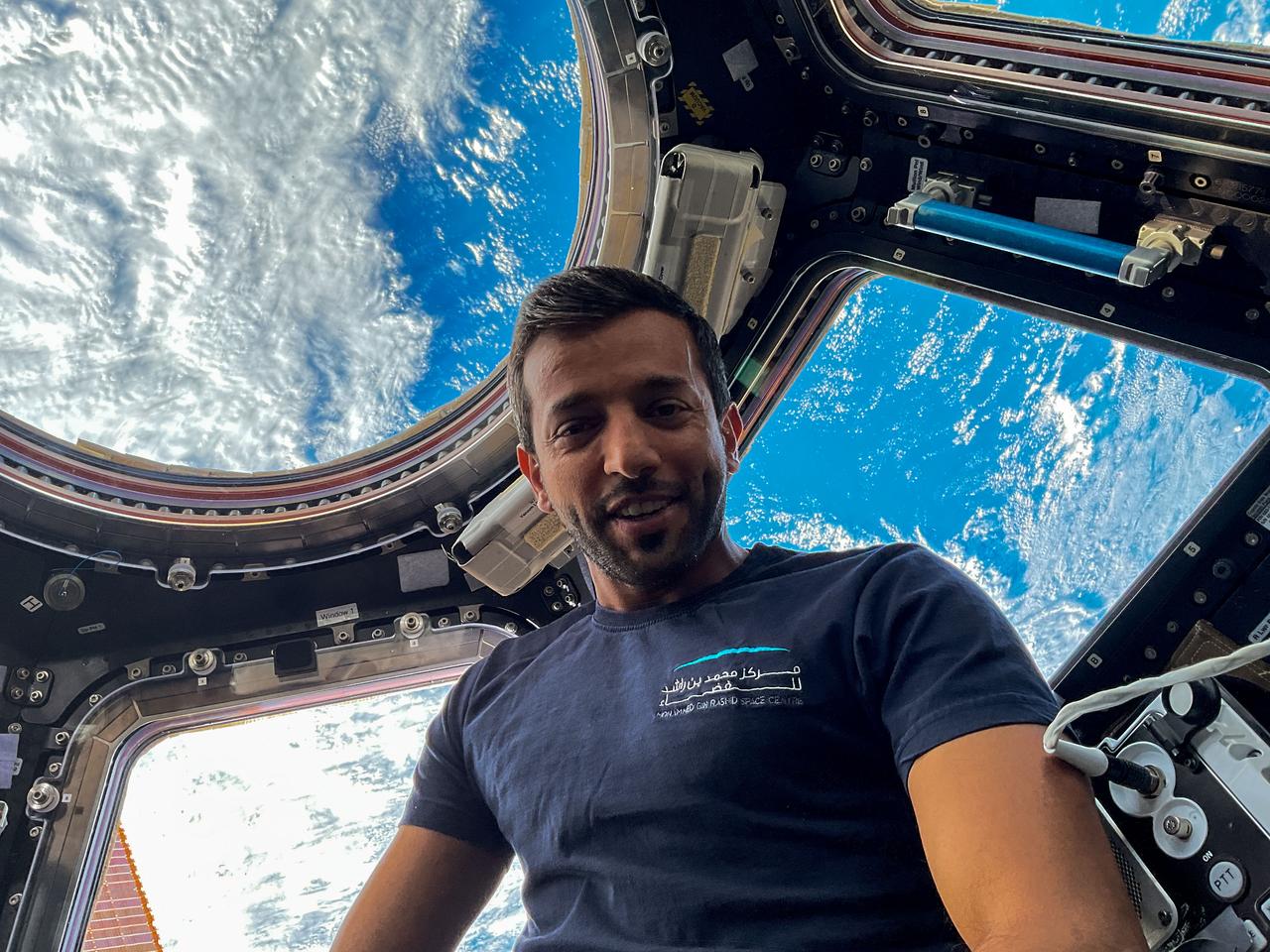
iss068e071325 (March 5, 2021) --- UAE (United Arab Emirates) astronaut and Expedition 68 Flight Engineer Sultan Alneyadi is pictured inside the seven-window cupola, the International Space Station's "window to the world." The orbiting lab was flying 260 milers above the Philippine Sea at the time of this photograph.
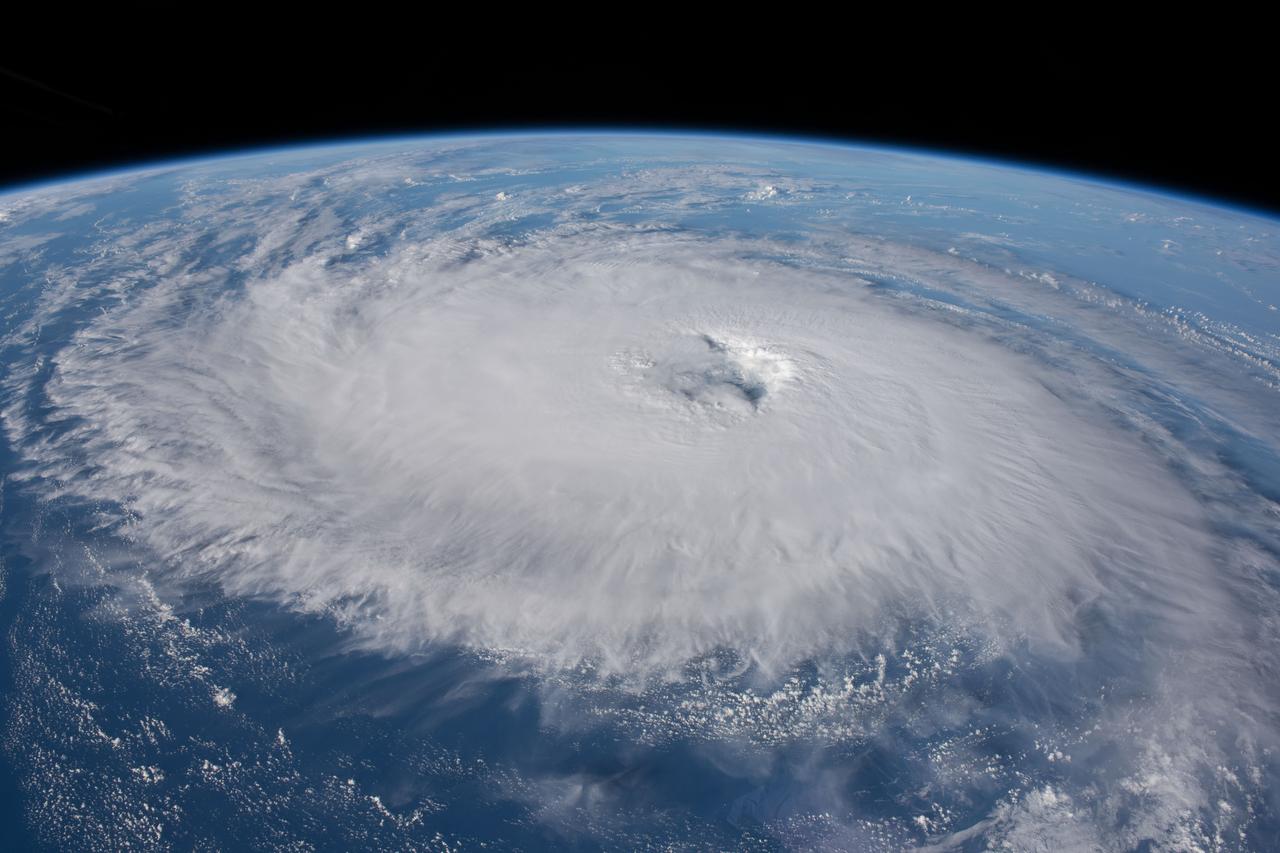
iss069e090089 (Sept. 19, 2023) --- Category 1 Hurricane Nigel is pictured on a northeasterly track in the Atlantic Ocean as the International Space Station orbited 258 miles above.
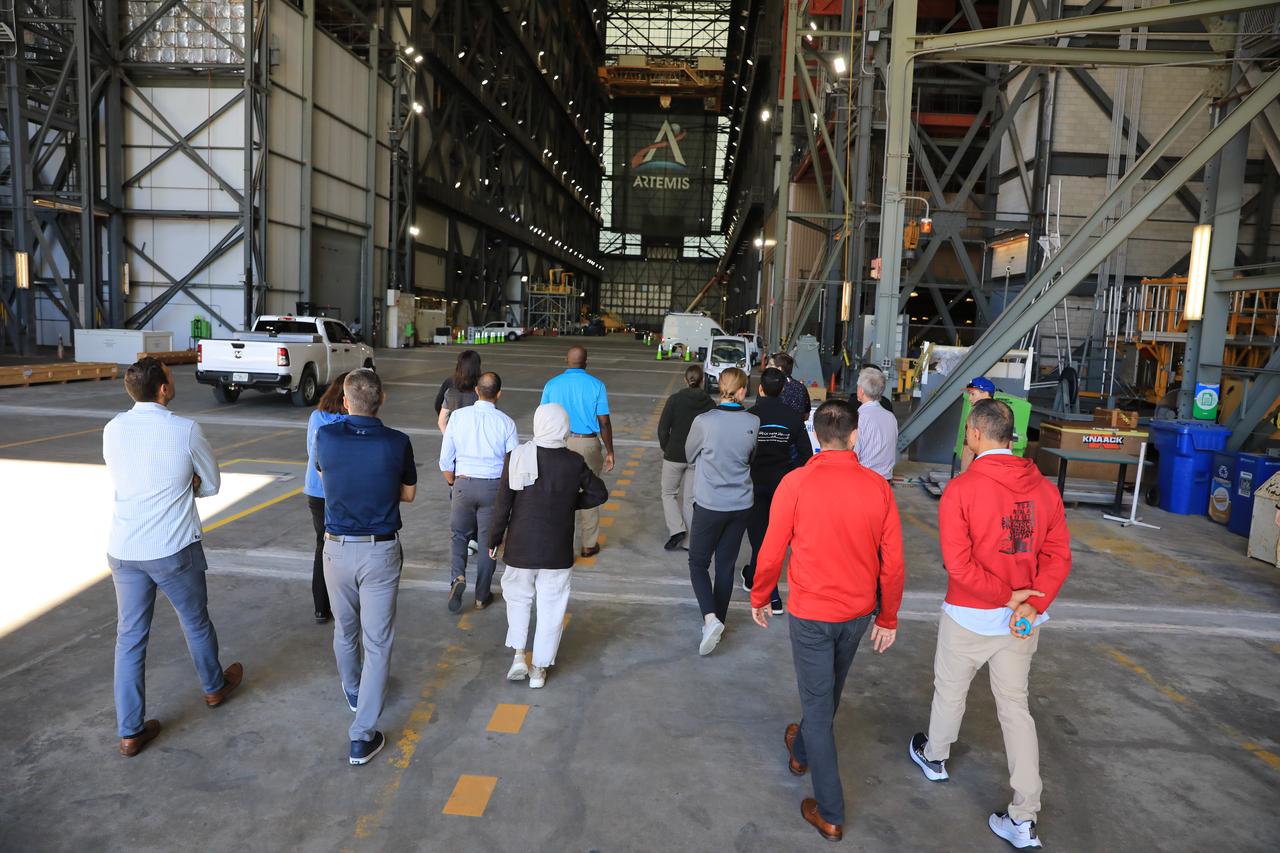
NASA’s 2021 class of astronaut candidates walk inside the Vehicle Assembly Building during a familiarization tour of facilities on Tuesday, Oct. 17, 2023, at the agency’s Kennedy Space Center in Florida.
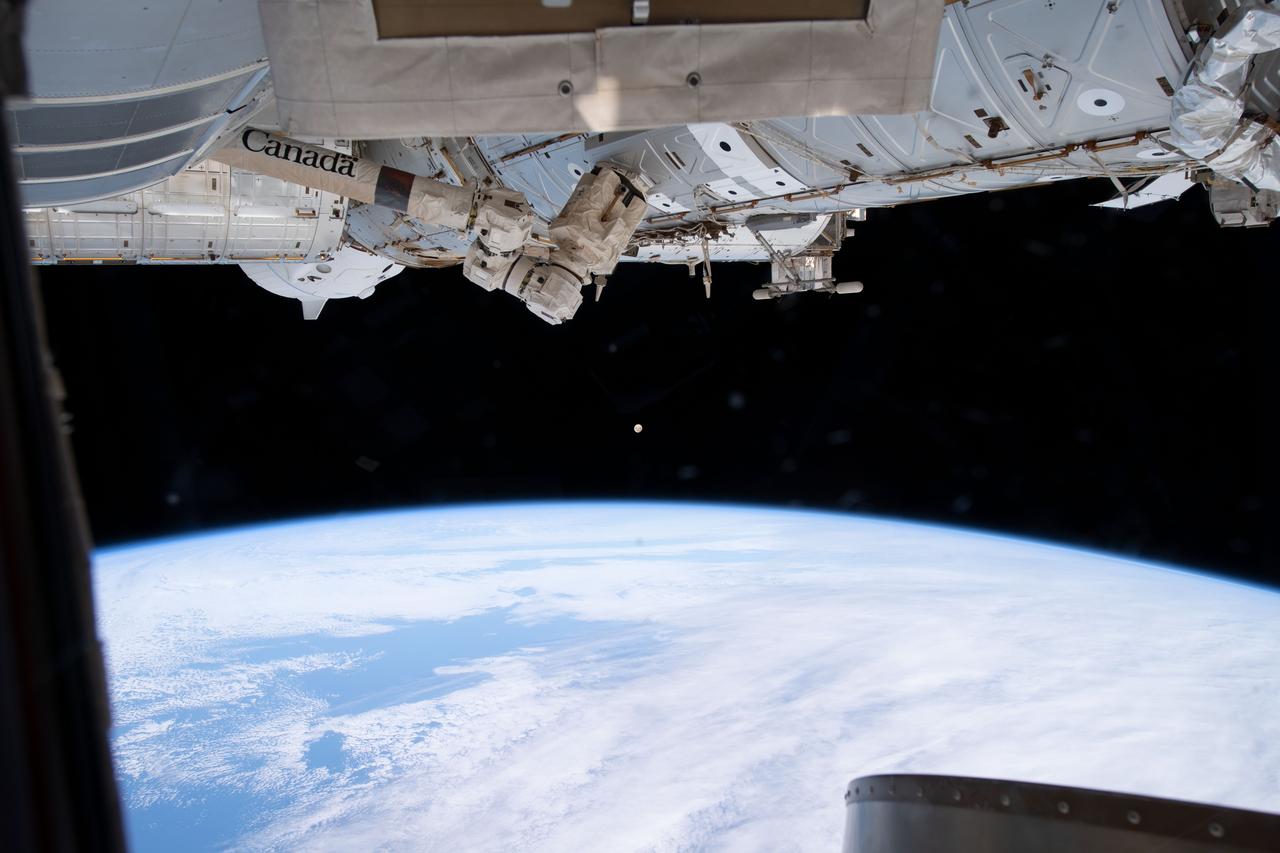
iss069e027342 (July 2, 2023) -- An almost-full moon glows in the back as the space station orbits 268 miles above the coast of Argentina.

DC area students participate in a Minecraft Artemis demonstration during Space Education Day, Tuesday, June 20, 2023, at the Microsoft Technology Center in Arlington, Va. Microsoft hosted the event to showcase the collaboration, early successes, and future plans for high quality student engagement through activities that combined space content and technologies like artificial intelligence and cloud computing. Photo Credit: (NASA/Aubrey Gemignani)
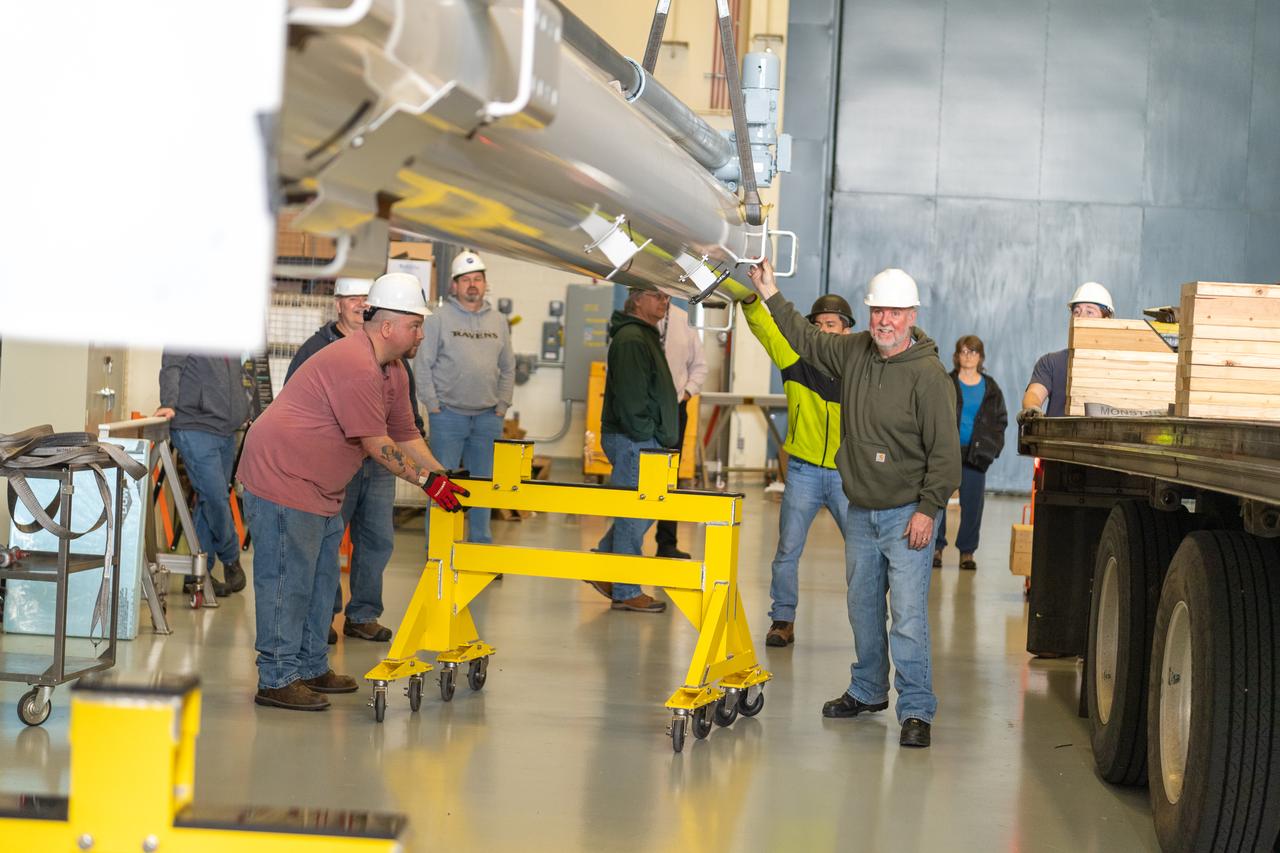
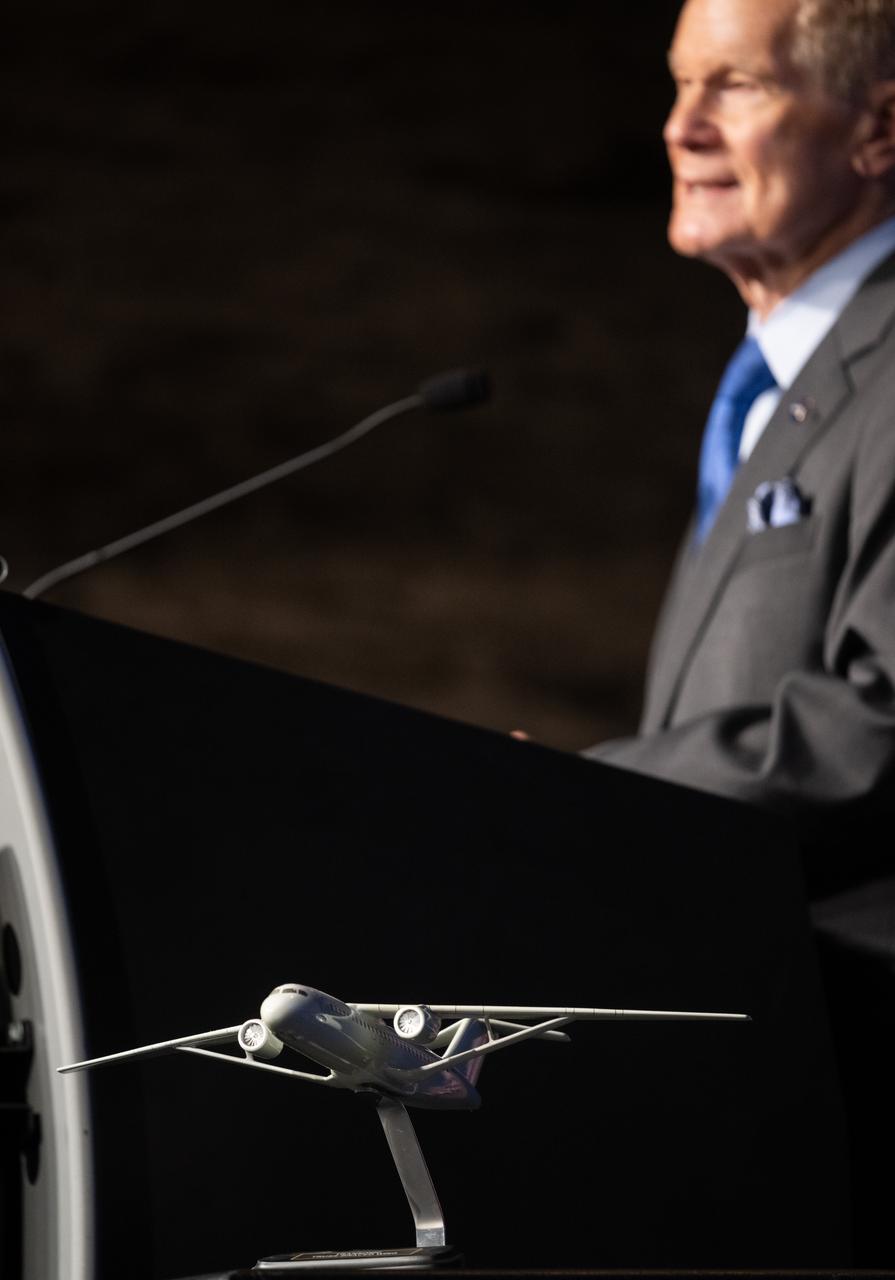
A model of an aircraft with a Transsonic Truss-Braced Wing is seen during a news conference on NASA’s Sustainable Flight Demonstrator project, Wednesday, Jan. 18, 2023, at the Mary W. Jackson NASA Headquarters building in Washington, DC. Through a Funded Space Act Agreement, The Boeing company and its industry team will collaborate with NASA to develop and flight-test a full-scale Transonic Truss-Braced Wing demonstrator aircraft. Photo Credit: (NASA/Joel Kowsky)
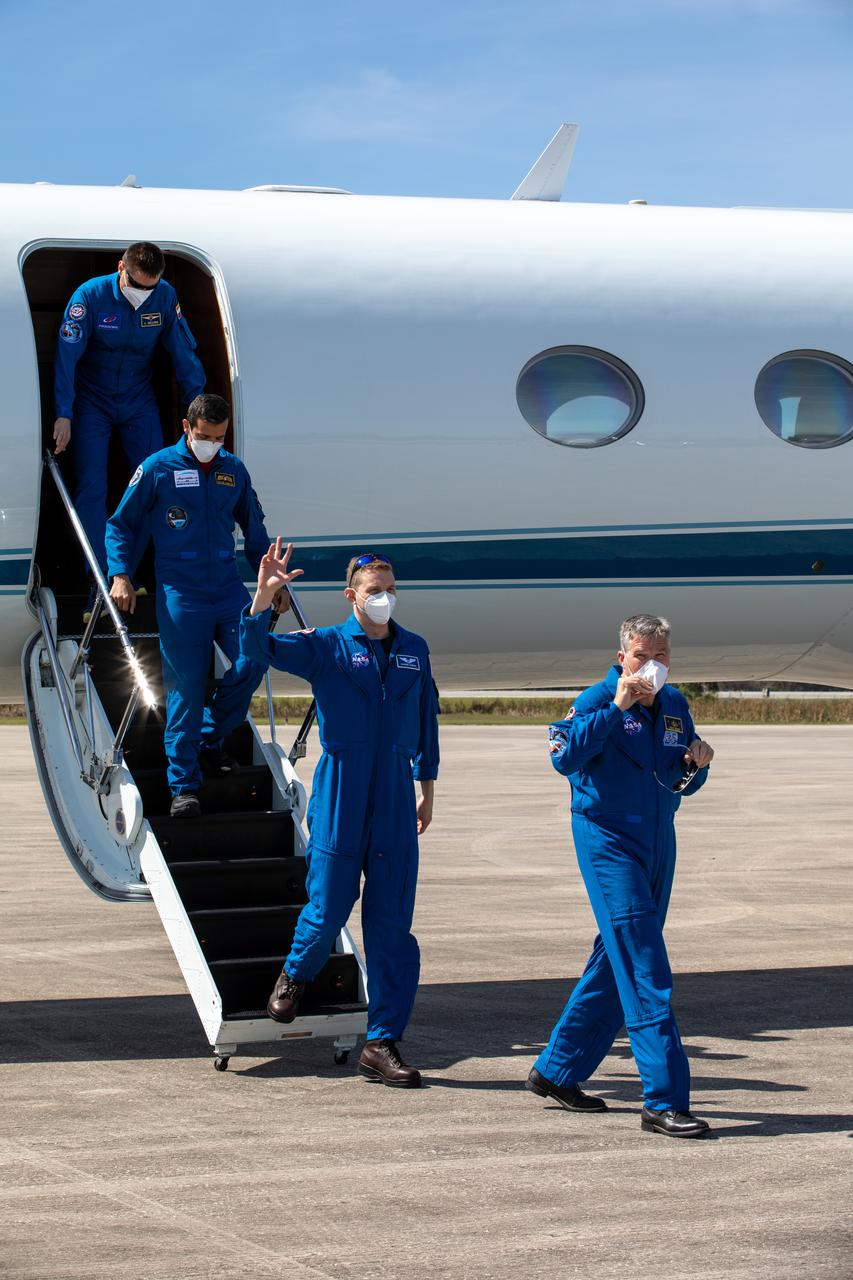
Crew members for NASA’s SpaceX Crew-6 mission to the International Space Station arrive at Kennedy Space Center’s Launch and Landing Facility in Florida on Feb. 21, 2023. From the front are NASA astronauts Stephen Bowen and Warren “Woody” Hoburg, UAE (United Arab Emirates) astronaut Sultan Alneyadi, and Roscosmos cosmonaut Andrey Fedyaev. The crew will head to the center’s Astronaut Crew Quarters as they await launch aboard the Crew Dragon on a SpaceX Falcon 9 rocket. Launch is targeted for no earlier than Feb. 26 at 2:07 a.m. EST. Crew-6 is the sixth crew rotation mission with SpaceX to the station, and the seventh flight of Dragon with people as part of the agency’s Commercial Crew Program.

The Channeled Scablands in Washington were formed about 19,000 years ago when glacial Lake Missoula in Montana burst through its ice dam, and a 320 m deep lake emptied in a catastrophic flood that reached the Pacific Ocean. The basaltic terrain of Washington was deeply carved into channels, mesas, and giant dunes as the water scoured the landscape. The image was acquired August 4, 2021, covers an area of 40.2 by 48.8 km, and is located at 47.5 degrees north, 119.2 degrees west. https://photojournal.jpl.nasa.gov/catalog/PIA26008
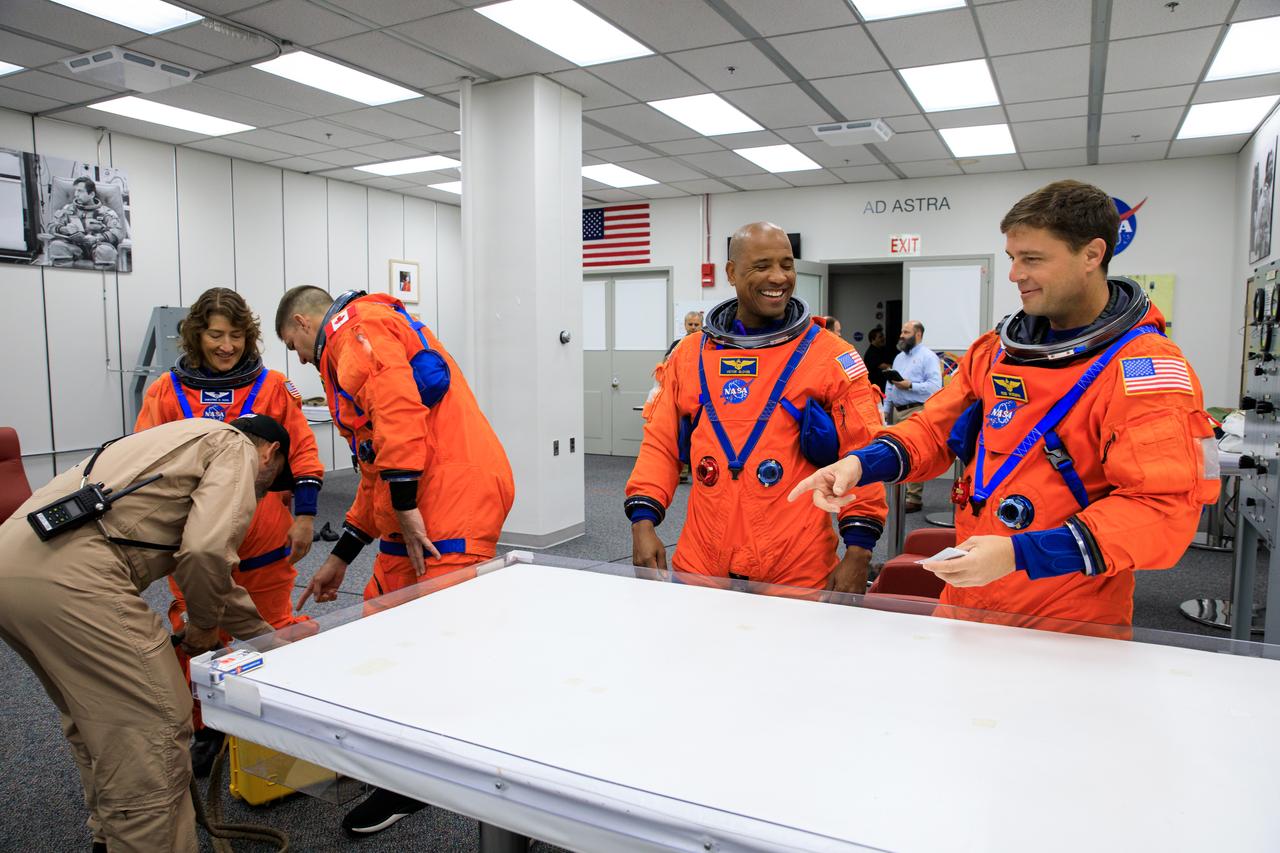
Inside the Astronaut Crew Quarters at the Neil Armstrong Operations and Checkout Building at NASA’s Kennedy Space Center in Florida, Artemis II crew members (from left) NASA astronaut Christina Koch, CSA (Canadian Space Agency) astronaut Jeremy Hansen, and NASA astronauts Reid Wiseman and Victor Glover are shown wearing test versions of the Orion crew survival system spacesuits they will wear on launch day as part of an integrated ground systems test on Wednesday, Sept. 20.
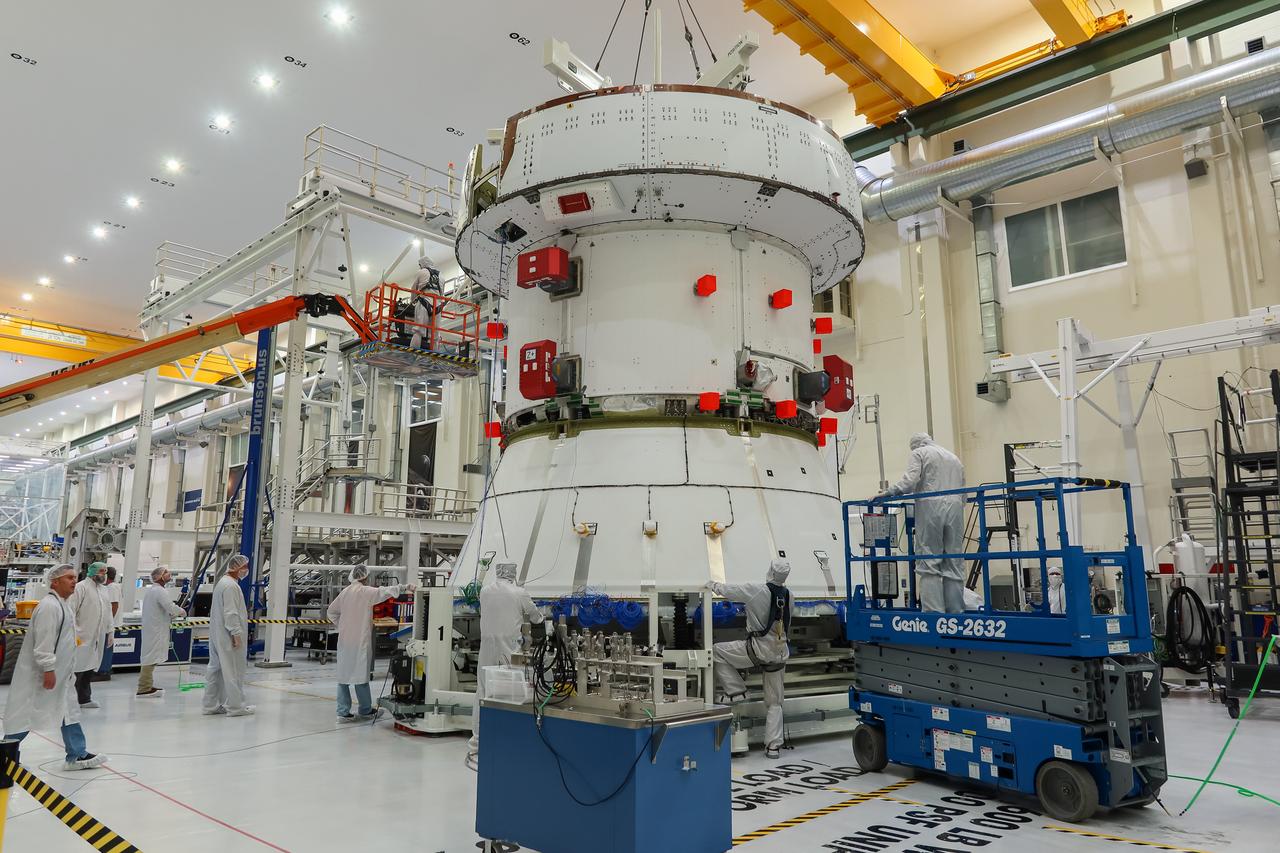
Preparations are underway to lift the European Service Module (ESM) for NASA’s Artemis II mission by crane inside the high bay of the Neil A. Armstrong Operations and Checkout Building at NASA’s Kennedy Space Center in Florida on May 22, 2023. Teams from NASA and Lockheed Martin are preparing the service module for transfer to the FAST (final assembly and system testing) cell for final checkouts before it is stacked with Orion crew module. The powerhouse that will fuel and propel Orion in space, the ESM will be used for Artemis II, the first Artemis mission flying crew aboard Orion.
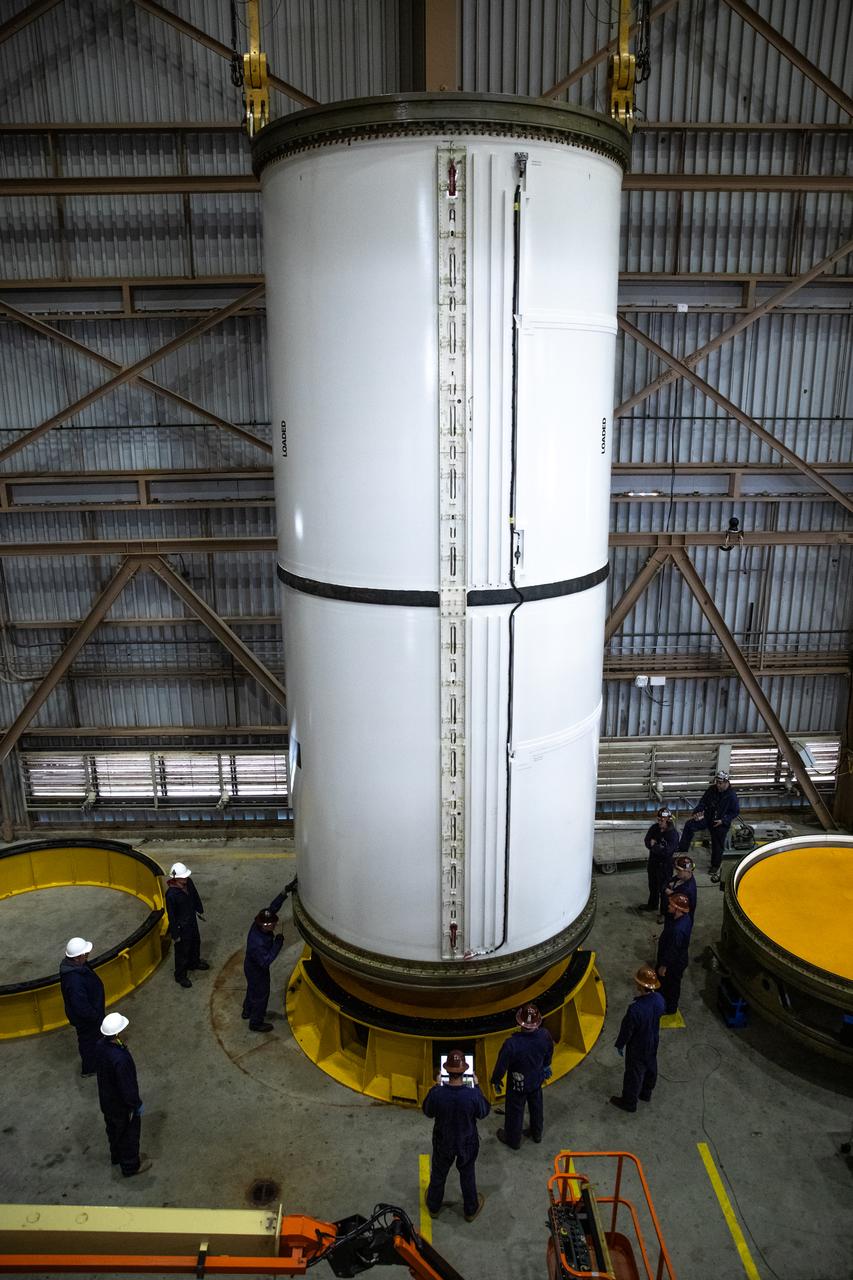
Engineers and technicians process the right forward center segment of the Space Launch System solid rocket boosters for the Artemis II mission inside the Rotation, Processing and Surge Facility (RPSF) at NASA’s Kennedy Space Center in Florida on Tuesday, Nov. 27, 2023. The team has been examining the 10 booster segments one-by-one then lifting them to make sure they are ready for integration and launch before moving them to the Vehicle Assembly Building for stacking atop the mobile launcher. Artemis II astronauts Reid Wiseman, Victor Glover, Christina Koch, and Jeremy Hansen will blast off from Kennedy and travel around the moon for the agency’s first crewed mission under Artemis that will test all of the Orion spacecraft’s systems.
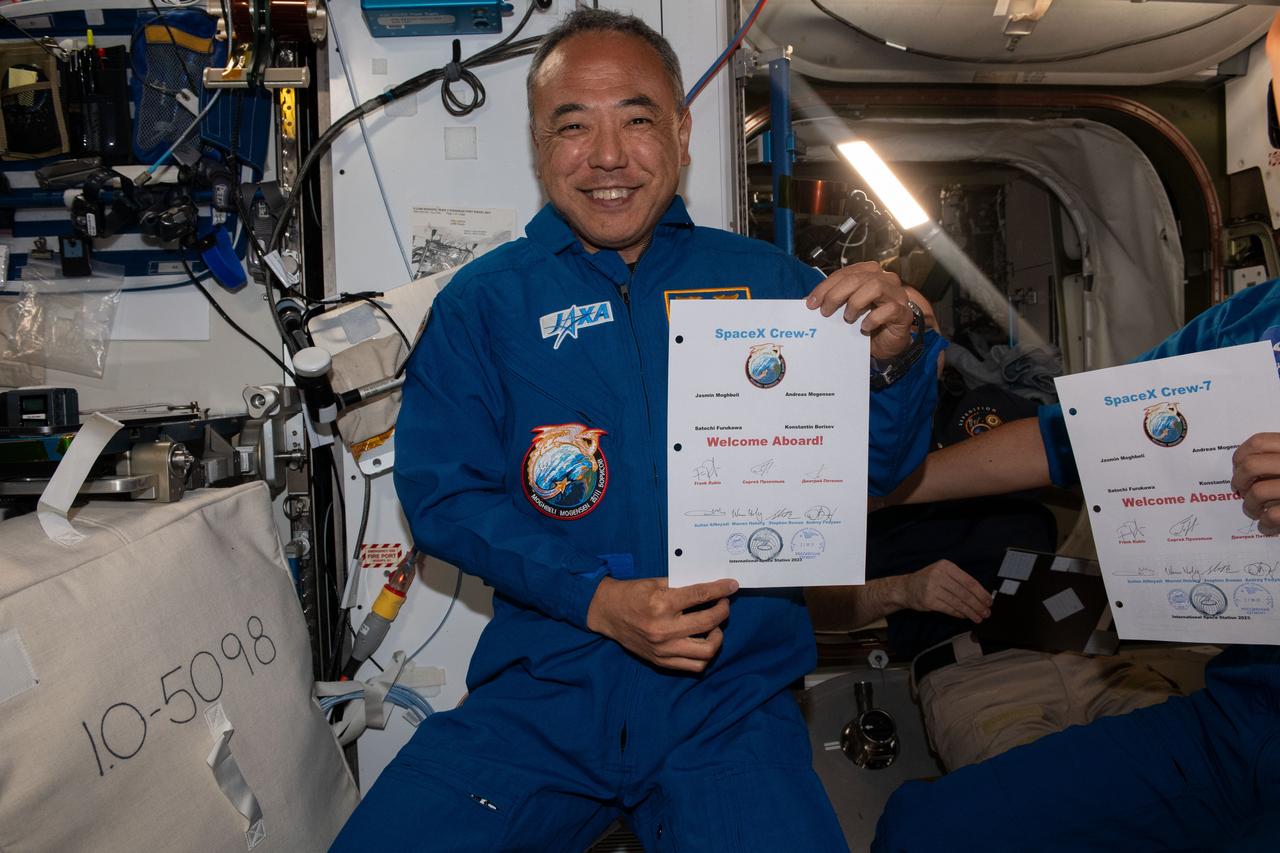
iss069e082580 (August 27, 2023) -- JAXA astronaut and Crew-7 Mission Specialist, Satoshi Furukawa, smiles for a photo while holding a welcome message from the Expedition 69 crew, following Crew-7's arrival to the International Space Station.
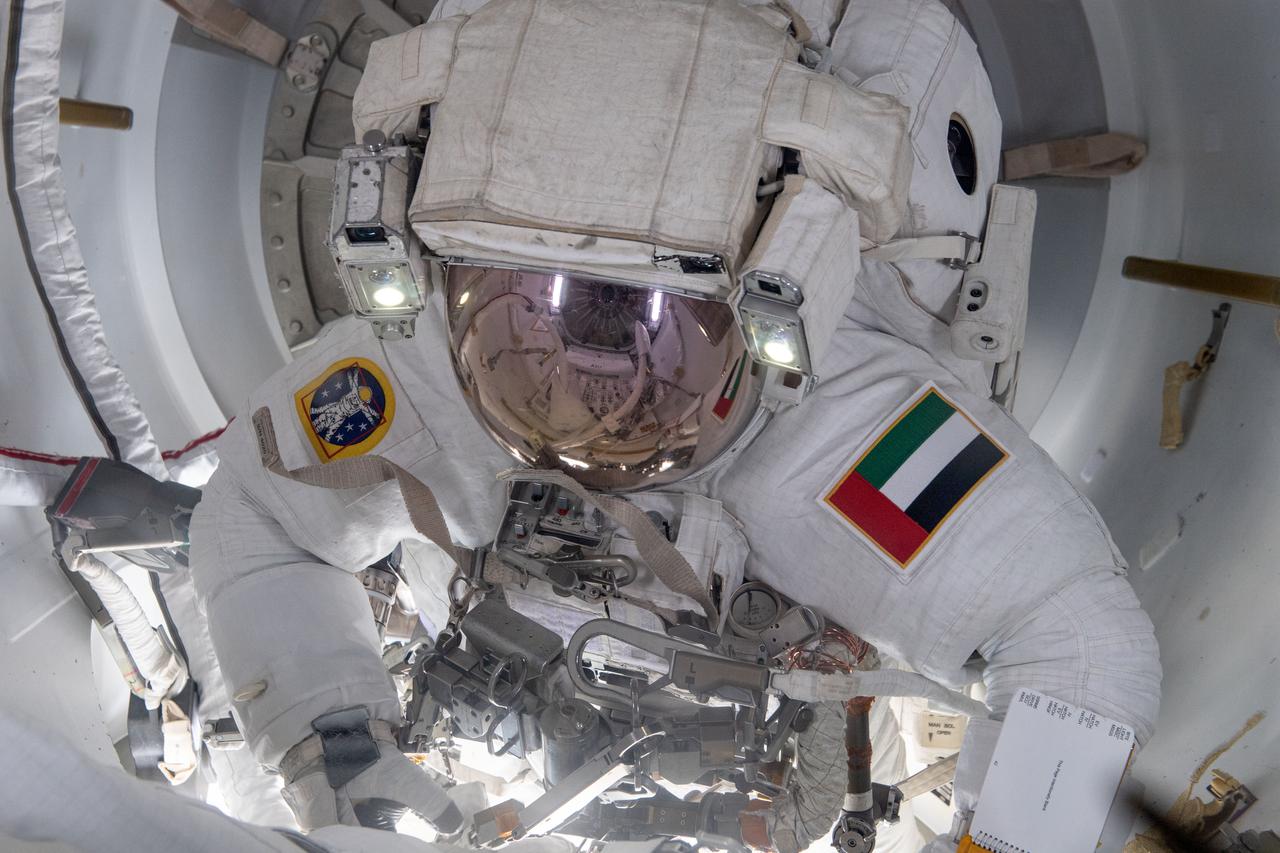
iss069e005717 (April 28, 2023) --- UAE (United Arab Emirates) astronaut and Expedition 69 Flight Engineer Sultan Alneyadi is pictured in his Extravehicular Mobility Unit, or spacesuit, preparing to exit the International Space Station's Quest airlock and begin his first spacewalk. He and NASA astronaut Stephen Bowen (out of frame) would spend seven hours and one minute in the vacuum of space routing cables and installing insulation readying the orbital outpost for its next set of roll-out solar arrays due to be installed after their delivery on the next SpaceX Dragon cargo mission.
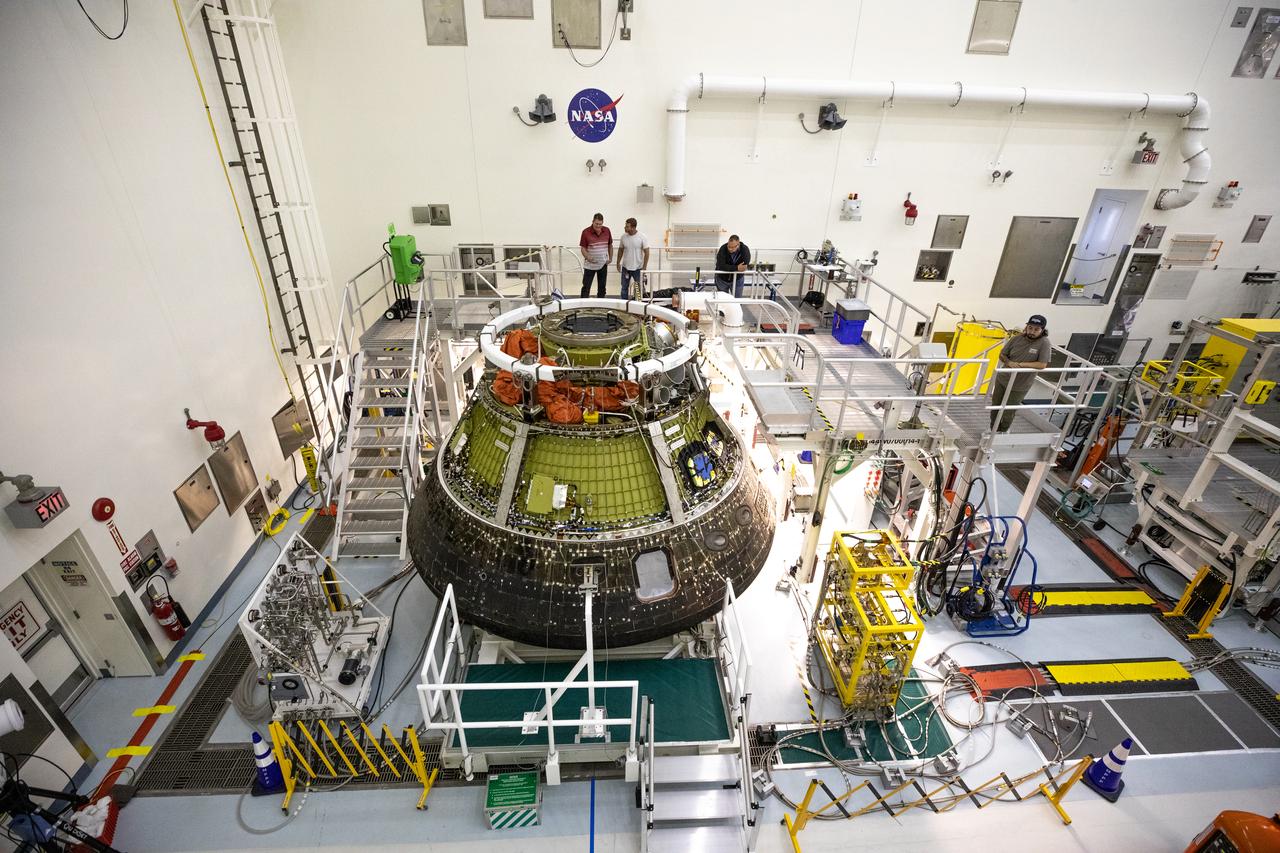
A view from above shows NASA’s Artemis I Orion capsule secured on a platform inside the Multi-Payload Processing Facility (MPPF) at Kennedy Space Center in Florida on Jan. 6, 2023. Orion splashed down in the Pacific Ocean at 12:40 p.m. EST on Dec. 11, 2022. The spacecraft was secured inside the well deck of the USS Portland for the voyage to U.S. Naval Base Sand Diego, arriving on Dec. 13, 2022. Orion was offloaded and transported back to Kennedy for deservicing inside the MPPF. Orion launched atop the Space Launch System rocket on Nov. 16, 2022 at 1:47 a.m. EST from Kennedy’s Launch Complex 39B for a 25-day trip beyond the Moon and back. During the flight, Orion flew farther than any human-rated spacecraft has ever flown, paving the way for human deep space exploration and demonstrating NASA’s commitment and capability to extend human presence to the Moon and beyond.
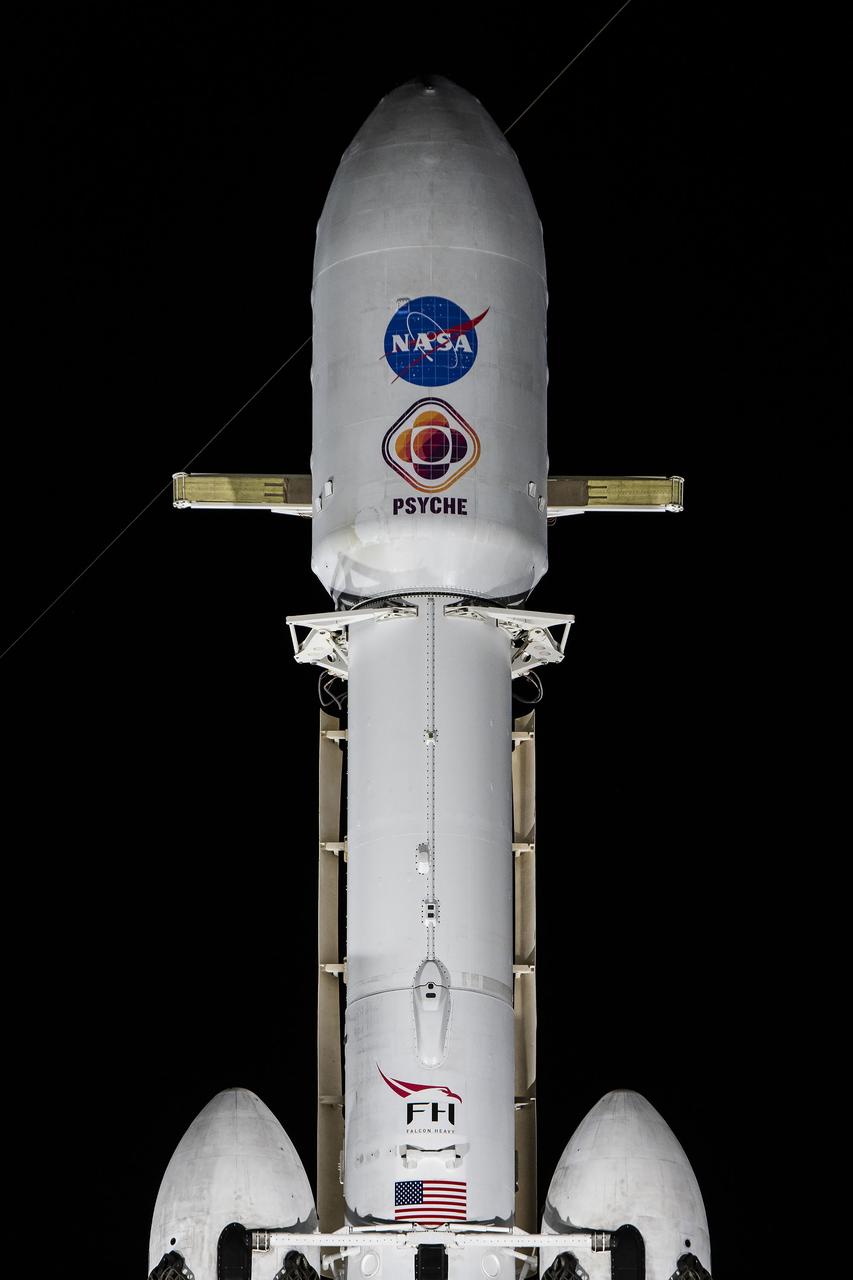
NASA’s Psyche spacecraft stands tall atop a SpaceX Falcon Heavy rocket at Kennedy Space Center’s historic Launch Complex 39A in Florida on Tuesday, Oct. 10, 2023. Liftoff of the mission to the asteroid Psyche is targeted for 10:16 a.m. EDT on Thursday, Oct. 12. The spacecraft also is hosting a technology demonstration, NASA’s Deep Space Optical Communications (DSOC), which will be the first test of laser communications beyond the Moon. NASA’s Launch Services Program, based at Kennedy, is responsible for the insight and approval of the launch vehicle and manages the launch service for the Psyche mission.

U.S. Ambassador to Japan, Rahm Emanuel, delivers remarks after U.S. Secretary of State, Antony Blinken and Minister for Foreign Affairs of Japan, The Honorable Hayashi Yoshimasa signed an agreement that builds on a long history of collaboration in space exploration between the U.S. and Japan, Friday, Jan. 13, 2023, at the Mary W. Jackson NASA Headquarters building in Washington. “The Framework Agreement Between the Government of Japan and the Government of the United States of America for Cooperation in Space Exploration and Use of Outer Space, Including the Moon and Other Celestial Bodies, For Peaceful Purposes” covers joint activities including space science, Earth science, space operations and exploration, aeronautical science and technology, space technology, space transportation, and safety and mission assurance, among others. Photo Credit: (NASA/Aubrey Gemignani)

iss068e036094 (Jan. 2, 2023) --- NASA astronaut and Expedition 68 Flight Engineer Josh Cassada peers through one of the seven windows in the cupola, the International Space Station's "window to the world."
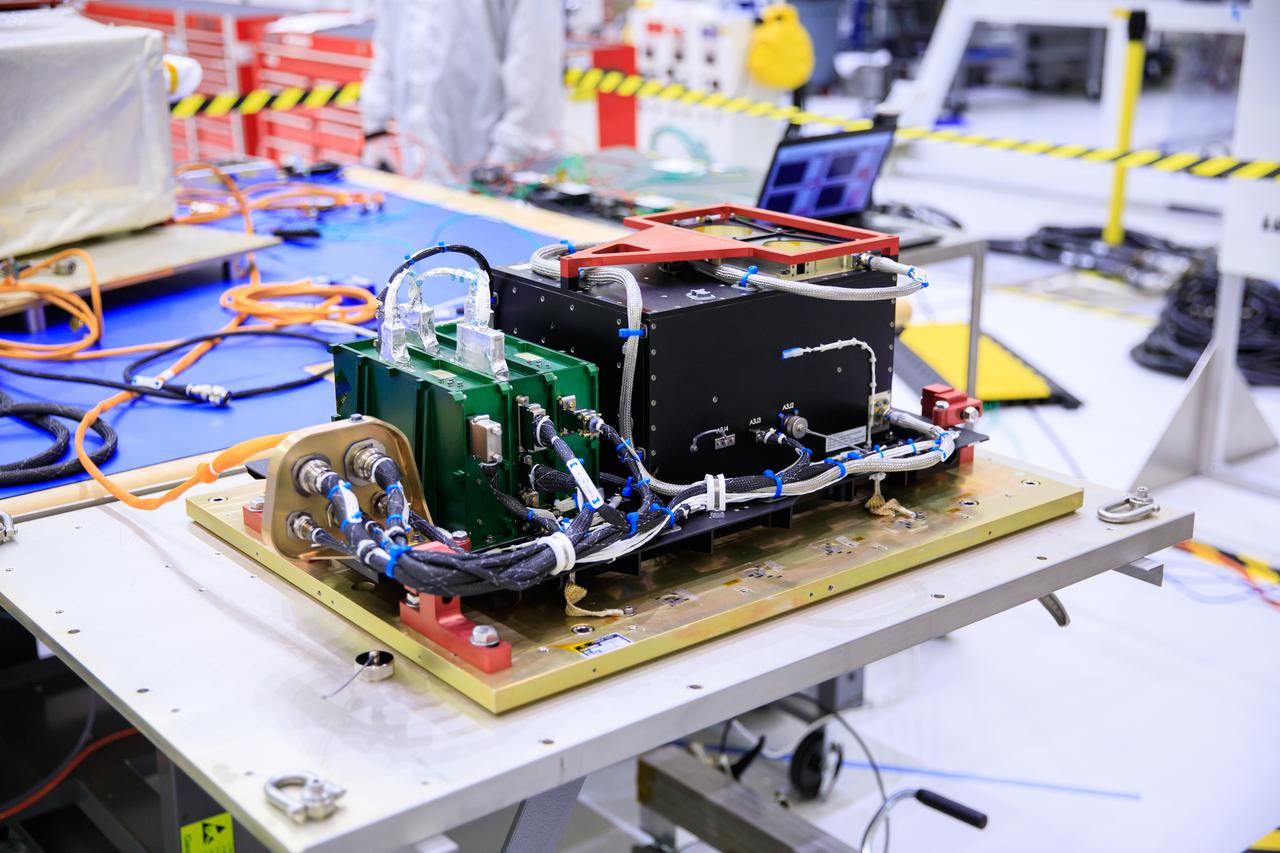
A close-up view of one of the parts of the Optical Communications System for the Artemis II mission inside the Neil Armstrong Operations and Checkout Building high bay on June 2, 2023. Optical communications is the latest space communications technology that is able to provide data rates as much as a hundred times higher than current systems. This will allow astronauts to send and receive ultra-high-definition video from the surface of the Moon or other planets such as Mars. Artemis II will be the first Artemis mission flying crew aboard Orion.
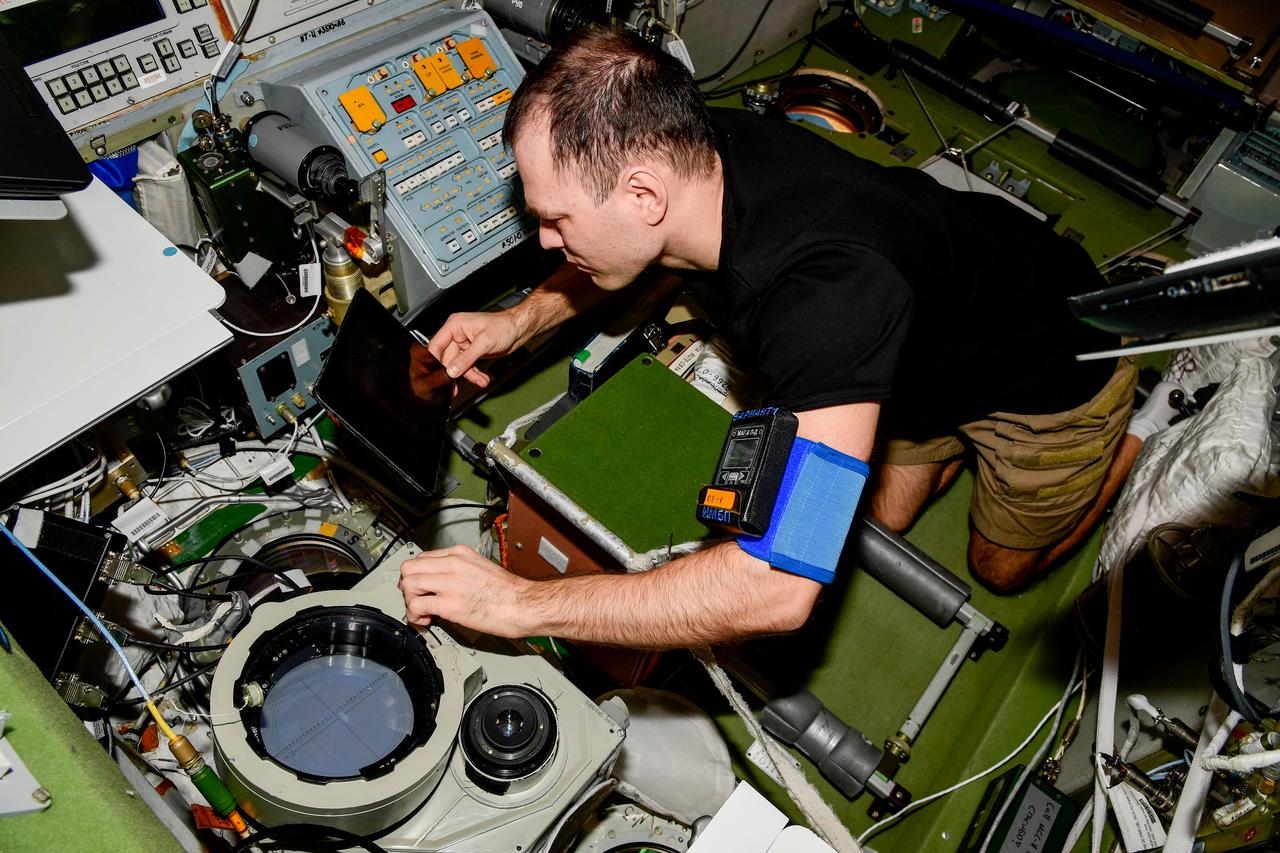
iss068e040003 (Jan. 11, 2023) --- Roscosmos cosmonaut and Expedition 68 Flight Engineer Dmitri Petelin configures optical hardware inside the International Space Station's Zvezda service module. Credit: Roscosmos

NASA Artemis Launch Director Charlie Blackwell-Thompson monitors activities during the launch day demonstration for one of the Artemis II integrated ground systems tests from Firing Room 1 in the Launch Control Center at Kennedy Space Center in Florida on Wednesday, Sept. 20. This is part of a series of tests to ensure the ground systems team is ready to support the crew timeline on launch day. Artemis II is the first mission with astronauts under Artemis that will test and check out all of the Orion spacecraft’s systems needed for future crewed missions.
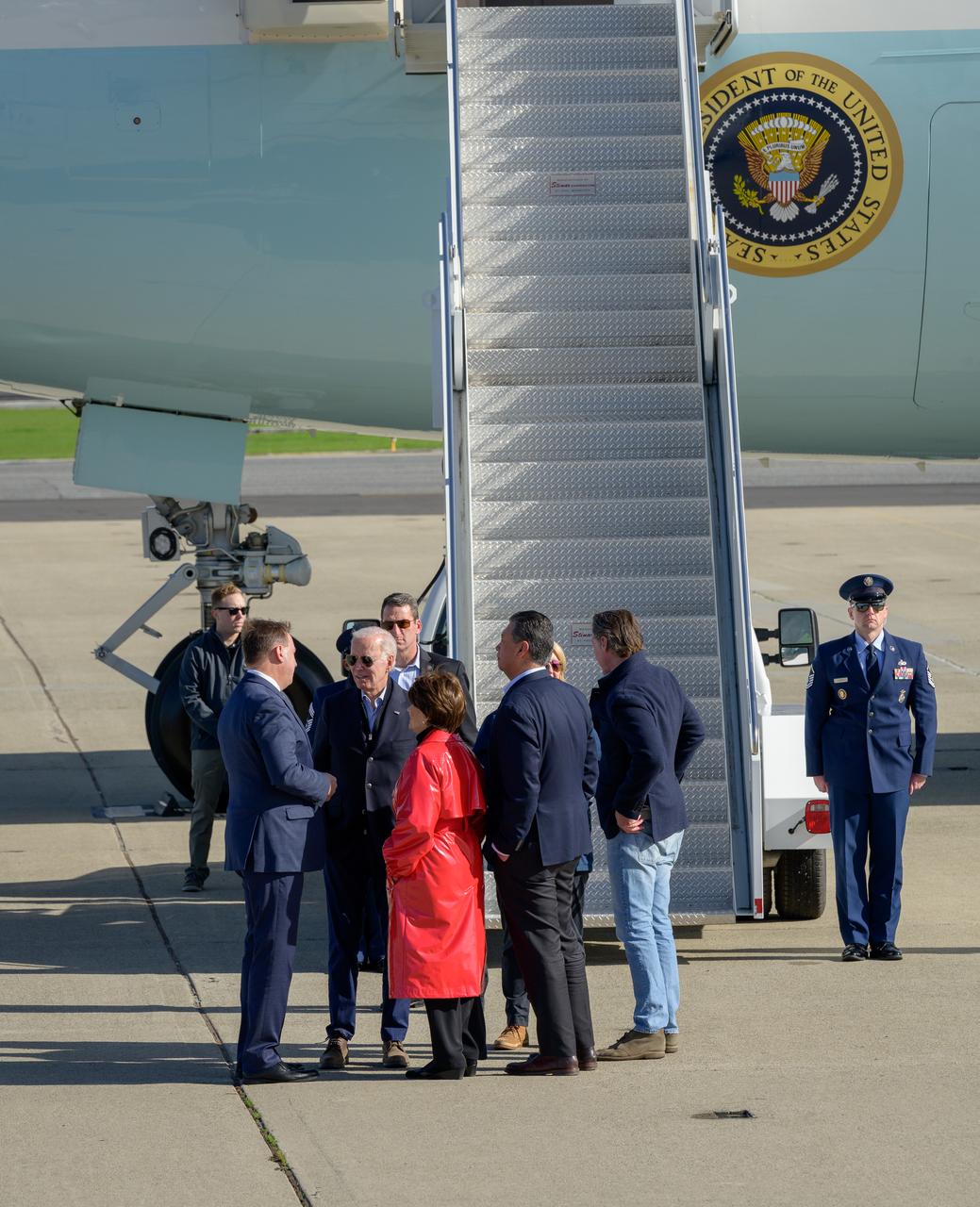
President Joe Biden landed aboard Air Force One at Moffett Federal Airfield, near NASA’s Ames Research Center in California’s Silicon Valley, Thursday, Jan. 19, 2023, en route to tour recent storm damage in the state. The President was greeted by Dr. David Korsmeyer, associate center director for research and technology at Ames, U.S. Congresswoman Anna G. Eshoo, U.S. Senator Alex Padilla, and California Governor Gavin Newsom.
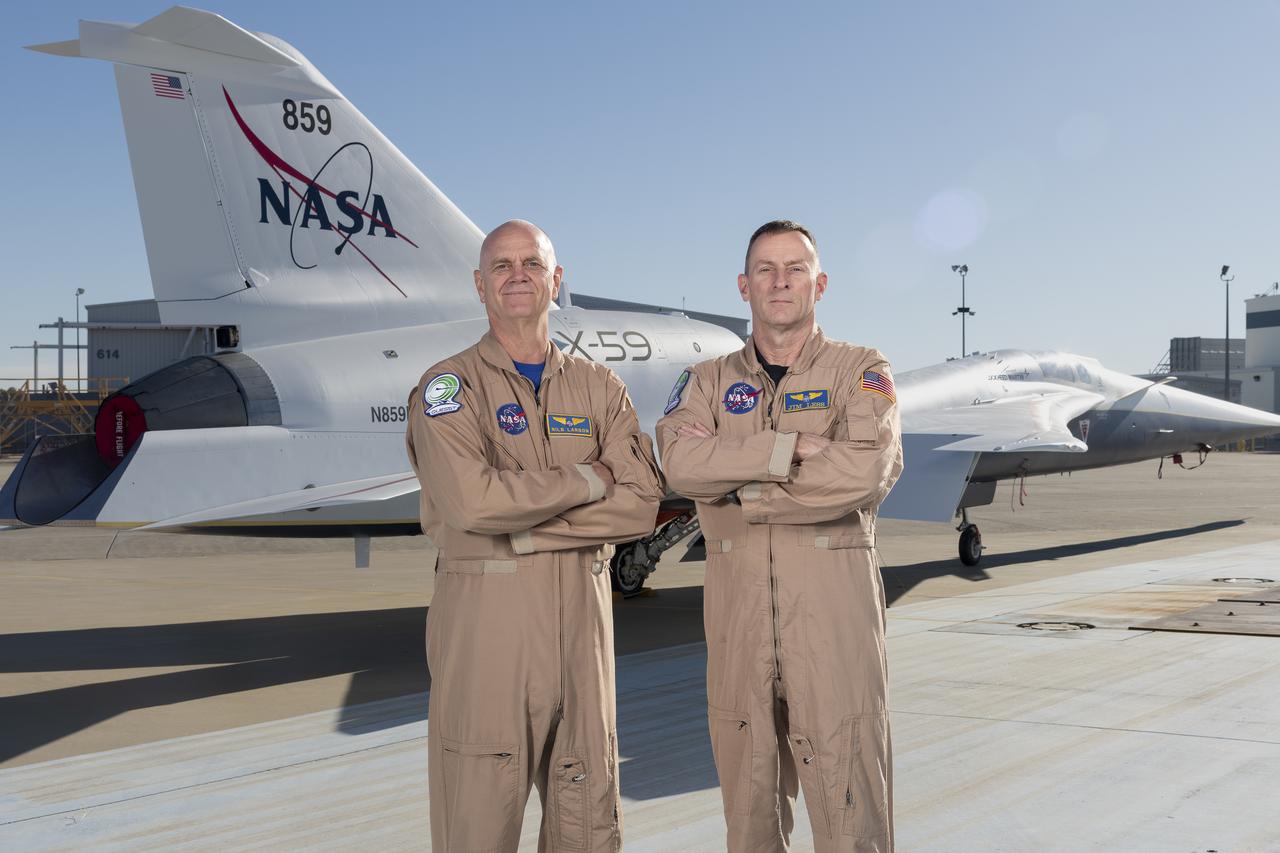
NASA test pilots Nils Larson (left) and Jim “Clue” Less (right) pose with the newly-painted X-59 as it sits on the ramp at Lockheed Martin Skunk Works in Palmdale, California. The X-59 is the centerpiece of NASA’s Quesst mission, which seeks to solve one of the major barriers to supersonic flight over land, currently banned in the United States, by making sonic booms quieter.

NASA astronaut Jessica Watkins gives a presentation about her time in space as part of Expeditions 67 and 68, Friday, March 31, 2023, at Howard University in Washington. Photo Credit: (NASA/Aubrey Gemignani)

iss070e008682 (Oct. 21, 2023) --- Snake River runs through the state of Washington in this photograph from the International Space Station as it orbited 262 miles above the Evergreen State.
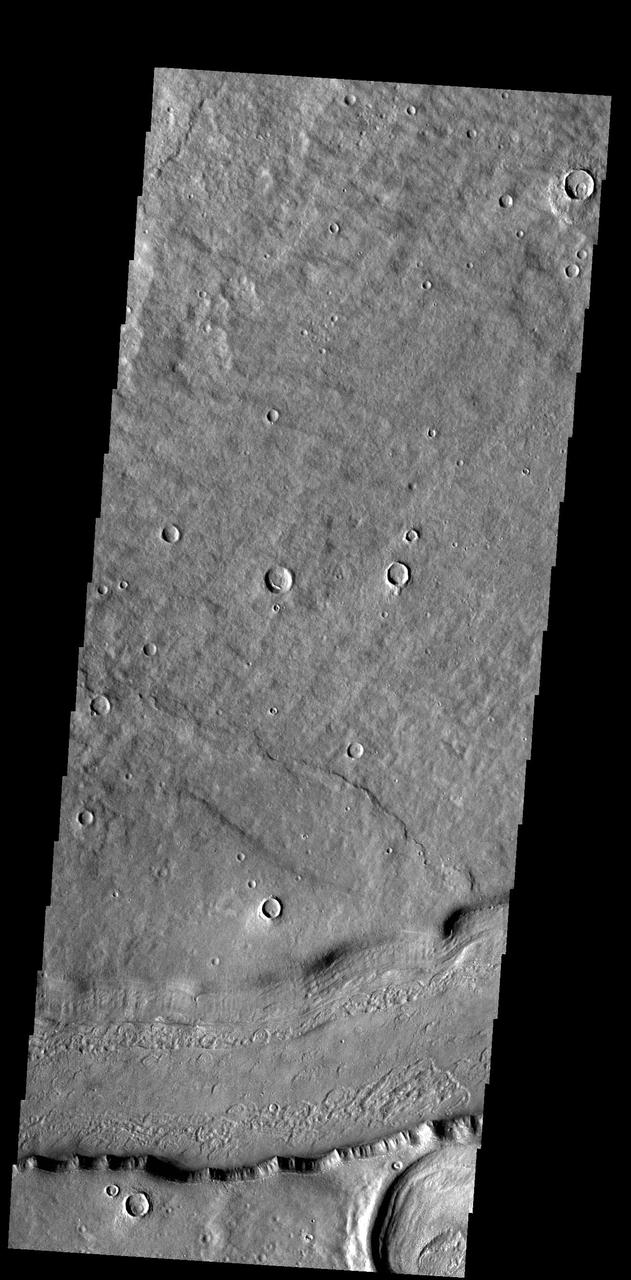
This VIS image shows a short section of Reull Vallis. Reull Vallis starts in Promethei Terra and empties into Hellas Plainitia. Reull Vallis is 1051km (653 miles) long. Orbit Number: 92169 Latitude: -41.0221 Longitude: 107.284 Instrument: VIS Captured: 2022-09-24 11:18 https://photojournal.jpl.nasa.gov/catalog/PIA25750

Former astronaut Alvin Drew provides remarks during the Earth Information Center Student Engagement event at the Mary W. Jackson NASA Headquarters building, Friday, Sept. 29, 2023, in Washington. Photo Credit: (NASA/Aubrey Gemignani)

iss069e003869 (April 16, 2023) --- Lake Powell, separating Utah from Arizona, is pictured from an external high definition camera on the International Space Station as it orbited 260 miles above.

NASA Associate Administrator for International and Interagency Relations Karen Feldstein, right, delivers remarks during an Artemis Accords signing ceremony Wednesday, June 21, 2023, at the Embassy of Ecuador in Washington. Ecuador is the twenty sixth country to sign the Artemis Accords, which establish a practical set of principles to guide space exploration cooperation among nations participating in NASA’s Artemis program. Photo Credit: (NASA/Keegan Barber)

iss068e075422 (March 16, 2023) --- The SpaceX Dragon resupply ship approaches the International Space Station carrying more than 6,200 pounds of science experiments, crew supplies, and other cargo, to replenish the Expedition 68 crew. Both spacecraft were flying 260 miles above the Bay of Bengal at the time of this photograph.
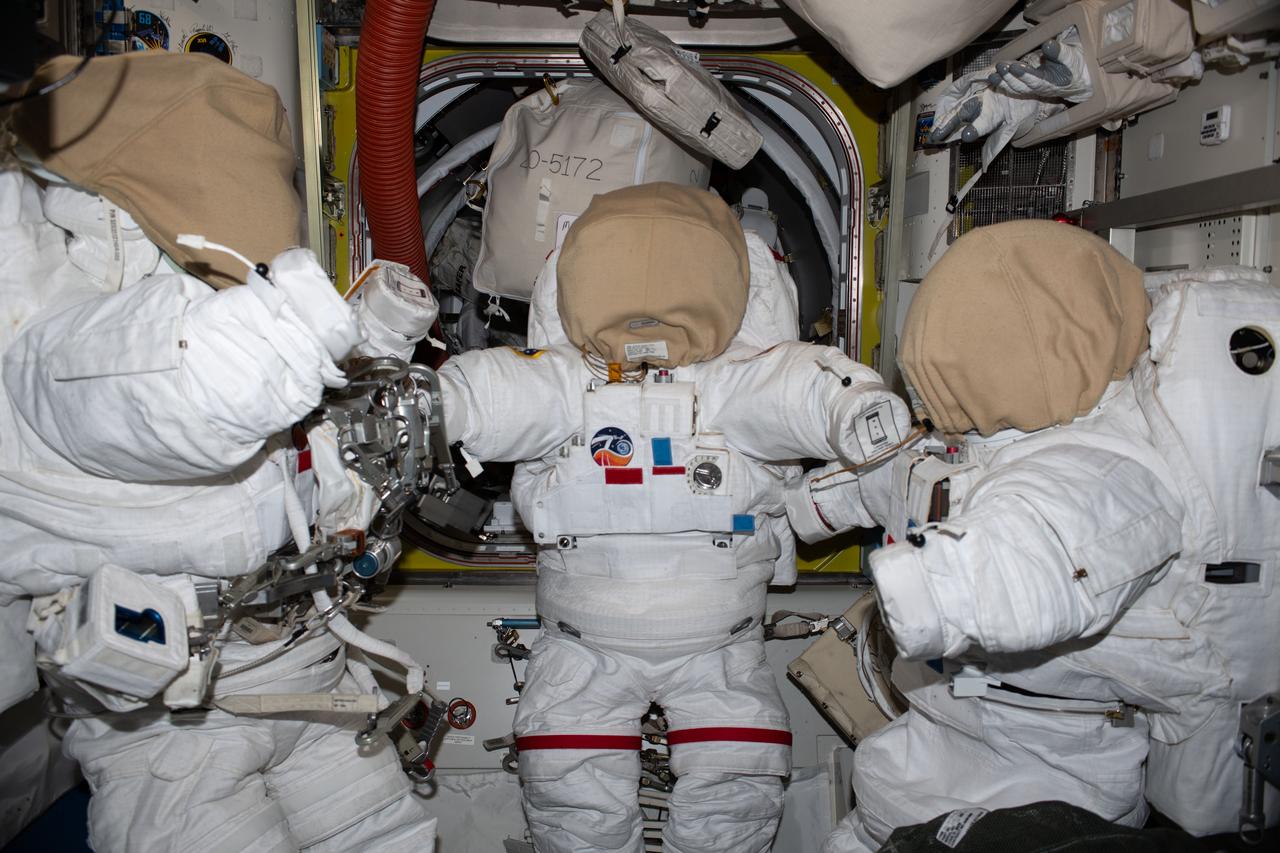
iss070e008087 (Oct. 19, 2023) --- Three spacesuits are pictured after being prepared inside the International Space Station's Quest airlock ahead of upcoming spacewalks.

Ronald Gamble, a Theoretical Astrophysicist at NASA”s Goddard Space Flight Center, speaks during an Artemis Generation Roundtable for Black Space Week, Tuesday, June 20, 2023, at the Eisenhower Executive Office Building in Washington. As part of Black Space Week, the National Space Council and NASA collaborated with Black In Astro to host students for a discussion on the future of space exploration and equity. Photo Credit: (NASA/Joel Kowsky)
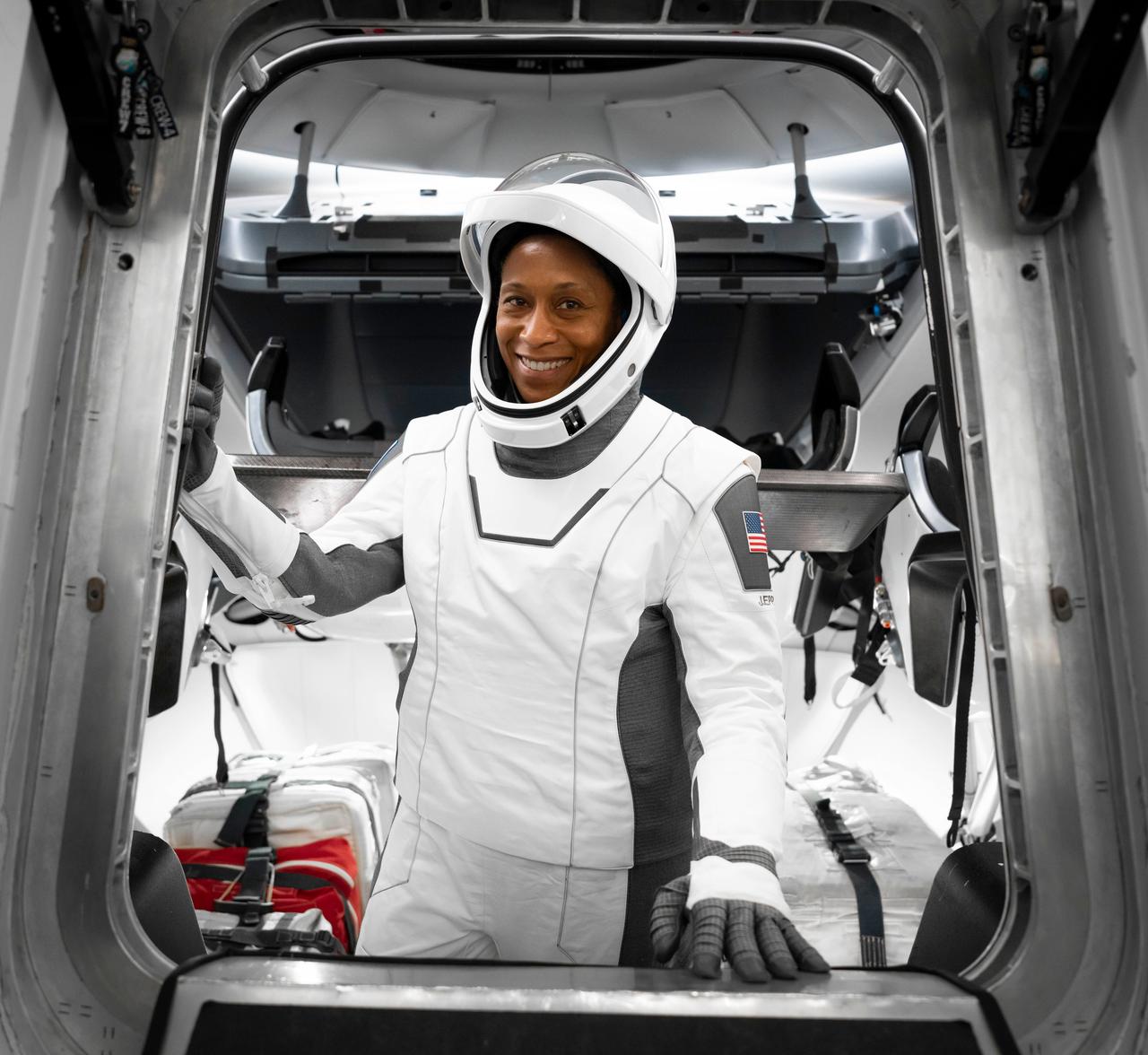
jsc2024e011728 (Oct. 16, 2023) --- NASA astronaut and SpaceX Crew-8 mission specialist Jeanette Epps is pictured in her pressure suit during a crew equipment integration test at SpaceX headquarters in Hawthorne, California. Credit: SpaceX

iss069e056918 (Aug. 14, 2023) --- The Strait of Hormuz (bottom left) connects the Gulf of Oman with the Persian Gulf in this photograph from the International Space Station as it orbited 262 miles above southwestern Iran. In the right foreground, is the Northrop Grumman Cygnus space freighter and one of its cymbal-shaped UltraFlex solar arrays.
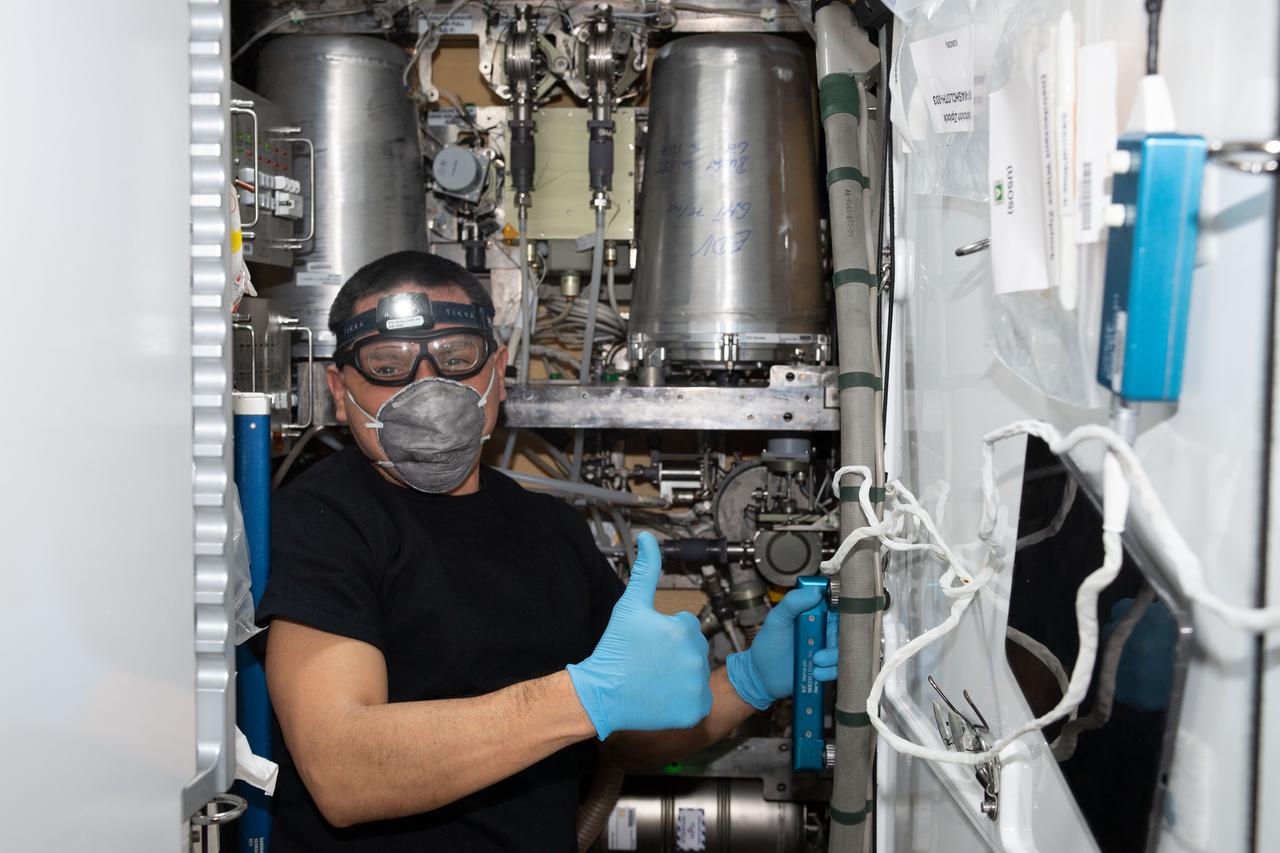
iss068e050628 (Feb. 9, 2023) --- NASA astronaut and Expedition 68 Flight Engineer Frank Rubio swaps orbital plumbing components inside the Waste and Hygiene Compartment, the International Space Station's bathroom located in the Tranquility module.
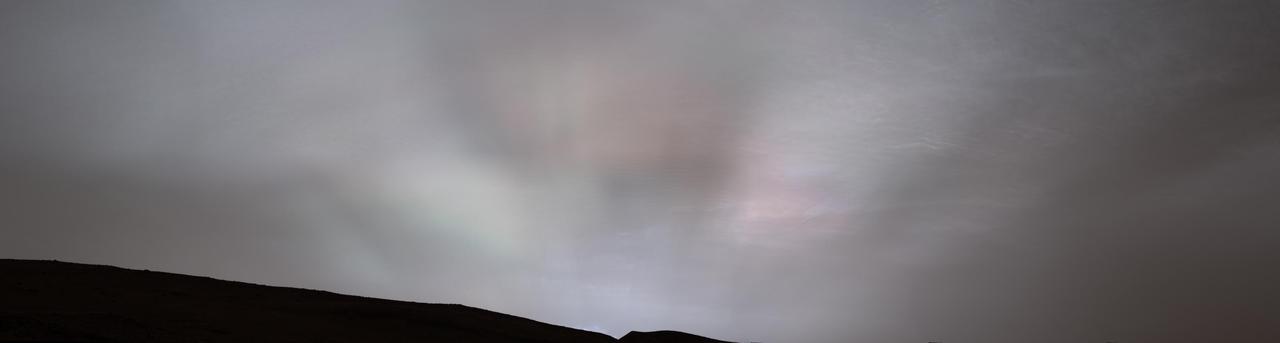
NASA's Curiosity Mars rover captured these "sun rays" shining through clouds at sunset on Feb. 2, 2023, the 3,730th Martian day, or sol, of the mission. It was the first time that sun rays, also known as crepuscular rays, have been viewed so clearly on Mars. Crepuscular is taken from the Latin word for "twilight," as these rays appear near sunset or sunrise. These clouds were captured as part of a follow-on imaging campaign to study noctilucent, or "night-shining" clouds, which started in 2021. While most Martian clouds hover no more than 37 miles (60 kilometers) above the ground and are composed of water ice, these clouds appear to be higher in elevation, where it's very cold. That suggests these clouds are made of carbon dioxide, or dry ice. This scene made up of 28 individual images captured by the rover's Mast Camera, or Mastcam. The images have been processed to emphasize the highlights. https://photojournal.jpl.nasa.gov/catalog/PIA25739
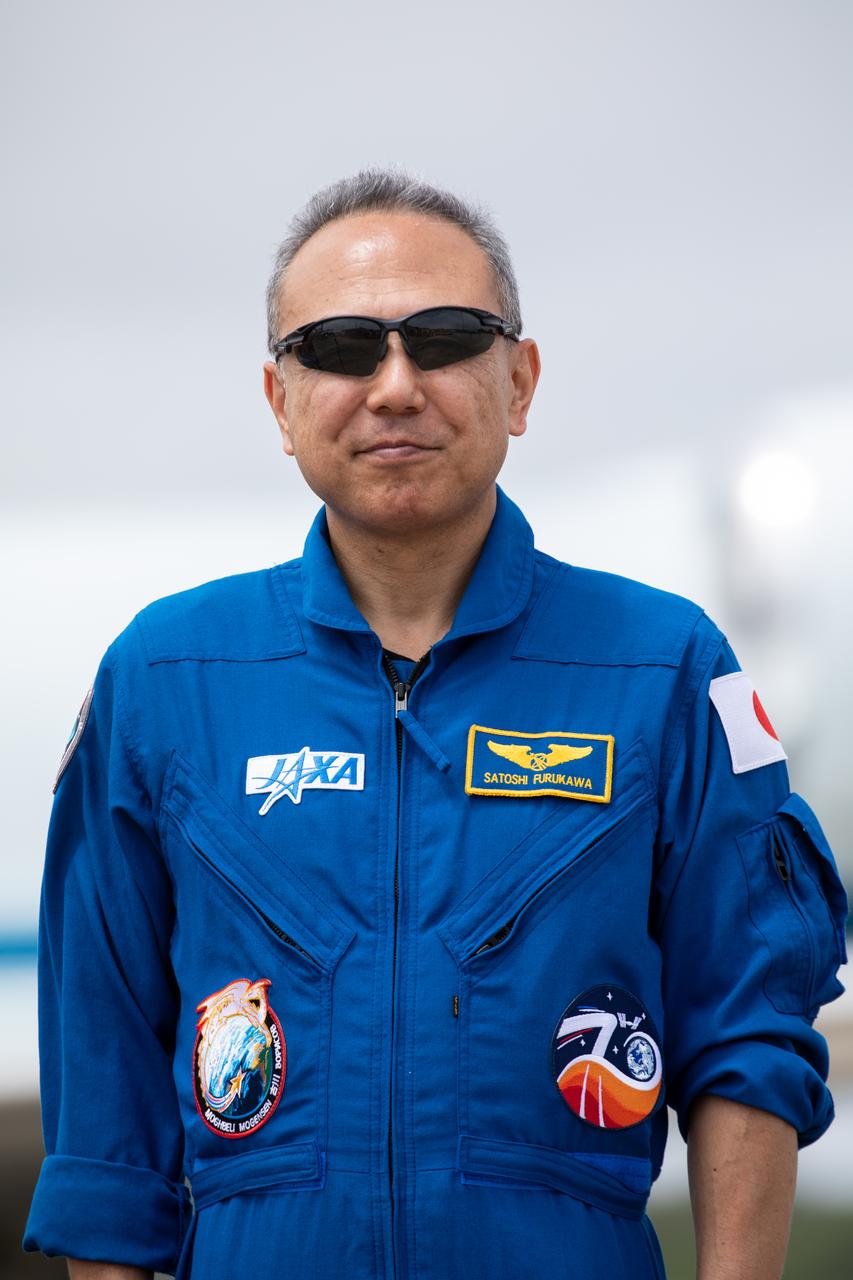
NASA’s SpaceX Crew-7 crew member and JAXA (Japan Aerospace Exploration Agency) astronaut Satoshi Furukawa smiles to the crowd after arriving at the Launch and Landing Facility at Kennedy Space Center in Florida – along with the rest of his crewmates – on Sunday, Aug. 20, 2023. Crew-7 will launch to the International Space Station aboard SpaceX’s Dragon spacecraft on the company’s Falcon 9 rocket. Liftoff is targeted for 3:49 a.m. EDT Friday, Aug. 25, 2023, from Kennedy’s Launch Complex 39A.
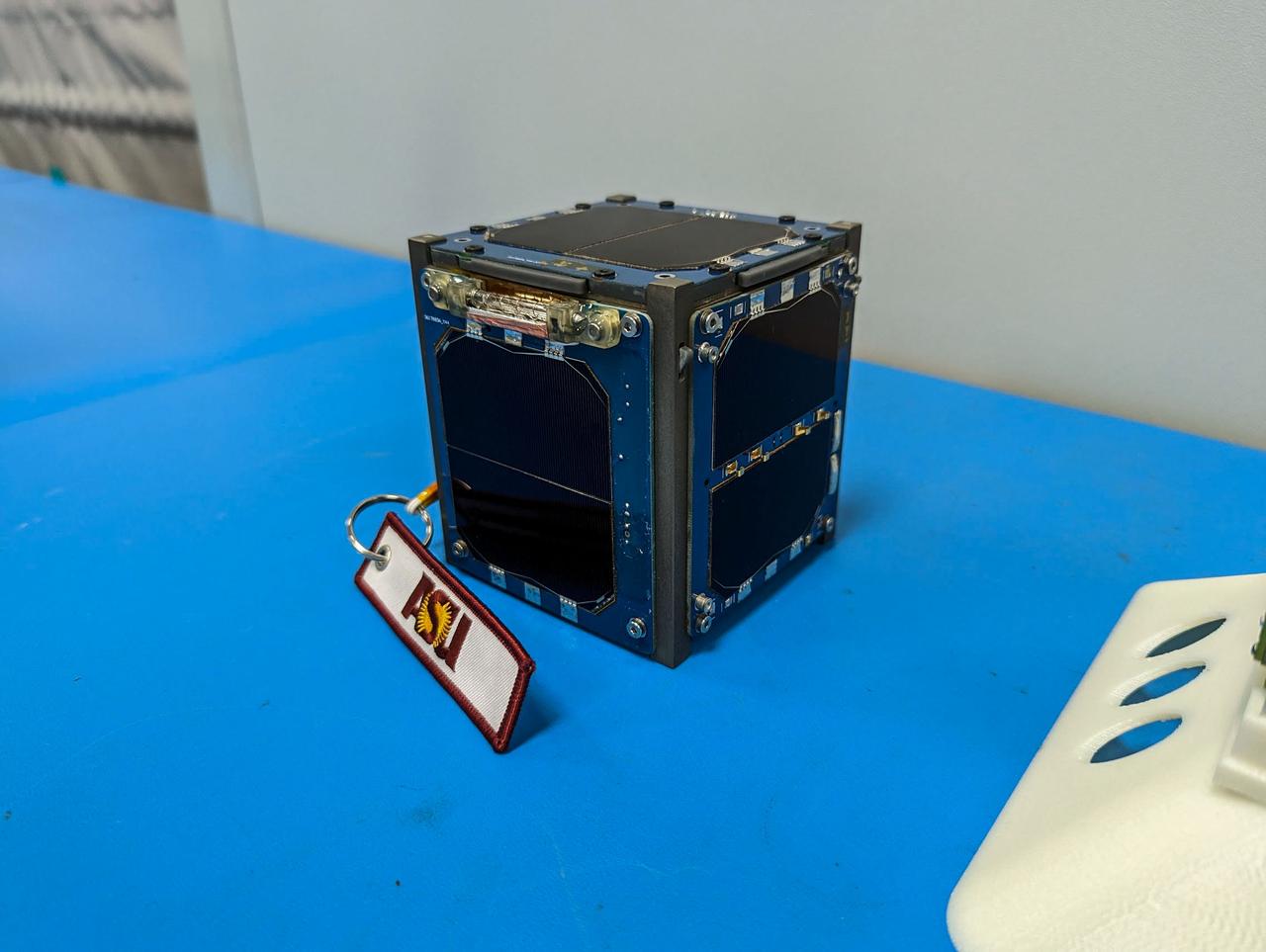
jsc2023e010192 (12/13/2022) --- LightCube CubeSat awaits integration. Image courtesy of Jaime Sanchez de la Vega.
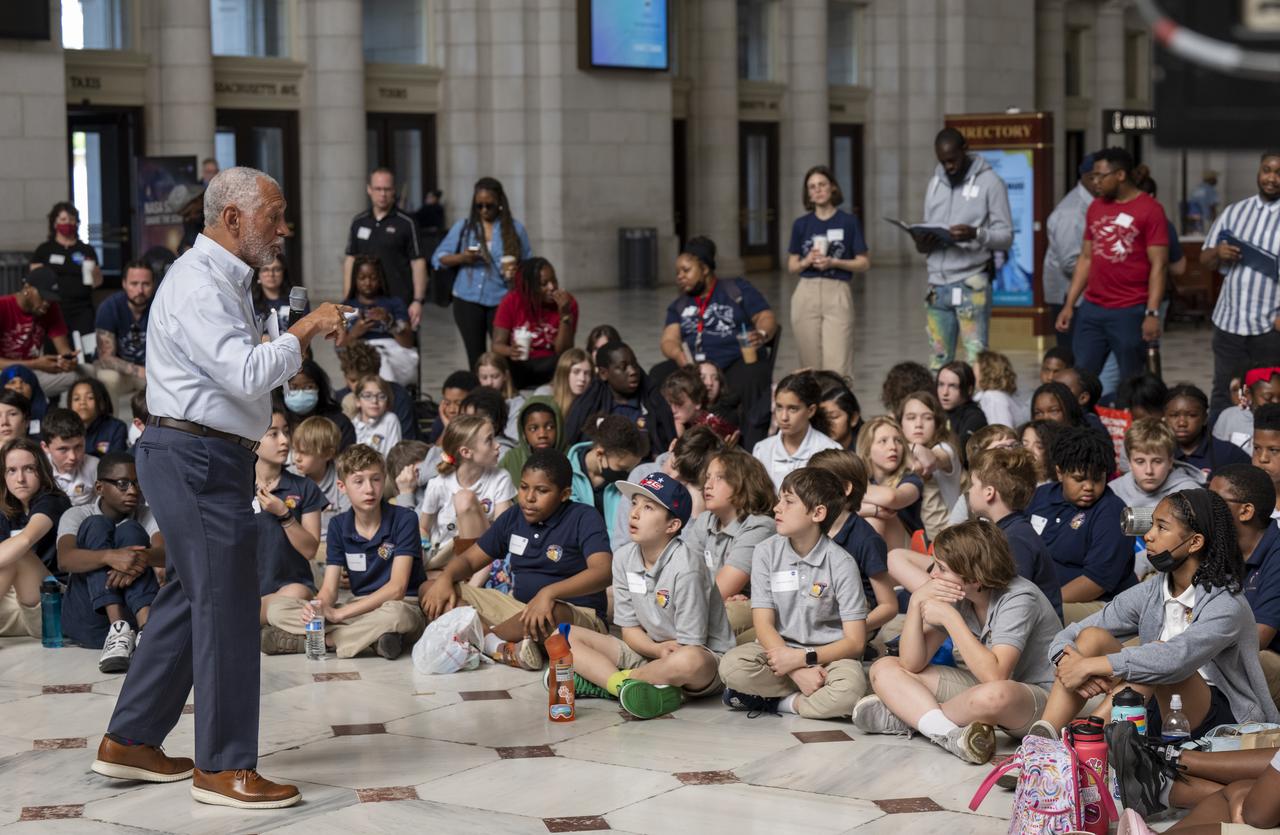
Former NASA Administrator Charlie Bolden speaks with local students during an Earth Day event, Thursday, April 20, 2023, at Union Station in Washington. Photo Credit: (NASA/Keegan Barber)
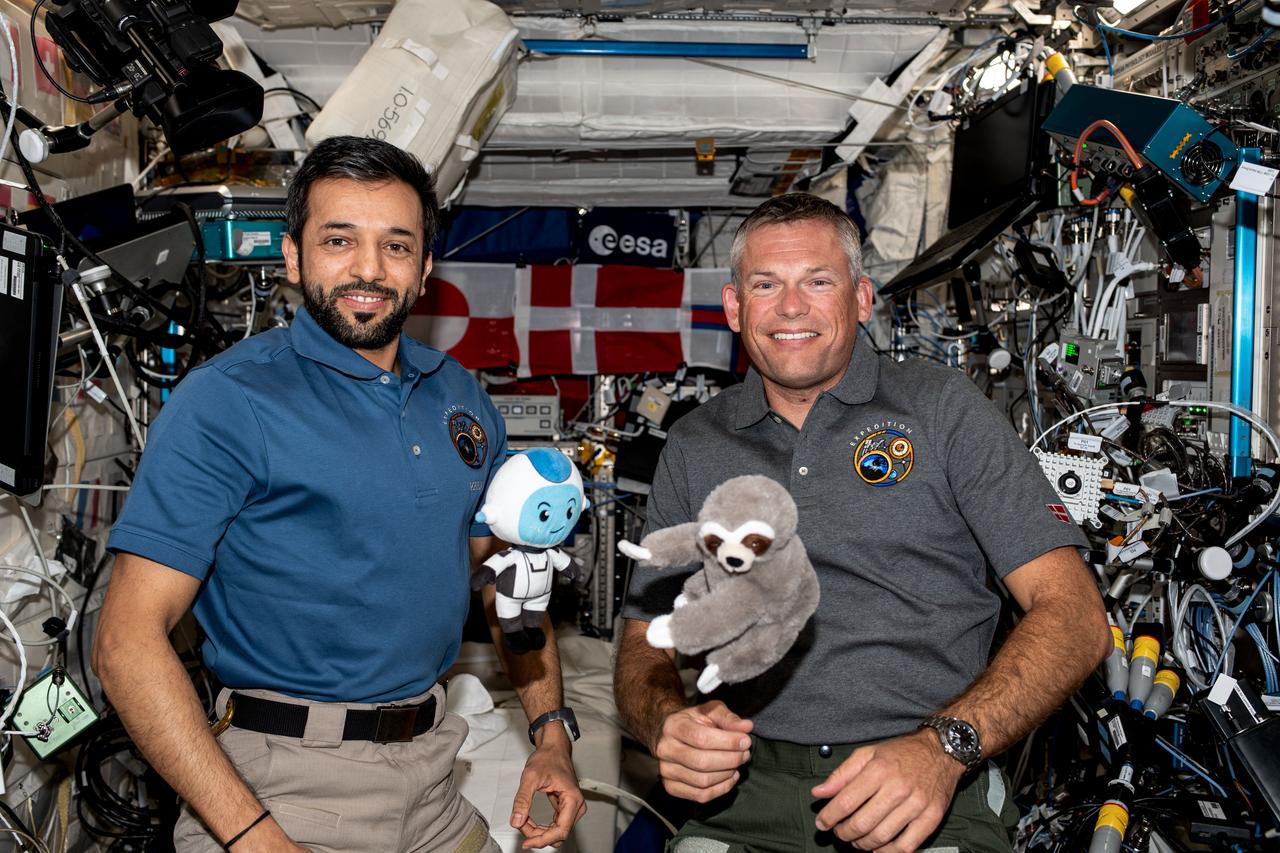
iss069e085315 (Aug. 31, 2023) --- Expedition 69 Flight Engineers Sultan Alneyadi of UAE (United Arab Emirates) and Andreas Mogensen of ESA (European Space Agency) pose for a portrait together aboard the International Space Station's Columbus laboratory module. Alneyadi holds a stuffed doll, Suhail, he carried with him aboard the SpaceX Dragon Endeavour spacecraft. Mogensen shows off a plush three-toed sloth doll he carried aboard the SpaceX Dragon Endurance during his ride to space. The dolls are not just mascots but also gravity indicators to show they have reached space.

iss069e032977 (July 18, 2023) --- The city lights of the oasis city of Al Ain in the United Arab Emirates are pictured from the International Space Station as it orbited 260 miles above southern Iran near the coast of the Strait of Hormuz.
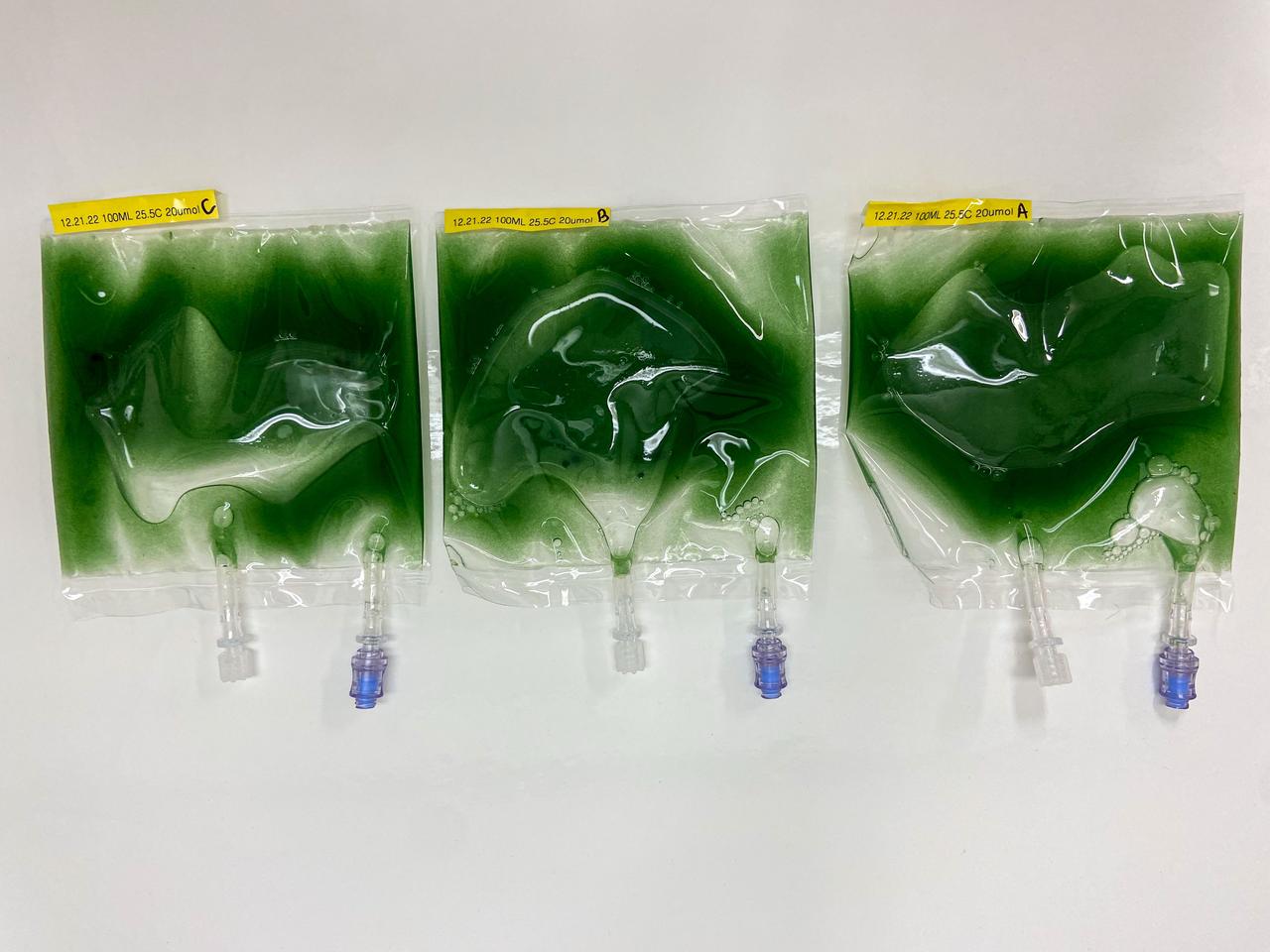
jsc2024e006097 (1/3/2023) --- Three A. platensis cultures in fluorinated ethylene propylene (FEP) bags. Image courtesy of Katherine Fisher
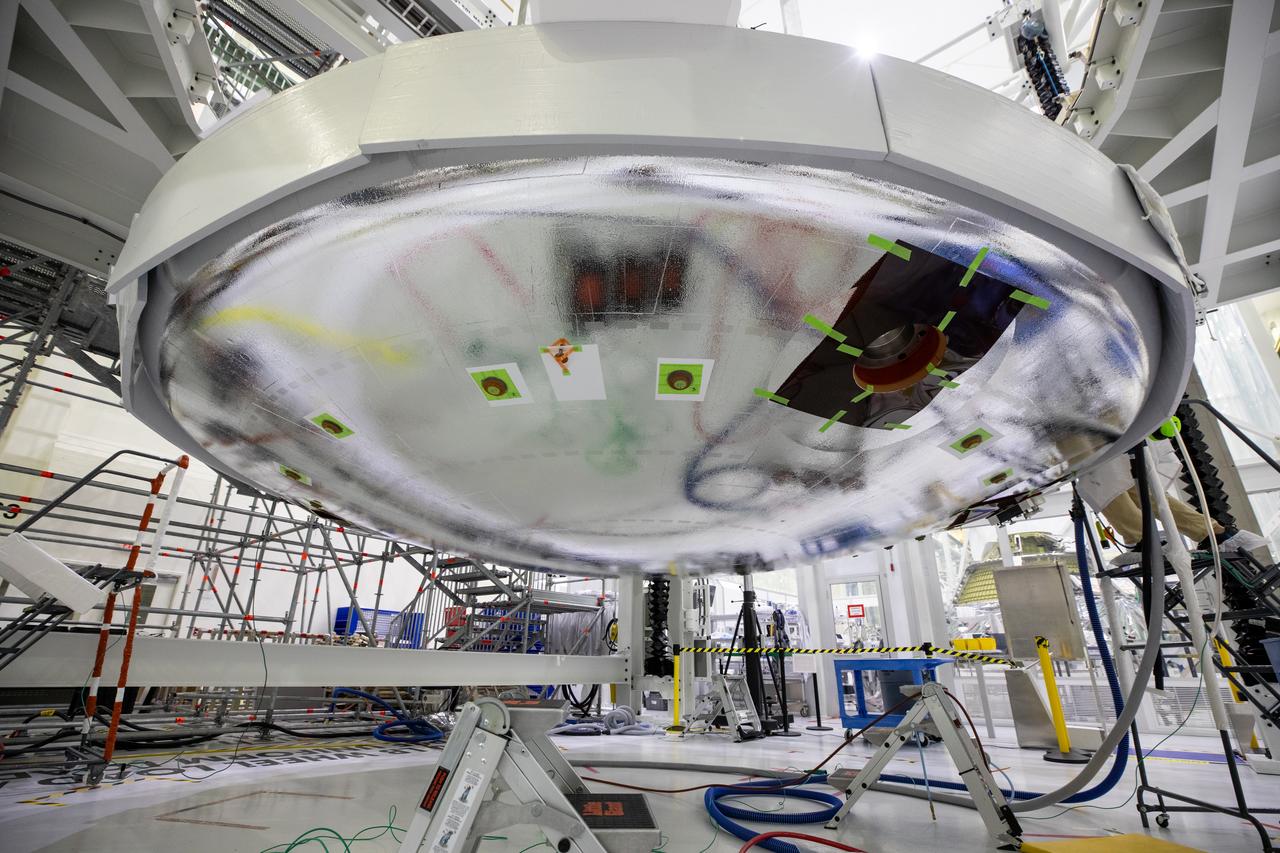
Teams install the heat shield on the Artemis II Orion spacecraft inside the high bay of the Neil Armstrong Operations and Checkout Building at NASA’s Kennedy Space Center in Florida on June 22, 2023. The 16.5-foot-wide shield will ensure the safe return of the astronauts on board as the spacecraft travels at speeds of about 25,000 miles per hour and experiences outside temperatures of nearly 5,000 degrees Fahrenheit. Artemis II will be the first mission with astronauts under Artemis that will test and check out all of Orion’s systems needed for future crewed missions.
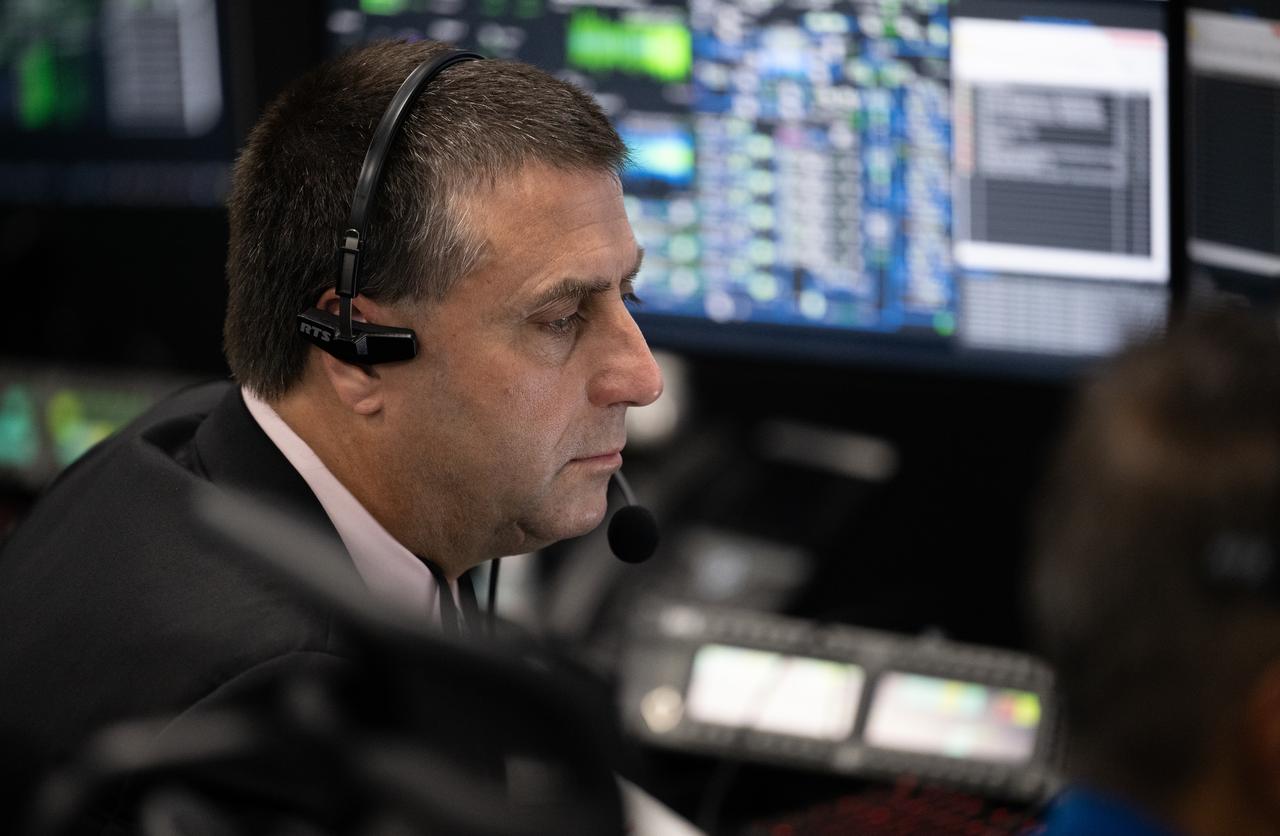
NASA International Space Station program manger Joel Montalbano, monitors the countdown of the launch of a SpaceX Falcon 9 rocket carrying the company's Dragon spacecraft on NASA’s SpaceX Crew-7 mission with NASA astronaut Jasmin Moghbeli, ESA (European Space Agency) astronaut Andreas Mogensen, Japan Aerospace Exploration Agency (JAXA) astronaut Satoshi Furukawa, and Roscosmos cosmonaut Konstantin Borisov onboard, Saturday, Aug. 26, 2023, in SpaceX’s Launch and Landing Control Center in HangerX at NASA’s Kennedy Space Center in Florida. NASA’s SpaceX Crew-7 mission is the first crew rotation mission of the SpaceX Dragon spacecraft and Falcon 9 rocket to the International Space Station as part of the agency’s Commercial Crew Program. Moghbeli, Mogensen, Furukawa, and Borisov launched at 3:27 a.m. EDT from Launch Complex 39A at the Kennedy Space Center. Photo Credit: (NASA/Joel Kowsky)
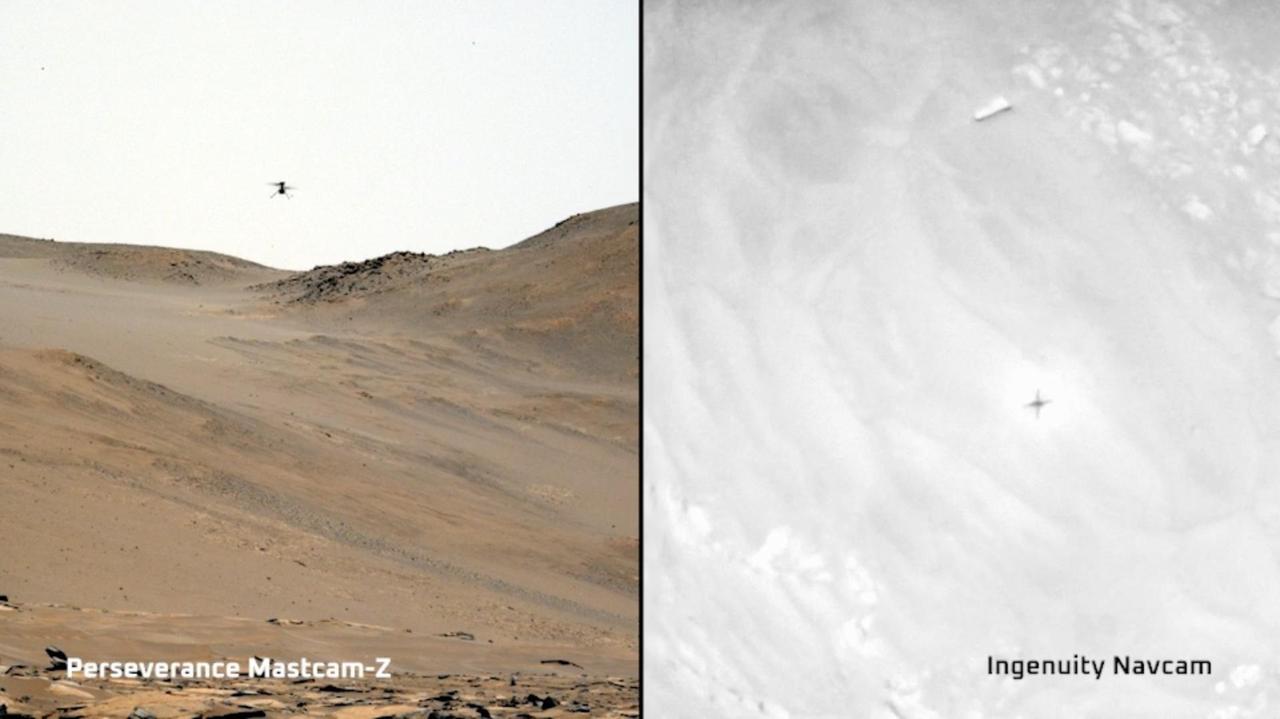
This video combines two perspectives of the 59th flight of NASA's Ingenuity Mars Helicopter. The frame on the left shows video from NASA's Perseverance Mars rover; the frame on the right is footage taken by Ingenuity's downward-pointing black-and-white Navigation Camera, or Navcam, with the helicopter's shadow visible on the Martian surface. The 142-second flight, which took place on Sept 16, 2023, was intended to check Martian wind patterns. The rotorcraft hovered at different altitudes: 13 feet (4 meters), 26 feet (8 meters), 39 feet (12 meters), 52 feet (16 meters), and 66 feet (20 meters). The highest altitude achieved in this flight was at that time a record for Ingenuity. The helicopter also demonstrated during Flight 59 that it could land at speeds 25% slower than originally designed. The video clip from Perseverance was captured by the rover's Mastcam-Z imager from about 180 feet (55 meters) away. Shown here is an enhanced-color view that exaggerates subtle color differences in the scene to show more detail. The inset video shows black-and-white imagery taken by Ingenuity's downward-pointing Navigation Camera (Navcam) during the flight. The video ends shortly after the helicopter's final hover at 13 feet (4 meters) as it begins its final descent to the surface. A key objective for Perseverance's mission on Mars is astrobiology, including the search for signs of ancient microbial life. The rover will characterize the planet's geology and past climate, pave the way for human exploration of the Red Planet, and be the first mission to collect and cache Martian rock and regolith (broken rock and dust). Subsequent NASA missions, in cooperation with ESA (European Space Agency), would send spacecraft to Mars to collect these sealed samples from the surface and return them to Earth for in-depth analysis. The Mars 2020 Perseverance mission is part of NASA's Moon to Mars exploration approach, which includes Artemis missions to the Moon that will help prepare for human exploration of the Red Planet. Movies available at https://photojournal.jpl.nasa.gov/catalog/PIA26078
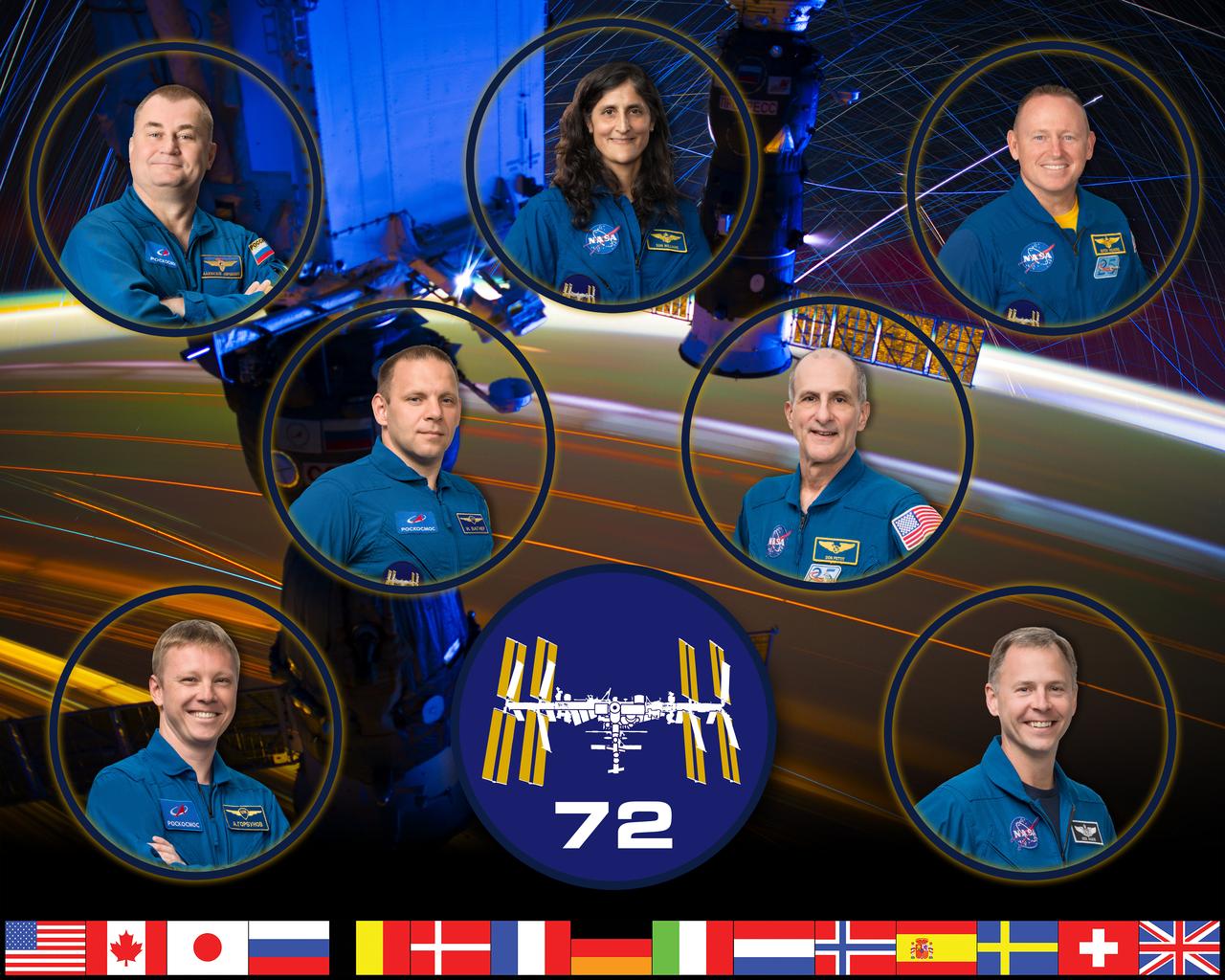
iss072-s-002 (Oct. 27, 2023) --- The official portrait of the International Space Station's Expedition 72 crew. At the top (from left) are, Roscosmos cosmonaut and Flight Engineer Alexey Ovchinin, NASA astronaut and space station Commander Suni Williams, and NASA astronaut and Flight Engineer Butch Wilmore. In the middle row are, Roscosmos cosmonaut and Flight Engineer Ivan Vagner and NASA astronaut and Flight Engineer Don Pettit. In the bottom row are, Roscosmos cosmonaut and Flight Engineer Aleksandr Gorbunov and NASA astronaut and Flight Engineer Nick Hague. Credit: NASA/Bill Stafford and Robert Markowitz
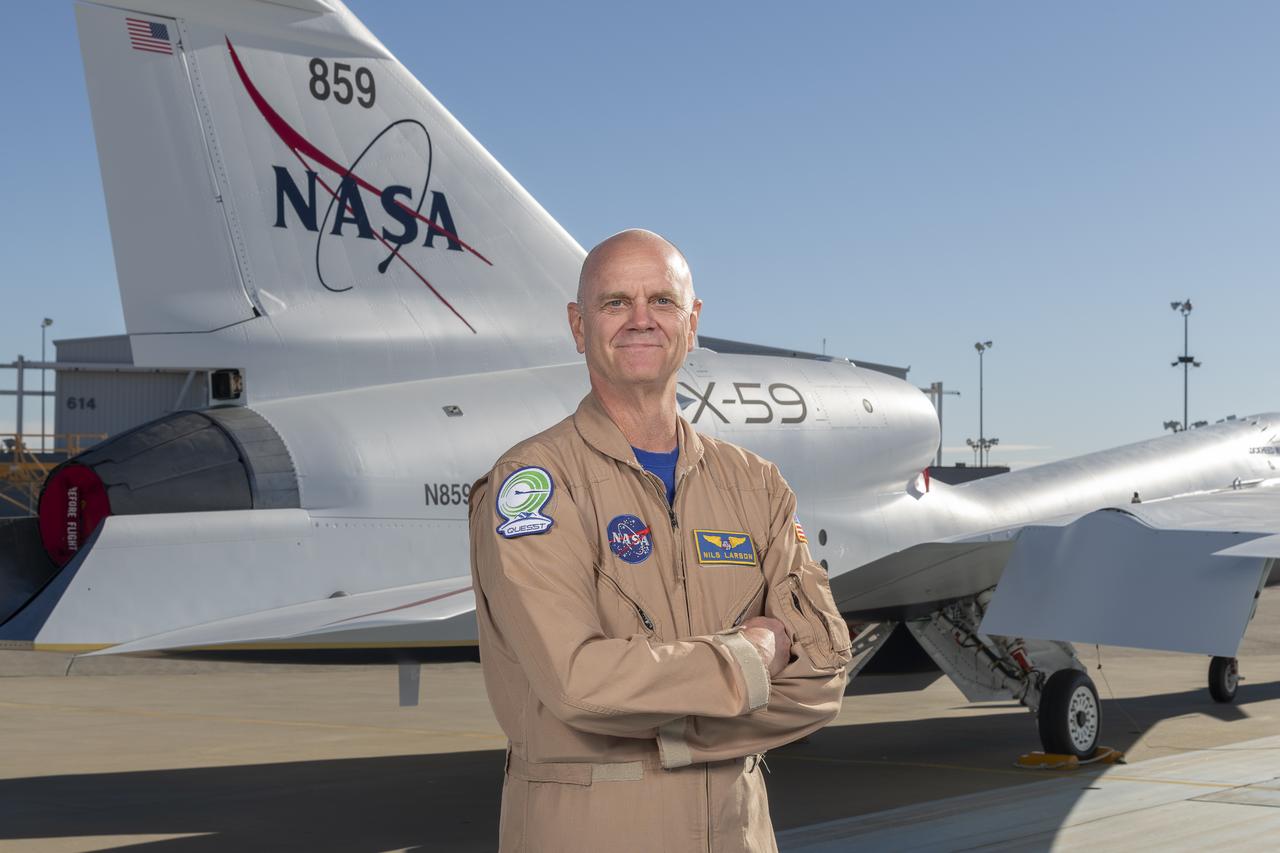
NASA test pilot Nils Larson poses with the newly-painted X-59 as it sits on the ramp at Lockheed Martin Skunk Works in Palmdale, California. The X-59 is the centerpiece of NASA’s Quesst mission, which seeks to solve one of the major barriers to supersonic flight over land, currently banned in the United States, by making sonic booms quieter.
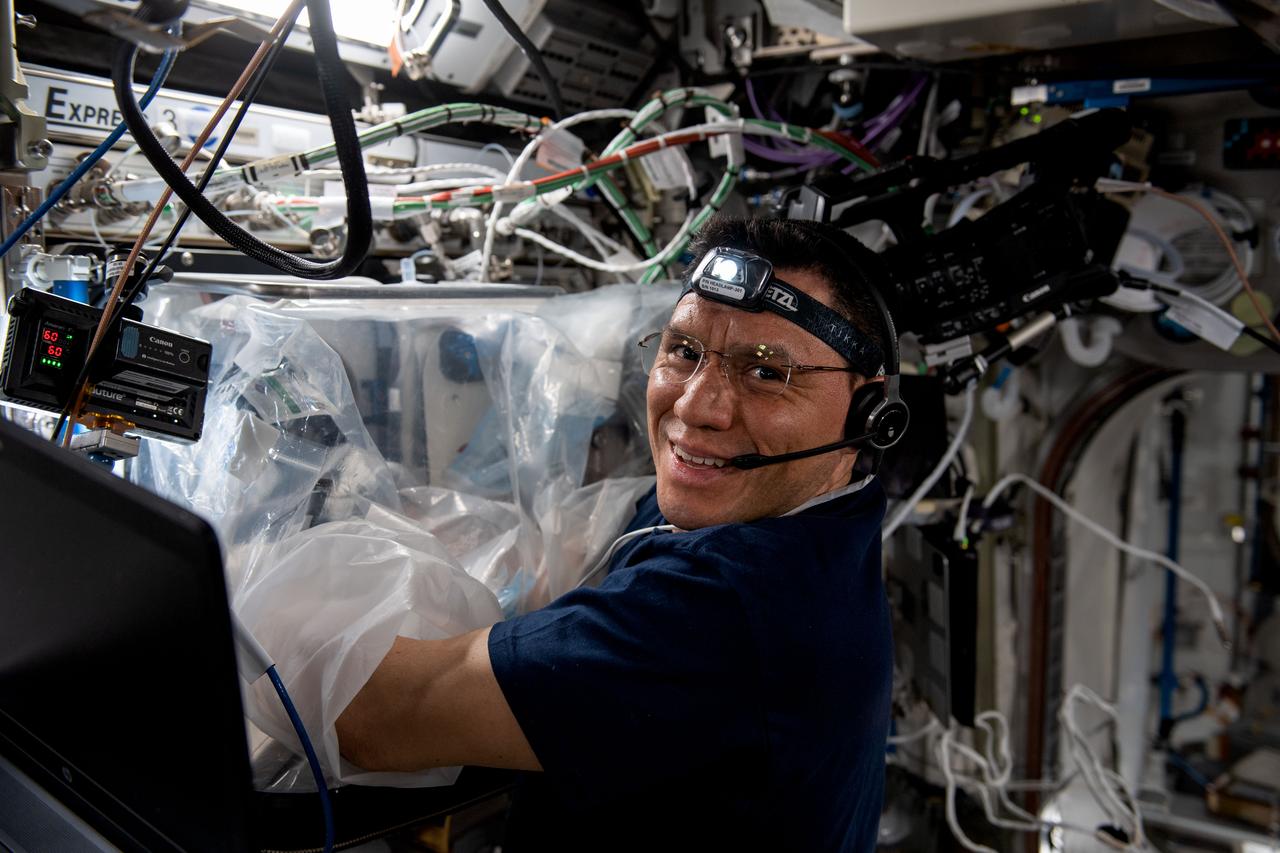
iss069e035619 (July 21, 2023) --- NASA astronaut and Expedition 69 Flight Engineer Frank Rubio uses a glovebag to perform research activities inside the Columbus laboratory module's BioFabrication Facility (BFF). The BFF is a research platform to print organ-like tissues and begin proving the viability of fabricating human organs in space.
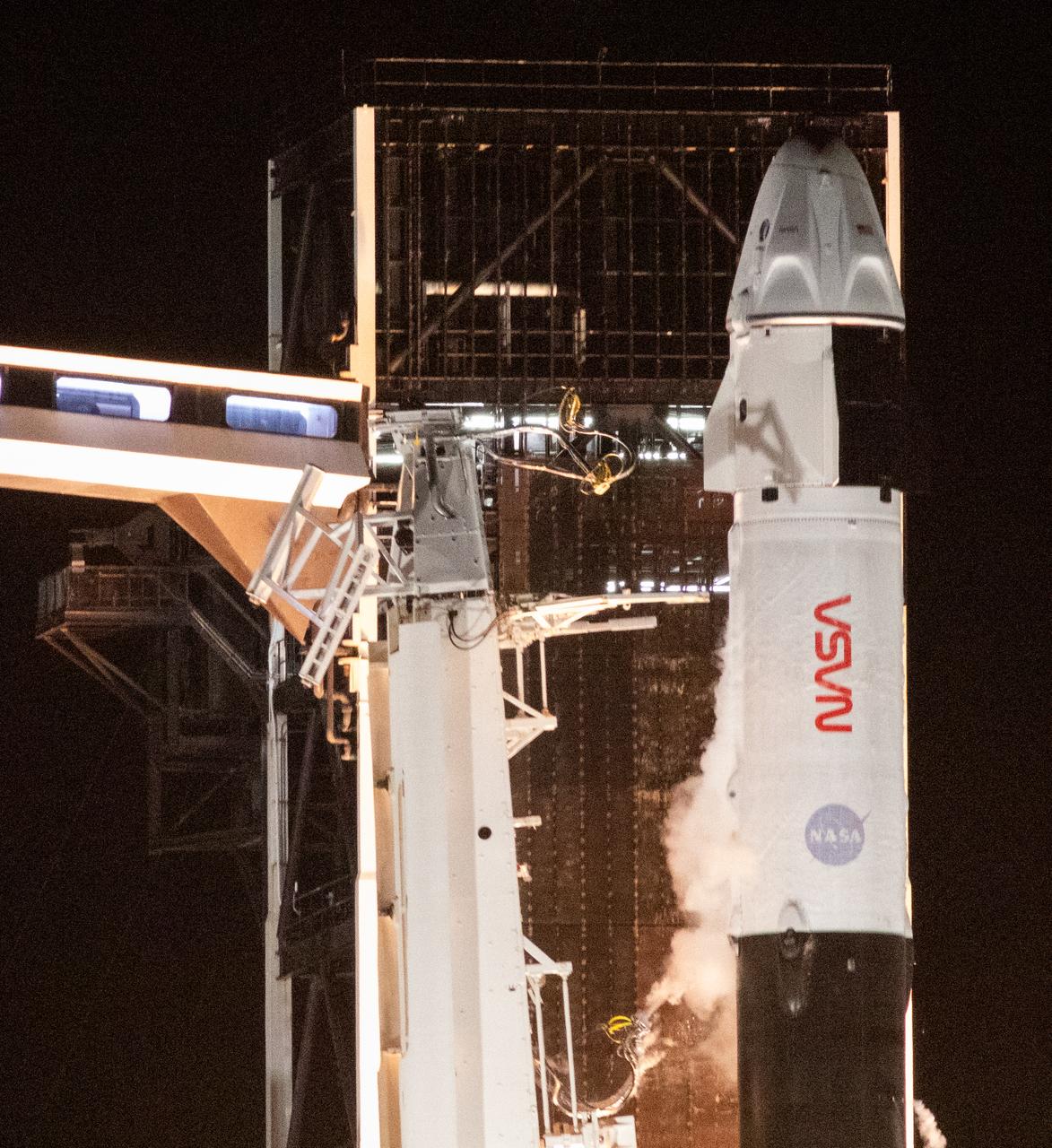
A SpaceX Falcon 9 rocket carrying the company's Dragon spacecraft is launched on NASA’s SpaceX Crew-7 mission to the International Space Station with NASA astronaut Jasmin Moghbeli, ESA (European Space Agency) astronaut Andreas Mogensen, Japan Aerospace Exploration Agency (JAXA) astronaut Satoshi Furukawa, and Roscosmos cosmonaut Konstantin Borisov onboard, Saturday, Aug. 26, 2023, at NASA’s Kennedy Space Center in Florida. NASA’s SpaceX Crew-7 mission is the seventh crew rotation mission of the SpaceX Dragon spacecraft and Falcon 9 rocket to the International Space Station as part of the agency’s Commercial Crew Program. Moghbeli, Mogensen, Furukawa, and Borisov launched at 3:27 a.m. EDT from Launch Complex 39A at the Kennedy Space Center to begin a six month mission aboard the orbital outpost. Photo Credit: (NASA/Joel Kowsky)
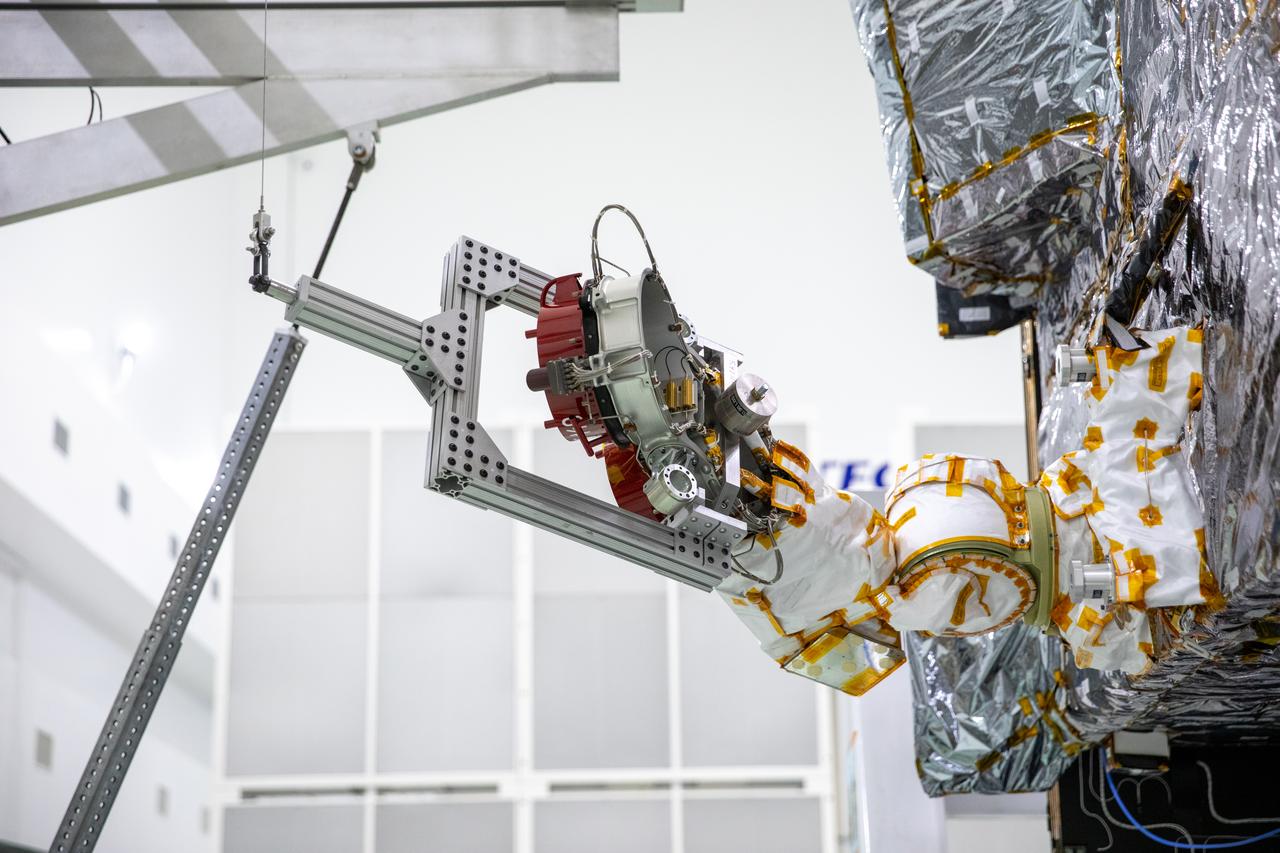
A team of engineers and technicians work on deploying and stowing stationary plasma thrusters (SPT) on NASA's Psyche spacecraft inside the Astrotech Space Operations Facility near the agency’s Kennedy Space Center in Florida on Aug. 4, 2023. This is part of the assembly, test, and launch operations preparations. The SPT are on a dual axis positioning mechanism (DAPM), and together they make a DSM, or DAPM-actuated SPT module. Psyche will launch atop a SpaceX Falcon Heavy rocket from Launch Complex 39A at Kennedy. Launch is targeted for Oct. 5, 2023. Riding with Psyche is a pioneering technology demonstration, NASA’s Deep Space Optical Communications (DSOC) experiment.
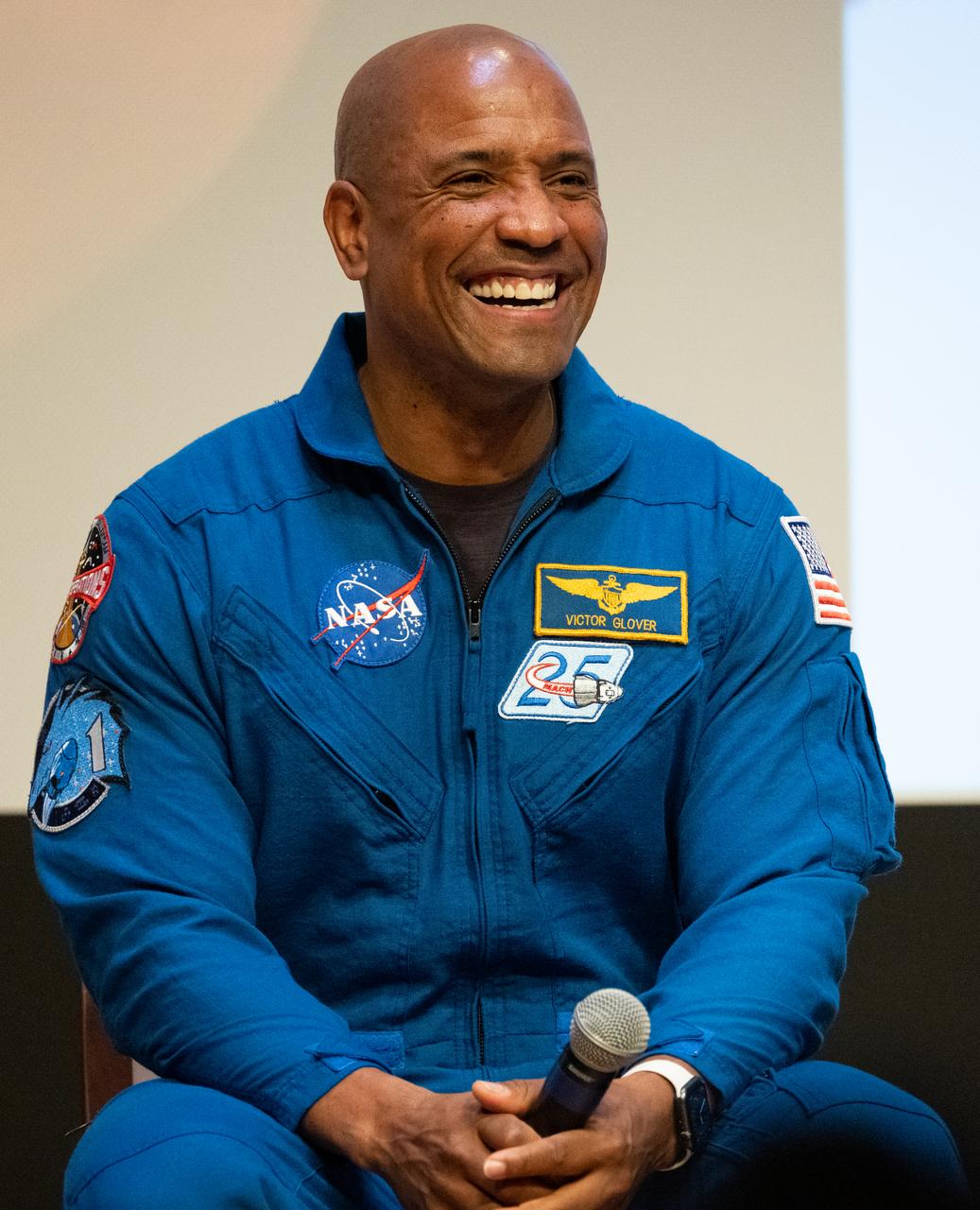
NASA astronaut Victor Glover is seen during a panel discussion titled A Space for Us All at an event celebrating Black History Month at the Smithsonian National Museum of African American History and Culture, Friday, Feb. 10, 2023, in Washington. Photo Credit: (NASA/Joel Kowsky)
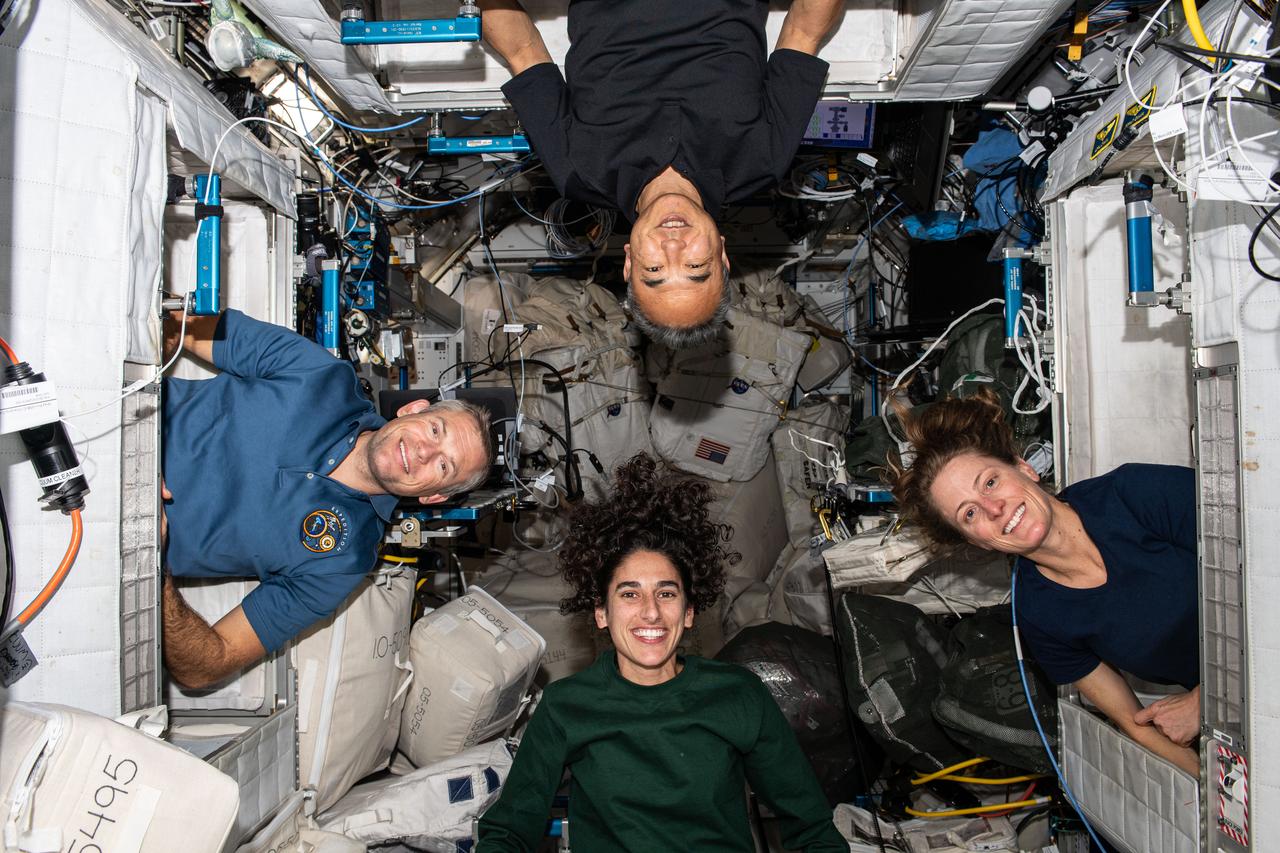
iss070e002205 (Oct. 5, 2023) --- Four Expedition 70 crew members pose for a fun portrait inside their crew quarters aboard the International Space Station's Harmony module. Clockwise from bottom are, NASA astronaut Jasmin Moghbeli; ESA (European Space Agency) astronaut Andreas Mogensen; JAXA (Japan Aerospace Exploration Agency) astronaut Satoshi Furukawa; and NASA astronaut Loral O'Hara.
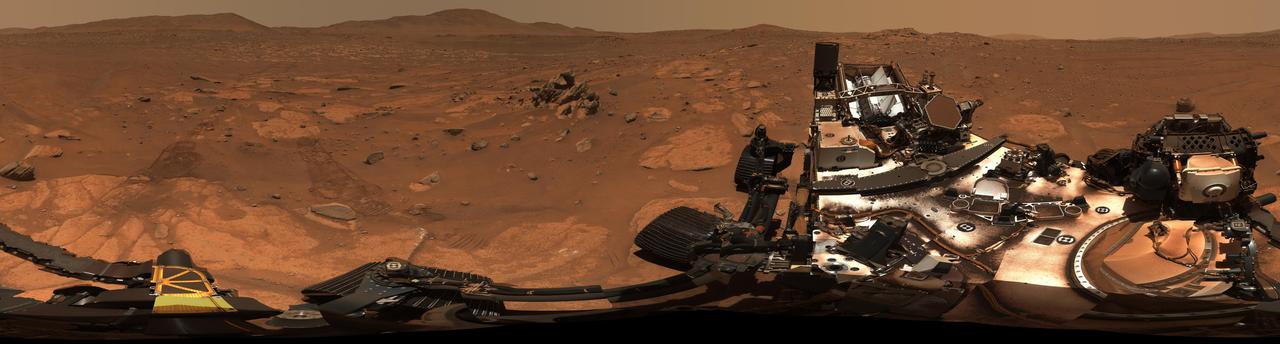
Composed of 993 individual images and 2.38 billion pixels, this 360-degree mosaic taken by NASA's Perseverance looks in all directions from a location the rover science team calls "Airey Hill." The rover remained parked at Airey Hill during the entirety of solar conjunction. Captured by the rover's Mastcam-Z, the images used to create the mosaic were acquired on Nov. 3, Nov. 4, and Nov. 6, 2023, the 962nd, 963rd, and 965th Martian day, or sol, of the rover's mission. The main image is a natural color version at half-resolution. Arizona State University leads the operations of the Mastcam-Z instrument, working in collaboration with Malin Space Science Systems in San Diego, on the design, fabrication, testing, and operation of the cameras, and in collaboration with the Niels Bohr Institute of the University of Copenhagen on the design, fabrication, and testing of the calibration targets. A key objective for Perseverance's mission on Mars is astrobiology, including the search for signs of ancient microbial life. The rover will characterize the planet's geology and past climate, pave the way for human exploration of the Red Planet, and be the first mission to collect and cache Martian rock and regolith (broken rock and dust). Subsequent NASA missions, in cooperation with ESA (European Space Agency), would send spacecraft to Mars to collect these sealed samples from the surface and return them to Earth for in-depth analysis. The Mars 2020 Perseverance mission is part of NASA's Moon to Mars exploration approach, which includes Artemis missions to the Moon that will help prepare for human exploration of the Red Planet. https://photojournal.jpl.nasa.gov/catalog/PIA26080
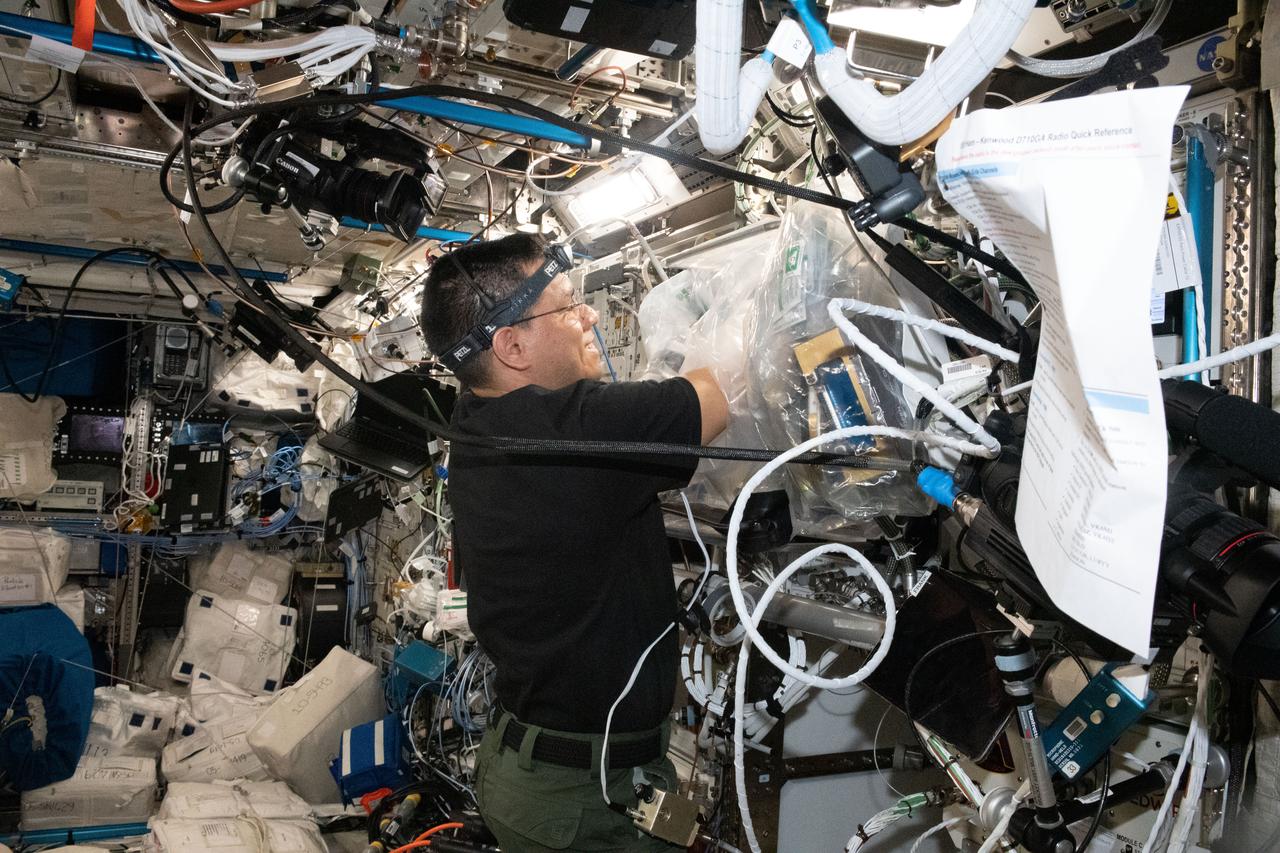
iss069e008406 (May 2, 2023) --- NASA astronaut and Expedition 69 Flight Engineer Frank Rubio uses a glovebag to service the BioFabrication Facility, replacing and installing components inside the research device designed to print organ-like tissues in microgravity and learn how to manufacture whole, fully-functioning human organs in space

Dana Weigel, deputy ISS program manager, monitors the countdown of the attempted launch of a SpaceX Falcon 9 rocket carrying the company's Dragon spacecraft on NASA’s SpaceX Crew-6 mission with NASA astronauts Stephen Bowen and Warren "Woody" Hoburg, UAE (United Arab Emirates) astronaut Sultan Alneyadi, and Roscosmos cosmonaut Andrey Fedyaev onboard, Monday, Feb. 27, 2023, in firing room four of the Launch Control Center at NASA’s Kennedy Space Center in Florida. NASA’s SpaceX Crew-6 mission is the sixth crew rotation mission of the SpaceX Dragon spacecraft and Falcon 9 rocket to the International Space Station as part of the agency’s Commercial Crew Program. Today’s launch attempt was scrubbed due to an issue with ground systems. The next launch attempt is targeted for 12:34am ET on Thursday, March 2. Photo Credit: (NASA/Joel Kowsky)
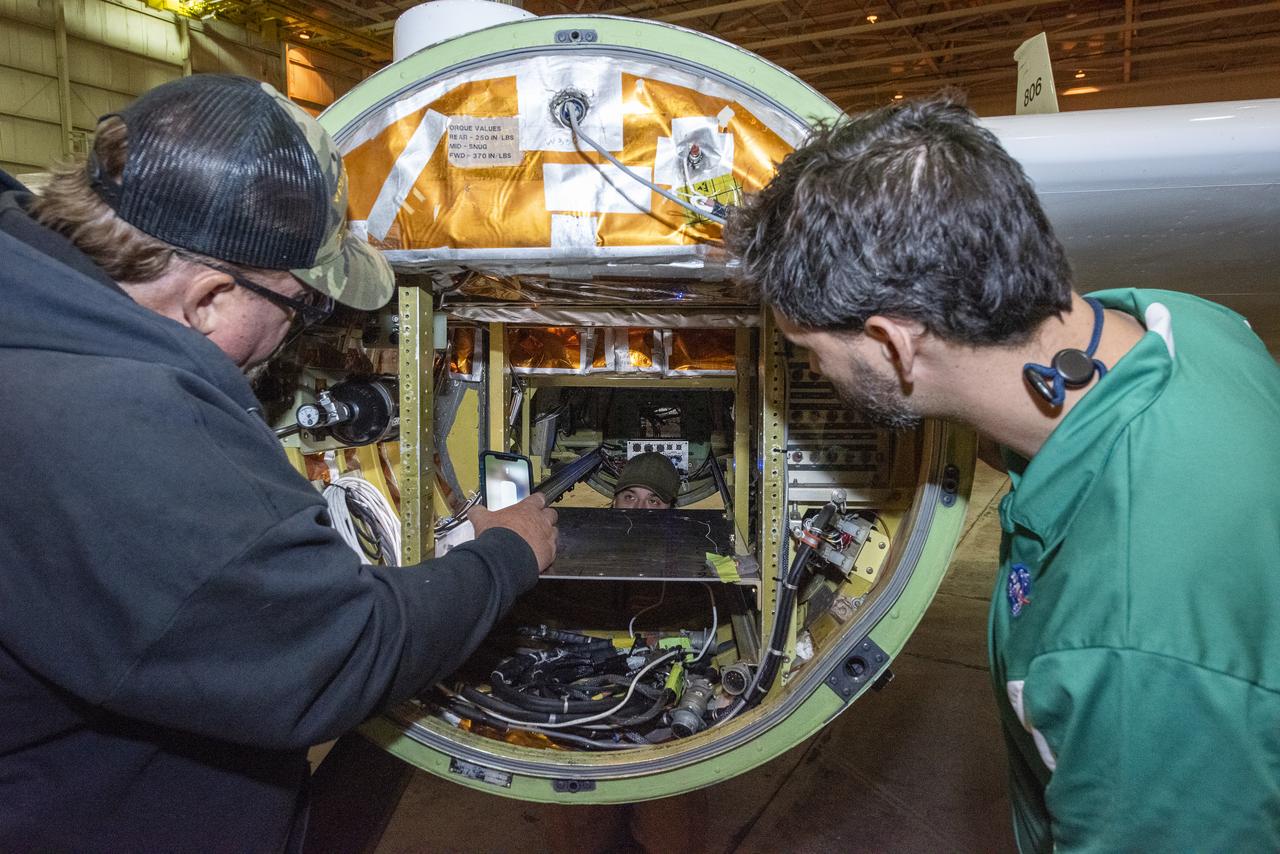
NASA Armstrong’s ER-2 aircraft is uploaded with instruments for its ALOFT mission. The ER-2 will fly at high altitudes above the Floridian coastline to collect data about the energetic characteristics and behavior of lightning and thunderclouds. Scientists from the University of Bergen, Norway will interpret that data from the ground and collaborate with NASA pilots to safely collect the most accurate data for this project about the power of lightning.
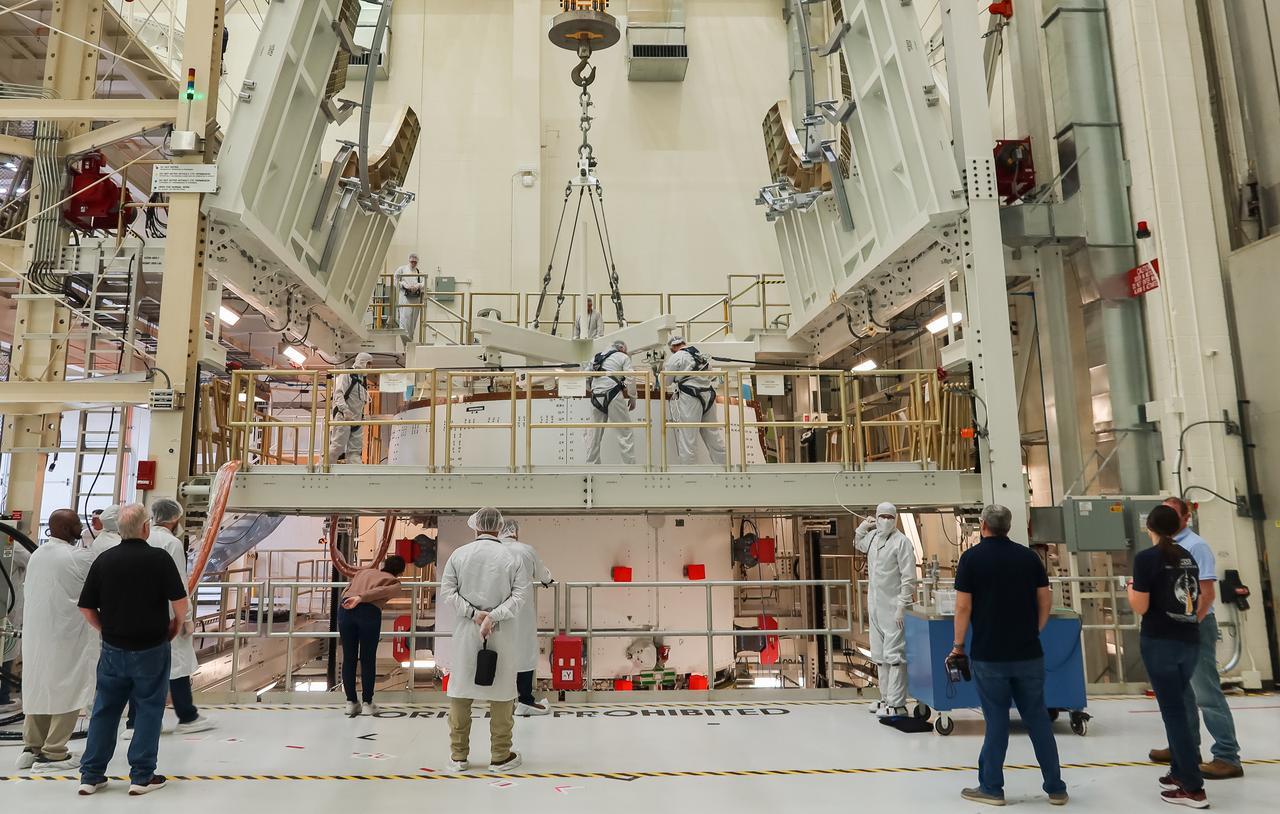
The European Service Module (ESM) for NASA’s Artemis II mission is secured inside the FAST (final assembly and system testing) cell in the high bay of the Neil A. Armstrong Operations and Checkout Building at NASA’s Kennedy Space Center in Florida on May 22, 2023. The ESM is in the FAST cell for final checkouts before it is stacked with the Orion crew module. Technicians are removing the crane that was used to move the ESM. The powerhouse that will fuel and propel Orion in space, the ESM will be used for Artemis II, the first Artemis mission flying crew aboard Orion.
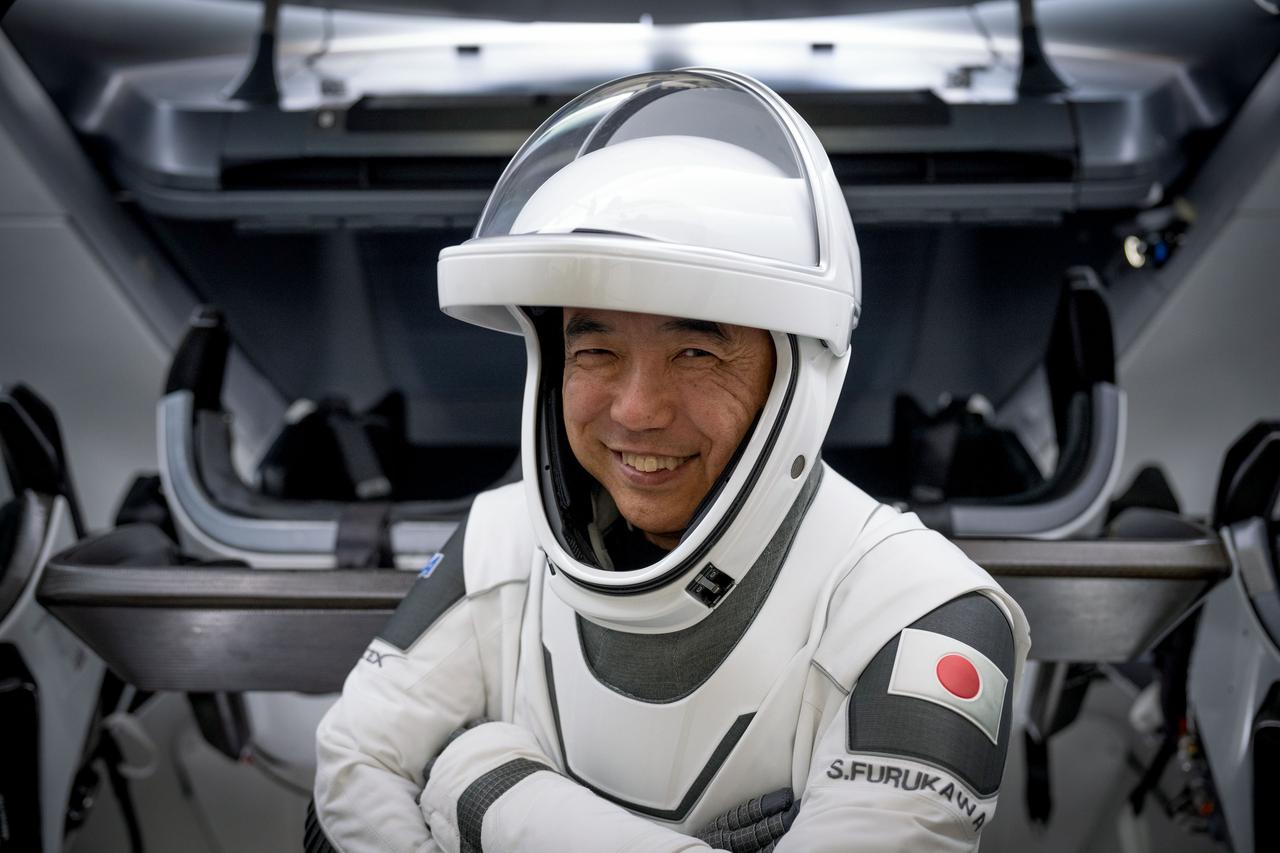
jsc2023e045334 - JAXA astronaut Satoshi Furukawa, mission specialist of NASA's SpaceX Crew-7 mission, is pictured in his pressure suit during a crew equipment integration test at SpaceX headquarters in Hawthorne, California. Credit: SpaceX

iss068e055642 (Feb. 18, 2023) --- The ISS Progress 82 cargo craft is pictured departing the vicinity of the International Space Station after undocking from the Poisk module ending a four-month resupply mission.
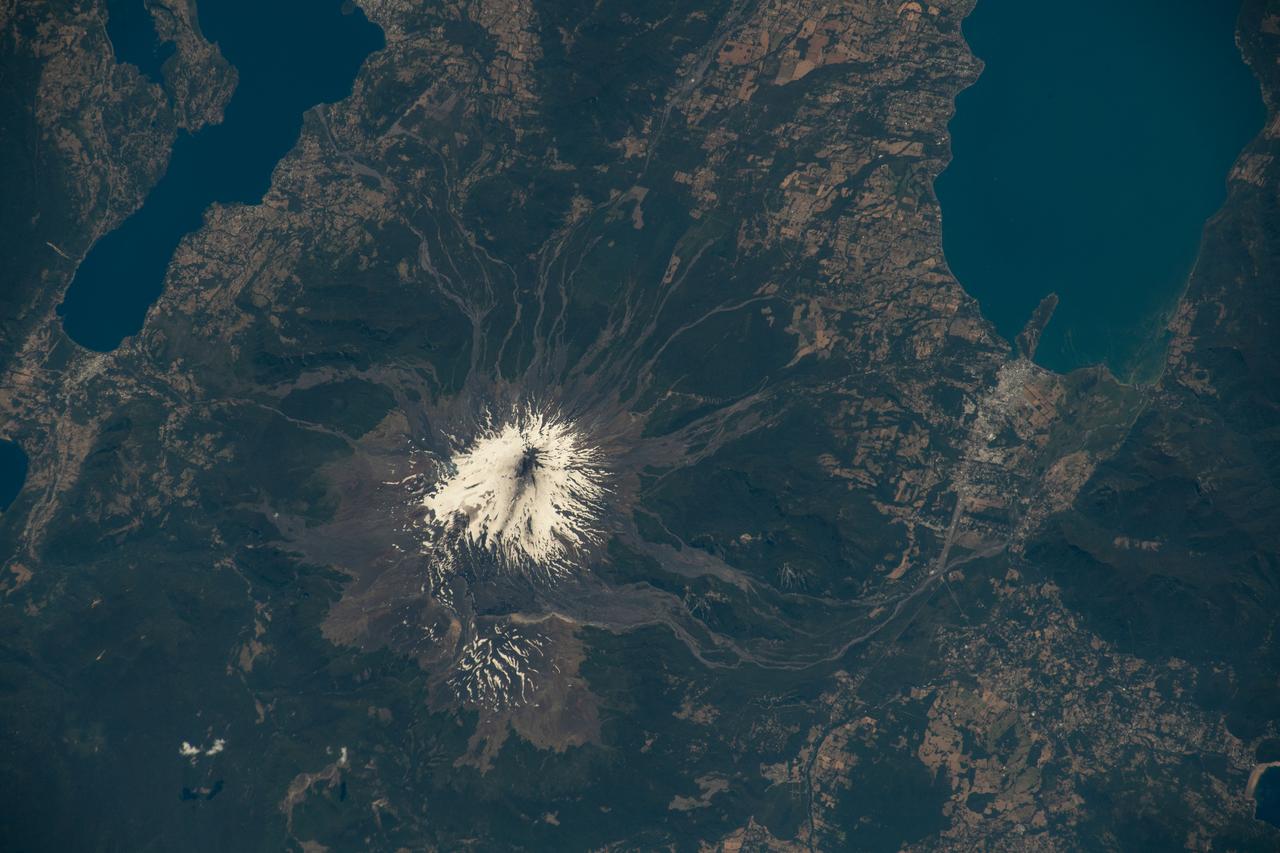
iss068e040596 (Jan. 17, 2023) --- Chile’s Villarrica volcano emits steam and other volcanic gases in this photo taken from the International Space Station on Jan. 17, 2023. The gases come from a series of minor explosions—called Strombolian eruptions—that have been ongoing at Villarrica since October 2022. Located along Chile’s southern Andes, Villarrica is one of the most active and dangerous volcanoes in South America; it typically erupts every three to six years. Image Credit: NASA
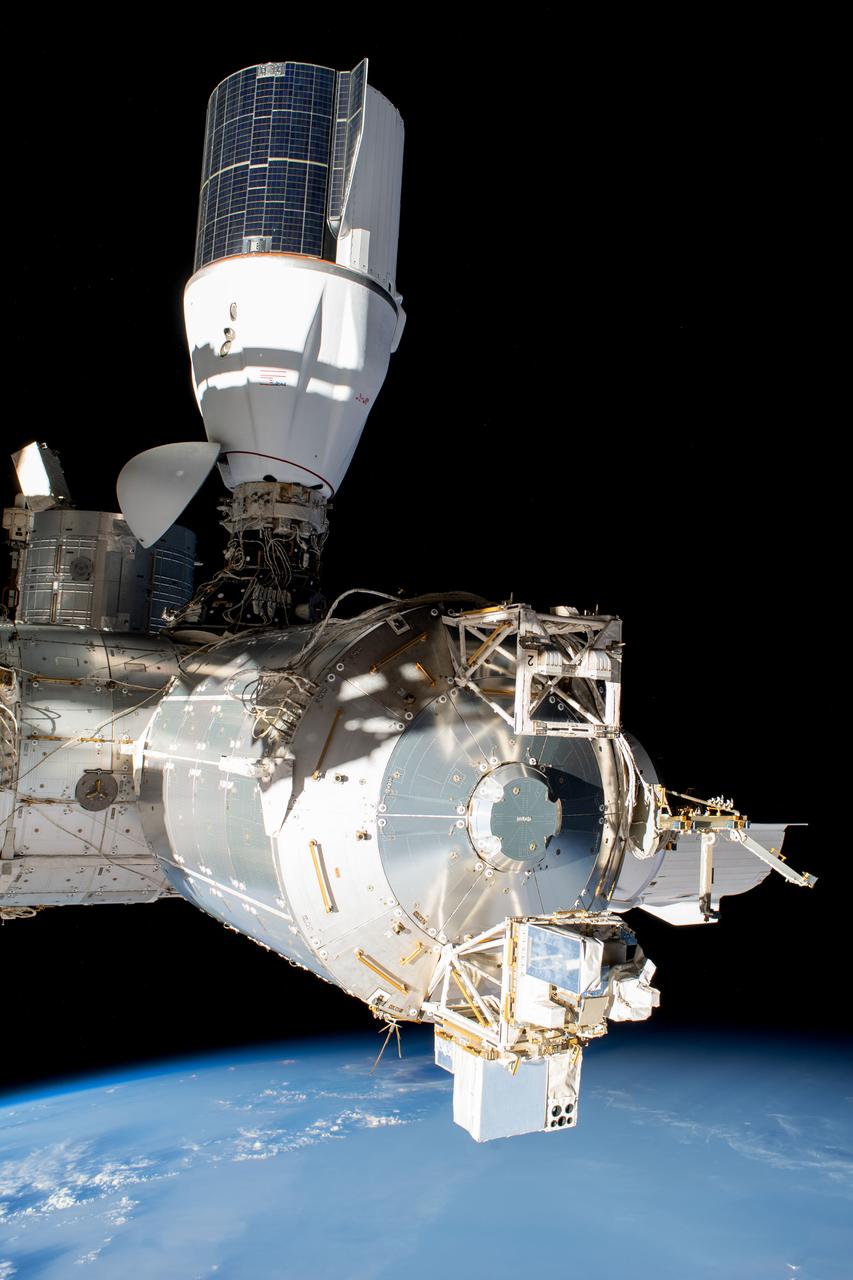
iss069e018596 (June 9, 2023) --- Two SpaceX Dragon vehicles are pictured docked to the International Space Station's Harmony module in this photograph taken from NASA astronaut Woody Hoburg's camera during a spacewalk. At top, is the Dragon cargo vehicle that docked to Harmony's space-facing port on June 6 with over 7,000 pounds of science experiments, crew supplies, and station hardware. Barely visible at right, is the Dragon crew vehicle that docked to Harmony's forward port on March 3 carrying four SpaceX Crew-6 crew members.
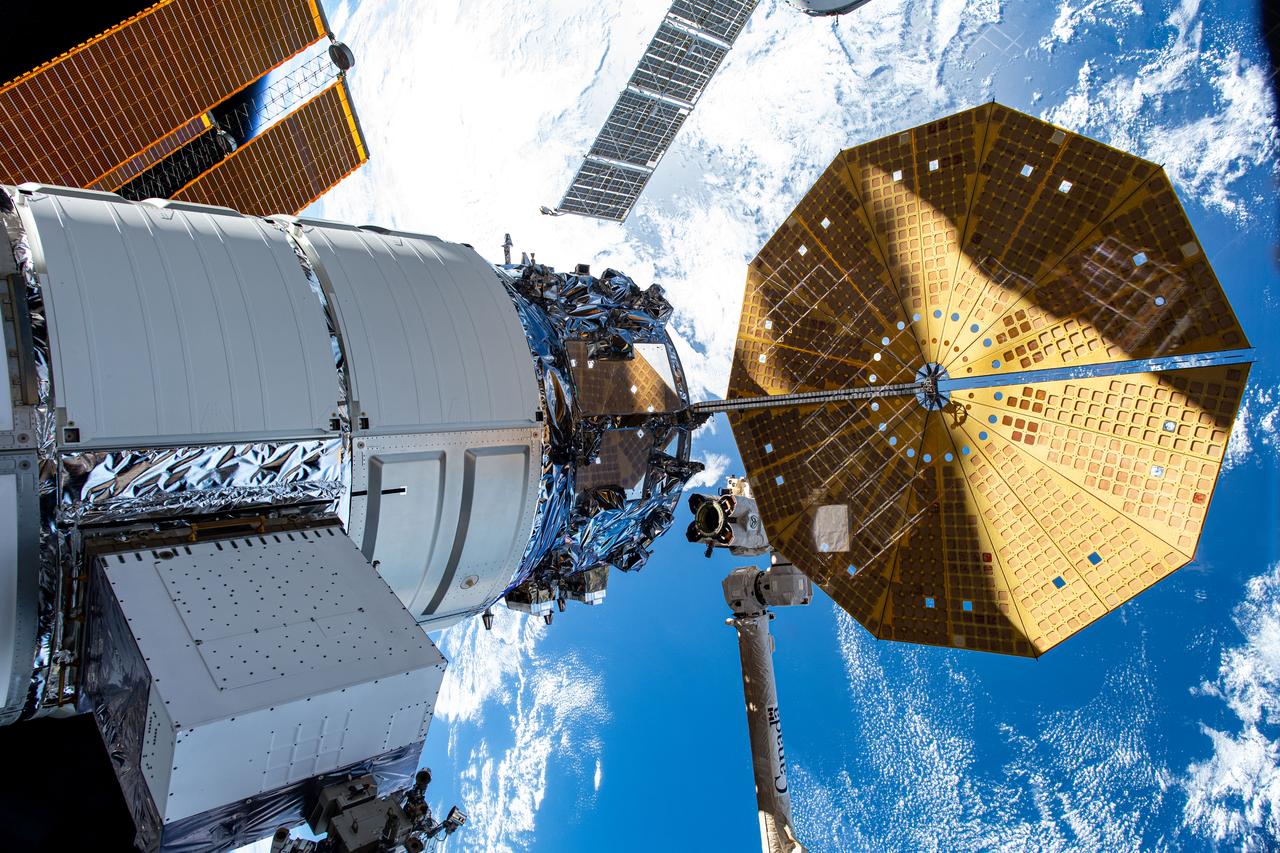
iss070e043722 (Dec. 20, 2023) --- Northrop Grumman's Cygnus space freighter is pictured attached to the International Space Station while orbiting 264 miles above the Indian Ocean south of the island nation of Madagascar. At lower center, is the Canadarm2 robotic arm preparing to grapple Cygnus ahead of its removal from the Unity module and departure from the orbital outpost.