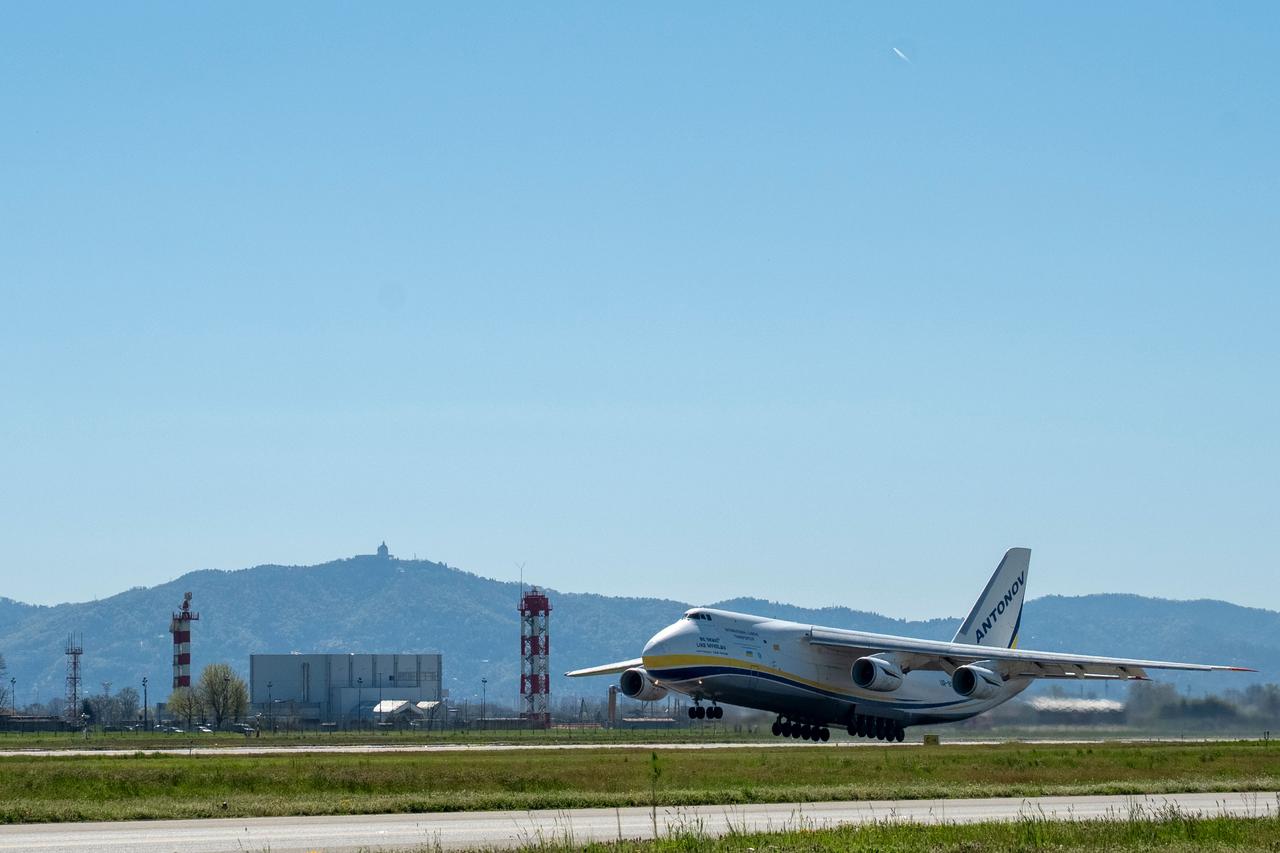
Gateway’s HALO (Habitation and Logistics Outpost) departs Italy en route to Arizona, where it will undergo final outfitting at Northrop Grumman’s facility in Gilbert ahead of its launch to lunar orbit. The module’s primary structure was fabricated by Thales Alenia Space in Turin.

From left, Joe Pavicic, operations project engineer, and Mike Guzman, main propulsion systems engineer participate in an Artemis II launch countdown simulation inside Firing Room 1 in the Launch Control Center at NASA’s Kennedy Space Center in Florida on Wednesday, Nov. 5, 2025. The simulations go through launch day scenarios to help launch team members test software and make adjustments if needed during countdown operations. For Artemis II, four astronauts will venture around the Moon, the first crewed mission on NASA’s path to establishing a long-term presence for science and exploration through Artemis.
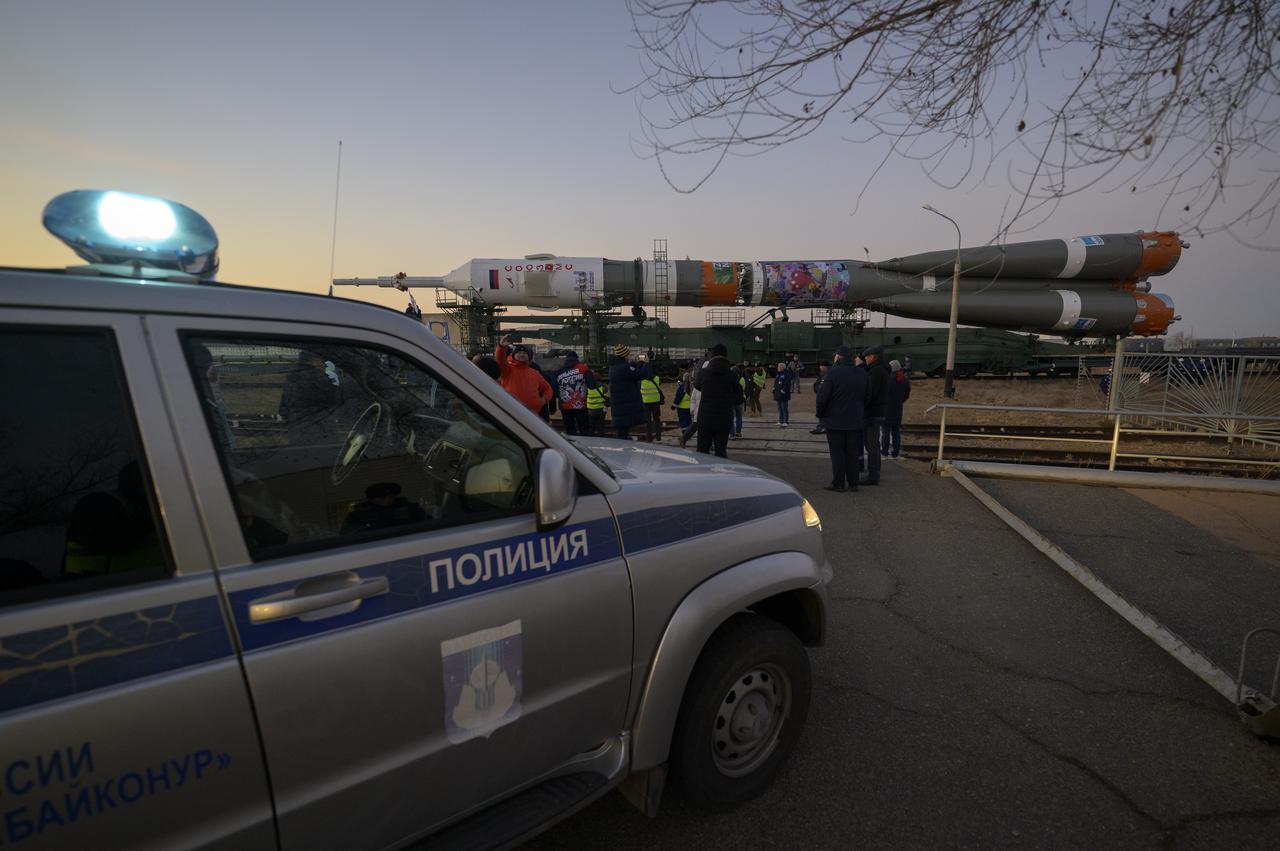
The Soyuz rocket is rolled out by train to the launch pad, Monday, Nov. 24, 2025, at Site 31 of the Baikonur Cosmodrome in Kazakhstan. Expedition 74 crewmembers: NASA astronaut Chris Williams, Roscosmos cosmonauts Sergey Kud-Sverchkov and Sergey Mikaev are scheduled to launch aboard their Soyuz MS-28 spacecraft on November 27. Photo Credit: (NASA/Bill Ingalls)

From left, Jeff Spaulding, senior NASA test director, and Wes Mosedale, NASA test director, monitor the progress of a countdown demonstration test with Artemis II crewmembers NASA astronauts Reid Wiseman, commander; Victor Glover, pilot; Christina Koch, mission specialist; and CSA (Canadian Space Agency) astronaut Jeremy Hansen, mission specialist onboard their Orion spacecraft from Firing Room 1 of the Rocco A. Petrone Launch Control Center, Saturday, Dec. 20, 2025, at NASA’s Kennedy Space Center in Florida. For this operation, the Artemis II crew and launch teams are simulating the launch day timeline including suit-up, walkout, and spacecraft ingress and egress. Through the Artemis campaign, NASA will send astronauts to explore the Moon for scientific discovery, economic benefits, and to build the foundation for the first crewed missions to Mars, for the benefit of all.
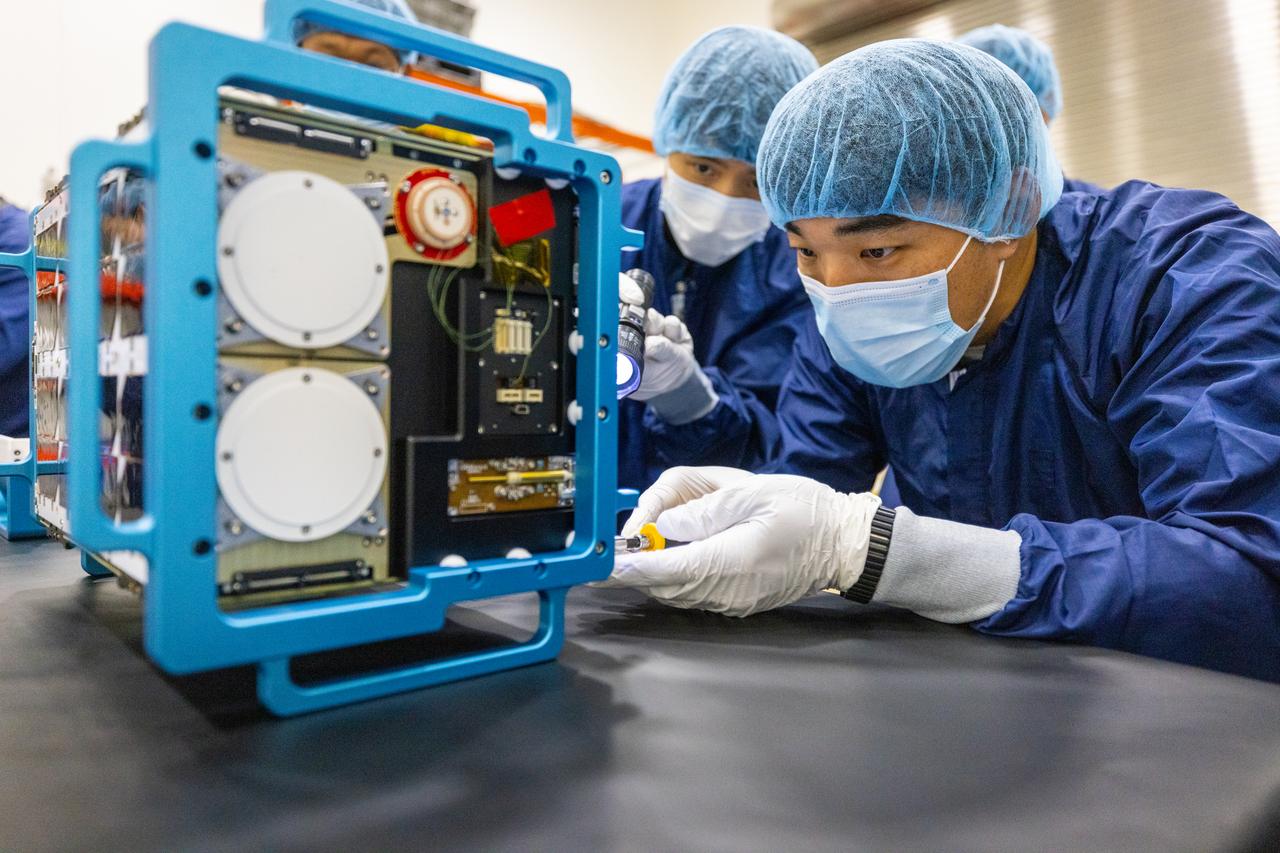
Inside the Multi-Payload Processing Facility at NASA’s Kennedy Space Center in Florida, on Tuesday, Aug. 26, 2025, technicians with the Korea AeroSpace Administration (KASA) inspect the K-Rad Cube, one of several international CubeSats slated to fly on NASA’s Artemis II test flight in 2026. Deploying in high Earth orbit from a spacecraft adapter on NASA’s SLS (Space Launch System) rocket after Orion is safely flying on its own with its crew of four astronauts, K-Rad Cube will use a dosimeter made of material designed to mimic human tissue to measure space radiation and assess biological effects at various altitudes across the Van Allen radiation belts, a critical area of research for human presence at the Moon and Mars.
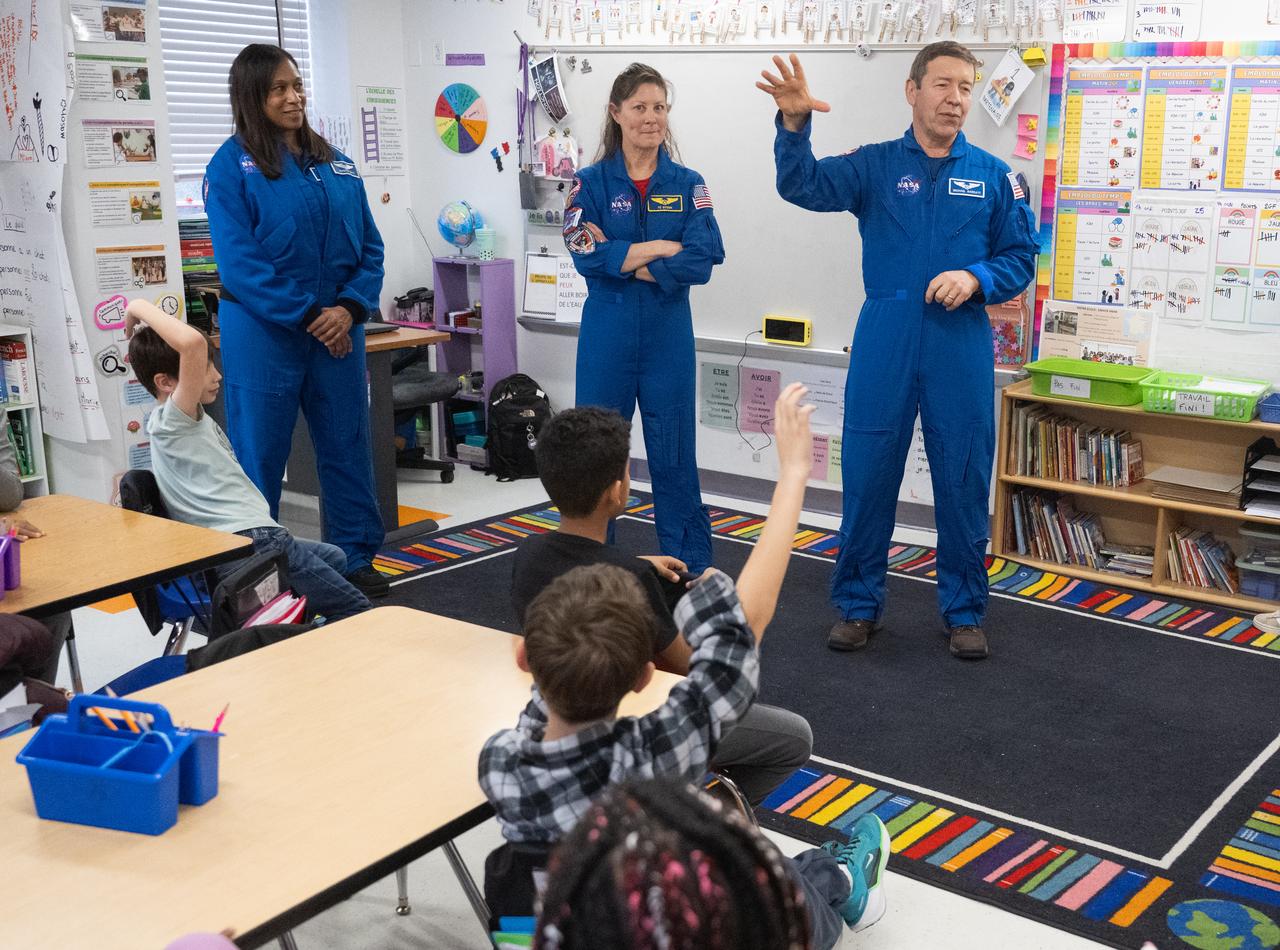
Expedition 71 NASA astronauts Jeanette Epps, left, Tracy Dyson, and Michael Barratt, speak to students, Wednesday, March 5, 2025 at Elsie Whitlow Stokes Community Freedom Public Charter School in Washington. Epps, Barratt, and Dyson served as part of Expedition 71 aboard the International Space Station. Photo Credit: (NASA/Joel Kowsky)
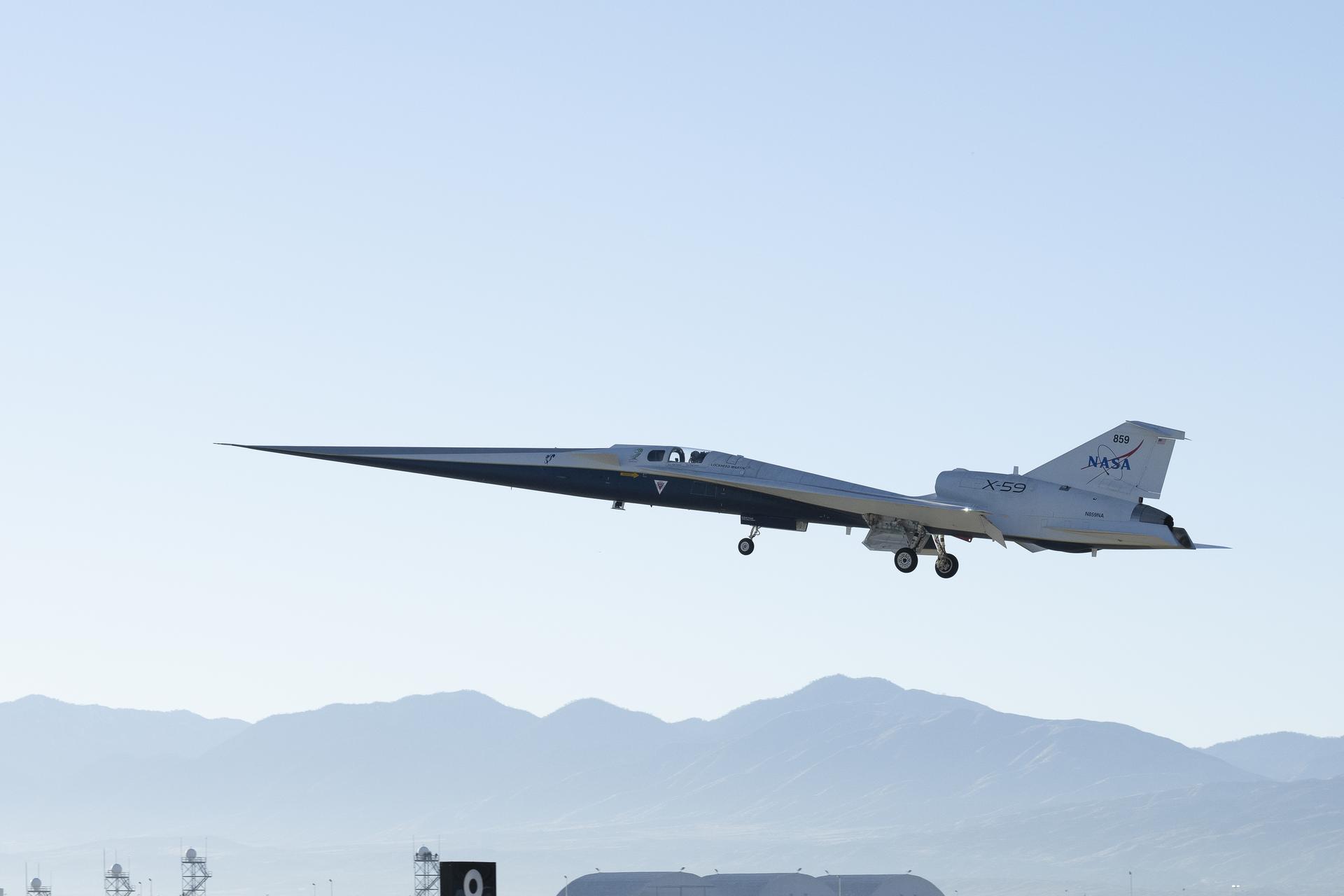
NASA’s X-59 quiet supersonic research aircraft lifts off for its first flight Tuesday, Oct. 28, 2025, from U.S. Air Force Plant 42 in Palmdale, California. The aircraft’s first flight marks the start of flight testing for NASA’s Quesst mission, the result of years of design, integration, and ground testing and begins a new chapter in NASA’s aeronautics research legacy.
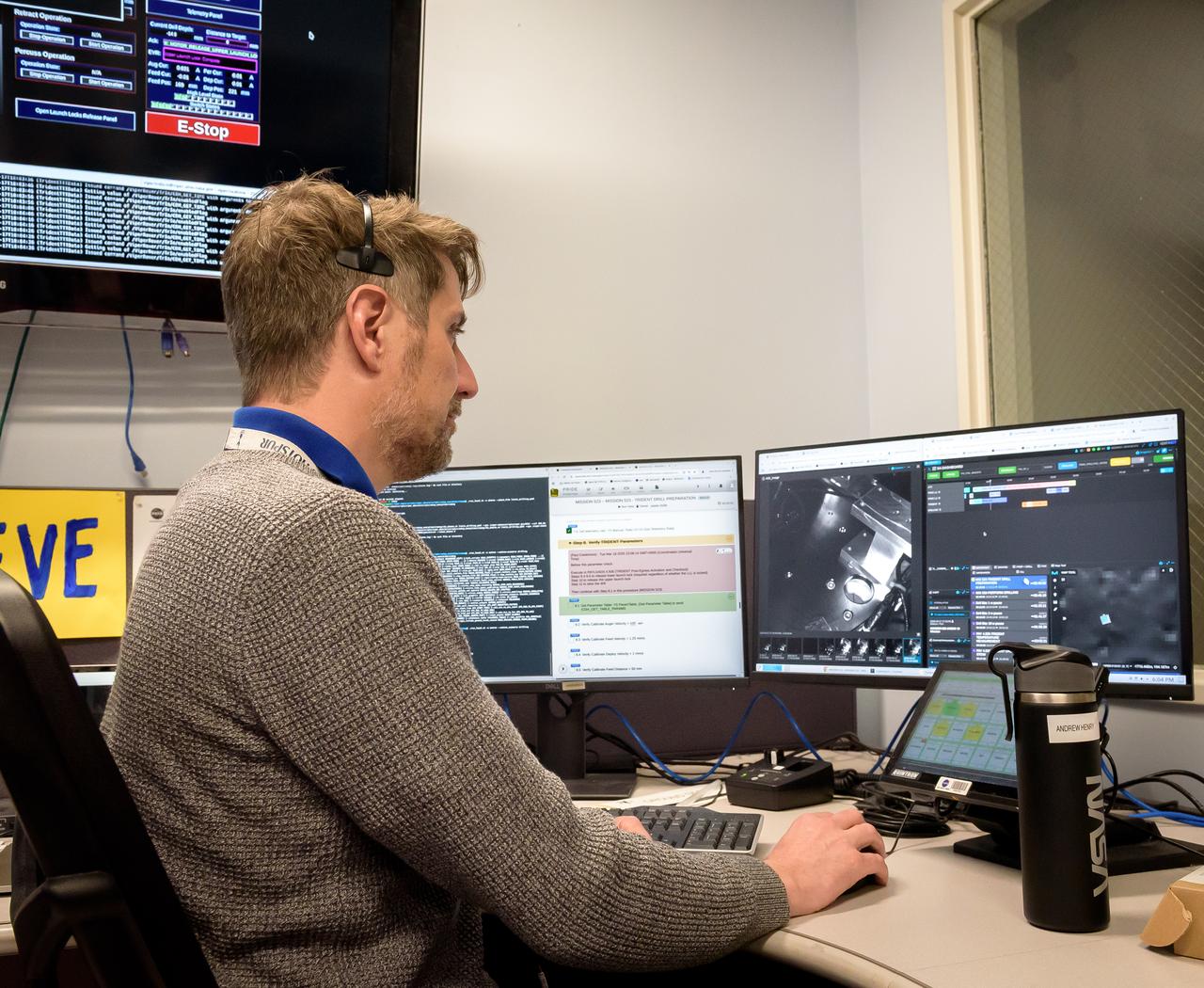
Andrew Henry during the Volatiles Investigating Polar Exploration Rover (VIPER) vehicle operational readiness test in the Multi-Mission Operations Center (MMOC), N240A.
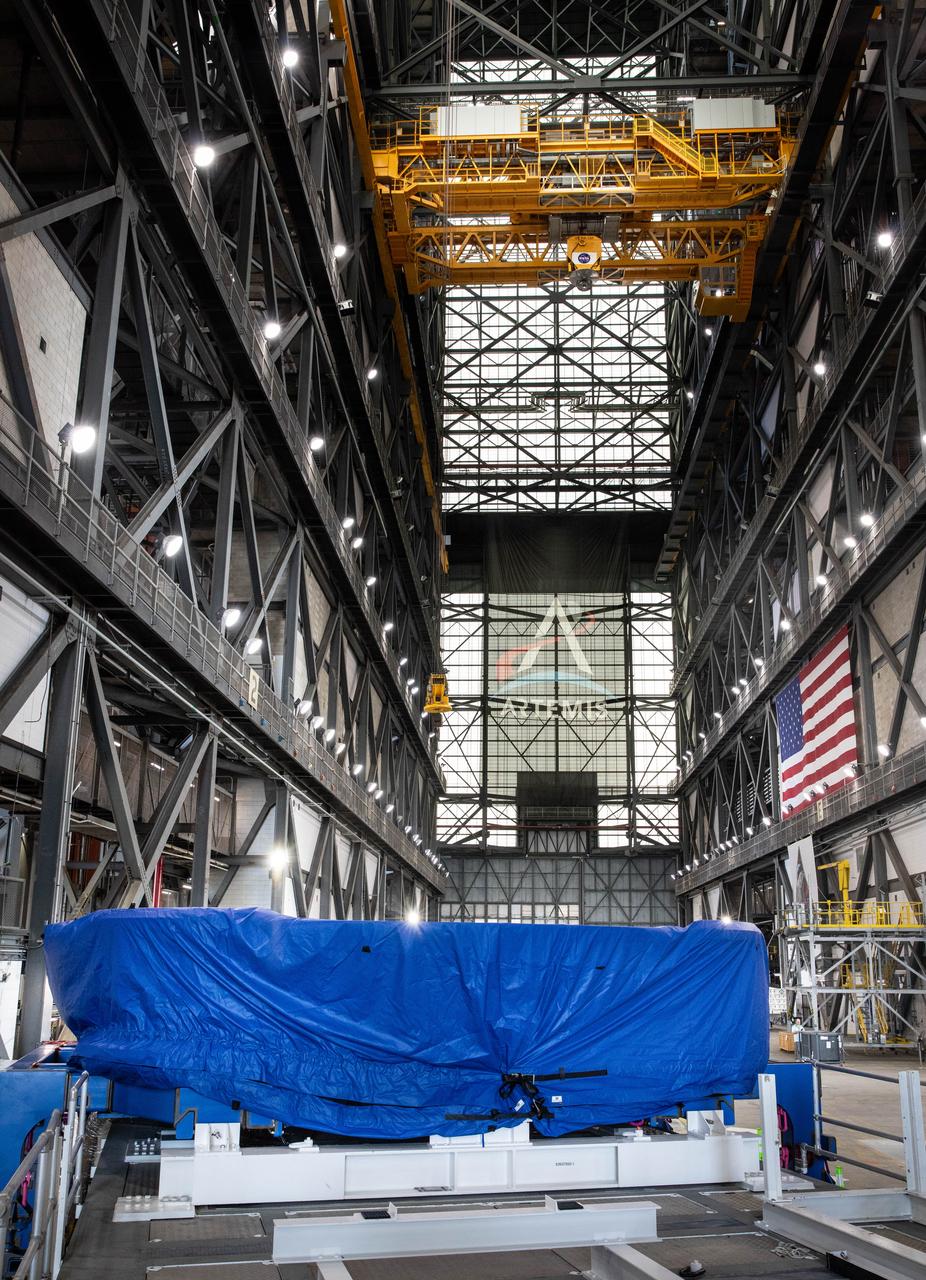
Teams from NASA’s Kennedy Space Center in Florida transport the agency’s Artemis III SLS (Space Launch System) core stage boat-tail from the spaceport's Space Systems Processing Facility to the Vehicle Assembly Building on Thursday, July 24. Used during the assembly of the SLS core stage, the boat-tail is a fairing-like structure that protects the bottom end of the core stage.
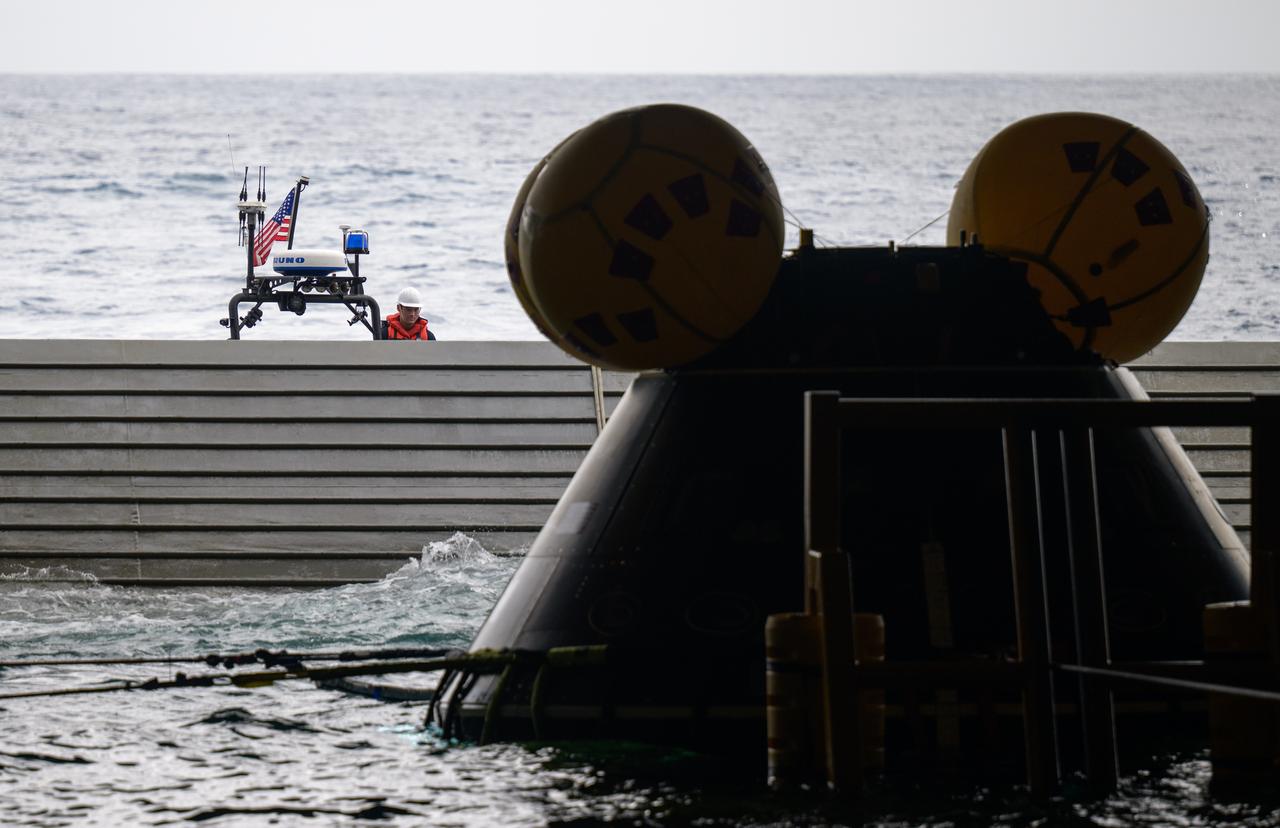
The Crew Module Test Article (CMTA), a full scale mockup of the Orion spacecraft, is seen inside the well deck of USS Somerset as teams practice Artemis recovery operations during Underway Recovery Test-12 off the coast of California, Saturday, March 29, 2025. During the test, NASA and Department of Defense teams are practicing to ensure recovery procedures are validated as NASA plans to send Artemis II around the Moon and splashdown in the Pacific Ocean. Photo Credit: (NASA/Bill Ingalls)

Jared Isaacman, President Donald Trump’s nominee to be the next administrator of NASA, appears before the Senate Committee on Commerce, Science, and Transportation, Wednesday, Dec. 3, 2025, at the Russell Senate Office Building in Washington. Photo Credit: (NASA/Joel Kowsky)
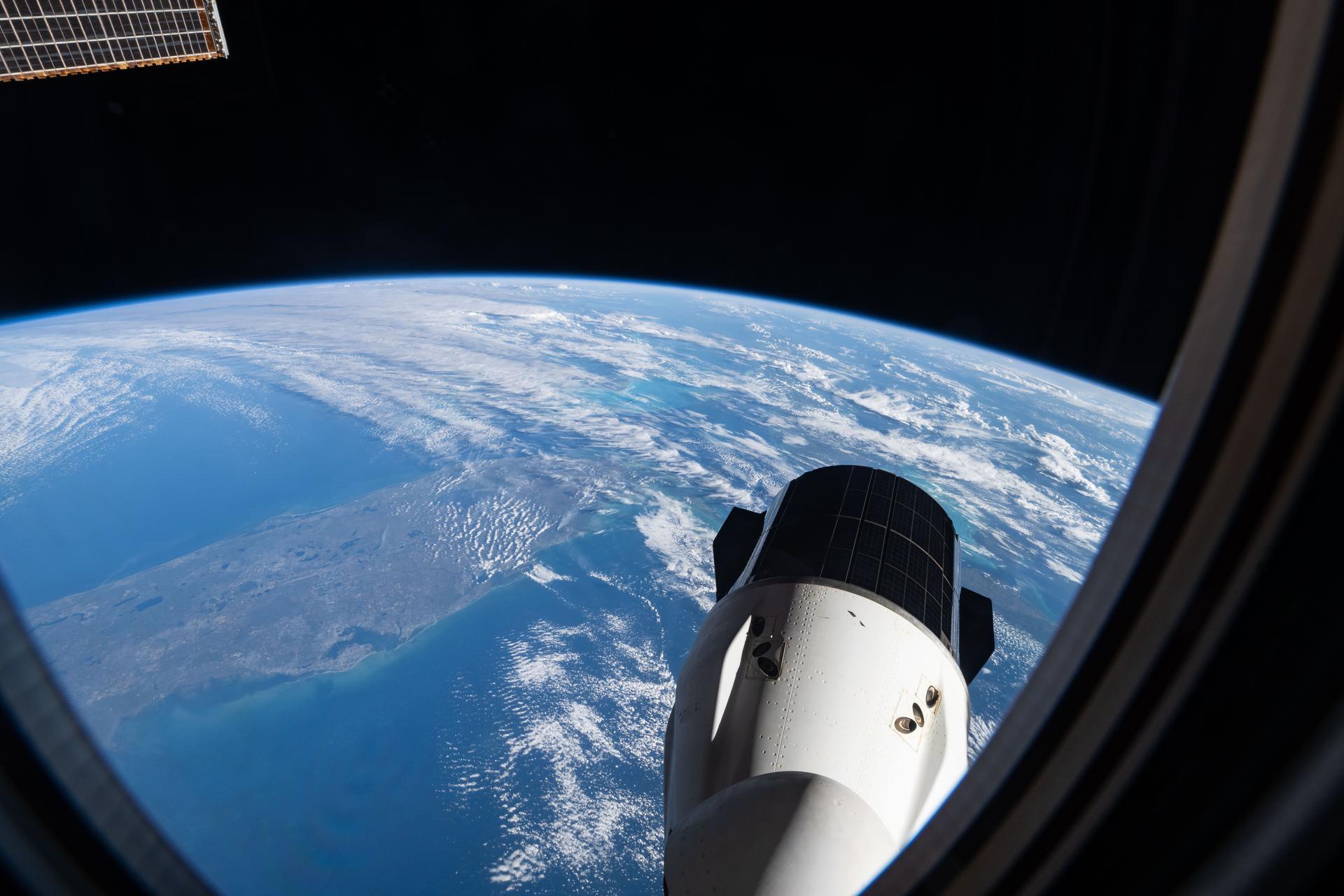
iss074e0000388 (Dec. 11, 2025) --- This photograph, taken from a window aboard the SpaceX Dragon crew spacecraft, shows the SpaceX Dragon cargo spacecraft with southern Florida visible below as the International Space Station orbited 260 miles above the Gulf of America.
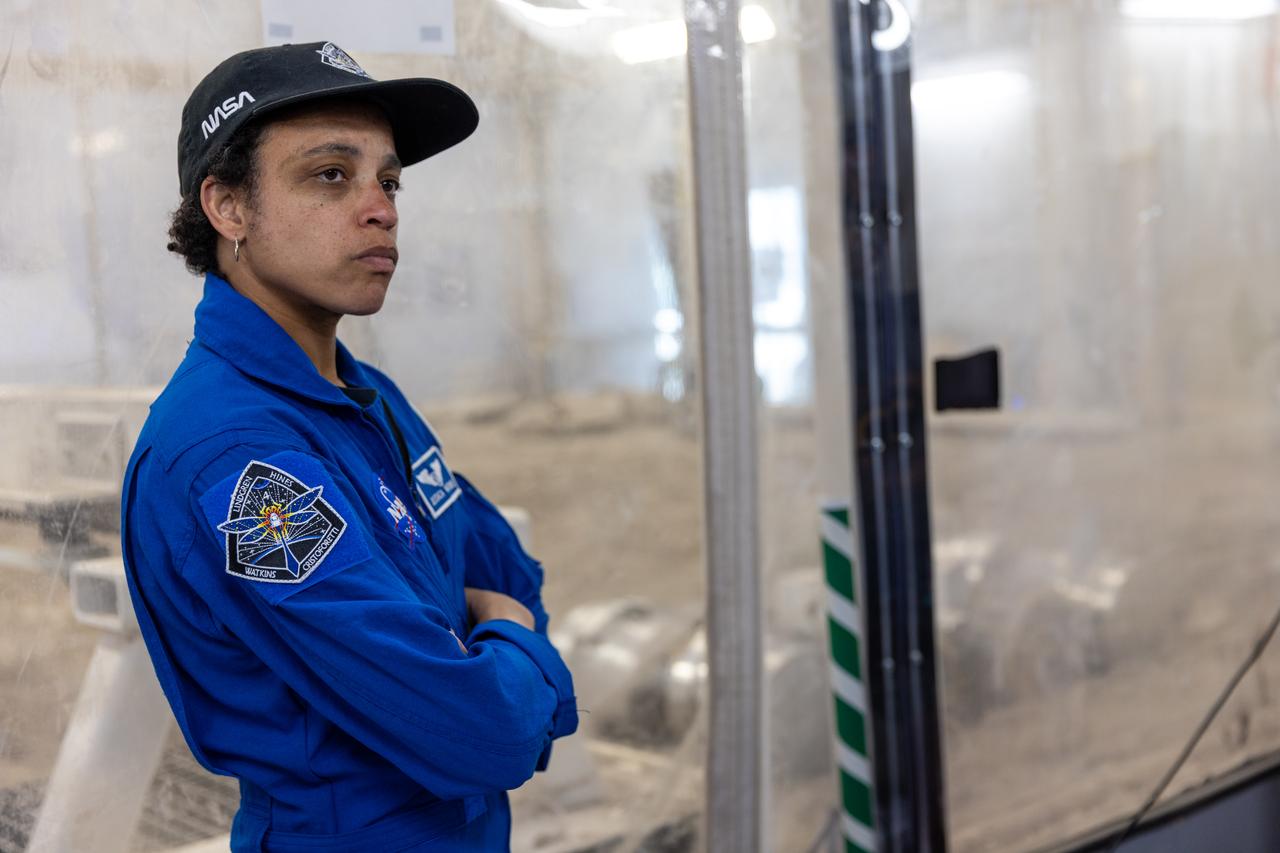
NASA astronaut Jessica Watkins visits the Granular Mechanics and Regolith Operations Laboratory inside Swamp Works at Kennedy Space Center in Florida on Wednesday, Aug. 27, 2025, to view some of the evolving technologies in development that astronauts may use to explore the Moon’s surface, prepare it for sustainable outposts, and to handle the dust that is collected during moonwalks.

iss072e447461 (Jan. 2, 2025) --- The well-lit island city and capital of United Arab Emirates, Abu Dhabi on the Persian Gulf with a population of about 1.57 million people, is pictured at approximately 10:03 p.m. local time from the International Space Station as it orbited 256 miles above.

Members of the media get an up-close look at the SLS (Space Launch System) rocket core stage for Artemis II inside the Vehicle Assembly Building at NASA’s Kennedy Space Center in Florida during Artemis Media Day on Friday, March 7, 2025. The core stage has two giant propellant tanks that collectively hold more than 733,000 gallons of super cold liquid propellant to feed the stage’s four RS-25 engines to help send astronauts inside NASA’s Orion spacecraft to venture around the Moon for Artemis II.
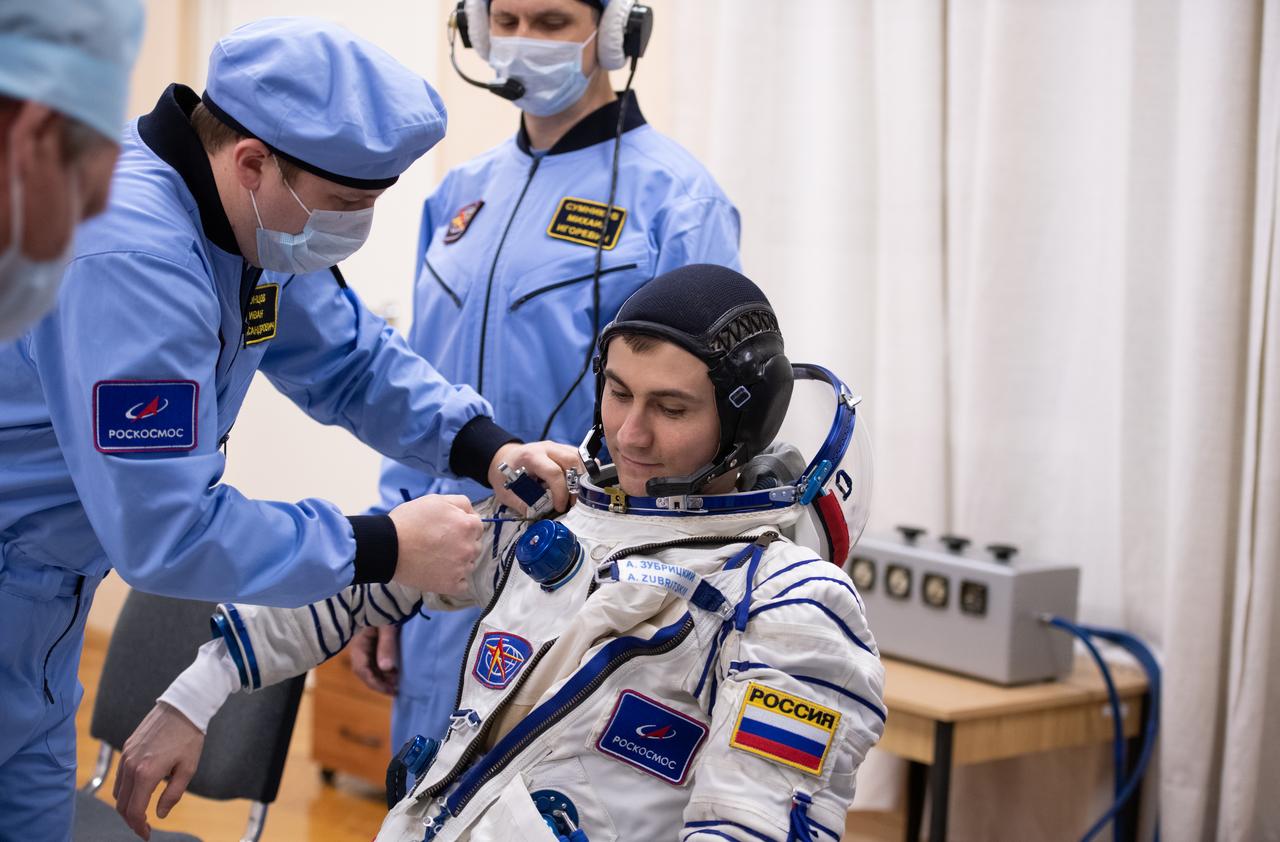
Roscosmos cosmonaut Alexey Zubritskiy is helped into his Russian Sokol suit as he and fellow crewmates, NASA astronaut Jonny Kim and \Sergey Ryzhikov prepare for their Soyuz launch to the International Space Station Tuesday, April 8, 2025 (April 7 Eastern Time), in Baikonur, Kazakhstan. The launch will send Kim, Ryzhikov, Zubritskiy on a mission to the International Space Station. Photo Credit: (NASA/GCTC/Pavel Shvets)
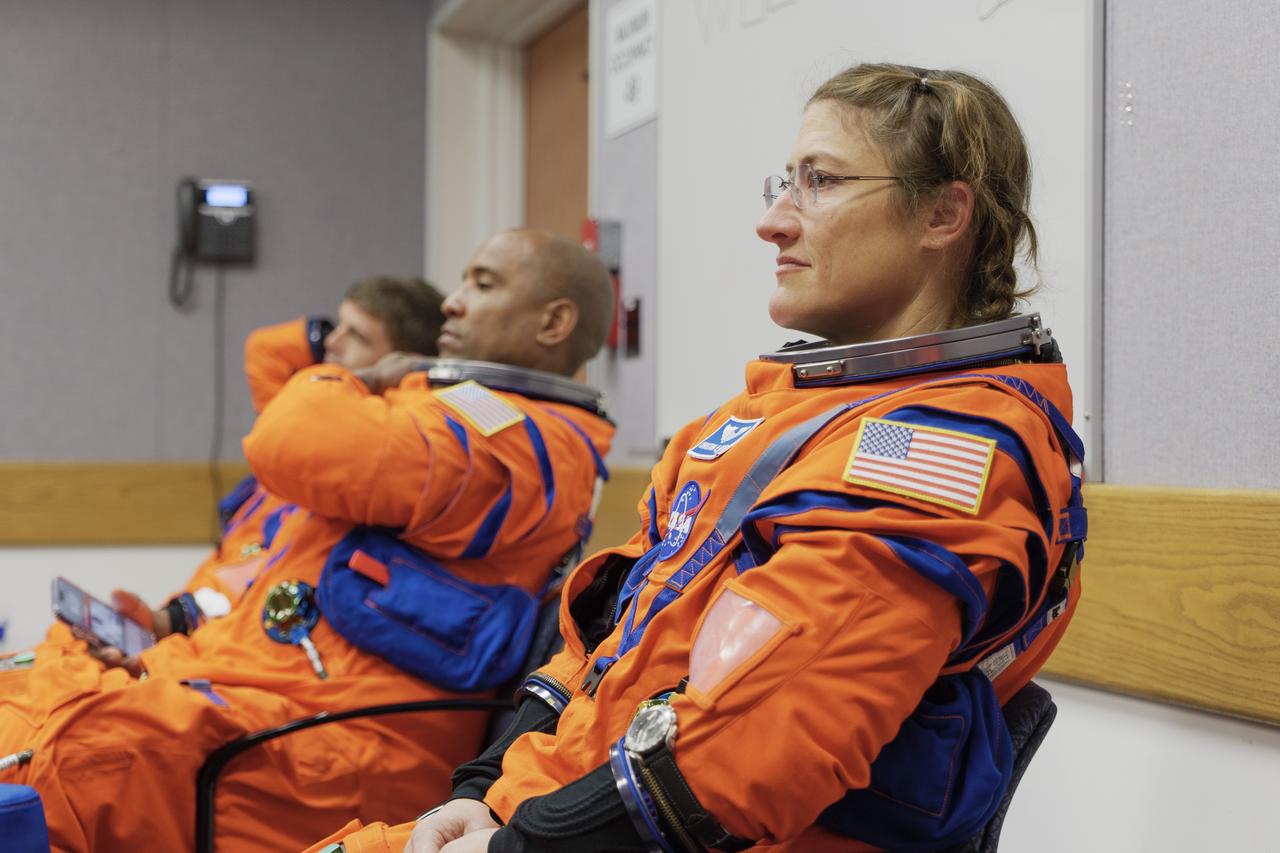
The crew of NASA’s Artemis II mission participates in a suited crew test on Thursday, July 31, 2025, at the agency’s Kennedy Space Center in Florida. From left, NASA astronauts Reid Wiseman, Artemis II commander; Victor Glover, Artemis II pilot; and Christina Koch, mission specialist, and CSA (Canadian Space Agency) Jeremy Hansen (not pictured), donned their Orion crew survival system spacesuits, for training at NASA’s Kennedy’s Multi-Payload Processing Facility, where they entered their fully powered Orion spacecraft as part of the test. Artemis II will take the four astronauts around the Moon, as the first crewed mission on NASA’s path to establishing a long-term presence for science and exploration through Artemis.
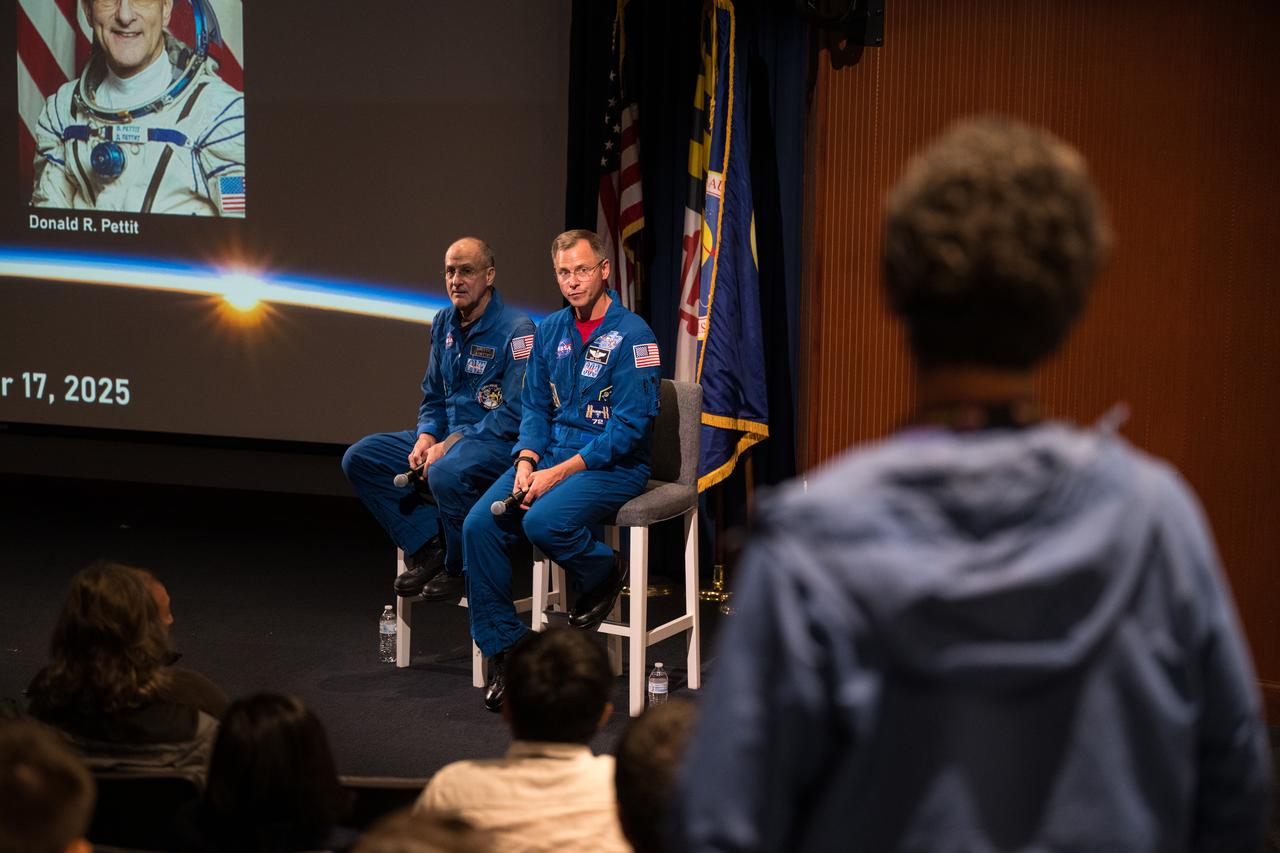
NASA astronauts Don Pettit and Nick Hague listen to a question about their time onboard the International Space Station as part of Expedition 72, Wednesday, Sept. 17, 2025, during a Silver Snoopy award presentation event at NASA’s Goddard Space Flight Center in Greenbelt, Md. Photo Credit: (NASA/Aubrey Gemignani)
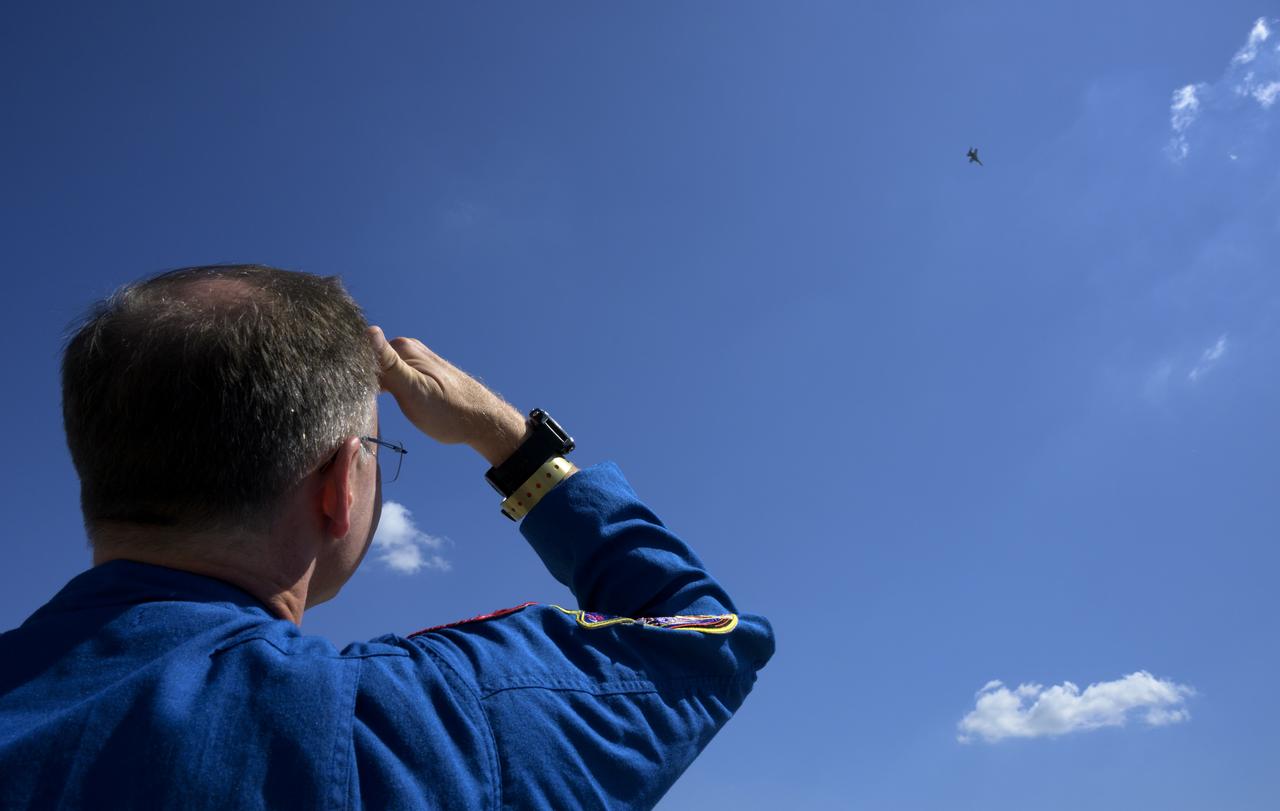
NASA astronaut Nick Hague watches a U.S. Navy F/A-15F Super Hornet jet fly, Friday, Sept. 12, 2025, during the Joint Base Andrews Air Show at Joint Base Andrews in Prince George's County, Maryland. Hague spent 171 days onboard the International Space Station as part of Expedition 72. Photo Credit: (NASA/Bill Ingalls)
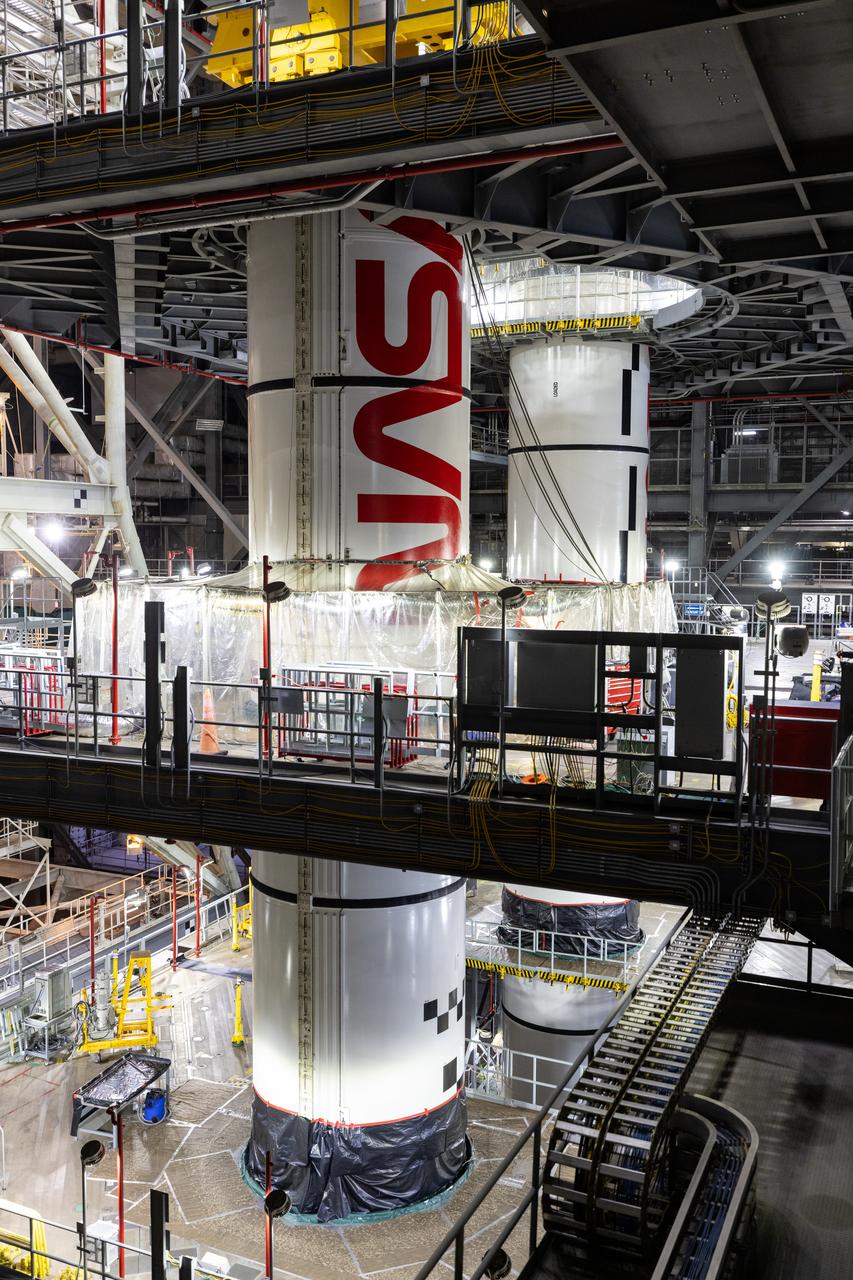
Inside High Bay 3 of the Vehicle Assembly Building at NASA’s Kennedy Space Center in Florida, technicians with the agency’s Exploration Ground Systems use a crane to lower the left center center booster segment for the NASA’s SLS (Space Launch System) rocket onto the left aft center segment atop the mobile launcher on Monday, Jan. 27, 2025. The NASA “worm” insignia can be seen on both the center center booster segments. The boosters will help support the remaining rocket components and the Orion spacecraft during final assembly of the Artemis II Moon rocket and provide more than 75 percent of the total SLS thrust during liftoff from NASA Kennedy’s Launch Pad 39B.
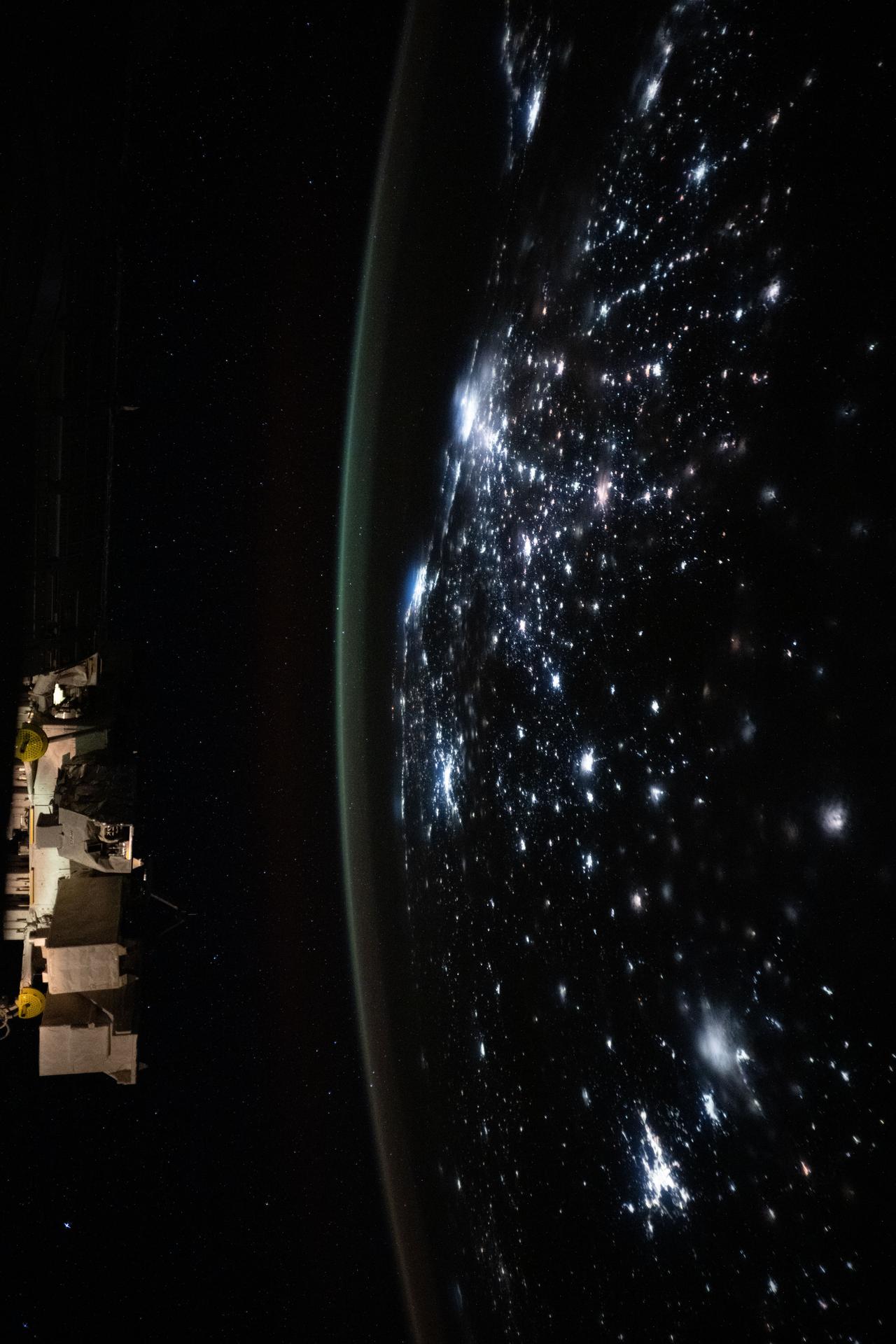
iss073e0855854 (Sept. 21, 2025) --- City lights dot the Brazilian landscape and trace a path to Rio de Janeiro and São Paulo (center) on the Atlantic coast in this photograph taken at approximately 2:17 a.m. local from the International Stace Station as it orbited 263 miles above.
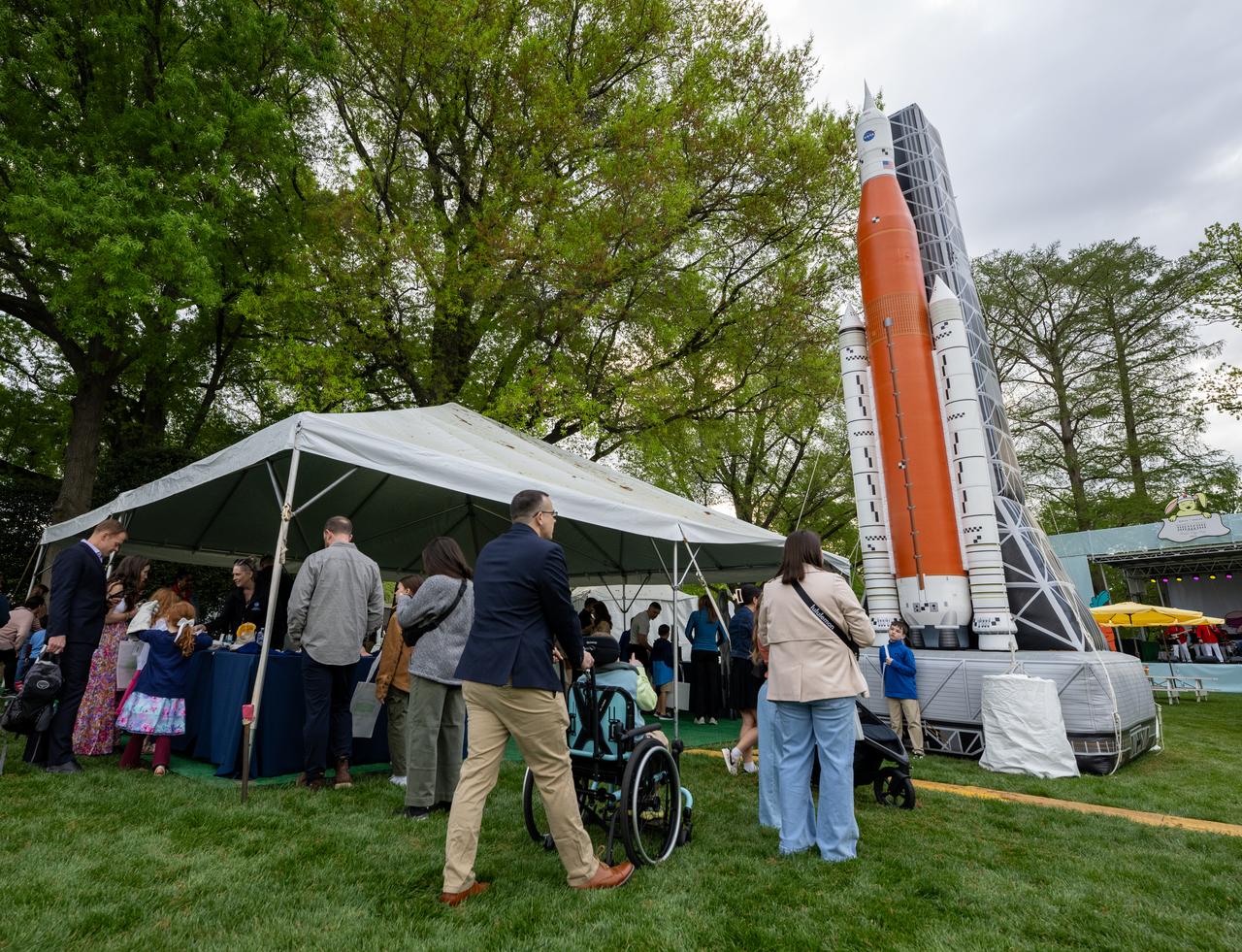
Guests participate in STEM activities during the White House Easter Egg Roll, Monday, April 21, 2025, on the South Lawn of the White House in Washington. Photo Credit: (NASA/Keegan Barber)

Teams from NASA’s Kennedy Space Center in Florida integrate NASA’s Artemis III SLS (Space Launch System) core stage engine section with its boat-tail inside the spaceport’s Vehicle Assembly Building on Wednesday, July 30, 2025. The boat-tail is a fairing-like structure that protects the bottom end of the core stage, while the engine section is one the most complex and intricate parts of the rocket stage that will help power the Artemis missions to the Moon.
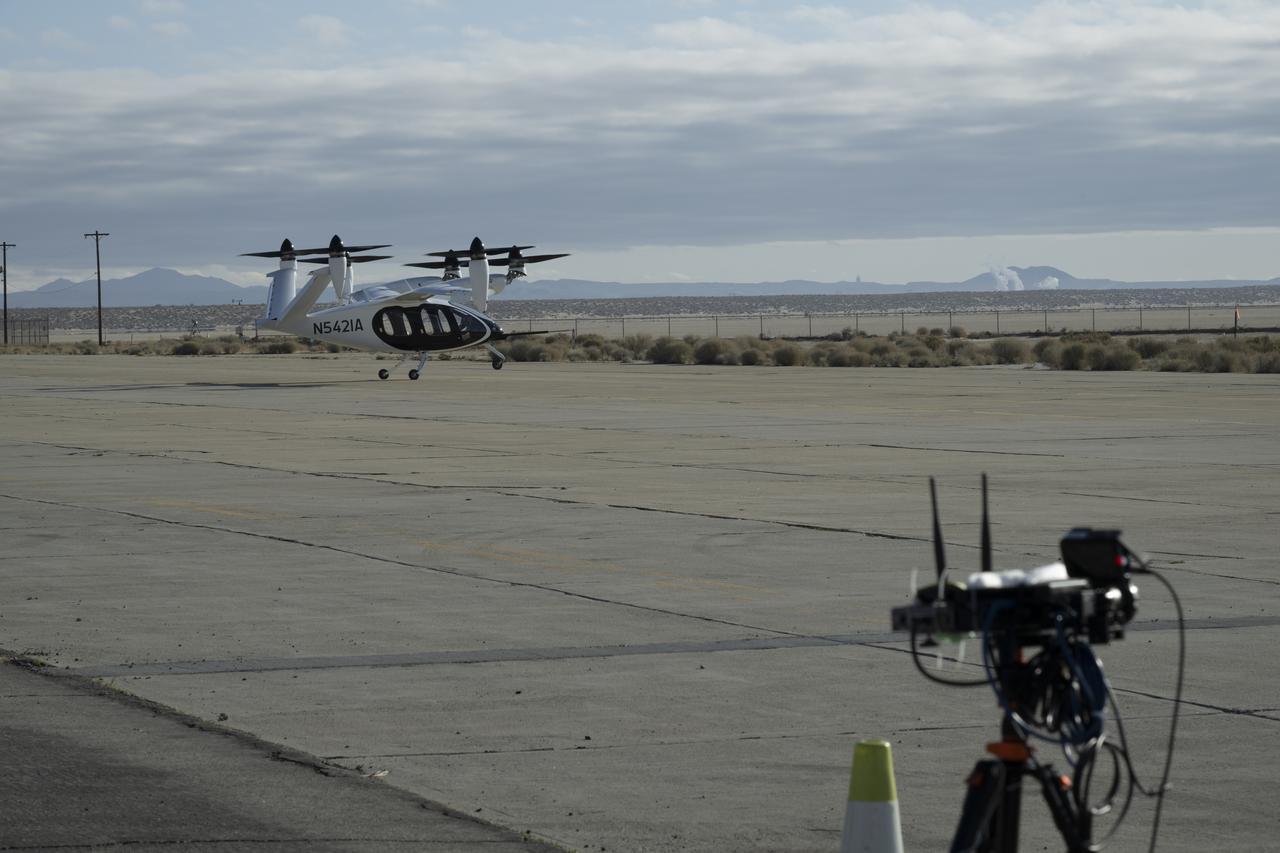
One of multiple NASA distributed sensing ground nodes is set up in the foreground while an experimental air taxi aircraft owned by Joby Aviation prepares to take off in the background near NASA’s Armstrong Flight Research Center in Edwards, California, on March 12, 2025. NASA is collecting information during this study to help advance future air taxi flights, especially those occurring in cities, to track aircraft moving through traffic corridors and around landing zones.
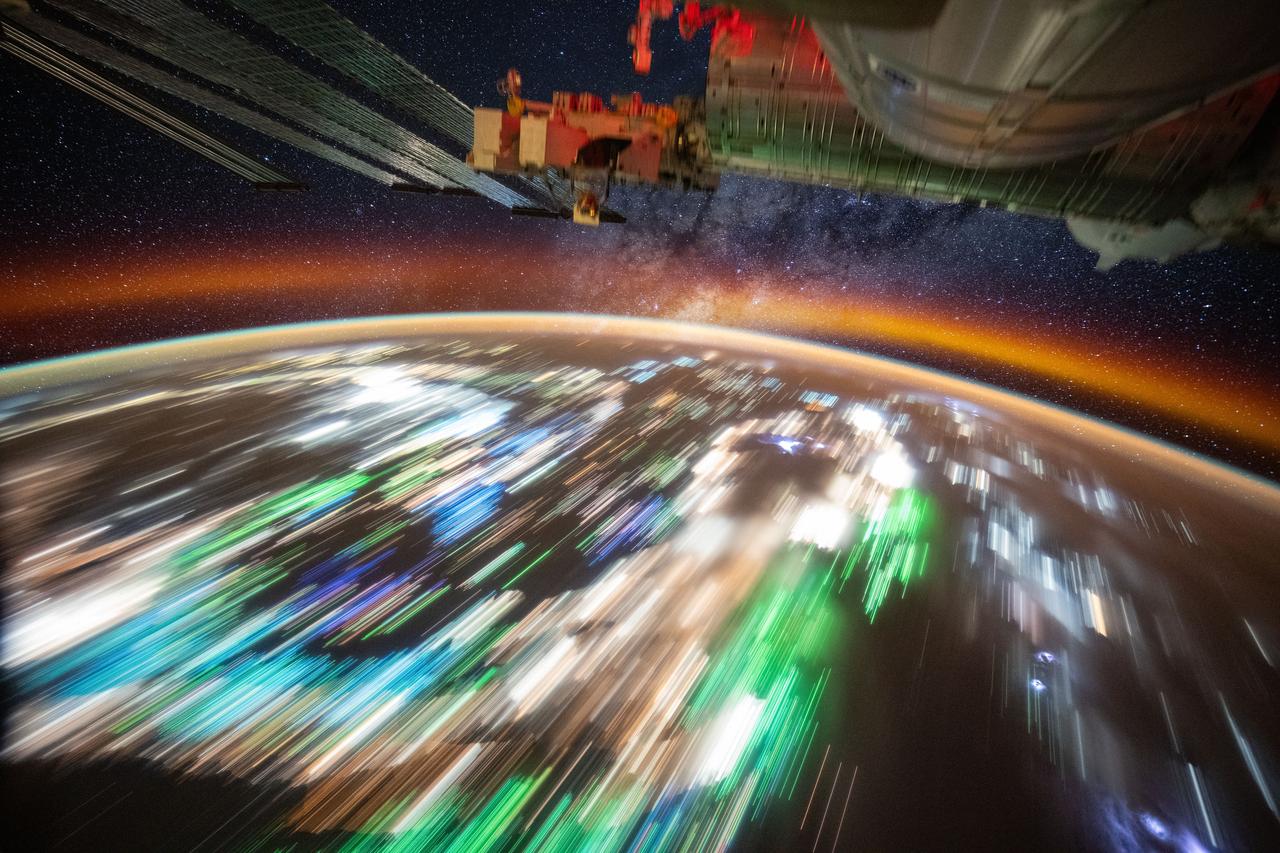
iss072e860745 (March 26, 2025) --- This long-duration photograph taken from the International Space Station as it orbited 259 miles above the Andaman Sea reveals the city lights of Southeast Asia and the typical green lights of the fishing boats underneath Earth's atmospheric glow. In the background, a star-filled sky and the Milky Way sparkle above the planet. Credit: NASA/Don Pettit
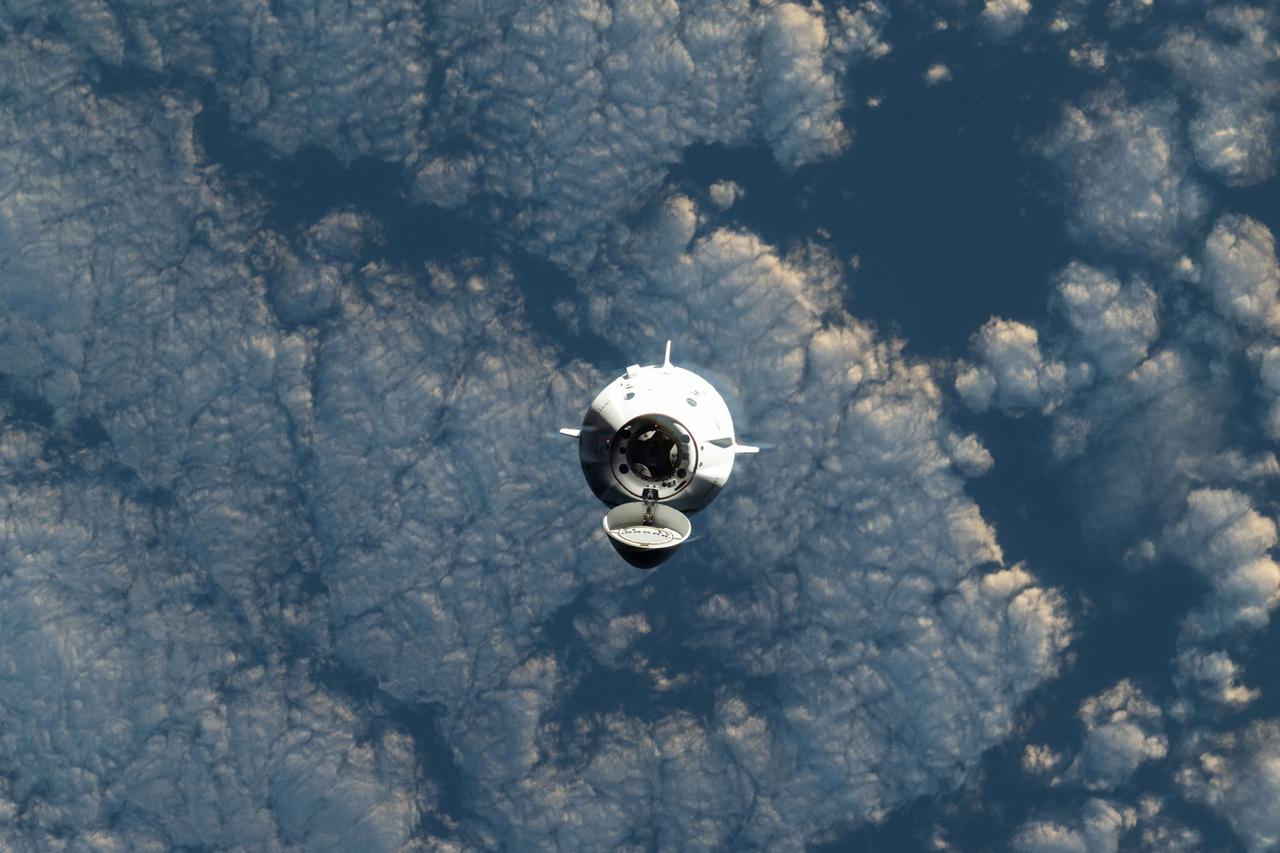
iss073e0249492 (June 26, 2025) --- The SpaceX Dragon spacecraft carrying the Axiom Mission 4 (Ax-4) crew from Axiom Space approaches the International Space Station as both spacecraft were orbiting 268 miles above a cloudy southern Indian Ocean. Commanding Ax-4 inside Dragon was veteran astronaut Peggy Whitson leading Pilot Shubhanshu Shukla, and Mission Specialists Sławosz Uznański-Wiśniewski and Tibor Kapu. Dragon would dock later to the orbital outpost's space-facing port on the Harmony module.
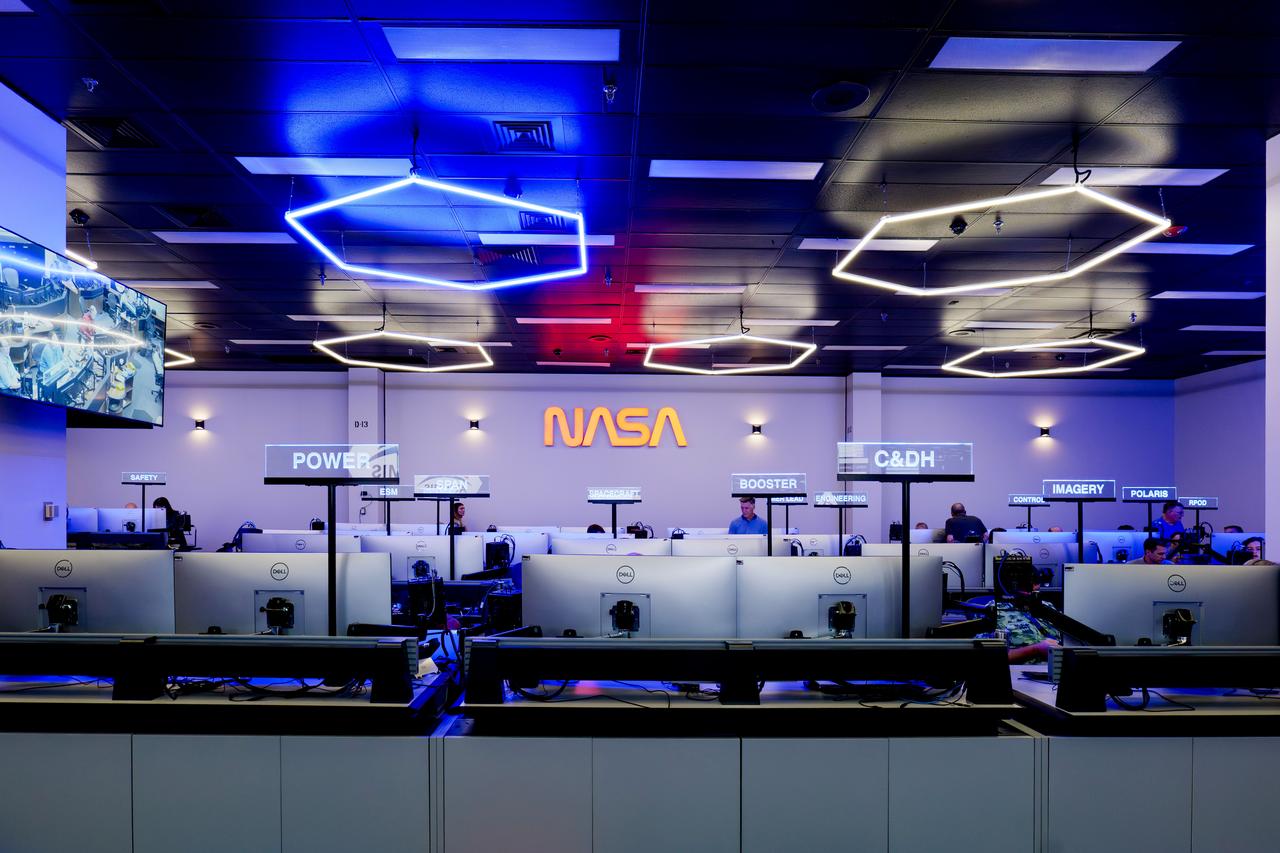
The Orion Mission Evaluation Room (MER) team works during an Artemis II mission simulation on Aug. 19, 2025, from the new Orion MER inside the Mission Control Center at NASA’s Johnson Space Center in Houston.
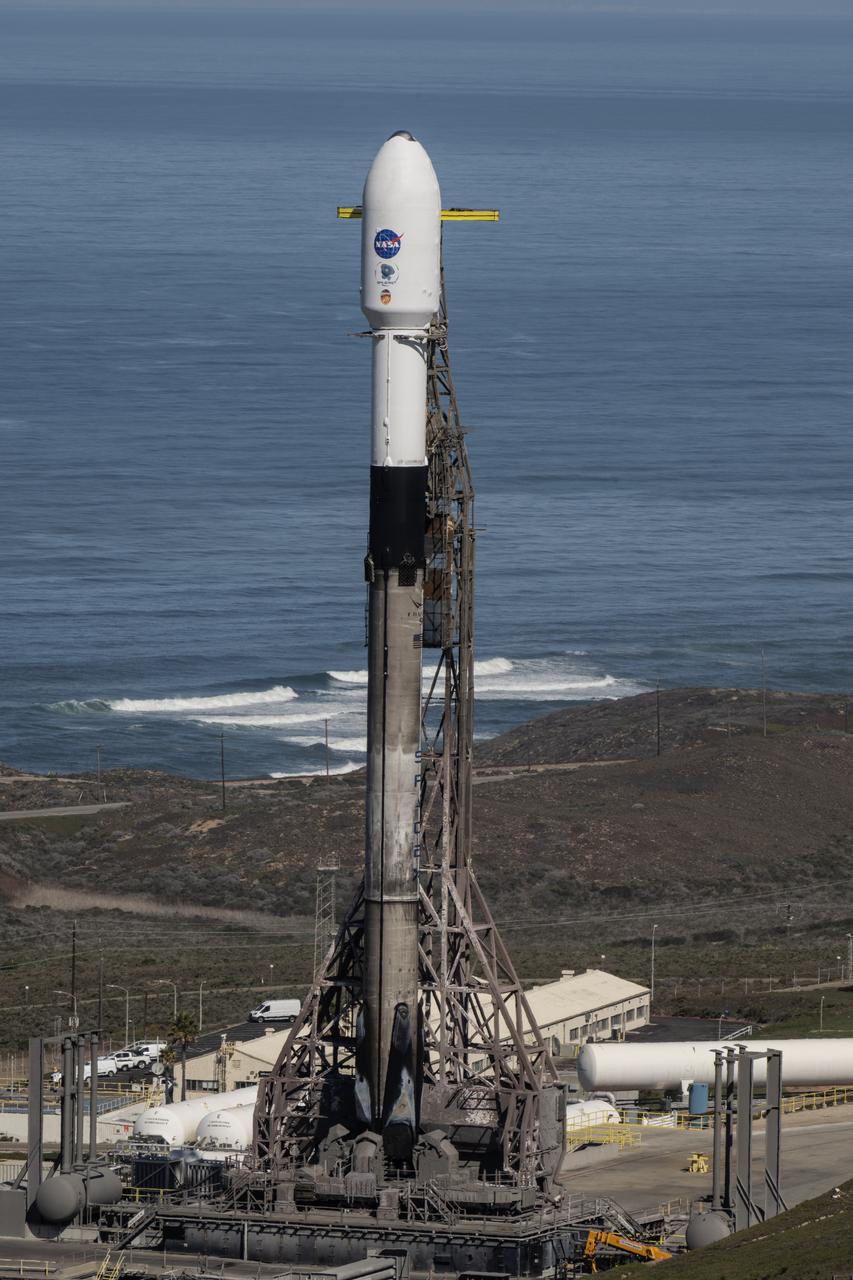
A SpaceX Falcon 9 rocket, carrying NASA’s SPHEREx (Spectro-Photometer for the History of the Universe, Epoch of Reionization and Ices Explorer) observatory and PUNCH (Polarimeter to Unify the Corona and Heliosphere) satellites, is vertical at Space Launch Complex 4 East from Vandenberg Space Force Base in California on Saturday, March 8, 2025. SPHEREx will use its telescope to provide an all-sky spectral survey, creating a 3D map of the entire sky to help scientists investigate the origins of our universe. PUNCH will study origins of the Sun’s outflow of material, or the solar wind, capturing continuous 3D images of the Sun’s corona and the solar wind’s journey into the solar system.
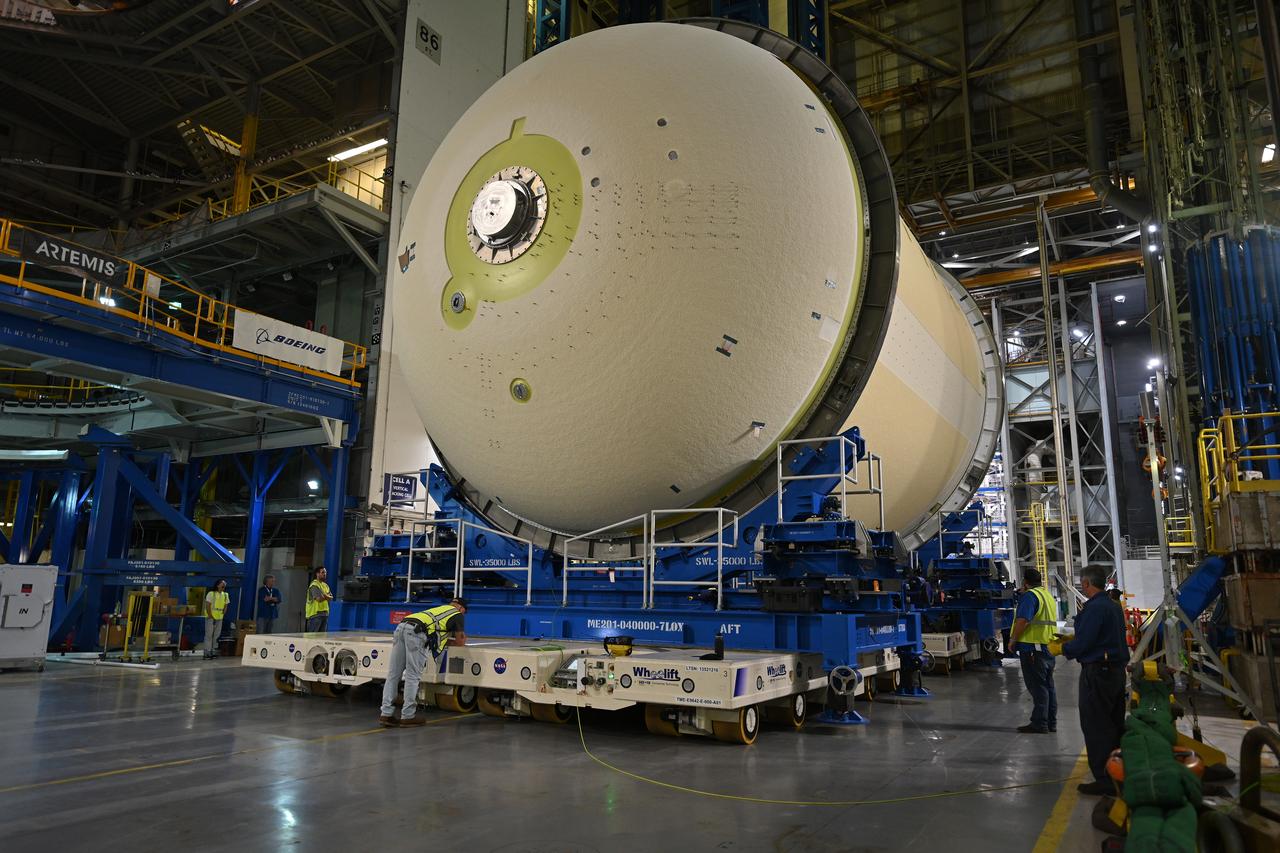
Teams move a liquid oxygen tank – designated for the core stage of NASA’s SLS (Space Launch System) rocket for its Artemis III mission – from the thermal protection system application cell at NASA’s Michoud Assembly Facility in New Orleans to the site’s 210-foot-tall Vertical Assembly Building on July 9. Next, NASA’s SLS prime contractor, Boeing, will vertically install the tank’s aft sump subassembly. The propellant tank is one of five major elements that make up the 212-foot-tall rocket stage. The core stage, along with its four RS-25 engines, produce more than two million pounds of thrust to help launch NASA’s Orion spacecraft, astronauts, and supplies beyond Earth’s orbit and to the lunar surface for Artemis.
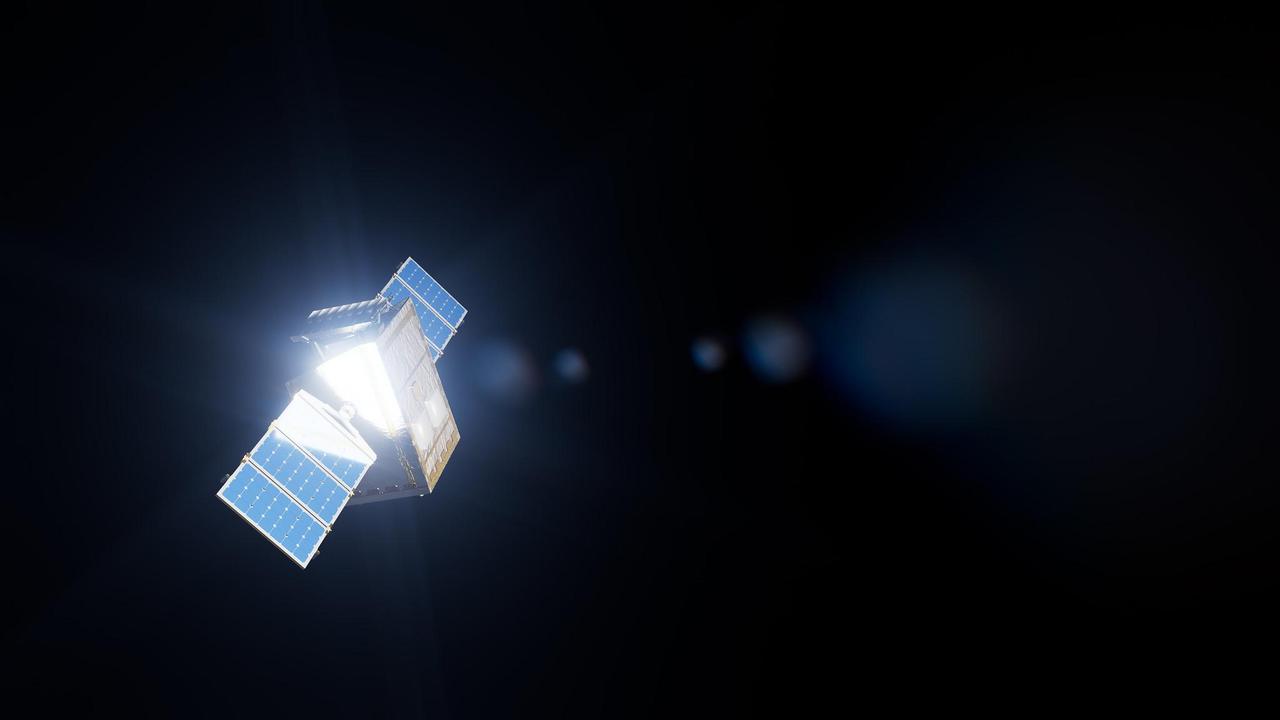
Sunlight gleams off NASA's Lunar Trailblazer in this artist's concept depicting the small satellite in lunar orbit. The spacecraft weighs only 440 pounds (200 kilograms) and measures 11.5 feet (3.5 meters) wide when its solar panels are fully deployed. https://photojournal.jpl.nasa.gov/catalog/PIA26429
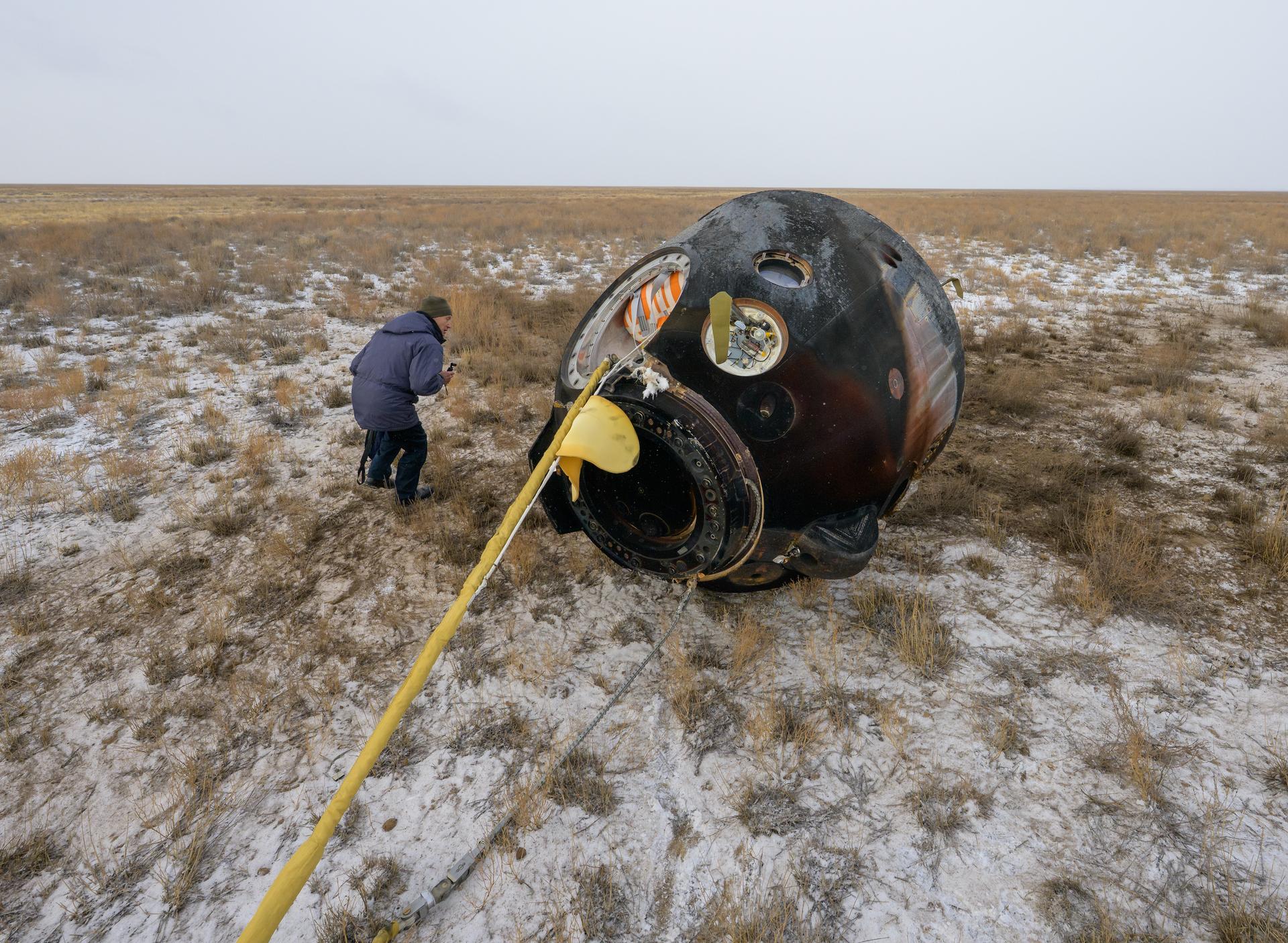
The Soyuz MS-27 spacecraft is seen after it landed in a remote area near the town of Zhezkazgan, Kazakhstan with Expedition 73 NASA astronaut Jonny Kim, and Roscosmos cosmonauts Sergey Ryzhikov, and Alexey Zubritsky aboard, Tuesday, Dec. 9, 2025. The trio are returning to Earth after logging 245 days in space as members of Expeditions 72 and 73 aboard the International Space Station. Photo Credit: (NASA/Bill Ingalls)
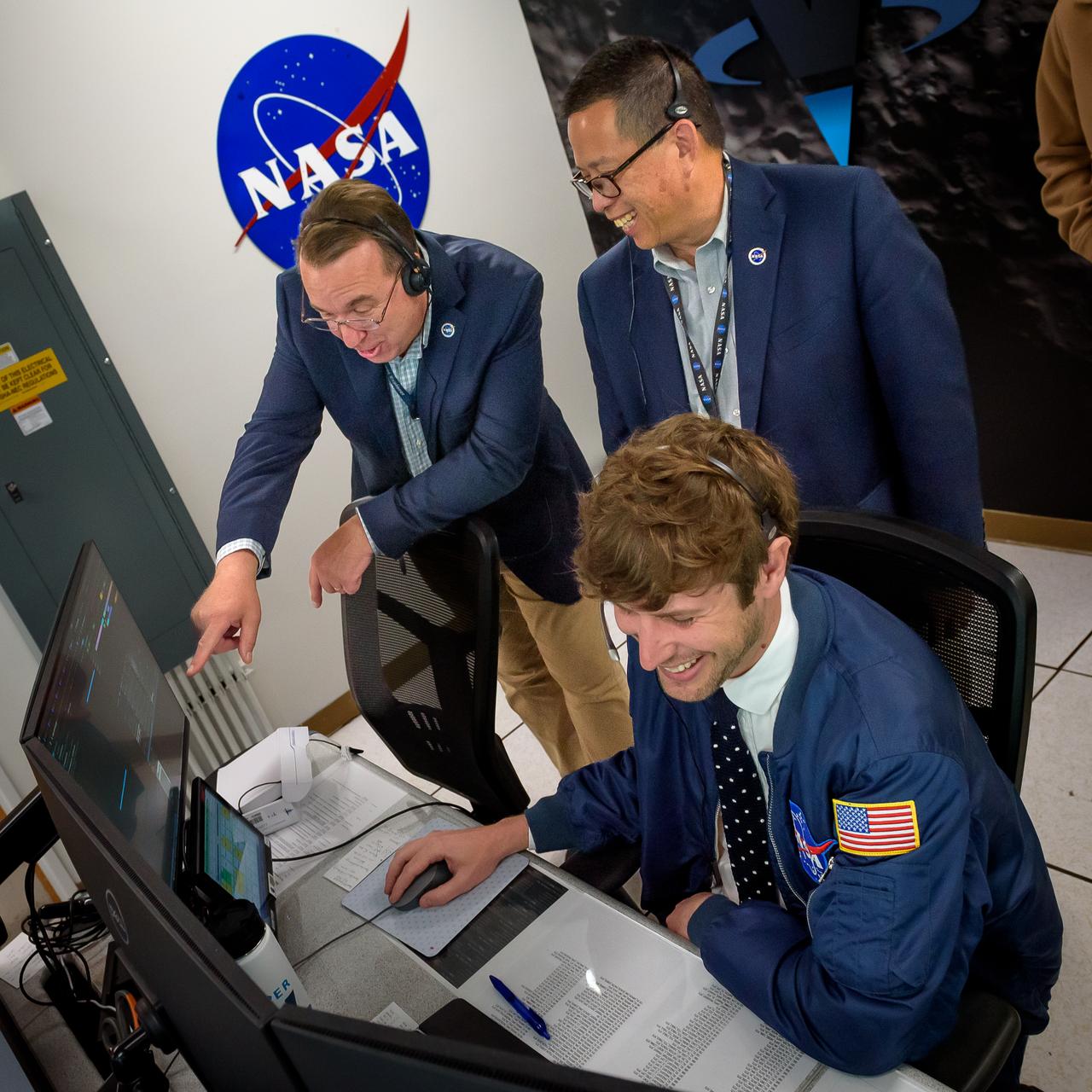
Volatiles Investigating Polar Exploration Rover (VIPER) vehicle operational readiness test in the Multi-Mission Operations Center (MMOC), N240A. Jasper Wolfe, front, with David Korsmeyer, and Eugene Tu.
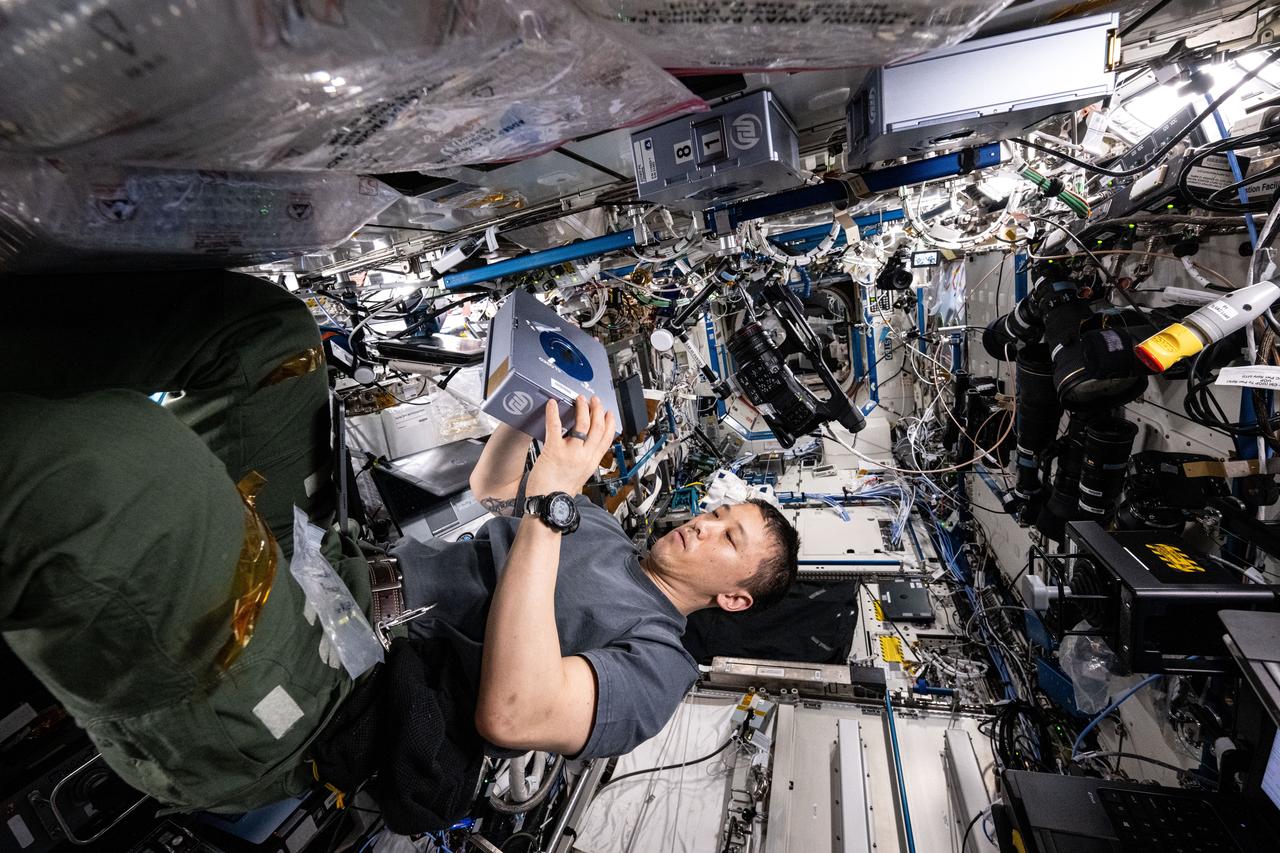
iss073e0548824 (Aug. 29, 2025) --- NASA astronaut and Expedition 73 Flight Engineer Jonny Kim services a sample processor, also known as the Advanced Space Experiment Processor-4 (ADSEP-4), for an investigation that explores advanced pharmaceutical manufacturing techniques for both Earth and space industries.
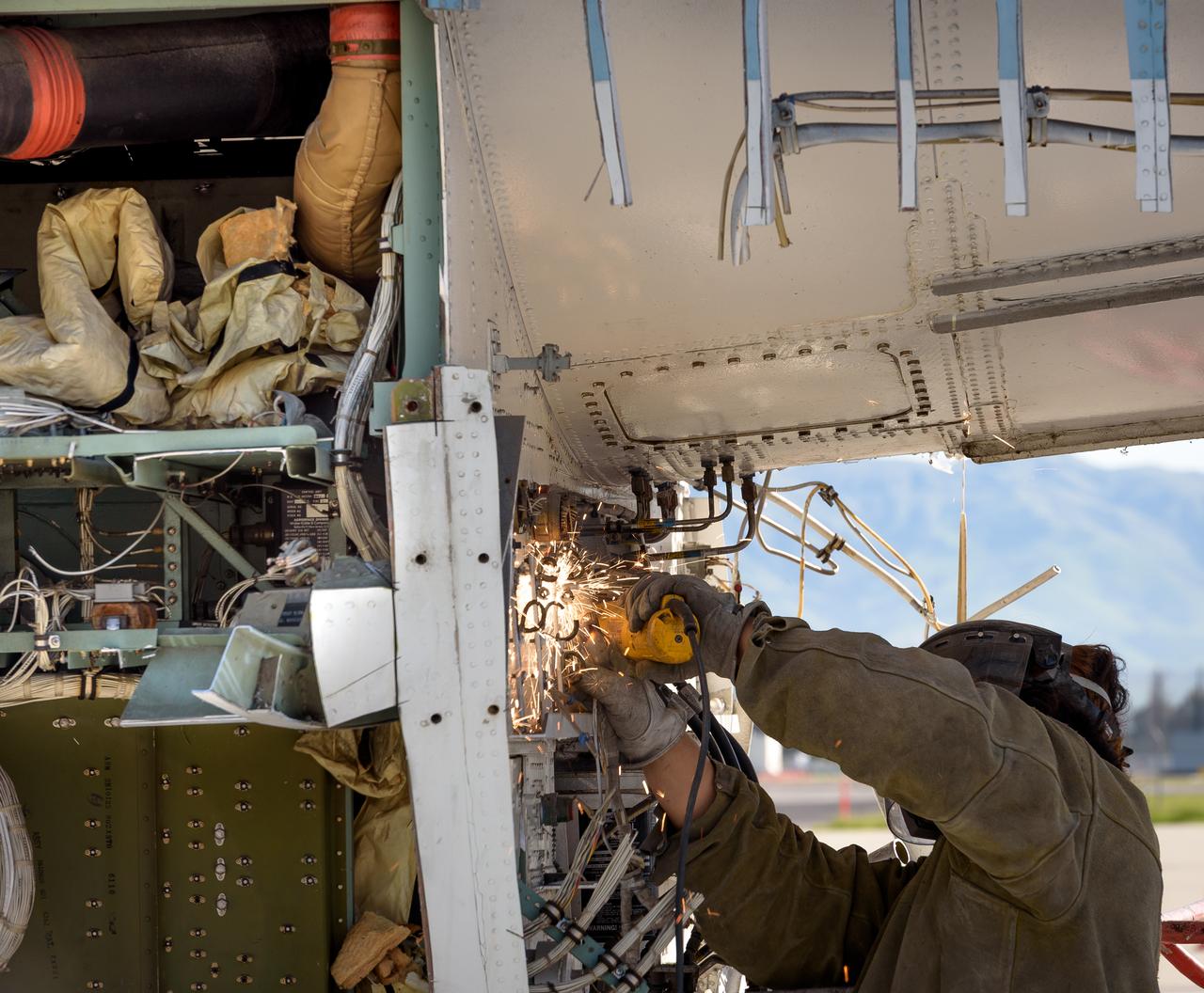
The cockpit of the modified C-141 Kuiper Airborne Observatory, (KAO) (NASA-714), is separated from the airframe on the N211 apron at Moffett Field, California.
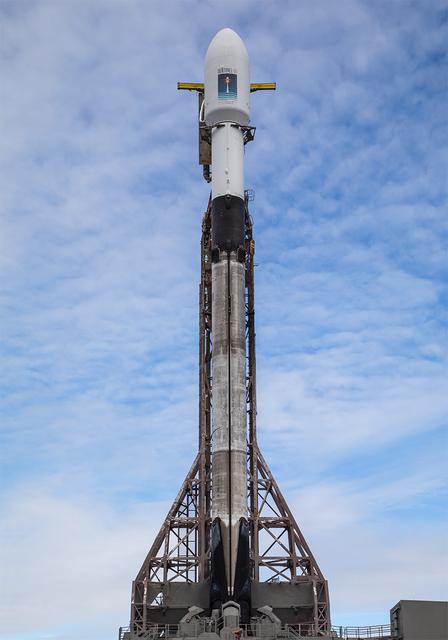
A SpaceX rocket carrying the Sentinel-6B satellite stands vertical on the launch pad at Space Launch Complex 4 East at Vandenberg Space Force Base in California on Sunday, Nov. 16, 2025, ahead of launch targeted for no earlier than 9:21 p.m. PST. A collaboration between NASA, ESA (European Space Agency), EUMETSAT (European Organisation for the Exploitation of Meteorological Satellites), and the National Oceanic and Atmospheric Administration (NOAA), Sentinel-6B is designed to measure sea levels down to roughly an inch for about 90% of the world’s oceans.
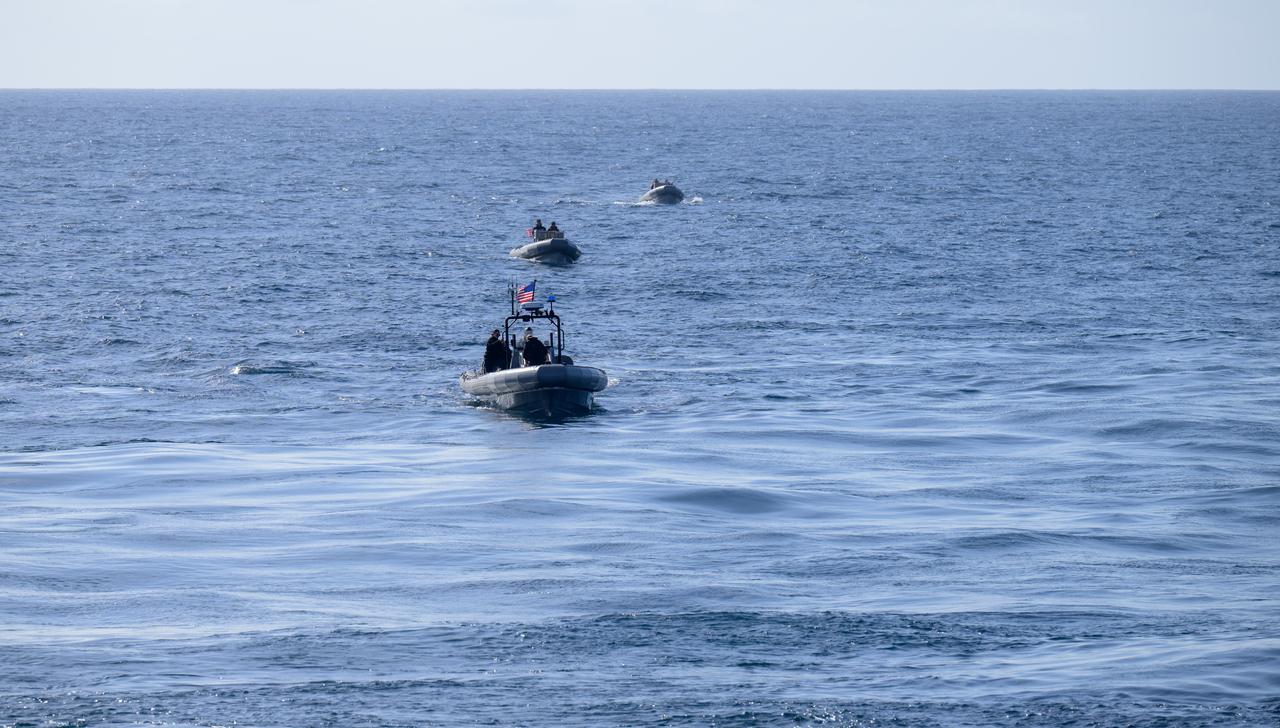
Fast boats are deployed during the Underway Recovery Test-12 onboard USS Somerset off the coast of California, Friday, March 28, 2025. During the test, NASA and Department of Defense teams are practicing to ensure recovery procedures are validated as NASA plans to send Artemis II astronauts around the Moon and splashdown in the Pacific Ocean. Photo Credit: (NASA/Bill Ingalls)
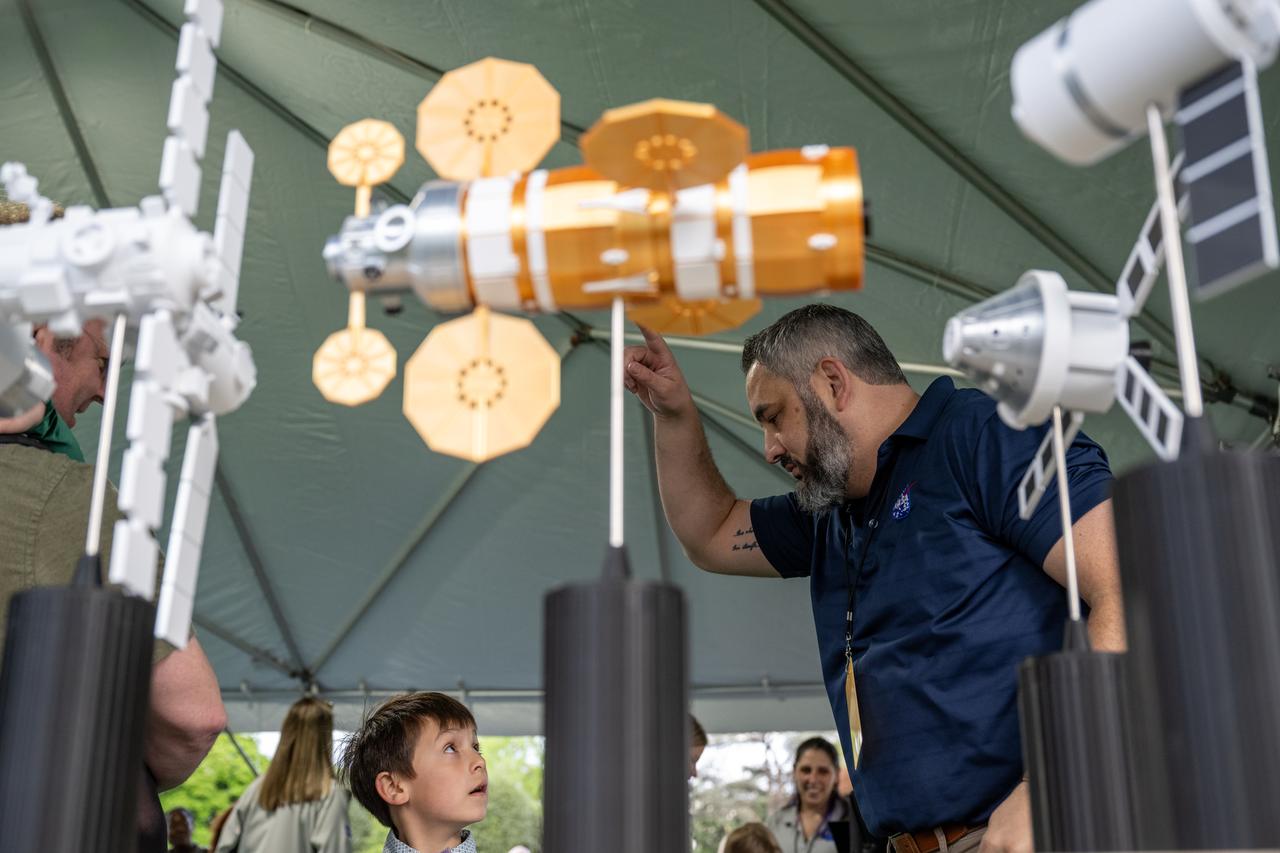
Guests participate in STEM activities during the White House Easter Egg Roll, Monday, April 21, 2025, on the South Lawn of the White House in Washington. Photo Credit: (NASA/Keegan Barber)
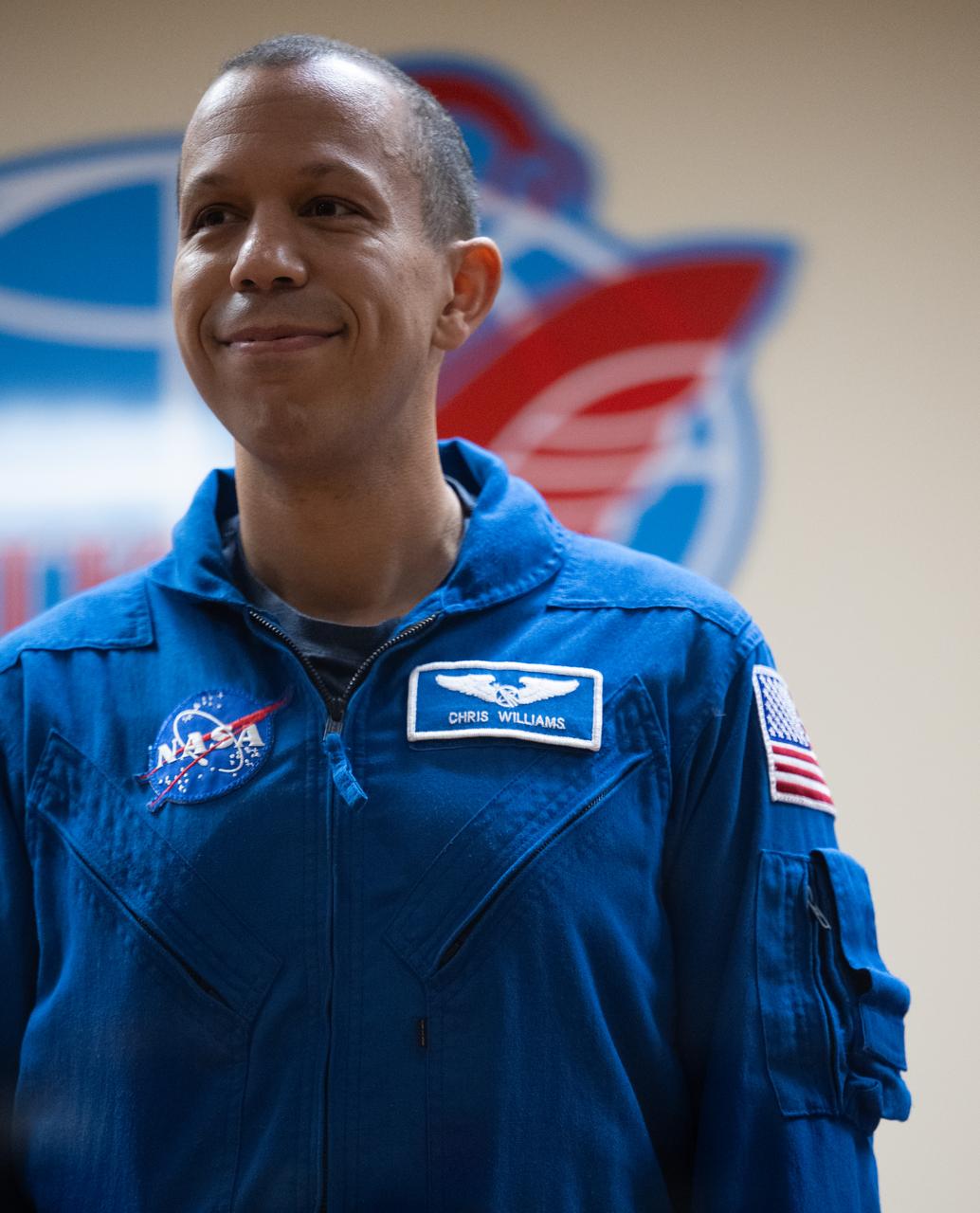
Expedition 73 backup crewmember Chris Williams of NASA seen in quarantine, behind glass, during a press conference, Monday, April 7, 2025 a the Cosmonaut Hotel in Baikonur, Kazakhstan. Expedition 73 crew members: NASA astronaut Jonny Kim, and Roscosmos cosmonauts Sergey Ryzhikov and Alexey Zubritskiy, are scheduled to launch aboard their Soyuz MS-27 spacecraft on April 8. Photo Credit: (NASA/Joel Kowsky)
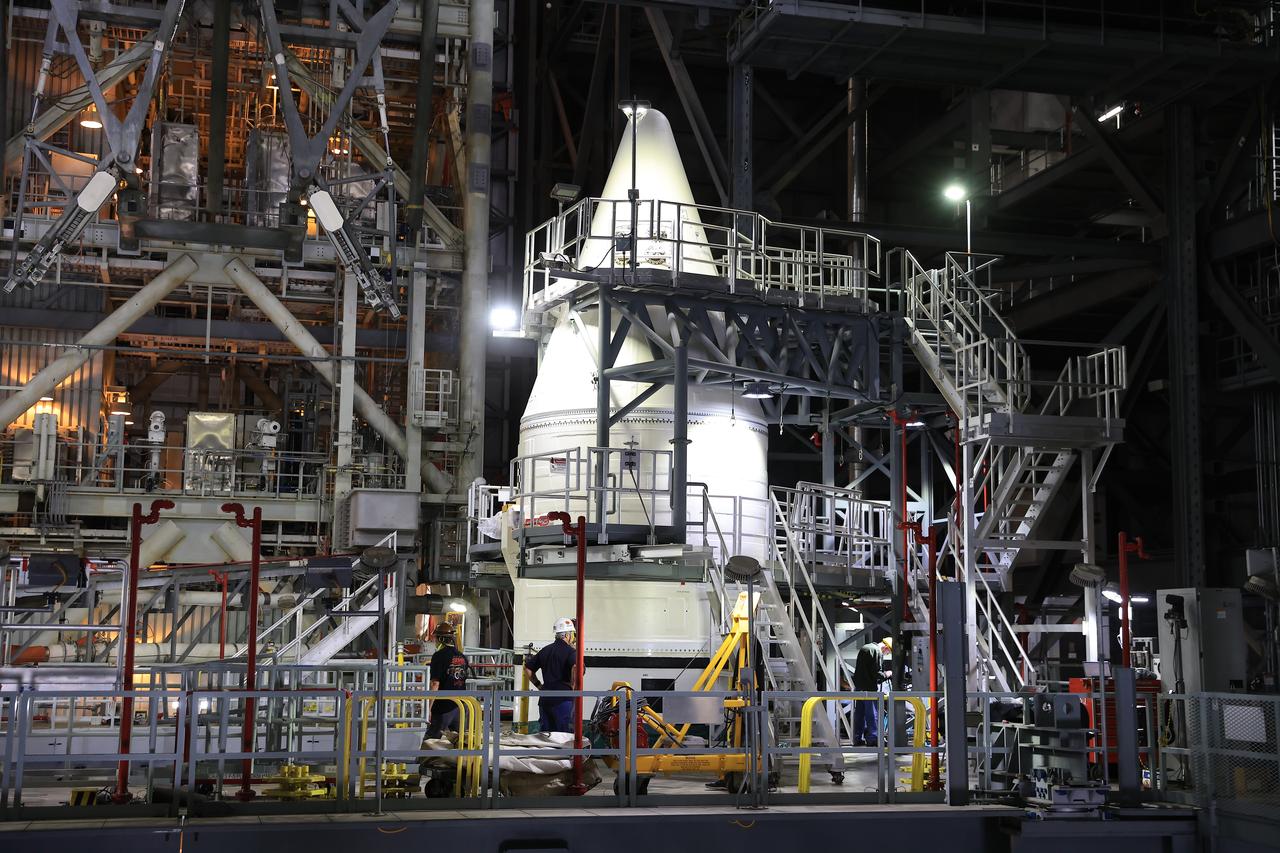
Engineers with NASA’s Exploration Ground Systems complete stacking operations on the twin SLS (Space Launch System) solid rocket boosters for Artemis II by integrating the nose cones atop the forward assemblies inside the Vehicle Assembly Building’s High Bay 3 at NASA’s Kennedy Space Center in Florida on Wednesday, Feb. 19, 2025. During three months of stacking operations, technicians used a massive overhead crane to lift 10 booster segments – five segments per booster – and aerodynamic nose cones into place on mobile launcher 1. The twin solid boosters will help support the remaining rocket components and the Orion spacecraft during final assembly of the Artemis II Moon rocket and provide more than 75 percent of the total SLS thrust during liftoff from NASA Kennedy’s Launch Pad 39B.
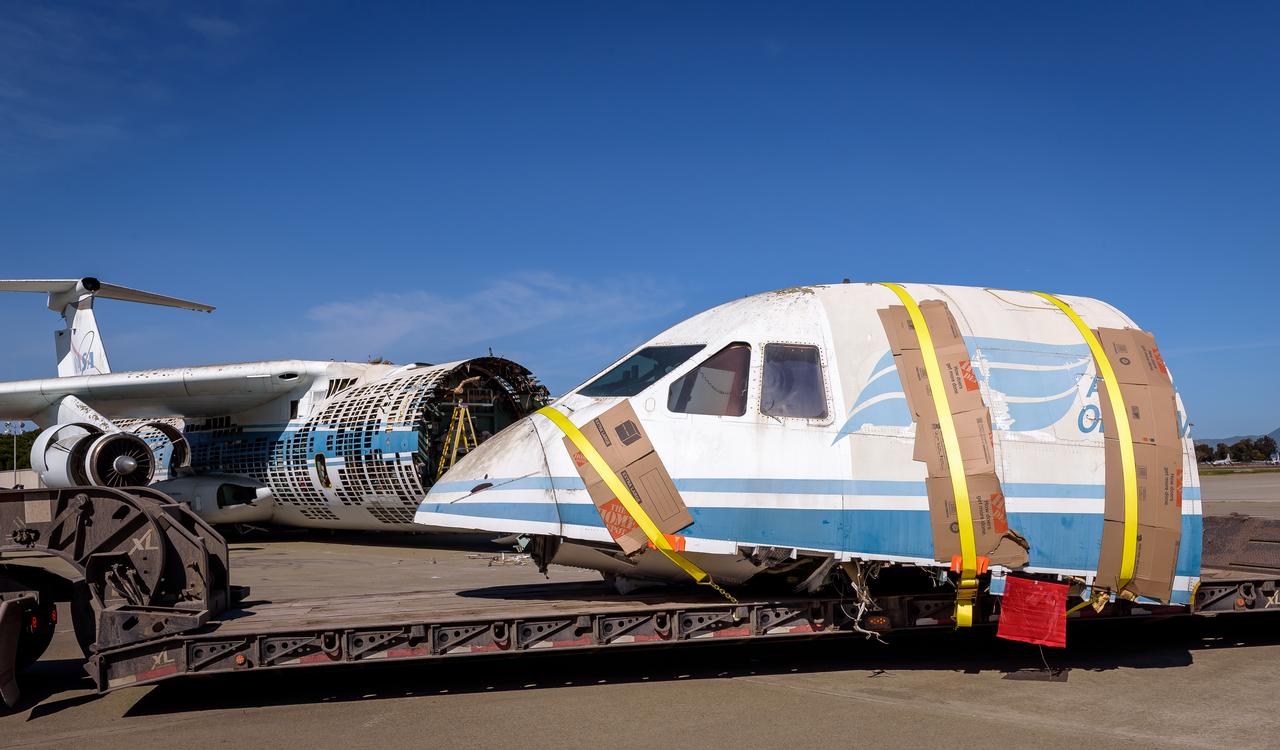
Yellow straps fasten the cockpit of the modified C-141 Kuiper Airborne Observatory, (KAO) (NASA-714), to the trailer that carries it off the N211 apron at Moffett Field, California.
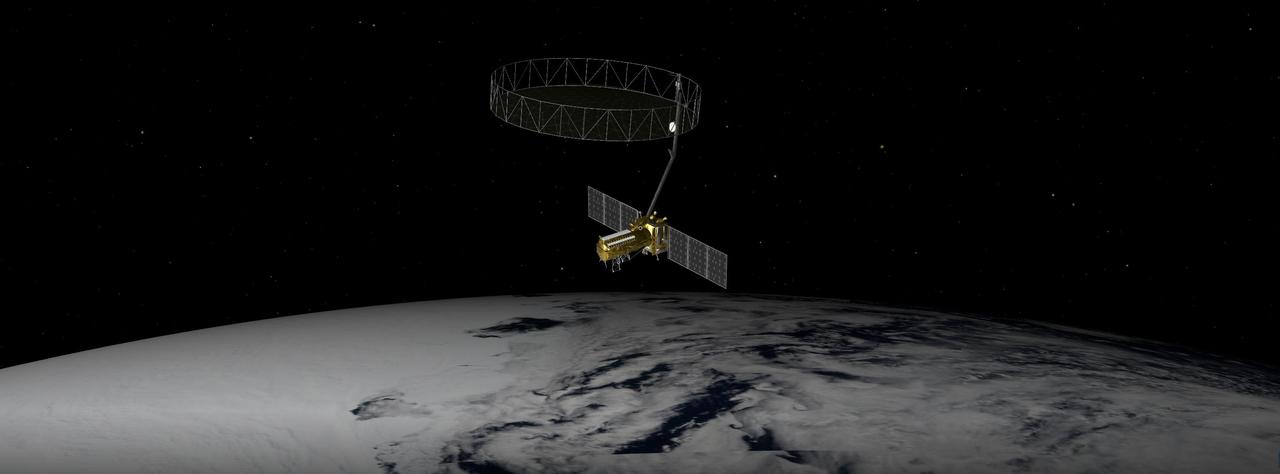
This artist's concept depicts the NISAR satellite orbiting Earth over Antarctica. Short for NASA-ISRO Synthetic Aperture Radar, the mission is an equal collaboration between the NASA and the Indian Space Research Organisation and marks the first time the two agencies have cooperated on hardware development for an Earth-observing mission. Observations from NISAR will benefit humanity by helping researchers around the world better understand changes in our planet's surface, including its ice sheets, glaciers, and sea ice. It also will capture changes in forest and wetland ecosystems and track movement and deformation of our planet's crust by phenomena such as earthquakes, landslides, and volcanic activity. The global and rapid coverage from NISAR will provide unprecedented opportunities for disaster response, producing data to assist in mitigating and assessing damage, with observations before and after catastrophic events available in short time frames. NISAR will launch from ISRO's Satish Dhawan Space Centre on India's southeastern coast in March 2025. https://photojournal.jpl.nasa.gov/catalog/PIA26492

A Soyuz rocket launches to the International Space Station with Expedition 73 crew members: NASA astronaut Jonny Kim, and Roscosmos cosmonauts Sergey Ryzhikov and Alexey Zubritskiy, onboard, Tuesday, April 8, 2025, at the Baikonur Cosmodrome in Kazakhstan. Photo Credit: (NASA/Joel Kowsky)
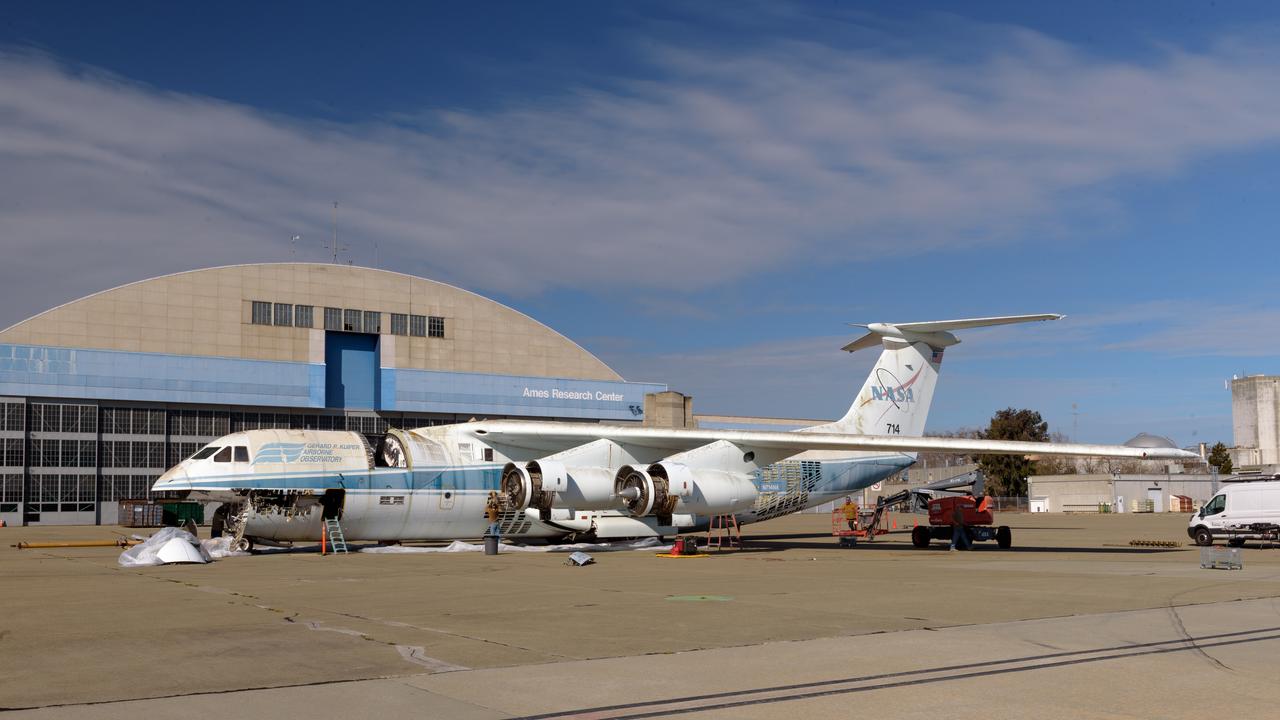
Removing the skin from the airframe of the modified C-141 Kuiper Airborne Observatory, (KAO) (NASA-714), on the N211 apron at Moffett Field, California.

Roscosmos cosmonaut Sergey Kud-Sverchkov waves farewell, as he and fellow crewmembers, Roscosmos cosmonaut Sergei Mikaev, and NASA astronaut Chris Williams, depart the Cosmonaut Hotel to suit-up for their Soyuz launch, Thursday, Nov. 27, 2025, in Baikonur, Kazakhstan. The launch will send Williams, Kud-Sverchkov and Mikaev, on a mission to the International Space Station. Photo Credit: (NASA/Bill Ingalls)
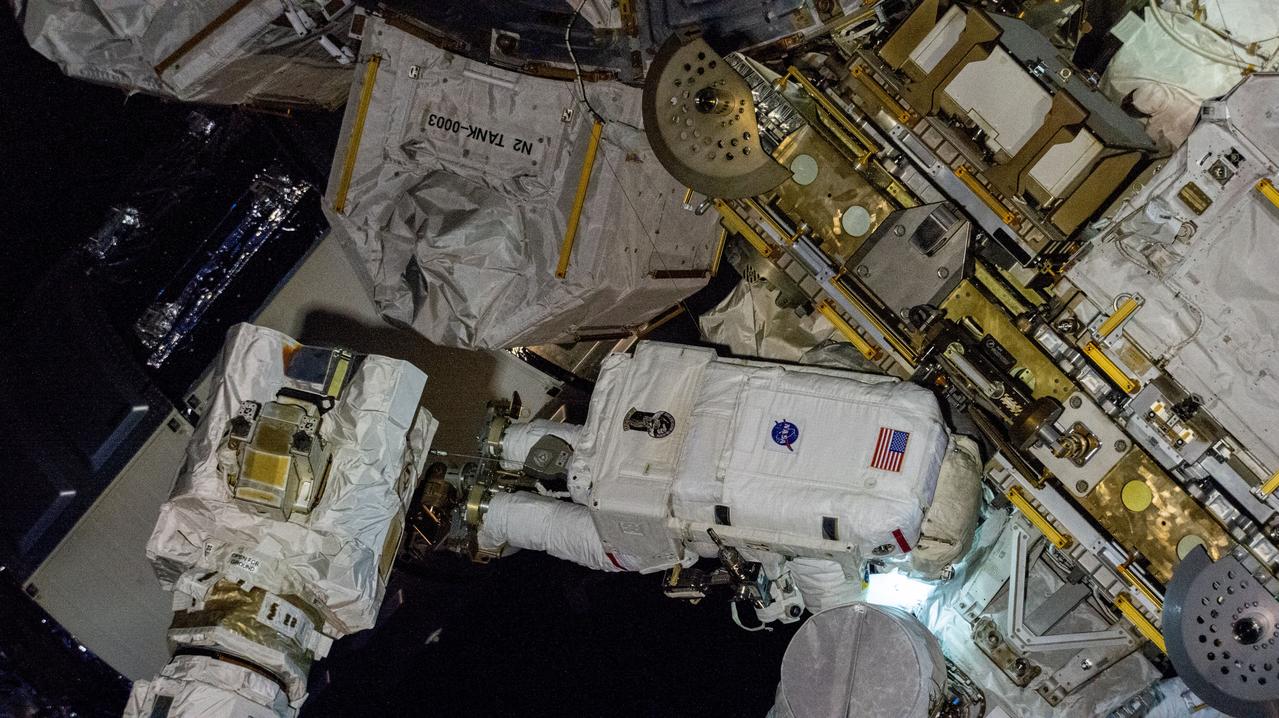
iss072e574847 (Jan. 30, 2025) --- NASA astronaut and Expedition 72 Commander Suni Williams works outside the International Space Station during a five-hour and 26-minute spacewalk to remove and stow a radio frequency group antenna assembly. In the left foreground, is the latching end effector of the Canadarm2 robotic arm. The orbital outpost was soaring 267 miles above New Zealand at the time of this photograph.
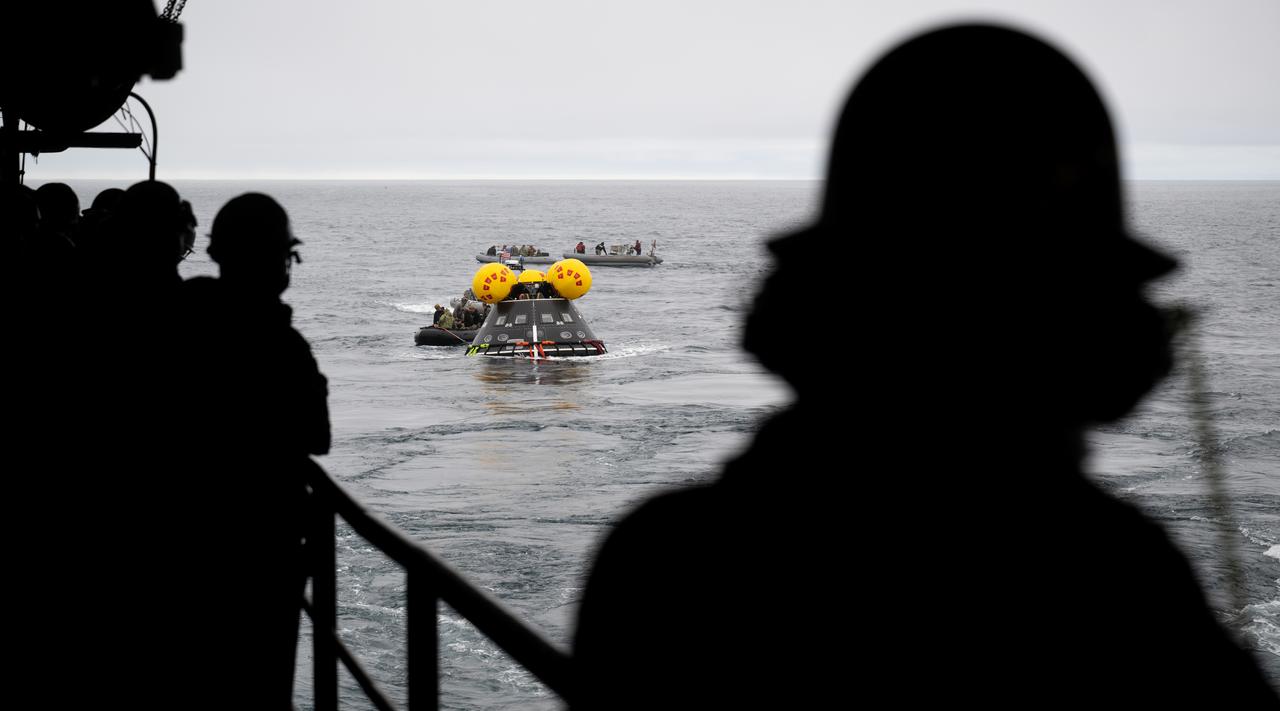
Teams work to recover the Crew Module Test Article (CMTA), a full scale replica of the Orion spacecraft, as they practice Artemis recovery operations during Underway Recovery Test-12 onboard USS Somerset off the coast of California, Thursday, March 27, 2025. During the test, NASA and Department of Defense teams are practicing to ensure recovery procedures are validated as NASA plans to send the Artemis II astronauts around the Moon and splashdown in the Pacific Ocean. Photo Credit: (NASA/Joel Kowsky)
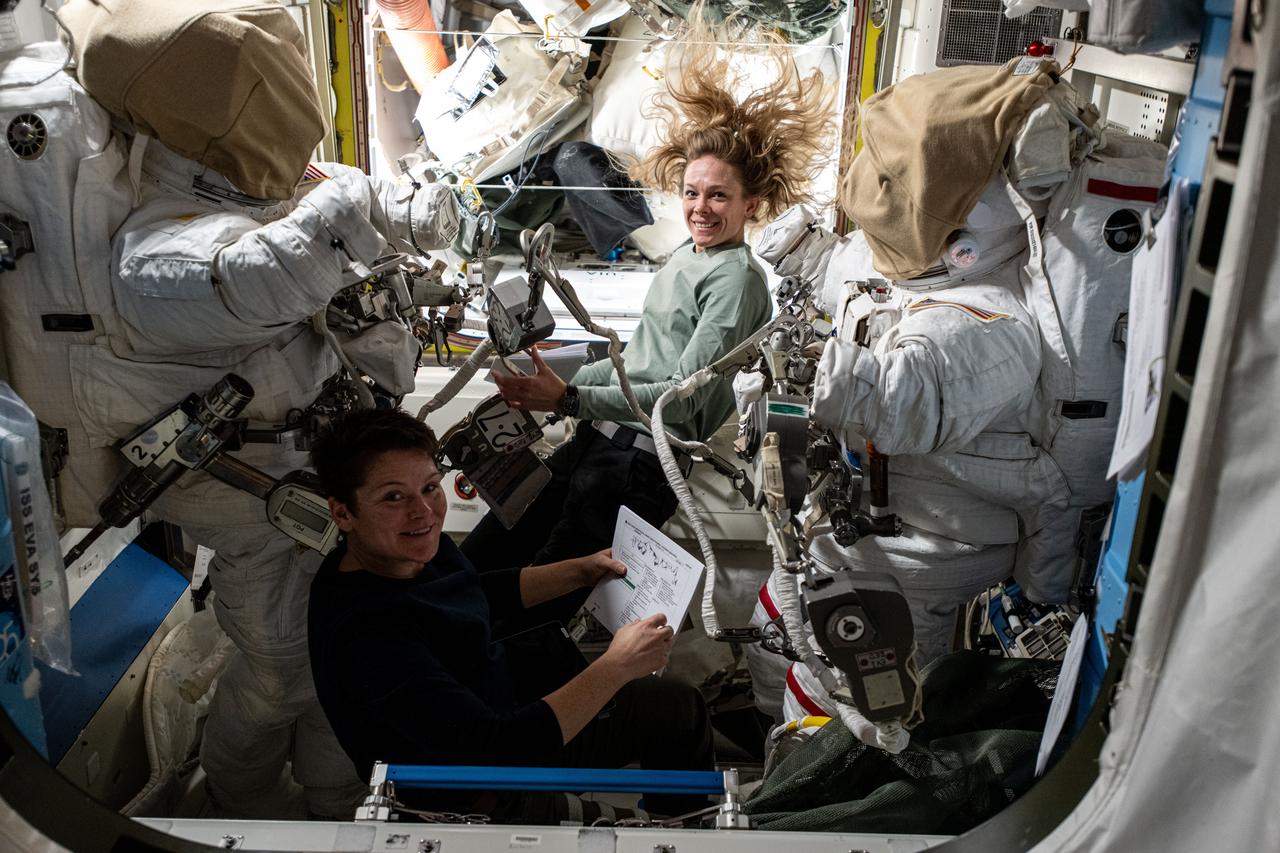
iss073e0000415 (April 21, 2025) --- NASA astronauts Anne McClain (bottom) and Nichole Ayers (top), both Expedition 73 Flight Engineers, checkout spacesuit hardware in the Quest airlock and review procedures for a May 1 spacewalk. The spacewalkers will install a modification kit on the International Space Station’s port side truss structure preparing it for a new rollout solar array and relocate an antenna that communicates with commercial spacecraft.

NASA and Caltech participate in a science briefing on Tuesday, Feb. 25, 2025, to discuss the upcoming launch of NASA’s SPHEREx (Spectro-Photometer for the History of the Universe, Epoch of Reionization and Ices Explorer) observatory and PUNCH (Polarimeter to Unify the Corona and Heliosphere) satellites at Vandenberg Space Force Base in California. SPHEREx will use its telescope to provide an all-sky spectral survey, creating a 3D map of the entire sky to help scientists investigate the origins of our universe. PUNCH will study origins of the Sun’s outflow of material, or the solar wind, capturing continuous 3D images of the Sun’s corona and the solar wind’s journey into the solar system.
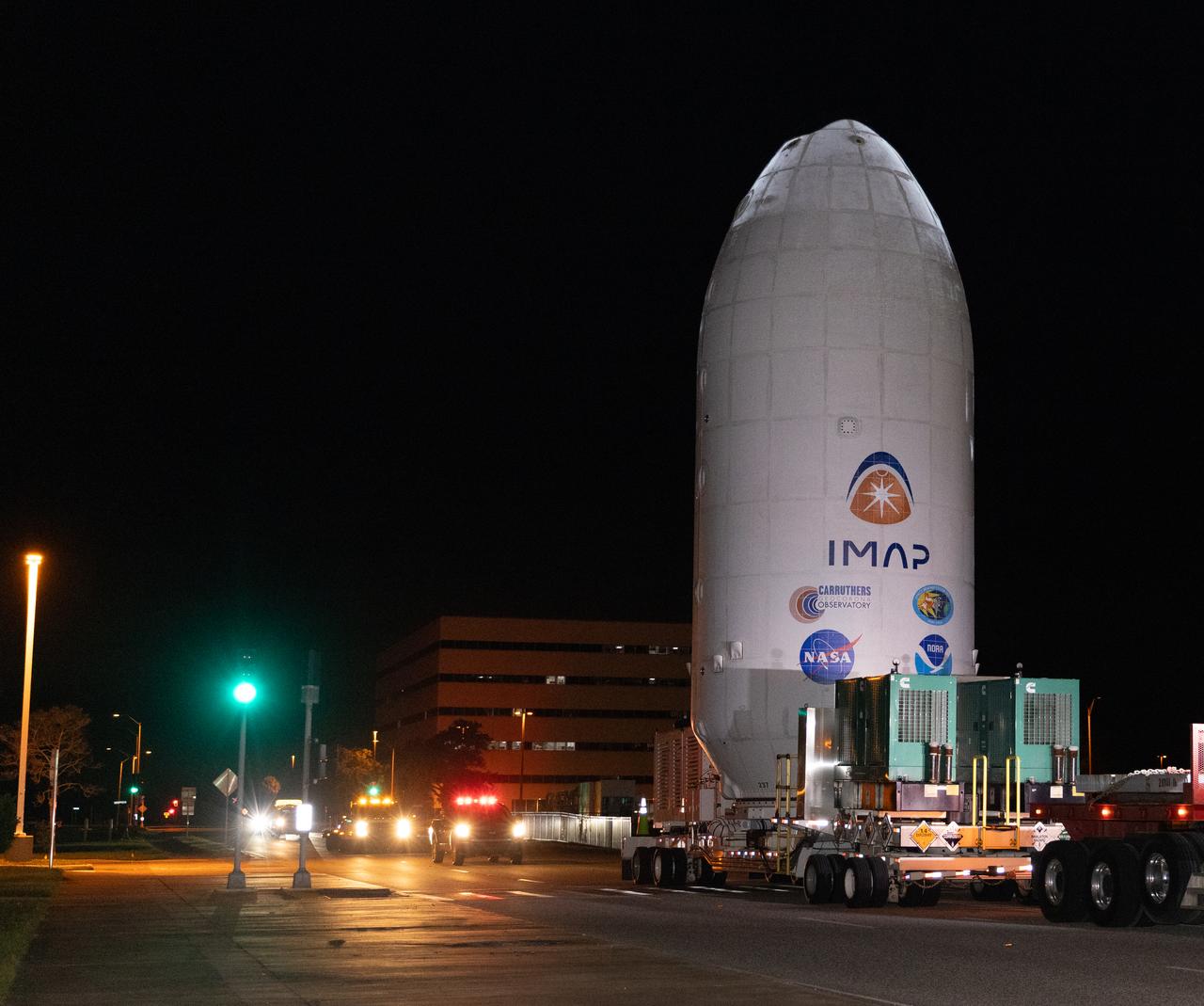
Workers transport NASA’s IMAP (Interstellar Mapping and Acceleration Probe) spacecraft along with the agency’s Carruthers Geocorona Observatory and National Oceanic and Atmospheric Administration’s (NOAA) Space Weather Follow On–Lagrange 1 (SWFO-L1) satellite late on Wednesday, Sept. 17, 2025, through early Thursday, Sept. 18, 2025, from the Astrotech Space Operations Facility in Titusville Florida, to the SpaceX hangar at Launch Complex 39A at the agency’s Kennedy Space Center in Florida. Technicians will soon mate the three spacecraft to a SpaceX Falcon 9 rocket in preparation for launch. Liftoff is targeted for 7:32 a.m. EDT, Tuesday, Sept. 23, from Launch Complex 39A at NASA Kennedy.
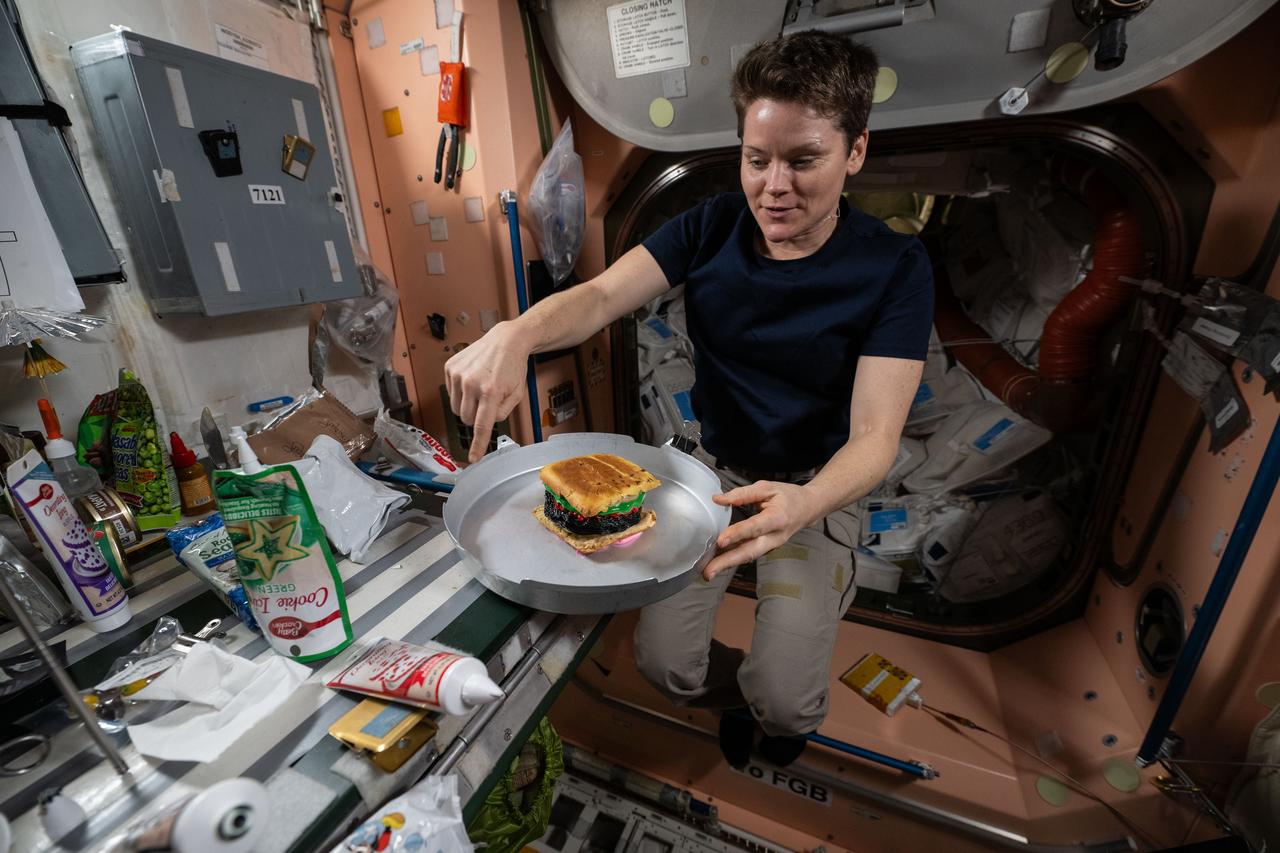
iss073e0248474 (June 13, 2025) --- NASA astronaut and Expedition 73 Flight Engineer Anne McClain shows off a hamburger-shaped cake to celebrate 200 cumulative days in space for JAXA (Japan Aerospace Exploration Agency) astronaut Takuya Onishi (out of frame) since his first spaceflight as an Expedition 48-49 Flight Engineer in 2016.

NASA’s Artemis II Orion spacecraft with its launch abort system is stacked atop the agency’s SLS (Space Launch System) rocket in High Bay 3 of the Vehicle Assembly Building at NASA’s Kennedy Space Center in Florida on Monday, Oct. 20, 2025. The spacecraft will carry NASA astronauts Reid Wiseman, Victor Glover, Christina Koch, and CSA (Canadian Space Agency) astronaut Jeremy Hansen on a 10-day mission around the Moon and back in early 2026. Teams will begin conducting a series of verification tests ahead of rolling out the integrated SLS rocket to NASA Kennedy’s Launch Complex 39B for the wet dress rehearsal.

Matt Machlis during the Volatiles Investigating Polar Exploration Rover (VIPER) vehicle operational readiness test in the Multi-Mission Operations Center (MMOC), N240A.
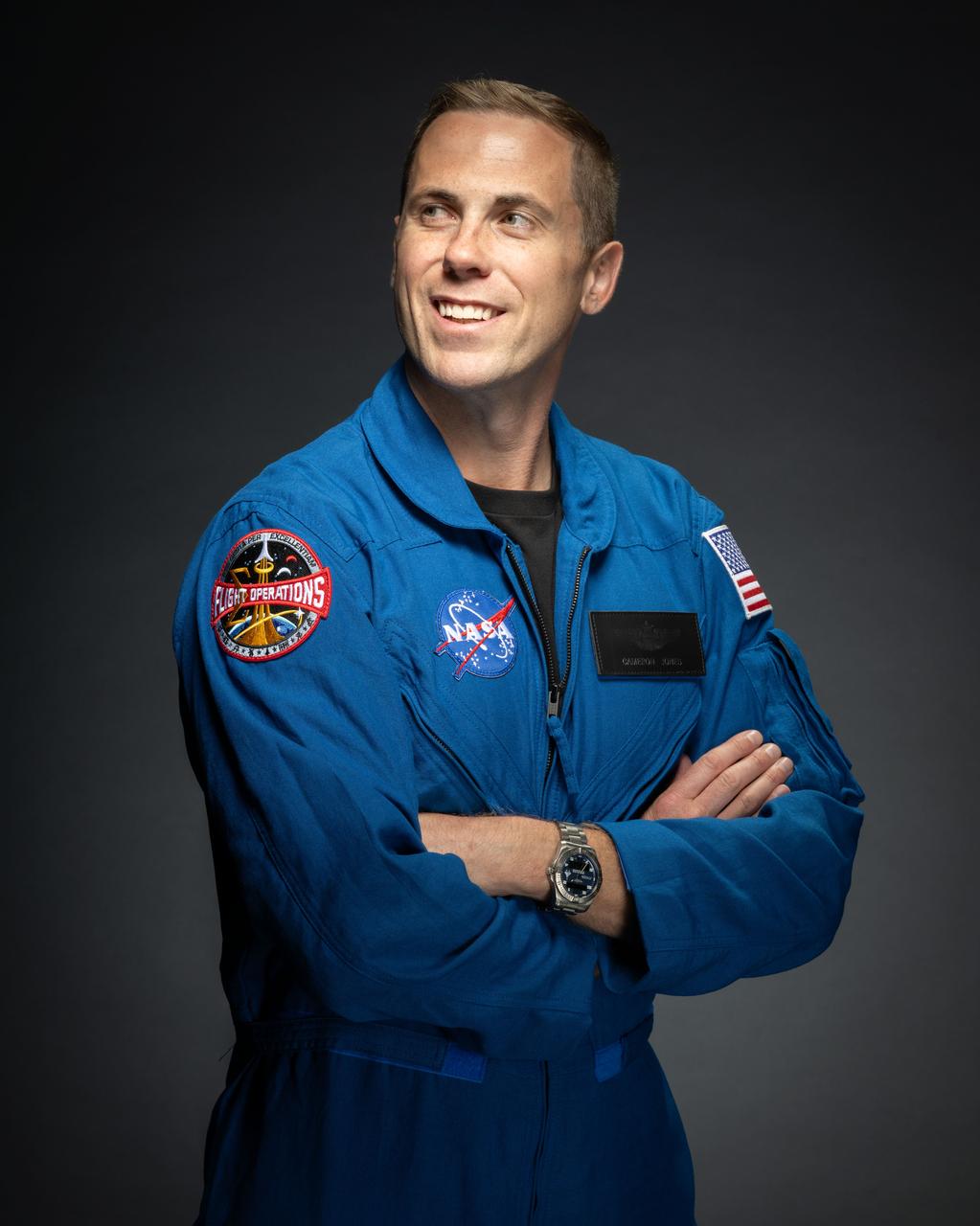
jsc2025e074940 (September 15, 2025) --- Cameron Jones was selected by NASA to join the 2025 astronaut candidate class. He reported for duty in September 2025. Credit: NASA/Bill Stafford
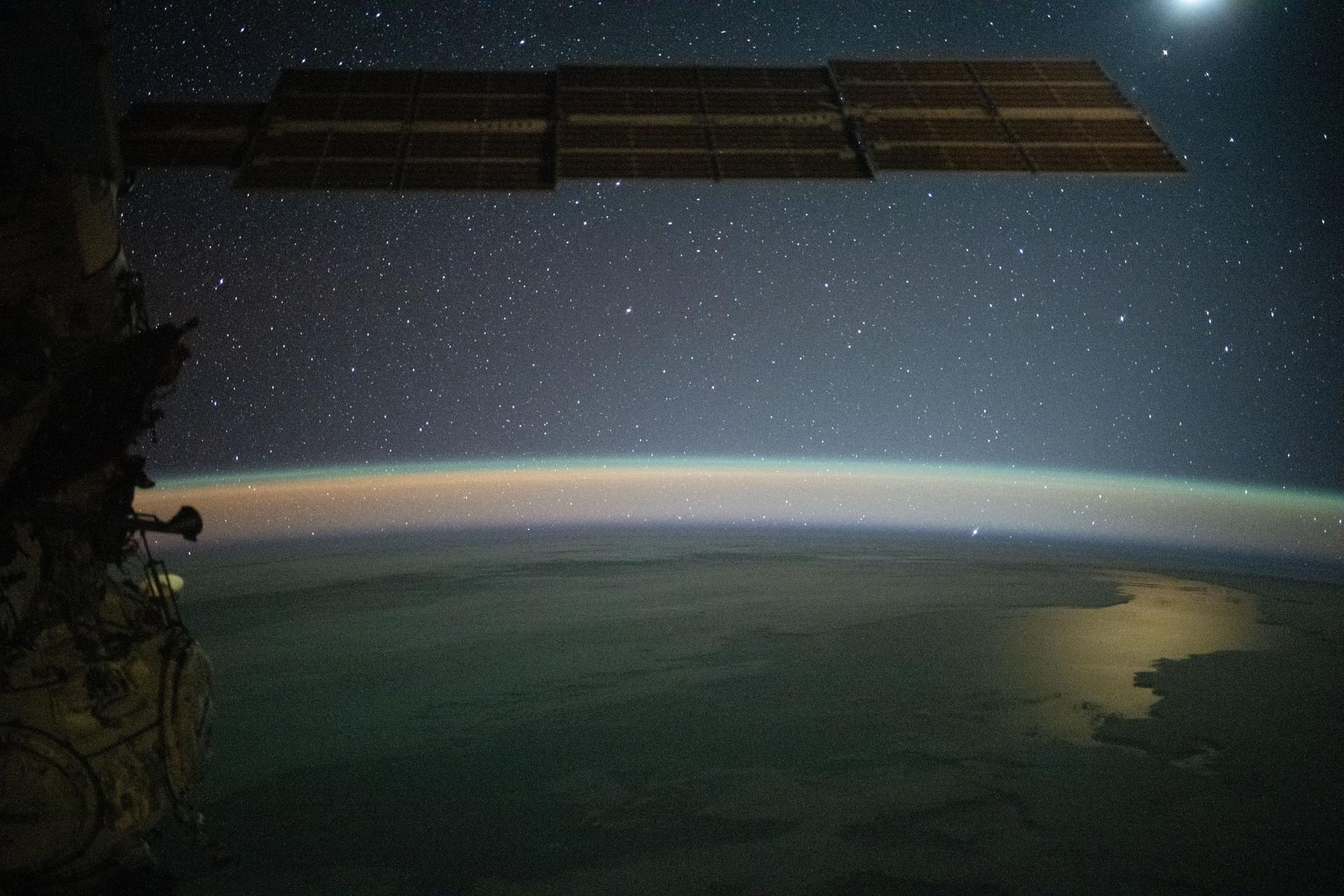
iss073e0982346 (Oct. 25, 2025) --- This serene image of the Moon (upper right) glinting off the Southern Pacific Ocean—beneath a yellow-green airglow and a starry night sky—was taken at approximately 8:59 p.m. local time from the International Space Station as it orbited 263 miles above Earth, southwest of French Polynesia, an overseas collectivity of France comprising more than 100 islands.
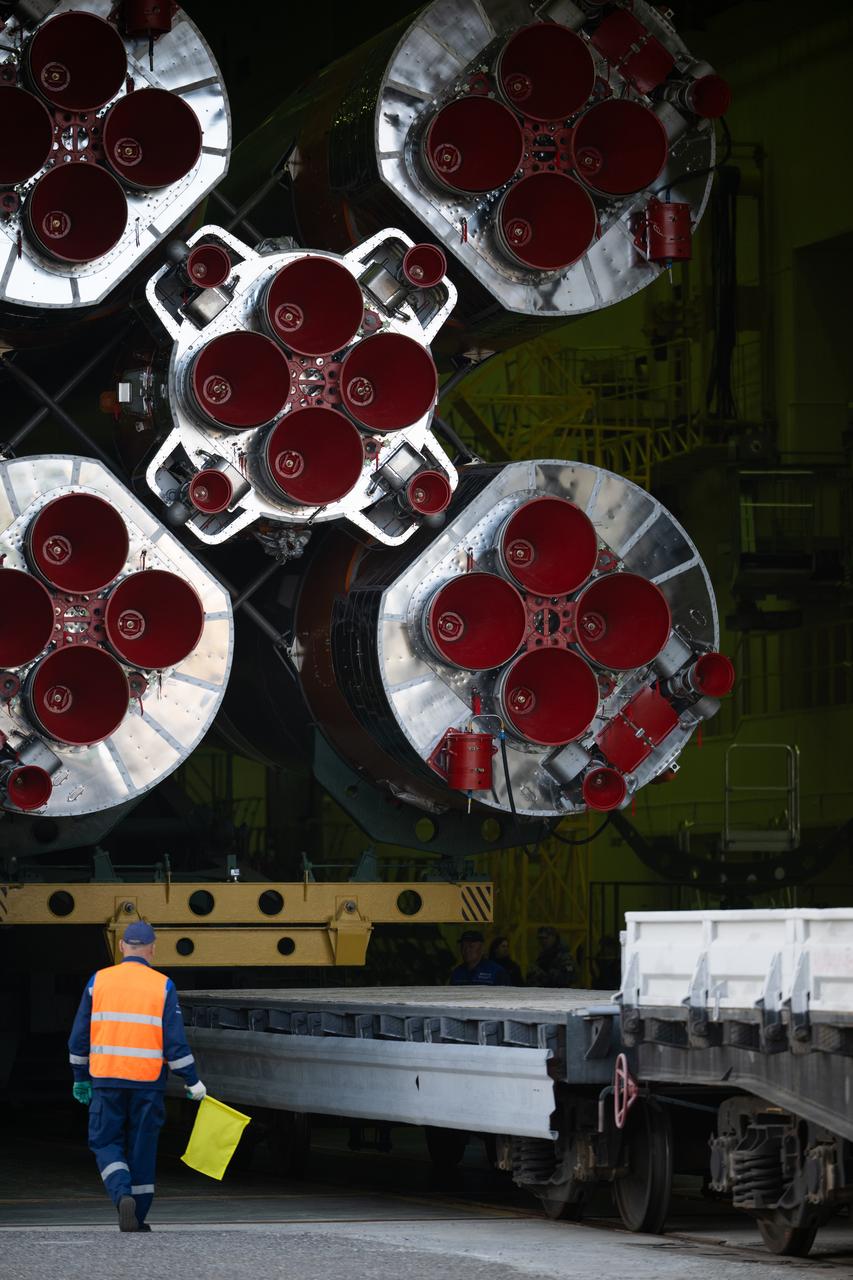
The Soyuz rocket is seen inside the integration building before it is rolled out by train to the launch pad at Site 31, Saturday, April 5, 2025, at the Baikonur Cosmodrome in Kazakhstan. Expedition 73 crewmembers: NASA astronaut Jonny Kim, and Roscosmos cosmonauts Sergey Ryzhikov and Alexey Zubritskiy, are scheduled to launch aboard their Soyuz MS-27 spacecraft on April 8. Photo Credit: (NASA/Joel Kowsky)
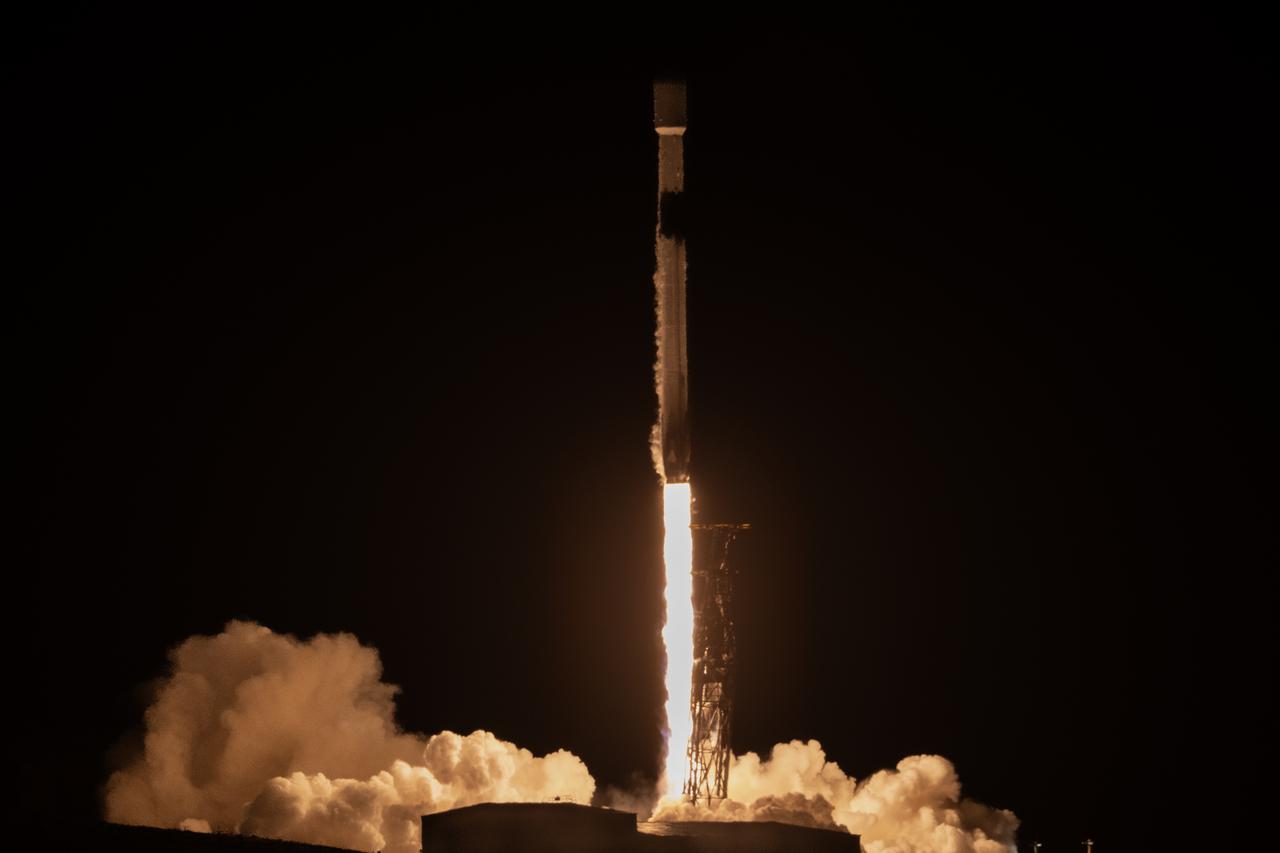
A SpaceX Falcon 9 rocket, carrying NASA’s SPHEREx (Spectro-Photometer for the History of the Universe, Epoch of Reionization and Ices Explorer) observatory and PUNCH (Polarimeter to Unify the Corona and Heliosphere) satellites, launches from Space Launch Complex 4 East at Vandenberg Space Force Base in California on Tuesday, March 11, 2025. SPHEREx will use its telescope to provide an all-sky spectral survey, creating a 3D map of the entire sky to help scientists investigate the origins of our universe. PUNCH will study origins of the Sun’s outflow of material, or the solar wind, capturing continuous 3D images of the Sun’s corona and the solar wind’s journey into the solar system.
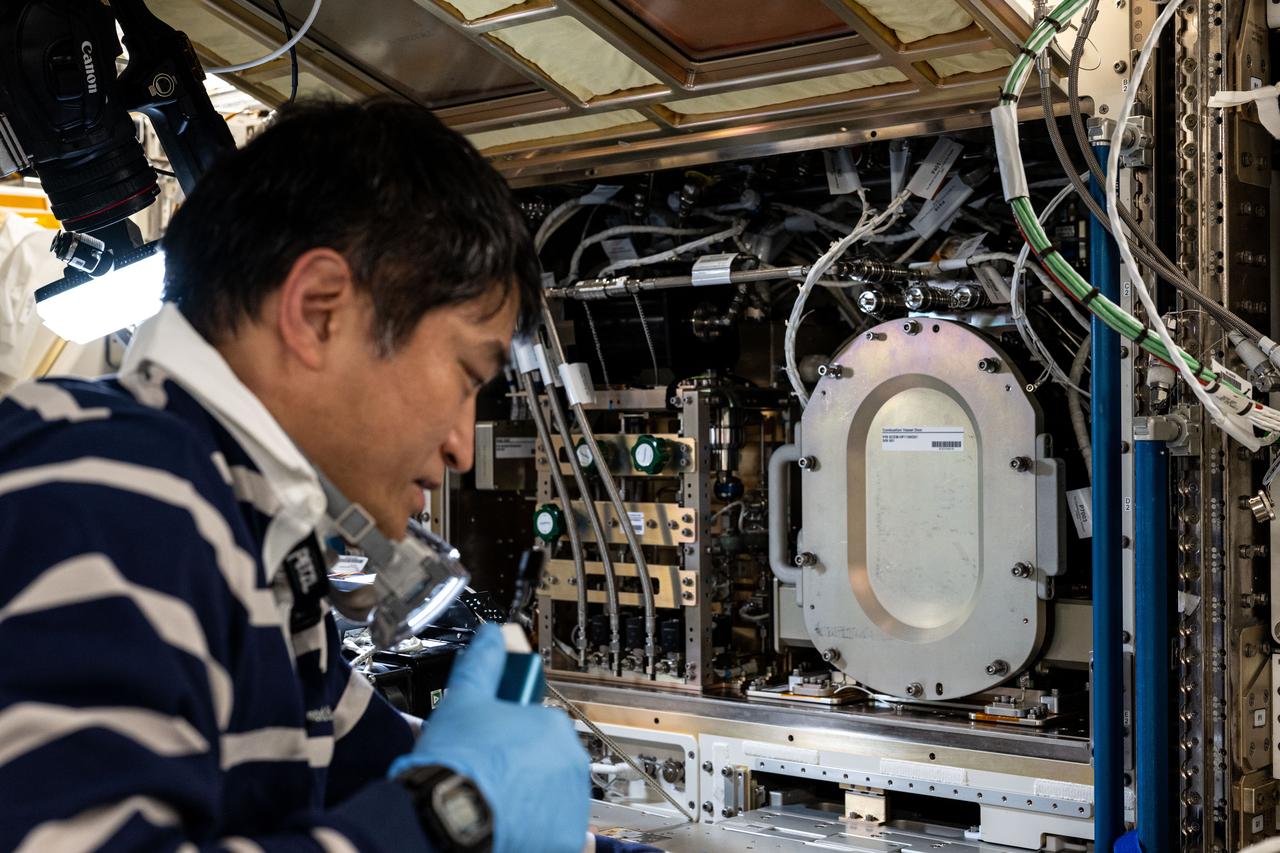
iss073e0030301 (May 13, 2025) --- JAXA (Japan Aerospace Exploration Agency) astronaut and Expedition 73 Commander Takuya Onishi swaps research hardware inside the Kibo laboratory module's solid combustion experiment module. Combustion research aboard the International Space Station helps researchers understand how fuels burn in space, design safer spacecraft, develop new materials, and more aboard the orbital outpost.
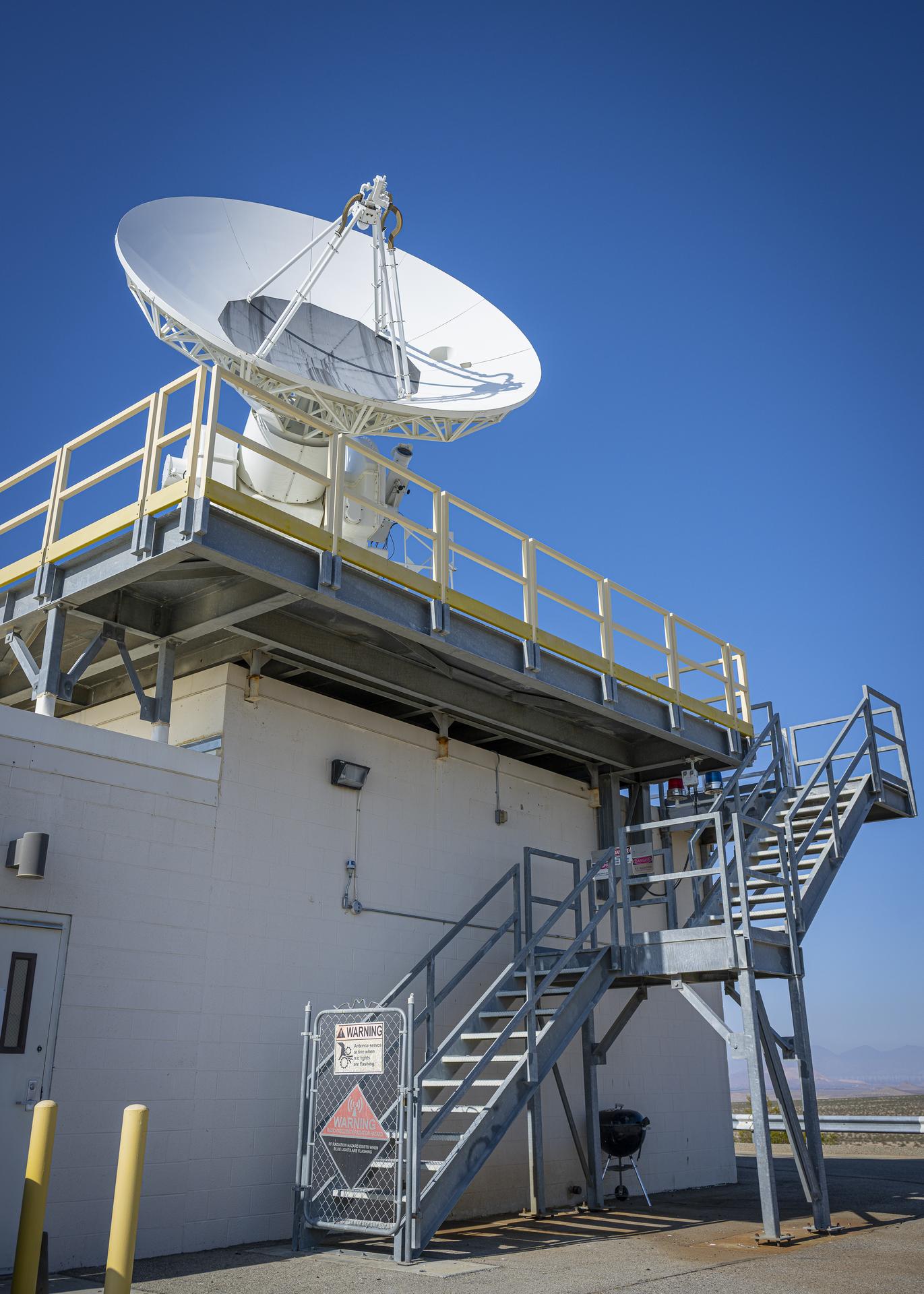
This is one of two radars that support radar tracking of the International Space Station at NASA’s Armstrong Flight Research Center in Edwards, California, on Sept. 30, 2025. Radar tracking is one of the key capabilities of the center’s Dryden Aeronautical Test Range, which provides voice and tracking support to the International Space Station.
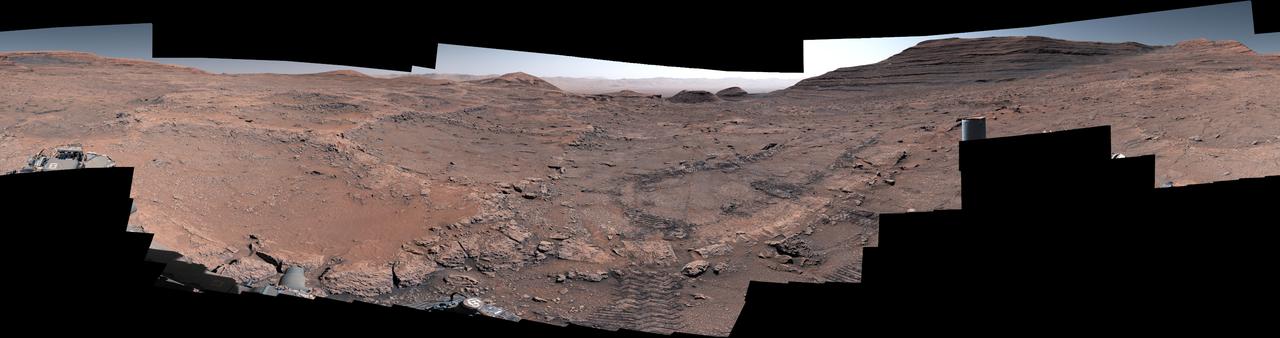
NASA's Curiosity Mars rover captured this 360-degree view after arriving at a region crisscrossed by hardened low ridges called boxwork patterns. The panorama is stitched together from 291 individual images the rover's Mast Camera, or Mastcam, captured between May 15 and May 18, 2025 (the 4,451st Martian day, or sol, of the mission and the 4,454th sol). The color in these images has been adjusted to match the lighting conditions as the human eye would see them on Earth. When viewed from space, the boxwork patterns look a bit like spiderwebs. They have fascinated scientists since before Curiosity's 2012 landing on the Red Planet and are believed to have formed from groundwater trickling through rock cracks billions of years ago. Minerals left behind by the water hardened like cement within the rock; after eons of sandblasting by wind, the rock was carved away, revealing networks of resistant ridges within. Curiosity's tracks can be seen in the middle of the image. In the distance to the right is a butte nicknamed "Texoli." Far in the distance at the top center of the image is the rim of Gale Crater. Since 2014, Curiosity has been exploring the foothills of Mount Sharp, a 3-mile-tall (5-kilometer-tall) mountain within the crater. https://photojournal.jpl.nasa.gov/catalog/PIA26559
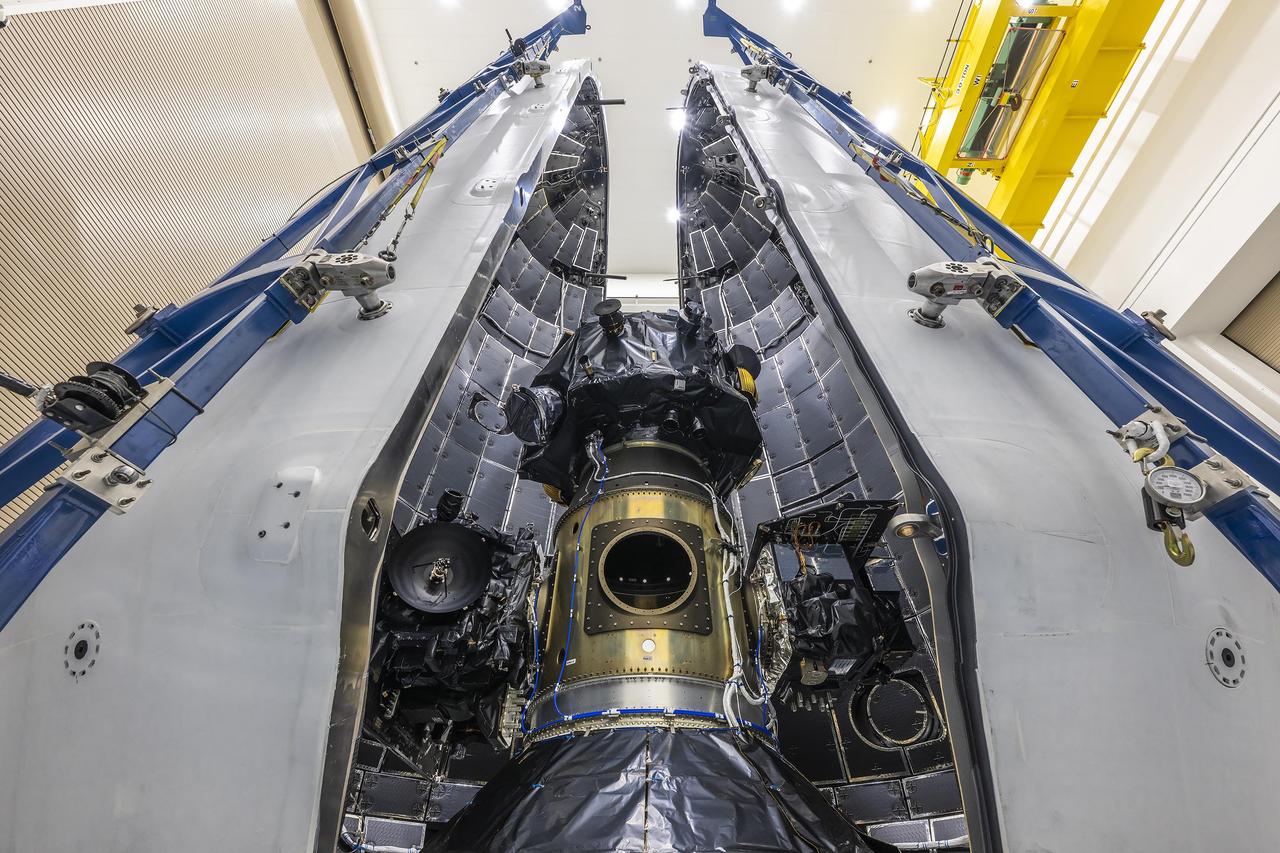
Technicians at Astrotech Space Operations Facility near NASA’s Kennedy Space Center in Florida encapsulate NASA’s IMAP (Interstellar Mapping and Acceleration Probe) spacecraft on Tuesday, Sept. 16, 2025, inside SpaceX’s Falcon 9 payload fairings to protect the spacecraft during launch. NASA’s IMAP will use 10 science instruments to study and map the heliosphere, a vast magnetic bubble surrounding the Sun protecting our solar system from radiation incoming from interstellar space. This mission and its two rideshares – NASA’s exosphere-studying Carruthers Geocorona Observatory and National Oceanic and Atmospheric Administration’s (NOAA) Space Weather Follow On–Lagrange 1 (SWFO-L1) observatory – will orbit the Sun near Lagrange point 1, about one million miles from Earth, where it will scan the heliosphere, analyze the composition of charged particles, and investigate how those particles move through the solar system. Launch is targeted for no earlier than Tuesday, Sept. 23, 2025, from Launch Complex 39A at NASA Kennedy.
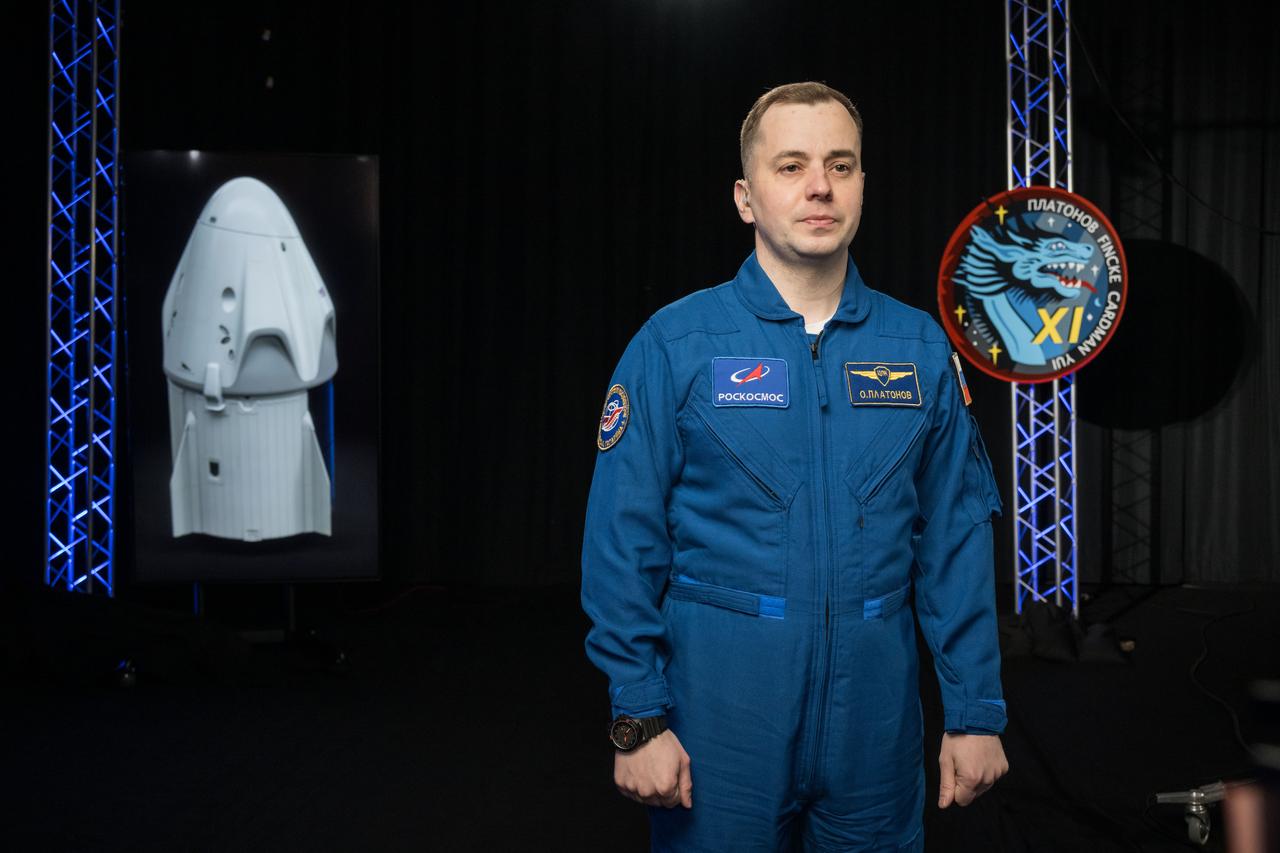
jsc2025e007980 (Feb. 20, 2025) --- Roscosmos cosmonaut Oleg Platonov poses for a photo during an interview in a studio at NASA’s Johnson Space Center in Houston, Texas, before his upcoming mission to the International Space Station. Credit: NASA/Robert Markowitz
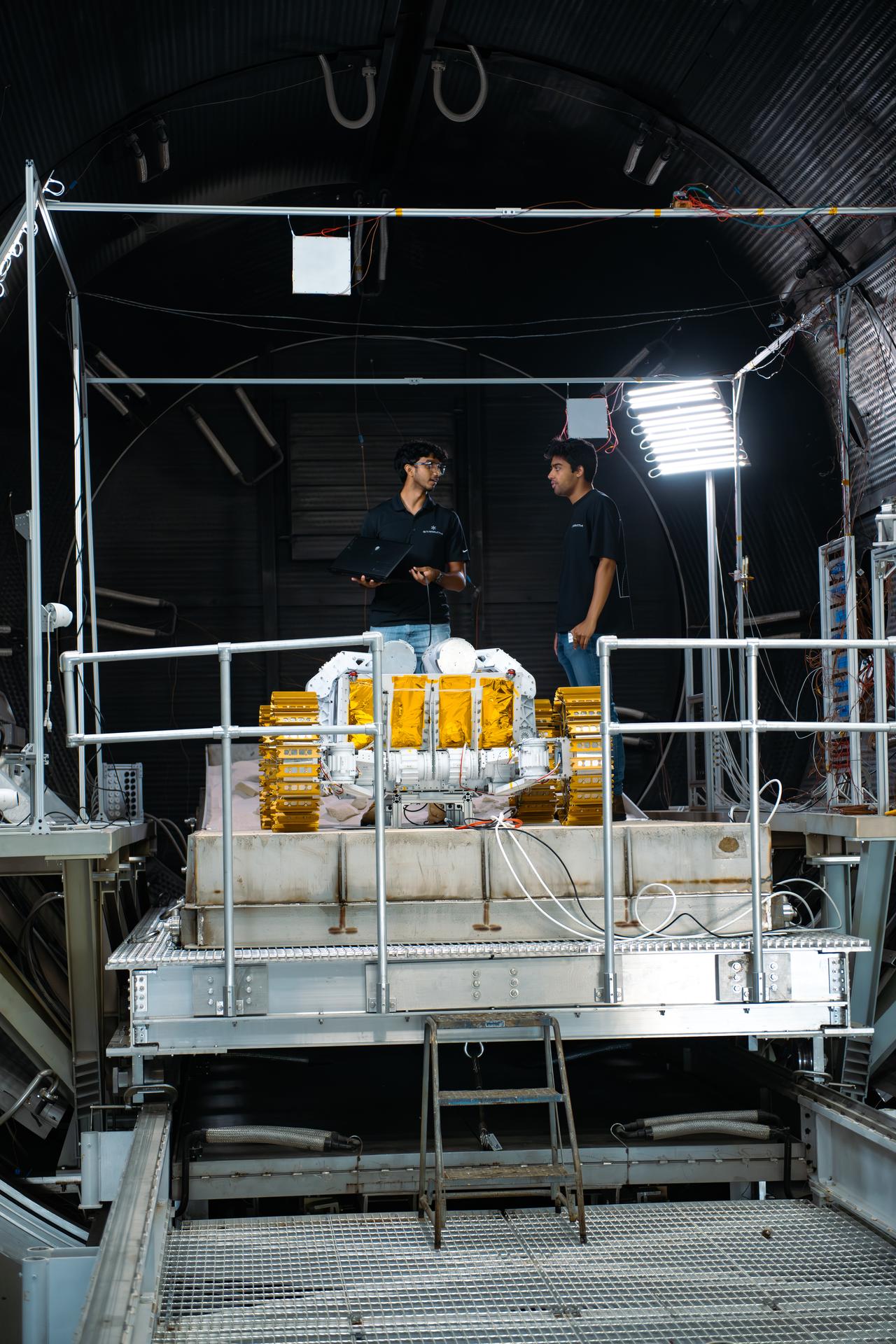
On July 30, 2025, members of the Starpath team discuss what final preparations need to be made before the chamber is closed for testing of their rover at NASA’s Marshall Space Flight Center in Huntsville, Alabama. The technology startup headquartered in Hawthorne, California, won second place overall at the Break the Ice Lunar Challenge’s live demonstration and finale in June 2024. This competition, one of NASA’s Centennial Challenges, tasked competitors to design, build, and demonstrate robotic technologies that could excavate and transport the icy, rocky dirt – otherwise known as regolith – found on the Moon. Starpath’s visit to NASA Marshall was part of their prize opportunity to test their upgraded lunar regolith excavation and transportation rover in the center’s 20-foot thermal vacuum chamber. For more information, contact NASA Marshall’s Office of Communications at 256-544-0034.
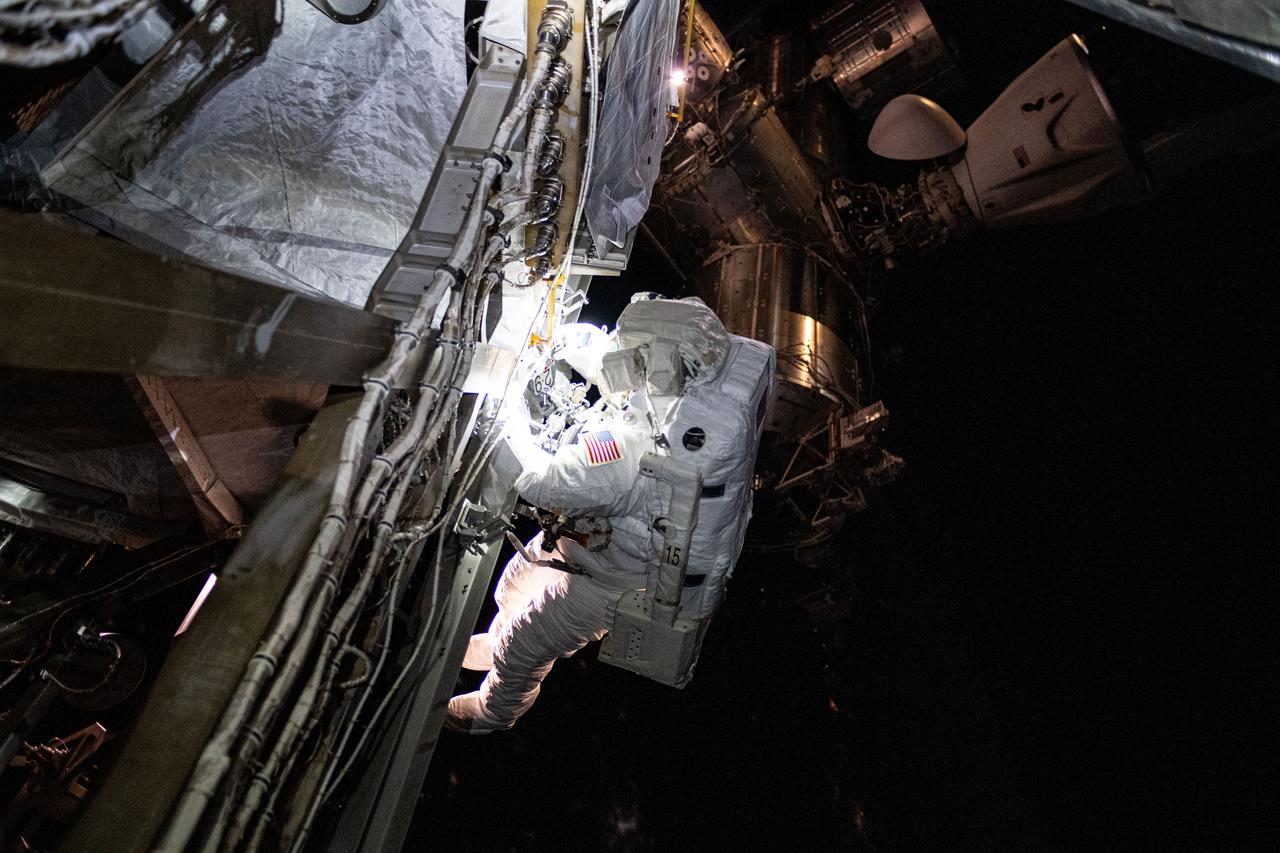
iss072e488376 (Jan. 16, 2025) --- NASA astronaut and Expedition 72 Commander Suni Williams is pictured during a six-hour spacewalk for science and maintenance on the International Space Station. At upper right, is the SpaceX Dragon crew spacecraft docked to the Harmony module's space-facing port.

iss073e0000370 (April 22, 2025) --- Phoenix, Arizona, with a population of over 1.6 million and surrounded by numerous suburbs, is pictured at approximately 4:13 a.m. local time from the International Space Station as it orbited 259 miles above.
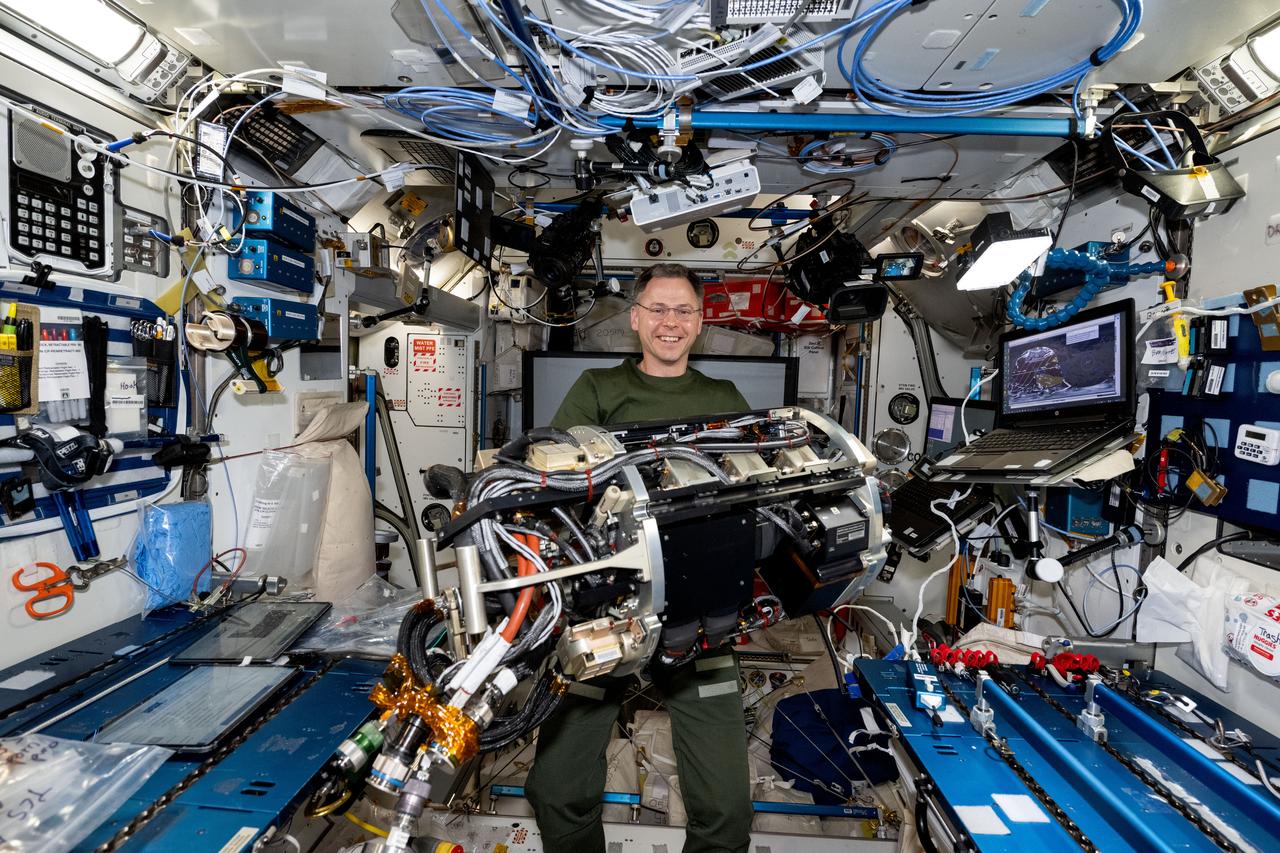
iss072e519705 (Jan. 23, 2025) --- NASA astronaut and Expedition 72 Flight Engineer Nick Hague handles research hardware that is part of the Combustion Integrated Rack that enables safe fuel and flame research aboard the International Space Station.
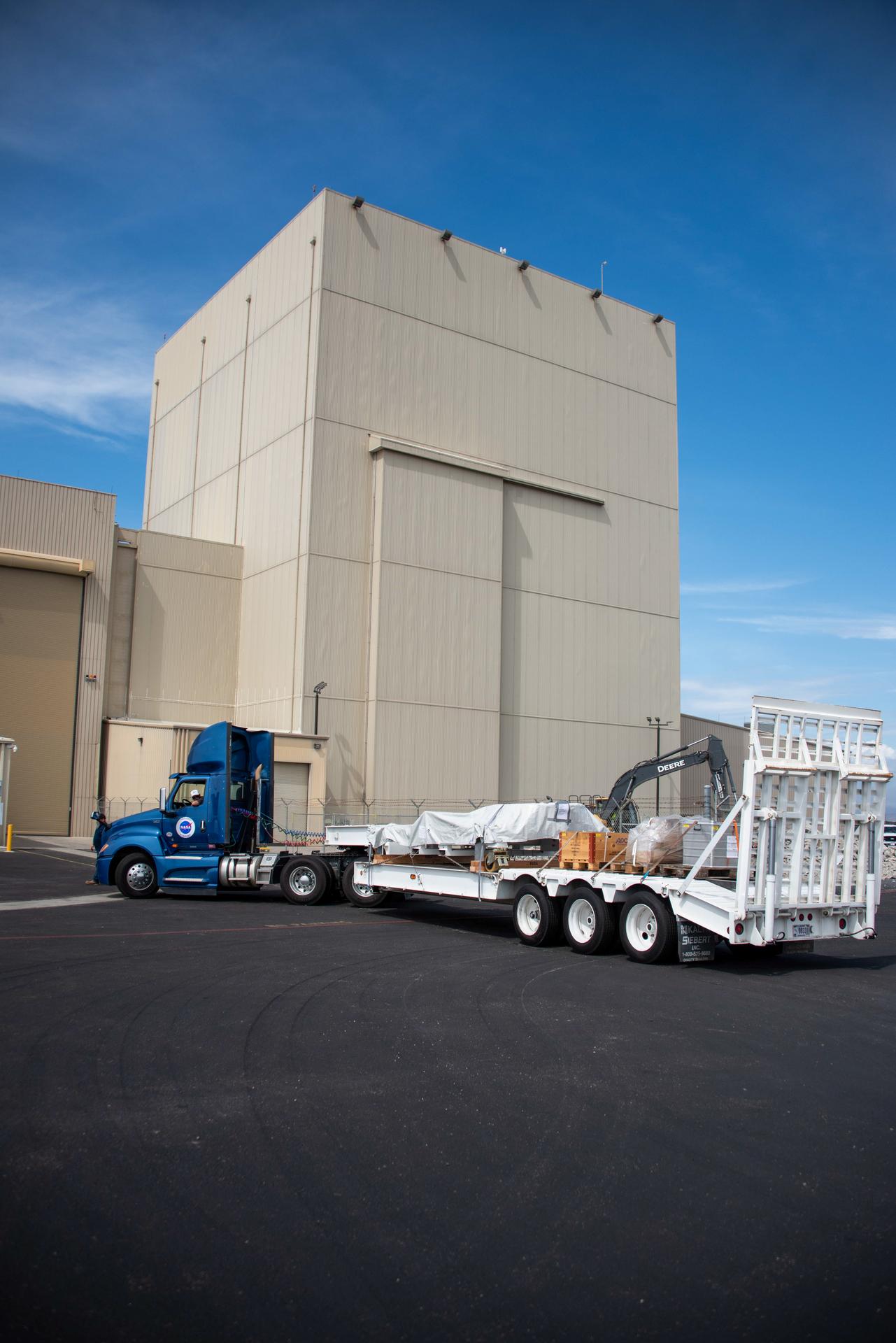
Packed in its shipping container, the Sentinel-6B spacecraft, a collaboration between NASA, ESA (European Space Agency), EUMETSAT (European Organisation for the Exploitation of Meteorological Satellites), and the National Oceanic and Atmospheric Administration (NOAA), arrives by truck to the Astrotech Space Operations payload processing facility at Vandenberg Space Force Base in California on Wednesday, Sept. 17, 2025. The second of two spacecraft that constitutes the Sentinel-6/Jason-CS (Continuity of Service) mission, Sentinel-6B will measure sea surface height and provide crucial information to help improve coastal planning, enabling local and state governments to make informed decisions about protecting coastal infrastructure, real estate, and energy sites. Launch is targeted for no earlier than November on a SpaceX Falcon 9 from Vandenberg.
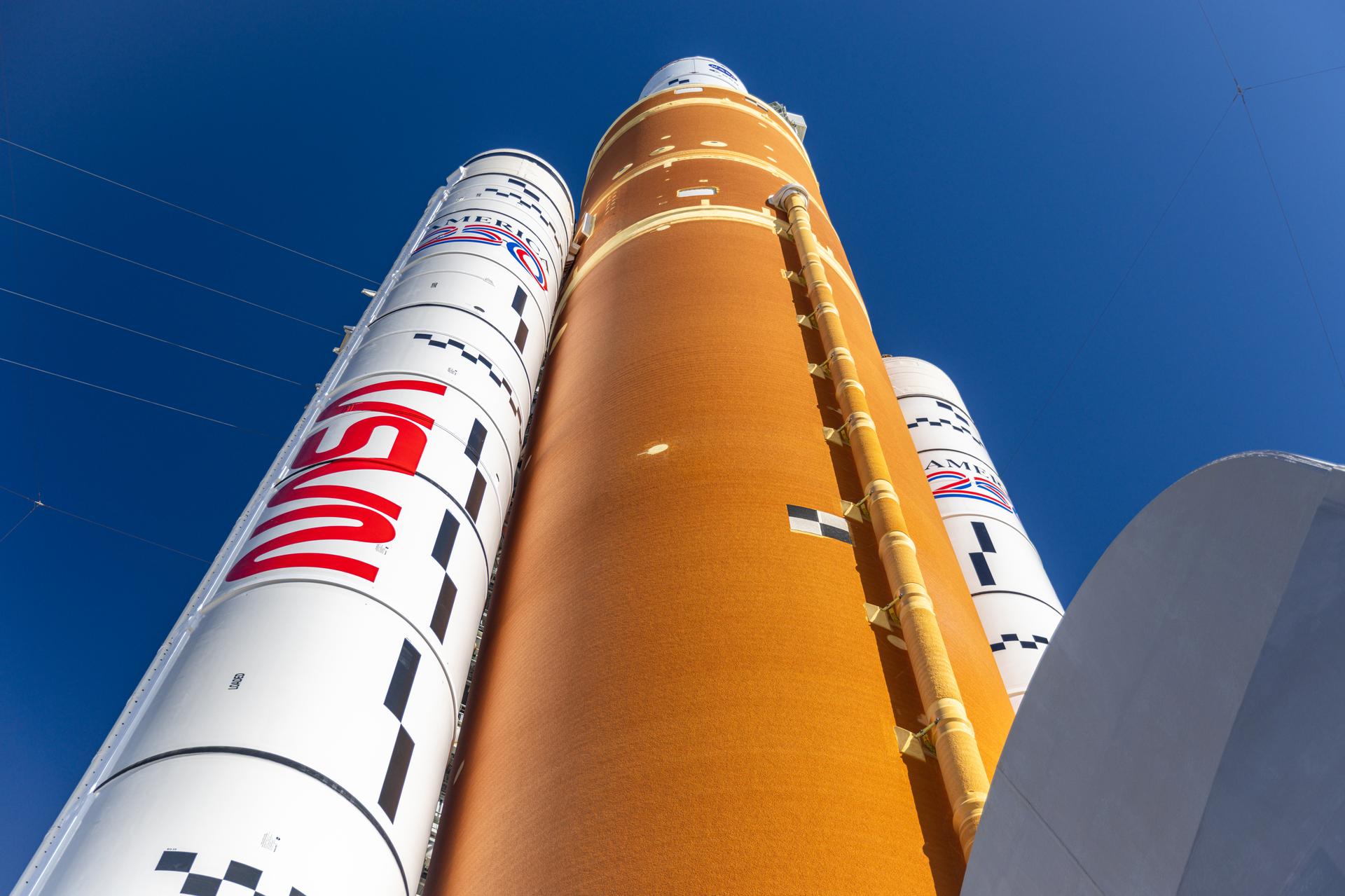
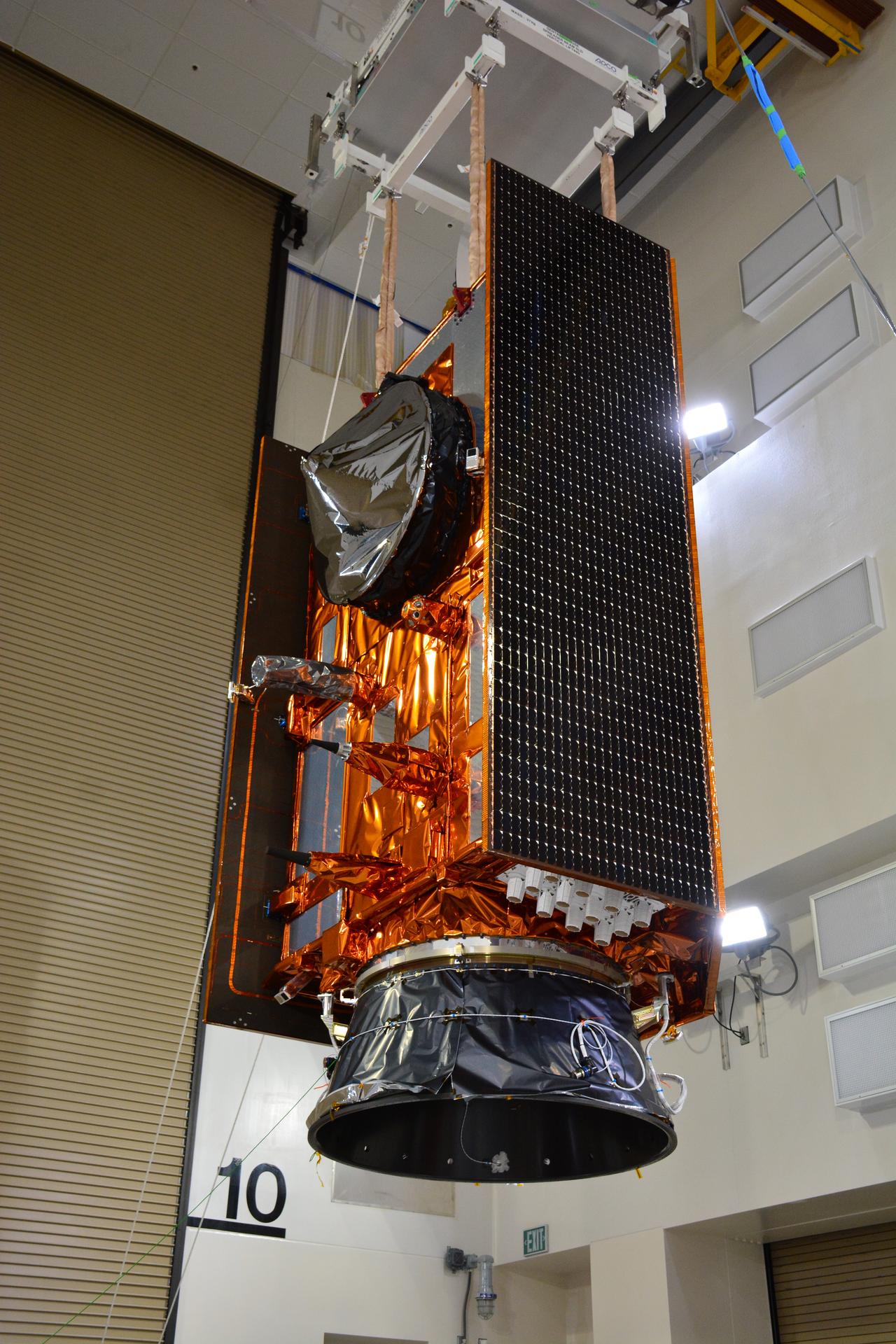
Technicians integrate the Sentinel-6B spacecraft to the payload attach fitting inside the Astrotech Space Operations payload processing facility at Vandenberg Space Force Base in California on Wednesday, Nov. 5, 2025. The payload attach fitting is part of the system that connects Sentinel-6B to the second stage of the SpaceX Falcon 9 rocket that will carry it to orbit. A collaboration between NASA, ESA (European Space Agency), EUMETSAT (European Organisation for the Exploitation of Meteorological Satellites), and the National Oceanic and Atmospheric Administration (NOAA), Sentinel-6B is designed to measure sea levels down to roughly an inch for about 90% of the world’s oceans. NASA is targeting launch no earlier than Sunday, Nov. 16, on a SpaceX Falcon 9 rocket from Space Launch Complex 4 East at Vandenberg.
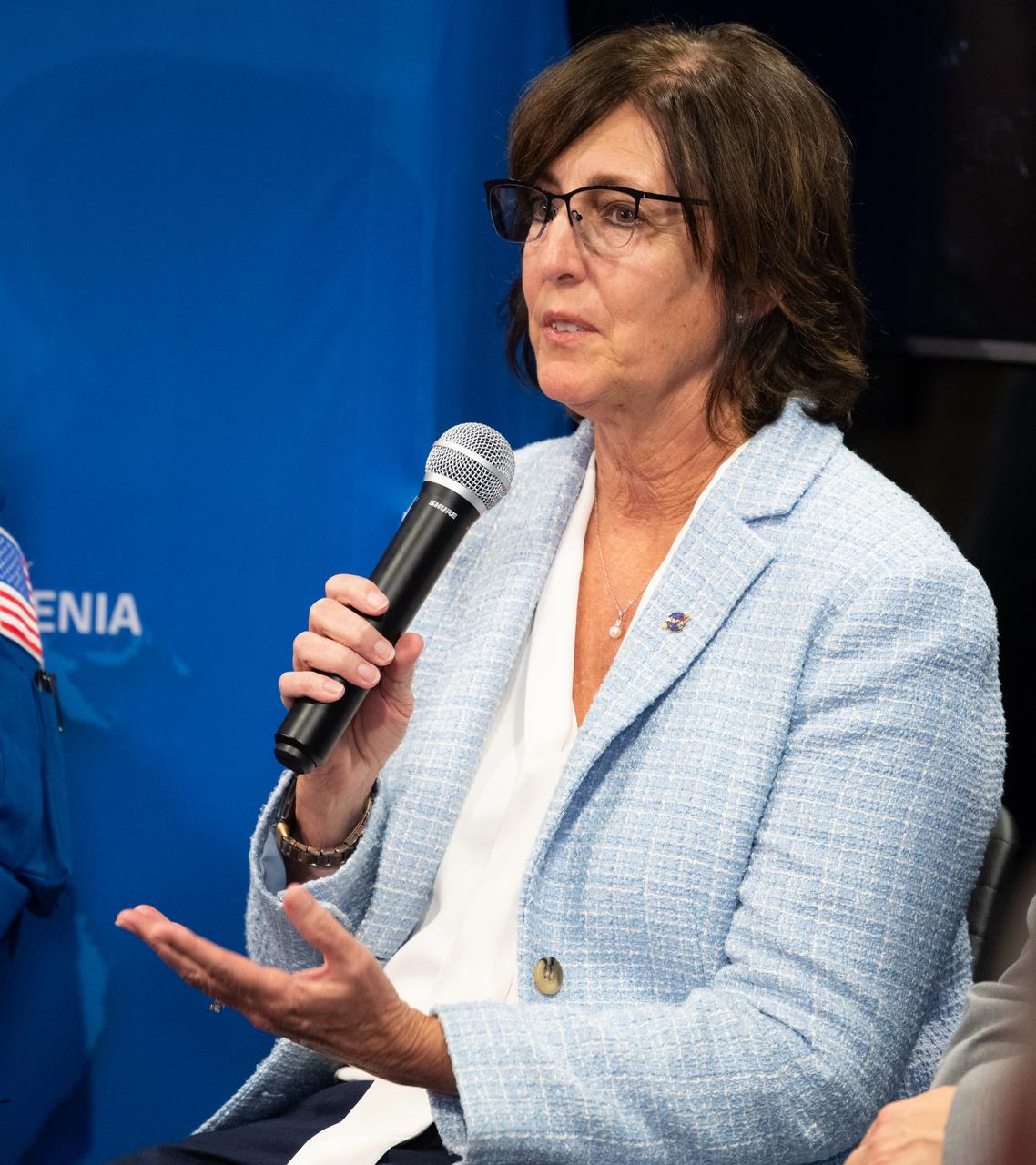
Robyn Gatens, director of International Space Station and acting director of the Commercial Space Flight Division of NASA's Space Operations Mission Directorate, answers a question during a panel discussion at the Embassy of Slovenia alongside NASA astronauts Butch Wilmore, Don Pettit, Suni Williams, and Nick Hague, Lee Echerd,, senior mission manager and commercial crew program lead at SpaceX, and Marko Novak, advisor of management board at Dewesoft Slovenia, Wednesday, Sept. 17, 2025, in Washington. Hague, Wilmore, Williams, and Pettit served as part of Expedition 72 onboard the International Space Station. Photo Credit: (NASA/Joel Kowsky)
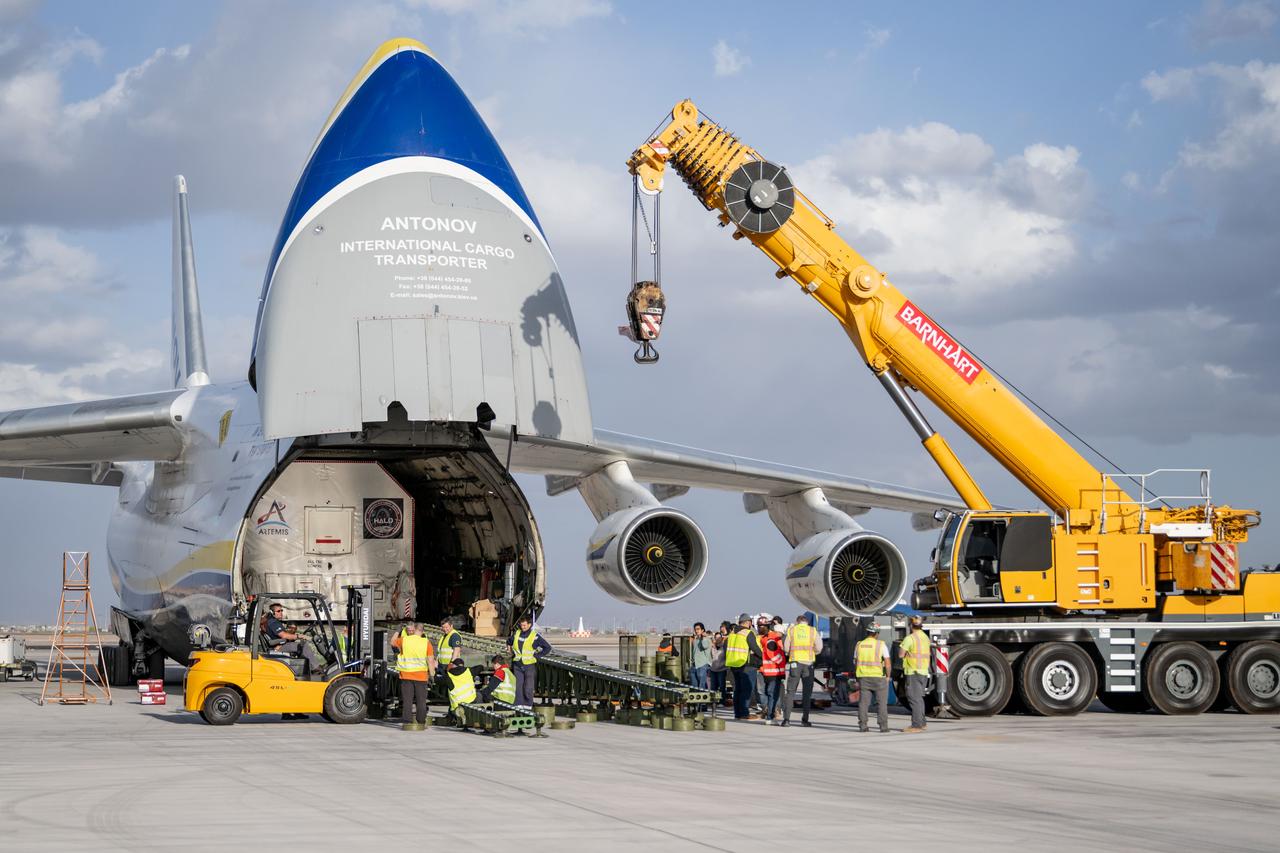
Gateway’s HALO (Habitation and Logistics Outpost) arrives in Mesa, Arizona, after traveling from Italy, where Thales Alenia Space fabricated its primary structure. Delivered by cargo aircraft to Phoenix-Mesa Gateway Airport, HALO will be transported to Northrop Grumman’s facility in Gilbert for final outfitting.

The X-59 quiet supersonic research aircraft taxis to NASA’s Armstrong Flight Research Center in Edwards, California, on Tuesday, Oct. 28, 2025, following its landing at Edwards Air Force Base. Ground teams await the aircraft’s arrival at its new home for flight operations in support of NASA’s Quesst mission to generate data on quiet supersonic flight
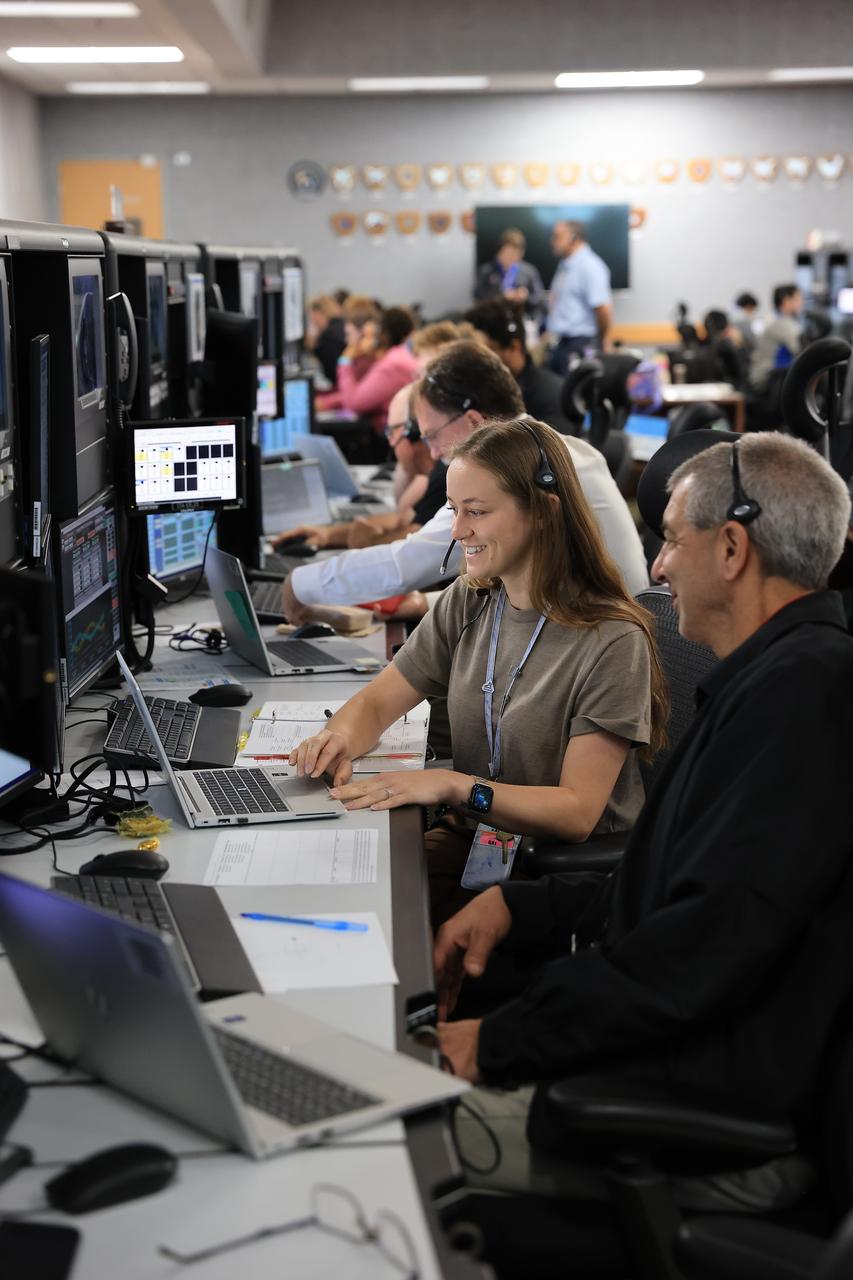
Teams at NASA’s Kennedy Space Center in Florida participate in the first joint integrated launch countdown simulation for Artemis II inside Firing Room 1 of the Launch Control Center on Thursday, Sept. 11, 2025. The training exercise involved engineers from Kennedy, Marshall Space Flight Center in Huntsville, Alabama, and Johnson Space Center in Houston coming together to rehearse all aspects of the launch countdown, from cryogenic loading – filling tanks in the SLS (Space Launch System) rocket’s core stage with liquid hydrogen and liquid oxygen – to liftoff. These simulations will help certify that the launch team is ready for Artemis II – the first crewed Artemis mission that will send four astronauts around the Moon and back.
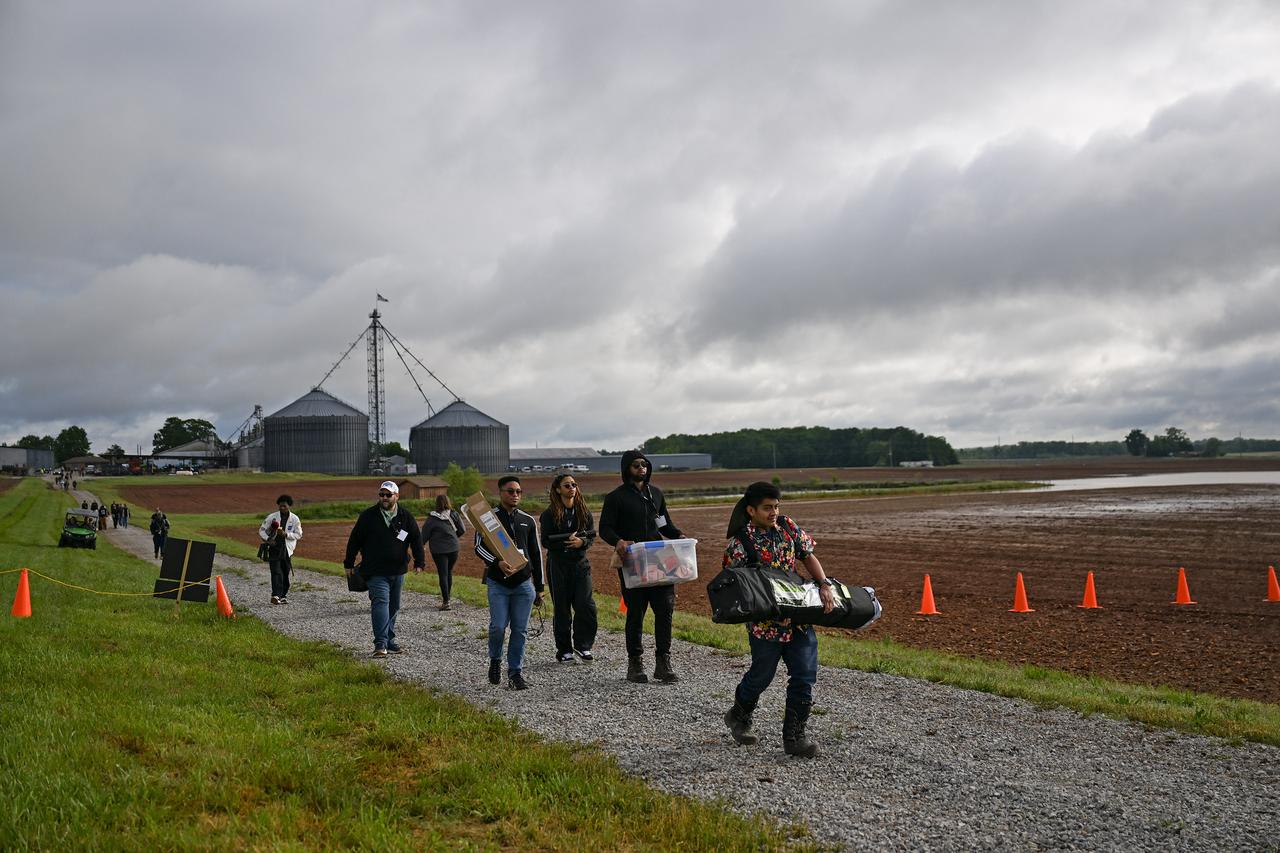
Over than 980 middle school, high school, and college students from across the nation launched more than 40 high-powered rockets just north of NASA’s Marshall Space Flight Center in Huntsville, Alabama. This year marked the 25th anniversary of the competition. To compete, students follow the NASA engineering design lifecycle by going through a series of reviews for nine months leading up to launch day. Each year, a payload challenge is issued to the university teams, and this year’s task took inspiration from the agency’s Artemis missions, where NASA will send astronauts to explore the Moon for scientific discovery, economic benefit, and to build the foundation for the first crewed missions to Mars. Teams were challenged to include “reports” from STEMnauts, non-living objects representing astronauts. The STEMnaut “crew” had to relay real-time data to the student team’s mission control, just as the Artemis astronaut crew will do as they explore the lunar surface. To learn more, visit: www.nasa.gov/studentlaunch.
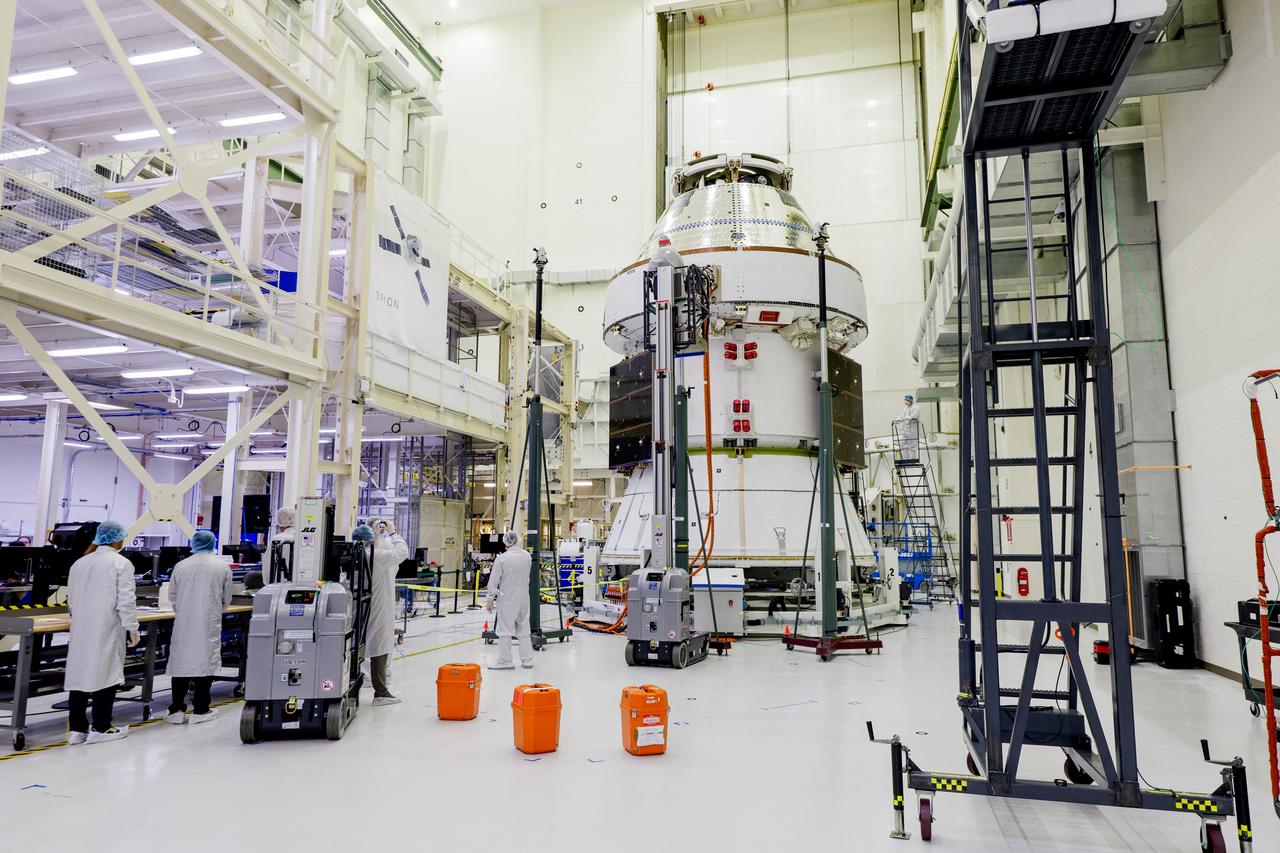
The four solar array wings for the Artemis II Orion spacecraft are installed inside the Operations and Checkout Building at NASA's Kennedy Space Center in Florida on March 7, 2025. Artemis II is Orion’s first crewed flight test around the Moon under the agency’s Artemis campaign.
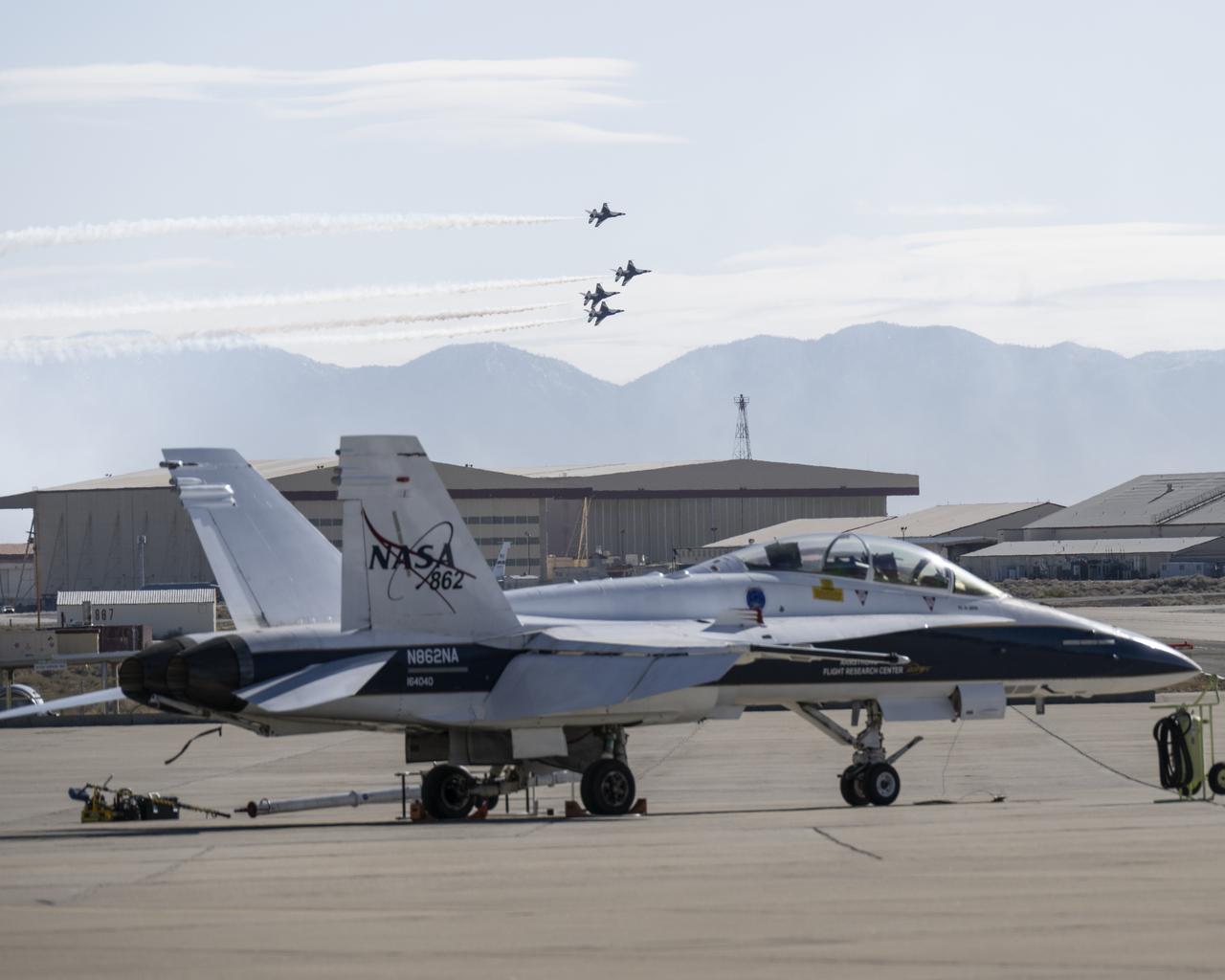
The U.S. Air Force Thunderbirds fly over NASA’s Armstrong Flight Research Center in Edwards, California, during the second phase of its winter training in February 2025 to prepare for the upcoming air show season. The Thunderbirds perform all over the world in F-16 Fighting Falcons, a multi-role fighter jet.
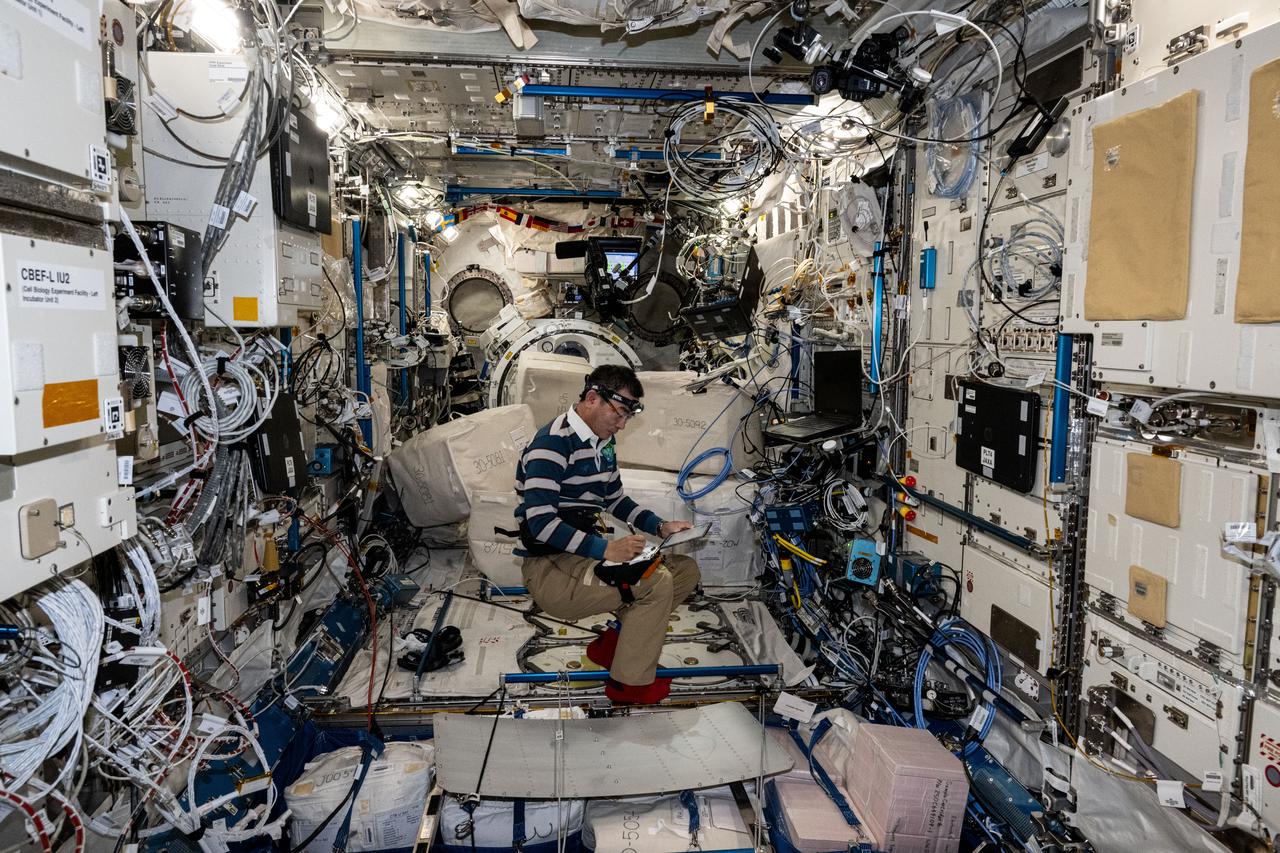
iss073e0764322 (Sept. 22, 2025) --- JAXA (Japan Aerospace Exploration Agency) astronaut and Expedition 73 Flight Engineer Kimiya Yui takes notes while installing new computer networking gear inside the Kibo laboratory module. The ethernet hub upgrades will transmit data quicker and more efficiently throughout the International Space Station.
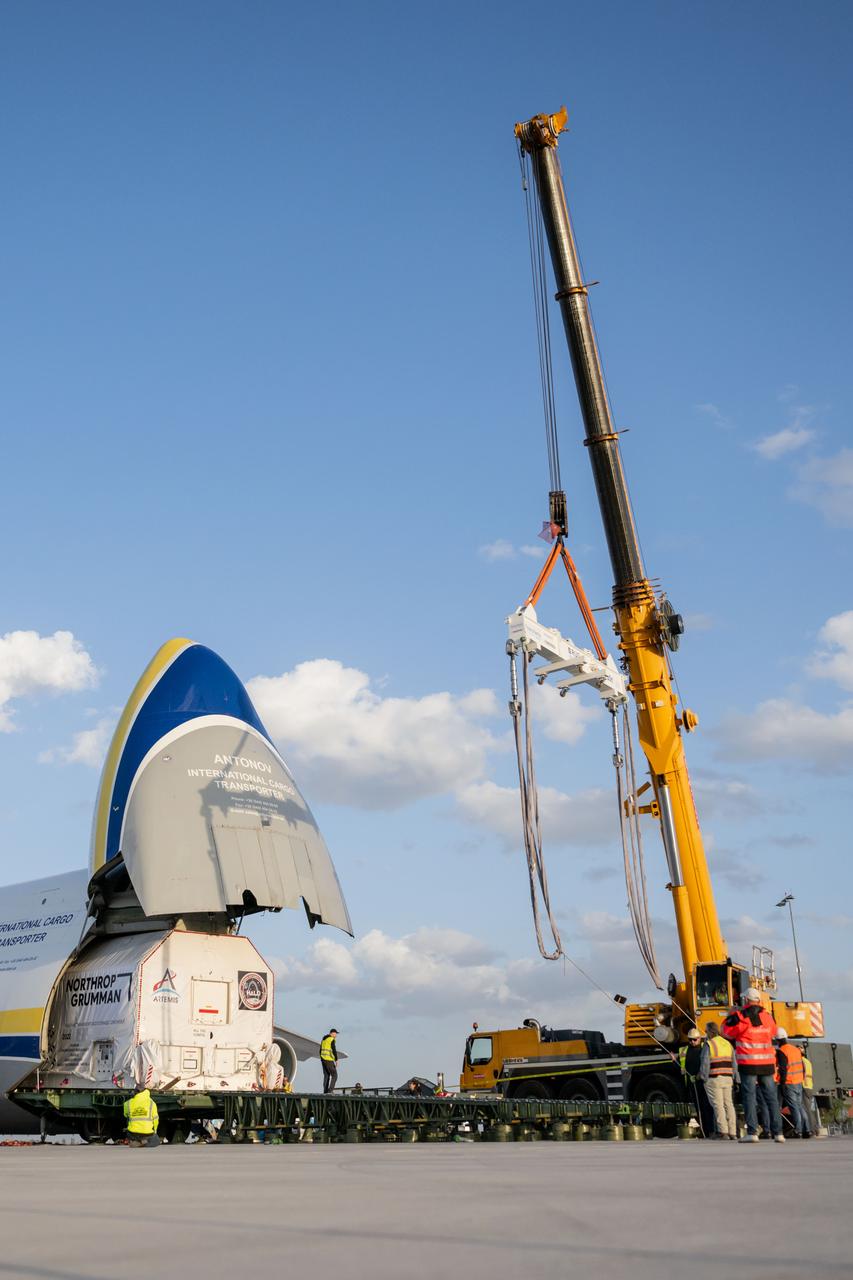
Gateway’s HALO (Habitation and Logistics Outpost) arrives in Mesa, Arizona, after traveling from Italy, where Thales Alenia Space fabricated its primary structure. Delivered by cargo aircraft to Phoenix-Mesa Gateway Airport, HALO will be transported to Northrop Grumman’s facility in Gilbert for final outfitting.
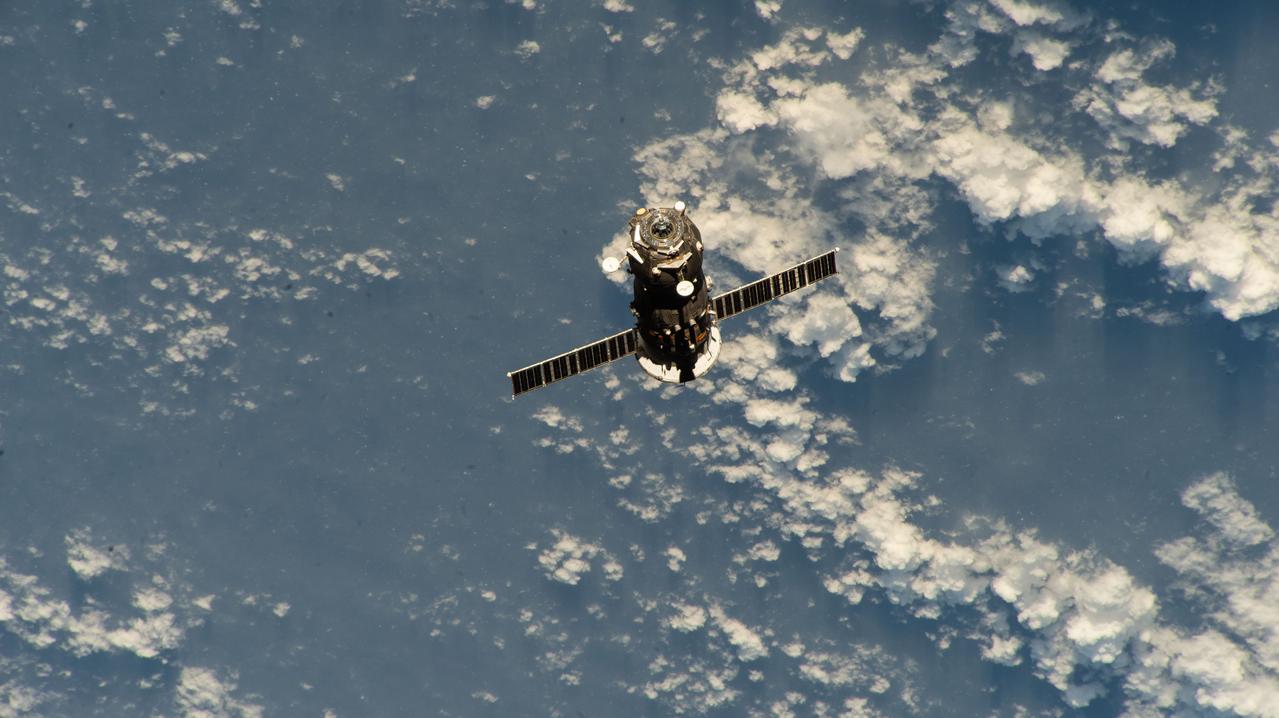
iss072e660543 (Feb. 25, 2025) --- The Roscosmos Progress 89 cargo craft departs the vicinity of the International Space Station after undocking from the orbital outpost's Zvezda service module.
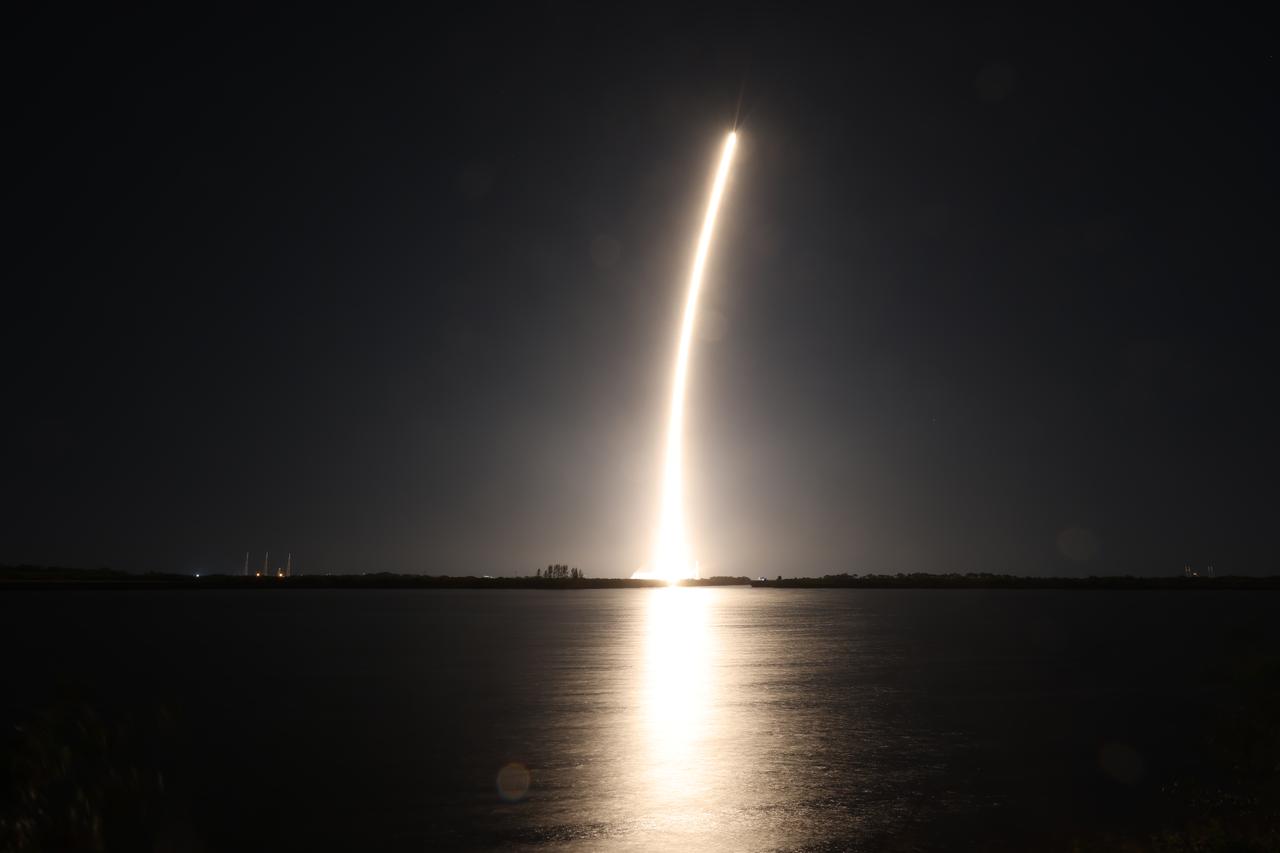
Creating a golden streak in the night sky, a SpaceX Falcon 9 rocket carrying Firefly Aerospace’s Blue Ghost Mission One lander soars upward after liftoff from Launch Complex 39A at NASA’s Kennedy Space Center in Florida on Wednesday, Jan. 15, 2025 as part of NASA’s CLPS (Commercial Lunar Payload Services) initiative. The Blue Ghost lander will carry 10 NASA science and technology instruments to the lunar surface to further understand the Moon and help prepare for future human missions.
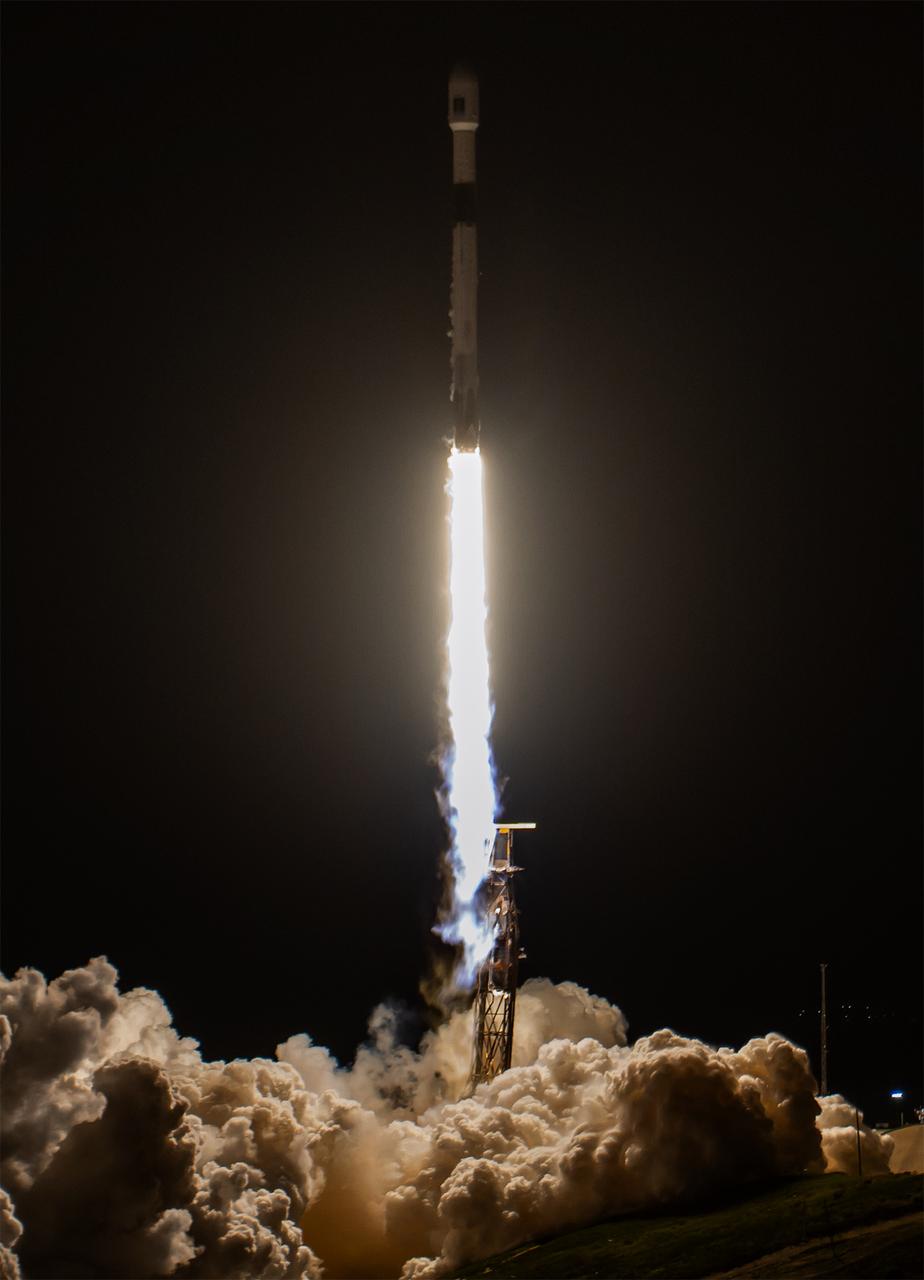
A SpaceX Falcon 9 rocket carrying the international Sentinel-6B spacecraft lifts off from Space Launch Complex 4 East at Vandenberg Space Force Base in California at 9:21 p.m. PST Sunday, Nov. 16, 2025. A collaboration between NASA, ESA (European Space Agency), EUMETSAT (European Organisation for the Exploitation of Meteorological Satellites), and the National Oceanic and Atmospheric Administration (NOAA), Sentinel-6B is designed to measure sea levels down to roughly an inch for about 90% of the world’s oceans.
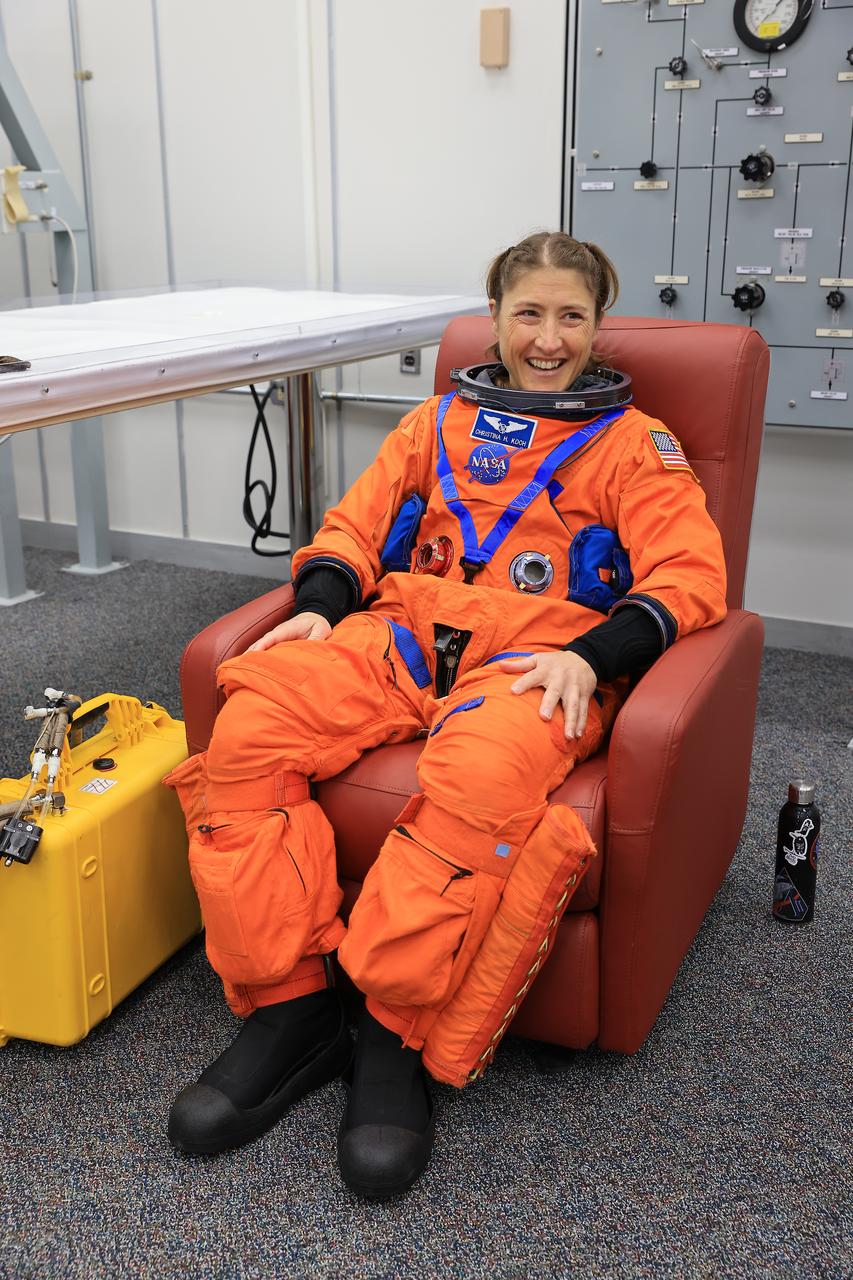
NASA astronaut Christina Koch, Artemis II mission specialist, smiles during suit-up operations inside the Neil A. Armstrong Operations and Checkout Building at NASA’s Kennedy Space Center in Florida on Monday, Aug. 11, 2025. During a two-day operation, the Artemis II team practiced night-run demonstrations of different launch day scenarios like suit-up operations, walk-out, and arriving at the launch pad for the Artemis II test flight. Through the Artemis campaign, NASA will send astronauts to explore the Moon for scientific discovery, economic benefits, and to build the foundation for the first crewed missions to Mars – for the benefit of all.
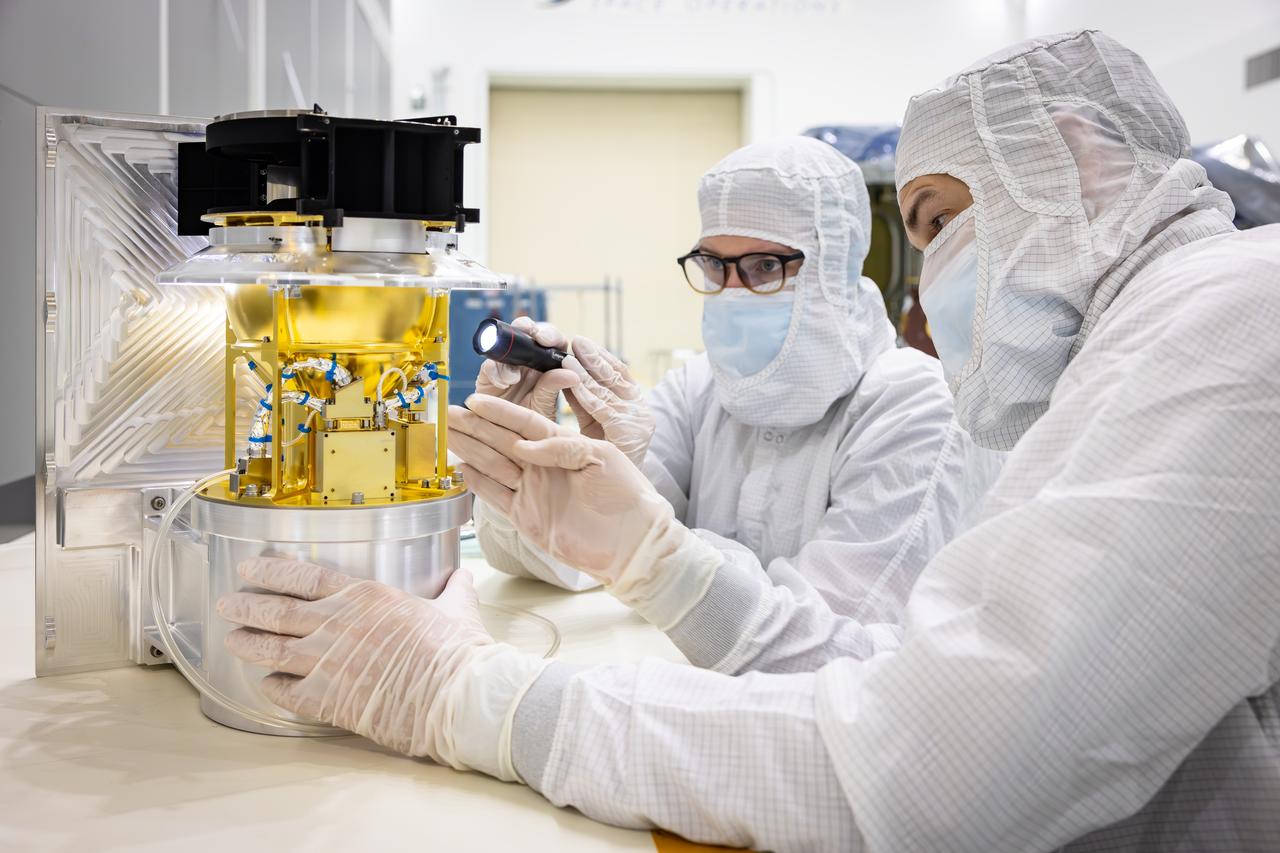
Technicians perform tests the Solar Wind and Pickup Ions (SWAPI) instrument of NASA’s IMAP (Interstellar Mapping and Acceleration Probe) observatory inside the high bay at the Astrotech Space Operations Facility near the agency’s Kennedy Space Center in Florida on Tuesday, June 17, 2025. As IMAP spins in space, solar wind particles are swept into SWAPI through a special opening called “sunglasses,” an opening covered by a screen with very tiny precise holes that cut down the brightness of the very intense solar wind. SWAPI collects and counts particles from the solar wind flowing from the Sun and particles called pick-up ions that have entered the heliosphere from outside the solar system and traveled inwards where IMAP orbits near Earth. Launch of the IMAP mission is targeted for no earlier than September 2025 aboard a SpaceX Falcon 9 rocket from Launch Complex 39A at NASA Kennedy.

iss074e0000788 (Dec. 13, 2025) --- The county-level city of Erenhot in China's autonomous region of Inner Mongolia is pictured during a dry, deep winter from the International Space Station as it orbited 263 miles above Earth. Erenhot is a key border town for trade and international railway crossings between China and Mongolia. The city is also known for its paleontological history and numerous discoveries of dinosaur fossils.
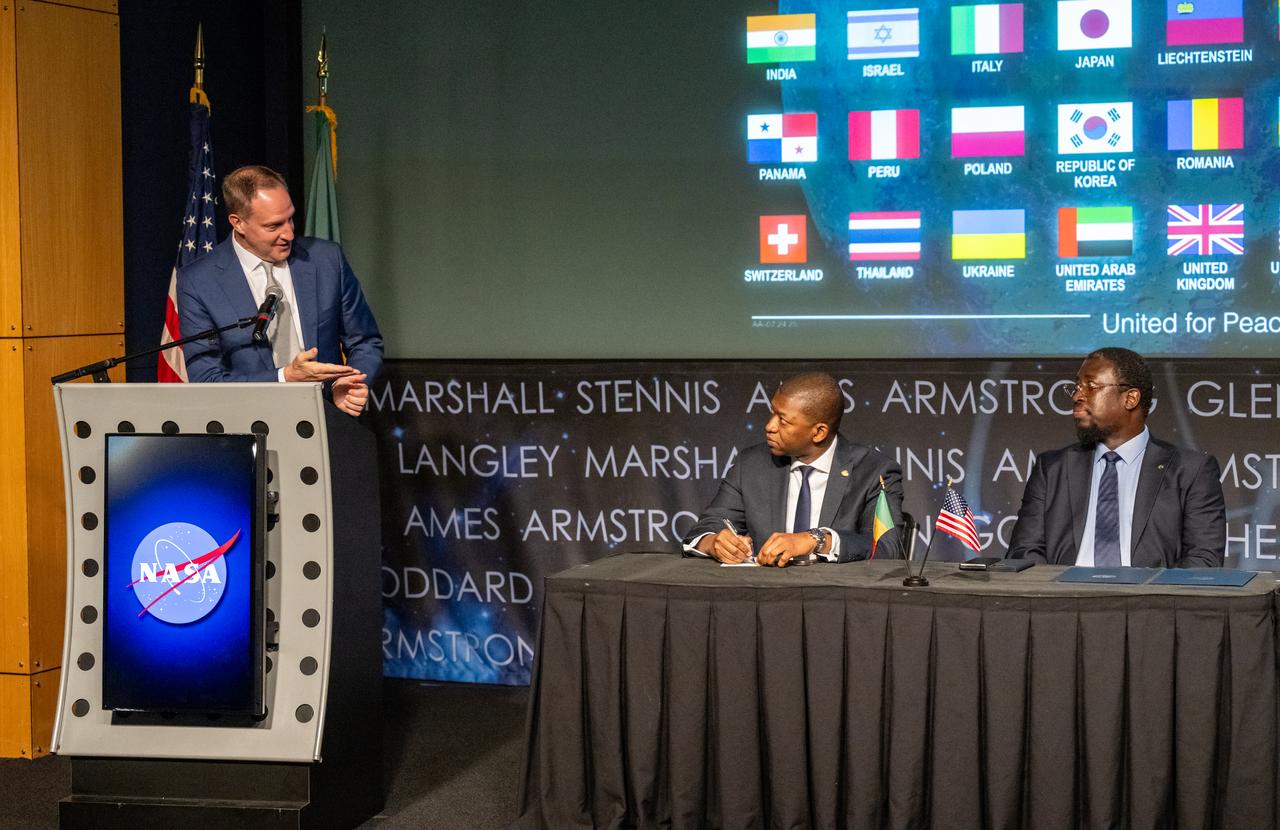
Department of State Bureau of African Affairs Senior Bureau Official Jonathan Pratt delivers remarks during an Artemis Accords signing ceremony Thursday, July 24, 2025, at the Mary W. Jackson NASA Headquarters building in Washington. Senegal is the 56th country to sign the Artemis Accords, which establish a practical set of principles to guide space exploration cooperation among nations participating in NASA’s Artemis program. Photo Credit: (NASA/Keegan Barber)

Members of the Artemis launch team participate in an Artemis II launch countdown simulation inside Firing Room 1 in the Launch Control Center at NASA’s Kennedy Space Center in Florida on Thursday, Jan. 23, 2025. The simulations go through launch day scenarios to help launch team members test software and make adjustments if needed during countdown operations. For Artemis II, four astronauts will venture around the Moon, the first crewed mission on NASA’s path to establishing a long-term presence for science and exploration through Artemis.
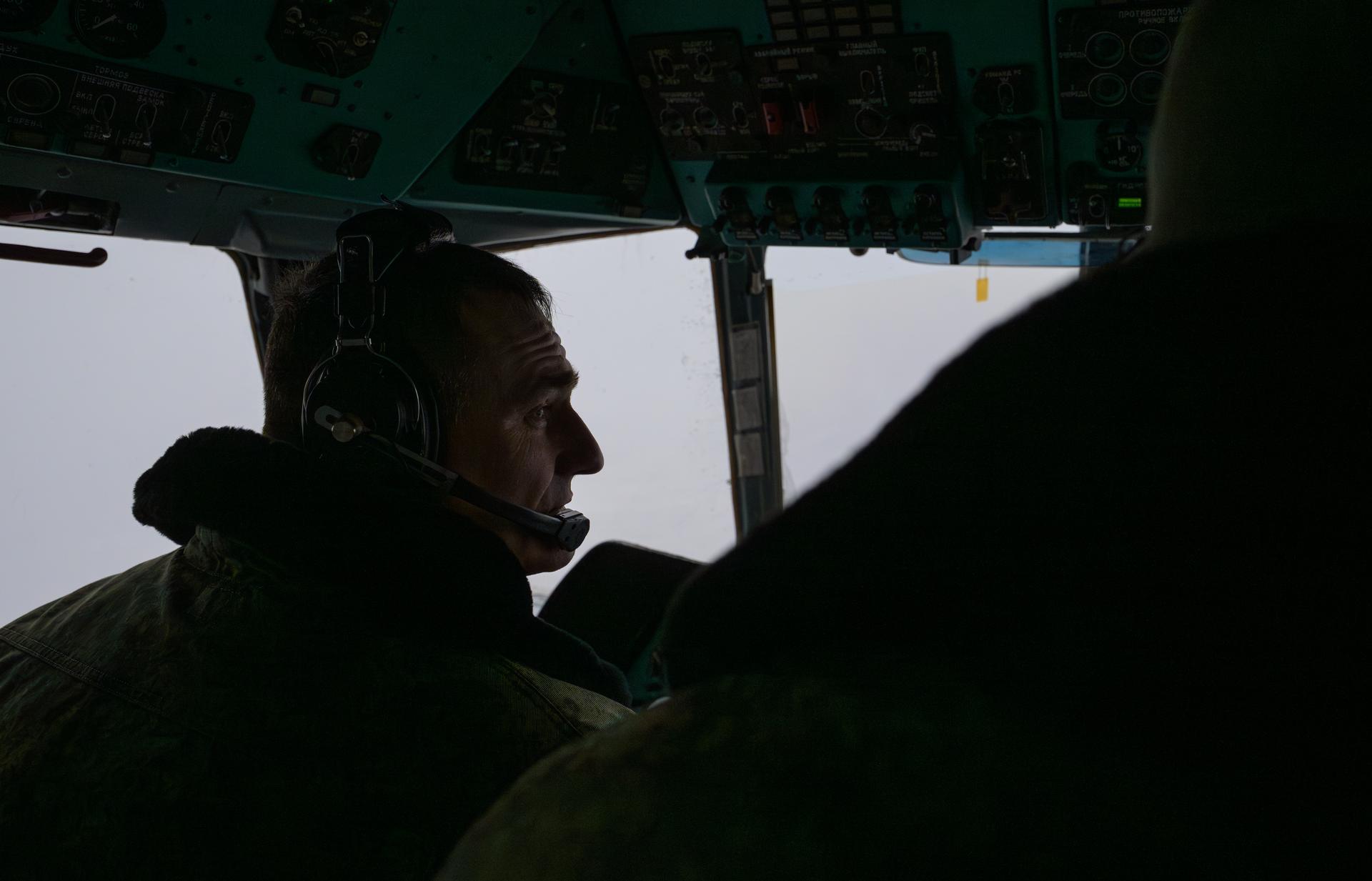
Russian Search and Rescue helicopter teams fly to the predicted landing zone of the Soyuz MS-27 spacecraft with Expedition 73 NASA astronaut Jonny Kim, and Roscosmos cosmonauts Sergey Ryzhikov, and Alexey Zubritsky aboard, near the town of Zhezkazgan, Kazakhstan, Tuesday, Dec. 9, 2025. The trio returned to Earth after logging 245 days in space as a members of Expeditions 72 and 73 aboard the International Space Station. Photo Credit: (NASA/Bill Ingalls)
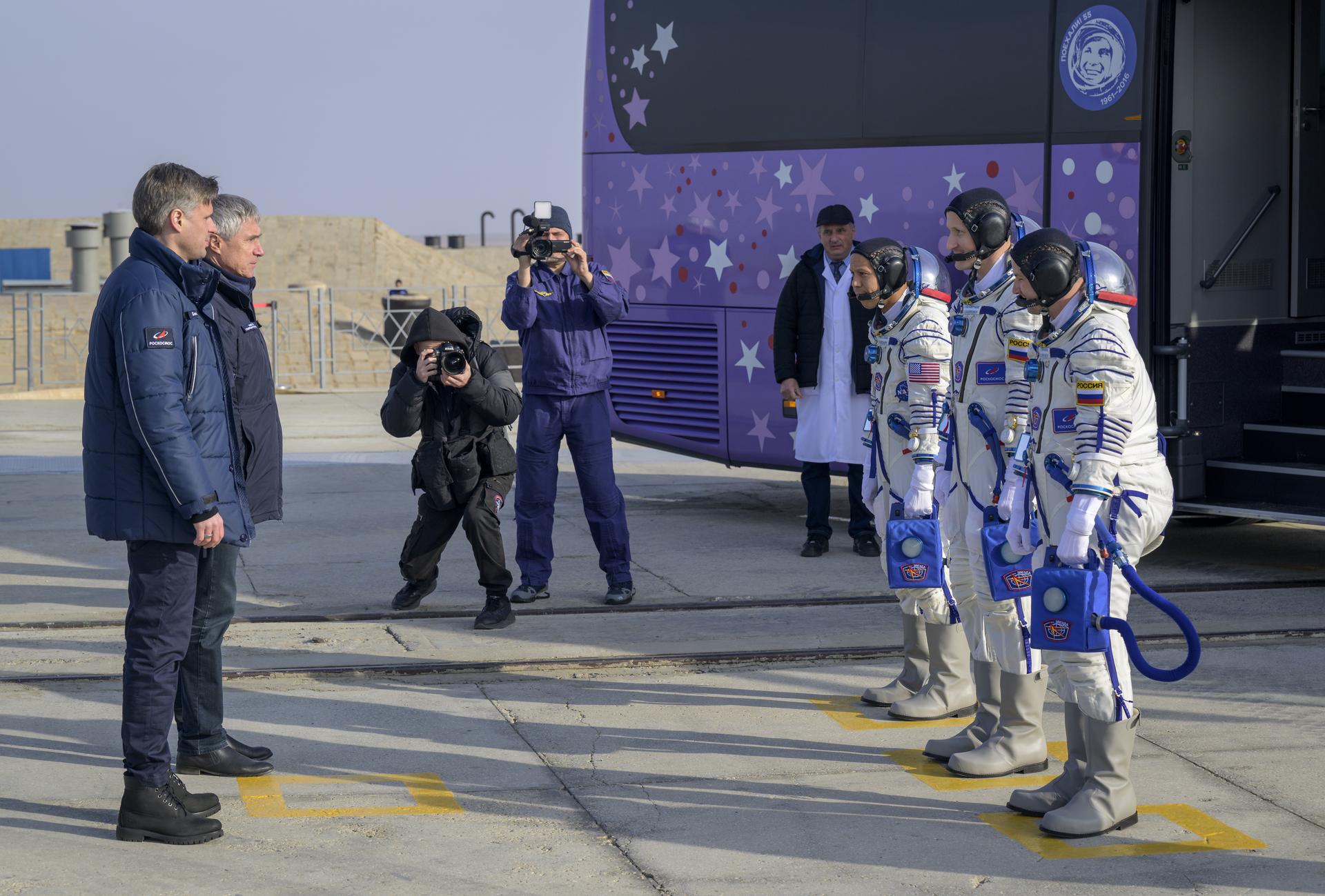
NASA astronaut Chris Williams, left, and Roscosmos cosmonauts Sergey Kud-Sverchkov, and Sergei Mikaev, right, arrive at the launch pad to board the Soyuz MS-28 spacecraft for launch, Thursday, Nov. 27, 2025 at the Baikonur Cosmodrome in Kazakhstan. Launch of the Soyuz rocket will send the trio on a mission to the International Space Station. Photo Credit: (NASA/Bill Ingalls)
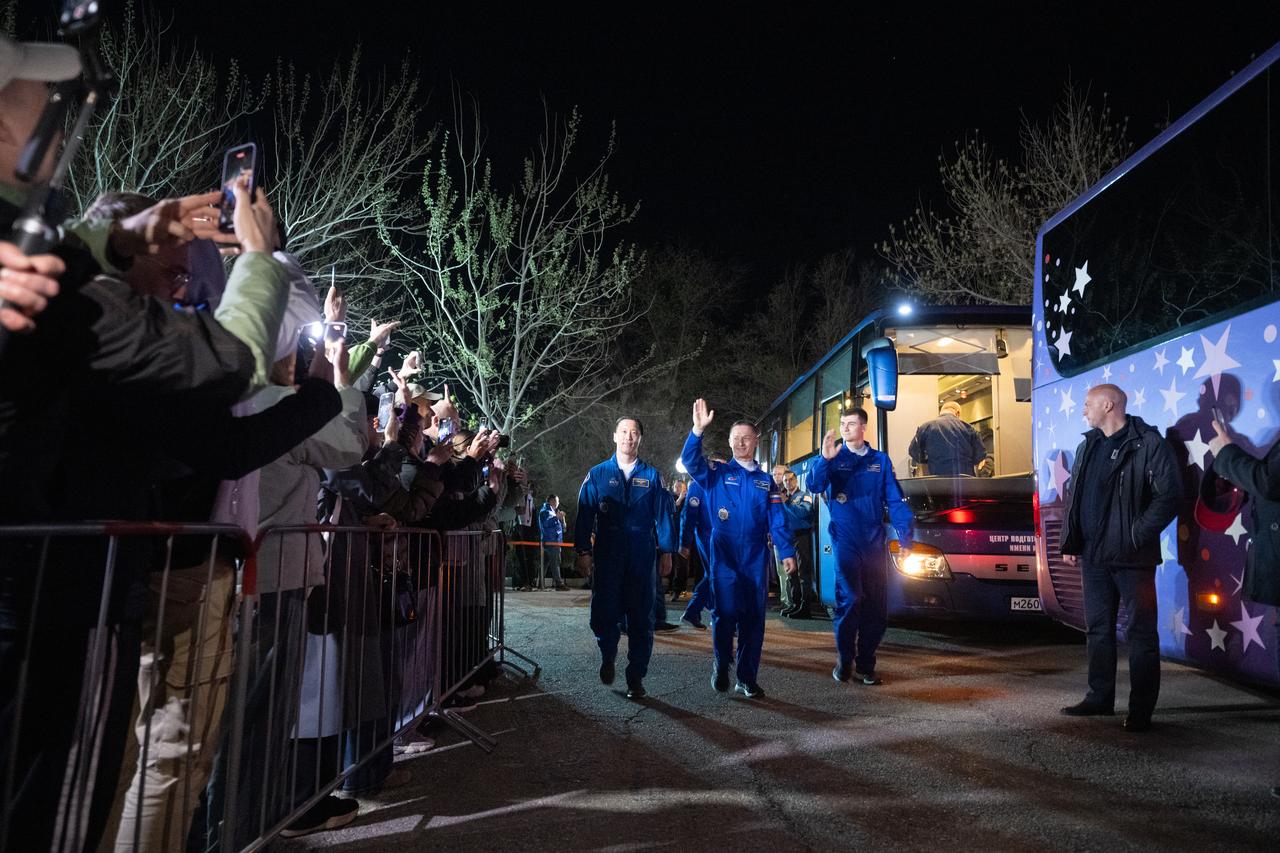
NASA astronaut Jonny Kim, left, and Roscosmos cosmonauts Sergey Ryzhikov and Alexey Zubritskiy, right, are seen as they depart the Cosmonaut Hotel to suit-up for their Soyuz launch to the International Space Station, Tuesday, April 8, 2025 (April 7 Eastern Time), in Baikonur, Kazakhstan. The launch will send Kim, Ryzhikov, Zubritskiy on a mission to the International Space Station. Photo Credit: (NASA/Joel Kowsky)
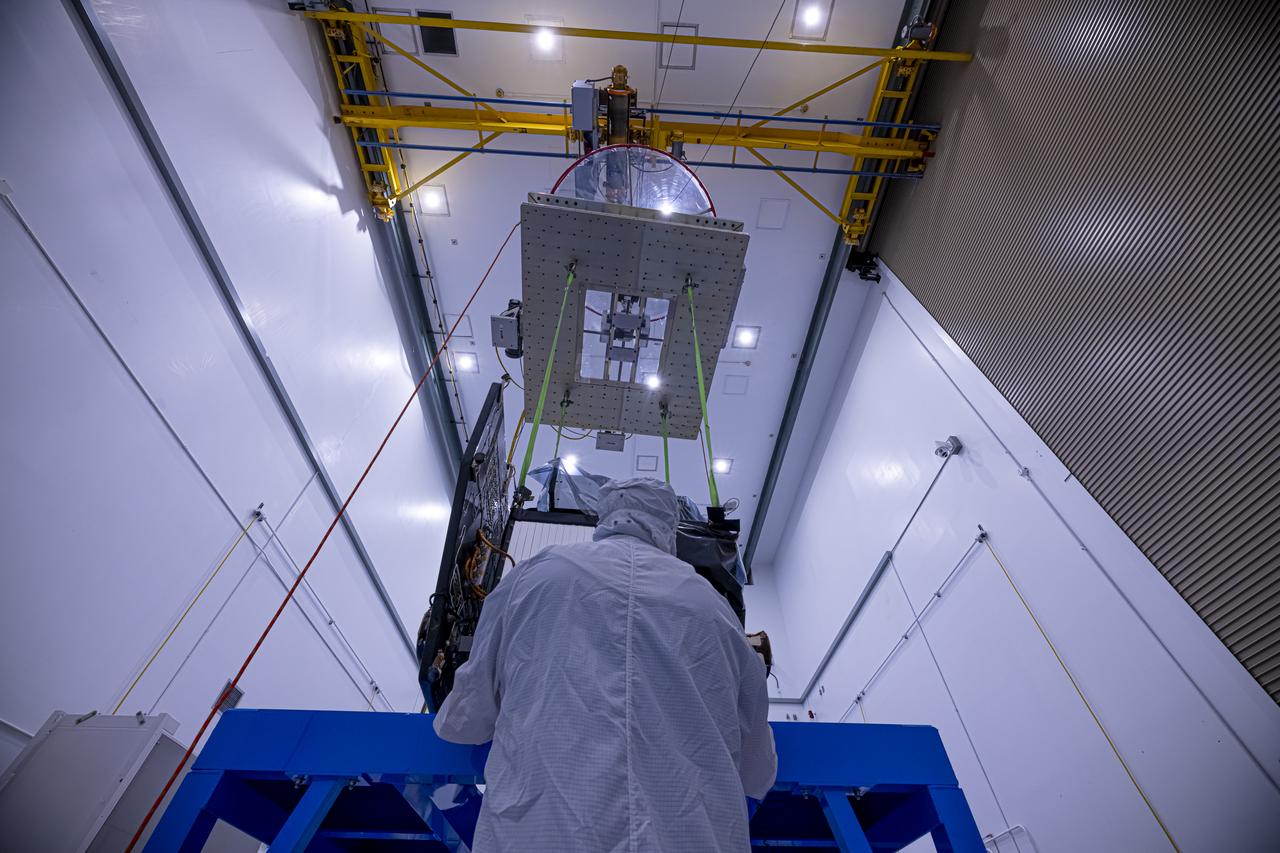
A crane lifts NASA’s Carruthers Geocorona Observatory on Thursday, July 24, 2025, at the Astrotech Space Operations Facility near the agency’s Kennedy Space Center in Florida. The Carruthers Geocorona Observatory is a small satellite set to operate at Lagrange Point 1 (L1), an orbit point between the Earth and Sun about one million miles away. Carruthers will use its ultraviolet cameras to monitor how space weather from the Sun impacts the exosphere, the outermost part of Earth’s atmosphere. The observatory will launch as a rideshare with NASA’s IMAP (Interstellar Mapping and Acceleration Probe) no earlier than September 2025.
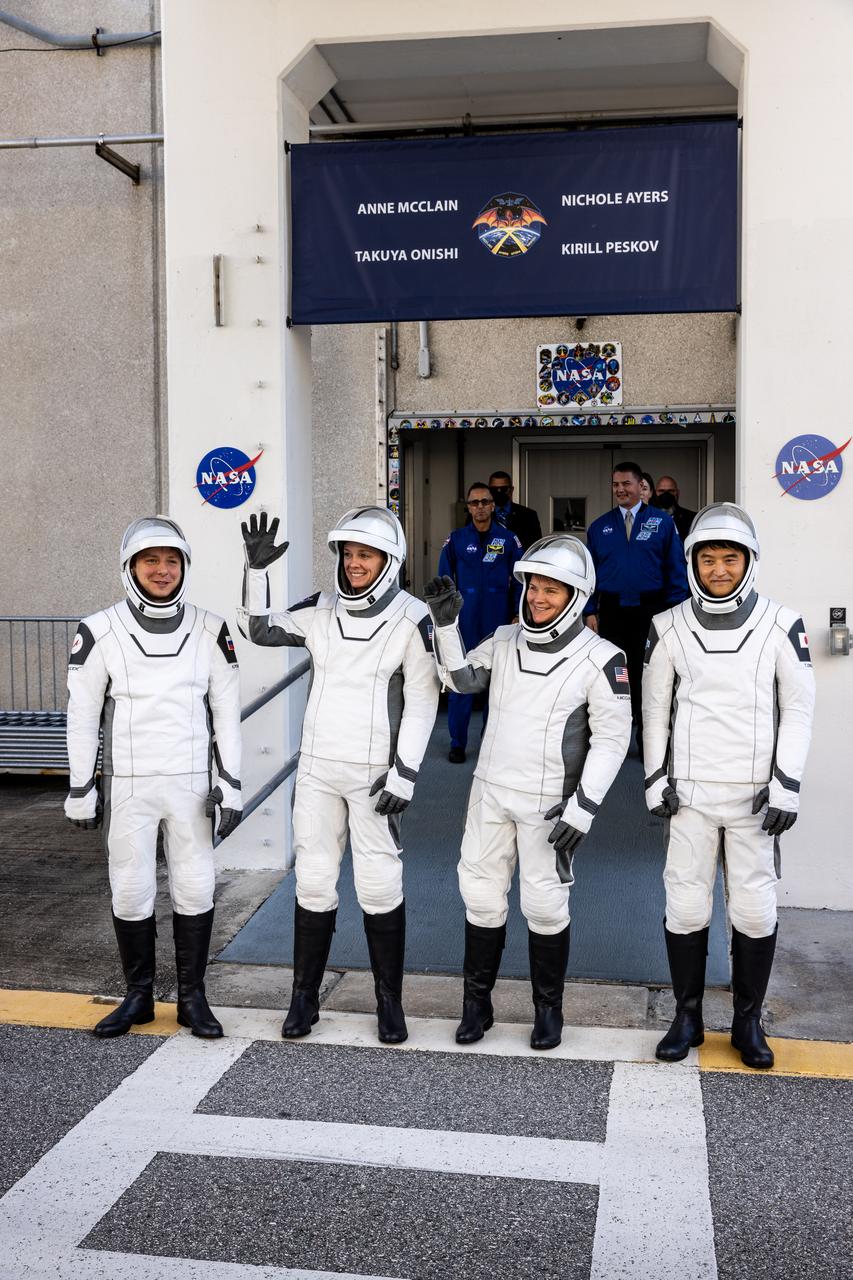
NASA’s SpaceX Crew-10 crew members wave to family and friends as they prepare to depart the Neil A. Armstrong Operations and Checkout Building at the agency’s Kennedy Space Center in Florida for nearby Launch Complex 39A for launch of Crew-10 on Wednesday, March 12, 2025. From left to right, Roscosmos cosmonaut Kirill Peskov, NASA astronauts Nichole Ayers and Anne McClain, along with JAXA (Japan Aerospace Exploration Agency) astronaut Takuya Onishi are scheduled to lift off aboard SpaceX’s Dragon spacecraft and Falcon 9 rocket at 7:48 p.m. EDT, from Launch Complex 39A at NASA Kennedy. Crew-10 is the tenth crew rotation mission with SpaceX to the space station as part of the agency’s Commercial Crew Program.

Acting NASA Associate Administrator Vanessa Wyche, left, U.S. Transportation Secretary Sean Duffy, and acting NASA Administrator Janet Petro, right, watch as the SpaceX Dragon spacecraft splashes down with NASA astronauts Butch Wilmore, Suni Williams, Nick Hague, and Roscosmos cosmonaut Aleksandr Gorbunov, Tuesday, March 18, 2025, from the Space Operations Center at the Mary W. Jackson NASA Headquarters Building in Washington. Photo Credit: (NASA/Bill Ingalls)
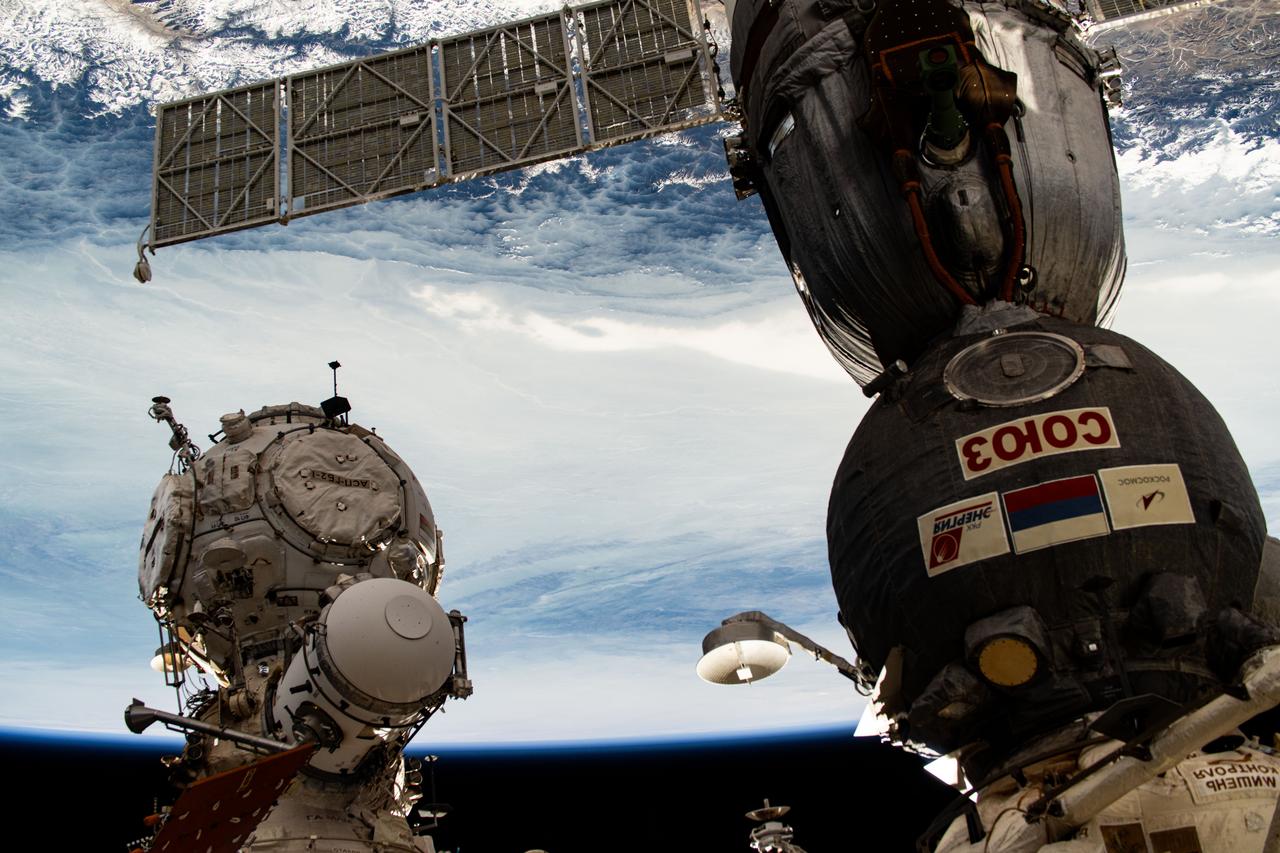
iss072e576226 (Jan. 28, 2025) --- The Soyuz MS-26 crew ship that launched NASA astronaut Don Pettit and Roscosmos cosmonauts Alexey Ovchinin and Ivan Vagner to the International Space Station is pictued docked to the orbital outpost's Rassvet module. At left, is the Pirs docking compartment where Soyuz crew ships and Progress cargo craft can also dock.
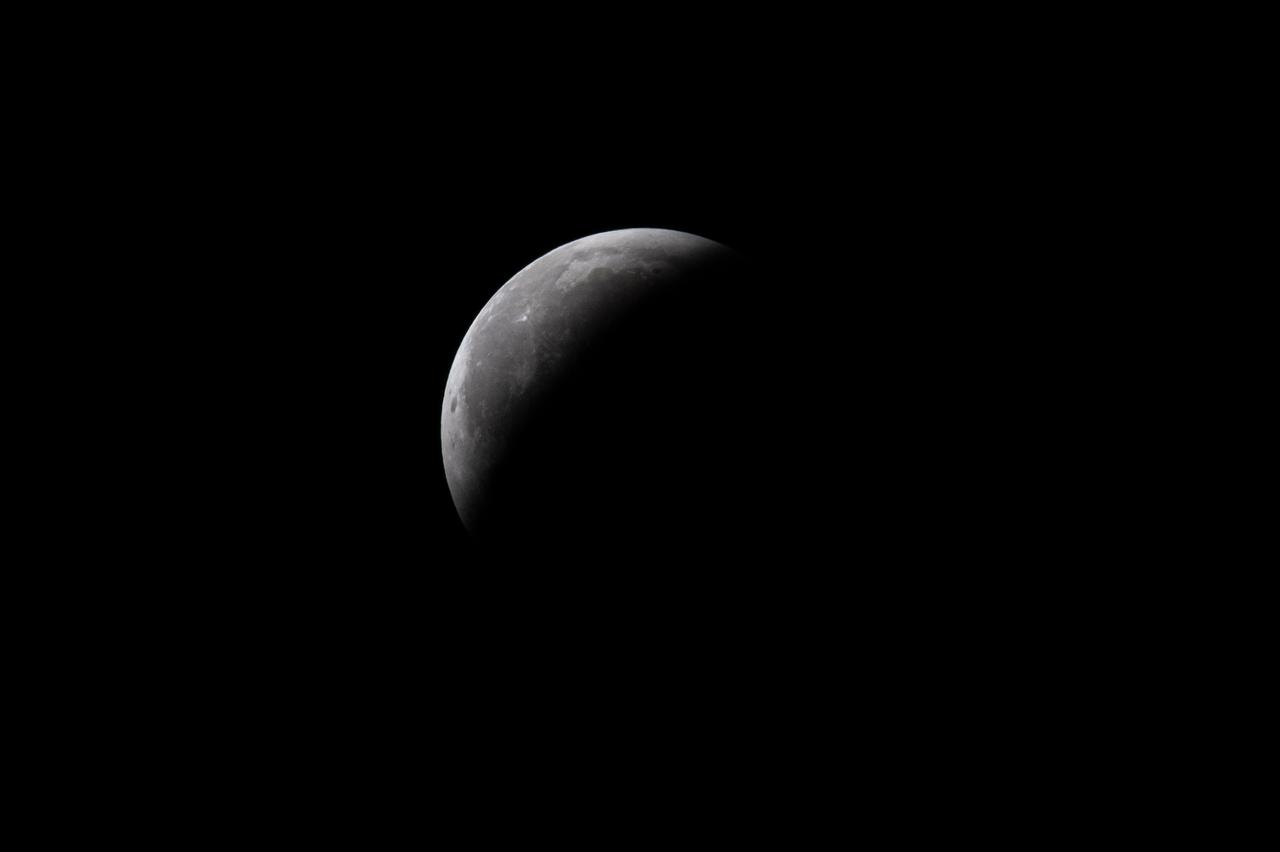
Blood Moon/Lunar Eclipse on March 14th, 2025 seen from Brookpark, OH at NASA Glenn Research Center.. Photo Credit: (NASA/Jordan Cochran)
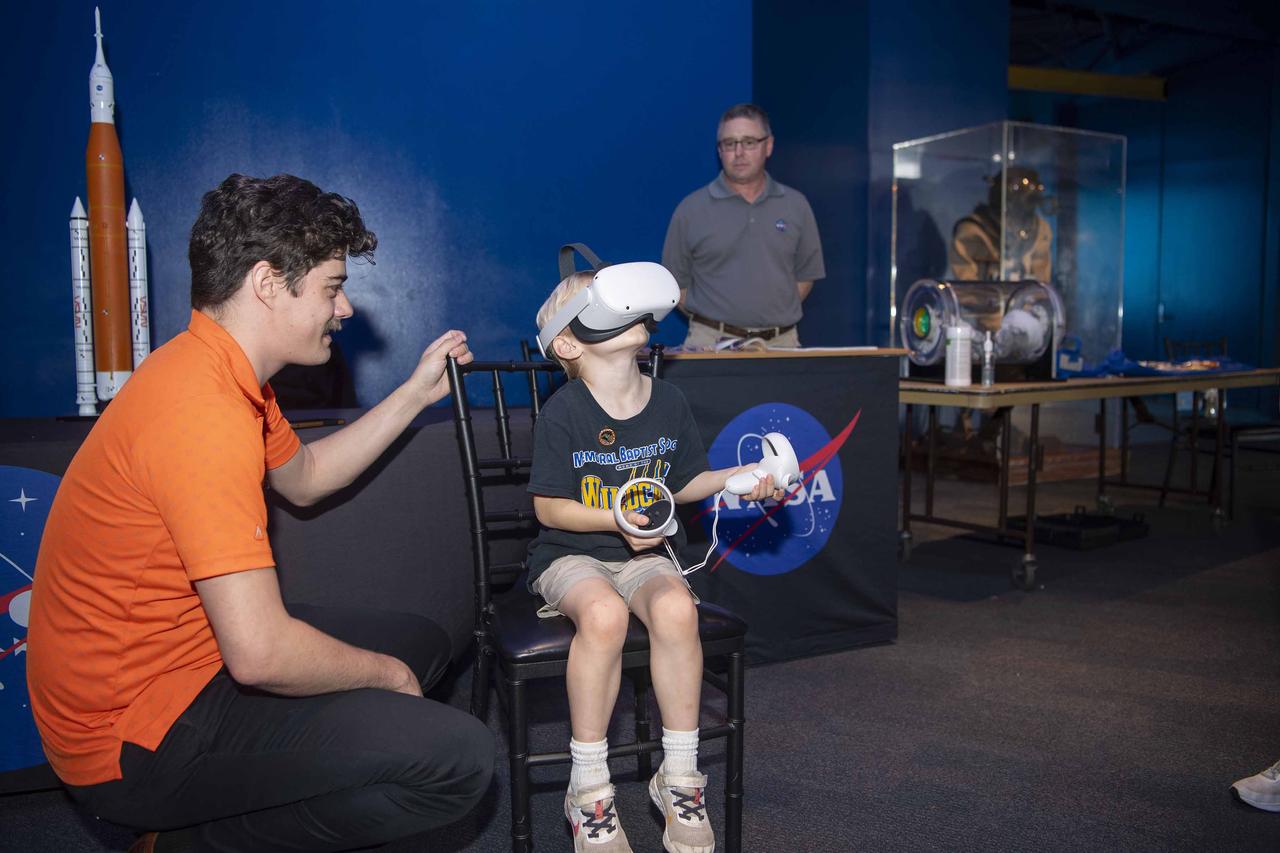
NASA Stennis representatives inspire the Artemis Generation at the Audubon Aquarium in New Orleans Feb. 7-8 with activities and displays highlighting space exploration, including NASA’s Artemis missions to the Moon.
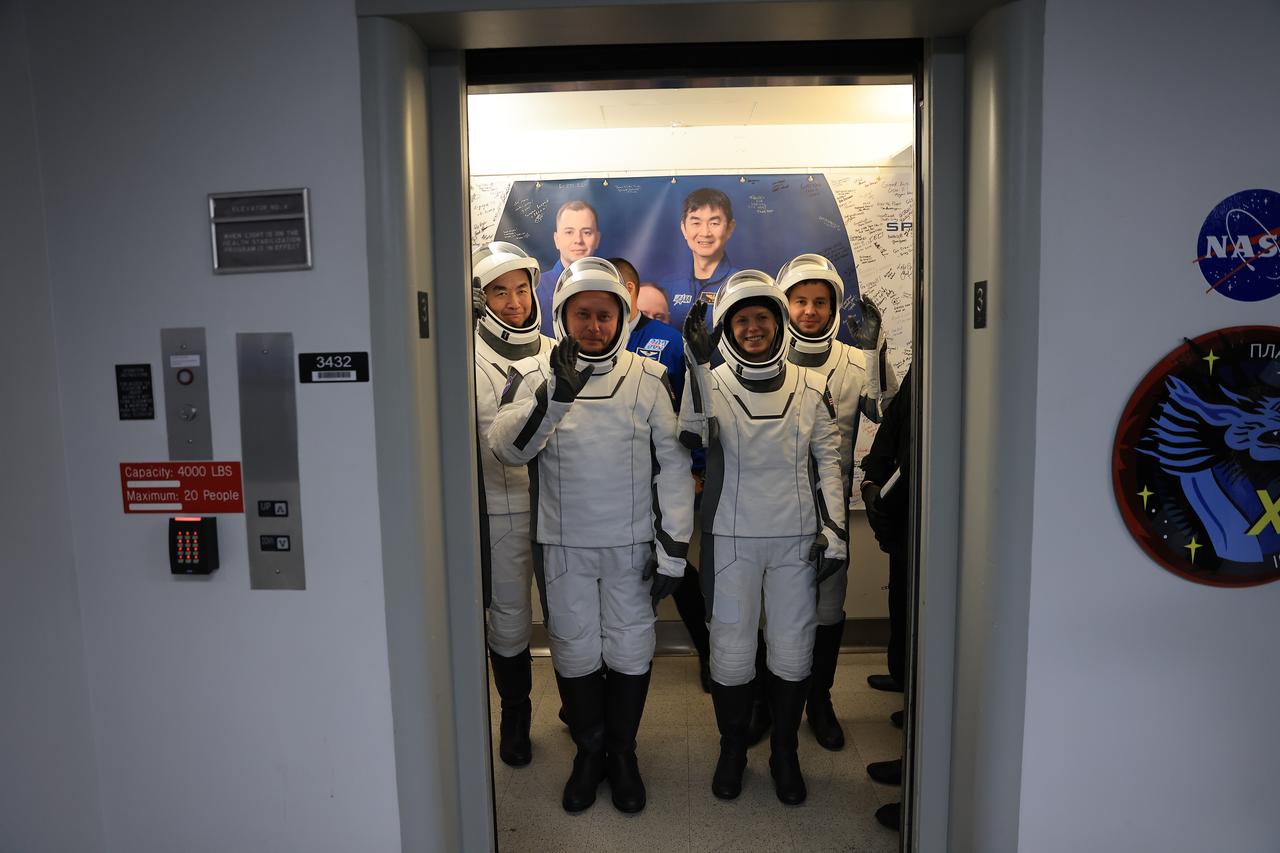
NASA’s SpaceX Crew-11 members pose for a photo in an elevator following suit up operations in the Neil A. Armstrong Operations and Checkout Building at the agency’s Kennedy Space Center in Florida on Thursday, July 31, 2025, during the first attempt of NASA’s SpaceX Crew-11 mission to the International Space Station. From top left, NASA astronauts Mike Fincke and Zena Cardman, along with JAXA (Japan Aerospace Exploration Agency) astronaut Kimiya Yui and Roscosmos cosmonaut Oleg Platonov, are scheduled to lift off aboard SpaceX’s Dragon spacecraft and Falcon 9 rocket for its second attempt at 11:43 a.m. EDT Friday, Aug. 1, 2025, from Launch Complex 39A at NASA Kennedy.
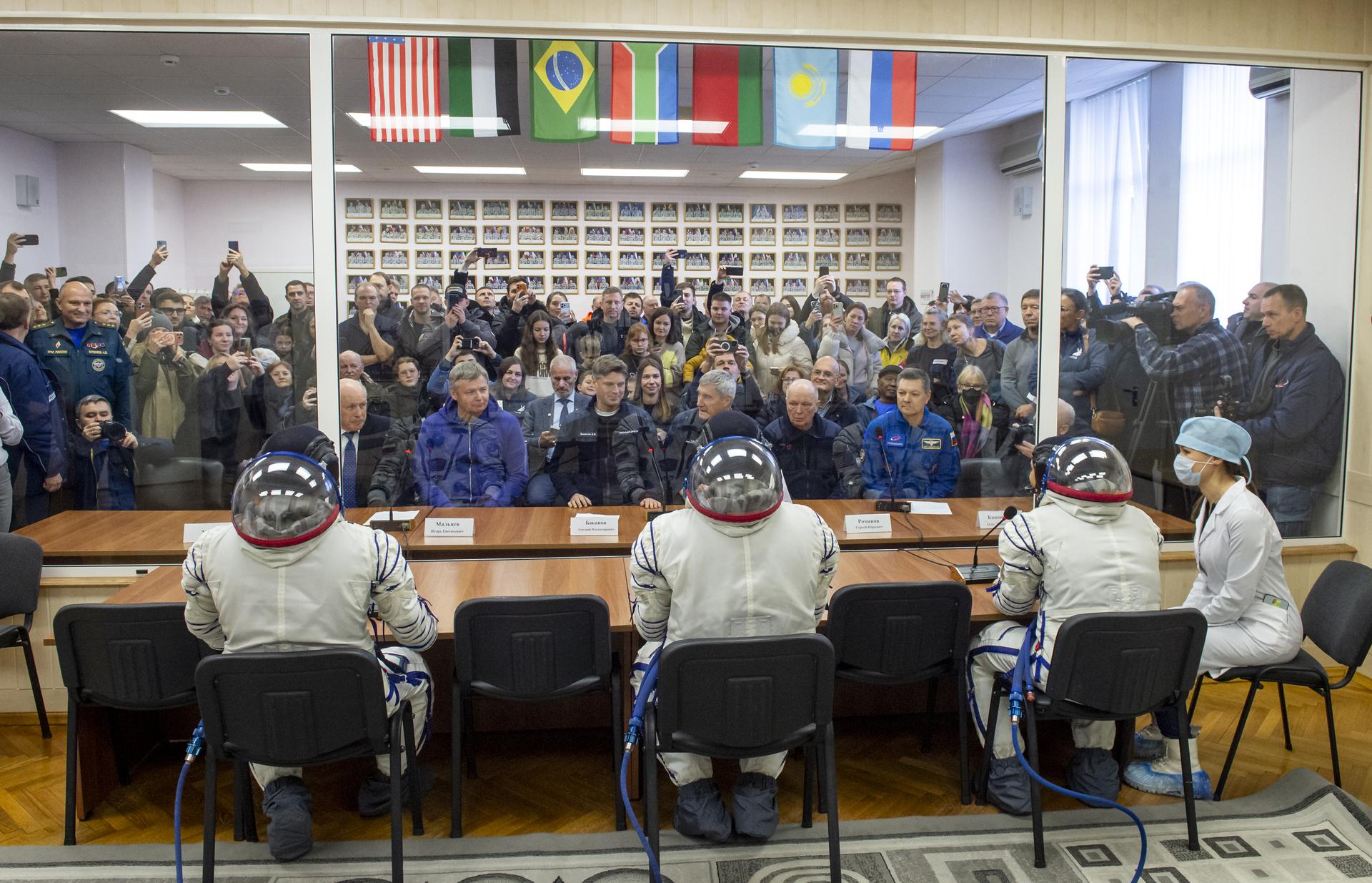
Roscosmos cosmonauts Sergei Mikaev, left, Sergey Kud-Sverchkov, and NASA astronaut Chris Williams, right, meet with NASA and Roscosmos management ahead of their Soyuz launch to the International Space Station Thursday, Nov. 27, 2025 in Baikonur, Kazakhstan. Photo Credit: (NASA/GCTC/Pavel Shvets)
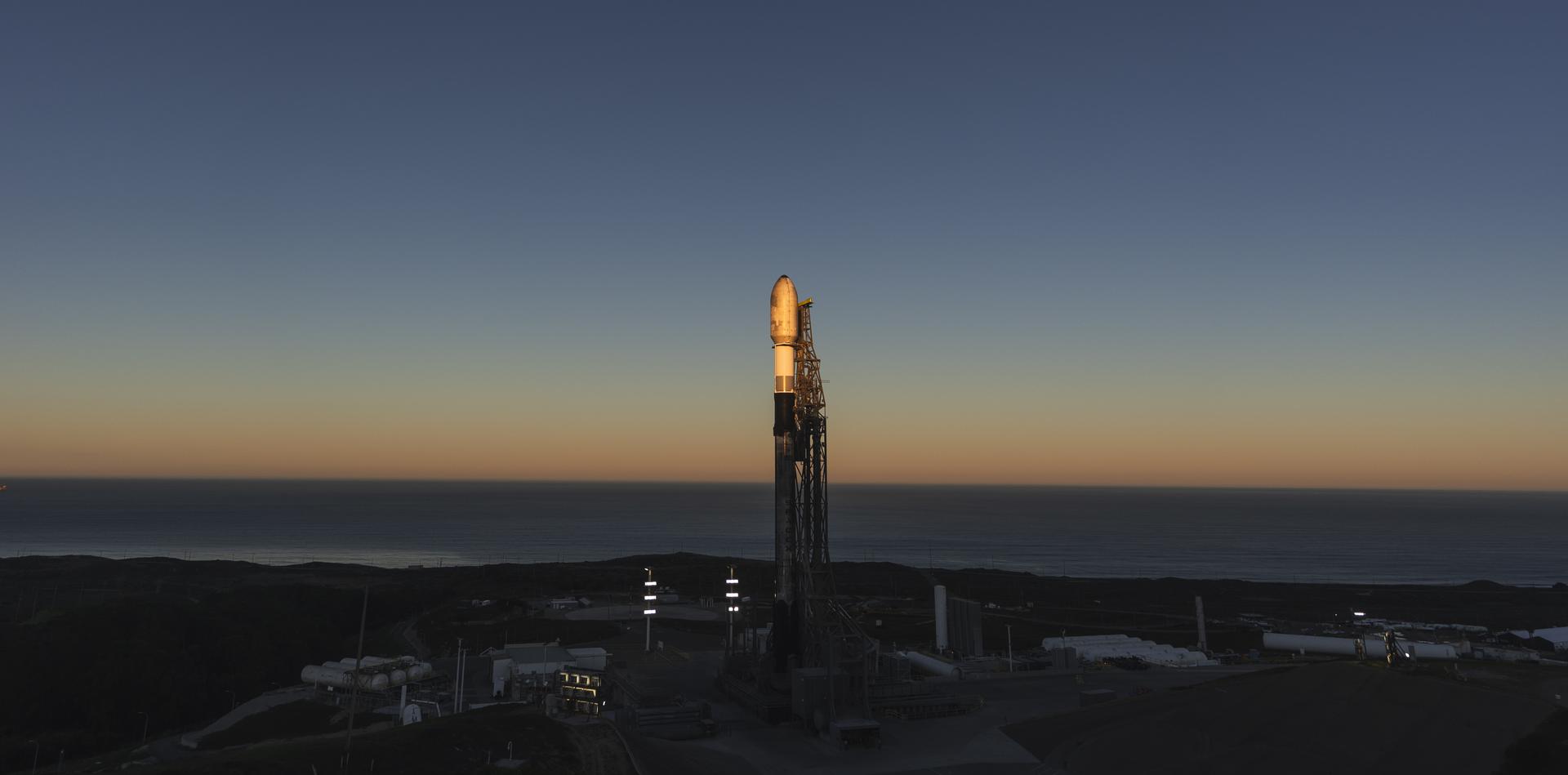
A SpaceX Falcon 9 rocket carrying NASA’s R5-S7 (Realizing Rapid, Reduced-cost high-Risk Research project Spacecraft 7) CubeSat along with several other satellites as part of the company’s Transporter-15 mission stands vertical on the launch pad of Space Launch Complex 4 East at Vandenberg Space Force Base in California on Wednesday, Nov. 26, 2025. The latest in a series of spacecraft, R5-S7 will explore ways to get multiple technology prototypes into low Earth orbit rapidly and at a low cost, accelerating the demonstration of these technologies in orbit and allowing engineers and scientists to more quickly prove them and make them available to NASA missions and other users.

NASA's Europa Clipper, en route to the Jupiter system to investigate the icy moon Europa, conducted a critical test of its radar instrument during a flyby of Mars on March 1, 2025. During the testing, the instrument received echoes of its very-high-frequency radar signals that engineers processed to develop this image, called a radargram. The image was made using radar signals that bounced off Mars. What looks like a skyline is the outline of the topography. Features seen in the radargram include contributions from the topographic features both along and near the ground track (the path below the spacecraft as it passed overhead), such as impact craters, hills, and steep slopes. The 560-mile-long (900-kilometer-long) section of terrain profiled in this radargram is near Mars' equator. The Europa Clipper radar instrument, REASON (Radar for Europa Assessment and Sounding: Ocean to Near-surface), is designed to see into the icy crust of Europa. Though the rocky Martian surface does not allow much penetration by the radar signals, the clarity of the radargram image indicates REASON was performing as expected during the Mars flyby, boding well for future observations at Europa. As Europa Clipper zipped by the Red Planet – starting at 3,100 miles (5,000 kilometers) down to 550 miles (884 kilometers) above the surface – REASON sent and received radio waves for about 40 minutes. In comparison, at Europa the instrument will operate as close as 16 miles (25 kilometers) from the moon's surface. Europa Clipper launched from NASA's Kennedy Space Center in Florida on Oct. 14, 2024, and will arrive at the Jupiter system in 2030 to conduct about 50 flybys of Europa. The mission's main science goal is to determine whether there are places below Europa's surface that could support life. The mission's three main science objectives are to determine the thickness of the moon's icy shell and its surface interactions with the ocean below, to investigate its composition, and to characterize its geology. The mission's detailed exploration of Europa will help scientists better understand the astrobiological potential for habitable worlds beyond our planet. https://photojournal.jpl.nasa.gov/catalog/PIA26568
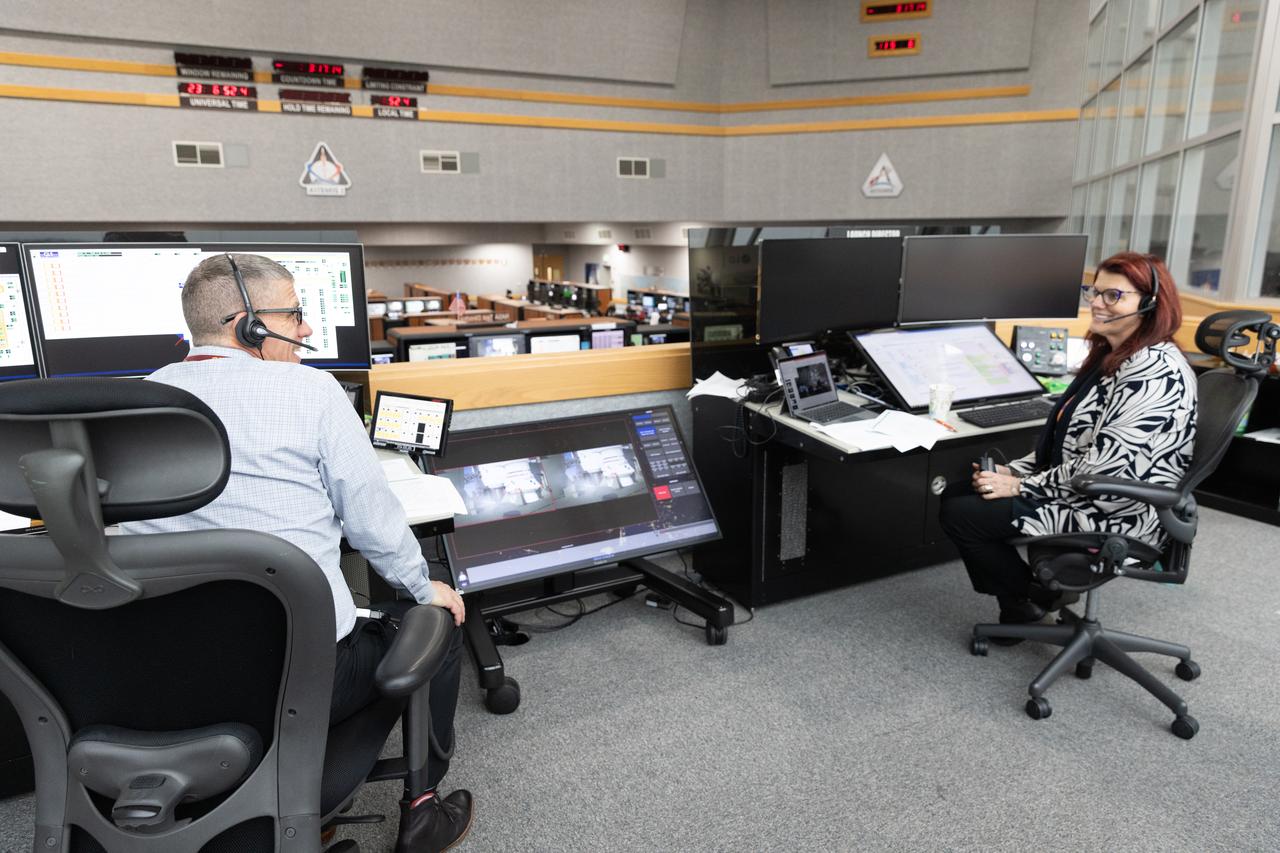
Jeremy Graeber, at left, assistant Artemis launch director, and Charlie Blackwell-Thompson, at left, NASA Artemis launch director, participate in an Artemis II launch countdown simulation inside Firing Room 1 in the Launch Control Center at NASA’s Kennedy on Thursday, Jan. 23, 2025. The simulations go through launch day scenarios to help launch team members test software and make adjustments if needed during countdown operations. For Artemis II, four astronauts will venture around the Moon, the first crewed mission on NASA’s path to establishing a long-term presence for science and exploration through Artemis.
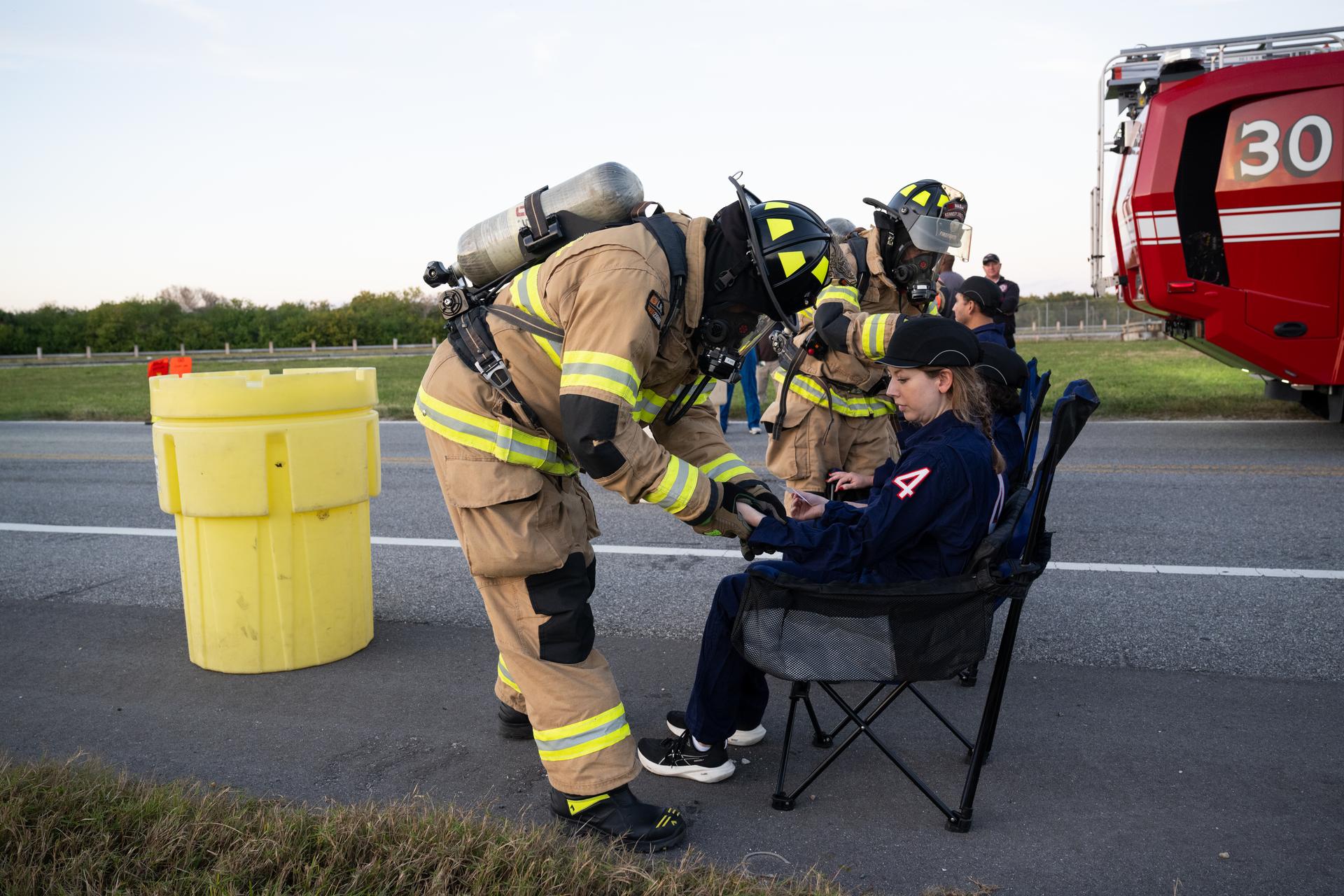
Teams at NASA's Kennedy Space Center in Florida practiced various emergency rescue training scenarios with the Artemis II crew, Friday, Dec. 19, 2025, ahead of the Artemis II mission. In the unlikely event of an emergency during launch countdown at Launch Complex 39B, personnel will be transported in mine-resistant ambush protected vehicles, or MRAPS, from the pad and to one of the triage site locations at Kennedy. Photo Credit: (NASA/Joel Kowsky)