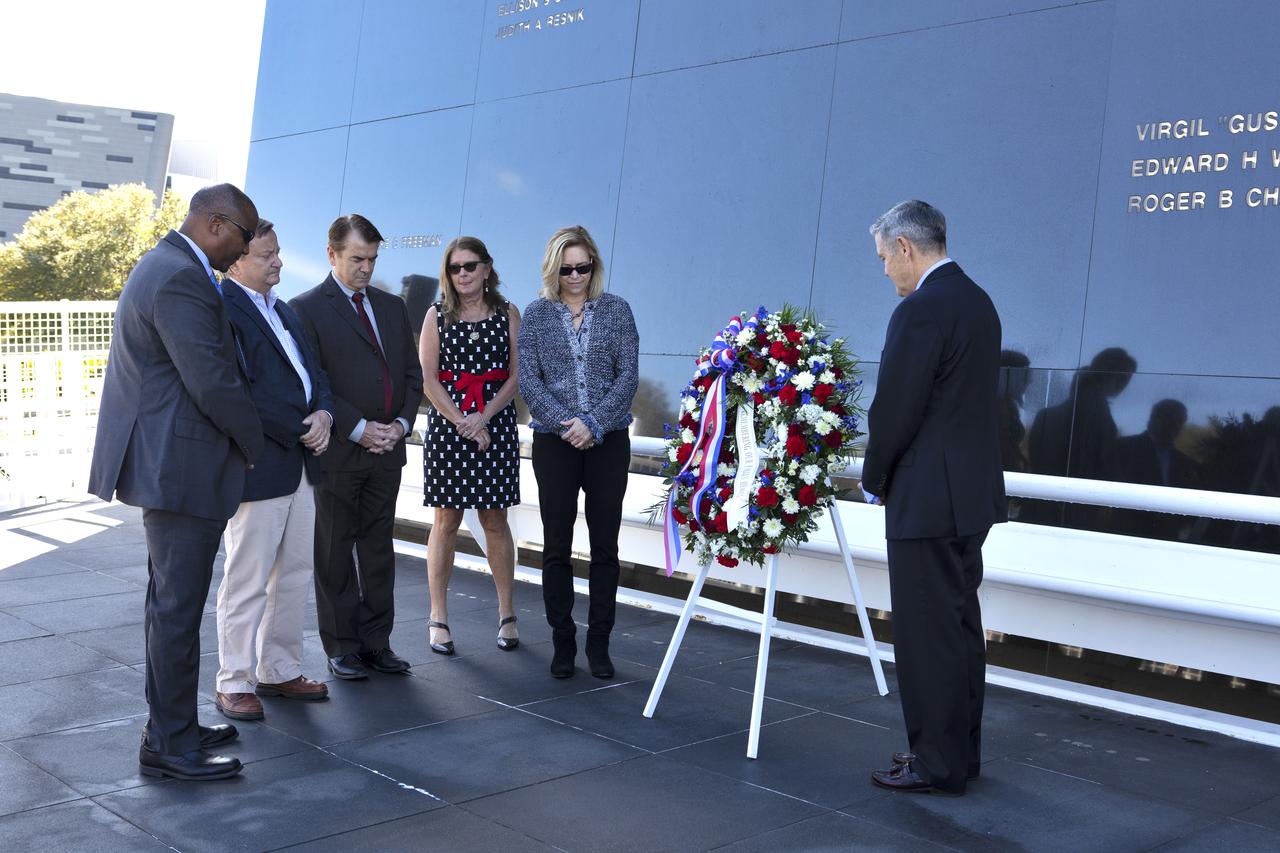
During this year’s Day of Remembrance ceremony at the Kennedy Space Center Visitor Complex, from left, Kennedy Associate Director Kelvin Manning, former Shuttle Launch Director Michael Leinbach, President and Chief Executive Officer of the Astronauts Memorial Foundation (AMF) Thad Altman, AMF Vice Chair Sheryl Chaffee, Kennedy Deputy Director Janet Petro, and Kennedy Center Director Bob Cabana stand in a moment of silence after placing a memorial wreath in front of the Space Mirror Memorial. Each year, Kennedy employees and guests gather with others throughout NASA to honor those astronauts who have fallen in the pursuit of space exploration.
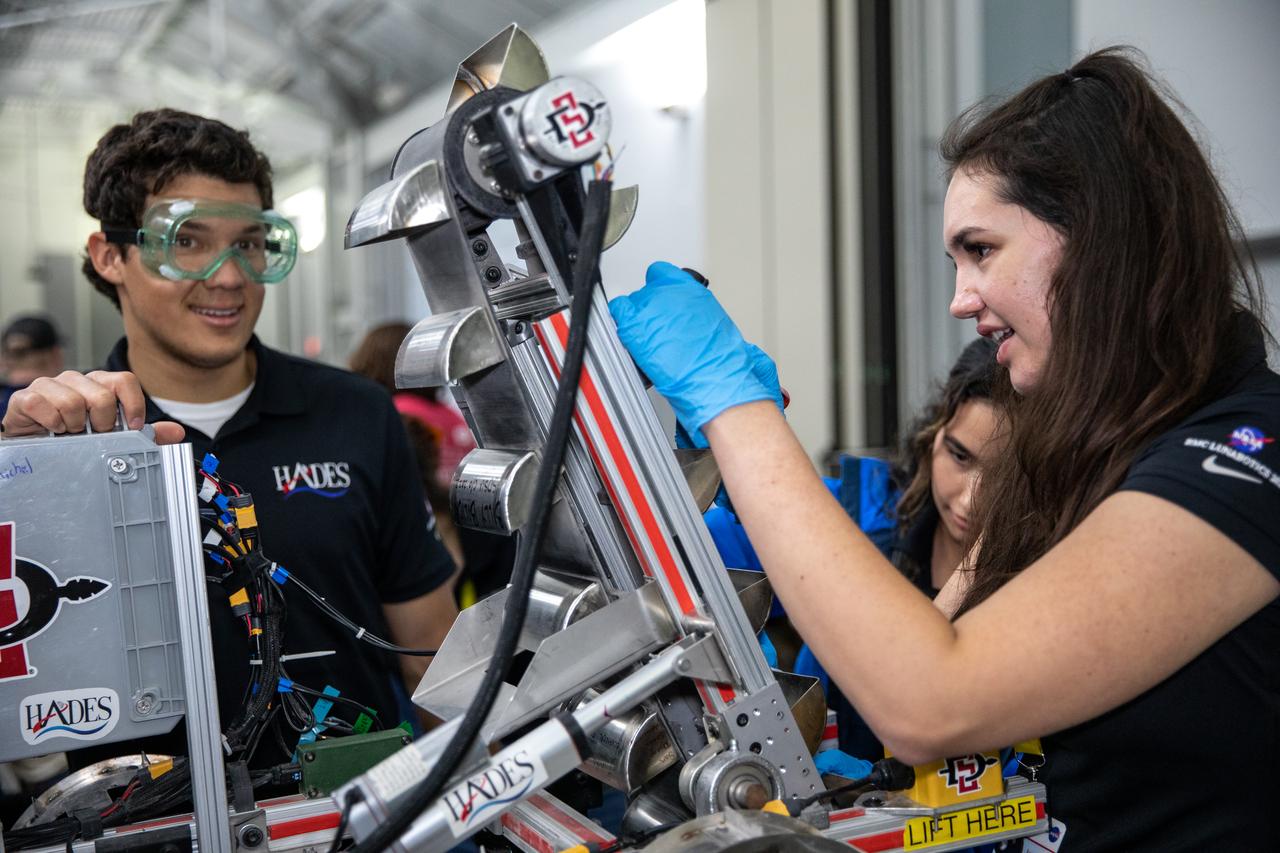
Students from San Diego State College prepare their robotic miner for its second turn to dig in the mining arena during NASA’s LUNABOTICS competition on May 27, 2022, at the Center for Space Education near the Kennedy Space Center Visitor Complex in Florida. More than 35 teams from around the U.S. have designed and built remote-controlled robots for the mining competition. Teams used their autonomous or remote-controlled robots to maneuver and dig in a supersized sandbox filled with lunar simulant and rocks. The objective of the challenge is to see which team’s robot can collect and deposit the most rocky regolith within a specified amount of time.
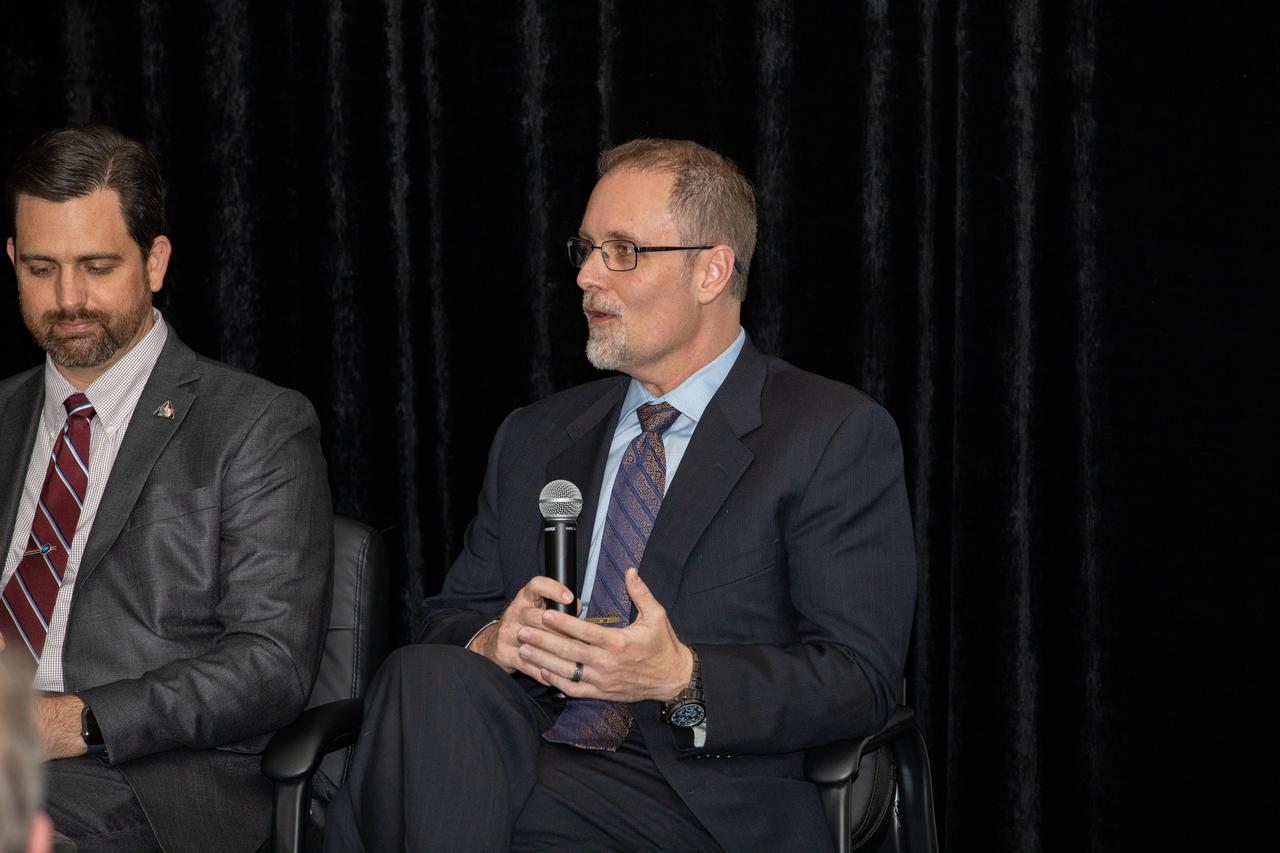
Phil Meade, at right, associate director, Spaceport Integration and Services, participates in a panel discussion during a Community Leaders Update hosted by NASA Kennedy Space Center on Feb. 18, 2020, at the Kennedy Space Center Visitor Complex. At left is Jeremy Parsons, deputy manager, Exploration Ground Systems. Center Director Bob Cabana moderated a panel discussion featuring senior leaders from Exploration Ground Systems, Spaceport Integration and Services, Exploration Research and Technology Programs, Gateway Logistics Element, and Center Planning and Development. Attendees included community leaders, business executives, partners, educators and government leaders. After the presentation, guests had the opportunity to ask questions and visit displays from the programs and some of the commercial partners.
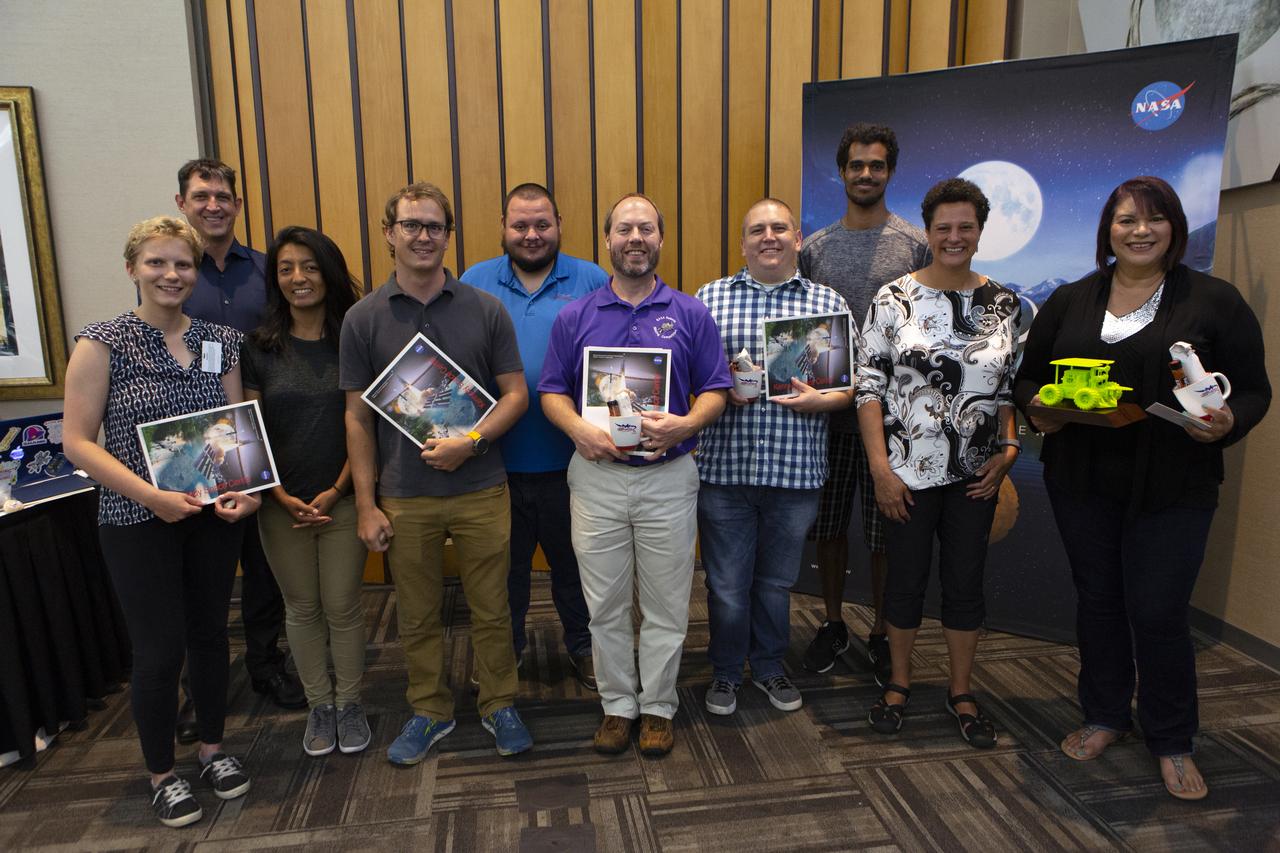
During an awards ceremony on June 12, 2019 at the Kennedy Space Center Visitor Complex in Florida, mentors and volunteers from Kennedy received certificates of recognition for the NASA Swarmathon 2019 University Challenge. Second from right is Melanie Moses, a professor of computer science at the Swarmathon host location, University of New Mexico. At far right is Theresa Martinez, engagement manager of the Minority University Research and Education Program, managed at Kennedy. University students and their mentors were at Kennedy to participate in a student/mentor panel, hear from speakers, get a behind-the-scenes tour of Kennedy Space Center, dine with an astronaut and receive awards. During Swarmathon University Challenge IV, students developed algorithms for robotic swarms that are robust and adaptable like the foraging strategies of ant colonies. The fourth and final Swarmathon was a combined virtual and physical competition.

Barbara Brown, center, chief technologist, Exploration Research and Technology Programs, participates in a panel discussion during a Community Leaders Update hosted by Kennedy Space Center on Feb. 18, 2020, at the Kennedy Space Center Visitor Complex in Florida. At left is Jenny Lyons, deputy manager, Gateway Logistics Element. At right is Jeremy Parsons, deputy manager, Exploration Ground Systems. The panel discussion was moderated by Center Director Bob Cabana. Attendees included community leaders, business executives, partners, educators and government leaders. After the presentation, guests had the opportunity to ask questions and visit displays from the programs and some of the commercial partners.
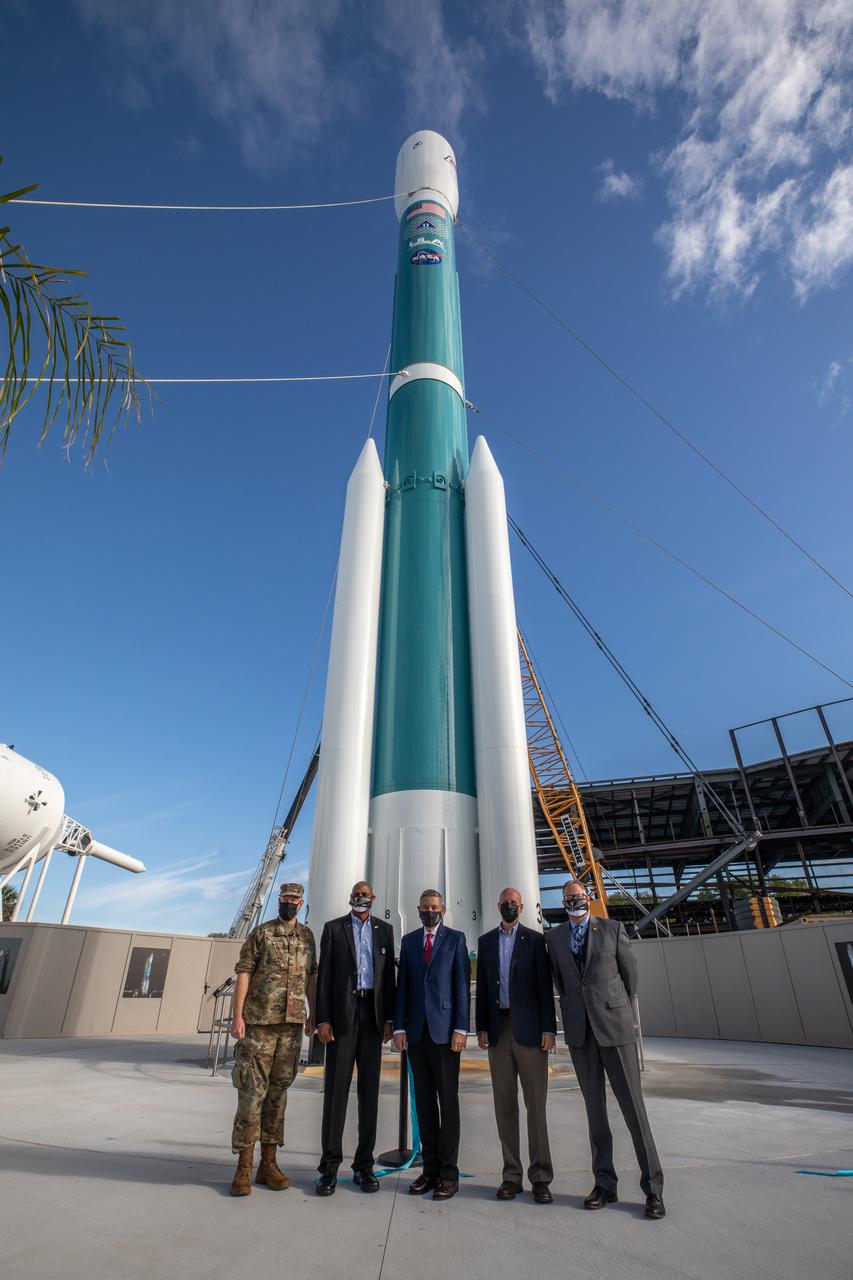
The last United Launch Alliance Delta II rocket joins the lineup of historic launch vehicles in the Rocket Garden during a ribbon-cutting ceremony at the Kennedy Space Center Visitor Complex in Florida, on March 23, 2021. From left, are Brigadier General Stephen Purdy Jr., 45th Space Wing commander and Eastern Range director, Patrick Space Force Base and Cape Canaveral Air Force Station; Ron Fortson, director and general manager, Launch Operations, United Launch Alliance; Kennedy Space Center Director Bob Cabana; Tim Dunn, launch director, Launch Services Program; and Therrin Protze, chief operating officer, Delaware North/KSCVC. The Delta II rocket was a workhorse for NASA and civilian scientists, the U.S. military, and commercial clients throughout its almost 30 years of service. Since its first launch in 1989, the Delta II has launched 154 successful missions. NASA’s Launch Services Program launched the ICESat-2 spacecraft on the final Delta II launch for the agency on Sept. 15, 2018, from Vandenberg Air Force Base in California.
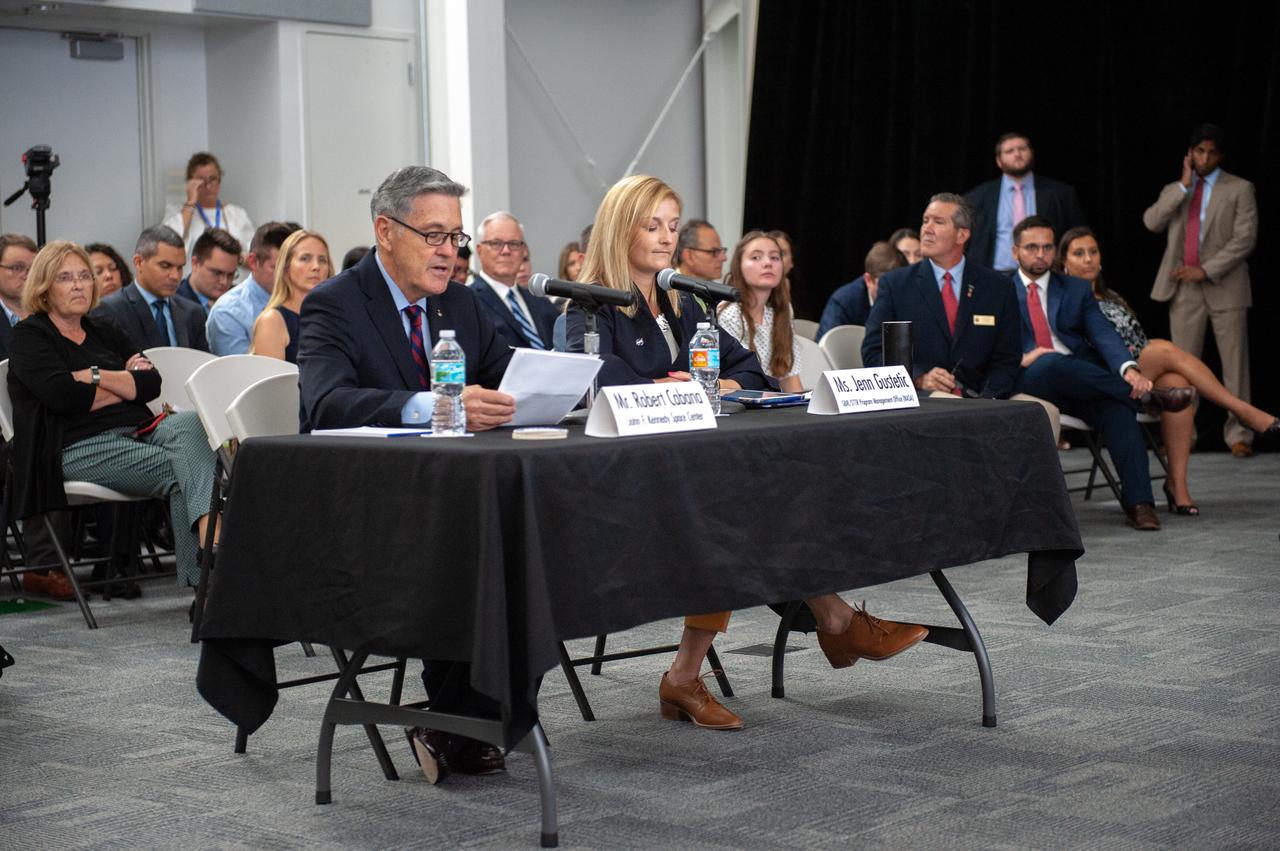
Bob Cabana, left, director of NASA’s Kennedy Space Center in Florida, and Jenn Gustetic, program executive, NASA Small Business Innovation Research Program (SBIR), speak to Florida legislators participating in the U.S. Senate Committee on Small Business and Entrepreneurship field hearing on July 19, 2019, in the Astronaut Memorial Foundation facility at Kennedy’s visitor complex. The topic of the field hearing was “Moon Landings to Mars Exploration: The Role of Small Business Innovation in America’s Space Program.”
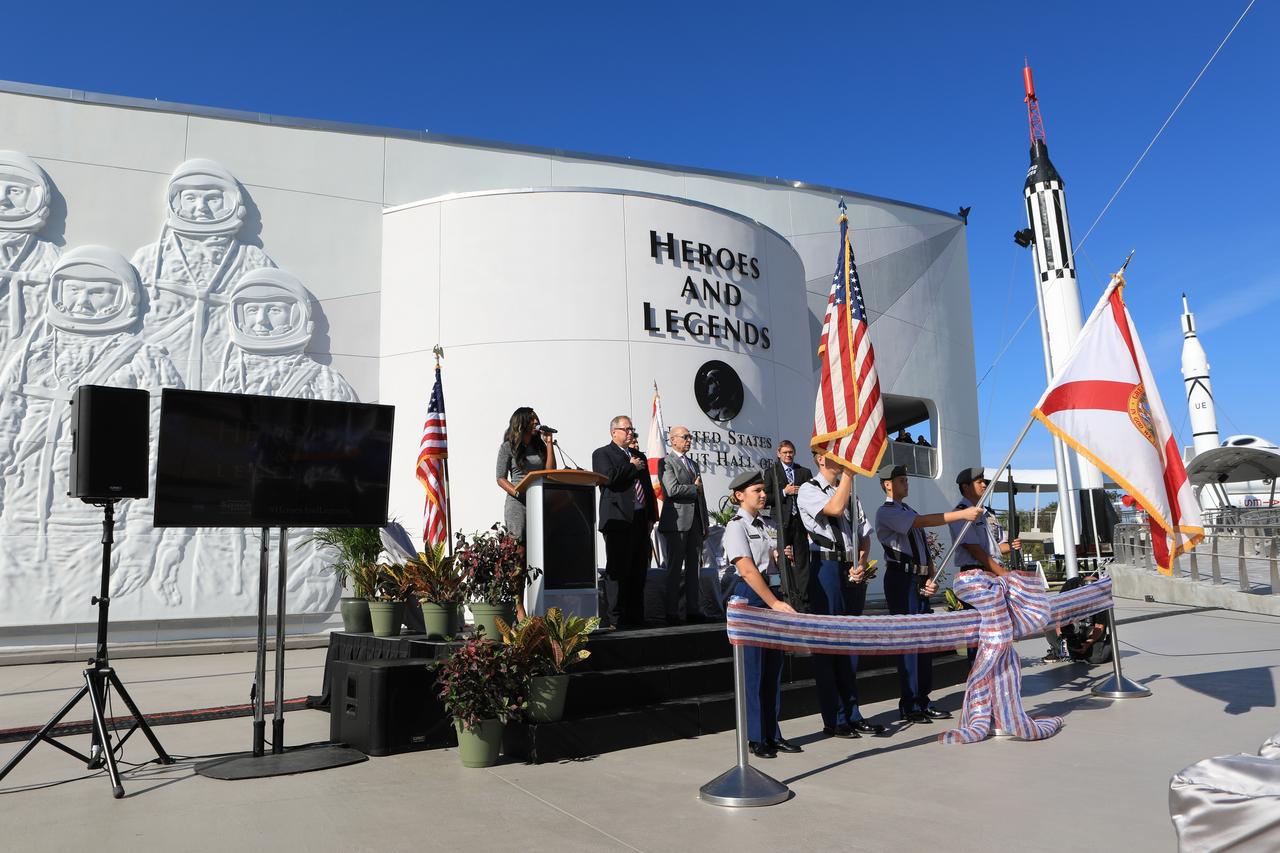
During the grand opening of the Heroes and Legends attraction at the Kennedy Space Center Visitor Complex, the national anthem was performed by Carmen Harrell. The new facility includes the U.S. Astronaut Hall of Fame and looks back to the pioneering efforts of Mercury, Gemini and Apollo. It sets the stage by providing the background and context for space exploration and the legendary men and women who pioneered the nation's journey into space.
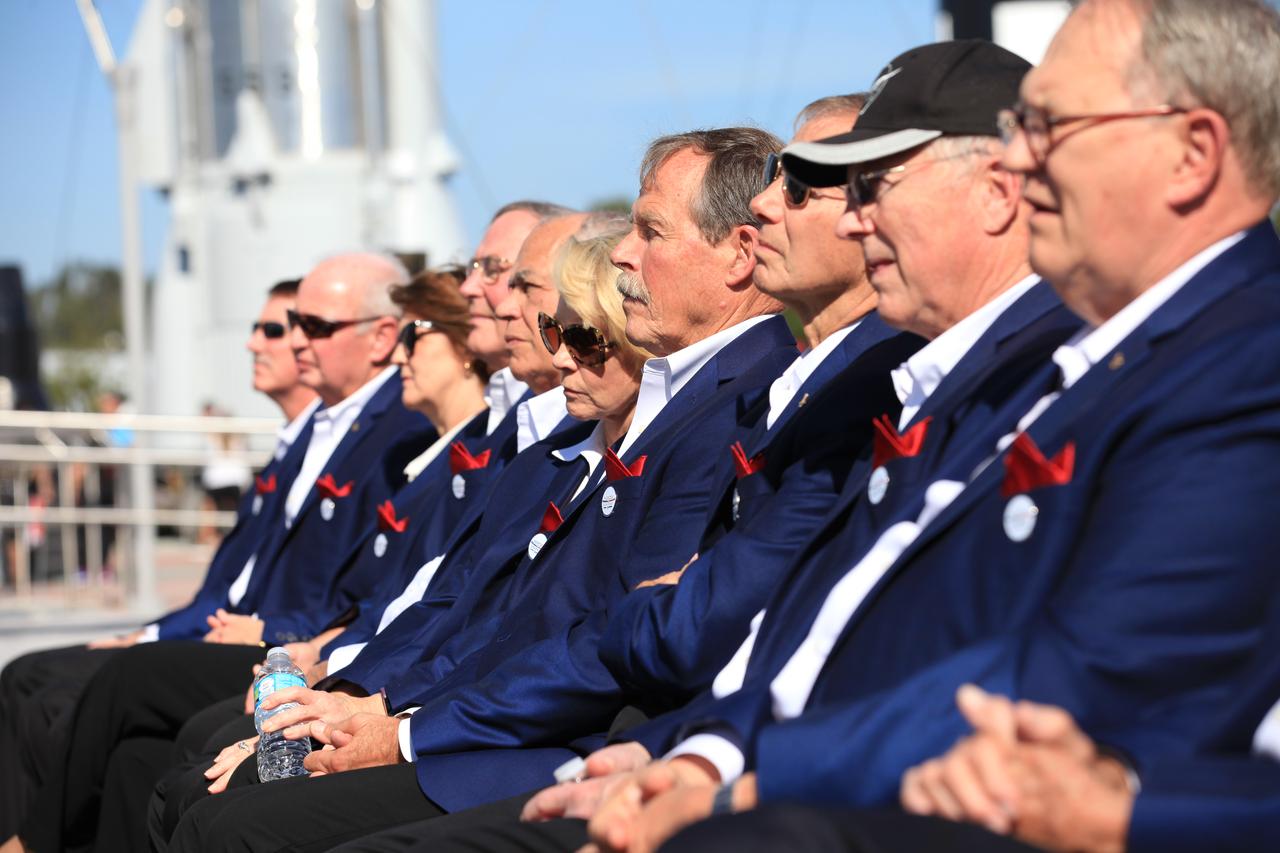
Members of the U.S. Astronaut Hall of Fame listen to speakers during the opening of the Heroes and Legends attraction at the Kennedy Space Center Visitor Complex. The new facility includes the U.S. Astronaut Hall of Fame and looks back to the pioneering efforts of Mercury, Gemini and Apollo. It sets the stage by providing the background and context for space exploration and the legendary men and women who pioneered the nation's journey into space.
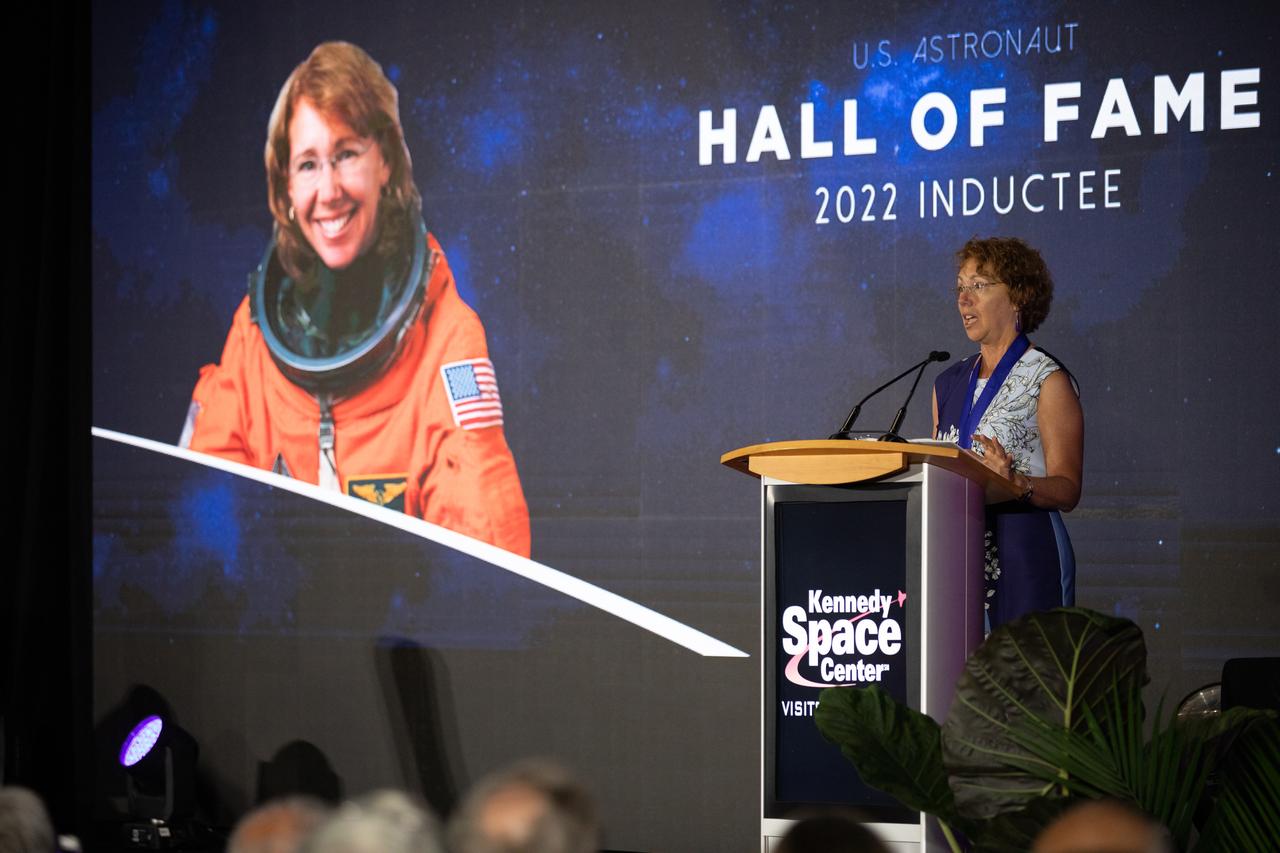
Former NASA astronaut Sandra Magnus speaks after receiving her medal and induction into the 21st class of the U.S. Astronaut Hall of Fame during a ceremony on June 11, 2022, at the Kennedy Space Center Visitor Complex in Florida. The 2022 inductees were selected by a committee of Hall of Fame astronauts, former NASA officials, flight directors, historians, and journalists. This year’s induction brings the total number of AHOF members to 105.

Veteran NASA astronauts James Buchli and Janet Kavandi were inducted into the U.S. Astronaut Hall of Fame in a public ceremony at Kennedy Space Center Visitor Complex in the Space Shuttle Atlantis attraction on April 6, 2019.
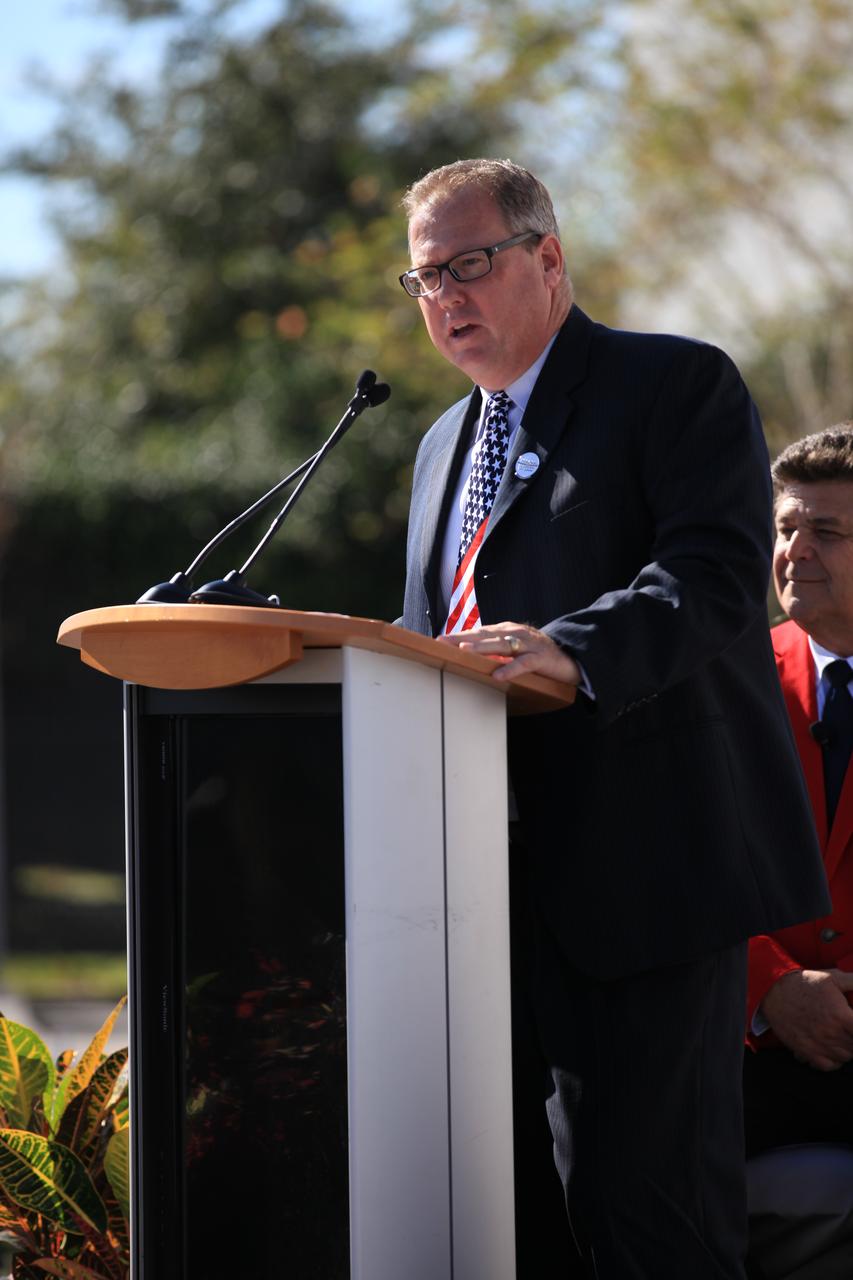
Therrin Protze, chief operating officer of the Kennedy Space Center Visitor Complex, speaks to guests during the opening of the Heroes and Legends attraction at the Kennedy Space Center Visitor Complex. The new facility includes the U.S. Astronaut Hall of Fame and looks back to the pioneering efforts of Mercury, Gemini and Apollo. It sets the stage by providing the background and context for space exploration and the legendary men and women who pioneered the nation's journey into space.
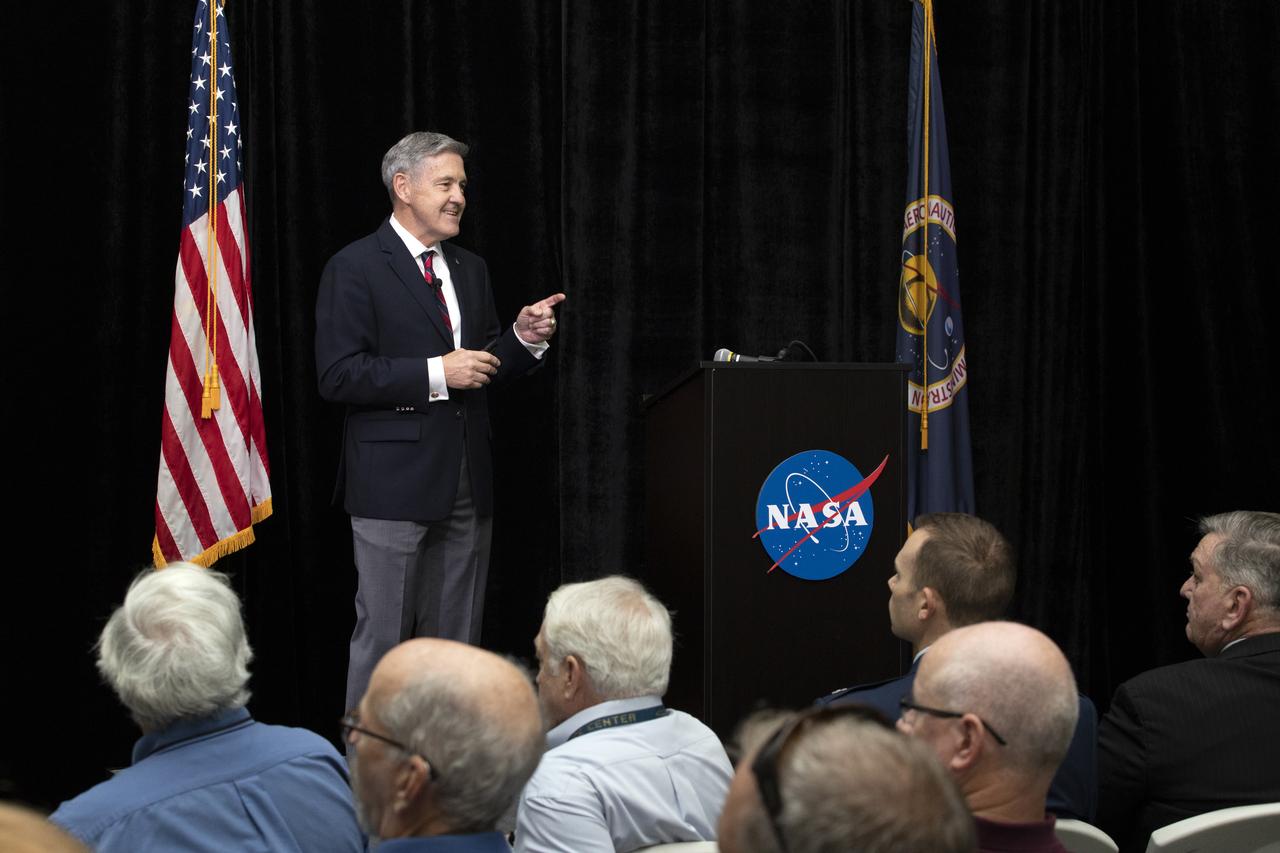
NASA Kennedy Space Center Director Bob Cabana updates community leaders, business executives, partners, educators and government leaders on Kennedy-led programs and accomplishments during a presentation March 29, 2019, at the Kennedy Space Center Visitor Complex in Florida. Cabana recapped achievements and future plans for the Commercial Crew Program, Exploration Ground Systems, Launch Services Program, Exploration Research and Technology, and Center Planning and Development. After the presentation, guests had the opportunity to ask questions and visit displays from the programs and some of the commercial partners.
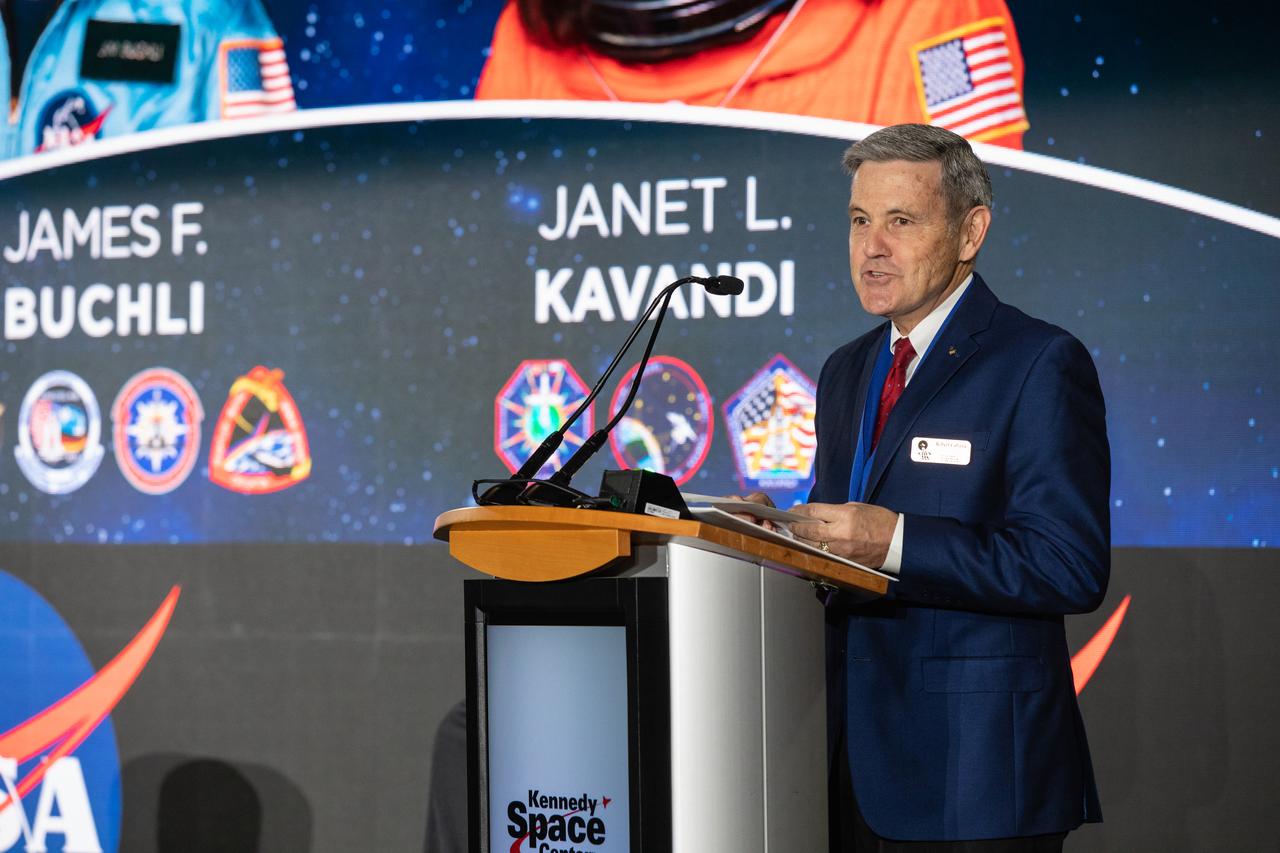
Veteran NASA astronauts James Buchli and Janet Kavandi were inducted into the U.S. Astronaut Hall of Fame in a public ceremony at Kennedy Space Center Visitor Complex in the Space Shuttle Atlantis attraction on April 6, 2019.
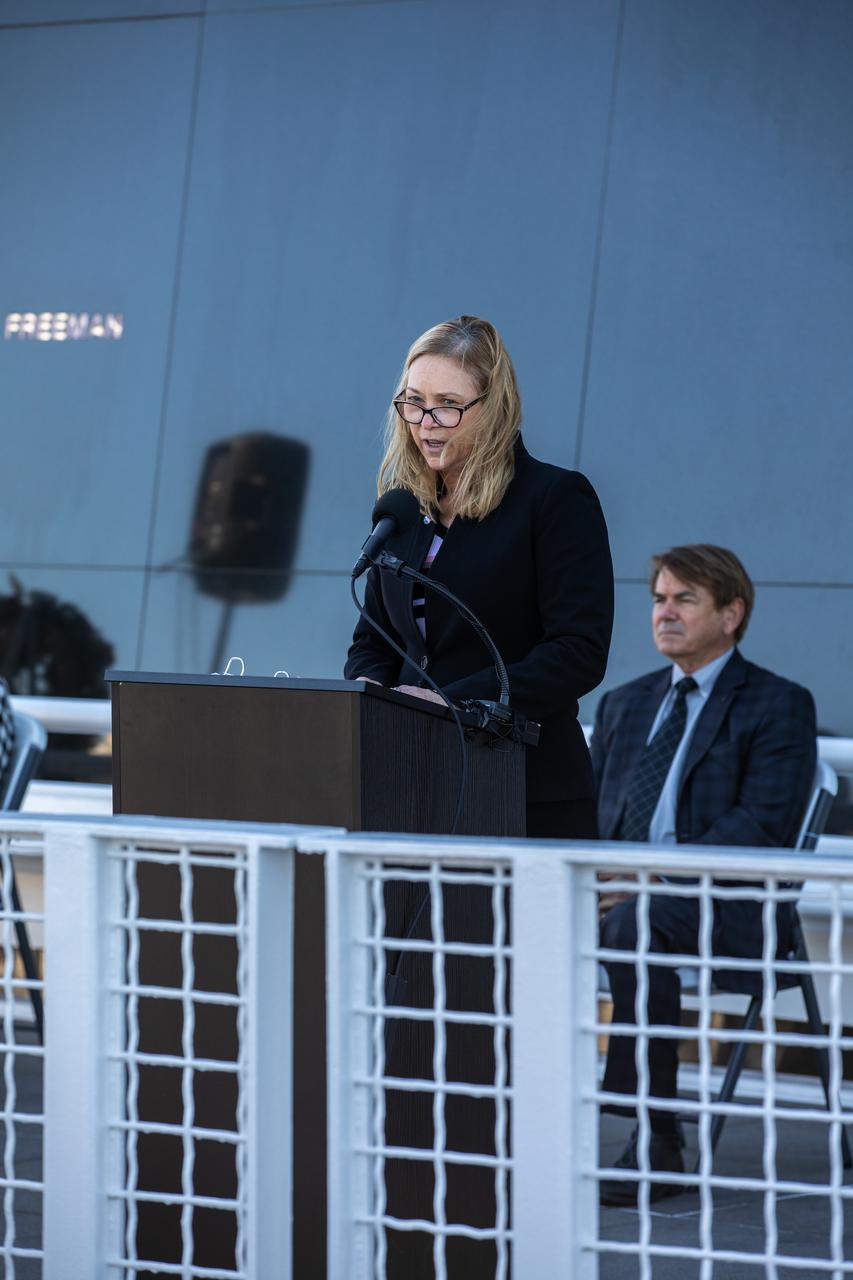
Kennedy Space Center Deputy Director Janet Petro speaks during NASA’s Day of Remembrance ceremony on Thursday, Jan. 28, 2021, at the Kennedy Space Center Visitor Complex’s Space Mirror Memorial. The crews of Apollo 1 and space shuttles Challenger and Columbia, as well as other fallen astronauts who lost their lives in the name of space exploration and discovery, were honored by Kennedy employees and guests at the annual memorial event.
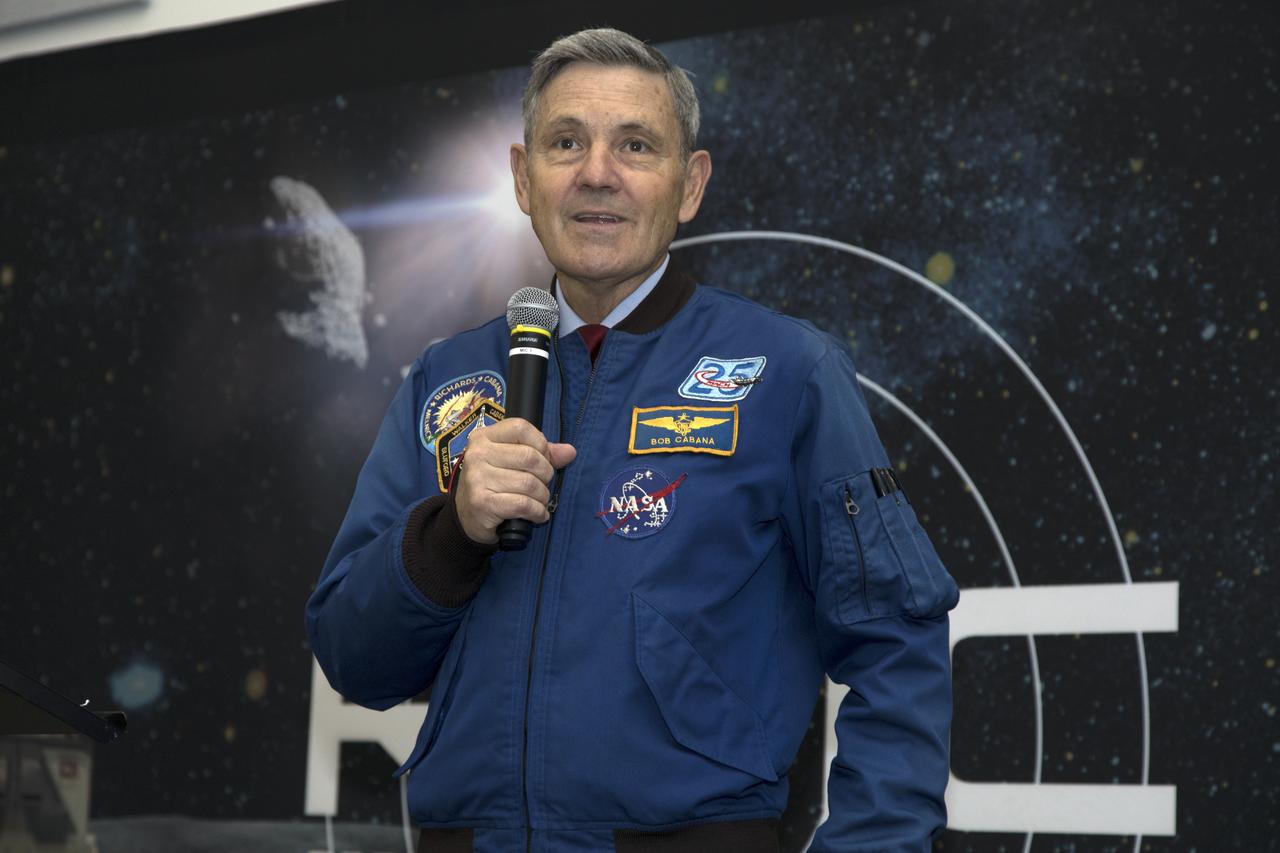
NASA Kennedy Space Center Director Bob Cabana welcomes college and university teams to NASA's 9th Robotic Mining Competition, May 15, during the opening ceremony in the RobotPits in the Educator Resource Center at Kennedy Space Center Visitor Complex in Florida. More than 40 student teams from colleges and universities around the U.S. will use their mining robots to dig in a supersized sandbox filled with BP-1, or simulated Lunar soil, gravel and rocks, and participate in other competition requirements. The Robotic Mining Competition is a NASA Human Exploration and Operations Mission Directorate project designed to encourage students in science, technology, engineering and math, or STEM fields. The project provides a competitive environment to foster innovative ideas and solutions that could be used on NASA's deep space missions.
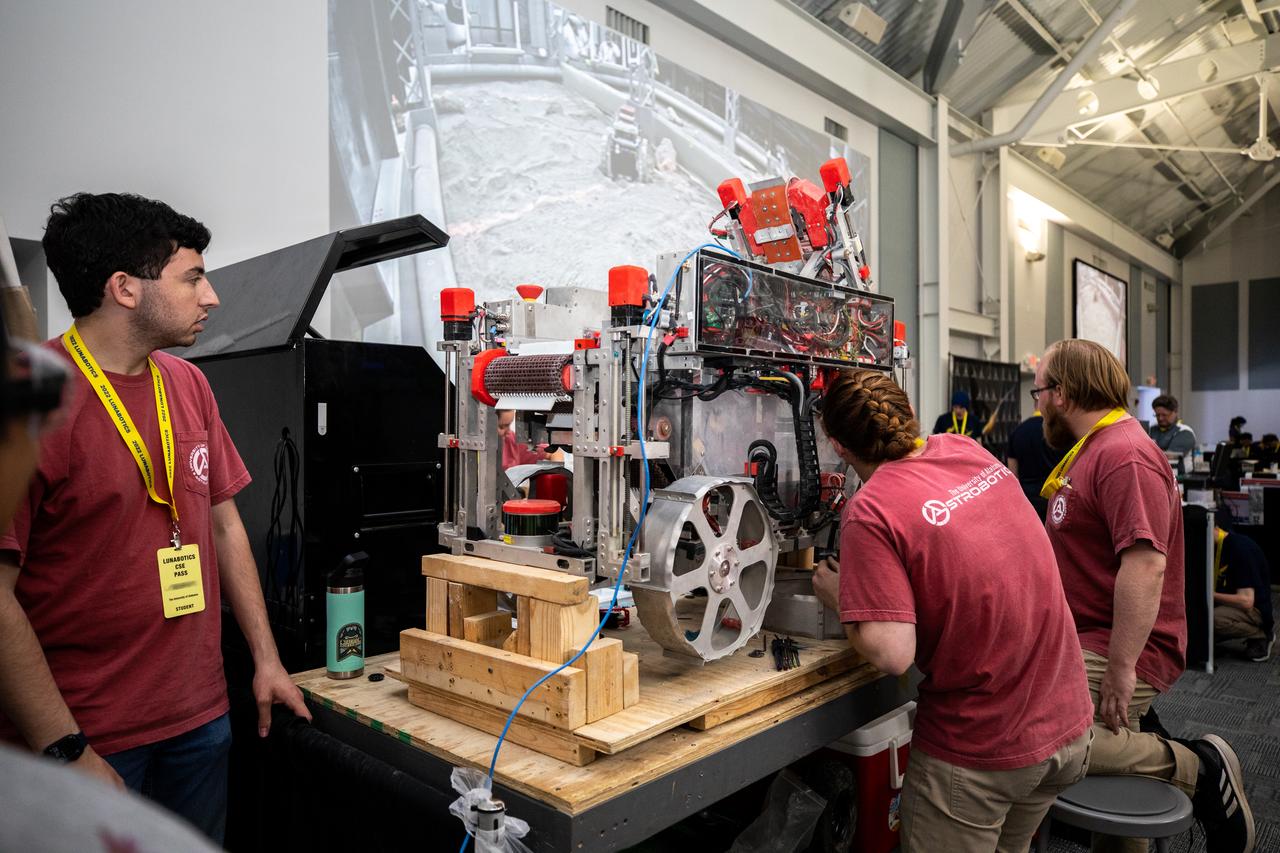
Students from the University of Alabama prepare their robotic miner for its turn to dig in the mining arena during NASA’s LUNABOTICS competition on May 24, 2022, at the Center for Space Education near the Kennedy Space Center Visitor Complex in Florida. More than 35 teams from around the U.S. have designed and built remote-controlled robots for the mining competition. Teams use their autonomous or remote-controlled robots to maneuver and dig in a supersized sandbox filled with rocks and simulated lunar soil, or regolith. The objective of the challenge is to see which team’s robot can collect and deposit the most rocky regolith within a specified amount of time.
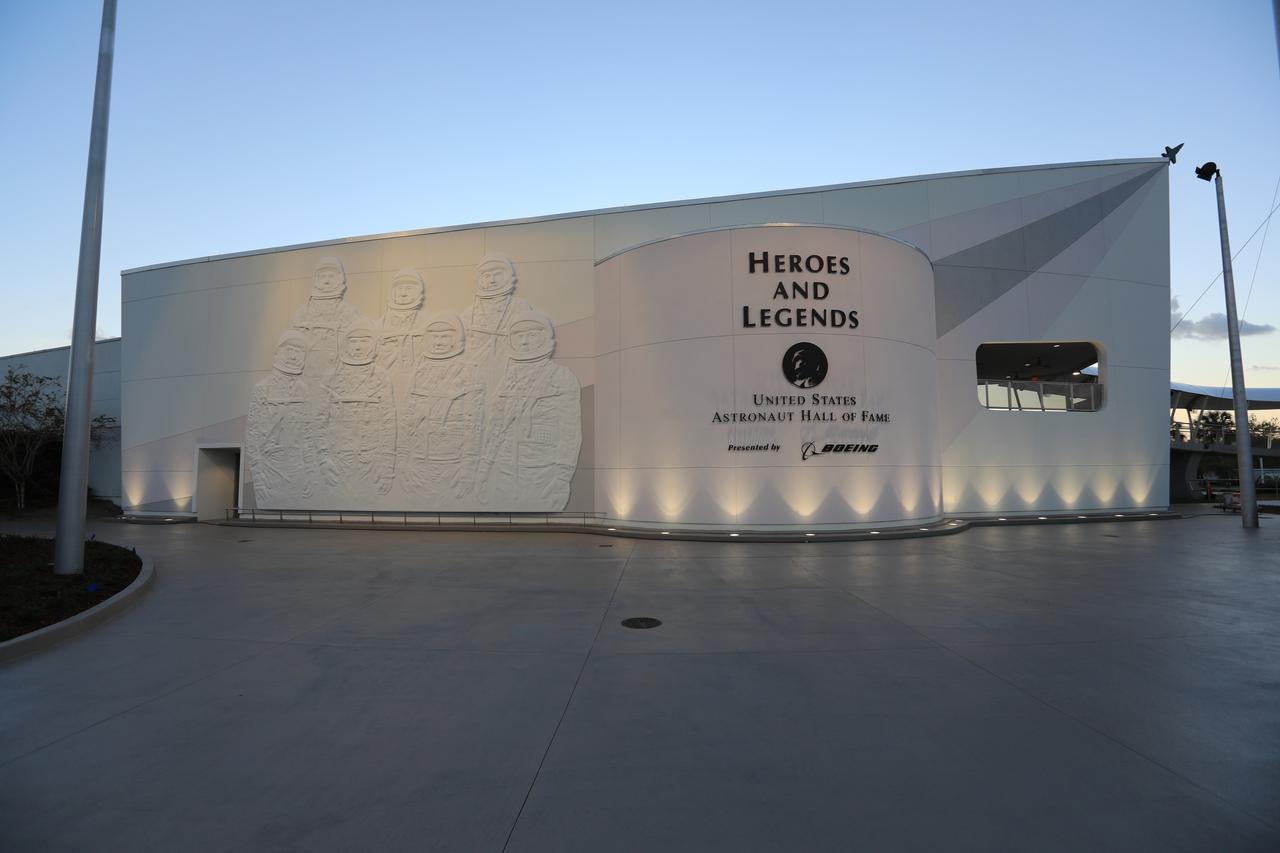
The Heroes and Legends attraction at the Kennedy Space Center Visitor Complex is just inside the entrance to set the stage as guests arrive. In addition to displays honoring the Americans currently enshrined in the U. S. Astronaut Hall of Fame. The new facility looks back to the pioneering efforts of Mercury, Gemini and Apollo. It sets the stage by providing the background and context for space exploration and the legendary men and women who pioneered the nation's journey into space.
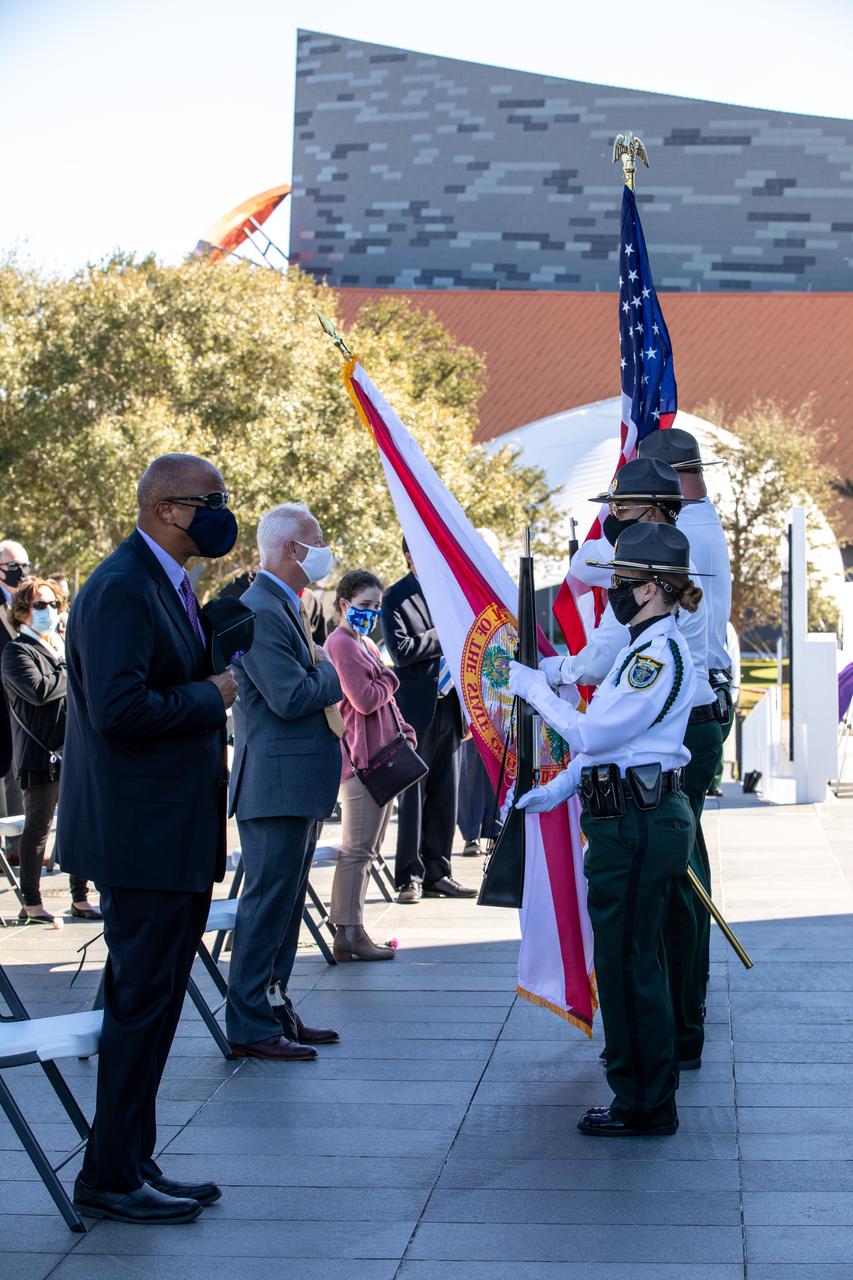
The crews of Apollo 1 and space shuttles Challenger and Columbia, as well as other fallen astronauts who lost their lives in the name of space exploration and discovery, are honored by NASA Kennedy Space Center employees and guests with a ceremony at the Kennedy Visitor Complex’s Space Mirror Memorial on Jan. 28, 2021. The date marked the 35th anniversary of the Challenger tragedy. NASA centers throughout the country participate in the agency’s annual Day of Remembrance memorial event.
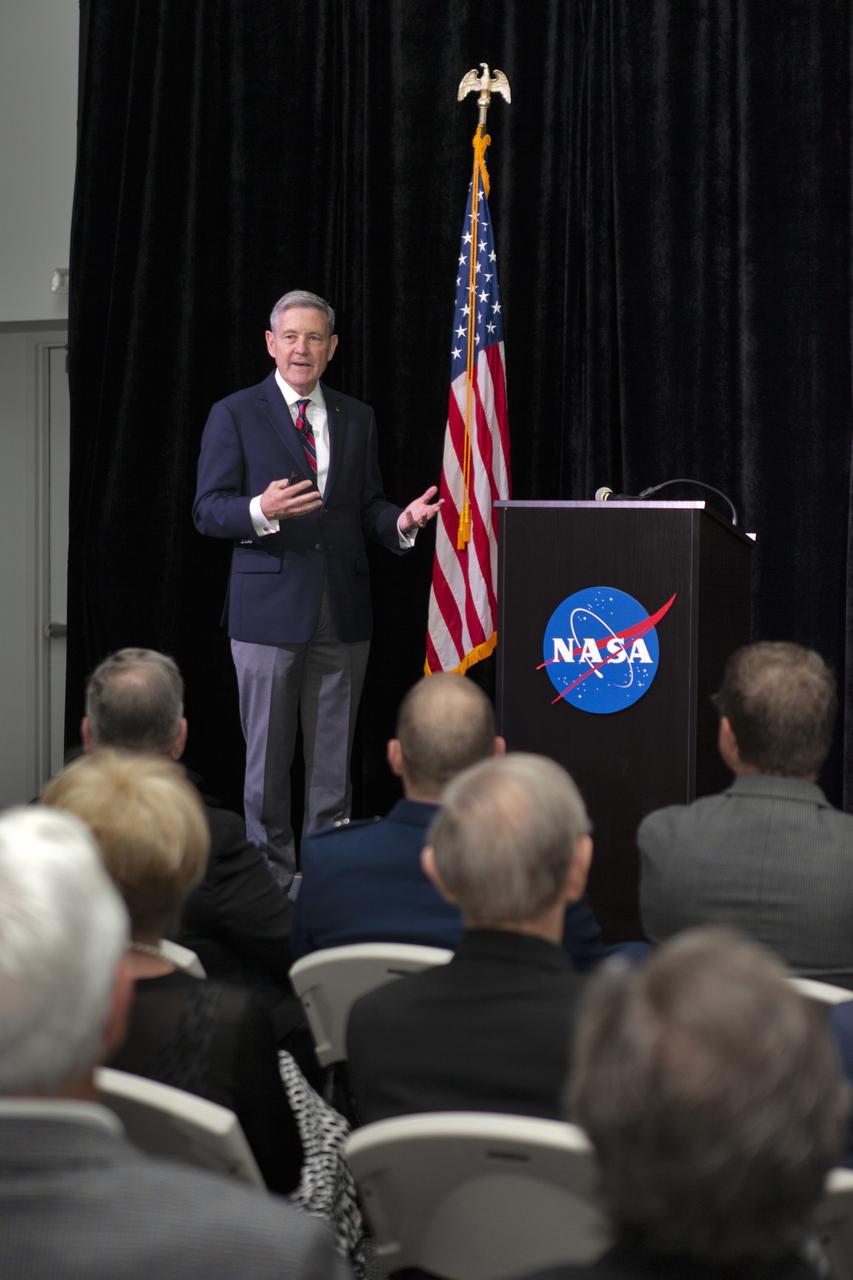
NASA Kennedy Space Center Director Bob Cabana updates community leaders, business executives, partners, educators and government leaders on Kennedy-led programs and accomplishments during a presentation March 29, 2019, at the Kennedy Space Center Visitor Complex in Florida. Cabana recapped achievements and future plans for the Commercial Crew Program, Exploration Ground Systems, Launch Services Program, Exploration Research and Technology, and Center Planning and Development. After the presentation, guests had the opportunity to ask questions and visit displays from the programs and some of the commercial partners.

A guest visits with representatives from United Launch Alliance during the Community Leaders Update hosted by NASA Kennedy Space Center on Feb. 18, 2020, at the Kennedy Space Center Visitor Complex in Florida. A panel discussion was moderated by Center Director Bob Cabana during the update. Attendees included community leaders, business executives, partners, educators and government leaders. After the presentation, guests had the opportunity to ask questions and visit displays from the programs and some of the commercial partners.
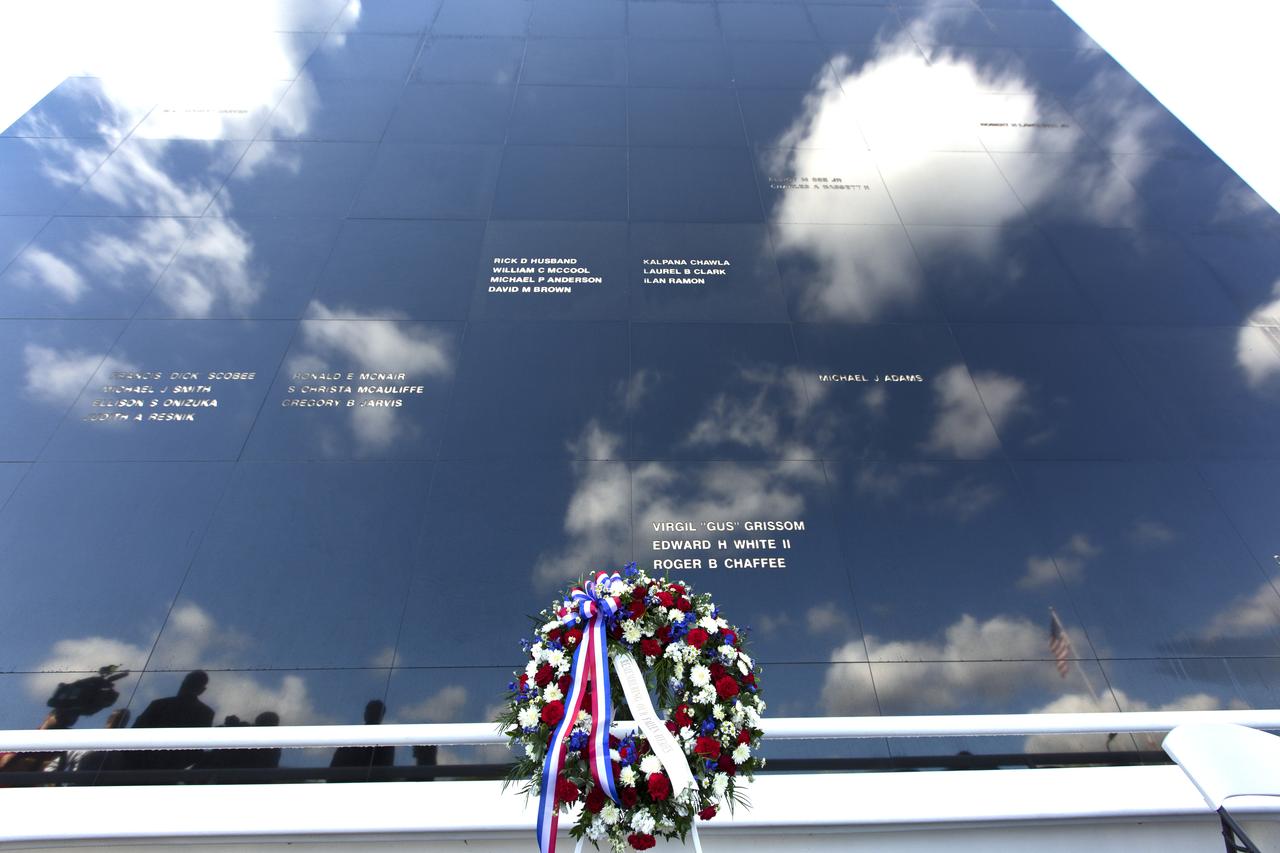
A memorial wreath stands before the Space Mirror Memorial at the Kennedy Space Center Visitor Complex during this year’s Day of Remembrance ceremony. The memorial, a 42-foot-high by 50-foot-wide granite monument, displays the names of the fallen astronauts from Apollo 1, space shuttles Challenger and Columbia, as well as others who have lost their lives while on NASA missions or in training. Each year, Kennedy employees and guests gather with others throughout NASA to honor those astronauts who have fallen in the pursuit of space exploration.
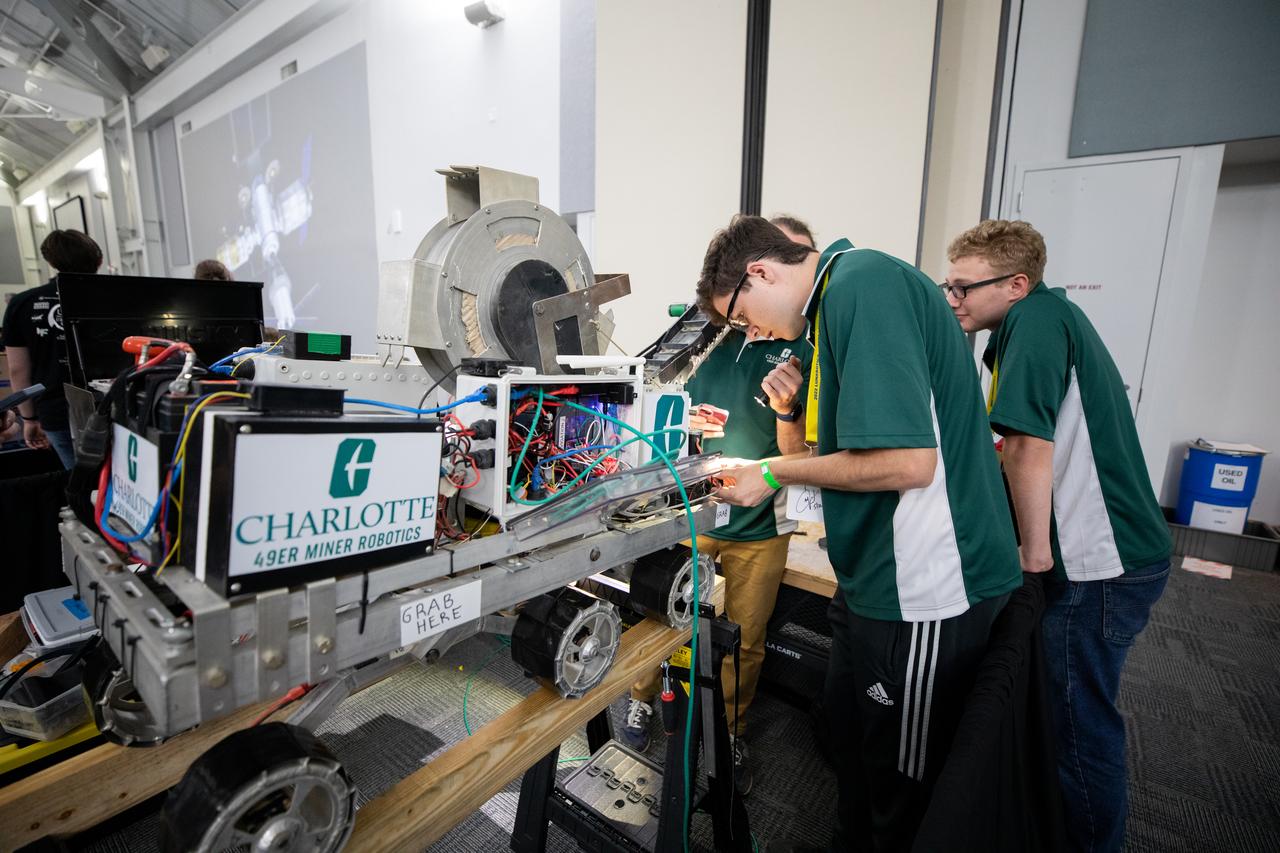
Students from the University of North Carolina at Charlotte prepare their robotic miner for its turn to dig in the mining arena during NASA’s LUNABOTICS competition on May 23, 2022, at the Center for Space Education near the Kennedy Space Center Visitor Complex in Florida. More than 35 teams from around the U.S. have designed and built remote-controlled robots for the mining competition. Teams use their autonomous or remote-controlled robots to maneuver and dig in a supersized sandbox filled with rocks and simulated lunar soil, or regolith. The objective of the challenge is to see which team’s robot can collect and deposit the most rocky regolith within a specified amount of time.
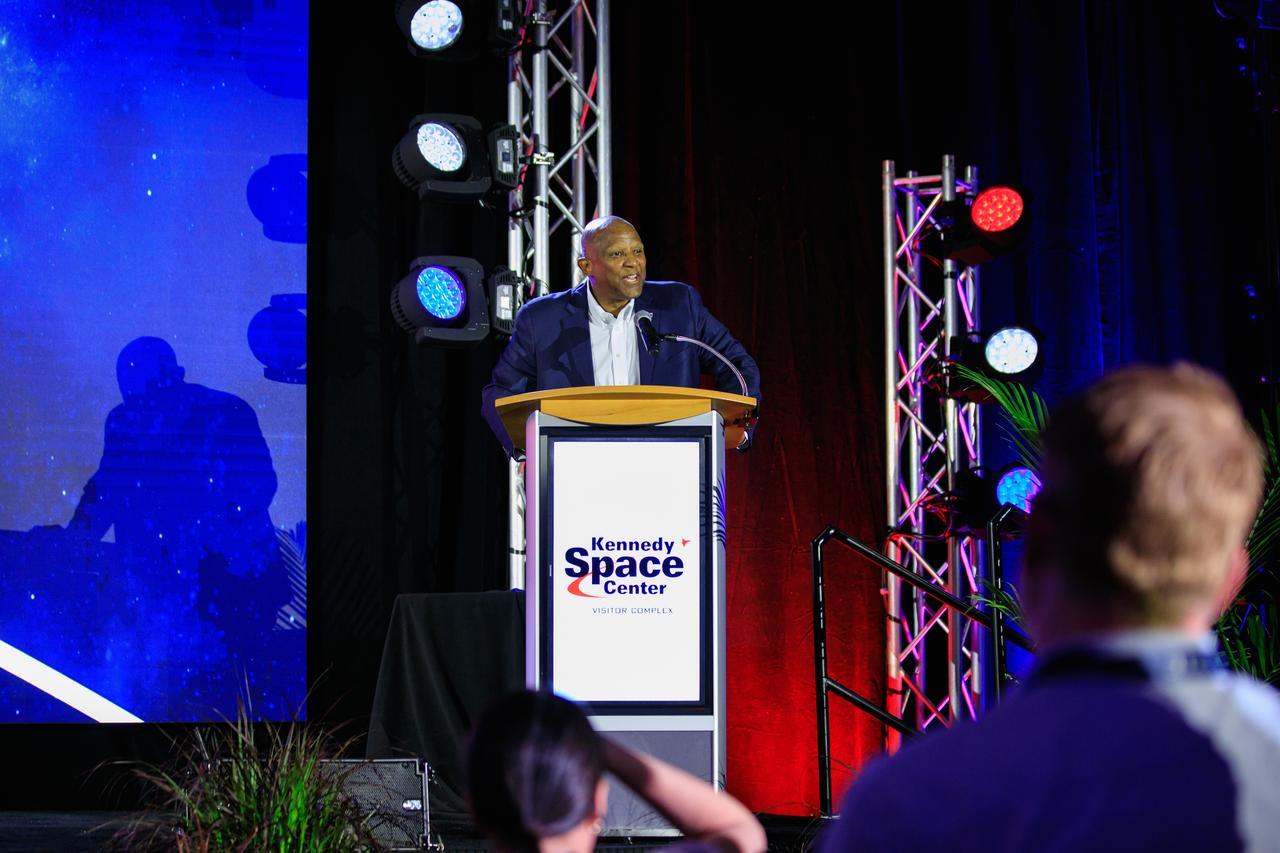
Kelvin Manning, deputy director of NASA's Kennedy Space Center in Florida, speaks to guests during the 2023 U.S. Astronaut Hall of Fame (AHOF) Induction inside the Space Shuttle Atlantis attraction at the Kennedy Space Center Visitor Complex on May 6, 2023. Two veteran space explorers were inducted into the AHOF Class of 2023. They are Roy D. Bridges Jr. and Mark Kelly. Inductees into the Hall of Fame are selected by a committee of Hall of Fame astronauts, former NASA officials, flight directors, historians and journalists. The process is administered by the Astronaut Scholarship Foundation. To be eligible, an astronaut must have made his or her first flight at least 17 years before the induction. Candidates must be a U.S. citizen and a NASA-trained commander, pilot, or mission specialist who has orbited the earth at least once. Including Bridges and Kelly, 107 astronauts have been inducted into the AHOF.
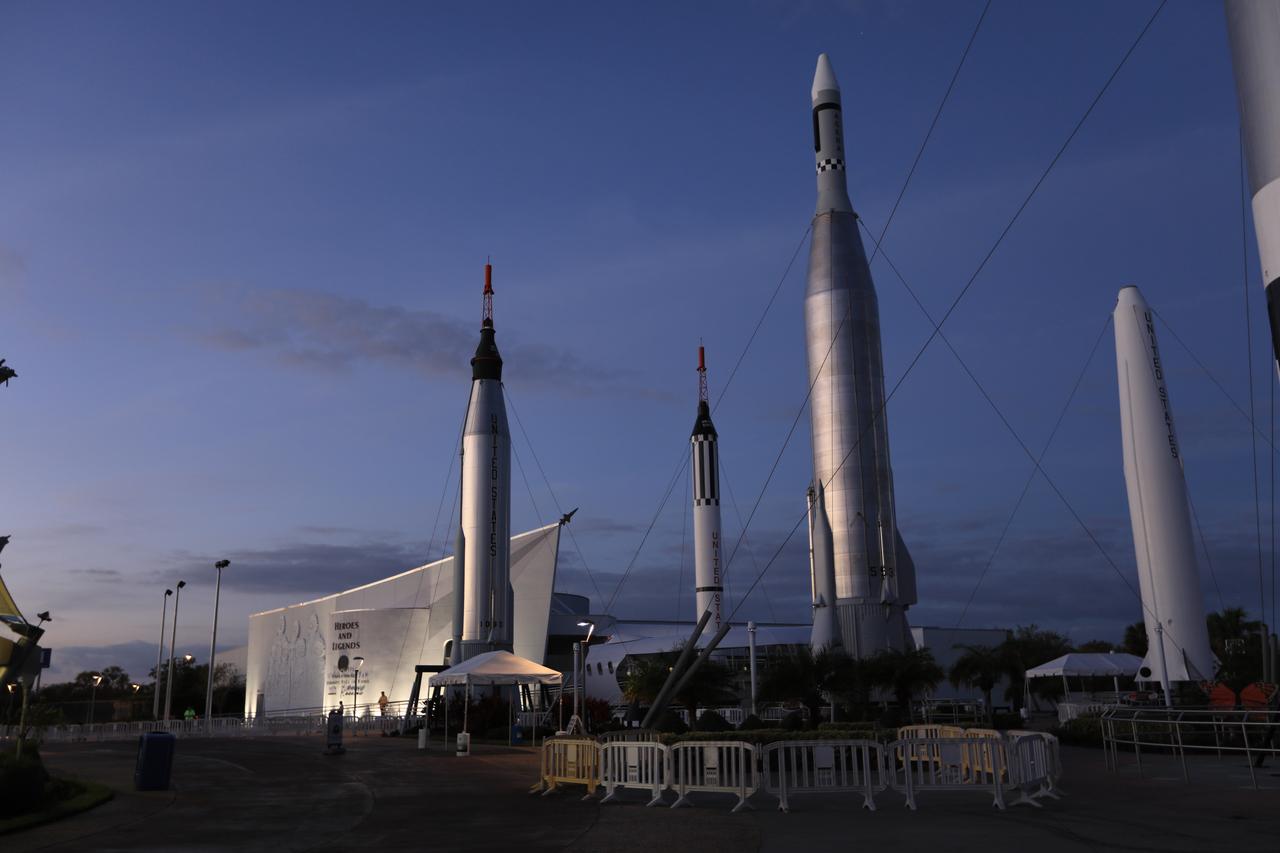
Launch vehicles used by NASA in its history of exploring space are displayed in the "Rocket Garden" adjacent to the new Heroes and Legends attraction at the Kennedy Space Center Visitor Complex. The new facility includes the U.S. Astronaut Hall of Fame and looks back to the pioneering efforts of Mercury, Gemini and Apollo. It sets the stage by providing the background and context for space exploration and the legendary men and women who pioneered the nation's journey into space.
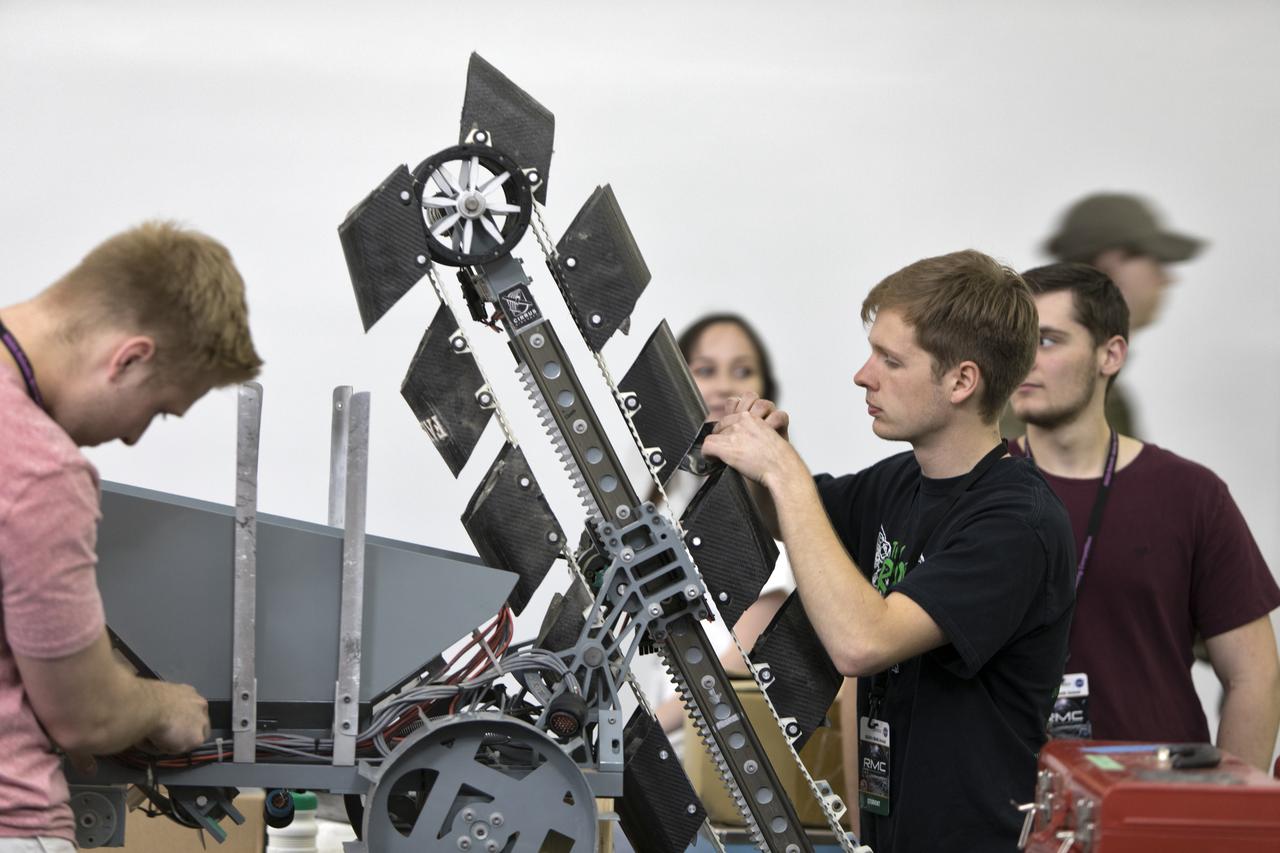
On the first day of NASA's 9th Robotic Mining Competition, set-up day on May 14, team members from the University of North Carolina at Charlotte work on their robot miner in the RobotPits in the Educator Resource Center at Kennedy Space Center Visitor Complex in Florida. More than 40 student teams from colleges and universities around the U.S. will use their mining robots to dig in a supersized sandbox filled with BP-1, or simulated Lunar soil, gravel and rocks, and participate in other competition requirements. The Robotic Mining Competition is a NASA Human Exploration and Operations Mission Directorate project designed to encourage students in science, technology, engineering and math, or STEM fields. The project provides a competitive environment to foster innovative ideas and solutions that could be used on NASA's deep space missions.
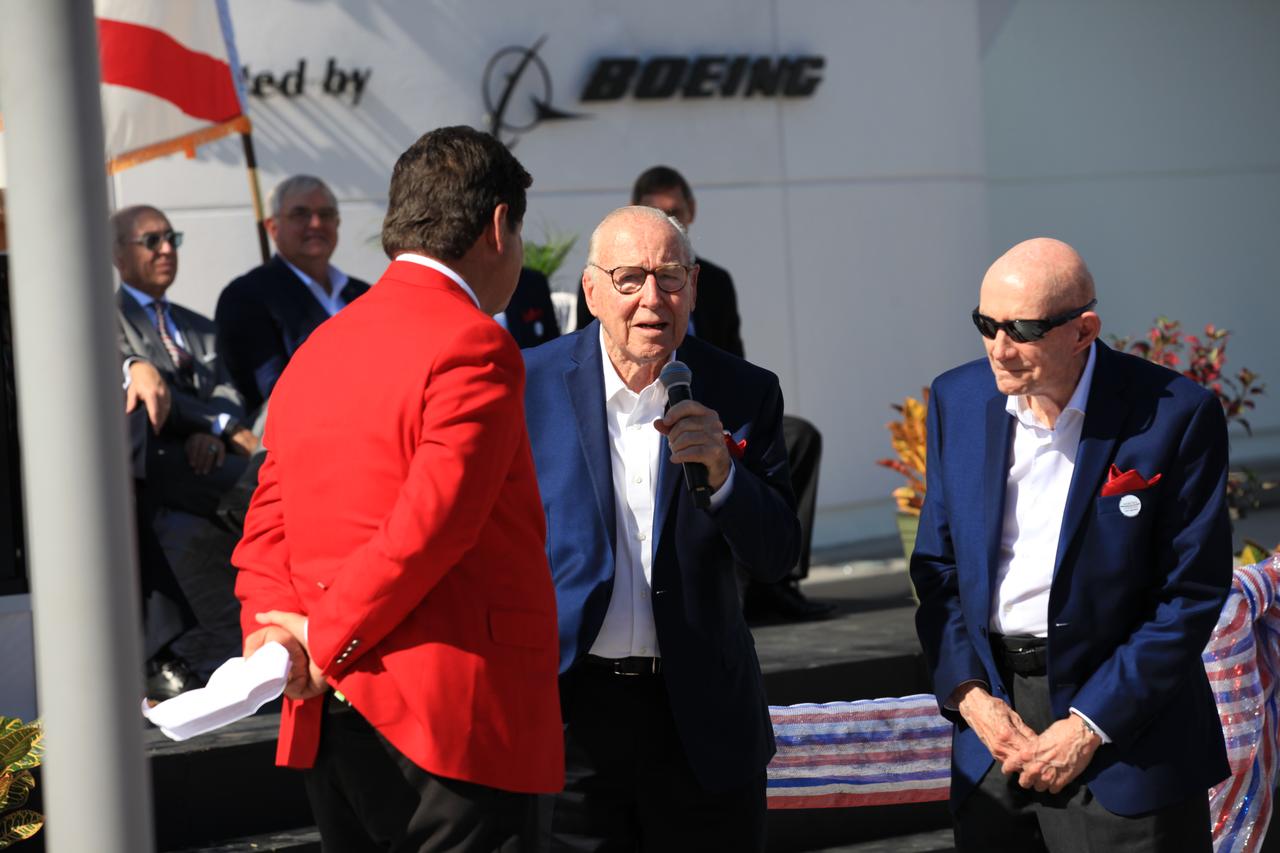
Former CNN space correspondent John Zarrella, left, interviews Gemini and Apollo astronauts Jim Lovell, center and Tom Stafford during opening ceremonies for the Heroes and Legends attraction at the Kennedy Space Center Visitor Complex. The new facility includes the U.S. Astronaut Hall of Fame and looks back to the pioneering efforts of Mercury, Gemini and Apollo. It sets the stage by providing the background and context for space exploration and the legendary men and women who pioneered the nation's journey into space.
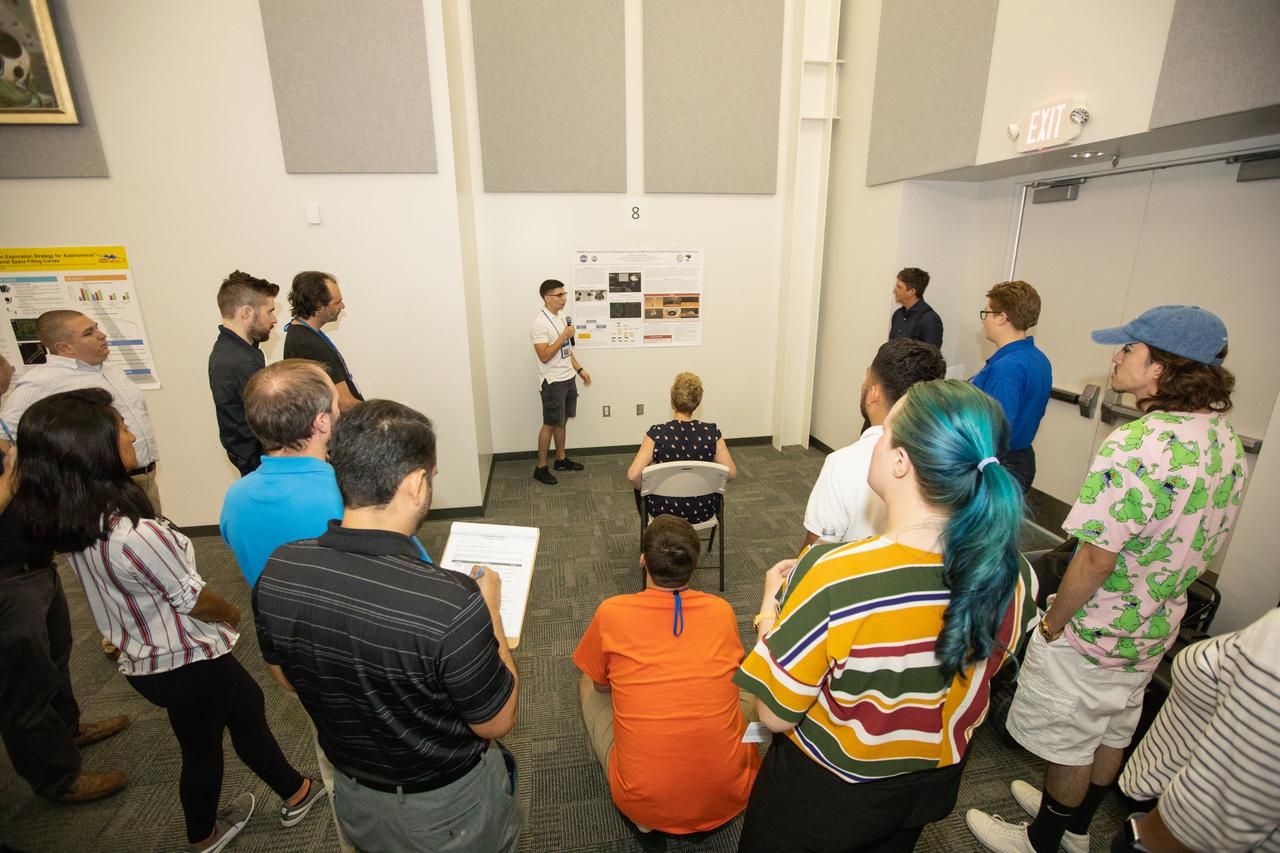
A Swarmathon University Competition 2019 team presents their poster to a panel of judges at the Kennedy Space Center Visitor Complex in Florida on June 11, 2019. Swarmathon students and their mentors were at Kennedy to participate in a student/mentor panel, hear from speakers, get a behind-the-scenes tour of Kennedy Space Center, dine with an astronaut and receive awards during an awards ceremony. During Swarmathon University Challenge IV, students developed algorithms for robotic swarms that are robust and adaptable like the foraging strategies of ant colonies. The fourth and final Swarmathon was a combined virtual and physical competition, hosted by UNM.

Steve Payne, far left, with NASA’s Commercial Crew Program, visits with a guest during a Community Leaders Update hosted by Kennedy Space Center on Feb. 18, 2020, at the Kennedy Space Center Visitor Complex. A panel discussion was moderated by Center Director Bob Cabana during the update. Attendees included community leaders, business executives, partners, educators and government leaders. After the presentation, guests had the opportunity to ask questions and visit displays from the programs and some of the commercial partners.
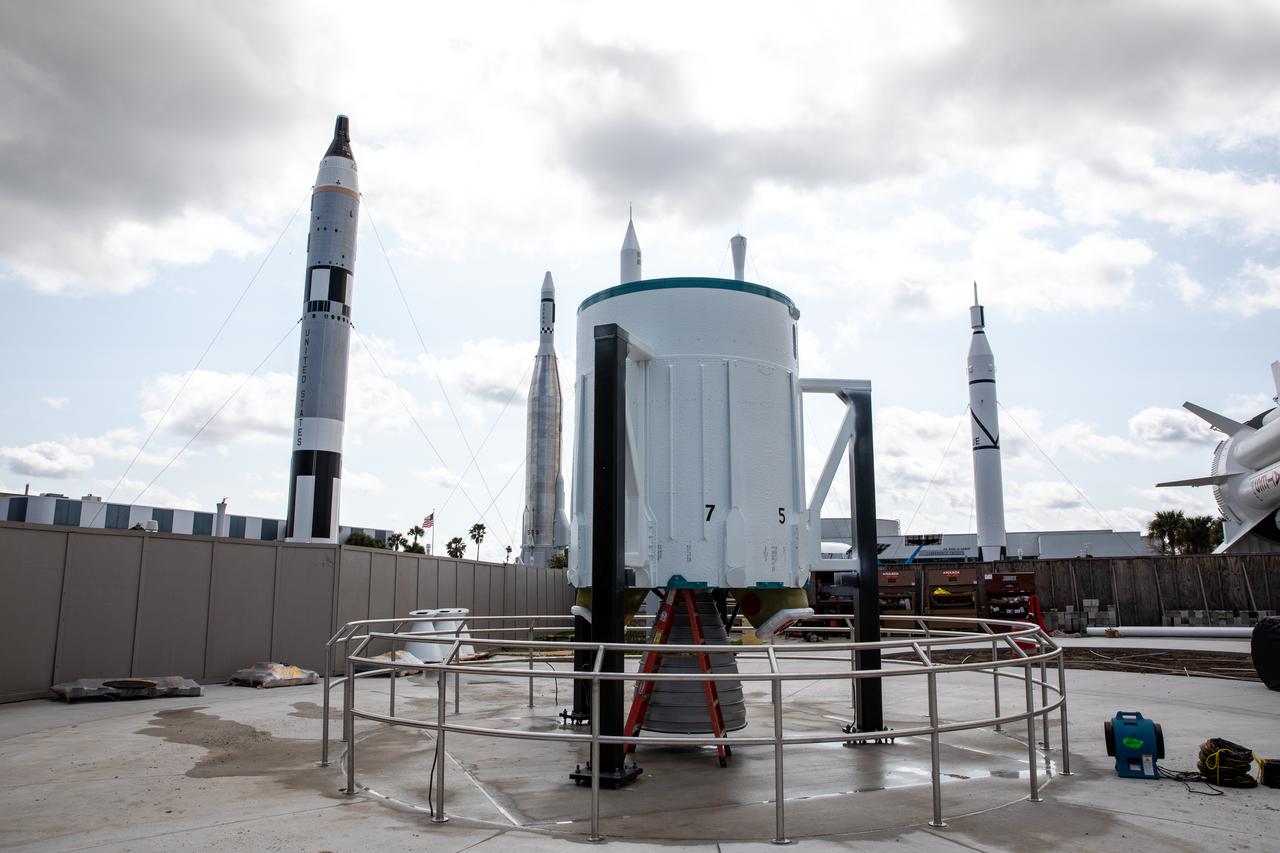
The last United Launch Alliance Delta II rocket joined the lineup of historic launch vehicles in the Rocket Garden at the Kennedy Space Center Visitor Complex in Florida, on March 3, 2021. The first segment was placed in its display area. The Delta II rocket was a workhorse for NASA and civilian scientists, the U.S. military, and commercial clients throughout its almost 30 years of service. Since its first launch in 1989, the Delta II has launched 154 successful missions. NASA’s Launch Services Program launched the ICESat-2 spacecraft on the final Delta II launch on Sept. 15, 2018, from Vandenberg Air Force Base in California.
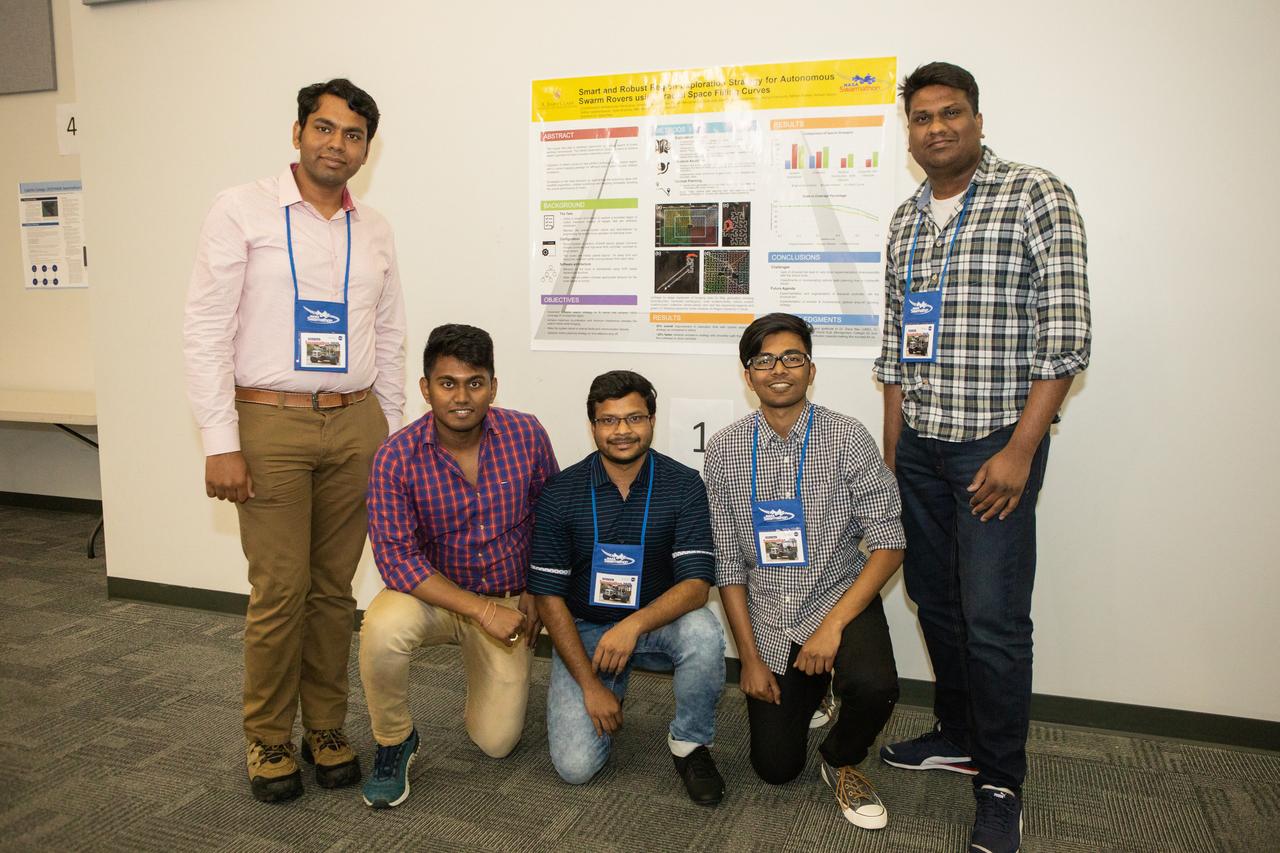
The Swarmathon University Competition 2019 team members from the University of Maryland participate in activities at the Kennedy Space Center Visitor Complex in Florida on June 11, 2019. They are standing in front of a poster they created for the poster competition portion of Swarmathon. The University of New Mexico was the host for the physical competition held in May 2019. The student teams were at Kennedy to participate in a student/mentor panel, hear from speakers, get a behind-the-scenes tour of Kennedy Space Center, dine with an astronaut and receive awards during an awards ceremony. During Swarmathon University Challenge IV, students developed algorithms for robotic swarms that are robust and adaptable like the foraging strategies of ant colonies. The fourth and final Swarmathon was a combined virtual and physical competition.

A wreath-laying ceremony honoring the memory of former Apollo 11 astronaut Michael Collins is held outside of the Heroes and Legends exhibit at the Kennedy Space Center Visitor Complex in Florida on April 30, 2021. Kennedy Director Bob Cabana and Therrin Protze, chief operating officer of Delaware North at the visitor complex, provided remarks during the ceremony. Collins served as pilot on the three-day Gemini X mission in 1966, and he was the command module pilot for the historic Apollo 11 mission in 1969, where he remained in lunar orbit while Neil Armstrong and Buzz Aldrin become the first people to walk on the Moon. Collins passed away on April 28, 2021, at the age of 90.
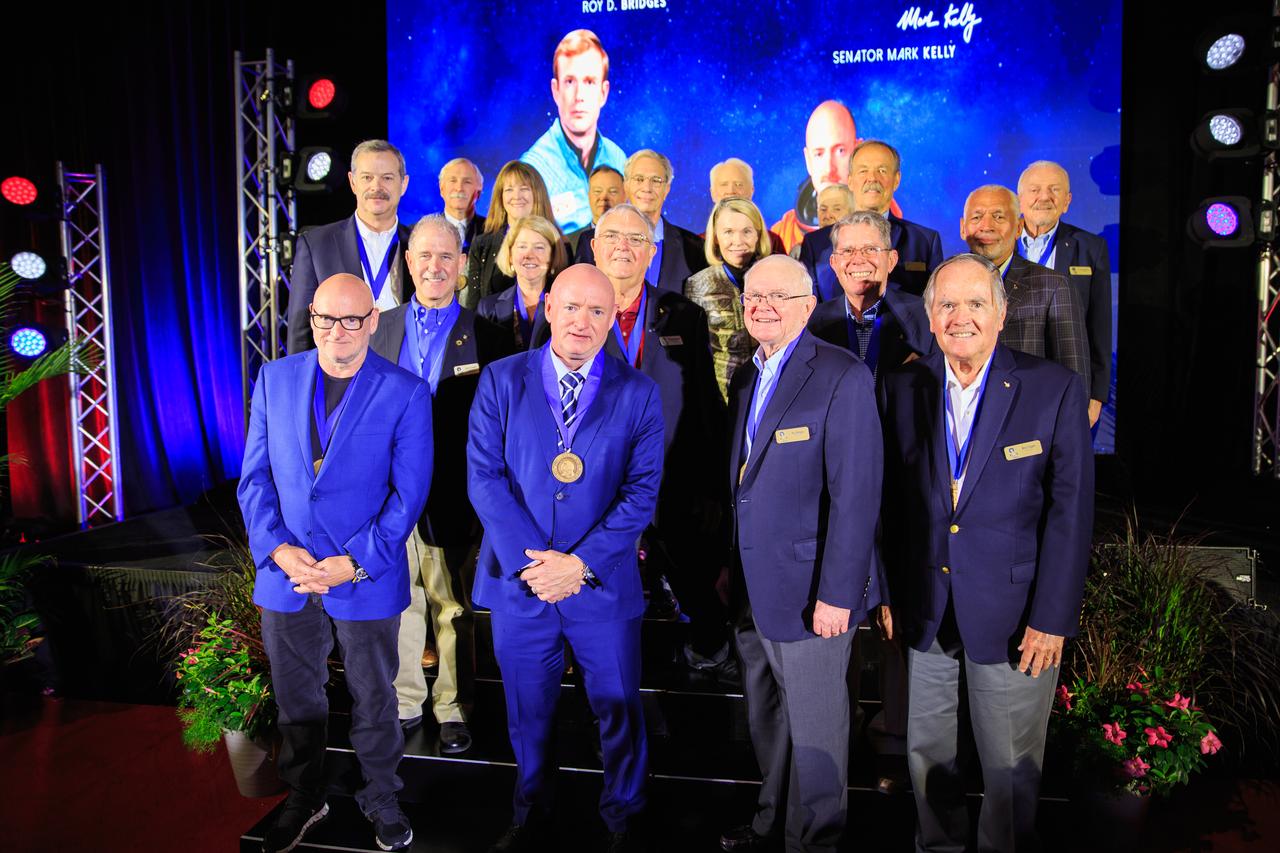
Former astronauts and space explorers, second from left, Mark Kelly, and Roy D. Bridges were inducted into the U.S. Astronaut Hall of Fame Class of 2023 during a ceremony inside the Space Shuttle Atlantis attraction at NASA’s Kennedy Space Center Visitor Complex in Florida on May 6, 2023. They are surrounded by previous Hall of Fame inductees. Hall of Famer Curt Brown, chairman of the board, Astronaut Scholarship Foundation performed the induction ceremony. Inductees into the Hall of Fame are selected by a committee of Hall of Fame astronauts, former NASA officials, flight directors, historians and journalists. The process is administered by the Astronaut Scholarship Foundation. To be eligible, an astronaut must have made his or her first flight at least 17 years before the induction. Candidates must be a U.S. citizen and a NASA-trained commander, pilot, or mission specialist who has orbited the earth at least once. Including Altman and Jones, 107 astronauts have been inducted into the AHOF.

Members of the Florida Native Plant Society converse with visitors during a sustainability expo held at the Kennedy Space Center Visitor Complex in Florida on April 11, 2019. The expo kicked off Kennedy’s annual Earth Day celebrations. The Florida Native Plant Society was one of approximately 40 exhibitors present at the expo. Exhibitors in attendance provided information ranging from energy-saving solutions to wildlife and natural conservation. In addition, there were multiple butterfly releases throughout the day.
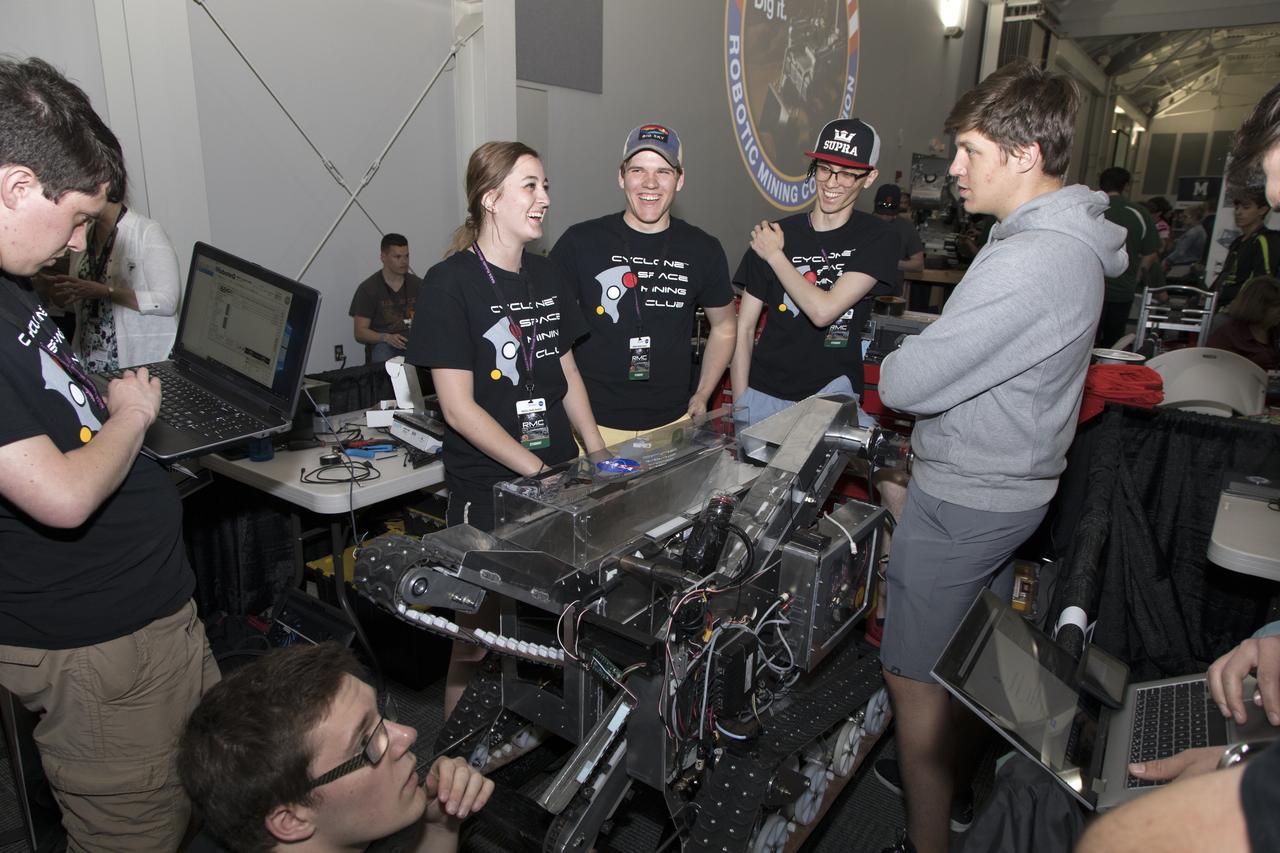
Team members from Iowa State University prepare their robot miner on the second day of NASA's 9th Robotic Mining Competition, May 15, in the RobotPits in the Educator Resource Center at Kennedy Space Center Visitor Complex in Florida. More than 40 student teams from colleges and universities around the U.S. will use their mining robots to dig in a supersized sandbox filled with BP-1, or simulated Lunar soil, gravel and rocks, and participate in other competition requirements. The Robotic Mining Competition is a NASA Human Exploration and Operations Mission Directorate project designed to encourage students in science, technology, engineering and math, or STEM fields. The project provides a competitive environment to foster innovative ideas and solutions that could be used on NASA's deep space missions.
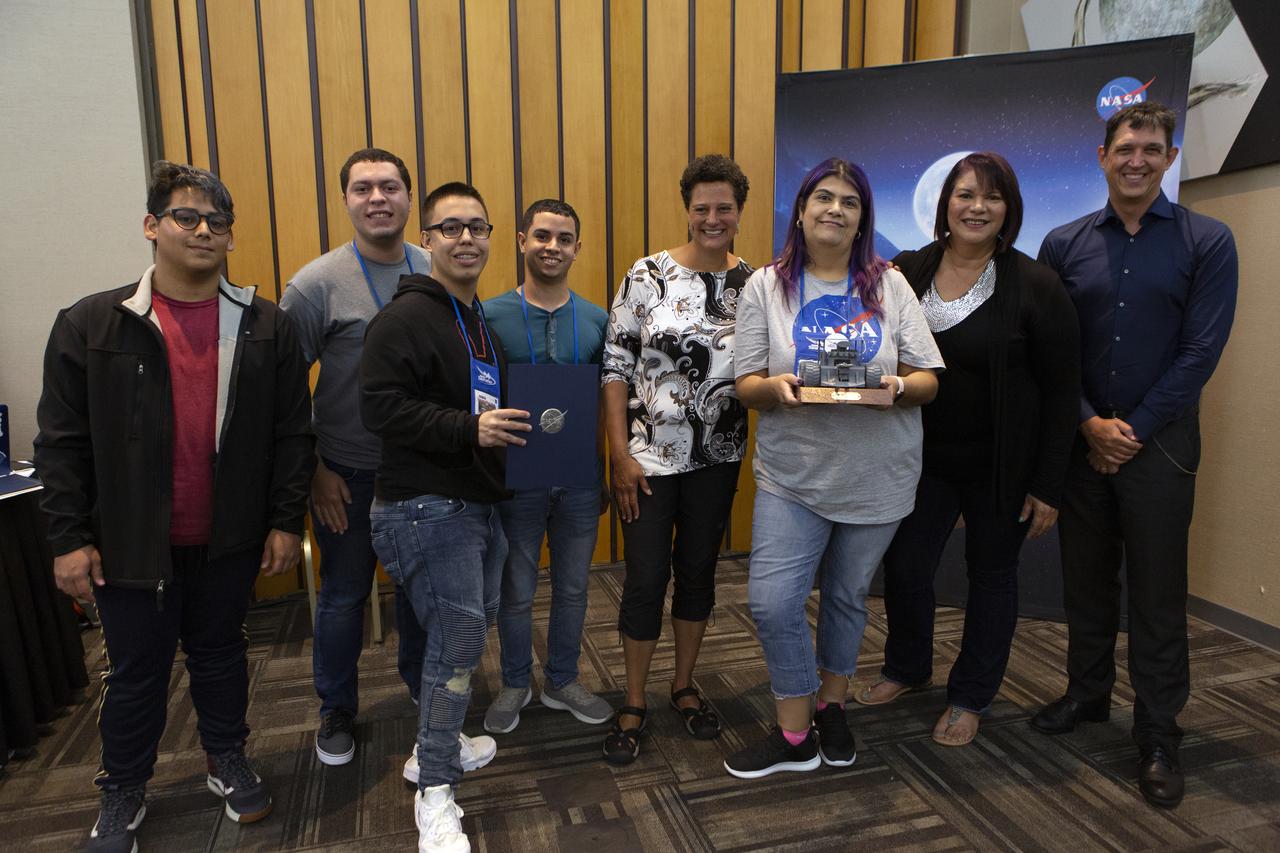
The Swarmathon team from the University of Puerto Rico at Arecibo received the Best Poster Award during the awards ceremony for NASA’s Swarmathon University Challenge IV, at the Kennedy Space Center Visitor Complex in Florida on June 12, 2019. Students and mentors from some of the Swarmathon teams were at Kennedy to participate in a student/mentor panel, hear from speakers, get a behind-the-scenes tour of Kennedy Space Center, dine with an astronaut and receive awards. For the challenge, university students developed algorithms for robotic swarms that are robust and adaptable like the foraging strategies of ant colonies. The fourth and final Swarmathon challenge was a combined virtual and physical competition. Fourth from right is Melanie Moses, a professor of computer science at the University of New Mexico, the host location for Swarmathon. Second from right is Theresa Martinez, engagement manager of the Minority University Research and Education Program, managed at Kennedy.
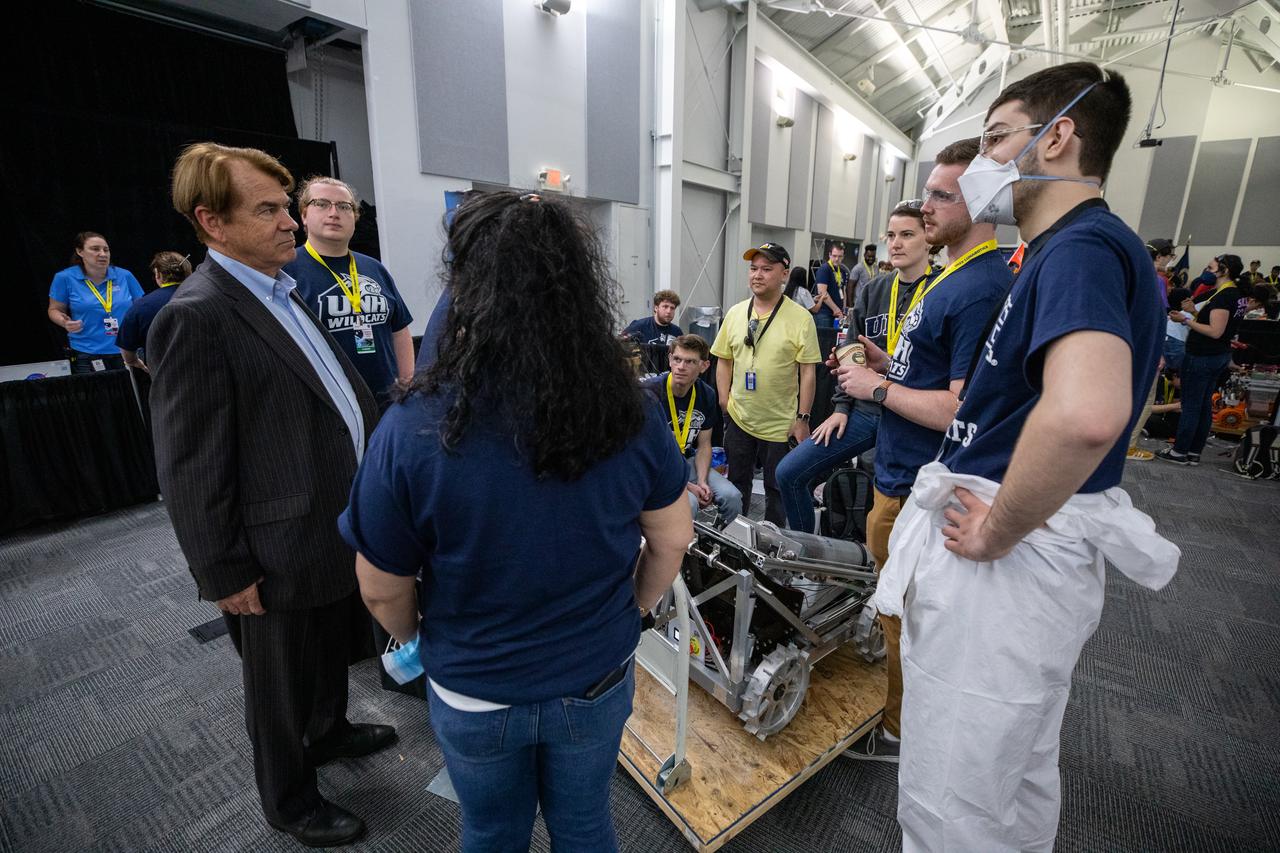
Thad Altman, far left, chairman and CEO of the Astronaut Memorial Foundation, talks to students from the University of New Hampshire as they prepare to take their robotic miner for its turn to dig in the mining arena during NASA’s LUNABOTICS competition on May 26, 2022, at the Center for Space Education near the Kennedy Space Center Visitor Complex in Florida. More than 35 teams from around the U.S. have designed and built remote-controlled robots for the mining competition. Teams use their semi-autonomous or remote-controlled robots to maneuver and dig in a supersized sandbox filled with rocks and simulated lunar soil, or regolith. The objective of the challenge is to see which team’s robot can collect and deposit the most rocky regolith within a specified amount of time.

A memorial wreath is placed in the Heroes and Legends exhibit at the Kennedy Space Center Visitor Complex in Florida following a ceremony honoring the memory of former Apollo astronaut Walter Cunningham. The ceremony was held Jan. 9, 2023. Cunningham was the lunar module pilot for Apollo 7 – the first crewed flight test of the Apollo spacecraft – where he tested maneuvers necessary for docking and lunar orbit rendezvous. He passed away Jan. 3 at the age of 90.
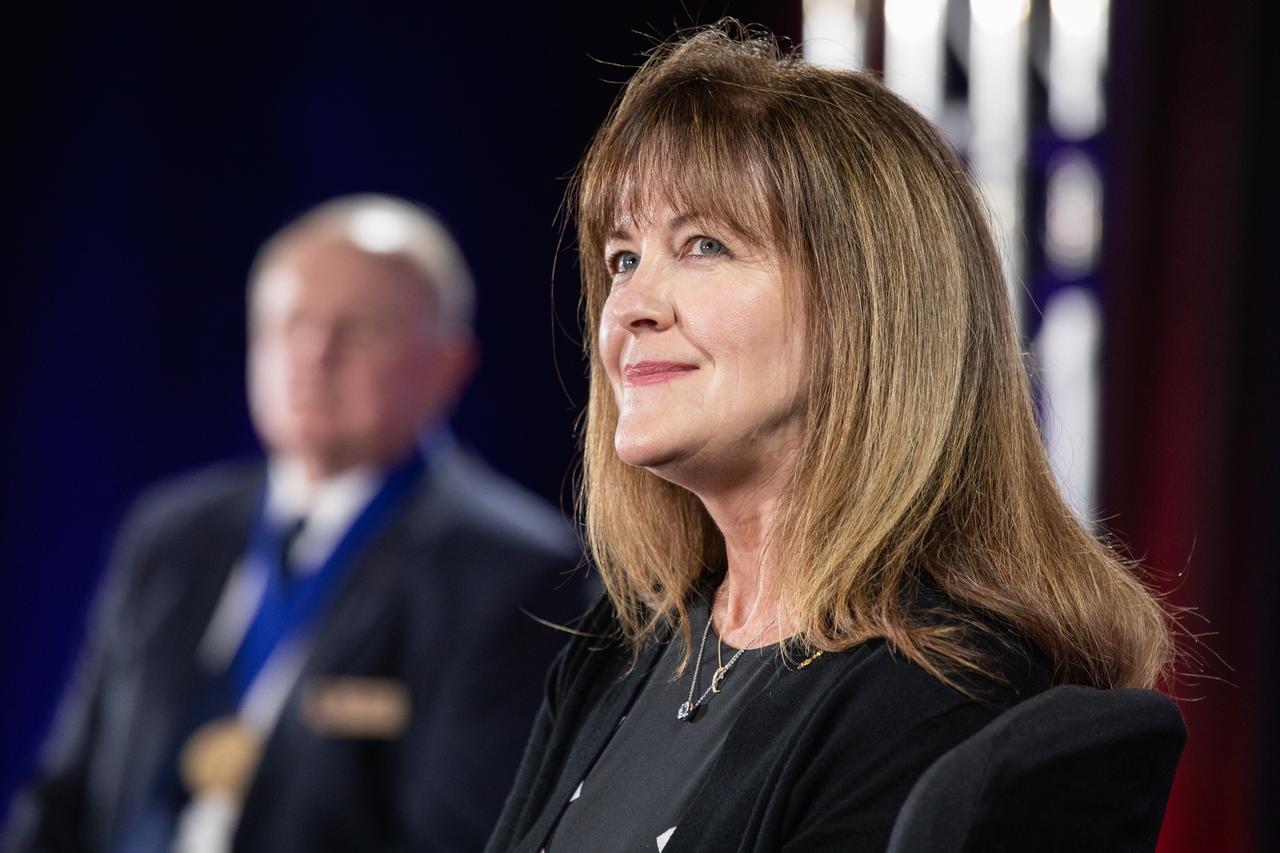
Veteran NASA astronauts James Buchli and Janet Kavandi were inducted into the U.S. Astronaut Hall of Fame in a public ceremony at Kennedy Space Center Visitor Complex in the Space Shuttle Atlantis attraction on April 6, 2019.
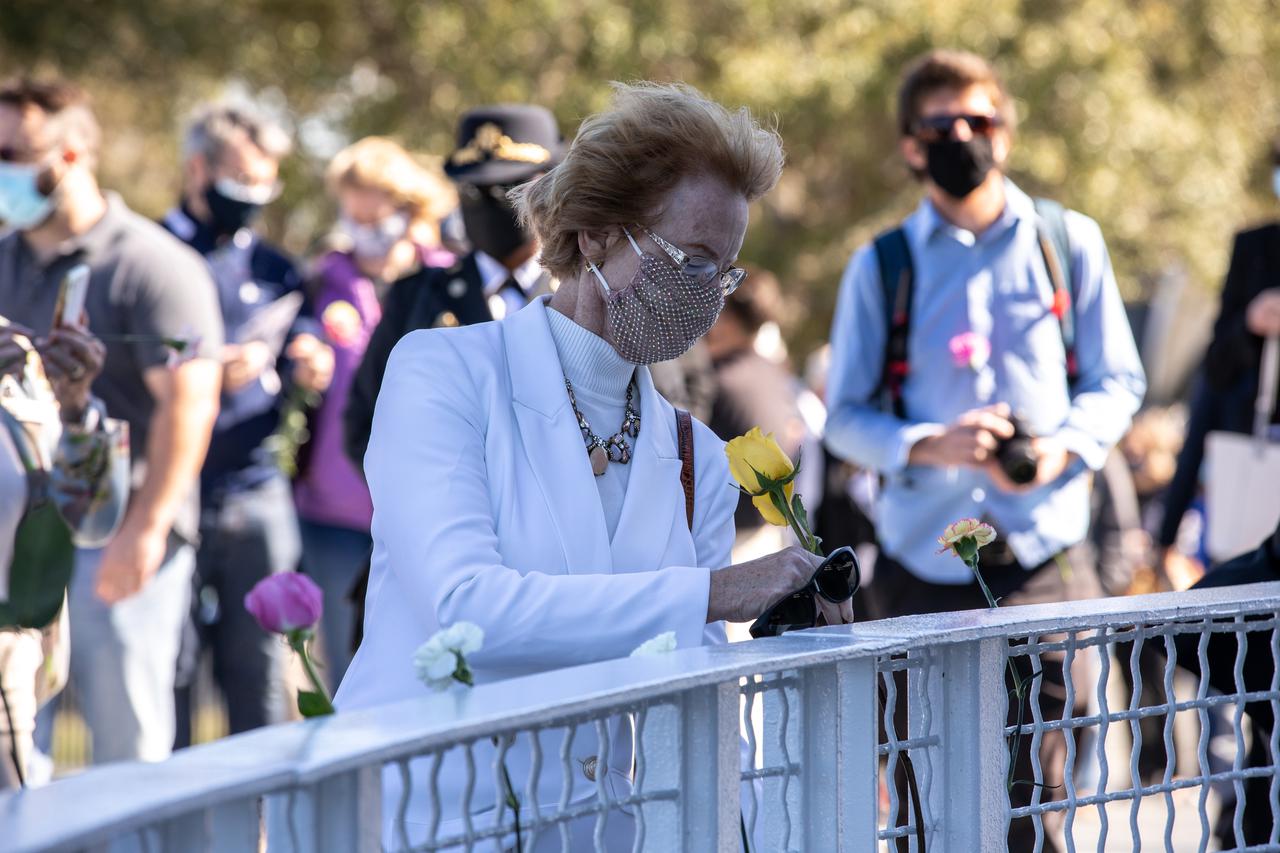
The crews of Apollo 1 and space shuttles Challenger and Columbia, as well as other fallen astronauts who lost their lives in the name of space exploration and discovery, are honored by NASA Kennedy Space Center employees and guests with a ceremony at the Kennedy Visitor Complex’s Space Mirror Memorial on Jan. 28, 2021. The date marked the 35th anniversary of the Challenger tragedy. NASA centers throughout the country participate in the agency’s annual Day of Remembrance memorial event.

A newly released butterfly sits in a cluster of flowers at the Kennedy Space Center Visitor Complex. Kennedy kicked off its annual Earth Day celebrations with a sustainability expo at the center’s visitor complex in Florida on April 11, 2019, which included multiple butterfly releases throughout the day. Approximately 40 exhibitors from across the nation assembled to provide information ranging from energy-saving solutions to wildlife and natural conservation.
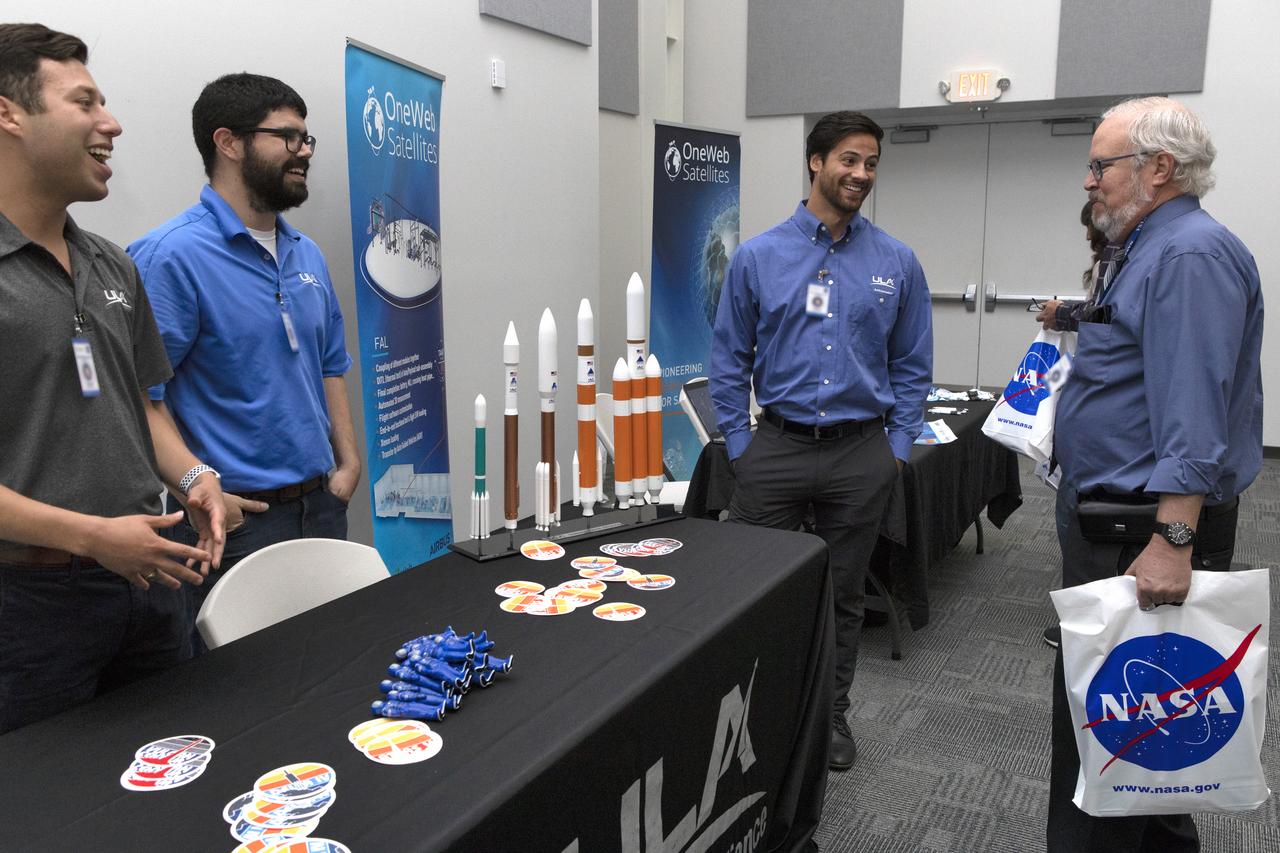
Guests visit with representatives from United Launch Alliance during NASA Kennedy Space Center Director Bob Cabana’s update to community leaders, business executives, partners, educators and government leaders March 29, 2019, at the Kennedy Space Center Visitor Complex in Florida. Cabana’s presentation covered recent accomplishments and future plans for Kennedy-led programs, including the Commercial Crew Program, Exploration Ground Systems, Launch Services Program, Exploration Research and Technology, and Center Planning and Development. After the presentation, guests had the opportunity to ask questions and visit displays from the programs and some of the commercial partners.
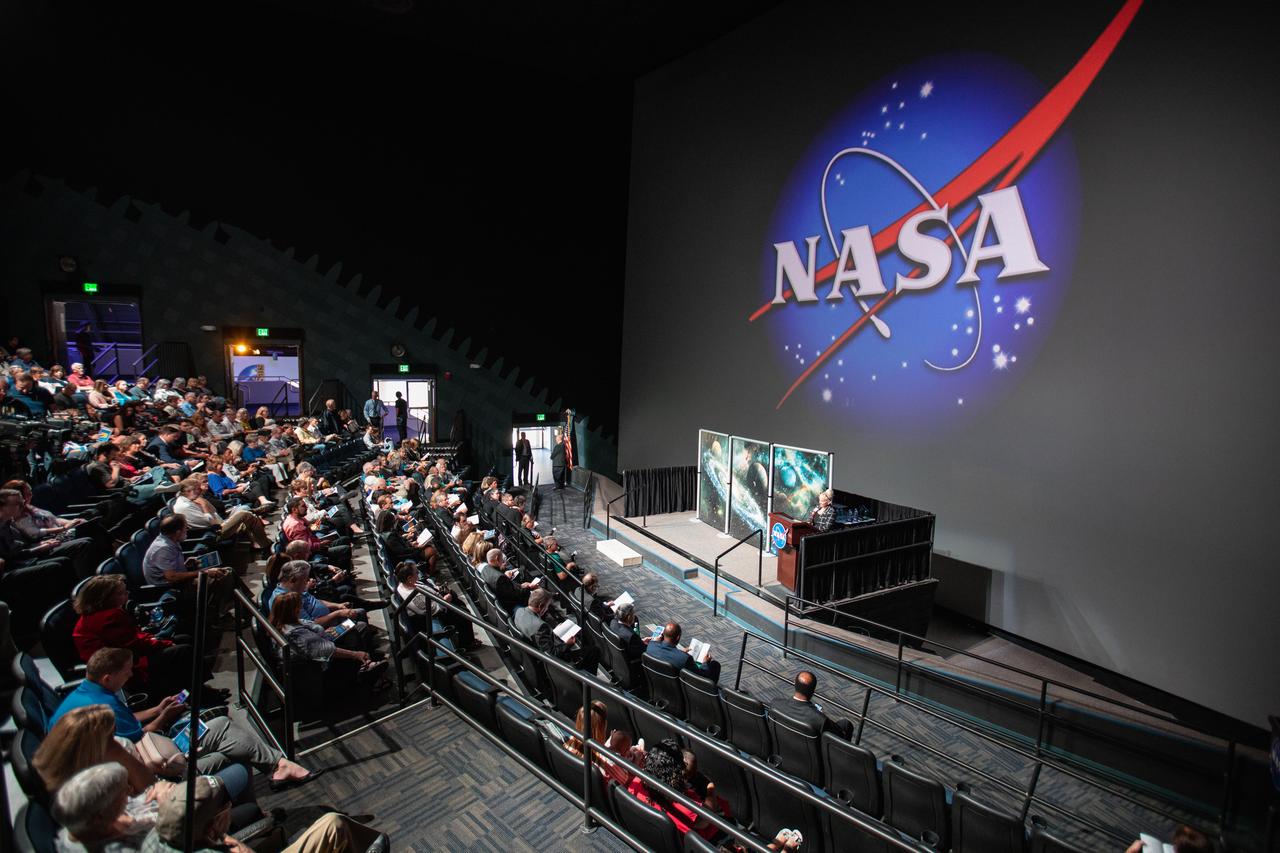
Kennedy Space Center employees, award recipients, families and friends attend the 2019 KSC Honor Awards Ceremony on April 18, 2019. Held inside the IMAX Theater at the Florida spaceport’s visitor complex, the ceremony honored both civil servants and contractors for their contributions to NASA and Kennedy.
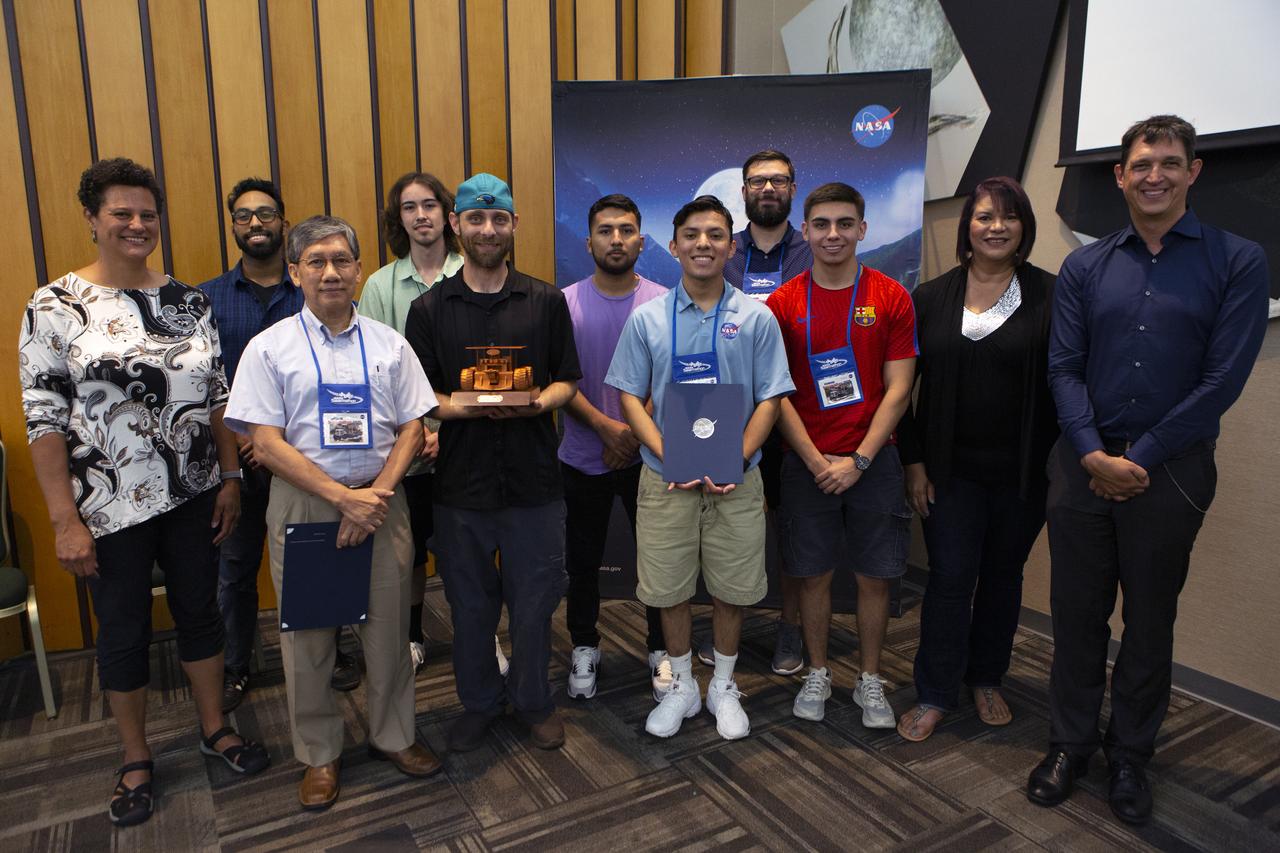
The Swarmathon team from the University of Houston Clearlake and San Jacinto College received the Mission to Mars award for their achievements in the NASA Swarmathon University Challenge for 2019. They are at the Kennedy Space Center Visitor Complex on June 12, 2019. Students and mentors from some of the Swarmathon teams were at Kennedy to participate in a student/mentor panel, hear from speakers, get a behind-the-scenes tour of Kennedy Space Center, dine with an astronaut and receive awards. During Swarmathon University Challenge IV, students developed algorithms for robotic swarms that are robust and adaptable like the foraging strategies of ant colonies. The fourth and final Swarmathon challenge was a combined virtual and physical competition.
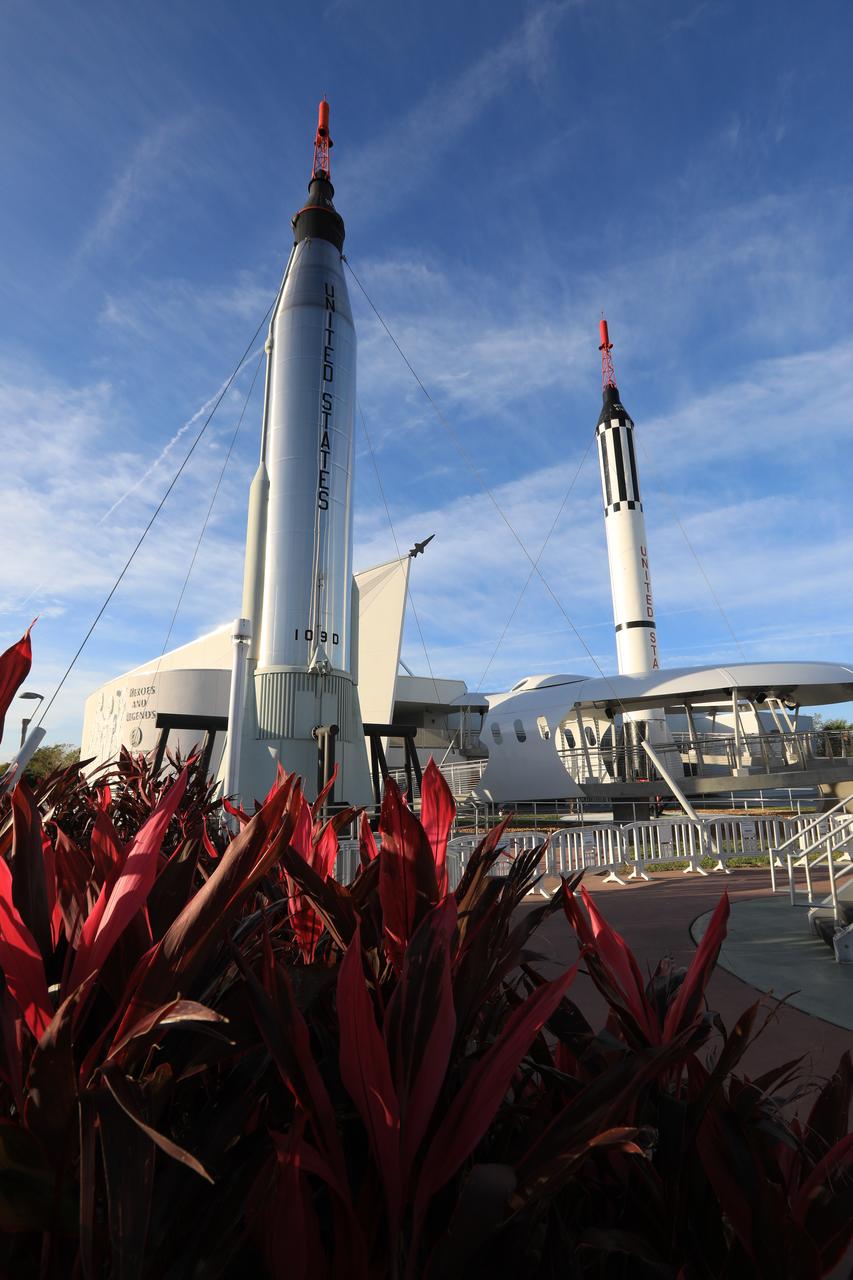
Launch vehicles used by NASA in its history of exploring space are displayed in the "Rocket Garden" adjacent to the new Heroes and Legends attraction at the Kennedy Space Center Visitor Complex. The new facility includes the U.S. Astronaut Hall of Fame and looks back to the pioneering efforts of Mercury, Gemini and Apollo. It sets the stage by providing the background and context for space exploration and the legendary men and women who pioneered the nation's journey into space.
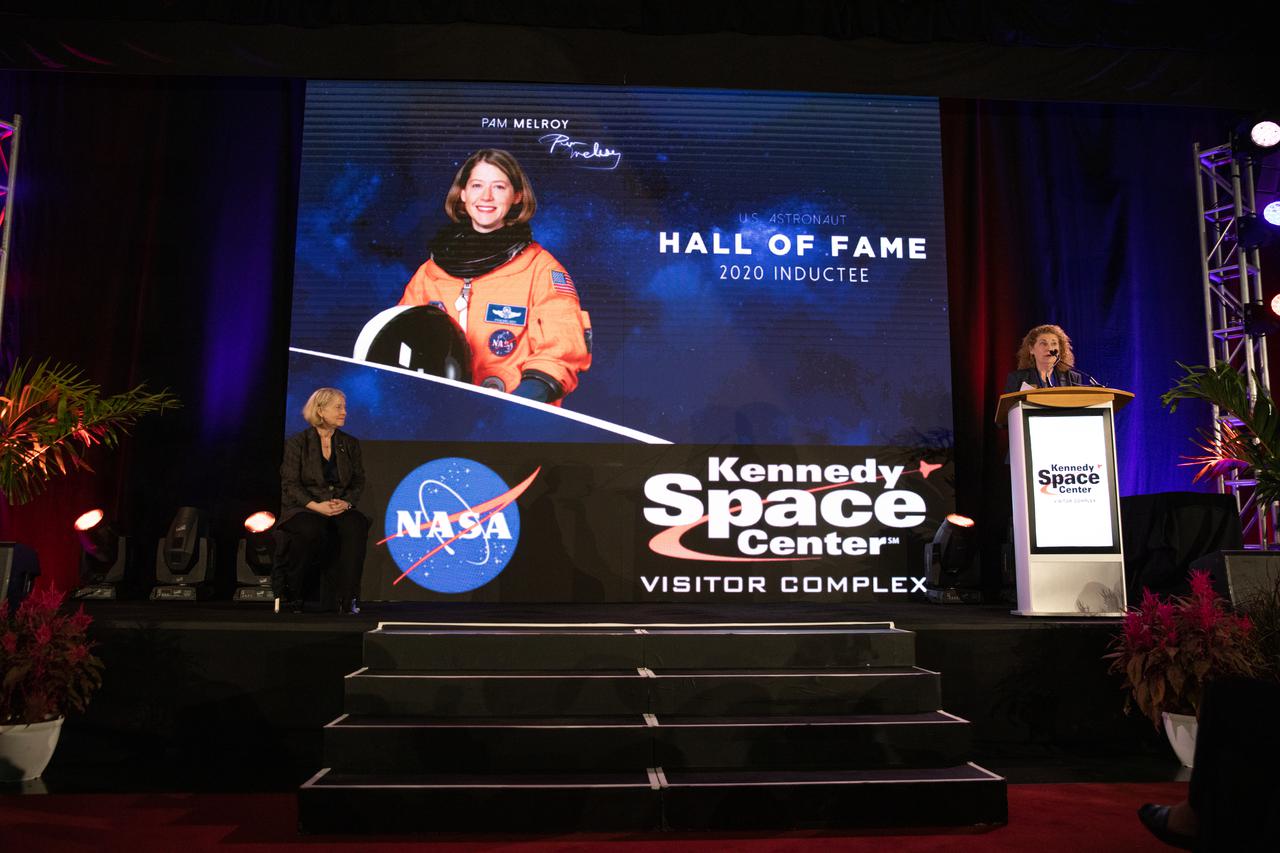
NASA Deputy Administrator Pamela Melroy is one of three former astronauts inducted into the U.S. Astronaut Hall of Fame (AHOF) on Nov. 13, 2021, during a ceremony at the Kennedy Space Center Visitor Complex in Florida. Melroy received an official medal and became a member of the 19th class of space shuttle astronauts to be inducted. Former NASA astronaut and Hall of Famer Susan Helms (right), inducted Melroy. The 2021 inductees were selected by a committee of Hall of Fame astronauts, former NASA officials, flight directors, historians, and journalists. This year’s induction brings the total number of AHOF members to 102.
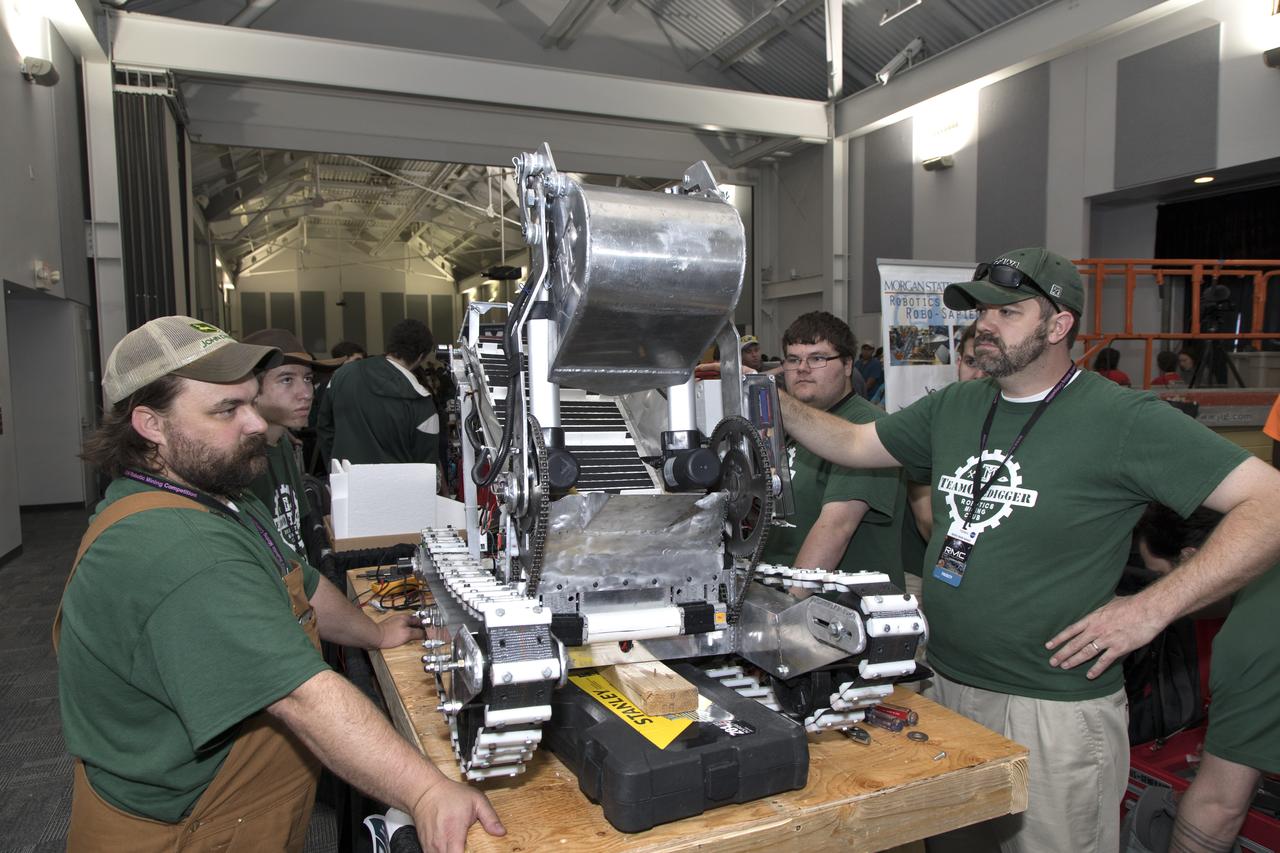
Team members and their advisor, far right, from Montana Tech of the University of Montana, prepare their robot miner on the second day of NASA's 9th Robotic Mining Competition, May 15, in the RobotPits in the Educator Resource Center at Kennedy Space Center Visitor Complex in Florida. More than 40 student teams from colleges and universities around the U.S. will use their mining robots to dig in a supersized sandbox filled with BP-1, or simulated Lunar soil, gravel and rocks, and participate in other competition requirements. The Robotic Mining Competition is a NASA Human Exploration and Operations Mission Directorate project designed to encourage students in science, technology, engineering and math, or STEM fields. The project provides a competitive environment to foster innovative ideas and solutions that could be used on NASA's deep space missions.
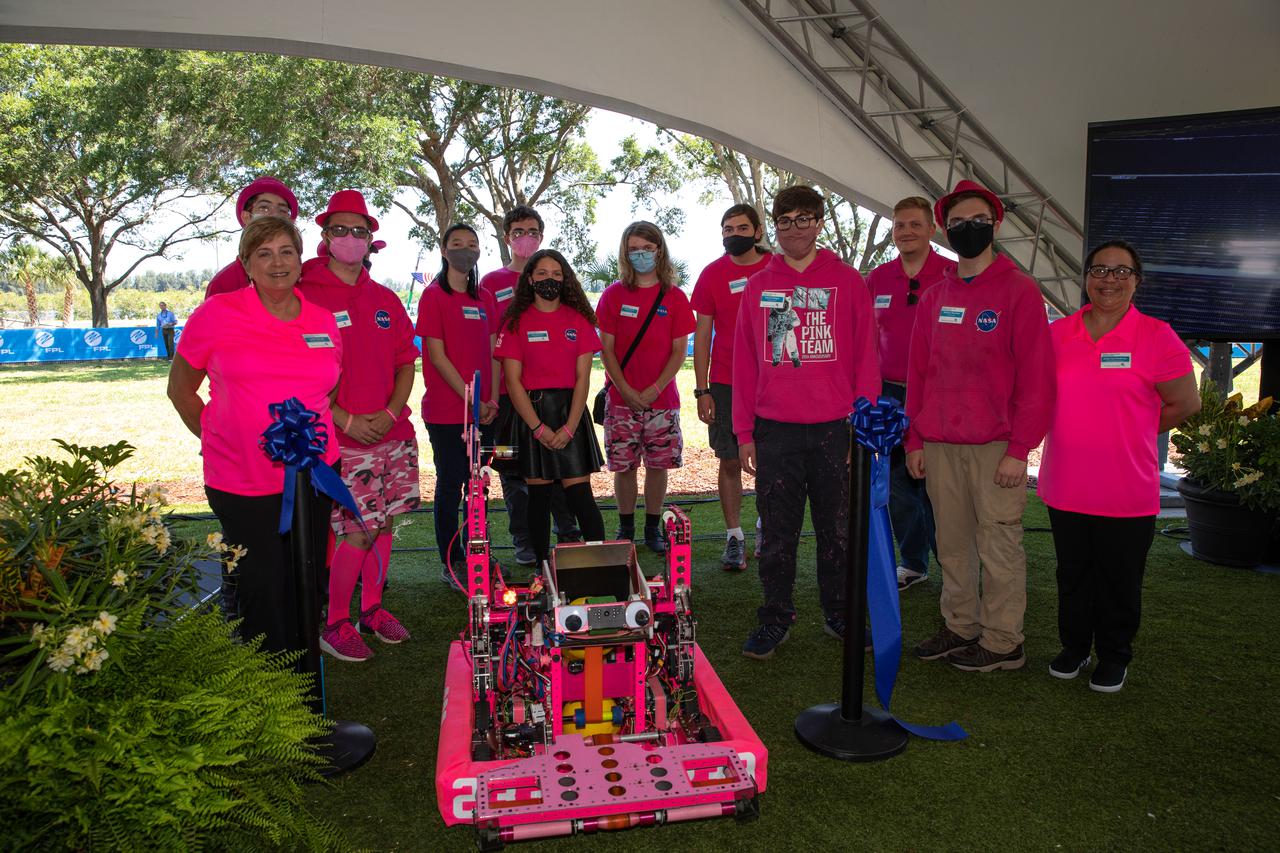
Students and faculty from Rockledge High School’s Pink Team, a robotics team mentored by NASA engineers, pose for a photo at NASA’s Kennedy Space Center Visitor Complex in Florida on June 11, 2021. Using the school’s 2021 competition robot – affectionately named “Pinky” – the Pink Team re-engineered their robot to carry a large pair of scissors to cut the ceremonial ribbon for the Florida Power and Light’s (FPL) Discovery Solar Energy Center becoming operational at the center. Discovery Solar Energy Center is a 74.5-megawatt solar site, spanning 491 acres at the spaceport. The site contains about 250,000 solar panels in total, producing enough energy to power approximately 15,000 homes. Harnessing energy from the Sun, the panels do not directly power anything at Kennedy, but rather, send energy directly to FPL's electricity grid for distribution to existing customers. Construction began in spring 2020, and the energy center became fully operational on May 30, 2021.
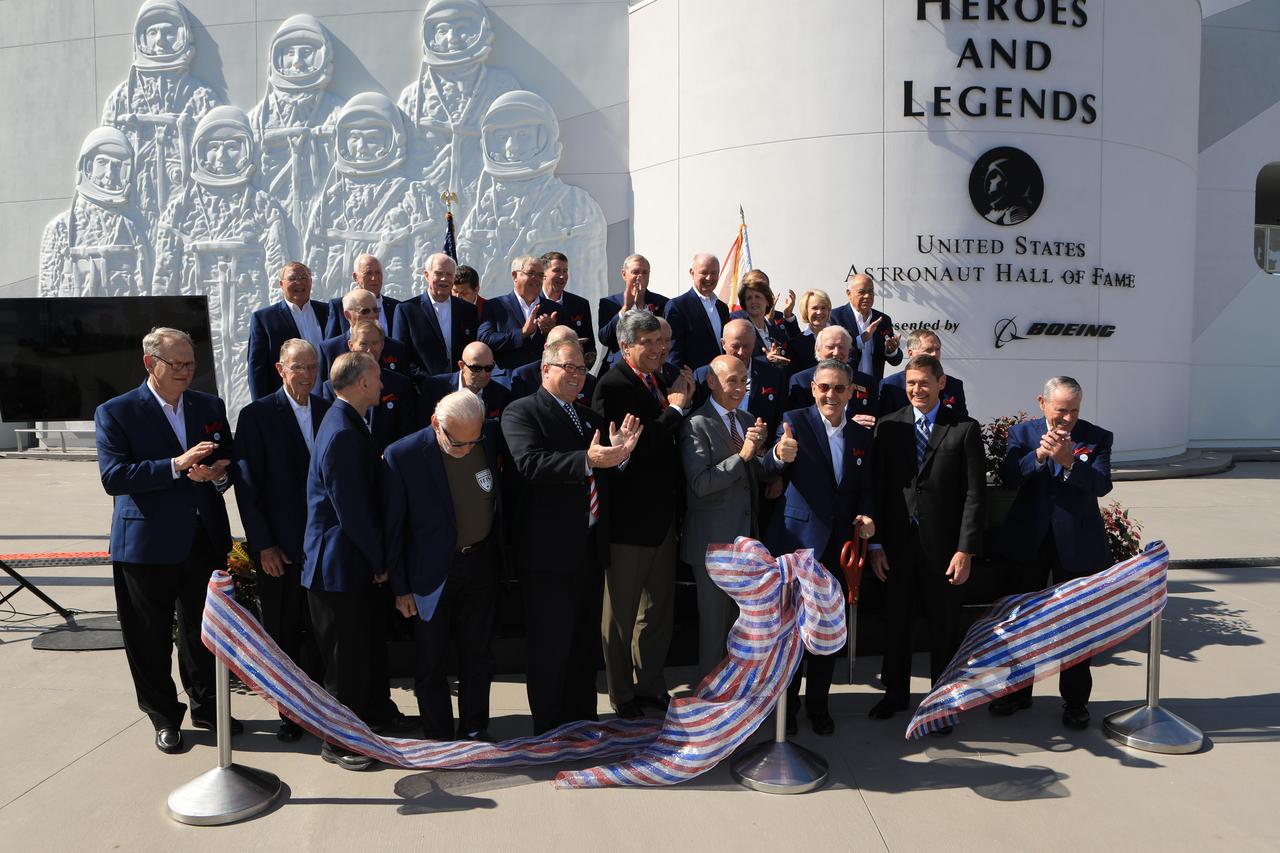
Dignitaries, including members of the U.S. Astronaut Hall of Fame, have just cut a ceremonial ribbon opening the Heroes and Legends attraction at the Kennedy Space Center Visitor Complex. The new facility includes the U.S. Astronaut Hall of Fame and looks back to the pioneering efforts of Mercury, Gemini and Apollo. It sets the stage by providing the background and context for space exploration and the legendary men and women who pioneered the nation's journey into space.
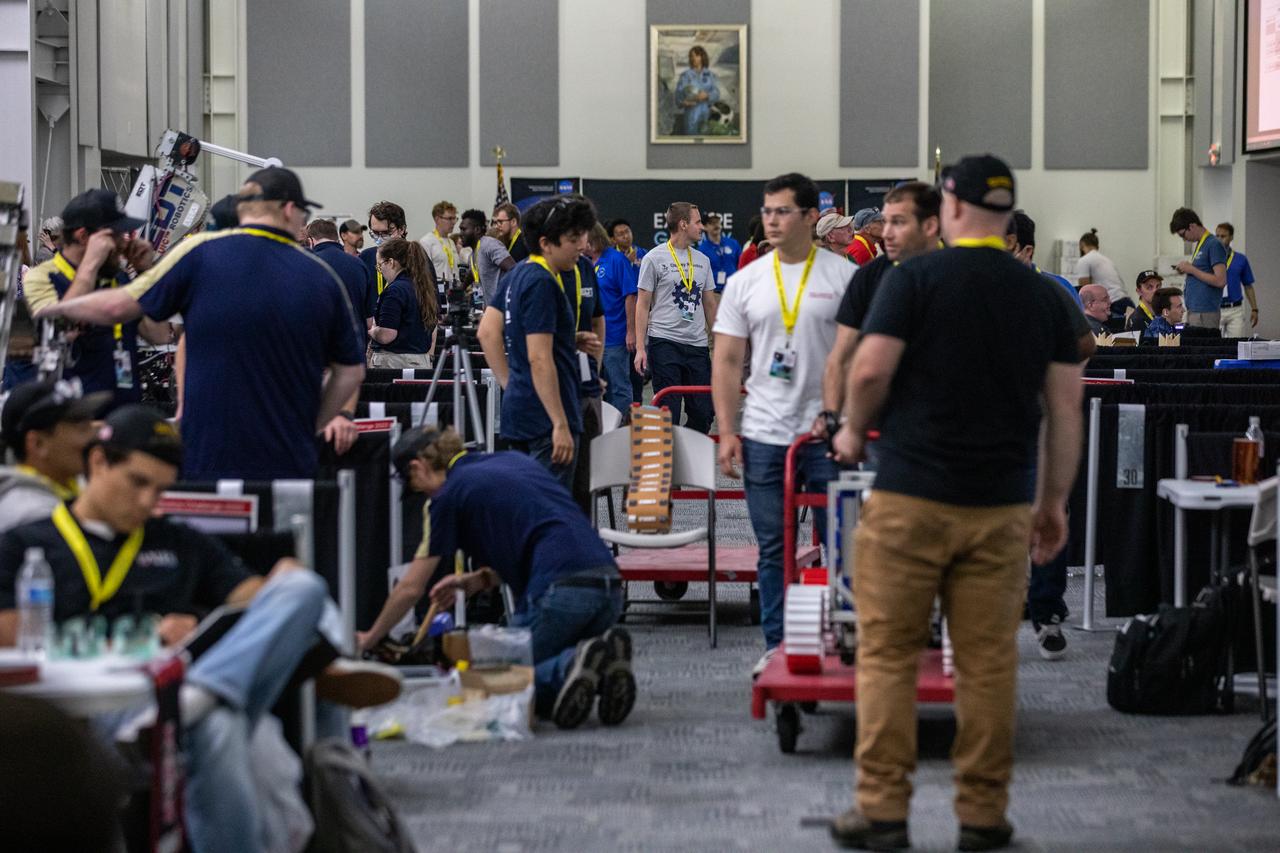
College teams prepare their robotic miners for their turn to dig in the mining arena during NASA’s LUNABOTICS competition on May 26, 2022, at the Center for Space Education near the Kennedy Space Center Visitor Complex in Florida. More than 35 teams from around the U.S. have designed and built remote-controlled robots for the mining competition. Teams use their semi-autonomous or remote-controlled robots to maneuver and dig in a supersized sandbox filled with rocks and simulated lunar soil, or regolith. The objective of the challenge is to see which team’s robot can collect and deposit the most rocky regolith within a specified amount of time.
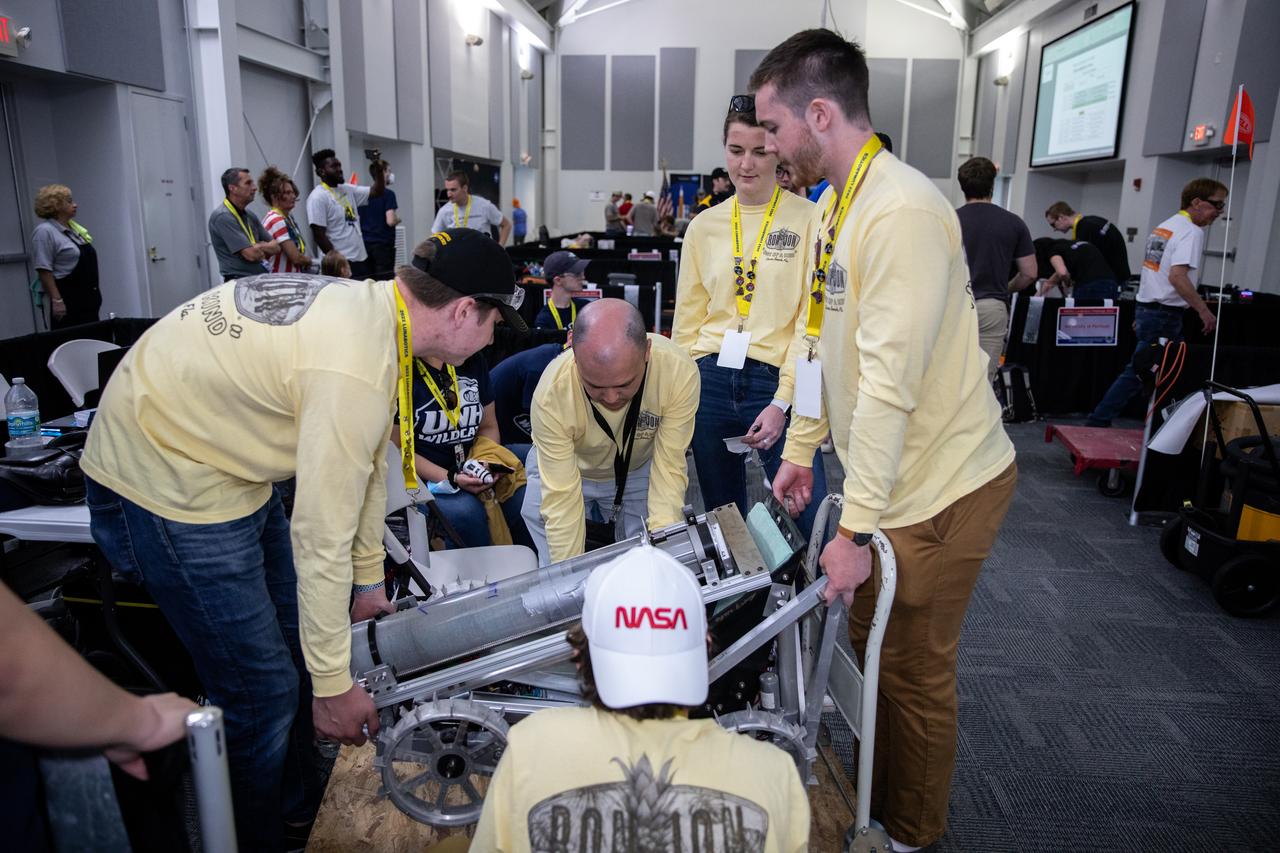
The University of New Hampshire’s robotic miner is placed on a cart to record its measurements and weight before the school’s team prepares it for its turn to dig in the mining arena during NASA’s LUNABOTICS competition on May 27, 2022, at the Center for Space Education near the Kennedy Space Center Visitor Complex in Florida. More than 35 teams from around the U.S. have designed and built remote-controlled robots for the mining competition. Teams use their autonomous or remote-controlled robots to maneuver and dig in a supersized sandbox filled with lunar simulant and rocks. The objective of the challenge is to see which team’s robot can collect and deposit the most rocky regolith within a specified amount of time.
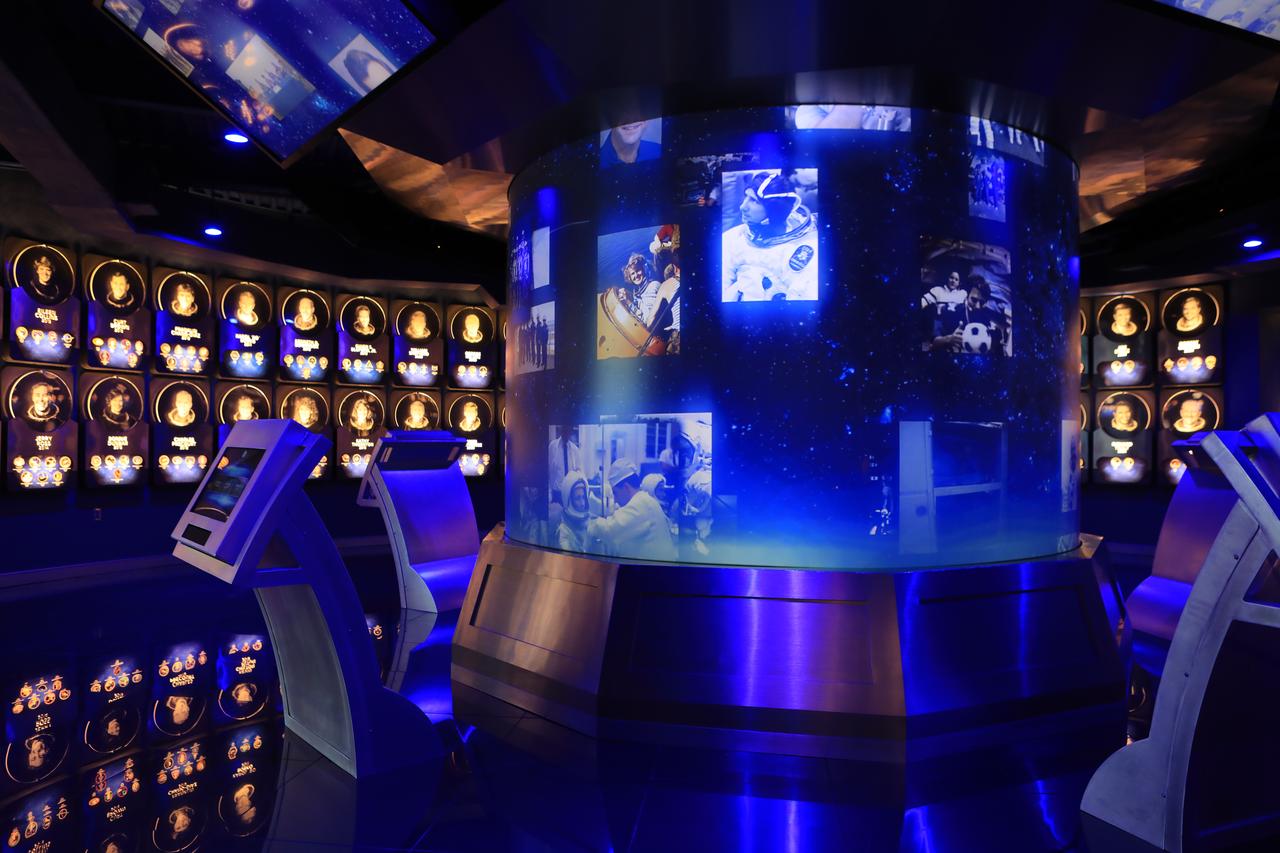
The Heroes and Legends attraction at the Kennedy Space Center Visitor Complex includes the U.S. Astronaut Hall of Fame. The new facility also looks back to the pioneering efforts of Mercury, Gemini and Apollo. It sets the stage by providing the background and context for space exploration and the legendary men and women who pioneered the nation's journey into space.
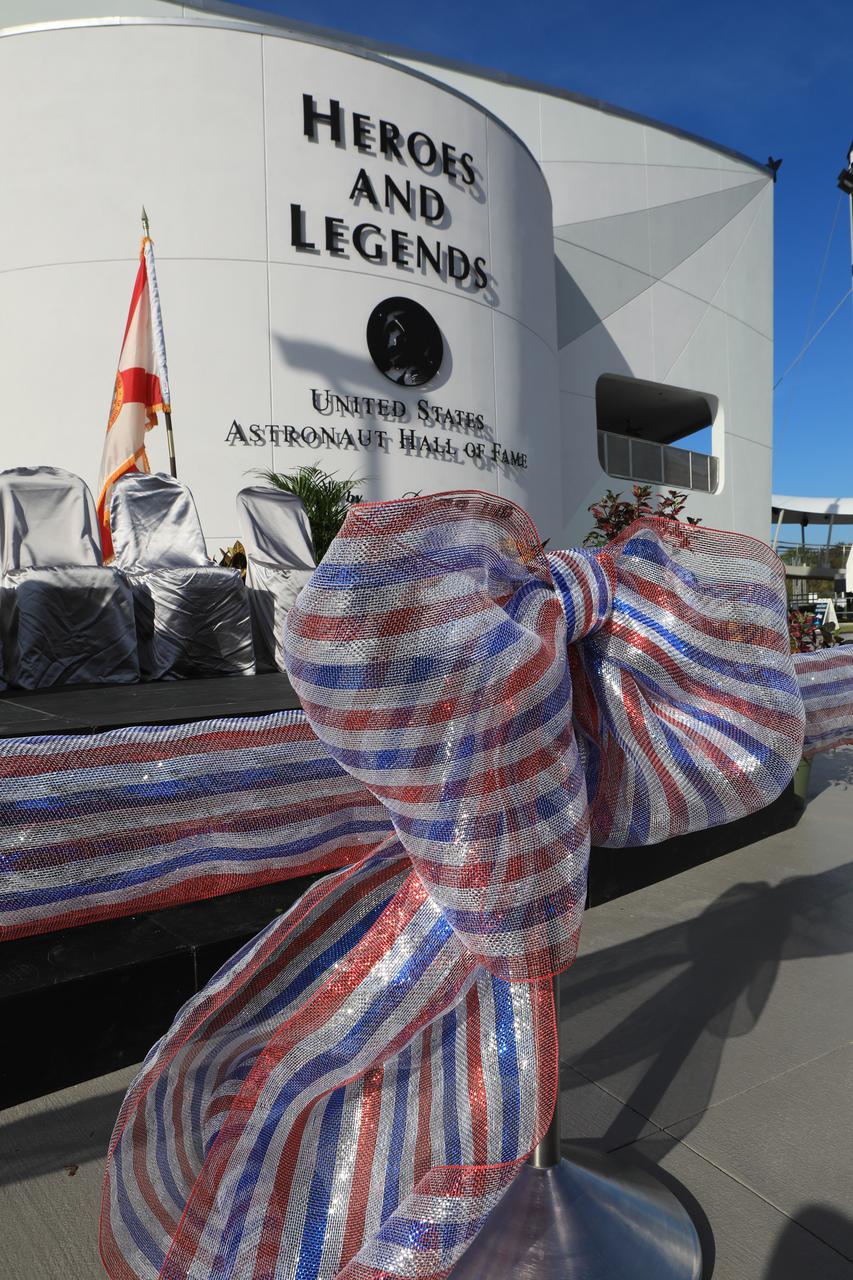
The Heroes and Legends attraction at the Kennedy Space Center Visitor Complex includes the U.S. Astronaut Hall of Fame. The new facility also looks back to the pioneering efforts of Mercury, Gemini and Apollo. It sets the stage by providing the background and context for space exploration and the legendary men and women who pioneered the nation's journey into space.
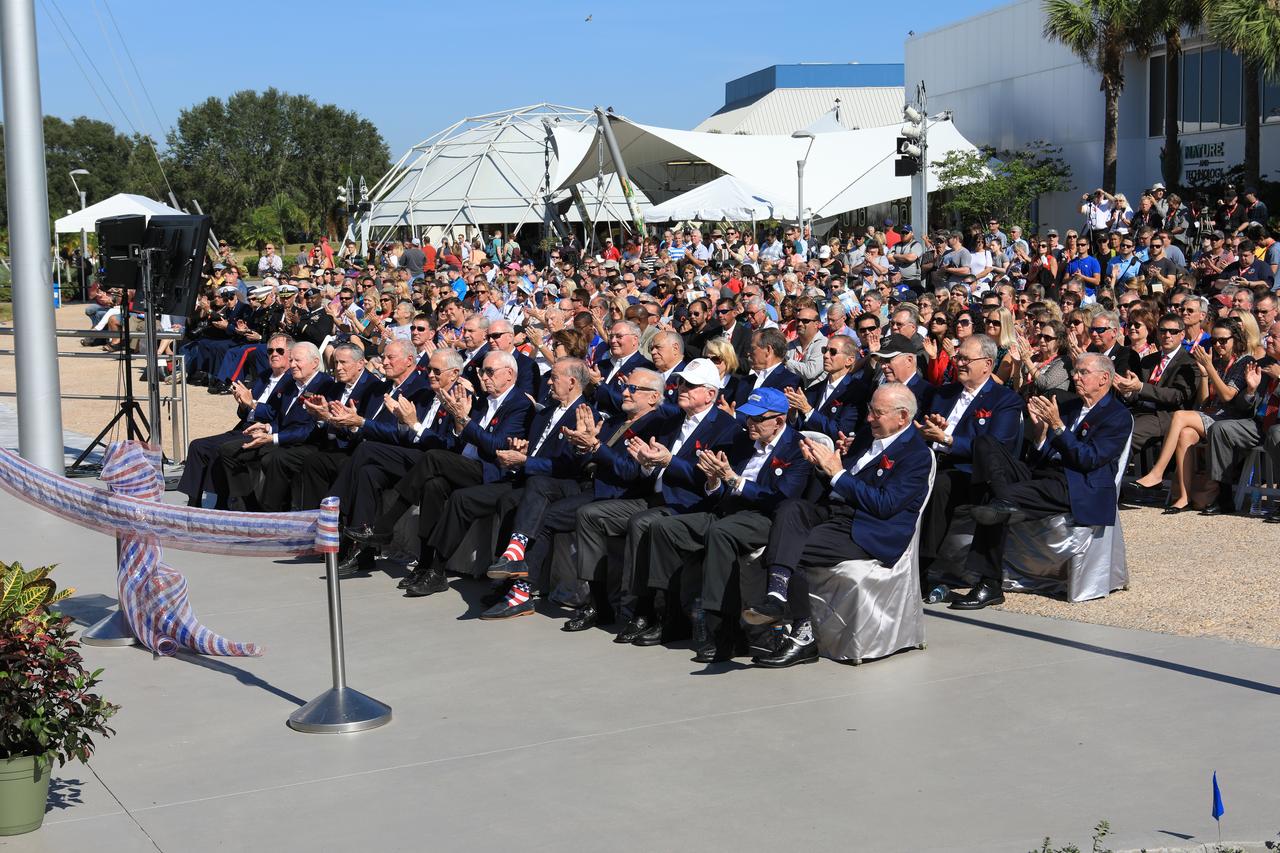
A large crowd, including members of the U.S. Astronaut Hall of Fame in the first two rows, listens to speakers during the grand opening of the Heroes and Legends attraction at the Kennedy Space Center Visitor Complex. The new facility includes the U.S. Astronaut Hall of Fame and looks back to the pioneering efforts of Mercury, Gemini and Apollo. It sets the stage by providing the background and context for space exploration and the legendary men and women who pioneered the nation's journey into space.

Kennedy Space Center kicked off its annual Earth Day celebrations with a sustainability expo at the center’s visitor complex in Florida on April 11, 2019. Approximately 40 exhibitors from across the nation assembled to provide information ranging from energy-saving solutions to wildlife and natural conservation. In addition, there were multiple butterfly releases held at the expo throughout the day.
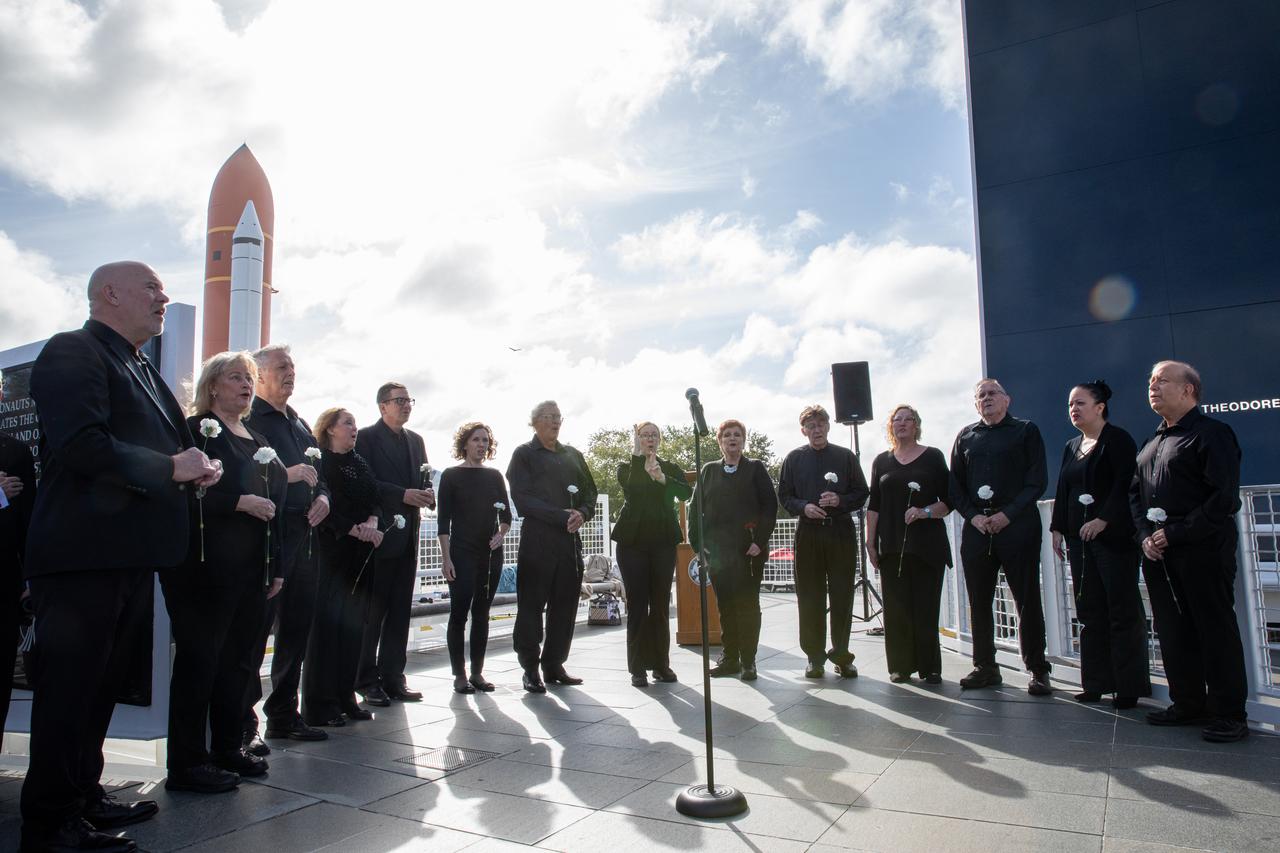
Members of the Space Coast Voices sing the National Anthem during the NASA Day of Remembrance ceremony at the Space Mirror Memorial in the Kennedy Space Center Visitor Complex on Jan. 30, 2020. The crews of Apollo 1 and space shuttles Challenger and Columbia, as well as other fallen astronauts who lost their lives in the name of space exploration and discovery, were honored at the annual event.
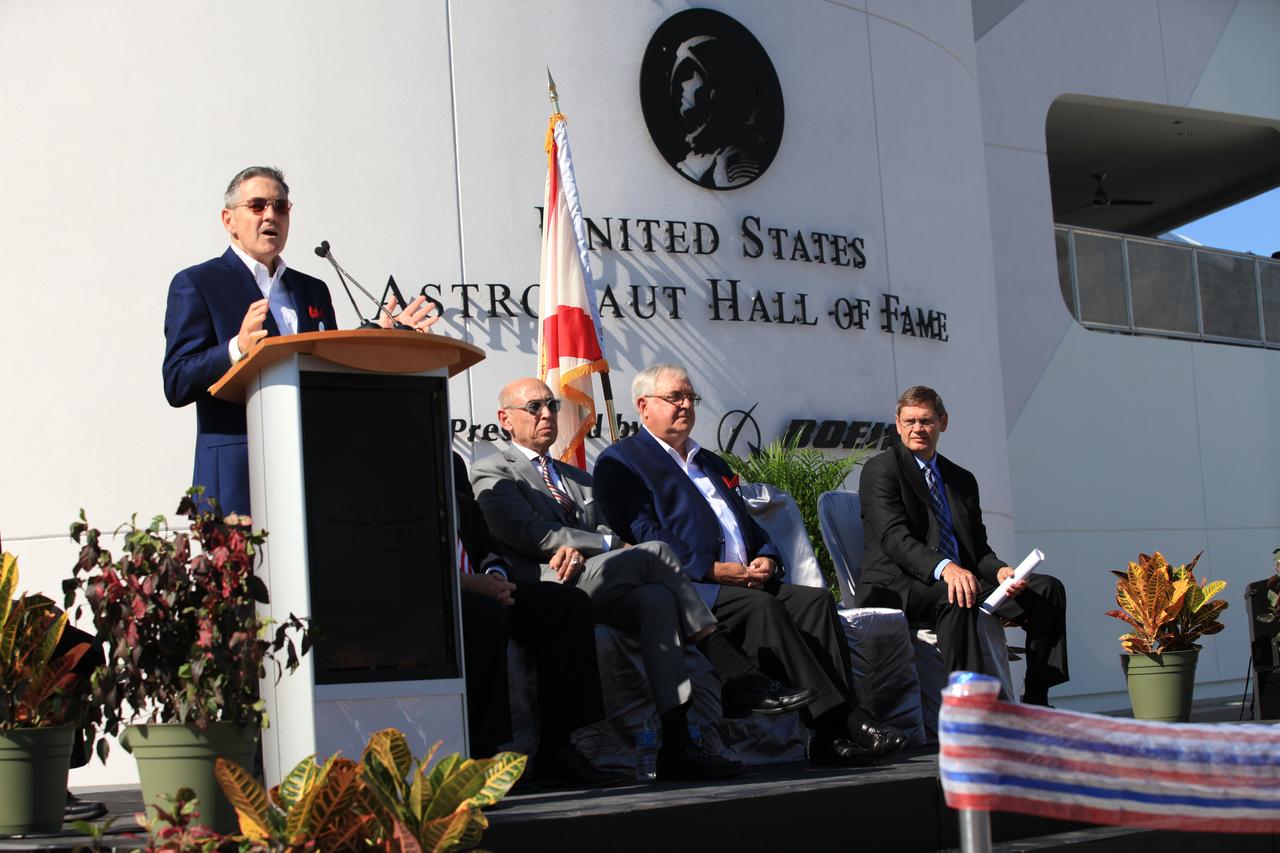
Kennedy Space Center Director Bob Cabana, a former space shuttle astronaut and member of the Astronaut Hall of Fame, speaks to guests during the opening of the Heroes and Legends attraction at the Kennedy Space Center Visitor Complex. Seated, from the left, are Rick Abramson, executive vice president and chief operating officer of Delaware North, former space shuttle astronaut Dan Brandenstein, chairman of the Astronaut Scholarship Foundation board of directors, and John Elbon, vice president and general manager of Boeing. The new facility includes the U.S. Astronaut Hall of Fame and looks back to the pioneering efforts of Mercury, Gemini and Apollo. It sets the stage by providing the background and context for space exploration and the legendary men and women who pioneered the nation's journey into space.

Volunteers from the Merritt Island National Wildlife Refuge are photographed with their display during a sustainability expo held at the Kennedy Space Center Visitor Complex in Florida on April 11, 2019. Guests had the opportunity to view their display and receive information on Florida plants and wildlife. The expo kicked off Kennedy’s annual Earth Day celebrations, where approximately 40 exhibitors attended to provide information ranging from energy-saving solutions to wildlife and natural conservation. In addition, there were multiple butterfly releases throughout the day.
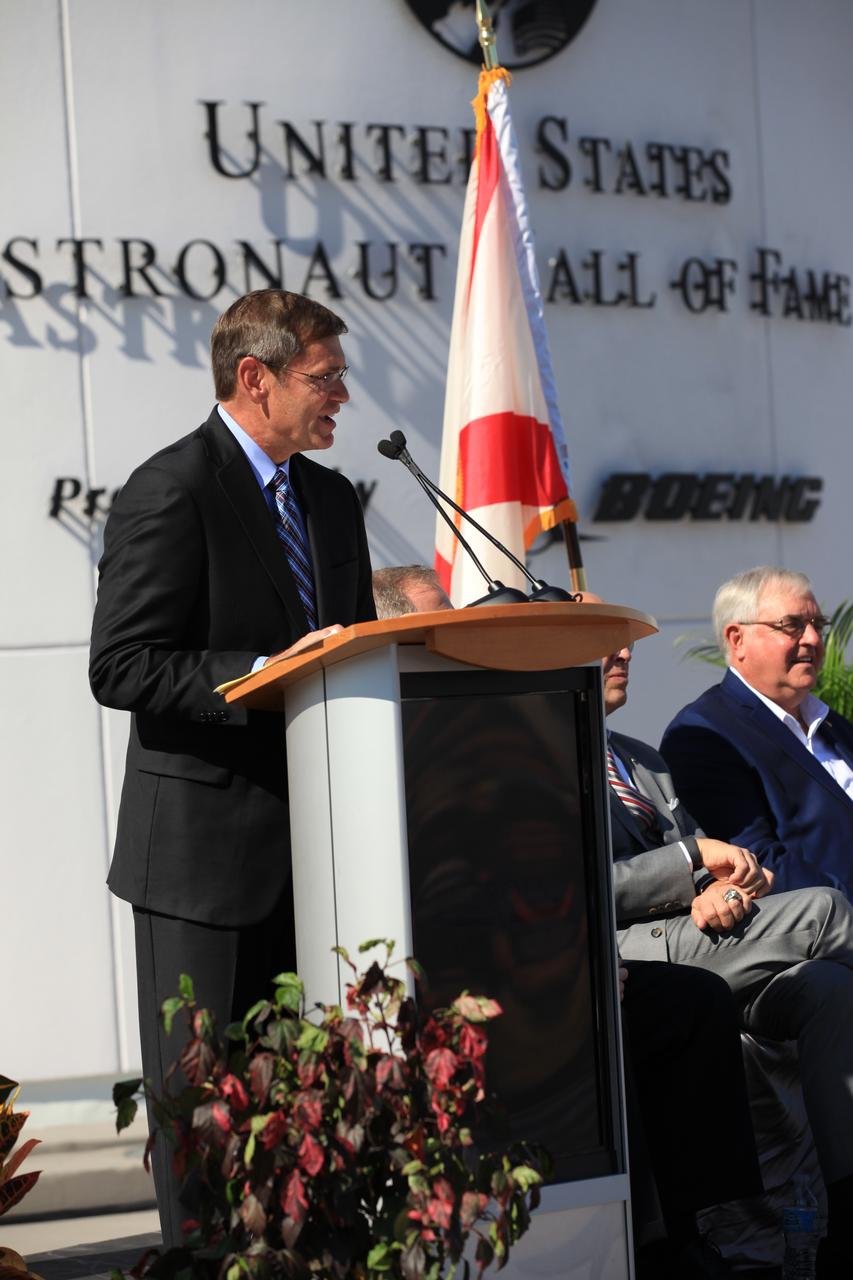
Boeing Vice President and General Manager John Elbon addresses the crowd gathered for the grand opening of the Heroes and Legends attraction at the Kennedy Space Center Visitor Complex. Boeing is sponsoring the new attraction. Seated, to the left, is former space shuttle astronaut Dan Brandenstein, chairman of the Astronaut Scholarship Foundation board of directors. The new facility includes the U.S. Astronaut Hall of Fame and looks back to the pioneering efforts of Mercury, Gemini and Apollo. It sets the stage by providing the background and context for space exploration and the legendary men and women who pioneered the nation's journey into space.
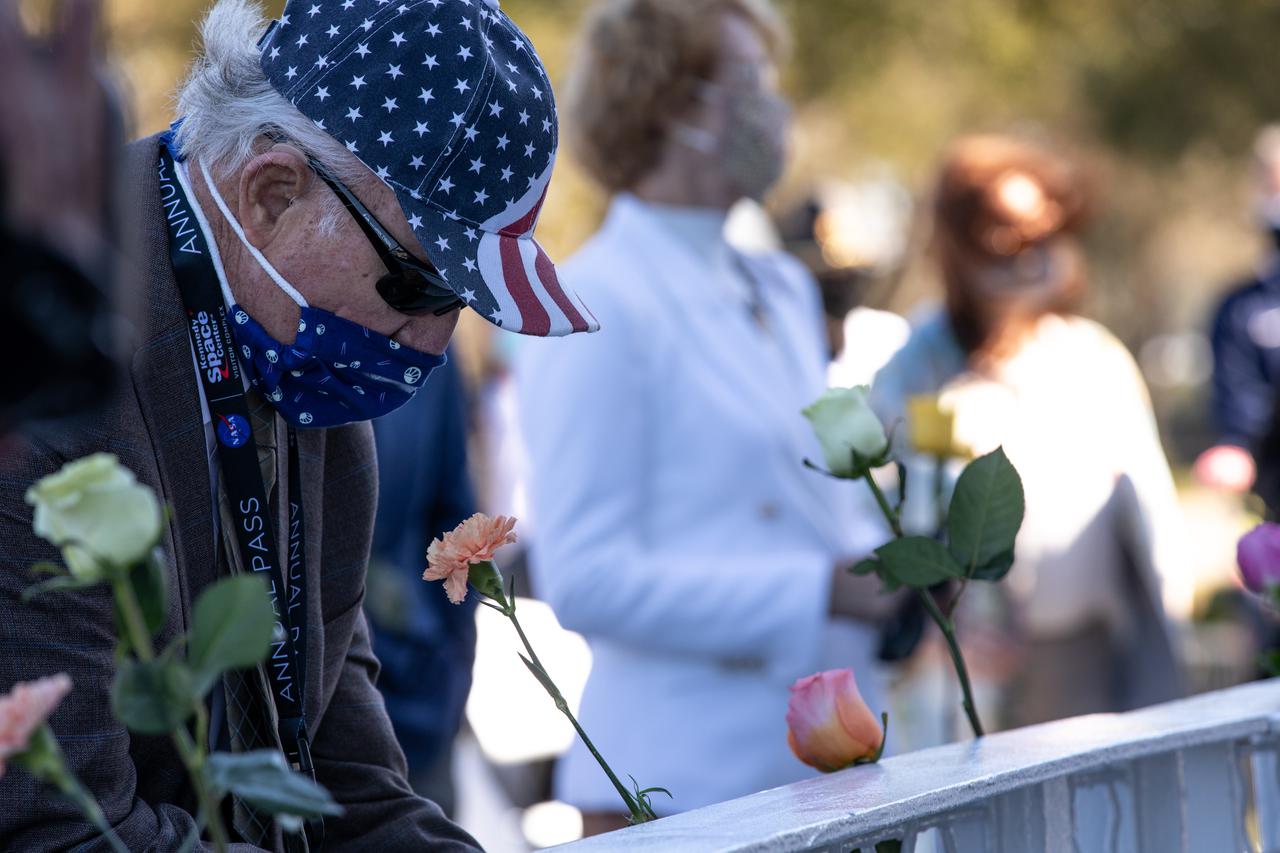
The crews of Apollo 1 and space shuttles Challenger and Columbia, as well as other fallen astronauts who lost their lives in the name of space exploration and discovery, are honored by NASA Kennedy Space Center employees and guests with a ceremony at the Kennedy Visitor Complex’s Space Mirror Memorial on Jan. 28, 2021. The date marked the 35th anniversary of the Challenger tragedy. NASA centers throughout the country participate in the agency’s annual Day of Remembrance memorial event.
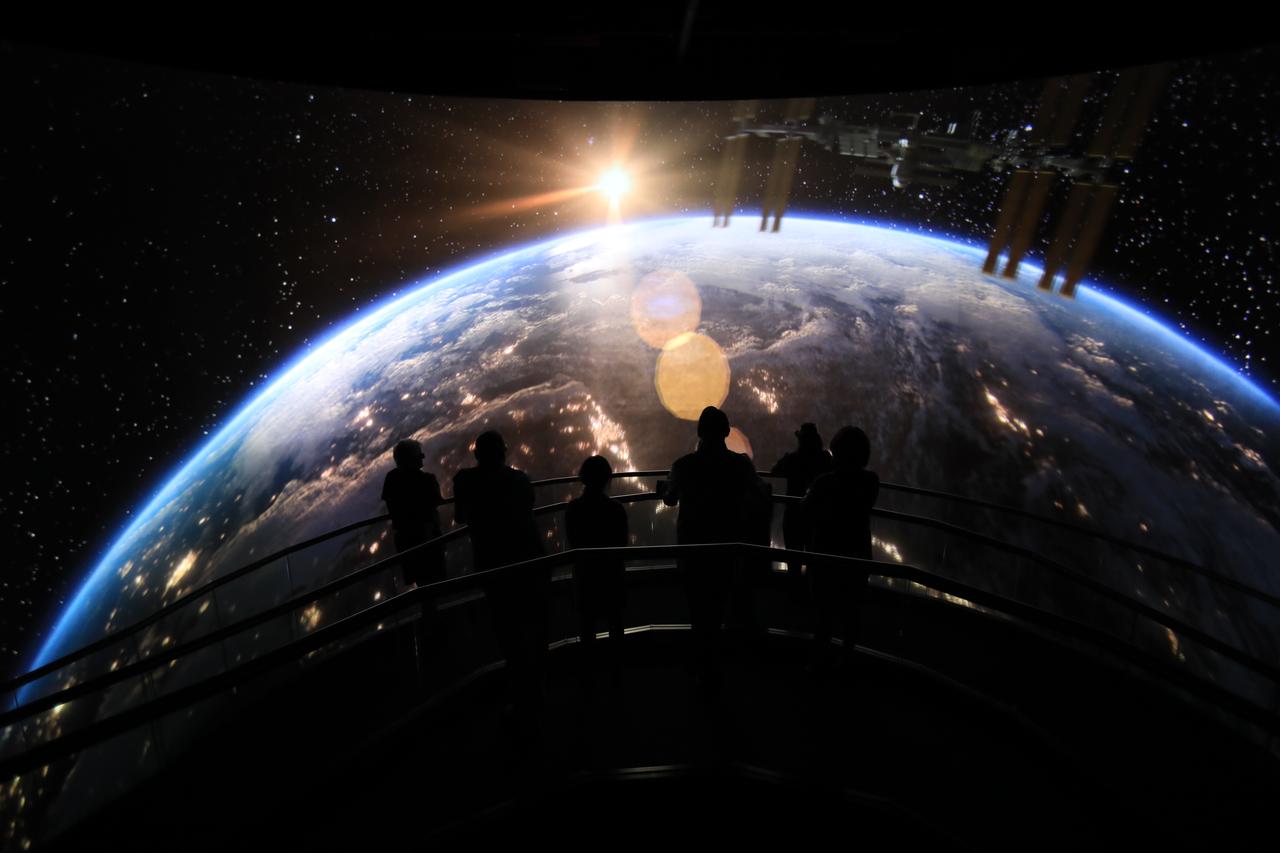
Inside the Heroes and Legends attraction at the Kennedy Space Center Visitor Complex guests watch a video presentation depicting the International Space Station in Earth orbit. In addition to displays honoring the Americans currently enshrined in the U. S. Astronaut Hall of Fame, the new facility looks back to the pioneering efforts of Mercury, Gemini and Apollo. It sets the stage by providing the background and context for space exploration and the legendary men and women who pioneered the nation's journey into space.
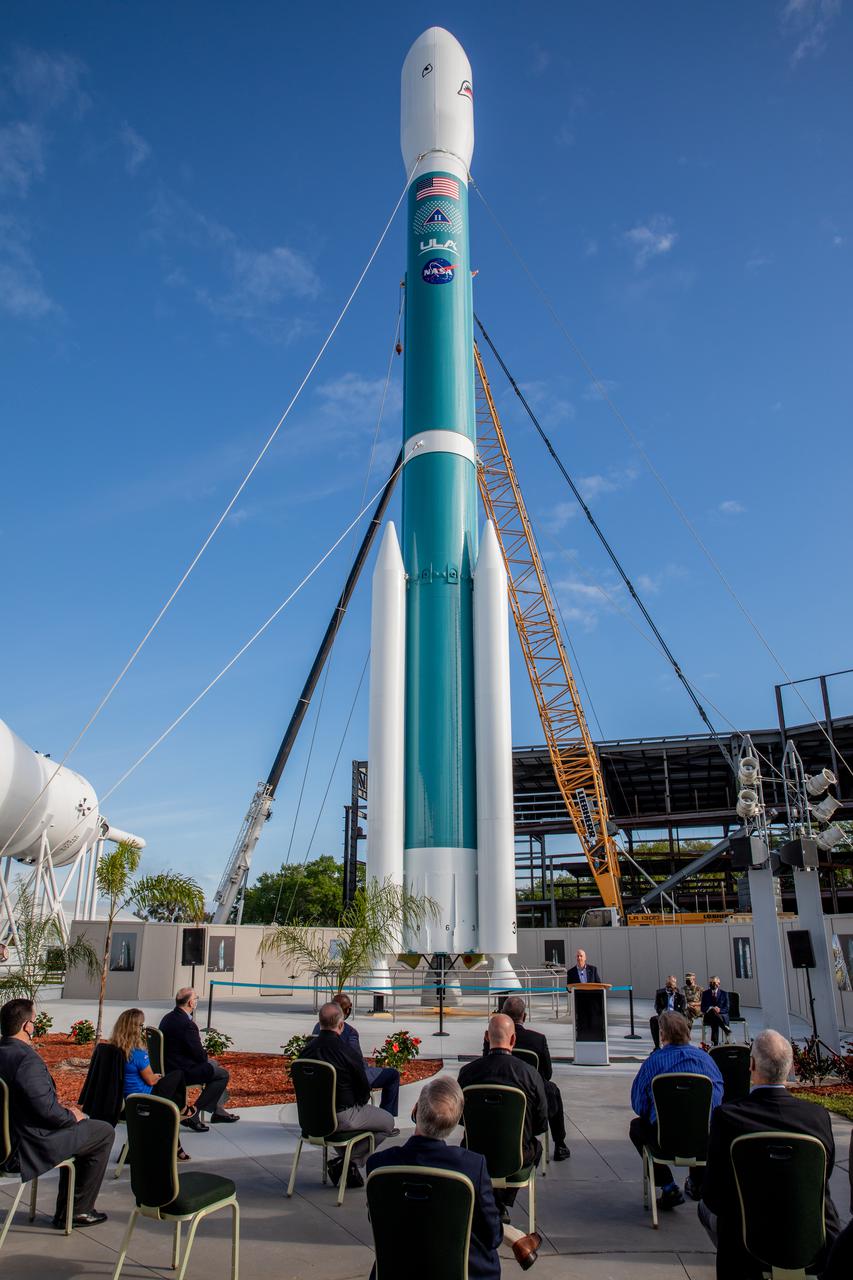
Guests attend a ribbon-cutting ceremony for the last United Launch Alliance Delta II rocket as it joins the lineup of historic launch vehicles in the Rocket Garden at the Kennedy Space Center Visitor Complex in Florida, on March 23, 2021. The Delta II rocket was a workhorse for NASA and civilian scientists, the U.S. military, and commercial clients throughout its almost 30 years of service. Since its first launch in 1989, the Delta II has launched 154 successful missions. NASA’s Launch Services Program launched the ICESat-2 spacecraft on the final Delta II launch on Sept. 15, 2018, from Vandenberg Air Force Base in California.
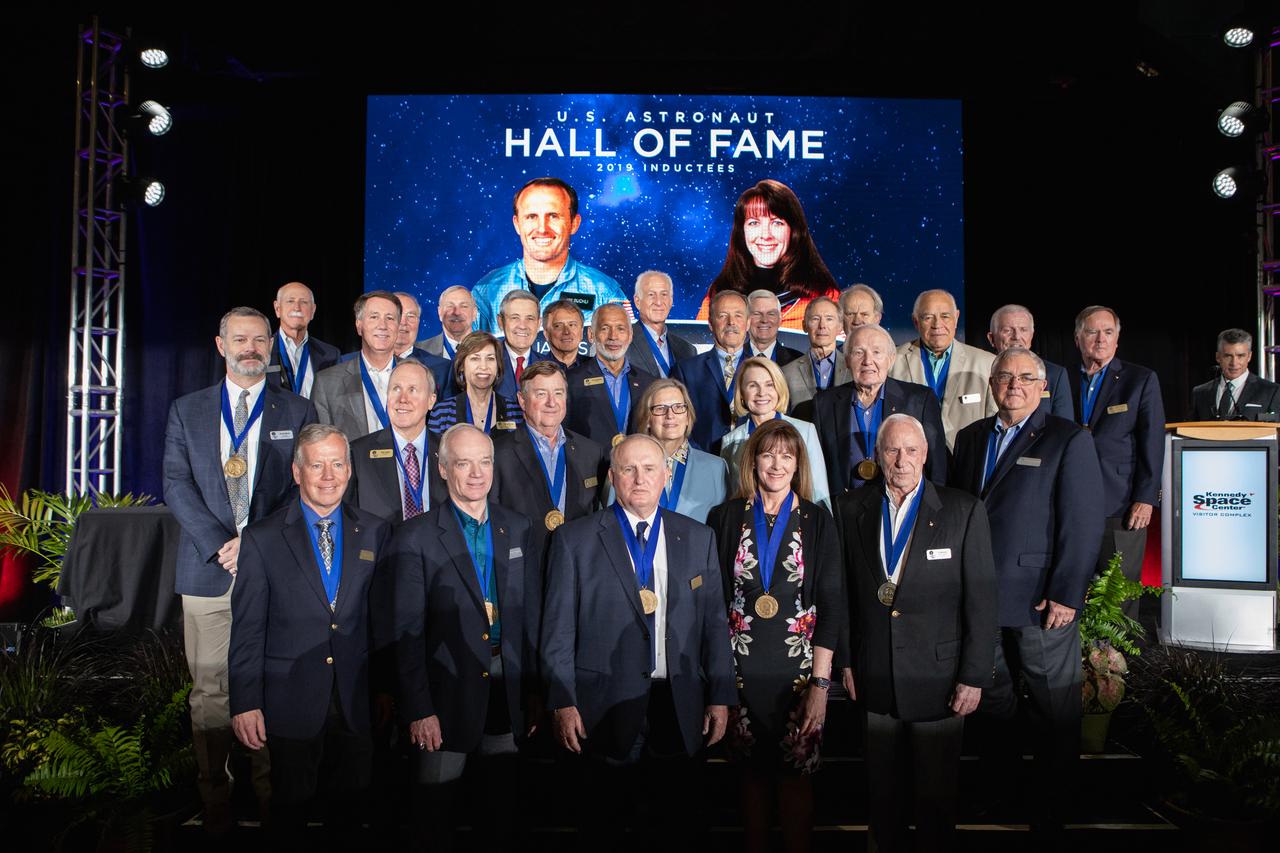
Veteran NASA astronauts James Buchli and Janet Kavandi were inducted into the U.S. Astronaut Hall of Fame in a public ceremony at Kennedy Space Center Visitor Complex in the Space Shuttle Atlantis attraction on April 6, 2019.
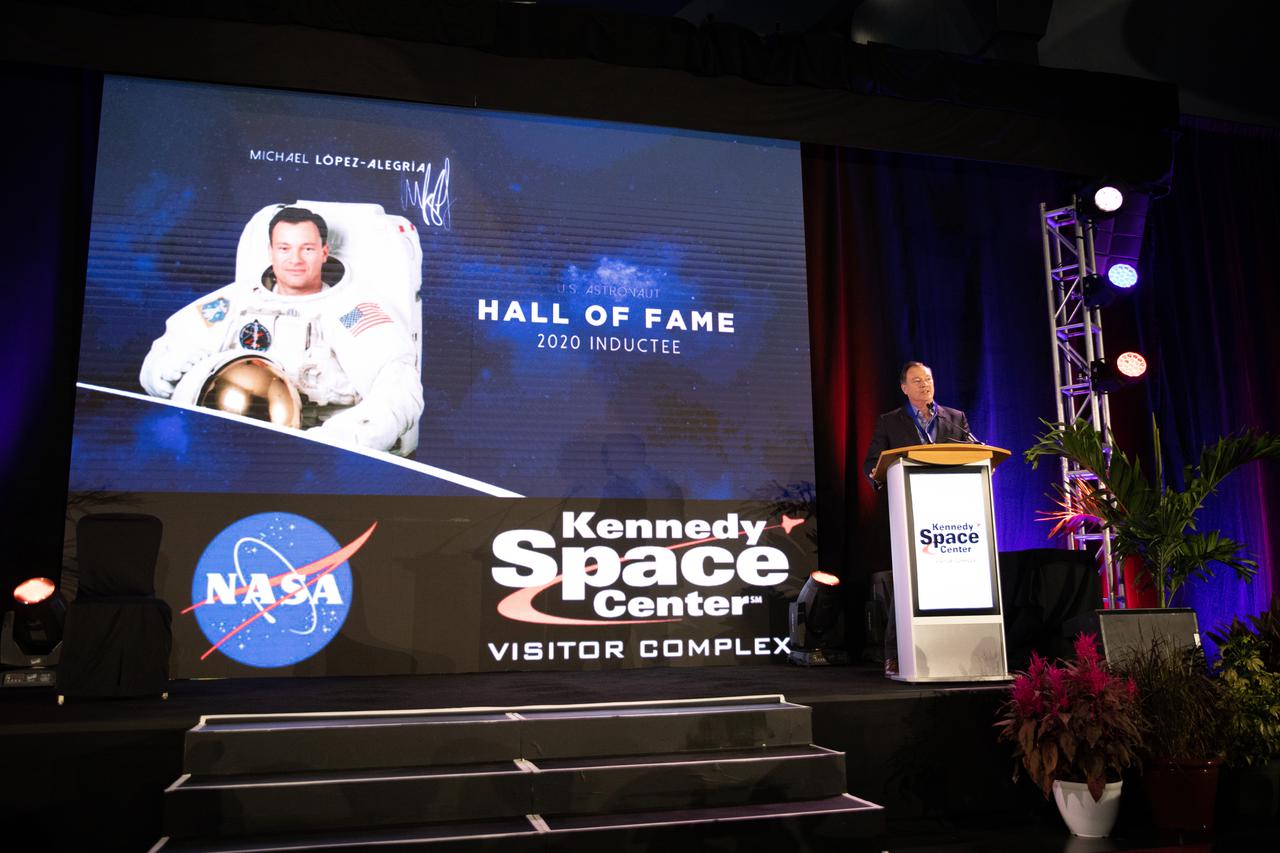
Michael Lopez-Alegria is one of three former astronauts inducted into the U.S. Astronaut Hall of Fame (AHOF) on Nov. 13, 2021, during a ceremony at the Kennedy Space Center Visitor Complex in Florida. Brian Duffy, former NASA astronaut and Hall of Famer, inducted Lopez-Alegria. Lopez-Alegria received an official medal and became a member of the 19th class of space shuttle astronauts to be inducted. The 2021 inductees were selected by a committee of Hall of Fame astronauts, former NASA officials, flight directors, historians, and journalists. This year’s induction brings the total number of AHOF members to 102.

A member of Brevard Backyard Beekeepers is photographed in front of her display during a sustainability expo held at the Kennedy Space Center Visitor Complex in Florida on April 11, 2019. The expo kicked off Kennedy’s annual Earth Day celebrations, where approximately 40 exhibitors from across the nation assembled to provide information ranging from energy-saving solutions to wildlife and natural conservation. In addition, there were multiple butterfly releases throughout the day.

Therrin Protze, COO at the Kennedy Space Center Visitor Complex, speaks in the Space Shuttle Atlantis exhibit during a ceremony on Wednesday, May 30, 2018, honoring former NASA astronaut Don Peterson. As a mission specialist on STS-6 in April 1983, he participated in the first spacewalk of the Space Shuttle Program. He passed away May 27, 2018, in El Lago, Texas. He was 84.

The last United Launch Alliance Delta II rocket joined the lineup of historic launch vehicles in the Rocket Garden at the Kennedy Space Center Visitor Complex in Florida, on March 3, 2021. Workers use a crane to lift a segment of the Delta II for stacking in its display area. The Delta II rocket was a workhorse for NASA and civilian scientists, the U.S. military, and commercial clients throughout its almost 30 years of service. Since its first launch in 1989, the Delta II has launched 154 successful missions. NASA’s Launch Services Program launched the ICESat-2 spacecraft on the final Delta II launch on Sept. 15, 2018, from Vandenberg Air Force Base in California.
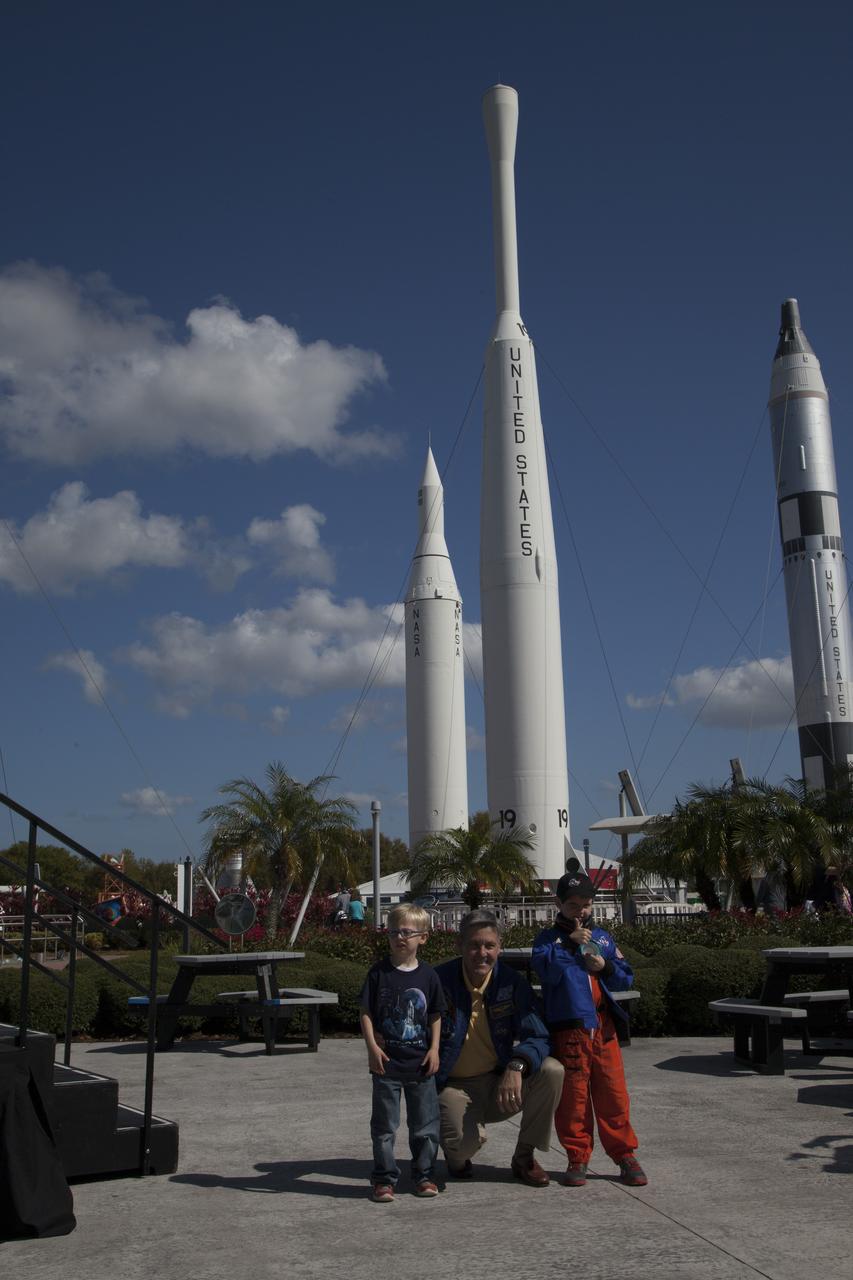
CAPE CANAVERAL, Fla. – Six-year-old Connor Johnson gives a big thumbs up following a ceremony in the Kennedy Space Center Visitor Complex' Rocket Garden during which NASA Kennedy Space Center Director and former astronaut Robert Cabana presented him with space mementos to inspire the youngster to continue the dream he has had since the age of three of becoming an astronaut. From left are Connor's brother Liam, Cabana and Connor. Connor, of Denver, Colo., gained national attention for having the "right stuff" when he launched an online petition on the White House website in December 2013 to save NASA’s funding from budget cuts. One of the mementos, a piece of space history, was a bolt used to hold the International Space Station's Unity module in place in space shuttle Endeavour's payload bay on the STS-88 mission, the first station assembly mission and Cabana's fourth and final spaceflight. Connor and his family were the guests of Delaware North Companies Parks & Resorts, the concessionaire managing the visitor complex. During his visit, Connor had the opportunity to meet with astronauts, see space vehicles and witness the Robot Rocket Rally underway in the complex' Rocket Garden over the weekend. To learn more about the educational activities available daily at the Kennedy Space Center Visitor Complex, visit http://www.kennedyspacecenter.com. Photo credit: NASA/Dan Casper
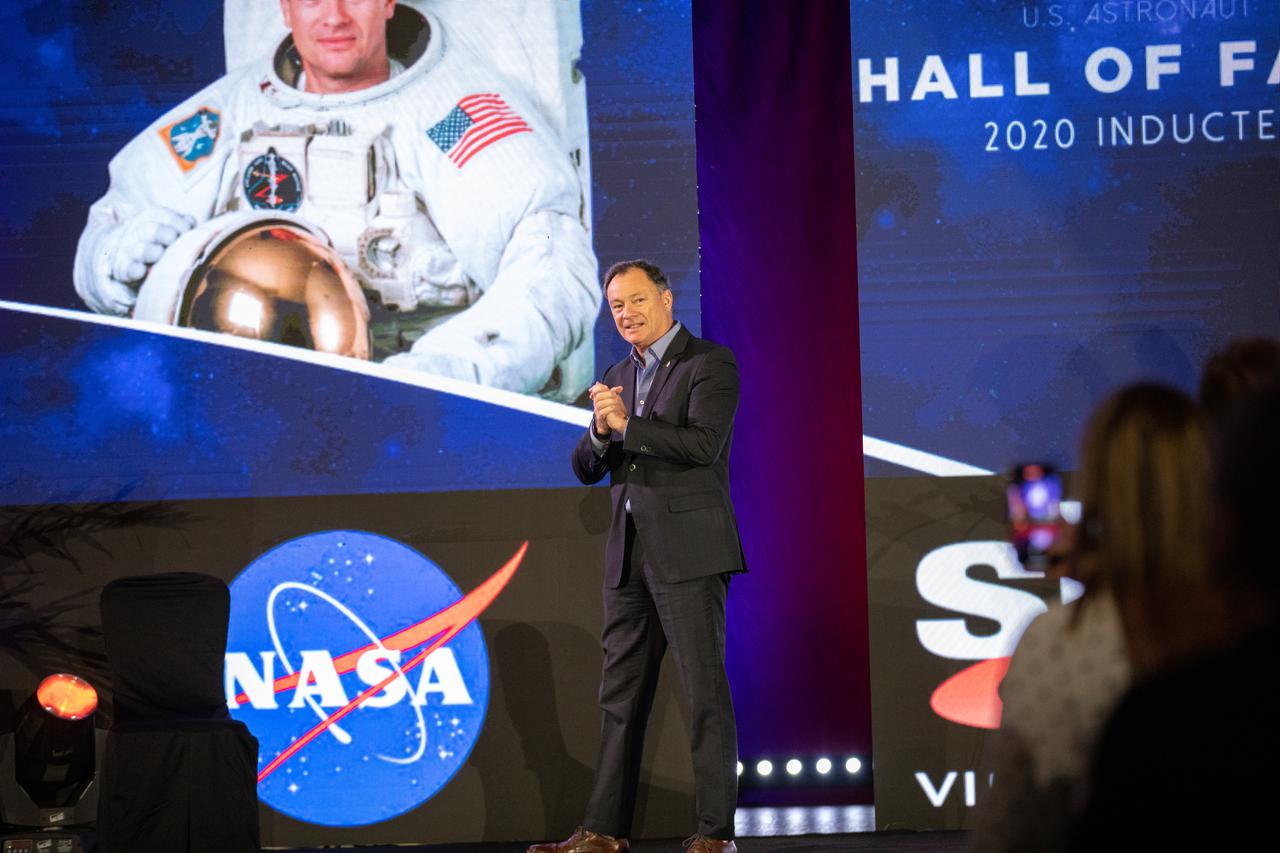
Michael Lopez-Alegria is one of three former astronauts inducted into the U.S. Astronaut Hall of Fame (AHOF) on Nov. 13, 2021, during a ceremony at the Kennedy Space Center Visitor Complex in Florida. Lopez-Alegria received an official medal and became a member of the 19th class of space shuttle astronauts to be inducted. Brian Duffy, former NASA astronaut and Hall of Famer, inducted Lopez-Alegria. The 2021 inductees were selected by a committee of Hall of Fame astronauts, former NASA officials, flight directors, historians, and journalists. This year’s induction brings the total number of AHOF members to 102.
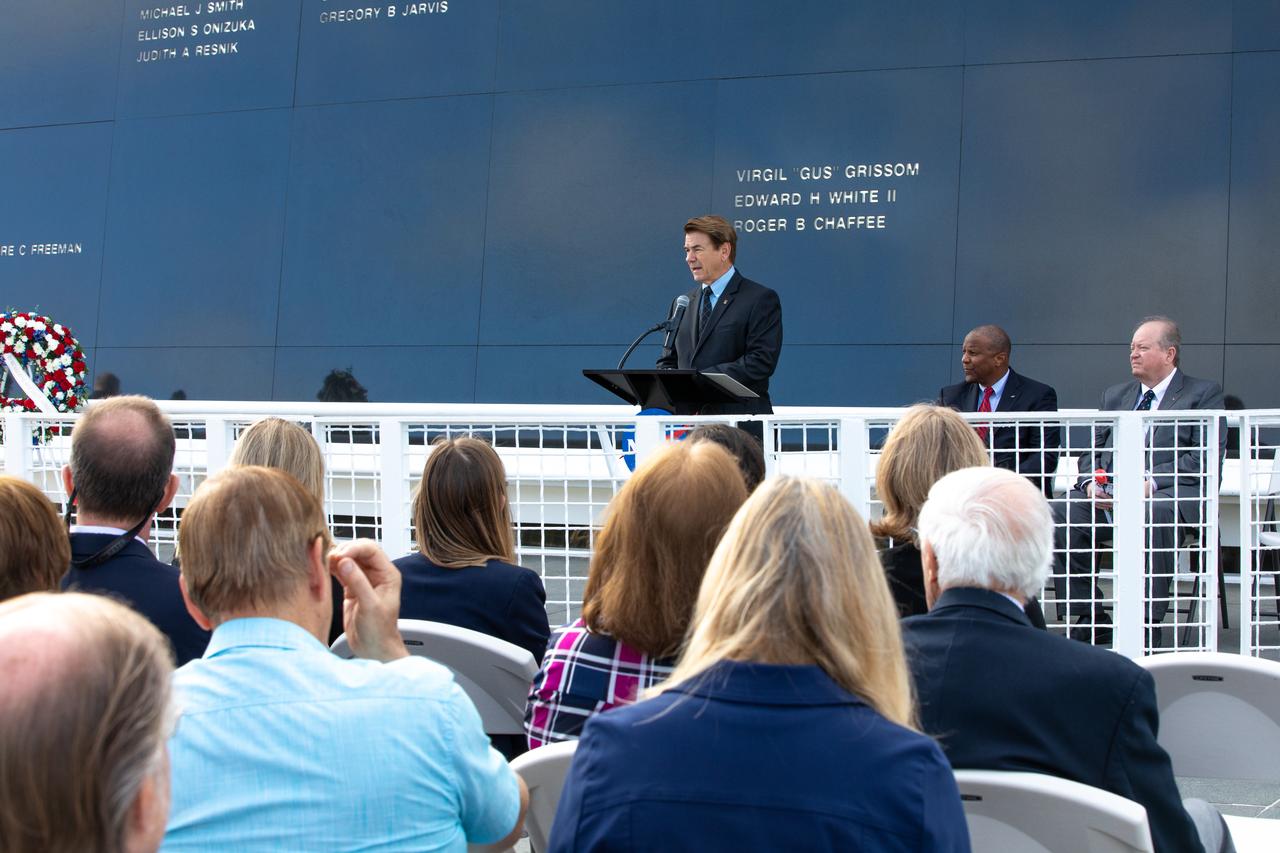
Astronauts Memorial Foundation president and CEO Thad Altman addresses the audience during the NASA Day of Remembrance ceremony at the Space Mirror Memorial in the Kennedy Space Center Visitor Complex on Jan. 30, 2020. Behind Altman, from left to right, are Kelvin Manning, Kennedy associate director, technical; and Burt Summerfield, associate director, management. The crews of Apollo 1 and space shuttles Challenger and Columbia, as well as other fallen astronauts who lost their lives in the name of space exploration and discovery, were honored at the annual event.
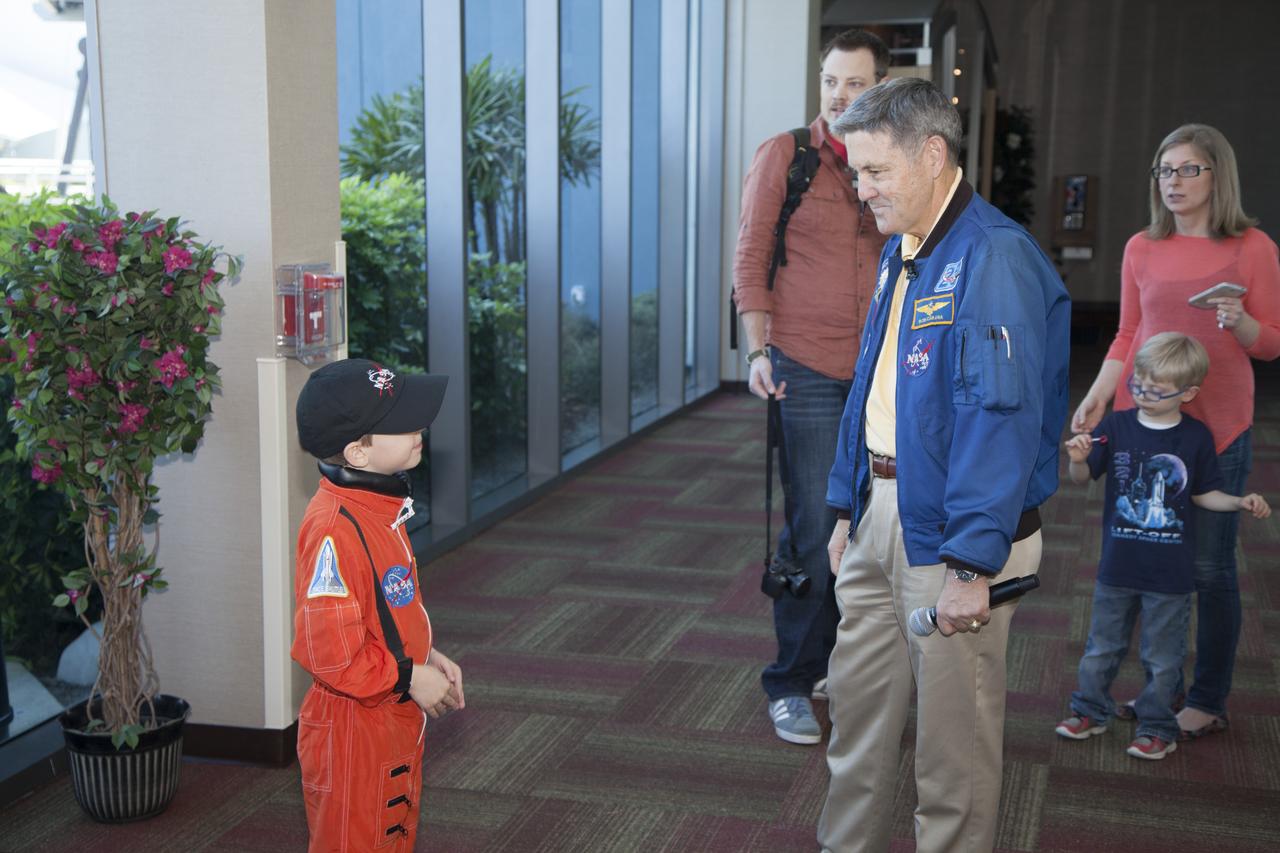
CAPE CANAVERAL, Fla. – Six-year-old Connor Johnson, left, is welcomed to the Kennedy Space Center Visitor Complex in Florida by NASA Kennedy Space Center Director and former astronaut Robert Cabana for a ceremony in which he will present Connor with space mementos to inspire the youngster to continue the dream he has had since the age of three of becoming an astronaut. Connor is accompanied by his parents Eric and Lauren and younger brother Liam, in the background. Connor, of Denver, Colo., gained national attention for having the "right stuff" when he launched an online petition on the White House website in December 2013 to save NASA’s funding from budget cuts. One of the mementos, a piece of space history, was a bolt used to hold the International Space Station's Unity module in place in space shuttle Endeavour's payload bay on the STS-88 mission, the first station assembly mission and Cabana's fourth and final spaceflight. Connor and his family were the guests of Delaware North Companies Parks & Resorts, the concessionaire managing the visitor complex. During his visit, Connor had the opportunity to meet with astronauts, see space vehicles and witness the Robot Rocket Rally underway in the complex' Rocket Garden over the weekend. To learn more about the educational activities available daily at the Kennedy Space Center Visitor Complex, visit http://www.kennedyspacecenter.com. Photo credit: NASA/Dan Casper
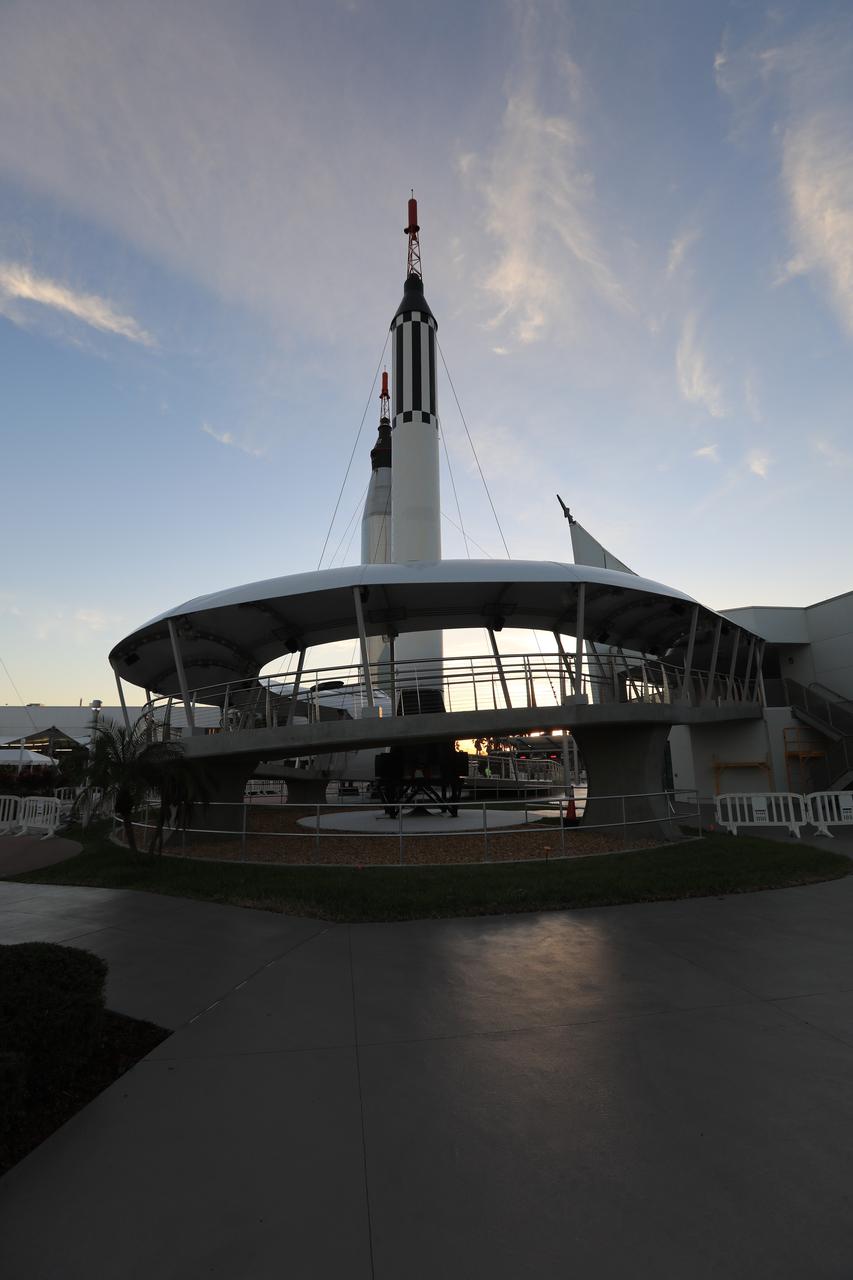
Entrance to the Heroes and Legends attraction at the Kennedy Space Center Visitor Complex is by way of a sweeping ramp designed to simulate a journey to the stars by way of the "Rocket Garden." The new facility includes the U.S. Astronaut Hall of Fame and looks back to the pioneering efforts of Mercury, Gemini and Apollo. It sets the stage by providing the background and context for space exploration and the legendary men and women who pioneered the nation's journey into space.
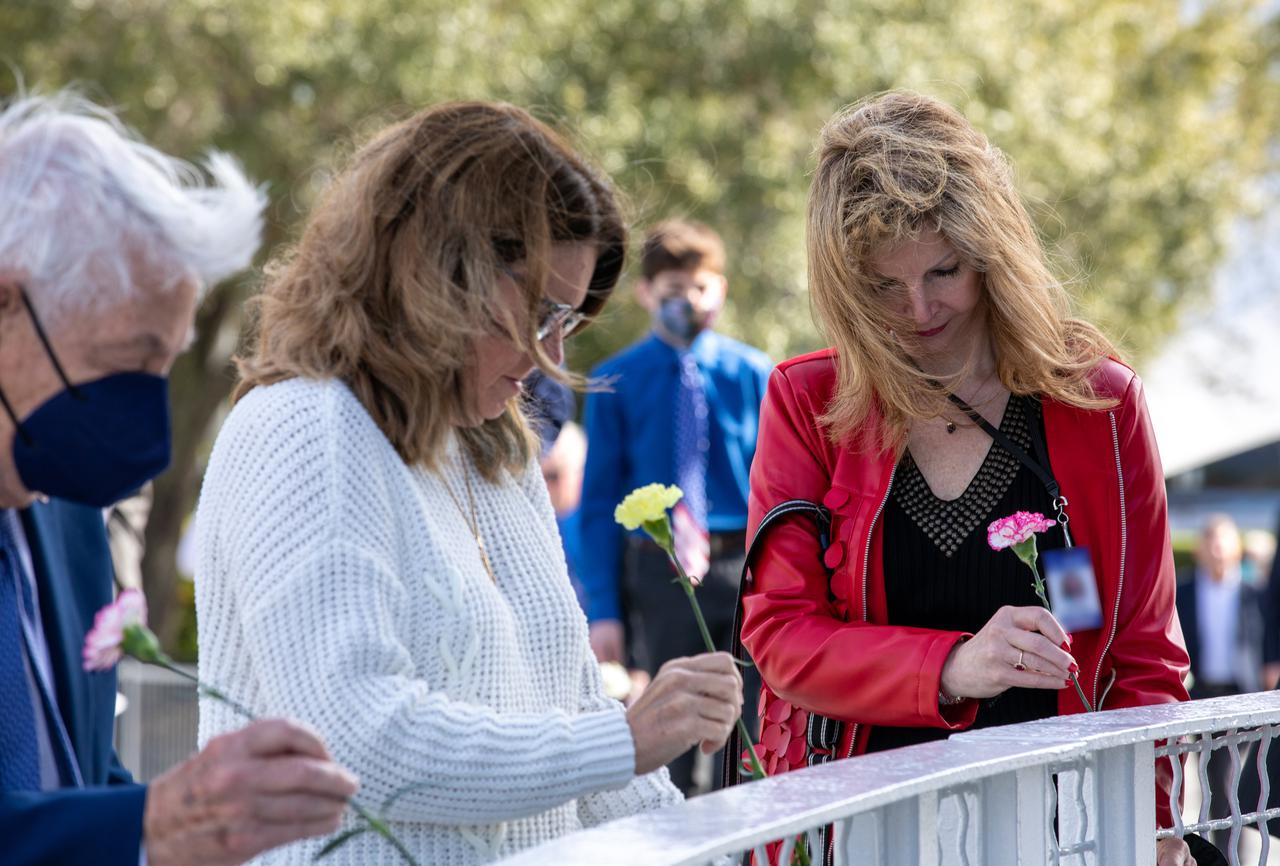
NASA’s Kennedy Space Center in Florida paid tribute to the crews of Apollo 1 and space shuttles Challenger and Columbia, as well as other astronauts who lost their lives while furthering the cause of exploration and discovery, during the agency's Day of Remembrance on Jan. 27, 2022. From left, Lowell Grissom, brother of Virgil “Gus” Grissom; Sheryl Chafee, daughter of Apollo 1 astronaut Roger Chafee; and Kathie Scobee Fulgham, daughter of Challenger Commander Francis R. Scobee, place carnations on the fence in front of the Space Mirror Memorial at the Kennedy Space Center Visitor Complex.
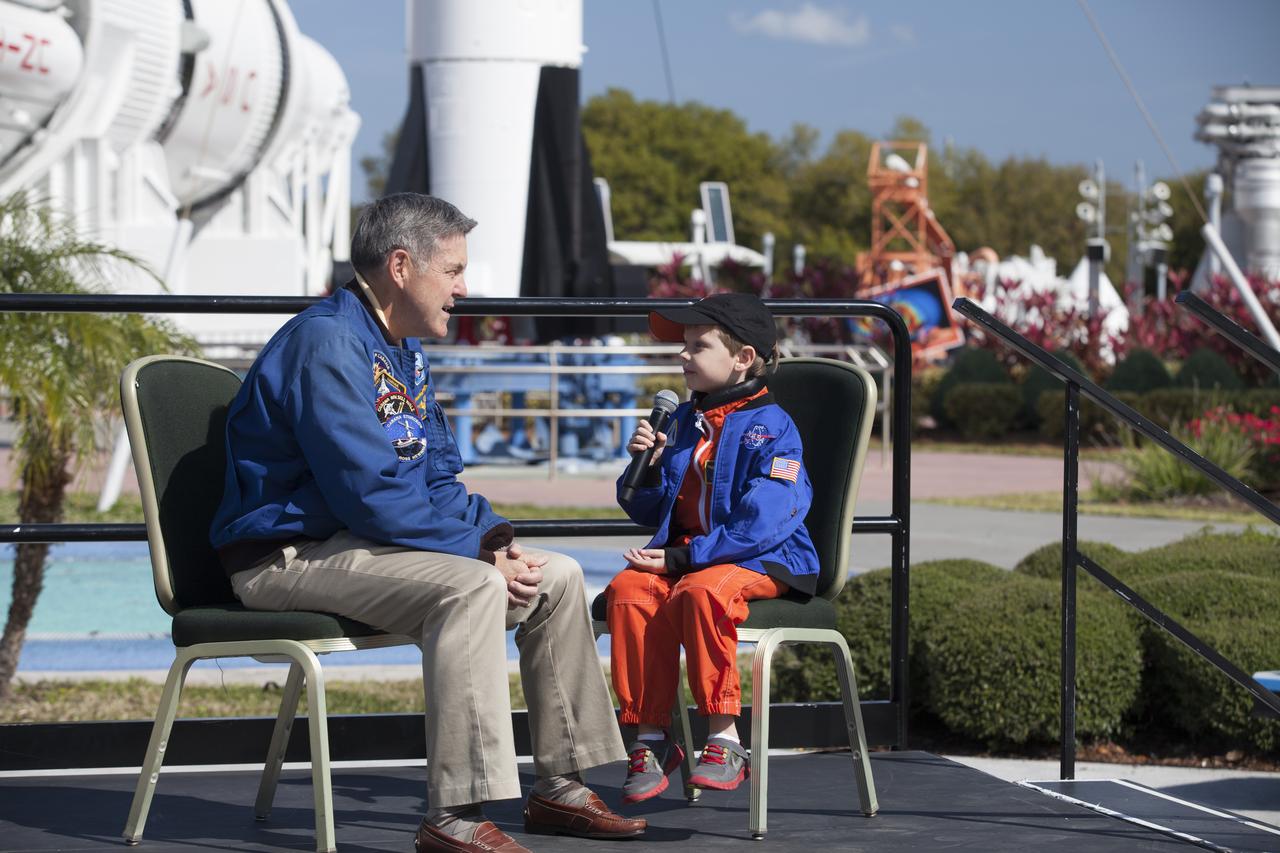
CAPE CANAVERAL, Fla. – Six-year-old Connor Johnson, right, discusses his interest in the space program with NASA Kennedy Space Center Director and former astronaut Robert Cabana during a ceremony in the Kennedy Space Center Visitor Complex' Rocket Garden. During the ceremony, Cabana will present Connor with mementos to inspire the youngster to continue the dream he has had since the age of three of becoming an astronaut. Connor, of Denver, Colo., gained national attention for having the "right stuff" when he launched an online petition on the White House website in December 2013 to save NASA’s funding from budget cuts. One of the mementos, a piece of space history, was a bolt used to hold the International Space Station's Unity module in place in space shuttle Endeavour's payload bay on the STS-88 mission, the first station assembly mission and Cabana's fourth and final spaceflight. Connor and his family were the guests of Delaware North Companies Parks & Resorts, the concessionaire managing the visitor complex. During his visit, Connor had the opportunity to meet with astronauts, see space vehicles and witness the Robot Rocket Rally underway in the complex' Rocket Garden over the weekend. To learn more about the educational activities available daily at the Kennedy Space Center Visitor Complex, visit http://www.kennedyspacecenter.com. Photo credit: NASA/Dan Casper
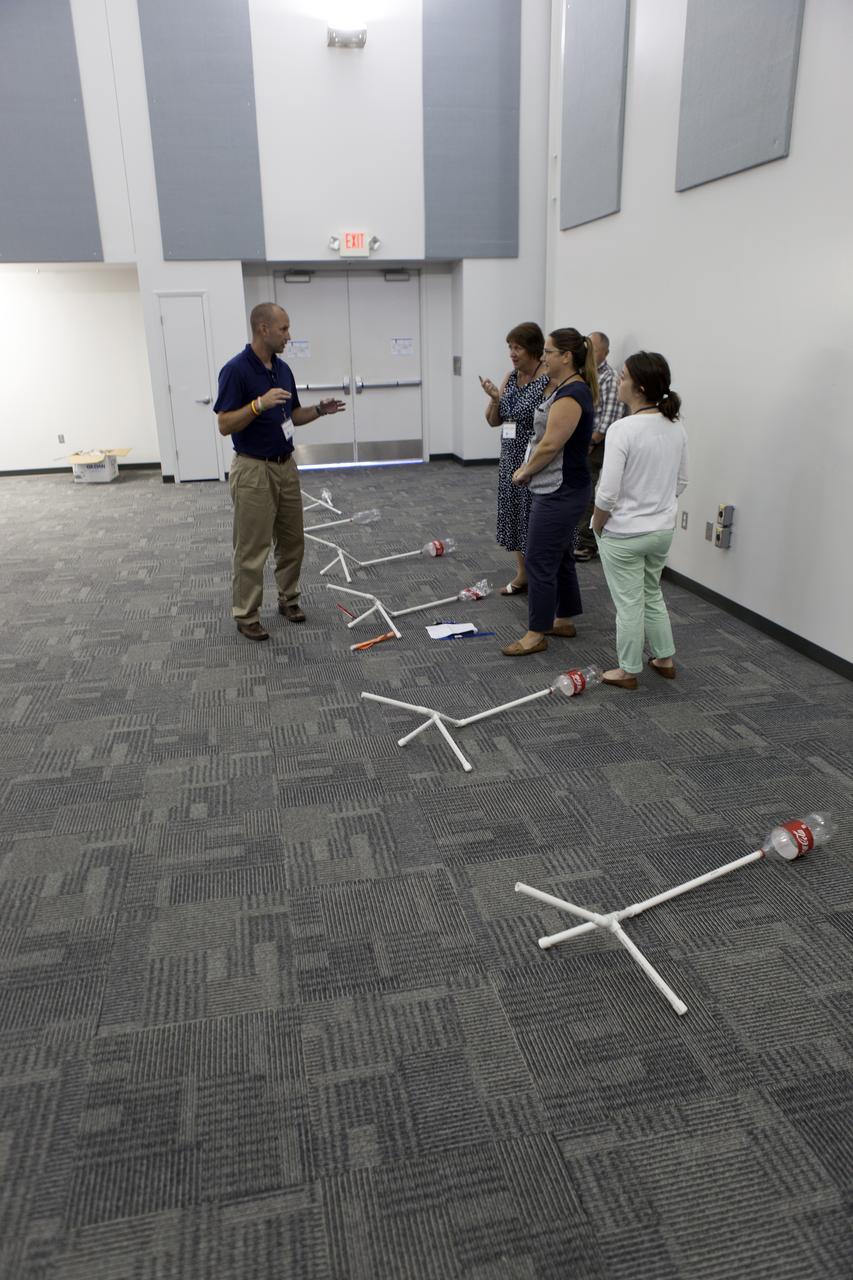
Teachers prepare to demonstrate the projects they built for the Rocketry Engineering Design Challenge during the 2017 GE Foundation High School STEM Integration Conference at the Center for Space Education at NASA's Kennedy Space Center. High school teachers from across the country took part in the week-long conference, which is designed to explore effective ways for teachers, schools and districts from across the country to integrate STEM throughout the curriculum. The conference is a partnership between GE Foundation and the National Science Teachers Association.
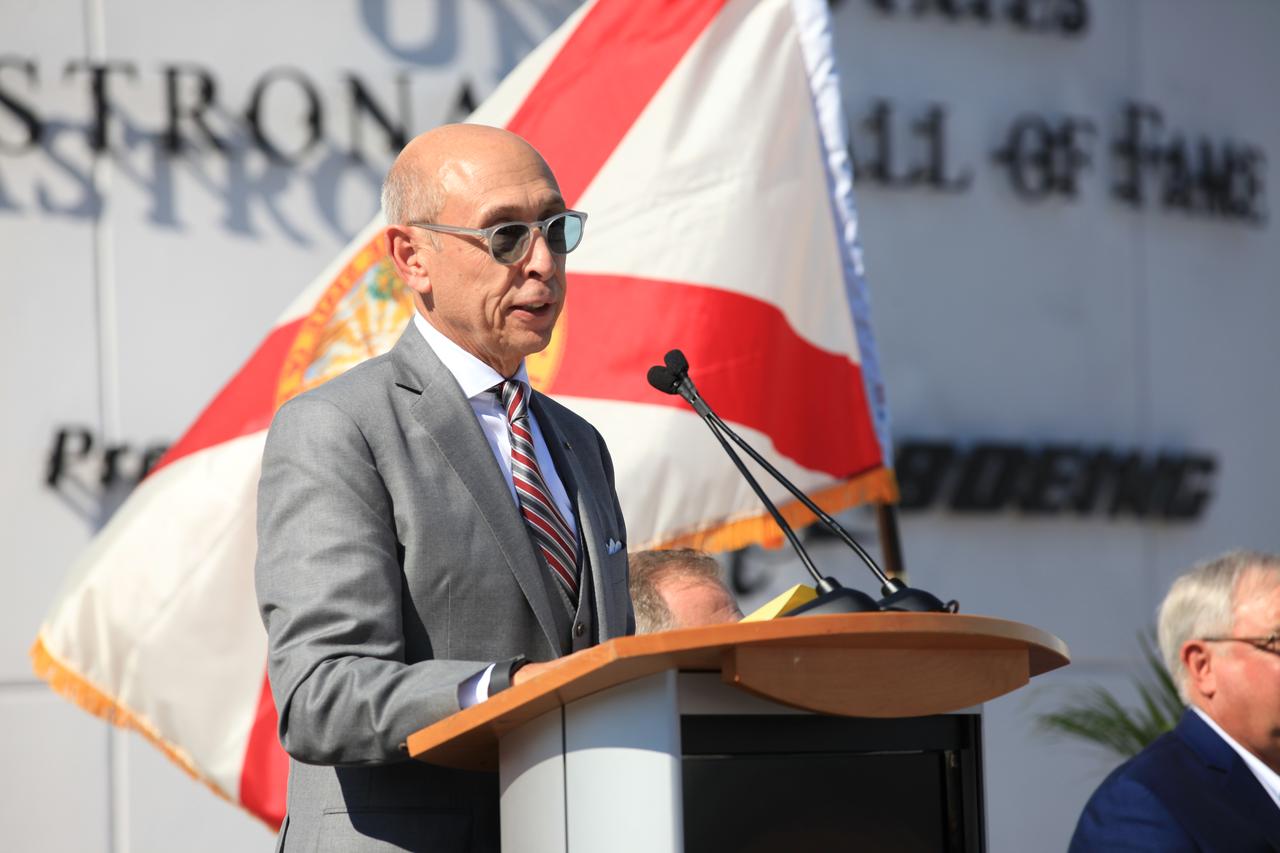
Rick Abramson, executive vice president and chief operating officer of Delaware North Companies Parks and Resorts, speaks to guests during the opening of the Heroes and Legends attraction at the Kennedy Space Center Visitor Complex. The new facility includes the U.S. Astronaut Hall of Fame and looks back to the pioneering efforts of Mercury, Gemini and Apollo. It sets the stage by providing the background and context for space exploration and the legendary men and women who pioneered the nation's journey into space.
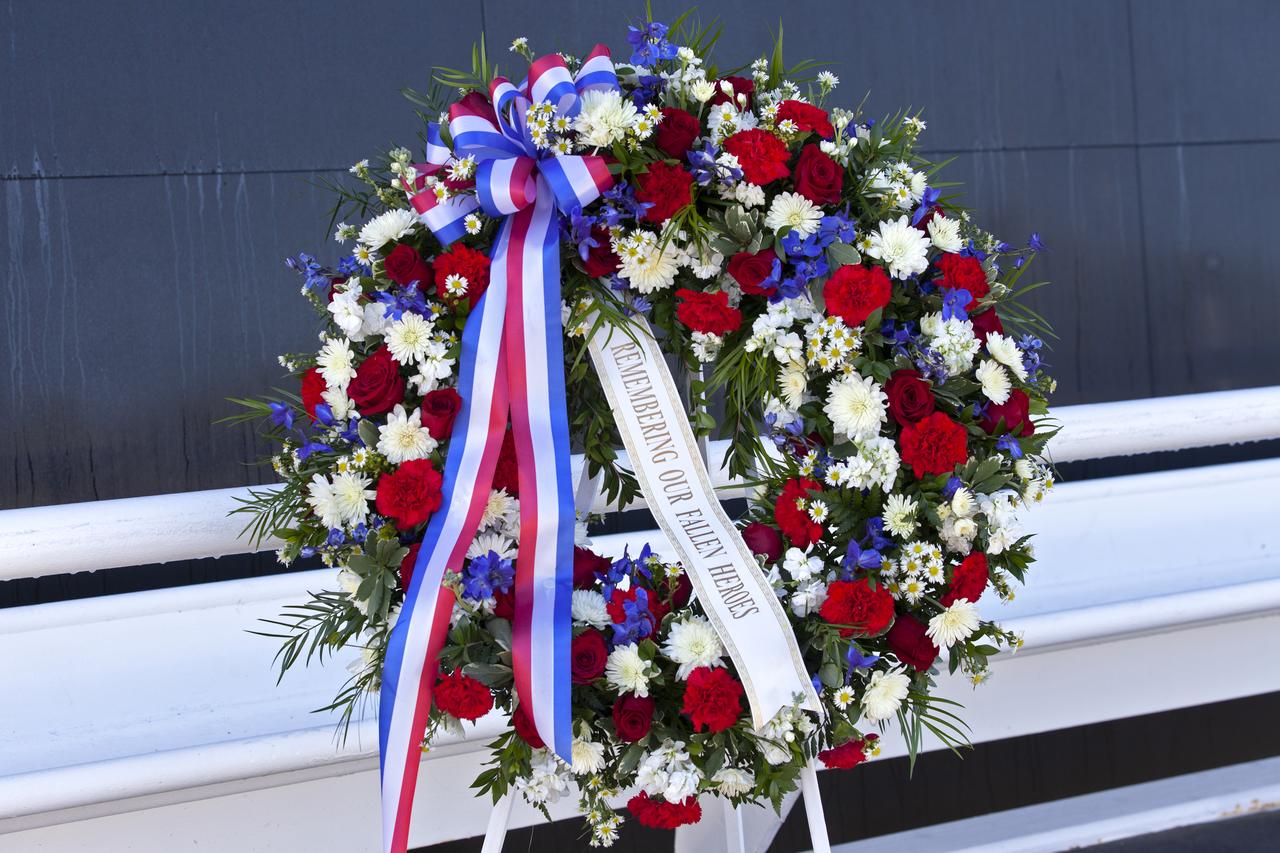
A memorial wreath stands before the Space Mirror Memorial at the Kennedy Space Center Visitor Complex during this year’s Day of Remembrance ceremony. Each year, Kennedy employees and guests gather with others throughout NASA to honor those astronauts who have fallen in the pursuit of space exploration.
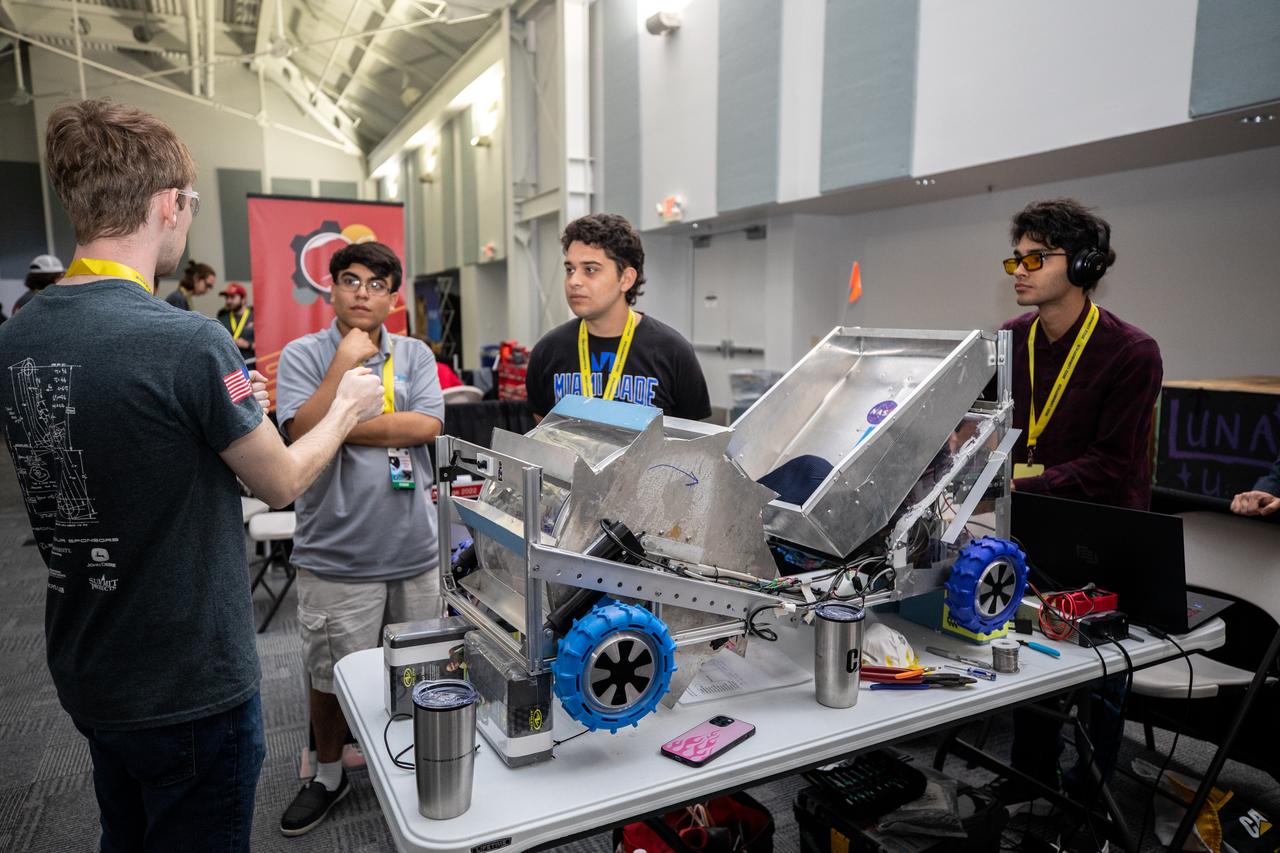
Students from Miami-Dade College at Kendall prepare their robotic miner for its turn to dig in the mining arena during NASA’s LUNABOTICS competition on May 24, 2022, at the Center for Space Education near the Kennedy Space Center Visitor Complex in Florida. More than 35 teams from around the U.S. have designed and built remote-controlled robots for the mining competition. Teams use their autonomous or remote-controlled robots to maneuver and dig in a supersized sandbox filled with rocks and simulated lunar soil, or regolith. The objective of the challenge is to see which team’s robot can collect and deposit the most rocky regolith within a specified amount of time.
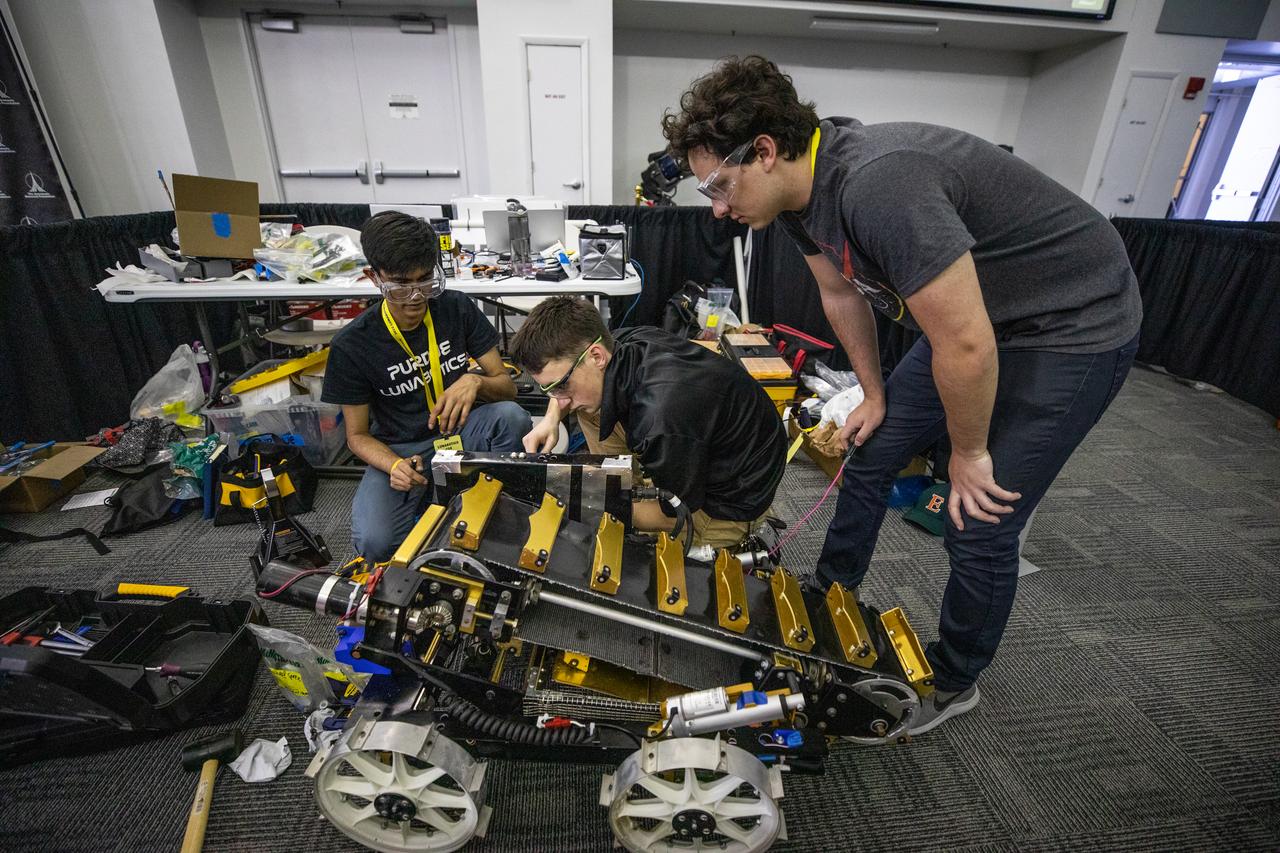
Students from Purdue University prepare their robotic miner for its turn to dig in the mining pit during NASA’s LUNABOTICS competition on May 23, 2022, at the Center for Space Education near the Kennedy Space Center Visitor Complex in Florida. More than 35 teams from around the U.S. have designed and built remote-controlled robots for the mining competition. Teams use their autonomous or remote-controlled robots to maneuver and dig in a supersized sandbox filled with rocks and simulated lunar soil, or regolith. The objective of the challenge is to see which team’s robot can collect and deposit the most rocky regolith within a specified amount of time.
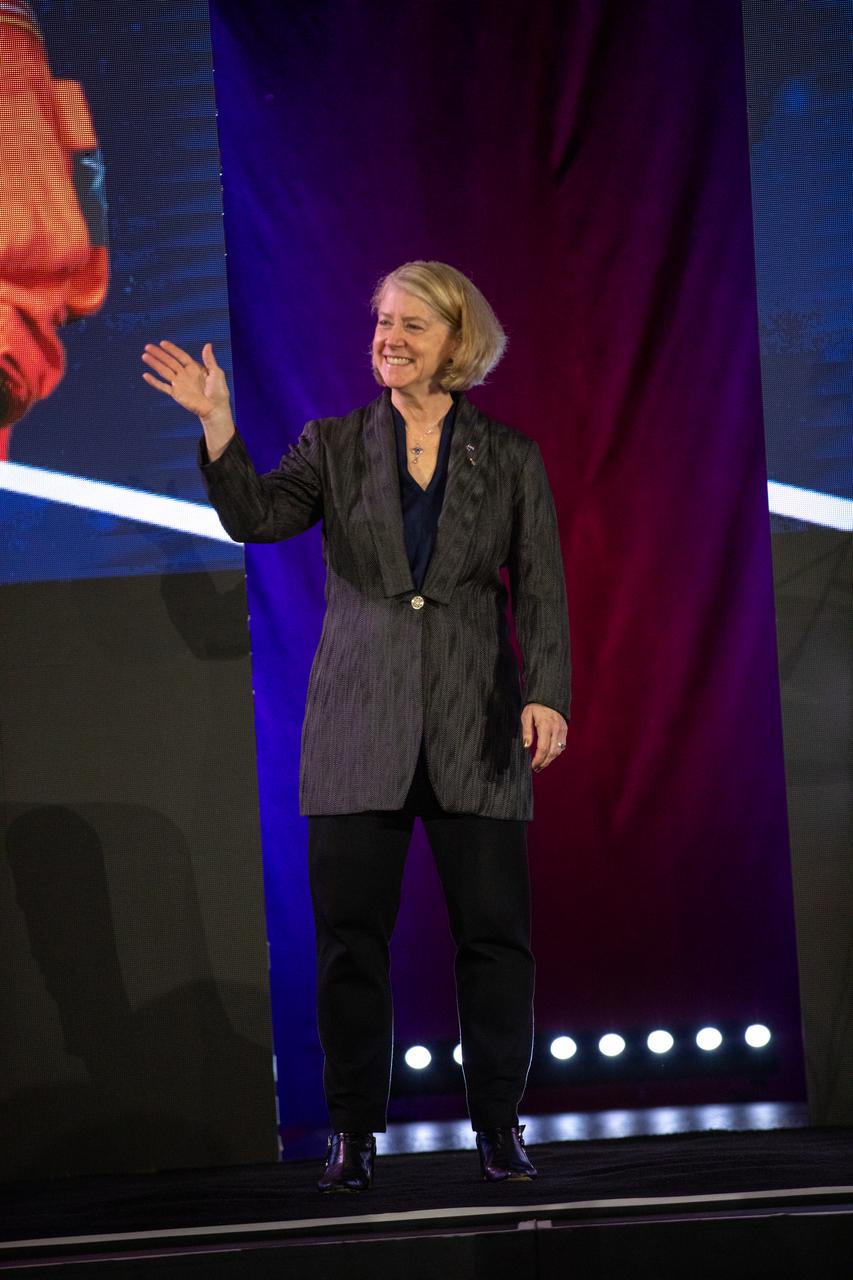
NASA Deputy Administrator Pamela Melroy is one of three former astronauts inducted into the U.S. Astronaut Hall of Fame (AHOF) on Nov. 13, 2021, during a ceremony at the Kennedy Space Center Visitor Complex in Florida. Melroy received an official medal and became a member of the 19th class of space shuttle astronauts to be inducted. Former NASA astronaut and Hall of Famer Curt Brown, board chairman of the Astronaut Scholarship Foundation, inducted Melroy. The 2021 inductees were selected by a committee of Hall of Fame astronauts, former NASA officials, flight directors, historians, and journalists. This year’s induction brings the total number of AHOF members to 102.
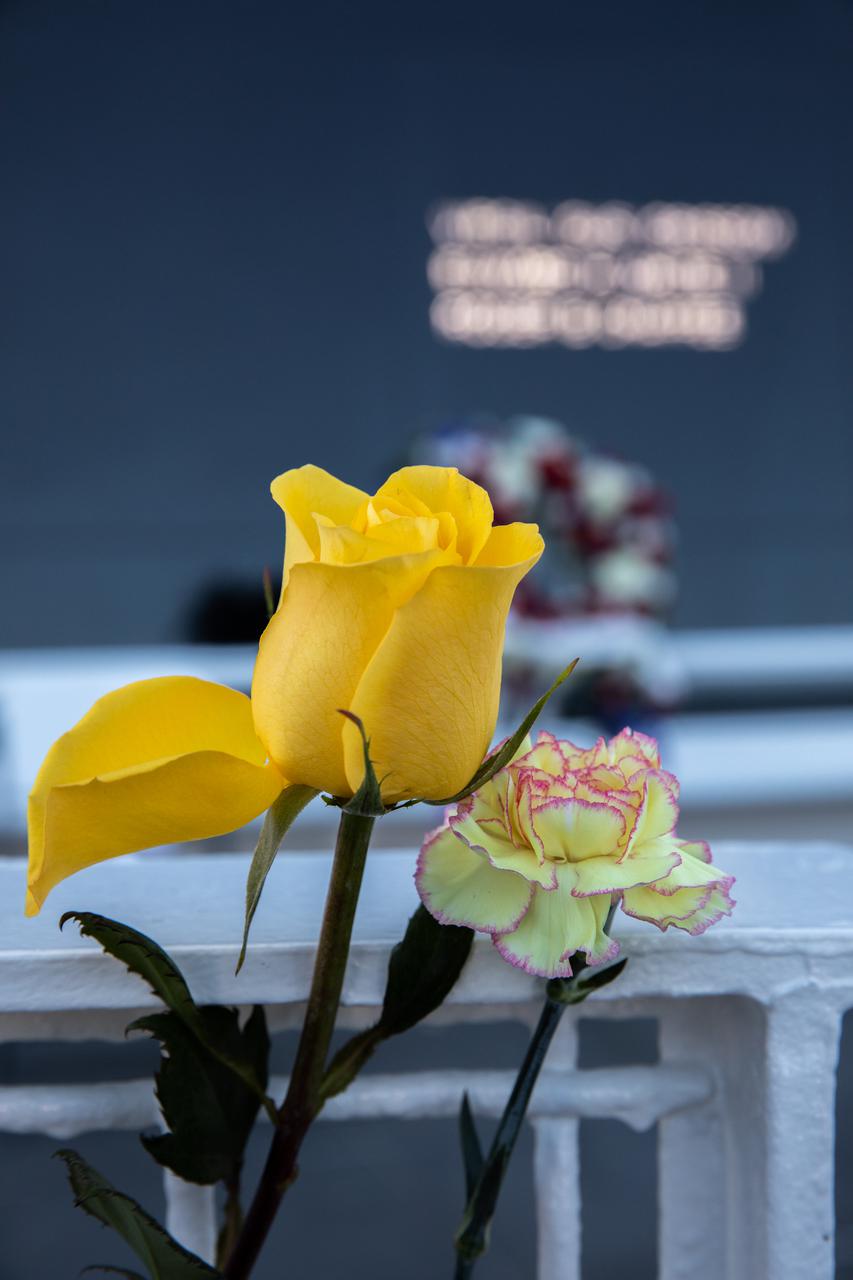
Flowers placed before the Space Mirror Memorial mark NASA’s Day of Remembrance at the Kennedy Space Center Visitor Complex, Jan. 28, 2021. The mirror was dedicated in 1991 to honor all astronauts who lost their lives on missions or during training. During the Day of Remembrance, NASA centers across the country honor those astronauts who have fallen in the pursuit of space exploration.
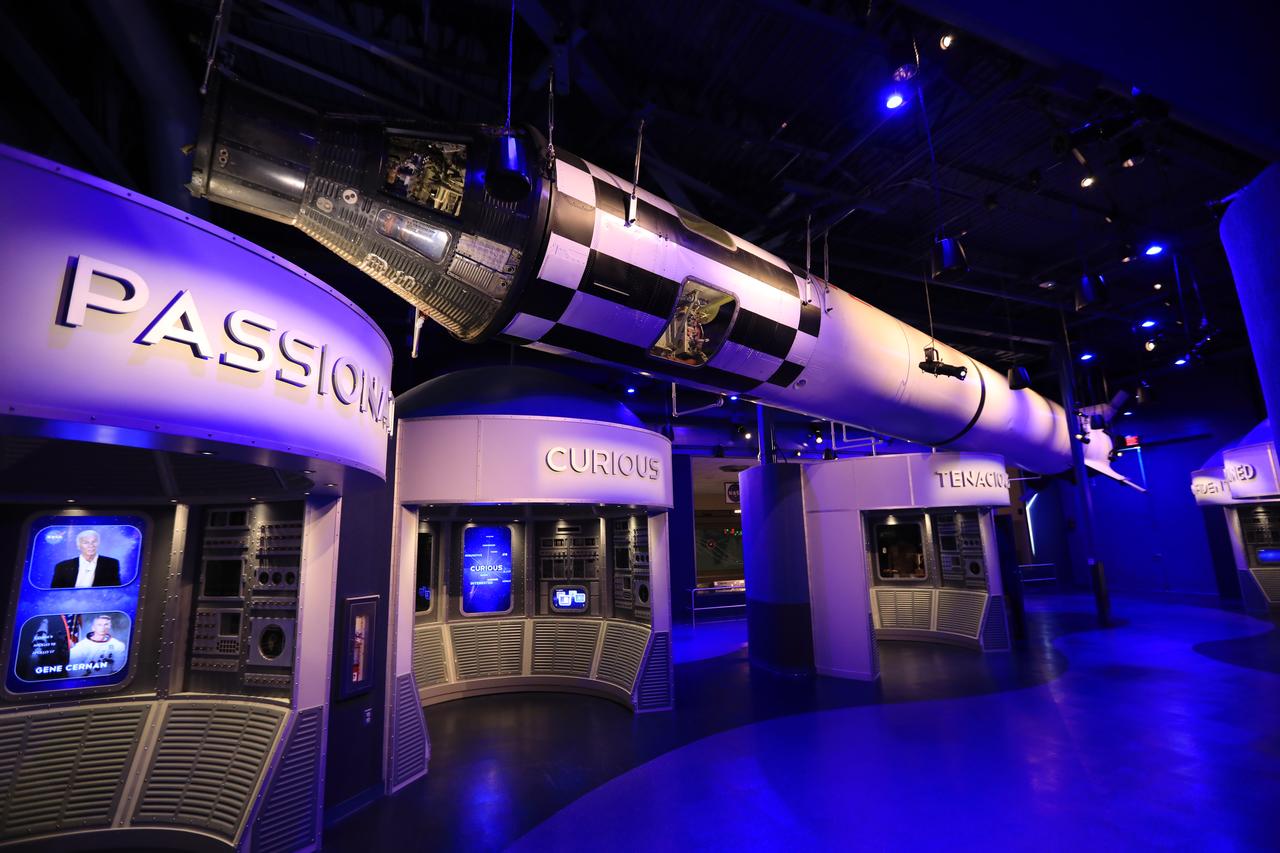
Inside the Heroes and Legends attraction at the Kennedy Space Center Visitor Complex, the Sigma 7 Mercury spacecraft in this exhibit was piloted by astronaut Wally Schirra during his six-orbit mission on Oct. 3, 1962. For display purposes, it is shown here attached to a Redstone launch vehicle like the one that boosted astronauts Alan Shepard and Gus Grissom on sub-orbital flights in 1961. Schirra's capsule was actually launched by the more powerful Atlas rocket in order to reach orbit. The new facility looks back to the pioneering efforts of Mercury, Gemini and Apollo. It sets the stage by providing the background and context for space exploration and the legendary men and women who pioneered the nation's journey into space.
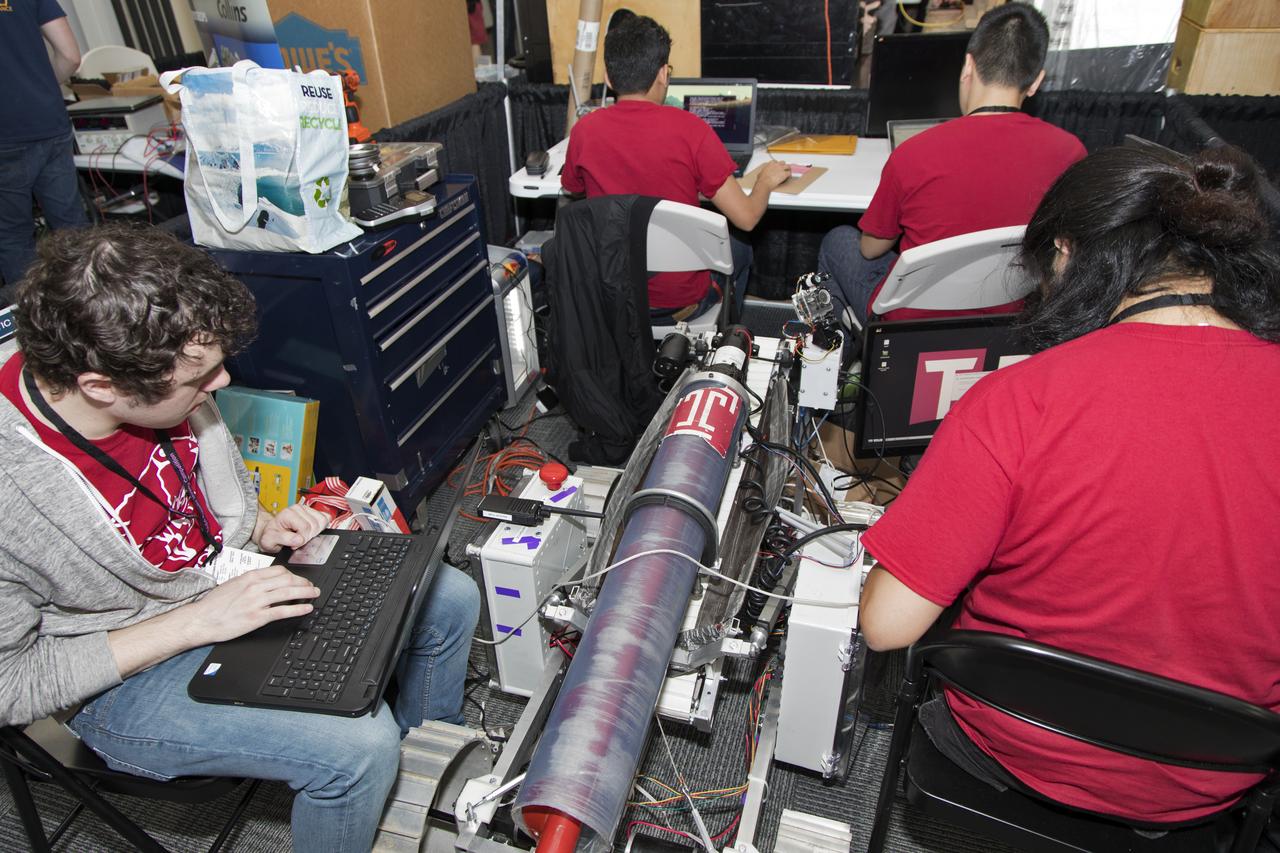
On the first day of NASA's 9th Robotic Mining Competition, set-up day on May 14, team members from Temple University work on their robot miner in the RobotPits in the Educator Resource Center at Kennedy Space Center Visitor Complex in Florida. More than 40 student teams from colleges and universities around the U.S. will use their mining robots to dig in a supersized sandbox filled with BP-1, or simulated Lunar soil, gravel and rocks, and participate in other competition requirements. The Robotic Mining Competition is a NASA Human Exploration and Operations Mission Directorate project designed to encourage students in science, technology, engineering and math, or STEM fields. The project provides a competitive environment to foster innovative ideas and solutions that could be used on NASA's deep space missions.
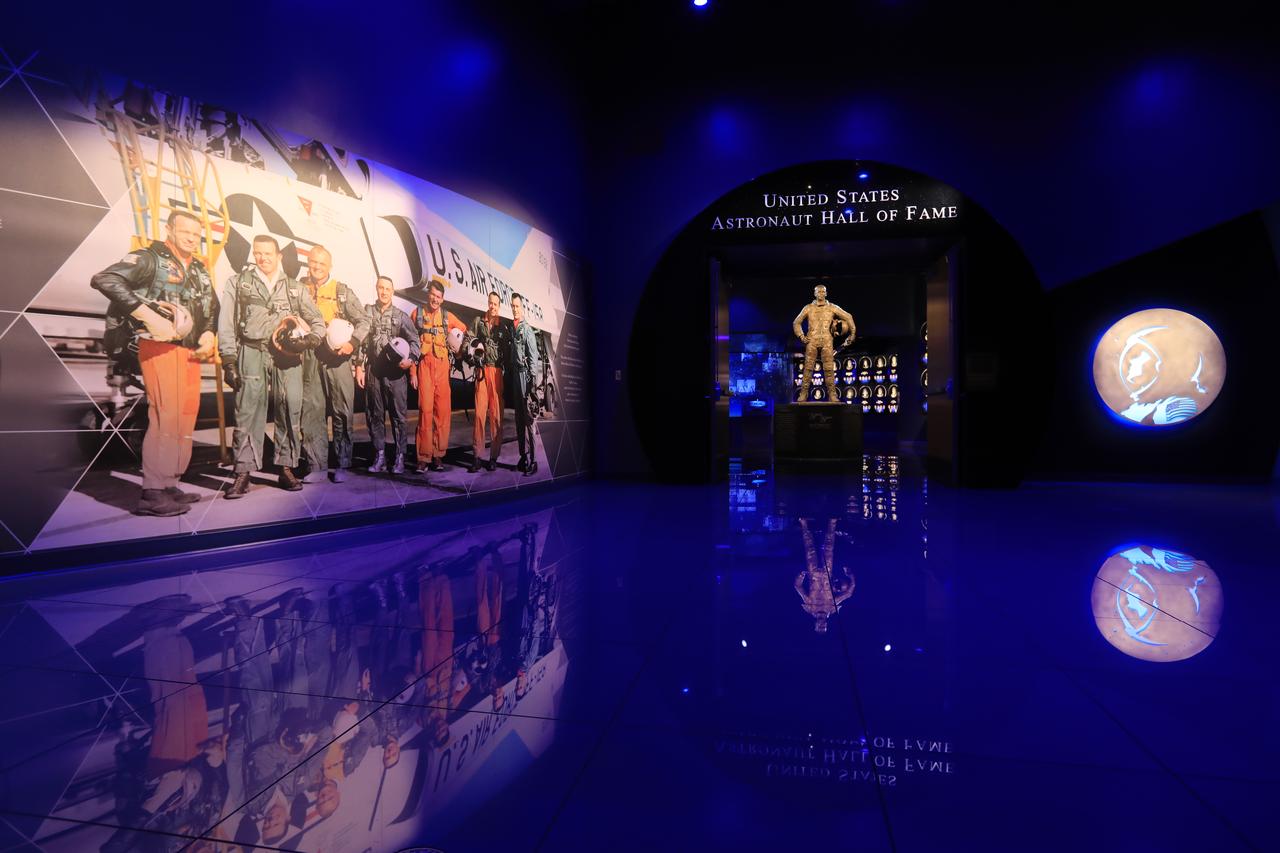
Inside the Heroes and Legends attraction at the Kennedy Space Center Visitor Complex, a statue of astronaut Alan Shepard, America's first person in space, stands just inside the doors to the U.S. Astronaut Hall of Fame. In addition to displays honoring the Americans currently enshrined in the U. S. Astronaut Hall of Fame, the new facility looks back to the pioneering efforts of Mercury, Gemini and Apollo. It sets the stage by providing the background and context for space exploration and the legendary men and women who pioneered the nation's journey into space.

Visitors participate in one of many butterfly releases held throughout the day at the Kennedy Space Center’s sustainability expo on April 11, 2019. Held at the center’s visitor complex in Florida, the expo kicked off Kennedy’s annual Earth Day celebrations. Approximately 40 exhibitors from across the nation assembled to provide information ranging from energy-saving solutions to wildlife and natural conservation.
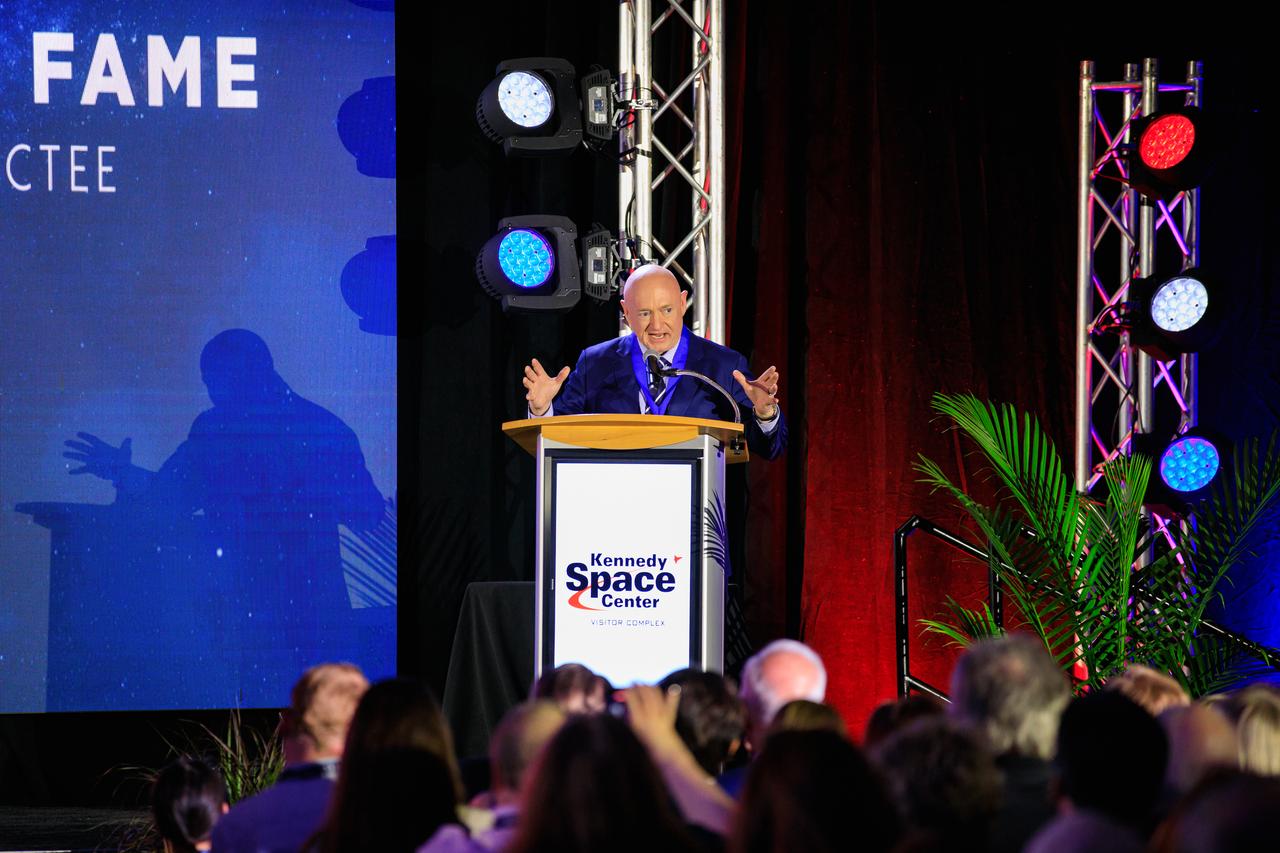
Mark Kelly, speaks to guests after his induction into the Astronaut Hall of Fame (AHOF) by NASA Deputy Administrator Pam Melroy, during a ceremony inside the Space Shuttle Atlantis attraction at NASA's Kennedy Space Center Visitor Complex in Florida on May 6, 2023. Also inducted in the AHOF Class of 2023 was retired astronaut Roy D. Bridges Jr. Inductees into the Hall of Fame are selected by a committee of Hall of Fame astronauts, former NASA officials, flight directors, historians and journalists. The process is administered by the Astronaut Scholarship Foundation. To be eligible, an astronaut must have made his or her first flight at least 17 years before the induction. Candidates must be a U.S. citizen and a NASA-trained commander, pilot, or mission specialist who has orbited the earth at least once. Including Bridges and Kelly, 107 astronauts have been inducted into the AHOF.
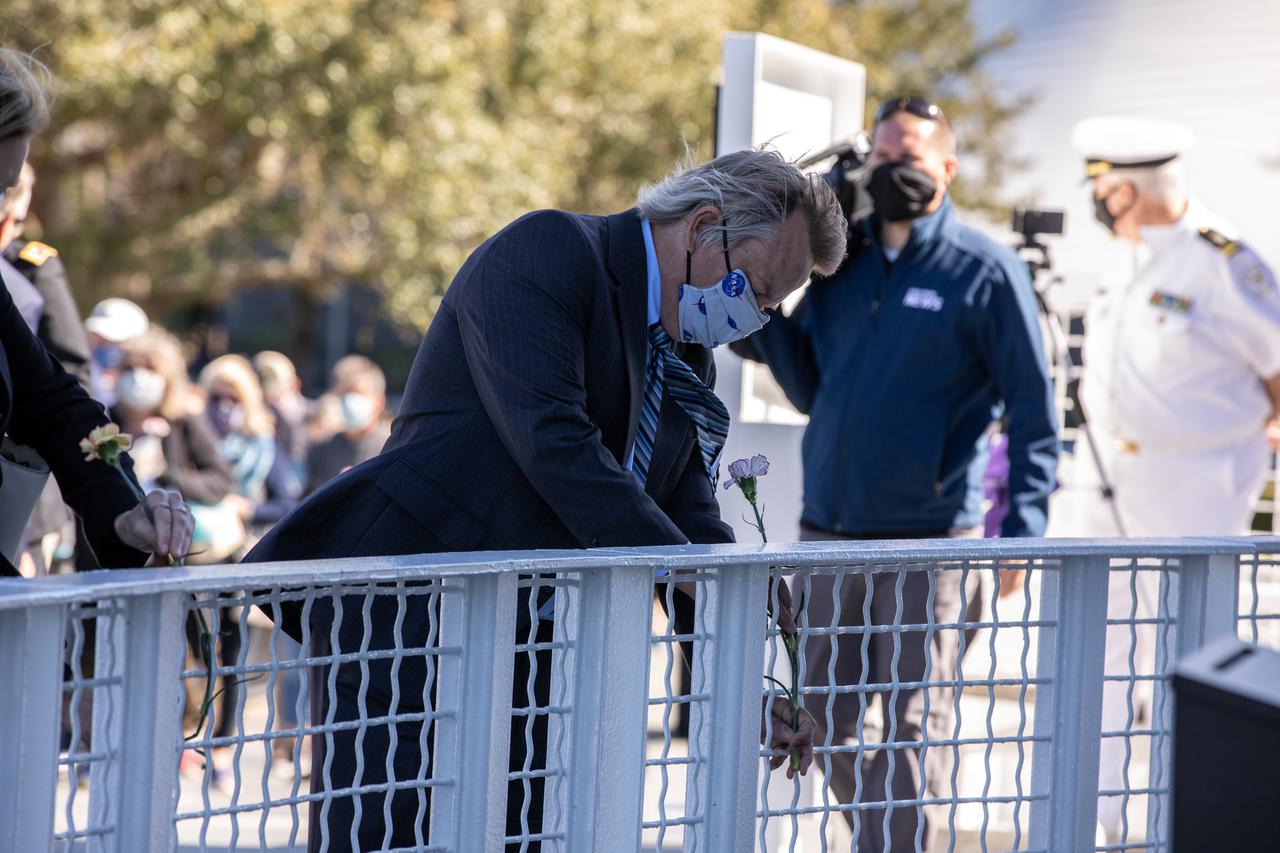
The crews of Apollo 1 and space shuttles Challenger and Columbia, as well as other fallen astronauts who lost their lives in the name of space exploration and discovery, are honored by NASA Kennedy Space Center employees and guests with a ceremony at the Kennedy Visitor Complex’s Space Mirror Memorial on Jan. 28, 2021. The date marked the 35th anniversary of the Challenger tragedy. NASA centers throughout the country participate in the agency’s annual Day of Remembrance memorial event.
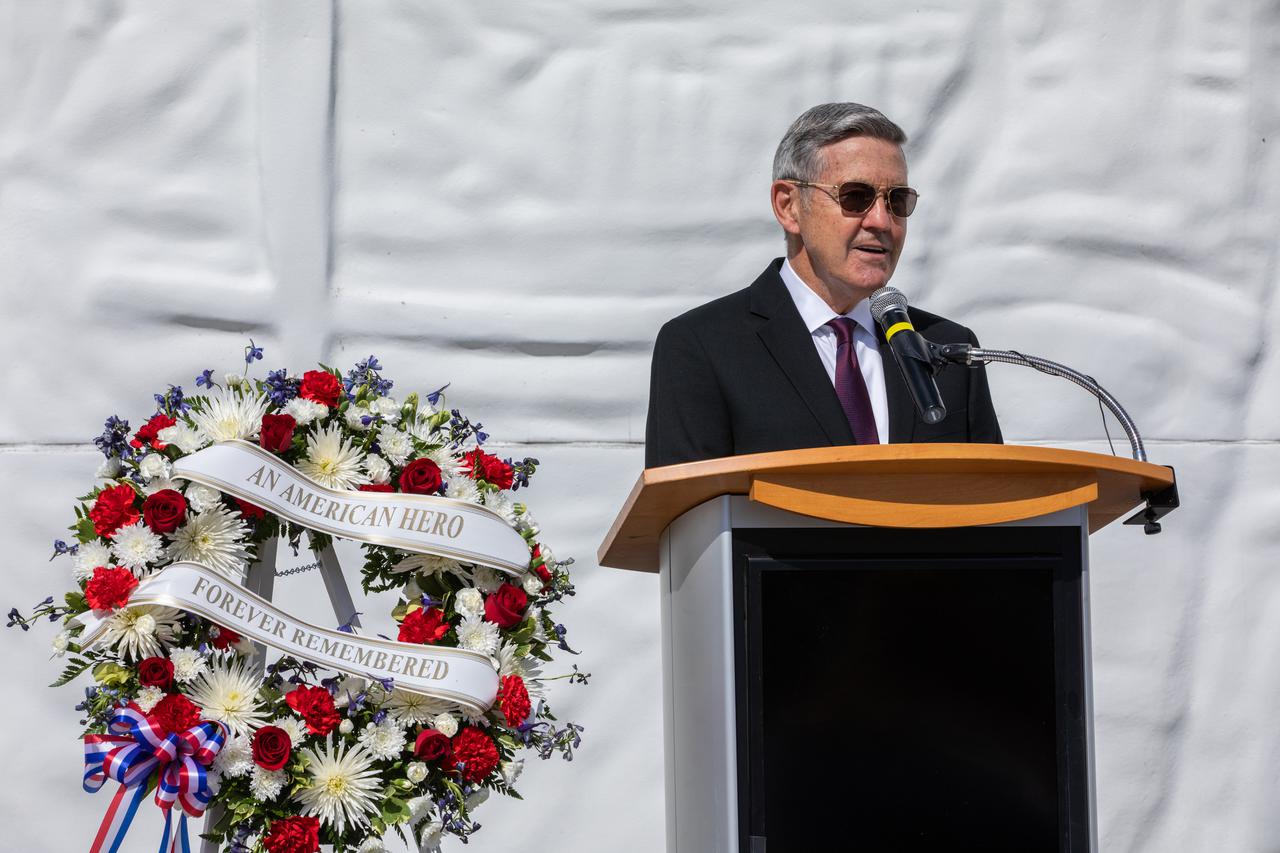
Kennedy Space Center Director Bob Cabana provides remarks during a wreath-laying ceremony in Florida, honoring the memory of former Apollo 11 astronaut Michael Collins on April 30, 2021. Therrin Protze, chief operating officer of Delaware North at Kennedy’s visitor complex, also spoke during the ceremony, held just outside of the Heroes and Legends exhibit at the visitor complex. Collins served as pilot on the three-day Gemini X mission in 1966, and he was the command module pilot for the historic Apollo 11 mission in 1969, where he remained in lunar orbit while Neil Armstrong and Buzz Aldrin become the first people to walk on the Moon. Collins passed away on April 28, 2021, at the age of 90.
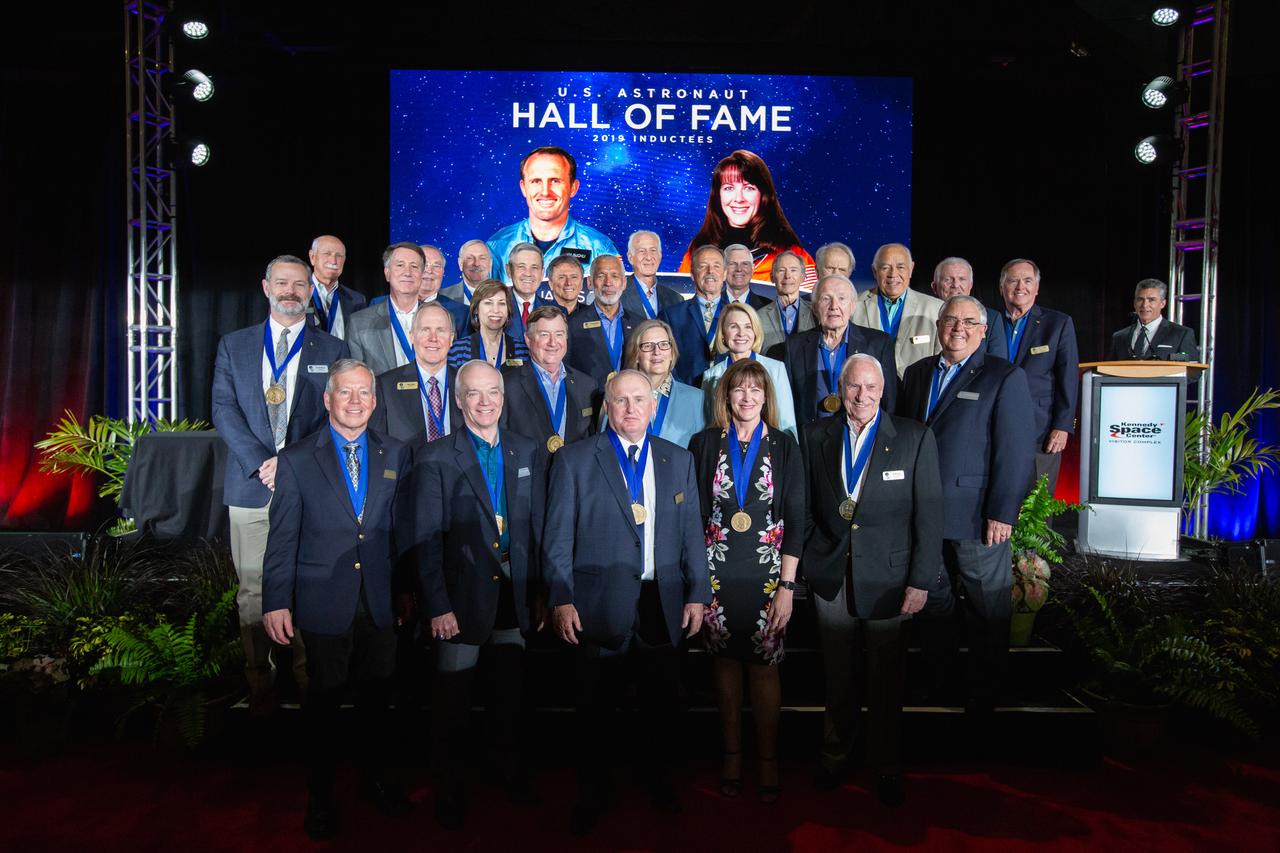
Veteran NASA astronauts James Buchli and Janet Kavandi were inducted into the U.S. Astronaut Hall of Fame in a public ceremony at Kennedy Space Center Visitor Complex in the Space Shuttle Atlantis attraction on April 6, 2019.
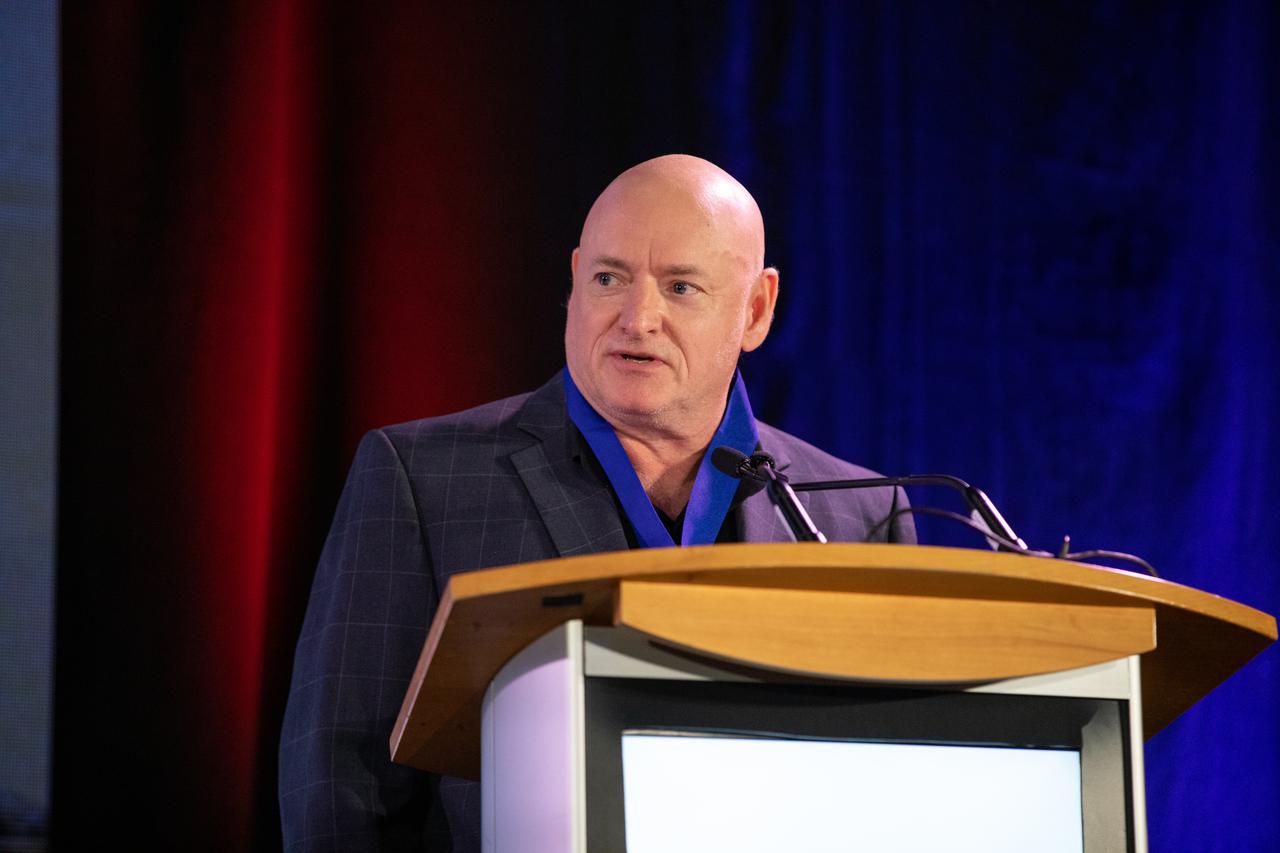
Scott Kelly is one of three former astronauts inducted into the U.S. Astronaut Hall of Fame (AHOF) on Nov. 13, 2021, during a ceremony at the Kennedy Space Center Visitor Complex in Florida. Kelly received an official medal and became a member of the 19th class of space shuttle astronauts to be inducted. The 2021 inductees were selected by a committee of Hall of Fame astronauts, former NASA officials, flight directors, historians, and journalists. This year’s induction brings the total number of AHOF members to 102.
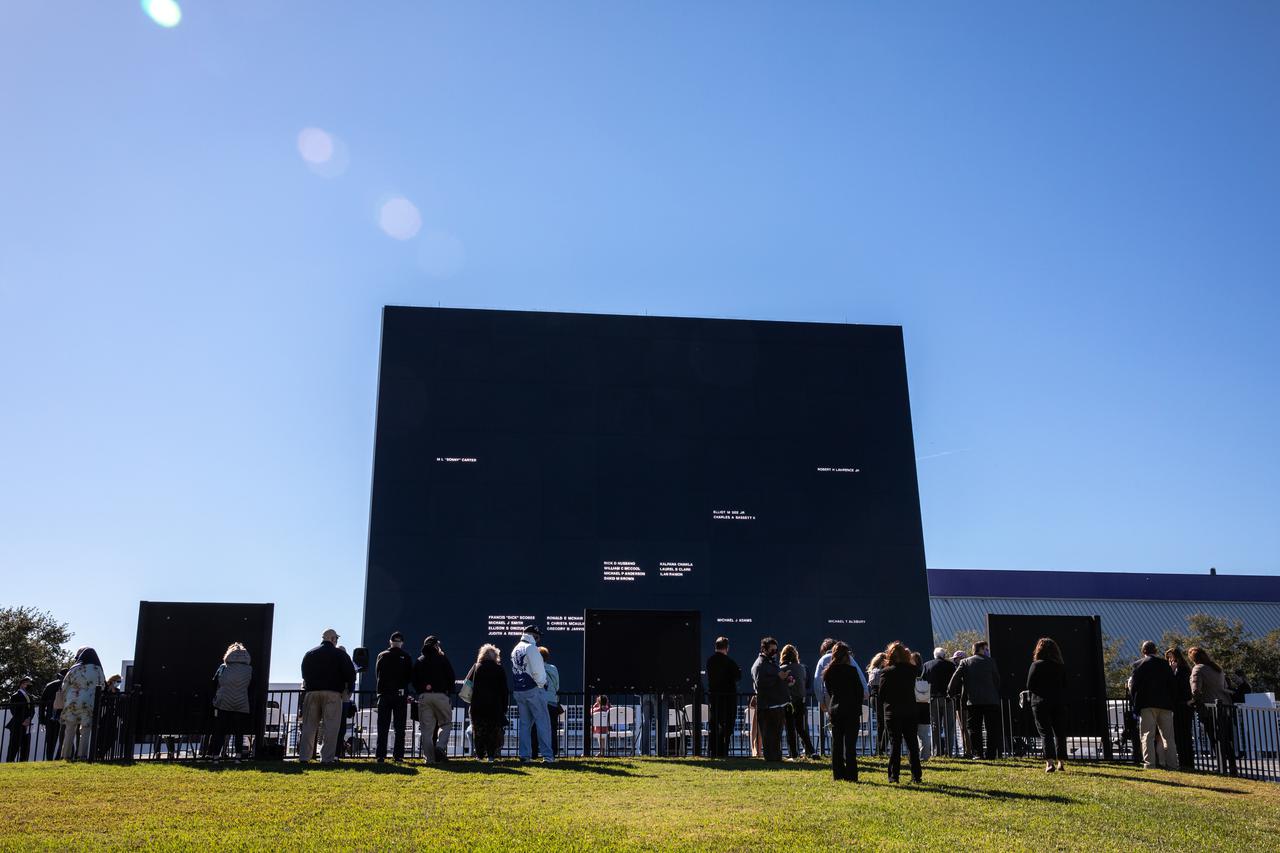
The crews of Apollo 1 and space shuttles Challenger and Columbia, as well as other fallen astronauts who lost their lives in the name of space exploration and discovery, are honored by NASA Kennedy Space Center employees and guests with a ceremony at the Kennedy Visitor Complex’s Space Mirror Memorial on Jan. 28, 2021. The date marked the 35th anniversary of the Challenger tragedy. NASA centers throughout the country participate in the agency’s annual Day of Remembrance memorial event.
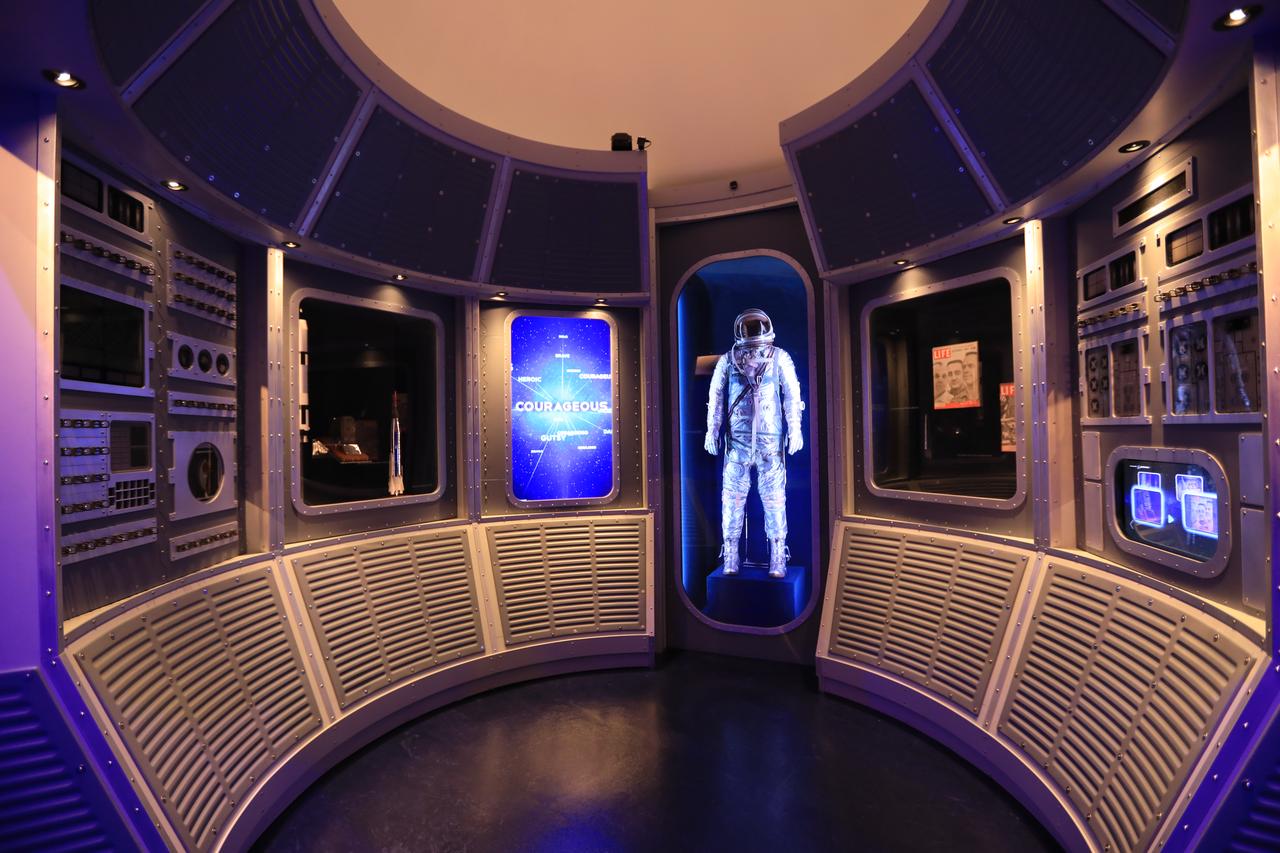
Inside the Heroes and Legends attraction at the Kennedy Space Center Visitor Complex, this display includes the spacesuit worn by astronaut Gus Grissom during his Mercury 4 suborbital flight of July 21, 1961. The new facility looks back to the pioneering efforts of Mercury, Gemini and Apollo. It sets the stage by providing the background and context for space exploration and the legendary men and women who pioneered the nation's journey into space.
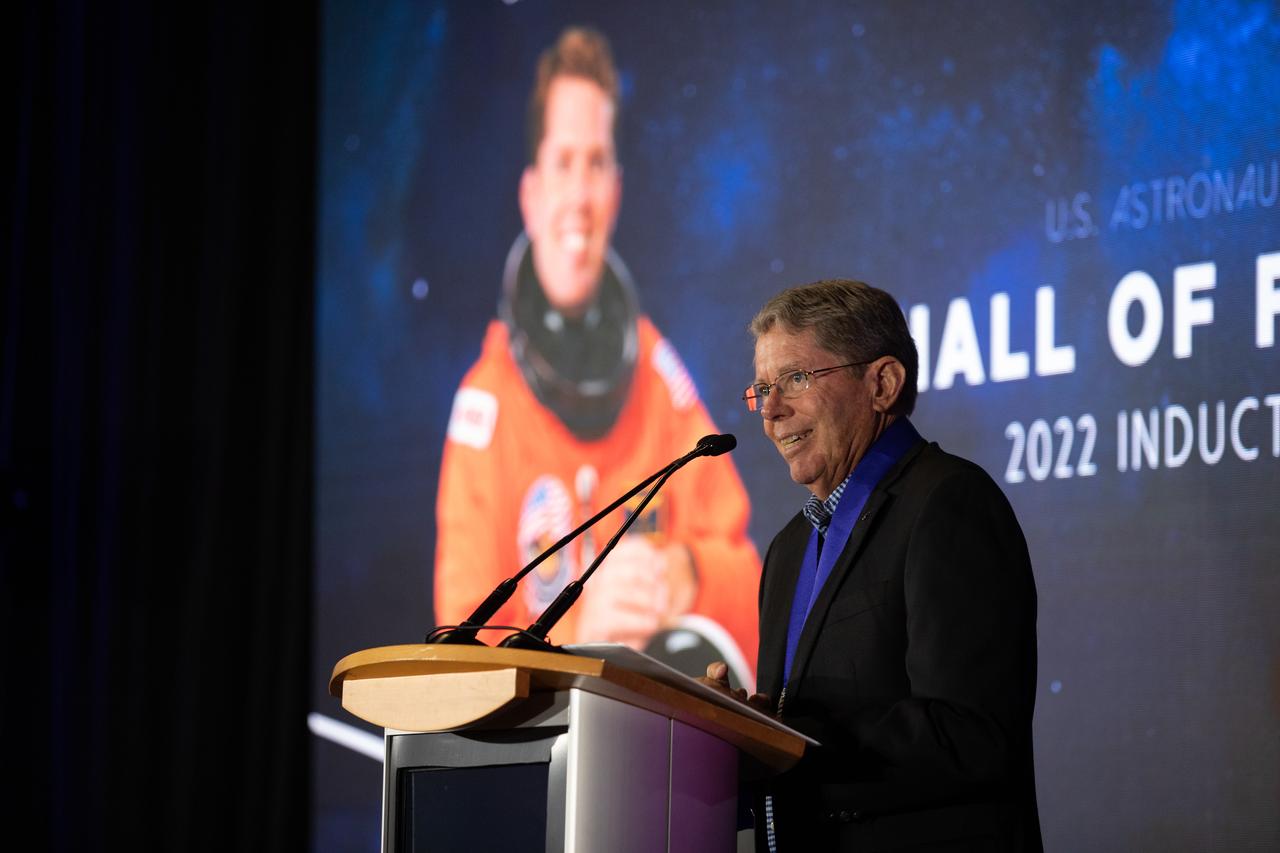
Former NASA astronaut David Leestma speaks after receiving his medal and induction into the 21st class of the U.S. Astronaut Hall of Fame during a ceremony on June 11, 2022, at the Kennedy Space Center Visitor Complex in Florida. The 2022 inductees were selected by a committee of Hall of Fame astronauts, former NASA officials, flight directors, historians, and journalists. This year’s induction brings the total number of AHOF members to 105.
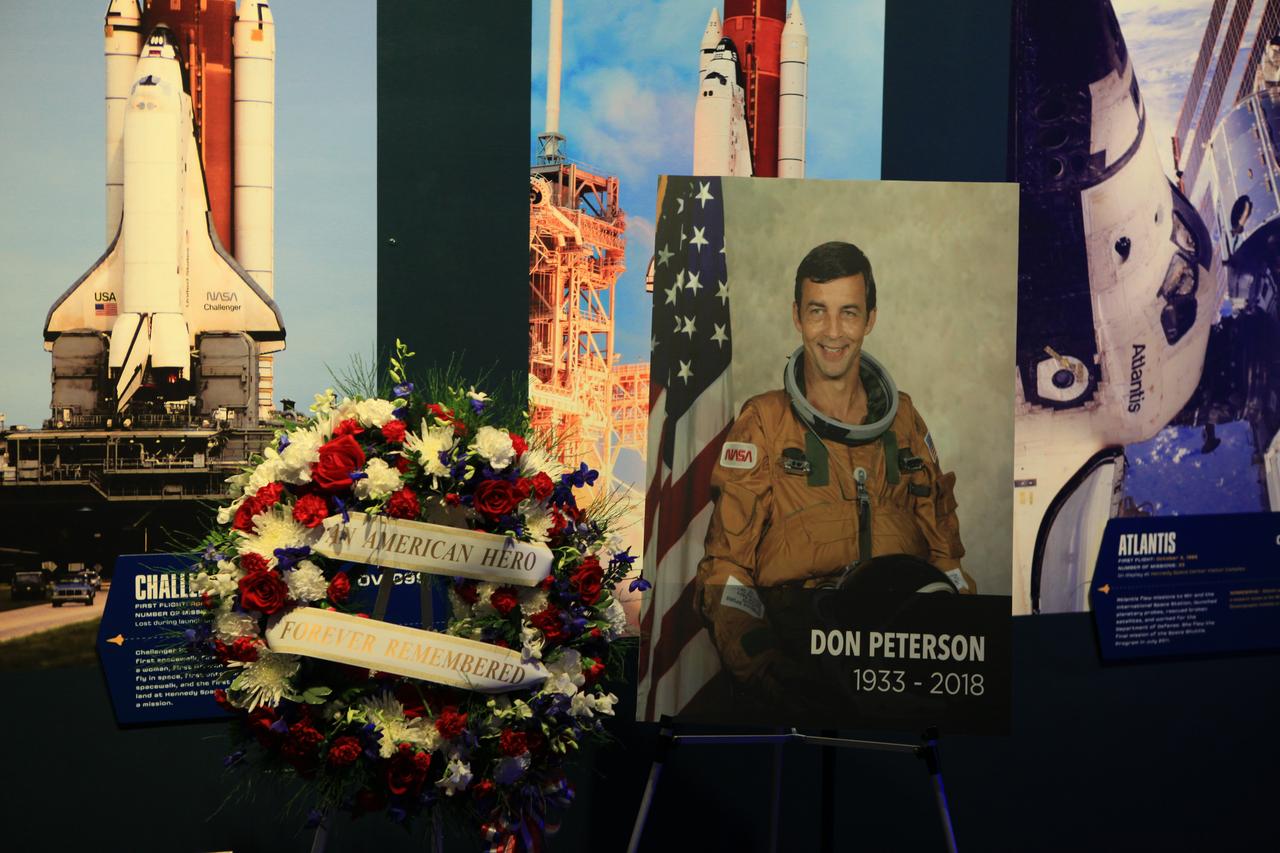
A memorial wreath placed in the Space Shuttle Atlantis exhibit at the Kennedy Space Center Visitor Complex on Wednesday, May 30, 2018, honoring former NASA astronaut Don Peterson. As a mission specialist on STS-6 in April 1983, he participated in the first spacewalk of the Space Shuttle Program. He passed away May 27, 2018, in El Lago, Texas. He was 84.
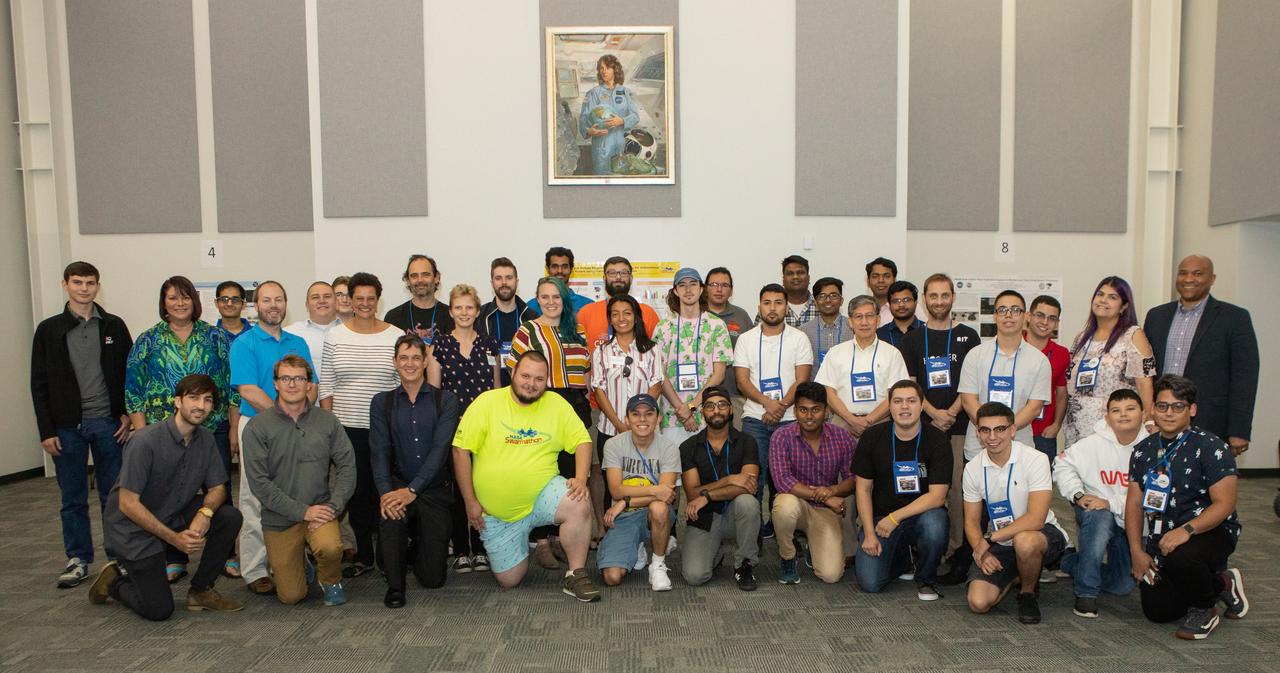
Swarmathon University Competition 2019 organizers, mentors, guest speakers and student teams gather for a group photo on June 11, 2019 at the Kennedy Space Center Visitor Complex in Florida. The University of New Mexico was the host for the physical competition held in May 2019. The student teams were at Kennedy to participate in a student/mentor panel, hear from speakers, get a behind-the-scenes tour of Kennedy Space Center, dine with an astronaut and receive awards during an awards ceremony. During Swarmathon University Challenge IV, students developed algorithms for robotic swarms that are robust and adaptable like the foraging strategies of ant colonies. The fourth and final Swarmathon was a combined virtual and physical competition.

On the first day of NASA's 9th Robotic Mining Competition, set-up day on May 14, team members from the University of Minnesota-Twin Cities work on their robot miner in the RobotPits in the Educator Resource Center at Kennedy Space Center Visitor Complex in Florida. More than 40 student teams from colleges and universities around the U.S. will use their mining robots to dig in a supersized sandbox filled with BP-1, or simulated Lunar soil, gravel and rocks, and participate in other competition requirements. The Robotic Mining Competition is a NASA Human Exploration and Operations Mission Directorate project designed to encourage students in science, technology, engineering and math, or STEM fields. The project provides a competitive environment to foster innovative ideas and solutions that could be used on NASA's deep space missions.
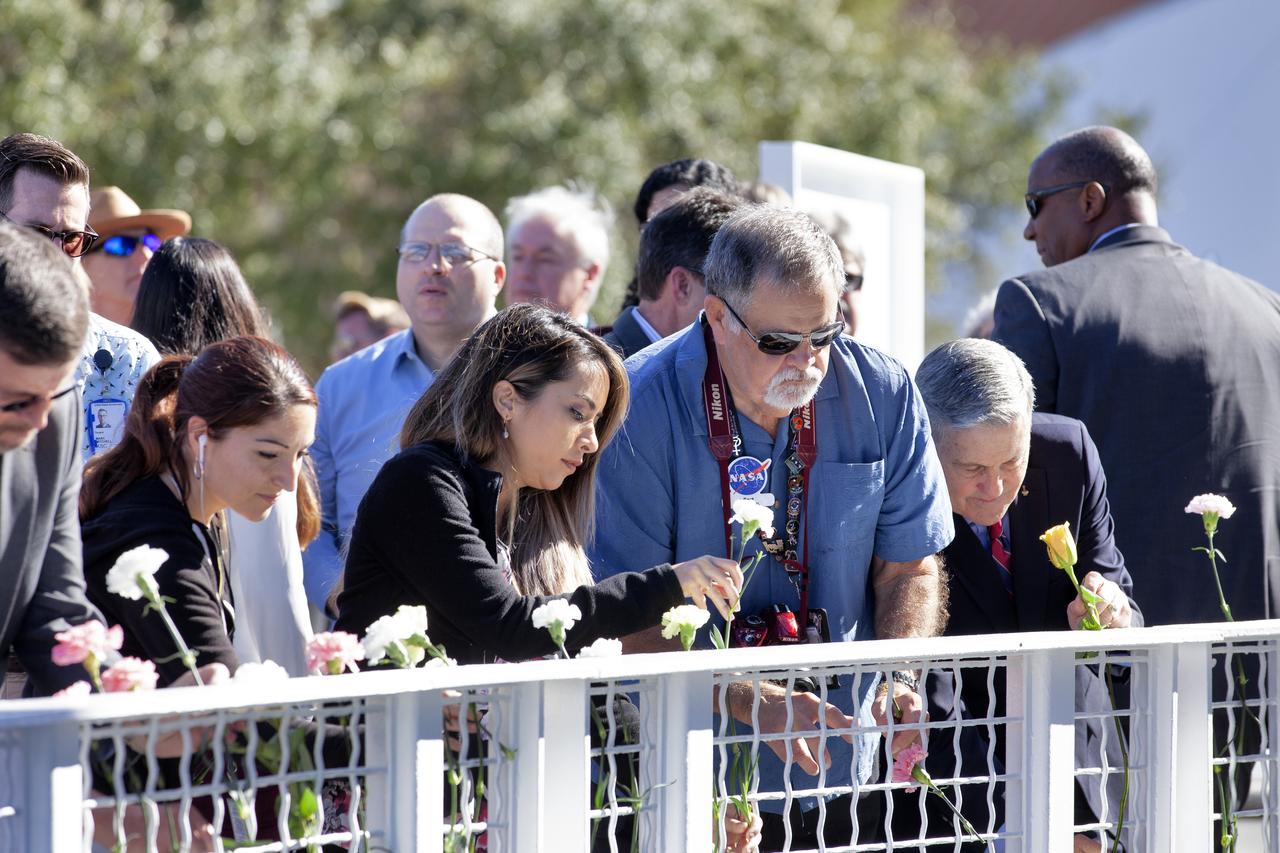
Kennedy Space Center Director Bob Cabana and guests place flowers in front of the Space Mirror Memorial at the Kennedy Space Center Visitor Complex during this year’s Day of Remembrance ceremony. The memorial, a 42-foot-high by 50-foot-wide granite monument, displays the names of the fallen astronauts from Apollo 1, space shuttles Challenger and Columbia, as well as others who have lost their lives while on NASA missions or in training. Each year, Kennedy employees and guests gather with others throughout NASA to honor those astronauts who have fallen in the pursuit of space exploration.
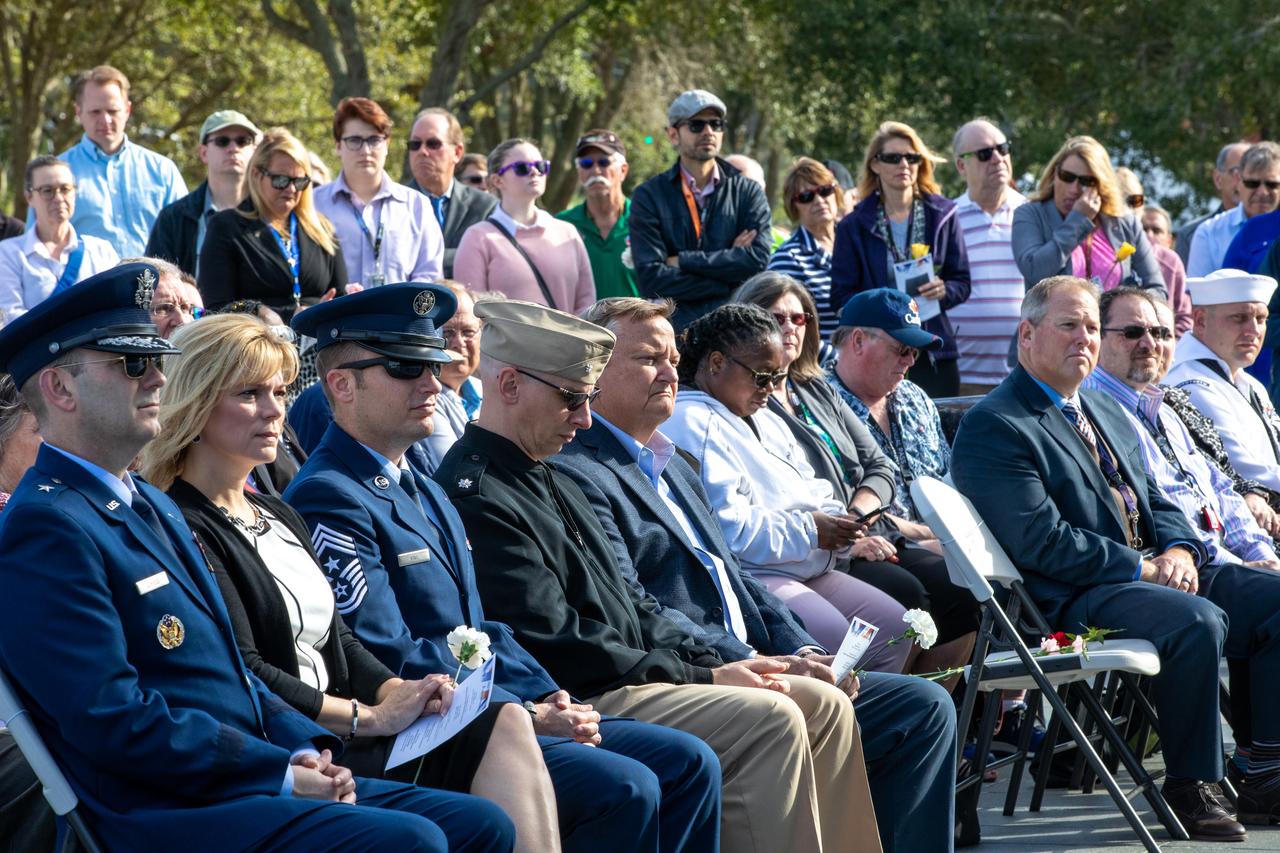
The audience looks on during the NASA Day of Remembrance ceremony at the Space Mirror Memorial in the Kennedy Space Center Visitor Complex on Jan. 30, 2020. The crews of Apollo 1 and space shuttles Challenger and Columbia, as well as other fallen astronauts who lost their lives in the name of space exploration and discovery, were honored at the annual event.
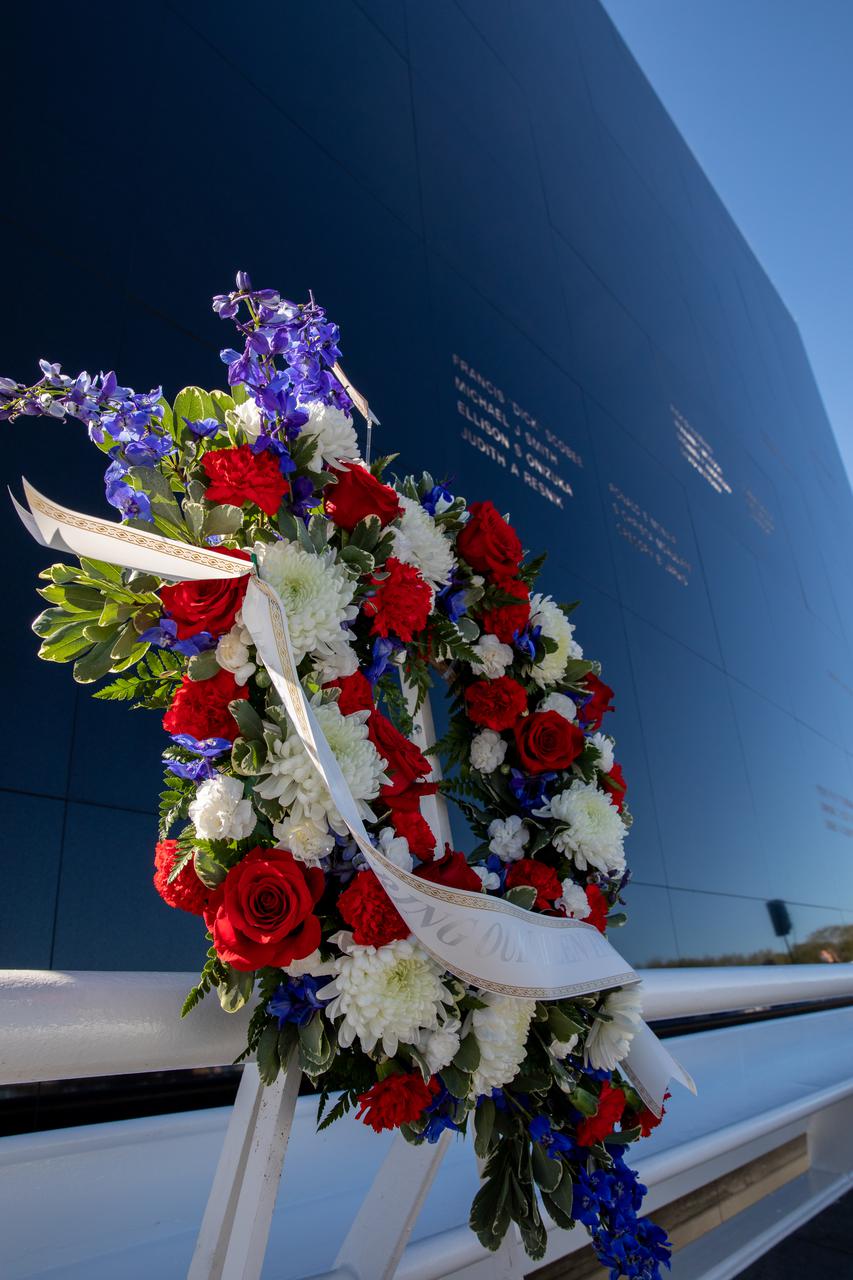
NASA’s Day of Remembrance is marked by a memorial wreath placed before the Space Mirror Memorial at the Kennedy Space Center Visitor Complex, Jan. 28, 2021. The mirror was dedicated in 1991 to honor all astronauts who lost their lives on missions or during training. During the Day of Remembrance, NASA centers across the country honor those astronauts who have fallen in the pursuit of space exploration.
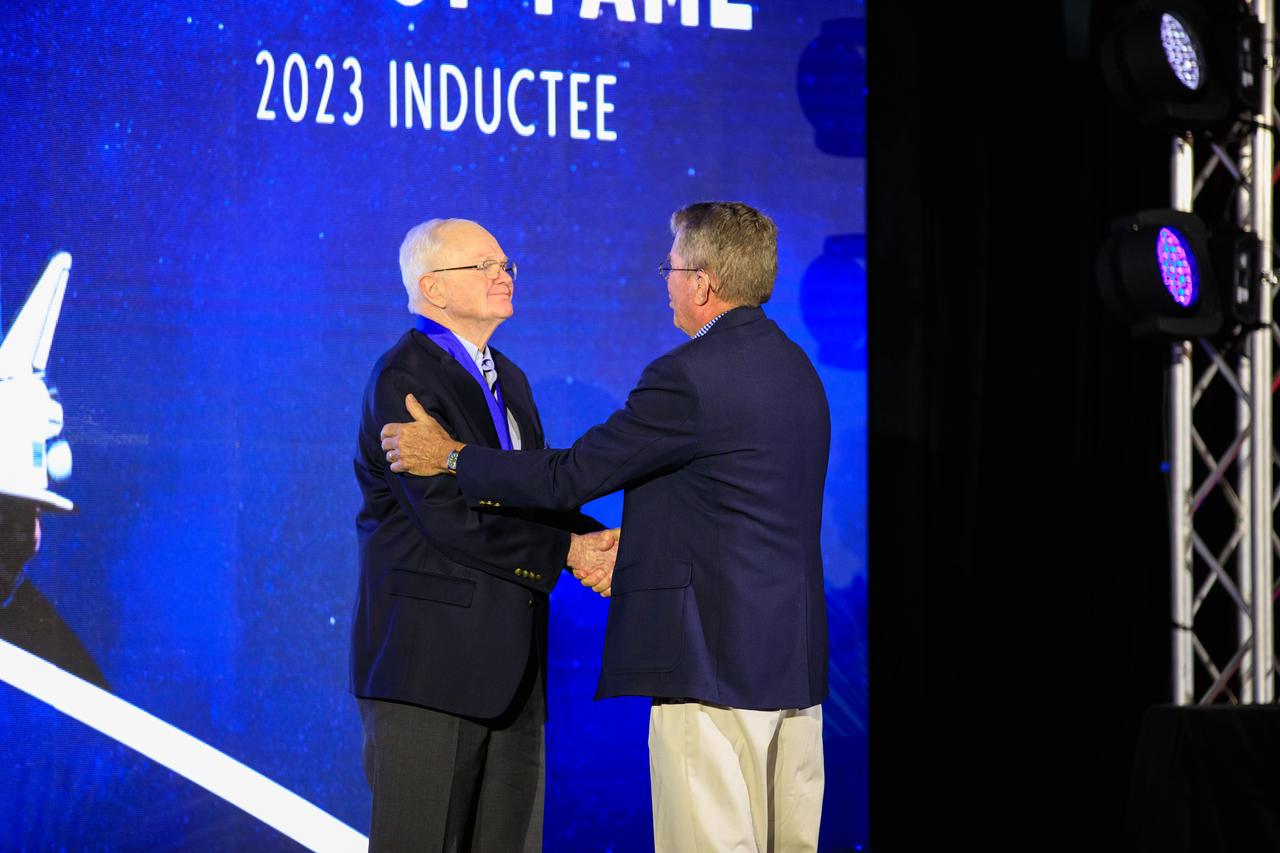
Roy D. Bridges Jr. is inducted into the Astronaut Hall of Fame (AHOF) by Hall of Fame astronaut Dave Leestma during a ceremony inside the Space Shuttle Atlantis attraction at NASA’s Kennedy Space Center Visitor Complex in Florida on May 6, 2023. Also inducted into the AHOF Class of 2023 was retired astronaut Mark Kelly. Inductees into the Hall of Fame are selected by a committee of Hall of Fame astronauts, former NASA officials, flight directors, historians and journalists. The process is administered by the Astronaut Scholarship Foundation. To be eligible, an astronaut must have made his or her first flight at least 17 years before the induction. Candidates must be a U.S. citizen and a NASA-trained commander, pilot, or mission specialist who has orbited the earth at least once. Including Bridges and Kelly, 107 astronauts have been inducted into the AHOF.