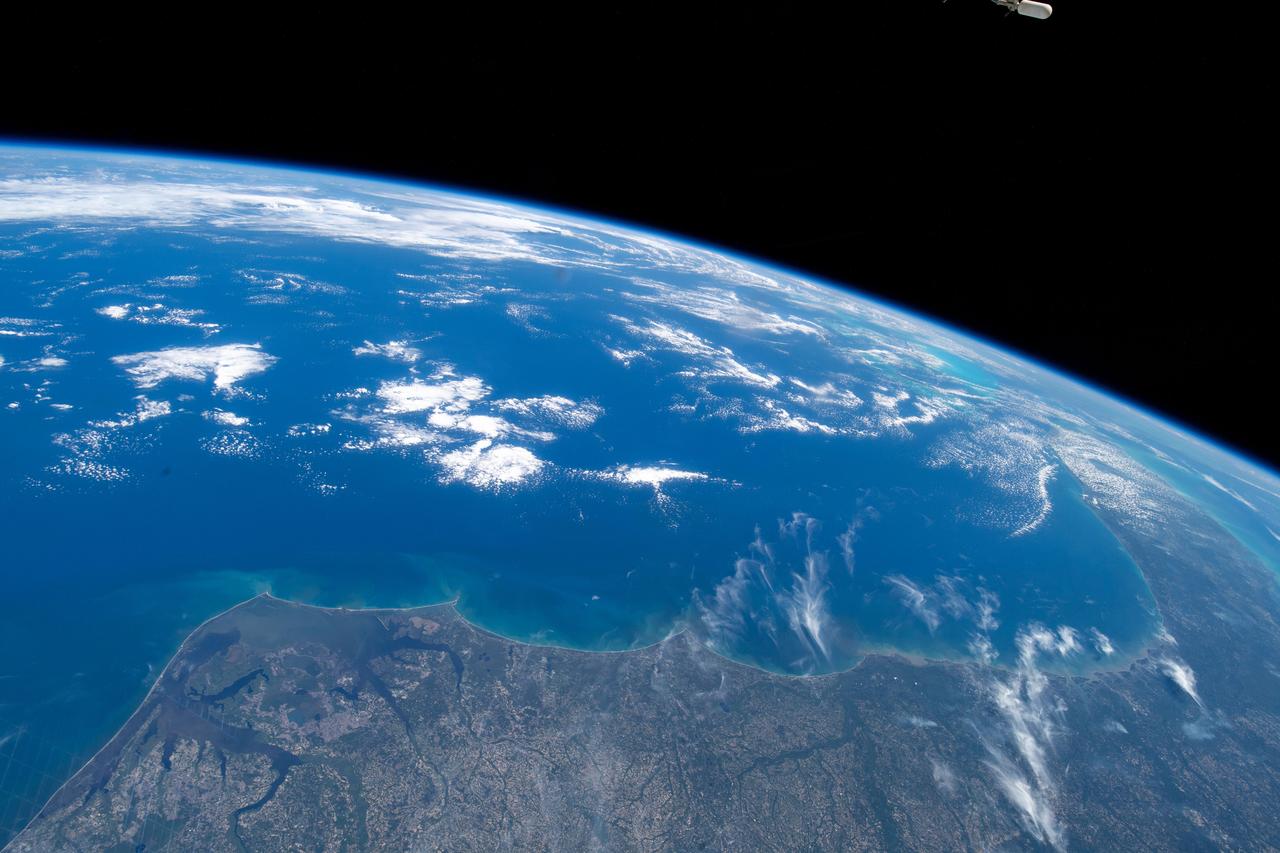
iss059e034778 (April 23, 2019) --- This view of the eastern coast of the United States looks from (bottom left to right center) Virginia Beach, Virginia, all the way to Miami, Florida. The International Space Station was orbiting 256 miles above North America about to cross the Atlantic Ocean when an Expedition 59 crew member took this photograph.
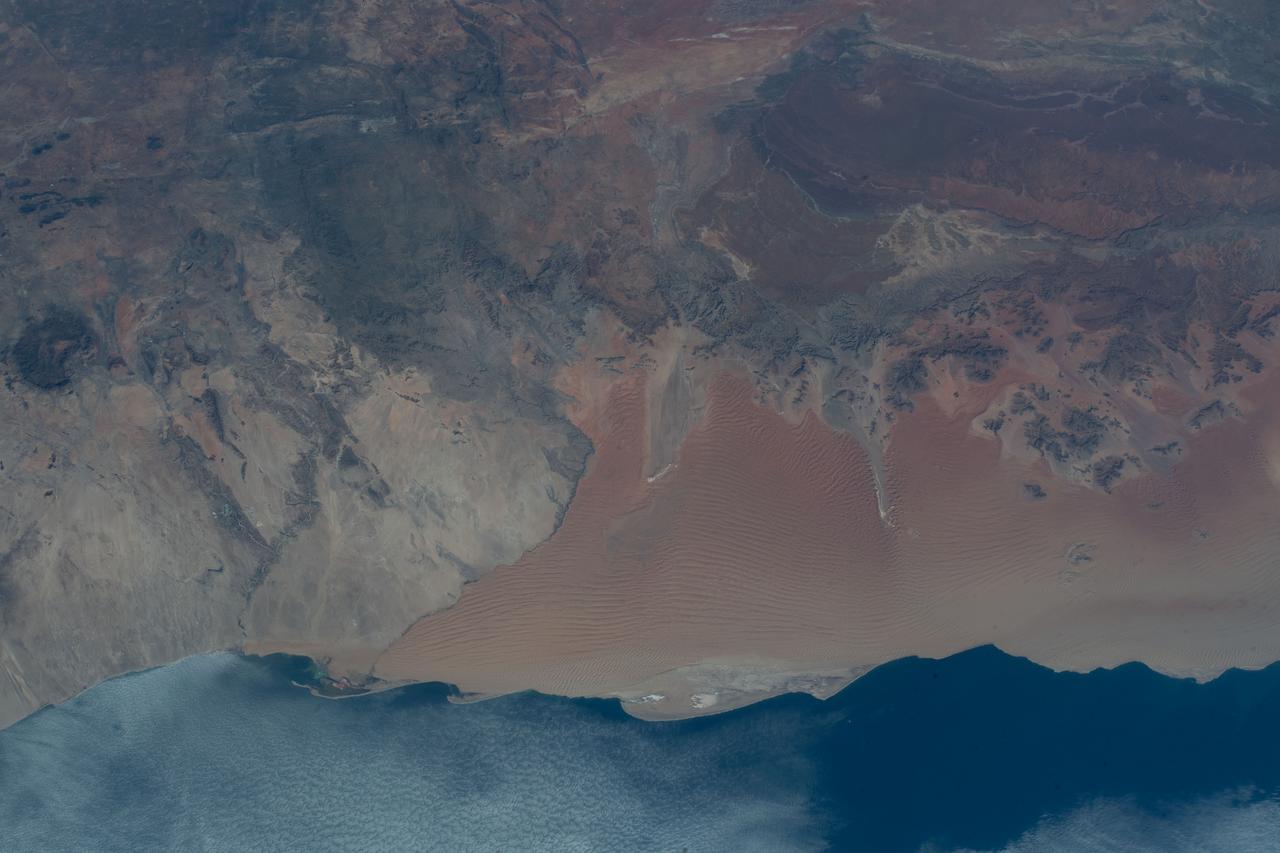
iss059e061447 (May 13, 2019) --- The Namib Desert on the Atlantic Coast of Namibia is photographed from an altitude of 259 miles as the International Space Station orbited off the coast of the southwestern Africa nation.
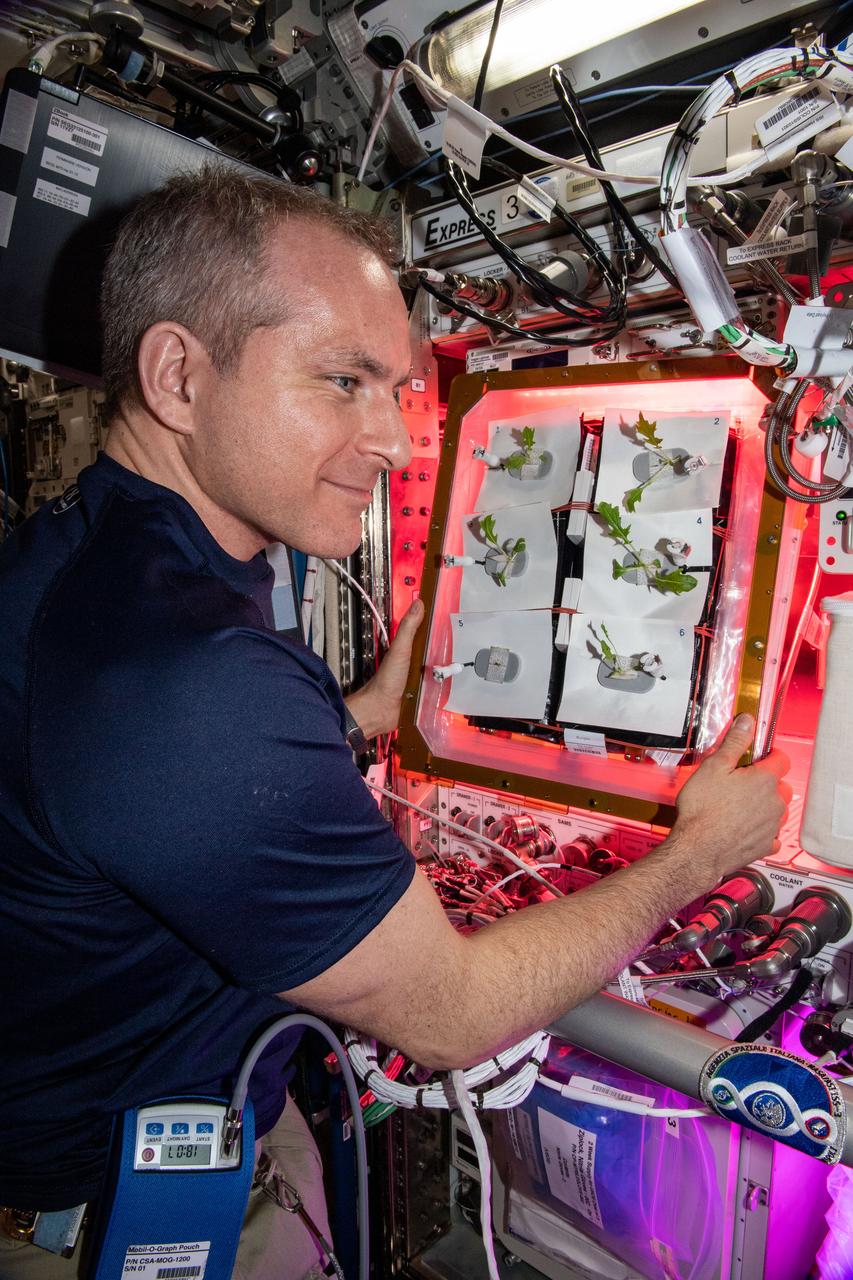
iss059e113779 (June 18, 2019) --- Canadian Space Agency astronaut David Saint-Jacques checks plants being grown for the Veg-04A space botany experiment taking place inside the International Space Station's Columbus laboratory module from the European Space Agency. The study focuses on the impact of light quality and fertilizer on leafy crop growth for a 28-day grow-out, microbial food safety, nutritional value, taste acceptability by the crew, and the overall behavioral health benefits of having plants and fresh food in space.
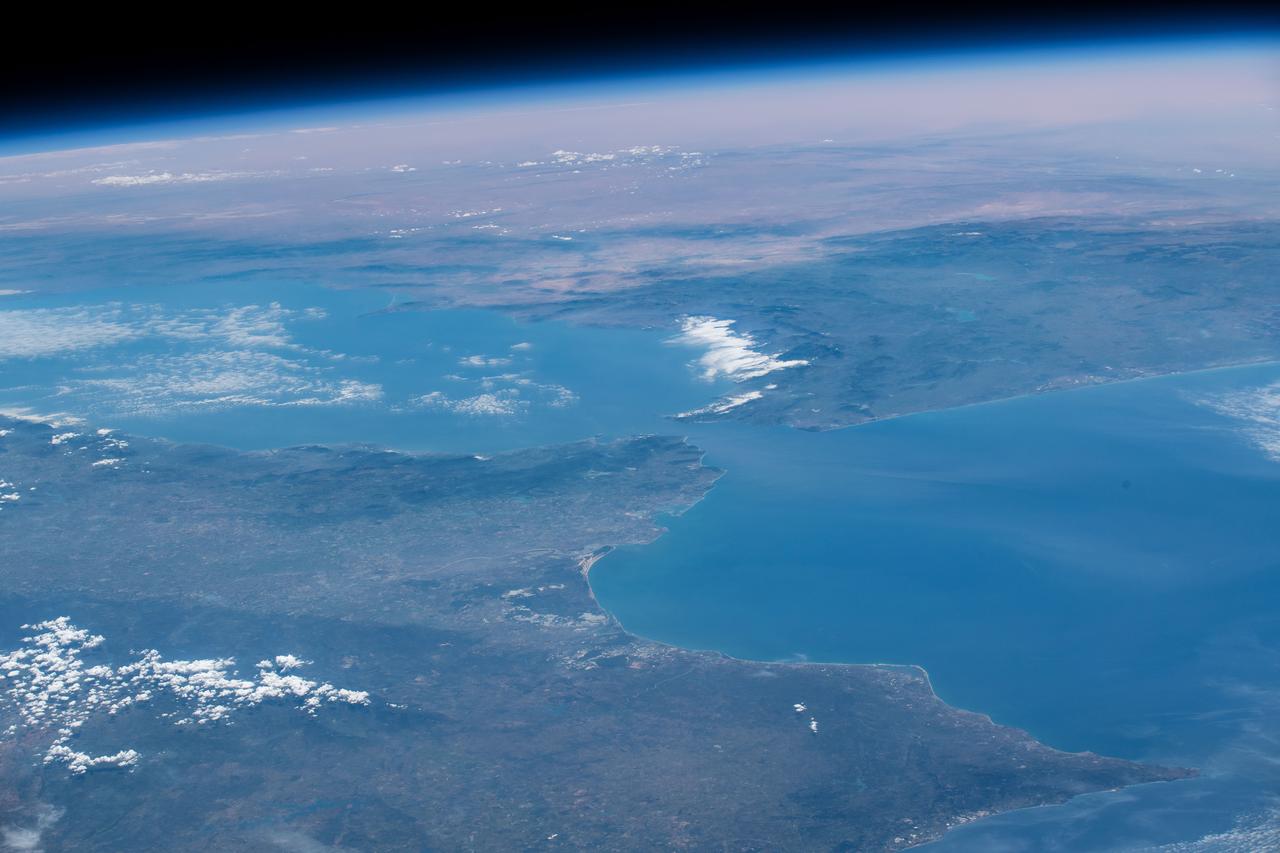
iss059e038134 (April 30, 2019) --- Looking from northwest to southeast (bottom to top), this oblique view shows portions of Western Europe, the Atlantic Ocean, the Mediterranean Sea and North Africa. More specific regions such as Portugal, Spain, the Strait of Gibraltar, Morocco and Algeria are seen as the International Space Station orbited 257 miles above the Atlantic.
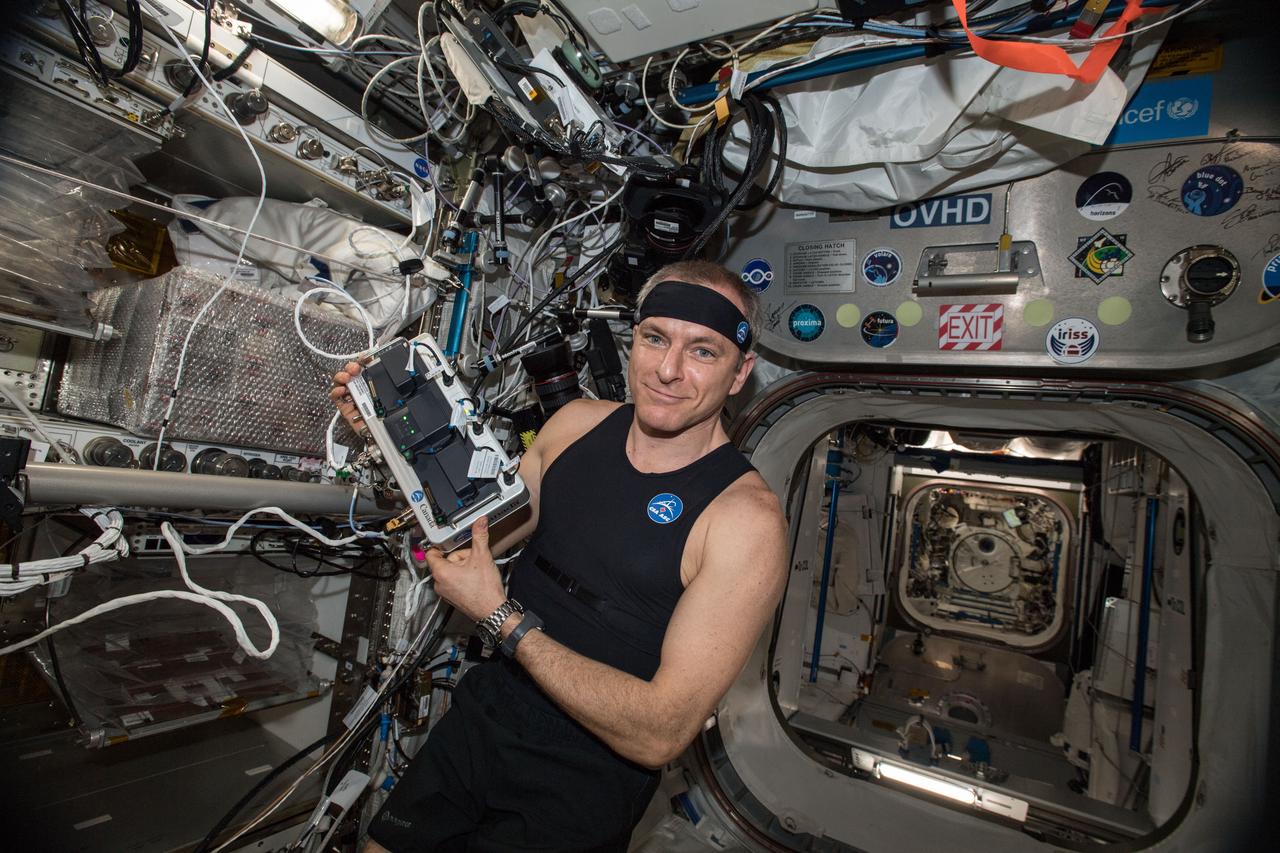
iss058e003984 (1/16/2019) --- Canadian Space Agency (CSA) astronaut David Saint-Jacques demonstrates the Bio-Monitor, a Canadian technology, which is utilized in the Autonomous Health Monitoring for Adaption Assessment on Long Range Missions Using Big Data Analytic.(Space Health) study. The innovative smart shirt system captures the astronauts' vital signs, and the data is used to assess the impact of spaceflight on the cardiovascular system. Image courtesy of CSA/NASA.
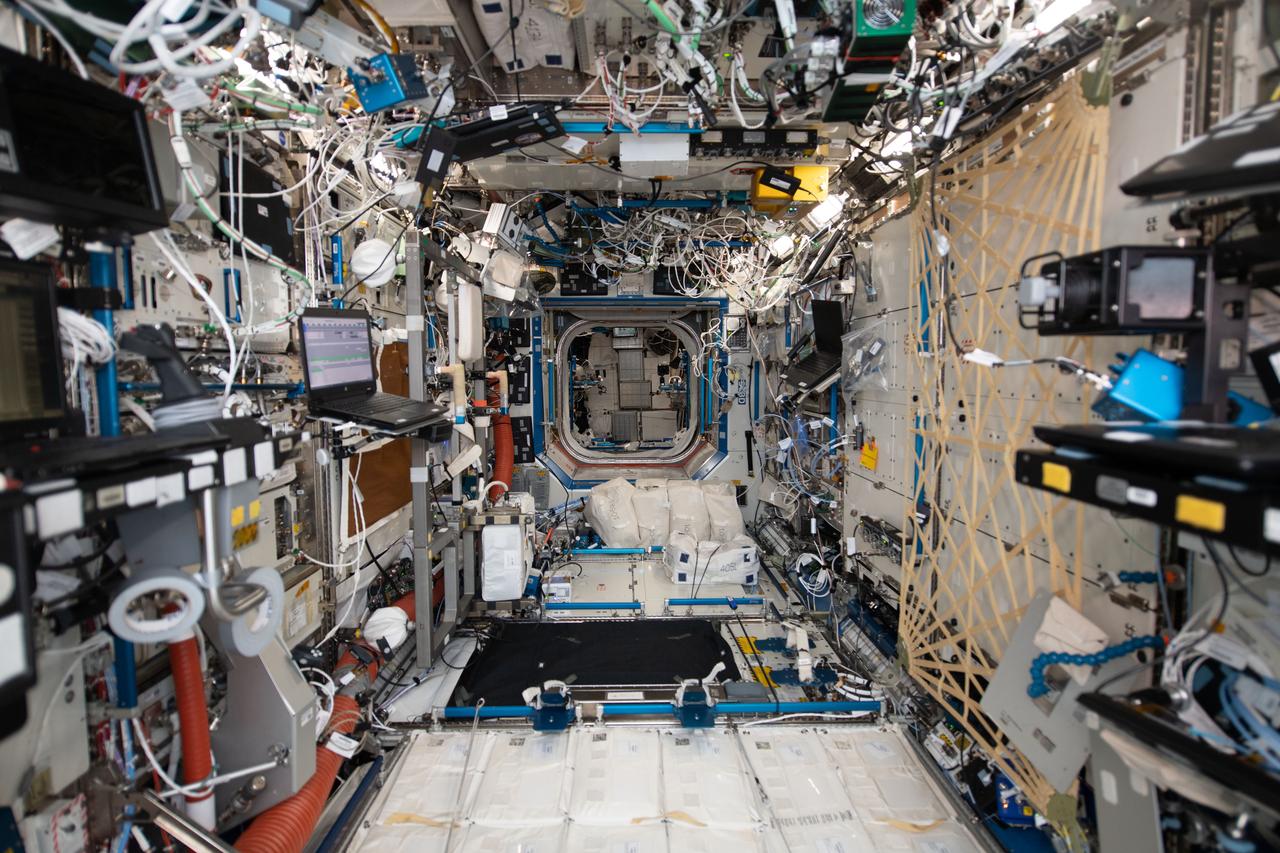
iss058e004610 (1/20/2019) --- A View of the Destiny US Laboratory aboard the International Space Station (ISS). The U.S. Laboratory Module, called Destiny, is the primary research laboratory for U.S. payloads, supporting a wide range of experiments and studies contributing to health, safety, and quality of life for people all over the world. Science conducted on the ISS offers researchers an unparalleled opportunity to test physical processes in the absence of gravity. The results of these experiments will allow scientists to better understand our world and ourselves and prepare us for future missions. Destiny provides internal interfaces to accommodate 24 equipment racks for accommodation and control of ISS systems and scientific research.
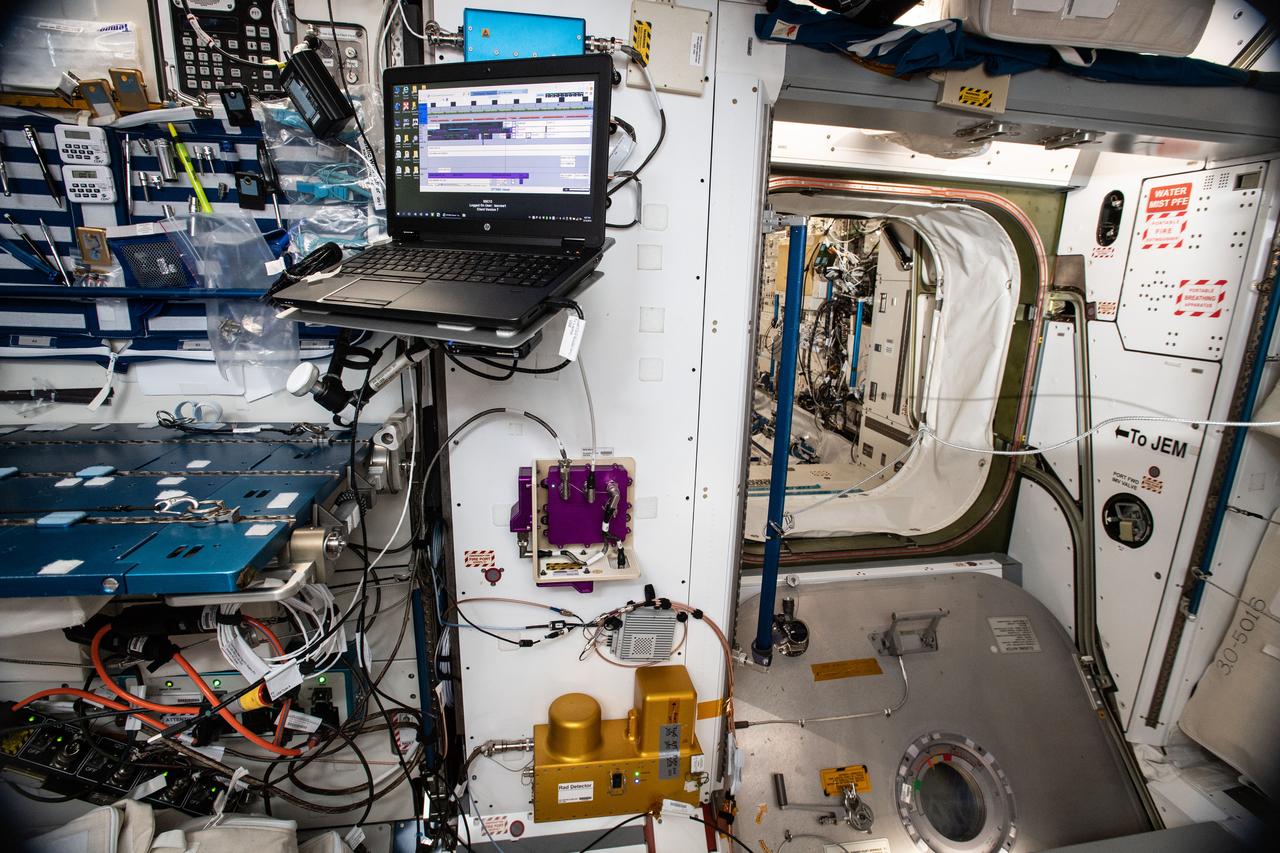
iss058e013161 (2/13/2019) --- Photo documentation of ISS HERA taken aboard the International Space Station (ISS). The International Space Station Hybrid Electronic Radiation Assessor (ISS HERA) refines data analysis and operational products that support future exploration missions. It uses an existing on-orbit radiation detection system developed for Orion and Exploration Mission 1 (EM-1), modified to operate on the space station.
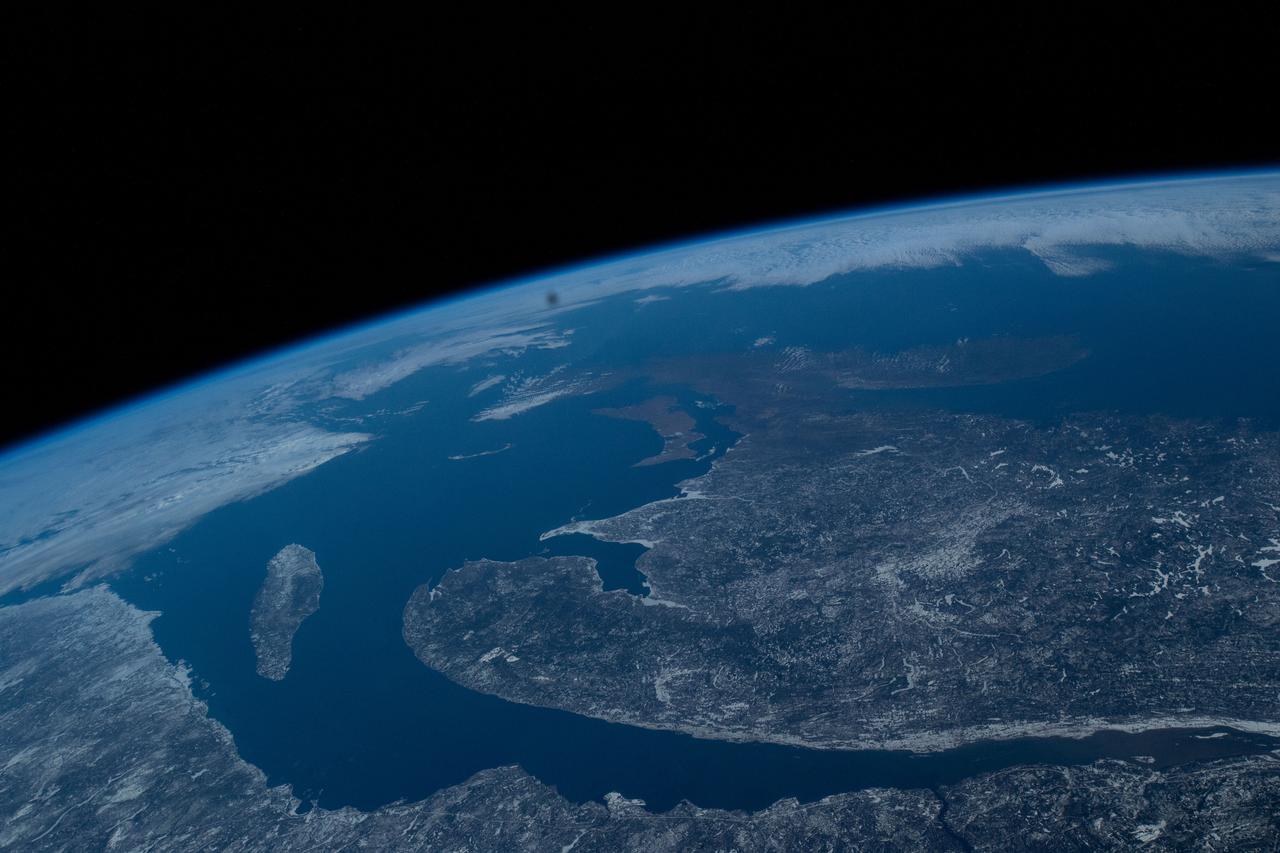
iss059e019410 (April 11, 2019) --- The International Space Station was 258 miles above Canada when an Expedition 59 crewmember photographed the Gulf of St. Lawrence and portions of Quebec, New Brunswick and Prince Edward Island.
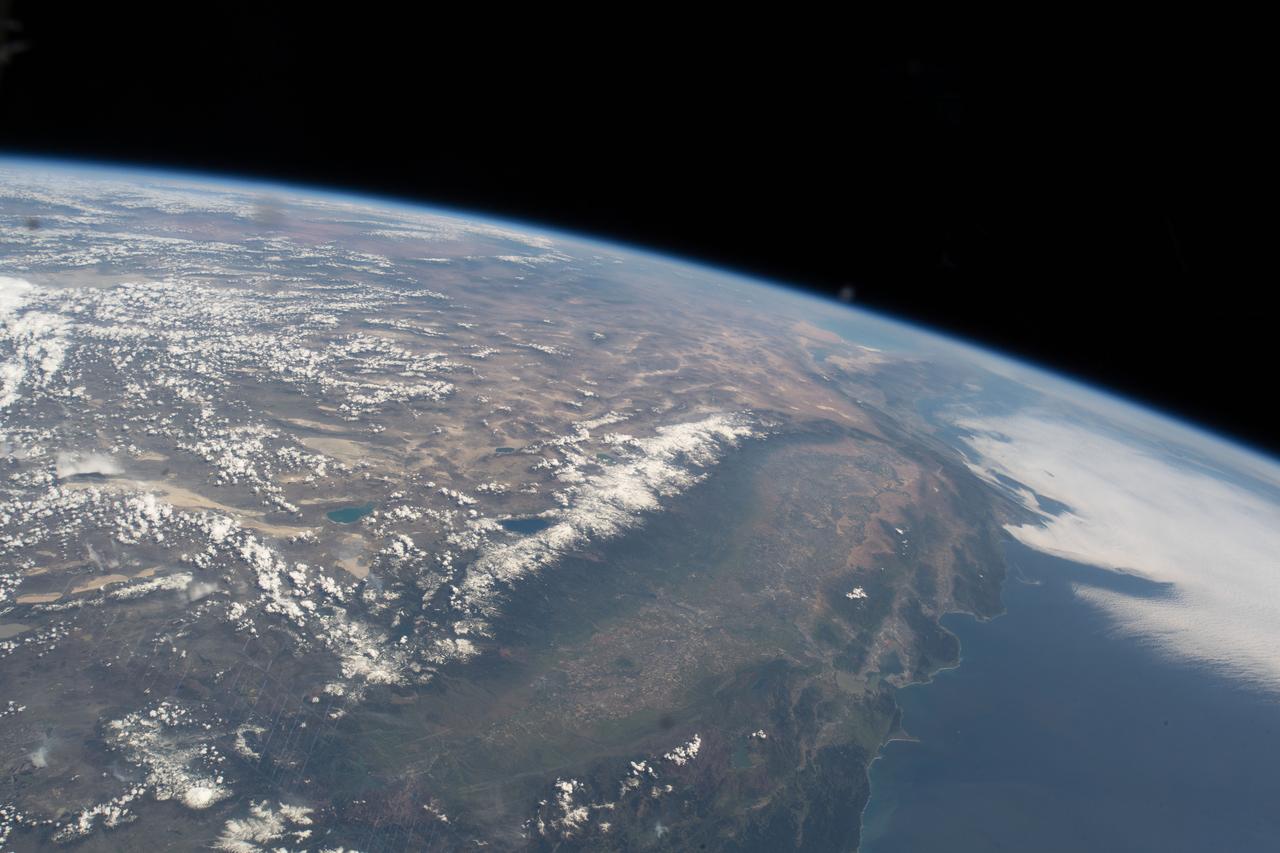
iss059e035253 (April 24, 2019) --- The International Space Station was 257 miles above the Earth off the coast of the northwestern United States when an Expedition 59 crewmember photographed portions of California and Nevada.
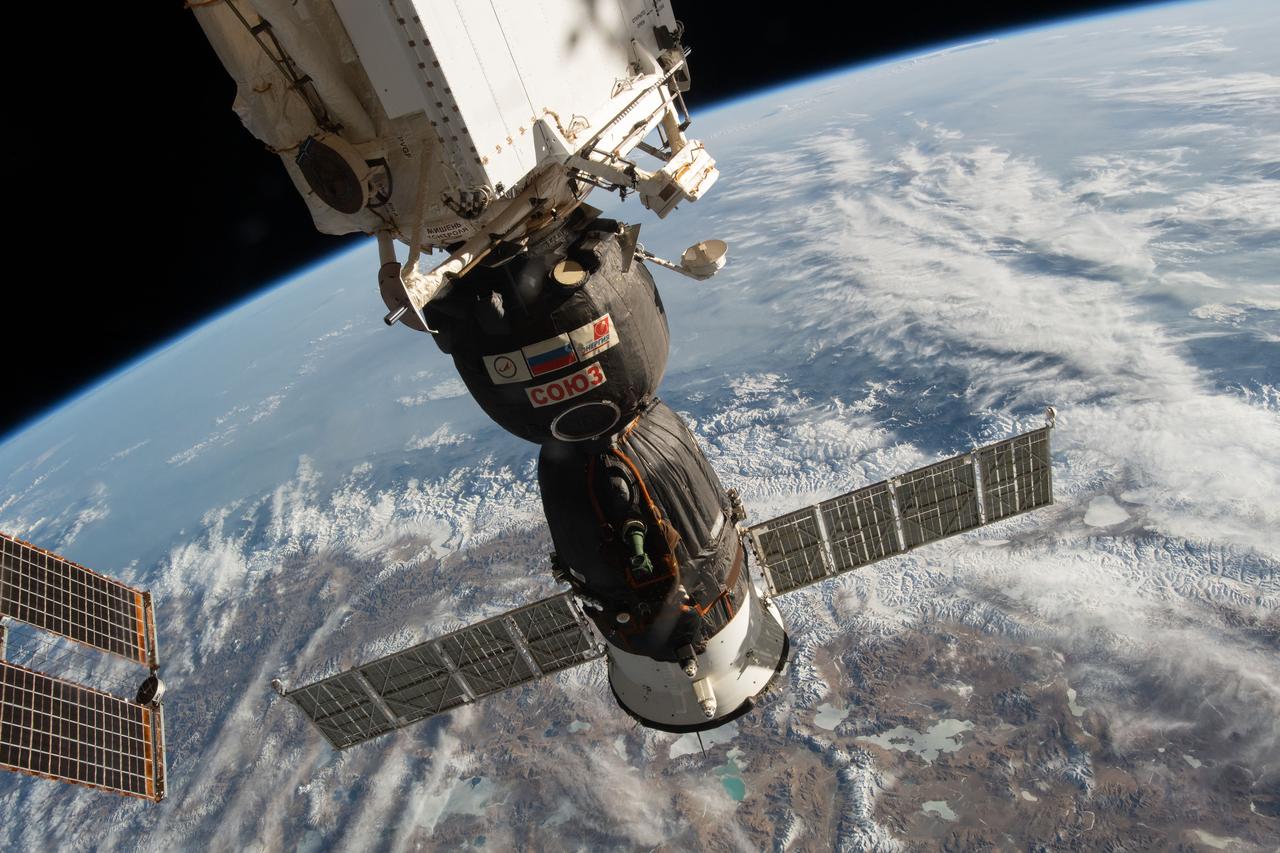
iss059e003532 (March 27, 2019) --- The Soyuz MS-12 crew ship is pictured docked to the Rassvet module as the International Space Station orbited 256 miles above India, Nepal and China.
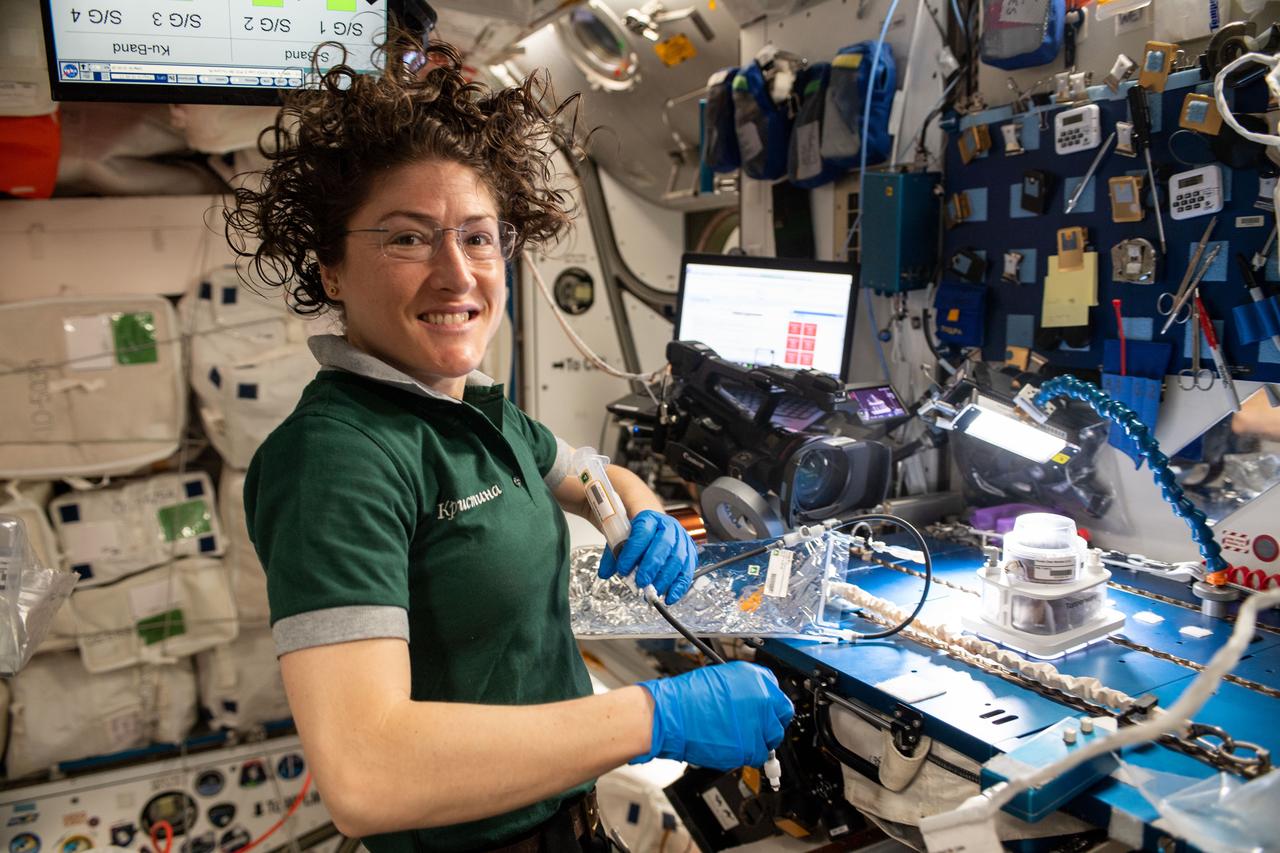
iss059e035668 (April 25, 2019) --- NASA astronaut Christina Koch works on space botany research using the Veggie PONDS gear to cultivate and harvest lettuce and mizuna greens for consumption on the International Space Station and analysis on Earth.
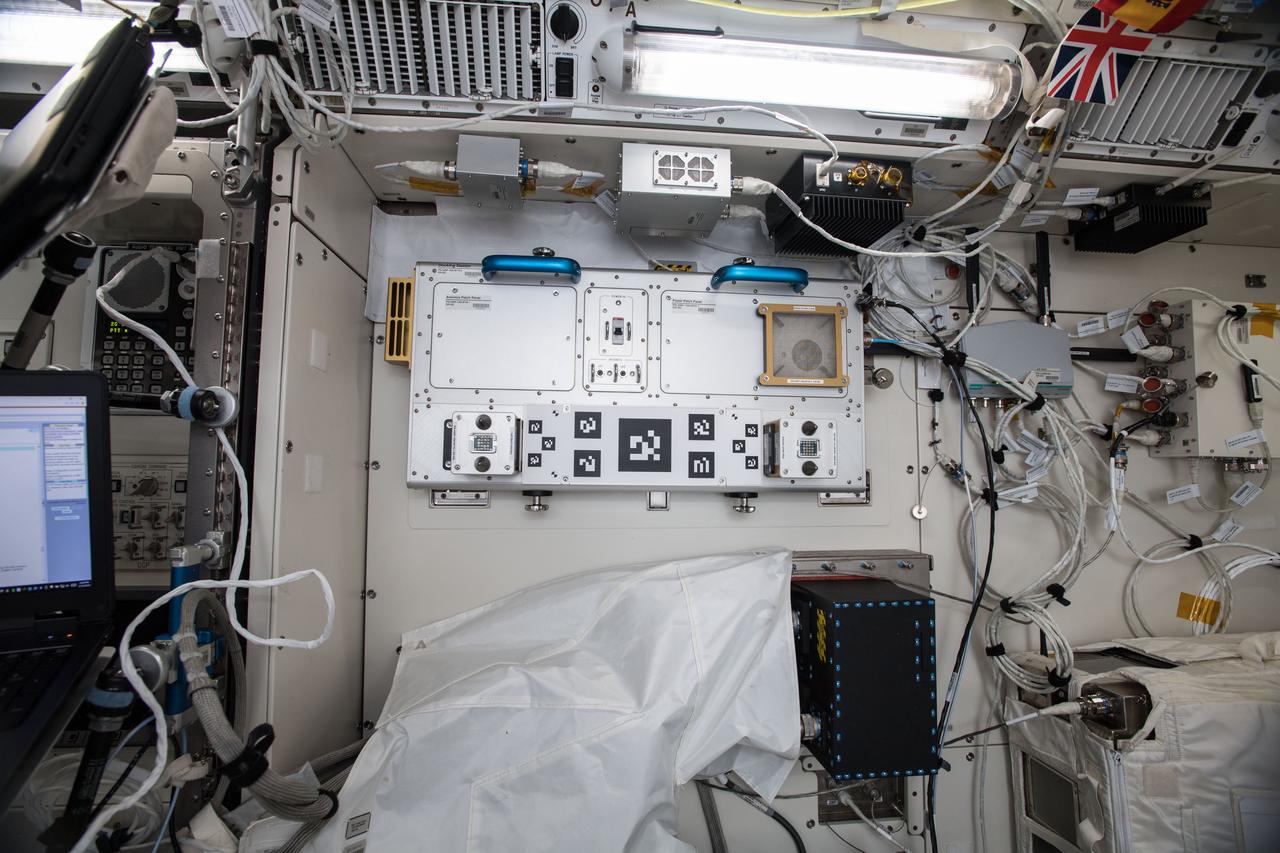
iss058e013773 (2/15/2019) --- A view of the Astrobee docking station onboard the International Space Station (ISS). Astrobee consists of three self-contained, free flying robots and a docking station for use inside the ISS. It is an autonomous free flyer powered by fans and operates in the entire U.S. Operating Segment (USOS) using vision-based navigation. The autonomous robots are operated remotely from the ground.
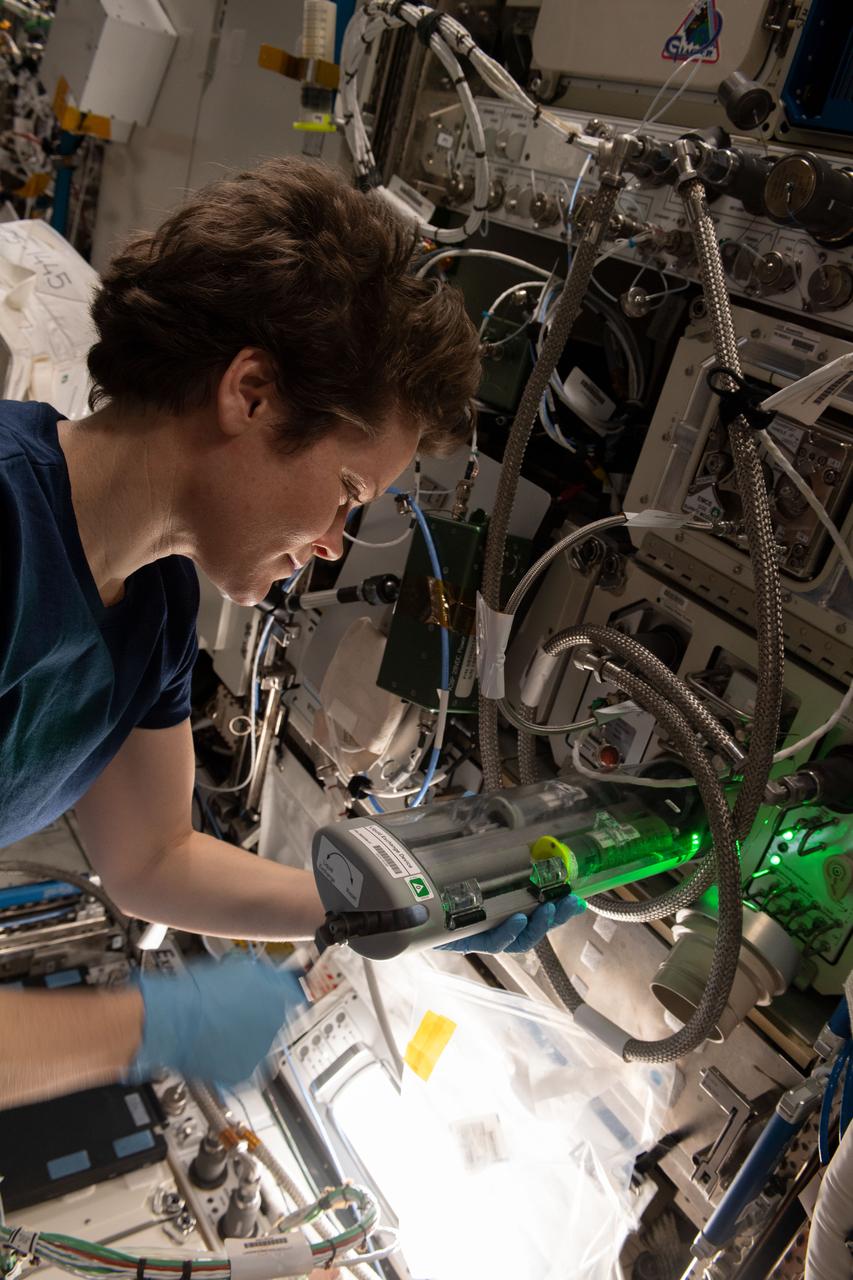
iss059e092376 (6/6/2019) --- NASA astronaut Anne McClain is photographed onboard the International Space Station (ISS) using the Liquid Exchange Device. The documentation was taken during the filling of the Photobioreactor (PBR) with medium and algae to begin the experiment. The Photobioreactor investigation aims at demonstrating that microalgae (i.e. biological processes) can be used together with existing systems to improve recycling of resources, creating a hybrid life support system. This hybrid approach could be helpful in future long-duration exploration missions, as it could reduce the amount of consumables required from Earth.
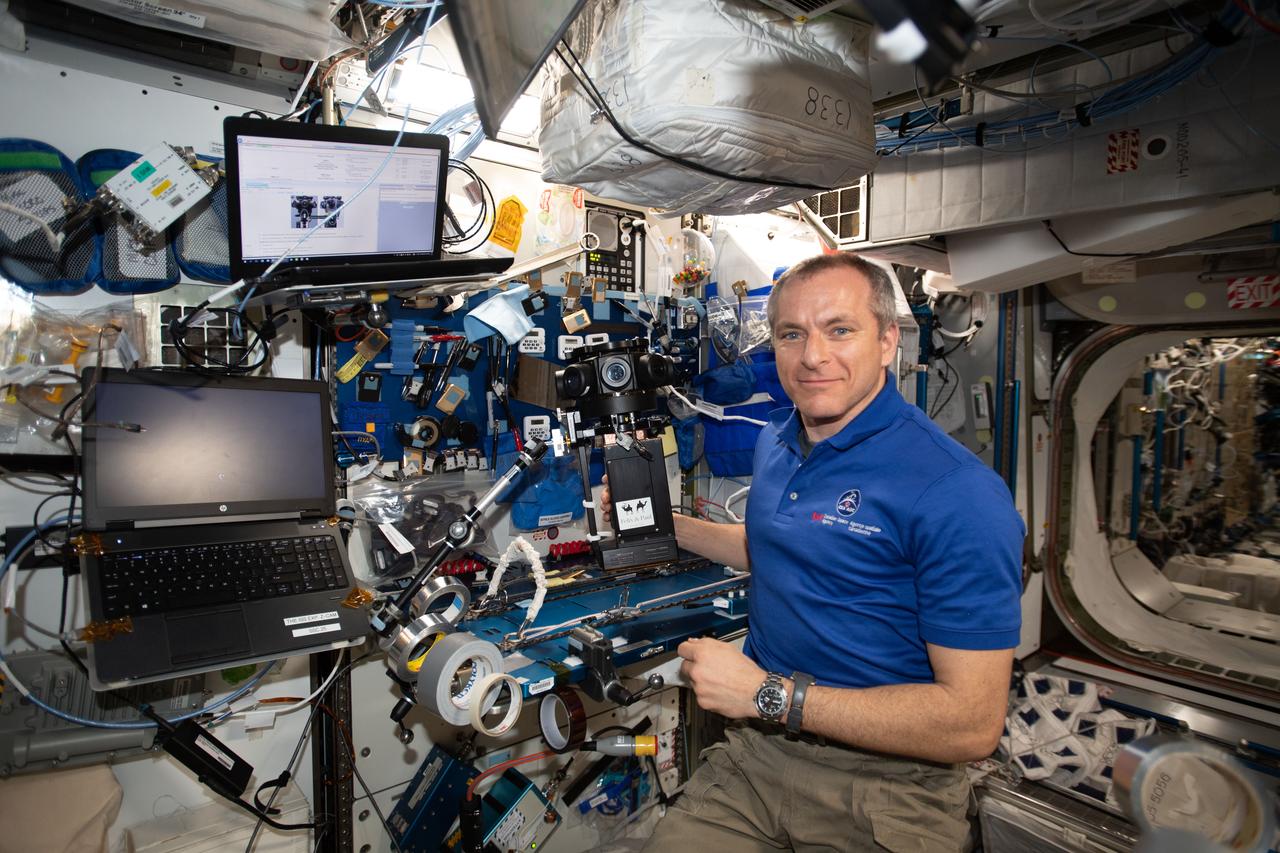
iss058e005160 (1/21/2019) --- A view of Canadian Space Agency (CSA) astronaut David Saint-Jacques setting up the Z-CAM V1 Pro Cinematic camera for the ISS Experience payload. The International Space Station Experience (ISS Experience) creates a virtual reality film documenting daily life aboard the space station. The 8- to 10-minute film created from footage taken during the six-month investigation covers different aspects of crew life, conducting science aboard the station, and the international partnerships involved.
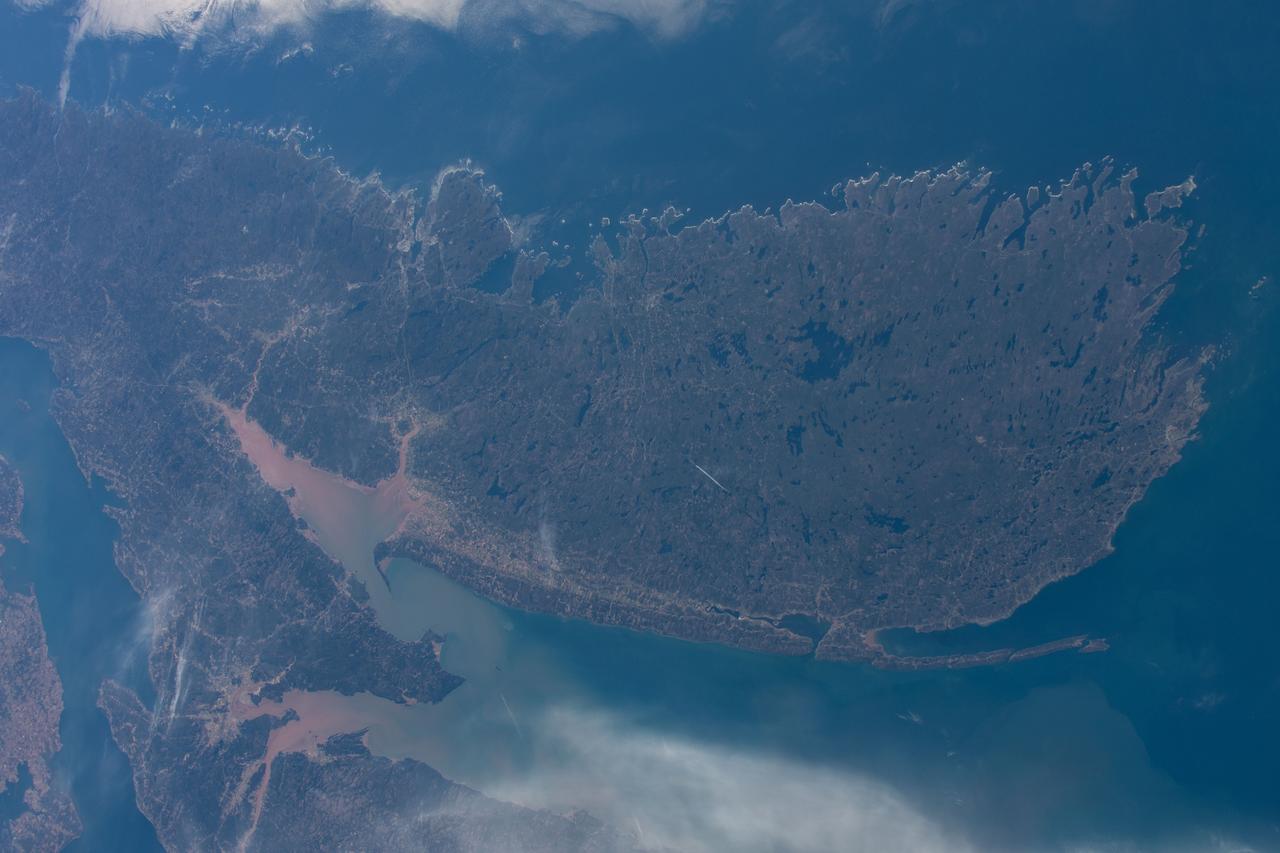
iss059e059149 (May 7, 2019) --- Portions of the Canadian provinces of Nova Scotia and New Brunswick separated by the Bay of Fundy are pictured as the International Space Station orbited 257 miles above the North American continent.
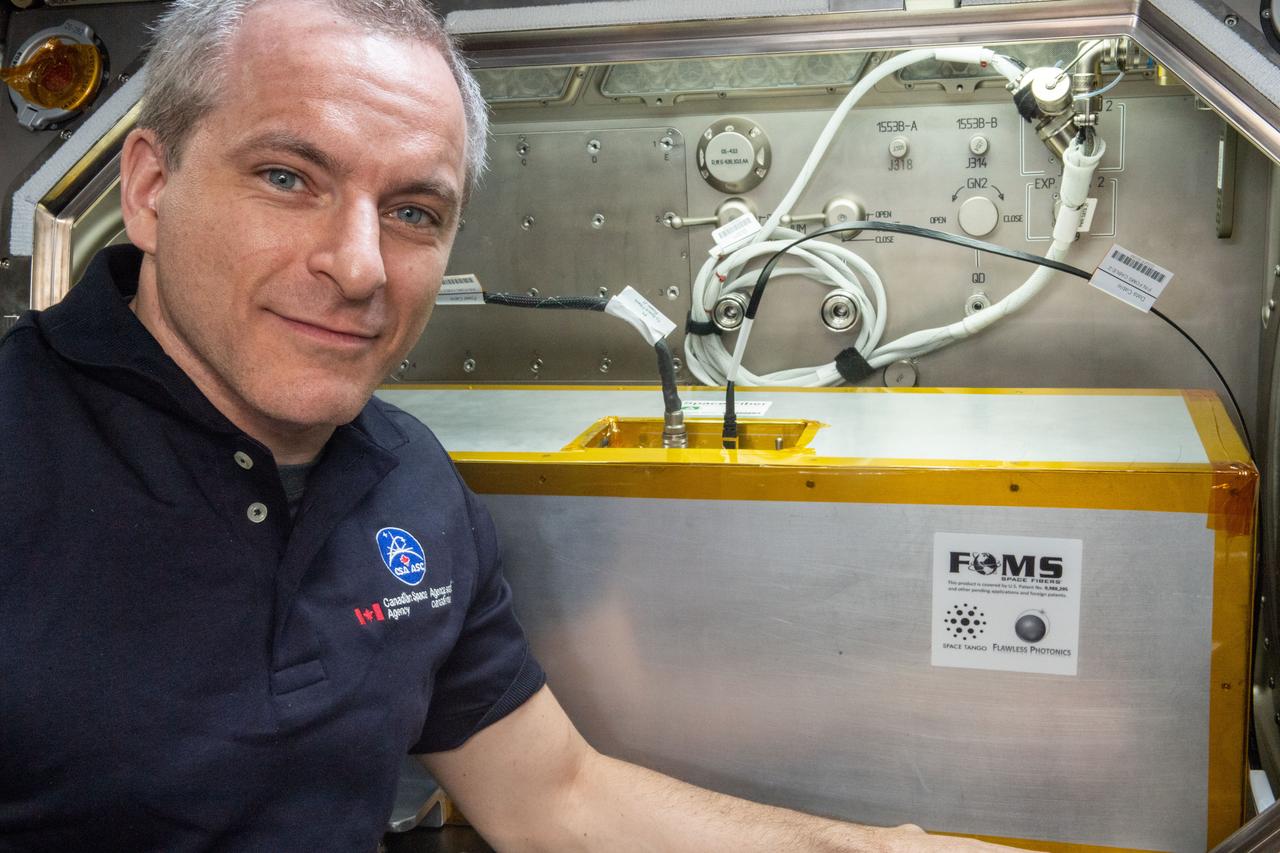
iss059e034721 (4/23/2019) --- Canadian Space Agency (CSA) astronaut David Saint-Jacques is photographed in front of the Microgravity Science Glovebox (MSG) during the installation of the Space Fibers experiment hardware into the MSG work volume. Manufacturing Fiber Optic Cable in Microgravity (Space Fibers) evaluates a method for producing fiber optic cable from a blend of zirconium, barium, lanthanum, sodium and aluminum, called ZBLAN, in space. ZBLAN produces glass one hundred times more transparent than silica-based glass, exceptional for fiber optics. Microgravity suppresses two mechanisms that commonly degrade fiber, and previous studies showed improved properties in fiber drawn in microgravity compared to that fabricated on the ground.
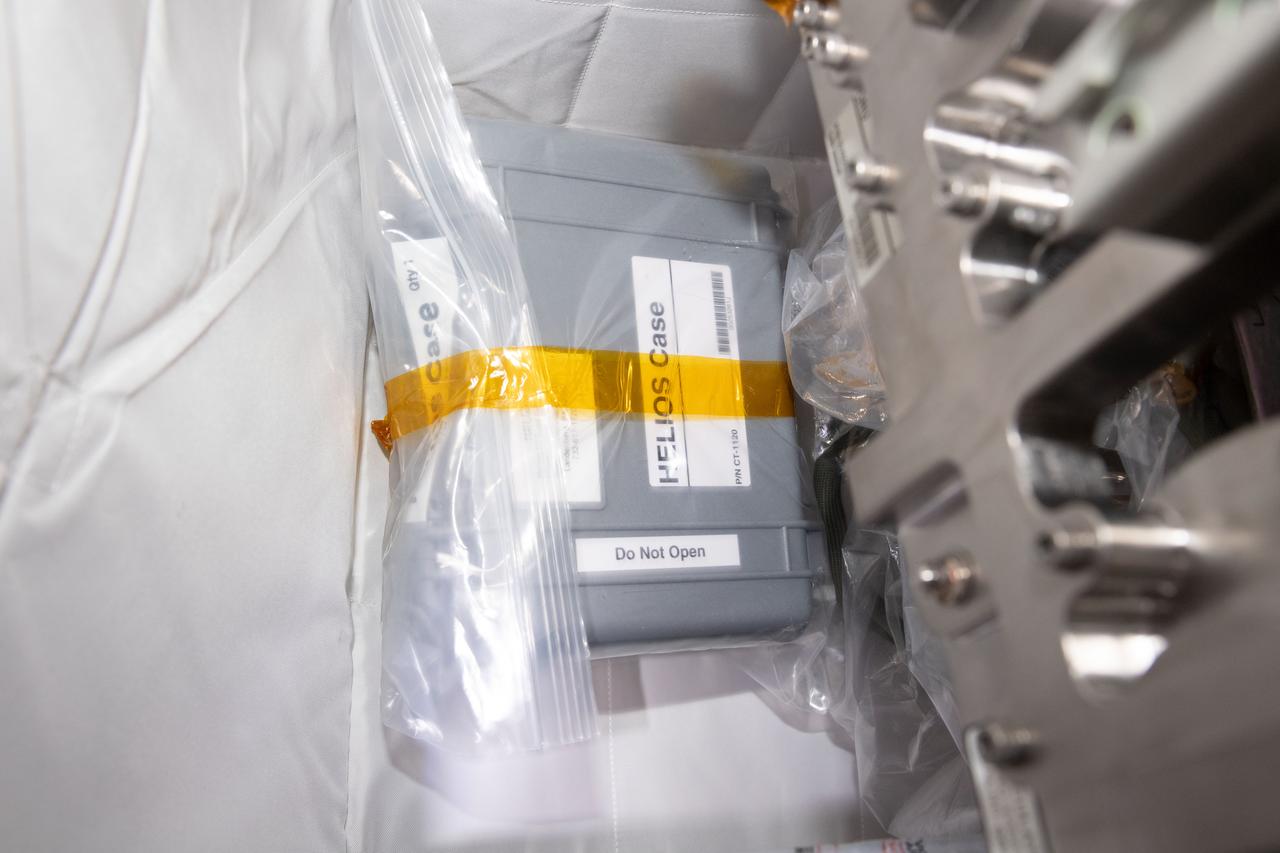
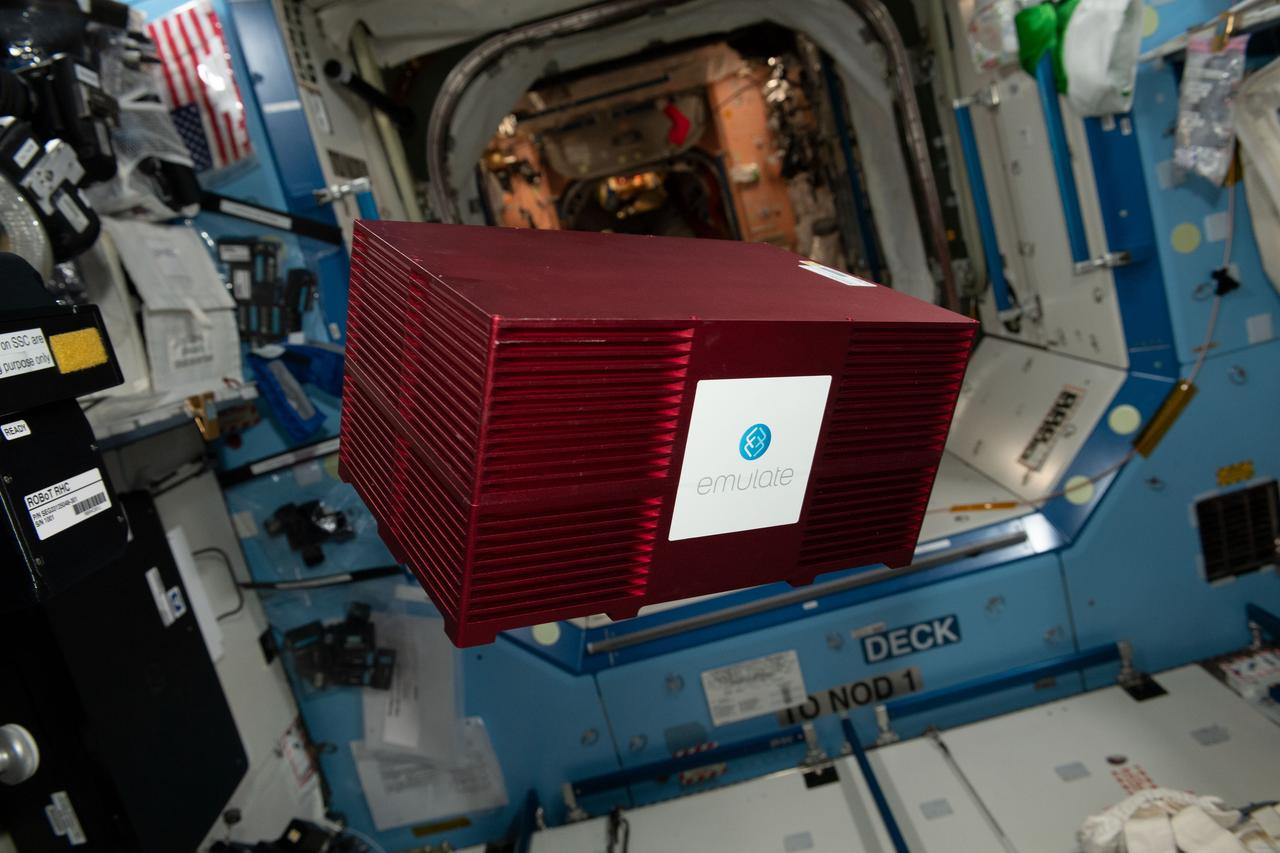
iss059e092346 (6/6/2019) --- A view of the Hardened Extremely Long-life Information in Optical Storage (HELIOS) case aboard the International Space Station (ISS). Hardened Extremely Long-life Information in Optical Storage (HELIOS) tests whether a data storage medium is resistant to space radiation.
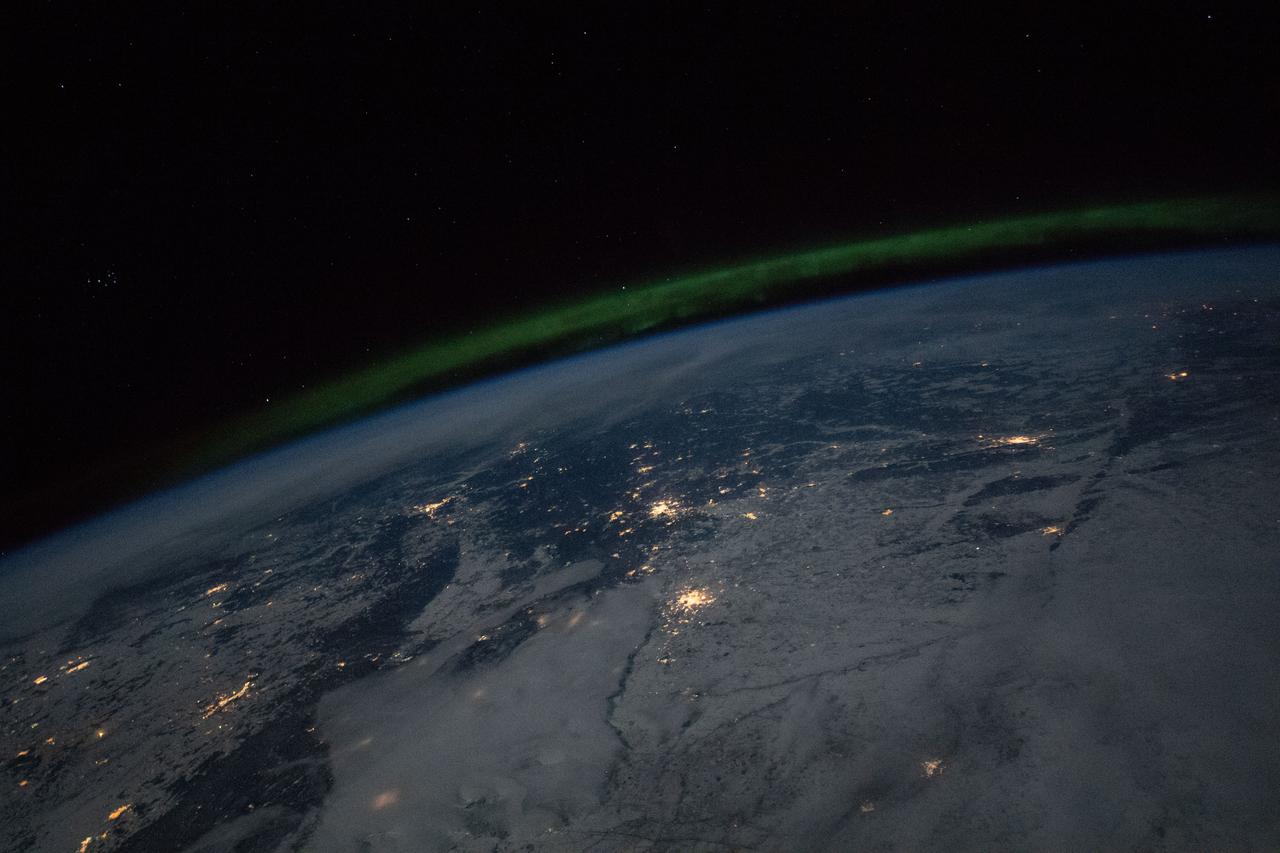
iss059e001224 (March 19, 2019) --- City lights and the aurora are pictured during a nighttime pass as the International Space Station orbited 256 miles above Russia and Kazakhstan.
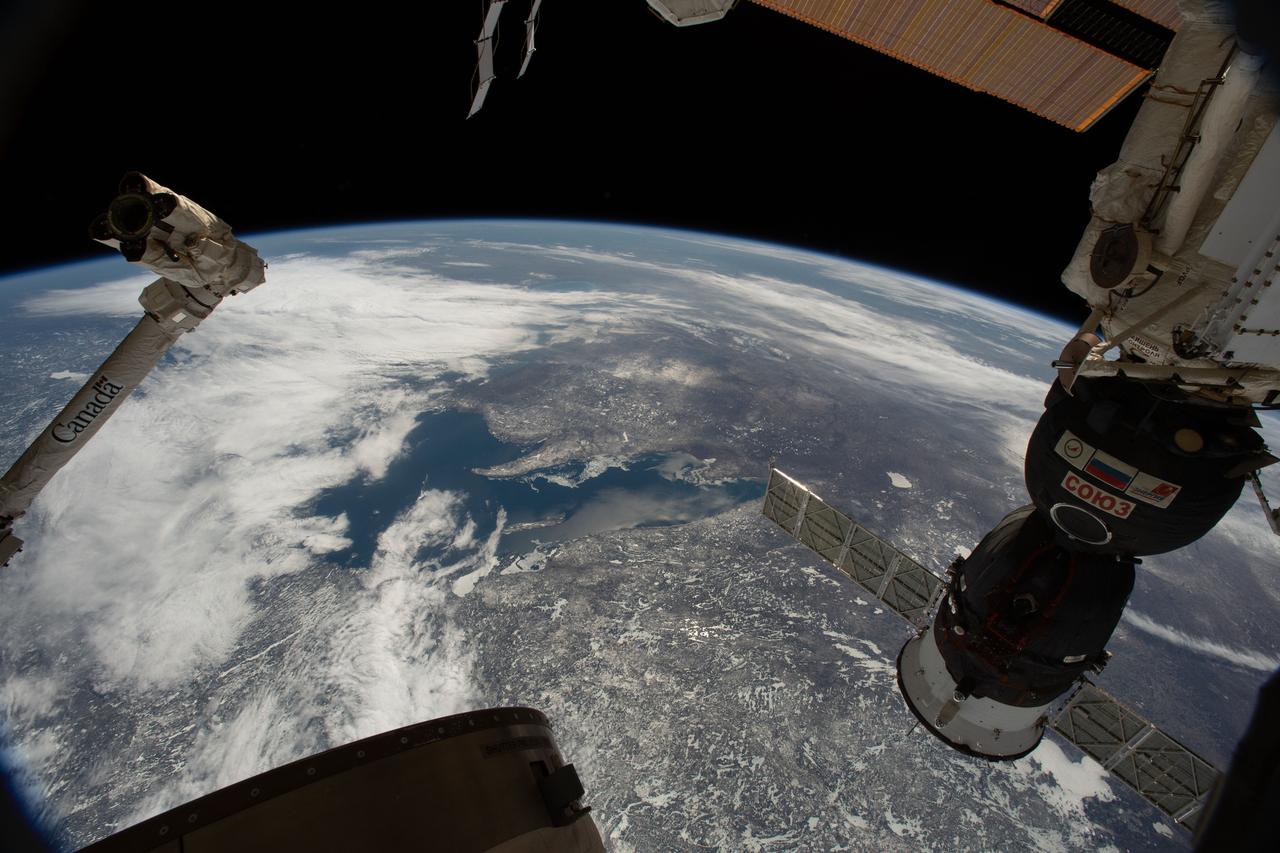
iss059e021451 (April 16, 2018) --- Lake Superior, looking from north to south, is pictured as the International Space Station orbited 258 miles above Ontario, Canada.
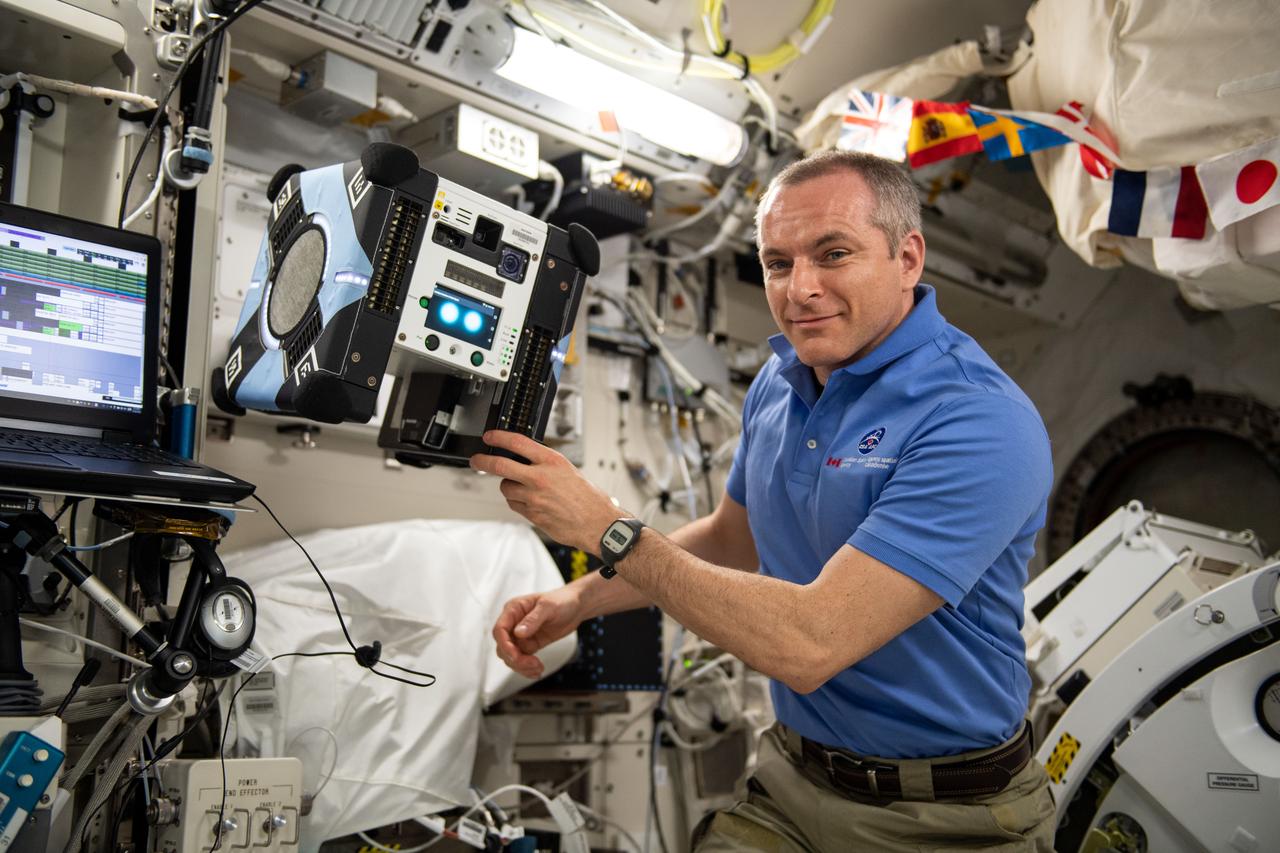
iss059e072518 (5/23/2019) --- Canadian Space Agency (CSA) astronaut David Saint-Jacques is photographed working with the free-flying Astrobee cube named Bumble and the docking station onboard the International Space Station (ISS). Astrobee consists of three self-contained, free flying robots and a docking station for use inside the ISS. It is an autonomous free flyer powered by fans and operates in the entire U.S. Operating Segment (USOS) using vision-based navigation. The autonomous robots are operated remotely from the ground.
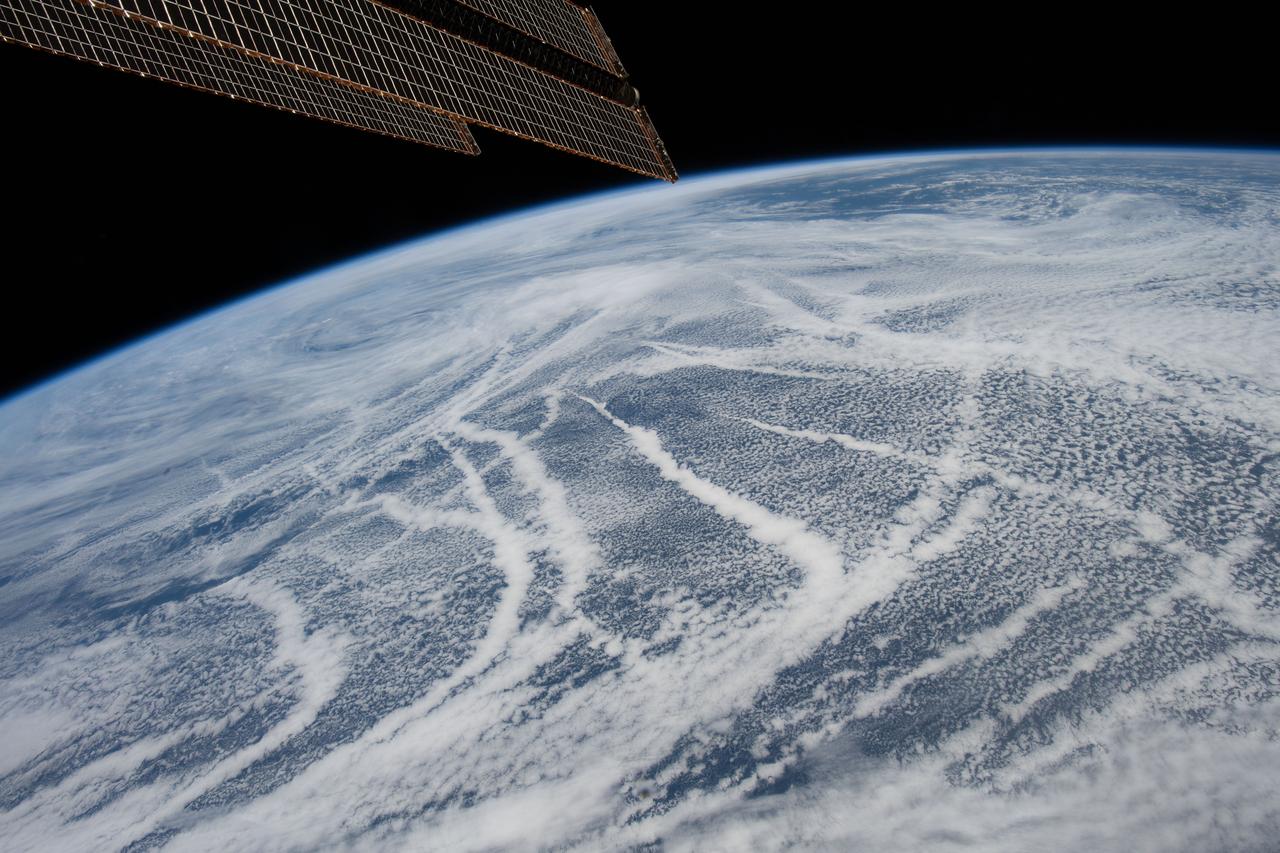
iss059e036736 (April 28, 2019) --- The International Space Station was orbiting 257 miles above the North Pacific Ocean when an Expedition 59 crewmember photographed these cloud patterns south of the Aleutian Islands.
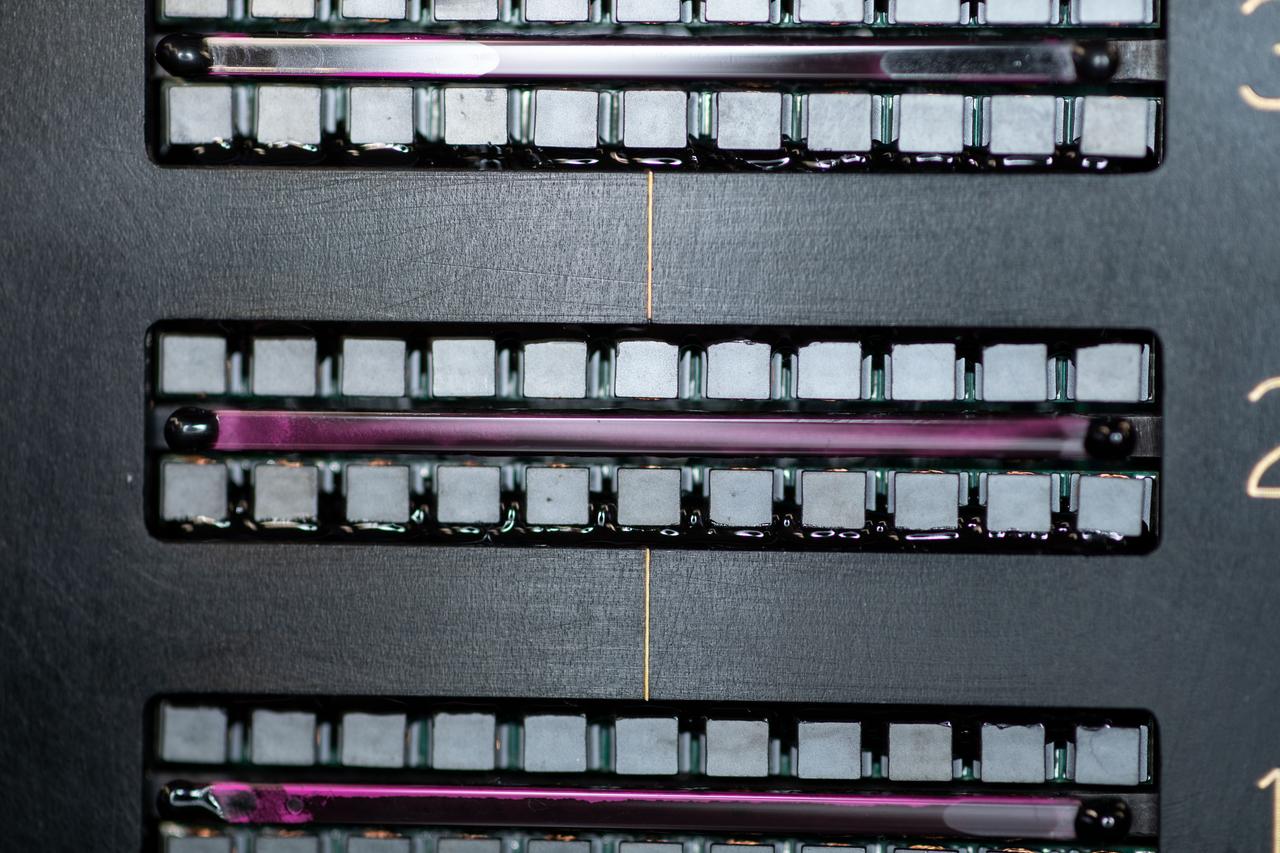
iss059e061932 (5/17/2019) --- Photo documentation onboard the International Space Station (ISS) of the ACE Modules taken during the ACE-T12 Module Configuration. The Advanced Colloids Experiment-Nanoparticle Haloing (ACE-T-12) involves design and assembly of complex three-dimensional (3D) structures from colloids, or particles of different sizes suspended in a fluid. It employs a recently discovered technique, Nanoparticle Haloing (NPH), which uses highly charged nanoparticles to stabilize much larger, non-charged particles. Allowing these structures to form in microgravity provides insight into the relationship between shape, surface charge, and concentration of particles and particle interactions.
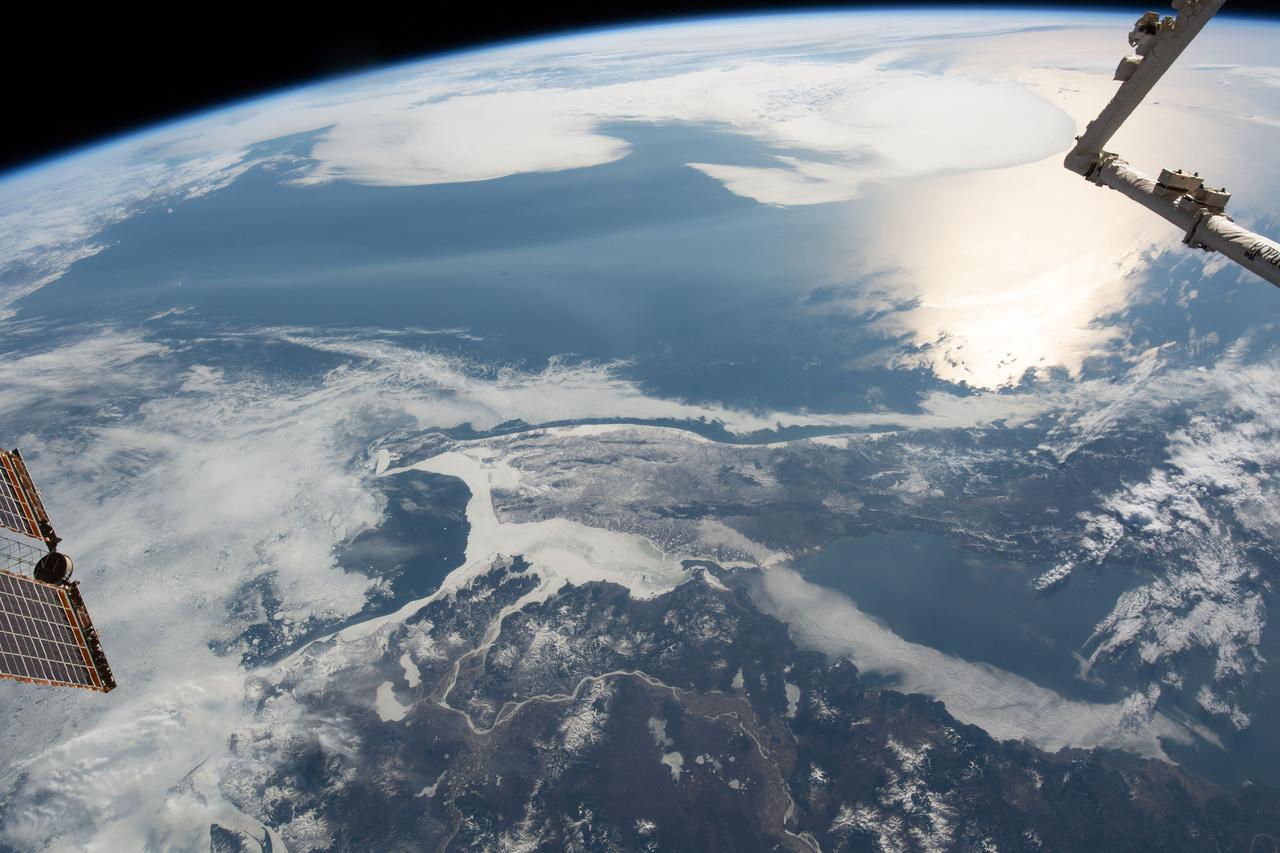
iss059e036722 (April 28, 2019) --- The International Space station was flying 258 miles above of China's eastern border with Russia when an Expedition 59 crewmember photographed the frozen Strait of Tartary. The strait separates the Russian island of Sakhalin from the Asian continent. The sun's glint beams off the Northern Pacific coast of Sakhalin.
iss058e000975 (12/26/2018) --- A view of the Organs-On-Chips as a Platform for Studying Effects of Microgravity on Human Physiology investigation taken onboard the International Space Station (ISS). Organs-On-Chips as a Platform for Studying Effects of Microgravity on Human Physiology analyzes the effect of microgravity and other space-related stressors on the brain blood barrier. It uses fully automated tissue chip technology, a Brain-Chip, consisting of living neuronal and vascular endothelial cells in a micro-engineered environment. Results may provide insight into the relationship between inflammation and brain function and a better understanding of neurodegenerative diseases such as Alzheimer’s and Parkinson’s.
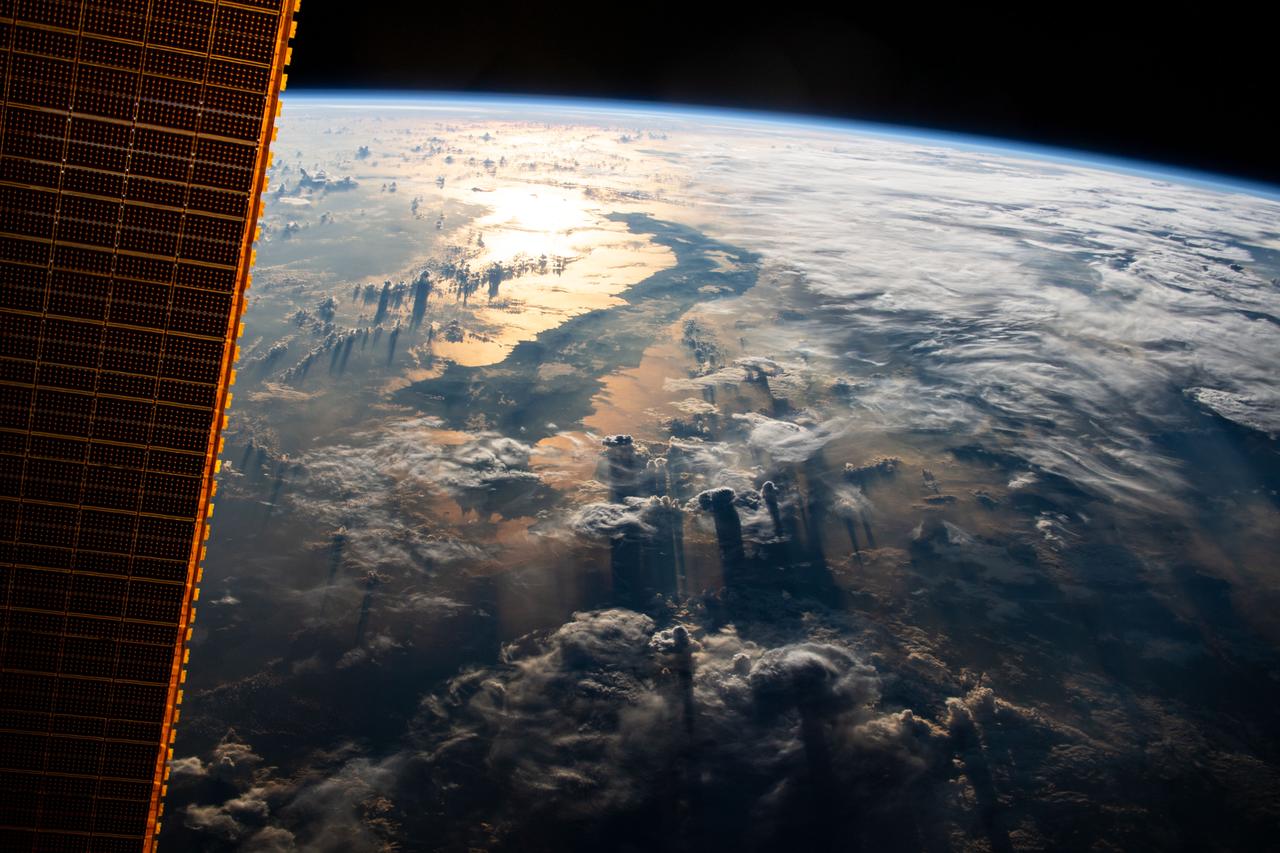
iss059e067877 (May 19, 2019) --- The International Space Station flies 255 miles above Indonesia as the sun's glint beams off the Celebes Sea in southeast Asia.
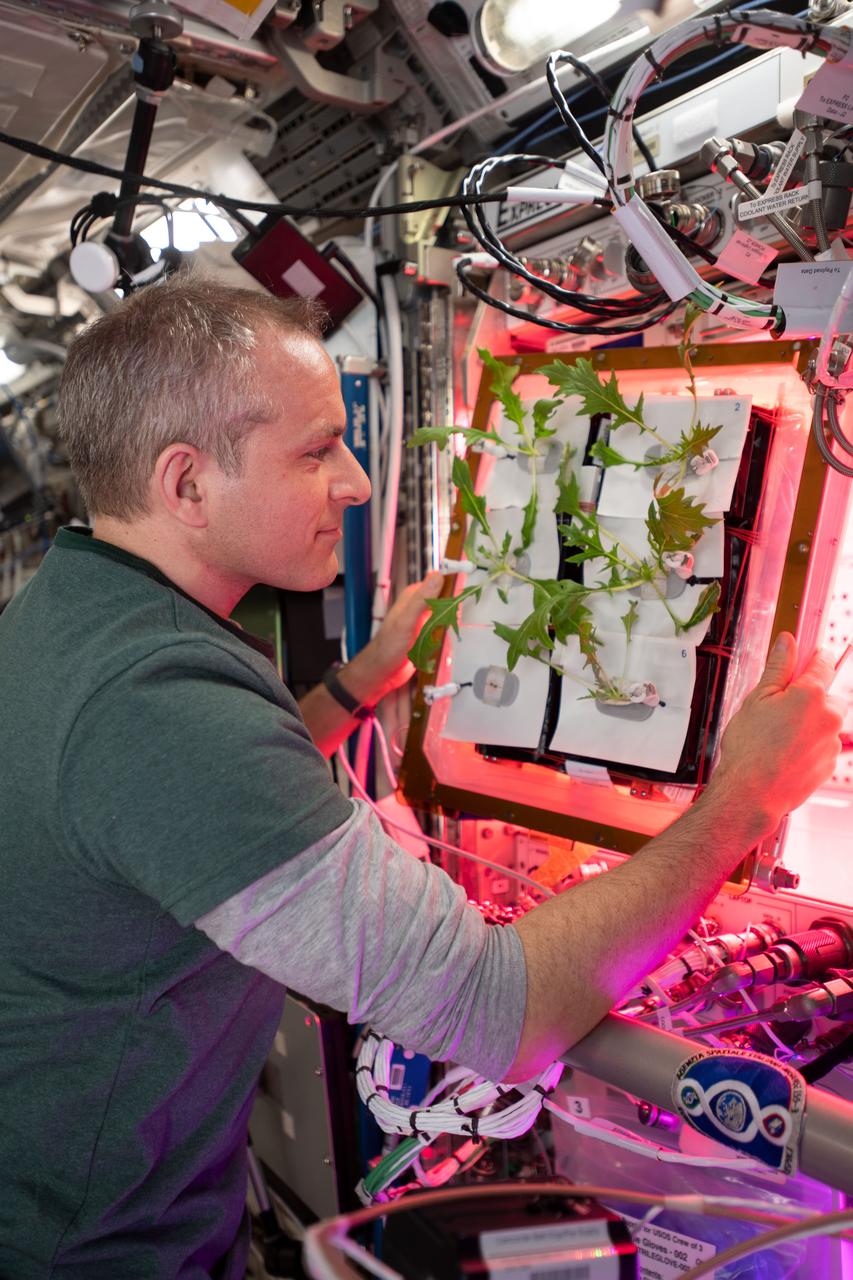
iss059e117393 (6/23/2019) --- Canadian Space Agency (CSA) astronaut David Saint-Jacques is photographed during VEG-04 Water Check and Mass Measurement Device Operations. Saint-Jacques is watering the plants if needed and looking for any leaves that have broken off. The research of Veg-04A focuses on the impact of light quality and fertilizer on leafy crop growth for a 28-day grow-out.
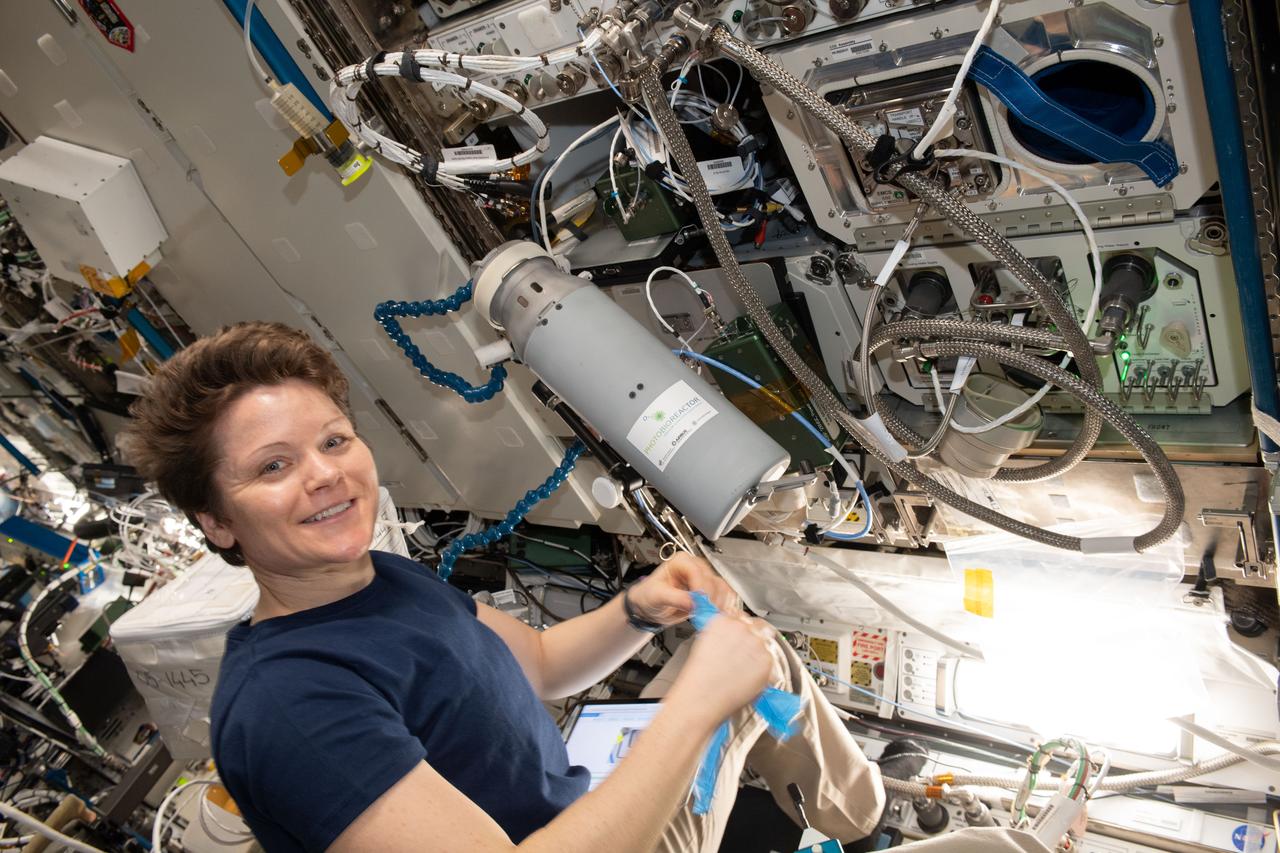
iss059e092349 (June 6, 2019) --- NASA astronaut Anne McClain works with Photobioreactor hardware for a study demonstrating that microalgae could be used to support hybrid life support systems in space. This hybrid approach could be helpful in future long-duration exploration missions, reducing the amount of consumables required from Earth.
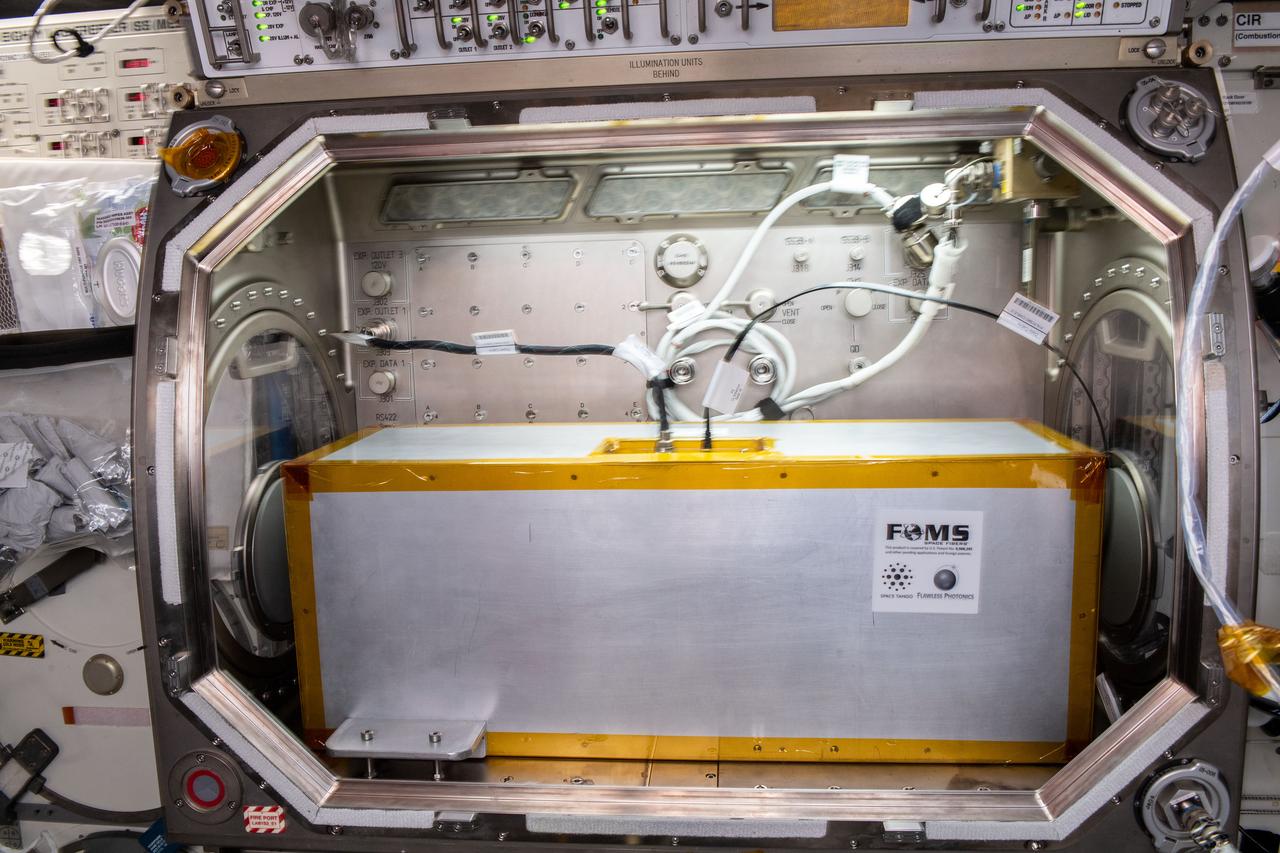
iss059e034705 (4/23/2019) --- A view taken during the installation of the Space Fibers experiment hardware into the Microgravity Science Glovebox (MSG) in the Destiny module aboard the International Space Station (ISS). Manufacturing Fiber Optic Cable in Microgravity (Space Fibers) evaluates a method for producing fiber optic cable from a blend of zirconium, barium, lanthanum, sodium and aluminum, called ZBLAN, in space. ZBLAN produces glass one hundred times more transparent than silica-based glass, exceptional for fiber optics. Microgravity suppresses two mechanisms that commonly degrade fiber, and previous studies showed improved properties in fiber drawn in microgravity compared to that fabricated on the ground.
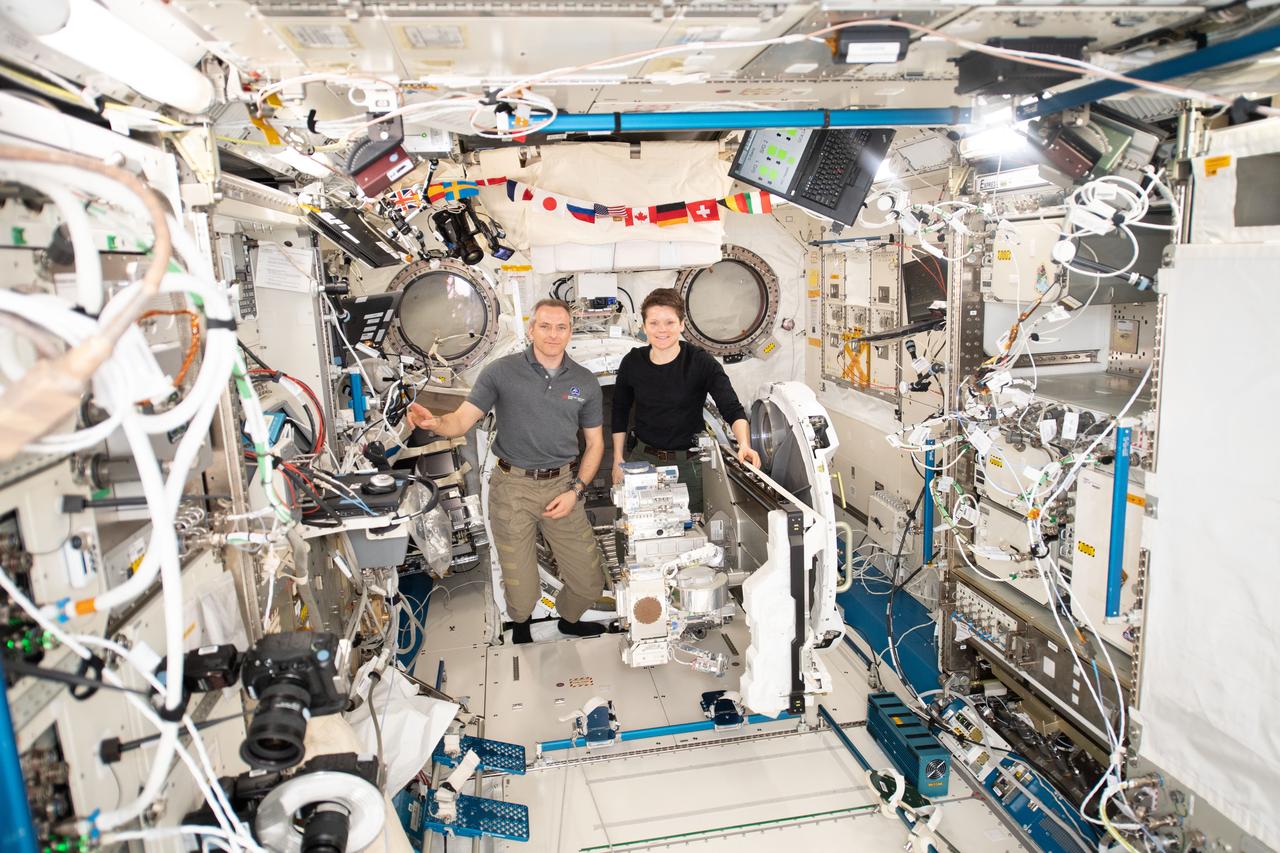
iss058e015664 (2/19/2019) --- NASA astronaut Anne McClain and Canadian Space Agency (CSA) astronaut David Saint-Jacques shown during the installation of the Robotics Refueling Mission (RRM)-3 on the JEM Airlock slide table in the KIBO module aboard the International Space Station (ISS). Robotic Refueling Mission 3 (RRM3) demonstrates the first transfer and long term storage of liquid methane, a cryogenic fluid, in microgravity. The ability to replenish and store cryogenic fluids, which can function as a fuel or coolant, can help enable long duration journeys to destinations like the Moon and Mars.
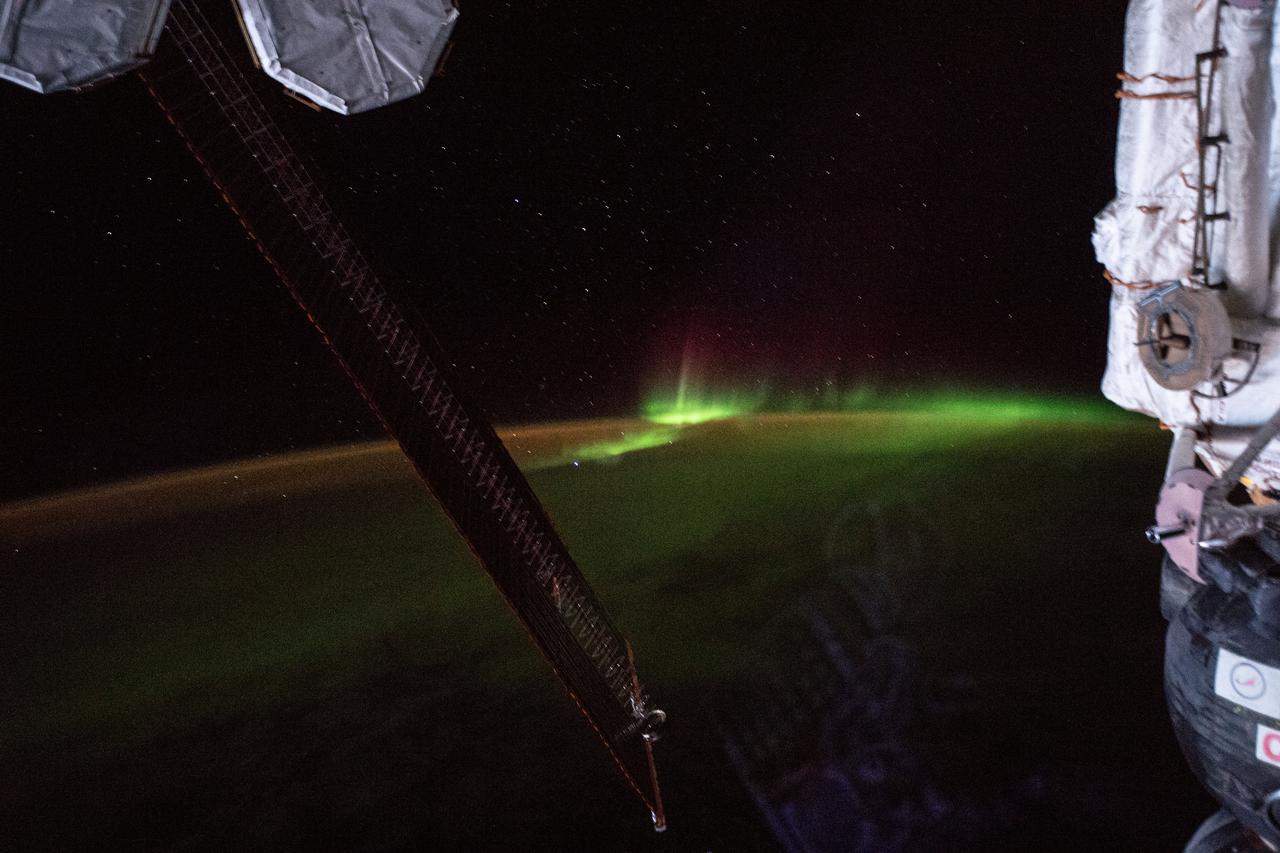
iss059e010180 (April 3, 2019) --- The aurora australis, also known as the "southern lights", is pictured as the International Space Station orbited 265 miles above the Indian Ocean southwest of Australia. Portions of the orbital complex can be seen including (from left) a pair of high-pressure gas tanks, solar arrays and the Soyuz MS-12 crew ship docked to the Rassvet module.