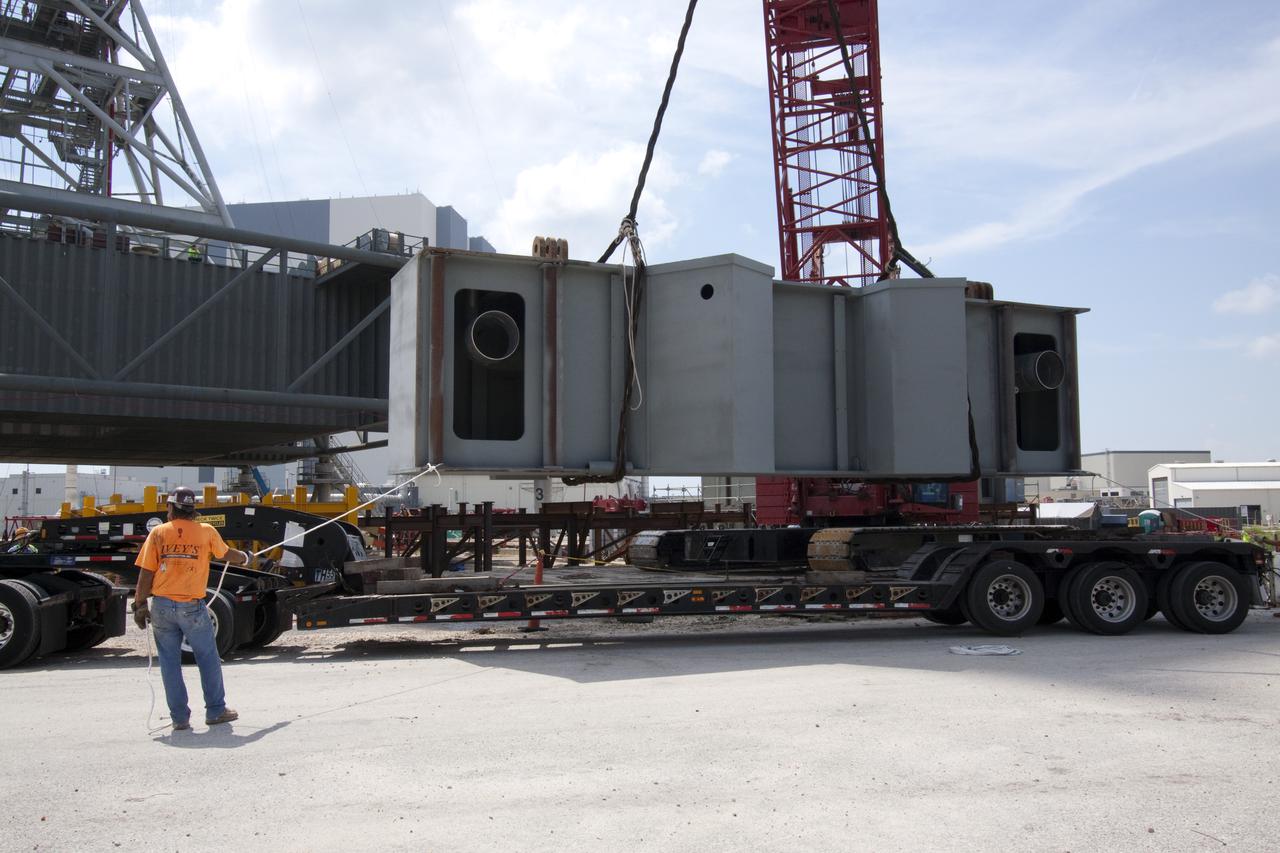
CAPE CANAVERAL, Fla. – At NASA's Kennedy Space Center in Florida, the third segment of the launch mount for a new mobile launcher, or ML, being constructed to support NASA's future human spaceflight program is lifted from the tractor-trailer on which it was delivered. The construction is taking place in the mobile launcher park site north of Kennedy's Vehicle Assembly Building. The new launcher is 355 feet tall and has multiple platforms for personnel access. The base of the launcher is lighter than space shuttle mobile launcher platforms so the crawler-transporter can pick up the heavier load of the tower and a taller rocket. For information on NASA's future plans, visit http:__www.nasa.gov. Photo credit: NASA_Jack Pfaller
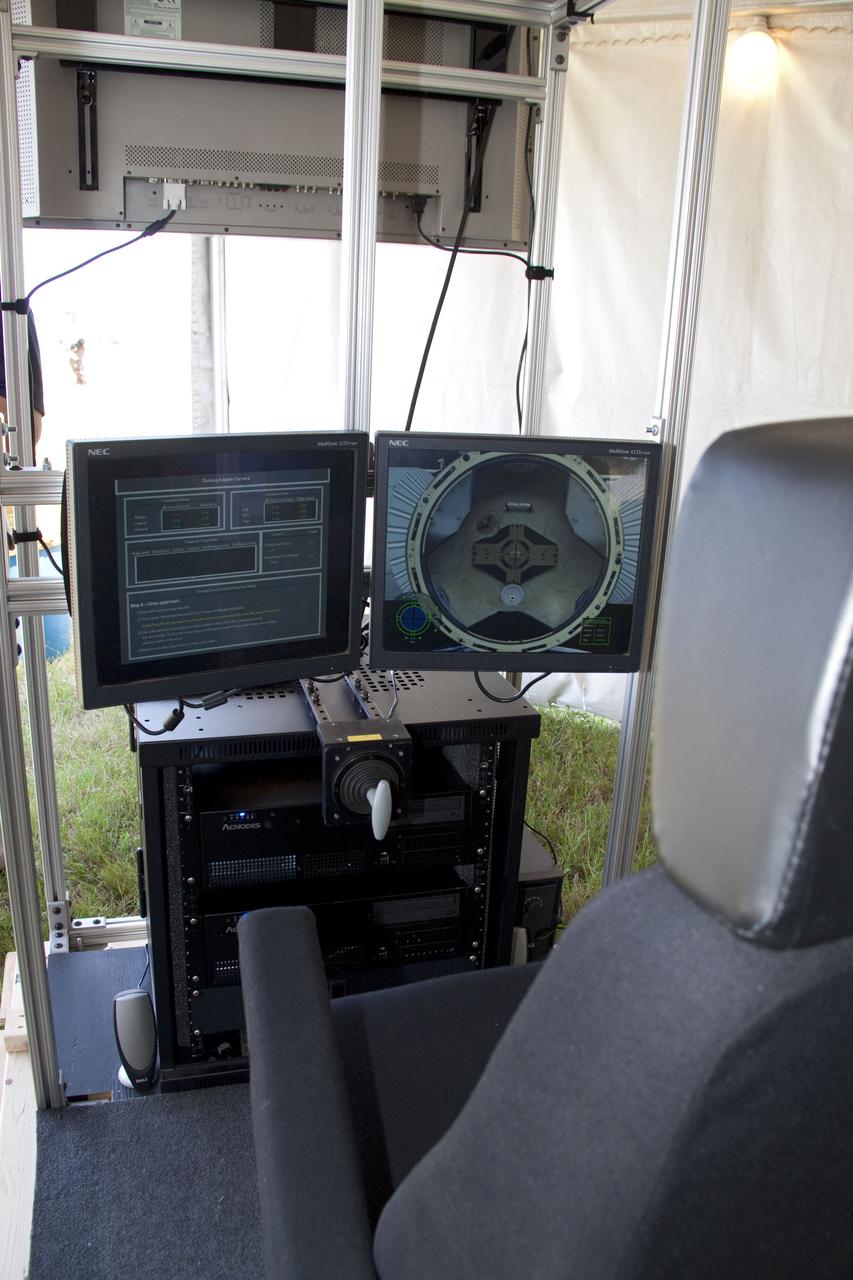
CAPE CANAVERAL, Fla. -- An interactive docking simulator developed by Lockheed Martin gave STS-134 launch guests at NASA's Kennedy Space Center in Florida the opportunity to fly a realistic docking maneuver with the International Space Station. The center screen provides the forward view to the docking target while the white T-shaped handle is used for translation corrections during the maneuver. The Sensor Test for Orion Relnav Risk Mitigation, or STORRM, flight test planned for space shuttle Endeavour's STS-134 mission will mature the sensor technologies to make these docking operations easier and safer for America's next-generation exploration spacecraft. STS-134 also will deliver the Express Logistics Carrier-3, Alpha Magnetic Spectrometer-2 (AMS), a high-pressure gas tank and additional spare parts for the Dextre robotic helper to the space station. Endeavour was scheduled to launch at 3:47 p.m. on April 29, but that attempt was scrubbed for at least 72 hours while engineers assess an issue associated with the shuttle's Auxiliary Power Unit 1. STS-134 will be the final spaceflight for Endeavour. For more information visit, www.nasa.gov_mission_pages_shuttle_shuttlemissions_sts134_index.html. Photo credit: NASA_Jack Pfaller
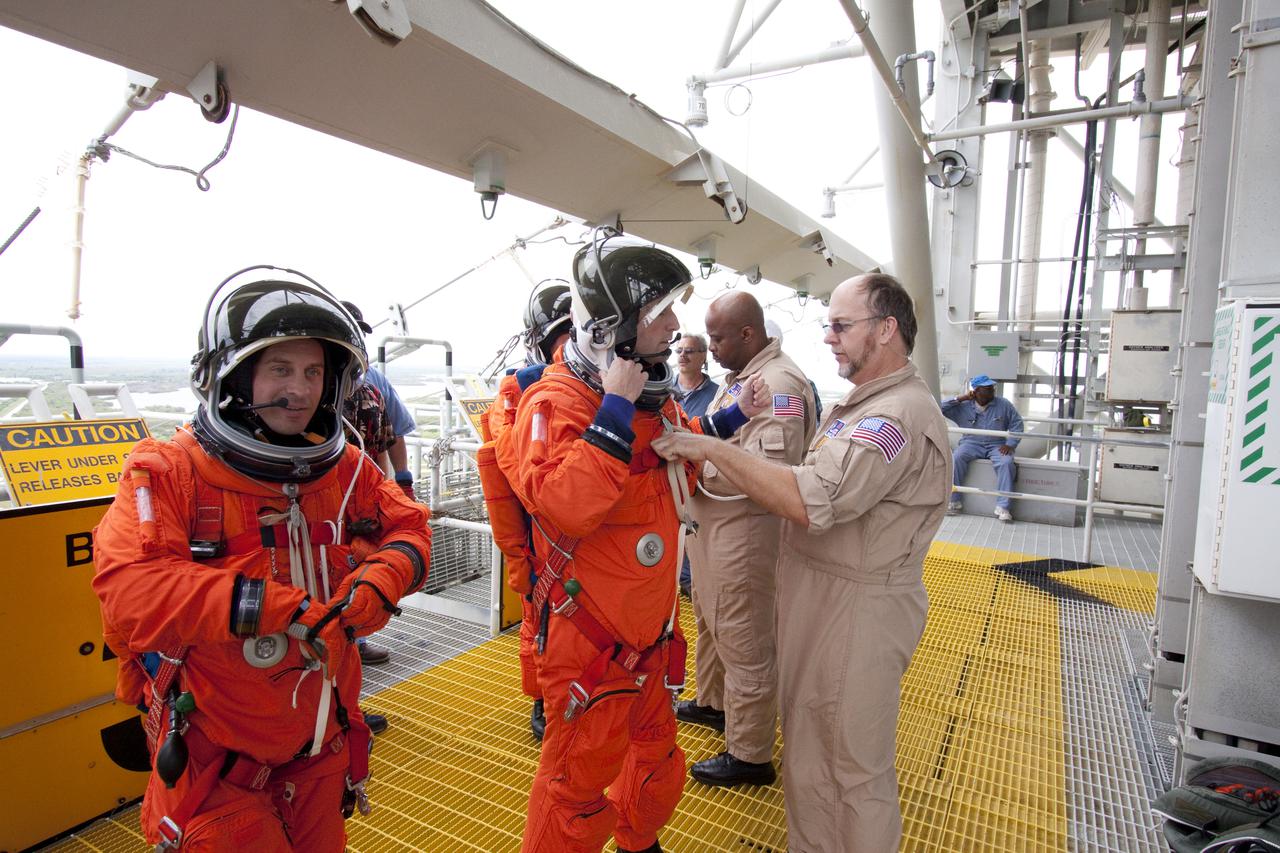
CAPE CANAVERAL, Fla. - At Launch Pad 39A at NASA's Kennedy Space Center in Florida, STS-132 Mission Specialist Garrett Reisman, left, and Commander Ken Ham, dressed in their orange launch-and-entry suits, remove their helmets following practice of emergency exit procedures. Evacuation from the pad's 195-foot level in the event of an emergency is made possible by seven baskets suspended from seven slidewires that extend from the fixed service structure to a landing zone 1,200 feet west of the pad. The crew is participating in a launch dress rehearsal, called the Terminal Countdown Demonstration Test, or TCDT. TCDT provides each shuttle crew and launch team the opportunity to participate in various simulated countdown activities, including equipment familiarization and emergency procedures. On the STS-132 mission, the six-member crew will deliver an Integrated Cargo Carrier, or ICC, and the Russian-built Mini-Research Module-1, or MRM-1, to the International Space Station aboard space shuttle Atlantis. The ICC is an unpressurized flat bed pallet and keel yoke assembly used to support the transfer of exterior cargo from the shuttle to the space station. The MRM-1, known as Rassvet, is the second in a series of new pressurized components for Russia and will be permanently attached to the Earth-facing port of the Zarya control module. Rassvet, which translates to 'dawn,' will be used for cargo storage and will provide an additional docking port to the station. STS-132 is the 34th mission to the station and the 132nd shuttle mission overall. Atlantis is targeted to launch on May 14 at 2:19 p.m. For information on the STS-132 mission, visit http:__www.nasa.gov_mission_pages_shuttle_shuttlemissions_sts132_index.html. Photo credit: NASA_Jack Pfaller
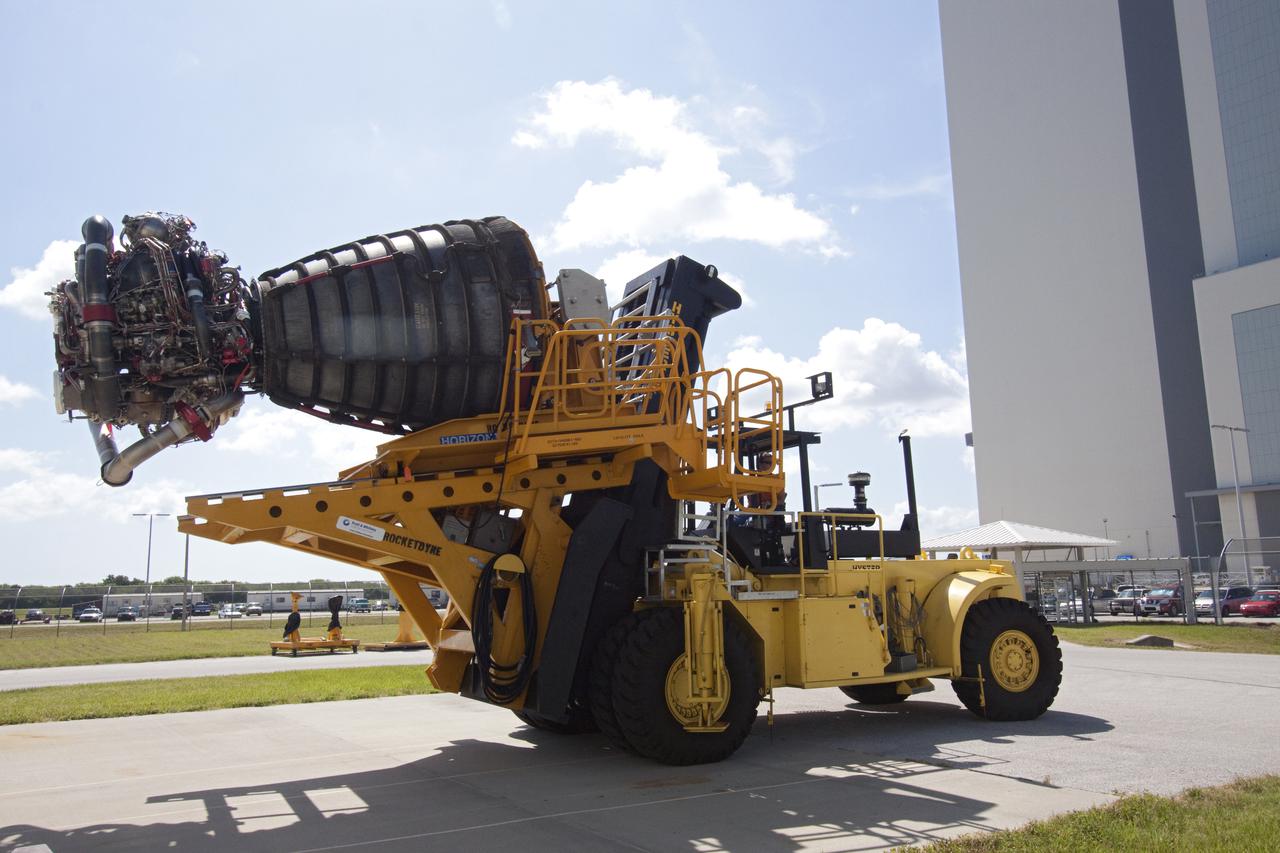
CAPE CANAVERAL, Fla. -- At NASA's Kennedy Space Center in Florida, a space shuttle main engine secured on a Hyster forklift moves from the Space Shuttle Main Engine Processing Facility to Orbiter Processing Facility-3. Three main engines, weighing 7,000 pounds each, will be installed in space shuttle Discovery for the STS-133 mission to the International Space Station. Discovery and its STS-133 crew are targeted to deliver the Express Logistics Carrier-4 filled with external payloads and experiments, as well as critical spare components to the station later this year. Photo credit: NASA_Jack Pfaller
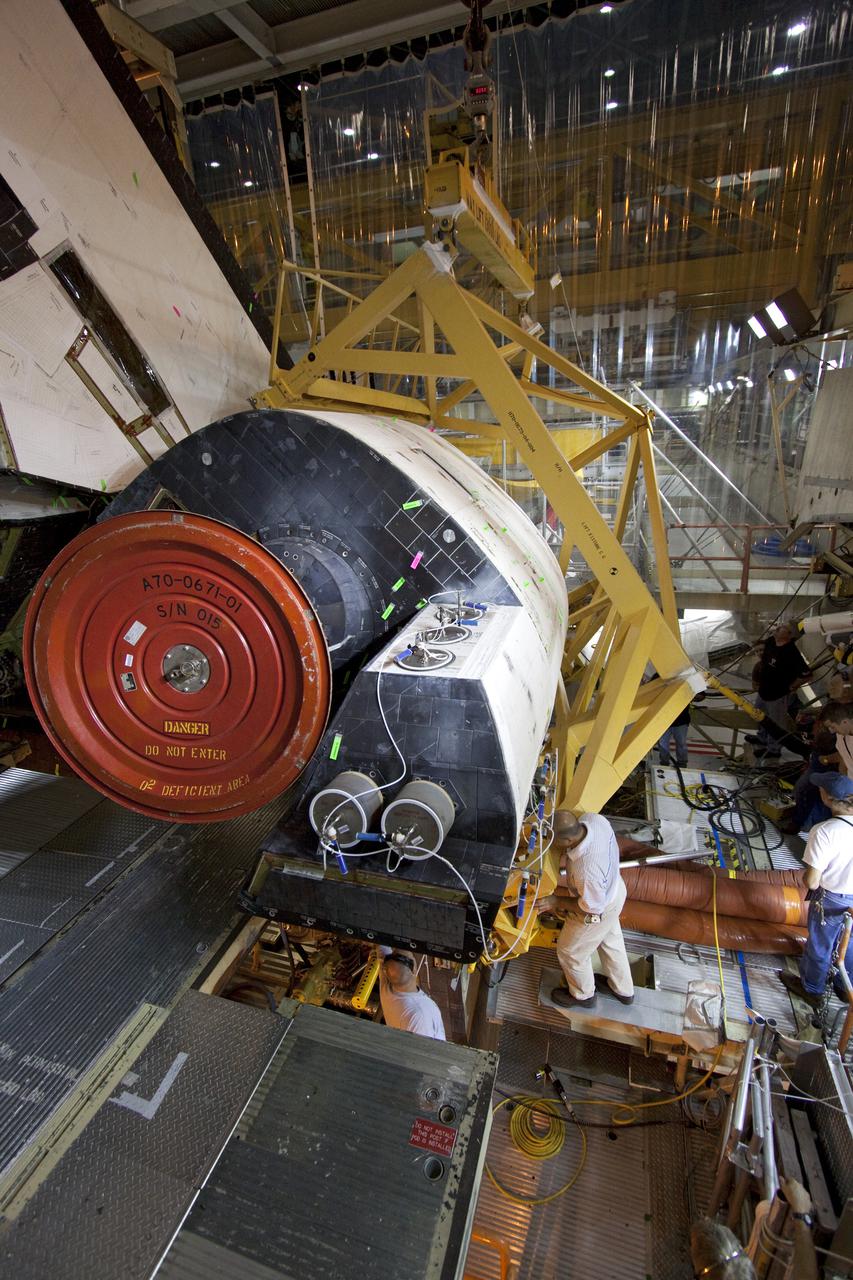
CAPE CANAVERAL, Fla. – Inside Orbiter Processing Facility-3 at Kennedy Space Center in Florida, United Space Alliance technicians prepare to remove the right-hand orbital maneuvering system, or OMS, pod from Discovery. Removal of the OMS pods is part of the orbiter processing activities to prepare Discovery for its next launch, the STS-133 mission. The STS-133 mission to the International Space Station is targeted for launch in the fall of 2010. Discovery’s six-person crew will take important spare parts to the International Space Station along with the Express Logistics Carrier 4. Photo credit: NASA_Jack Pfaller
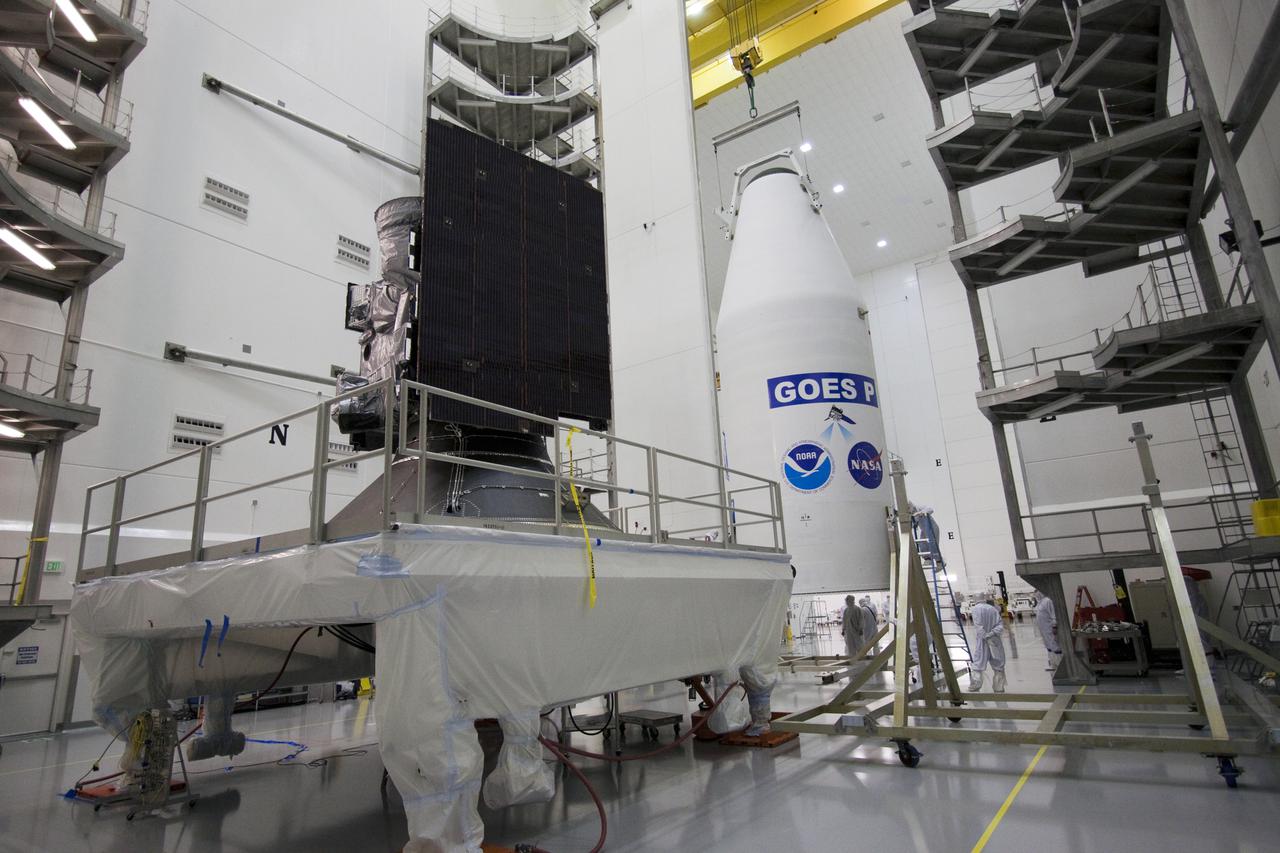
CAPE CANAVERAL, Fla. – At the Astrotech Space Operations facility in Titusville, Fla., NASA's GOES-P meteorological satellite is ready for encapsulation into one side of the Delta IV payload fairing. The fairing is a molded clamshell covering that fits flush with the outside surface of the rocket and forms an aerodynamic nose cone, protecting the spacecraft during launch and ascent. GOES-P, the latest Geostationary Operational Environmental Satellite, was developed by NASA for the National Oceanic and Atmospheric Administration, or NOAA. GOES-P is designed to watch for storm development and observed current weather conditions on Earth. Launch of GOES-P is targeted for March 1 from Launch Complex 37 aboard a United Launch Alliance Delta IV rocket. For information on GOES-P, visit http:__www.nasa.gov_mission_pages_GOES-P_main_index.html. Photo credit: NASA_Jack Pfaller
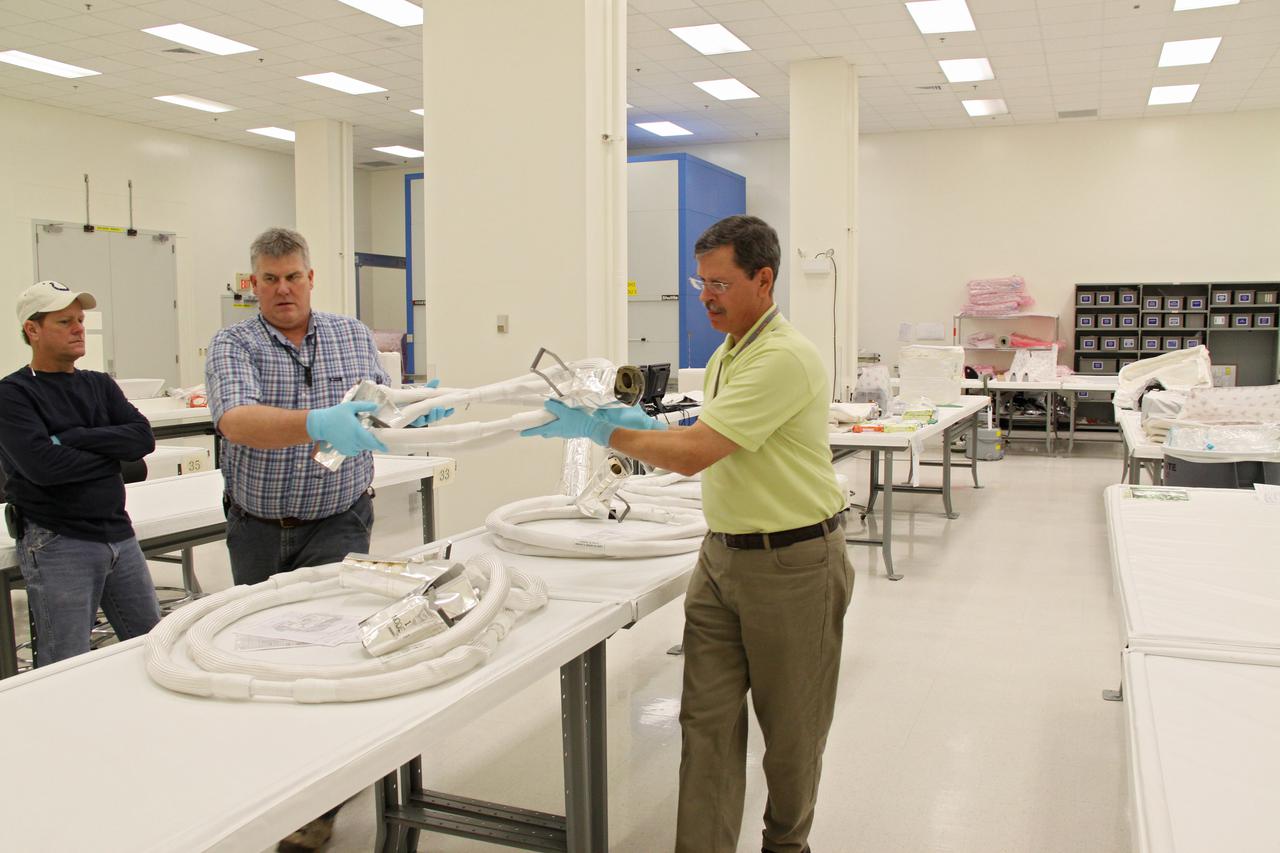
CAPE CANAVERAL, Fla. – In the Space Station Processing Facility at NASA's Kennedy Space Center in Florida, workers position along work tables the newly arrived replacement high-pressure ammonia jumper hoses to support space shuttle Endeavour's STS-130 mission. A problem arose during a prelaunch test Jan. 7 with one of four hoses that are needed to connect the ammonia loops of the International Space Station's Tranquility node to those of the Destiny laboratory. A decision was made to use an alternate hose design for use as the primary jumper. The new hoses are assembled from shorter hoses that were previously certified and tested. Connection of the modules requires two ammonia loops, with two lines apiece, each of which must be connected to both Tranquility and Destiny to route cooling to and from the Tranquility module. The primary payload for the STS-130 mission, Tranquility is a pressurized module that will provide additional room for crew members and many of the station's life support and environmental control systems. The node was built in Turin, Italy, by Thales Alenia Space for the European Space Agency. Endeavour's launch is set for Feb. 7. For information on the STS-130 mission and crew, visit http:__www.nasa.gov_mission_pages_shuttle_shuttlemissions_sts130_index.html. Photo credit: NASA_Jack Pfaller
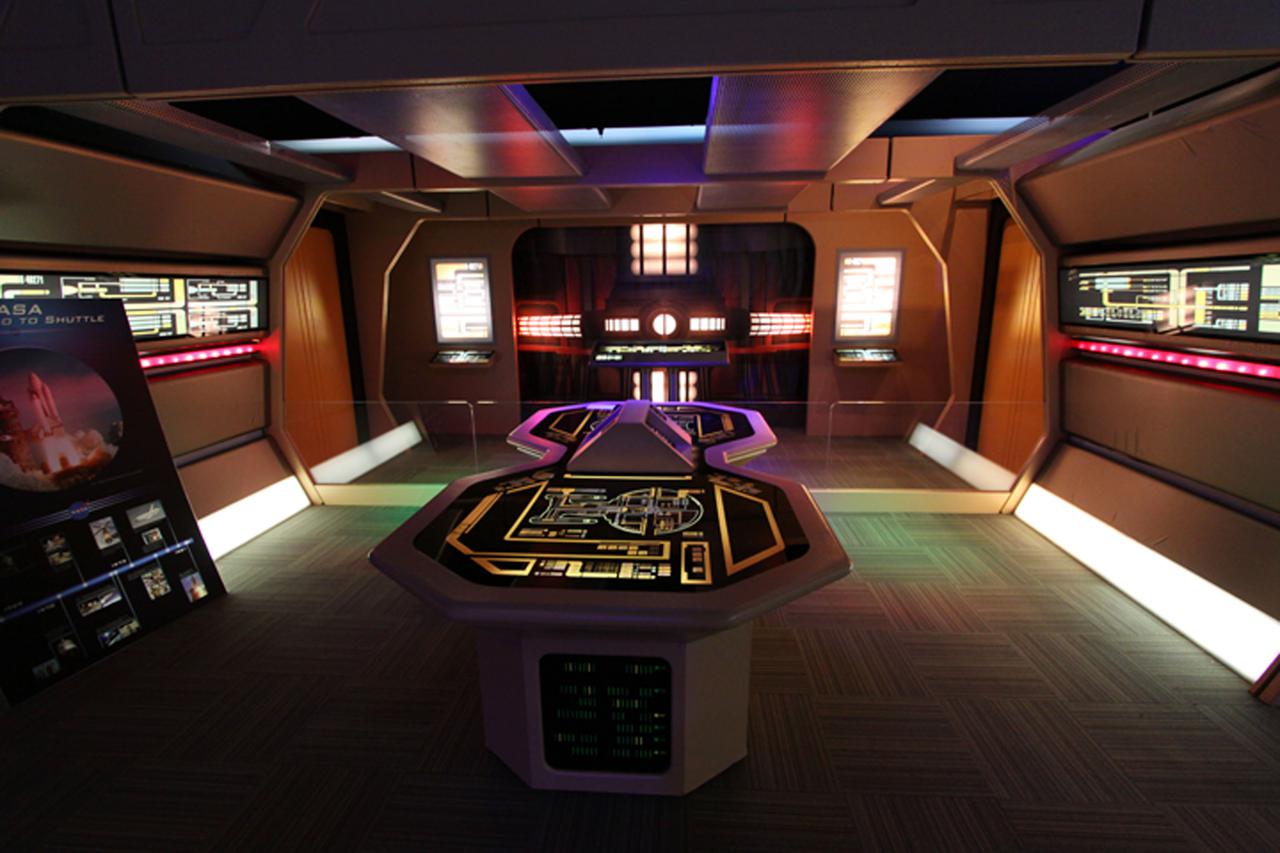
CAPE CANAVERAL, Fla. -- At NASA Kennedy Space Center's Visitor Complex, Star Trek memorabilia is being displayed this summer through Sept. 5. Appearing for the first time in the southeast, 'Star Trek: The Exhibition' is an interactive exhibit of authentic Star Trek artifacts from the past 40 years, featuring one-of-a-kind costumes, props and filming models from every Star Trek television series and feature film, including a recreation of the U.S.S. Enterprise Bridge from the original series. Photo credit: NASA_Jack Pfaller
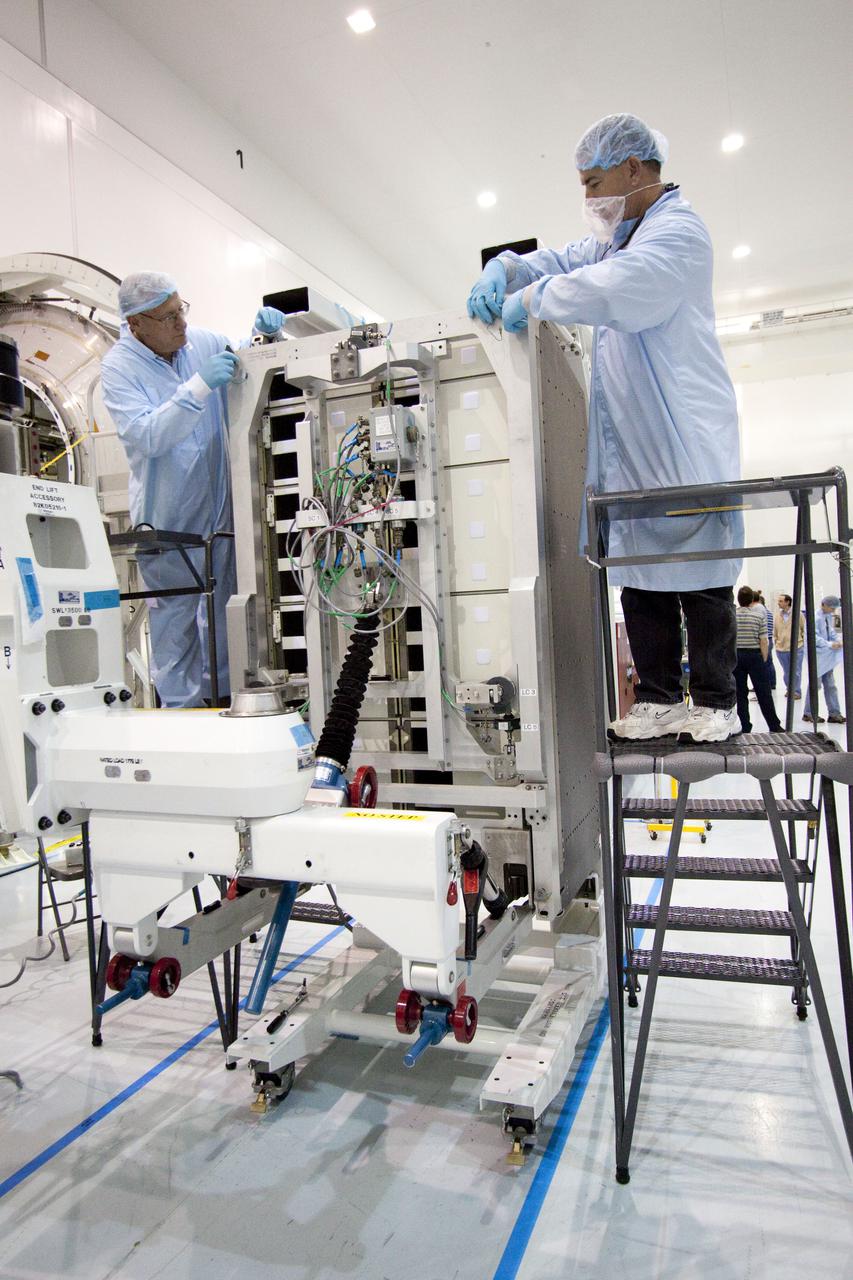
CAPE CANAVERAL, Fla. – In the Space Station Processing Facility at NASA's Kennedy Space Center in Florida, technicians prepare to install a resupply rack into the Permanent Multipurpose Module, or PMM. The Leonardo multi-purpose logistics module, or MPLM, is being modified to become the PMM that will carry supplies and critical spare parts to the International Space Station aboard space shuttle Discovery’s STS-133 mission. Discovery, targeted to launch Nov. 1, will leave the module behind so it can be used for microgravity experiments in fluid physics, materials science, biology and biotechnology. Photo credit: NASA_Jack Pfaller

CAPE CANAVERAL, Fla. - On Launch Pad 39A at NASA's Kennedy Space Center, STS-132 Mission Specialists Garrett Reisman, left, and Michael Good, dressed in their orange launch-and-entry suits, practice emergency exit procedures. Evacuation from the pad's 195-foot level in the event of an emergency is made possible by seven baskets suspended from seven slidewires that extend from the fixed service structure to a landing zone 1,200 feet west of the pad. The crew is participating in a launch dress rehearsal, called the Terminal Countdown Demonstration Test, or TCDT. TCDT provides each shuttle crew and launch team the opportunity to participate in various simulated countdown activities, including equipment familiarization and emergency procedures. On the STS-132 mission, the six-member crew will deliver an Integrated Cargo Carrier, or ICC, and the Russian-built Mini-Research Module-1, or MRM-1, to the International Space Station aboard space shuttle Atlantis. The ICC is an unpressurized flat bed pallet and keel yoke assembly used to support the transfer of exterior cargo from the shuttle to the space station. The MRM-1, known as Rassvet, is the second in a series of new pressurized components for Russia and will be permanently attached to the Earth-facing port of the Zarya control module. Rassvet, which translates to 'dawn,' will be used for cargo storage and will provide an additional docking port to the station. STS-132 is the 34th mission to the station and the 132nd shuttle mission overall. Atlantis is targeted to launch on May 14 at 2:19 p.m. For information on the STS-132 mission, visit http:__www.nasa.gov_mission_pages_shuttle_shuttlemissions_sts132_index.html. Photo credit: NASA_Jack Pfaller
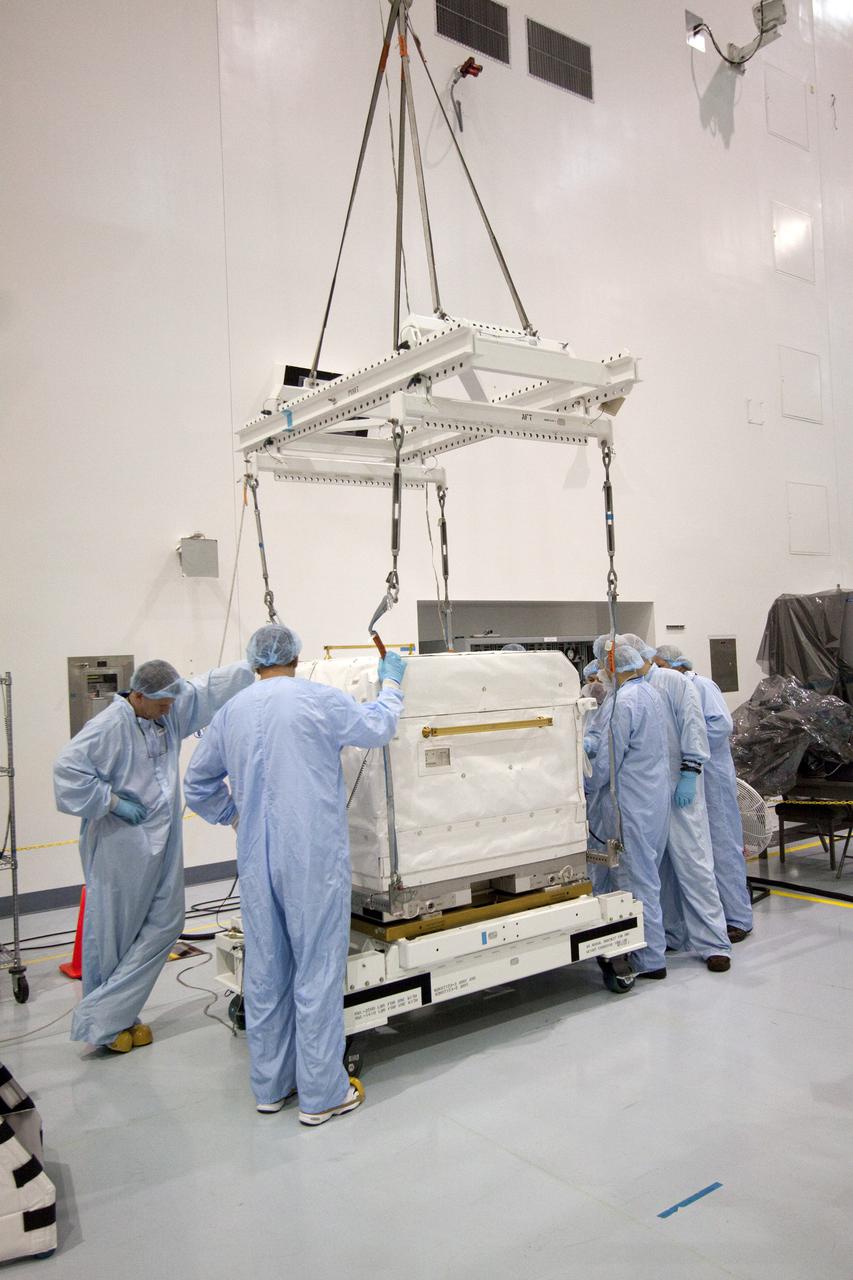
CAPE CANAVERAL, Fla. - In the Space Station Processing Facility at NASA's Kennedy Space Center in Florida, preparations are under way to move a cargo transport container to the ExPRESS Logistics Carrier-3, or ELC-3, on which it will be installed. The ELC-3 and the Alpha Magnetic Spectrometer are the primary payloads on space shuttle Endeavour's STS-134 mission to the International Space Station. Spare parts, including two S-band communications antennas; a high pressure gas tank; replacement parts for Dextre, the robotic hand on the station; and micrometeoroid debris shields, also will be delivered to the station. Endeavour's launch is targeted for mid-November. For information on the STS-134 mission, visit http:__www.nasa.gov_mission_pages_shuttle_shuttlemissions_sts134_index.html. Photo credit: NASA_Jack Pfaller

CAPE CANAVERAL, Fla. - In Orbiter Processing Facility-3 at NASA's Kennedy Space Center in Florida, workers ensure that the orbiter boom sensor system, or OBSS, is properly attached to a lifting device before removing it from space shuttle Discovery's payload bay. The workers are dressed in clean-room attire, known as 'bunny suits.' The 50-foot-long OBSS attaches to the end of the shuttle’s robotic arm and supports the cameras and laser systems used to inspect the shuttle’s thermal protection system while in space. The OBSS' inspection boom assembly, or IBA, is removed from the arm every other processing flow for a detailed inspection. After five consecutive flights, all IBA internal components are submitted to a thorough electrical checkout in Kennedy's Remote Manipulator System Lab. Discovery next will deliver the first Permanent Multi-purpose Module, or PMM; the Express Logistics Carrier 4; and critical spare parts to the International Space Station on the STS-133 mission. Launch is targeted for Sept. 16. Photo credit: NASA_Jack Pfaller
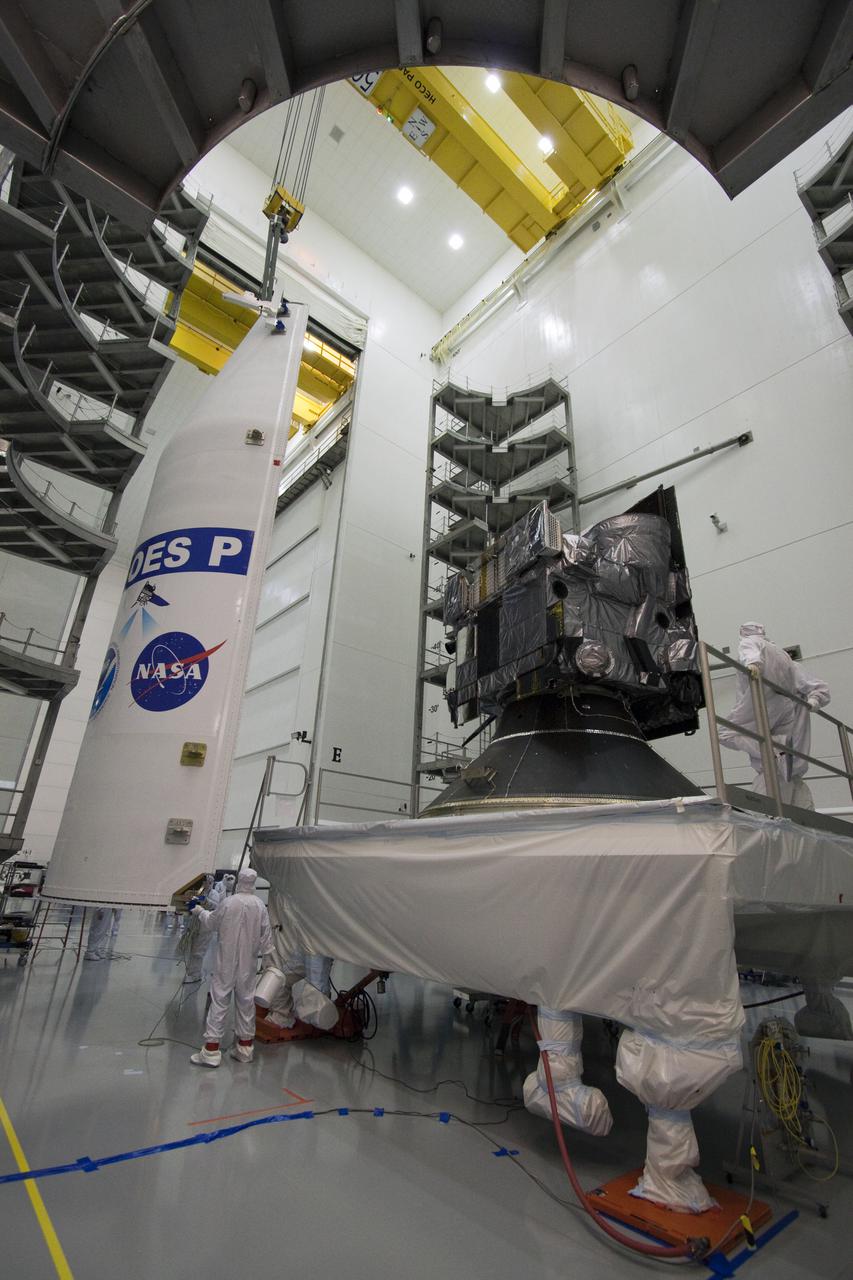
CAPE CANAVERAL, Fla. – At the Astrotech Space Operations facility in Titusville, Fla., one side of the Delta IV payload fairing that will enclose NASA's GOES-P meteorological satellite glides toward the spacecraft. The fairing is a molded clamshell covering that fits flush with the outside surface of the rocket and forms an aerodynamic nose cone, protecting the spacecraft during launch and ascent. GOES-P, the latest Geostationary Operational Environmental Satellite, was developed by NASA for the National Oceanic and Atmospheric Administration, or NOAA. GOES-P is designed to watch for storm development and observed current weather conditions on Earth. Launch of GOES-P is targeted for March 1 from Launch Complex 37 aboard a United Launch Alliance Delta IV rocket. For information on GOES-P, visit http:__www.nasa.gov_mission_pages_GOES-P_main_index.html. Photo credit: NASA_Jack Pfaller
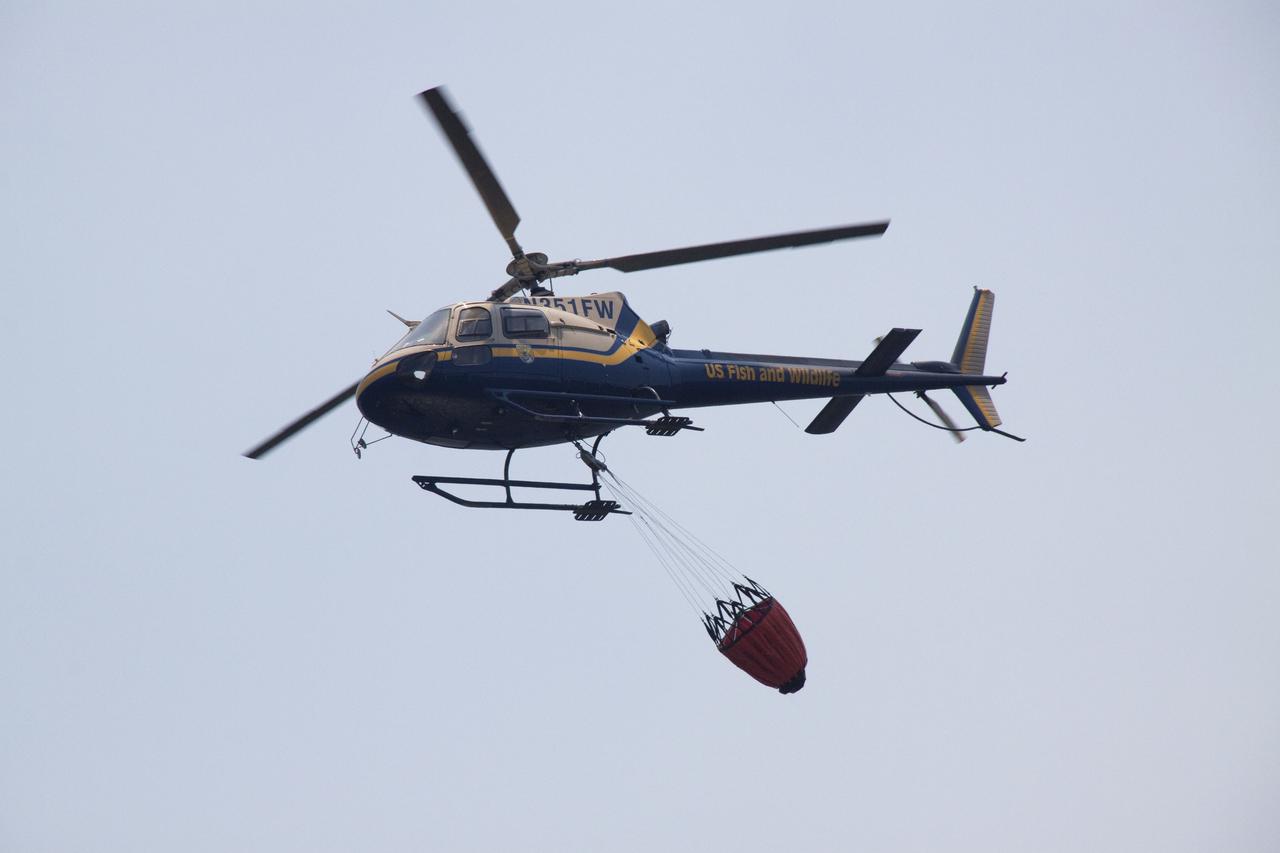
CAPE CANAVERAL, Fla. -- At NASA's Kennedy Space Center in Florida, a helicopter collects water from the Turn Basin to douse a nearby brush fire. The fire was spotted in a rural area southeast of Kennedy’s Press Site approximately three miles away from Launch Pad 39A, where space shuttle Endeavour awaits liftoff on the STS-134 mission to the International Space Station. The fire is being contained by crews from Kennedy and the U.S. Fish and Wildlife Service and smoke is not expected to impact launch. Photo credit: NASA_Jack Pfaller
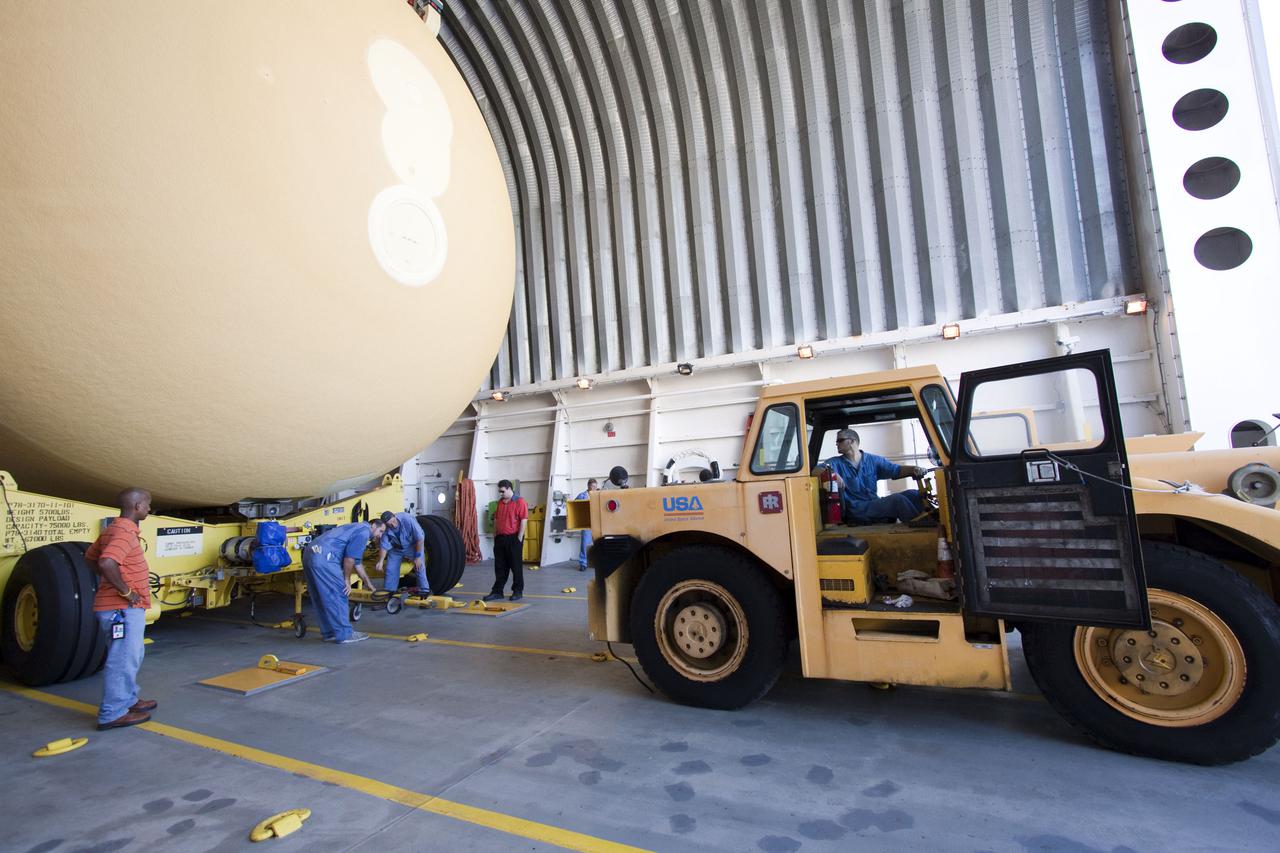
CAPE CANAVERAL, Fla. -- At NASA's Kennedy Space Center in Florida, workers prepare External Tank-138 for offload from the Pegasus barge docked in the turn basin near the Vehicle Assembly Building. The external fuel tank arrived in Florida on July 13, from NASA's Michoud Assembly Facility near New Orleans. ET-138, the last newly manufactured tank, was originally designated to fly on Endeavour's STS-134 mission to the International Space Station, but later reassigned to fly on space shuttle Atlantis' final mission, STS-135. For information, visit www.nasa.gov_shuttle. Photo credit: NASA_Jack Pfaller
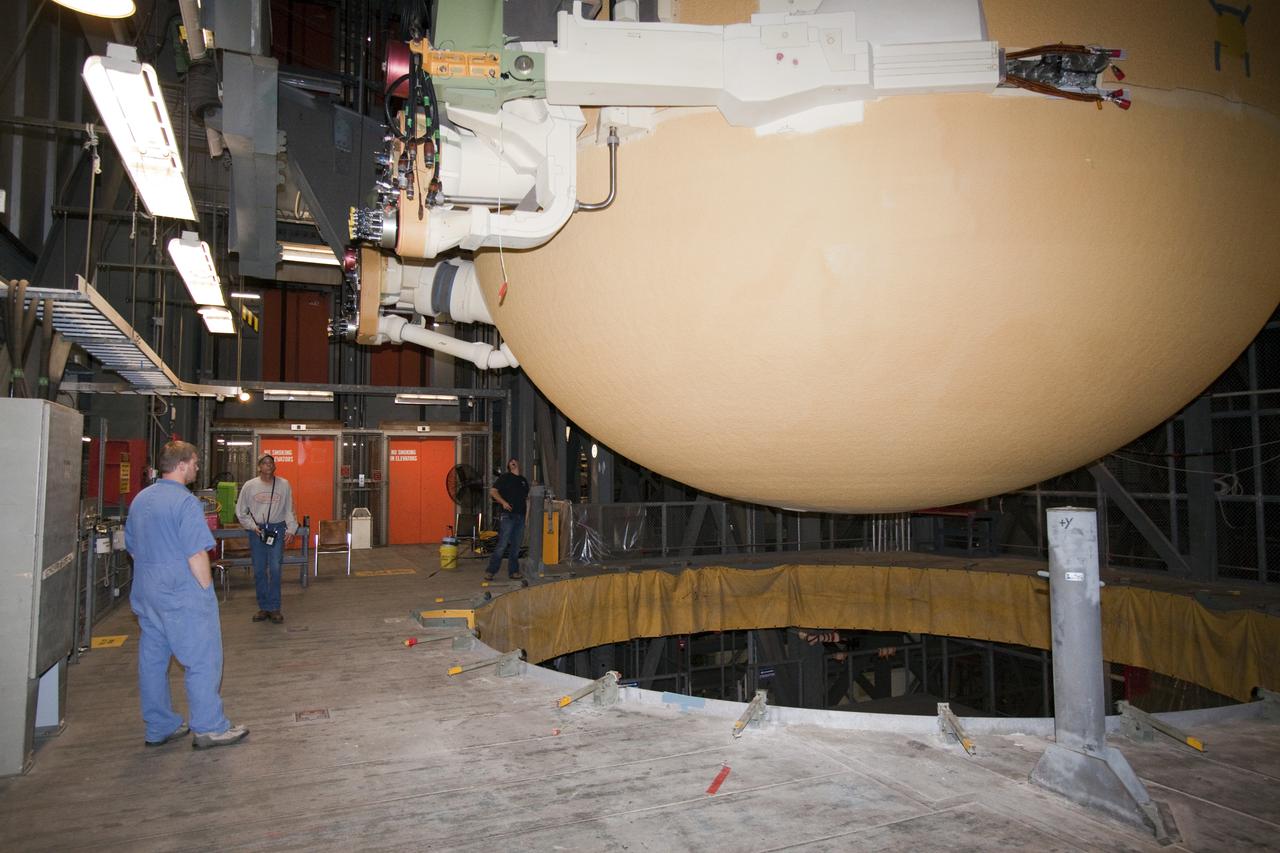
CAPE CANAVERAL, Fla. - In the Vehicle Assembly Building at NASA's Kennedy Space Center in Florida, workers observe the external fuel tank, ET-136, for space shuttle Atlantis' STS-132 mission, as it is lifted from its test cell. The external tank arrived at Kennedy from NASA's Michoud Assembly Facility on March 1 aboard the Pegasus barge. The six-member STS-132 crew will deliver an Integrated Cargo Carrier and a Russian-built Mini-Research Module, or MRM-1, to the International Space Station. Launch is targeted for May 14. For information on the STS-132 mission, visit http:__www.nasa.gov_mission_pages_shuttle_shuttlemissions_sts132_index.html. Photo credit: NASA_Jack Pfaller
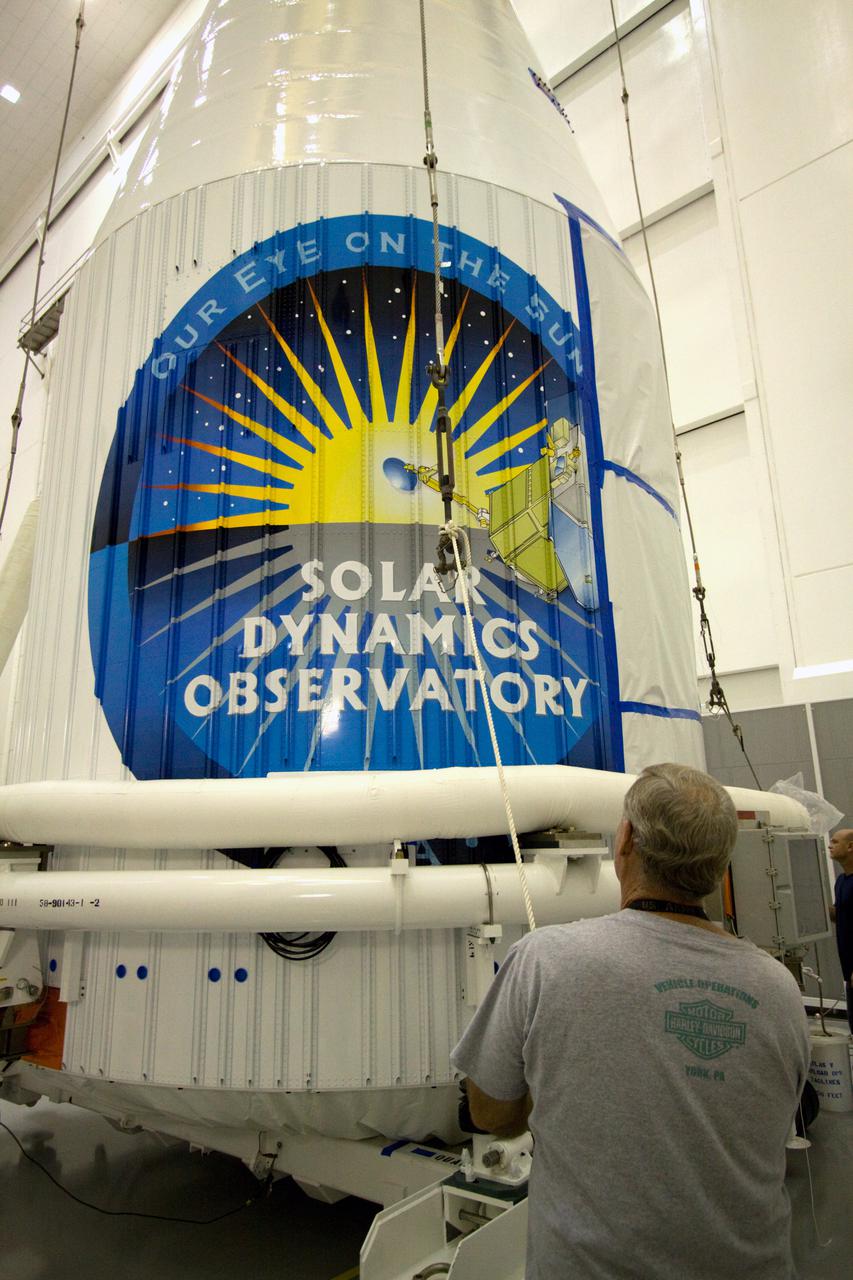
CAPE CANAVERAL, Fla. – At the Astrotech Space Operations facility in Titusville, Fla., the logo on the outside of the Atlas V payload fairing identifies the spacecraft enclosed within as NASA's Solar Dynamics Observatory, or SDO. Workers are preparing to lift SDO onto a transporter in the airlock. SDO is the first mission in NASA's Living With a Star Program and is designed to study the causes of solar variability and its impacts on Earth. The spacecraft's long-term measurements will give solar scientists in-depth information to help characterize the interior of the Sun, the Sun's magnetic field, the hot plasma of the solar corona, and the density of radiation that creates the ionosphere of the planets. The information will be used to create better forecasts of space weather needed to protect the aircraft, satellites and astronauts living and working in space. Liftoff aboard an Atlas V rocket is targeted for Feb. 9 from Launch Complex 41 on Cape Canaveral Air Force Station. For information on SDO, visit http:__www.nasa.gov_sdo. Photo credit: NASA_Jack Pfaller
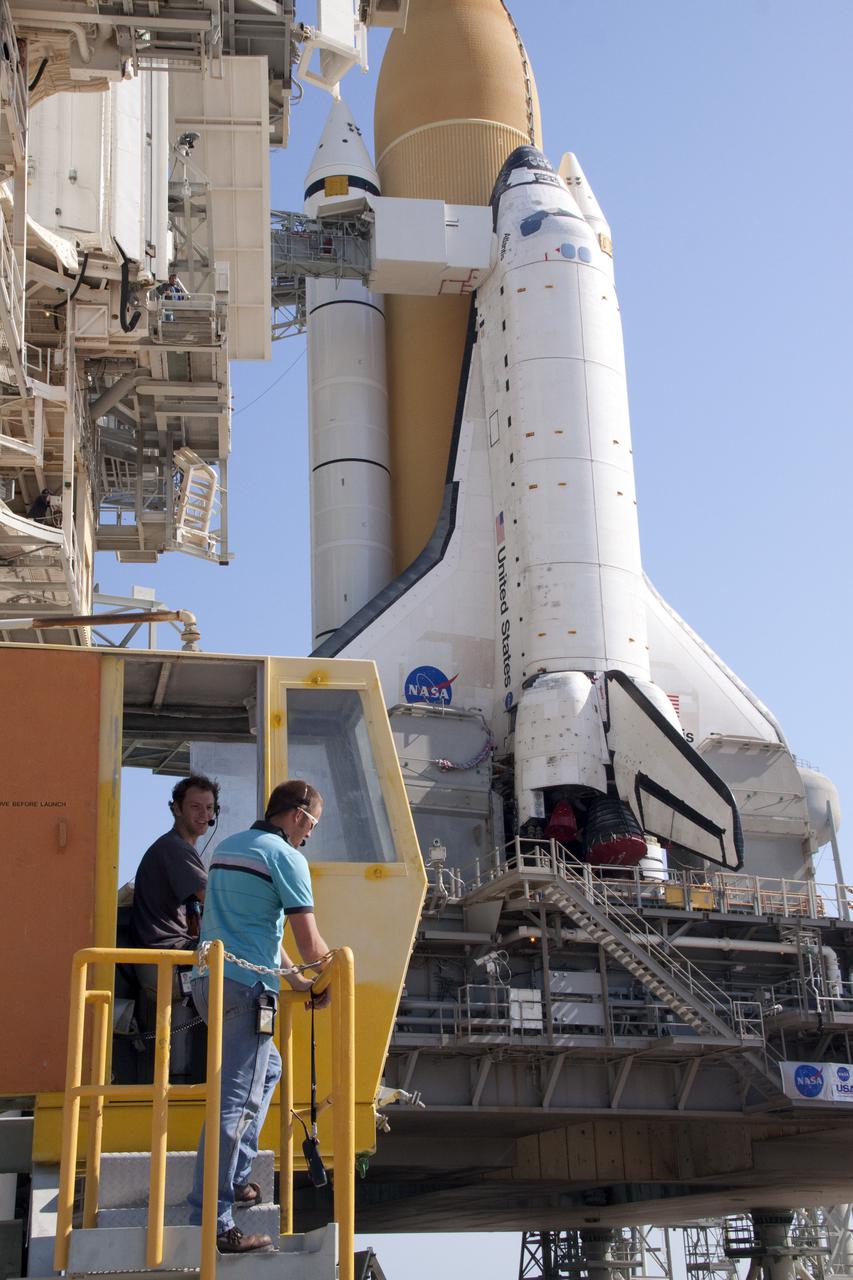
CAPE CANAVERAL, Fla. – On Launch Pad 39A at NASA's Kennedy Space Center in Florida, United Space Alliance workers in the cab of the rotating service structure prepare to close it around space shuttle Atlantis. This mobile structure provides protected access to the shuttle for installation and servicing of payloads at the pad, as well as servicing access to certain systems on the shuttle. Atlantis' first motion on its 3.4-mile trip from the Vehicle Assembly Building was at 11:31 p.m. EDT April 21. The shuttle was secured, or 'hard down,' on the pad at 6:03 a.m. April 22. Rollout is a significant milestone in launch processing activities. On the STS-132 mission, the six-member crew will deliver an Integrated Cargo Carrier, or ICC, and the Russian-built Mini-Research Module-1, or MRM-1, to the International Space Station. The ICC is an unpressurized flat bed pallet and keel yoke assembly used to support the transfer of exterior cargo from the shuttle to the space station. The MRM-1, known as Rassvet, is the second in a series of new pressurized components for Russia and will be permanently attached to the Earth-facing port of the Zarya control module. Rassvet, which translates to 'dawn,' will be used for cargo storage and will provide an additional docking port to the station. STS-132 is the 34th mission to the station and the 132nd shuttle mission overall. Atlantis is targeted to launch on May 14 at 2:19 p.m. For information on the STS-132 mission, visit http:__www.nasa.gov_mission_pages_shuttle_shuttlemissions_sts132_index.html. Photo credit: NASA_Jack Pfaller
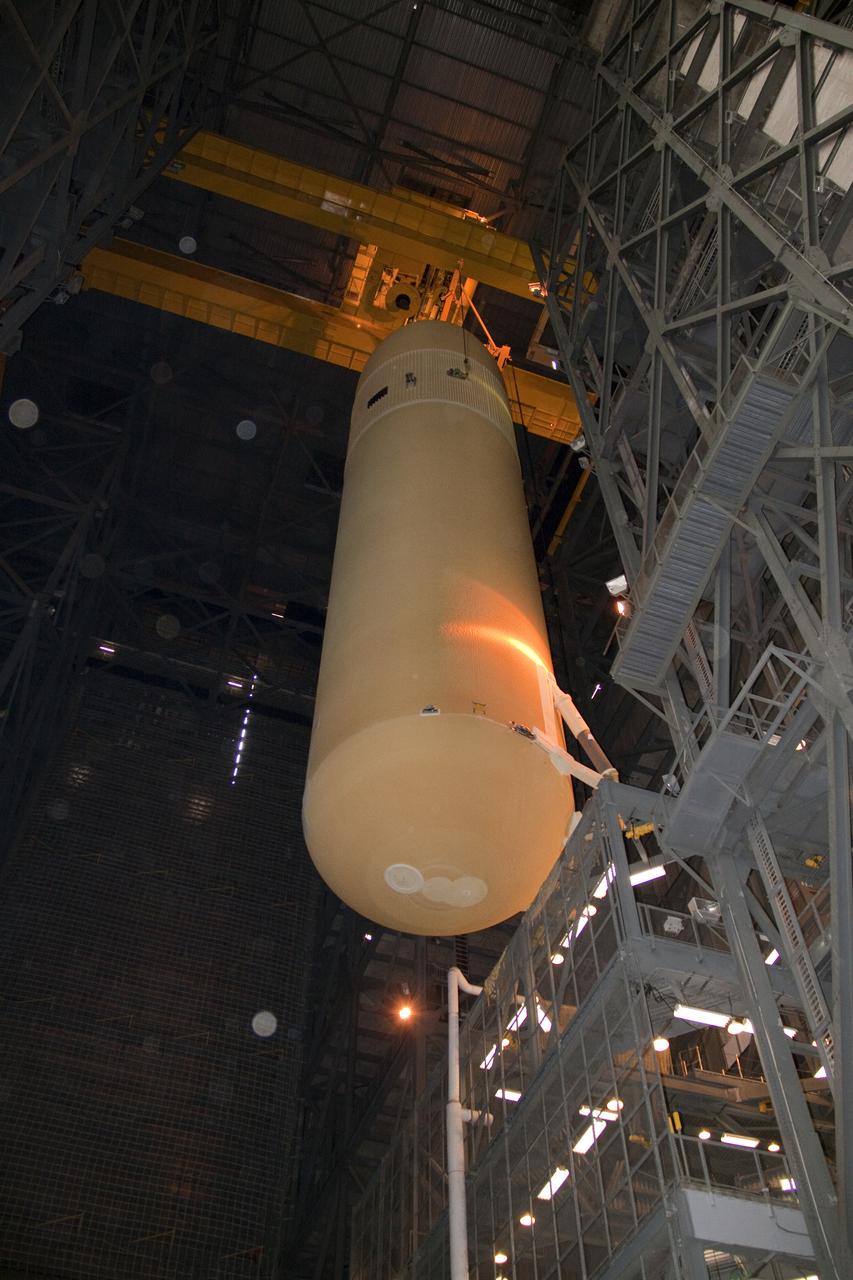
CAPE CANAVERAL, Fla. - In the Vehicle Assembly Building at NASA's Kennedy Space Center in Florida, the external fuel tank for space shuttle Atlantis' STS-132 mission, ET-136, is suspended over the transfer aisle. The external tank arrived at Kennedy from NASA's Michoud Assembly Facility on March 1 aboard the Pegasus barge. The six-member STS-132 crew will deliver an Integrated Cargo Carrier and a Russian-built Mini-Research Module, or MRM-1, to the International Space Station. Launch is targeted for May 14. For information on the STS-132 mission, visit http:__www.nasa.gov_mission_pages_shuttle_shuttlemissions_sts132_index.html. Photo credit: NASA_Jack Pfaller
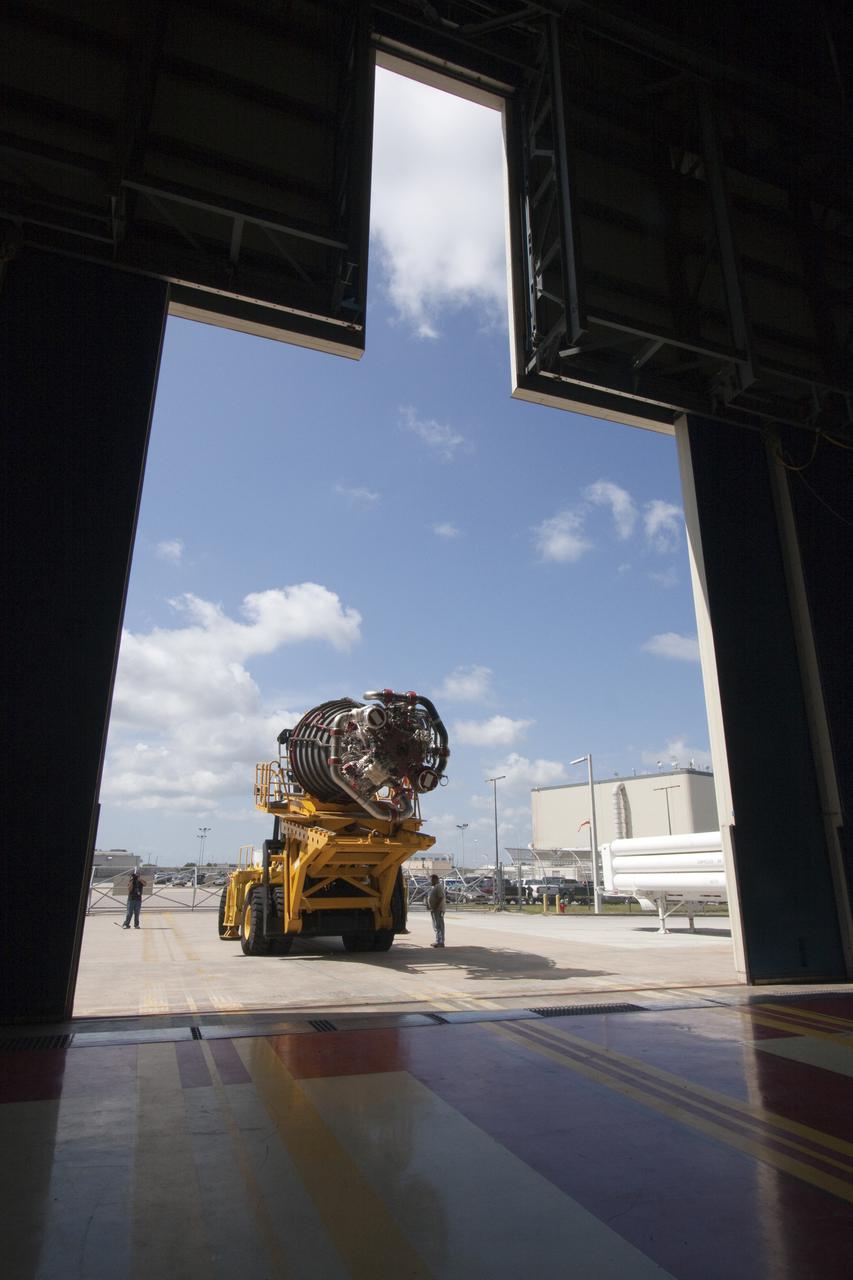
CAPE CANAVERAL, Fla. -- At NASA's Kennedy Space Center in Florida, a space shuttle main engine secured on a Hyster forklift enters Orbiter Processing Facility-3. Three main engines, weighing 7,000 pounds each, will be installed in space shuttle Discovery for the STS-133 mission to the International Space Station. Engines are inspected and maintained in the nearby Space Shuttle Main Engine Processing Facility before installation. Discovery and its STS-133 crew are targeted to deliver the Express Logistics Carrier-4 filled with external payloads and experiments, as well as critical spare components to the station later this year. Photo credit: NASA_Jack Pfaller

CAPE CANAVERAL, Fla. – On Launch Pad 39A at NASA's Kennedy Space Center in Florida, the mobile launcher platform supporting space shuttle Atlantis has been secured over the flame trench on the pad's pedestals. The pad has six stationary and four extensible pedestals. Atlantis' first motion on its 3.4-mile trip from the Vehicle Assembly Building was at 11:31 p.m. EDT April 21. The shuttle was secured, or 'hard down,' on the pad at 6:03 a.m. April 22. Rollout is a significant milestone in launch processing activities. On the STS-132 mission, the six-member crew will deliver an Integrated Cargo Carrier, or ICC, and the Russian-built Mini-Research Module-1, or MRM-1, to the International Space Station. The ICC is an unpressurized flat bed pallet and keel yoke assembly used to support the transfer of exterior cargo from the shuttle to the space station. The MRM-1, known as Rassvet, is the second in a series of new pressurized components for Russia and will be permanently attached to the Earth-facing port of the Zarya control module. Rassvet, which translates to 'dawn,' will be used for cargo storage and will provide an additional docking port to the station. STS-132 is the 34th mission to the station and the 132nd shuttle mission overall. Atlantis is targeted to launch on May 14 at 2:19 p.m. For information on the STS-132 mission, visit http:__www.nasa.gov_mission_pages_shuttle_shuttlemissions_sts132_index.html. Photo credit: NASA_Jack Pfaller
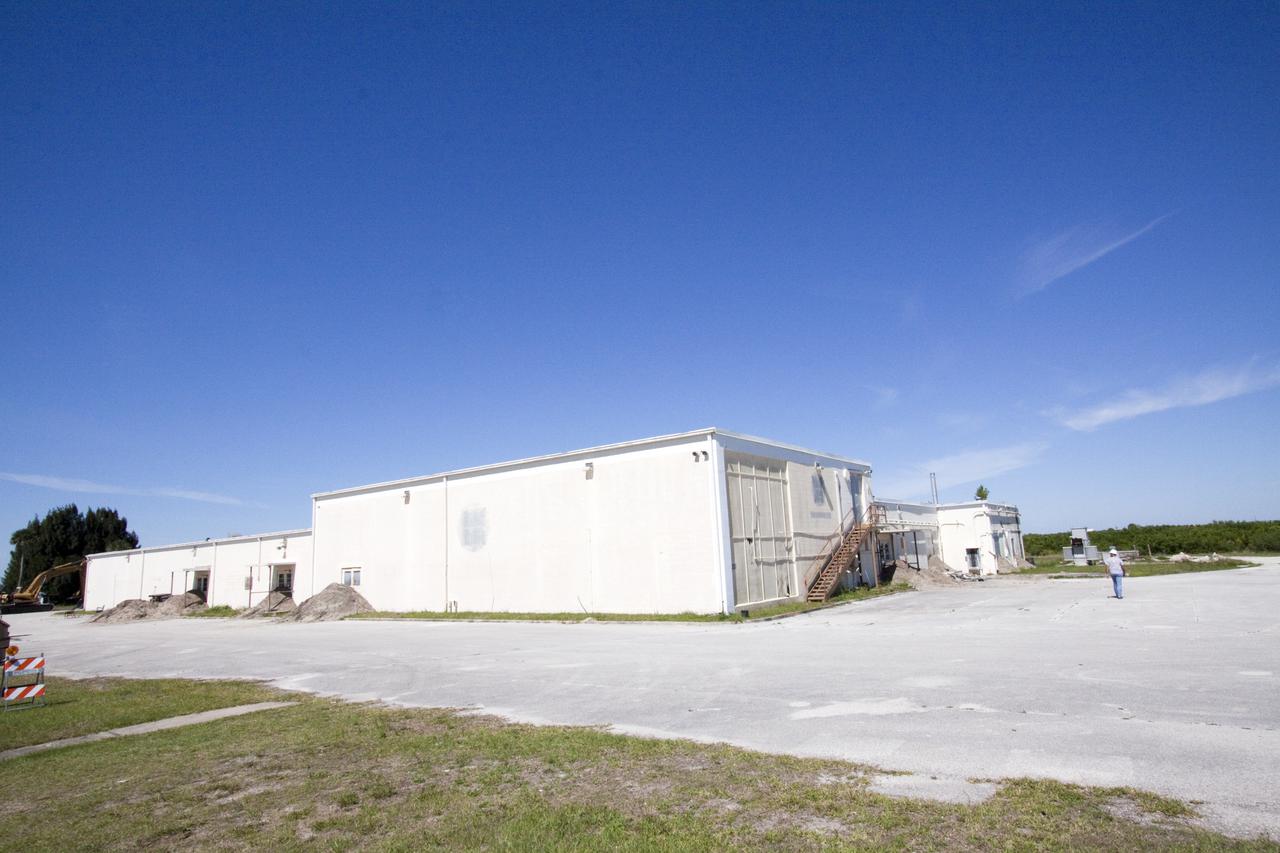
CAPE CANAVERAL, Fla. – At Cape Canaveral Air Force Station in Florida, preparations are under way to tear down the Mercury Mission Control Center. The original building, constructed between 1956 and 1958, was last modified in 1963. The center succumbed to the two worst enemies of structures along the space coast - time and salt air - necessitating that it be demolished as a safety measure. The facility served as mission control during all the Project Mercury missions, as well as the first three flights of the Gemini Program. The center housed the flight controllers whose duty was to take over flight control after liftoff and follow it through until splashdown. Additionally, it supported vehicle checkout, spacecraft tracking, and astronaut training. With Gemini IV, mission control moved to Houston, and the facility took on the roles of launch control and tracking station. In 1999, much of the equipment and furnishings from the flight control area was moved to Kennedy Space Center's Visitor Complex. A re-created mission control room currently is on display in the complex's Dr. Kurt H. Debus Conference Facility. Speegle II of Cocoa, Fla., was awarded the contract for the deconstruction project. Frank-Lin Excavating is performing the demolition for Sunrise Systems of Brevard, a subcontractor to Speegle II. Photo credit: NASA_Jack Pfaller
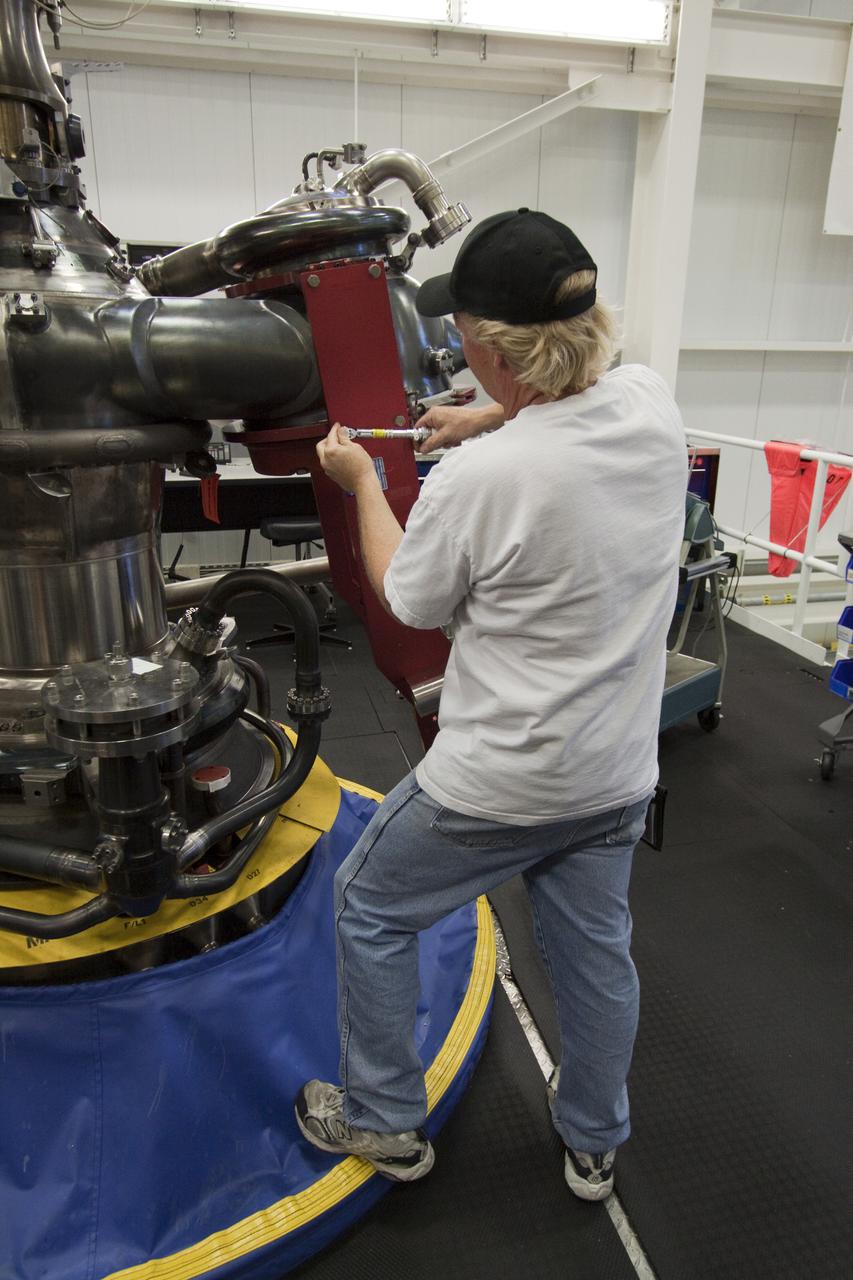
CAPE CANAVERAL, Fla. – At NASA's Kennedy Space Center in Florida, Pratt and Whitney Rocketdyne aerospace technician Ken Burley works on space shuttle main engine, or SSME, #2062 in the Space Shuttle Main Engine Processing Facility. This is the last SSME scheduled to be built at Kennedy before the end of the Space Shuttle Program. Three main engines are clustered at the aft end of the shuttle and have a combined thrust of more than 1.2 million pounds. Each engine utilizes liquid hydrogen for fuel and liquid oxygen as oxidizer and operates during the entire eight-and-a-half minute ride to orbit. Post-flight inspections and maintenance of each engine also are conducted in the SSME Processing Facility between shuttle missions. Photo credit: NASA_Jack Pfaller

CAPE CANAVERAL, Fla. - In the Vehicle Assembly Building at NASA's Kennedy Space Center in Florida, a worker observes the external fuel tank, ET-136, for space shuttle Atlantis' STS-132 mission, being lowered toward the twin solid rocket boosters. The external tank arrived at Kennedy from NASA's Michoud Assembly Facility on March 1 aboard the Pegasus barge. The six-member STS-132 crew will deliver an Integrated Cargo Carrier and a Russian-built Mini-Research Module, or MRM-1, to the International Space Station. Launch is targeted for May 14. For information on the STS-132 mission, visit http:__www.nasa.gov_mission_pages_shuttle_shuttlemissions_sts132_index.html. Photo credit: NASA_Jack Pfaller
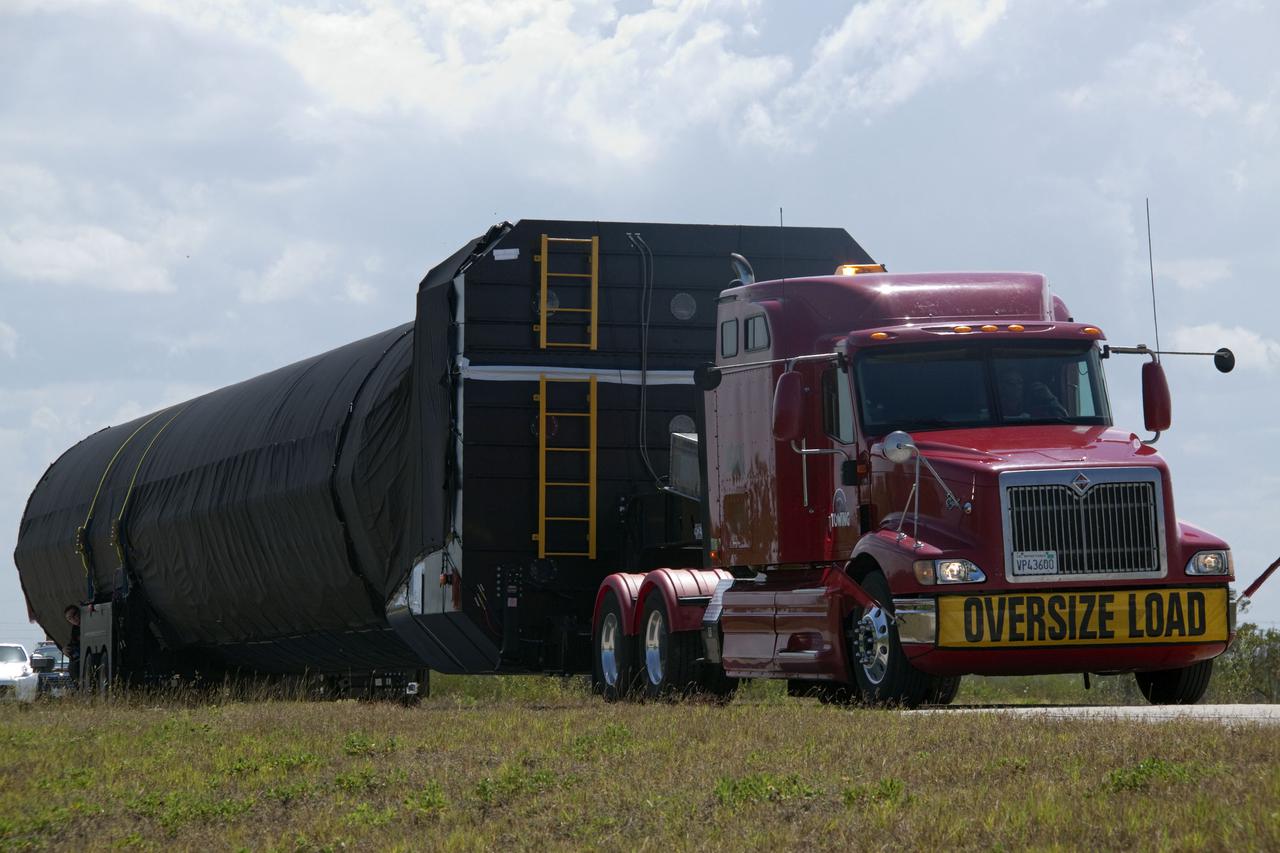
CAPE CANAVERAL, Fla. -- The first stage of the SpaceX COTS-2 Falcon 9 rocket is being transported to a SpaceX hangar at Pad 40 at Cape Canaveral Air Force Station in Florida. Once assembled, it will be a two-stage fully integrated launch vehicle, consisting of a first stage powered by nine SpaceX-developed Merlin 1C engines, a second stage, an interstage, an unpressurized trunk and the Dragon spacecraft qualification unit. SpaceX was awarded procurement for three demonstration flights under the Commercial Orbital Transportation Services, or COTS, program managed by NASA's Johnson Space Center in Houston. A subsequent contract for Commercial Resupply Services, or CRS, was awarded in late 2008 to resupply the International Space Station. The SpaceX CRS contract provides for 12 missions to resupply the station from 2011 through 2015. Photo credit: NASA_Jack Pfaller

CAPE CANAVERAL, Fla. – In the Space Station Processing Facility at NASA's Kennedy Space Center in Florida, the Integrated Cargo Carrier, or ICC, is secured in the payload canister in which it will be transported to Launch Pad 39A. The six-member crew of space shuttle Atlantis' STS-132 mission will deliver the ICC and the Russian-built Mini-Research Module-1, or MRM-1, to the International Space Station. The ICC is an unpressurized flat bed pallet and keel yoke assembly used to support the transfer of exterior cargo from the shuttle to the space station. The MRM-1, known as Rassvet, is the second in a series of new pressurized components for Russia and will be permanently attached to the Earth-facing port of the Zarya control module. Rassvet, which translates to 'dawn,' will be used for cargo storage and will provide an additional docking port to the station. STS-132 is the 34th mission to the station and the 132nd shuttle mission overall. Launch is targeted for May 14. For information on the STS-132 mission, visit http:__www.nasa.gov_mission_pages_shuttle_shuttlemissions_sts132_index.html. Photo credit: NASA_Jack Pfaller
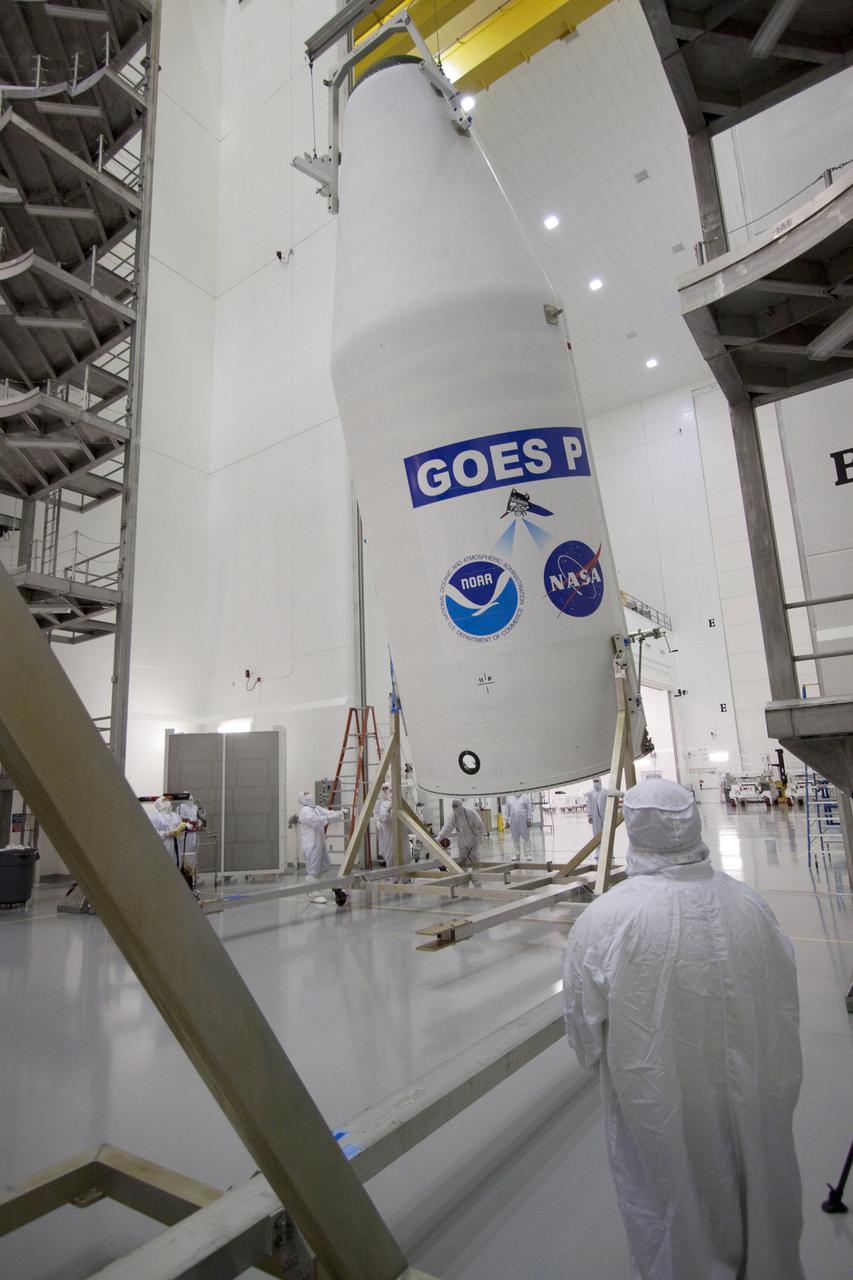
CAPE CANAVERAL, Fla. – At the Astrotech Space Operations facility in Titusville, Fla., one side of the Delta IV payload fairing that will enclose NASA's GOES-P meteorological satellite is lifted into an upright position. The fairing is a molded clamshell covering that fits flush with the outside surface of the rocket and forms an aerodynamic nose cone, protecting the spacecraft during launch and ascent. GOES-P, the latest Geostationary Operational Environmental Satellite, was developed by NASA for the National Oceanic and Atmospheric Administration, or NOAA. GOES-P is designed to watch for storm development and observed current weather conditions on Earth. Launch of GOES-P is targeted for March 1 from Launch Complex 37 aboard a United Launch Alliance Delta IV rocket. For information on GOES-P, visit http:__www.nasa.gov_mission_pages_GOES-P_main_index.html. Photo credit: NASA_Jack Pfaller
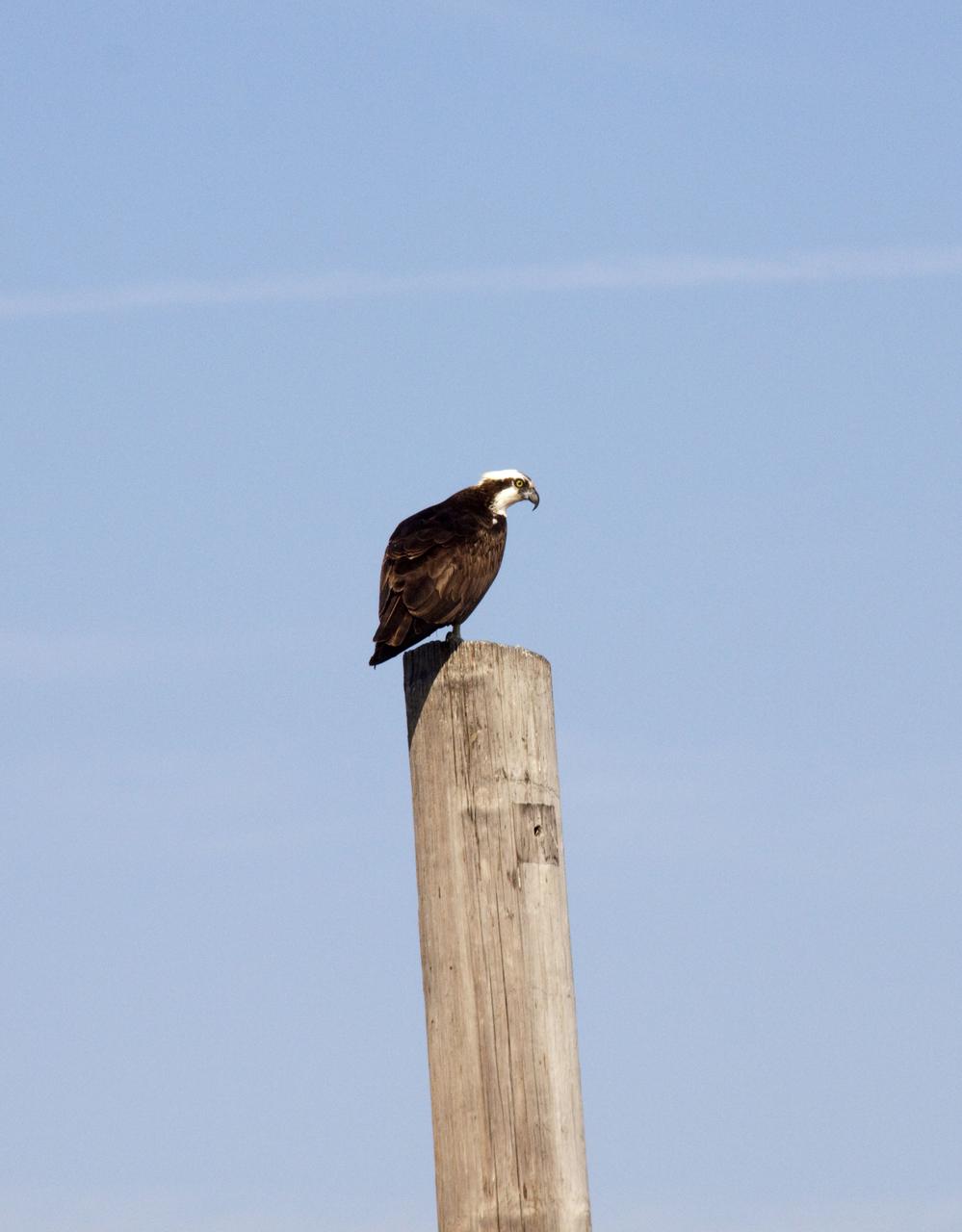
CAPE CANAVERAL, Fla. - At NASA's Kennedy Space Center in Florida, an adult osprey keeps an eye on its young from a pole near its nest, built on a platform in the Press Site parking lot. The adults feed their young until they are fully fledged and defend their brood with great perseverance until they are independent. The osprey, also known as a fish hawk, is well adapted for capturing fish, which make up its entire diet. The soles of its feet are equipped with sharp, spiny projections that give the bird a firm grip on its slippery prey. Kennedy's Press Site is located at the turn basin in Launch Complex 39, making it an ideal osprey nesting place. The Merritt Island National Wildlife Refuge overlaps with Kennedy Space Center property and provides a habitat for 330 species of birds, including the osprey. A variety of other wildlife - 117 kinds of fish, 65 types of amphibians and reptiles, 31 different mammals, and 1,045 species of plants - also inhabit the refuge. For information on the refuge, visit http:__www.fws.gov_merrittisland_Index.html. For information on Kennedy Space Center, visit http:__www.nasa.gov_kennedy. Photo credit: NASA_Jack Pfaller
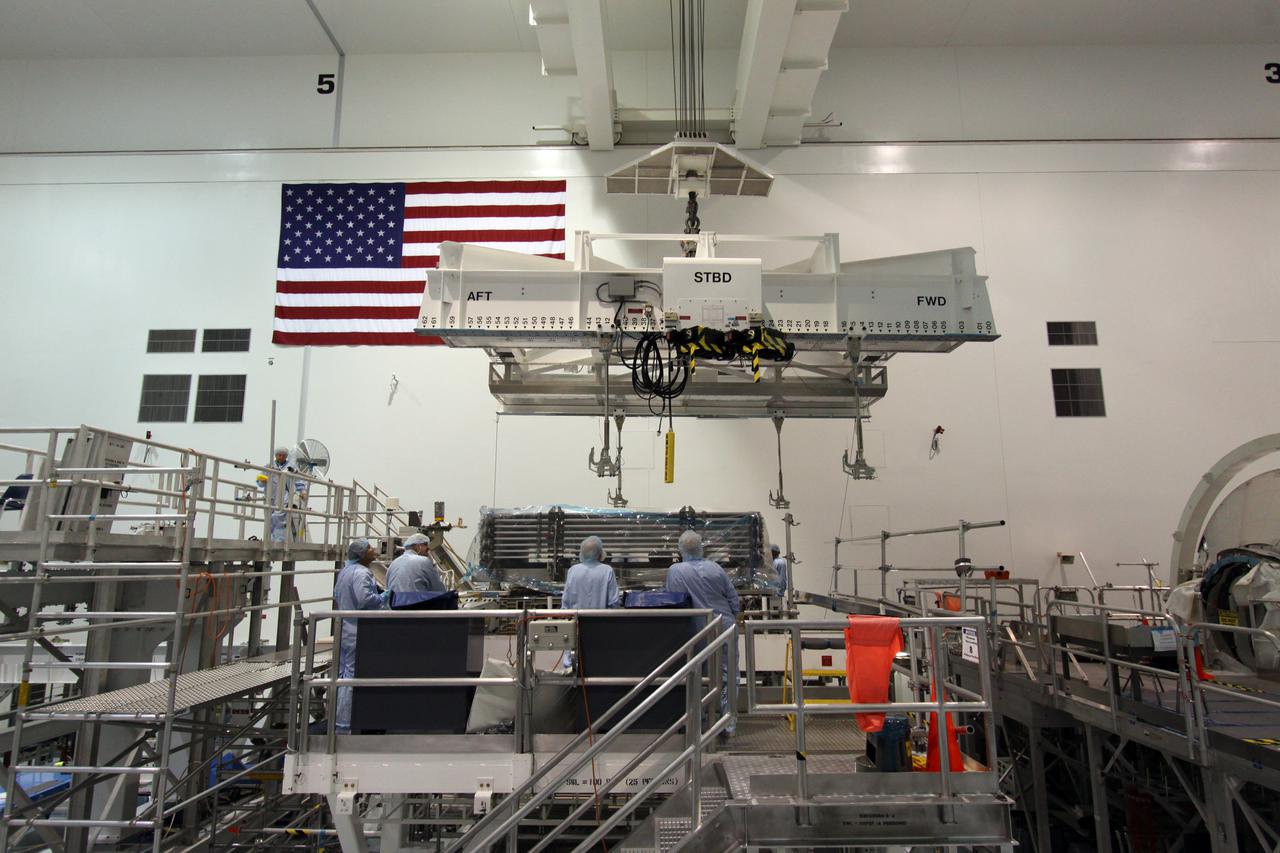
CAPE CANAVERAL, Fla. -- In the Space Station Processing Facility at NASA's Kennedy Space Center in Florida, technicians hoist the Express Logistics Carrier-4, or ELC-4, for the deck-to-keel mate. The deck is about 14 by 16 feet and spans the width of a space shuttle’s payload bay. It is capable of providing astronauts aboard the International Space Station with a platform and infrastructure to deploy experiments in the vacuum of space without requiring a separate dedicated Earth-orbiting satellite. Space shuttle Discovery and its STS-133 crew will deliver the carrier along with critical spare parts to the station later this year. Photo credit: NASA_Jack Pfaller
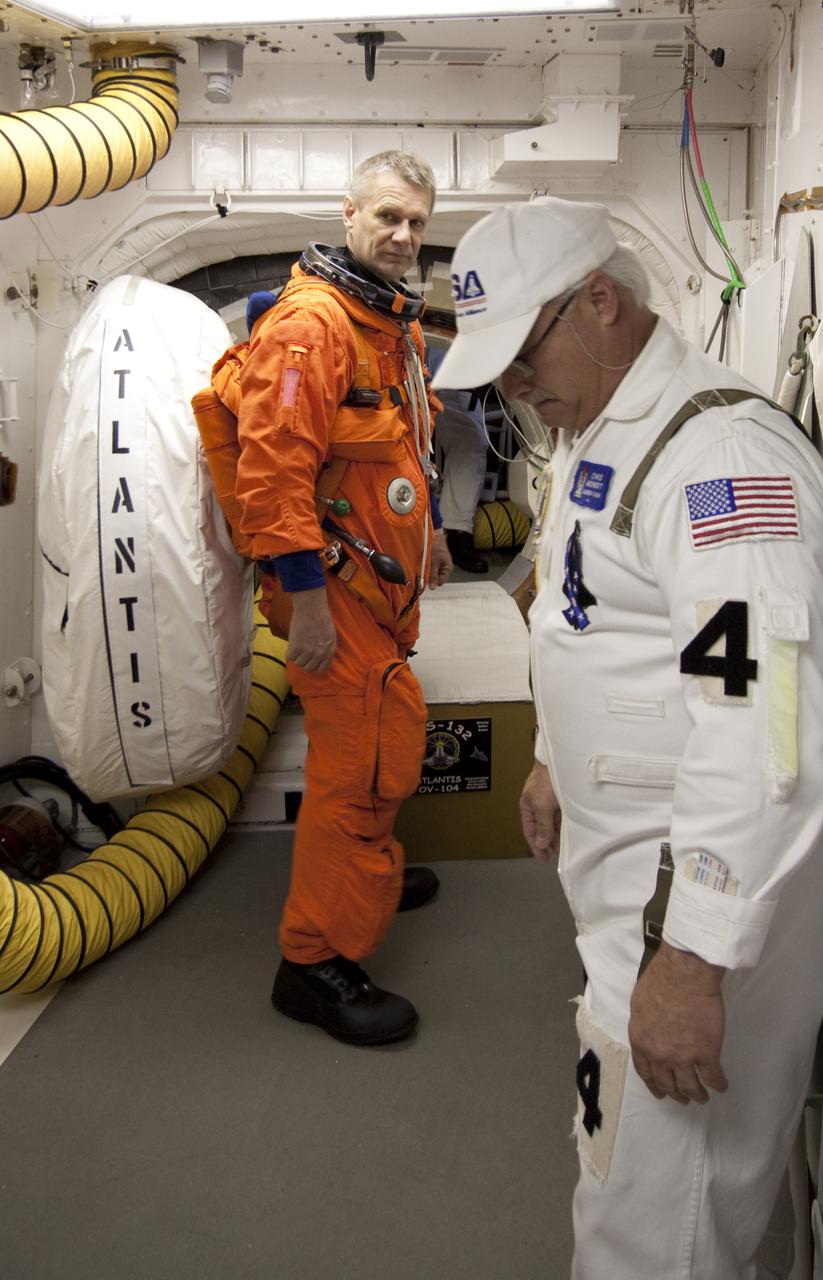
CAPE CANAVERAL, Fla. - At Launch Pad 39A at NASA's Kennedy Space Center in Florida, STS-132 Mission Specialist Piers Sellers prepares to enter space shuttle Atlantis from the pad's White Room. STS-132 is Seller's third spaceflight. The six-member STS-132 crew is participating in a dress rehearsal for launch, known as the Terminal Countdown Demonstration Test, from their seats in the crew compartment of space shuttle Atlantis. Launch is targeted for 2:19 p.m. EDT on May 14. On the STS-132 mission, the crew will deliver an Integrated Cargo Carrier, or ICC, and the Russian-built Mini-Research Module-1, or MRM-1, to the International Space Station. The ICC is an unpressurized flat bed pallet and keel yoke assembly used to support the transfer of exterior cargo from the shuttle to the space station. The MRM-1, known as Rassvet, is the second in a series of new pressurized components for Russia and will be permanently attached to the Earth-facing port of the Zarya control module. Rassvet, which translates to 'dawn,' will be used for cargo storage and provide an additional docking port to the station. STS-132 is the 34th mission to the station and the 132nd shuttle mission overall. For information on the STS-132 mission, visit http:__www.nasa.gov_mission_pages_shuttle_shuttlemissions_sts132_index.html. Photo credit: NASA_Jack Pfaller
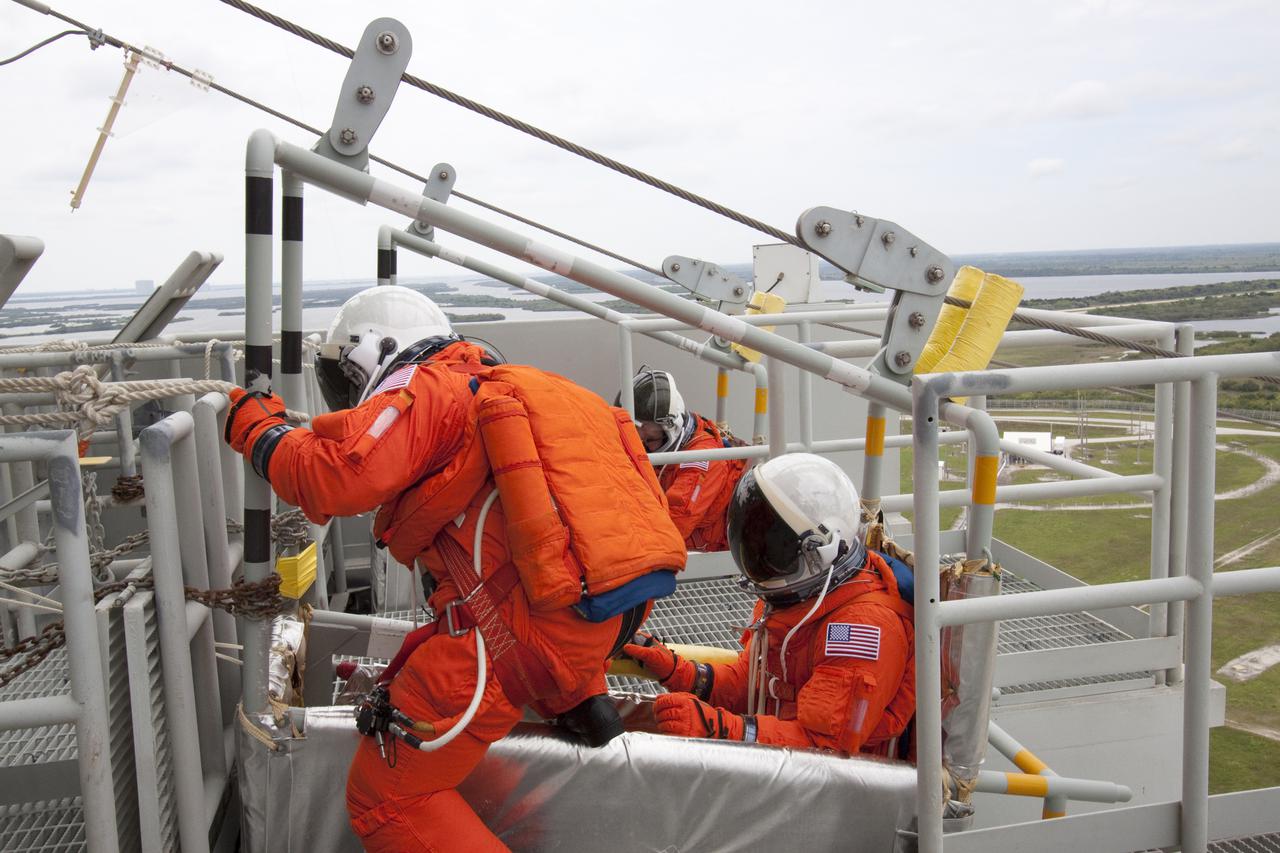
CAPE CANAVERAL, Fla. - On Launch Pad 39A at NASA's Kennedy Space Center, STS-132 Mission Specialists Garrett Reisman, left, and Michael Good, dressed in their orange launch-and-entry suits, position themselves inside a slidewire basket as they practice emergency exit procedures at the pad. Evacuation from the pad's 195-foot level in the event of an emergency is made possible by seven baskets suspended from seven slidewires that extend from the fixed service structure to a landing zone 1,200 feet west of the pad. The crew is participating in a launch dress rehearsal, called the Terminal Countdown Demonstration Test, or TCDT. TCDT provides each shuttle crew and launch team the opportunity to participate in various simulated countdown activities, including equipment familiarization and emergency procedures. On the STS-132 mission, the six-member crew will deliver an Integrated Cargo Carrier, or ICC, and the Russian-built Mini-Research Module-1, or MRM-1, to the International Space Station aboard space shuttle Atlantis. The ICC is an unpressurized flat bed pallet and keel yoke assembly used to support the transfer of exterior cargo from the shuttle to the space station. The MRM-1, known as Rassvet, is the second in a series of new pressurized components for Russia and will be permanently attached to the Earth-facing port of the Zarya control module. Rassvet, which translates to 'dawn,' will be used for cargo storage and will provide an additional docking port to the station. STS-132 is the 34th mission to the station and the 132nd shuttle mission overall. Atlantis is targeted to launch on May 14 at 2:19 p.m. For information on the STS-132 mission, visit http:__www.nasa.gov_mission_pages_shuttle_shuttlemissions_sts132_index.html. Photo credit: NASA_Jack Pfaller
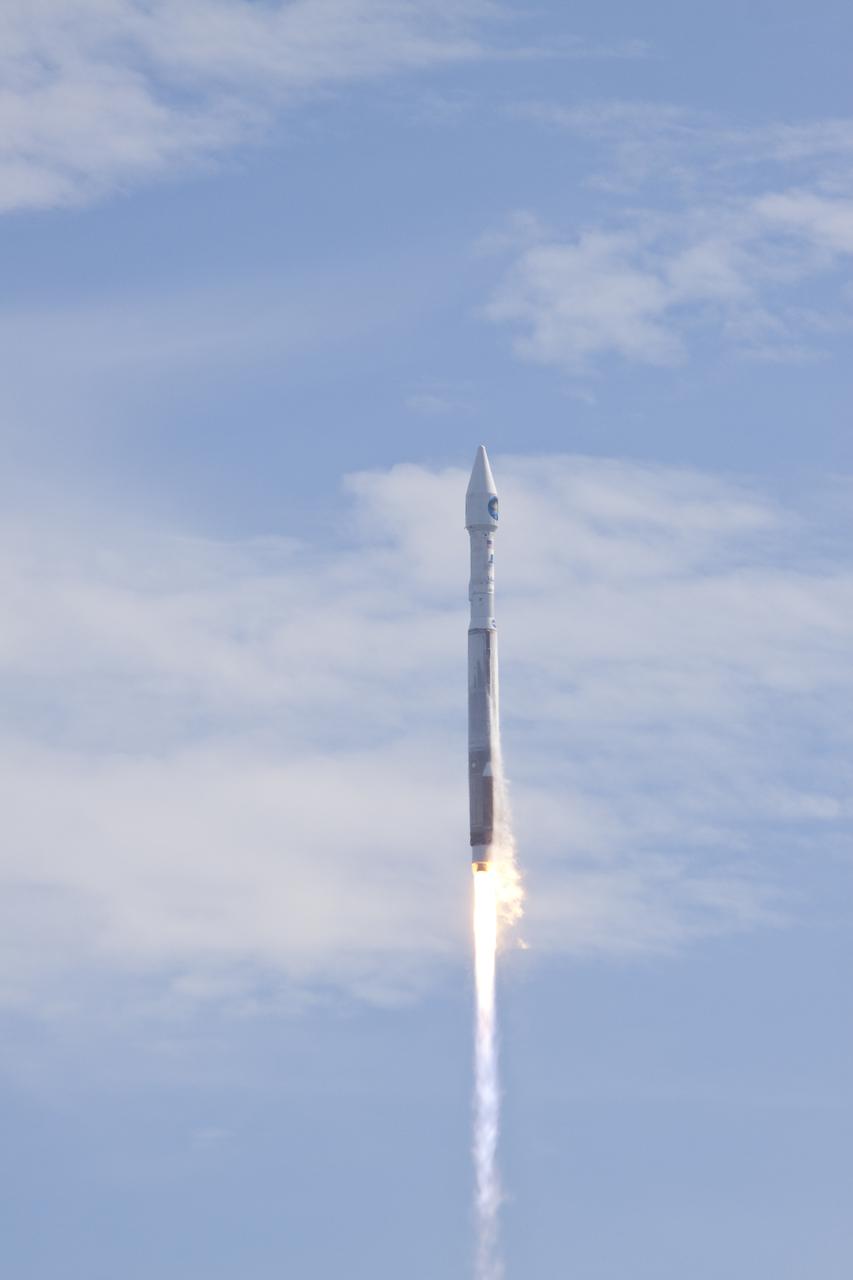
CAPE CANAVERAL, Fla. – A United Launch Alliance Atlas V rocket carrying NASA's Solar Dynamics Observatory climbs to orbit on a crisp Florida morning. Liftoff from Launch Complex 41 on Cape Canaveral Air Force Station was at 10:23 a.m. EST Feb. 11. This is the 100th launch of a commercial Atlas_Centaur rocket. The observatory, known as SDO, is the first mission in NASA's Living With a Star Program and is designed to study the causes of solar variability and its impacts on Earth. The spacecraft's long-term measurements will give solar scientists in-depth information to help characterize the interior of the Sun, the Sun's magnetic field, the hot plasma of the solar corona, and the density of radiation that creates the ionosphere of the planets. The information will be used to create better forecasts of space weather needed to protect the aircraft, satellites and astronauts living and working in space. For information on SDO, visit http:__www.nasa.gov_sdo. Photo credit: NASA_Jack Pfaller
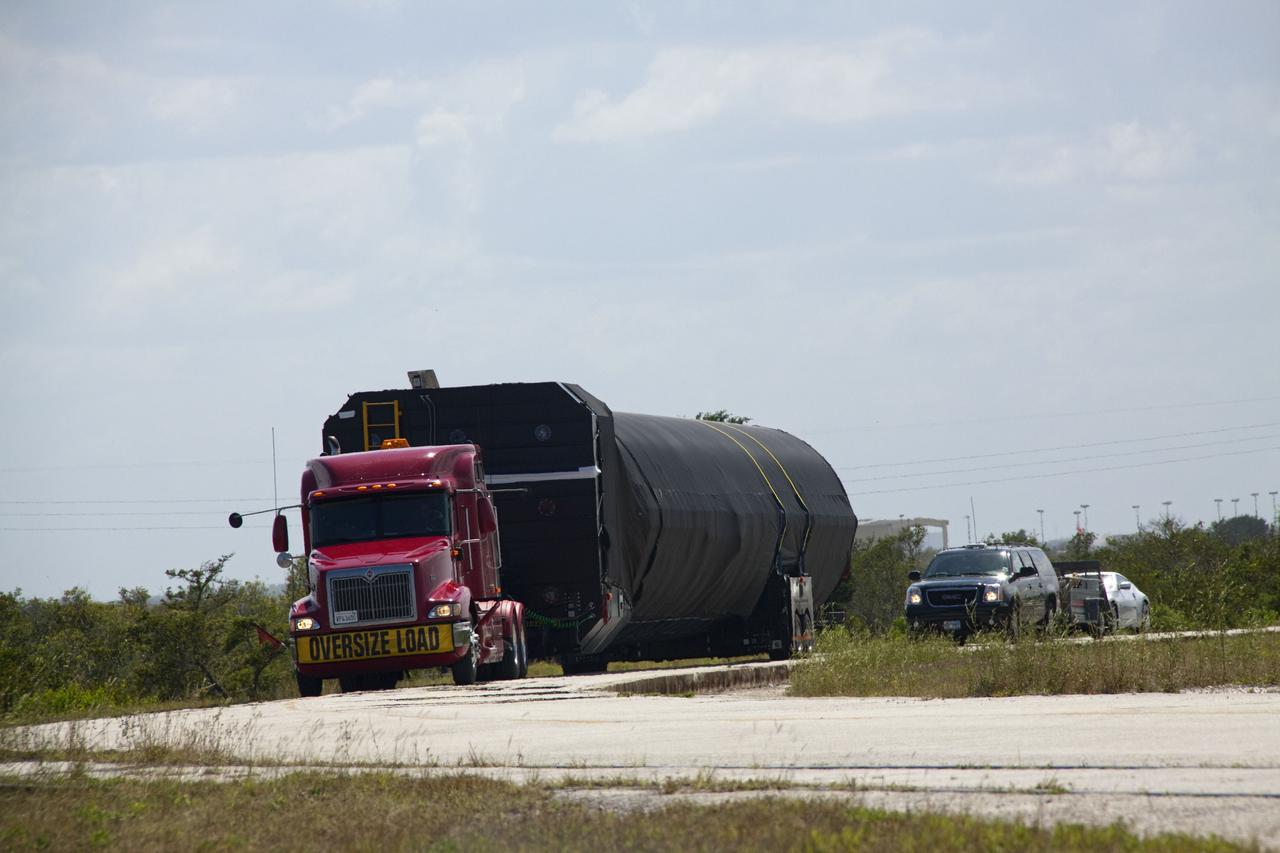
CAPE CANAVERAL, Fla. -- The first stage of the SpaceX COTS-2 Falcon 9 rocket is being transported to a SpaceX hangar at Pad 40 at Cape Canaveral Air Force Station in Florida. Once assembled, it will be a two-stage fully integrated launch vehicle, consisting of a first stage powered by nine SpaceX-developed Merlin 1C engines, a second stage, an interstage, an unpressurized trunk and the Dragon spacecraft qualification unit. SpaceX was awarded procurement for three demonstration flights under the Commercial Orbital Transportation Services, or COTS, program managed by NASA's Johnson Space Center in Houston. A subsequent contract for Commercial Resupply Services, or CRS, was awarded in late 2008 to resupply the International Space Station. The SpaceX CRS contract provides for 12 missions to resupply the station from 2011 through 2015. Photo credit: NASA_Jack Pfaller
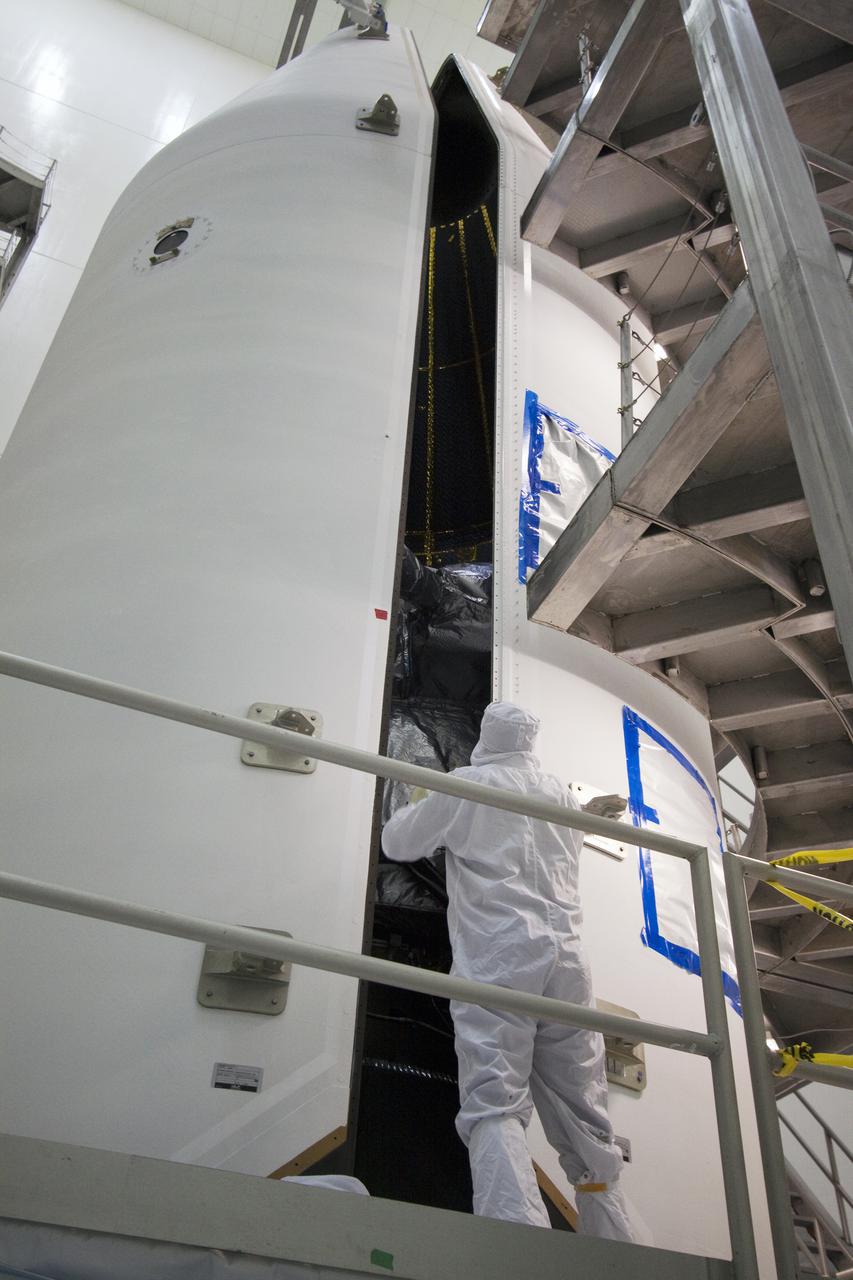
CAPE CANAVERAL, Fla. – At the Astrotech Space Operations facility in Titusville, Fla., spacecraft technicians close the second half of the Delta IV payload fairing around NASA's GOES-P meteorological satellite. The fairing is a molded clamshell covering that fits flush with the outside surface of the rocket and forms an aerodynamic nose cone, protecting the spacecraft during launch and ascent. GOES-P, the latest Geostationary Operational Environmental Satellite, was developed by NASA for the National Oceanic and Atmospheric Administration, or NOAA. GOES-P is designed to watch for storm development and observed current weather conditions on Earth. Launch of GOES-P is targeted for March 1 from Launch Complex 37 aboard a United Launch Alliance Delta IV rocket. For information on GOES-P, visit http:__www.nasa.gov_mission_pages_GOES-P_main_index.html. Photo credit: NASA_Jack Pfaller
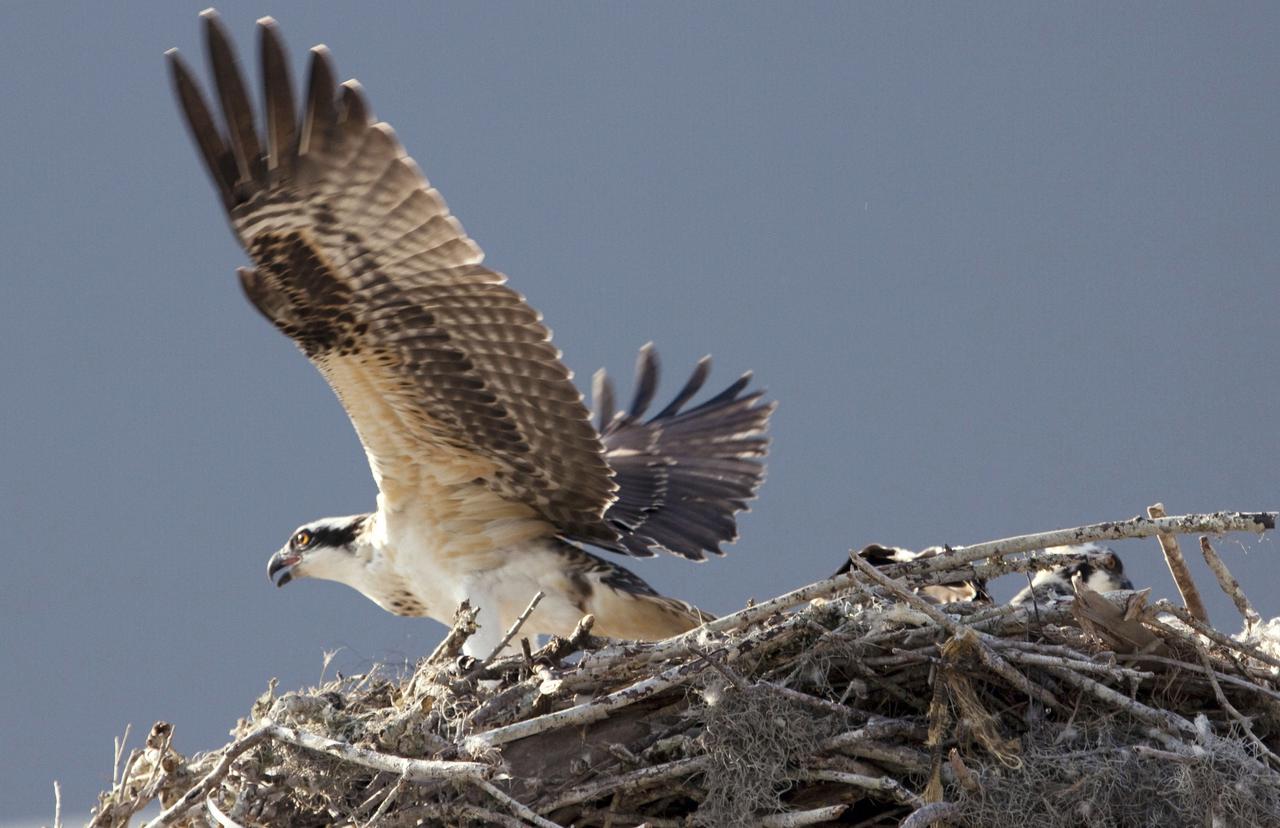
CAPE CANAVERAL, Fla. - At NASA's Kennedy Space Center in Florida, a female osprey lands in its nest atop a platform in the Press Site parking lot. The adults feed their young until they are fully fledged and defend their brood with great perseverance until they are independent. The osprey, also known as a fish hawk, is well adapted for capturing fish, which make up its entire diet. The soles of its feet are equipped with sharp, spiny projections that give the bird a firm grip on its slippery prey. Kennedy's Press Site is located at the turn basin in Launch Complex 39, making it an ideal osprey nesting place. The Merritt Island National Wildlife Refuge overlaps with Kennedy Space Center property and provides a habitat for 330 species of birds, including the osprey. A variety of other wildlife - 117 kinds of fish, 65 types of amphibians and reptiles, 31 different mammals, and 1,045 species of plants - also inhabit the refuge. For information on the refuge, visit http:__www.fws.gov_merrittisland_Index.html. For information on Kennedy Space Center, visit http:__www.nasa.gov_kennedy. Photo credit: NASA_Jack Pfaller
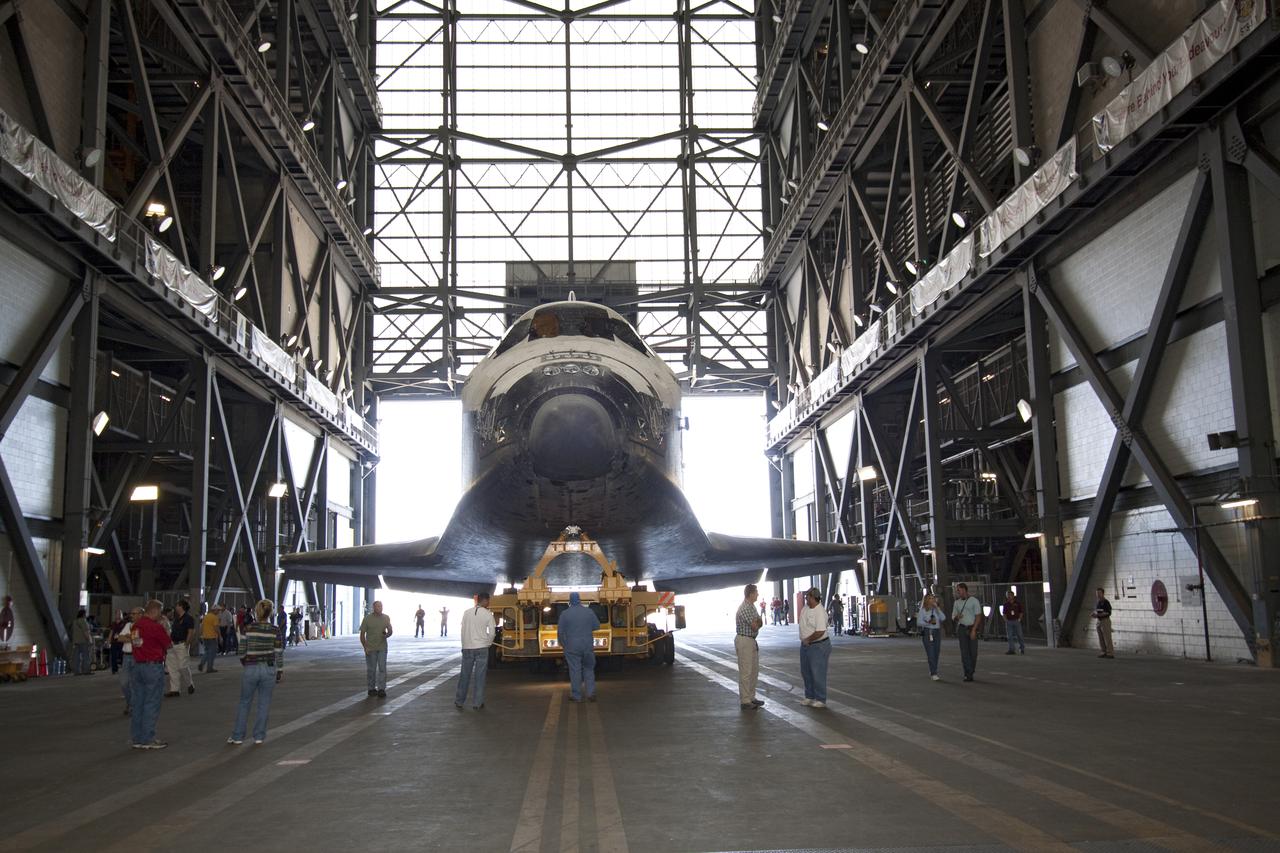
CAPE CANAVERAL, Fla. – At NASA's Kennedy Space Center in Florida, space shuttle Atlantis arrives in the transfer aisle of the Vehicle Assembly Building, or VAB. The shuttle was moved from Orbiter Processing Facility-1 where it was processed for its upcoming STS-132 mission. In the VAB, Atlantis will be lifted into a high bay where it will be mated to its external fuel tank and solid rocket boosters. The six-member STS-132 crew will deliver an Integrated Cargo Carrier, or ICC, and the Russian-built Mini-Research Module-1, or MRM-1, to the International Space Station. The ICC is an unpressurized flat bed pallet and keel yoke assembly used to support the transfer of exterior cargo from the shuttle to the space station. The MRM-1, known as Rassvet, is the second in a series of new pressurized components for Russia and will be permanently attached to the Earth-facing port of the Zarya control module. Rassvet, which translates to 'dawn,' will be used for cargo storage and will provide an additional docking port to the station. STS-132 is the 34th mission to the station and the 132nd shuttle mission overall. Launch is targeted for May 14. For information on the STS-132 mission, visit http:__www.nasa.gov_mission_pages_shuttle_shuttlemissions_sts132_index.html. Photo credit: NASA_Jack Pfaller
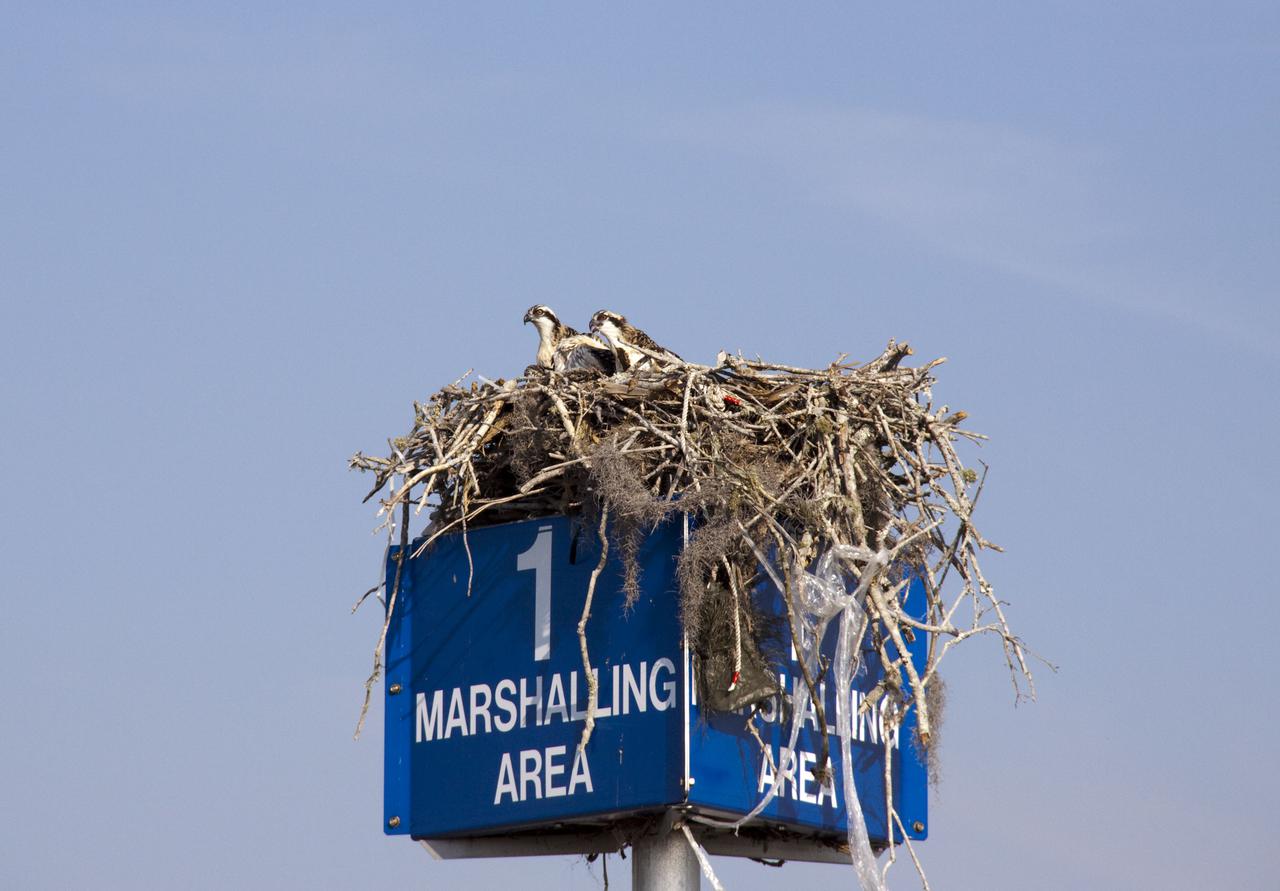
CAPE CANAVERAL, Fla. - At NASA's Kennedy Space Center in Florida, young osprey peer out of their nest, built on a platform in the Press Site parking lot. The adults feed their young until they are fully fledged and defend their brood with great perseverance until they are independent. The osprey, also known as a fish hawk, is well adapted for capturing fish, which make up its entire diet. The soles of its feet are equipped with sharp, spiny projections that give the bird a firm grip on its slippery prey. Kennedy's Press Site is located at the turn basin in Launch Complex 39, making it an ideal osprey nesting place. The Merritt Island National Wildlife Refuge overlaps with Kennedy Space Center property and provides a habitat for 330 species of birds, including the osprey. A variety of other wildlife - 117 kinds of fish, 65 types of amphibians and reptiles, 31 different mammals, and 1,045 species of plants - also inhabit the refuge. For information on the refuge, visit http:__www.fws.gov_merrittisland_Index.html. For information on Kennedy Space Center, visit http:__www.nasa.gov_kennedy. Photo credit: NASA_Jack Pfaller
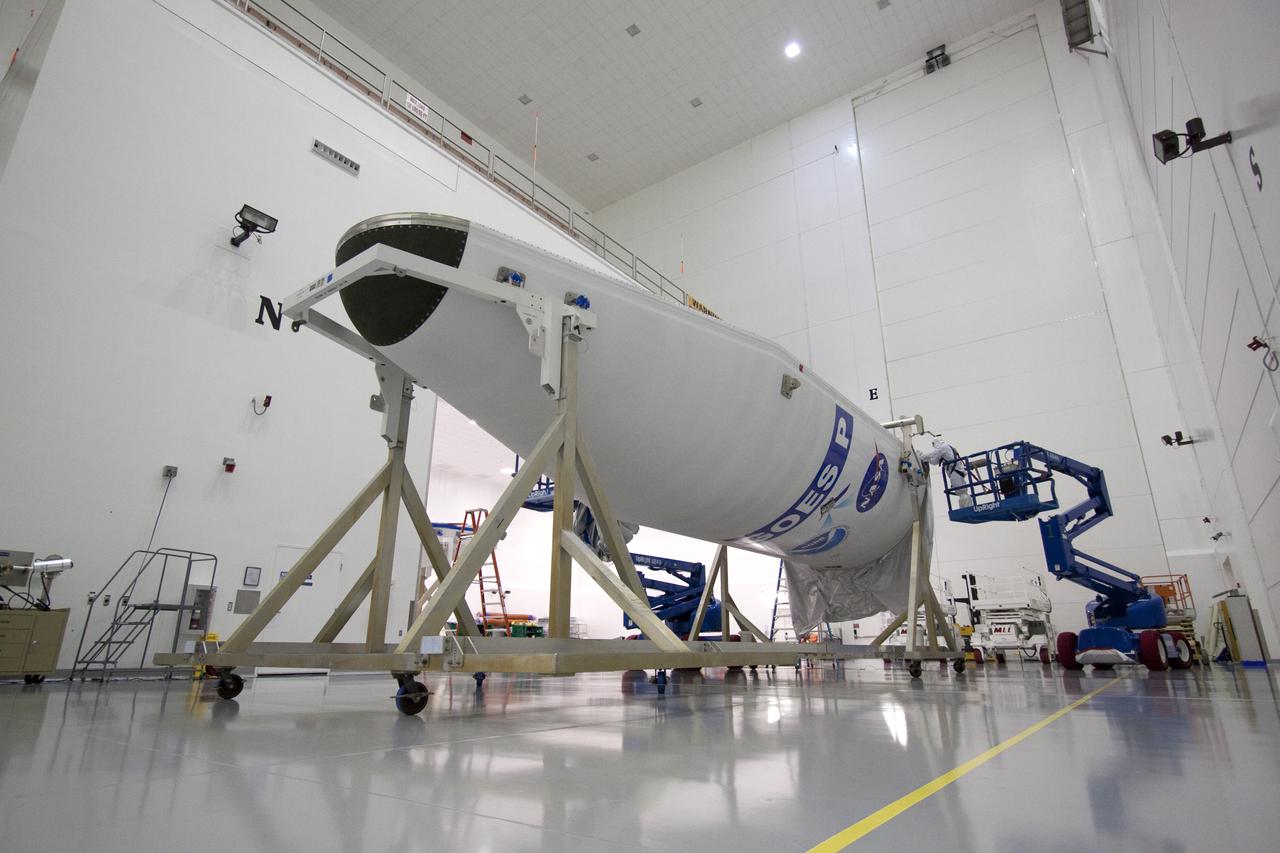
CAPE CANAVERAL, Fla. – At the Astrotech Space Operations facility in Titusville, Fla., the finishing touches are made to one side of the Delta IV payload fairing that will enclose NASA's GOES-P meteorological satellite. The fairing is a molded clamshell covering that fits flush with the outside surface of the rocket and forms an aerodynamic nose cone, protecting the spacecraft during launch and ascent. GOES-P, the latest Geostationary Operational Environmental Satellite, was developed by NASA for the National Oceanic and Atmospheric Administration, or NOAA. GOES-P is designed to watch for storm development and observed current weather conditions on Earth. Launch of GOES-P is targeted for March 1 from Launch Complex 37 aboard a United Launch Alliance Delta IV rocket. For information on GOES-P, visit http:__www.nasa.gov_mission_pages_GOES-P_main_index.html. Photo credit: NASA_Jack Pfaller
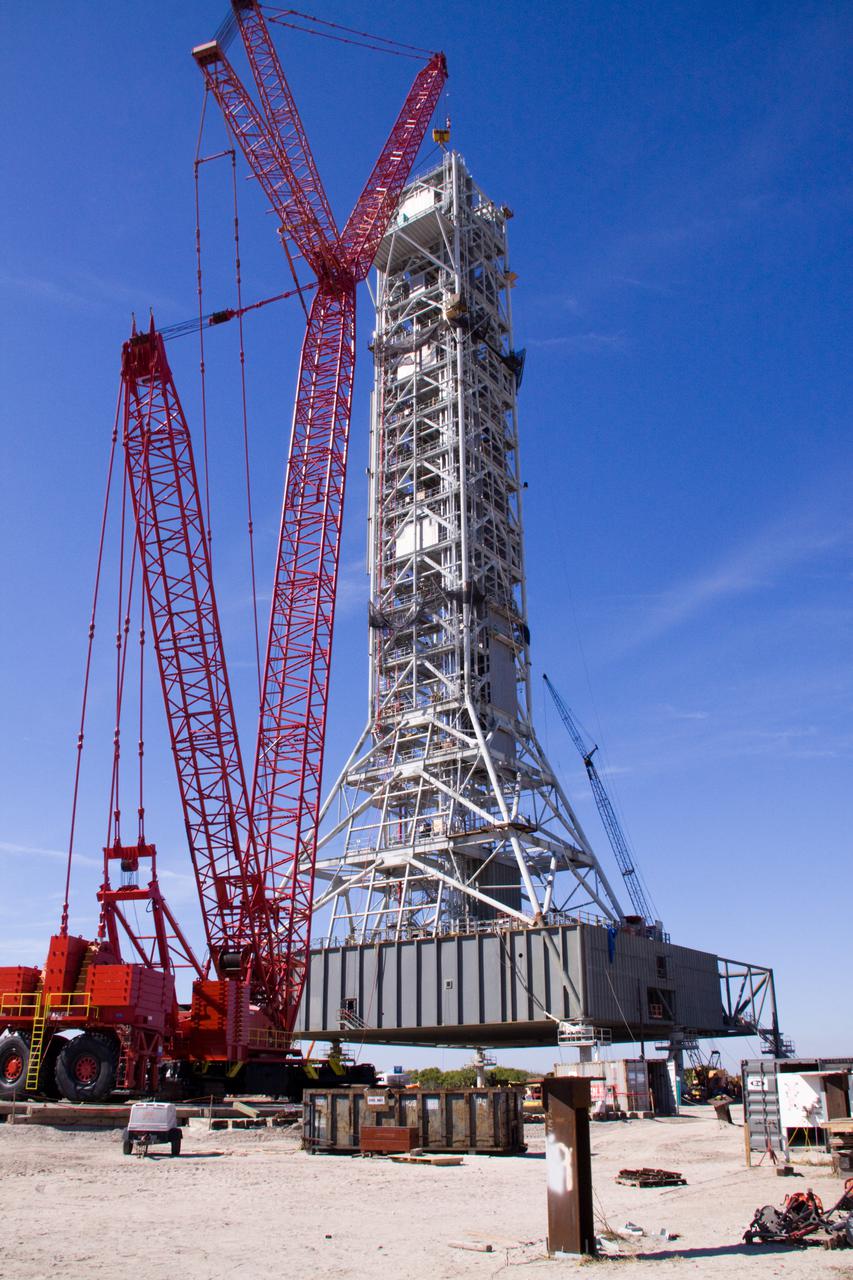
CAPE CANAVERAL, Fla. – At NASA's Kennedy Space Center in Florida, construction of the tower on the Constellation Program's new mobile launcher, or ML, progresses with placement of the ninth tower segment on the growing structure. When completed, the tower will be approximately 345 feet tall and have multiple platforms for personnel access. Its base is being made lighter than space shuttle mobile launcher platforms so the crawler-transporter can pick up the heavier load of the tower and a taller rocket. For information on the Constellation Program, visit http:__www.nasa.gov_constellation. Photo credit: NASA_Jack Pfaller
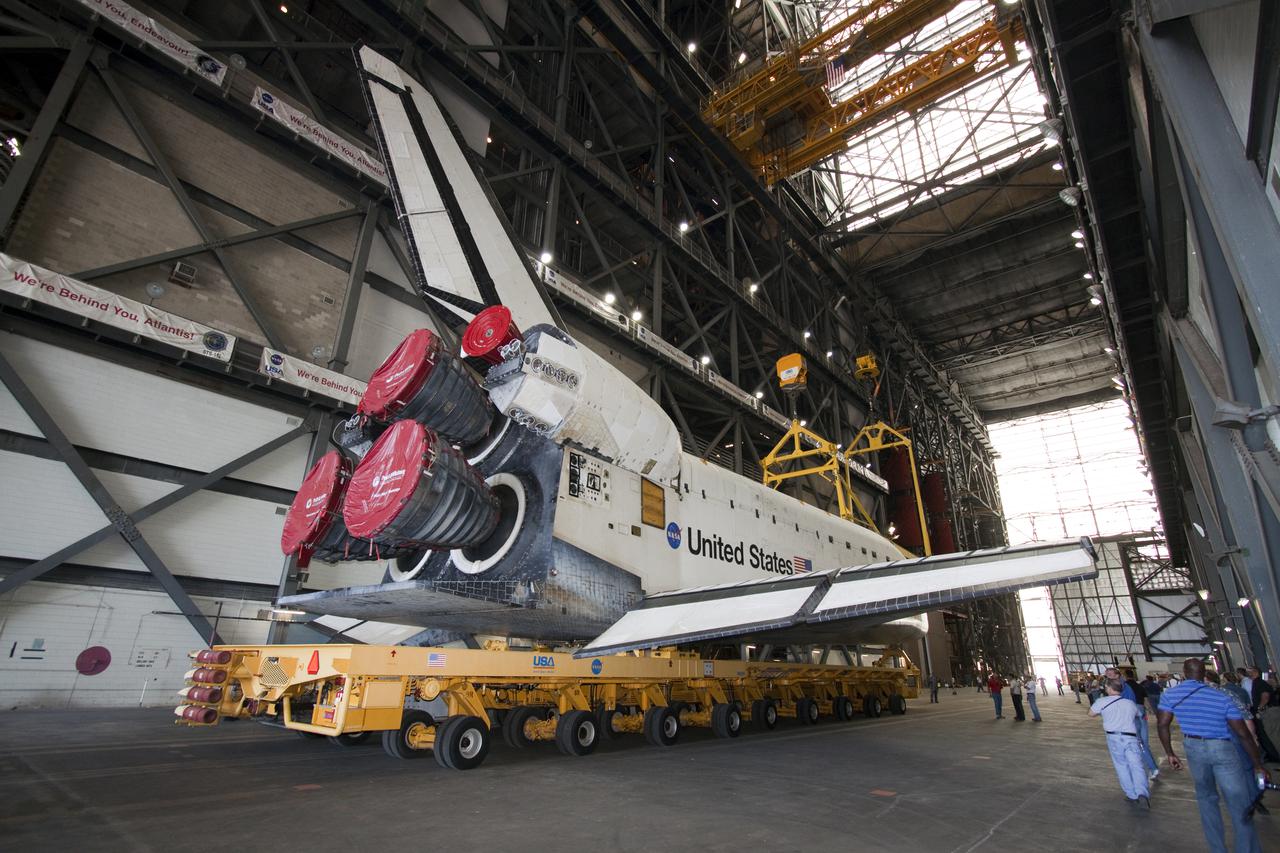
CAPE CANAVERAL, Fla. – At NASA's Kennedy Space Center in Florida, space shuttle Atlantis has arrived in the transfer aisle of the Vehicle Assembly Building, or VAB, and is ready to be lifted into a high bay. The shuttle was moved from Orbiter Processing Facility-1 where it was processed for its upcoming STS-132 mission. In the VAB, Atlantis will be lifted into a high bay where it will be mated to its external fuel tank and solid rocket boosters. The six-member STS-132 crew will deliver an Integrated Cargo Carrier, or ICC, and the Russian-built Mini-Research Module-1, or MRM-1, to the International Space Station. The ICC is an unpressurized flat bed pallet and keel yoke assembly used to support the transfer of exterior cargo from the shuttle to the space station. The MRM-1, known as Rassvet, is the second in a series of new pressurized components for Russia and will be permanently attached to the Earth-facing port of the Zarya control module. Rassvet, which translates to 'dawn,' will be used for cargo storage and will provide an additional docking port to the station. STS-132 is the 34th mission to the station and the 132nd shuttle mission overall. Launch is targeted for May 14. For information on the STS-132 mission, visit http:__www.nasa.gov_mission_pages_shuttle_shuttlemissions_sts132_index.html. Photo credit: NASA_Jack Pfaller
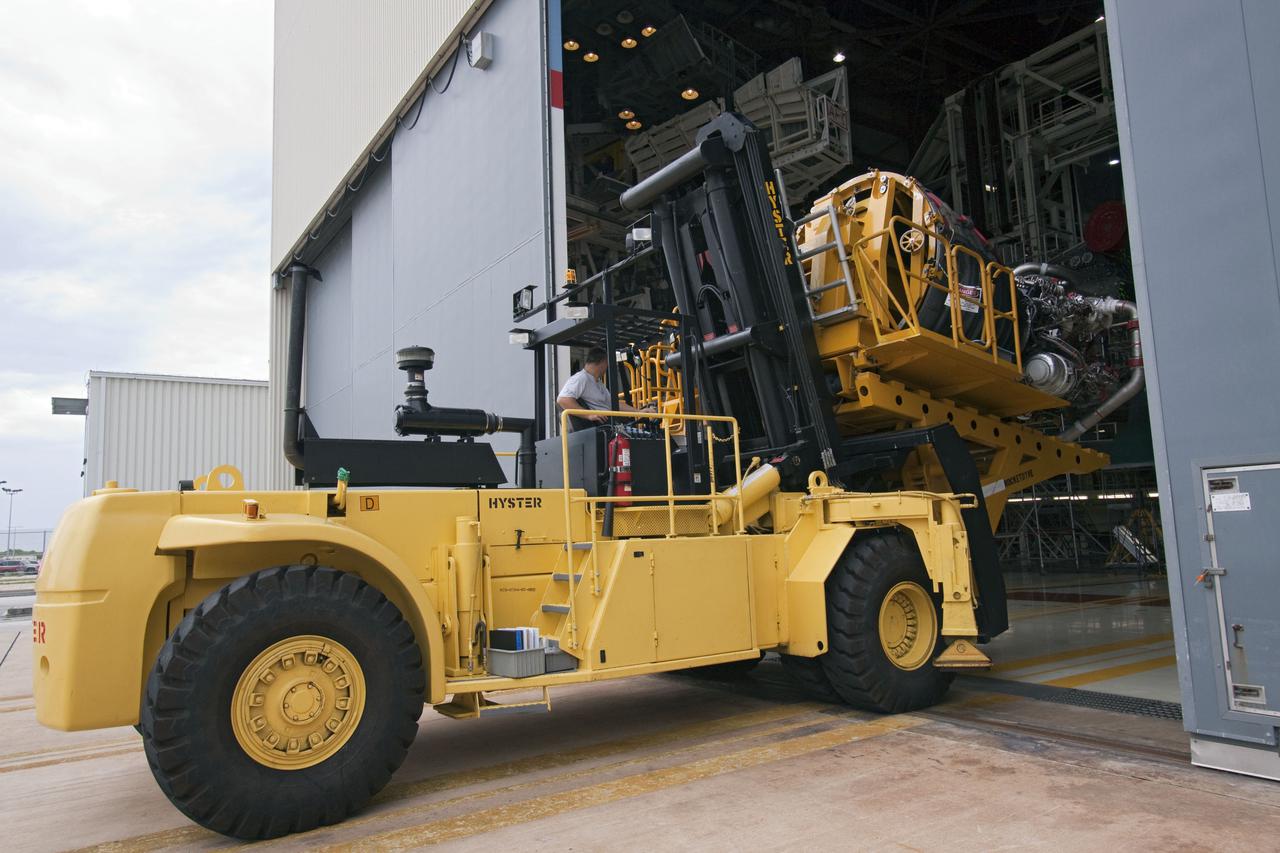
CAPE CANAVERAL, Fla. -- At NASA's Kennedy Space Center in Florida, space shuttle Atlantis' main engine no. 3 is moved out of Orbiter Processing Facility-1 after removal from the shuttle. Inspection and maintenance of each main engine is standard procedure following a shuttle mission. Some of the engines maintained and stored in the engine shop could be used for Atlantis, on what currently is planned as the 'launch on need,' or potential rescue mission for Endeavour's STS-134 mission, targeted for launch Feb. 26, 2011. For information, visit www.nasa.gov_shuttle. Photo credit: NASA_Jack Pfaller
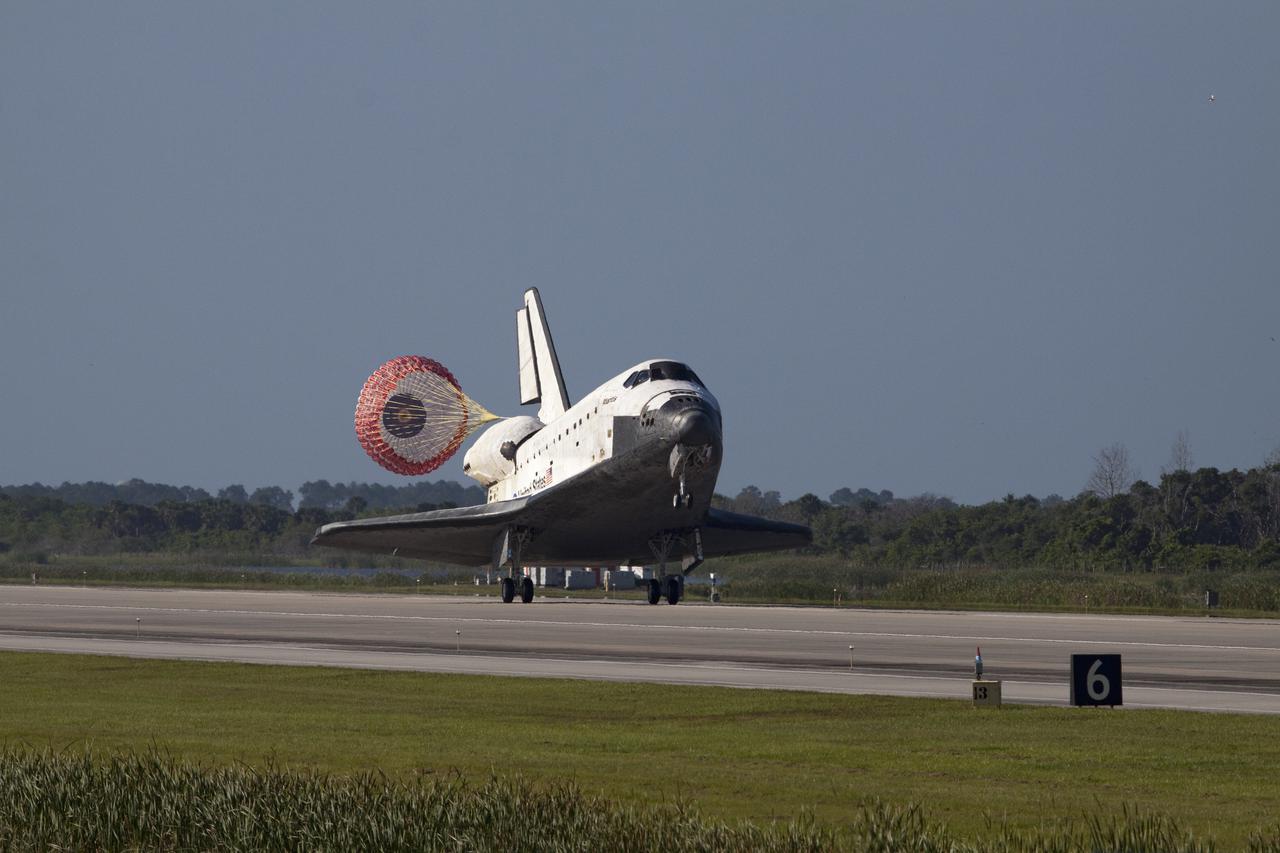
CAPE CANAVERAL, Fla. - With its drag chute unfurled, space shuttle Atlantis rolls down Runway 33 at the Shuttle Landing Facility at NASA's Kennedy Space Center in Florida. Landing was at 8:48 a.m. EDT, completing the 12-day STS-132 mission to the International Space Station. The six-member STS-132 crew carried the Russian-built Mini Research Module-1 to the space station. STS-132 is the 34th shuttle mission to the station, the 132nd shuttle mission overall and the last planned flight for Atlantis. For information on the STS-132 mission and crew, visit www.nasa.gov_mission_pages_shuttle_shuttlemissions_sts132_index.html. Photo credit: NASA_Jack Pfaller
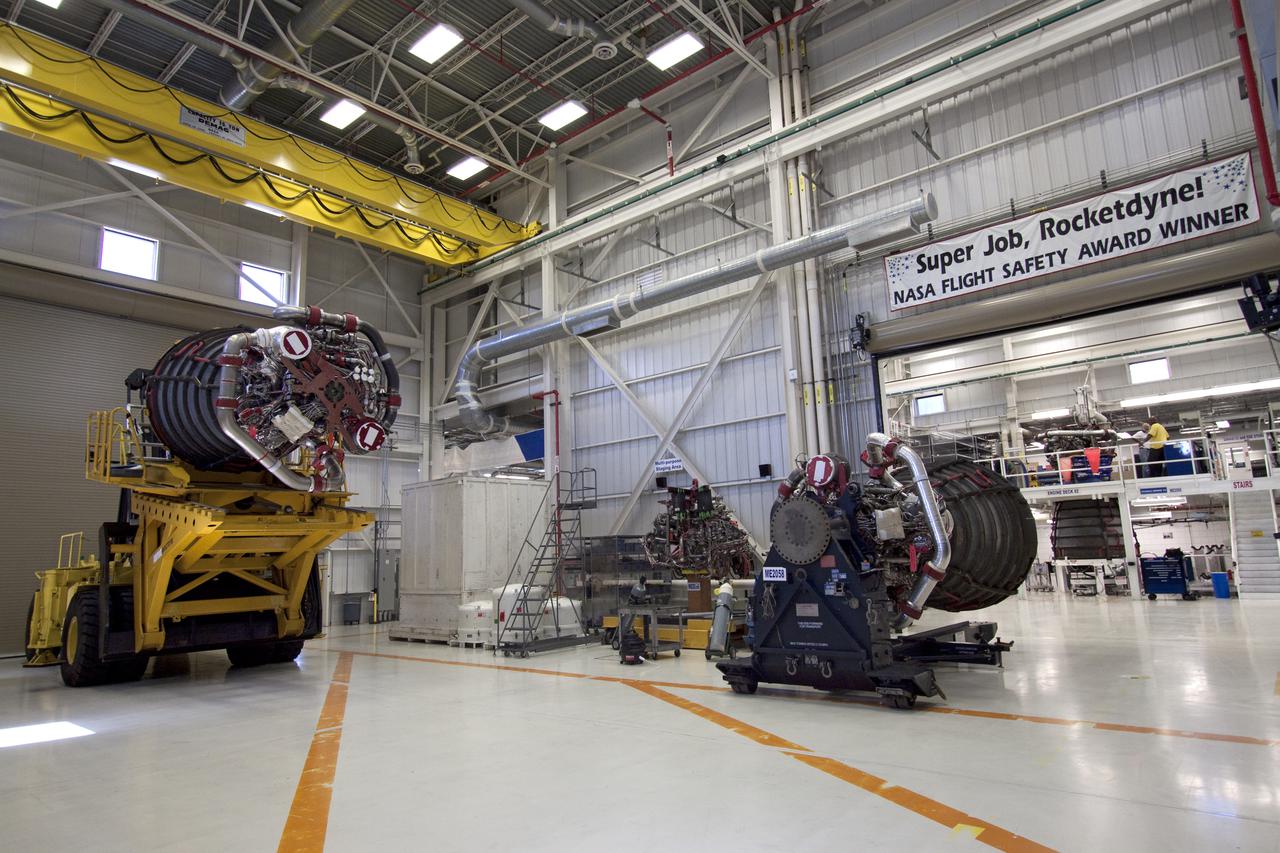
CAPE CANAVERAL, Fla. -- In the Space Shuttle Main Engine Processing Facility at NASA's Kennedy Space Center in Florida, a space shuttle main engine is secured on a Hyster forklift, left, and ready for its move to Orbiter Processing Facility-3. Three main engines, weighing 7,000 pounds each, will be installed in space shuttle Discovery for the STS-133 mission to the International Space Station. Discovery and its STS-133 crew are targeted to deliver the Express Logistics Carrier-4 filled with external payloads and experiments, as well as critical spare components to the station later this year. Photo credit: NASA_Jack Pfaller

CAPE CANAVERAL, Fla. -- Howard Hu, manager for the Orion System Performance and Analysis Office at NASA's Johnson Space Center, provides an overview of the Sensor Test for Orion Relnav Risk Mitigation, or STORRM, flight test that space shuttle Endeavour will perform on the last on-orbit day of the STS-134 mission. The overview took place at NASA's Kennedy Space Center in Florida where Endeavour is awaiting liftoff. During the mission, Endeavour will fly a dedicated maneuver to simulate an Orion rendezvous trajectory, while two Orion sensors collect visual- and laser-based relative navigation data. This will provide an unprecedented in-flight test opportunity for America's next-generation exploration spacecraft. STS-134 also will deliver the Express Logistics Carrier-3, Alpha Magnetic Spectrometer-2 (AMS), a high-pressure gas tank and additional spare parts for the Dextre robotic helper to the space station. Endeavour was scheduled to launch at 3:47 p.m. on April 29, but that attempt was scrubbed for at least 72 hours while engineers assess an issue associated with the shuttle's Auxiliary Power Unit 1. STS-134 will be the final spaceflight for Endeavour. For more information visit, www.nasa.gov_mission_pages_shuttle_shuttlemissions_sts134_index.html. Photo credit: NASA_Jack Pfaller
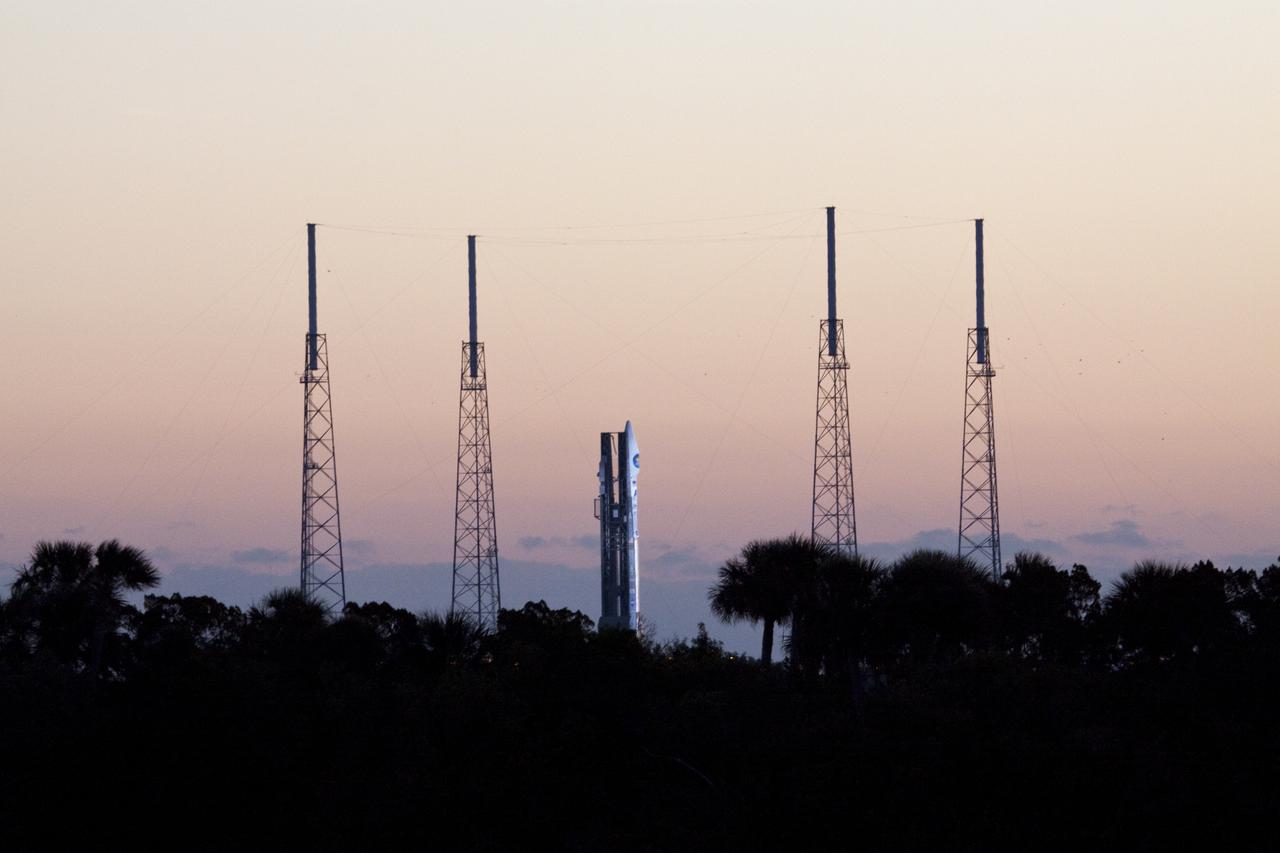
CAPE CANAVERAL, Fla. – As the sun rises over Launch Complex 41 on Cape Canaveral Air Force Station, preparations are under way to launch the United Launch Alliance Atlas V rocket with NASA's Solar Dynamics Observatory aboard. Liftoff was at 10:23 a.m. EST Feb. 11. This is the 100th launch of a commercial Atlas_Centaur rocket. The observatory, known as SDO, is the first mission in NASA's Living With a Star Program and is designed to study the causes of solar variability and its impacts on Earth. The spacecraft's long-term measurements will give solar scientists in-depth information to help characterize the interior of the Sun, the Sun's magnetic field, the hot plasma of the solar corona, and the density of radiation that creates the ionosphere of the planets. The information will be used to create better forecasts of space weather needed to protect the aircraft, satellites and astronauts living and working in space. For information on SDO, visit http:__www.nasa.gov_sdo. Photo credit: NASA_Jack Pfaller
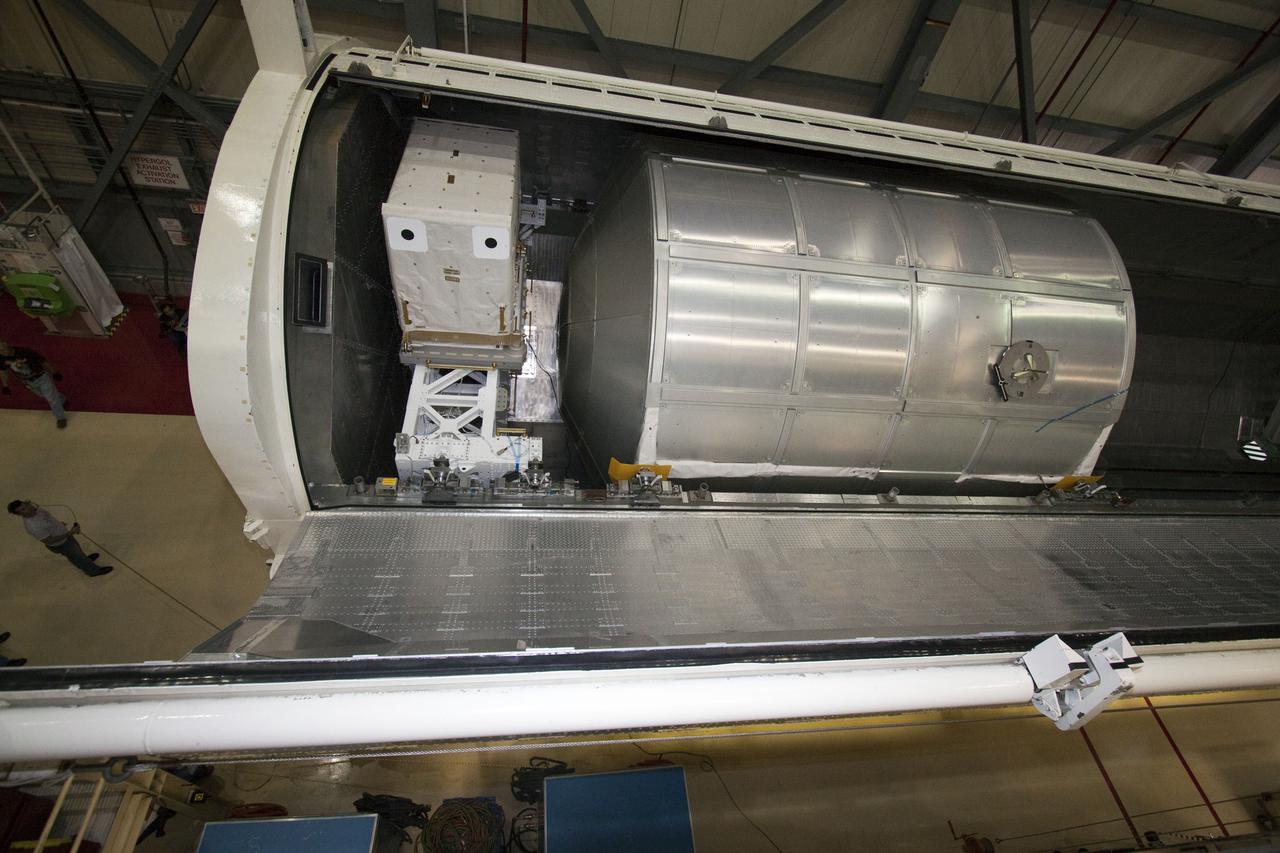
CAPE CANAVERAL, Fla. - In Orbiter Processing Facility-3 at NASA's Kennedy Space Center in Florida, the multi-purpose logistics module Leonardo and an ammonia tank assembly, removed from space shuttle Discovery's payload bay, are secured in the payload canister which will transport them to the Space Station Processing Facility. Discovery landed on Runway 33 at Kennedy's Shuttle Landing Facility at 9:08 a.m. EDT April 20 after 15 days in space, completing the more than 6.2-million-mile STS-131 mission on orbit 238. The seven-member STS-131 crew carried the multi-purpose logistics module Leonardo, filled with supplies, a new crew sleeping quarters and science racks that were transferred to the International Space Station's laboratories. Leonardo now will be modified into a permanent multi-purpose module, or PMM, and left aboard the station on space shuttle Discovery's STS-133 mission, targeted for launch Sept. 16. For information on the STS-131 mission, visit http:__www.nasa.gov_mission_pages_shuttle_shuttlemissions_sts131_index.html. For information on the STS-133 mission, visit http:__www.nasa.gov_mission_pages_shuttle_shuttlemissions_sts133_index.html. Photo credit: NASA_Jack Pfaller
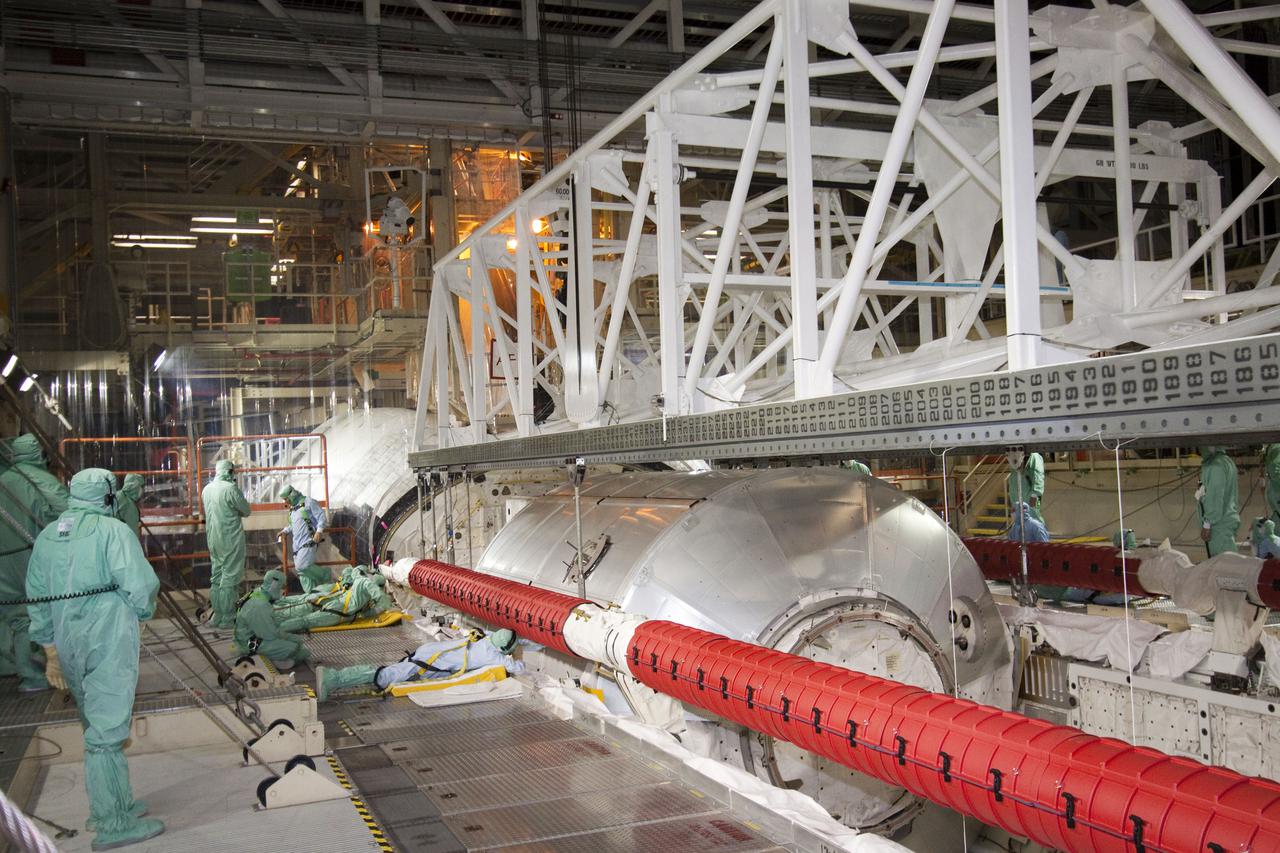
CAPE CANAVERAL, Fla. - In Orbiter Processing Facility-3 at NASA's Kennedy Space Center in Florida, United Space Alliance workers perform their individual tasks in attaching a lifting device to the multi-purpose logistics module Leonardo and an ammonia tank assembly in space shuttle Discovery's payload bay. Discovery landed on Runway 33 at Kennedy's Shuttle Landing Facility at 9:08 a.m. EDT April 20 after 15 days in space, completing the more than 6.2-million-mile STS-131 mission on orbit 238. The seven-member STS-131 crew carried the multi-purpose logistics module Leonardo, filled with supplies, a new crew sleeping quarters and science racks that were transferred to the International Space Station's laboratories. Leonardo now will be modified into a permanent multi-purpose module, or PMM, and left aboard the station on space shuttle Discovery's STS-133 mission, targeted for launch Sept. 16. For information on the STS-131 mission, visit http:__www.nasa.gov_mission_pages_shuttle_shuttlemissions_sts131_index.html. For information on the STS-133 mission, visit http:__www.nasa.gov_mission_pages_shuttle_shuttlemissions_sts133_index.html. Photo credit: NASA_Jack Pfaller
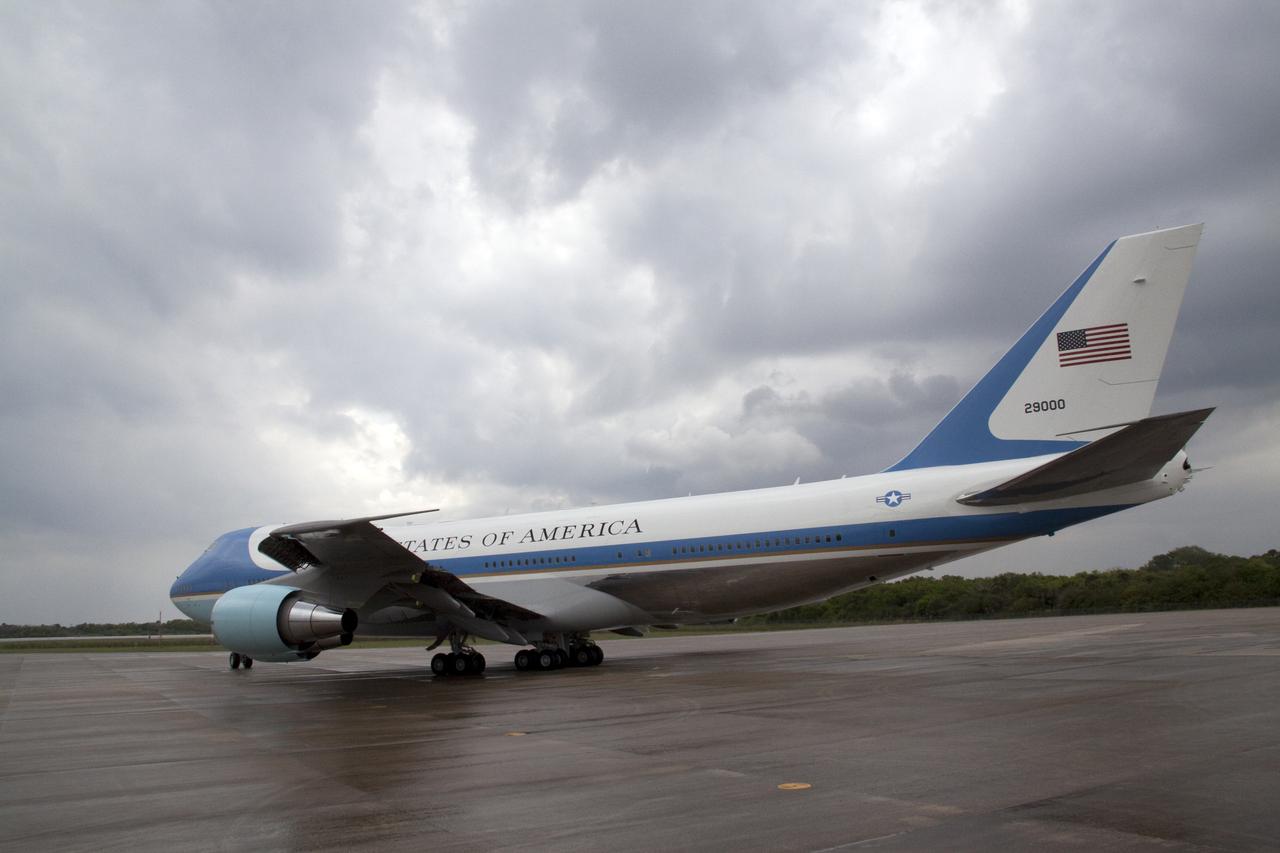
CAPE CANAVERAL, Fla. - At the Shuttle Landing Facility at NASA's Kennedy Space Center in Florida, Air Force One taxies to the runway. Aboard is President Barack Obama who came to Kennedy to address the participants of the Conference on the American Space Program for the 21st Century. President Obama opened the conference by outlining the new course his administration is charting for NASA and the future of U.S. leadership in human spaceflight. Photo credit: NASA_Jack Pfaller
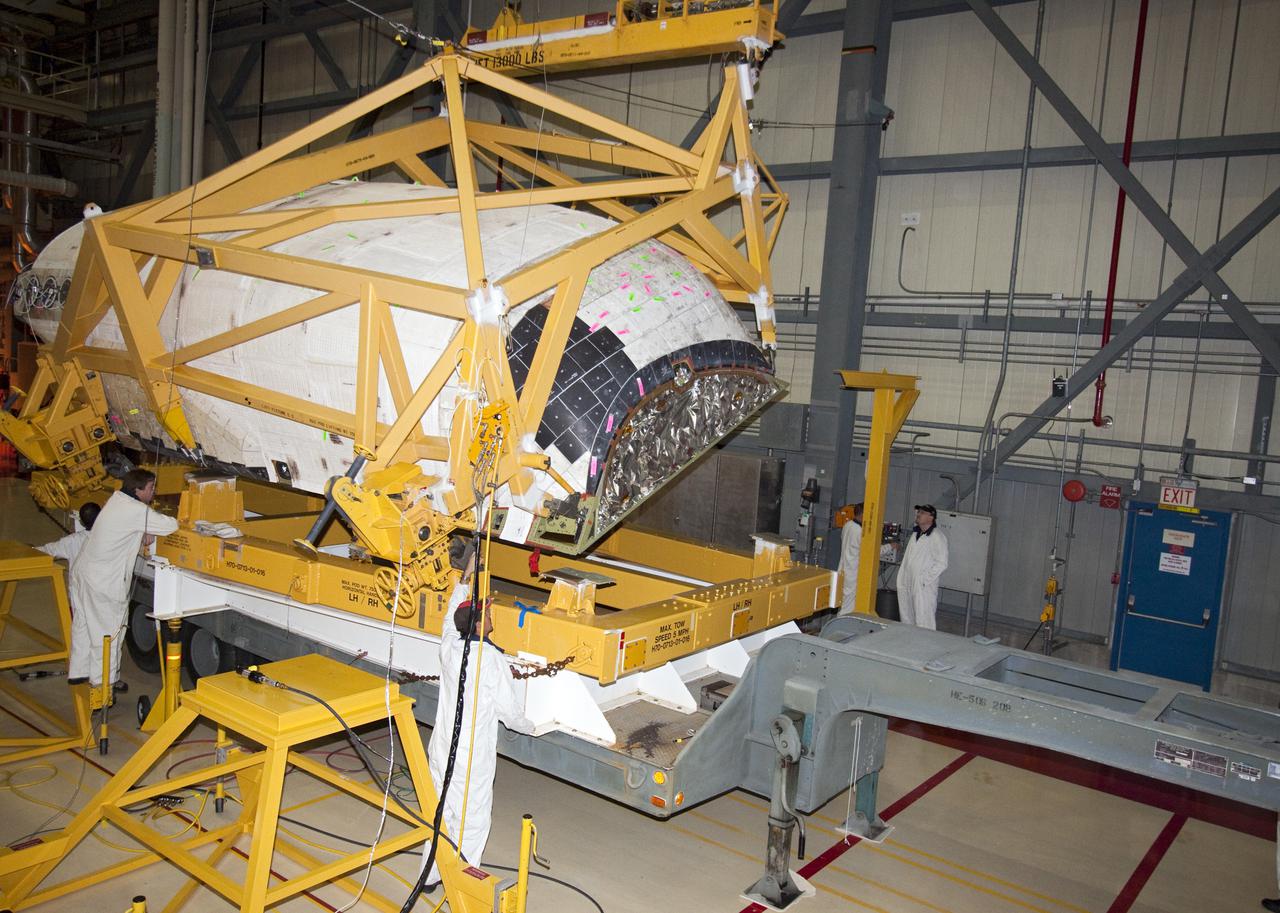
CAPE CANAVERAL, Fla. – Inside Orbiter Processing Facility-3 at Kennedy Space Center in Florida, United Space Alliance technicians place the right-hand orbital maneuvering system, or OMS, pod from Discovery on a pallet to be transferred to the Hypergolic Maintenance Facility. Removal of the OMS pods is part of the orbiter processing activities to prepare Discovery for its next launch, the STS-133 mission. The STS-133 mission to the International Space Station is targeted for launch in the fall of 2010. Discovery’s six-person crew will take important spare parts to the International Space Station along with the Express Logistics Carrier 4. Photo credit: NASA_Jack Pfaller
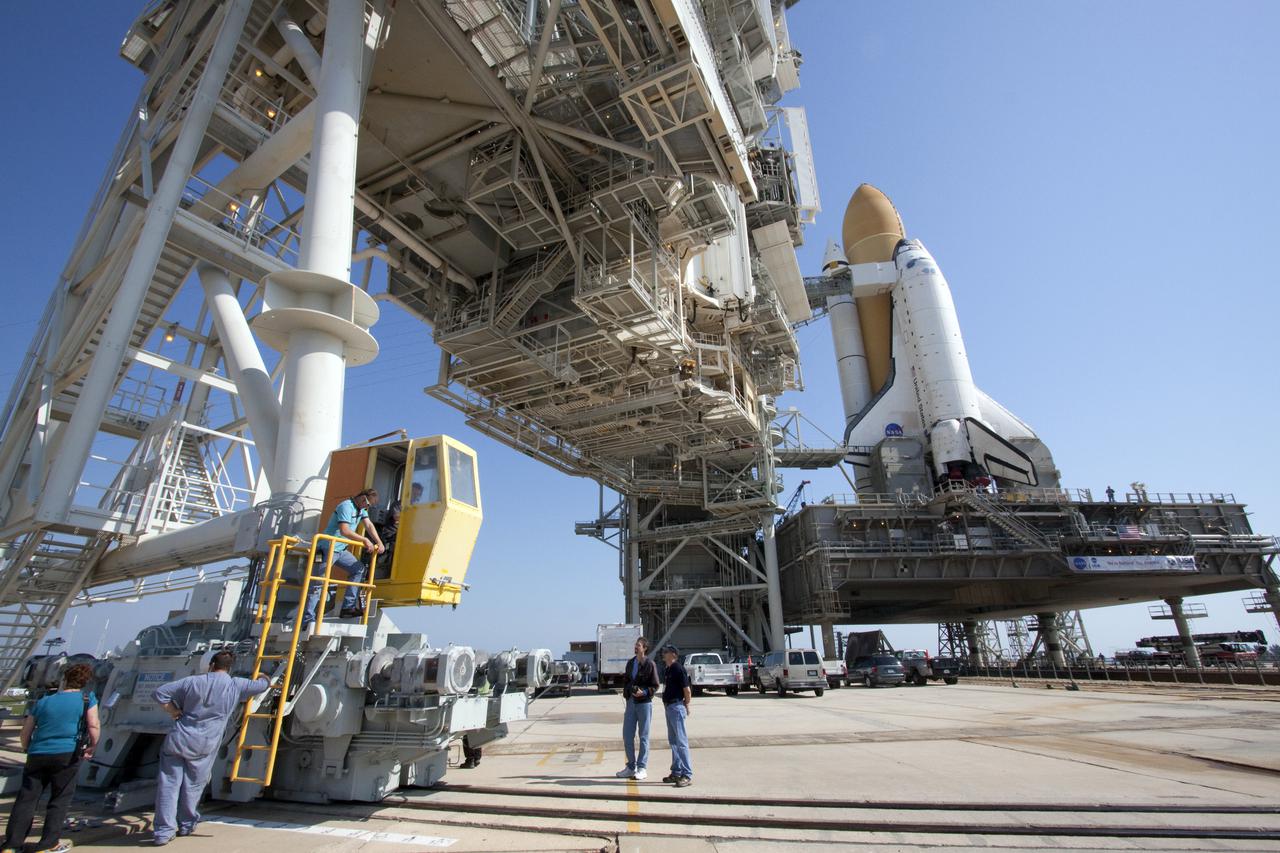
CAPE CANAVERAL, Fla. – On Launch Pad 39A at NASA's Kennedy Space Center in Florida, preparations are under way to close the pad's rotating service structure around space shuttle Atlantis. This mobile structure provides protected access to the shuttle for installation and servicing of payloads at the pad, as well as servicing access to certain systems on the shuttle. Atlantis' first motion on its 3.4-mile trip from the Vehicle Assembly Building was at 11:31 p.m. EDT April 21. The shuttle was secured, or 'hard down,' on the pad at 6:03 a.m. April 22. Rollout is a significant milestone in launch processing activities. On the STS-132 mission, the six-member crew will deliver an Integrated Cargo Carrier, or ICC, and the Russian-built Mini-Research Module-1, or MRM-1, to the International Space Station. The ICC is an unpressurized flat bed pallet and keel yoke assembly used to support the transfer of exterior cargo from the shuttle to the space station. The MRM-1, known as Rassvet, is the second in a series of new pressurized components for Russia and will be permanently attached to the Earth-facing port of the Zarya control module. Rassvet, which translates to 'dawn,' will be used for cargo storage and will provide an additional docking port to the station. STS-132 is the 34th mission to the station and the 132nd shuttle mission overall. Atlantis is targeted to launch on May 14 at 2:19 p.m. For information on the STS-132 mission, visit http:__www.nasa.gov_mission_pages_shuttle_shuttlemissions_sts132_index.html. Photo credit: NASA_Jack Pfaller
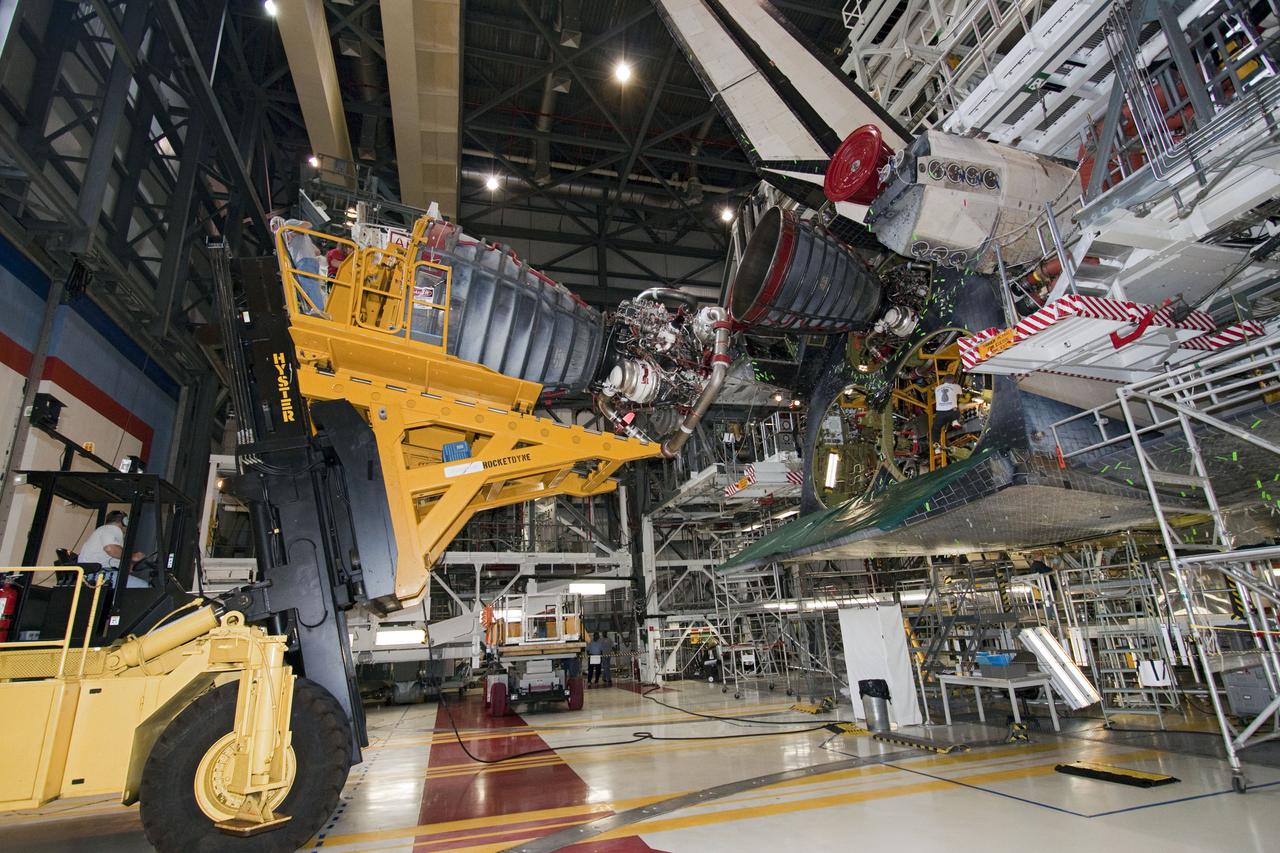
CAPE CANAVERAL, Fla. -- In Orbiter Processing Facility-1 at NASA's Kennedy Space Center in Florida, the Hyster engine lift moves main engine no. 3 away from space shuttle Atlantis. Inspection and maintenance of each main engine is standard procedure following a shuttle mission. Some of the engines maintained and stored in the engine shop could be used for Atlantis, on what currently is planned as the 'launch on need,' or potential rescue mission for Endeavour's STS-134 mission, targeted for launch Feb. 26, 2011. For information, visit www.nasa.gov_shuttle. Photo credit: NASA_Jack Pfaller
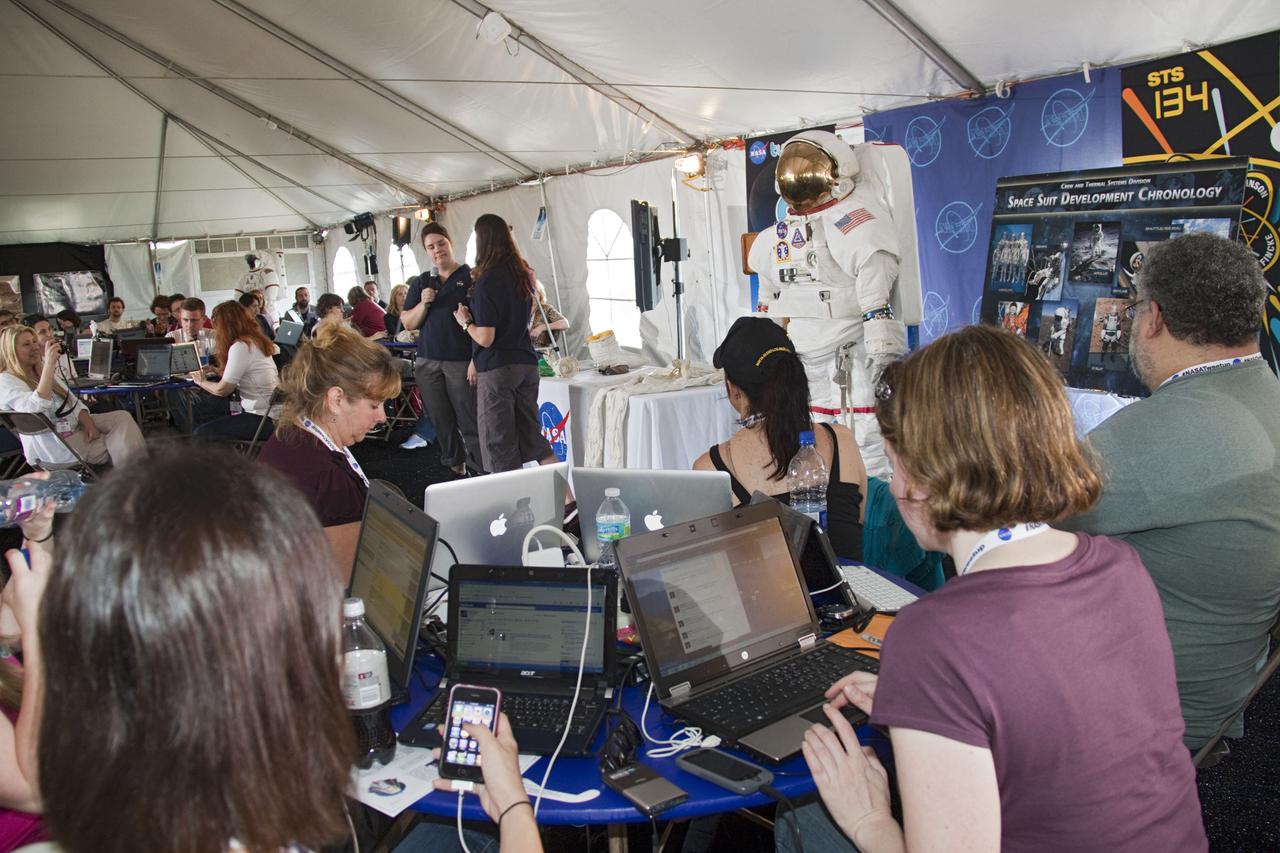
CAPE CANAVERAL, Fla. -- At NASA's Kennedy Space Center in Florida, Mallory Jennings and Heather Paul, aerospace engineers with Johnson Space Center's Spacesuit Life Support, perform a spacesuit demonstration during the STS-134 Tweetup event. About 150 people from 43 states, Washington, D.C., and half a dozen countries are participating in the event. A Tweetup gives followers of @NASA on the social messaging medium Twitter the opportunity to tour the center, view a shuttle launch and speak with NASA managers, astronauts, shuttle technicians and engineers. During the STS-134 mission, space shuttle Endeavour will deliver the Express Logistics Carrier-3, Alpha Magnetic Spectrometer-2 (AMS), a high-pressure gas tank and additional spare parts for the Dextre robotic helper to the International Space Station. Endeavour was scheduled to launch at 3:47 p.m. on April 29, but that attempt was scrubbed for at least 72 hours while engineers assess an issue associated with the shuttle's Auxiliary Power Unit 1. STS-134 will be the final spaceflight for Endeavour. For more information visit, www.nasa.gov_mission_pages_shuttle_shuttlemissions_sts134_index.html. Photo credit: NASA_Jack Pfaller
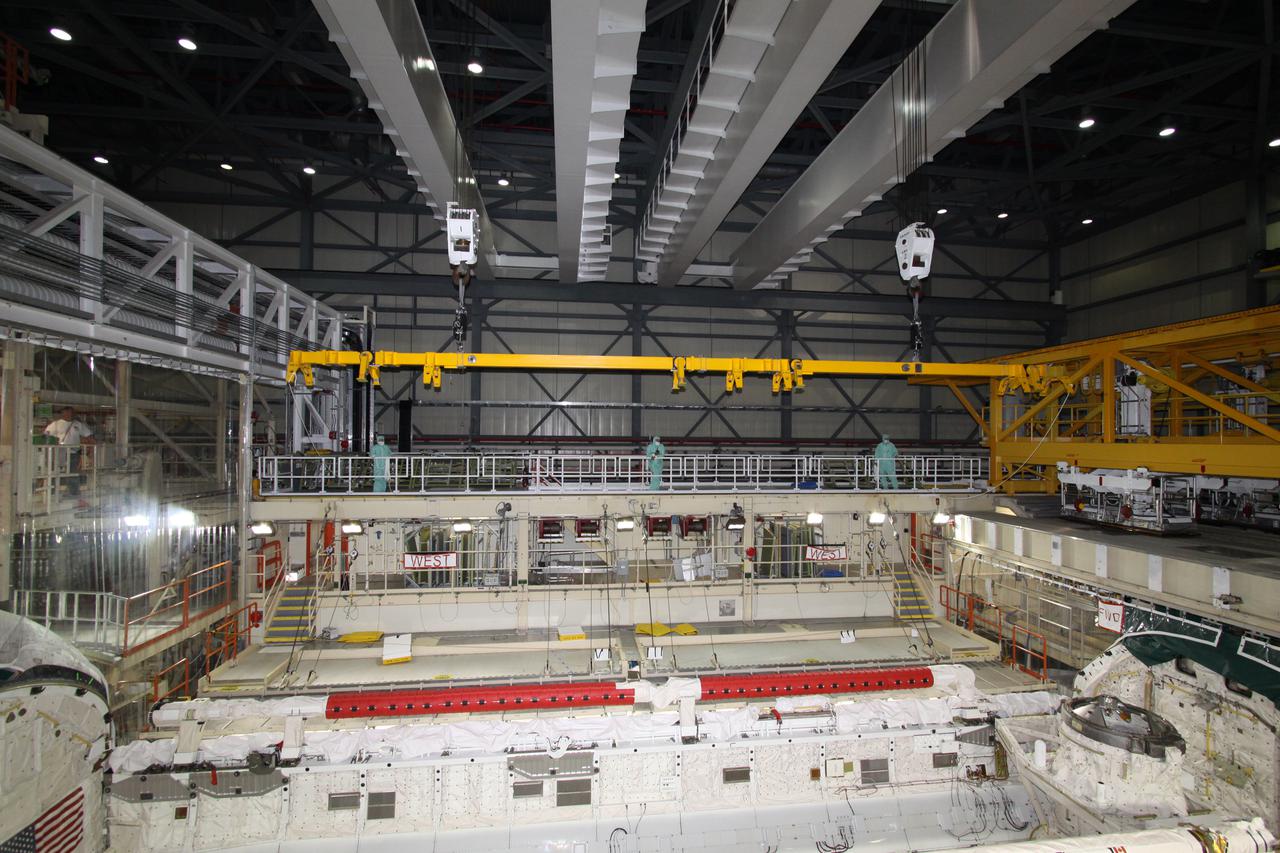
CAPE CANAVERAL, Fla. - In Orbiter Processing Facility-3 at NASA's Kennedy Space Center in Florida, preparations are under way to remove the orbiter boom sensor system, or OBSS, from space shuttle Discovery's payload bay. The workers are dressed in clean-room attire, known as 'bunny suits.' The 50-foot-long OBSS attaches to the end of the shuttle’s robotic arm and supports the cameras and laser systems used to inspect the shuttle’s thermal protection system while in space. The OBSS' inspection boom assembly, or IBA, is removed from the arm every other processing flow for a detailed inspection. After five consecutive flights, all IBA internal components are submitted to a thorough electrical checkout in Kennedy's Remote Manipulator System Lab. Discovery next will deliver the first Permanent Multi-purpose Module, or PMM; the Express Logistics Carrier 4; and critical spare parts to the International Space Station on the STS-133 mission. Launch is targeted for Sept. 16. Photo credit: NASA_Jack Pfaller
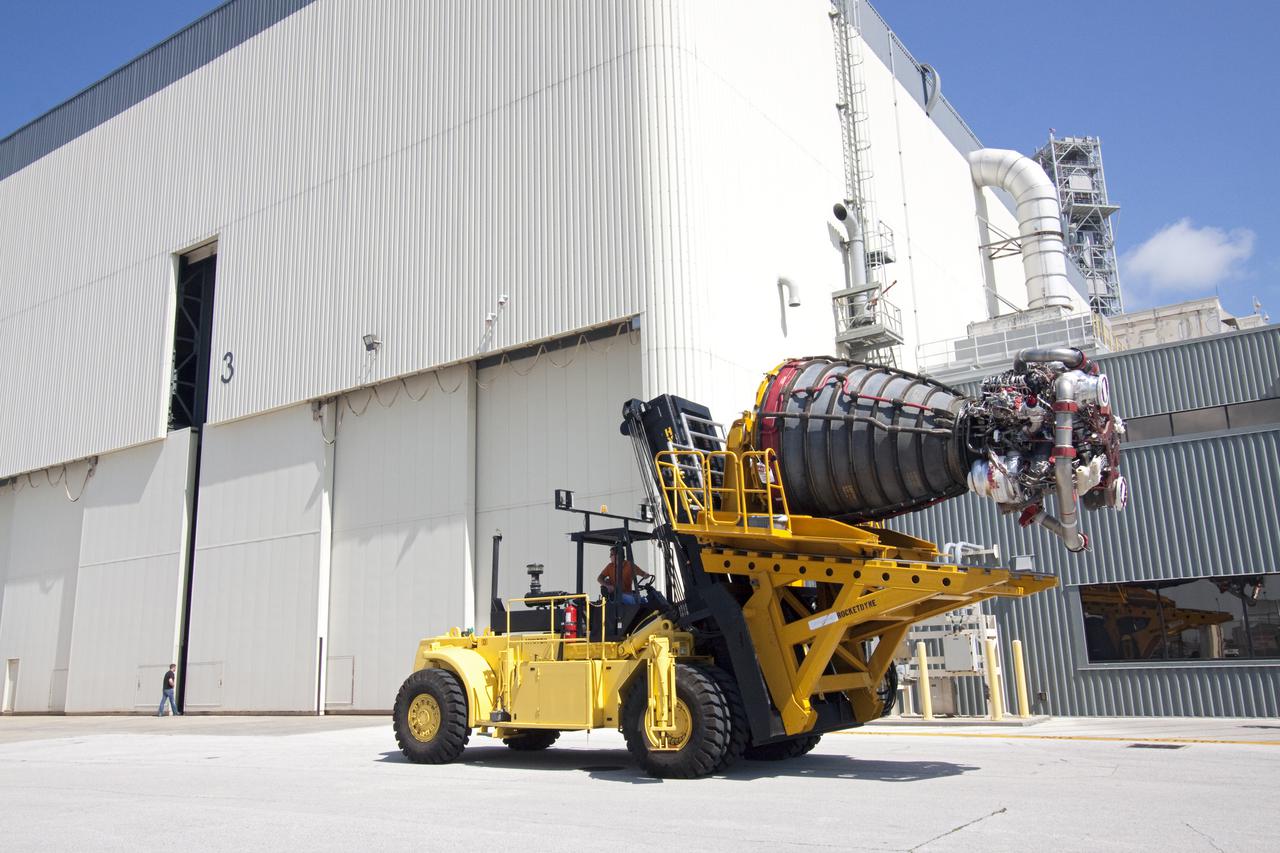
CAPE CANAVERAL, Fla. -- At NASA's Kennedy Space Center in Florida, a space shuttle main engine secured on a Hyster forklift moves from the Space Shuttle Main Engine Processing Facility to Orbiter Processing Facility-3. Three main engines, weighing 7,000 pounds each, will be installed in space shuttle Discovery for the STS-133 mission to the International Space Station. Discovery and its STS-133 crew are targeted to deliver the Express Logistics Carrier-4 filled with external payloads and experiments, as well as critical spare components to the station later this year. Photo credit: NASA_Jack Pfaller
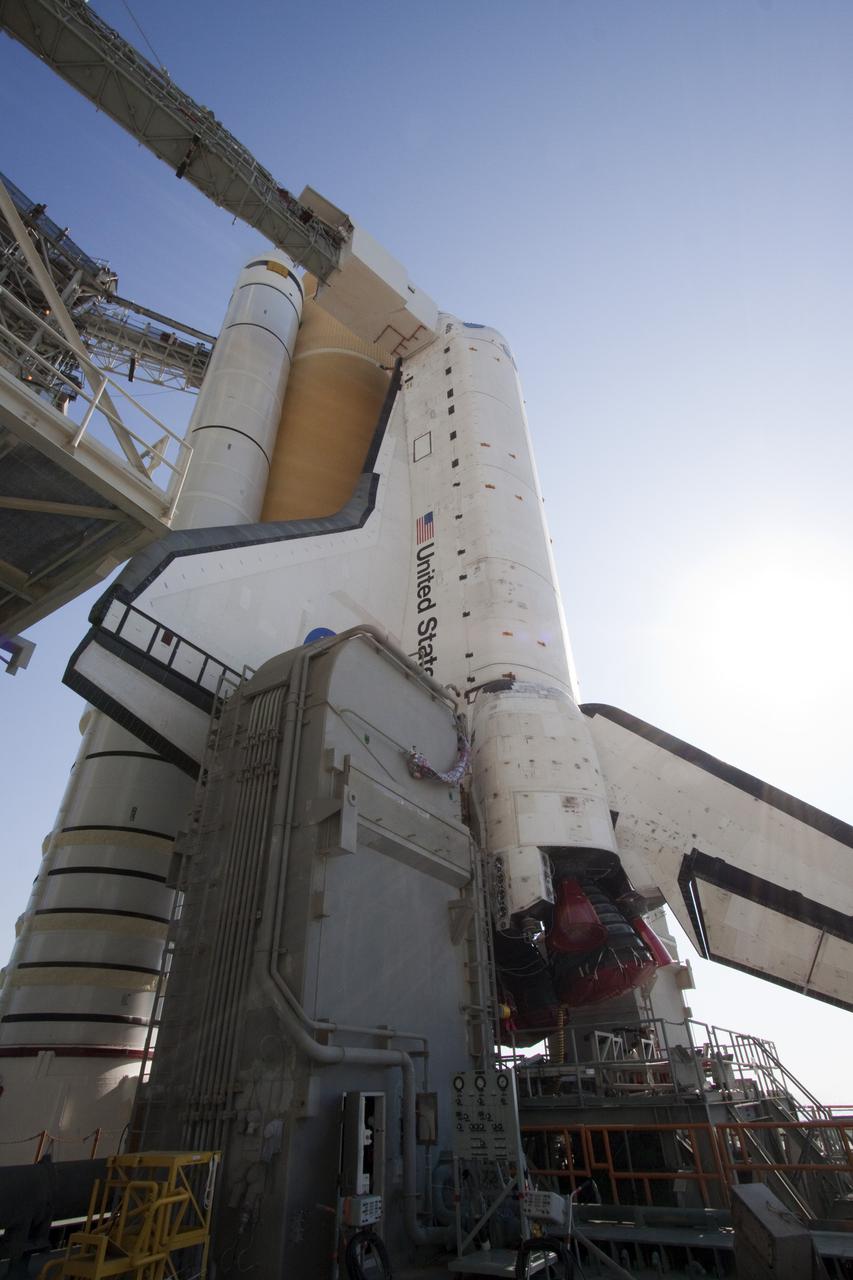
CAPE CANAVERAL, Fla. – On Launch Pad 39A at NASA's Kennedy Space Center in Florida, the access arm supporting the pad's White Room is moved into place against space shuttle Atlantis. The room provides workers and astronauts an entry point to the shuttle's crew compartment. Atlantis' first motion on its 3.4-mile trip from the Vehicle Assembly Building was at 11:31 p.m. EDT April 21. The shuttle was secured, or 'hard down,' on the pad at 6:03 a.m. April 22. Rollout is a significant milestone in launch processing activities. On the STS-132 mission, the six-member crew will deliver an Integrated Cargo Carrier, or ICC, and the Russian-built Mini-Research Module-1, or MRM-1, to the International Space Station. The ICC is an unpressurized flat bed pallet and keel yoke assembly used to support the transfer of exterior cargo from the shuttle to the space station. The MRM-1, known as Rassvet, is the second in a series of new pressurized components for Russia and will be permanently attached to the Earth-facing port of the Zarya control module. Rassvet, which translates to 'dawn,' will be used for cargo storage and will provide an additional docking port to the station. STS-132 is the 34th mission to the station and the 132nd shuttle mission overall. Atlantis is targeted to launch on May 14 at 2:19 p.m. For information on the STS-132 mission, visit http:__www.nasa.gov_mission_pages_shuttle_shuttlemissions_sts132_index.html. Photo credit: NASA_Jack Pfaller

CAPE CANAVERAL, Fla. – At NASA's Kennedy Space Center in Florida, space shuttle Atlantis approaches the Vehicle Assembly Building, or VAB, on its move from Orbiter Processing Facility-1 where it was processed for its upcoming STS-132 mission. In the VAB, Atlantis will be lifted into a high bay where it will be mated to its external fuel tank and solid rocket boosters. The six-member STS-132 crew will deliver an Integrated Cargo Carrier, or ICC, and the Russian-built Mini-Research Module-1, or MRM-1, to the International Space Station. The ICC is an unpressurized flat bed pallet and keel yoke assembly used to support the transfer of exterior cargo from the shuttle to the space station. The MRM-1, known as Rassvet, is the second in a series of new pressurized components for Russia and will be permanently attached to the Earth-facing port of the Zarya control module. Rassvet, which translates to 'dawn,' will be used for cargo storage and will provide an additional docking port to the station. STS-132 is the 34th mission to the station and the 132nd shuttle mission overall. Launch is targeted for May 14. For information on the STS-132 mission, visit http:__www.nasa.gov_mission_pages_shuttle_shuttlemissions_sts132_index.html. Photo credit: NASA_Jack Pfaller
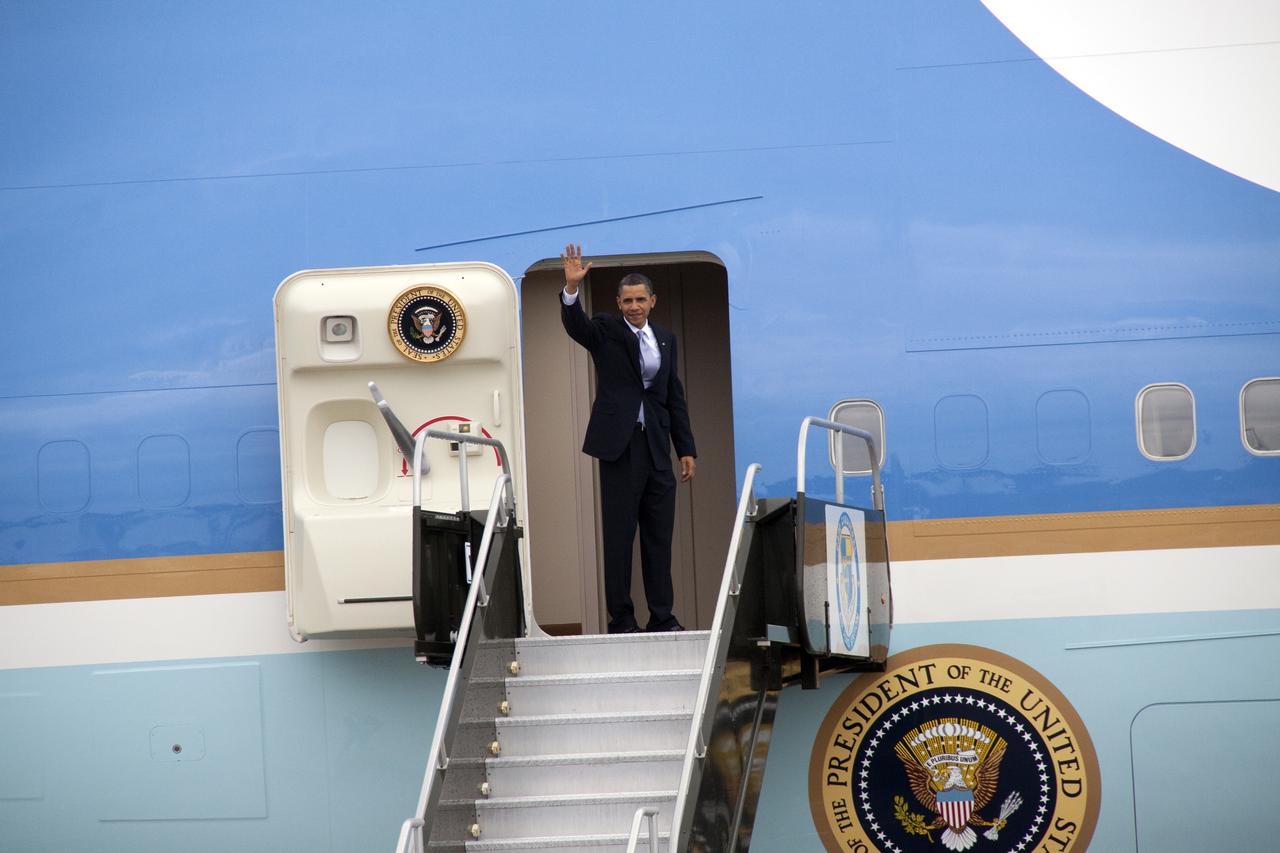
CAPE CANAVERAL, Fla. - At the Shuttle Landing Facility at NASA's Kennedy Space Center in Florida, President Barack Obama boards Air Force One following his address to the participants of the Conference on the American Space Program for the 21st Century. President Obama opened the conference by outlining the new course his administration is charting for NASA and the future of U.S. leadership in human spaceflight. Photo credit: NASA_Jack Pfaller
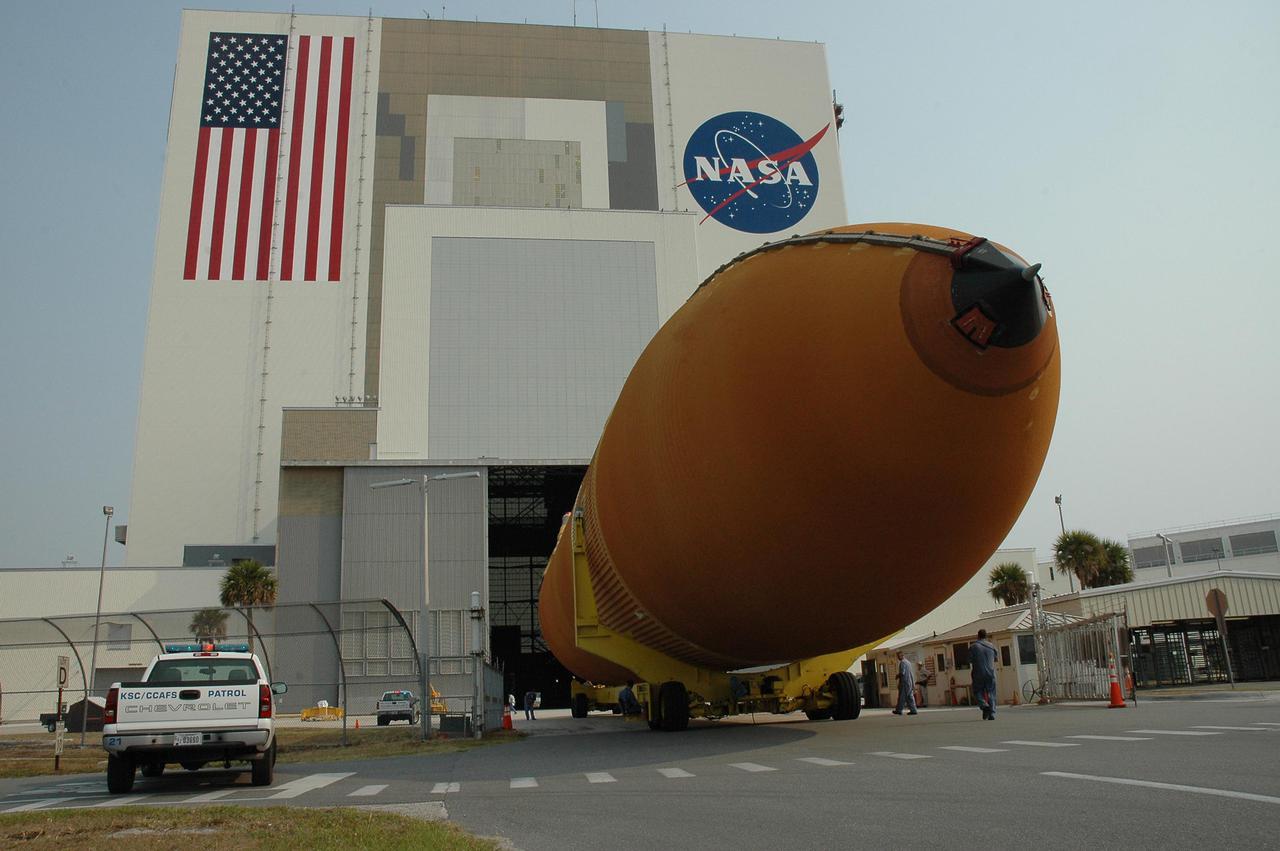
KENNEDY SPACE CENTER, FLA. -- Aboard its transporter, external tank No. 117 moves toward the open doors of the Vehicle Assembly Building. The tank was offloaded from the Pegasus barge in the nearby turn basin.ET-117 arrived aboard the barge after its voyage around the Florida Peninsula from the Michoud Assembly Facility near New Orleans. The tank is slated for mission STS-118, which is targeted for launch in early August. ET-117 will be moved into a checkout cell in high bay 2 of the VAB for processing. Photo credit: NASA_Jack Pfaller
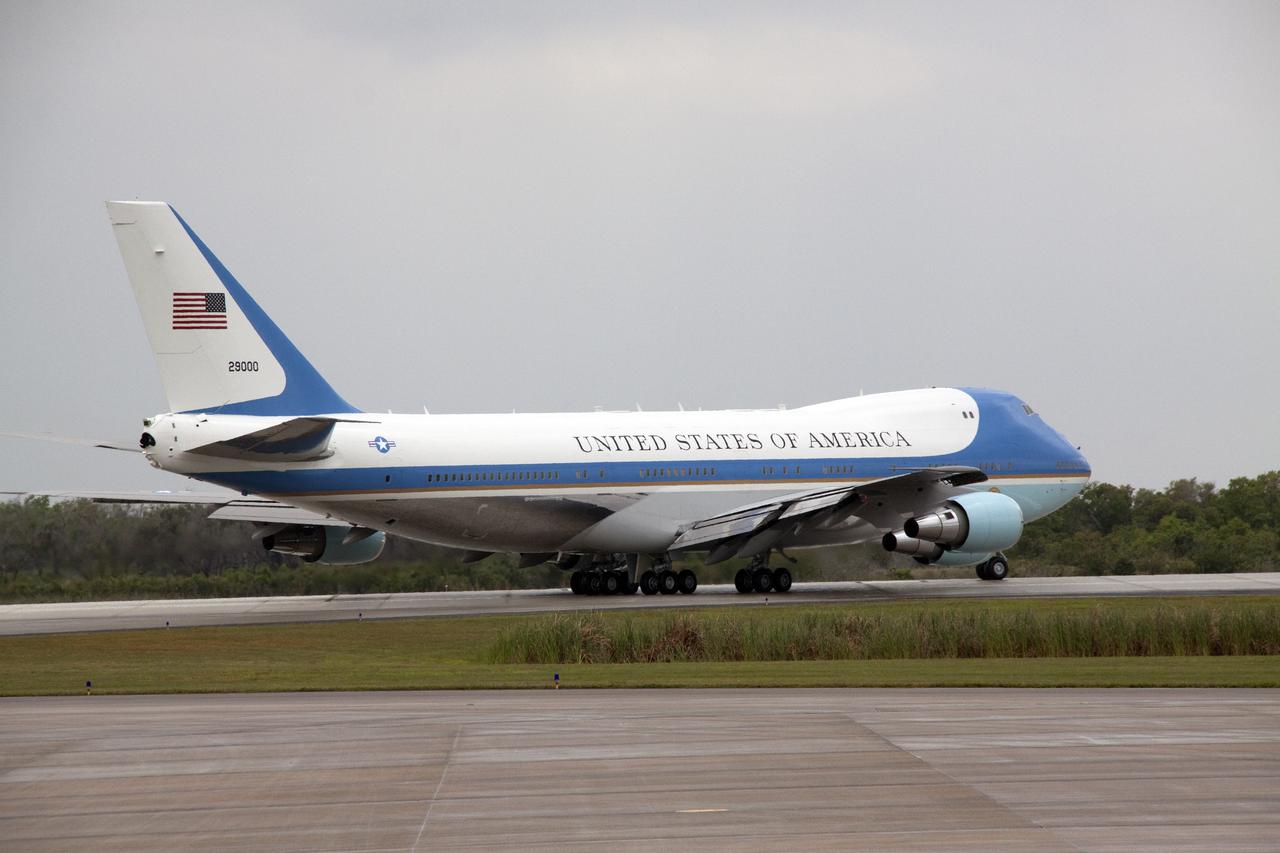
CAPE CANAVERAL, Fla. - At the Shuttle Landing Facility at NASA's Kennedy Space Center in Florida, Air Force One taxies down the runway. Aboard is President Barack Obama who came to Kennedy to address the participants of the Conference on the American Space Program for the 21st Century. President Obama opened the conference by outlining the new course his administration is charting for NASA and the future of U.S. leadership in human spaceflight. Photo credit: NASA_Jack Pfaller
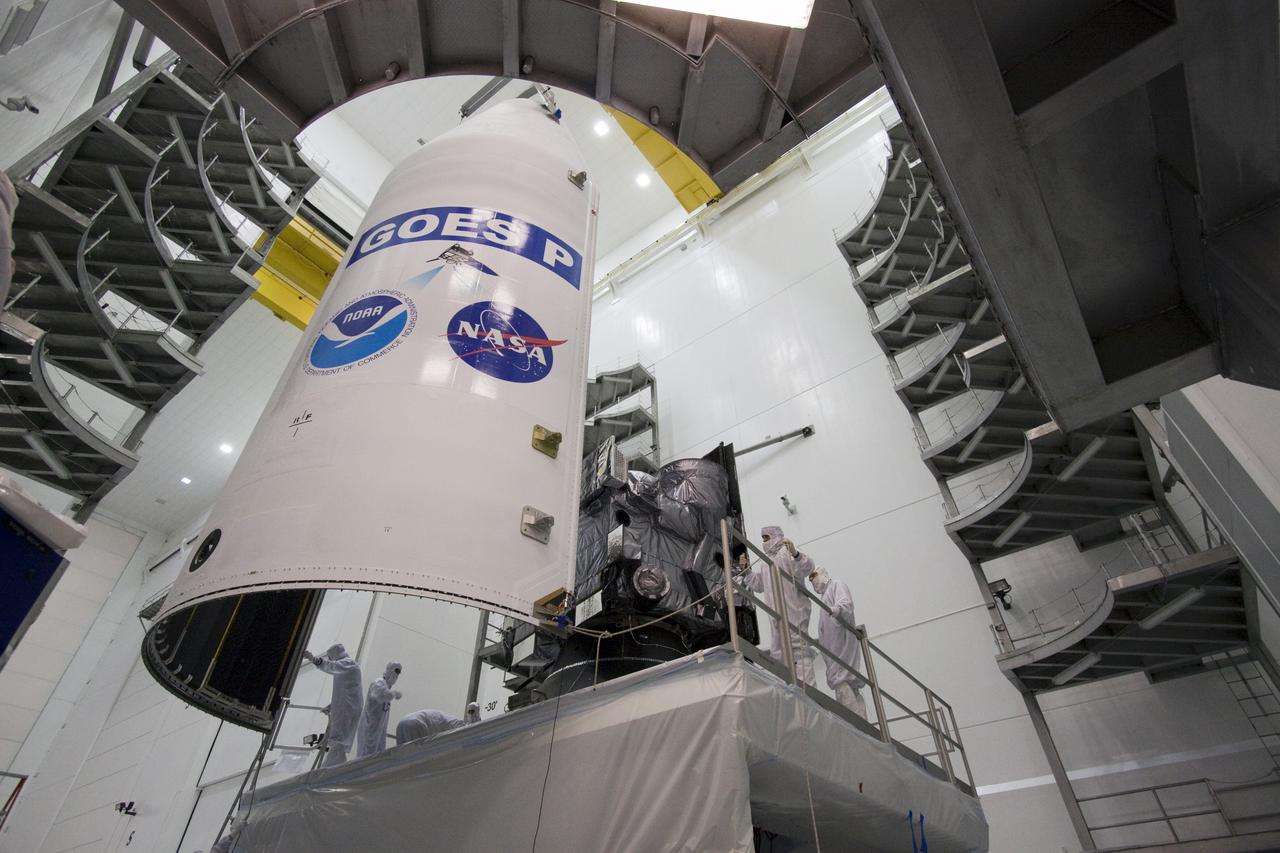
CAPE CANAVERAL, Fla. – At the Astrotech Space Operations facility in Titusville, Fla., spacecraft technicians guide one side of the Delta IV payload fairing that will enclose NASA's GOES-P meteorological satellite around the spacecraft. The fairing is a molded clamshell covering that fits flush with the outside surface of the rocket and forms an aerodynamic nose cone, protecting the spacecraft during launch and ascent. GOES-P, the latest Geostationary Operational Environmental Satellite, was developed by NASA for the National Oceanic and Atmospheric Administration, or NOAA. GOES-P is designed to watch for storm development and observed current weather conditions on Earth. Launch of GOES-P is targeted for March 1 from Launch Complex 37 aboard a United Launch Alliance Delta IV rocket. For information on GOES-P, visit http:__www.nasa.gov_mission_pages_GOES-P_main_index.html. Photo credit: NASA_Jack Pfaller
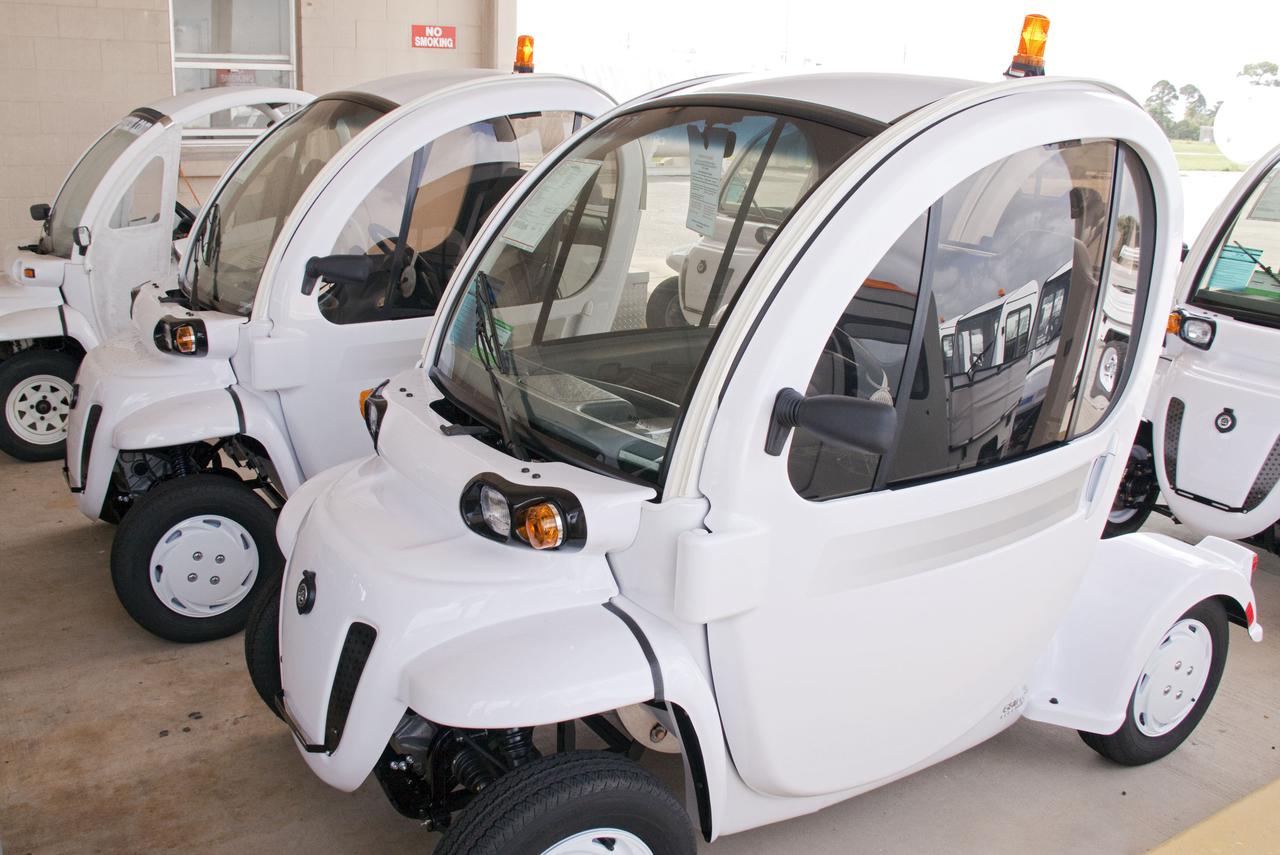
CAPE CANAVERAL, Fla. -- NASA's Kennedy Space Center in Florida has accepted delivery of several new low speed electric vehicles, or LSEV. The first LSEV was purchased in 2005 and through the American Recovery and Reinvestment Act, or ARRA, Kennedy will receive a total of 39 electric cars. The center's fleet is being augmented with alternative-fueled vehicles in an effort to reduce gasoline consumption and conserve energy. Photo credit: NASA_Jack Pfaller
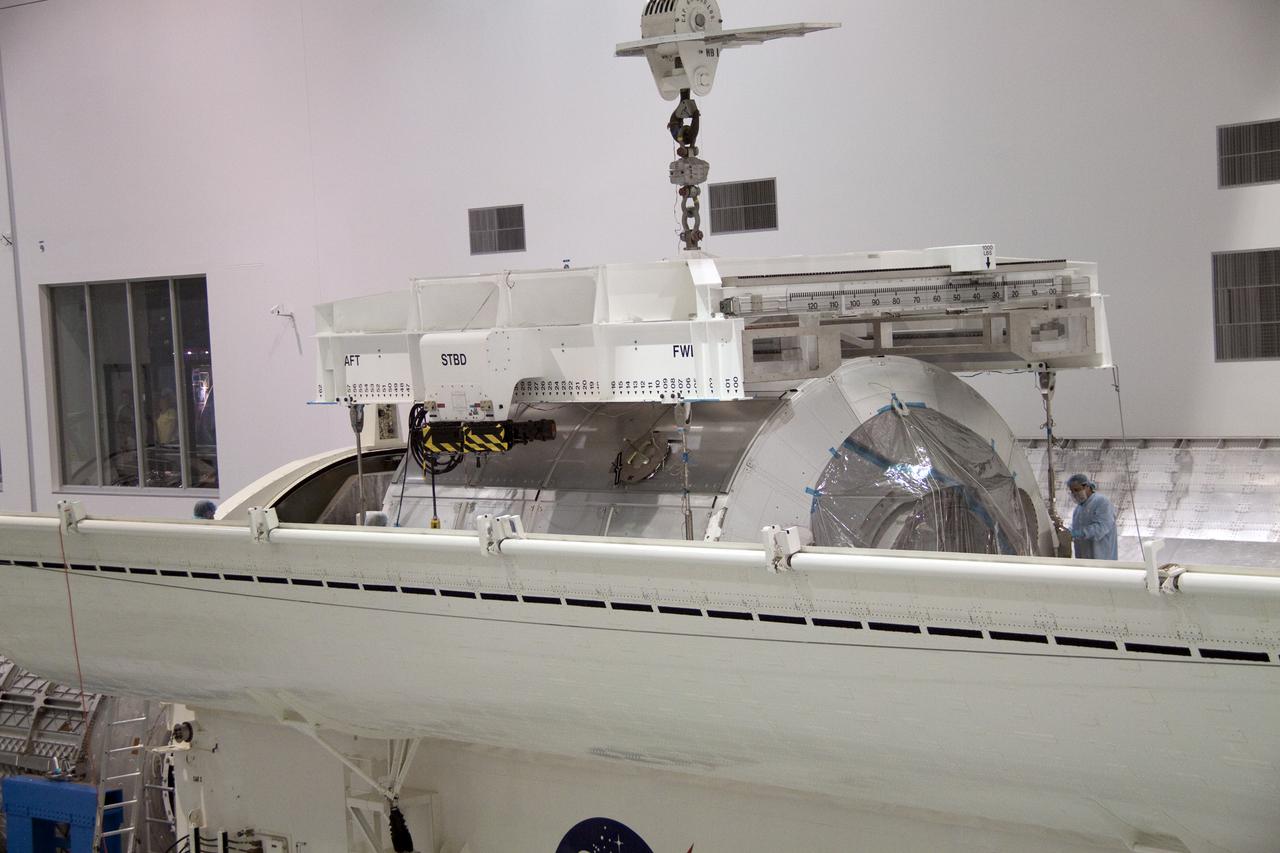
CAPE CANAVERAL, Fla. - In the Space Station Processing Facility at NASA's Kennedy Space Center in Florida, the multi-purpose logistics module Leonardo is lowered into a payload canister. Leonardo will be transported to Launch Pad 39A and installed into space shuttle Discovery for its upcoming flight. The seven-member STS-131 crew will deliver Leonardo, filled with resupply stowage platforms and racks, to the International Space Station. STS-131 will be the 33rd shuttle mission to the station and the 131st shuttle mission overall. Launch is targeted for April 5. For information on the STS-131 mission and crew, visit http:__www.nasa.gov_mission_pages_shuttle_shuttlemissions_sts131_index.html. Photo credit: NASA_Jack Pfaller

CAPE CANAVERAL, Fla. -- During the L-1 prelaunch news briefing in the Press Site auditorium at NASA's Kennedy Space Center in Florida, STS-134 Payload Mission Manager Joe Delai speaks to media about the processing and readiness of space shuttle Endeavour's payload for flight. Endeavour and its crew will deliver the Express Logistics Carrier-3, Alpha Magnetic Spectrometer-2 (AMS), a high-pressure gas tank and additional spare parts for the Dextre robotic helper to the International Space Station. Launch is scheduled for April 29 at 3:47 p.m. EDT. This will be the final spaceflight for Endeavour. For more information visit, www.nasa.gov_mission_pages_shuttle_shuttlemissions_sts134_index.html. Photo credit: NASA_Jack Pfaller
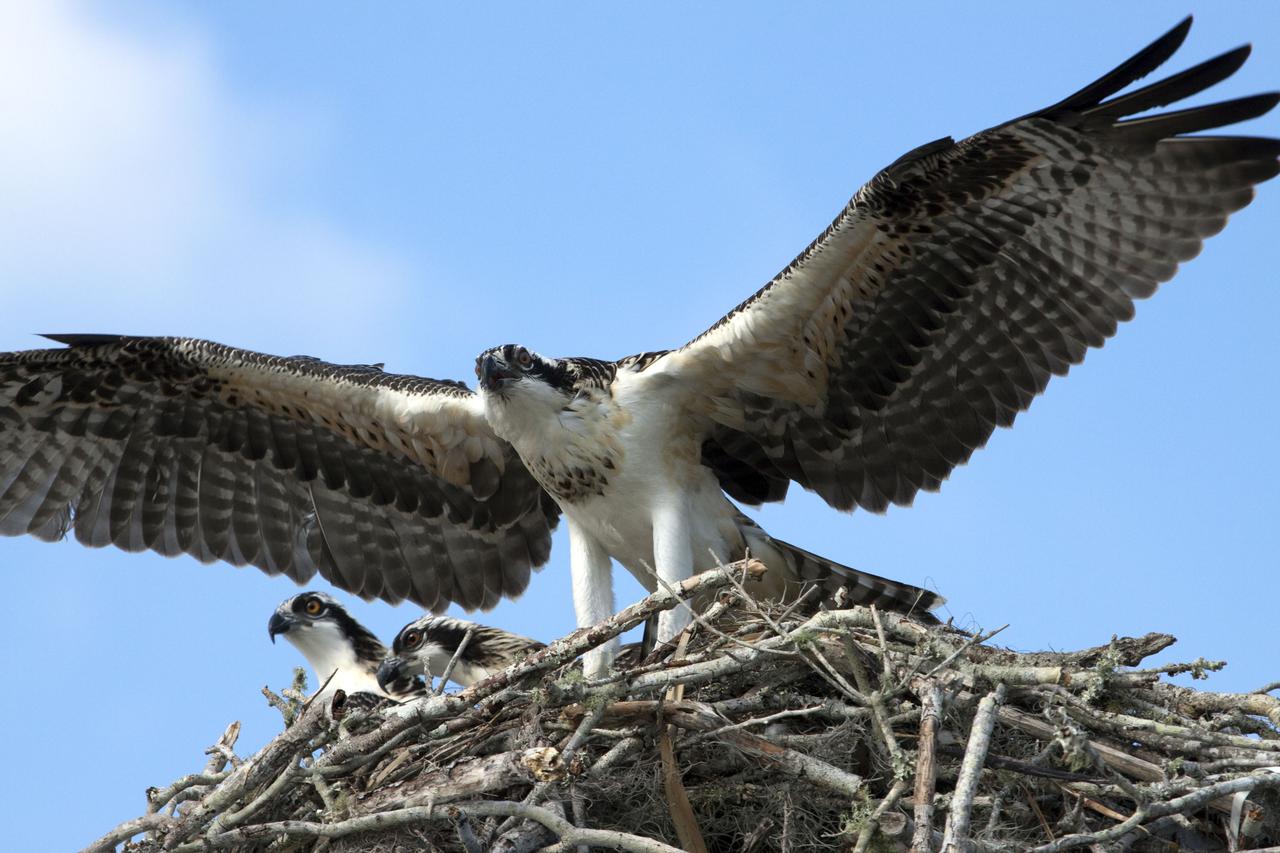
CAPE CANAVERAL, Fla. - At NASA's Kennedy Space Center in Florida, a female osprey returns to its nest atop a platform in the Press Site parking lot, ever protective of her growing triplets. The adults feed their young until they are fully fledged and defend their brood with great perseverance until they are independent. The osprey, also known as a fish hawk, is well adapted for capturing fish, which make up its entire diet. The soles of its feet are equipped with sharp, spiny projections that give the bird a firm grip on its slippery prey. Kennedy's Press Site is located at the turn basin in Launch Complex 39, making it an ideal osprey nesting place. The Merritt Island National Wildlife Refuge overlaps with Kennedy Space Center property and provides a habitat for 330 species of birds, including the osprey. A variety of other wildlife - 117 kinds of fish, 65 types of amphibians and reptiles, 31 different mammals, and 1,045 species of plants - also inhabit the refuge. For information on the refuge, visit http:__www.fws.gov_merrittisland_Index.html. For information on Kennedy Space Center, visit http:__www.nasa.gov_kennedy. Photo credit: NASA_Jack Pfaller
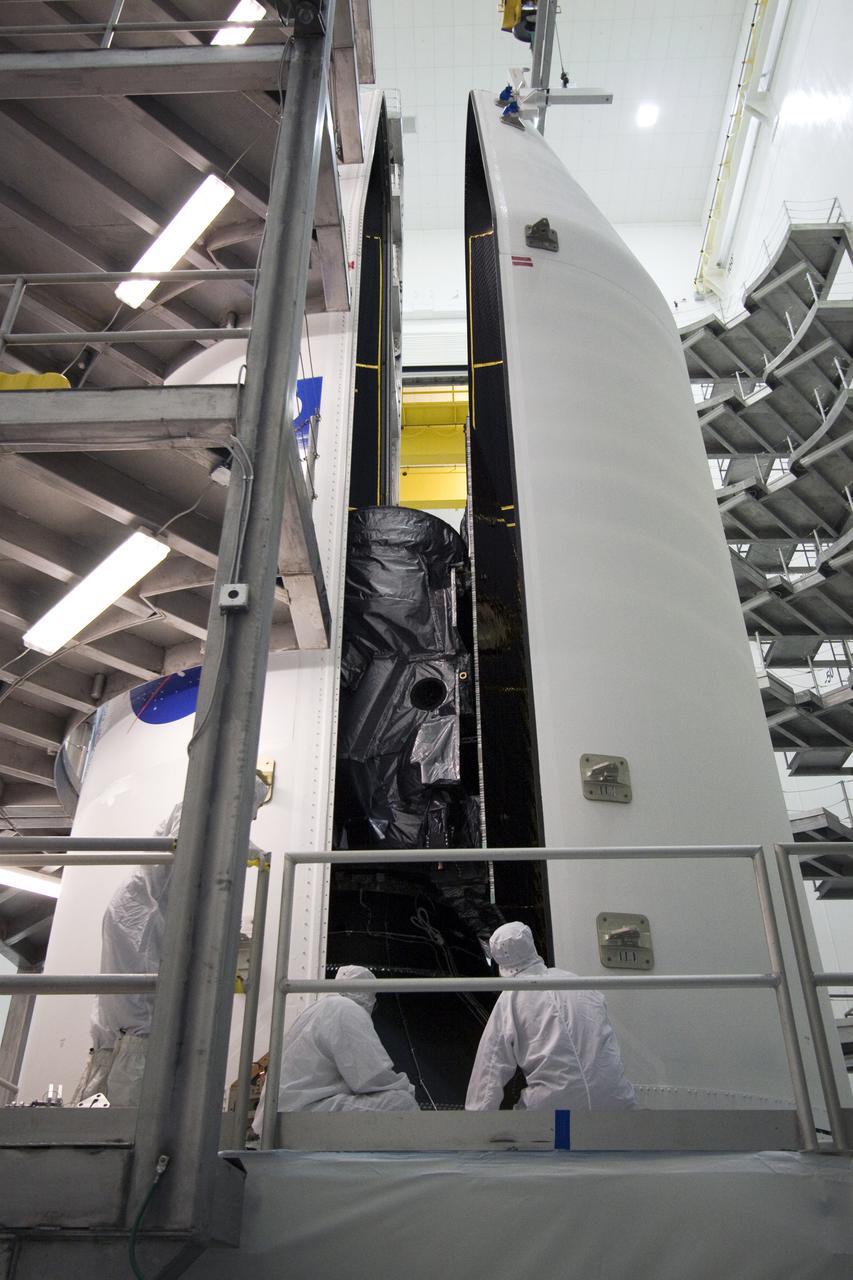
CAPE CANAVERAL, Fla. – At the Astrotech Space Operations facility in Titusville, Fla., spacecraft technicians guide the second half of the Delta IV payload fairing that will enclose NASA's GOES-P meteorological satellite around the spacecraft. The fairing is a molded clamshell covering that fits flush with the outside surface of the rocket and forms an aerodynamic nose cone, protecting the spacecraft during launch and ascent. GOES-P, the latest Geostationary Operational Environmental Satellite, was developed by NASA for the National Oceanic and Atmospheric Administration, or NOAA. GOES-P is designed to watch for storm development and observed current weather conditions on Earth. Launch of GOES-P is targeted for March 1 from Launch Complex 37 aboard a United Launch Alliance Delta IV rocket. For information on GOES-P, visit http:__www.nasa.gov_mission_pages_GOES-P_main_index.html. Photo credit: NASA_Jack Pfaller
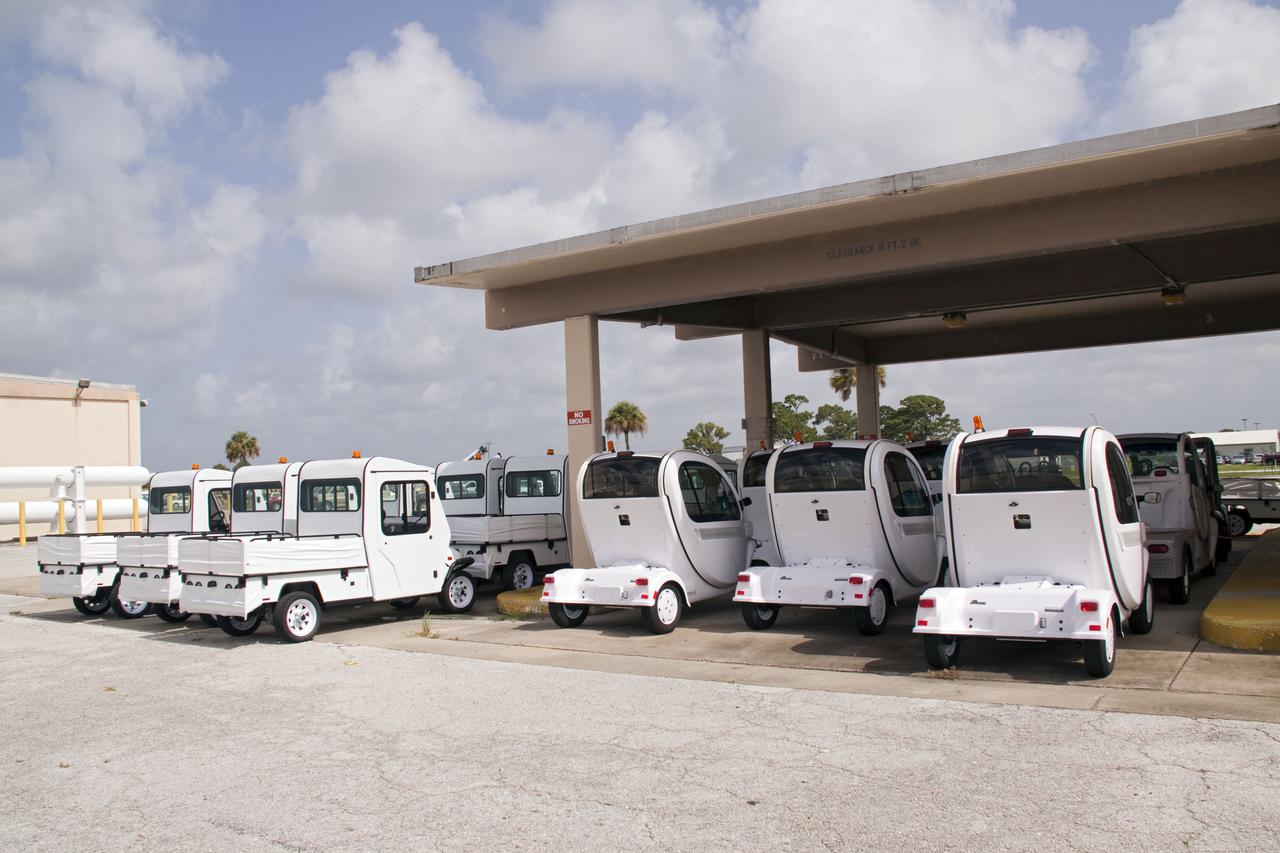
CAPE CANAVERAL, Fla. -- NASA's Kennedy Space Center in Florida has accepted delivery of several new low speed electric vehicles, or LSEV. The first LSEV was purchased in 2005 and through the American Recovery and Reinvestment Act, or ARRA, Kennedy will receive a total of 39 electric cars. The center's fleet is being augmented with alternative-fueled vehicles in an effort to reduce gasoline consumption and conserve energy. Photo credit: NASA_Jack Pfaller
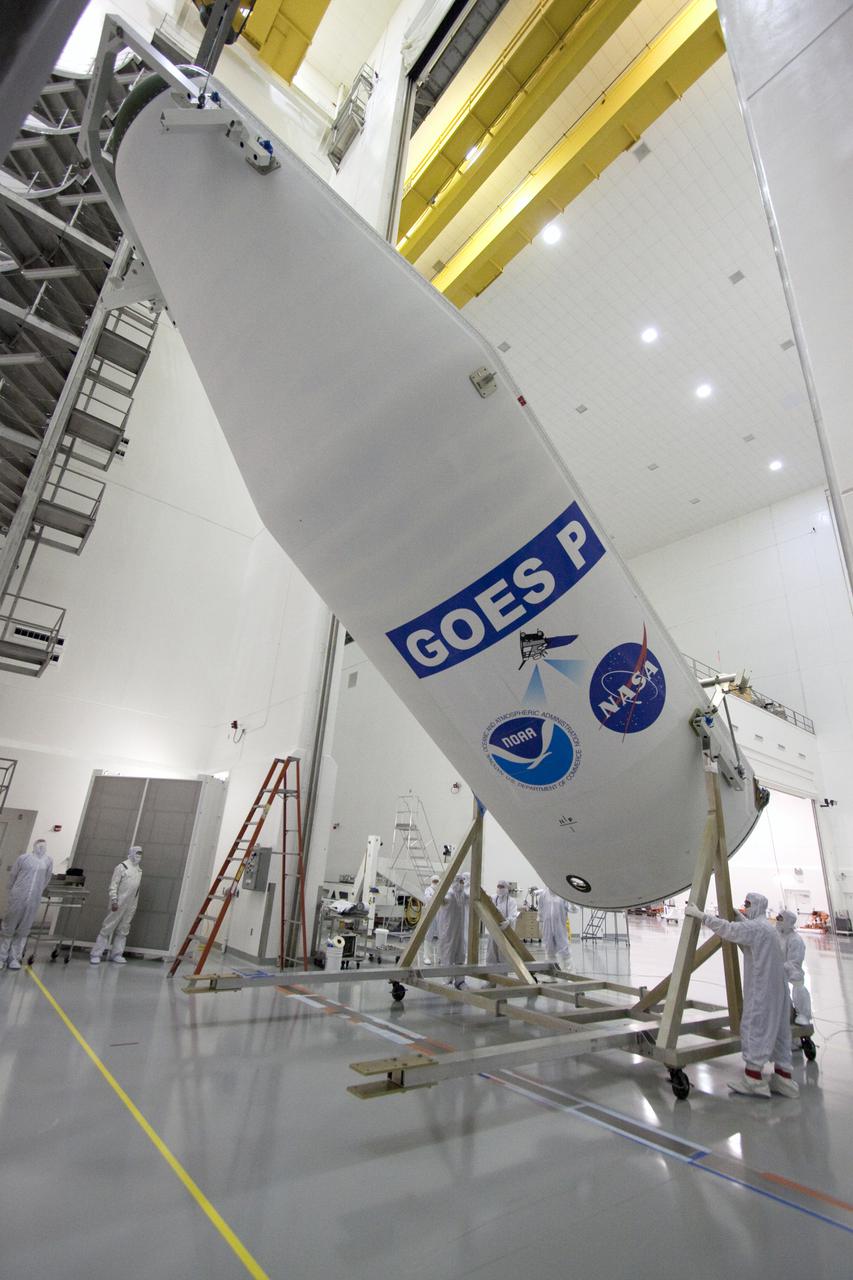
CAPE CANAVERAL, Fla. – At the Astrotech Space Operations facility in Titusville, Fla., one side of the Delta IV payload fairing that will enclose NASA's GOES-P meteorological satellite is raised into a vertical position. The fairing is a molded clamshell covering that fits flush with the outside surface of the rocket and forms an aerodynamic nose cone, protecting the spacecraft during launch and ascent. GOES-P, the latest Geostationary Operational Environmental Satellite, was developed by NASA for the National Oceanic and Atmospheric Administration, or NOAA. GOES-P is designed to watch for storm development and observed current weather conditions on Earth. Launch of GOES-P is targeted for March 1 from Launch Complex 37 aboard a United Launch Alliance Delta IV rocket. For information on GOES-P, visit http:__www.nasa.gov_mission_pages_GOES-P_main_index.html. Photo credit: NASA_Jack Pfaller
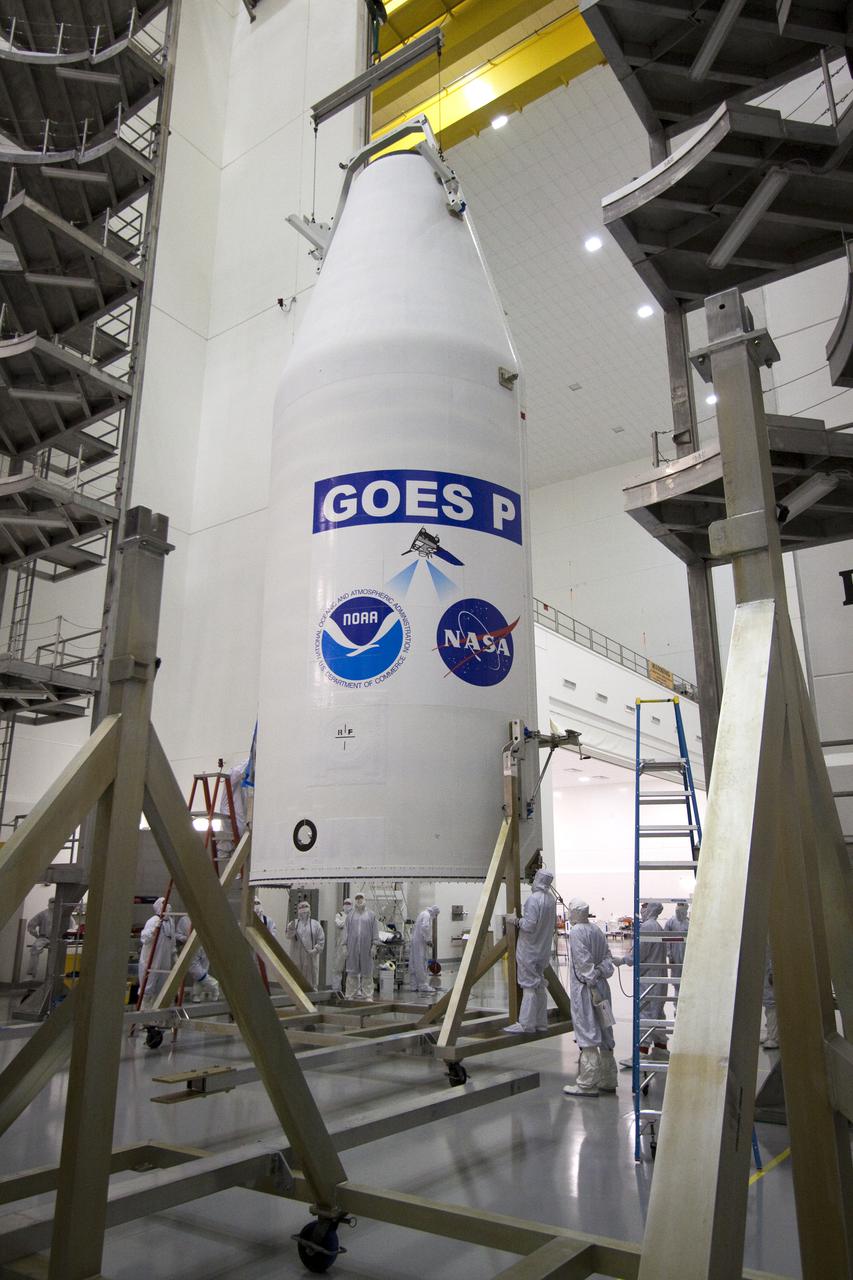
CAPE CANAVERAL, Fla. – At the Astrotech Space Operations facility in Titusville, Fla., preparations are under way to release one side of the Delta IV payload fairing that will enclose NASA's GOES-P meteorological satellite from its work stand. The fairing is a molded clamshell covering that fits flush with the outside surface of the rocket and forms an aerodynamic nose cone, protecting the spacecraft during launch and ascent. GOES-P, the latest Geostationary Operational Environmental Satellite, was developed by NASA for the National Oceanic and Atmospheric Administration, or NOAA. GOES-P is designed to watch for storm development and observed current weather conditions on Earth. Launch of GOES-P is targeted for March 1 from Launch Complex 37 aboard a United Launch Alliance Delta IV rocket. For information on GOES-P, visit http:__www.nasa.gov_mission_pages_GOES-P_main_index.html. Photo credit: NASA_Jack Pfaller

CAPE CANAVERAL, Fla. - At NASA's Kennedy Space Center in Florida, the view over the flame trench at Launch Pad 39A finds the payload canister containing the primary payloads for the STS-132 mission installed into the pad's payload changeout room. Located on the pad's rotating service structure, the room is an enclosed, environmentally controlled area that supports payload delivery and servicing at the pad and mates to the shuttle's cargo bay for vertical payload installation. The payloads secured inside the canister include an Integrated Cargo Carrier, or ICC, and the Russian-built Mini-Research Module-1, or MRM-1, which will be delivered to the International Space Station aboard space shuttle Atlantis. The ICC is an unpressurized flat bed pallet and keel yoke assembly used to support the transfer of exterior cargo from the shuttle to the space station. The MRM-1, known as Rassvet, is the second in a series of new pressurized components for Russia and will be permanently attached to the Earth-facing port of the Zarya control module. Rassvet, which translates to 'dawn,' will be used for cargo storage and will provide an additional docking port to the station. STS-132 is the 34th mission to the station and the 132nd shuttle mission overall. Launch is targeted for May 14. For information on the STS-132 mission, visit http:__www.nasa.gov_mission_pages_shuttle_shuttlemissions_sts132_index.html. Photo credit: NASA_Jack Pfaller
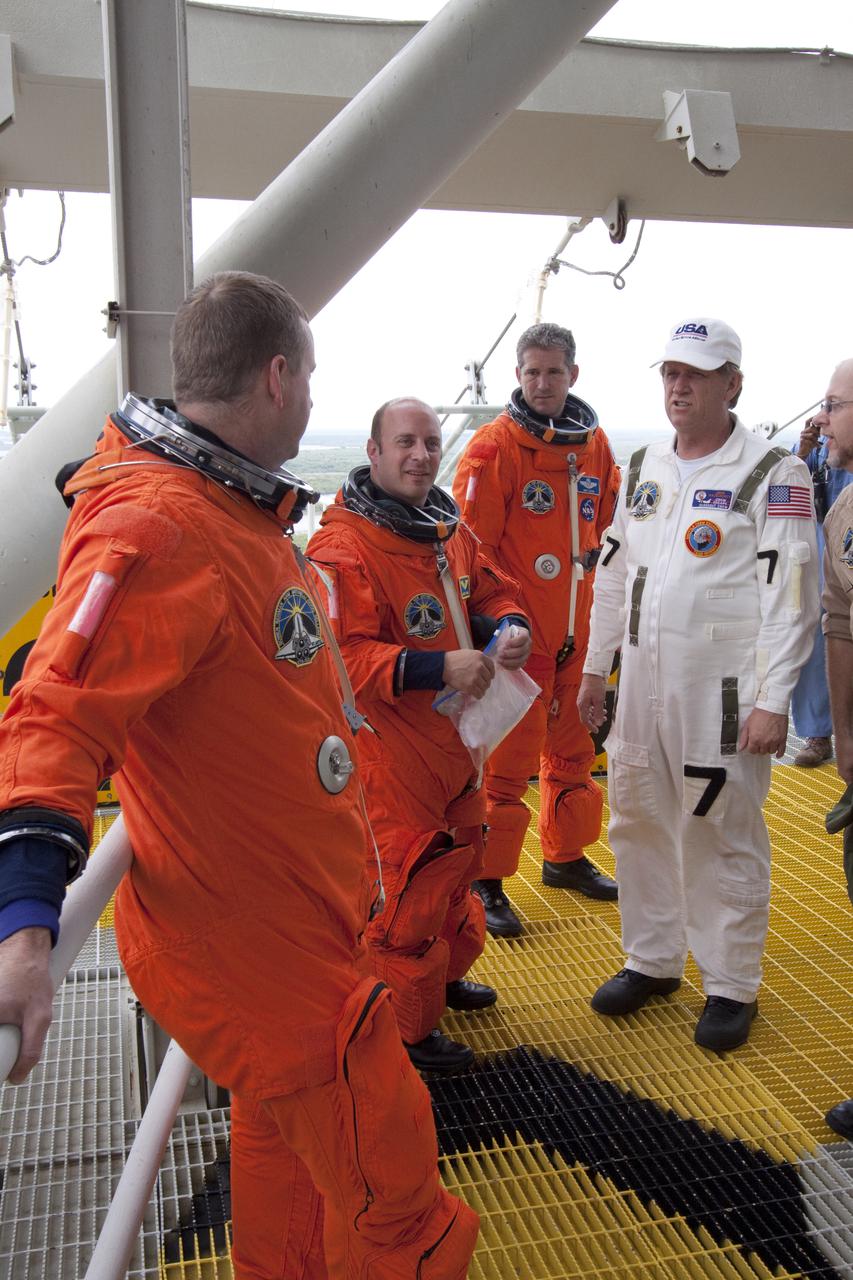
CAPE CANAVERAL, Fla. - At Launch Pad 39A at NASA's Kennedy Space Center in Florida, from left, STS-132 Commander Ken Ham and Mission Specialists Garrett Reisman and Michael Good, dressed in their orange launch-and-entry suits, talk with United Space Alliance personnel supporting their practice session on emergency exit procedures. Evacuation from the pad's 195-foot level in the event of an emergency is made possible by seven baskets suspended from seven slidewires that extend from the fixed service structure to a landing zone 1,200 feet west of the pad. The crew is participating in a launch dress rehearsal, called the Terminal Countdown Demonstration Test, or TCDT. TCDT provides each shuttle crew and launch team the opportunity to participate in various simulated countdown activities, including equipment familiarization and emergency procedures. On the STS-132 mission, the six-member crew will deliver an Integrated Cargo Carrier, or ICC, and the Russian-built Mini-Research Module-1, or MRM-1, to the International Space Station aboard space shuttle Atlantis. The ICC is an unpressurized flat bed pallet and keel yoke assembly used to support the transfer of exterior cargo from the shuttle to the space station. The MRM-1, known as Rassvet, is the second in a series of new pressurized components for Russia and will be permanently attached to the Earth-facing port of the Zarya control module. Rassvet, which translates to 'dawn,' will be used for cargo storage and will provide an additional docking port to the station. STS-132 is the 34th mission to the station and the 132nd shuttle mission overall. Atlantis is targeted to launch on May 14 at 2:19 p.m. For information on the STS-132 mission, visit http:__www.nasa.gov_mission_pages_shuttle_shuttlemissions_sts132_index.html. Photo credit: NASA_Jack Pfaller
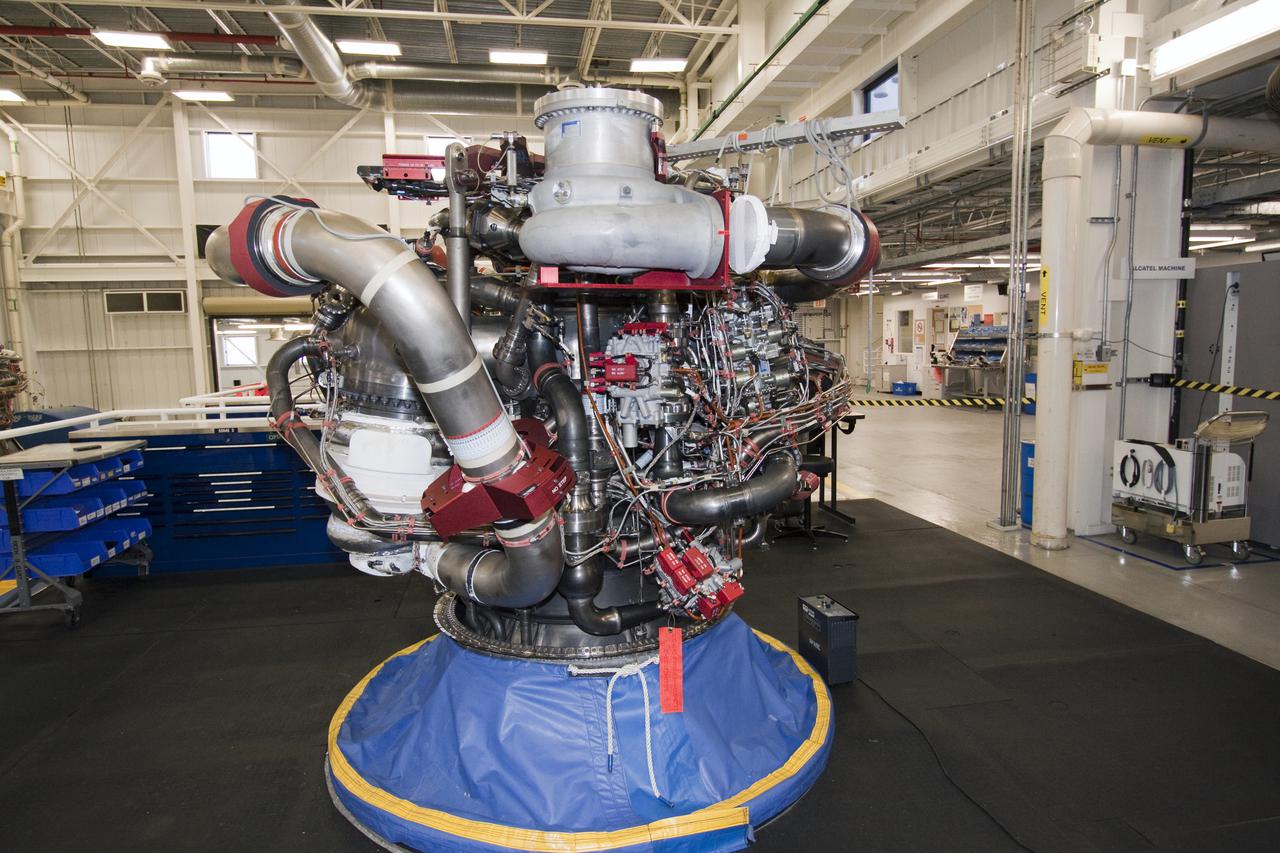
CAPE CANAVERAL, Fla. -- In the Space Shuttle Main Engine Processing Facility at NASA's Kennedy Space Center in Florida, space shuttle main engine No. 1 is outfitted with a new turbopump. A suspect turbopump experienced an issue during torque testing and had to be removed and replaced for Discovery's STS-133 mission to the International Space Station. Next, all three main engines will be transported back to Orbiter Processing Facility-3 and reinstalled. The shuttle and its STS-133 crew are targeted to deliver the Express Logistics Carrier-4 filled with external payloads and experiments, as well as critical spare components to the station later this year. Photo credit: NASA_Jack Pfaller
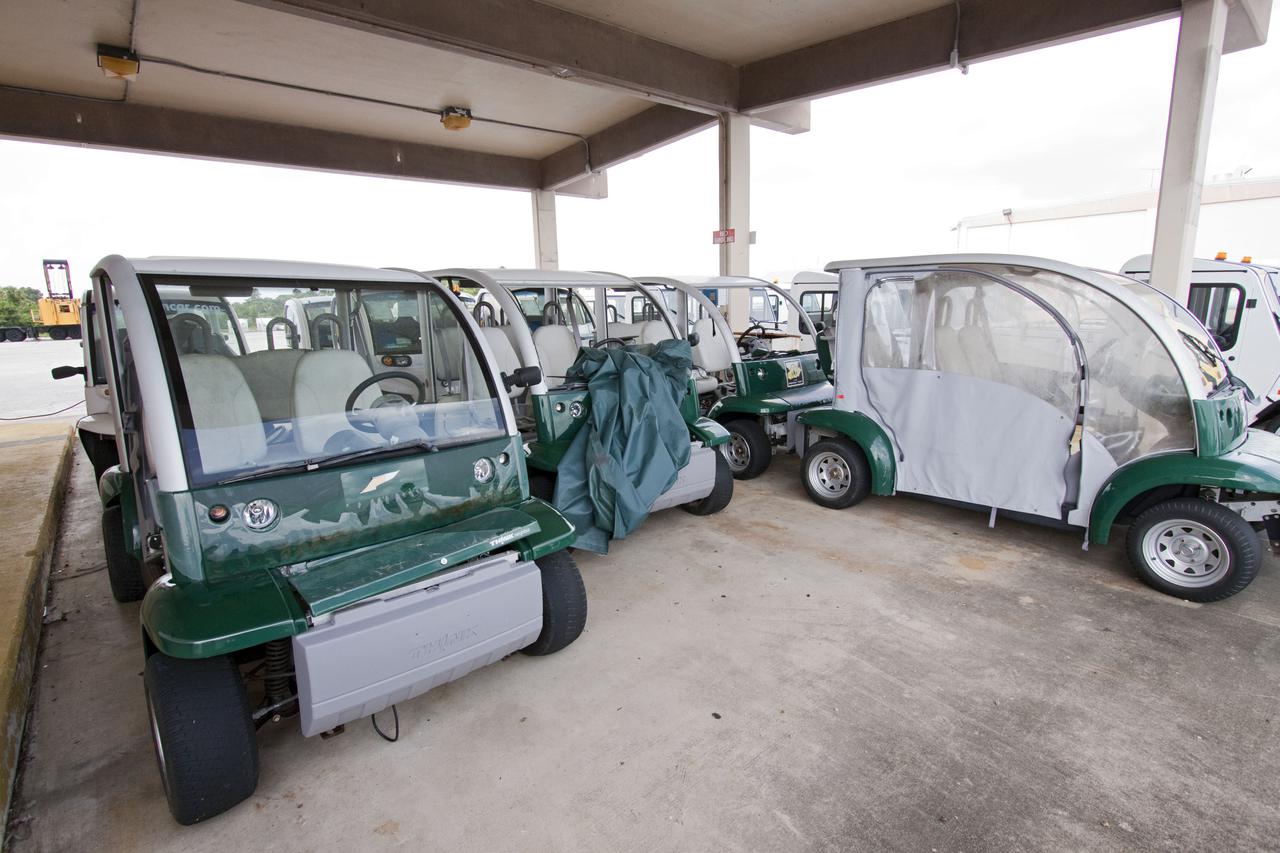
CAPE CANAVERAL, Fla. -- NASA's Kennedy Space Center in Florida has accepted delivery of several new low speed electric vehicles, or LSEV. The first LSEV was purchased in 2005 and through the American Recovery and Reinvestment Act, or ARRA, Kennedy will receive a total of 39 electric cars. The center's fleet is being augmented with alternative-fueled vehicles in an effort to reduce gasoline consumption and conserve energy. Photo credit: NASA_Jack Pfaller
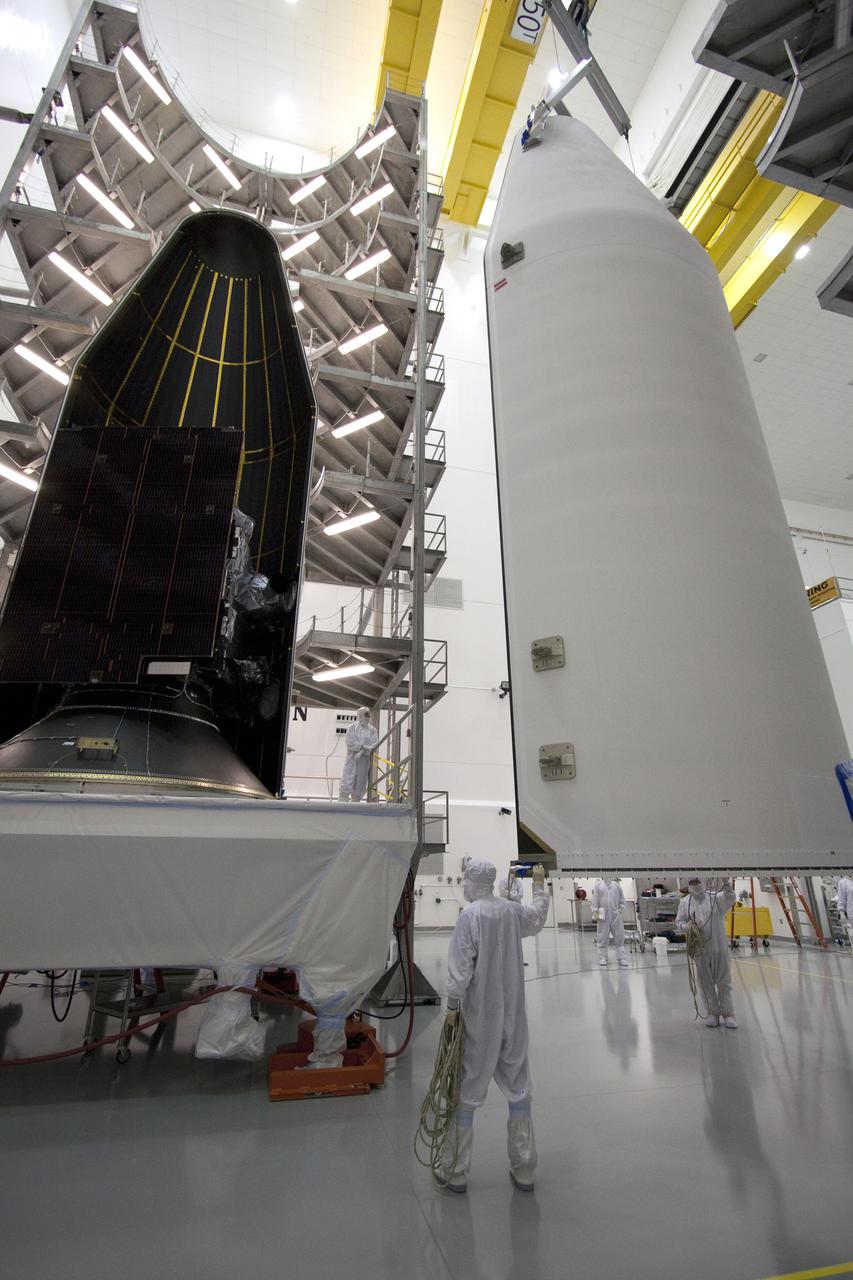
CAPE CANAVERAL, Fla. – At the Astrotech Space Operations facility in Titusville, Fla., the second half of the Delta IV payload fairing that will enclose NASA's GOES-P meteorological satellite is lifted toward the spacecraft. The fairing is a molded clamshell covering that fits flush with the outside surface of the rocket and forms an aerodynamic nose cone, protecting the spacecraft during launch and ascent. GOES-P, the latest Geostationary Operational Environmental Satellite, was developed by NASA for the National Oceanic and Atmospheric Administration, or NOAA. GOES-P is designed to watch for storm development and observed current weather conditions on Earth. Launch of GOES-P is targeted for March 1 from Launch Complex 37 aboard a United Launch Alliance Delta IV rocket. For information on GOES-P, visit http:__www.nasa.gov_mission_pages_GOES-P_main_index.html. Photo credit: NASA_Jack Pfaller
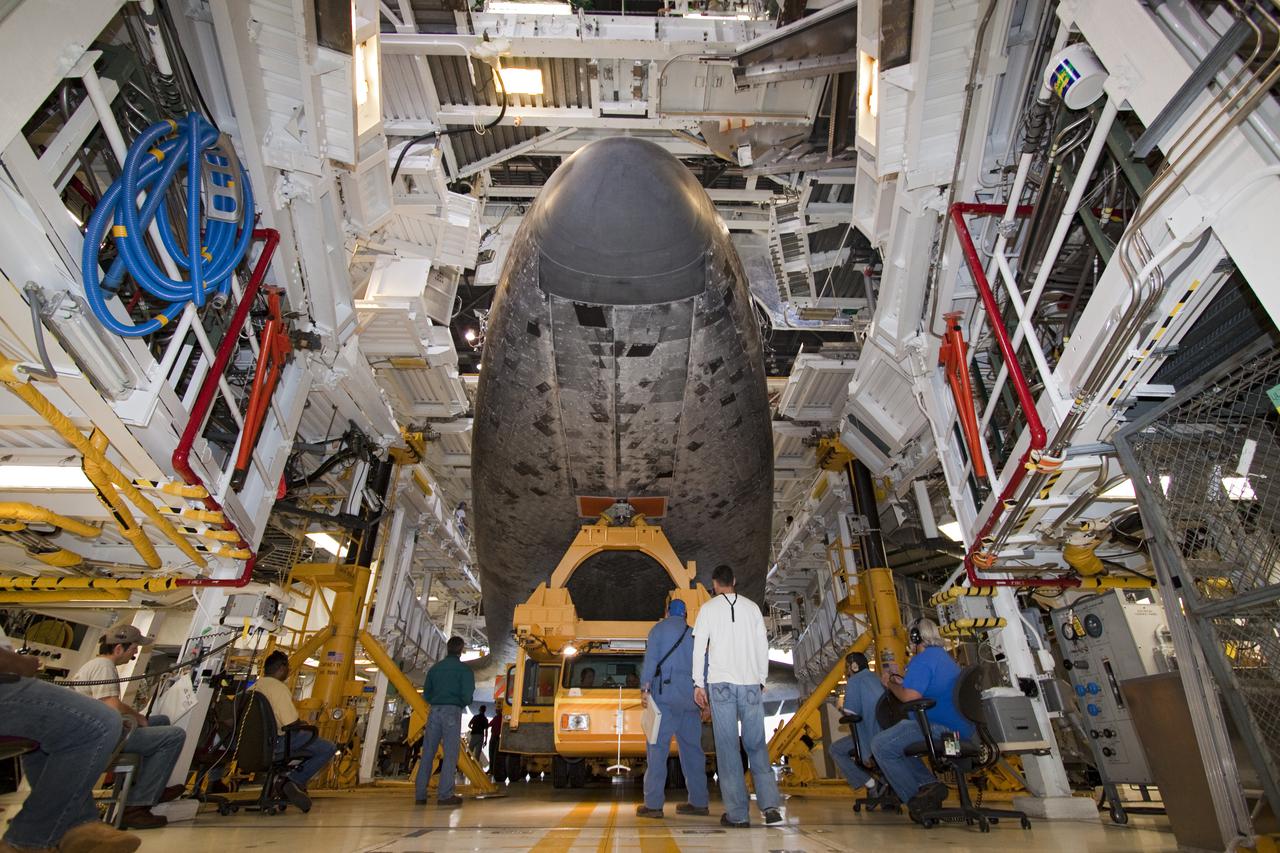
CAPE CANAVERAL, Fla. – In Orbiter Processing Facility-1 at NASA's Kennedy Space Center in Florida, preparations are under way to roll space shuttle Atlantis to the Vehicle Assembly Building, or VAB, where processing for its upcoming STS-132 mission will continue. In the VAB, Atlantis will be lifted into a high bay where it will be mated to its external fuel tank and solid rocket boosters. The six-member STS-132 crew will deliver an Integrated Cargo Carrier, or ICC, and the Russian-built Mini-Research Module-1, or MRM-1, to the International Space Station. The ICC is an unpressurized flat bed pallet and keel yoke assembly used to support the transfer of exterior cargo from the shuttle to the space station. The MRM-1, known as Rassvet, is the second in a series of new pressurized components for Russia and will be permanently attached to the Earth-facing port of the Zarya control module. Rassvet, which translates to 'dawn,' will be used for cargo storage and will provide an additional docking port to the station. STS-132 is the 34th mission to the station and the 132nd shuttle mission overall. Launch is targeted for May 14. For information on the STS-132 mission, visit http:__www.nasa.gov_mission_pages_shuttle_shuttlemissions_sts132_index.html. Photo credit: NASA_Jack Pfaller
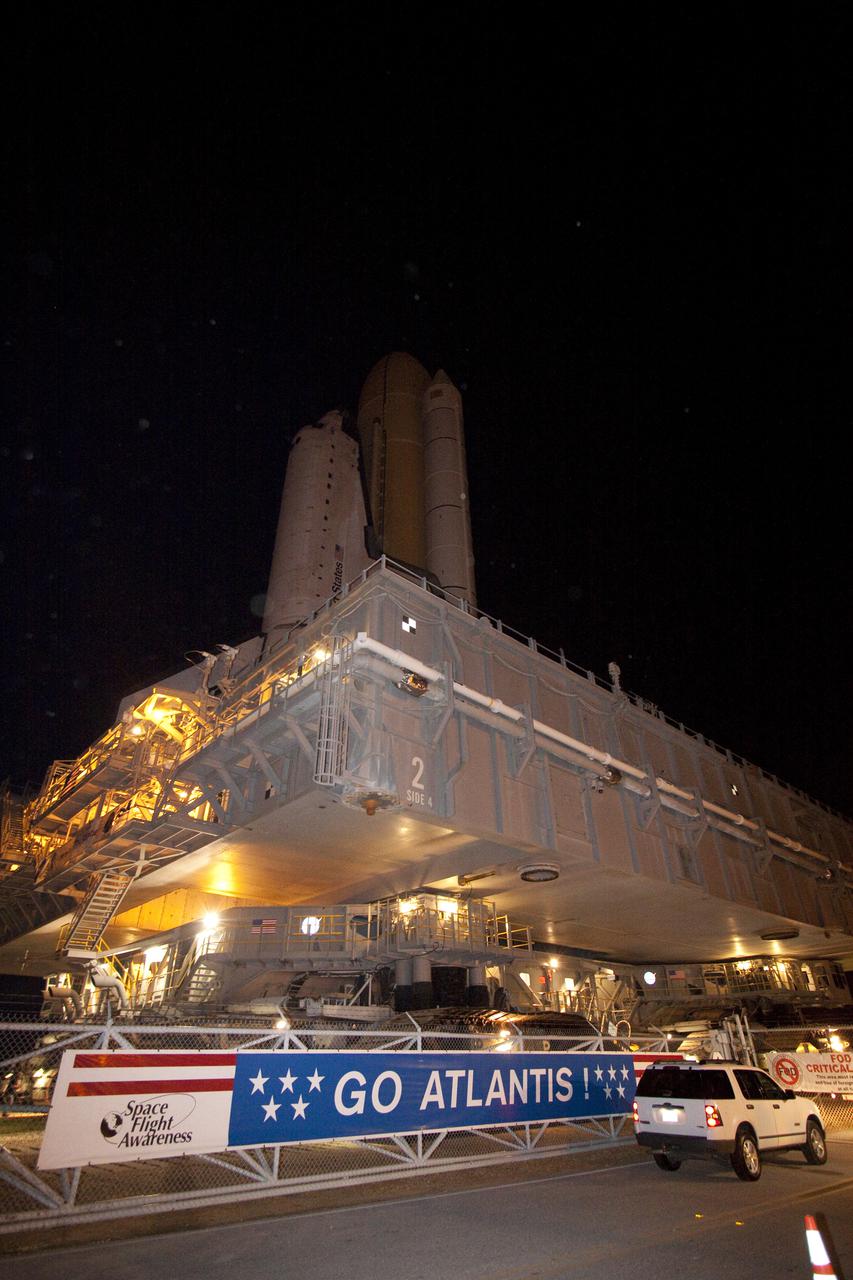
CAPE CANAVERAL, Fla. – At NASA's Kennedy Space Center in Florida, space shuttle Atlantis moves through the perimeter fence at Launch Pad 39A. Go Atlantis_ Atlantis' first motion on its 3.4-mile trip from the Vehicle Assembly Building was at 11:31 p.m. EDT April 21. The shuttle was secured on the pad at 6:03 a.m. April 22. Rollout is a significant milestone in launch processing activities. On the STS-132 mission, the six-member crew will deliver an Integrated Cargo Carrier, or ICC, and the Russian-built Mini-Research Module-1, or MRM-1, to the International Space Station. The ICC is an unpressurized flat bed pallet and keel yoke assembly used to support the transfer of exterior cargo from the shuttle to the space station. The MRM-1, known as Rassvet, is the second in a series of new pressurized components for Russia and will be permanently attached to the Earth-facing port of the Zarya control module. Rassvet, which translates to 'dawn,' will be used for cargo storage and will provide an additional docking port to the station. STS-132 is the 34th mission to the station and the 132nd shuttle mission overall. Atlantis is targeted to launch on May 14 at 2:19 p.m. For information on the STS-132 mission, visit http:__www.nasa.gov_mission_pages_shuttle_shuttlemissions_sts132_index.html. Photo credit: NASA_Jack Pfaller
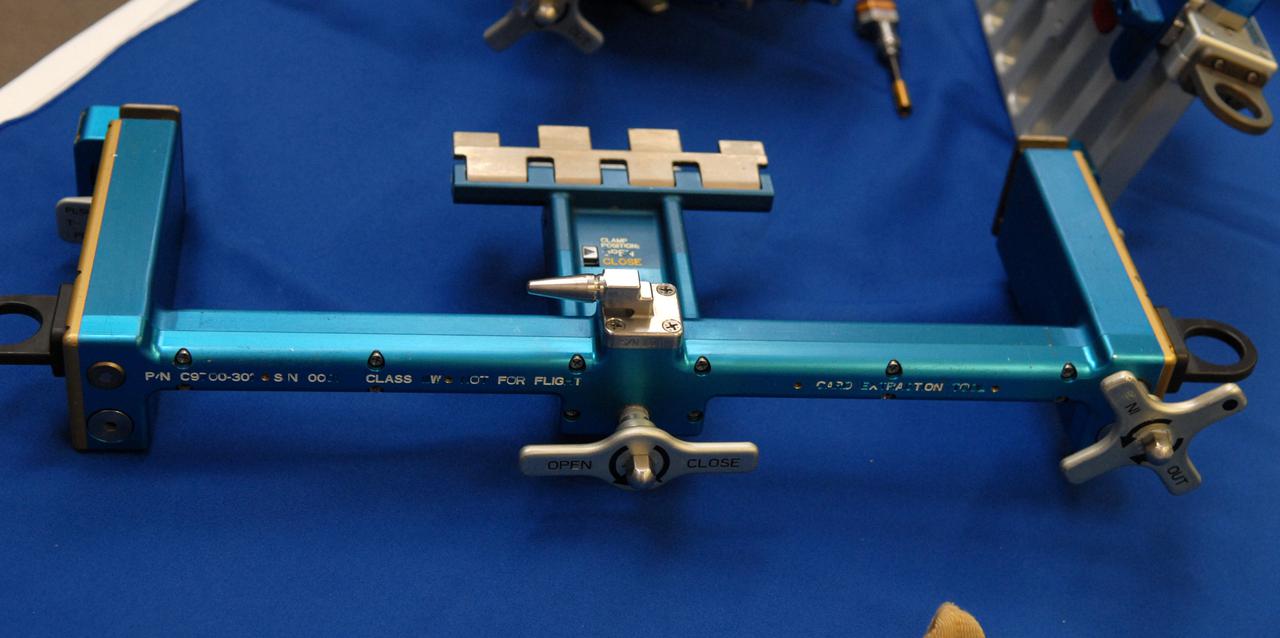
CAPE CANAVERAL, Fla. – The tools that will be used to service NASA's Hubble Space Telescope on the STS-125 mission are displayed in the NASA News Center at NASA's Kennedy Space Center in Florida. This is a closeup of a card extraction and insertion tool to enable removal of electronic cards. On space shuttle Atlantis’ STS-125 mission, Hubble will be serviced for the fifth and final time. The flight will include five spacewalks during which astronauts will refurbish and upgrade the telescope with these state-of-the-art science instruments. As a result, Hubble's capabilities will be expanded and its operational lifespan extended through at least 2014. The payload includes a Wide Field Camera 3, fine guidance sensor and the Cosmic Origins Spectrograph. Launch is scheduled for 2:01 p.m. EDT May 11. Photo credit: NASA_Jack Pfaller
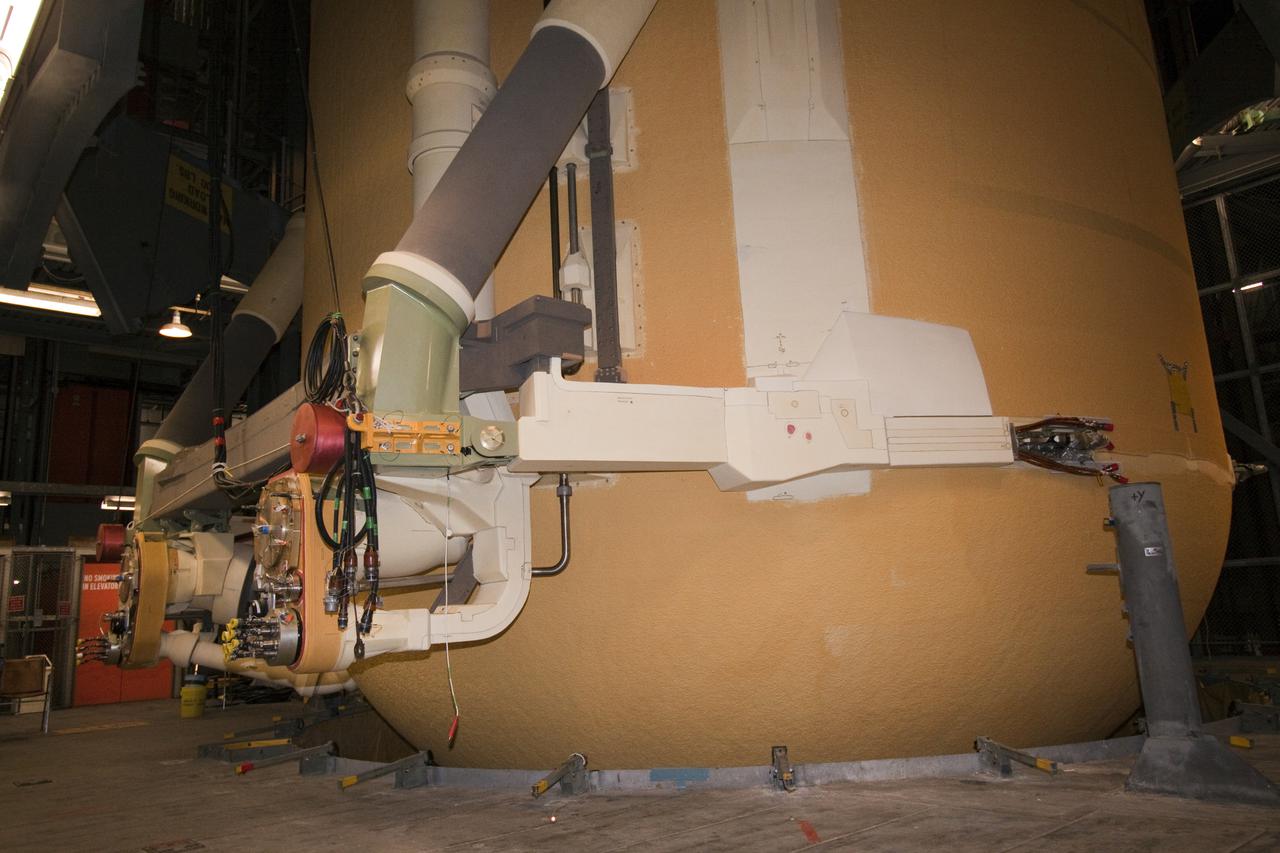
CAPE CANAVERAL, Fla. - In the Vehicle Assembly Building at NASA's Kennedy Space Center in Florida, external fuel tank, ET-136, for space shuttle Atlantis' STS-132 mission, is ready to be lifted from its test cell. The external tank arrived at Kennedy from NASA's Michoud Assembly Facility on March 1 aboard the Pegasus barge. The six-member STS-132 crew will deliver an Integrated Cargo Carrier and a Russian-built Mini-Research Module, or MRM-1, to the International Space Station. Launch is targeted for May 14. For information on the STS-132 mission, visit http:__www.nasa.gov_mission_pages_shuttle_shuttlemissions_sts132_index.html. Photo credit: NASA_Jack Pfaller
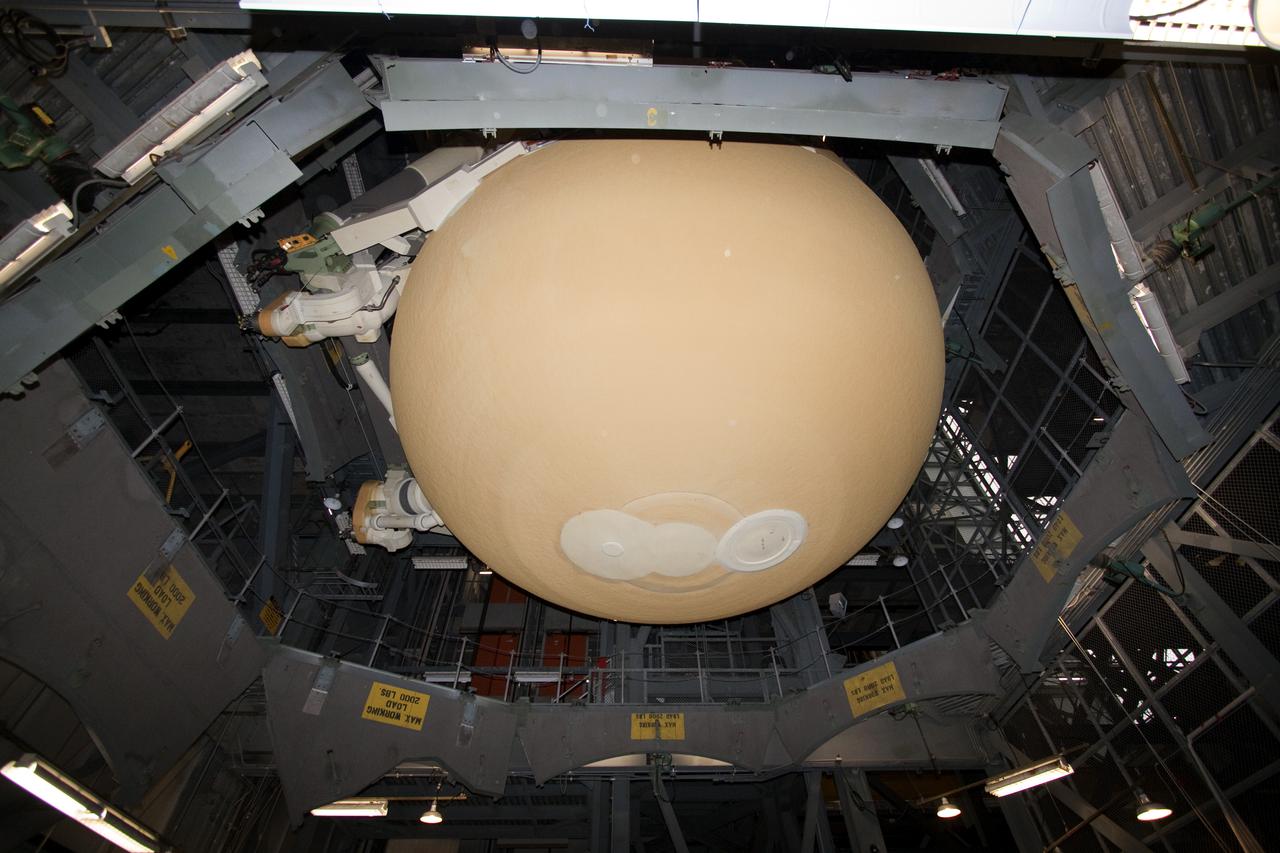
CAPE CANAVERAL, Fla. - In the Vehicle Assembly Building at NASA's Kennedy Space Center in Florida, the external fuel tank for space shuttle Atlantis' STS-132 mission, ET-136, is lifted from its test cell. The external tank arrived at Kennedy from NASA's Michoud Assembly Facility on March 1 aboard the Pegasus barge. The six-member STS-132 crew will deliver an Integrated Cargo Carrier and a Russian-built Mini-Research Module, or MRM-1, to the International Space Station. Launch is targeted for May 14. For information on the STS-132 mission, visit http:__www.nasa.gov_mission_pages_shuttle_shuttlemissions_sts132_index.html. Photo credit: NASA_Jack Pfaller
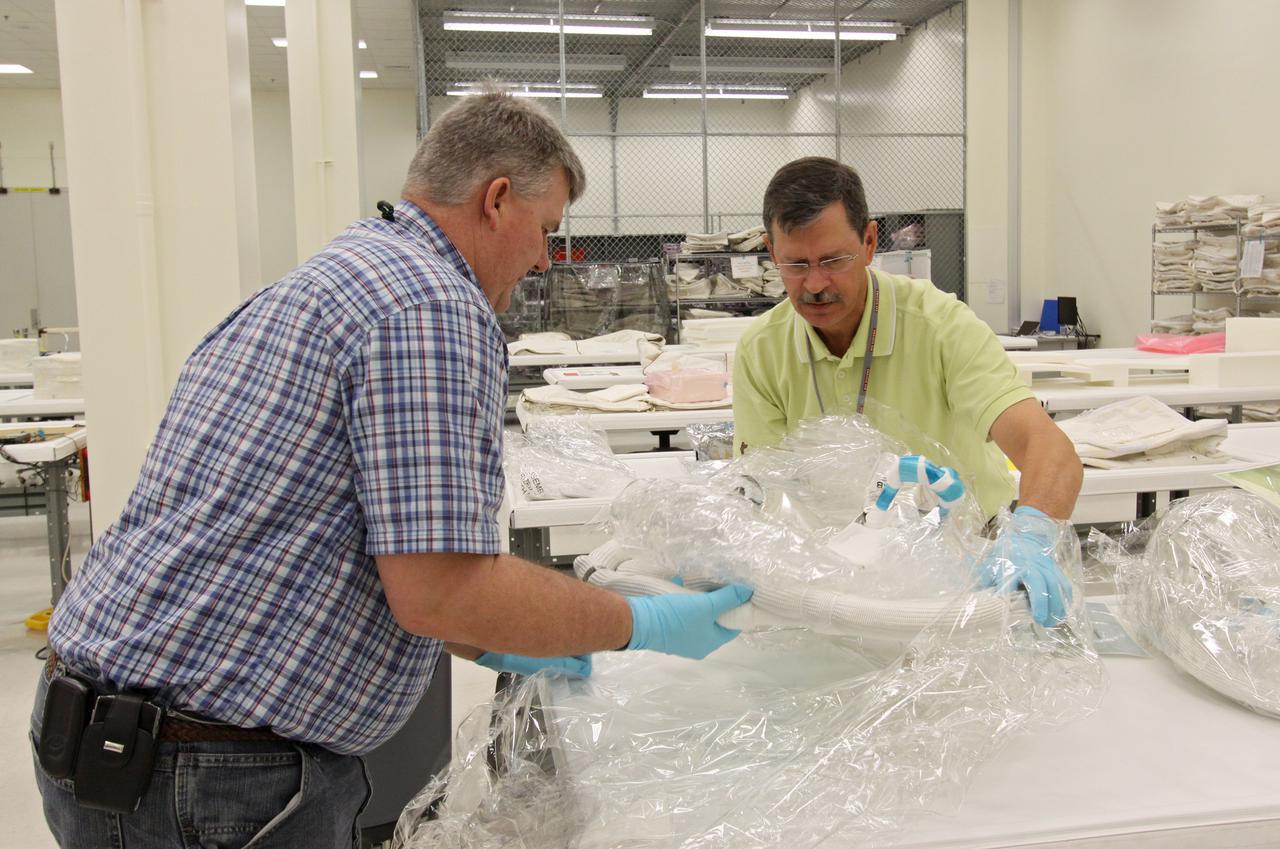
CAPE CANAVERAL, Fla. – In the Space Station Processing Facility at NASA's Kennedy Space Center in Florida, workers unwrap the newly arrived replacement high-pressure ammonia jumper hoses to support space shuttle Endeavour's STS-130 mission. A problem arose during a prelaunch test Jan. 7 with one of four hoses that are needed to connect the ammonia loops of the International Space Station's Tranquility node to those of the Destiny laboratory. A decision was made to use an alternate hose design for use as the primary jumper. The new hoses are assembled from shorter hoses that were previously certified and tested. Connection of the modules requires two ammonia loops, with two lines apiece, each of which must be connected to both Tranquility and Destiny to route cooling to and from the Tranquility module. The primary payload for the STS-130 mission, Tranquility is a pressurized module that will provide additional room for crew members and many of the station's life support and environmental control systems. The node was built in Turin, Italy, by Thales Alenia Space for the European Space Agency. Endeavour's launch is set for Feb. 7. For information on the STS-130 mission and crew, visit http:__www.nasa.gov_mission_pages_shuttle_shuttlemissions_sts130_index.html. Photo credit: NASA_Jack Pfaller
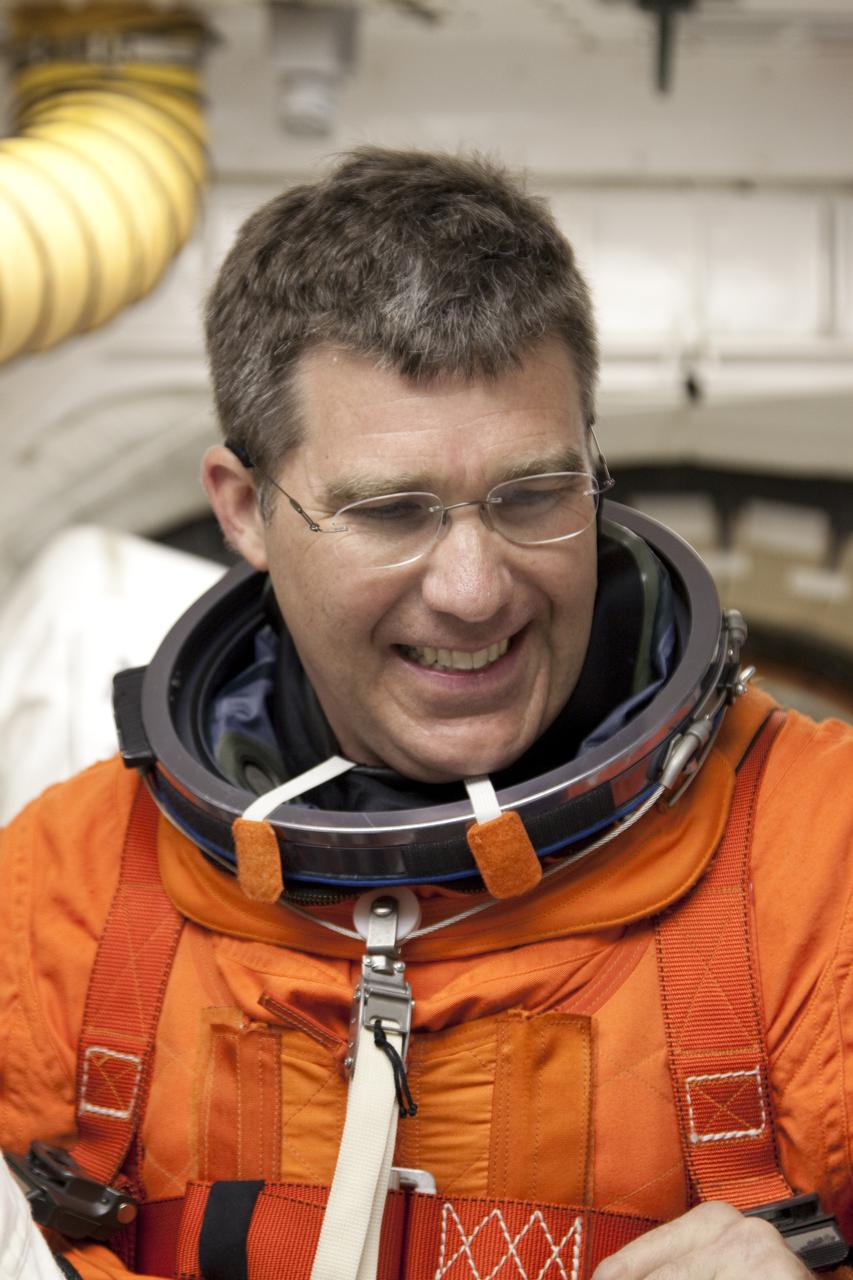
CAPE CANAVERAL, Fla. - At Launch Pad 39A at NASA's Kennedy Space Center in Florida, STS-132 Mission Specialist Steve Bowen prepares to enter space shuttle Atlantis from the pad's White Room. STS-132 is Bowen's second spaceflight. The six-member STS-132 crew is participating in a dress rehearsal for launch, known as the Terminal Countdown Demonstration Test, from their seats in the crew compartment of space shuttle Atlantis. Launch is targeted for 2:19 p.m. EDT on May 14. On the STS-132 mission, the crew will deliver an Integrated Cargo Carrier, or ICC, and the Russian-built Mini-Research Module-1, or MRM-1, to the International Space Station. The ICC is an unpressurized flat bed pallet and keel yoke assembly used to support the transfer of exterior cargo from the shuttle to the space station. The MRM-1, known as Rassvet, is the second in a series of new pressurized components for Russia and will be permanently attached to the Earth-facing port of the Zarya control module. Rassvet, which translates to 'dawn,' will be used for cargo storage and provide an additional docking port to the station. STS-132 is the 34th mission to the station and the 132nd shuttle mission overall. For information on the STS-132 mission, visit http:__www.nasa.gov_mission_pages_shuttle_shuttlemissions_sts132_index.html. Photo credit: NASA_Jack Pfaller
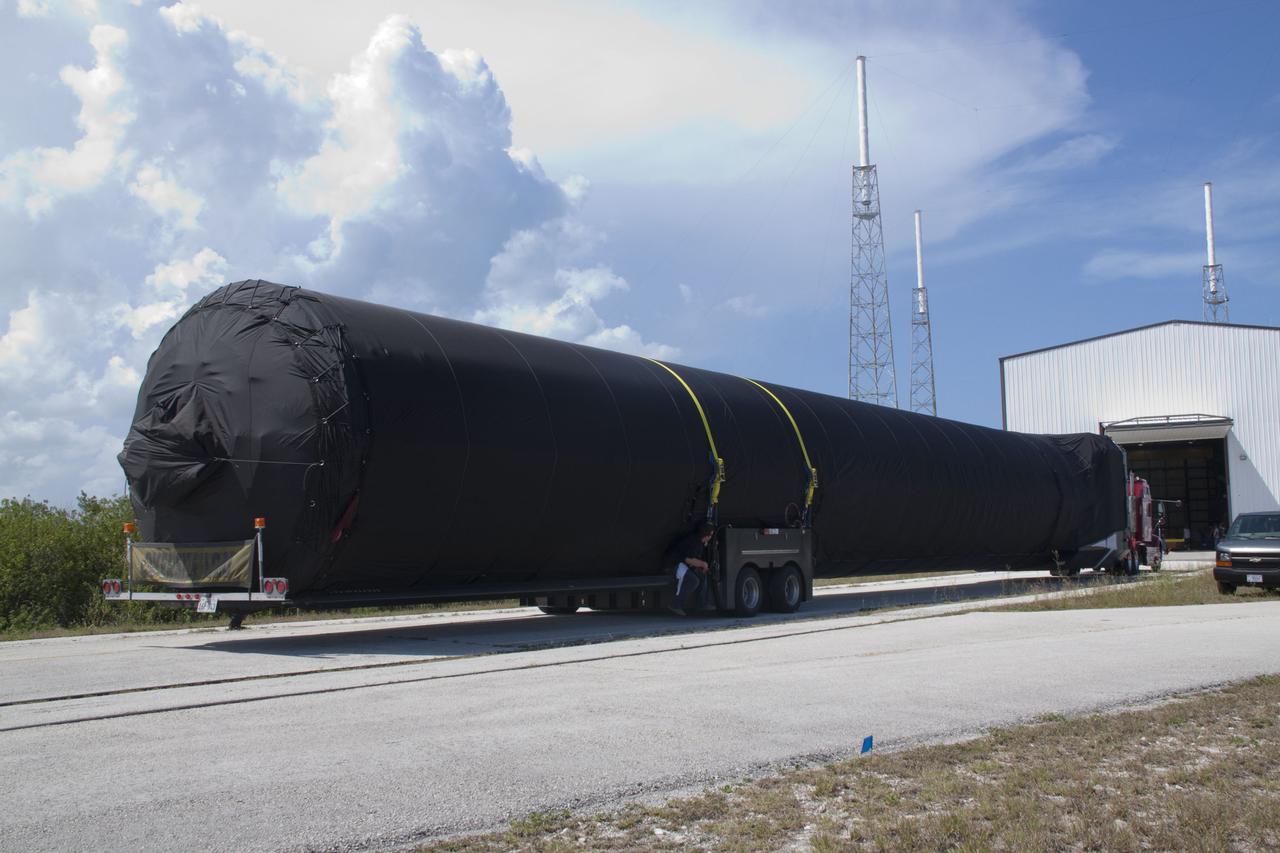
CAPE CANAVERAL, Fla. -- The first stage of the SpaceX COTS-2 Falcon 9 rocket is being transported to a SpaceX hangar at Pad 40 at Cape Canaveral Air Force Station in Florida. Once assembled, it will be a two-stage fully integrated launch vehicle, consisting of a first stage powered by nine SpaceX-developed Merlin 1C engines, a second stage, an interstage, an unpressurized trunk and the Dragon spacecraft qualification unit. SpaceX was awarded procurement for three demonstration flights under the Commercial Orbital Transportation Services, or COTS, program managed by NASA's Johnson Space Center in Houston. A subsequent contract for Commercial Resupply Services, or CRS, was awarded in late 2008 to resupply the International Space Station. The SpaceX CRS contract provides for 12 missions to resupply the station from 2011 through 2015. Photo credit: NASA_Jack Pfaller
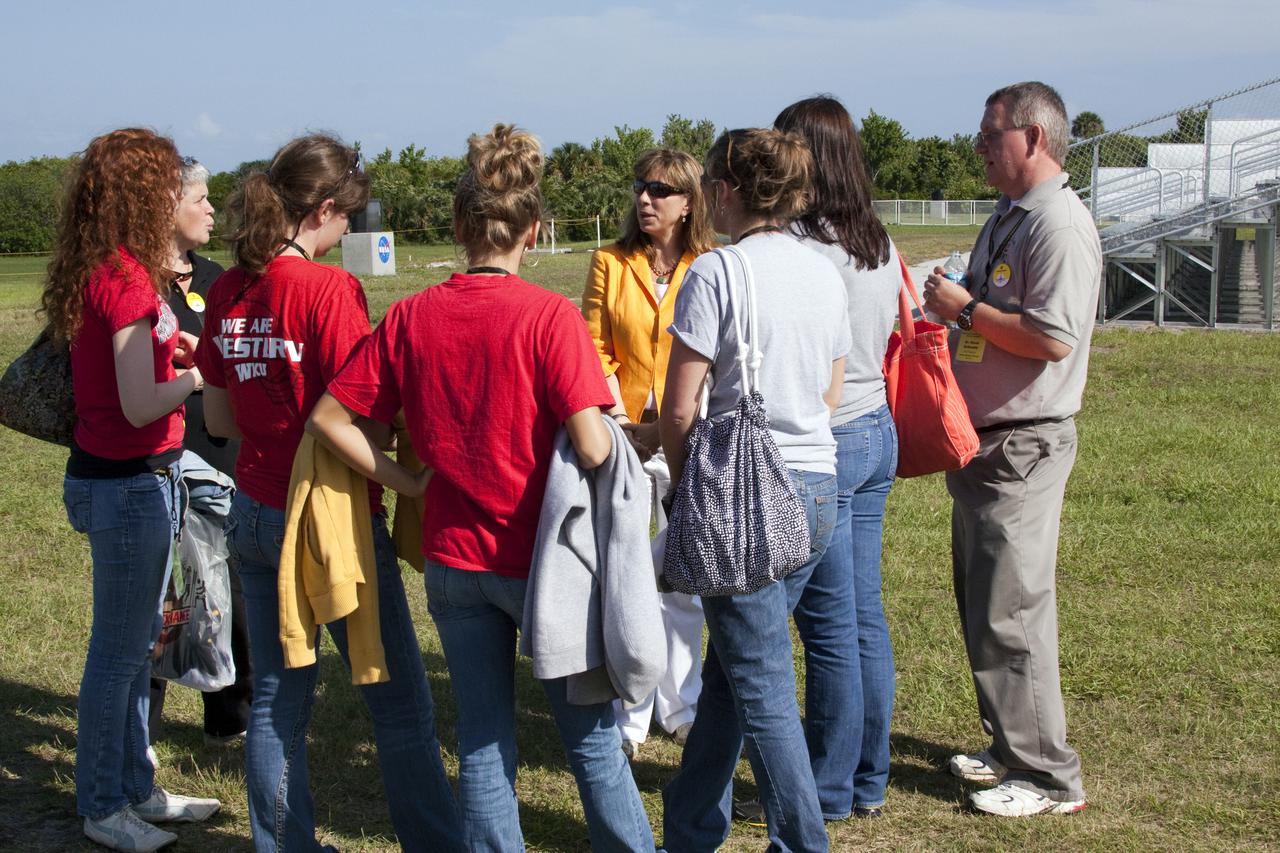
CAPE CANAVERAL, Fla. - At Kennedy Space Center in Florida, NASA Deputy Administrator Lori Garver talks with students from Western Kentucky University who are at the center for NASA's first Lunabotics Mining Competition on May 27-28. Atlantis wrapped up its 4.8-million-mile STS-132 mission to the International Space Station at 8:48 a.m. The six-member STS-132 crew carried the Russian-built Mini Research Module-1 to the space station. STS-132 is the 34th shuttle mission to the station, the 132nd shuttle mission overall and the last planned flight for Atlantis. For information on the STS-132 mission and crew, visit www.nasa.gov_mission_pages_shuttle_shuttlemissions_sts132_index.html. Photo credit: NASA_Jack Pfaller
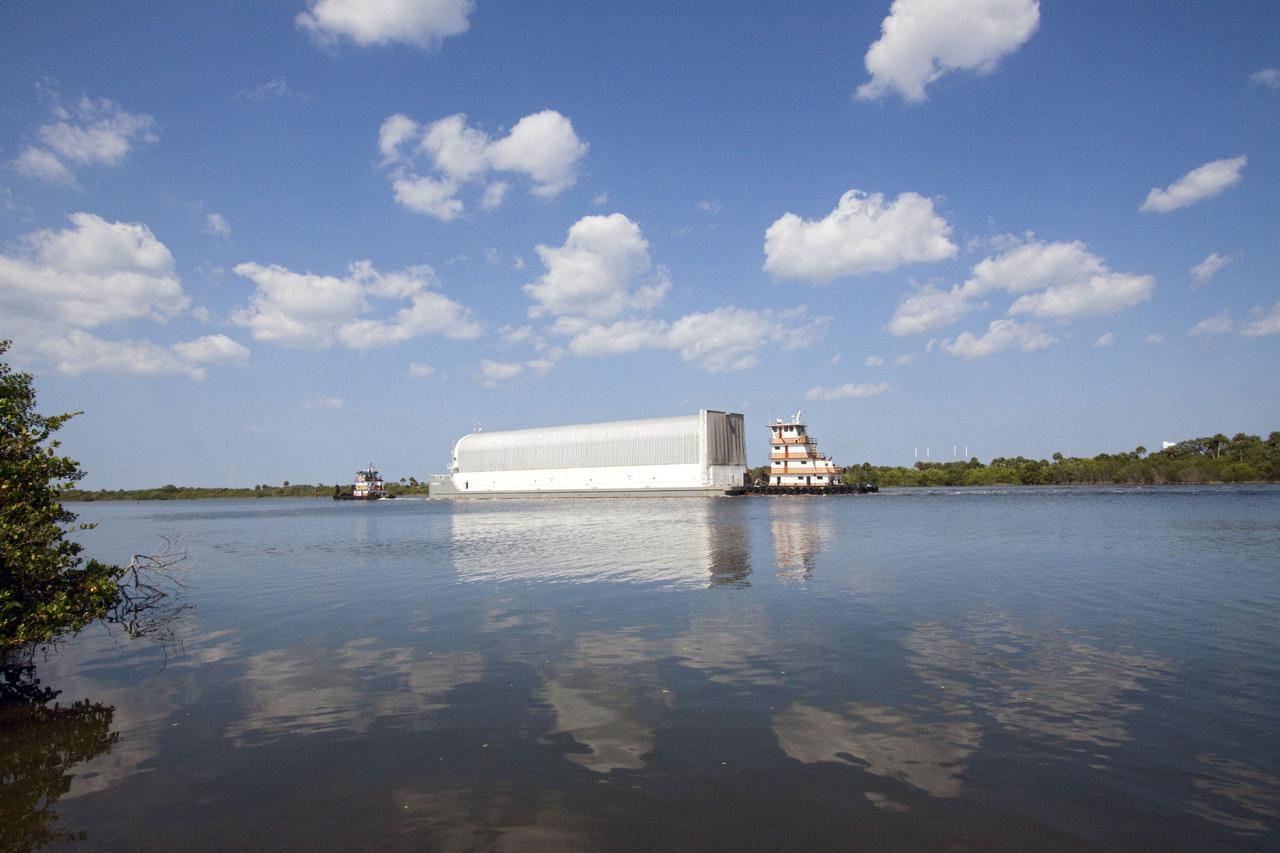
CAPE CANAVERAL, Fla. - Tugboats guide the Pegasus barge containing the external fuel tank for space shuttle Discovery's STS-133 mission through the Banana River to NASA's Kennedy Space Center in Florida. On the STS-133 mission, Discovery will deliver NASA's Permanent Multi-purpose Module, or PMM, the Express Logistics Carrier 4, and critical spare parts to the International Space Station. Launch is targeted for fall 2010. Photo credit: NASA_Jack Pfaller
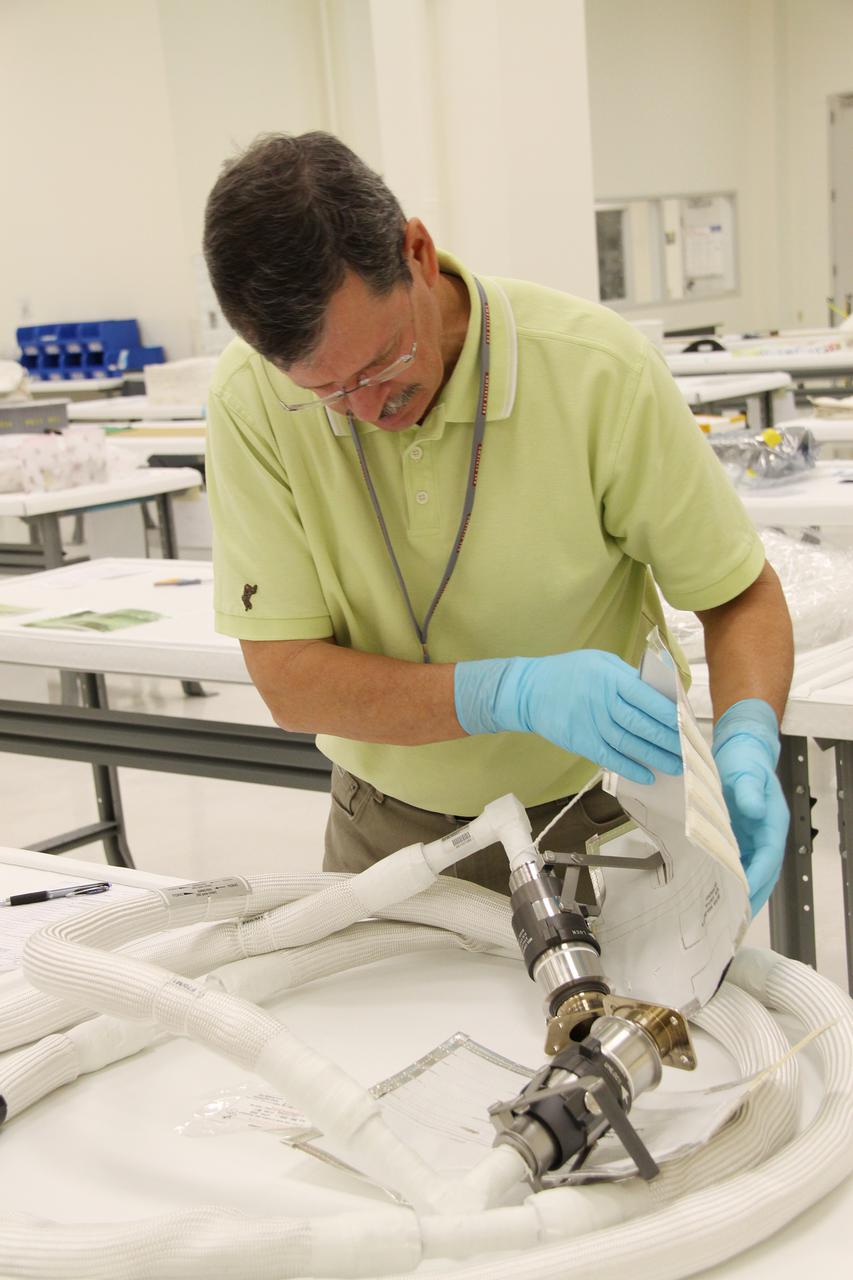
CAPE CANAVERAL, Fla. – In the Space Station Processing Facility at NASA's Kennedy Space Center in Florida, workers unwrap the newly arrived replacement high-pressure ammonia jumper hoses to support space shuttle Endeavour's STS-130 mission. A problem arose during a prelaunch test Jan. 7 with one of four hoses that are needed to connect the ammonia loops of the International Space Station's Tranquility node to those of the Destiny laboratory. A decision was made to use an alternate hose design for use as the primary jumper. The new hoses are assembled from shorter hoses that were previously certified and tested. Connection of the modules requires two ammonia loops, with two lines apiece, each of which must be connected to both Tranquility and Destiny to route cooling to and from the Tranquility module. The primary payload for the STS-130 mission, Tranquility is a pressurized module that will provide additional room for crew members and many of the station's life support and environmental control systems. The node was built in Turin, Italy, by Thales Alenia Space for the European Space Agency. Endeavour's launch is set for Feb. 7. For information on the STS-130 mission and crew, visit http:__www.nasa.gov_mission_pages_shuttle_shuttlemissions_sts130_index.html. Photo credit: NASA_Jack Pfaller
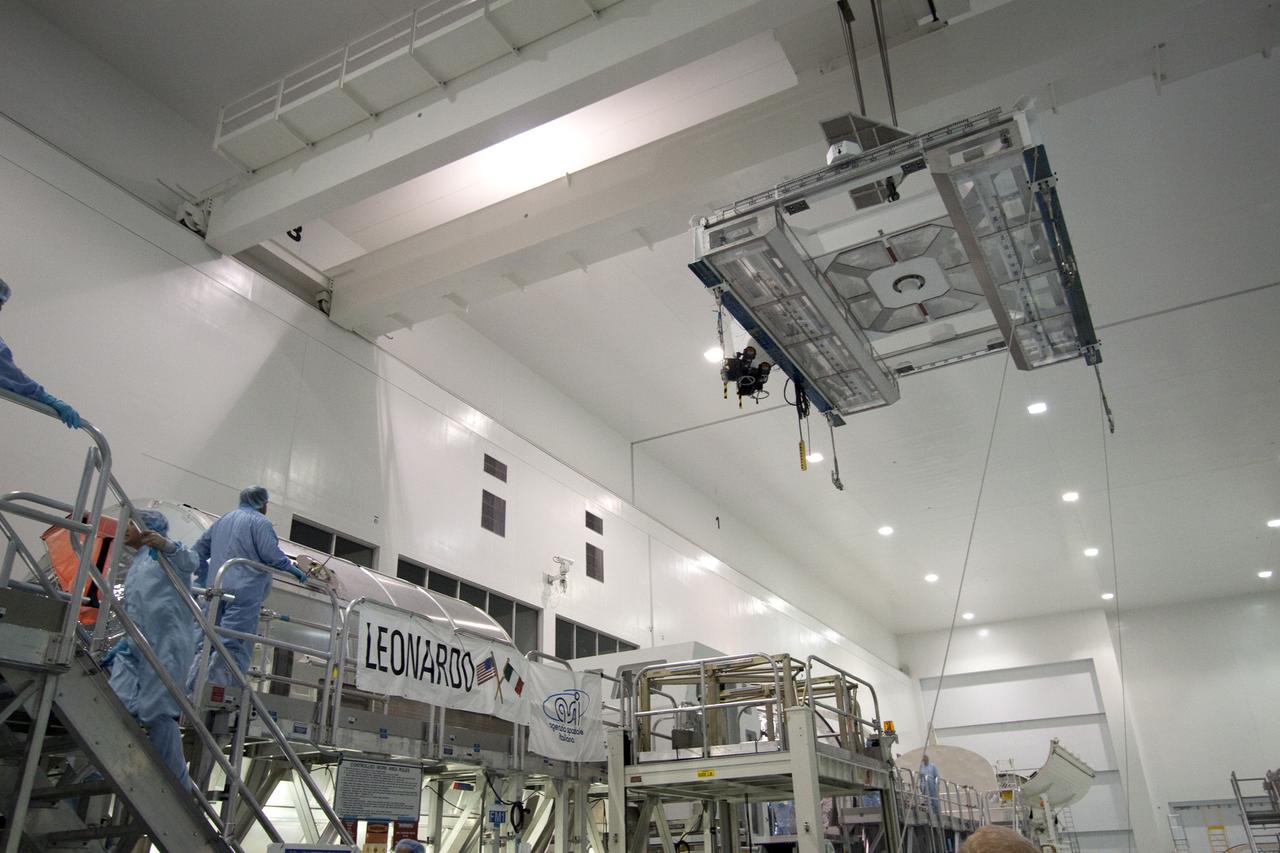
CAPE CANAVERAL, Fla. - In the Space Station Processing Facility at NASA's Kennedy Space Center in Florida, workers move the scales toward the multi-purpose logistics module Leonardo to determine its weight and center of gravity. Leonardo will be transported to Launch Pad 39A and installed into space shuttle Discovery for its upcoming flight. The seven-member STS-131 crew will deliver Leonardo, filled with resupply stowage platforms and racks, to the International Space Station. STS-131 will be the 33rd shuttle mission to the station and the 131st shuttle mission overall. Launch is targeted for April 5. For information on the STS-131 mission and crew, visit http:__www.nasa.gov_mission_pages_shuttle_shuttlemissions_sts131_index.html. Photo credit: NASA_Jack Pfaller
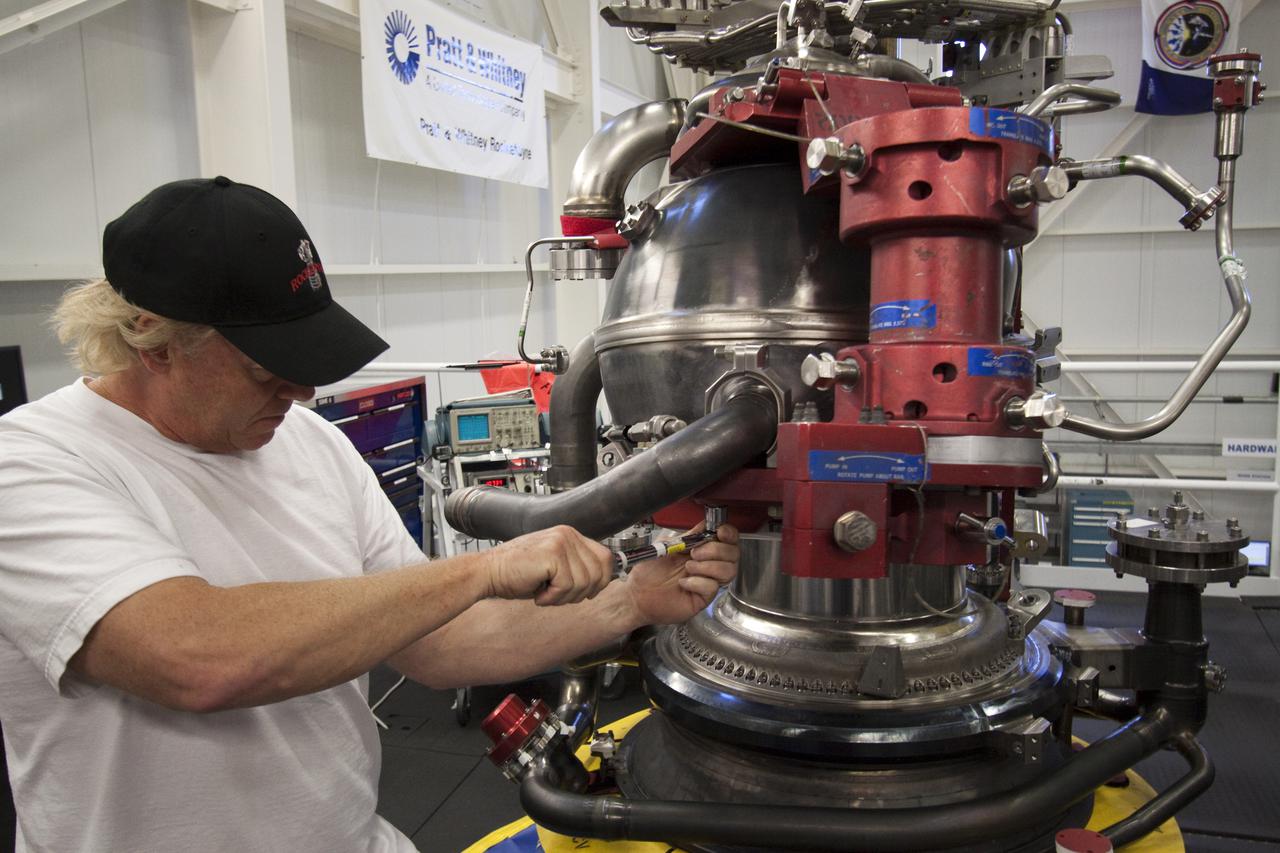
CAPE CANAVERAL, Fla. – At NASA's Kennedy Space Center in Florida, Pratt and Whitney Rocketdyne aerospace technician Ken Burley constructs space shuttle main engine, or SSME, #2062 in the Space Shuttle Main Engine Processing Facility. This is the last SSME scheduled to be built at Kennedy before the end of the Space Shuttle Program. Three main engines are clustered at the aft end of the shuttle and have a combined thrust of more than 1.2 million pounds. Each engine utilizes liquid hydrogen for fuel and liquid oxygen as oxidizer and operates during the entire eight-and-a-half minute ride to orbit. Post-flight inspections and maintenance of each engine also are conducted in the SSME Processing Facility between shuttle missions. Photo credit: NASA_Jack Pfaller
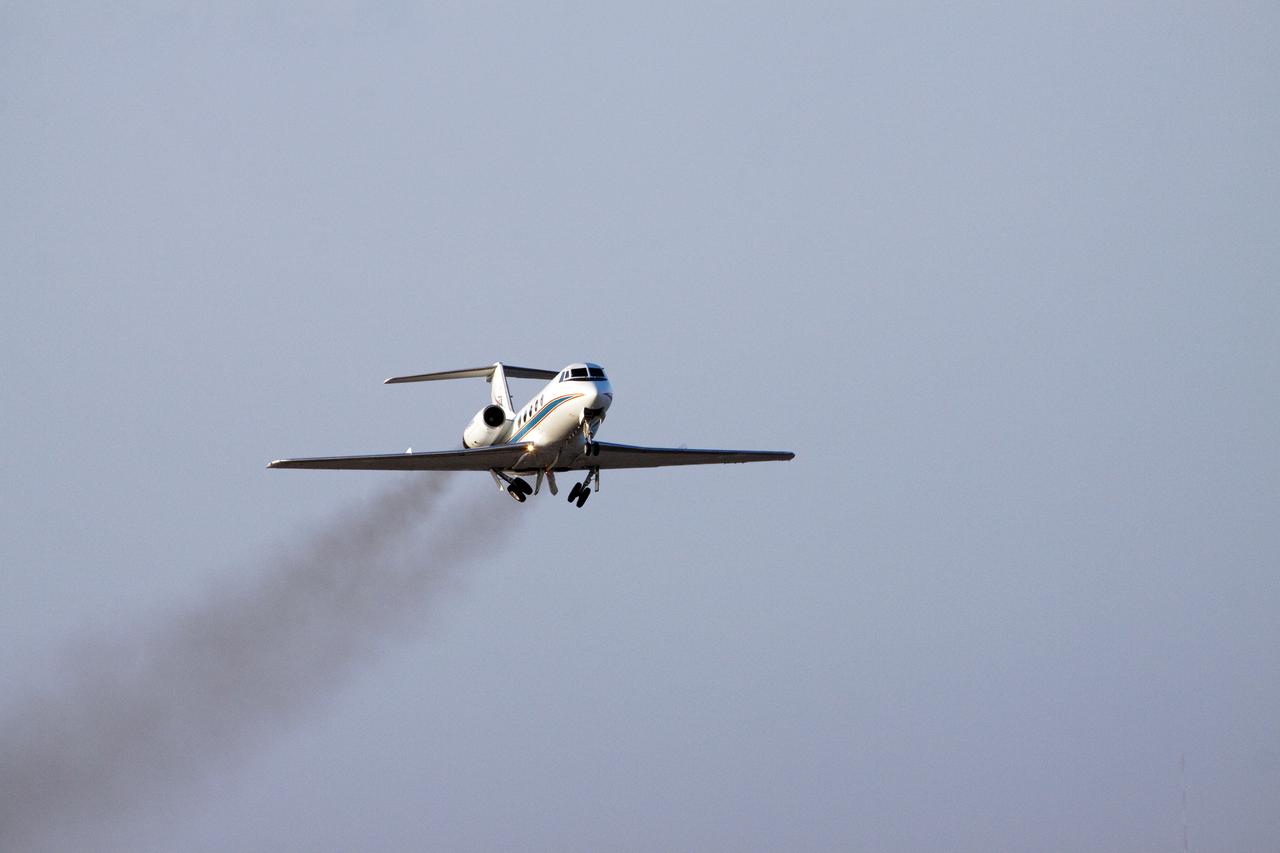
CAPE CANAVERAL, Fla. - NASA's Shuttle Training Aircraft flies weather reconnaissance for space shuttle Atlantis over Runway 33 at the Shuttle Landing Facility at NASA's Kennedy Space Center in Florida. Landing of Atlantis was at 8:48 a.m. EDT, completing the 12-day STS-132 mission to the International Space Station. The six-member STS-132 crew carried the Russian-built Mini Research Module-1 to the space station. STS-132 is the 34th shuttle mission to the station, the 132nd shuttle mission overall and the last planned flight for Atlantis. For information on the STS-132 mission and crew, visit www.nasa.gov_mission_pages_shuttle_shuttlemissions_sts132_index.html. Photo credit: NASA_Jack Pfaller

CAPE CANAVERAL, Fla. - In Orbiter Processing Facility-3 at NASA's Kennedy Space Center in Florida, the multi-purpose logistics module Leonardo and an ammonia tank assembly, removed from space shuttle Discovery's payload bay, are lowered into the payload canister which will transport them to the Space Station Processing Facility. Discovery landed on Runway 33 at Kennedy's Shuttle Landing Facility at 9:08 a.m. EDT April 20 after 15 days in space, completing the more than 6.2-million-mile STS-131 mission on orbit 238. The seven-member STS-131 crew carried the multi-purpose logistics module Leonardo, filled with supplies, a new crew sleeping quarters and science racks that were transferred to the International Space Station's laboratories. Leonardo now will be modified into a permanent multi-purpose module, or PMM, and left aboard the station on space shuttle Discovery's STS-133 mission, targeted for launch Sept. 16. For information on the STS-131 mission, visit http:__www.nasa.gov_mission_pages_shuttle_shuttlemissions_sts131_index.html. For information on the STS-133 mission, visit http:__www.nasa.gov_mission_pages_shuttle_shuttlemissions_sts133_index.html. Photo credit: NASA_Jack Pfaller
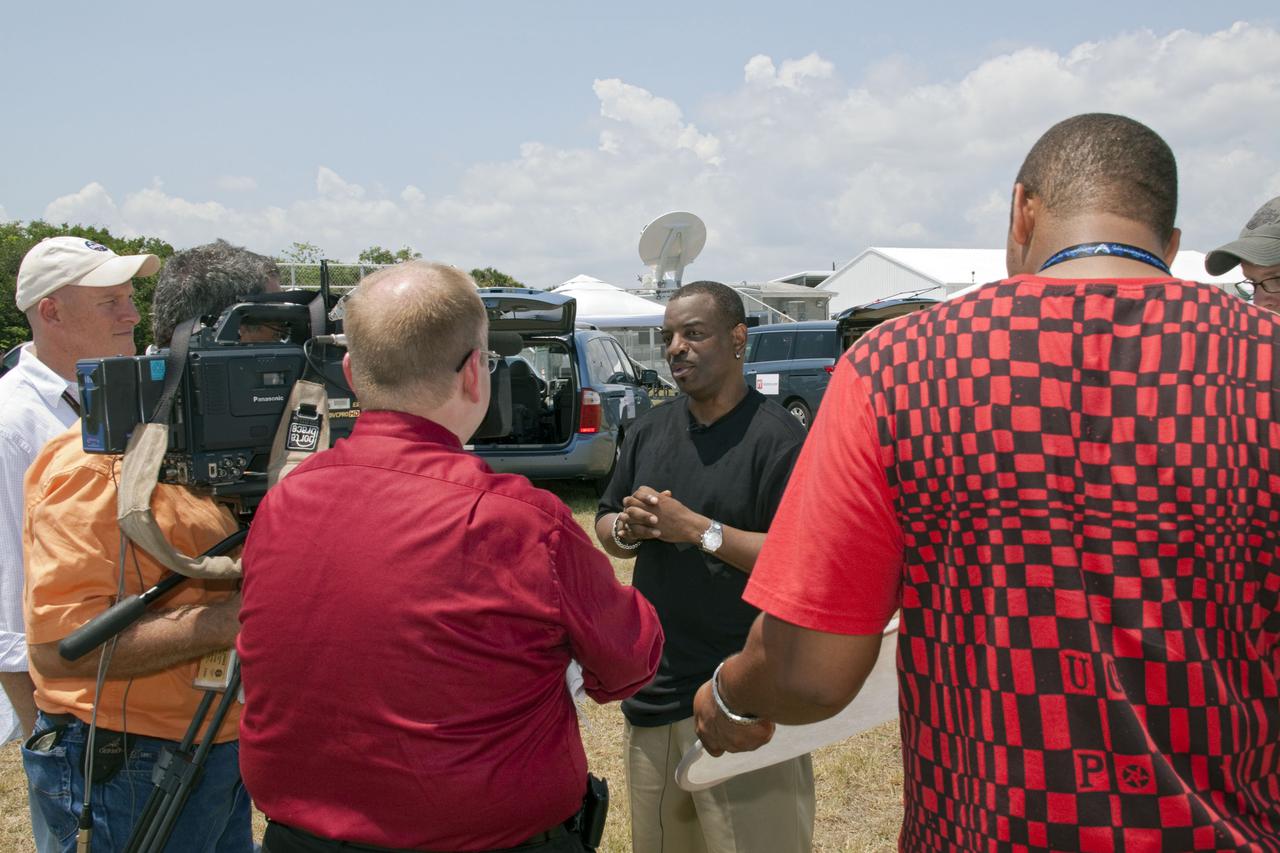
CAPE CANAVERAL, Fla. -- At Kennedy Space Center in Florida, NASA is hosting a two-day Tweetup for 150 of its Twitter followers of space shuttle Endeavour's STS-134 mission. A Tweetup is an informal meeting of people who use the social messaging medium Twitter. This Tweetup is an opportunity to learn more about NASA, explore Kennedy Space Center and experience a space shuttle launch. Actor_Director LeVar Burton, participating in the Tweetup is interviewed by Kennedy's News Chief Allard Beutel. Endeavour and its crew will deliver the Express Logistics Carrier-3, Alpha Magnetic Spectrometer-2 (AMS), a high-pressure gas tank and additional spare parts for the Dextre robotic helper to the International Space Station. Launch is scheduled for April 29 at 3:47 p.m. EDT. This will be the final spaceflight for Endeavour. For more information visit, www.nasa.gov_mission_pages_shuttle_shuttlemissions_sts134_index.html. Photo credit: NASA_Jack Pfaller
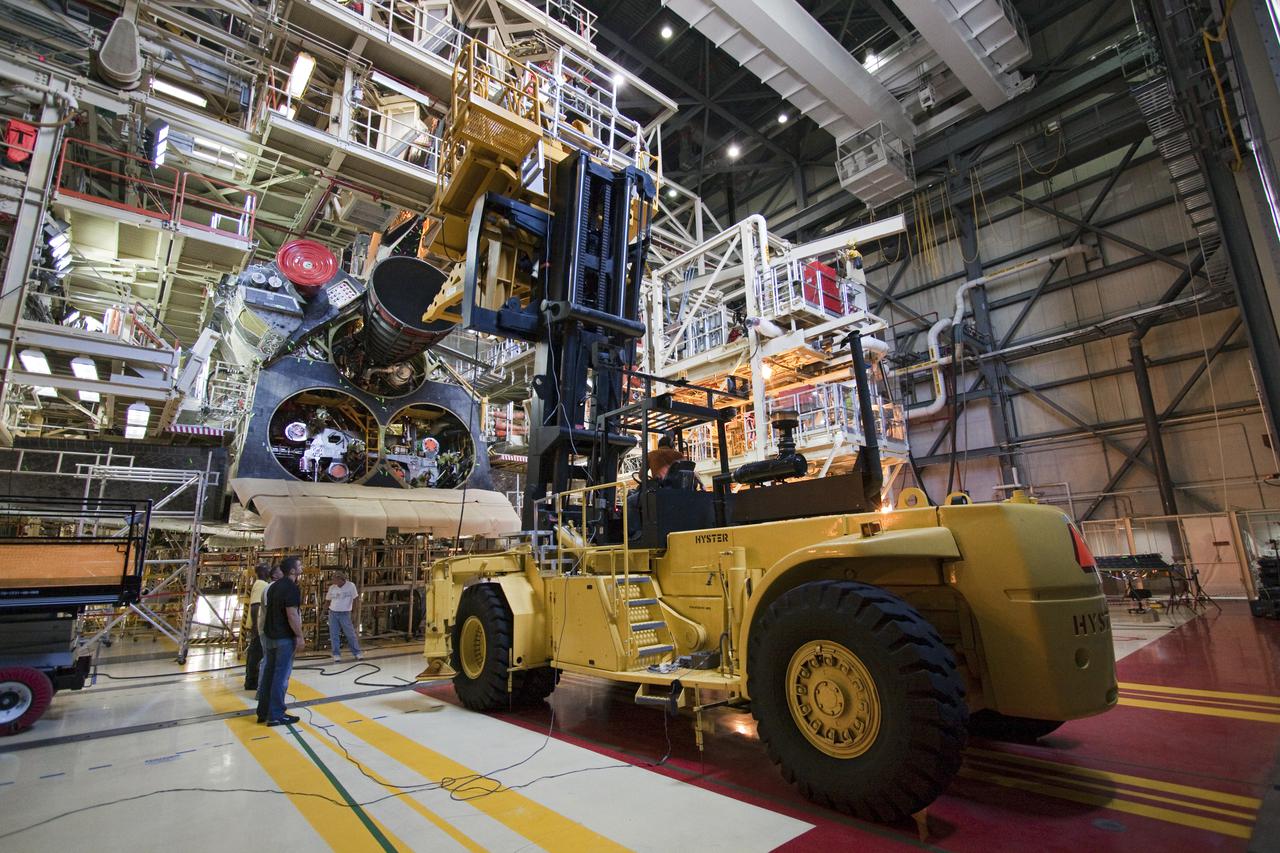
CAPE CANAVERAL, Fla. -- At NASA's Kennedy Space Center in Florida, a space shuttle main engine secured on a Hyster forklift is installed in space shuttle Discovery in Orbiter Processing Facility-3. Three main engines, weighing 7,000 pounds each, will be installed for the STS-133 mission to the International Space Station. Engines are inspected and maintained in the nearby Space Shuttle Main Engine Processing Facility before installation. Discovery and its STS-133 crew are targeted to deliver the Express Logistics Carrier-4 filled with external payloads and experiments, as well as critical spare components to the station later this year. Photo credit: NASA_Jack Pfaller
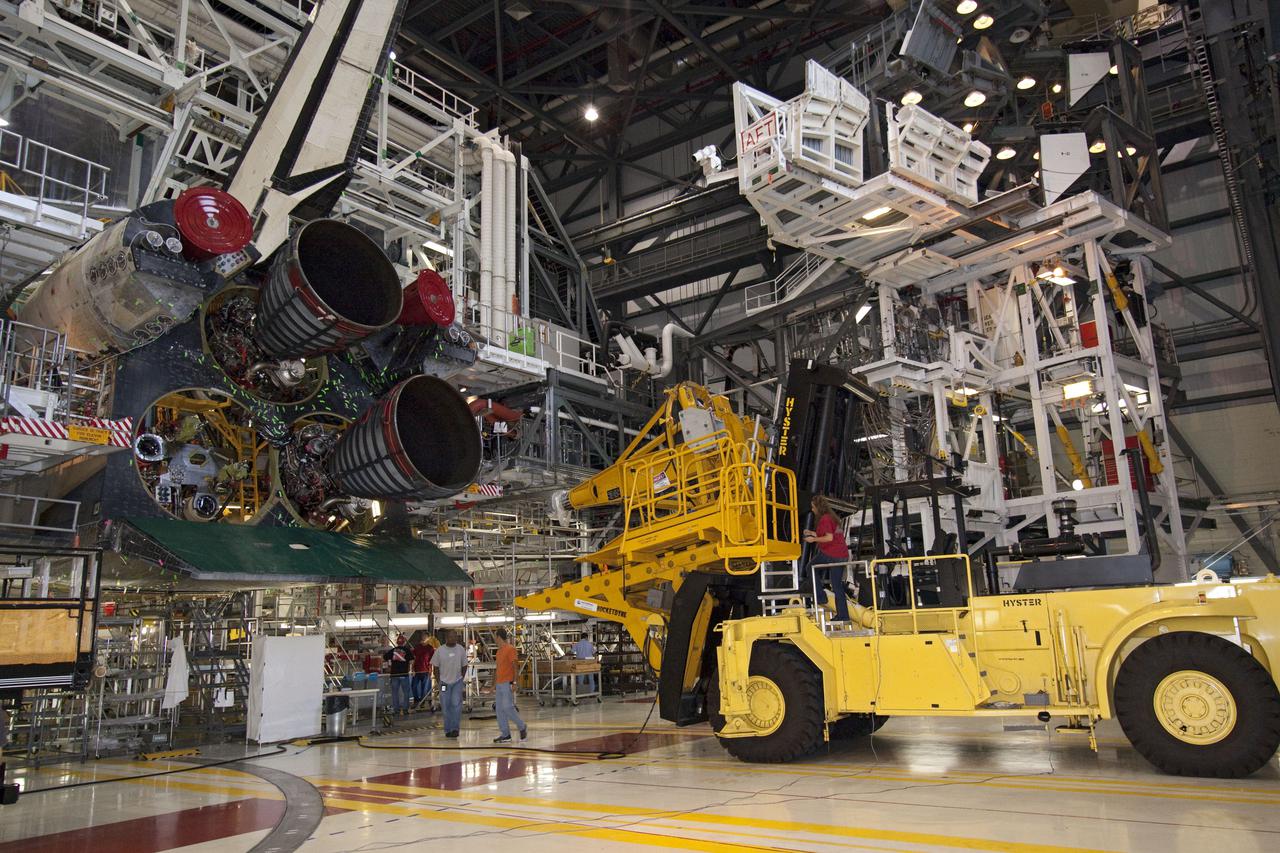
CAPE CANAVERAL, Fla. -- In Orbiter Processing Facility-1 at NASA's Kennedy Space Center in Florida, removal of main engine no. 3 from space shuttle Atlantis is under way. Inspection and maintenance of each main engine is standard procedure following a shuttle mission. Some of the engines maintained and stored in the engine shop could be used for Atlantis, on what currently is planned as the 'launch on need,' or potential rescue mission for Endeavour's STS-134 mission, targeted for launch Feb. 26, 2011. For information, visit www.nasa.gov_shuttle. Photo credit: NASA_Jack Pfaller

CAPE CANAVERAL, Fla. - In Orbiter Processing Facility-3 at NASA's Kennedy Space Center in Florida, the orbiter boom sensor system, or OBSS, removed from space shuttle Discovery's payload bay, glides across the clean room toward a transporter. The workers are dressed in clean-room attire, known as 'bunny suits.' The 50-foot-long OBSS attaches to the end of the shuttle’s robotic arm and supports the cameras and laser systems used to inspect the shuttle’s thermal protection system while in space. The OBSS' inspection boom assembly, or IBA, is removed from the arm every other processing flow for a detailed inspection. After five consecutive flights, all IBA internal components are submitted to a thorough electrical checkout in Kennedy's Remote Manipulator System Lab. Discovery next will deliver the first Permanent Multi-purpose Module, or PMM; the Express Logistics Carrier 4; and critical spare parts to the International Space Station on the STS-133 mission. Launch is targeted for Sept. 16. Photo credit: NASA_Jack Pfaller
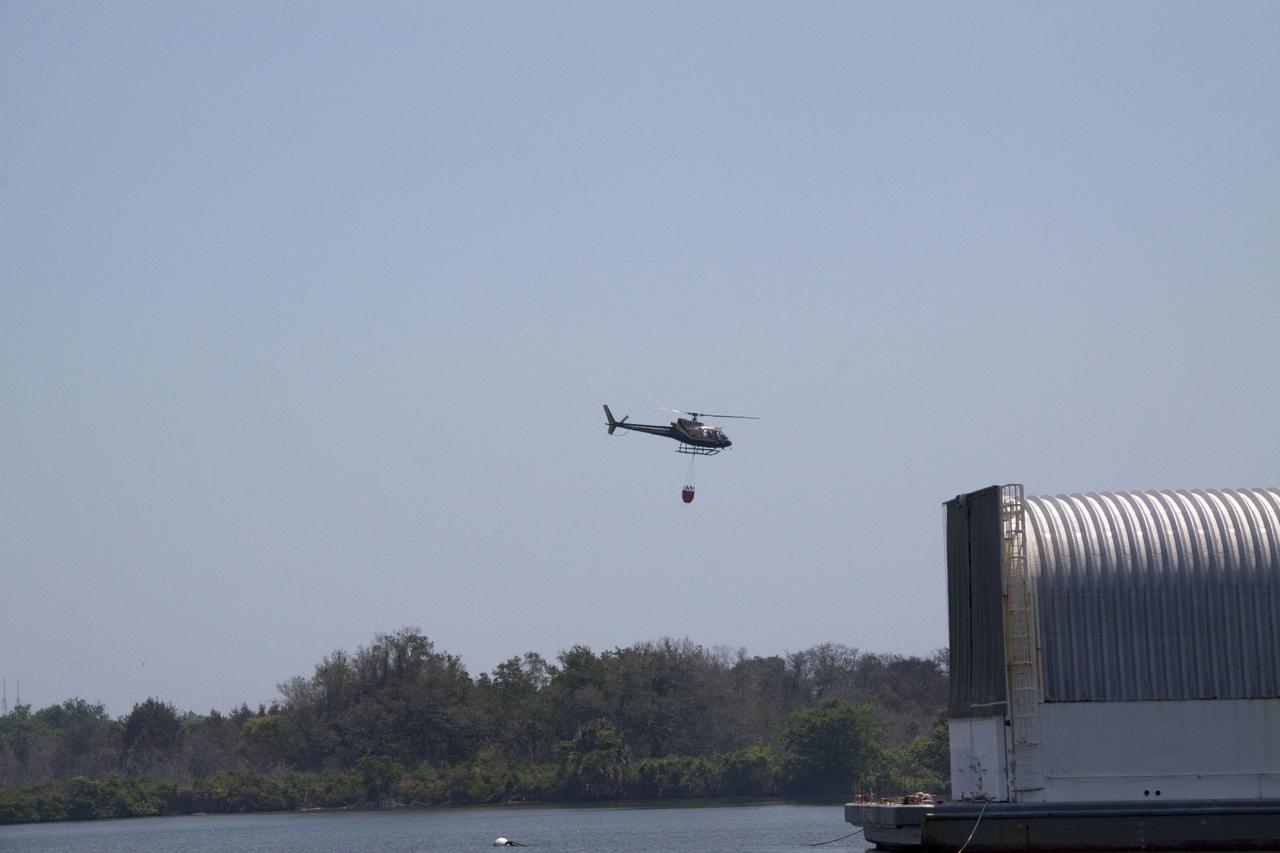
CAPE CANAVERAL, Fla. -- At NASA's Kennedy Space Center in Florida, a helicopter collects water from the Turn Basin to douse a nearby brush fire. The fire was spotted in a rural area southeast of Kennedy’s Press Site approximately three miles away from Launch Pad 39A, where space shuttle Endeavour awaits liftoff on the STS-134 mission to the International Space Station. The fire is being contained by crews from Kennedy and the U.S. Fish and Wildlife Service and smoke is not expected to impact launch. Photo credit: NASA_Jack Pfaller
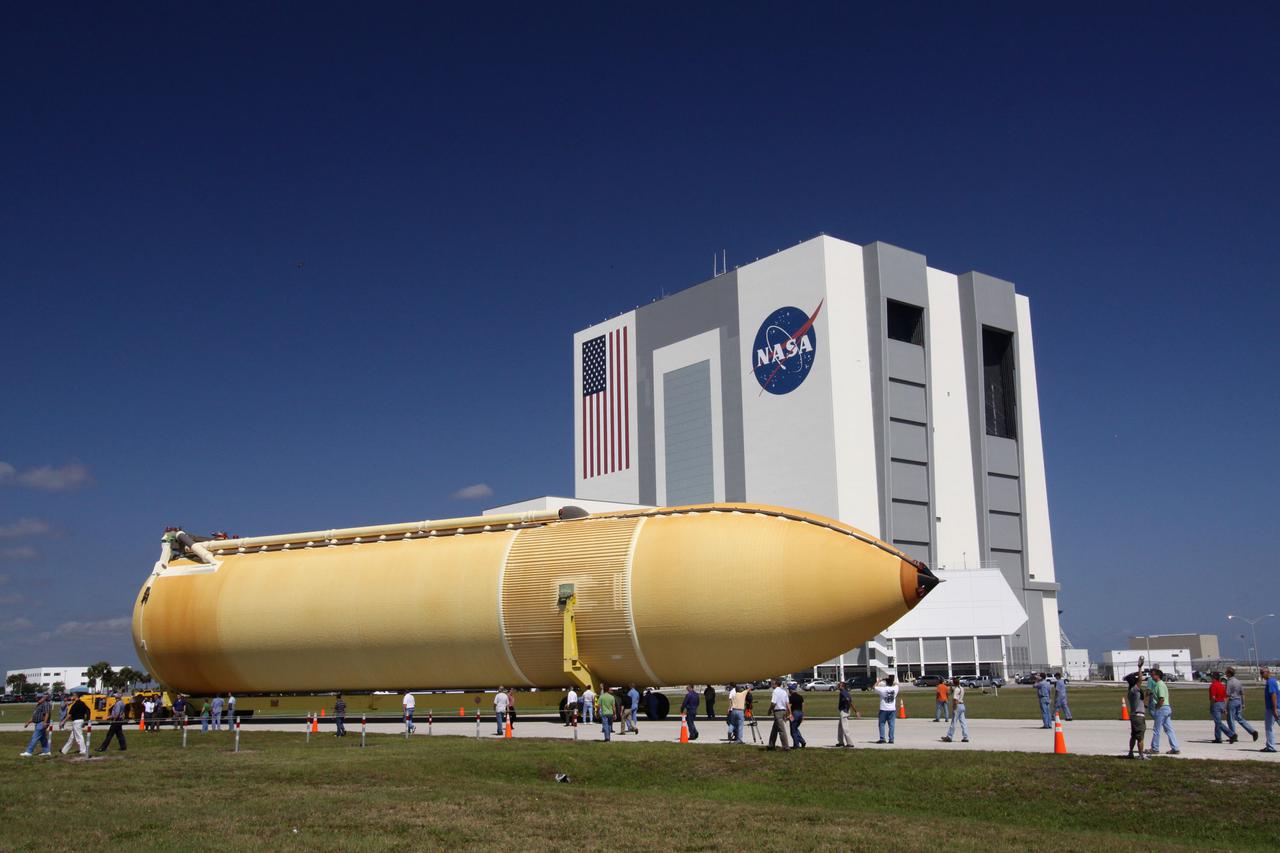
CAPE CANAVERAL, Fla. - At NASA's Kennedy Space Center in Florida, the external fuel tank for space shuttle Discovery's STS-133 mission is transported from the Launch Complex 39 turn basin to the Vehicle Assembly Building across the street. On the STS-133 mission, Discovery will deliver NASA's Permanent Multi-purpose Module, or PMM, the Express Logistics Carrier 4, and critical spare parts to the International Space Station. Launch is targeted for fall 2010. Photo credit: NASA_Jack Pfaller
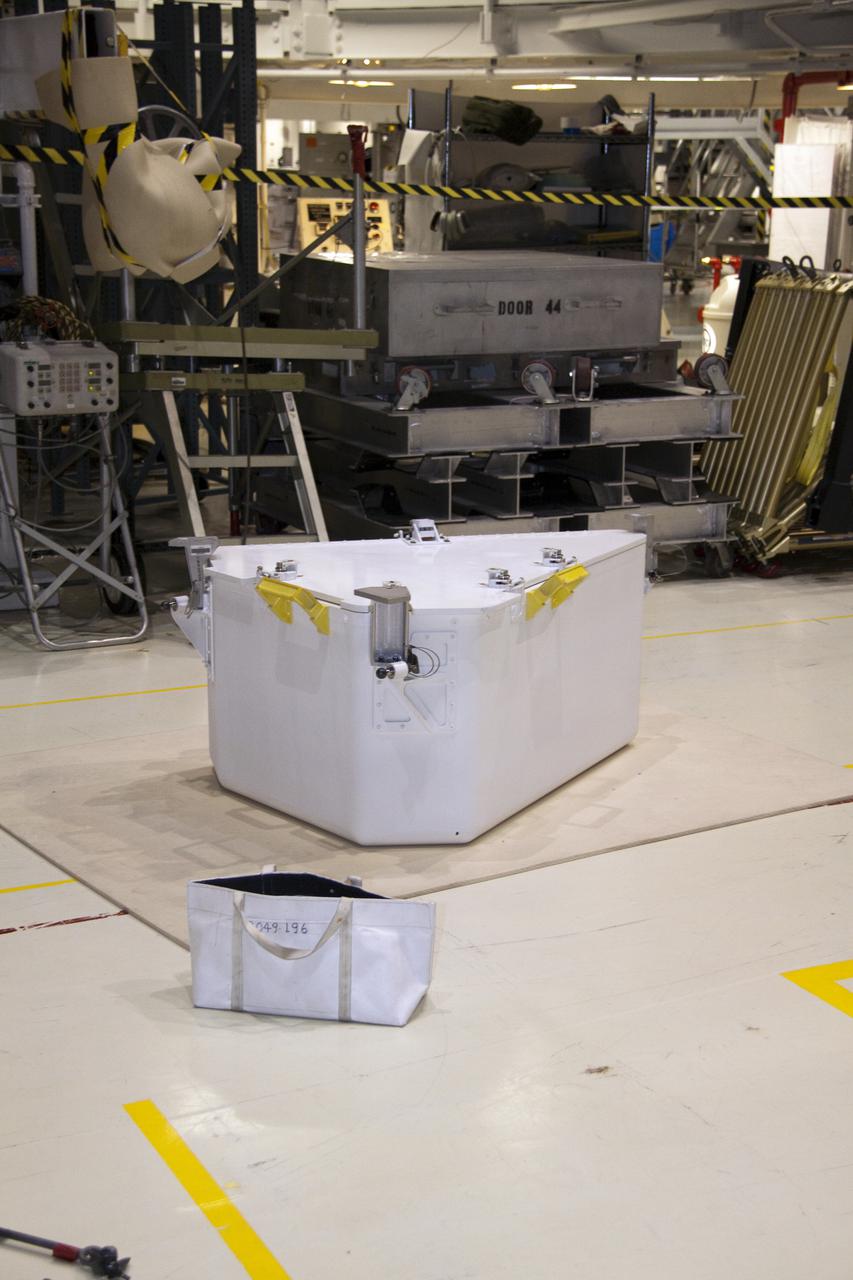
CAPE CANAVERAL, Fla. – In Orbiter Processing Facility-1 at NASA's Kennedy Space Center in Florida, preparations are under way to lift the tool stowage assembly into space shuttle Atlantis' payload bay. The assembly contains tools and hardware that will be needed on the extravehicular activities, or spacewalks, conducted during the STS-132 mission. On STS-132, the six-member crew will deliver an Integrated Cargo Carrier and a Russian-built Mini-Research Module to the International Space Station. STS-132 is the 34th mission to the station and the 132nd space shuttle mission. Launch is targeted for May 14. For information on the STS-132 mission, visit http:__www.nasa.gov_mission_pages_shuttle_shuttlemissions_sts132_index.html. Photo credit: NASA_Jack Pfaller
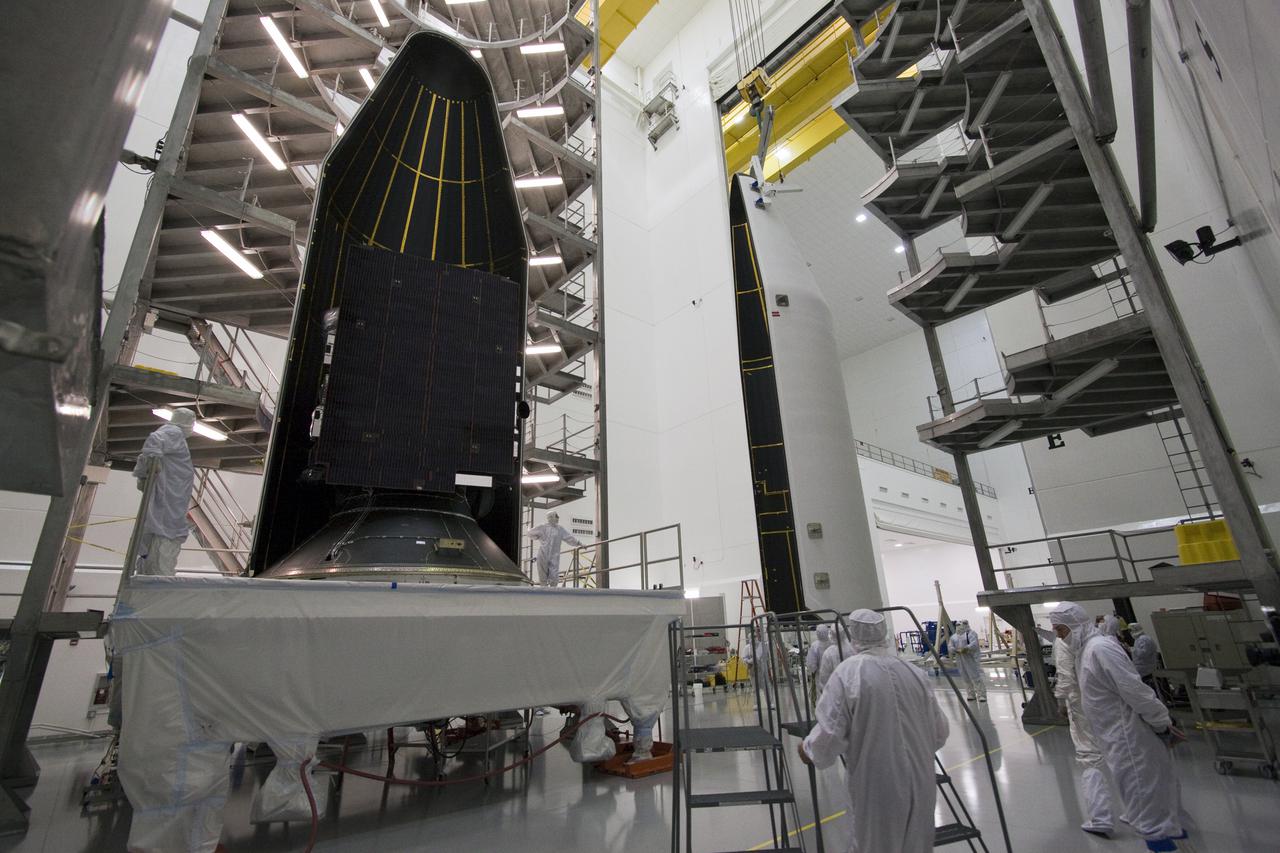
CAPE CANAVERAL, Fla. – At the Astrotech Space Operations facility in Titusville, Fla., preparations are under way to enclose NASA's GOES-P meteorological satellite into the second half of the Delta IV payload fairing. The fairing is a molded clamshell covering that fits flush with the outside surface of the rocket and forms an aerodynamic nose cone, protecting the spacecraft during launch and ascent. GOES-P, the latest Geostationary Operational Environmental Satellite, was developed by NASA for the National Oceanic and Atmospheric Administration, or NOAA. GOES-P is designed to watch for storm development and observed current weather conditions on Earth. Launch of GOES-P is targeted for March 1 from Launch Complex 37 aboard a United Launch Alliance Delta IV rocket. For information on GOES-P, visit http:__www.nasa.gov_mission_pages_GOES-P_main_index.html. Photo credit: NASA_Jack Pfaller

CAPE CANAVERAL, Fla. -- In the Press Site auditorium at NASA's Kennedy Space Center in Florida, NASA Test Director Jeff Spaulding speaks to media about preparations for space shuttle Endeavour's launch on the STS-134 mission. Endeavour and its crew will deliver the Express Logistics Carrier-3, Alpha Magnetic Spectrometer-2 (AMS), a high-pressure gas tank and additional spare parts for the Dextre robotic helper to the International Space Station. Launch is scheduled for April 29 at 3:47 p.m. EDT. This will be the final spaceflight for Endeavour. For more information visit, www.nasa.gov_mission_pages_shuttle_shuttlemissions_sts134_index.html. Photo credit: NASA_Jack Pfaller
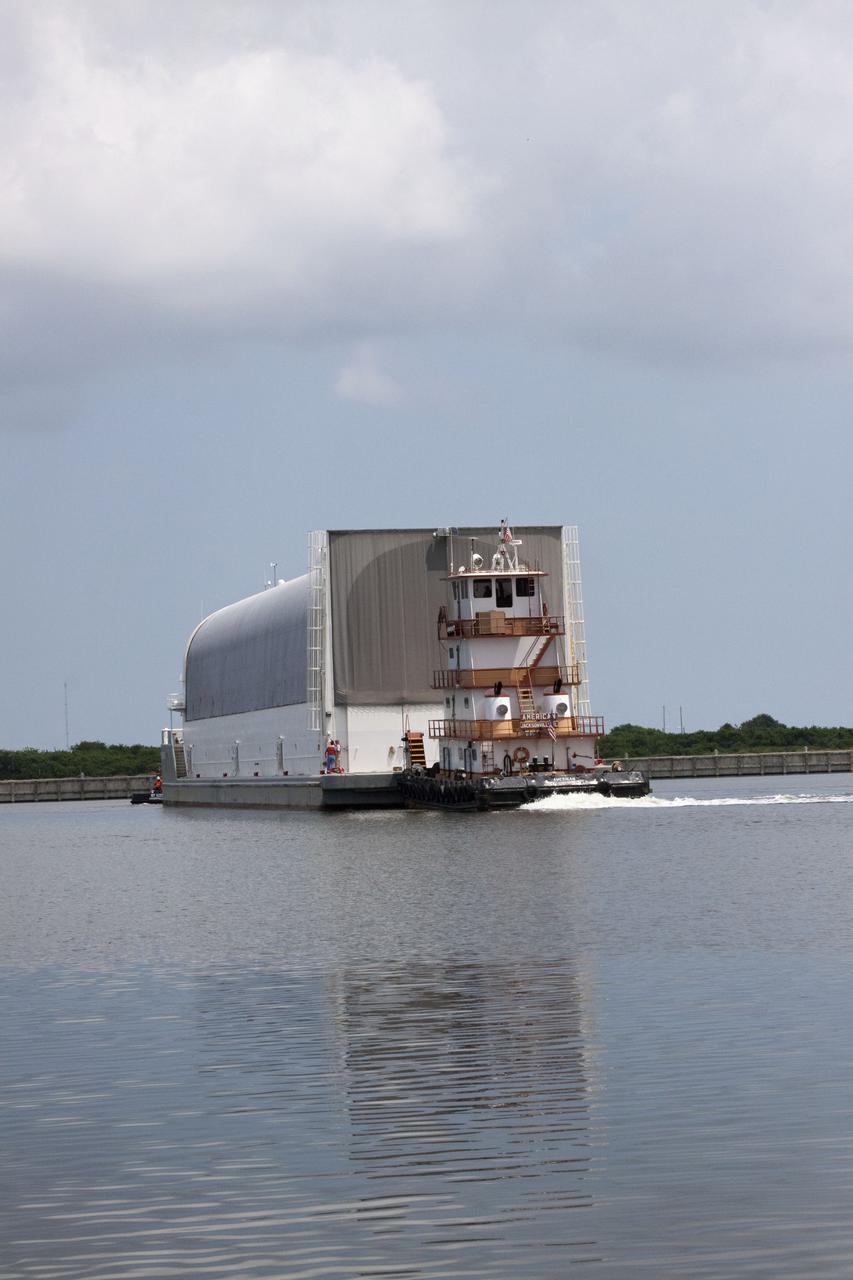
CAPE CANAVERAL, Fla. -- Tugboats safely deliver NASA's Pegasus barge, carrying External Tank-138 to the turn basin at NASA's Kennedy Space Center in Florida. ET-138, the last newly manufactured tank, was originally designated to fly on Endeavour's STS-134 mission to the International Space Station, but later reassigned to fly on space shuttle Atlantis' final mission, STS-135. For information, visit www.nasa.gov_shuttle. Photo credit: NASA_Jack Pfaller
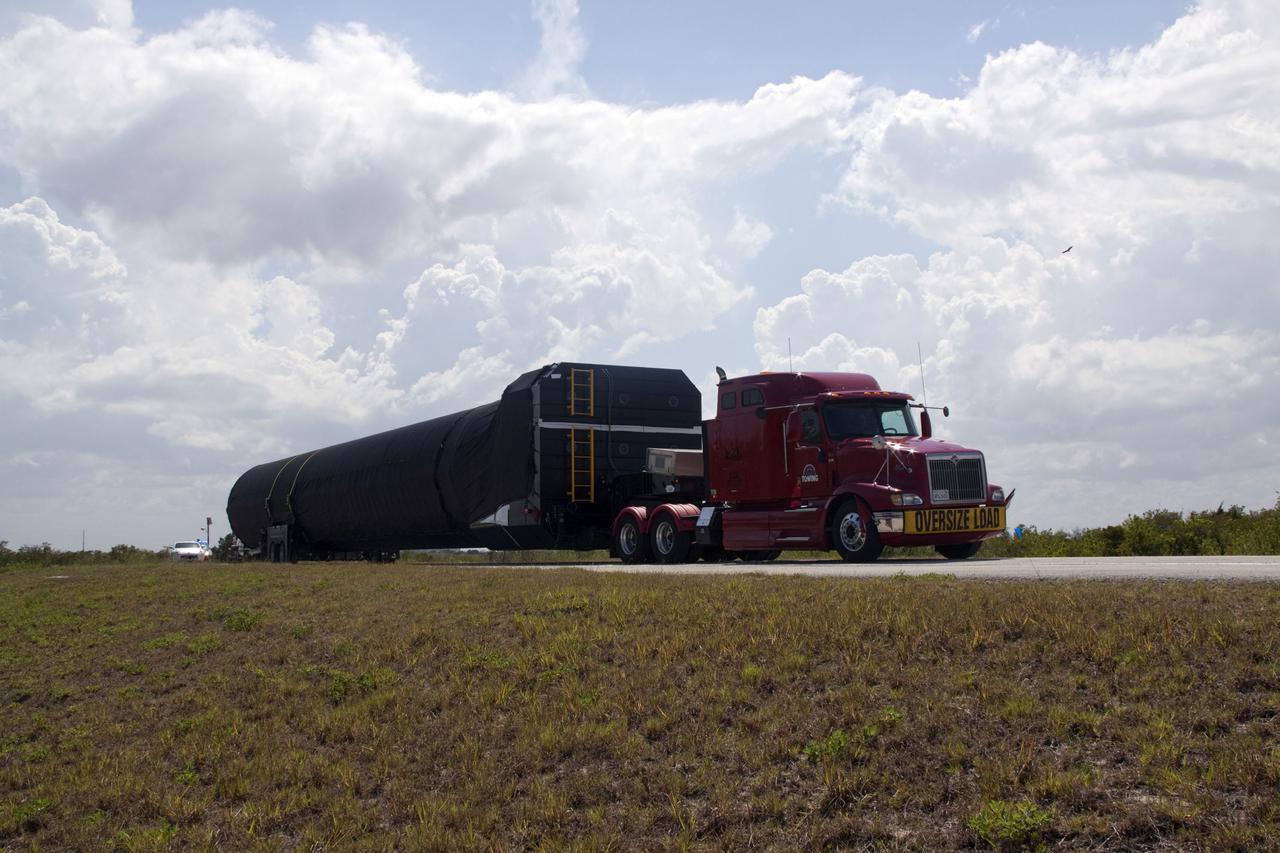
CAPE CANAVERAL, Fla. -- The first stage of the SpaceX COTS-2 Falcon 9 rocket is being transported to a SpaceX hangar at Pad 40 at Cape Canaveral Air Force Station in Florida. Once assembled, it will be a two-stage fully integrated launch vehicle, consisting of a first stage powered by nine SpaceX-developed Merlin 1C engines, a second stage, an interstage, an unpressurized trunk and the Dragon spacecraft qualification unit. SpaceX was awarded procurement for three demonstration flights under the Commercial Orbital Transportation Services, or COTS, program managed by NASA's Johnson Space Center in Houston. A subsequent contract for Commercial Resupply Services, or CRS, was awarded in late 2008 to resupply the International Space Station. The SpaceX CRS contract provides for 12 missions to resupply the station from 2011 through 2015. Photo credit: NASA_Jack Pfaller
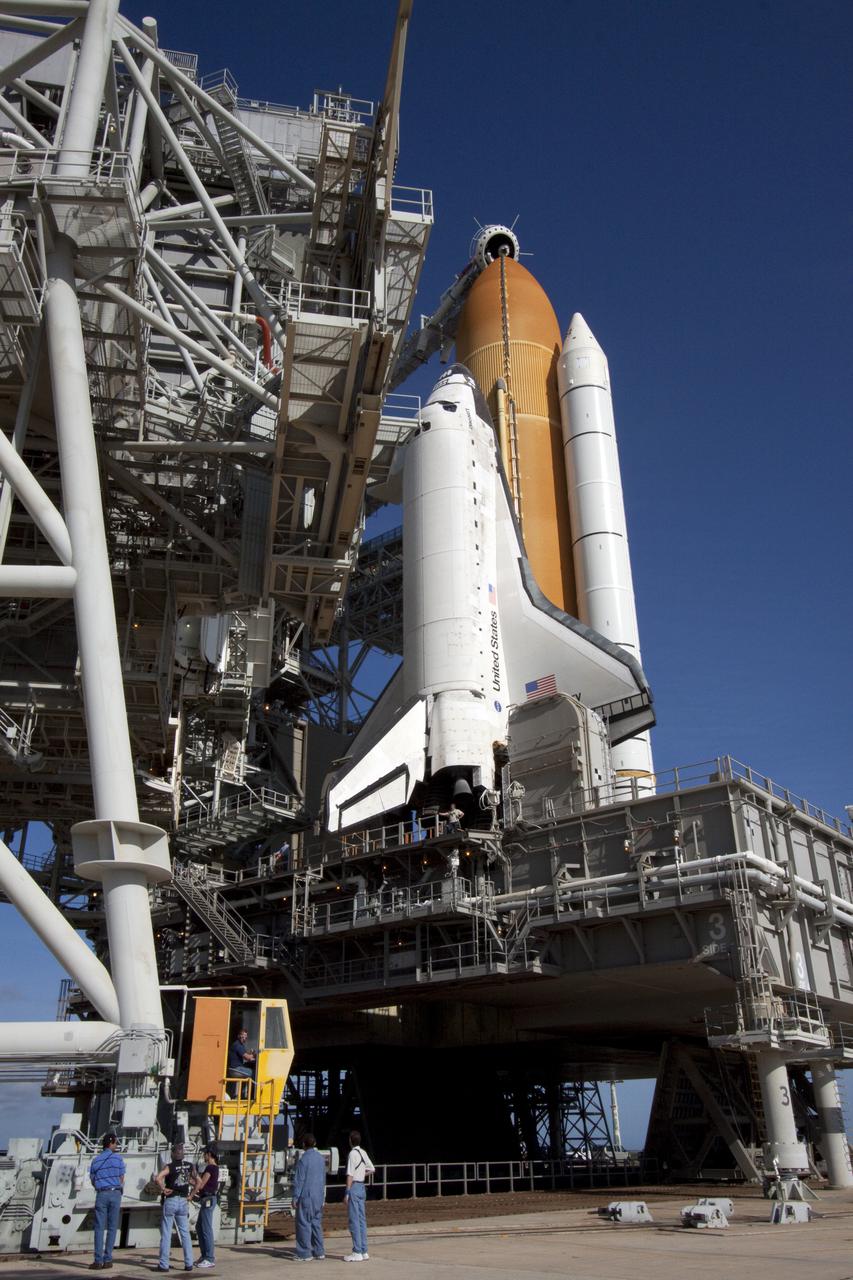
CAPE CANAVERAL, Fla. - At Launch Pad 39A at NASA's Kennedy Space Center in Florida, a United Space Alliance worker rolls the pad's rotating service structure away from space shuttle Discovery using controls in the cab at the base of the structure. Retraction of the structure, which provides weather protection and access to the shuttle, was complete by 10 a.m. EDT and is a significant countdown milestone. Liftoff of the STS-131 mission is set for 6:21 a.m. EDT on April 5. On STS-131, the seven-member crew will deliver the multi-purpose logistics module Leonardo, filled with supplies, a new crew sleeping quarters and science racks that will be transferred to the International Space Station's laboratories. The crew also will switch out a gyroscope on the station’s truss, install a spare ammonia storage tank and retrieve a Japanese experiment from the station’s exterior. STS-131 is the 33rd shuttle mission to the station and the 131st shuttle mission overall. For information on the STS-131 mission and crew, visit http:__www.nasa.gov_mission_pages_shuttle_shuttlemissions_sts131_index.html. Photo credit: NASA_Jack Pfaller