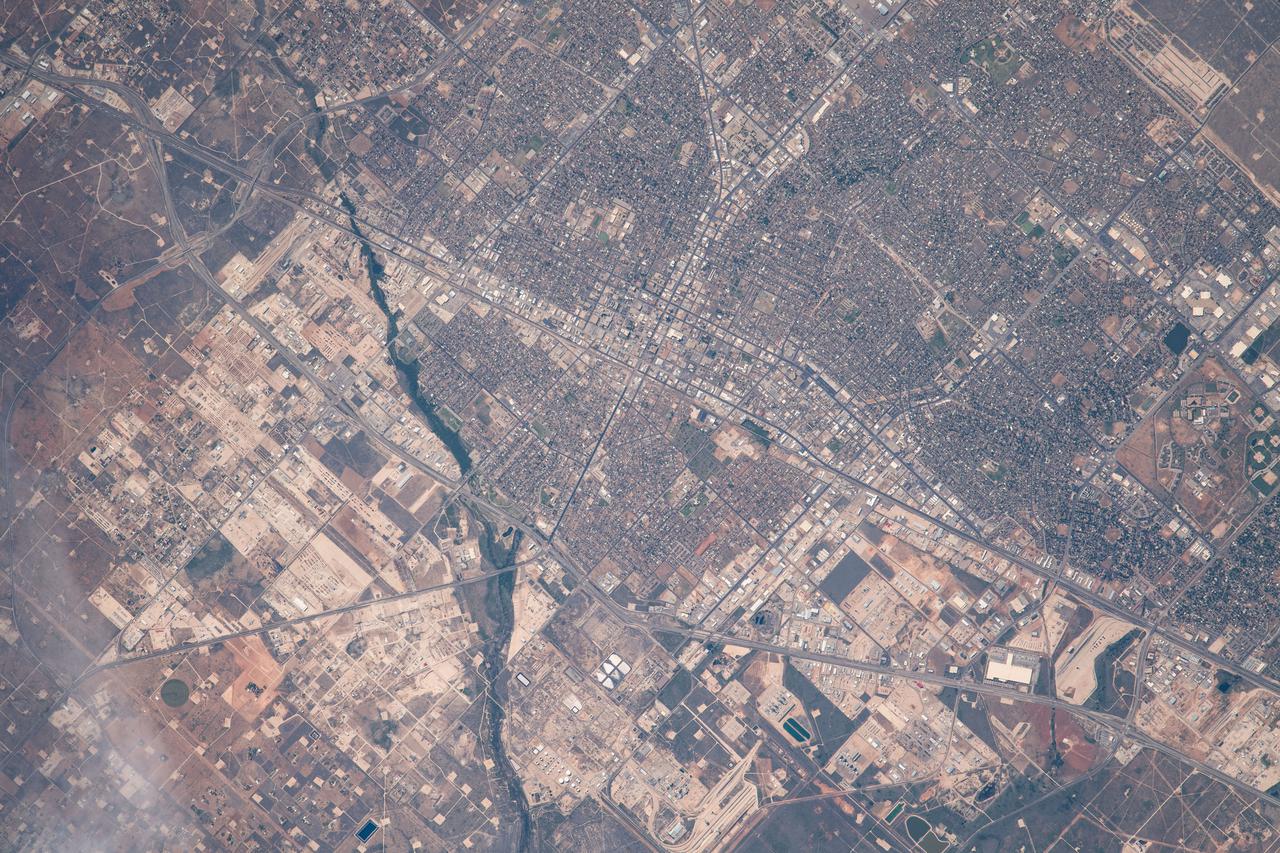
iss065e074434 (May 26, 2021) --- Odessa, Texas, is pictured from the International Space Station as it orbited 261 miles above west Texas.
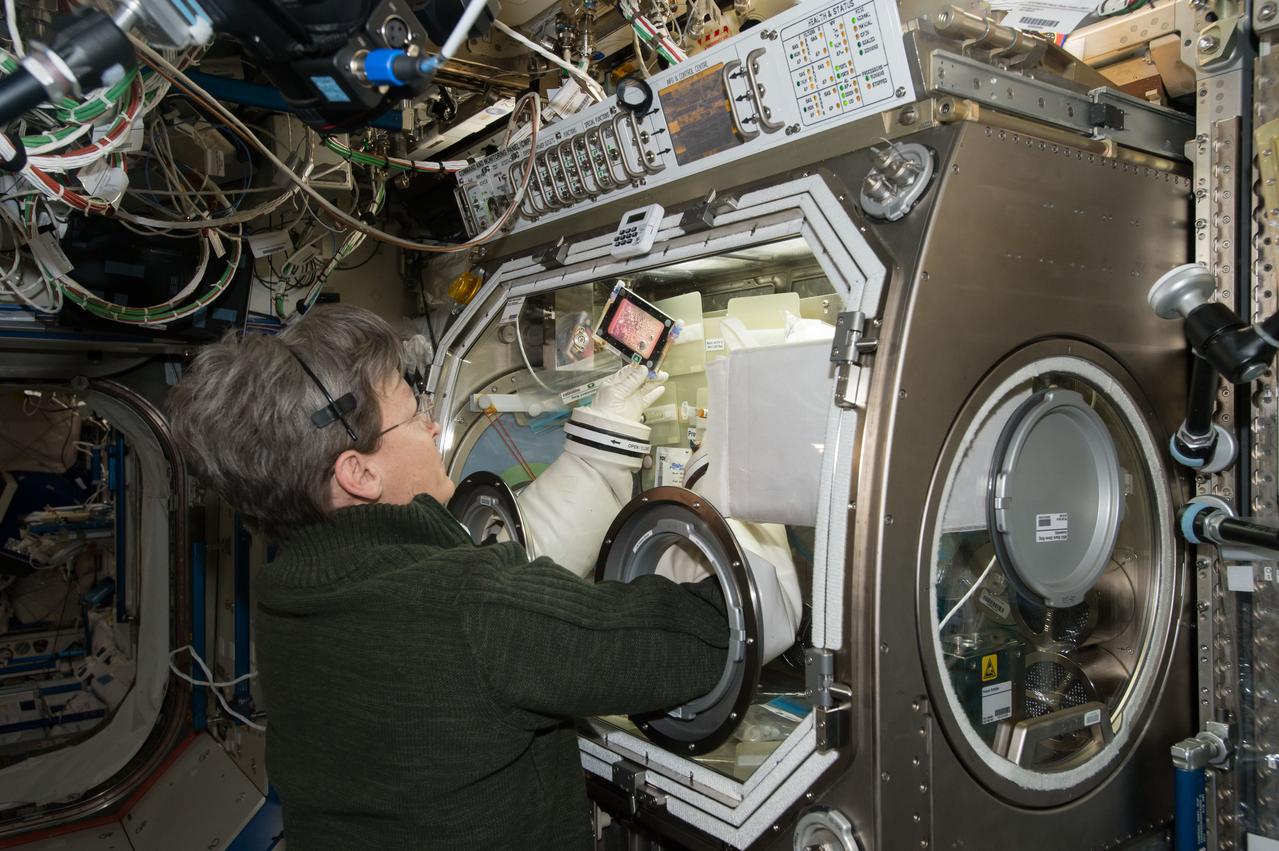
iss050e054453 (3/4/2017) --- NASA astronaut Peggy Whitson during Microgravity Expanded Stem Cells (MESC) clean up, in the Microgravity Science Glovebox (MSG). Microgravity Expanded Stem Cells observes cell growth and morphological characteristics in microgravity and analyzes gene expression profiles of cells grown in microgravity.
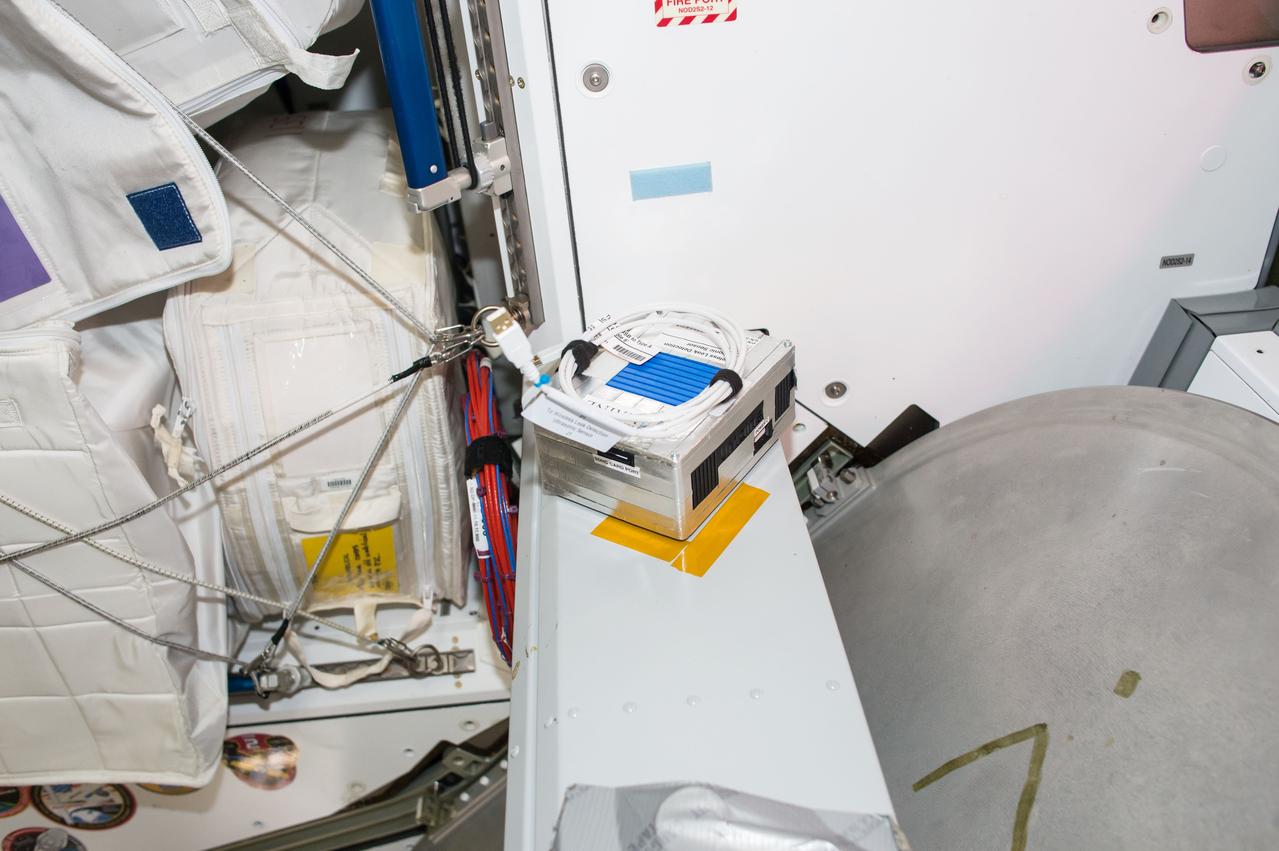
iss050e035313 (1/26/2017) --- A view of the Wireless Leak Detector Ultrasonic Sensor aboard the International Space Station (ISS). The Joint Leak Detection and Localization Based on Fast Bayesian Inference from Network of Ultrasonic Sensor Arrays in Microgravity Environment (Wireless Leak Detection) investigation compares signals received at various ultrasonic sensors to reveal the location of air leaks, which can then be repaired.
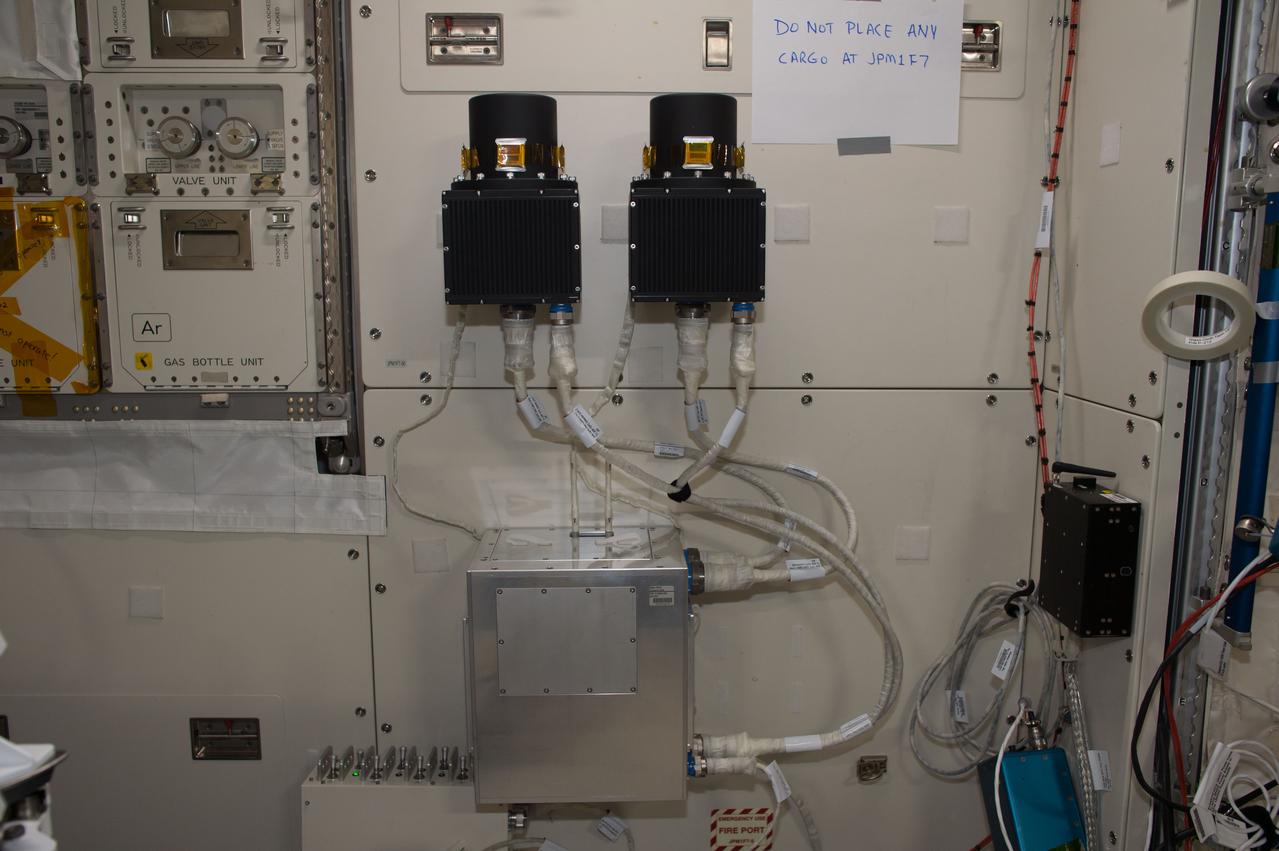
iss050e016008 (12/14/2016) --- A view during Position Sensitive-Tissue Equivalent Proportional Chamber (PS-TEPC) Installation aboard the International Space Station (ISS) The PS-TEPC is a radiation measuring instrument that measures absorbed doses and path length of space radiation particles simultaneously, and determines the real time Liner Energy Transfer (LET), and equivalent doses, to assess radiation risk to crew members during space flight. Bio Dosimeters are also visible.
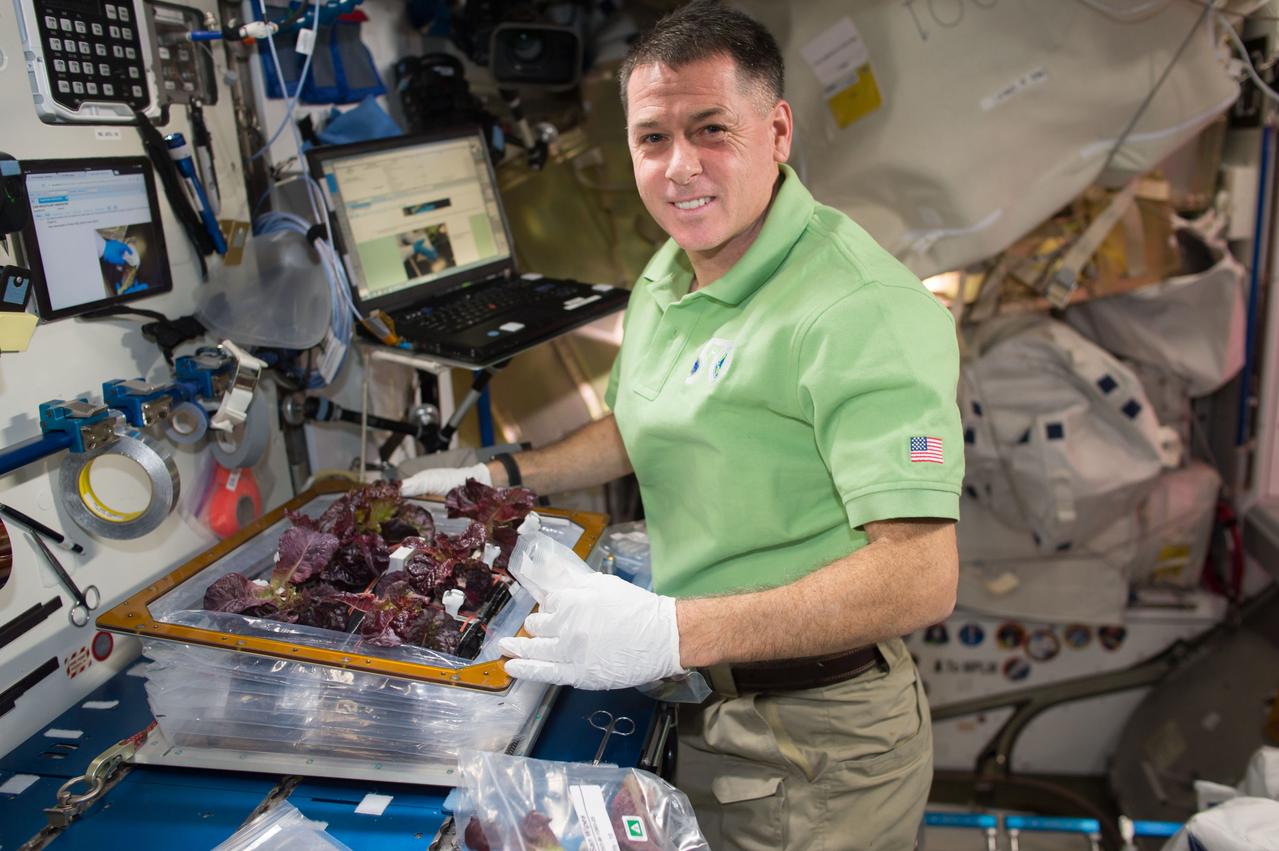
iss050e019642 (12/28/2016) --- NASA astronaut Shane Kimbrough during VEG-03 harvest and stow of Red Romaine lettuce, in the Columbus Module. Veg-03 uses the Veggie plant growth facility to cultivate a type of cabbage, which is harvested in orbit with samples returned to Earth for testing.
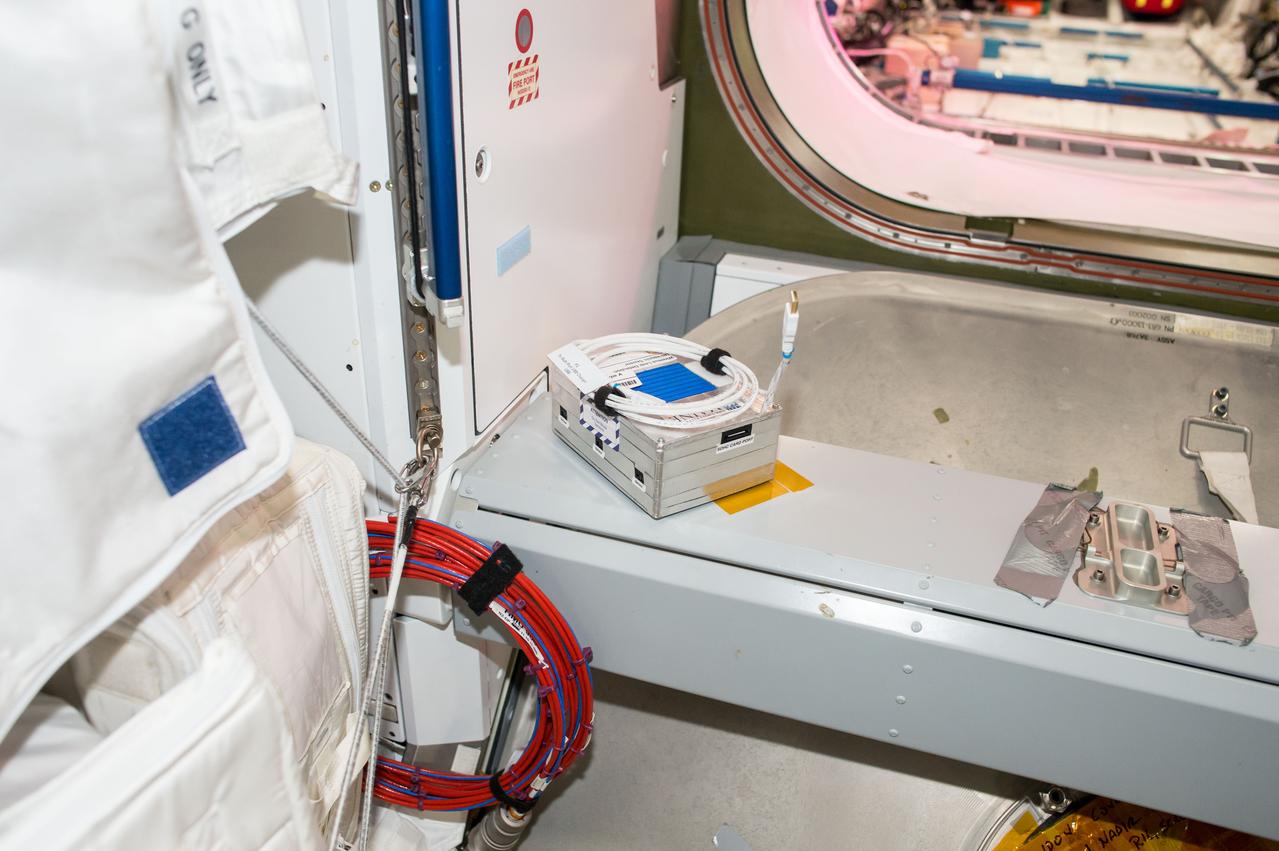
iss050e035314 (1/26/2017) --- A view of the Wireless Leak Detector Ultrasonic Sensor aboard the International Space Station (ISS). The Joint Leak Detection and Localization Based on Fast Bayesian Inference from Network of Ultrasonic Sensor Arrays in Microgravity Environment (Wireless Leak Detection) investigation compares signals received at various ultrasonic sensors to reveal the location of air leaks, which can then be repaired.
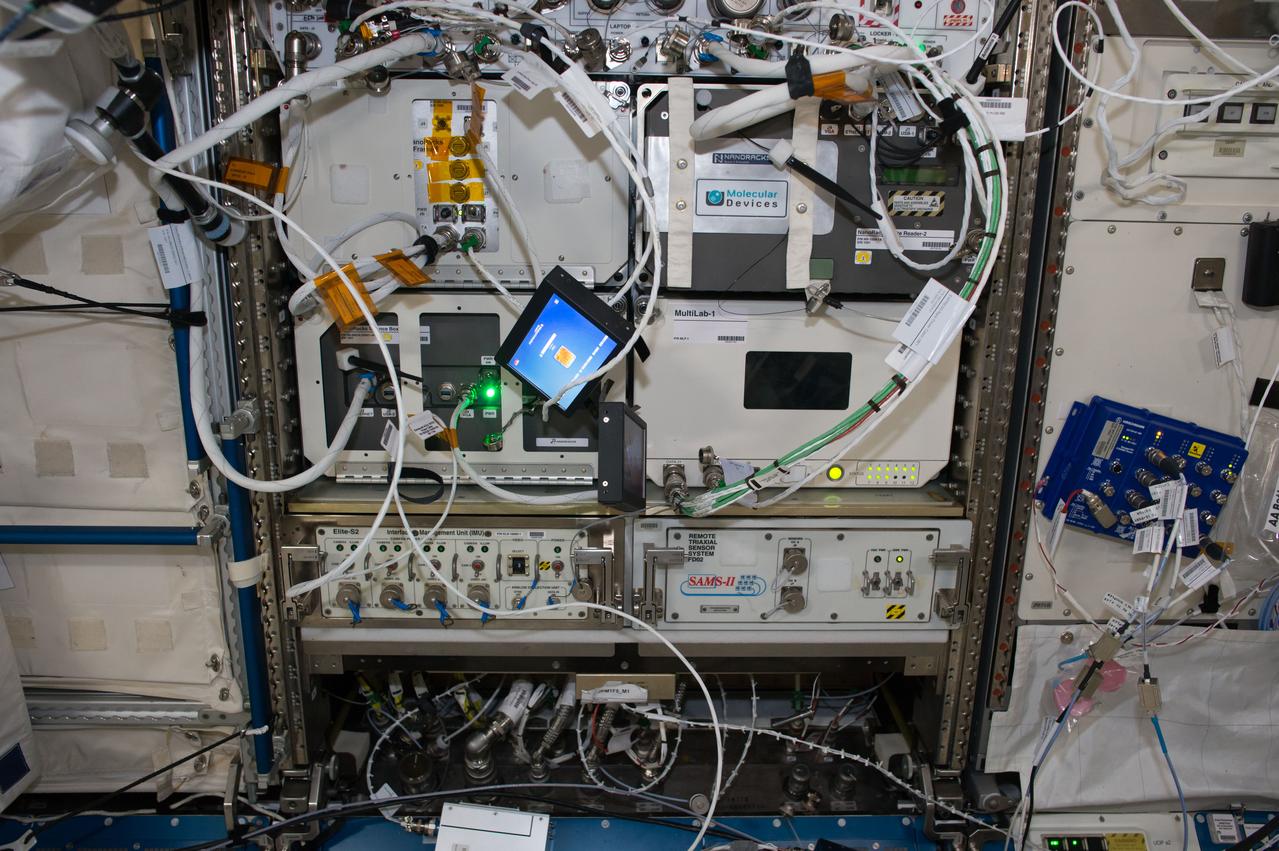
iss050e033362 (1/18/2017) -- A view of Space Acceleration Measurement System-II (SAMS-II), an ongoing study of the small forces (vibrations and accelerations) on the International Space Station (ISS) resulting from the operation of hardware, crew activities, dockings and maneuvering. Results generalize the types of vibrations affecting vibration-sensitive experiments and structural life of ISS. Investigators and Structural Analysts seek to better understand the vibration environment on the ISS using SAMS-II data and assessing station loads and dynamics.
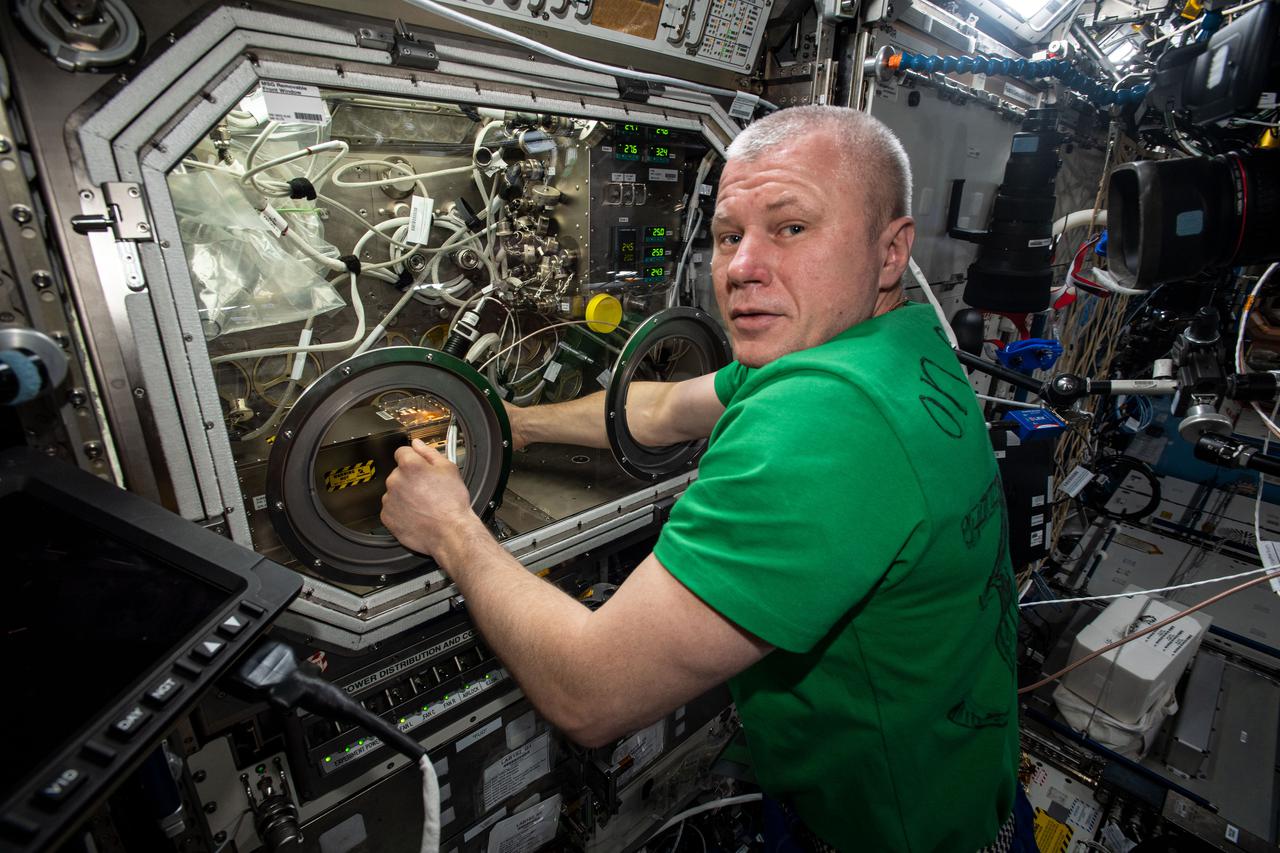
iss065e021208 (May 6, 2021) --- Roscosmos cosmonaut and Expedition 65 Flight Engineer Oleg Novitskiy swaps hardware inside the U.S. Destiny laboratory module's Microgravity Science Glovebox for a physics investigation. The study known as Solidification Using a Baffle in Sealed Ampoules, or SUBSA, explores improving technology used in producing semiconductor crystals.

iss065e021207 (May 6, 2021) --- Expedition 65 Flight Engineers (from left) Shane Kimbrough of NASA and Oleg Novitskiy of Roscosmos unpack hardware for installation inside the U.S. Destiny laboratory module's Microgravity Science Glovebox.
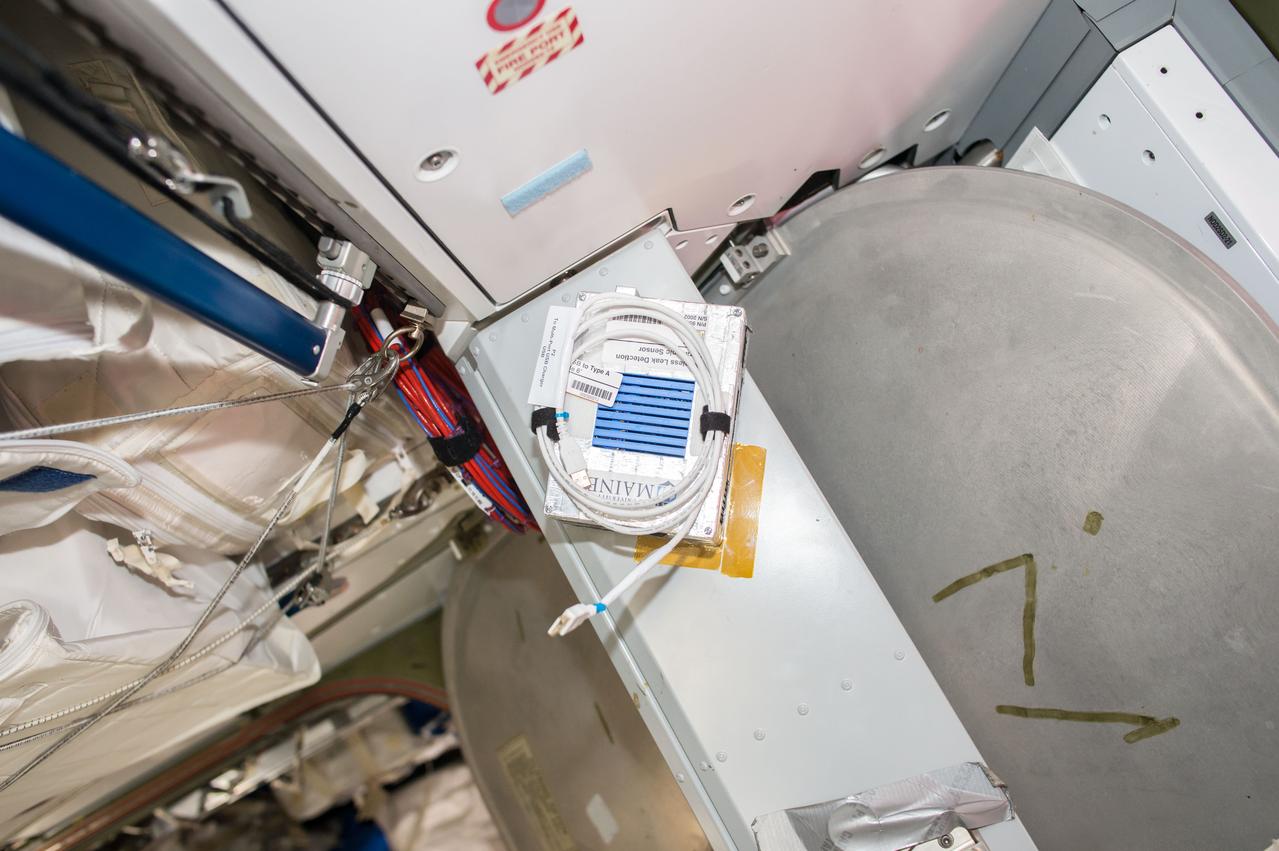
iss050e035316 (1/26/2017) --- A view of the Wireless Leak Detector Ultrasonic Sensor aboard the International Space Station (ISS). The Joint Leak Detection and Localization Based on Fast Bayesian Inference from Network of Ultrasonic Sensor Arrays in Microgravity Environment (Wireless Leak Detection) investigation compares signals received at various ultrasonic sensors to reveal the location of air leaks, which can then be repaired.
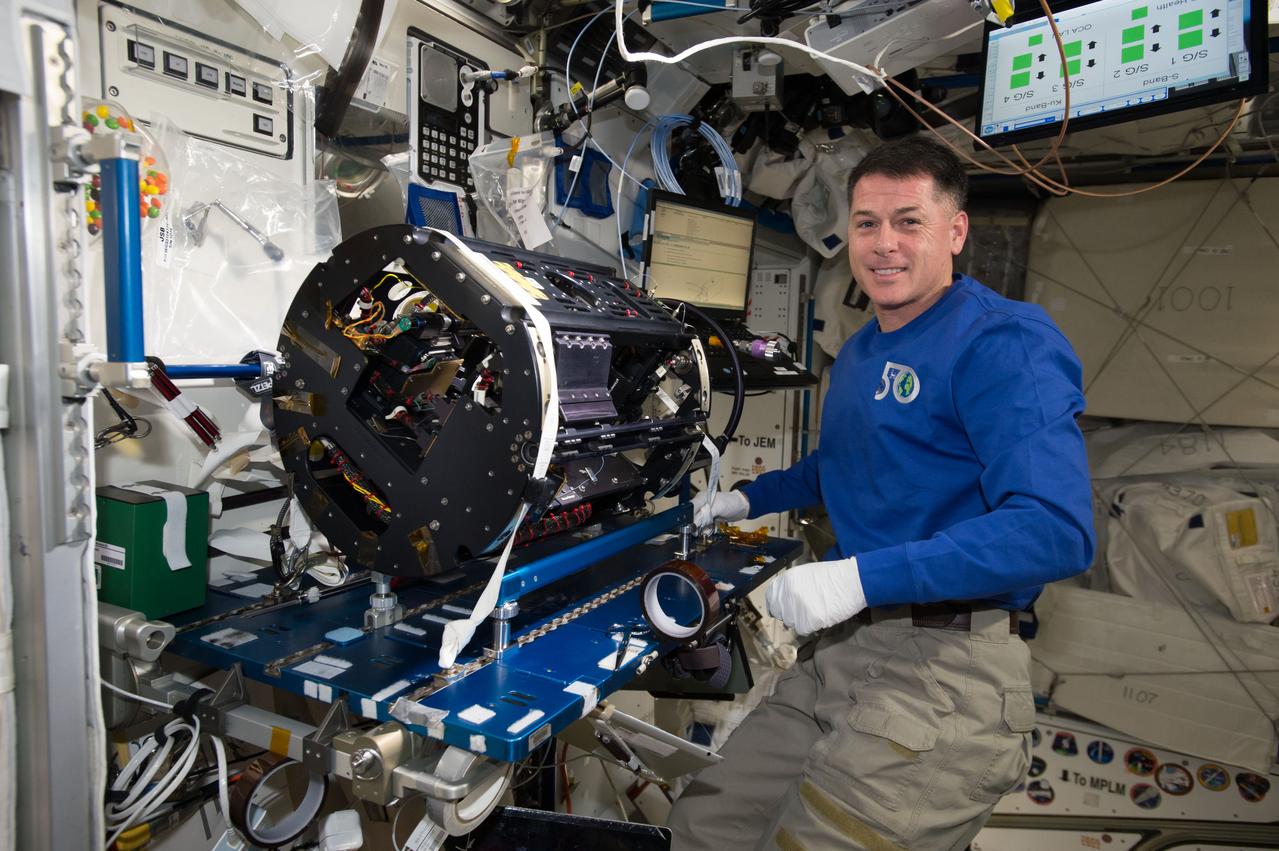
iss050e035112 (1/24/2017) --- NASA astronaut Shane Kimbrough completing the Multi-user Droplet Combustion Apparatus (MDCA) reconfiguration to the Cool Flames Investigation (CFI) setup. The Combustion Integrated Rack (CIR) includes an optics bench, combustion chamber, fuel and oxidizer control, and five different cameras for performing combustion experiments in microgravity.
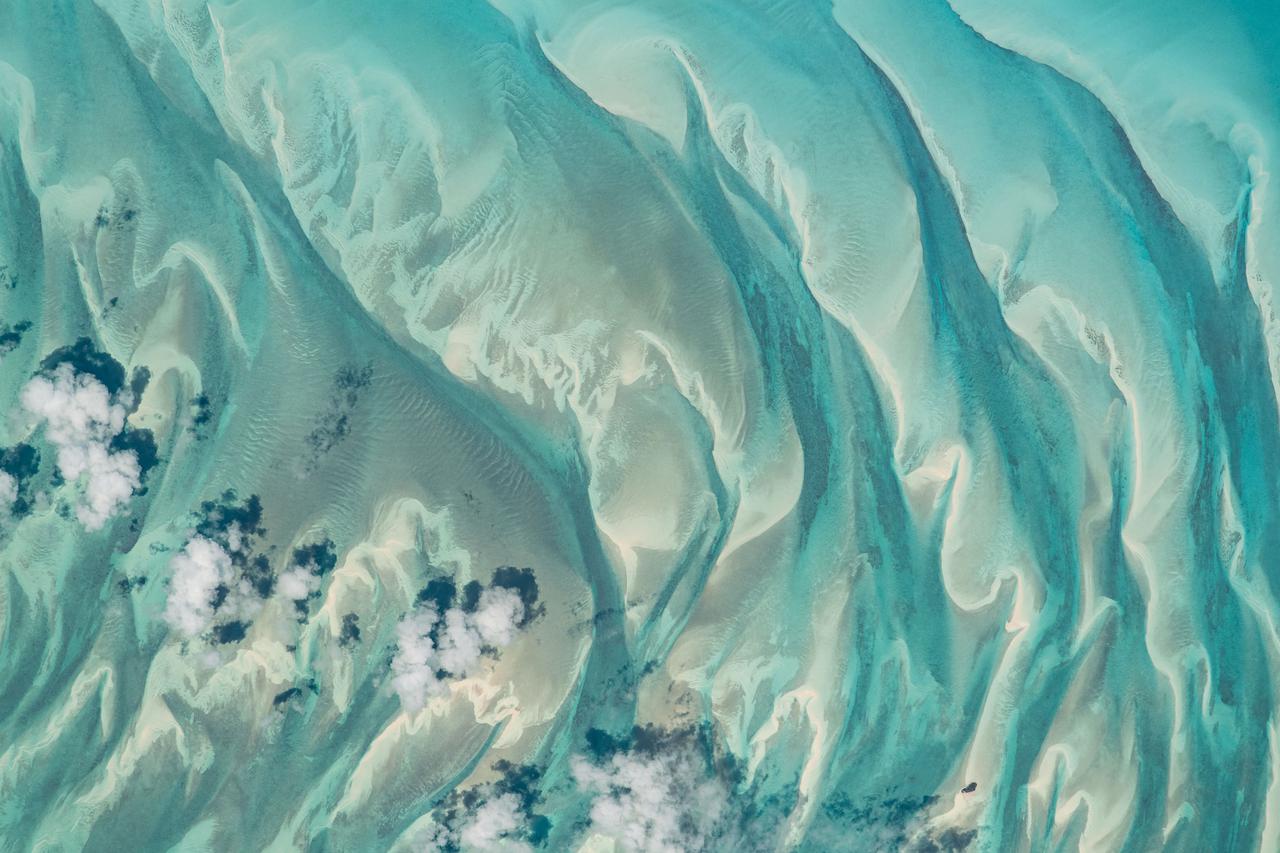
iss065e144117 (June 23, 2021) --- The shallow, clear blue waters off the coast of the Bahamas are pictured from the International Space Station as it orbited 260 miles above of the Atlantic Ocean.
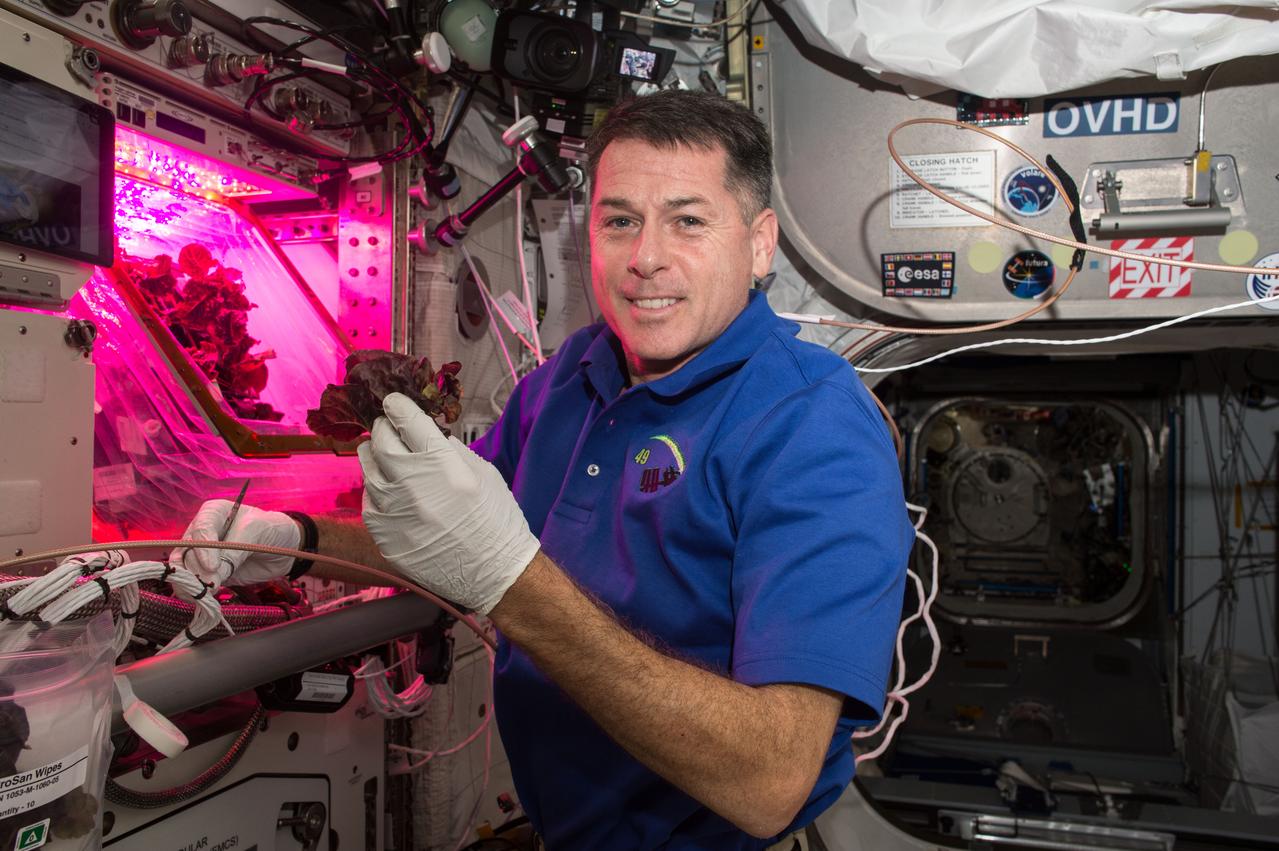
iss050e013231 (12/2/2016) --- NASA astronaut Shane Kimbrough during the first harvest of Outredgeous Red Romaine Lettuce from the Veggie facility during VEG-03. This first of four harvests is part of a new paradigm of harvesting entitled “Cut and Come Again” were the astronaut will only harvest the outer leaves allowing for an attempt at a longer growth of the plants.
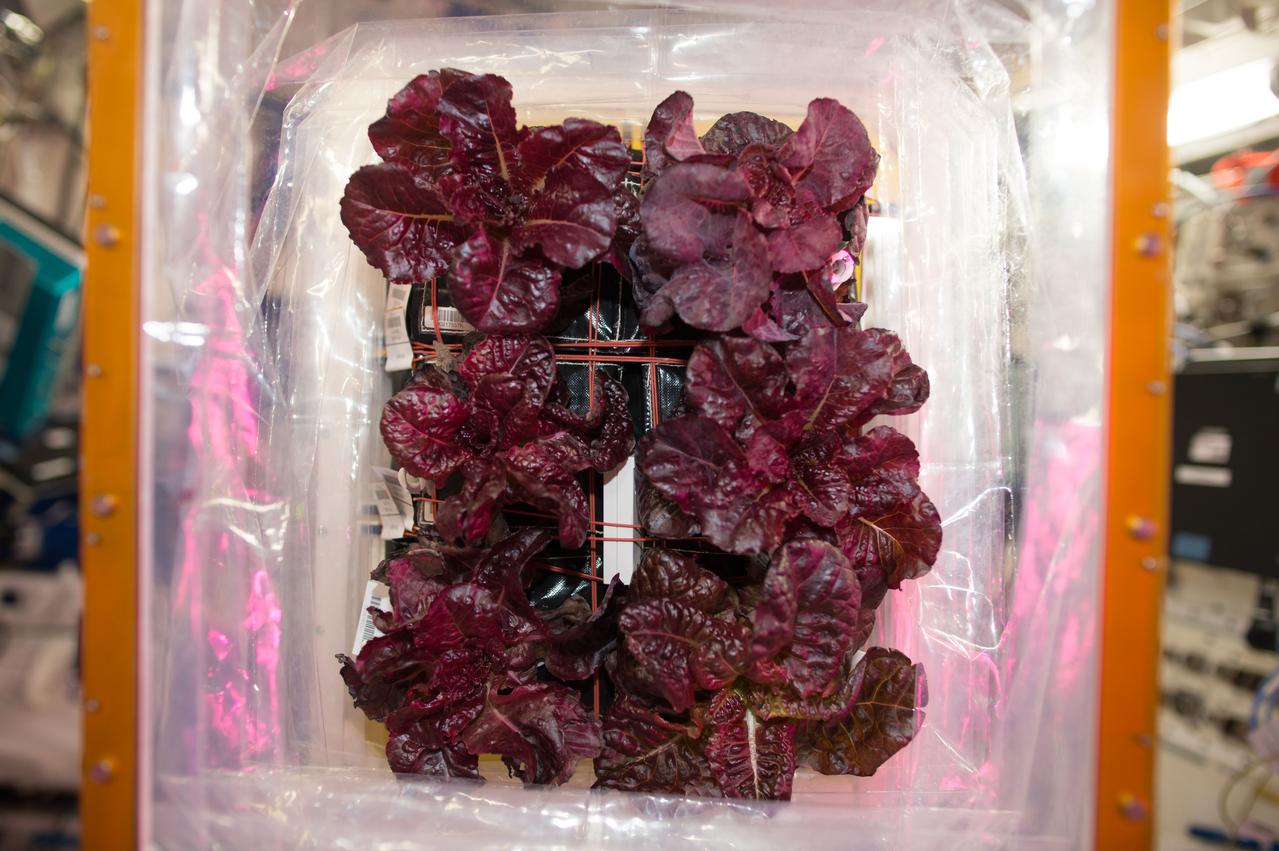
iss050e019639 (12/18/2016) --- A view during VEG-03 harvest and stow of Red Romaine lettuce, in the Columbus Module. Veg-03 uses the Veggie plant growth facility to cultivate a type of cabbage, which is harvested in orbit with samples returned to Earth for testing.
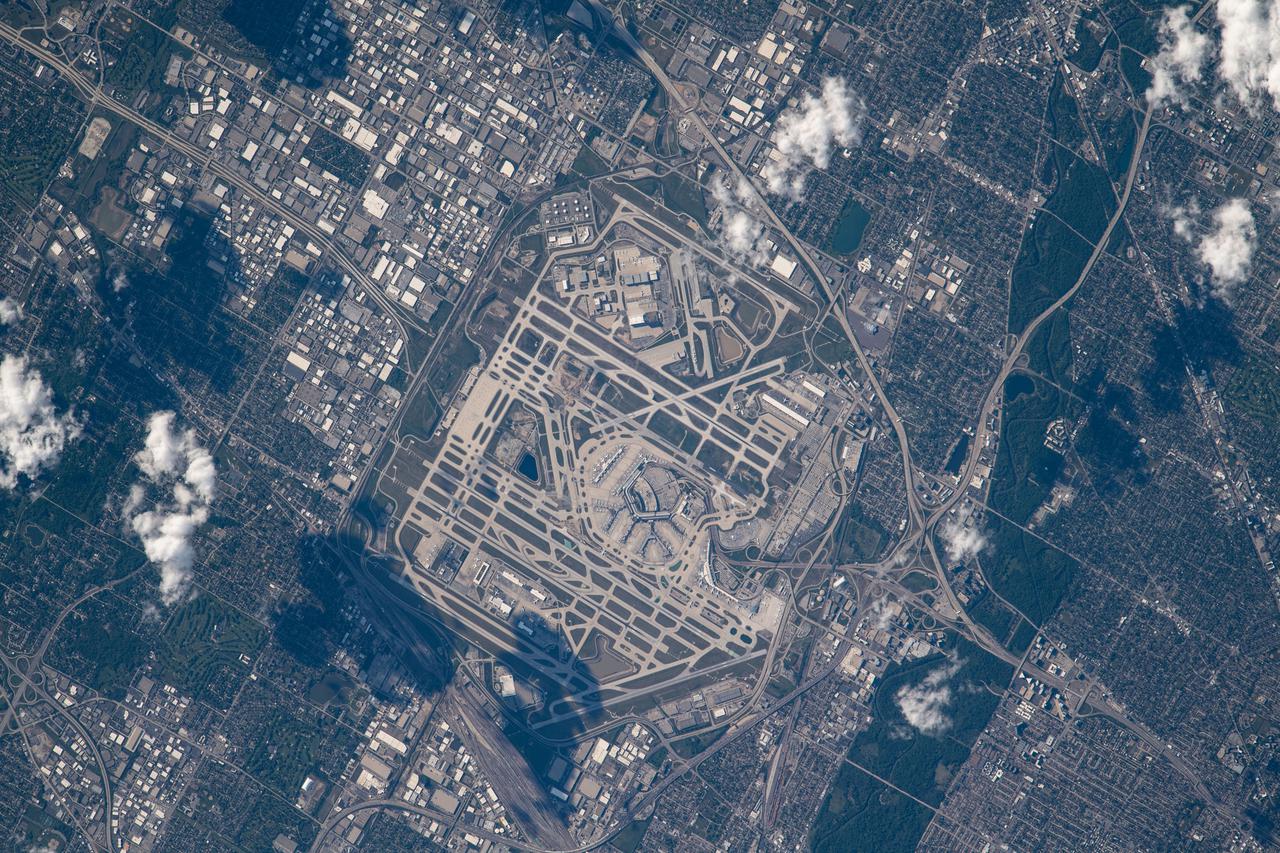
iss065e074473 (May 26, 2021) --- O'Hare International Airport in Chicago, Illinois, is pictured from the International Space Station as it orbited 262 miles above western Michigan.
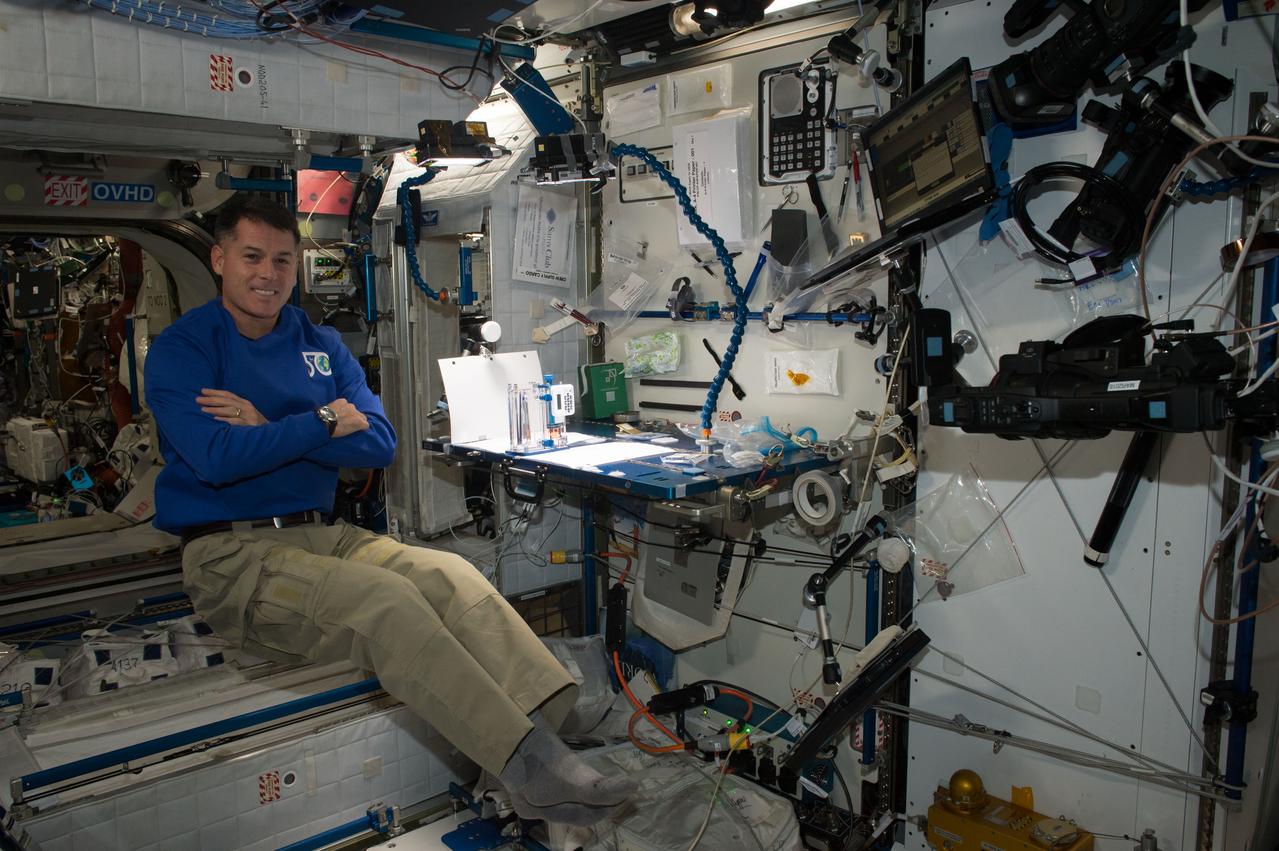
iss050e014941 (12/8/2016) --- NASA astronaut Shane Kimbrough during Capillary Flow Experiment-2 (CFE-2) with the Interior Corner Flow 1 hardware. The Capillary Flow Experiments demonstrate how capillary forces work in space, how differently shaped containers change the wicking behavior of a wetting fluid, and how such can be used to passively separate liquids and gases. Understanding how microgravity amplifies these behaviors could improve the reliability of such key processes as water purification fuel storage and supply, and general liquid transport aboard spacecraft.
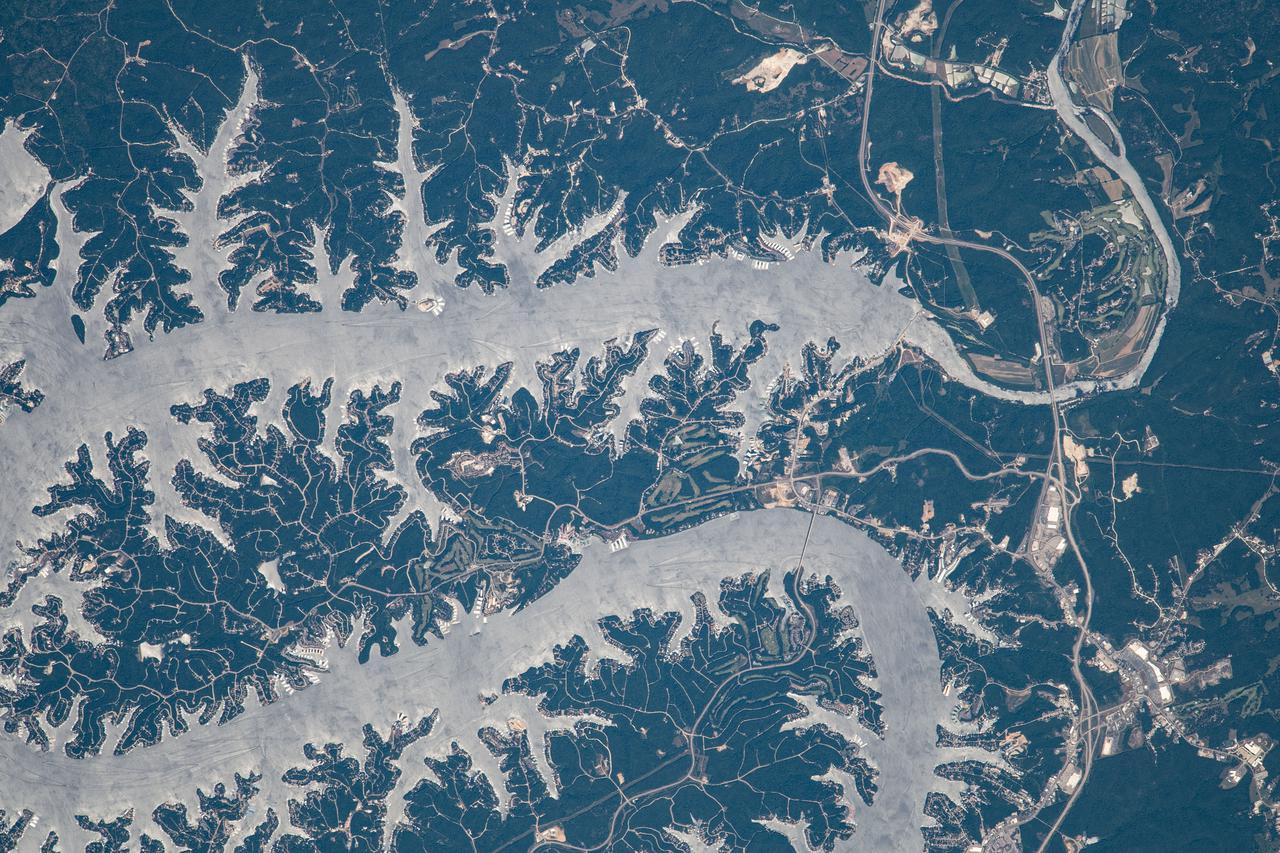
iss065e144017 (June 23, 2021) --- Lake of the Ozarks in Missouri is pictured from the International Space Station as it orbited 261 miles above the Midwestern United States.
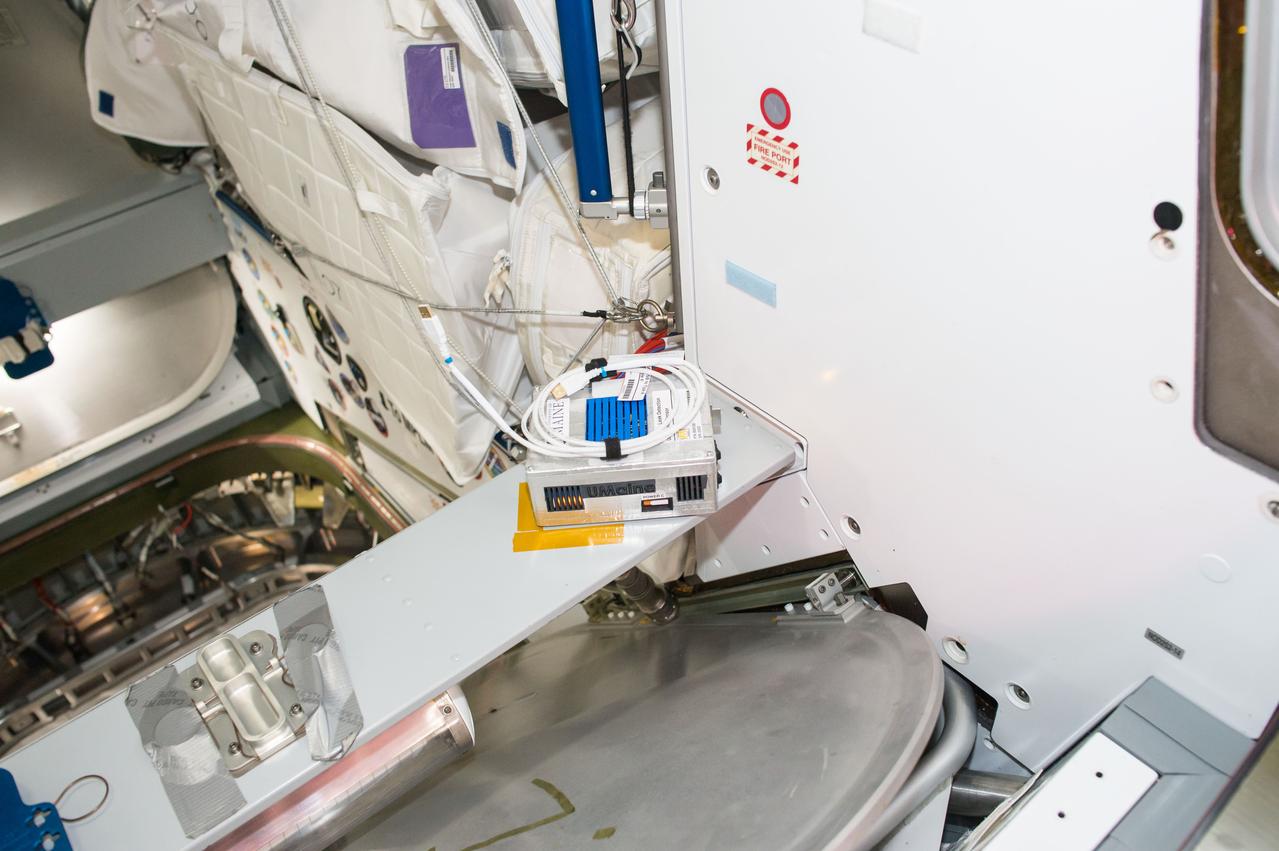
iss050e035315 (1/26/2017) --- A view of the Wireless Leak Detector Ultrasonic Sensor aboard the International Space Station (ISS). The Joint Leak Detection and Localization Based on Fast Bayesian Inference from Network of Ultrasonic Sensor Arrays in Microgravity Environment (Wireless Leak Detection) investigation compares signals received at various ultrasonic sensors to reveal the location of air leaks, which can then be repaired.
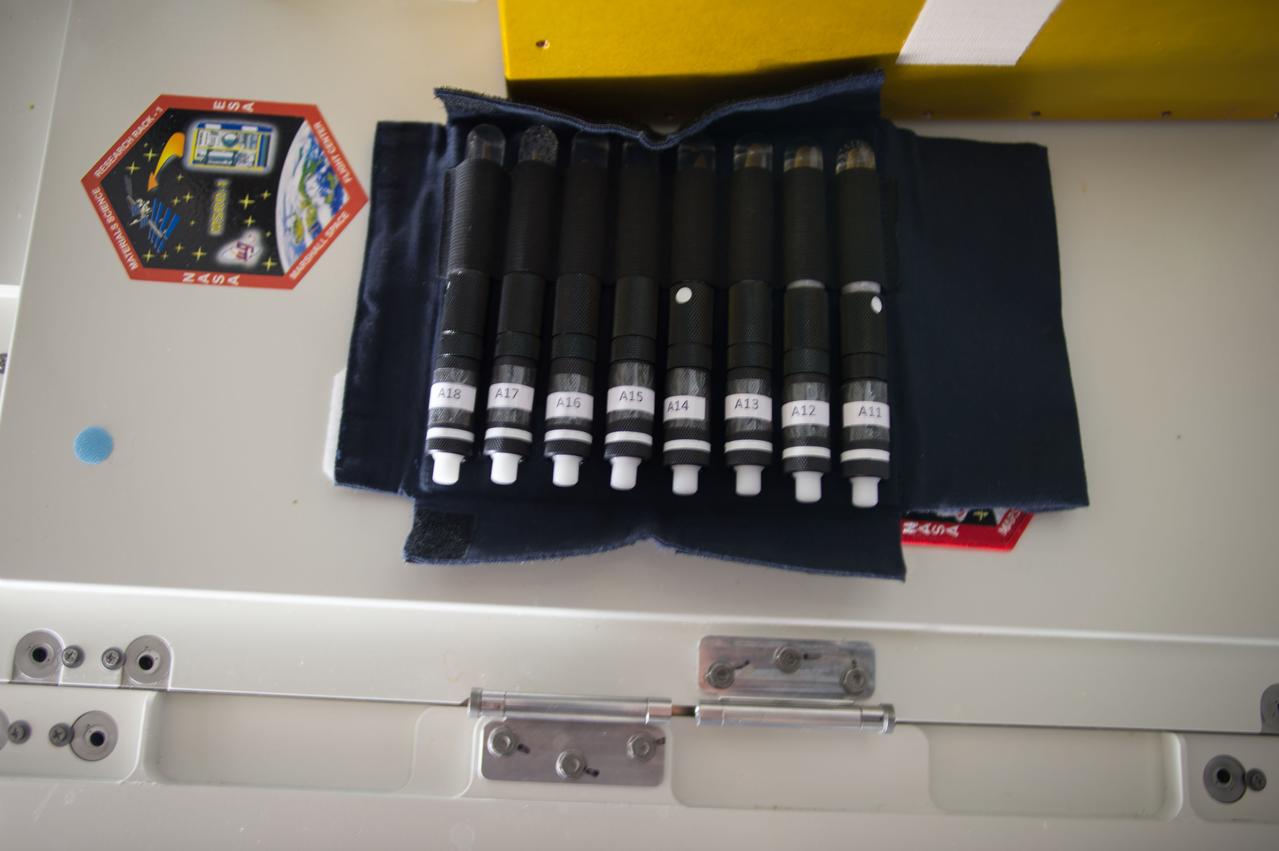
iss050e000936 (11/7/2016) --- View of eight bubble detectors in pack during Radi-N2 deployment in the U.S. Laboratory for RADI-N2 experiment. Radi-N2 Neutron Field Study (Radi-N2) is a follow on investigation designed to characterize the neutron radiation environment aboard the International Space Station (ISS). Eight neutron “bubble detectors” produced by the Canadian company Bubble Technology Industries are attached to fixed locations inside the ISS, including one carried by a crew member. The objective of this investigation is to better characterize the ISS neutron environment and define the risk posed to the crew members’ health and provide the data necessary to develop advanced protective measures for future spaceflight.
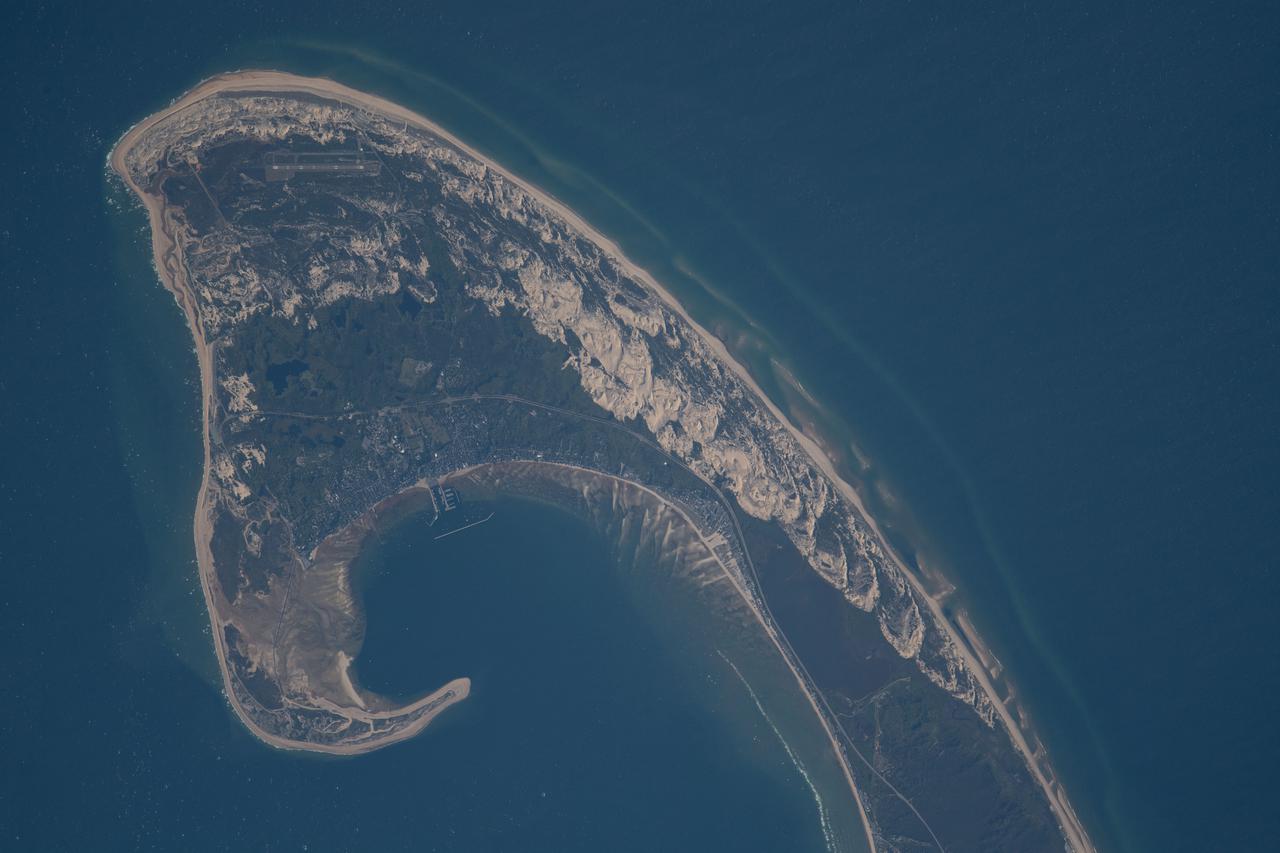
iss065e069379 (May 25, 2021) --- Provincetown on the northern tip of Cape Cod in Massachusetts is pictured from the International Space Station as it orbited 262 miles above the Atantic Ocean.
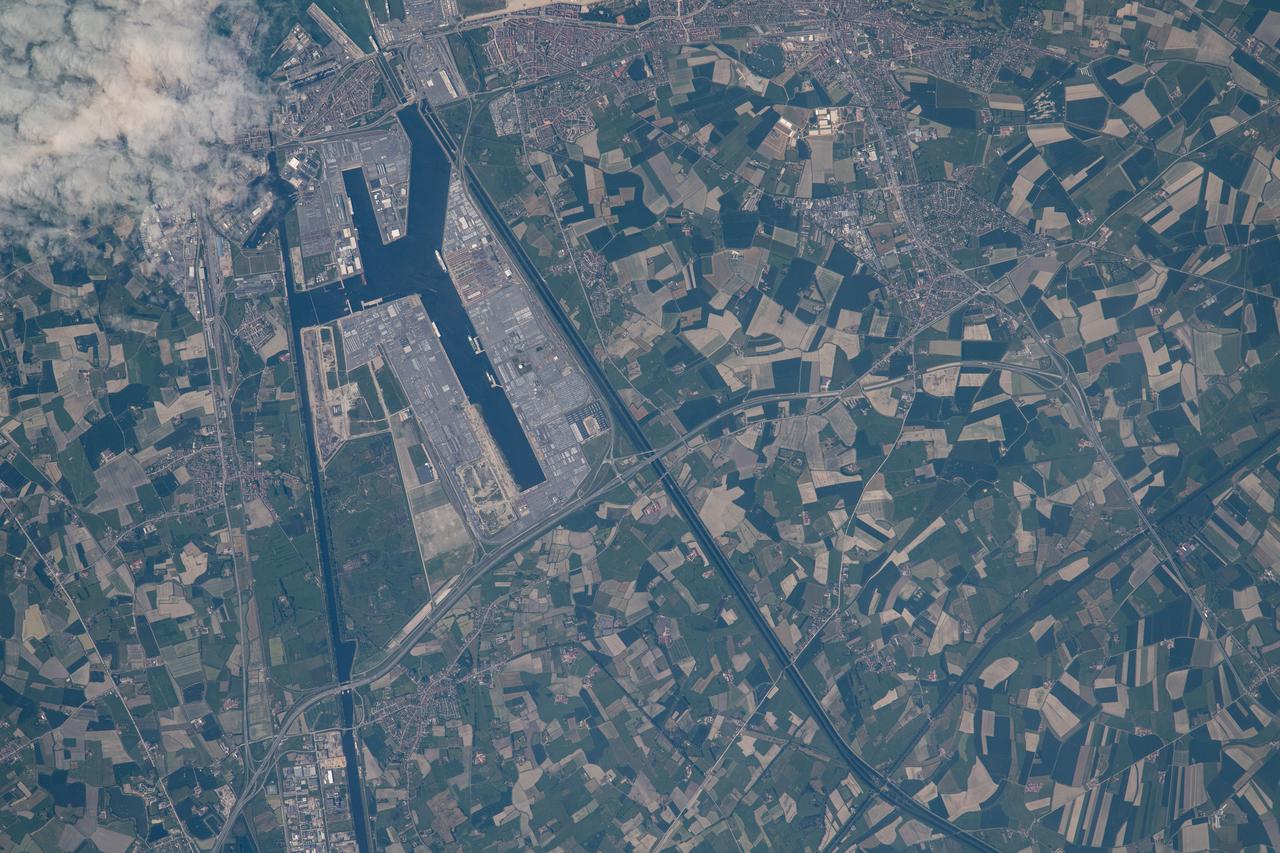
iss065e096048 (June 10, 2021) --- Zeebrugge, a Belgian port and seaside resort on the North Sea coast, is pictured from the International Space Station as it orbited 263 miles above northern Europe.
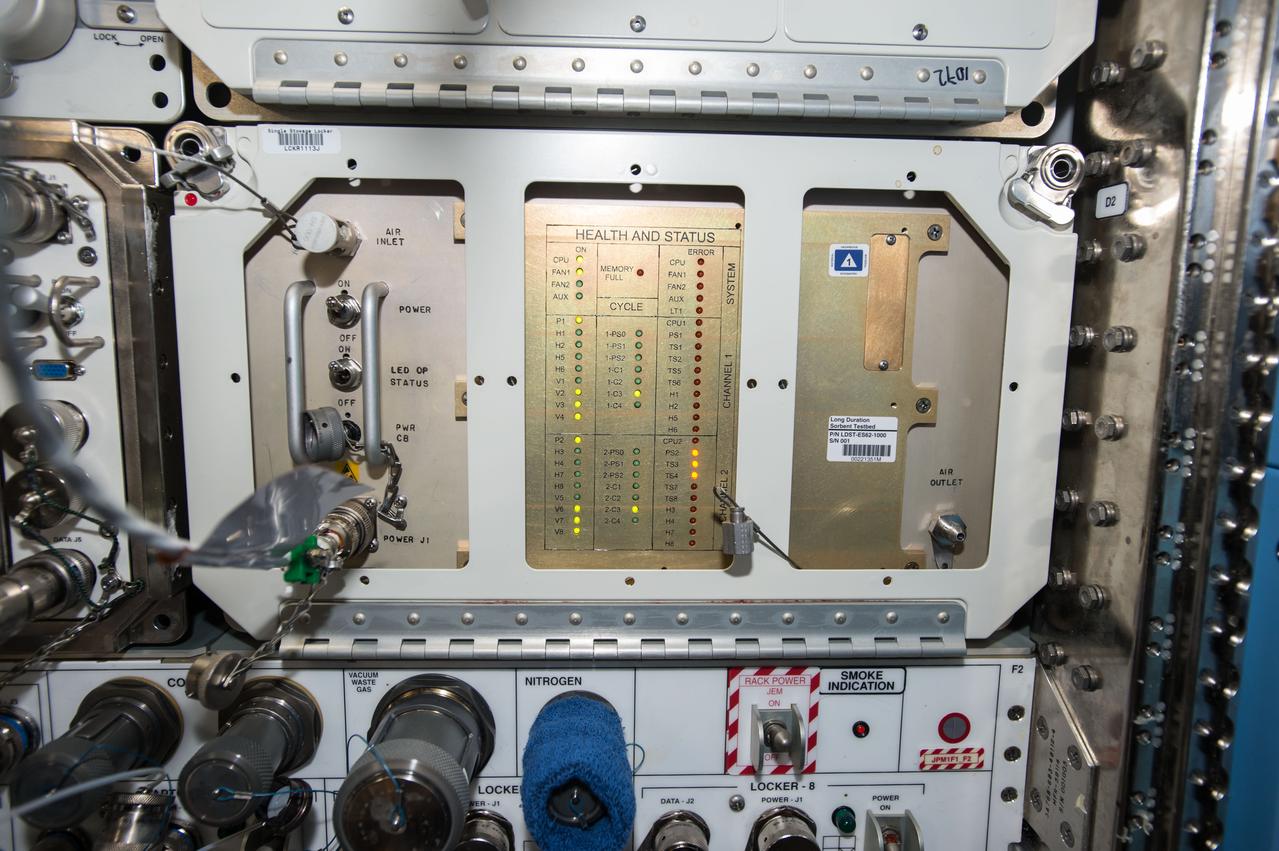
iss050e053932 (3/3/2017) --- A view of Long Duration Sorbent Testbed during Inlet Filter change. The Long Duration Sorbent Testbed (LDST) investigation exposes desiccants and CO2 sorbents to the ISS atmosphere for an extended period (such as one year) before returning them to earth for analysis of contamination level and capacity loss. The results will determine which types of sorbents would be most effective on long-term missions to Mars or other destinations.
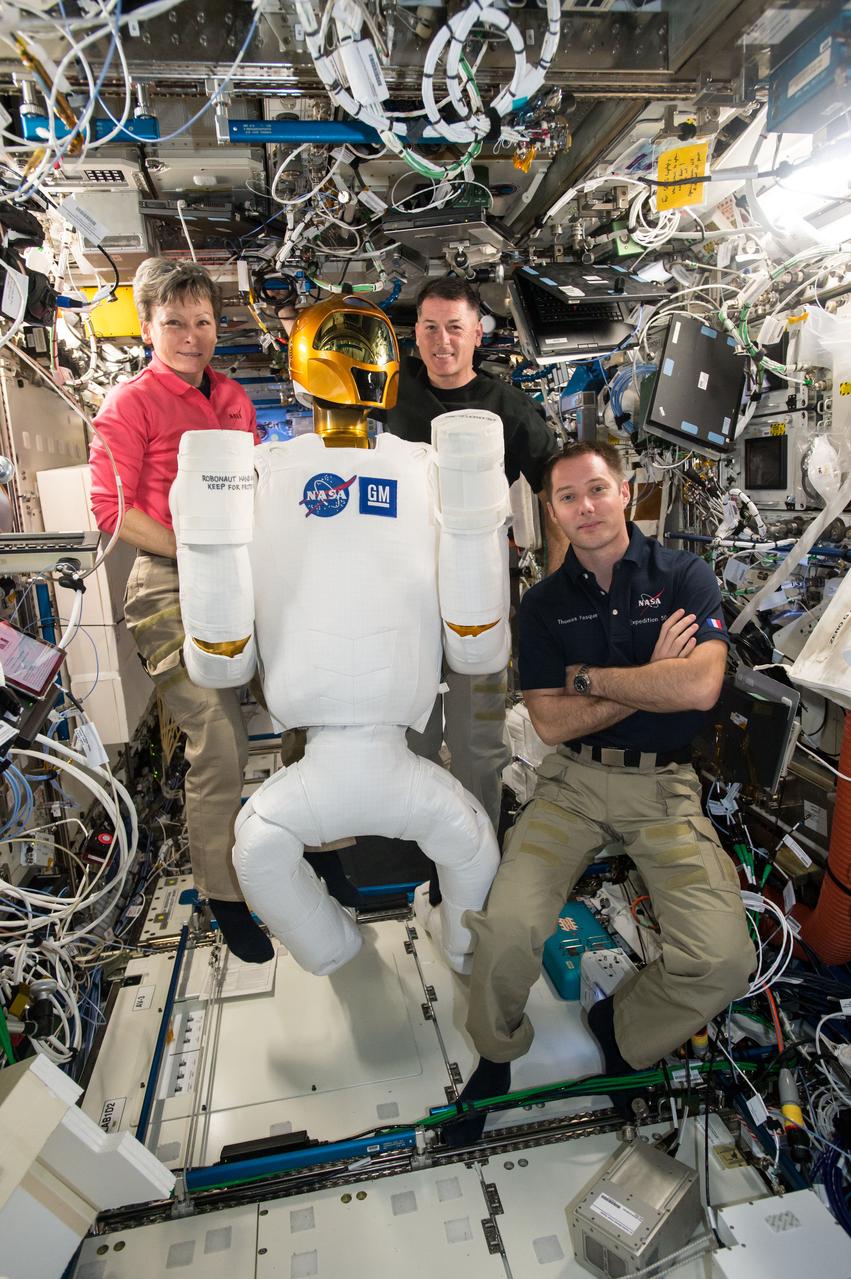
iss050e037542 (2/1/2017) --- NASA astronauts Peggy Whitson, Shane Kimbrough and European Space Agency (ESA) astronaut Thomas Pesquet, posing with Robonaut, in the U.S. Laboratory. Robonaut is a humanoid robot designed with the versatility and dexterity to manipulate hardware, work in high risk environments, and respond safely to unexpected obstacles. Robonaut is comprised of a torso with two arms and a head, and two legs with end effectors that enable the robot to translate inside the ISS by interfacing with handrails and seat track.
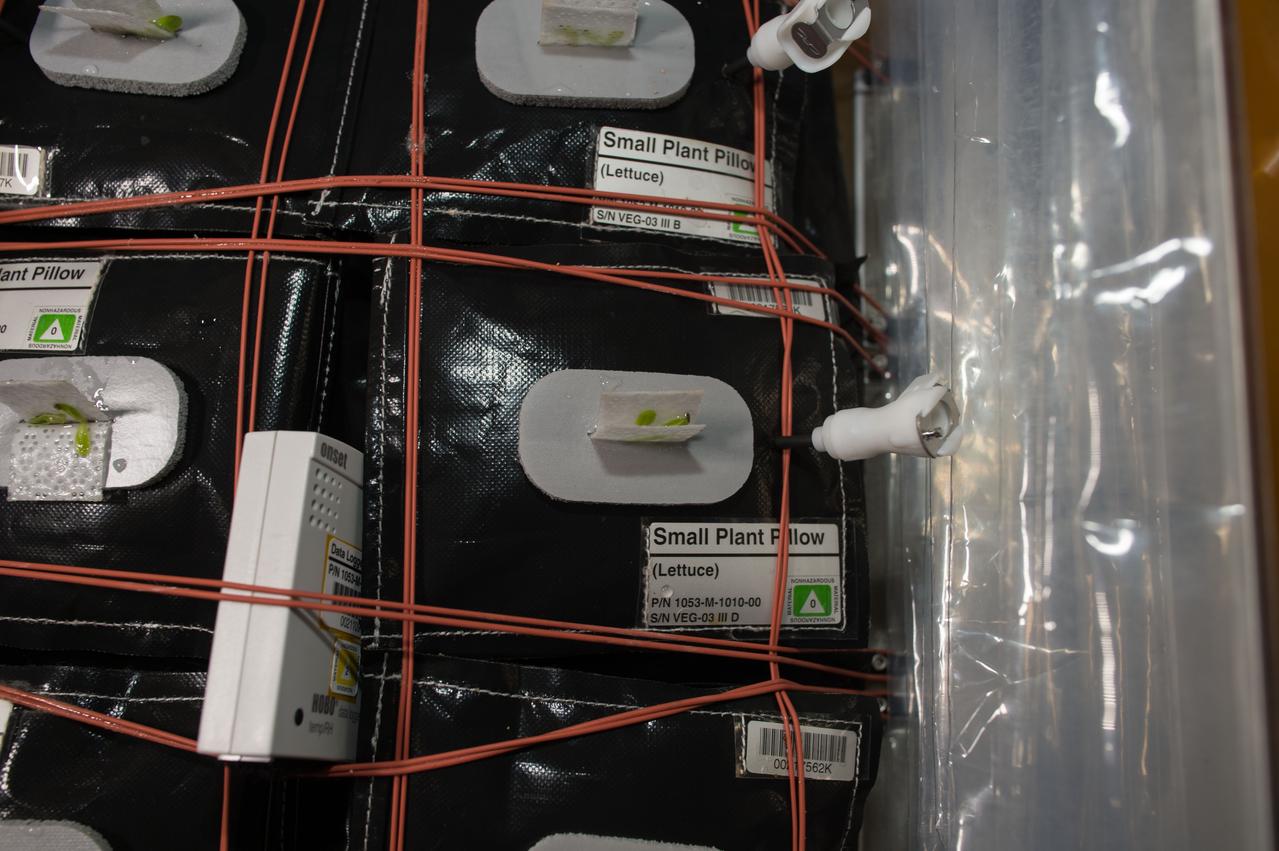
iss050e000489 (11/2/2016) --- View during VEG-03 plant thinning (lettuce) - Small Plant Pillow. Organisms grow differently in space, from single-celled bacteria to plants and humans. But future long-duration space missions will require crew members to grow their own food, so understanding how plants respond to microgravity is an important step toward that goal. Veg-03 uses the Veggie plant growth facility to cultivate a type of cabbage, which is harvested in orbit with samples returned to Earth for testing.
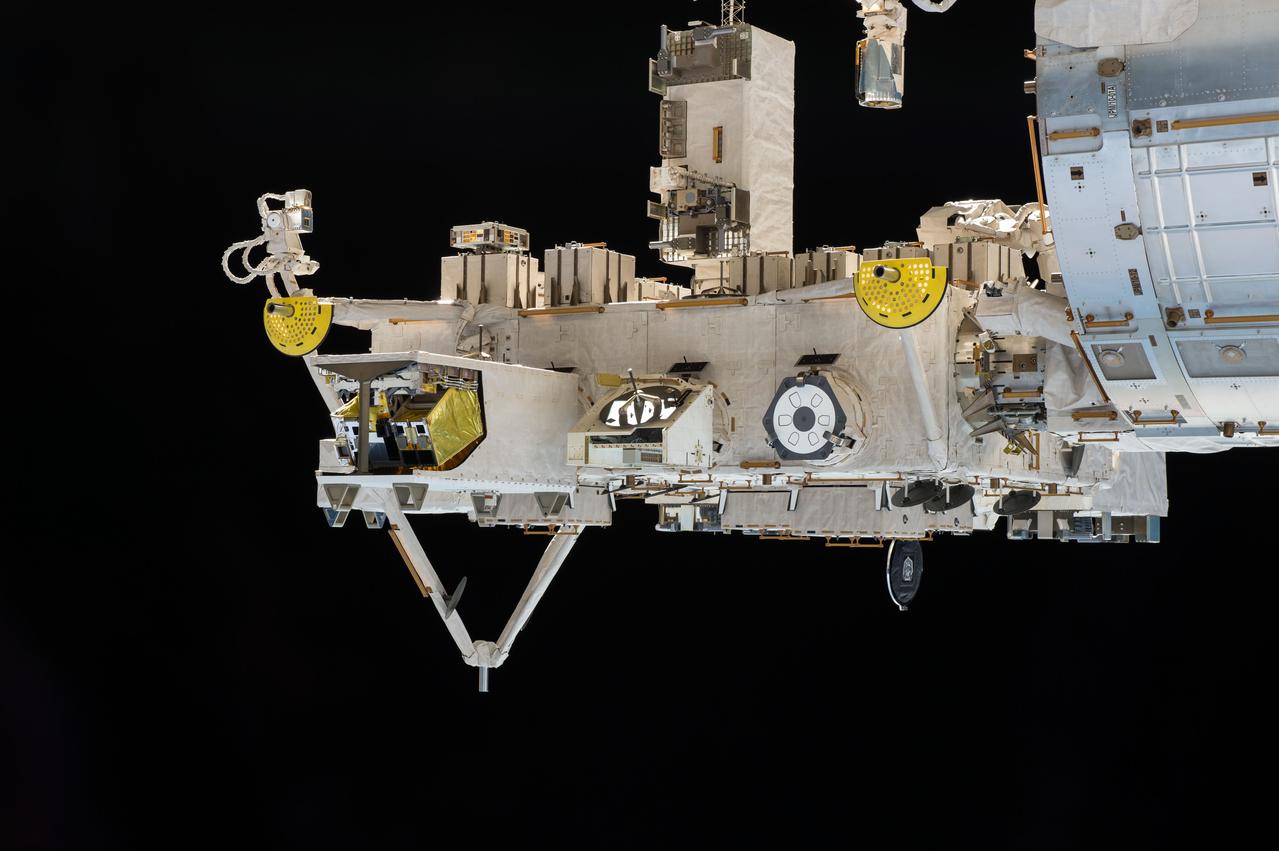
iss050e011669 (Nov. 28, 2016) --- Japanese Experiment Module - Exposed Facility (JEM-EF) and Japanese Experiment Module (JEM) Pressurized Module (JPM) (right) taken by the Expedition 50 crew. JEM-EF is an unpressurized multipurpose pallet structure attached to the outside of the International Space Station (ISS).
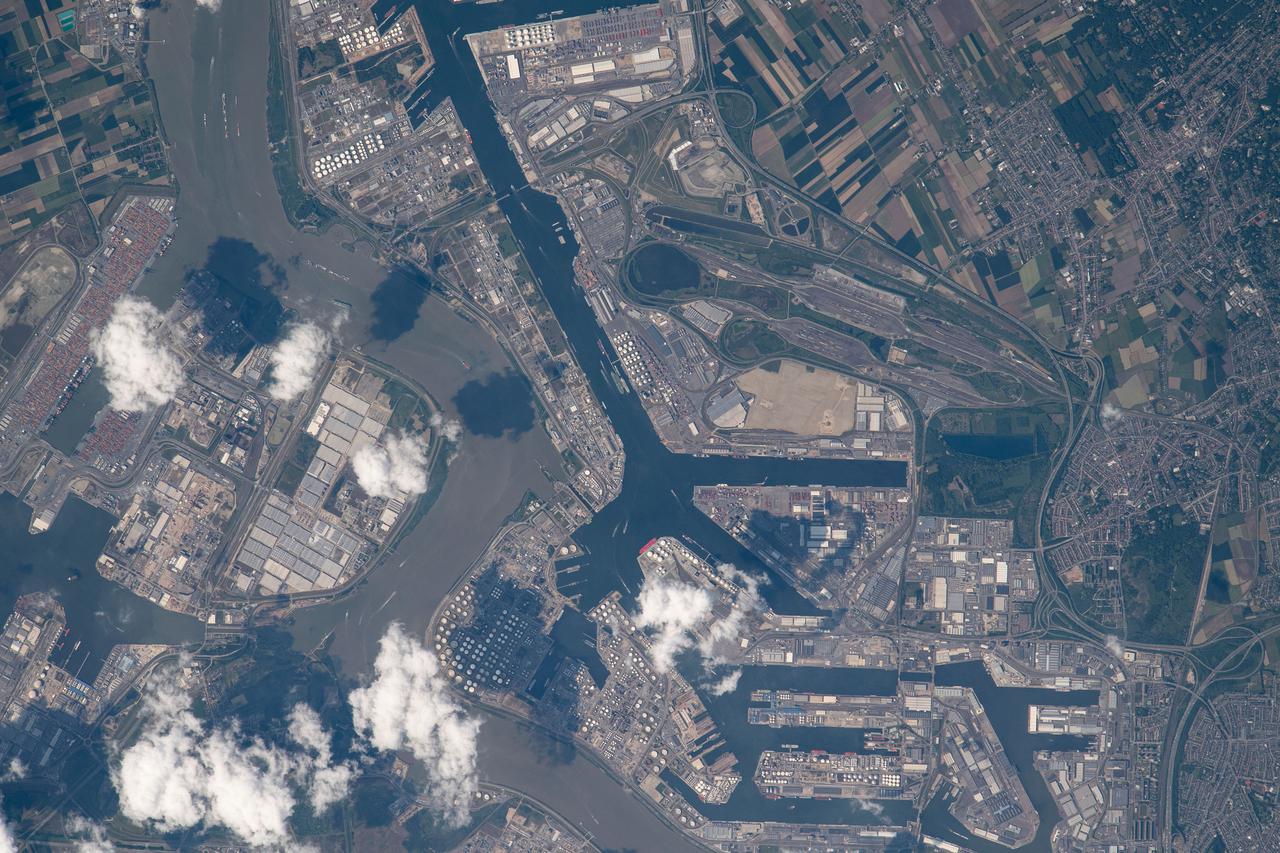
iss065e096050 (June 10, 2021) --- Antwerp, a Belgian port city in the River Scheldt, is pictured from the International Space Station as it orbited 263 miles above northern Europe.
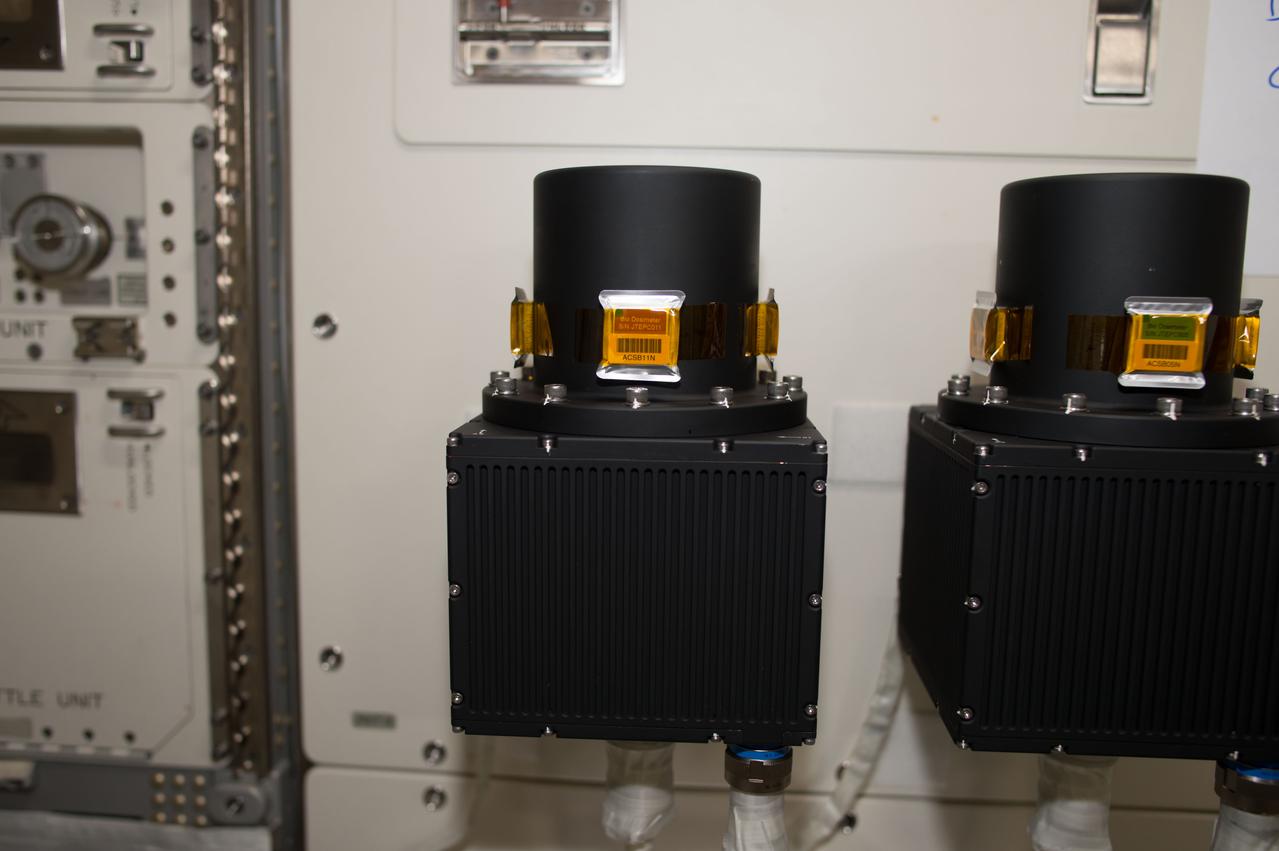
iss050e016013 (12/14/2016) --- A view during Position Sensitive-Tissue Equivalent Proportional Chamber (PS-TEPC) Installation aboard the International Space Station (ISS). The PS-TEPC is a radiation measuring instrument that measures absorbed doses and path length of space radiation particles simultaneously, and determines the real time Liner Energy Transfer (LET), and equivalent doses, to assess radiation risk to crew members during space flight.
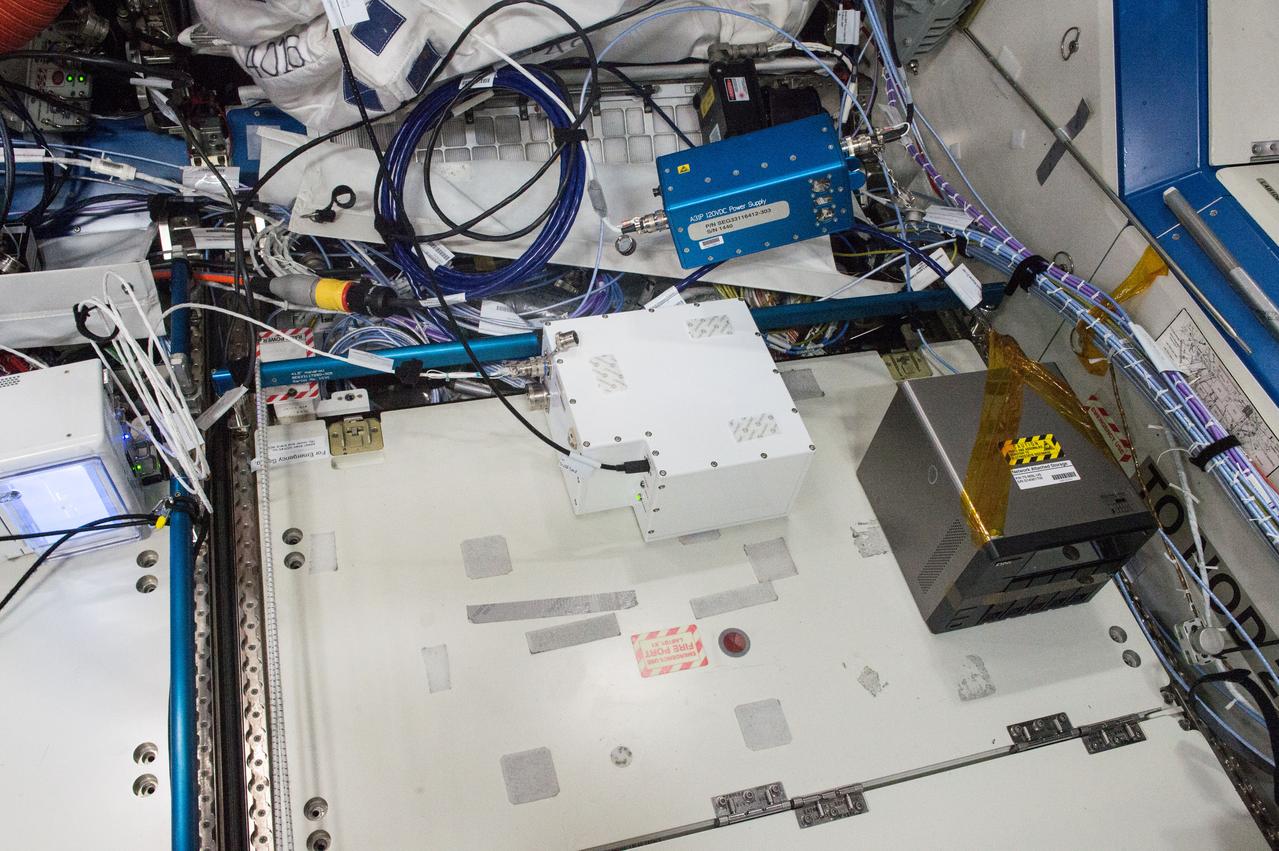
iss050e013233 (12/2/2016) --- A view during the Fast Neutron Spectrometer (FNS) Hardware Setup, in the U.S. Laboratory. The Fast Neutron Spectrometer (FNS) investigation studies a new neutron measurement technique that is better suited for the mixed radiation fields found in deep space. Future manned and exploration missions benefit from clearer, more error-free measurement of the neutron flux present in an environment with multiple types of radiation.
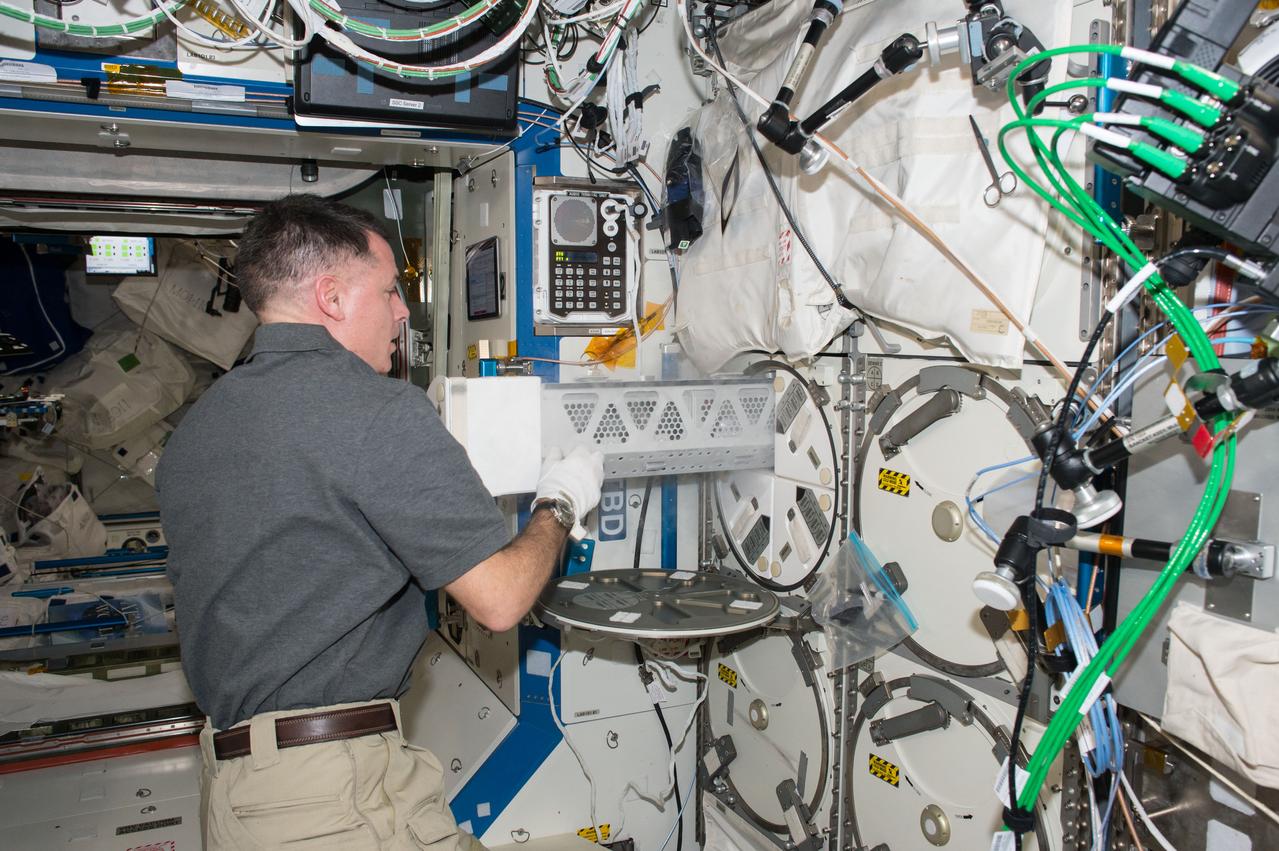
iss050e057444 (3/15/2017) --- NASA astronaut Shane Kimbrough removing a storage locker in the Minus Eighty-degree Laboratory Freezer for ISS (MELFI) to store samples from an experiment, in the U.S. Laboratory. The Minus Eighty-Degree Laboratory Freezer for ISS (MELFI) is a cold storage unit that maintains experiment samples at ultra-cold temperatures throughout a mission.
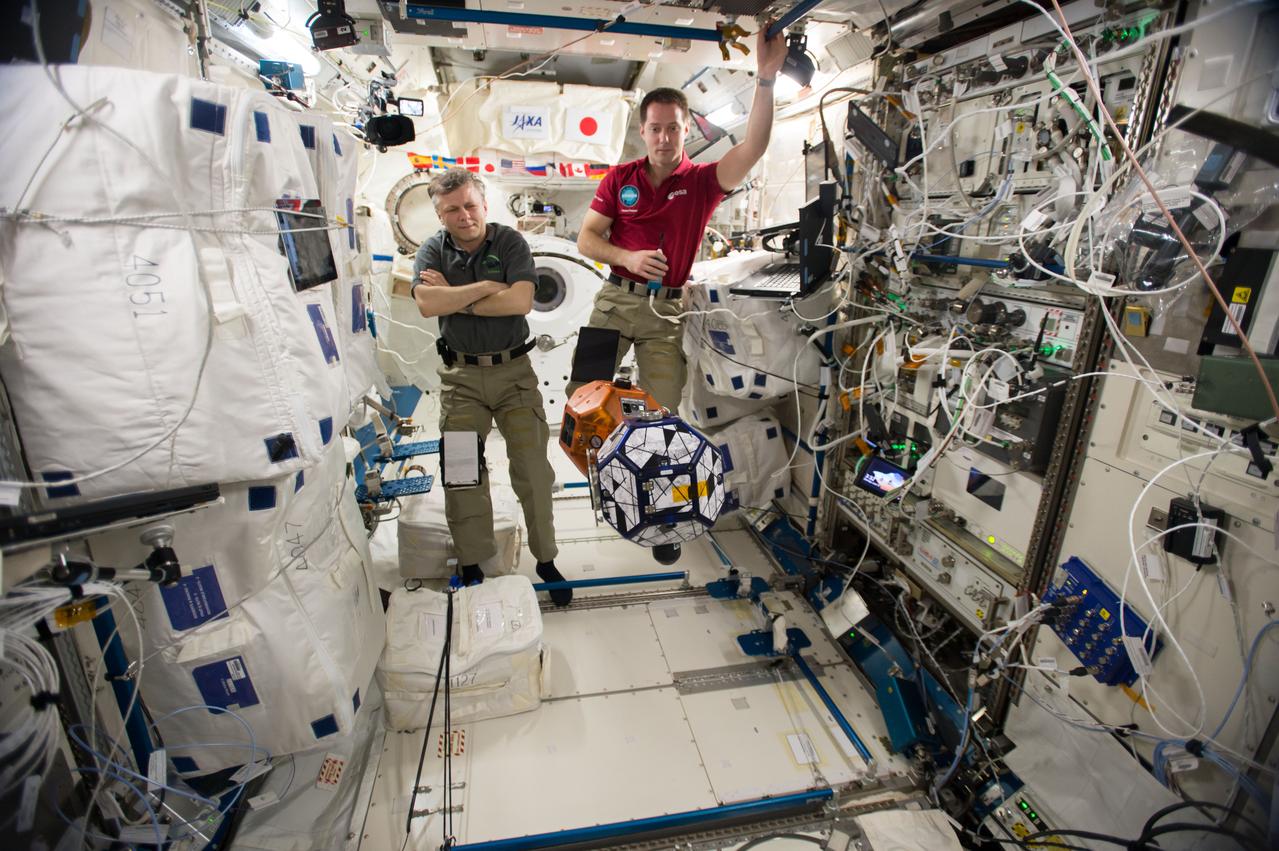
iss050e031138 (1/16/2017) --- A view of Cosmonaut Andrei Borisenko, and European Space Agency (ESA) astronaut Thomas Pesquet during set up and execution of Synchronized Position Hold, Engage, Reorient, Experimental Satellites (SPHERES) hardware dry run for the Zero Robotics, in the Japanese Experiment Module (JEM) Pressurized Module.
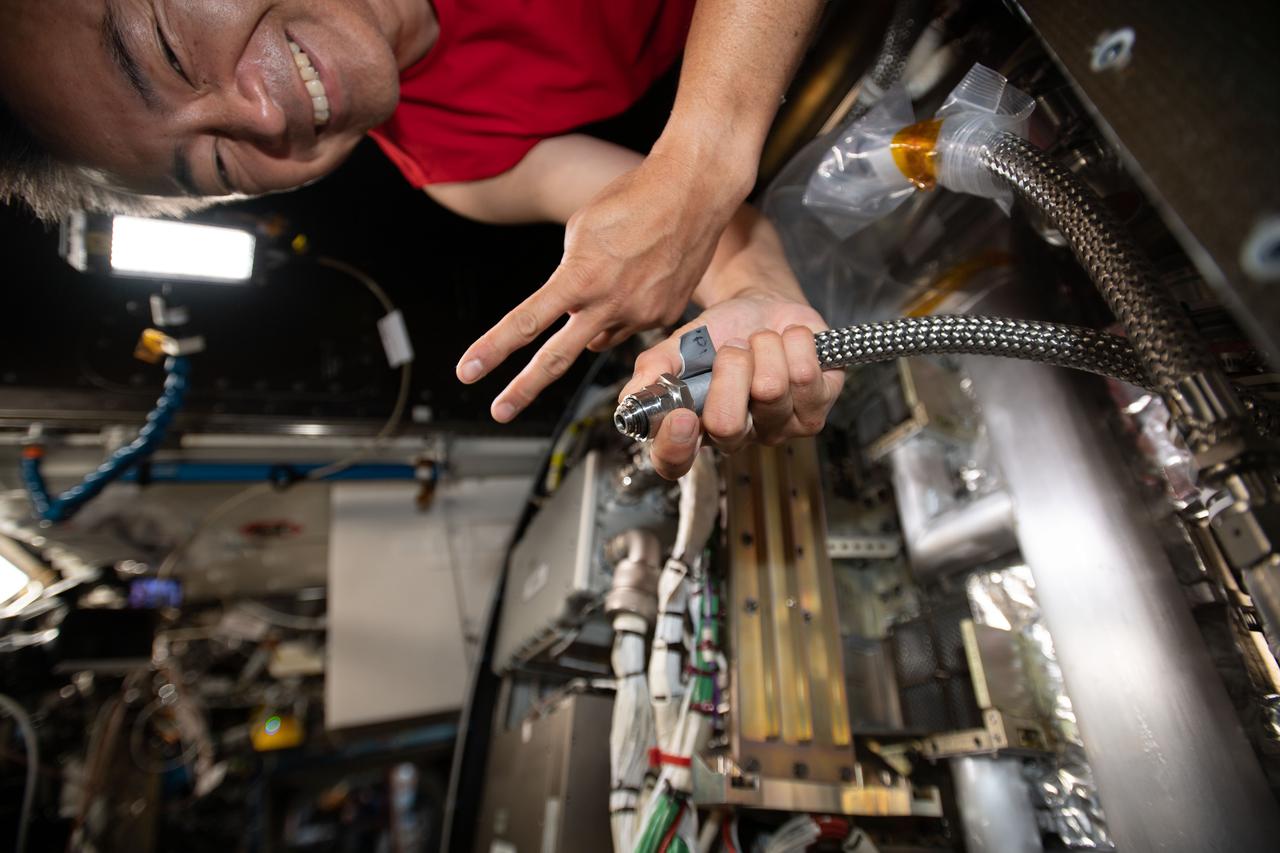
iss065e032225 (May 11, 2021) --- Expedition 65 Commander Akihiko Hoshide of the Japan Aerospace Exploration Agency replaces a science rack fan inside the International Space Station's U.S. Destiny laboratory.
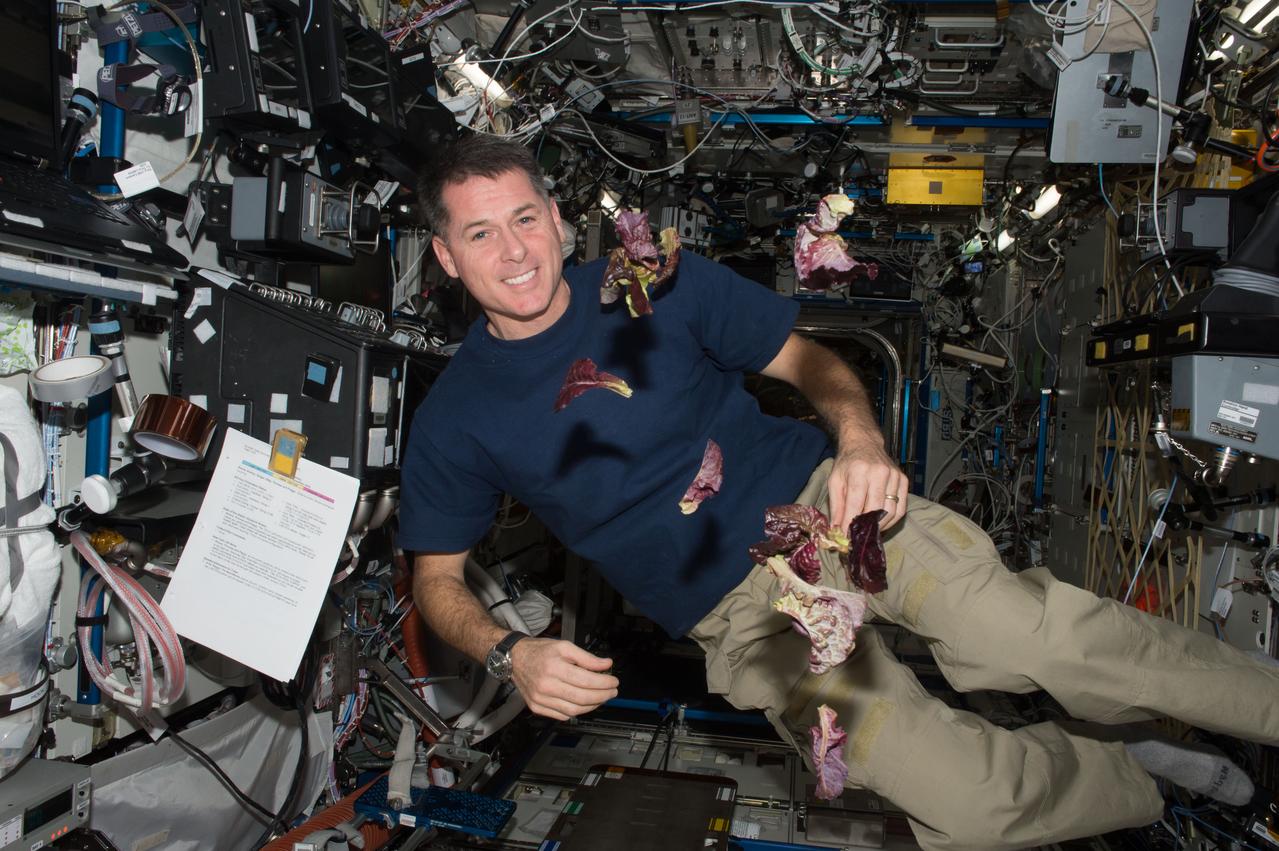
iss050e020051 (12/30/2016) --- A view of NASA astronaut Shane Kimbrough and floating lettuce, in the U.S. Laboratory. Future long-duration space missions will require crew members to grow their own food, so understanding how plants respond to microgravity is an important step toward that goal. Veg-03 uses the Veggie plant growth facility to cultivate a type of cabbage, which is harvested in orbit with samples returned to Earth for testing.
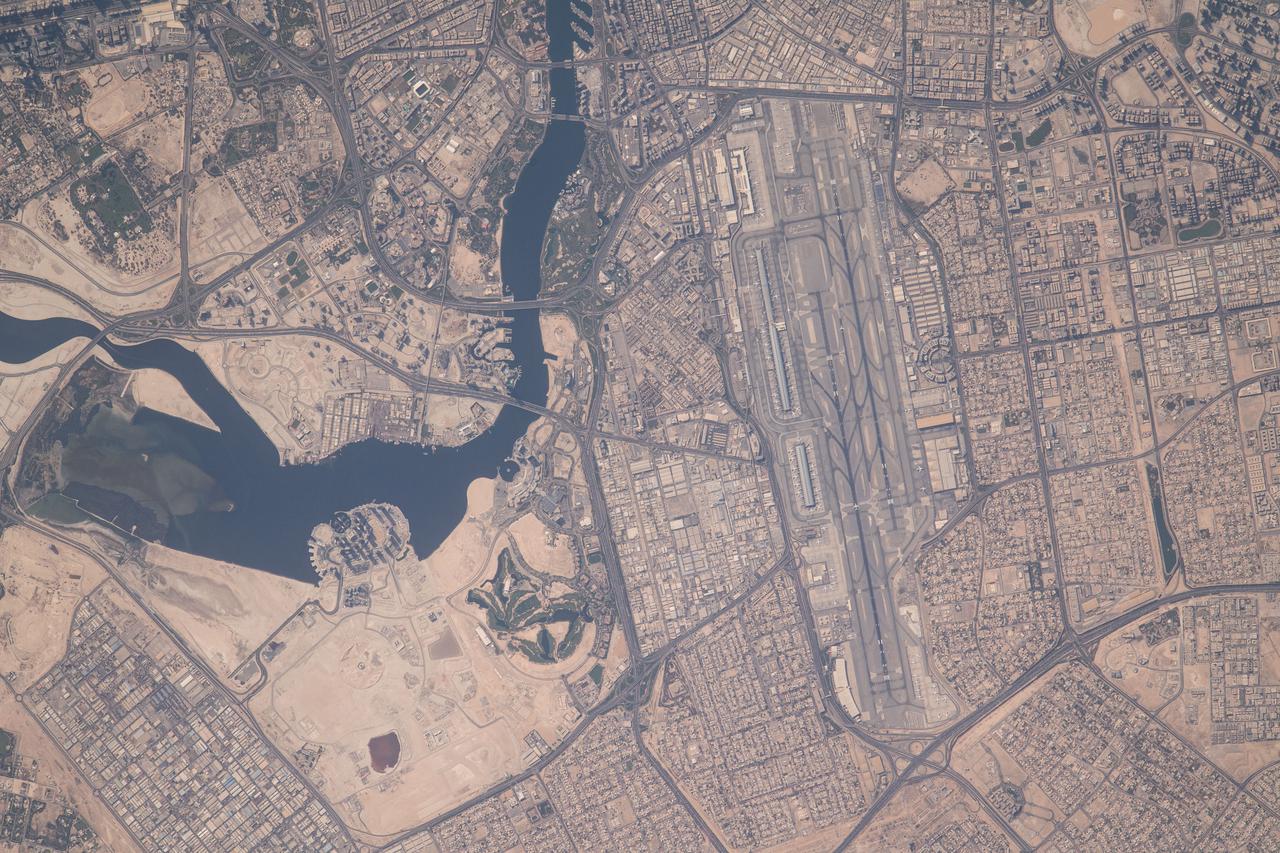
iss065e074314 (May 26, 2021) --- Dubai International Airport and Dubai Creek figure prominently in this photograph from the International Space Station as it orbited 260 miles above the northern tip of Oman.
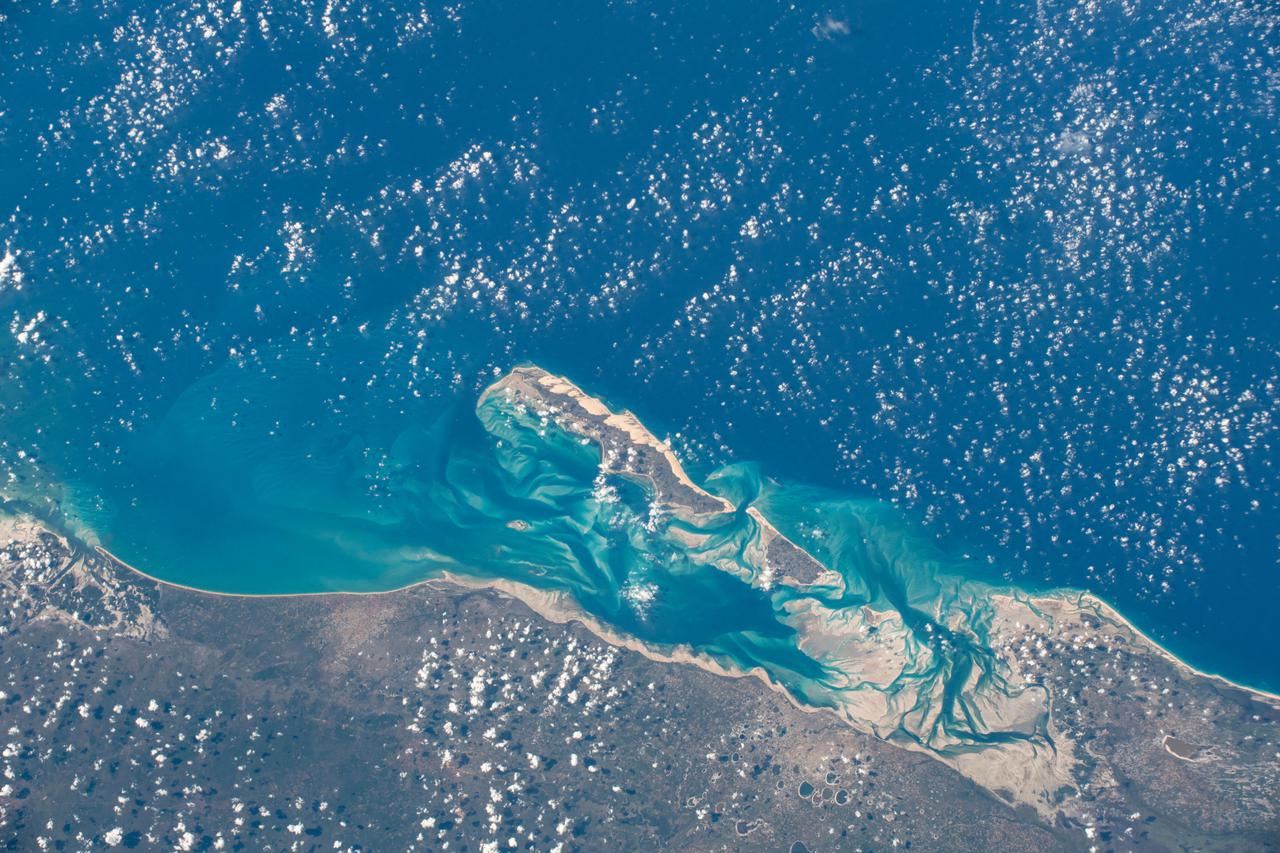
iss065e009427 (April 29, 2021) --- The Bazaruto Archipelago off the coast of Mozambique is pictured from the International Space Station as it orbited 265 miles above the African nation.
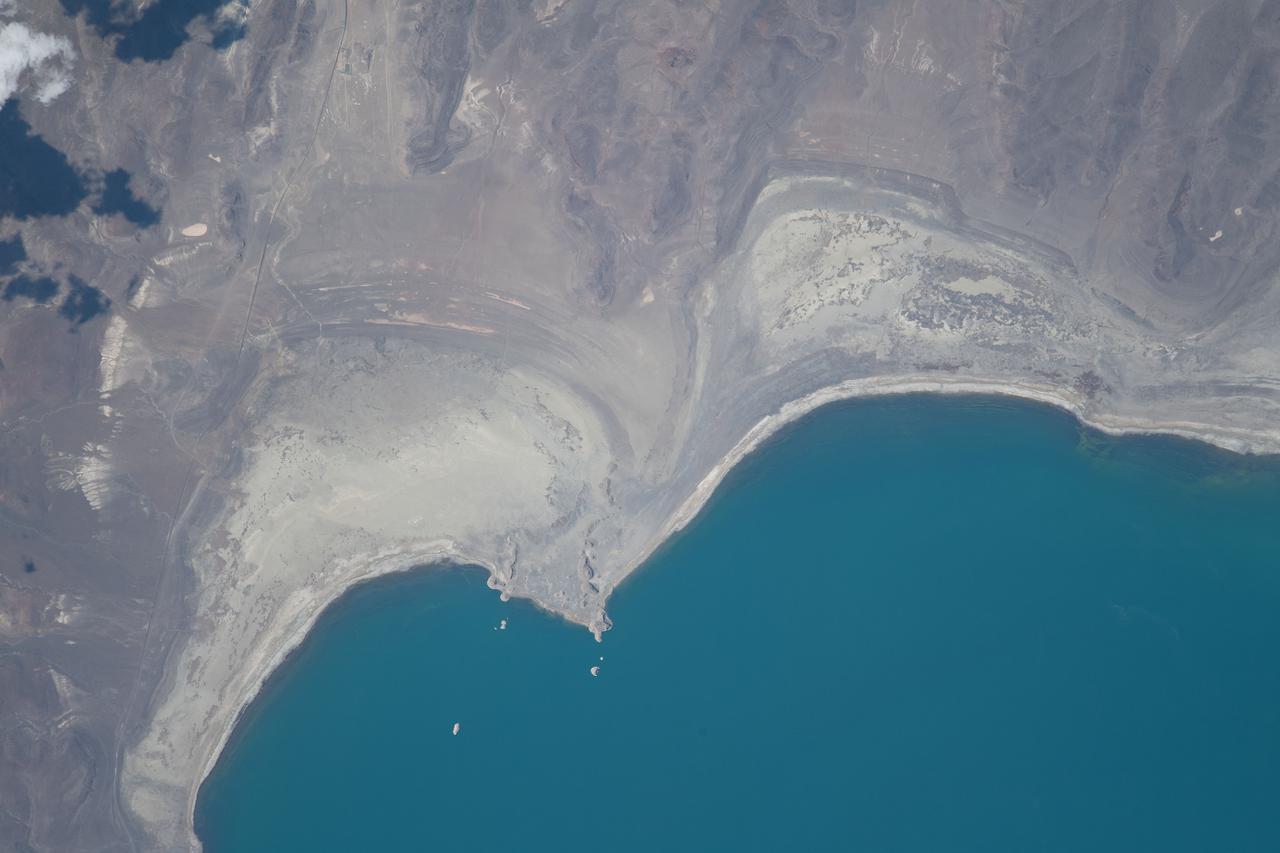
iss065e085942 (June 2, 2021) --- The northern portion of Pyramid Lake in western Nevada is pictured from the International Space Station as it orbited 262 miles above the Western United States.
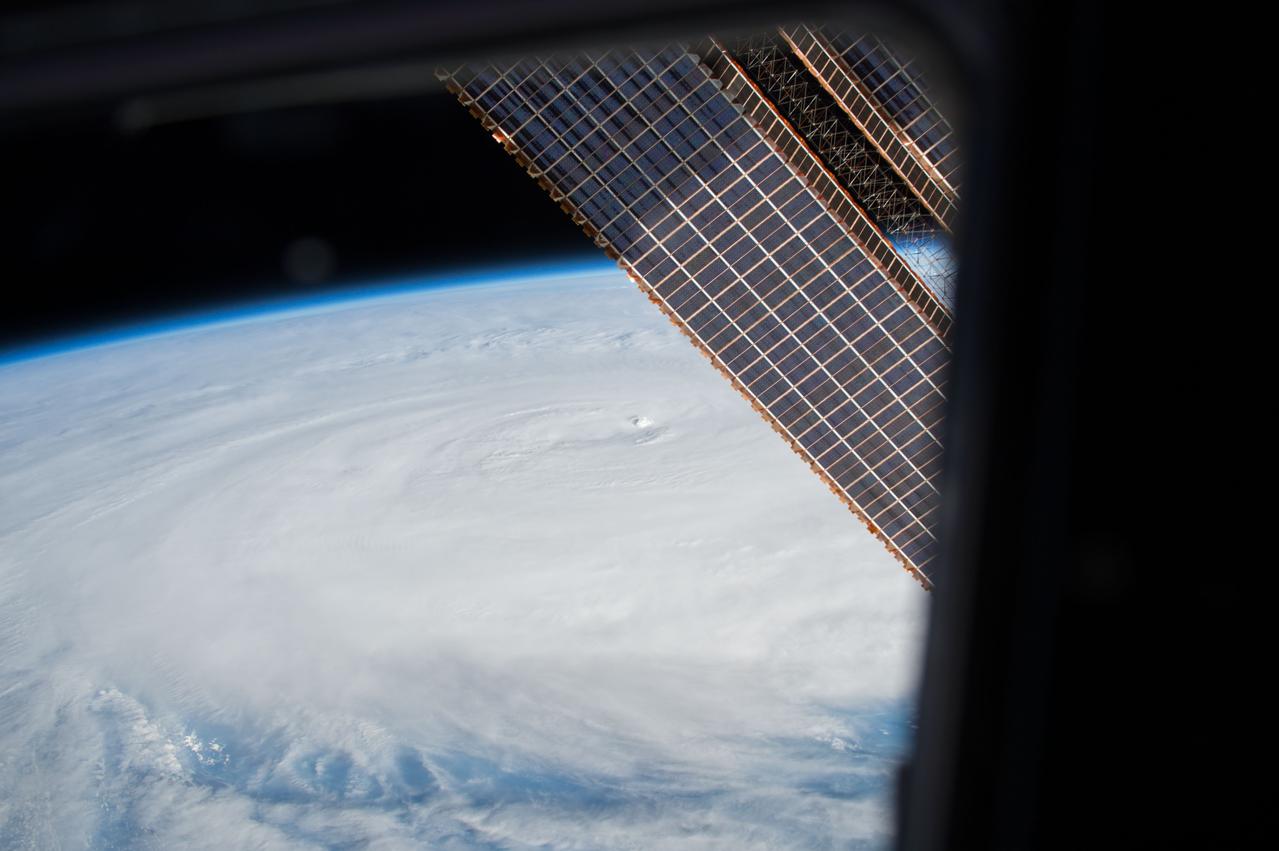
iss050e060444 (03/27/2017) --- Tropical Cyclone Debbie as photographed by crewmembers aboard the International Space Station on March 27, 2017. The large storm made landfall across the northeastern coast of Australia on March 28.
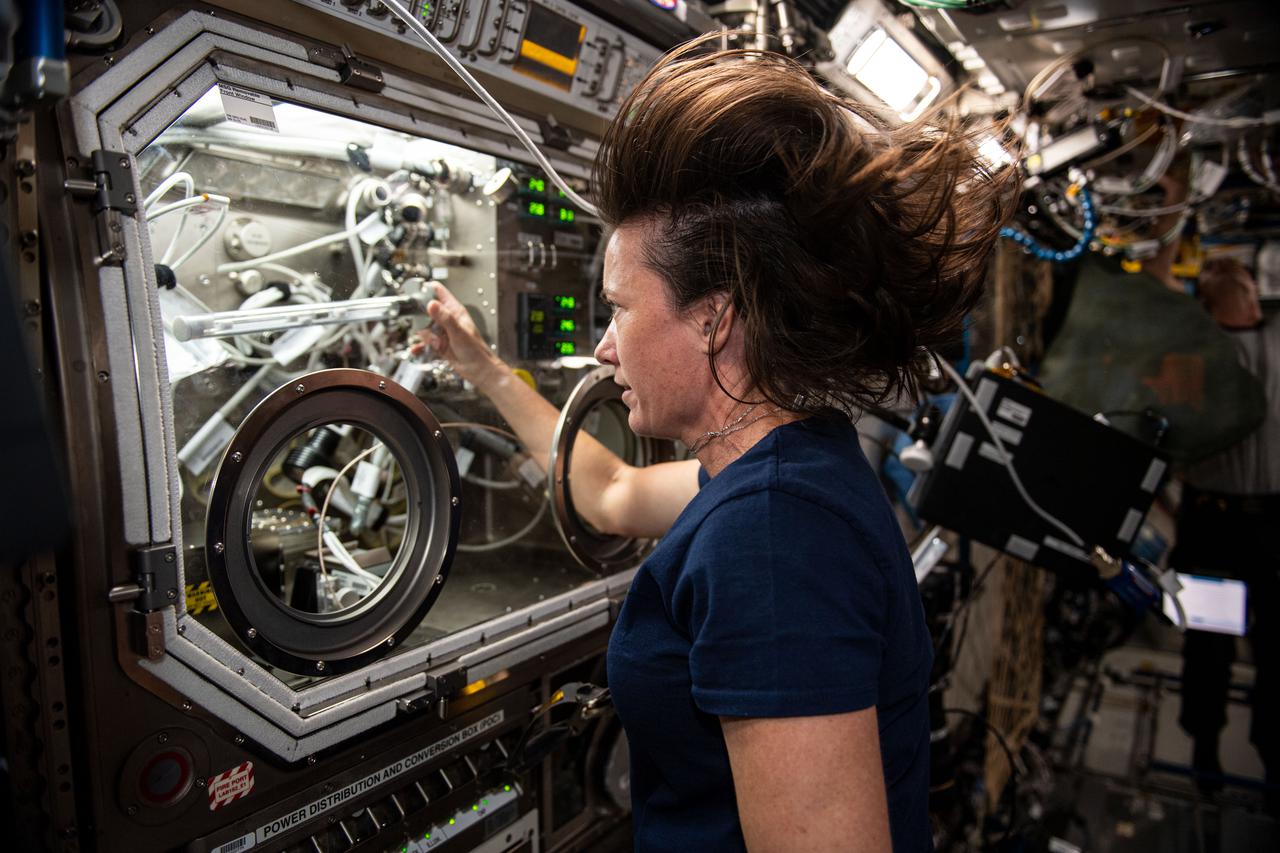
iss065e061407 (May 24, 2021) --- NASA astronaut and Expedition 65 Flight Engineer Megan McArthur works in the Microgravity Science Glovebox swapping samples for an experiment called Solidification Using a Baffle in Sealed Ampoules, or SUBSA. The physics investigation explores experimental methods of crystallizing melts in microgravity and is expected to result in reduced fluid motion in the melt, leading to better distribution of subcomponents and the potential for improved technology used in producing semiconductor crystals.
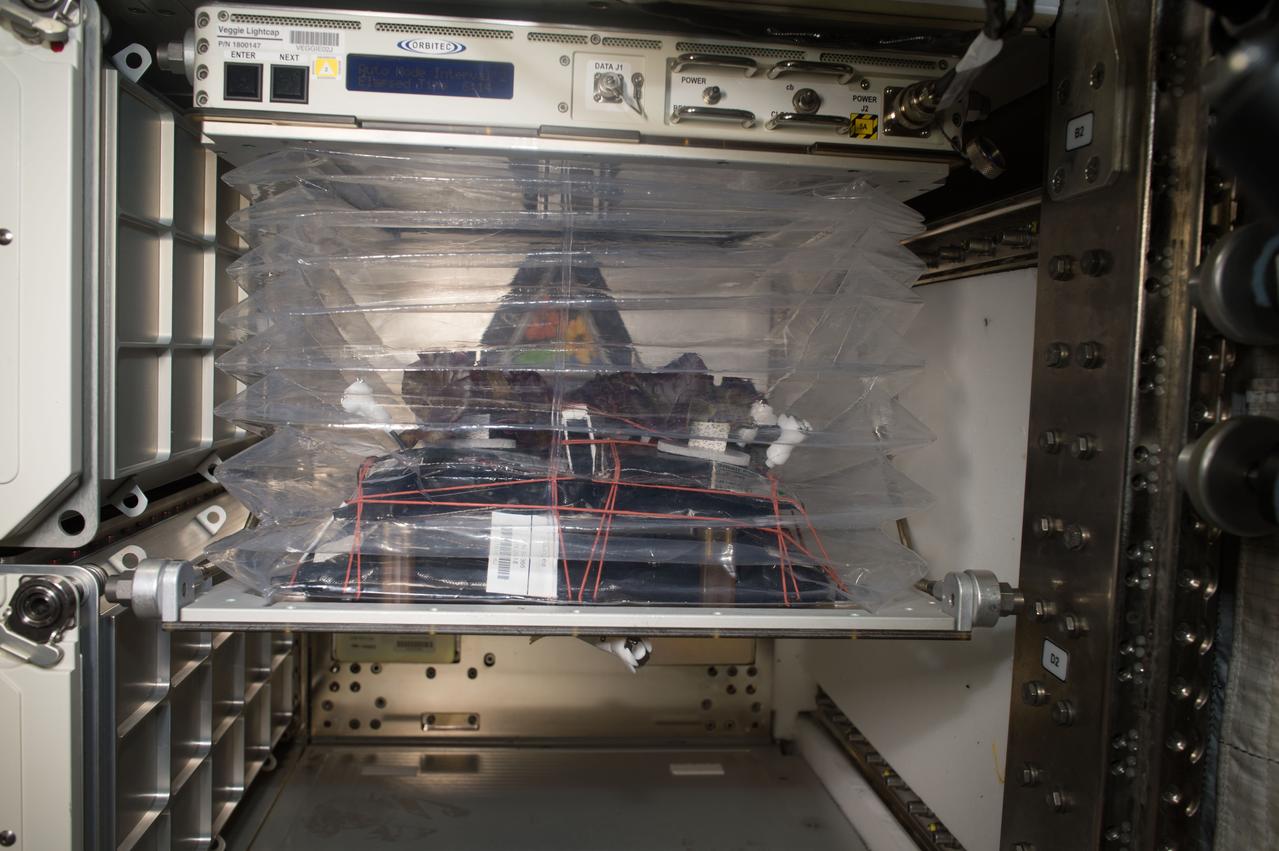
iss050e011238 (11/22/2016) --- Photographic documentation of VEG-03 plants in the Veggie facility. Organisms grow differently in space, from single-celled bacteria to plants and humans. But future long-duration space missions will require crew members to grow their own food, so understanding how plants respond to microgravity is an important step toward that goal. Veg-03 uses the Veggie plant growth facility to cultivate a type of cabbage, which is harvested in orbit with samples returned to Earth for testing.