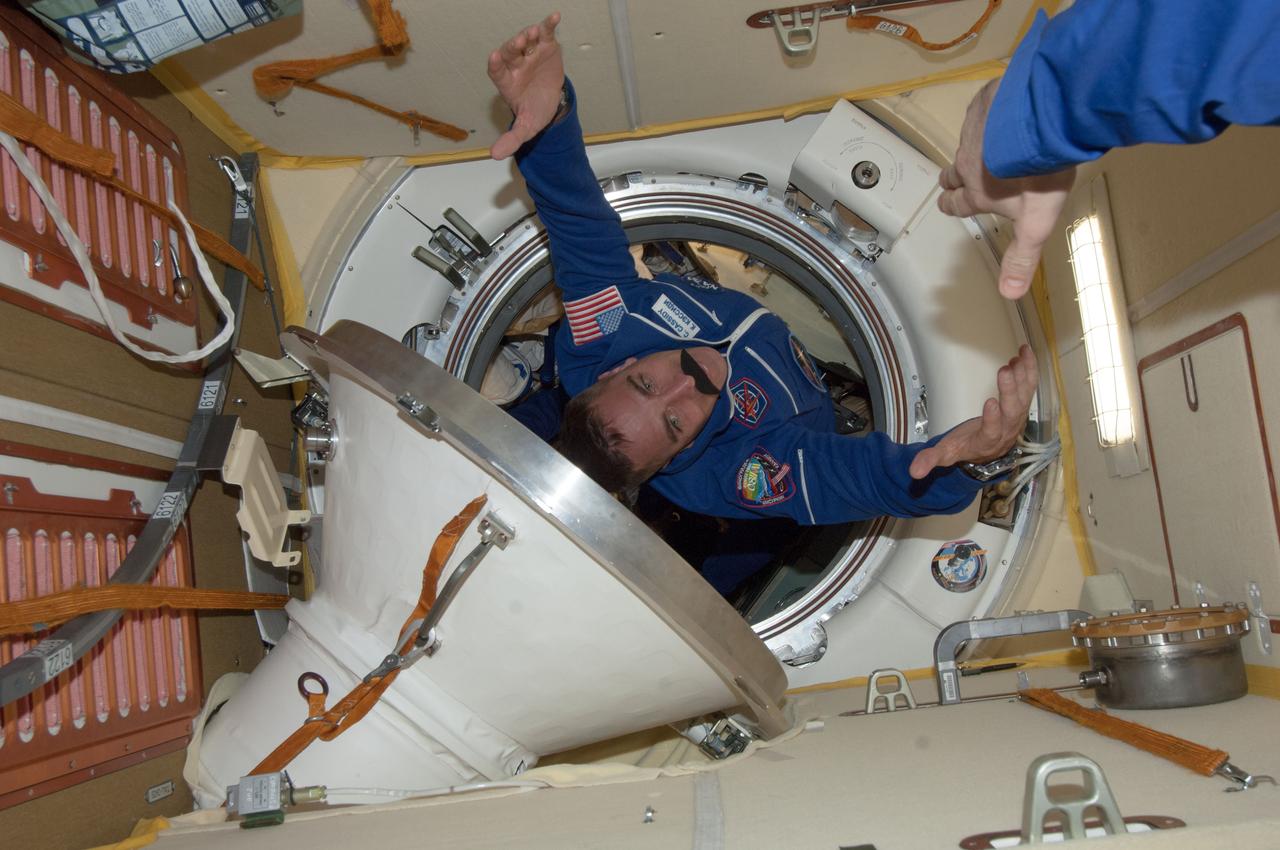
ISS035-E-010762 (29 March 2013) --- Expedition 35 Flight Engineer Roman Romanenko, whose stretched-out arm can be seen at upper right, was expecting to see NASA astronaut Chris Cassidy float into this scene in the Poisk or Mini-Research Module 2 (MRM2), but he might have been somewhat surprised to see the exaggerated mustache which Cassidy was sporting. Cassidy and two crewmates had earlier arrived at the orbital outpost by way of the Soyuz TMA-08M spacecraft. One would imagine that Expedition 35 Commander Chris Hadfield (out of frame), who has a real mustache, likely checked out the one on Cassidy.
![iss035e006283 (3/18/2013) --- Photo documentation of the Hicari (Growth of Homogeneous Silicon-Germanium [SiGe] Crystals in Microgravity by the Traveling Liquidous Zone [TLZ] Method) Experiment Sample Cartridge (SC) following its removal from the Kobairo Rack during Expedition 35. The materials science investigation Growth of Homogeneous SiGe Crystals in Microgravity by the TLZ Method (Hicari) aims to verify the crystal-growth by Travelling Liquidous Zone method, and to produce high-quality crystals of Silicon-Germanium (SiGe) semiconductor using the Japanese Experiment Module-Gradient Heating Furnace (JEM-GHF).](https://images-assets.nasa.gov/image/iss035e006283/iss035e006283~medium.jpg)
iss035e006283 (3/18/2013) --- Photo documentation of the Hicari (Growth of Homogeneous Silicon-Germanium [SiGe] Crystals in Microgravity by the Traveling Liquidous Zone [TLZ] Method) Experiment Sample Cartridge (SC) following its removal from the Kobairo Rack during Expedition 35. The materials science investigation Growth of Homogeneous SiGe Crystals in Microgravity by the TLZ Method (Hicari) aims to verify the crystal-growth by Travelling Liquidous Zone method, and to produce high-quality crystals of Silicon-Germanium (SiGe) semiconductor using the Japanese Experiment Module-Gradient Heating Furnace (JEM-GHF).
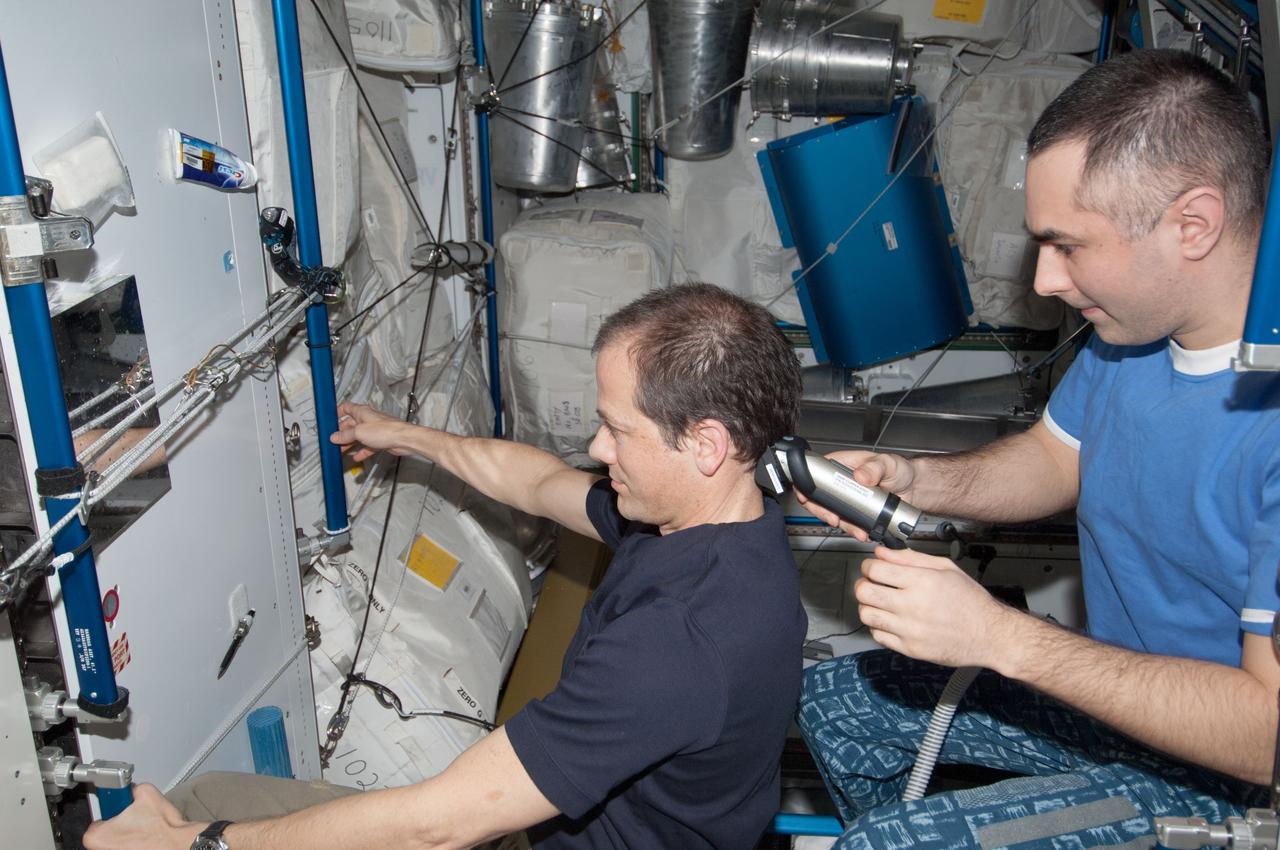
ISS034-E-054688 (24 Feb. 2013) --- NASA astronaut Tom Marshburn (at left), Expedition 34 flight engineer, looks into a mirror as Russian cosmonaut Evgeny Tarelkin, flight engineer, gives him a hair trim in the Tranquility node aboard the International Space Station.
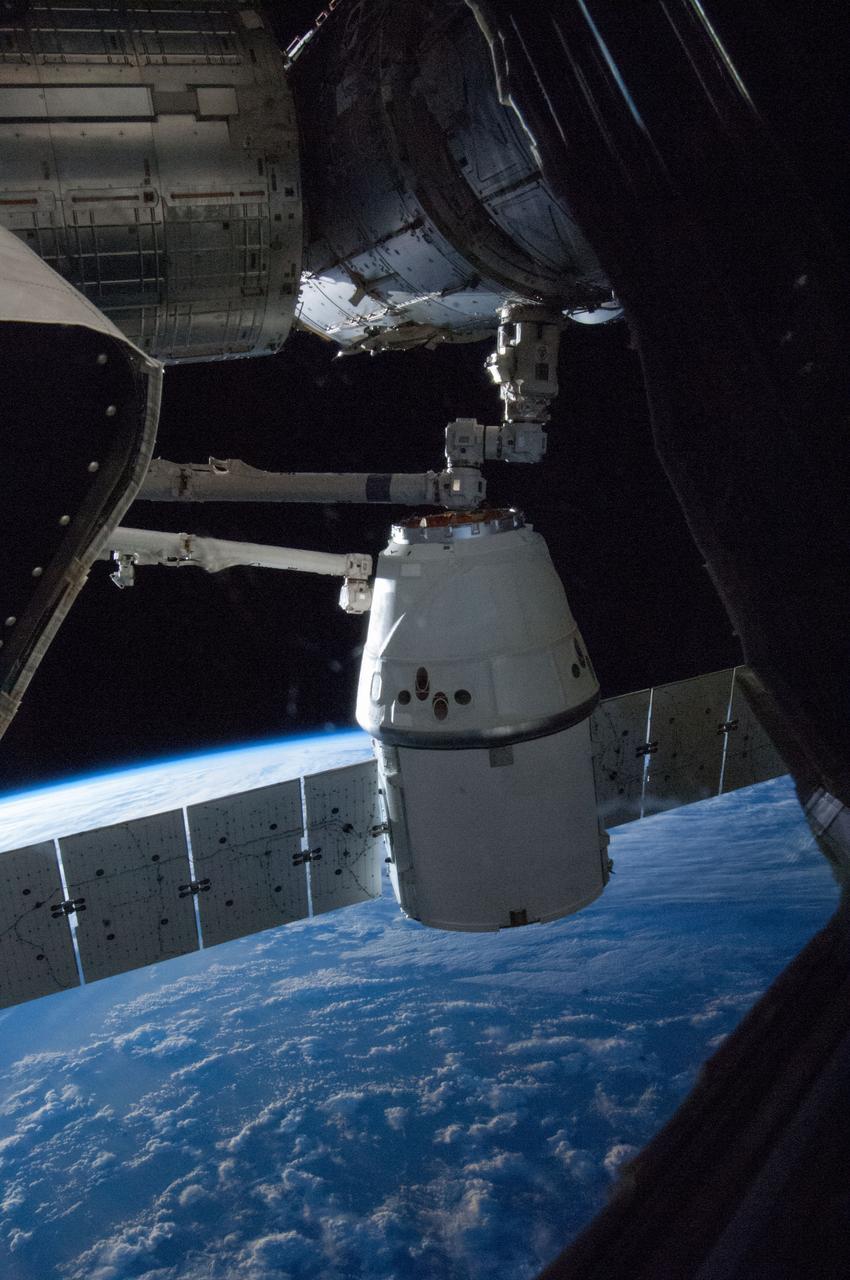
ISS035-E-010119 (26 March 2013) --- This image is one of a series of still photos documenting the process to release the SpaceX Dragon-2 spacecraft from the International Space Station on March 26. The spacecraft, filled with experiments and old supplies, can be seen in the grasp of the Space Station Remote Manipulator System’s robot arm or CanadArm2 after it was undocked from the orbital outpost. The Dragon was scheduled to make a landing in the Pacific Ocean, off the coast of California, later in the day.
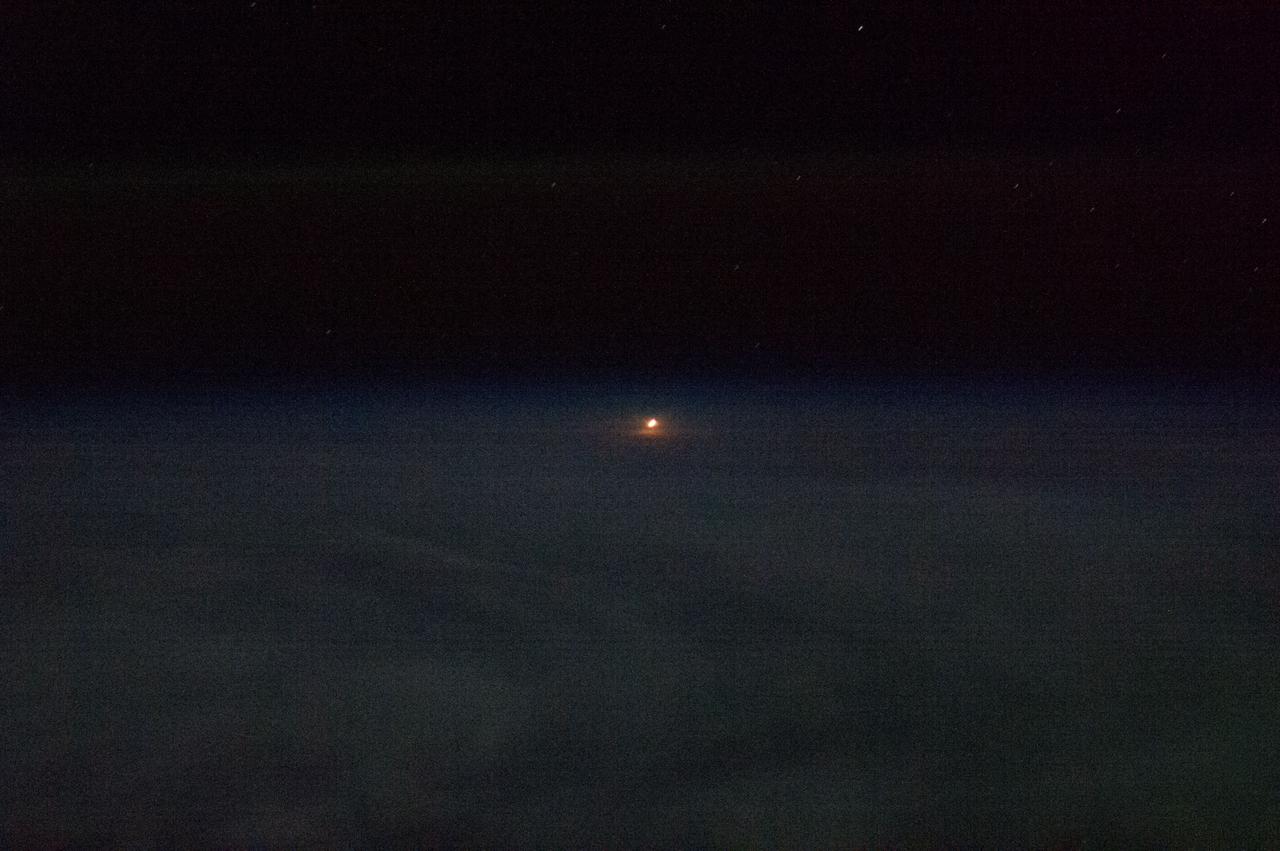
ISS035-E-010340 (28 March 2013) --- One of the Expedition 35 crew members aboard the Earth-orbiting International Space Station took this photo which was part of a series documenting the launch of the "other half" of the Expedition 35 crew. The Soyuz TMA-08M rocket launched from the Baikonur Cosmodrome in Kazakhstan on March 29, 2013 (Kazakh time) carrying Expedition 35 Soyuz Commander Pavel Vinogradov, NASA Flight Engineer Chris Cassidy and Russian Flight Engineer Alexander Misurkin to the International Space Station. Their Soyuz rocket launched at 2:43 a.m., March 29, local time, while it was still March 28 in GMT and USA time zones.
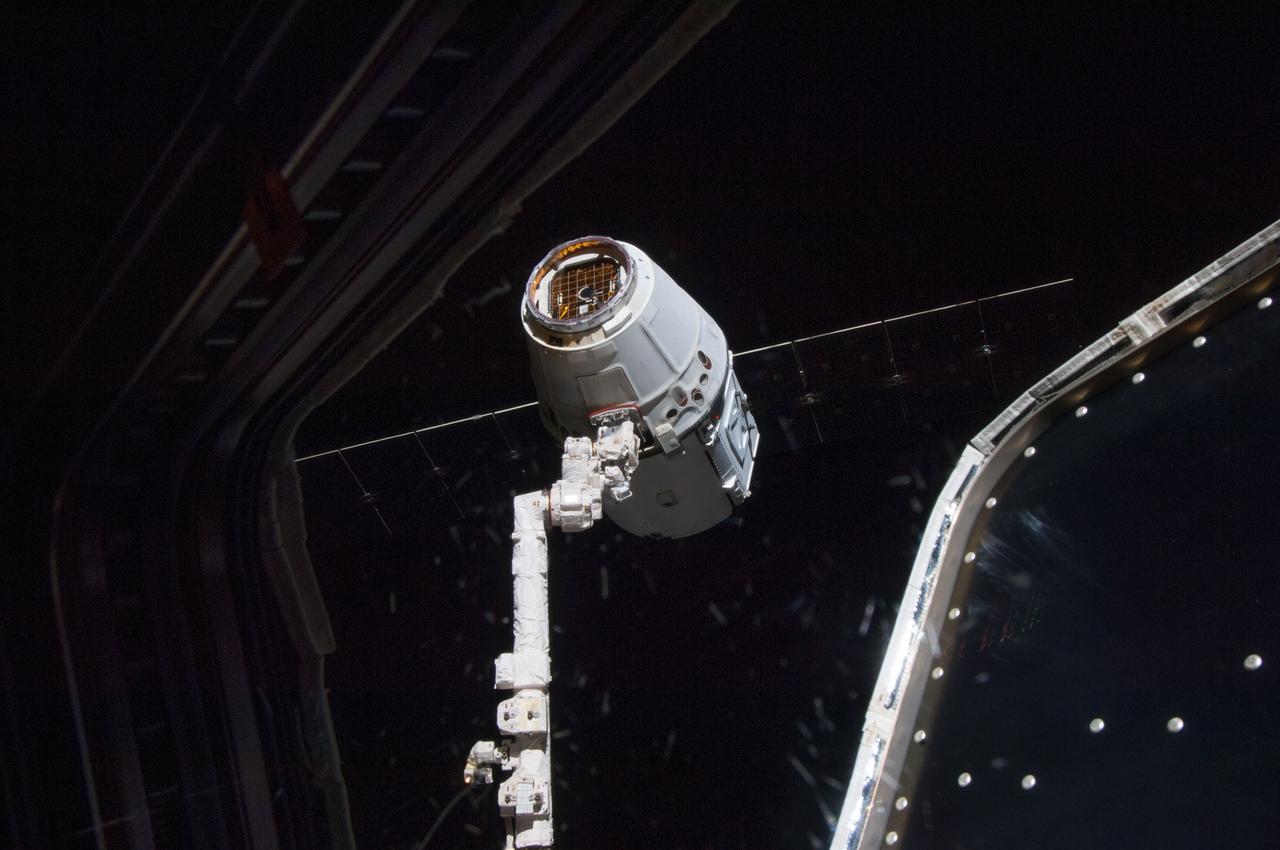
ISS035-E-010124 (26 March 2013) --- This image, photographed through one of the windows in the Cupola, is one of a series of still photos documenting the process to release the SpaceX Dragon-2 spacecraft from the International Space Station on March 26. The unmanned spacecraft, filled with experiments and old supplies, can be seen in the grasp of the Space Station Remote Manipulator System’s robot arm or CanadArm2 after it was undocked from the orbital outpost. The Dragon was scheduled to make a landing in the Pacific Ocean, off the coast of California, later in the day.
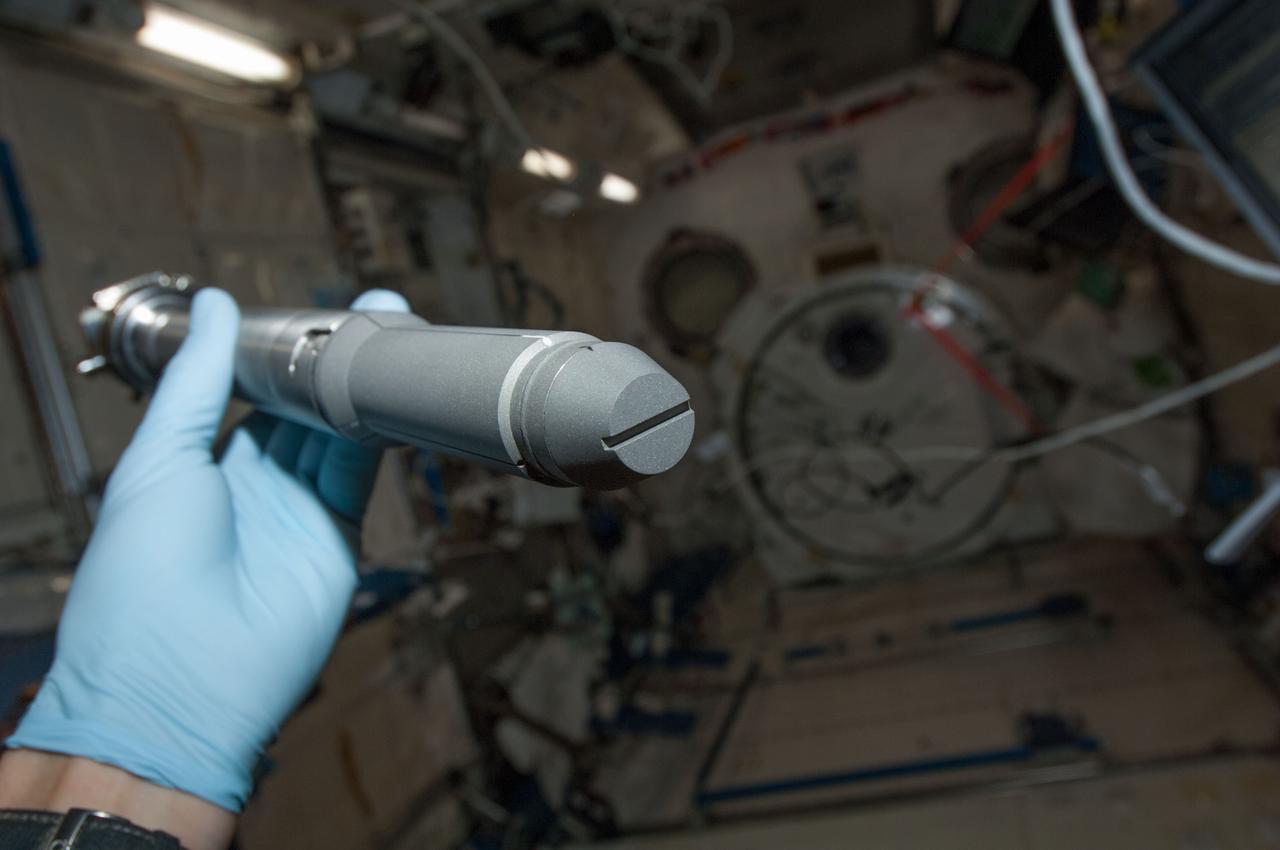
iss035e007095 (3/22/2013) --- A close-up view of an alloy cartridge to be installed in the Gradient Heating Furnace (GHF) of the Kobairo rack for the Alloy Semiconductor experiment. Image was taken in the Kibo Japanese Experiment Pressurized Module (JPM) aboard the International Space Station (ISS). The Alloy Semiconductor investigation aims to develop a clear understanding of how semiconductor materials grow and crystallize in microgravity. The materials studied are also known to be useful as devices which convert heat into electricity (thermoelectrics).
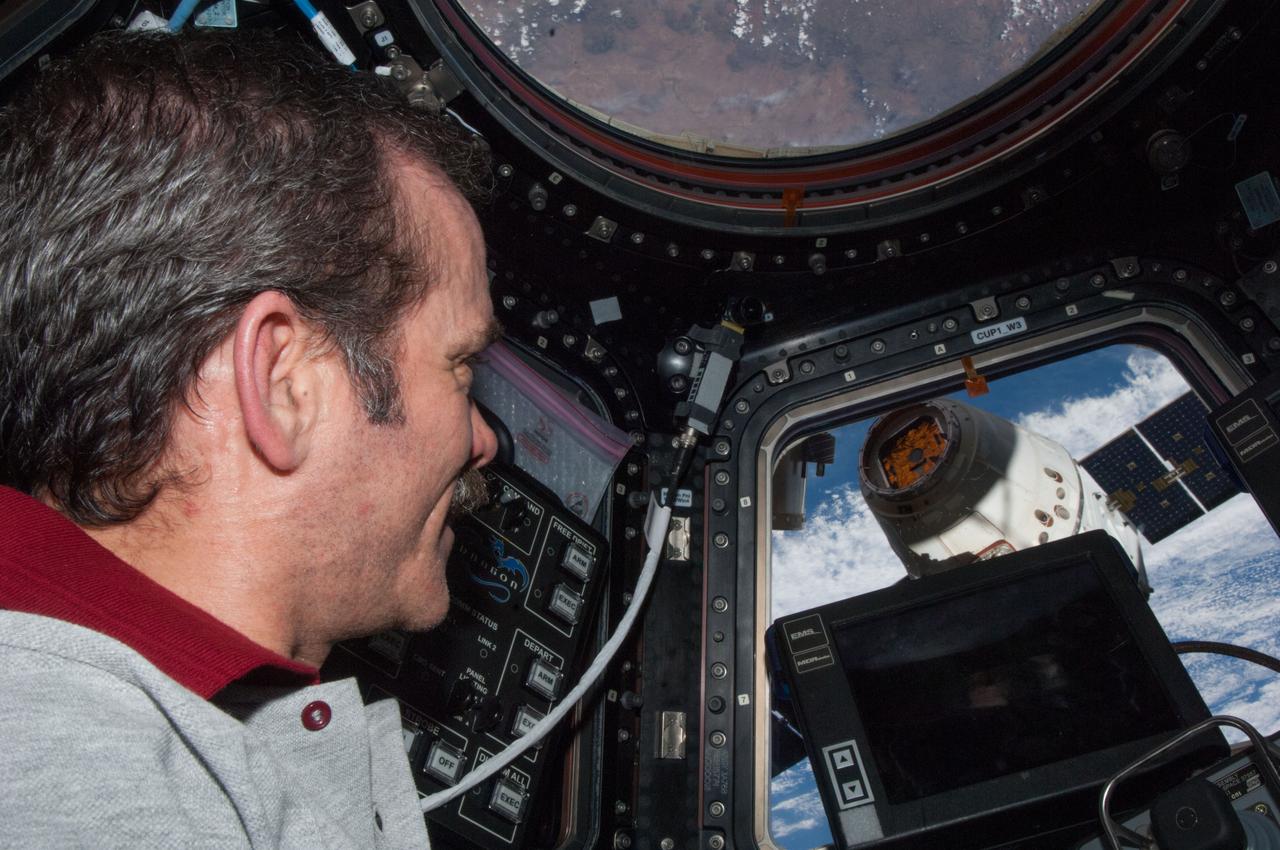
ISS035-E-010134 (26 March 2013) --- Expedition 35 Commander Chris Hadfield of the Canadian Space Agency is pictured in the Cupola on the International Space Station during the operations that ultimately led to the release of the SpaceX Dragon-2 spacecraft for its return to Earth after a three-week stay aboard the orbital outpost. The Dragon was scheduled to make a landing in the Pacific Ocean, off the coast of California, later in the day.
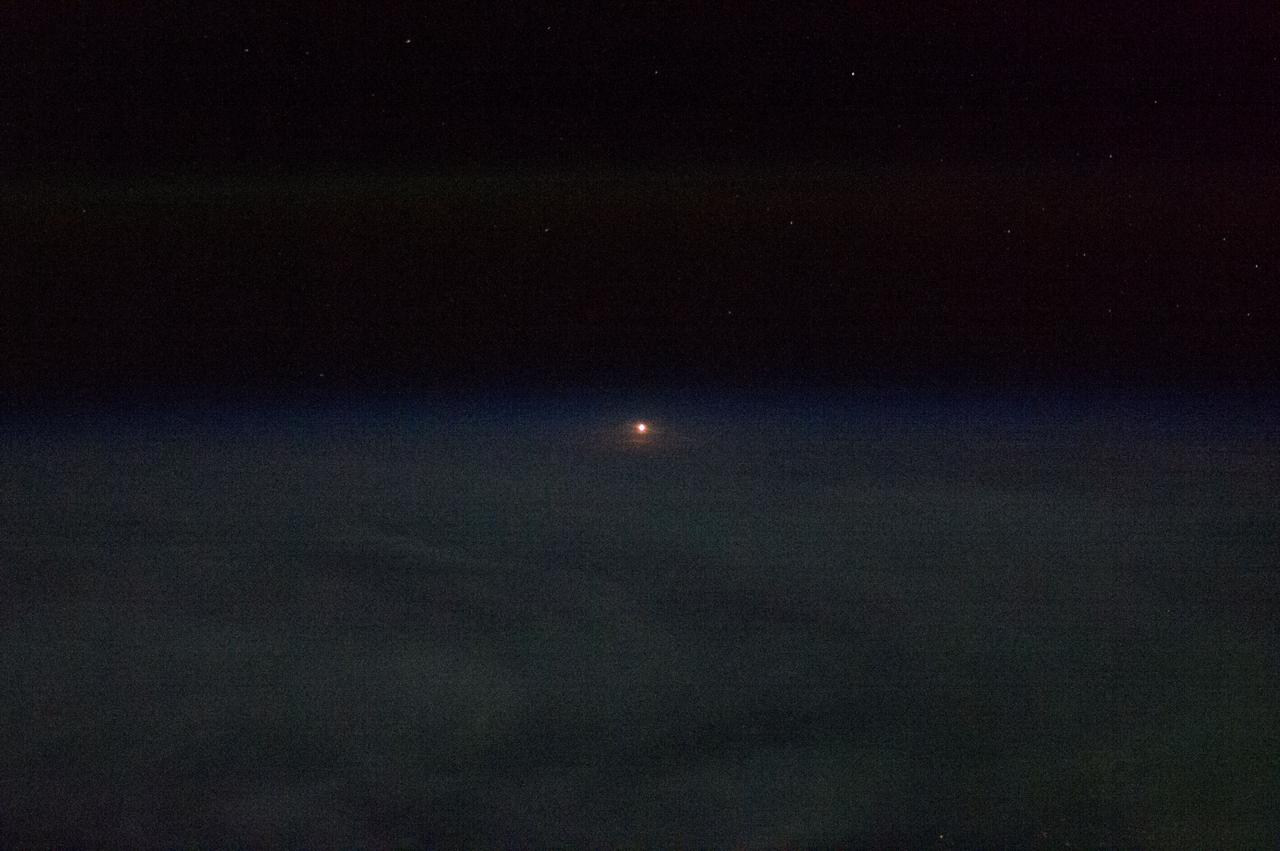
ISS035-E-010345 (28 March 2013) --- One of the Expedition 35 crew members aboard the Earth-orbiting International Space Station took this photo which was part of a series documenting the launch of the "other half" of the Expedition 35 crew. The Soyuz TMA-08M rocket launched from the Baikonur Cosmodrome in Kazakhstan on March 29, 2013 (Kazakh time) carrying Expedition 35 Soyuz Commander Pavel Vinogradov, NASA Flight Engineer Chris Cassidy and Russian Flight Engineer Alexander Misurkin to the International Space Station. Their Soyuz rocket launched at 2:43 a.m., March 29, local time, while it was still March 28 in GMT and USA time zones.
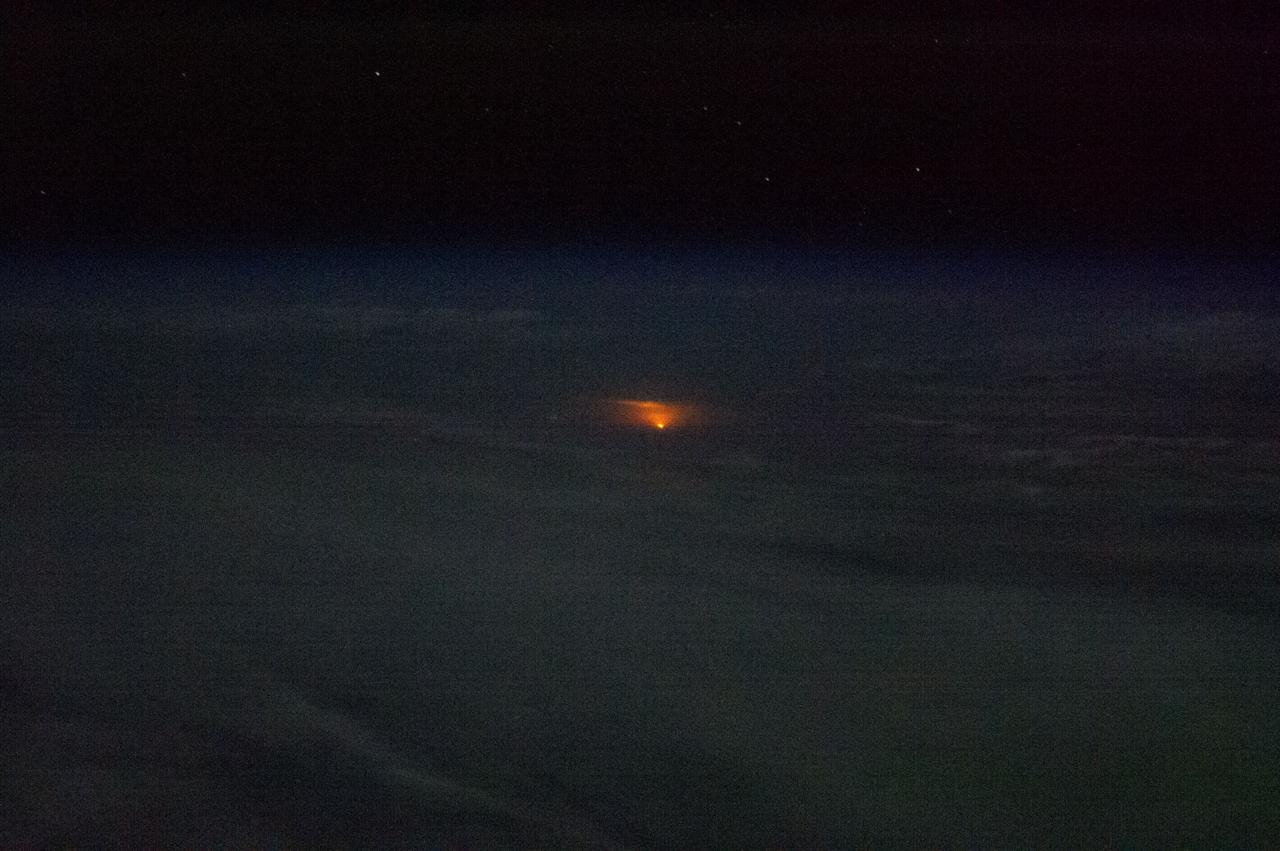
ISS035-E-010313 (28 March 2013) --- One of the Expedition 35 crew members aboard the Earth-orbiting International Space Station took this photo which was part of a series documenting the launch of the "other half" of the Expedition 35 crew. The Soyuz TMA-08M rocket launched from the Baikonur Cosmodrome in Kazakhstan on March 29, 2013 (Kazakh time) carrying Expedition 35 Soyuz Commander Pavel Vinogradov, NASA Flight Engineer Chris Cassidy and Russian Flight Engineer Alexander Misurkin to the International Space Station. Their Soyuz rocket launched at 2:43 a.m., March 29, local time, while it was still March 28 in GMT and USA time zones.
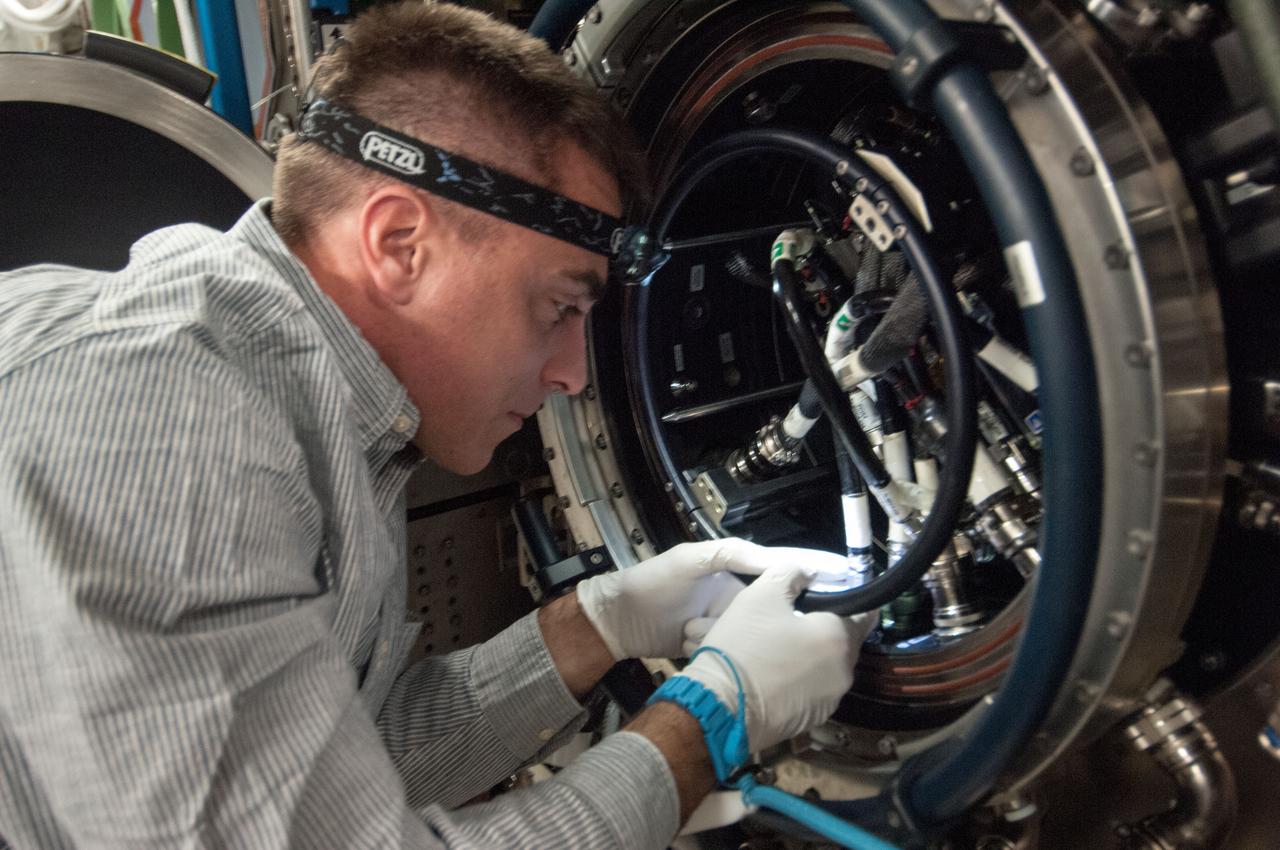
ISS035-E-017699 (10 April 2013) --- This is one of several photos documenting the Multi-user Droplet Combustion Apparatus (MDCA) Fuel Reservoir replacement. Here, Expedition 35 Flight Engineer Chris Cassidy removes and replaces one of the Fuel Reservoirs with the MDCA Chamber Insert Assembly (CIA) pulled partially out of the Combustion Chamber. The MDCA Fuel Reservoirs contain the liquid fuel used during droplet combustion experiments. This reservoir change-out was in support of the FLame EXtinguishment (FLEX)-2 experiment, scheduled to be executed by ground controllers.
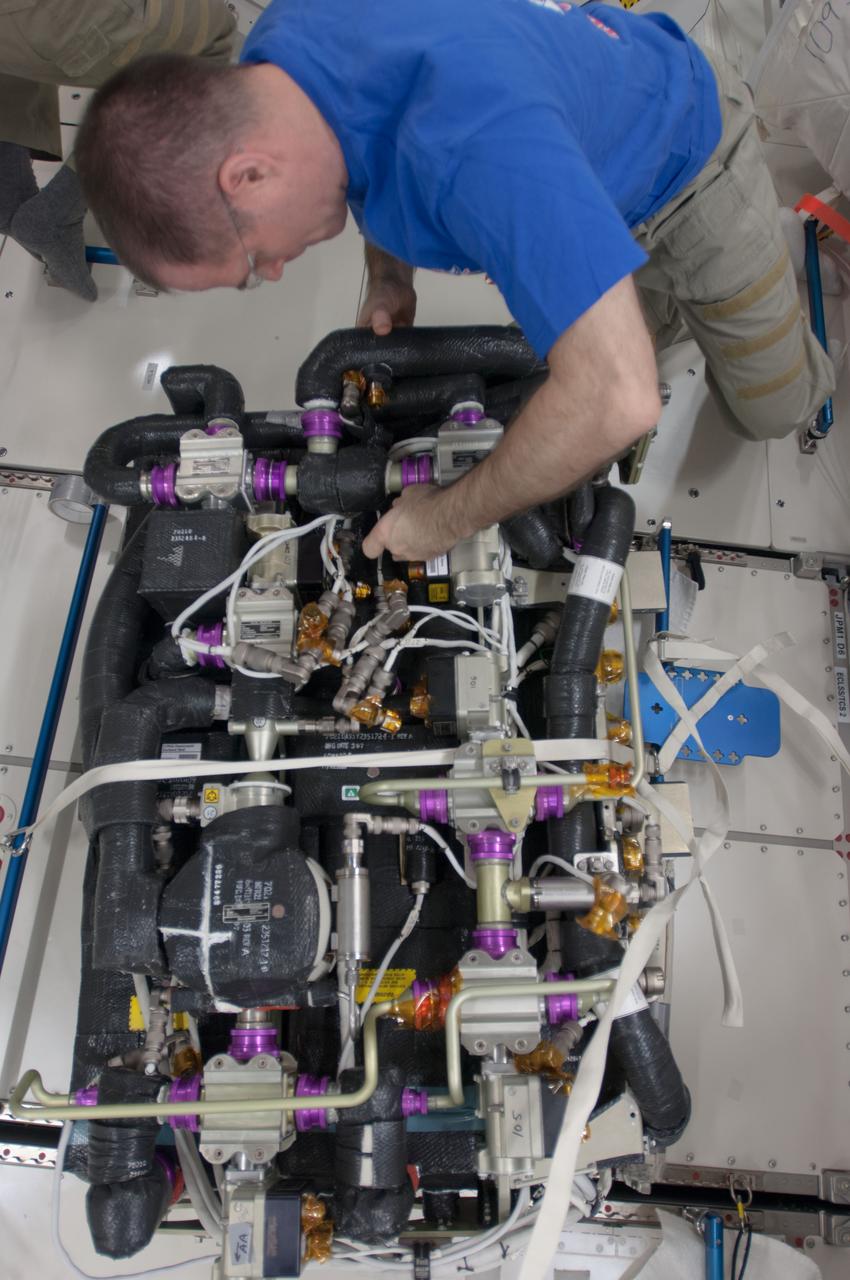
ISS034-E-063052 (9 March 2013) --- NASA astronaut Kevin Ford, Expedition 34 commander, performs maintenance on the Carbon Dioxide Removal Assembly in the Japanese Experiment Module (JEM) Pressurized Module (JPM).
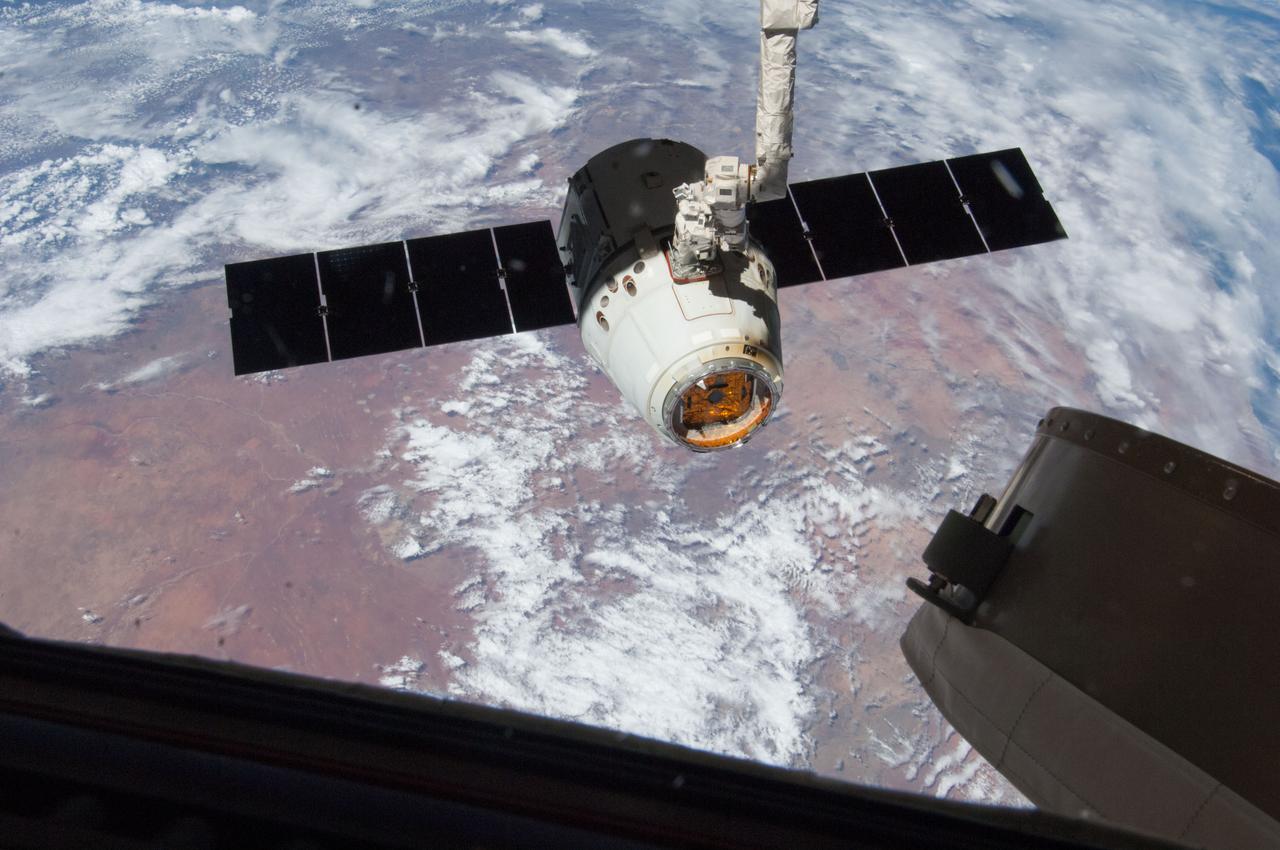
ISS035-E-010128 (26 March 2013) --- Backdropped over part of Namibia, this image is one of a series of still photos documenting the process to release the SpaceX Dragon-2 spacecraft from the International Space Station on March 26. The spacecraft, filled with experiments and old supplies, can be seen in the grasp of the Space Station Remote Manipulator System’s robot arm or CanadArm2 after it was undocked from the orbital outpost. The Dragon was scheduled to make a landing in the Pacific Ocean, off the coast of California, later in the day.
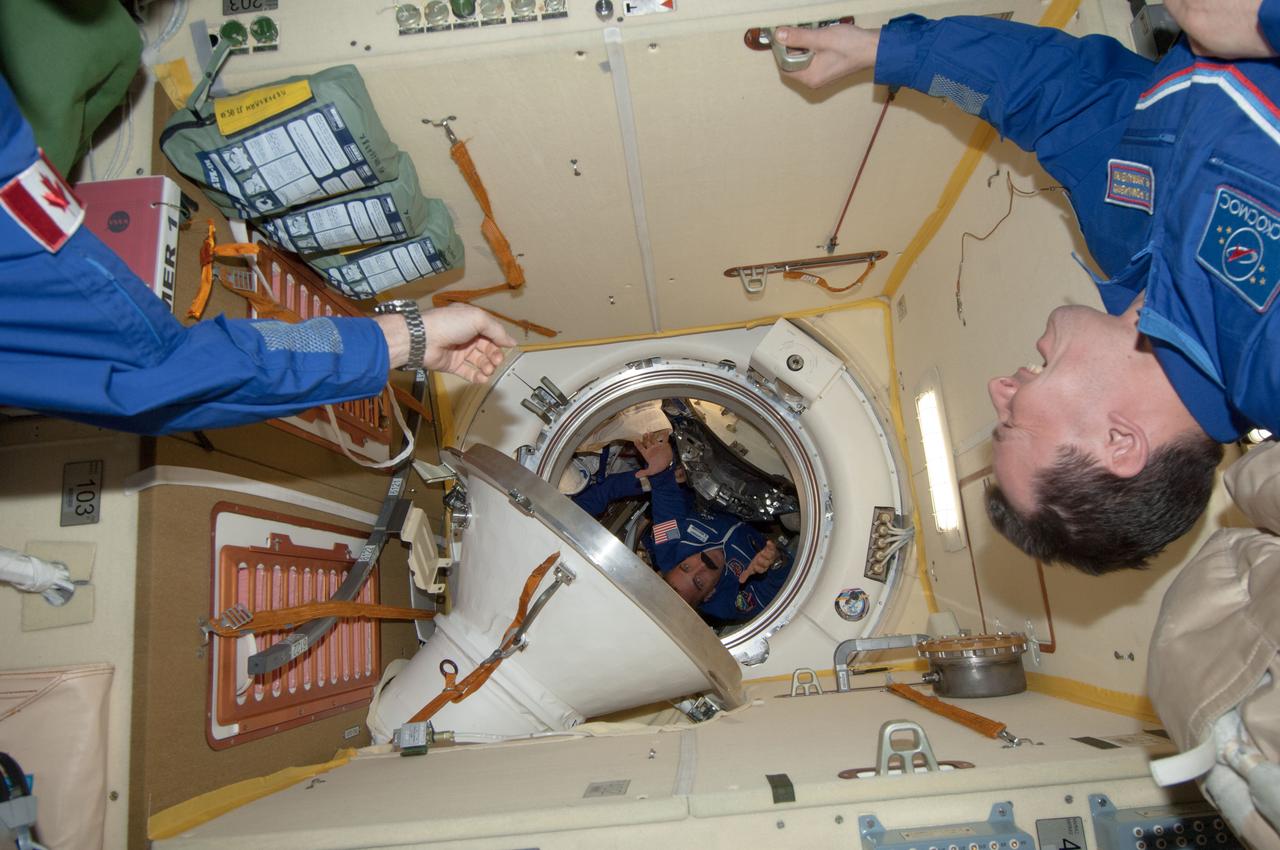
ISS035-E-010761 (29 March 2013) --- Expedition 35 Commander Chris Hadfield of the Canadian Space Agency, whose stretched-out arm can be seen at upper left, was expecting to see NASA astronaut Chris Cassidy float into this scene in the Poisk or Mini-Research Module 2 (MRM2), but he might have been somewhat surprised to see the exaggerated mustache which Cassidy was sporting. Cosmonaut and Expedition 35 Flight Engineer Roman Romanenko is at right. Cassidy and two crewmates had earlier arrived at the orbital outpost by way of the Soyuz TMA-08M spacecraft. One would imagine that Hadfield, who has a real mustache, likely checked out the one on Cassidy.
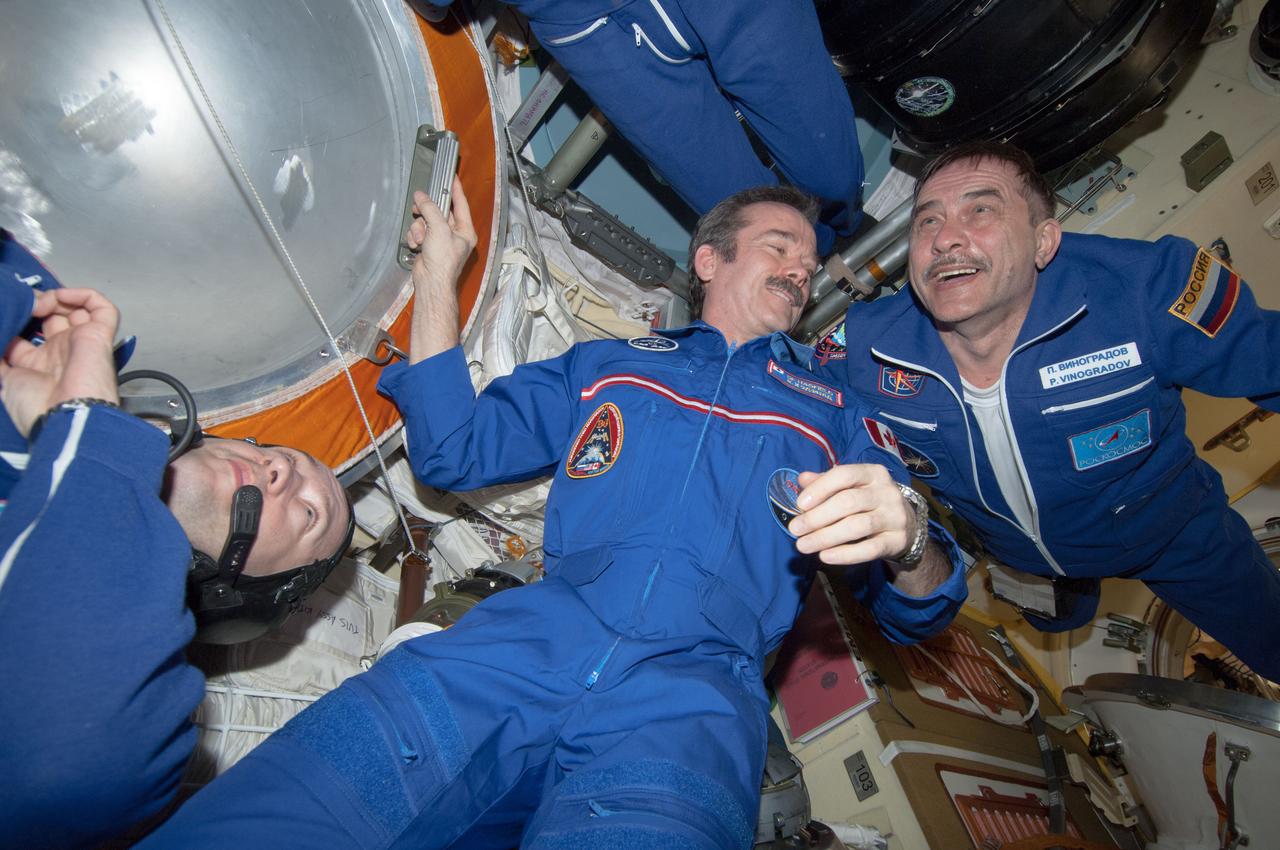
ISS035-E-010768 (29 March 2013) --- In this scene in the Poisk or Mini-Research Module 2 (MRM2), the two crew components for Expedition 35 begin to reunite in Earth orbit soon after the Soyuz TMA-08M docked with the International Space Station. To arriving Soyuz Commander and Expedition 35 Flight Engineer Pavel Vinogradov of Russia, right, the environs are familiar because he's served on the station before. Expedition 35 Commander Chris Hadfield welcomes Vinogradov aboard, while newly arrived Flight Engineer Alexander Misurkin of Russia (left)floats into the scene.
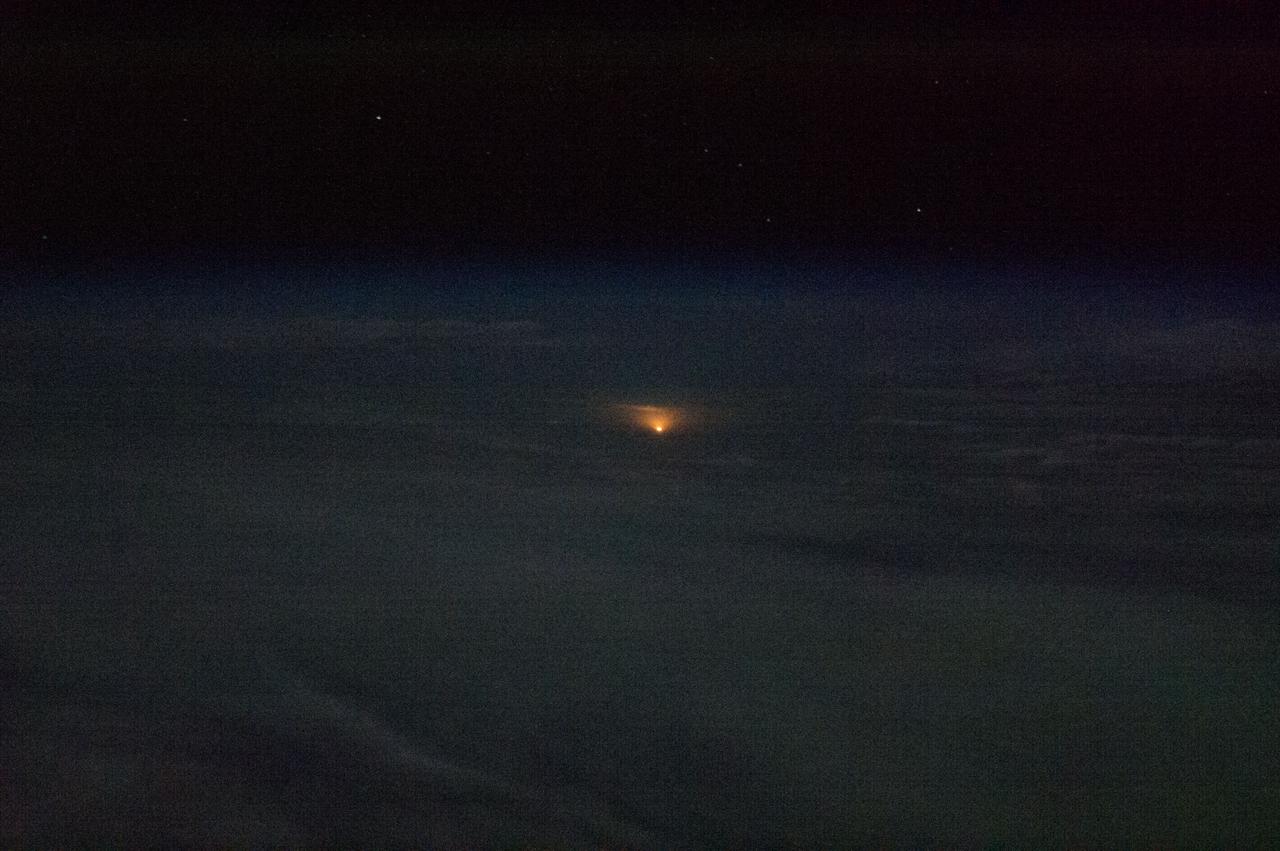
ISS035-E-010317 (28 March 2013) --- One of the Expedition 35 crew members aboard the Earth-orbiting International Space Station took this photo which was part of a series documenting the launch of the "other half" of the Expedition 35 crew. The Soyuz TMA-08M rocket launched from the Baikonur Cosmodrome in Kazakhstan on March 29, 2013 (Kazakh time) carrying Expedition 35 Soyuz Commander Pavel Vinogradov, NASA Flight Engineer Chris Cassidy and Russian Flight Engineer Alexander Misurkin to the International Space Station. Their Soyuz rocket launched at 2:43 a.m., March 29, local time, while it was still March 28 in GMT and USA time zones.
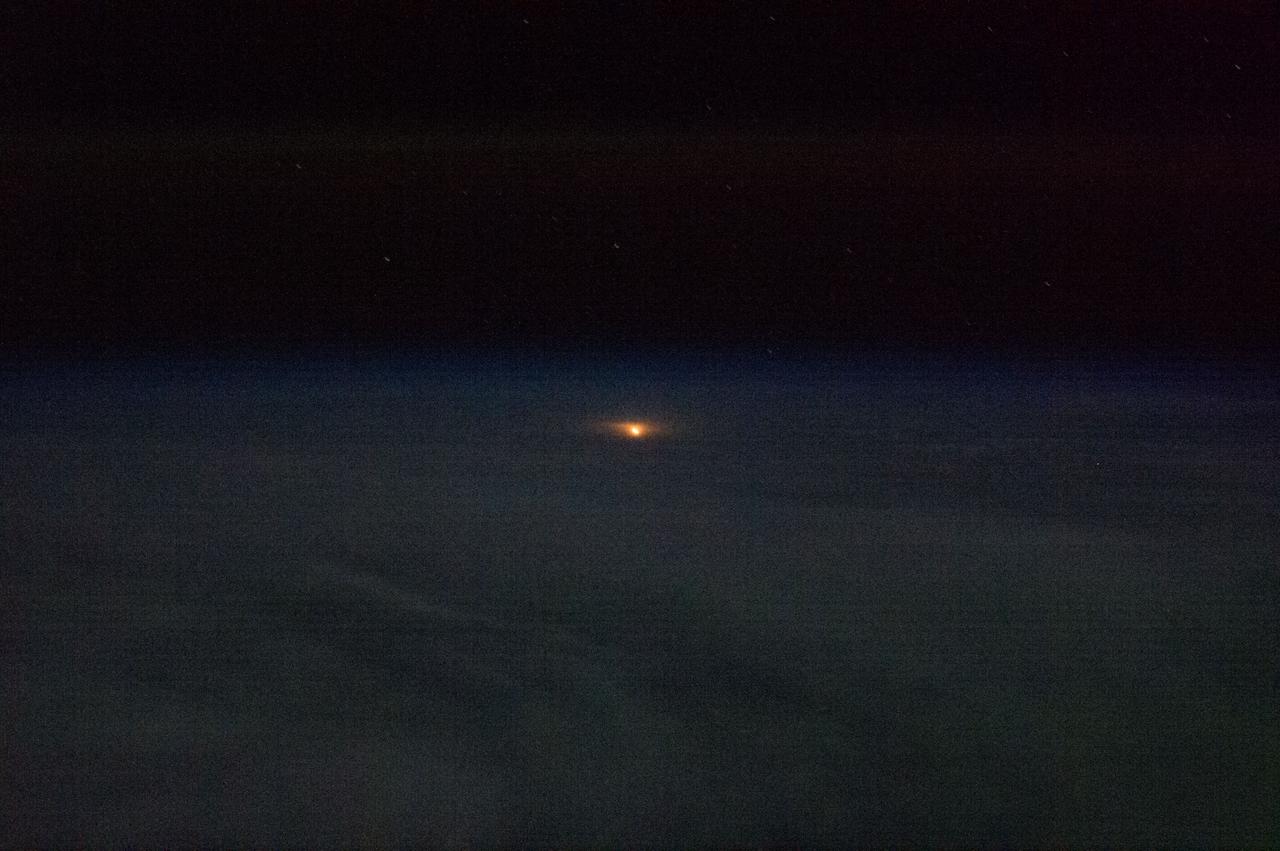
ISS035-E-010333 (28 March 2013) --- One of the Expedition 35 crew members aboard the Earth-orbiting International Space Station took this photo which was part of a series documenting the launch of the "other half" of the Expedition 35 crew. The Soyuz TMA-08M rocket launched from the Baikonur Cosmodrome in Kazakhstan on March 29, 2013 (Kazakh time) carrying Expedition 35 Soyuz Commander Pavel Vinogradov, NASA Flight Engineer Chris Cassidy and Russian Flight Engineer Alexander Misurkin to the International Space Station. Their Soyuz rocket launched at 2:43 a.m., March 29, local time, while it was still March 28 in GMT and USA time zones.
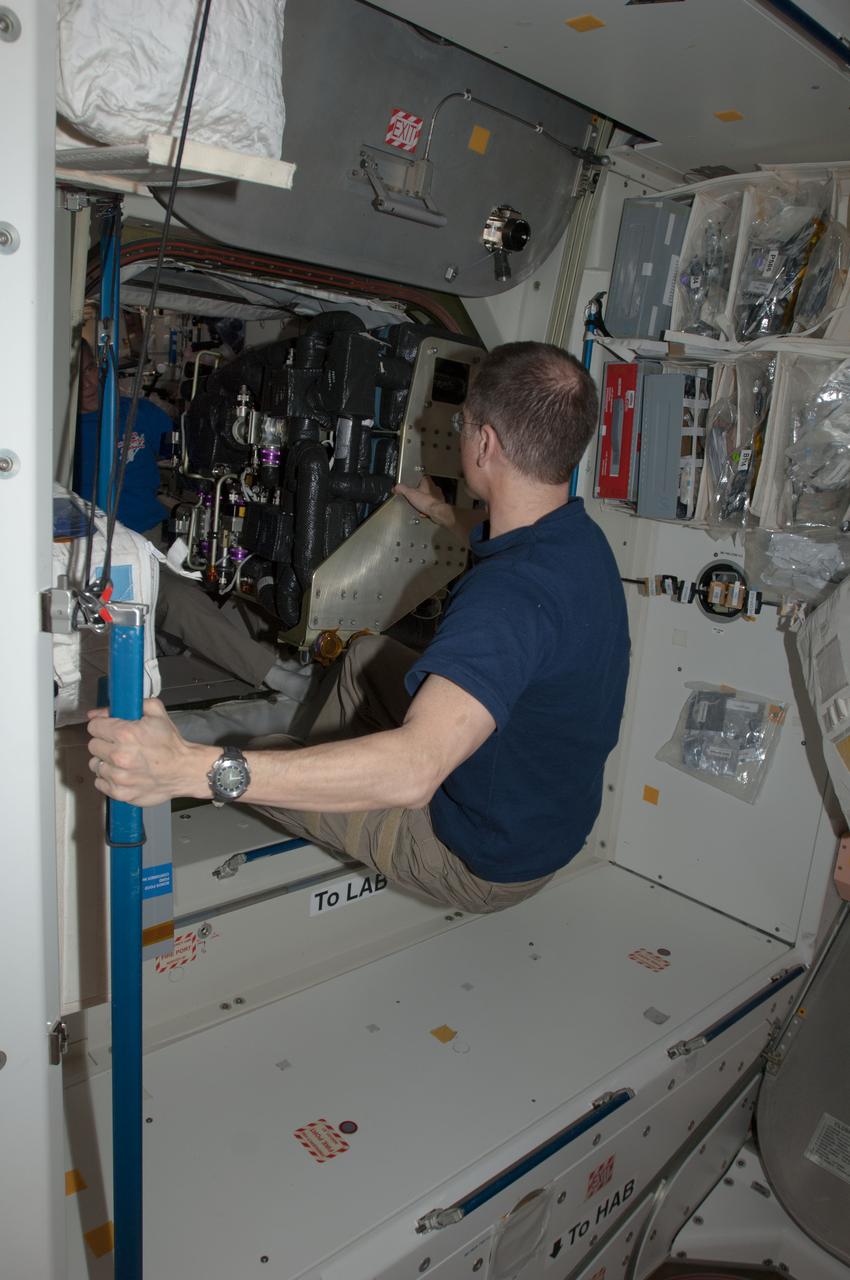
ISS034-E-063091 (9 March 2013) --- NASA astronauts Tom Marshburn, Expedition 34 flight engineer, and Kevin Ford (background), Expedition 34 commander, move the Carbon Dioxide Removal Assembly through U.S. Laboratory (Destiny) hatch on the Earth-orbiting International Space Station.
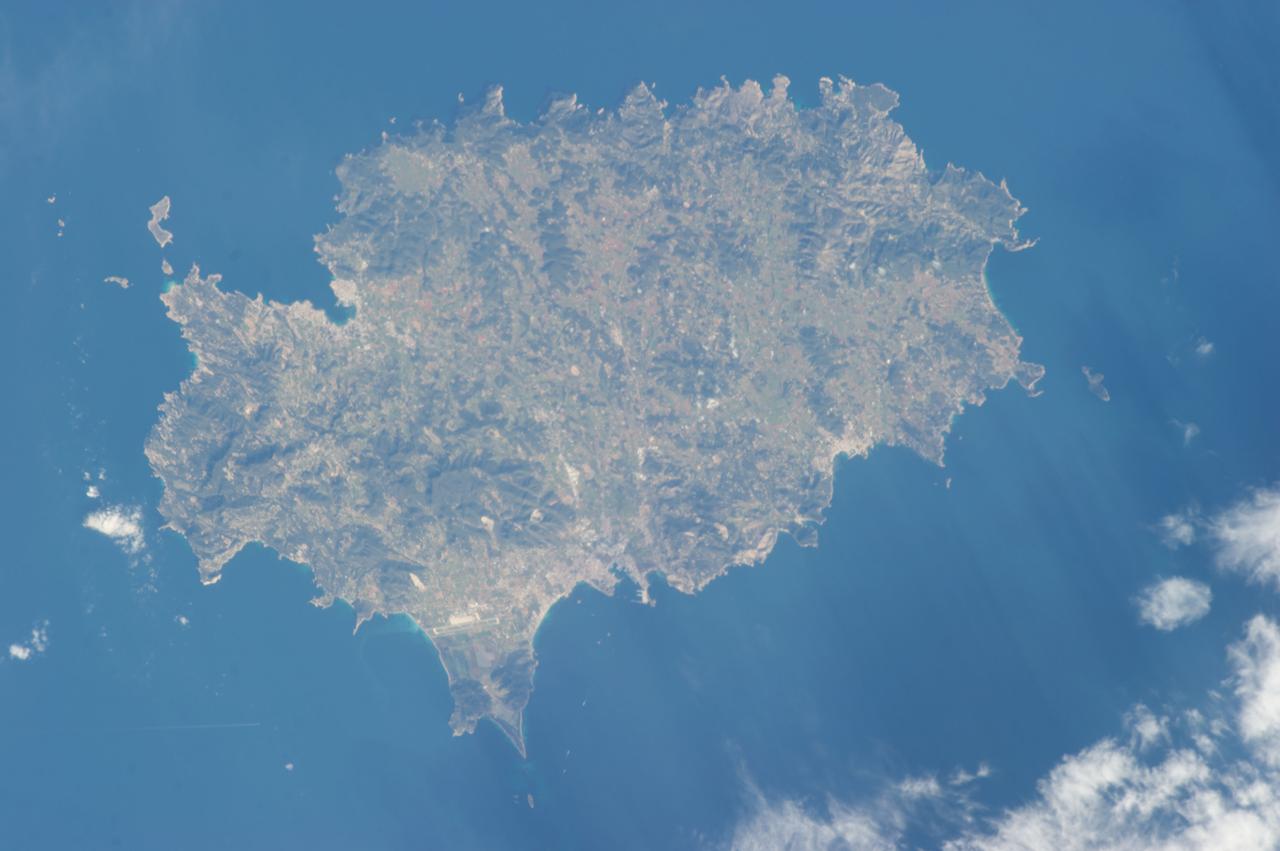
ISS035-E-007431 (22 March 2013) --- One of the Expedition 35 crew members aboard the Earth-orbiting International Space Station used a digital camera equipped with a 400 millimeter lens to capture this image of the island of Ibiza (Eivissa in the native Catalan language), located off of the southeastern coast of Spain. Ibiza is part of the Balearic archipelago. Together with the neighboring island of Formentera (not shown), it comprises the Pine Islands of the western archipelago. The largest cities on the island, Ibiza Town, Sant Antoni de Portmany, and Santa Eularia des Riu, appear as white to pink regions near coastal bays in the image. Much of the lowland interior of the island is covered with green to light brown agricultural fields; some are still in active production for such crops as wheat, olives, and grapes but many fields are inactive and experiencing regrowth of native trees such as pine (Pinus halpensis) and savine (Juniperus phoenicea). The northern and southwestern coastlines are hilly (grey-brown regions), with the highest peak (Sa Talaia, 475 meters above sea level) located in the southwestern region. Like many of the Balearic Islands, the major industry of Ibiza is European tourism, and it is particularly well known for the nightlife of Ibiza Town and Sant Antoni de Portmany. Ships near Ibiza Town and a ship wake off the southwestern coastline are visible at image lower left. The island hosts a large variety of birds and lizards; however no large land fauna are present. The Mediterranean Sea to the southeast of the island appears dark in the image due to shadowing by clouds, just visible at the lower right corner of the image.