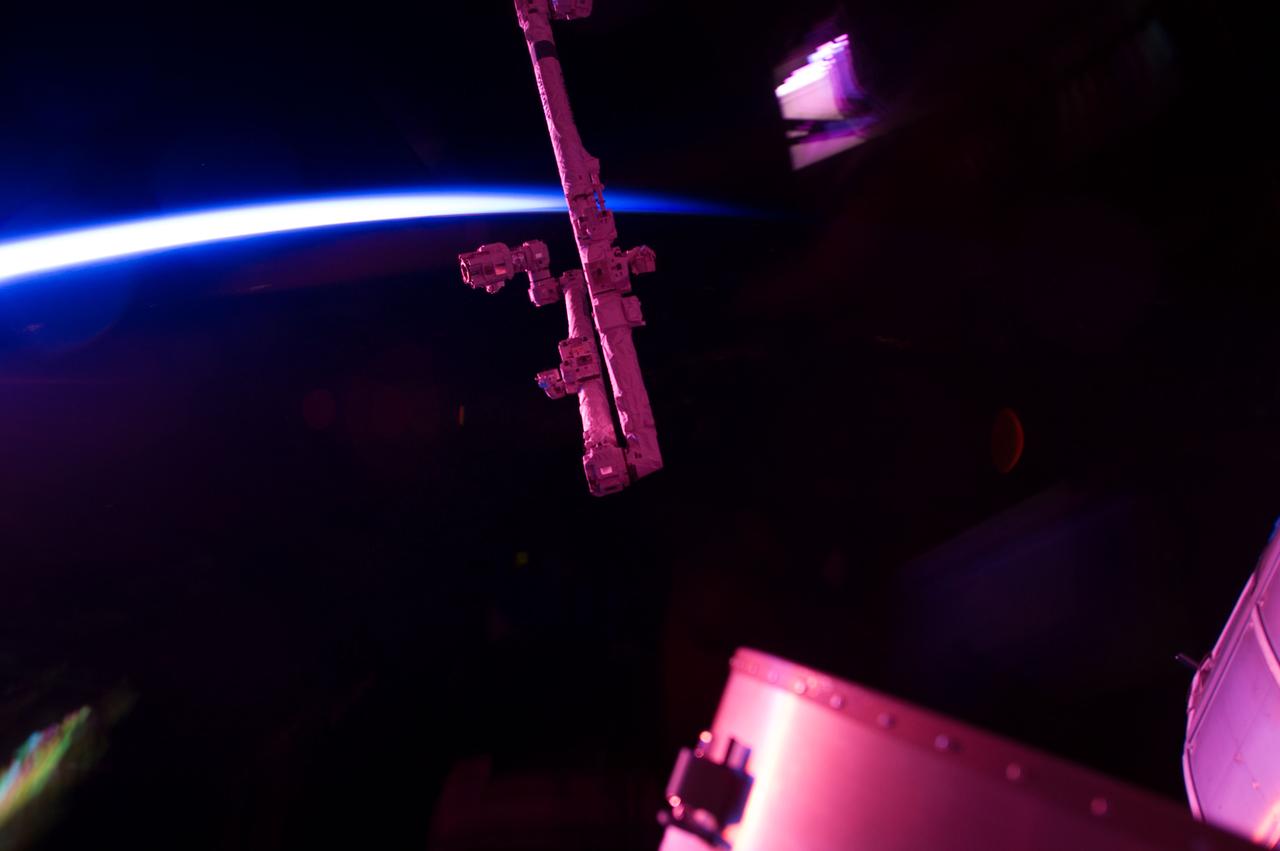
Earth airglow observation taken by the Expedition 35 crew aboard the ISS. The Canadarm2 Space Station Remote Manipulator System (SSRMS) and other portions of the ISS are in view.
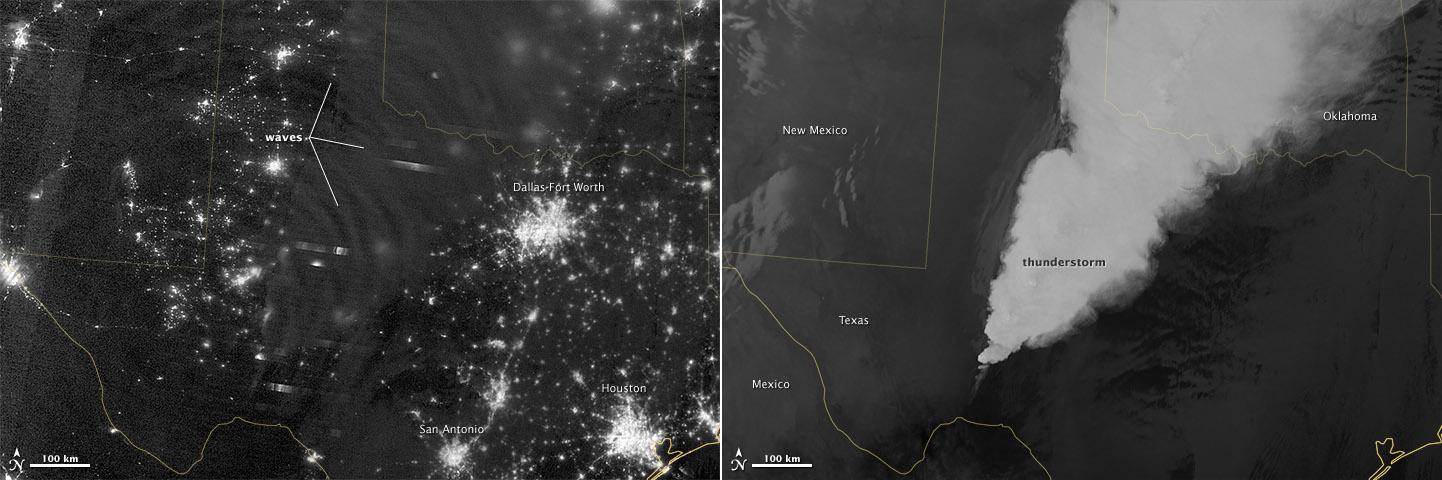
In April 2012, waves in Earth’s “airglow” spread across the nighttime skies of northern Texas like ripples in a pond. In this case, the waves were provoked by a massive thunderstorm. Airglow is a layer of nighttime light emissions caused by chemical reactions high in Earth’s atmosphere. A variety of reactions involving oxygen, sodium, ozone and nitrogen result in the production of a very faint amount of light. In fact, it’s approximately one billion times fainter than sunlight (~10-11 to 10-9 W·cm-2· sr-1). This chemiluminescence is similar to the chemical reactions that light up a glow stick or glow-in-the-dark silly putty. The “day-night band,” of the Visible Infrared Imaging Radiometer Suite (VIIRS) on the Suomi NPP satellite captured these glowing ripples in the night sky on April 15, 2012 (top image). The day-night band detects lights over a range of wavelengths from green to near-infrared and uses highly sensitive electronics to observe low light signals. (The absolute minimum signals detectable are at the levels of nightglow emission.) The lower image shows the thunderstorm as observed by a thermal infrared band on VIIRS. This thermal band, which is sensitive only to heat emissions (cold clouds appear white), is not sensitive to the subtle visible-light wave structures seen by the day-night band. Technically speaking, airglow occurs at all times. During the day it is called “dayglow,” at twilight “twilightglow,” and at night “nightglow.” There are slightly different processes taking place in each case, but in the image above the source of light is nightglow. The strongest nightglow emissions are mostly constrained to a relatively thin layer of atmosphere between 85 and 95 kilometers (53 and 60 miles) above the Earth’s surface. Little emission occurs below this layer since there’s a higher concentration of molecules, allowing for dissipation of chemical energy via collisions rather than light production. Likewise, little emission occurs above that layer because the atmospheric density is so tenuous that there are too few light-emitting reactions to yield an appreciable amount of light. Suomi NPP is in orbit around Earth at 834 kilometers (about 518 miles), well above the nightglow layer. The day-night band imagery therefore contains signals from the direction upward emission of the nightglow layer and the reflection of the downward nightglow emissions by clouds and the Earth’s surface. The presence of these nightglow waves is a graphic visualization of the usually unseen energy transfer processes that occur continuously between the lower and upper atmosphere. While nightglow is a well-known phenomenon, it’s not typically considered by Earth-viewing meteorological sensors. In fact, scientists were surprised at Suomi NPP’s ability to detect it. During the satellite’s check-out procedure, this unanticipated source of visible light was thought to indicate a problem with the sensor until scientists realized that what they were seeing was the faintest of light in the darkness of night. NASA Earth Observatory image by Jesse Allen and Robert Simmon, using VIIRS Day-Night Band data from the Suomi National Polar-orbiting Partnership. Suomi NPP is the result of a partnership between NASA, the National Oceanic and Atmospheric Administration, and the Department of Defense. Caption by Aries Keck and Steve Miller. Instrument: Suomi NPP - VIIRS Credit: <b><a href="http://www.earthobservatory.nasa.gov/" rel="nofollow"> NASA Earth Observatory</a></b> <b>Click here to view all of the <a href="http://earthobservatory.nasa.gov/Features/NightLights/" rel="nofollow"> Earth at Night 2012 images </a></b> <b>Click here to <a href="http://earthobservatory.nasa.gov/NaturalHazards/view.php?id=79817" rel="nofollow"> read more </a> about this image </b> <b><a href="http://www.nasa.gov/audience/formedia/features/MP_Photo_Guidelines.html" rel="nofollow">NASA image use policy.</a></b> <b><a href="http://www.nasa.gov/centers/goddard/home/index.html" rel="nofollow">NASA Goddard Space</a></b>
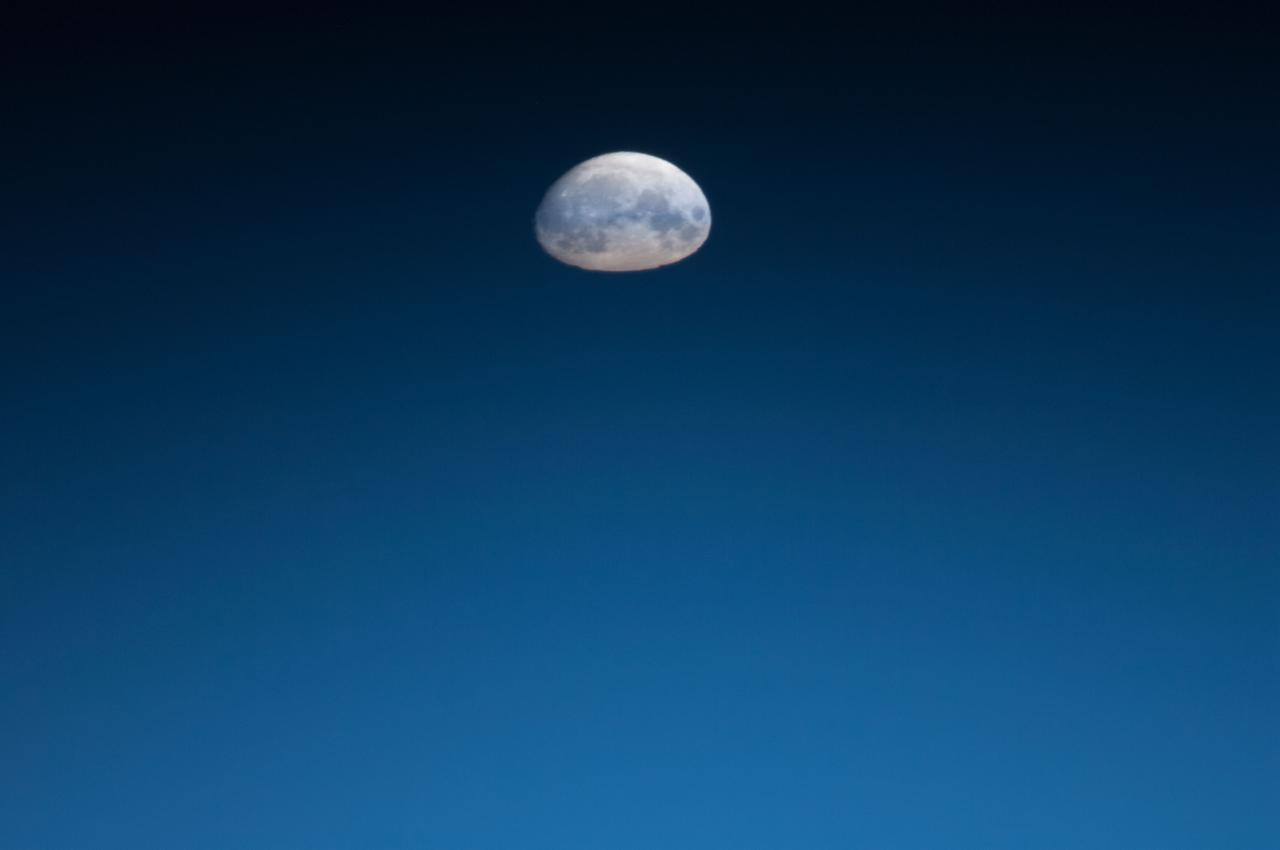
Lunar observation taken during moonset by the Expedition 39 crew aboard the ISS. Earth airglow is in view. Image was released by astronaut on Twitter.
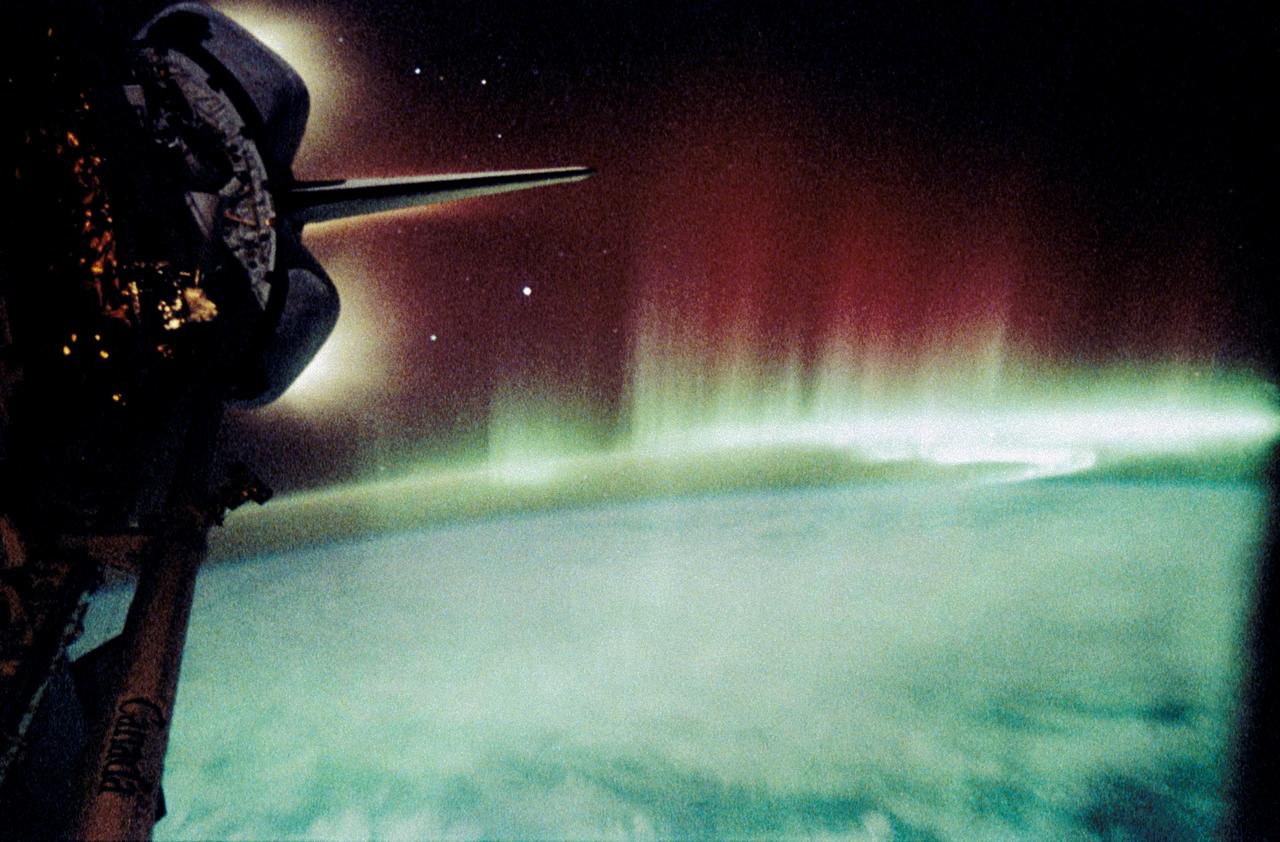
STS039-342-026 (28 April-6 May 1991) --- This view of the Aurora Australis, or Southern Lights, shows a band of airglow above the limb of Earth. Photo experts at NASA studying the mission photography identify the airglow as being in the 80-120 kilometer altitude region and attribute its existence to atomic oxygen (wavelength of 5,577 Angstroms), although other atoms can also contribute. The atomic oxygen airglow is usually most intense at altitudes around 65 degrees north and south latitude, and is most intense in the spring and fall of the year. The aurora phenomena is due to atmospheric oxygen and nitrogen being excited by the particles from the Van Allen Radiation belts which extend between the two geomagnetic poles. The red and green rays appear to extend upward to 200-300 kilometers, much higher than the usual upper limits of about 110 kilometers.
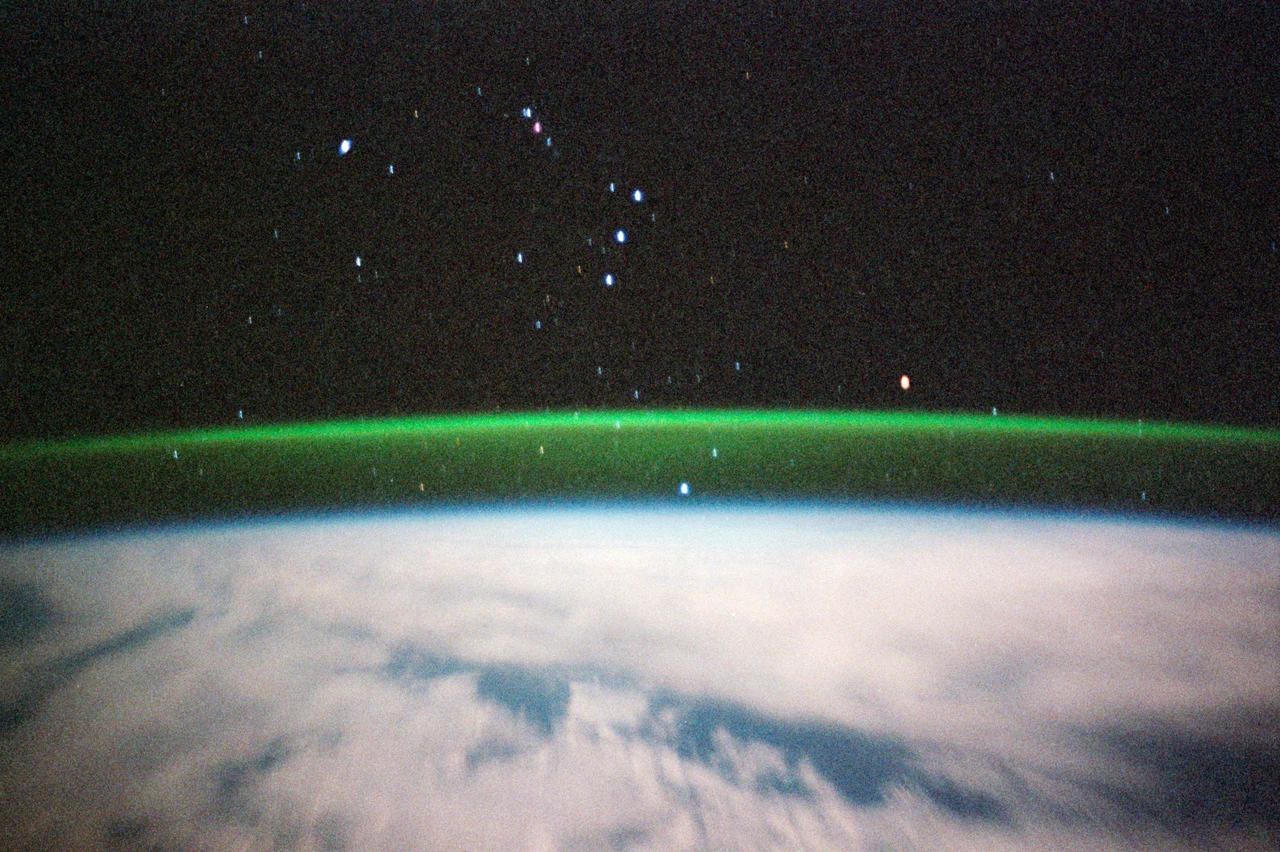
STS099-356-026 (11-22 February 2000) ---Because of its time exposure, this STS-99 35mm frame provides a view of several stars. The thin greenish band above the horizon is airglow; radiation emitted by the atmosphere from a layer about 30 kilometers thick and about 100 kilometers altitude. The predominant emission in airglow is the green 5577-Angstrom wavelength emission from atomic oxygen atoms. Airglow is always and everywhere present in the atmosphere; it results from the recombination of molecules that have been broken apart by solar radiation during the day. But airglow is so faint that it can only be seen at night by looking "edge on" at the emission layer, such as the view astronauts have in orbit.
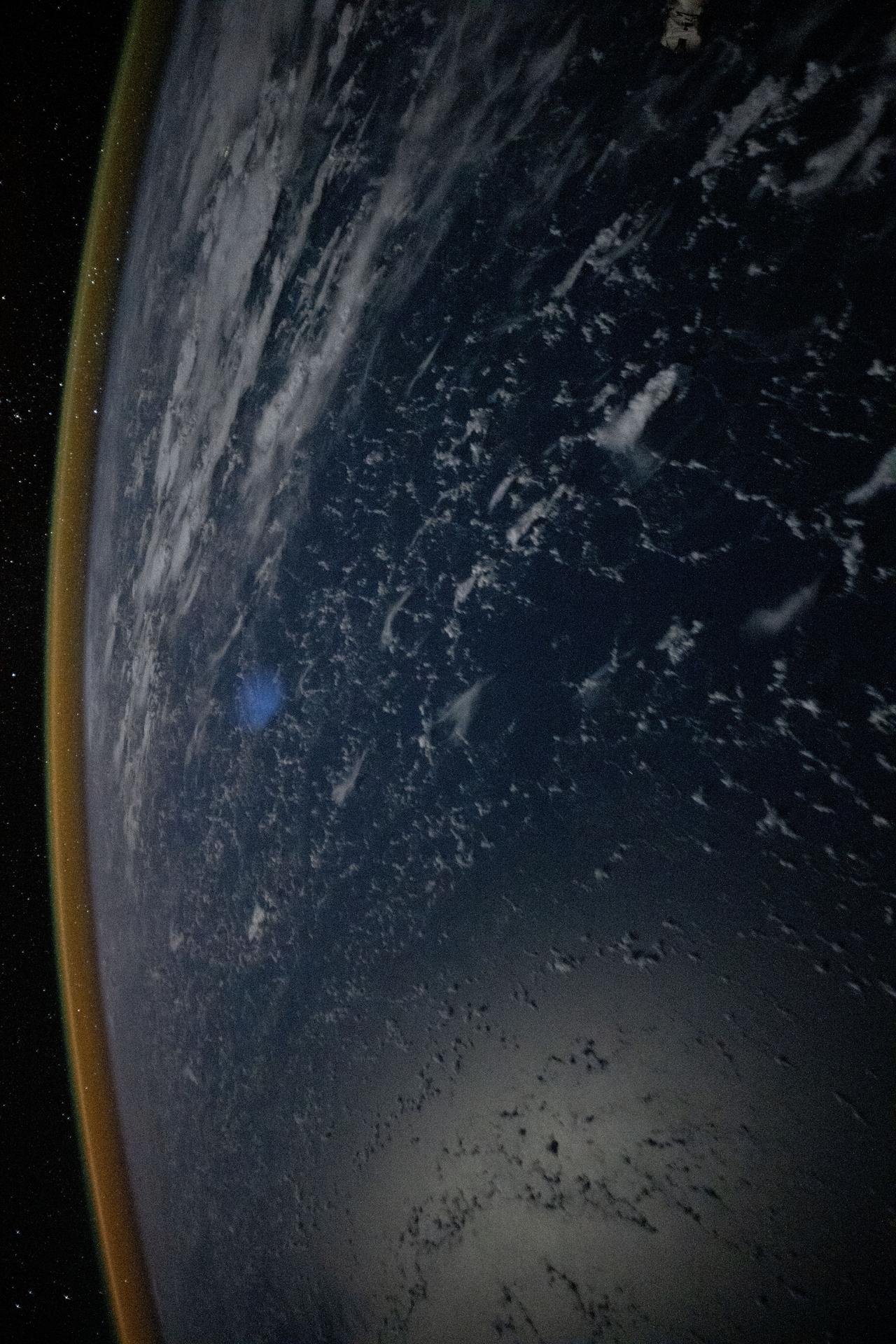
iss073e0824860 (Sept. 14, 2025) --- A red-yellow airglow blankets Earth's horizon above the tranquil, moonlit Philippine Sea in this photograph taken from the International Space Station at approximately 1:49 a.m. local time while orbiting 261 miles above Earth. This type of airglow is caused by chemical reactions in the upper atmosphere, often involving oxygen and hydroxyl molecules, and is typically visible in long-exposure imagery taken from orbit.
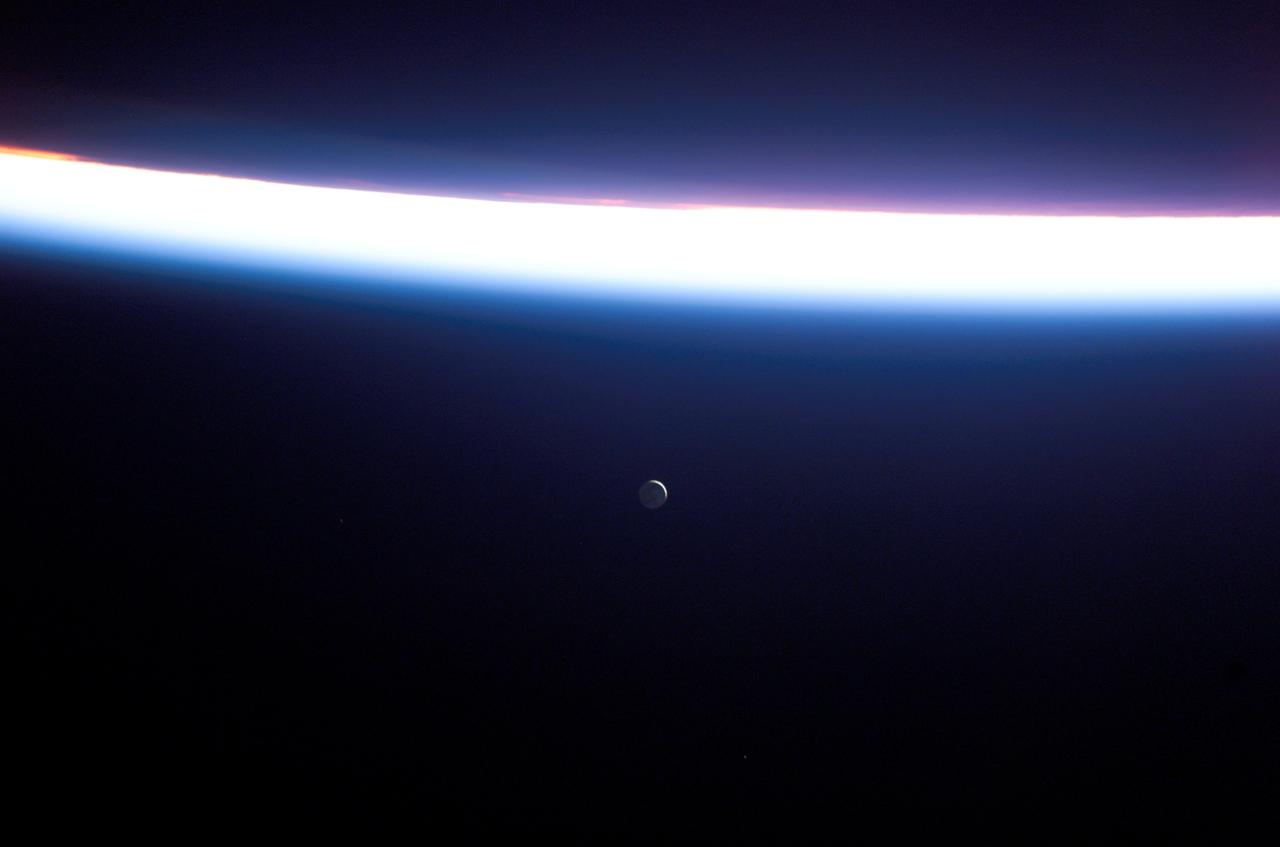
S114-E-7558 (6 August 2005) --- This view featuring a distant Moon and a line of airglow of Earth’s atmosphere was photographed by an STS-114 crewmember onboard the Space Shuttle Discovery after departure from the international space station.
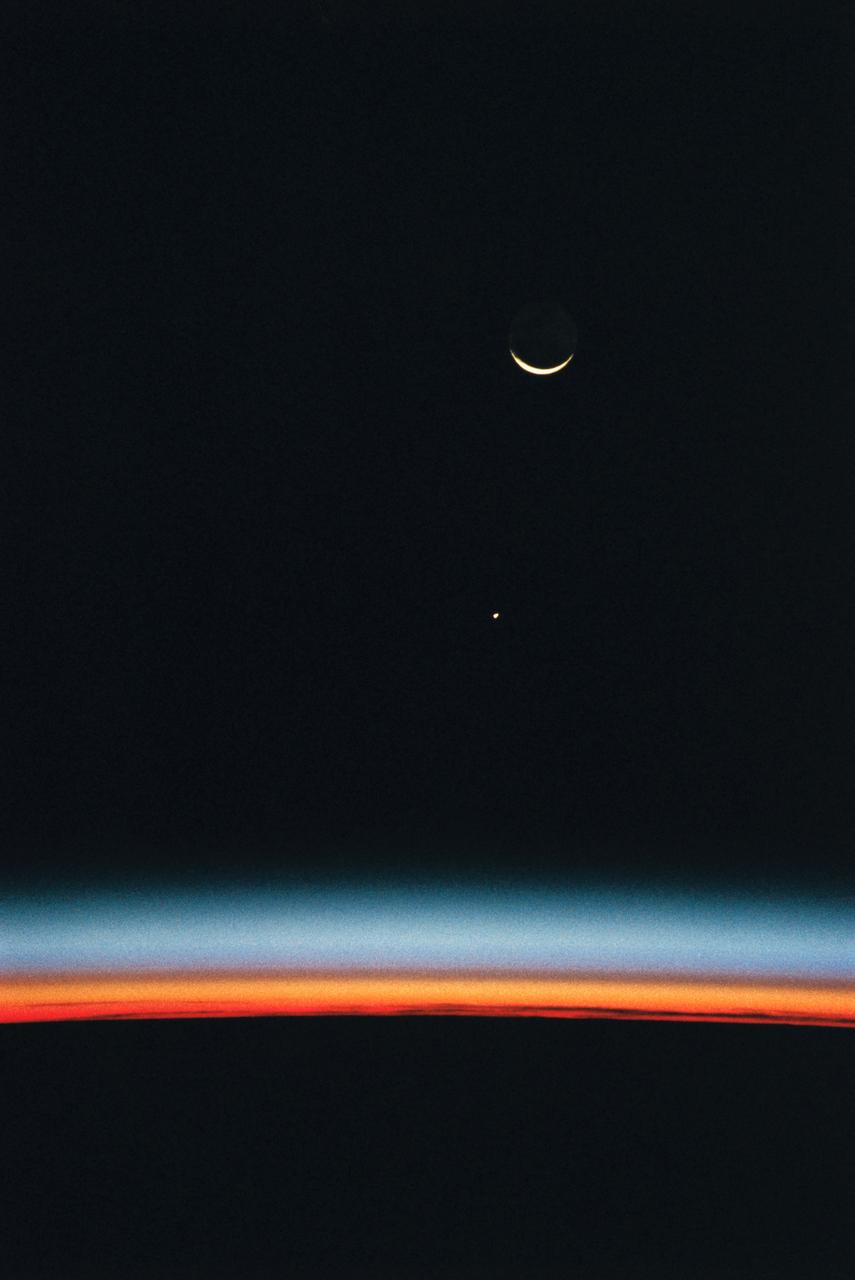
STS061-56-027 (2-13 Dec 1993) --- This scene, captured with a 35mm camera from inside the Space Shuttle Endeavour, shows Jupiter rising above the airglow over Earth's horizon. The crescent Moon is at top frame.
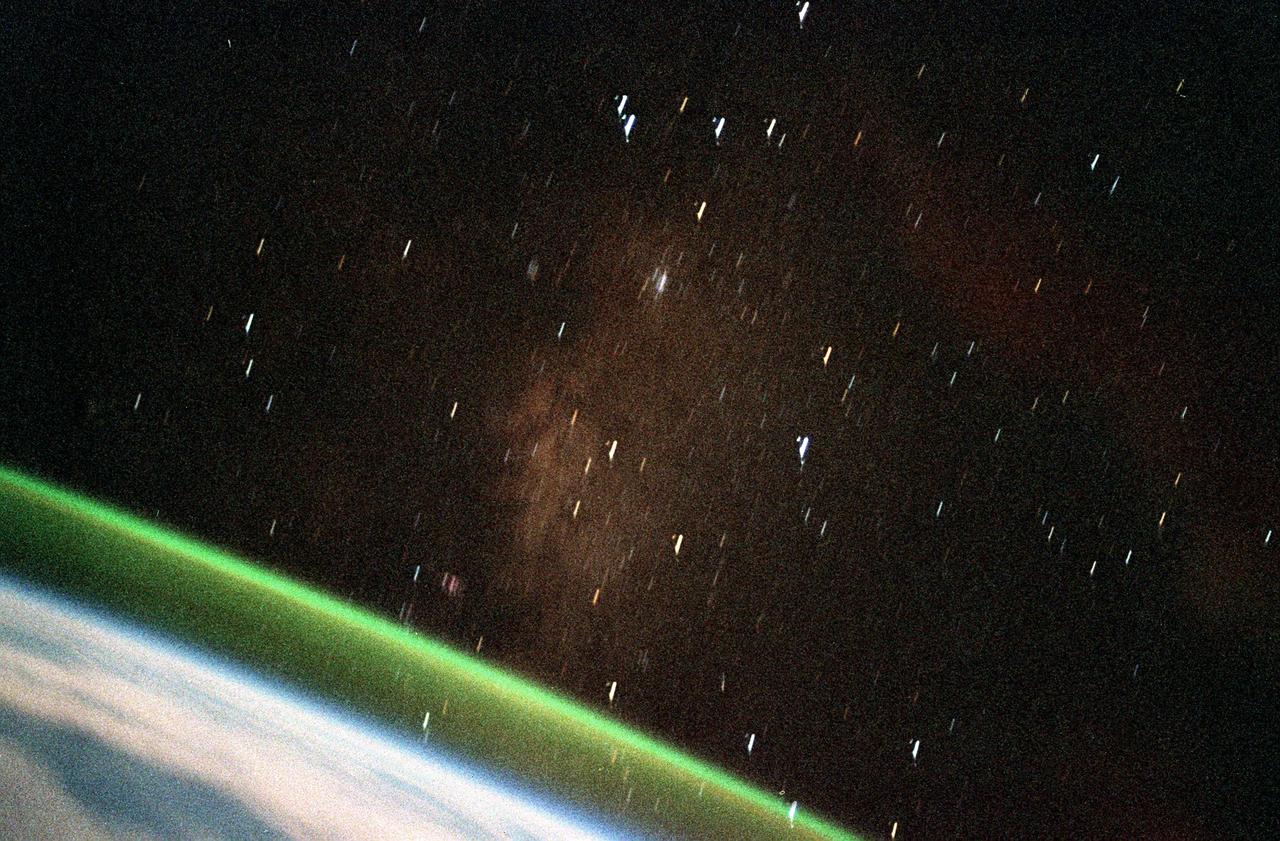
STS099-355-024 (11-22 February 2000) -- Two separate atmospheric optical phenomena appear in this 35mm photograph captured from the Space Shuttle Endeavour. The thin greenish band above the horizon is airglow; radiation emitted by the atmosphere from a layer about 30-kilometers thick and about 100-kilometers' altitude. The predominant emission in airglow is the green 5577-Angstrom wavelength emission from atomic oxygen atoms, which is also the predominant emission from the aurora. A yellow-orange color is also seen in airglow, which is the emission of the 5800-Angstrom wavelength from sodium atoms. Airglow is always present in the atmosphere; it results from the recombination of molecules that have been broken apart by solar radiation during the day. But airglow is so faint that it can only be seen at night by looking "edge on" at the emission layer, such as the view that astronauts have in Earth orbit. The other phenomenon in the photo appears to be a faint, diffuse red aurora. Red aurora occur from about 200 kilometers to as high as 500 kilometers altitude only in the auroral zones at polar latitudes. They are caused by the emission of 6300- Angstrom wavelength light from oxygen atoms that have been raised to a higher energy level (excited) by collisions with energetic electrons pouring down from the Earth's magnetosphere. The light is emitted when the atoms return to their original unexcited state. With the red light so faint in this picture, scientists are led to believe that the flux density of incoming electrons was small. Also, since there is no green aurora below the red, that indicates that the energy of the incoming electrons was low - higher energy electrons would penetrate deeper into the atmosphere where the green aurora is energized.
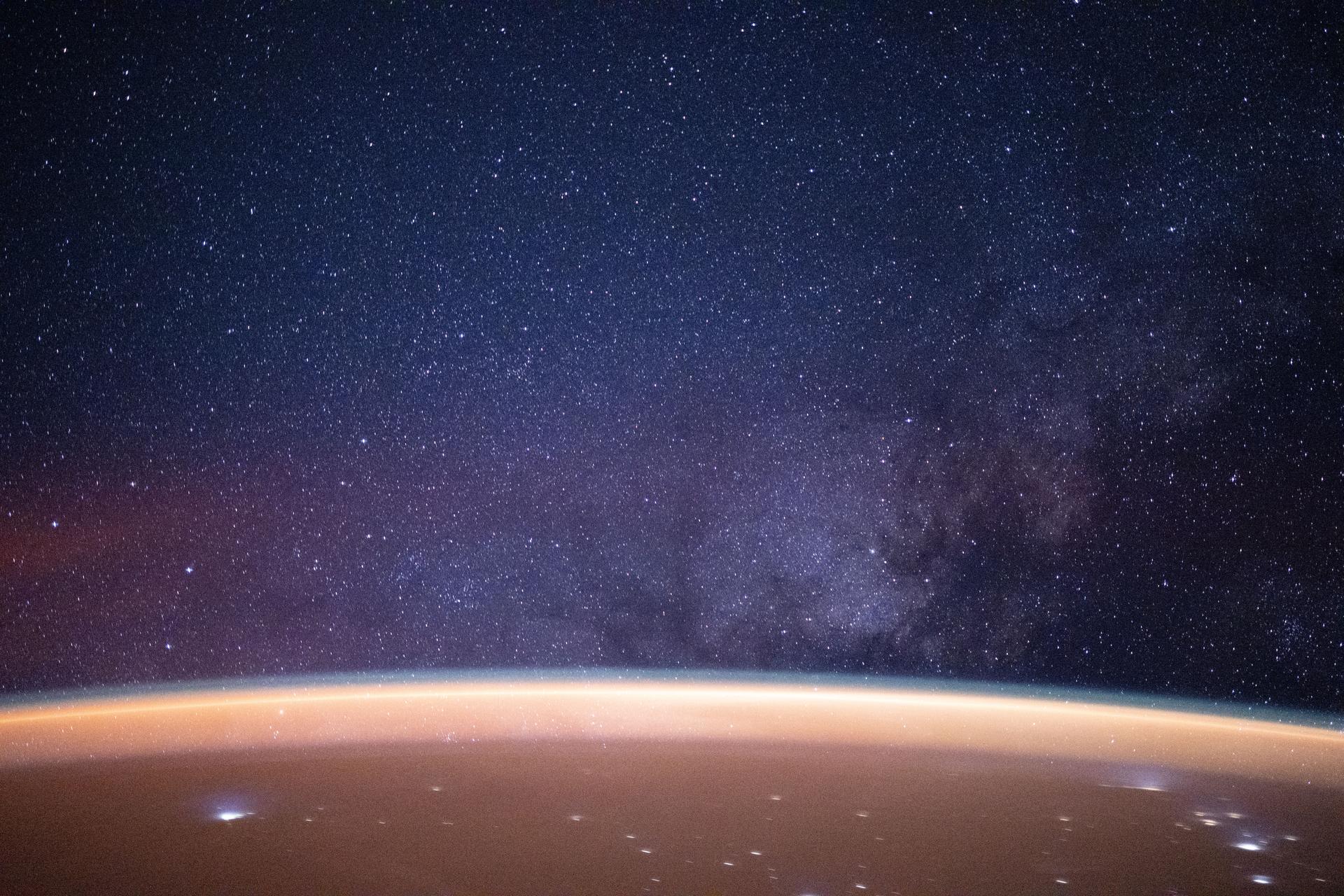
iss073e0982696 (Oct. 25, 2025) --- A reddish airglow blankets Earth beneath a star-filled sky illuminated by the Milky Way. The planet’s surface is sparsely dotted with city lights along the desert coast of the Middle East by the Arabian Sea. The International Space Station was orbiting 258 miles above Earth at approximately 11:34 p.m. local time when this photograph was taken.
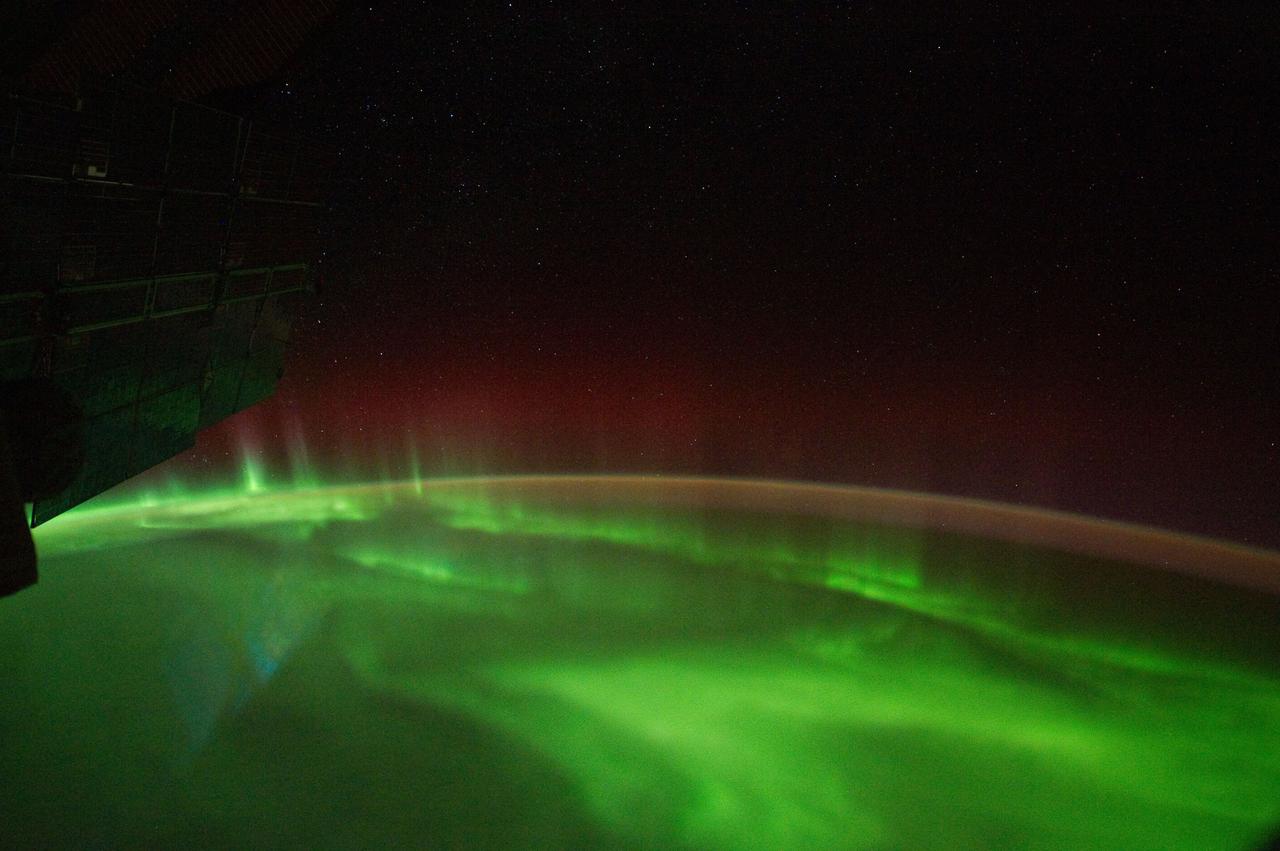
ISS029-E-007502 (18 Sept. 2011) --- This is one of a series of night time images photographed by one of the Expedition 29 crew members from the International Space Station. It features Aurora Australis, airglow, and parts of the southeast Indian Ocean. Nadir coordinates are 50.58 degrees south latitude and 138.28 degrees east longitude.
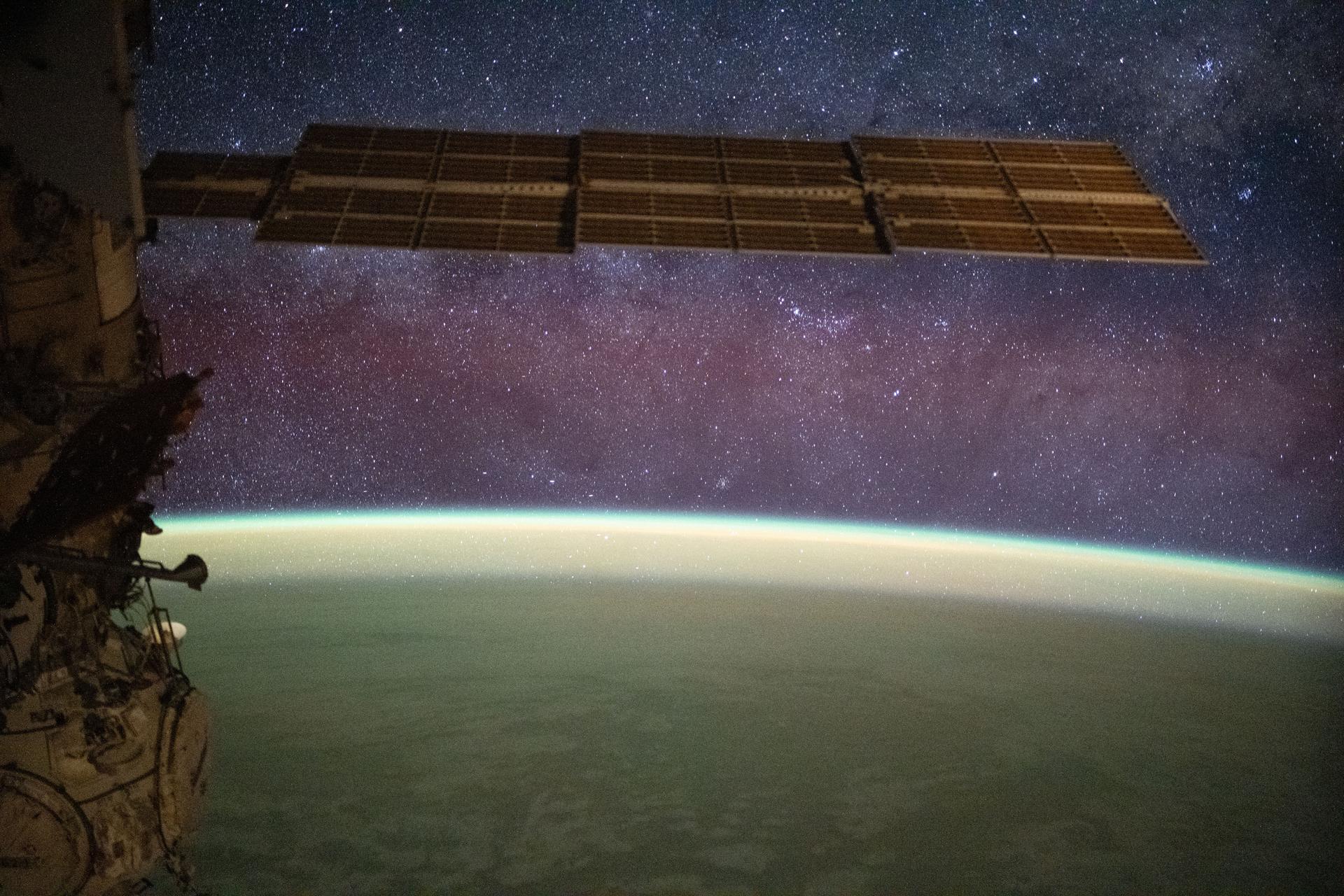
iss073e0982261 (Oct. 24, 2025) --- The Milky Way spans the night sky above a yellow-green airglow that blankets the Atlantic Ocean, midway between South America and Africa. This long-exposure photograph was taken from the International Space Station as it orbited 260 miles above Earth at approximately 11:19 p.m. local time.
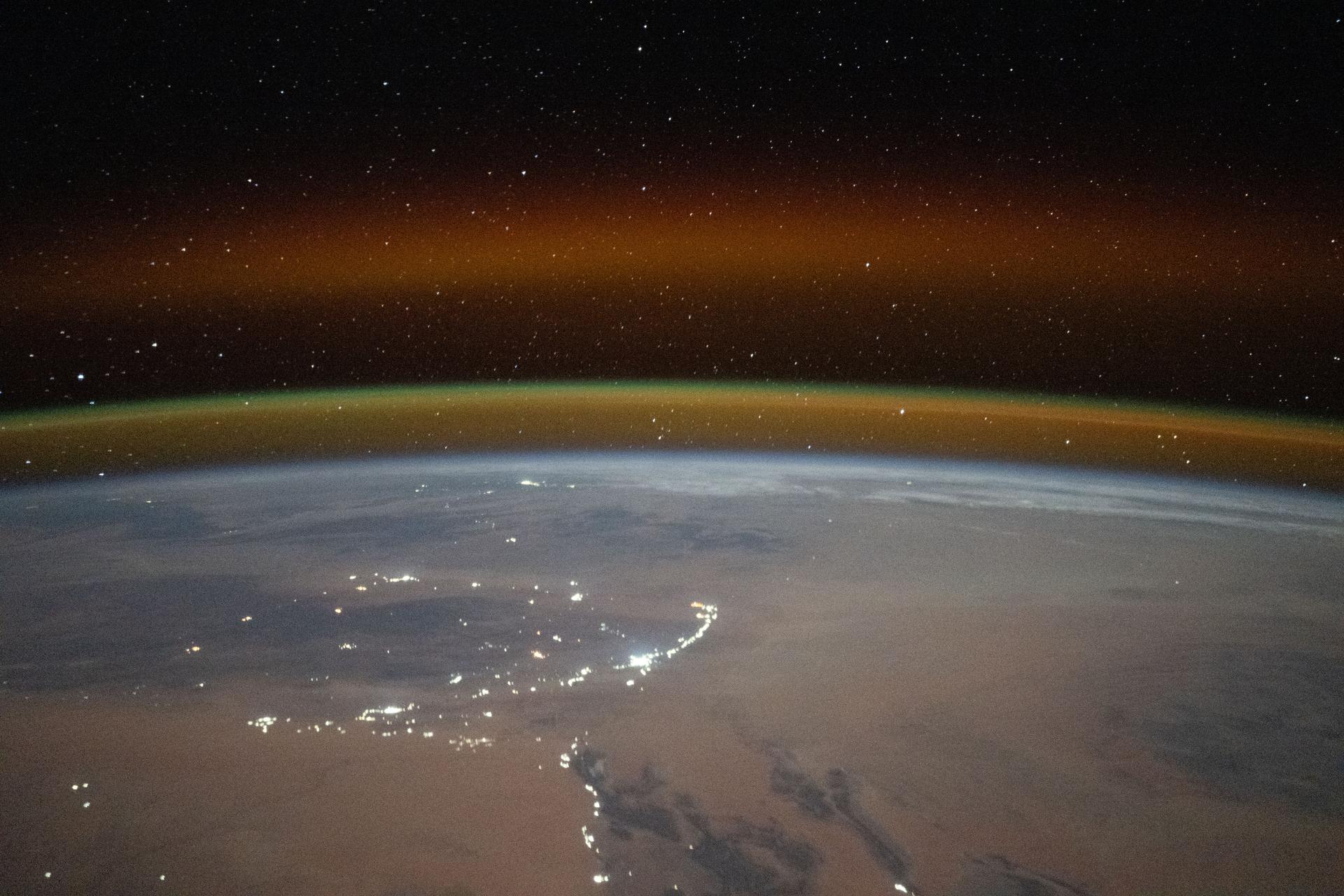
iss073e1198938 (Nov. 28, 2025) --- A yellow-red airglow blankets Earth's horizon as village lights dot the Saharan landscape of Algeria in this photograph taken at approximately 8:50 p.m. local time from the International Space Station as it orbited 261 miles above north Africa.
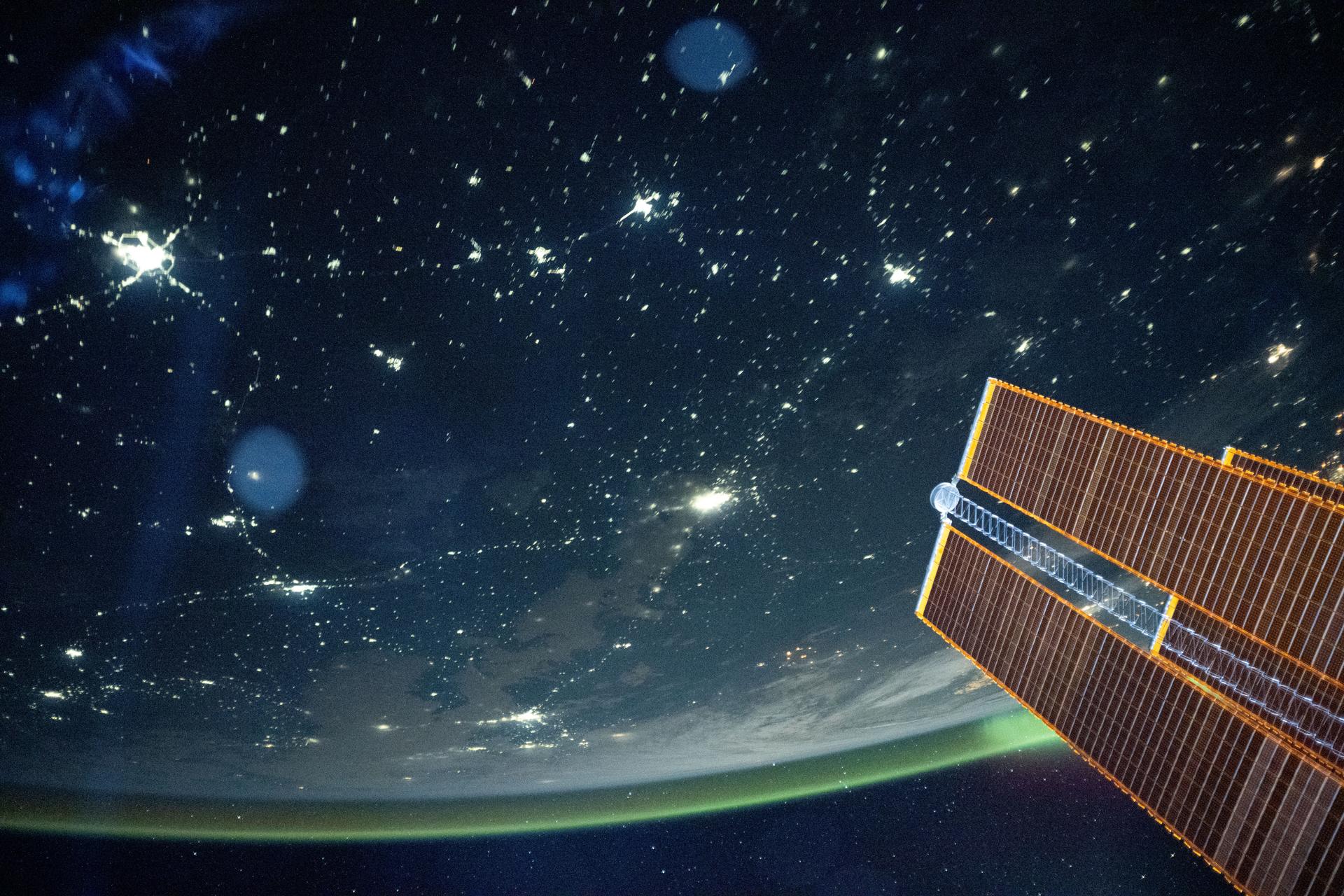
iss073e0823276 (Sept. 14, 2025) --- A tranquil, blue-green airglow blankets Earth's horizon above a sparsely populated region of Kazakhstan in this photograph taken from the International Space Station at approximately 9:33 p.m. local time while orbiting 263 miles above.
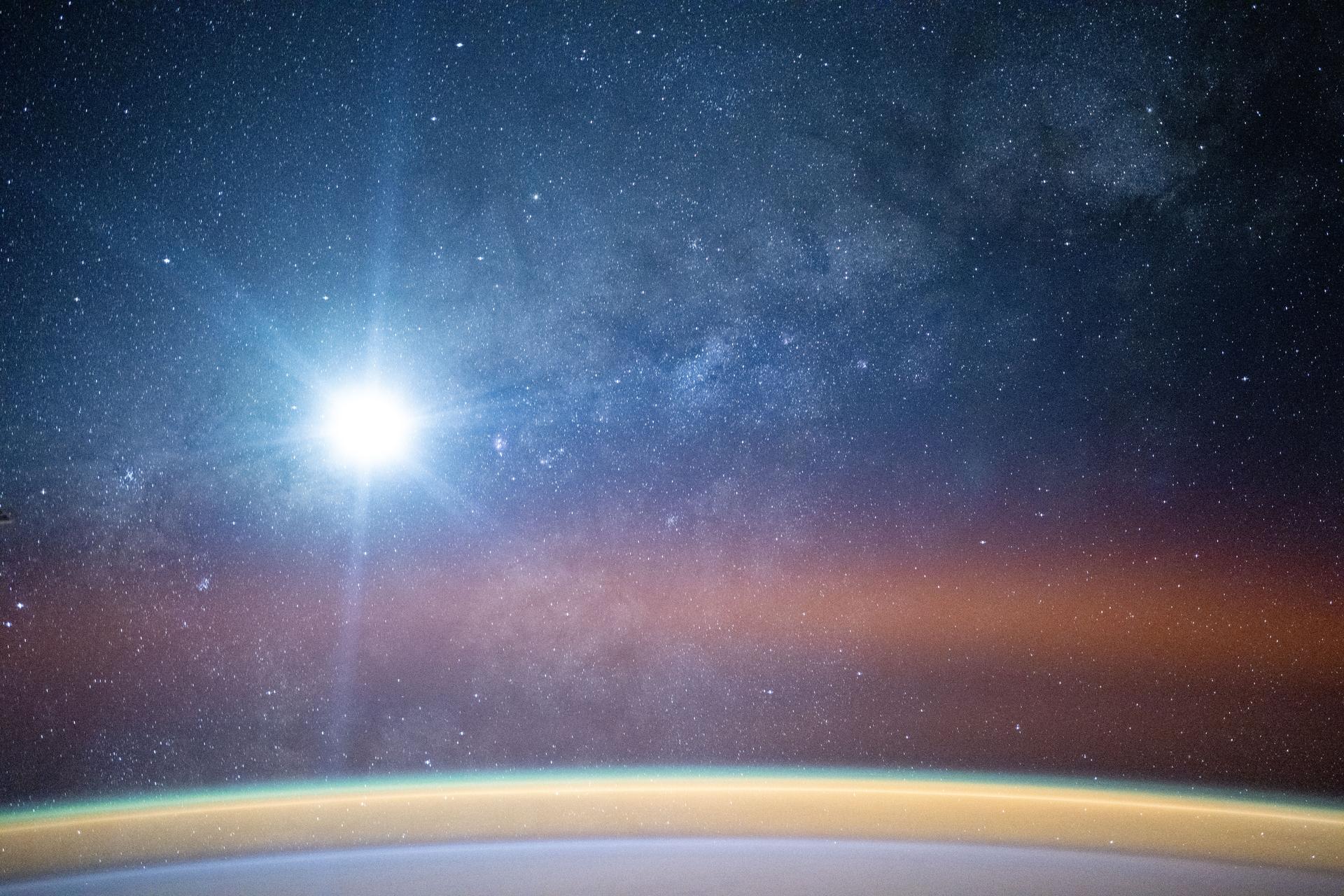
iss073e0982823 (Oct. 26, 2025) --- The Moon glares into a camera aboard the International Space Station as it orbited 259 miles above the Atlantic Ocean off the coast of Africa at approximately 10:49 p.m. local time. A bright airglow blankets Earth's horizon as the Milky Way illuminates the night sky.
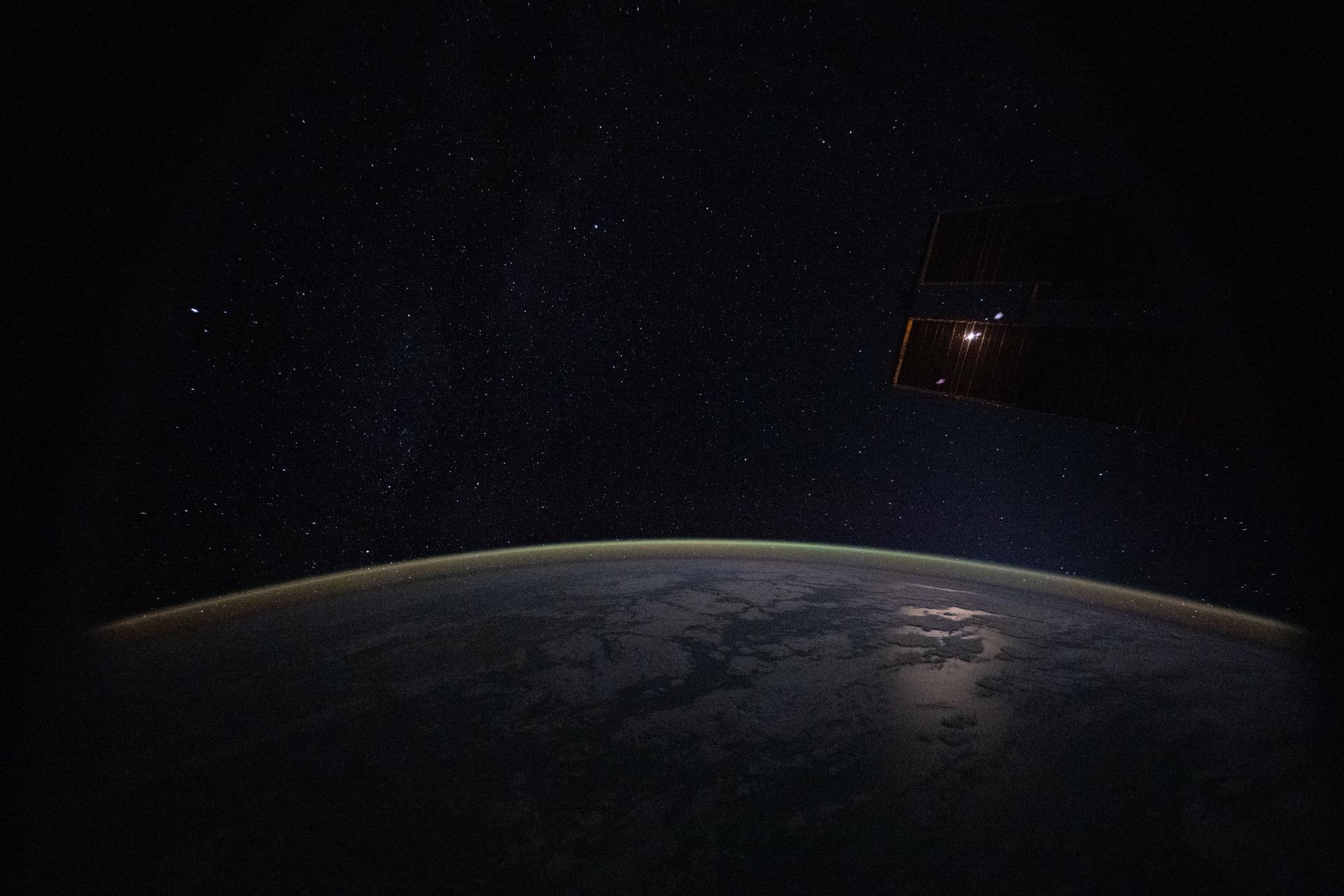
iss074e0472536 (April 12, 2026) --- This serene image, taken from the International Space Station as it orbited 265 miles above the Indian Ocean, highlights a yellow‑green airglow blanketing Earth’s atmosphere beneath a starry sky at approximately 2:37 a.m. local time. Credit: NASA/Chris Williams
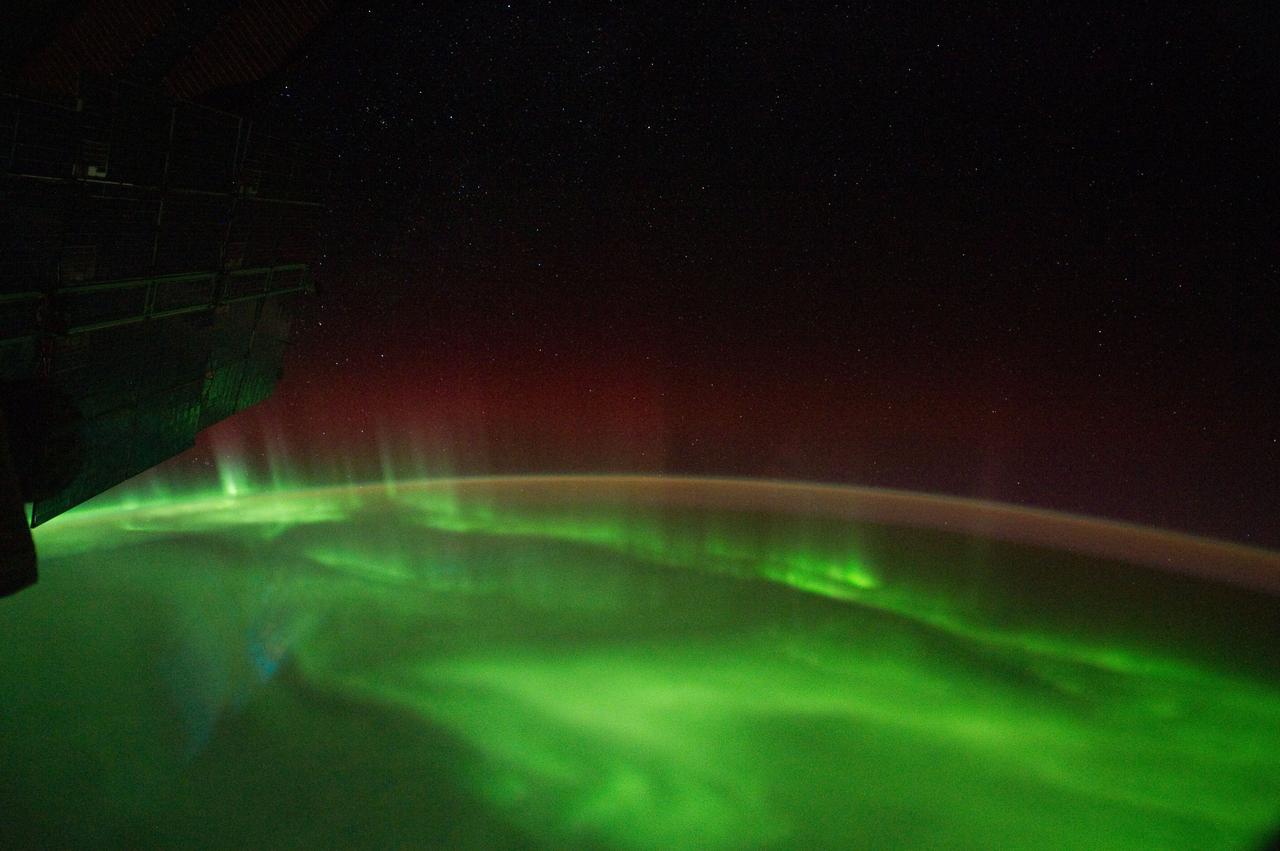
ISS029-E-007500 (18 Sept. 2011) --- This is one of a series of night time images photographed by one of the Expedition 29 crew members from the International Space Station. It features the Aurora Australis, airglow and parts of the southeastern Indian Ocean. Nadir coordinates are 50.66 degrees south latitude and 137.70 degrees east longitude.

iss073e0982783 (Oct. 26, 2025) --- A red-yellow airglow blankets Earth as the last rays of an orbital sunset illuminate the atmosphere in this photograph from the International Space Station as it orbited 262 miles above the South Atlantic Ocean.

ISS029-E-005853 (17 Sept. 2011) --- This is one of a series of night time images photographed by one of the Expedition 29 crew members from the International Space Station. The image features airglow on the horizon against a starry sky with Russian spacecraft Soyuz and Progress in the foreground. Nadir coordinates are 27.8 degrees south latitude and 137.6 west longitude. The photo was taken at 11:32:37 GMT, Sept. 17, 2011.
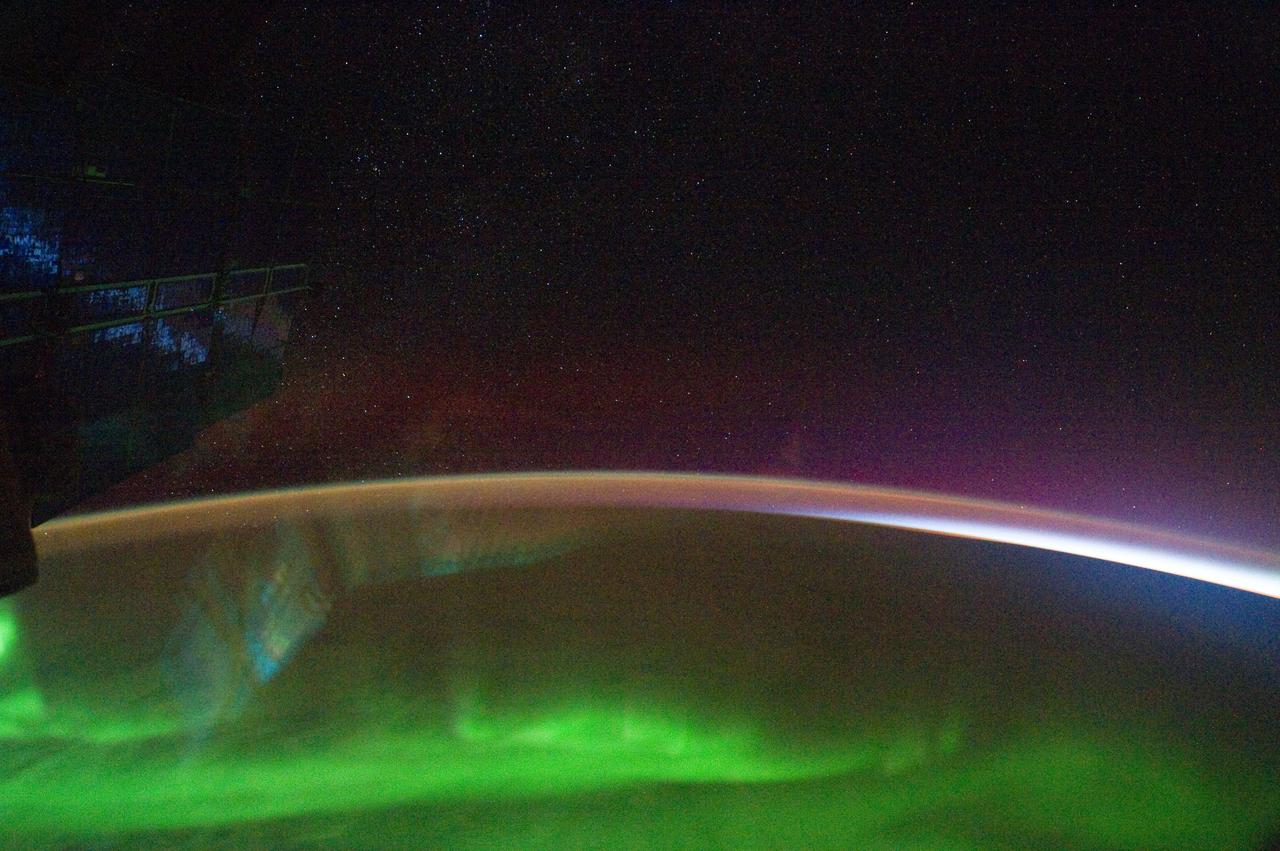
ISS029-E-007455 (18 Sept. 2011) --- This is one of a series of night time images photographed by one of the Expedition 29 crew members from the International Space Station. It features Aurora Australis, airglow, Earth?s Terminator and the southeastern Indian Ocean. Nadir coordinates are 51.78 degrees south latitude and 124.41 degrees east longitude.
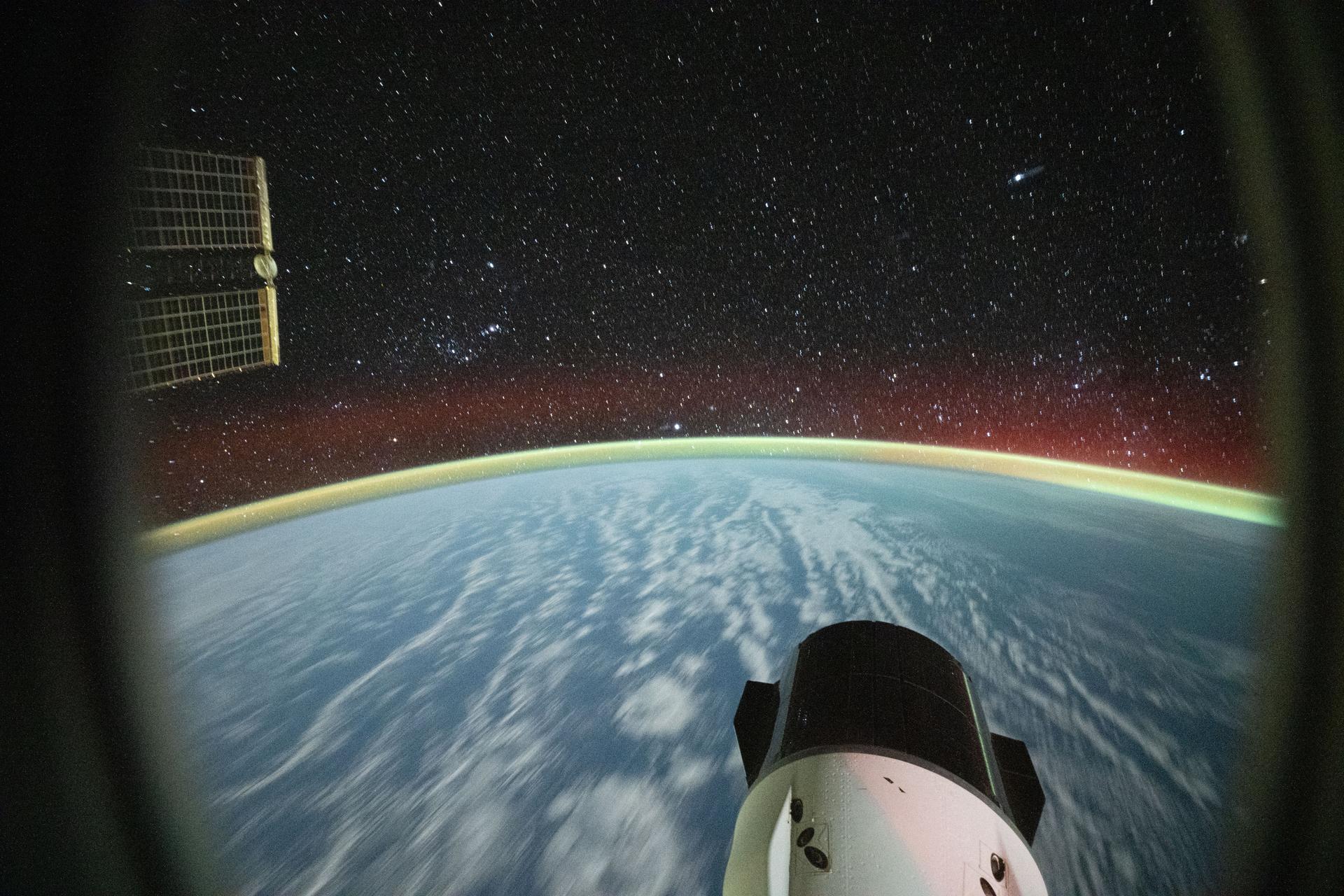
iss073e0818308 (Sept. 29, 2025) --- This long-exposure photograph from the International Space Station was taken 263 miles above the Indian Ocean at approximately 11:02 p.m. local time. The image reveals clouds stretching into a soft blur beneath the orbital outpost, a bright airglow blanketing Earth’s horizon, and faint star trails arcing across the night sky. The SpaceX Dragon cargo spacecraft is visible in the lower foreground, framed by a window aboard the SpaceX Dragon crew spacecraft.

iss073e0982679 (Oct. 25, 2025) --- The Milky Way spans the night sky above a bright orange-yellow airglow that blankets the city lights along the east coast of Africa, from Kenya to Somalia. The International Space Station was orbiting 259 miles above the Indian Ocean, north of Madagascar, at approximately 10:29 p.m. local time when this photograph was taken.
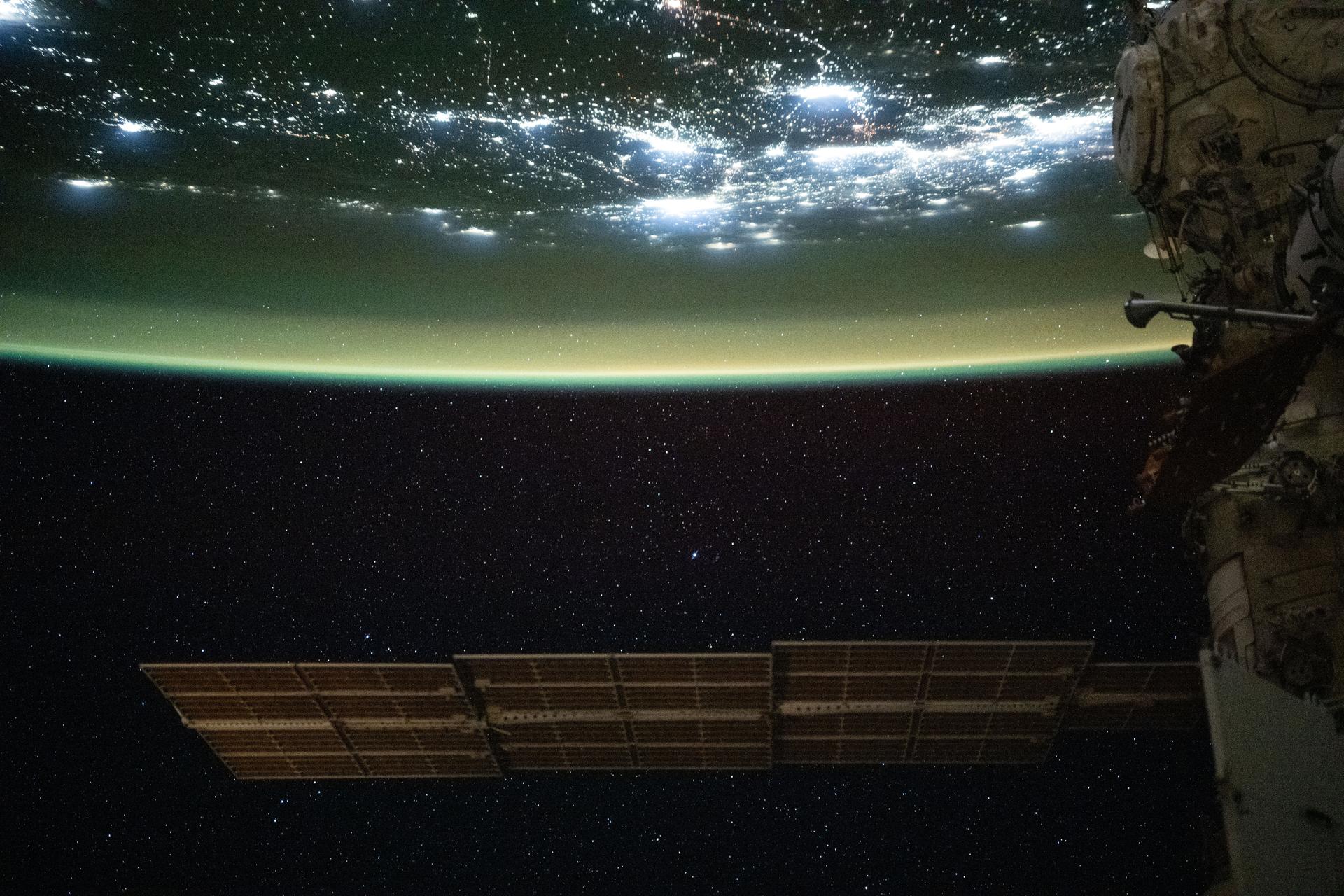
iss073e0982431 (Oct. 25, 2025) --- A yellow-green airglow, caused by atoms and molecules releasing energy as light after being excited by ultraviolet sunlight or cosmic rays, blankets the city lights of North America in this photograph, taken at approximately 2:18 a.m. local time from the International Space Station as it orbited 260 miles above Texas.
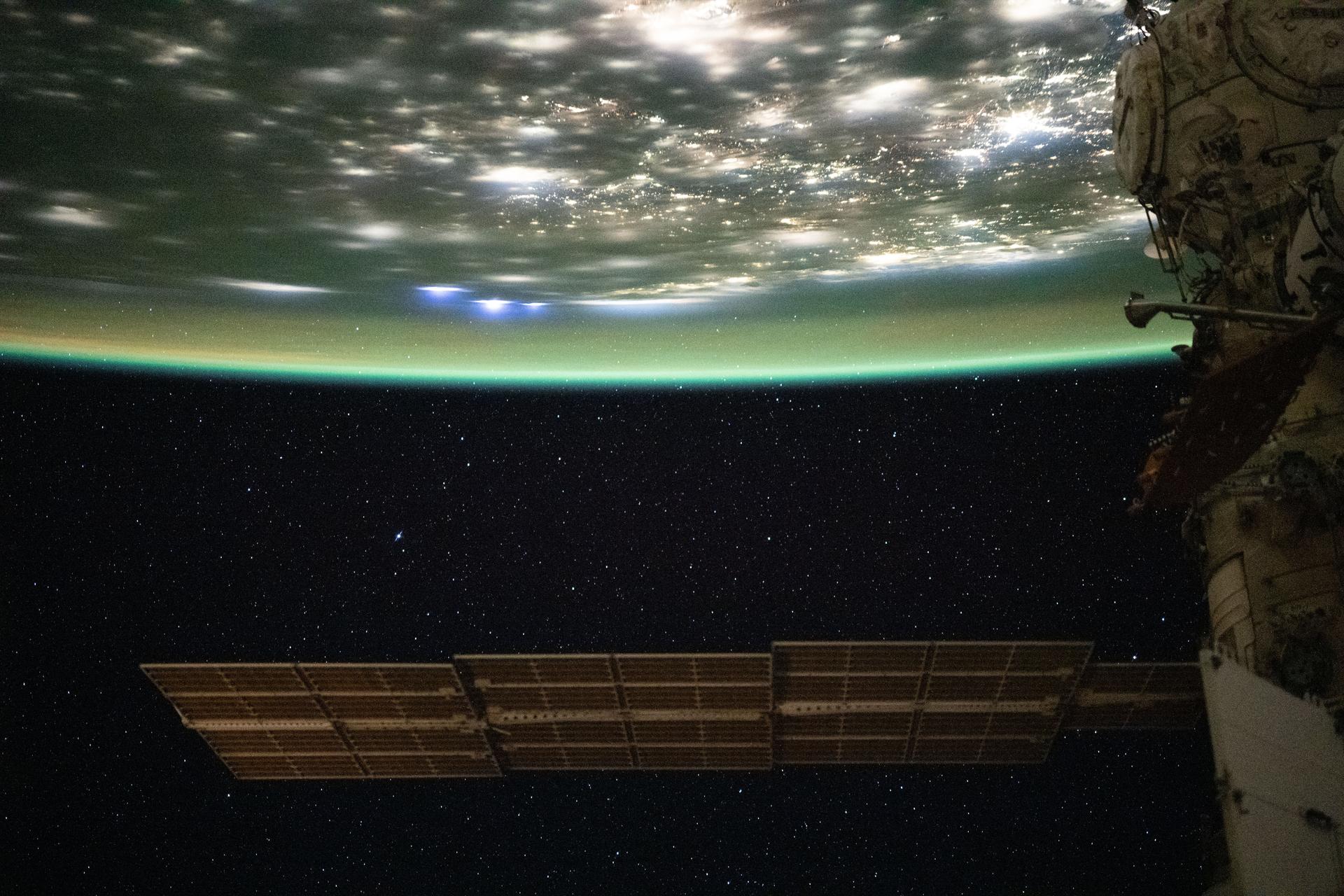
iss073e0982450 (Oct. 25, 2025) --- A blue-green airglow blankets the bright city lights of the eastern United States, with bluish-white lightning strikes visible on Earth's horizon near the center-left of the frame. Stars twinkle in the night sky in the lower half of the image, captured at approximately 2:03 a.m. local time from the International Space Station as it orbited 262 miles above northeastern Pennsylvania.
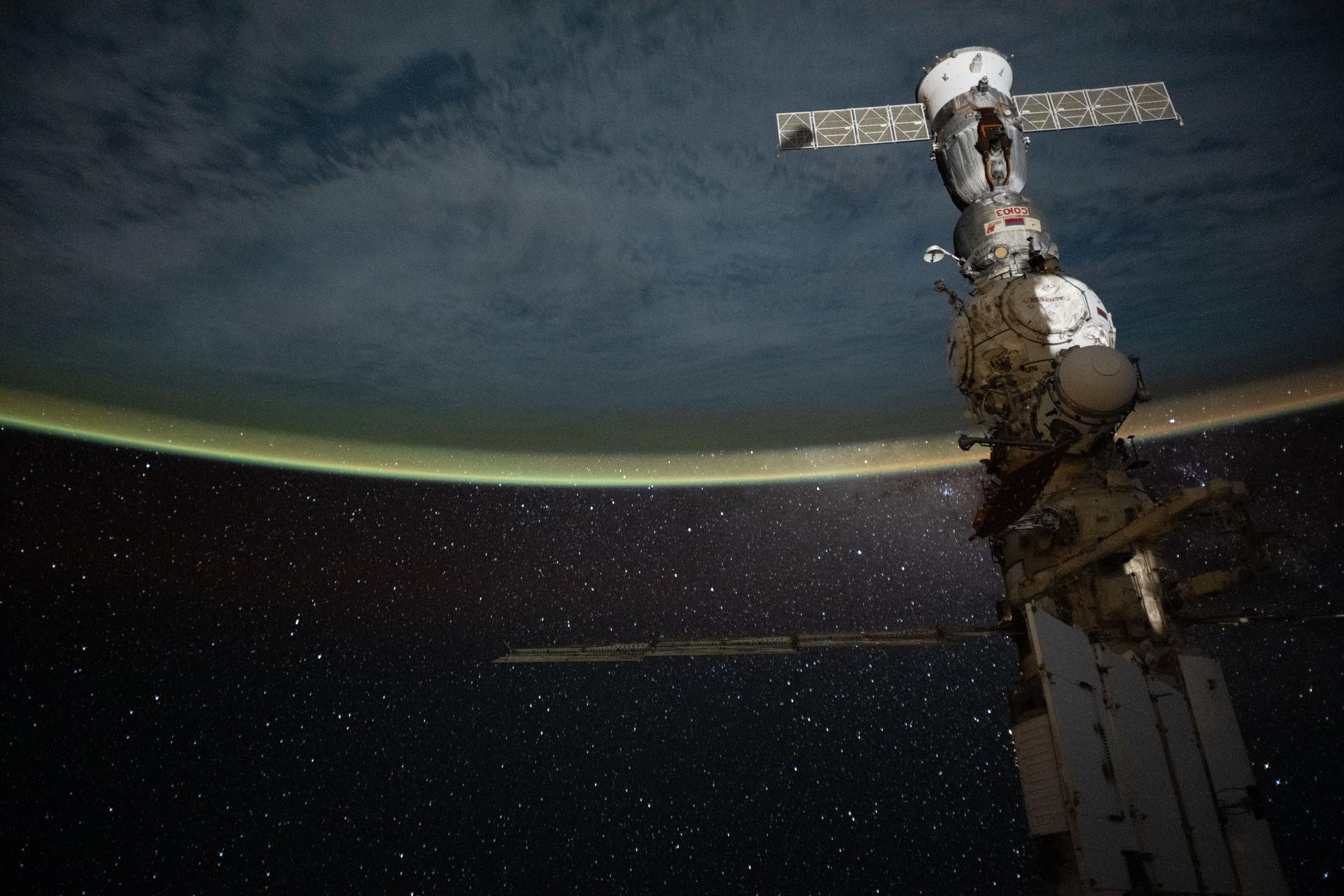
iss073e0870099 (Oct. 13, 2025) --- A yellow-green airglow blankets Earth’s horizon beneath a star-filled sky in this long-exposure photograph taken from the International Space Station as it orbited 265 miles above the cloudy Pacific Ocean off the coast of Chile. In the right foreground, the Soyuz MS-27 crew spacecraft is docked to the Prichal module, which is itself attached to the Nauka science module.
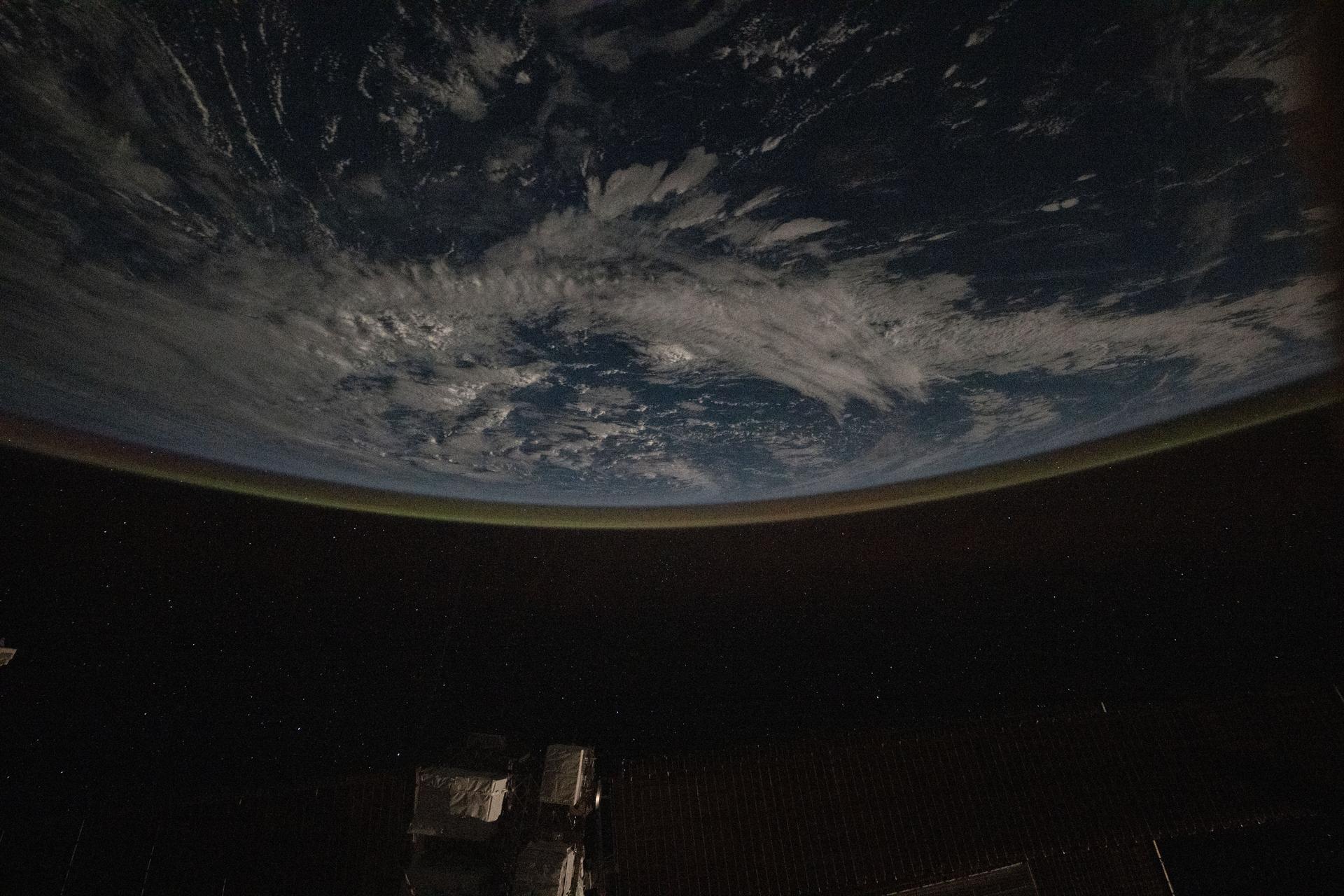
iss073e0780028 (Sept. 2, 2025) --- A faint airglow blankets Earth's horizon in this photograph taken from the International Space Station as it orbited 259 miles above the Pacific Ocean between Hawaii and California. This natural glow is produced when solar ultraviolet radiation excites oxygen molecules in the upper atmosphere during the day, which then release that energy as visible light at night.
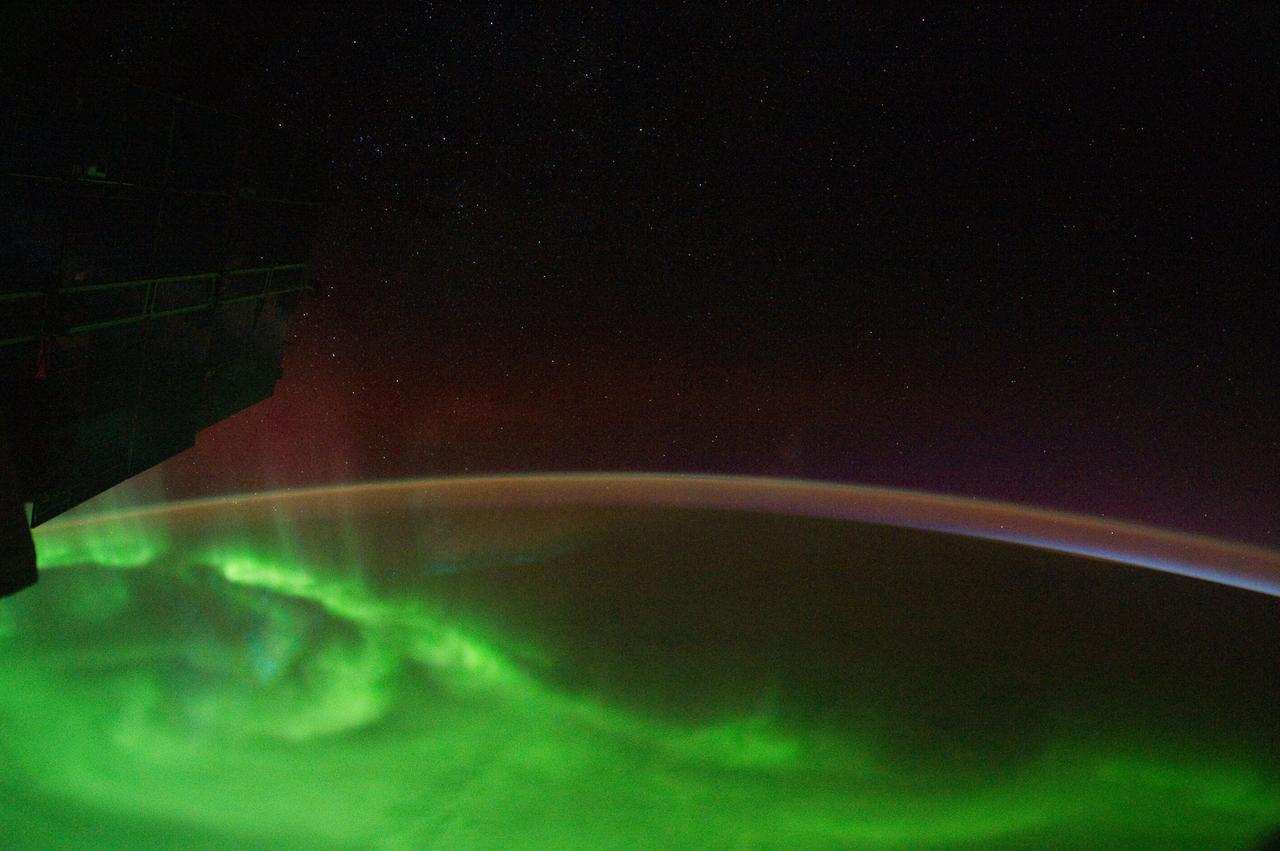
ISS029-E-007473 (18 Sept. 2011) --- This is one of a series of night time images photographed by one of the Expedition 29 crew members from the International Space Station. It features Aurora Australis, airglow, Earth?s Terminator and parts of the southeast Indian Ocean. Nadir coordinates are 51.53 degrees south latitude and 129.80 degrees east longitude.

iss073e0920829 (Oct. 20, 2025) --- This celestial view from a window aboard the SpaceX Dragon crew spacecraft captures the city lights of Central Asia sparkling underneath a bright yellow airglow as an orbital sunrise begins to illuminate Earth's atmosphere underneath a starry night sky. The International Space Station was orbiting 263 miles above Uzbekistan at approximately 4:40 a.m. local time when this long-exposure photograph was taken.
iss073e0982720 (Oct. 25, 2025) --- The Persian Gulf region—from Oman to the United Arab Emirates, with Iran's southwest coast visible across the geographically important waterway—is illuminated beneath a bright yellow-green airglow. This long-exposure photograph, taken at approximately 11:40 p.m. local time from the International Space Station as it orbited 259 miles above northwestern India, also captures the starry expanse of the night sky.

iss073e0705168 (Sept. 18, 2025) --- A faint blue-green airglow blankets Earth’s horizon as city lights define northern Italy's luminous urban corridor (center) from Turin, to Milan, and Venice. At upper right, Rome is visible along the Tyrrhenian coastline. The International Space Station was orbiting 262 miles above Southern Europe when this image was captured at approximately 11:14 p.m. local time.
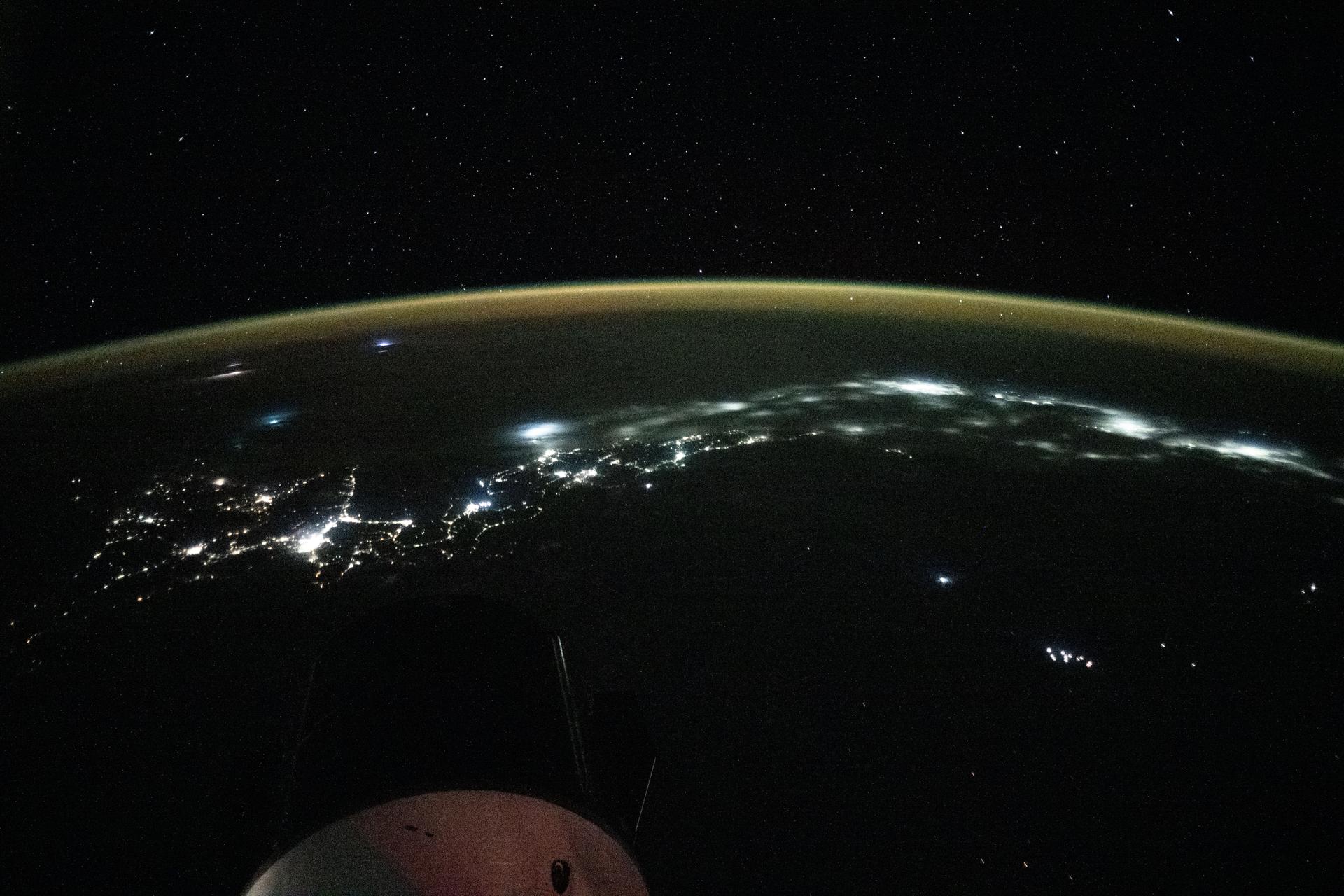
iss073e0703552 (Sept. 18, 2025) --- City lights trace the Japanese coastline underneath a dim yellow-green airglow in this nighttime view across the Sea of Japan, revealing the metropolitan areas (from left to right) of Sapporo, Sendai, Tokyo, and Nagoya. The International Space Station was orbiting 262 miles above Russia’s far eastern coast when this image was captured at approximately 11:29 p.m. local time.
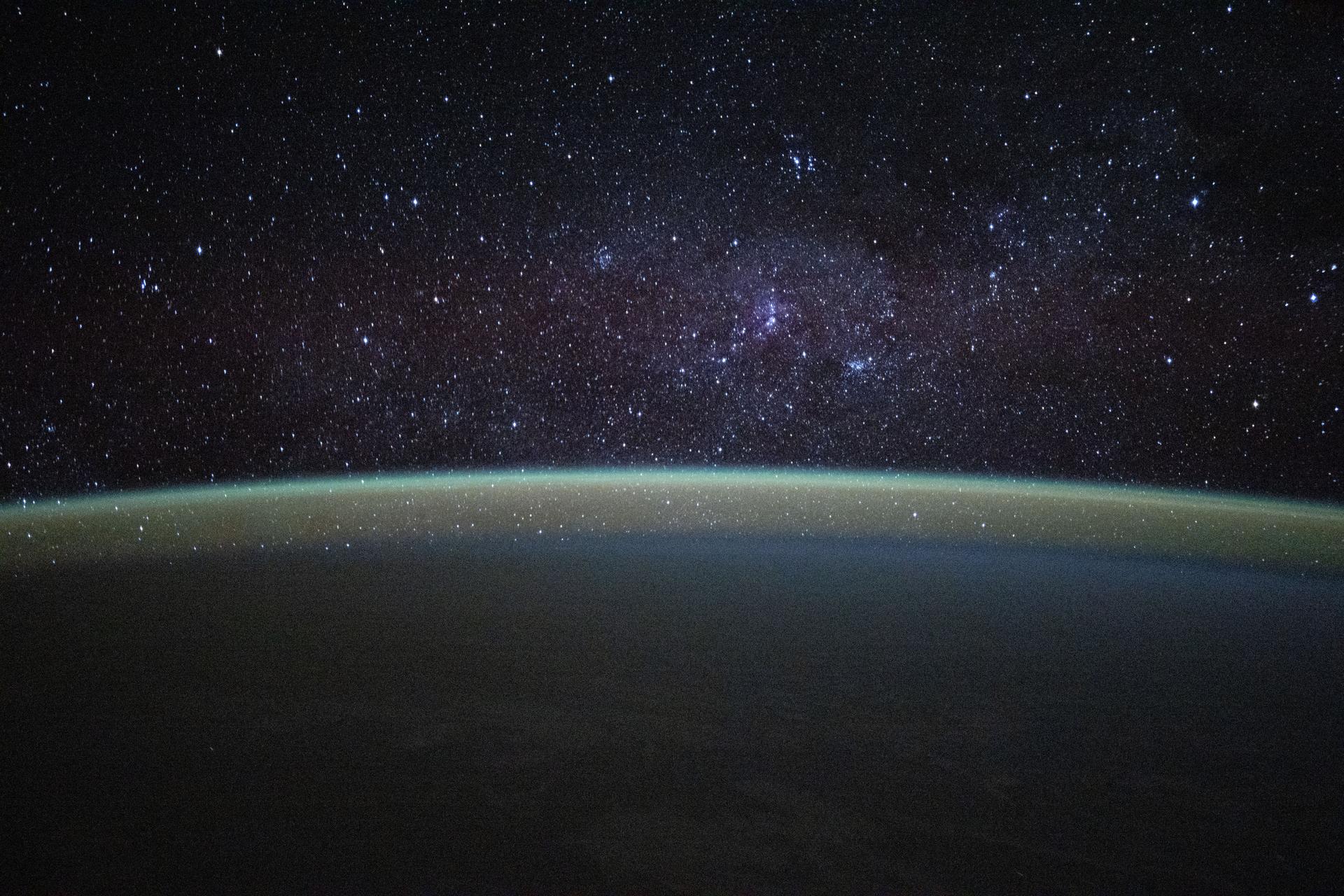
iss073e0830977 (Sept. 27, 2025) --- Stars fill the sky above a serene, blue-green airglow blanketing Earth's horizon in this photograph taken from the International Space Station at approximately 1:05 a.m. local time while orbiting 263 miles above the Republic of Mauritius in the Indian Ocean.
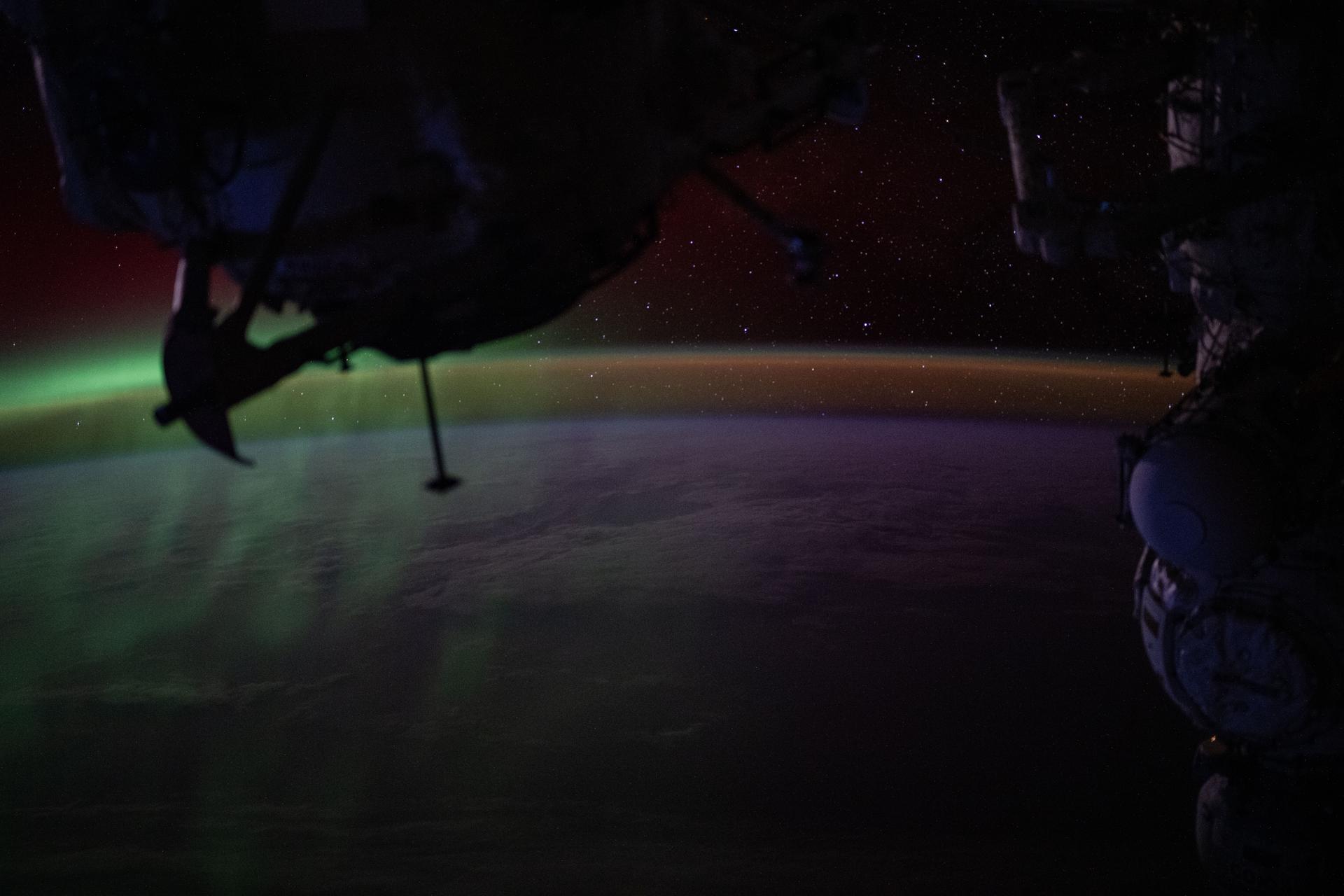
iss073e0865646 (Sept. 28, 2025) --- A wispy green aurora australis fades into a dim orange-yellow airglow above Earth’s horizon in this photograph taken at approximately 2:31 a.m. local time from the International Space Station, as it orbited 270 miles above the Indian Ocean, south of Perth, Australia.
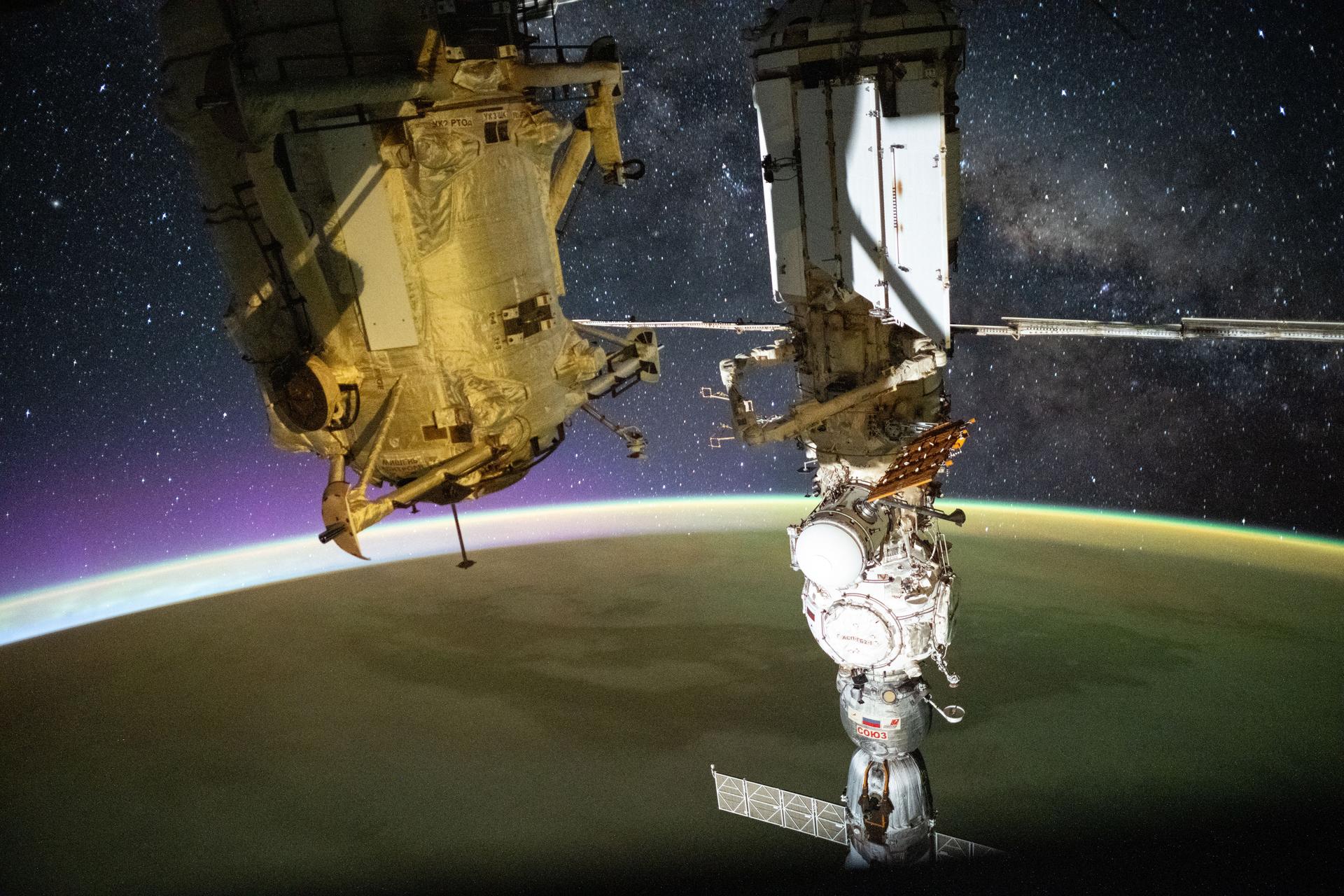
iss073e0880390 (Oct. 13, 2025) --- This long-exposure photograph captures a yellow-green airglow blanketing Earth as an orbital sunrise begins to illuminate the planet’s upper atmosphere. The Milky Way stretches across the star-filled night sky in the background, while the golden-hued Rassvet module and the Soyuz MS-27 crew spacecraft—docked to the Prichal module, itself attached to the Nauka science module—dominate the foreground. The International Space Station was orbiting 268 miles above the South Atlantic Ocean at approximately 2:45 a.m. local time when this photograph was taken.
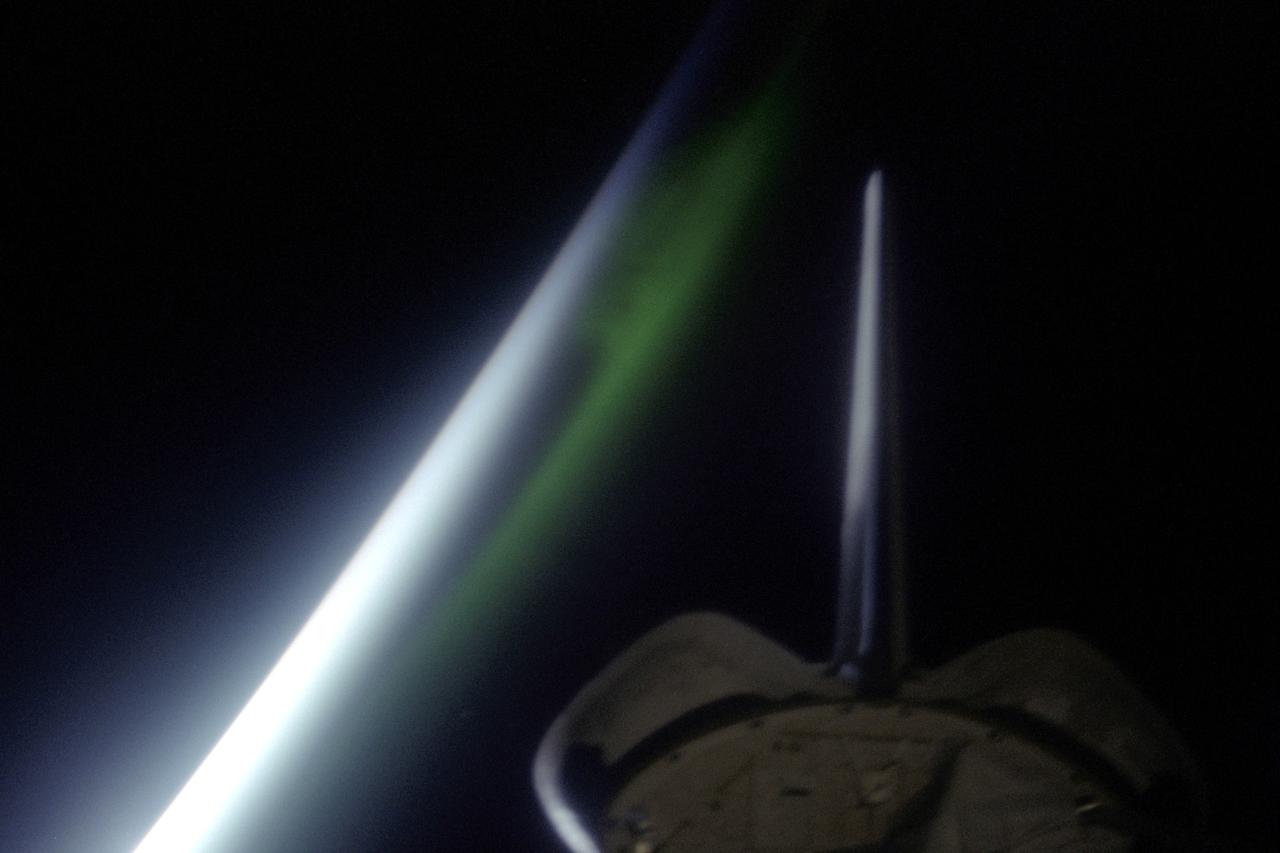
STS099-349-002 (11-22 February 2000) ---The Space Shuttle Endeavour's vertical stabilizer is visible in the foreground of this 35mm frame featuring airglow, the thin greenish band above the horizon. Airglow is radiation emitted by the atmosphere from a layer about 30 kilometers thick and about 100 kilometers altitude. The predominant emission in airglow is the green 5577-Angstrom wavelength emission from atomic oxygen atoms. Airglow is always and everywhere present in the atmosphere; it results from the recombination of molecules that have been broken apart by solar radiation during the day. But airglow is so faint that it can only be seen at night by looking "edge on" at the emission layer, such as the view astronauts have in orbit.

iss074e05319021 (April 19, 2026) --- This serene view from the International Space Station captures a bright orange airglow outlining Earth’s horizon beneath the starry expanse of the night sky. The orbital outpost was soaring 259 miles above Colombia at approximately 2:09 a.m. local time when this photograph was taken. Credit: ESA/Sophie Adenot
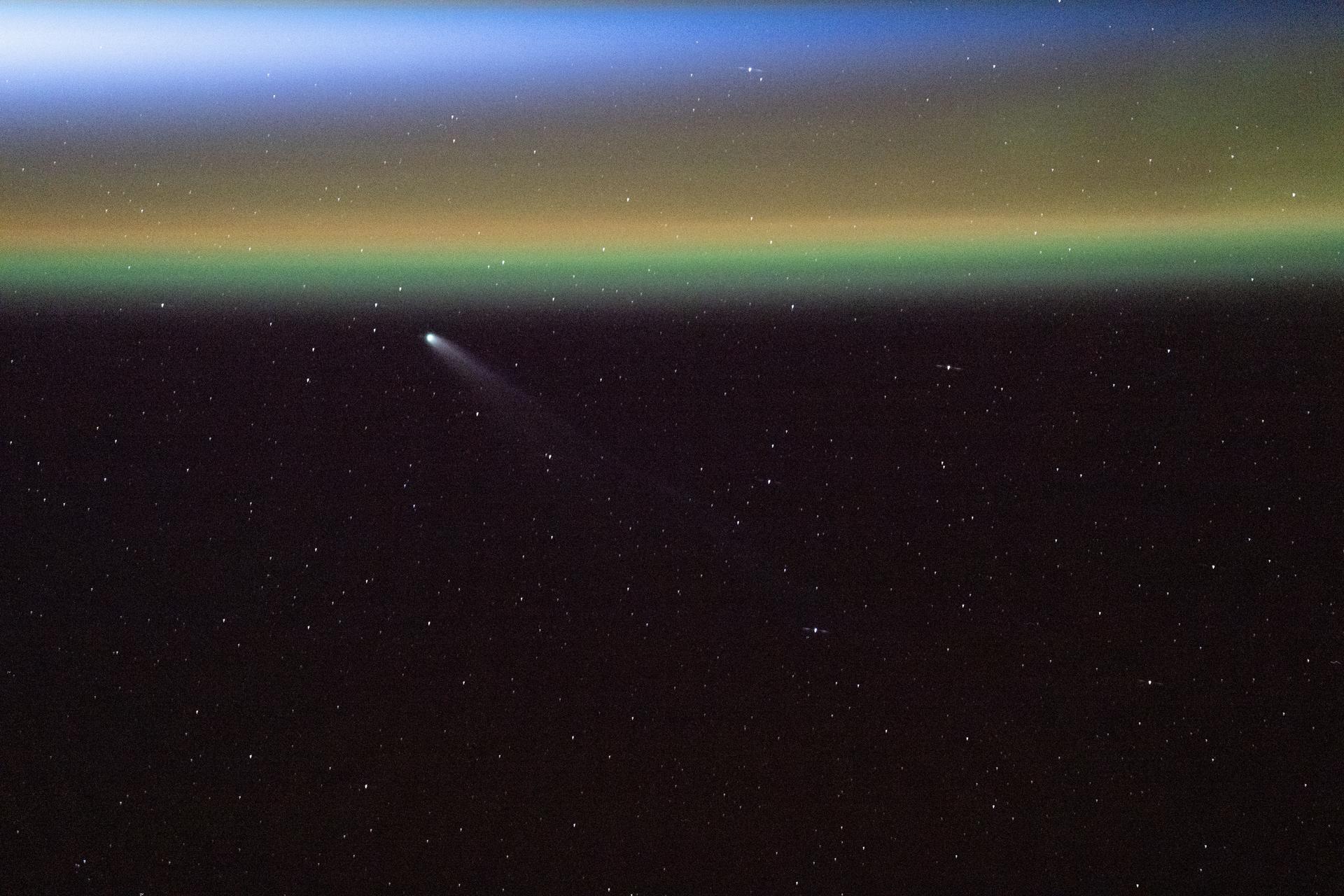
iss073e0982209 (Oct. 24, 2025) --- Comet Swan (C/2025 R2) appears above Earth’s yellow-green airglow just before an orbital sunrise, at a distance of about 27.2 million miles (43.8 million kilometers) from the planet. The International Space Station was orbiting 264 miles above the Atlantic Ocean off the coast of Canada's most easterly province of Newfoundland and Labrador when this photograph was taken.
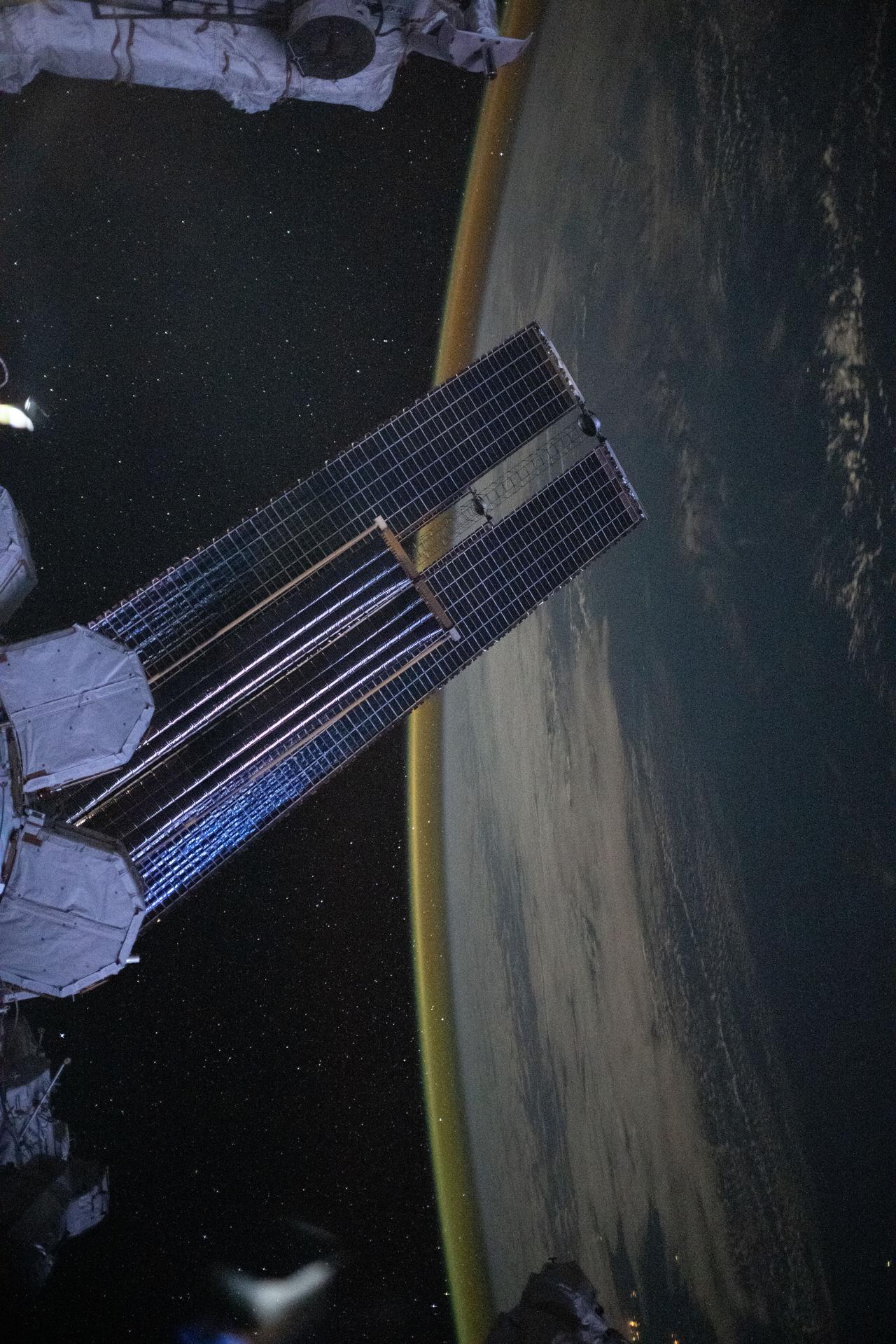
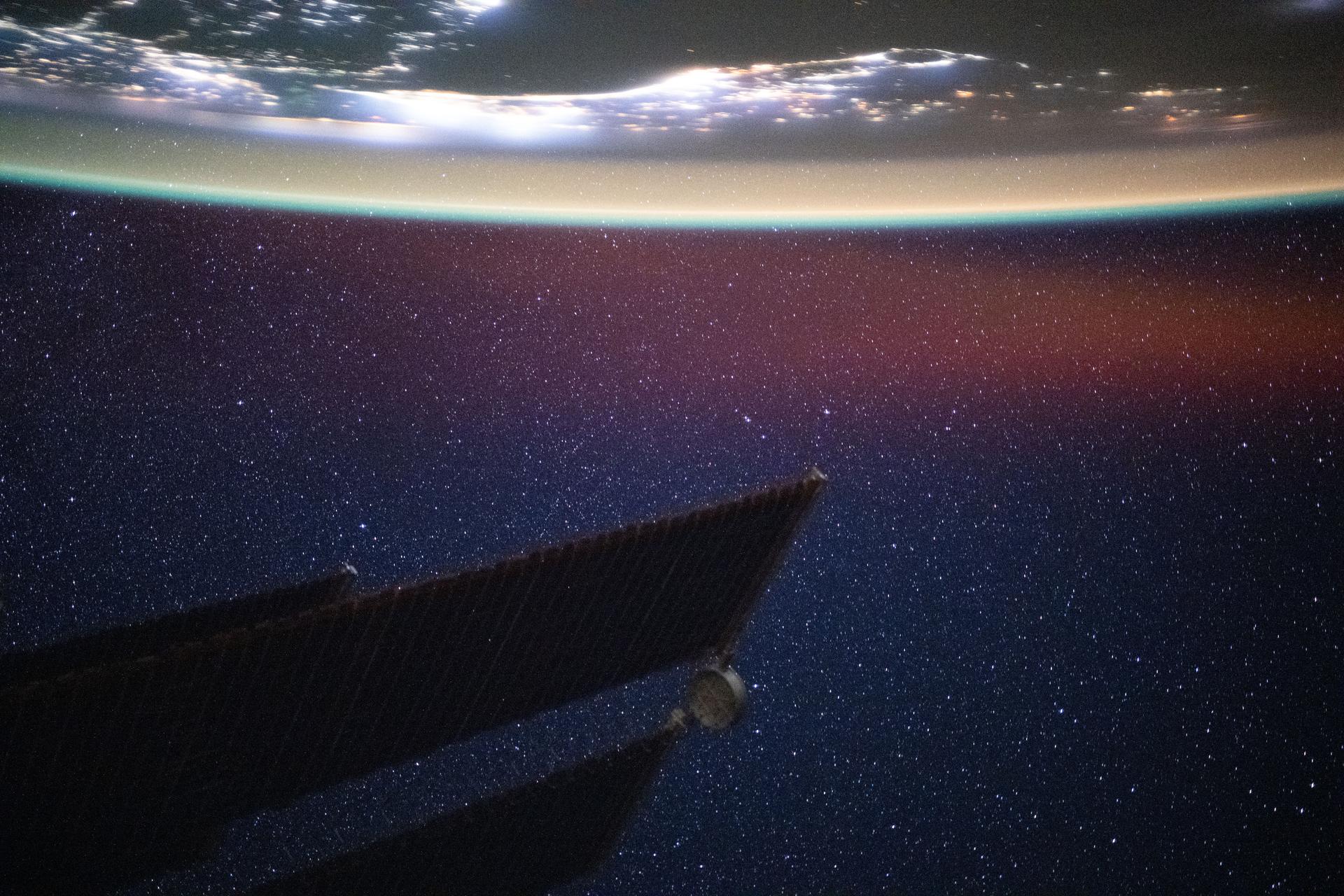
iss073e0828980 (Sept. 14, 2025) --- A dim, yellow-green airglow crowns Earth’s horizon between northwestern Australia and Indonesia’s Lesser Sunda Islands. In the foreground, a set of the orbital outpost’s main solar arrays, partially overlapped by a smaller set of roll-out solar arrays, stretches across the frame. The International Space Station was soaring 262 miles above the tranquil Indian Ocean at approximately 4:07 a.m. local time when this photograph was taken.

iss074e0342246 (Feb. 22, 2026) --- A dim airglow blankets Earth’s horizon as a faint Moon sets above a dark and vast Indian Ocean. The International Space Station was orbiting 265 miles above the Seychelles—an East African archipelago nation of 115 islands—at approximately 11:08 p.m. local time when this photograph was taken. Credit: NASA/Chris Williams
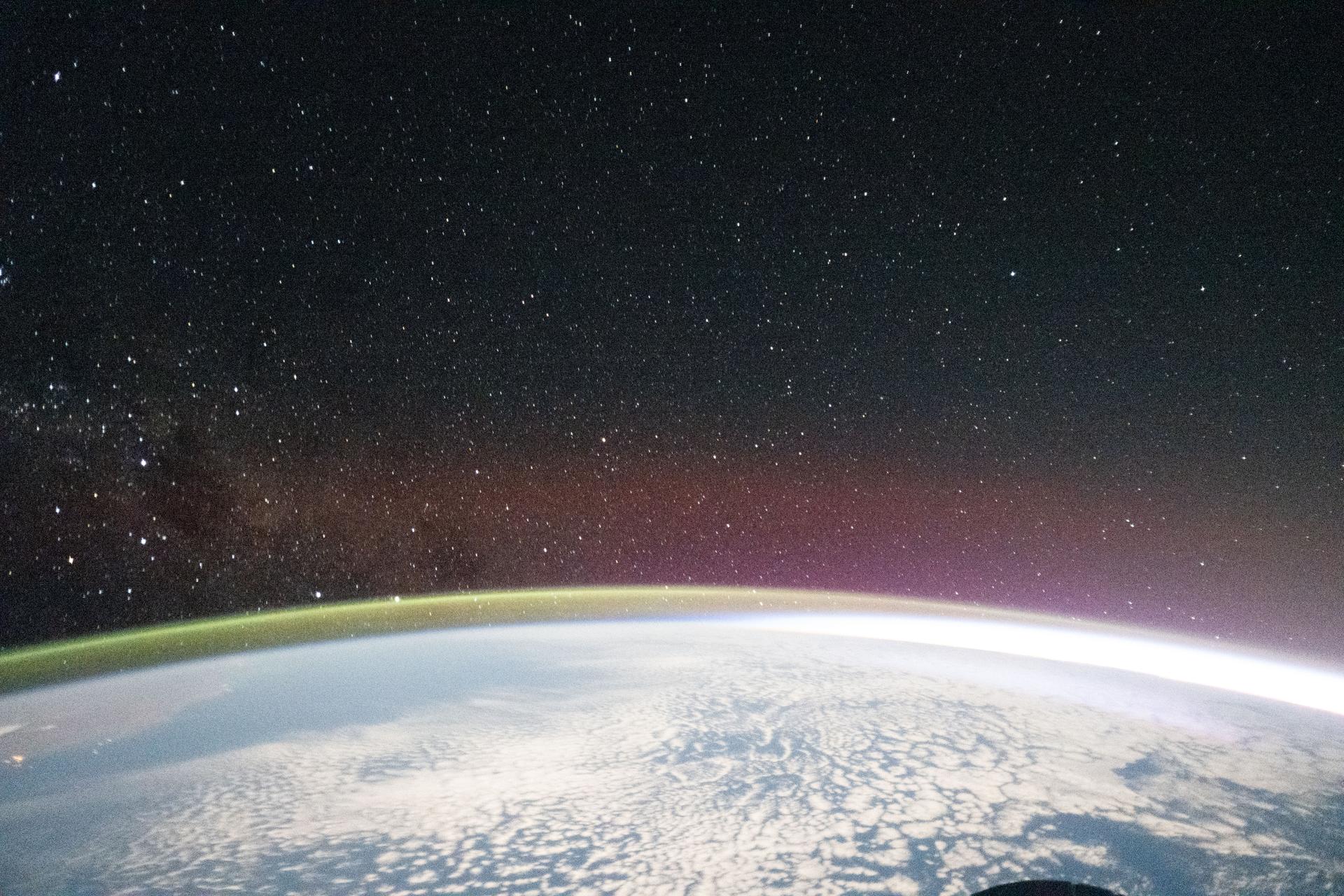
iss074e0043595 (Dec. 29, 2025) --- This long-duration photograph of Earth’s horizon was taken at approximately 8:30 p.m. local time from the International Space Station as it orbited 260 miles above the Indian Ocean, south of Jakarta, Indonesia. A yellow-green airglow crowns the horizon beneath a starry sky and a faint Milky Way. Credit: JAXA/Kimiya Yui

iss074e0342635 (Feb. 22, 2026) --- A dim airglow blankets Earth’s horizon as a faint Moon sets above a dark and vast Indian Ocean in this photograph from the International Space Station, which was orbiting 264 miles above the Maldives—an Asian archipelago nation southwest of India—at approximately 12:11 a.m. local time. Credit: NASA/Chris Williams
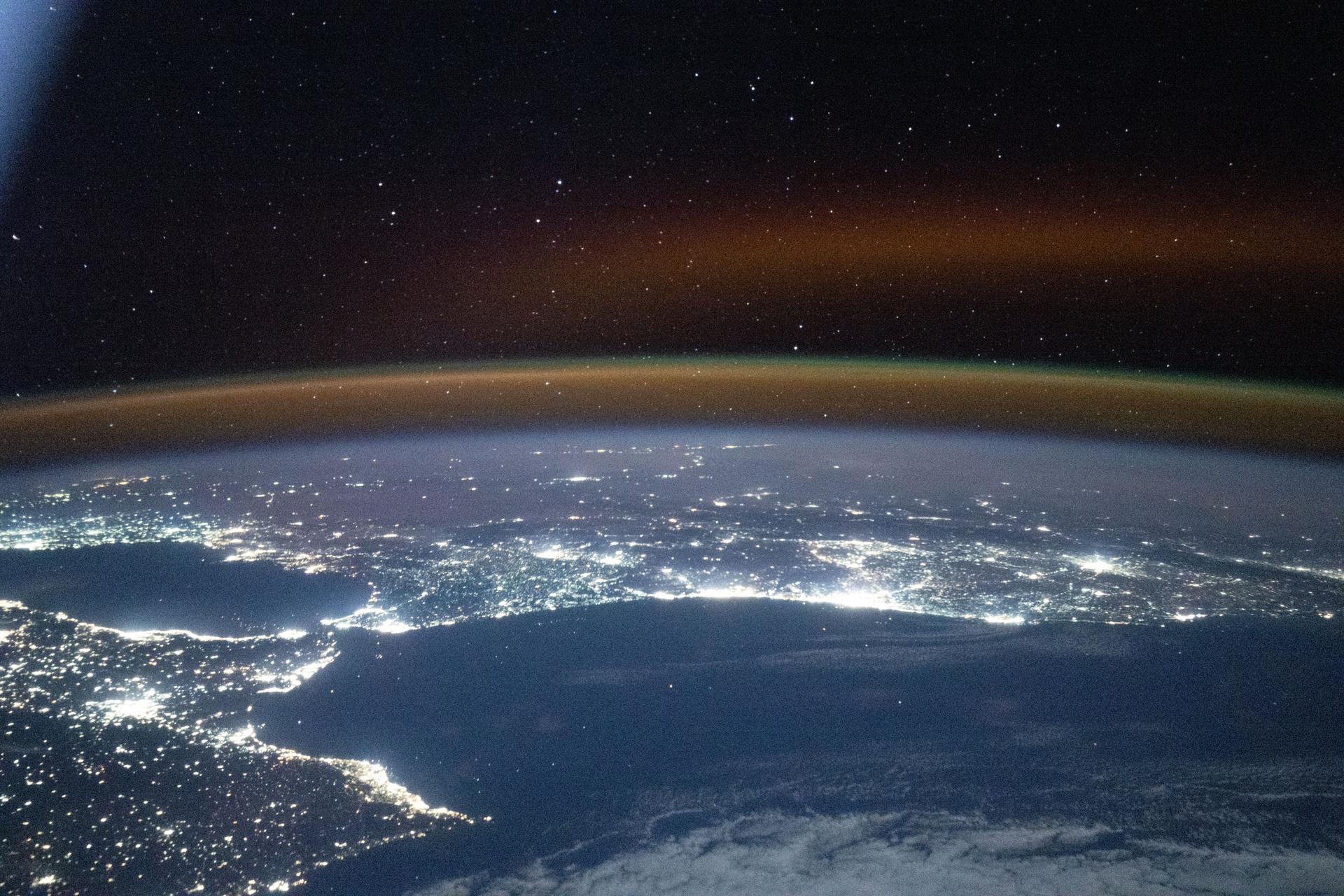
iss073e1198911 (Nov. 28, 2025) --- A red-yellow airglow blankets Earth's horizon as the city lights of southwestern Europe and North Africa sparkle in contrast to the Atlantic Ocean and the Mediterranean Sea that separates the two continents. The International Space Station was orbiting 262 miles above the Atlantic at approximately 7:47 p.m. local time when this photograph was taken.
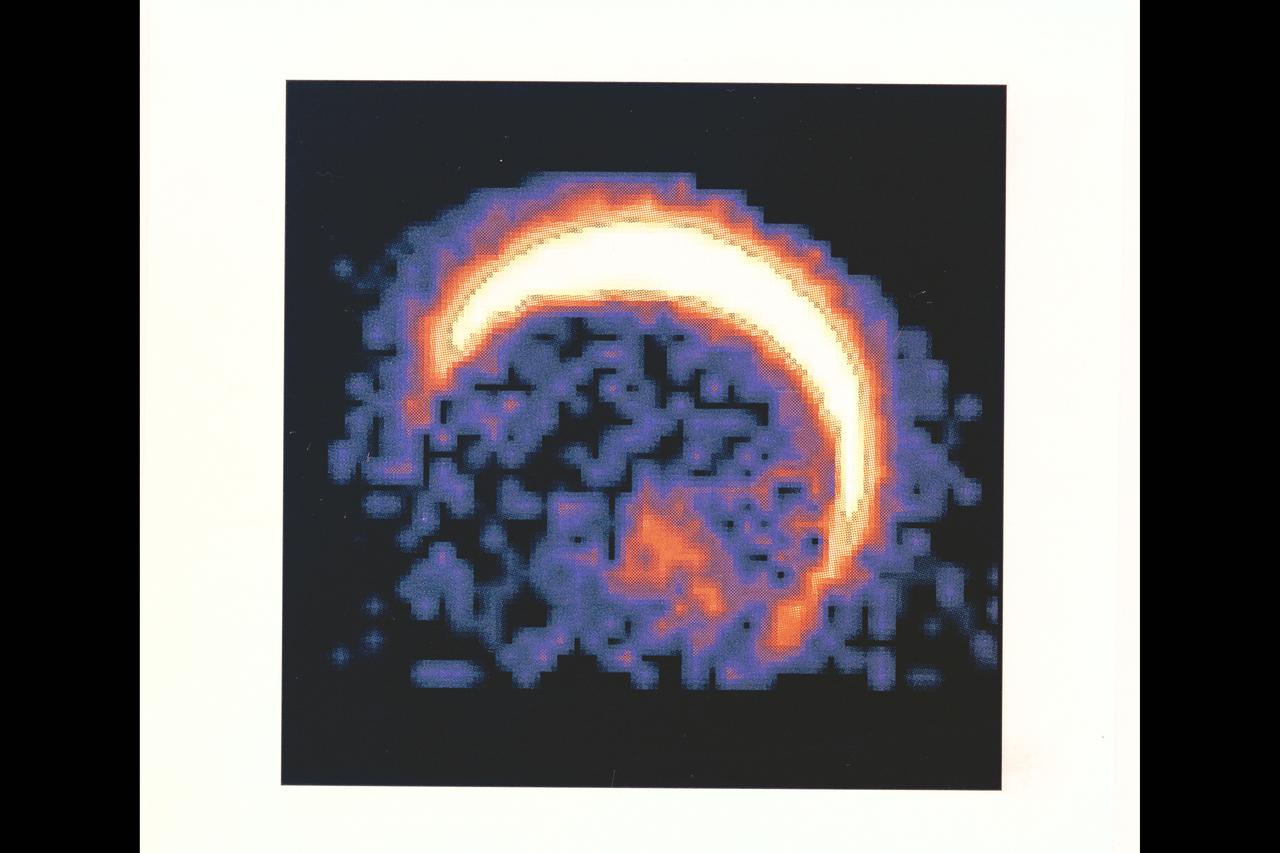
Photograph by Pioneer Venus Orbitor-Aurora and Airglow
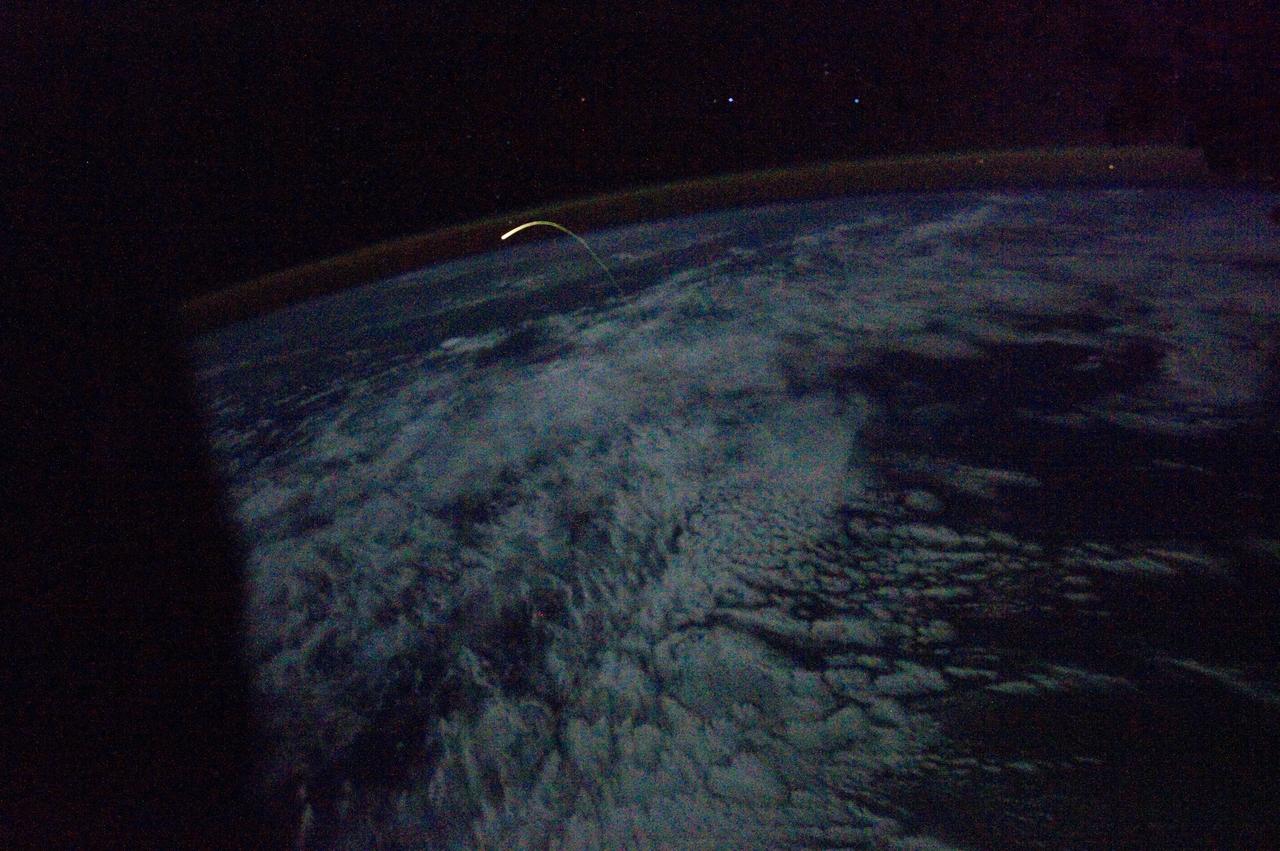
ISS028-E-018216 (21 July 2011) --- This unprecedented view of the space shuttle Atlantis, appearing like a bean sprout against the darkness of space, a faint line of airglow over a dark cloud-covered Earth, on its way home, was photographed by the crew of the International Space Station. Airglow over Earth can be seen in the background.
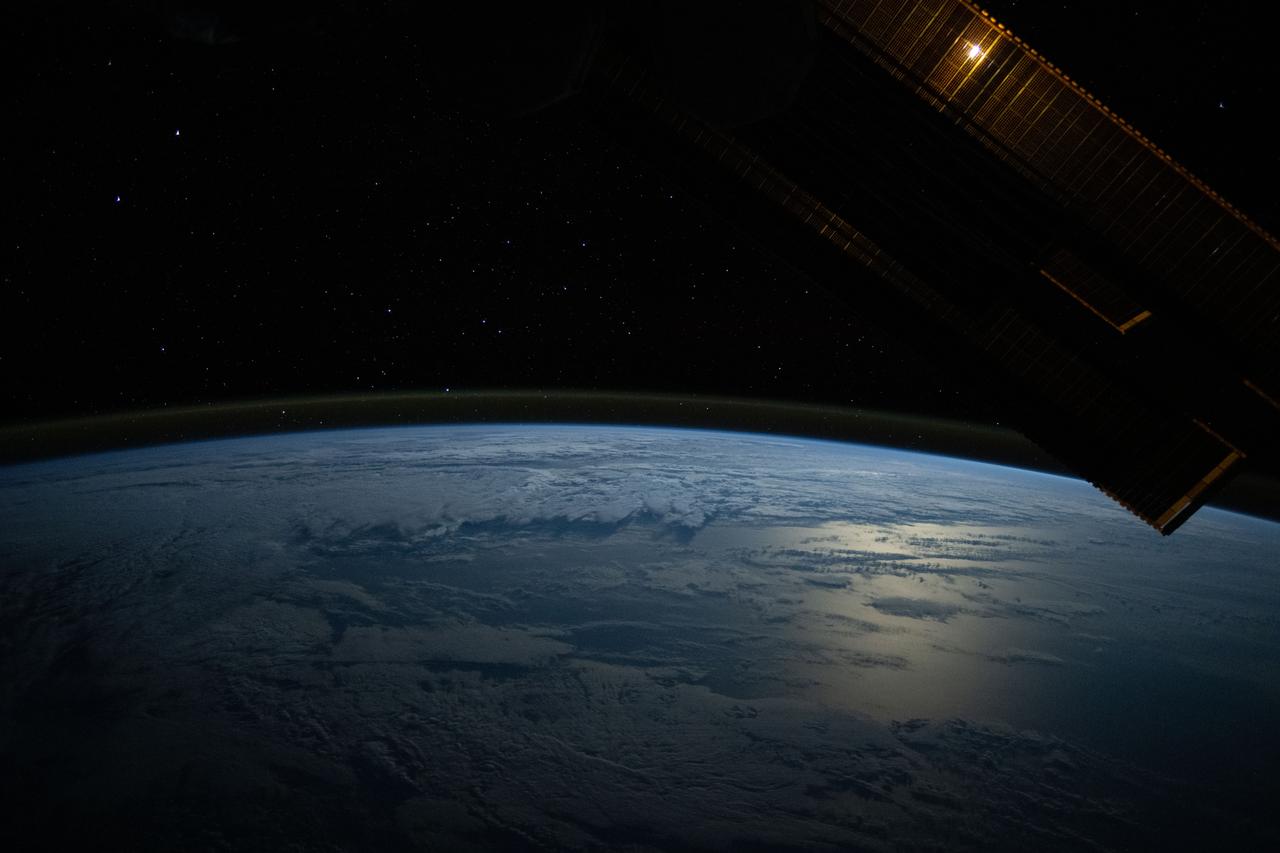
iss071e456772 (July 18, 2024) --- The Moon's glint beams off the Pacific Ocean as stars glitter in the background above the Earth's airglow. The Moon is obscured behind a solar array in this photograph from the International Space Station as it orbited 264 miles above.
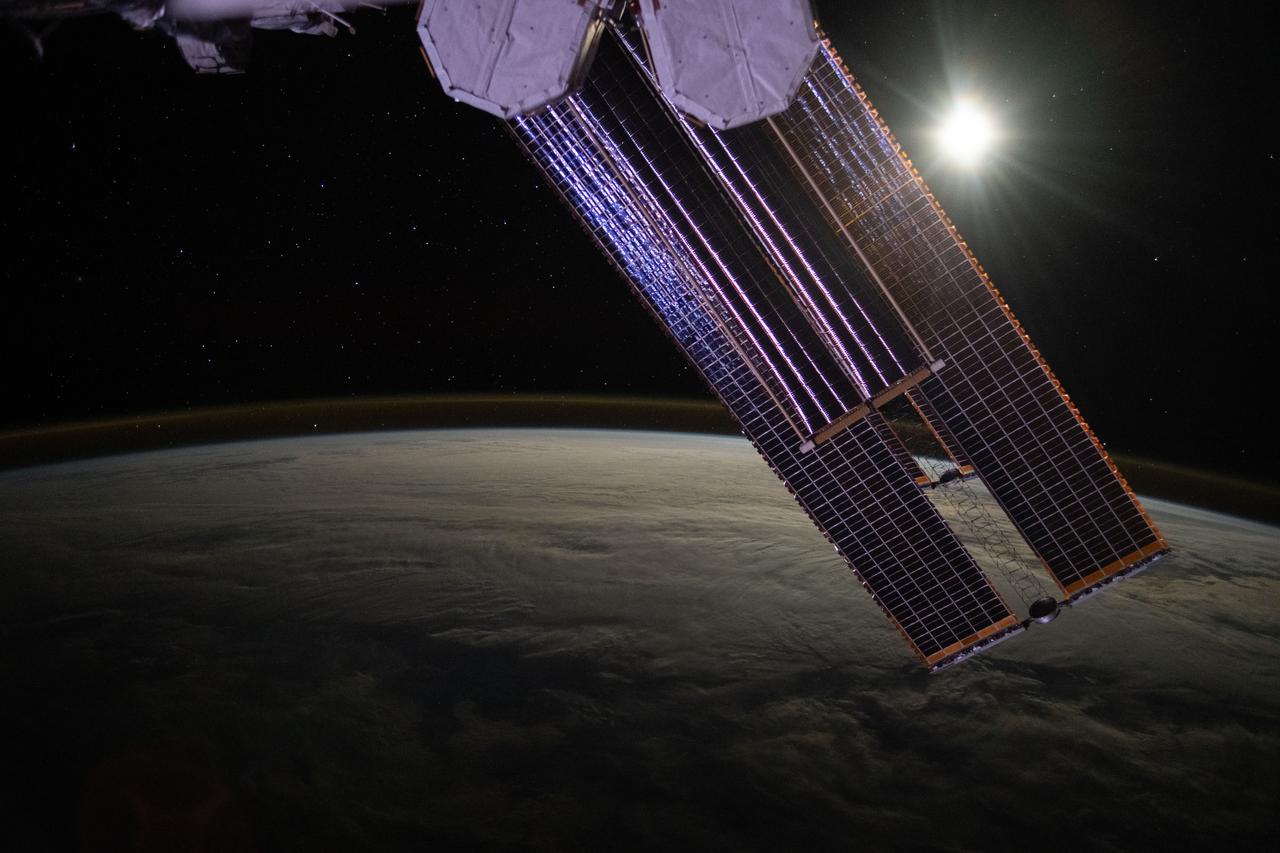
iss071e457356 (July 18, 2024) --- The Moon illuminates a cloud-covered Pacific Ocean as stars glitter in the background above the Earth's airglow. The International Space Station's solar arrays dominate the foreground as the orbital outpost soared 268 miles above.
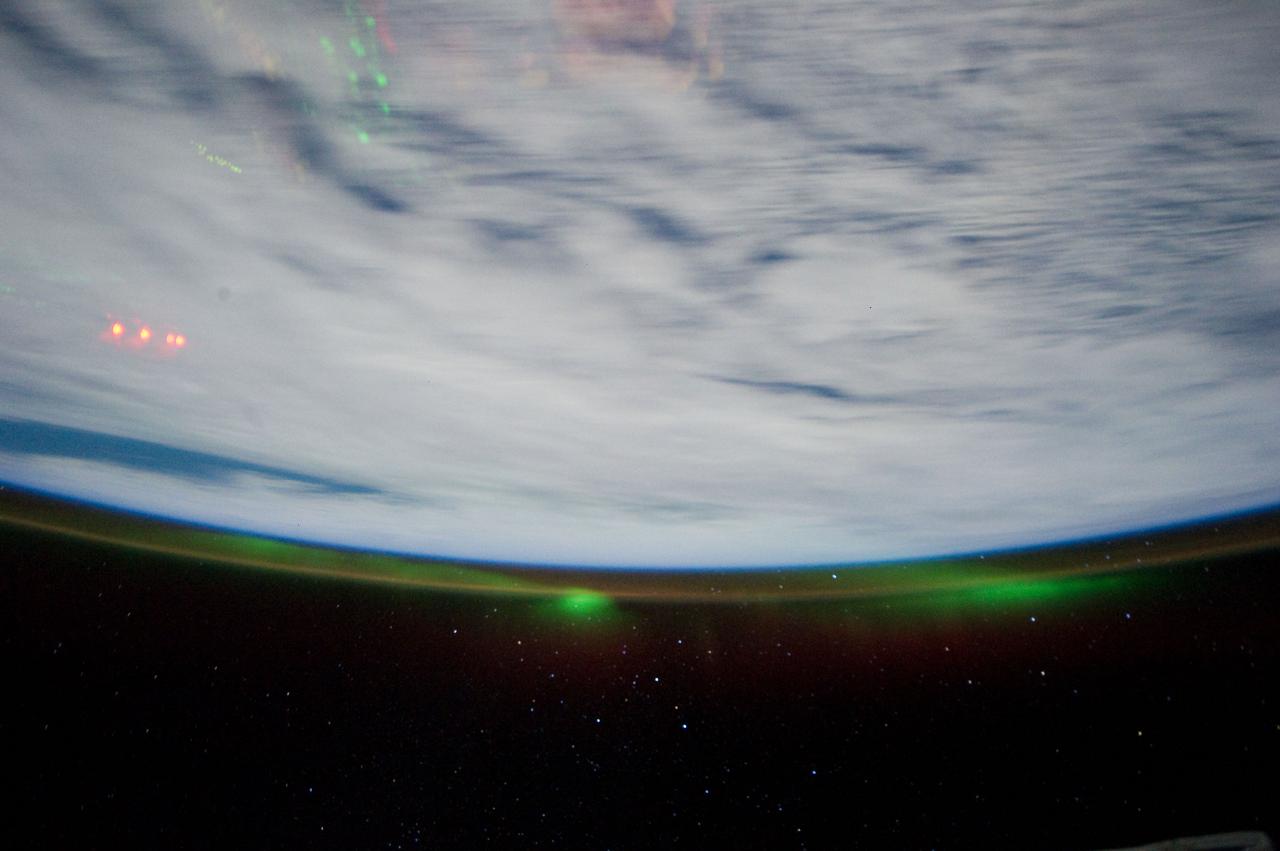
ISS028-E-017123 (16 July 2011) --- Separate atmospheric optical phenomena were captured in this electronic still photograph from the Inernational Space Station. The thin greenish band stretching along the Earth's horizon is airglow; light emitted by the atmosphere from a layer about 30 kilometers thick and about 100 kilometers in altitude. The predominant emission in airglow is the green 5577 Angstrom wavelength light from atomic oxygen atoms. Airglow is always and everywhere present in the atmosphere; it results from the recombination of molecules that have been broken apart by solar radiation during the day. But airglow is so faint that it can only be seen at night by looking "edge on" at the emission layer, such as the view astronauts and cosmonauts have in orbit. The second phenomenon is the appearnce of Aurora Australis.
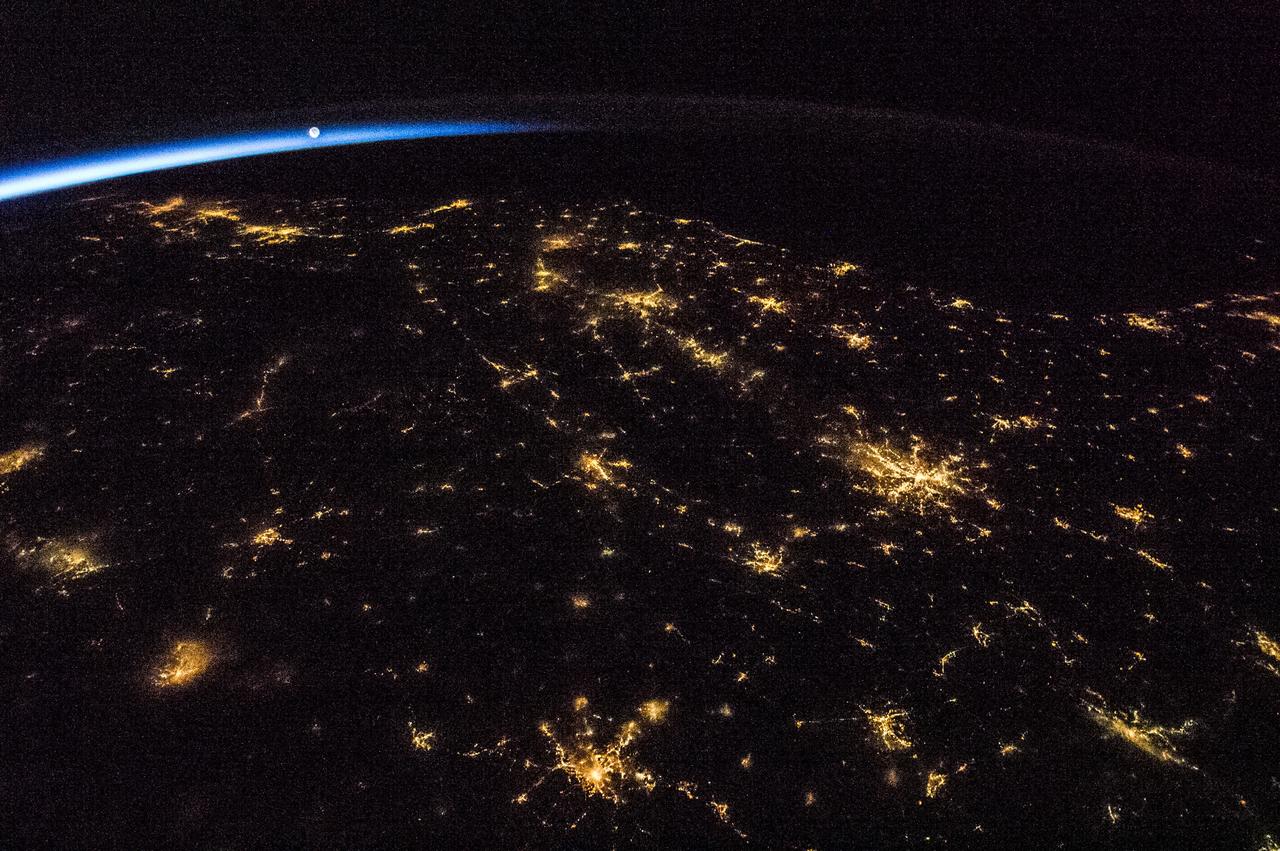
Earth observation taken by the Expedition 35 crew aboard the ISS. Night view of airglow and city lights.

Earth observation taken by the Expedition 35 crew aboard the ISS. Night view of airglow and aurora.
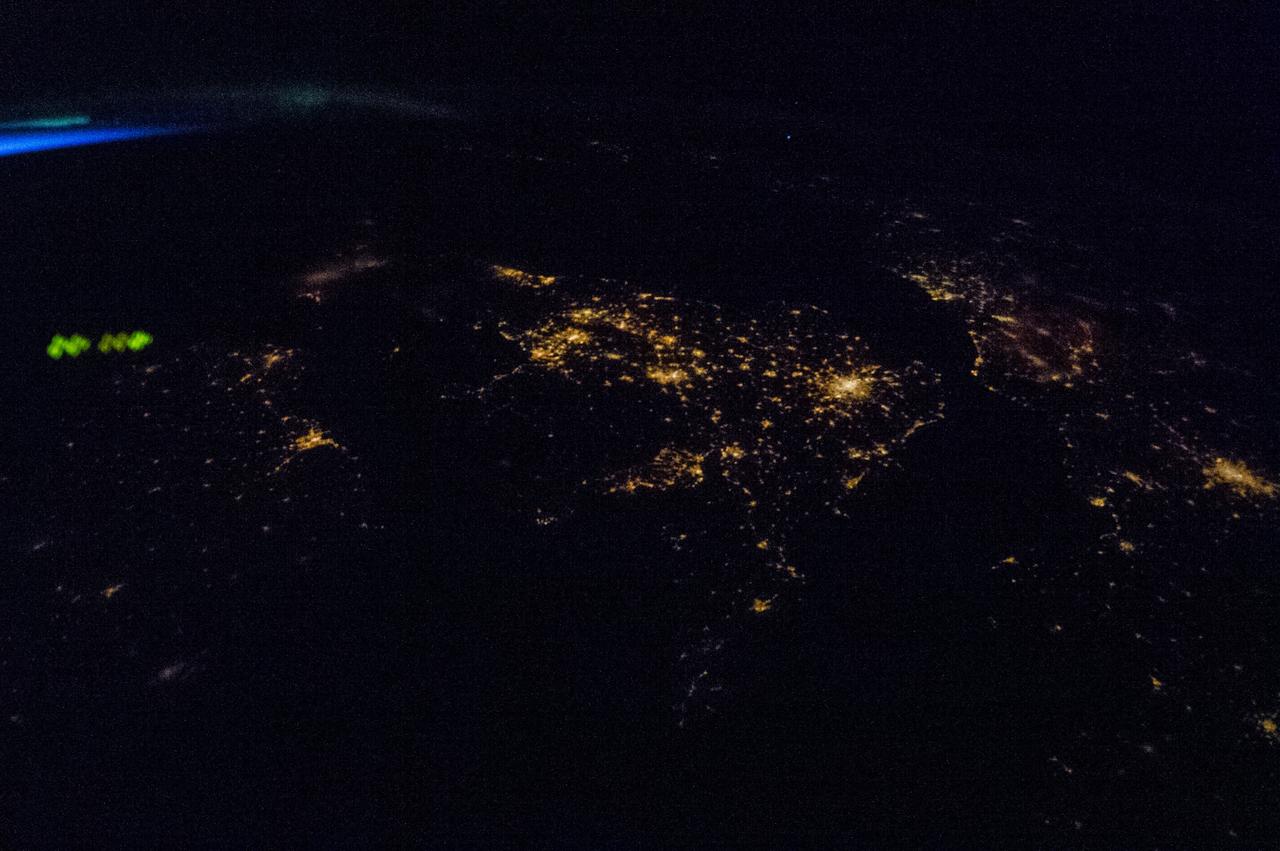
Earth observation taken by the Expedition 35 crew aboard the ISS. Night view of city lights and airglow.
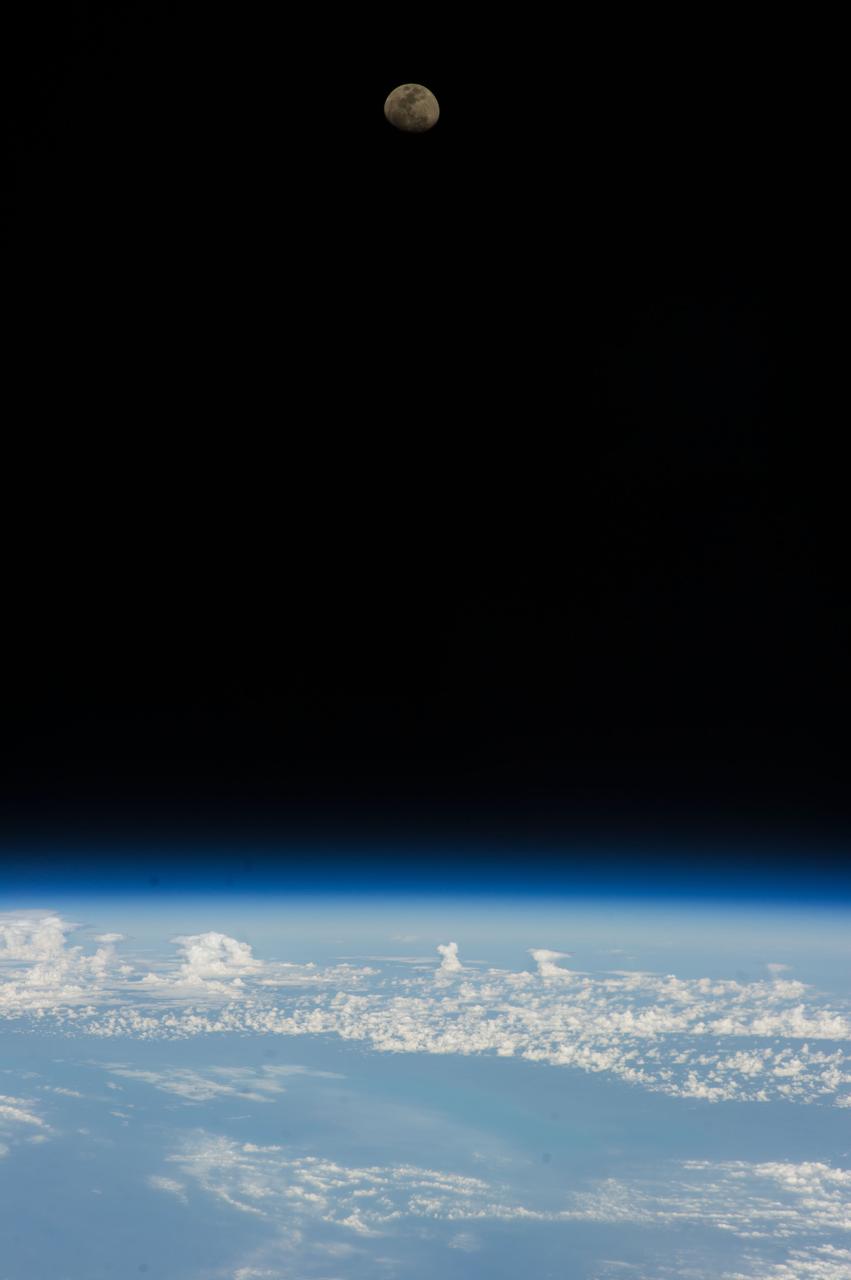
Lunar observation taken by the Expedition 39 crew aboard the ISS. An Earth limb and airglow are in view. Image was released by astronaut on Twitter.
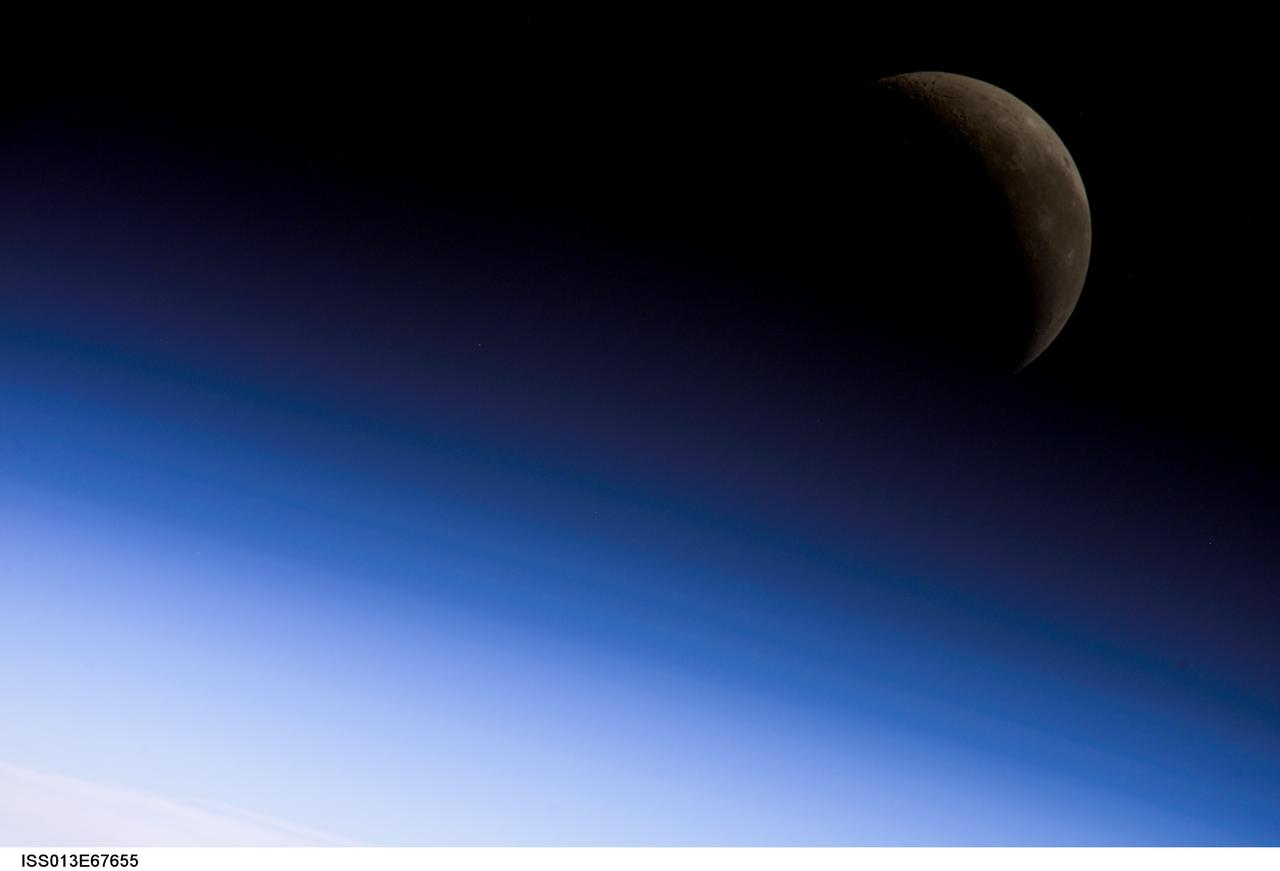
ISS013-E-67655 (18 Aug. 2006) --- A crescent moon is visible in this view of Earth's horizon and airglow, photographed by an Expedition 13 crewmember on the International Space Station.
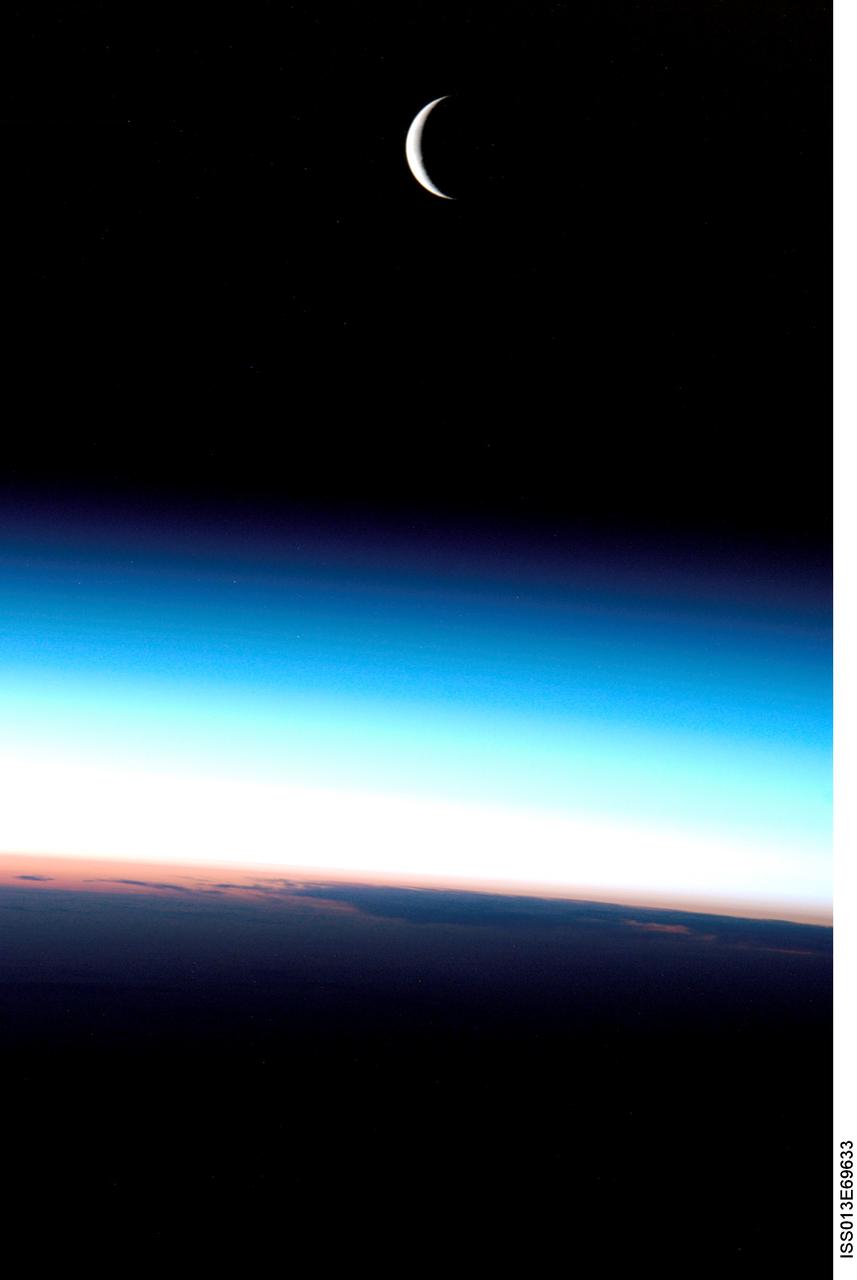
ISS013-E-69633 (August 2006) --- A crescent moon is visible in this view above Earth's horizon and airglow, photographed by an Expedition 13 crewmember on the International Space Station.
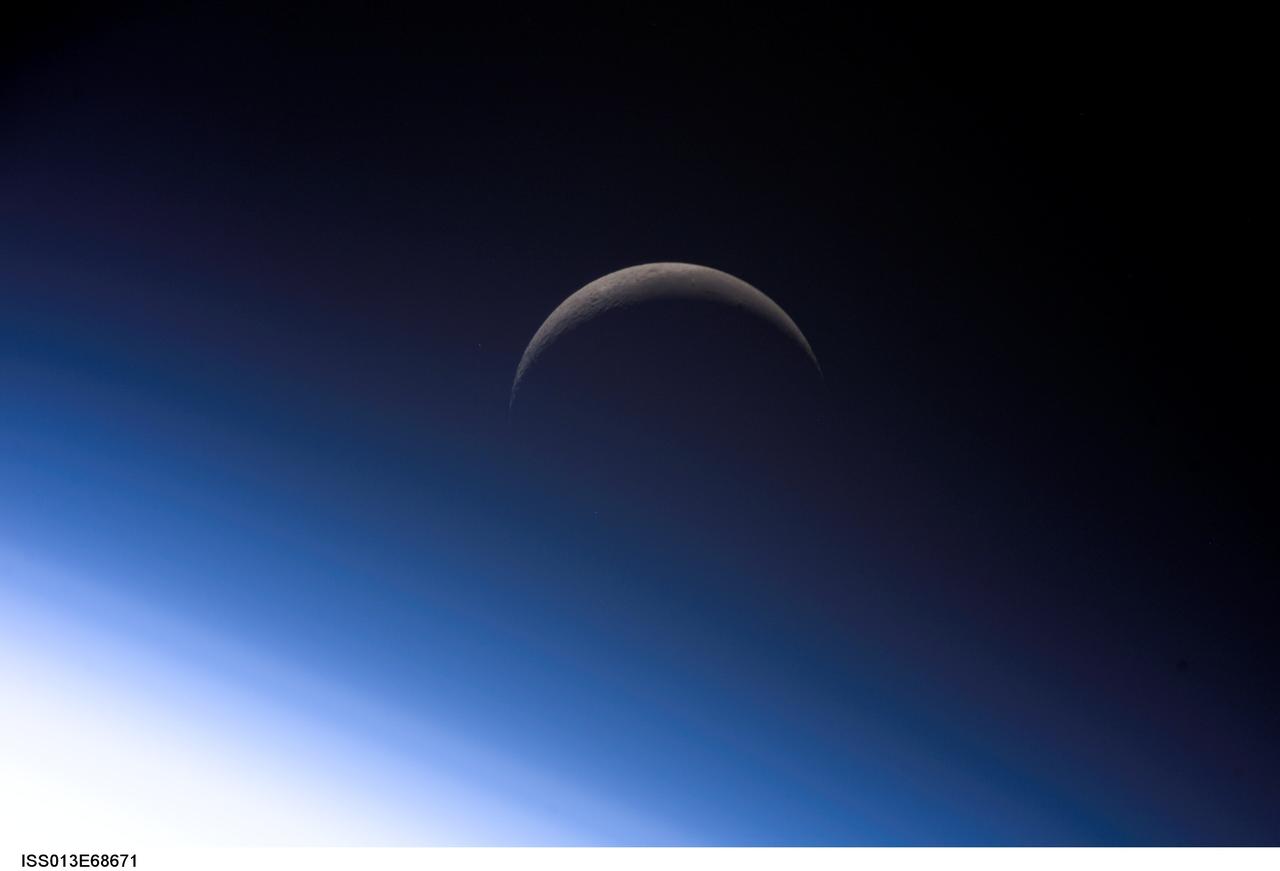
ISS013-E-68671 (18 Aug. 2006) --- A crescent moon is visible in this view of Earth's horizon and airglow, photographed by an Expedition 13 crewmember on the International Space Station.
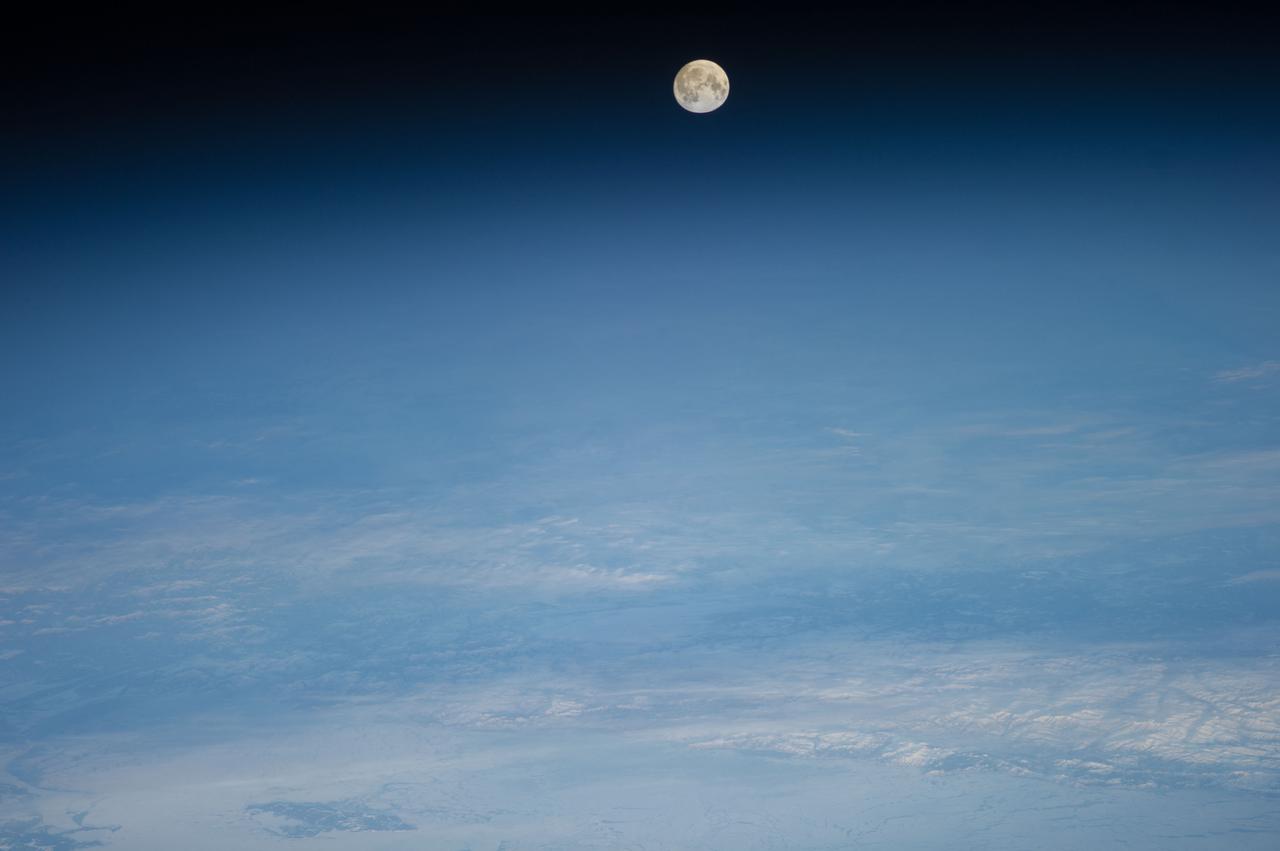
Lunar observation taken during moonset by the Expedition 39 crew aboard the ISS. Earth and airglow are in view. Image was released by astronaut on Twitter.
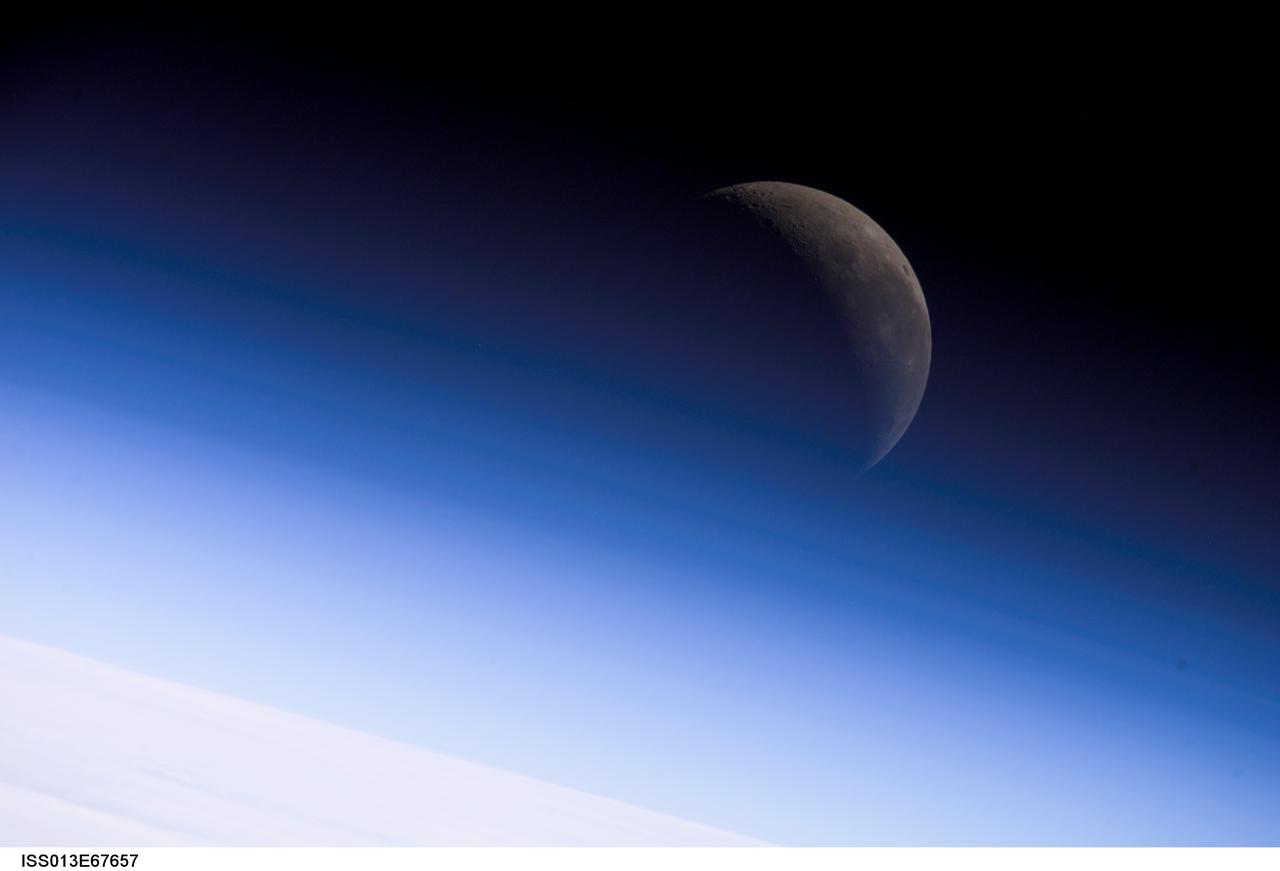
ISS013-E-67657 (18 Aug. 2006) --- A crescent moon is visible in this view of Earth's horizon and airglow, photographed by an Expedition 13 crewmember on the International Space Station.
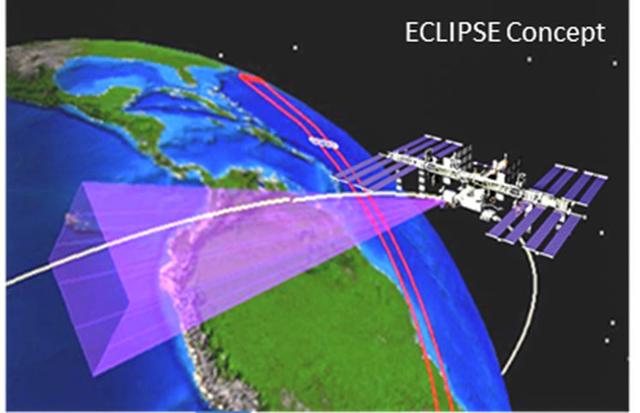
jsc2022e091370 (12/7/2022) --- The Space Test Program - Houston 9 - Experiment for Characterizing the Lower Ionosphere and Production of Sporadic-E (STP-H9-ECLIPSE) investigation scans its photometer fields of view (FOV) along the orbit plane looking behind the International Space Station to measure the vertical distribution of airglow emissions and cross-track below the ISS to observe the horizontal distribution of the airglow emissions. The observations are tomographically inverted to infer the 3D ionospheric structure. Image courtesy of the Naval Research Laboratory.
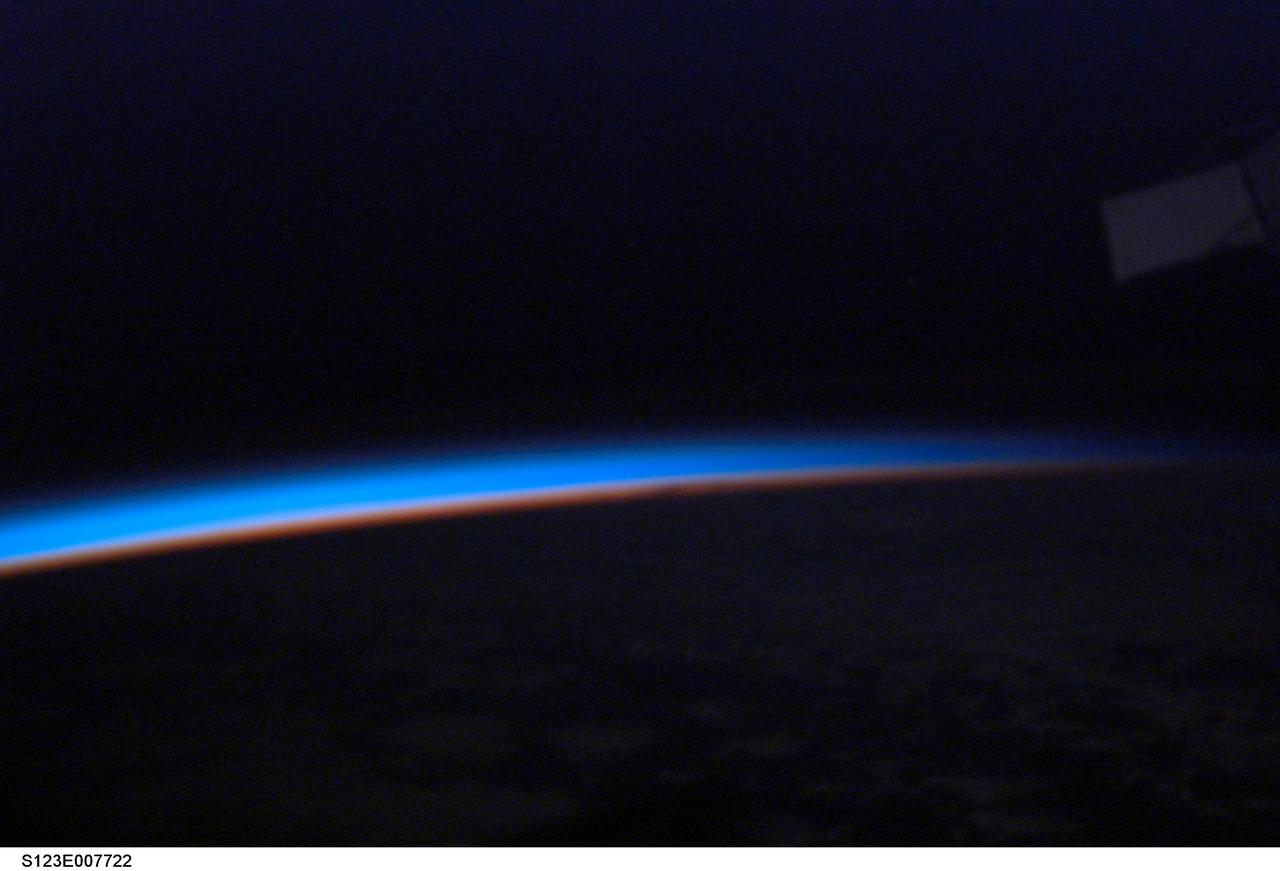
S123-E-007722 (20 March 2008) --- A colorful view of airglow layers at Earth's horizon is featured in this image photographed by a STS-123 crewmember on the Space Shuttle Endeavour while docked with the International Space Station.
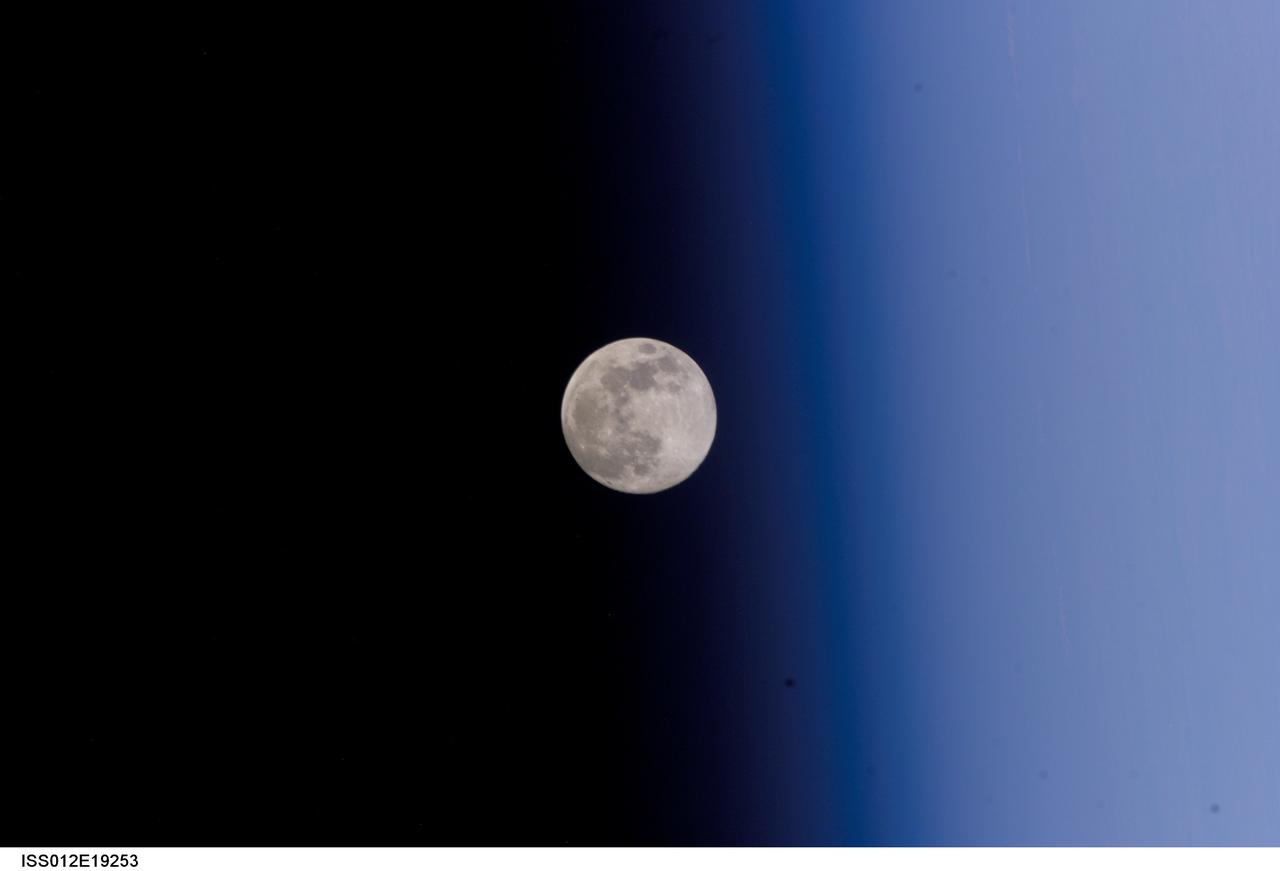
ISS012-E-19253 (12 Feb. 2006) --- A full moon is visible in this view above Earth’s horizon and airglow, photographed by an Expedition 12 crewmember on the International Space Station.
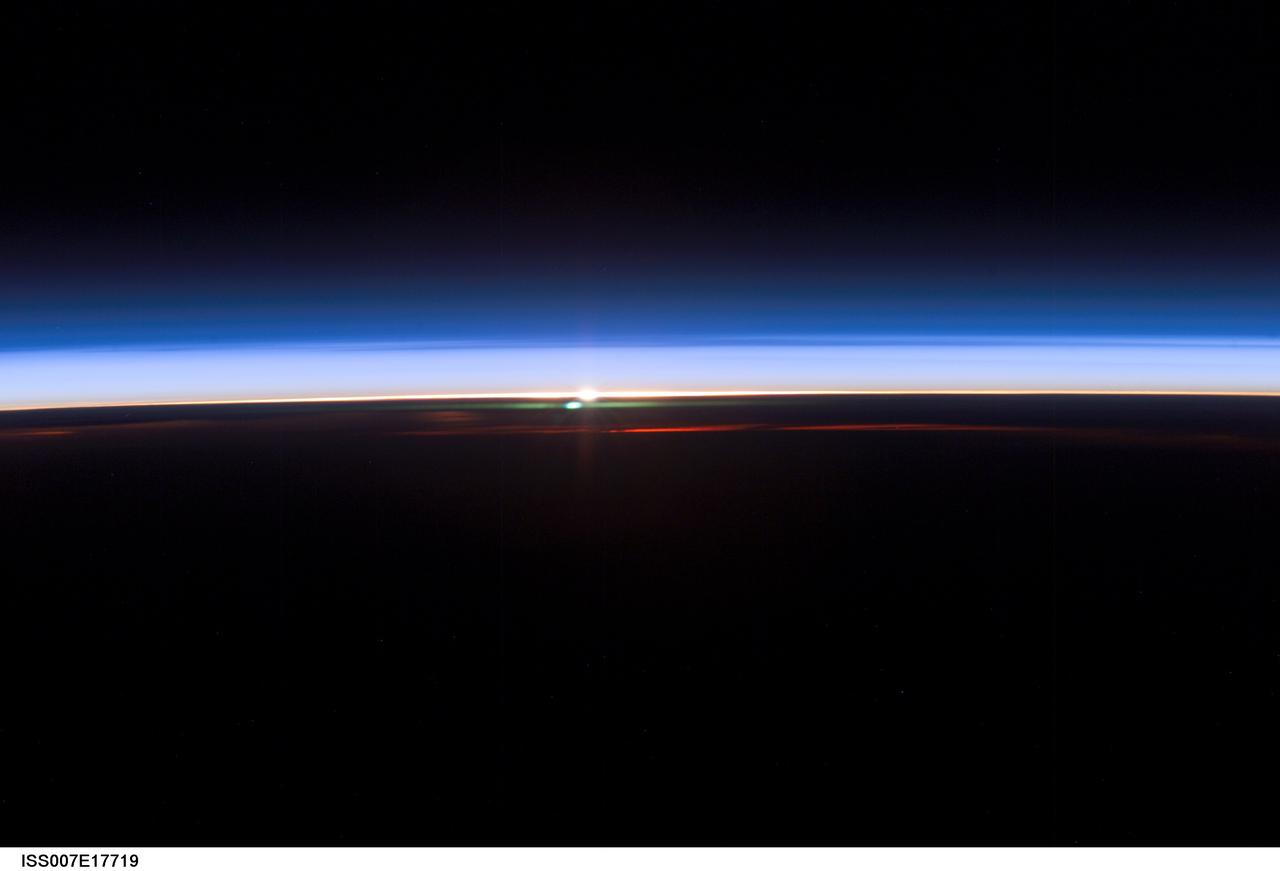
ISS007-E-17719 (20 October 2003) --- The airglow above Earth’s horizon was photographed by an Expedition 7 crewmember onboard the International Space Station (ISS).
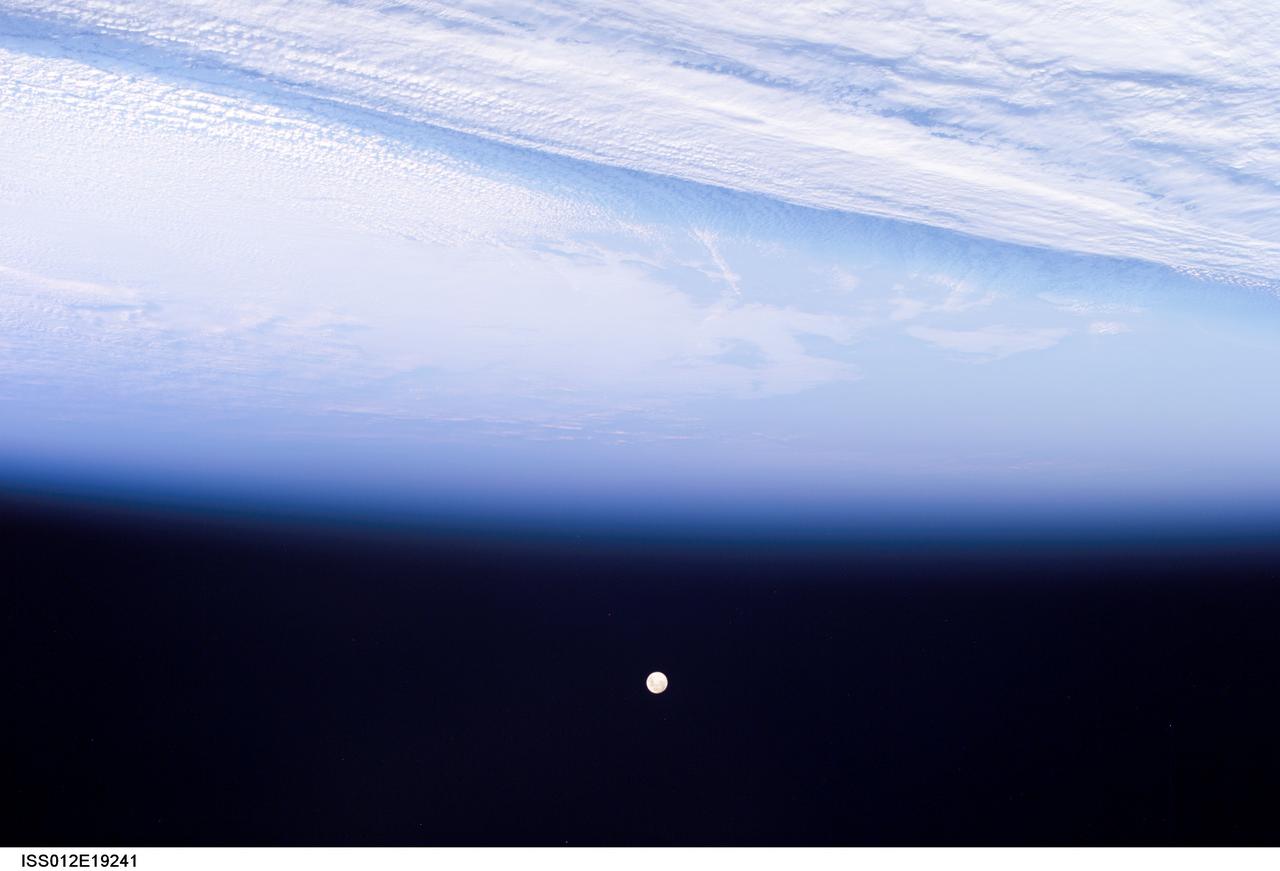
ISS012-E-19241 (12 Feb. 2006) --- A full moon is visible in this view above Earth’s horizon and airglow, photographed by an Expedition 12 crewmember on the International Space Station.
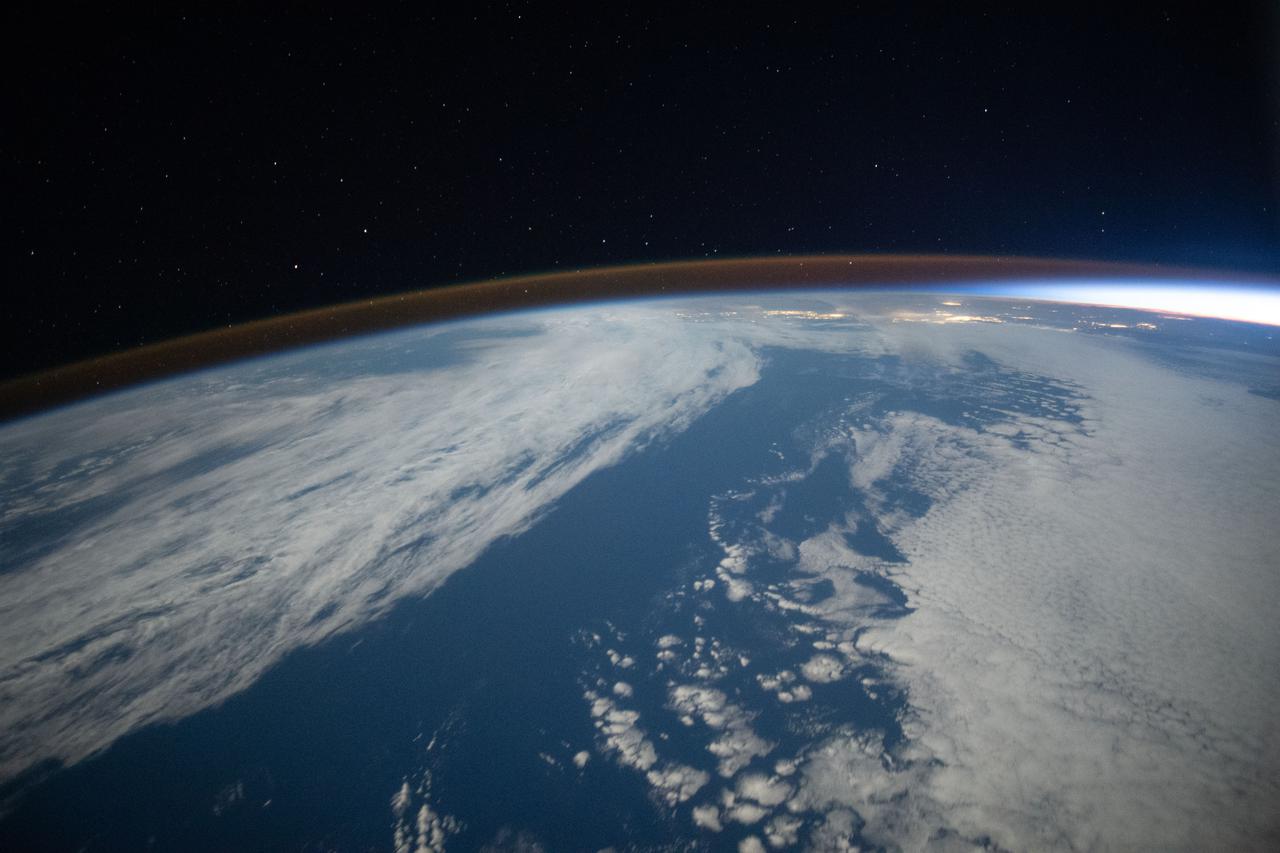
iss066e008725 (Oct. 22, 2021) --- The airglow blankets the Earth's horizon during an orbital sunset in this photograph from the International Space Station as it orbited 262 miles above the Pacific Ocean southwest of California.
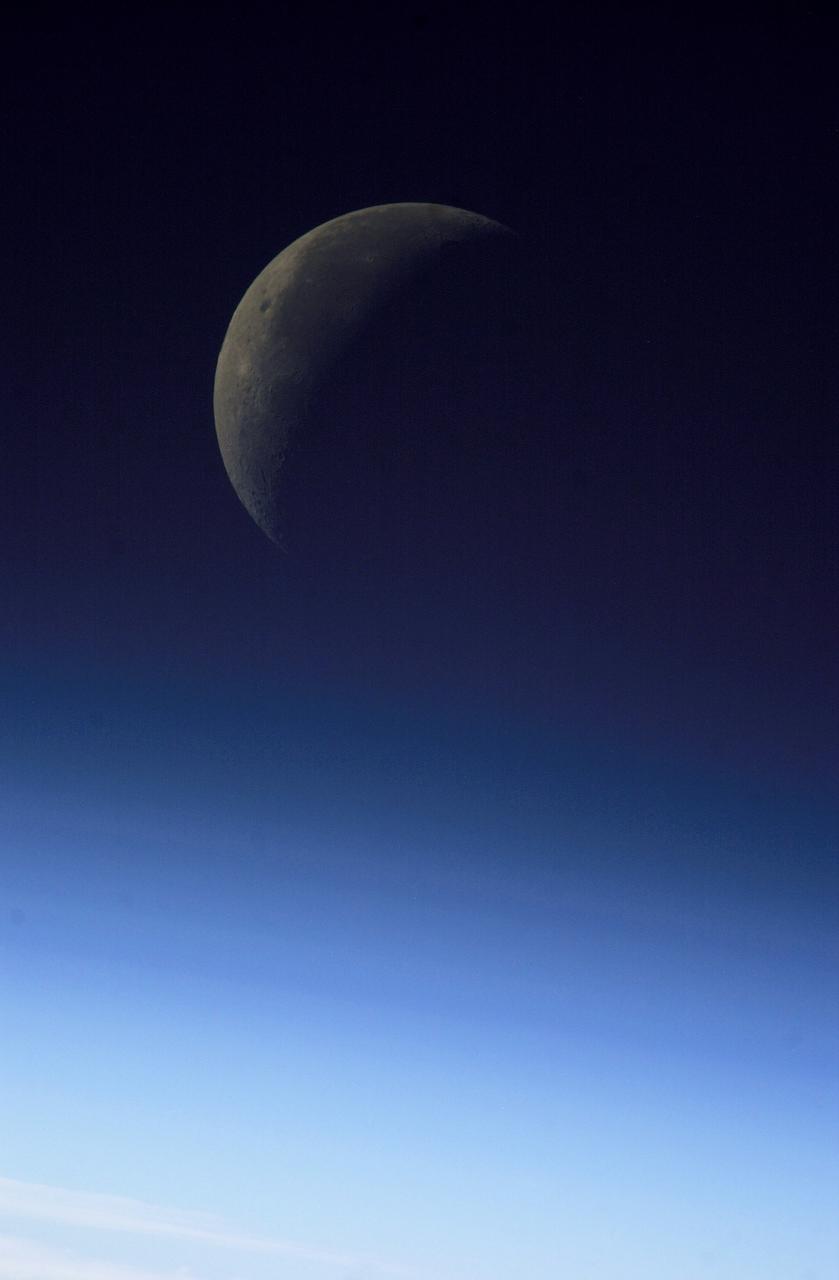
ISS008-E-08949 (December 2003) --- A partial moon is visible in this view of Earth’s horizon and airglow, photographed by an Expedition 8 crewmember on the International Space Station (ISS).
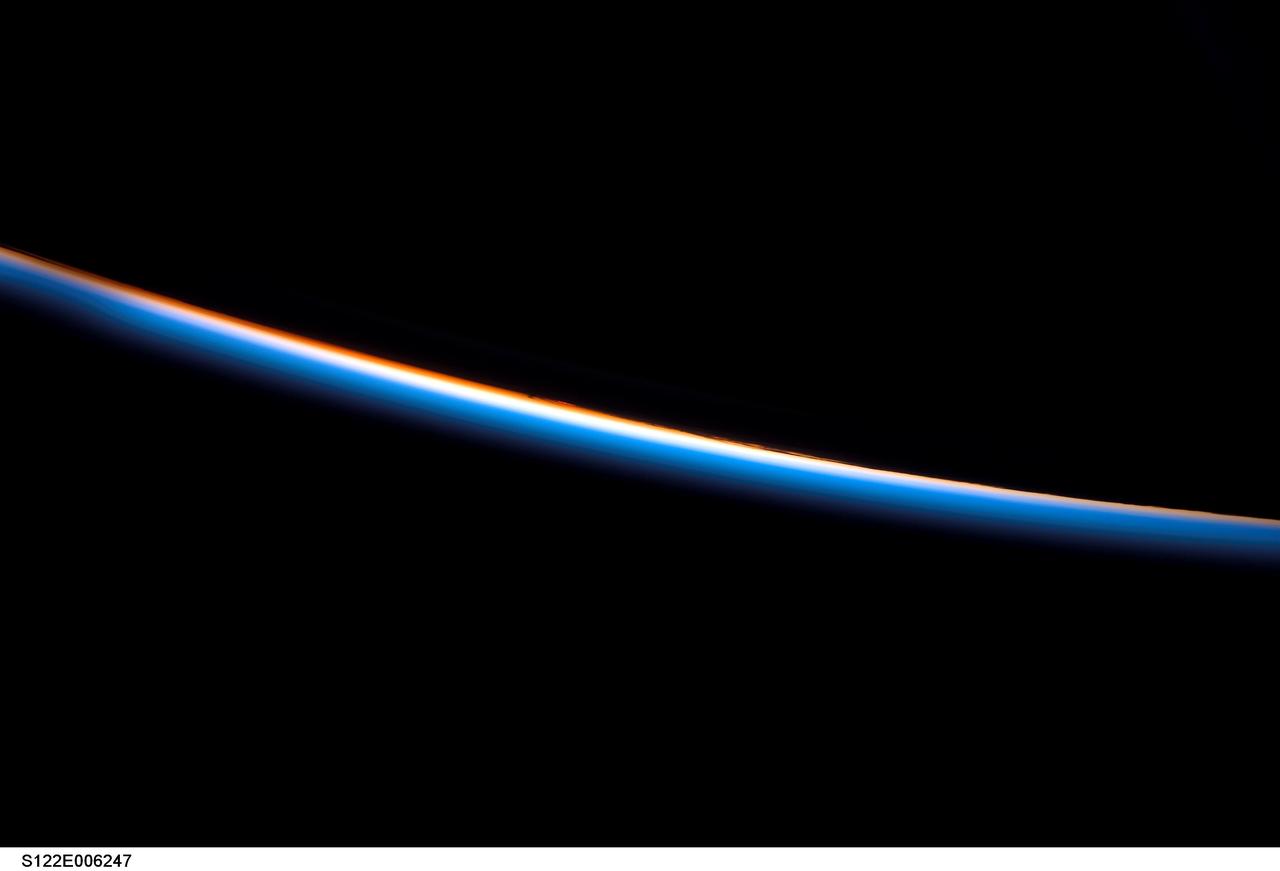
S122-E-006247 (8 Feb. 2008) --- A colorful view of airglow layers at Earth's horizon is featured in this image photographed by a STS-122 crewmember on the Space Shuttle Atlantis.
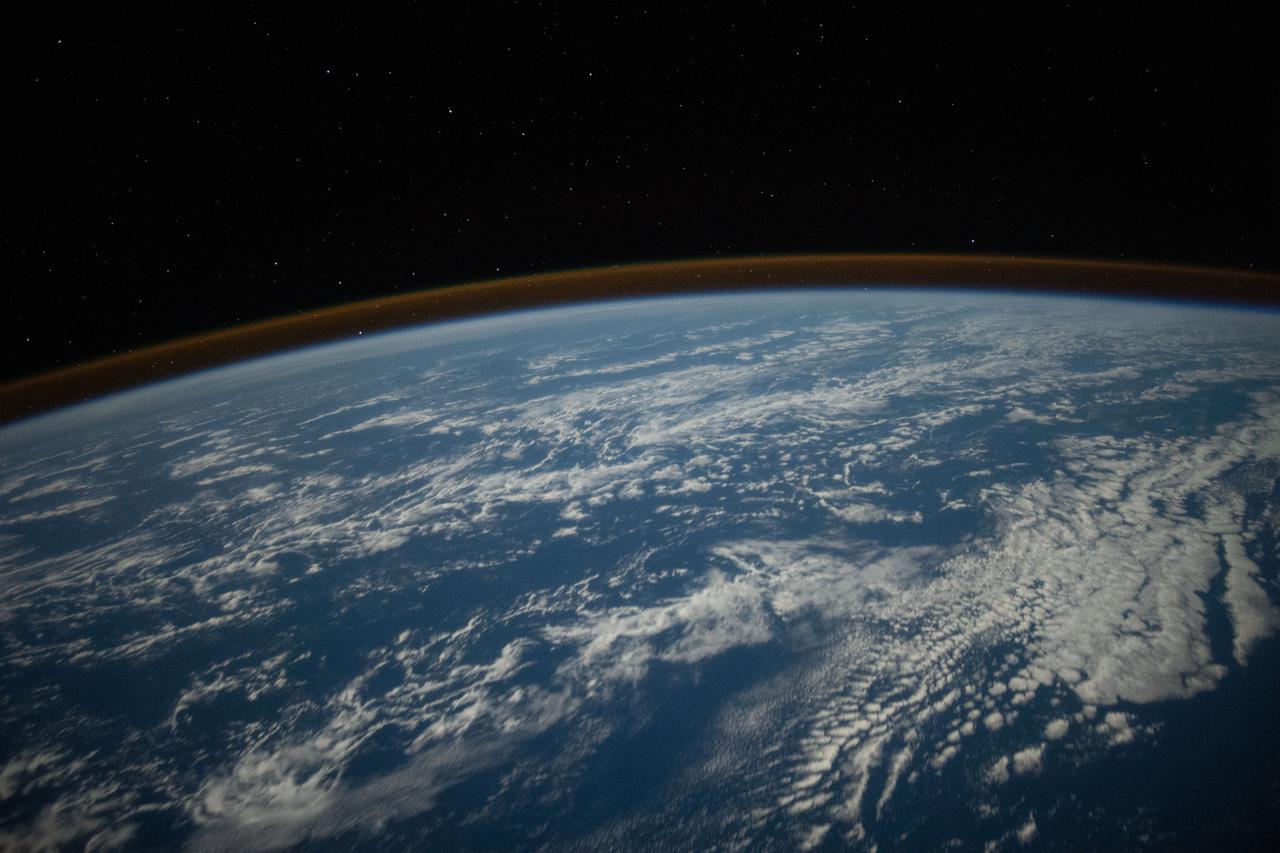
iss066e008725 (Oct. 22, 2021) --- The airglow blankets the Earth's horizon in this photograph from the International Space Station as it orbited 262 miles above the Pacific Ocean just south of the Hawaiian island chain.
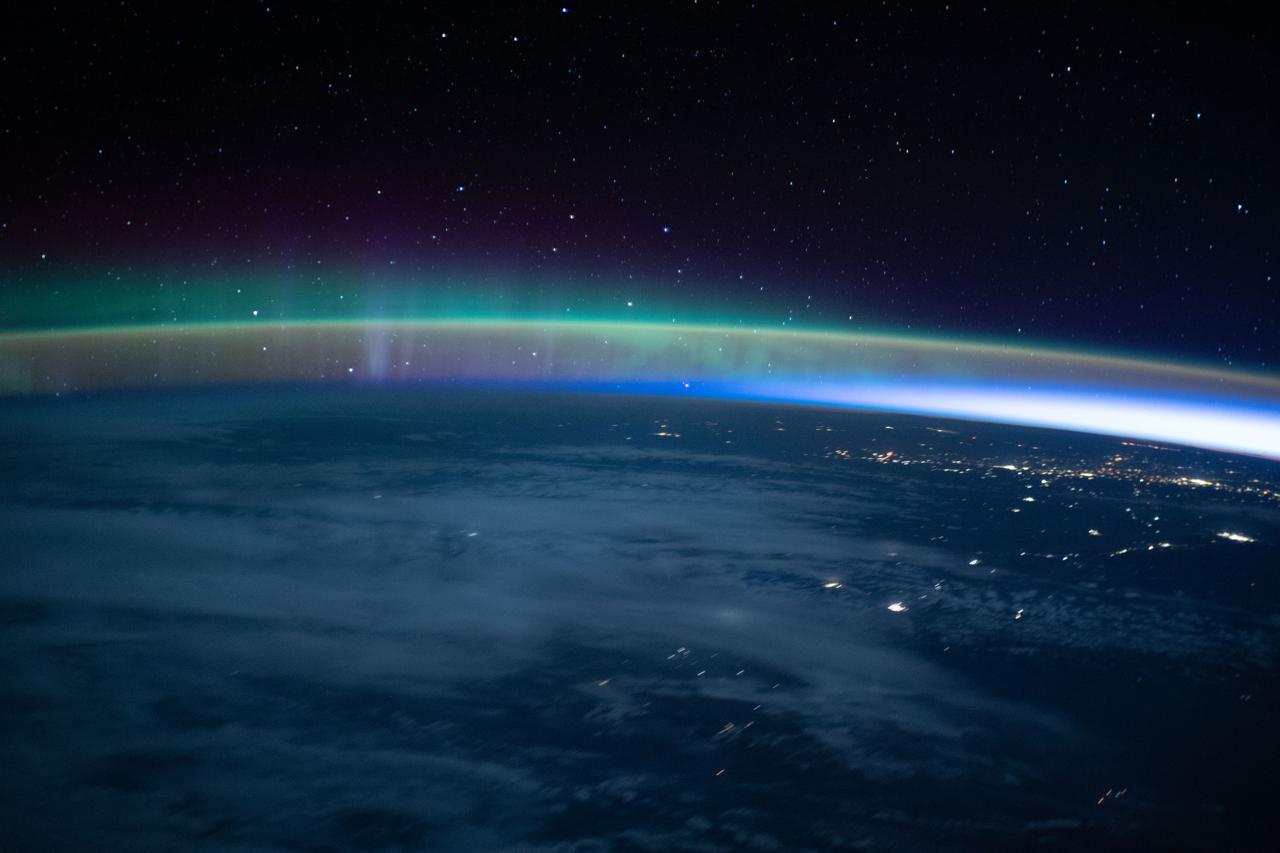
iss066e023536 (Oct. 30, 2021) --- An aurora dimly intersects with Earth's airglow as the International Space Station flew into an orbital sunrise 264 miles above the Pacific Ocean before crossing over Canada.
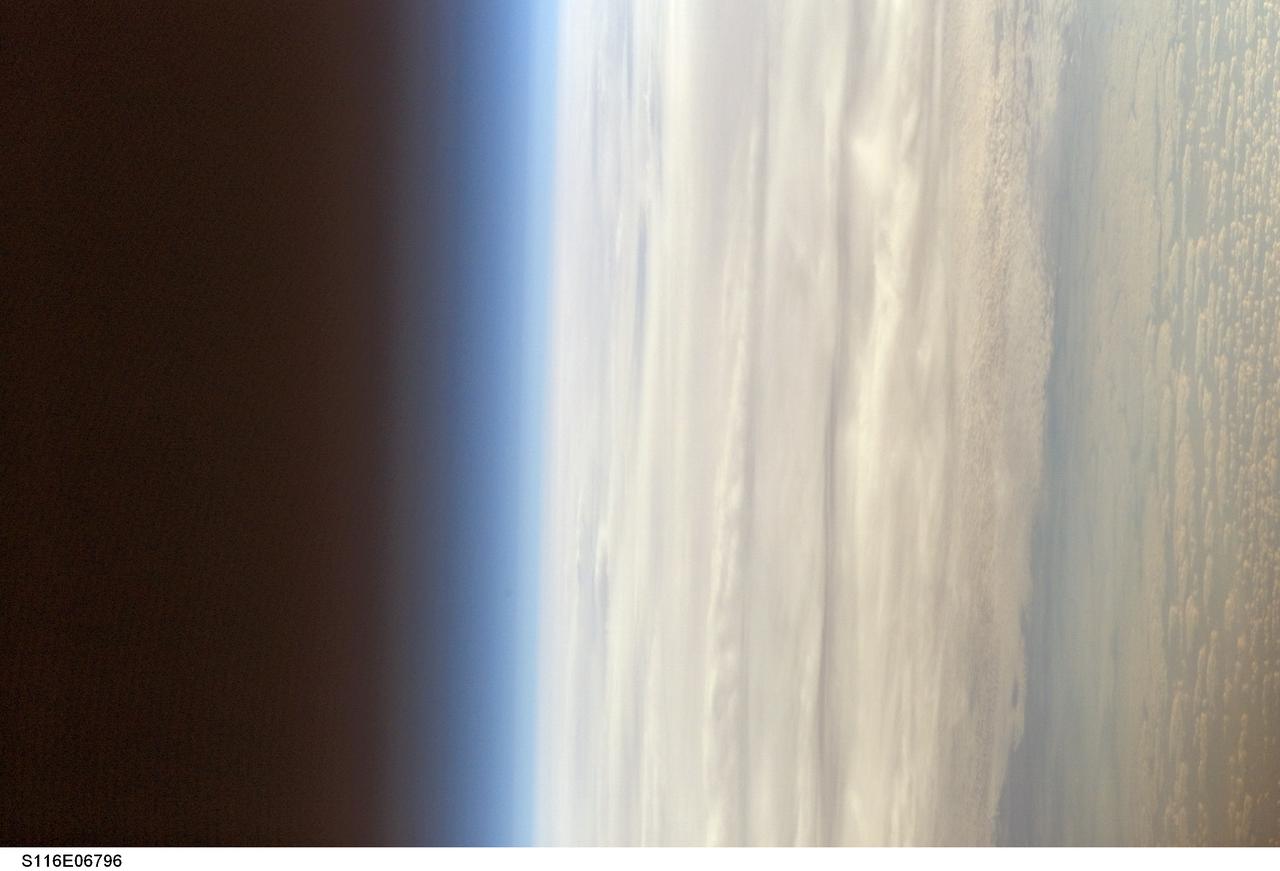
S116-E-06796 (17 Dec. 2006) --- A blanket of heavy cloud cover, airglow and the blackness of space are featured in this image photographed by a STS-116 crewmember on the International Space Station while Space Shuttle Discovery was docked with the station.
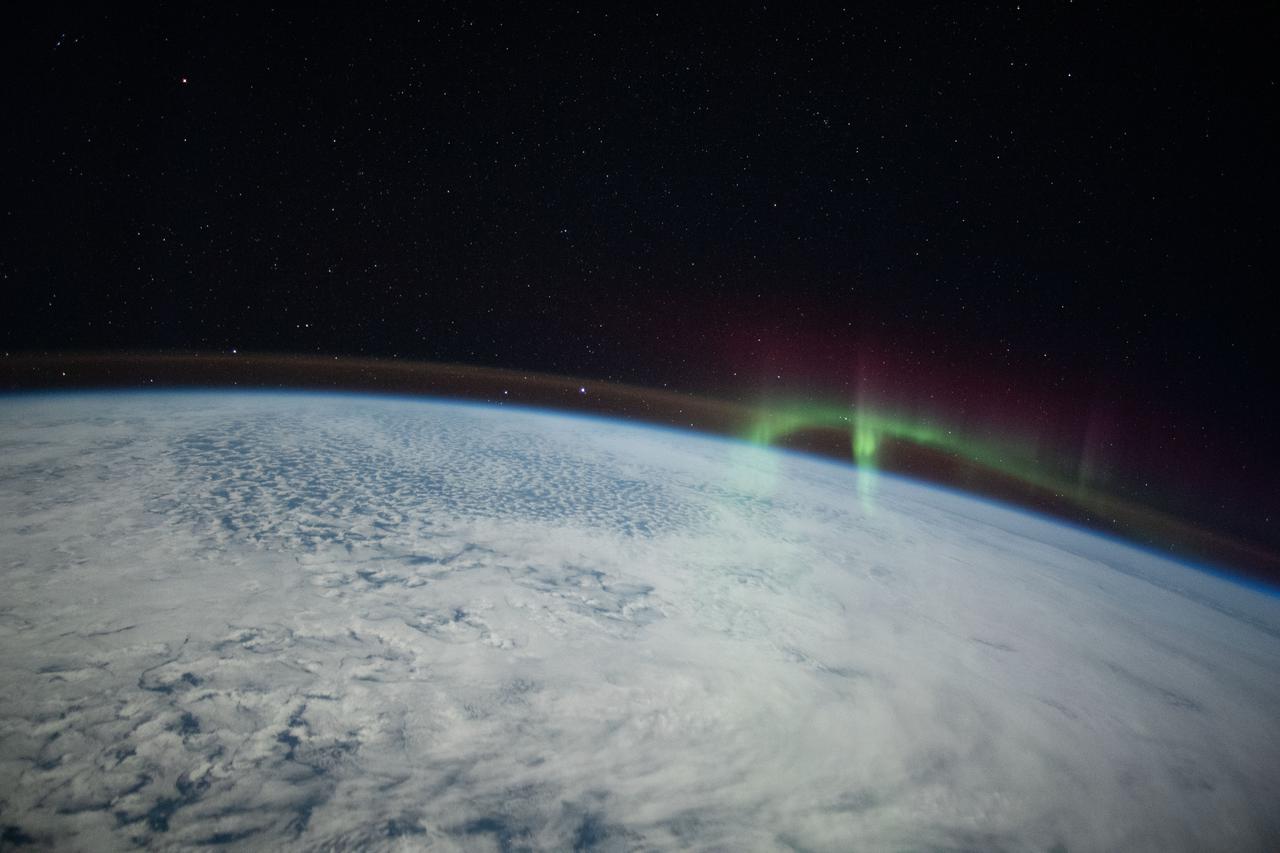
iss066e008713 (Oct. 19, 2021) --- A wispy aurora, intersecting with Earth's airglow, is pictured from the International Space Station as it orbited 274 miles above the Indian Ocean in between Australia and Antarctica.

iss066e010813 (Oct. 24, 2021) --- The airglow blankets the Earth's horizon beneath a starry sky in this photograph from the International Space Station as it orbited 262 miles above the Atlantic Ocean off the coast of the African nation of Sierra Leone.
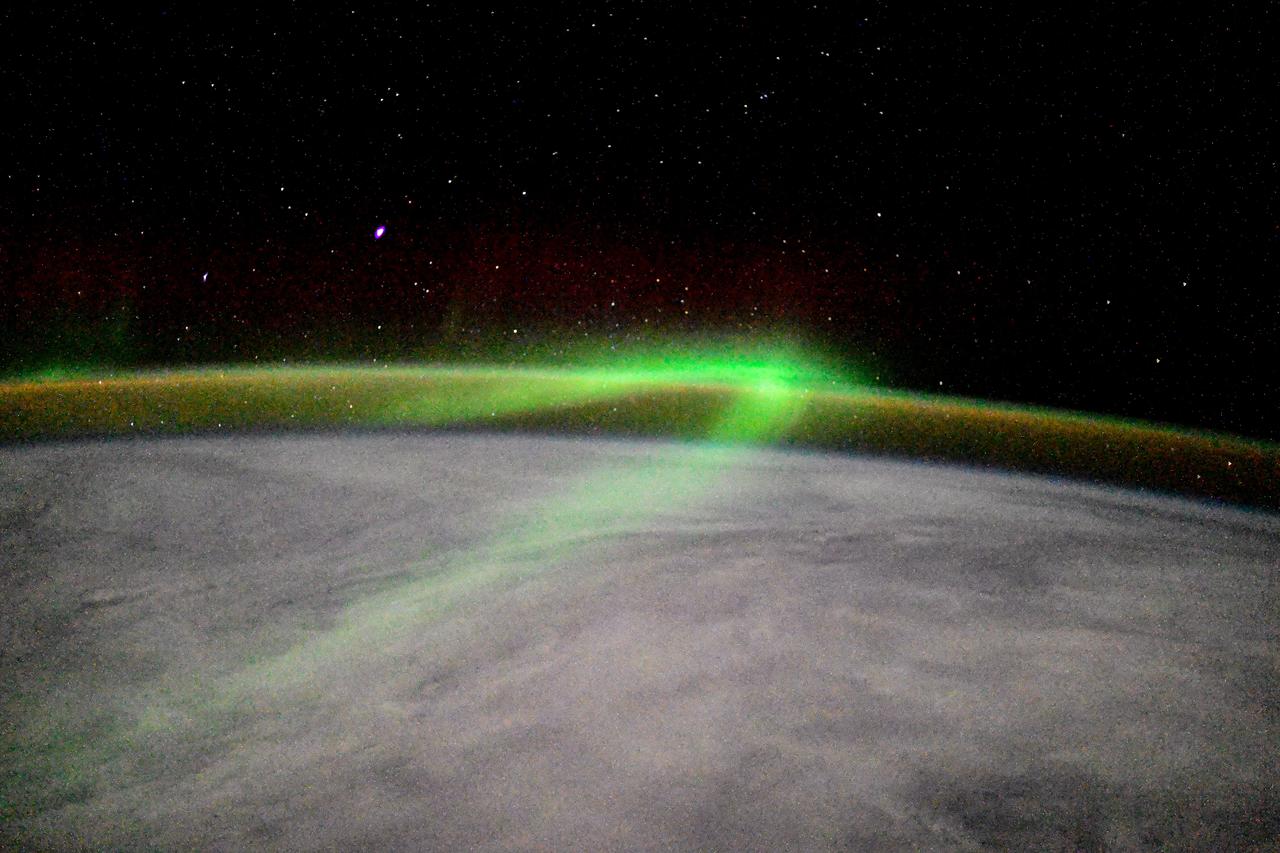
iss064e053179 (April 2, 2021) --- The aurora is pictured streaming above the Earth seemingly intersecting with the airglow as the International Space Station orbited 271 miles over the Indian Ocean southwest of Australia. Credit: Roscosmos
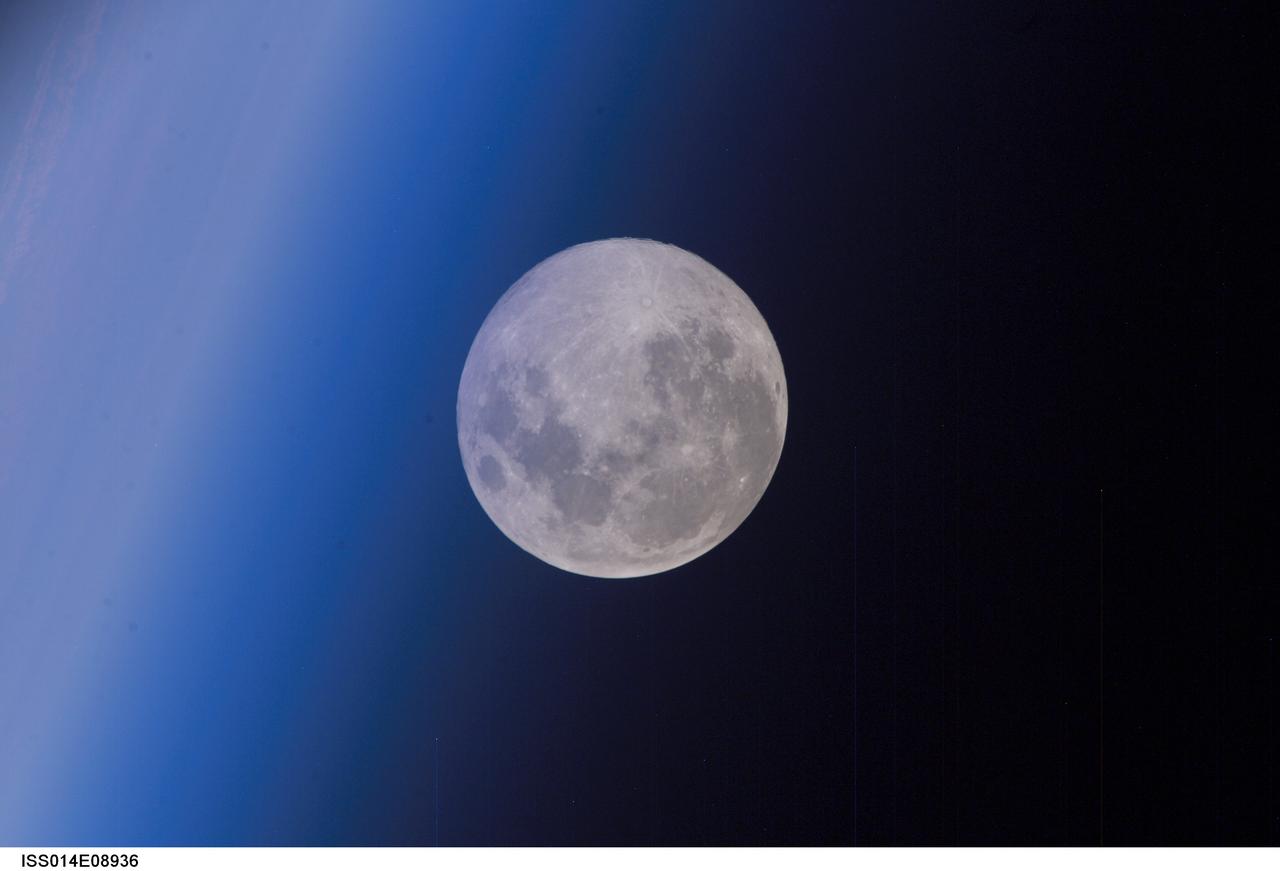
ISS014-E-08936 (4 Dec. 2006) --- This view of a full moon was photographed by an Expedition 14 crewmember onboard the International Space Station. Earth's horizon and airglow are visible at left.
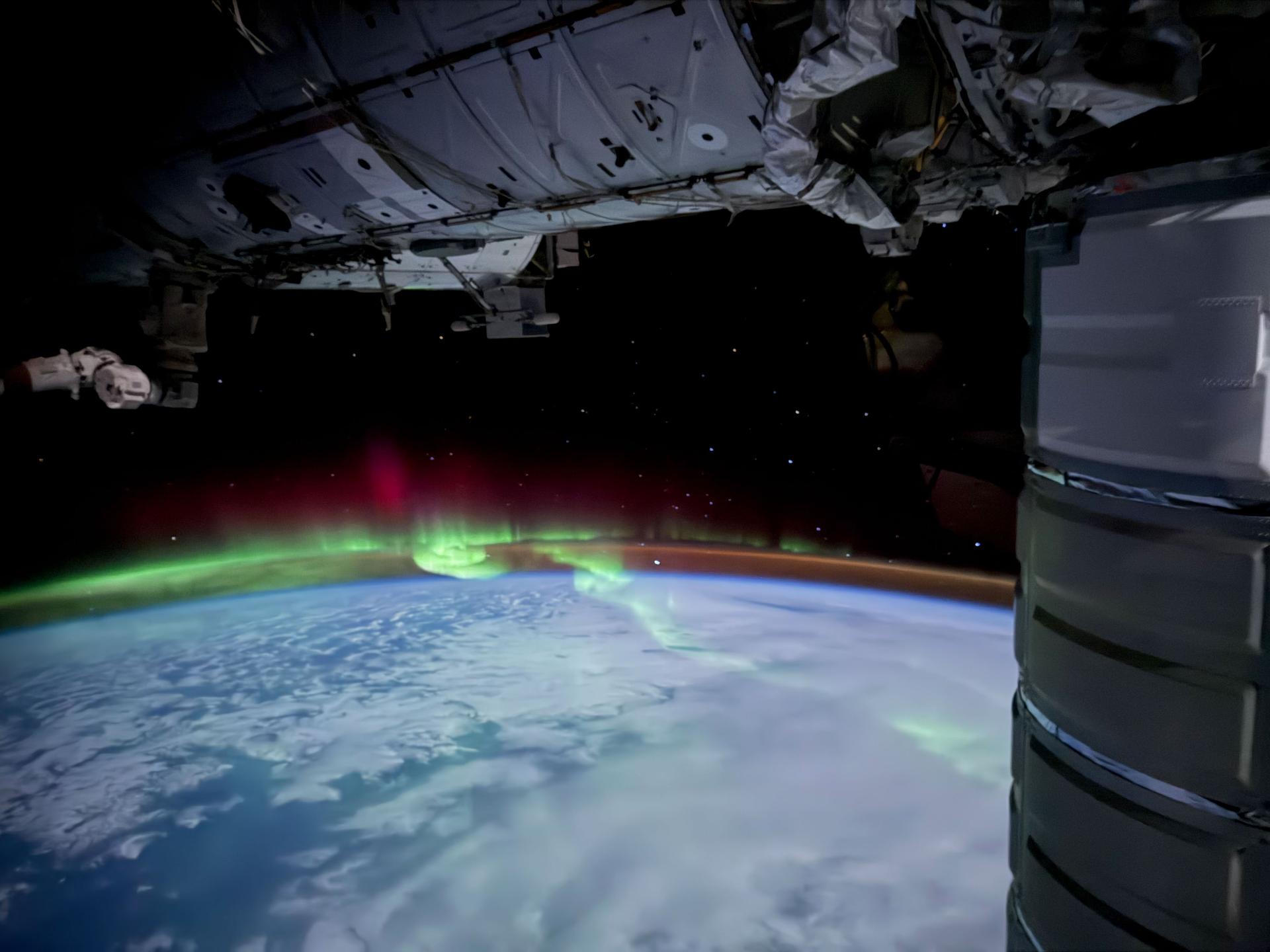
iss074e0814088 (May 30, 2026) --- The aurora australis streams across the southern Indian Ocean with an airglow outlining Earth's atmosphere in this photograph from the International Space Station as it orbited 274 miles above. Credit: NASA/Chris Williams
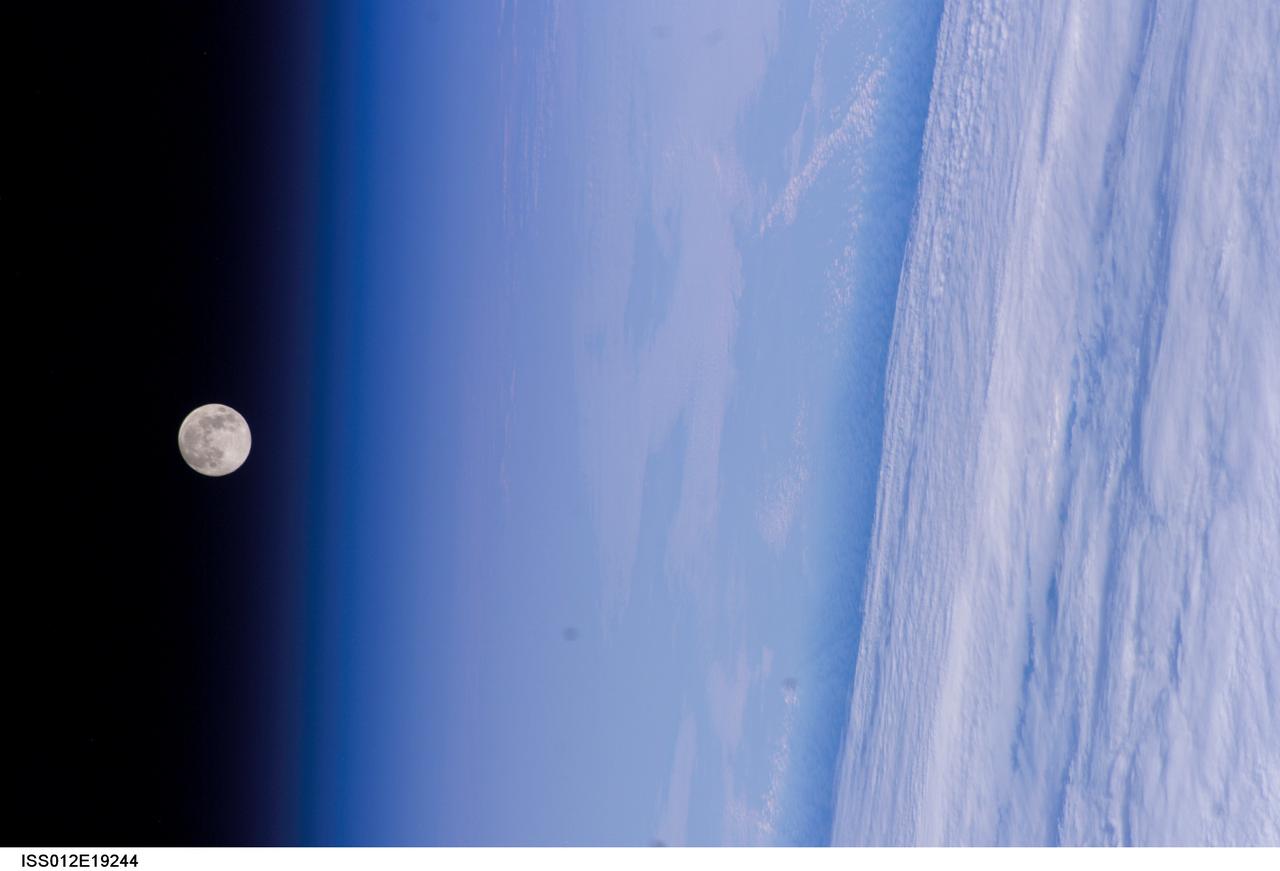
ISS012-E-19244 (12 Feb. 2006) --- A full moon is visible in this view above Earth’s horizon and airglow, photographed by an Expedition 12 crewmember on the International Space Station.
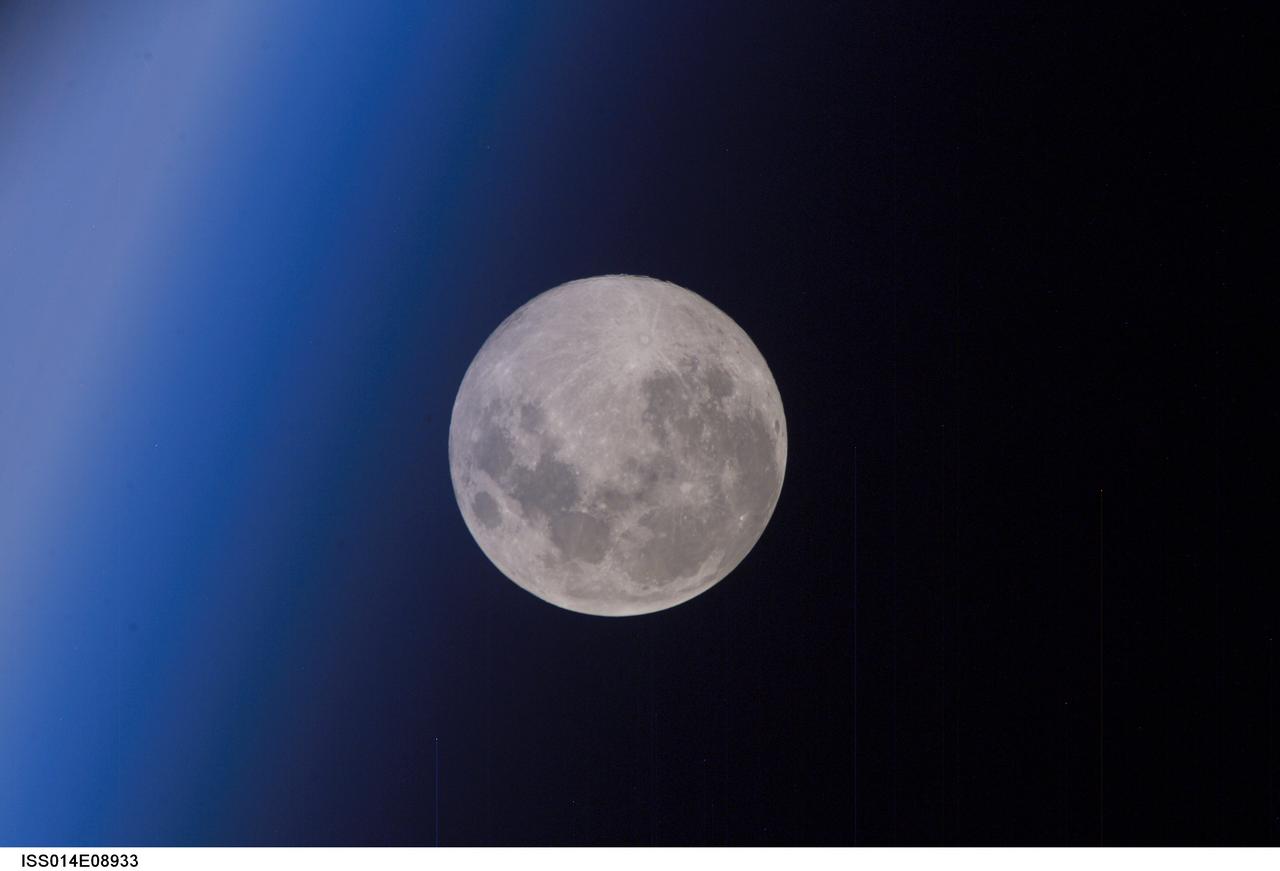
ISS014-E-08933 (4 Dec. 2006) --- This view of a full moon was photographed by an Expedition 14 crewmember onboard the International Space Station. Earth's horizon and airglow are visible at left.

ISS013-E-08139 (19 April 2006) --- A setting sun and the thin blue airglow line at Earth’s horizon was captured in this image photographed by an Expedition 13 crewmember from a window on the International Space Station.
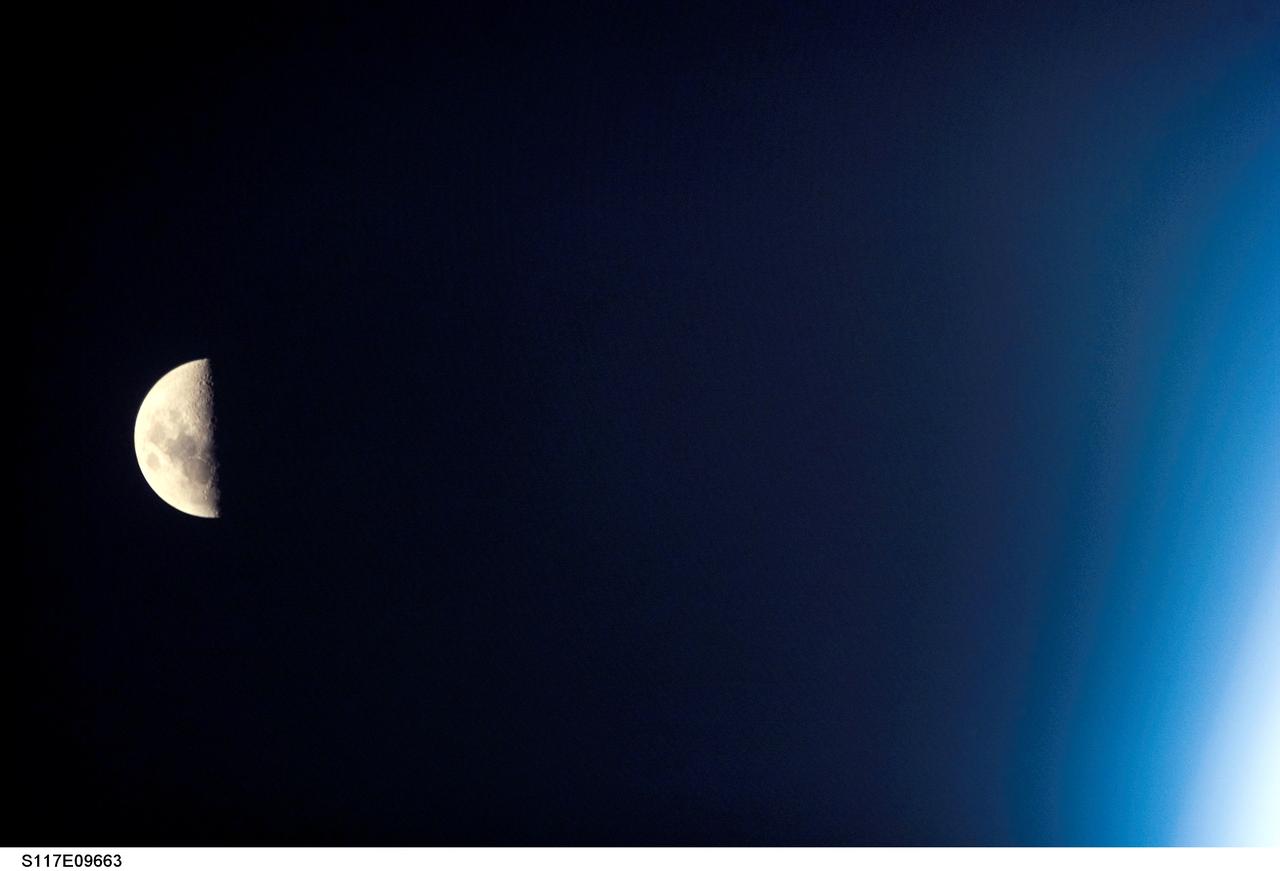
S117-E-09663 (22 June 2007) --- A gibbous moon over the airglow of Earth's atmosphere is featured in this image photographed by a STS-117 crewmember onboard Space Shuttle Atlantis.

iss063e025120 (June 7, 2020) --- A wispy "aurora australis" seemingly intersects with the Earth's airglow as the International Space Station orbited above the Indian Ocean halfway between Australia and Antarctica.
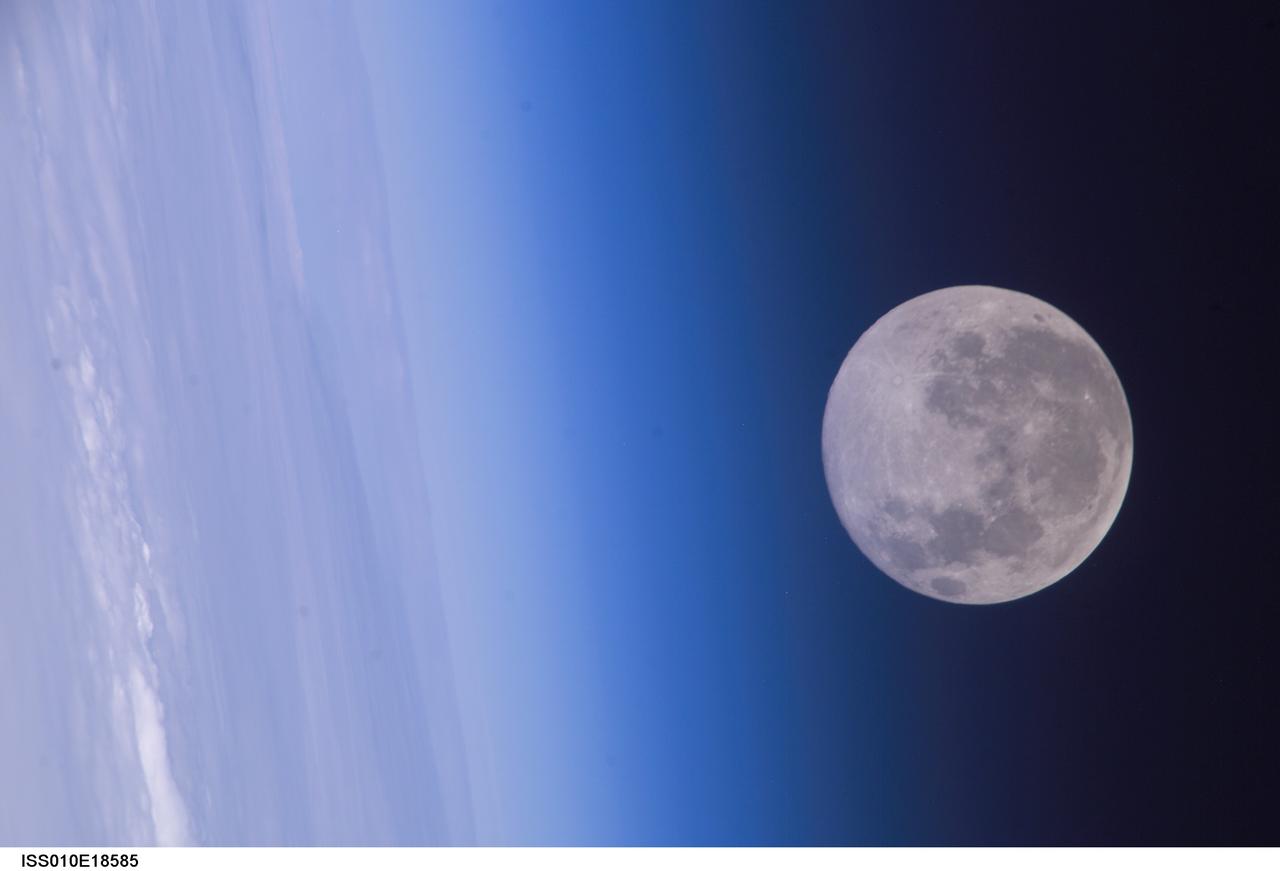
ISS010-E-18585 (24 February 2005) --- A full moon is visible in this view above Earth’s horizon and airglow, photographed by an Expedition 10 crewmember on the International Space Station (ISS).
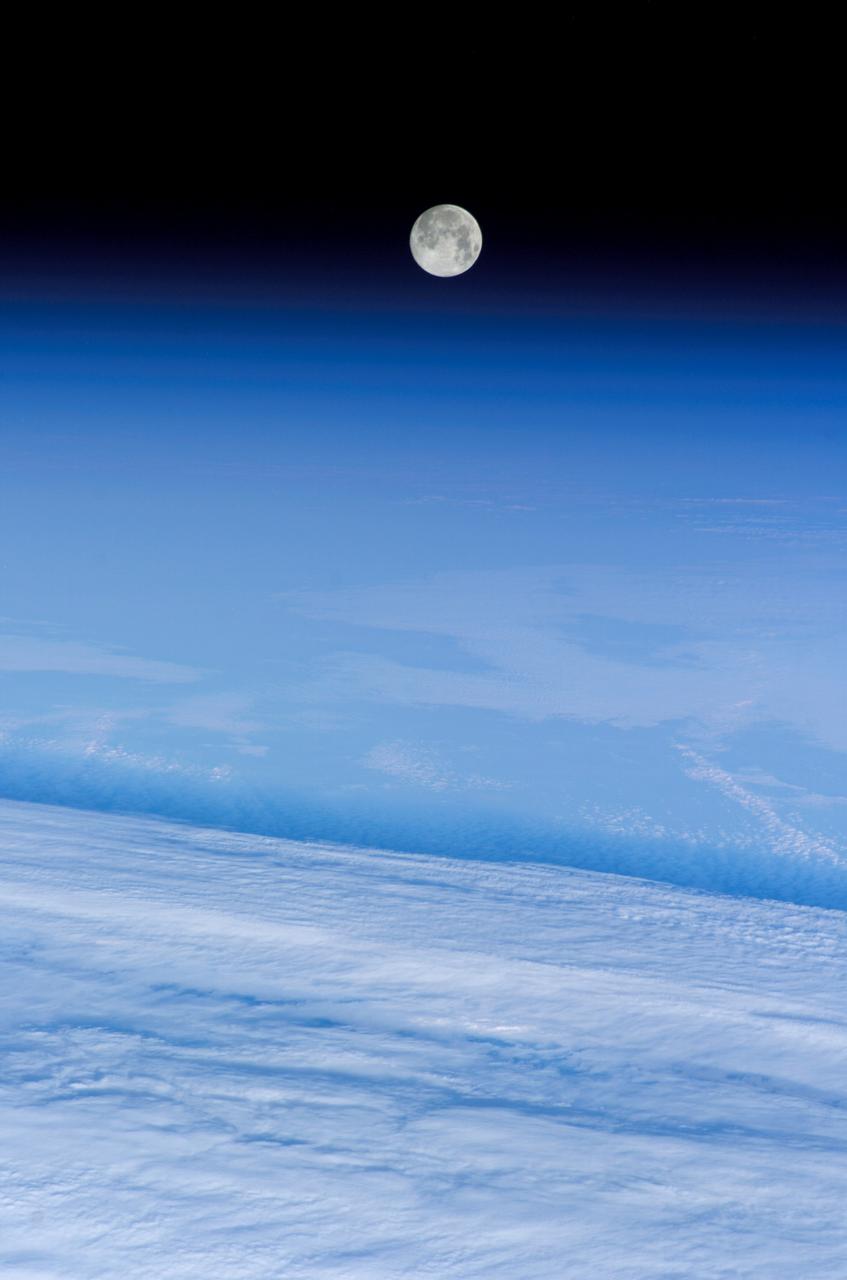
ISS012-E-19245 (12 Feb. 2006) --- A full moon is visible in this view above Earth's horizon and airglow, photographed by an Expedition 12 crewmember on the International Space Station.

iss070e022660 (Nov. 10, 2023) --- The Moon is pictured above Earth's horizon, its airglow, and an aurora (at far right) in this photograph from the International Space Station as it orbited 261 miles above the northwestern United States.
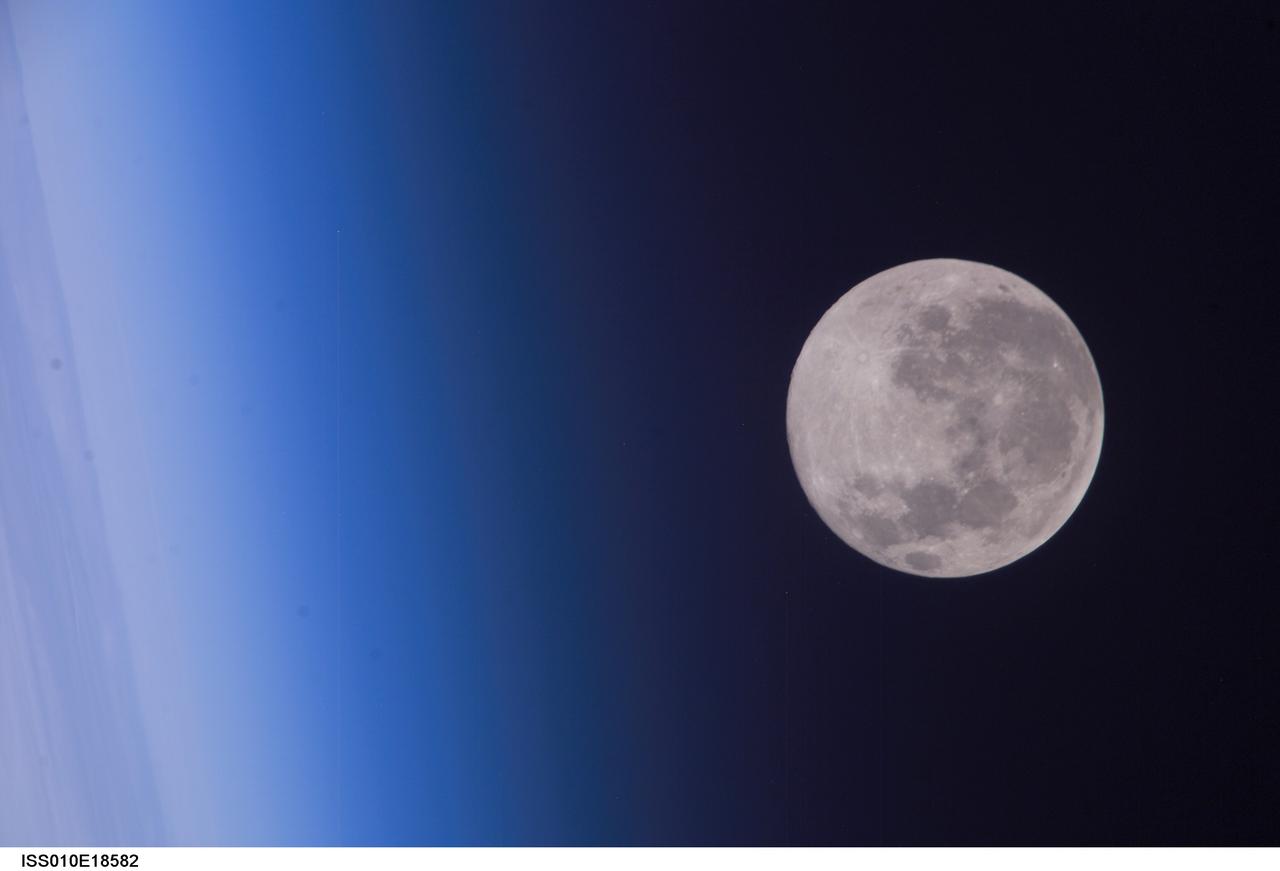
ISS010-E-18582 (24 February 2005) --- A full moon is visible in this view above Earth’s horizon and airglow, photographed by an Expedition 10 crewmember on the International Space Station (ISS).
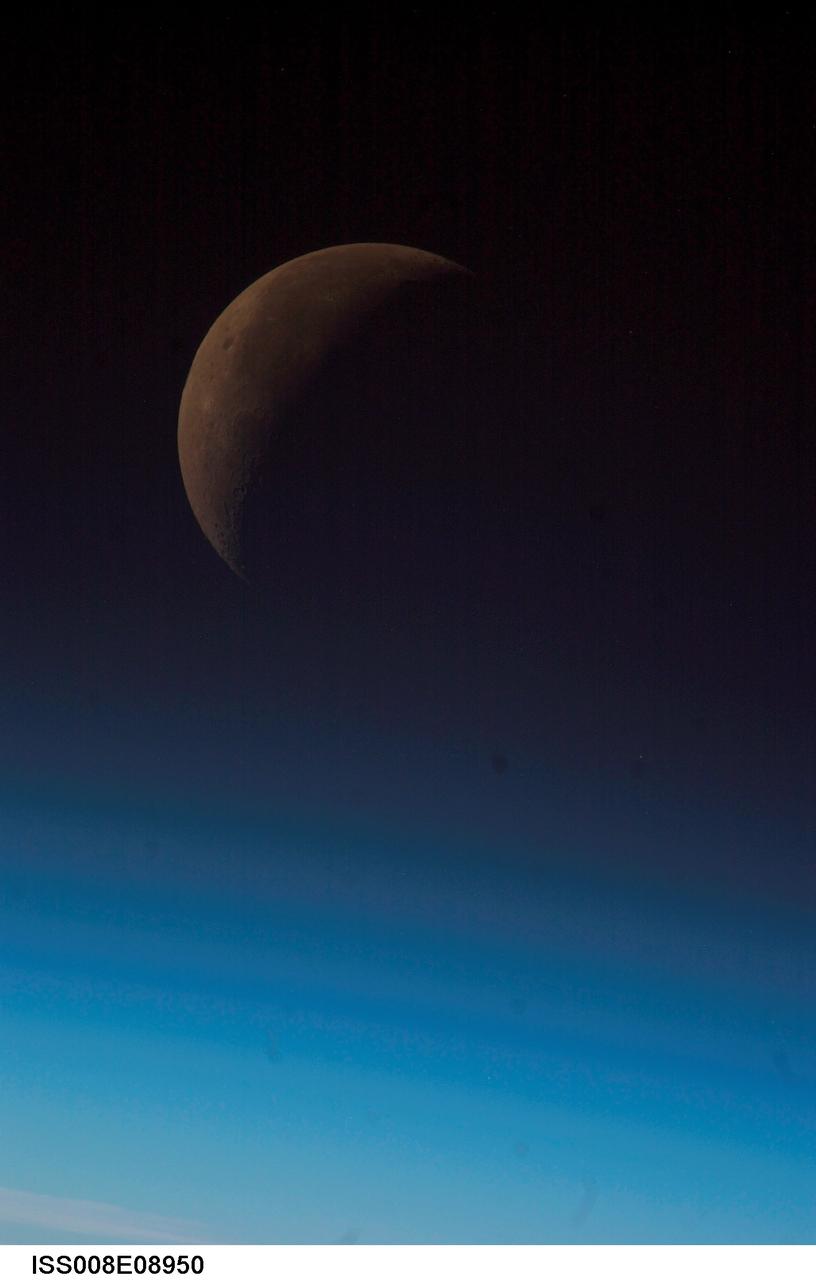
ISS008-E-08950 (December 2003) --- A partial moon is visible in this view of Earth’s horizon and airglow, photographed by an Expedition 8 crewmember onboard the International Space Station (ISS).

iss070e062746 (Jan. 10, 2024) --- The city lights of North America appear under Earth's airglow and a starry night sky in this photograph from the International Space Station as it orbited 262 miles above North Dakota.
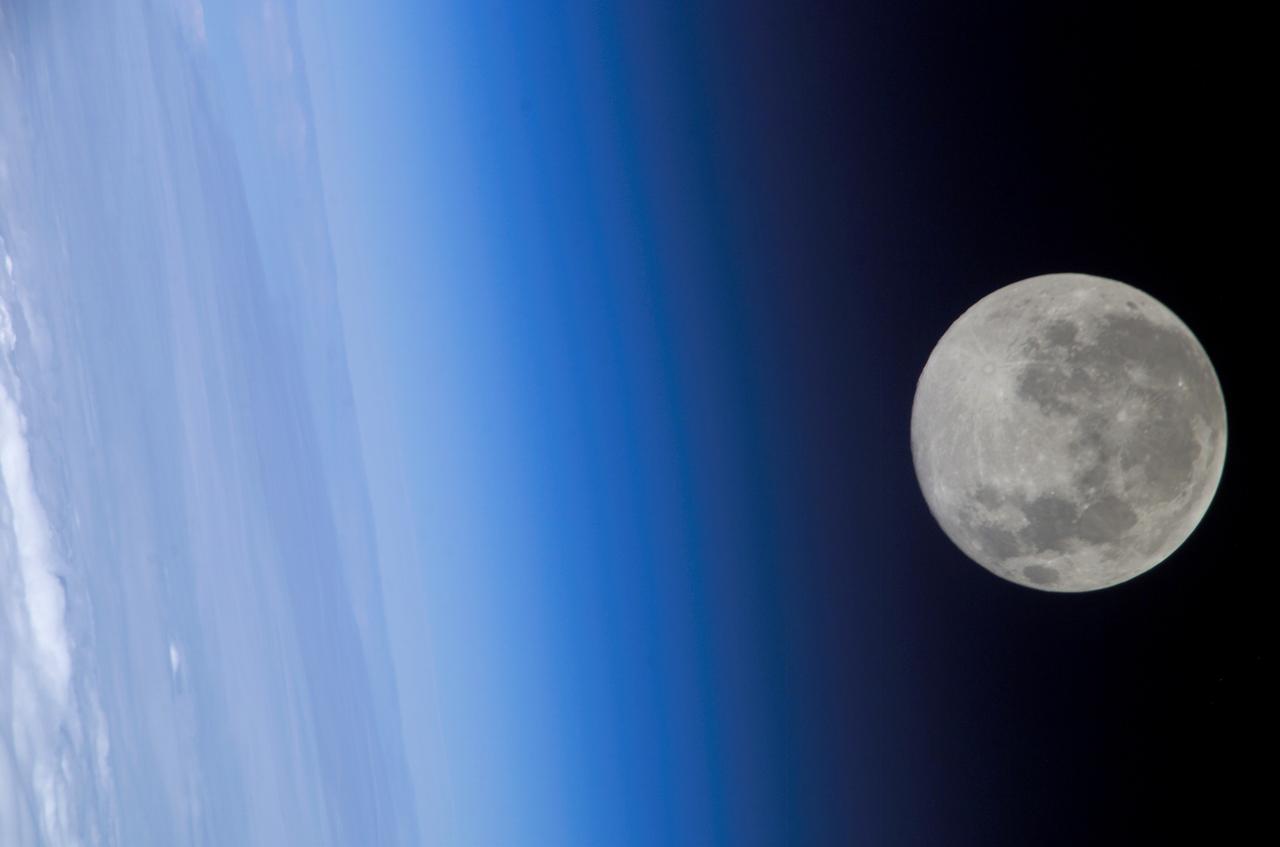
ISS010-E-18583 (24 February 2005) --- A full moon is visible in this view above Earth’s horizon and airglow, photographed by an Expedition 10 crewmember on the International Space Station.

iss069e092496 (Sept. 25, 2023) --- An aurora intersects Earth's airglow beneath a starry sky in this photograph from the International Space Station as it orbited 261 miles above western Kazakhstan near the Caspian Sea.
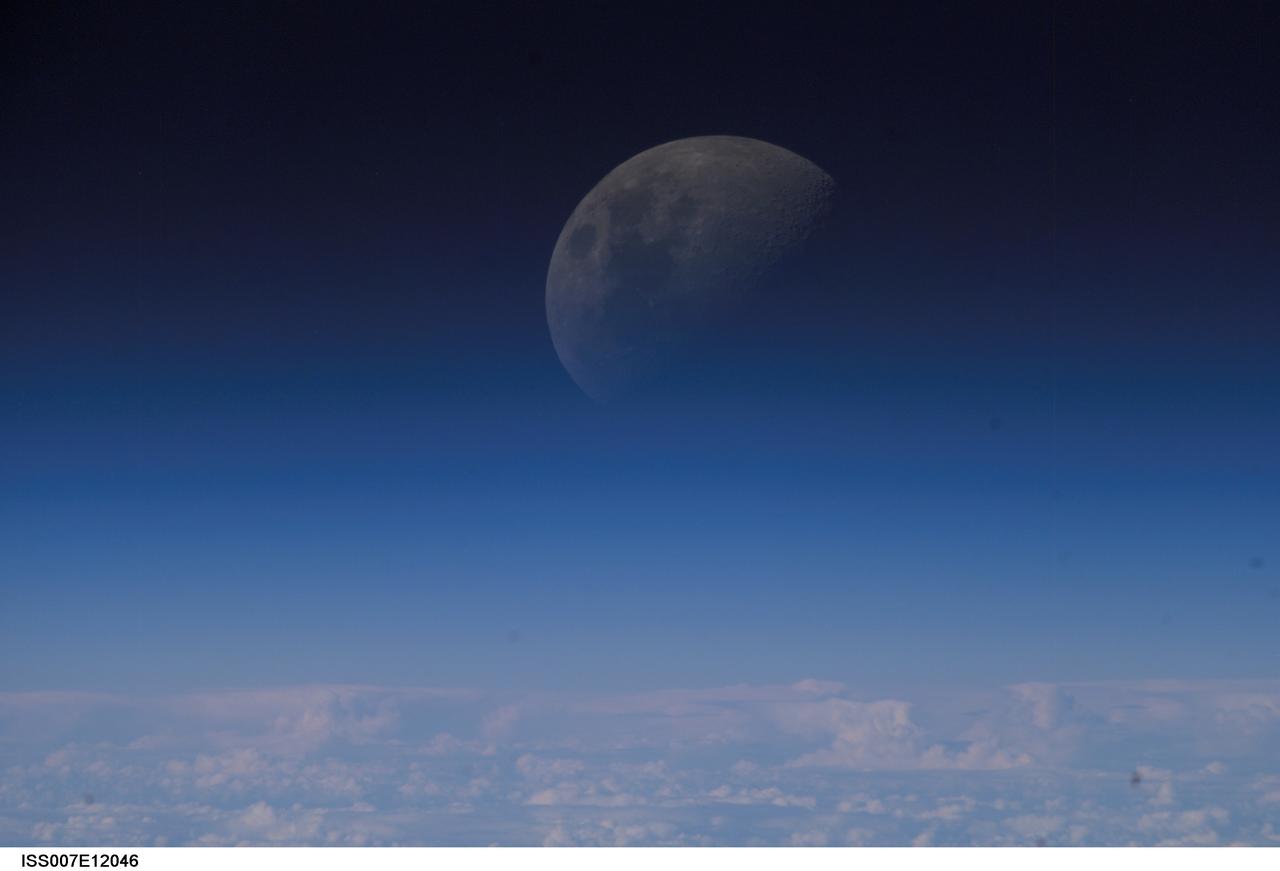
ISS007-E-12046 (5 August 2003) --- A gibbous moon is visible in this view of Earth’s horizon and airglow, photographed by an Expedition 7 crewmember onboard the International Space Station (ISS).
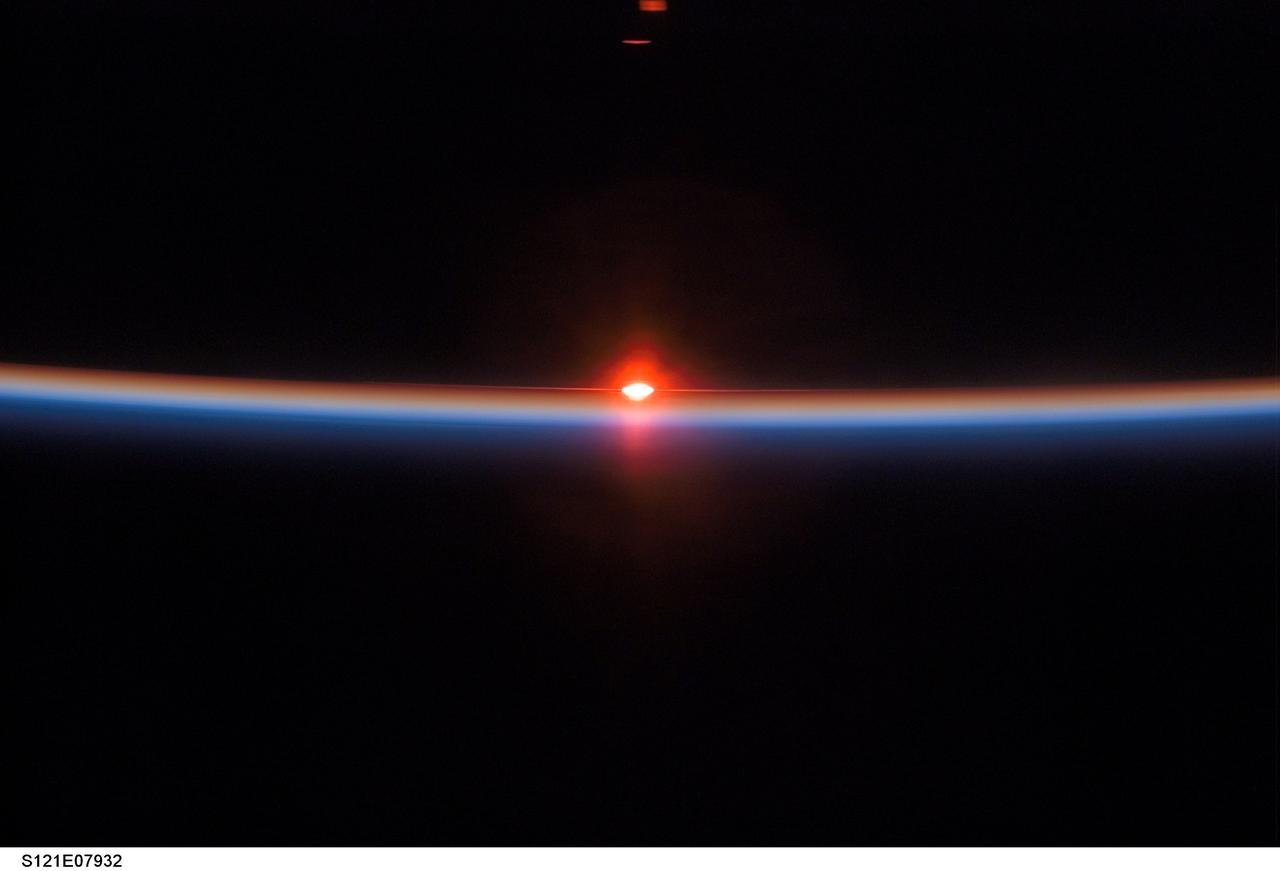
S121-E-07932 (15 July 2006) --- A setting sun and the thin blue airglow line at Earth's horizon were captured in this image photographed by an STS-121 crewmember aboard the Space Shuttle Discovery.
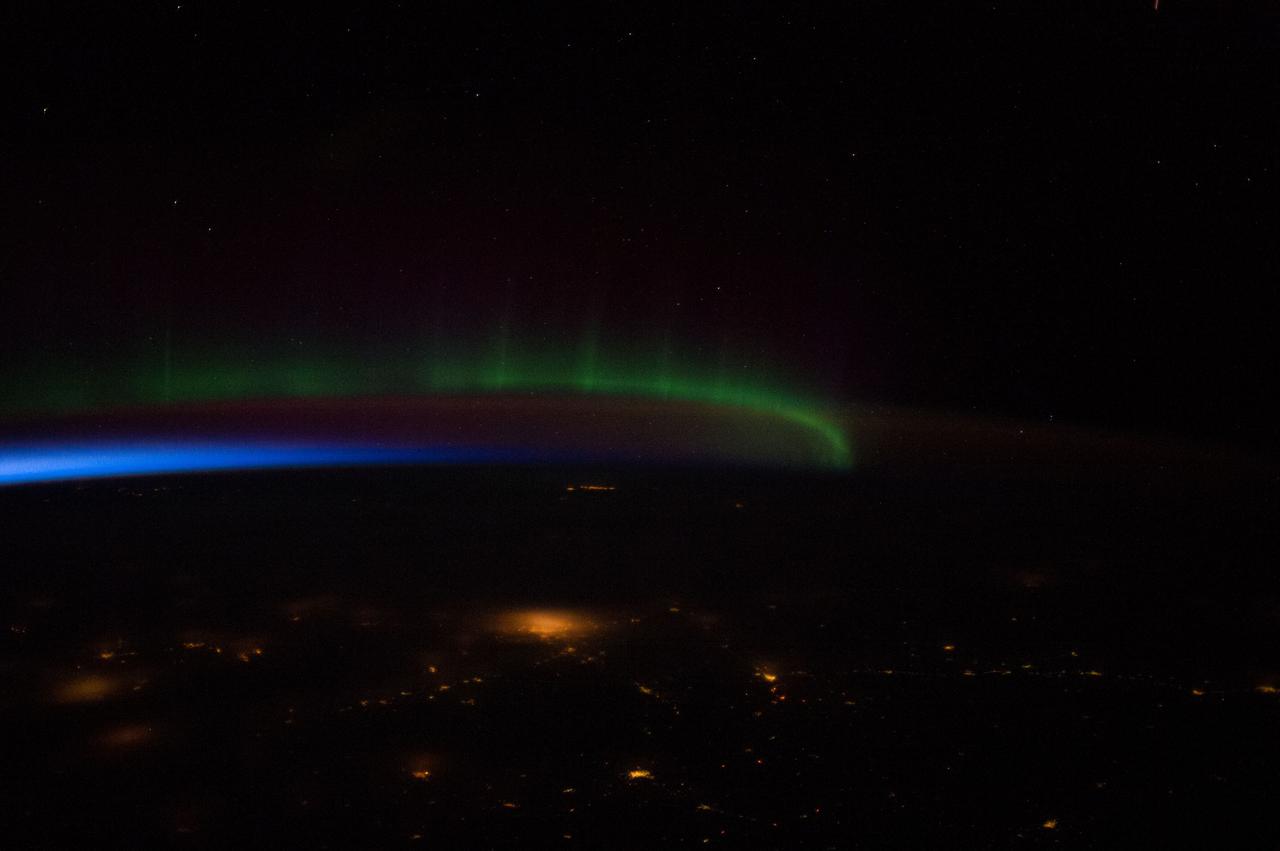
Earth observation taken by the Expedition 39 crew aboard the ISS. Night view of airglow, aurora, and city lights. Image was downlinked in folder: north lights, and released by flight engineer 3 (FE3) on Instagram.
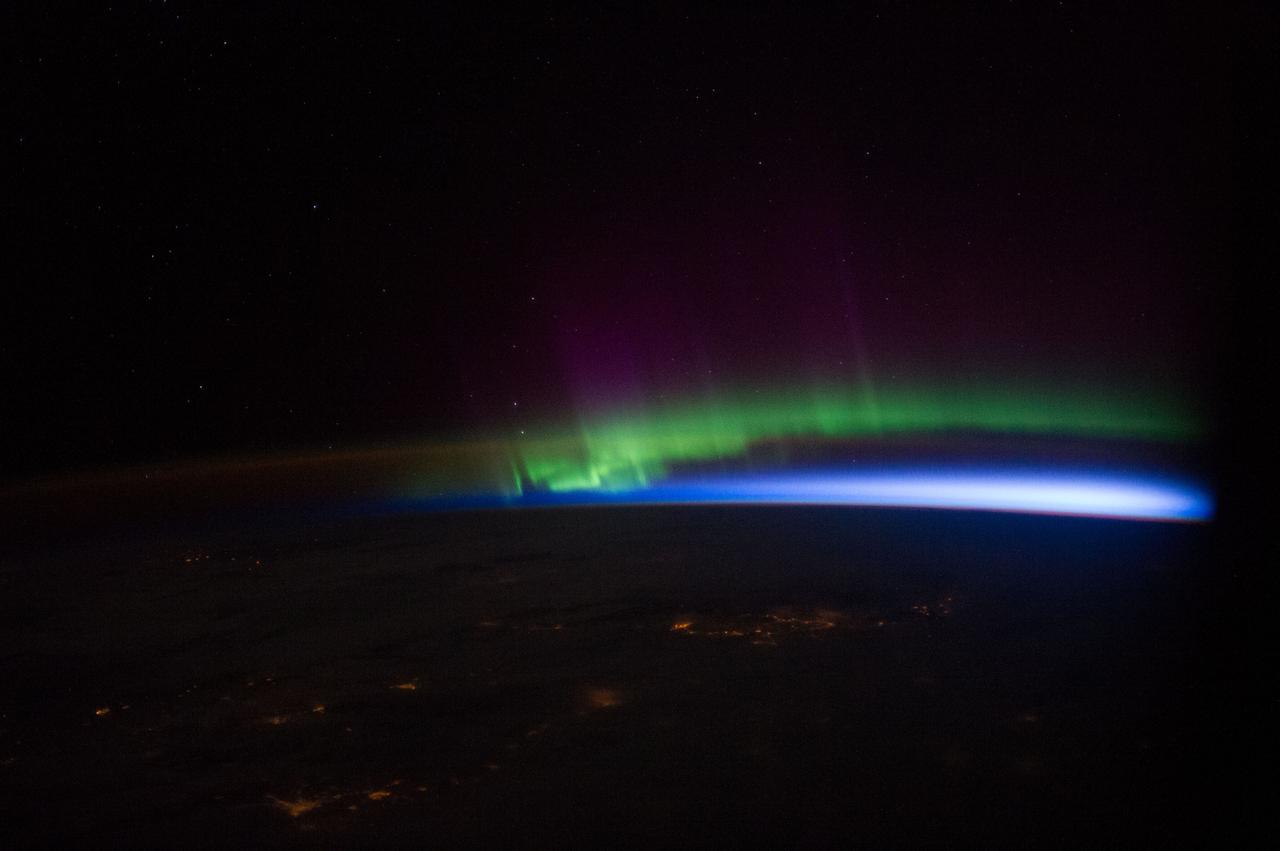
Earth observation taken by the Expedition 39 crew aboard the ISS. Night view of airglow, aurora, and city lights. Image was released by astronaut on Twitter and downlinked in folder: north lights.

iss066e029018 (Oct. 30, 2021) --- The International Space Station was orbiting 263 miles above the Indian Ocean about to cross over the city lights of southern India, pictured with the island nation of Sri Lanka at center right, in this night time photograph. The atmospheric airglow is also viewed blanketing the Earth's horizon beneath a starry sky.
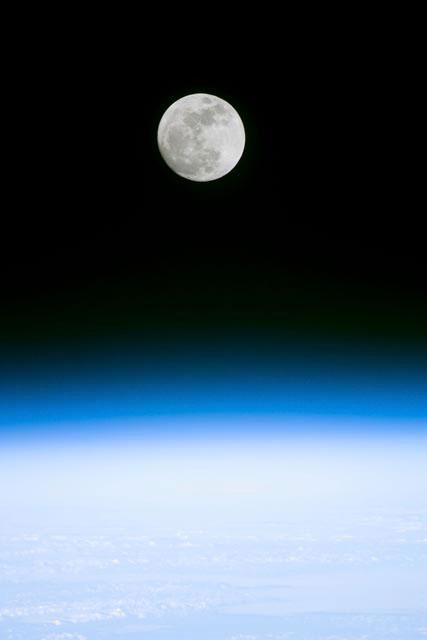
STS103-E-5040 (21 December 1999) --- This photo of the Moon over the airglow of Earth's atmosphere was taken by the STS-103 crew members aboard Discovery. Time of the electronic still camera's (ESC) image was 15:15:41 GMT, Dec. 21, 1999.
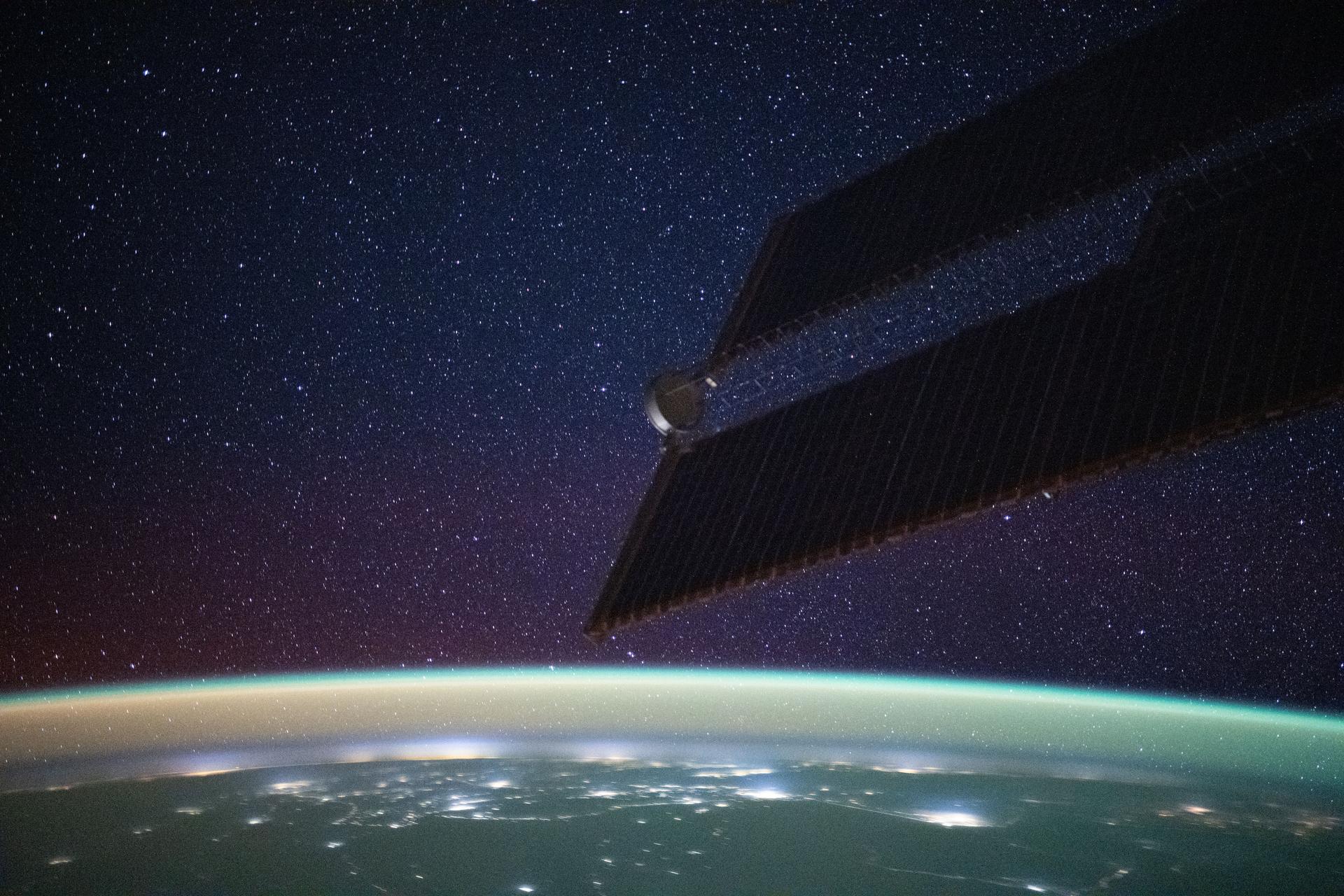
iss073e0982727 (Oct. 25, 2025) --- A bright yellow-green airglow blankets Earth's horizon, dotted with the city lights of northern India, beneath a star-filled sky. This long-exposure photograph was taken from the International Space Station as it orbited 260 miles above the Himalayas at approximately 1:11 a.m. local time.
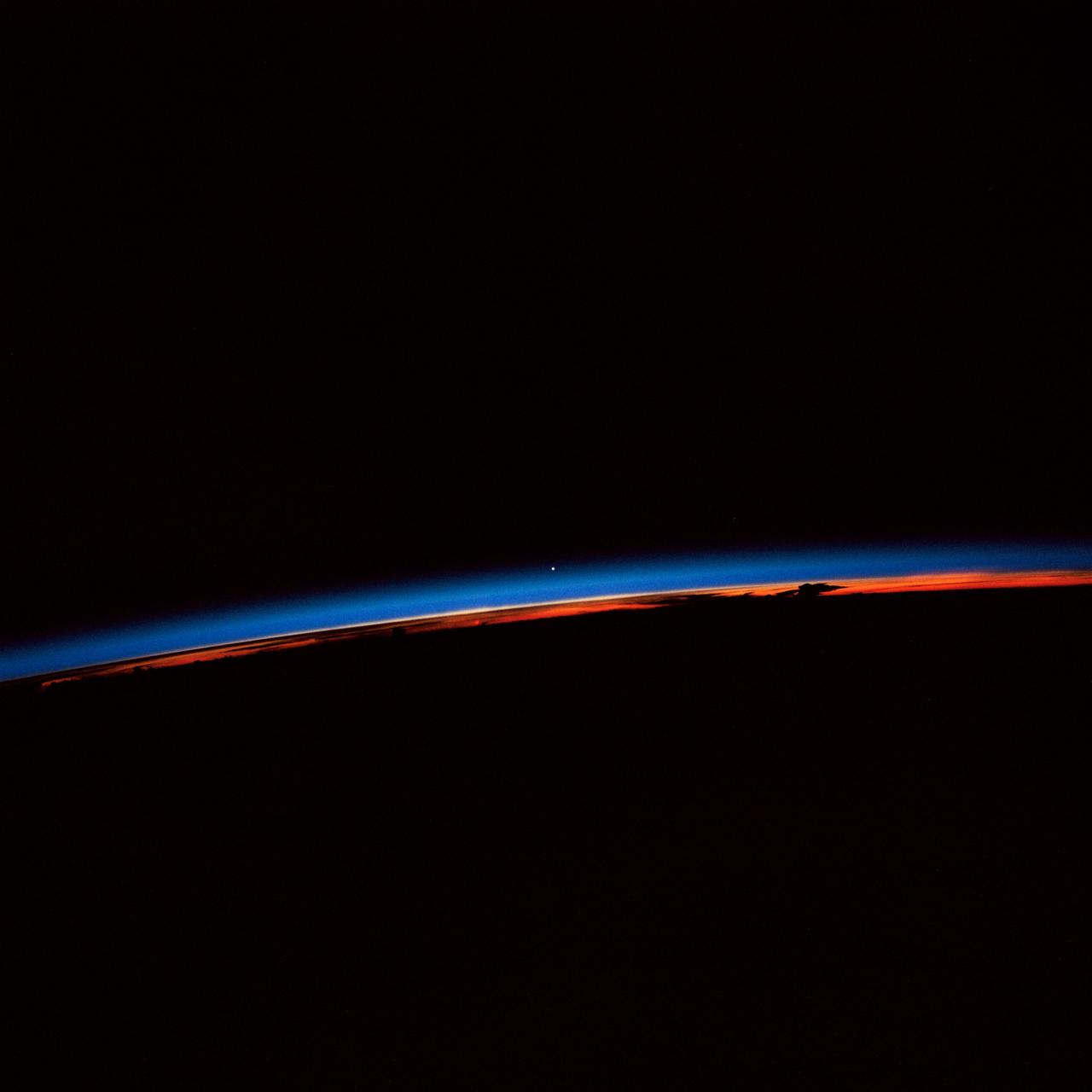
STS-30 Earth observation captured by crewmembers onboard Atlantis, Orbiter Vehicle (OV) 104, shows the sunset over the Earth as well as the planet Venus near the center of the frame. Jutting clouds are seen on the horizon, just beneath the blue strip of airglow.
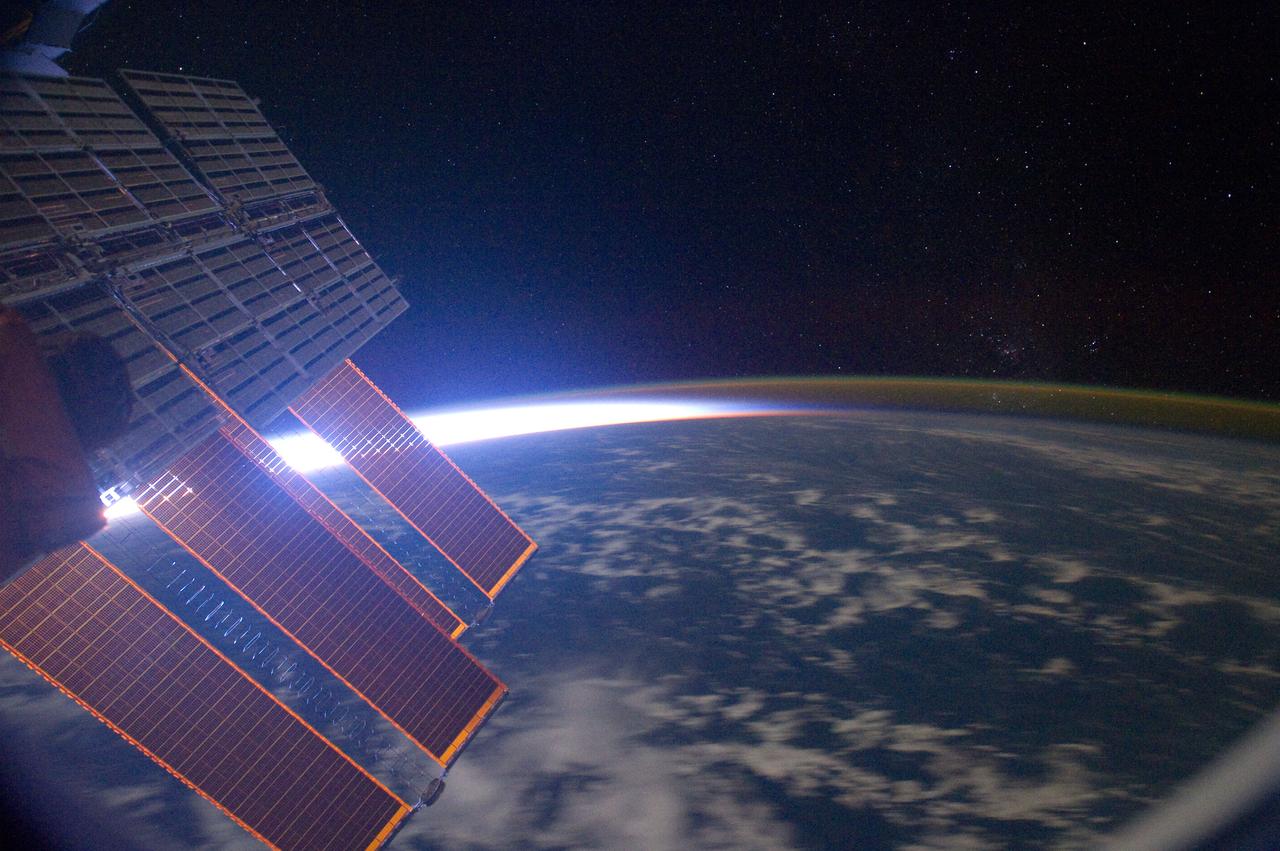
ISS029-E-006855 (18 Sept. 2011) --- This is one of a series of night time images photographed by one of the Expedition 29 crew members from the International Space Station. It features airglow, Earth?s terminator and parts of the Central Pacific Ocean. Nadir coordinates are 10.11 degrees north latitude and 169.92 degrees west longitude.
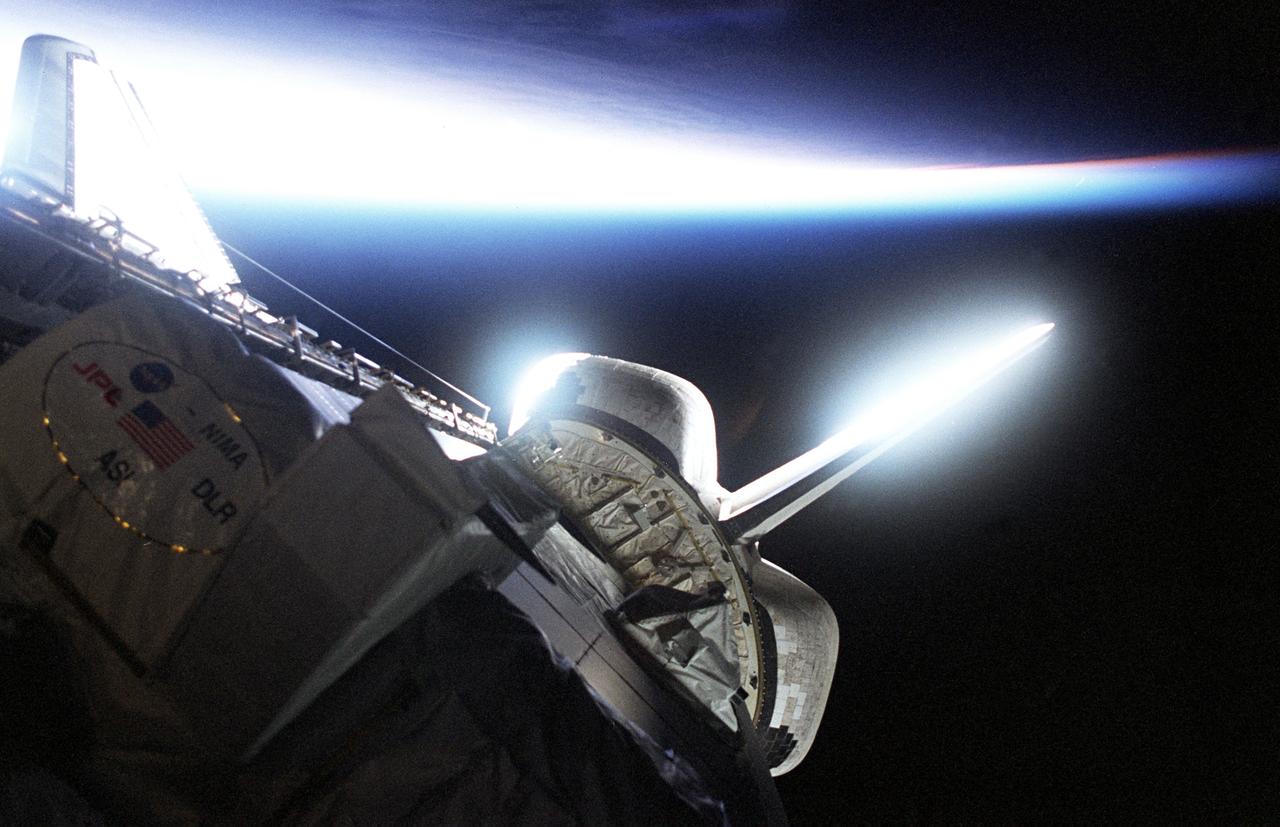
STS099-315-031 (11-22 February 2000) --- The Space Shuttle Endeavour orbits Earth with its lengthy SRTM mast at work (out of frame). Part of the SRTM payload is silhouetted in the cargo bay. Airglow effect of Earth's atmosphere makes for interesting light and color display.
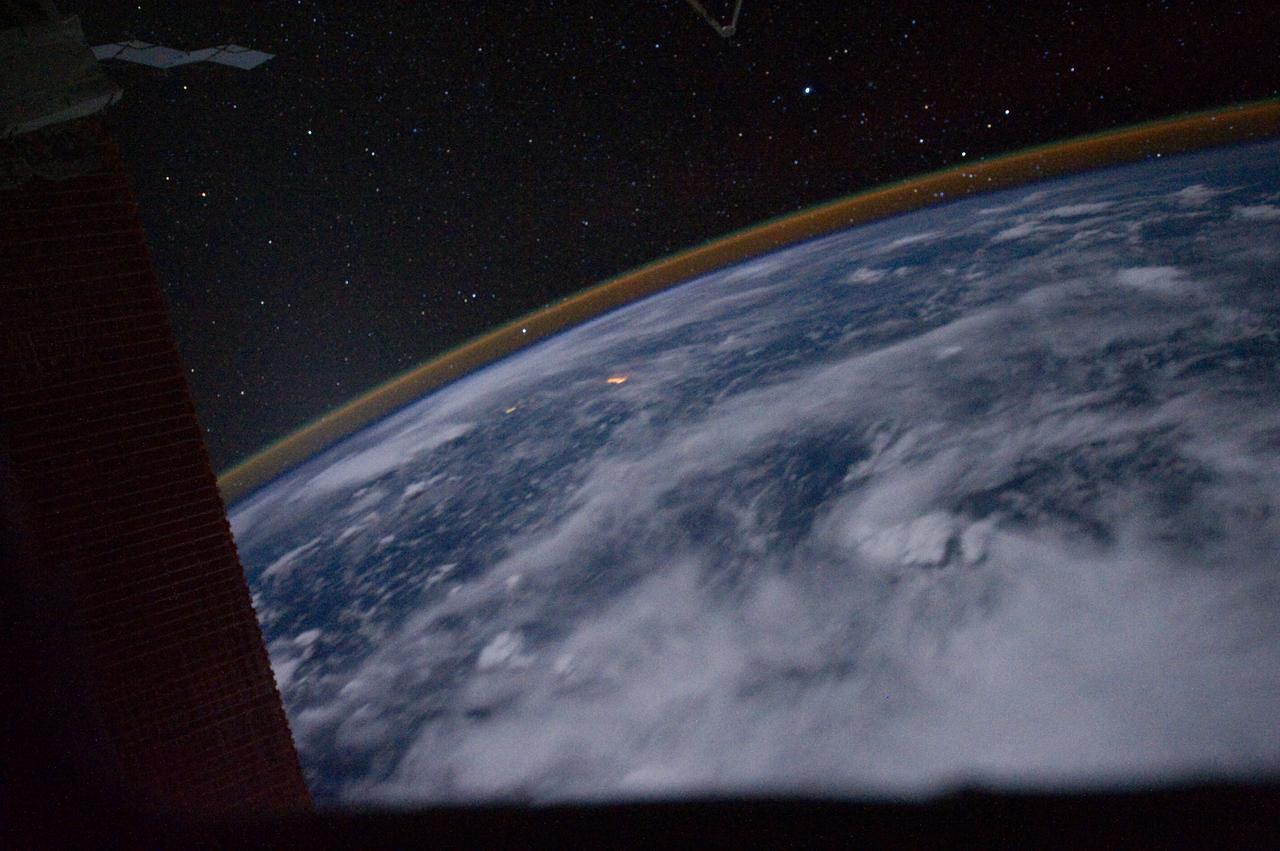
ISS028-E-031020 (20 Aug. 2011) --? One of the Expedition 28 crew members aboard the International Space Station photographed this panoramic nighttime view over the western Pacific. The viewing direction is unknown. There is a strong display of airglow in the atmospheric limb near the horizon.
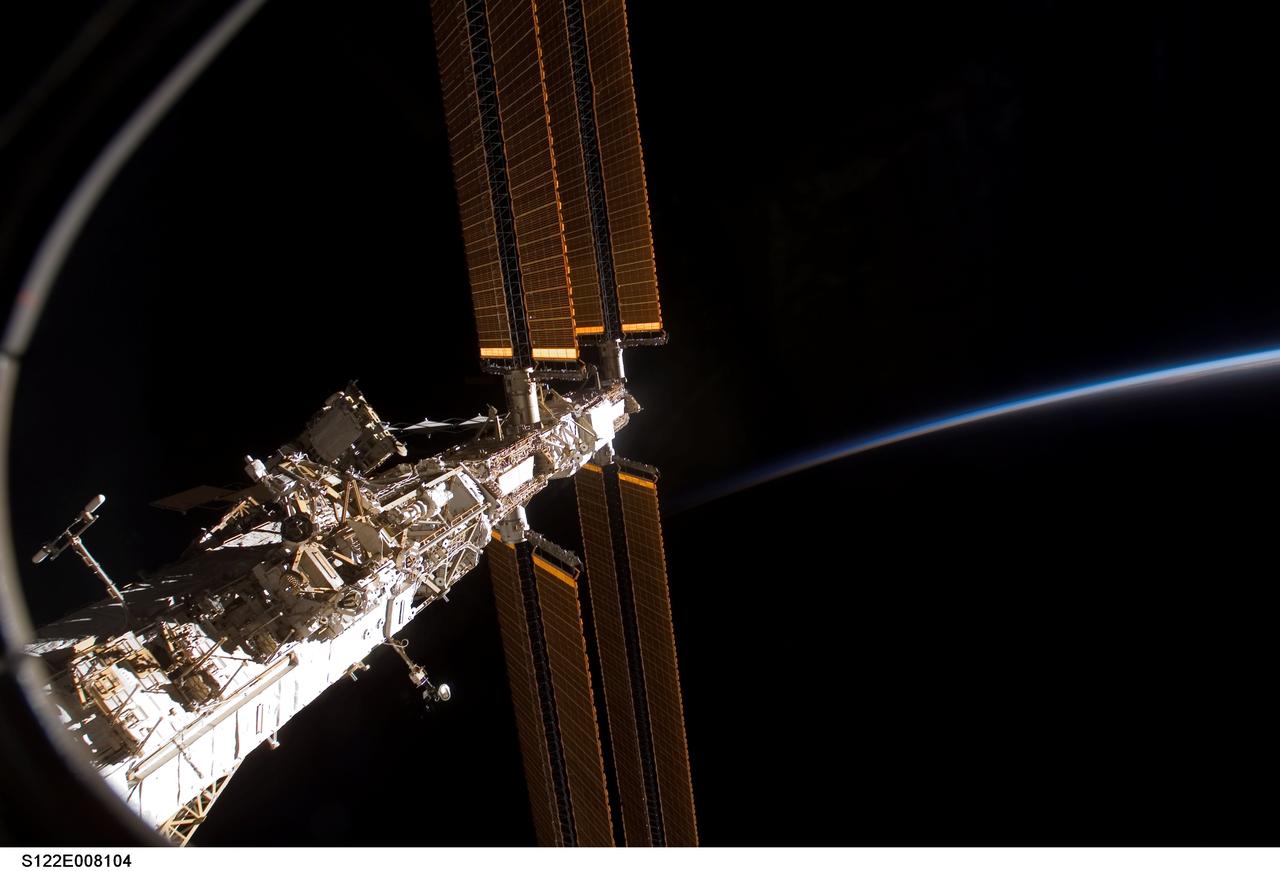
S122-E-008104 (13 Feb. 2008) --- A section of the International Space Station is featured in this image photographed by a STS-122 crewmember on Space Shuttle Atlantis while docked with the station. The blackness of space and Earth's airglow provide the backdrop for the scene.

iss064e035805 (Feb. 21, 2021) --- The International Space Station, pictured with Russia's ISS Progress 77 cargo craft attached to the Pirs docking compartment, orbits into a sunset 270 miles above the South Pacific. This long duration photograph also shows Earth's airglow (a faint emission of light in the upper atmosphere) and a starry night sky.
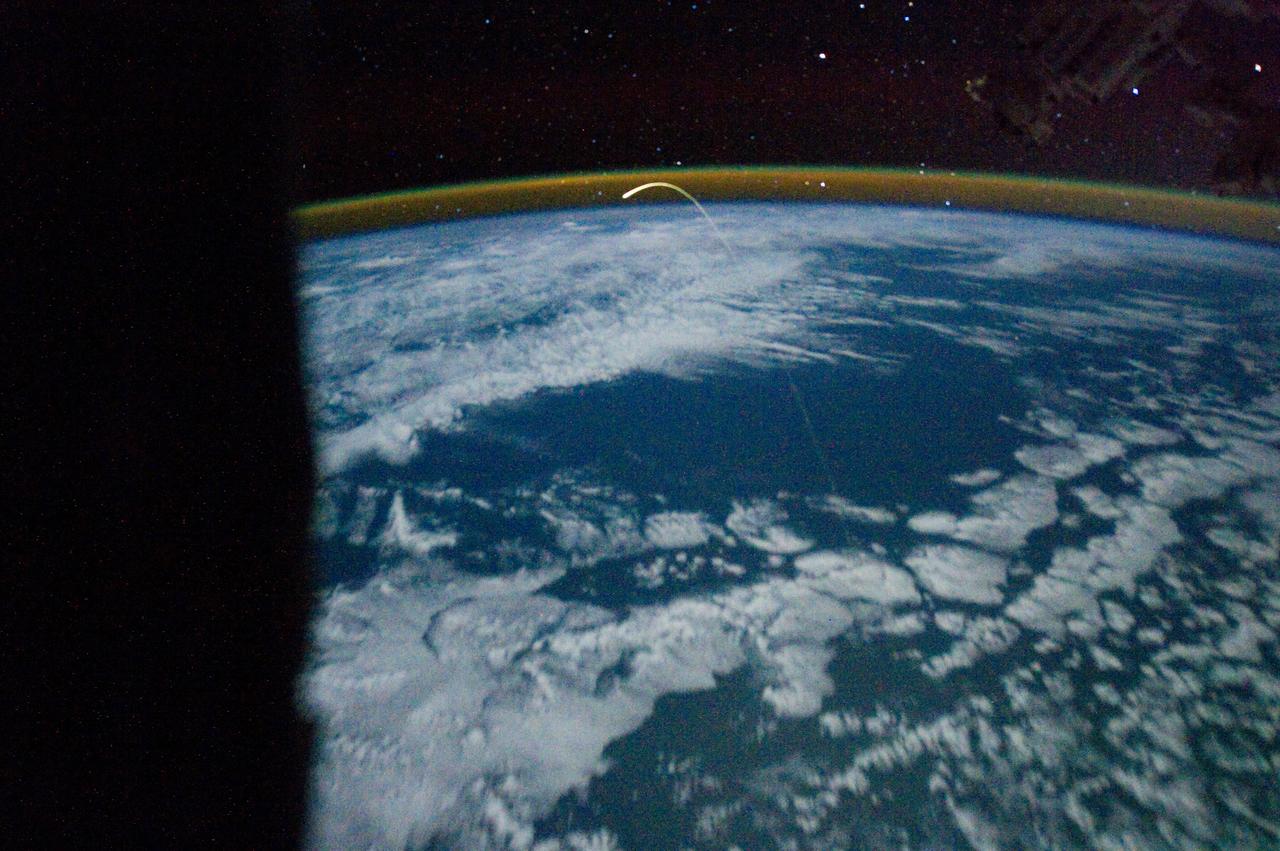
ISS028-E-018200 (21 July 2011) --- This unprecedented view of the space shuttle Atlantis, appearing like a bean sprout against clouds and city lights, on its way home, was photographed by the Expedition 28 crew of the International Space Station. Airglow over Earth can be seen in the background.
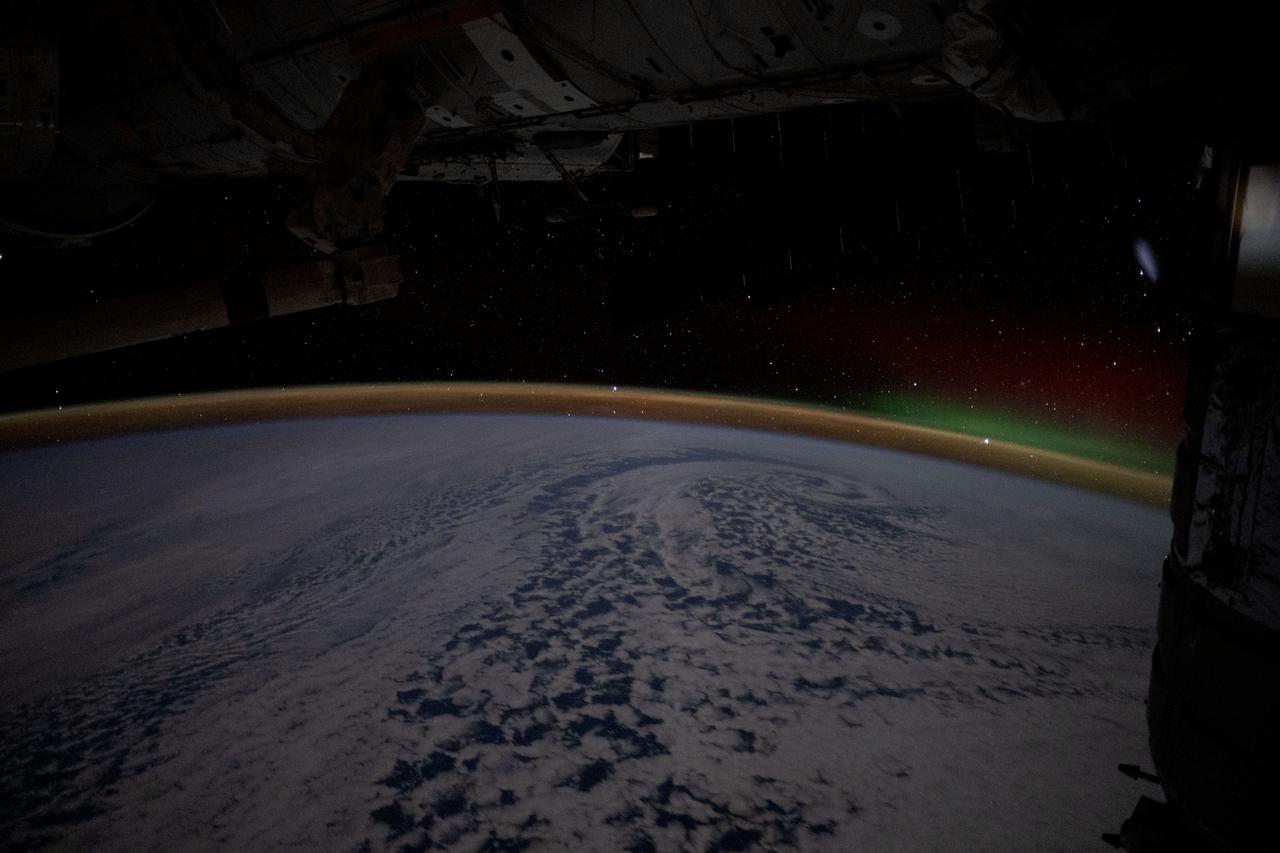
iss071e586401 (Aug. 13, 2024) --- A wispy aurora australis rises above Earth's airglow blanketing the horizon in this long-duration photograph from the International Space Station as it orbited 270 miles above the Pacific Ocean southeast of New Zealand.