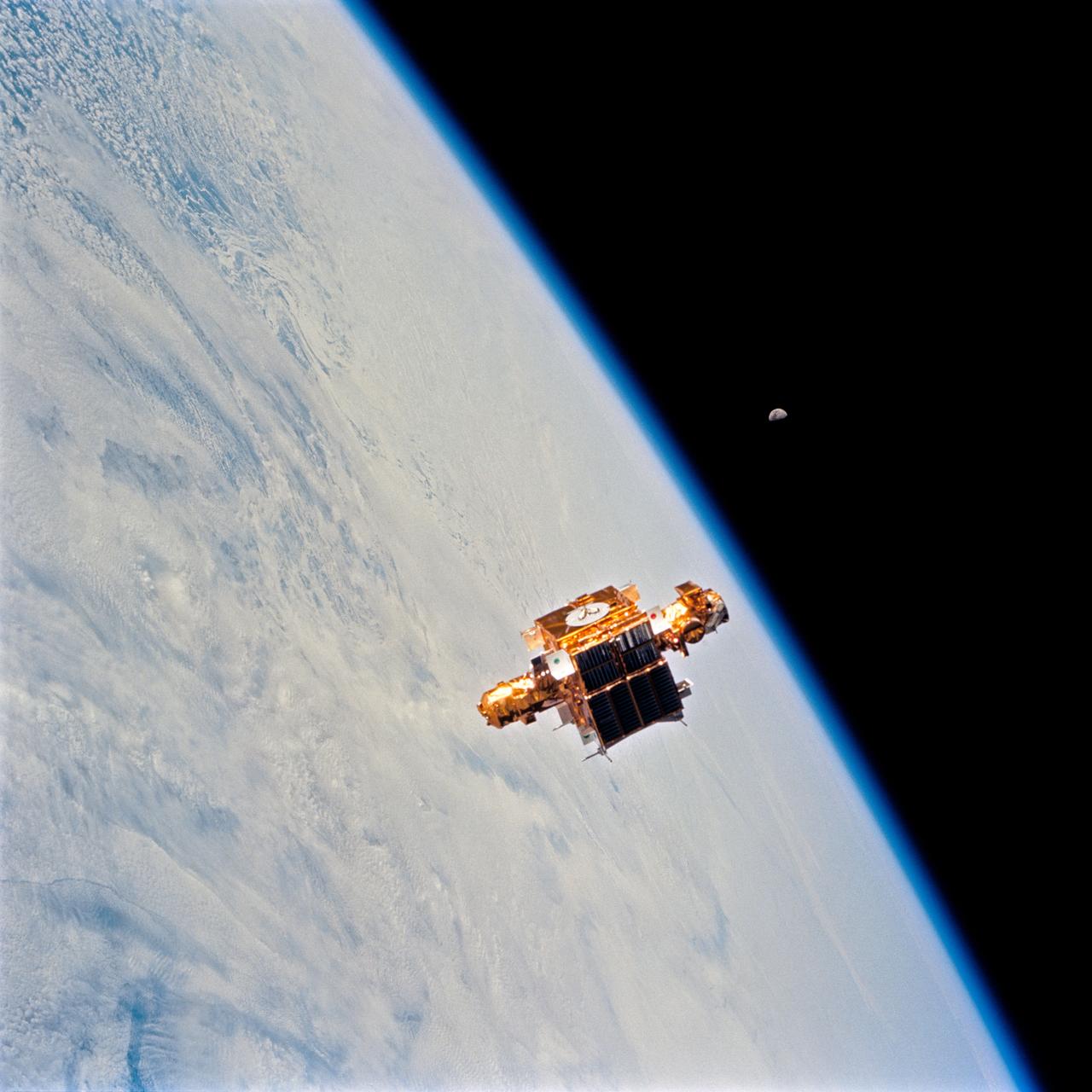
STS064-74-052 (9-20 Sept. 1994) --- Astronauts onboard the space shuttle Discovery used a 70mm camera to capture this photograph of the retrieval operations with the Shuttle Pointed Autonomous Research Tool for Astronomy 201 (SPARTAN 201). A gibbous moon can be seen in the background. Photo credit: NASA or National Aeronautics and Space Administration
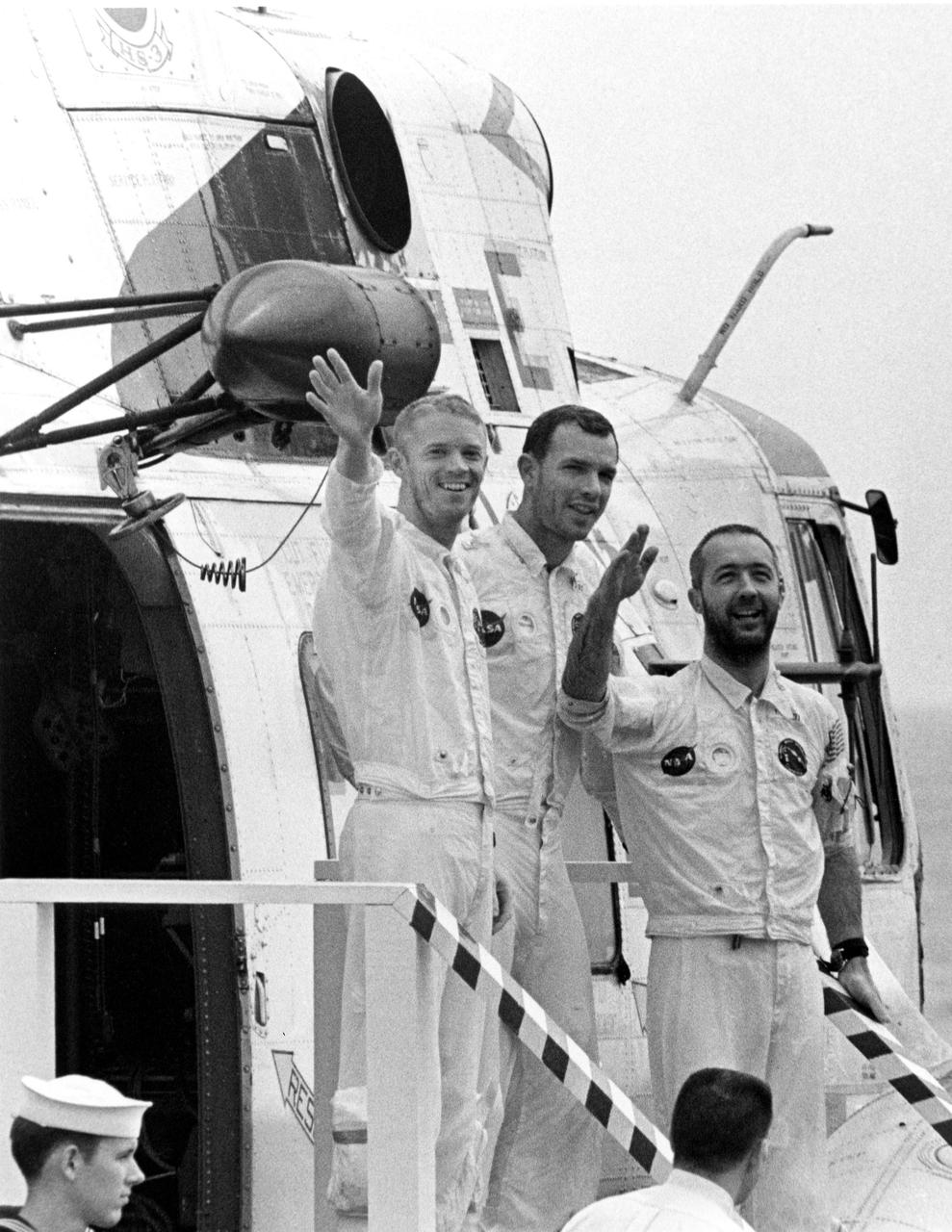
KENNEDY SPACE CENTER, FLA. -- One hour after their Apollo 9 spacecraft splashed down today in the Atlantic Ocean, waving astronauts, left to right, Russell L. Schweickart, David R. Scott and James A. McDivitt, descend stairway on to main deck of the USS Guadalcanal, prime recovery ship. The helicopter flew them from their impact point a short distance to the ship, originally positioned less than five miles from where they splashed down. The 10-day Earth orbital mission proved the feasibility of the lunar module for manned descent to the Moon's surface, scheduled to take place later this year. They wre launched March 3, 1969, from the Kennedy Space Center aboard an Apollo_Saturn V space vehicle. The National Aeronautics and Space Administration directs the Apollo program.
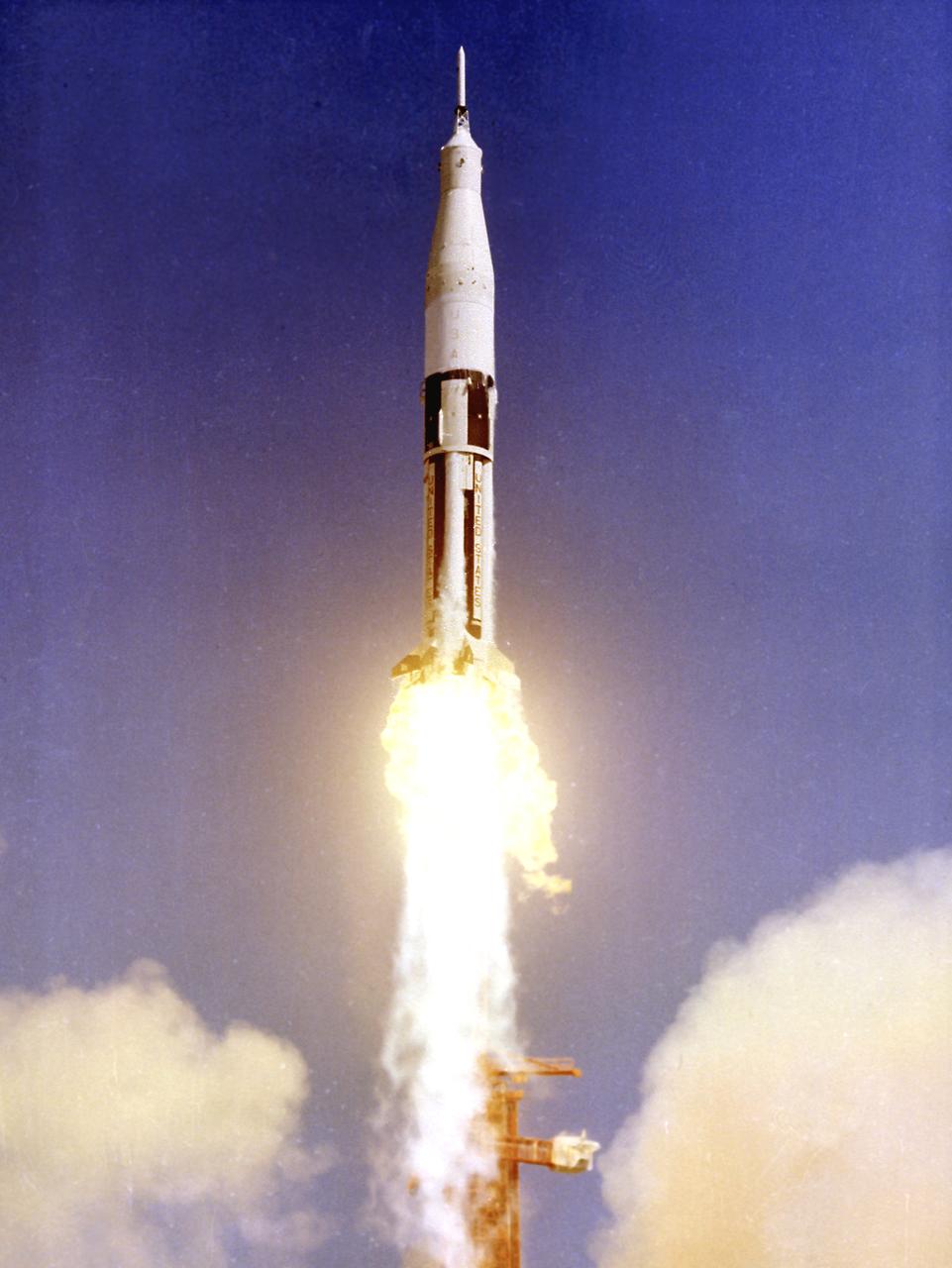
AS-201, the first Saturn IB launch vehicle developed by the Marshall Space Flight Center (MSFC), lifts off from Cape Canaveral, Florida, February 26, 1966. This was the first flight of the S-IB and S-IVB stages, including the first flight test of the liquid-hydrogen/liquid oxygen-propelled J-2 engine in the S-IVB stage. During the thirty-seven minute flight, the vehicle reached an altitude of 303 miles and traveled 5,264 miles downrange. In all, nine Saturn IB flights were made, ending with the Apollo Soyuz Test Project (ASTP) in July 1975.
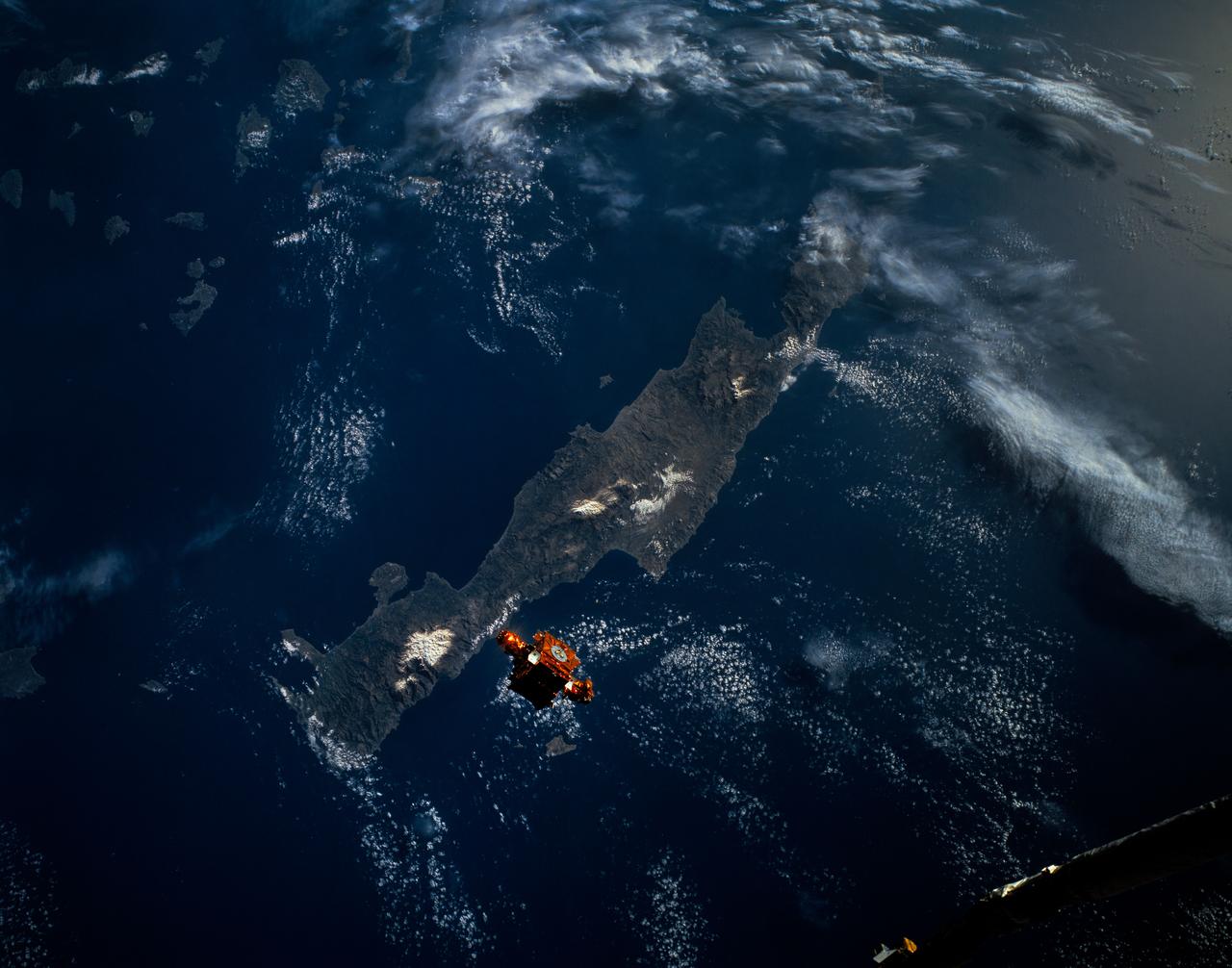
During STS-56, the Shuttle Pointed Autonomous Research Tool for Astronomy 201 (SPARTAN-201), a freeflying payload, was photographed by Discovery's, Orbiter Vehicle (OV) 103's, crewmembers as it drifted above the Mediterranean Sea near the island of Crete. On the mission's third day, the remote manipulator system (RMS) arm was used to lift SPARTAN-201 from its support structure in OV-103's payload bay and release it in space. SPARTAN-201 was later recaptured by OV-103's RMS and returned to Earth with the astronaut crew.
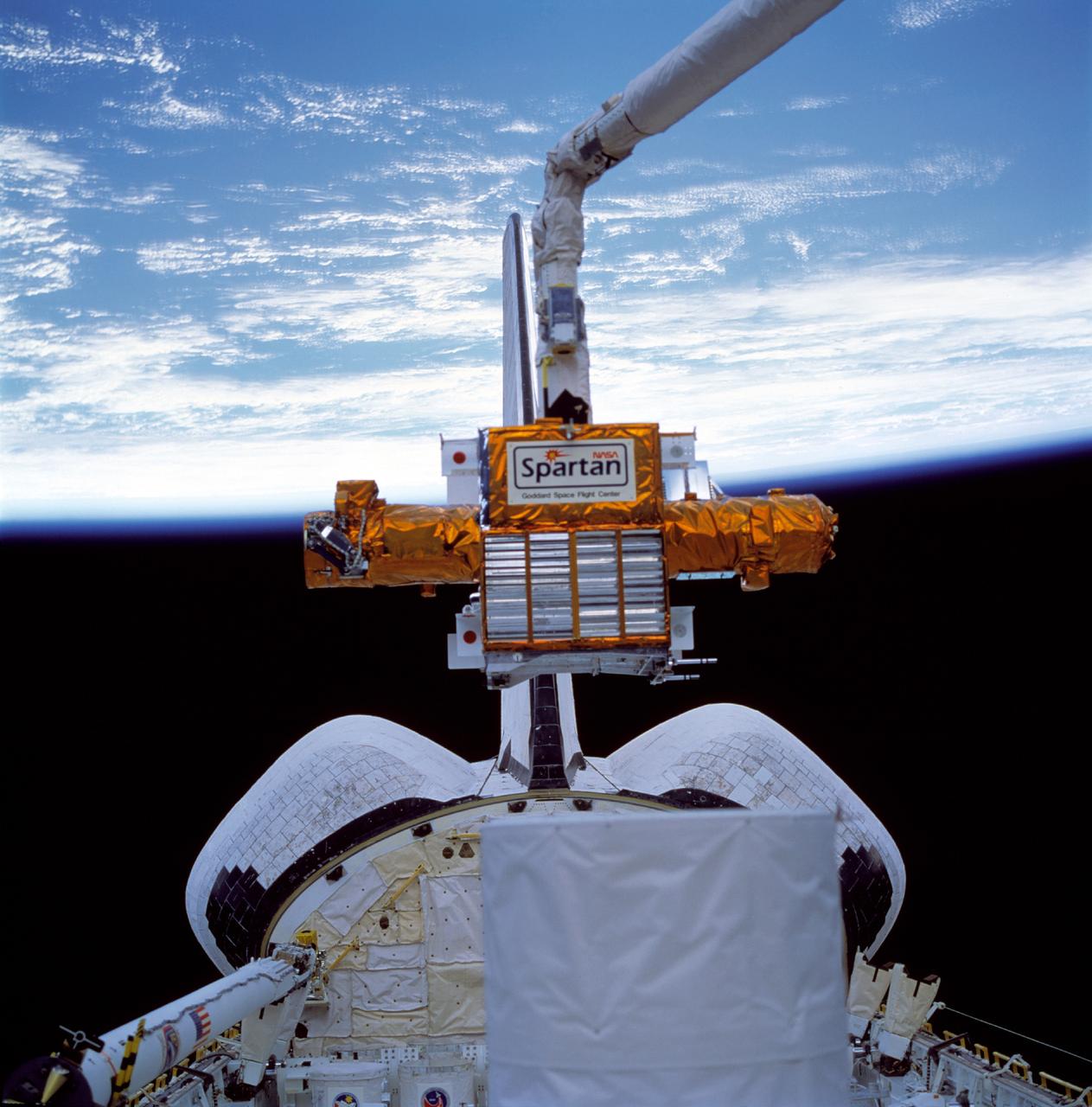
STS064-111-070 (9-20 Sept. 1994) --- The astronauts onboard the space shuttle Discovery used a 70mm camera to capture this view of the pre-deploy operations with the Shuttle Pointed Autonomous Research Tool for Astronomy (SPARTAN-201) 201. In the grasp of the robot arm device of the Remote Manipulator System (RMS), SPARTAN 201 hovers above Discovery's cargo bay prior to its two days of free-flight, some 40 miles away from the parent spacecraft. Photo credit: NASA or National Aeronautics and Space Administration
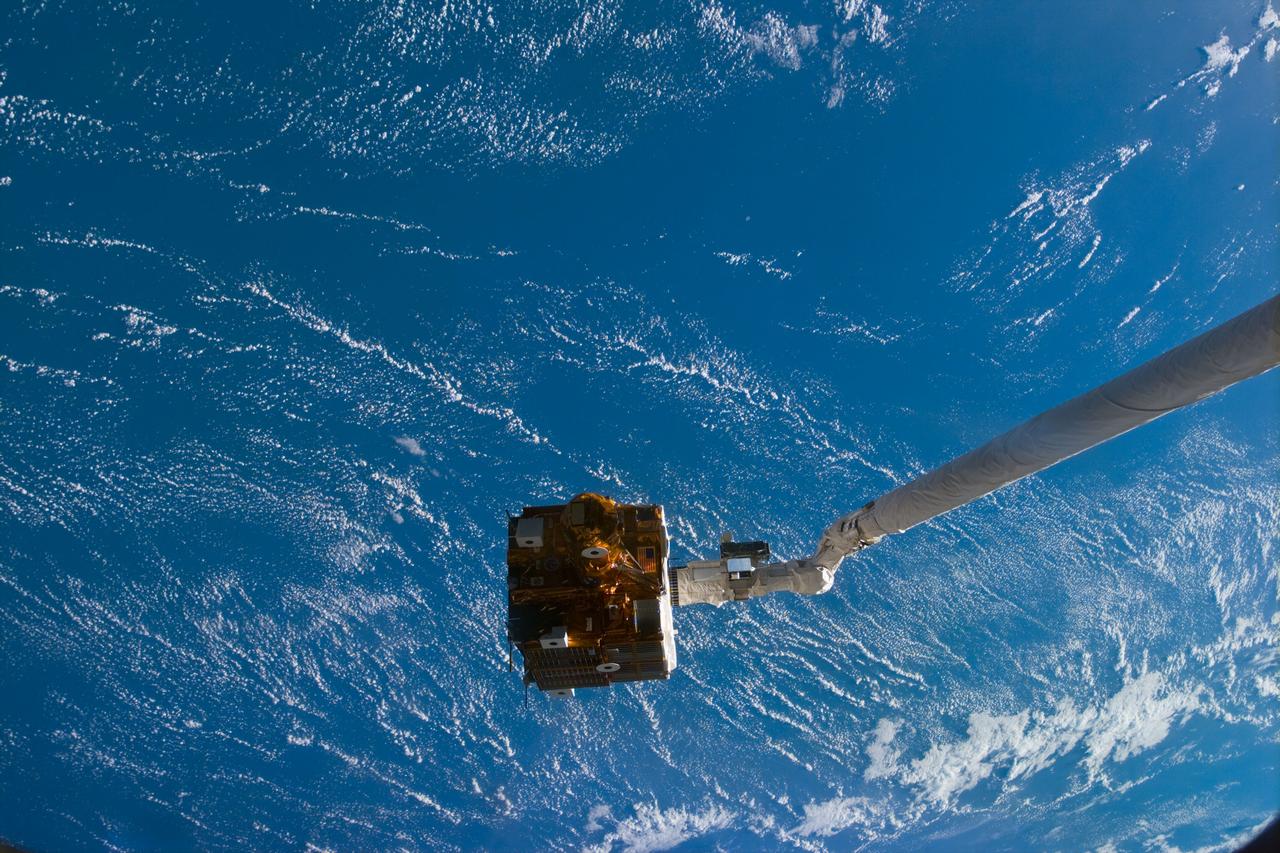
STS095-E-5084 (1 Nov. 1998) --- The Spartan 201-05 is in the grasp of Discovery's remote manipulator system (RMS) prior to release. The photo was taken with an electronic still camera (ESC) at 1:45:40 GMT, Nov. 1.
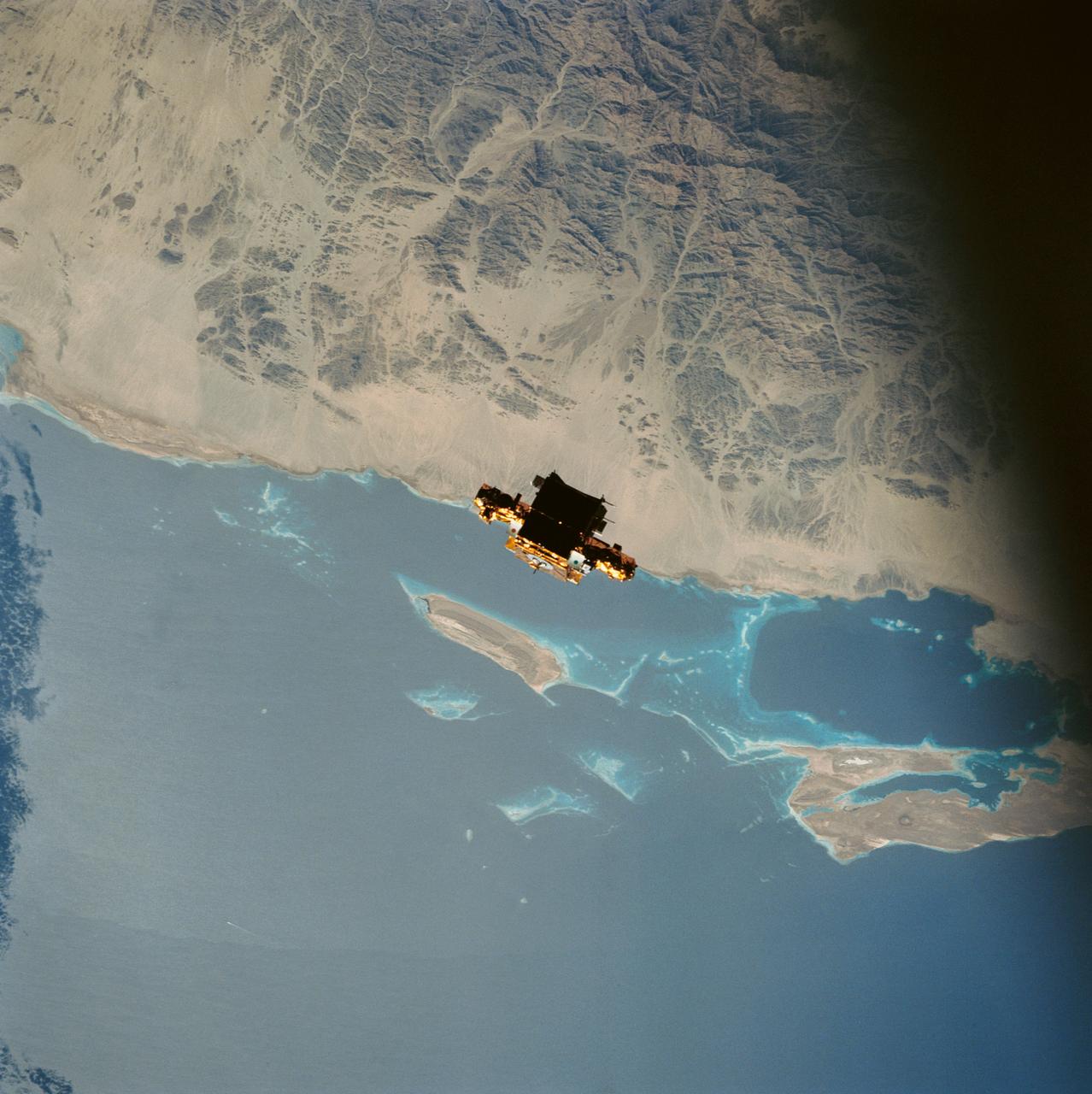
During STS-56, the Shuttle Pointed Autonomous Research Tool for Astronomy 201 (SPARTAN-201), a freeflying payload, was captured on 70mm film as it drifts over the Red Sea coast of Sudan. SPARTAN-201 was photographed by the crewmembers aboard Discovery, Orbiter Vehicle (OV) 103. On the mission's third day, crewmembers used the remote manipulator system (RMS) to lift the satellite from its support structure in OV-103's payload bay (PLB) and release it into space. SPARTAN-201 was later recaptured by OV-103's RMS and returned to Earth with the astronaut crew. The cape structure in the background is Ras abu Shagara, north of Port Sudan.
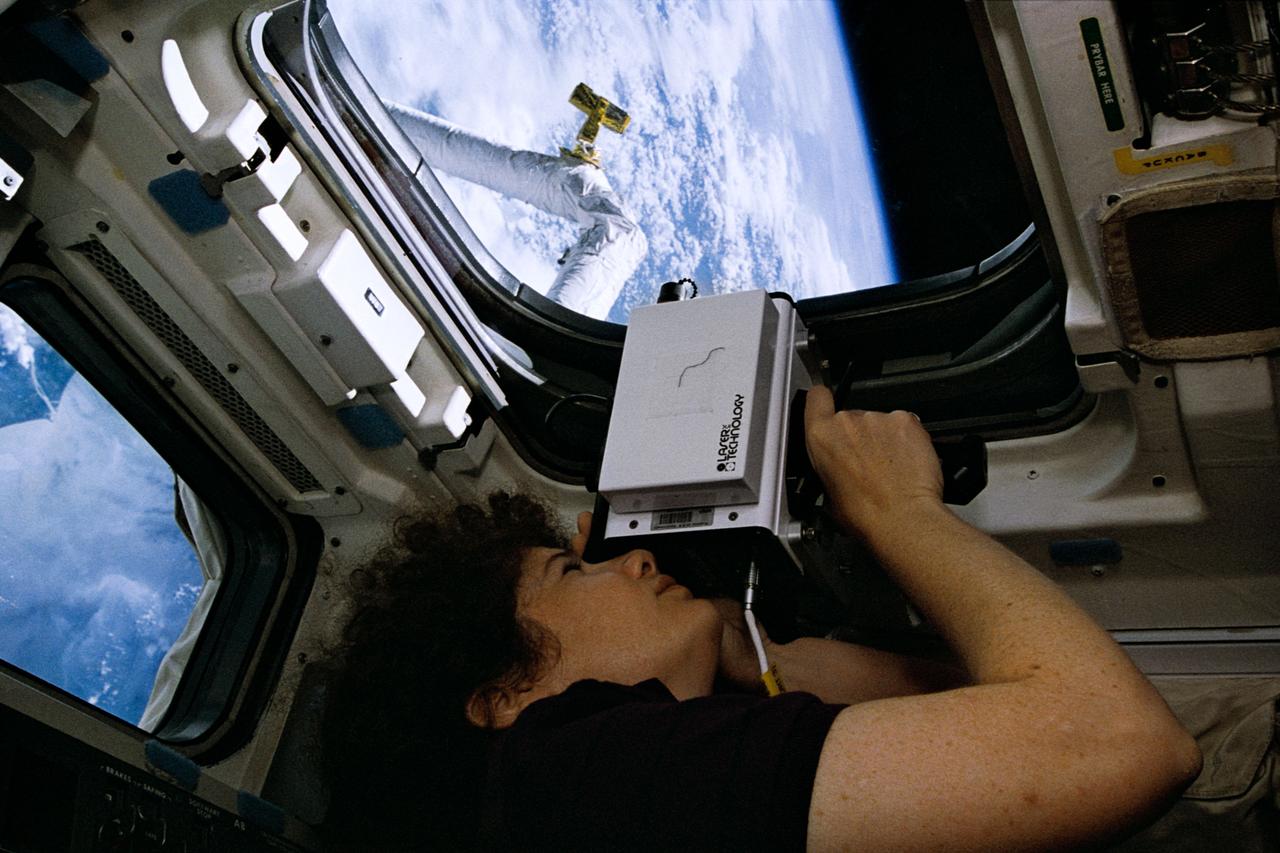
STS064-33-003 (9-20 Sept. 1994) --- Astronaut Susan J. Helms, STS-64 mission specialist, uses a laser instrument during operations with the Shuttle Pointed Autonomous Research Tool for Astronomy 201 (SPARTAN 201). Helms, who spent many mission hours at the controls of the Remote Manipulator System (RMS), joined five other NASA astronauts for almost 11 days in Earth orbit aboard the space shuttle Discovery. Photo credit: NASA or National Aeronautics and Space Administration
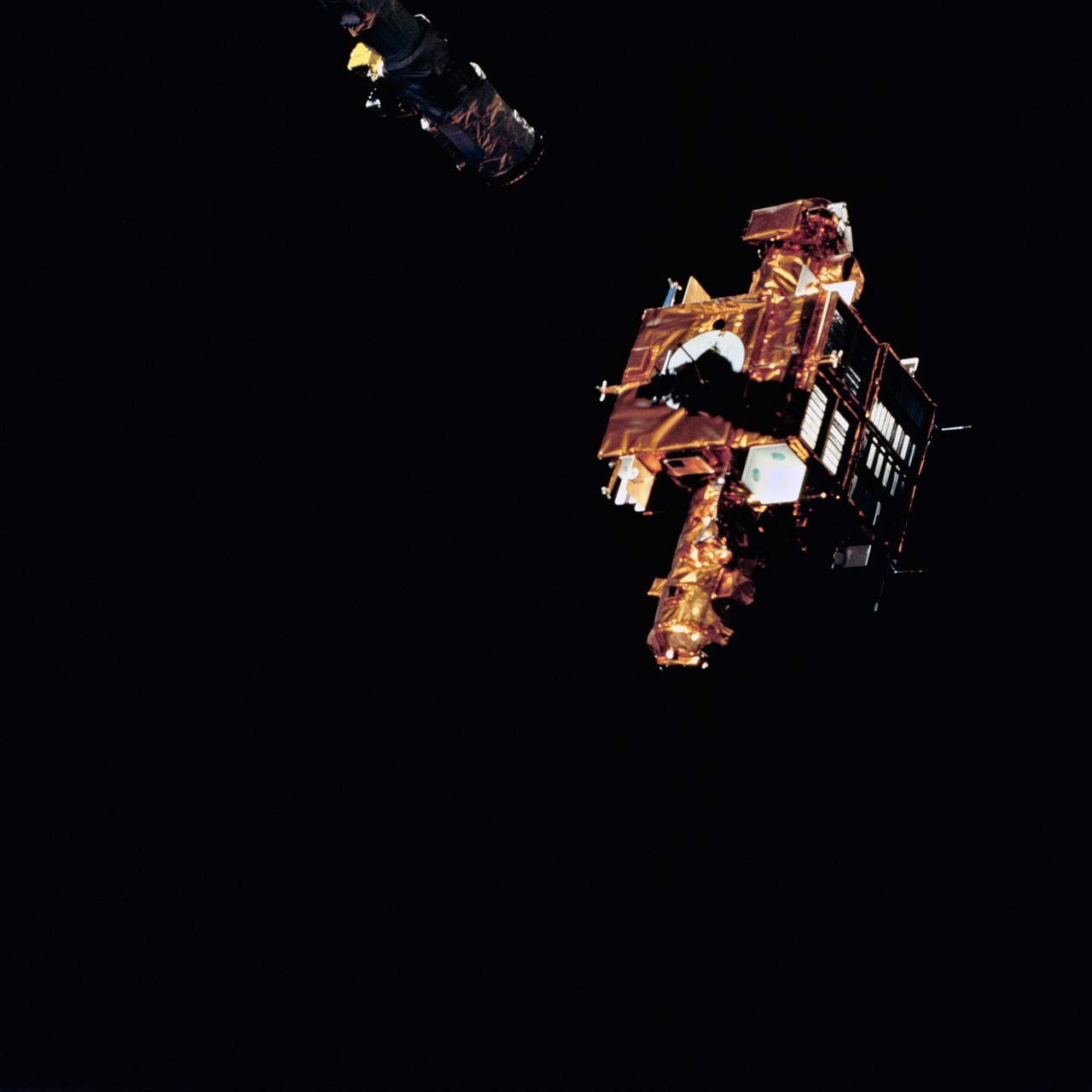
STS064-76-035 (15 Sept. 1994) --- Backdropped against the darkness of space, the Shuttle Pointed Autonomous Research Tool for Astronomy 201 (SPARTAN-201) satellite is lined up with the space shuttle Discovery's Remote Manipulator System (RMS) arm for re-capture. The free-flying spacecraft had remained some 40 miles away from Discovery for over two days. Photo credit: NASA or National Aeronautics and Space Administration
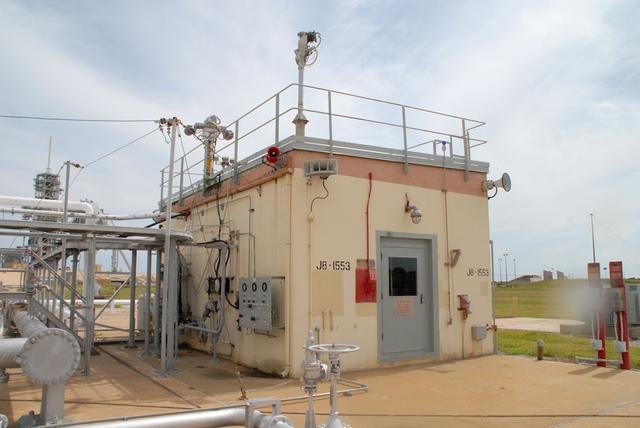
Exterior view of Launch Complex 39A
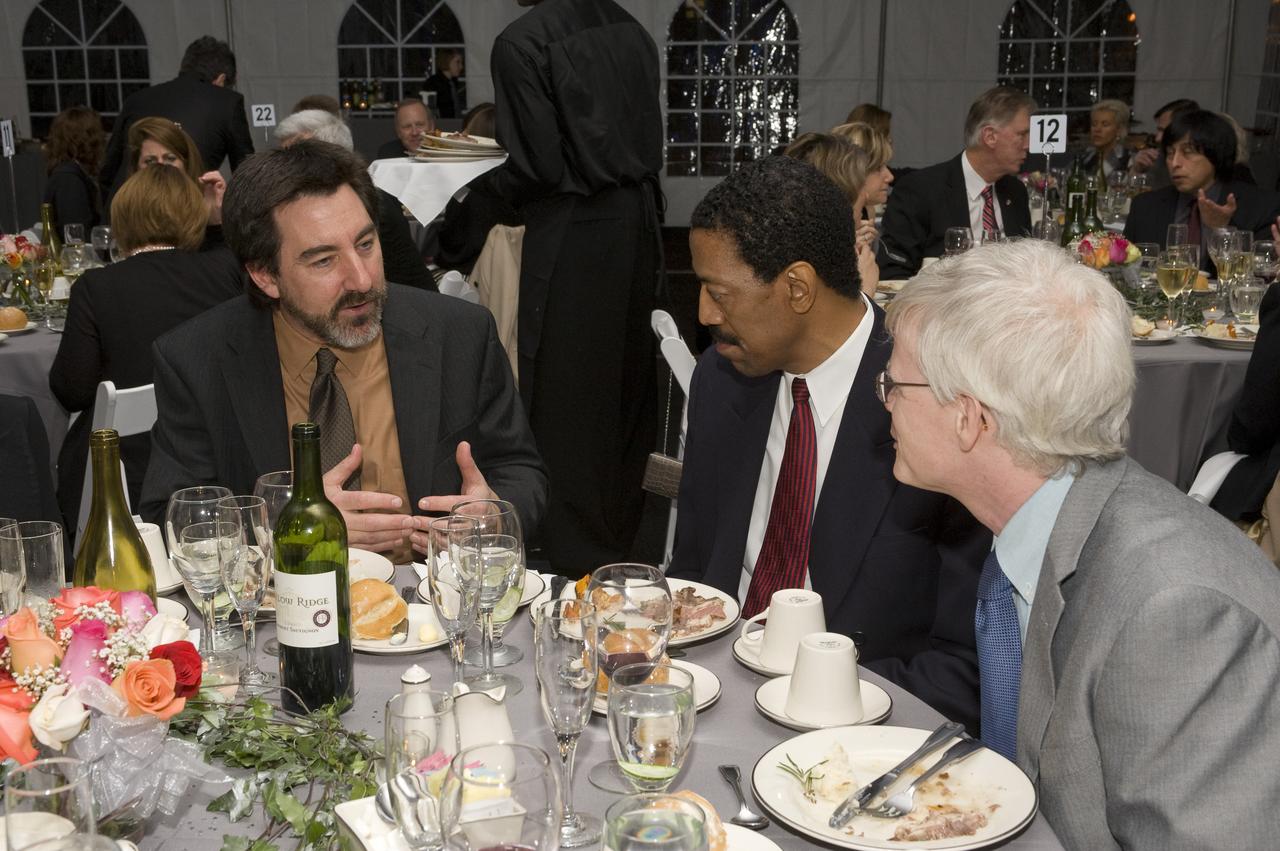
NASA Ames Research Center 70 Year Anniversary Gala Dinner held at Santa Clara University, Santa Clara, California with guest speaker William Ballhaus, former Center Director.
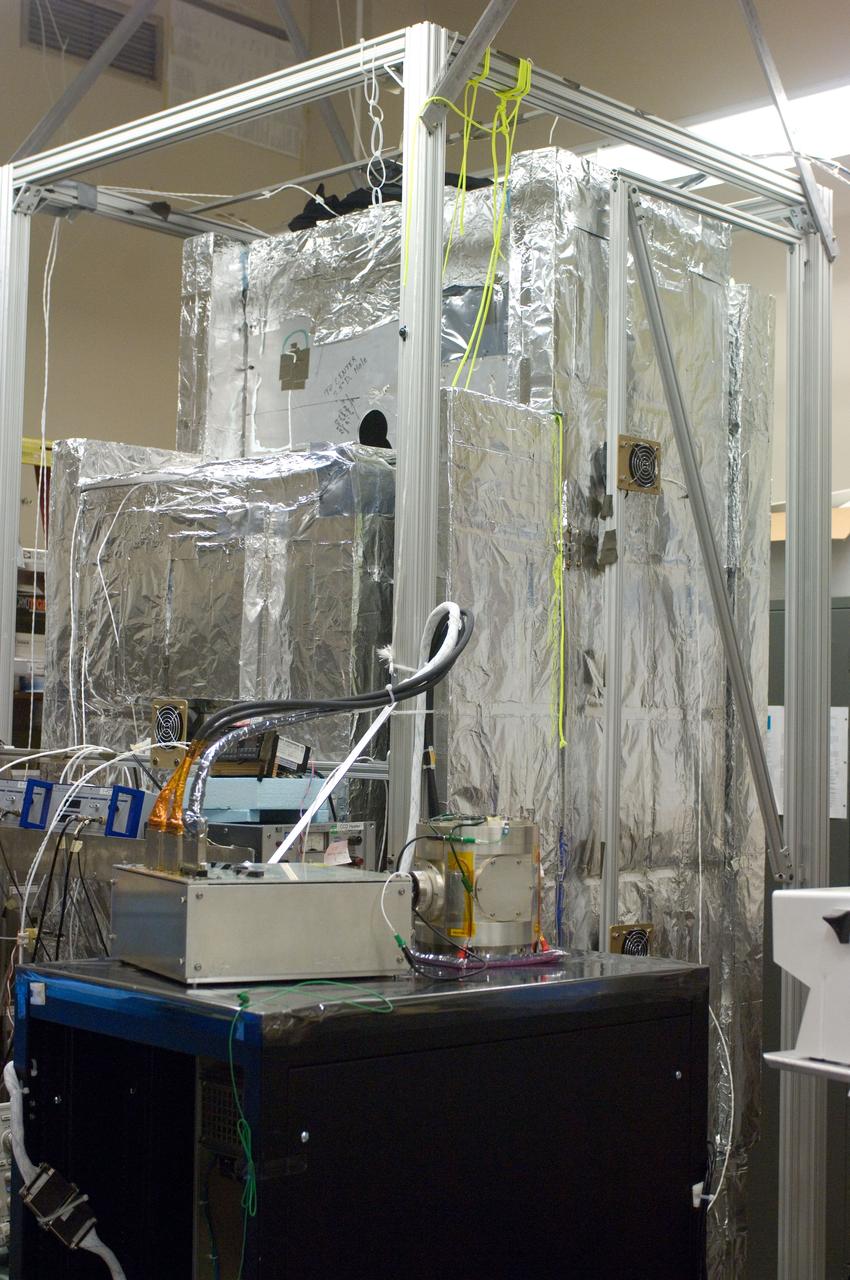
Kepler project; technicians from Ball Aerospace work on and in the test chamber assembled at Nasa Ames Research center testing components
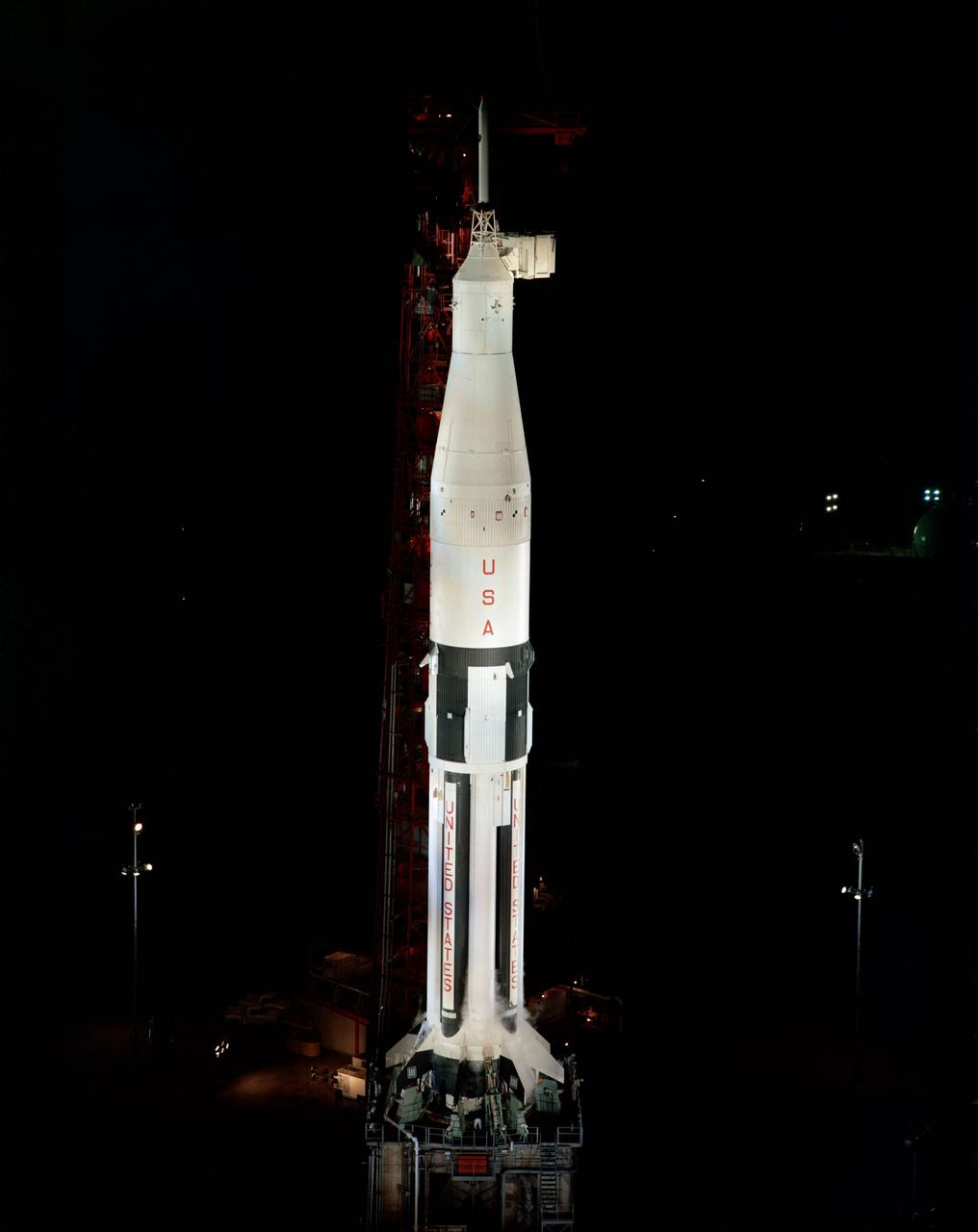
Apollo Spacecraft 009 atop the Saturn 1B launch vehicle is seen at Launch Complex 34 during the Saturn 1B countdown demonstration. Preparations are continuing for the Apollo Saturn 201 Test Flight. CAPE KENNEDY, FL CN

Office of the Director of Science (Code-S) All-hands in N-201 and celebration in N-232 Breezeway, Kitchen and outdoor space (Patio). shown here Friedemann Freud
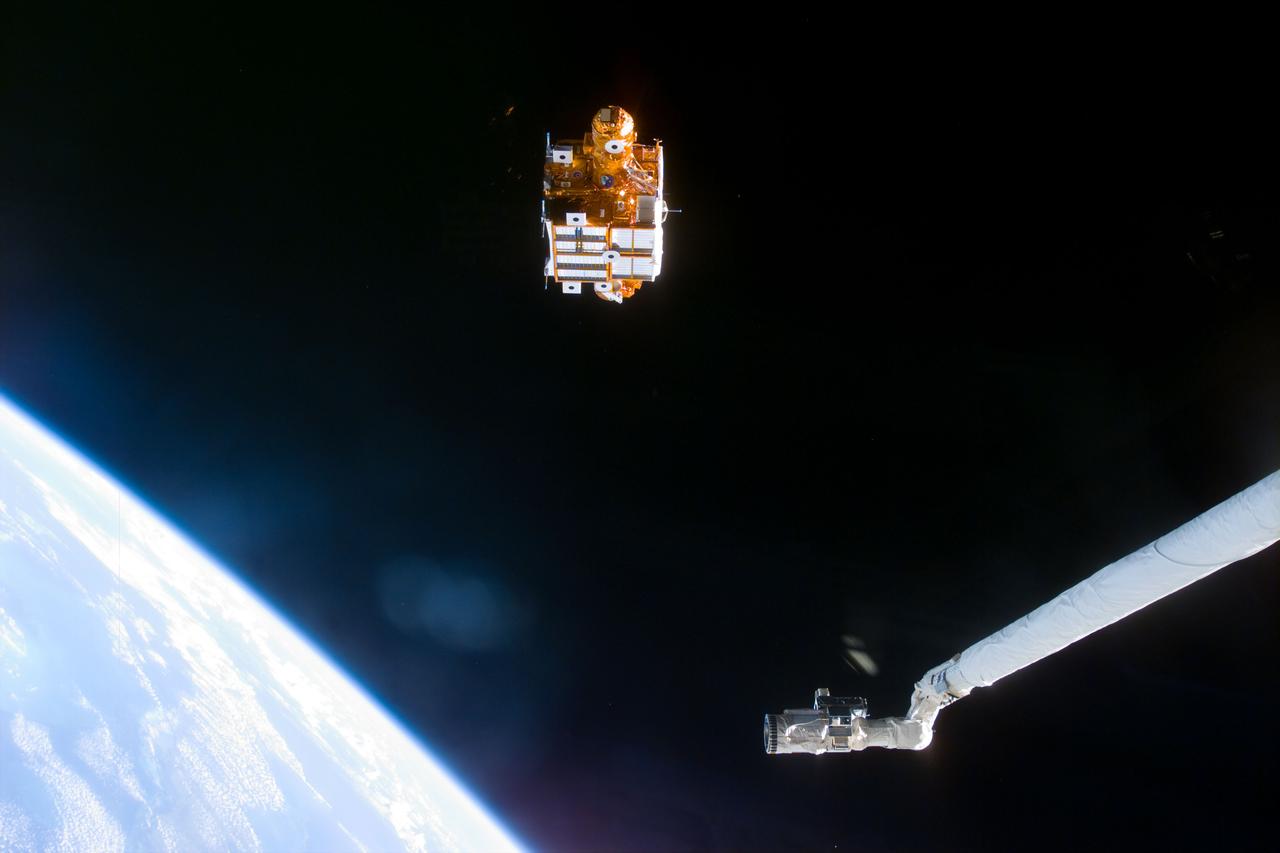
STS095-E-5082 (1 Nov. 1998) --- Backdropped against the blackness of space, Spartan 201-05 leaves the cargo bay of the Space Shuttle Discovery. The satellite will remain a free-flyer for several days while it records data on the solar wind and the sun's corona. This data is hoped to increase knowledge of the sun's effect on our planet. The Canadian-built remote manipulator system (RMS)is partially visible in the frame. The photograph was taken with an electronic still camera (ESC) at 2:10:31 GMT, November 1.
A/S 201 was launched from the Kennedy Space Center Launch Complex 34 at 11:12 a.m., 02/26/1966. The instrumented Apollo Command and Service Module, and, a spacecraft Lunar Excursion Module Adapter, was successfully launched on the unmanned suborbital mission by the Saturn 1B to check spacecraft launch vehicle mechanical compatibility and to test the spacecraft heat shield in a high-velocity re-entry mode. CAPE KENNEDY, FL
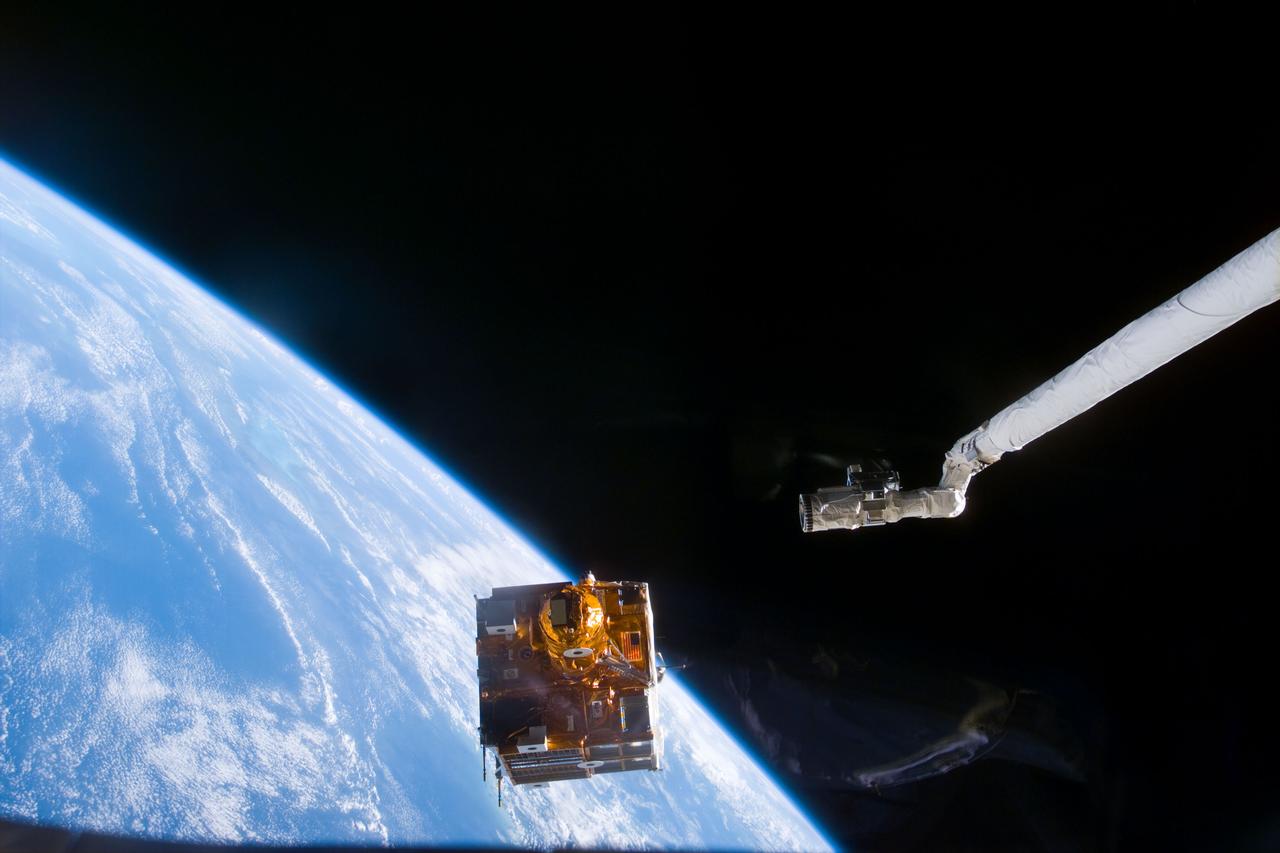
STS095-E-5071 (1 Nov. 1998) --- Backdropped against the blackness of space and Earth's horizon, Spartan 201-05 leaves the cargo bay of the Space Shuttle Discovery. The satellite will remain a free-flyer for several days while it records data on the solar wind and the sun's corona. This data is hoped to increase knowledge of the sun's effect on our planet. The Canadian-built remote manipulator system (RMS)is partially visible in the frame. The photograph was taken with an electronic still camera (ESC) at 2:08:48 GMT, November 1.
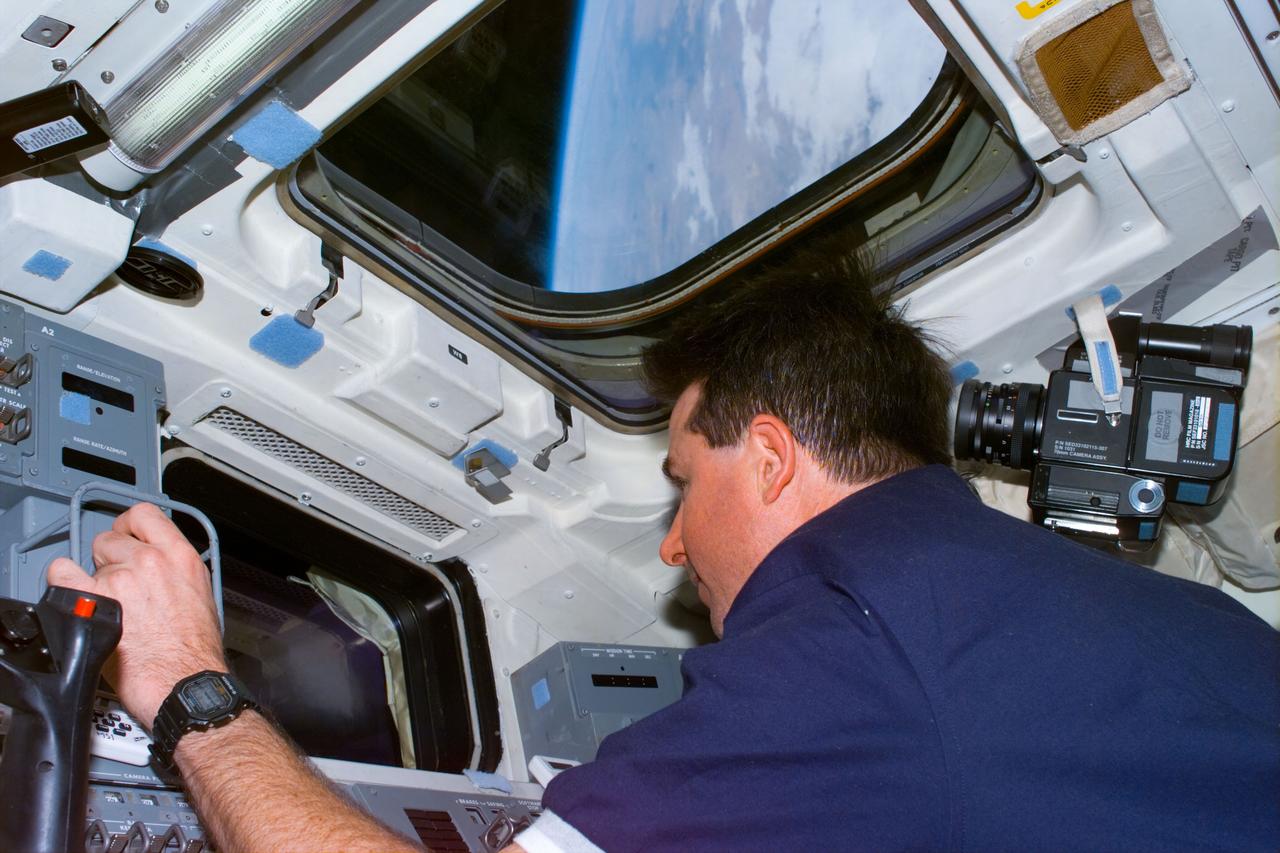
STS095-E-5256 (4 Nov. 1998) --- Astronaut Stephen K. Robinson, STS-95 mission specialist, on Discovery's aft flight deck during operations with the Spartan-201-05. The photo was taken with an electronic still camera (ESC) at 22:25:04 GMT, Nov. 4.
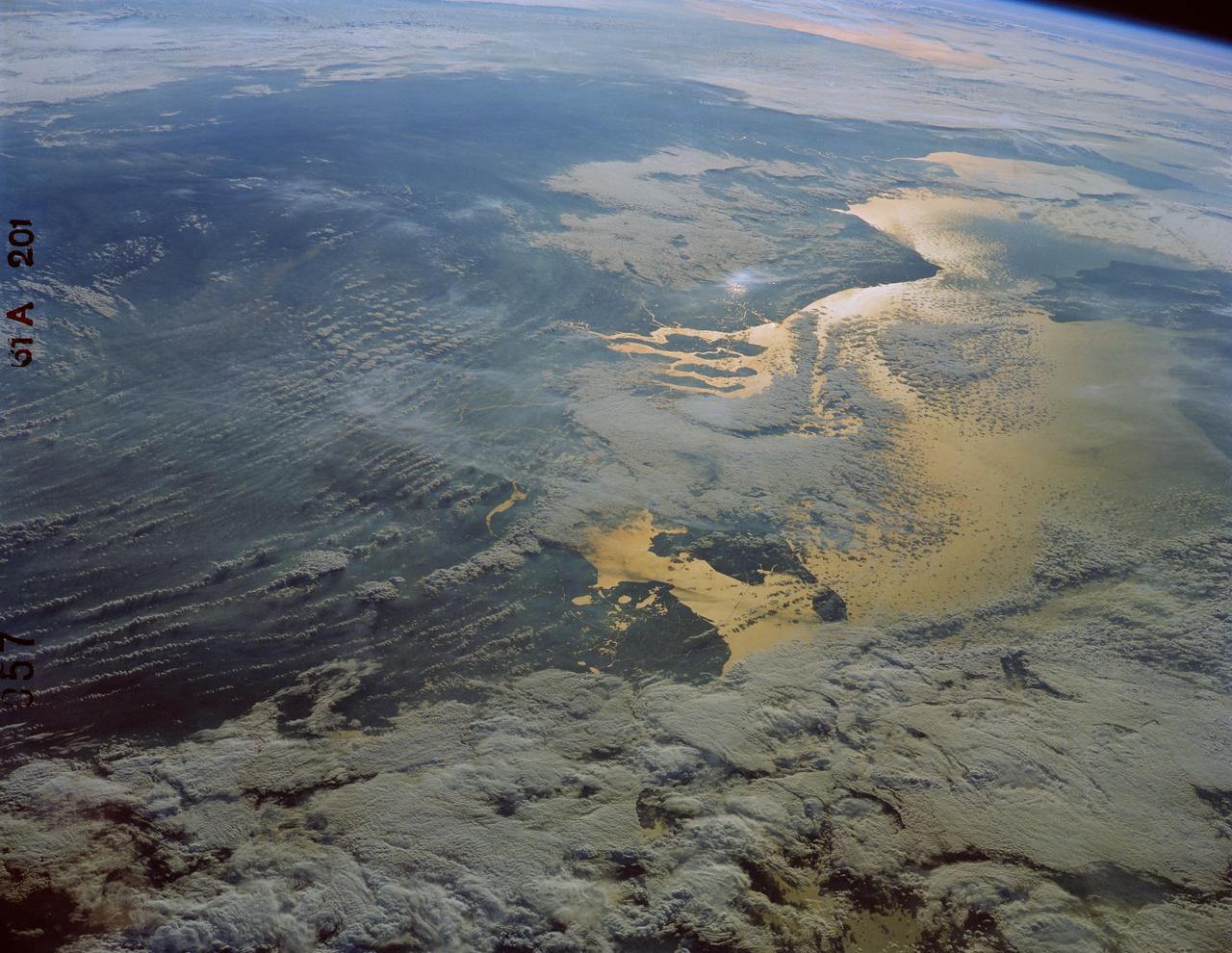
61A-201-057 (30 Oct-6 Nov 1985) --- The North Sea, looking southwest toward Brittany, visible in the upper right portion of the frame. The islands of the mouths of the Rhine River are in the foreground, and above them sunlight reflects off the long causeways and dikes of the Ijsselmeer in the Netherlands. To the right is the Strait of Dover (Pas de Calais) with the southeast corner of England just above the right center edge.
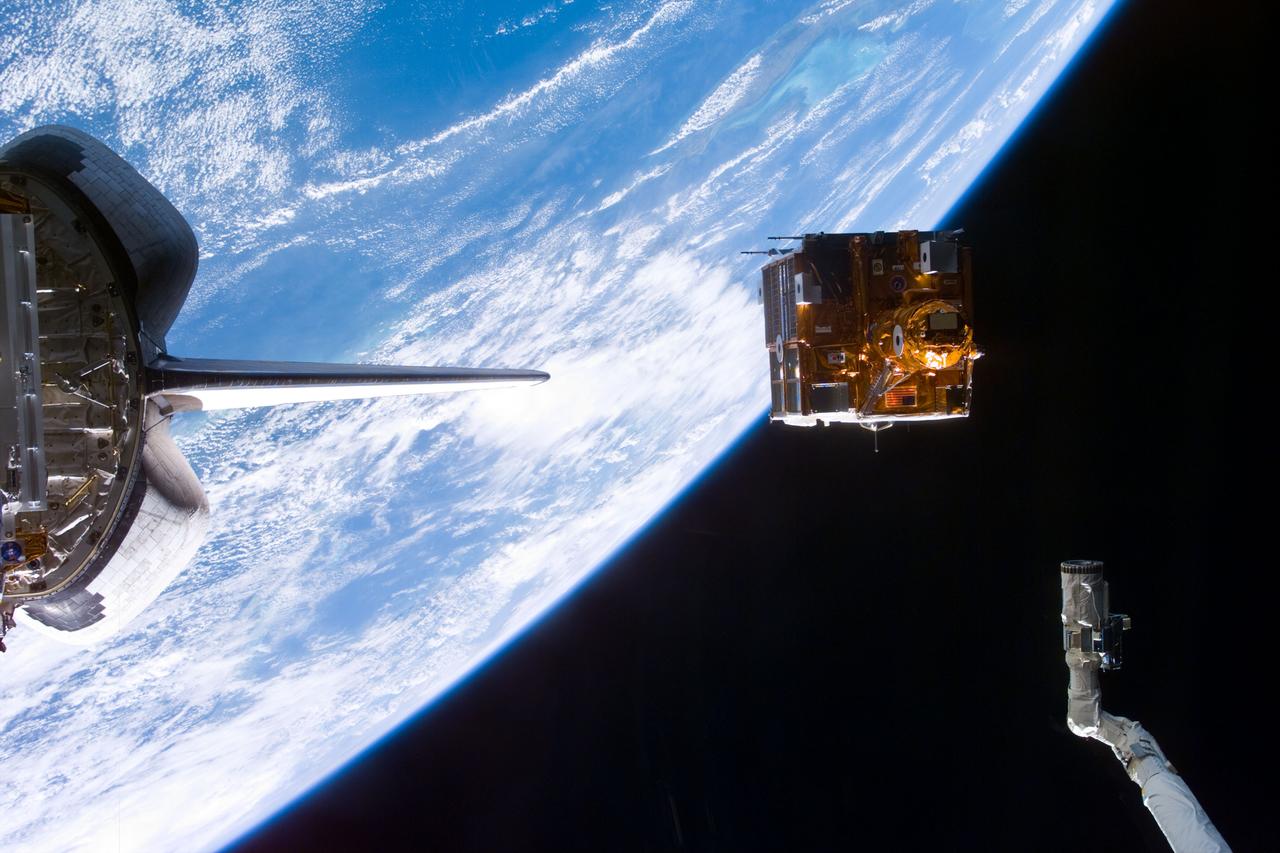
STS095-E-5077 (1 Nov. 1998) --- Backdropped against the blackness of space and Earth's horizon, Spartan 201-05 leaves the cargo bay of the Space Shuttle Discovery. The satellite will remain a free-flyer for several days while it records data on the solar wind and the sun's corona. This data is hoped to increase knowledge of the sun's effect on our planet. Cargo bay of Discovery is partially visible at left. The Canadian-built remote manipulator system (RMS)is partially visible at right. The photograph was taken with an electronic still camera (ESC) at 2:09:35 GMT, November 1.
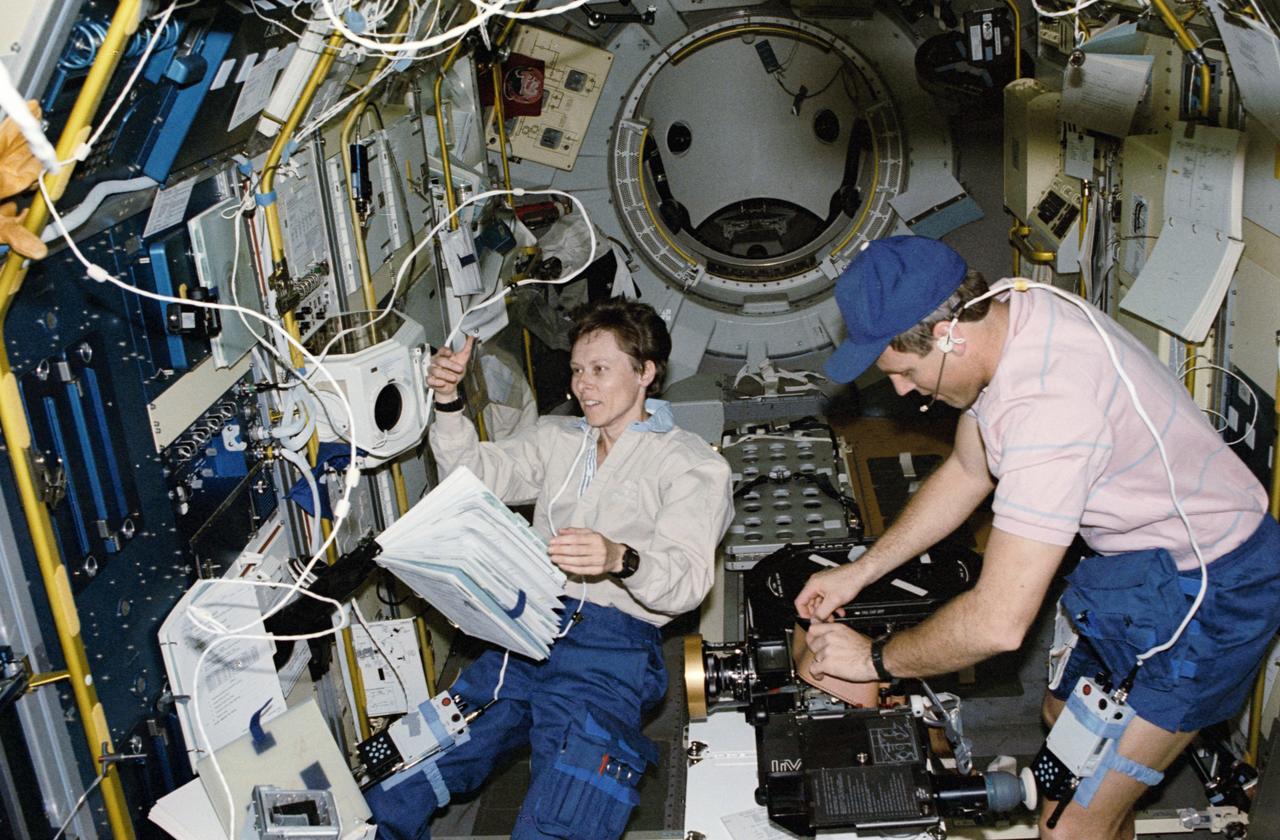
STS042-201-009 (22-30 Jan 1992) --- Canadian Roberta L. Bondar, payload specialist representing the Canadian Space Agency (CSA), works at the International Microgravity Laboratory's (IML-1) biorack while astronaut Stephen S. Oswald, pilot, changes a film magazine on the IMAX camera. The two were joined by five fellow crew members for eight-days of scientific research aboard the Space Shuttle Discovery in Earth-orbit. Most of their on-duty time was spent in this IML-1 Science Module, positioned in the cargo bay and attached via a tunnel to Discovery's airlock.
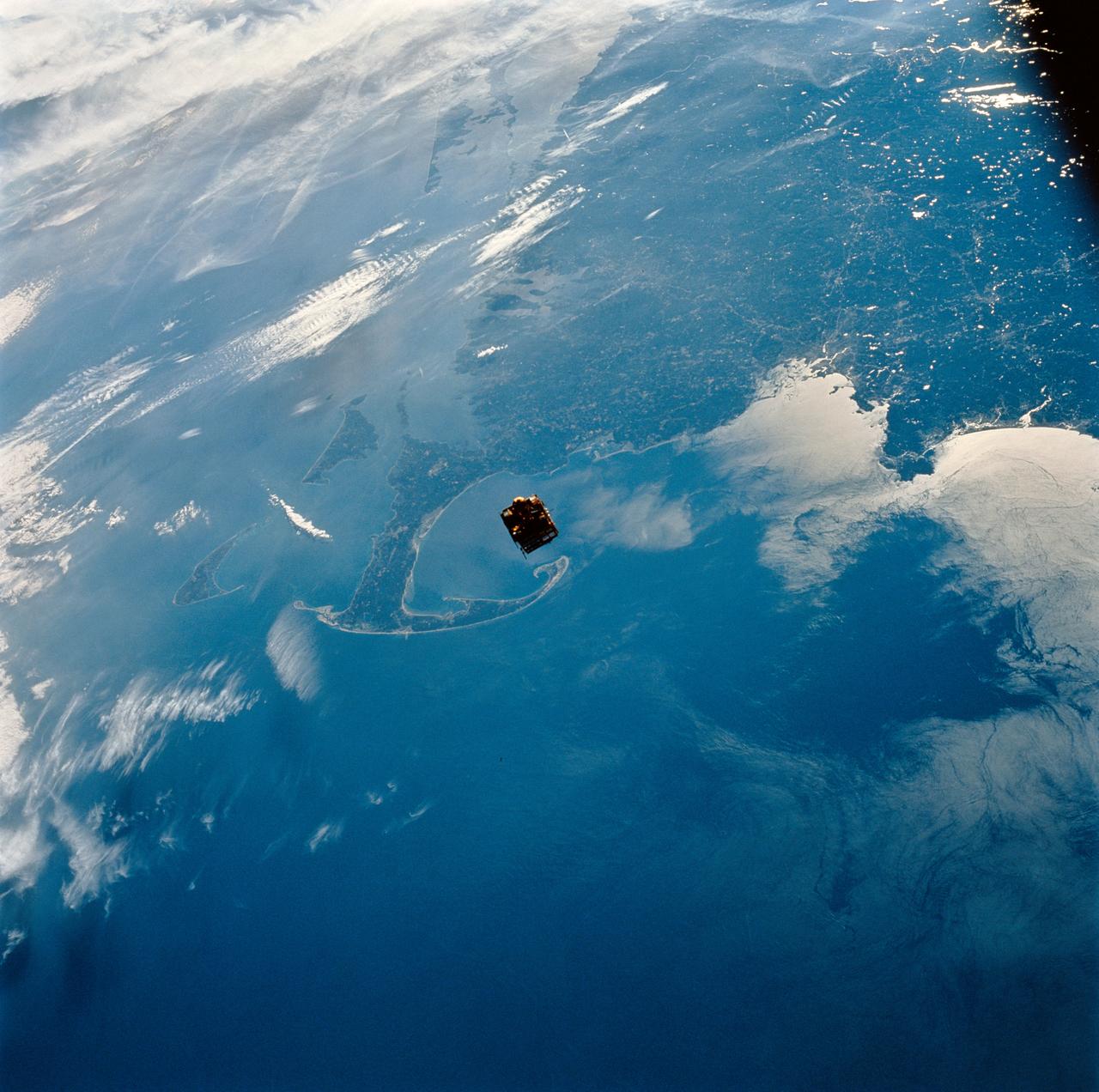
STS064-111-041 (12 Sept. 1994) ---- Backdropped against New England's coast, the Shuttle Pointed Autonomous Research Tool for Astronomy (SPARTAN-201) satellite begins its separation from the space shuttle Discovery. The free-flying spacecraft, 130 nautical miles above Cape Cod at frame center, remained some 40 miles away from Discovery until the crew retrieved it two days later. Photo credit: NASA or National Aeronautics and Space Administration
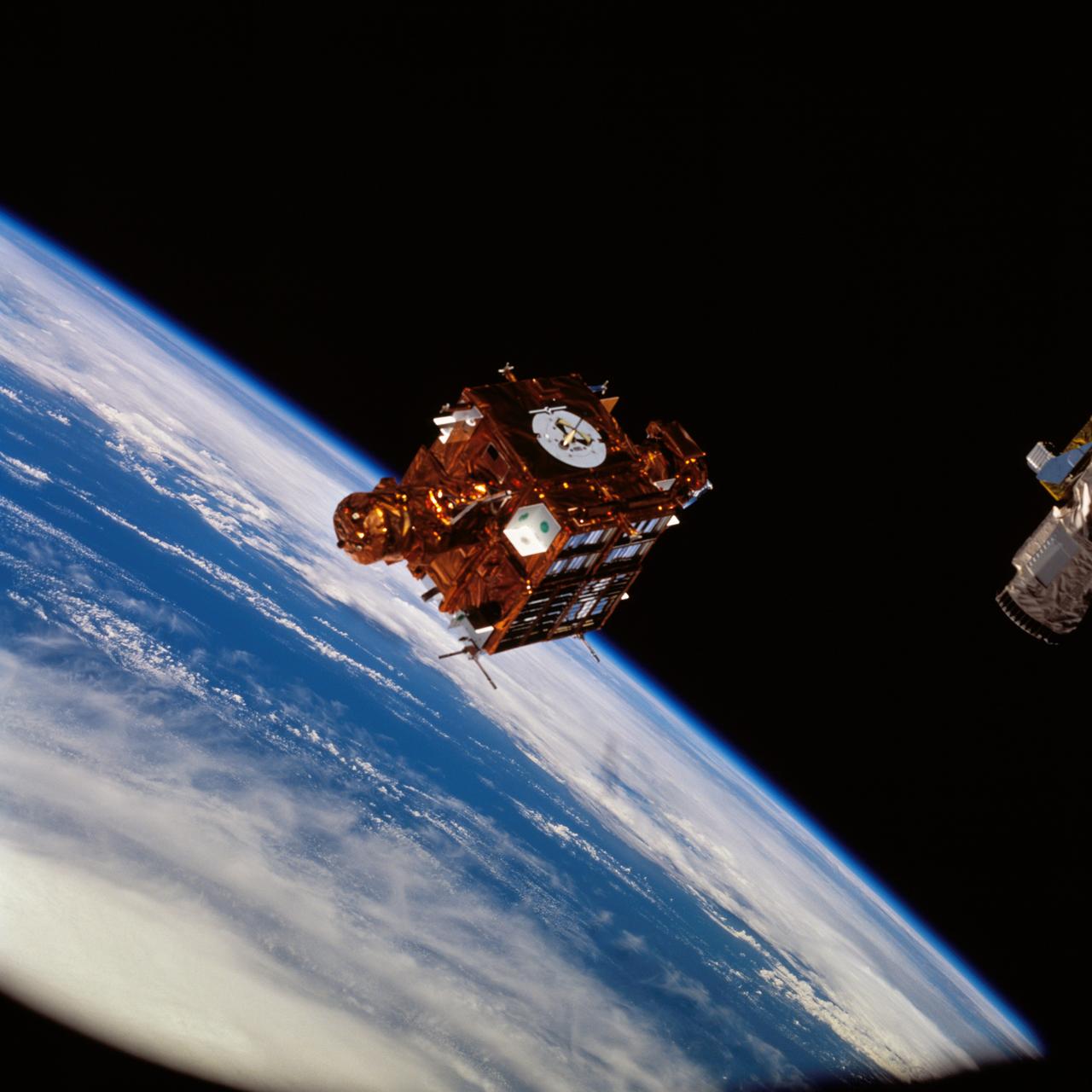
STS069-703-00H (10 September 1995) --- Prior to being re-captured by Space Shuttle Endeavour’s Remote Manipulator System (RMS), the Shuttle Pointed Autonomous Research Tool for Astronomy (SPARTAN-201) spacecraft was recorded on film, backdropped against the darkness of space over a heavily cloud-covered Earth. Endeavour, with a five-member crew, launched on September 7, 1995, from the Kennedy Space Center (KSC) and ended its mission there on September 18, 1995, with a successful landing on Runway 33. The multifaceted mission carried a crew of astronauts David M. Walker, mission commander; Kenneth D. Cockrell, pilot; and James S. Voss (payload commander), James H. Newman and Michael L. Gernhardt, all mission specialists.
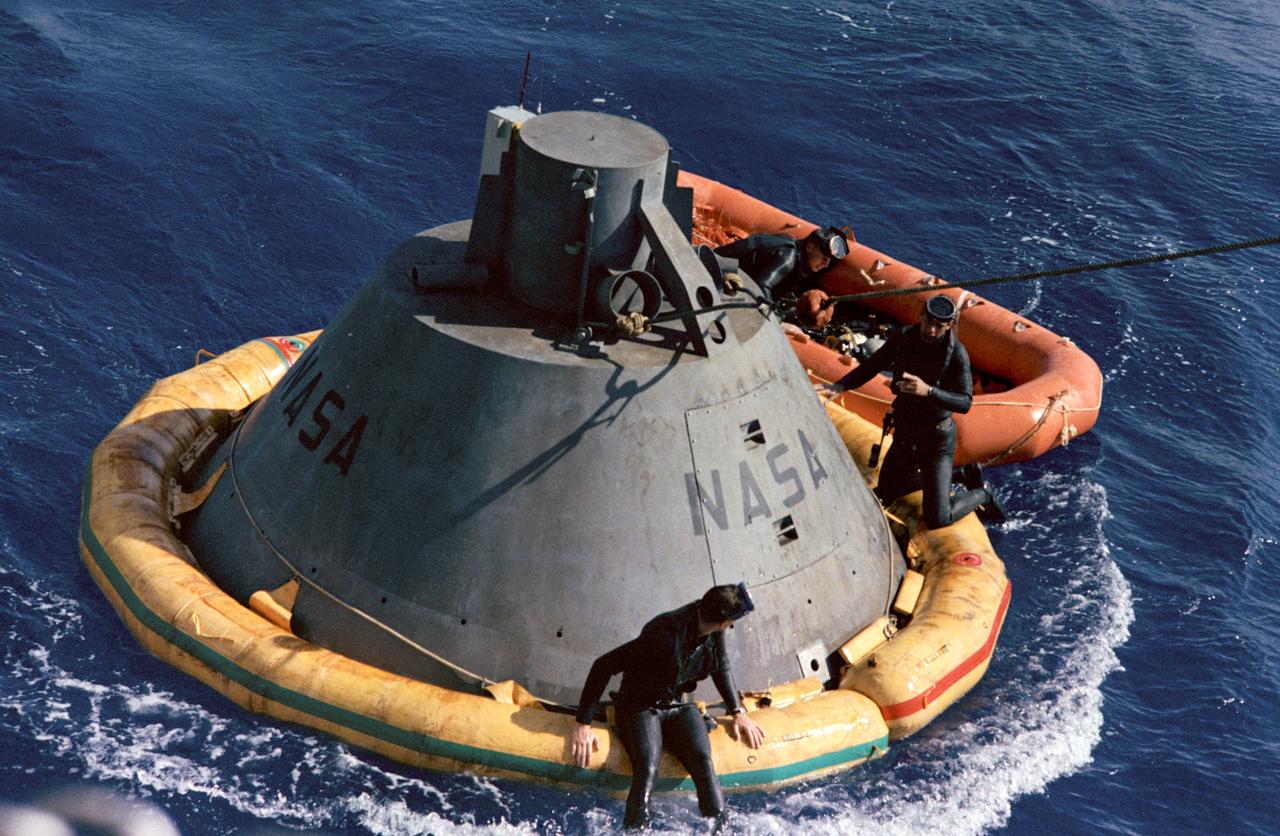
Apollo command module boilerplate floats in the Atlantic Ocean during a practice recovery exercise. Frogmen in a liferaft and on the flotation collar secure the command module boilerplate for hoisting onto a nearby recovery ship. The exercise was conducted in preparation for the forthcoming Apollo-Saturn 201 (AS-201) mission.
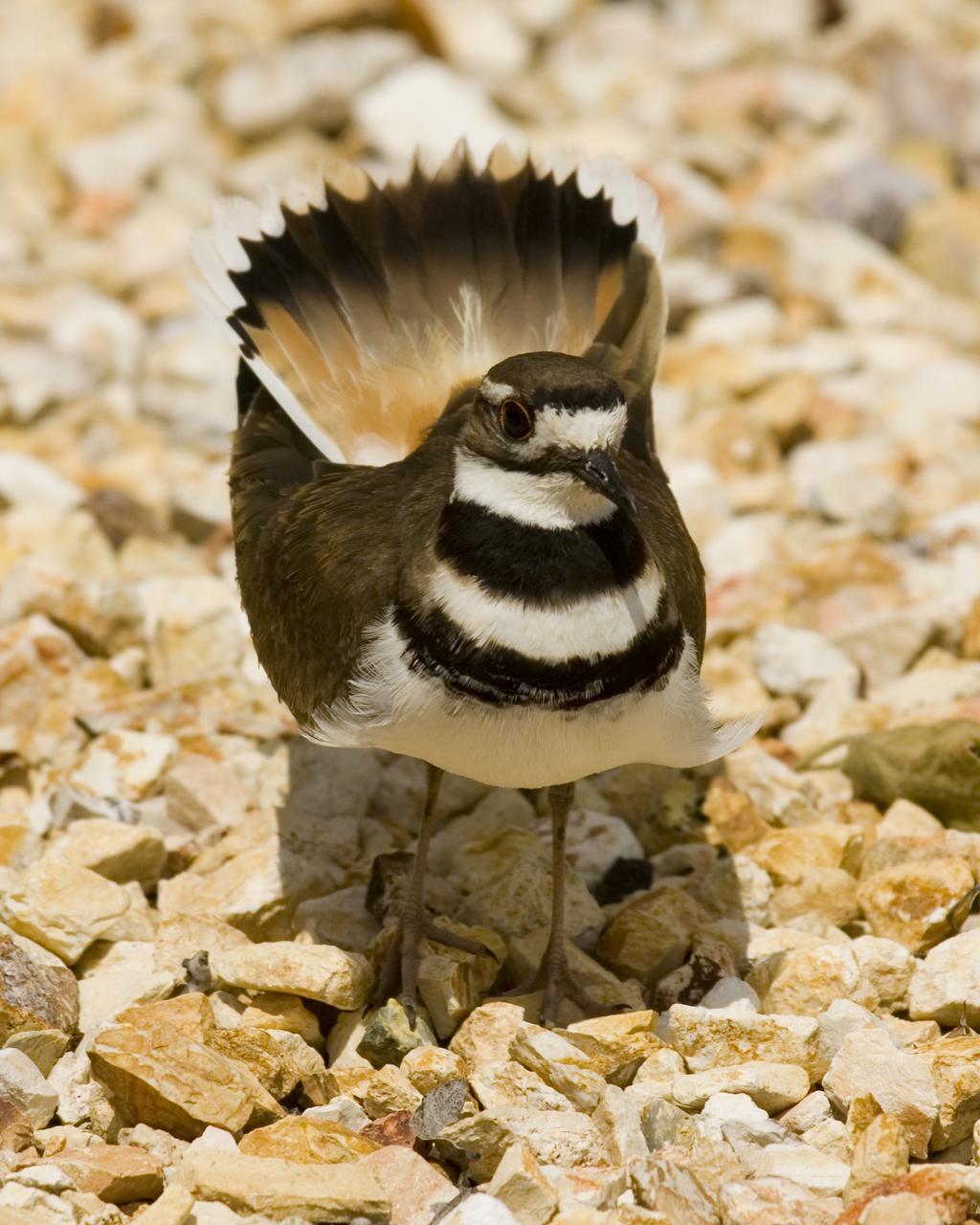
Nesting Killdeer and their chicks outside N-201 (near walkway)
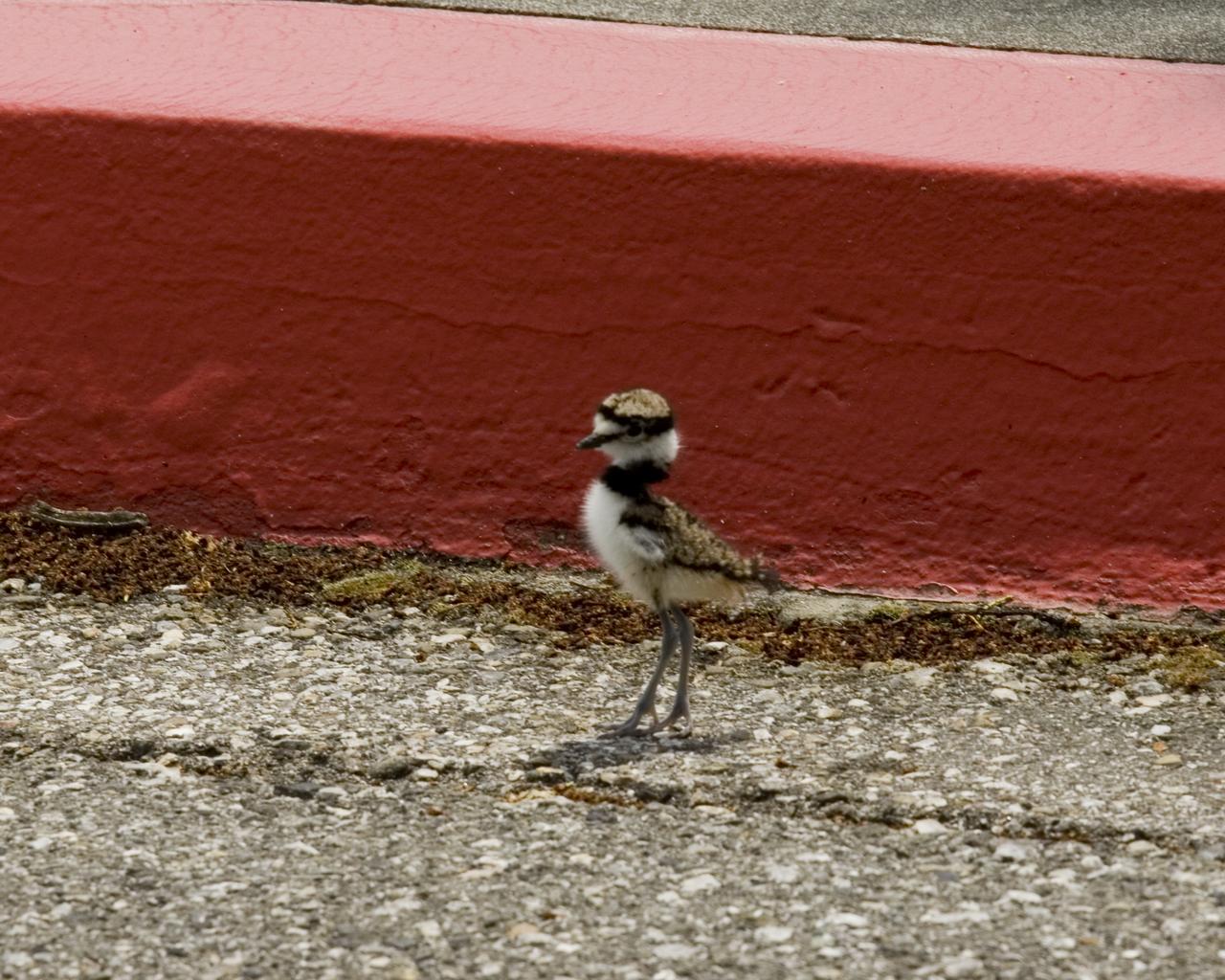
Nesting Killdeer and their chicks outside N-201 (near walkway)
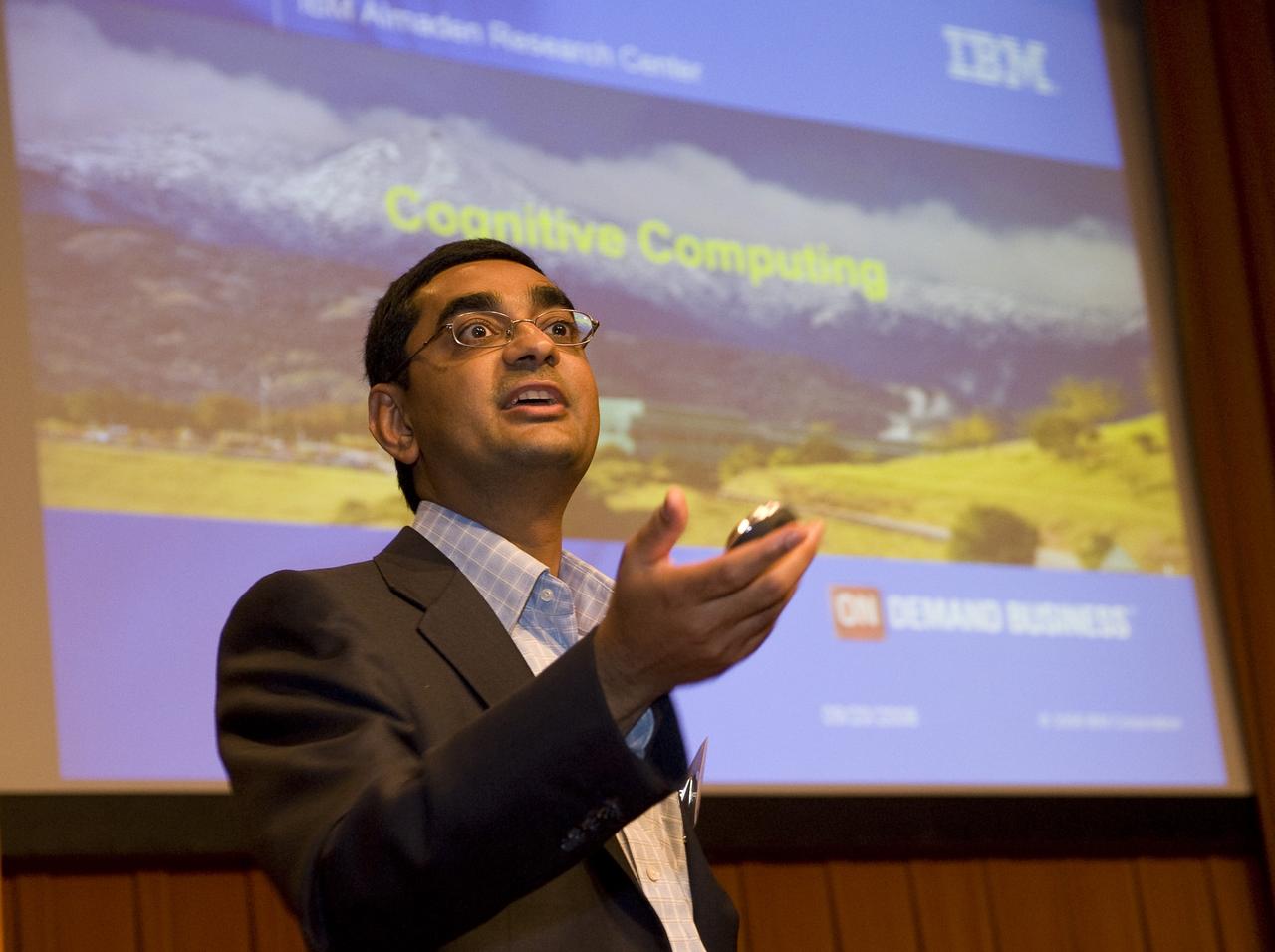
Singularity University First Meeting held at Ames Research Center in N-201
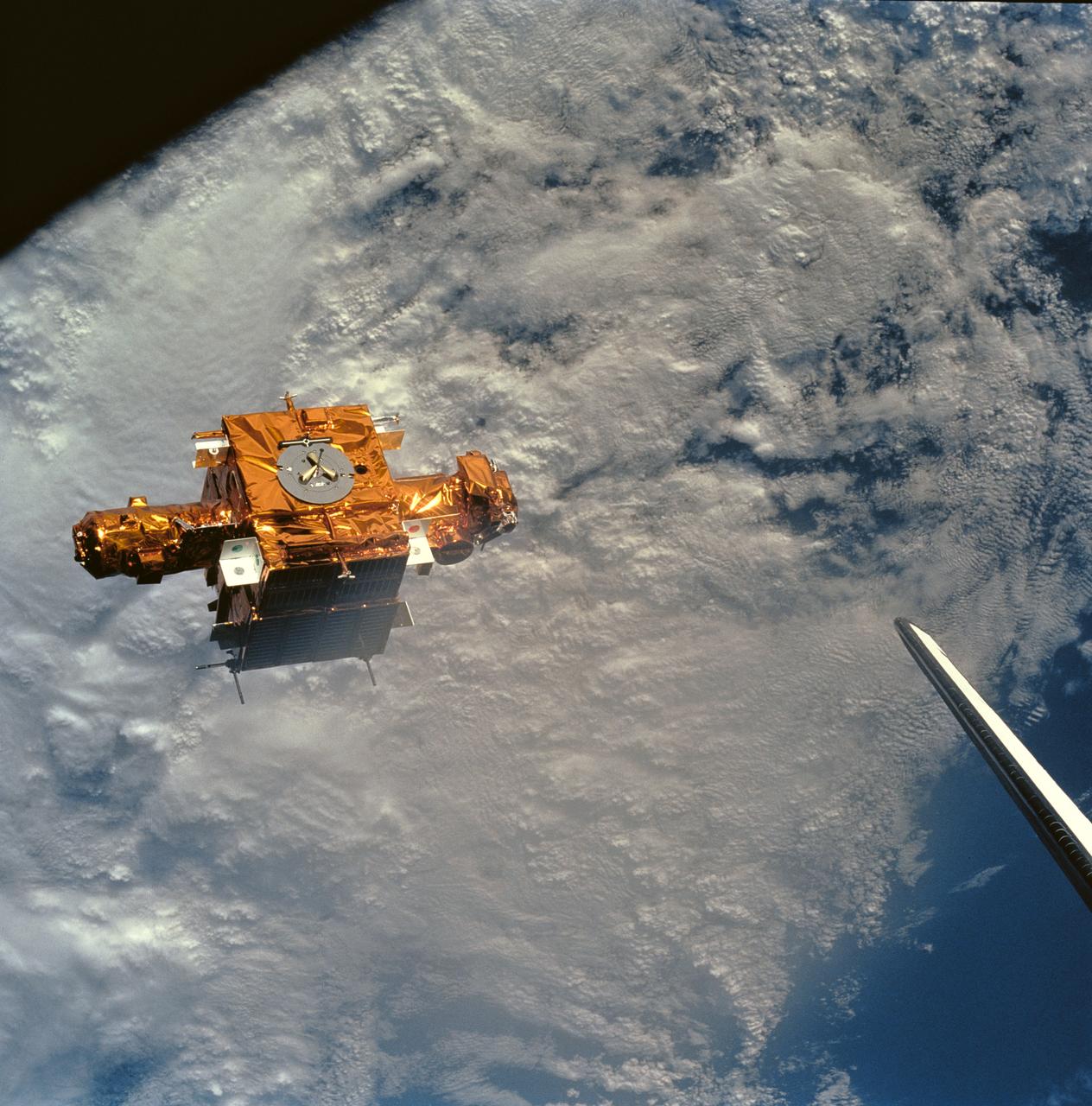
STS056-90-034 (8-17 April 1993) --- Backdropped against heavy cloud cover over the Mediterranean Sea, the SPARTAN-201 satellite was captured on 70mm by crewmembers aboard the Space Shuttle Discovery. SPARTAN is a free-flying payload designed to study the solar wind and part of the sun's corona. The project was conceived in the late 1970s to take advantage of the opportunity offered by the Space Shuttle to provide more observation time for the increasingly more sophisticated experiments than the five to ten minutes provided by sounding rocket flights. On the mission's third day, Astronaut Ellen Ochoa, Mission Specialist, used the remote manipulator system (RMS) to lift the satellite from its support structure on Discovery and release it in space. The reusable craft was later recaptured and returned to Earth with the crew. Note the tip of Discovery's vertical stabilizer at frame's edge.
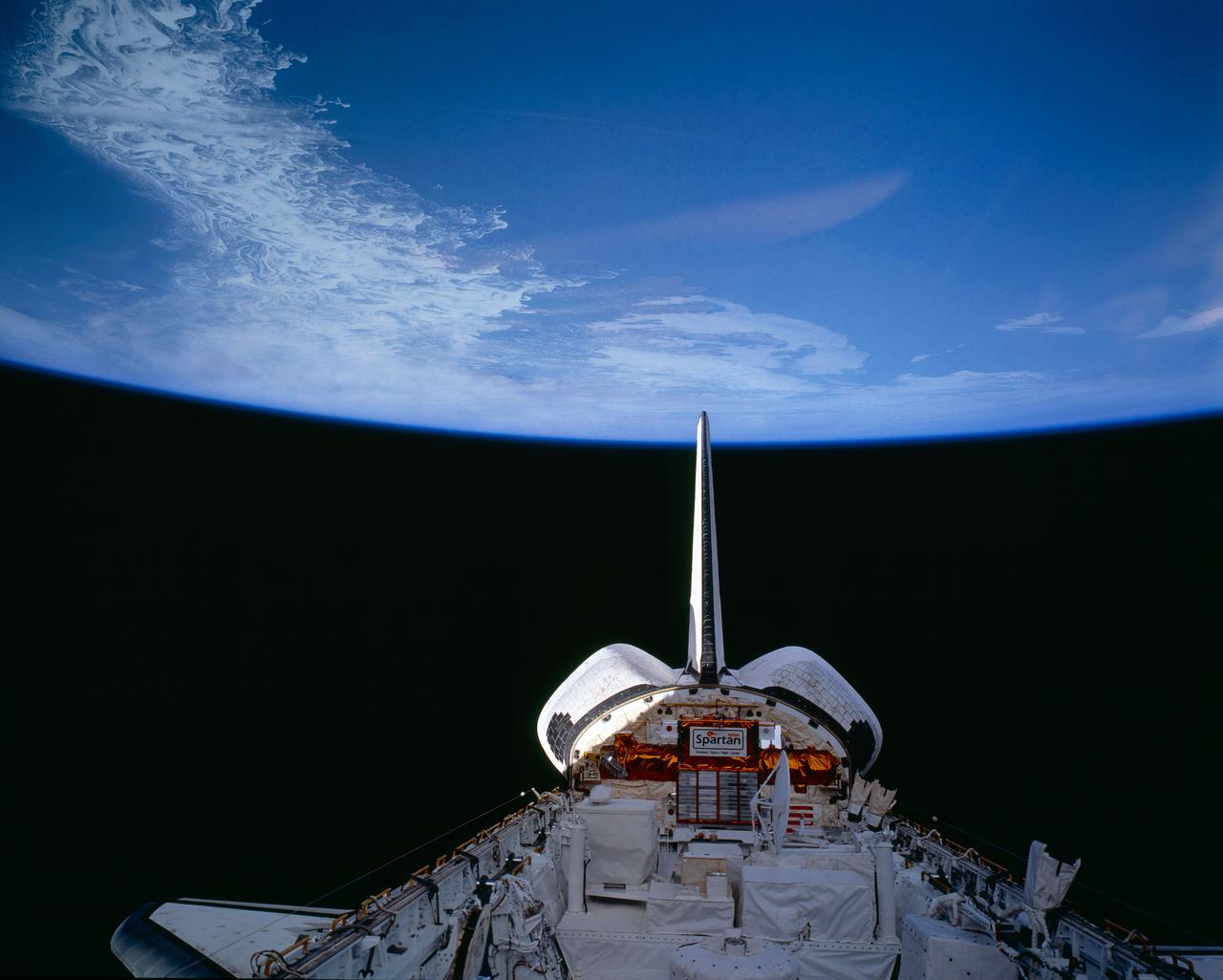
STS056-151-257 (8-17 April 1993) --- The Atlas-2 payloads are featured in this cargo bay scene aboard Discovery, backdropped against an oblique view of the Kamchatka Peninsula. The Shuttle was in an atmospheric monitoring attitude. The supportive Igloo structure is partially visible in the foreground. The canisters for the Shuttle Solar Backscatter Ultraviolet (SSBU) experiment are just out of frame on the starboard side of the bay. Between the ATLAS-2 experiment pallet and the aft firewall of the payload bay is the SPARTAN-201 satellite, which was later released from the cargo bay into a free-flying period and returned to its stowage area for return to Earth. Also visible in frame are the MAS Antenna, Active Cavity Radiometer Irradiance Monitor, SOLCON, SOLSPEC and SUSIM.
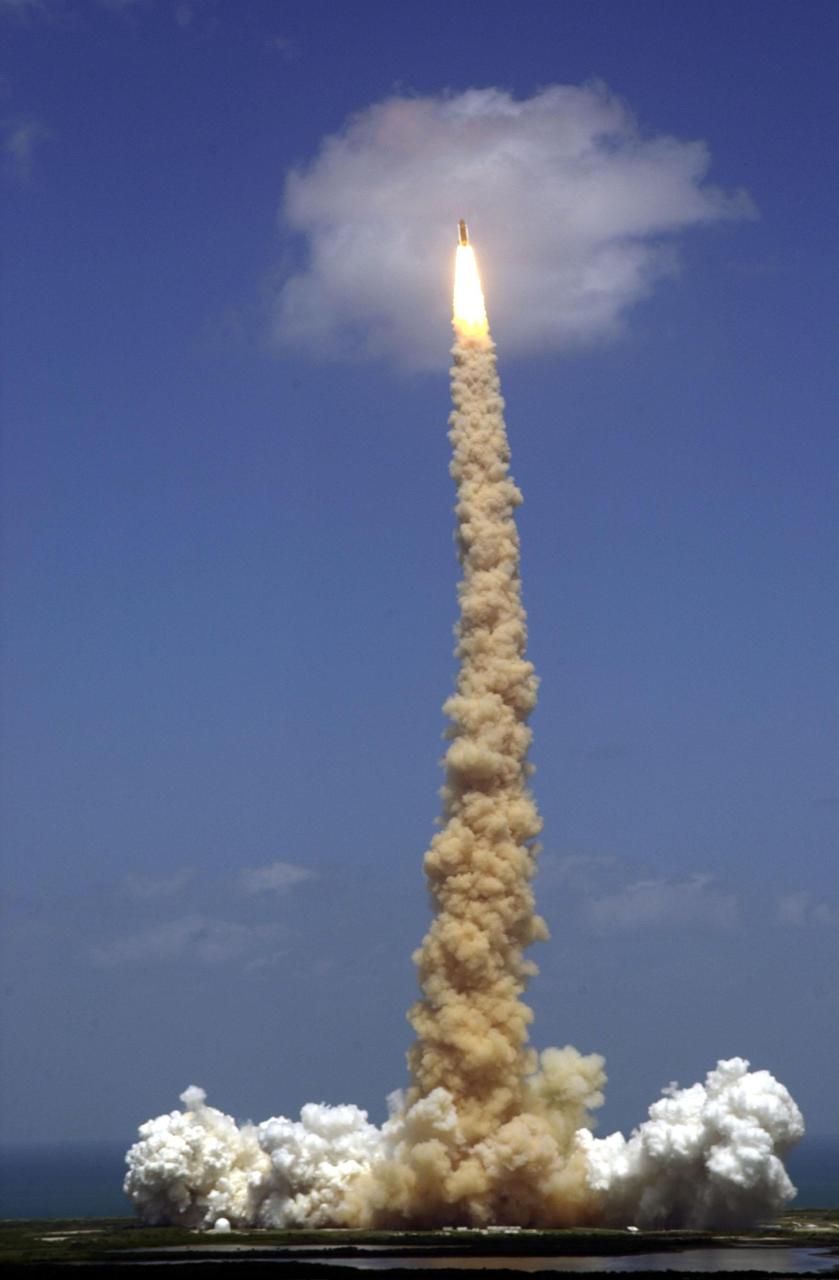
KENNEDY SPACE CENTER, FLA. -- Like a humming bird flying from the center of a hibiscus, Space Shuttle Endeavour roars away from Earth on the the ninth flight to the International Space Station. Liftoff occurred at 2:40:42 p.m. EDT. The 11-day mission will deliver and integrate the Spacelab Logistics Pallet_Launch Deployment Assembly, which includes the Space Station Remote Manipulator System and the UHF Antenna. The mission includes two planned spacewalks for installation of the SSRMS on the Station. Also onboard is the Multi-Purpose Logistics Module Raffaello, carrying resupply stowage racks and resupply_return stowage platforms
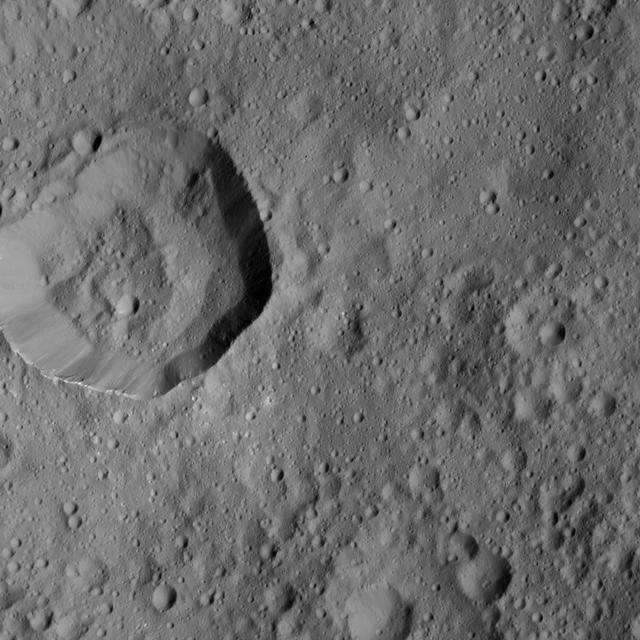
This image from NASA's Dawn spacecraft shows cratered terrain on Ceres. The image is centered at 23 degrees north latitude, 186 degrees east longitude. Dawn took this image on June 10, 2016, from its low-altitude mapping orbit, at a distance of about 240 miles (385 kilometers) above the surface. The image resolution is 120 feet (35 meters) per pixel. http://photojournal.jpl.nasa.gov/catalog/PIA20963
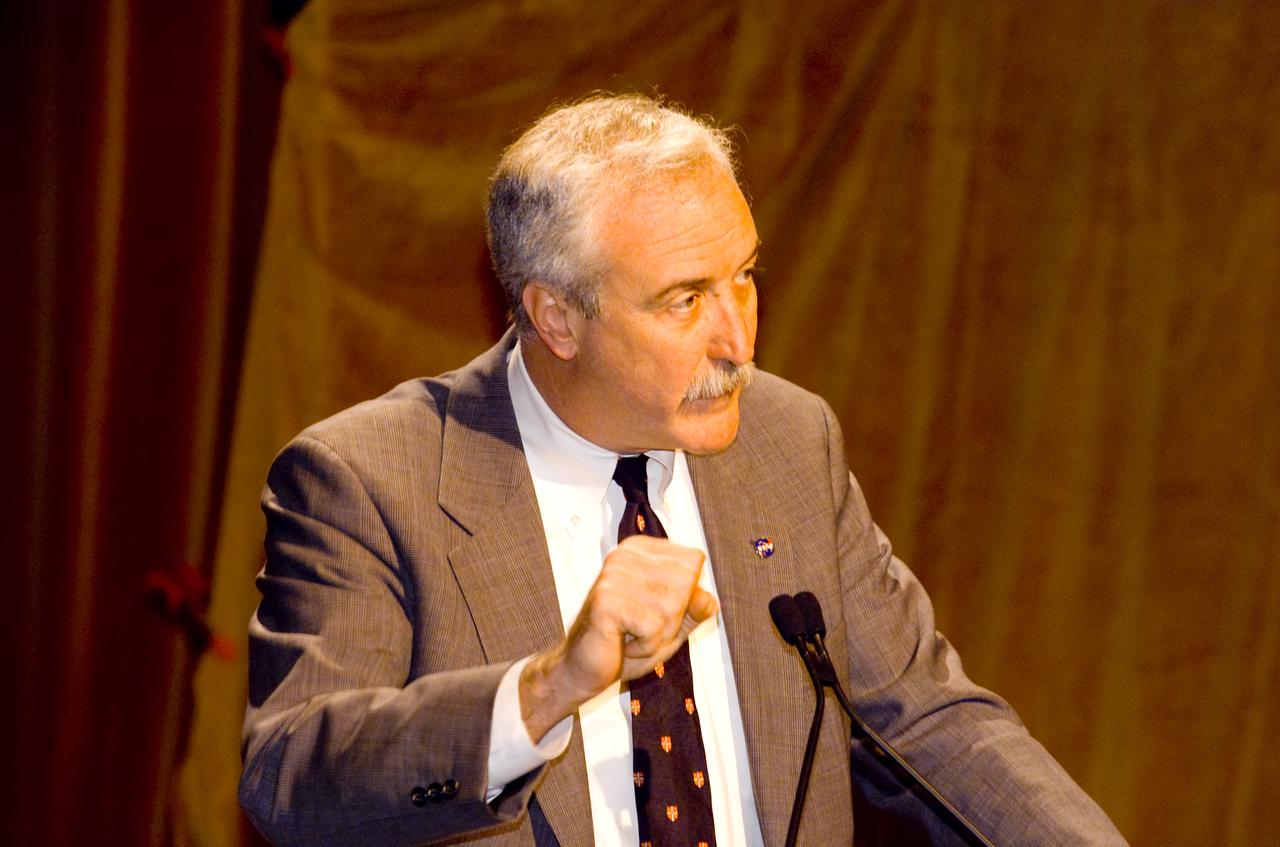
NASA Administrator Sean O'Keefe comes to Ames for employee briefing and tour. N-201 assembly
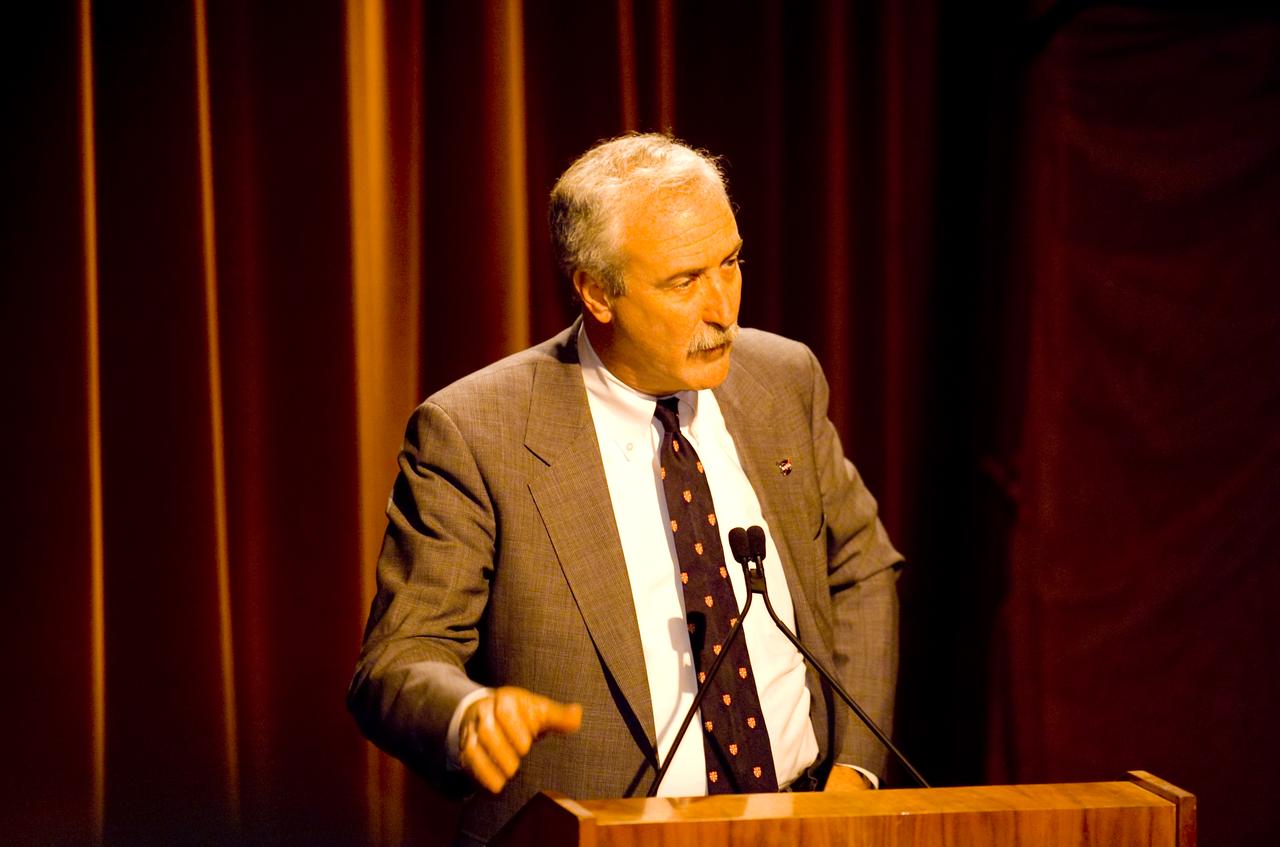
NASA Administrator Sean O'Keefe comes to Ames for employee briefing and tour. N-201 assembly
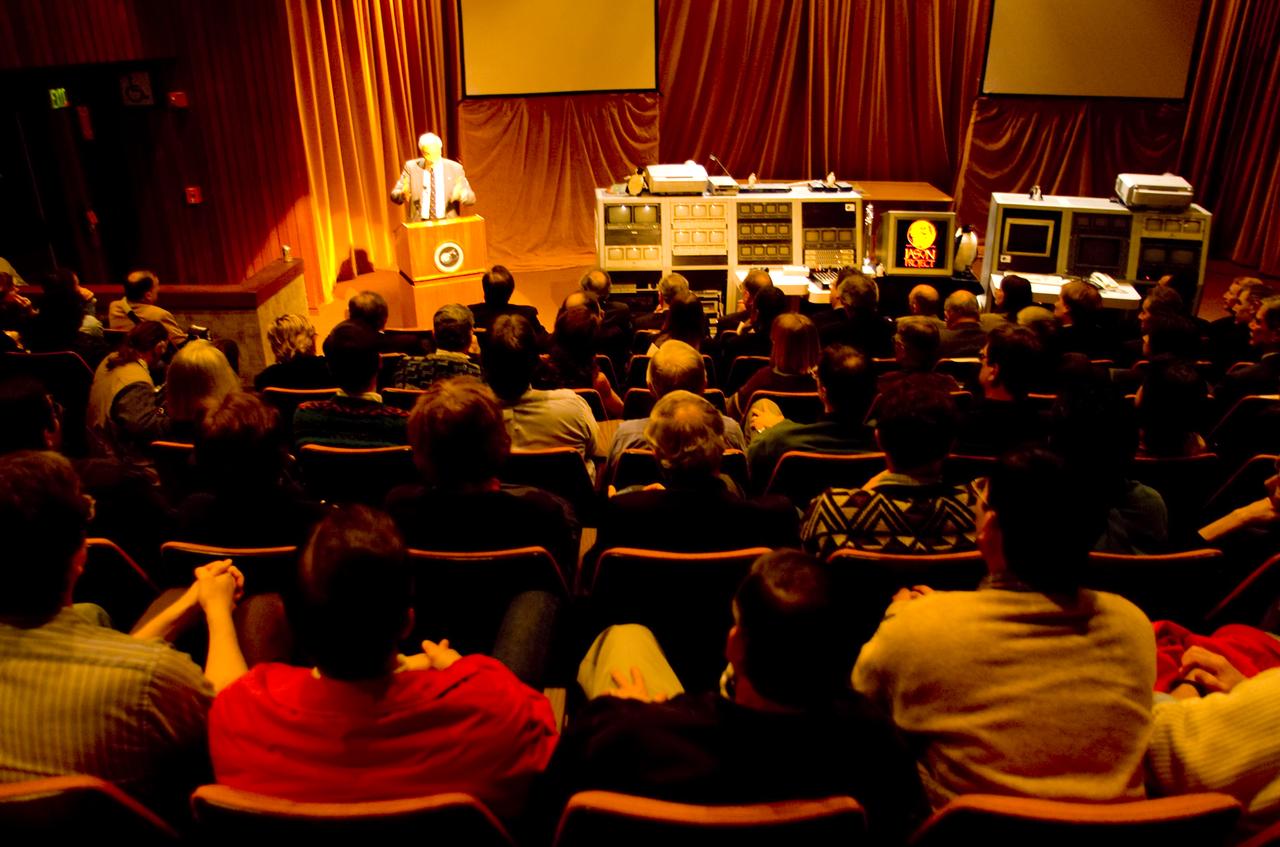
NASA Administrator Sean O'Keefe comes to Ames for employee briefing and tour. N-201 assembly
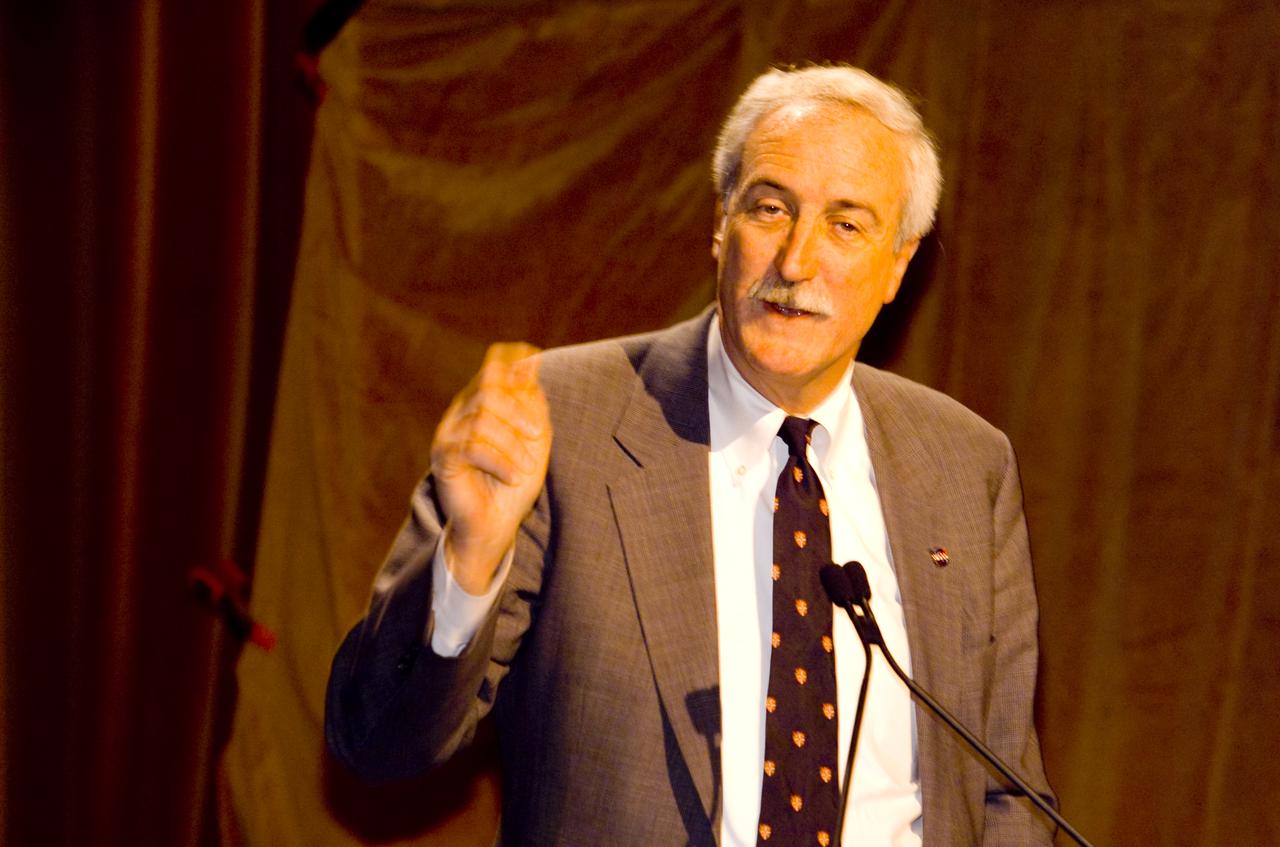
NASA Administrator Sean O'Keefe comes to Ames for employee briefing and tour. N-201 assembly
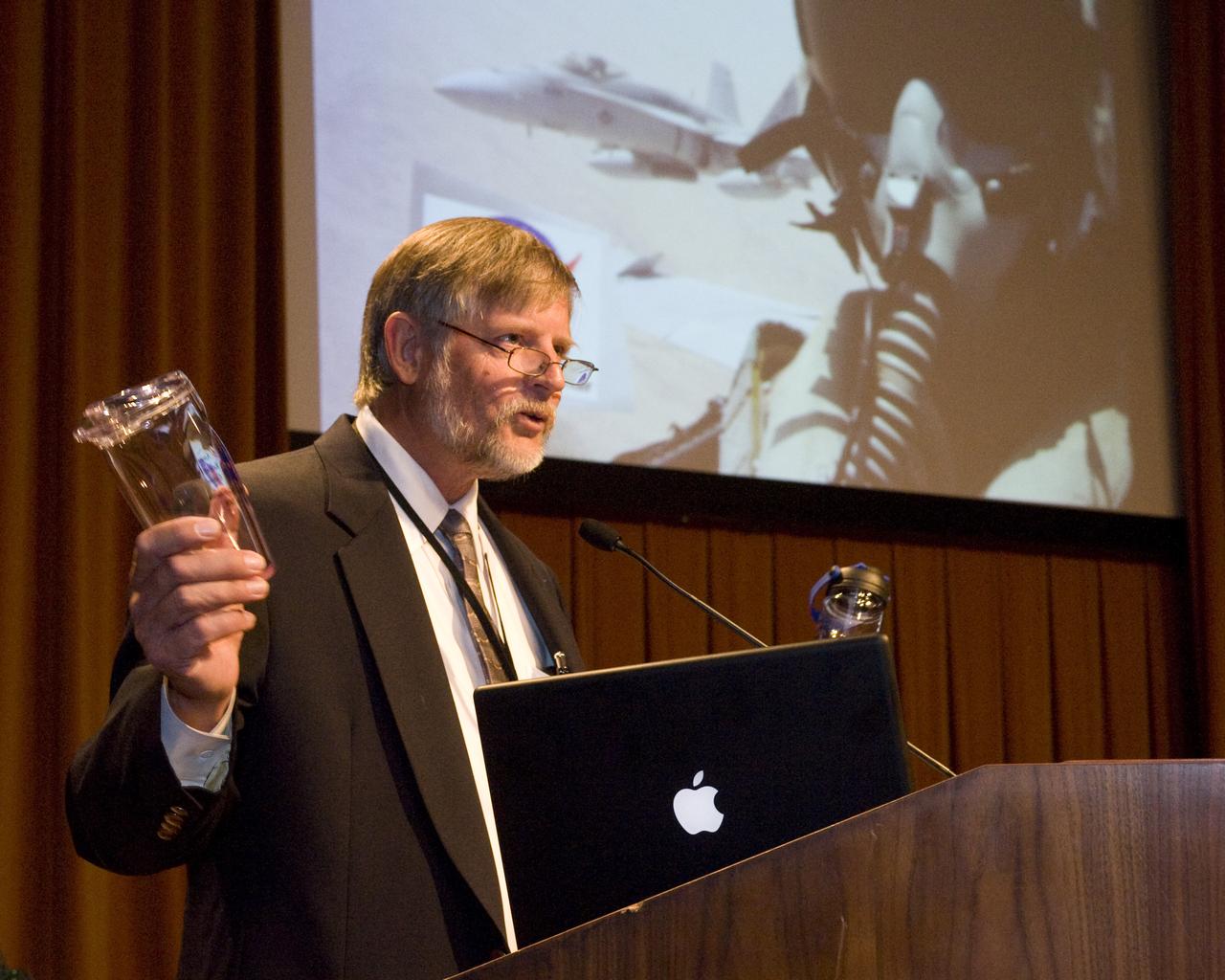
Safety Day Events 2008: Stan Phillips speaks at the open of the 10th annual Safety Awareness Week briefing in N-201.
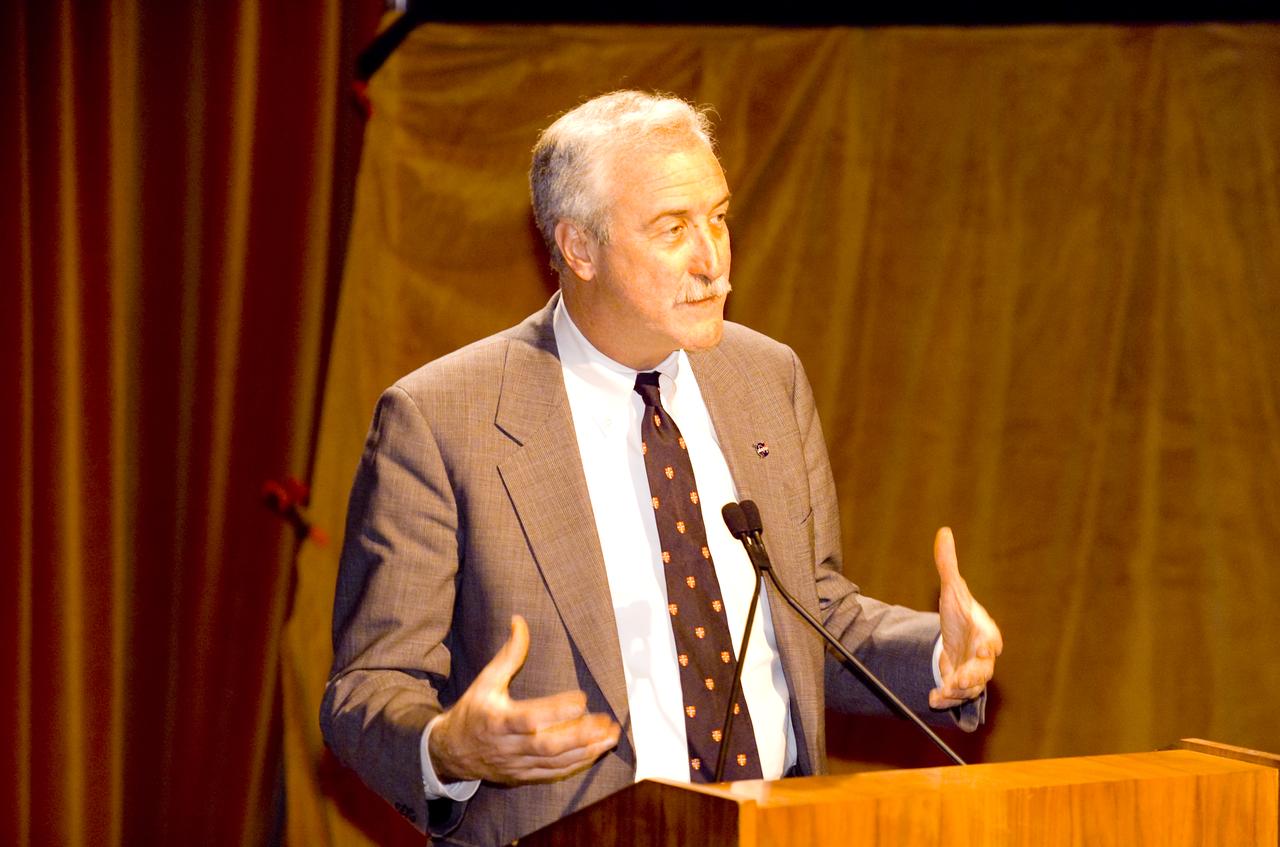
NASA Administrator Sean O'Keefe comes to Ames for employee briefing and tour. N-201 assembly
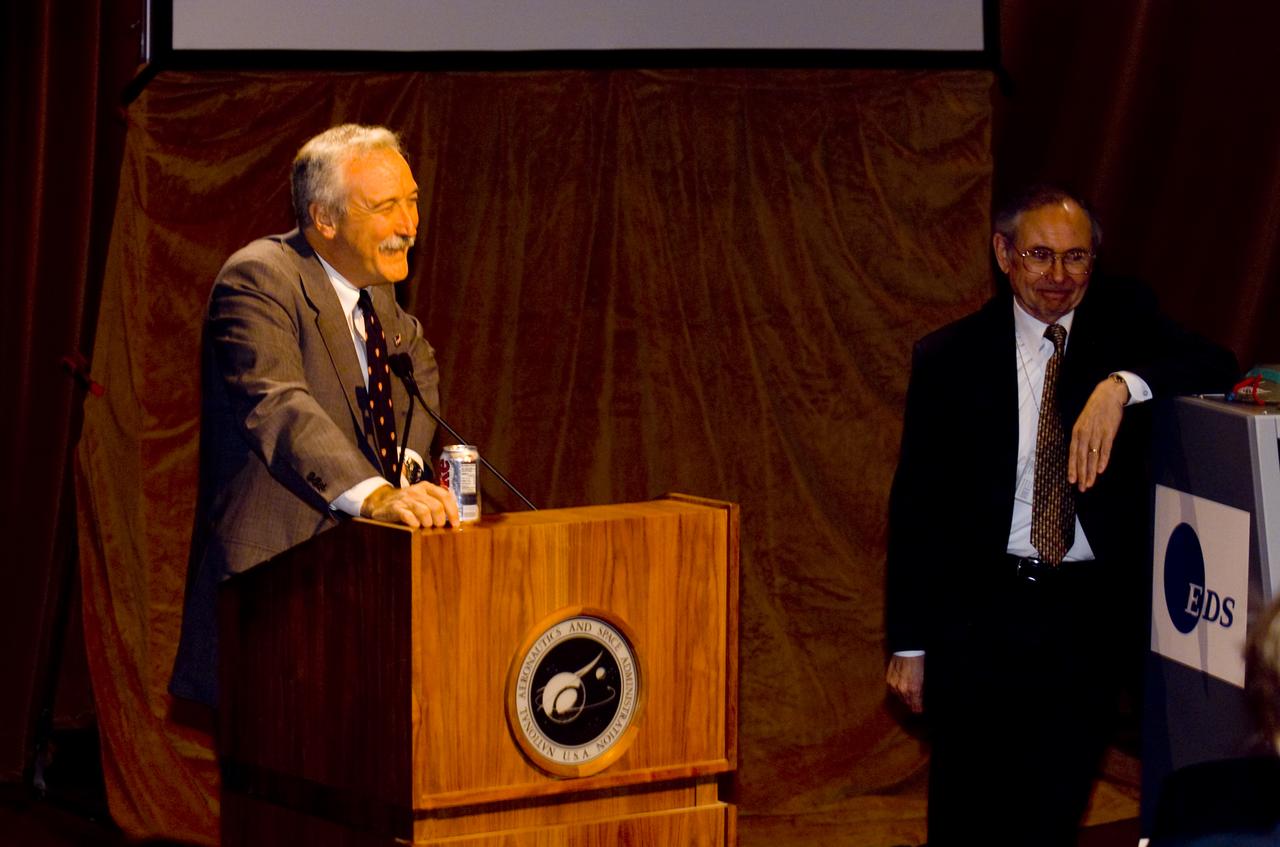
NASA Administrator Sean O'Keefe comes to Ames for employee briefing and tour. N-201 assembly
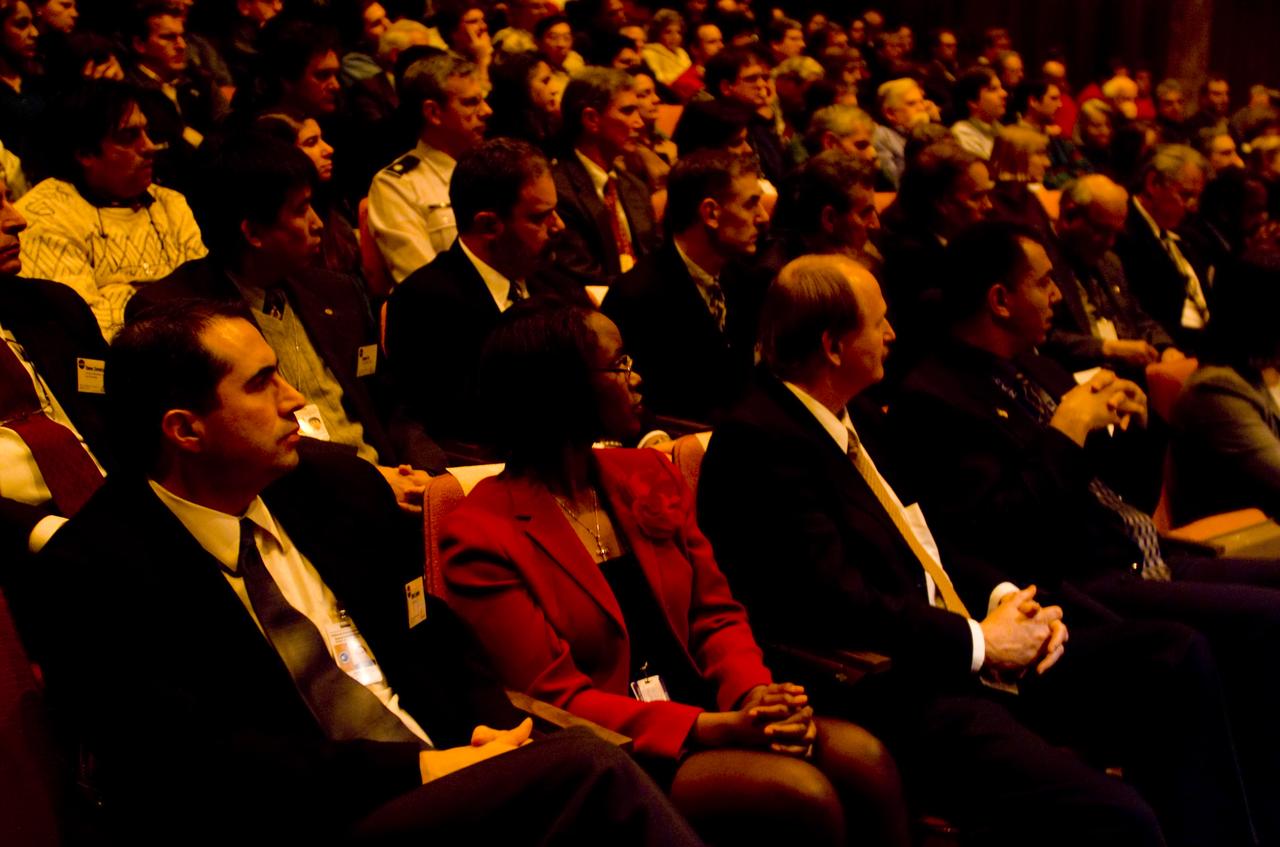
NASA Administrator Sean O'Keefe comes to Ames for employee briefing and tour. N-201 assembly
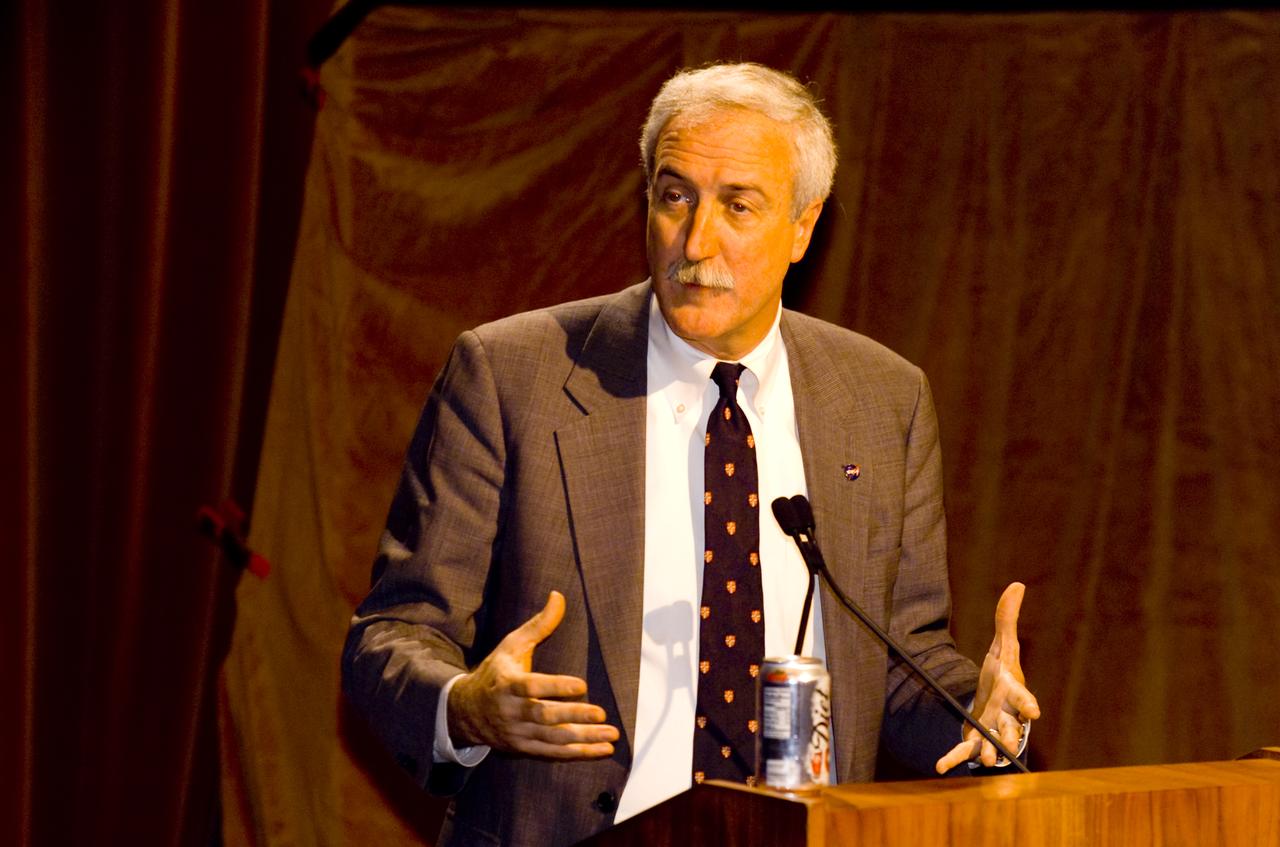
NASA Administrator Sean O'Keefe comes to Ames for employee briefing and tour. N-201 assembly
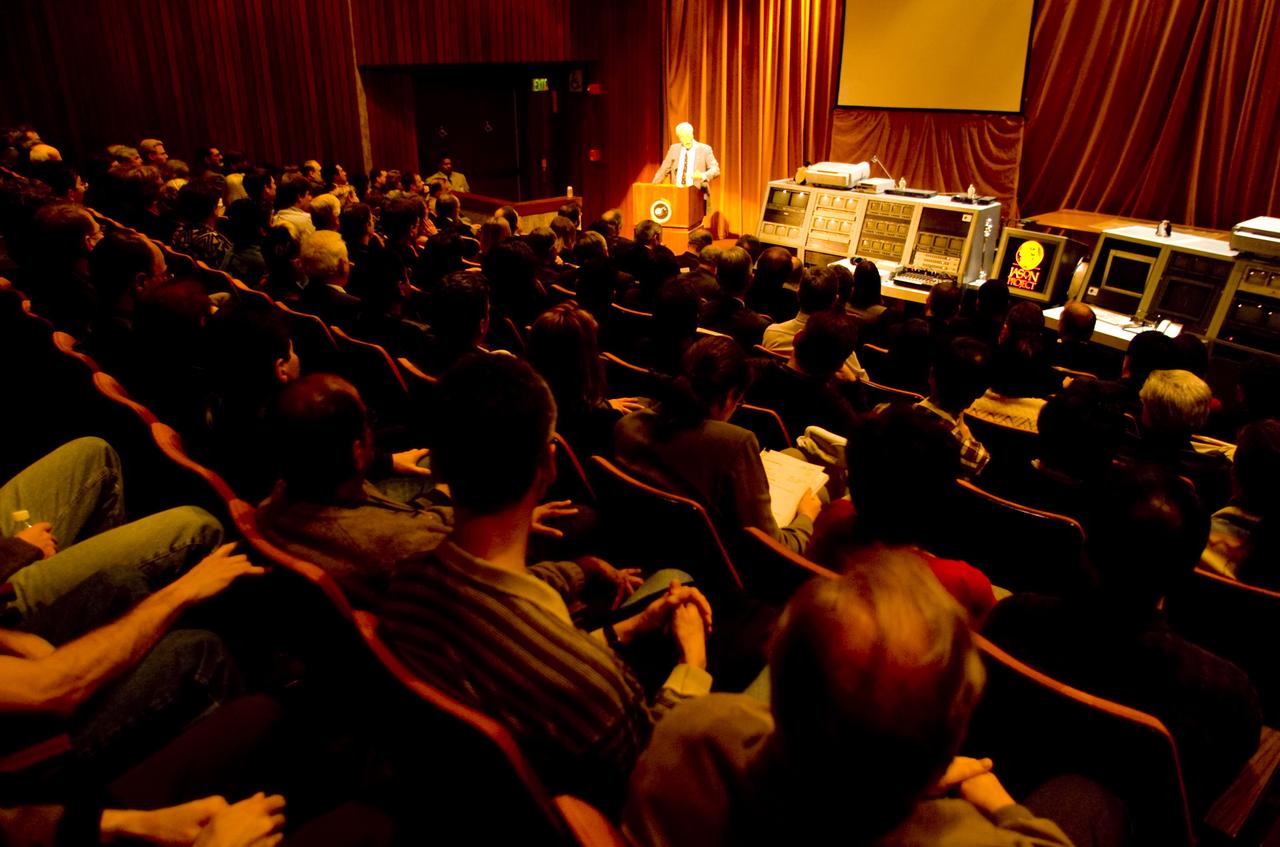
NASA Administrator Sean O'Keefe comes to Ames for employee briefing and tour. N-201 assembly
NASA Administrator Sean O'Keefe comes to Ames for employee briefing and tour. N-201 assembly
NASAAdministrator Sean O'Keefe comes to Ames for employee briefing and tour. N-201 assembly
NASA Administrator Sean O'Keefe comes to Ames for employee briefing and tour. N-201 assembly
NASA Administrator Sean O'Keefe comes to Ames for employee briefing and tour. N-201 assembly
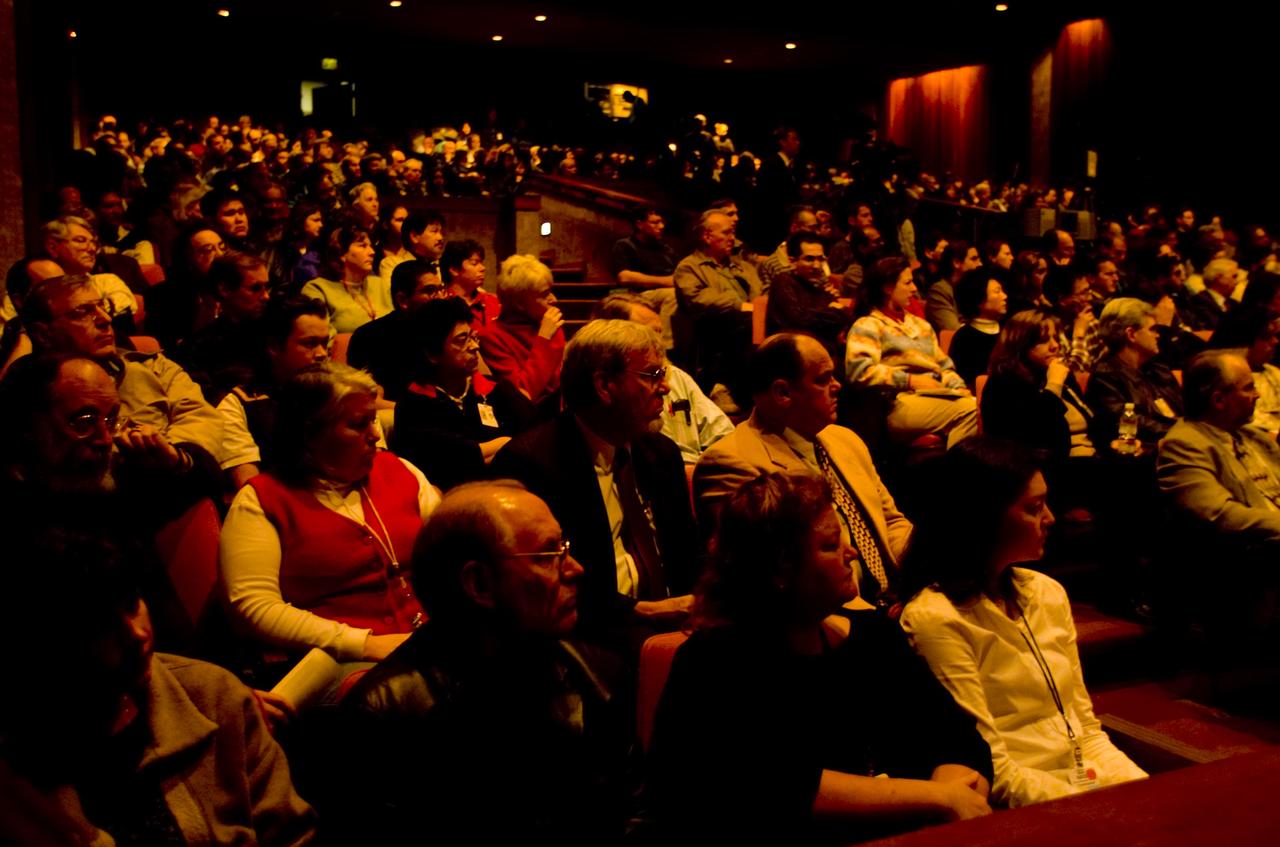
NASA Administrator Sean O'Keefe comes to Ames for employee briefing and tour. N-201 assembly
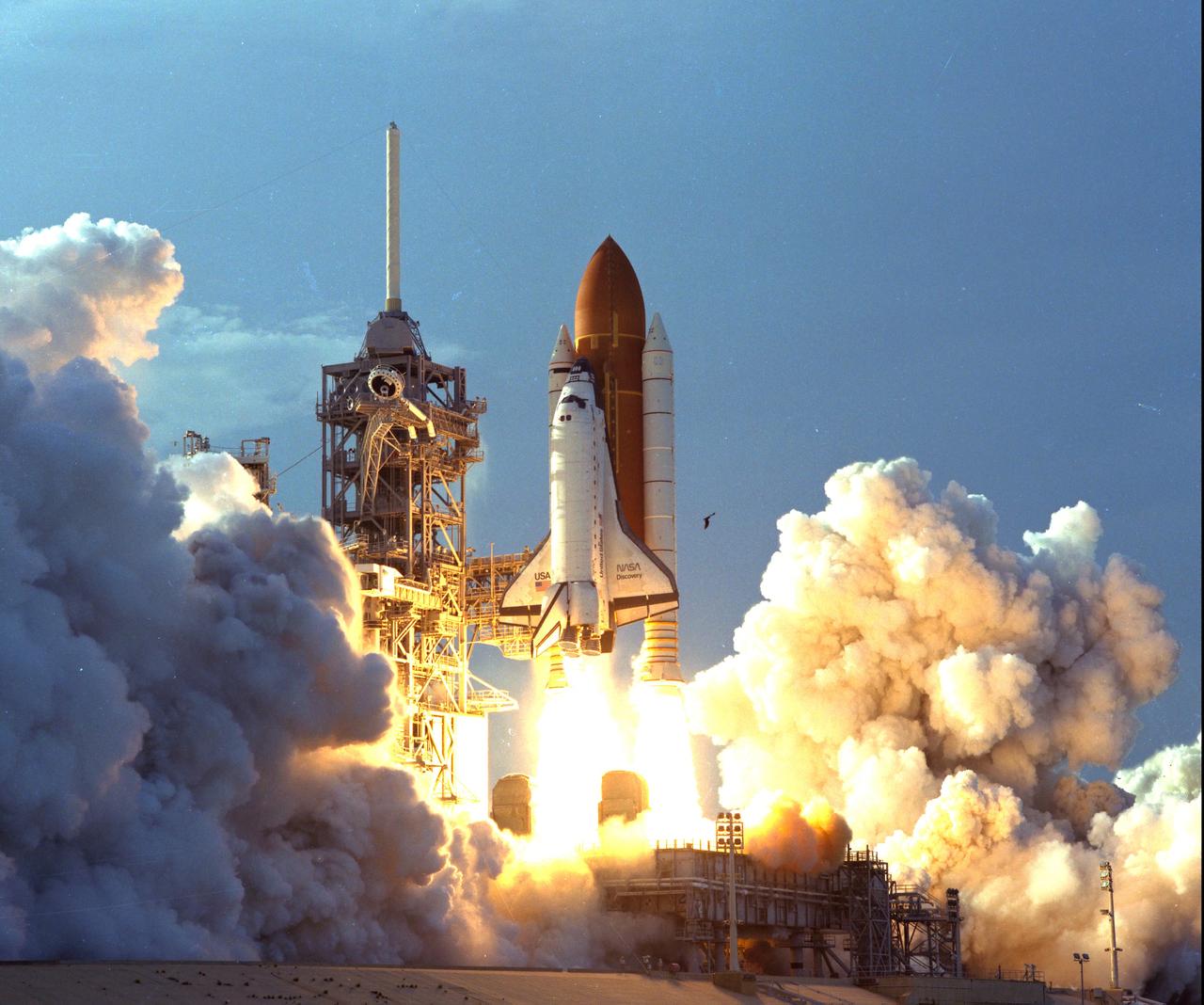
KENNEDY SPACE CENTER, FLA. - The turbulent weather common to a Florida afternoon in the summer subsides into a serene canopy of cornflower blue, and a manmade "bird" takes flight. The Space Shuttle Discovery soars skyward from Launch Pad 39B on Mission STS-64 at 6:22:35 p.m. EDT, Sept. 9. On board are a crew of six: Commander Richard N. Richards; Pilot L. Blaine Hammond Jr.; and Mission Specialists Mark C. Lee, Carl J. Meade, Susan J. Helms and Dr. J.M. Linenger. Payloads for the flight include the Lidar In-Space Technology Experiment (LITE), the Shuttle Pointed Autonomous Research Tool for Astronomy-201 (SPARTAN-201) and the Robot Operated Material Processing System (ROMPS). Mission Specialists Lee and Meade also are scheduled to perform an extravehicular activity during the 64th Shuttle mission.

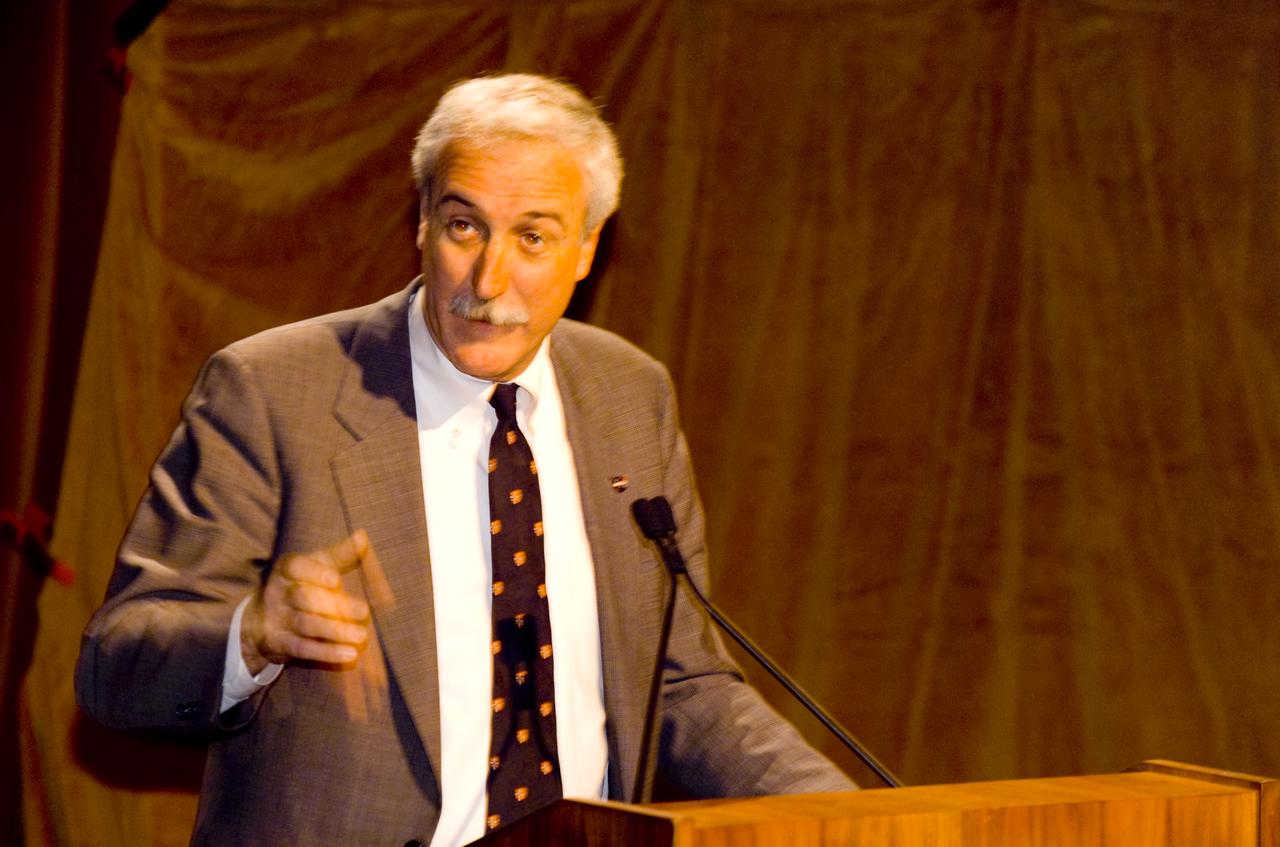
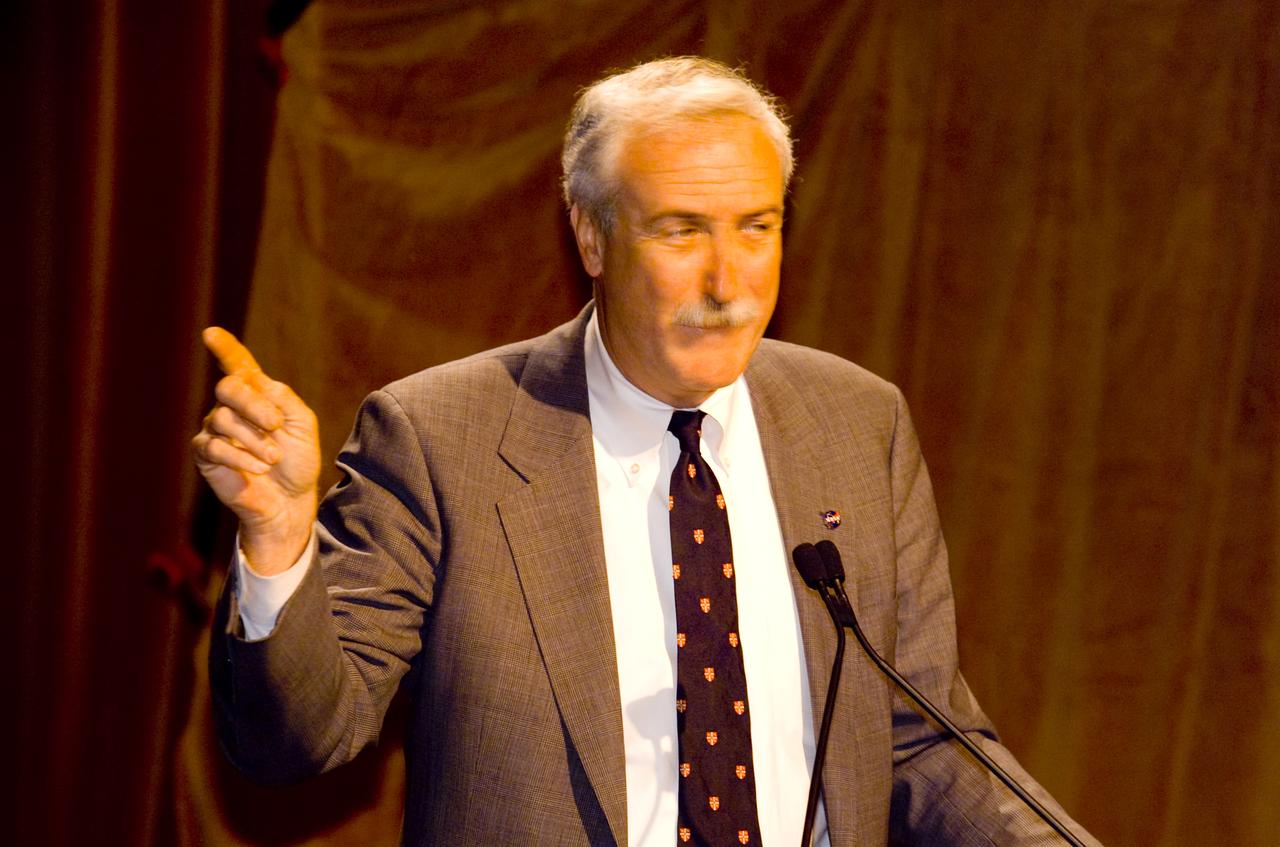
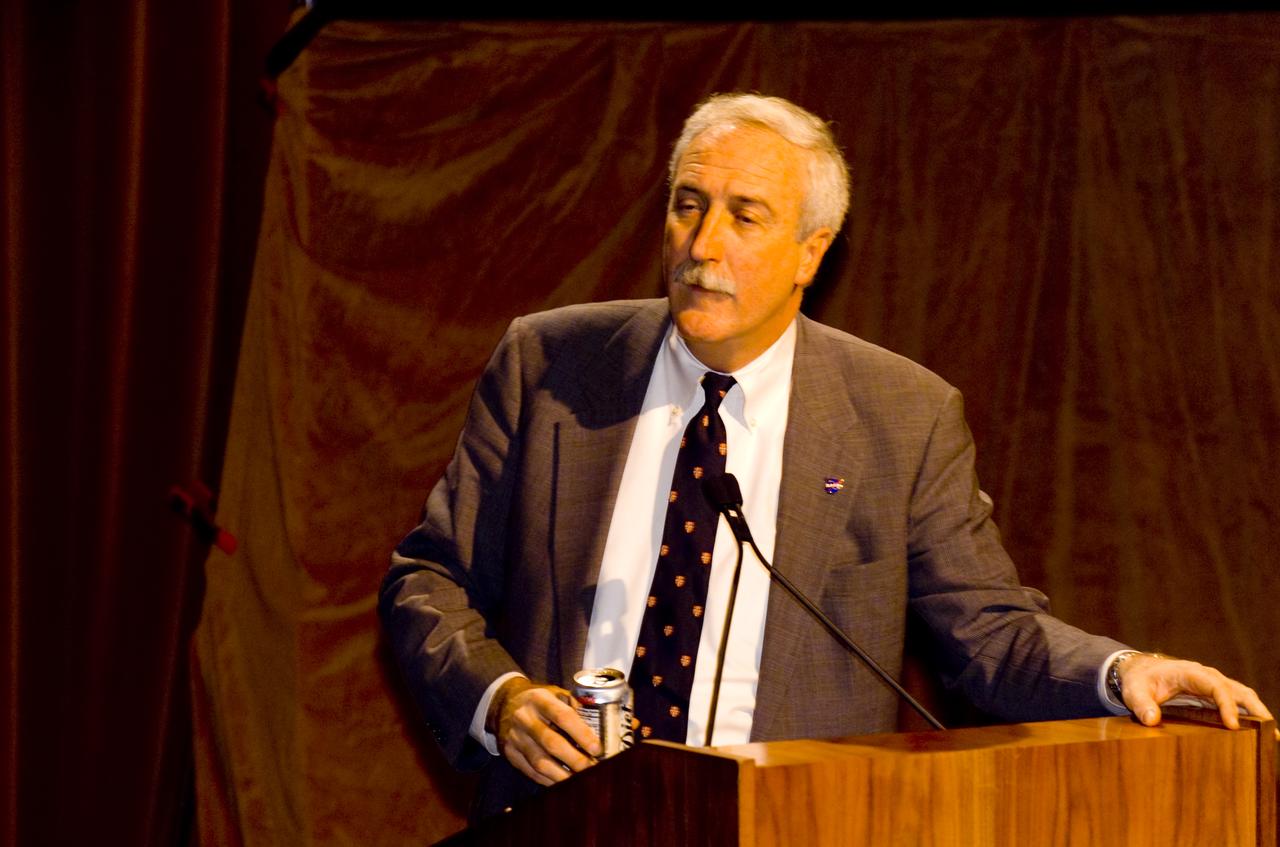
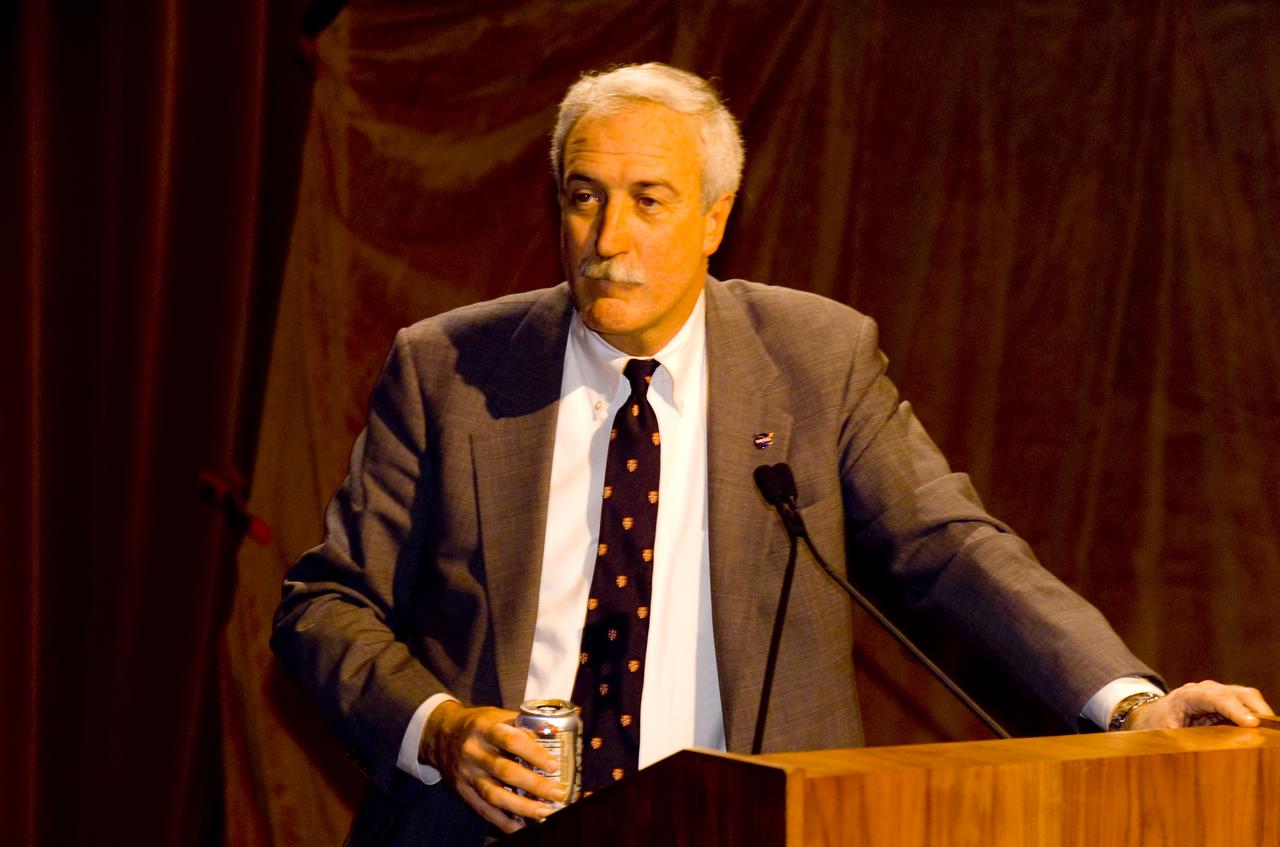
NASA Administrator Sean O'Keefe comes to Ames for employee briefing and tour. N-201 assembly Ames Deputy Director Dr Bill Berry welcomes O'Keefe
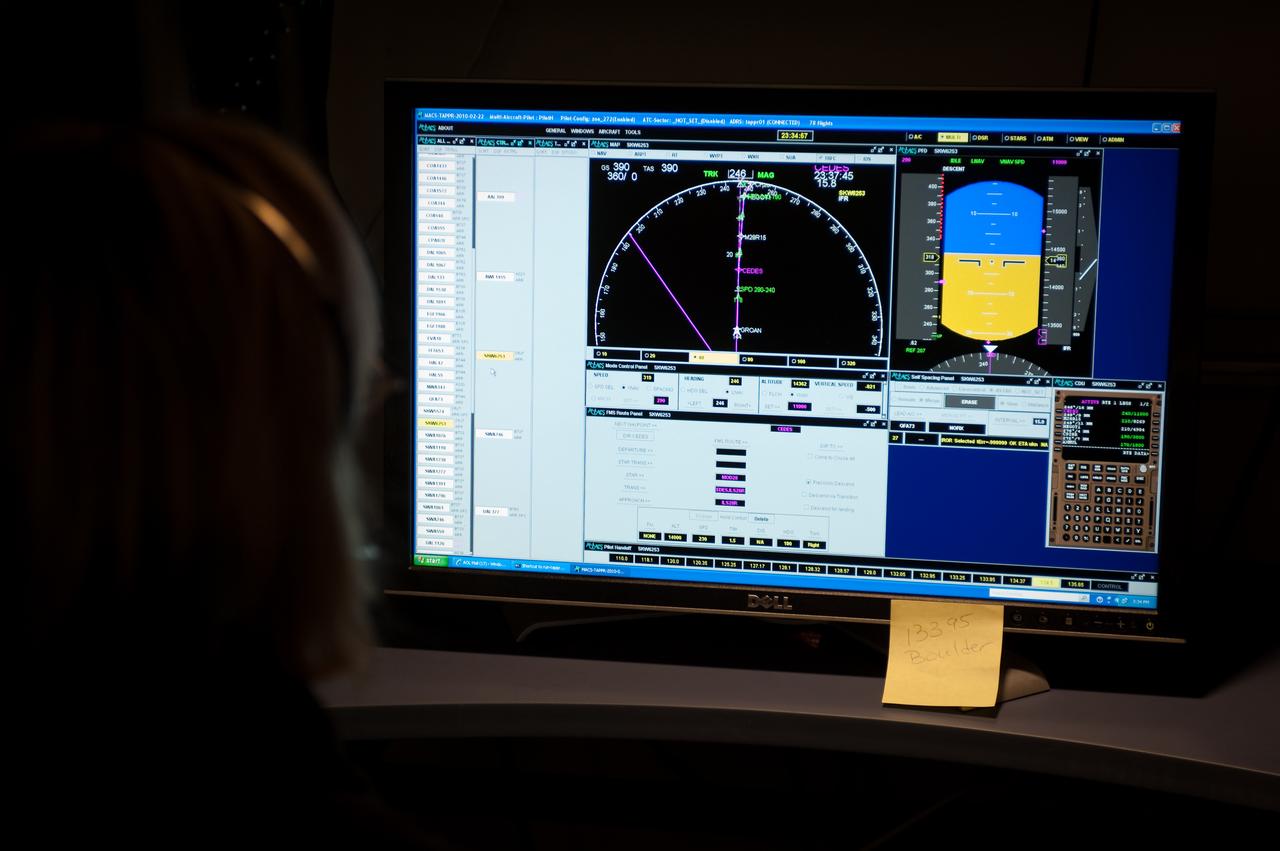
Terminal Area Procedures for Paired Runways (TAPPR) Simulation in the Ames Air Traffic Management (ATM) Laboraotry N-201 with Dawn Sommers
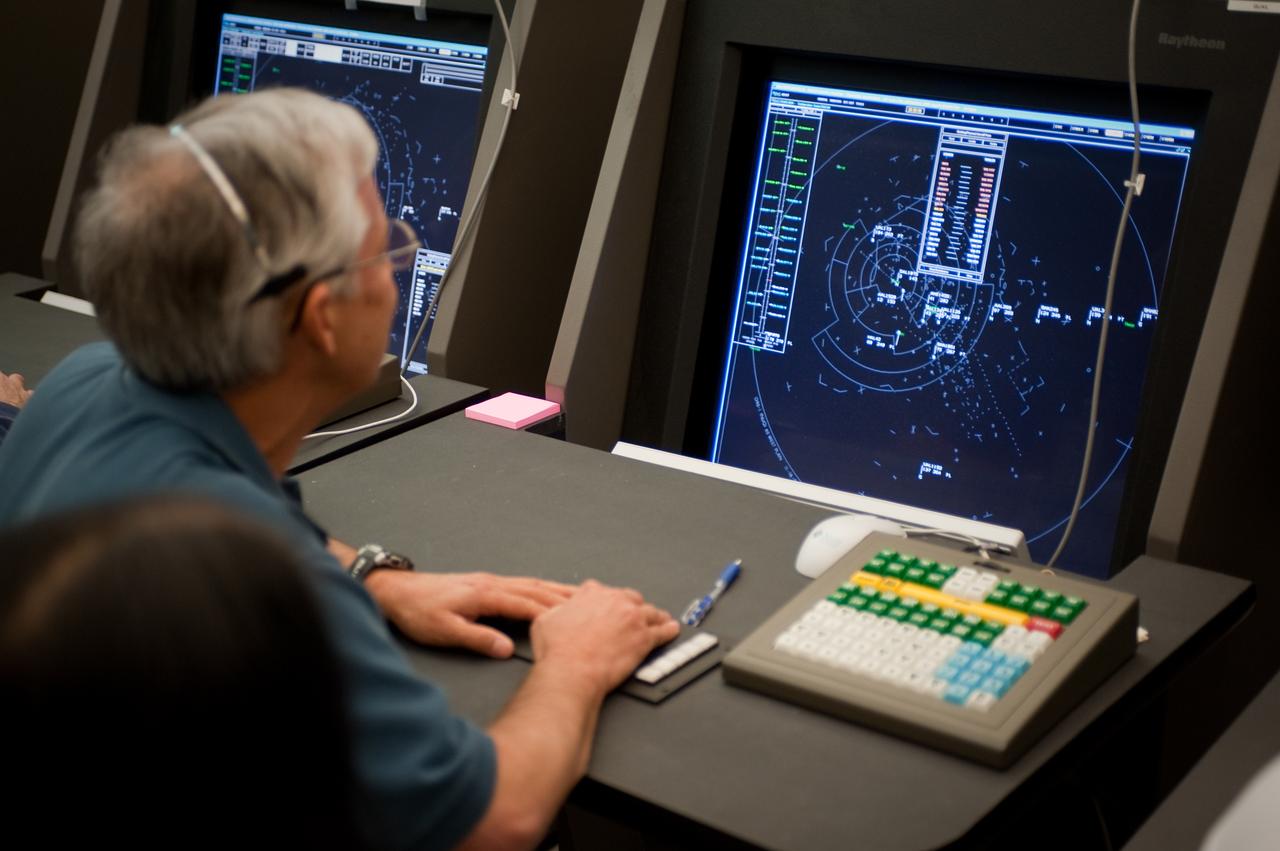
Terminal Area Procedures for Paired Runways (TAPPR) Simulation in the Ames Air Traffic Management (ATM) Laboraotry N-201 ATC area with Craig Riley
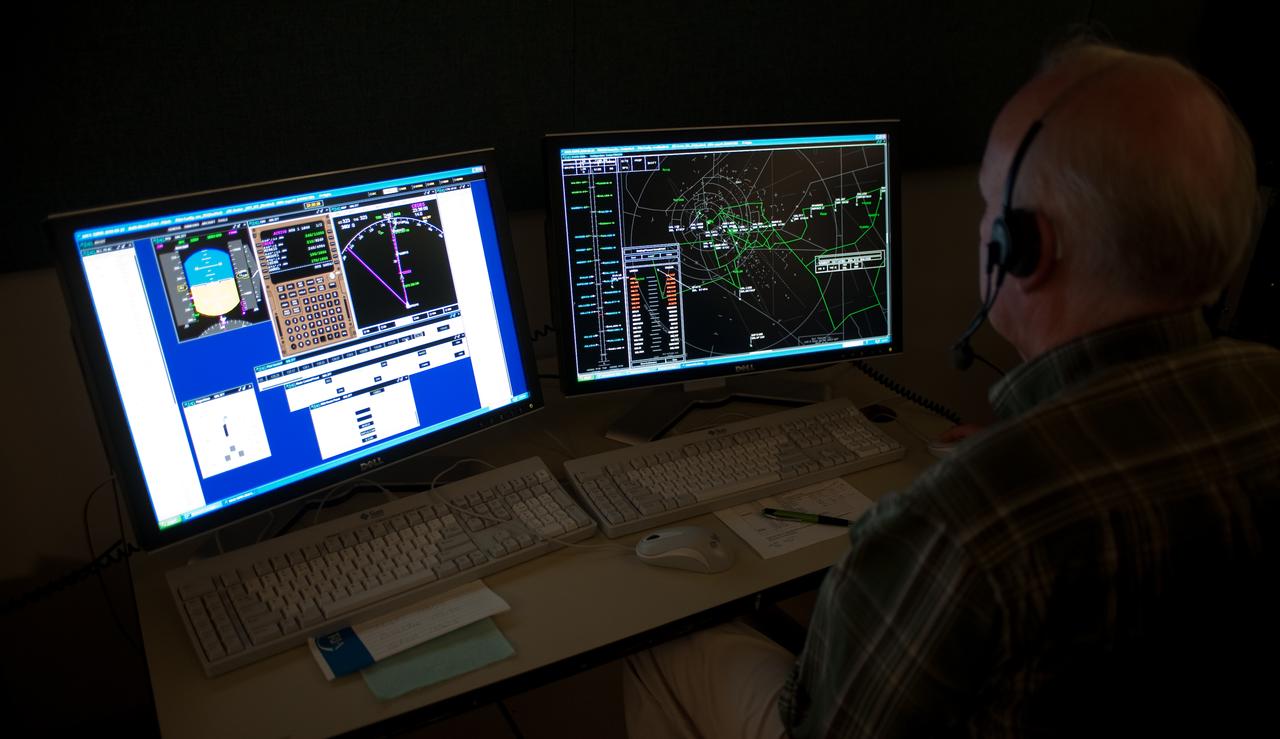
Terminal Area Procedures for Paired Runways (TAPPR) Simulation in the Ames Air Traffic Management (ATM) Laboraotry N-201 with Charley Ross
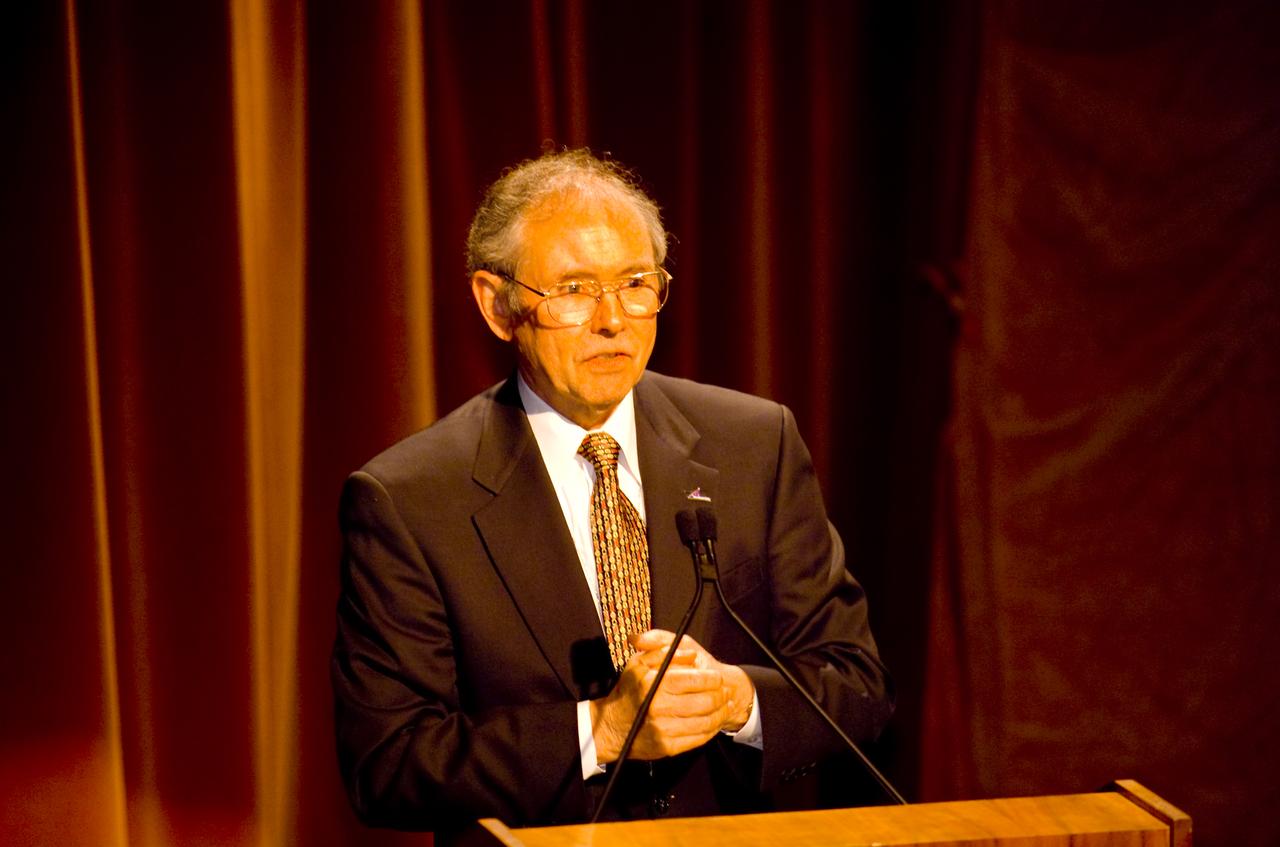
NASA Administrator Sean O'Keefe comes to Ames for employee briefing and tour. N-201 assembly Ames Director Dr. Harry McDonald welcomes O'Keefe
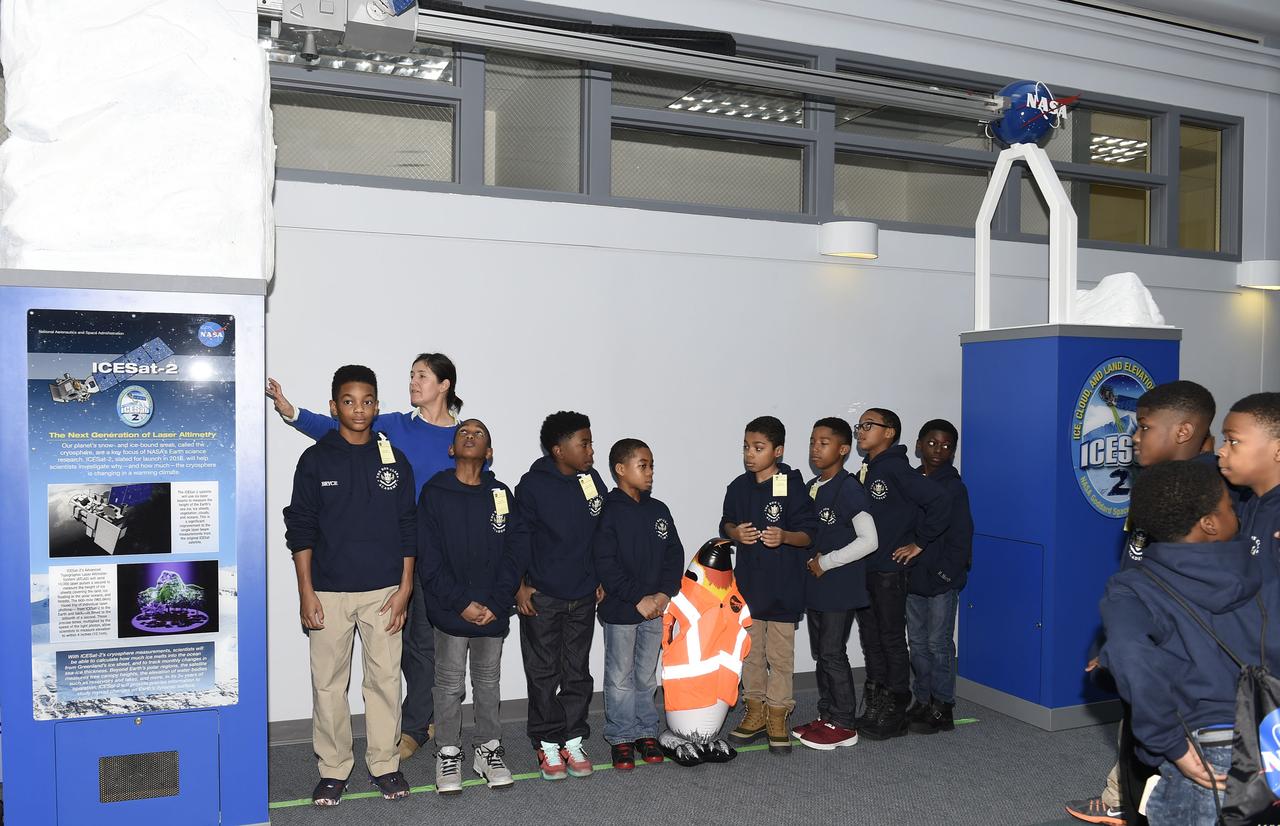
Ron Clark Academy students visited Goddard from Atlanta, Georgia on Dec 19, 201. They visited JWST, Integration and Test facilities and Hyperwall.
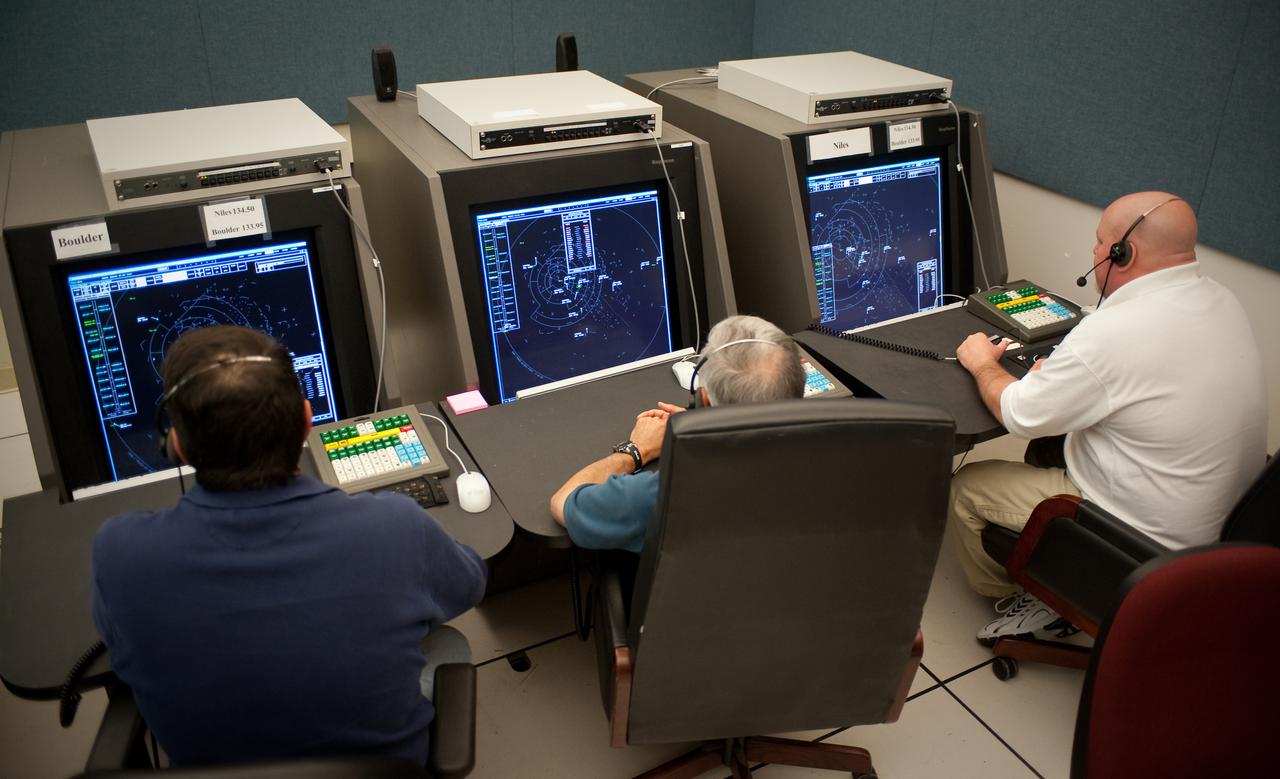
Terminal Area Procedures for Paired Runways (TAPPR) Simulation in the Ames Air Traffic Management (ATM) Laboraotry N-201 ATC area with Gus Guerra, Craig Riley, Michael Garr,
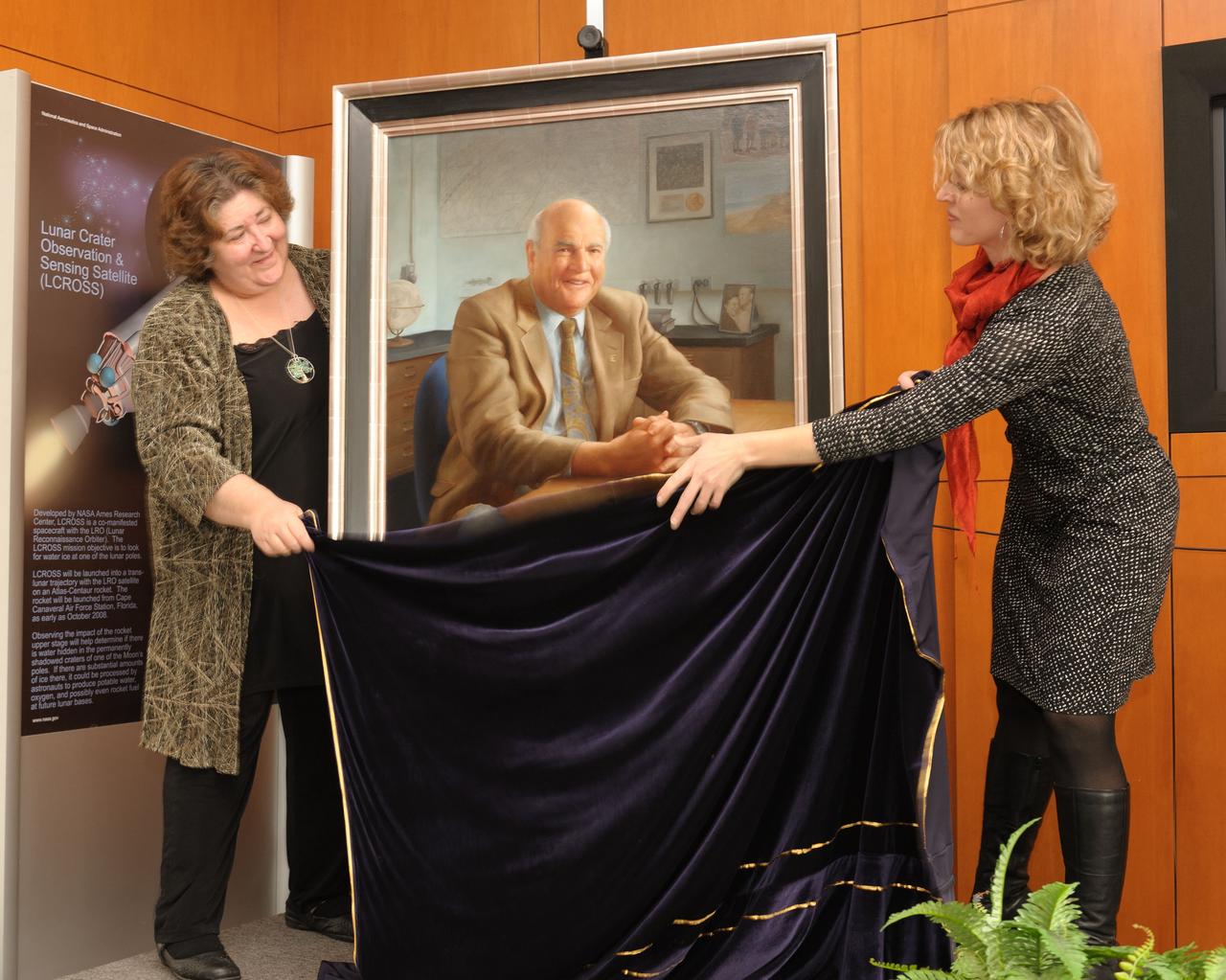
Dr. Brauch Blumberg portrait unveiling ceremony held at the Syverston Auditorium (N-201) NASA Ames Researc Center, Moffett Field, CA. Lynn Harper and Estelle Dotson (of NASA Astrobilolgy Institute) unveil portrait.
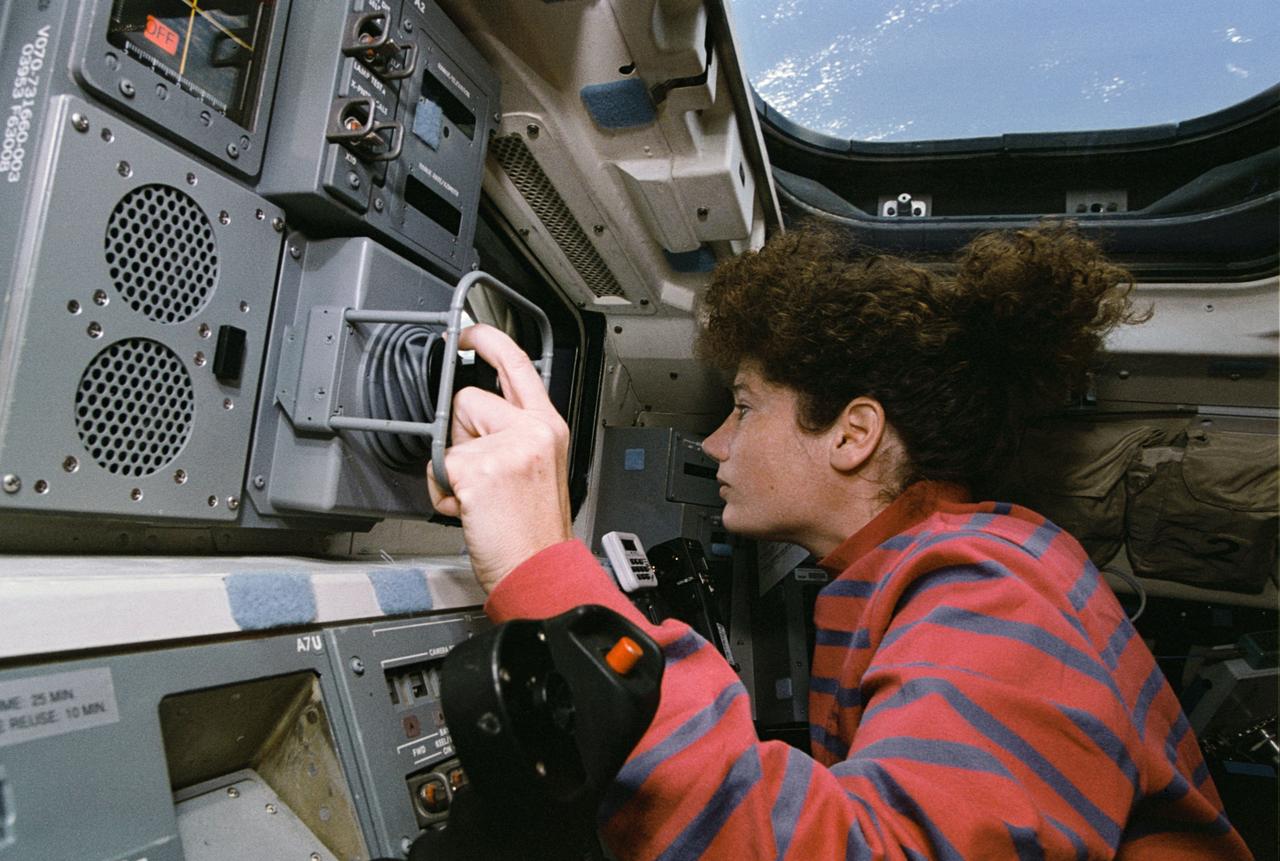
STS064-05-028 (9-20 Sept. 1994) --- On the space shuttle Discovery's aft flight deck, astronaut Susan J. Helms handles controls for the Remote Manipulator System (RMS). The robot arm operated by Helms, who remained inside the cabin, was used to support several tasks performed by the crew during the almost 11-day mission. Those tasks included the release and retrieval of the free-flying Shuttle Pointed Autonomous Research Tool For Astronomy 201 (SPARTAN 201), a six-hour spacewalk and the Shuttle Plume Impingement Flight Experiment (SPIFEX). Photo credit: NASA or National Aeronautics and Space Administration
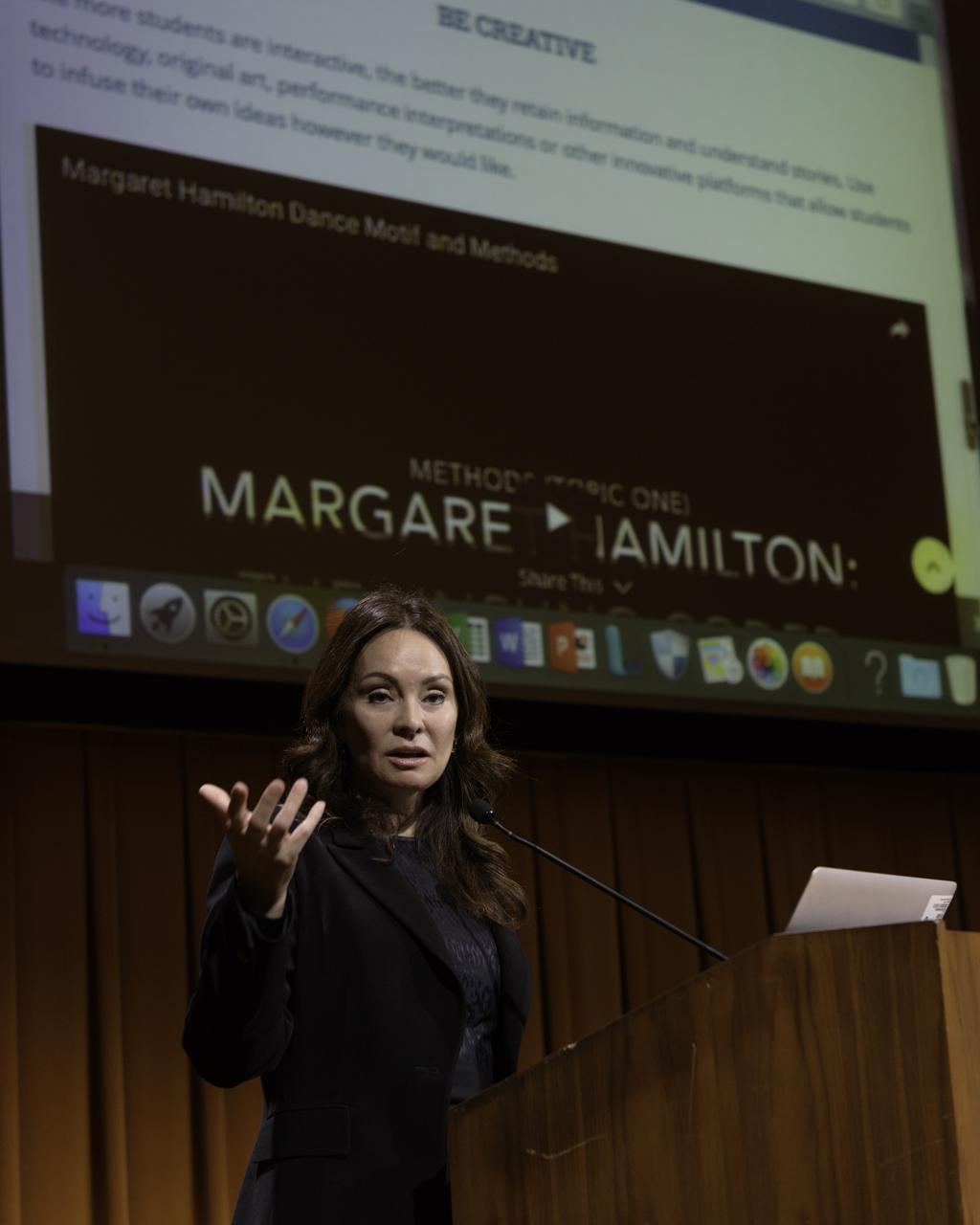
Rosie Rios, the 43rd Treasurer of the United States explores how understanding our history will provide a clearer roadmap for understanding where the country's future is heading. Presented by the Ames Women's Influence Network (WIN) and the Hispanic Advisory Committee for Employees (HACE) in the Syvertson Auditorium (N-201) at Ames Research Center.
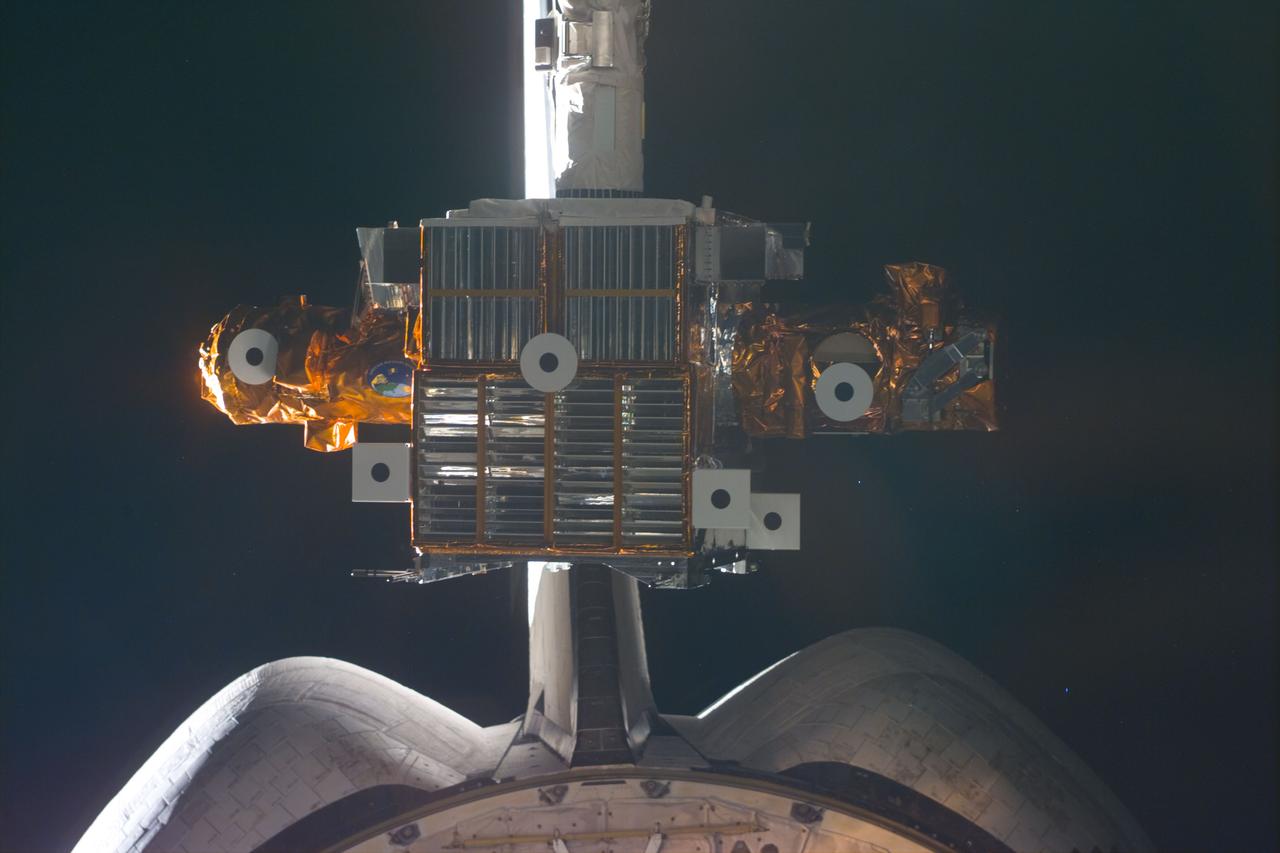
STS095-E-5143 (3 Nov. 1998) --- The Spartan 201-05 satellite is pictured prior to its berthing in the cargo bay of the Space Shuttle Discovery. The photo was taken with an electronic still camera (ESC) at 4:00:58 GMT, Nov. 3.

KENNEDY SPACE CENTER, Fla. -- In preparation for Space Shuttle Mission STS-87, Columbia rolls out to Launch Complex 39B atop the crawler-transporter. STS-87 will be the fourth flight of the United States Microgravity Payload and the Spartan-201 deployable satellite. Launch is tentatively scheduled for Nov. 19

In preparation for Space Shuttle Mission STS-87, the United States Microgravity Payload-4 undergoes final processing in the Space Station Processing Facility before its move to Launch Complex 39B. STS-87 will be the fourth flight of the United States Microgravity Payload and the Spartan-201 deployable satellite
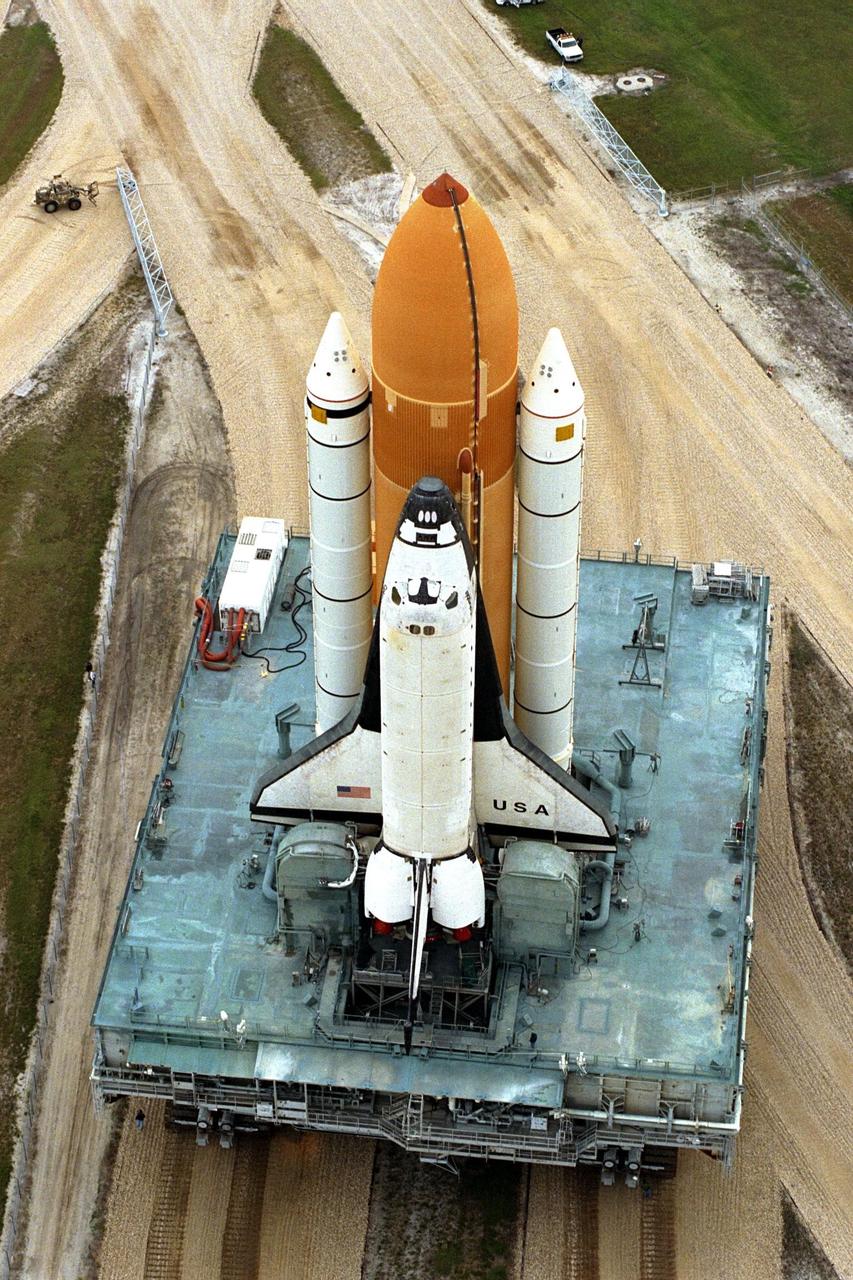
In preparation for Space Shuttle Mission STS-87, Columbia rolls out to Launch Complex 39B atop the crawler-transporter. STS-87 will be the fourth flight of the United States Microgravity Payload and the Spartan-201 deployable satellite. Launch is tentatively scheduled for Nov. 19
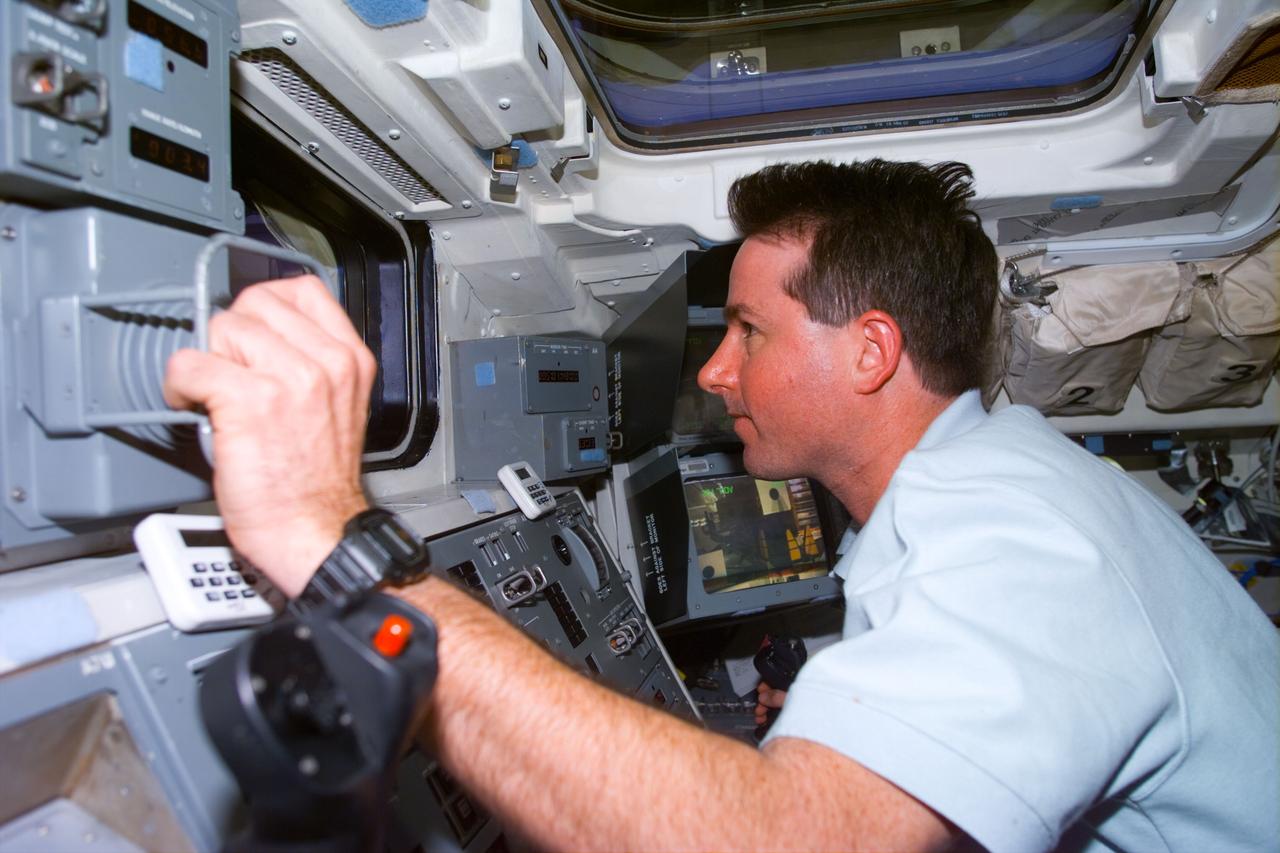
STS095-E-5131 (3 Nov. 1998) --- Astronaut Stephen K. Robinson, STS-95 mission specialist, is busy on Discovery's aft flight deck during operations to retrieve the free-flying Spartan 201-05 satellite. The photograph was taken with an electronic still camera (ESC) at 04:11:41 GMT, Nov. 3.
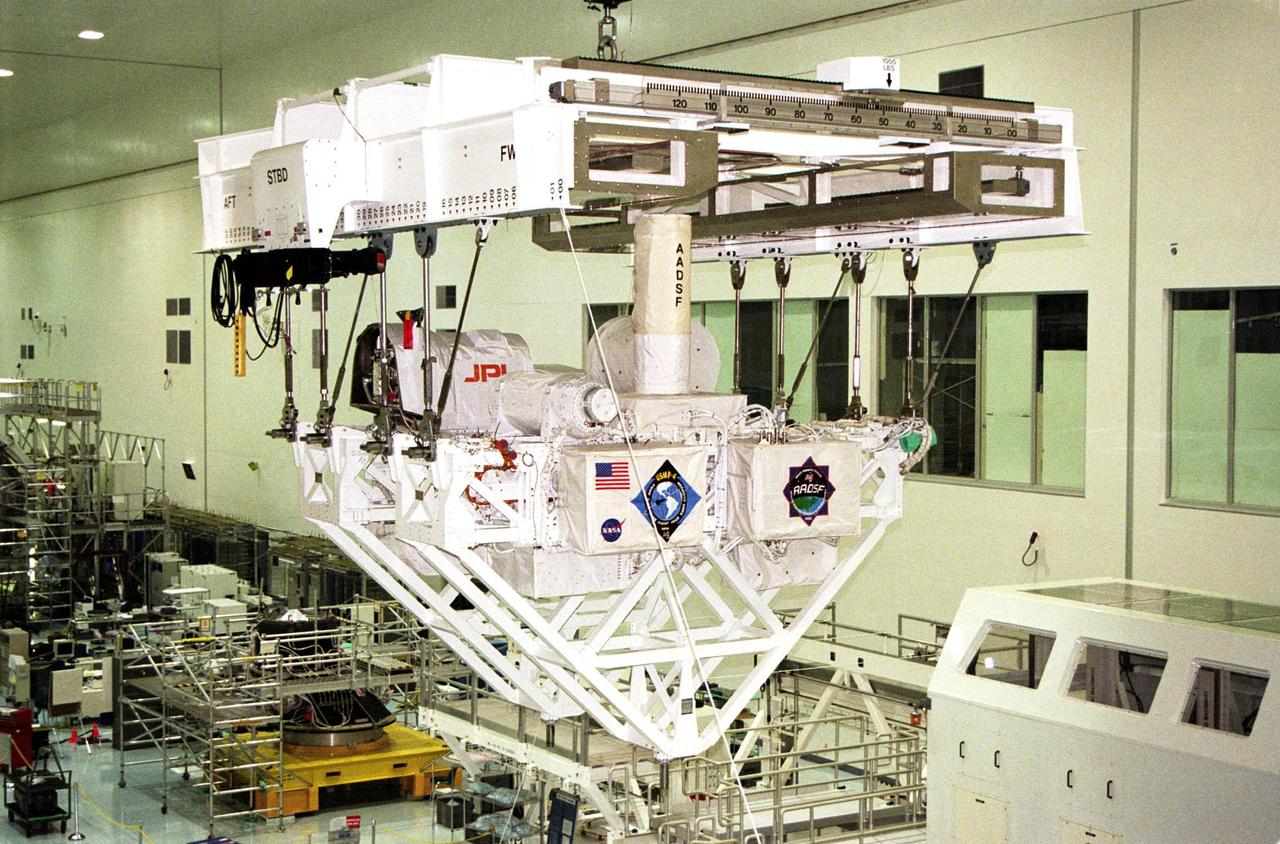
In preparation for Space Shuttle Mission STS-87, the United States Microgravity Payload-4 undergoes final processing in the Space Station Processing Facility before its move to Launch Complex 39B. STS-87 will be the fourth flight of the United States Microgravity Payload and the Spartan-201 deployable satellite
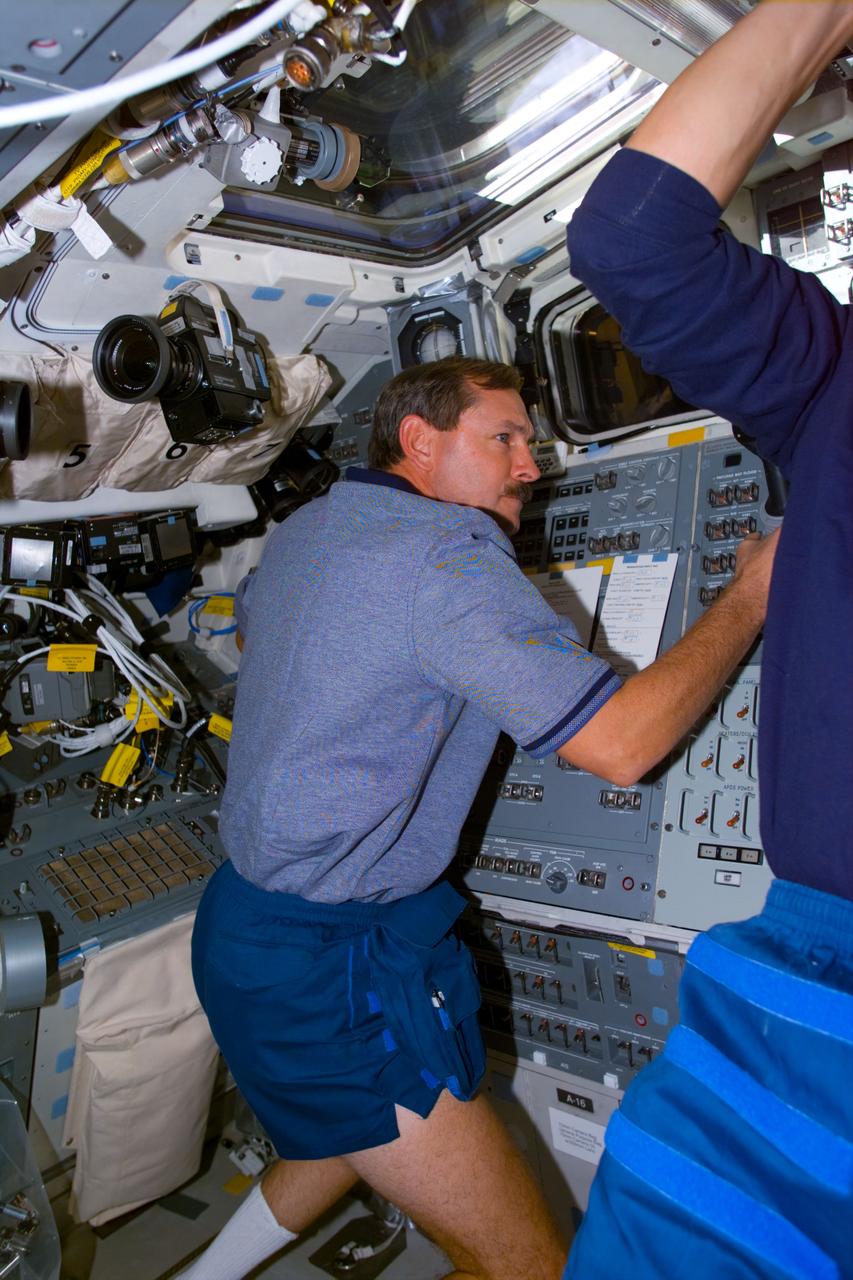
STS095-E-5134 (3 Nov. 1998) --- Astronaut Curtis L. Brown, STS-95 commander, on Discovery's aft flight deck during operations to retrieve the free-flying Spartan 201-05 satellite. The photograph was taken with an electronic still camera (ESC) at 3:17:38 GMT, Nov. 3.
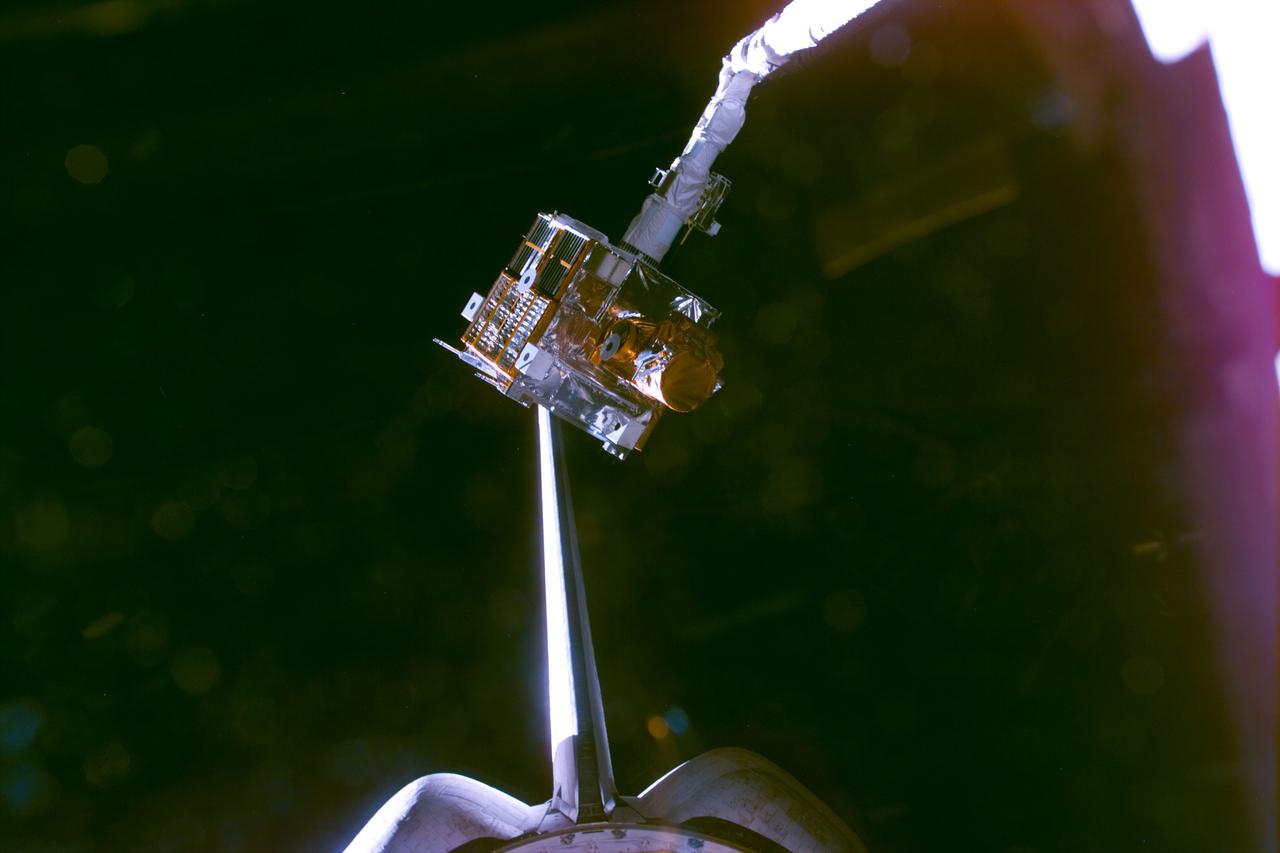
STS095-E-5139 (3 Nov. 1998) --- In the grasp of Discovery's remote manipulator system (RMS) arm, the Spartan 201-05 satellite hovers over the cargo bay prior to its berthing there. The photo was taken with an electronic still camera (ESC) at 03:59:12 GMT, Nov. 3.
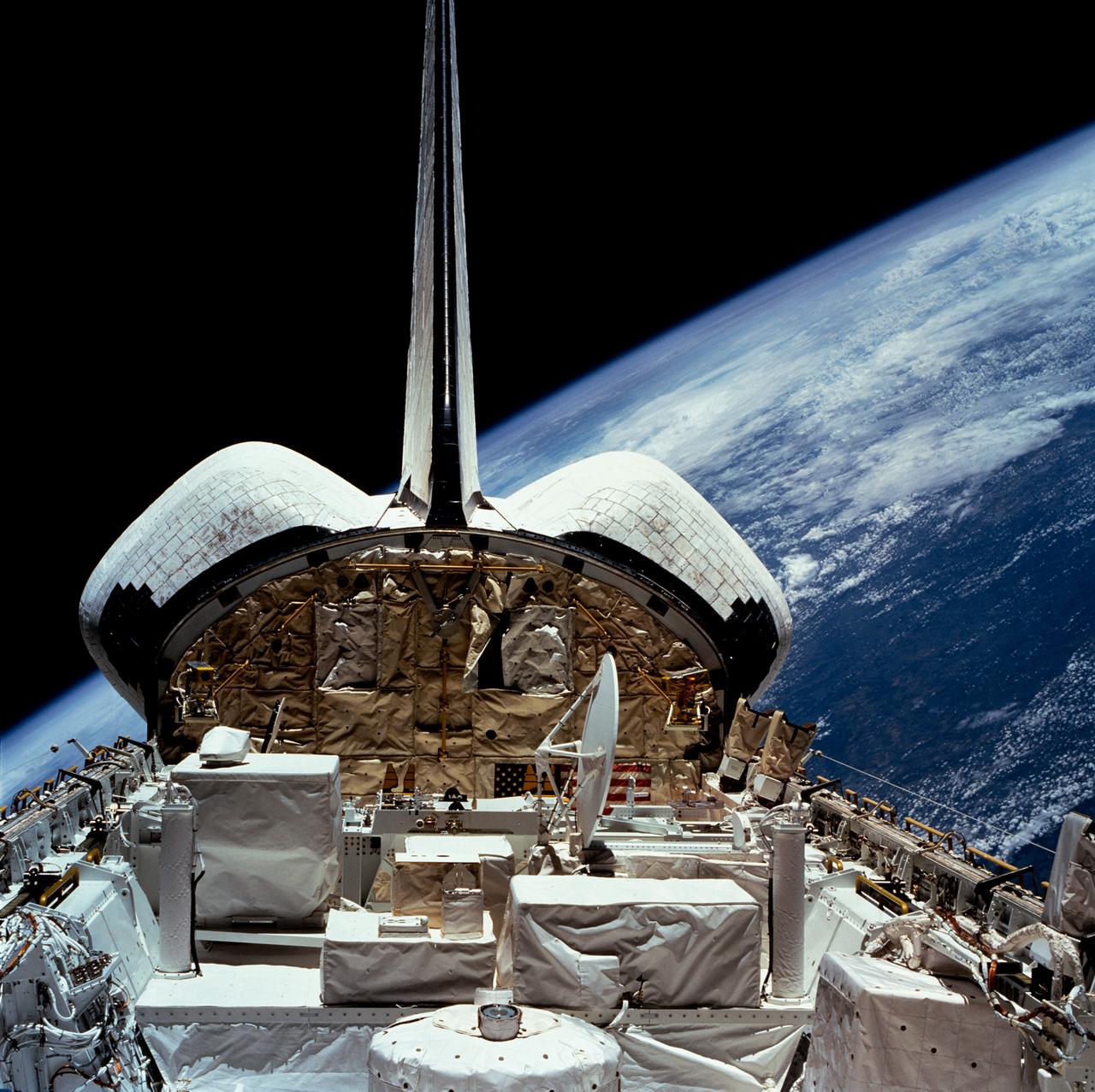
STS056-91-050 (8-17 April 1993) --- This 70mm frame shows the cargo bay of the Earth-orbiting Space Shuttle Discovery backdropped against clouds. Most of the elements of the ATLAS-2 payload can be seen, but missing is the SPARTAN-201 satellite which was in the midst of its separation from Discovery when the photo was made.
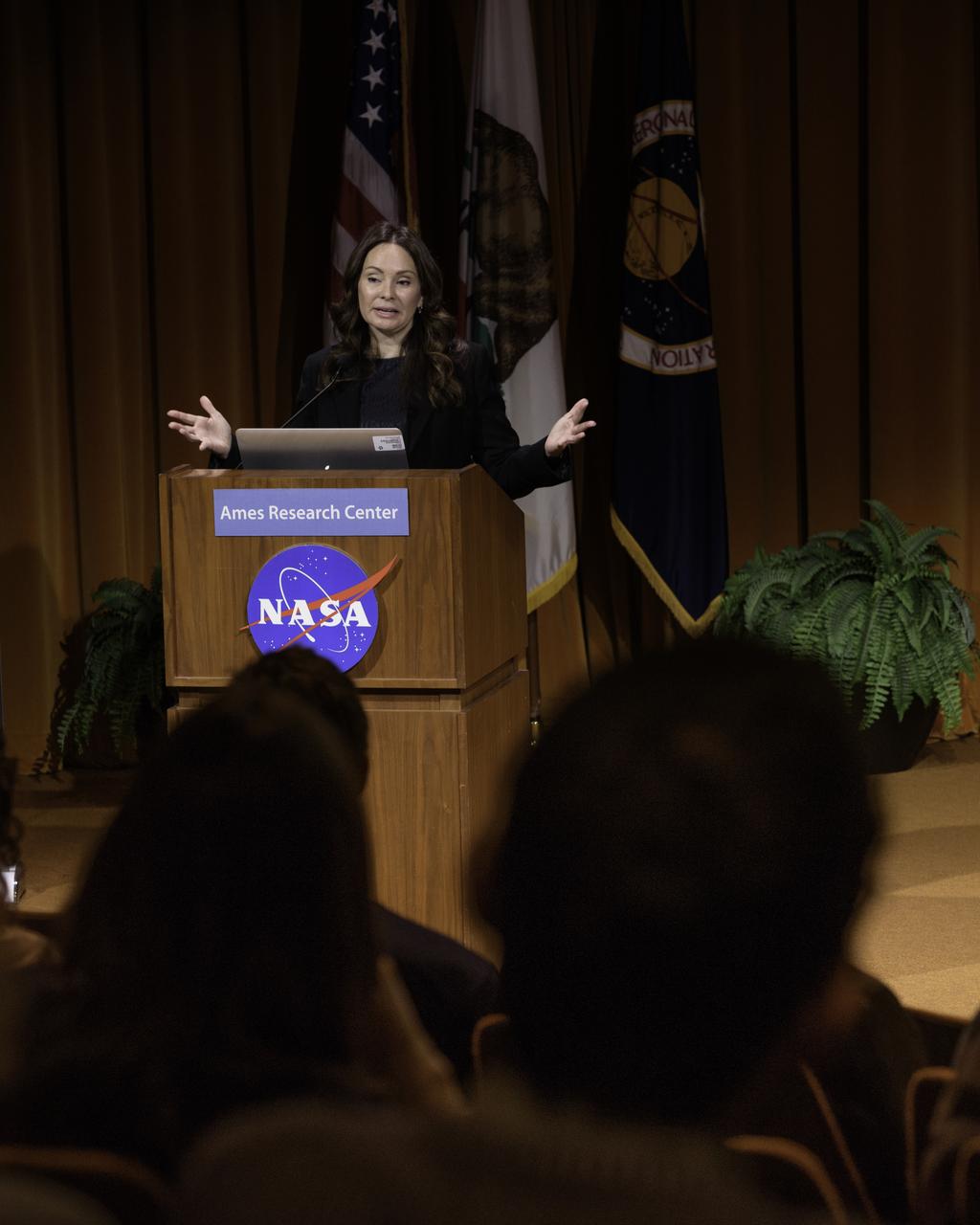
Rosie Rios, the 43rd Treasurer of the United States explores how understanding our history will provide a clearer roadmap for understanding where the country's future is heading. Presented by the Ames Women's Influence Network (WIN) and the Hispanic Advisory Committee for Employees (HACE) in the Syvertson Auditorium (N-201) at Ames Research Center.

In preparation for Space Shuttle Mission STS-87, Columbia rolls out to Launch Complex 39B atop the crawler-transporter. STS-87 will be the fourth flight of the United States Microgravity Payload and the Spartan-201 deployable satellite. Launch is tentatively scheduled for Nov. 19
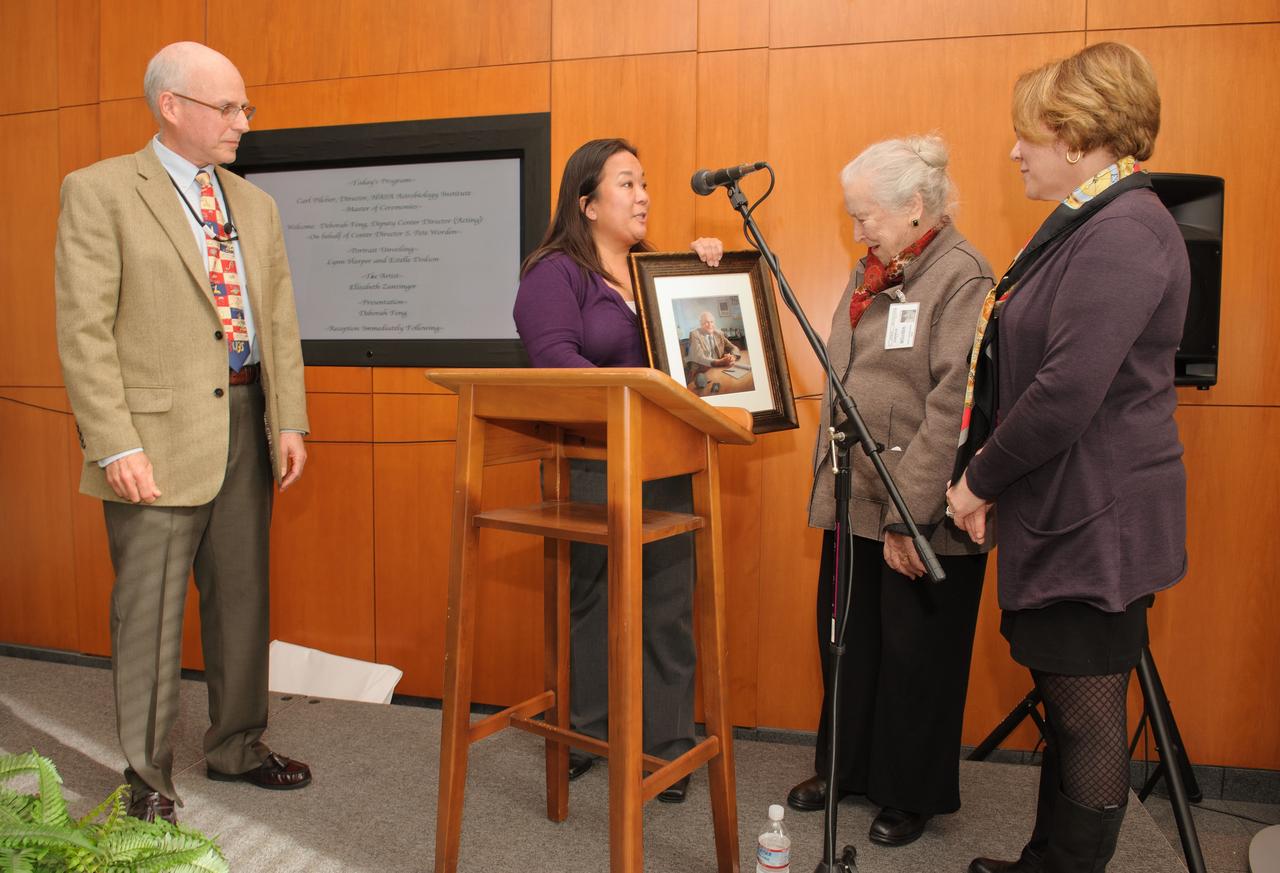
Dr. Brauch Blumberg portrait unveiling ceremony held at the Syverston Auditorium (N-201) NASA Ames Researc Center, Moffett Field, CA. From left, Carl Pilcher and Deb Feng present a copy of the painting to the Blumberg family.

In preparation for Space Shuttle Mission STS-87, the United States Microgravity Payload-4 undergoes final processing in the Space Station Processing Facility before its move to Launch Complex 39B. STS-87 will be the fourth flight of the United States Microgravity Payload and the Spartan-201 deployable satellite

Dr. Brauch Blumberg portrait unveiling ceremony held at the Syverston Auditorium (N-201) NASA Ames Researc Center, Moffett Field, CA. From left Mrs. Jean Blumberg, Dolores Beasley, NASA stand by the Brauch Blumberg portrait with artist Elizabeth Zanzinger on right.
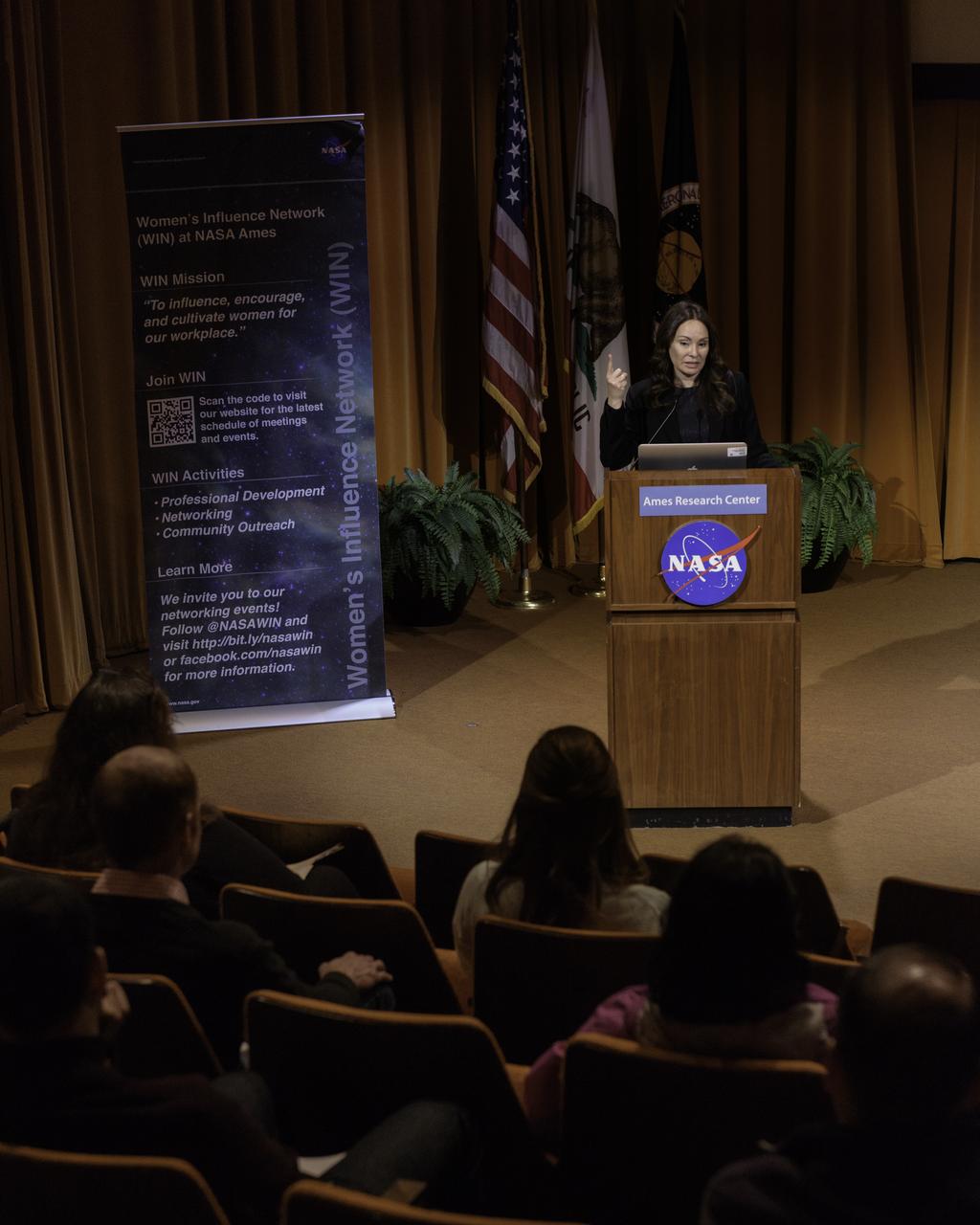
Rosie Rios, the 43rd Treasurer of the United States explores how understanding our history will provide a clearer roadmap for understanding where the country's future is heading. Presented by the Ames Women's Influence Network (WIN) and the Hispanic Advisory Committee for Employees (HACE) in the Syvertson Auditorium (N-201) at Ames Research Center.
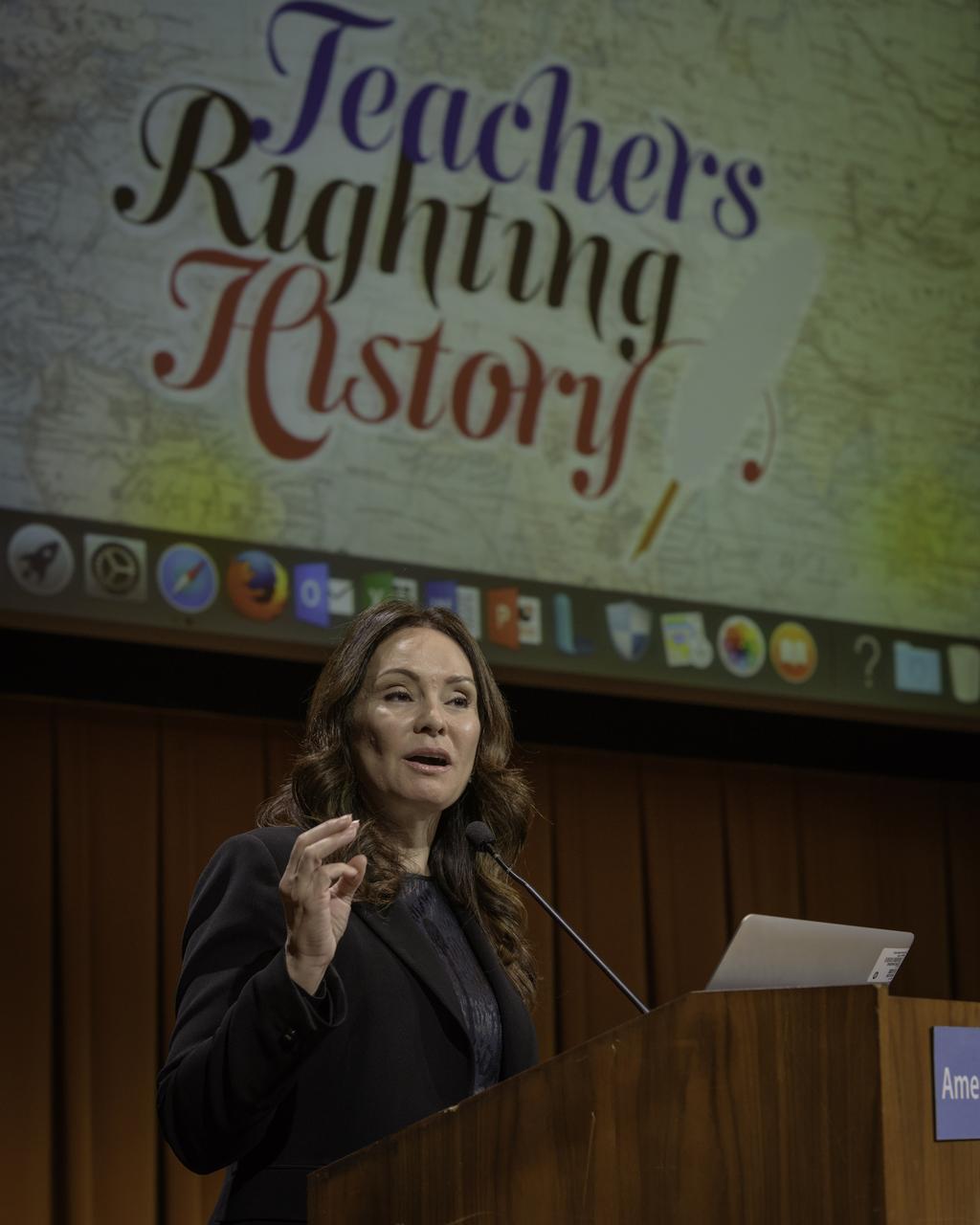
Rosie Rios, the 43rd Treasurer of the United States explores how understanding our history will provide a clearer roadmap for understanding where the country's future is heading. Presented by the Ames Women's Influence Network (WIN) and the Hispanic Advisory Committee for Employees (HACE) in the Syvertson Auditorium (N-201) at Ames Research Center.
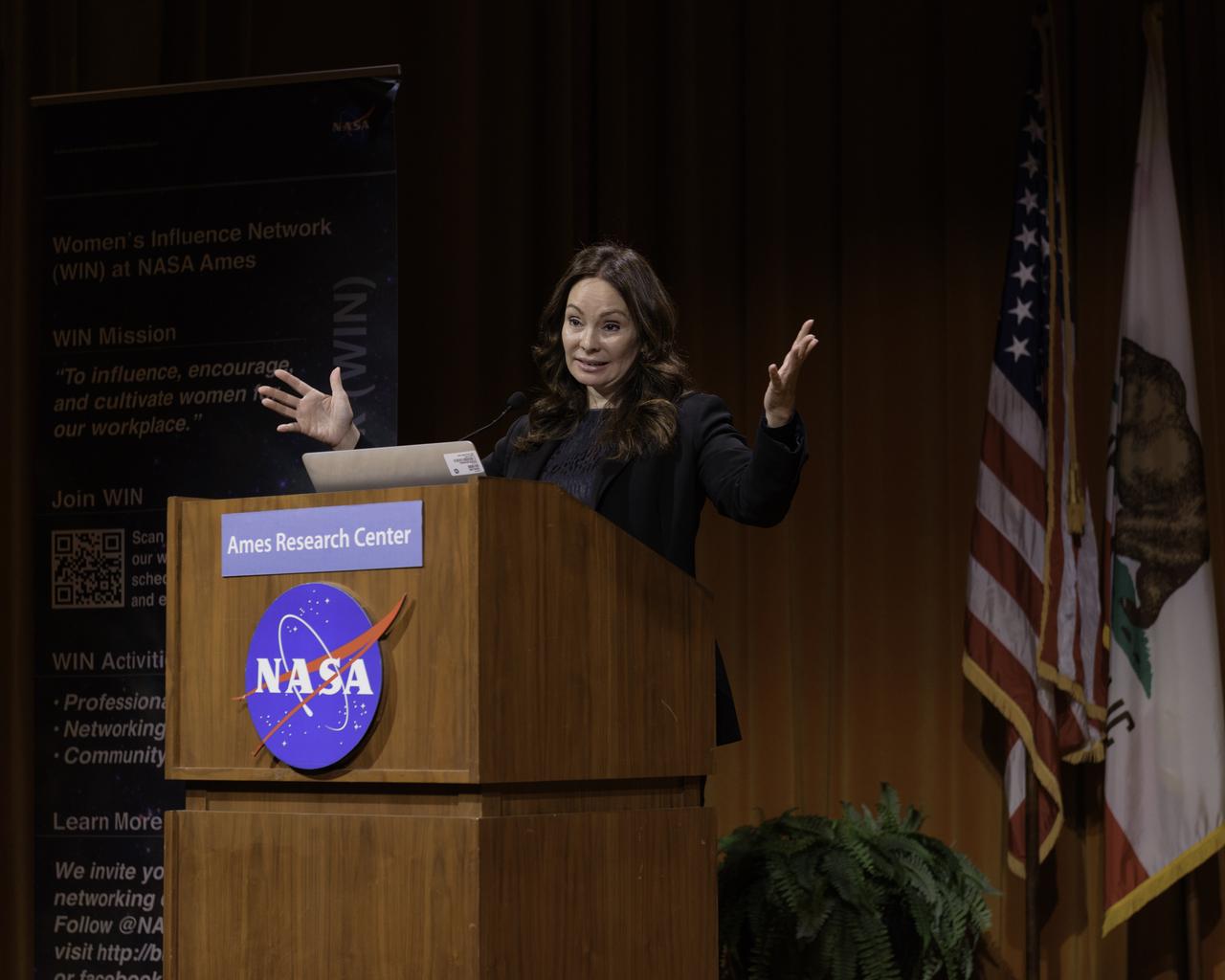
Rosie Rios, the 43rd Treasurer of the United States explores how understanding our history will provide a clearer roadmap for understanding where the country's future is heading. Presented by the Ames Women's Influence Network (WIN) and the Hispanic Advisory Committee for Employees (HACE) in the Syvertson Auditorium (N-201) at Ames Research Center.
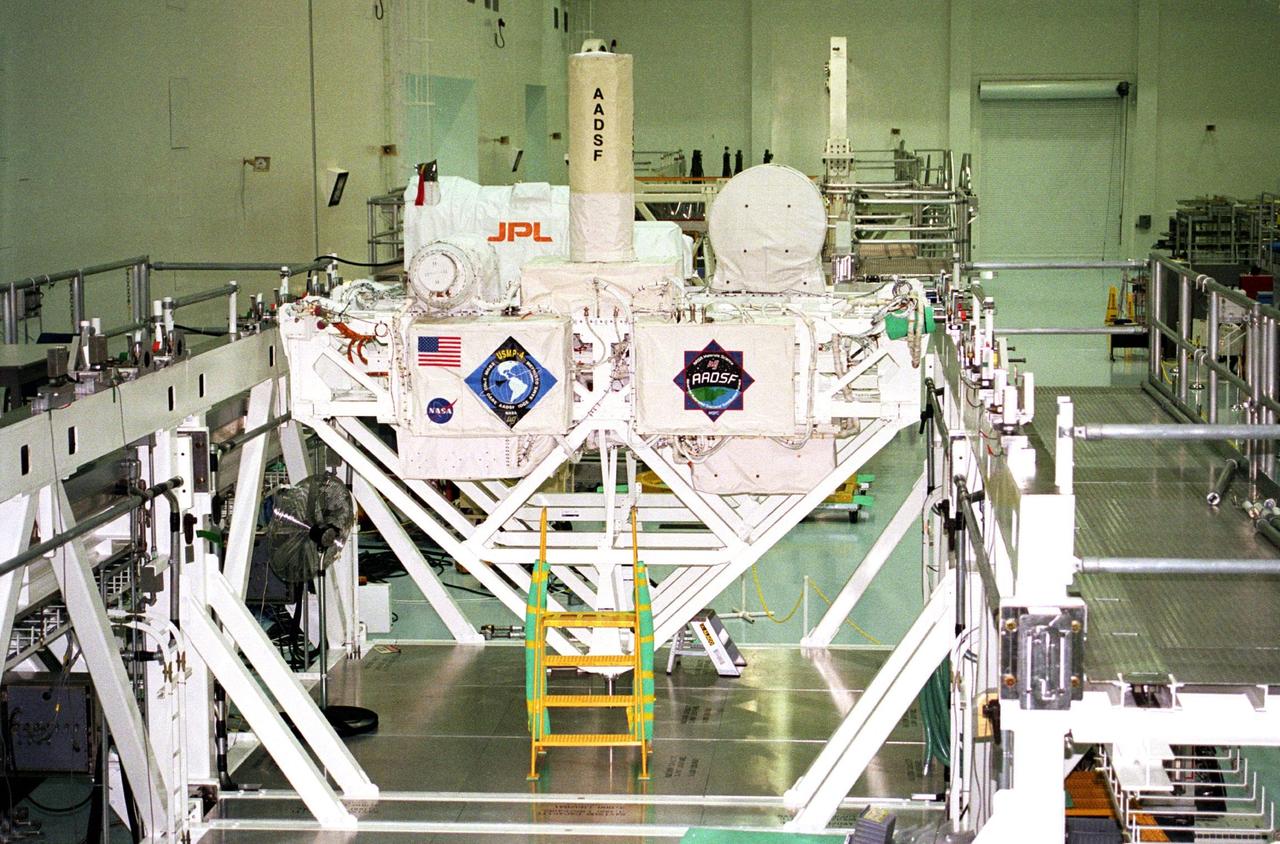
In preparation for Space Shuttle Mission STS-87, the United States Microgravity Payload-4 undergoes final processing in the Space Station Processing Facility before its move to Launch Complex 39B. STS-87 will be the fourth flight of the United States Microgravity Payload and the Spartan-201 deployable satellite
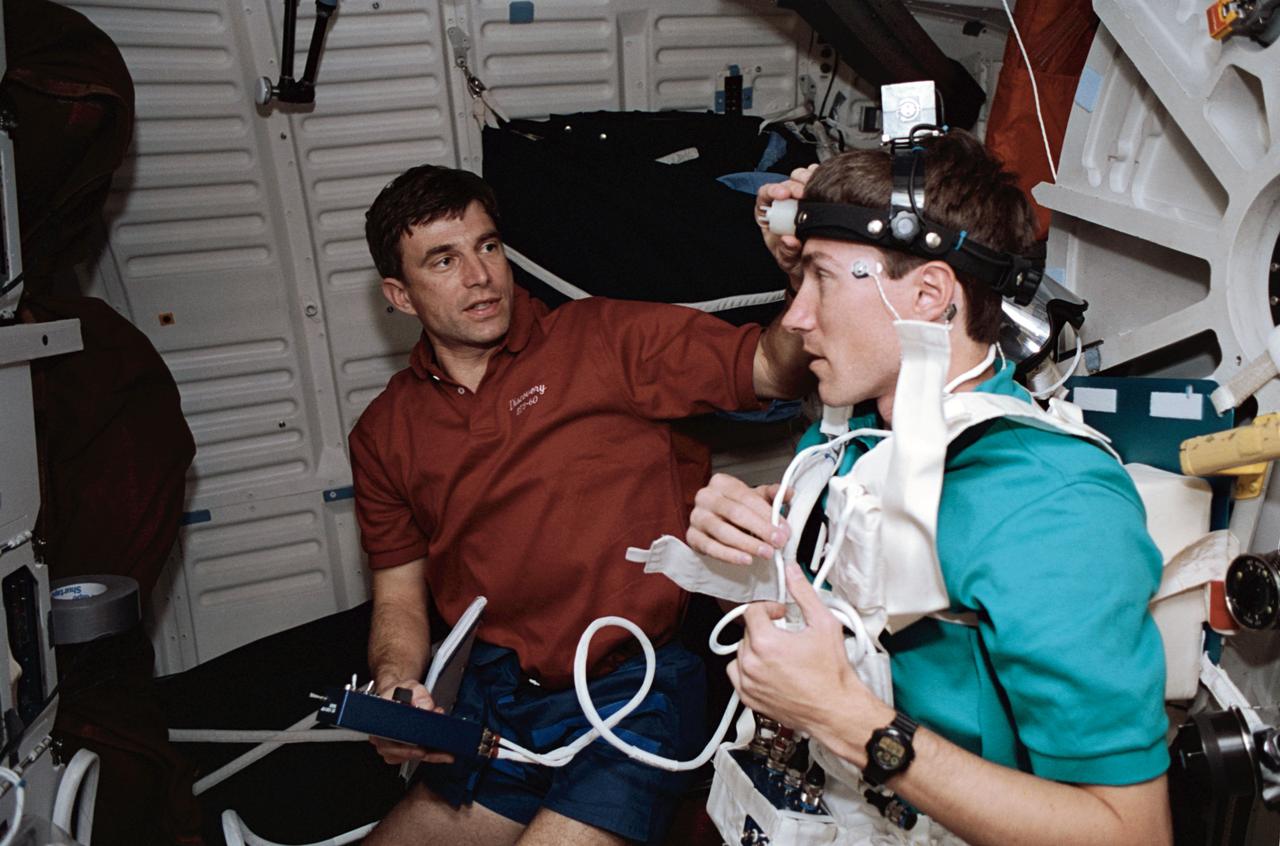
STS060-21-027 (3-11 Feb 1994) --- Astronaut Ronald M. Sega (left) and Russian cosmonaut Sergei K. Krikalev work on a joint U.S./Russian metabolic experiment on the Space Shuttle Discovery's middeck. A number of other U.S./Russian cooperative Detailed Supplementary Objectives (DSO) are included among the experiments conducted on the eight-day mission.
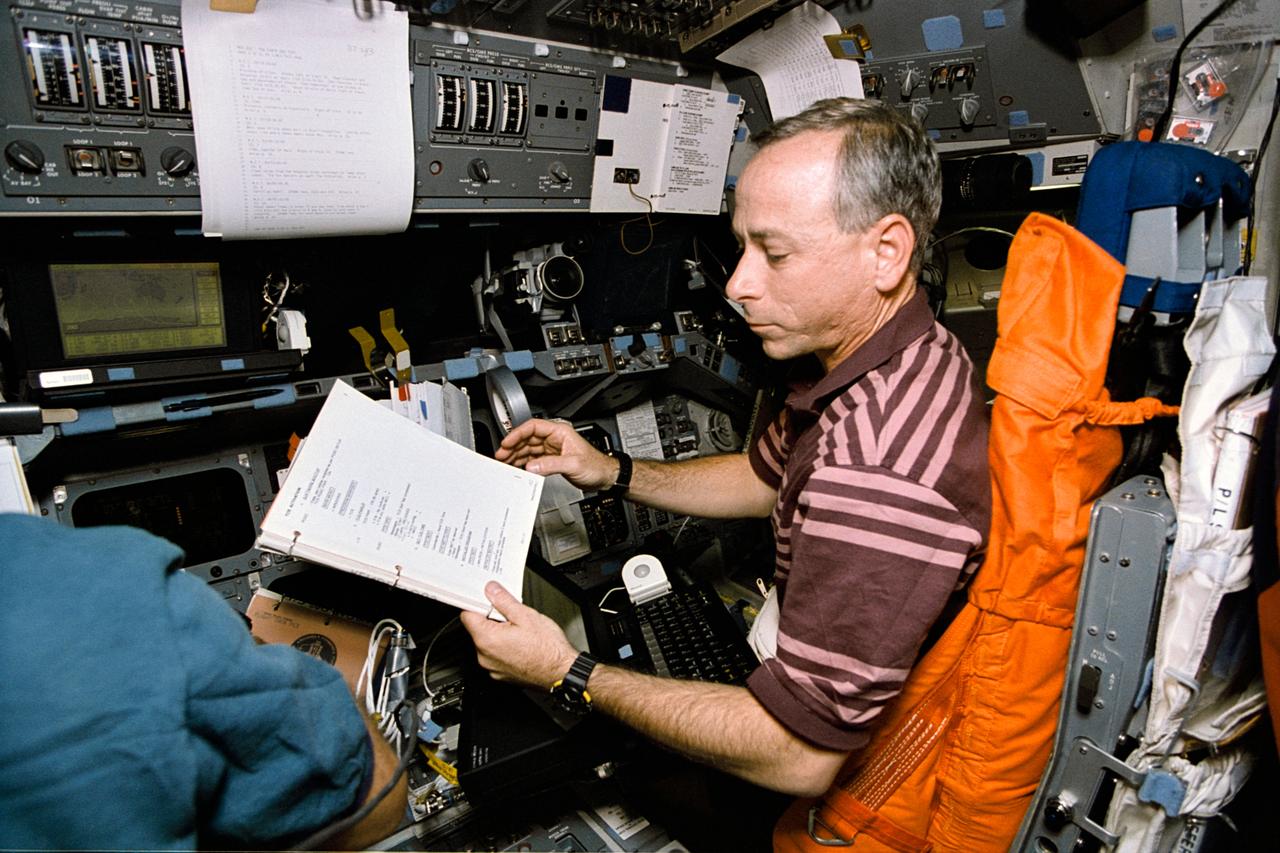
STS064-22-024 (9-20 Sept. 1994) --- With a manual and lap top computer in front of him, astronaut Carl J. Meade, STS-64 mission specialist, supports operations with the Trajectory Control Sensor (TCS) aboard the Earth-orbiting space shuttle Discovery. For this exercise, Meade temporarily mans the pilot's station on the forward flight deck. The TCS is the work of a team of workers at NASA's Johnson Space Center. Data gathered during this flight was expected to prove valuable in designing and developing a sensor for use during the rendezvous and mating phases of orbiter missions to the space station. For this demonstration, the Shuttle Pointed Autonomous Research Tool for Astronomy 201 (SPARTAN 201) was used as the target vehicle during release and retrieval operations. Photo credit: NASA or National Aeronautics and Space Administration
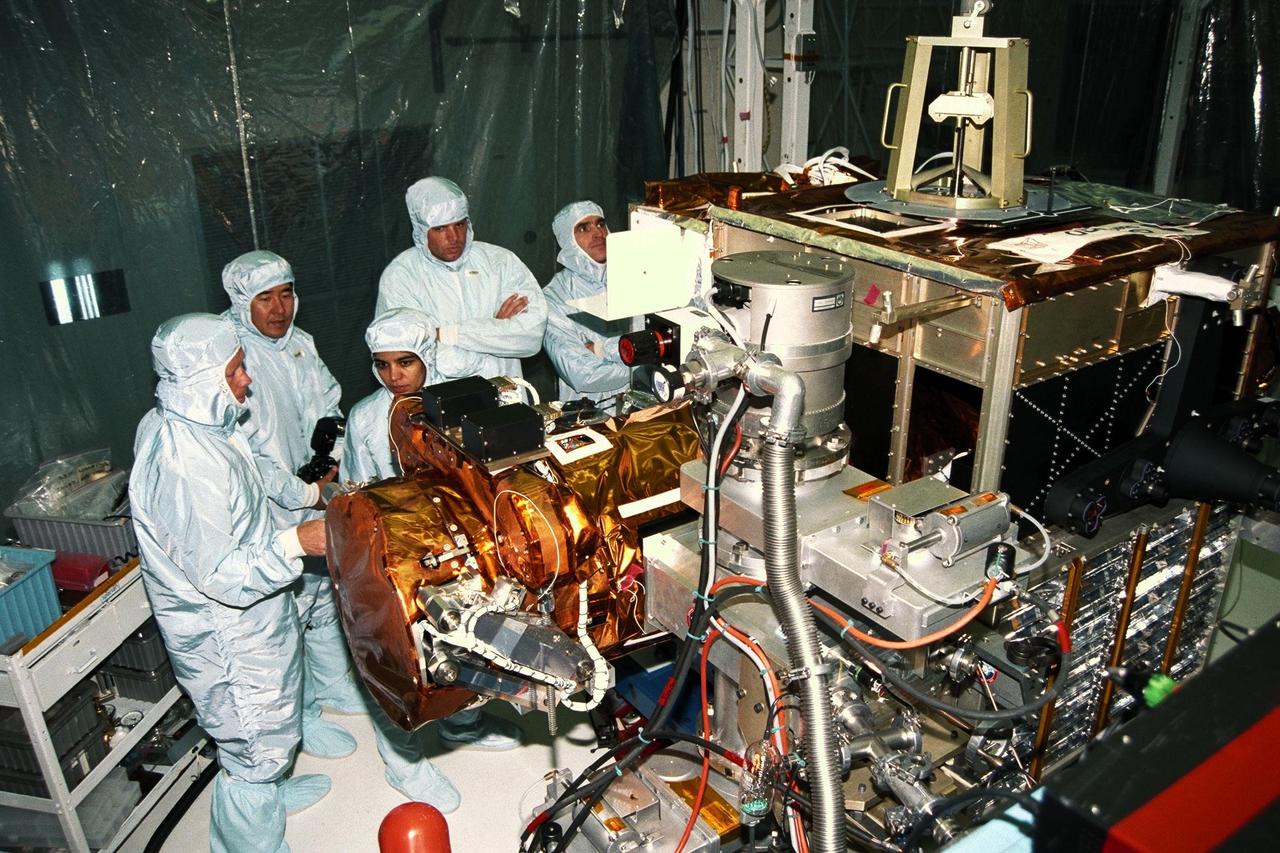
STS-87 astronaut crew members participate in the Crew Equipment Integration Test (CEIT) with the Spartan-201 payload in Kennedy Space Center’s (KSC's) Vertical Processing Facility. From left are Pilot Steven Lindsey; Mission Specialist Takao Doi, Ph.D., of the National Space Development Agency of Japan; Mission Specialist Kalpana Chawla, Ph.D.; Commander Kevin Kregel; and Payload Specialist Leonid Kadenyuk of the National Space Agency of Ukraine. The CEIT gives astronauts an opportunity to get a hands-on look at the payloads with which they will be working on-orbit. STS-87 will be the fourth United States Microgravity Payload and flight of the Spartan-201 deployable satellite. During the mission, Dr. Doi will be the first Japanese astronaut to perform a spacewalk. STS-87 is scheduled for a Nov. 19 liftoff from KSC

STS-32 Columbia, Orbiter Vehicle (OV) 102, is captured as its main landing gear (MLG) touches down on runway 22 at Edwards Air Force Base (EAFB), California, in the early morning darkness. The night landing ended a record 11-day mission in space. Moments later, at 1:36:38 am Pacific Standard Time (PST), OV-102 came to a complete stop, having logged 4,509,972 miles in flight.
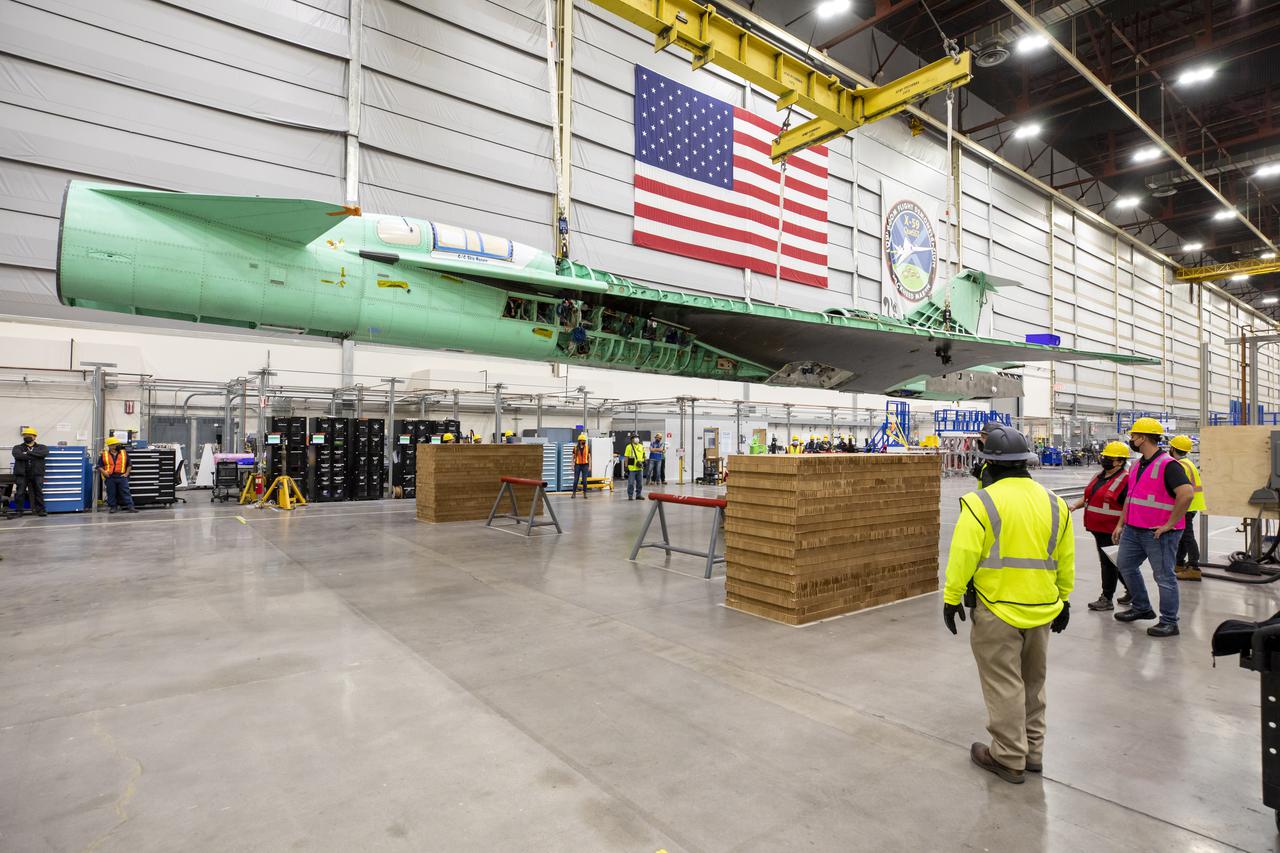
The X-59 is free from its structural support jig for the first time. In this image, cranes are holding up the aircraft prior to placement on the floor jacks. Notice that the nose has been removed temporarily — it will be reinstalled again before the upcoming structural testing. Lockheed Martin Photography By Garry Tice 1011 Lockheed Way, Palmdale, Ca. 93599 Event: Removal From Tooling Jig Date: 10/27/2021 Additional Info:
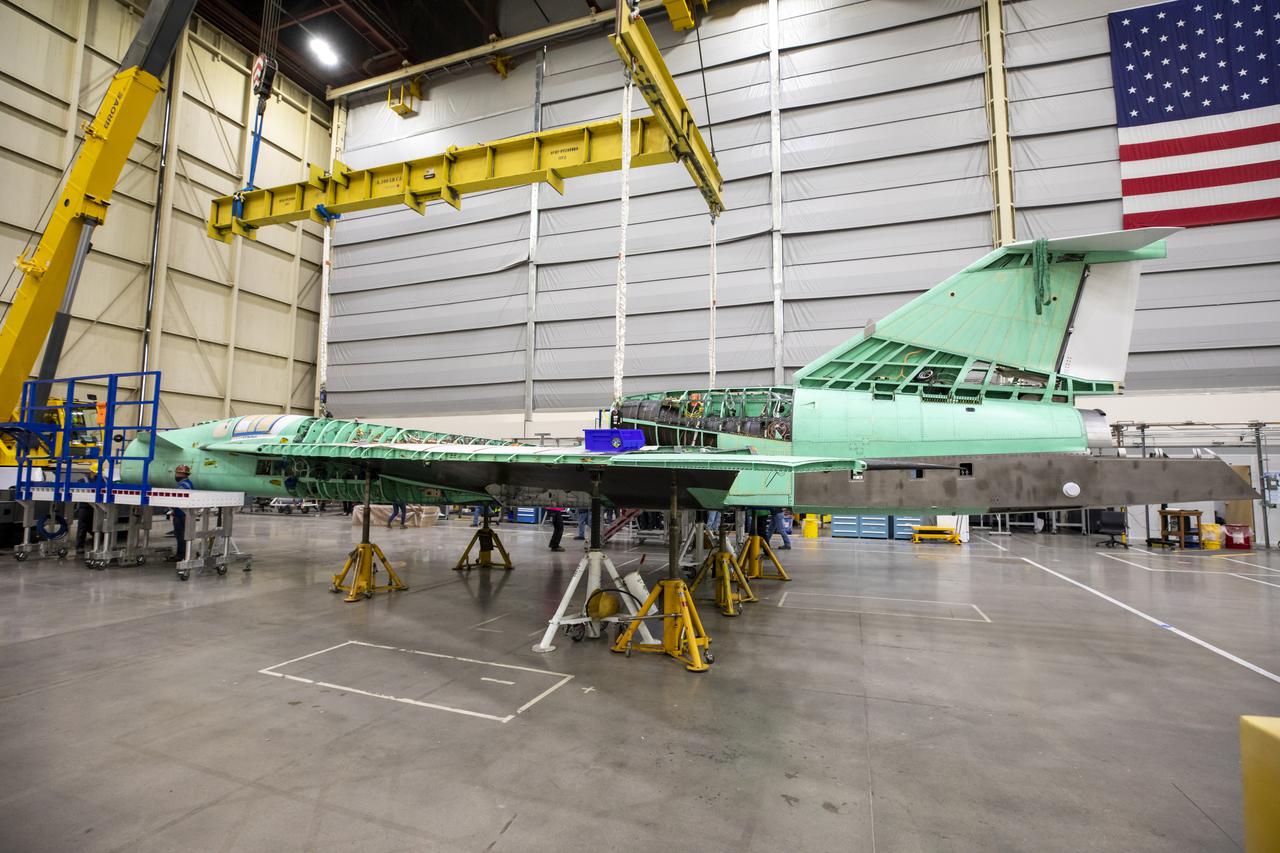
A view of the X-59 being supported by ground supports in preparation for installation of the landing gear and other hardware required for structural testing. Lockheed Martin Photography By Garry Tice 1011 Lockheed Way, Palmdale, Ca. 93599 Event: Removal From Tooling Jig Date: 10/27/2021 Additional Info:
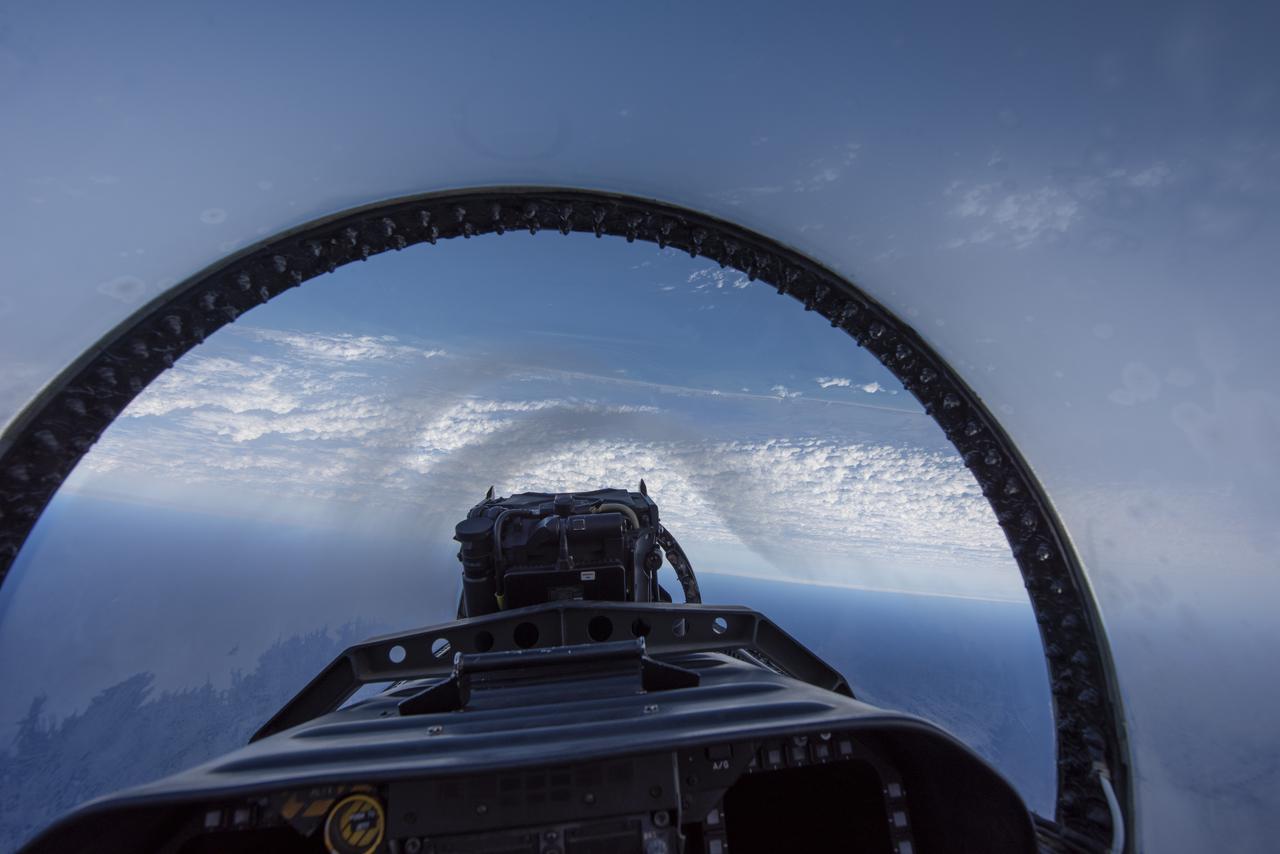
NASA test pilots perform the quiet supersonic dive maneuver off the coast of Galveston, Texas to create a quieter version of the sonic boom, in order to obtain recruited community survey feedback data. The test pilot climbs to around 50,000 feet, followed by a supersonic, inverted dive. This creates sonic boom shockwaves in a way that they are quieter in a specific area. Meanwhile, NASA researchers match community feedback to the sound levels of the flights, using an electronic survey and microphone monitor stations on the ground. This is preparing NASA for community response models for the future X-59 QueSST.

STS-87 Mission Specialist Winston Scott is assisted with his ascent and re-entry flight suit in the white room at Launch Pad 39B by Danny Wyatt, NASA quality assurance specialist. STS-87 is the fourth flight of the United States Microgravity Payload and Spartan-201. Scott is scheduled to perform an extravehicular activity spacewalk with Mission Specialist Takao Doi, Ph.D., of the National Space Development Agency of Japan, during STS-87. Scott also performed a spacewalk on the STS-72 mission
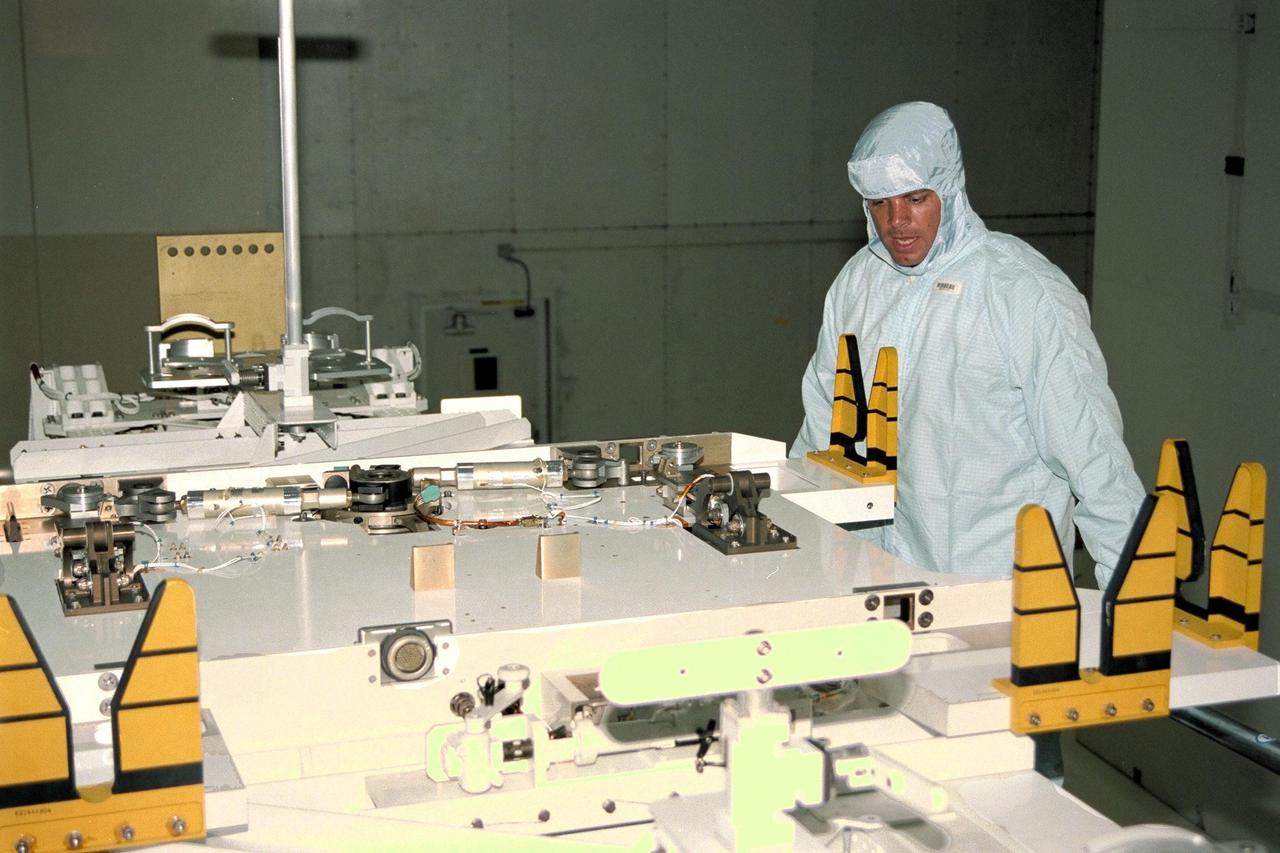
STS-87 Commander Kevin Kregel participates in the Crew Equipment Integration Test (CEIT) in Kennedy Space Center’s (KSC's) Vertical Processing Facility. The CEIT gives astronauts an opportunity to get a hands-on look at the payloads with which they will be working on-orbit. STS-87 will be the fourth United States Microgravity Payload and flight of the Spartan-201 deployable satellite. STS-87 is scheduled for a Nov. 19 liftoff from KSC
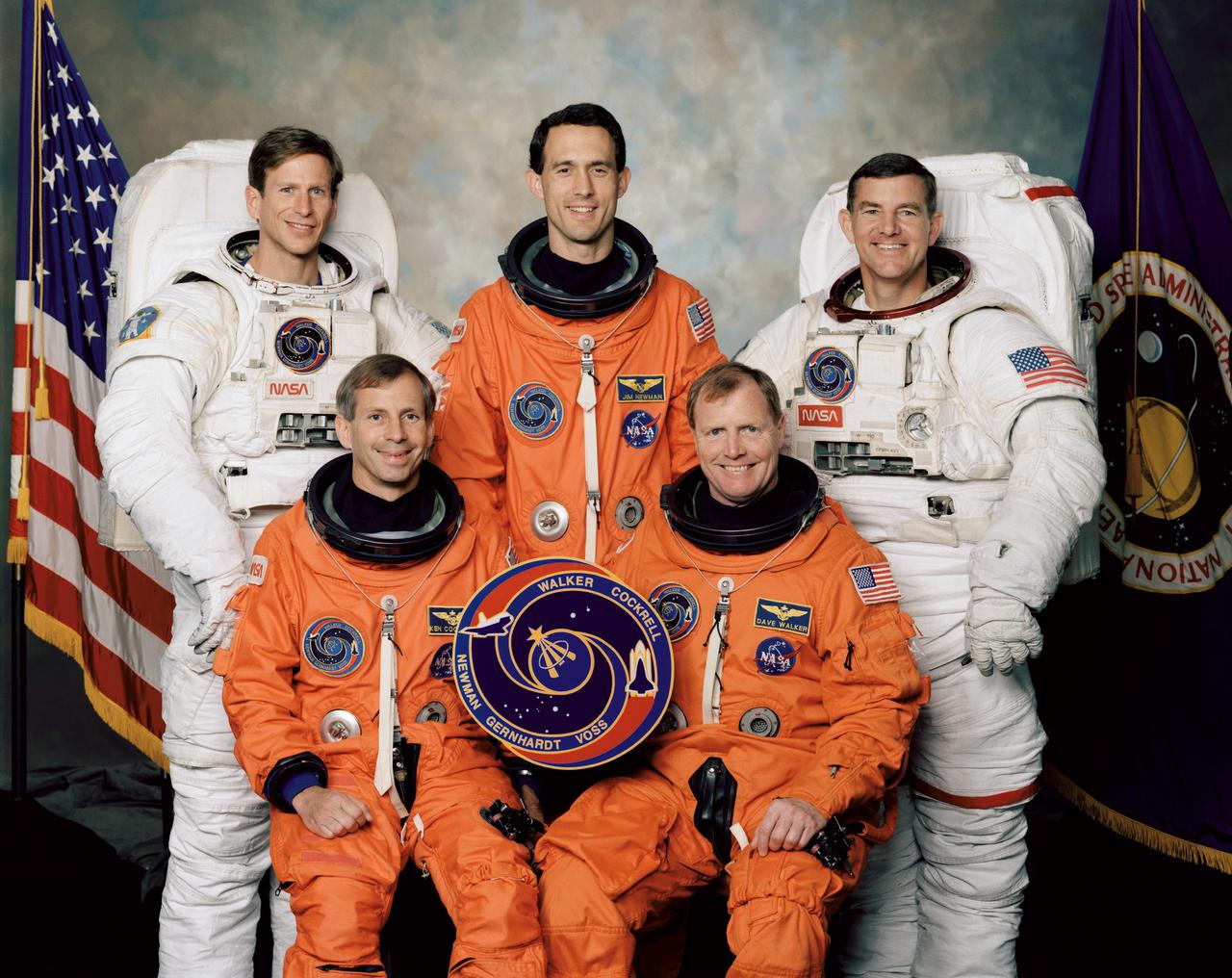
These five NASA astronauts were the crew members for the STS-69 mission that launched aboard the Space Shuttle Endeavour September 7, 1995. Pictured on the front row (left to right) are David M. Walker, mission commander; and Kenneth D. Cockrell, pilot. On the back row (left to right) are Michael L. Gernhardt and James H. Newman, both mission specialists; and James S. Voss, payload commander. The mission’s two primary payloads included the Spartan 201-3 and Wake Shield Facility-2 (WSF-2).
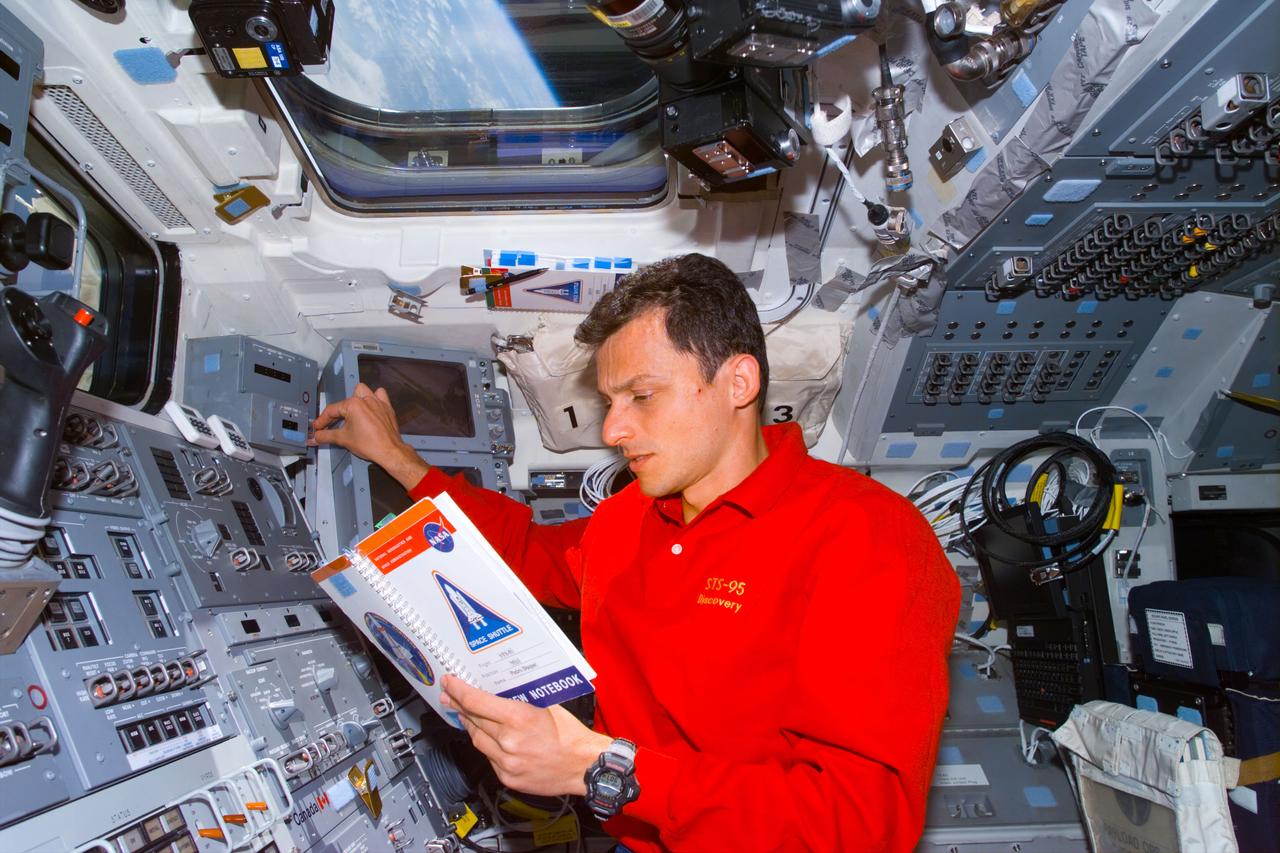
STS095-E-5027 (10-29-98) Astronaut Pedro Duque, mission specialist representing the European Space Agency (ESA)looks over notes on the Discovery's aft flight deck during Flight Day 1 activities. At left frame are controls for the remote manipulator system (RMS) and part of the frame of one of the windows overlooking the cargo bay, where the Spartan 201 satellite is berthed. The photo was taken at 11:30:18 GMT, Oct. 29.
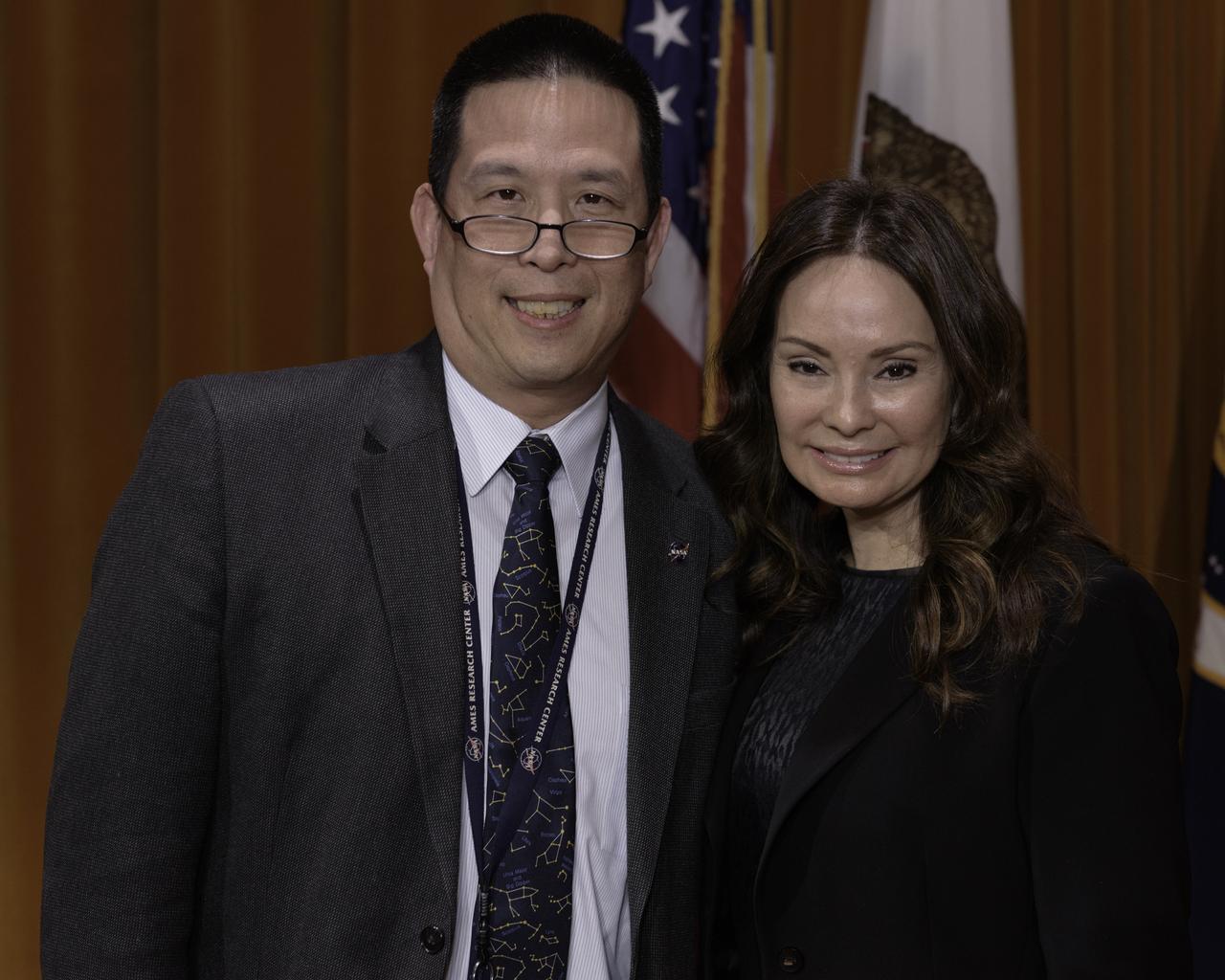
Ames Center Director, Eugene Tu (Left) with Rosie Rios, the 43rd Treasurer of the United States explores how understanding our history will provide a clearer roadmap for understanding where the country's future is heading. Presented by the Ames Women's Influence Network (WIN) and the Hispanic Advisory Committee for Employees (HACE) in the Syvertson Auditorium (N-201) at Ames Research Center. Eugene Tu, Ames Director with Rosie Rios
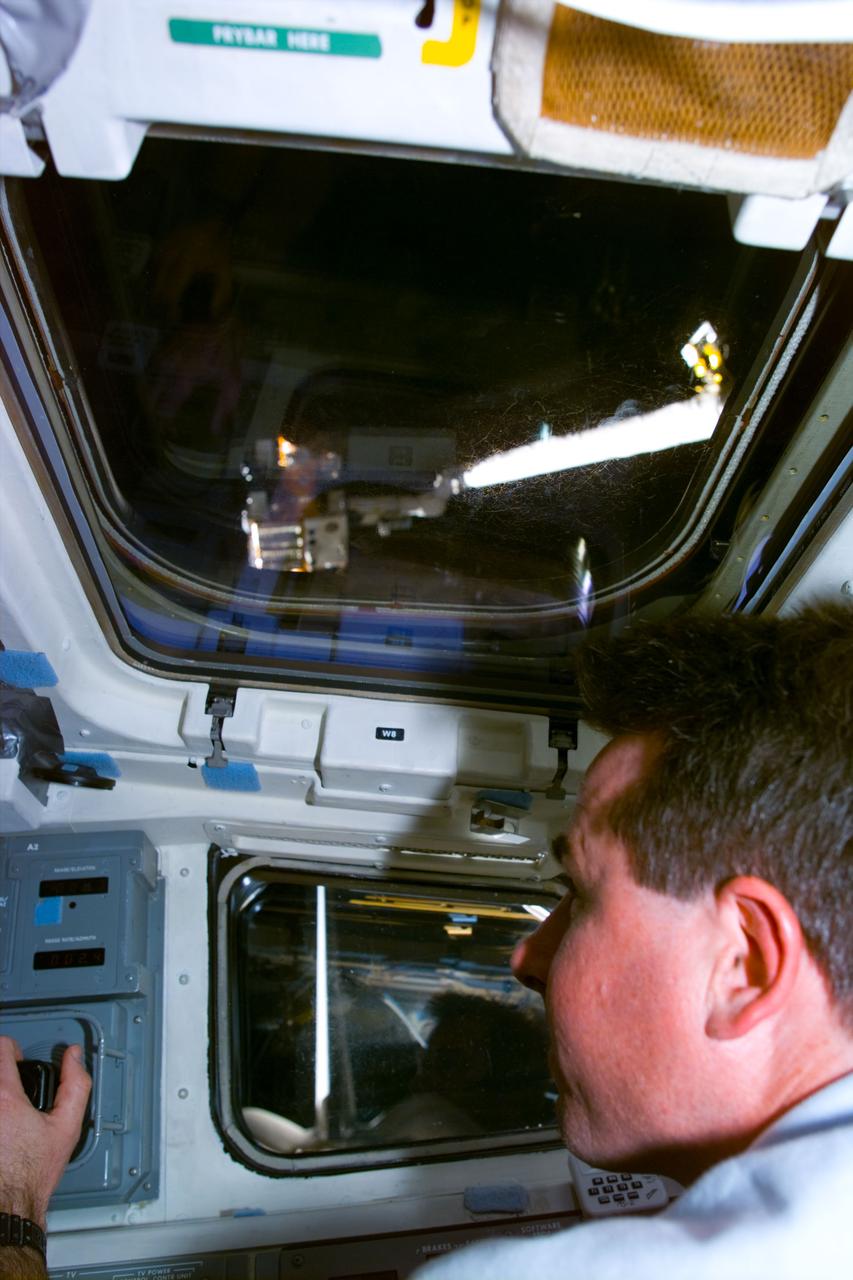
STS095-E-5138 (3 Nov. 2998) --- Astronaut Stephen K. Robinson, STS-95 mission specialist, at the controls of Discovery's remote manipulator system (RMS) robot arm. The Spartan 201-05 satellite can be seen in the grasp of the RMS at left. The photo was taken with an electronic still camera (ESC) at 03:55:25 GMT, Nov. 3.
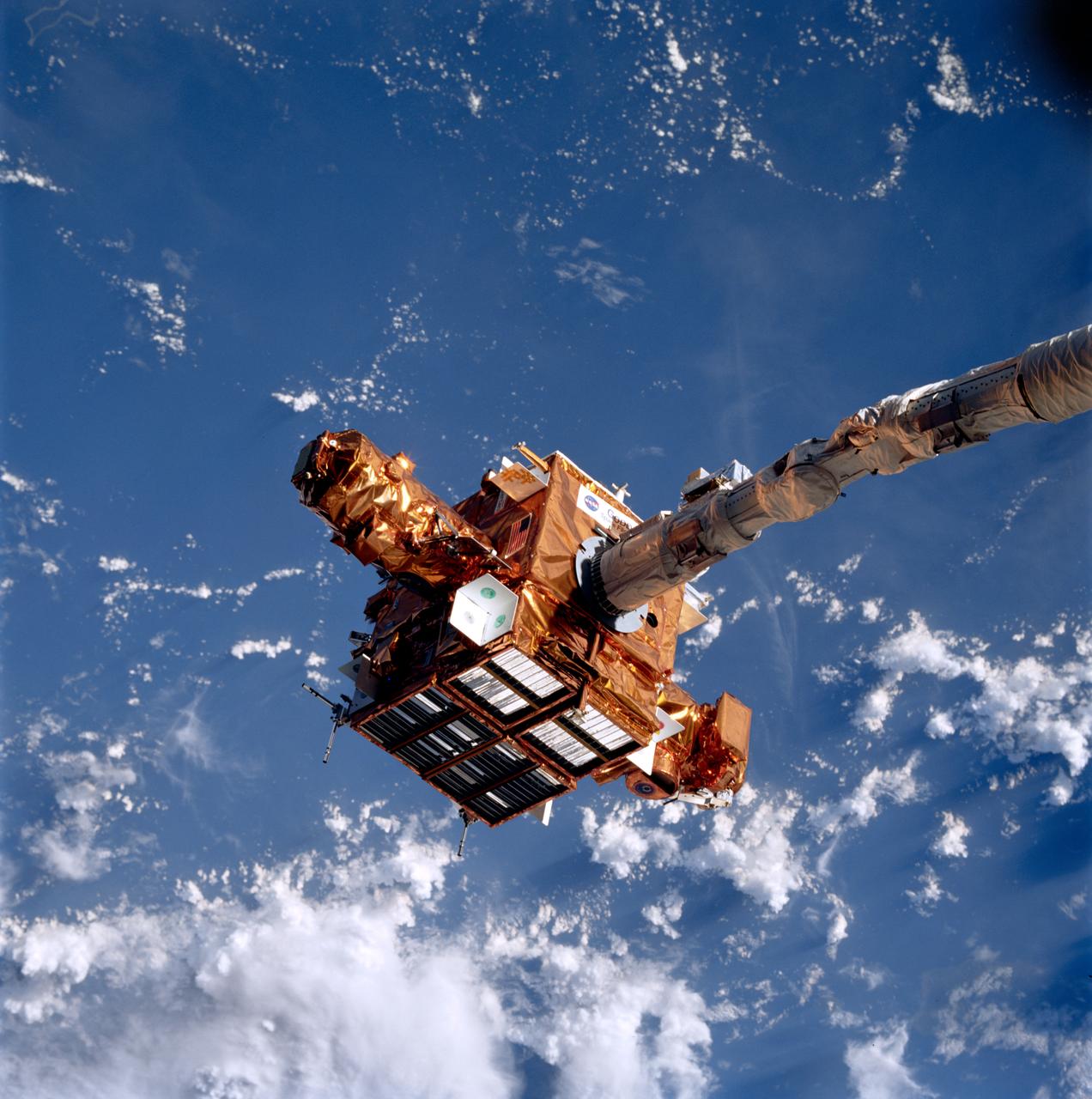
STS087-706-020 (19 November – 5 December 1997) --- The Spartan 201 satellite, held in the grasp of the Space Shuttle Columbia's Remote Manipulator System (RMS) arm, is backdropped over white clouds and blue waters of the Pacific Ocean. Long Island, off the coast of Papua New Guinea, is barely visible in the lower left corner.
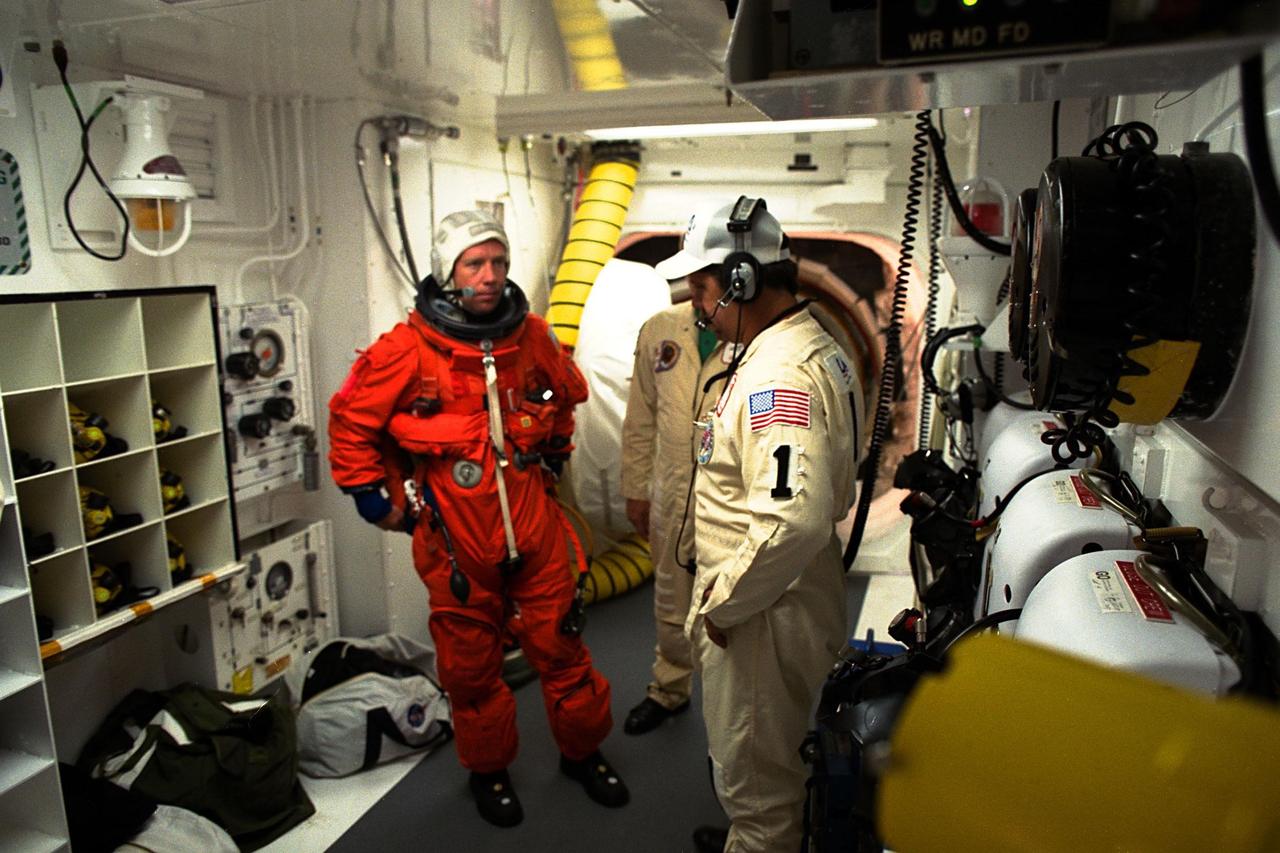
STS-87 Pilot Steven Lindsey is inspected before launch in his ascent and re-entry flight suit in the white room at Launch Pad 39B by Travis Thompson, USA orbiter vehicle closeout chief. STS-87 is the fourth flight of the United States Microgravity Payload and Spartan-201. Although this is his first Shuttle flight, Lindsey has logged more than 2,700 hours of flying time in 49 different types of aircraft
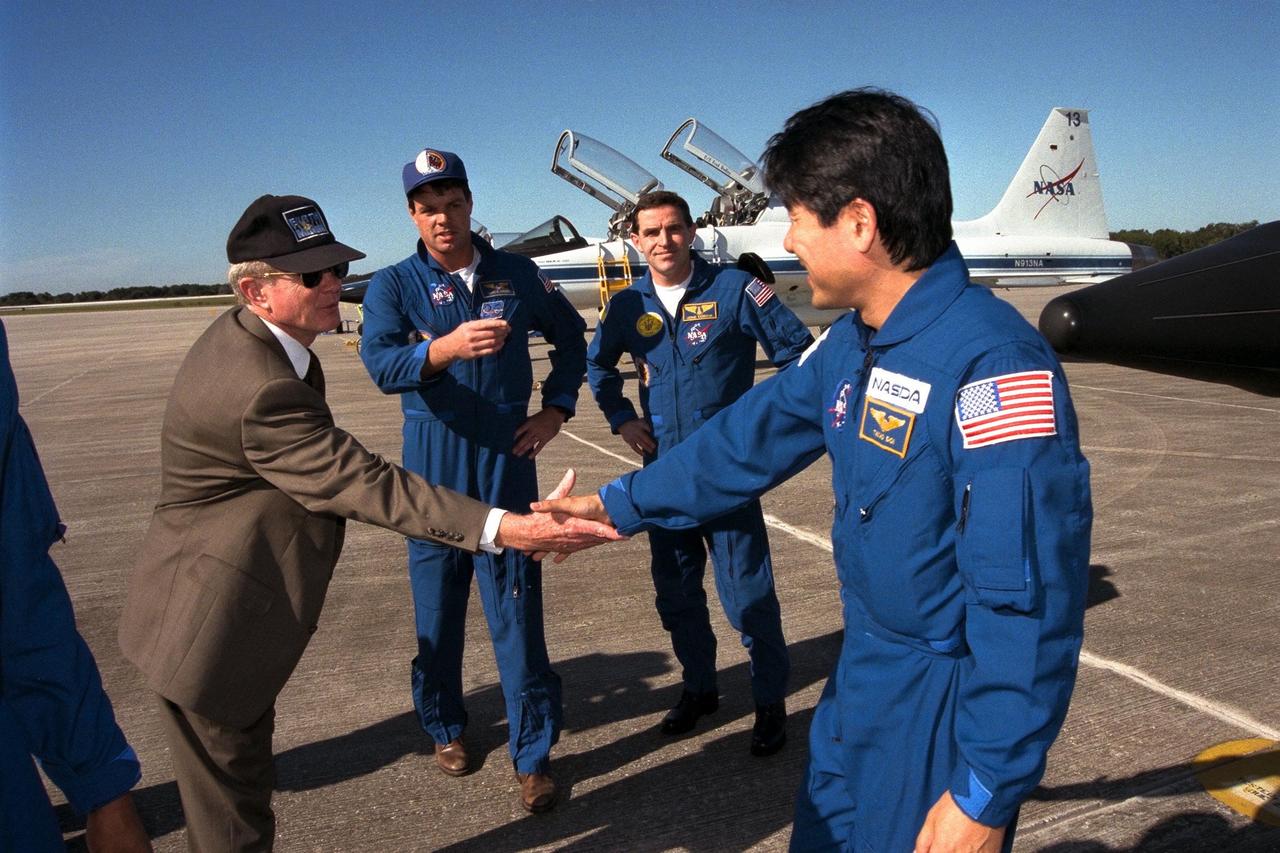
In preparation for Space Shuttle Mission STS-87, the crew arrives at the Kennedy Space Center Shuttle Landing Facility to participate in the Terminal Countdown Demonstration Test (TCDT) for their mission. The TCDT is a dress rehearsal for launch. STS-87 will be the fourth flight of the United States Microgravity Payload and the Spartan-201 deployable satellite. Launch is targeted for Nov. 19
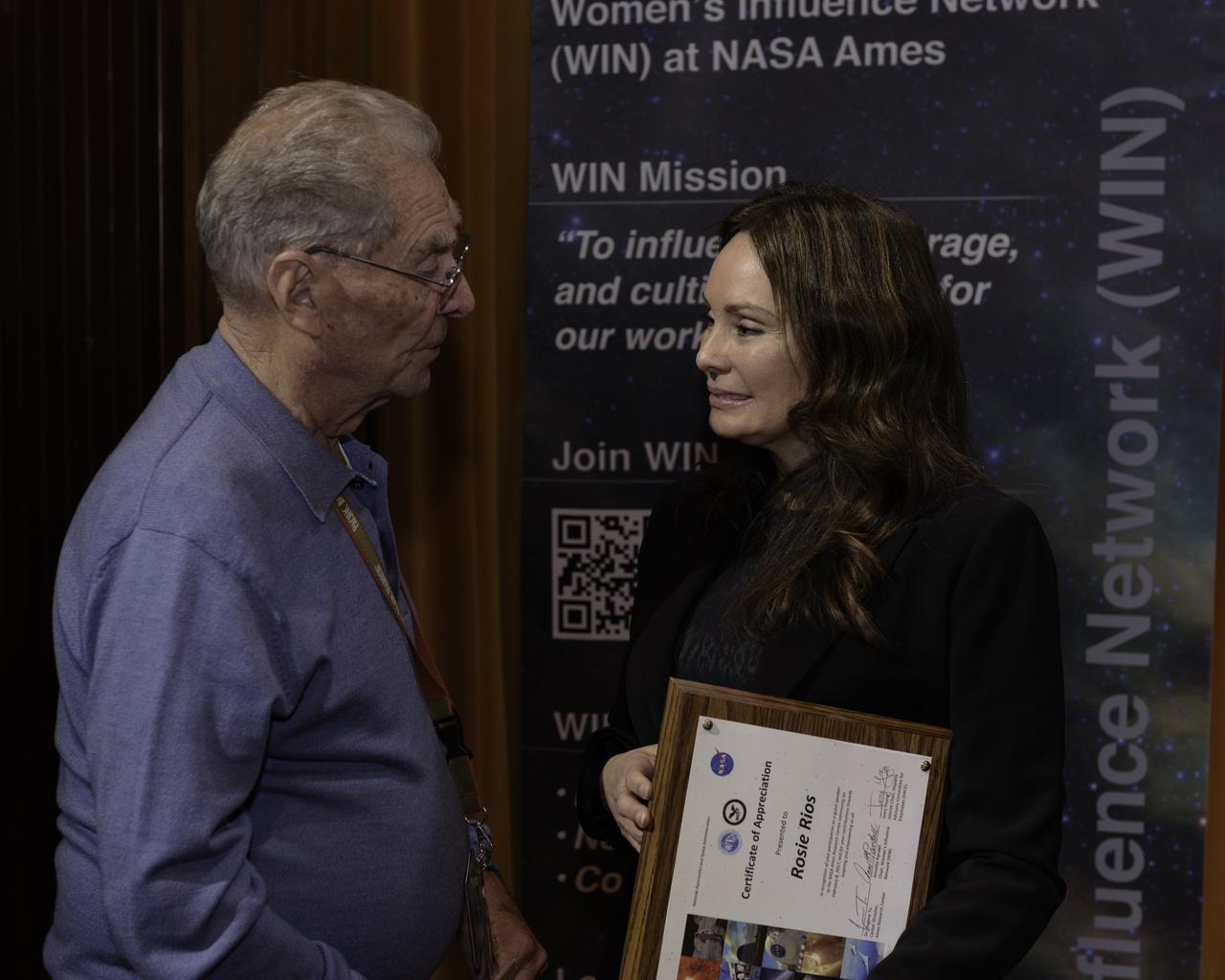
Jack Boyd (Left) with Rosie Rios, the 43rd Treasurer of the United States explores how understanding our history will provide a clearer roadmap for understanding where the country's future is heading. Presented by the Ames Women's Influence Network (WIN) and the Hispanic Advisory Committee for Employees (HACE) in the Syvertson Auditorium (N-201) at Ames Research Center. Jack Boyd with Rosie Rios
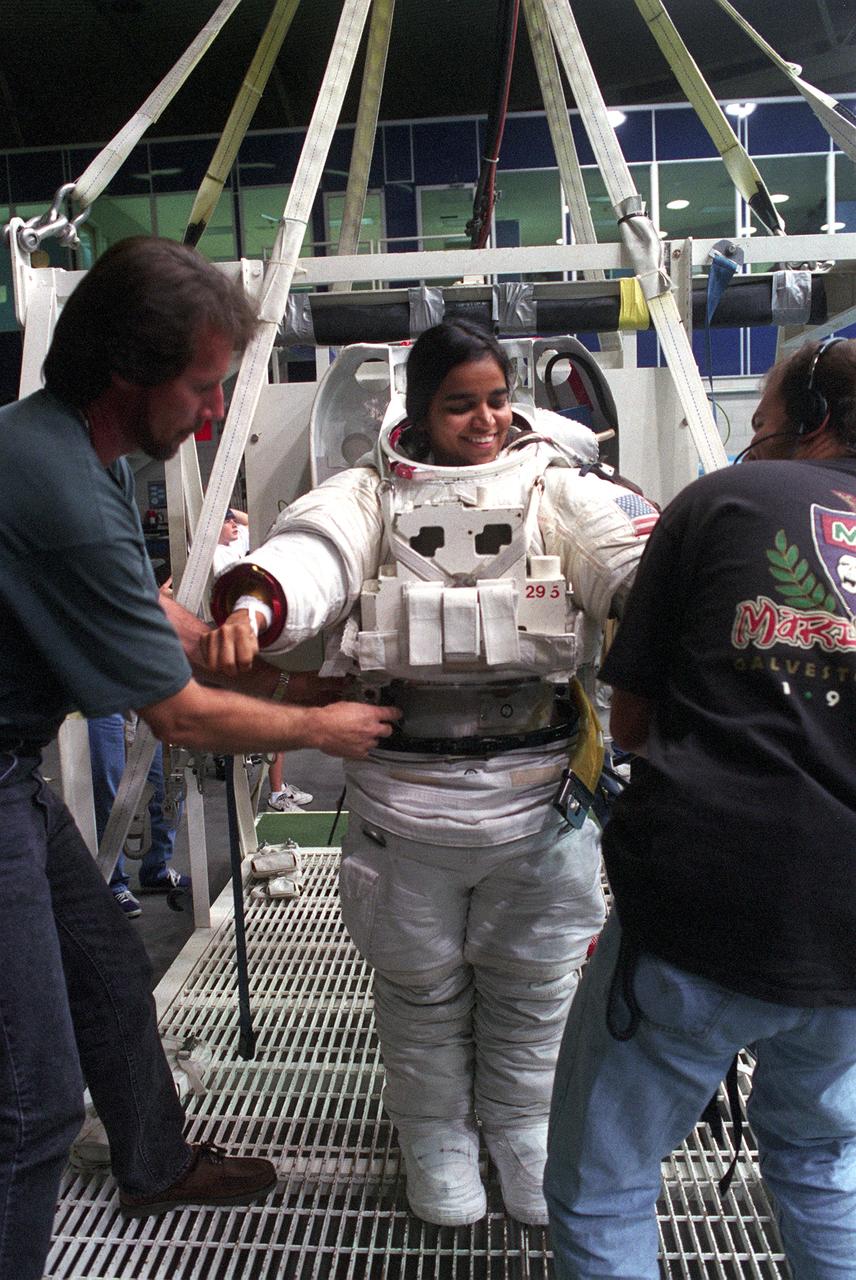
Astronaut and mission specialist Kalpana Chawla, receives assistance in donning a training version of the Extravehicular Mobility Unit (EMU) space suit, prior to an underwater training session in the Neutral Buoyancy Laboratory (NBL) near Johnson Space Center. This particular training was in preparation for the STS-87 mission. The Space Shuttle Columbia (STS-87) was the fourth flight of the United States Microgravity Payload (USMP-4) and Spartan-201 satellite, both managed by scientists and engineers from the Marshall Space Flight Center.

STS-87 Mission Specialist Kalpana Chawla, Ph.D., is assisted with her ascent and re-entry flight suit in the white room at Launch Pad 39B by Danny Wyatt, NASA quality assurance specialist. Kneeing before Dr. Chawla to assist her is George Schram, USA mechanical technician, as Dr. Chawla prepares to enter the Space Shuttle orbiter Columbia on launch day. STS-87 is the fourth flight of the United States Microgravity Payload and Spartan-201

In preparation for Space Shuttle Mission STS-87, the orbiter Columbia is lifted into high bay 3 in the Vehicle Assembly Building. The orbiter will be mated to the <a href="http://www-pao.ksc.nasa.gov/kscpao/nasafact/count3.htm#et">external tank</a> and <a href="http://www-pao.ksc.nasa.gov/kscpao/nasafact/ships.htm#srbs">solid rocket boosters</a> over the weekend and is slated to roll out to Pad 39B on Wednesday. STS-87 will be the fourth flight of the United States Microgravity Payload and the Spartan-201 deployable satellite
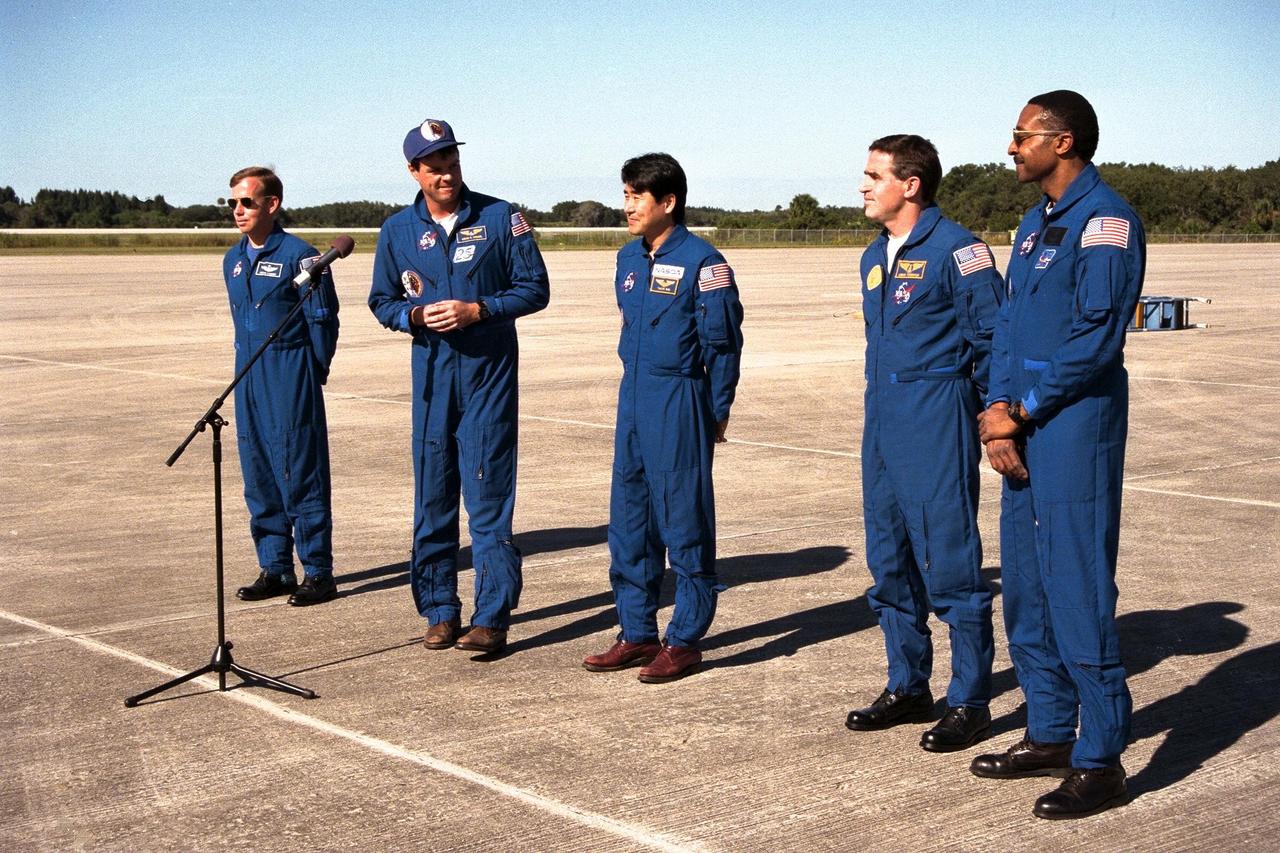
In preparation for Space Shuttle Mission STS-87, the crew arrives at the Kennedy Space Center Shuttle Landing Facility to participate in the Terminal Countdown Demonstration Test (TCDT) for their mission. The TCDT is a dress rehearsal for launch. STS-87 will be the fourth flight of the United States Microgravity Payload and the Spartan-201 deployable satellite. Launch is targeted for Nov. 19
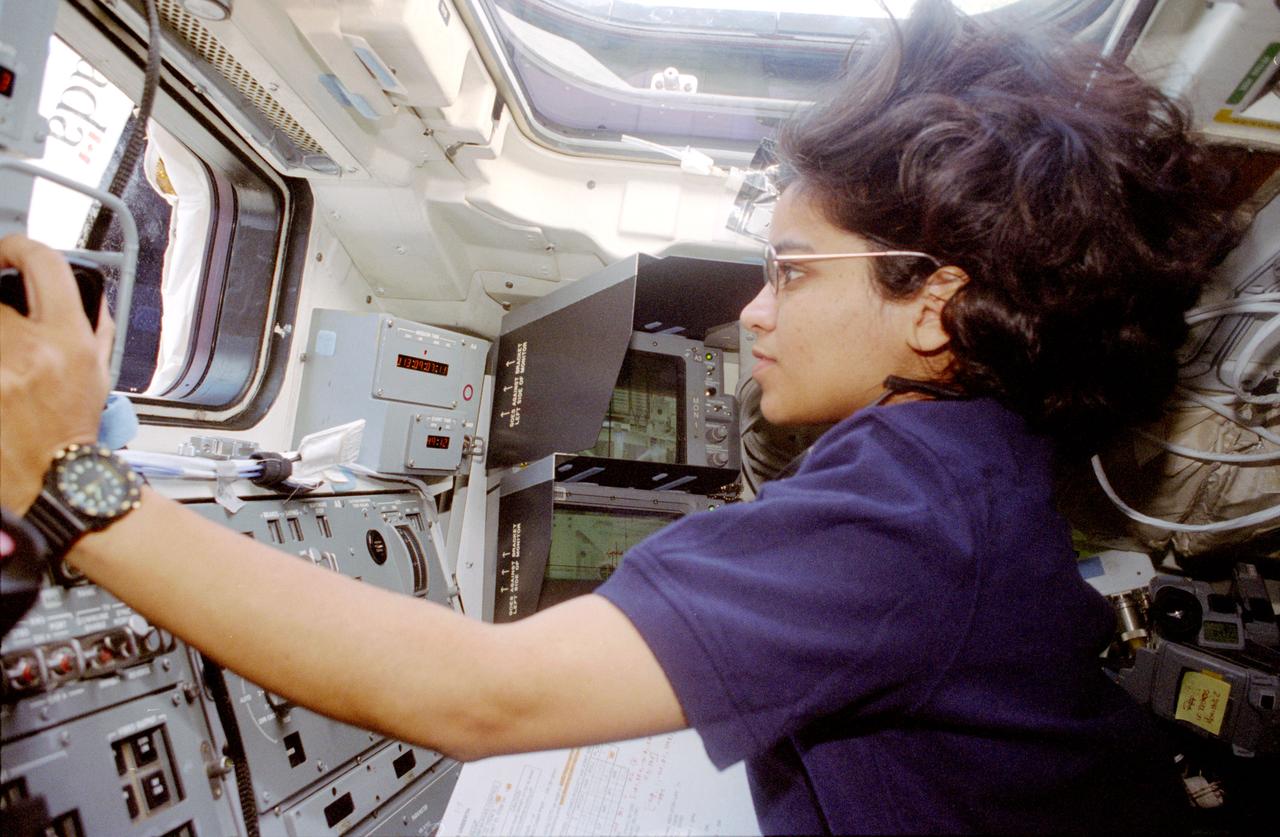
STS087-357-019 (19 November - 5 December 1997) --- Astronaut Kalpana Chawla, mission specialist, operates Columbia's Remote Manipulator System (RMS) on the aft flight deck during operations with the Spartan 201 satellite. Chawla joined four other astronauts and a Ukrainian payload specialist for 16-days of research in Earth-orbit in support of the United States Microgravity Payload 4 (USMP-4) mission.
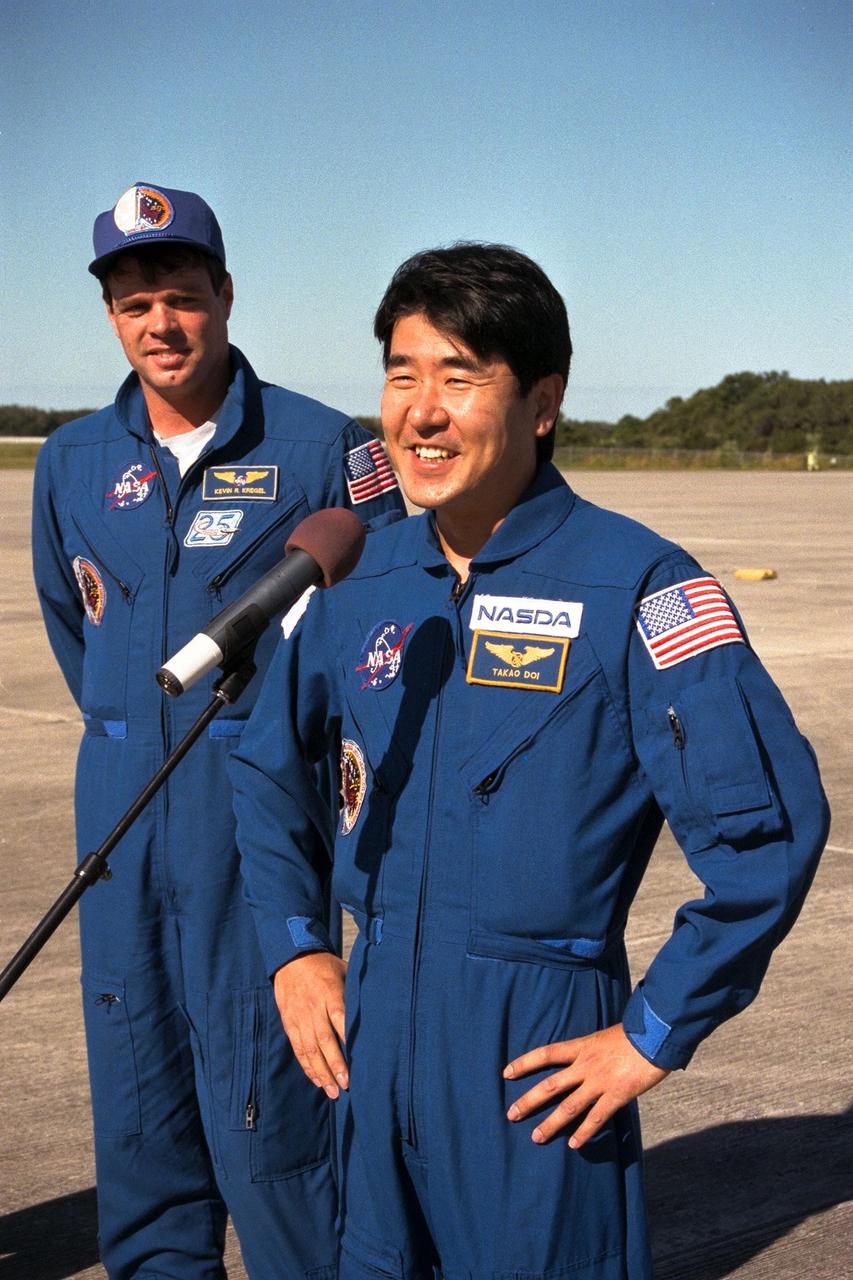
In preparation for Space Shuttle Mission STS-87, the crew arrives at the Kennedy Space Center Shuttle Landing Facility to participate in the Terminal Countdown Demonstration Test (TCDT) for their mission. The TCDT is a dress rehearsal for launch. STS-87 will be the fourth flight of the United States Microgravity Payload and the Spartan-201 deployable satellite. Launch is targeted for Nov. 19
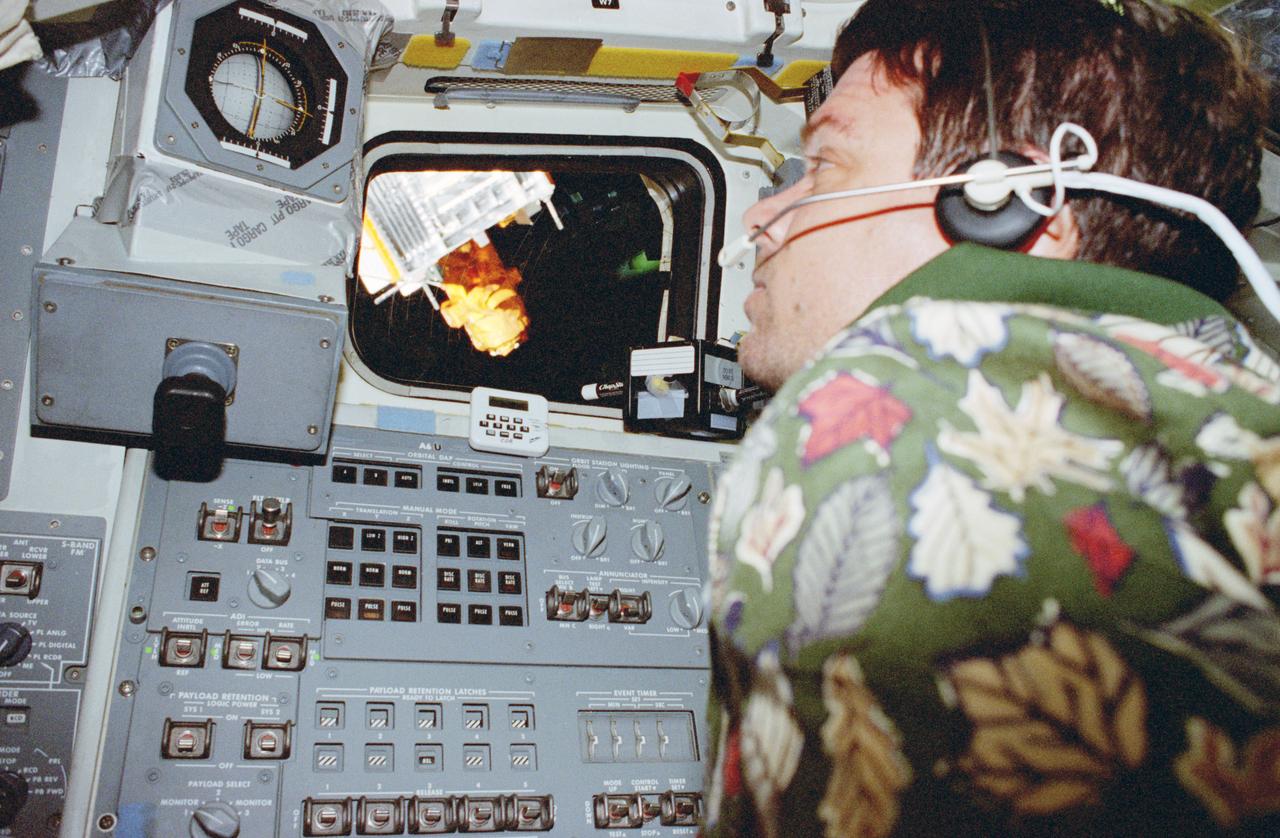
STS087-320-028 (19 November – 5 December 1997) --- Astronaut Kevin R. Kregel, mission commander, studies the movement of the SPARTAN-201 satellite while communicating with ground controllers and fellow crew members. He is using the Space Shuttle Columbia's aft starboard window to monitor the free-flyer, which earlier had been deployed from Columbia’s cargo bay.
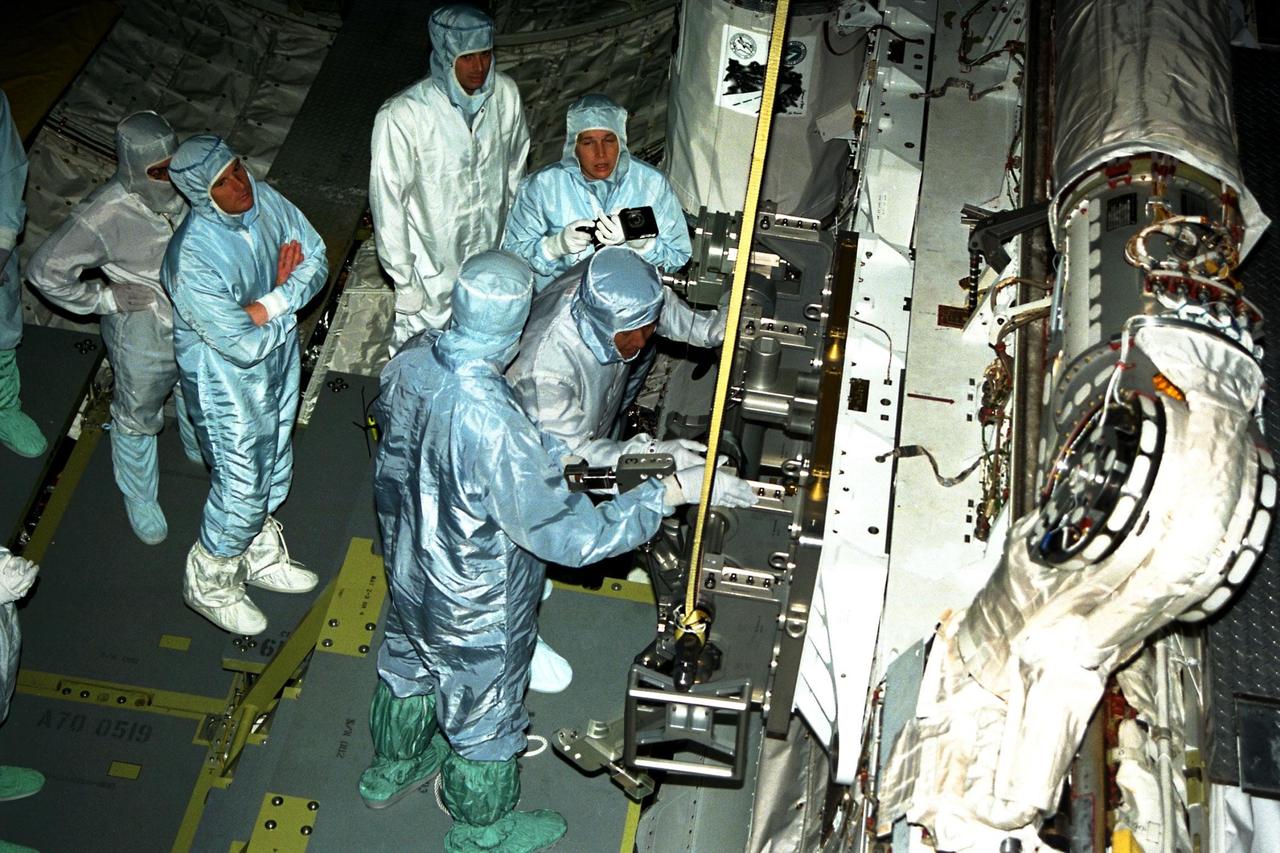
STS-87 astronaut crew members participate in the Crew Equipment Integration Test (CEIT) at Kennedy Space Center (KSC). The CEIT gives astronauts an opportunity to get a hands-on look at the payloads with which they will be working on-orbit. STS-87 will be the fourth United States Microgravity Payload and flight of the Spartan-201 deployable satellite. STS-87 is scheduled for a Nov. 19 liftoff from KSC