
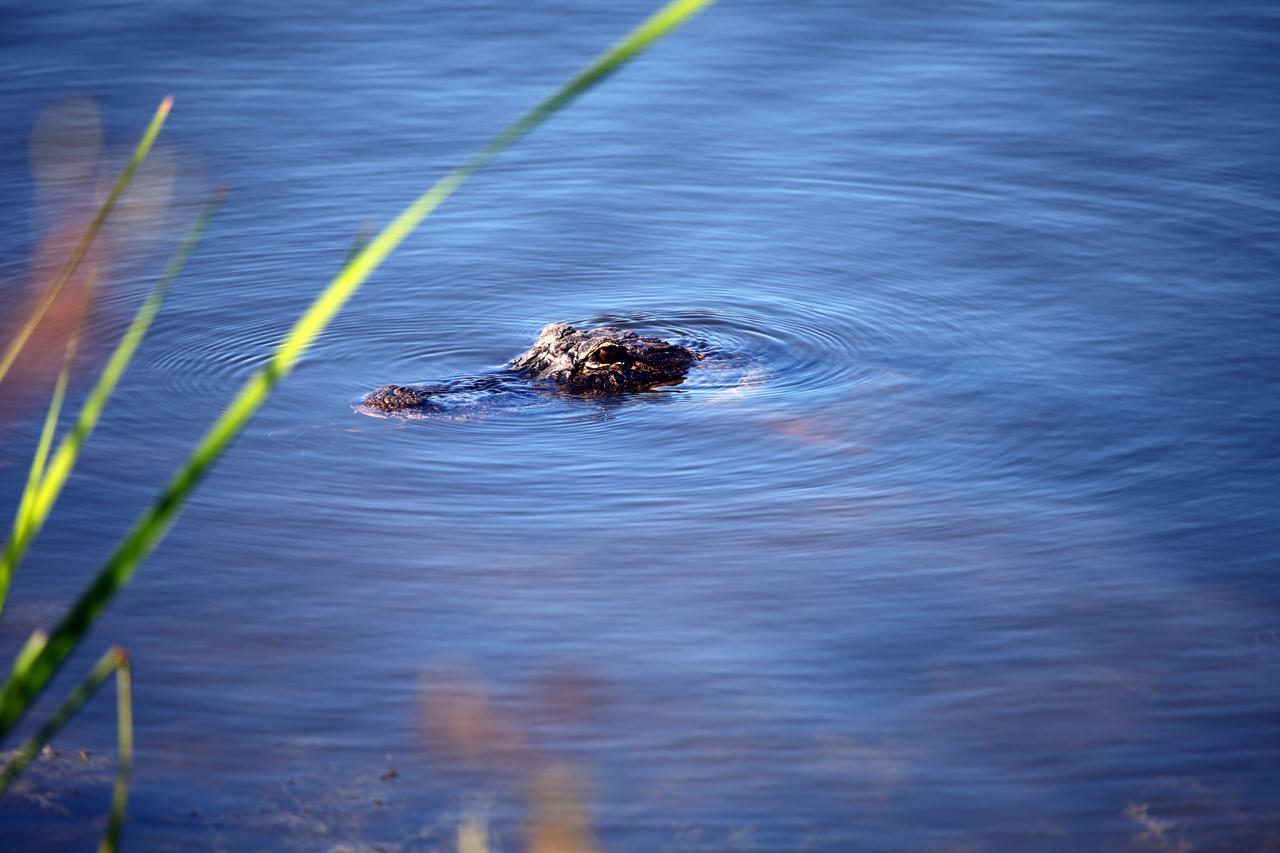
An alligator moves through a brackish waterway at NASA's Kennedy Space Center in Florida. The center shares a border with the Merritt Island National Wildlife Refuge. More than 330 native and migratory bird species, 25 mammals, 117 fishes and 65 amphibians and reptiles call Kennedy and the wildlife refuge home.
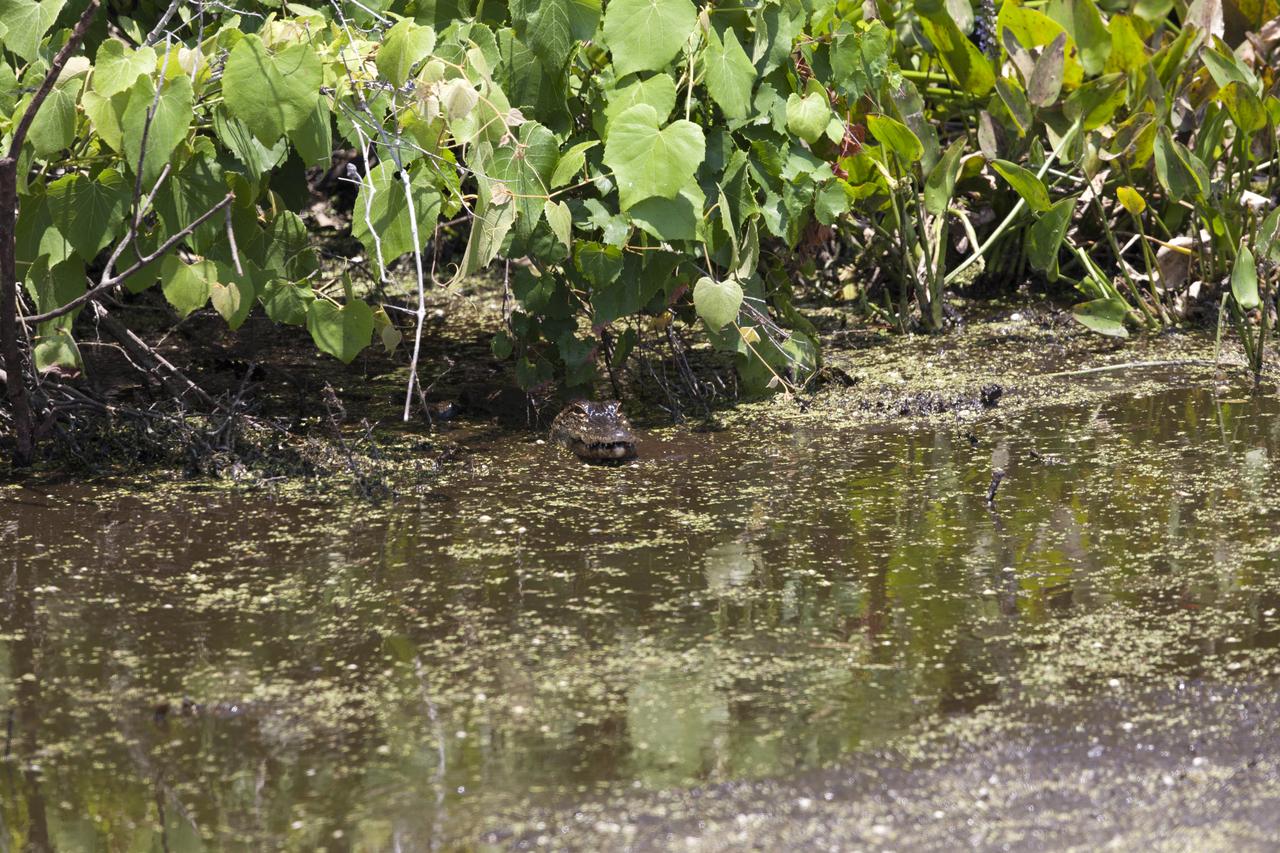
An alligator lurks in a brackish waterway at NASA's Kennedy Space Center in Florida. The center shares a border with the Merritt Island National Wildlife Refuge. More than 330 native and migratory bird species, 25 mammals, 117 fishes and 65 amphibians and reptiles call Kennedy and the wildlife refuge home.
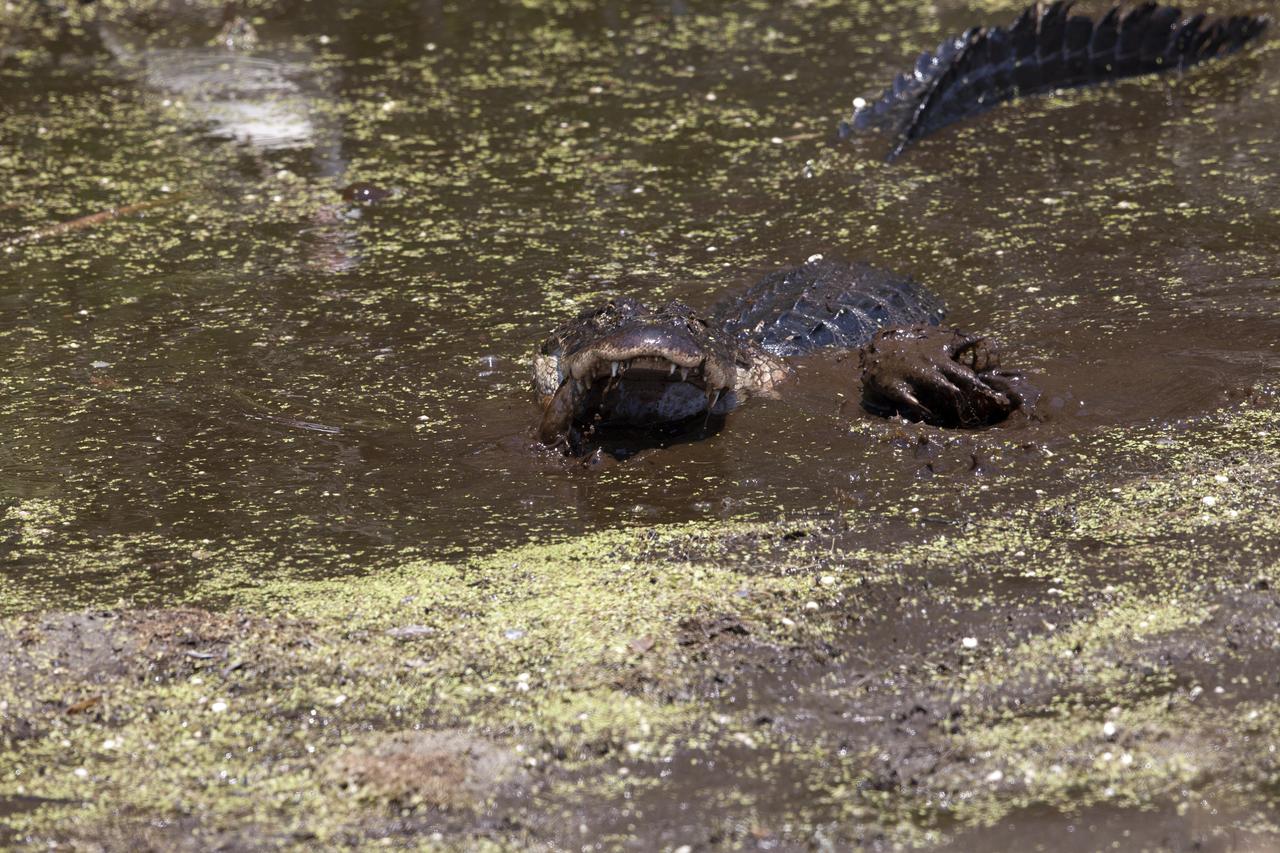
An alligator moves through a brackish waterway at NASA's Kennedy Space Center in Florida. The center shares a border with the Merritt Island National Wildlife Refuge. More than 330 native and migratory bird species, 25 mammals, 117 fishes and 65 amphibians and reptiles call Kennedy and the wildlife refuge home.
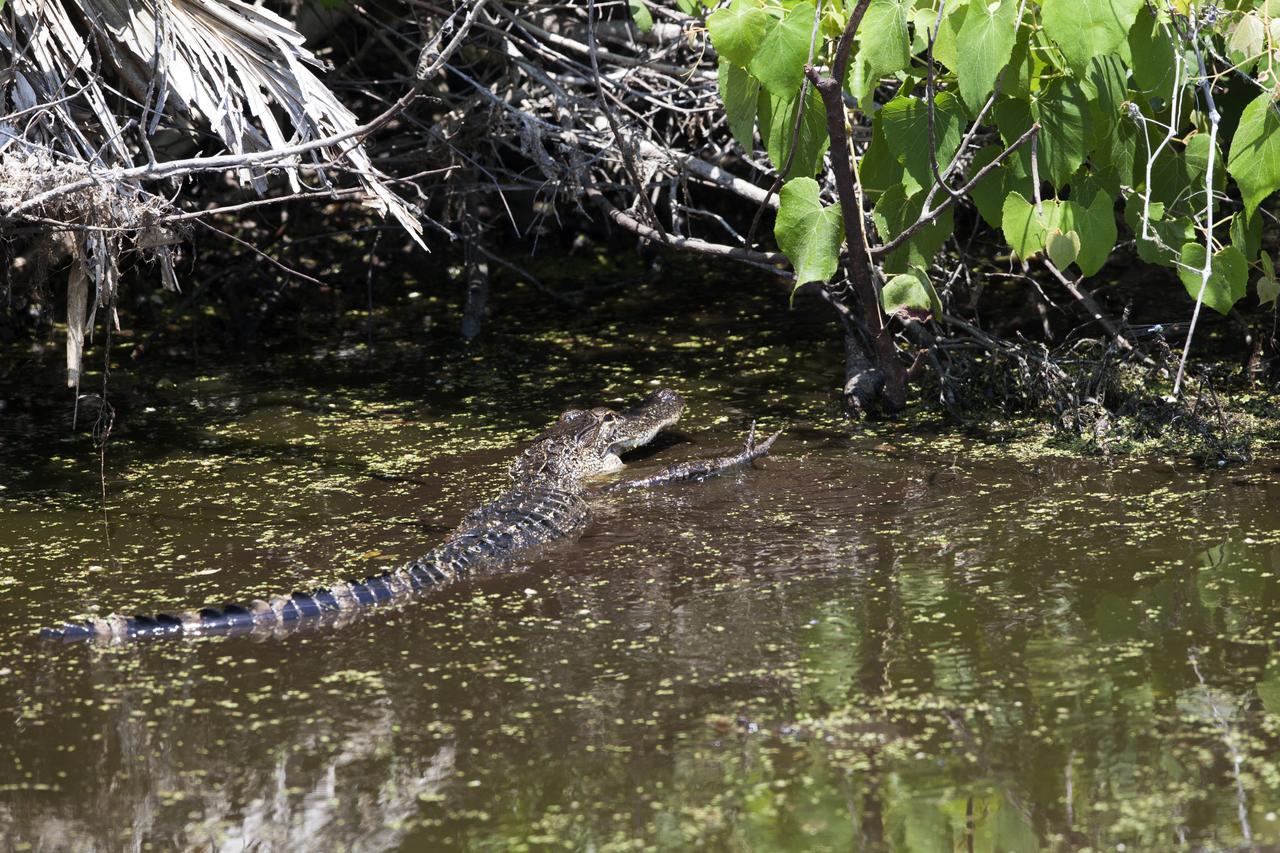
An alligator moves through a brackish waterway at NASA's Kennedy Space Center in Florida. The center shares a border with the Merritt Island National Wildlife Refuge. More than 330 native and migratory bird species, 25 mammals, 117 fishes and 65 amphibians and reptiles call Kennedy and the wildlife refuge home.
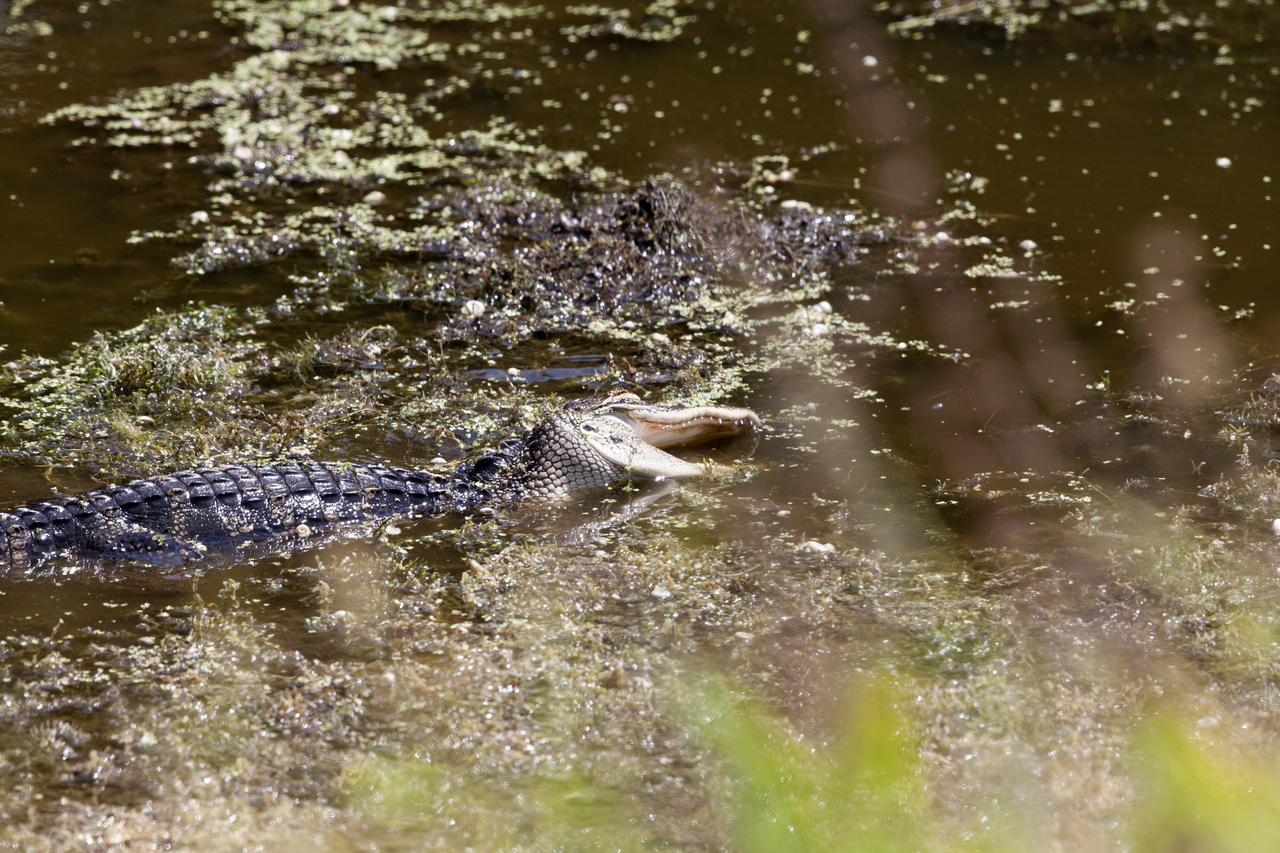
An alligator swims in a brackish waterway at NASA's Kennedy Space Center in Florida. The center shares a border with the Merritt Island National Wildlife Refuge. More than 330 native and migratory bird species, 25 mammals, 117 fishes and 65 amphibians and reptiles call Kennedy and the wildlife refuge home.
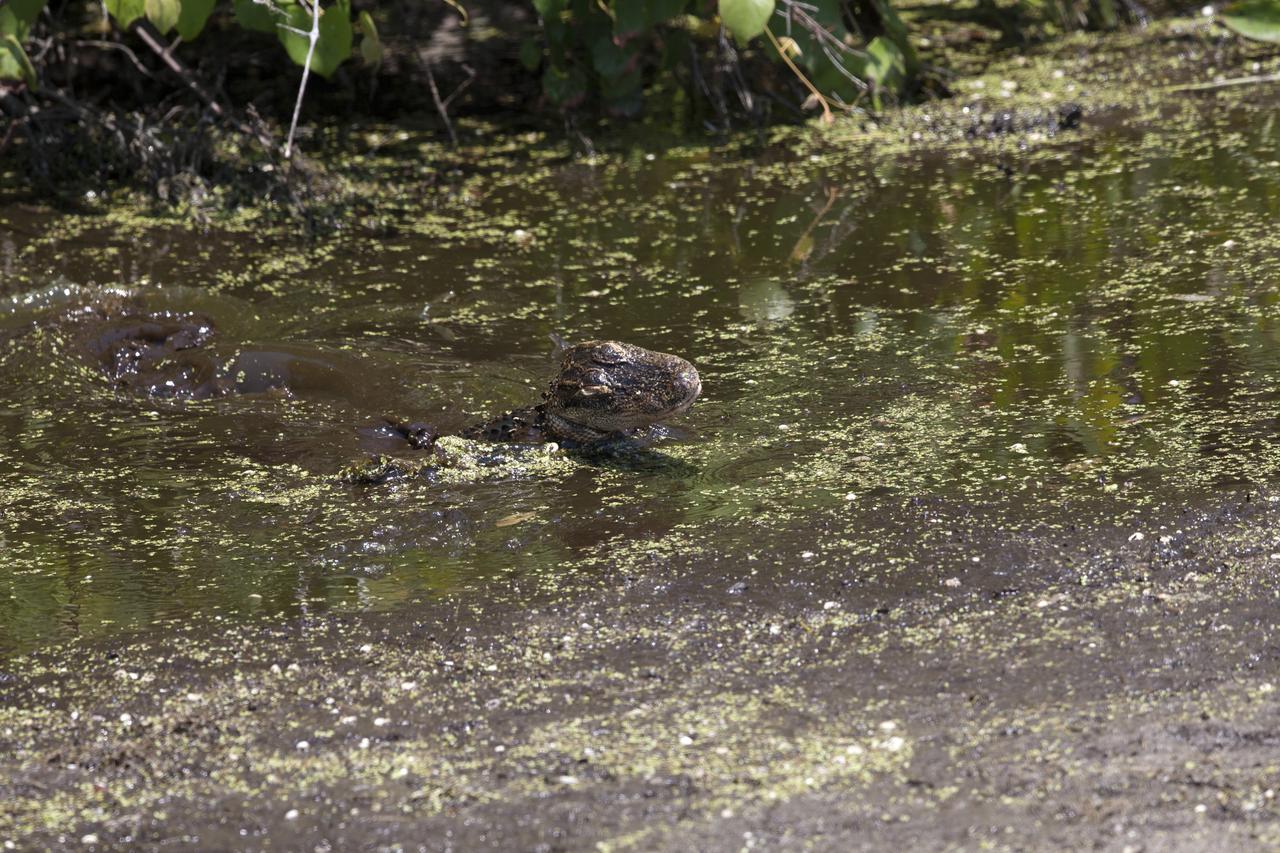
An alligator lurks in a brackish waterway at NASA's Kennedy Space Center in Florida. The center shares a border with the Merritt Island National Wildlife Refuge. More than 330 native and migratory bird species, 25 mammals, 117 fishes and 65 amphibians and reptiles call Kennedy and the wildlife refuge home.
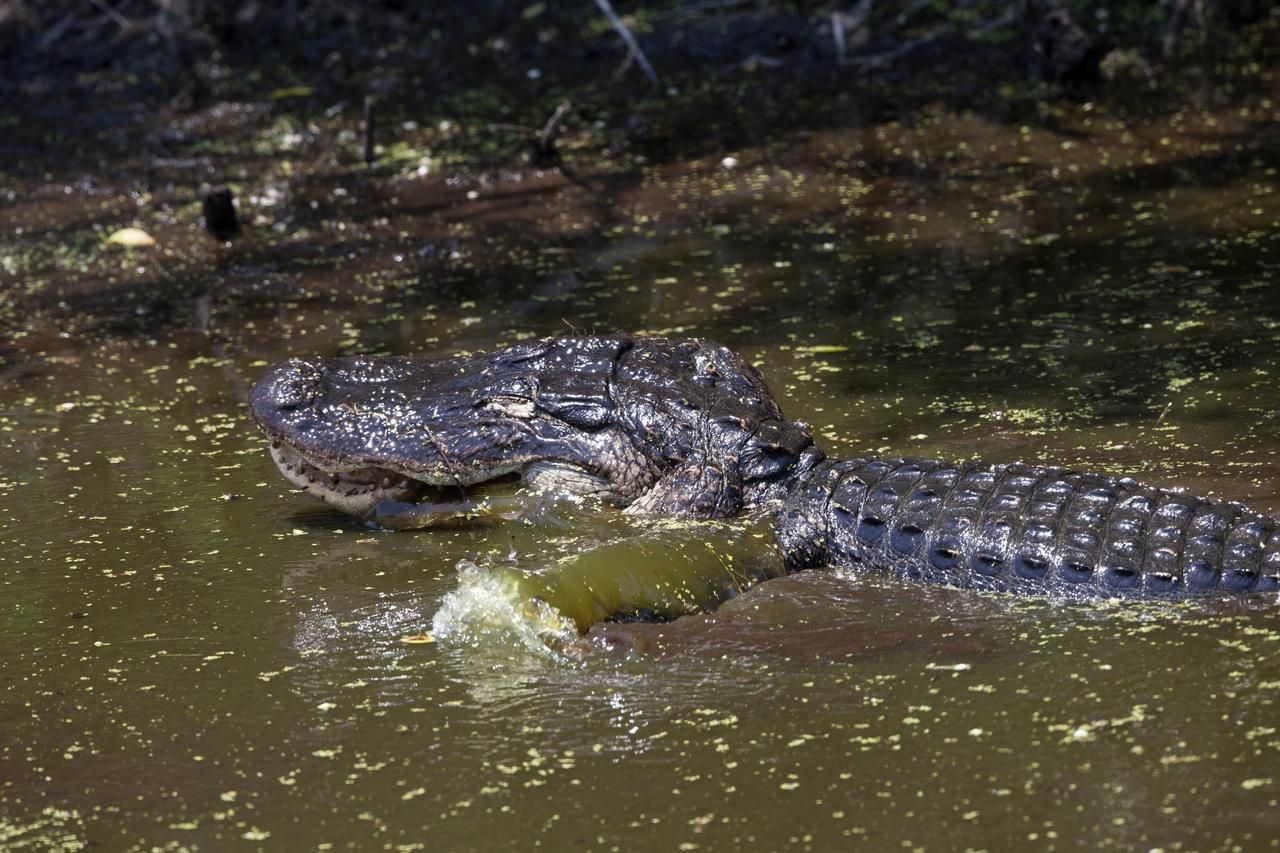
An alligator moves through a brackish waterway at NASA's Kennedy Space Center in Florida. The center shares a border with the Merritt Island National Wildlife Refuge. More than 330 native and migratory bird species, 25 mammals, 117 fishes and 65 amphibians and reptiles call Kennedy and the wildlife refuge home.
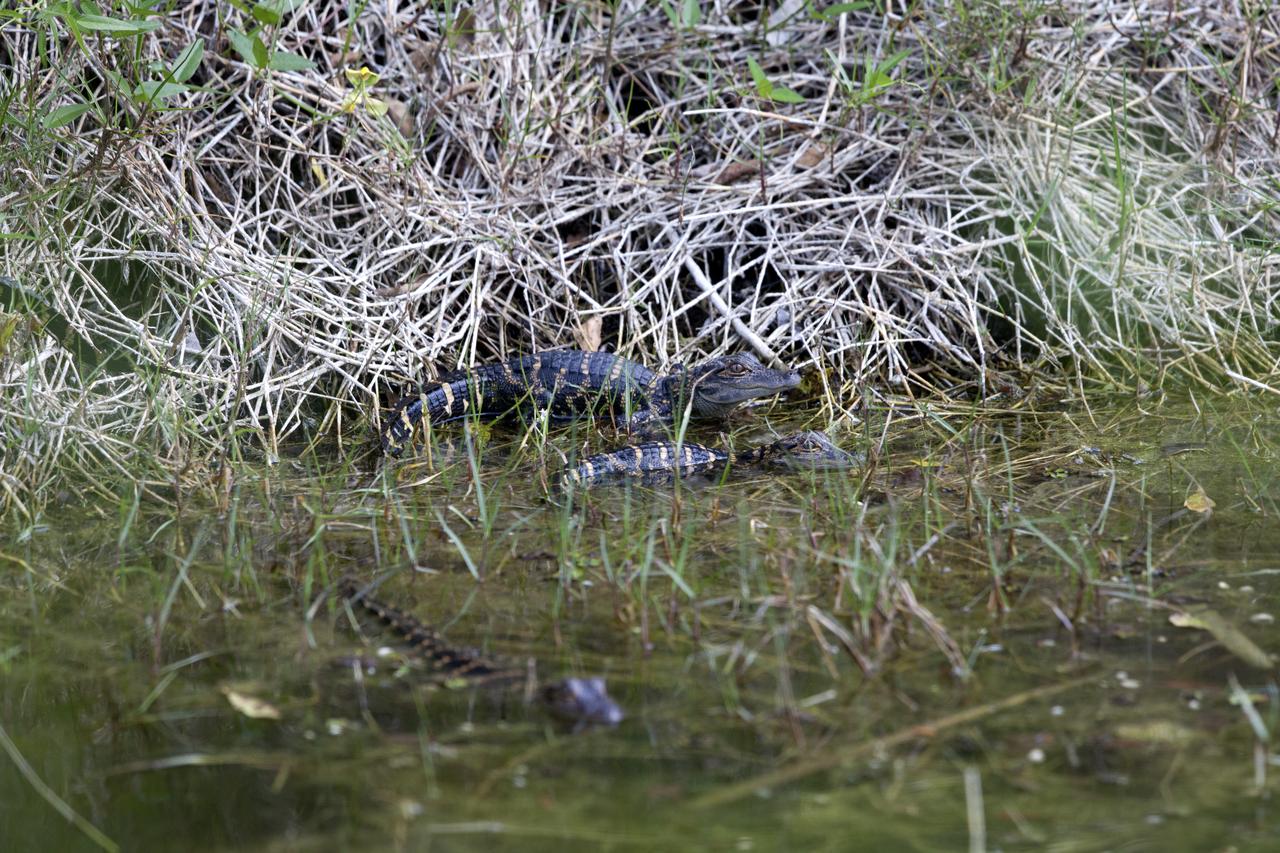
Baby alligators gather in a shallow waterway at NASA's Kennedy Space Center in Florida. The center shares a border with the Merritt Island National Wildlife Refuge. More than 330 native and migratory bird species, 25 mammals, 117 fishes and 65 amphibians and reptiles call Kennedy and the wildlife refuge home.
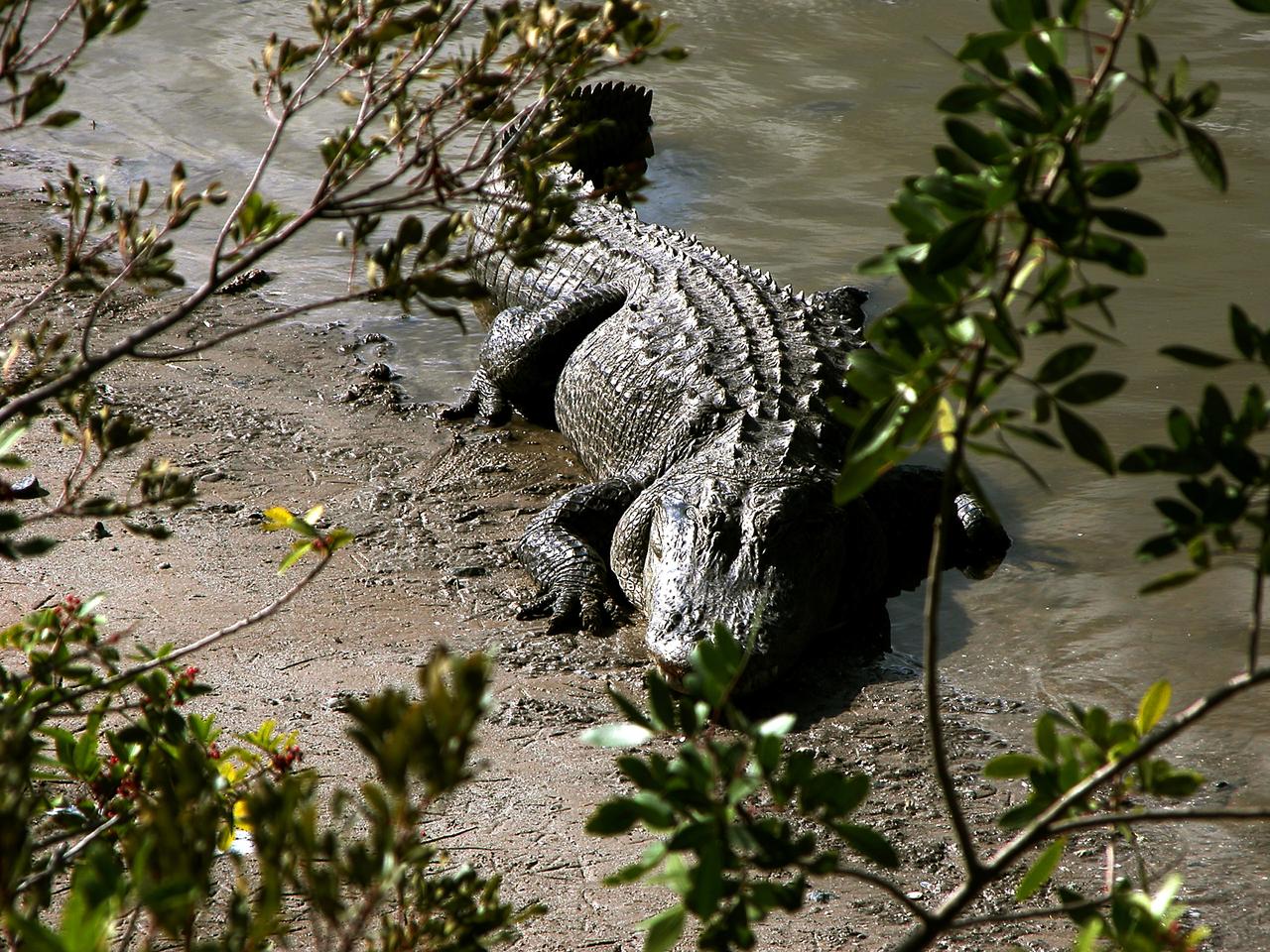
KENNEDY SPACE CENTER, FLA. -- An alligator is spotted sunning on the muddy bank of a canal in KSC. Nearly 5,000 alligators can be found in canals, ponds, and waterways throughout the Center and the surrounding Merritt Island National Wildlife Refuge. American alligators feed and rest in the water, and lay their eggs in dens they dig into the banks. The young alligators spend their first several weeks in these dens. The Wildlife Refuge encompasses 92,000 acres that are a habitat for more than 331 species of birds, 31 mammals, 117 fishes, and 65 amphibians and reptiles.
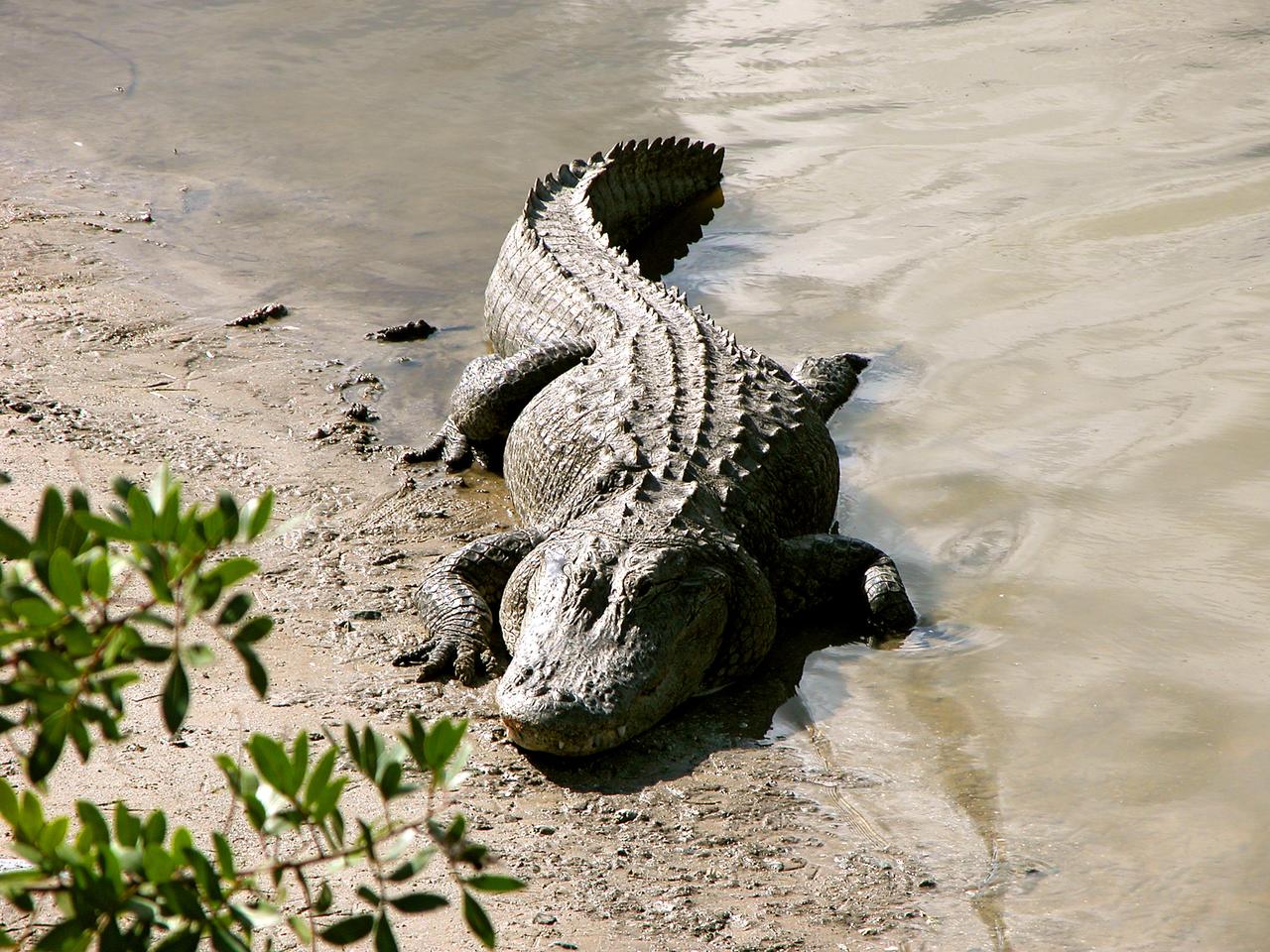
KENNEDY SPACE CENTER, FLA. -- An alligator is spotted sunning on the muddy bank of a canal in KSC. Nearly 5,000 alligators can be found in canals, ponds, and waterways throughout the Center and the surrounding Merritt Island National Wildlife Refuge. American alligators feed and rest in the water, and lay their eggs in dens they dig into the banks. The young alligators spend their first several weeks in these dens. The Wildlife Refuge encompasses 92,000 acres that are a habitat for more than 331 species of birds, 31 mammals, 117 fishes, and 65 amphibians and reptiles.
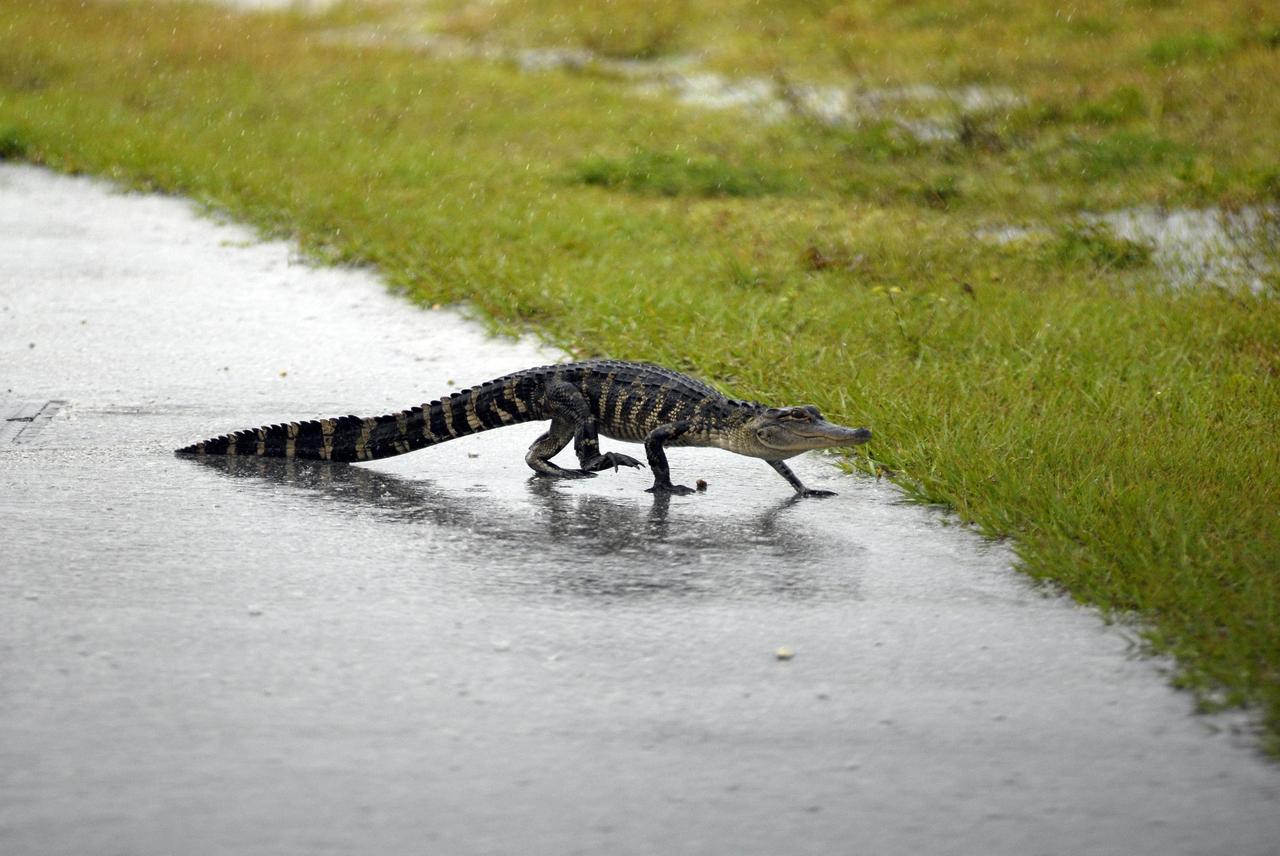
KENNEDY SPACE CENTER, FLA. -- This young alligator crosses a road near the railroad tracks where the train carrying solid rocket booster motor segments approaches Kennedy Space Center. Photo credit: NASA/George Shelton
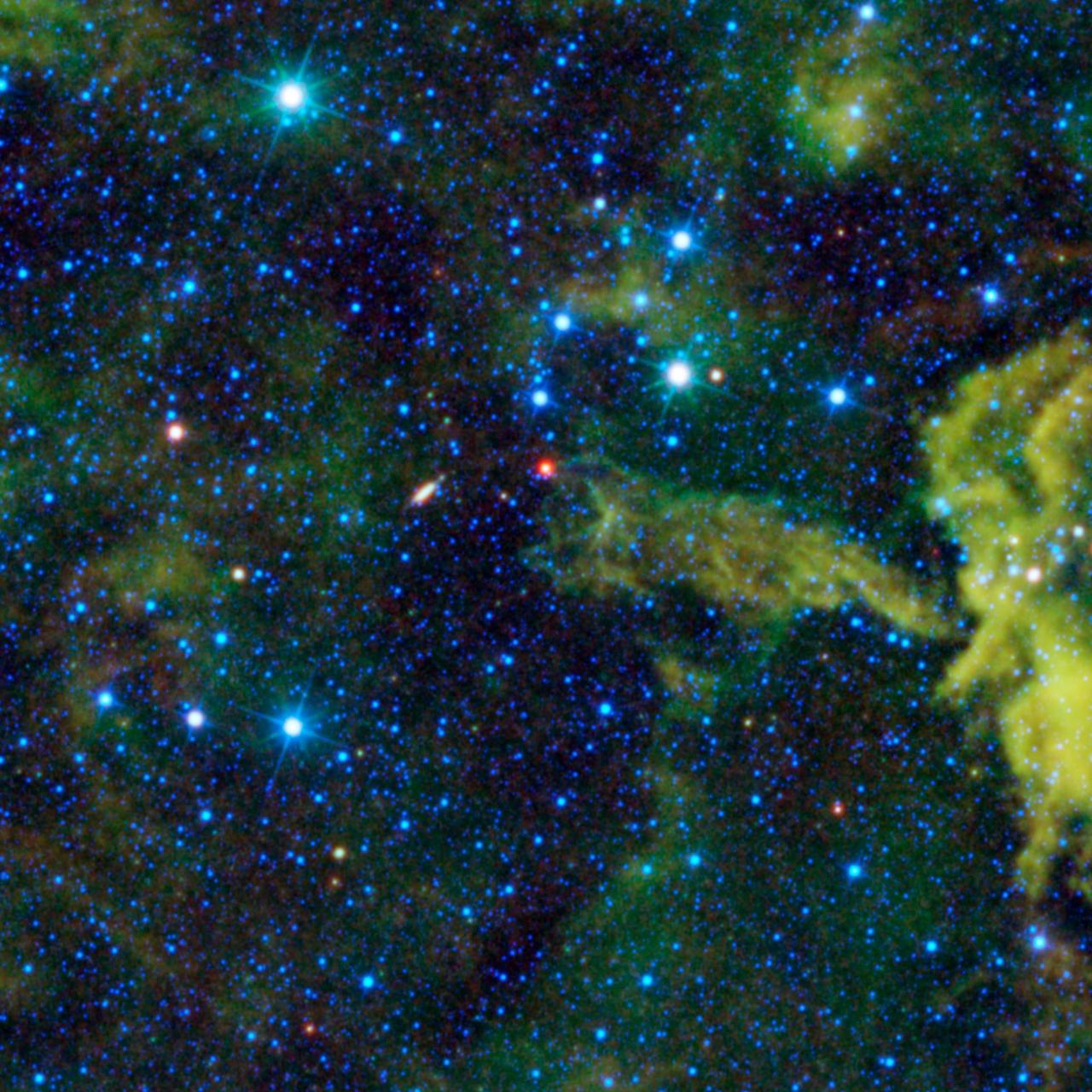
This stellar object is called Spitzer 073425.3-465409, as seen by NASA Wide-field Infrared Survey Explorer; the cloud CG4 might be imagined as a cosmic alligator eating its way across the sky.
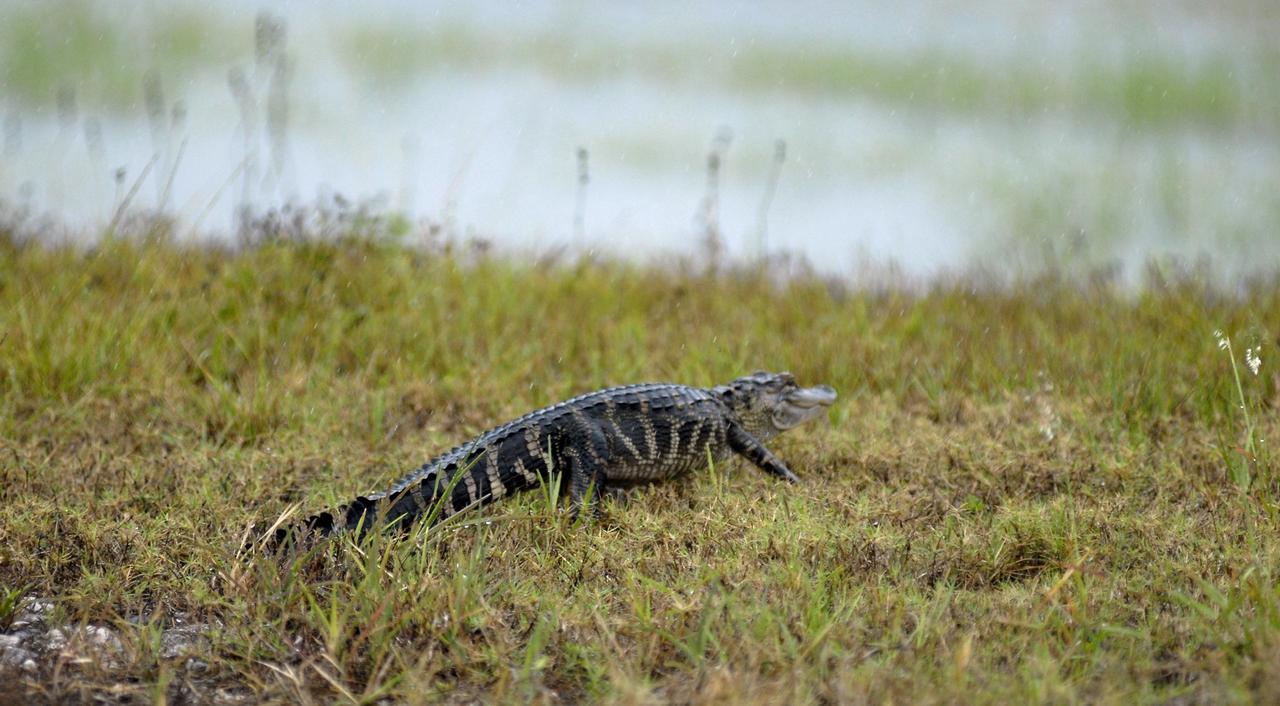
KENNEDY SPACE CENTER, FLA. -- Having successfully crossed railroad tracks nearby, this young alligator makes his way toward the water beyond. The track is the one where a train carrying solid rocket booster motor segments is approaching Kennedy Space Center. Photo credit: NASA/George Shelton
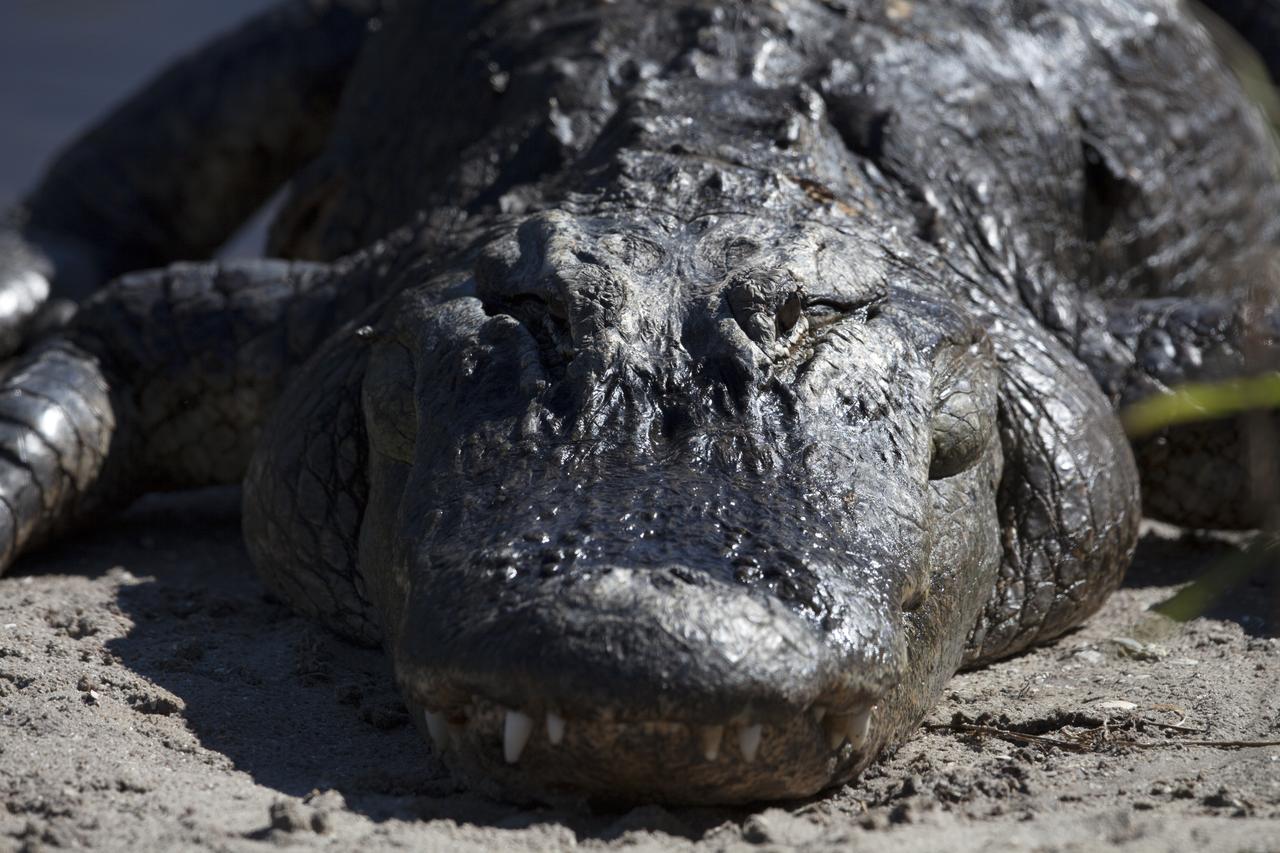
An adult alligator suns himself along the shoreline of a waterway at NASA's Kennedy Space Center in Florida. The center shares a border with the Merritt Island National Wildlife Refuge. More than 330 native and migratory bird species, 25 mammals, 117 fishes and 65 amphibians and reptiles call Kennedy and the wildlife refuge home.
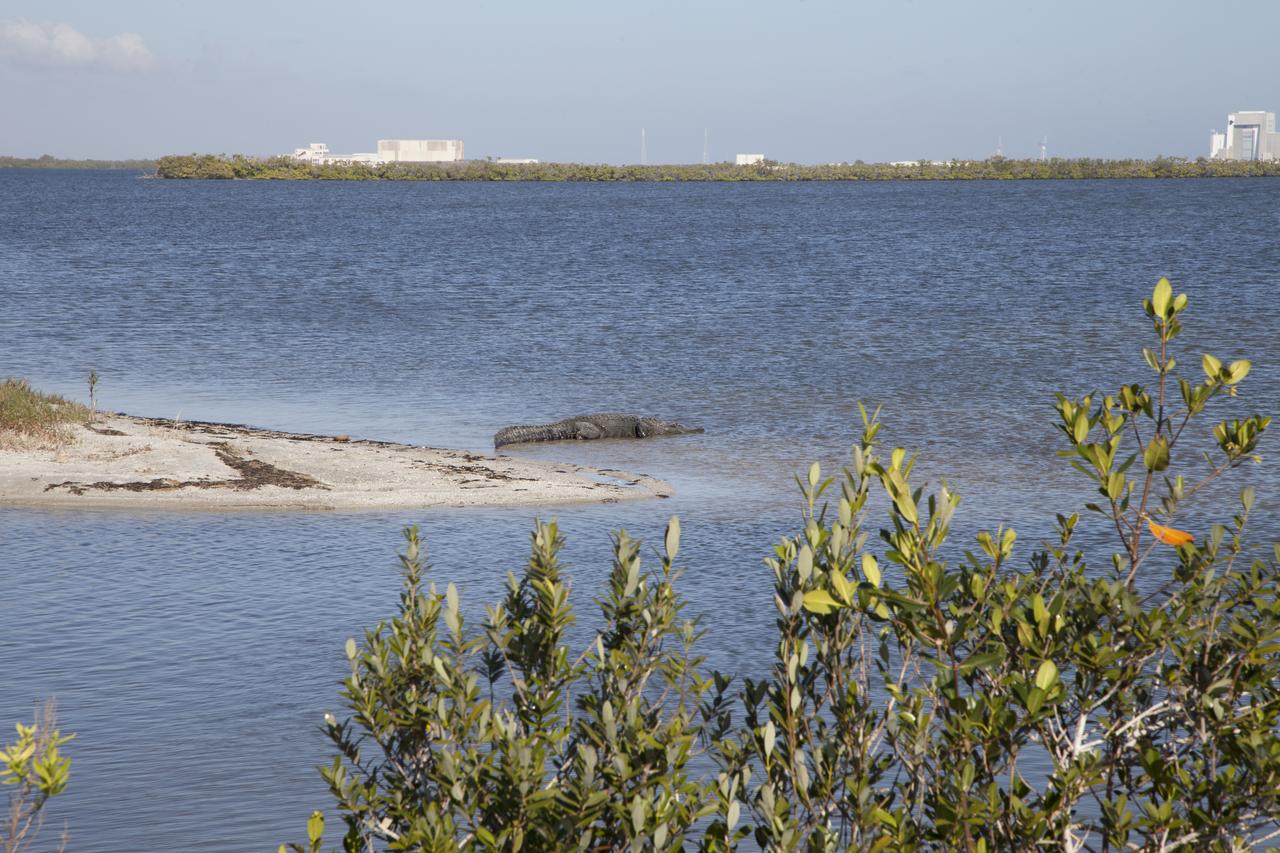
A large alligator basks in the intercoastal waterway near the NASA Causeway at Kennedy Space Center in Florida. The center shares a boundary with the Merritt Island National Wildlife Refuge. The refuge is home to more than 65 amphibian and reptile species, along with 330 native and migratory bird species, 25 mammal and 117 fish species.
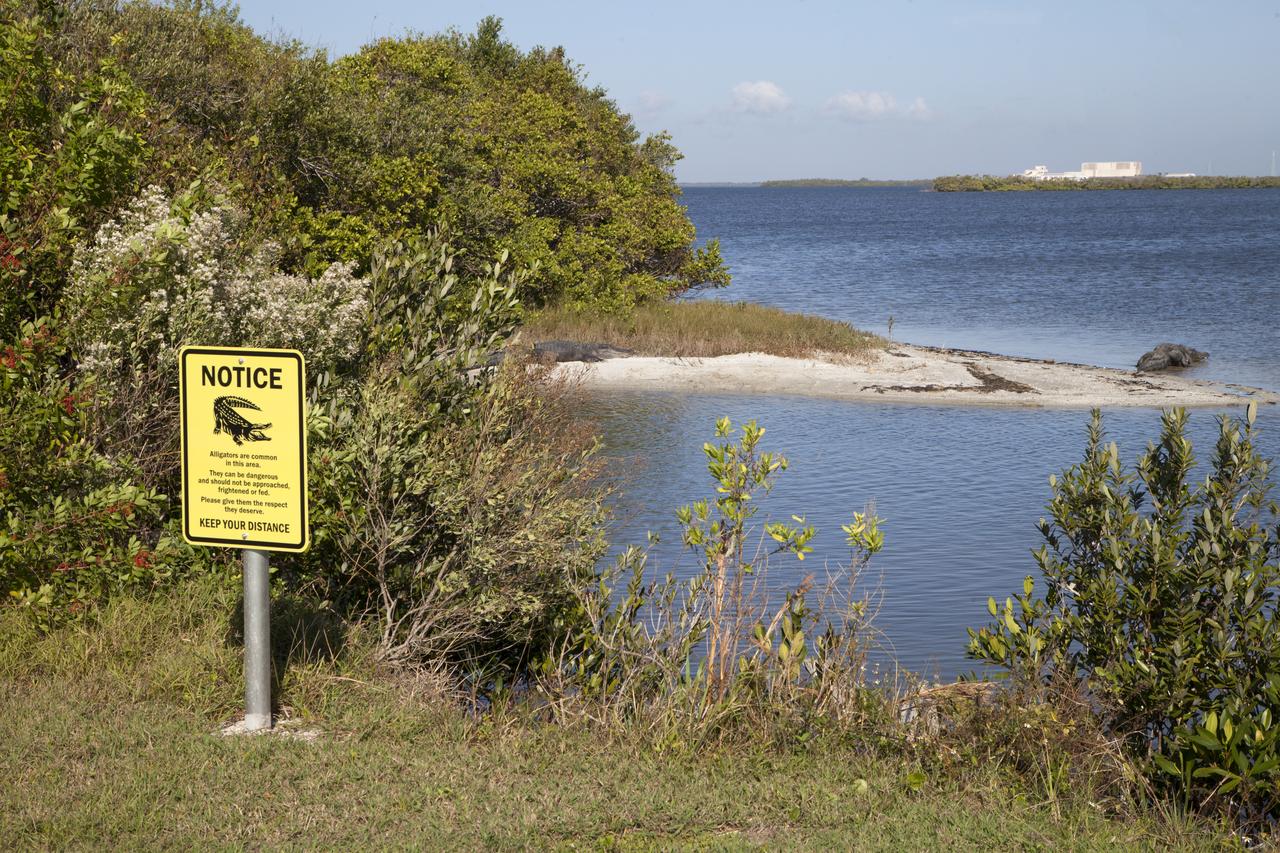
Two large alligators sun themselves on the sand near the NASA Causeway at Kennedy Space Center in Florida. The center shares a boundary with the Merritt Island National Wildlife Refuge. The refuge is home to more than 65 amphibian and reptile species, along with 330 native and migratory bird species, 25 mammal and 117 fish species.
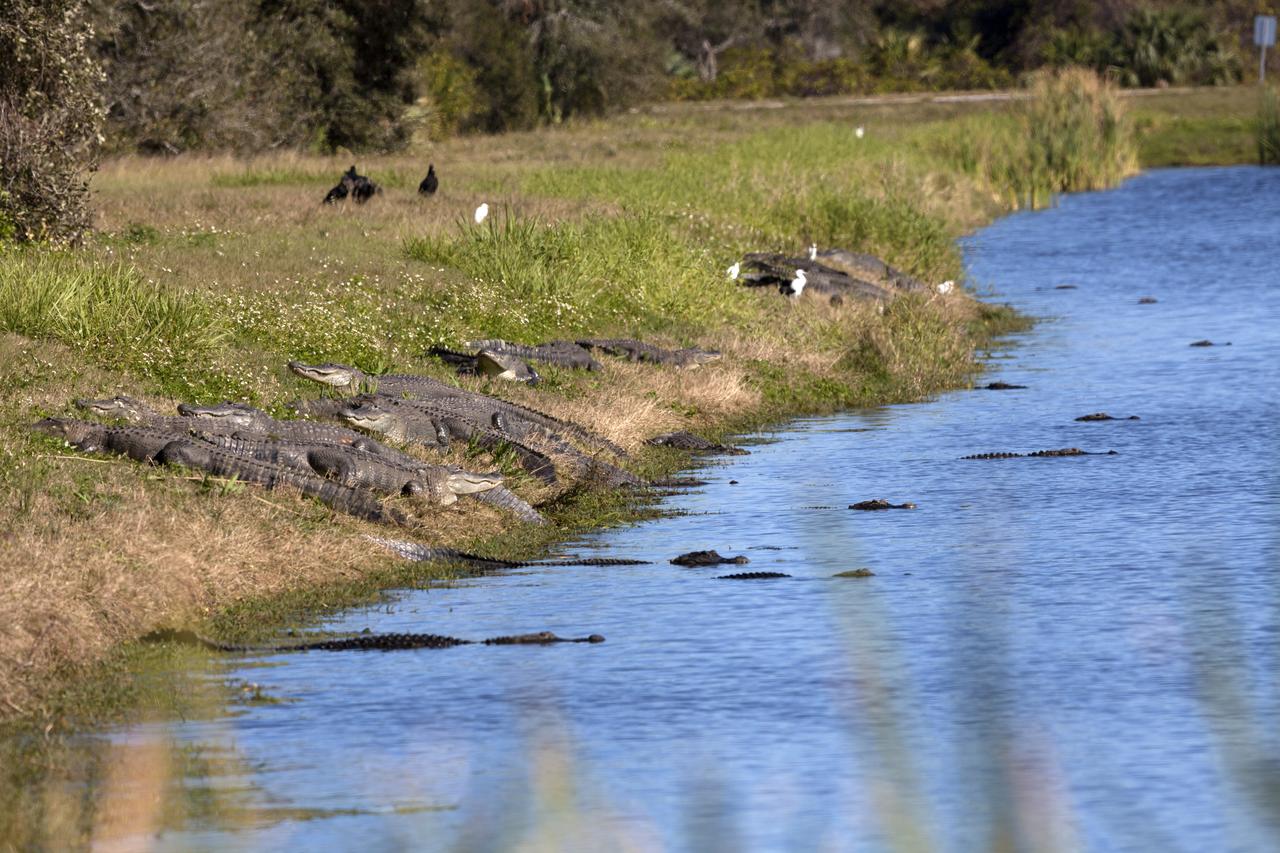
Alligators sun themselves along the shoreline of waterway at NASA's Kennedy Space Center in Florida. The center shares a border with the Merritt Island National Wildlife Refuge. More than 330 native and migratory bird species, 25 mammals, 117 fishes and 65 amphibians and reptiles call Kennedy and the wildlife refuge home.
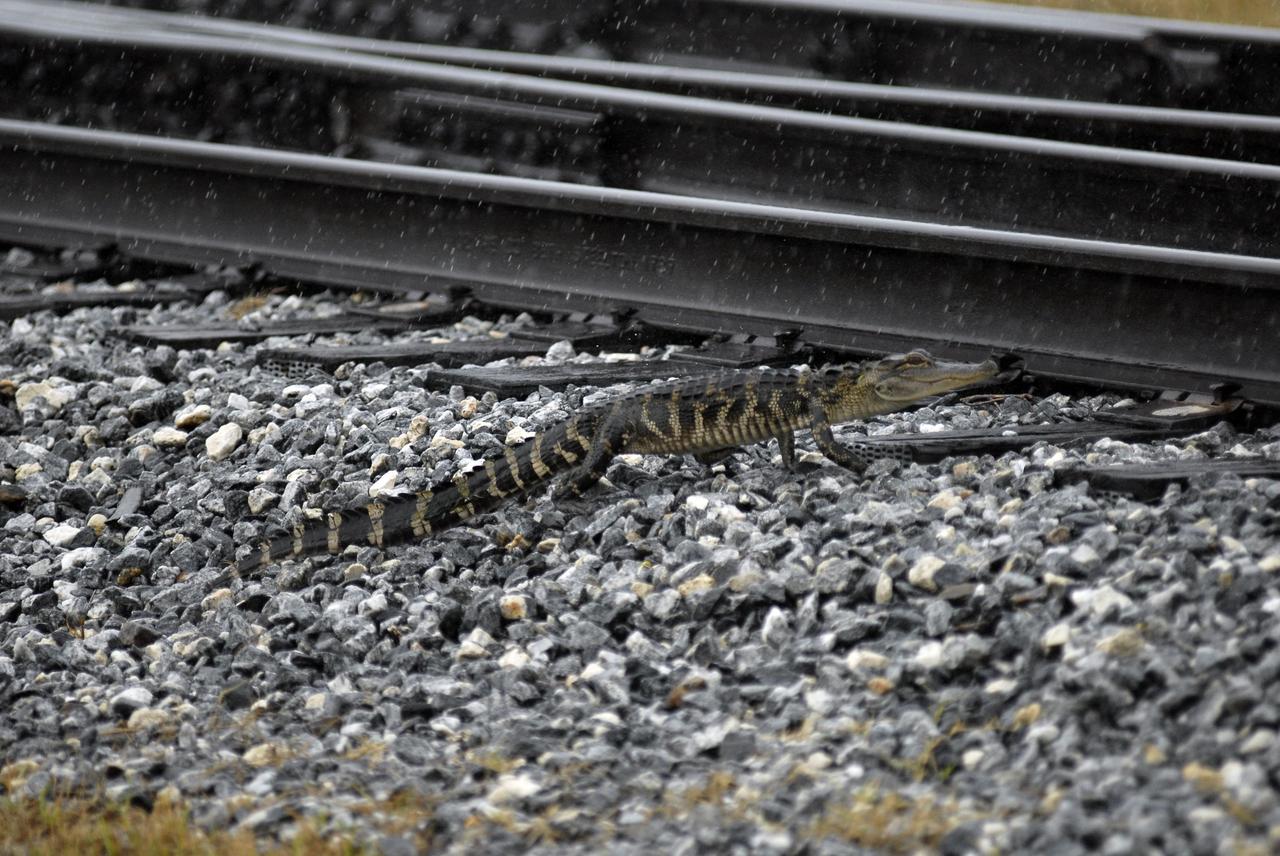
KENNEDY SPACE CENTER, FLA. -- This young alligator approaches the railroad tracks where the train carrying solid rocket booster motor segments is approaching Kennedy Space Center. While enroute, solid rocket motor segments were involved in a derailment in Alabama. The rail cars carrying these segments remained upright and were undamaged. An inspection determined these segment cars could continue on to Florida. The segments themselves will undergo further evaluation at Kennedy before they are cleared for flight. Other segments involved in the derailment will be returned to a plant in Utah for further evaluation. Photo credit: NASA/Kim Shiflett

KENNEDY SPACE CENTER, FLA. -- This young alligator climbs on the railroad tracks where the train carrying solid rocket booster motor segments is approaching Kennedy Space Center. While enroute, solid rocket motor segments were involved in a derailment in Alabama. The rail cars carrying these segments remained upright and were undamaged. An inspection determined these segment cars could continue on to Florida. The segments themselves will undergo further evaluation at Kennedy before they are cleared for flight. Other segments involved in the derailment will be returned to a plant in Utah for further evaluation. Photo credit: NASA/Kim Shiflett
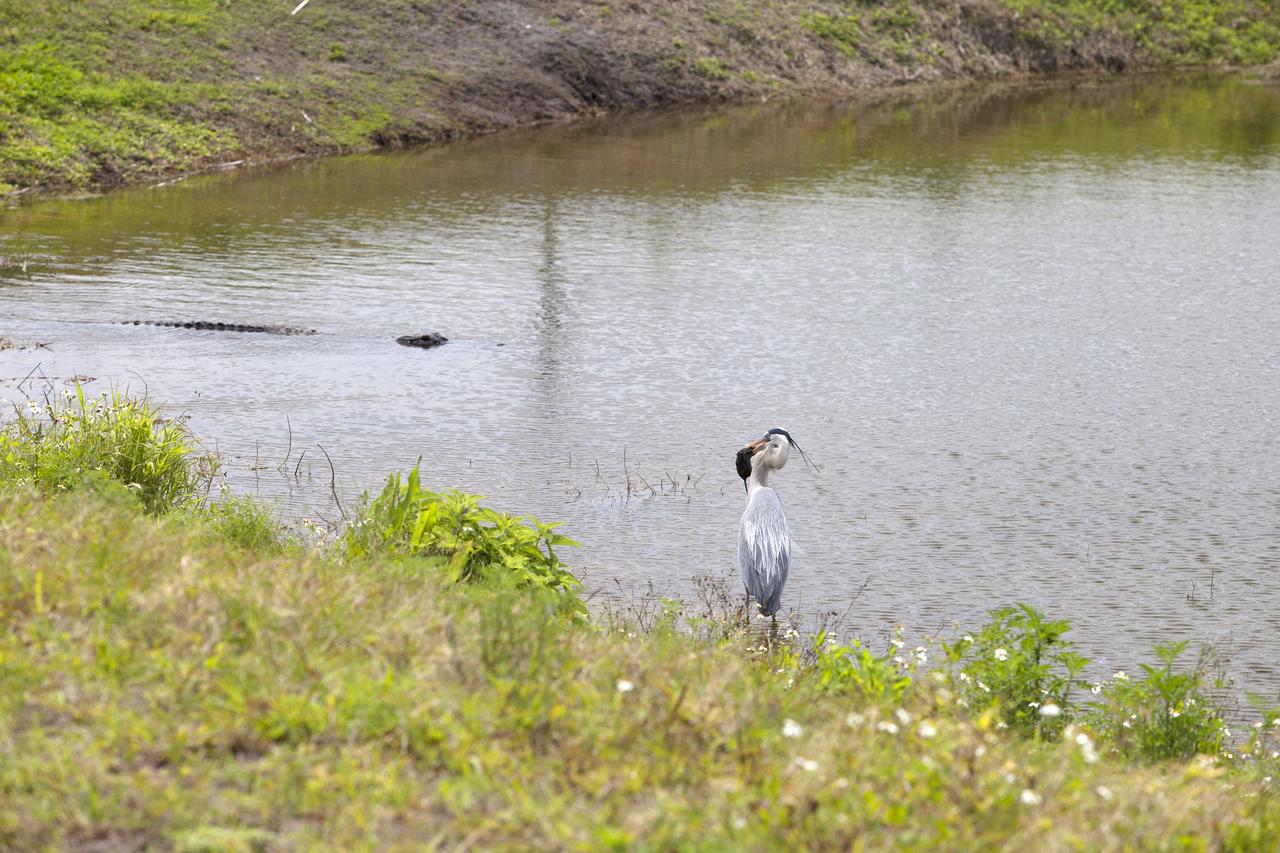
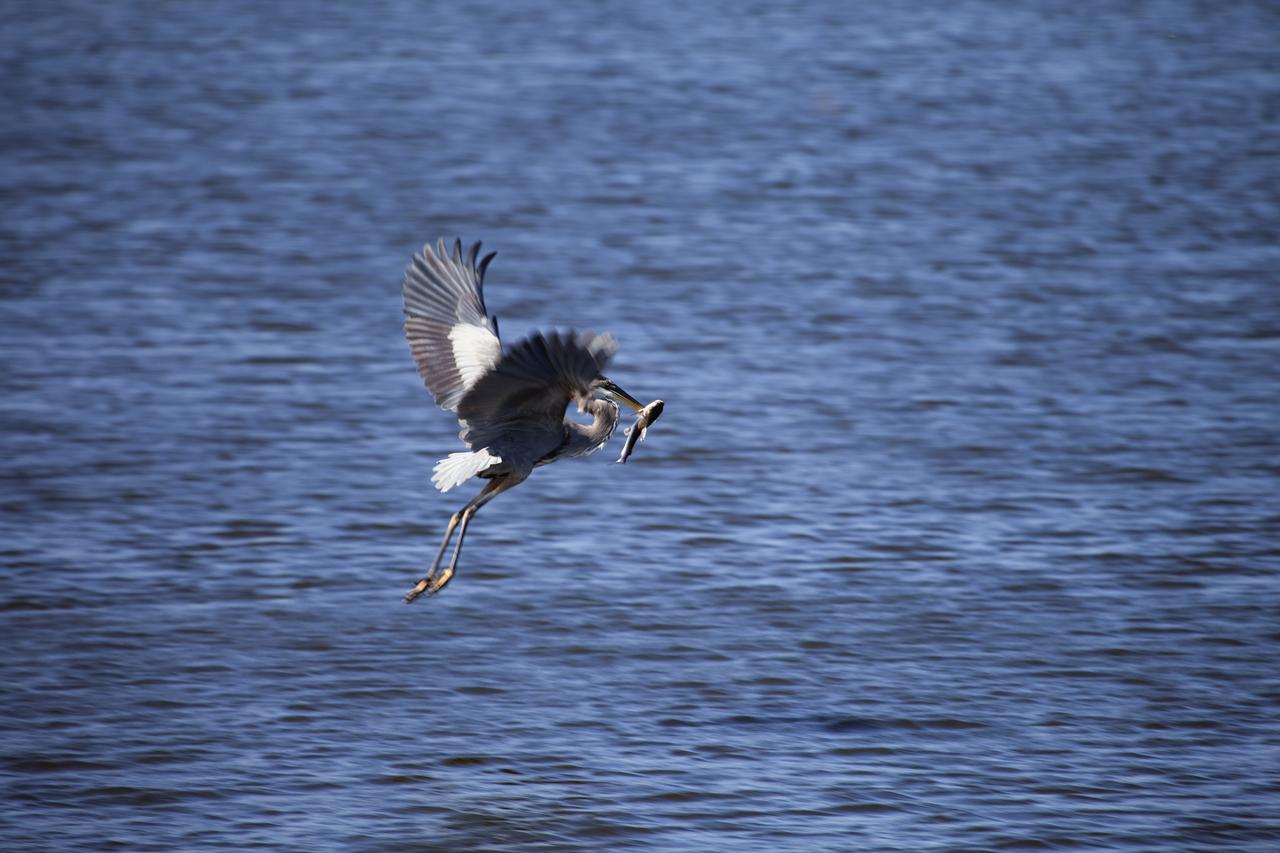
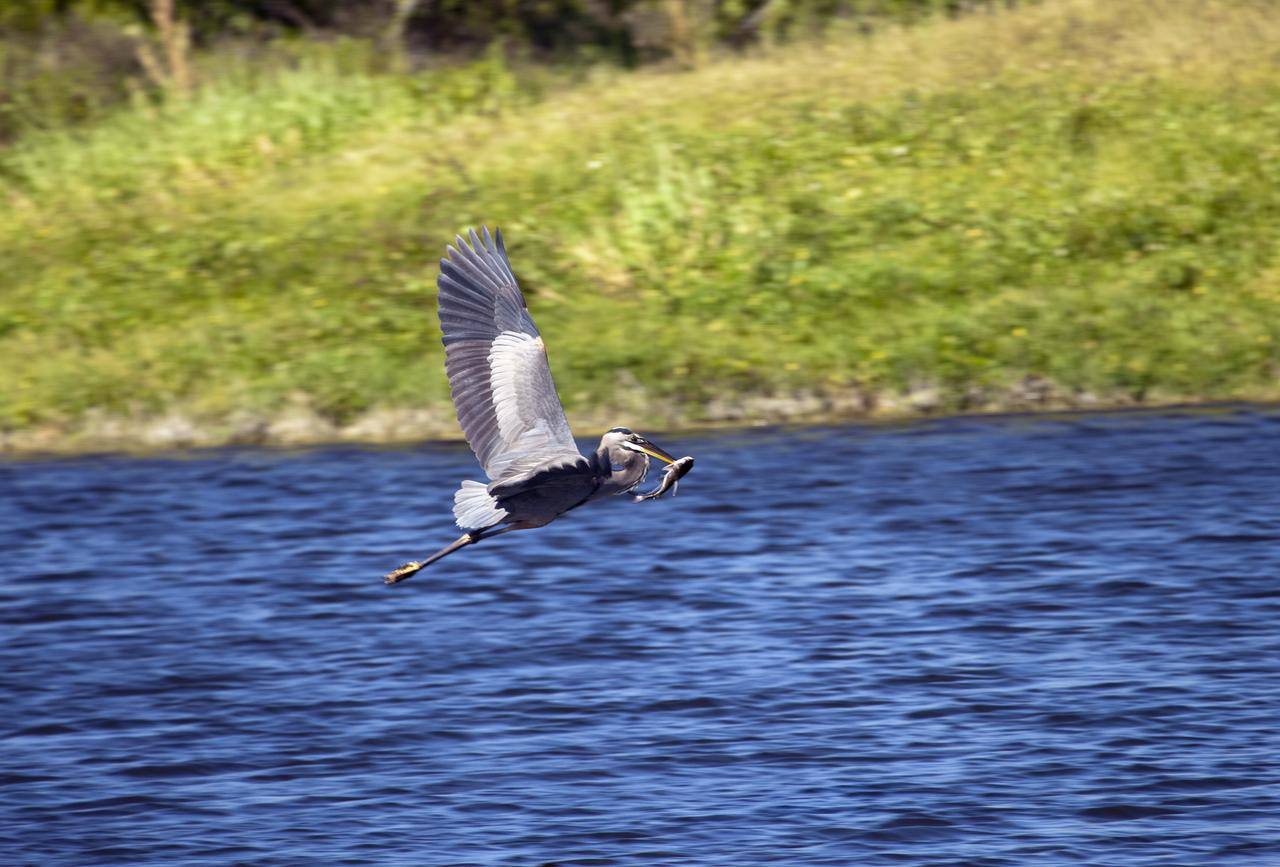
CAPE CANAVERAL, Fla. – A great blue heron catches a small rodent along the shore of an inland waterway at NASA's Kennedy Space Center in Florida. An alligator swims in the water nearby. The center shares a boundary with the Merritt Island National Wildlife Refuge. The refuge encompasses 140,000 acres that are a habitat for more than 330 species of birds, 31 mammals, 117 fishes, and 65 amphibians and reptiles. It contains more than 1,000 known plant species. The marshes and open water of the refuge provide wintering areas for 23 species of migratory waterfowl, as well as a year-round home for great blue herons, great egrets, wood storks, cormorants, brown pelicans and other species of marsh and shore birds, and a variety of insects. Photo credit: NASA/Daniel Casper
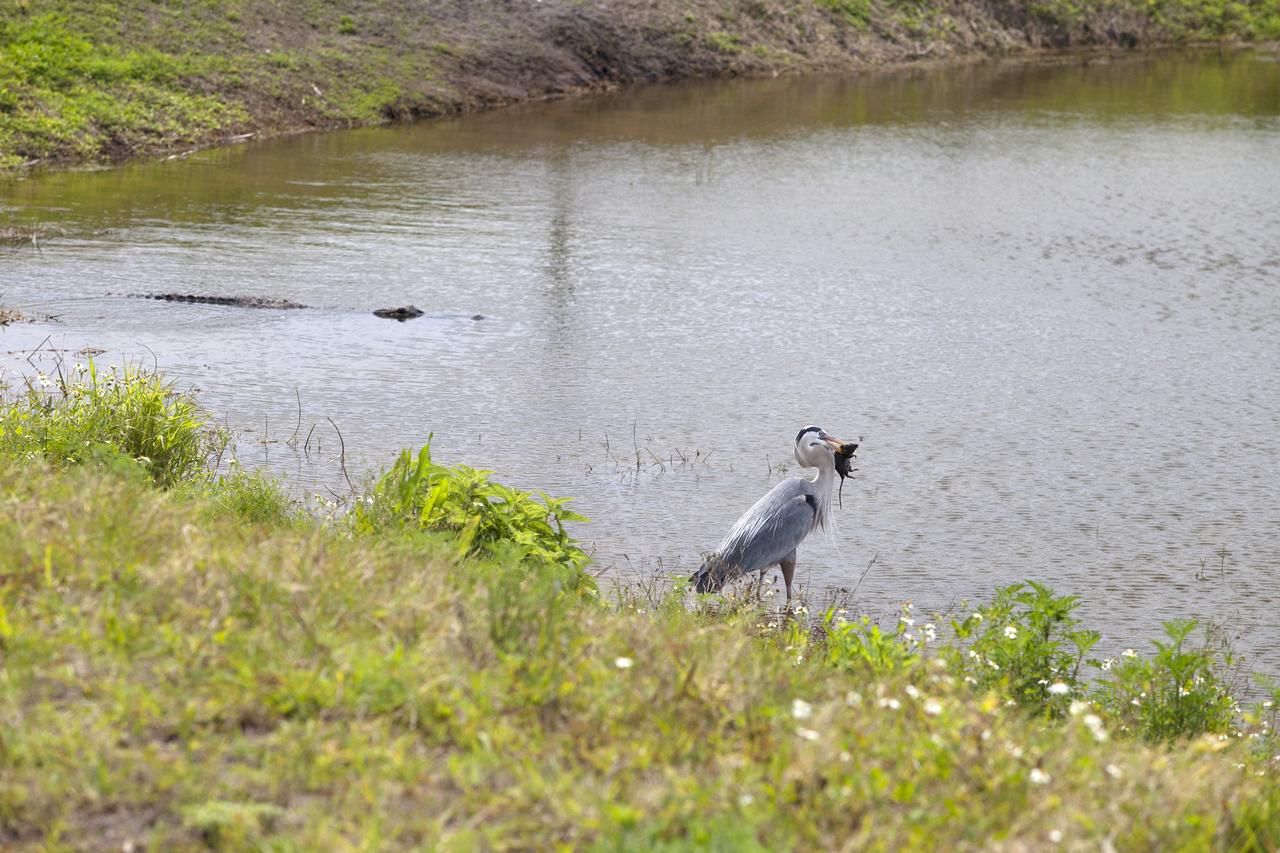
CAPE CANAVERAL, Fla. – A great blue heron catches a small rodent along the shore of an inland waterway at NASA's Kennedy Space Center in Florida. An alligator swims in the water nearby. The center shares a boundary with the Merritt Island National Wildlife Refuge. The refuge encompasses 140,000 acres that are a habitat for more than 330 species of birds, 31 mammals, 117 fishes, and 65 amphibians and reptiles. It contains more than 1,000 known plant species. The marshes and open water of the refuge provide wintering areas for 23 species of migratory waterfowl, as well as a year-round home for great blue herons, great egrets, wood storks, cormorants, brown pelicans and other species of marsh and shore birds, and a variety of insects. Photo credit: NASA/Daniel Casper
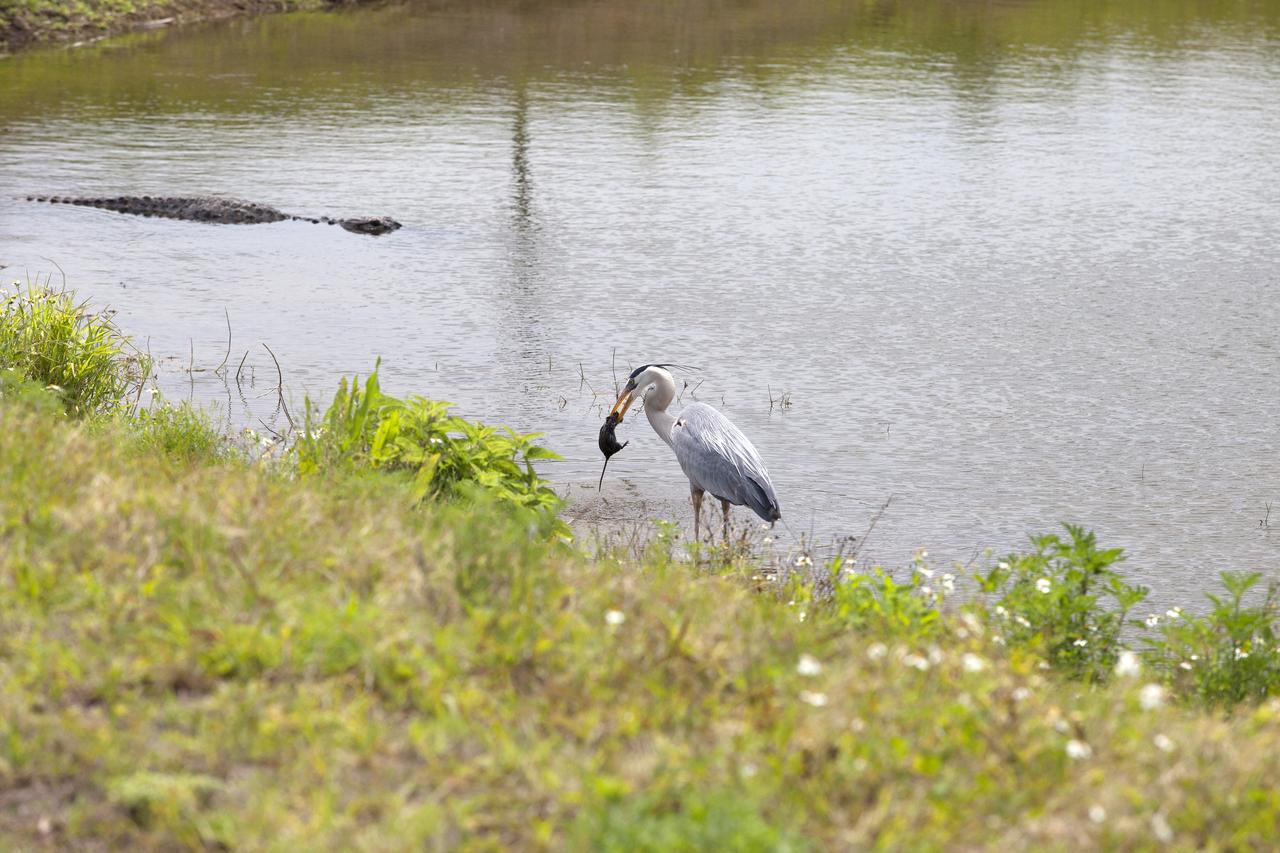
CAPE CANAVERAL, Fla. – A great blue heron catches a small rodent along the shore of an inland waterway at NASA's Kennedy Space Center in Florida. An alligator swims in the water nearby. The center shares a boundary with the Merritt Island National Wildlife Refuge. The refuge encompasses 140,000 acres that are a habitat for more than 330 species of birds, 31 mammals, 117 fishes, and 65 amphibians and reptiles. It contains more than 1,000 known plant species. The marshes and open water of the refuge provide wintering areas for 23 species of migratory waterfowl, as well as a year-round home for great blue herons, great egrets, wood storks, cormorants, brown pelicans and other species of marsh and shore birds, and a variety of insects. Photo credit: NASA/Daniel Casper
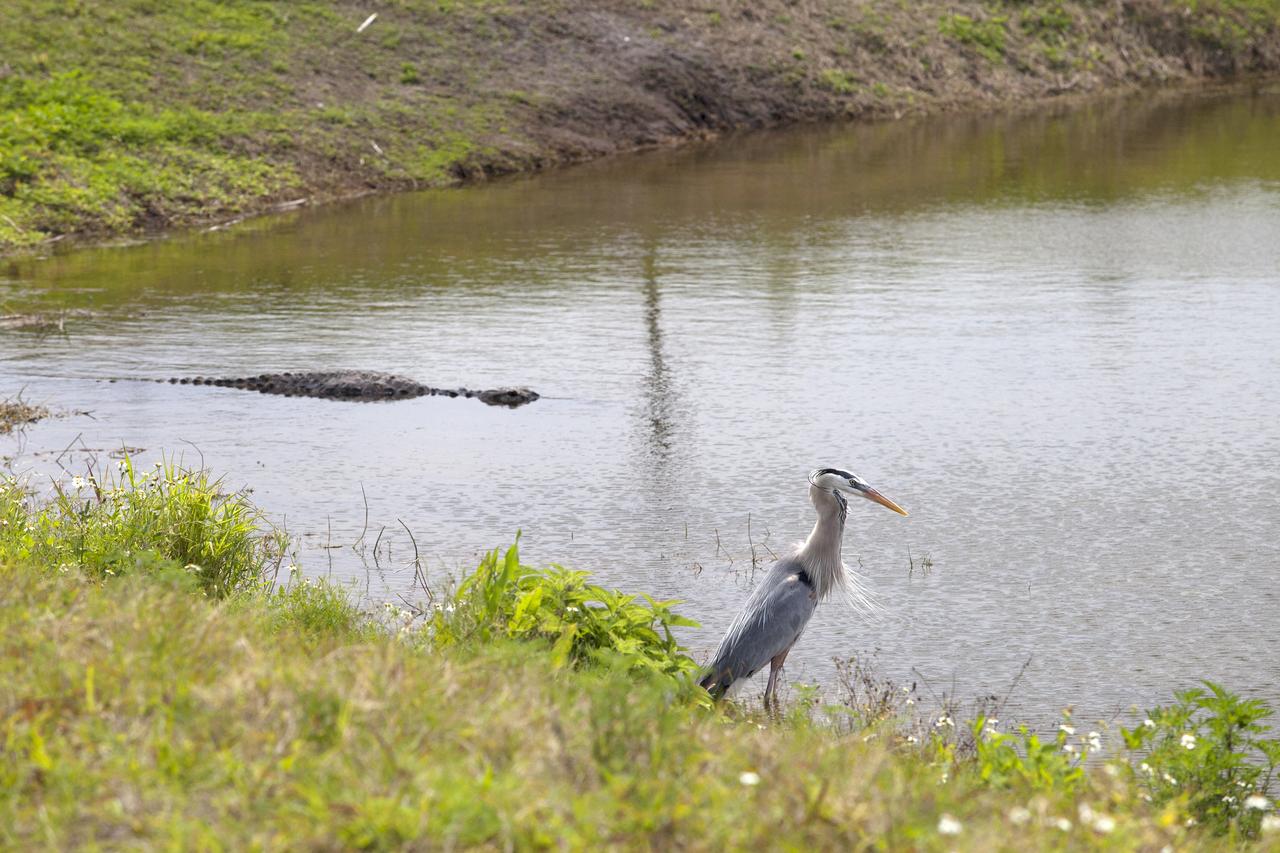
CAPE CANAVERAL, Fla. – A great blue heron stands along the shore of an inland waterway at NASA's Kennedy Space Center in Florida. An alligator swims in the water nearby. The center shares a boundary with the Merritt Island National Wildlife Refuge. The refuge encompasses 140,000 acres that are a habitat for more than 330 species of birds, 31 mammals, 117 fishes, and 65 amphibians and reptiles. It contains more than 1,000 known plant species. The marshes and open water of the refuge provide wintering areas for 23 species of migratory waterfowl, as well as a year-round home for great blue herons, great egrets, wood storks, cormorants, brown pelicans and other species of marsh and shore birds, and a variety of insects. Photo credit: NASA/Daniel Casper
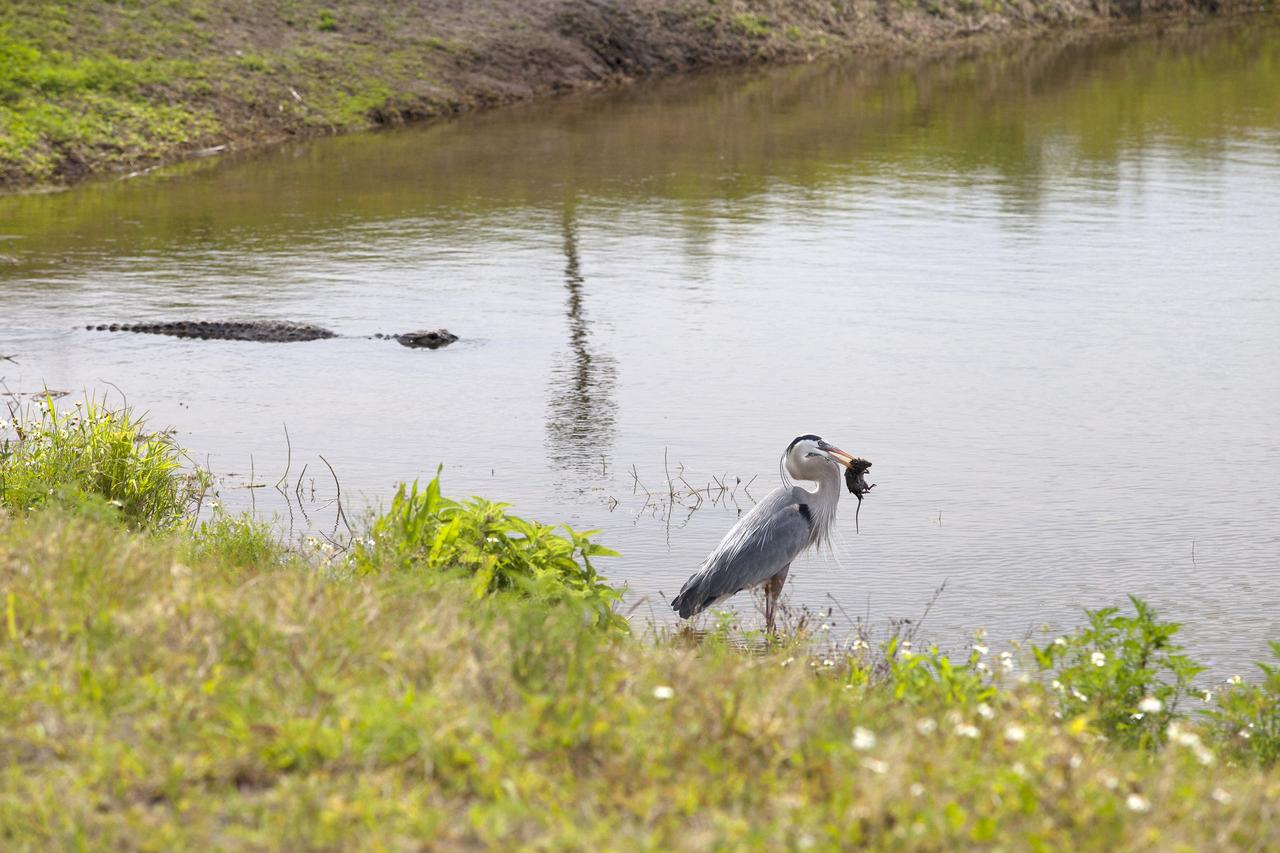
CAPE CANAVERAL, Fla. – A great blue heron catches a small rodent along the shore of an inland waterway at NASA's Kennedy Space Center in Florida. An alligator swims in the water nearby. The center shares a boundary with the Merritt Island National Wildlife Refuge. The refuge encompasses 140,000 acres that are a habitat for more than 330 species of birds, 31 mammals, 117 fishes, and 65 amphibians and reptiles. It contains more than 1,000 known plant species. The marshes and open water of the refuge provide wintering areas for 23 species of migratory waterfowl, as well as a year-round home for great blue herons, great egrets, wood storks, cormorants, brown pelicans and other species of marsh and shore birds, and a variety of insects. Photo credit: NASA/Daniel Casper
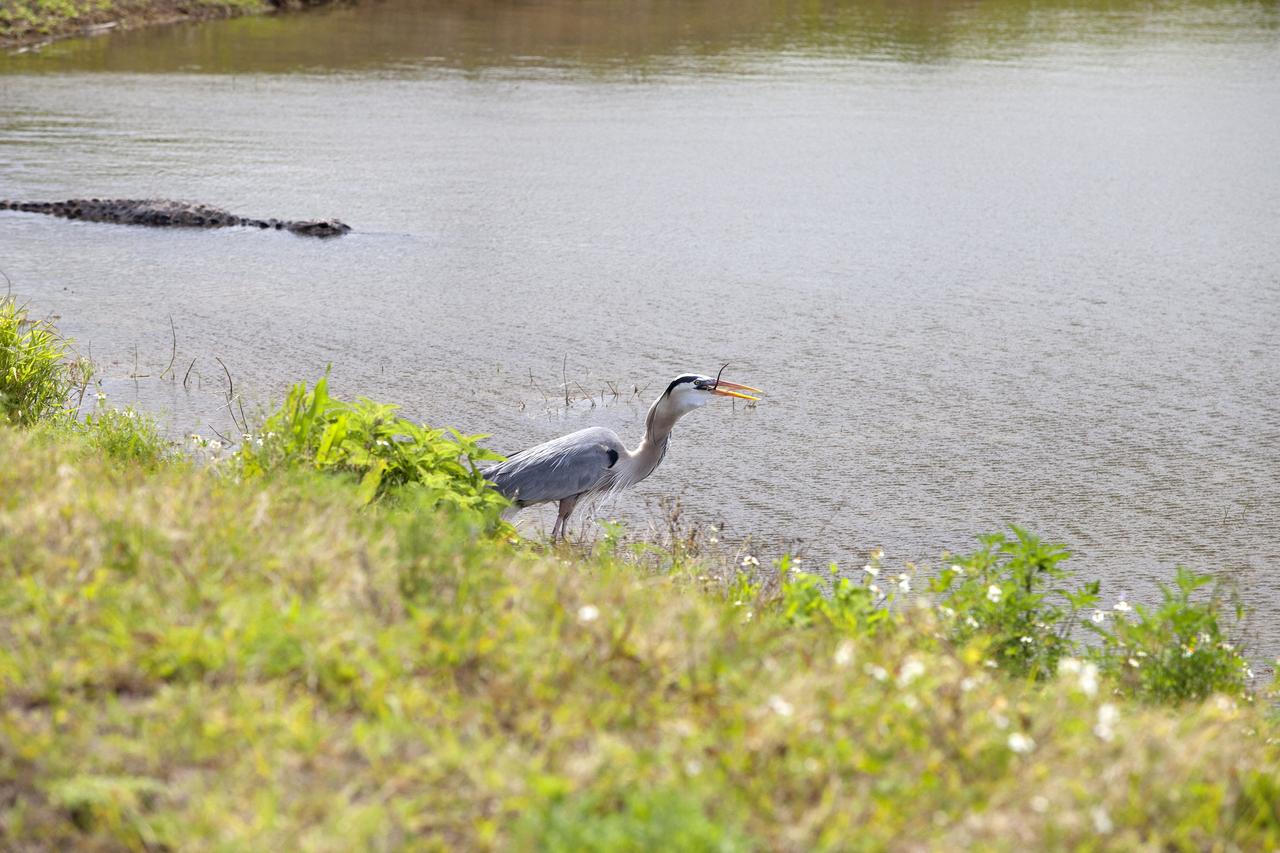
CAPE CANAVERAL, Fla. – A great blue heron consumes a small rodent along the shore of an inland waterway at NASA's Kennedy Space Center in Florida. An alligator swims in the water nearby. The center shares a boundary with the Merritt Island National Wildlife Refuge. The refuge encompasses 140,000 acres that are a habitat for more than 330 species of birds, 31 mammals, 117 fishes, and 65 amphibians and reptiles. It contains more than 1,000 known plant species. The marshes and open water of the refuge provide wintering areas for 23 species of migratory waterfowl, as well as a year-round home for great blue herons, great egrets, wood storks, cormorants, brown pelicans and other species of marsh and shore birds, and a variety of insects. Photo credit: NASA/Daniel Casper
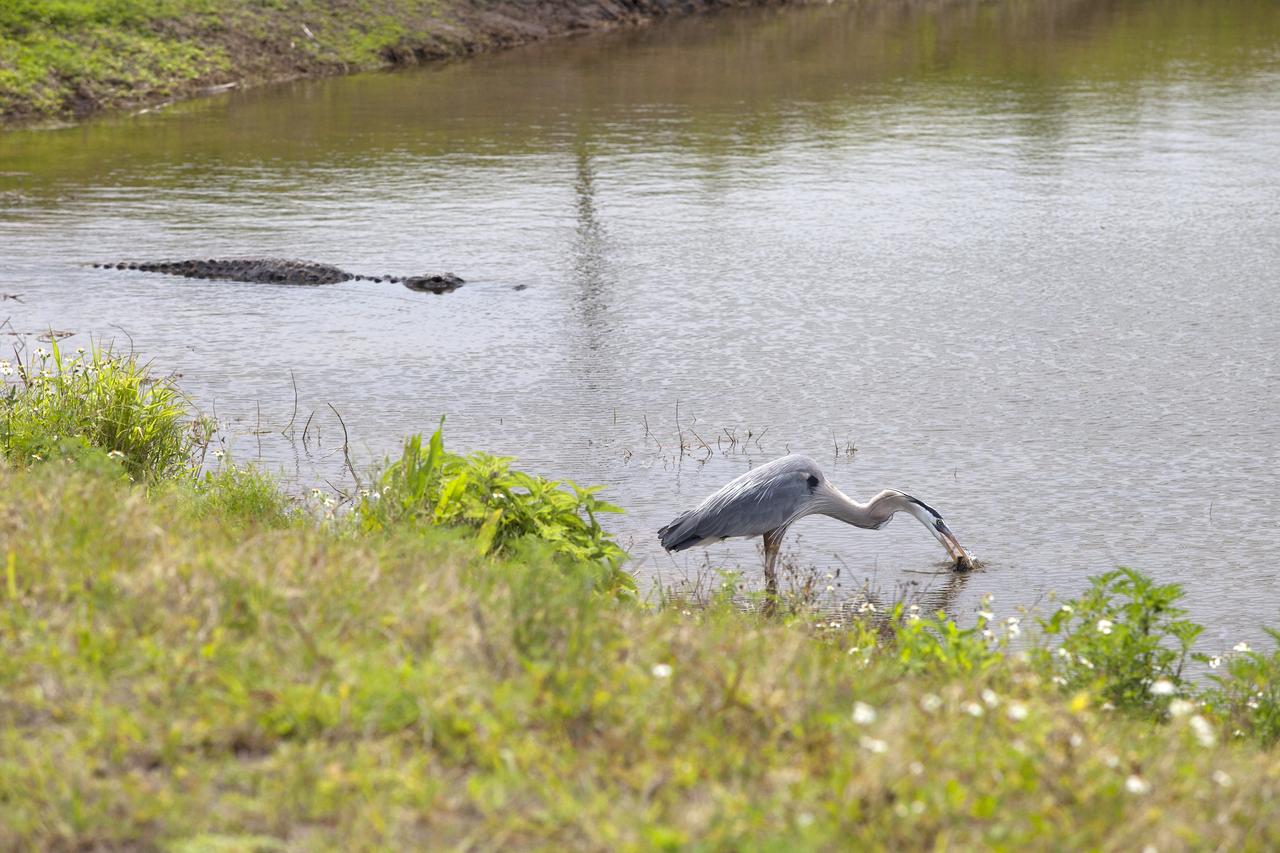
CAPE CANAVERAL, Fla. – A great blue heron catches a small rodent along the shore of an inland waterway at NASA's Kennedy Space Center in Florida. An alligator swims in the water nearby. The center shares a boundary with the Merritt Island National Wildlife Refuge. The refuge encompasses 140,000 acres that are a habitat for more than 330 species of birds, 31 mammals, 117 fishes, and 65 amphibians and reptiles. It contains more than 1,000 known plant species. The marshes and open water of the refuge provide wintering areas for 23 species of migratory waterfowl, as well as a year-round home for great blue herons, great egrets, wood storks, cormorants, brown pelicans and other species of marsh and shore birds, and a variety of insects. Photo credit: NASA/Daniel Casper
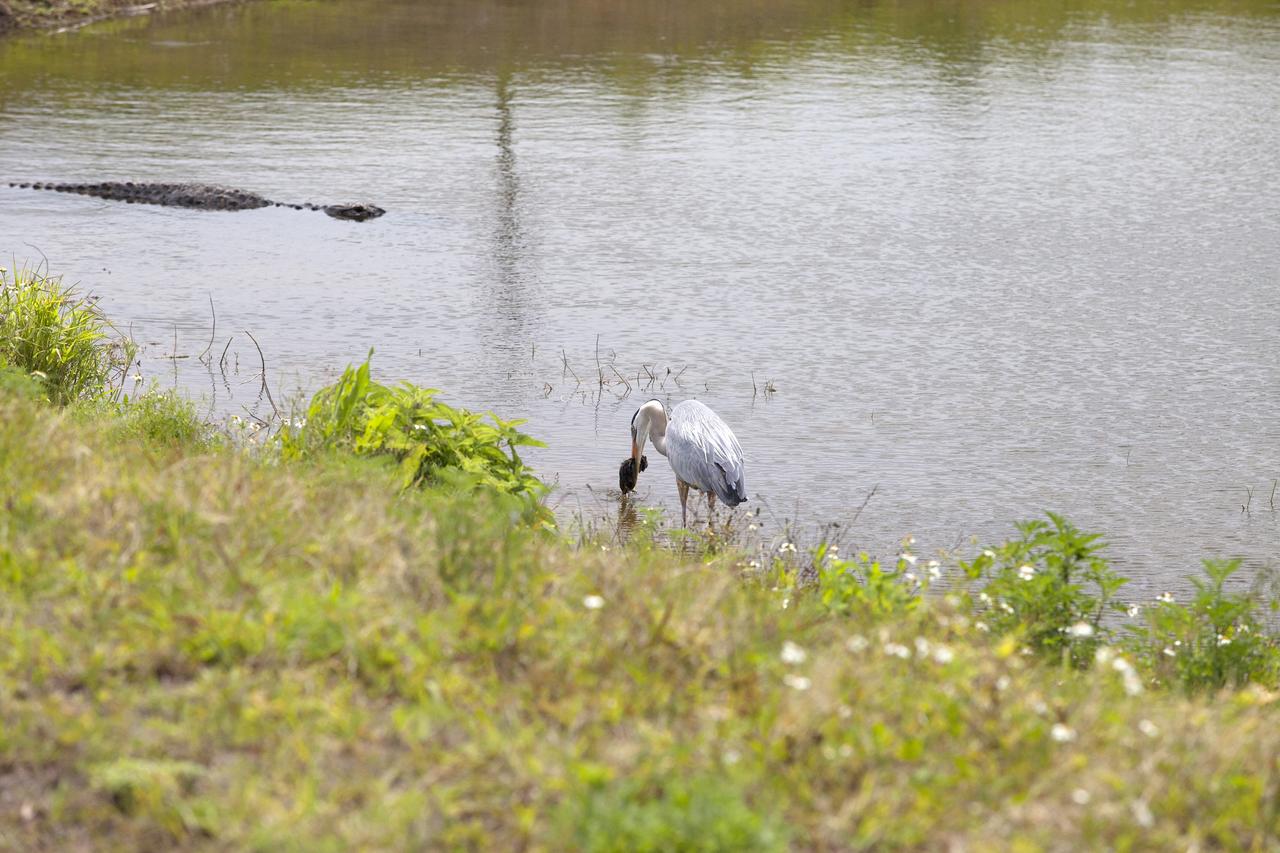
CAPE CANAVERAL, Fla. – A great blue heron catches a small rodent along the shore of an inland waterway at NASA's Kennedy Space Center in Florida. An alligator swims in the water nearby. The center shares a boundary with the Merritt Island National Wildlife Refuge. The refuge encompasses 140,000 acres that are a habitat for more than 330 species of birds, 31 mammals, 117 fishes, and 65 amphibians and reptiles. It contains more than 1,000 known plant species. The marshes and open water of the refuge provide wintering areas for 23 species of migratory waterfowl, as well as a year-round home for great blue herons, great egrets, wood storks, cormorants, brown pelicans and other species of marsh and shore birds, and a variety of insects. Photo credit: NASA/Daniel Casper
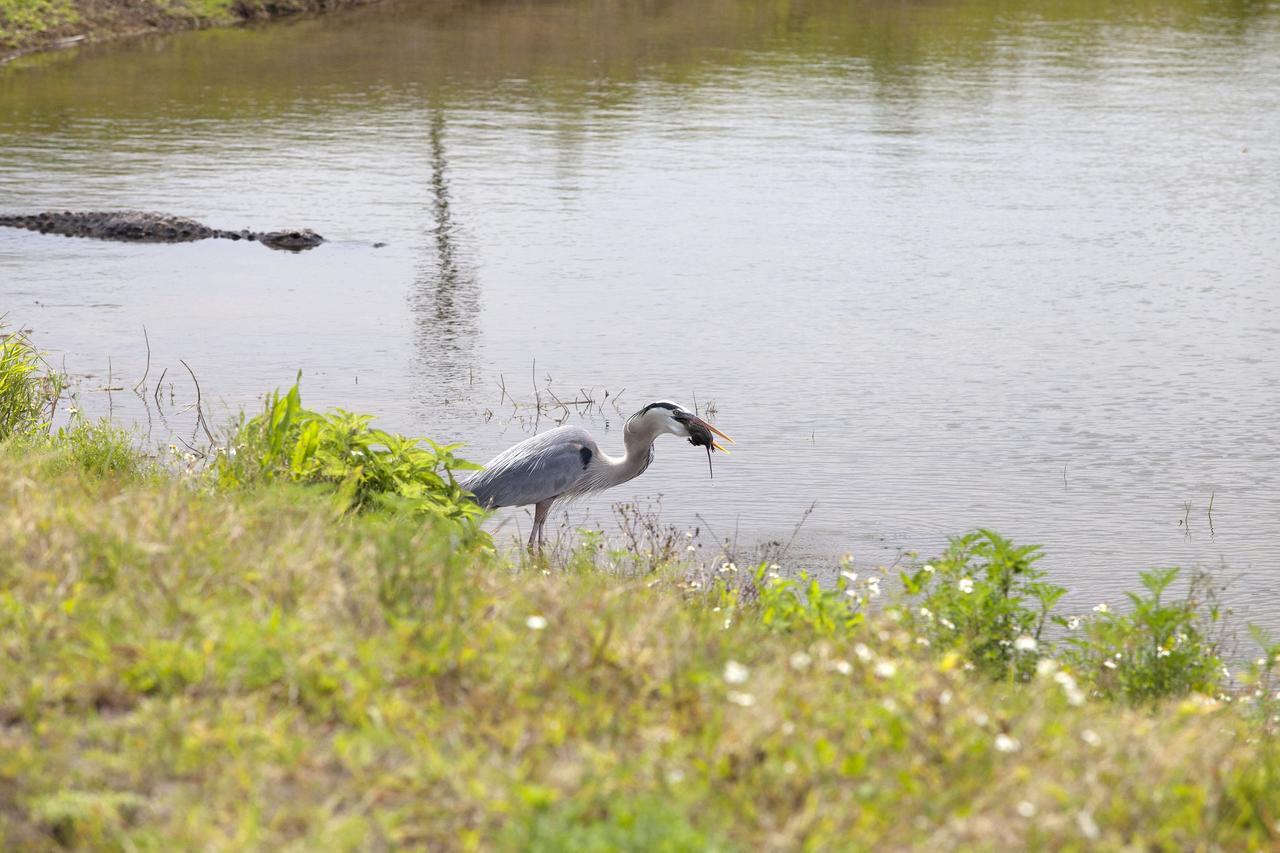
CAPE CANAVERAL, Fla. – A great blue heron consumes a small rodent along the shore of an inland waterway at NASA's Kennedy Space Center in Florida. An alligator swims in the water nearby. The center shares a boundary with the Merritt Island National Wildlife Refuge. The refuge encompasses 140,000 acres that are a habitat for more than 330 species of birds, 31 mammals, 117 fishes, and 65 amphibians and reptiles. It contains more than 1,000 known plant species. The marshes and open water of the refuge provide wintering areas for 23 species of migratory waterfowl, as well as a year-round home for great blue herons, great egrets, wood storks, cormorants, brown pelicans and other species of marsh and shore birds, and a variety of insects. Photo credit: NASA/Daniel Casper
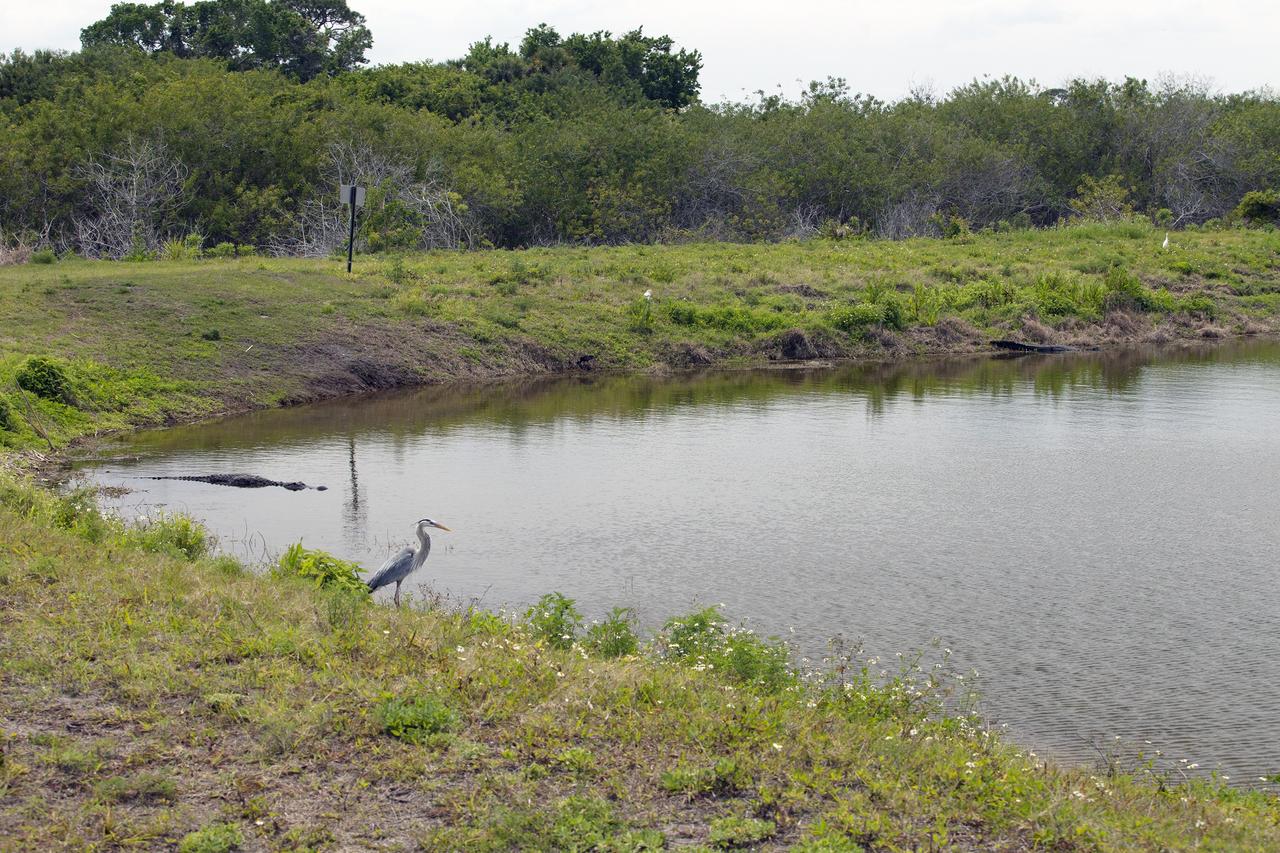
CAPE CANAVERAL, Fla. – A great blue heron stands along the shore of an inland waterway at NASA's Kennedy Space Center in Florida. An alligator swims in the water nearby. The center shares a boundary with the Merritt Island National Wildlife Refuge. The refuge encompasses 140,000 acres that are a habitat for more than 330 species of birds, 31 mammals, 117 fishes, and 65 amphibians and reptiles. It contains more than 1,000 known plant species. The marshes and open water of the refuge provide wintering areas for 23 species of migratory waterfowl, as well as a year-round home for great blue herons, great egrets, wood storks, cormorants, brown pelicans and other species of marsh and shore birds, and a variety of insects. Photo credit: NASA/Daniel Casper
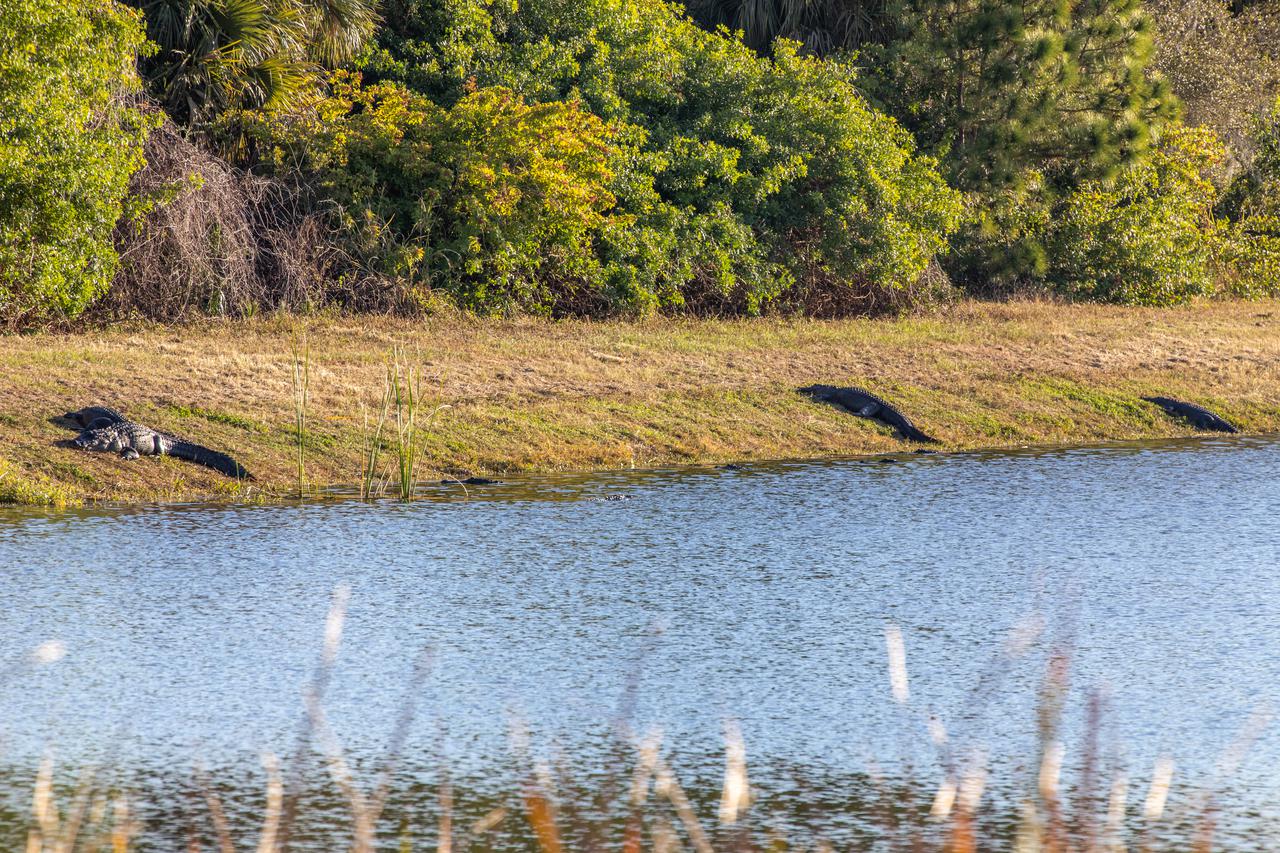
Alligators sun themselves along the grassy shoreline of a waterway at NASA's Kennedy Space Center in Florida on Jan. 21, 2021. The center shares a border with the Merritt Island National Wildlife Refuge. More than 330 native and migratory bird species, along with 25 mammal, 117 fish, and 65 amphibian and reptile species call Kennedy and the wildlife refuge home.
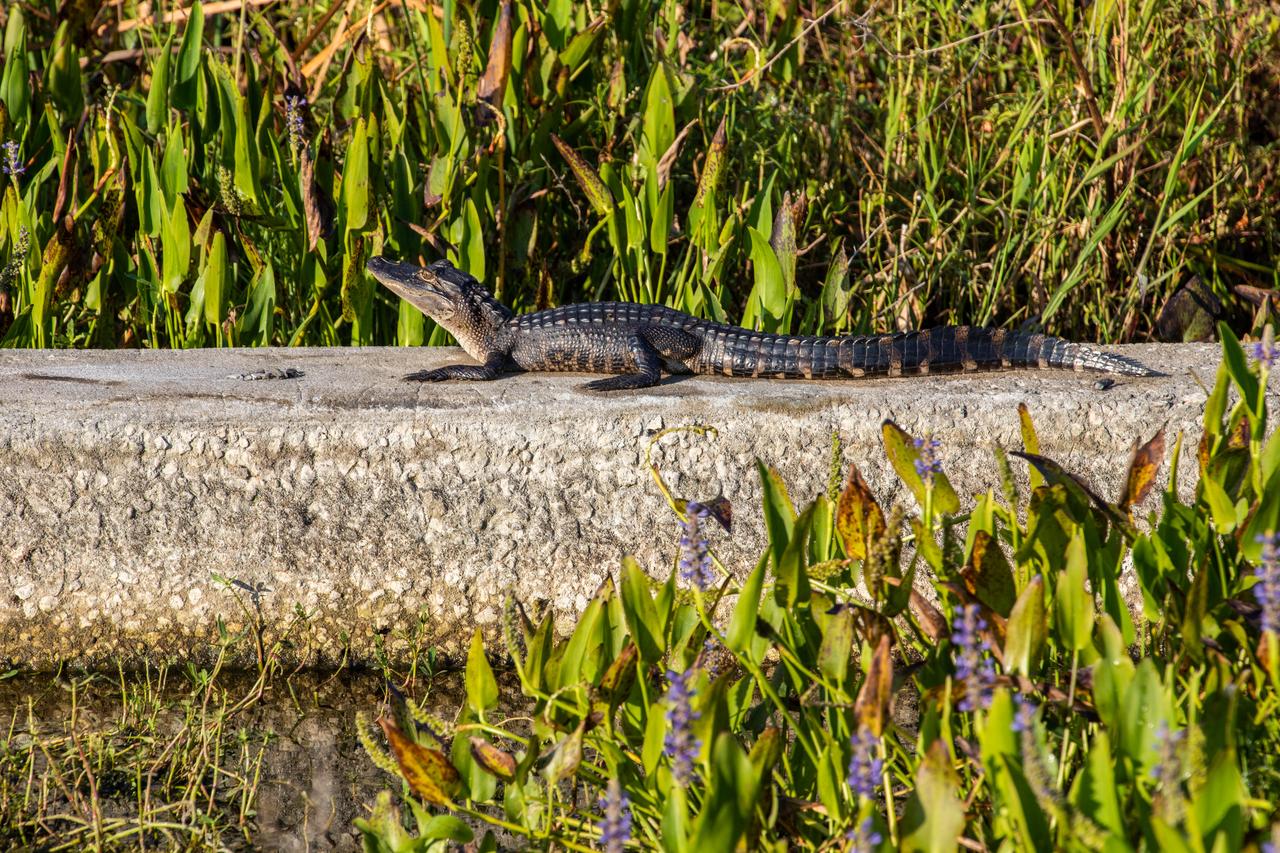
An alligator suns itself near a marsh at NASA’s Kennedy Space Center in Florida on May 16, 2022. The center shares a border with the Merritt Island Wildlife Refuge. More than 65 amphibian and reptile species call Kennedy and the wildlife refuge home.
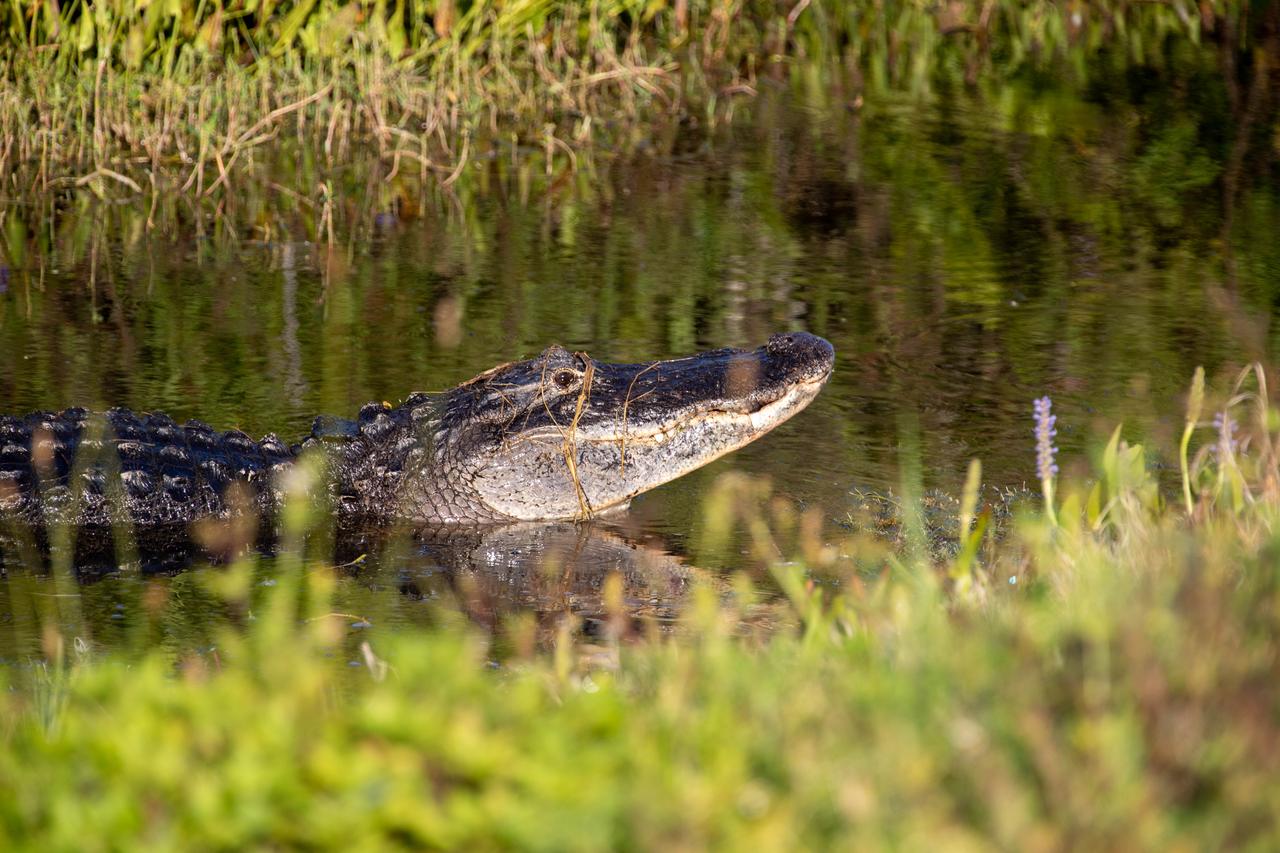
An alligator is in view in a waterway at NASA’s Kennedy Space Center in Florida on May 16, 2022. The center shares a border with the Merritt Island Wildlife Refuge. More than 65 amphibian and reptile species call Kennedy and the wildlife refuge home.
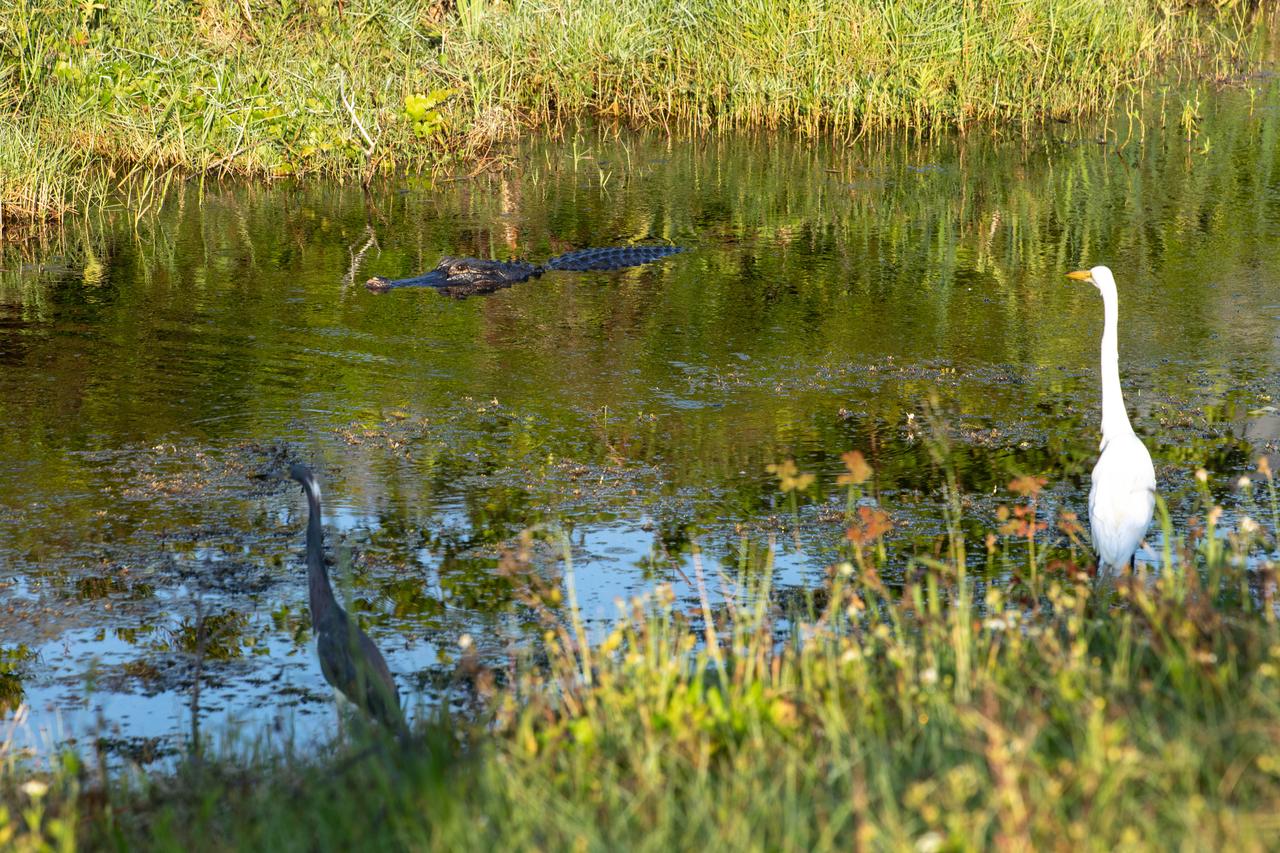
An adult blue heron, at left, and an adult great egret wade along the shore of a waterway at NASA’s Kennedy Space Center in Florida on May 16, 2022. An alligator swims nearby. The center shares a border with the Merritt Island National Wildlife Refuge. More than 330 native and migratory bird species, along with 65 amphibian and reptile species call Kennedy and the wildlife refuge home.
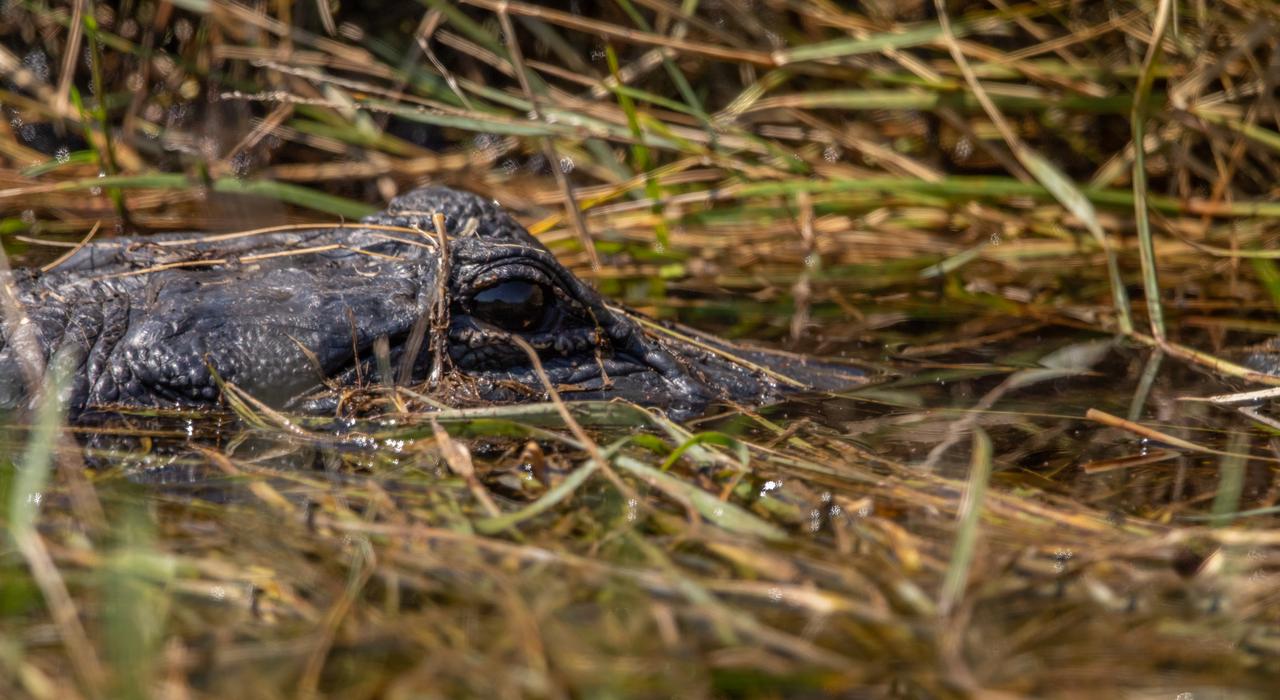
An alligator lurks in a marshy waterway at NASA's Kennedy Space Center in Florida. The center shares a border with the Merritt Island National Wildlife Refuge. More than 330 native and migratory bird species, 25 mammal, 117 fish and 65 amphibian and reptile species call Kennedy and the wildlife refuge home.
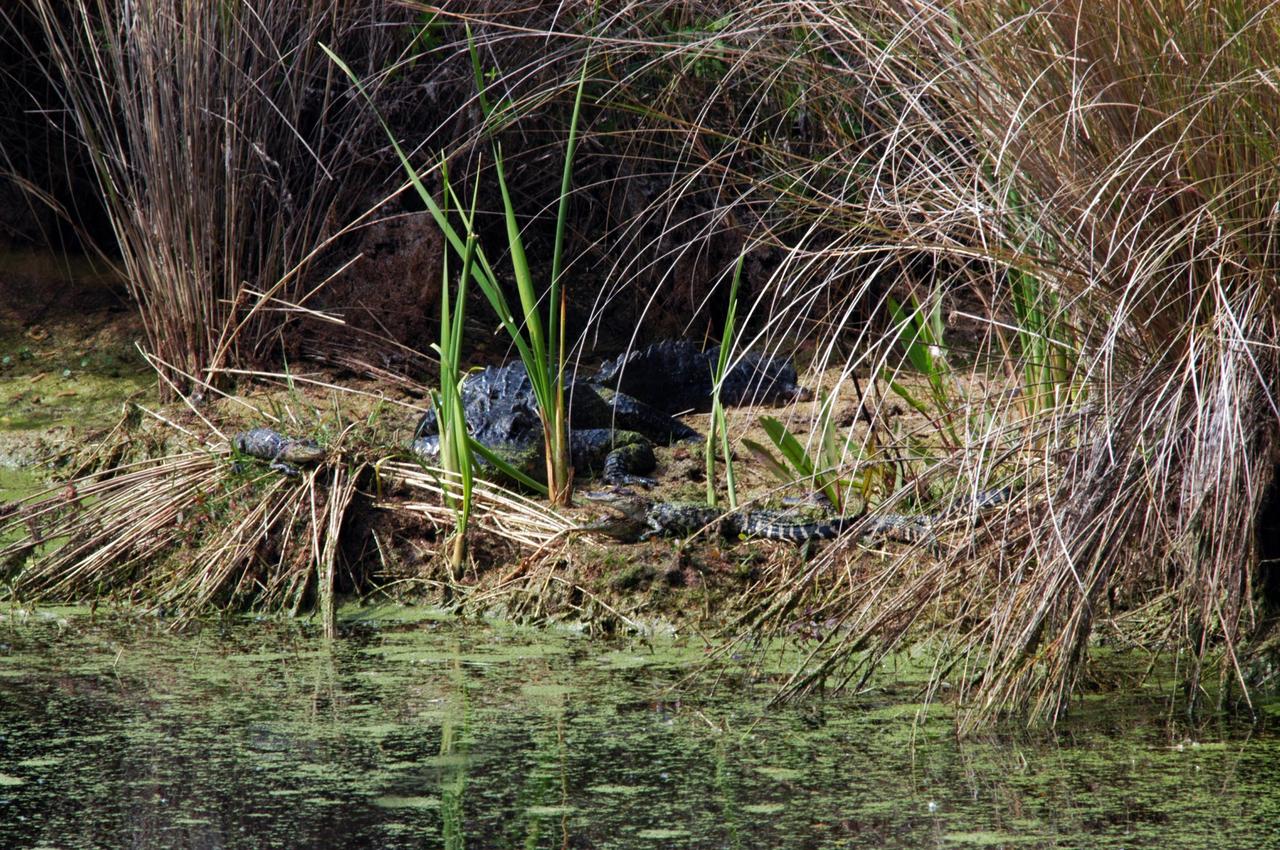
KENNEDY SPACE CENTER, FLA. - In a canal on Kennedy Space Center, the adult alligator moves into the midst of the young alligators near their nest. Nearly 5,000 alligators can be found in canals, ponds and waterways throughout the Center and the surrounding Merritt Island National Wildlife Refuge. American alligators feed and rest in the water, and lay their eggs in dens they dig into the banks. The young alligators spend their first several weeks in these dens. The Wildlife Refuge encompasses 92,000 acres that are a habitat for more than 331 species of birds, 31 mammals, 117 fishes, and 65 amphibians and reptiles. Photo credit: NASA/Jim Grossmann
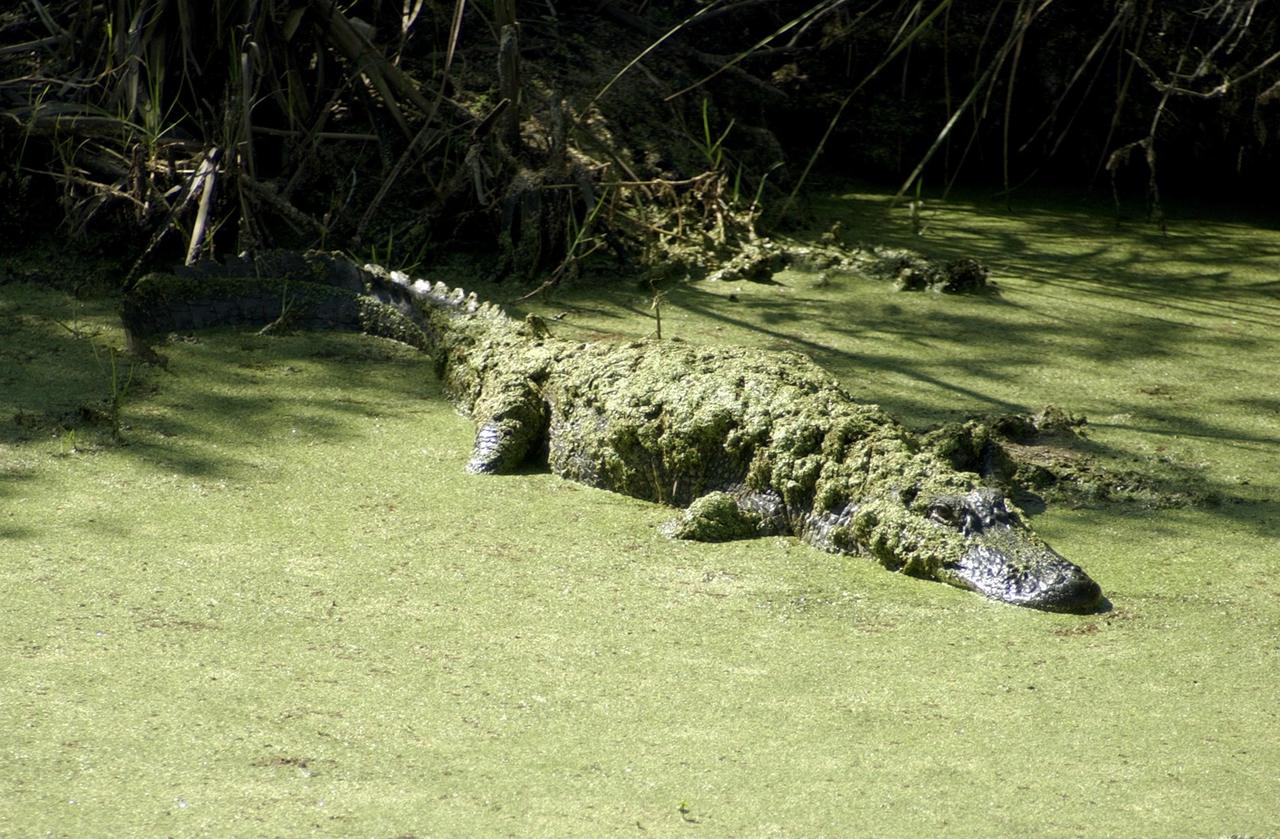
KENNEDY SPACE CENTER, FLA. -- In one of the many waterholes on KSC, a large alligator lies covered with green algae as he basks in the sun. Nearly 5,000 alligators can be found in canals, ponds and waterways throughout the Center and surrounding areas. American alligators feed and rest in the water, and lay their eggs in dens they dig into the banks. The young alligators spend their first several weeks in these dens
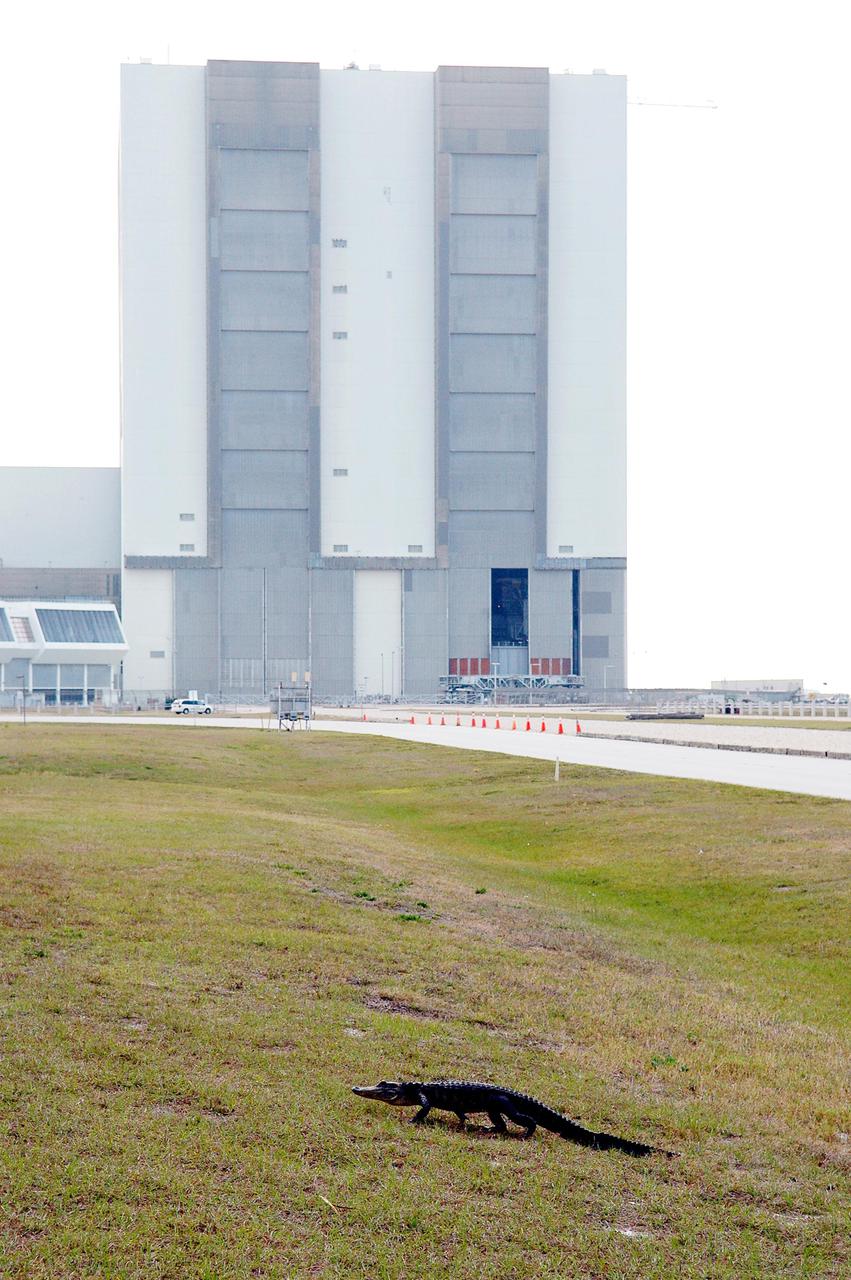
KENNEDY SPACE CENTER, FLA. - An alligator strolls across the ground near the Vehicle Assembly Building (in the background). Nearly 5,000 alligators can be found in canals, ponds and waterways throughout the Center and the surrounding Merritt Island National Wildlife Refuge. American alligators feed and rest in the water, and lay their eggs in dens they dig into the banks. The young alligators spend their first several weeks in these dens. The Wildlife Refuge encompasses 92,000 acres that are a habitat for more than 331 species of birds, 31 mammals, 117 fishes, and 65 amphibians and reptiles.
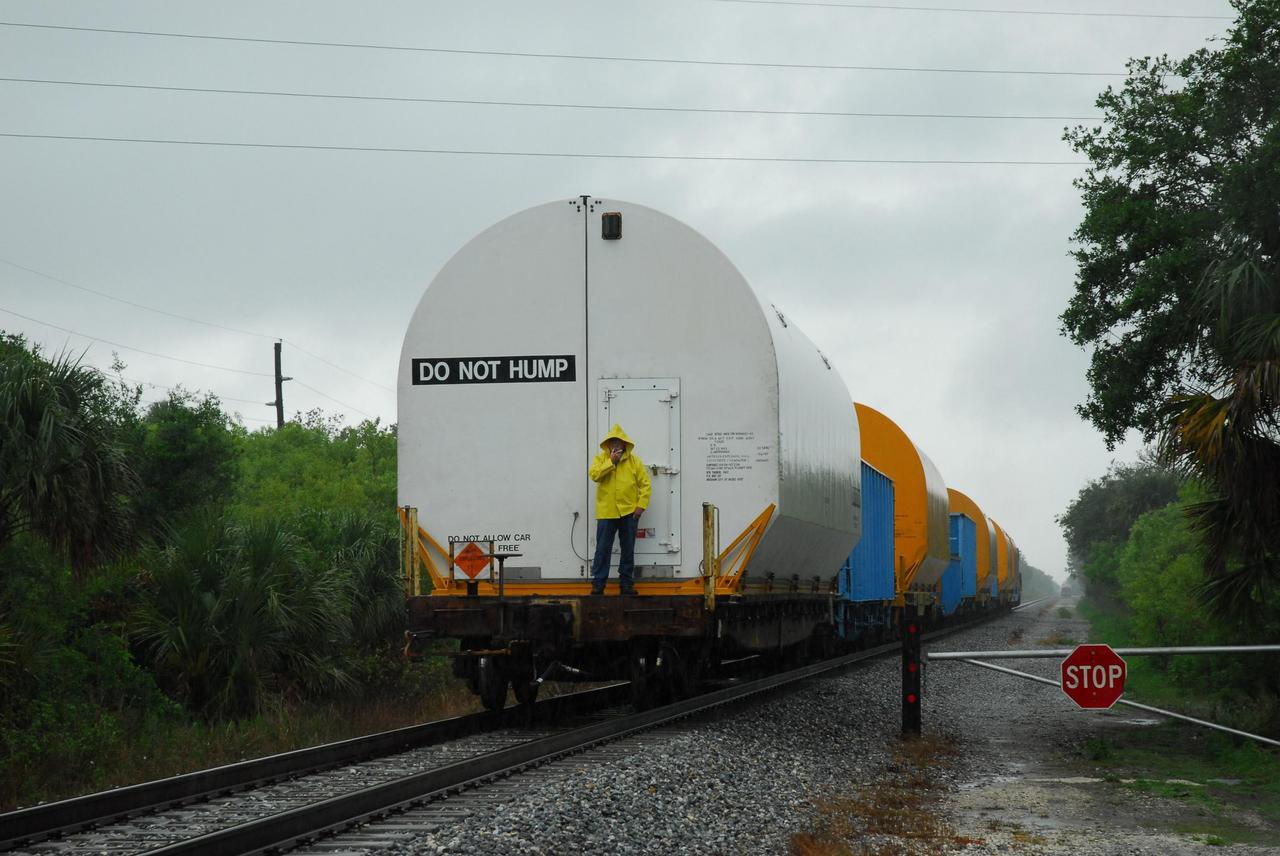
KENNEDY SPACE CENTER, FLA. -- Solid rocket motor segments and two aft exit cone segments arrive by rail at NASA's Kennedy Space Center. While enroute, solid rocket motor segments were involved in a derailment in Alabama. The rail cars carrying these segments remained upright and were undamaged. An inspection determined these segment cars could continue on to Florida. The segments themselves will undergo further evaluation at Kennedy before they are cleared for flight. Other segments involved in the derailment will be returned to a plant in Utah for further evaluation. Photo credit: NASA/George Shelton
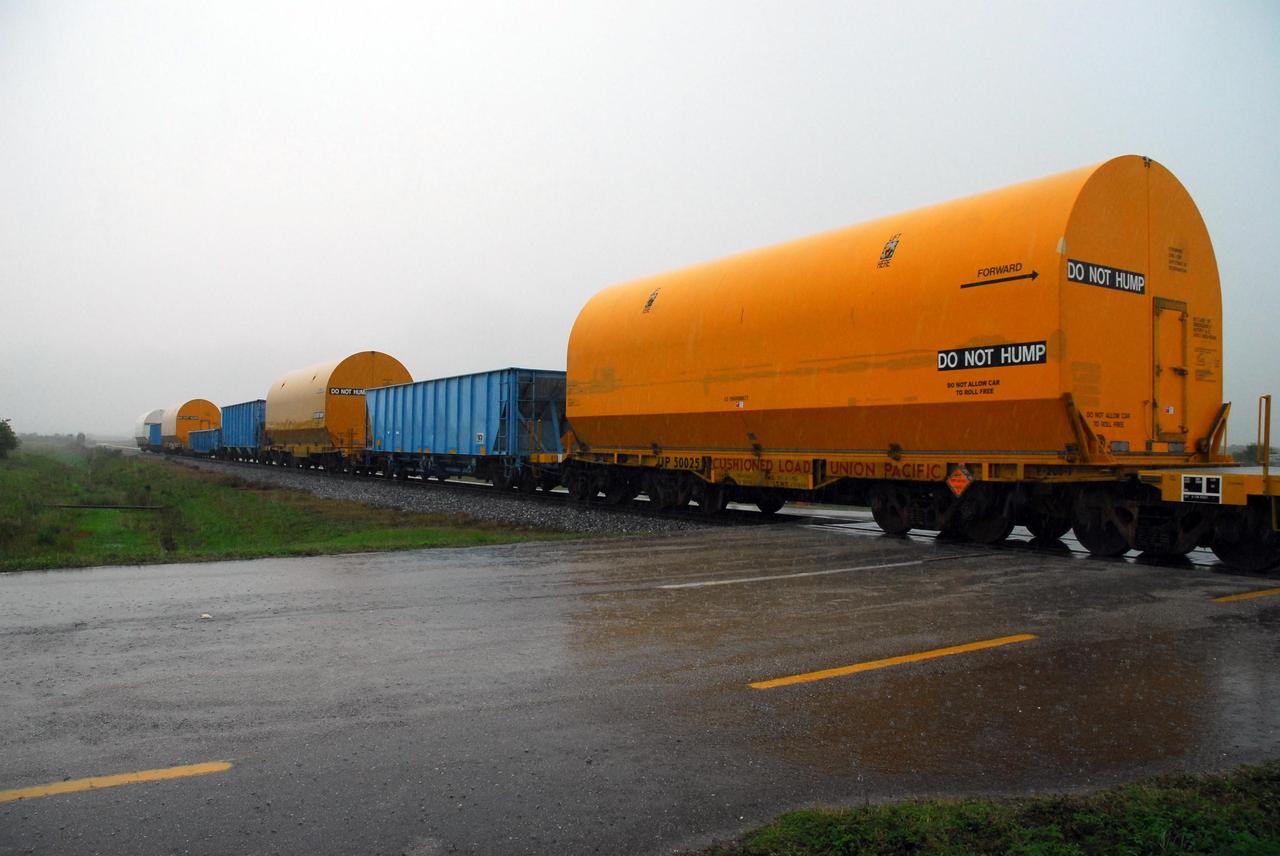
KENNEDY SPACE CENTER, FLA. -- Solid rocket motor segments and two aft exit cone segments arrive by rail at NASA's Kennedy Space Center. While enroute, solid rocket motor segments were involved in a derailment in Alabama. The rail cars carrying these segments remained upright and were undamaged. An inspection determined these segment cars could continue on to Florida. The segments themselves will undergo further evaluation at Kennedy before they are cleared for flight. Other segments involved in the derailment will be returned to a plant in Utah for further evaluation. Photo credit: NASA/George Shelton
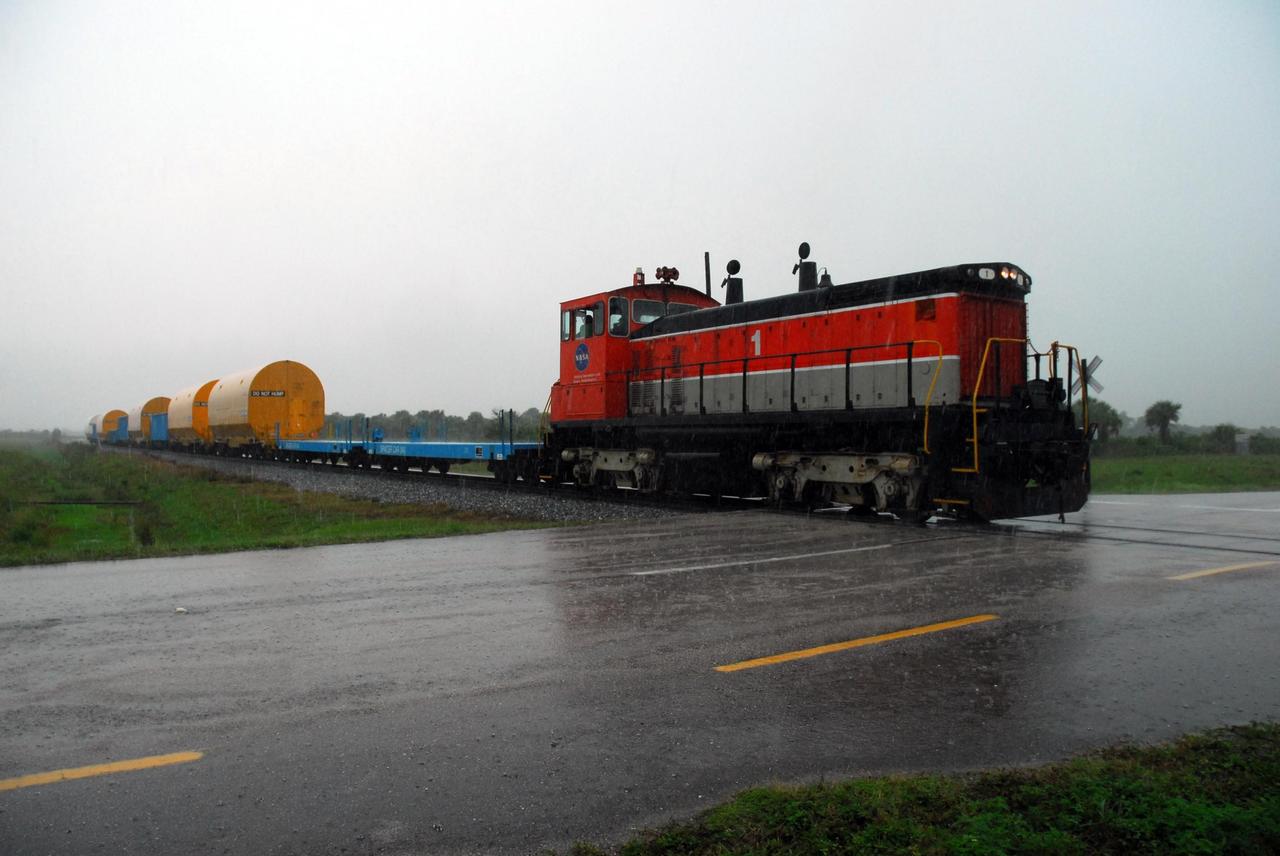
KENNEDY SPACE CENTER, FLA. -- The locomotive and rail cars carrying solid rocket booster motor segments and two aft exit cone segments cross a road on Kennedy Space Center. These cars are headed for the SRB Assembly and Refurbishment Facility. While enroute, solid rocket motor segments were involved in a derailment in Alabama. The rail cars carrying these segments remained upright and were undamaged. An inspection determined these segment cars could continue on to Florida. The segments themselves will undergo further evaluation at Kennedy before they are cleared for flight. Other segments involved in the derailment will be returned to a plant in Utah for further evaluation. Photo credit: NASA/George Shelton
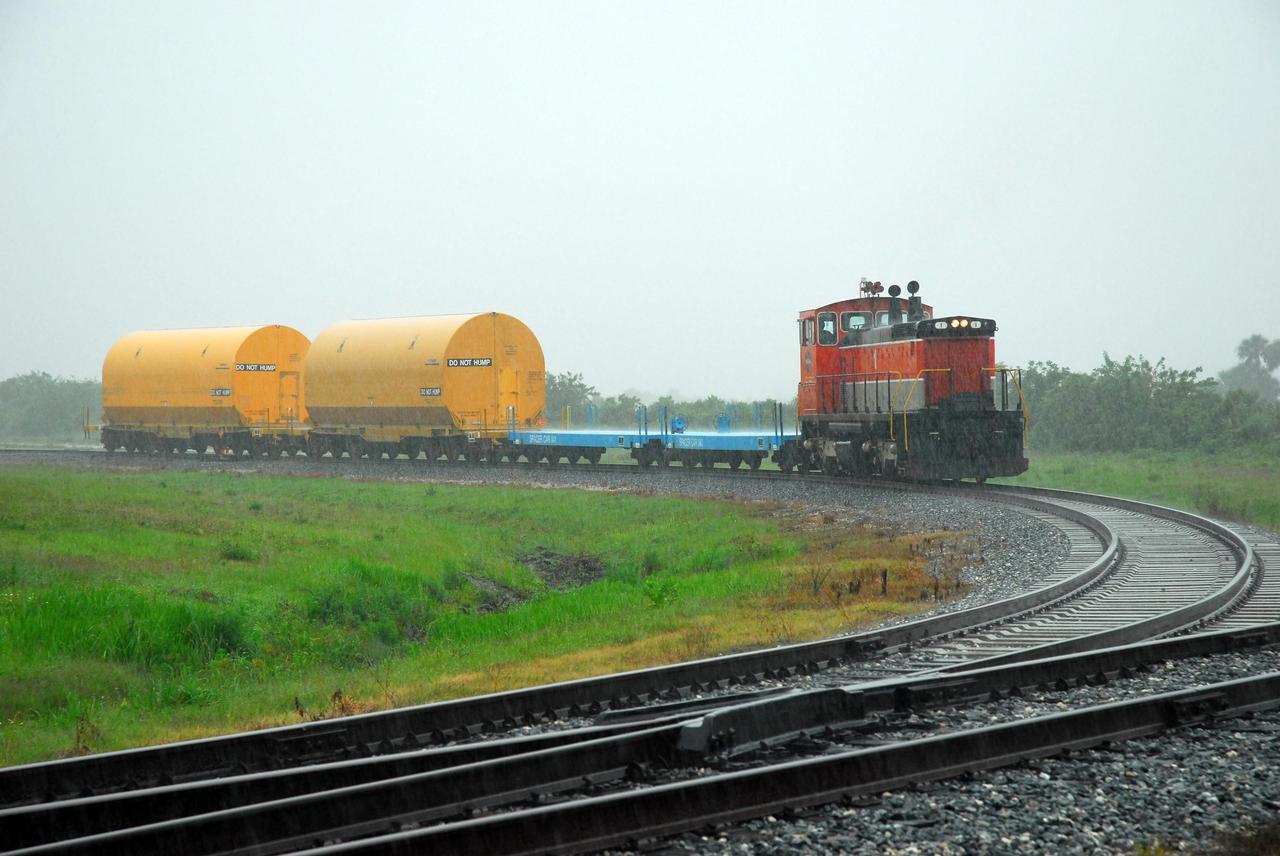
KENNEDY SPACE CENTER, FLA. -- The locomotive and rail cars carrying solid rocket booster motor segments and two aft exit cone segments cross a road on Kennedy Space Center. These cars are headed for the SRB Assembly and Refurbishment Facility. While enroute, solid rocket motor segments were involved in a derailment in Alabama. The rail cars carrying these segments remained upright and were undamaged. An inspection determined these segment cars could continue on to Florida. The segments themselves will undergo further evaluation at Kennedy before they are cleared for flight. Other segments involved in the derailment will be returned to a plant in Utah for further evaluation. Photo credit: NASA/George Shelton
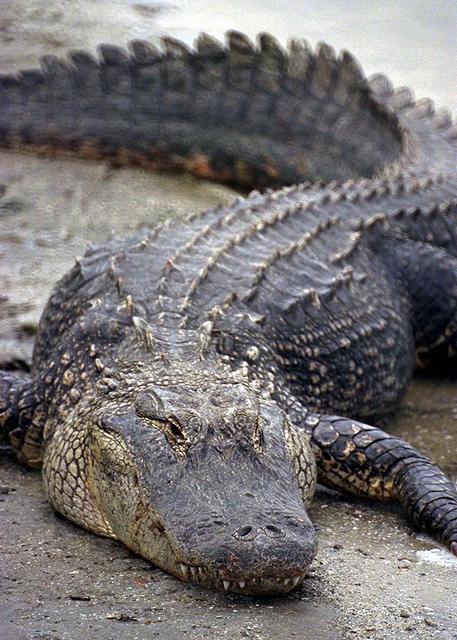
KENNEDY SPACE CENTER, FLA. -- An alligator rests on the bank of a creek in Kennedy Space Center. Alligators are common in the waters of Central Florida, and especially within the Merritt Island National Wildlife Refuge, which is located on Kennedy property.
KSC WILDLIFE - ALLIGATORS & BIRDS
KSC WILDLIFE - ALLIGATORS & BIRDS
KSC WILDLIFE - ALLIGATORS & BIRDS
KSC WILDLIFE - ALLIGATORS & BIRDS
KSC WILDLIFE - ALLIGATORS & BIRDS

KENNEDY SPACE CENTER, FLA. - An alligator slides off a bank into the water on the west side of NASA’s Kennedy Space Center. Nearly 5,000 alligators can be found in canals, ponds and waterways throughout the Center and the surrounding Merritt Island National Wildlife Refuge. American alligators feed and rest in the water, and lay their eggs in dens they dig into the banks. The young alligators spend their first several weeks in these dens. The Wildlife Refuge encompasses 92,000 acres that are a habitat for more than 331 species of birds, 31 mammals, 117 fishes, and 65 amphibians and reptiles.
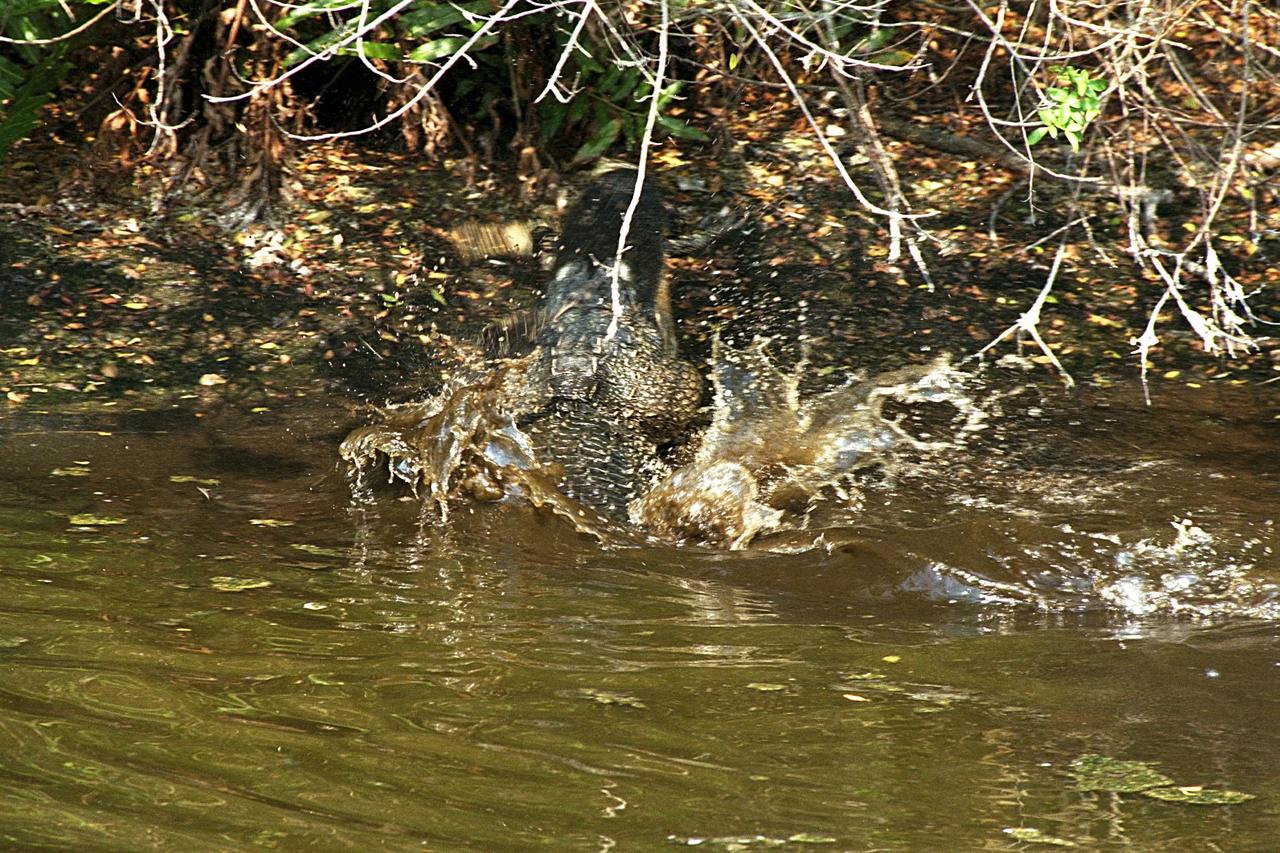
KENNEDY SPACE CENTER, FLA. -- A large alligator attacks and eats a smaller one in a natural display of cannibalism. Although this event has been observed infrequently by Kennedy Space Center's staff photographers, it is common feeding behavior among the wild alligator population on the space center. Alligators are carnivorous and will eat any living thing that crosses their paths and is small enough for them to kill. For this reason, it is dangerous to feed wild alligators, and in Florida, it is also illegal. The Merritt Island National Wildlife Refuge, which is operated by the U.S. Fish and Wildlife Service, is located on Kennedy Space Center property.
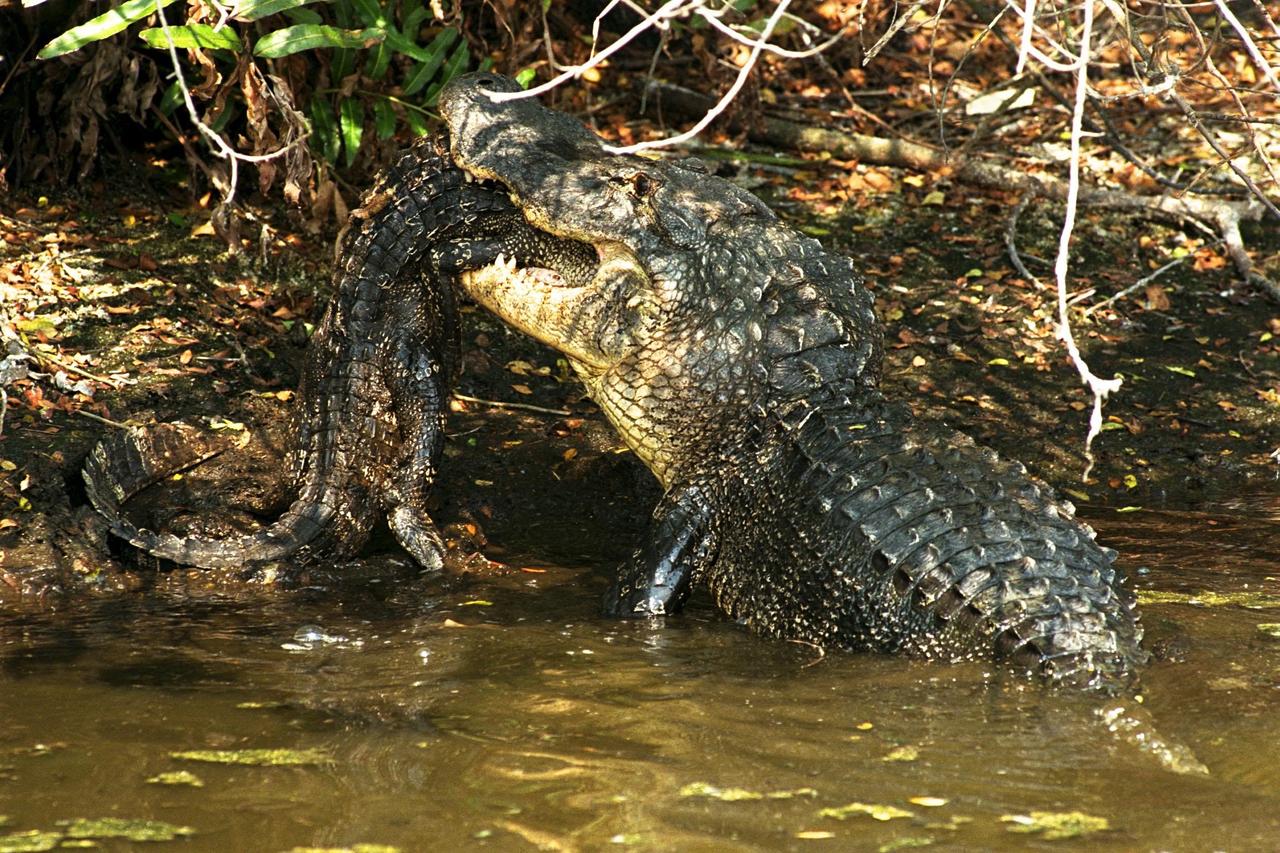
KENNEDY SPACE CENTER, FLA. -- A large alligator attacks and eats a smaller one in a natural display of cannibalism. Although this event has been observed infrequently by Kennedy Space Center's staff photographers, it is common feeding behavior among the wild alligator population on the space center. Alligators are carnivorous and will eat any living thing that crosses their paths and is small enough for them to kill. For this reason, it is dangerous to feed wild alligators, and in Florida, it is also illegal. The Merritt Island National Wildlife Refuge, which is operated by the U.S. Fish and Wildlife Service, is located on Kennedy Space Center property.
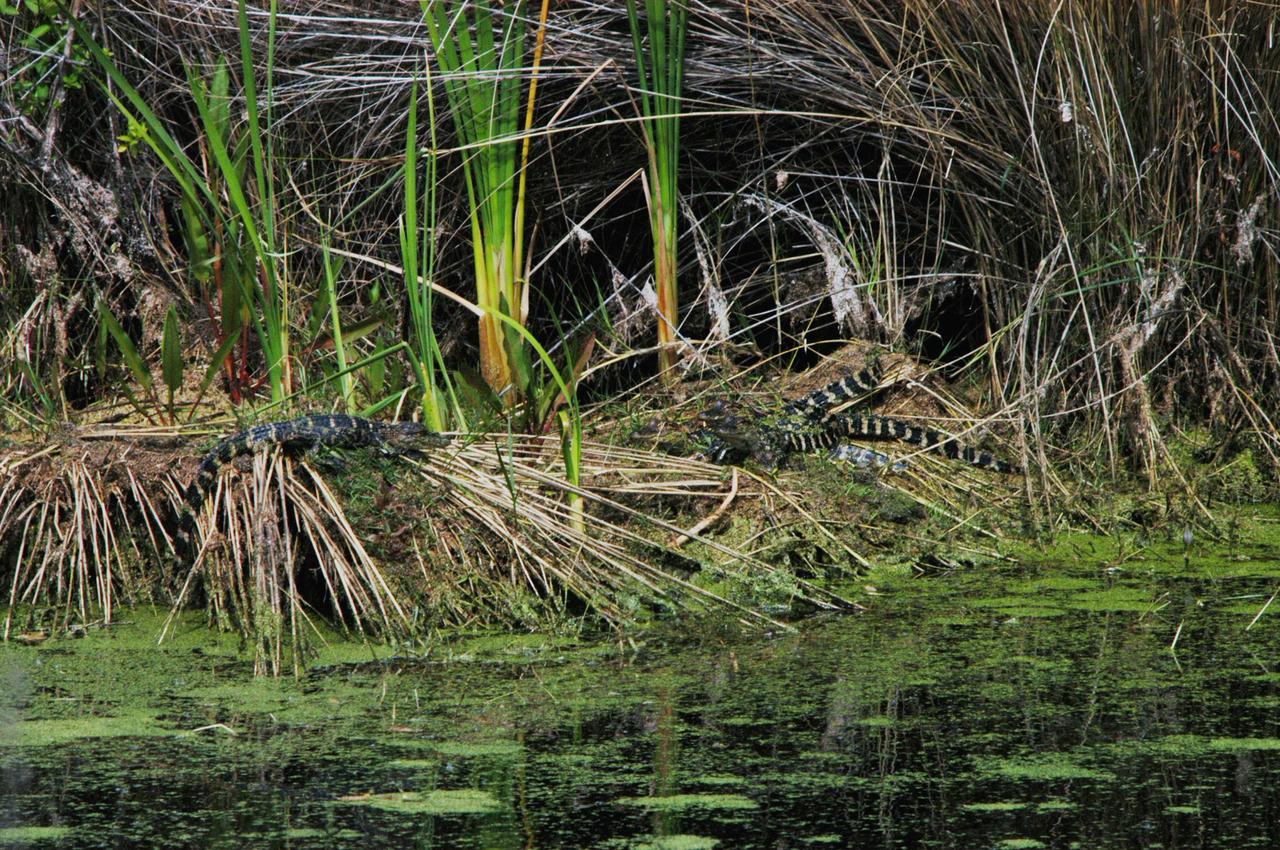
KENNEDY SPACE CENTER, FLA. - In a canal on Kennedy Space Center, young alligators stay close to their nest. Nearly 5,000 alligators can be found in canals, ponds and waterways throughout the Center and the surrounding Merritt Island National Wildlife Refuge. American alligators feed and rest in the water, and lay their eggs in dens they dig into the banks. The young alligators spend their first several weeks in these dens. The Wildlife Refuge encompasses 92,000 acres that are a habitat for more than 331 species of birds, 31 mammals, 117 fishes, and 65 amphibians and reptiles. Photo credit: NASA/Jim Grossmann
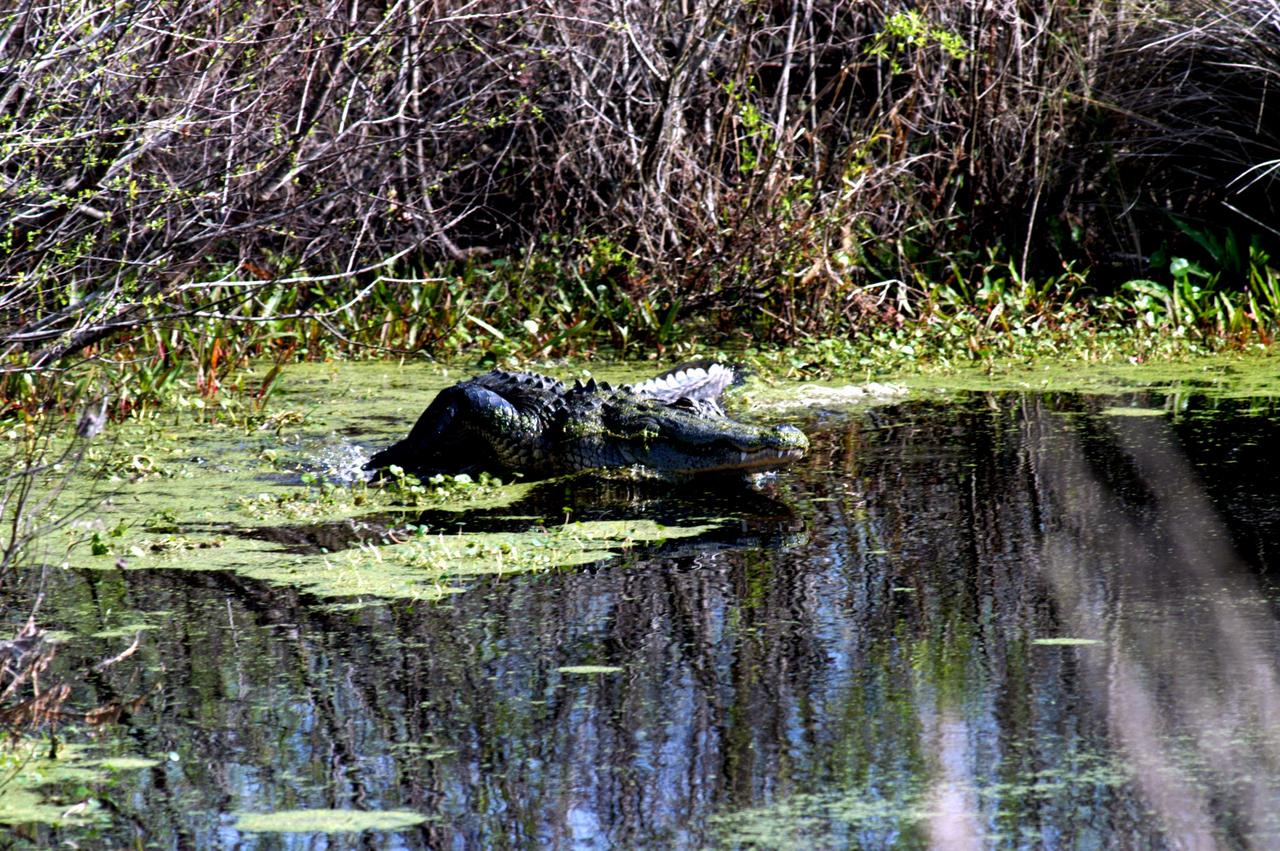
KENNEDY SPACE CENTER, FLA. - An alligator makes a splashy entrance into the water on the west side of NASA’s Kennedy Space Center. Nearly 5,000 alligators can be found in canals, ponds and waterways throughout the Center and the surrounding Merritt Island National Wildlife Refuge. American alligators feed and rest in the water, and lay their eggs in dens they dig into the banks. The young alligators spend their first several weeks in these dens. The Wildlife Refuge encompasses 92,000 acres that are a habitat for more than 331 species of birds, 31 mammals, 117 fishes, and 65 amphibians and reptiles.

KENNEDY SPACE CENTER, FLA. -- A large alligator attacks and eats a smaller one in a natural display of cannibalism. Although this event has been observed infrequently by Kennedy Space Center's staff photographers, it is common feeding behavior among the wild alligator population on the space center. Alligators are carnivorous and will eat any living thing that crosses their paths and is small enough for them to kill. For this reason, it is dangerous to feed wild alligators, and in Florida, it is also illegal. The Merritt Island National Wildlife Refuge, which is operated by the U.S. Fish and Wildlife Service, is located on Kennedy Space Center property.
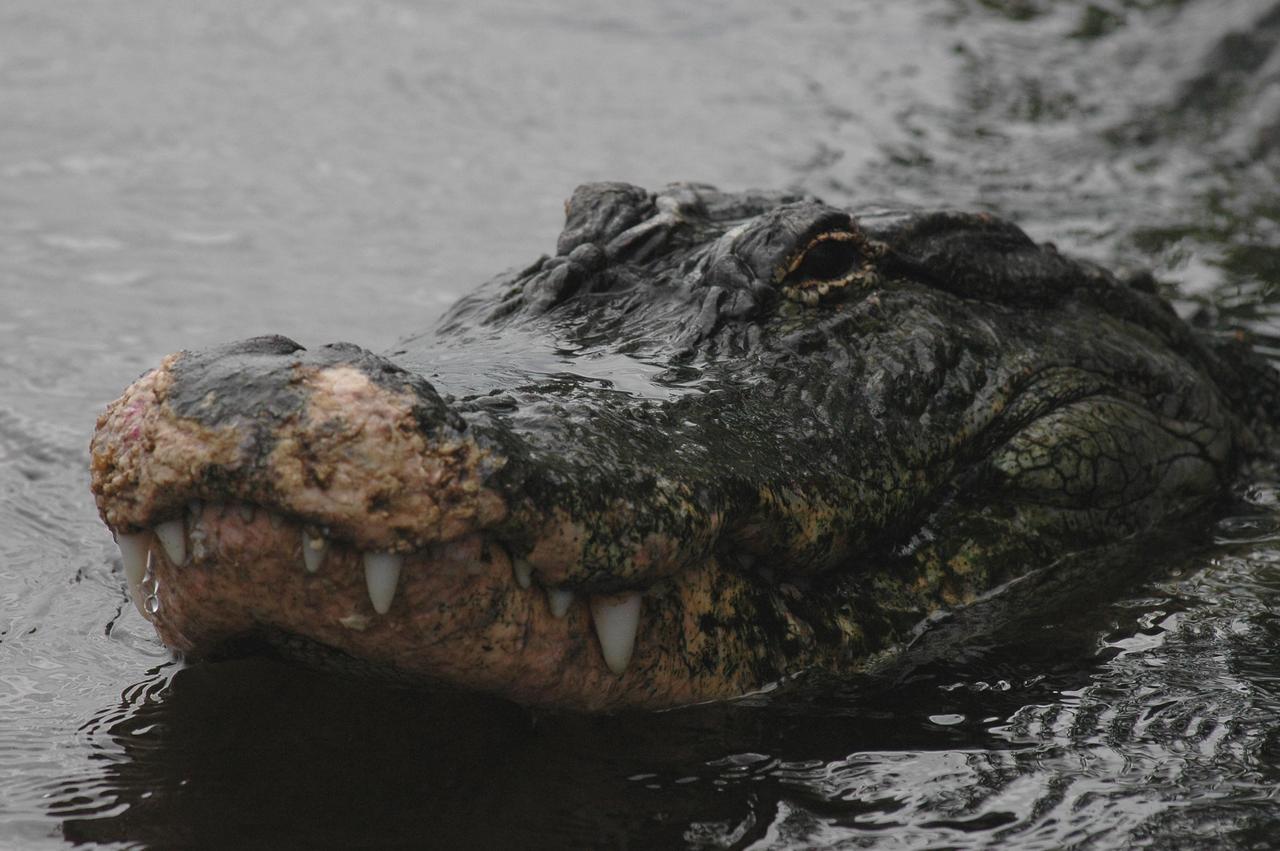
KENNEDY SPACE CENTER, FLA. - An alligator spotted near the Launch Pad 39 area at NASA’s Kennedy Space Center raises its head above the water. Nearly 5,000 alligators can be found in canals, ponds and waterways throughout the Center and the surrounding Merritt Island National Wildlife Refuge. American alligators feed and rest in the water, and lay their eggs in dens they dig into the banks. The young alligators spend their first several weeks in these dens. The Wildlife Refuge encompasses 92,000 acres that are a habitat for more than 331 species of birds, 31 mammals, 117 fishes, and 65 amphibians and reptiles.
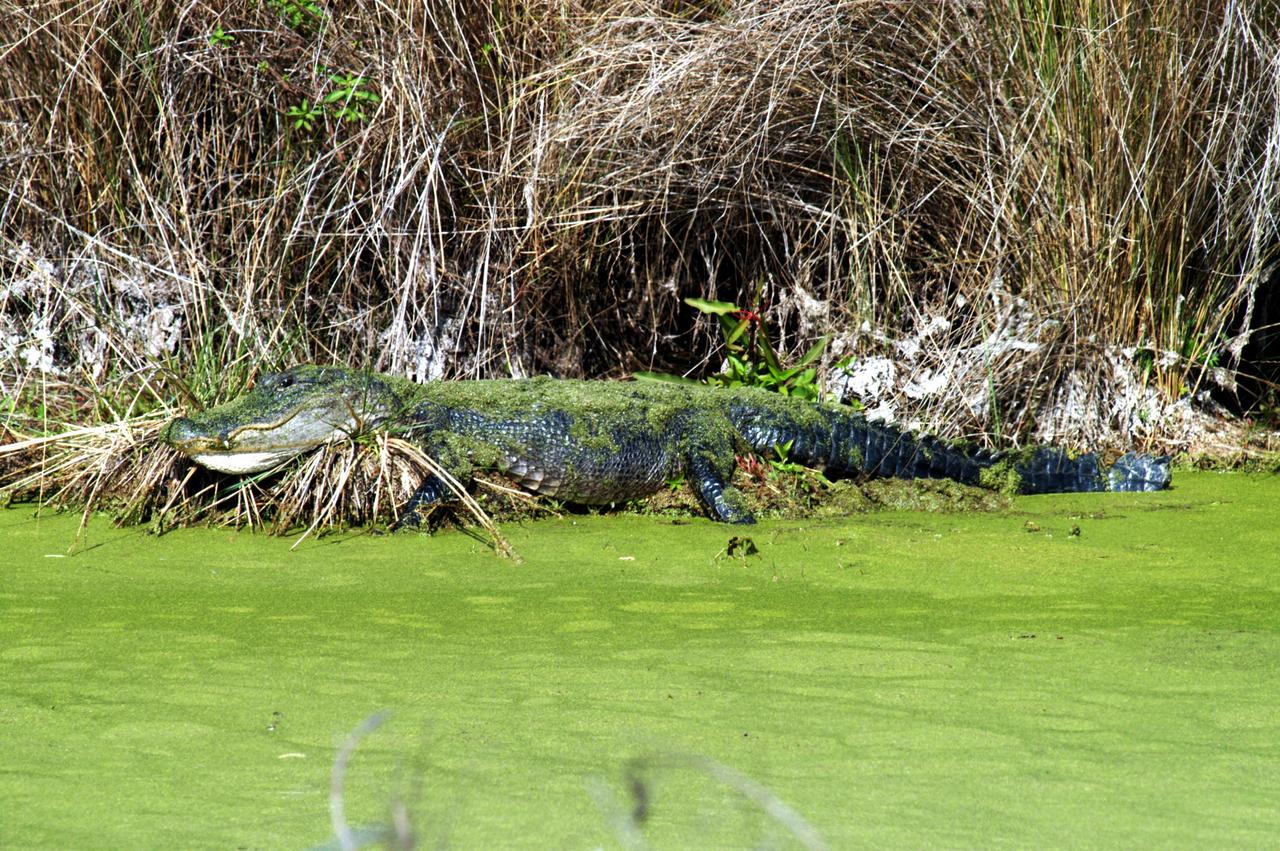
KENNEDY SPACE CENTER, FLA. - A moss-covered alligator stretches out on the water’s edge at a bank on the west side of NASA’s Kennedy Space Center. Nearly 5,000 alligators can be found in canals, ponds and waterways throughout the Center and the surrounding Merritt Island National Wildlife Refuge. American alligators feed and rest in the water, and lay their eggs in dens they dig into the banks. The young alligators spend their first several weeks in these dens. The Wildlife Refuge encompasses 92,000 acres that are a habitat for more than 331 species of birds, 31 mammals, 117 fishes, and 65 amphibians and reptiles.
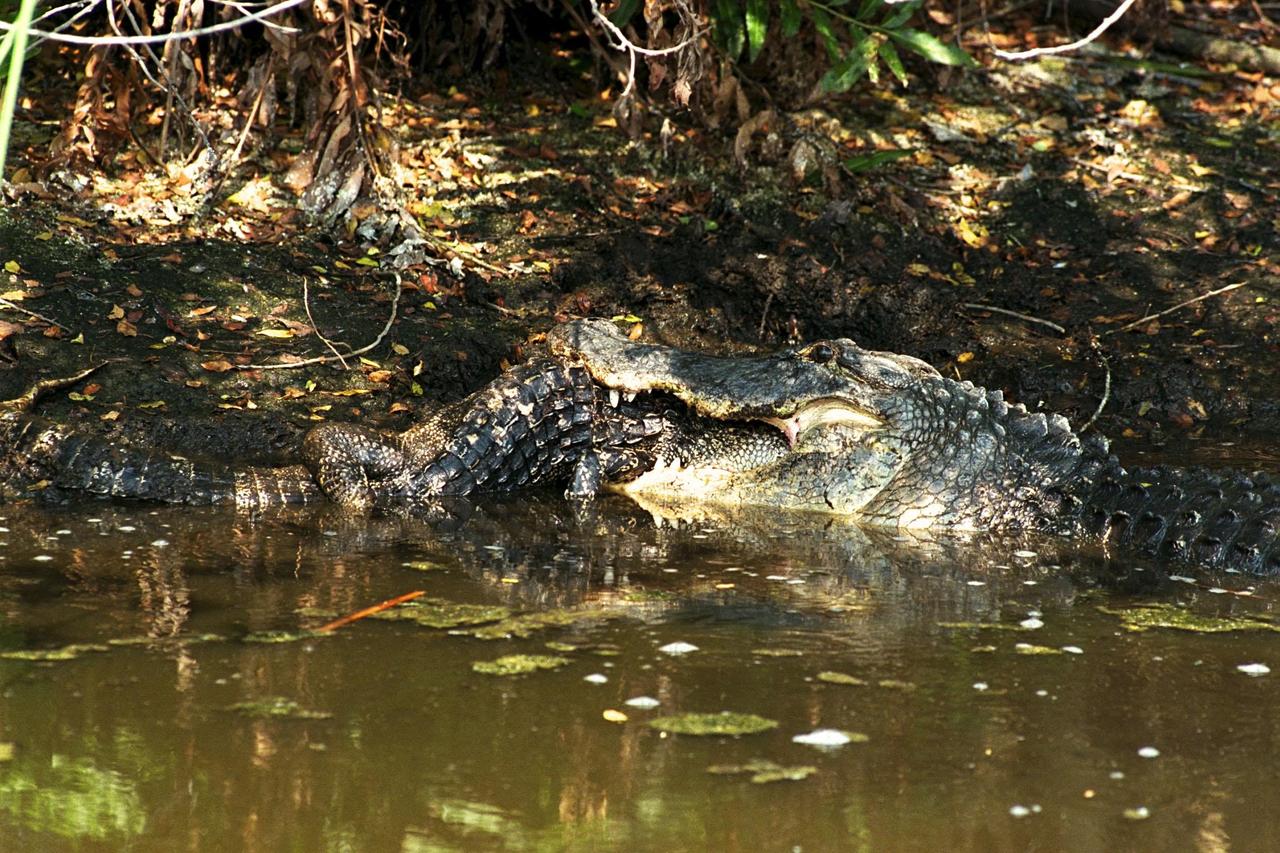
KENNEDY SPACE CENTER, FLA. -- A large alligator attacks and eats a smaller one in a natural display of cannibalism. Although this event has been observed infrequently by Kennedy Space Center's staff photographers, it is common feeding behavior among the wild alligator population on the space center. Alligators are carnivorous and will eat any living thing that crosses their paths and is small enough for them to kill. For this reason, it is dangerous to feed wild alligators, and in Florida, it is also illegal. The Merritt Island National Wildlife Refuge, which is operated by the U.S. Fish and Wildlife Service, is located on Kennedy Space Center property.
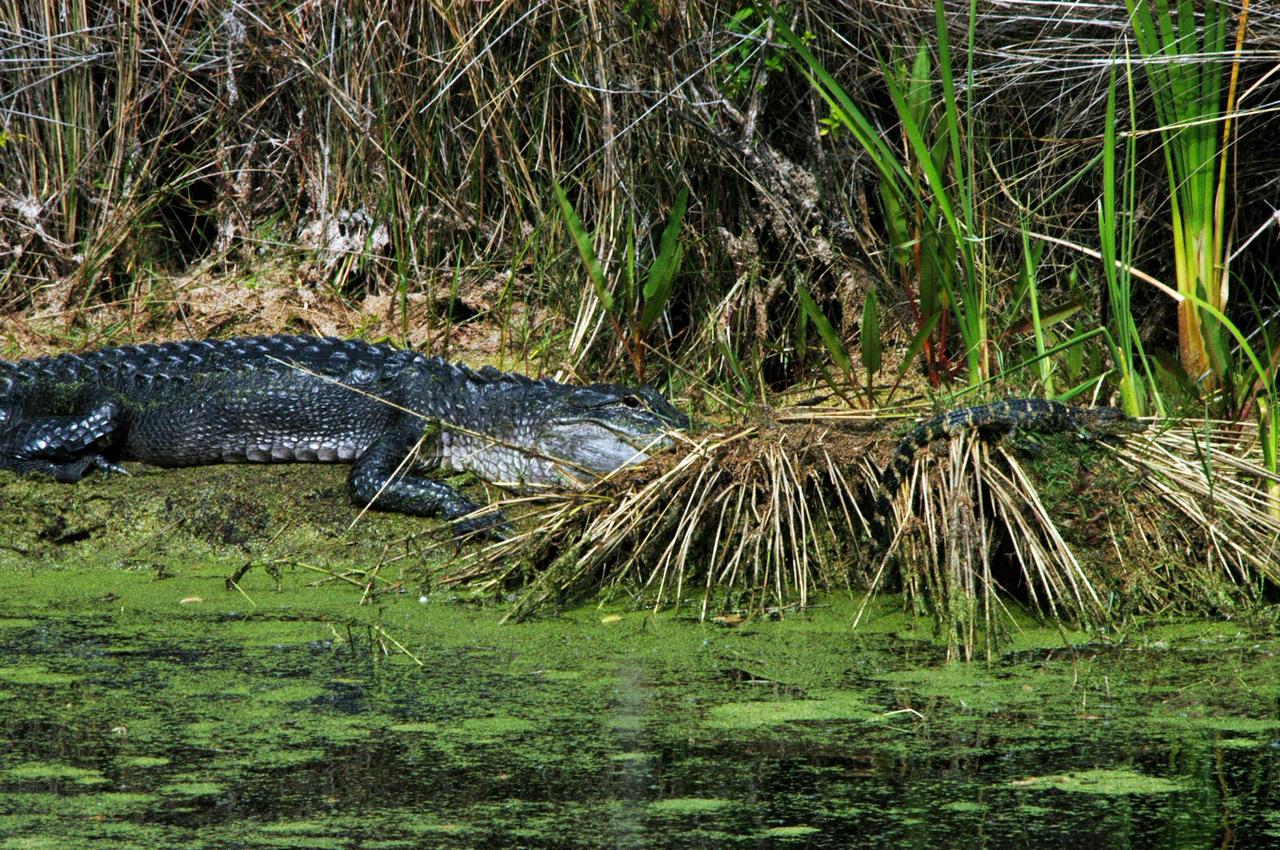
KENNEDY SPACE CENTER, FLA. - In a canal on Kennedy Space Center, an alligator stays close to its young, at right. Nearly 5,000 alligators can be found in canals, ponds and waterways throughout the Center and the surrounding Merritt Island National Wildlife Refuge. American alligators feed and rest in the water, and lay their eggs in dens they dig into the banks. The young alligators spend their first several weeks in these dens. The Wildlife Refuge encompasses 92,000 acres that are a habitat for more than 331 species of birds, 31 mammals, 117 fishes, and 65 amphibians and reptiles. Photo credit: NASA/Jim Grossmann
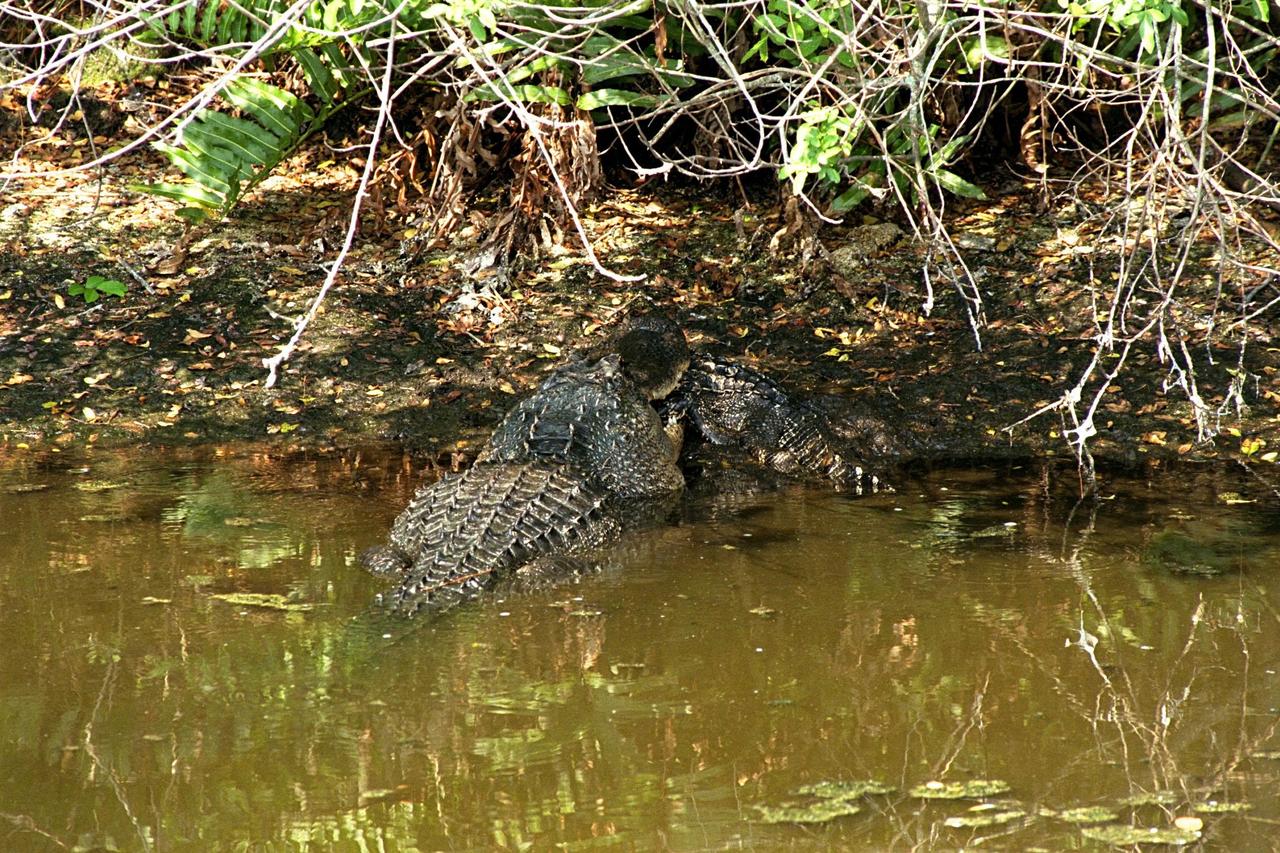
KENNEDY SPACE CENTER, FLA. -- A large alligator attacks and eats a smaller one in a natural display of cannibalism. Although this event has been observed infrequently by Kennedy Space Center's staff photographers, it is common feeding behavior among the wild alligator population on the space center. Alligators are carnivorous and will eat any living thing that crosses their paths and is small enough for them to kill. For this reason, it is dangerous to feed wild alligators, and in Florida, it is also illegal. The Merritt Island National Wildlife Refuge, which is operated by the U.S. Fish and Wildlife Service, is located on Kennedy Space Center property.
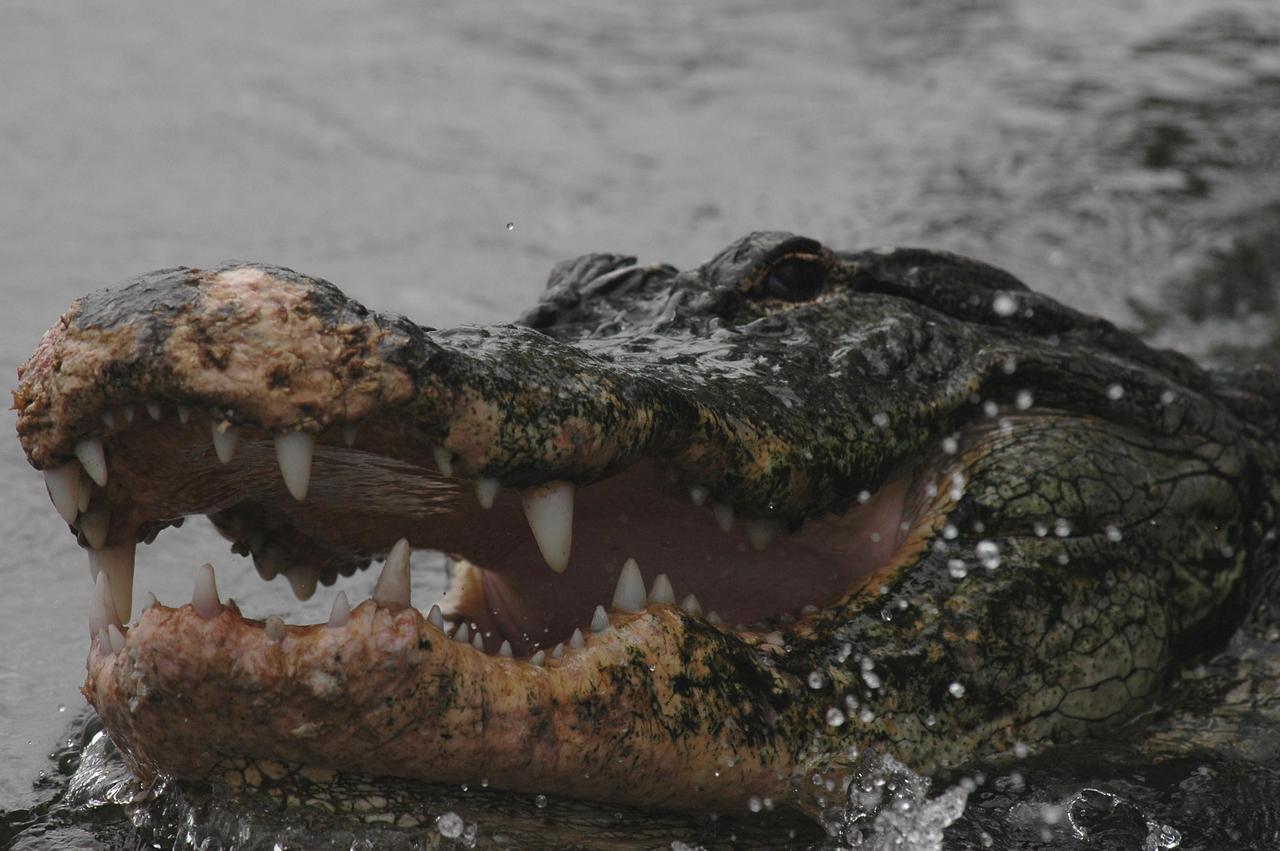
KENNEDY SPACE CENTER, FLA. - An alligator near the Launch Pad 39 area at NASA’s Kennedy Space Center appears not very happy being spotted in the water. Nearly 5,000 alligators can be found in canals, ponds and waterways throughout the Center and the surrounding Merritt Island National Wildlife Refuge. American alligators feed and rest in the water, and lay their eggs in dens they dig into the banks. The young alligators spend their first several weeks in these dens. The Wildlife Refuge encompasses 92,000 acres that are a habitat for more than 331 species of birds, 31 mammals, 117 fishes, and 65 amphibians and reptiles.
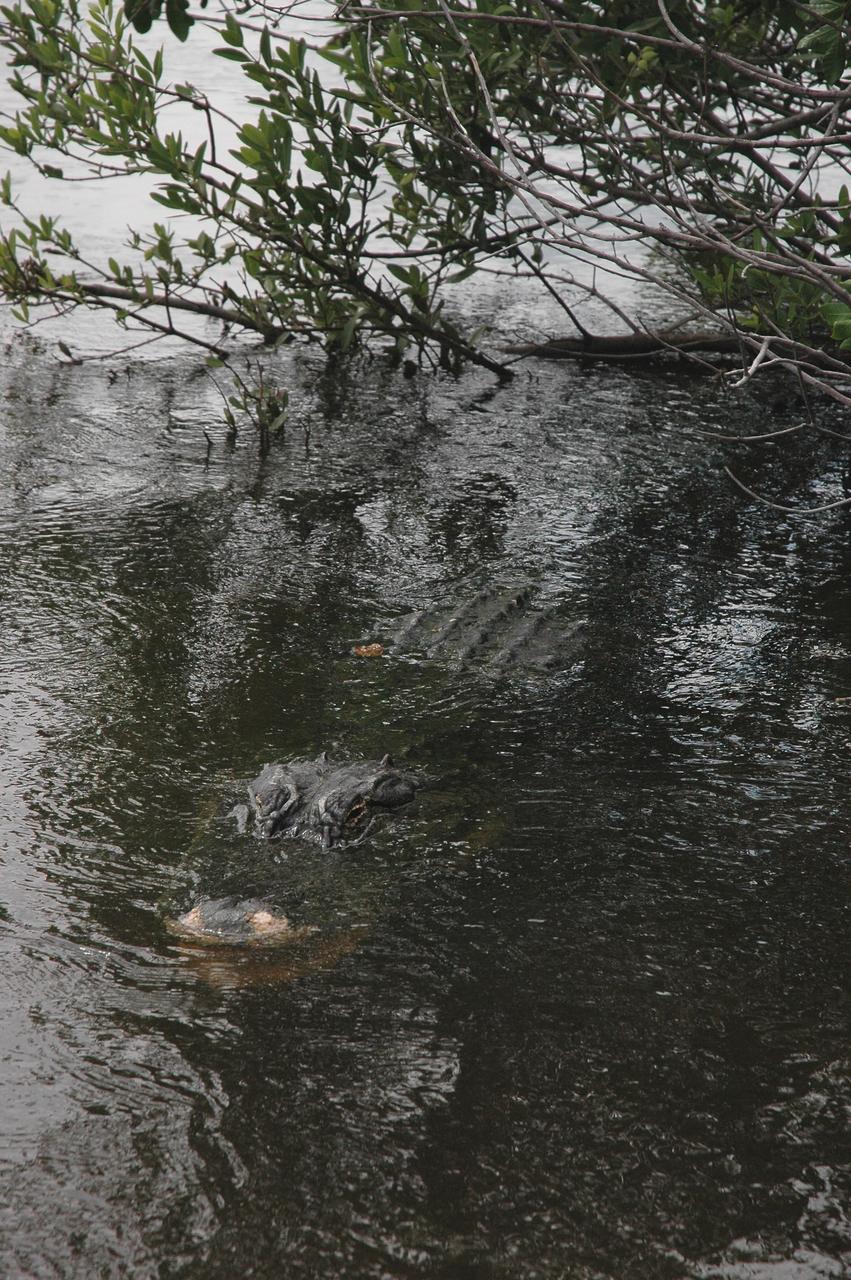
KENNEDY SPACE CENTER, FLA. - In a pond near the Launch Pad 39 area at NASA’s Kennedy Space Center, an alligator hides in the shadows under overhanging branches. Nearly 5,000 alligators can be found in canals, ponds and waterways throughout the Center and the surrounding Merritt Island National Wildlife Refuge. American alligators feed and rest in the water, and lay their eggs in dens they dig into the banks. The young alligators spend their first several weeks in these dens. The Wildlife Refuge encompasses 92,000 acres that are a habitat for more than 331 species of birds, 31 mammals, 117 fishes, and 65 amphibians and reptiles.
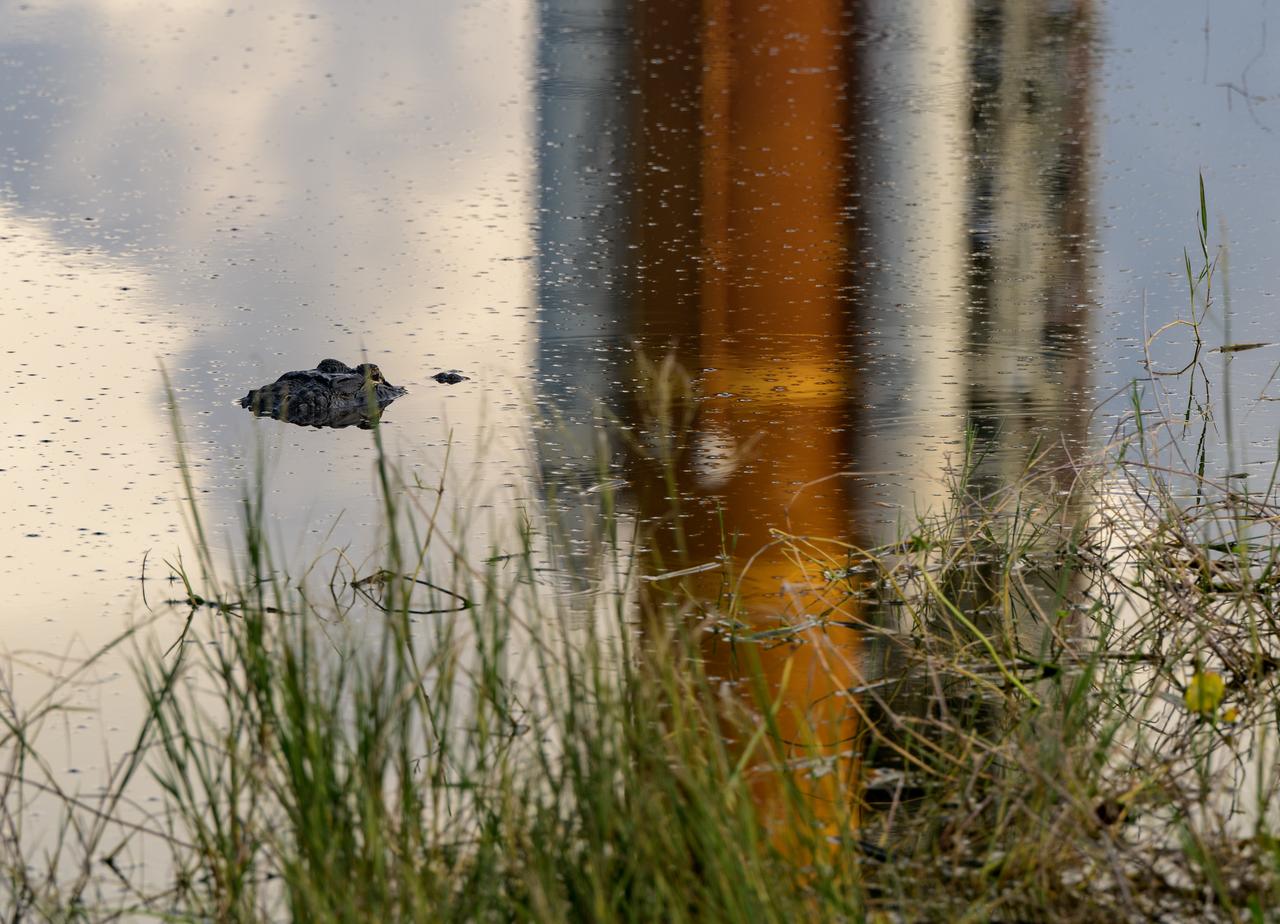
An alligator is seen in a pond outside of Launch Pad 39B as NASA’s Space Launch System (SLS) rocket with the Orion spacecraft aboard is reflected in the water, Friday, Sept. 2, 2022, at NASA’s Kennedy Space Center in Florida. NASA’s Artemis I flight test is the first integrated test of the agency’s deep space exploration systems: the Orion spacecraft, SLS rocket, and supporting ground systems. Launch of the uncrewed flight test is targeted for Sept. 3 at 2:17 p.m. EDT. Photo Credit: (NASA/Bill Ingalls)
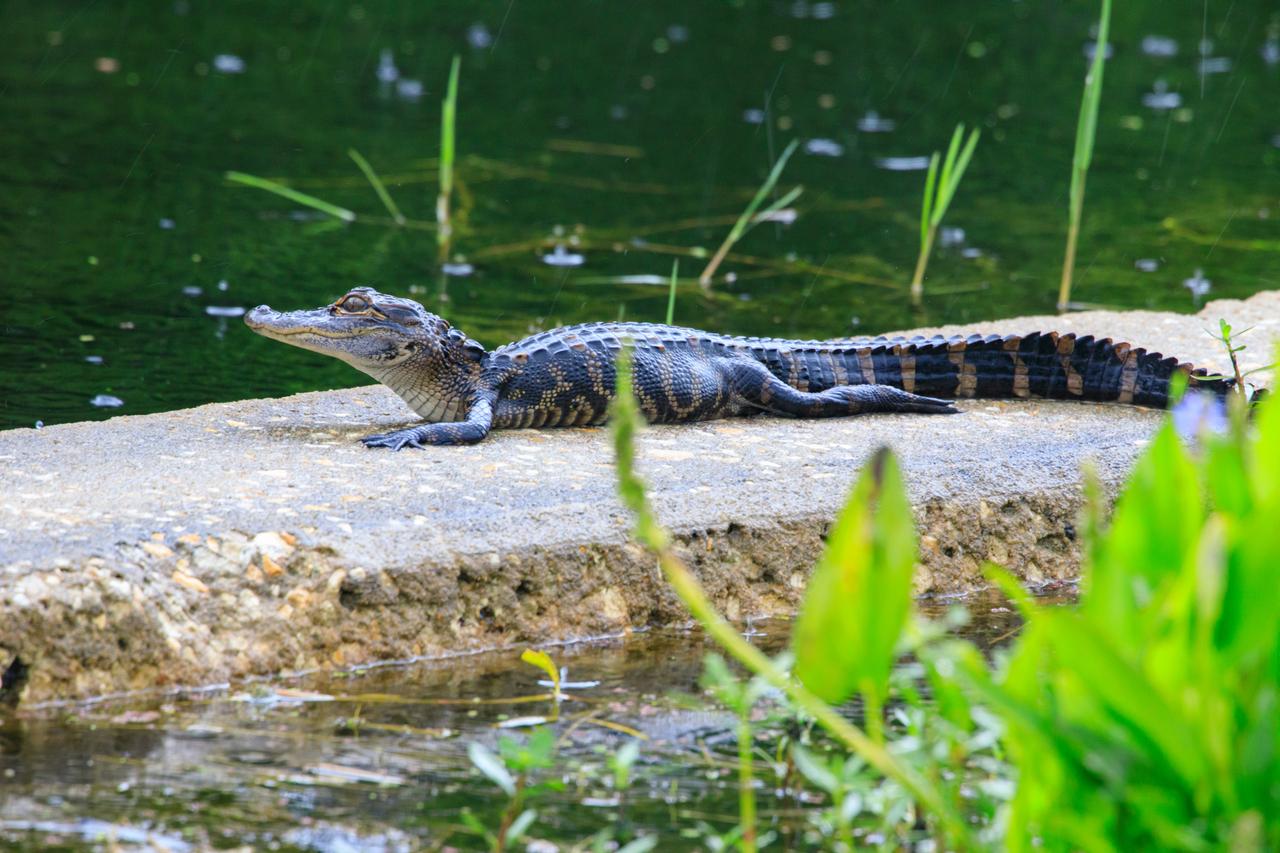
A young alligator rests on a concrete structure at NASA’s Kennedy Space Center in Florida on April 25, 2023. Alligator breeding season starts in May when males begin courting females. By June, pairs have mated and females build vegetation nests in the marsh. Eggs hatch in about 65 days. The mother carries her young to the water and protects them from predators, including male alligators.

KENNEDY SPACE CENTER, FLA. - At NASA Kennedy Space Center, alligators sun themselves on the bank of a pond. American alligators feed and rest in the water, and lay their eggs in dens they dig into the banks. The young alligators spend their first several weeks in these dens. A protected species, alligators can be spotted in the drainage canals and other waters surrounding the Center. The Center shares a boundary with the Merritt Island National Wildlife Refuge, which is a habitat for more than 310 species of birds, 25 mammals, 117 fishes and 65 amphibians and reptiles. In addition, the Refuge supports 19 endangered or threatened wildlife species on Federal or State lists, more than any other single refuge in the U.S. Photo credit: NASA/Jim Grossmann
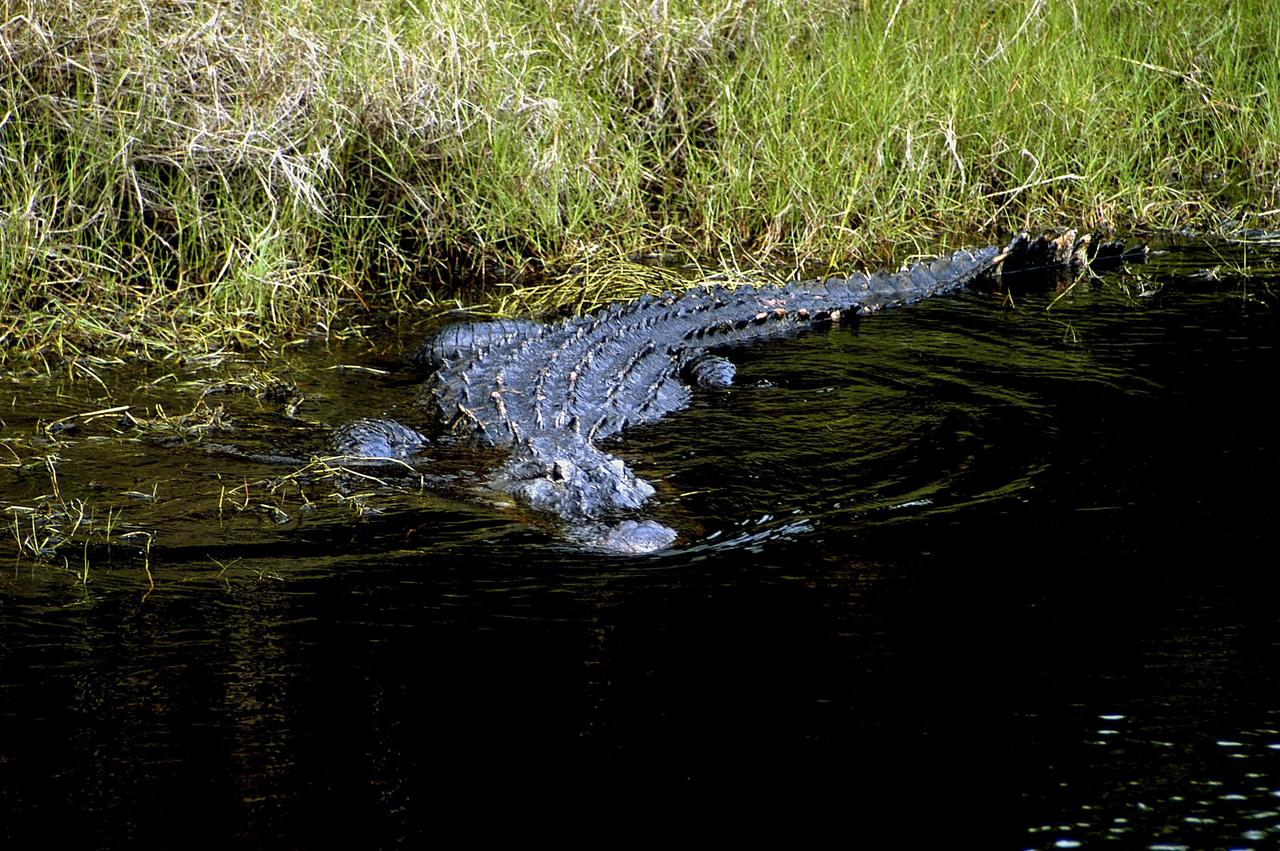
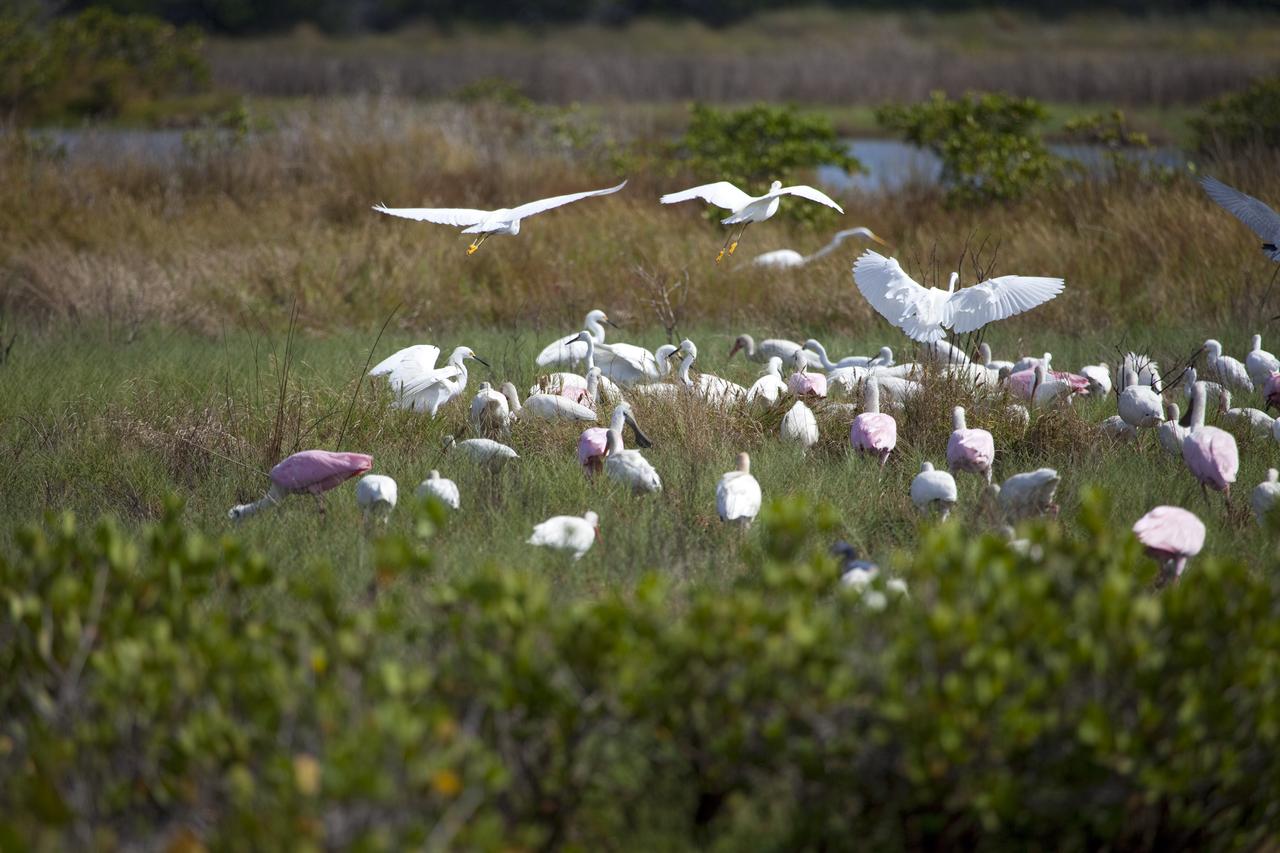
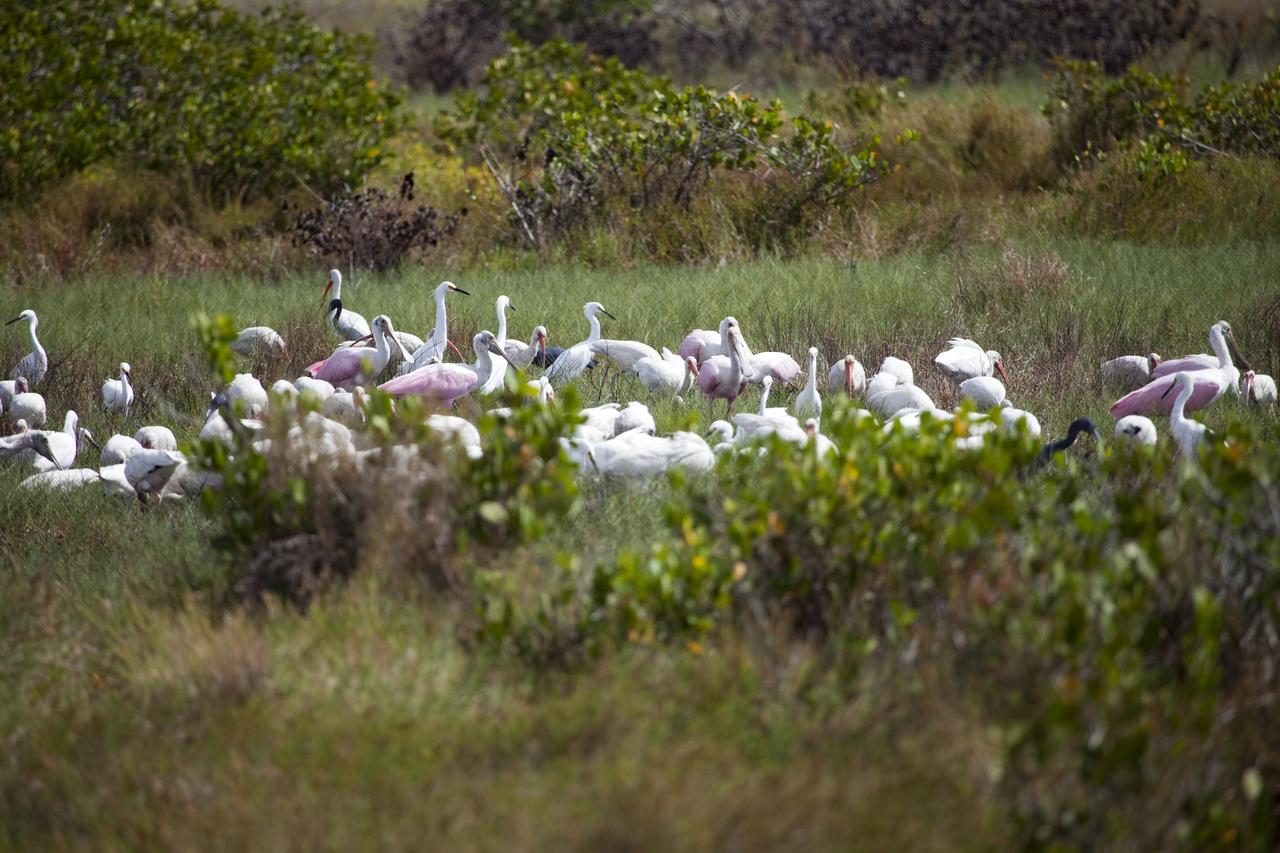
KENNEDY SPACE CENTER, FLA. - A large alligator claims this stretch of water at Kennedy Space Center. Nearly 5,000 alligators can be found in canals, ponds, and waterways throughout the Center and the Merritt Island National Wildlife Refuge, which shares a boundary with the Center. American alligators feed and rest in the water, and lay their eggs in dens they dig into the banks. The young alligators spend their first several weeks in these dens. The Wildlife Refuge encompasses 92,000 acres that are a habitat for more than 331 species of birds, 31 mammals, 117 fishes, and 65 amphibians and reptiles. The marshes and open water of the refuge provide wintering areas for 23 species of migratory waterfowl, as well as a year-round home for great blue herons, great egrets, wood storks, cormorants, brown pelicans and other species of marsh and shore birds, plus a variety of insects.
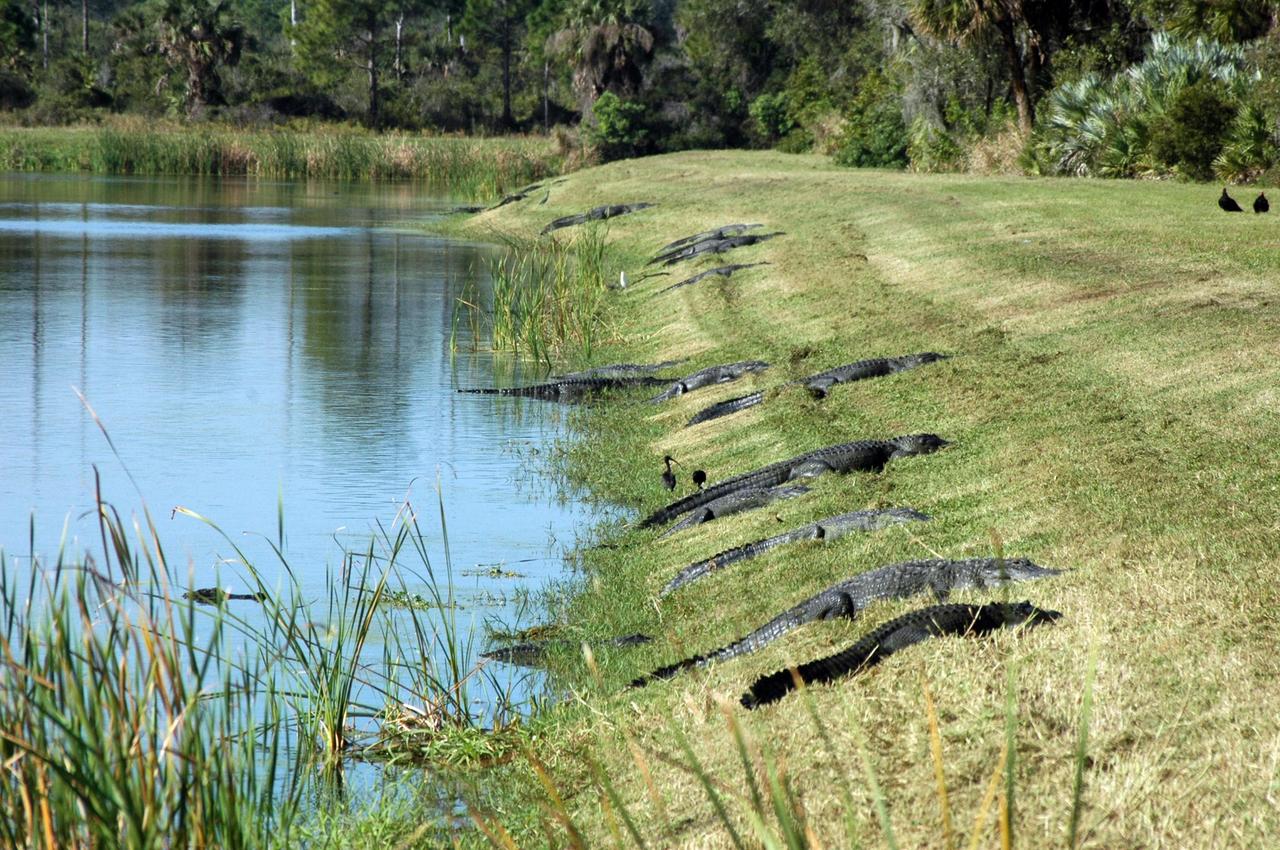
KENNEDY SPACE CENTER, FLA. -- On NASA's Kennedy Space Center, the bank of a pond provides the perfect spot for sunbathing alligators. American alligators feed and rest in the water, and lay their eggs in dens they dig into the banks. The young alligators spend their first several weeks in these dens. A protected species, alligators can be spotted in the drainage canals and other waters surrounding KSC. KSC shares a boundary with the Merritt Island Wildlife Nature Refuge. The refuge is a habitat for more than 310 species of birds, 25 mammals, 117 fishes and 65 amphibians and reptiles. In addition, the Refuge supports 19 endangered or threatened wildlife species on Federal or State lists, more than any other single refuge in the U.S. Photo credit: NASA/Ken Thornsley
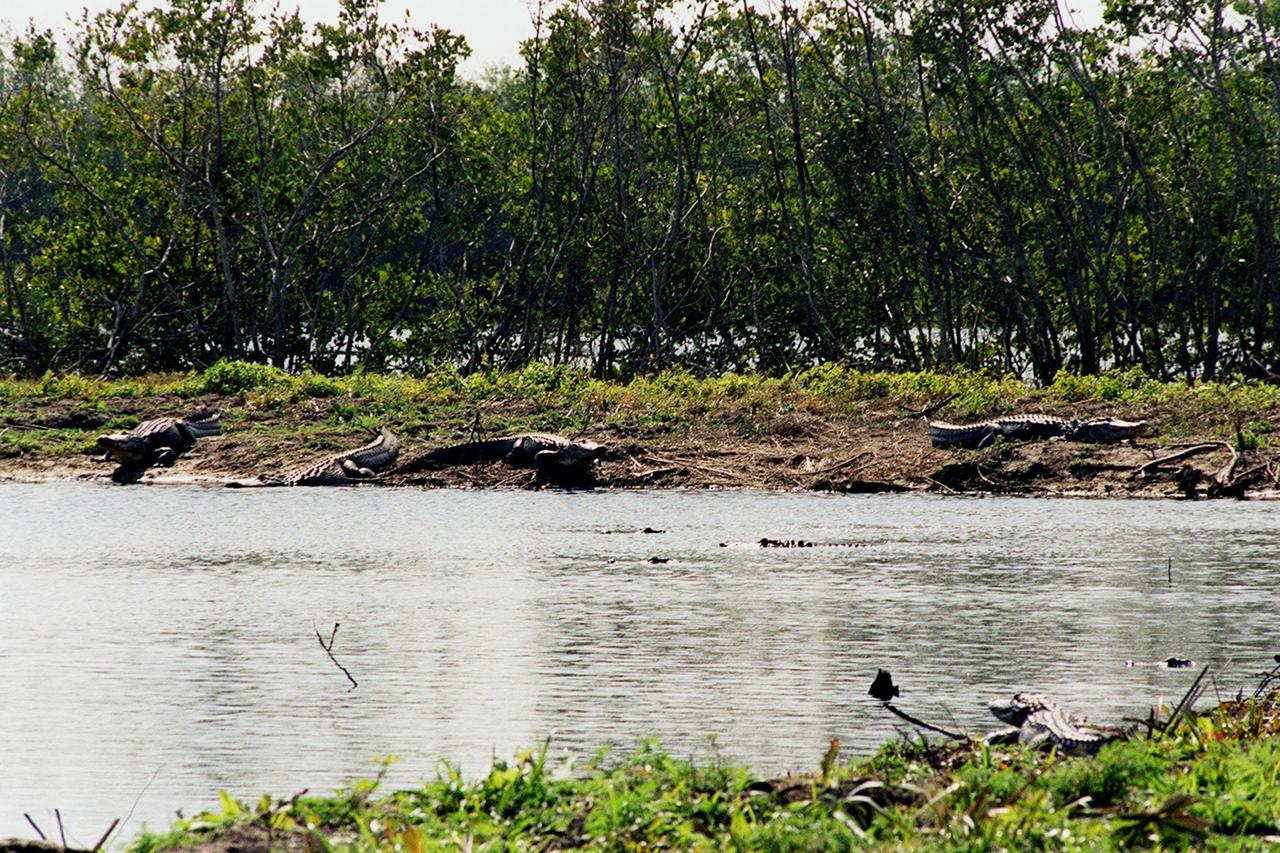
KENNEDY SPACE CENTER, FLA. -- This pond near Schwartz Rd. at Kennedy Space Center is host to a least the nine alligators shown on the banks and in the water. Nearly 5,000 alligators can be found in canals, ponds, and waterways throughout the Center and the Merritt Island National Wildlife Refuge, which shares a boundary with the Center. American alligators feed and rest in the water, and lay their eggs in dens they dig into the banks. The young alligators spend their first several weeks in these dens. The Wildlife Refuge encompasses 92,000 acres that are a habitat for more than 331 species of birds, 31 mammals, 117 fishes, and 65 amphibians and reptiles. The marshes and open water of the refuge provide wintering areas for 23 species of migratory waterfowl, as well as a year-round home for great blue herons, great egrets, wood storks, cormorants, brown pelicans and other species of marsh and shore birds, as well as a variety of insects
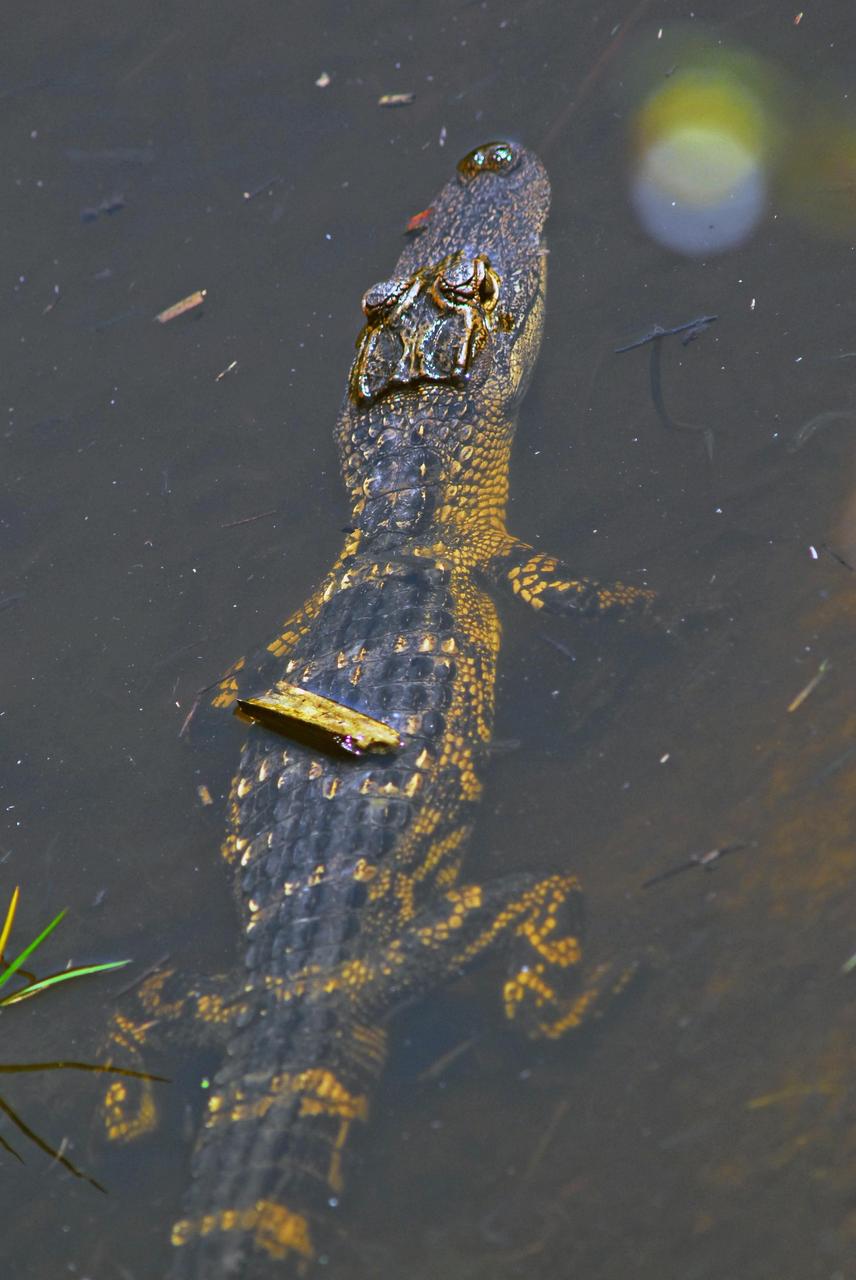
KENNEDY SPACE CENTER, FLA. -- In a pond on Kennedy Space Center, a young alligator tests the water. American alligators feed and rest in the water, and lay their eggs in dens they dig into the banks. The young alligators spend their first several weeks in these dens. A protected species, alligators can be spotted in the drainage canals and other waters surrounding KSC. KSC shares a boundary with the Merritt Island Wildlife Nature Refuge. The refuge is a habitat for more than 310 species of birds, 25 mammals, 117 fishes and 65 amphibians and reptiles. In addition, the Refuge supports 19 endangered or threatened wildlife species on Federal or State lists, more than any other single refuge in the U.S. Photo credit: NASA/Dimitri Gerondidakis

KENNEDY SPACE CENTER, FLA. -- From the bank of a pond on Kennedy Space Center, an alligator slides into the water, perhaps eyeing nearby prey. American alligators feed and rest in the water, and lay their eggs in dens they dig into the banks. The young alligators spend their first several weeks in these dens. A protected species, alligators can be spotted in the drainage canals and other waters surrounding KSC. KSC shares a boundary with the Merritt Island Wildlife Nature Refuge. The refuge is a habitat for more than 310 species of birds, 25 mammals, 117 fishes and 65 amphibians and reptiles. In addition, the Refuge supports 19 endangered or threatened wildlife species on Federal or State lists, more than any other single refuge in the U.S. Photo credit: NASA/Dimitri Gerondidakis
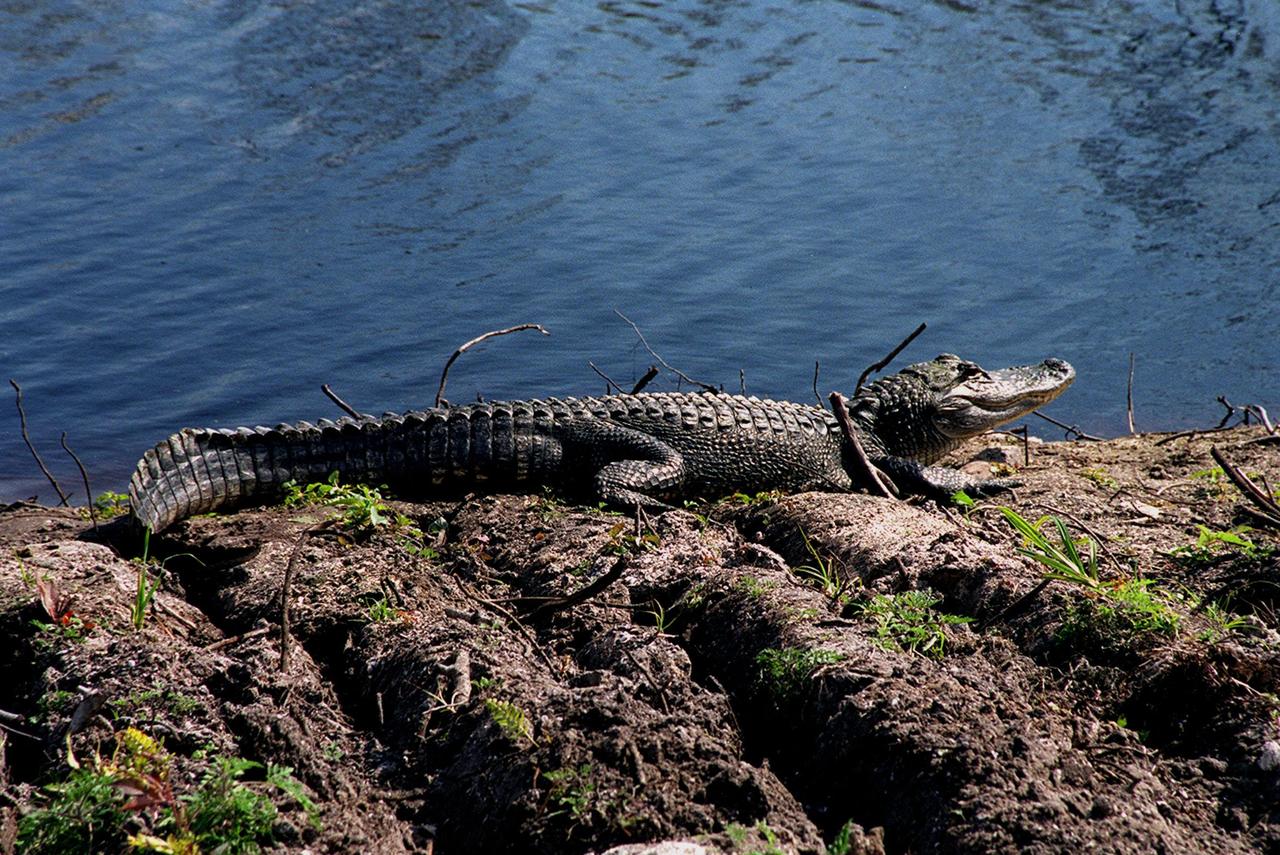
KENNEDY SPACE CENTER, FLA. -- On the bank of a levee near Schwartz Rd. at Kennedy Space Center, an alligator suns itself with a wary eye out for trespassers. Nearly 5,000 alligators can be found in canals, ponds, and waterways throughout the Center and the Merritt Island National Wildlife Refuge, which shares a boundary with the Center. American alligators feed and rest in the water, and lay their eggs in dens they dig into the banks. The young alligators spend their first several weeks in these dens. The Wildlife Refuge encompasses 92,000 acres that are a habitat for more than 331 species of birds, 31 mammals, 117 fishes, and 65 amphibians and reptiles. The marshes and open water of the refuge provide wintering areas for 23 species of migratory waterfowl, as well as a year-round home for great blue herons, great egrets, wood storks, cormorants, brown pelicans and other species of marsh and shore birds, as well as a variety of insects
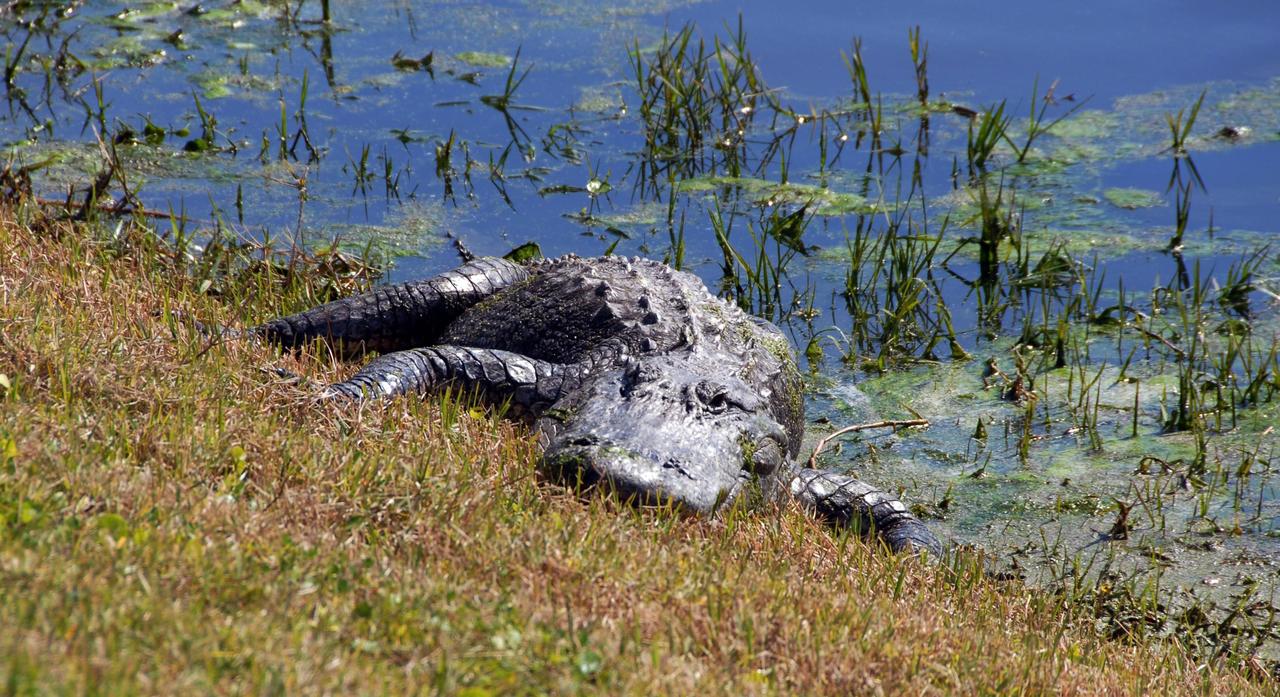
KENNEDY SPACE CENTER, FLA. -- A large alligator suns on the bank of a pond within NASA's Kennedy Space Center. A protected species, alligators can be spotted in the drainage canals and other waters surrounding KSC. American alligators feed and rest in the water, and lay their eggs in dens they dig into the banks. The young alligators spend their first several weeks in these dens. KSC shares a boundary with the Merritt Island National Wildlife Refuge. The refuge is a habitat for more than 310 species of birds, 25 mammals, 117 fishes and 65 amphibians and reptiles. In addition, the refuge supports 19 endangered or threatened wildlife species on Federal or State lists, more than any other single refuge in the U.S. Photo credit: NASA/Ken Thornsley
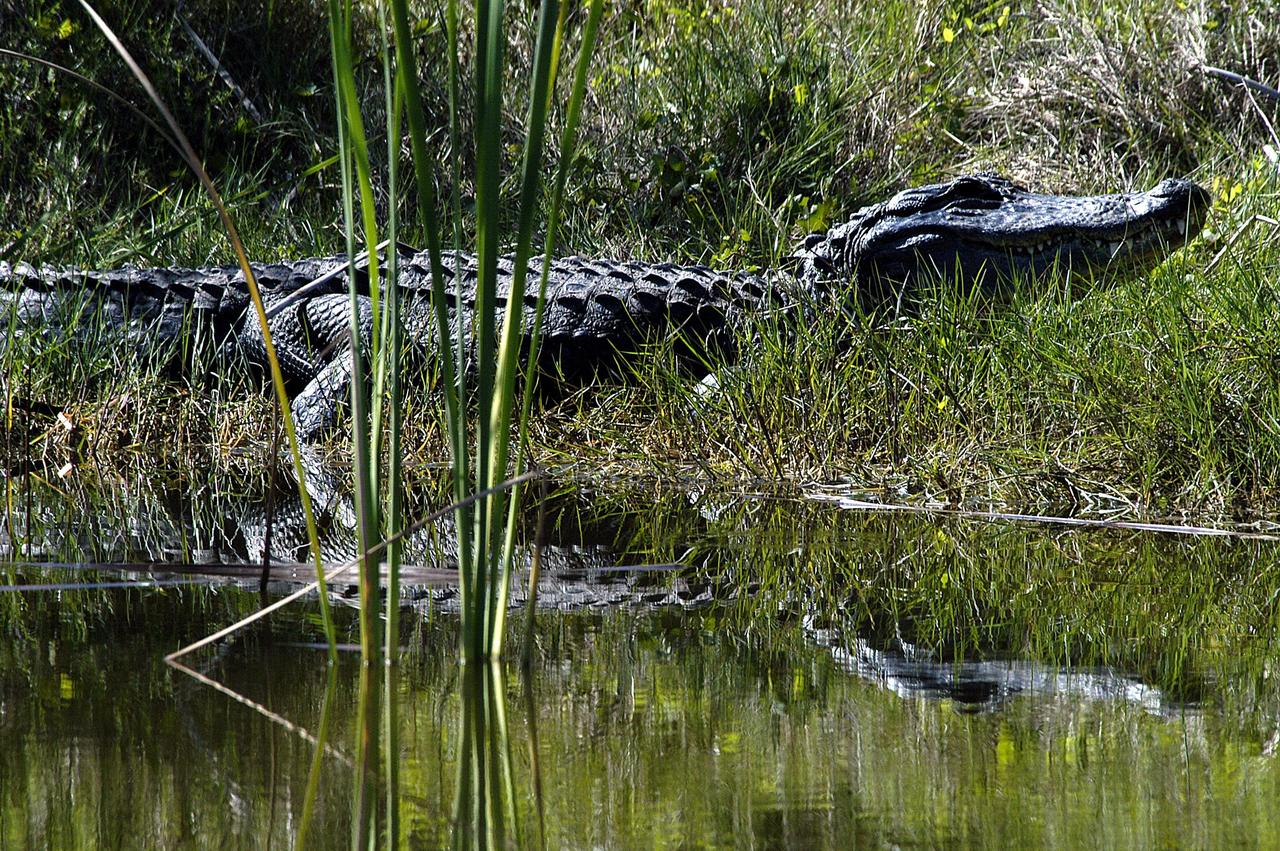
KENNEDY SPACE CENTER, FLA. -- This alligator strolls the bank alongside the Tow Road on Kennedy Space Center. Nearly 5,000 alligators can be found in canals, ponds, and waterways throughout the Center and the surrounding Merritt Island National Wildlife Refuge. American alligators feed and rest in the water, and lay their eggs in dens they dig into the banks. The young alligators spend their first several weeks in these dens. The Wildlife Refuge encompasses 92,000 acres that are a habitat for more than 331 species of birds, 31 mammals, 117 fishes, and 65 amphibians and reptiles. The marshes and open water of the refuge provide wintering areas for 23 species of migratory waterfowl, as well as a year-round home for great blue herons, great egrets, wood storks, cormorants, brown pelicans and other species of marsh and shore birds, plus a variety of insects.
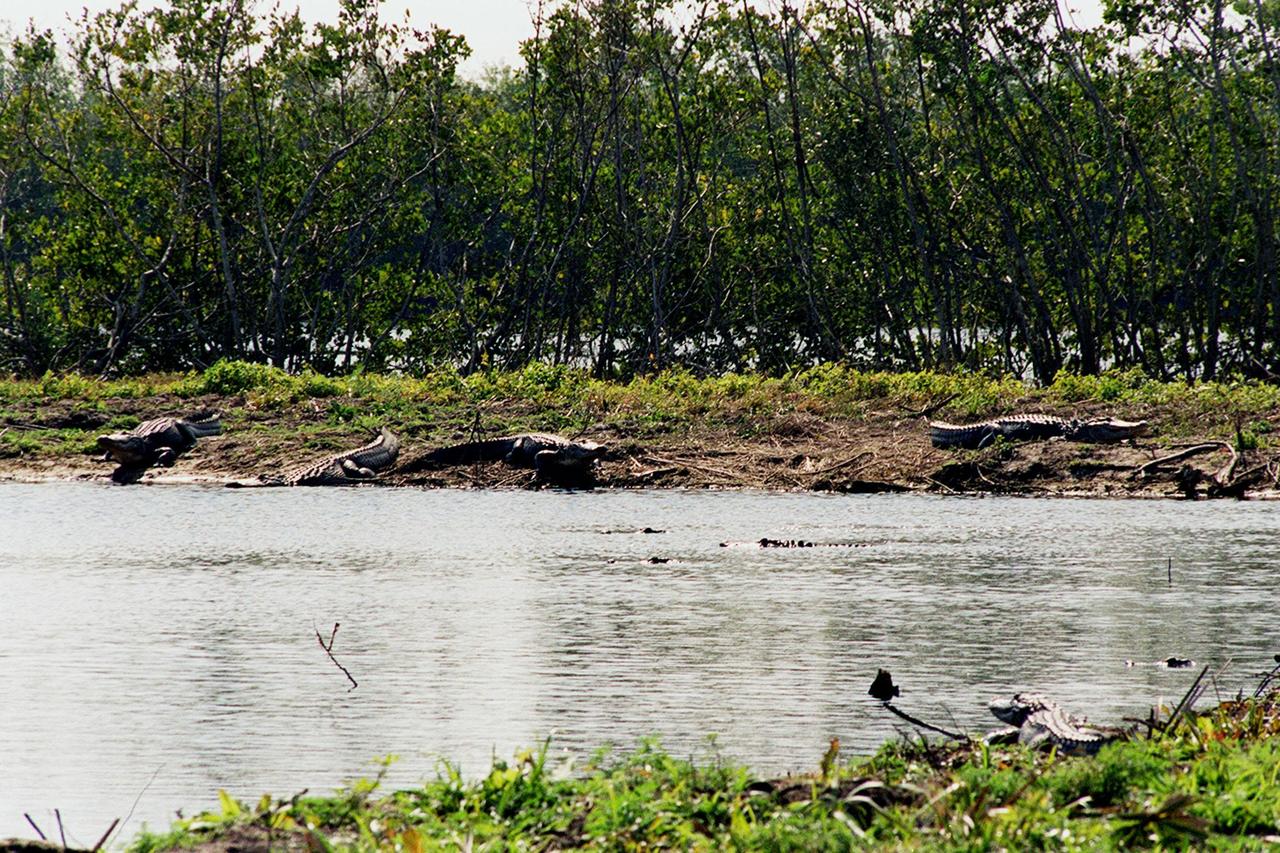
KENNEDY SPACE CENTER, FLA. -- This pond near Schwartz Rd. at Kennedy Space Center is host to a least the nine alligators shown on the banks and in the water. Nearly 5,000 alligators can be found in canals, ponds, and waterways throughout the Center and the Merritt Island National Wildlife Refuge, which shares a boundary with the Center. American alligators feed and rest in the water, and lay their eggs in dens they dig into the banks. The young alligators spend their first several weeks in these dens. The Wildlife Refuge encompasses 92,000 acres that are a habitat for more than 331 species of birds, 31 mammals, 117 fishes, and 65 amphibians and reptiles. The marshes and open water of the refuge provide wintering areas for 23 species of migratory waterfowl, as well as a year-round home for great blue herons, great egrets, wood storks, cormorants, brown pelicans and other species of marsh and shore birds, as well as a variety of insects
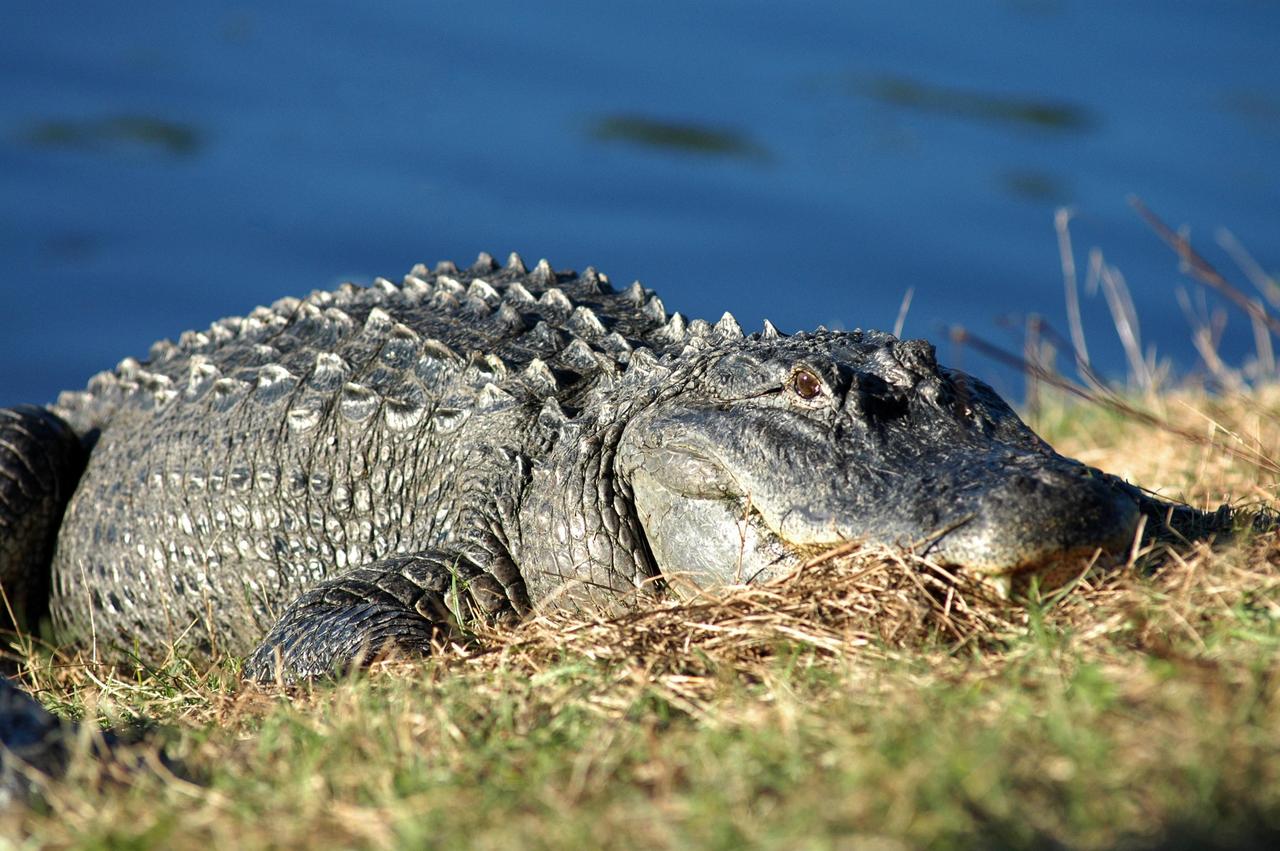
KENNEDY SPACE CENTER, FLA. - At NASA Kennedy Space Center, an alligator suns itself on the bank of a pond. American alligators feed and rest in the water, and lay their eggs in dens they dig into the banks. The young alligators spend their first several weeks in these dens. A protected species, alligators can be spotted in the drainage canals and other waters surrounding the Center. The Center shares a boundary with the Merritt Island National Wildlife Refuge, which is a habitat for more than 310 species of birds, 25 mammals, 117 fishes and 65 amphibians and reptiles. In addition, the Refuge supports 19 endangered or threatened wildlife species on Federal or State lists, more than any other single refuge in the U.S. Photo credit: NASA/Jim Grossmann
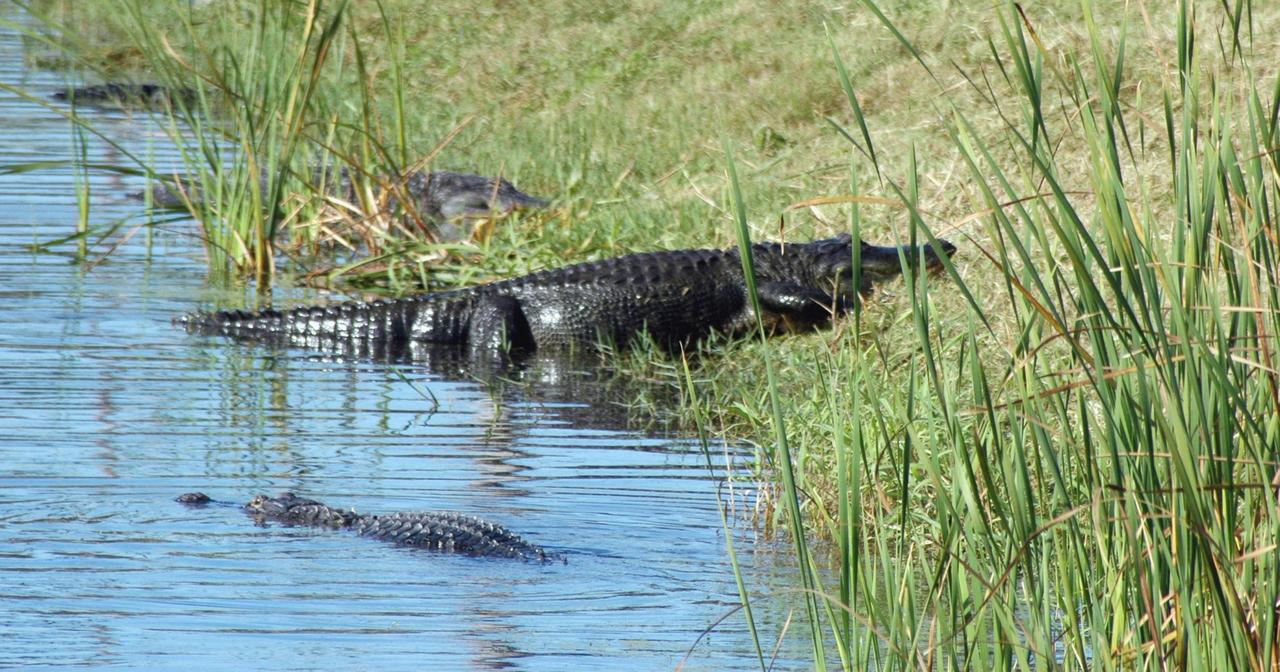
KENNEDY SPACE CENTER, FLA. -- On NASA's Kennedy Space Center, alligators begin climbing out of a pond to sunbathe on the bank. American alligators feed and rest in the water, and lay their eggs in dens they dig into the banks. The young alligators spend their first several weeks in these dens. A protected species, alligators can be spotted in the drainage canals and other waters surrounding KSC. KSC shares a boundary with the Merritt Island Wildlife Nature Refuge. The refuge is a habitat for more than 310 species of birds, 25 mammals, 117 fishes and 65 amphibians and reptiles. In addition, the Refuge supports 19 endangered or threatened wildlife species on Federal or State lists, more than any other single refuge in the U.S. Photo credit: NASA/Ken Thornsley
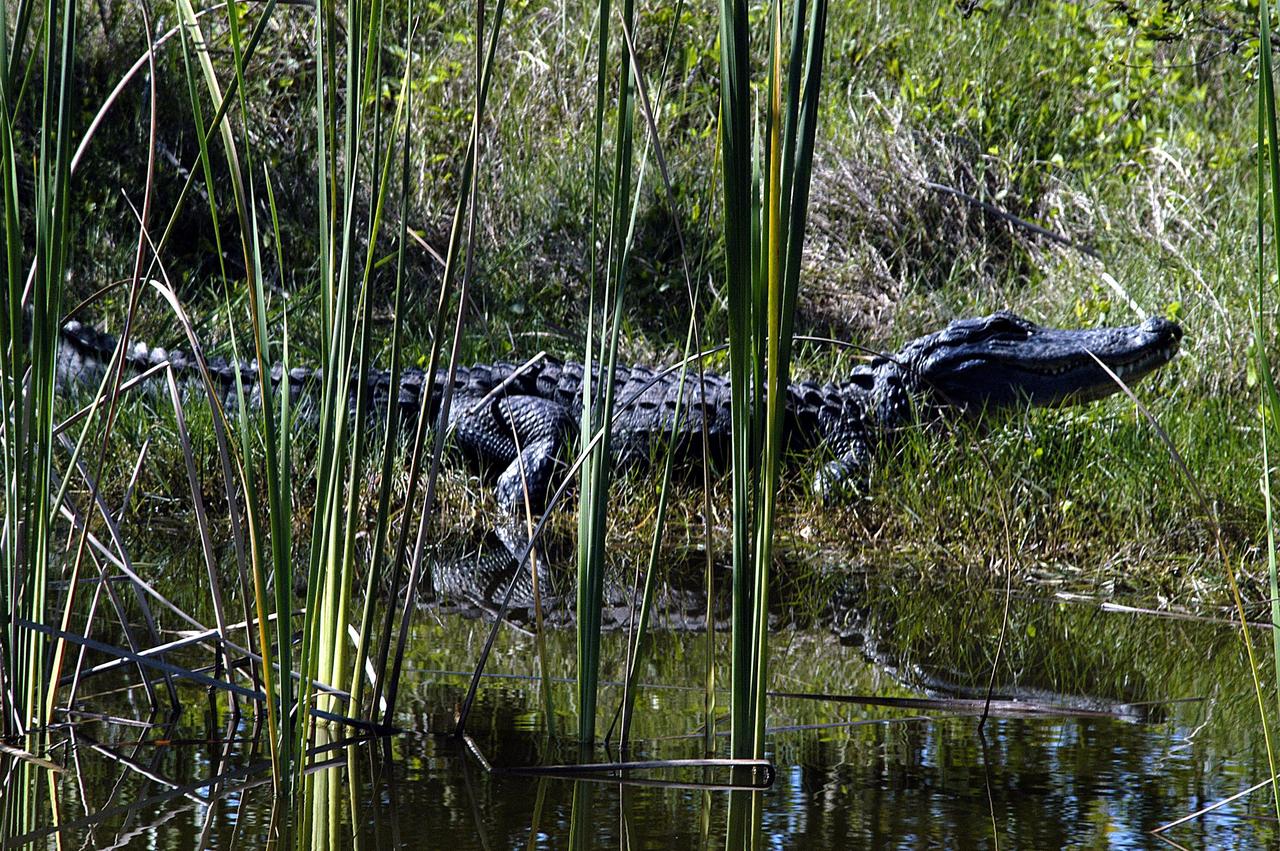
KENNEDY SPACE CENTER, FLA. - A very long alligator strolls the bank alongside the Tow Road on Kennedy Space Center. Nearly 5,000 alligators can be found in canals, ponds, and waterways throughout the Center and the surrounding Merritt Island National Wildlife Refuge. American alligators feed and rest in the water, and lay their eggs in dens they dig into the banks. The young alligators spend their first several weeks in these dens. The Wildlife Refuge encompasses 92,000 acres that are a habitat for more than 331 species of birds, 31 mammals, 117 fishes, and 65 amphibians and reptiles. The marshes and open water of the refuge provide wintering areas for 23 species of migratory waterfowl, as well as a year-round home for great blue herons, great egrets, wood storks, cormorants, brown pelicans and other species of marsh and shore birds, plus a variety of insects.
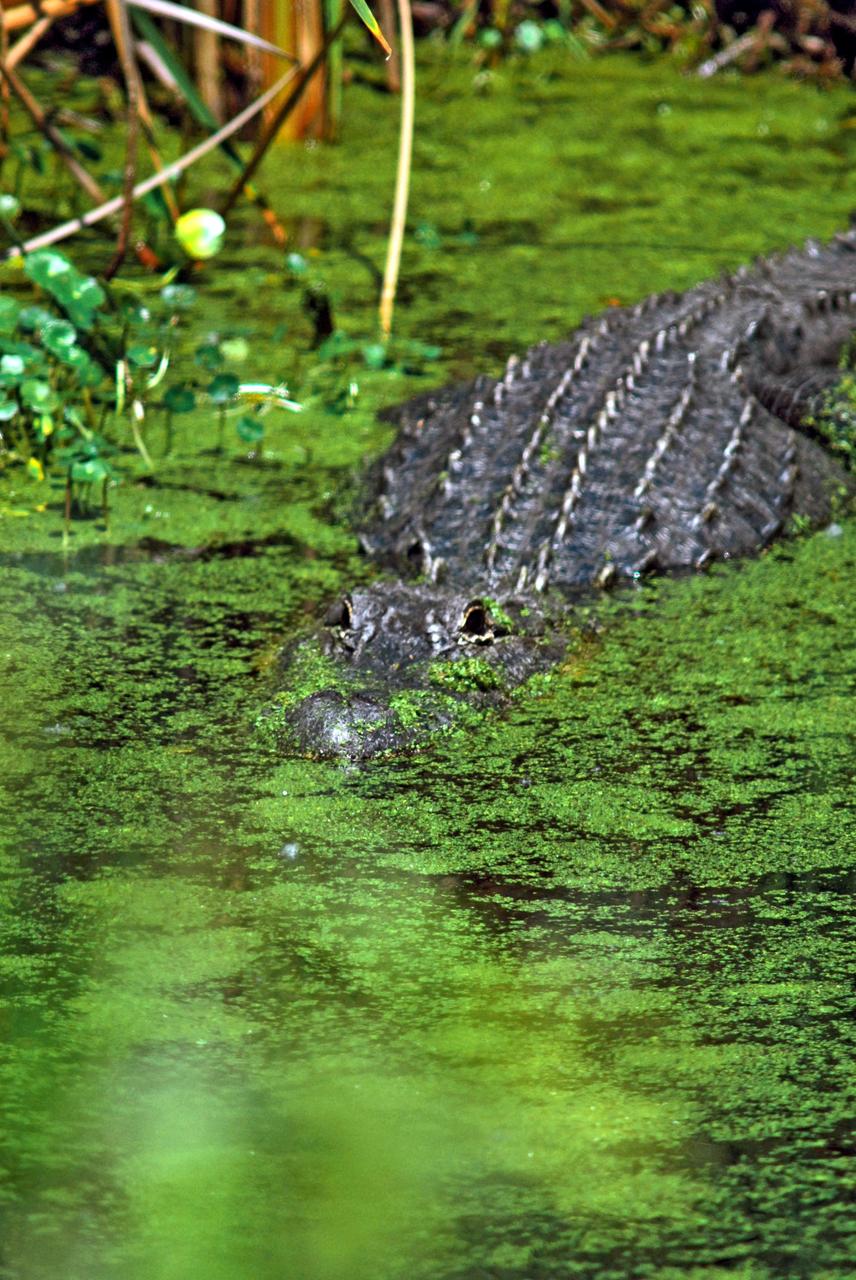
KENNEDY SPACE CENTER, FLA. -- In a pond on Kennedy Space Center, this alligator achieves partial camouflage from the green algae. American alligators feed and rest in the water, and lay their eggs in dens they dig into the banks. The young alligators spend their first several weeks in these dens. A protected species, alligators can be spotted in the drainage canals and other waters surrounding KSC. KSC shares a boundary with the Merritt Island Wildlife Nature Refuge. The refuge is a habitat for more than 310 species of birds, 25 mammals, 117 fishes and 65 amphibians and reptiles. In addition, the Refuge supports 19 endangered or threatened wildlife species on Federal or State lists, more than any other single refuge in the U.S. Photo credit: NASA/Dimitri Gerondidakis
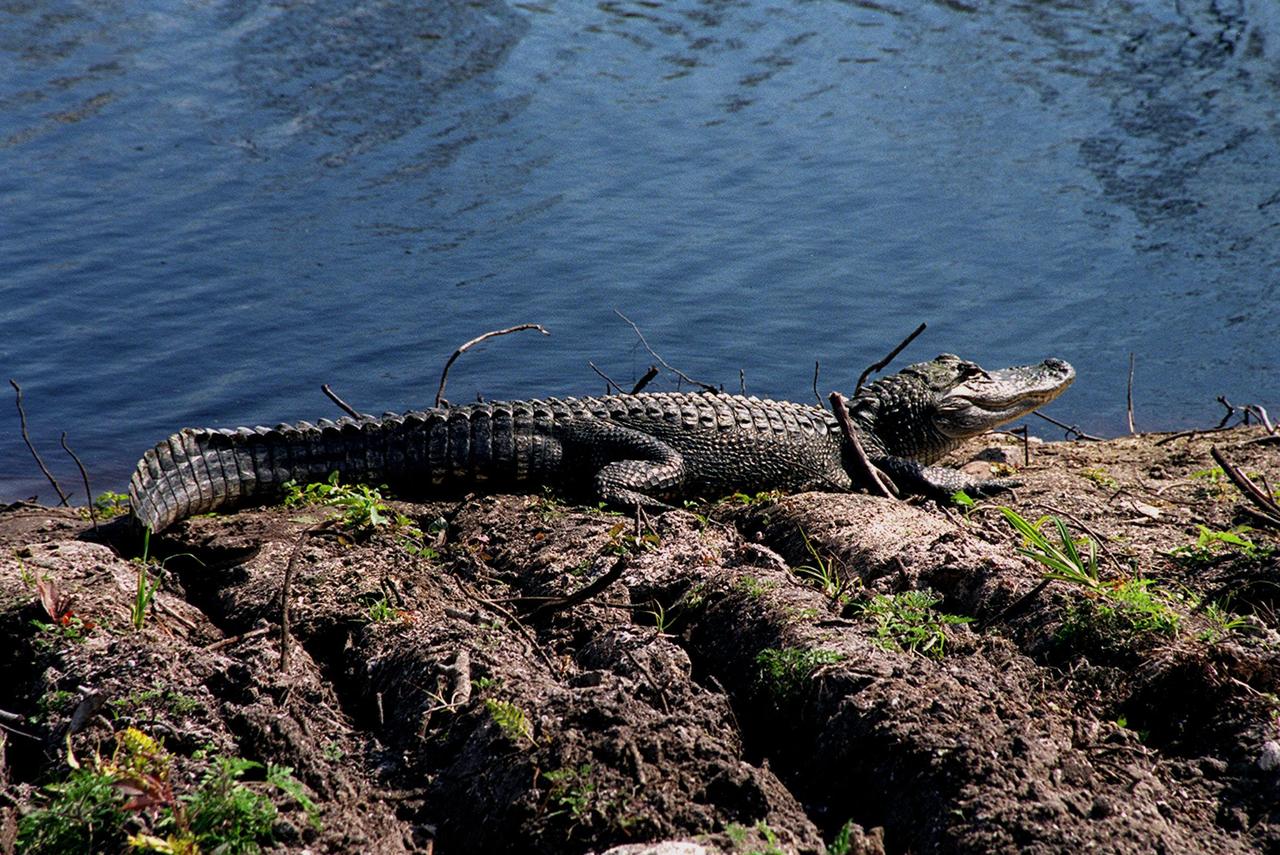
KENNEDY SPACE CENTER, FLA. -- On the bank of a levee near Schwartz Rd. at Kennedy Space Center, an alligator suns itself with a wary eye out for trespassers. Nearly 5,000 alligators can be found in canals, ponds, and waterways throughout the Center and the Merritt Island National Wildlife Refuge, which shares a boundary with the Center. American alligators feed and rest in the water, and lay their eggs in dens they dig into the banks. The young alligators spend their first several weeks in these dens. The Wildlife Refuge encompasses 92,000 acres that are a habitat for more than 331 species of birds, 31 mammals, 117 fishes, and 65 amphibians and reptiles. The marshes and open water of the refuge provide wintering areas for 23 species of migratory waterfowl, as well as a year-round home for great blue herons, great egrets, wood storks, cormorants, brown pelicans and other species of marsh and shore birds, as well as a variety of insects
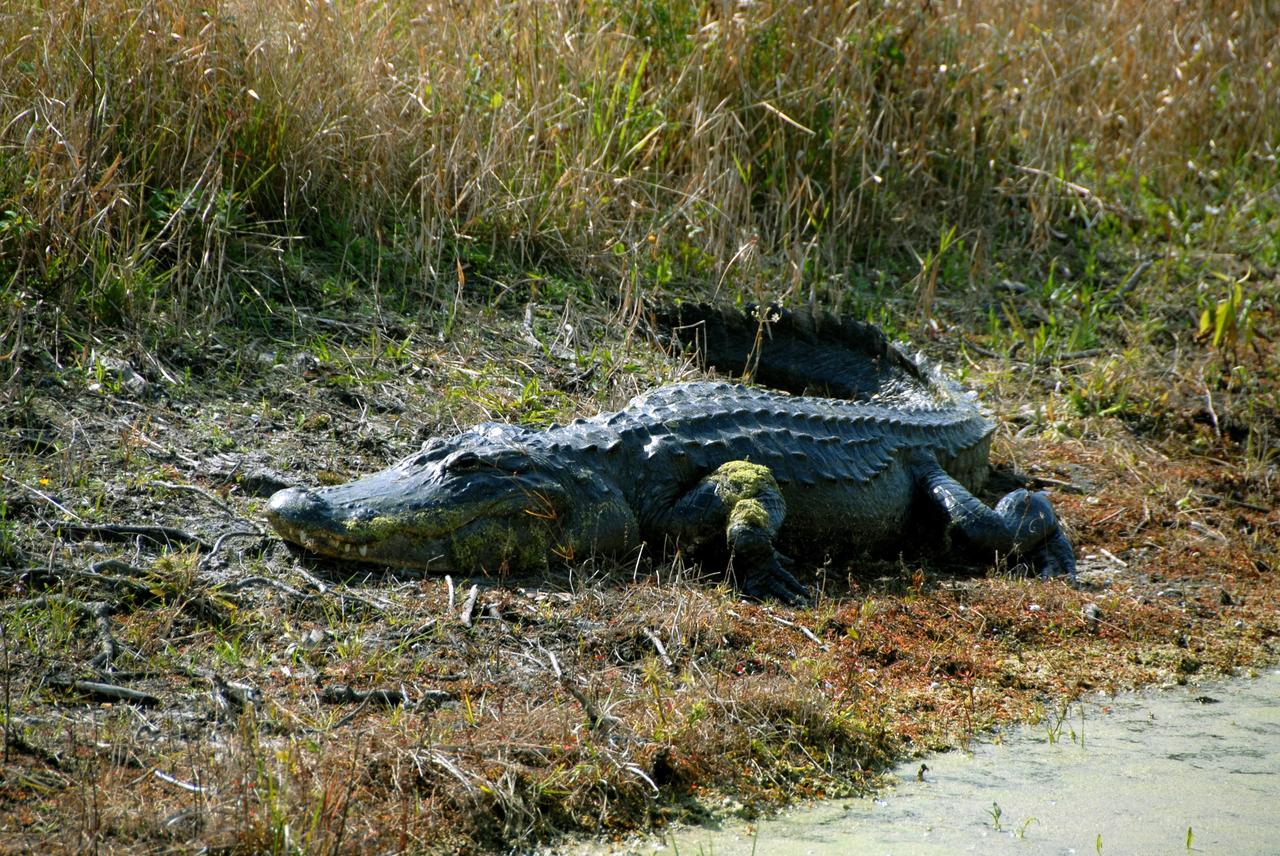
KENNEDY SPACE CENTER, FLA. -- Partly covered with moss (foreleg and mouth), a large alligator suns on the bank of a pond within NASA's Kennedy Space Center. A protected species, alligators can be spotted in the drainage canals and other waters surrounding KSC. American alligators feed and rest in the water, and lay their eggs in dens they dig into the banks. The young alligators spend their first several weeks in these dens. KSC shares a boundary with the Merritt Island National Wildlife Refuge. The refuge is a habitat for more than 310 species of birds, 25 mammals, 117 fishes and 65 amphibians and reptiles. In addition, the refuge supports 19 endangered or threatened wildlife species on Federal or State lists, more than any other single refuge in the U.S. Photo credit: NASA/Ken Thornsley
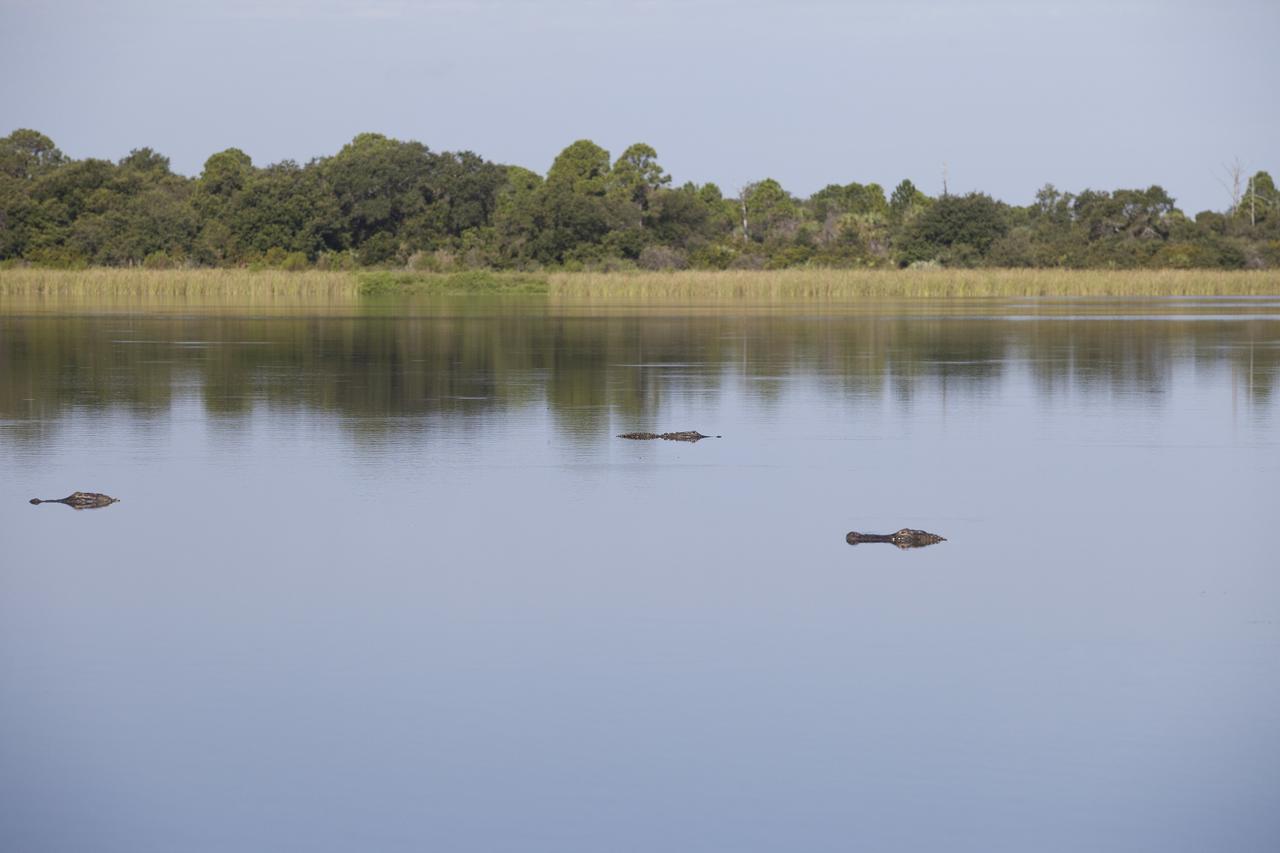
CAPE CANAVERAL, Fla. – An out-of-the-way creek off Schwartz Road on NASA's Kennedy Space Center in Florida is filled with alligators just minding their own business as the cameraman approaches. Once in danger of becoming extinct, today there are more than 1,000,000 alligators in Florida alone. The undeveloped property on Kennedy Space Center is managed by the U.S. Fish and Wildlife Service through the Merritt Island National Wildlife Refuge. For information on the refuge, visit http://www.fws.gov/merrittisland/Index.html. For information on the alligators prowling the waterways at Kennedy, visit http://www.nasa.gov/content/ancient-creatures-on-the-prowl/. Photo credit: NASA/Daniel Casper
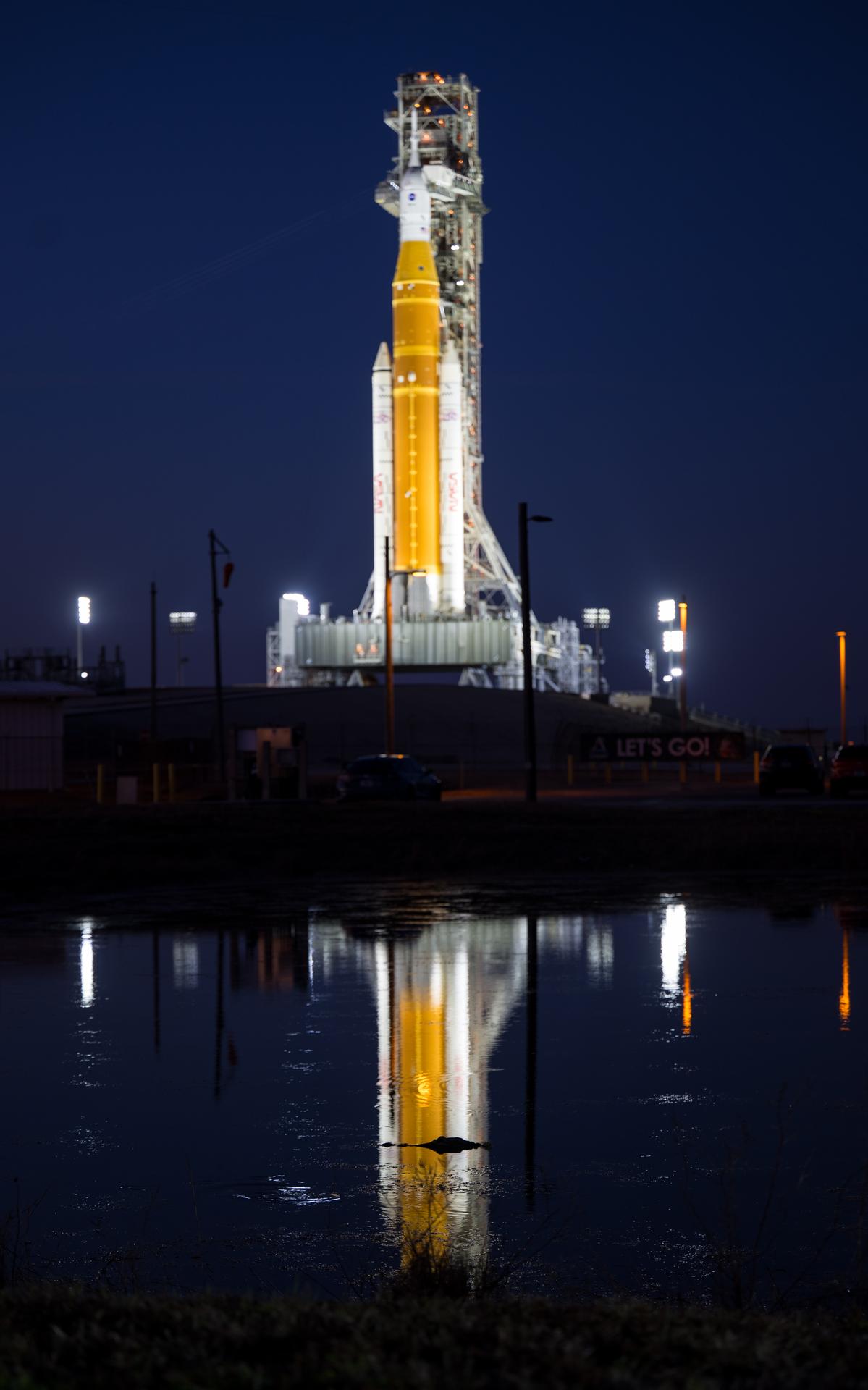
An alligator is seen in a reflection of NASA’s Artemis II Space Launch System (SLS) rocket and Orion spacecraft illuminated by lights at Launch Complex 39B, Tuesday, Feb. 10, 2026, at NASA’s Kennedy Space Center in Florida. In the coming days, engineers will prepare for the second wet dress rehearsal, a two-day test that simulates launch day. The Artemis II test flight will take Commander Reid Wiseman, Pilot Victor Glover, and Mission Specialist Christina Koch from NASA, and Mission Specialist Jeremy Hansen from the CSA (Canadian Space Agency), around the Moon and back to Earth no later than April 2026. Photo Credit: (NASA/Aubrey Gemignani)
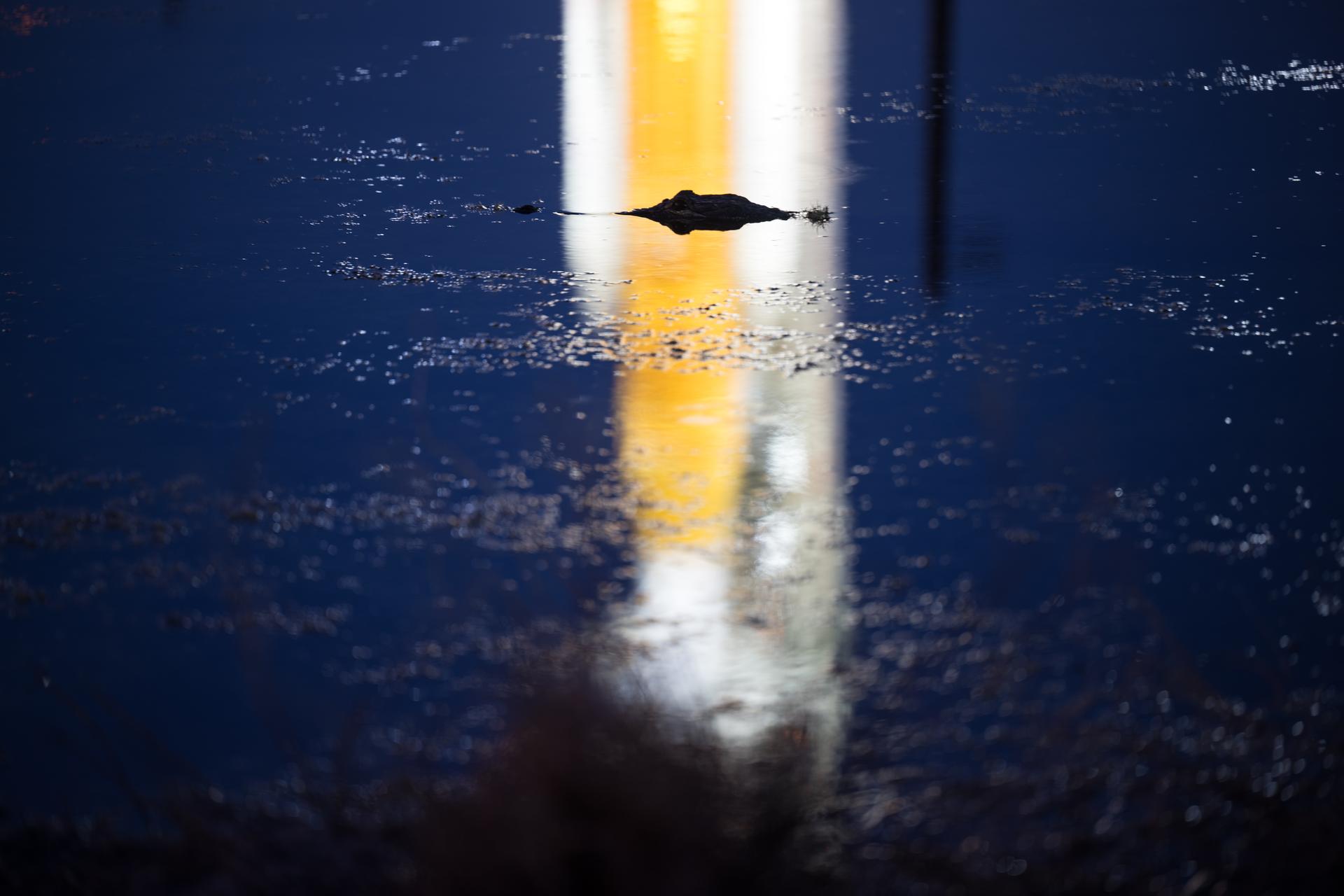
An alligator is seen in a reflection of NASA’s Artemis II Space Launch System (SLS) rocket and Orion spacecraft illuminated by lights at Launch Complex 39B, Tuesday, Feb. 10, 2026, at NASA’s Kennedy Space Center in Florida. In the coming days, engineers will prepare for the second wet dress rehearsal, a two-day test that simulates launch day. The Artemis II test flight will take Commander Reid Wiseman, Pilot Victor Glover, and Mission Specialist Christina Koch from NASA, and Mission Specialist Jeremy Hansen from the CSA (Canadian Space Agency), around the Moon and back to Earth no later than April 2026. Photo Credit: (NASA/Aubrey Gemignani)
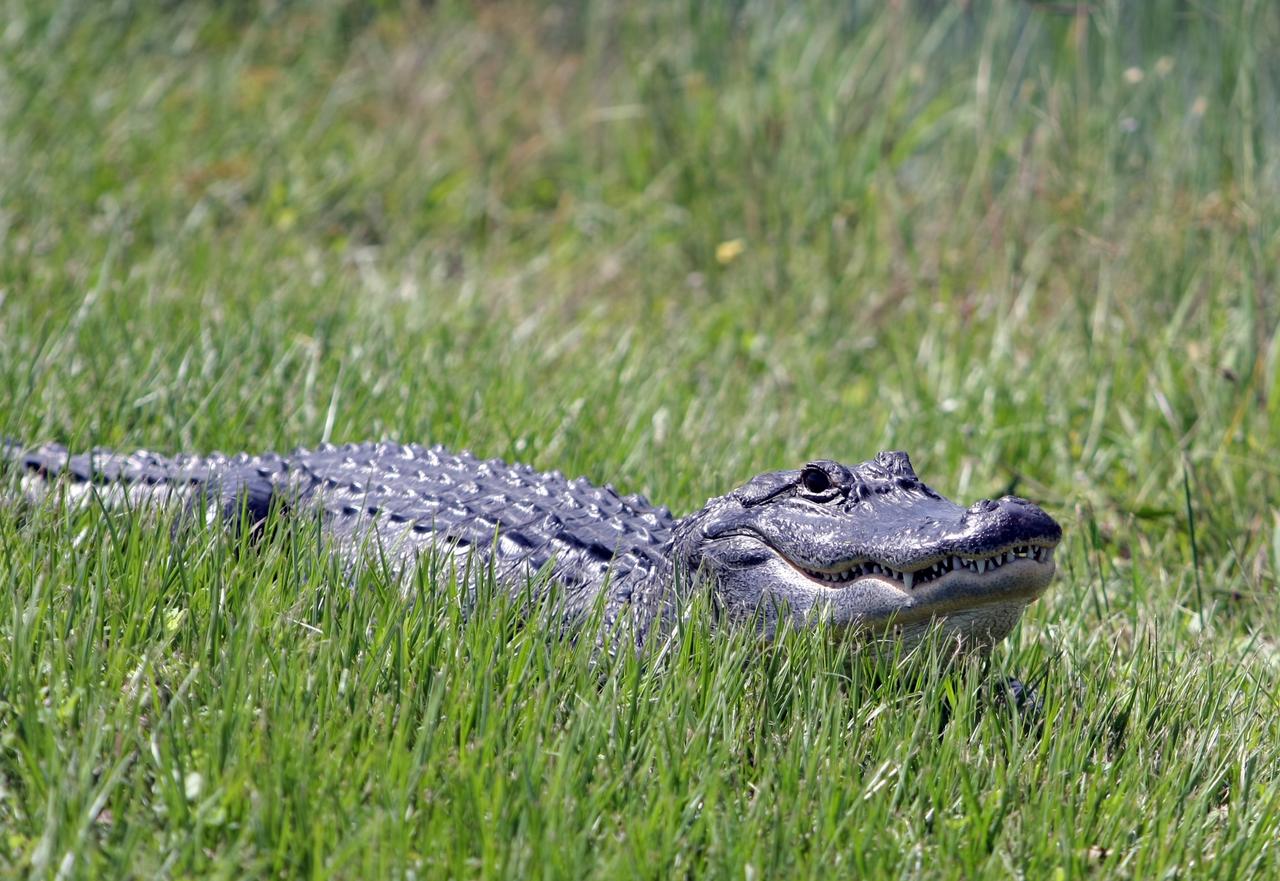
CAPE CANAVERAL, Fla. - On NASA's Kennedy Space Center in Florida, an alligator from a nearby drainage canal stares at the photographer. A protected species, alligators can be spotted in the drainage canals and other waters surrounding KSC. The center shares a boundary with the Merritt Island Wildlife Nature Refuge, which is a habitat for more than 310 species of birds, 25 mammals, 117 fishes and 65 amphibians and reptiles. Photo credit: NASA/Dimitri Gerondidakis
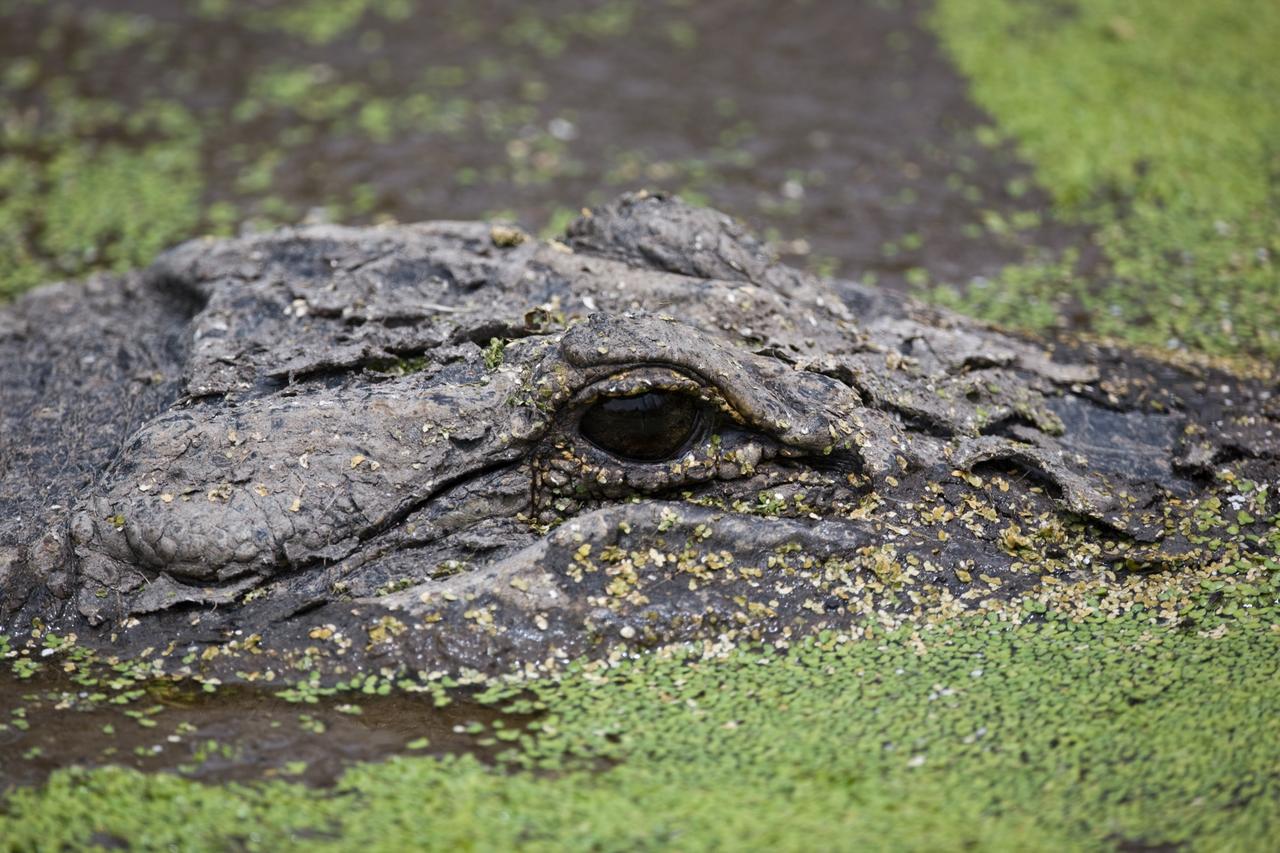
CAPE CANAVERAL, Fla. –– Who is watching whom, as this alligator appears to stare into the camera (at a safe distance away) from its watery site. Alligators can be spotted in the drainage canals and other waters surrounding Kennedy. The center shares a boundary with the Merritt Island Wildlife Nature Refuge, which is a habitat for more than 310 species of birds, 25 mammals, 117 fishes and 65 amphibians and reptiles. Photo credit: NASA/Dimitri Gerondidakis
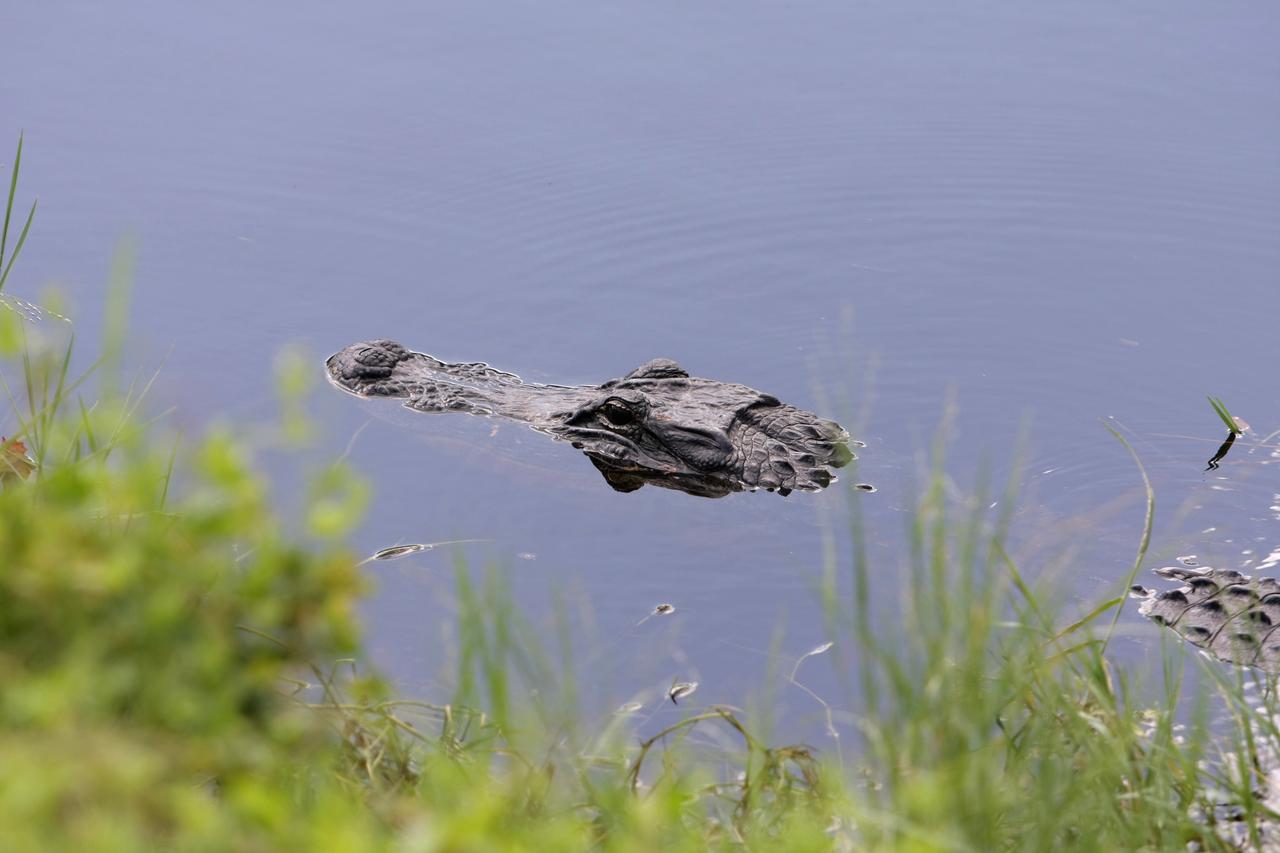
CAPE CANAVERAL, Fla. - An alligator looks warily at the photographer who's spotted the familiar head in a drainage canal on NASA's Kennedy Space Center in Florida. A protected species, alligators can be spotted in the drainage canals and other waters surrounding KSC. The center shares a boundary with the Merritt Island Wildlife Nature Refuge, which is a habitat for more than 310 species of birds, 25 mammals, 117 fishes and 65 amphibians and reptiles. Photo credit: NASA/Dimitri Gerondidakis
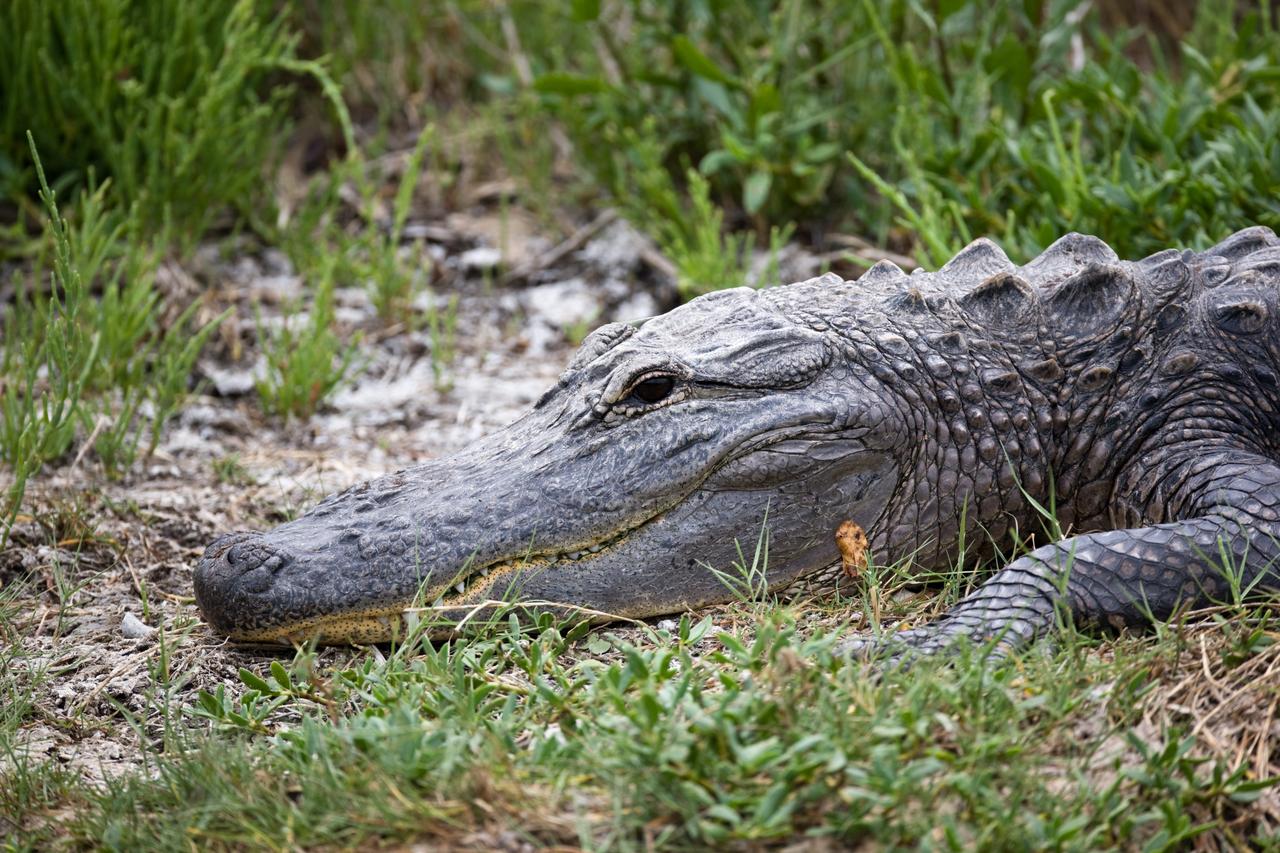
CAPE CANAVERAL, Fla. –– On NASA's Kennedy Space Center in Florida, an alligator rests on the bank of a canal. Alligators can be spotted in the drainage canals and other waters surrounding Kennedy. In Spring, they frequently roam, searching for mates. The center shares a boundary with the Merritt Island Wildlife Nature Refuge, which is a habitat for more than 310 species of birds, 25 mammals, 117 fishes and 65 amphibians and reptiles. Photo credit: NASA/Dimitri Gerondidakis
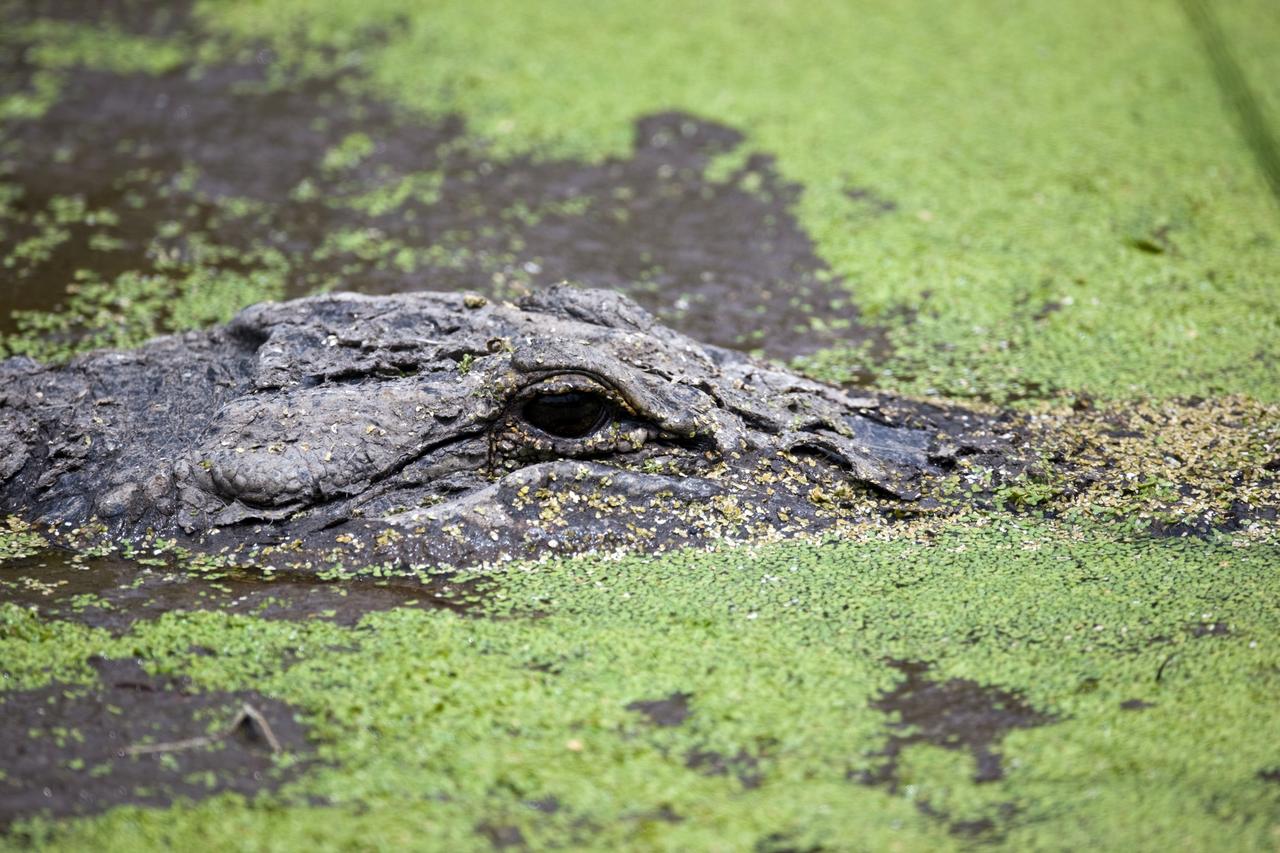
CAPE CANAVERAL, Fla. –– In the water on NASA's Kennedy Space Center in Florida, an alligator waits for a prospective meal. Alligators can be spotted in the drainage canals and other waters surrounding Kennedy. The center shares a boundary with the Merritt Island Wildlife Nature Refuge, which is a habitat for more than 310 species of birds, 25 mammals, 117 fishes and 65 amphibians and reptiles. Photo credit: NASA/Dimitri Gerondidakis
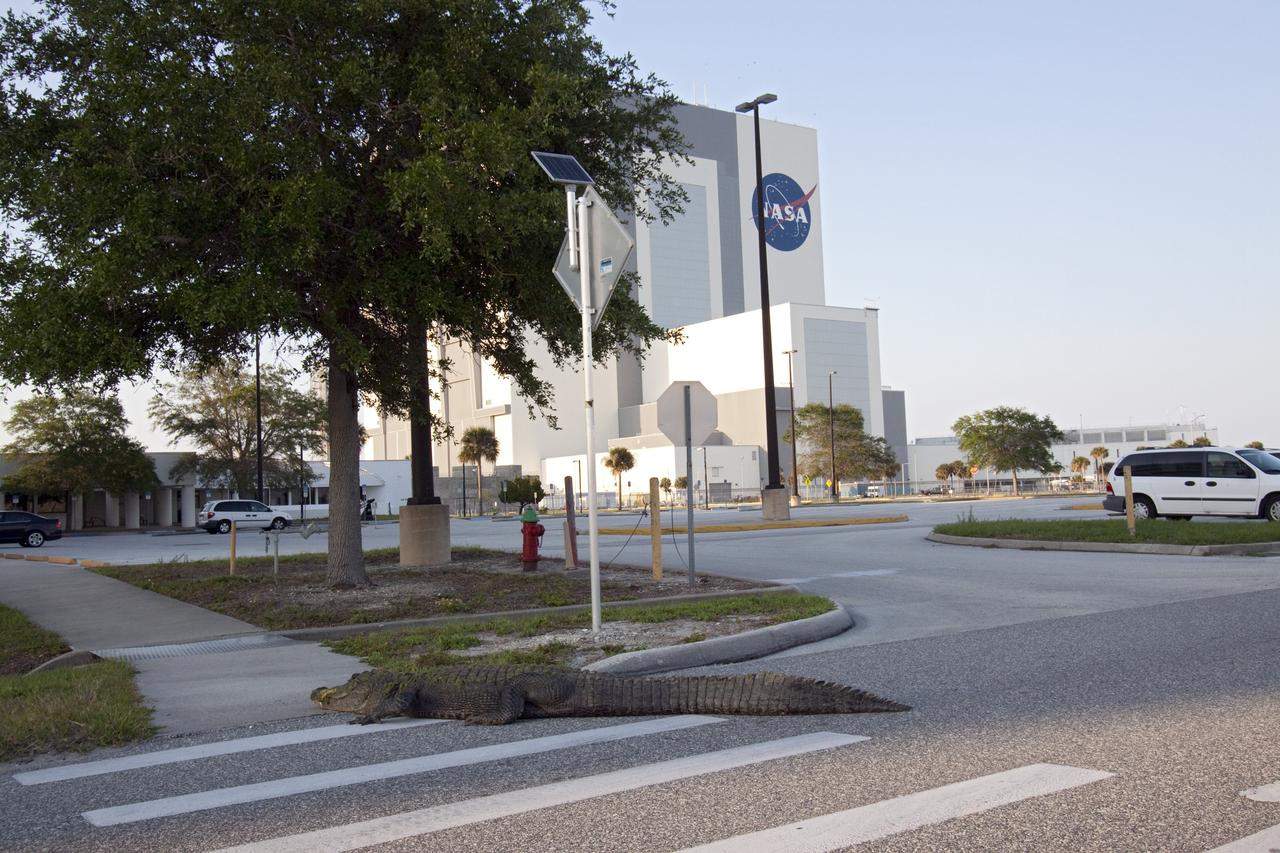
CAPE CANAVERAL, Fla. -- An alligator ambles across Saturn Causeway at NASA's Kennedy Space Center in Florida near the Vehicle Assembly Building. Alligators can be spotted in the drainage canals and other waters surrounding KSC and occasionally venture onto roads seeking new environs or mates. The center shares a boundary with the Merritt Island Wildlife Nature Refuge, which is a habitat for more than 310 species of birds, 25 mammals, 117 fishes and 65 amphibians and reptiles. Photo credit: NASA/Jack Pfaller
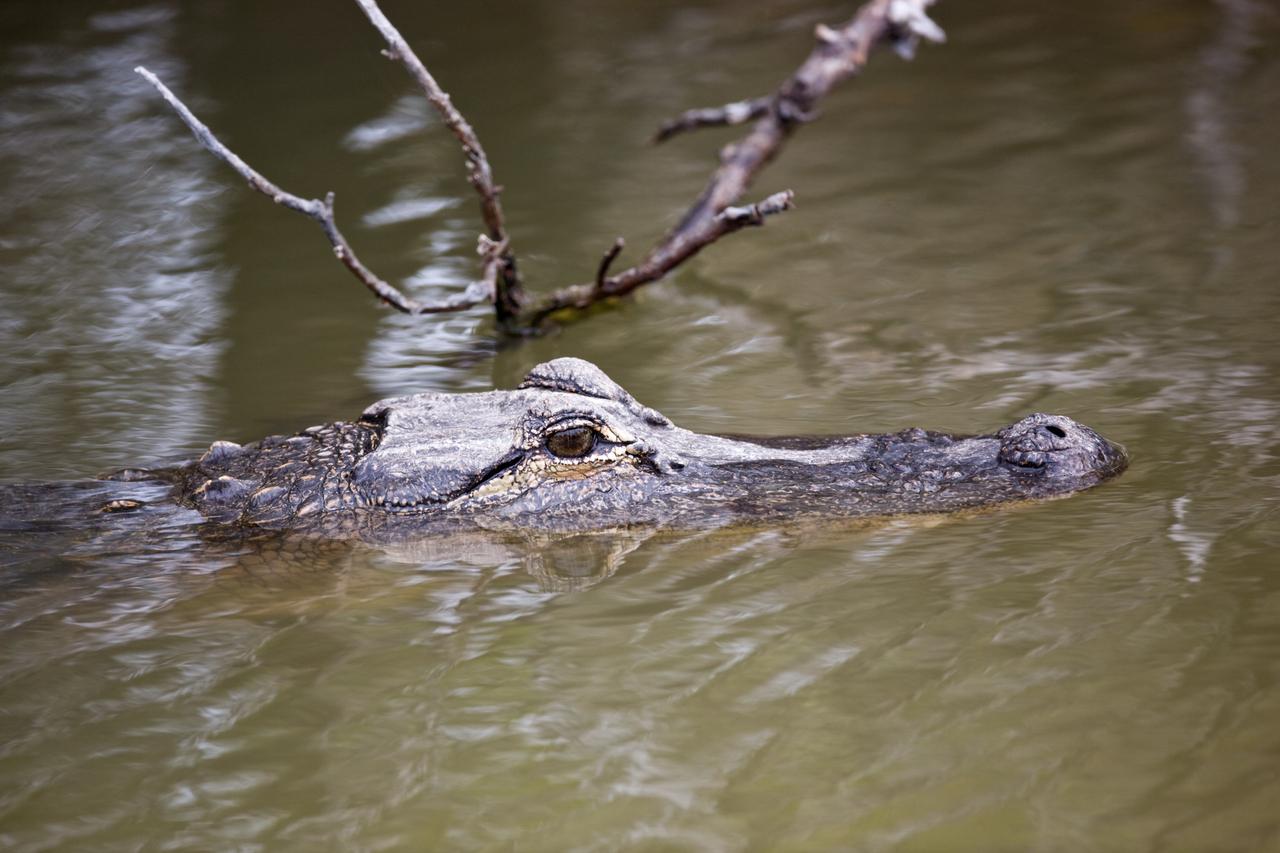
CAPE CANAVERAL, Fla. –– In the water on NASA's Kennedy Space Center in Florida, an alligator waits for a prospective meal. Alligators can be spotted in the drainage canals and other waters surrounding Kennedy. The center shares a boundary with the Merritt Island Wildlife Nature Refuge, which is a habitat for more than 310 species of birds, 25 mammals, 117 fishes and 65 amphibians and reptiles. Photo credit: NASA/Dimitri Gerondidakis
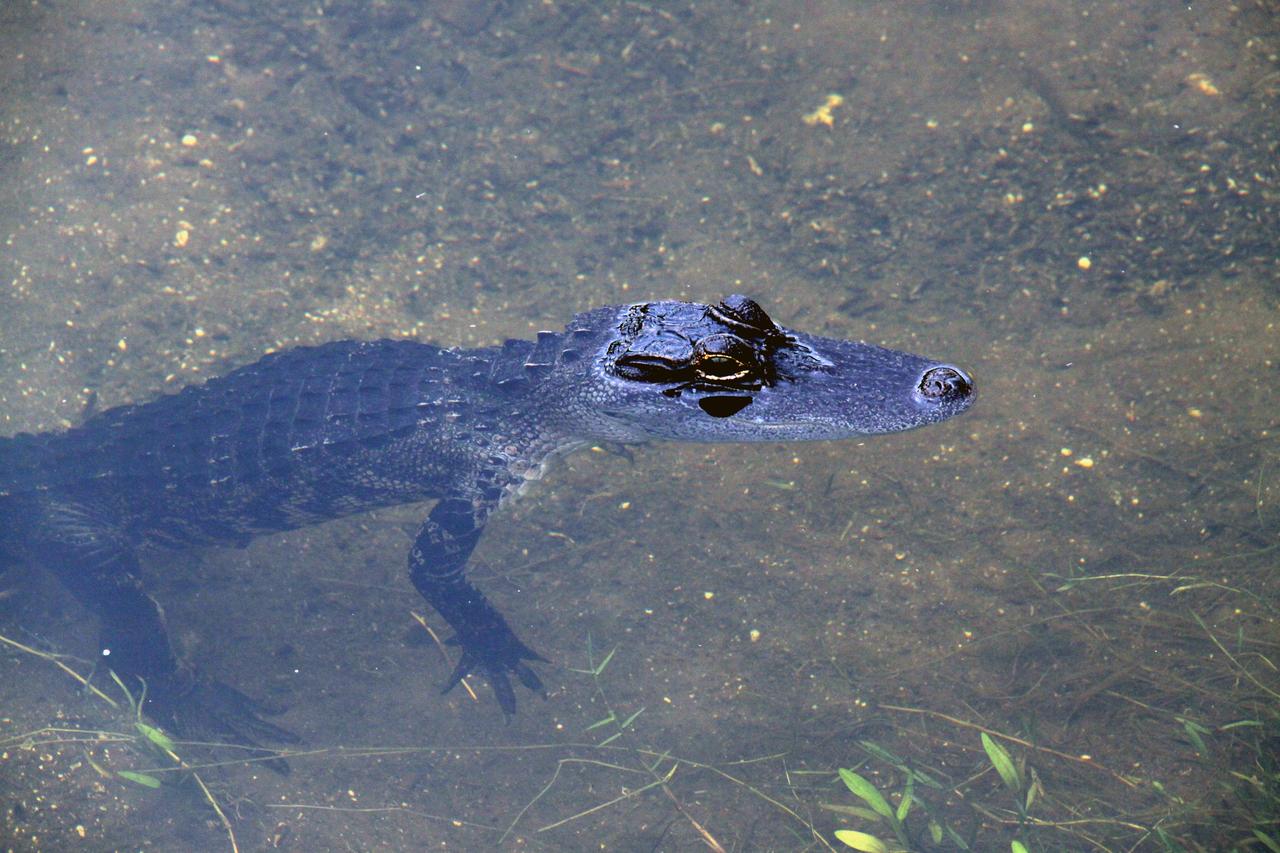
CAPE CANAVERAL, Fla. – A baby alligator is unaware that the water saturating the ground is the aftermath of thunderstorms in the vicinity of NASA Kennedy Space Center’s Shuttle Landing Facility and that space shuttle Atlantis is unable to land to conclude the STS-125 mission. Alligators can be spotted in the drainage canals and other waters surrounding Kennedy. The center shares a boundary with the Merritt Island Wildlife Nature Refuge, which is a habitat for more than 310 species of birds, 25 mammals, 117 fishes and 65 amphibians and reptiles. Photo credit: NASA/Glenn Benson
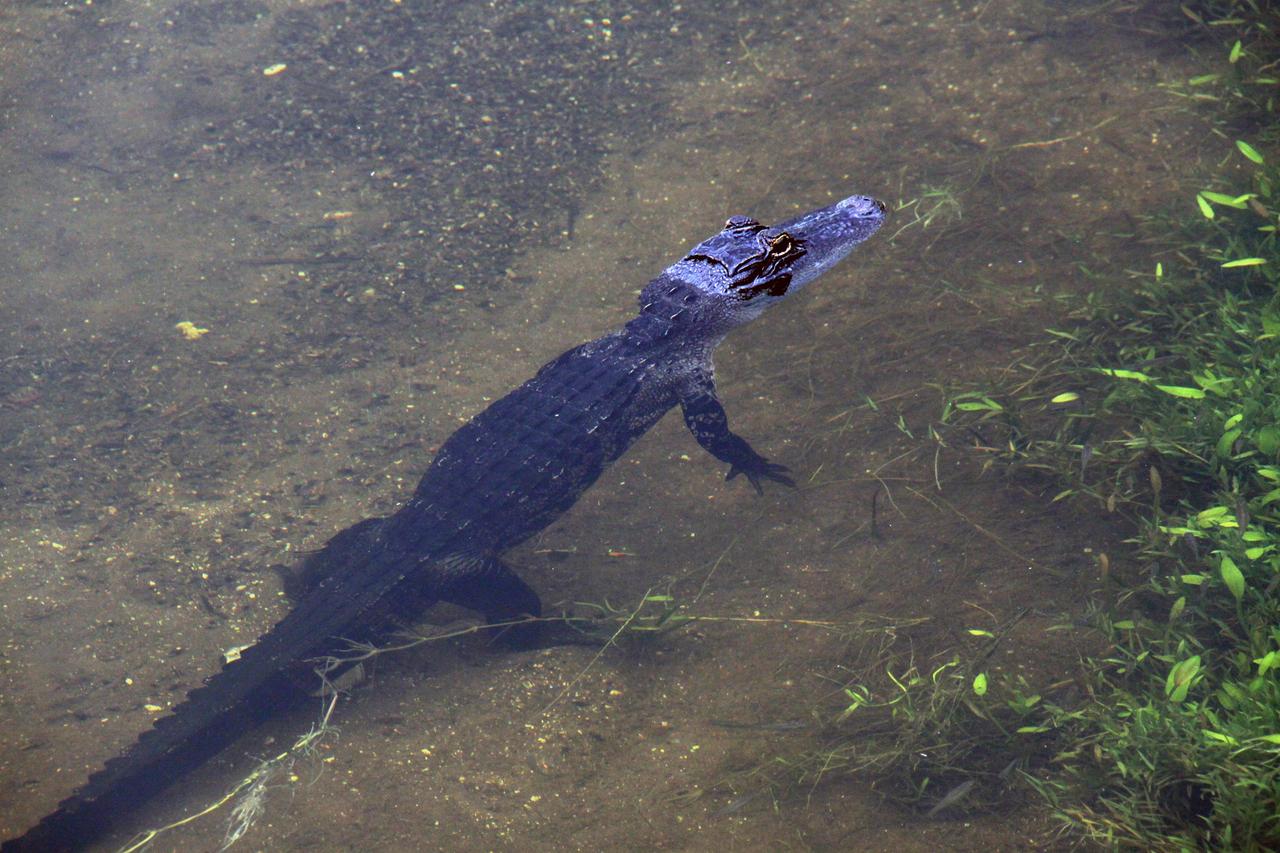
CAPE CANAVERAL, Fla. – A baby alligator is unconcerned that water saturates the ground and space shuttle Atlantis is unable to land at NASA’s Kennedy Space Center to conclude the STS-125 mission, the aftermath of thunderstorms in the vicinity of the Shuttle Landing Facility. Alligators can be spotted in the drainage canals and other waters surrounding Kennedy. The center shares a boundary with the Merritt Island Wildlife Nature Refuge, which is a habitat for more than 310 species of birds, 25 mammals, 117 fishes and 65 amphibians and reptiles. Photo credit: NASA/Glenn Benson
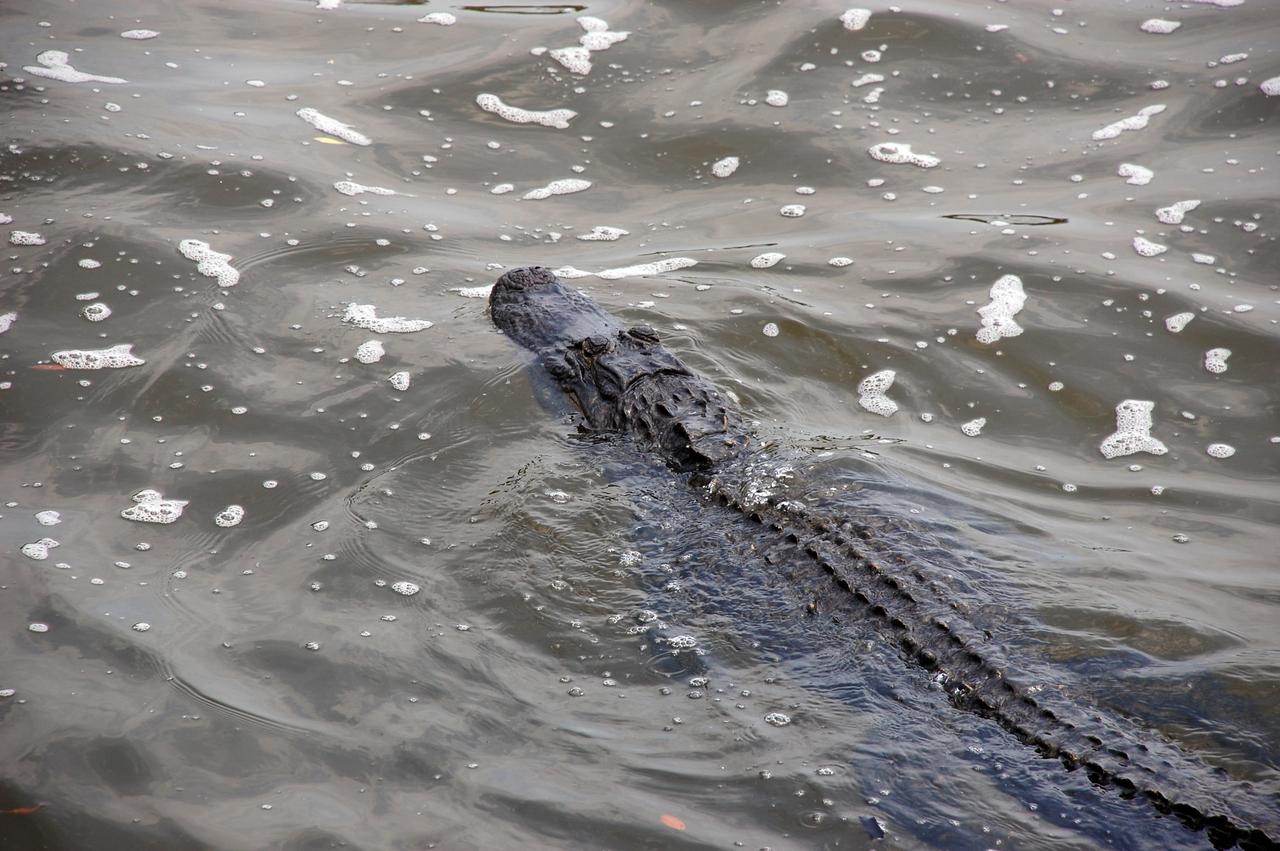
CAPE CANAVERAL, Fla. – An alligator patrols the water in NASA's Kennedy Space Center in Florida. A protected species, alligators can be spotted in the drainage canals and other waters surrounding Kennedy. The center shares a boundary with the Merritt Island Wildlife Nature Refuge, which is a habitat for more than 310 species of birds, 25 mammals, 117 fishes and 65 amphibians and reptiles. Photo credit: NASA/Ben Smegelsky
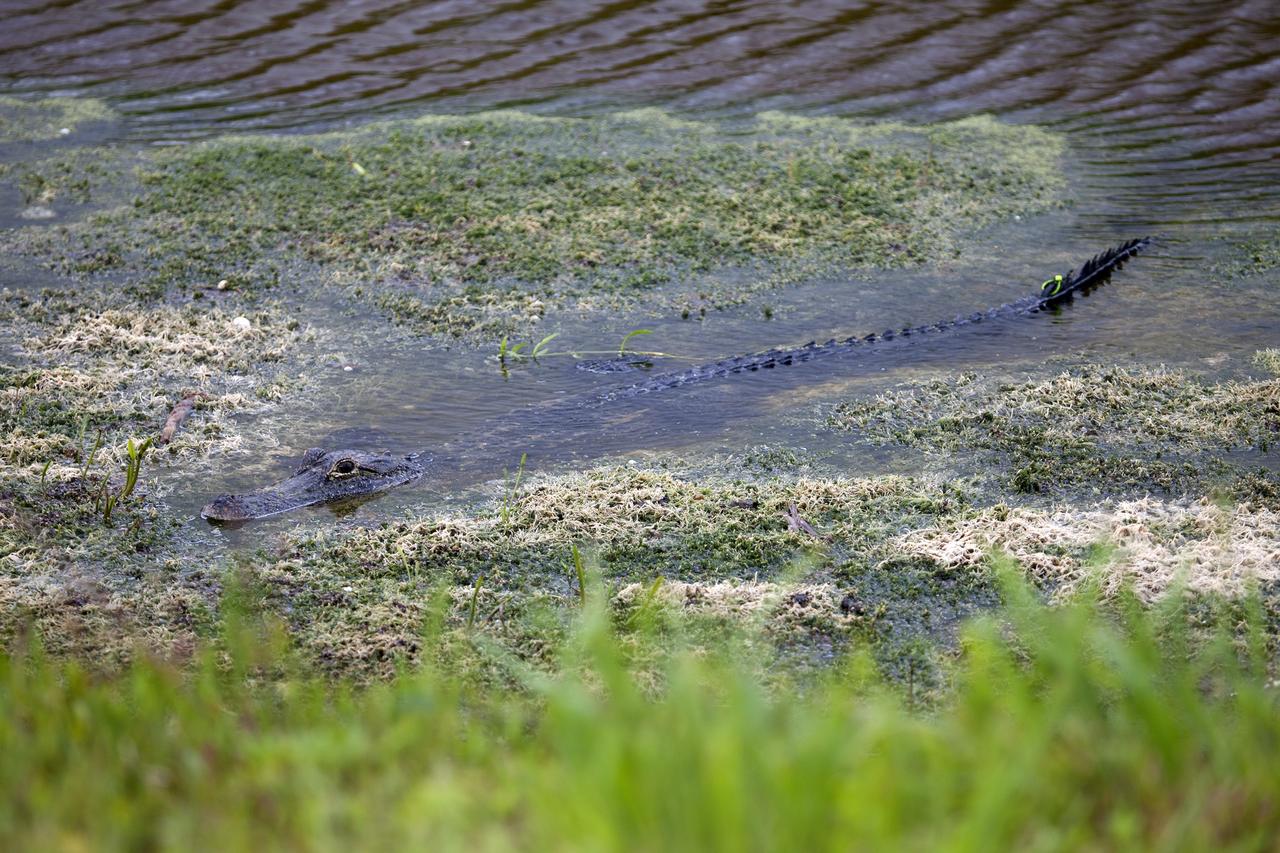
CAPE CANAVERAL, Fla. -- This alligator sports a florescent green tag on its tail, which blends in with the vegetation in the canal in which it is swimming on NASA's Kennedy Space Center in Florida. The undeveloped property on Kennedy Space Center is managed by the U.S. Fish and Wildlife Service through the Merritt Island National Wildlife Refuge. For information on the refuge, visit http://www.fws.gov/merrittisland/Index.html. For information on the alligators prowling the waterways at Kennedy, visit http://www.nasa.gov/content/ancient-creatures-on-the-prowl/. Photo credit: NASA/Daniel Casper
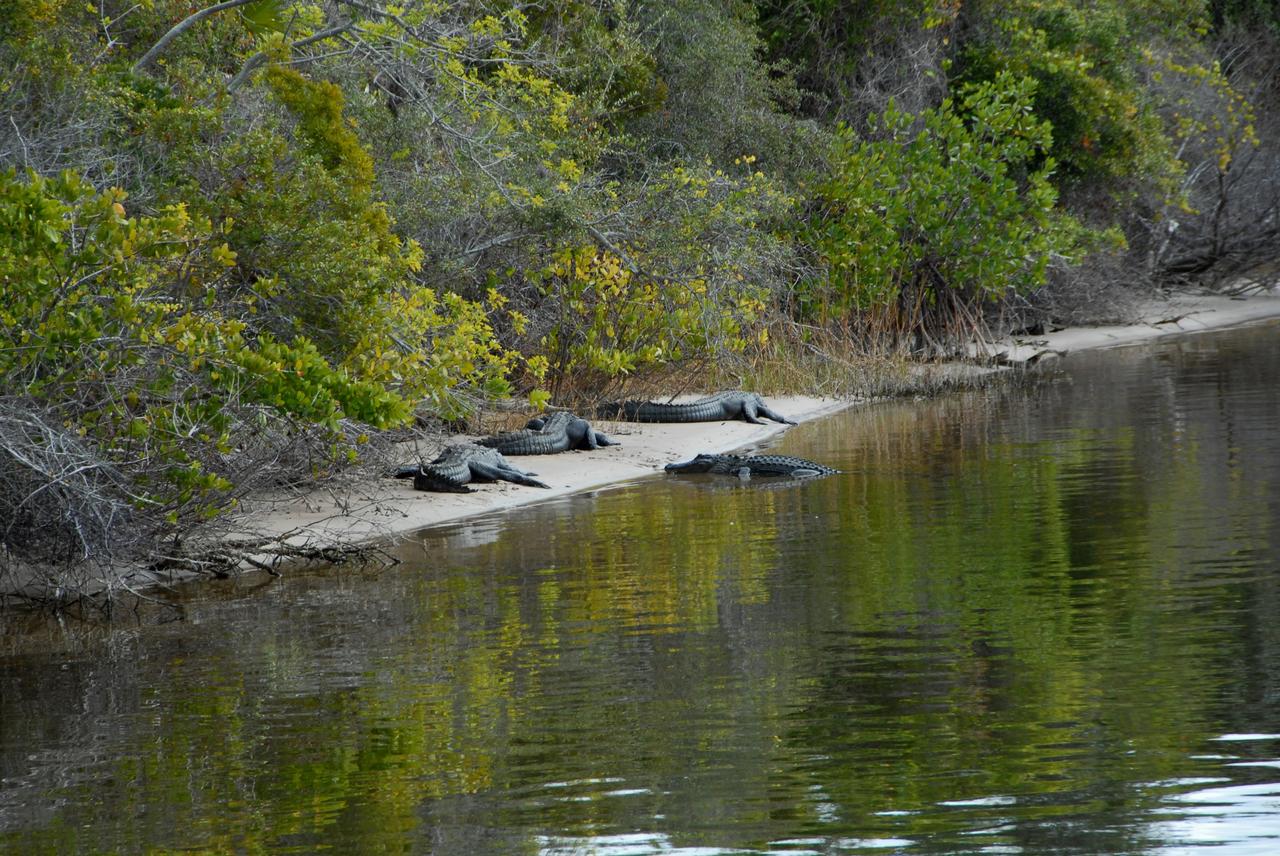
CAPE CANAVERAL, Fla. -- Alligators bask in the warm sun on the banks of the Launch Complex 39 turn basin at NASA's Kennedy Space Center in Florida. Cool weather frequently brings the gators out of the water. A protected species, alligators can be spotted in the drainage canals and other waters surrounding Kennedy. The center shares a boundary with the Merritt Island Wildlife Nature Refuge, which is a habitat for more than 310 species of birds, 25 mammals, 117 fishes and 65 amphibians and reptiles. Photo credit: NASA/Jack Pfaller
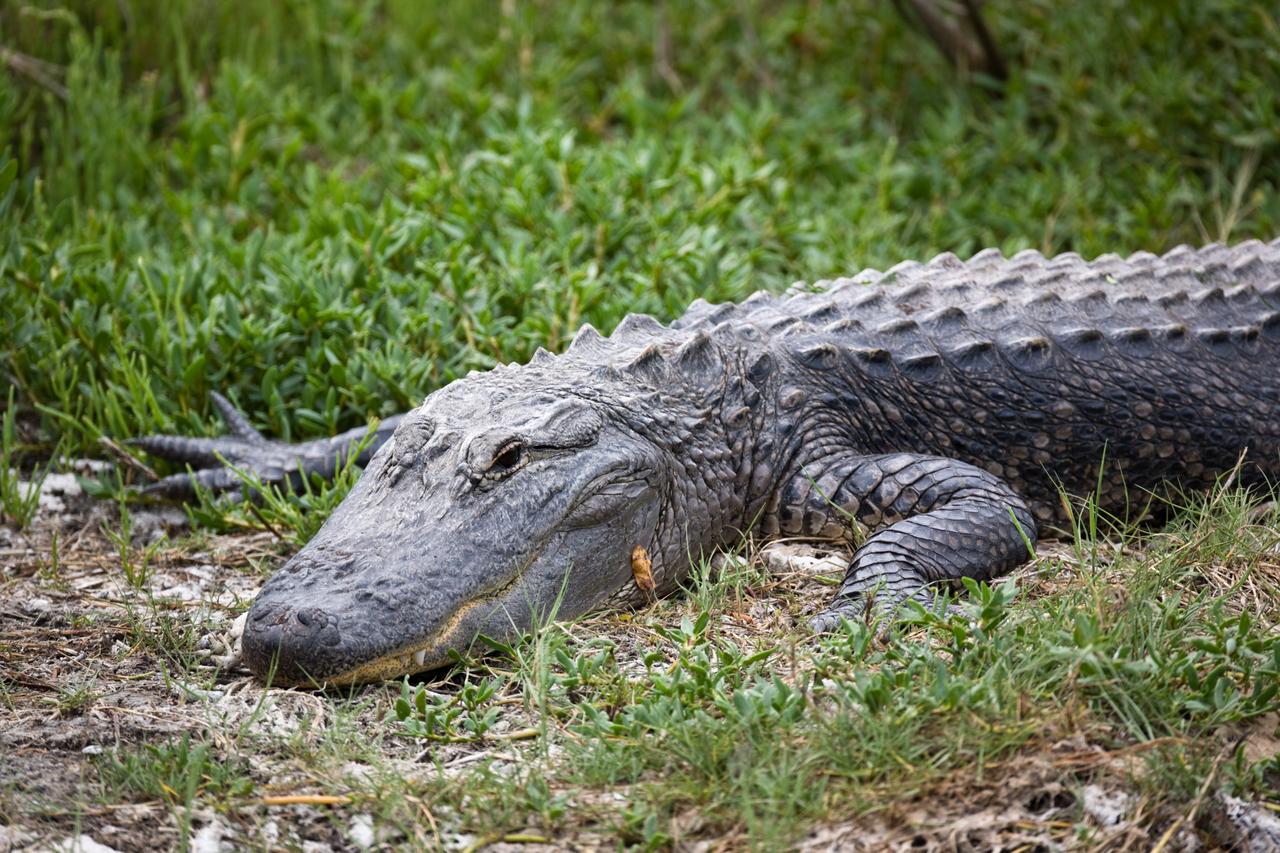
CAPE CANAVERAL, Fla. –– On NASA's Kennedy Space Center in Florida, an alligator rests on the bank of a canal. Alligators can be spotted in the drainage canals and other waters surrounding Kennedy. The center shares a boundary with the Merritt Island Wildlife Nature Refuge, which is a habitat for more than 310 species of birds, 25 mammals, 117 fishes and 65 amphibians and reptiles. Photo credit: NASA/Dimitri Gerondidakis
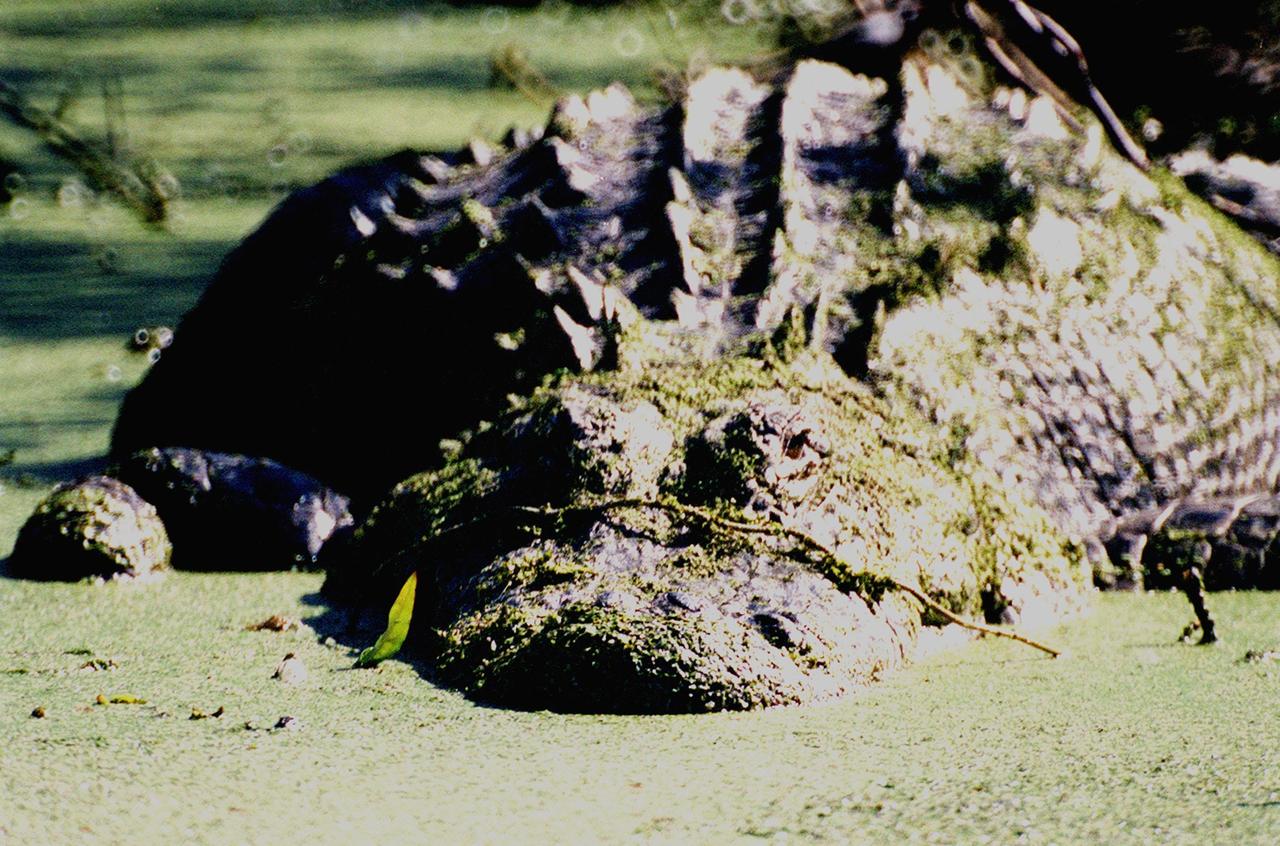
KENNEDY SPACE CENTER, FLA. -- An algae-covered alligator keeps a wary eye open as it rests in one of the ponds at Kennedy Space Center. American alligators feed and rest in the water, and lay their eggs in dens they dig into the banks. The young alligators spend their first several weeks in these dens. The Center shares a boundary with the Merritt Island National Wildlife Refuge, which encompasses 92,000 acres that are a habitat for more than 331 species of birds, 31 mammals, 117 fishes, and 65 amphibians and reptiles. The marshes and open water of the refuge provide wintering areas for 23 species of migratory waterfowl, as well as a year-round home for great blue herons, great egrets, wood storks, cormorants, brown pelicans and other species of marsh and shore birds, as well as a variety of insects

KENNEDY SPACE CENTER, FLA. -- An algae-covered alligator keeps a wary eye open as it rests in one of the ponds at Kennedy Space Center. American alligators feed and rest in the water, and lay their eggs in dens they dig into the banks. The young alligators spend their first several weeks in these dens. The Center shares a boundary with the Merritt Island National Wildlife Refuge, which encompasses 92,000 acres that are a habitat for more than 331 species of birds, 31 mammals, 117 fishes, and 65 amphibians and reptiles. The marshes and open water of the refuge provide wintering areas for 23 species of migratory waterfowl, as well as a year-round home for great blue herons, great egrets, wood storks, cormorants, brown pelicans and other species of marsh and shore birds, as well as a variety of insects
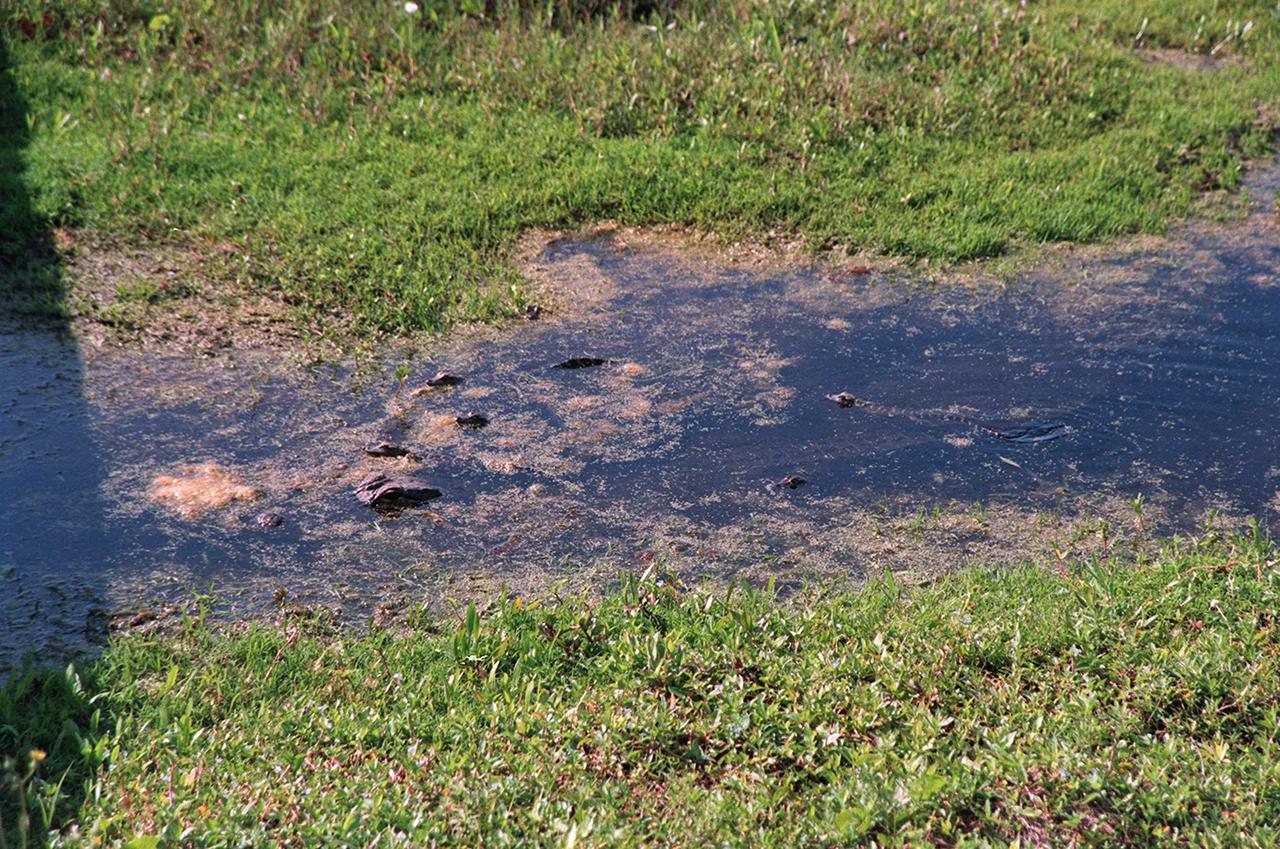
In the water near Kennedy Space Center, a mother alligator gathers her six offspring. American alligators feed and rest in the water, and lay their eggs in dens they dig into the banks. The young alligators spend their first several weeks in these dens. The Center shares a boundary with the Merritt Island National Wildlife Refuge, which encompasses 92,000 acres that are a habitat for more than 331 species of birds, 31 mammals, 117 fishes, and 65 amphibians and reptiles. The marshes and open water of the refuge provide wintering areas for 23 species of migratory waterfowl, as well as a year-round home for great blue herons, great egrets, wood storks, cormorants, brown pelicans and other species of marsh and shore birds, as well as a variety of insects
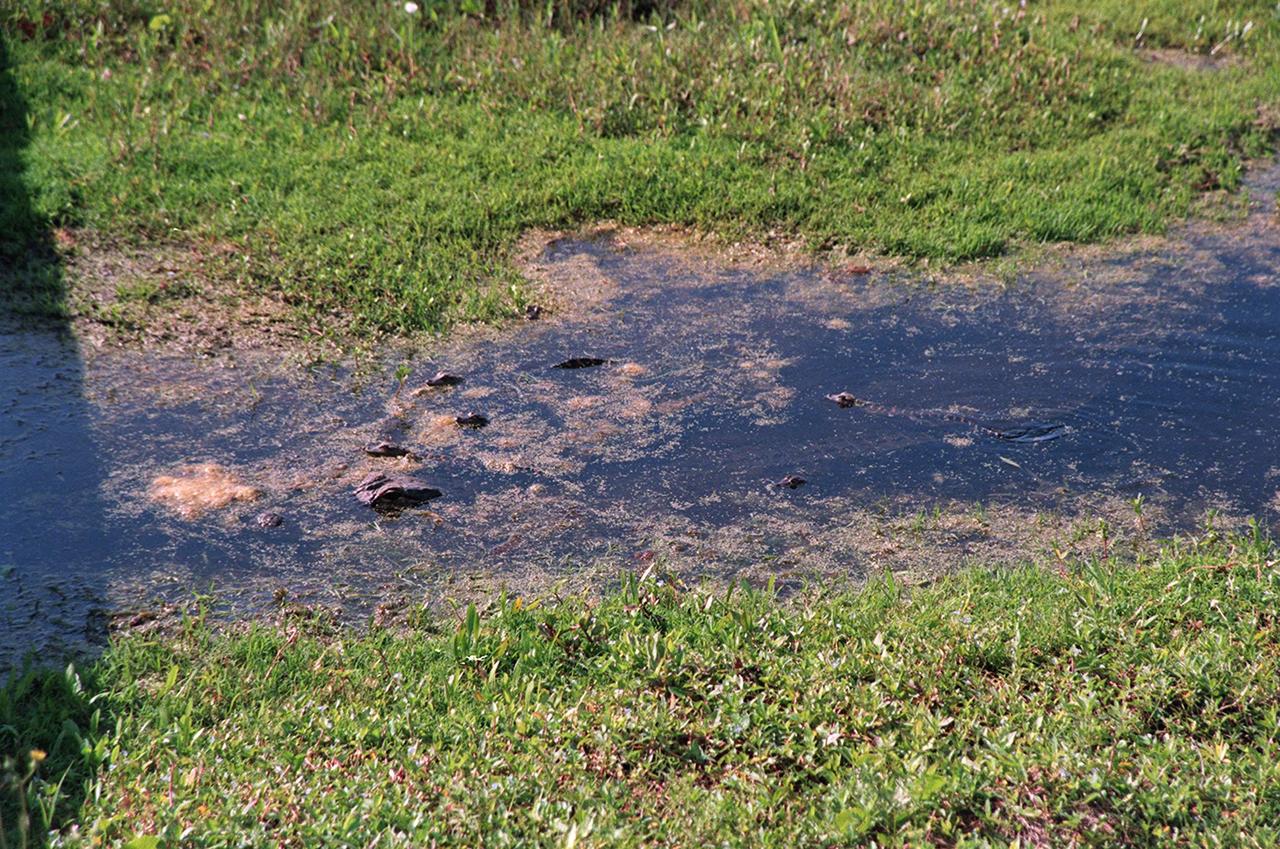
In the water near Kennedy Space Center, a mother alligator gathers her six offspring. American alligators feed and rest in the water, and lay their eggs in dens they dig into the banks. The young alligators spend their first several weeks in these dens. The Center shares a boundary with the Merritt Island National Wildlife Refuge, which encompasses 92,000 acres that are a habitat for more than 331 species of birds, 31 mammals, 117 fishes, and 65 amphibians and reptiles. The marshes and open water of the refuge provide wintering areas for 23 species of migratory waterfowl, as well as a year-round home for great blue herons, great egrets, wood storks, cormorants, brown pelicans and other species of marsh and shore birds, as well as a variety of insects
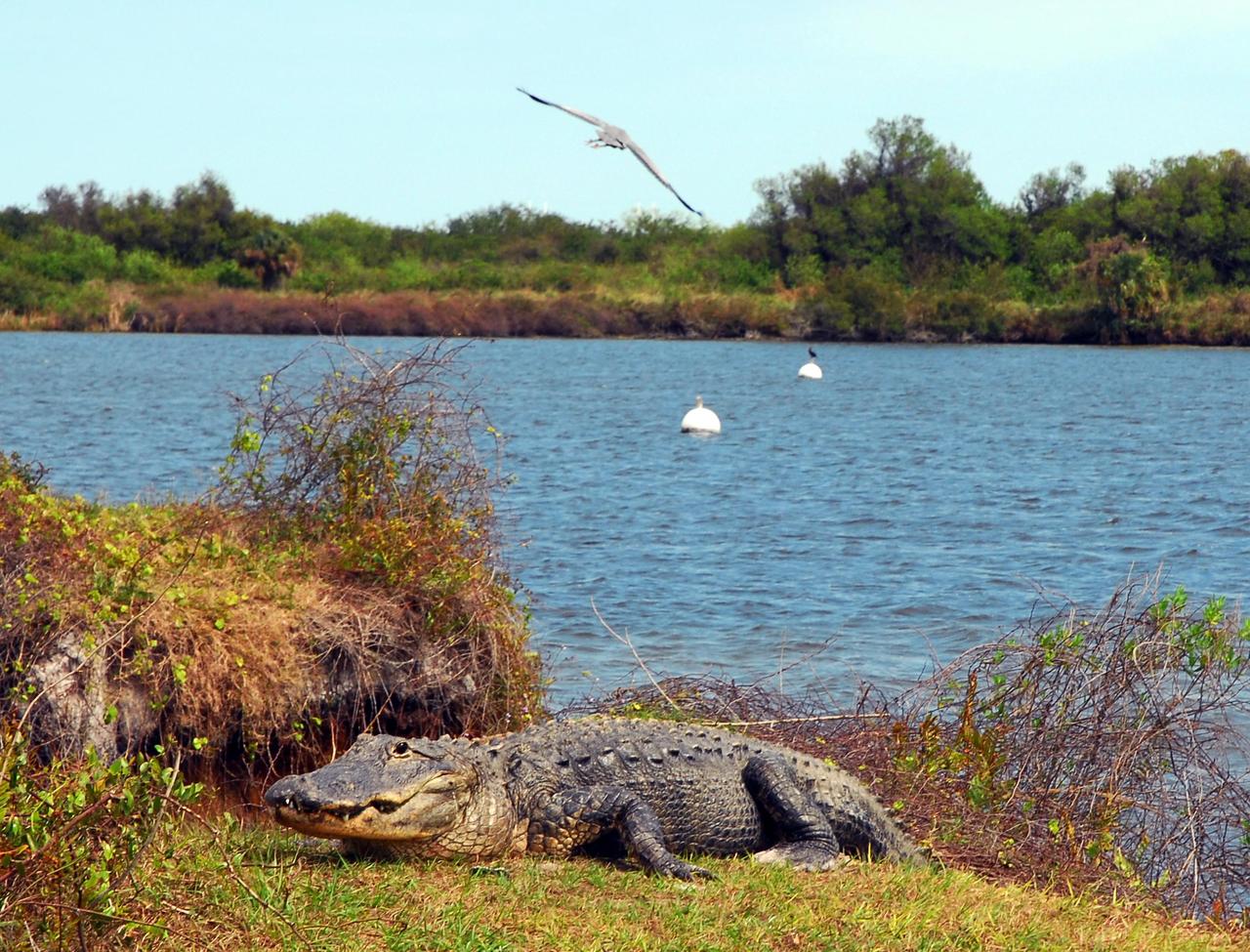
KENNEDY SPACE CENTER, FLA. -- A large alligator on the bank of a creek in NASA's Kennedy Space Center comes to alert, scaring off the great blue heron, seen in the sky above the water. The heron had been standing behind the alligator. A protected species, alligators can be spotted in the drainage canals and other waters surrounding KSC. The center shares a boundary with the Merritt Island Wildlife Nature Refuge, which is a habitat for more than 310 species of birds, 25 mammals, 117 fishes and 65 amphibians and reptiles. In addition, the Refuge supports 19 endangered or threatened wildlife species on Federal or State lists, more than any other single refuge in the U.S. Photo credit: NASA/Amanda Diller
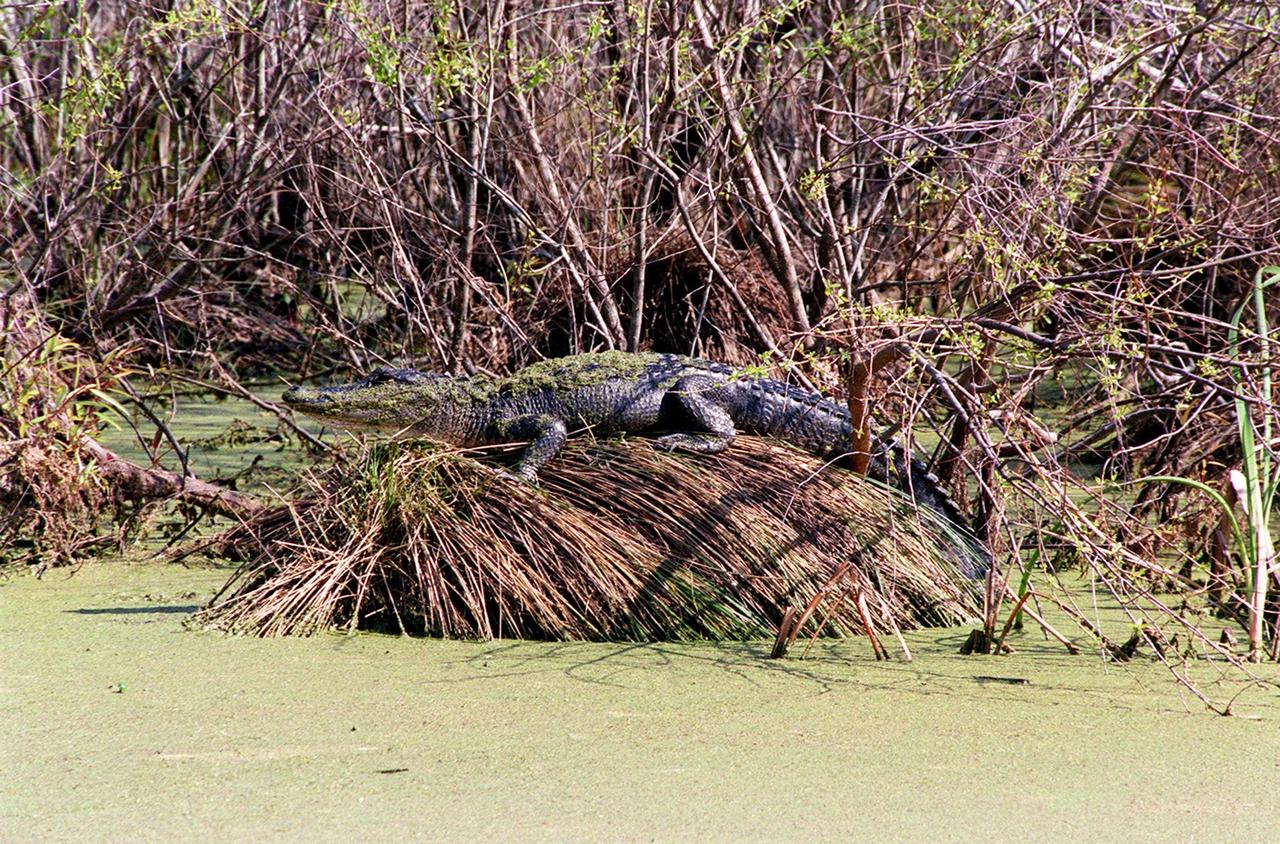
KENNEDY SPACE CENTER, FLA. -- On top of what may be a nest on the edge of an algae-coated canal near Schwartz Rd. at Kennedy Space Center, a moss-covered alligator rests while keeping a wary eye open for trespassers. Nearly 5,000 alligators can be found in canals, ponds, and waterways throughout the Center and the Merritt Island National Wildlife Refuge, which shares a boundary with the Center. American alligators feed and rest in the water, and usually lay their eggs in dens they dig into the banks. The young alligators spend their first several weeks in these dens. The Wildlife Refuge encompasses 92,000 acres that are a habitat for more than 331 species of birds, 31 mammals, 117 fishes, and 65 amphibians and reptiles. The marshes and open water of the refuge provide wintering areas for 23 species of migratory waterfowl, as well as a year-round home for great blue herons, great egrets, wood storks, cormorants, brown pelicans and other species of marsh and shore birds, as well as a variety of insects