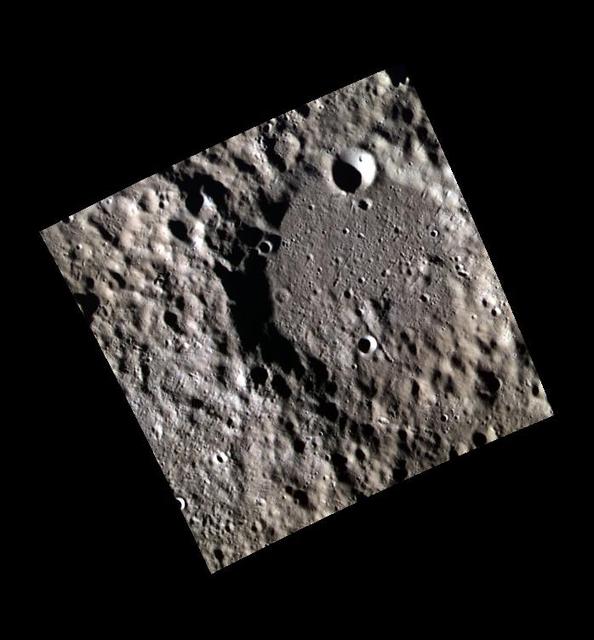
Mercury, a Planetary Punching Bag

View of Human Research Facility (HRF) Containment Bag,Part Number (P/N): SDD46107234-306,Serial Number (S/N): 1240. Photo was taken during Expedition 34.
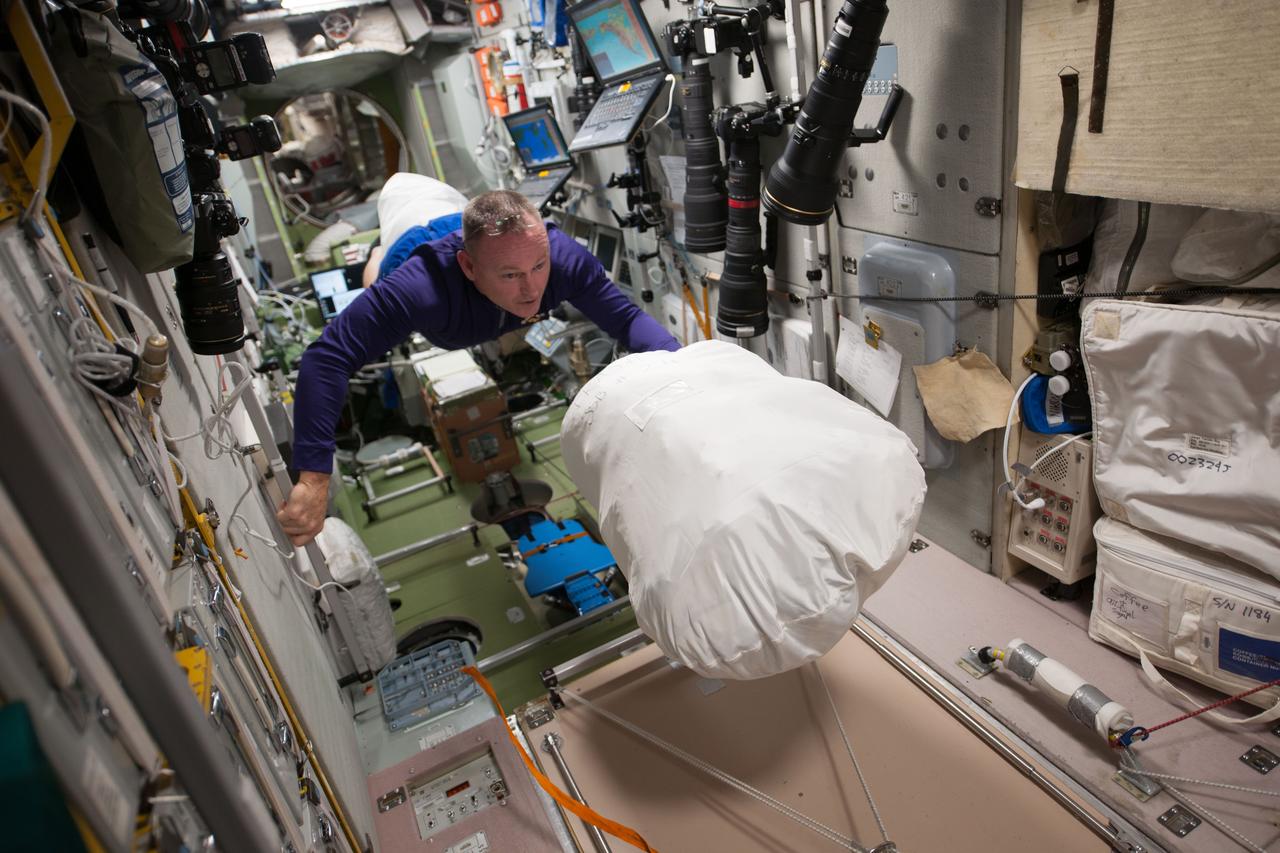
Commander Barry Wilmore floats through the Zvezda Service Module (SM) with a full Jettison Stowage Bag. Image was released by astronaut on Instagram.
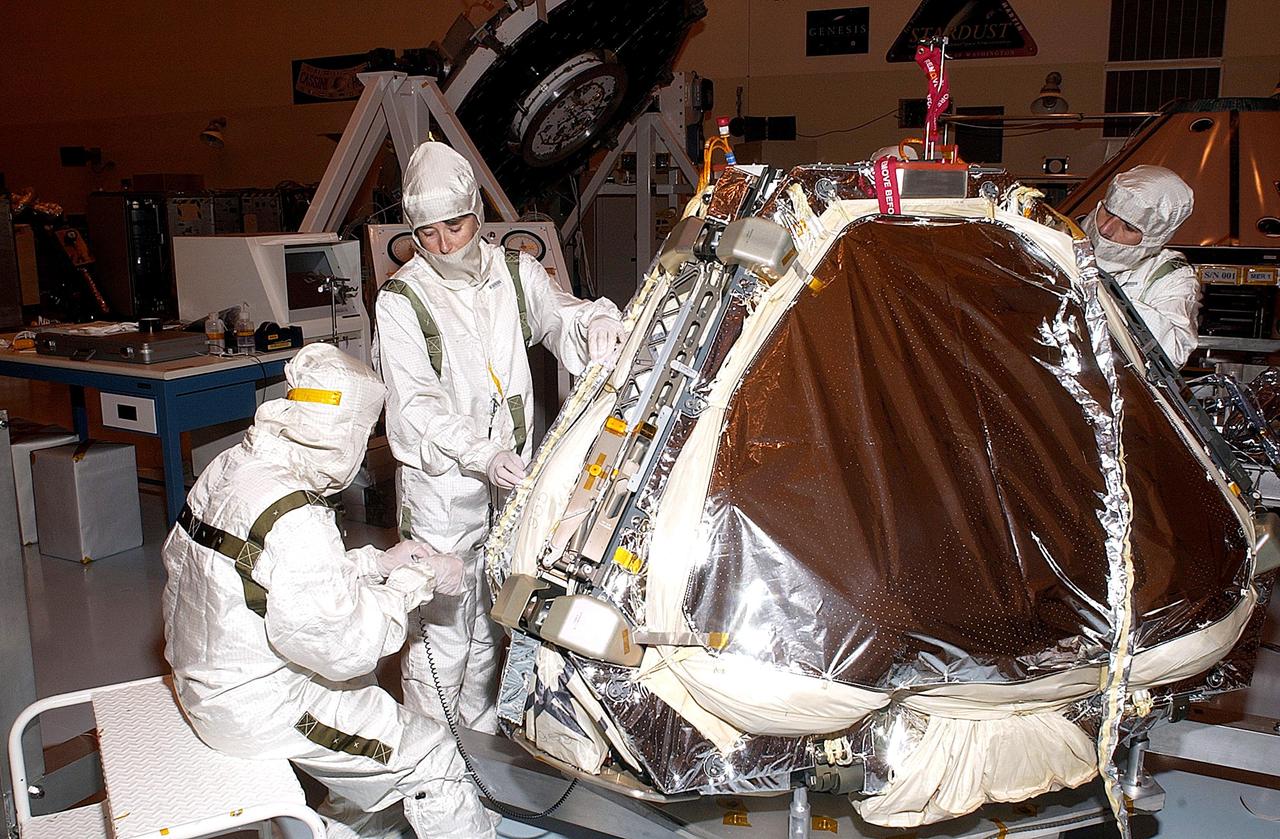
Air bags are installed on the lander on Mars Exploration Rover 1 MER-1.
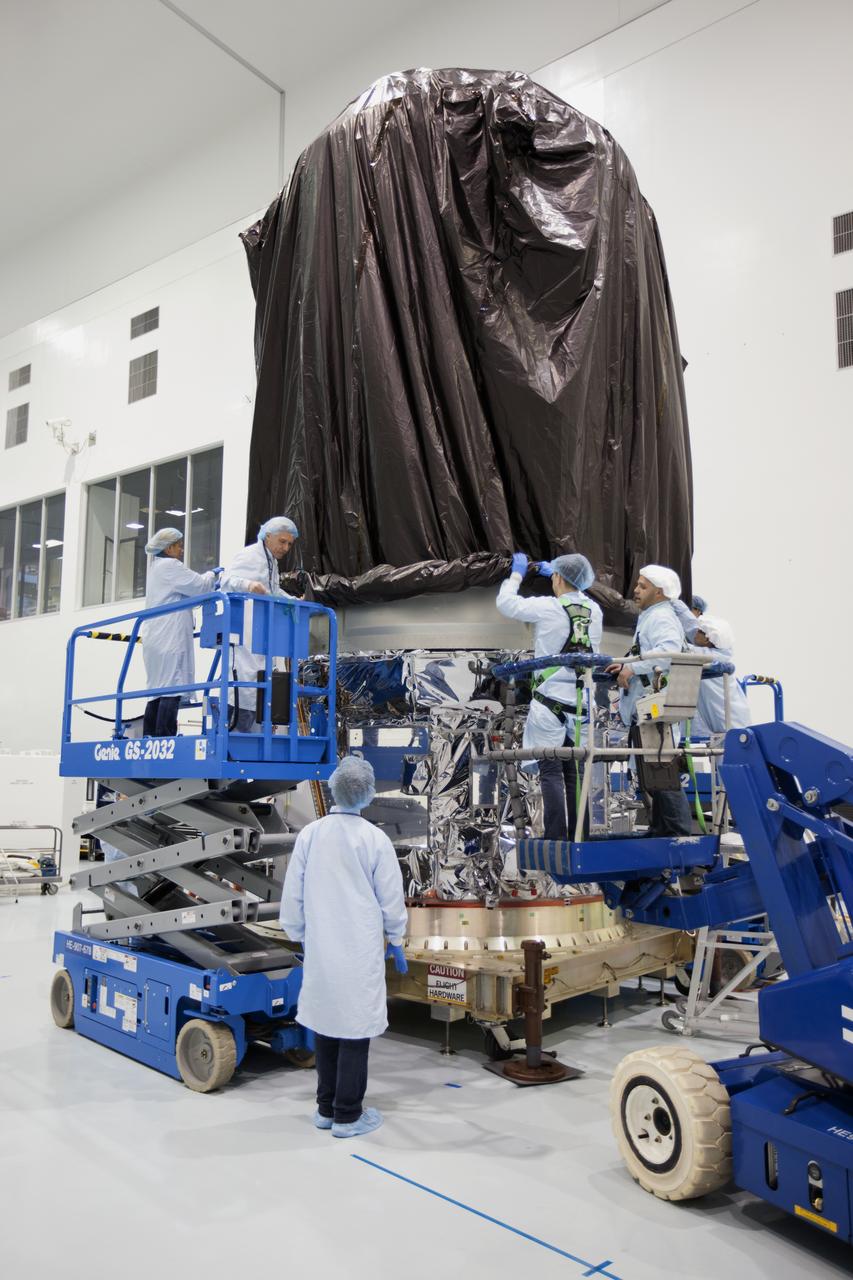
In the Space Station Processing Facility high bay at NASA's Kennedy Space Center in Florida, technicians secure a protective covering around Orbital ATK's CYGNUS pressurized cargo module. The Orbital ATK CRS-7 commercial resupply services mission to the International Space Station is scheduled to launch atop a United Launch Alliance Atlas V rocket from Space Launch Complex 41 at Cape Canaveral Air Force Station on March 19, 2017. CYGNUS will deliver thousands of pounds of supplies, equipment and scientific research materials to the space station.
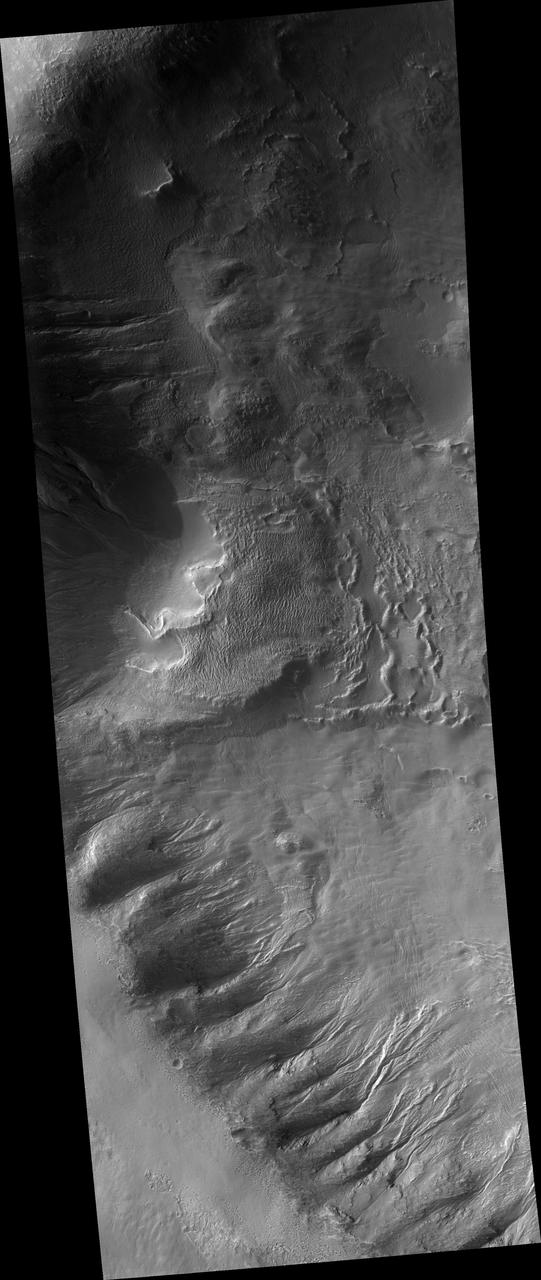
Gully Grab Bag in Crater Wall in the Terra Sirenum Region
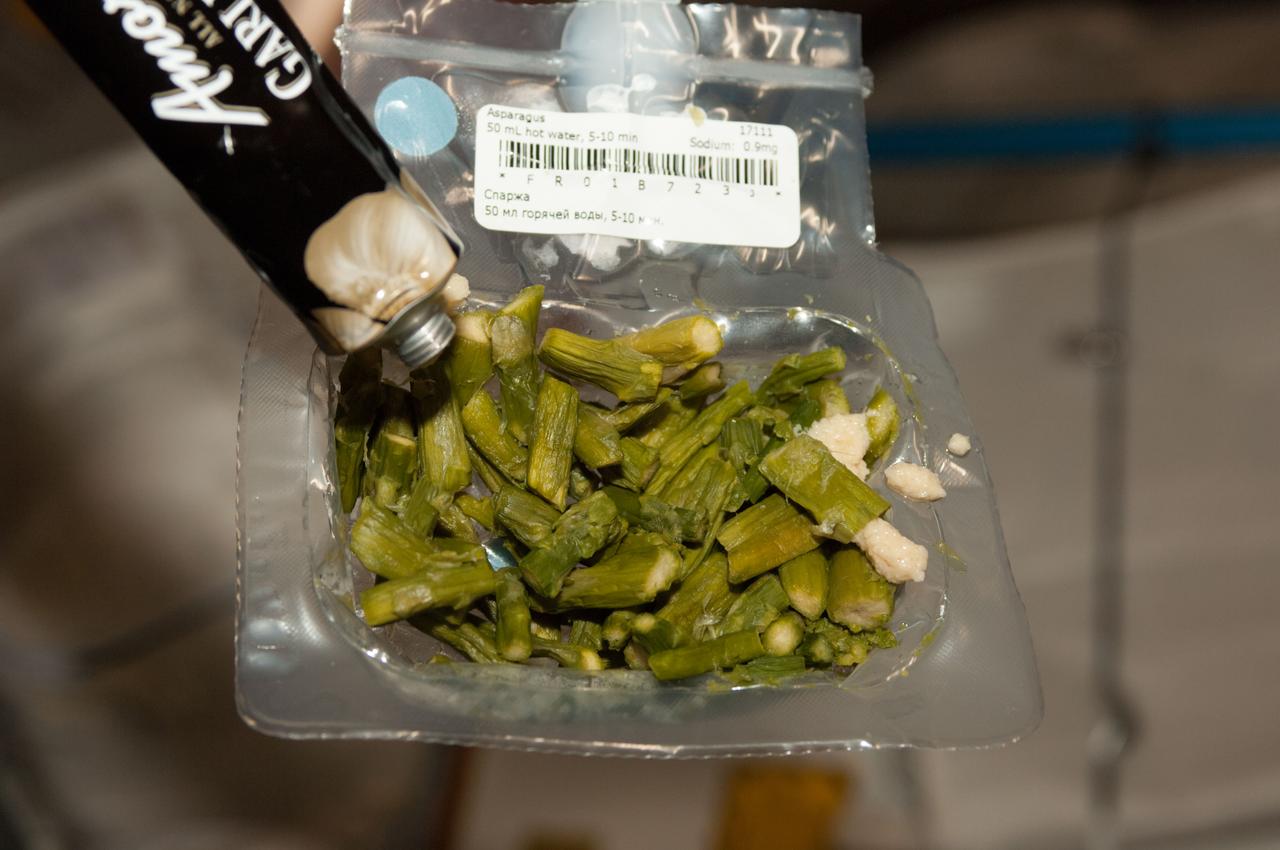
View of a bag of asparagus and garlic paste about to be rehydrated documented by the Expedition 36 crew. Also sent as Twitter message.
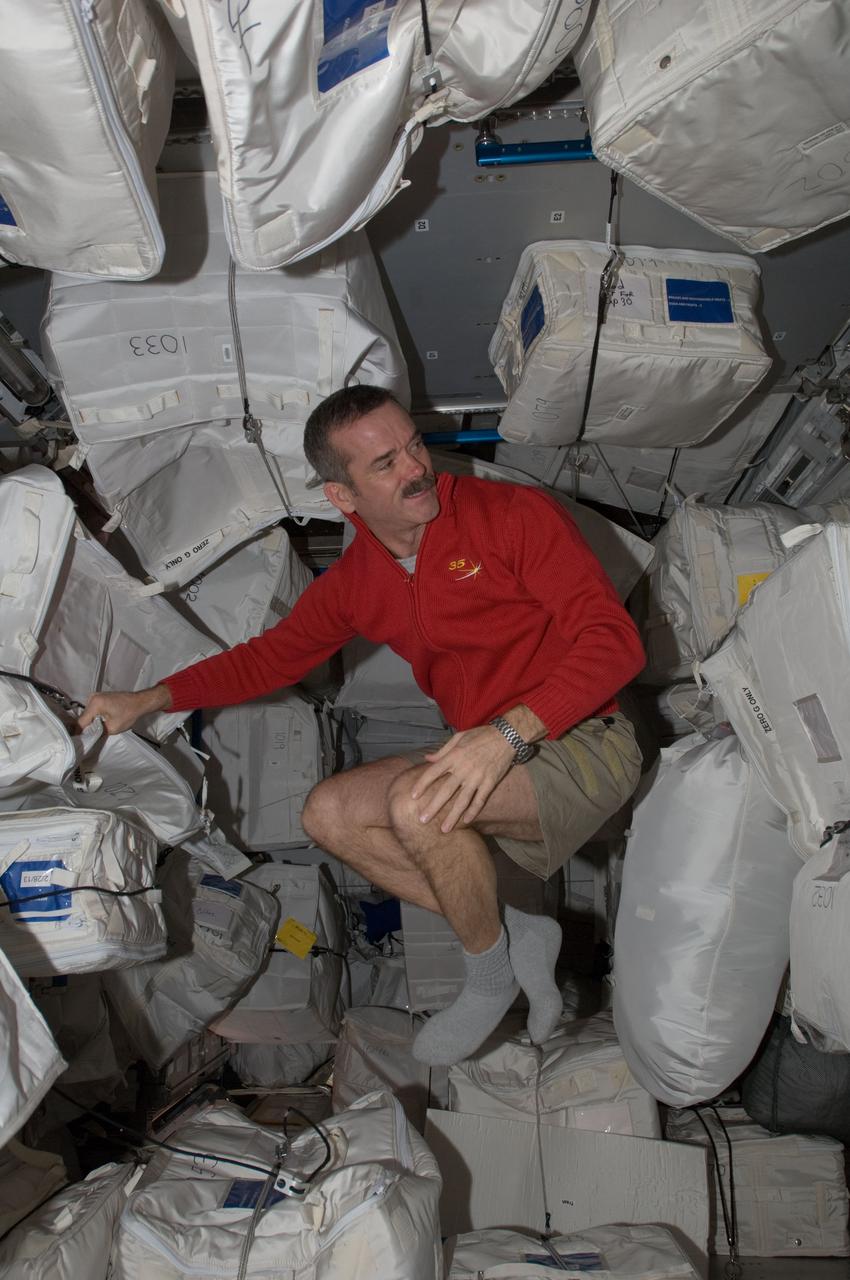
View of Chris Hadfield,Expedition 34 Flight Engineer (FE),floats near stowed Cargo Transfer Bags (CTBs). Photo was taken during Expedition 34.
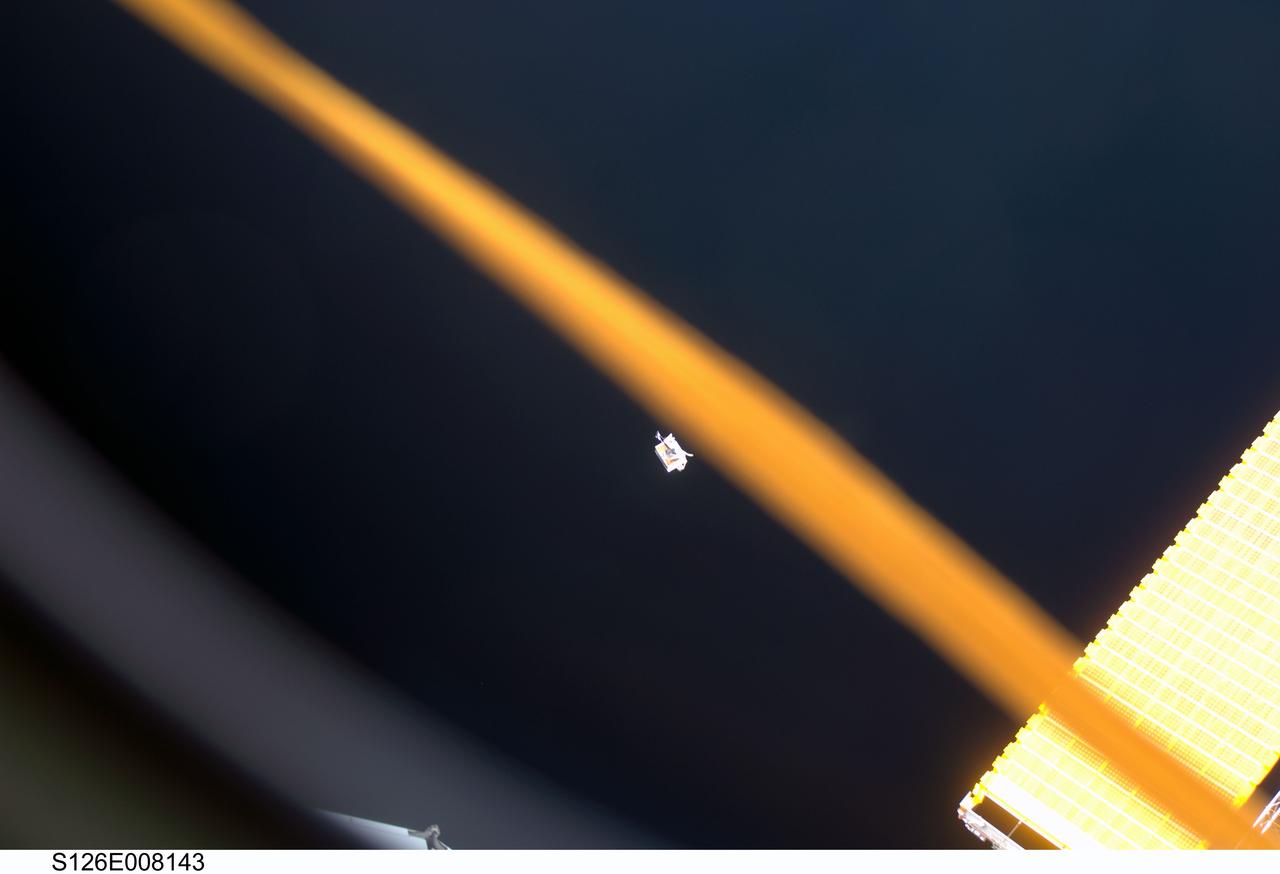
S126-E-008143 (18 Nov. 2008) --- An extravehicular activity (EVA) tool bag drifts away from the International Space Station during the mission's first scheduled spacewalk for STS-126. About halfway into the spacewalk, one of the grease guns that astronaut Heidemarie Stefanyshyn-Piper (out of frame), mission specialist, was preparing to use on the Solar Alpha Rotary Joint released some Braycote grease into her crew lock bag, which is the tool bag the spacewalkers use during their activities. As she was cleaning the inside of the bag, it drifted away from her and toward the aft and starboard portion of the International Space Station. Inside the bag were two grease guns, a scraper, a scraper debris container, several wipes in a caddy and tethers.

S126-E-008155 (18 Nov. 2008) --- An extravehicular activity (EVA) tool bag drifts away from the International Space Station during the mission's first scheduled spacewalk for STS-126. About halfway into the spacewalk, one of the grease guns that astronaut Heidemarie Stefanyshyn-Piper (out of frame), mission specialist, was preparing to use on the Solar Alpha Rotary Joint released some Braycote grease into her crew lock bag, which is the tool bag the spacewalkers use during their activities. As she was cleaning the inside of the bag, it drifted away from her and toward the aft and starboard portion of the International Space Station. Inside the bag were two grease guns, a scraper, a scraper debris container, several wipes in a caddy and tethers.
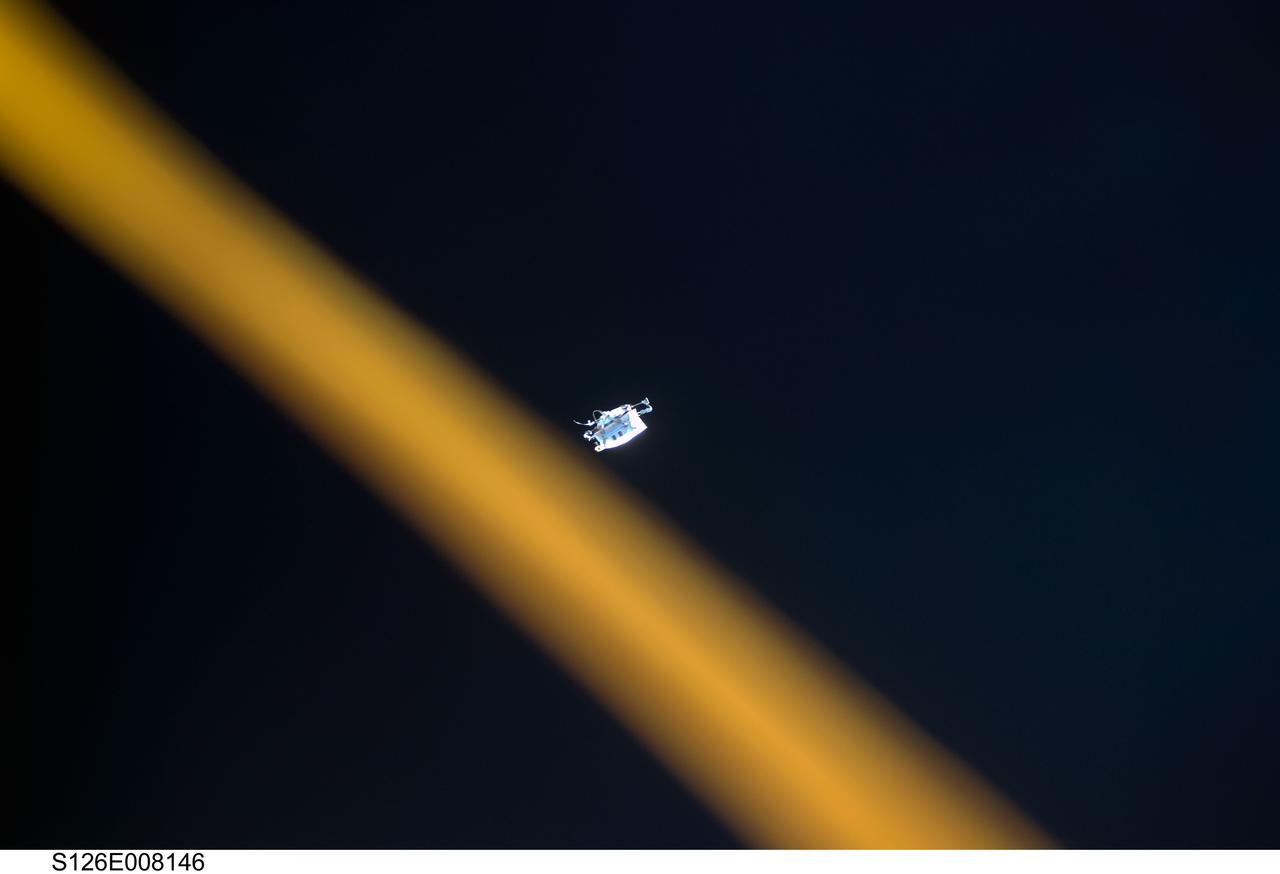
S126-E-008146 (18 Nov. 2008) --- An extravehicular activity (EVA) tool bag drifts away from the International Space Station during the mission's first scheduled spacewalk for STS-126. About halfway into the spacewalk, one of the grease guns that astronaut Heidemarie Stefanyshyn-Piper (out of frame), mission specialist, was preparing to use on the Solar Alpha Rotary Joint released some Braycote grease into her crew lock bag, which is the tool bag the spacewalkers use during their activities. As she was cleaning the inside of the bag, it drifted away from her and toward the aft and starboard portion of the International Space Station. Inside the bag were two grease guns, a scraper, a scraper debris container, several wipes in a caddy and tethers.
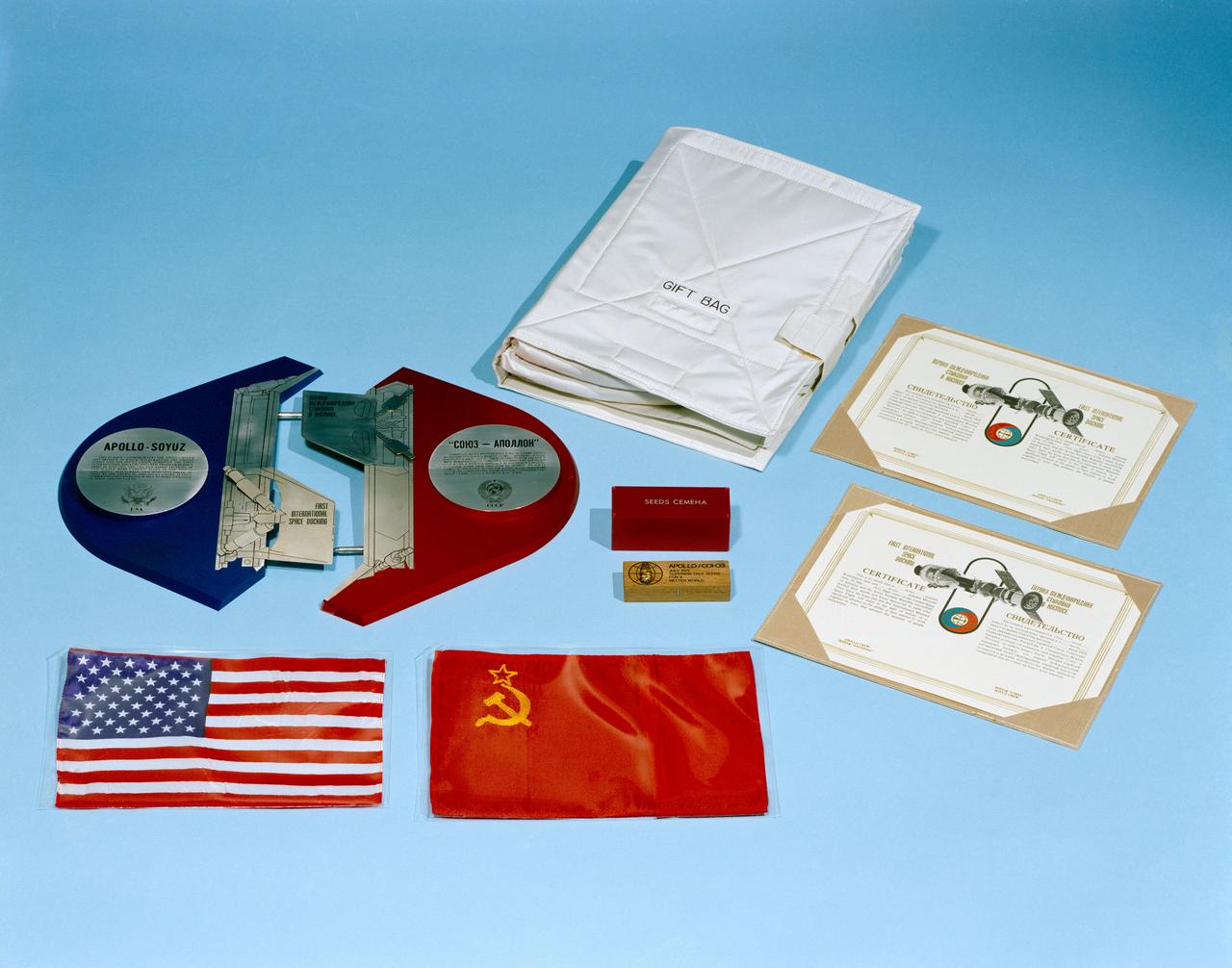
S75-27952 (July 1975) --- A close-up view of the special ?gift bag? in which several exchange/gift items will be carried aboard the Apollo Command Module during the joint U.S.-USSR Apollo-Soyuz Test Project mission. Some of these items are seen here alongside the bag. They are the sectionized ASTP Commemorative Plaque, ten 8x12 inch American flags, ten 8.07x16.14 inch (205mm x 410mm) Soviet Union flags, a special box of white spruce tree seeds, and the ASTP Certification to authorize the ASTP docking. The gifts will be presented and the exchange made while the Apollo and Soyuz spacecraft are docked in Earth orbit.
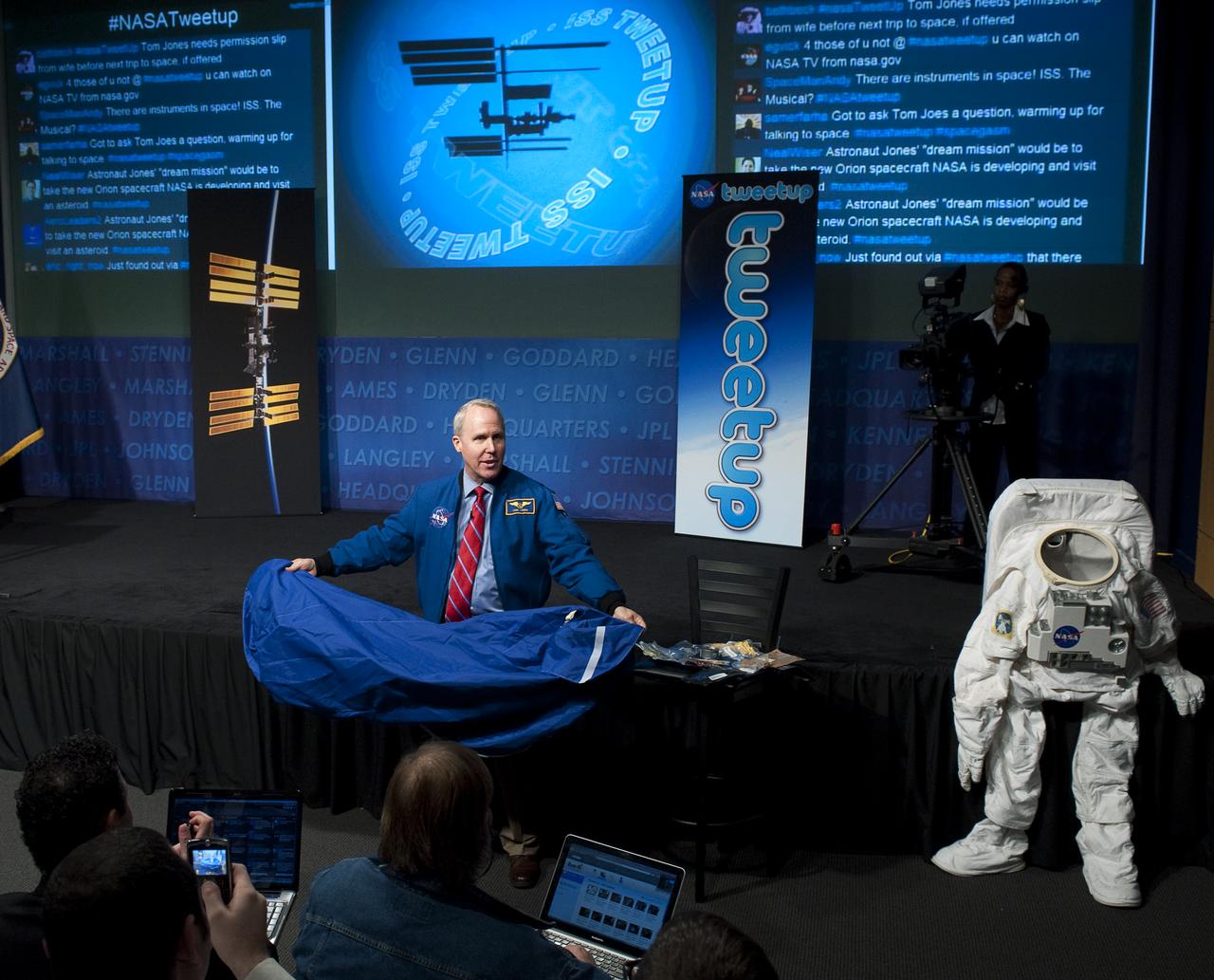
Former NASA astronaut Tom Jones shows off a sleeping bag used by astronauts living aboard the International Space Station during a NASA Tweetup event at NASA Headquarters in Washington, Wednesday, Oct. 21, 2009. Photo Credit: (NASA/Carla Cioffi)

View of a pair of Extravehicular Mobility Units (EMUs) and assorted other bags in the Quest Airlock as documented by the Expedition 36 crew.
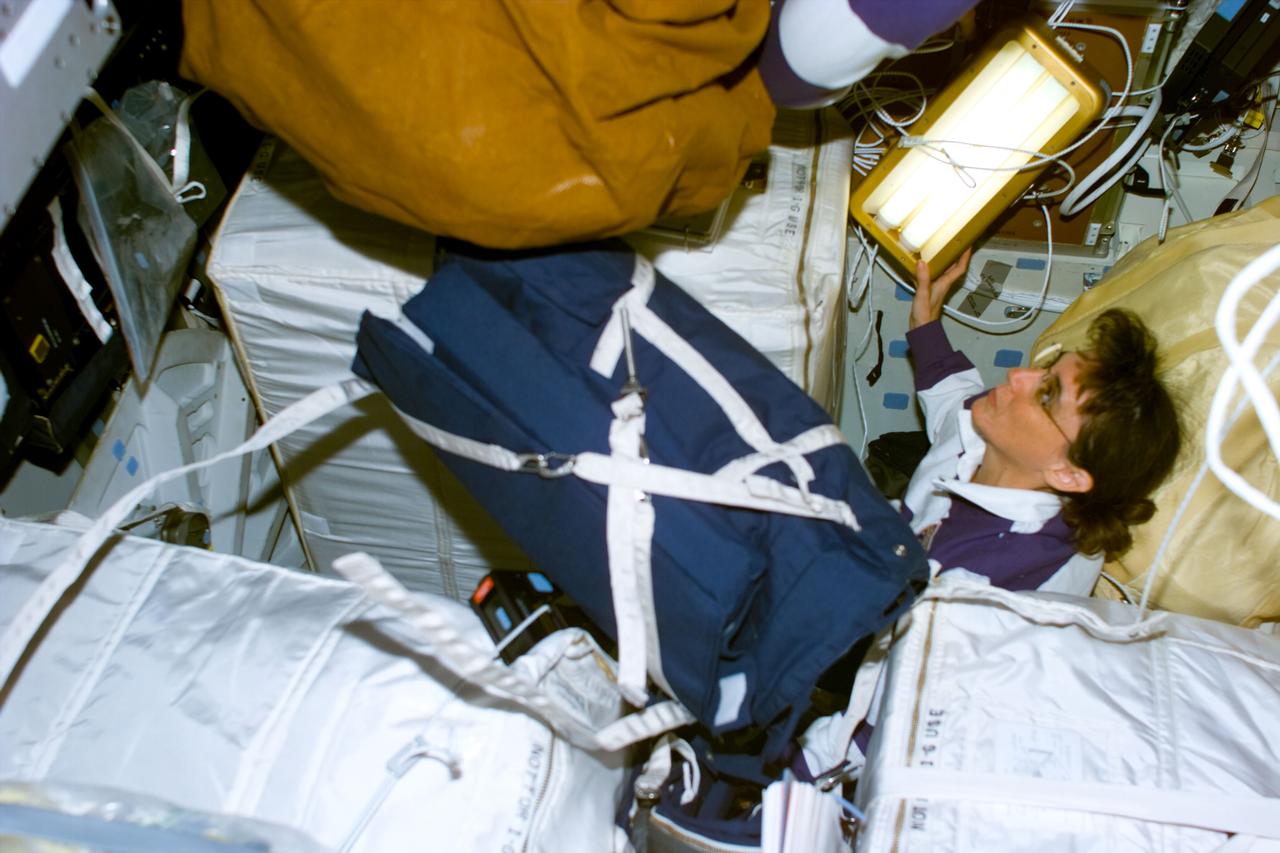
S88-E-5135 (12-12-98) --- Astronaut Nancy J. Currie, mission specialist, totes a lamp while sorting through a mountain of bags filled with hardware, equipment and supplies onboard Endeavour. The photo was taken with an electronic still camera at 03:49:03 GMT, Dec. 12.
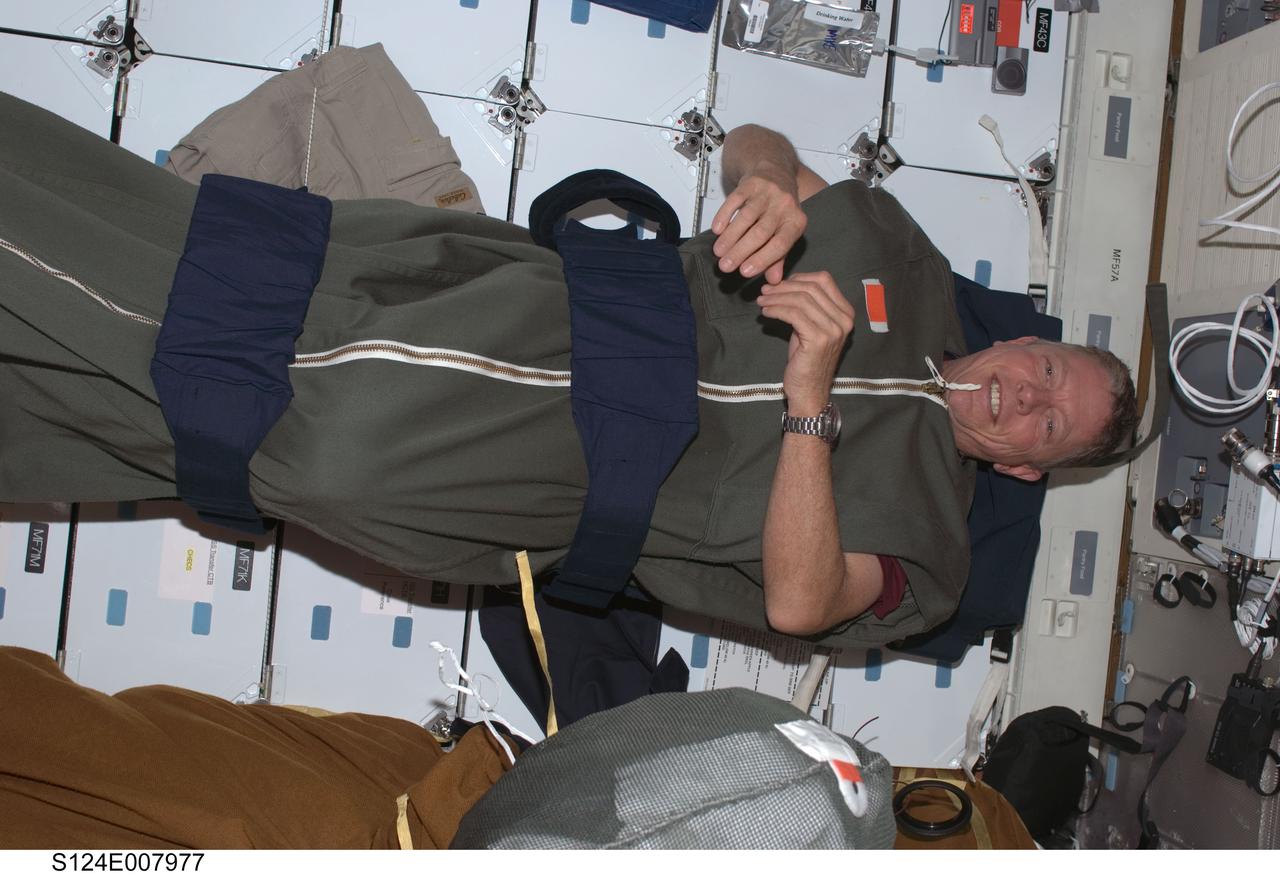
S124-E-007977 (9 June 2008) --- Astronaut Mike Fossum, STS-124 mission specialist, is pictured in his sleeping bag, which is attached to the lockers on the middeck of the Space Shuttle Discovery, while docked with the International Space Station.
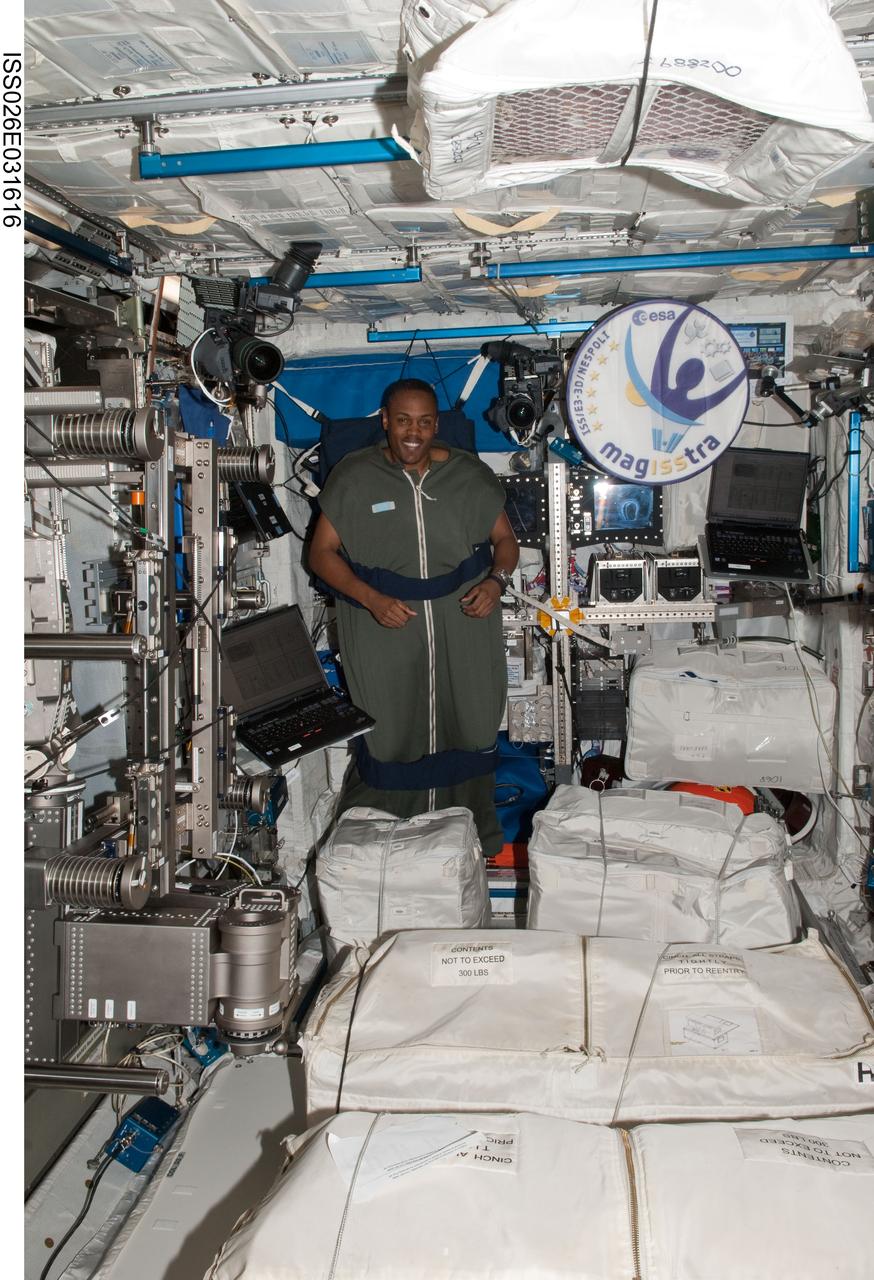
ISS026-E-031616 (3 March 2011) --- NASA astronaut Alvin Drew, STS-133 mission specialist, is pictured in his sleeping bag, which is attached in the Columbus laboratory of the International Space Station while space shuttle Discovery remains docked with the station.
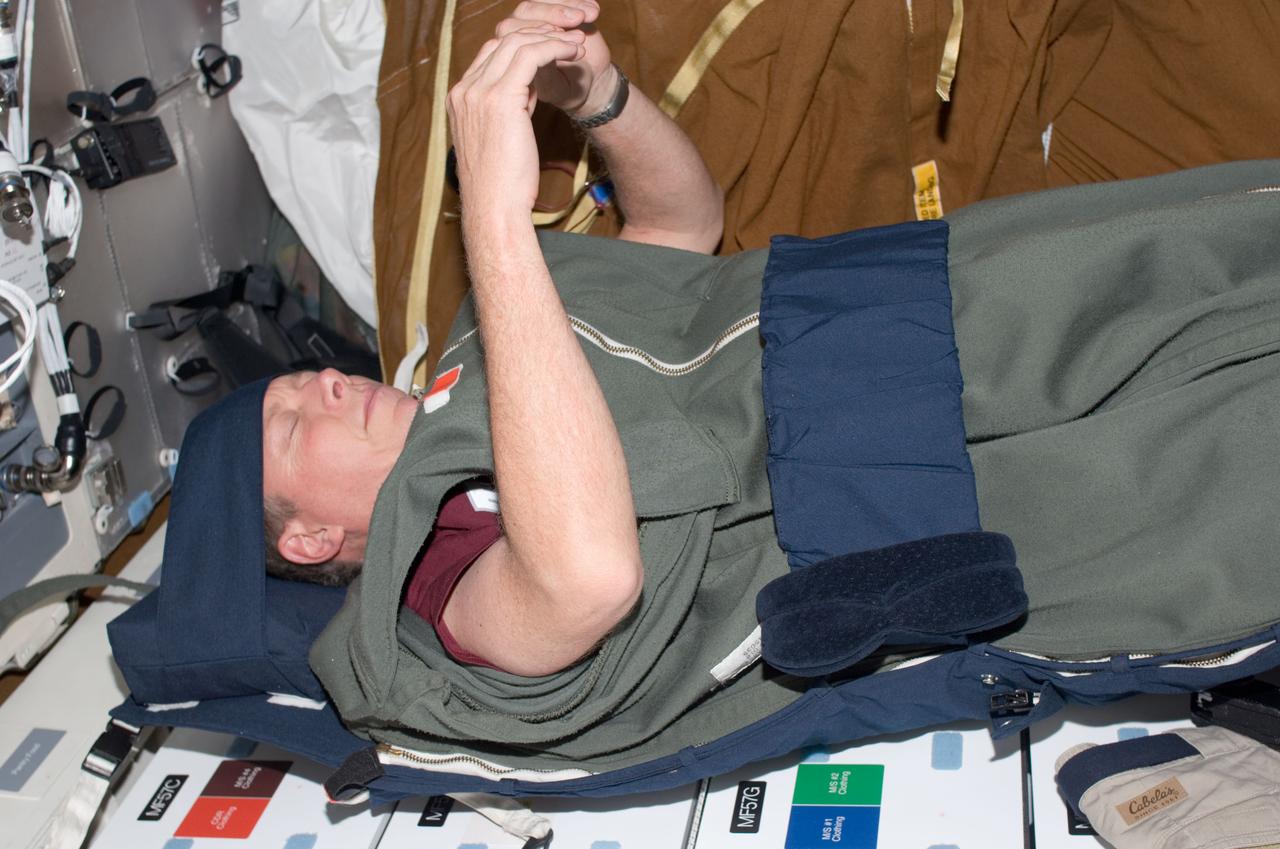
S124-E-007975 (9 June 2008) --- Astronaut Mike Fossum, STS-124 mission specialist, sleeps in his sleeping bag, which is attached to the lockers on the middeck of the Space Shuttle Discovery, while docked with the International Space Station.
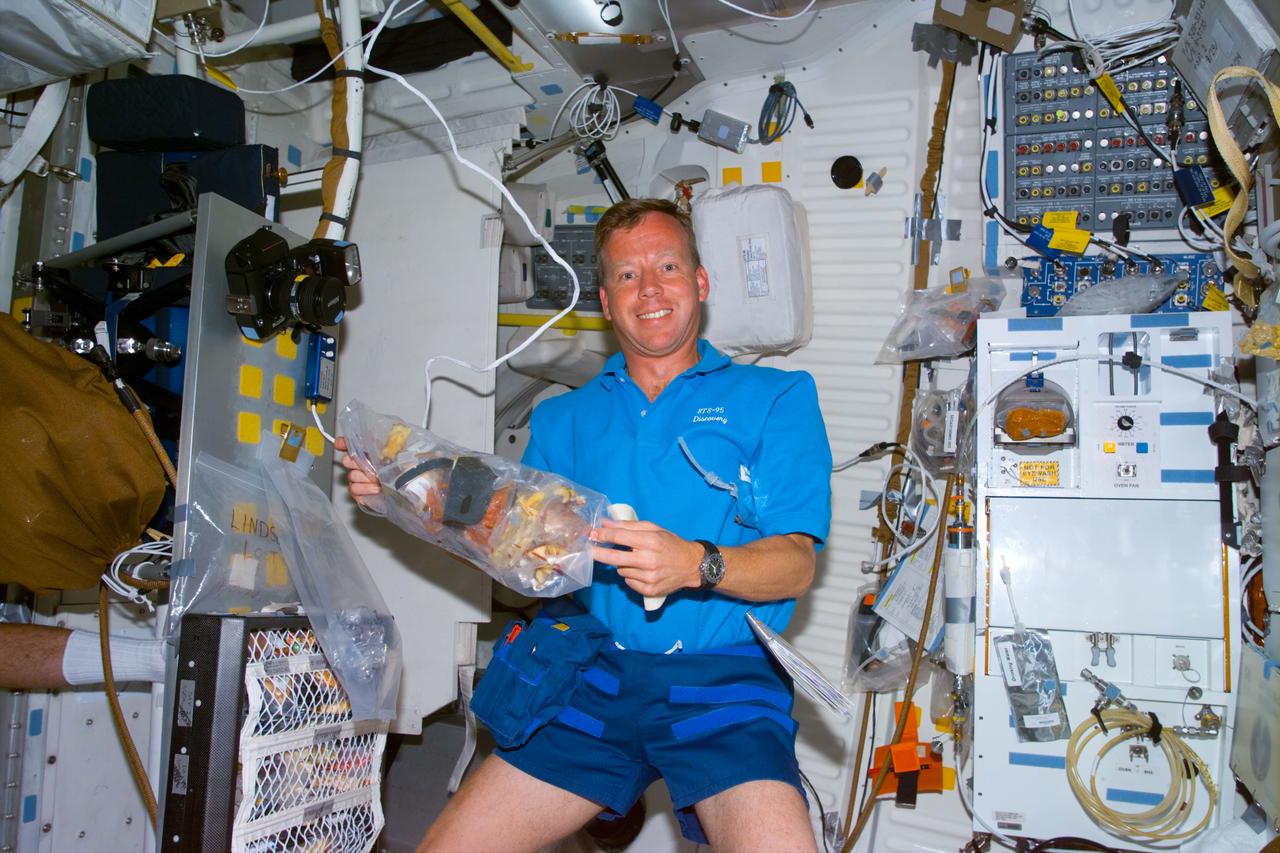
STS095-E-5026 (10-29-98) --- Astronaut Steven W. Lindsey, pilot, with a bag of refuse on Discovery's mid deck as the STS-95 crew members begin to settle in for a nine-day stay in Earth orbit. The photo was taken with an electronic still camera (ESC) at 11:23:04 GMT, Oct. 29.
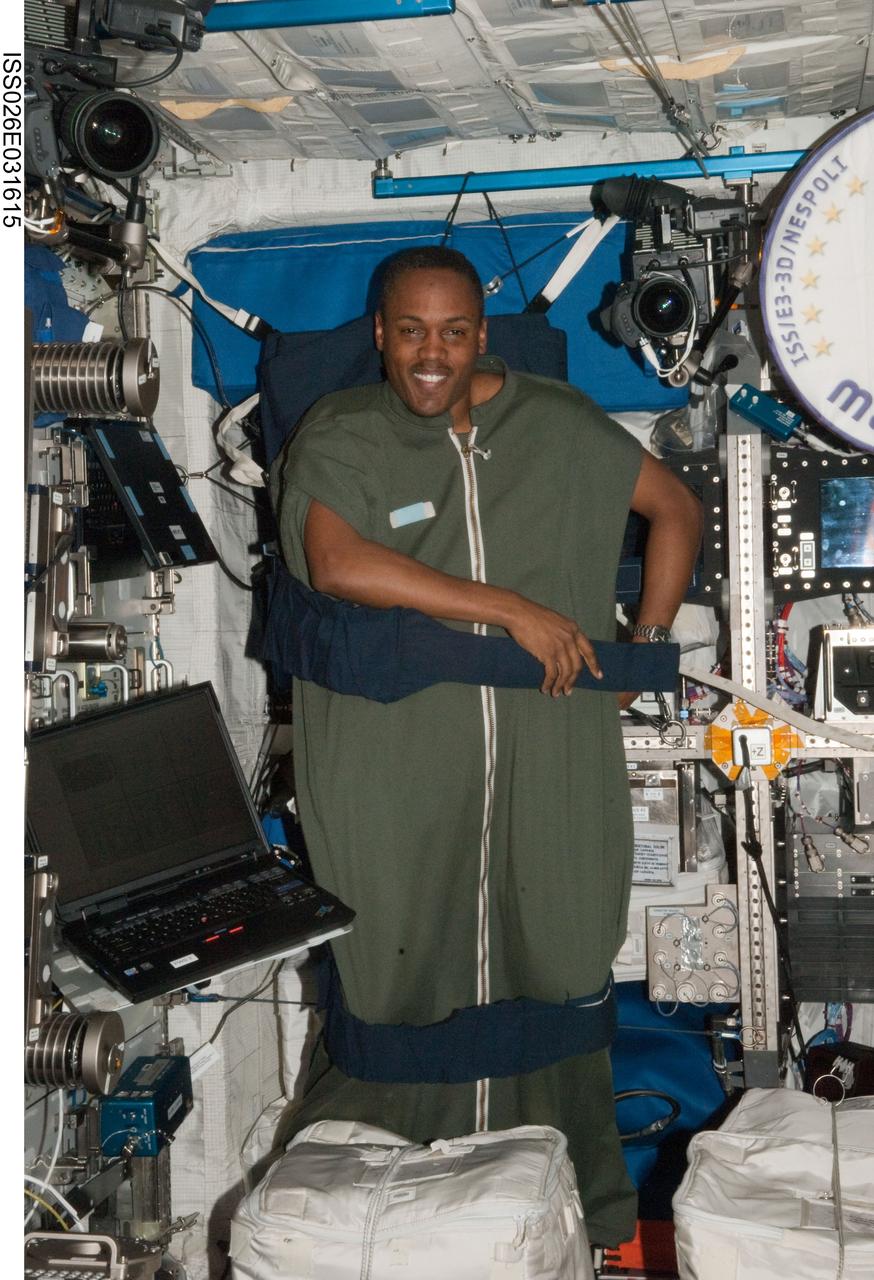
ISS026-E-031615 (3 March 2011) --- NASA astronaut Alvin Drew, STS-133 mission specialist, is pictured in his sleeping bag, which is attached in the Columbus laboratory of the International Space Station while space shuttle Discovery remains docked with the station.
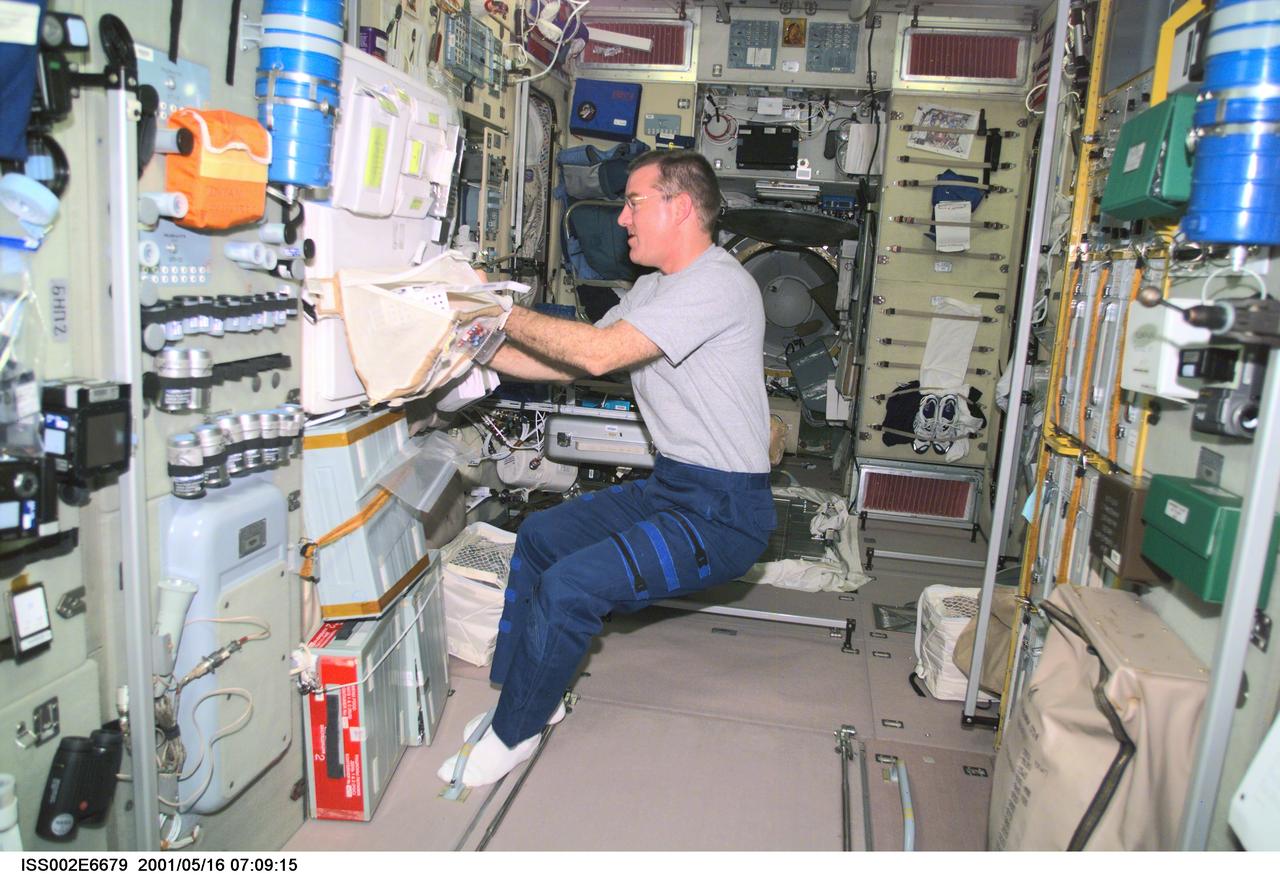
ISS002-E-6679 (16 May 2001) --- James S. Voss, Expedition Two flight engineer, goes through a stowage bag in the Zvezda Service Module. This image was taken with a digital still camera.
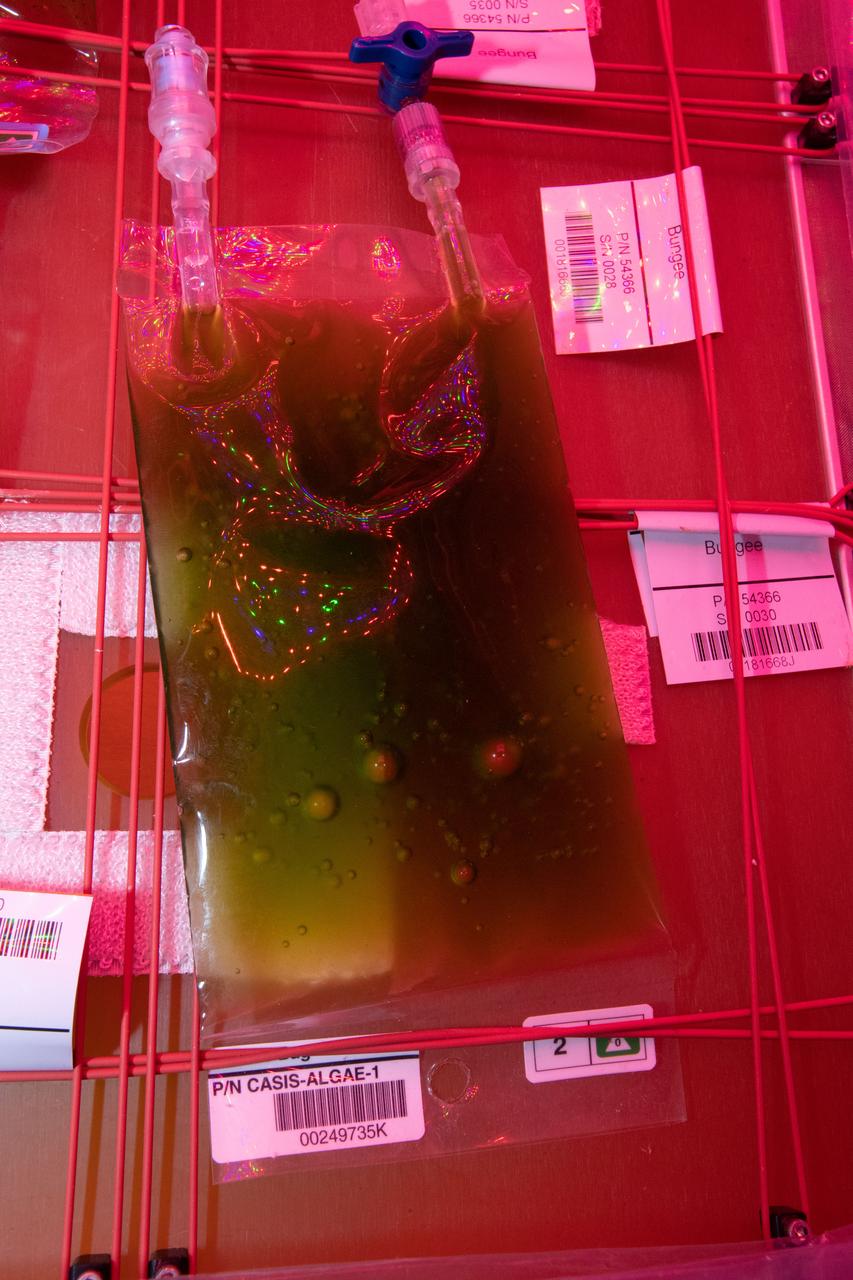
iss056e096982 (7/17/2018) --- View of the installation of a Space Algae culture bags in the Veggie facility. The Space Algae investigation explores the genetic basis for productivity of algae cultivated in space and whether this requires genetic adaptations or not.
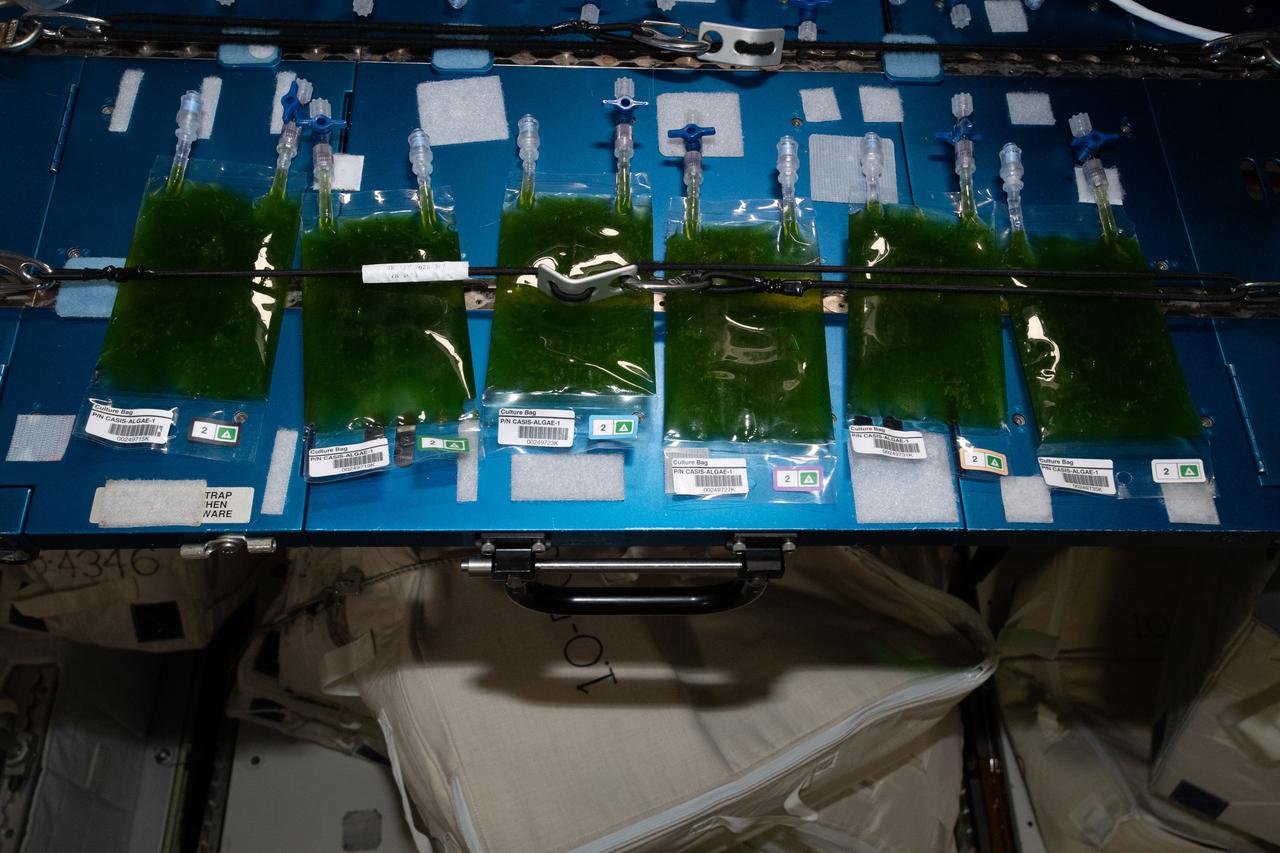
iss056e096983 (7/17/2018) --- View of the installation of six Space Algae culture bags in the Veggie facility. The Space Algae investigation explores the genetic basis for productivity of algae cultivated in space and whether this requires genetic adaptations or not.
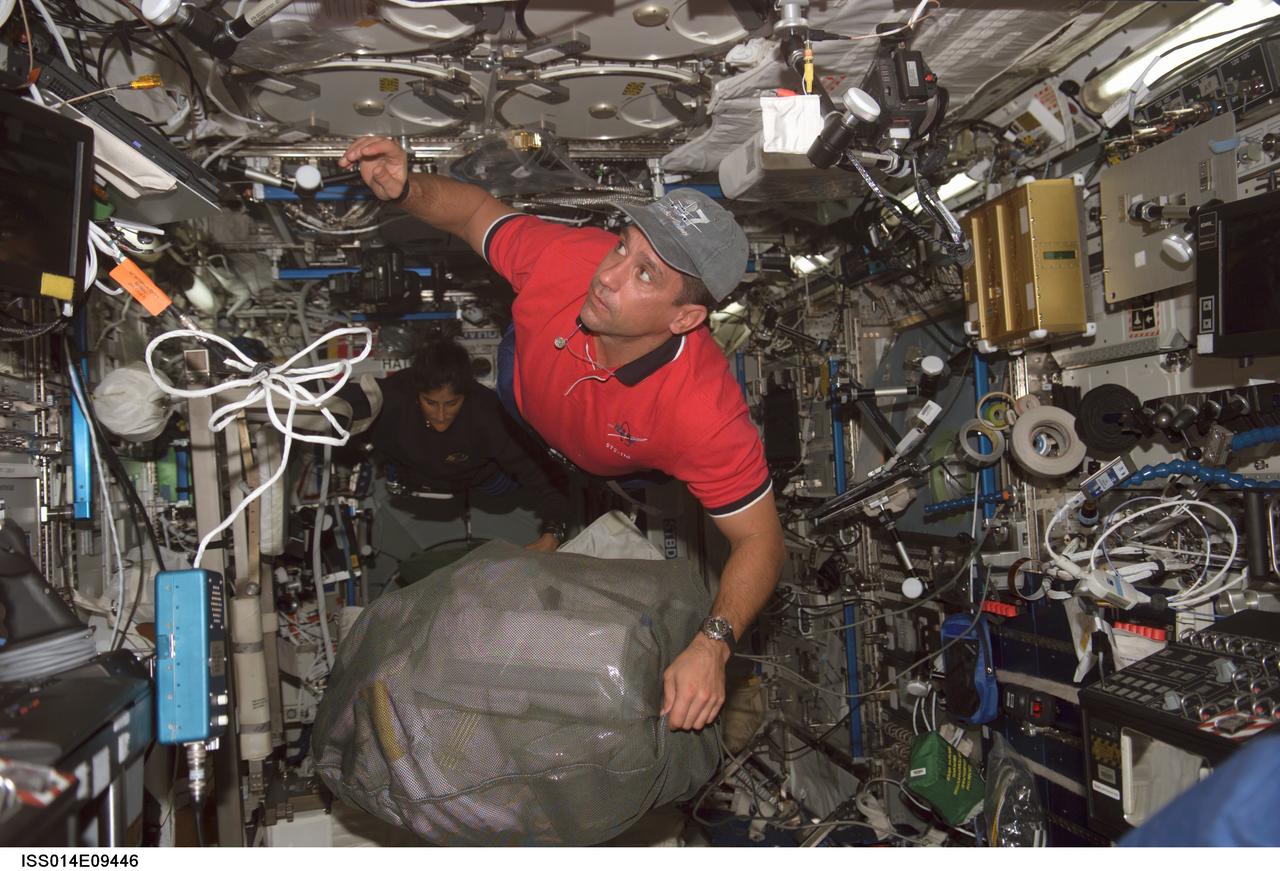
ISS014-E-09446 (11 Dec. 2006) --- Astronaut William A. (Bill) Oefelein, STS-116 pilot, moves a stowage bag through the Destiny laboratory of the International Space Station while Space Shuttle Discovery was docked with the station.
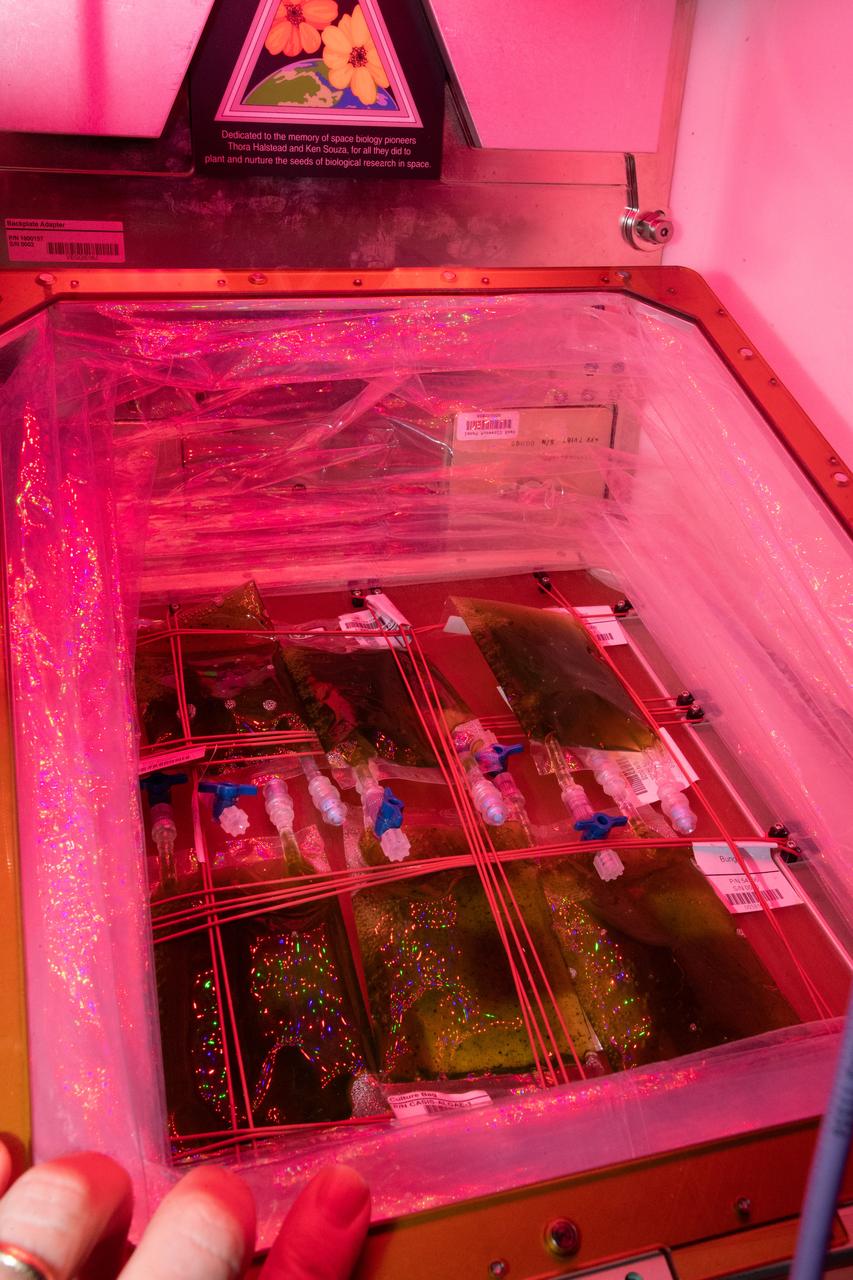
iss056e096962 (7/17/2018) --- View of the installation of six Space Algae culture bags in the Veggie facility. The Space Algae investigation explores the genetic basis for productivity of algae cultivated in space and whether this requires genetic adaptations or not.
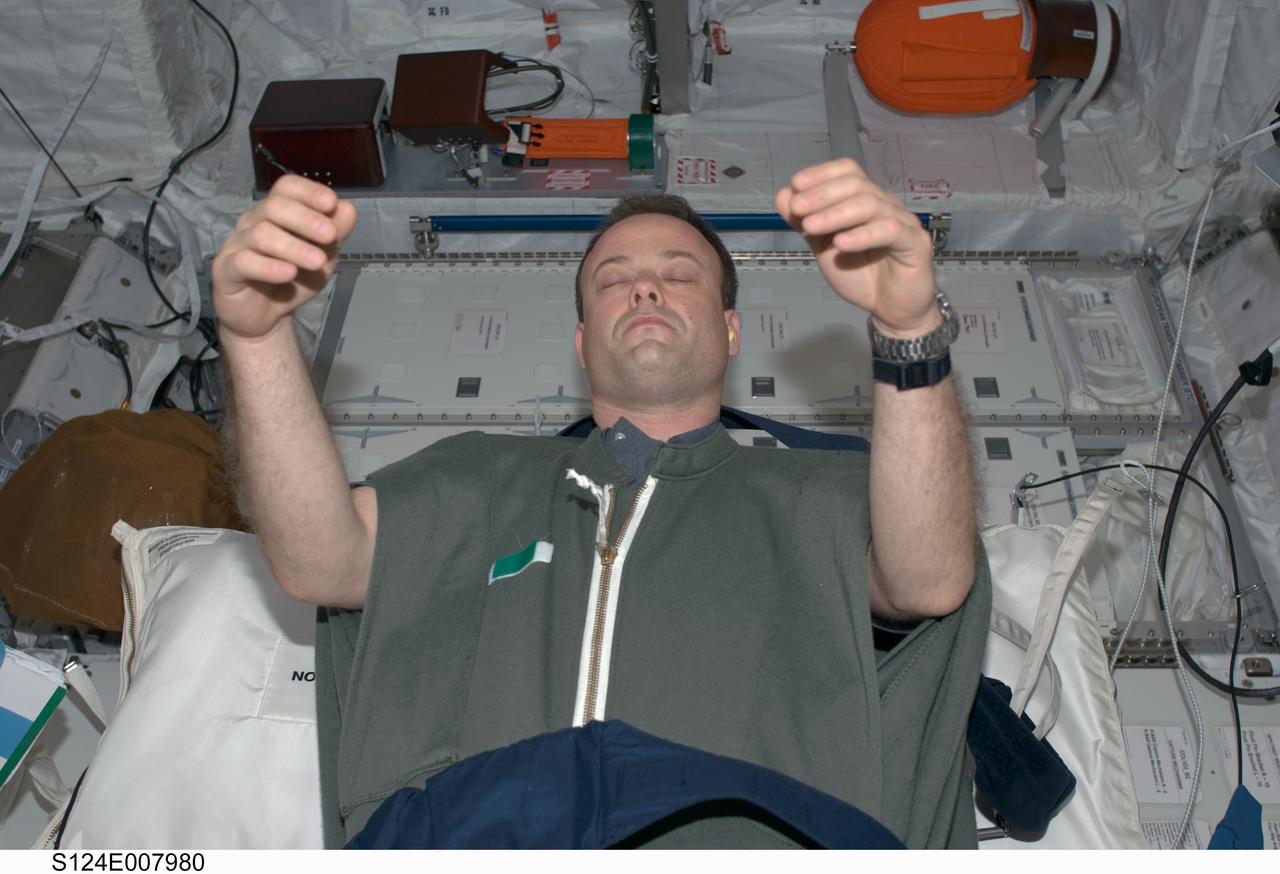
S124-E-007980 (9 June 2008) --- Astronaut Ron Garan, STS-124 mission specialist, sleeps in his sleeping bag in the Columbus laboratory of the International Space Station while Space Shuttle Discovery is docked with the station.

iss056e096990 (7/17/2018) --- View of the installation of a Space Algae culture bags in the Veggie facility. The Space Algae investigation explores the genetic basis for productivity of algae cultivated in space and whether this requires genetic adaptations or not.
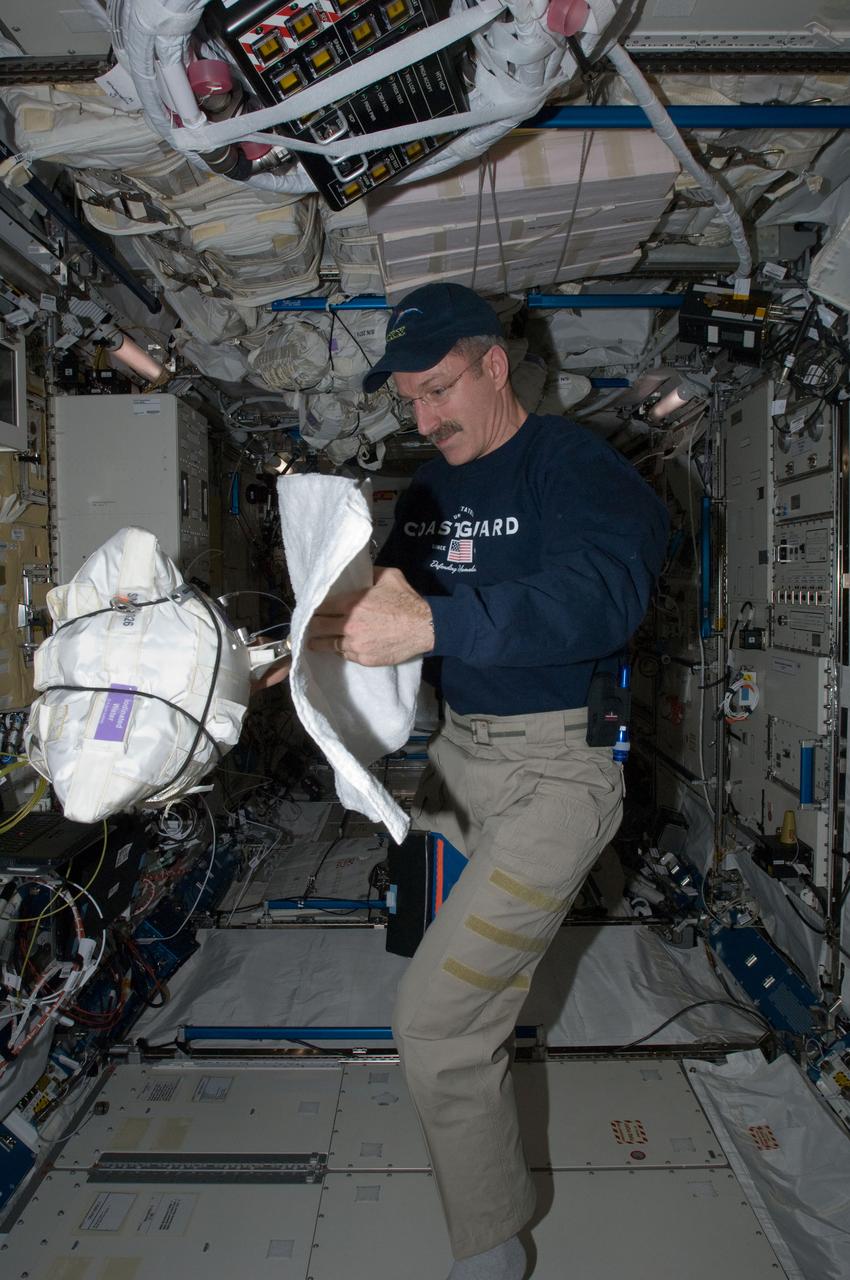
ISS030-E-122089 (6 March 2012) --- NASA astronaut Dan Burbank, Expedition 30 commander, opens a Contingency Water Container-Iodinated (CWC-I) bag in the Kibo laboratory of the International Space Station.
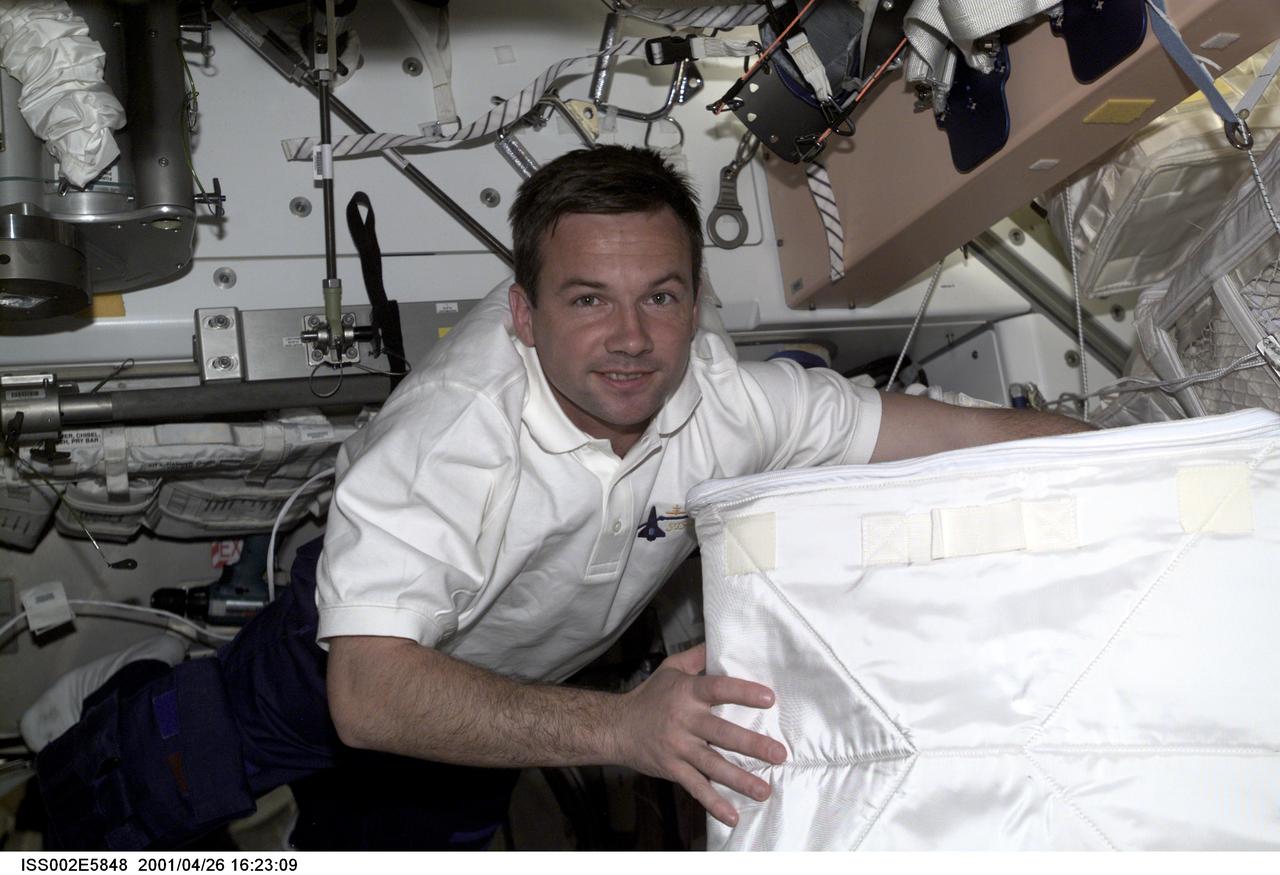
ISS002-E-5848 (26 April 2001) --- Yuri V. Lonchakov of Rosaviakosmos, STS-100 mission specialist, carries a stowage bag through Unity Node 1 during STS-100's visit to the International Space Station (ISS). The image was taken with a digital still camera.
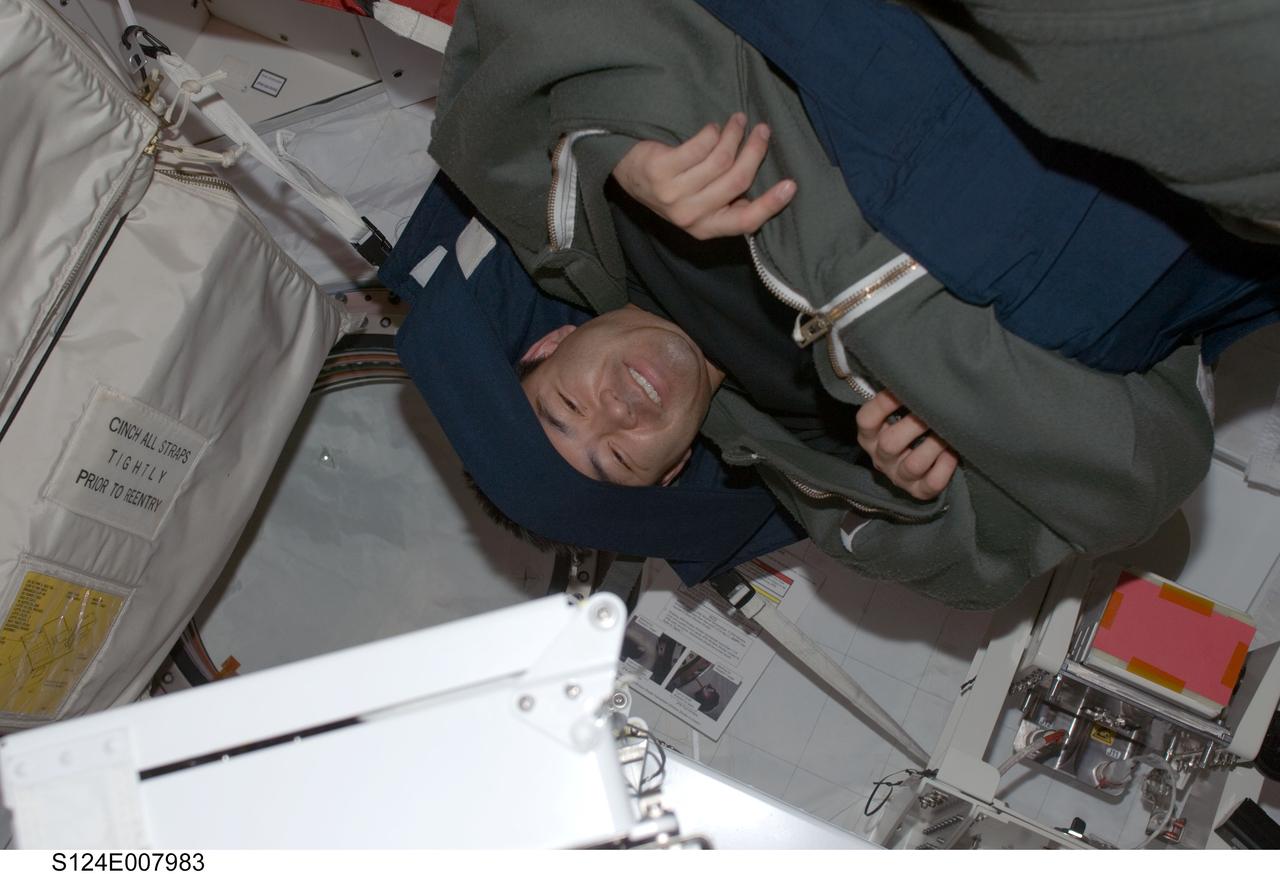
S124-E-007983 (9 June 2008) --- Japan Aerospace Exploration Agency astronaut Akihiko Hoshide, STS-124 mission specialist, is pictured in his sleeping bag in Kibo Japanese Pressurized Module of the International Space Station while Space Shuttle Discovery is docked with the station.
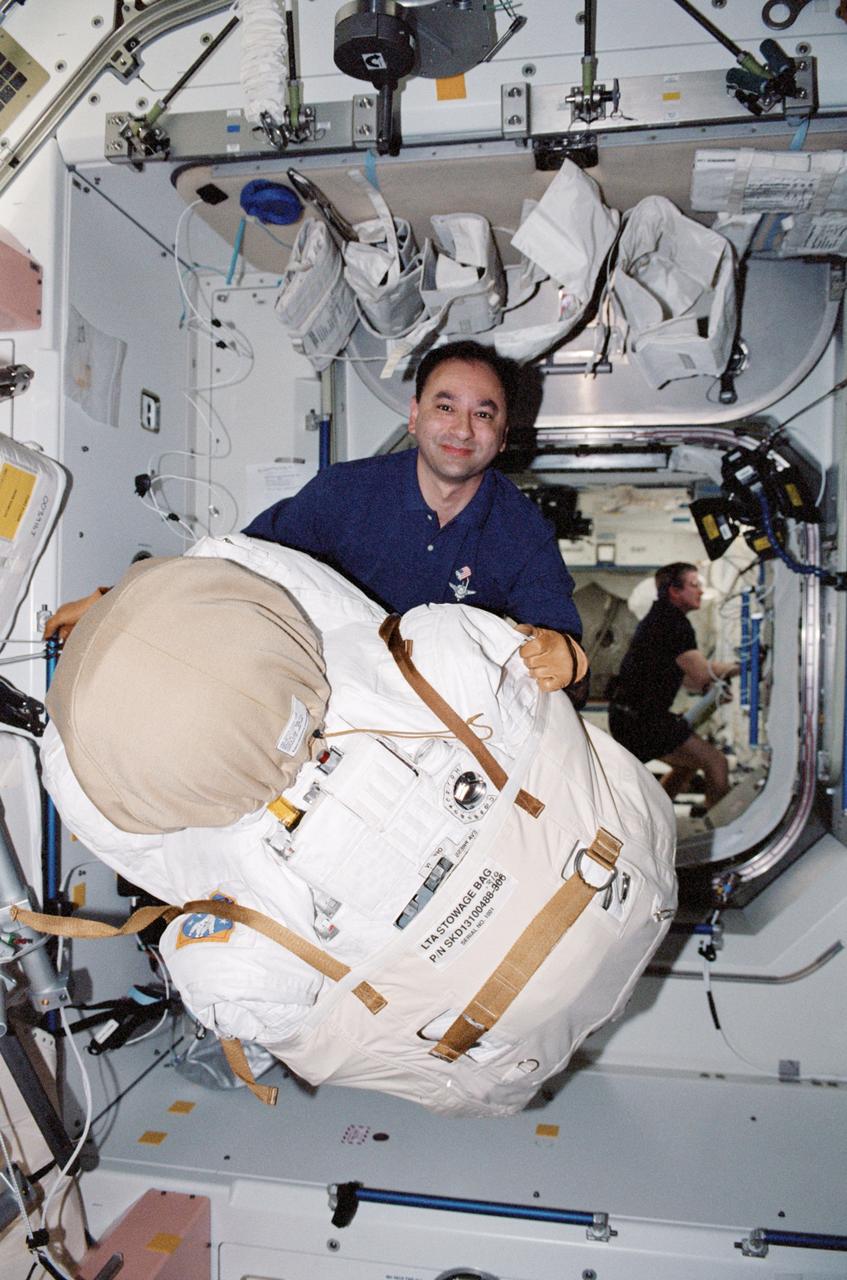
STS098-361-016 (7-20 February 2001) --- Astronaut Mark L. Polansky, STS-98 pilot, moves one of the Extravehicular Mobility Unit (EMU) space suits in its storage bag onboard the International Space Station (ISS). William M. (Bill) Shepherd, Expedition One mission commander, can be seen as he works in the background.
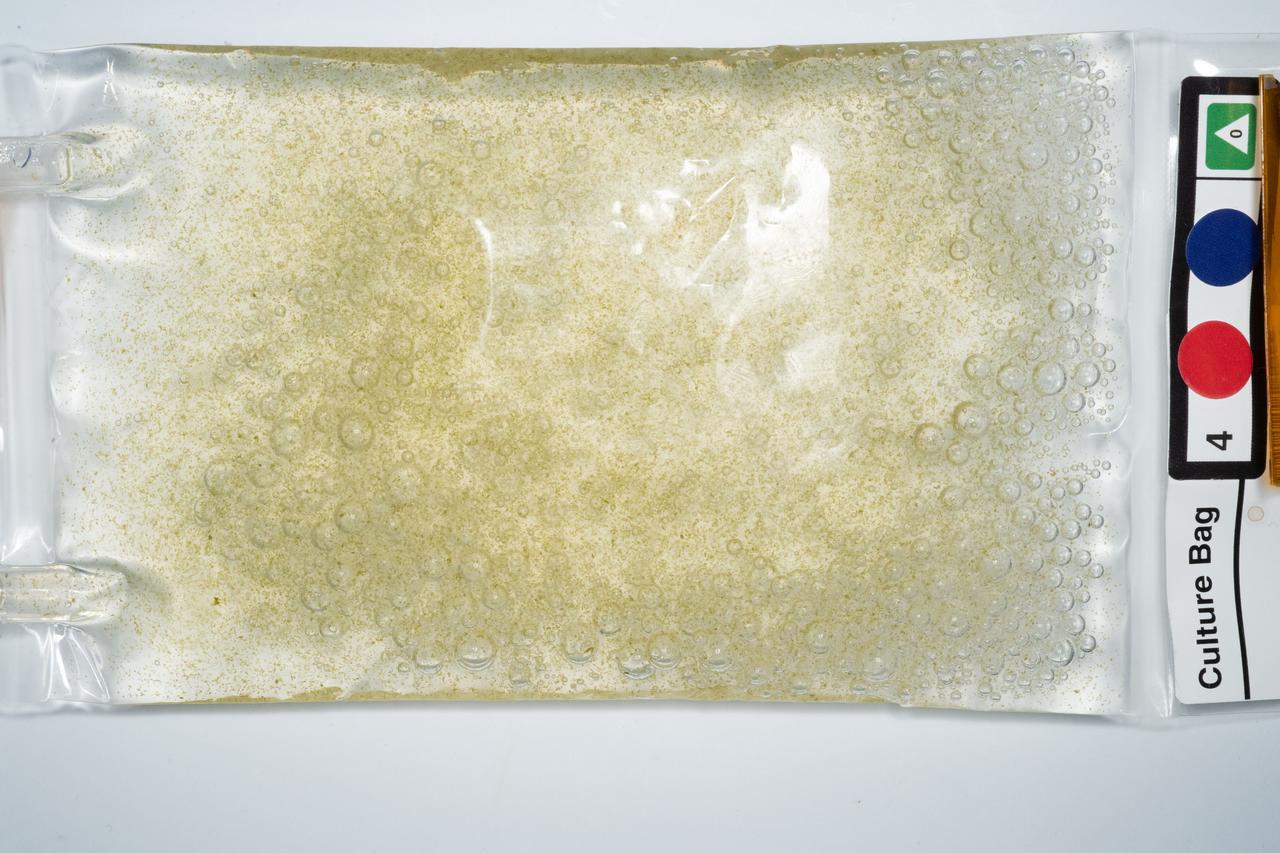
iss059e088038 (6/1/2019) --- Photo documentation taken of Micro Alagae Culture Bag 4 in Node 2 aboard the International Space Station (ISS). Microalgae Biosynthesis in Microgravity (MicroAlgae) studies the effects of microgravity on Haematococcus pluvialis, an algae capable of producing a powerful antioxidant, astaxanthin. It could provide a readily available dietary supplement to promote astronaut health on long-duration space exploration missions.

iss059e054463 (5/7/2019) --- Photo documentation of Micro Alagae Culture Bags 1,2,3 and 4 in Node 2 aboard the International Space Station (ISS). Microalgae Biosynthesis in Microgravity (MicroAlgae) studies the effects of microgravity on Haematococcus pluvialis, an algae capable of producing a powerful antioxidant, astaxanthin. It could provide a readily available dietary supplement to promote astronaut health on long-duration space exploration missions.
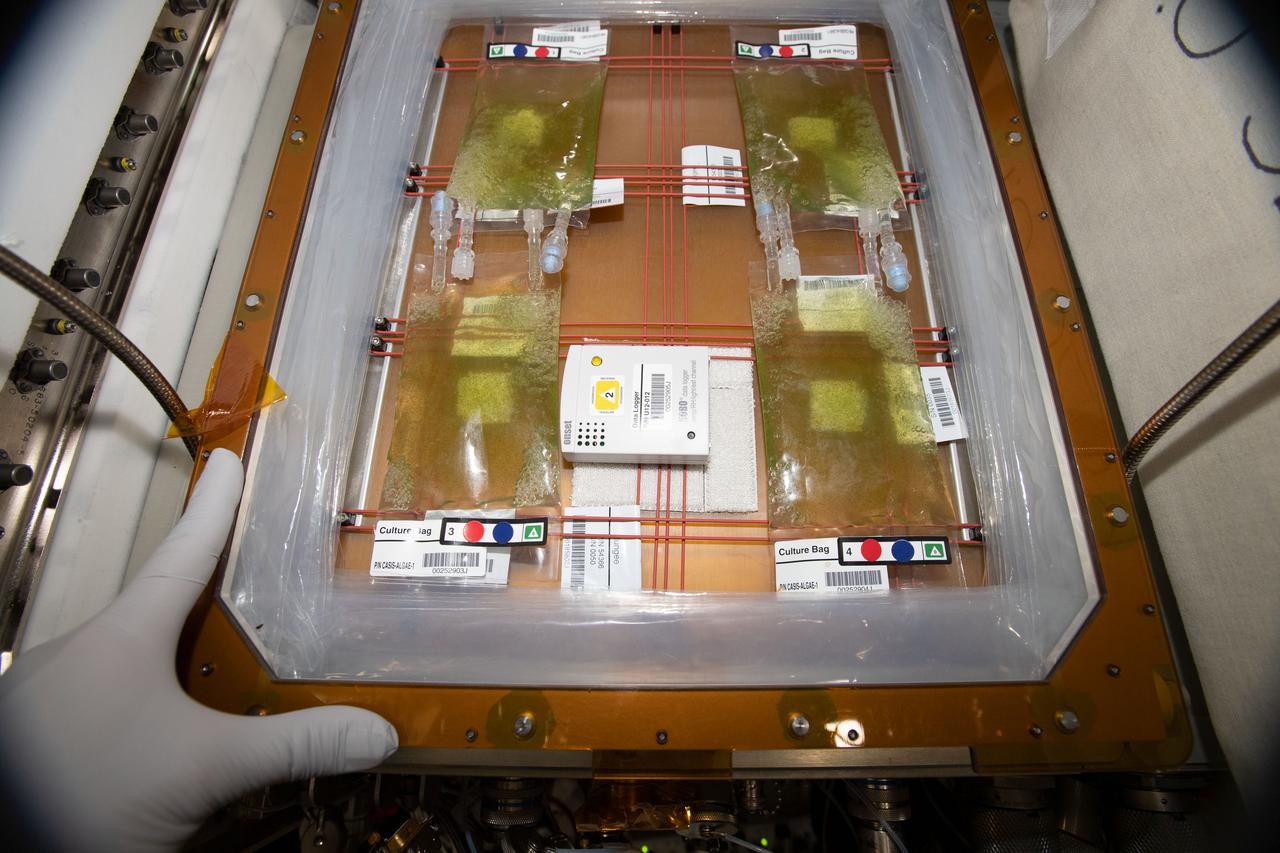
iss059e072992 (5/27/2019) --- Photo documentation of the Micro Alagae Culture bags in Node 2 aboard the International Space Station (ISS). Microalgae Biosynthesis in Microgravity (MicroAlgae) studies the effects of microgravity on Haematococcus pluvialis, an algae capable of producing a powerful antioxidant, astaxanthin. It could provide a readily available dietary supplement to promote astronaut health on long-duration space exploration missions.
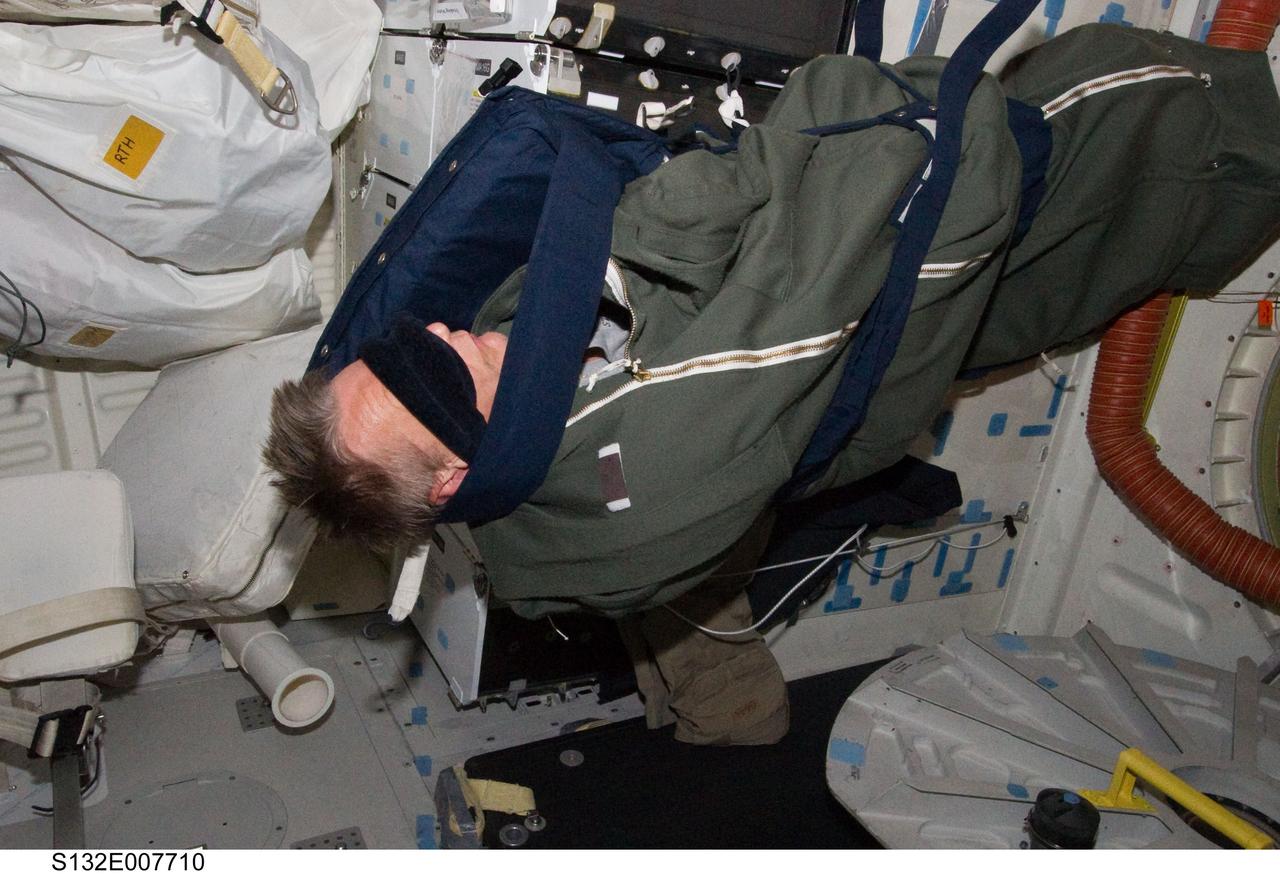
S132-E-007710 (17 May 2010) --- NASA astronaut Piers Sellers, STS-132 mission specialist, rests in his sleeping bag on the middeck of the space shuttle Atlantis while docked with the International Space Station.
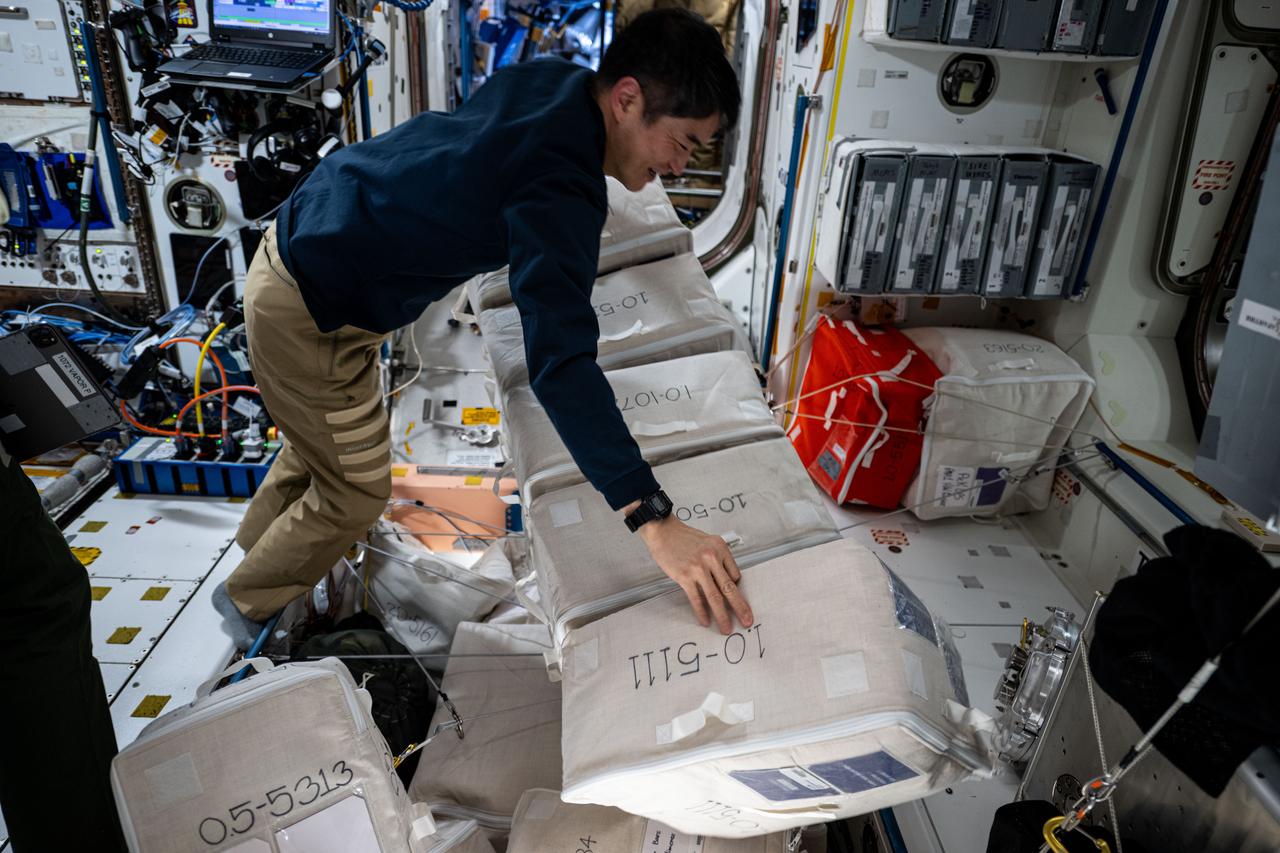
iss073e0221788 (June 19, 2025) --- JAXA (Japan Aerospace Exploration Agency) astronaut and Expedition 73 Commander Takuya Onishi organizes cargo bags inside the International Space Station's Unity module.
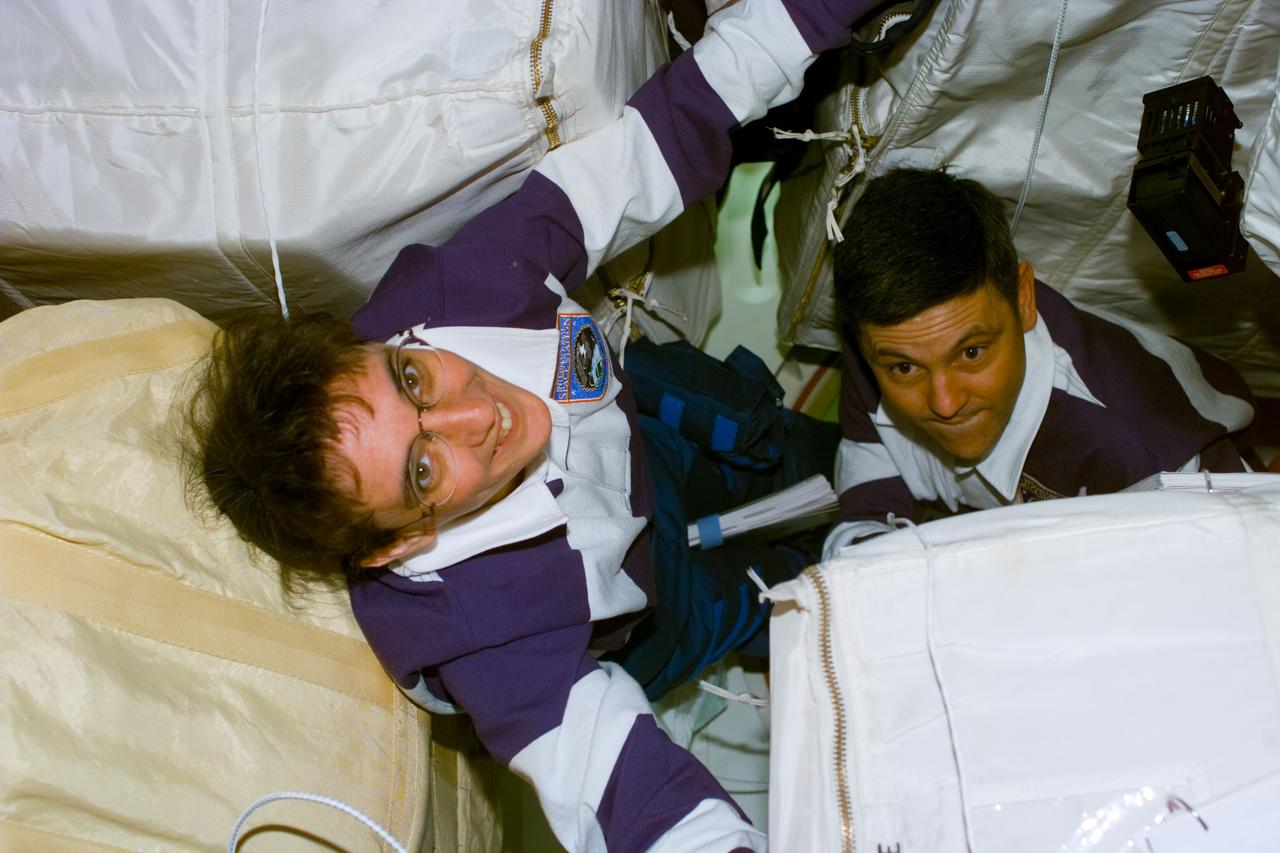
S88-E-5133 (12-12-98)--- Astronauts Nancy J. Currie, mission specialist, and Robert D. Cabana, mission commander, are surrounded by bags of gear and supplies as their historical mission winds toward its last couple of days. All seven members of the STS-88 crew have been busy preparing the recently connected Russian-built Zarya and the U.S.-built Unity modules for their roles in the International Space Station (ISS). The photo was taken with an electronic still camera (ESC) at 03:47:03 GMT, Dec. 12.
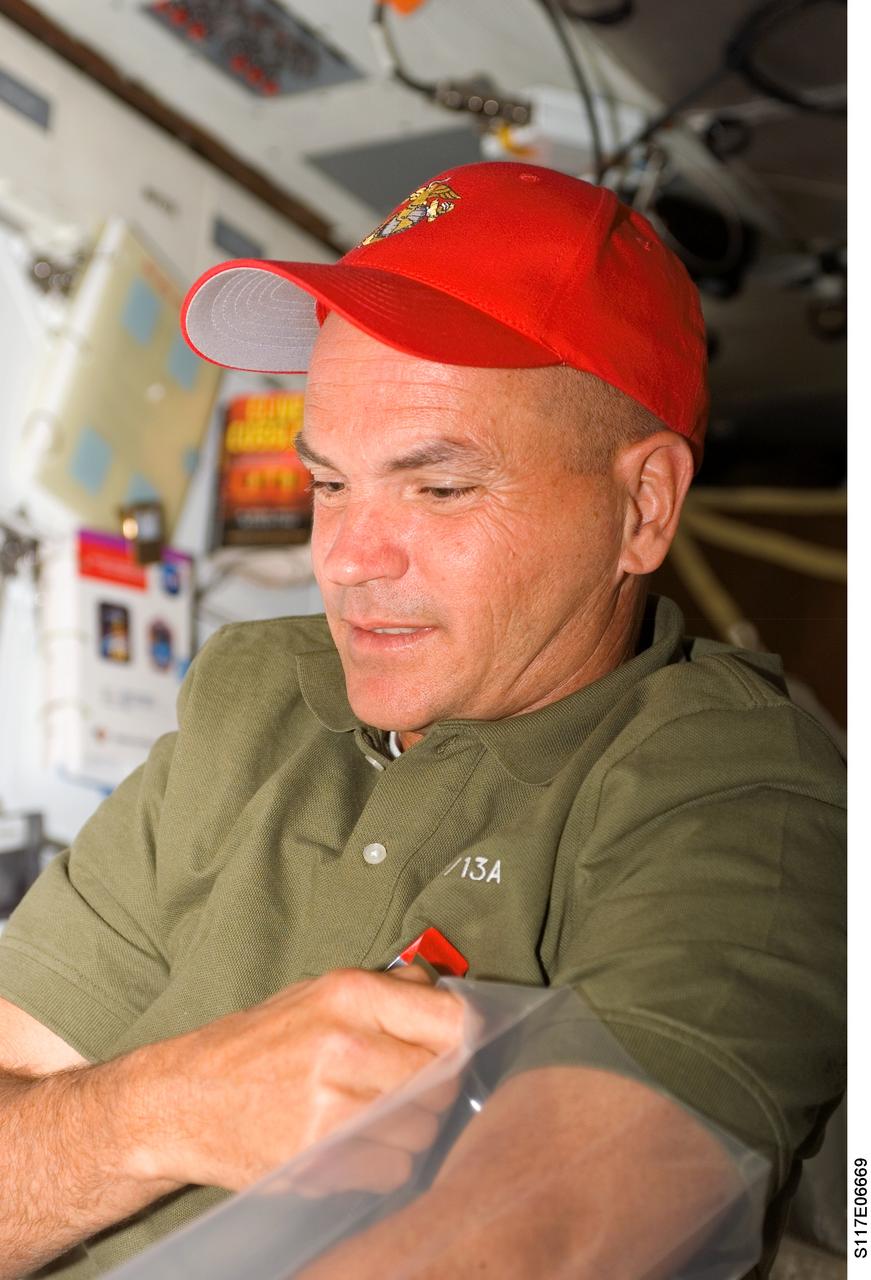
S117-E-06669 (9 June 2007) --- Astronaut Rick Sturckow, STS-117 commander, works with a plastic bag on the middeck of the Space Shuttle Atlantis.
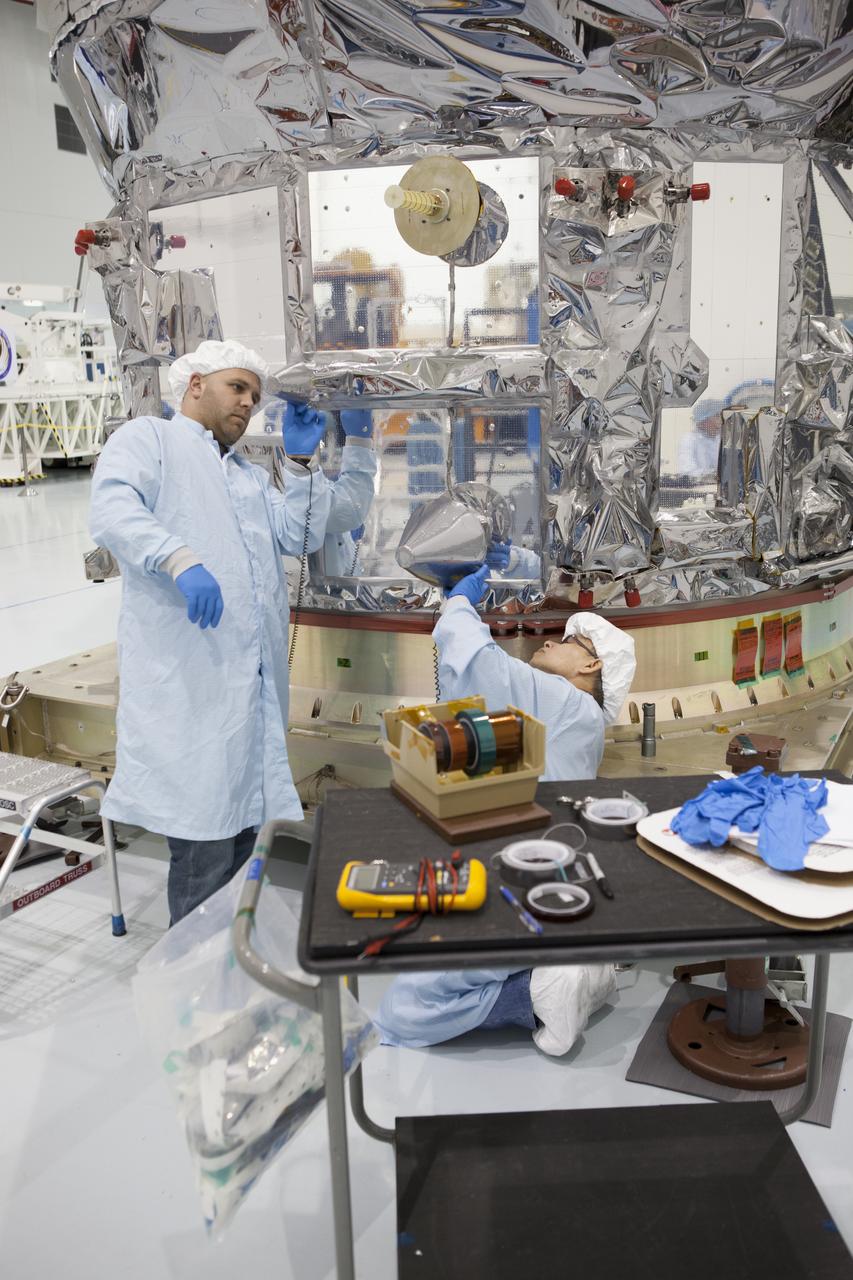
In the Space Station Processing Facility high bay at NASA's Kennedy Space Center in Florida, technicians are preparing Orbital ATK's CYGNUS pressurized cargo module for bagging. The Orbital ATK CRS-7 commercial resupply services mission to the International Space Station is scheduled to launch atop a United Launch Alliance Atlas V rocket from Space Launch Complex 41 at Cape Canaveral Air Force Station on March 19, 2017. CYGNUS will deliver thousands of pounds of supplies, equipment and scientific research materials to the space station.
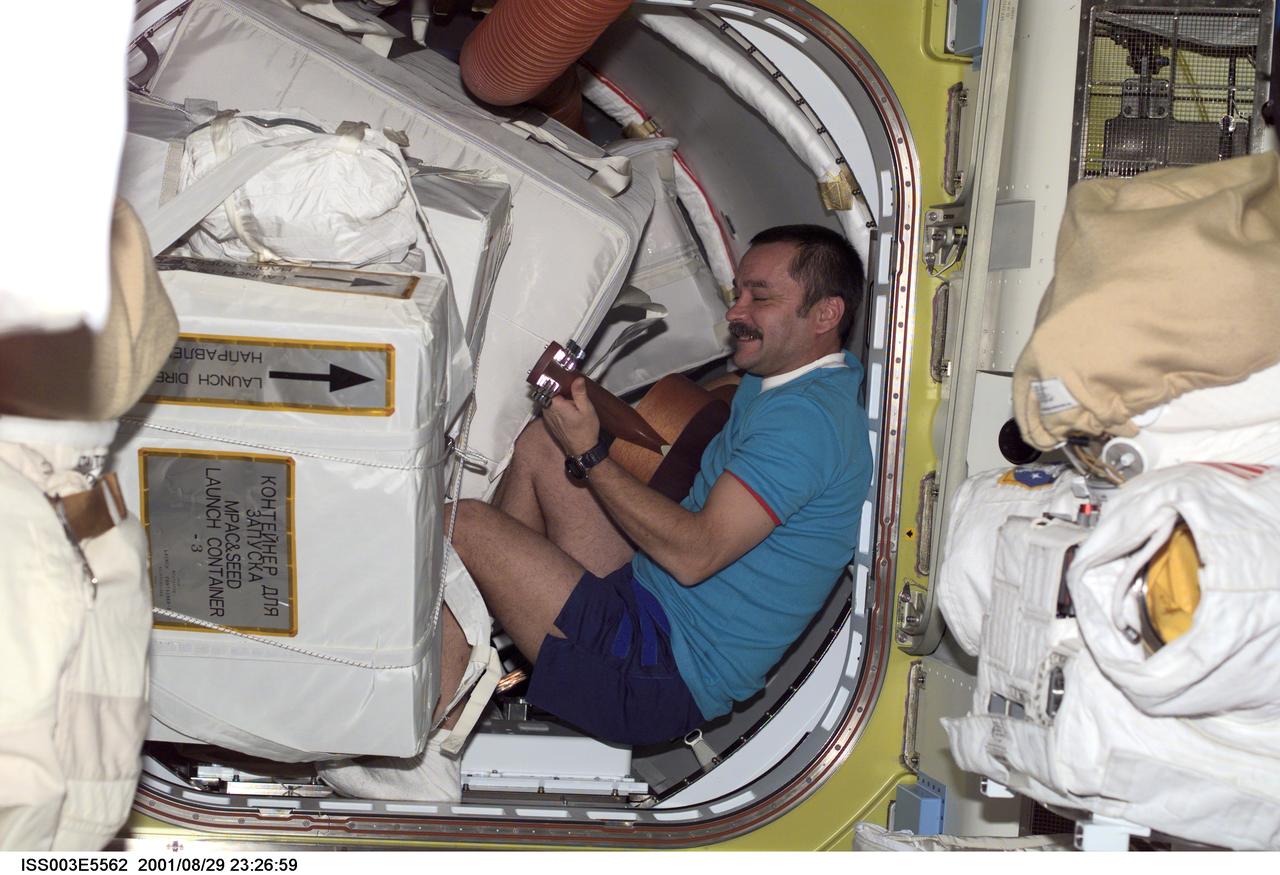
ISS003-E-5562 (29 August 2001) --- Cosmonaut Mikhail Tyurin of Rosaviakosmos, Expedition Three flight engineer, plays a guitar among stowage bags in the hatch area of the Quest Airlock.
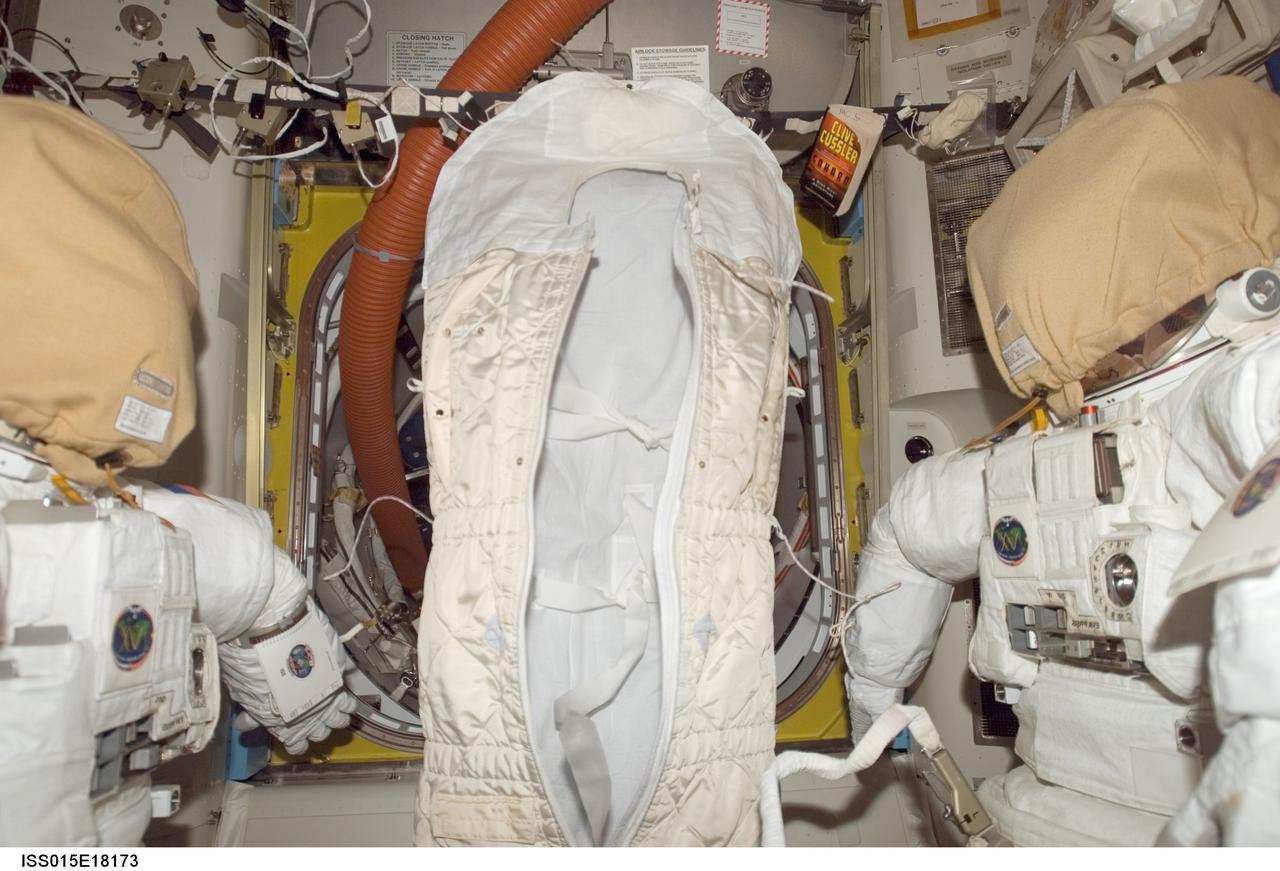
ISS015-E-18173 (11 July 2007) --- A sleeping bag floats near two extravehicular mobility unit (EMU) spacesuits in the Quest Airlock of the International Space Station.
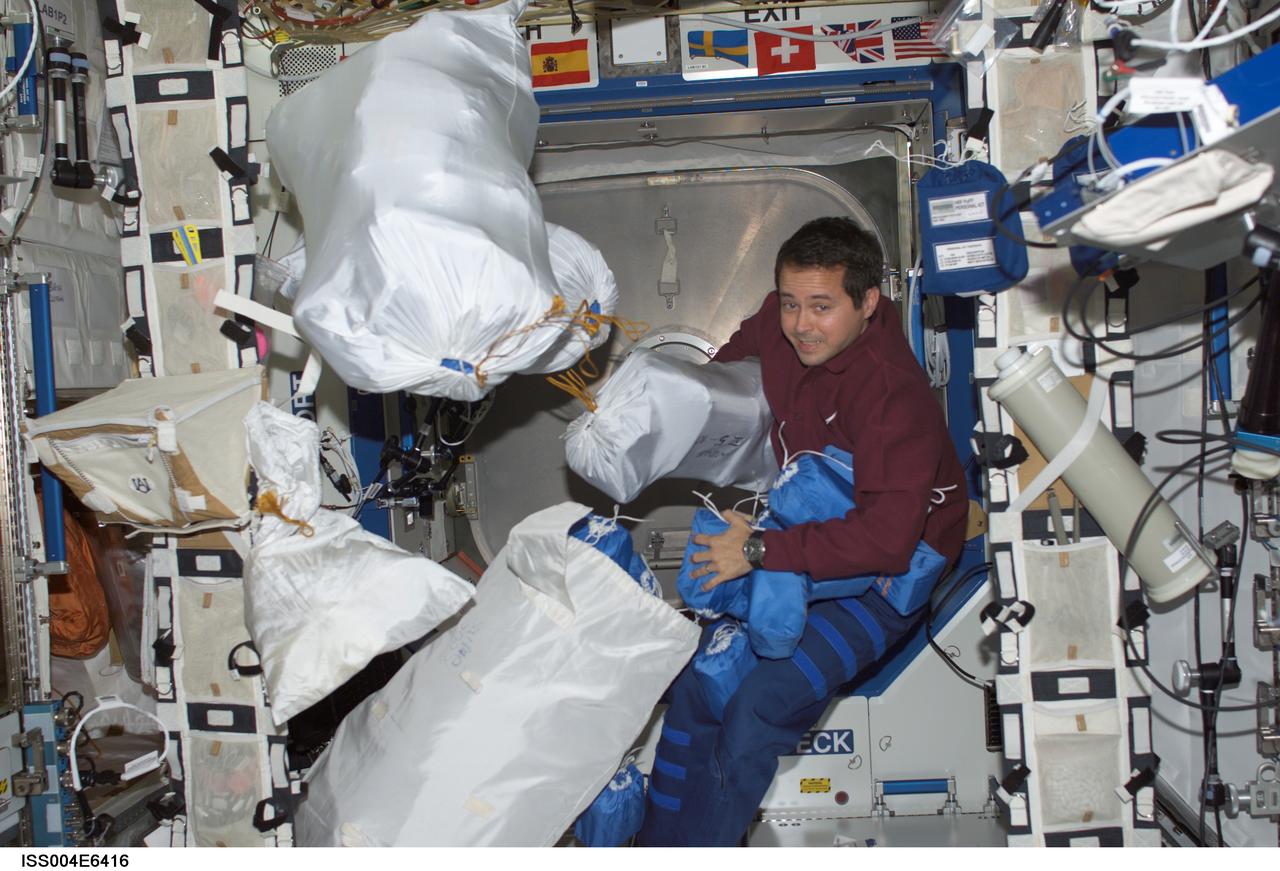
ISS004-E-6416 (January 2002) --- Astronaut Daniel W. Bursch, Expedition Four flight engineer, is photographed among stowage bags in the Destiny laboratory on the International Space Station (ISS). The image was taken with a digital still camera.
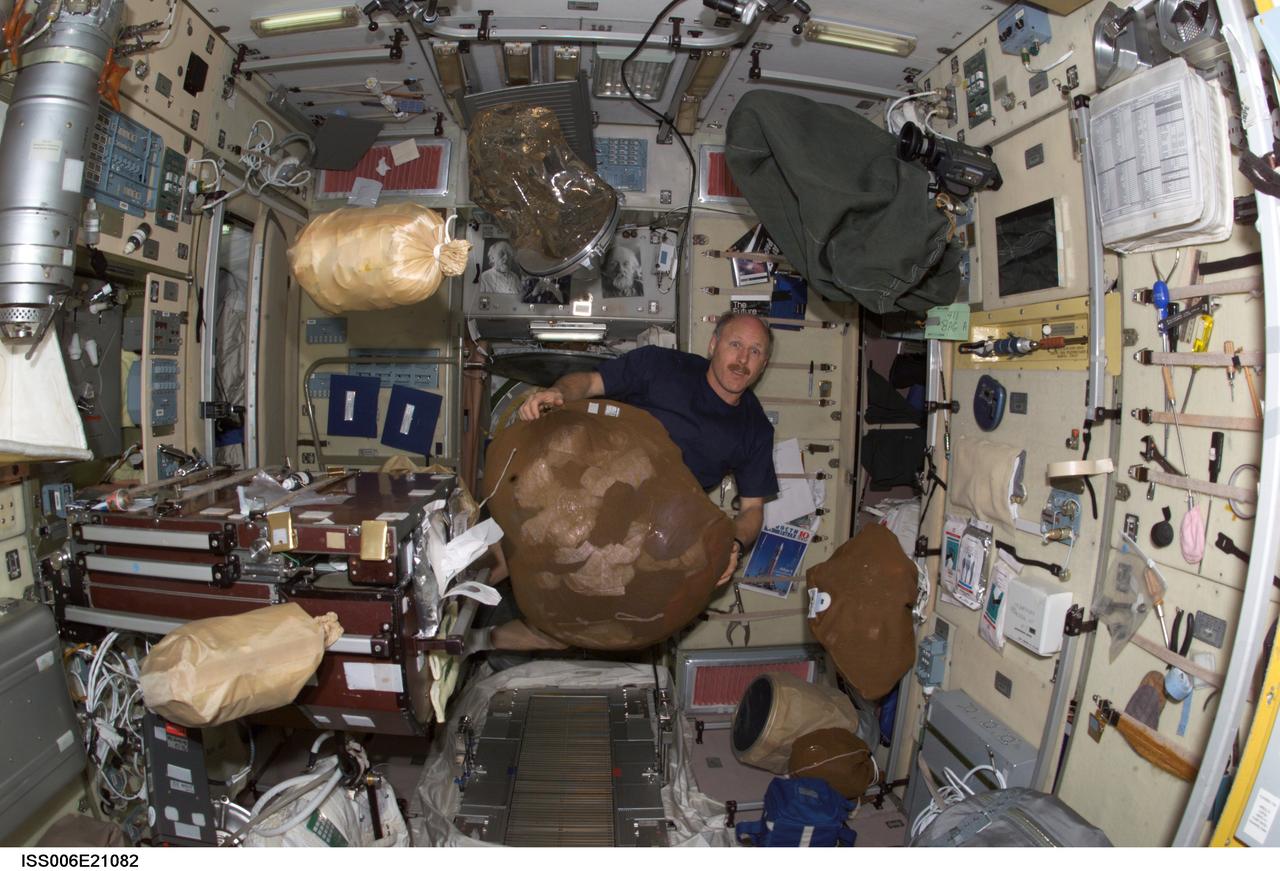
ISS006-E-21082 (28 January 2003) --- Astronaut Kenneth D. Bowersox, Expedition Six mission commander, moves bagged items from the Progress 9 to the Zvezda Service Module on the International Space Station (ISS).
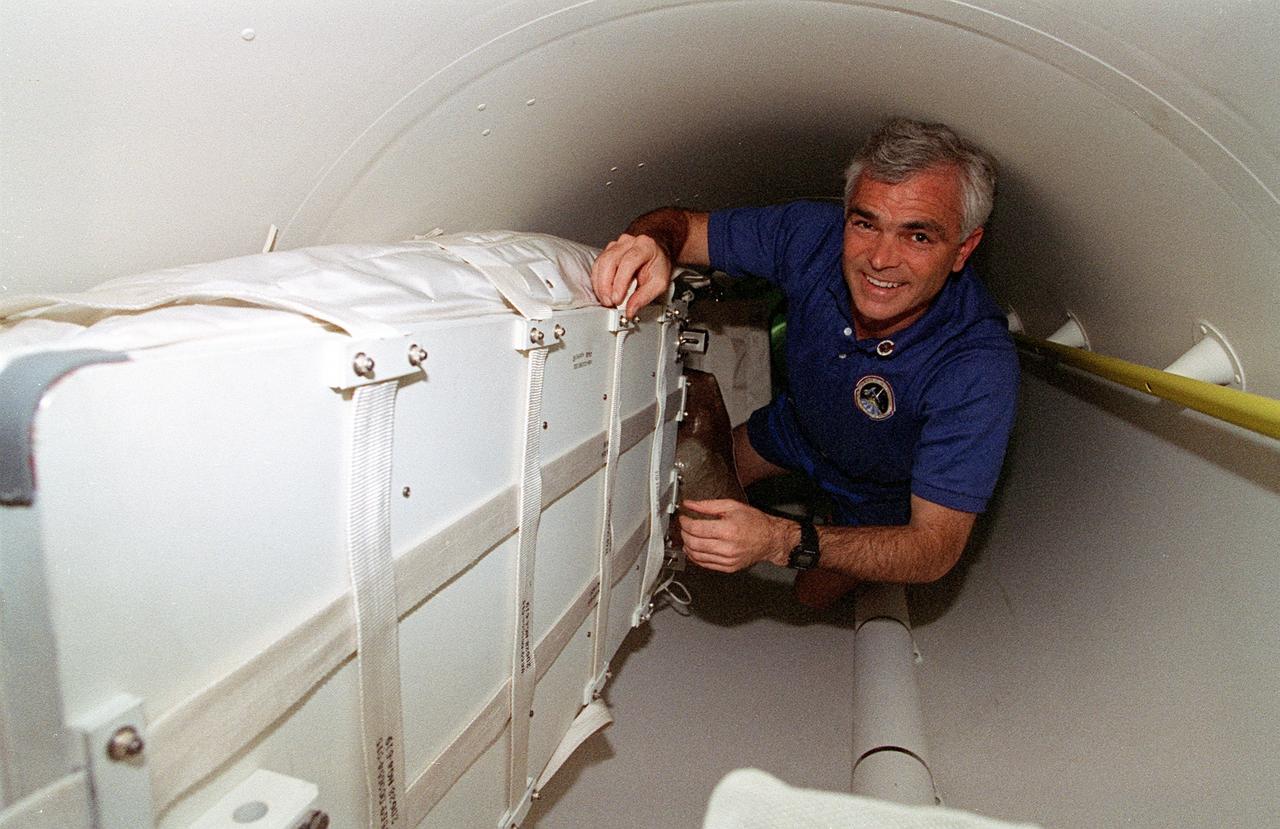
STS076-345-014 (22-31 March 1996) --- During the first few hours of the mission, astronaut Michael R. (Rich) Clifford checks over stowed bags filled Extravehicular Activity (EVA) supplies in the STS-76 tunnel. The mission specialist, one of six NASA astronauts aboard the Space Shuttle Atlantis, later helped move the bags to Atlantis' airlock. Atlantis later docked with Russia's Mir Space Station. The crew used a tunnel to commute to the Spacehab module and, later, to the Mir via its Docking Module (DM).
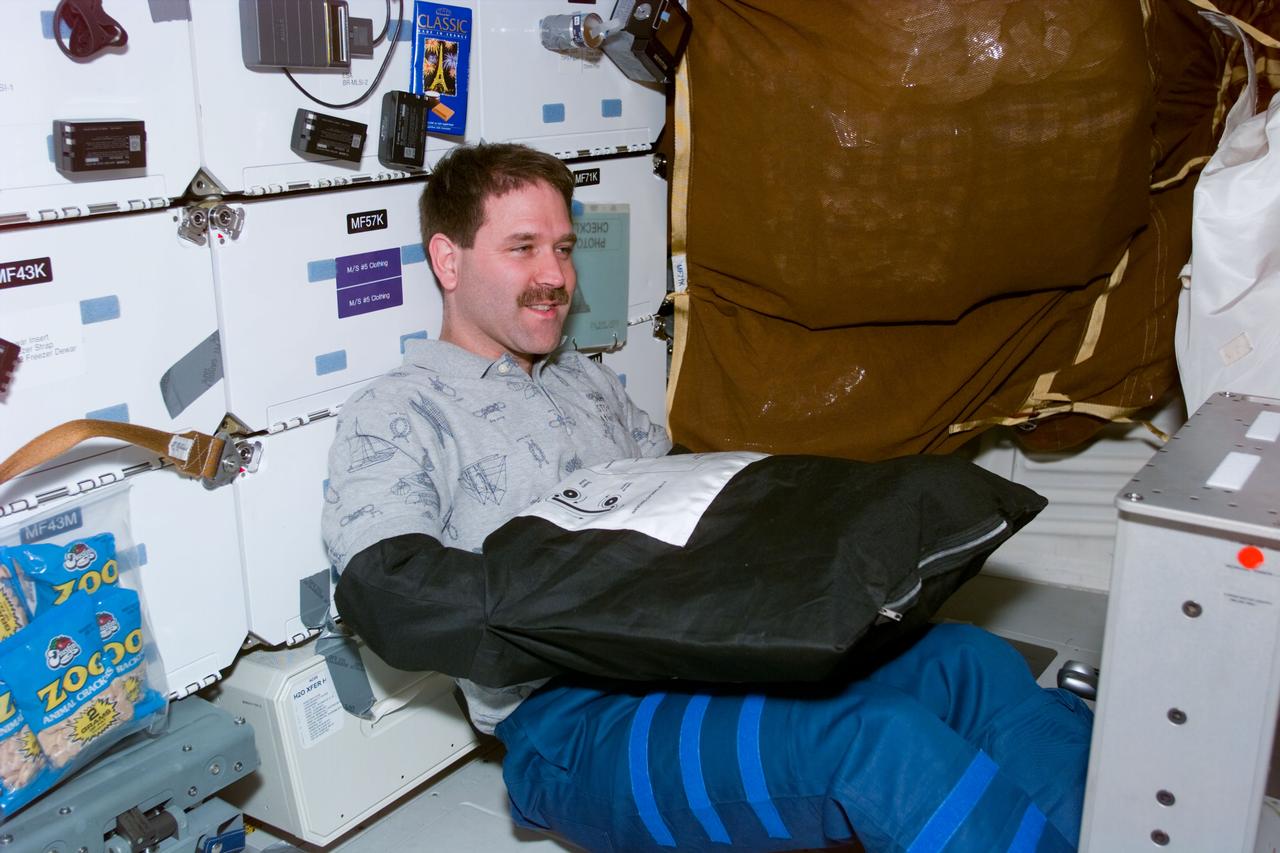
S81-E-05468 (16 Jan. 1997) --- To protect it from exposure to light, astronaut John M. Grunsfeld, mission specialist, uses a black bag to change out a film magazine on a 70mm handheld camera during mid-week activity aboard the Space Shuttle Atlantis. The photograph was recorded with an Electronic Still Camera (ESC) and later was downlinked to flight controllers in Houston, Texas.
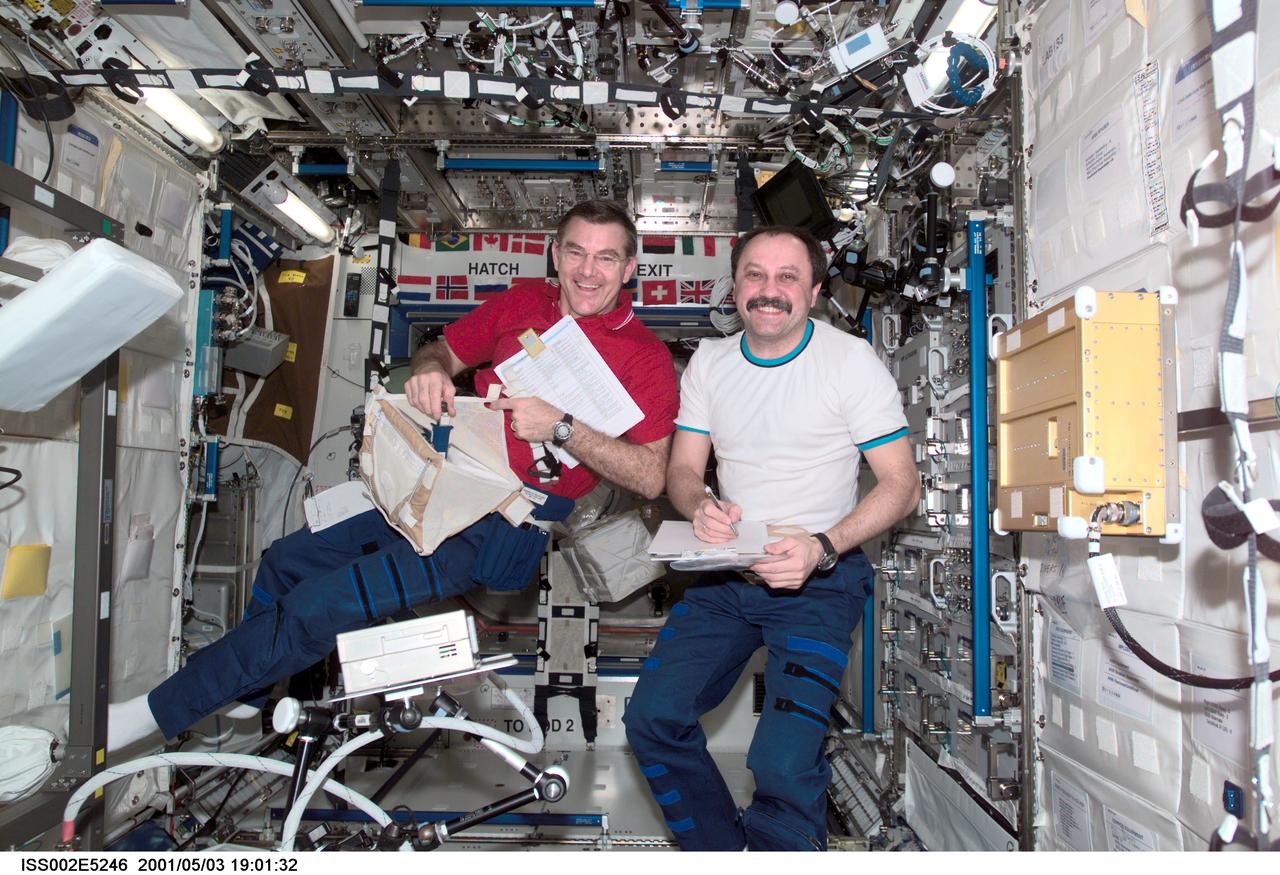
ISS002-E-5246 (03 May 2001) --- Astronaut James S. Voss (left), Expedition Two flight engineer, unpacks a stowage bag while cosmonaut Yury V. Usachev, Expedition Two mission commander, takes notes in the U.S. Laboratory / Destiny module of the International Space Station (ISS). This image was recorded with a digital still camera.
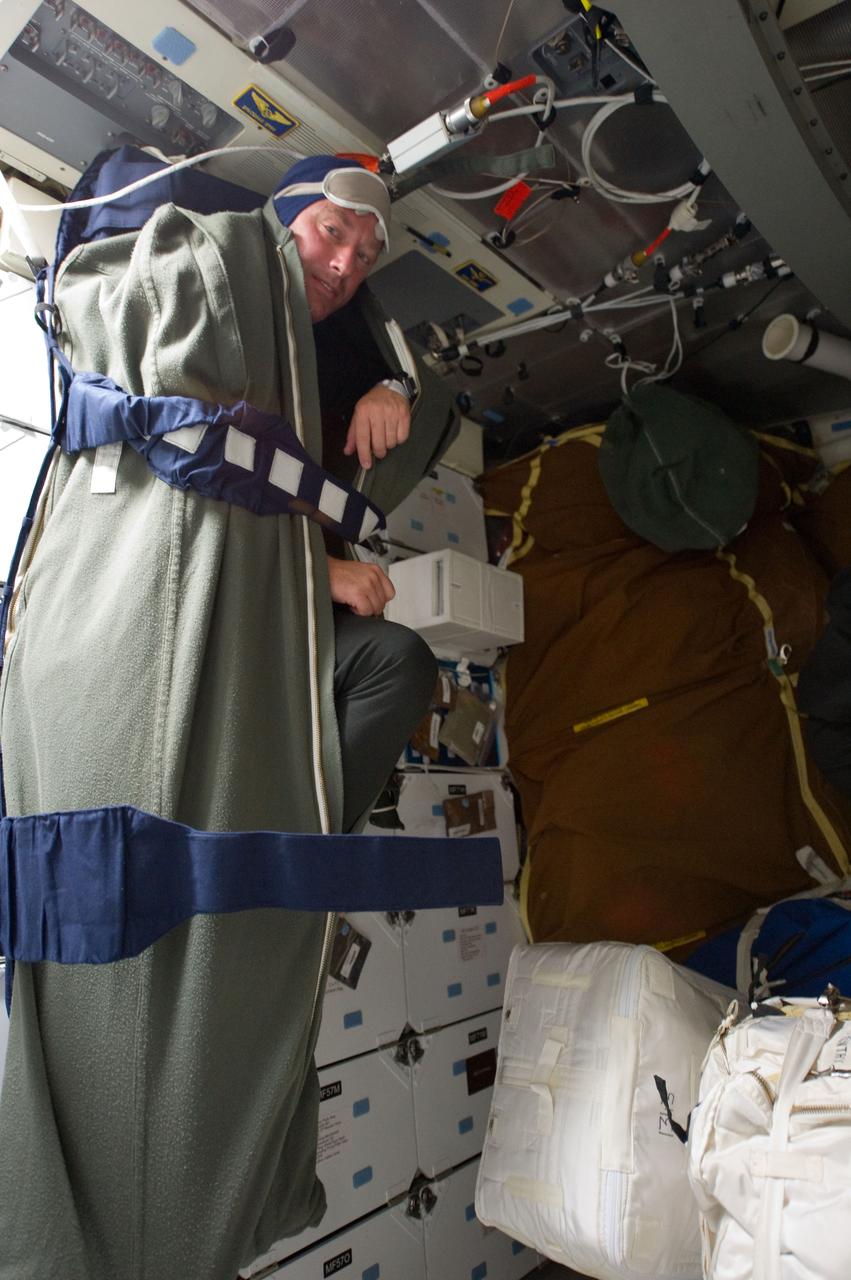
S134-E-006404 (16 May 2011) --- European Space Agency astronaut Roberto Vittori, STS-134 mission specialist, rests in his sleeping bag, which is attached to the lockers on the middeck of the space shuttle Endeavour. Photo credit: NASA
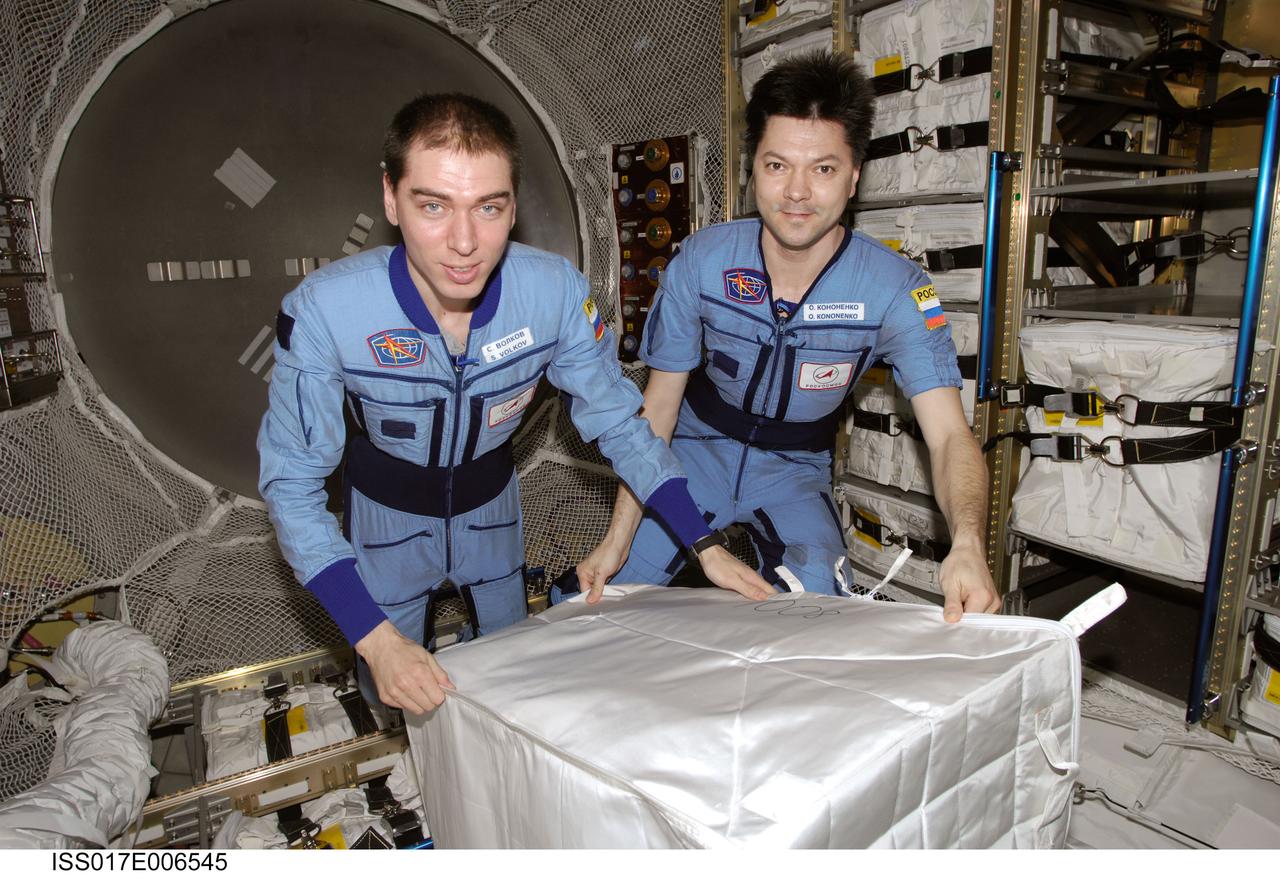
ISS017-E-006545 (12 May 2008) --- Russian Federal Space Agency cosmonauts Sergei Volkov (left), Expedition 17 commander, and Oleg Kononenko, flight engineer, work with stowage bags in the Jules Verne Automated Transfer Vehicle (ATV) while it remains docked with the International Space Station.
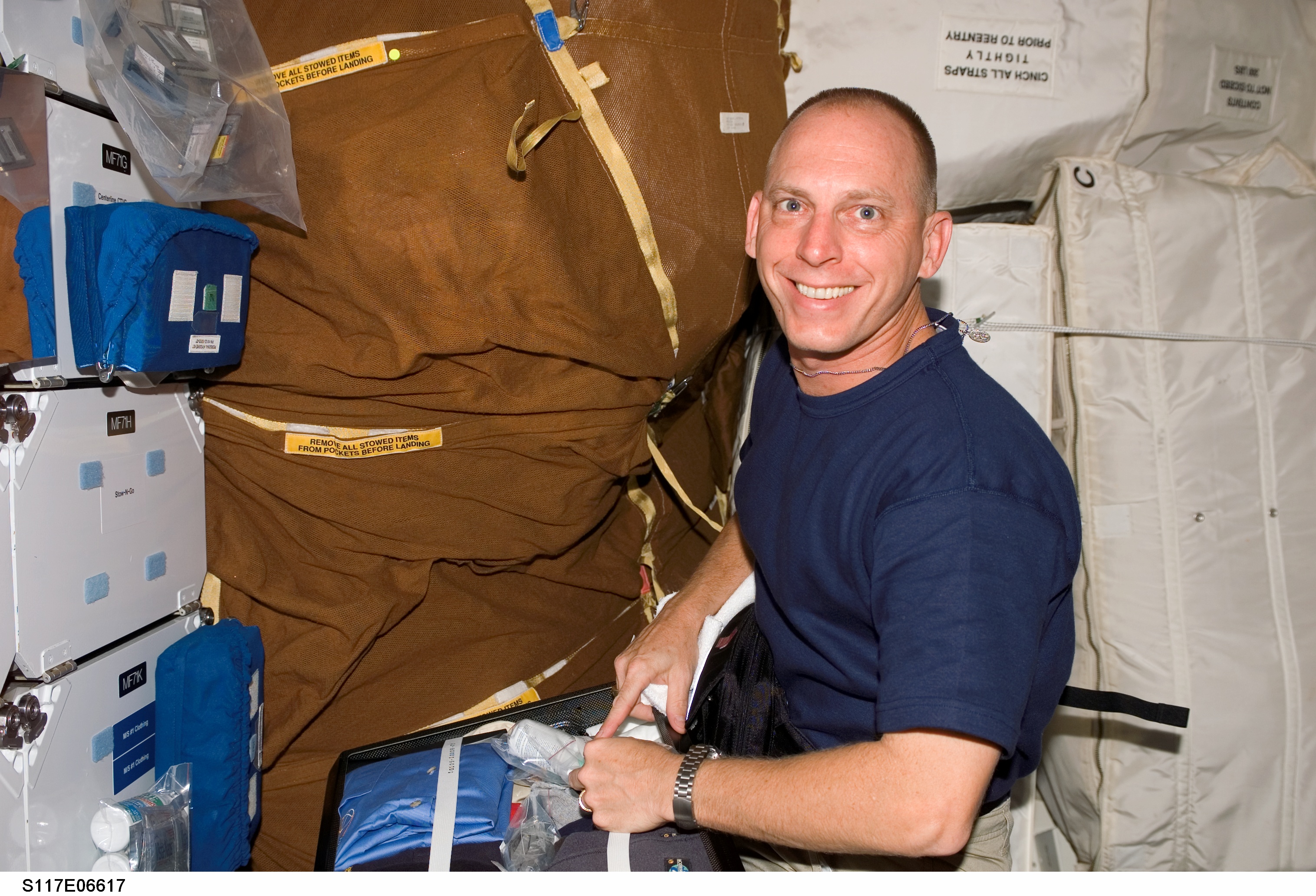
S117-E-06617 (9 June 2007) --- Astronaut Clayton Anderson, STS-117 mission specialist, works with stowage bags on the middeck of Space Shuttle Atlantis. After docking with the International Space Station, Anderson will join Expedition 15 in progress to serve as a flight engineer.
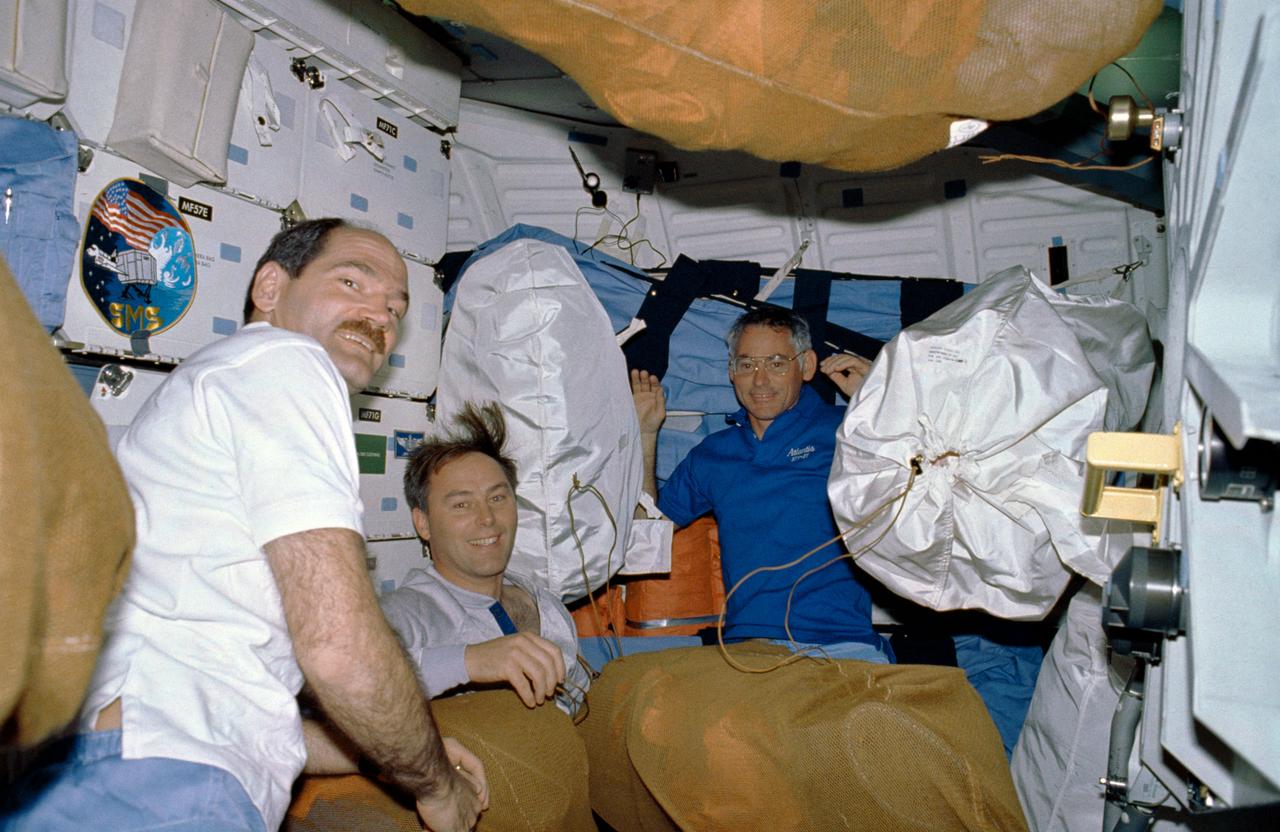
STS027-10-003 (2-6 Dec. 1988) --- From the left, astronauts Guy S. Gardner, STS-27 pilot, along with Jerry L. Ross and Richard M. (Mike) Mullane, both mission specialists, take a break from moving gear and equipment on the middeck of the Earth-orbiting space shuttle Atlantis. Photo credit: NASA
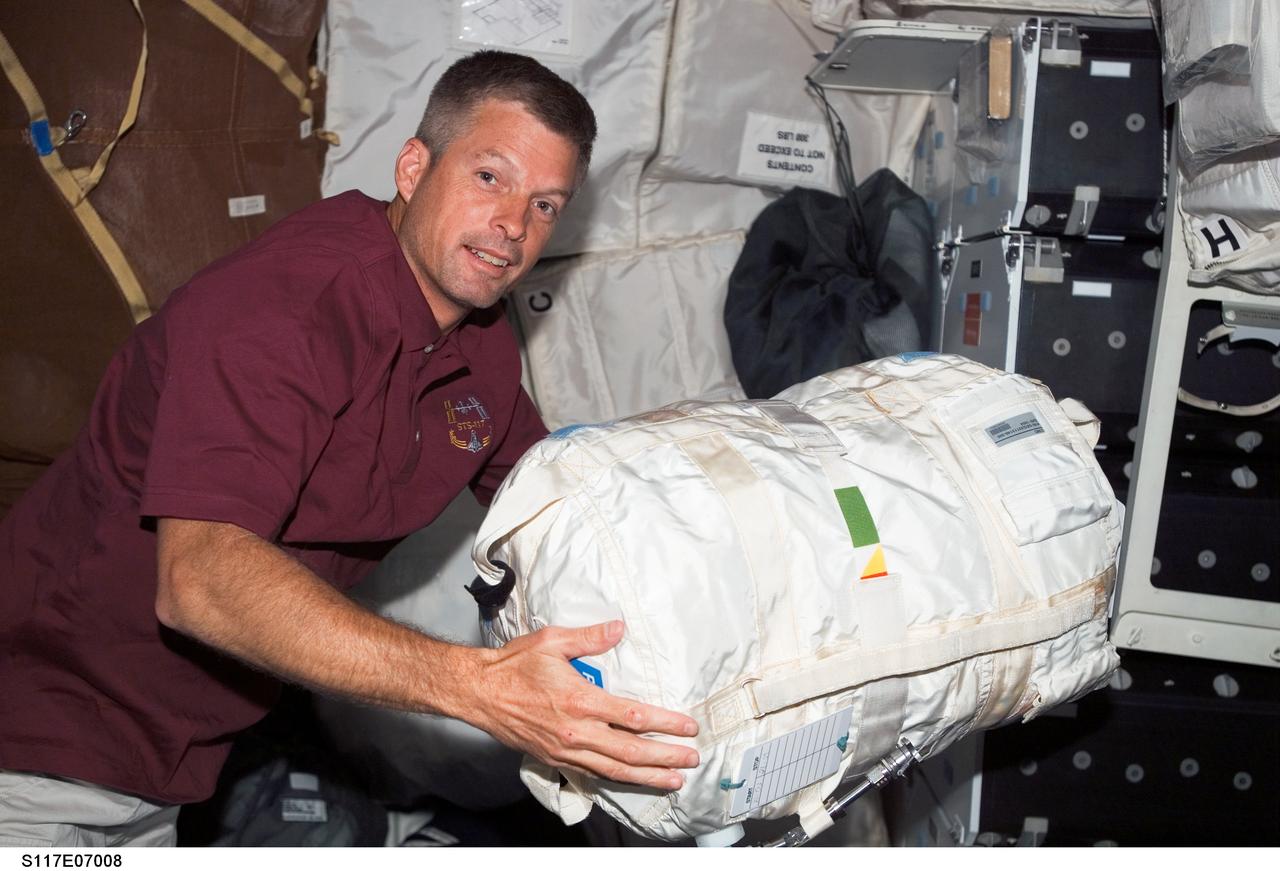
S117-E-07008 (11 June 2007) --- Astronaut Steven Swanson, STS-117 mission specialist, moves a stowage bag on the middeck of the Space Shuttle Atlantis while docked with the International Space Station.
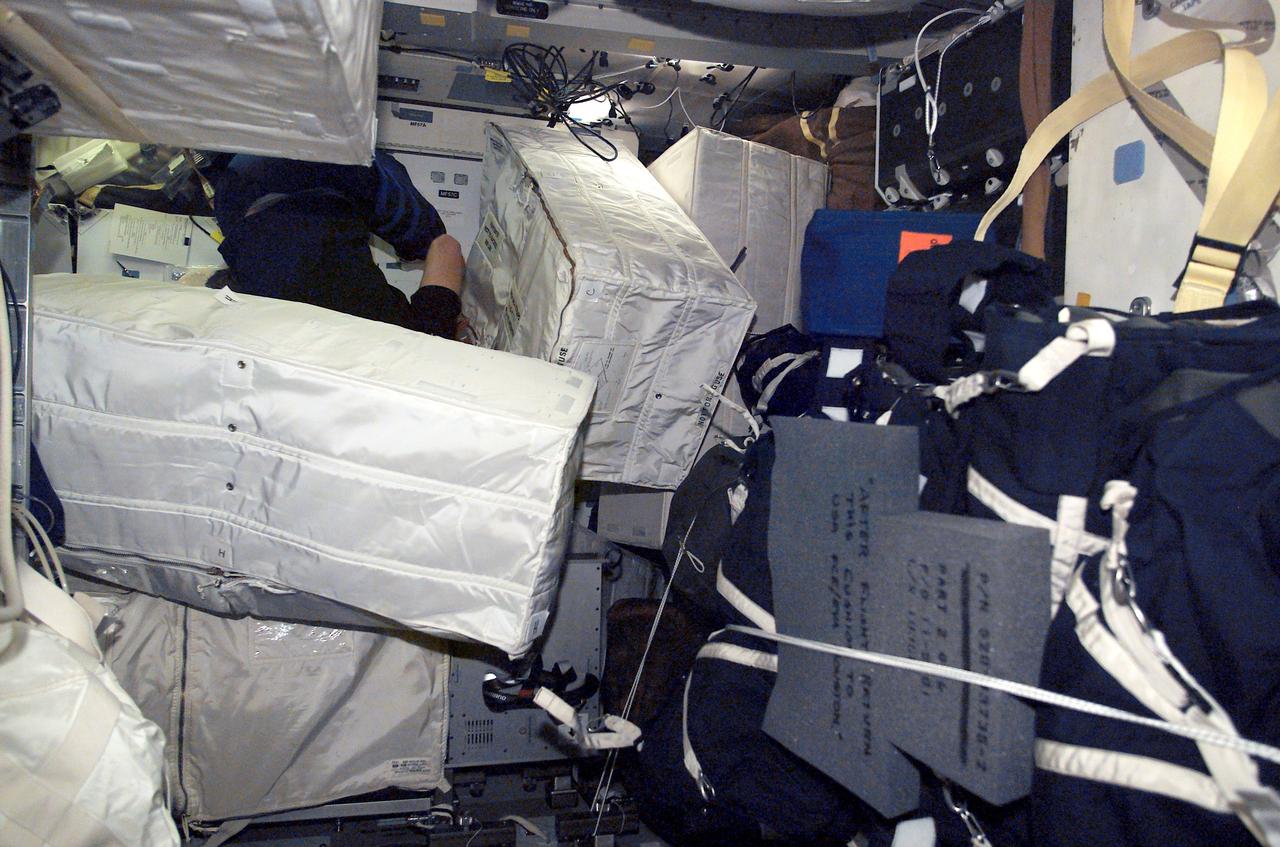
STS111-E-5041 (8 June 2002) --- An unidentified crewmember on the middeck of the Space Shuttle Endeavour is partially hidden by several stowage bags and equipment during transfer to the International Space Station (ISS).
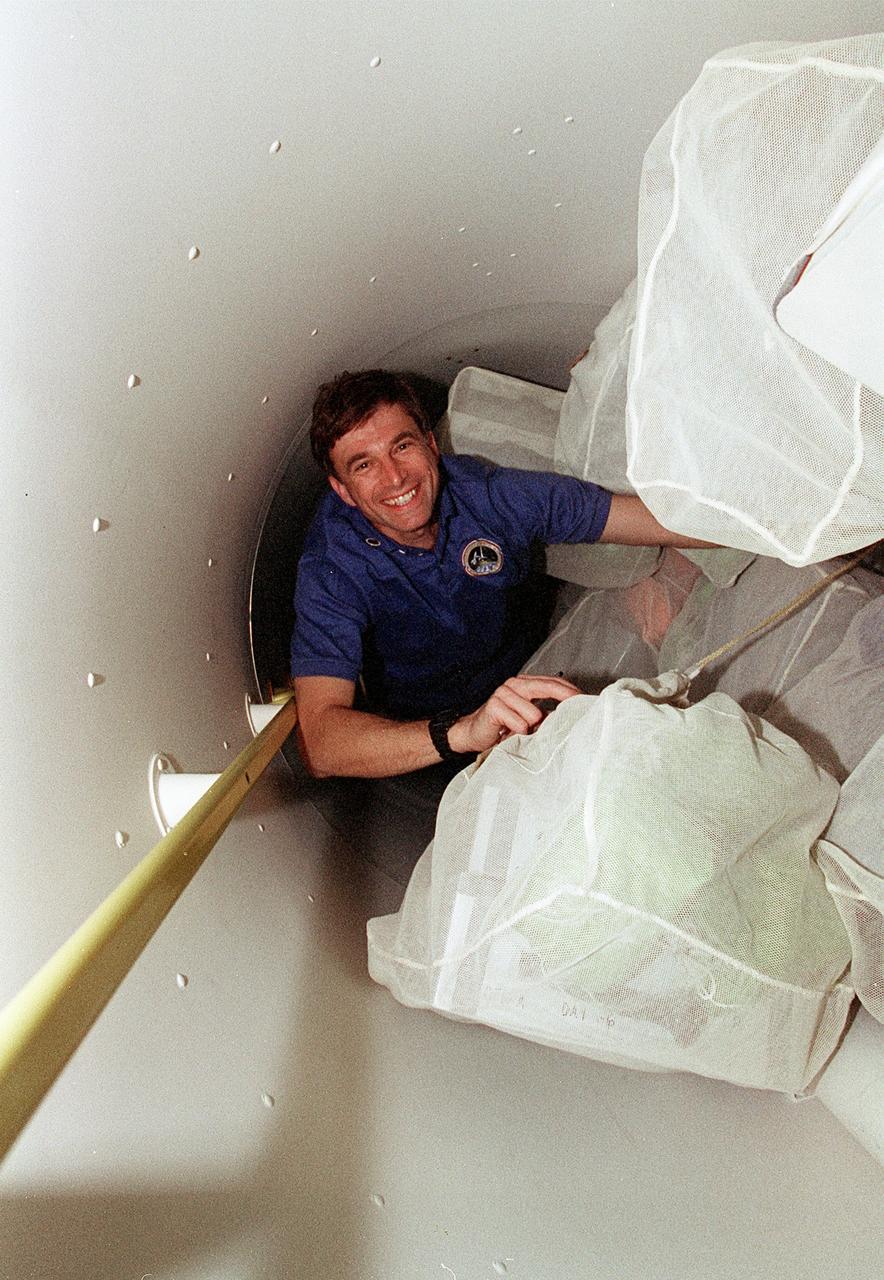
STS076-345-012 (22 - 31 March 1996) --- During the first few hours of the mission, astronaut Ronald M. Sega checks over stowed bags filled with food supplies in the STS-76 tunnel. The payload commander was one of six NASA astronauts aboard the Space Shuttle Atlantis, which later docked with Russia's Mir Space Station. The crew used a tunnel to commute to the Spacehab module and, later, to the Mir via its Docking Module (DM).
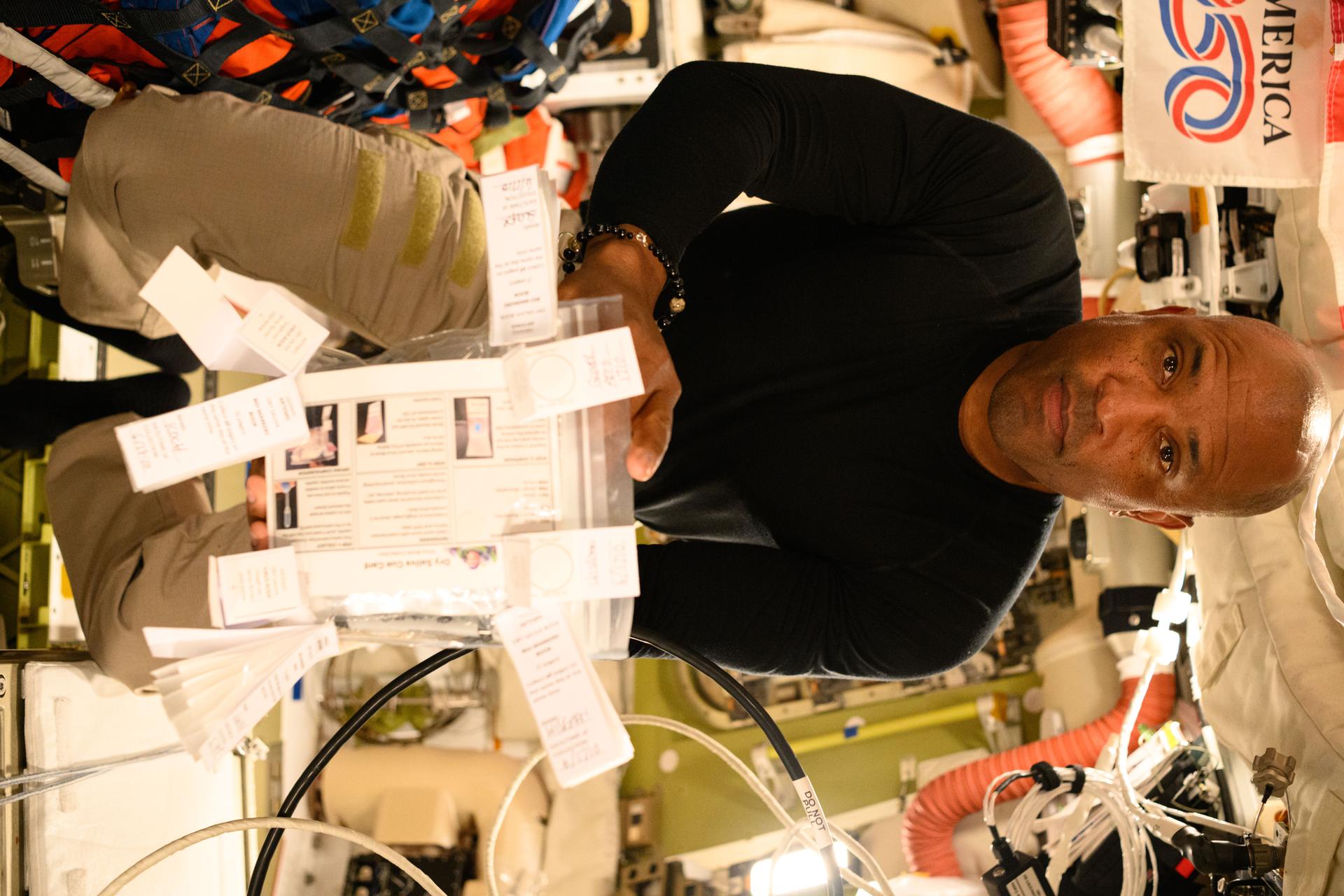
art002e027801 (April 8, 2026) – NASA astronaut Victor Glover shows off the sample bag for the Immune Biomarkers study aboard the Orion spacecraft. During the Artemis II mission, the crew collected saliva samples for this study. Samples will be analyzed for proteins, enzymes, and other biomarkers that monitor immunity, inflammation, nutritional status, bone health, and radiation effects, to determine how crewmembers adapted to deep spaceflight conditions. Credit: NASA
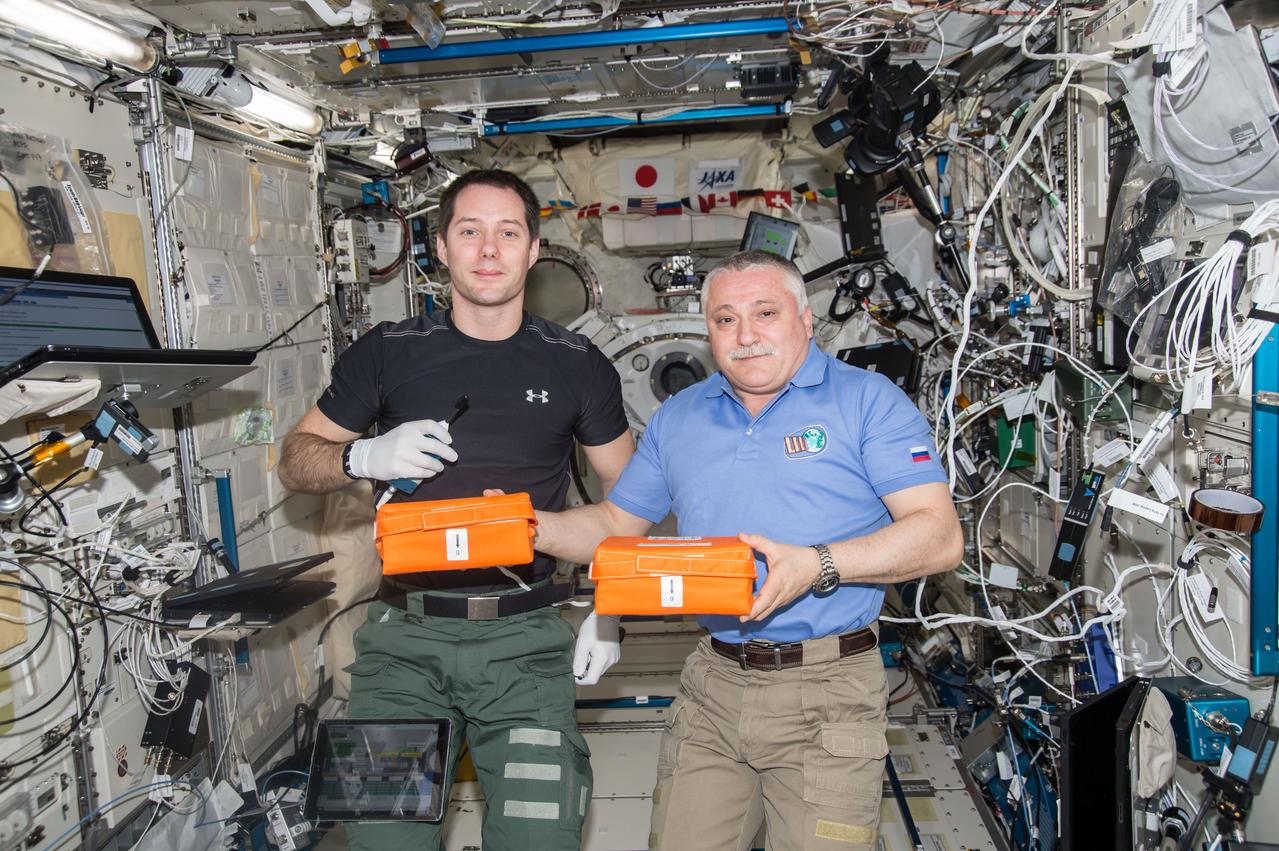
iss051e052377 96/2/2017) --- European Space Agency (ESA) astronaut Thomas Pesquet and cosmonaut Fyodor Yurchikhin pose with Canister Bags during handover of Canisters removed from the Protein Crystallization Research Facility (PCRF. The image was taken in the Kibo Japanese Experiment Pressurized Module (JPM) during Japan Aerospace Exploration Agency (JAXA) Protein Crystal Growth (PCG) and Kristallizator experiment operations (OPS).
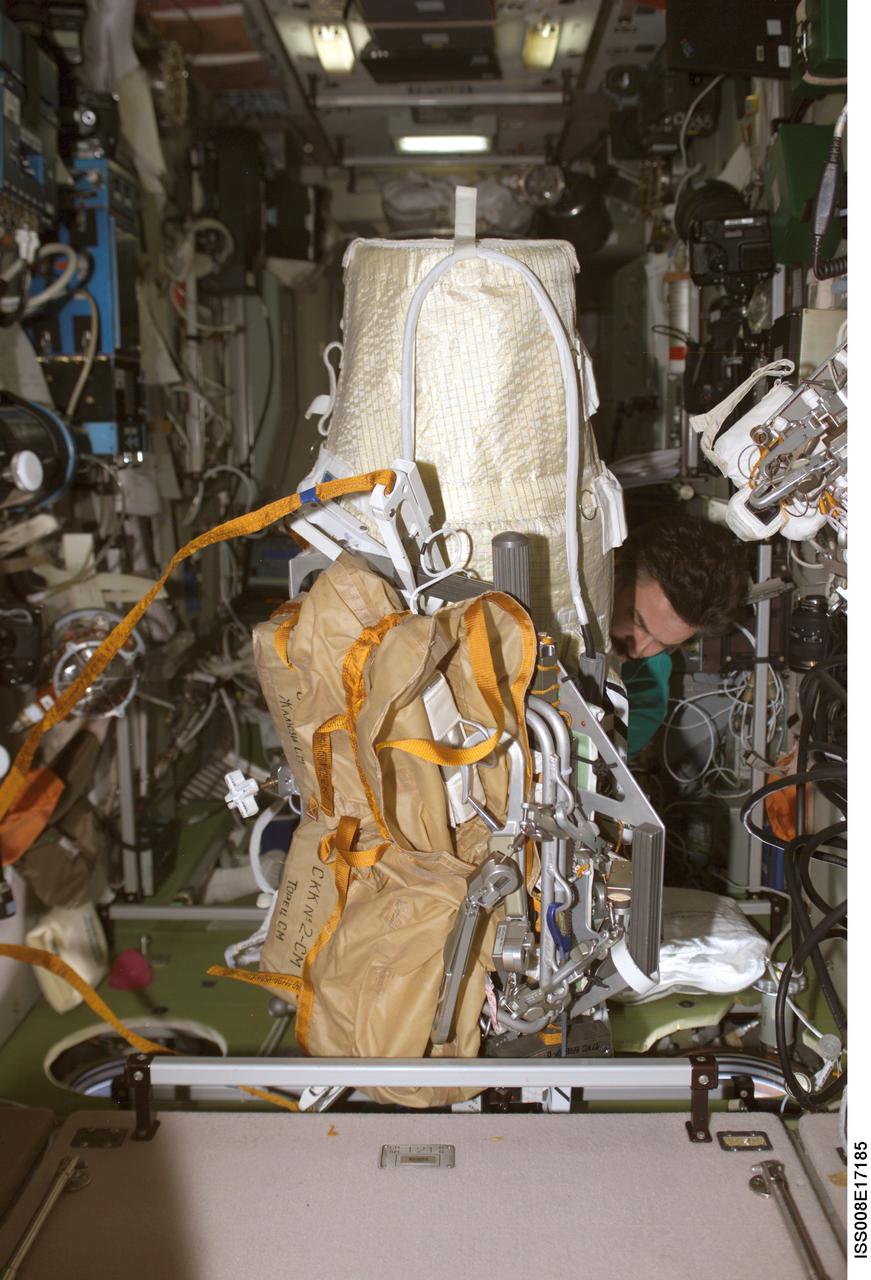
ISS008-E-17185 (24 February 2004) --- Cosmonaut Alexander Y. Kaleri, Expedition 8 flight engineer, works with the extravehicular activity (EVA) bundle in the Zvezda Service Module on the International Space Station (ISS). The Matroshka experiment package is shrouded (aft) with the brown carry bags for the CKK hardware (fwd) along with tools and other needed items. It is all bundled to a Russian EVA integrated equipment carrier. Kaleri represents Rosaviakosmos.
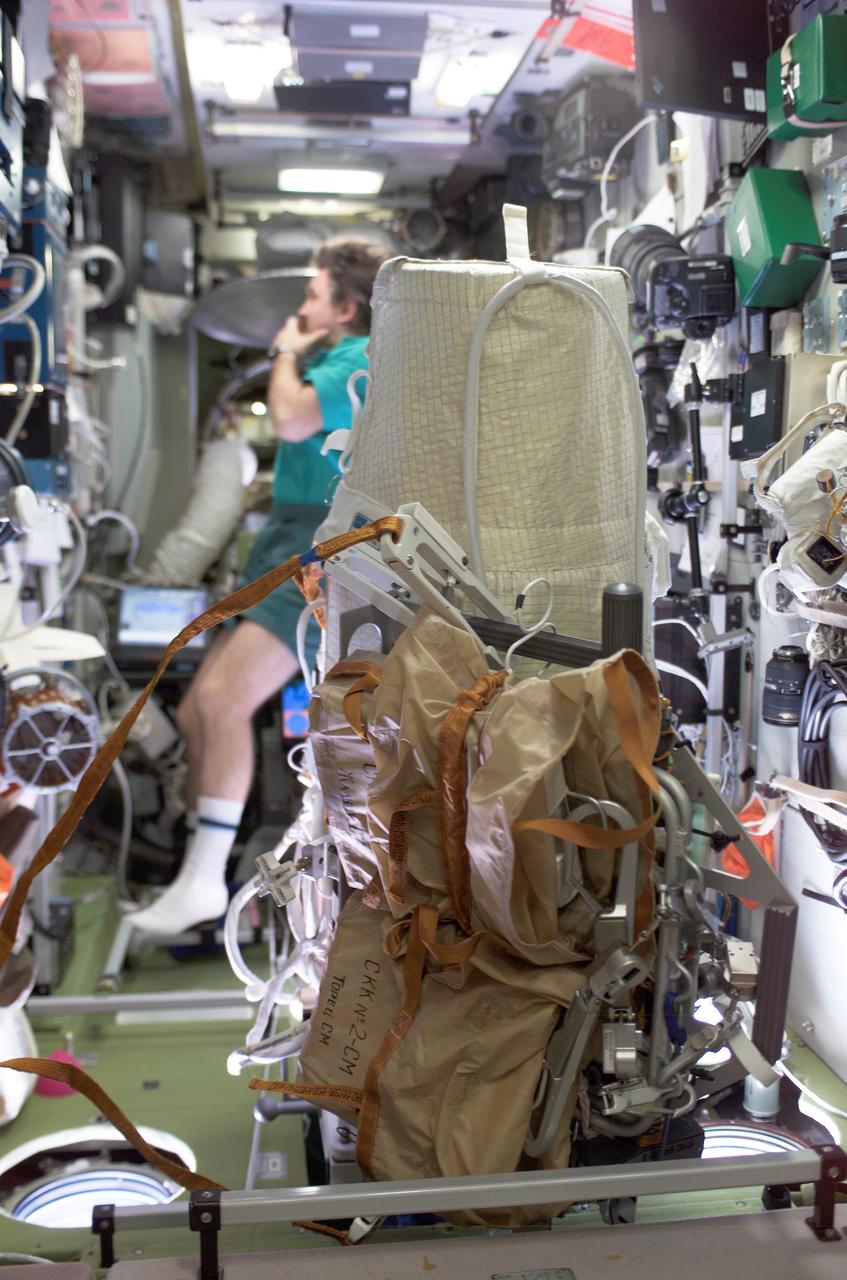
ISS008-E-17183 (24 February 2004) --- This image shows a close-up view of the extravehicular activity (EVA) bundle in the Zvezda Service Module on the International Space Station (ISS). The Matroshka experiment package is shrouded (aft) with the brown carry bags for the CKK hardware (fwd) along with tools and other needed items. It is all bundled to a Russian EVA integrated equipment carrier. Cosmonaut Alexander Y. Kaleri, flight engineer representing Russia’s Federal Space Agency, is in the background.

art002e027802 (April 8, 2026) – NASA astronaut Victor Glover shows off the sample bag for the Immune Biomarkers study aboard the Orion spacecraft. During the Artemis II mission, the crew collected saliva samples for this study. Samples will be analyzed for proteins, enzymes, and other biomarkers that monitor immunity, inflammation, nutritional status, bone health, and radiation effects, to determine how crewmembers adapted to deep spaceflight conditions. Credit: NASA
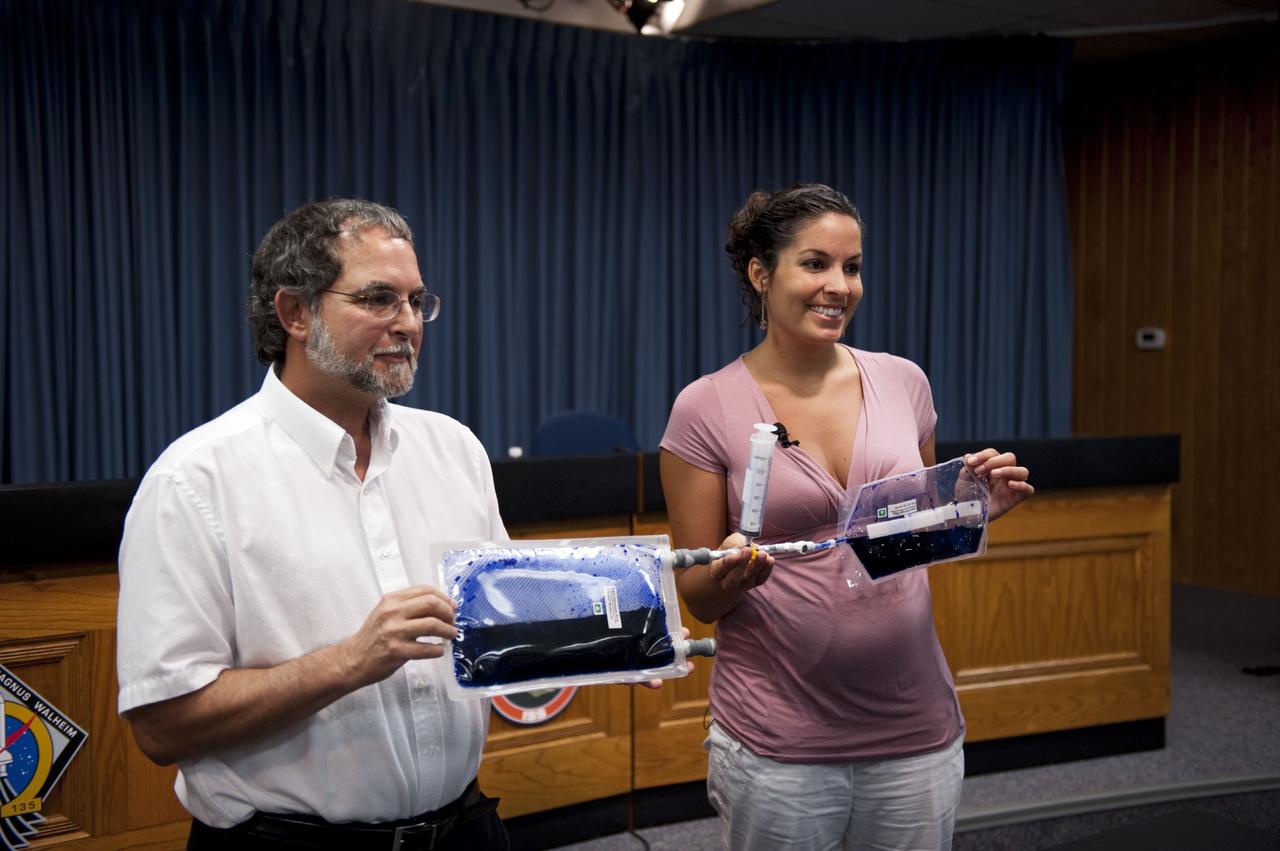
CAPE CANAVERAL, Fla. -- In the Press Site auditorium at NASA's Kennedy Space Center in Florida, NASA Project Scientist Dr. Howard Levine and Project Engineer Monica Soler with Qinetiq North America demonstrate to media a liquid purifying system called "forward osmosis." The idea is to make a fortified drink that provides hydration and nutrients from all sources available aboard a spacecraft, such as wastewater. A space-adapted version of the system will be aboard space shuttle Atlantis for testing during the STS-135 mission to the International Space Station. Atlantis and its crew of four are scheduled to lift off at 11:26 a.m. EDT on July 8 to deliver the Raffaello multi-purpose logistics module packed with supplies and spare parts to the station. The STS-135 mission also will fly a system to investigate the potential for robotically refueling existing satellites and return a failed ammonia pump module to help NASA better understand the failure mechanism and improve pump designs for future systems. STS-135 will be the 33rd flight of Atlantis, the 37th shuttle mission to the space station, and the 135th and final mission of NASA's Space Shuttle Program. For more information visit, www.nasa.gov/mission_pages/shuttle/shuttlemissions/sts135/index.html. Photo credit: NASA/Kim Shiflett
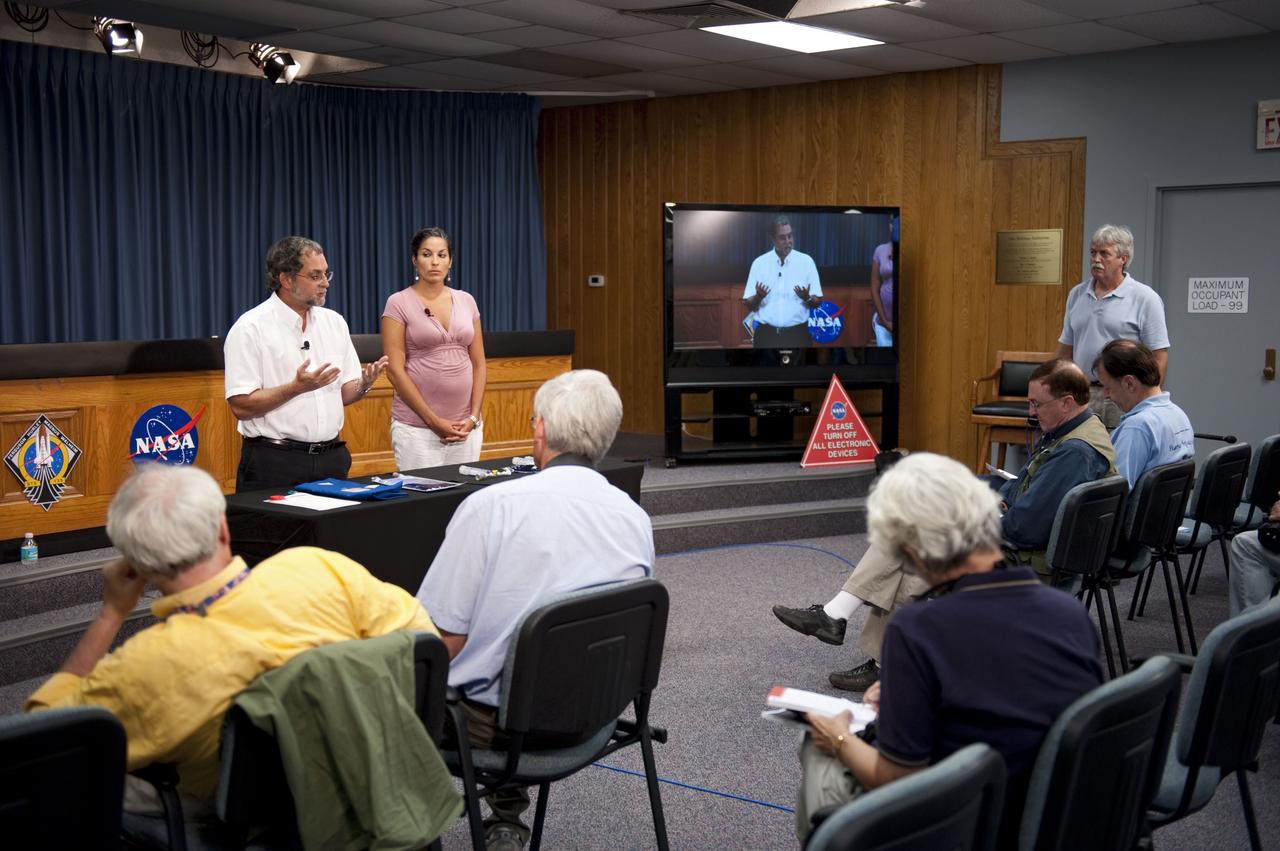
CAPE CANAVERAL, Fla. -- In the Press Site auditorium at NASA's Kennedy Space Center in Florida, NASA Project Scientist Dr. Howard Levine and Project Engineer Monica Soler with Qinetiq North America demonstrate to media a liquid purifying system called "forward osmosis." The idea is to make a fortified drink that provides hydration and nutrients from all sources available aboard a spacecraft, such as wastewater. A space-adapted version of the system will be aboard space shuttle Atlantis for testing during the STS-135 mission to the International Space Station. Atlantis and its crew of four are scheduled to lift off at 11:26 a.m. EDT on July 8 to deliver the Raffaello multi-purpose logistics module packed with supplies and spare parts to the station. The STS-135 mission also will fly a system to investigate the potential for robotically refueling existing satellites and return a failed ammonia pump module to help NASA better understand the failure mechanism and improve pump designs for future systems. STS-135 will be the 33rd flight of Atlantis, the 37th shuttle mission to the space station, and the 135th and final mission of NASA's Space Shuttle Program. For more information visit, www.nasa.gov/mission_pages/shuttle/shuttlemissions/sts135/index.html. Photo credit: NASA/Kim Shiflett
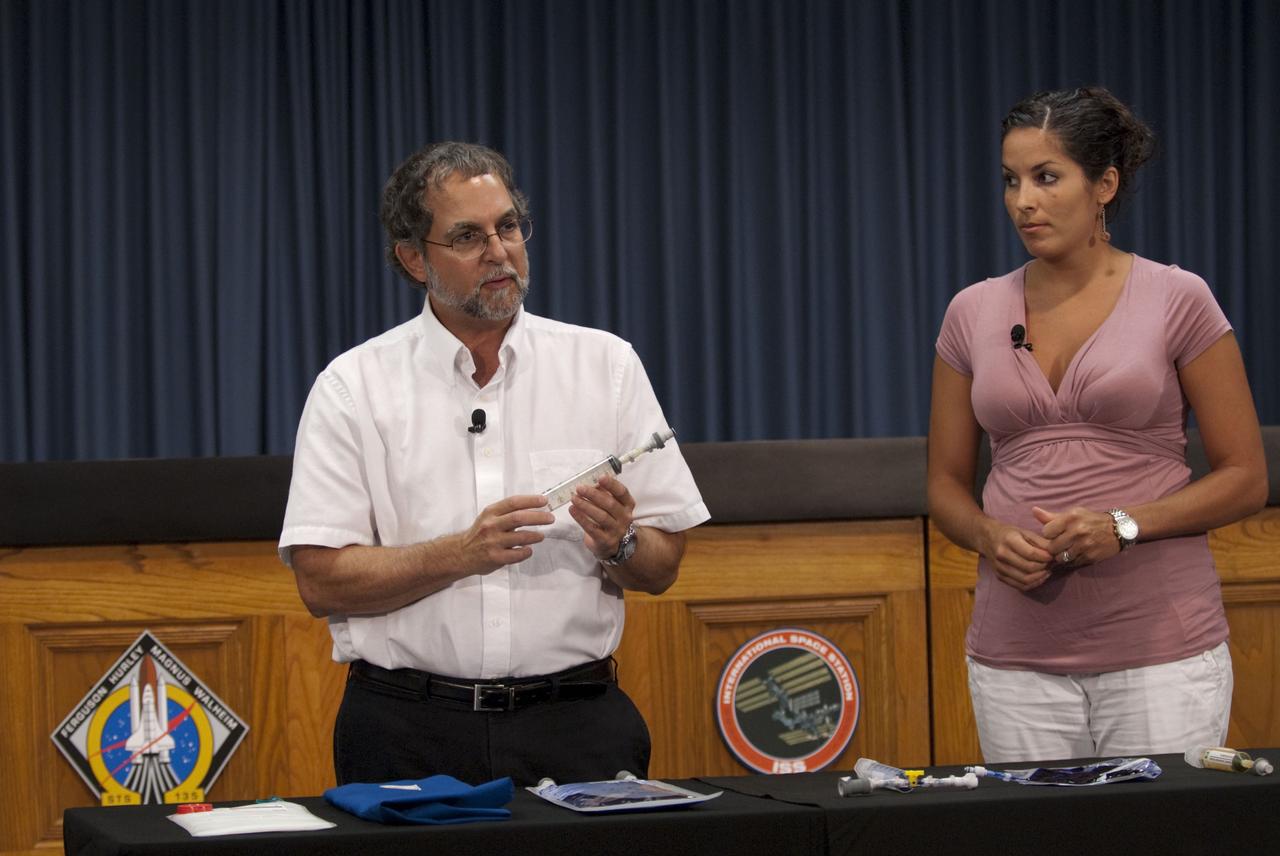
CAPE CANAVERAL, Fla. -- In the Press Site auditorium at NASA's Kennedy Space Center in Florida, NASA Project Scientist Dr. Howard Levine and Project Engineer Monica Soler with Qinetiq North America demonstrate to media a liquid purifying system called "forward osmosis." The idea is to make a fortified drink that provides hydration and nutrients from all sources available aboard a spacecraft, such as wastewater. A space-adapted version of the system will be aboard space shuttle Atlantis for testing during the STS-135 mission to the International Space Station. Atlantis and its crew of four are scheduled to lift off at 11:26 a.m. EDT on July 8 to deliver the Raffaello multi-purpose logistics module packed with supplies and spare parts to the station. The STS-135 mission also will fly a system to investigate the potential for robotically refueling existing satellites and return a failed ammonia pump module to help NASA better understand the failure mechanism and improve pump designs for future systems. STS-135 will be the 33rd flight of Atlantis, the 37th shuttle mission to the space station, and the 135th and final mission of NASA's Space Shuttle Program. For more information visit, www.nasa.gov/mission_pages/shuttle/shuttlemissions/sts135/index.html. Photo credit: NASA/Kim Shiflett
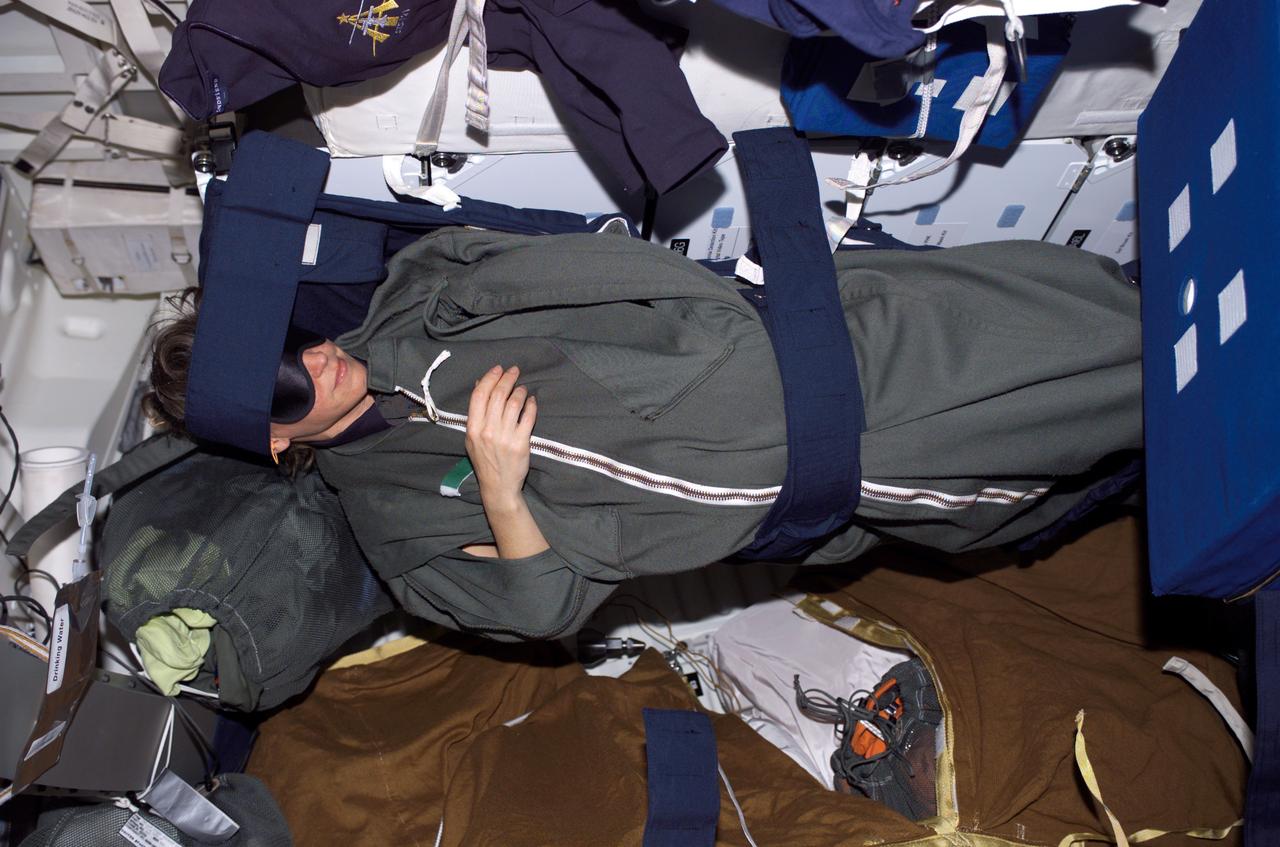
S121-E-06151 (8 July 2006) --- Astronaut Lisa M. Nowak, STS-121 mission specialist, sleeps in her sleeping bag, which is attached to the lockers on the middeck of the Space Shuttle Discovery while docked with the International Space Station.
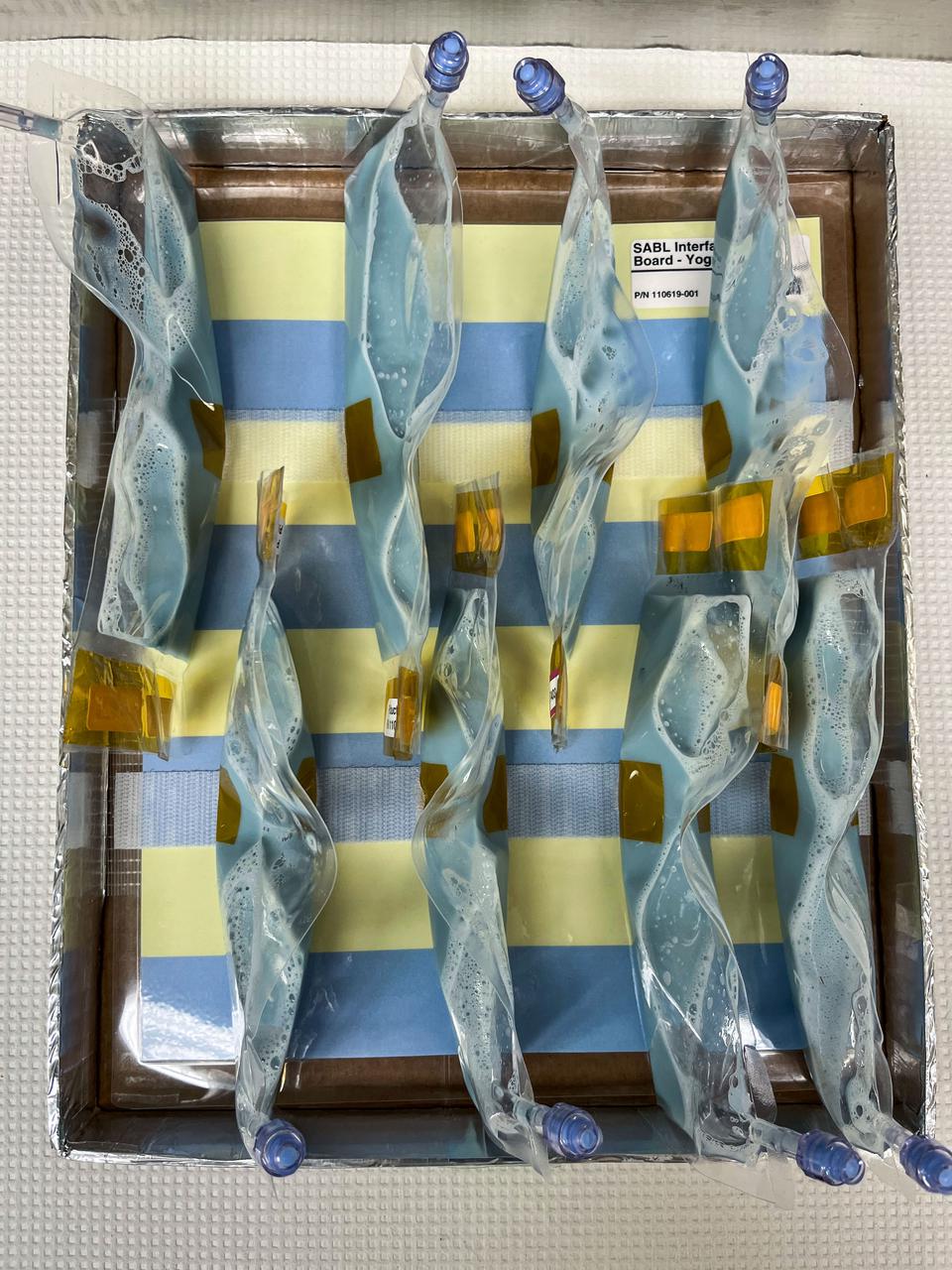
jsc2022e031235 (3/28/2022) --- Preflight images of BioNutrients-2 Yogurt Bags on SABL Tray Mockup, after initial hydration. The blue color of the bag’s contents comes from the pH Indicator. The SABL interface board, behind the bags, provides a reference for the starting and ending colors.
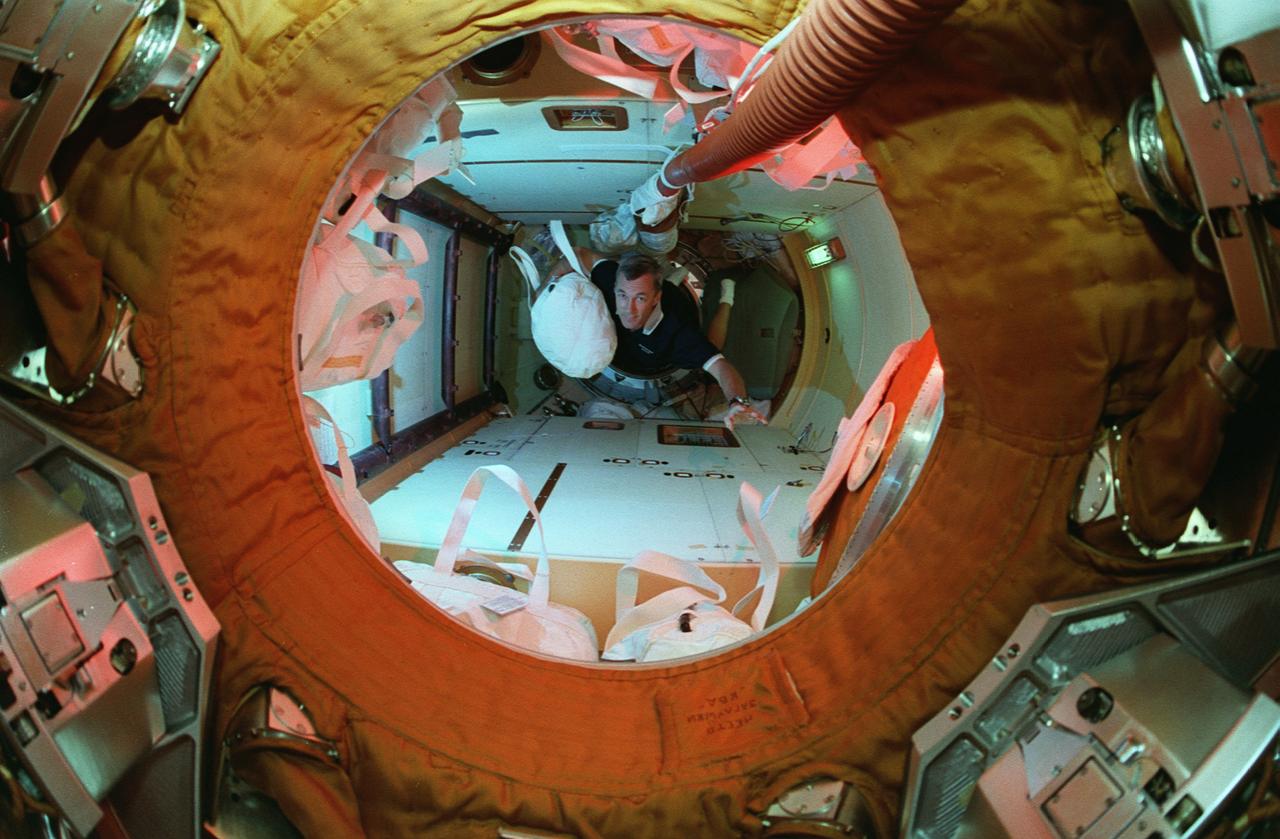
STS079-335-001 (16-26 Sept. 1996) --- Astronaut Terrence W. Wilcutt traverses into Russia's Mir Space Station Kristall Module toting a water bag from the Space Shuttle Atlantis to be used on Mir. This photograph is one of fifteen 35mm frames (along with four 70mm frames) of still photography documenting the activities of NASA's STS-79 mission, which began with a Sept. 16, 1996, liftoff from Launch Pad 39A the Kennedy Space Center (KSC) and ended with a landing at KSC on September 26, 1996. Onboard for the launch were astronauts William F. Readdy, commander; Wilcutt, pilot; John E. Blaha, Jerome (Jay) Apt, Thomas D. Akers and Carl E. Walz, all mission specialists. On flight day 4, the crew docked with Mir. Shannon W. Lucid, who had spent six months aboard Mir, switched cosmonaut guest researcher roles with Blaha. The latter joined fellow Mir-22 crewmembers Valeri G. Korzun, commander, and Aleksandr Y. Kaleri, flight engineer.

jsc2019e029850 (4/2/2019) --- Preflight imagery of the Non-Newtonian Fluids in Microgravity (Nickelodeon Slime in Space) investigation slime bag. The bags are made with food grade PVC and have a capacity of 350 mL. The slime bags have two ports: one remains sealed and the other has a long tube which can be sealed with a pinch clip. The bags are filled with Nickelodeon's slime material. On the space station, the slime is extruded through the tube with the pinch clip. Image courtesy of the International Space Station U.S. National Laboratory.
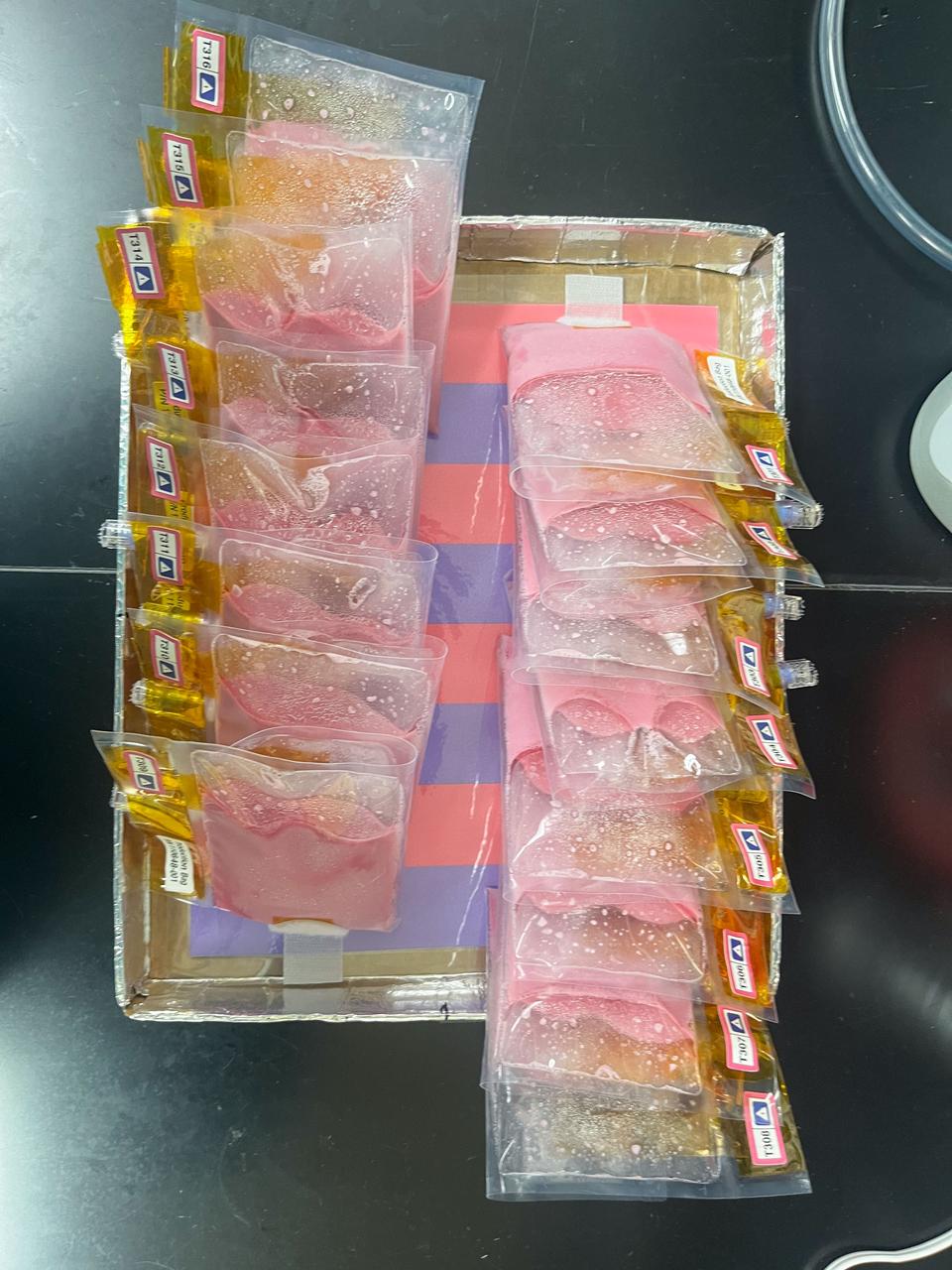
Sixteen BioNutrients-3 yogurt bags attached to the SABL Tray mockup during the BioNutrients-3 Experiment Verification Test. Below the bags, the purple and pink SABL interface board, which is used for pH comparison, is visible. The pink color of the bags indicates that these yogurt bags have completed their incubation, causing the pH indicator to change from purple to pink. Photo Credit: NASA Ames
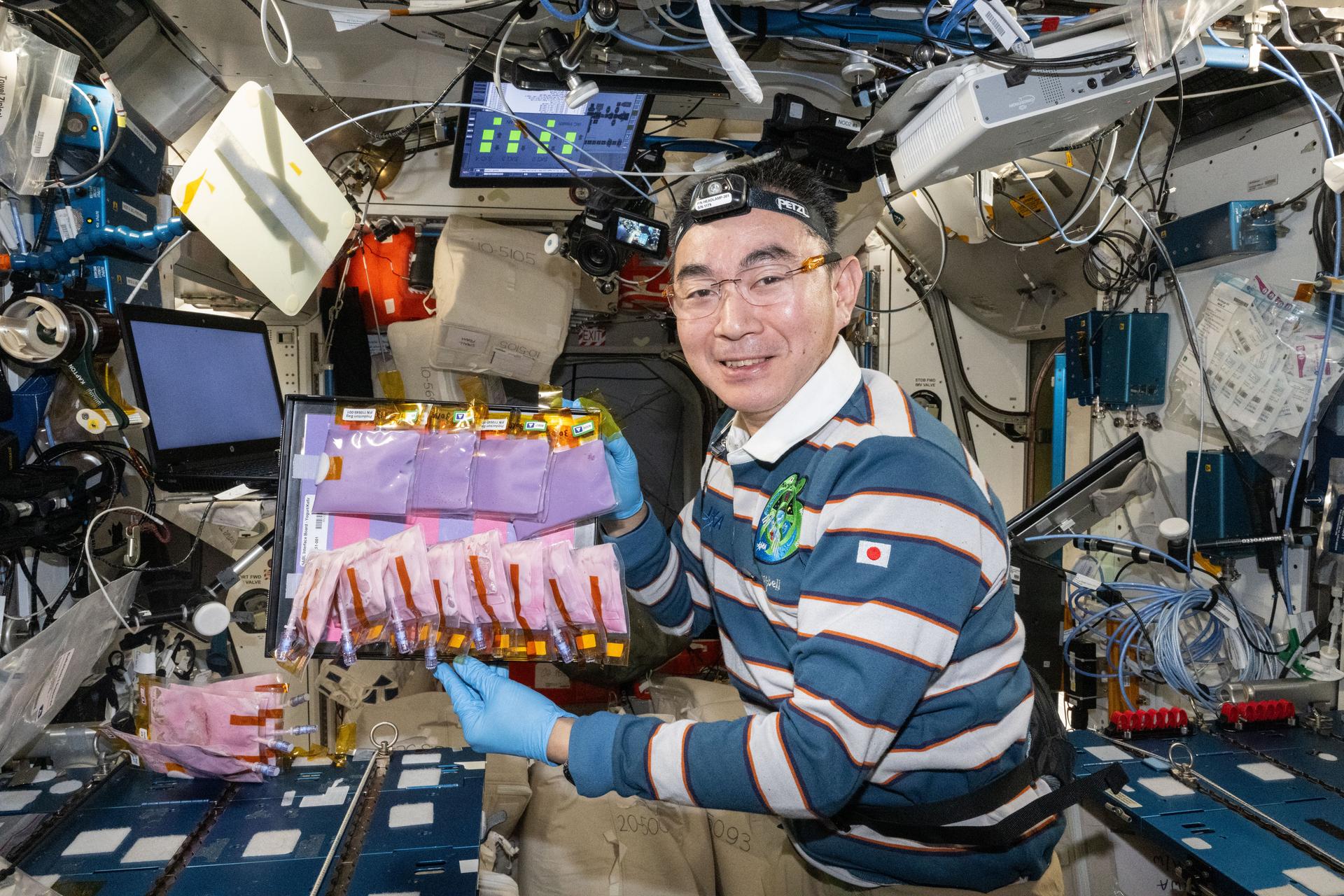
iss073e0818445 (Oct. 2, 2025) --- JAXA (Japan Aerospace Exploration Agency) astronaut and Expedition 73 Flight Engineer Kimiya Yui shows off production bags containing bioengineered yeasts and probiotic cultures for the BioNutrients-3 investigation. Yui conducted passaging and straw tests to demonstrate how astronauts could grow and safely consume fresh vitamins and nutrients on demand helping researchers plan future missions farther from Earth.
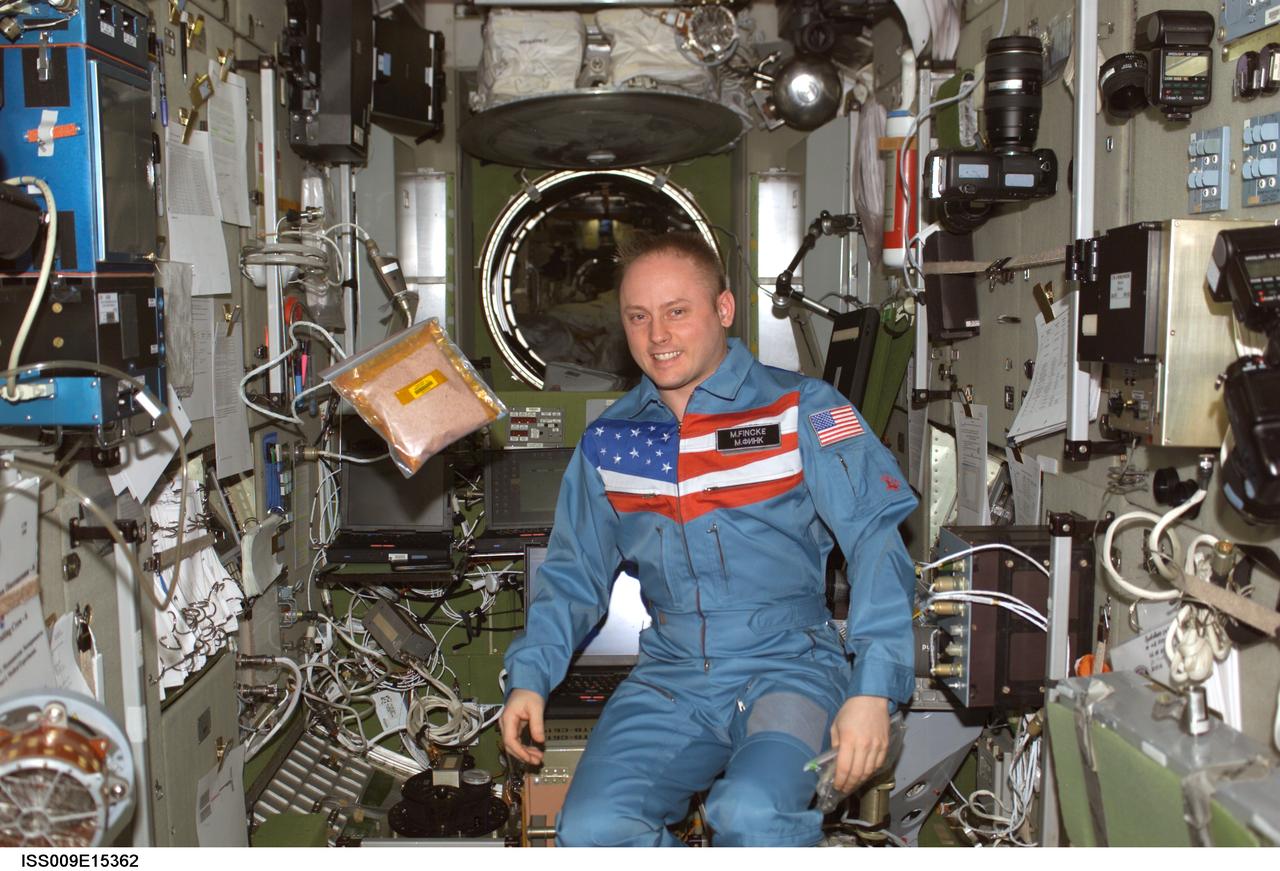
ISS009-E-15362 (17 July 2004) --- Astronaut Edward M. (Mike) Fincke, Expedition 9 NASA ISS science officer and flight engineer, is pictured in the Zvezda Service Module of the International Space Station (ISS). A bag of tomato seeds for the Tomatosphere II Project, an educational program sponsored by Canadian Space Agency (CSA), floats nearby. The seeds will be distributed to classrooms in Canada for use in plant growth experiments.
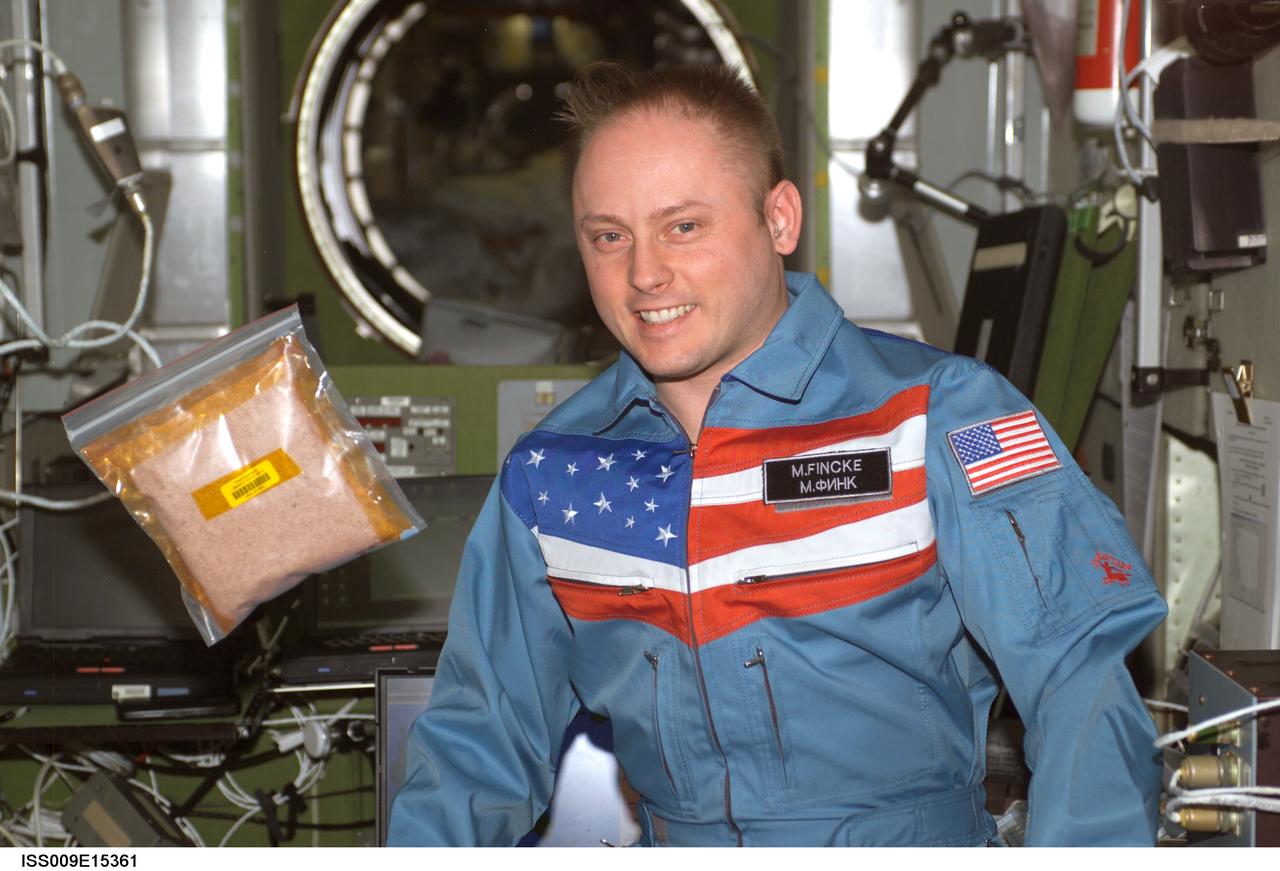
ISS009-E-15361 (17 July 2004) --- Astronaut Edward M. (Mike) Fincke, Expedition 9 NASA ISS science officer and flight engineer, is pictured in the Zvezda Service Module of the International Space Station (ISS). A bag of tomato seeds for the Tomatosphere II Project, an educational program sponsored by Canadian Space Agency (CSA), floats nearby. The seeds will be distributed to classrooms in Canada for use in plant growth experiments.
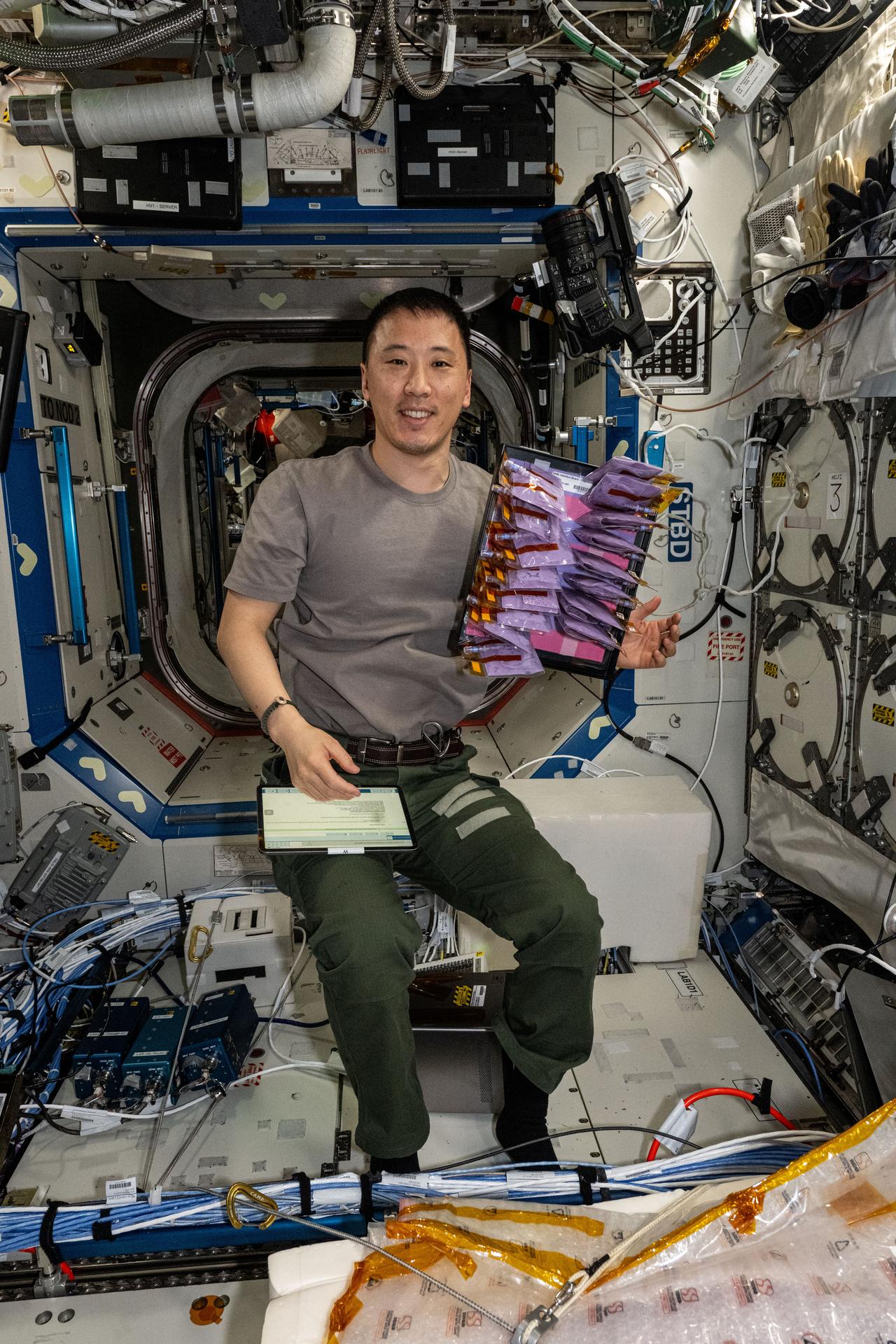
iss073e0817663 (Oct. 1, 2025) --- NASA astronaut and Expedition 73 Flight Engineer Jonny Kim shows off production bags containing bioengineered yeasts and probiotic cultures for the BioNutrients-3 investigation aboard the International Space Station's Destiny laboratory module. The biotechnology investigation seeks to produce on-demand vitamins and nutrients using bioengineered yeast and bacteria to maintain crew health during long-term space missions farther away from Earth.

OSAM-1 and Maxar team members remove protective bagging from the spacecraft bus at Goddard Space Flight Center, Greenbelt Md., Sept 25, 2023. This photo has been reviewed by OSAM1 project management, Maxar public release authority, and the Export Control Office and is released for public view. NASA/Mike Guinto

jsc2022e031237 (3/28/2022) --- A preflight image of BioNutrients-2 Yogurt Bags on SABL Tray Mockup, after completing 24hr incubation. The fully-yellow color of the bag’s contents indicates the yogurt has grown to completion.
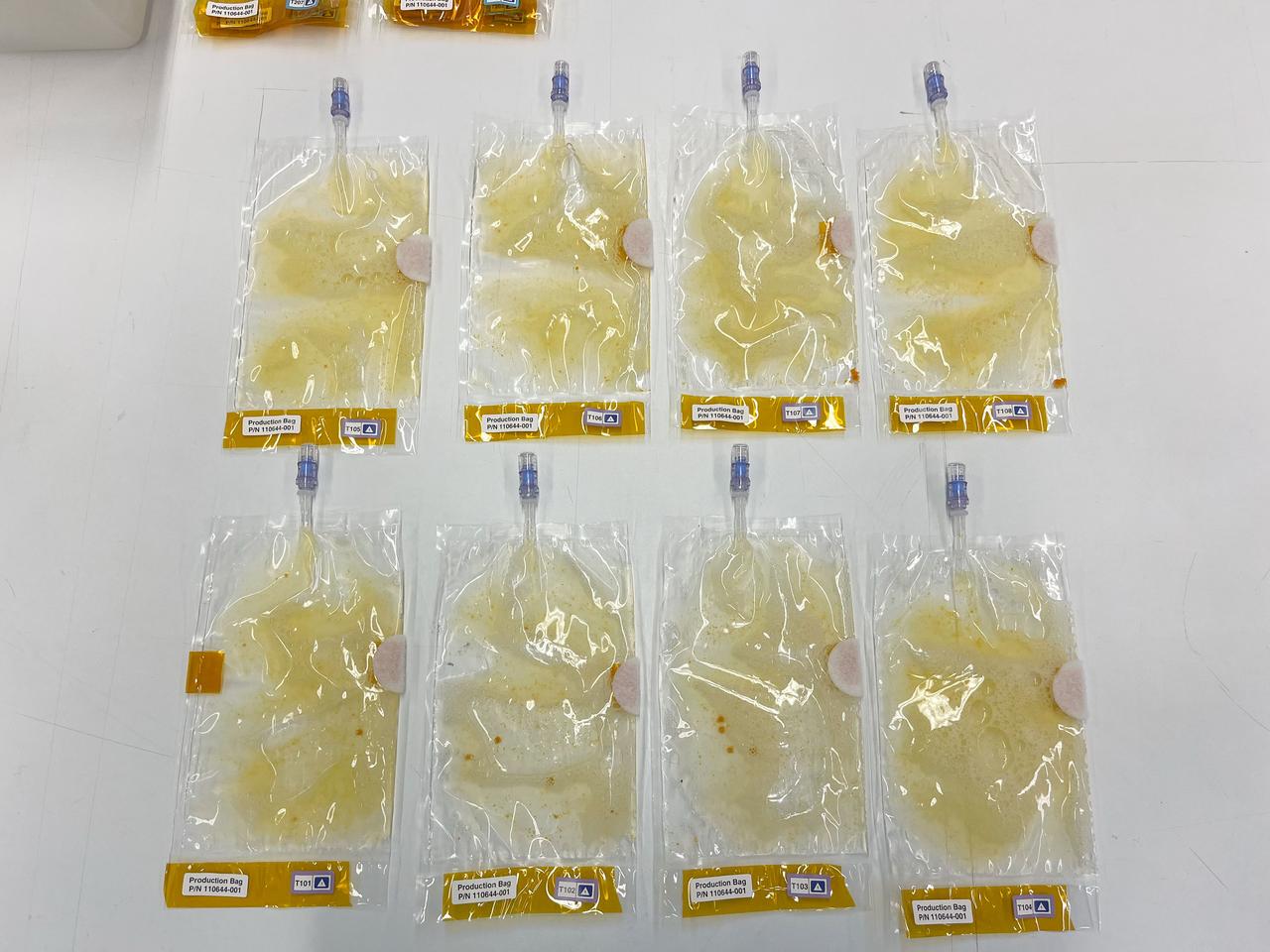
Eight BioNutrients-3 production bags containing yeast (S. cerevisiae Y55 strain 1034) photographed against a white background during the BioNutrients-3 Experiment Verification Test. Note the orange yeast pellets which are visible in some of the bags. Photo Credit: NASA Ames
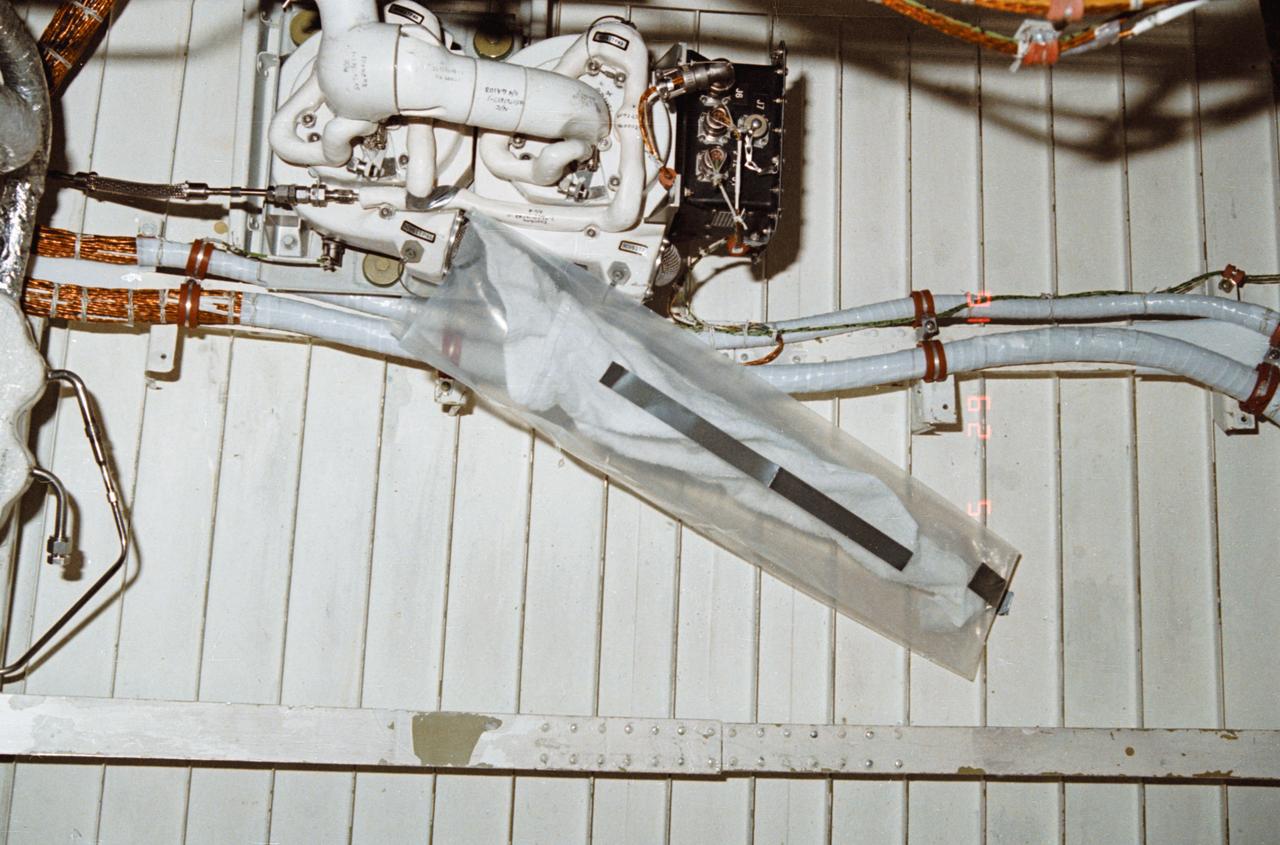
During STS-32, onboard Columbia, Orbiter Vehicle (OV) 102, a leakage problem at environmental control and life support system (ECLSS) air revitalization system (ARS) humidity separator A below the middeck is solved with a plastic bag and a towel. The towel inserted inside a plastic bag absorbed the water that had collected at the separator inlet.
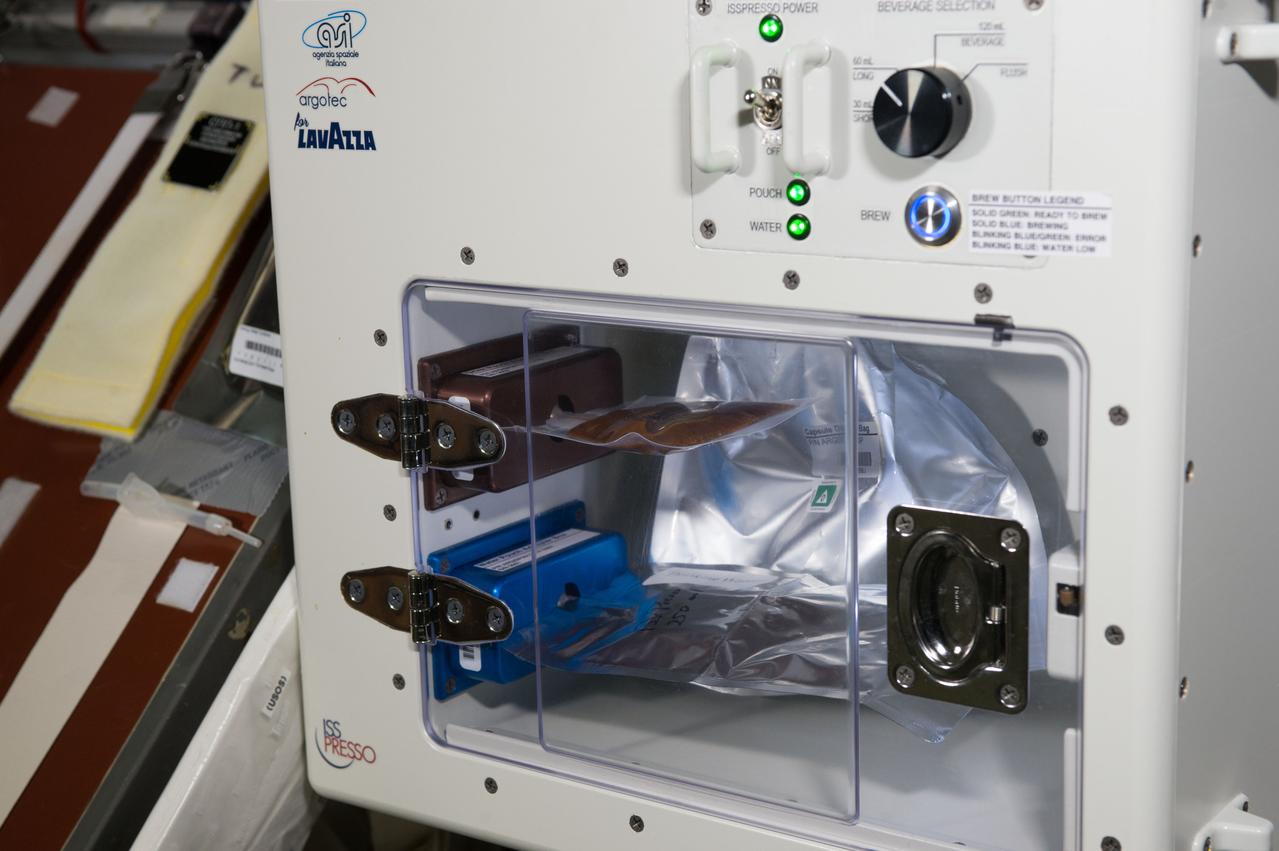
ISS043E160227 (05/03/2015) --- The new ISSpresso machine was recently installed on the International Space Station. In order to utilize the ISSpresso, a NASA standard drink bag is installed, along with a capsule containing the beverage item that the crew member wishes to drink. After the item has been brewed, the used capsule and the drink bag are removed.

KENNEDY SPACE CENTER, FLA. - A worker in the Columbia Debris Hangar sorts bagged items of Columbia debris that will be transferred to storage in the Vehicle Assembly Building. About 83,000 pieces were shipped to KSC during search and recovery efforts in East Texas.
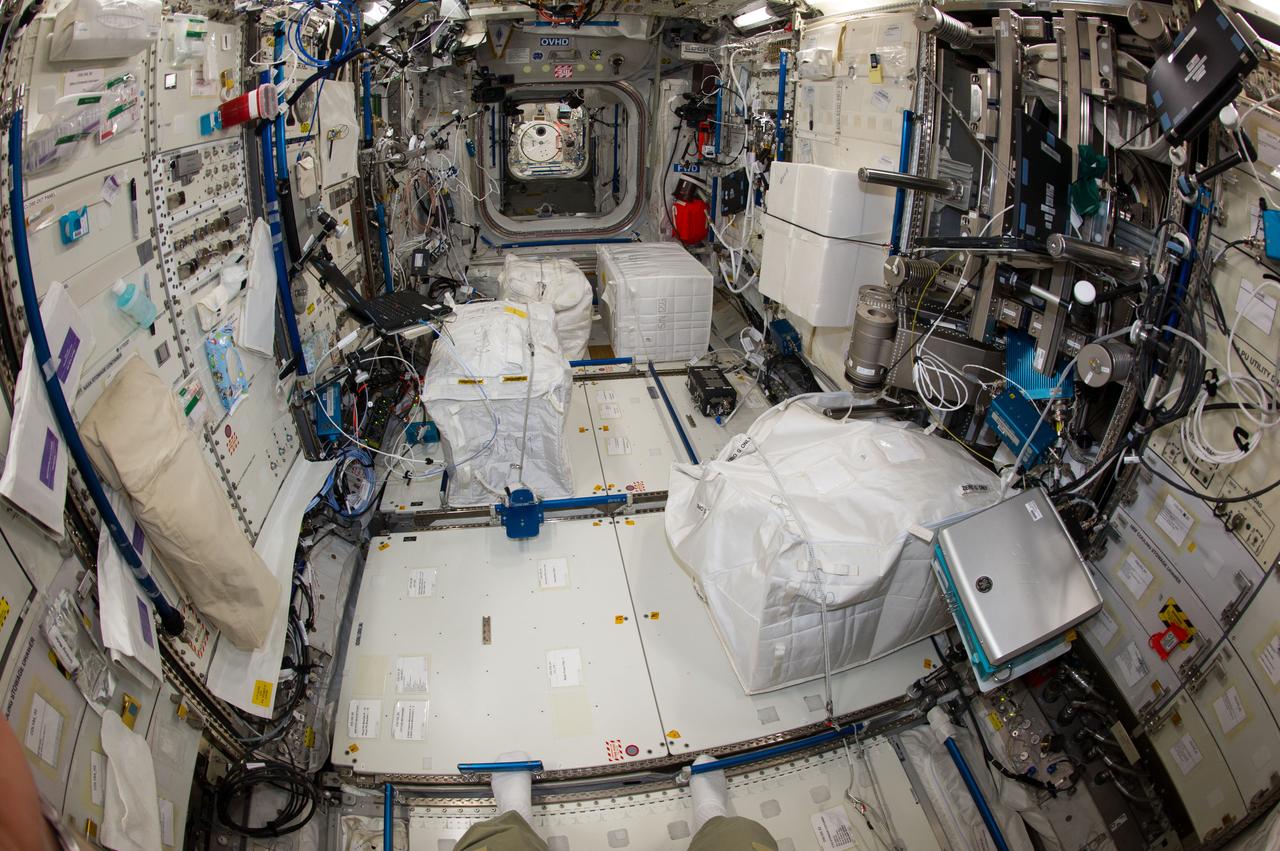
ISS040-E-008058 (7 June 2014) --- The interior of the Columbus laboratory is featured in this image photographed by an Expedition 40 crew member on the International Space Station.
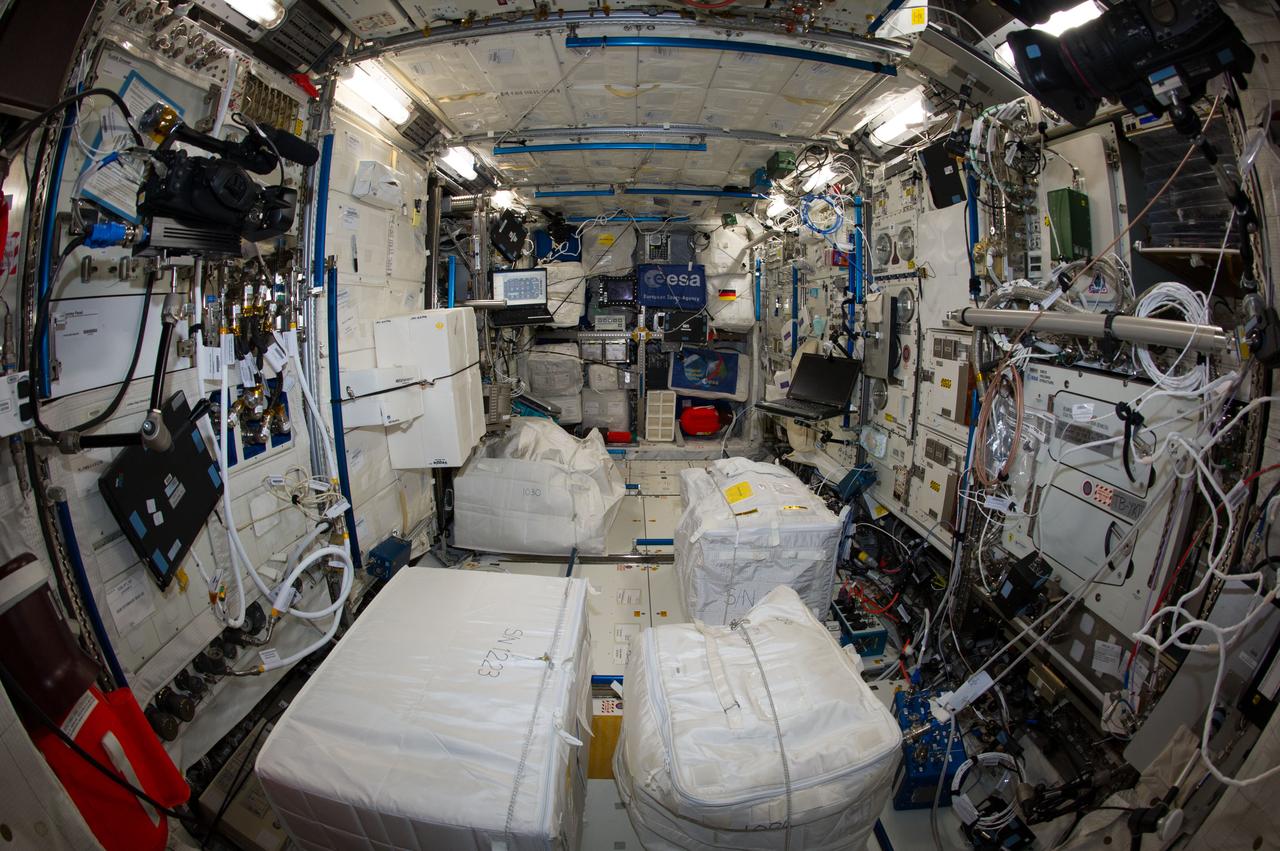
ISS040-E-008065 (7 June 2014) --- The interior of the Columbus laboratory is featured in this image photographed by an Expedition 40 crew member on the International Space Station.
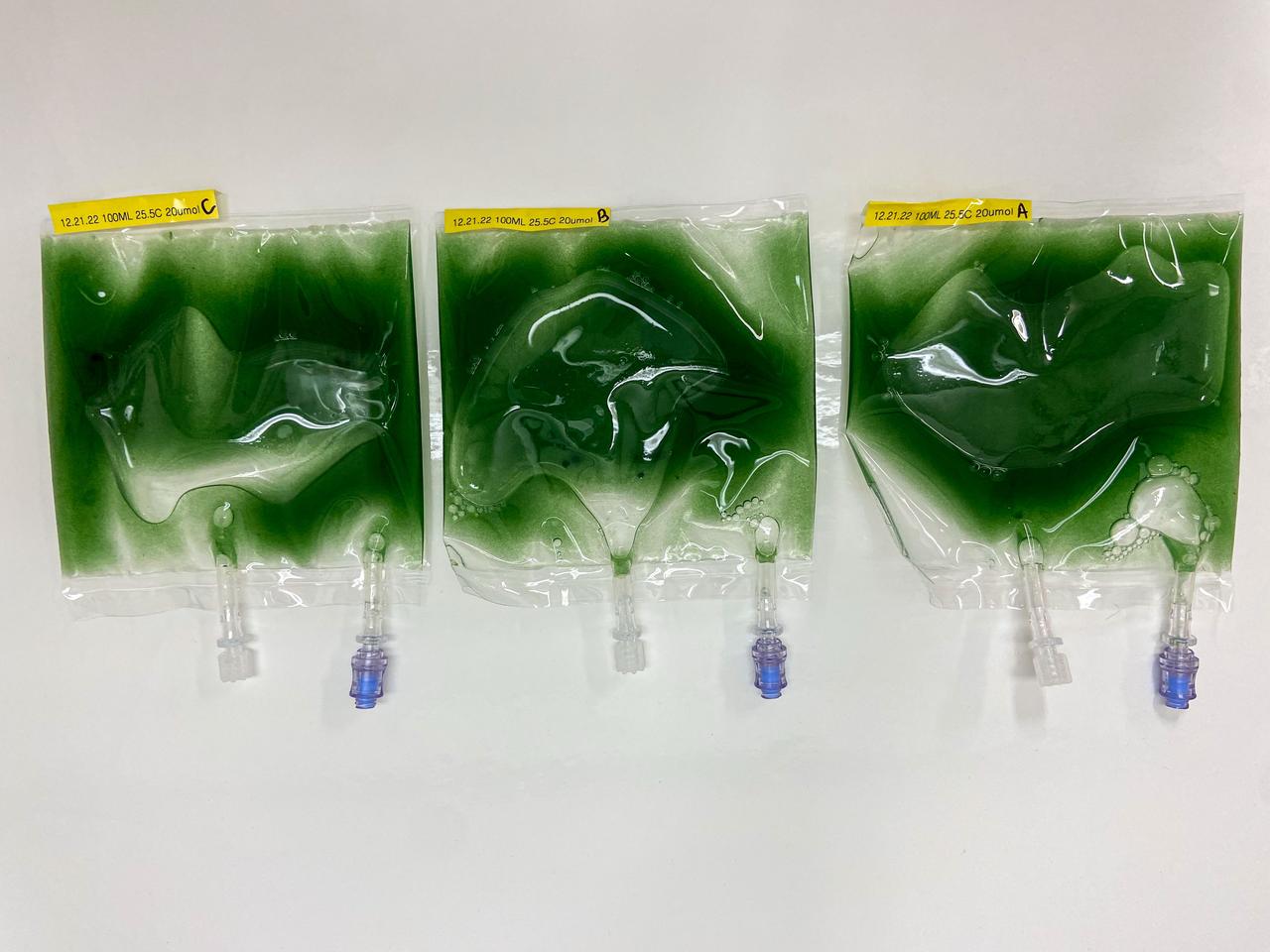
jsc2024e006097 (1/3/2023) --- Three A. platensis cultures in fluorinated ethylene propylene (FEP) bags. Image courtesy of Katherine Fisher
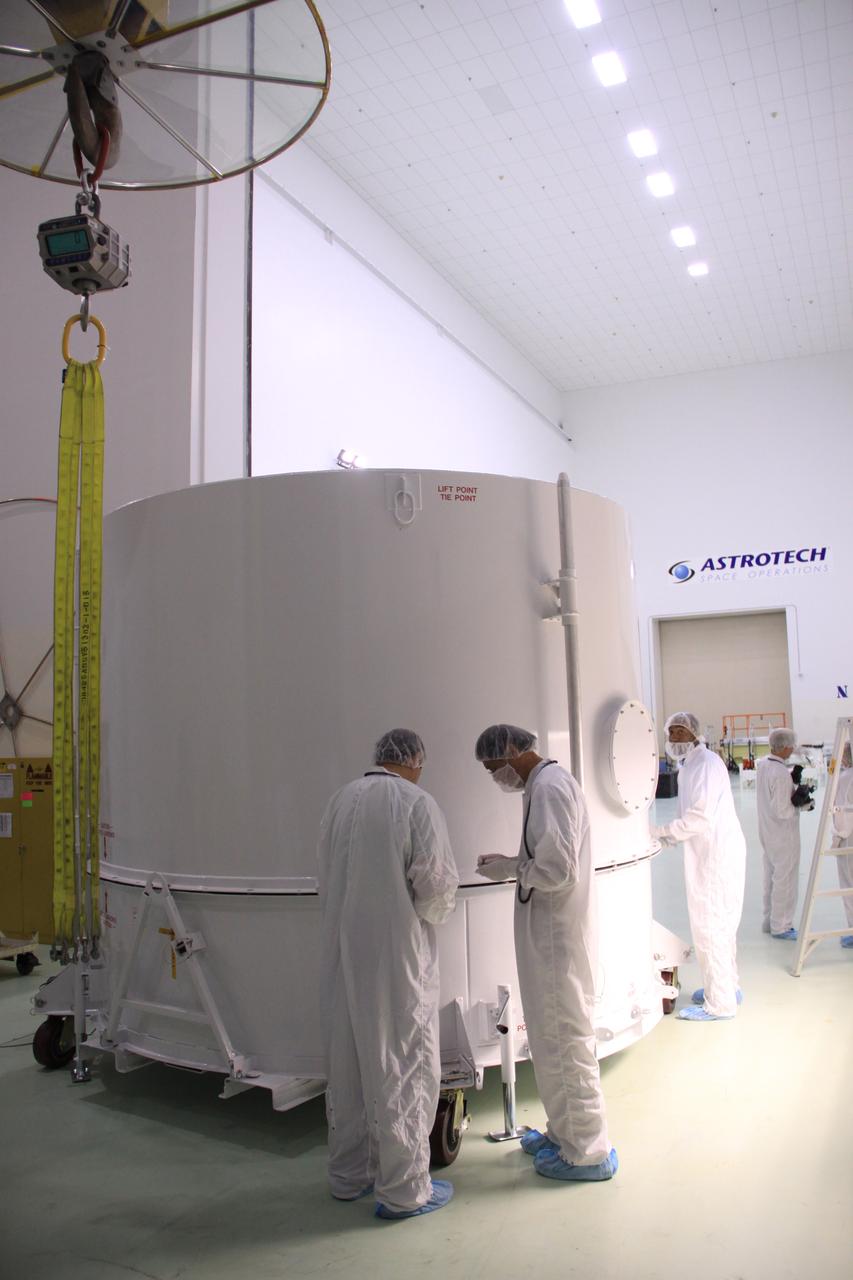
RBSP-A, Canister Removal, First Bag Removal, Solar Panels Unbagged and into Work Stand
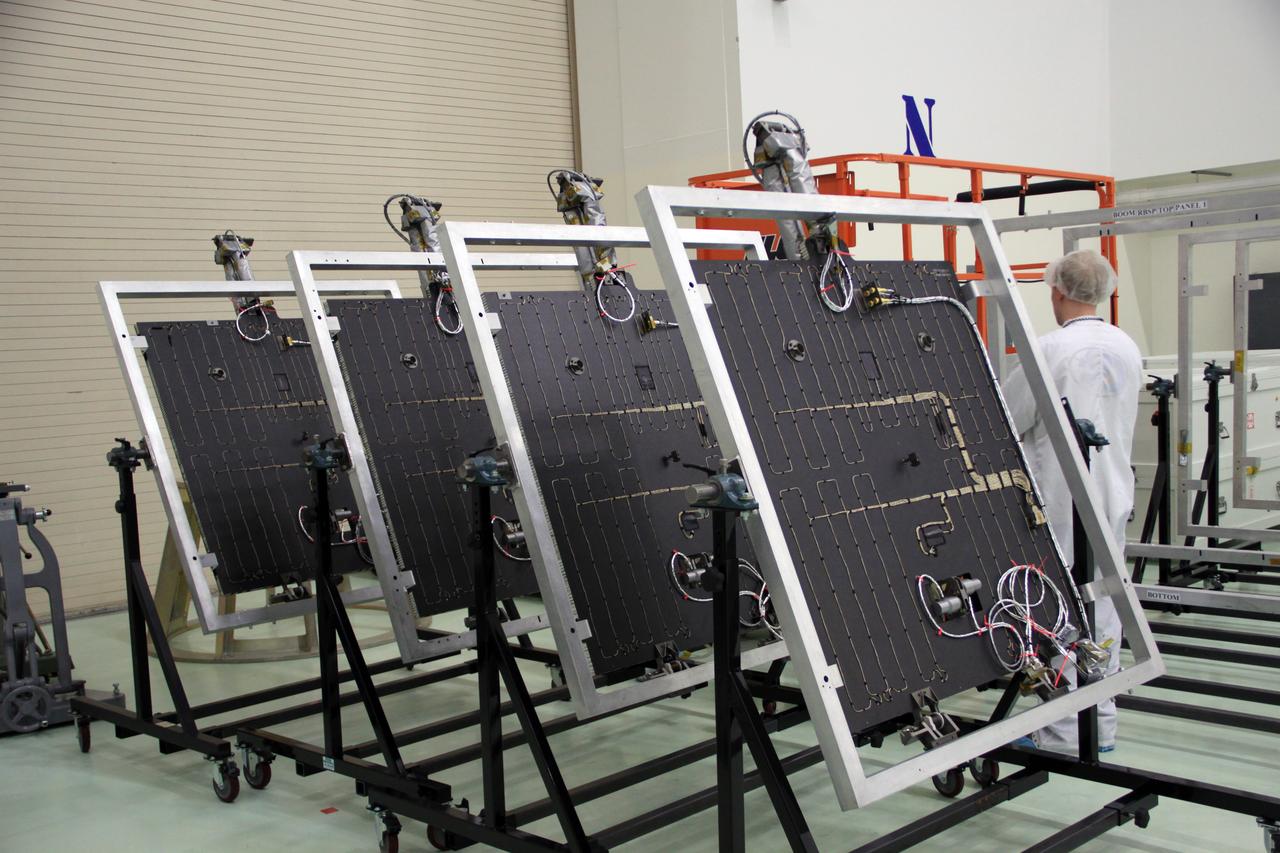
RBSP-A, Canister Removal, First Bag Removal, Solar Panels Unbagged and into Work Stand
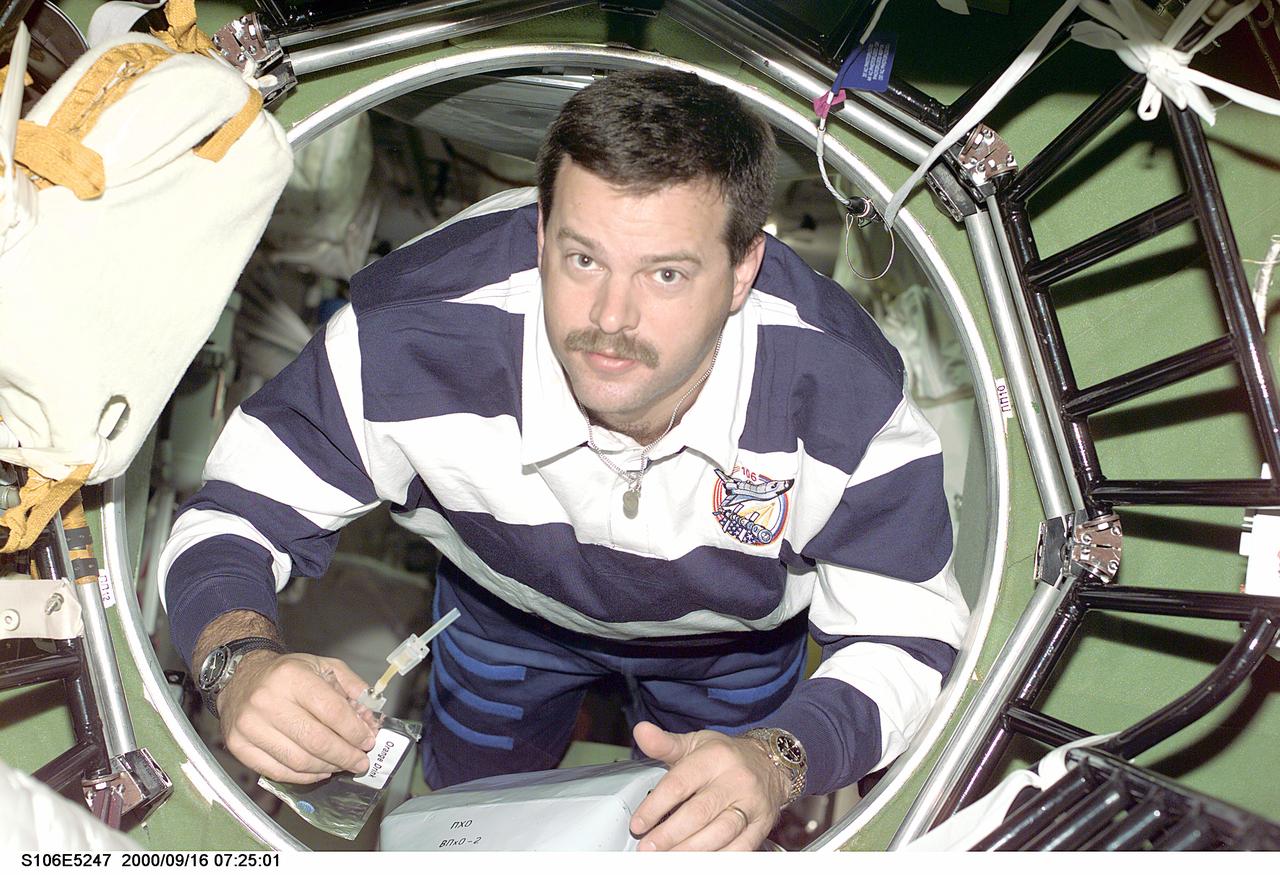
STS-106 Pilot Scott Altman moves through a hatch with a stowage bag and a drink container in the International Space Station (ISS).
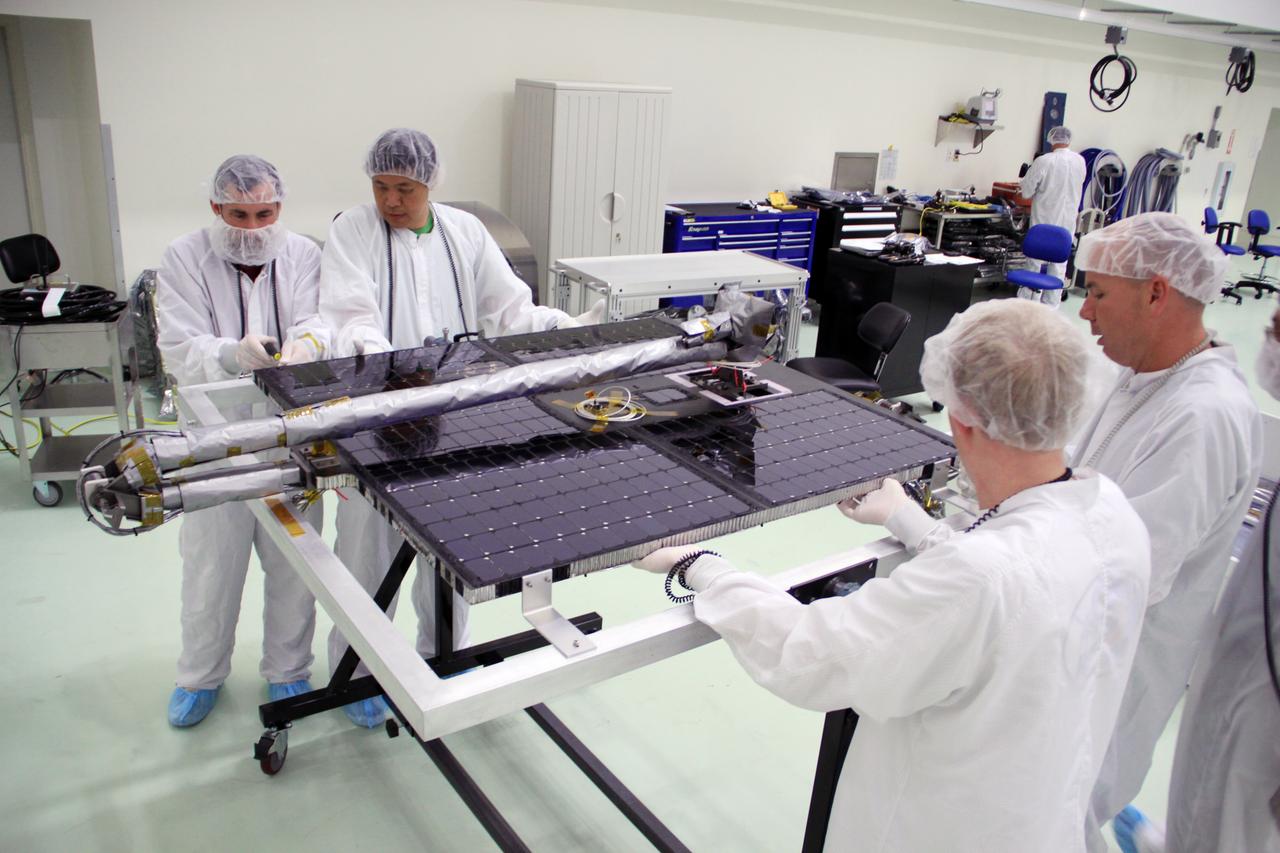
RBSP-A, Canister Removal, First Bag Removal, Solar Panels Unbagged and into Work Stand
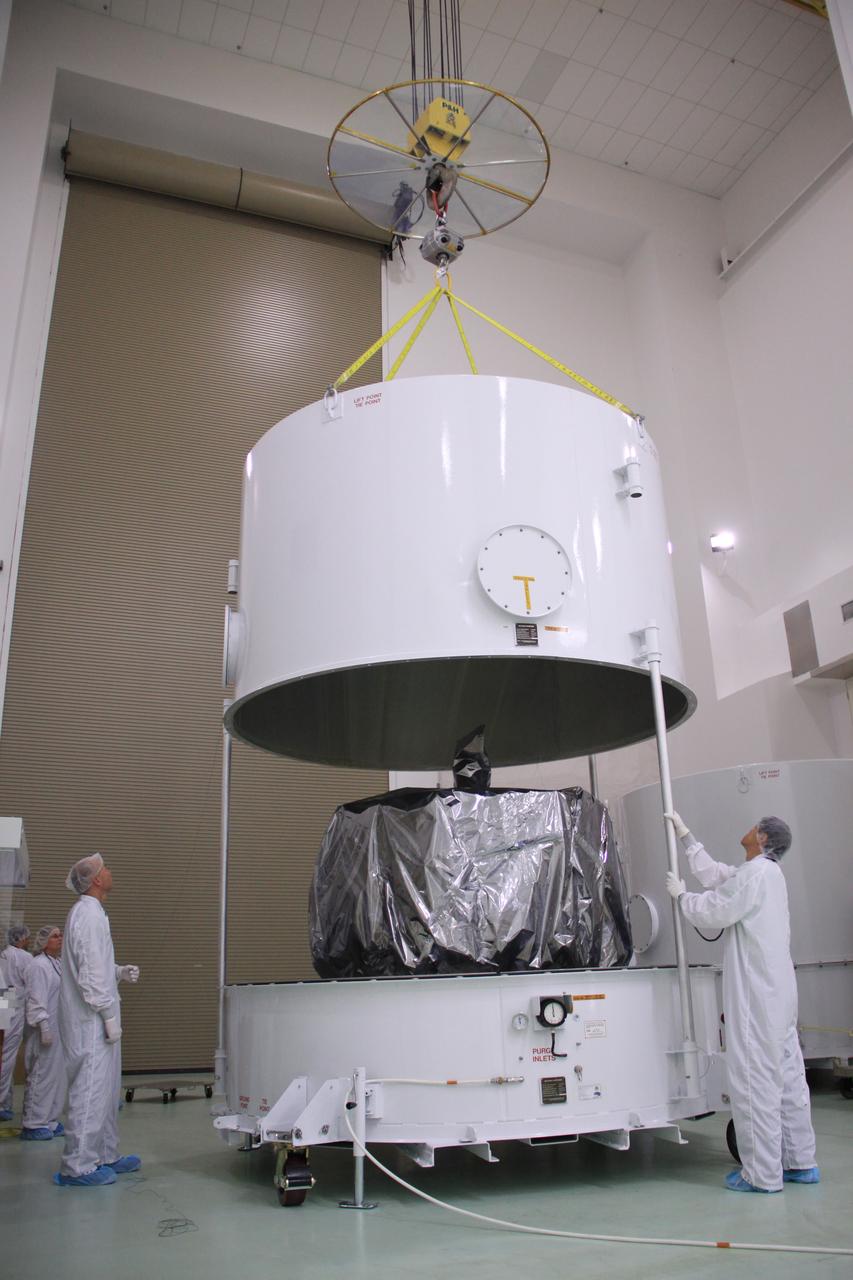
RBSP-A, Canister Removal, First Bag Removal, Solar Panels Unbagged and into Work Stand
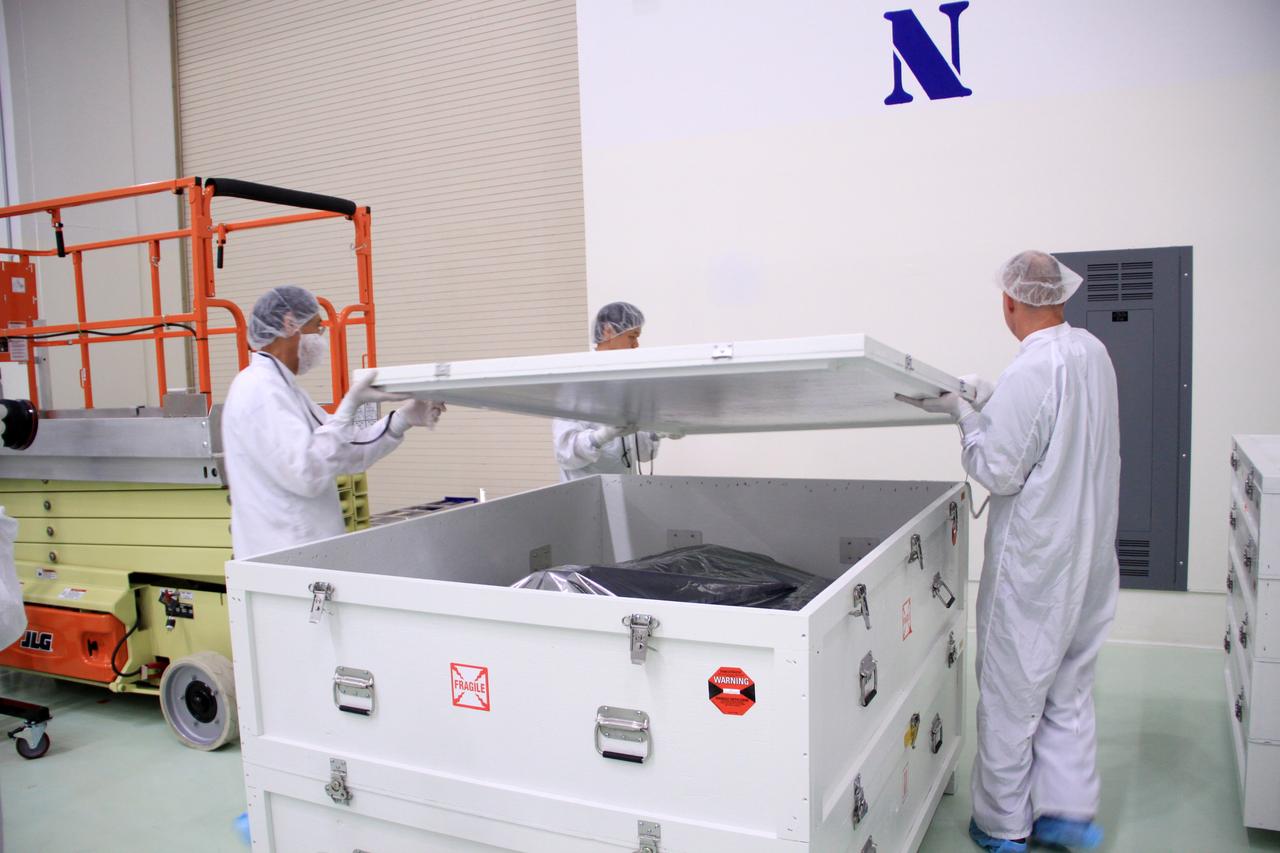
RBSP-A, Canister Removal, First Bag Removal, Solar Panels Unbagged and into Work Stand
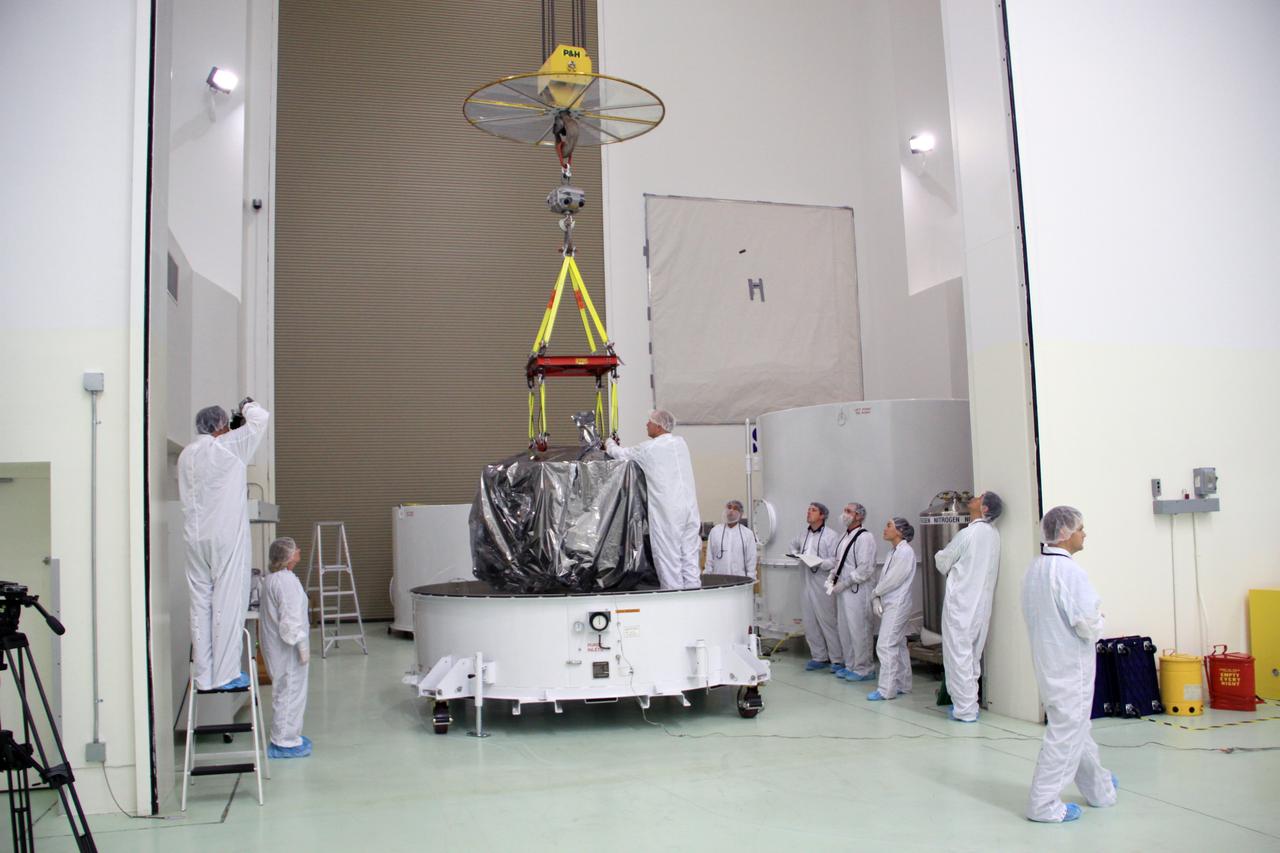
RBSP-A, Canister Removal, First Bag Removal, Solar Panels Unbagged and into Work Stand
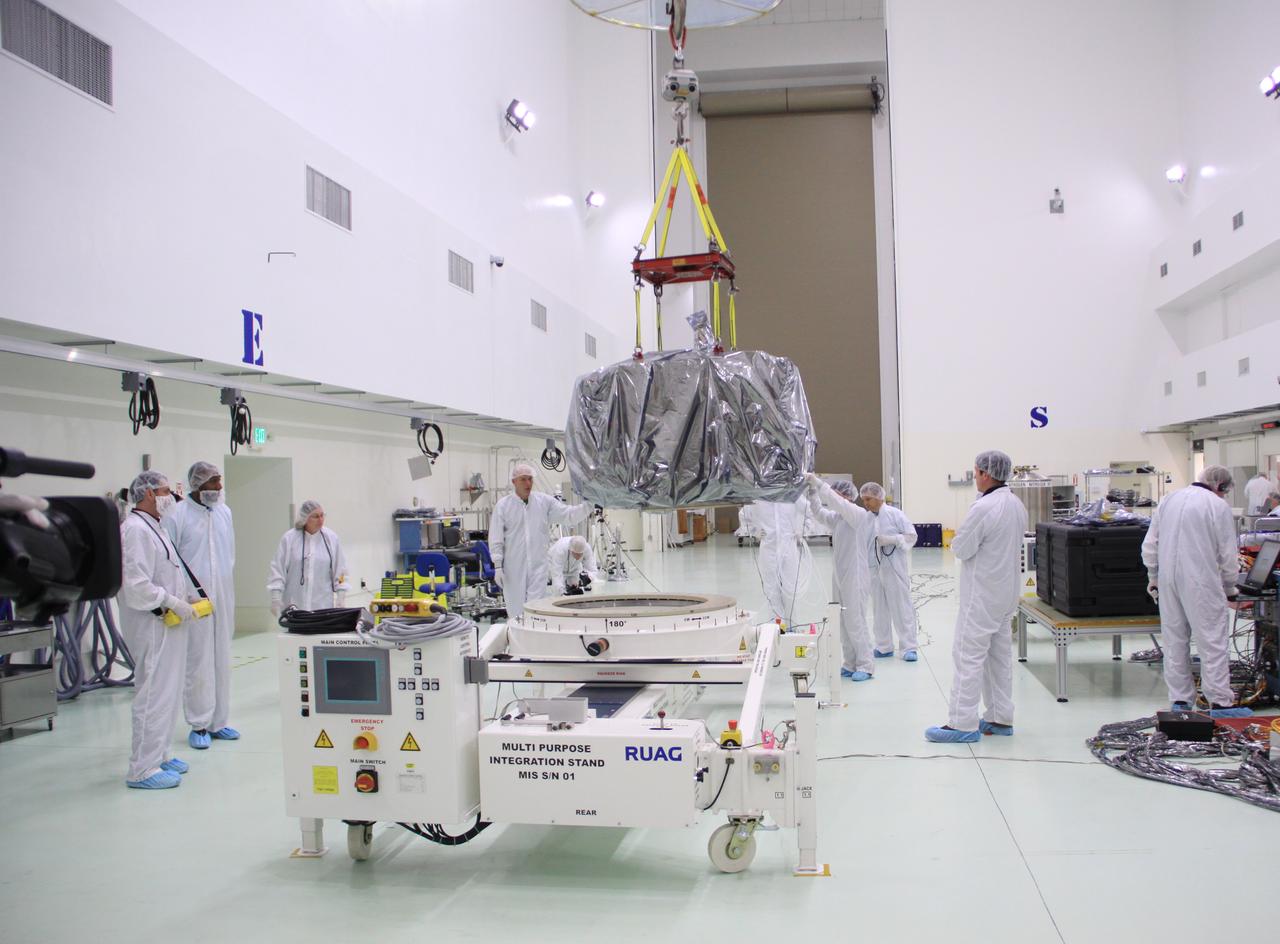
RBSP-A, Canister Removal, First Bag Removal, Solar Panels Unbagged and into Work Stand
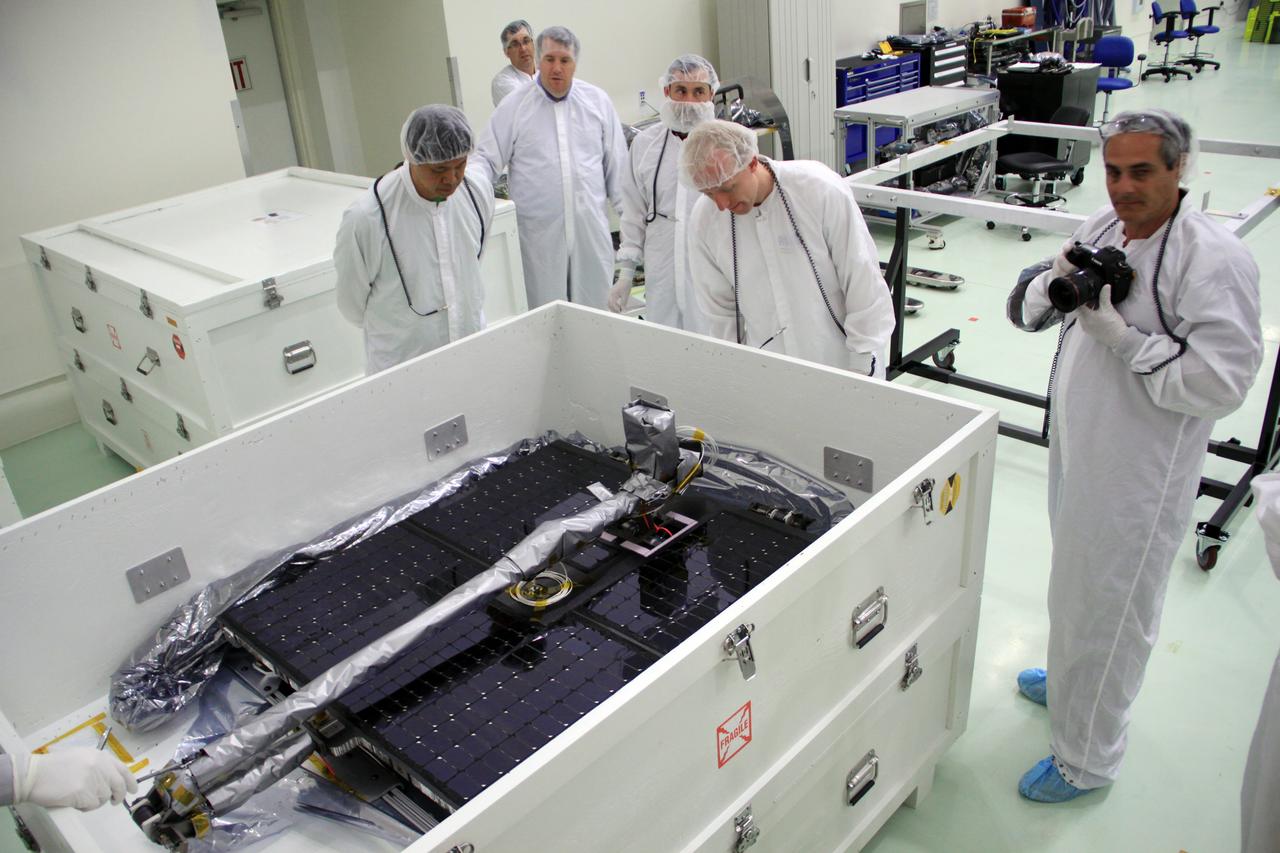
RBSP-A, Canister Removal, First Bag Removal, Solar Panels Unbagged and into Work Stand

SPACE SHUTTLE STS-71 (MIR 18) SLM-1, FLIGHT FIXATIVE BAGS (FLOWN ONBOARD) QUAIL EGGS
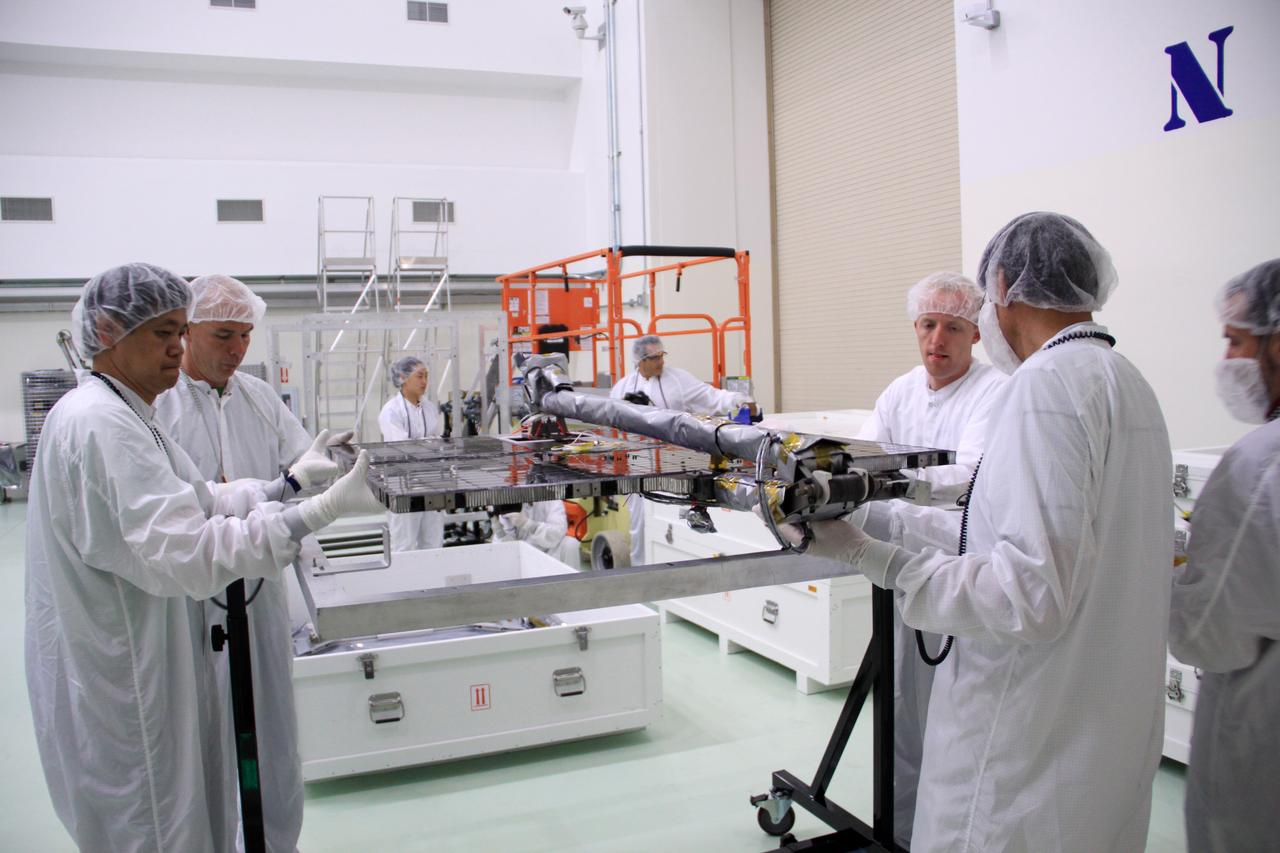
RBSP-A, Canister Removal, First Bag Removal, Solar Panels Unbagged and into Work Stand
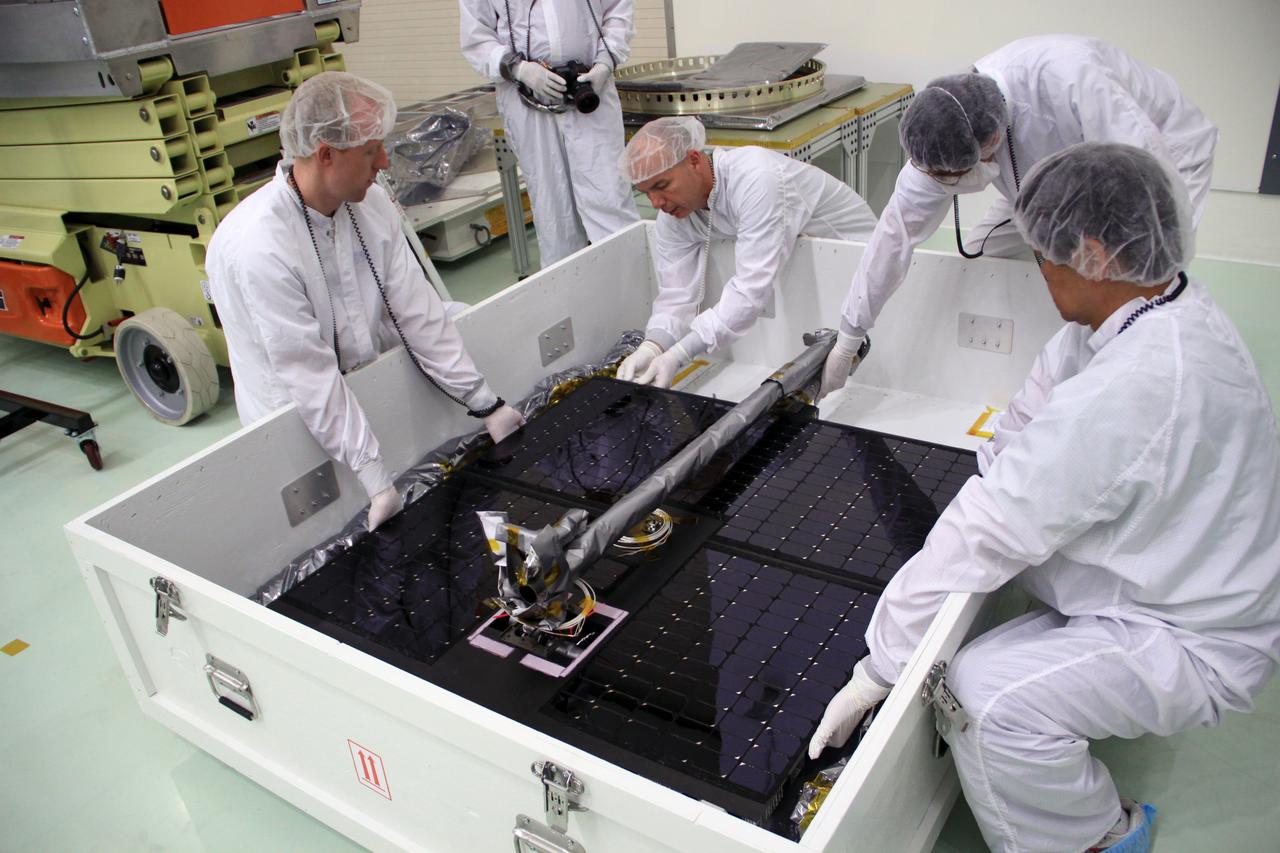
RBSP-A, Canister Removal, First Bag Removal, Solar Panels Unbagged and into Work Stand
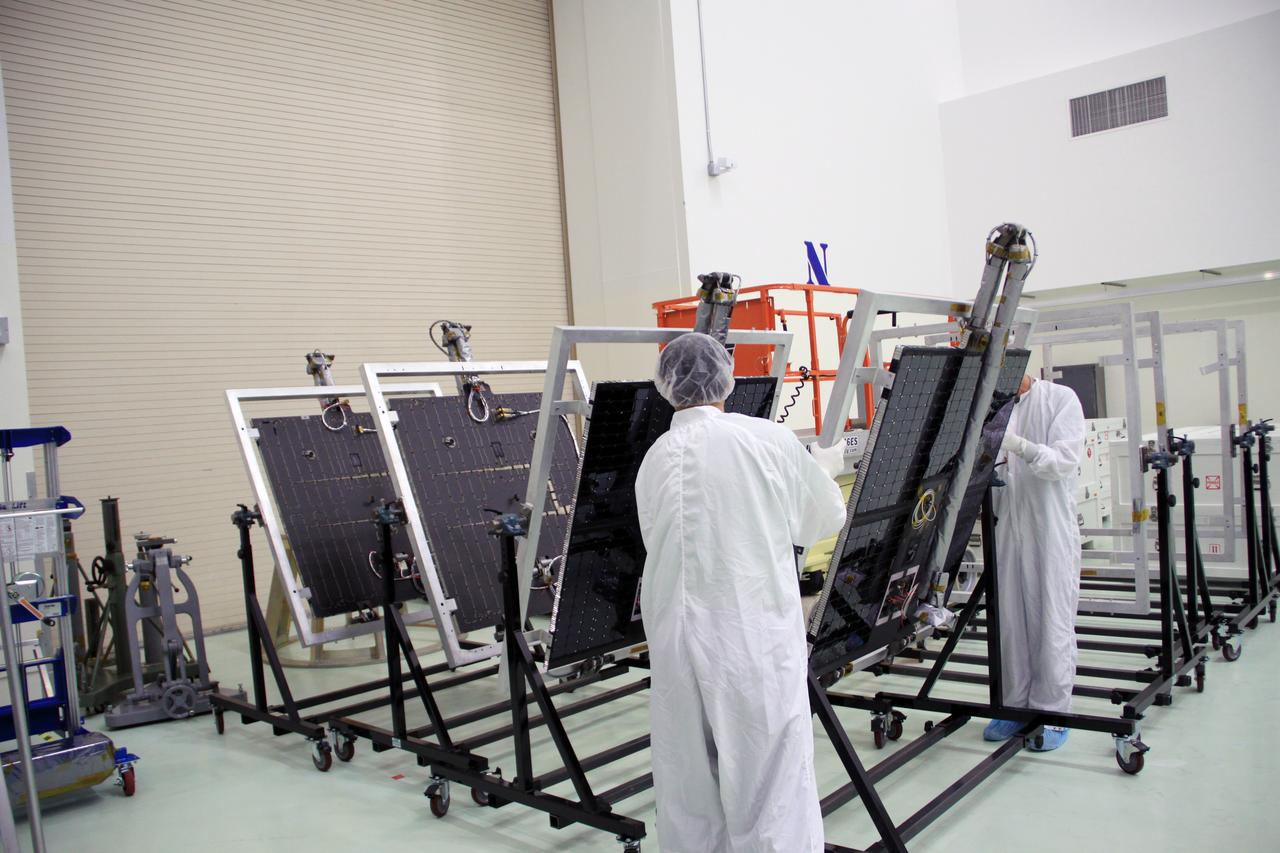
RBSP-A, Canister Removal, First Bag Removal, Solar Panels Unbagged and into Work Stand

SPACE SHUTTLE STS-71 (MIR 18) SLM-1, FLIGHT FIXATIVE BAGS (FLOWN ONBOARD) QUAIL EGGS
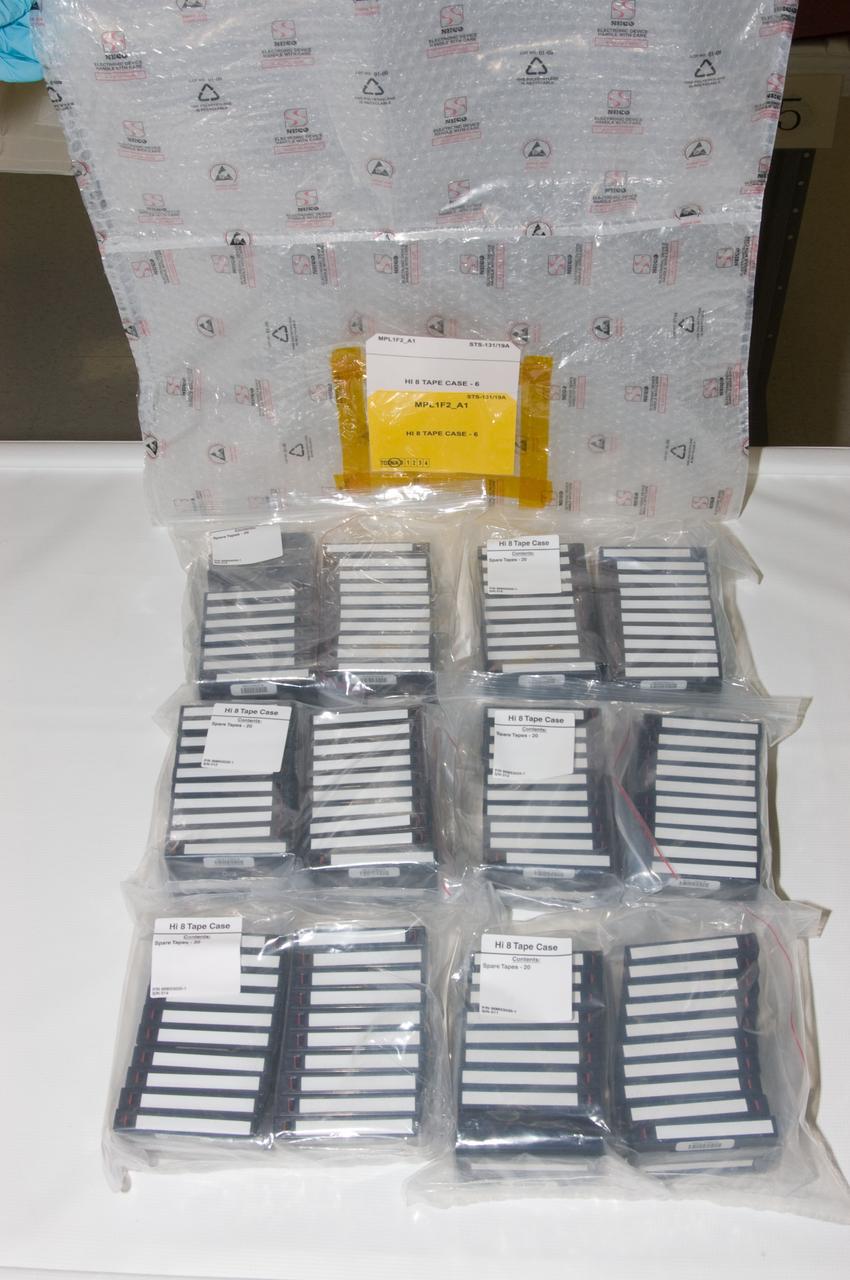
View of a Hi 8 Video Storage Bag and multiple Hi 8 Video Tape cases.
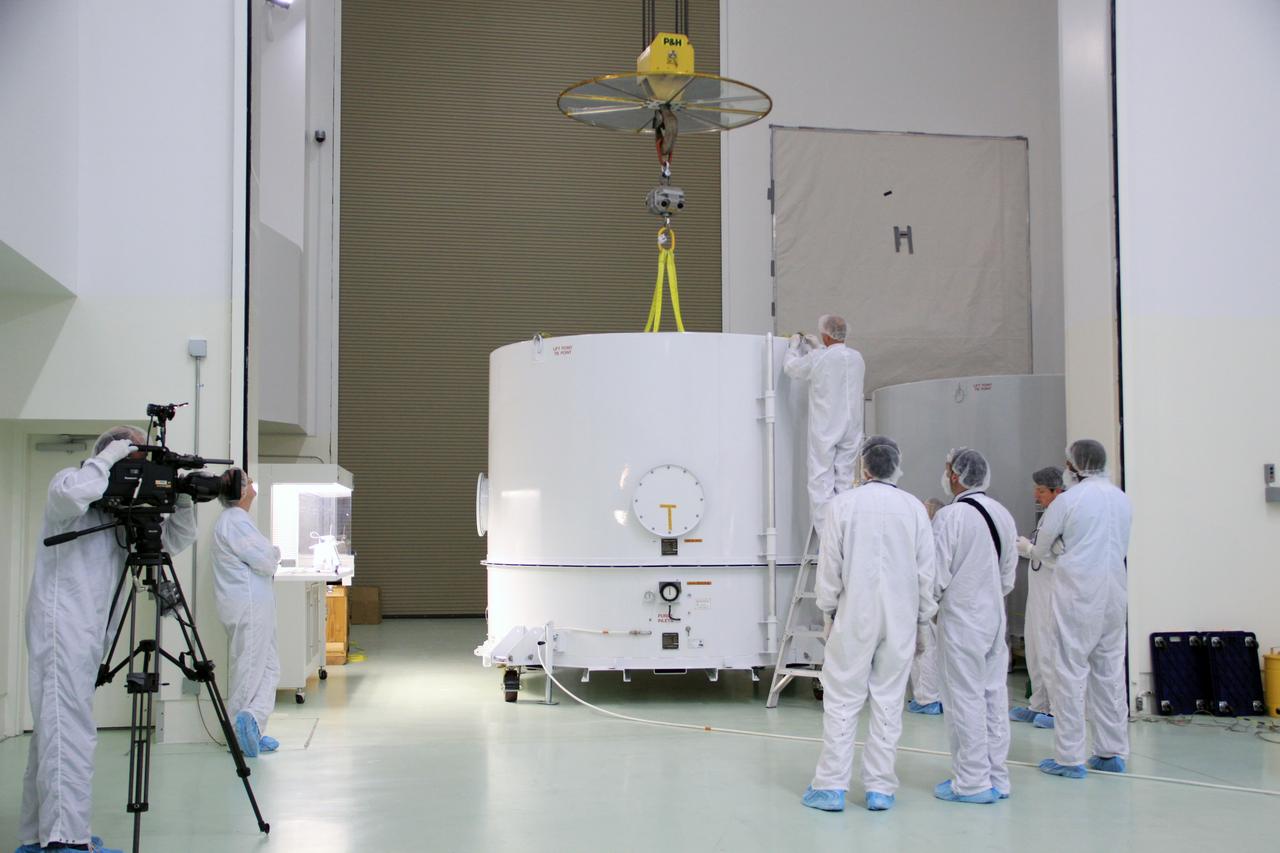
RBSP-A, Canister Removal, First Bag Removal, Solar Panels Unbagged and into Work Stand

RBSP-A, Canister Removal, First Bag Removal, Solar Panels Unbagged and into Work Stand
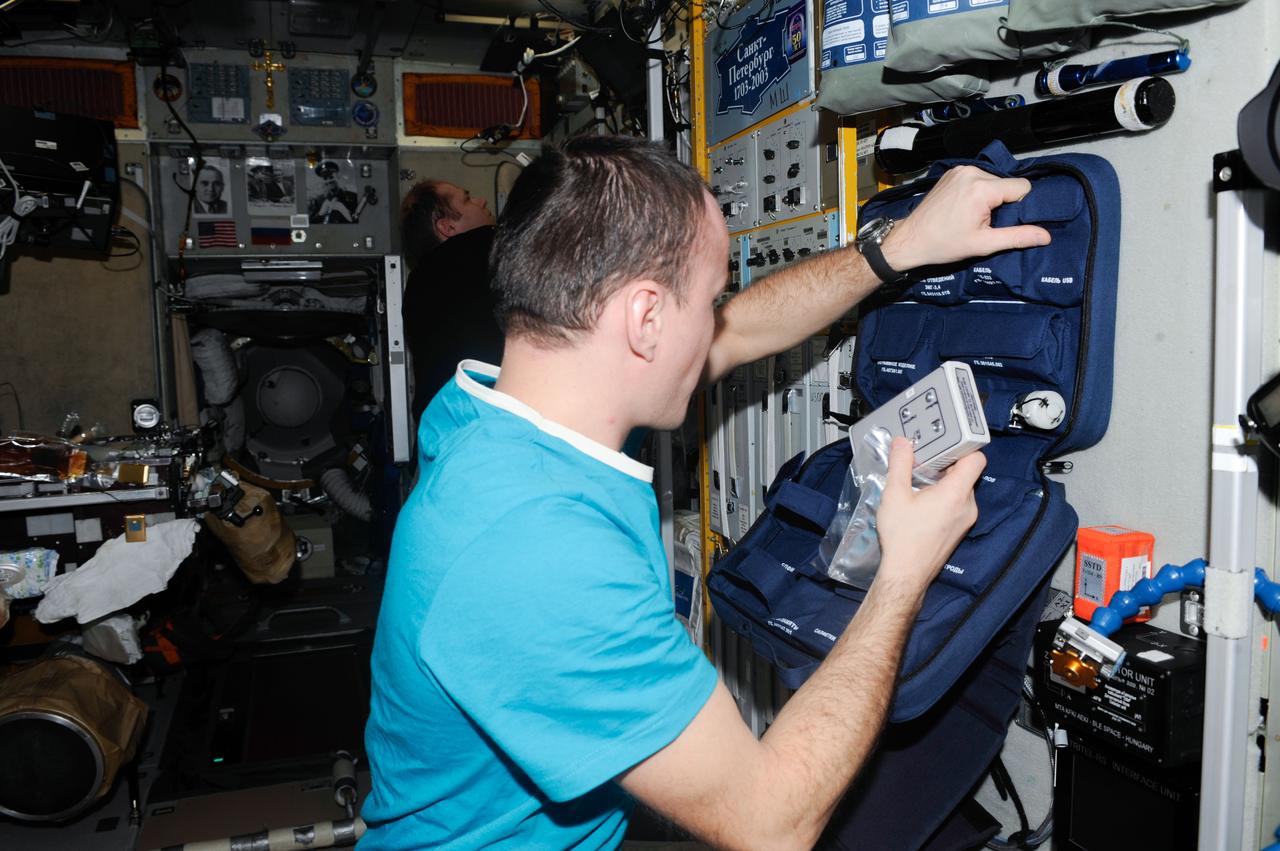
ISS038-E-002151 (18 Nov. 2013) --- Russian cosmonaut Sergey Ryazanskiy, Expedition 38 flight engineer, works in the Zvezda Service Module of the International Space Station.
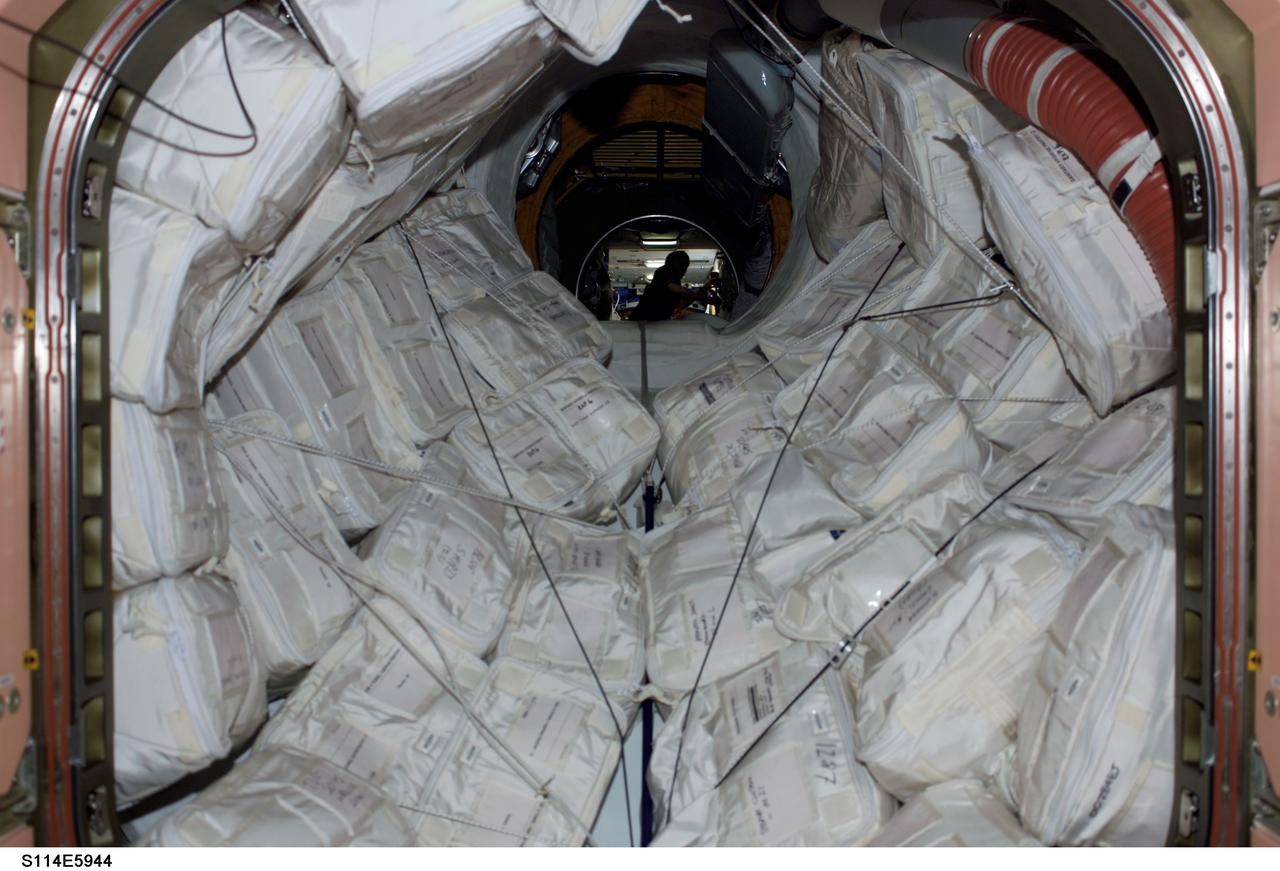
S114-E-5944 (31 July 2005) --- An airlock serves as temporary storage area for supplies being transferred to the International Space Station from the Space Shuttle Discovery.
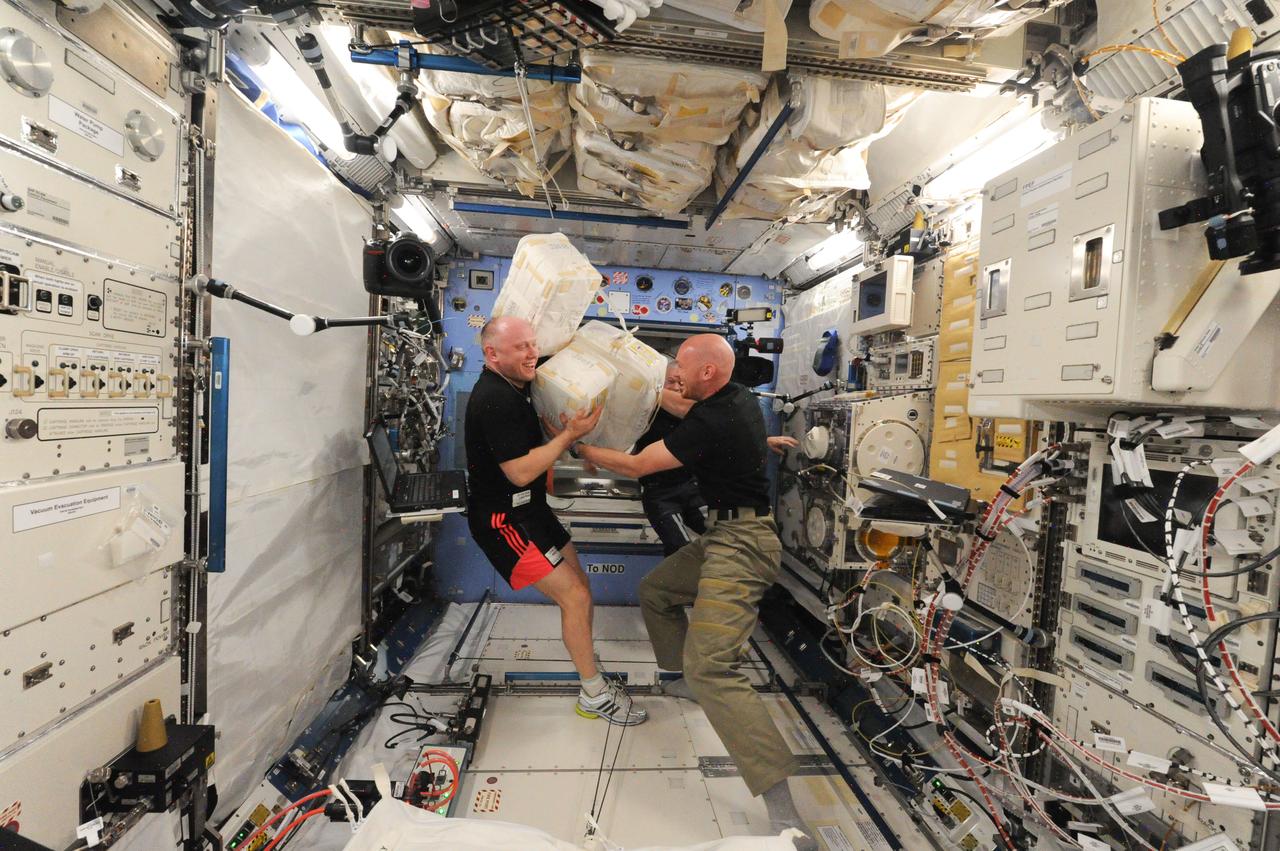
ISS040-E-076582 (25 July 2014) --- Russian cosmonaut Oleg Artemyev (left) and European Space Agency astronaut Alexander Gerst, both Expedition 40 flight engineers; along with NASA astronaut Steve Swanson (mostly obscured), commander, enjoy a light moment while moving stowage containers in the Kibo laboratory of the International Space Station.
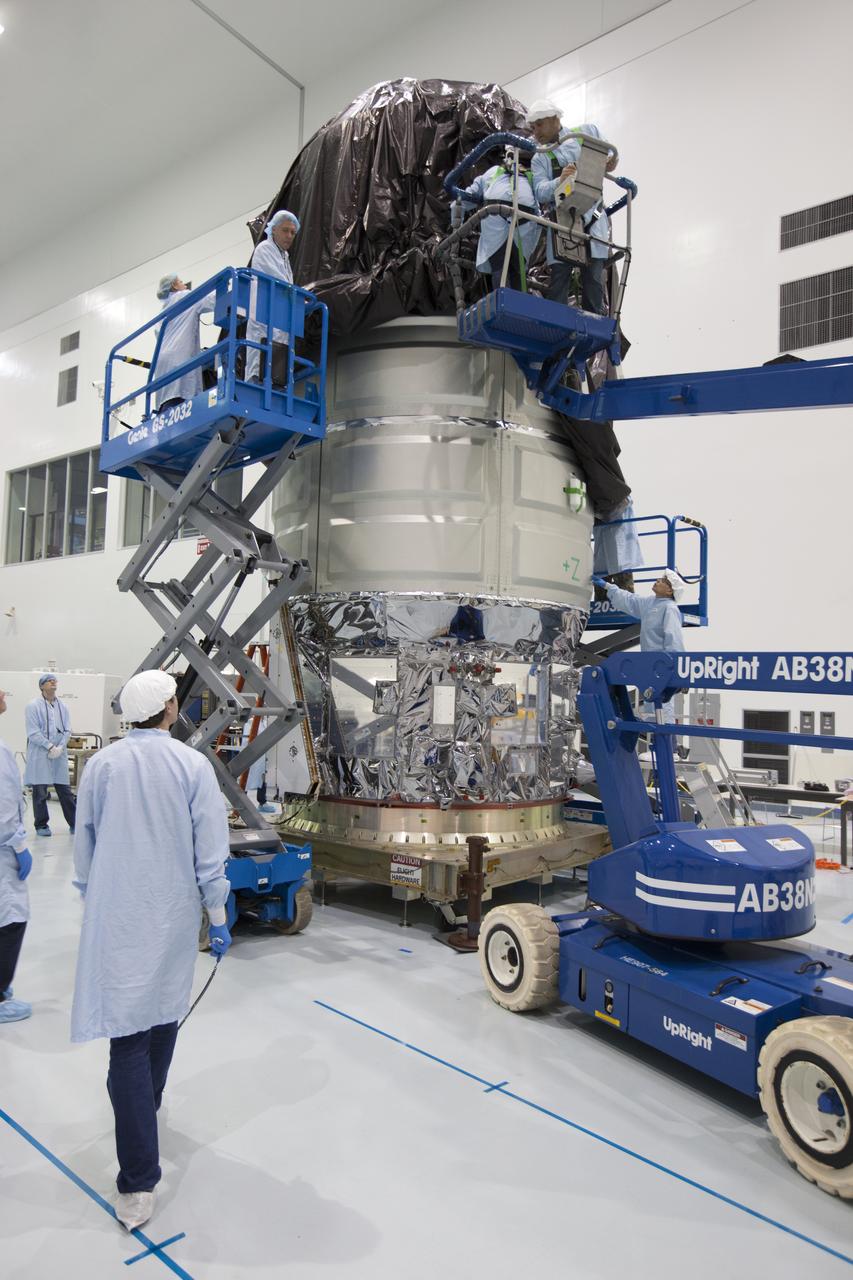
In the Space Station Processing Facility high bay at NASA's Kennedy Space Center in Florida, technicians position a protective covering around Orbital ATK's CYGNUS pressurized cargo module. The Orbital ATK CRS-7 commercial resupply services mission to the International Space Station is scheduled to launch atop a United Launch Alliance Atlas V rocket from Space Launch Complex 41 at Cape Canaveral Air Force Station on March 19, 2017. CYGNUS will deliver thousands of pounds of supplies, equipment and scientific research materials to the space station.