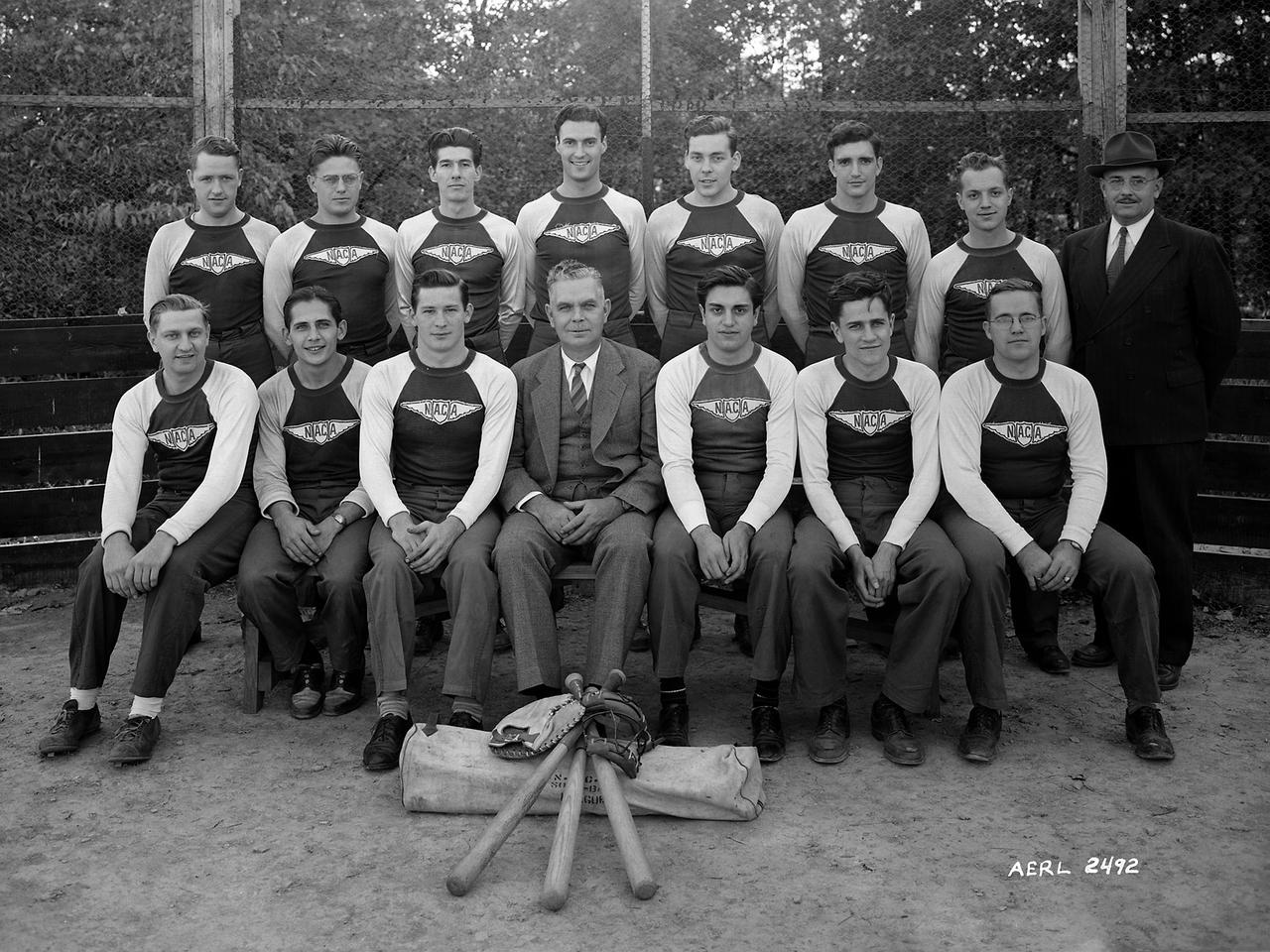
The NACA’s Aircraft Engine Research Laboratory’s baseball team photographed with director Raymond Sharp. The Exchange, which operated the non-profit cafeteria, sponsored several sports teams that participated in local leagues. The laboratory also had several intramural sports leagues. The baseball team, seen here in 1943, was suspended shortly thereafter as many of its members entered the military during World War II. The team was reconstituted after the war and became somewhat successful in the Class A Westlake League. After winning the championship in 1949 and 1950, the team was placed in the more advanced Middleberg League where they struggled.
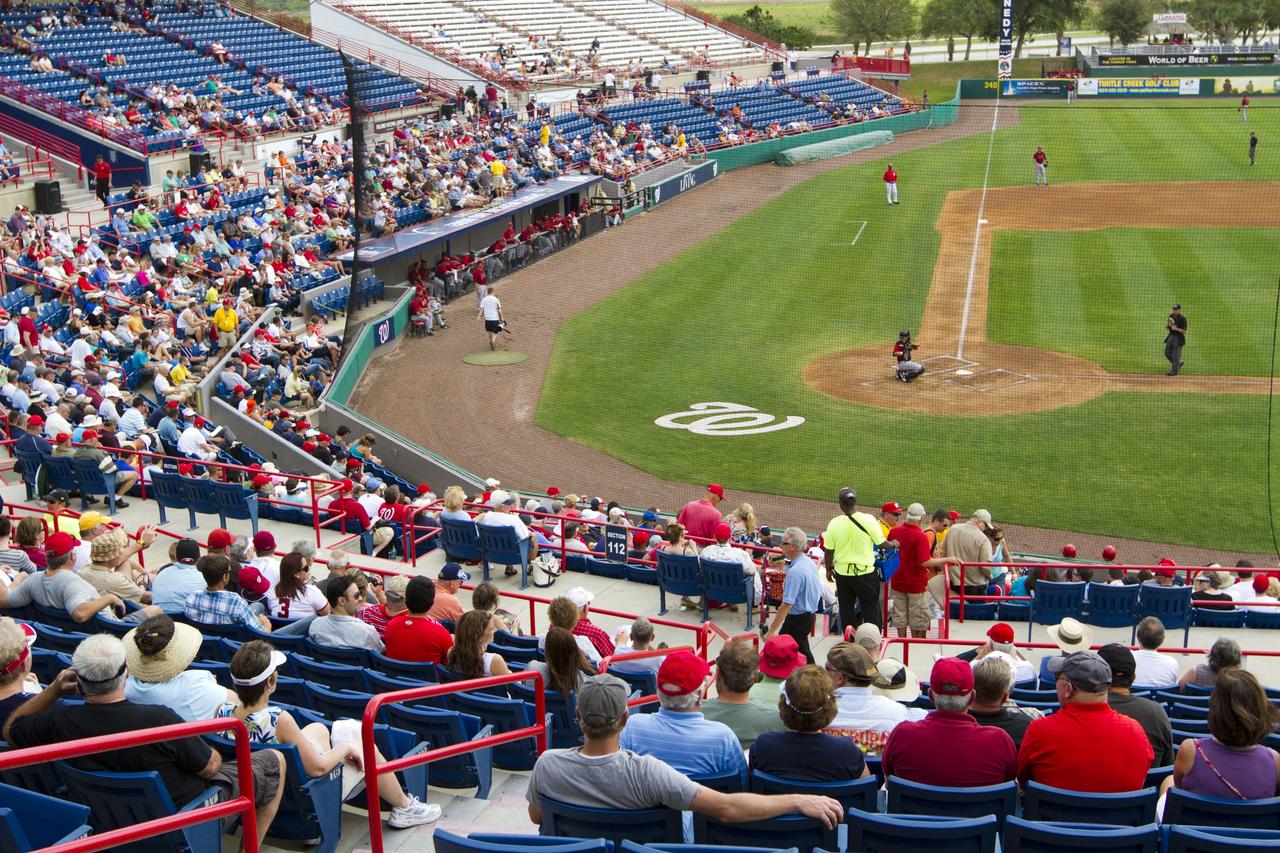
VIERA, Fla. – Baseball fans are on hand for Space Day at the Space Coast Stadium. Bob Cabana, director of NASA’s Kennedy Space Center in Florida, was on hand to throw the first pitch of a spring training game between Major League Baseball's Washington Nationals and the Houston Astros. Kennedy set up a booth at the stadium for the occasion to highlight some of the contributions the space agency has made to sports, transportation and everyday life. A full-scale test version of NASA's new Orion Multi-Purpose Crew Vehicle also was located outside the stadium to show the public the spacecraft under development that will take astronauts farther into space than ever before. For more information, visit http://www.nasa.gov/kennedy. Photo credit: NASA/Kim Shiflett
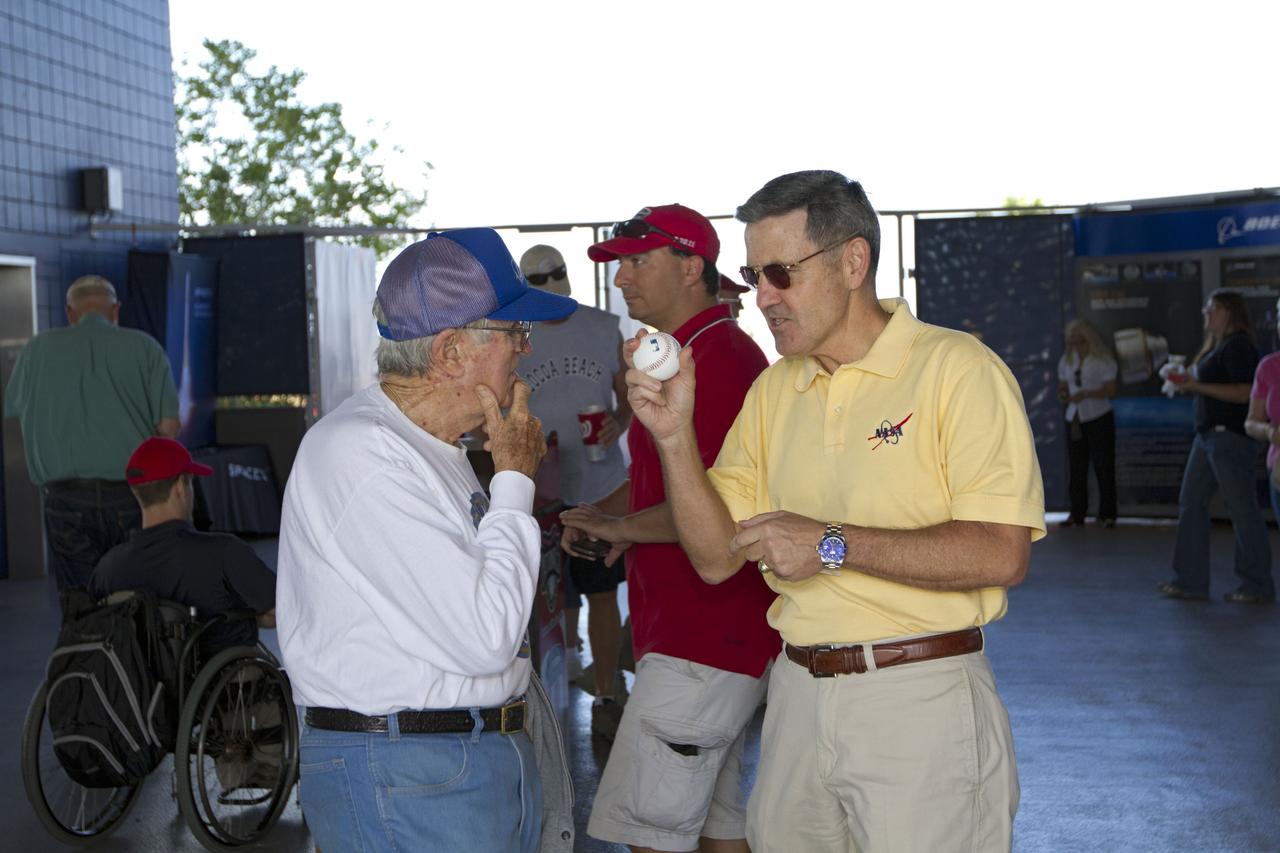
VIERA, Fla. – Bob Cabana, right, director of NASA’s Kennedy Space Center, shows a baseball fan the ball he will use to make the first pitch of a spring training game between Major League Baseball's Washington Nationals and the Houston Astros at the Space Coast Stadium’s Space Day. Kennedy set up a booth at the stadium for the occasion to highlight some of the contributions the space agency has made to sports, transportation and everyday life. A full-scale test version of NASA's new Orion Multi-Purpose Crew Vehicle also was located outside the stadium to show the public the spacecraft under development that will take astronauts farther into space than ever before. For more information, visit http://www.nasa.gov/kennedy. Photo credit: NASA/Kim Shiflett
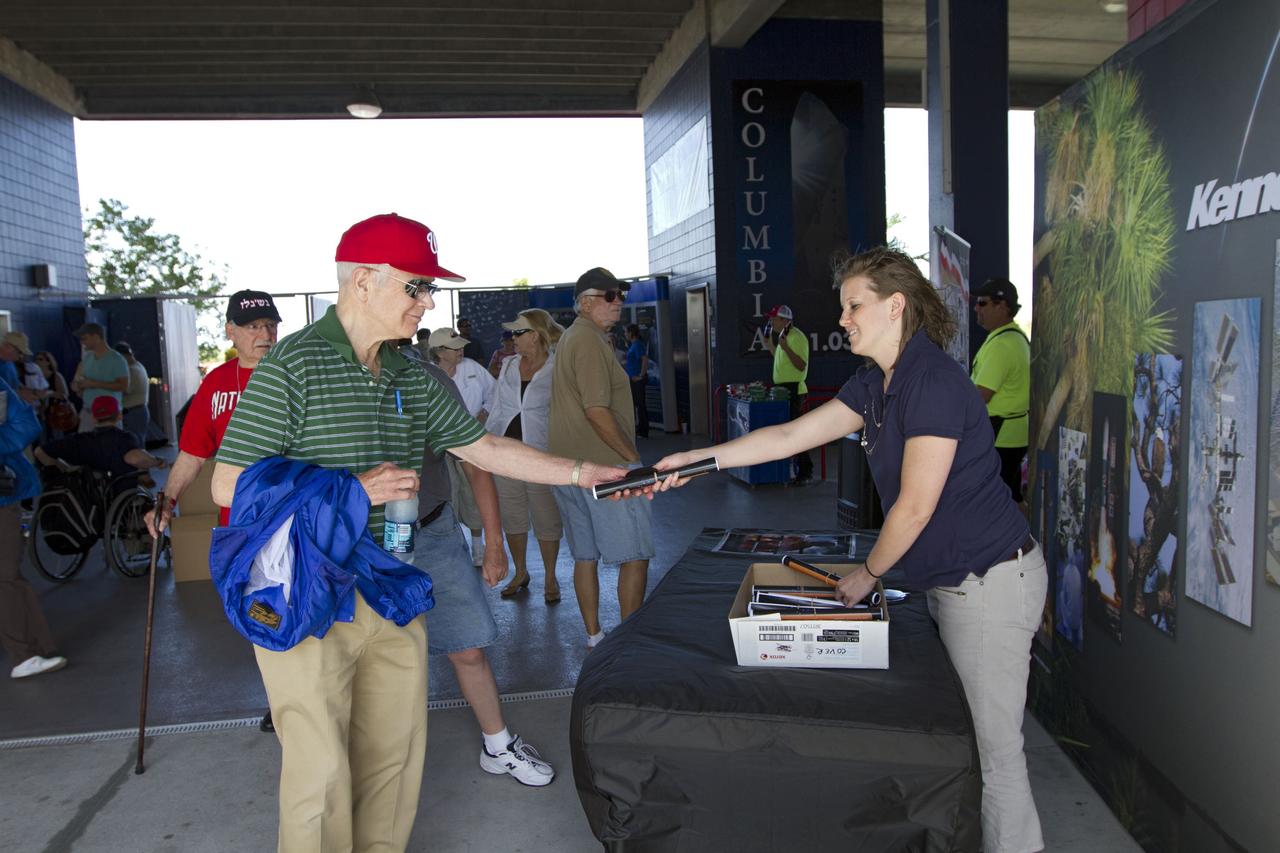
VIERA, Fla. – Tiffany Lindsley, with Education and External Relations at NASA’s Kennedy Space Center in Florida, hands out information on some of the contributions the space agency has made to sports, transportation and everyday life to a baseball fan attending Space Day at the Space Coast Stadium. Bob Cabana, director of Kennedy, was on hand to throw the first pitch of a spring training game between Major League Baseball's Washington Nationals and the Houston Astros. A full-scale test version of NASA's new Orion Multi-Purpose Crew Vehicle was on display outside the stadium for the occasion to show the public the spacecraft under development that will take astronauts farther into space than ever before. For more information, visit http://www.nasa.gov/kennedy. Photo credit: NASA/Kim Shiflett
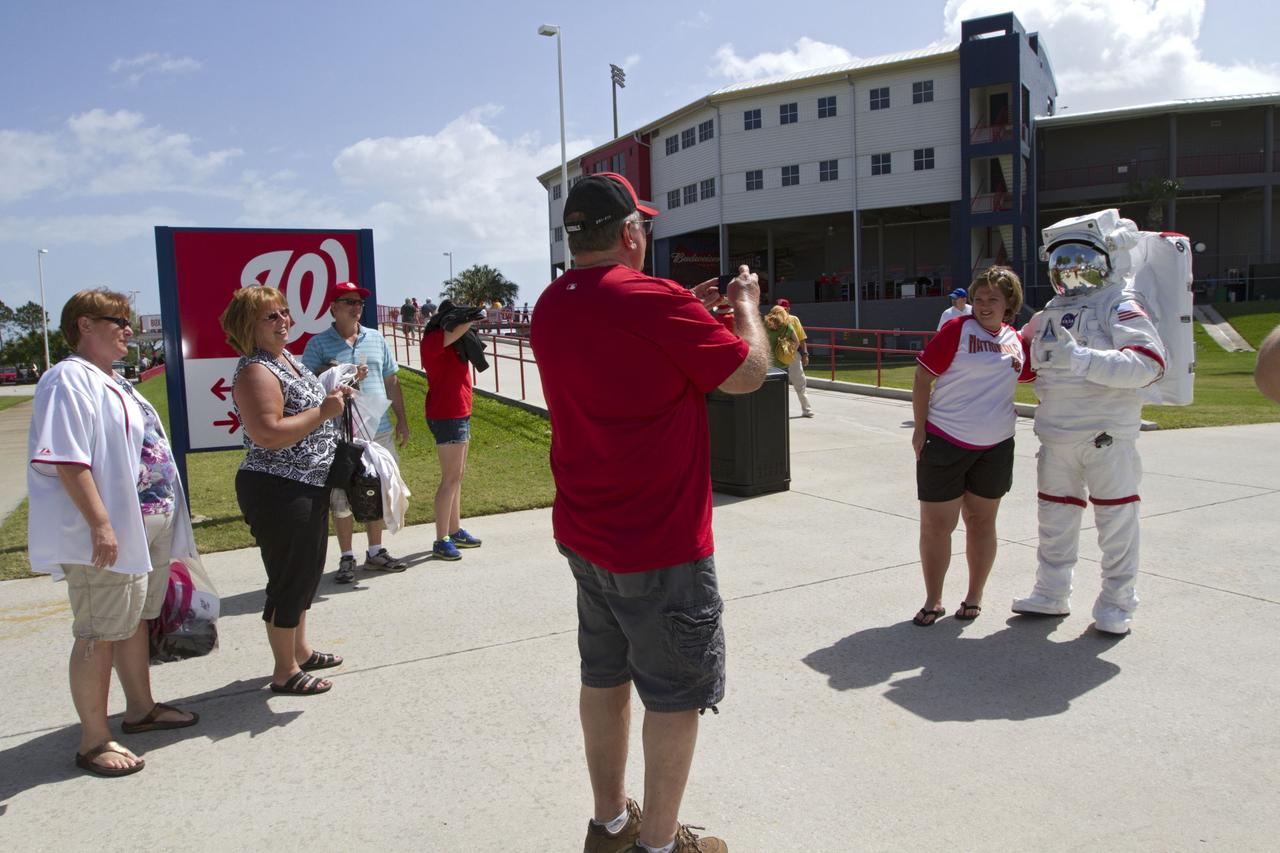
VIERA, Fla. – Baseball fans take the opportunity to pose with NASA Kennedy Space Center’s “Spaceperson” on Space Day at the Space Coast Stadium. Bob Cabana, director of Kennedy, was on hand to throw the first pitch of a spring training game between Major League Baseball's Washington Nationals and the Houston Astros. Kennedy also set up a booth at the stadium for the occasion to highlight some of the contributions the space agency has made to sports, transportation and everyday life. A full-scale test version of NASA's new Orion Multi-Purpose Crew Vehicle was on display outside the stadium to show the public the spacecraft under development that will take astronauts farther into space than ever before. For more information, visit http://www.nasa.gov/kennedy. Photo credit: NASA/Kim Shiflett
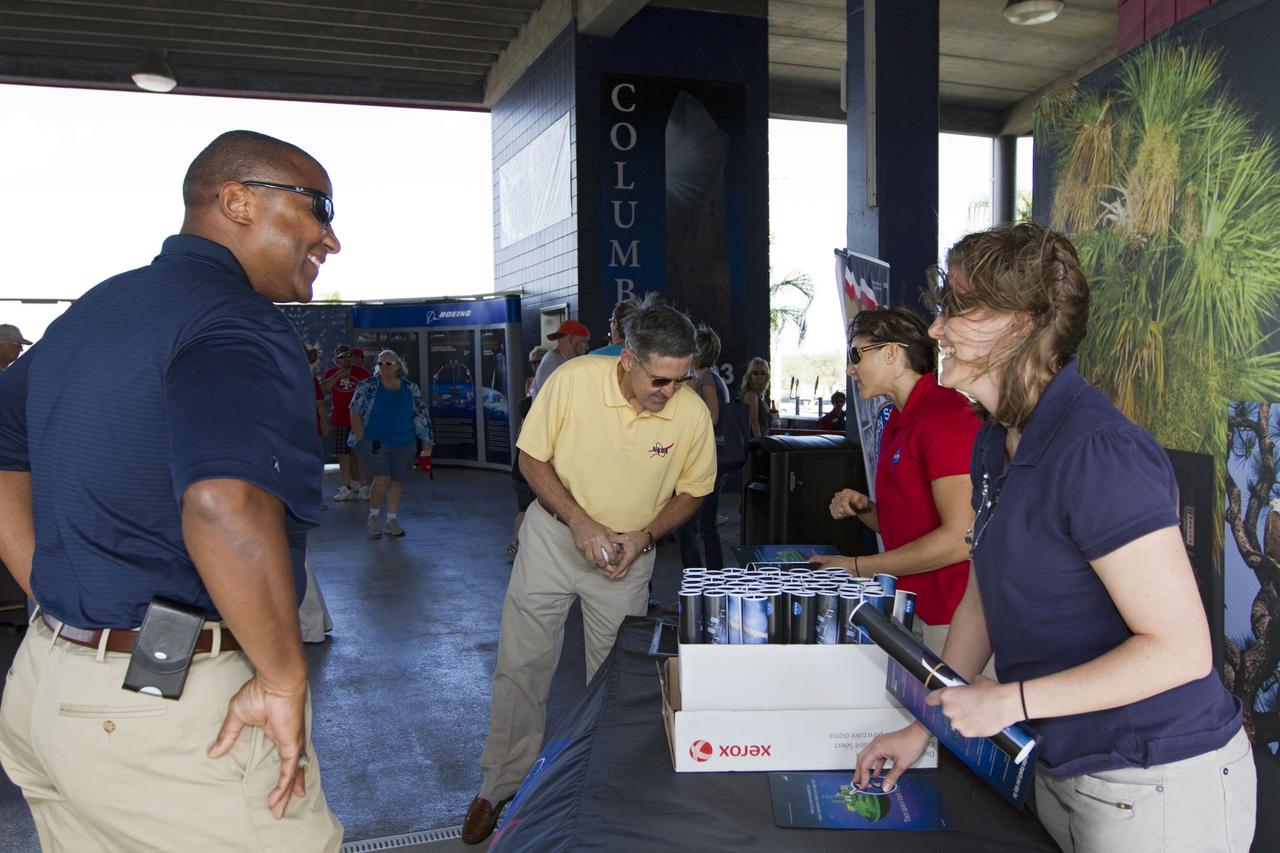
VIERA, Fla. – From left, Kelvin Manning, associate director of NASA’s Kennedy Space Center, and Bob Cabana, director of the center, visit the NASA booth on Space Day at the Space Coast Stadium where information on some of the contributions the space agency has made to sports, transportation and everyday life is being distributed to baseball fans attending the stadium’s Space Day. Cabana was on hand to throw the first pitch of a spring training game between Major League Baseball's Washington Nationals and the Houston Astros. A full-scale test version of NASA's new Orion Multi-Purpose Crew Vehicle was on display outside the stadium for the occasion to show the public the spacecraft under development that will take astronauts farther into space than ever before. For more information, visit http://www.nasa.gov/kennedy. Photo credit: NASA/Kim Shiflett
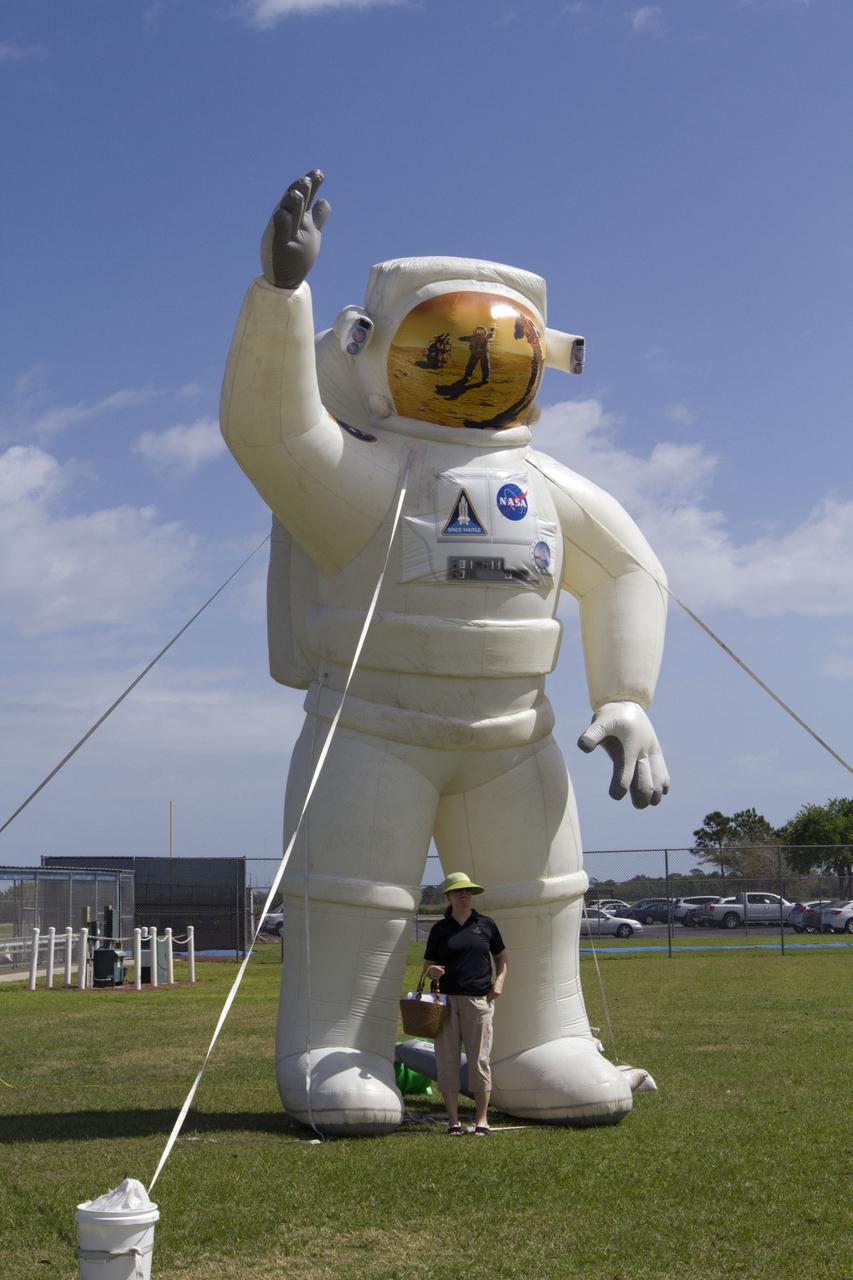
VIERA, Fla. – A baseball fan takes the opportunity to pose with an inflatable astronaut set up outside the Space Coast Stadium for the stadium’s Space Day. Bob Cabana, director of NASA’s Kennedy Space Center in Florida, was on hand to throw the first pitch of a spring training game between Major League Baseball's Washington Nationals and the Houston Astros. Kennedy set up a booth at the stadium for the occasion to highlight some of the contributions the space agency has made to sports, transportation and everyday life. A full-scale test version of NASA's new Orion Multi-Purpose Crew Vehicle also was located outside the stadium to show the public the spacecraft under development that will take astronauts farther into space than ever before. For more information, visit http://www.nasa.gov/kennedy. Photo credit: NASA/Kim Shiflett
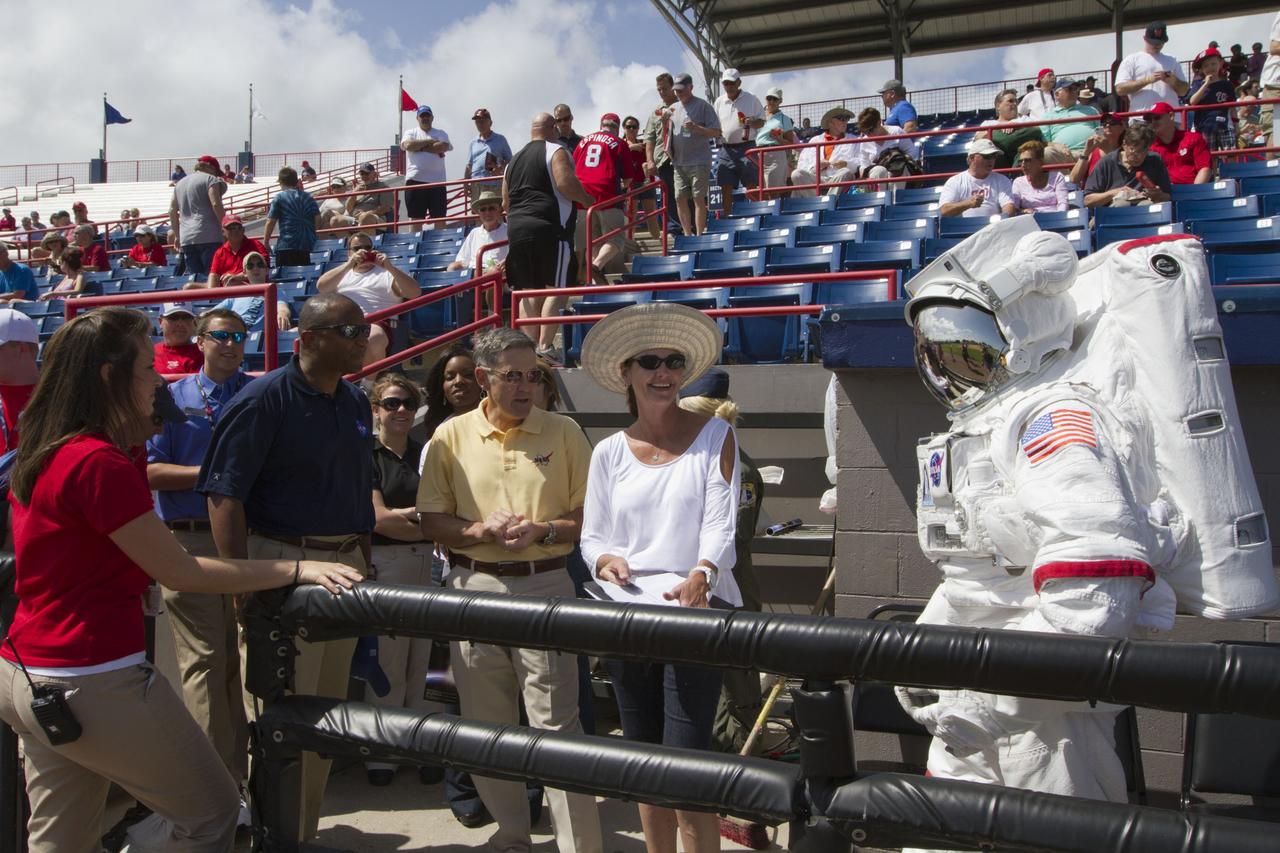
VIERA, Fla. – NASA Kennedy Space Center’s “Spaceperson” hangs out with baseball fans at the Space Coast Stadium’s Space Day. From left are Shannon Comerford, spring training coordinator for the Washington Nationals, Kelvin Manning, Kennedy associate director, Bob Cabana, Kennedy director, and Gretchen Dimmer, budget analyst in Kennedy’s Office of the Chief Financial Officer. Cabana was on hand to throw the first pitch of the spring training game between Major League Baseball's Washington Nationals and Houston Astros. Kennedy also set up a booth at the stadium for the occasion to highlight some of the contributions the space agency has made to sports, transportation and everyday life. A full-scale test version of NASA's new Orion Multi-Purpose Crew Vehicle was on display outside the stadium to show the public the spacecraft under development that will take astronauts farther into space than ever before. For more information, visit http://www.nasa.gov/kennedy. Photo credit: NASA/Kim Shiflett
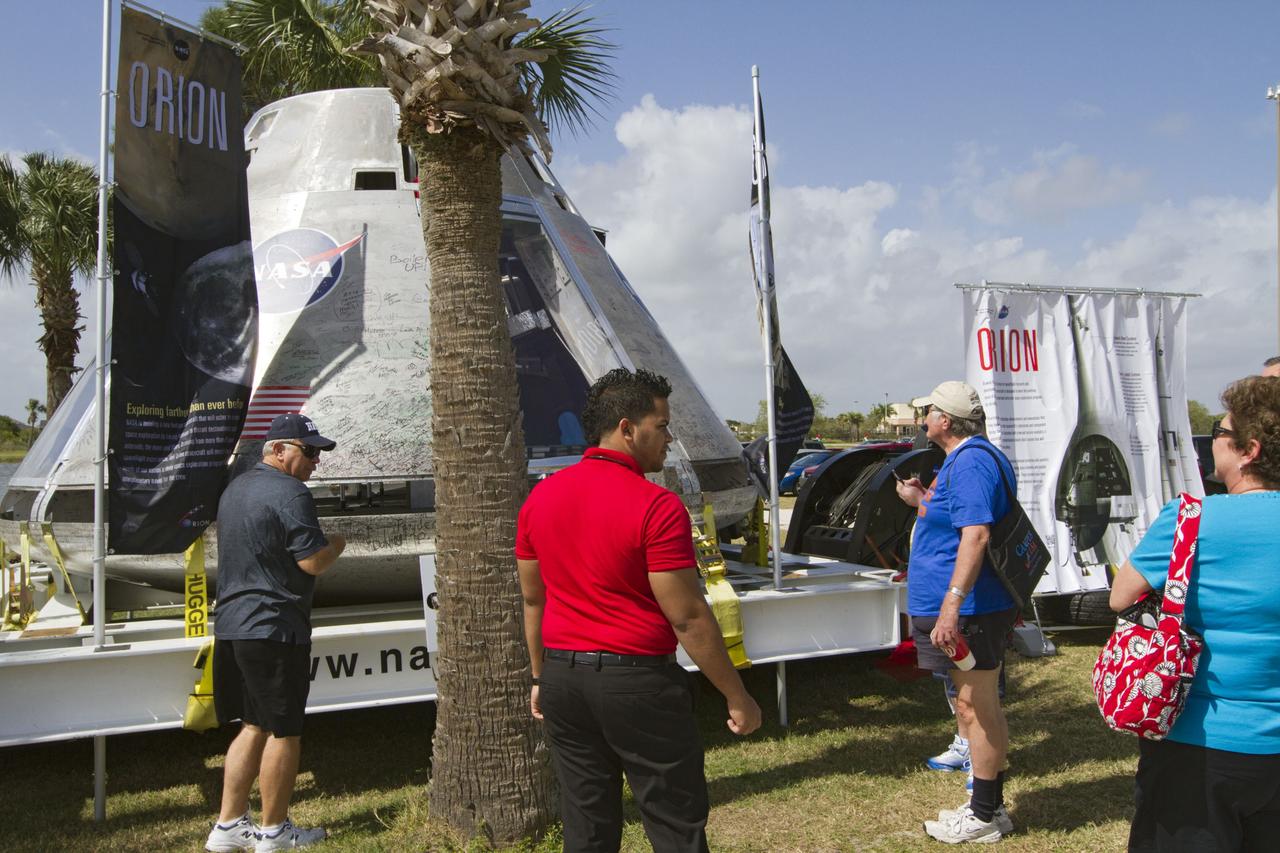
VIERA, Fla. – The public gets a close view of a full-scale test version of NASA's new Orion Multi-Purpose Crew Vehicle on display outside the Space Coast Stadium at the stadium’s Space Day. Bob Cabana, director of NASA’s Kennedy Space Center in Florida, was on hand to throw the first pitch of a spring training game between Major League Baseball's Washington Nationals and the Houston Astros. Kennedy also set up a booth at the stadium for the occasion to highlight some of the contributions the space agency has made to sports, transportation and everyday life. For more information, visit http://www.nasa.gov/kennedy. Photo credit: NASA/Kim Shiflett
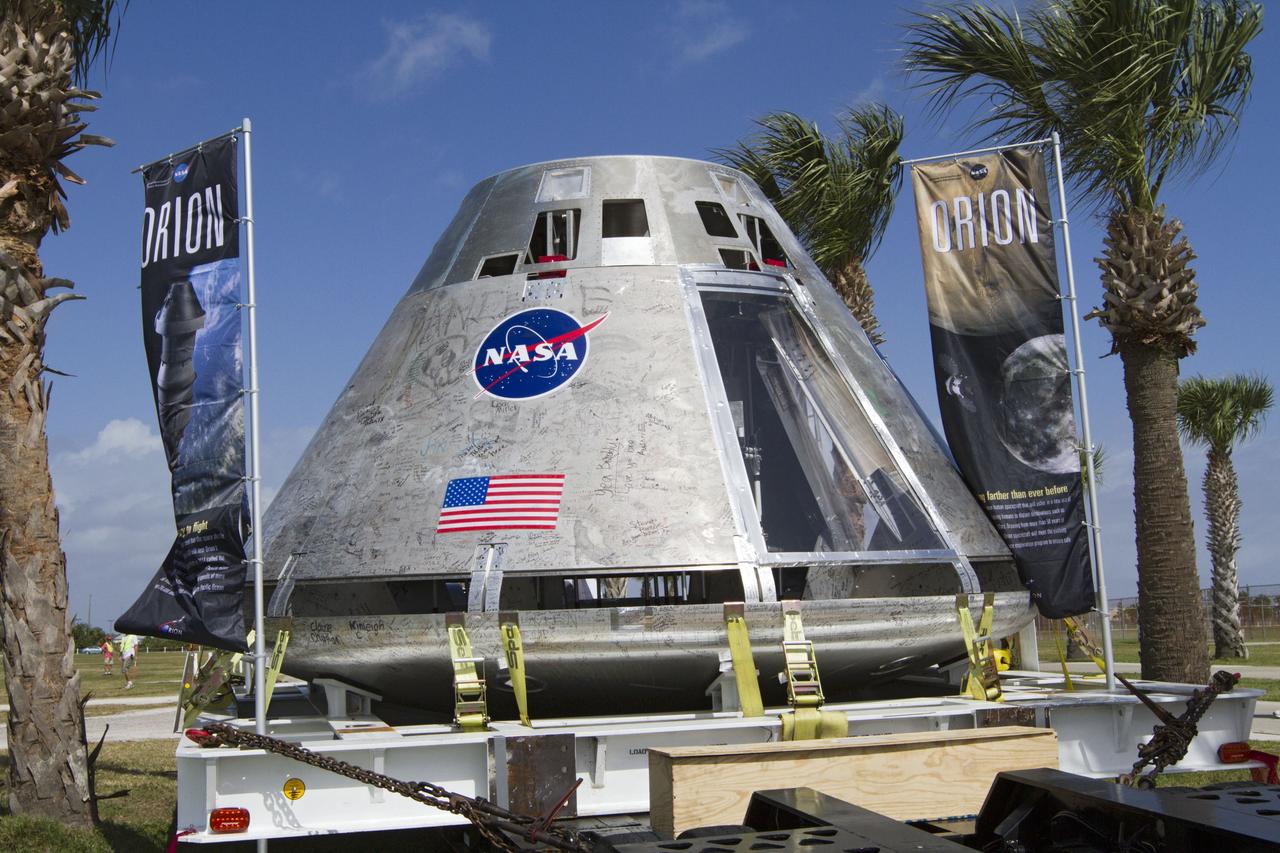
VIERA, Fla. – A full-scale test version of NASA's new Orion Multi-Purpose Crew Vehicle displayed outside the Space Coast Stadium greets those attending the stadium’s Space Day. Bob Cabana, director of NASA’s Kennedy Space Center in Florida, was on hand to throw the first pitch of a spring training game between Major League Baseball's Washington Nationals and the Houston Astros. Kennedy also set up a booth at the stadium for the occasion to highlight some of the contributions the space agency has made to sports, transportation and everyday life. For more information, visit http://www.nasa.gov/kennedy. Photo credit: NASA/Kim Shiflett
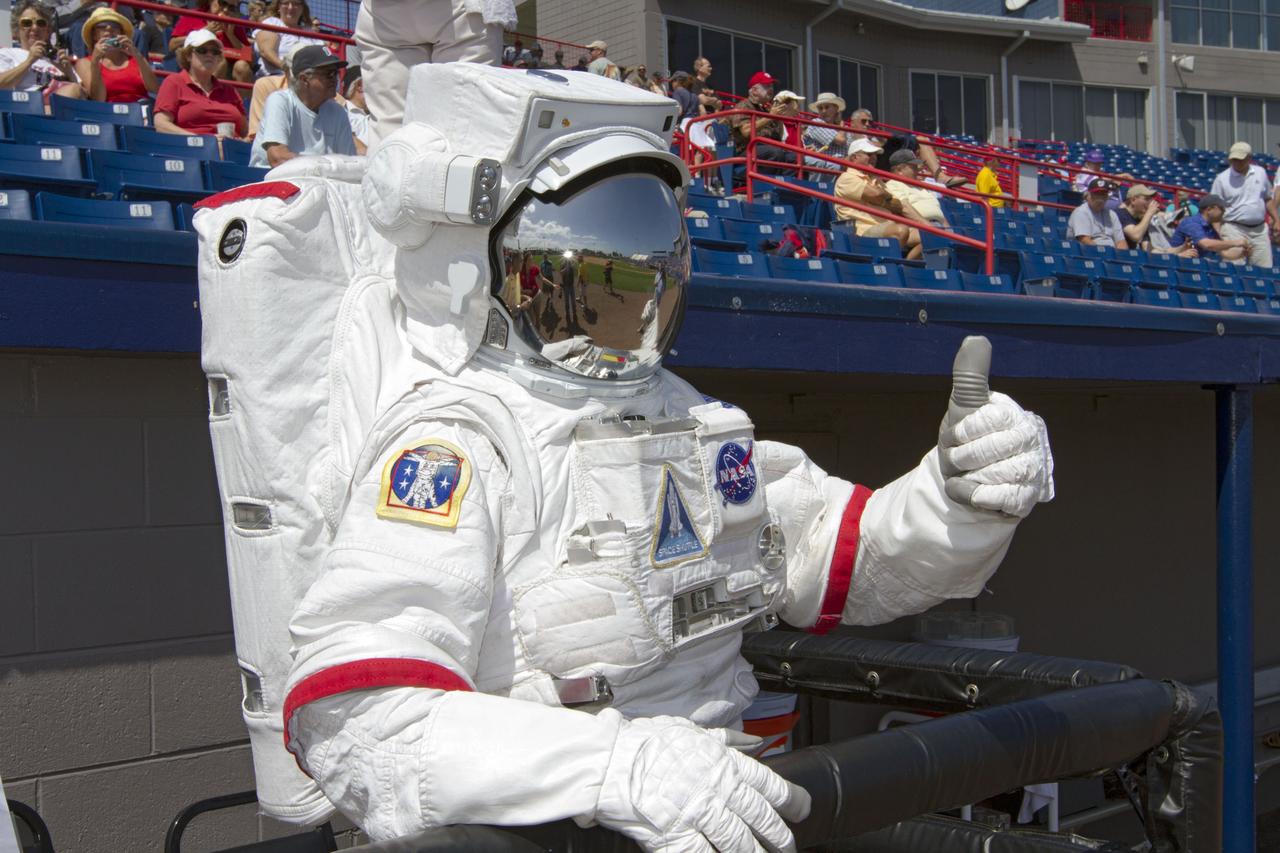
VIERA, Fla. – NASA Kennedy Space Center’s “Spaceperson” signals that “all systems are go” for Space Day at the Space Coast Stadium. Bob Cabana, director of Kennedy, is on hand to throw the first pitch of a spring training game between Major League Baseball's Washington Nationals and the Houston Astros. Kennedy also set up a booth at the stadium for the occasion to highlight some of the contributions the space agency has made to sports, transportation and everyday life. A full-scale test version of NASA's new Orion Multi-Purpose Crew Vehicle was on display outside the stadium to show the public the spacecraft under development that will take astronauts farther into space than ever before. For more information, visit http://www.nasa.gov/kennedy. Photo credit: NASA/Kim Shiflett
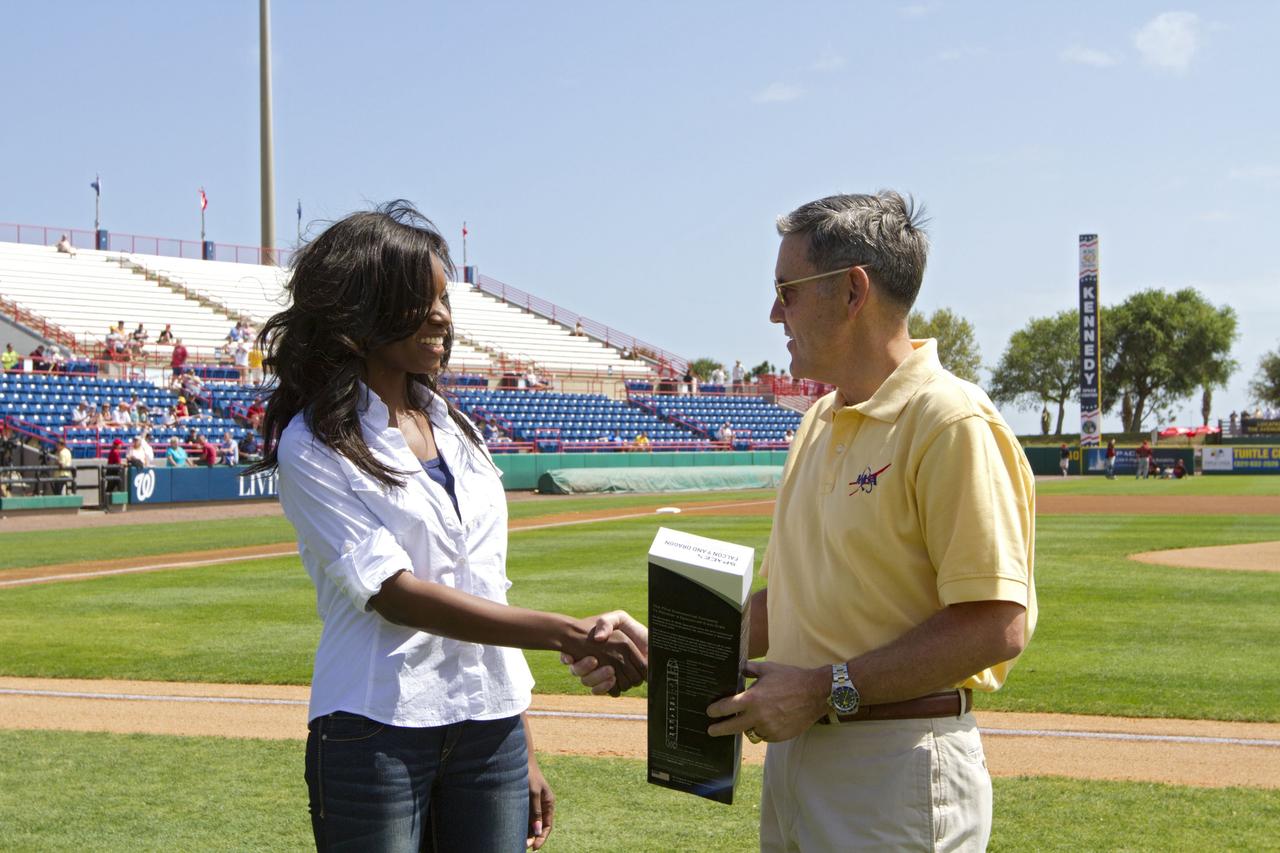
VIERA, Fla. – Space Exploration Technologies’ Christen Brown, left, presents NASA Kennedy Space Center Director Bob Cabana with a model of the company’s Falcon 9 rocket and Dragon spacecraft at the Space Coast Stadium’s Space Day. Known as SpaceX, the company is one of NASA’s commercial partners. Cabana threw the first pitch of a spring training game between Major League Baseball's Washington Nationals and Houston Astros. Kennedy set up a booth at the stadium for the occasion to highlight some of the contributions the space agency has made to sports, transportation and everyday life. A full-scale test version of NASA's new Orion Multi-Purpose Crew Vehicle also was on display outside the stadium to show the public the spacecraft under development that will take astronauts farther into space than ever before. For more information, visit http://www.nasa.gov/kennedy. Photo credit: NASA/Kim Shiflett
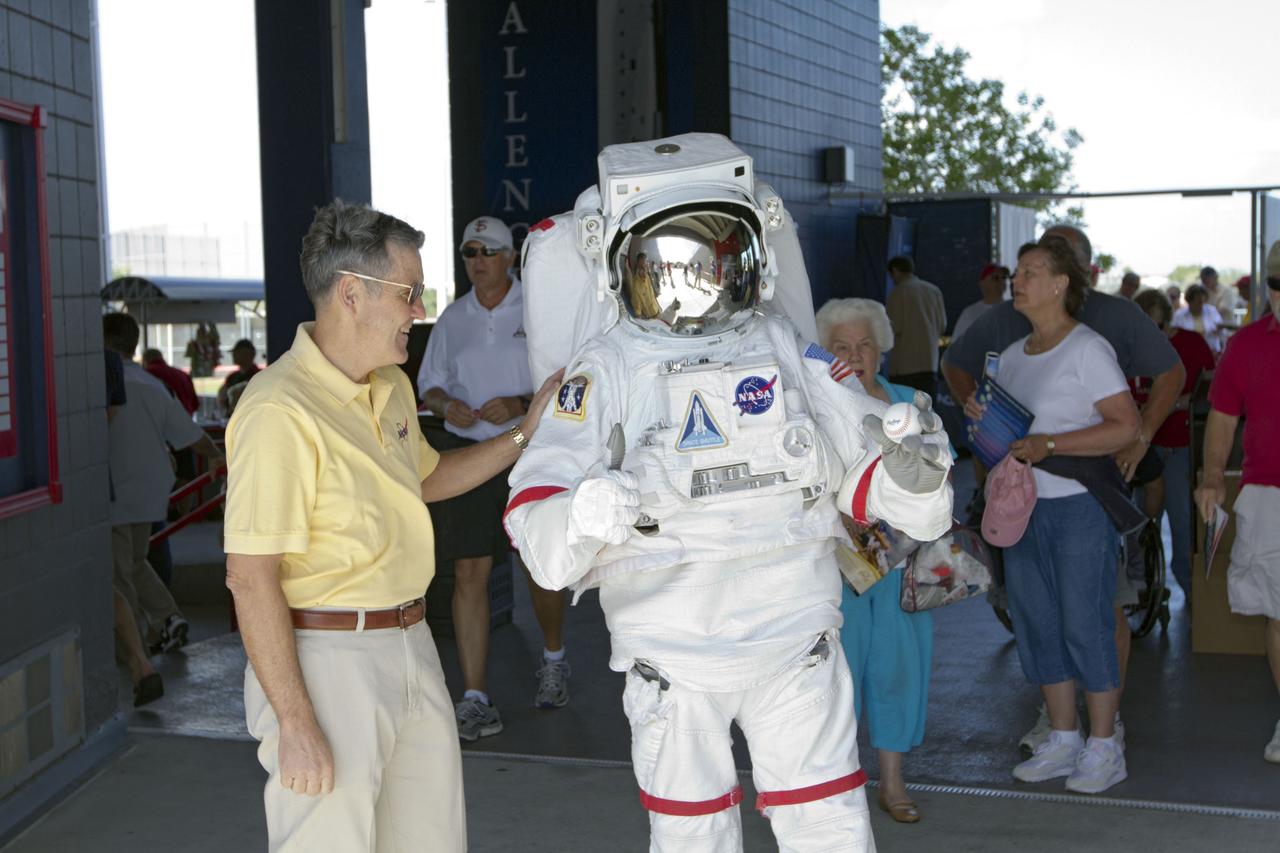
VIERA, Fla. – Bob Cabana, left, director of NASA’s Kennedy Space Center in Florida, allows Kennedy’s “Spaceperson” to hold the ball he will use to make the first pitch of a spring training game between Major League Baseball's Washington Nationals and the Houston Astros at the Space Coast Stadium’s Space Day. Kennedy set up a booth at the stadium for the occasion to highlight some of the contributions the space agency has made to sports, transportation and everyday life. A full-scale test version of NASA's new Orion Multi-Purpose Crew Vehicle also was located outside the stadium to show the public the spacecraft under development that will take astronauts farther into space than ever before. For more information, visit http://www.nasa.gov/kennedy. Photo credit: NASA/Kim Shiflett
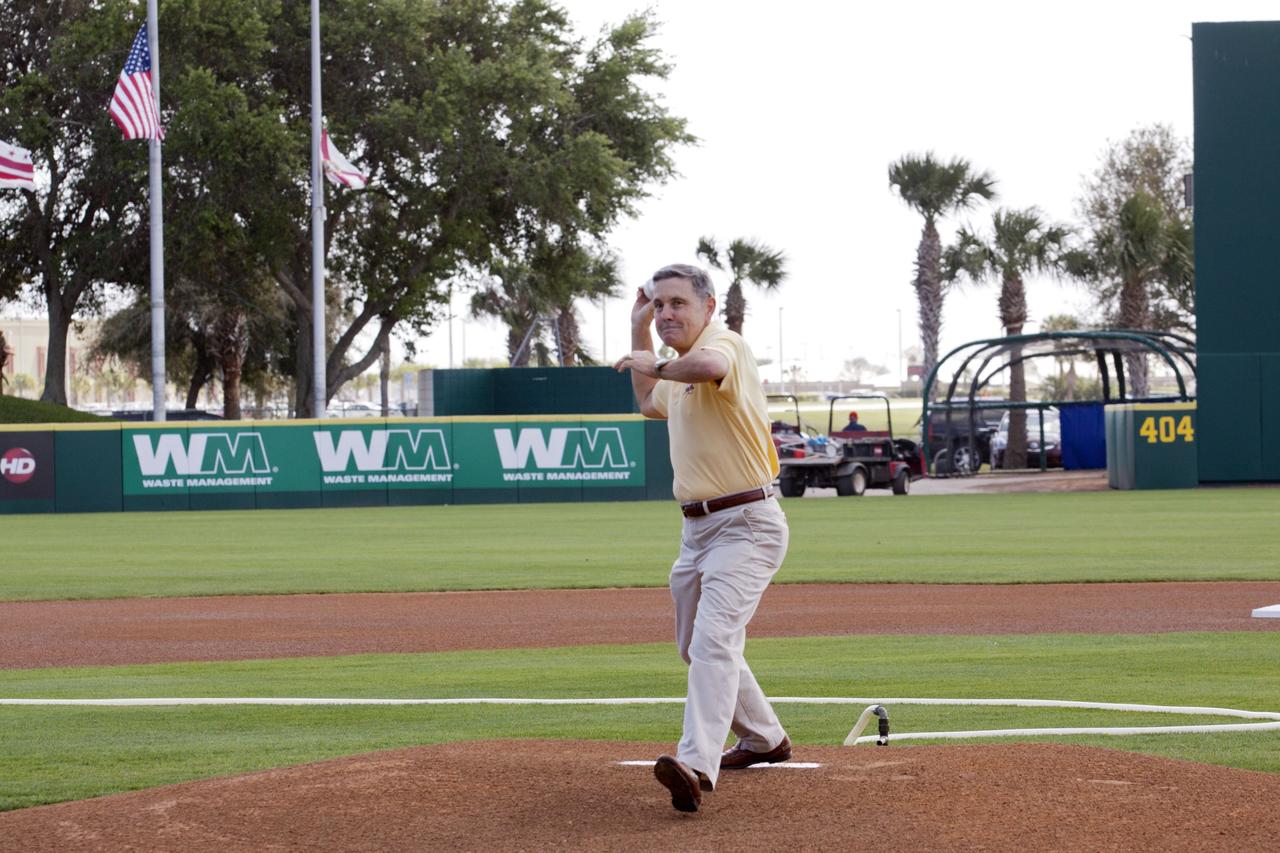
VIERA, Fla. – Bob Cabana, director of NASA’s Kennedy Space Center in Florida, throws the first pitch of a spring training game between Major League Baseball's Washington Nationals and the Houston Astros on Space Day at the Space Coast Stadium. Kennedy set up a booth at the stadium for the occasion to highlight some of the contributions the space agency has made to sports, transportation and everyday life. A full-scale test version of NASA's new Orion Multi-Purpose Crew Vehicle also was located outside the stadium to show the public the spacecraft under development that will take astronauts farther into space than ever before. For more information, visit http://www.nasa.gov/kennedy. Photo credit: NASA/Kim Shiflett
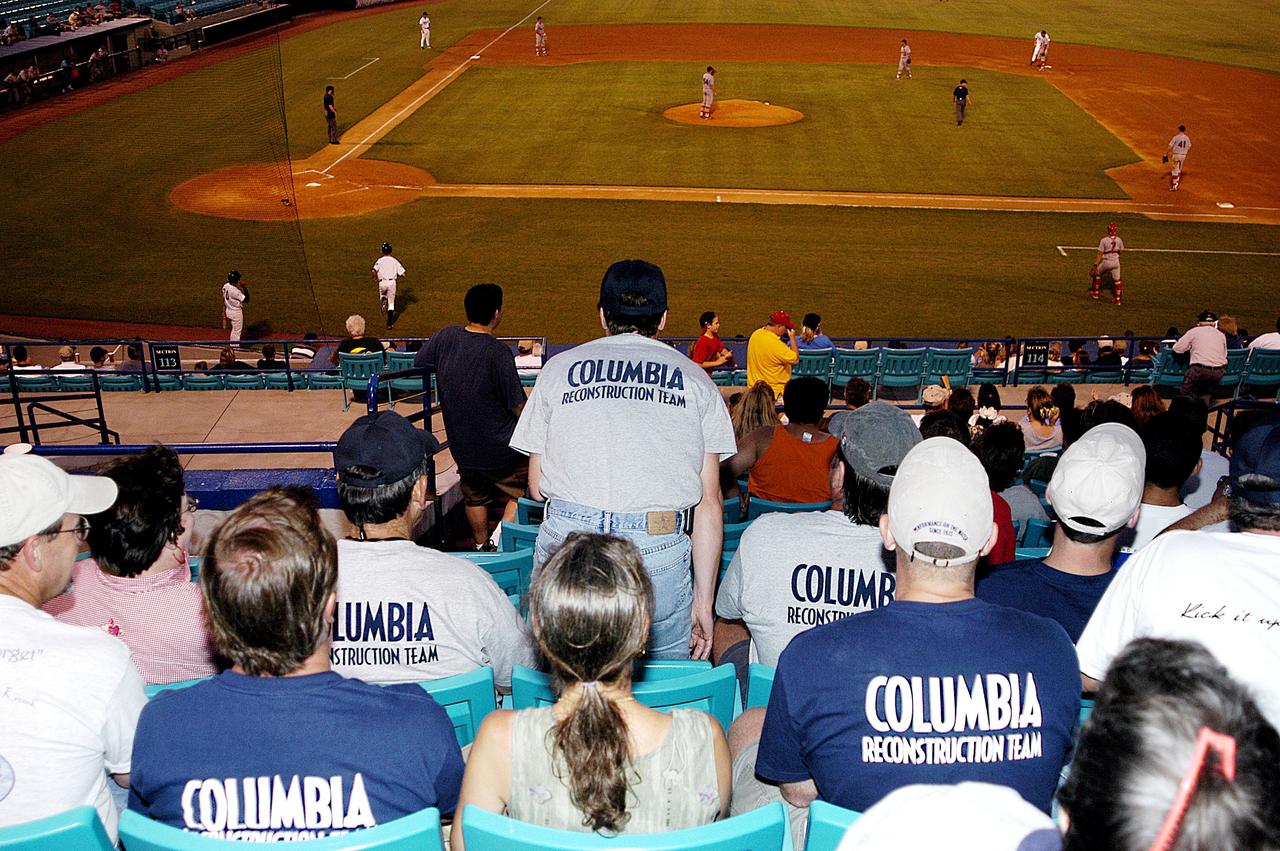
KENNEDY SPACE CENTER, FLA. - KSC employees enjoy a baseball game at Manatees Stadium, home of the Brevard Manatees, a minor league baseball team in Central Florida. The team hosted KSC employees for the game, which included a moment of silence to honor the STS-107 crew and two recovery workers who died in a helicopter crash.
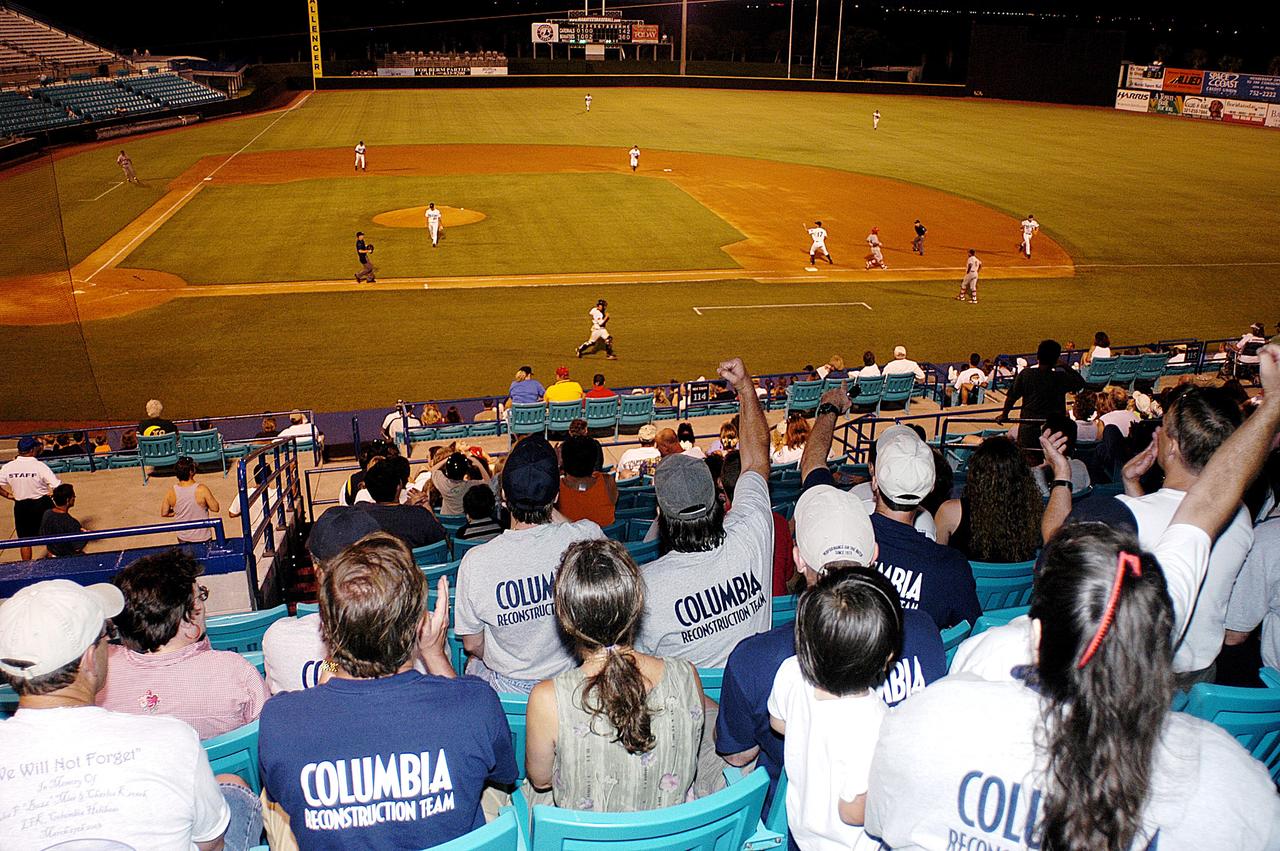
KENNEDY SPACE CENTER, FLA. - KSC employees enjoy a baseball game at Manatees Stadium, home of the Brevard Manatees, a minor league baseball team in Central Florida. The team hosted the employees for the game, which included a moment of silence to honor the STS-107 crew and two recovery workers who died in a helicopter crash.
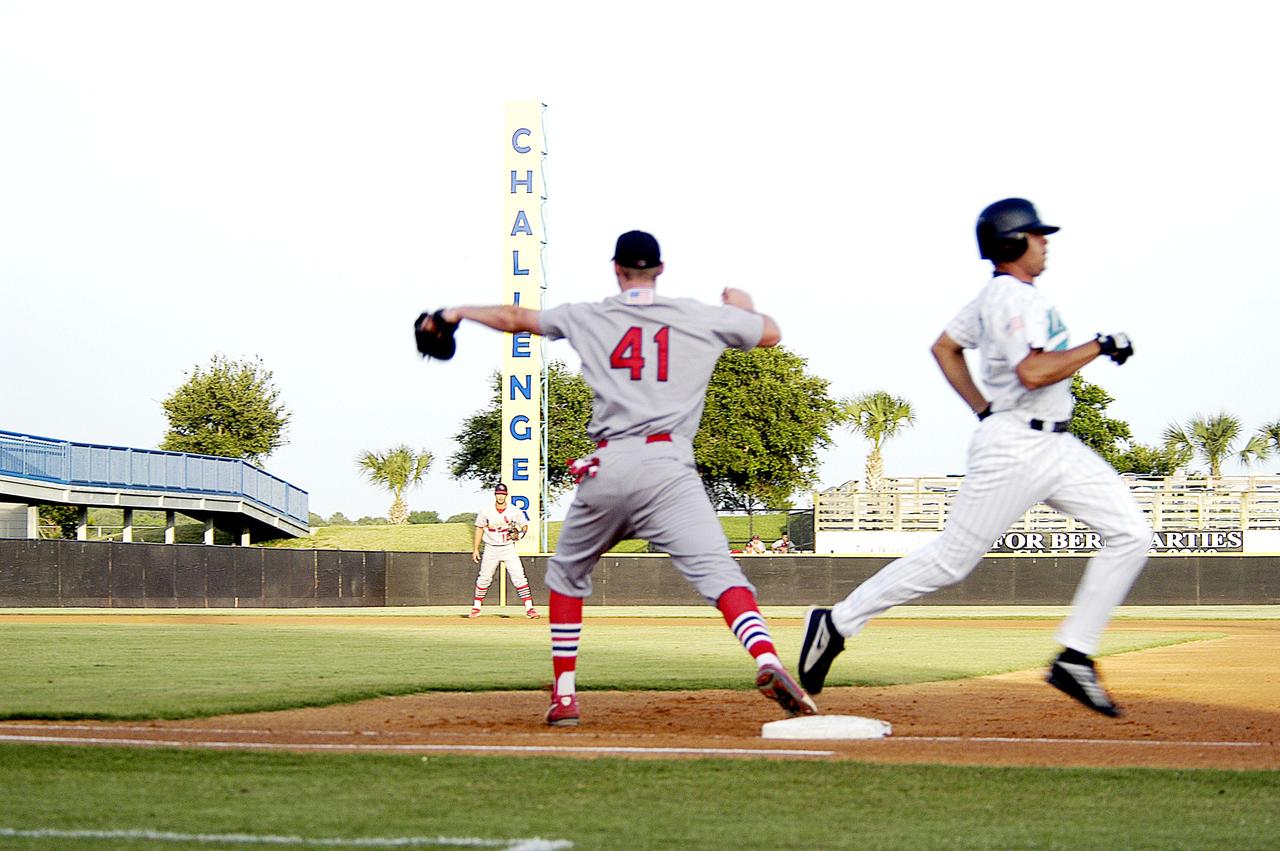
KENNEDY SPACE CENTER, FLA. - There is action on the baseball diamond during a game at Manatees Stadium, home of the Brevard Manatees, a minor league baseball team in Central Florida. The team hosted KSC employees for the game, which included a moment of silence to honor the STS-107 crew and two recovery workers who died in a helicopter crash.
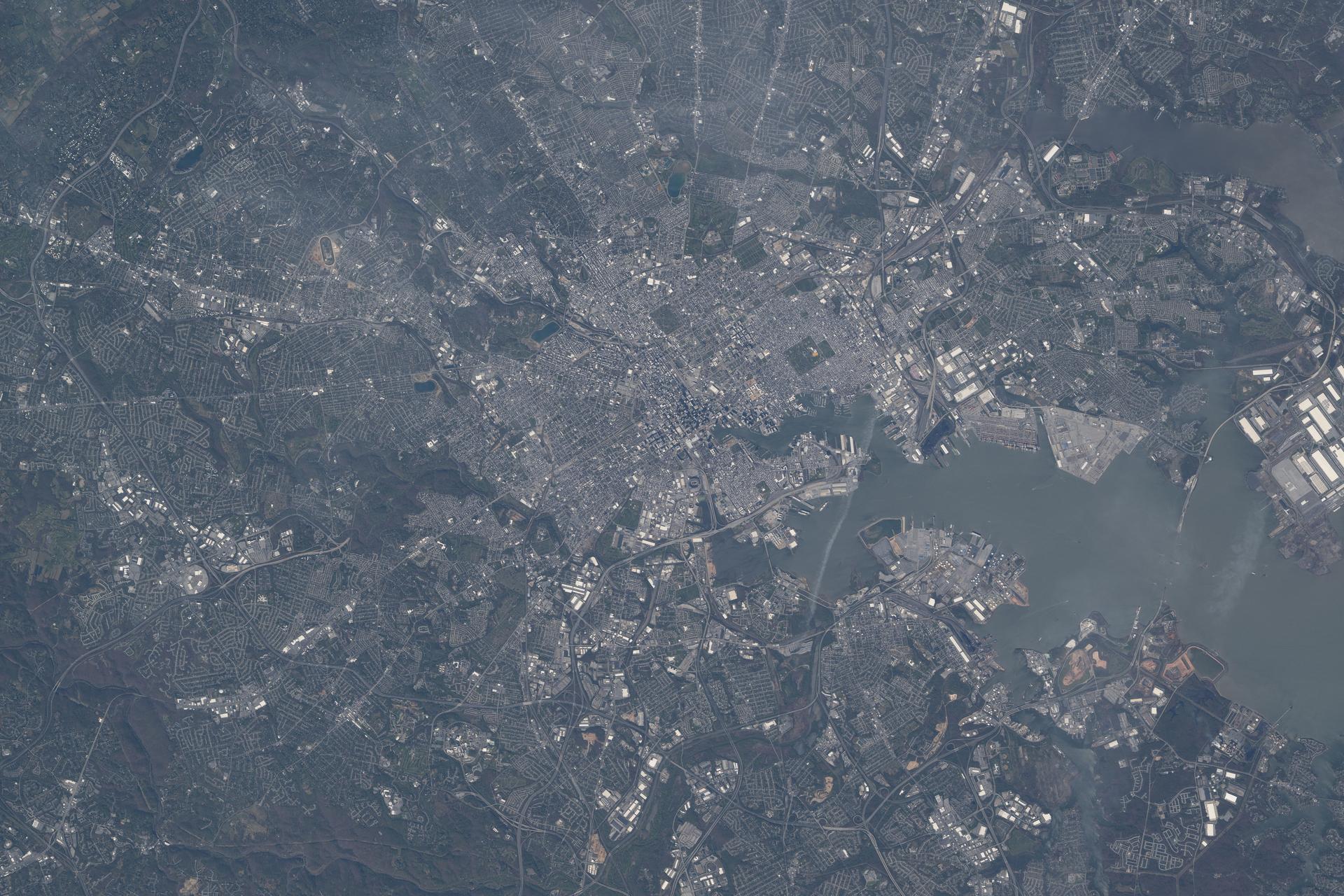
iss074e0459538 (April 10, 2026) --- Baltimore, Maryland, on the Patapsco River with a metropolitan population of about 2.86 million and birthplace of baseball legend Babe Ruth, is pictured from the International Space Station as it orbited 266 miles above. Credit: NASA/Chris Williams
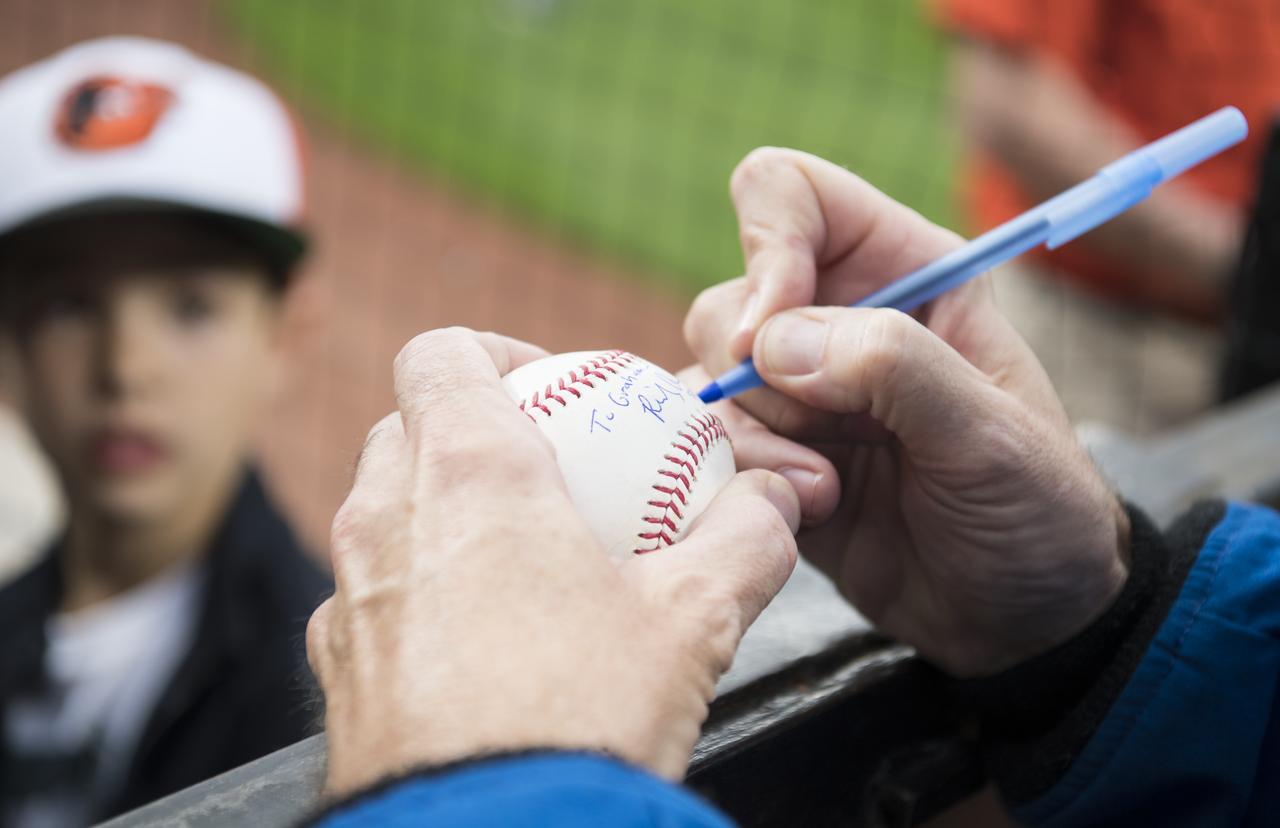
NASA astronaut and Maryland native Ricky Arnold signs a baseball for a young fan before the Tampa Bay Rays take on the Baltimore Orioles, Saturday, May 4, 2019 at Camden Yards in Baltimore, Md. During Arnold’s 197 days onboard the International Space Station, as part of Expeditions 55 and 56, he ventured outside the space station on three spacewalks in addition to conducting numerous experiments and educational downlink events. Photo Credit: (NASA/Joel Kowsky)
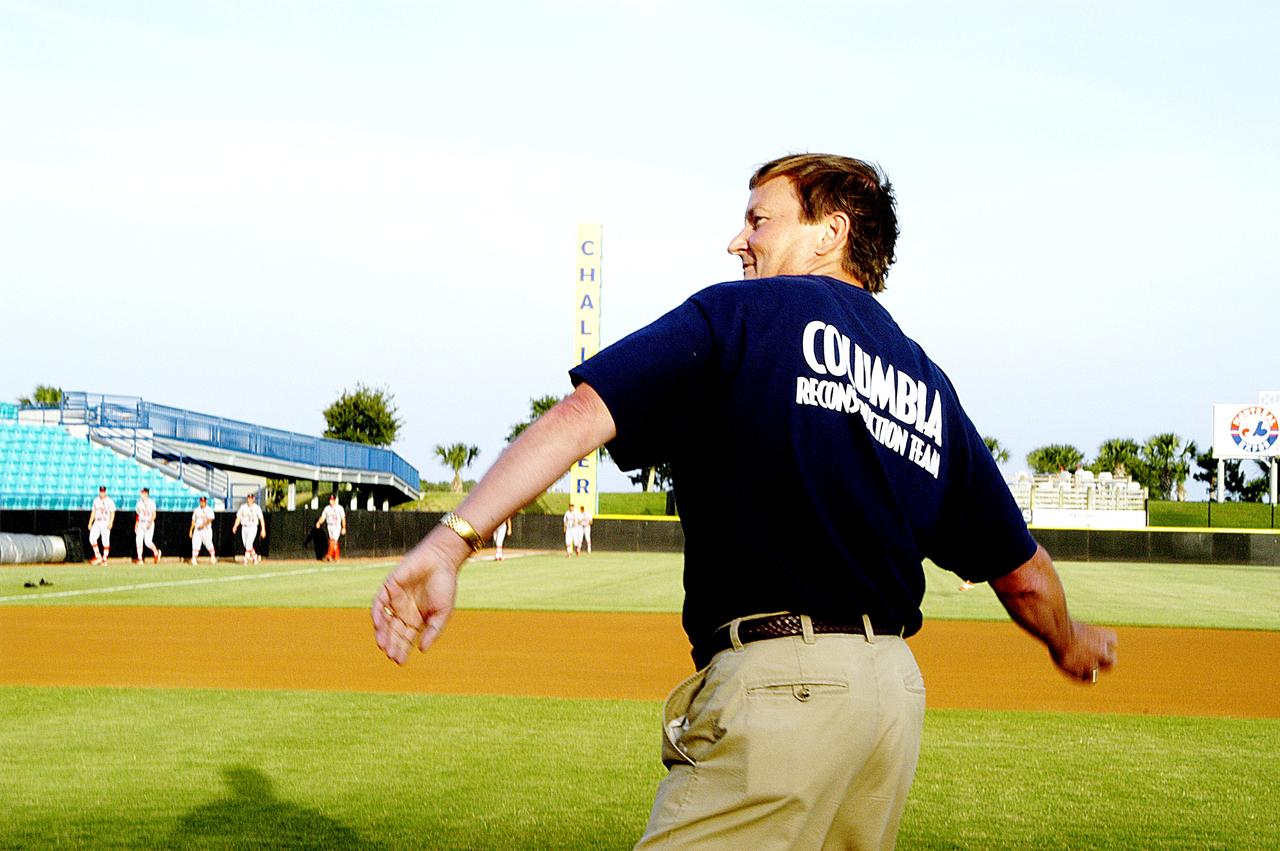
KENNEDY SPACE CENTER, FLA. - Shuttle Launch Director Mike Leinbach throws out the first pitch at a local baseball game at Manatees Stadium. KSC employees were hosted by the Brevard Manatees, a minor league baseball team in Central Florida. Before the game, attendees offered a moment of silence to honor the STS-107 crew and two recovery workers who died in a helicopter crash.
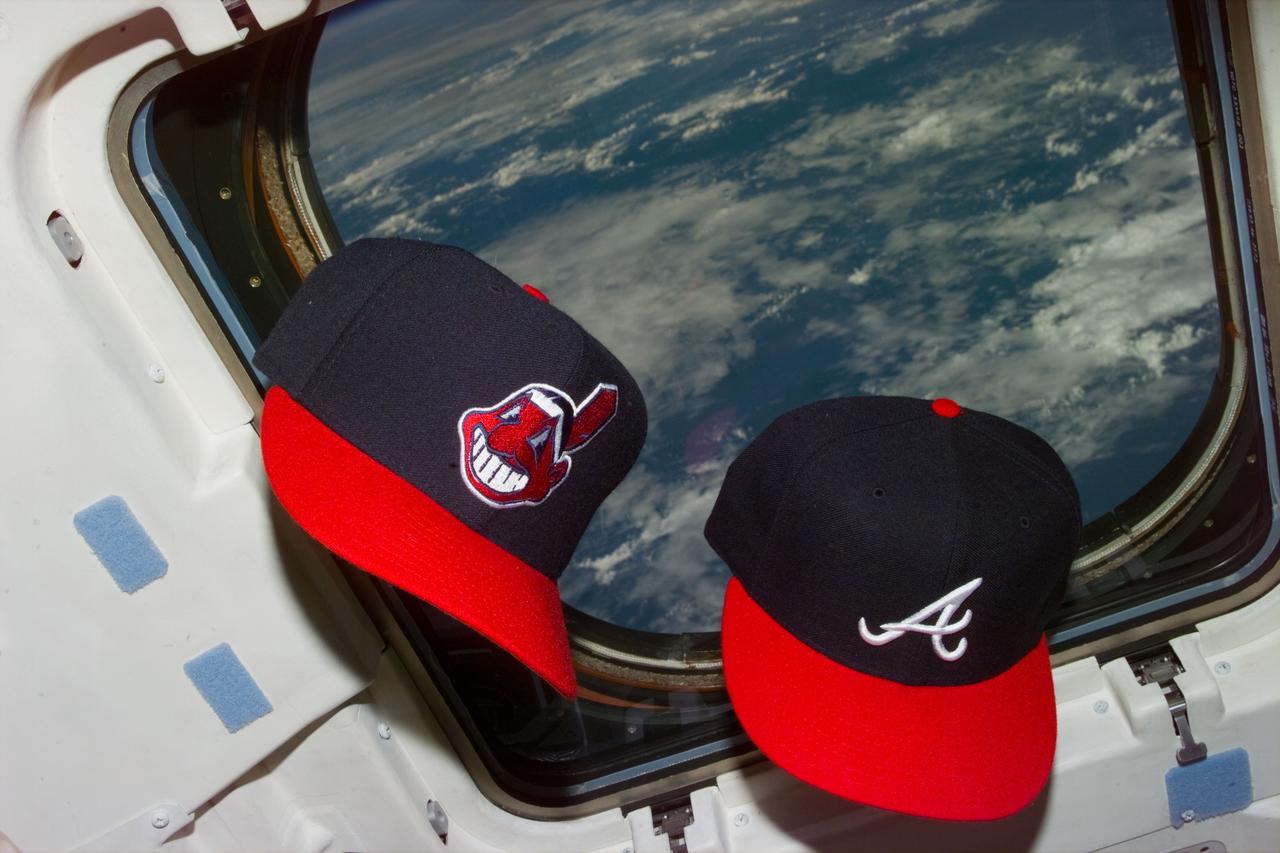
STS073-E-5135 (26 Oct. 1995) --- Baseball caps from the two 1995 World Series representative franchises float near the cabin windows of the Earth-orbiting space shuttle Columbia, with the Earth in the background. The American League champion Cleveland Indians and their National League counterpart Atlanta Braves were engaged in a scheduled best-of-seven World Series throughout the first portion of the scheduled 16-day mission in space. Off-duty crewmembers came out of a rest period to set up the scene in tribute to the October classic. The crew will continue working in shifts around the clock on a diverse assortment of United States Microgravity Laboratory (USML-2) experiments located in the science module. Fields of study include fluid physics, materials science, biotechnology, combustion science and commercial space processing technologies. The frame was exposed with an Electronic Still Camera (ESC).
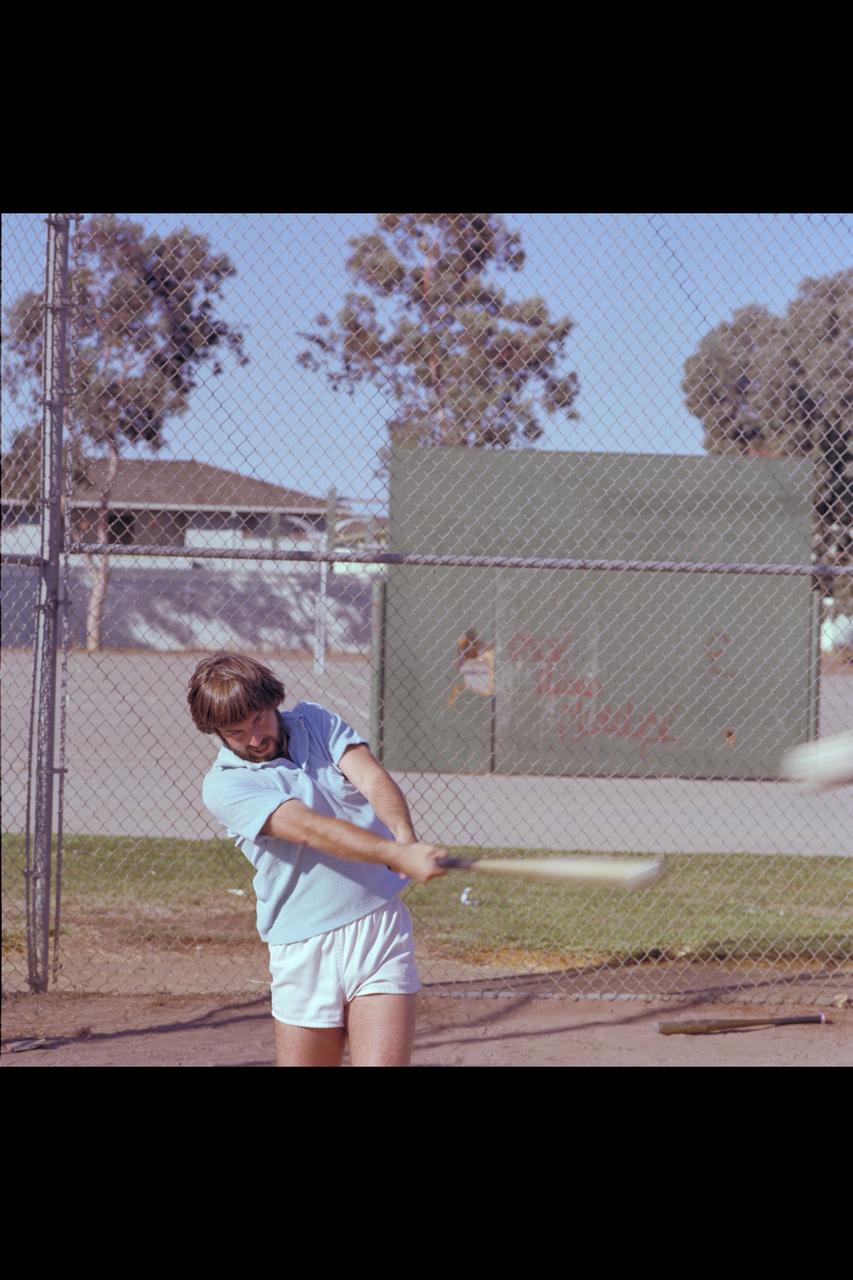
Recruiting Brochure: Ames baseball league
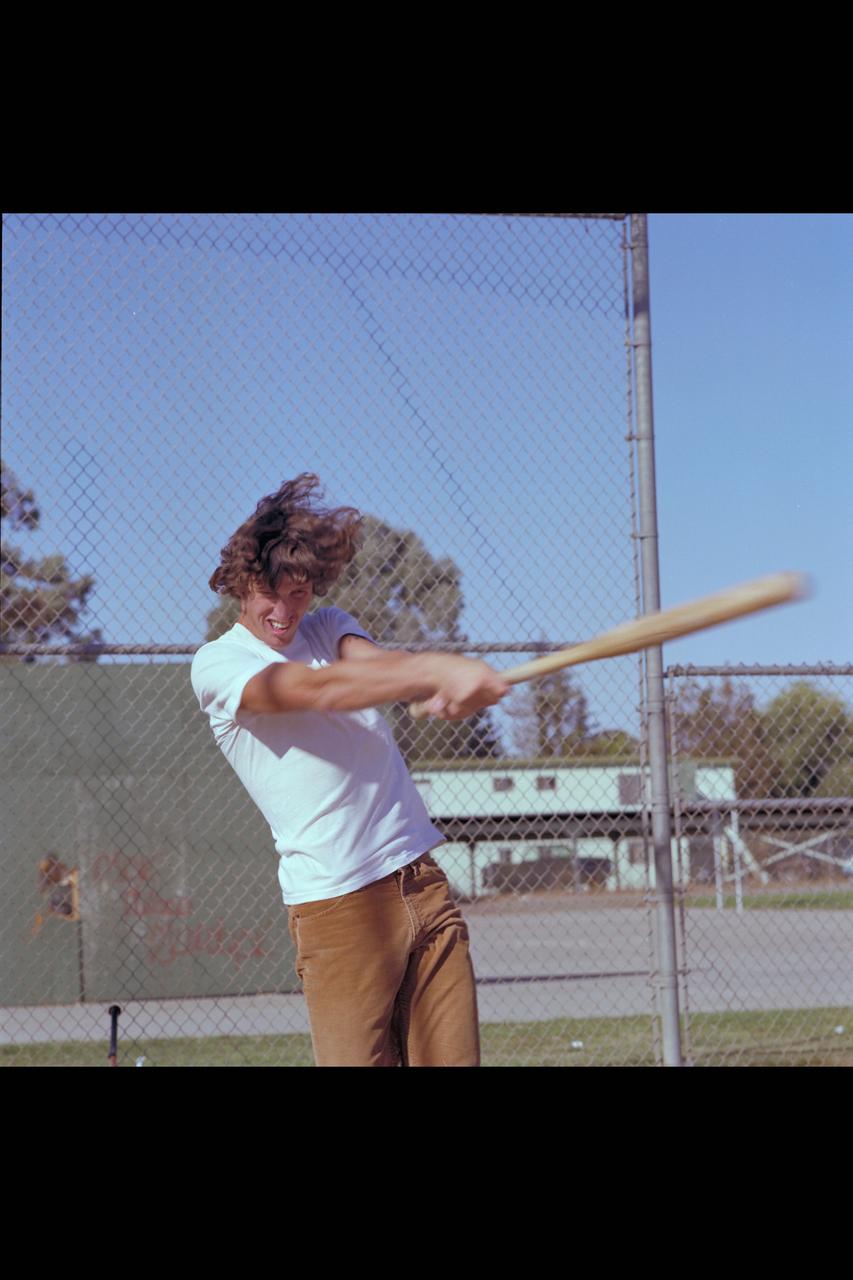
Recruiting Brochure: Ames baseball league
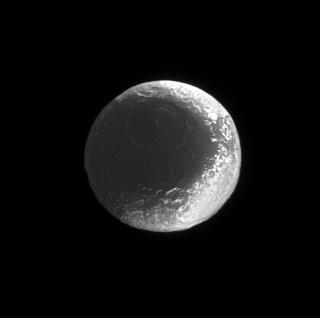
This Cassini spacecraft view shows how the bright and dark regions on Iapetus fit together like the seams of a baseball. Some of the material that covers the moon dark, leading side spills over into regions on the brighter trailing side
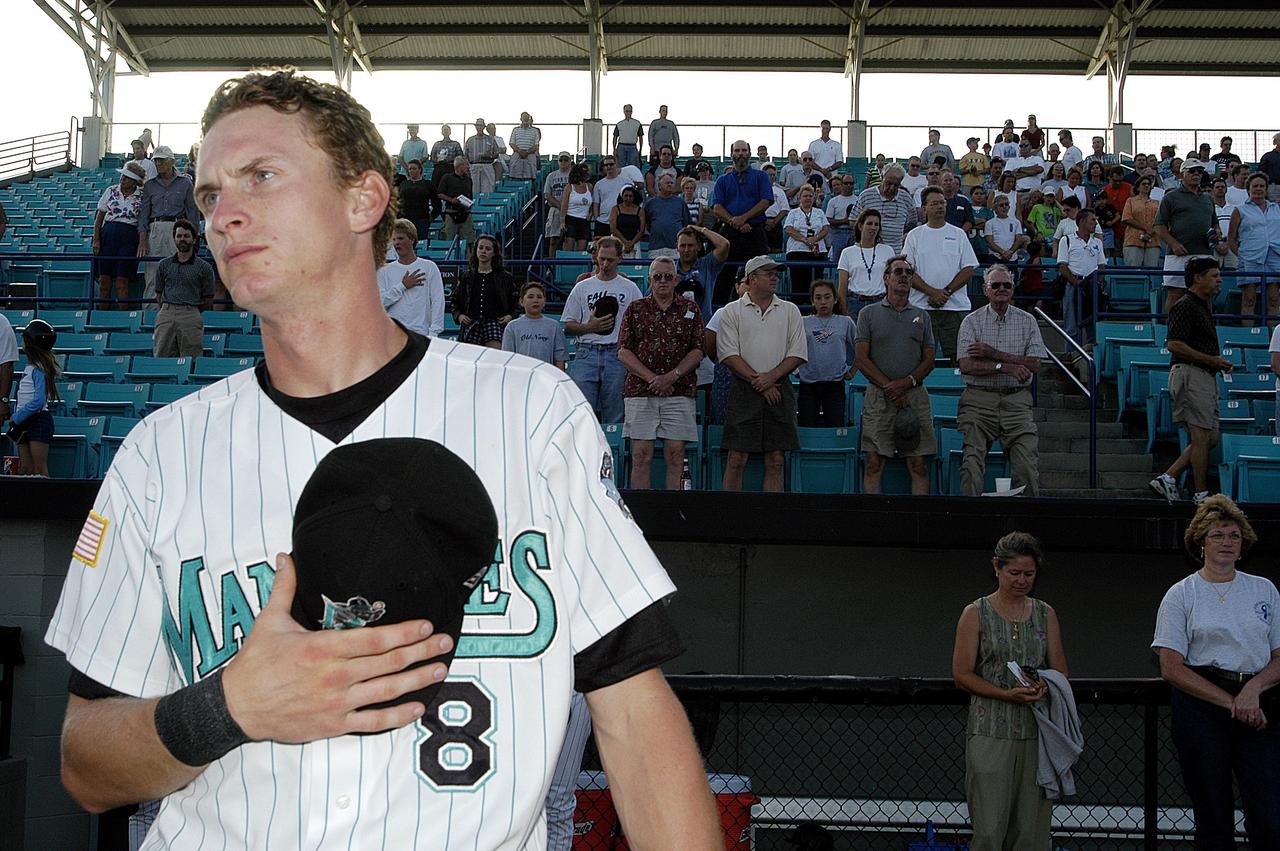
KENNEDY SPACE CENTER, FLA. - The Brevard Manatees, a minor league baseball team in Central Florida, hosts KSC employees at a ballgame at Manatees Stadium. Before the game, attendees offered a moment of silence to honor the STS-107 crew and two recovery workers who died in a helicopter crash.
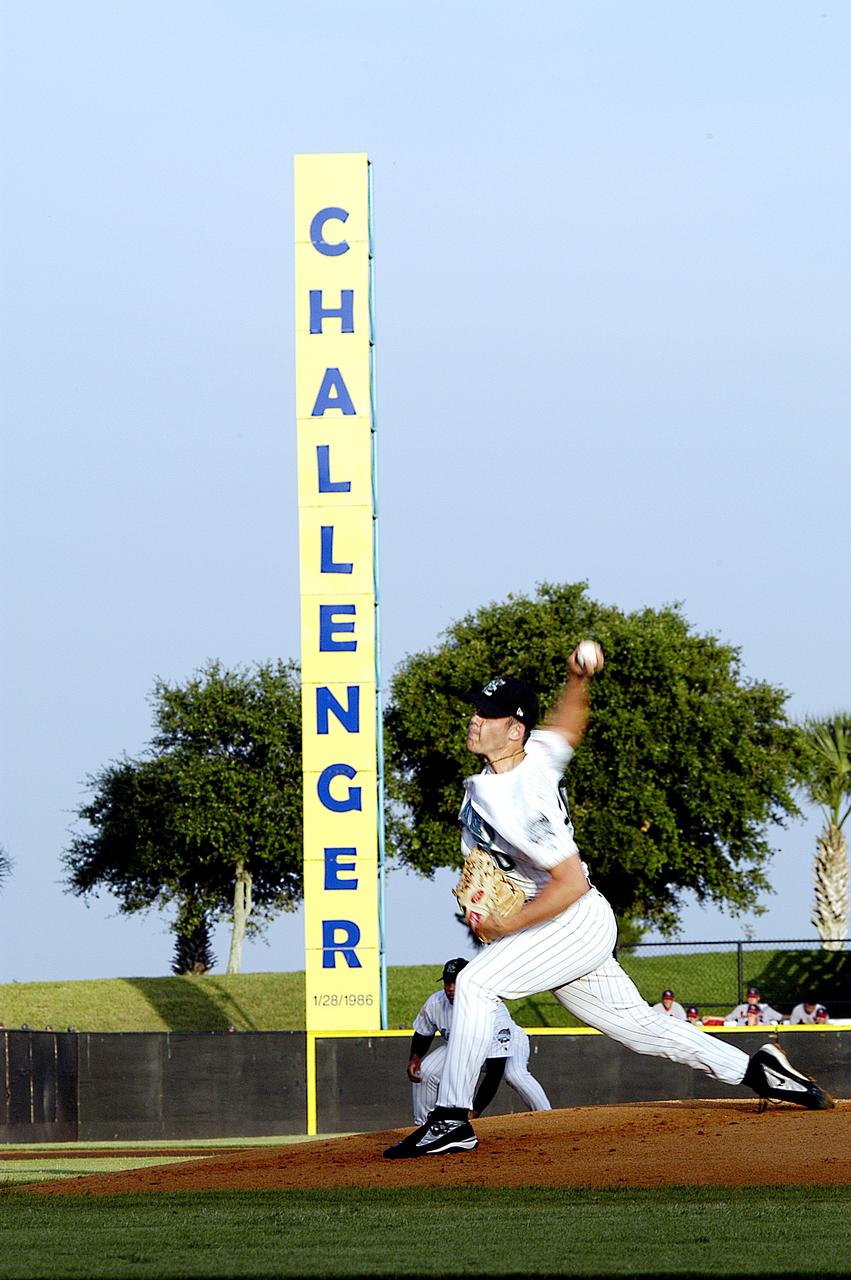
KENNEDY SPACE CENTER, FLA. - The pitcher with the Brevard Manatees, a minor league baseball team in Central Florida, starts the game on a night that hosted KSC employees. Before the game, attendees offered a moment of silence to honor the STS-107 crew and two recovery workers who died in a helicopter crash.
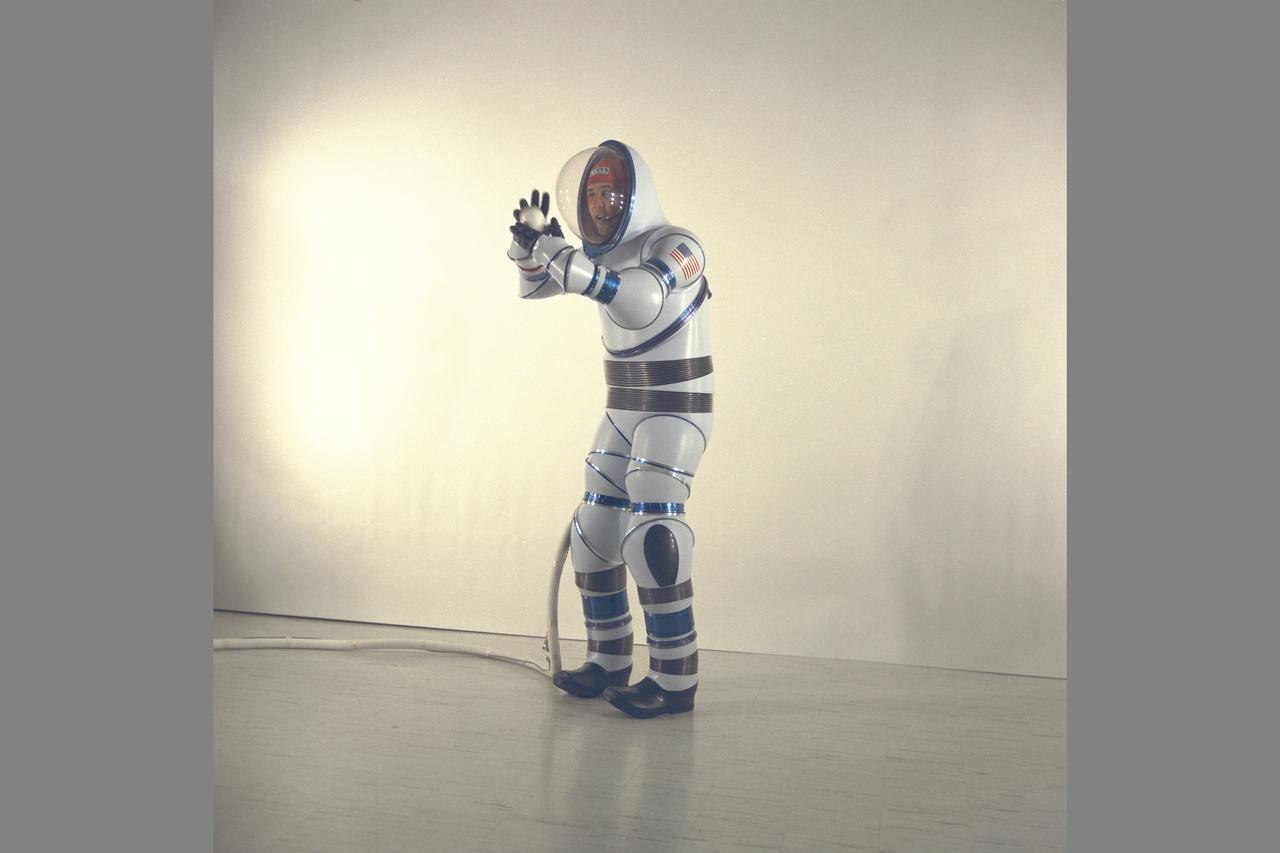
AX-2 Hard Space Suit with Vic Vykukal getting ready to pitch a baseball. Vykukal is the principal investigator of the AX space suit series.
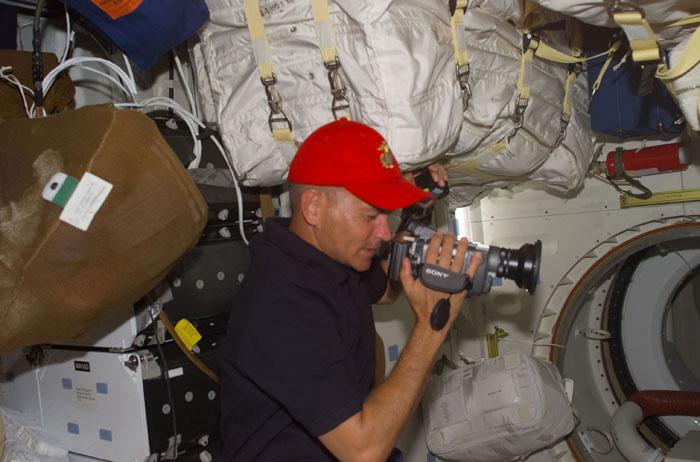
STS105-E-5187 (14 August 2001) --- Astronaut Frederick W. (Rick) Sturckow, STS-105 pilot, uses a camcorder to document supplies and hardware on the mid deck of the Space Shuttle Discovery, which is currently docked to the International Space Station (ISS). The image was recorded with a digital still camera.
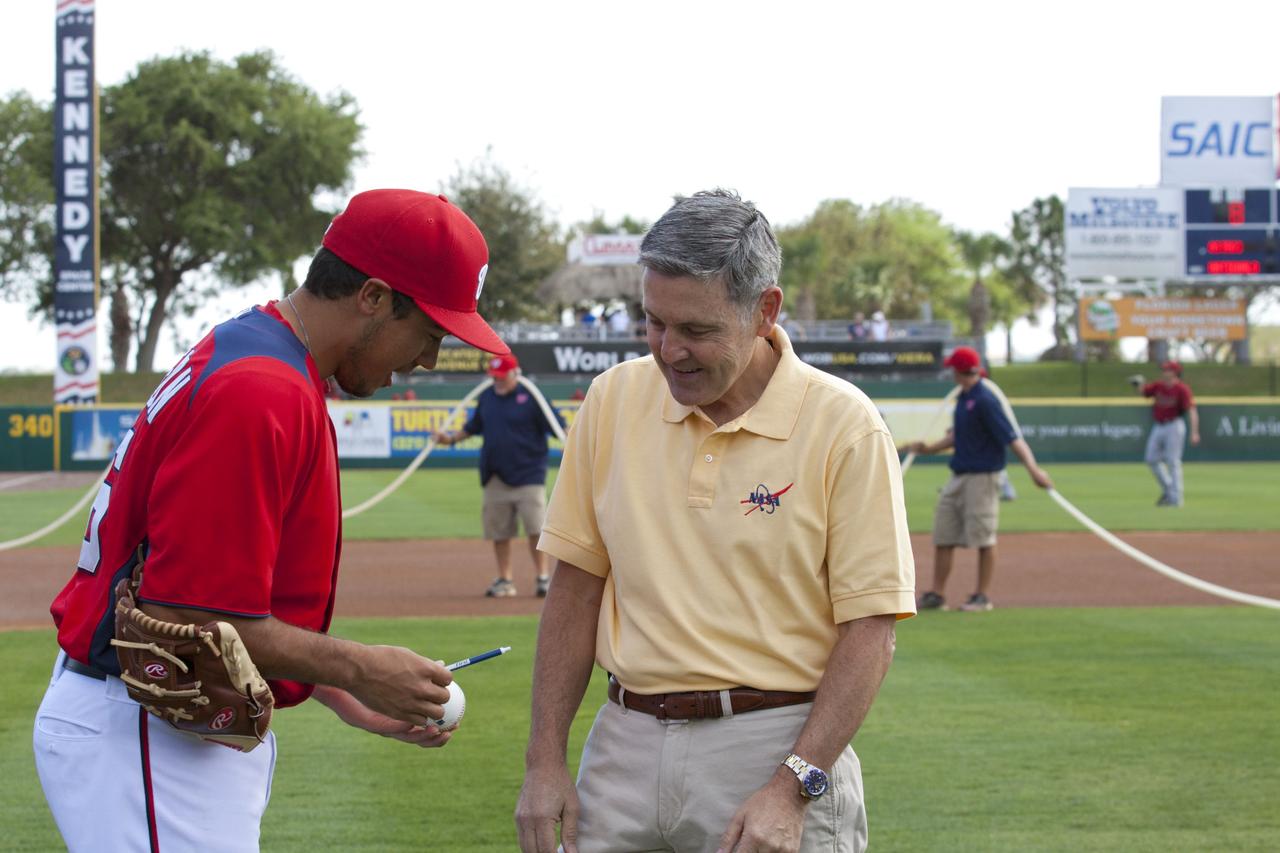
VIERA, Fla. – Third baseman Anthony Rendon, left, of major league baseball’s Washington Nationals offers NASA’s Kennedy Space Center Director Bob Cabana a pen to sign a baseball during a spring training game between the Nationals and the Houston Astros on Space Day at the Space Coast Stadium. Cabana threw the first pitch of the game. Kennedy set up a booth at the stadium for the occasion to highlight some of the contributions the space agency has made to sports, transportation and everyday life. A full-scale test version of NASA's new Orion Multi-Purpose Crew Vehicle also was located outside the stadium to show the public the spacecraft under development that will take astronauts farther into space than ever before. For more information, visit http://www.nasa.gov/kennedy. Photo credit: NASA/Kim Shiflett
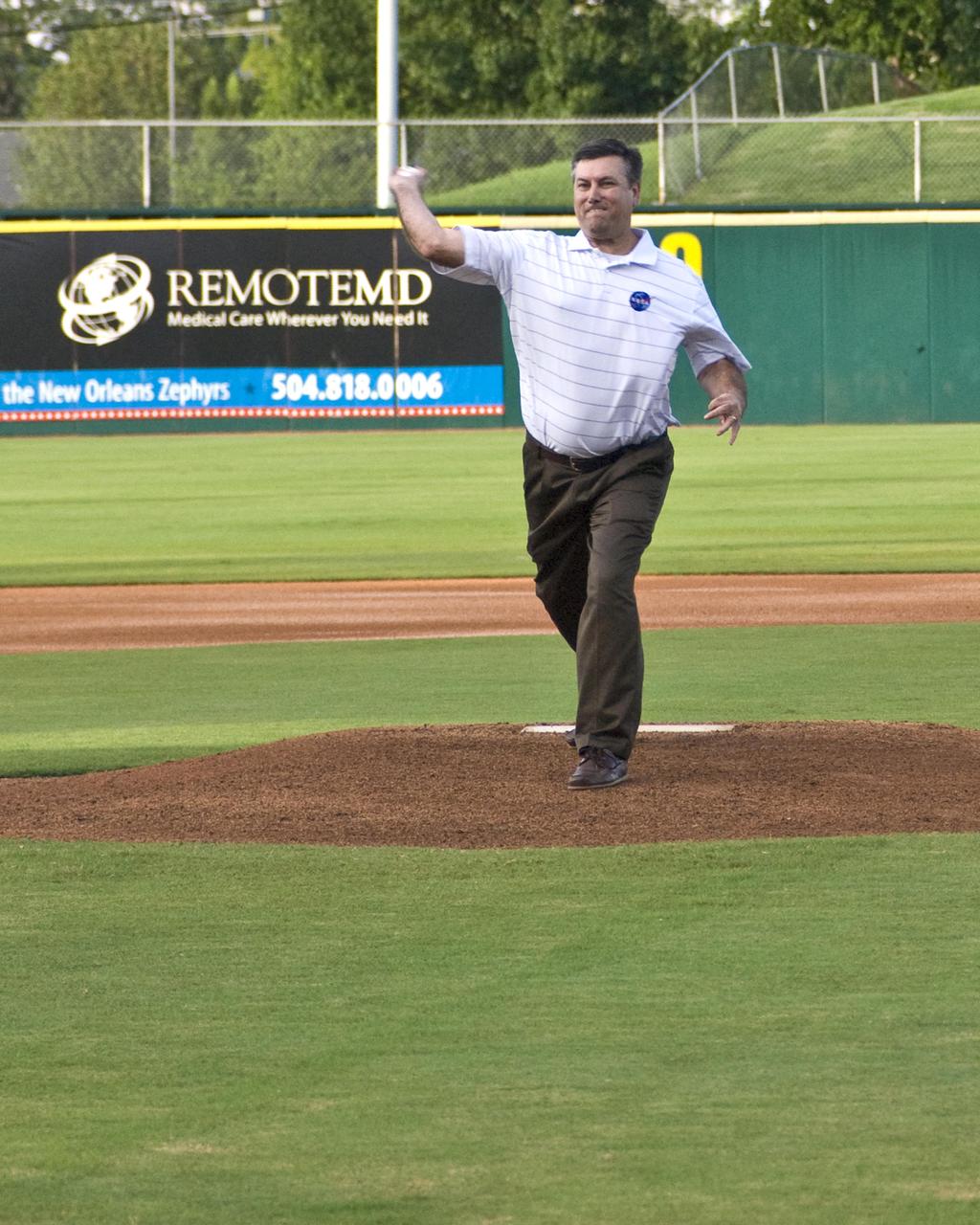
NASA's John C. Stennis Space Center Director Patrick Scheuermann throws the first pitch of the game Aug. 20 at New Orleans Zephyr Field. Stennis employees traveled to New Orleans to host NASA Night at Zephyr Field. Stennis personnel provided a variety of activities and materials for persons attending a game between the New Orleans Zephyrs and the Las Vegas 51s.
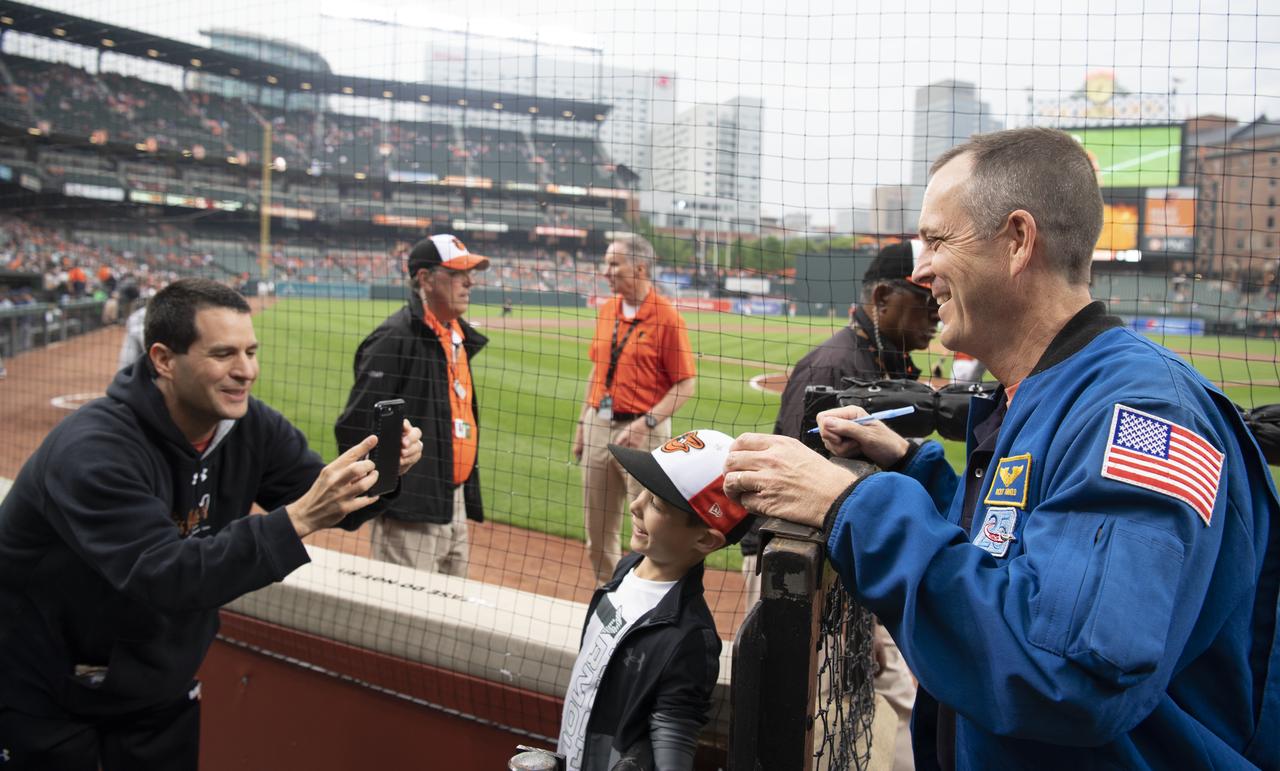
NASA astronaut and Maryland native Ricky Arnold takes a picture with a young fan before the Tampa Bay Rays take on the Baltimore Orioles, Saturday, May 4, 2019 at Camden Yards in Baltimore, Md. During Arnold’s 197 days onboard the International Space Station, as part of Expeditions 55 and 56, he ventured outside the space station on three spacewalks in addition to conducting numerous experiments and educational downlink events. Photo Credit: (NASA/Joel Kowsky)
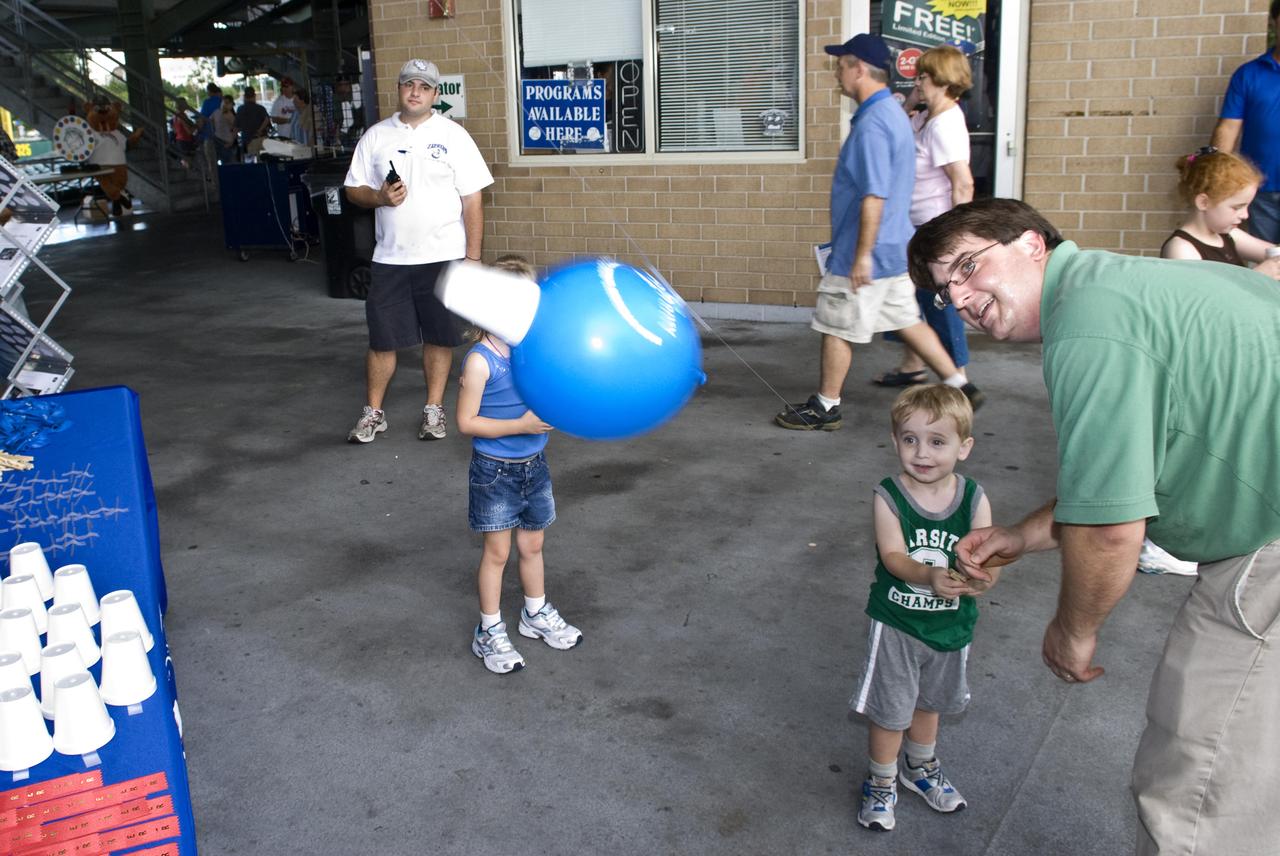
Stennis employee Chris Smith helps a young child 'launch' a balloon rocket. Employees from NASA's John C. Stennis Space Center traveled to New Orleans on Aug. 20 to host NASA Night at Zephyr Field. Stennis personnel provided a variety of activities and materials for persons attending a game between the New Orleans Zephyrs and the Las Vegas 51s.
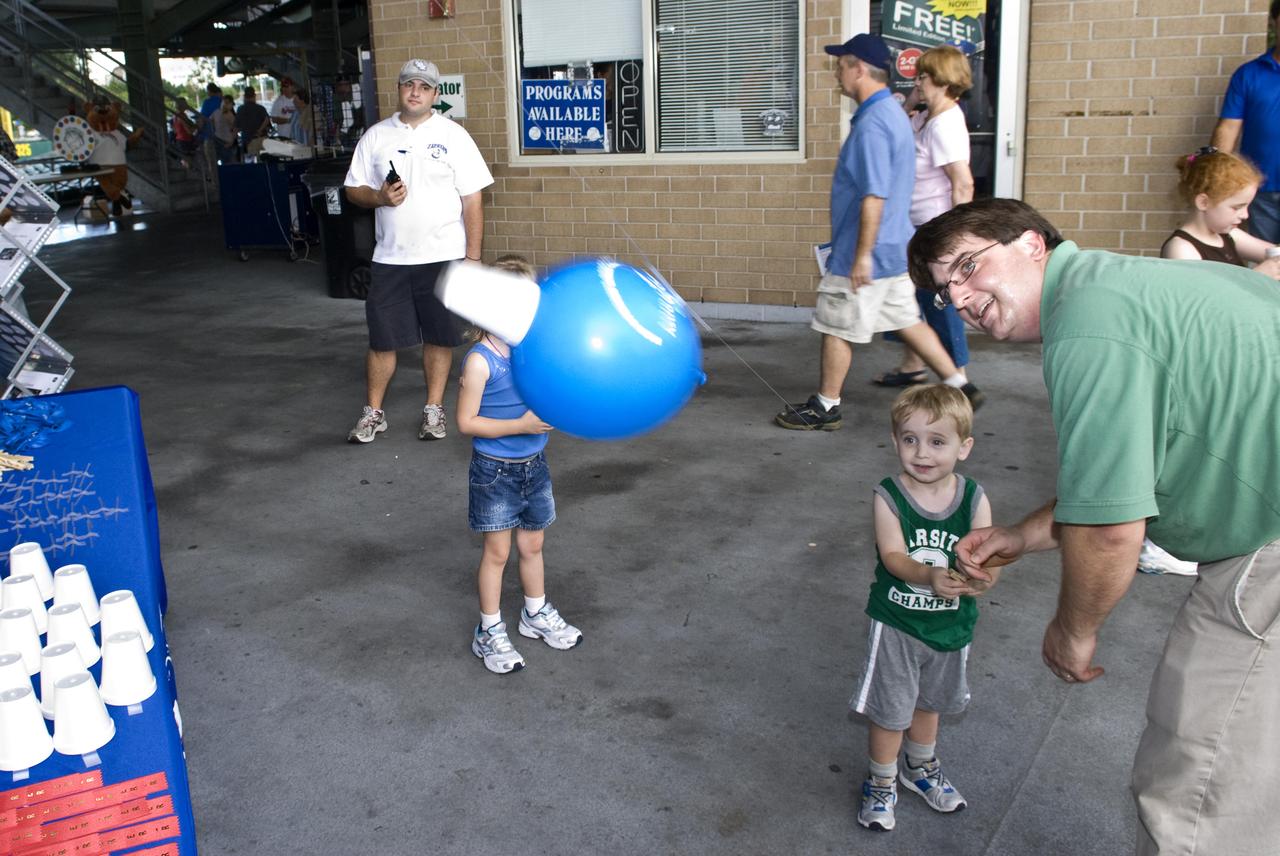
Stennis employee Chris Smith helps a young child 'launch' a balloon rocket. Employees from NASA's John C. Stennis Space Center traveled to New Orleans on Aug. 20 to host NASA Night at Zephyr Field. Stennis personnel provided a variety of activities and materials for persons attending a game between the New Orleans Zephyrs and the Las Vegas 51s.
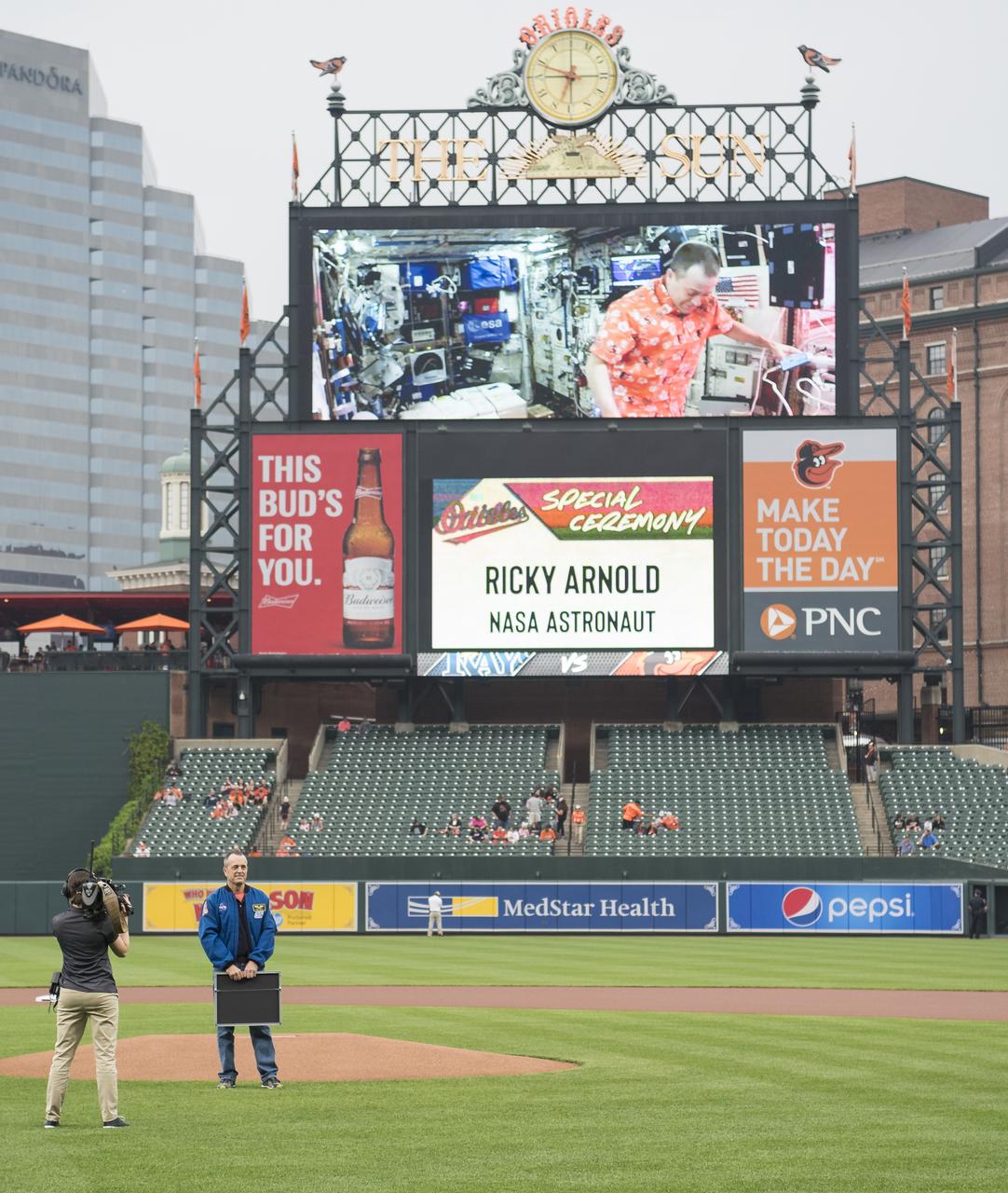
NASA astronaut and Maryland native Ricky Arnold is seen on field before the Tampa Bay Rays take on the Baltimore Orioles, Saturday, May 4, 2019 at Camden Yards in Baltimore, Md. During Arnold’s 197 days onboard the International Space Station, as part of Expeditions 55 and 56, he ventured outside the space station on three spacewalks in addition to conducting numerous experiments and educational downlink events. Photo Credit: (NASA/Joel Kowsky)
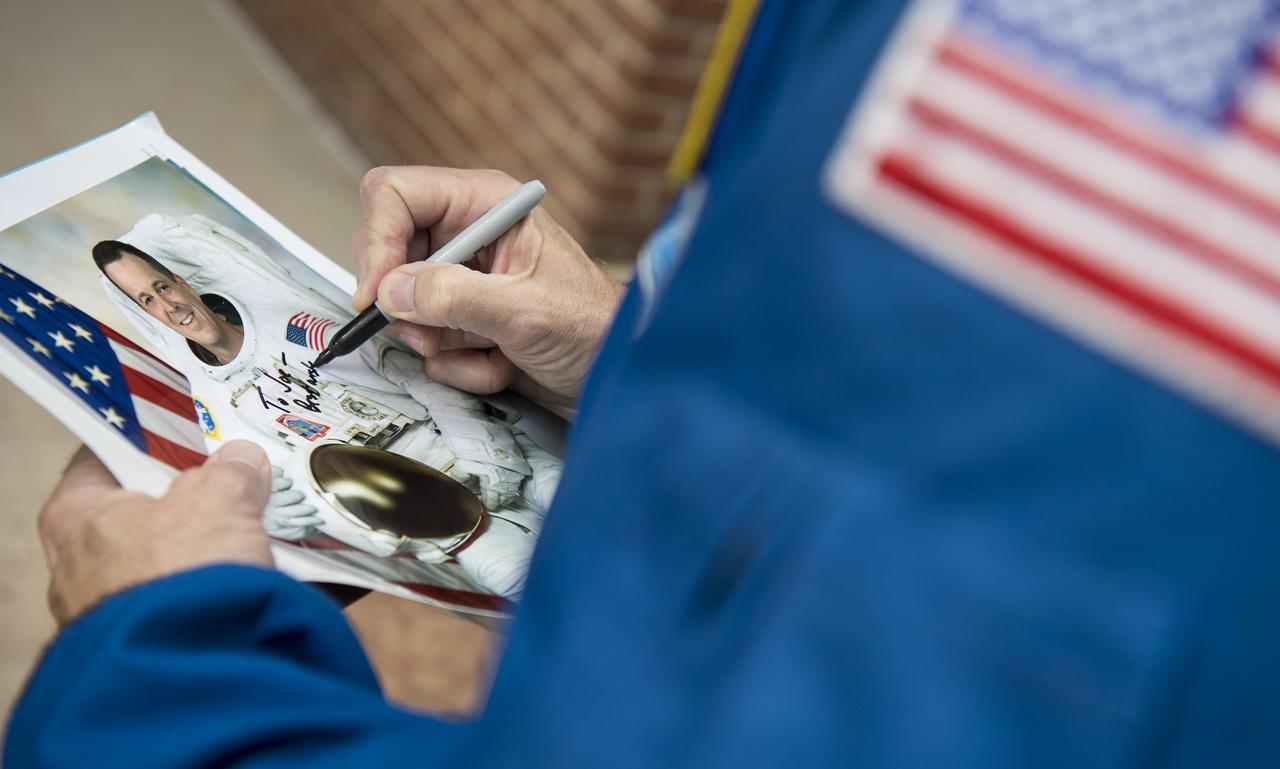
NASA astronaut and Maryland native Ricky Arnold signs an autograph before the Tampa Bay Rays take on the Baltimore Orioles, Saturday, May 4, 2019 at Camden Yards in Baltimore, Md. During Arnold’s 197 days onboard the International Space Station, as part of Expeditions 55 and 56, he ventured outside the space station on three spacewalks in addition to conducting numerous experiments and educational downlink events. Photo Credit: (NASA/Joel Kowsky)
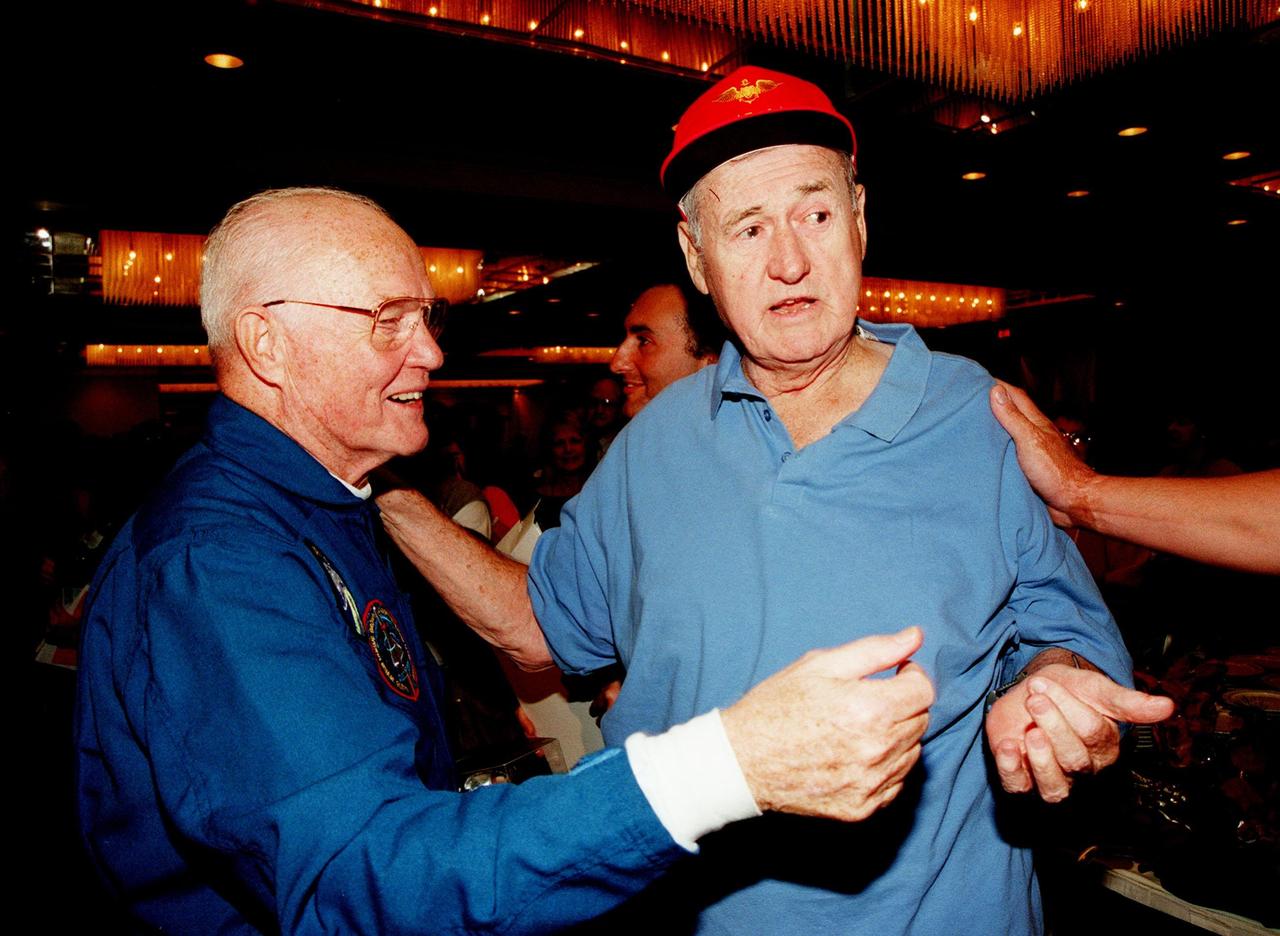
STS-95 Payload Specialist John H. Glenn Jr. (left) greets baseball legend Ted Williams at a reception at the Double Tree Oceanfront Hotel following a parade down State Road A1A in nearby Cocoa Beach. Organizers of the parade included the Cocoa Beach Area Chamber of Commerce, the Brevard County Tourist Development Council, and the cities of Cape Canaveral and Cocoa Beach. The parade is reminiscent of those held after missions during the Mercury Program
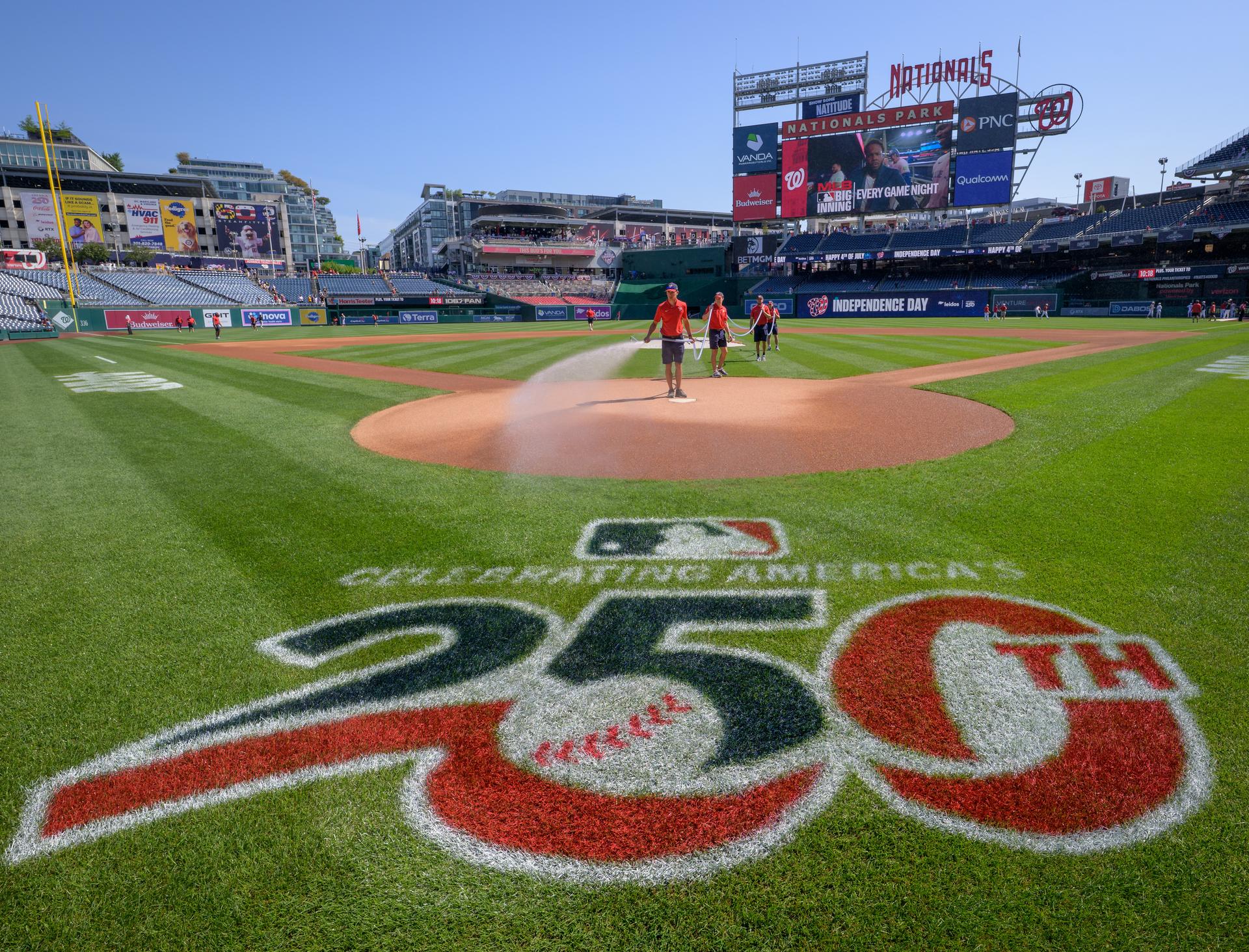
Grounds teams prepare the field before the start of a baseball game between the Pittsburgh Pirates and the Washington Nationals, Saturday, July 4, 2026, at Nationals Park in Washington. NASA’s Artemis II mission crew; NASA astronauts Reid Wiseman, commander; Victor Glover, pilot; Christina Koch, mission specialist; and CSA (Canadian Space Agency) astronaut Jeremy Hansen, mission specialist threw the ceremonial opening pitch. Photo Credit: (NASA/Bill Ingalls)
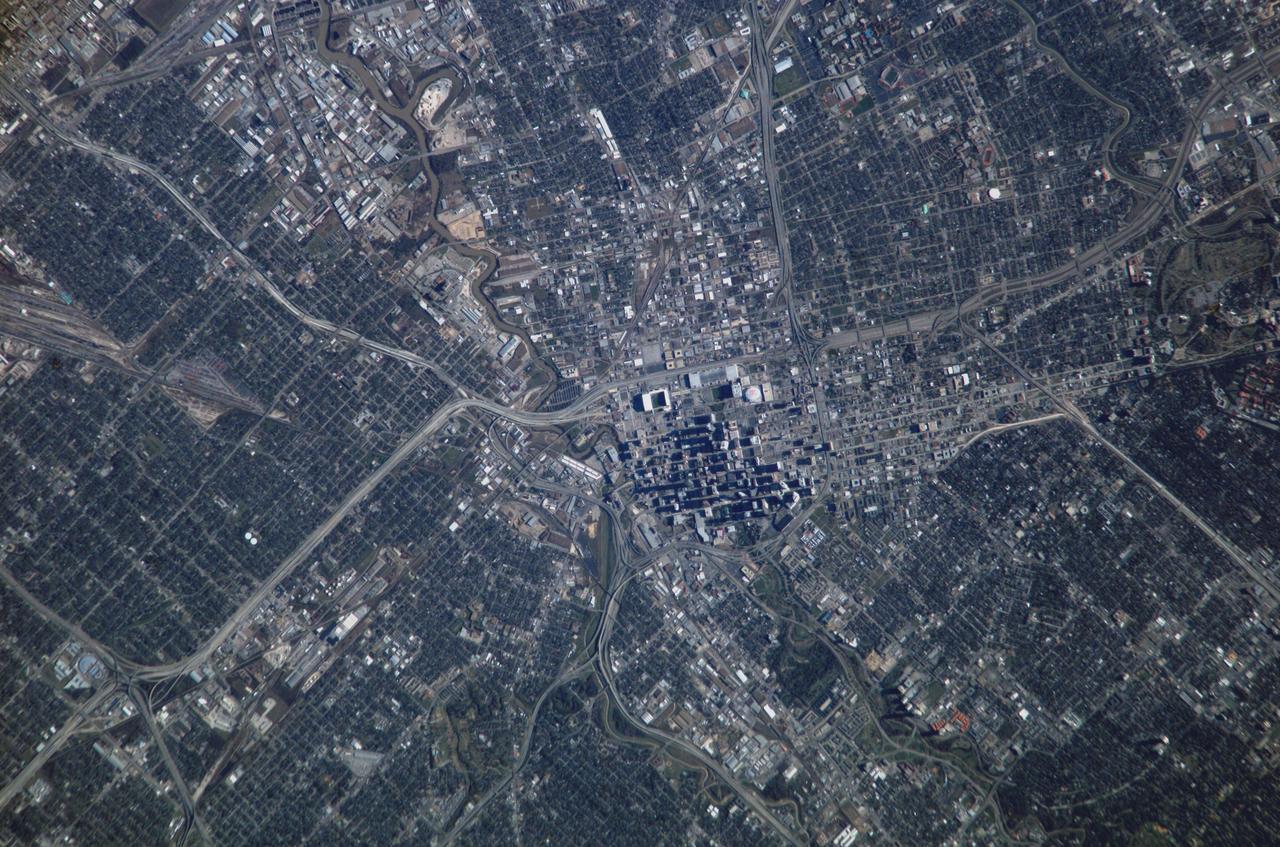
ISS010-E-13665 (17 January 2005) --- The central business district of Houston, 25 miles northwest of the home to NASA's astronauts, is featured in this electronic still camera's view, photographed by the Expedition 10 crew onboard the International Space Station. Green grass can be seen in the major league baseball facility. The nearby NBA facility is also visible.
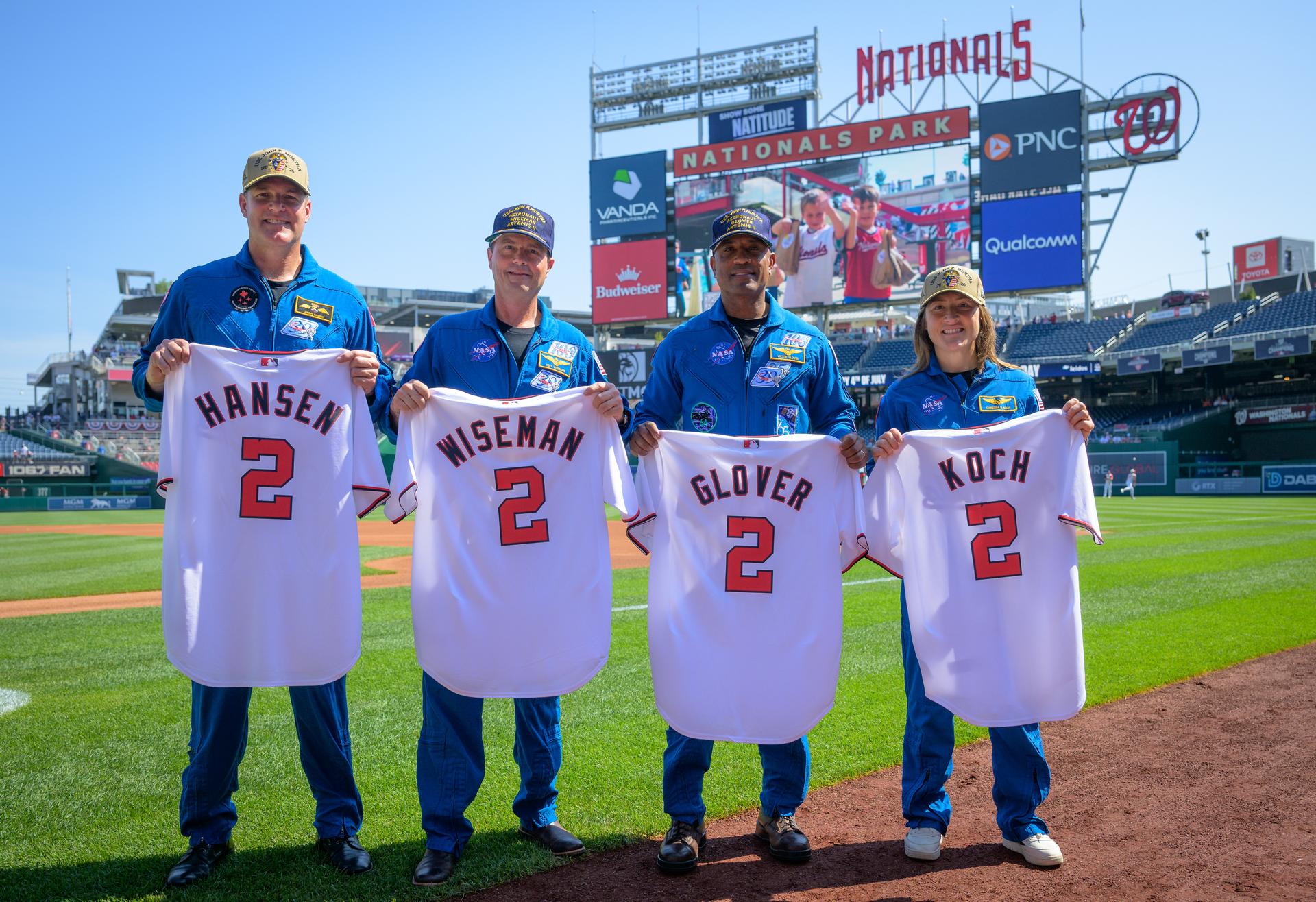
Artemis II astronauts; CSA (Canadian Space Agency) astronaut Jeremy Hansen, mission specialist, left, NASA astronauts Reid Wiseman, commander; Victor Glover, pilot; and Christina Koch, mission specialist, right, pose for a photograph with Nationals jerseys before the start of a baseball game between the Pittsburgh Pirates and the Washington Nationals, Saturday, July 4, 2026, at Nationals Park in Washington. NASA’s Artemis II mission took Wiseman, Glover, Koch, and Hansen on a nearly 10-day journey around the Moon and back to Earth in April 2026. Photo Credit: (NASA/Bill Ingalls)
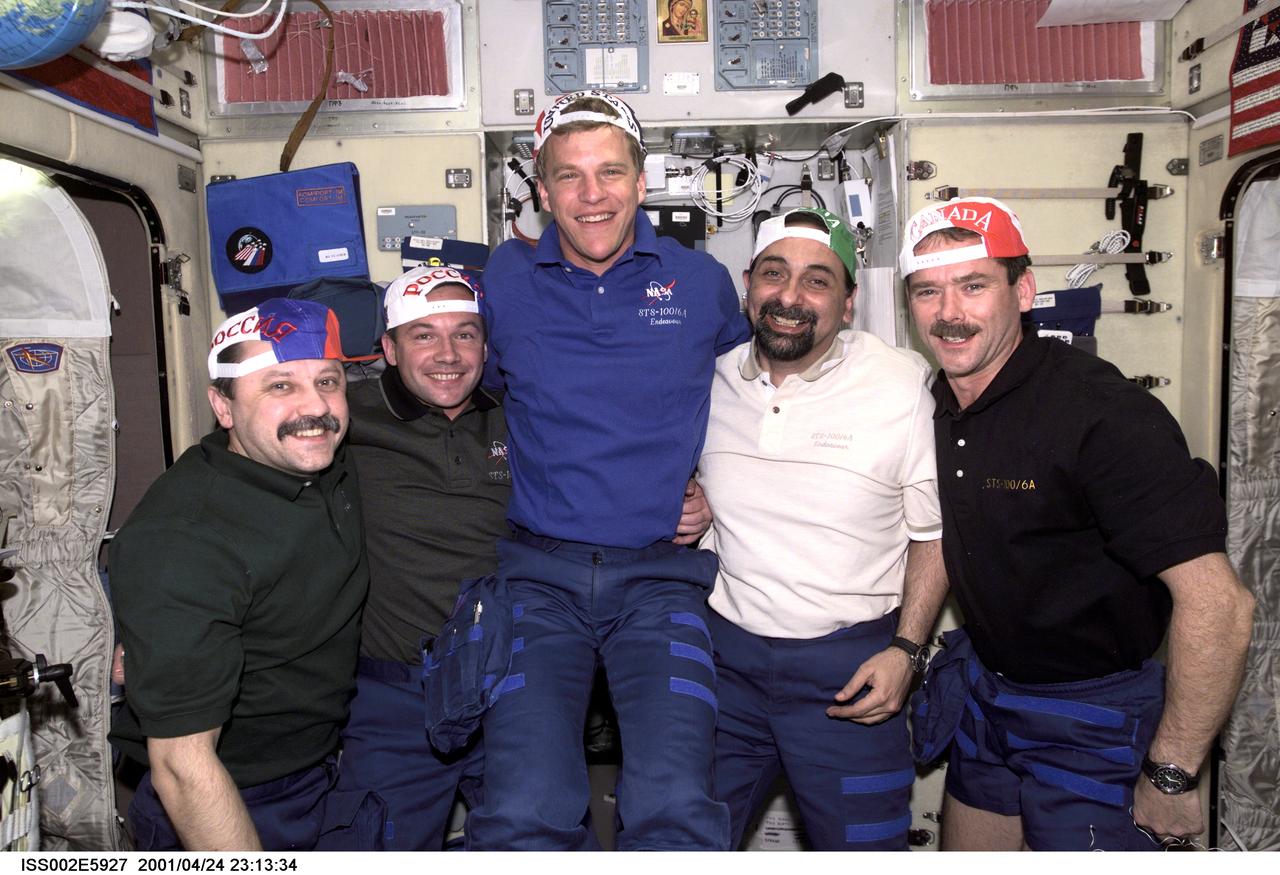
ISS002-E-5927 (24 April 2001) --- Yury V. Usachev, Expedition Two mission commander with STS-100 mission specialists Yuri V. Lonchakov, Scott E. Parazynski, Umberto Guidoni and Chris A. Hadfield, in the Zvezda Service Module, all sport baseball caps representing their home countries, showing the true flavor of the International Space Station (ISS). Usachev and Lonchakov represent Rosaviakosmos, Guidoni represents the European Space Agency (ESA), Parazynski represents NASA, and Hadfield represents the Canadian Space Agency (CSA). The image was taken with a digital still camera.
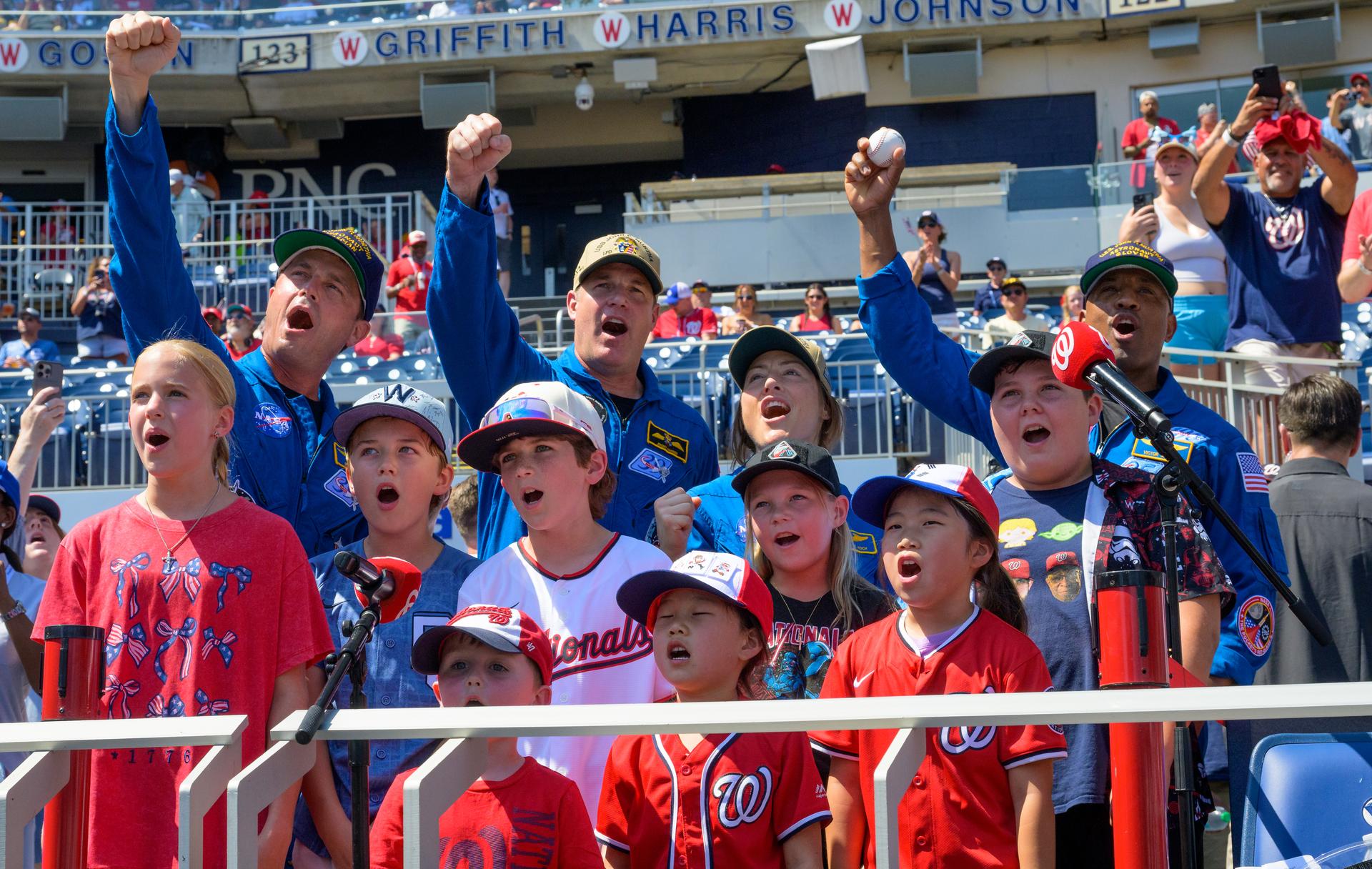
NASA astronaut Reid Wiseman, commander; left, CSA (Canadian Space Agency) astronaut Jeremy Hansen, mission specialist; Christina Koch, mission specialist; and Victor Glover, pilot, right, along with members of the Jr. Nats Kids Club, are seen as they give the call to “play ball” at the beginning of a baseball game between the Pittsburgh Pirates and the Washington Nationals, Saturday, July 4, 2026, at Nationals Park in Washington. NASA’s Artemis II mission took Wiseman, Glover, Koch, and Hansen on a nearly 10-day journey around the Moon and back to Earth in April 2026. Photo Credit: (NASA/Bill Ingalls)
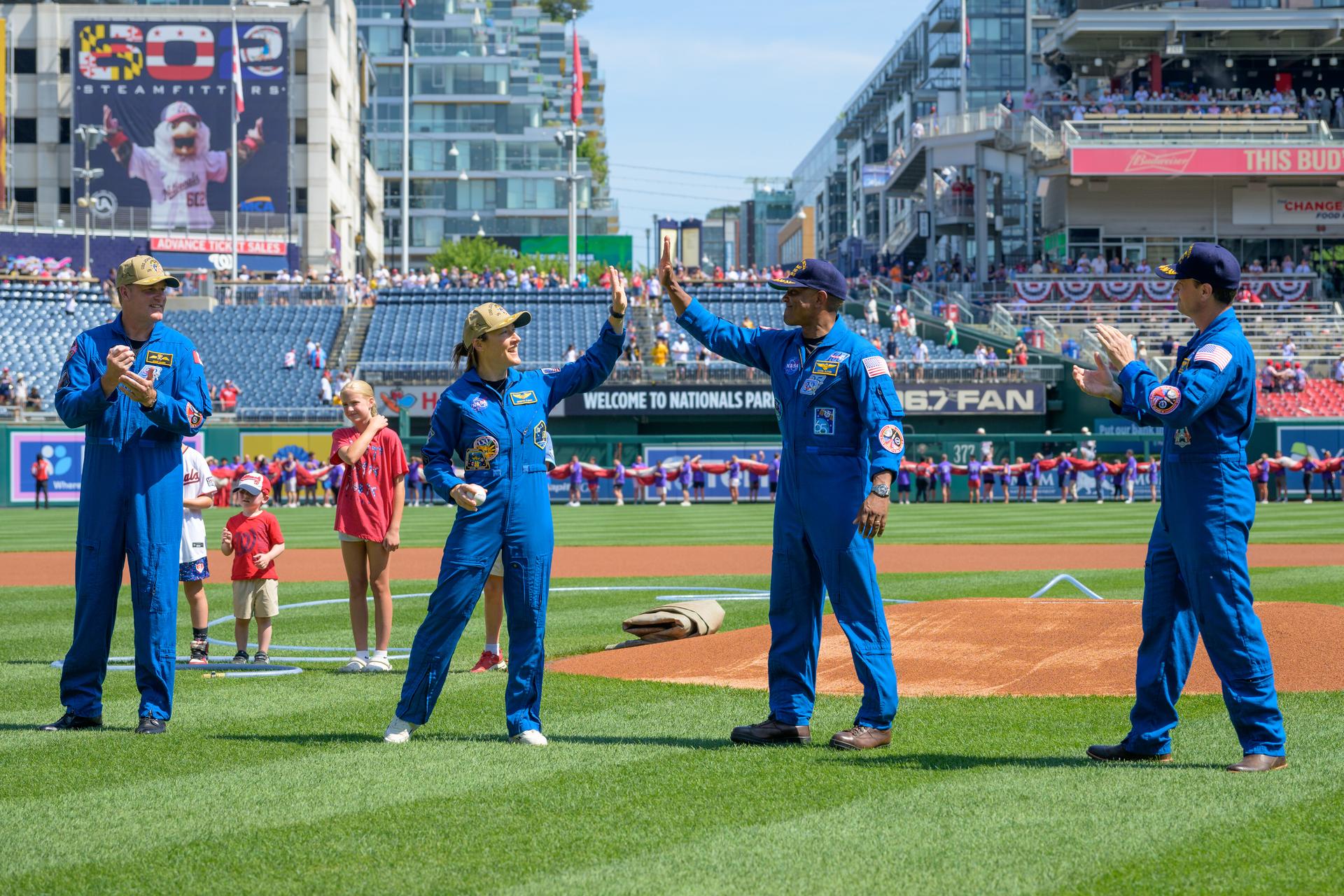
Artemis II astronauts: CSA (Canadian Space Agency) astronaut Jeremy Hansen, mission specialist, left, NASA astronauts Christina Koch, mission specialist; Victor Glover, pilot; and Reid Wiseman, commander, right, celebrate as they throw the ceremonial first pitches before the start of a baseball game between the Pittsburgh Pirates and the Washington Nationals, Saturday, July 4, 2026, at Nationals Park in Washington. NASA’s Artemis II mission took Wiseman, Glover, Koch, and Hansen on a nearly 10-day journey around the Moon and back to Earth in April 2026. Photo Credit: (NASA/Bill Ingalls)
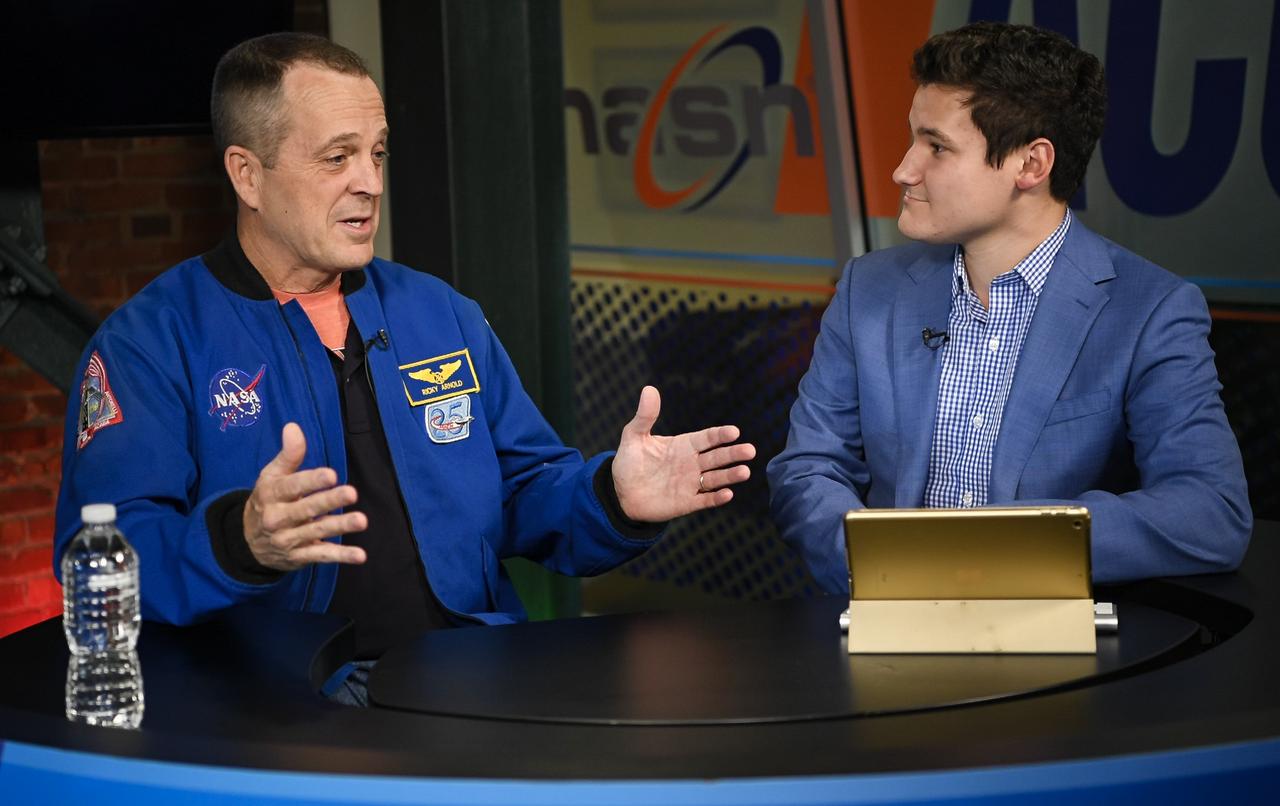
NASA astronaut and Maryland native Ricky Arnold is interviewed by Paul Mancano of MASN All Access before the Tampa Bay Rays take on the Baltimore Orioles, Saturday, May 4, 2019 at Camden Yards in Baltimore, Md. During Arnold’s 197 days onboard the International Space Station, as part of Expeditions 55 and 56, he ventured outside the space station on three spacewalks in addition to conducting numerous experiments and educational downlink events. Photo Credit: (NASA/Joel Kowsky)
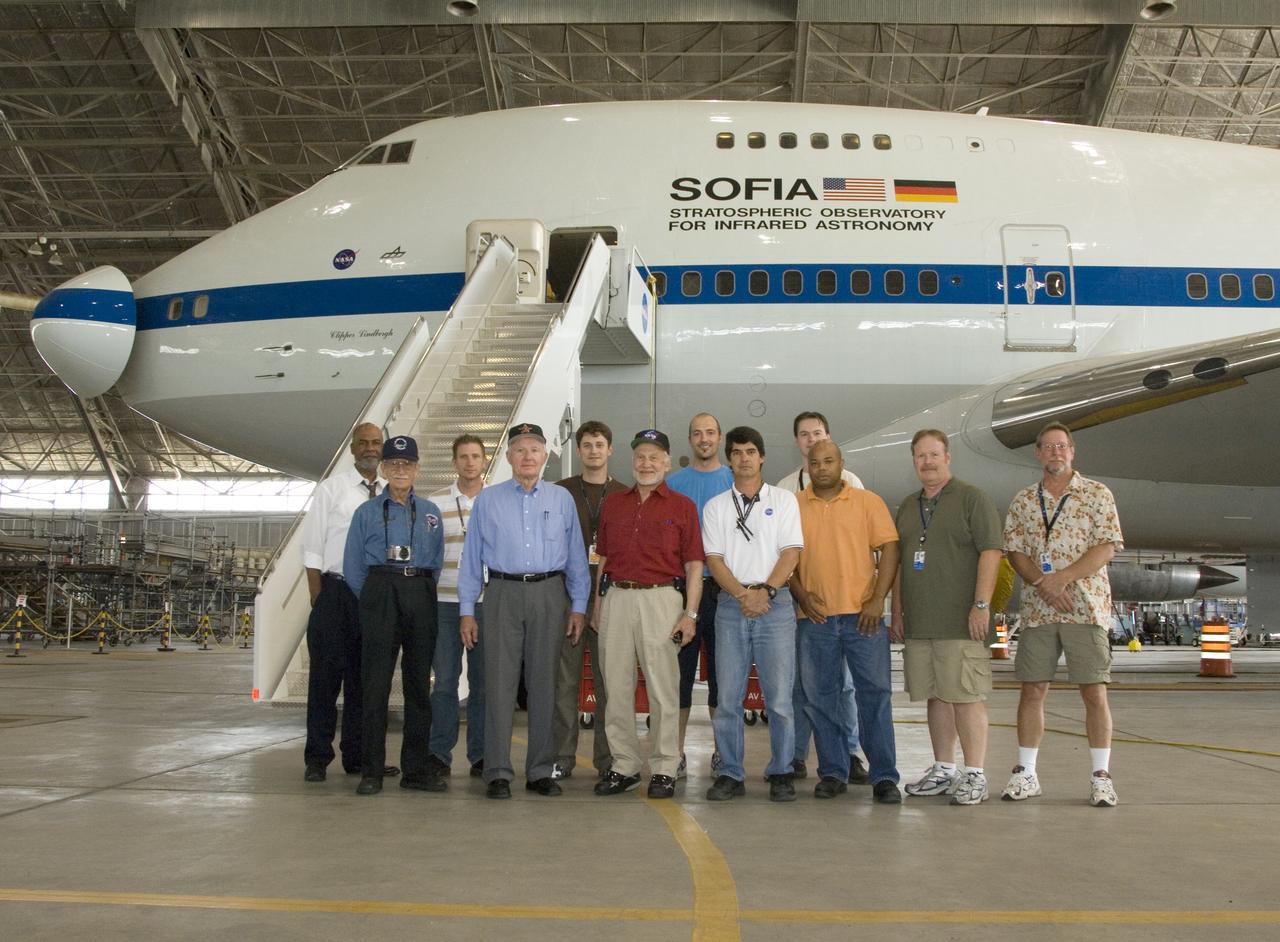
Members of the SOFIA infrared observatory support team gather around Apollo 11 astronaut Buzz Aldrin (in red shirt) during Aldrin's tour of NASA Dryden.
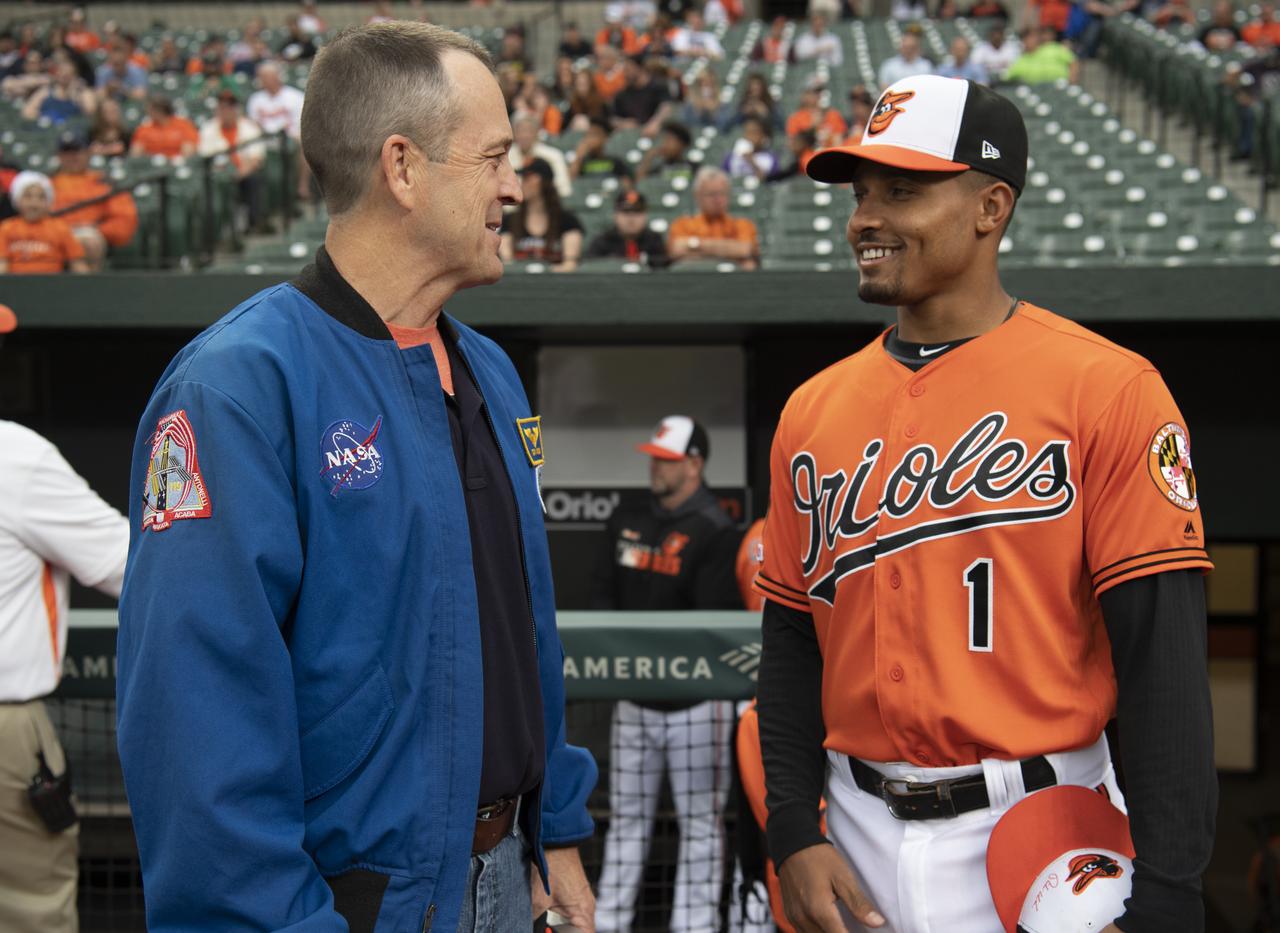
NASA astronaut and Maryland native Ricky Arnold talks with Baltimore Orioles shortstop Richie Martin before the Tampa Bay Rays take on the Baltimore Orioles, Saturday, May 4, 2019 at Camden Yards in Baltimore, Md. During Arnold’s 197 days onboard the International Space Station, as part of Expeditions 55 and 56, he ventured outside the space station on three spacewalks in addition to conducting numerous experiments and educational downlink events. Photo Credit: (NASA/Joel Kowsky)
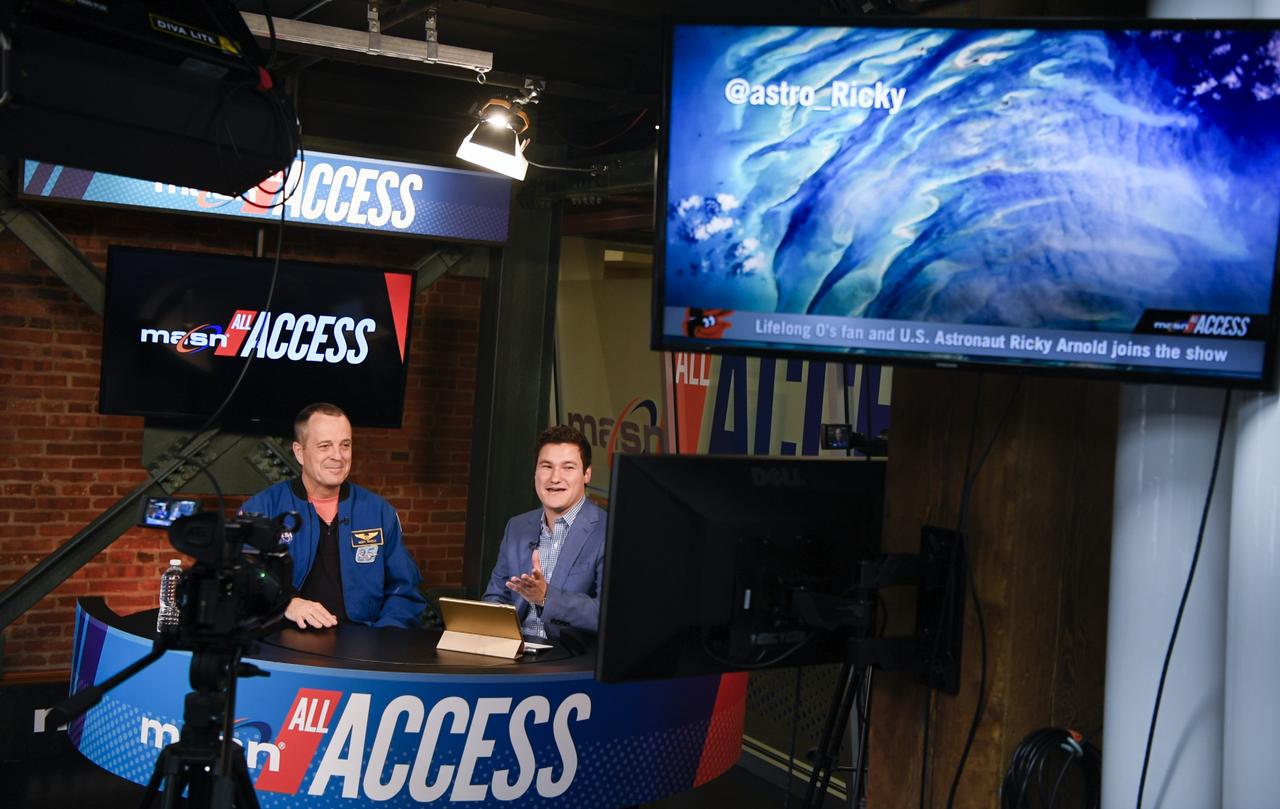
NASA astronaut and Maryland native Ricky Arnold is interviewed by Paul Mancano of MASN All Access before the Tampa Bay Rays take on the Baltimore Orioles, Saturday, May 4, 2019 at Camden Yards in Baltimore, Md. During Arnold’s 197 days onboard the International Space Station, as part of Expeditions 55 and 56, he ventured outside the space station on three spacewalks in addition to conducting numerous experiments and educational downlink events. Photo Credit: (NASA/Joel Kowsky)
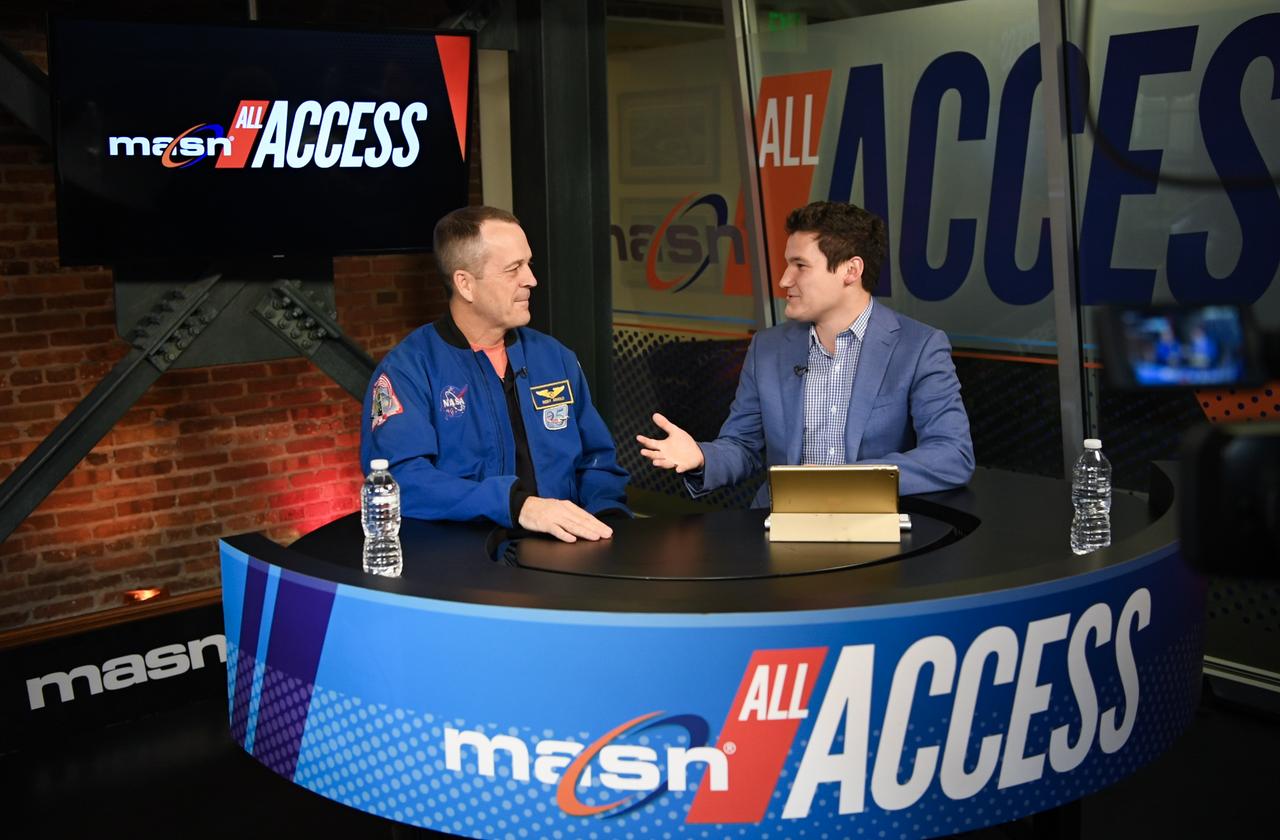
NASA astronaut and Maryland native Ricky Arnold is interviewed by Paul Mancano of MASN All Access before the Tampa Bay Rays take on the Baltimore Orioles, Saturday, May 4, 2019 at Camden Yards in Baltimore, Md. During Arnold’s 197 days onboard the International Space Station, as part of Expeditions 55 and 56, he ventured outside the space station on three spacewalks in addition to conducting numerous experiments and educational downlink events. Photo Credit: (NASA/Joel Kowsky)
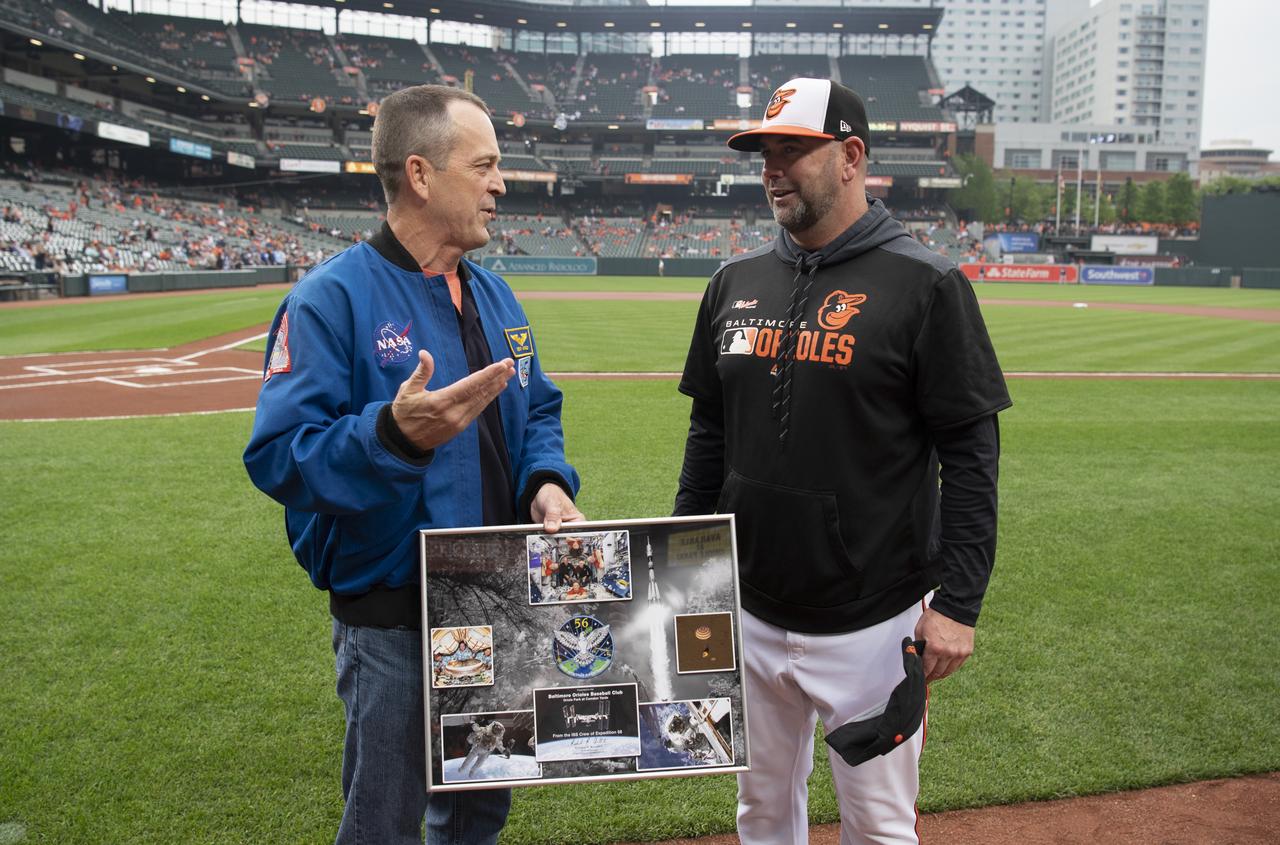
NASA astronaut and Maryland native Ricky Arnold talks with Baltimore Orioles manager Brandon Hyde after presenting a montage of images from his mission and a Baltimore Orioles hat that was flown aboard the International Space Station before the Tampa Bay Rays take on the Baltimore Orioles, Saturday, May 4, 2019 at Camden Yards in Baltimore, Md. During Arnold’s 197 days onboard the International Space Station, as part of Expeditions 55 and 56, he ventured outside the space station on three spacewalks in addition to conducting numerous experiments and educational downlink events. Photo Credit: (NASA/Joel Kowsky)
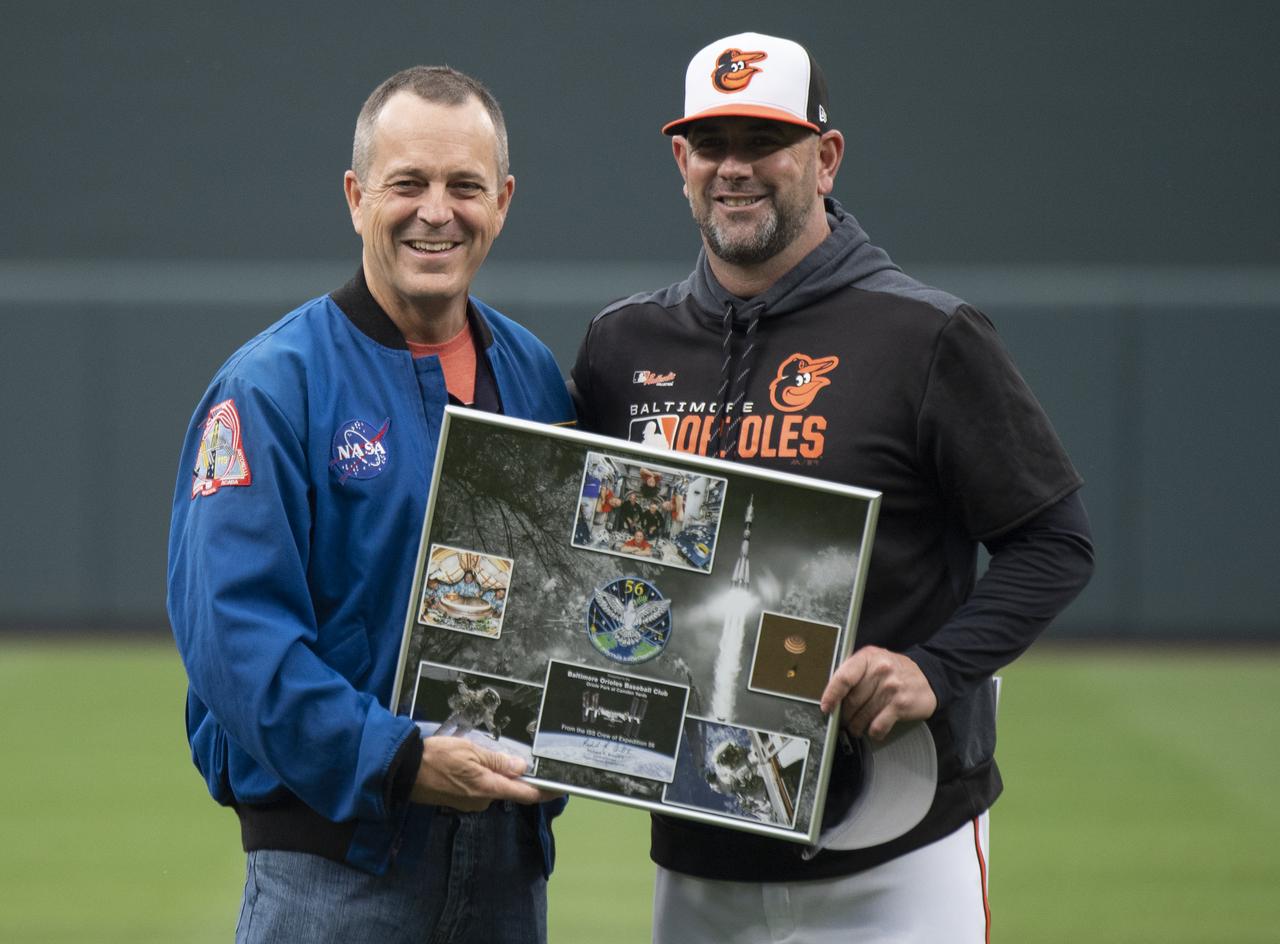
NASA astronaut and Maryland native Ricky Arnold presents a montage of images from his mission and a Baltimore Orioles hat that was flown aboard the International Space Station to Baltimore Orioles manager Brandon Hyde before the Tampa Bay Rays take on the Baltimore Orioles, Saturday, May 4, 2019 at Camden Yards in Baltimore, Md. During Arnold’s 197 days onboard the International Space Station, as part of Expeditions 55 and 56, he ventured outside the space station on three spacewalks in addition to conducting numerous experiments and educational downlink events. Photo Credit: (NASA/Joel Kowsky)
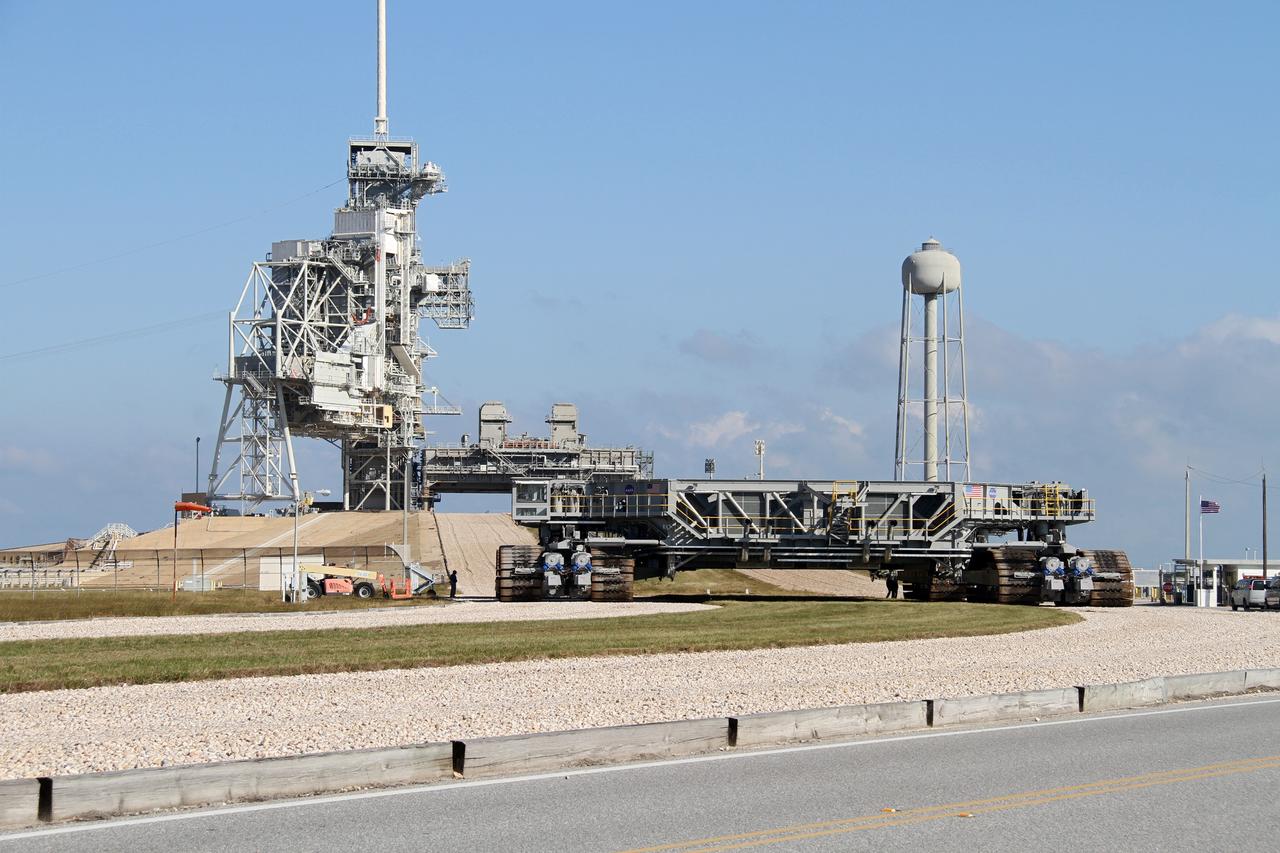
CAPE CANAVERAL, Fla. -- At NASA's Kennedy Space Center in Florida, crawler-transporter No. 2 arrives at Launch Pad 39A to check out recently completed modifications to ensure its ability to carry launch vehicles such as the space agency's Space Launch System heavy-lift rocket to the pad. NASA's Ground Systems Development and Operations Program is leading the 20-year life-extension project for the crawler. A pair of behemoth machines called crawler-transporters has carried the load of taking rockets and spacecraft to the launch pad for more than 40 years at NASA’s Kennedy Space Center in Florida. Each the size of a baseball infield and powered by locomotive and large electrical power generator engines, the crawler-transporters will stand ready to keep up the work for the next generation of launch vehicles projects to lift astronauts into space. For more information, visit http://www.nasa.gov/exploration/systems/ground/index.html Photo credit: NASA/Ben Smegelsky
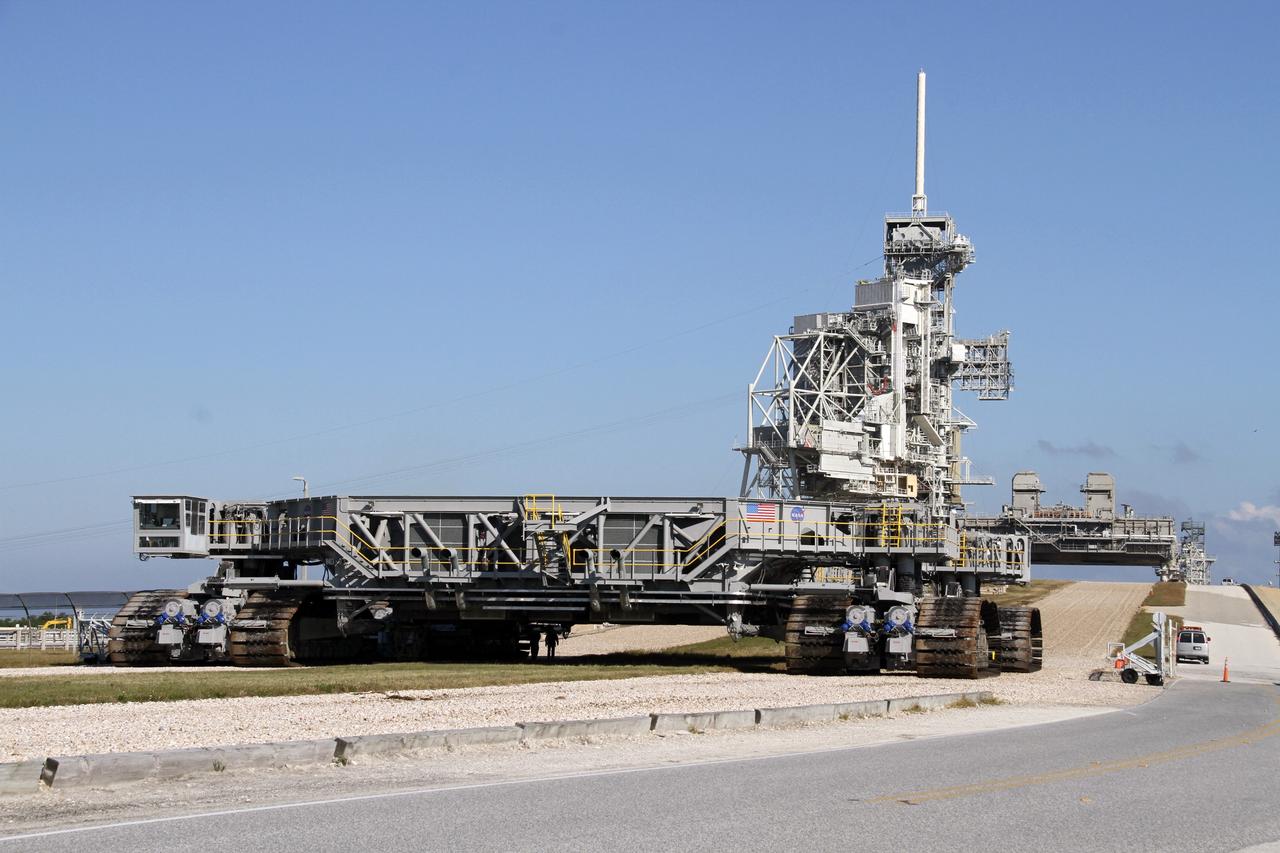
CAPE CANAVERAL, Fla. -- At NASA's Kennedy Space Center in Florida, crawler-transporter No. 2 arrives at Launch Pad 39A to check out recently completed modifications to ensure its ability to carry launch vehicles such as the space agency's Space Launch System heavy-lift rocket to the pad. NASA's Ground Systems Development and Operations Program is leading the 20-year life-extension project for the crawler. A pair of behemoth machines called crawler-transporters has carried the load of taking rockets and spacecraft to the launch pad for more than 40 years at NASA’s Kennedy Space Center in Florida. Each the size of a baseball infield and powered by locomotive and large electrical power generator engines, the crawler-transporters will stand ready to keep up the work for the next generation of launch vehicles projects to lift astronauts into space. For more information, visit http://www.nasa.gov/exploration/systems/ground/index.html Photo credit: NASA/Ben Smegelsky
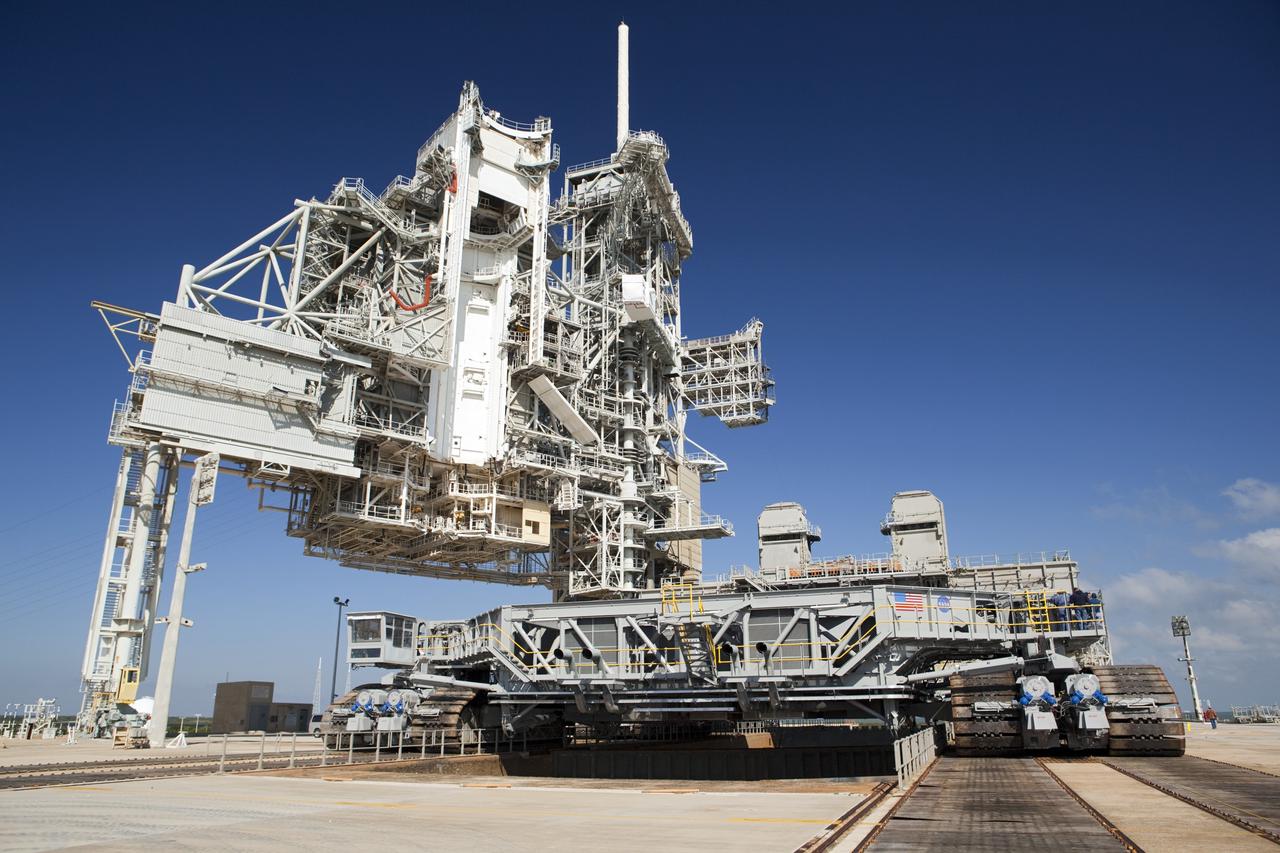
CAPE CANAVERAL, Fla. -- At NASA's Kennedy Space Center in Florida, crawler-transporter No. 2 arrives at Launch Pad 39A to check out recently completed modifications to ensure its ability to carry launch vehicles such as the space agency's Space Launch System heavy-lift rocket to the pad. NASA's Ground Systems Development and Operations Program is leading the 20-year life-extension project for the crawler. A pair of behemoth machines called crawler-transporters has carried the load of taking rockets and spacecraft to the launch pad for more than 40 years at NASA’s Kennedy Space Center in Florida. Each the size of a baseball infield and powered by locomotive and large electrical power generator engines, the crawler-transporters will stand ready to keep up the work for the next generation of launch vehicles to lift astronauts into space. For more information, visit http://www.nasa.gov/exploration/systems/ground/index.html Photo credit: NASA/ Dimitri Gerondidakis
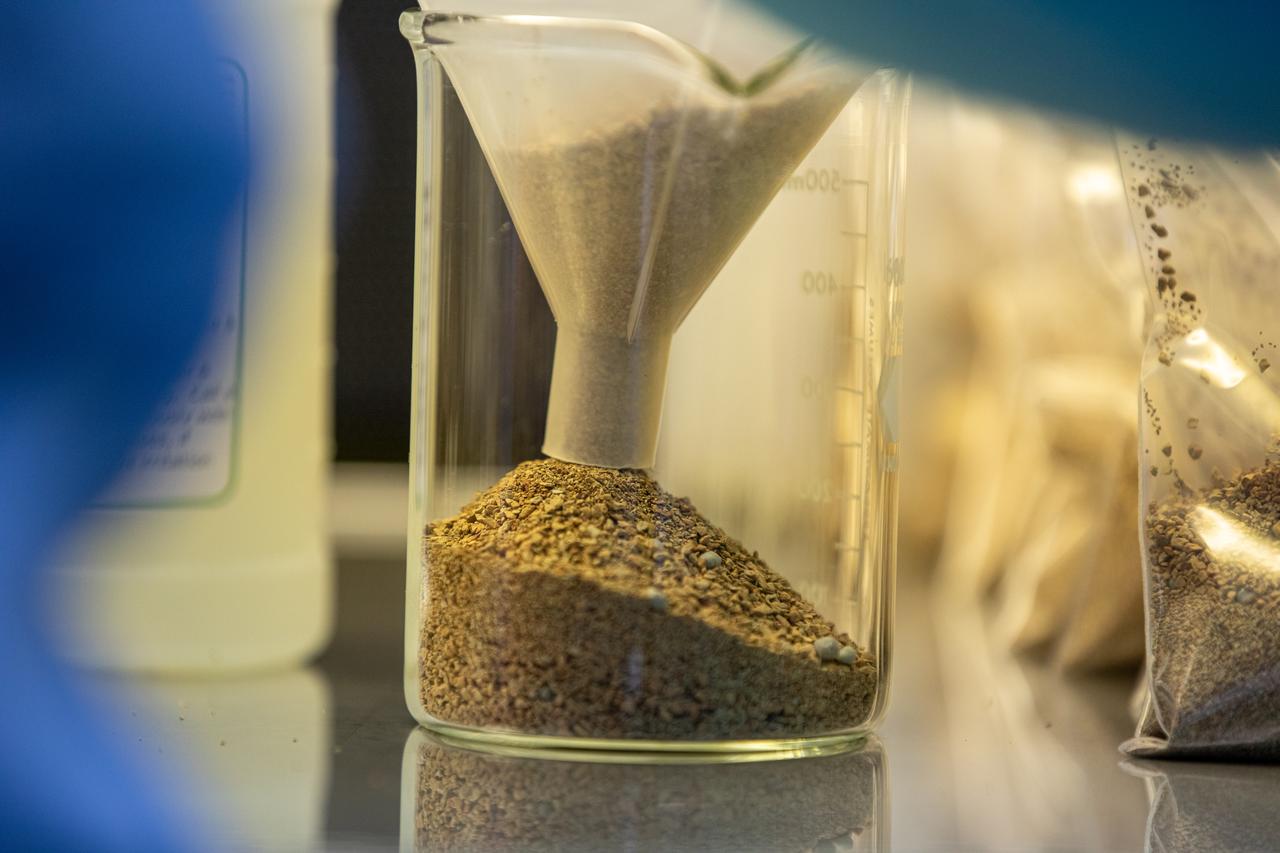
Inside the Space Station Processing Facility at NASA’s Kennedy Space Center in Florida, a researcher measures out the calcined clay that will be used to assemble plant pillows on Jan. 16, 2019. Often used to condition baseball infields, the clay’s size and roughness traps air and absorbs water to provide both to plant roots in microgravity. The pillows are small containers used to grow plants in space aboard the International Space Station. These pillows are for a series of plant experiments called VEG-03 J/K/L that will monitor the growth of three types of leafy greens and test a new way of handling seeds. The experiments will be launched to the orbiting laboratory aboard a Northrop Grumman Antares rocket and Cygnus spacecraft on the company’s 13th resupply services mission. Liftoff is scheduled for Feb. 9, 2020, at 5:39 p.m. EST from the agency’s Wallops Flight Facility in Virginia.
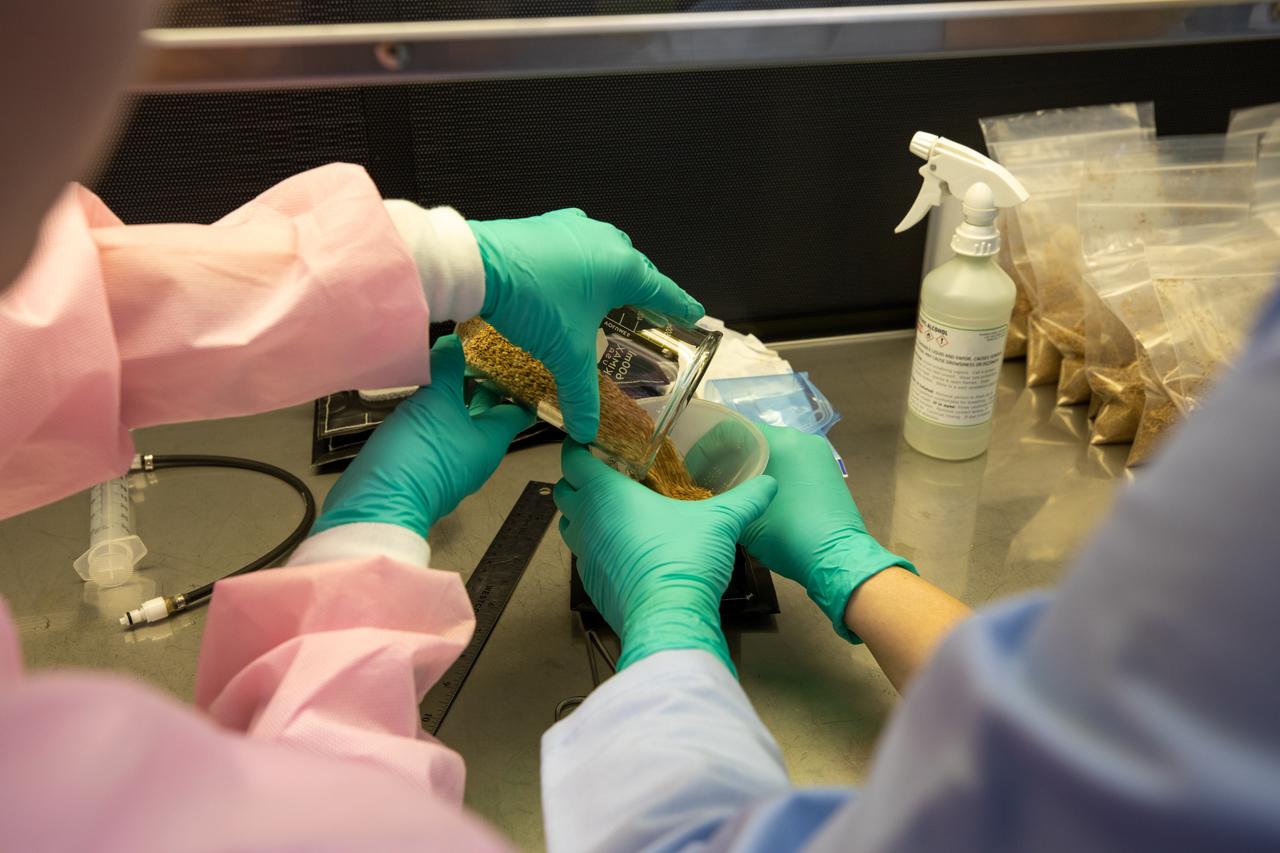
Inside the Space Station Processing Facility at NASA’s Kennedy Space Center in Florida, a researcher measures out the calcined clay that will be used to assemble plant pillows on Jan. 16, 2019. Often used to condition baseball infields, the clay’s size and roughness traps air and absorbs water to provide both to plant roots in microgravity. The pillows are small containers used to grow plants in space aboard the International Space Station. The pillows are for a series of plant experiments called VEG-03 J/K/L that will monitor the growth of three types of leafy greens and test a new way of handling seeds. The experiments will be launched to the orbiting laboratory aboard a Northrop Grumman Antares rocket and Cygnus spacecraft on the company’s 13th resupply services mission. Liftoff is scheduled for Feb. 9, 2020, at 5:39 p.m. EST from the agency’s Wallops Flight Facility in Virginia.
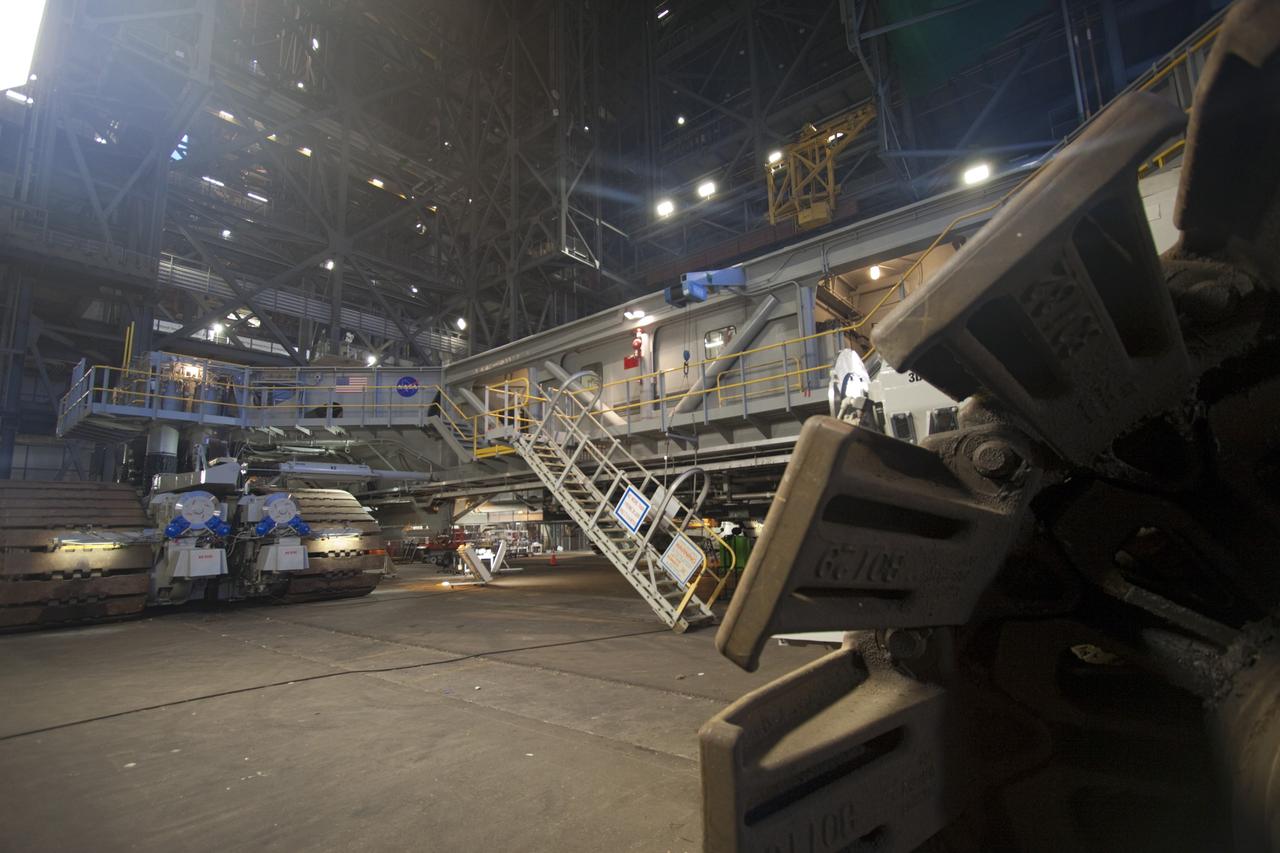
CAPE CANAVERAL, Fla. -- At NASA's Kennedy Space Center in Florida, crawler-transporter No. 2 has been undergoing modifications inside high bay 2 of the Vehicle Assembly Building in preparation to carry the space agency's Space Launch System heavy-lift rocket to the launch pad. NASA's Ground Systems Development and Operations Program is leading the 20-year life-extension project for the crawler. A pair of behemoth machines called crawler-transporters has carried the load of taking rockets and spacecraft to the launch pad for more than 40 years at NASA’s Kennedy Space Center in Florida. Each the size of a baseball infield and powered by locomotive and large electrical power generator engines, the crawler-transporters will stand ready to keep up the work for the next generation of launch vehicles projects to lift astronauts into space. For more information, visit http://www.nasa.gov/exploration/systems/ground/index.html Photo credit: NASA/Jim Grossmann
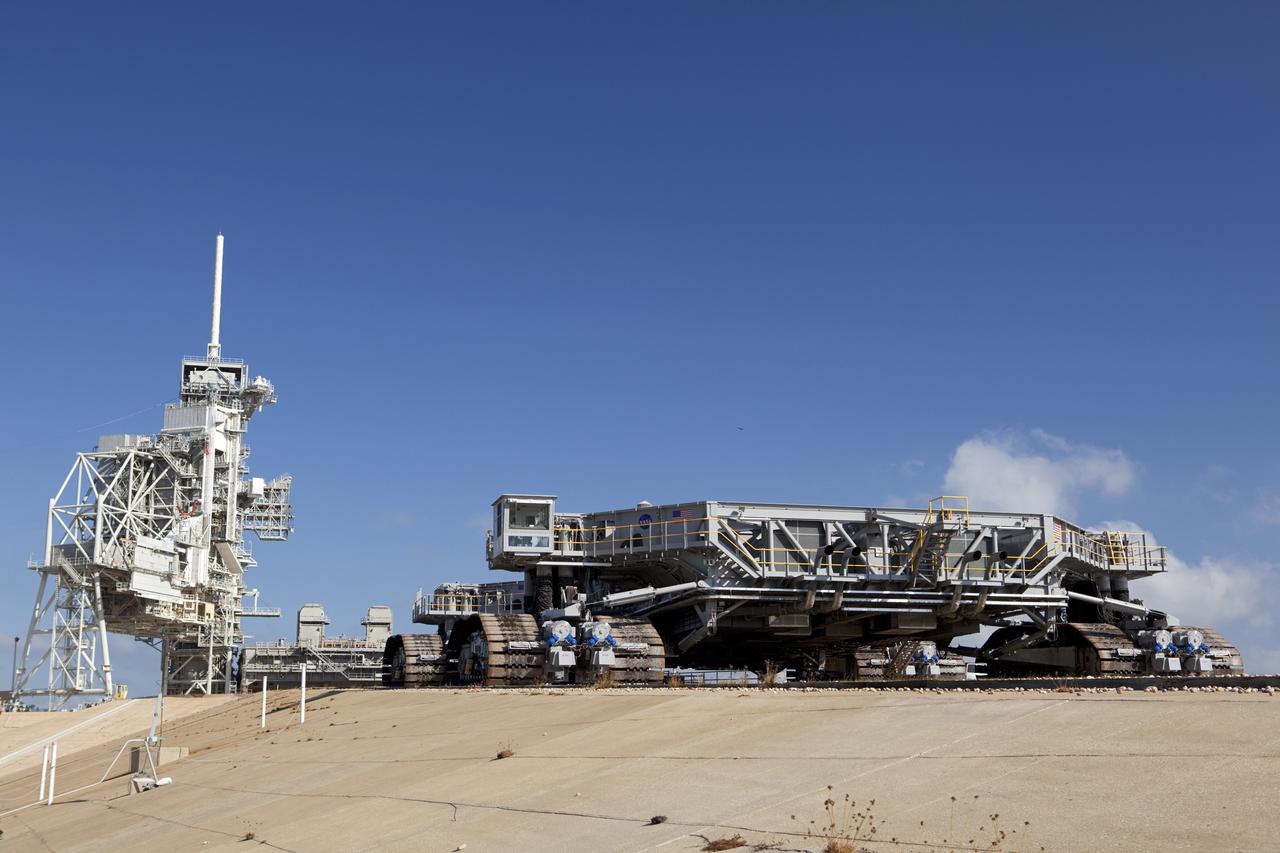
CAPE CANAVERAL, Fla. -- At NASA's Kennedy Space Center in Florida, crawler-transporter No. 2 arrives at Launch Pad 39A to check out recently completed modifications to ensure its ability to carry launch vehicles such as the space agency's Space Launch System heavy-lift rocket to the pad. NASA's Ground Systems Development and Operations Program is leading the 20-year life-extension project for the crawler. A pair of behemoth machines called crawler-transporters has carried the load of taking rockets and spacecraft to the launch pad for more than 40 years at NASA’s Kennedy Space Center in Florida. Each the size of a baseball infield and powered by locomotive and large electrical power generator engines, the crawler-transporters will stand ready to keep up the work for the next generation of launch vehicles to lift astronauts into space. For more information, visit http://www.nasa.gov/exploration/systems/ground/index.html Photo credit: NASA/ Dimitri Gerondidakis
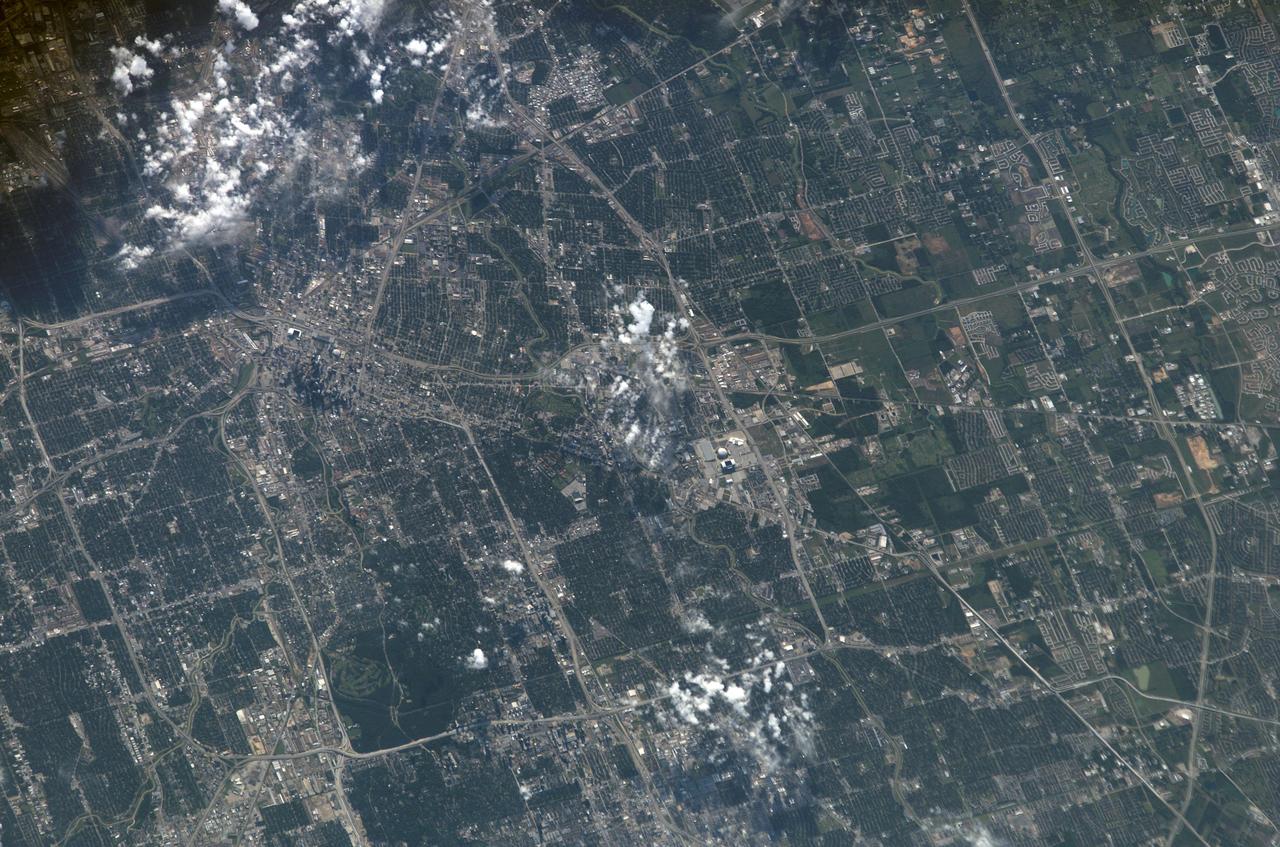
S115-E-06158 (15 Sept. 2006) --- This image of Houston's "downtown" and "uptown" districts and most of the area inside the I-610 Loop was photographed by one of the STS-115 crewmembers aboard the Space Shuttle Atlantis. Harris County Domed Stadium and the nearby facility for the National Football League's American Conference Houston representatives are just below the scattered cloud patch at frame center. What has become known as "uptown" Houston is in the lower left corner. The central business district or downtown is in the upper left quadrant, easily identified by the skyscrapers and the facilities for Houston's Major League Baseball and National Basketball Association affiliates. The Medical Center district is near the cloud patch just north of the older domed stadium. NASA is too far south to appear in the picture, though the southern leg of Beltway 8, about six miles north of the Johnson Space Center, appears at right edge; and Bush Intercontinental Airport is too far north.
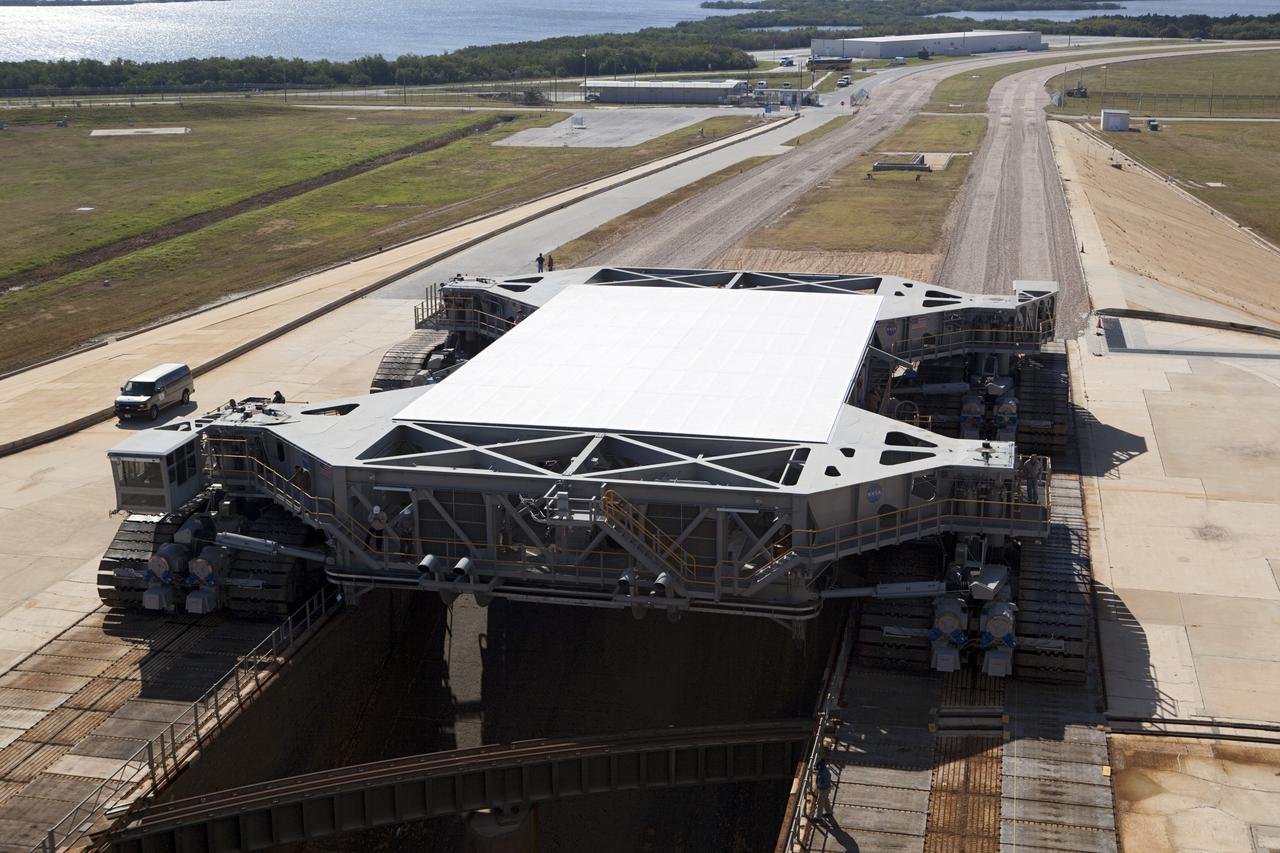
CAPE CANAVERAL, Fla. -- At NASA's Kennedy Space Center in Florida, crawler-transporter No. 2 arrives at Launch Pad 39A to check out recently completed modifications to ensure its ability to carry launch vehicles such as the space agency's Space Launch System heavy-lift rocket to the pad. NASA's Ground Systems Development and Operations Program is leading the 20-year life-extension project for the crawler. A pair of behemoth machines called crawler-transporters has carried the load of taking rockets and spacecraft to the launch pad for more than 40 years at NASA’s Kennedy Space Center in Florida. Each the size of a baseball infield and powered by locomotive and large electrical power generator engines, the crawler-transporters will stand ready to keep up the work for the next generation of launch vehicles to lift astronauts into space. For more information, visit http://www.nasa.gov/exploration/systems/ground/index.html Photo credit: NASA/ Dimitri Gerondidakis
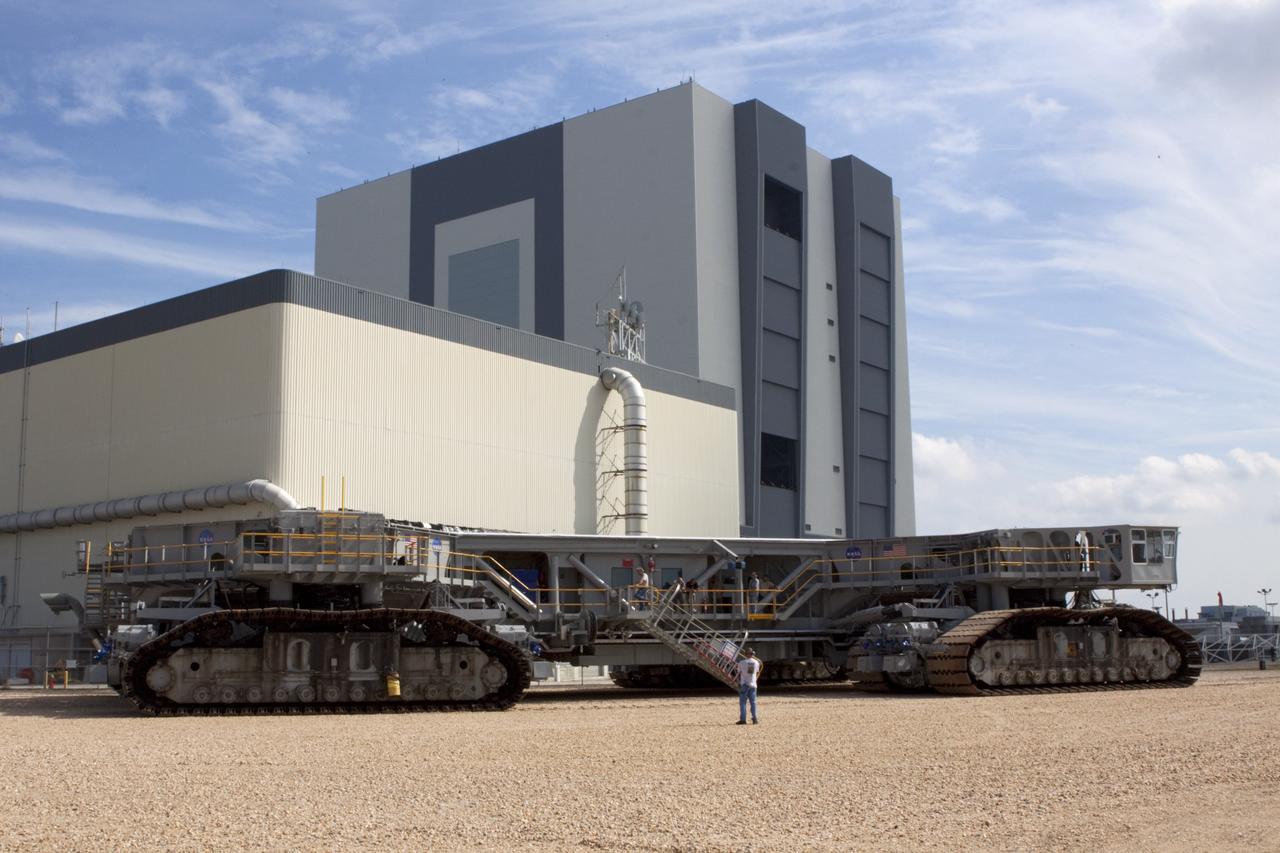
CAPE CANAVERAL, Fla. -- At NASA's Kennedy Space Center in Florida, crawler-transporter No. 2 is parked outside of the Vehicle Assembly Building. The Crawler-transporter has been undergoing modifications to ensure its ability to carry the space agency's Space Launch System heavy-lift rocket to the launch pad. NASA's Ground Systems Development and Operations Program is leading the 20-year life-extension project for the crawler. A pair of behemoth machines called crawler-transporters has carried the load of taking rockets and spacecraft to the launch pad for more than 40 years at NASA’s Kennedy Space Center in Florida. Each the size of a baseball infield and powered by locomotive and large electrical power generator engines, the crawler-transporters will stand ready to keep up the work for the next generation of launch vehicles projects to lift astronauts into space. For more information, visit http://www.nasa.gov/exploration/systems/ground/index.html Photo credit: NASA/Jim Grossmann
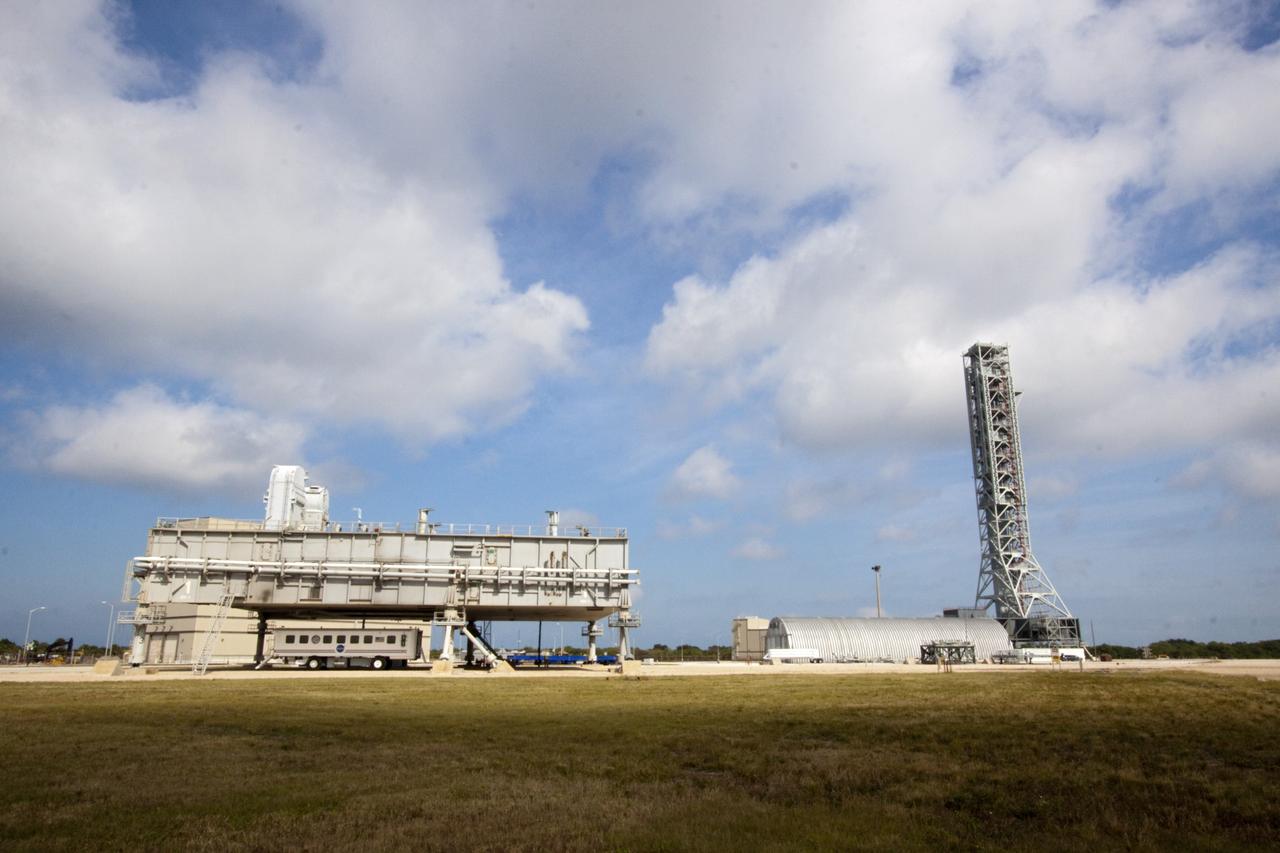
CAPE CANAVERAL, Fla. -- At NASA's Kennedy Space Center in Florida, a space shuttle era mobile launcher platform, on the left, sits on pedestals outside the Vehicle Assembly Building. To the right is the mobile launcher that will support the space agency's Space Launch System heavy-lift rocket and Orion spacecraft. NASA's Ground Systems Development and Operations Program is leading the 20-year life-extension project for the crawler. A pair of behemoth machines called crawler-transporters has carried the load of taking rockets and spacecraft to the launch pad for more than 40 years at NASA’s Kennedy Space Center in Florida. Each the size of a baseball infield and powered by locomotive and large electrical power generator engines, the crawler-transporters will stand ready to keep up the work for the next generation of launch vehicles projects to lift astronauts into space. For more information, visit http://www.nasa.gov/exploration/systems/ground/index.html Photo credit: NASA/Jim Grossmann
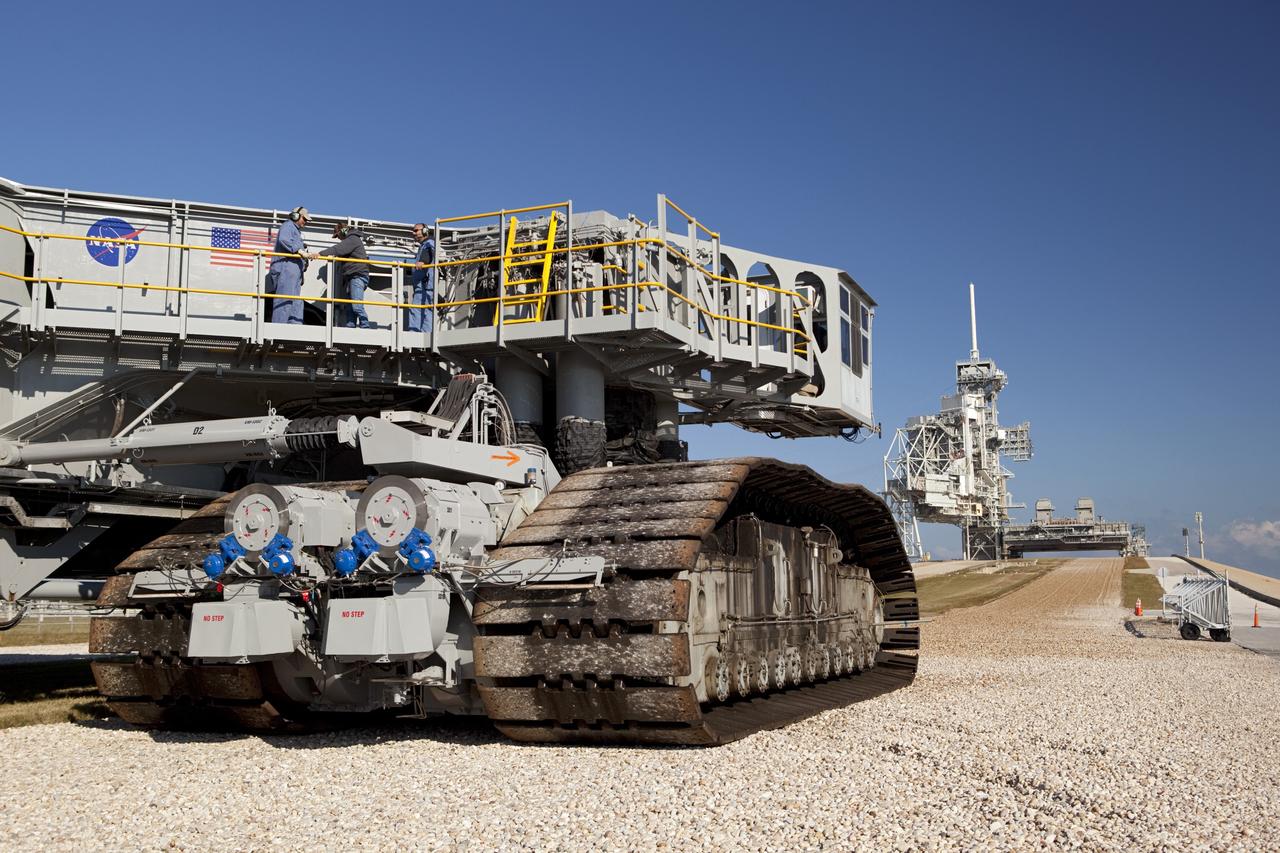
CAPE CANAVERAL, Fla. -- At NASA's Kennedy Space Center in Florida, crawler-transporter No. 2 arrives at Launch Pad 39A to check out recently completed modifications to ensure its ability to carry launch vehicles such as the space agency's Space Launch System heavy-lift rocket to the pad. NASA's Ground Systems Development and Operations Program is leading the 20-year life-extension project for the crawler. A pair of behemoth machines called crawler-transporters has carried the load of taking rockets and spacecraft to the launch pad for more than 40 years at NASA’s Kennedy Space Center in Florida. Each the size of a baseball infield and powered by locomotive and large electrical power generator engines, the crawler-transporters will stand ready to keep up the work for the next generation of launch vehicles to lift astronauts into space. For more information, visit http://www.nasa.gov/exploration/systems/ground/index.html Photo credit: NASA/ Dimitri Gerondidakis
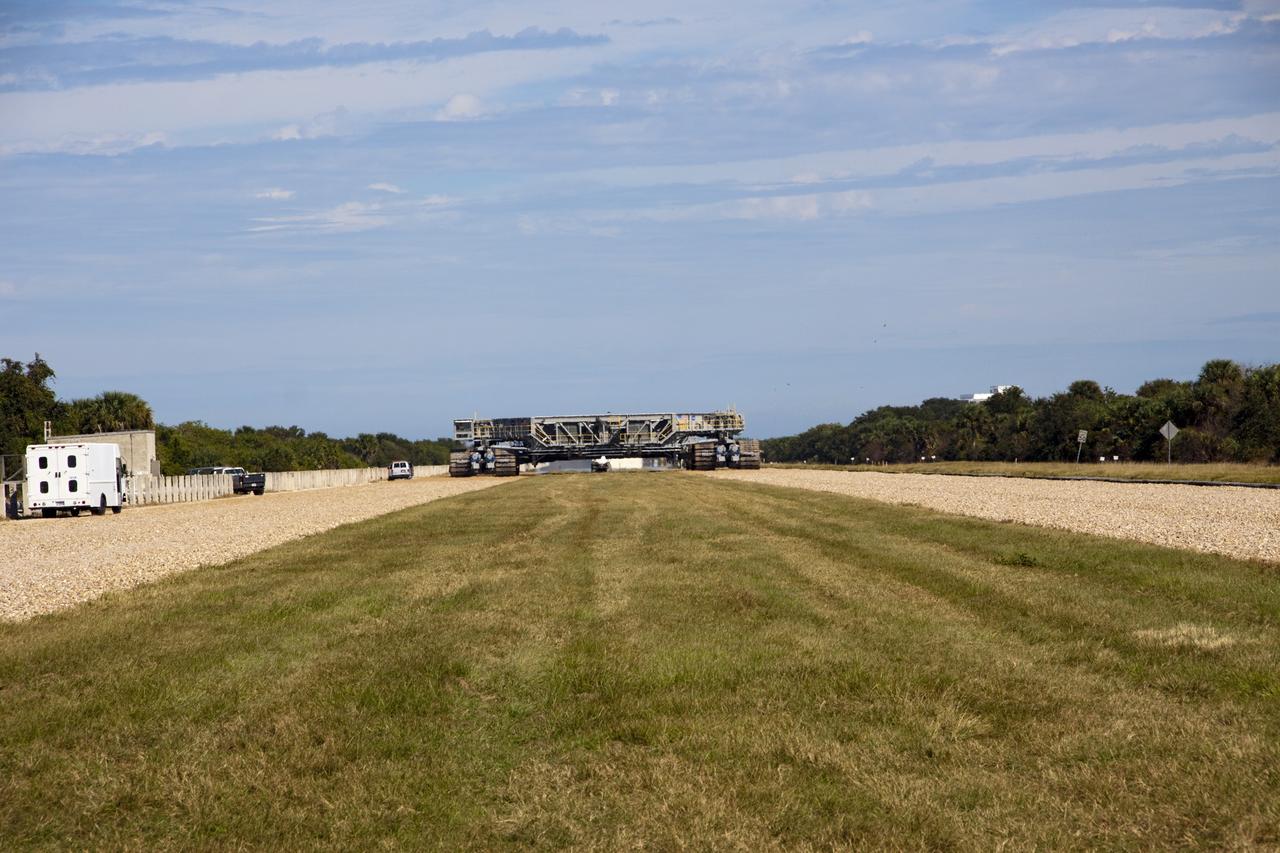
CAPE CANAVERAL, Fla. -- At NASA's Kennedy Space Center in Florida, crawler-transporter No. 2 moves along the crawler way toward Launch Pad 39A following modifications to ensure its ability to carry launch vehicles such as the space agency's Space Launch System heavy-lift rocket to the launch pad. NASA's Ground Systems Development and Operations Program is leading the 20-year life-extension project for the crawler. A pair of behemoth machines called crawler-transporters has carried the load of taking rockets and spacecraft to the launch pad for more than 40 years at NASA’s Kennedy Space Center in Florida. Each the size of a baseball infield and powered by locomotive and large electrical power generator engines, the crawler-transporters will stand ready to keep up the work for the next generation of launch vehicles projects to lift astronauts into space. For more information, visit http://www.nasa.gov/exploration/systems/ground/index.html Photo credit: NASA/Jim Grossmann
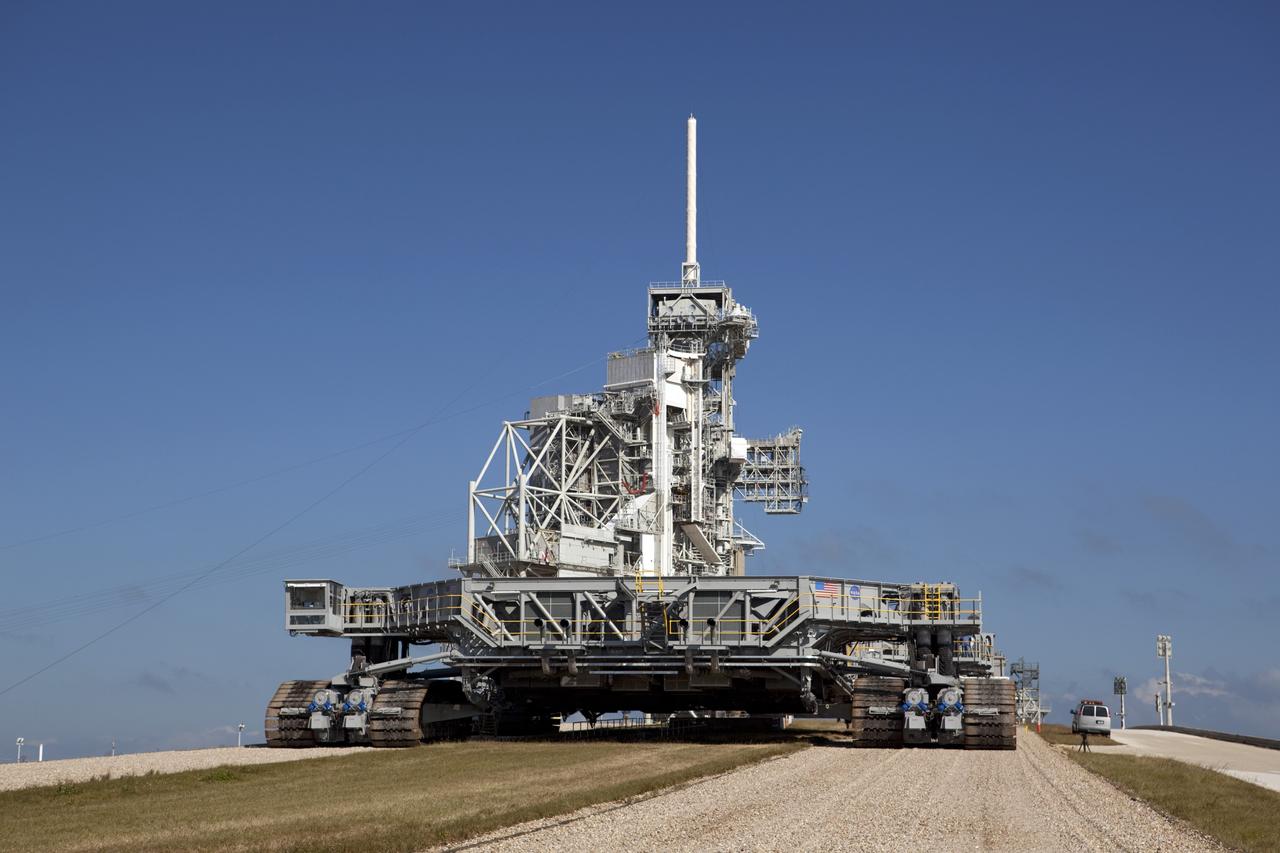
CAPE CANAVERAL, Fla. -- At NASA's Kennedy Space Center in Florida, crawler-transporter No. 2 arrives at Launch Pad 39A to check out recently completed modifications to ensure its ability to carry launch vehicles such as the space agency's Space Launch System heavy-lift rocket to the pad. NASA's Ground Systems Development and Operations Program is leading the 20-year life-extension project for the crawler. A pair of behemoth machines called crawler-transporters has carried the load of taking rockets and spacecraft to the launch pad for more than 40 years at NASA’s Kennedy Space Center in Florida. Each the size of a baseball infield and powered by locomotive and large electrical power generator engines, the crawler-transporters will stand ready to keep up the work for the next generation of launch vehicles to lift astronauts into space. For more information, visit http://www.nasa.gov/exploration/systems/ground/index.html Photo credit: NASA/ Dimitri Gerondidakis
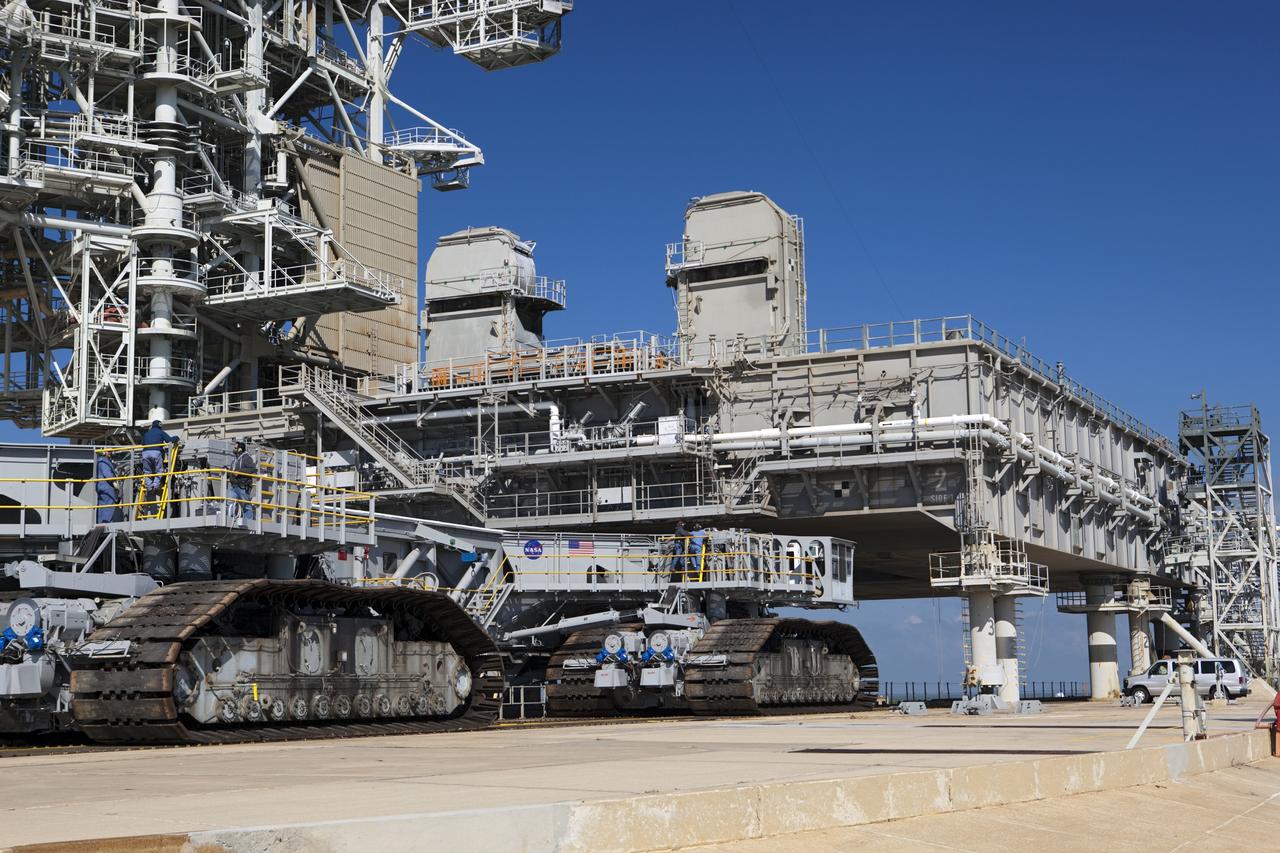
CAPE CANAVERAL, Fla. -- At NASA's Kennedy Space Center in Florida, crawler-transporter No. 2 arrives at Launch Pad 39A to check out recently completed modifications to ensure its ability to carry launch vehicles such as the space agency's Space Launch System heavy-lift rocket to the pad. NASA's Ground Systems Development and Operations Program is leading the 20-year life-extension project for the crawler. A pair of behemoth machines called crawler-transporters has carried the load of taking rockets and spacecraft to the launch pad for more than 40 years at NASA’s Kennedy Space Center in Florida. Each the size of a baseball infield and powered by locomotive and large electrical power generator engines, the crawler-transporters will stand ready to keep up the work for the next generation of launch vehicles to lift astronauts into space. For more information, visit http://www.nasa.gov/exploration/systems/ground/index.html Photo credit: NASA/ Dimitri Gerondidakis
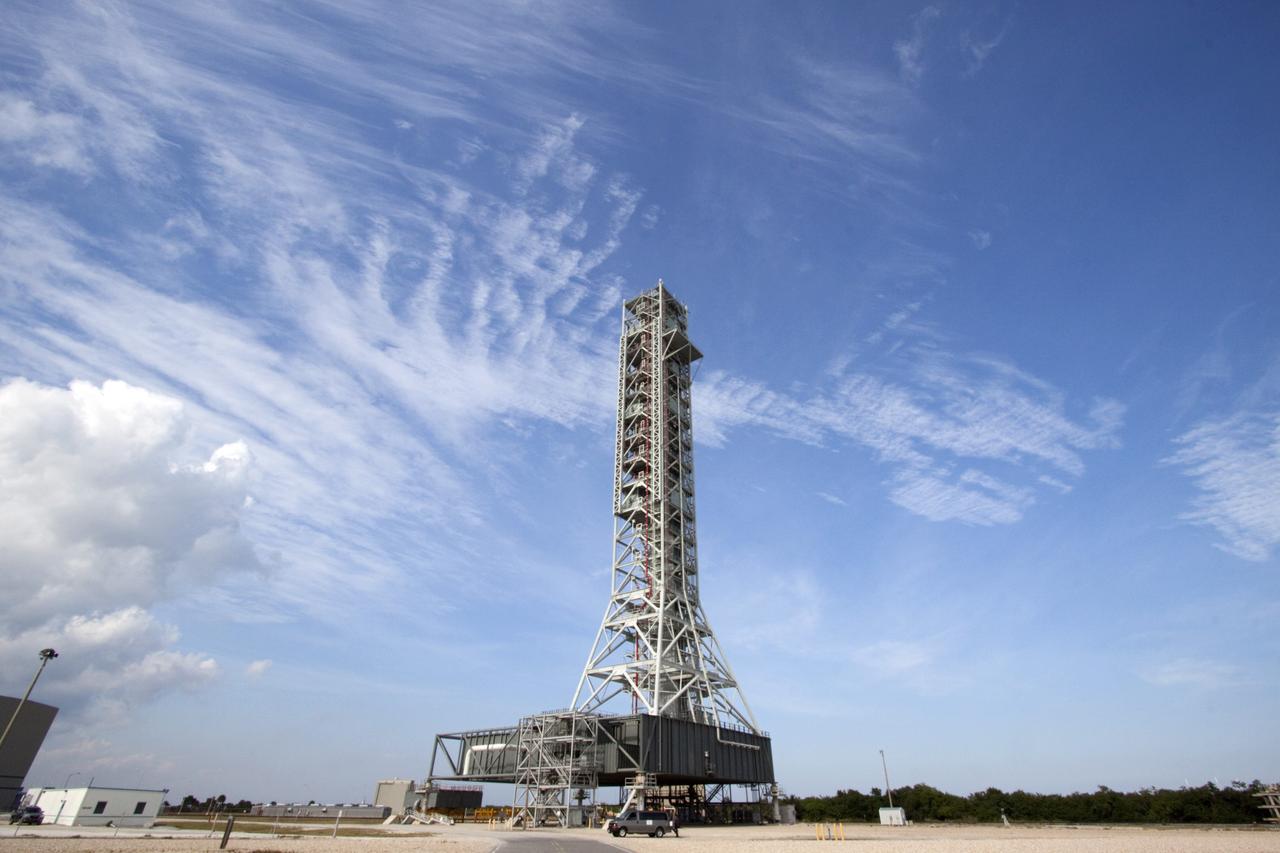
CAPE CANAVERAL, Fla. -- At NASA's Kennedy Space Center in Florida, the mobile launcher is being prepared to support the space agency's Space Launch System heavy-lift rocket and Orion spacecraft. NASA's Ground Systems Development and Operations Program is leading the 20-year life-extension project for the crawler. A pair of behemoth machines called crawler-transporters has carried the load of taking rockets and spacecraft to the launch pad for more than 40 years at NASA’s Kennedy Space Center in Florida. Each the size of a baseball infield and powered by locomotive and large electrical power generator engines, the crawler-transporters will stand ready to keep up the work for the next generation of launch vehicles projects to lift astronauts into space. For more information, visit http://www.nasa.gov/exploration/systems/ground/index.html Photo credit: NASA/Jim Grossmann
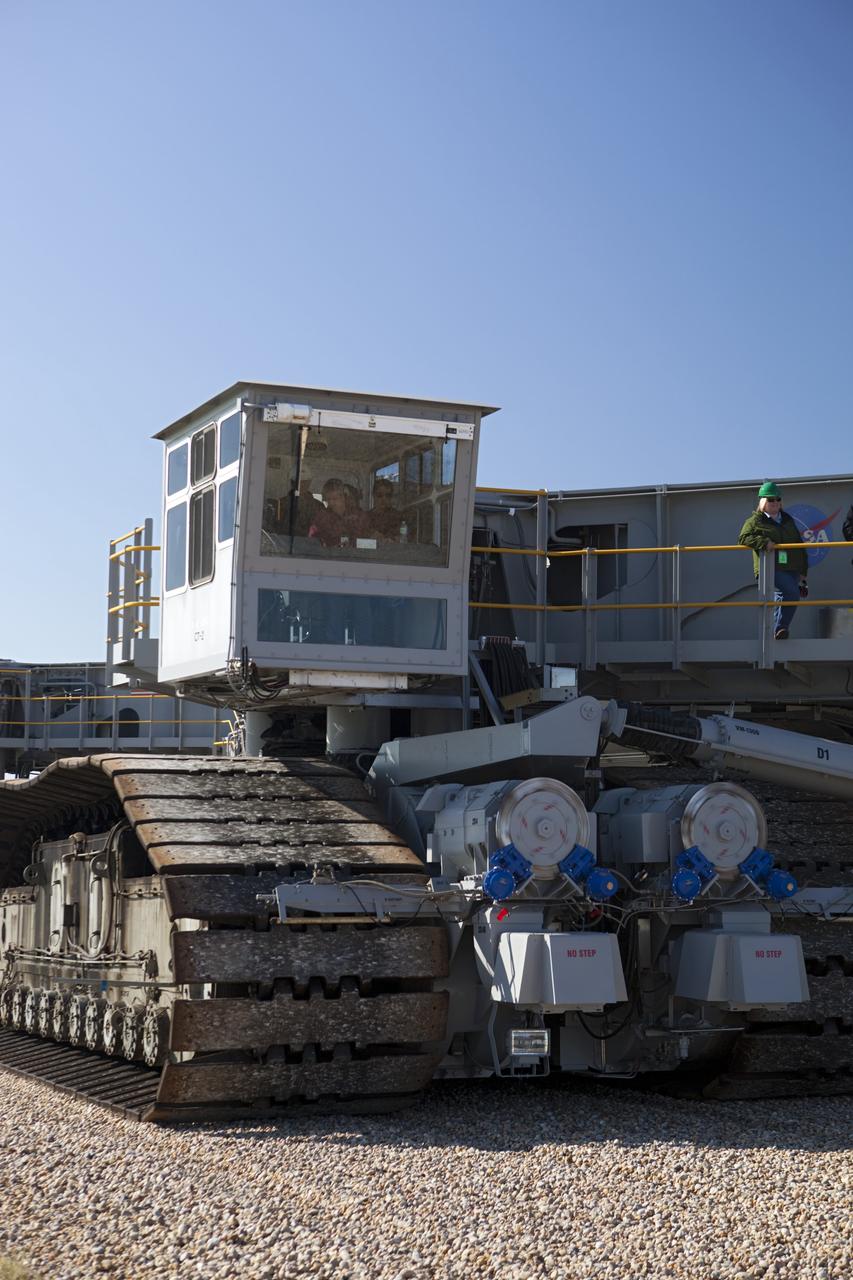
CAPE CANAVERAL, Fla. -- At NASA's Kennedy Space Center in Florida, crawler-transporter No. 2 arrives at Launch Pad 39A to check out recently completed modifications to ensure its ability to carry launch vehicles such as the space agency's Space Launch System heavy-lift rocket to the pad. NASA's Ground Systems Development and Operations Program is leading the 20-year life-extension project for the crawler. A pair of behemoth machines called crawler-transporters has carried the load of taking rockets and spacecraft to the launch pad for more than 40 years at NASA’s Kennedy Space Center in Florida. Each the size of a baseball infield and powered by locomotive and large electrical power generator engines, the crawler-transporters will stand ready to keep up the work for the next generation of launch vehicles to lift astronauts into space. For more information, visit http://www.nasa.gov/exploration/systems/ground/index.html Photo credit: NASA/ Dimitri Gerondidakis
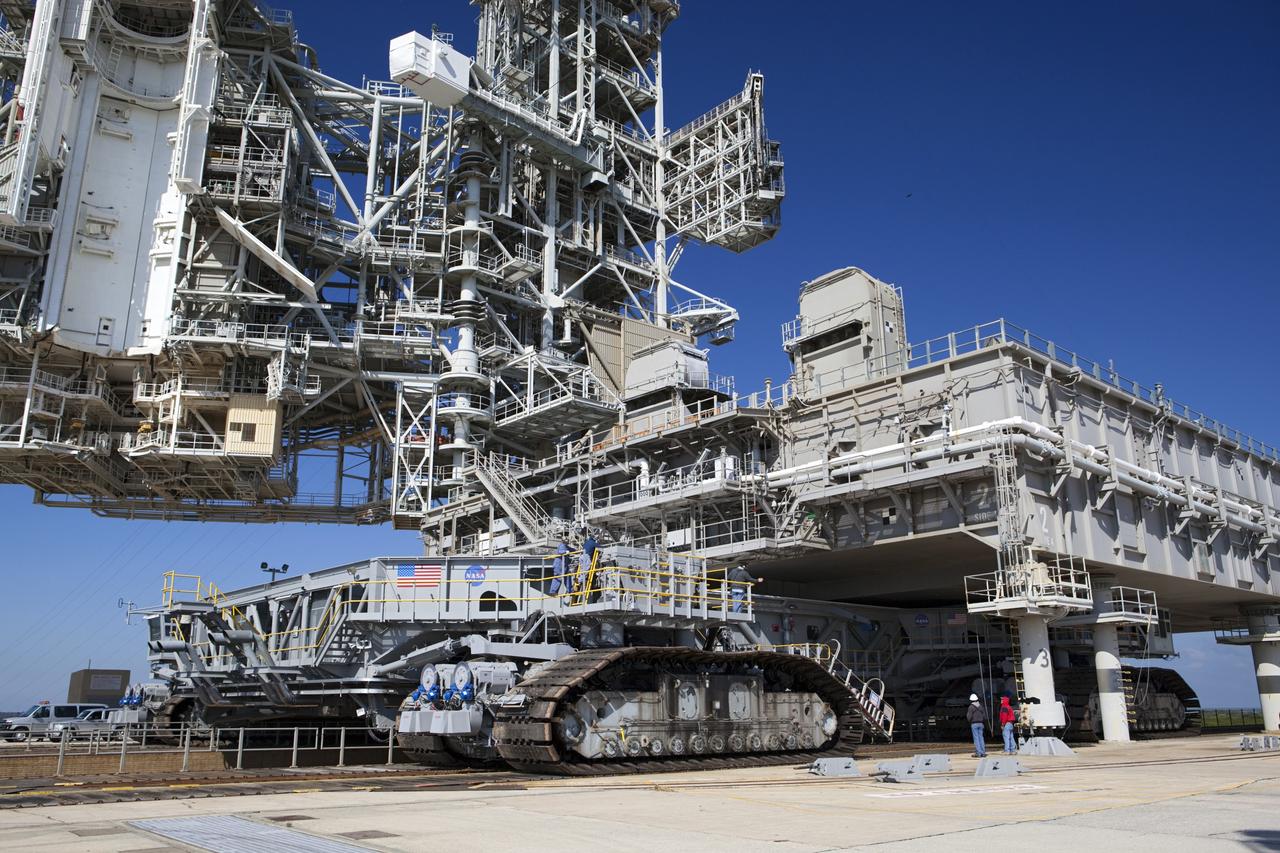
CAPE CANAVERAL, Fla. -- At NASA's Kennedy Space Center in Florida, crawler-transporter No. 2 arrives at Launch Pad 39A to check out recently completed modifications to ensure its ability to carry launch vehicles such as the space agency's Space Launch System heavy-lift rocket to the pad. NASA's Ground Systems Development and Operations Program is leading the 20-year life-extension project for the crawler. A pair of behemoth machines called crawler-transporters has carried the load of taking rockets and spacecraft to the launch pad for more than 40 years at NASA’s Kennedy Space Center in Florida. Each the size of a baseball infield and powered by locomotive and large electrical power generator engines, the crawler-transporters will stand ready to keep up the work for the next generation of launch vehicles to lift astronauts into space. For more information, visit http://www.nasa.gov/exploration/systems/ground/index.html Photo credit: NASA/ Dimitri Gerondidakis
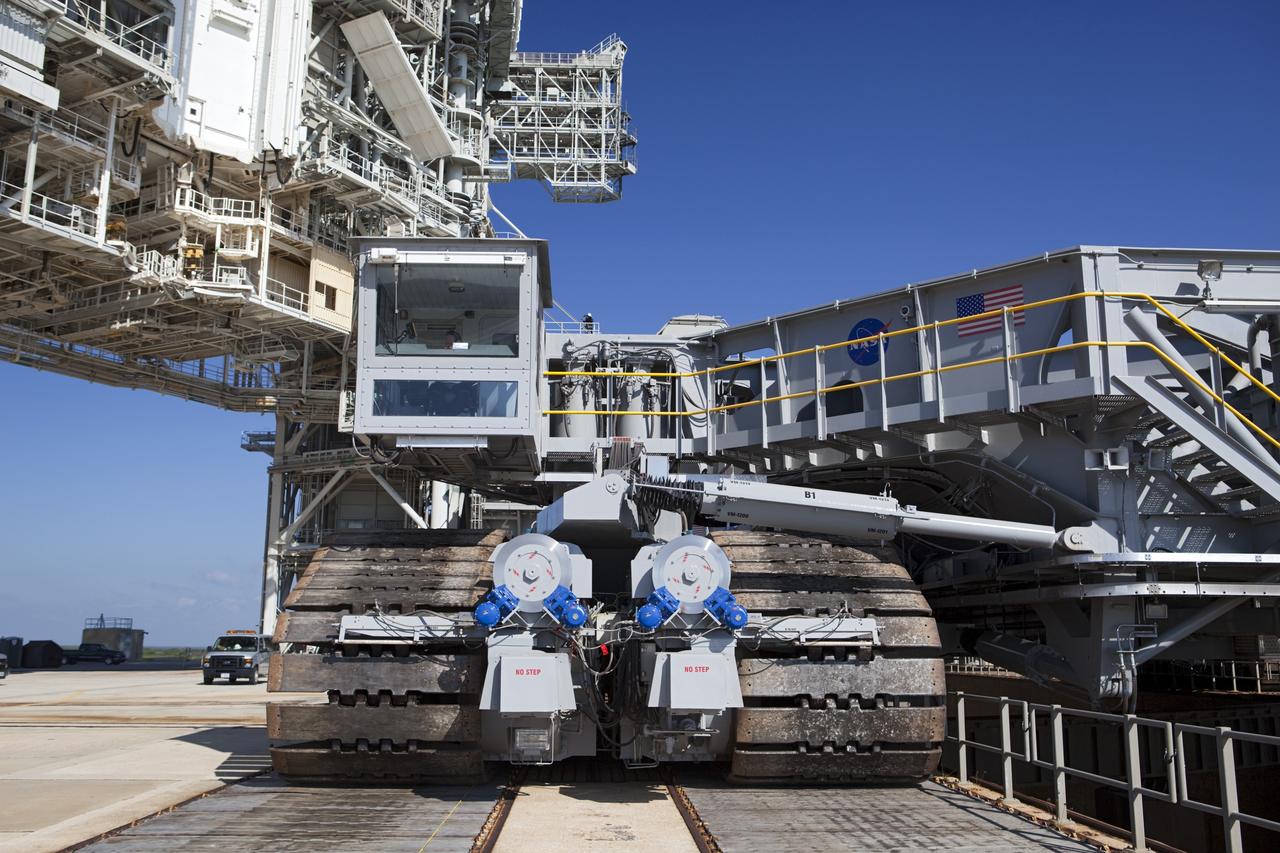
CAPE CANAVERAL, Fla. -- At NASA's Kennedy Space Center in Florida, crawler-transporter No. 2 arrives at Launch Pad 39A to check out recently completed modifications to ensure its ability to carry launch vehicles such as the space agency's Space Launch System heavy-lift rocket to the pad. NASA's Ground Systems Development and Operations Program is leading the 20-year life-extension project for the crawler. A pair of behemoth machines called crawler-transporters has carried the load of taking rockets and spacecraft to the launch pad for more than 40 years at NASA’s Kennedy Space Center in Florida. Each the size of a baseball infield and powered by locomotive and large electrical power generator engines, the crawler-transporters will stand ready to keep up the work for the next generation of launch vehicles to lift astronauts into space. For more information, visit http://www.nasa.gov/exploration/systems/ground/index.html Photo credit: NASA/ Dimitri Gerondidakis
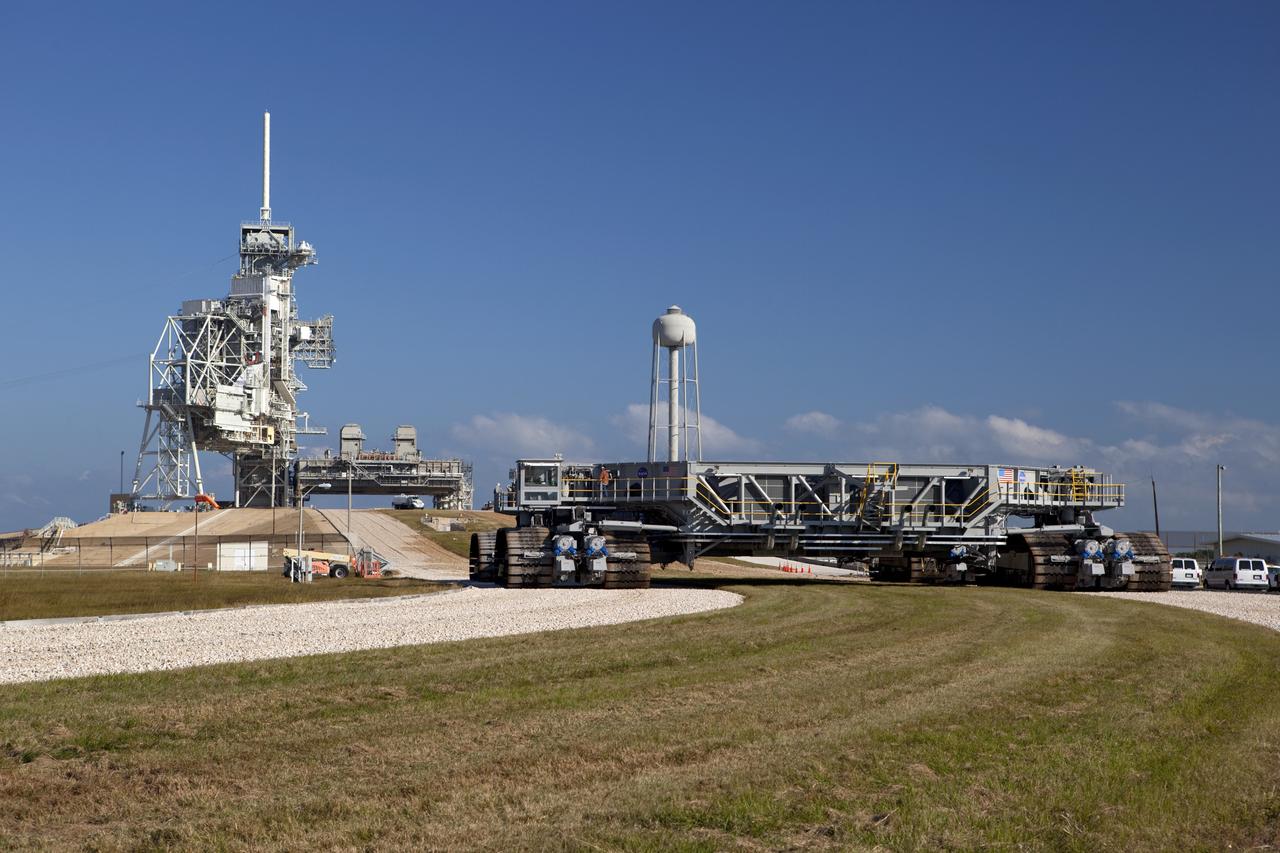
CAPE CANAVERAL, Fla. -- At NASA's Kennedy Space Center in Florida, crawler-transporter No. 2 arrives at Launch Pad 39A to check out recently completed modifications to ensure its ability to carry launch vehicles such as the space agency's Space Launch System heavy-lift rocket to the pad. NASA's Ground Systems Development and Operations Program is leading the 20-year life-extension project for the crawler. A pair of behemoth machines called crawler-transporters has carried the load of taking rockets and spacecraft to the launch pad for more than 40 years at NASA’s Kennedy Space Center in Florida. Each the size of a baseball infield and powered by locomotive and large electrical power generator engines, the crawler-transporters will stand ready to keep up the work for the next generation of launch vehicles to lift astronauts into space. For more information, visit http://www.nasa.gov/exploration/systems/ground/index.html Photo credit: NASA/ Dimitri Gerondidakis
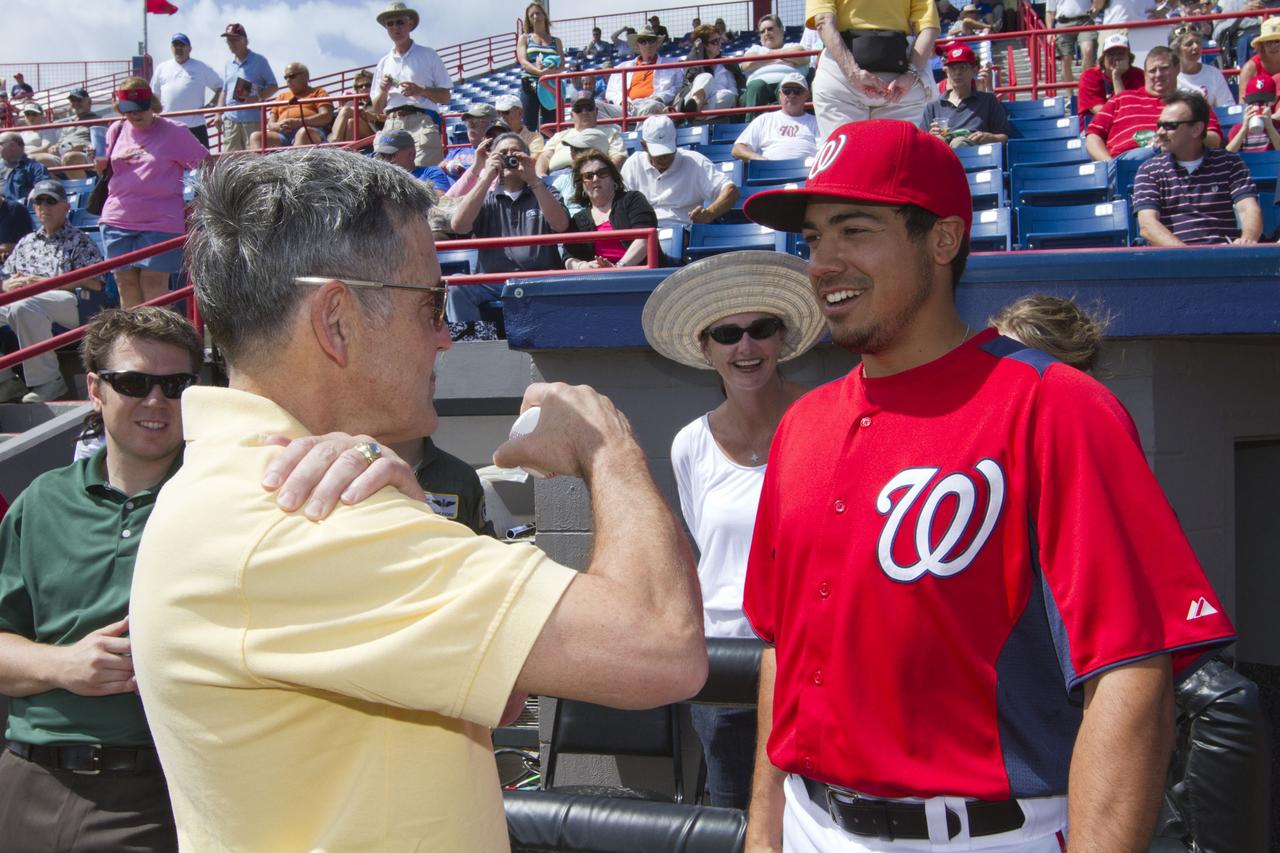
VIERA, Fla. – NASA Kennedy Space Center Director Bob Cabana, left, consults with third baseman Anthony Rendon of Major League Baseball’s Washington Nationals prior to Cabana’s throwing the first pitch of a spring training game between the Nationals and the Houston Astros at the Space Coast Stadium’s Space Day. Kennedy set up a booth at the stadium for the occasion to highlight some of the contributions the space agency has made to sports, transportation and everyday life. A full-scale test version of NASA's new Orion Multi-Purpose Crew Vehicle also was on display outside the stadium to show the public the spacecraft under development that will take astronauts farther into space than ever before. For more information, visit http://www.nasa.gov/kennedy. Photo credit: NASA/Kim Shiflett
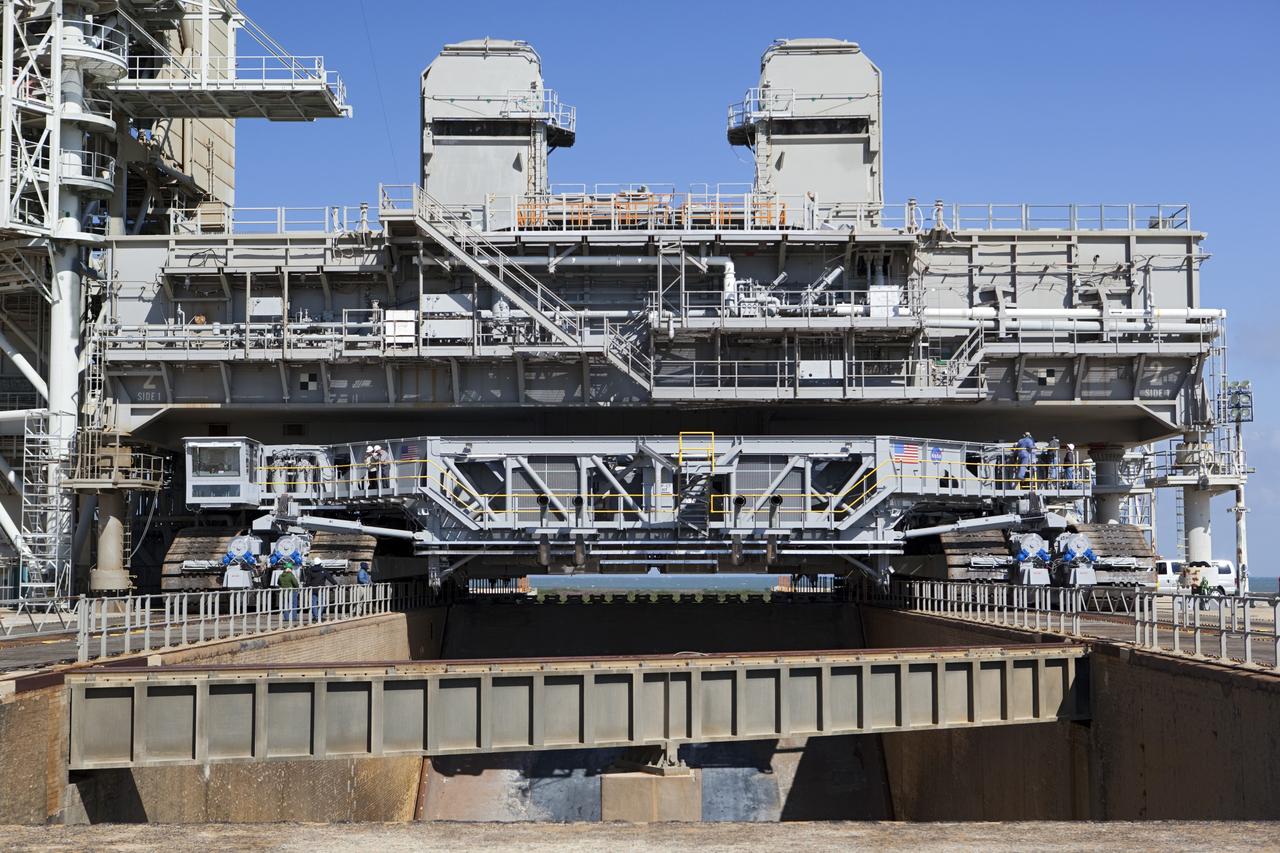
CAPE CANAVERAL, Fla. -- At NASA's Kennedy Space Center in Florida, crawler-transporter No. 2 arrives at Launch Pad 39A to check out recently completed modifications to ensure its ability to carry launch vehicles such as the space agency's Space Launch System heavy-lift rocket to the pad. NASA's Ground Systems Development and Operations Program is leading the 20-year life-extension project for the crawler. A pair of behemoth machines called crawler-transporters has carried the load of taking rockets and spacecraft to the launch pad for more than 40 years at NASA’s Kennedy Space Center in Florida. Each the size of a baseball infield and powered by locomotive and large electrical power generator engines, the crawler-transporters will stand ready to keep up the work for the next generation of launch vehicles to lift astronauts into space. For more information, visit http://www.nasa.gov/exploration/systems/ground/index.html Photo credit: NASA/ Dimitri Gerondidakis
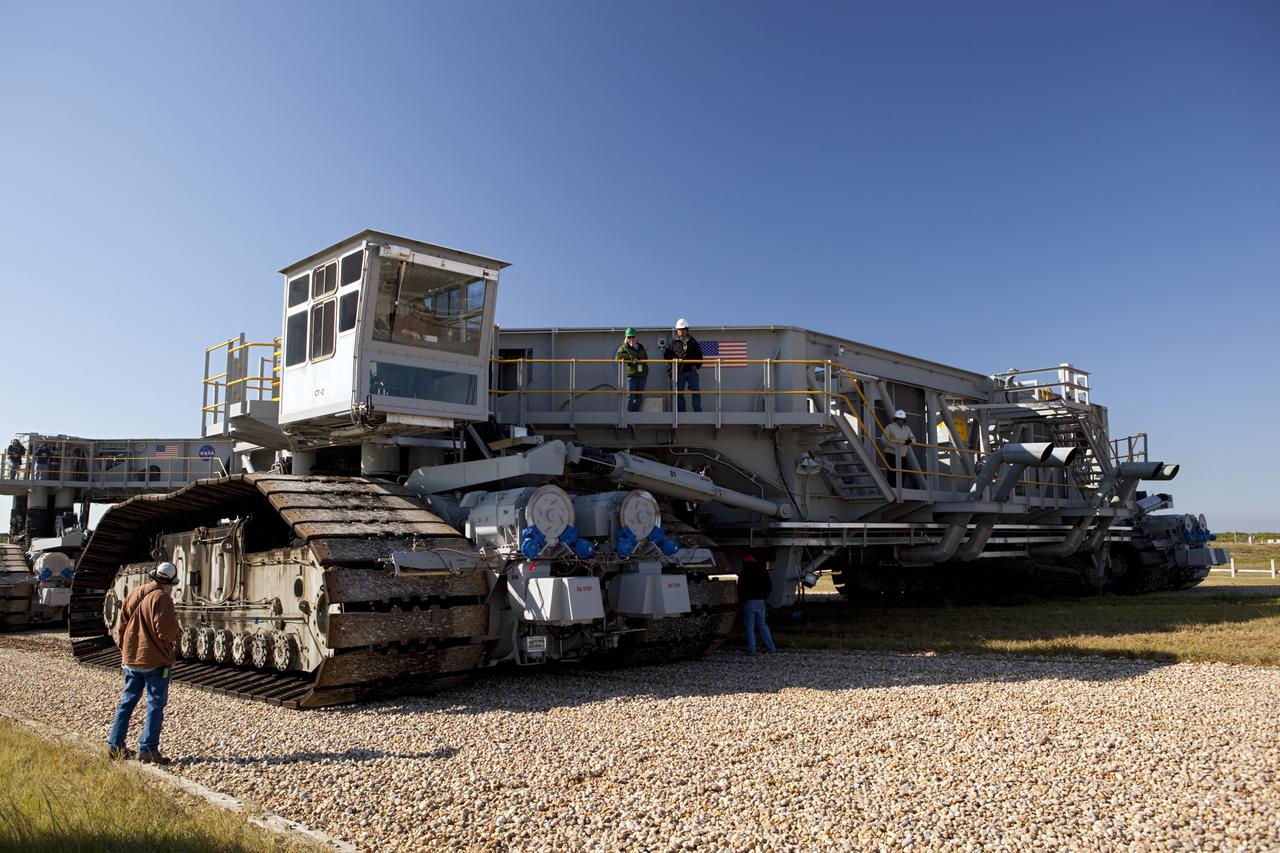
CAPE CANAVERAL, Fla. -- At NASA's Kennedy Space Center in Florida, crawler-transporter No. 2 arrives at Launch Pad 39A to check out recently completed modifications to ensure its ability to carry launch vehicles such as the space agency's Space Launch System heavy-lift rocket to the pad. NASA's Ground Systems Development and Operations Program is leading the 20-year life-extension project for the crawler. A pair of behemoth machines called crawler-transporters has carried the load of taking rockets and spacecraft to the launch pad for more than 40 years at NASA’s Kennedy Space Center in Florida. Each the size of a baseball infield and powered by locomotive and large electrical power generator engines, the crawler-transporters will stand ready to keep up the work for the next generation of launch vehicles to lift astronauts into space. For more information, visit http://www.nasa.gov/exploration/systems/ground/index.html Photo credit: NASA/ Dimitri Gerondidakis
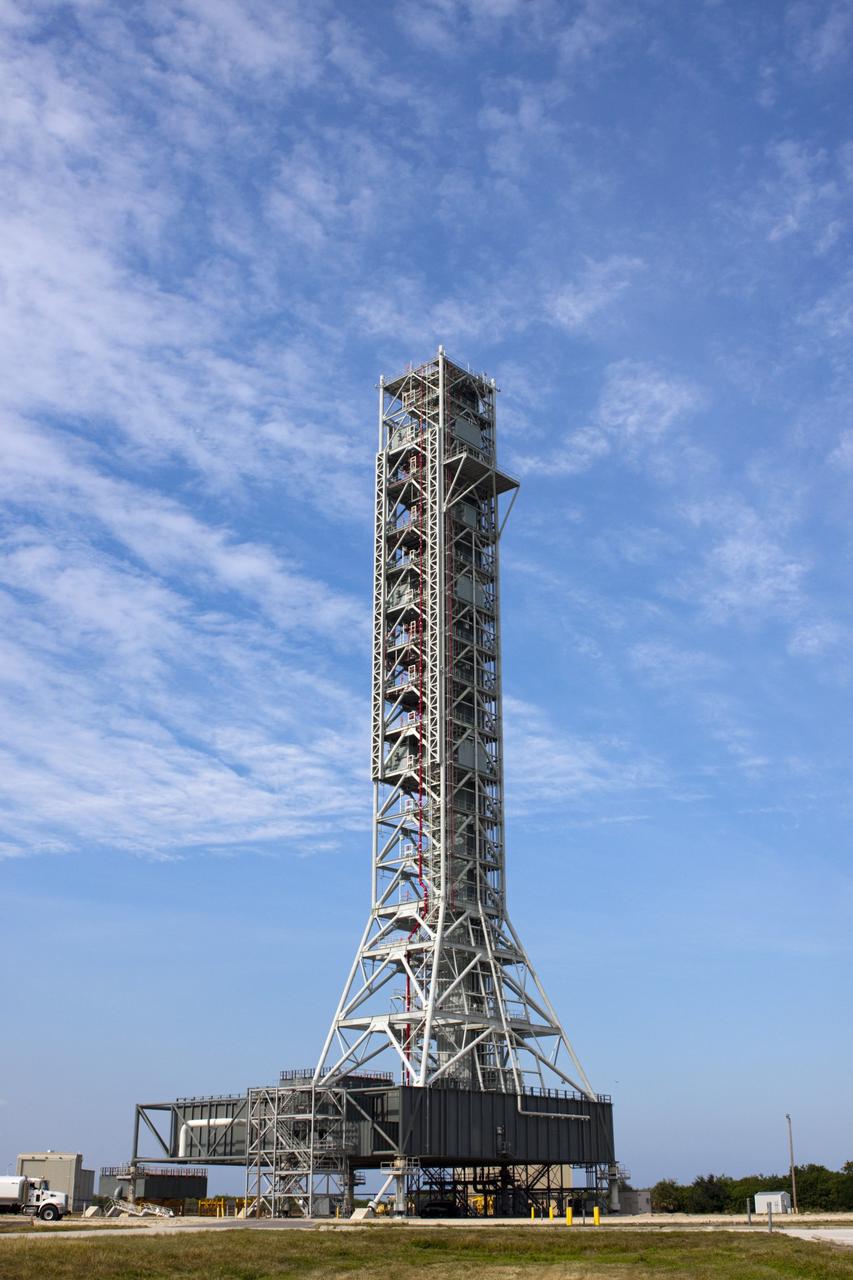
CAPE CANAVERAL, Fla. -- At NASA's Kennedy Space Center in Florida the mobile launcher is being prepared to support the space agency's Space Launch System heavy-lift rocket and Orion spacecraft. NASA's Ground Systems Development and Operations Program is leading the 20-year life-extension project for the crawler. A pair of behemoth machines called crawler-transporters has carried the load of taking rockets and spacecraft to the launch pad for more than 40 years at NASA’s Kennedy Space Center in Florida. Each the size of a baseball infield and powered by locomotive and large electrical power generator engines, the crawler-transporters will stand ready to keep up the work for the next generation of launch vehicles projects to lift astronauts into space. For more information, visit http://www.nasa.gov/exploration/systems/ground/index.html Photo credit: NASA/Jim Grossmann
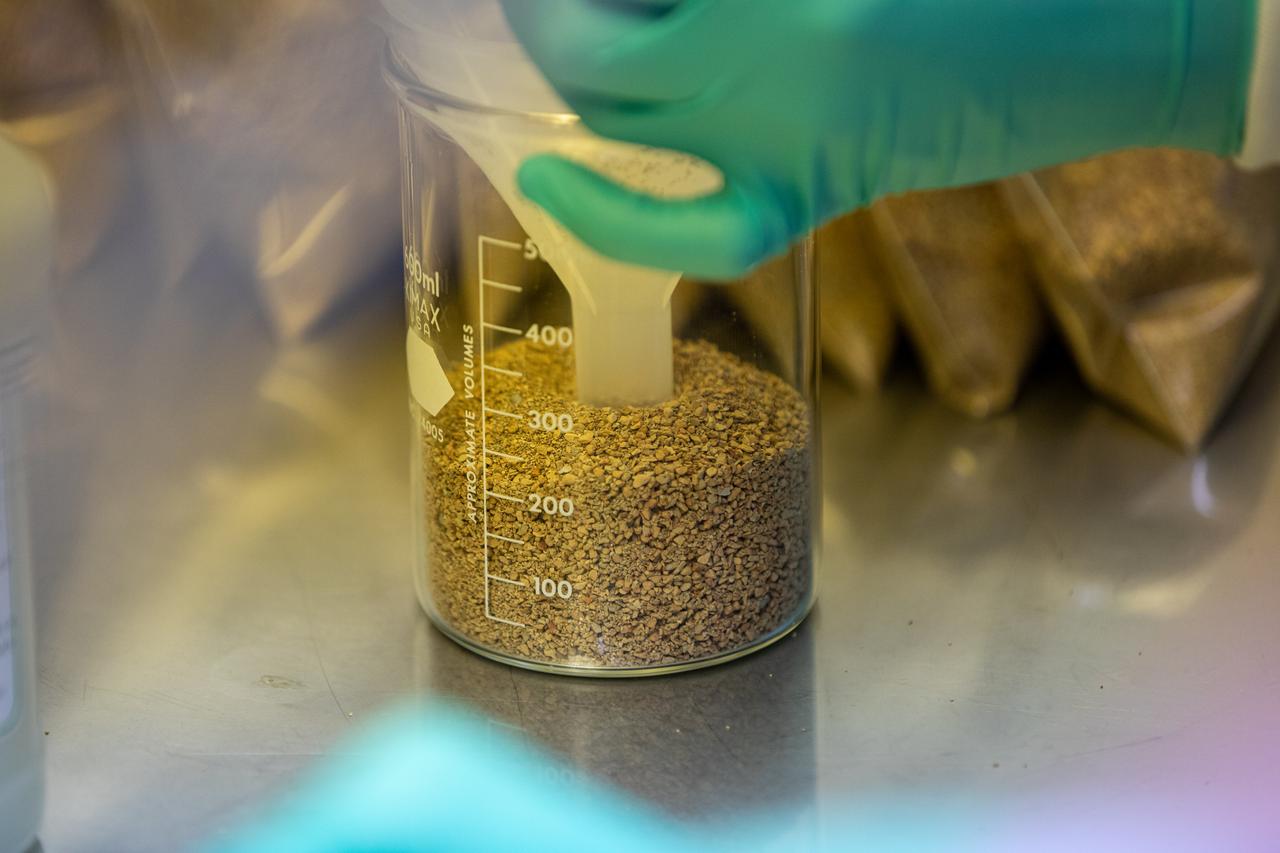
Inside the Space Station Processing Facility at NASA’s Kennedy Space Center in Florida, a researcher measures out the calcined clay that will be used to assemble plant pillows on Jan. 16, 2019. Often used to condition baseball infields, the clay’s size and roughness traps air and absorbs water to provide both to plant roots in microgravity. The pillows are small containers used to grow plants in space aboard the International Space Station. These pillows are for a series of plant experiments called VEG-03 J/K/L that will monitor the growth of three types of leafy greens and test a new way of handling seeds. The experiments will be launched to the orbiting laboratory aboard a Northrop Grumman Antares rocket and Cygnus spacecraft on the company’s 13th resupply services mission. Liftoff is scheduled for Feb. 9, 2020, at 5:39 p.m. EST from the agency’s Wallops Flight Facility in Virginia.
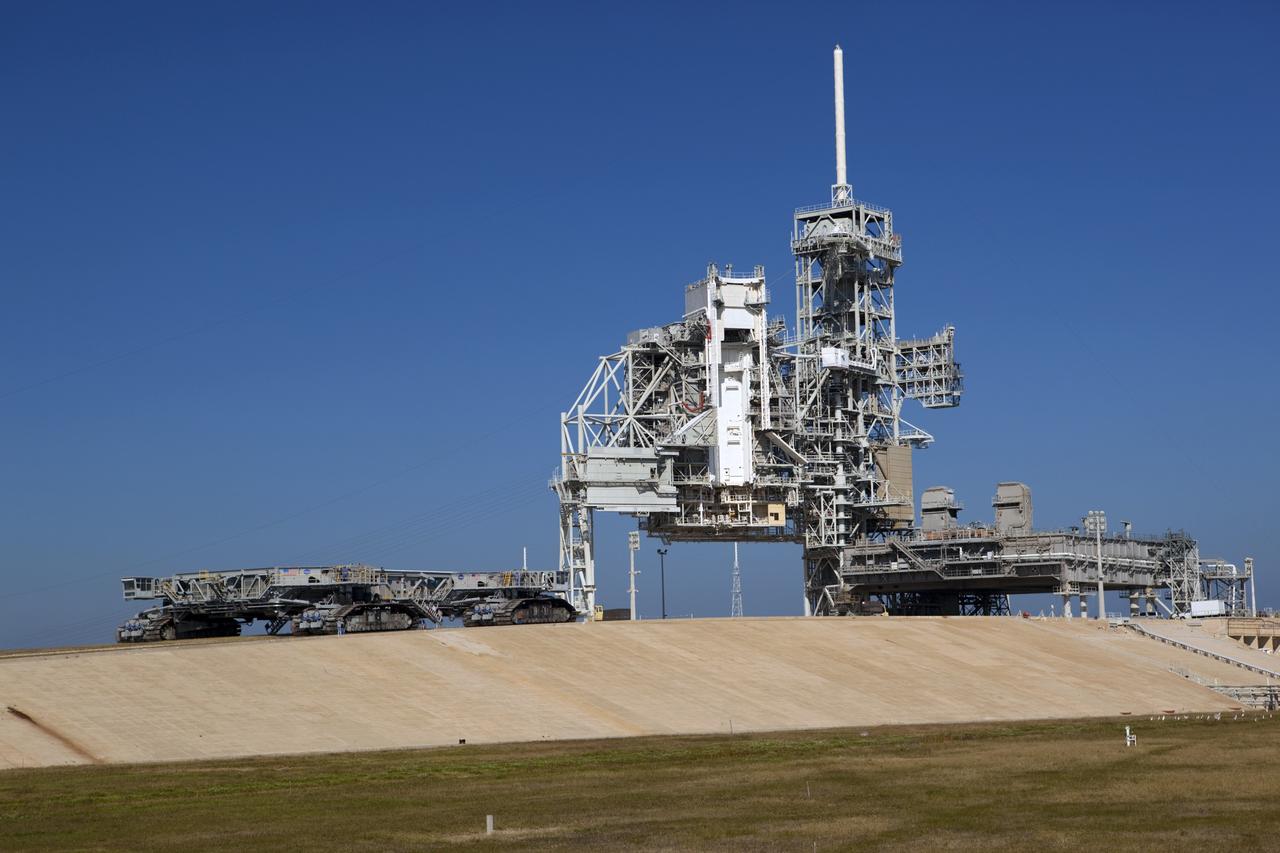
CAPE CANAVERAL, Fla. -- At NASA's Kennedy Space Center in Florida, crawler-transporter No. 2 arrives at Launch Pad 39A to check out recently completed modifications to ensure its ability to carry launch vehicles such as the space agency's Space Launch System heavy-lift rocket to the pad. NASA's Ground Systems Development and Operations Program is leading the 20-year life-extension project for the crawler. A pair of behemoth machines called crawler-transporters has carried the load of taking rockets and spacecraft to the launch pad for more than 40 years at NASA’s Kennedy Space Center in Florida. Each the size of a baseball infield and powered by locomotive and large electrical power generator engines, the crawler-transporters will stand ready to keep up the work for the next generation of launch vehicles to lift astronauts into space. For more information, visit http://www.nasa.gov/exploration/systems/ground/index.html Photo credit: NASA/ Dimitri Gerondidakis
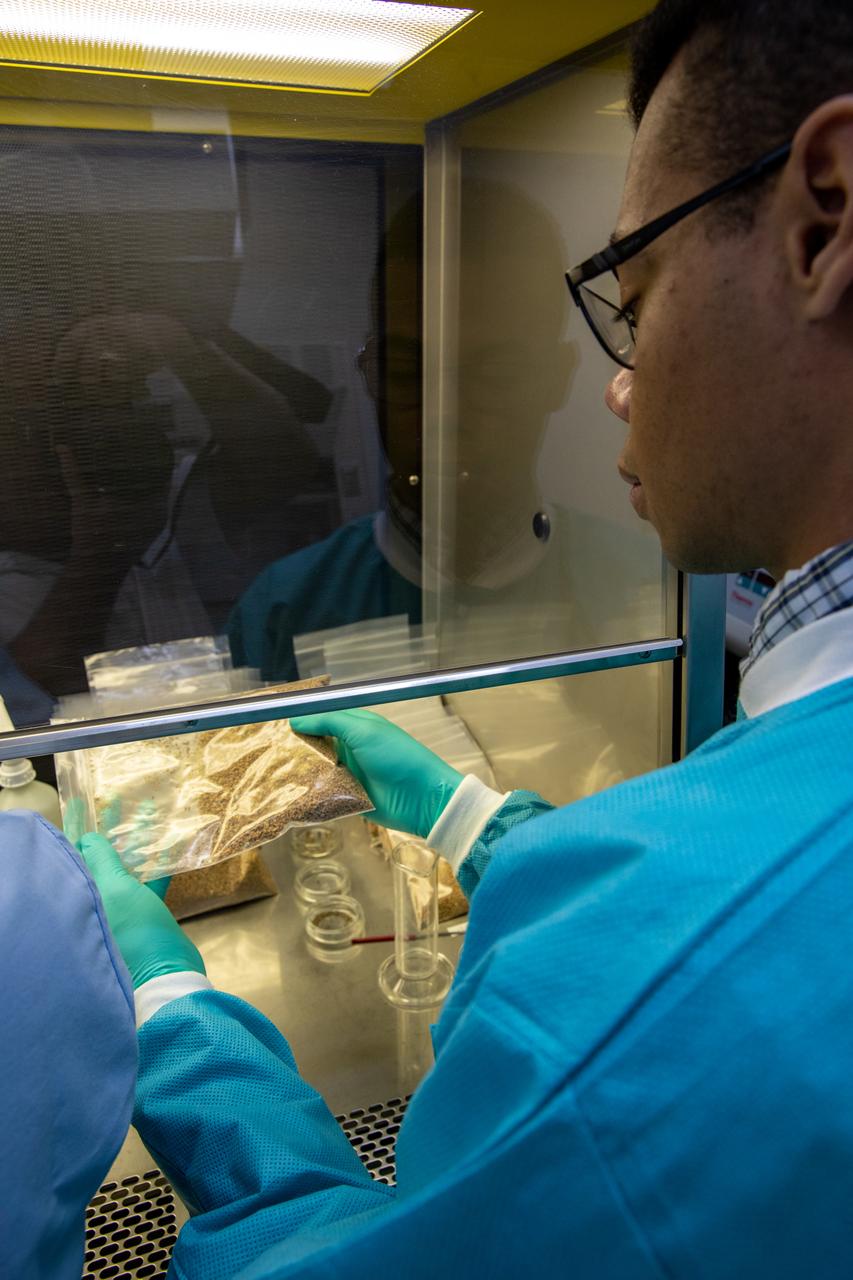
Joseph Taylor, an intern at NASA’s Kennedy Space Center in Florida, observes the calcined clay that will be used to assemble plant pillows inside the Space Station Processing Facility on Jan. 16, 2020. Often used to condition baseball infields, the clay’s size and roughness traps air and absorbs water to provide both to plant roots in microgravity. The pillows are small containers used to grow plants in space aboard the International Space Station. These pillows are for a series of plant experiments called VEG-03 J/K/L that will monitor the growth of three types of leafy greens and test a new way of handling seeds. The experiments will be launched to the orbiting laboratory aboard a Northrop Grumman Antares rocket and Cygnus spacecraft on the company’s 13th resupply services mission. Liftoff is scheduled for Feb. 9, 2020, at 5:39 p.m. EST from the agency’s Wallops Flight Facility in Virginia.
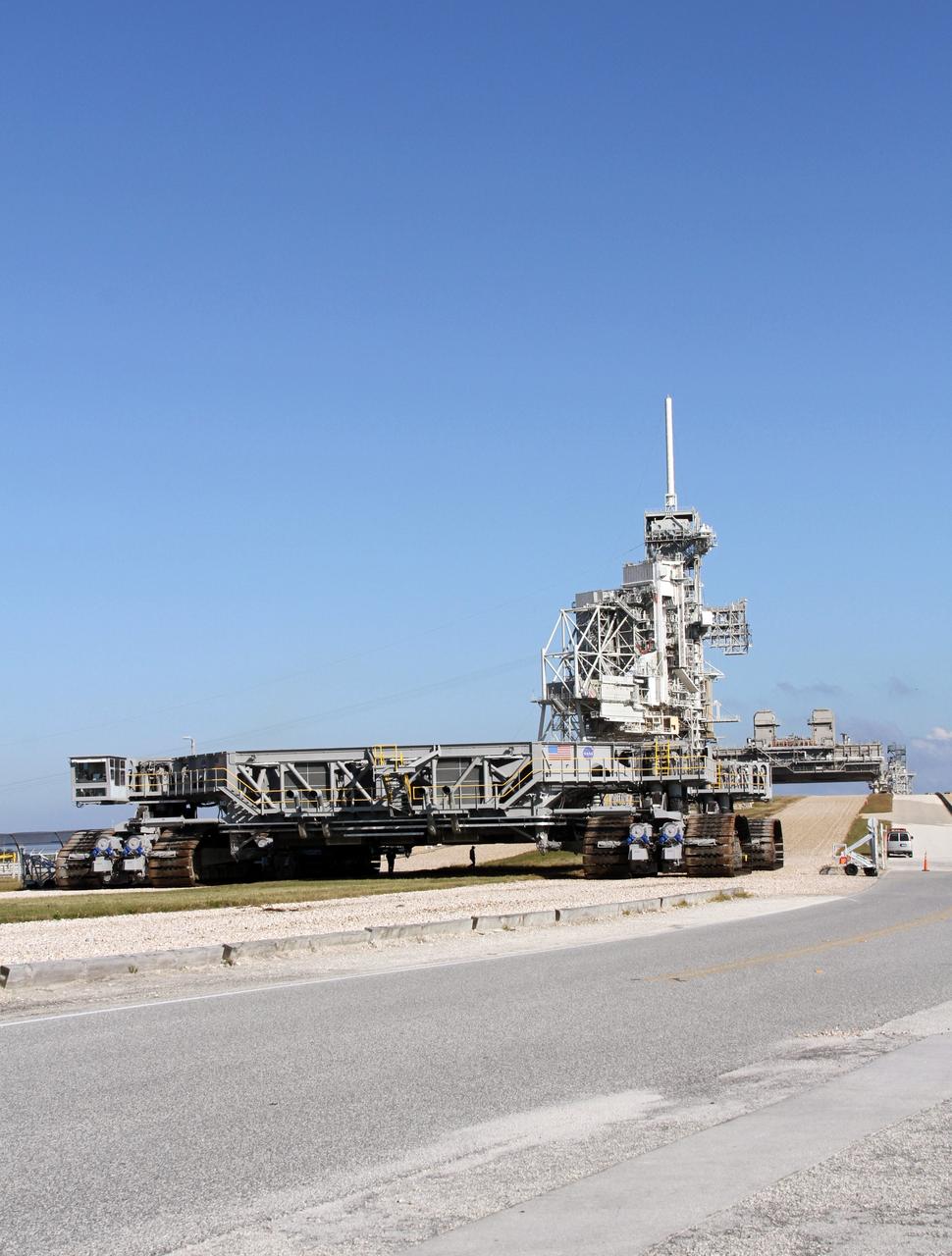
CAPE CANAVERAL, Fla. -- At NASA's Kennedy Space Center in Florida, crawler-transporter No. 2 arrives at Launch Pad 39A to check out recently completed modifications to ensure its ability to carry launch vehicles such as the space agency's Space Launch System heavy-lift rocket to the pad. NASA's Ground Systems Development and Operations Program is leading the 20-year life-extension project for the crawler. A pair of behemoth machines called crawler-transporters has carried the load of taking rockets and spacecraft to the launch pad for more than 40 years at NASA’s Kennedy Space Center in Florida. Each the size of a baseball infield and powered by locomotive and large electrical power generator engines, the crawler-transporters will stand ready to keep up the work for the next generation of launch vehicles projects to lift astronauts into space. For more information, visit http://www.nasa.gov/exploration/systems/ground/index.html Photo credit: NASA/Ben Smegelsky

Landsat satellites collect data along a wide ground track that spans 185 kilometers (115 miles) but with a spatial resolution that allows them to see the human signature on the landscape. Each Landsat pixel covers a 30 by 30 meter area (98 by 98 feet), about the size of a baseball diamond. This visualization shows the Landsat path over Minneapolis, the site of the 2014 Major League Baseball All-Star game, and then zooms in to reveal the individual pixels. The green of the field and the white of the stadium are visible, before fading to an aerial photograph taken March 2010. See close up of stadium here: <a href="https://www.flickr.com/photos/gsfc/14662019381/in/photostream/">www.flickr.com/photos/gsfc/14662019381/in/photostream/</a> Credit: NASA/Goddard/Landsat <b><a href="http://www.nasa.gov/audience/formedia/features/MP_Photo_Guidelines.html" rel="nofollow">NASA image use policy.</a></b> <b><a href="http://www.nasa.gov/centers/goddard/home/index.html" rel="nofollow">NASA Goddard Space Flight Center</a></b> enables NASA’s mission through four scientific endeavors: Earth Science, Heliophysics, Solar System Exploration, and Astrophysics. Goddard plays a leading role in NASA’s accomplishments by contributing compelling scientific knowledge to advance the Agency’s mission. <b>Follow us on <a href="http://twitter.com/NASAGoddardPix" rel="nofollow">Twitter</a></b> <b>Like us on <a href="http://www.facebook.com/pages/Greenbelt-MD/NASA-Goddard/395013845897?ref=tsd" rel="nofollow">Facebook</a></b> <b>Find us on <a href="http://instagram.com/nasagoddard?vm=grid" rel="nofollow">Instagram</a></b>
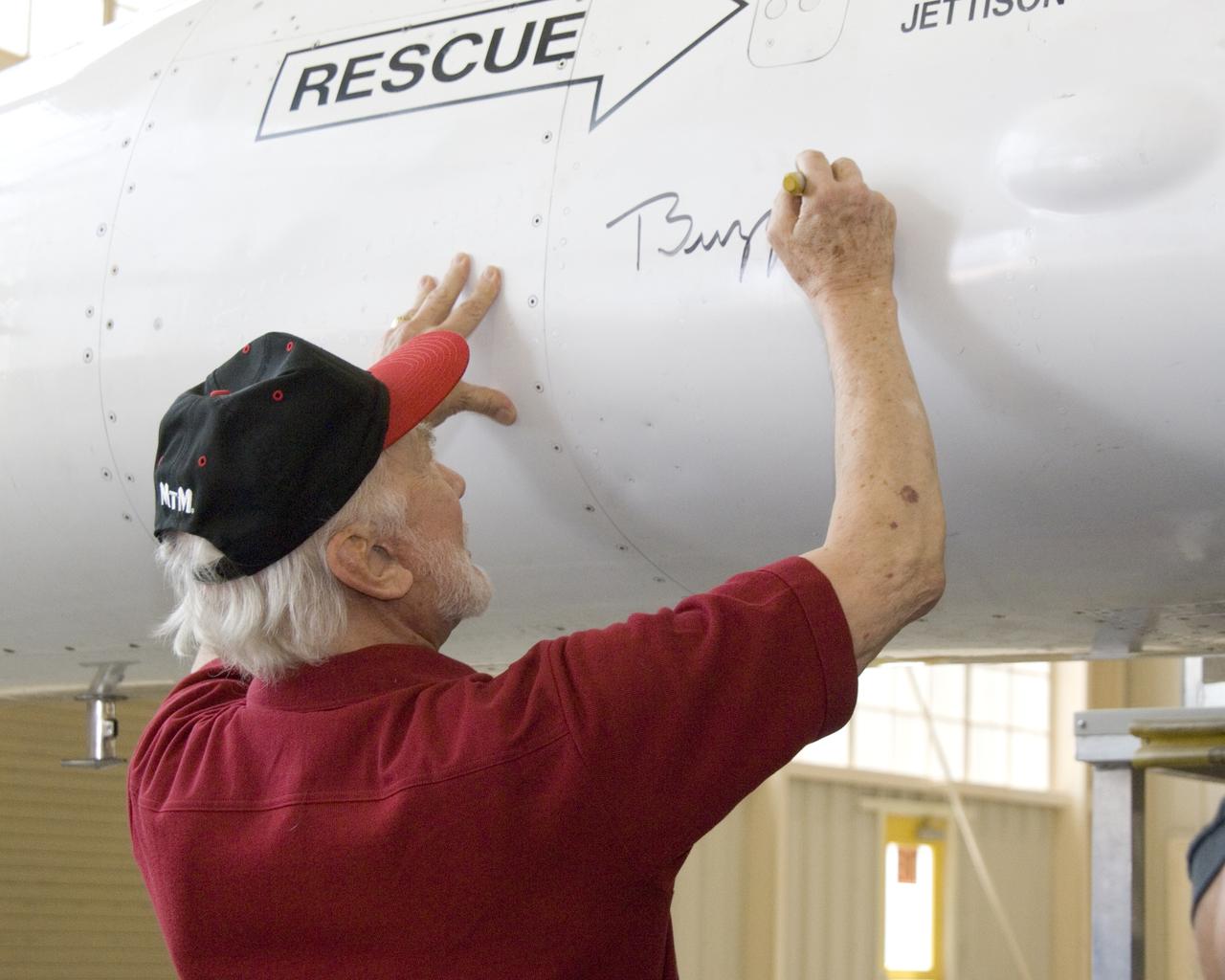
Apollo 11 astronaut Buzz Aldrin autographs NASA Dryden's F-16XL research aircraft, as his crewmate Neil Armstrong had previously done on the other side.
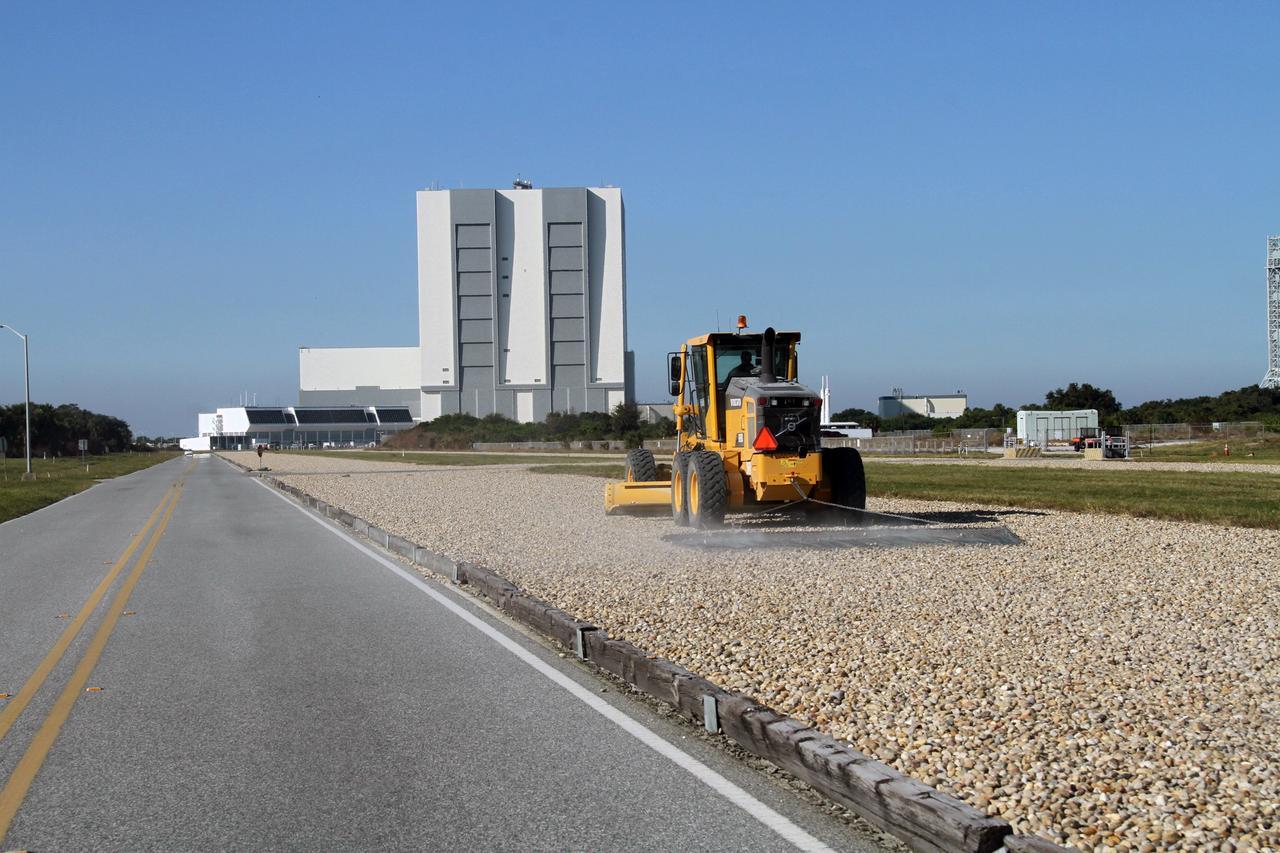
CAPE CANAVERAL, Fla. -- At NASA's Kennedy Space Center in Florida, a tractor levels out the gravel after the six-million-pound crawler-transporter passed by on its way from the Vehicle Assembly Building to Launch Pad 39A. The test drive is designed to check out recently completed modifications to ensure the crawler-transporter's ability to carry launch vehicles such as the space agency's Space Launch System heavy-lift rocket to the pad. NASA's Ground Systems Development and Operations Program is leading the 20-year life-extension project for the crawler. A pair of behemoth machines called crawler-transporters has carried the load of taking rockets and spacecraft to the launch pad for more than 40 years at NASA’s Kennedy Space Center in Florida. Each the size of a baseball infield and powered by locomotive and large electrical power generator engines, the crawler-transporters will stand ready to keep up the work for the next generation of launch vehicles projects to lift astronauts into space. For more information, visit http://www.nasa.gov/exploration/systems/ground/index.html Photo credit: NASA/Ben Smegelsky
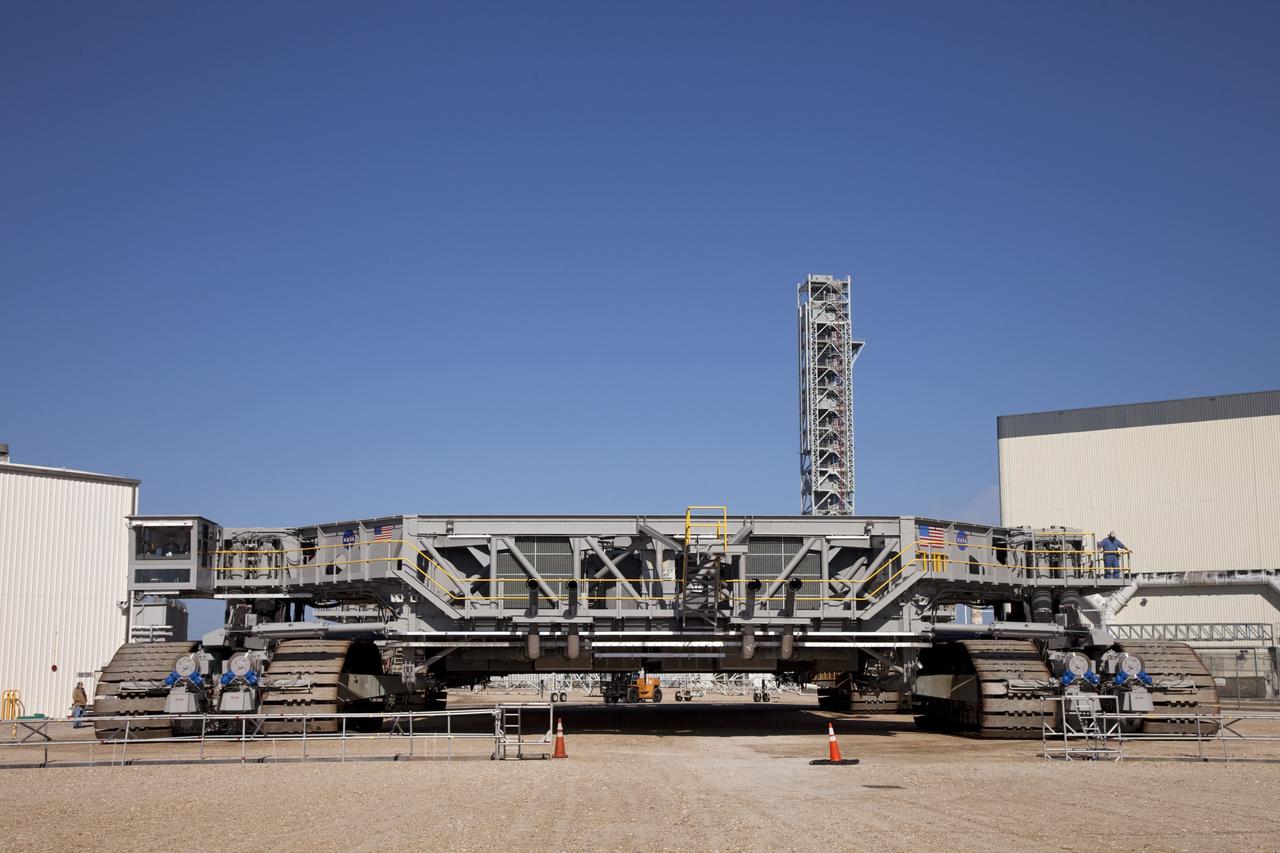
CAPE CANAVERAL, Fla. -- At NASA's Kennedy Space Center in Florida, crawler-transporter No. 2 returns to its park site after completion of testing at Launch Pad 39A. The activity is designed to check out recently completed modifications to ensure the crawler-transporter's ability to carry launch vehicles such as the space agency's Space Launch System heavy-lift rocket to the pad. NASA's Ground Systems Development and Operations Program is leading the 20-year life-extension project for the crawler. A pair of behemoth machines called crawler-transporters has carried the load of taking rockets and spacecraft to the launch pad for more than 40 years at NASA’s Kennedy Space Center in Florida. Each weighing six and a half million pounds and larger in size than a professional baseball infield, the crawler-transporters are powered by locomotive and large electrical power generator engines. The crawler-transporters will stand ready to keep up the work for the next generation of launch vehicles to lift astronauts into space. For more information, visit http://www.nasa.gov/exploration/systems/ground/index.html Photo credit: NASA/Frankie Martin
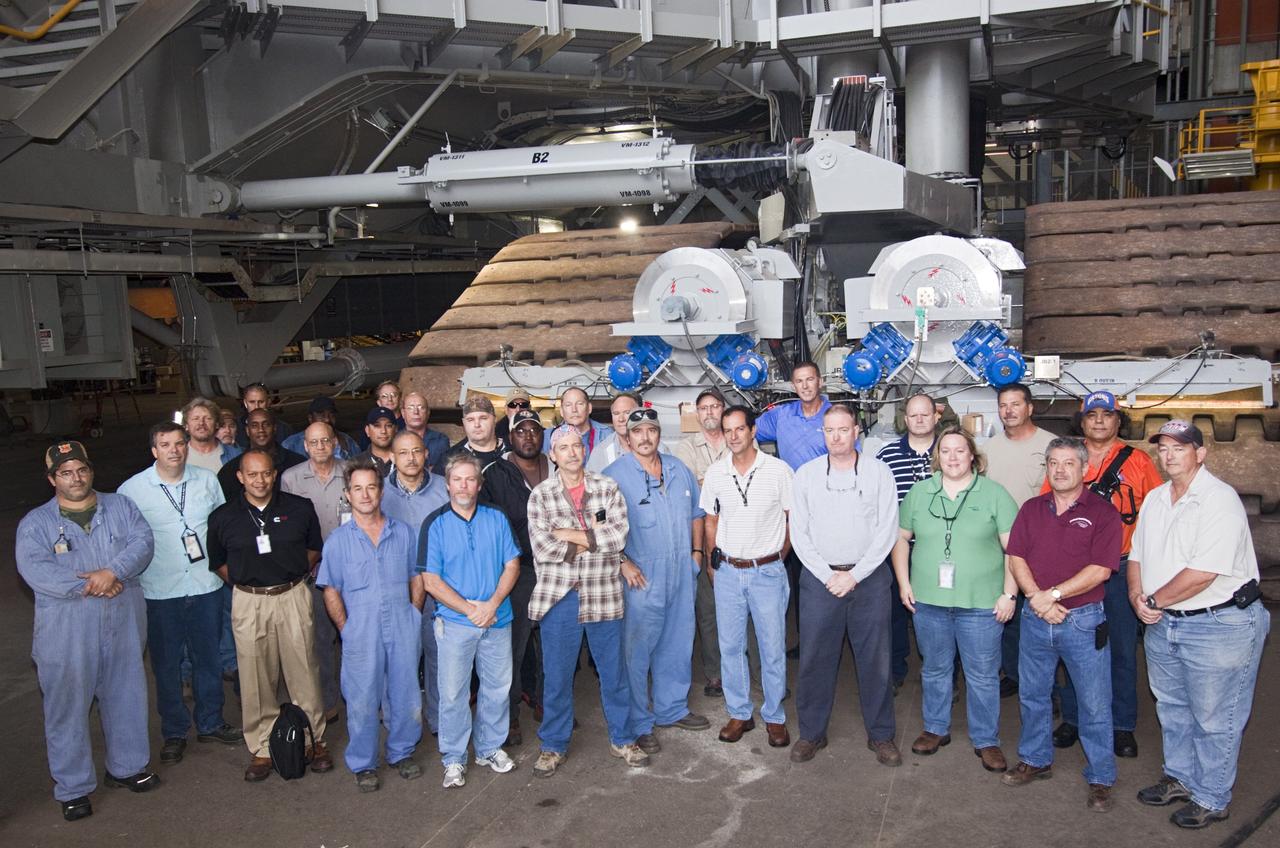
CAPE CANAVERAL, Fla. -- The team that has been modifying crawler-transporter No. 2 inside high bay 2 of the Vehicle Assembly Building at NASA's Kennedy Space Center in Florida gathered prior to a test drive. The crawler-transporter has been undergoing modifications in preparation to carry launch vehicles such as the space agency's Space Launch System heavy-lift rocket to the launch pad. NASA's Ground Systems Development and Operations Program is leading the 20-year life-extension project for the crawler. A pair of behemoth machines called crawler-transporters has carried the load of taking rockets and spacecraft to the launch pad for more than 40 years at NASA’s Kennedy Space Center in Florida. Each the size of a baseball infield and powered by locomotive and large electrical power generator engines, the crawler-transporters will stand ready to keep up the work for the next generation of launch vehicles projects to lift astronauts into space. For more information, visit http://www.nasa.gov/exploration/systems/ground/index.html Photo credit: NASA/Jim Grossmann
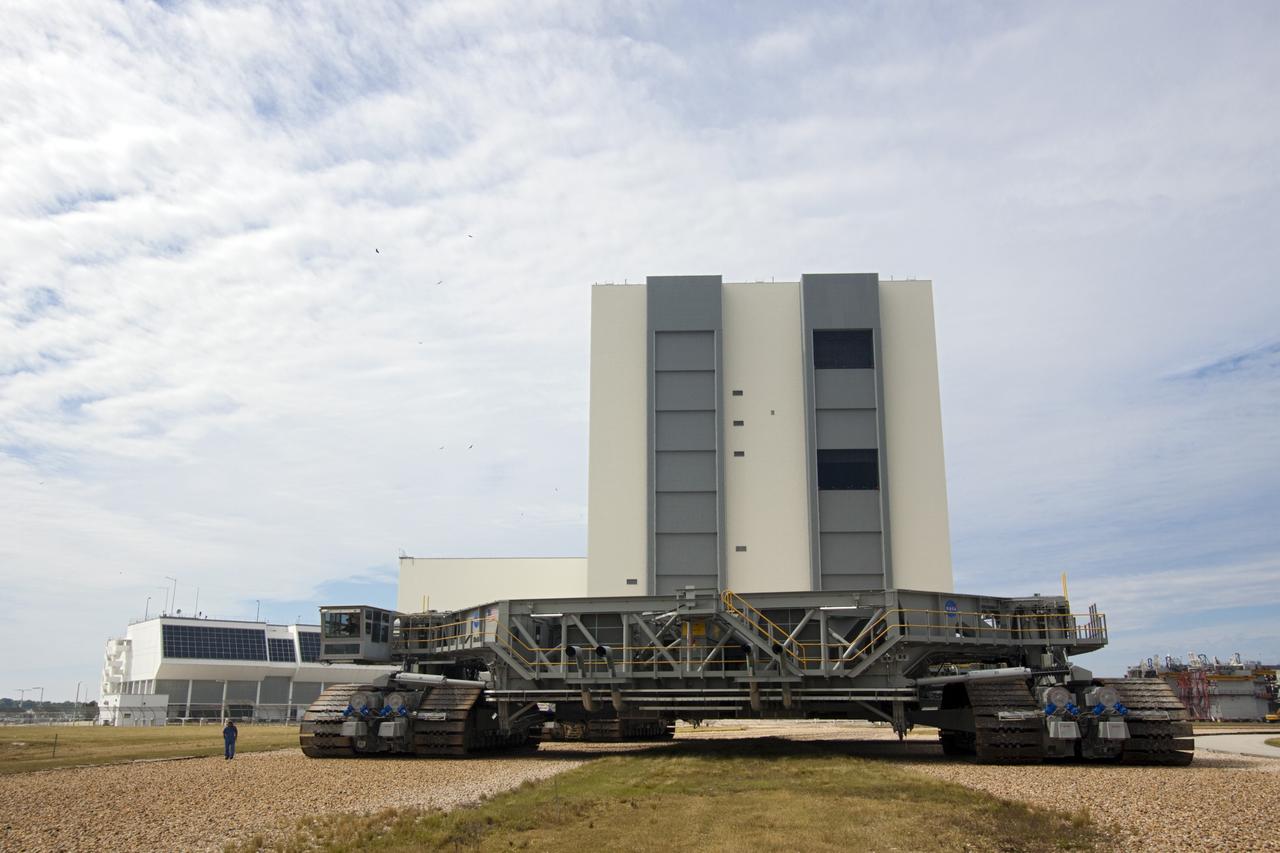
CAPE CANAVERAL, Fla. -- At NASA's Kennedy Space Center in Florida, crawler-transporter No. 2 moves away from the Vehicle Assembly Building where it has been undergoing modifications. The test dive is designed to check out modifications to ensure its ability to carry the space agency's Space Launch System heavy-lift rocket to the launch pad. NASA's Ground Systems Development and Operations Program is leading the 20-year life-extension project for the crawler. A pair of behemoth machines called crawler-transporters has carried the load of taking rockets and spacecraft to the launch pad for more than 40 years at NASA’s Kennedy Space Center in Florida. Each the size of a baseball infield and powered by locomotive and large electrical power generator engines, the crawler-transporters will stand ready to keep up the work for the next generation of launch vehicles projects to lift astronauts into space. For more information, visit http://www.nasa.gov/exploration/systems/ground/index.html Photo credit: NASA/Jim Grossmann
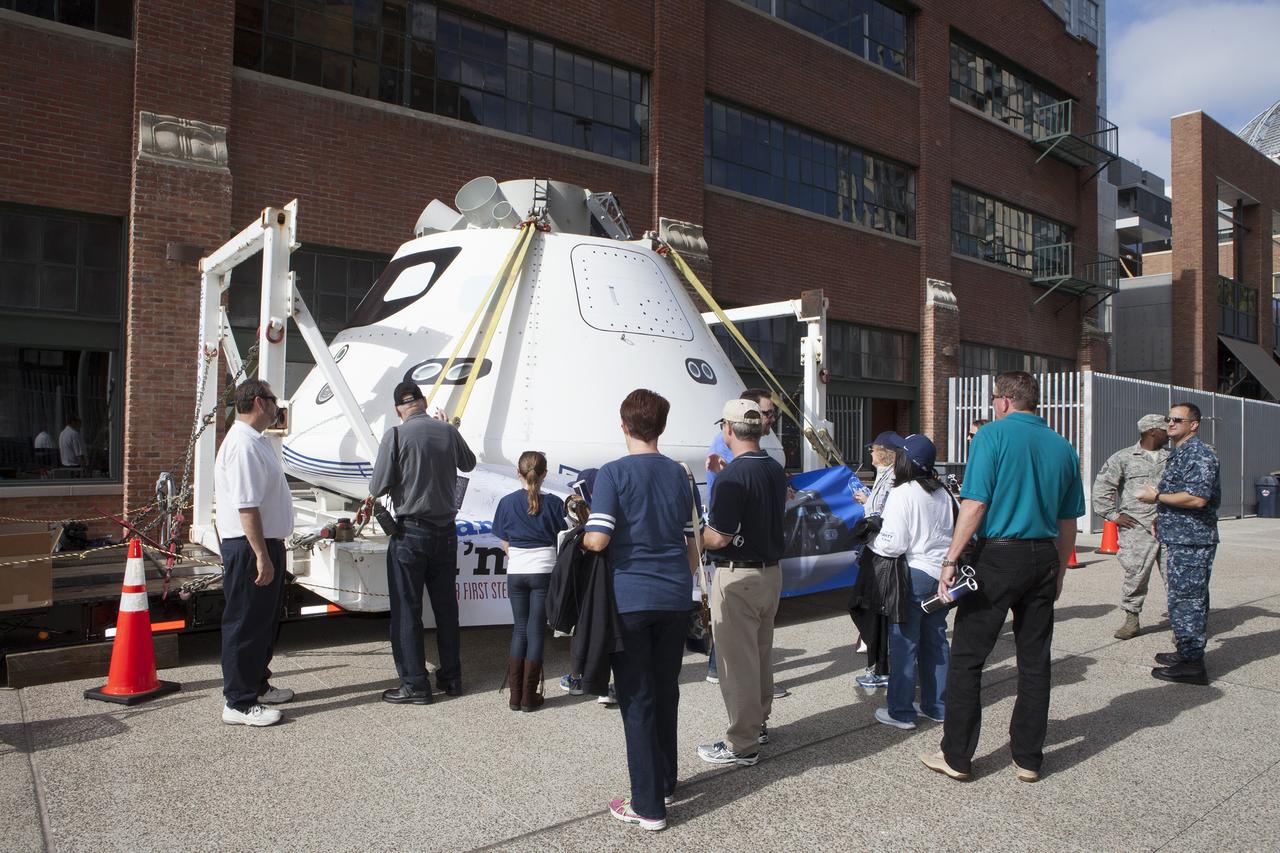
CAPE CANAVERAL, Fla. – The Orion boilerplate test vehicle is on display at Petco Park in San Diego, California, before the San Diego Padres' baseball game. The boilerplate test vehicle is being prepared for an Exploration Flight Test-1, or EFT-1, pre-transportation test. The Ground Systems Development and Operations Program will run the test at the U.S. Naval Base San Diego to simulate retrieval and transportation procedures for Orion after it splashes down in the ocean and is retrieved for return to land and ground transportation back to Kennedy Space Center in Florida. Orion is the exploration spacecraft designed to carry astronauts to destinations not yet explored by humans, including an asteroid and Mars. It will have emergency abort capability, sustain the crew during space travel and provide safe re-entry from deep space return velocities. The first unpiloted test flight of the Orion is scheduled to launch later this year atop a Delta IV rocket and in 2017 on NASA’s Space Launch System rocket. For more information, visit http://www.nasa.gov/orion. Photo credit: NASA/Kim Shiflett
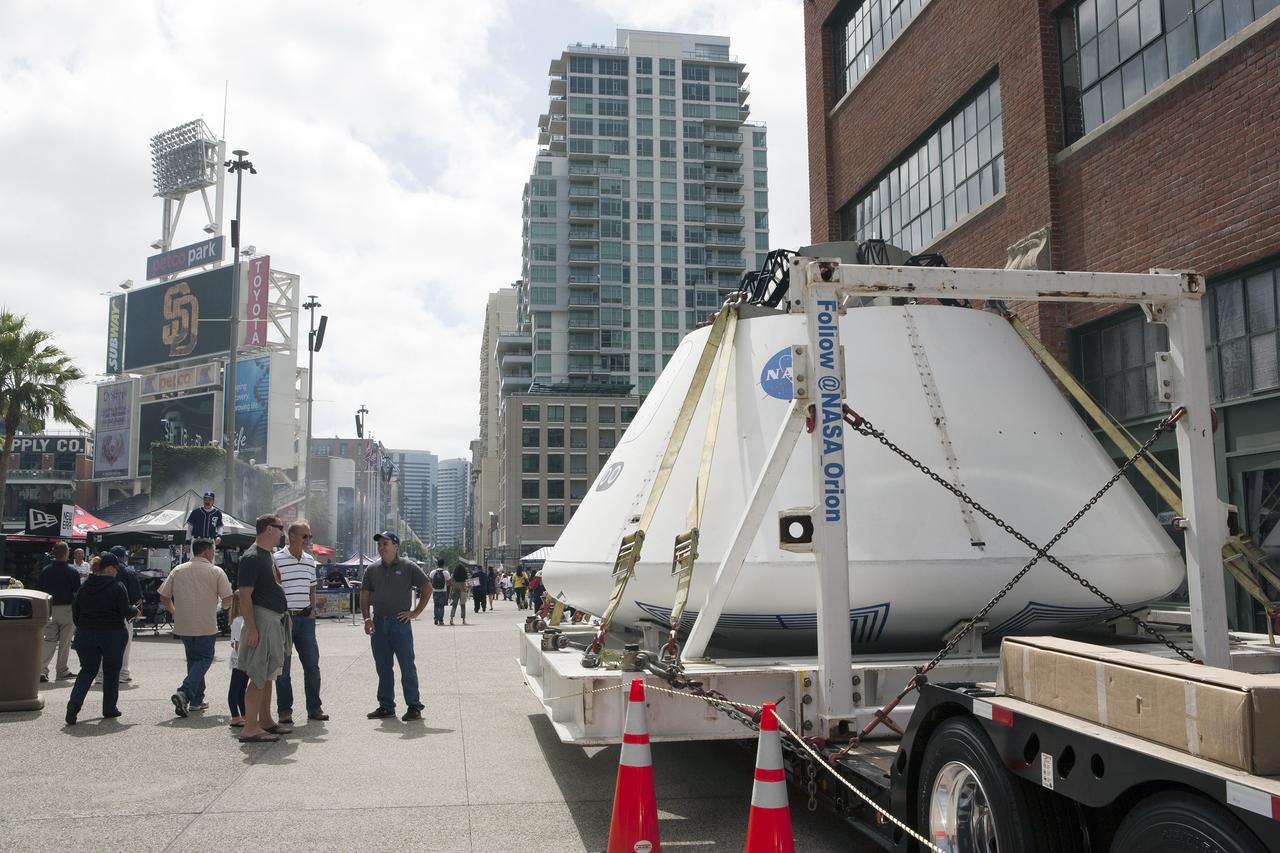
CAPE CANAVERAL, Fla. – The Orion boilerplate test vehicle is on display at Petco Park in San Diego, California, before the San Diego Padres' baseball game. The boilerplate test vehicle is being prepared for an Exploration Flight Test-1, or EFT-1, pre-transportation test. The Ground Systems Development and Operations Program will run the test at the U.S. Naval Base San Diego to simulate retrieval and transportation procedures for Orion after it splashes down in the ocean and is retrieved for return to land and ground transportation back to Kennedy Space Center in Florida. Orion is the exploration spacecraft designed to carry astronauts to destinations not yet explored by humans, including an asteroid and Mars. It will have emergency abort capability, sustain the crew during space travel and provide safe re-entry from deep space return velocities. The first unpiloted test flight of the Orion is scheduled to launch later this year atop a Delta IV rocket and in 2017 on NASA’s Space Launch System rocket. For more information, visit http://www.nasa.gov/orion. Photo credit: NASA/Kim Shiflett

CAPE CANAVERAL, Fla. -- Viewed from the Launch Pad 39A flame trench, crawler-transporter No. 2 moves under a space shuttle era mobile launcher platform at NASA's Kennedy Space Center in Florida. The activity was part of testing to check out recently completed modifications to ensure its ability to carry launch vehicles such as the space agency's Space Launch System heavy-lift rocket to the pad. NASA's Ground Systems Development and Operations Program is leading the 20-year life-extension project for the crawler. A pair of behemoth machines called crawler-transporters has carried the load of taking rockets and spacecraft to the launch pad for more than 40 years at NASA’s Kennedy Space Center in Florida. Each weighing six and a half million pounds and larger in size than a professional baseball infield, the crawler-transporters are powered by locomotive and large electrical power generator engines. The crawler-transporters will stand ready to keep up the work for the next generation of launch vehicles to lift astronauts into space. For more information, visit http://www.nasa.gov/exploration/systems/ground/index.html Photo credit: NASA/ Jim Grossmann
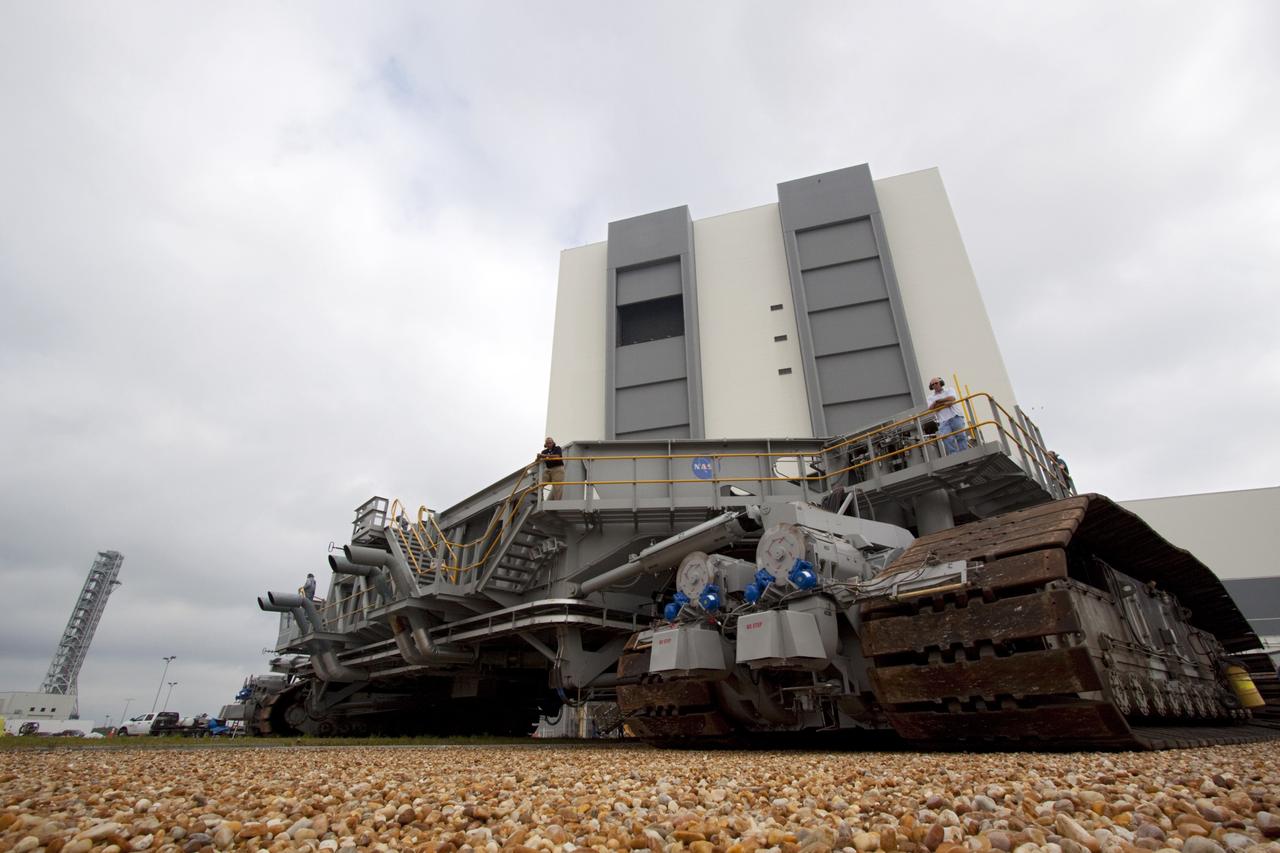
CAPE CANAVERAL, Fla. -- At NASA's Kennedy Space Center in Florida, crawler-transporter No. 2 moves out of high bay 2 of the Vehicle Assembly Building where it has been undergoing modifications. The test dive is designed to check out modifications to ensure its ability to carry the space agency's Space Launch System heavy-lift rocket to the launch pad. NASA's Ground Systems Development and Operations Program is leading the 20-year life-extension project for the crawler. A pair of behemoth machines called crawler-transporters has carried the load of taking rockets and spacecraft to the launch pad for more than 40 years at NASA’s Kennedy Space Center in Florida. Each the size of a baseball infield and powered by locomotive and large electrical power generator engines, the crawler-transporters will stand ready to keep up the work for the next generation of launch vehicles projects to lift astronauts into space. For more information, visit http://www.nasa.gov/exploration/systems/ground/index.html Photo credit: NASA/Jim Grossmann
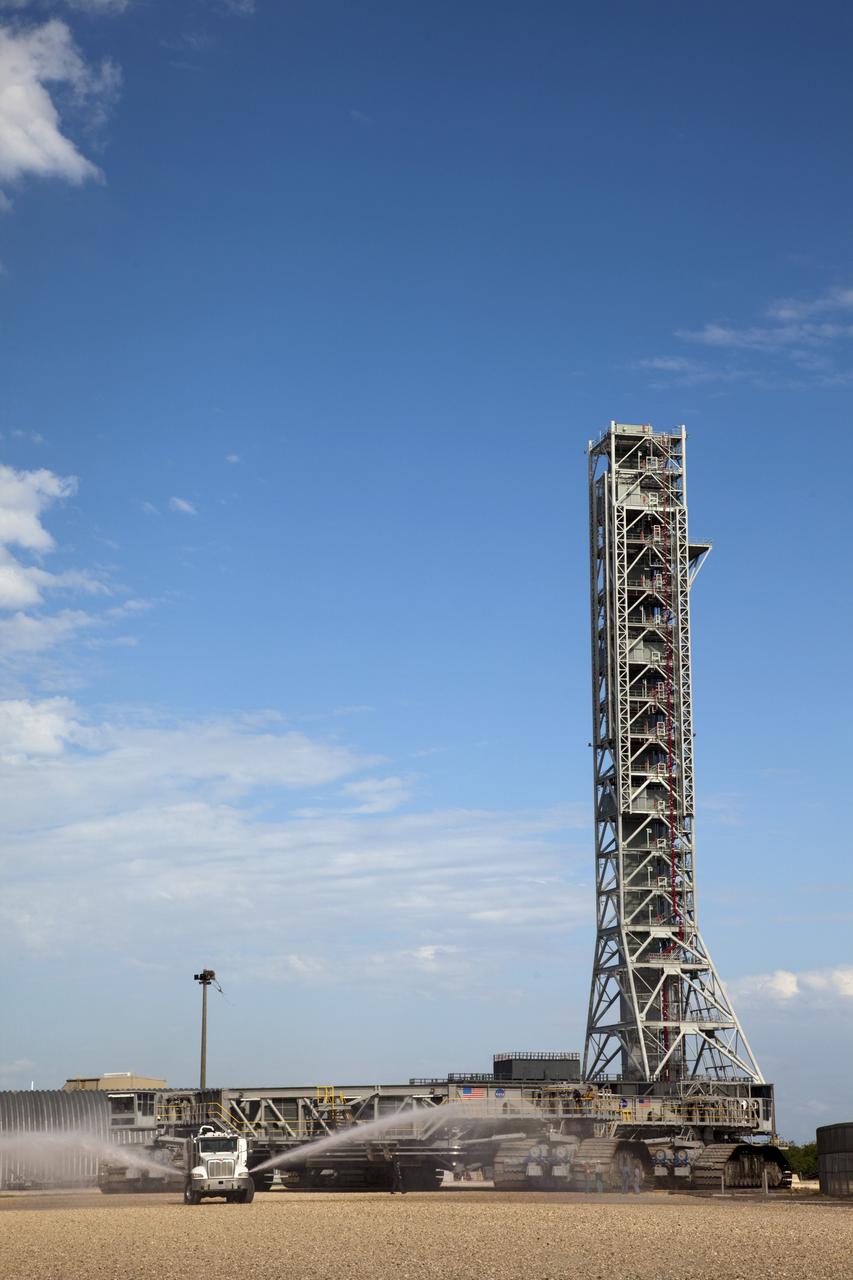
CAPE CANAVERAL, Fla. -- At NASA's Kennedy Space Center in Florida, crawler-transporter No. 2 returns to its park site after completion of testing at Launch Pad 39A. The activity is designed to check out recently completed modifications to ensure the crawler-transporter's ability to carry launch vehicles such as the space agency's Space Launch System heavy-lift rocket to the pad. NASA's Ground Systems Development and Operations Program is leading the 20-year life-extension project for the crawler. A pair of behemoth machines called crawler-transporters has carried the load of taking rockets and spacecraft to the launch pad for more than 40 years at NASA’s Kennedy Space Center in Florida. Each weighing six and a half million pounds and larger in size than a professional baseball infield, the crawler-transporters are powered by locomotive and large electrical power generator engines. The crawler-transporters will stand ready to keep up the work for the next generation of launch vehicles to lift astronauts into space. For more information, visit http://www.nasa.gov/exploration/systems/ground/index.html Photo credit: NASA/Frankie Martin
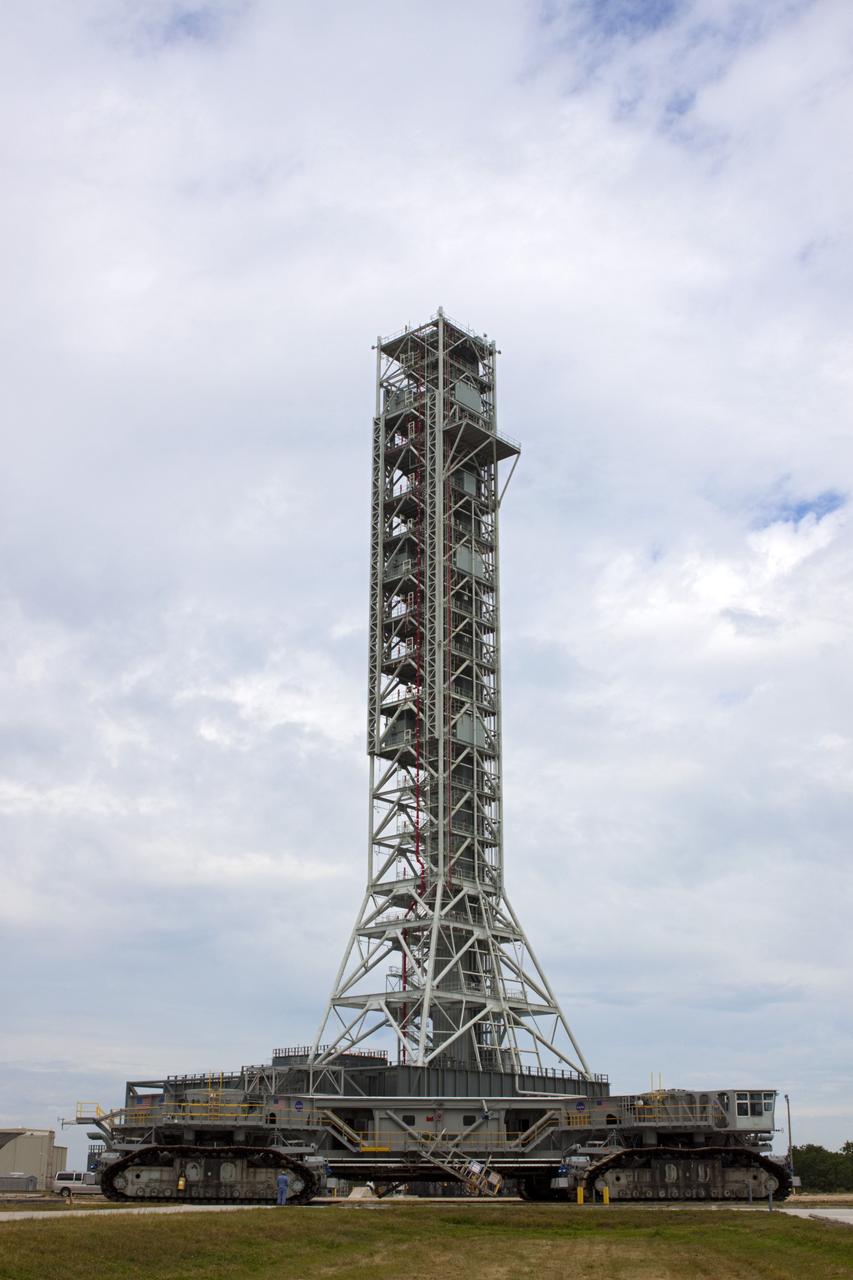
CAPE CANAVERAL, Fla. -- At NASA's Kennedy Space Center in Florida, crawler-transporter No. 2 has been undergoing modifications in high bay 2 of the Vehicle Assembly Building. It has been undergoing a test drive checking out modifications to ensure its ability to carry the space agency's Space Launch System heavy-lift rocket to the launch pad. In the background is the mobile launcher being prepared to support launch vehicles such as space agency's the Space Launch System heavy-lift rocket and Orion spacecraft. NASA's Ground Systems Development and Operations Program is leading the 20-year life-extension project for the crawler. A pair of behemoth machines called crawler-transporters has carried the load of taking rockets and spacecraft to the launch pad for more than 40 years at NASA’s Kennedy Space Center in Florida. Each the size of a baseball infield and powered by locomotive and large electrical power generator engines, the crawler-transporters will stand ready to keep up the work for the next generation of launch vehicles projects to lift astronauts into space. For more information, visit http://www.nasa.gov/exploration/systems/ground/index.html Photo credit: NASA/Jim Grossmann
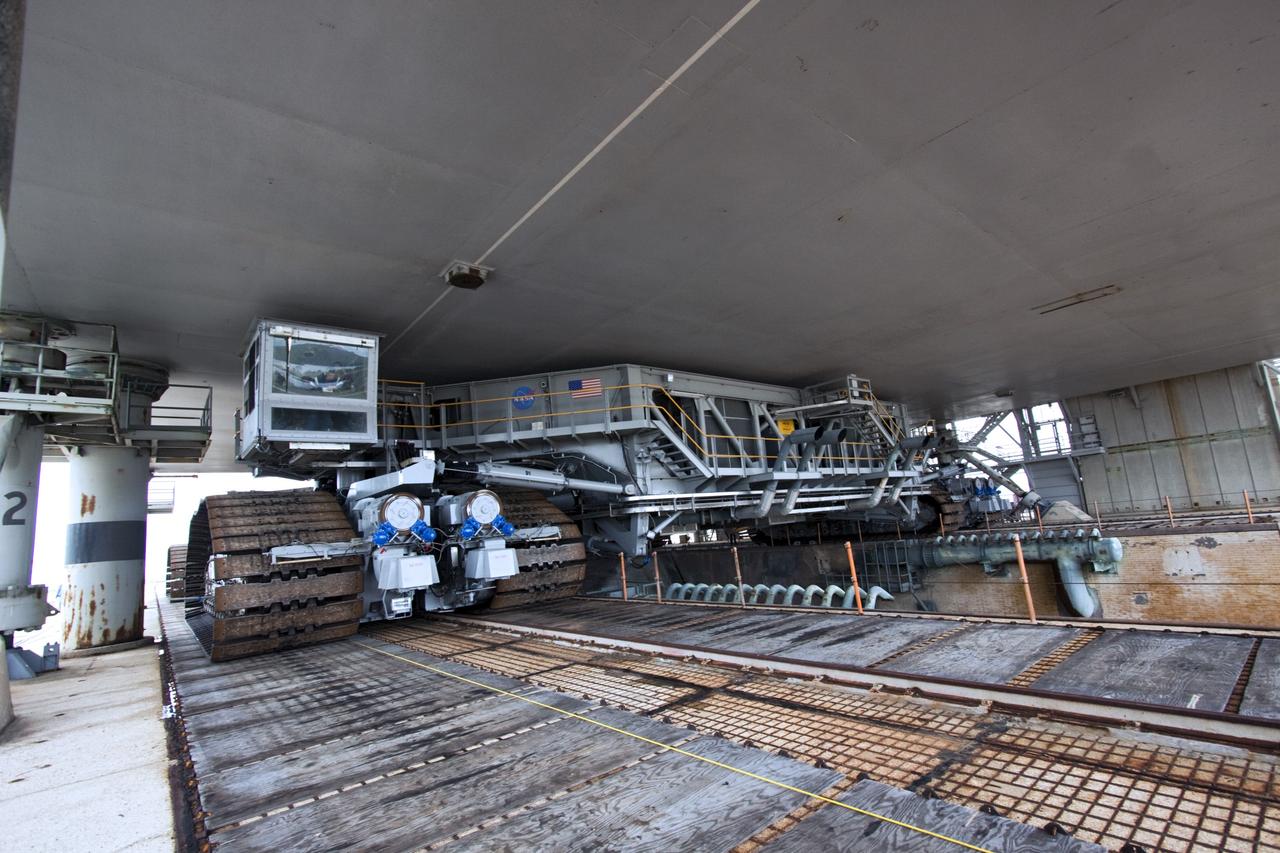
CAPE CANAVERAL, Fla. -- Viewed from under a space shuttle era mobile launcher platform on Launch Pad 39A at NASA's Kennedy Space Center in Florida, crawler-transporter No. 2 moves under. The activity was part of testing to check out recently completed modifications to ensure its ability to carry launch vehicles such as the space agency's Space Launch System heavy-lift rocket to the pad. NASA's Ground Systems Development and Operations Program is leading the 20-year life-extension project for the crawler. A pair of behemoth machines called crawler-transporters has carried the load of taking rockets and spacecraft to the launch pad for more than 40 years at NASA’s Kennedy Space Center in Florida. Each weighing six and a half million pounds and larger in size than a professional baseball infield, the crawler-transporters are powered by locomotive and large electrical power generator engines. The crawler-transporters will stand ready to keep up the work for the next generation of launch vehicles to lift astronauts into space. For more information, visit http://www.nasa.gov/exploration/systems/ground/index.html Photo credit: NASA/ Jim Grossmann
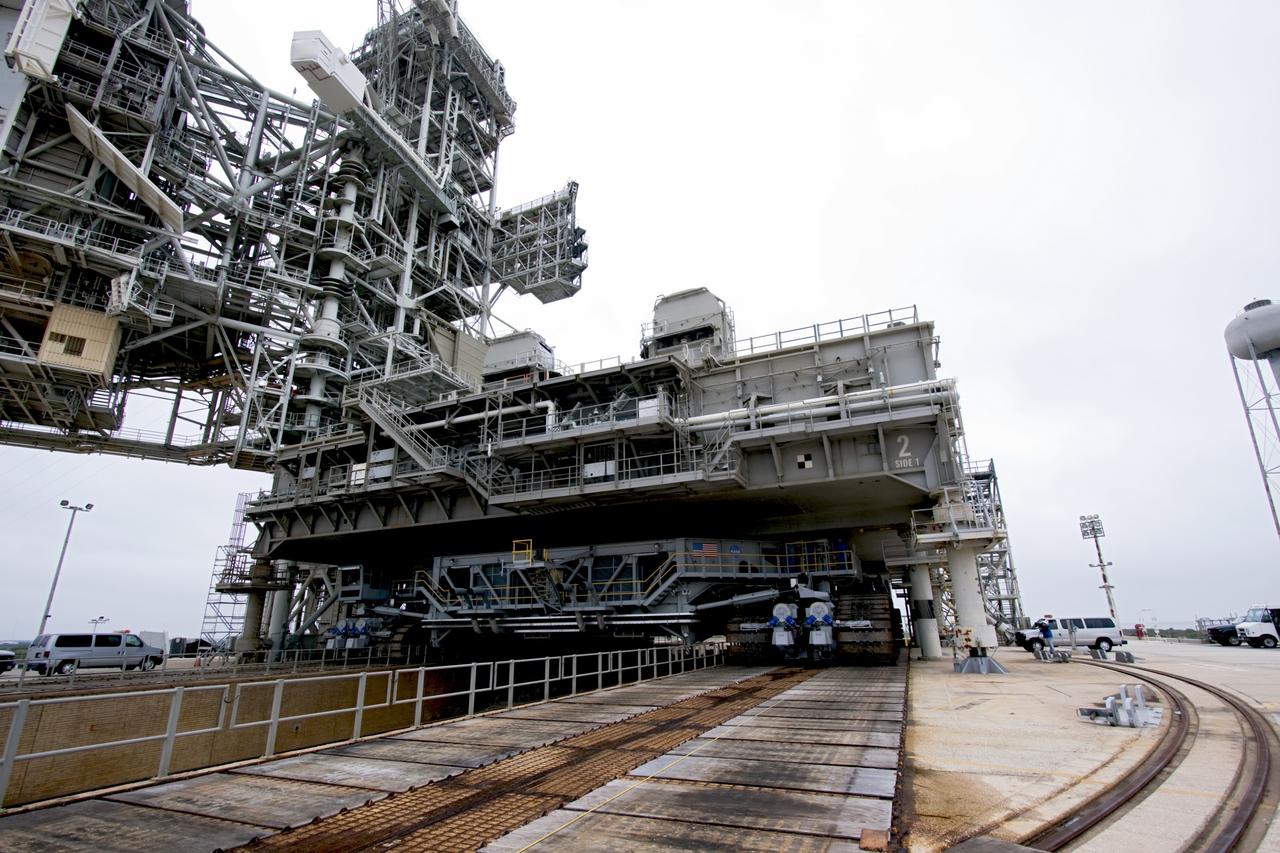
CAPE CANAVERAL, Fla. -- At NASA's Kennedy Space Center in Florida, crawler-transporter No. 2 moves under a space shuttle era mobile launcher platform on Launch Pad 39A. The activity was part of testing to check out recently completed modifications to ensure its ability to carry launch vehicles such as the space agency's Space Launch System heavy-lift rocket to the pad. NASA's Ground Systems Development and Operations Program is leading the 20-year life-extension project for the crawler. A pair of behemoth machines called crawler-transporters has carried the load of taking rockets and spacecraft to the launch pad for more than 40 years at NASA’s Kennedy Space Center in Florida. Each weighing six and a half million pounds and larger in size than a professional baseball infield, the crawler-transporters are powered by locomotive and large electrical power generator engines. The crawler-transporters will stand ready to keep up the work for the next generation of launch vehicles to lift astronauts into space. For more information, visit http://www.nasa.gov/exploration/systems/ground/index.html Photo credit: NASA/ Jim Grossmann
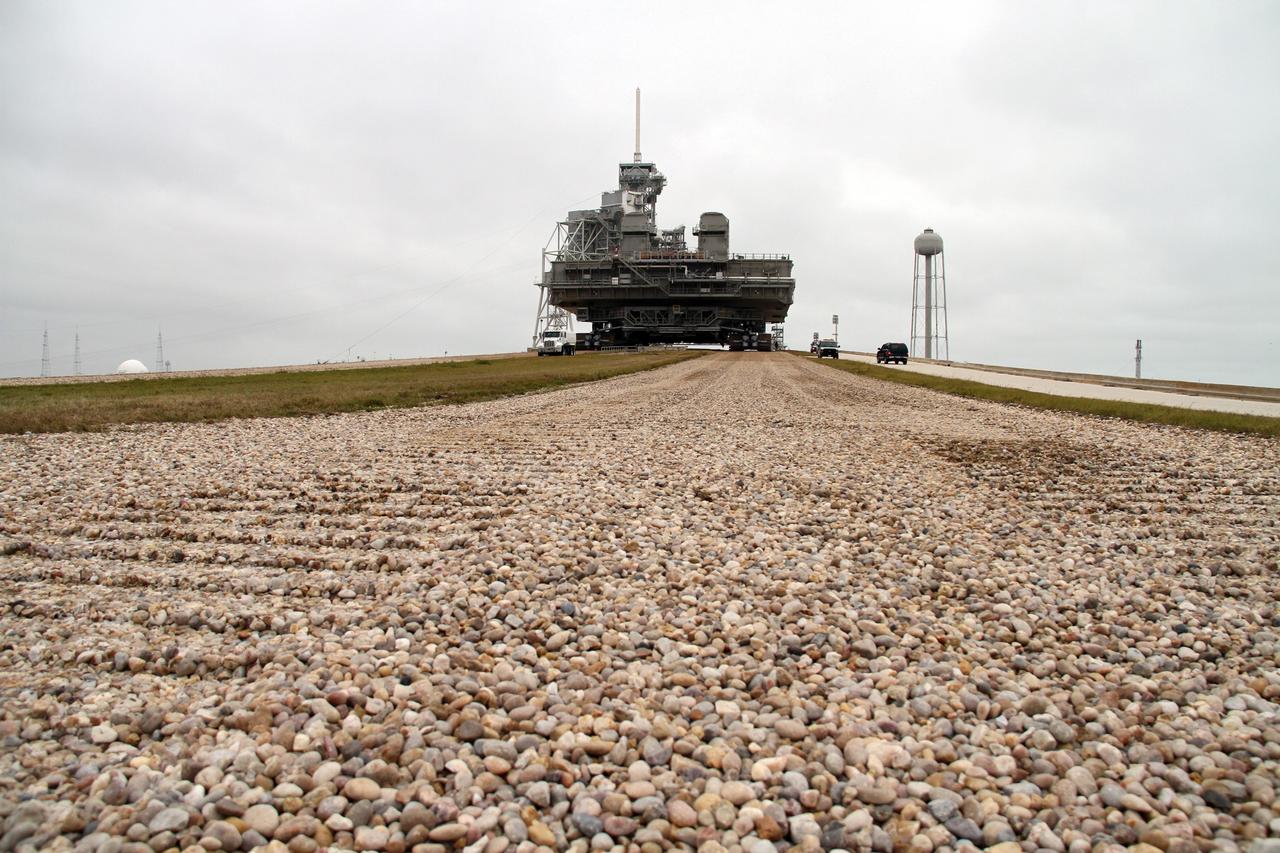
CAPE CANAVERAL, Fla. -- At NASA's Kennedy Space Center in Florida, crawler-transporter No. 2 moves a space shuttle era mobile launcher platform down the gravel crawler way at Launch Pad 39A. The activity was part of testing to check out recently completed modifications to ensure its ability to carry launch vehicles such as the space agency's Space Launch System heavy-lift rocket to the pad. NASA's Ground Systems Development and Operations Program is leading the 20-year life-extension project for the crawler. A pair of behemoth machines called crawler-transporters has carried the load of taking rockets and spacecraft to the launch pad for more than 40 years at NASA’s Kennedy Space Center in Florida. Each weighing six and a half million pounds and larger in size than a professional baseball infield, the crawler-transporters are powered by locomotive and large electrical power generator engines. The crawler-transporters will stand ready to keep up the work for the next generation of launch vehicles to lift astronauts into space. For more information, visit http://www.nasa.gov/exploration/systems/ground/index.html Photo credit: NASA/Cory Huston
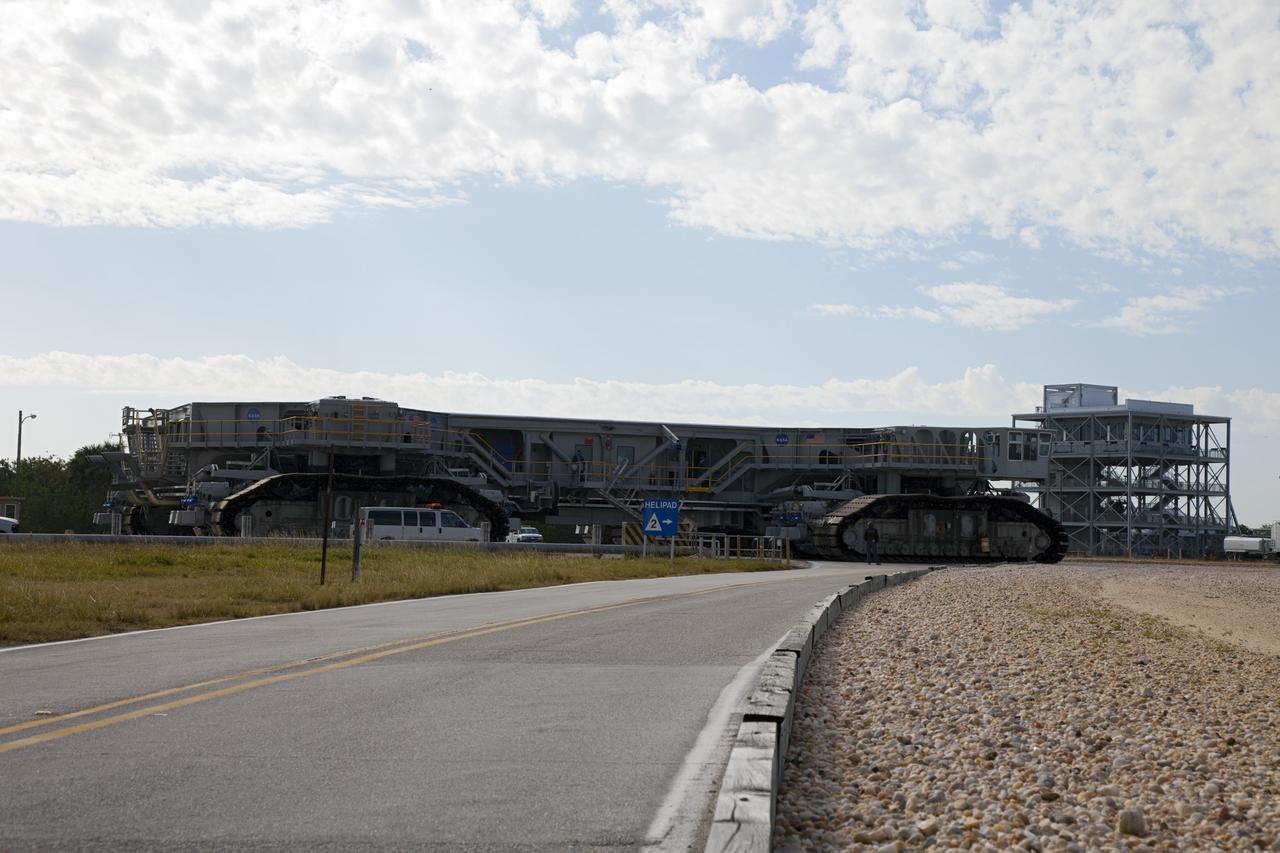
CAPE CANAVERAL, Fla. -- At NASA's Kennedy Space Center in Florida, crawler-transporter No. 2 moves along the gravel crawler way after completion of testing at Launch Pad 39A. The activity is designed to check out recently completed modifications to ensure the crawler-transporter's ability to carry launch vehicles such as the space agency's Space Launch System heavy-lift rocket to the pad. NASA's Ground Systems Development and Operations Program is leading the 20-year life-extension project for the crawler. A pair of behemoth machines called crawler-transporters has carried the load of taking rockets and spacecraft to the launch pad for more than 40 years at NASA’s Kennedy Space Center in Florida. Each weighing six and a half million pounds and larger in size than a professional baseball infield, the crawler-transporters are powered by locomotive and large electrical power generator engines. The crawler-transporters will stand ready to keep up the work for the next generation of launch vehicles to lift astronauts into space. For more information, visit http://www.nasa.gov/exploration/systems/ground/index.html Photo credit: NASA/Frankie Martin
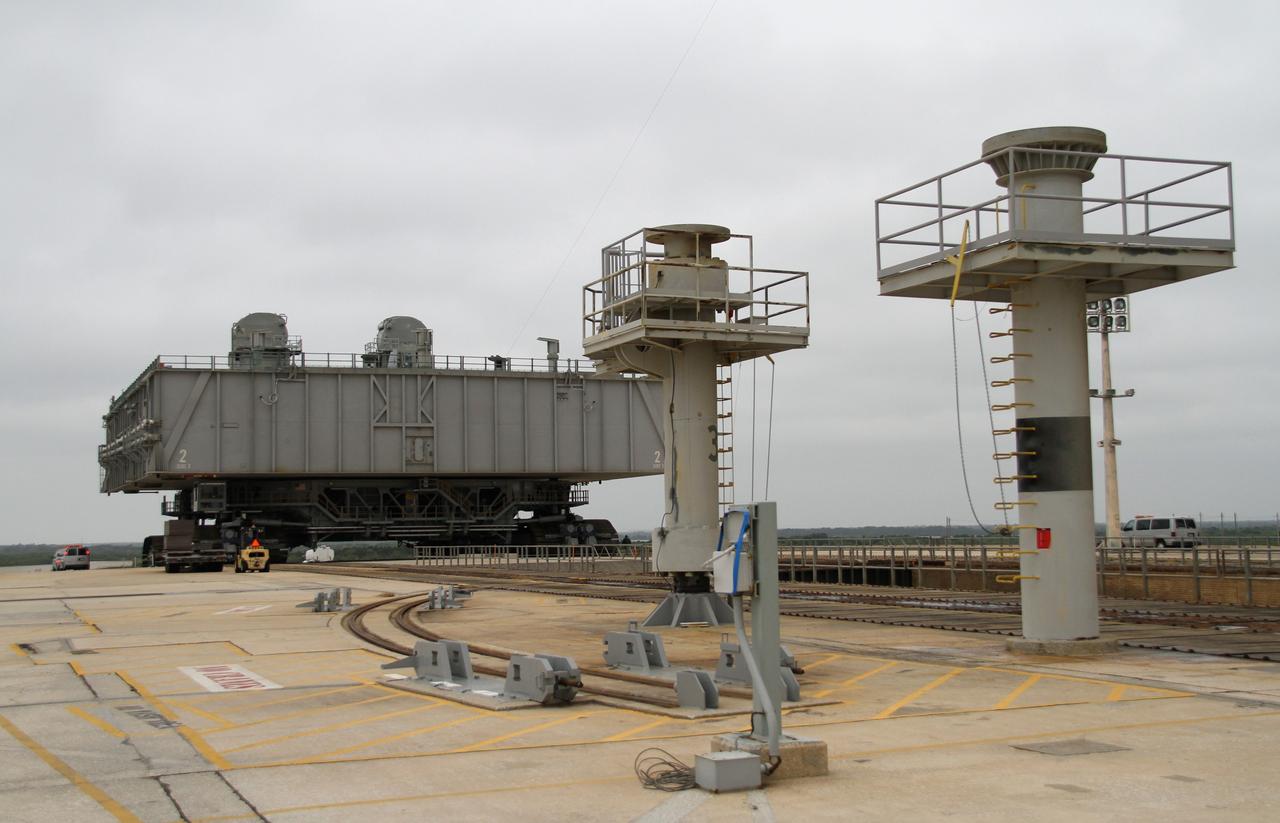
CAPE CANAVERAL, Fla. -- At NASA's Kennedy Space Center in Florida, crawler-transporter No. 2 moves a space shuttle era mobile launcher platform on Launch Pad 39A. The activity was part of testing to check out recently completed modifications to ensure its ability to carry launch vehicles such as the space agency's Space Launch System heavy-lift rocket to the pad. NASA's Ground Systems Development and Operations Program is leading the 20-year life-extension project for the crawler. A pair of behemoth machines called crawler-transporters has carried the load of taking rockets and spacecraft to the launch pad for more than 40 years at NASA’s Kennedy Space Center in Florida. Each weighing six and a half million pounds and larger in size than a professional baseball infield, the crawler-transporters are powered by locomotive and large electrical power generator engines. The crawler-transporters will stand ready to keep up the work for the next generation of launch vehicles to lift astronauts into space. For more information, visit http://www.nasa.gov/exploration/systems/ground/index.html Photo credit: NASA/Cory Huston
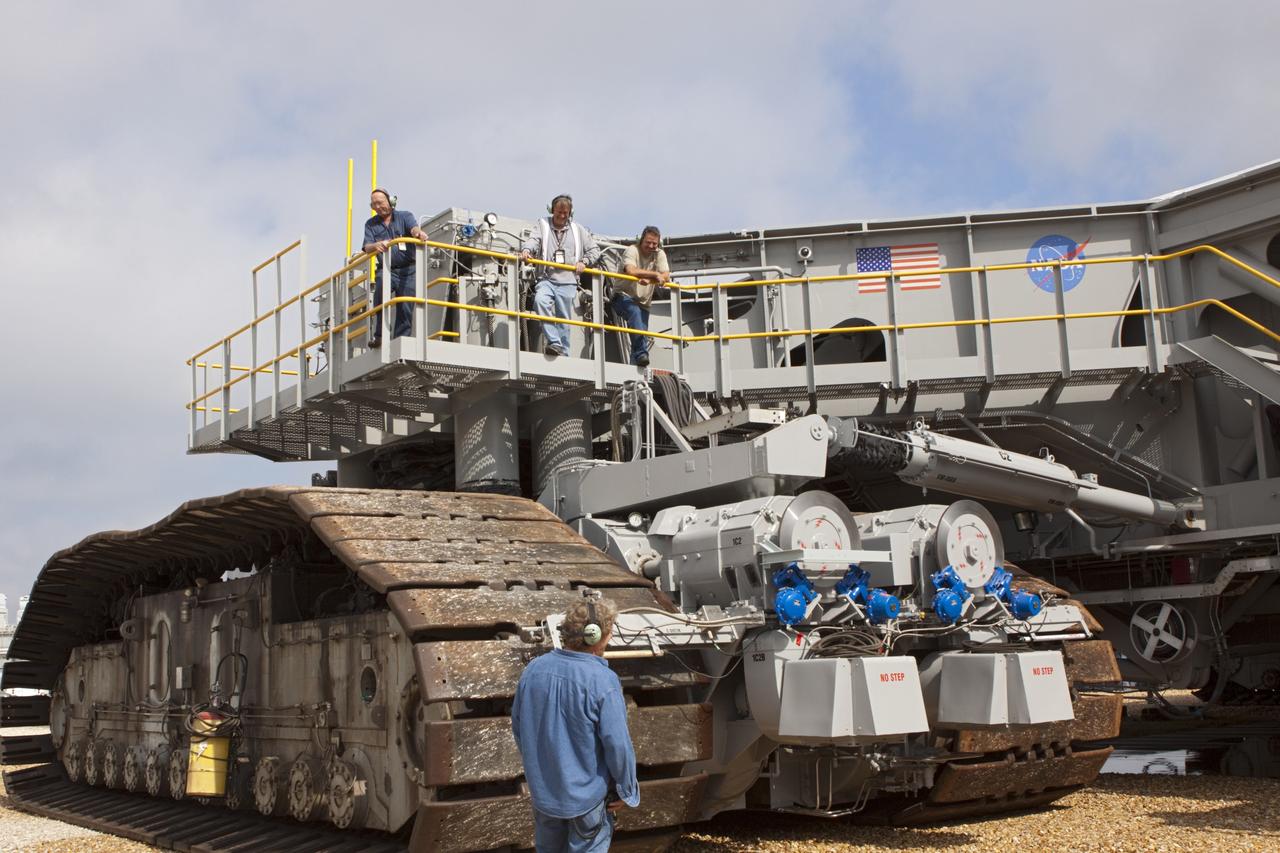
CAPE CANAVERAL, Fla. -- Technicians keep watch as crawler-transporter No. 2 moves along the crawler way at NASA's Kennedy Space Center in Florida. The crawler-transporter test dive is designed to check out recent modifications to ensure its ability to carry the space agency's Space Launch System heavy-lift rocket to the launch pad. NASA's Ground Systems Development and Operations Program is leading the 20-year life-extension project for the crawler. A pair of behemoth machines called crawler-transporters has carried the load of taking rockets and spacecraft to the launch pad for more than 40 years at NASA’s Kennedy Space Center in Florida. Each the size of a baseball infield and powered by locomotive and large electrical power generator engines, the crawler-transporters will stand ready to keep up the work for the next generation of launch vehicles projects to lift astronauts into space. For more information, visit http://www.nasa.gov/exploration/systems/ground/index.html Photo credit: NASA/Jim Grossmann
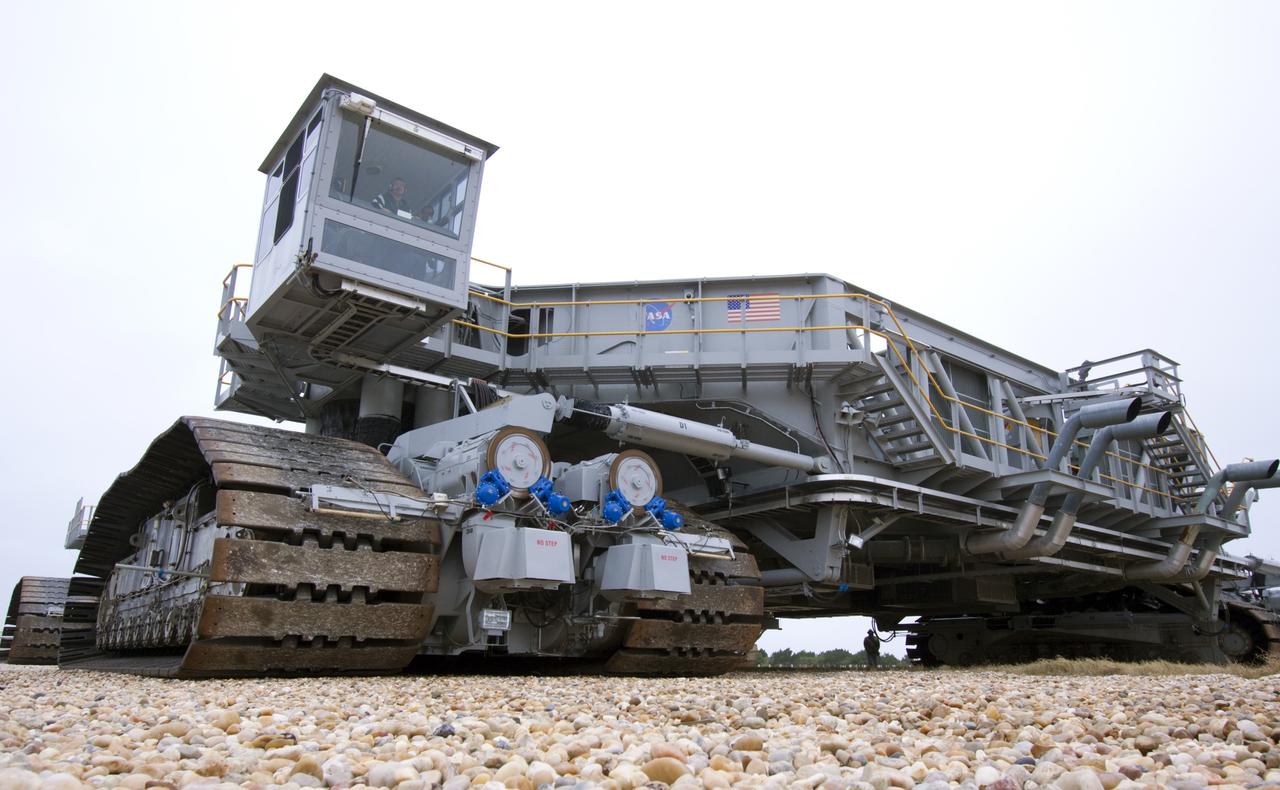
CAPE CANAVERAL, Fla. -- At NASA's Kennedy Space Center in Florida, crawler-transporter No. 2 moves along the gravel crawler way. The crawler-transporter is undergoing testing at Launch Pad 39A to check out recently completed modifications to ensure its ability to carry launch vehicles such as the space agency's Space Launch System heavy-lift rocket to the pad. NASA's Ground Systems Development and Operations Program is leading the 20-year life-extension project for the crawler. A pair of behemoth machines called crawler-transporters has carried the load of taking rockets and spacecraft to the launch pad for more than 40 years at NASA’s Kennedy Space Center in Florida. Each weighing six and a half million pounds and larger in size than a professional baseball infield, the crawler-transporters are powered by locomotive and large electrical power generator engines. The crawler-transporters will stand ready to keep up the work for the next generation of launch vehicles to lift astronauts into space. For more information, visit http://www.nasa.gov/exploration/systems/ground/index.html Photo credit: NASA/ Jim Grossmann
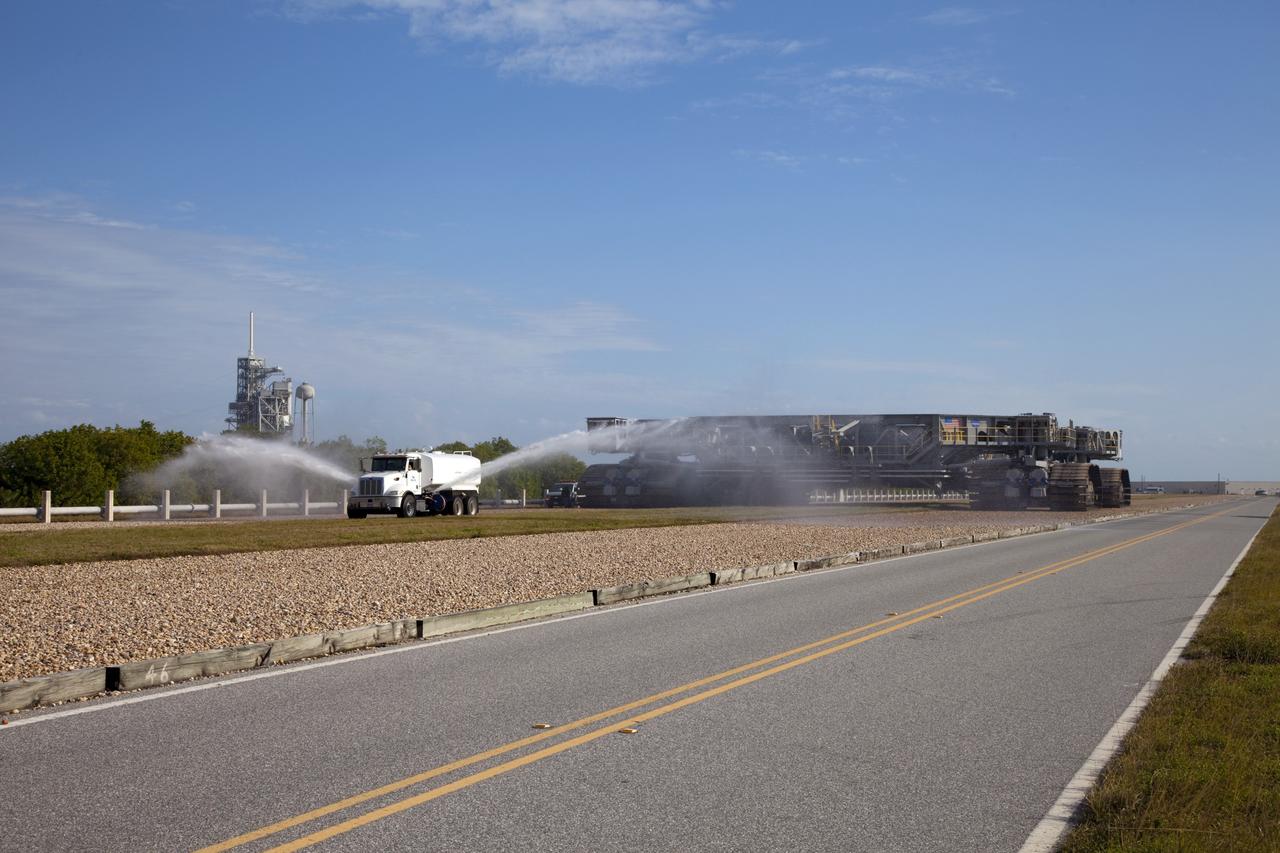
CAPE CANAVERAL, Fla. -- A truck sprays water on the gravel crawler way at NASA's Kennedy Space Center in Florida as crawler-transporter No. 2 completes testing at Launch Pad 39A. The activity is designed to check out recently completed modifications to ensure the crawler-transporter's ability to carry launch vehicles such as the space agency's Space Launch System heavy-lift rocket to the pad. NASA's Ground Systems Development and Operations Program is leading the 20-year life-extension project for the crawler. A pair of behemoth machines called crawler-transporters has carried the load of taking rockets and spacecraft to the launch pad for more than 40 years at NASA’s Kennedy Space Center in Florida. Each weighing six and a half million pounds and larger in size than a professional baseball infield, the crawler-transporters are powered by locomotive and large electrical power generator engines. The crawler-transporters will stand ready to keep up the work for the next generation of launch vehicles to lift astronauts into space. For more information, visit http://www.nasa.gov/exploration/systems/ground/index.html Photo credit: NASA/Frankie Martin
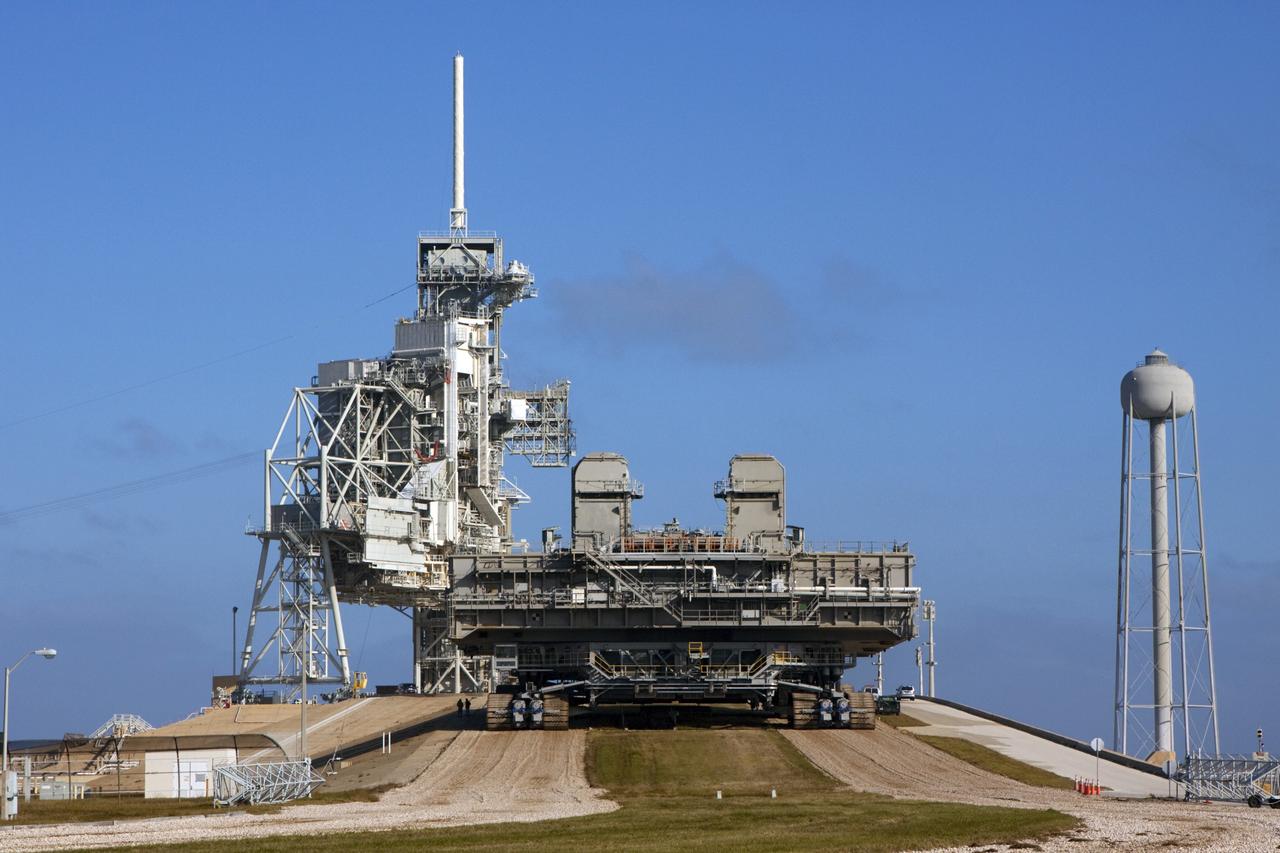
CAPE CANAVERAL, Fla. -- At NASA's Kennedy Space Center in Florida, crawler-transporter No. 2 moves a space shuttle era mobile launcher platform at Launch Pad 39A. The activity was part of testing to check out recently completed modifications to ensure its ability to carry launch vehicles such as the space agency's Space Launch System heavy-lift rocket to the pad. NASA's Ground Systems Development and Operations Program is leading the 20-year life-extension project for the crawler. A pair of behemoth machines called crawler-transporters has carried the load of taking rockets and spacecraft to the launch pad for more than 40 years at NASA’s Kennedy Space Center in Florida. Each weighing six and a half million pounds and larger in size than a professional baseball infield, the crawler-transporters are powered by locomotive and large electrical power generator engines. The crawler-transporters will stand ready to keep up the work for the next generation of launch vehicles to lift astronauts into space. For more information, visit http://www.nasa.gov/exploration/systems/ground/index.html Photo credit: NASA/Jim Grossmann
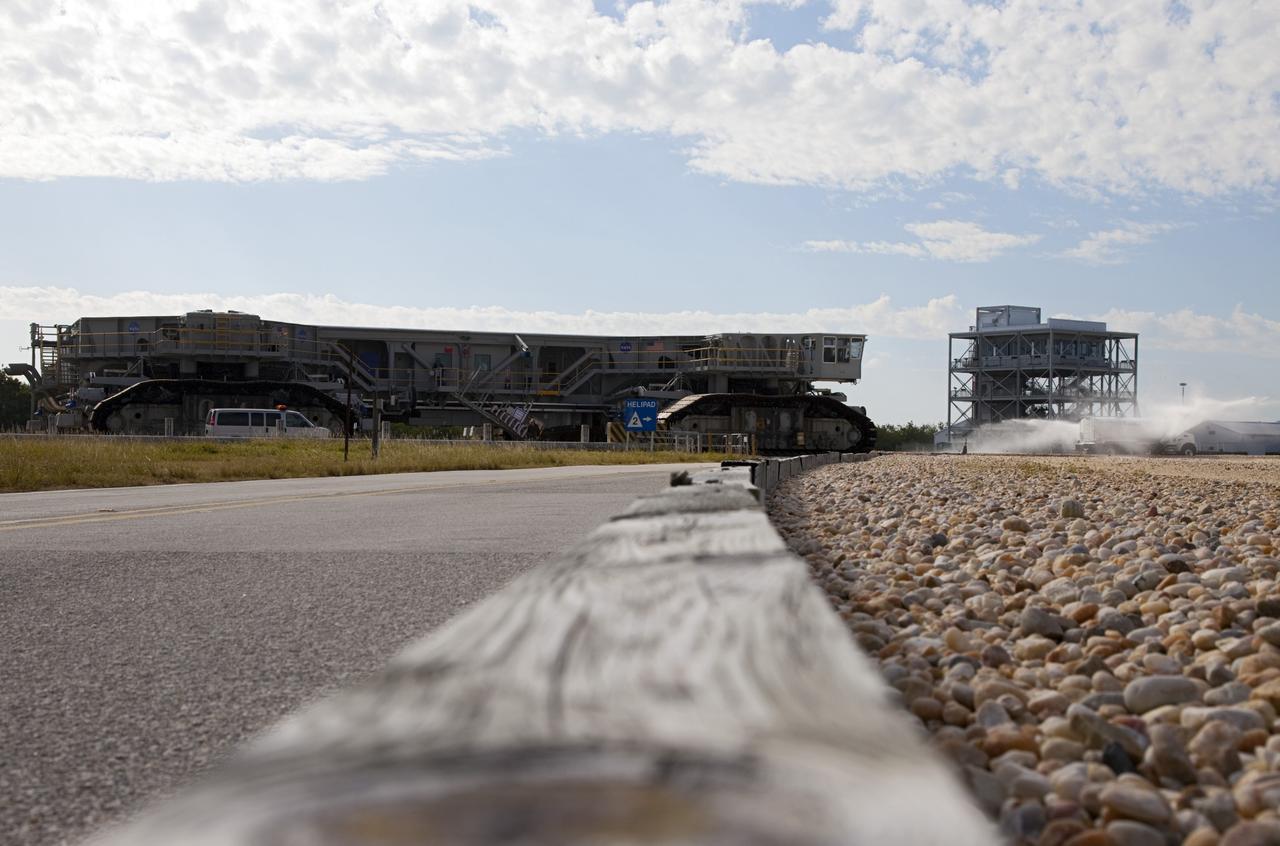
CAPE CANAVERAL, Fla. -- At NASA's Kennedy Space Center in Florida, crawler-transporter No. 2 moves along the gravel crawler way after completion of testing at Launch Pad 39A. The activity is designed to check out recently completed modifications to ensure the crawler-transporter's ability to carry launch vehicles such as the space agency's Space Launch System heavy-lift rocket to the pad. NASA's Ground Systems Development and Operations Program is leading the 20-year life-extension project for the crawler. A pair of behemoth machines called crawler-transporters has carried the load of taking rockets and spacecraft to the launch pad for more than 40 years at NASA’s Kennedy Space Center in Florida. Each weighing six and a half million pounds and larger in size than a professional baseball infield, the crawler-transporters are powered by locomotive and large electrical power generator engines. The crawler-transporters will stand ready to keep up the work for the next generation of launch vehicles to lift astronauts into space. For more information, visit http://www.nasa.gov/exploration/systems/ground/index.html Photo credit: NASA/Frankie Martin
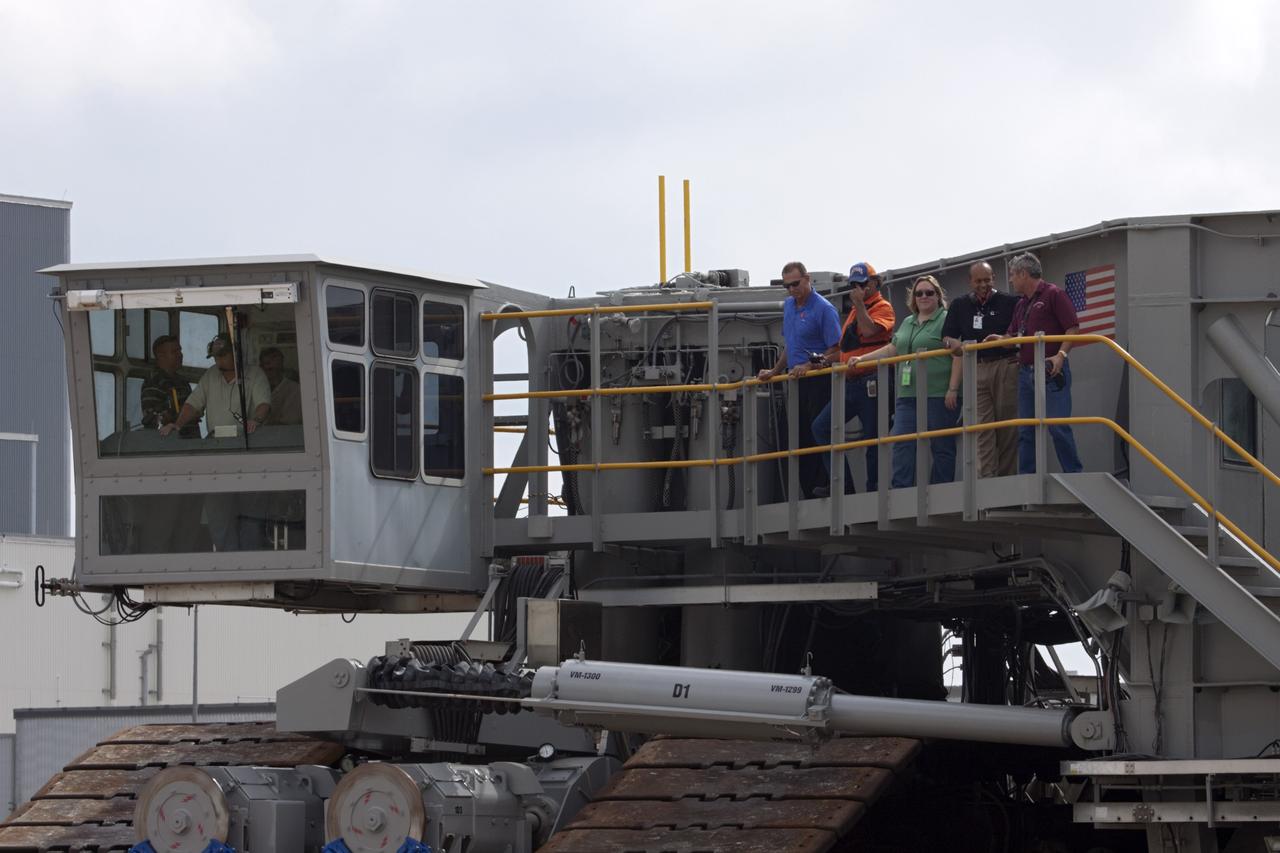
CAPE CANAVERAL, Fla. -- As crawler-transporter No. 2 moves out of high bay 2 of the Vehicle Assembly Building at NASA's Kennedy Space Center in Florida, technicians keep watch. The crawler-transporter test drive is designed to check out recent modifications to ensure its ability to carry launch vehicles such as the space agency's Space Launch System heavy-lift rocket to the launch pad. NASA's Ground Systems Development and Operations Program is leading the 20-year life-extension project for the crawler. A pair of behemoth machines called crawler-transporters has carried the load of taking rockets and spacecraft to the launch pad for more than 40 years at NASA’s Kennedy Space Center in Florida. Each the size of a baseball infield and powered by locomotive and large electrical power generator engines, the crawler-transporters will stand ready to keep up the work for the next generation of launch vehicles projects to lift astronauts into space. For more information, visit http://www.nasa.gov/exploration/systems/ground/index.html Photo credit: NASA/Jim Grossmann