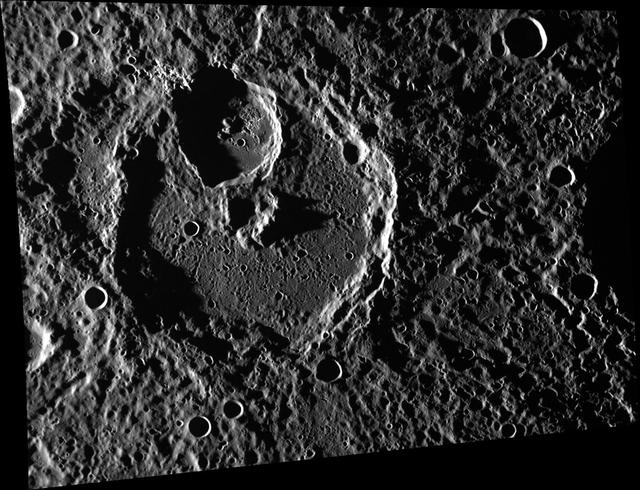
Sharing is Caring
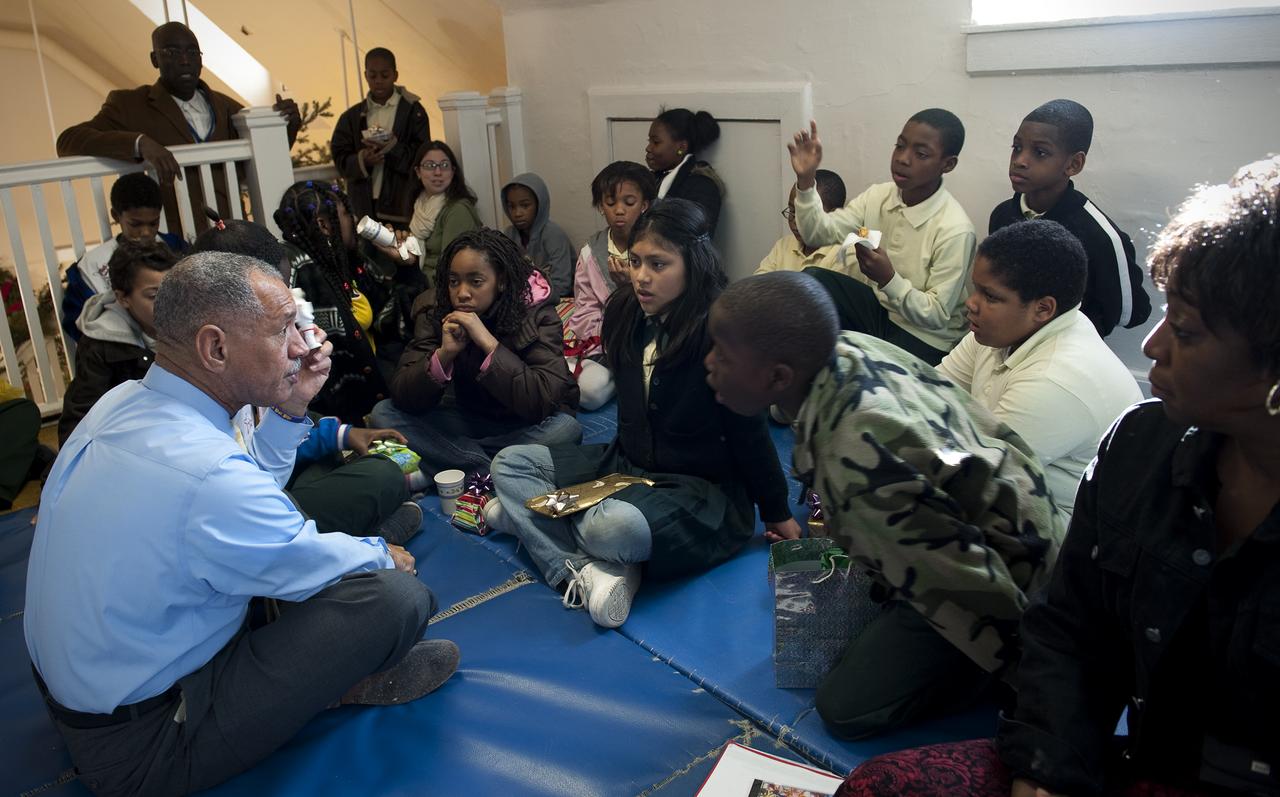
NASA Administrator Charles Bolden spent time volunteering with DC Cares at the Park View Recreation Center in Washington, DC for their Santa's Workshop program, Monday, Dec. 14, 2009. Mr. Bolden spoke with students about his experience as a former NASA astronaut and current NASA Administrator, encouraging them to study math and science and to stay in school. Photo Credit: (NASA/Bill Ingalls)
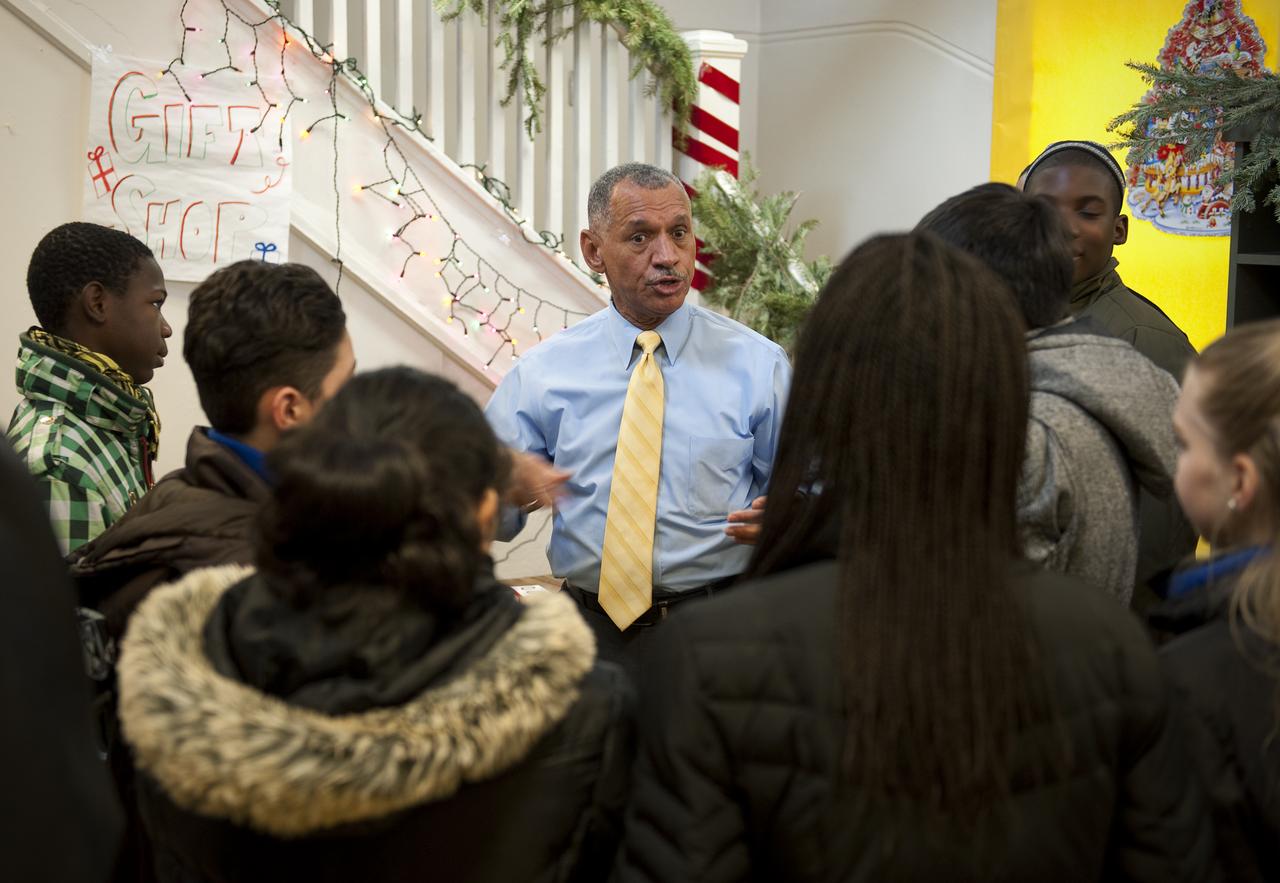
NASA Administrator Charles Bolden spent time volunteering with DC Cares at the Park View Recreation Center in Washington, DC for their Santa's Workshop program, Monday, Dec. 14, 2009. Mr. Bolden spoke with students about his experience as a former NASA astronaut and current NASA Administrator, encouraging them to study math and science and to stay in school. Photo Credit: (NASA/Bill Ingalls)
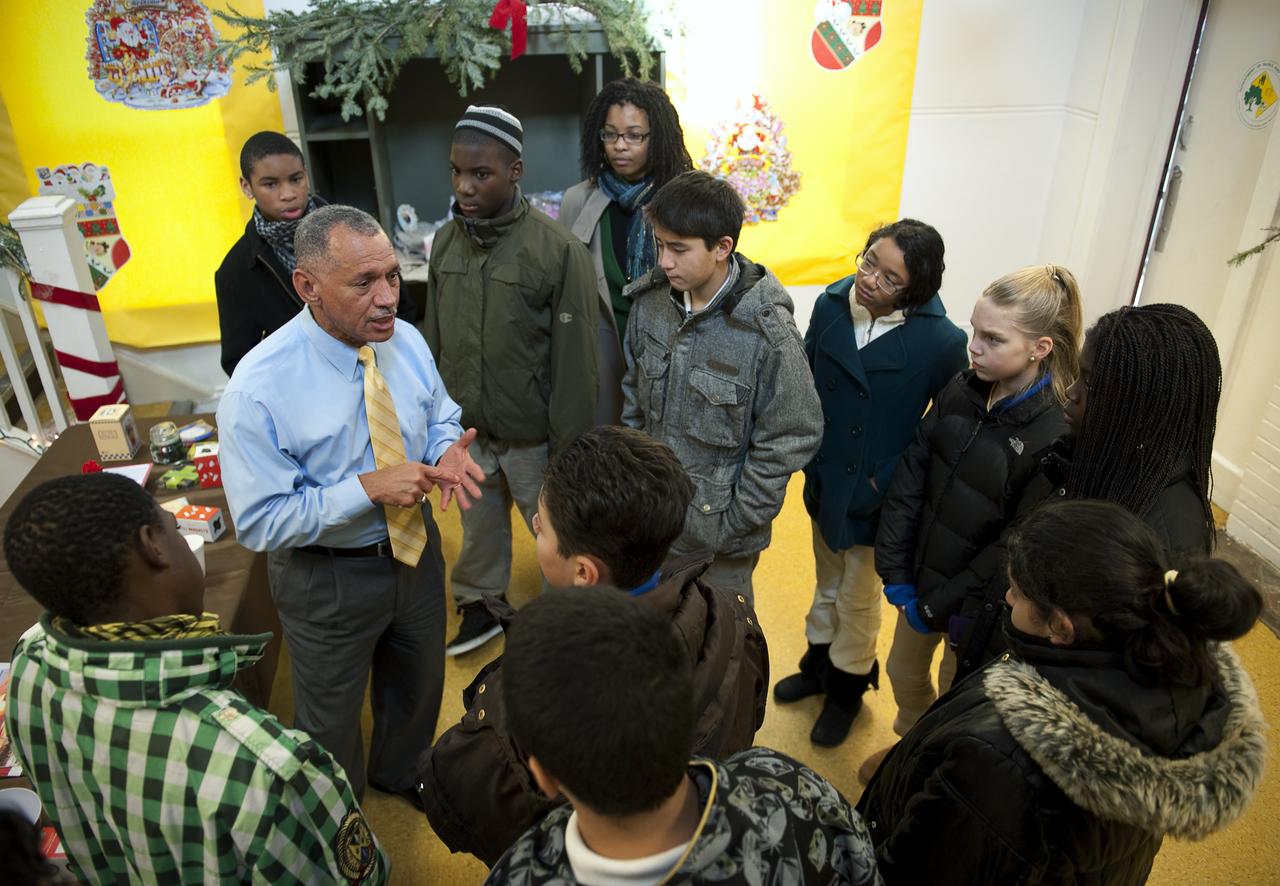
NASA Administrator Charles Bolden spent time volunteering with DC Cares at the Park View Recreation Center in Washington, DC for their Santa's Workshop program, Monday, Dec. 14, 2009. Mr. Bolden spoke with students about his experience as a former NASA astronaut and current NASA Administrator, encouraging them to study math and science and to stay in school. Photo Credit: (NASA/Bill Ingalls)
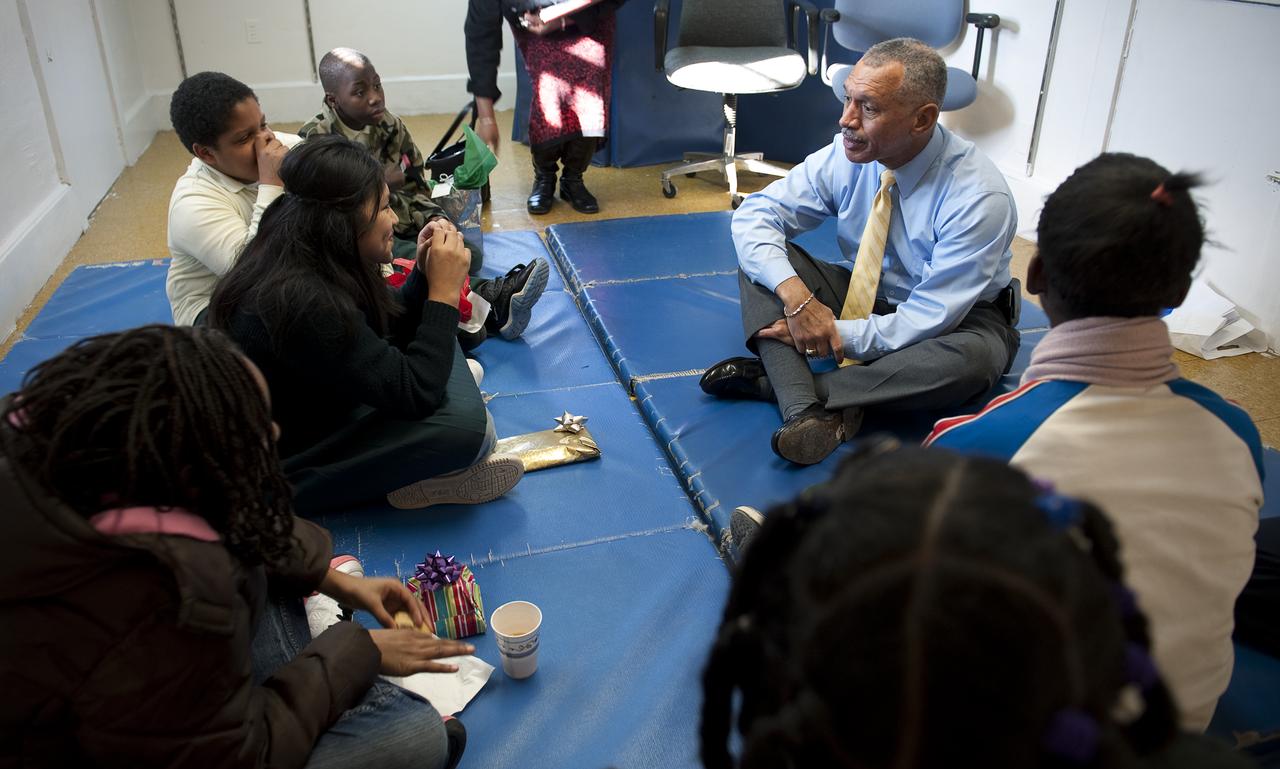
NASA Administrator Charles Bolden spent time volunteering with DC Cares at the Park View Recreation Center in Washington, DC for their Santa's Workshop program, Monday, Dec. 14, 2009. Mr. Bolden spoke with students about his experience as a former NASA astronaut and current NASA Administrator, encouraging them to study math and science and to stay in school. Photo Credit: (NASA/Bill Ingalls)
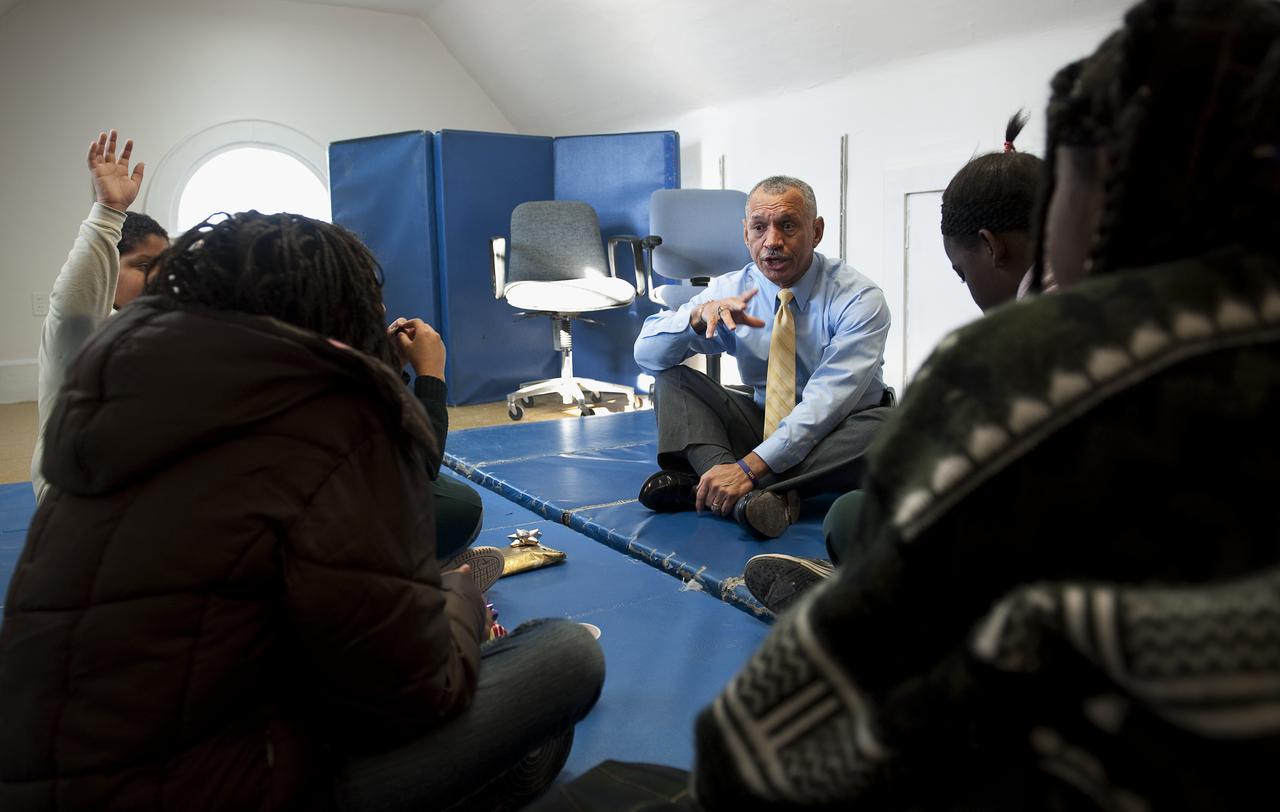
NASA Administrator Charles Bolden spent time volunteering with DC Cares at the Park View Recreation Center in Washington, DC for their Santa's Workshop program, Monday, Dec. 14, 2009. Mr. Bolden spoke with students about his experience as a former NASA astronaut and current NASA Administrator, encouraging them to study math and science and to stay in school. Photo Credit: (NASA/Bill Ingalls)
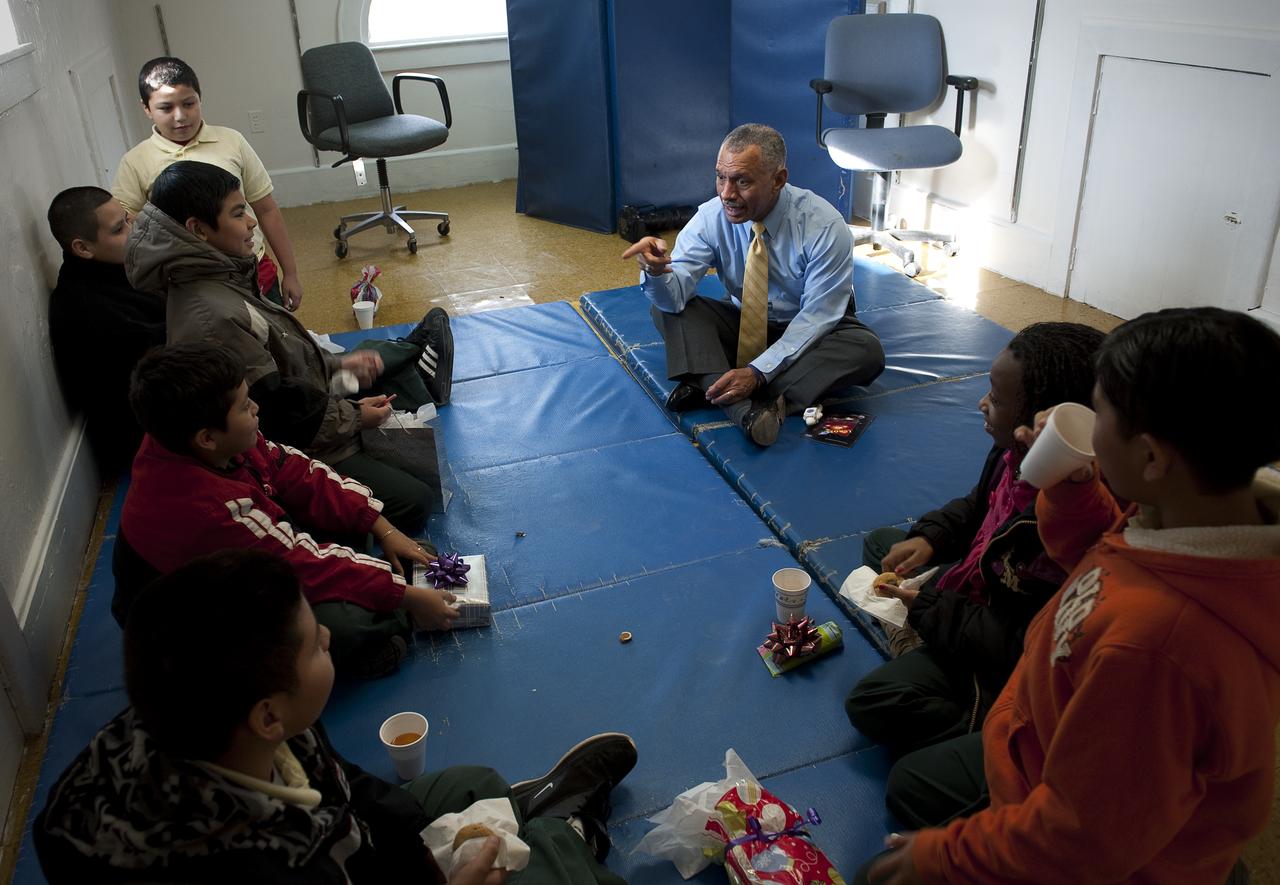
NASA Administrator Charles Bolden spent time volunteering with DC Cares at the Park View Recreation Center in Washington, DC for their Santa's Workshop program, Monday, Dec. 14, 2009. Mr. Bolden spoke with students about his experience as a former NASA astronaut and current NASA Administrator, encouraging them to study math and science and to stay in school. Photo Credit: (NASA/Bill Ingalls)
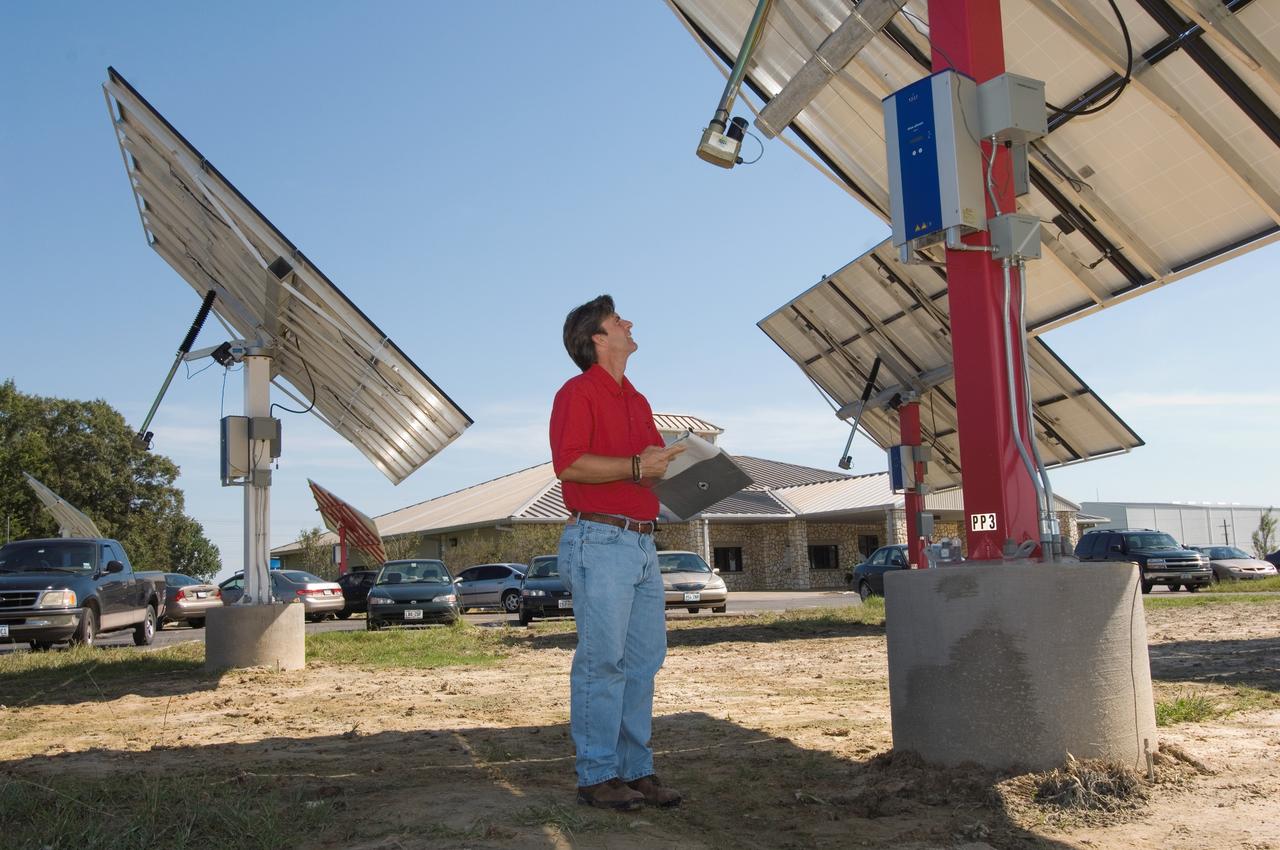
Solar panel and wind farm at the JSC Child Care Center. View of Jerry Rowlands, Energy Management and Control System manager for CSC.

Only a sharp and careful eye can make out the subtle variations in Titan clouds when viewed in visible light by NASA Cassini spacecraft. This infrared image clearly reveals a band around the Titan north pole.

iss066e008110 (October 20, 2021) -- NASA astronaut and Expedition 65 Flight Engineer Mark Vande Hei prepares to photograph chile peppers growing in the Advanced Plant Habitat as part of the Plant Habit-04 experiment being conducted aboard the International Space Station. The chile pepper seeds started growing on July 12, 2021, and represent one of the longest and most challenging plant experiments attempted aboard the orbiting laboratory. They will be harvested twice, once in late October and again in late November. Astronauts will sanitize the peppers, eat part of their harvest, and return the rest to Earth for analysis. What we learn will inform future crop growth and food supplementation activities for deep space exploration.
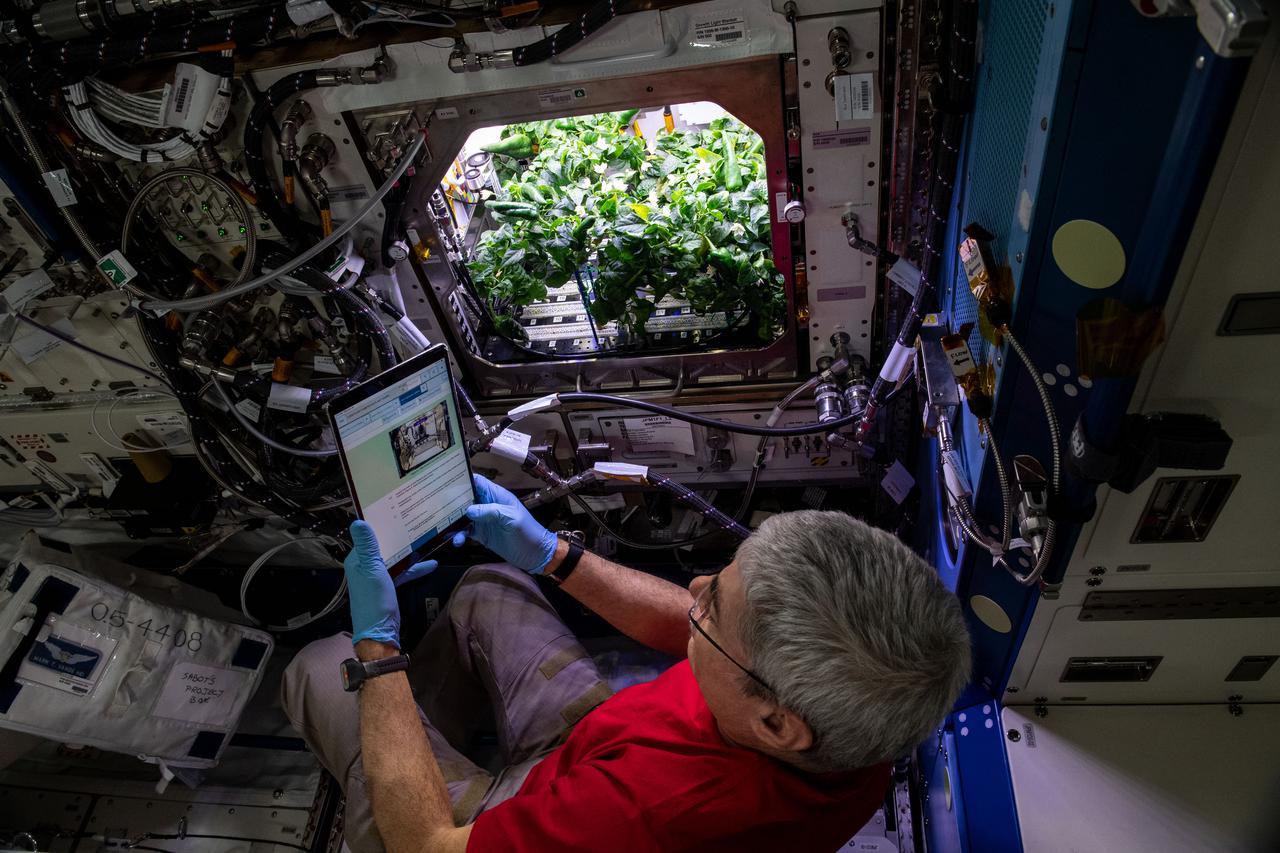
iss066e008125 (October 20, 2021) -- NASA astronaut and Expedition 65 Flight Engineer Mark Vande Hei prepares for the routine debris removal procedure for chile peppers growing in the Advanced Plant Habitat as part of the Plant Habit-04 experiment being conducted aboard the International Space Station. The chile pepper seeds started growing on July 12, 2021, and represent one of the longest and most challenging plant experiments attempted aboard the orbiting laboratory. They will be harvested twice, once in late October and again in late November. Astronauts will sanitize the peppers, eat part of their harvest, and return the rest to Earth for analysis. What we learn will inform future crop growth and food supplementation activities for deep space exploration.
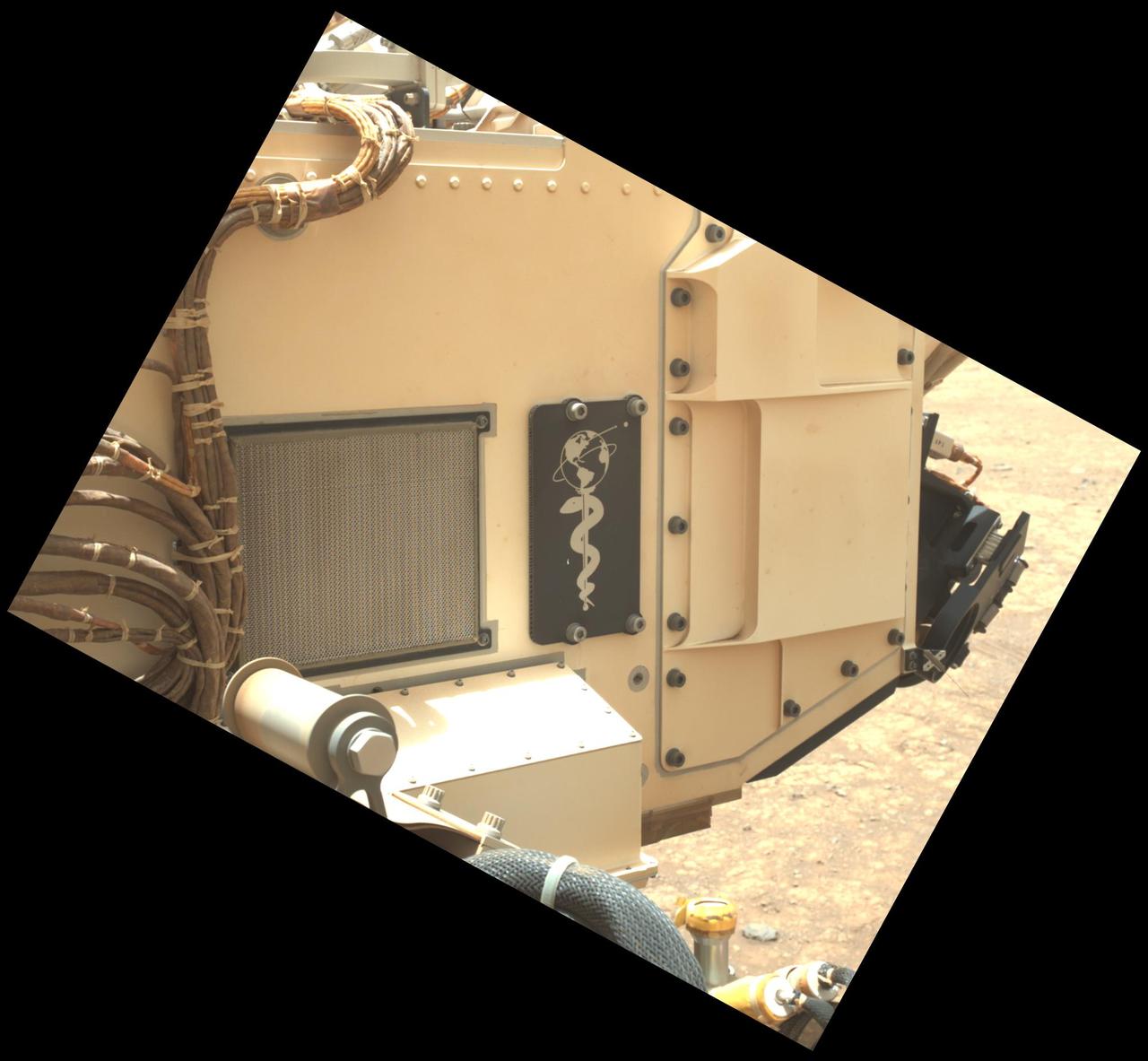
This close-up view of a plate on NASA's Perseverance rover commemorating the impact of the COVID-19 pandemic and paying tribute to the perseverance of health care workers around the world was acquired on June 28, 2025 (the 1,548th day, or sol, of its mission to Mars). Located on the left side of the rover chassis, the 3-by-5-inch (8-by-13-centimeter) aluminum plaque was attached in May 2020 during final assembly at NASA's Kennedy Space Center in Florida. https://photojournal.jpl.nasa.gov/catalog/PIA26641
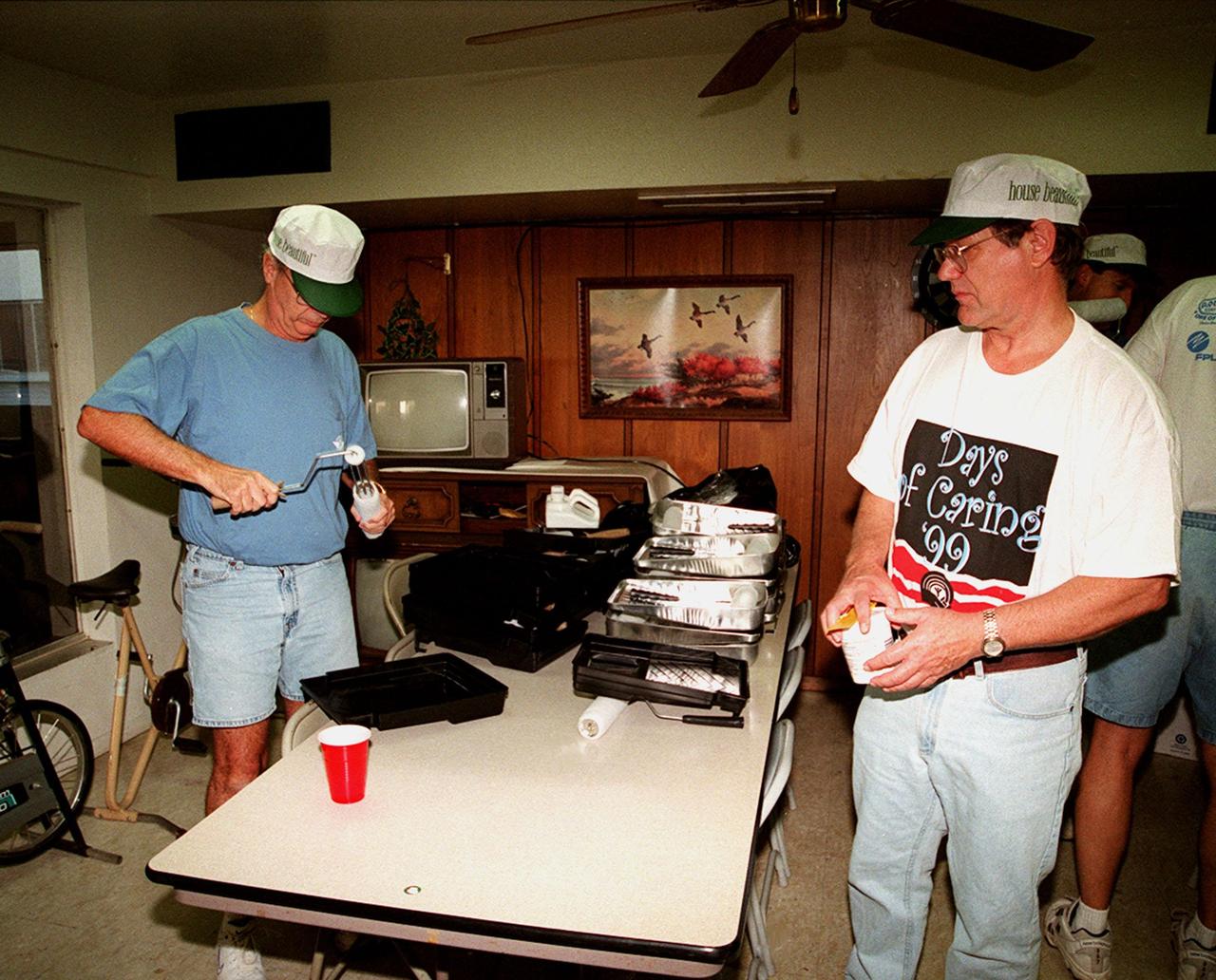
Volunteers for Days of Caring '99 set up the paint trays for painting at Baxley Manor, an apartment building for senior citizens on Merritt Island. Coordinated by the KSC Community Relations Council, Days of Caring provides an opportunity for employees to volunteer their services in projects such as painting, planting flowers, reading to school children, and more. Organizations accepting volunteers include The Embers, Yellow Umbrella, Serene Harbor, Domestic Violence Program, the YMCA of Brevard County, and others
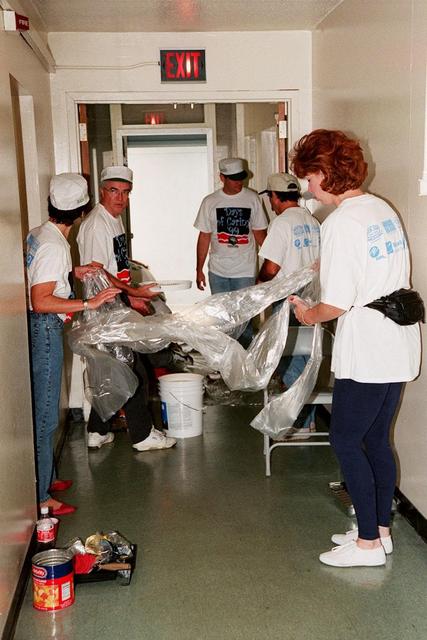
KSC volunteers for Days of Caring '99 unfold protective materials before getting ready to paint at Baxley Manor, an apartment building for senior citizens on Merritt Island. Coordinated by the KSC Community Relations Council, Days of Caring provides an opportunity for employees to volunteer their services in projects such as painting, planting flowers, reading to school children, and more. Organizations accepting volunteers include The Embers, Yellow Umbrella, Serene Harbor, Domestic Violence Program, the YMCA of Brevard County, and others
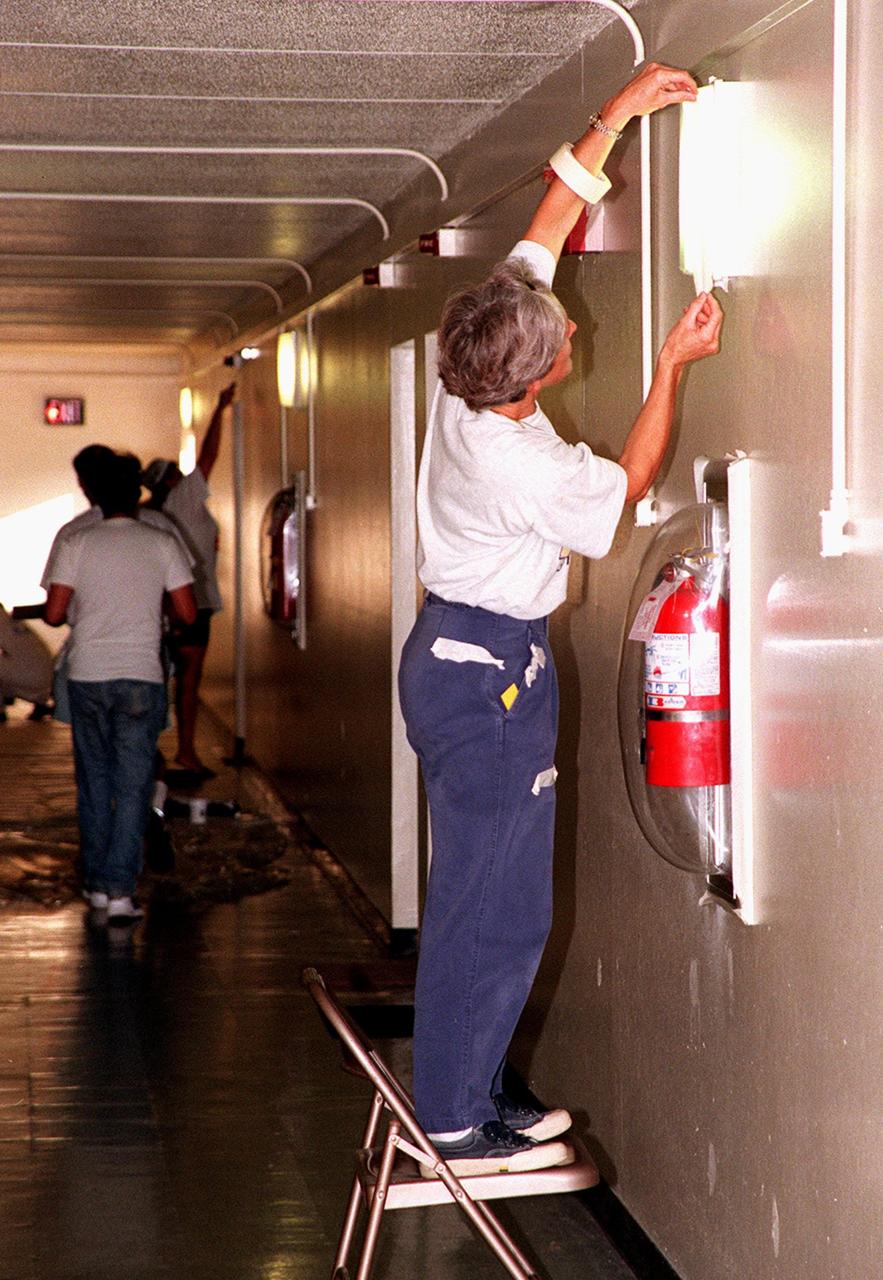
A volunteer for Days of Caring '99 prepares a light fixture before painting the walls in the hallway at Baxley Manor, an apartment building for senior citizens on Merritt Island. Coordinated by the KSC Community Relations Council, Days of Caring provides an opportunity for employees to volunteer their services in projects such as painting, planting flowers, reading to school children, and more. Organizations accepting volunteers include The Embers, Yellow Umbrella, Serene Harbor, Domestic Violence Program, the YMCA of Brevard County, and others
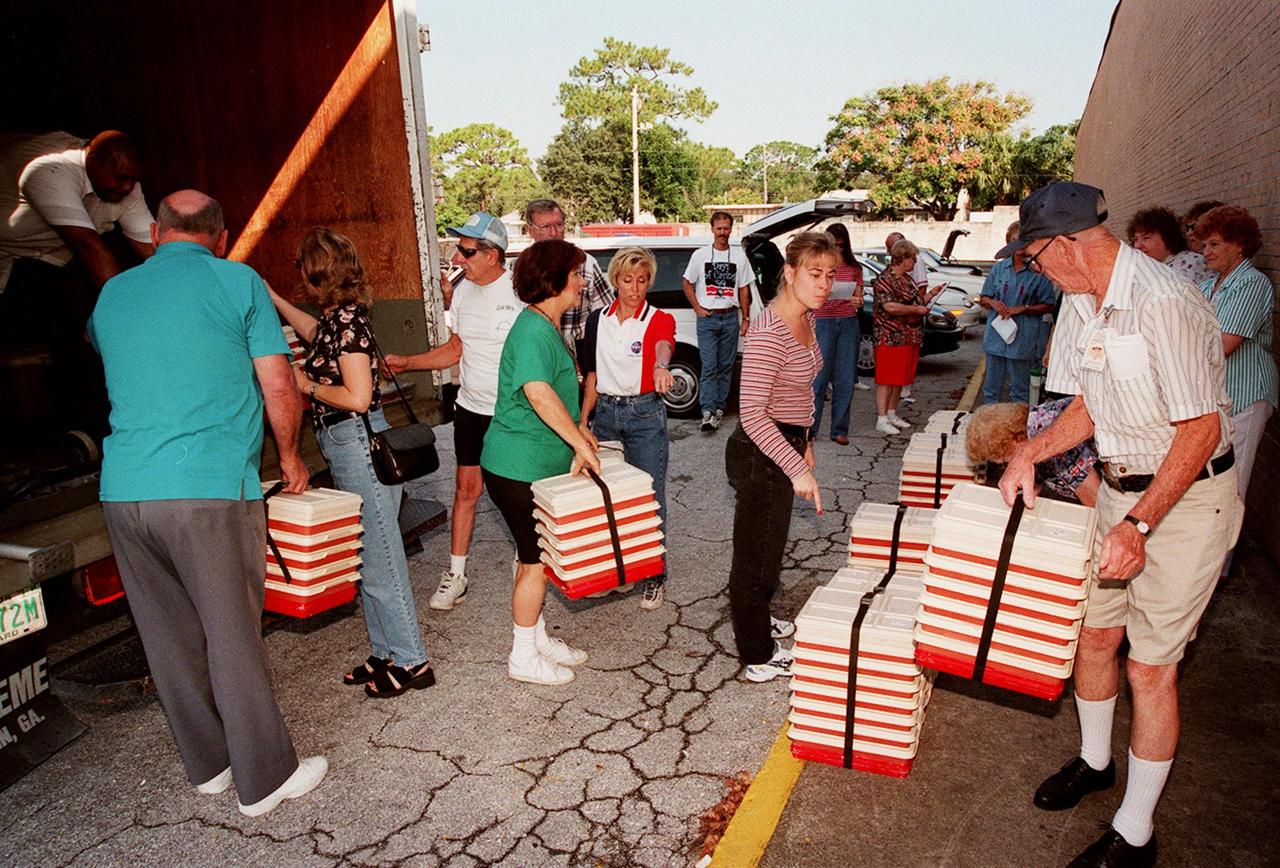
KSC volunteers at Miracle City Mall, Titusville, help unload containers for Meals on Wheels delivery as part of their '99 Days of Caring participation. The volunteers will also help deliver the meals. Coordinated by the KSC Community Relations Council, Days of Caring provides an opportunity for employees to volunteer their services in projects such as painting, planting flowers, reading to school children, and more. Organizations accepting volunteers include The Embers, Yellow Umbrella, Serene Harbor, Domestic Violence Program, the YMCA of Brevard County, and others
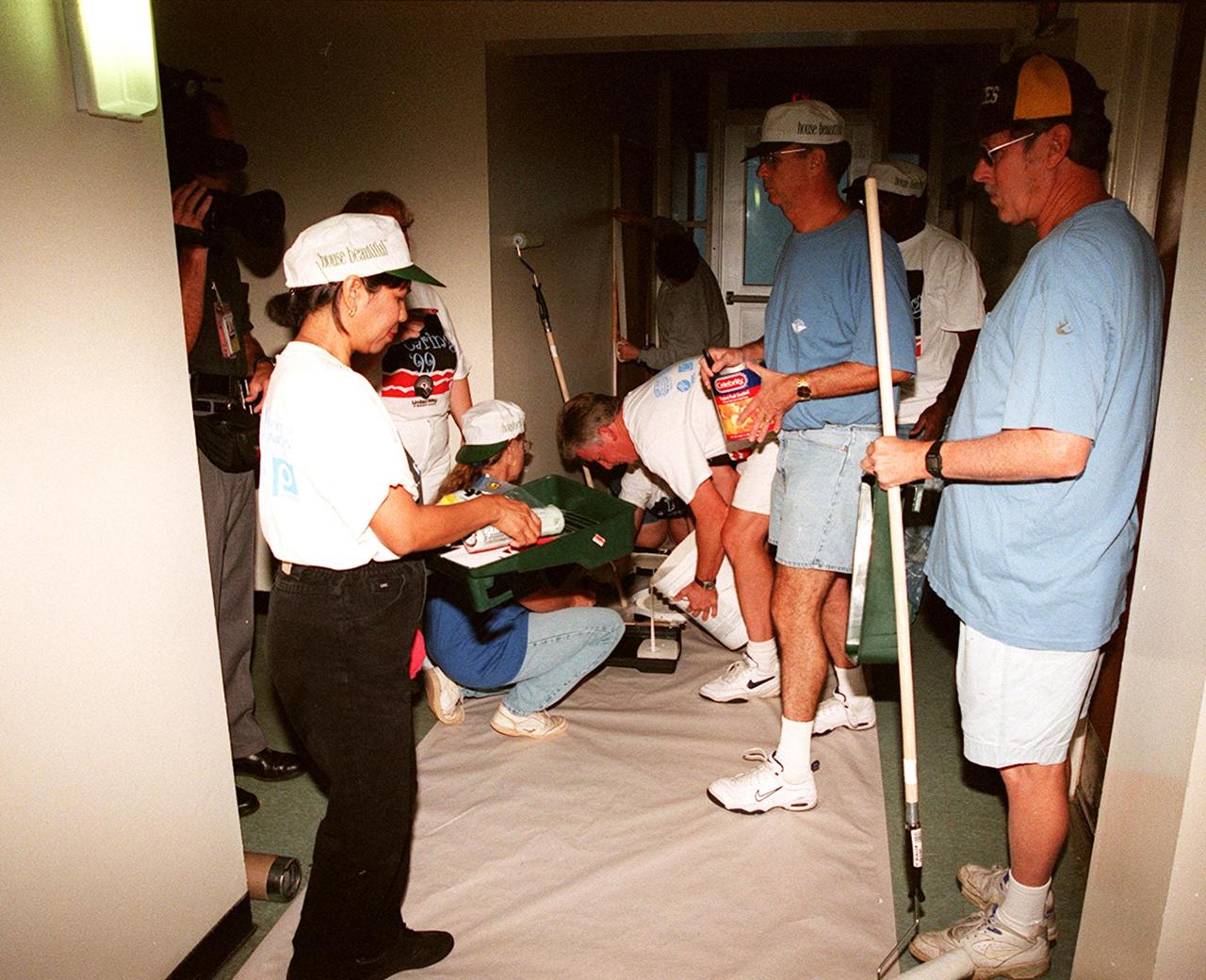
KSC volunteers with Days of Caring '99 share tasks while getting ready to paint at Baxley Manor, an apartment building for senior citizens on Merritt Island. Coordinated by the KSC Community Relations Council, Days of Caring provides an opportunity for employees to volunteer their services in projects such as painting, planting flowers, reading to school children, and more. Organizations accepting volunteers include The Embers, Yellow Umbrella, Serene Harbor, Domestic Violence Program, the YMCA of Brevard County, and others
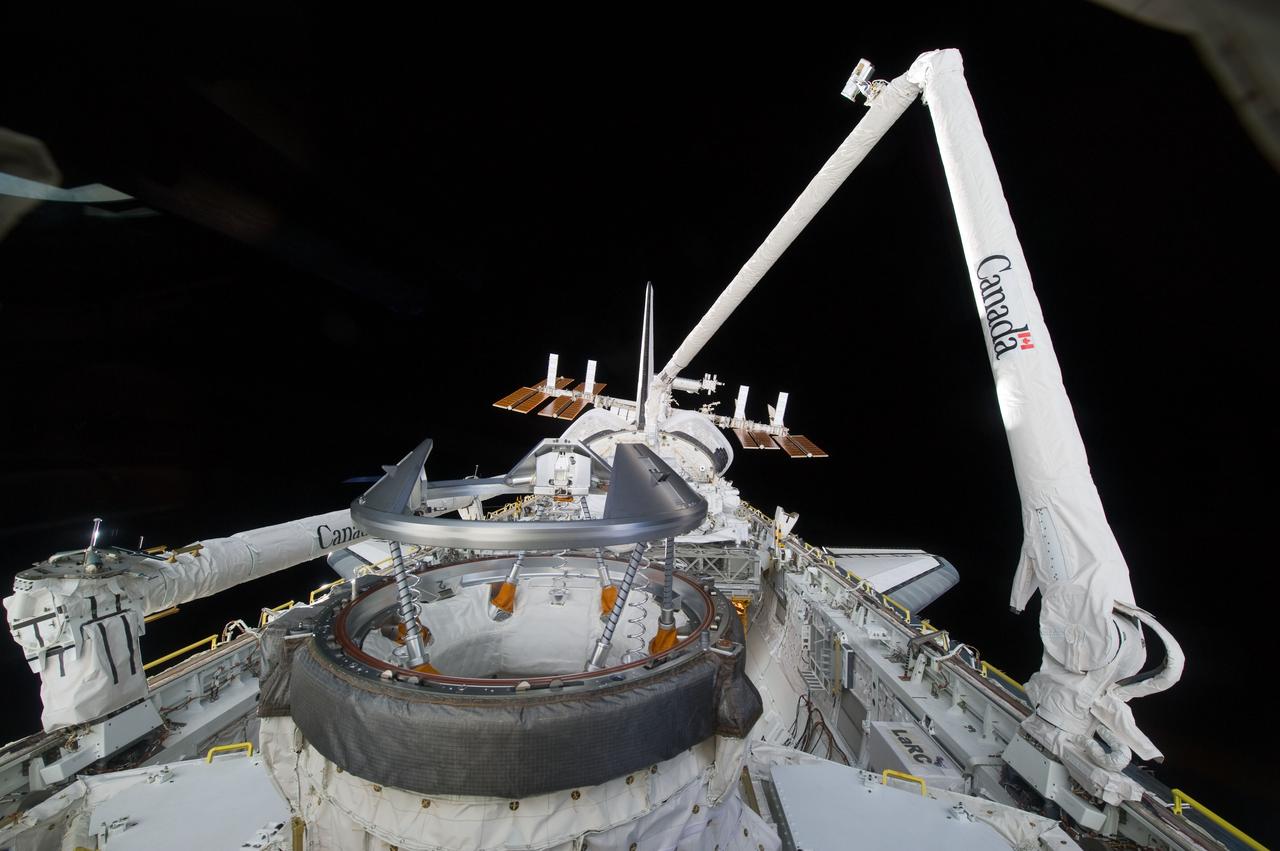
S134-E-006979 (18 May 2011) --- A careful look at this scene in Earth orbit reveals the International Space Station (ISS) at frame center, as the ISS and Endeavour (partially seen in foreground) prepare to dock. Photo credit: NASA
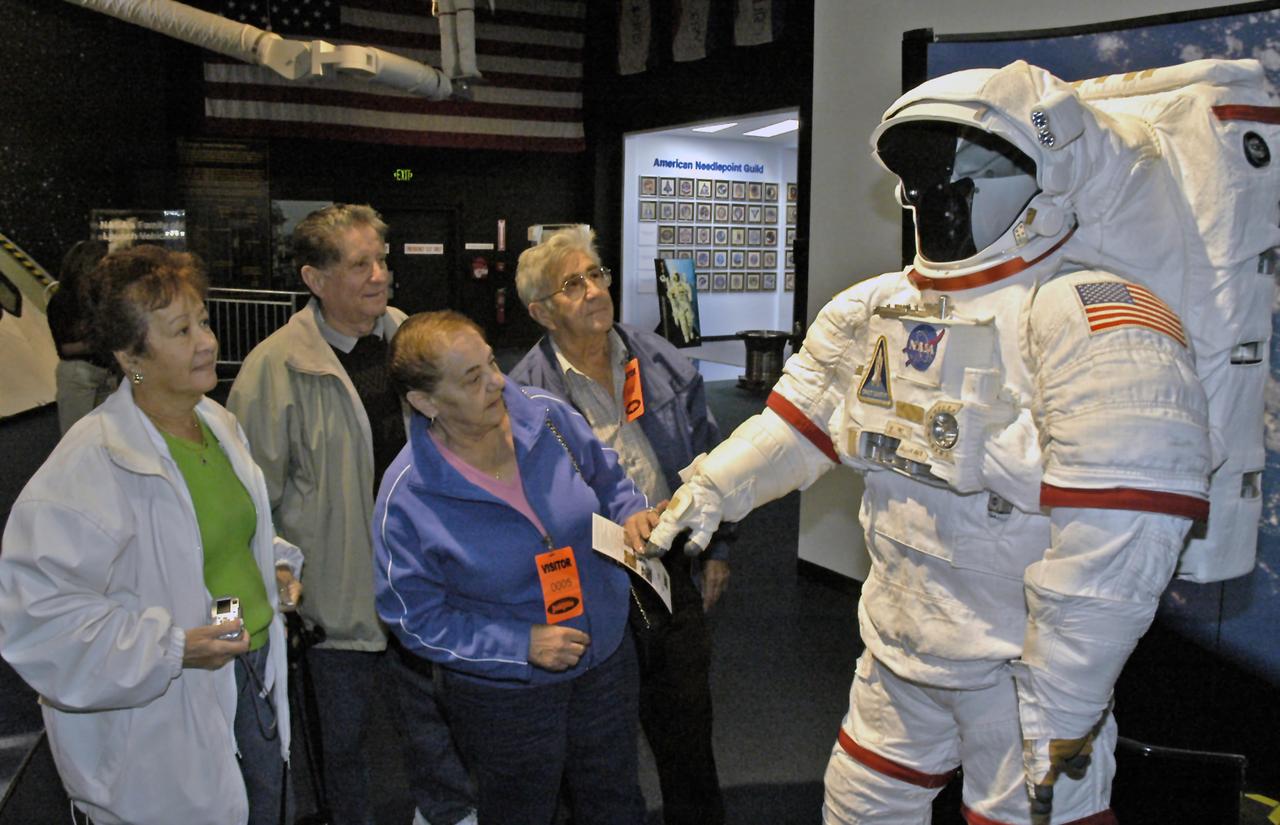
StenniSphere reopened Jan. 18, 2006, almost five months after Hurricane Katrina damaged the basement of the building that houses the visitor center. Thanks to the staff's careful preparations before the storm, no artifacts or exhibits were harmed.
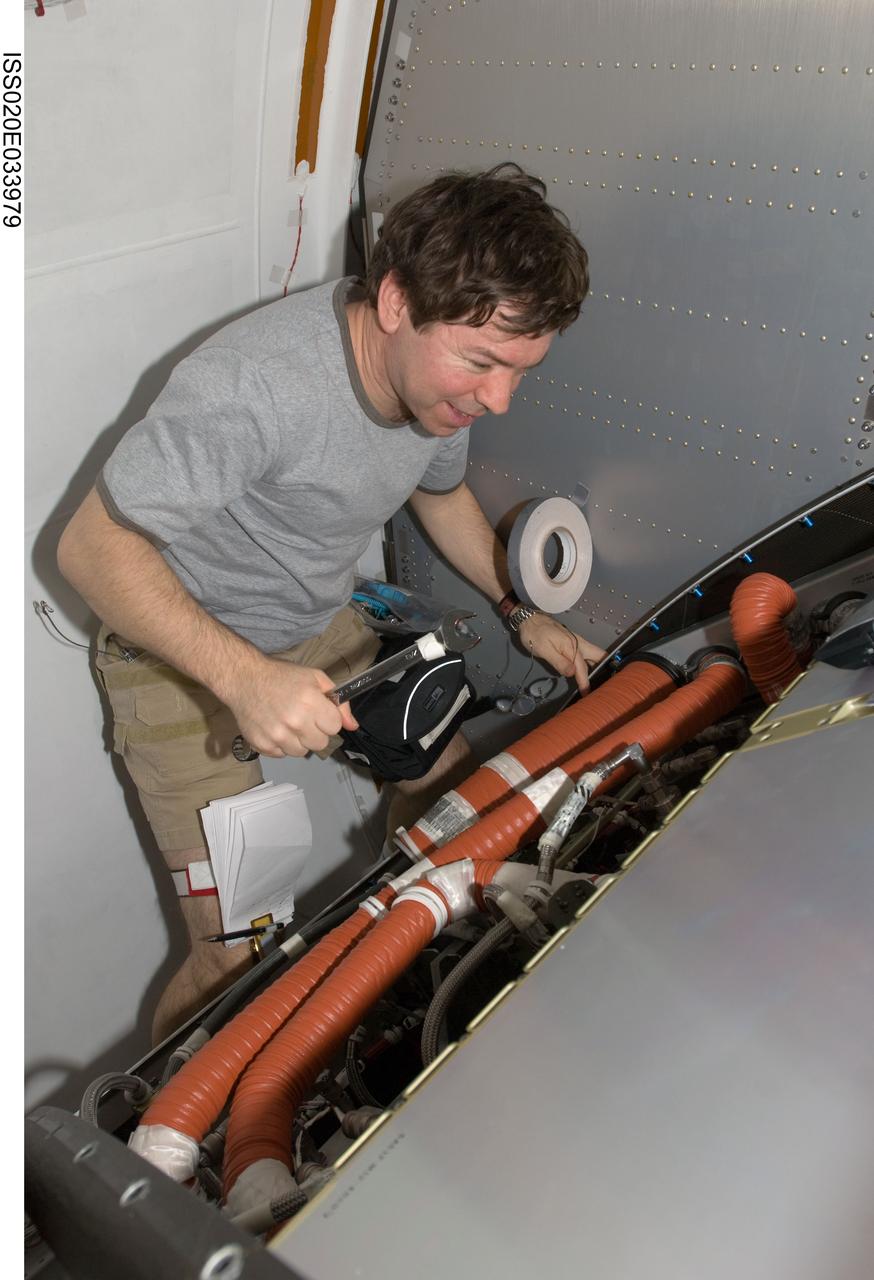
ISS020-E-033979 (25 Aug. 2009) --- NASA astronaut Michael Barratt, Expedition 20 flight engineer, works with the Crew Health Care System (CHeCS) rack in the Kibo laboratory of the International Space Station.
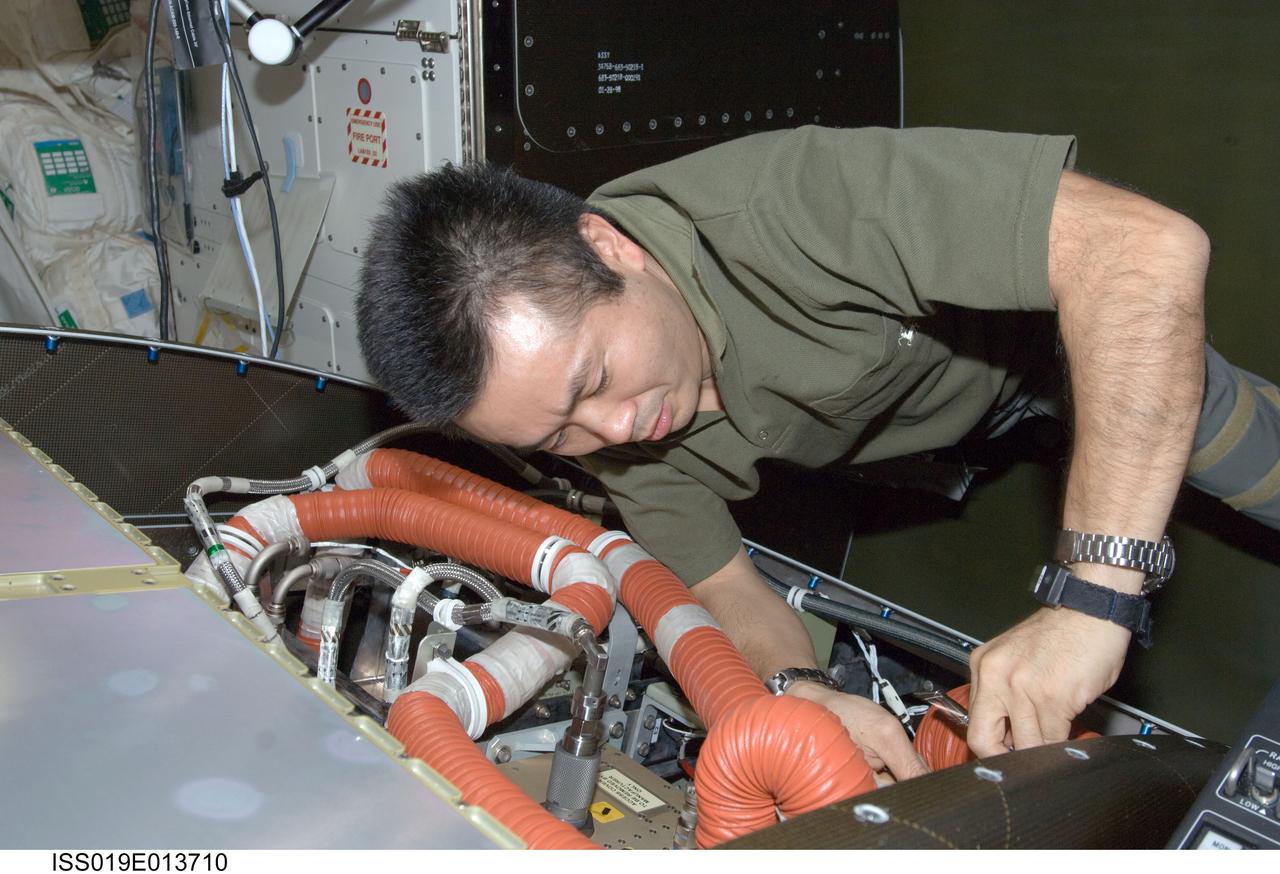
ISS019-E-013710 (5 May 2009) --- Japan Aerospace Exploration Agency (JAXA) astronaut Koichi Wakata, Expedition 19/20 flight engineer, cleans a fan filter on the Crew Health Care System Avionics Air Assembly (CHeCS AAA) in the Destiny laboratory of the International Space Station.
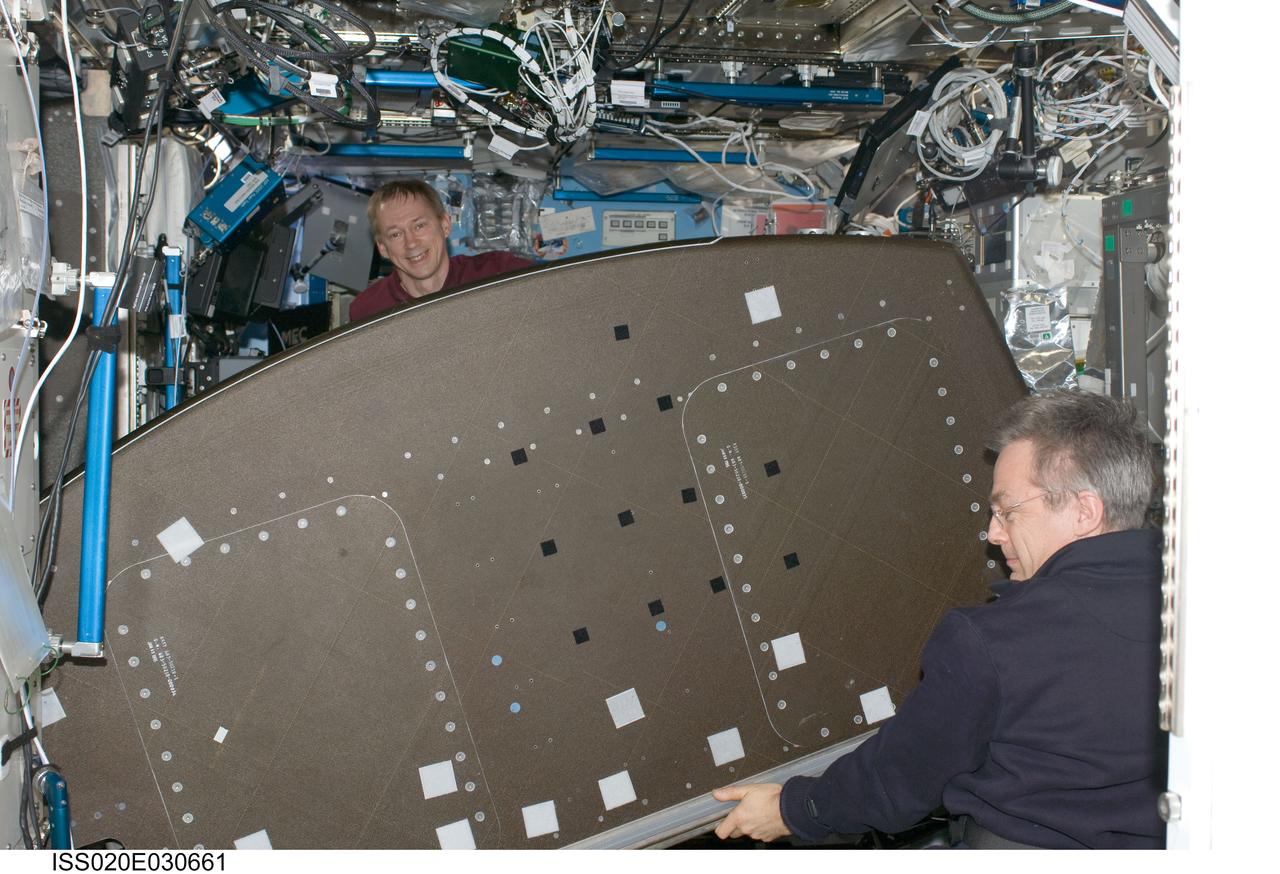
ISS020-E-030661 (13 Aug. 2009) --- Canadian Space Agency astronaut Robert Thirsk (right) and European Space Agency astronaut Frank De Winne, both Expedition 20 flight engineers, prepare to relocate the Crew Health Care System (CHeCS) rack in the Destiny laboratory to the Kibo laboratory of the International Space Station.
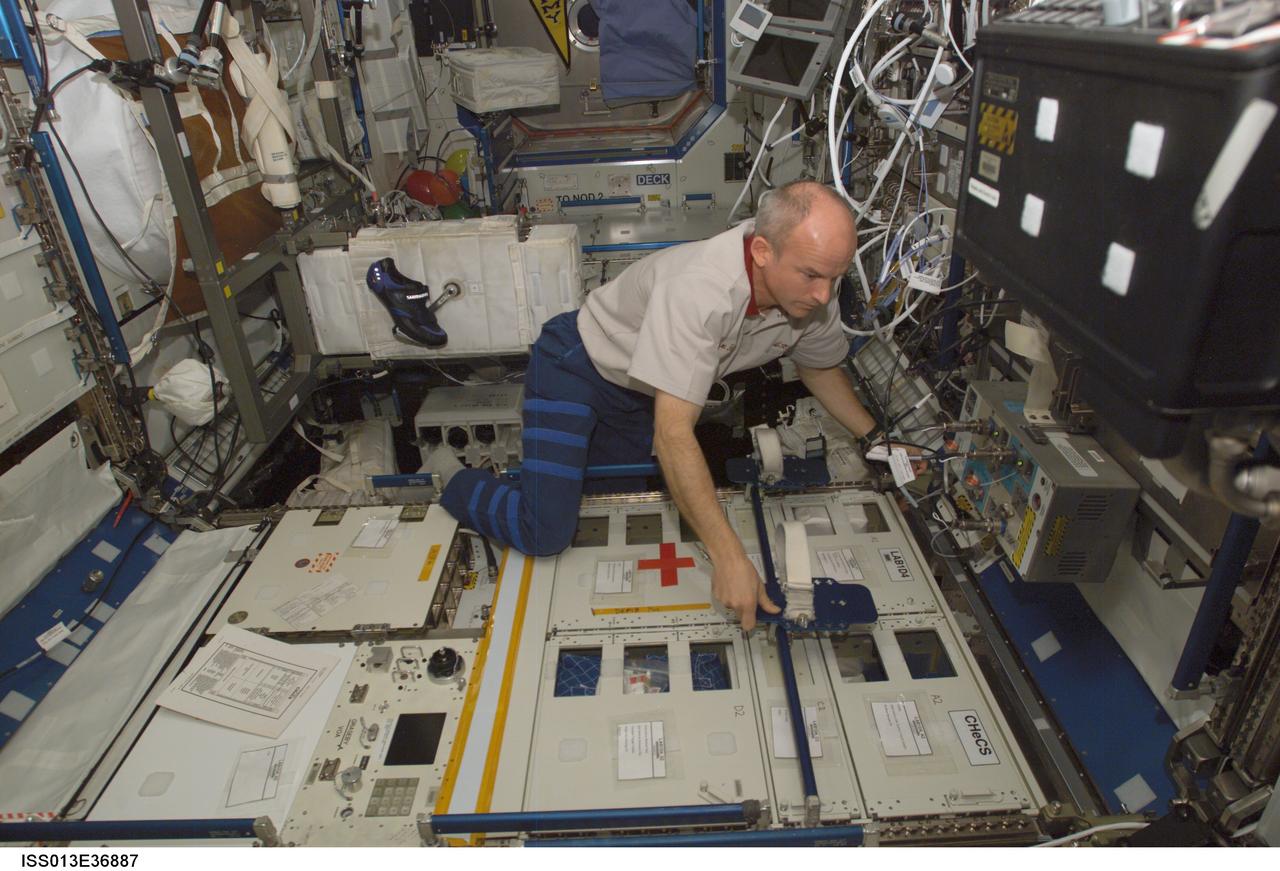
ISS013-E-36887 (13 June 2006) --- Astronaut Jeffrey N. Williams, Expedition 13 NASA space station science officer and flight engineer, deactivates the Crew Health Care System (CHeCS) rack in the Destiny laboratory of the International Space Station.
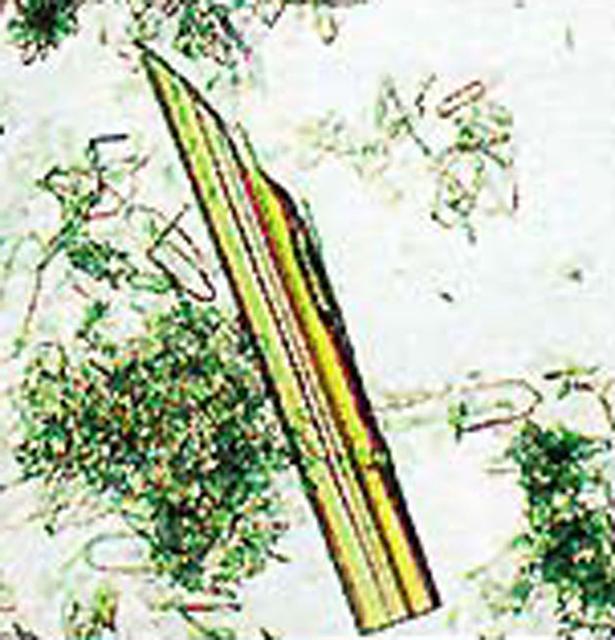
Both (Porcine and bacterial) starch degrading enzymes highly valued by the biotechnology industry. (Porcine) A major target for protein engineering and the study of diabetes, obesity and dental care. (Bacterial) Major industrial and biotechnology interest used in brewing, baking, and food processing. World's number one industrial protein.
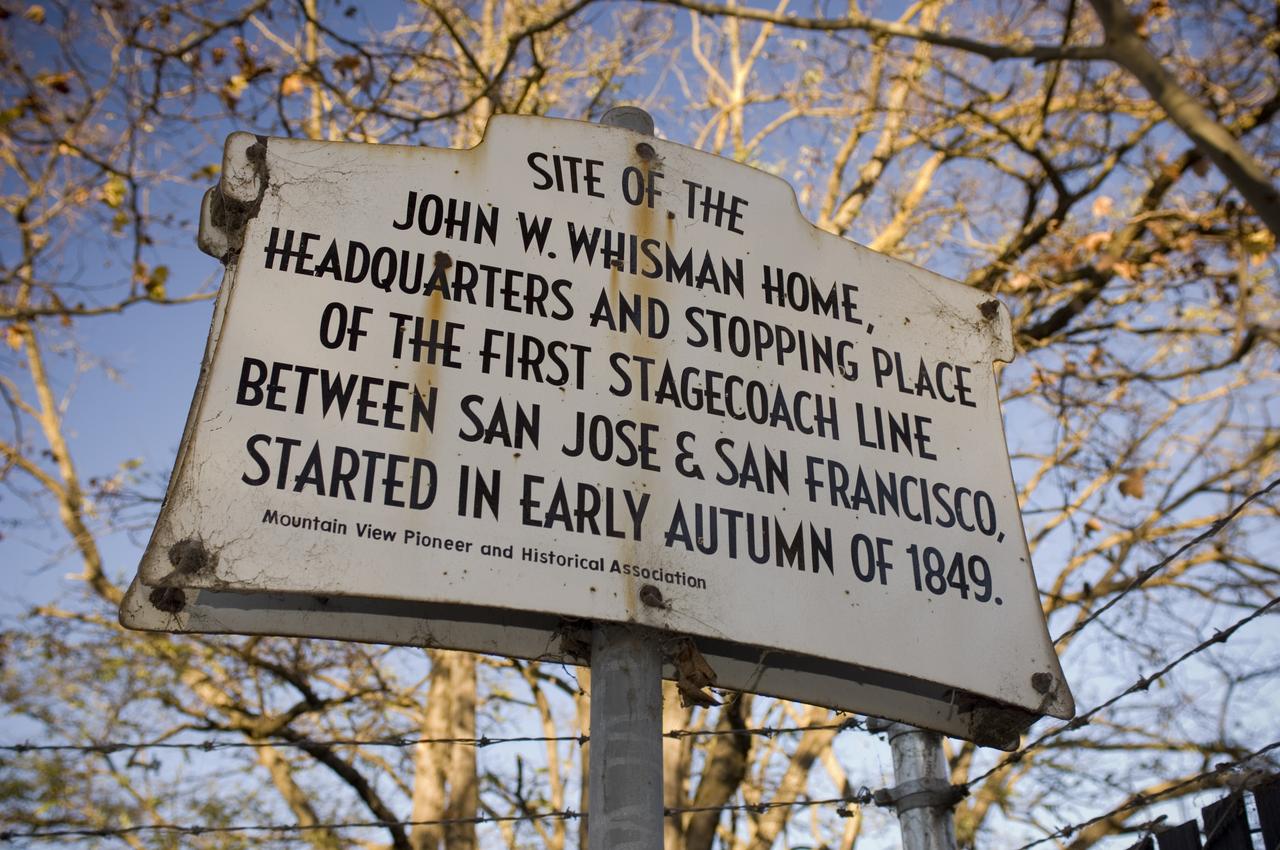
Ames and Moffett Field (MFA) historical sites and memorials Site of the John W. Whisman Home. Headquarters and stopping place of the first stagecoach line between San Jose and San Francisco. Started in early autumn of 1849. Located at R.T.Jones Road and the Ames Child Care Center fence boundary.
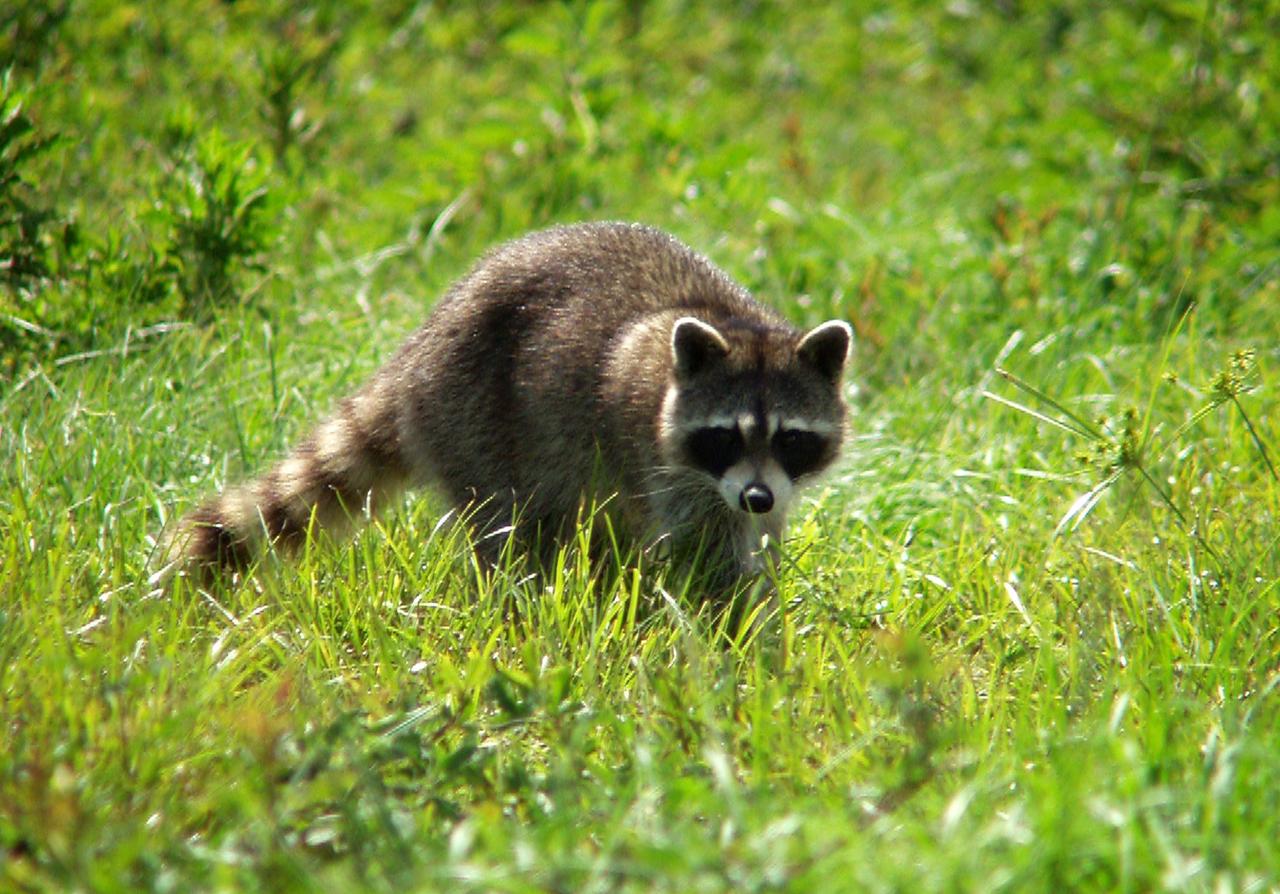
KENNEDY SPACE CENTER, FLA. -- A raccoon keeps an eye on the photographer who spotted him among the tall grasses near KSC. The nocturnal creatures are abundant in the area but usually not seen in the daytime except when breeding or caring for their young. They are most common along wooded streams.
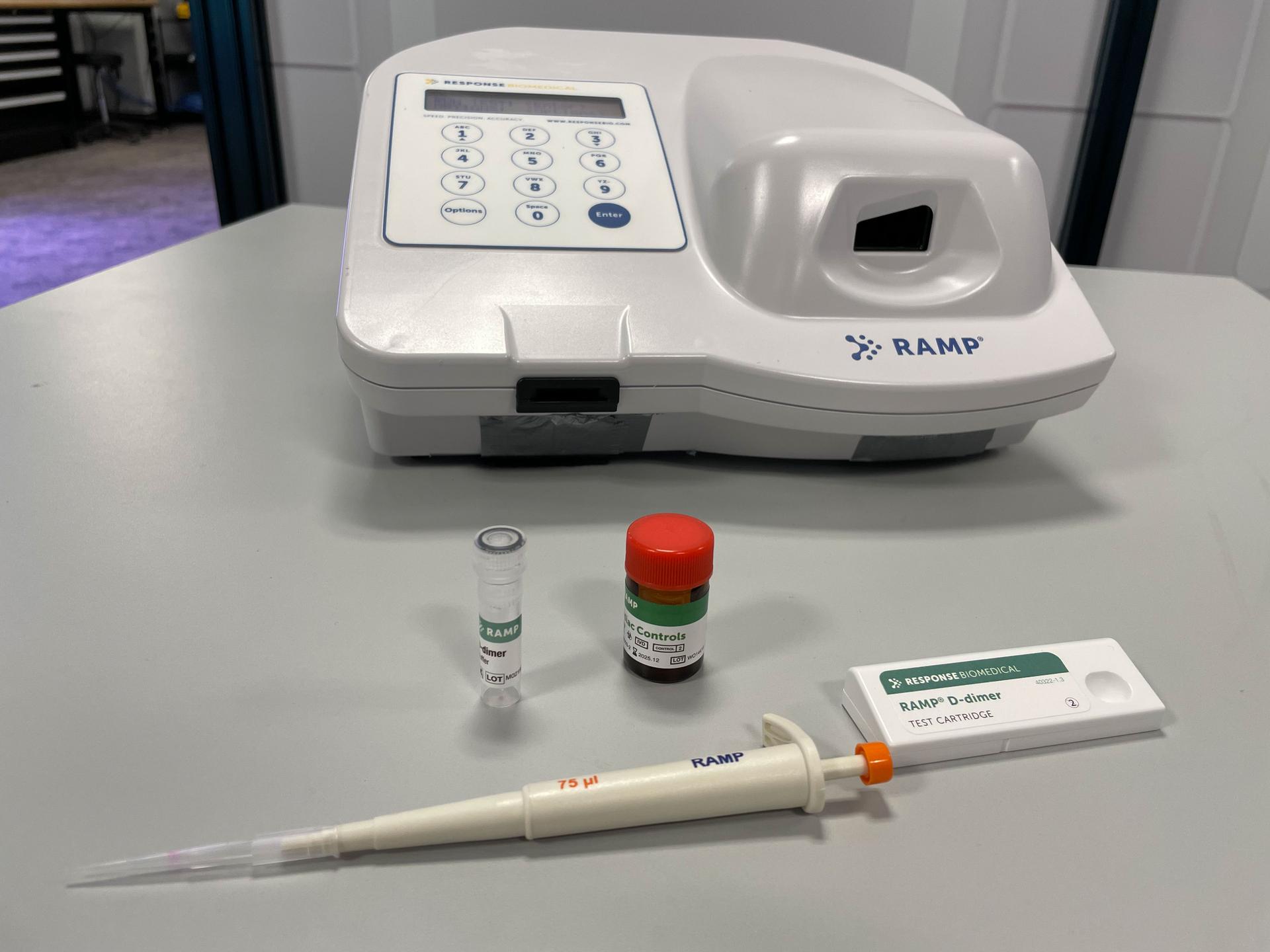
jsc2026e404780 (July 29, 2026) --- Preflight image of Acute Care Testing in Space (ACTIS) Reader and consumables required for sample preparation. This facility allows different blood tests in space, including measuring D-dimer, a blood marker that can indicate a possible blood clot. Credit: CSA.
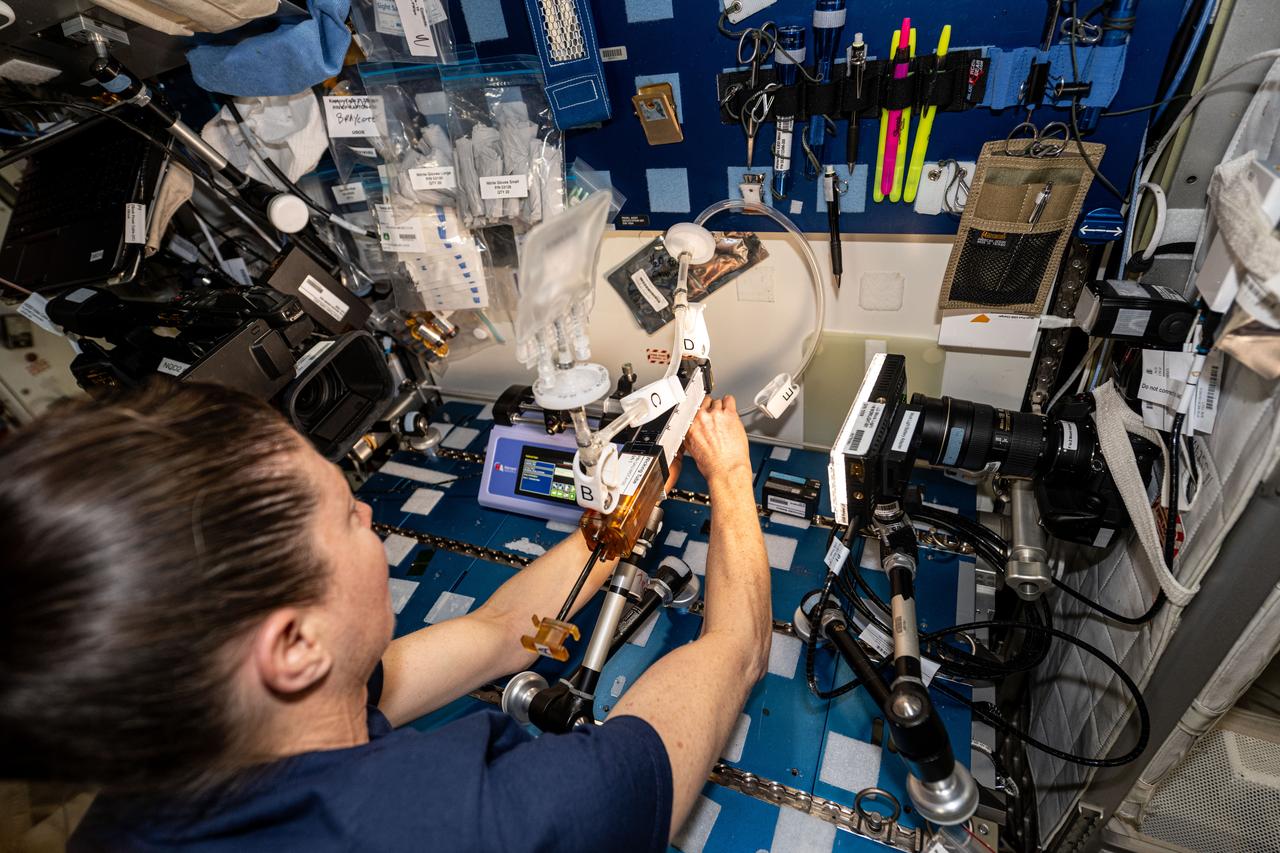
iss071e092807 (May 20, 2024) --- Expedition 71 Flight Engineer and NASA astronaut Tracy C. Dyson works on the Gaucho Lung investigation studying ways to improve the delivery of respiratory system drugs potentially offering benefits to both the health care and food industries.
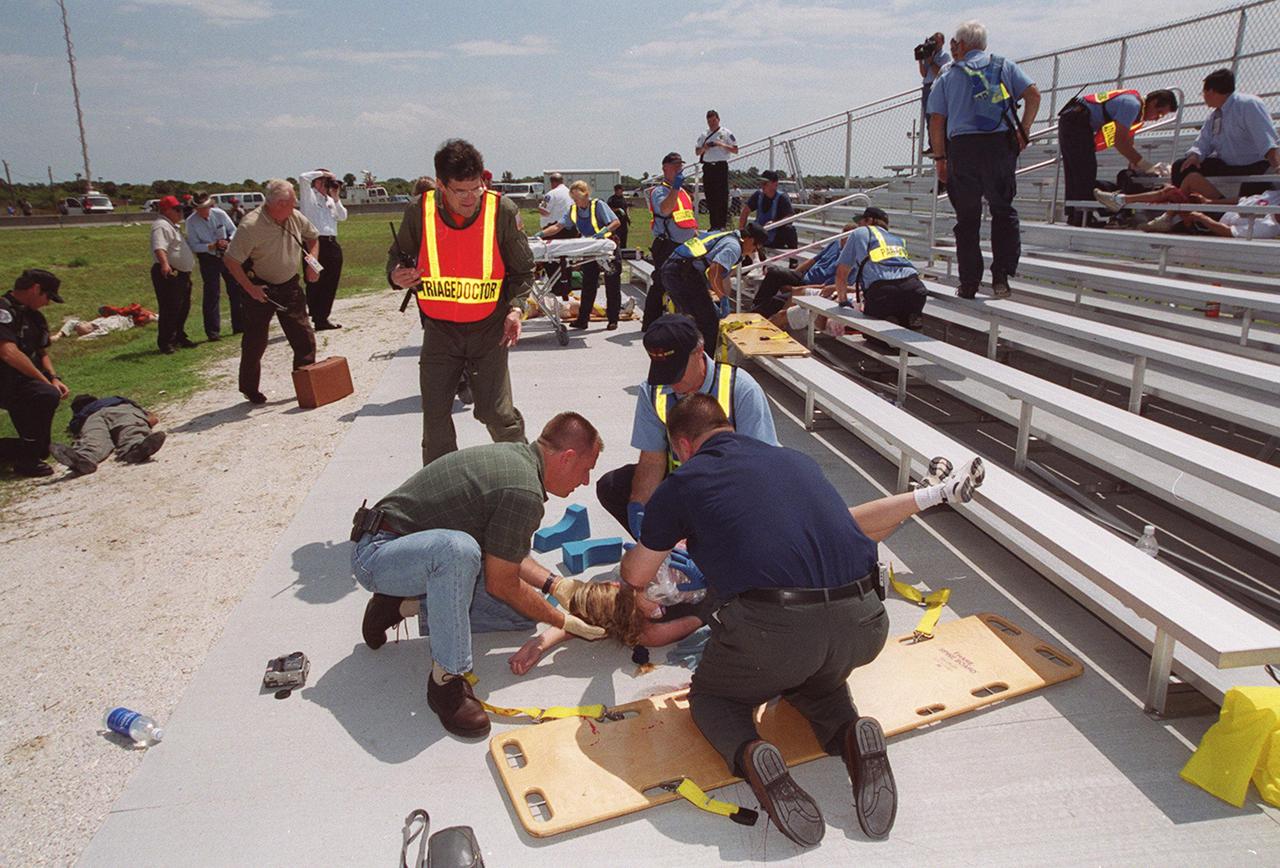
KENNEDY SPACE CENTER, FLA. -- During a staged mass casualty exercise in the Launch Complex 39 area, security and medical personnel take care of a “victim” on the ground by the bleachers. Employees are playing roles in the fictitious sniper attack that is being staged to validate capabilities of KSC’s fire, medical, helicopter transport and security personnel to respond to such an event
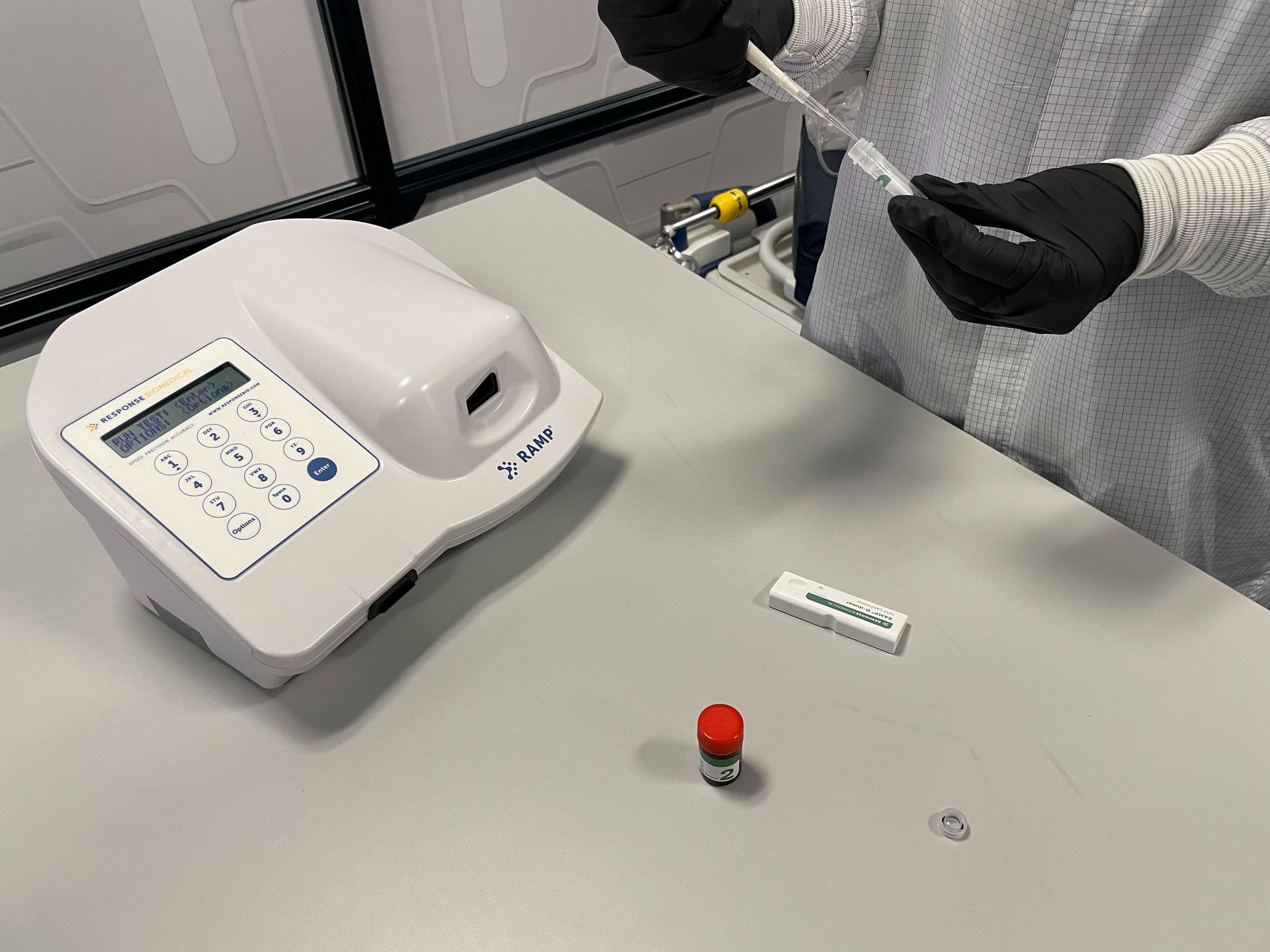
jsc2026e404779 (July 29, 2026) --- Preflight image of an operator preparing a D-dimer cartridge to insert into the Acute Care Testing in Space (ACTIS) Reader. This facility allows different blood tests in space, including measuring D-dimer, a blood marker that can indicate a possible blood clot. Credit: CSA.
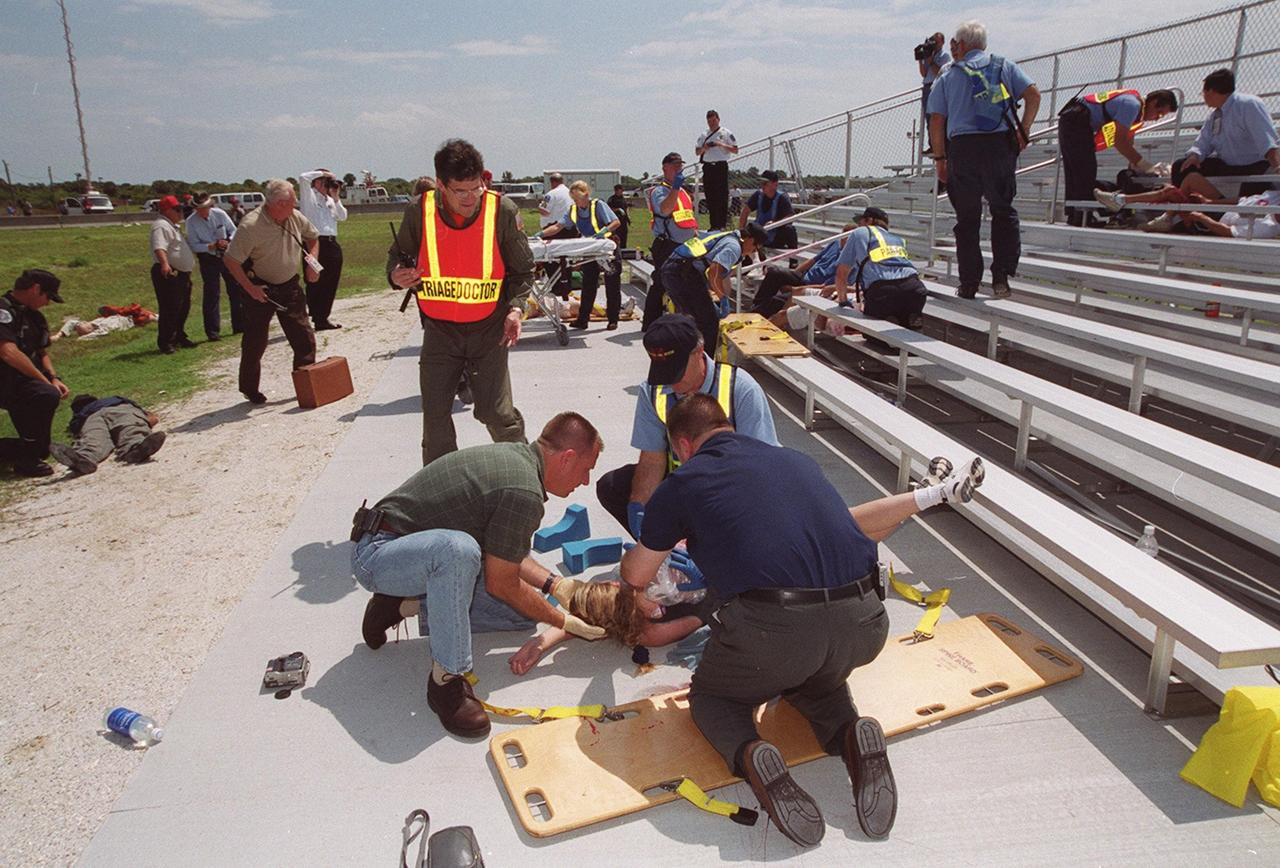
KENNEDY SPACE CENTER, FLA. -- During a staged mass casualty exercise in the Launch Complex 39 area, security and medical personnel take care of a “victim” on the ground by the bleachers. Employees are playing roles in the fictitious sniper attack that is being staged to validate capabilities of KSC’s fire, medical, helicopter transport and security personnel to respond to such an event
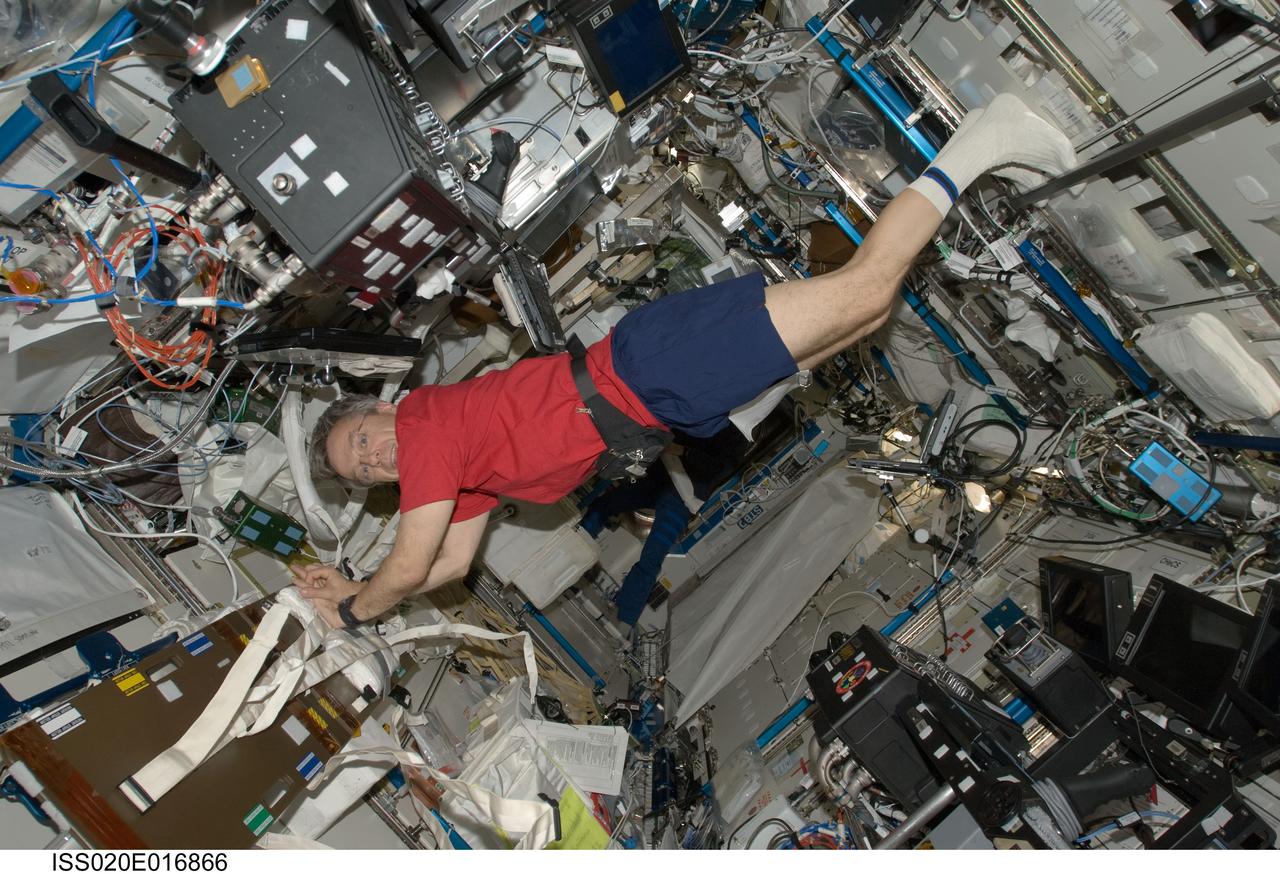
ISS020-E-016866 (2 July 2009) --- Canadian Space Agency astronaut Robert Thirsk, Expedition 20 flight engineer, participates in Crew Health Care Systems (CHeCS) medical emergency training in the Destiny laboratory of the International Space Station.
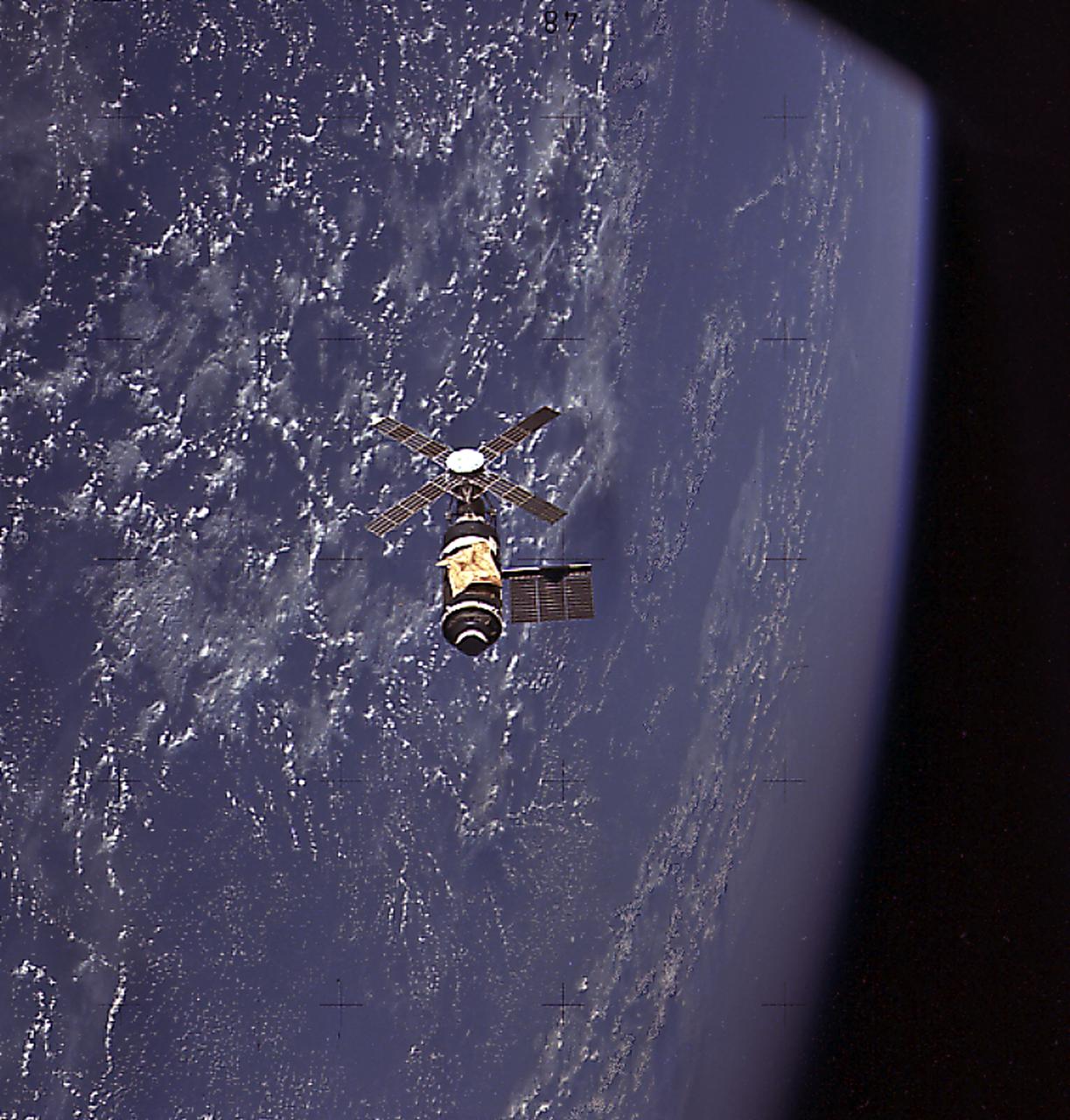
This image of Skylab in orbit was taken by the Skylab-2 crew before departing for Earth. The crew made a careful visual and photographic inspection of the orbiting laboratory. It shows the parasol sunshade, deployed by the crew, protecting the workshop. While unmarned, it operated at reduced power with many of its systems either inoperative or operating at reduced capacity.
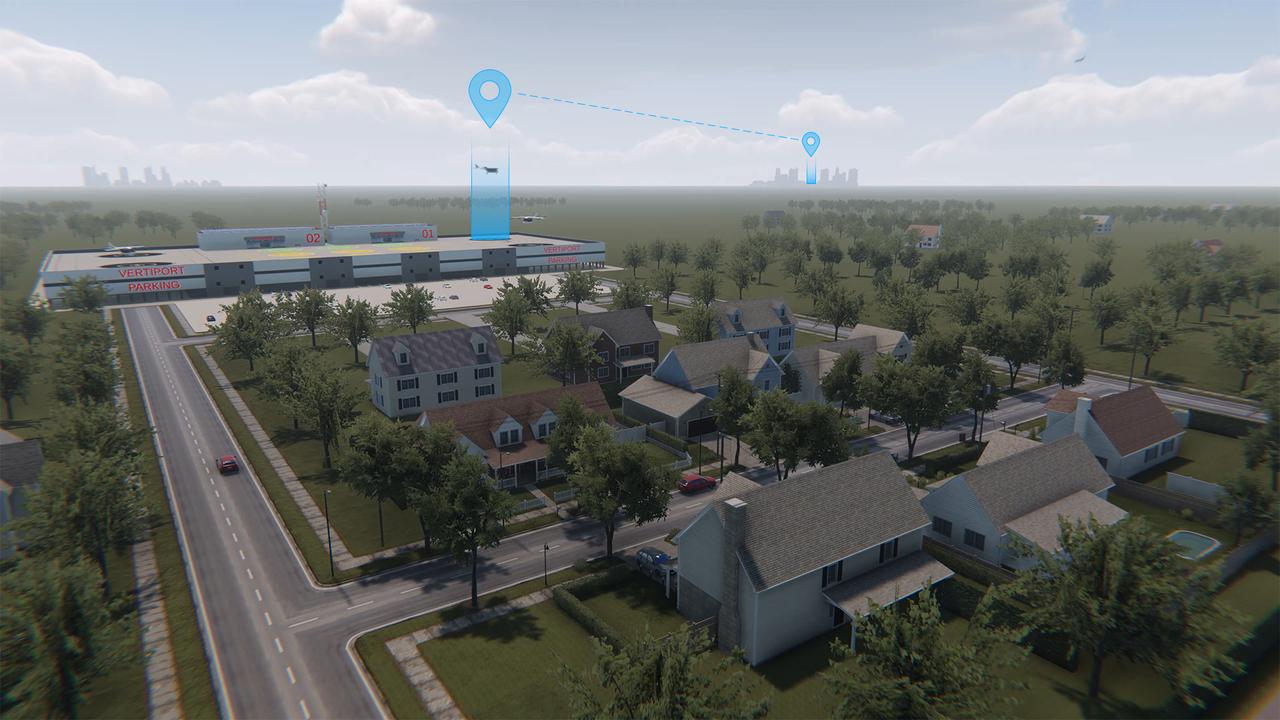
Advanced Air Mobility will connect both urban dwellers and rural residents by adding a new way to travel by air. As shown in this concept art, passengers could travel from rural areas into the city quicker than by car to board a commercial airliner, access medical care or to purchase goods.
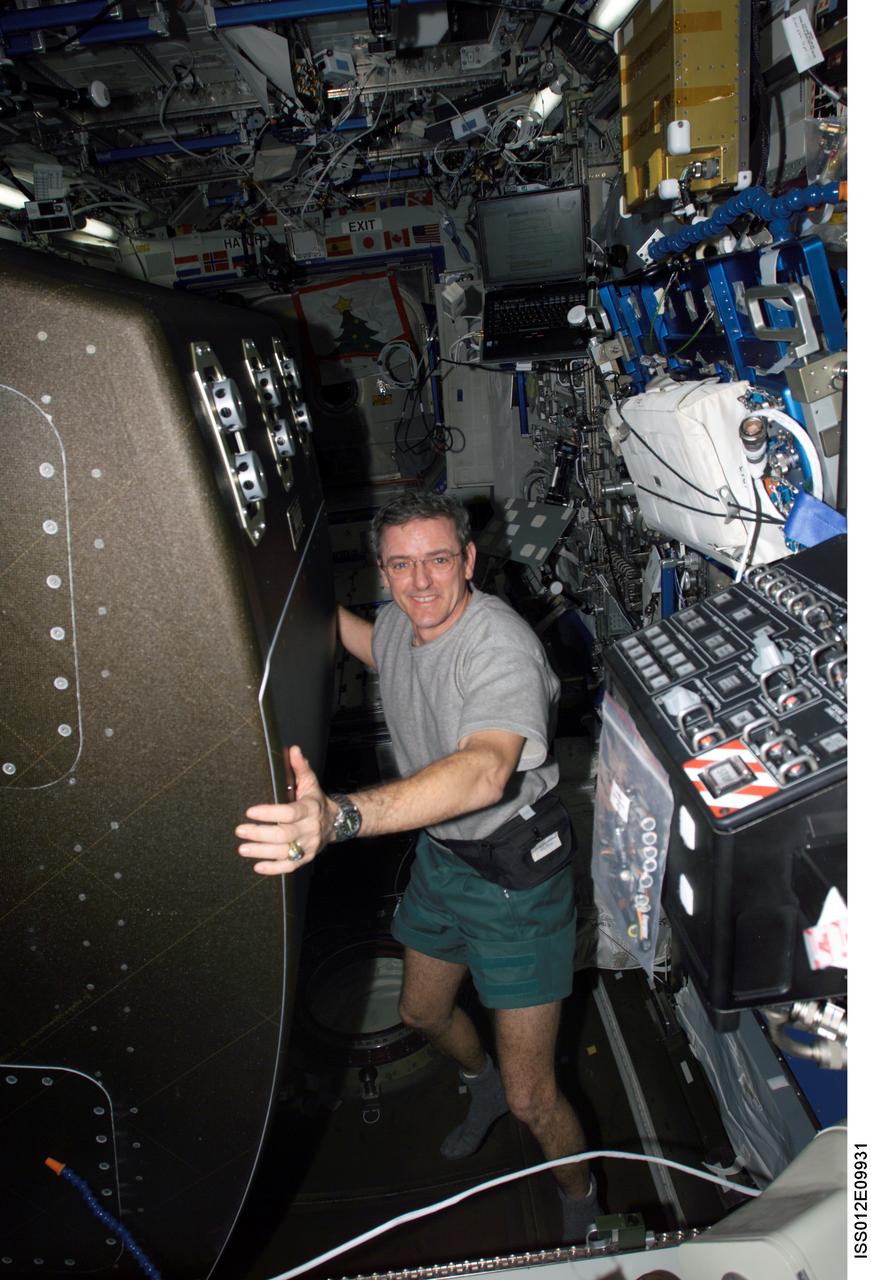
ISS012-E-09931 (1 December 2005) --- Astronaut William S. (Bill) McArthur Jr., Expedition 12 commander and NASA space station science officer, rotates the Crew Health Care System (CHeCS) rack back into position after cleaning the Avionics Air Assembly fan in the Destiny laboratory of the International Space Station.
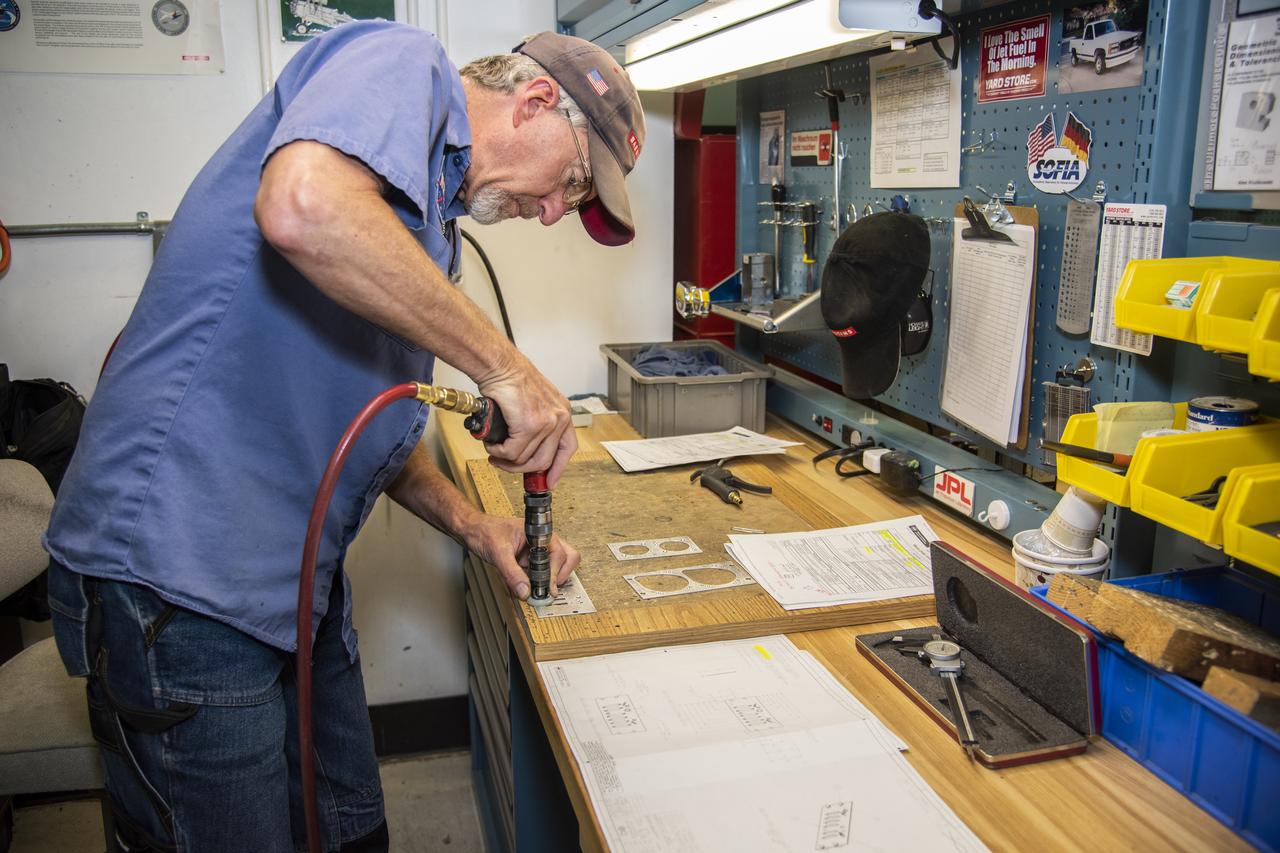
Andrew Shaw works on a component for the high-altitude ER-2 aircraft's instrument panel.
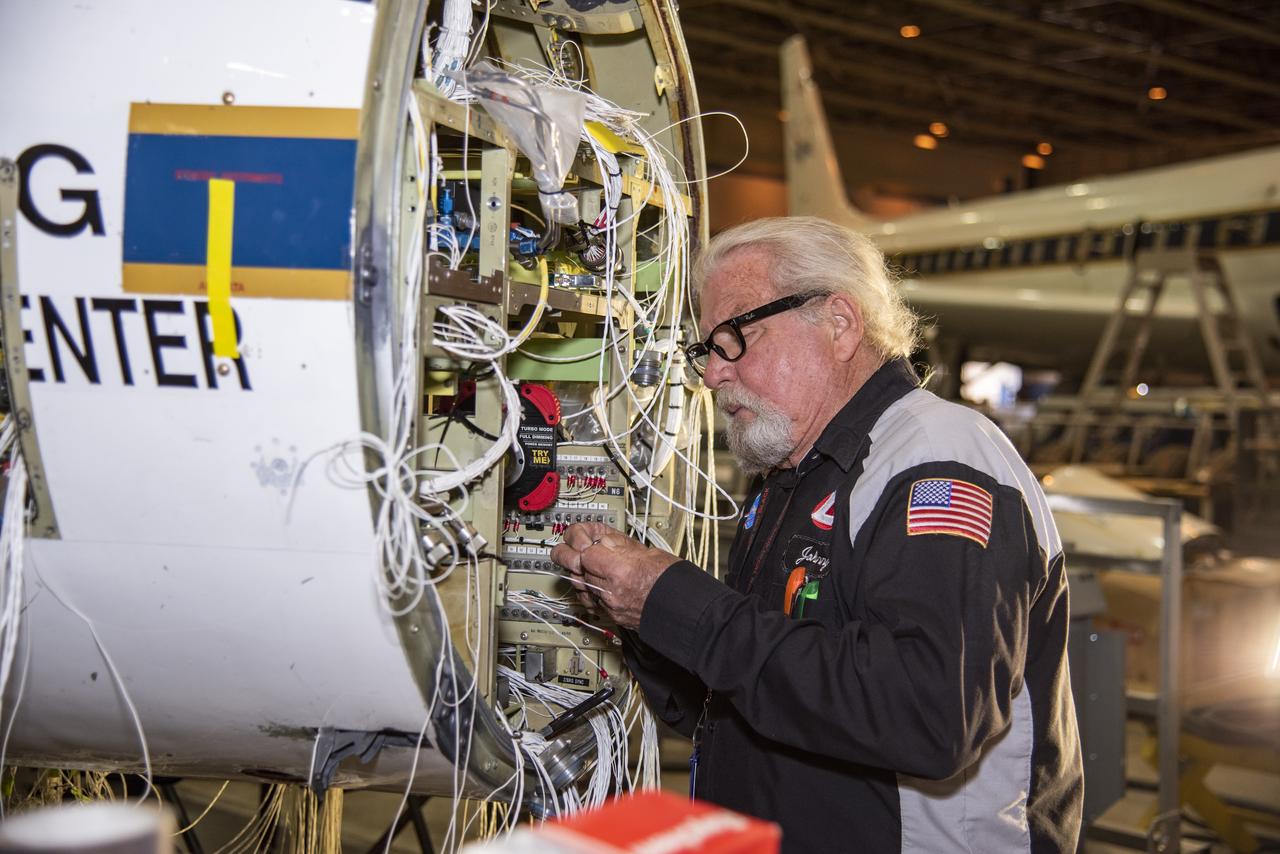
Technician Johnny Bryant works on rewiring the high-altitude aircraft's fixed nose and cockpit.
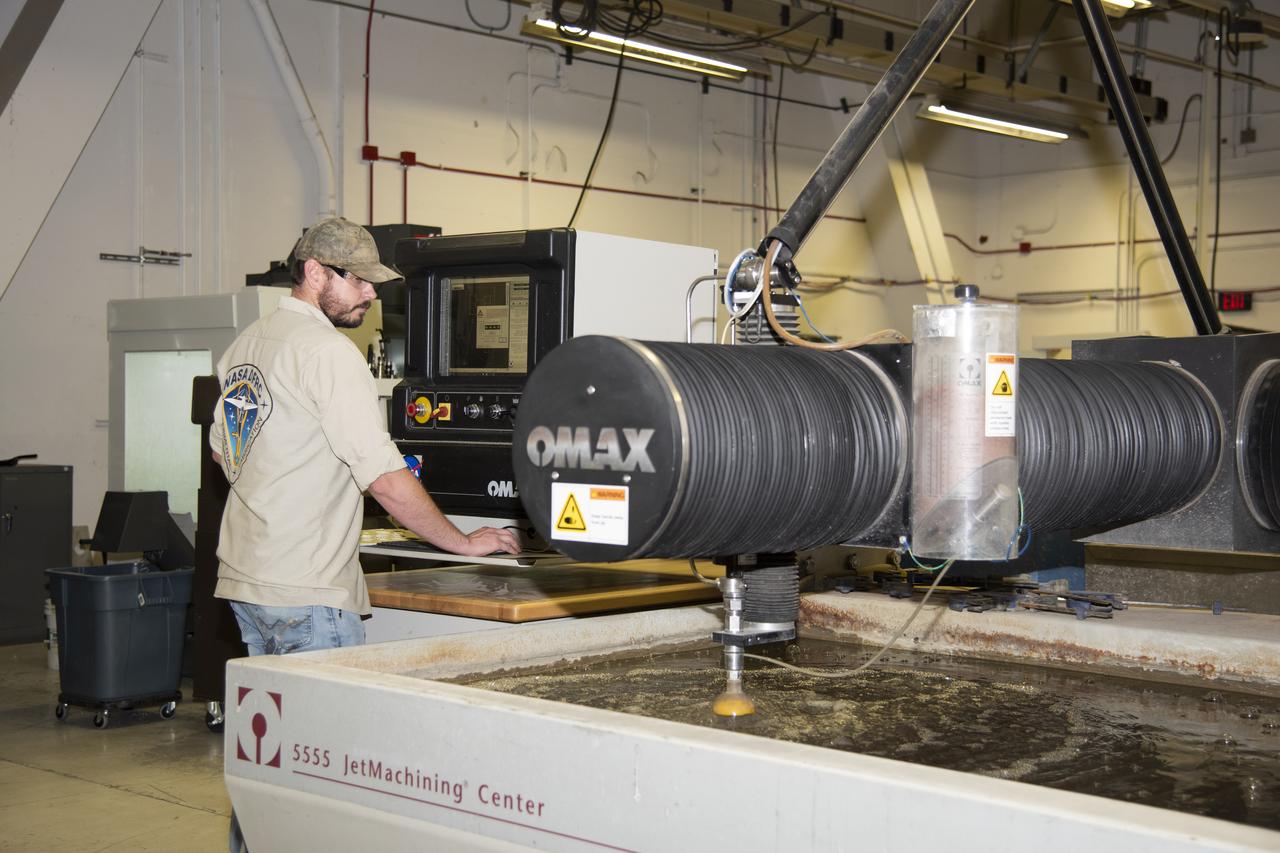
Eric Nisbet works on a part for the ER-2 instrument panel.
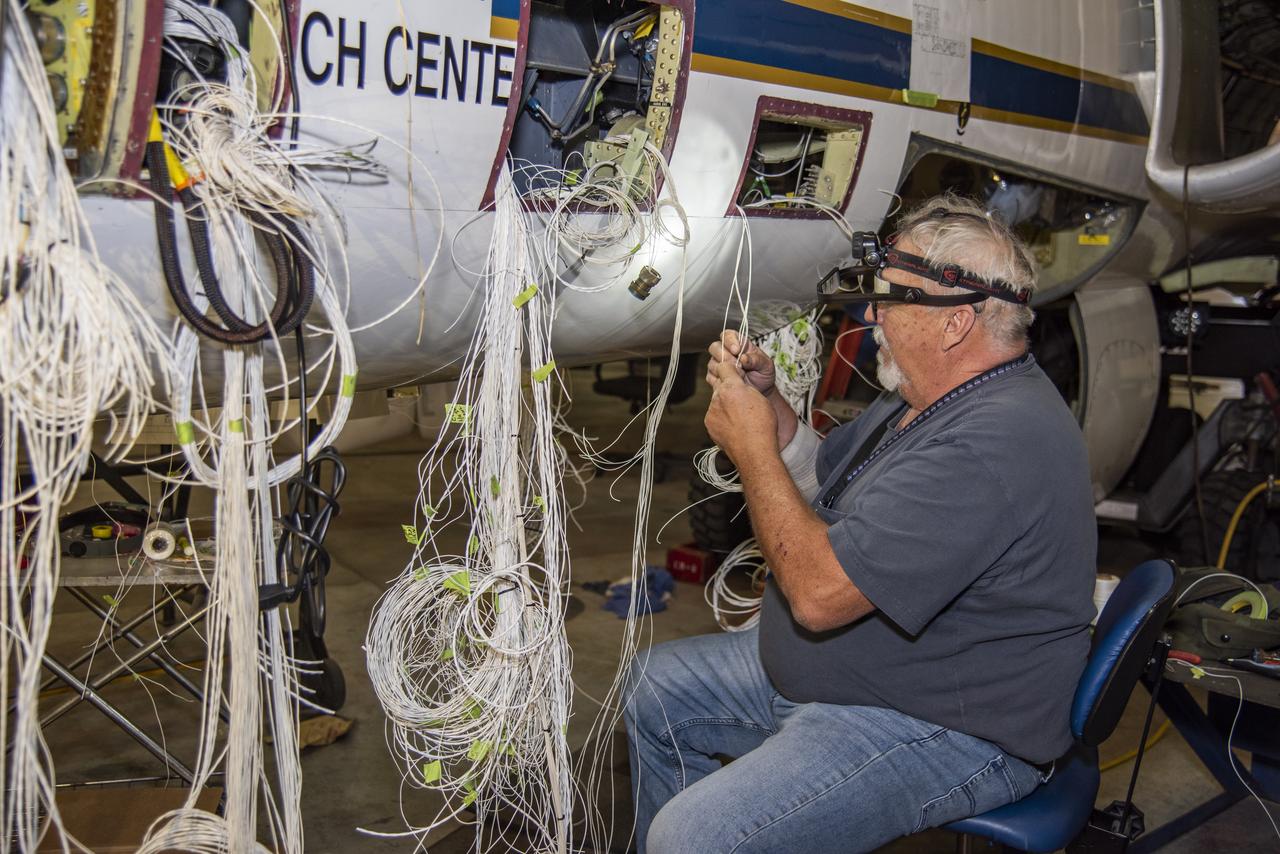
Technician David Johnson works on rewiring the high-altitude ER-2 aircraft's fixed nose and cockpit.Â
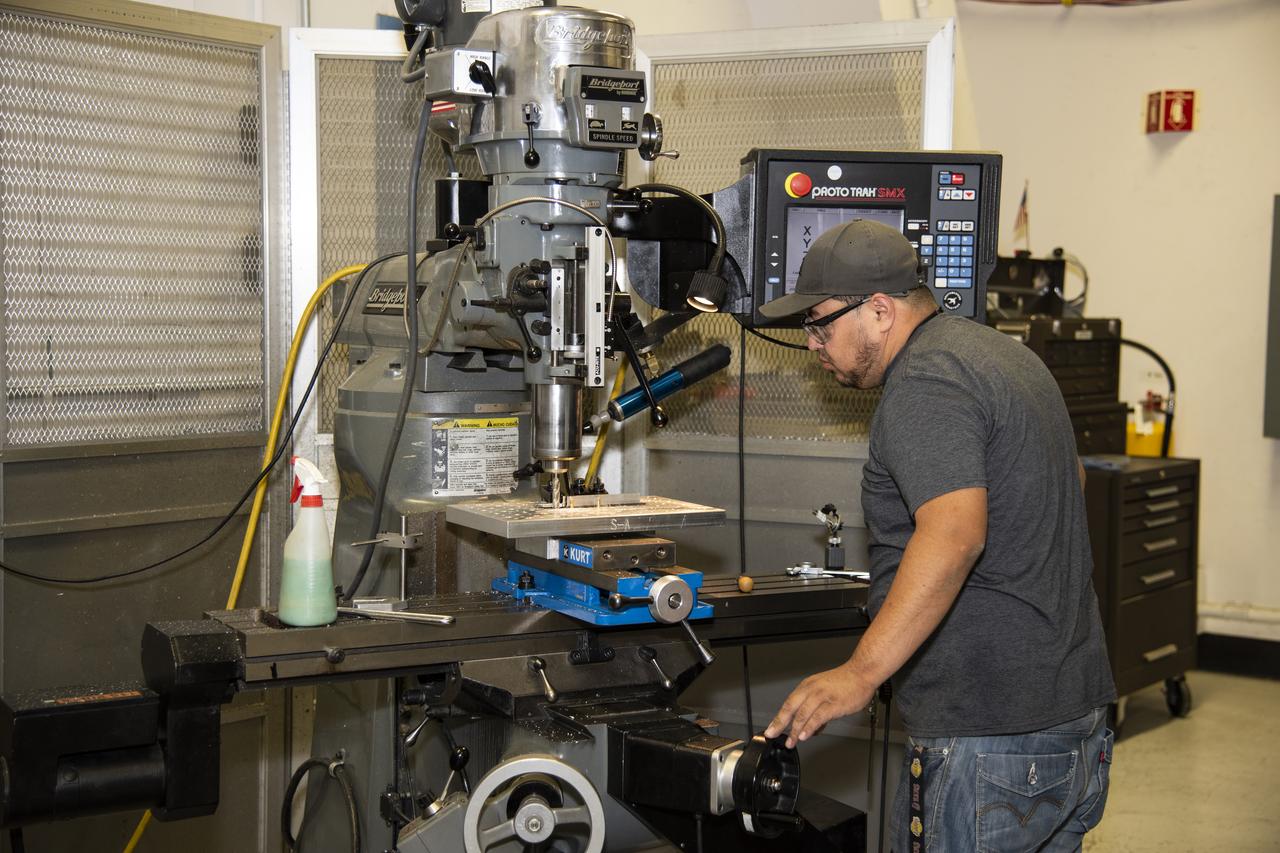
Herman Escobar works on a part for the ER-2 instrument panel.
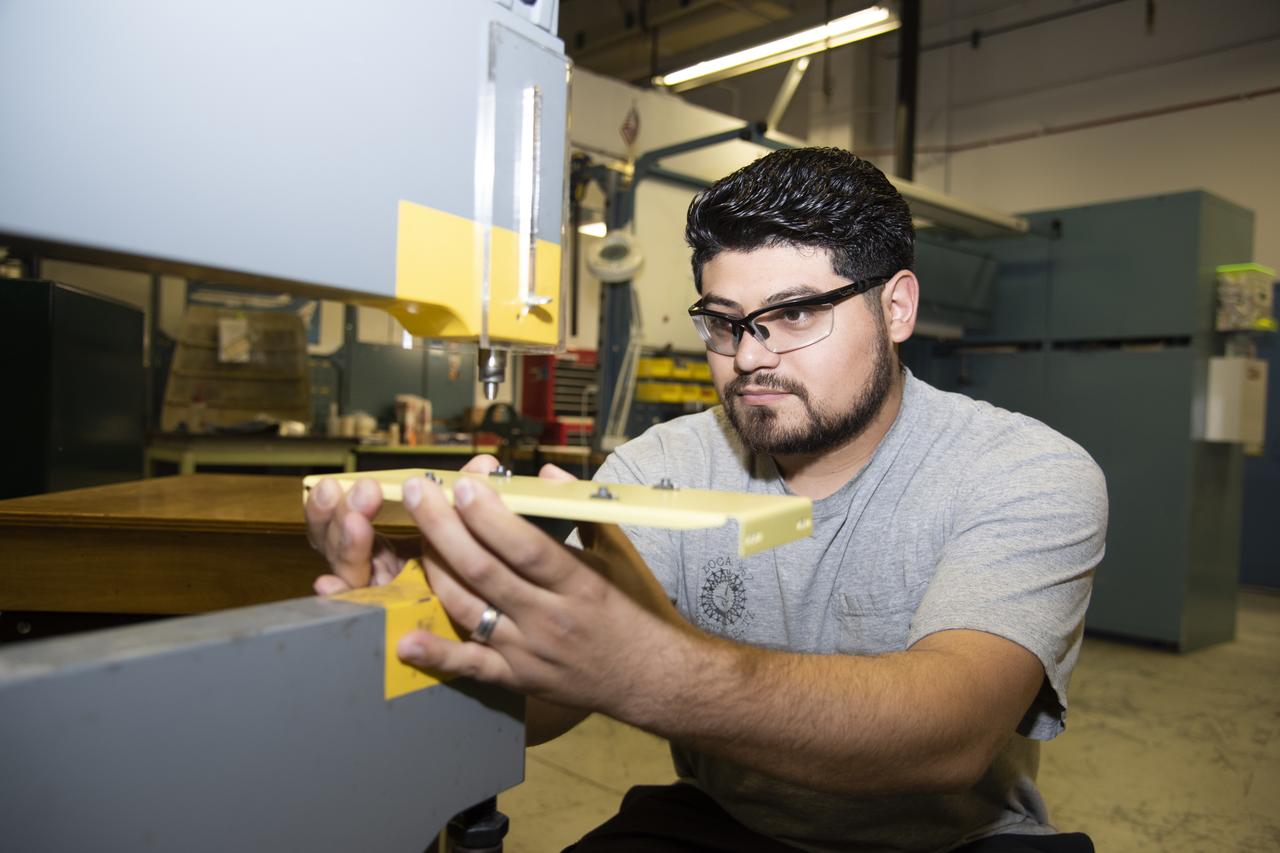
Hector Rosas works on fabricating a part for the ER-2 instrumentation panel.
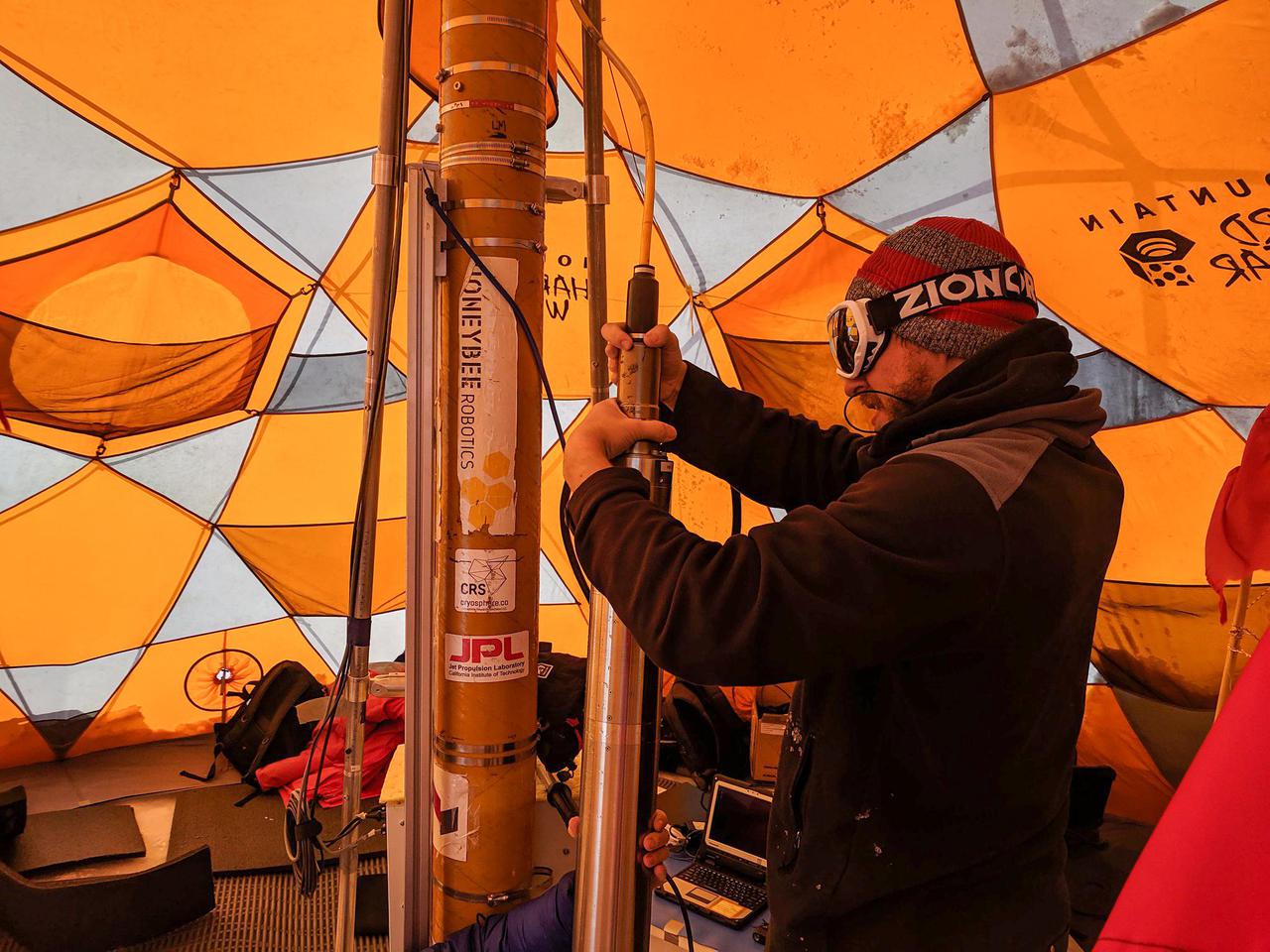
During 2019 field tests near Greenland's Summit Station, a high-elevation remote observing station, the WATSON (Wireline Analysis Tool for the Subsurface Observation of Northern ice sheets) instrument is put through its paces to seek out signs of life, or biosignatures, 360 feet (110 meters) down a borehole. In this photograph, a WATSON team member secures the tether to the top of the tube-like instrument and drill before lowering it into the ice. The tether also acts as the power cable and data feed. Care must be taken to ensure a tight connection between the tether and instrument, else the instrument could be lost in the ice. WATSON could one day be launched aboard a robotic mission to seek out biosignatures on the ocean moons of Enceladus, Europa, or even Titan. The WATSON team hopes to test the instrument in a variety of cold locations on Earth to see how the distribution and variety of biosignatures change depending on where they are. By testing WATSON in different Earth analogs — areas on Earth that can stand in for those on other worlds — scientists would be able to better understand the chemical fingerprints of any biosignatures detected on other worlds. https://photojournal.jpl.nasa.gov/catalog/PIA24170
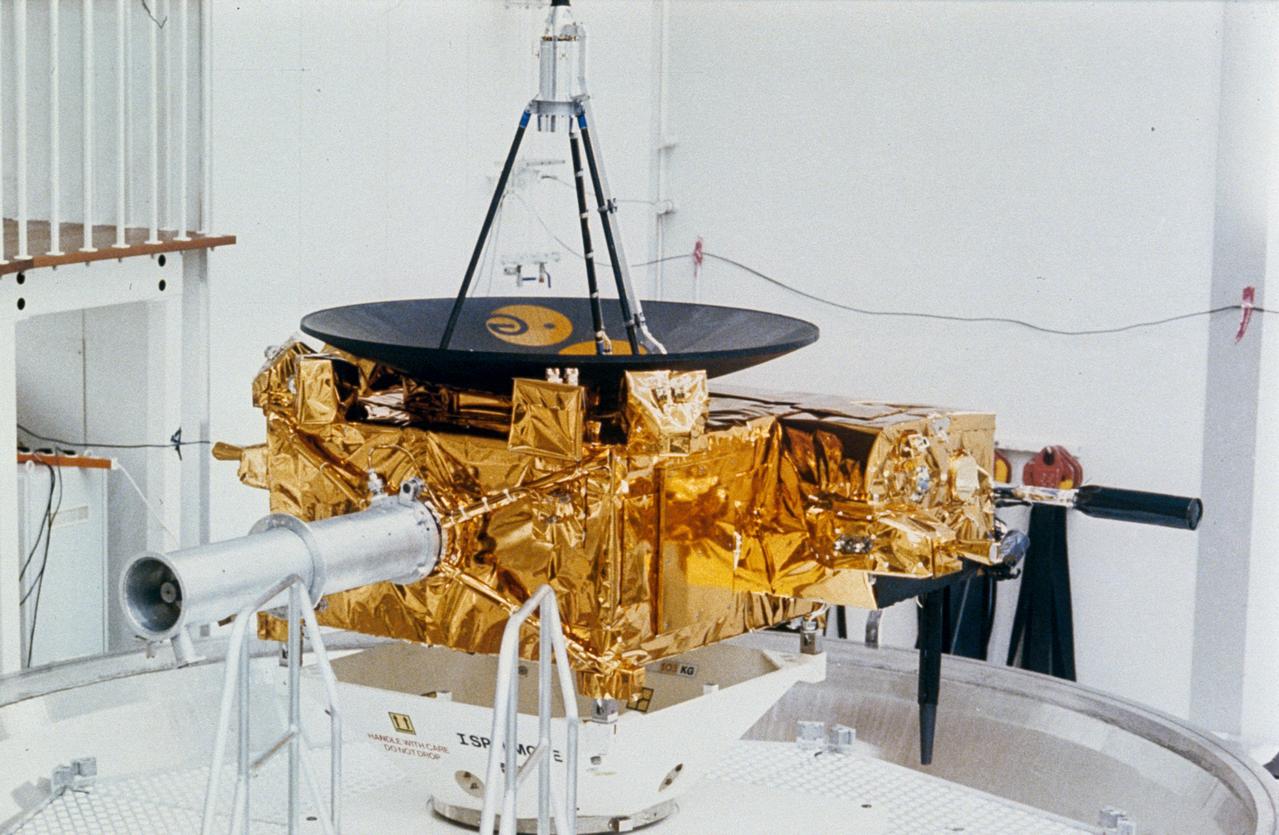
S90-45985 (May 1990) --- The Ulysses spacecraft undergoes testing at the vacuum spin-balancing facility in ESTEC. Careful balancing is required in order to ensure that the high gain antenna, which is aligned with the spacecraft spin axis, can be accurately pointed toward Earth throughout the mission. It will be flown to Kennedy Space Center (KSC) for further processing before being on loaded to Discovery's cargo bay. The Space Shuttle crew of STS-41 will send it off to its long-awaited mission.
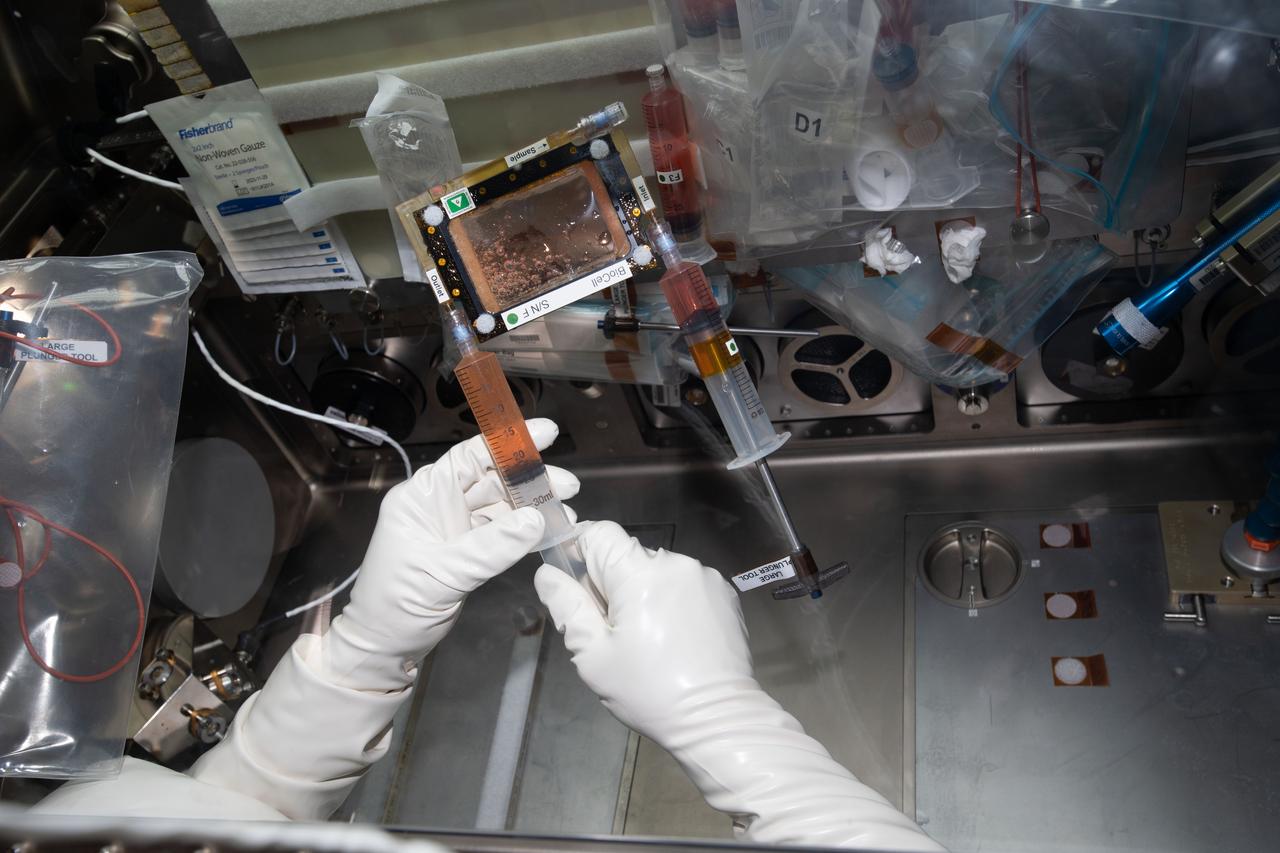
iss062e055120 (2/26/2020) --- A view inside of the Life Science Glovebox (LSG) of the media exchange operations for the OsteoOmics investigation aboard the International Space Station (ISS). OsteoOmics studies the cellular mechanisms of bone loss associated with microgravity, which helps researchers understand the mechanisms of bone loss in a wide range of disorders. This leads to better preventative care or therapeutic treatments for people suffering bone loss as a result of bone diseases like osteopenia and osteoporosis, or for patients on prolonged bed rest.
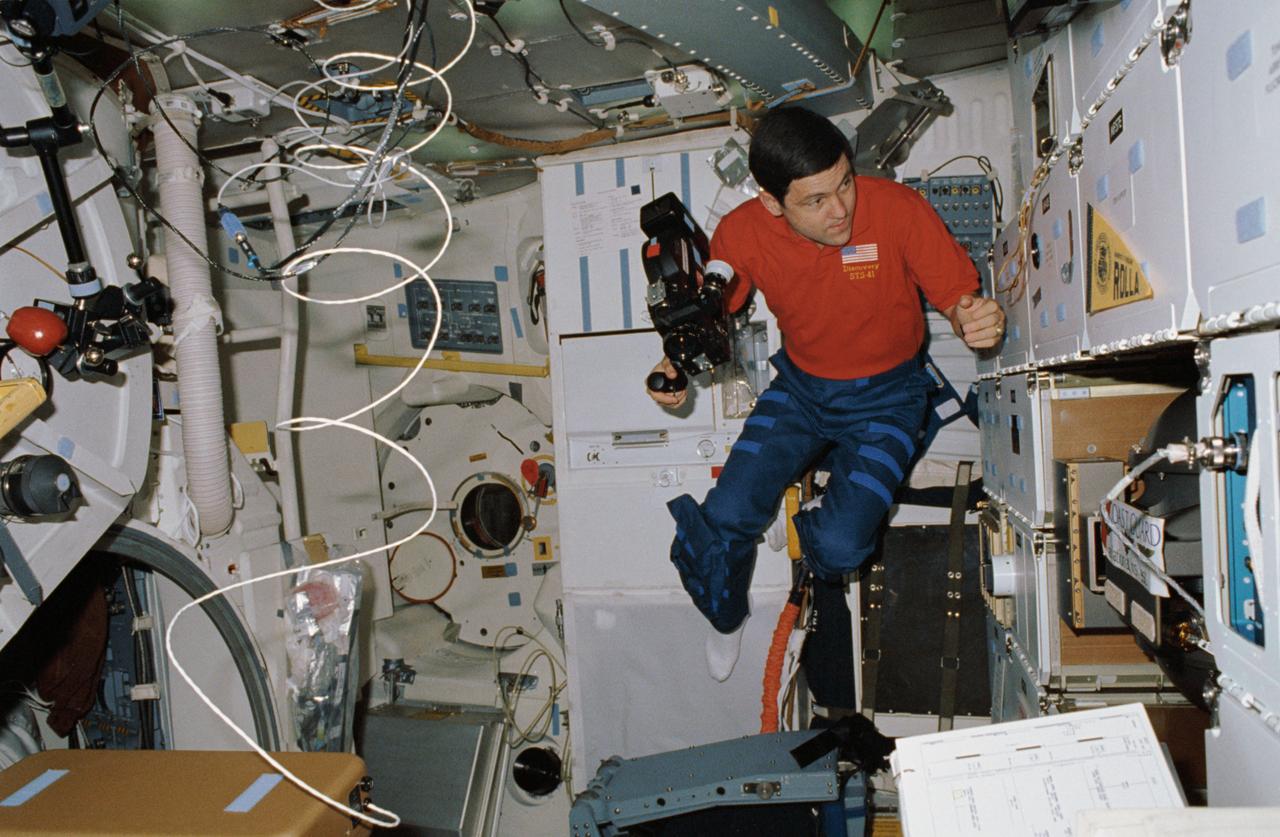
STS041-05-011 (6-10 Oct 1990) --- Astronaut Robert D. Cabana, STS-41 pilot, exhibits the weightlessness of space travel as he appears to "float" about on the middeck of Discovery. Careful inspection of the photo proves that, actually, his floating is limited, as he has anchored his left foot with a special restraint device. He apparently has chosen this vantage point to use the Arriflex motion picture camera in his right hand.
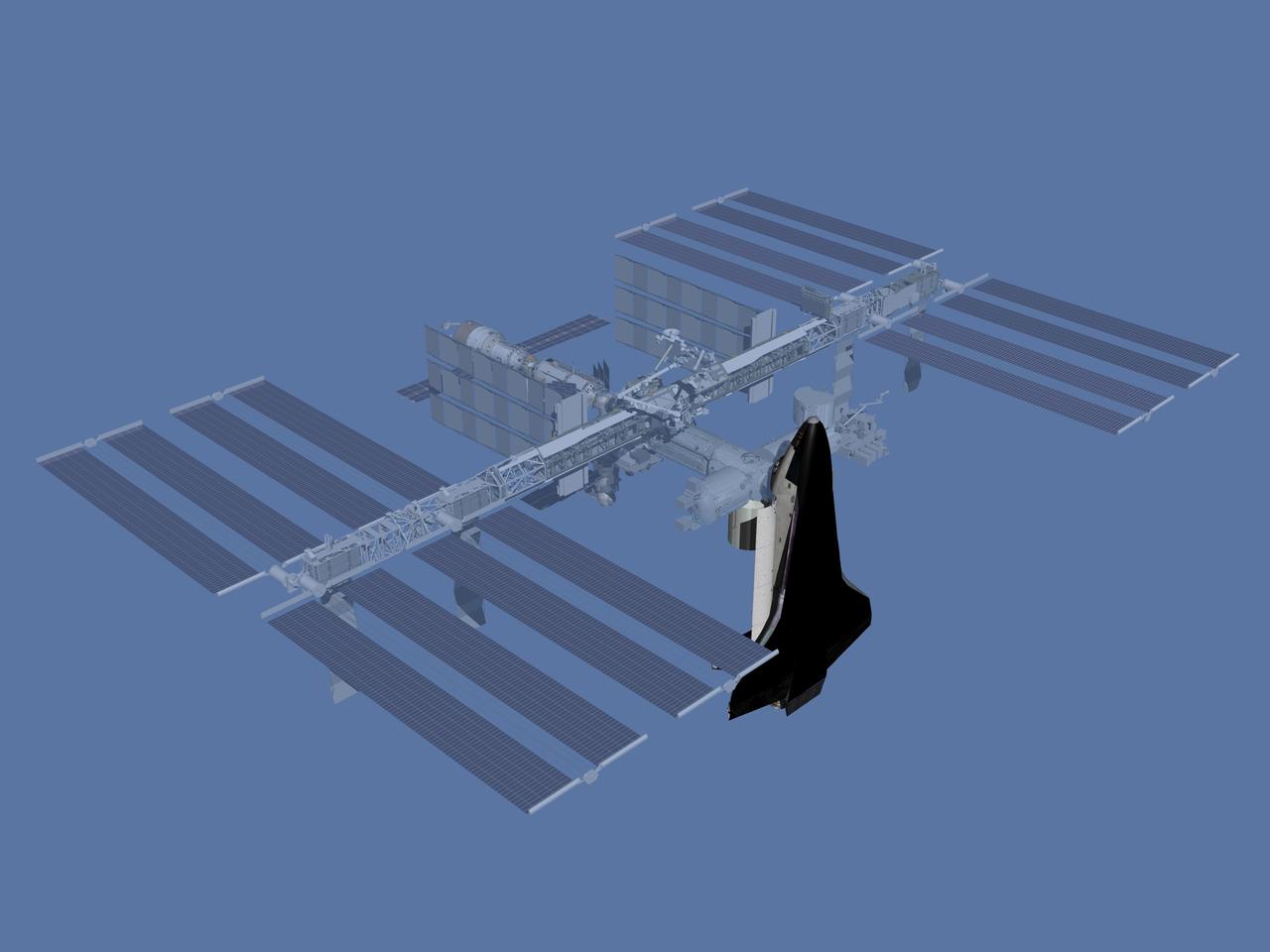
JSC2006-E-43511 (October 2006) --- Computer-generated artist's rendering of the International Space Station after flight 17A. U.S. Orbiter brings Multi-Purpose Logistics Module (MPLM); Lightweight Multi-Purpose Experiment Support Structure Carrier (LMC); three crew quarters; galley; second Treadmill Vibration Isolation System (TVIS); Crew Health Care System 2 (CHeCS 2).
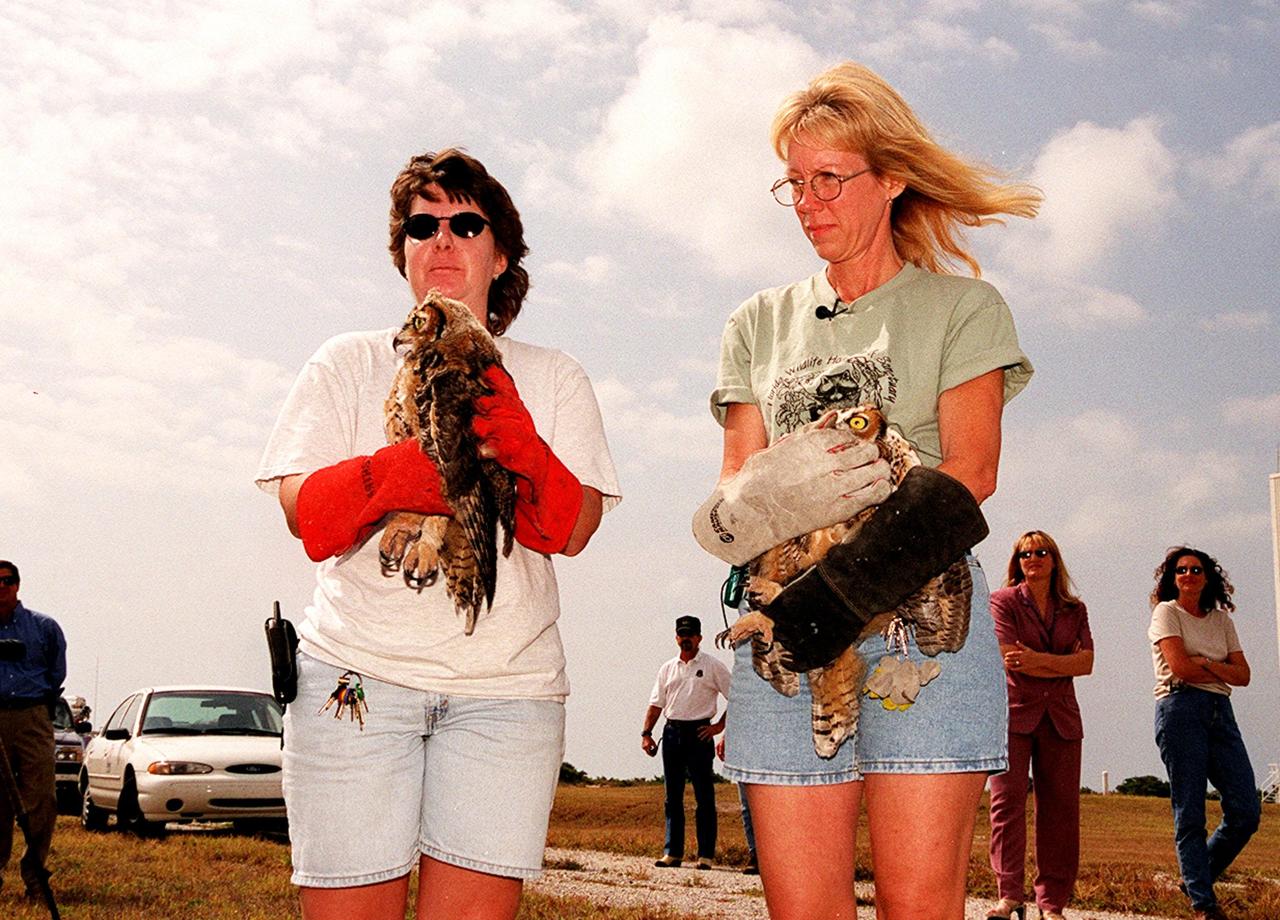
Eileen Olejarski (left), manager of Florida Wildlife Hospital, and Susan Small, director of the hospital, get ready to release two great horned owls at Cape Canaveral Air Force Station, Complex 25/29. The owls were found in June on the floor of CCAFS Hangar G, where their nest was located. They were treated at a local veterinary hospital and then taken to the Florida Wildlife Hospital in Melbourne for care and rehabilitation before release
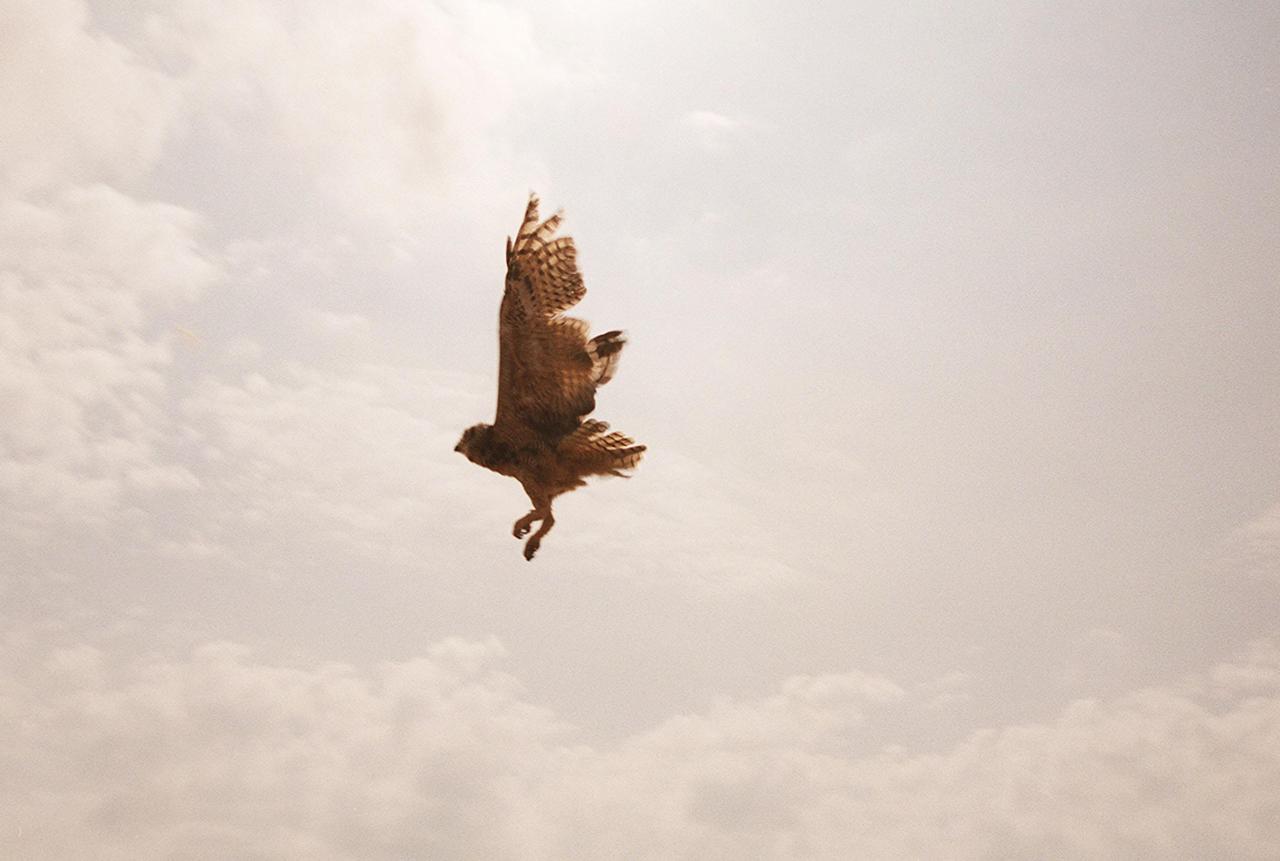
A great horned owl flies to freedom after its release at Cape Canaveral Air Force Station, Complex 25/29. The owl is one of two found in June on the floor of CCAFS Hangar G, where their nest was located. They were treated at a local veterinary hospital and then taken to the Florida Wildlife Hospital in Melbourne for care and rehabilitation before release
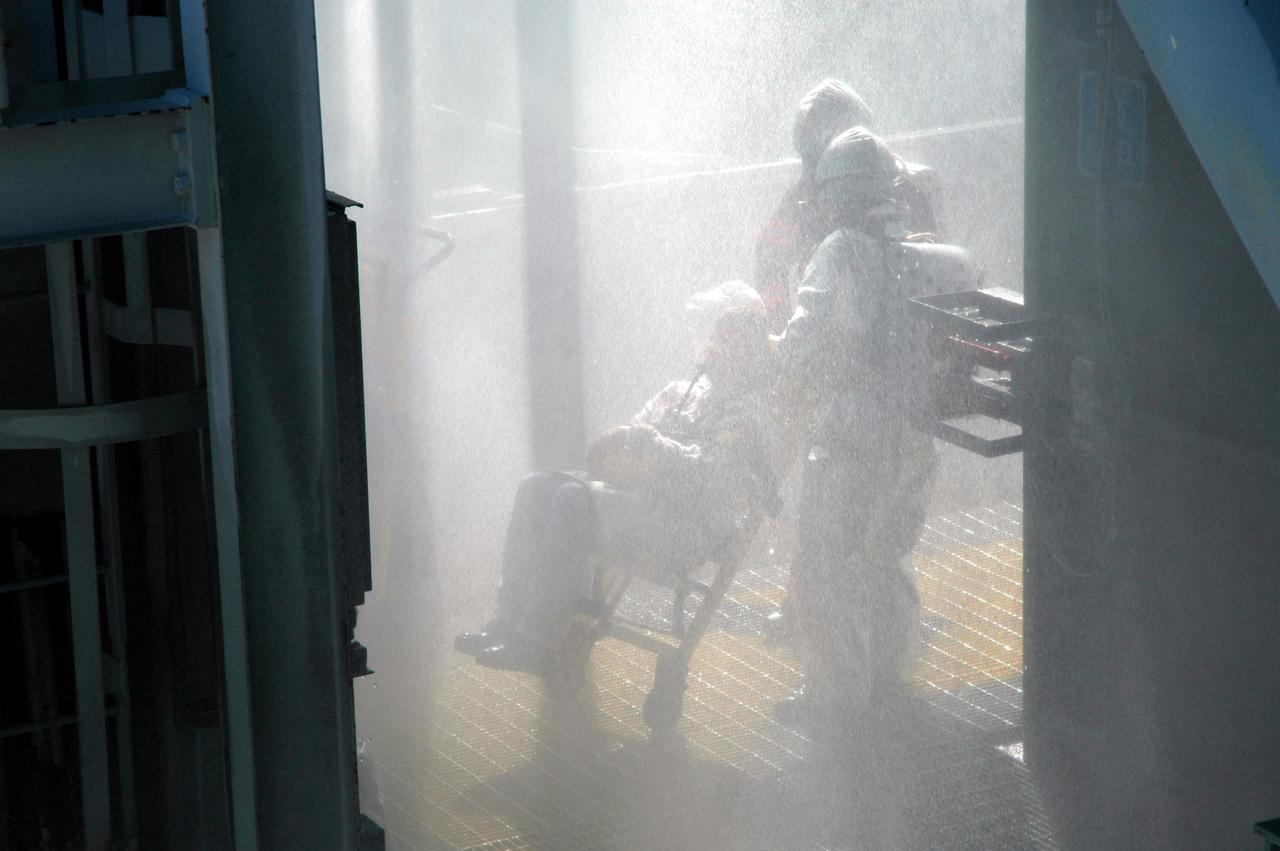
KENNEDY SPACE CENTER, FLA. - On Launch Pad 39A, astronaut-suited workers take part in an emergency egress scenario. The four-hour exercise simulated normal launch countdown operations, with the added challenge of a fictitious event causing an evacuation of the vehicle and launch pad. It tested the team’s rescue approaches on the Fixed Service Structure, slidewire basket evacuation, triage care and transportation of injured personnel to hospitals, as well as communications and coordination.
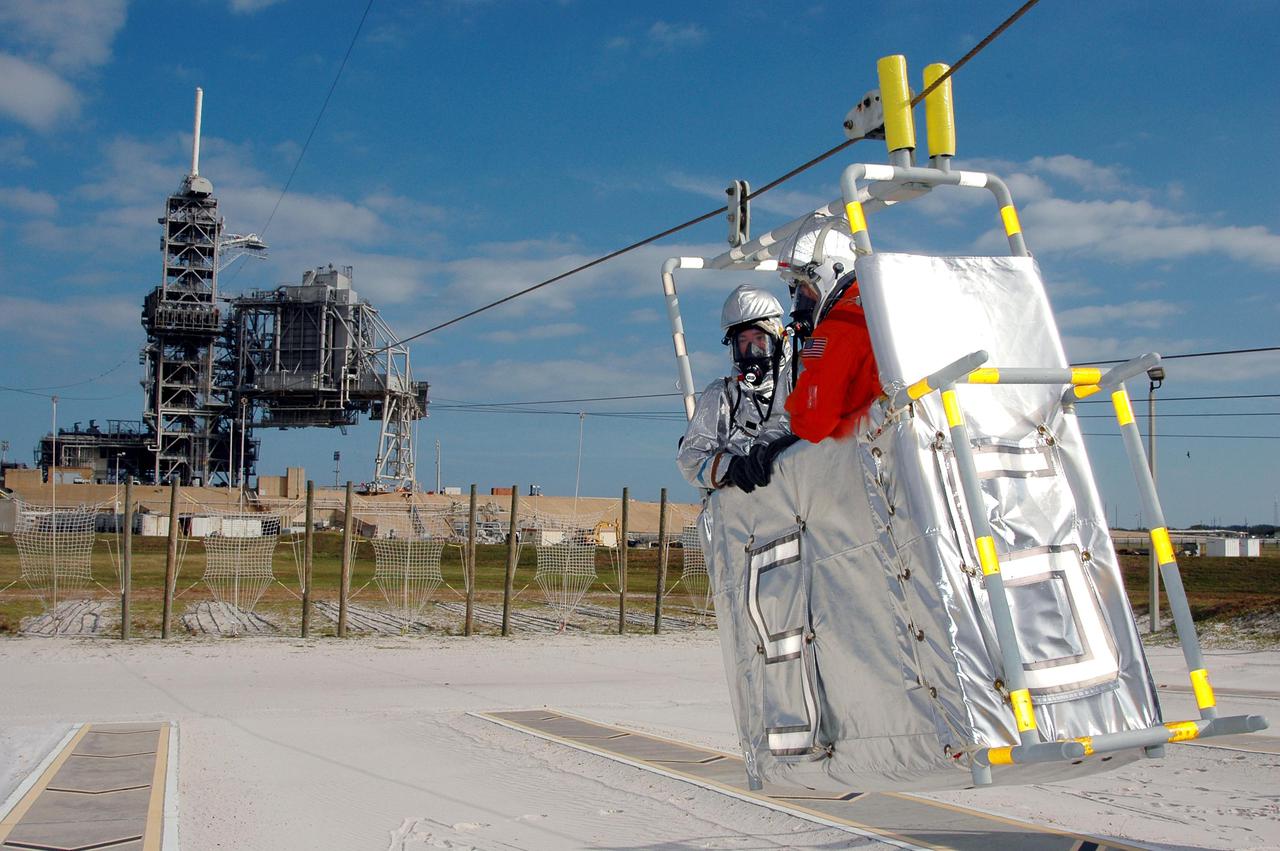
KENNEDY SPACE CENTER, FLA. - On Launch Pad 39A, a rescue team member and astronaut-suited worker approach landing in a slidewire basket reaching from the Fixed Service Structure in the background during an emergency egress scenario. The four-hour exercise simulated normal launch countdown operations, with the added challenge of a fictitious event causing an evacuation of the vehicle and launch pad. It tested the team’s rescue approaches on the Fixed Service Structure, slidewire basket evacuation, triage care and transportation of injured personnel to hospitals, as well as communications and coordination.
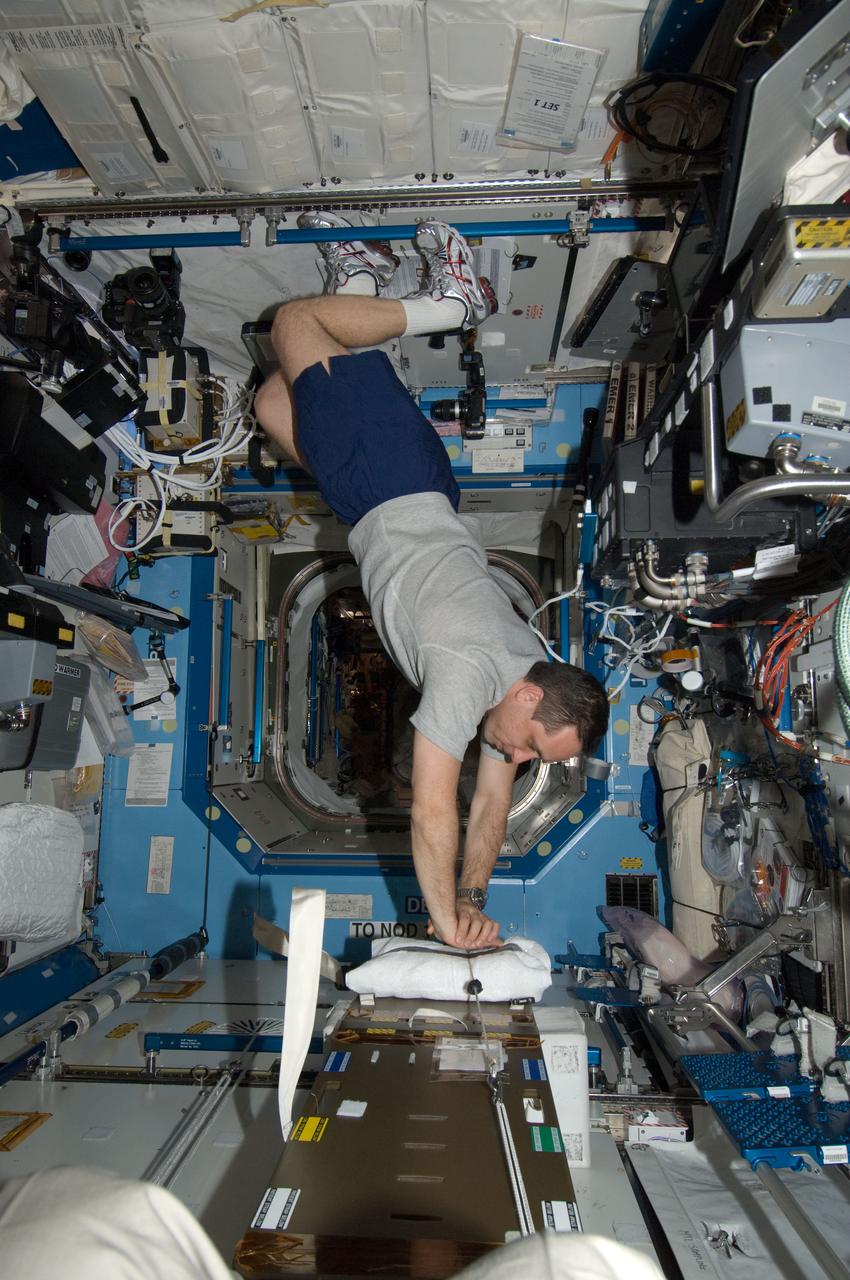
ISS030-E-012600 (16 Dec. 2011) --- Russian cosmonaut Anton Shkaplerov, Expedition 30 flight engineer, participates in a Crew Health Care System (CHeCS) medical contingency drill in the Destiny laboratory of the International Space Station. This drill gives crew members the opportunity to work as a team in resolving a simulated medical emergency onboard the space station.
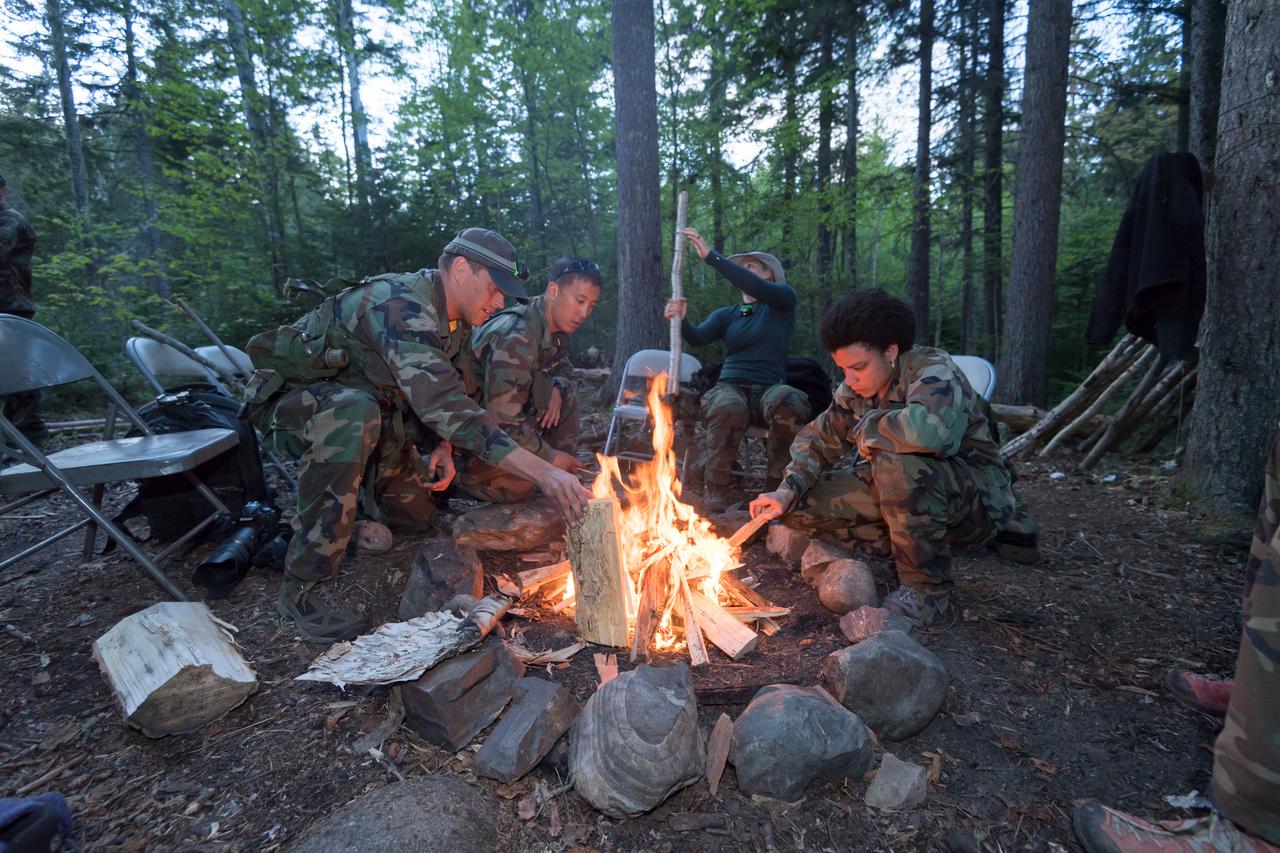
jsc2018e052190 (May 30, 2018) --- (From left) 2017 NASA astronaut candidates Bob Hines, Jonny Kim, and Jessica Watkins care for their fire while Canadian Space Agency astronaut candidate Jennifer Sidey-Gibbons preps more wood during wilderness survival training at the U.S. Navy’s Survival, Evasion, Resistance, and Escape School in Brunswick, Maine. Photo Credit: NASA/Josh Valcarcel
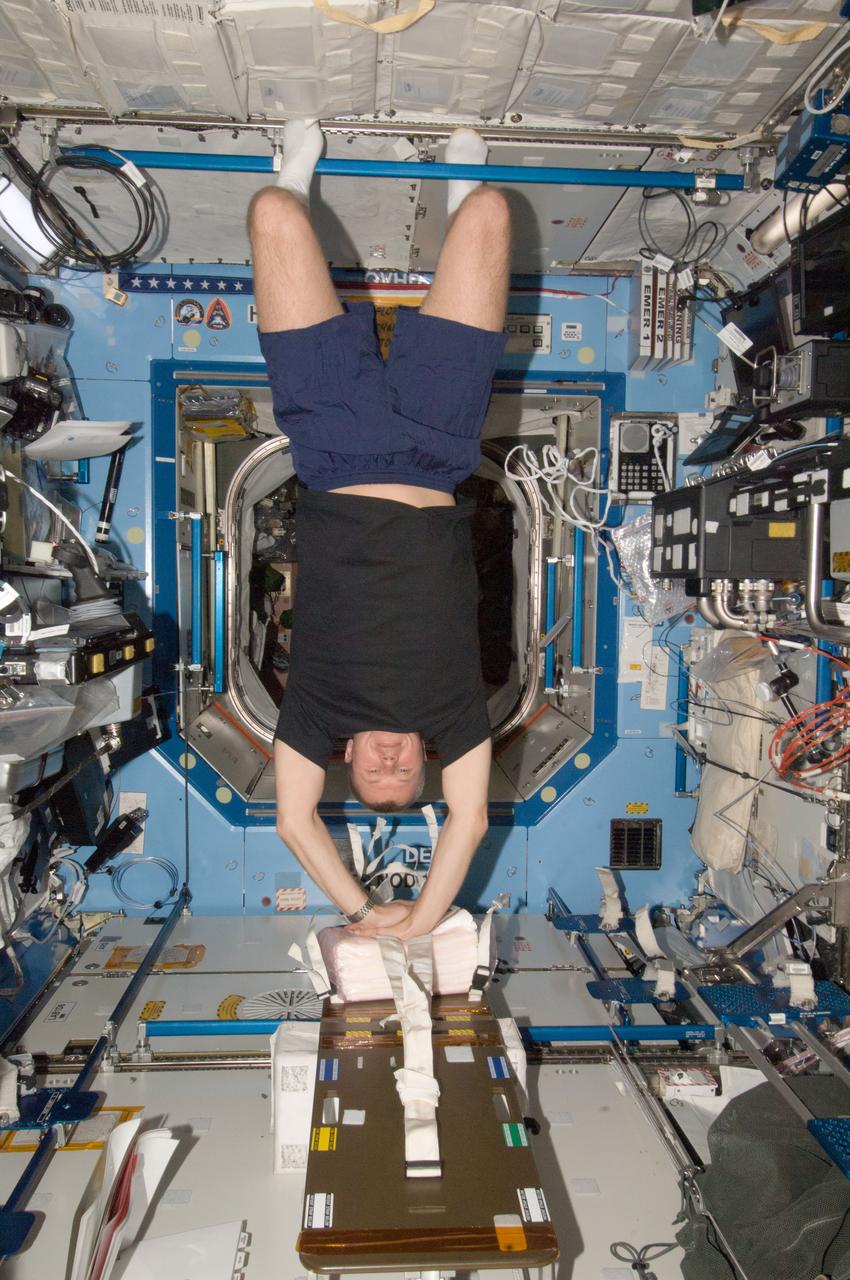
ISS034-E-005260 (26 Nov. 2012) --- Russian cosmonaut Oleg Novitskiy, Expedition 34 flight engineer, participates in a Crew Health Care System (CHeCS) medical contingency drill in the Destiny laboratory of the International Space Station. This drill gives crew members the opportunity to work as a team in resolving a simulated medical emergency onboard the space station.
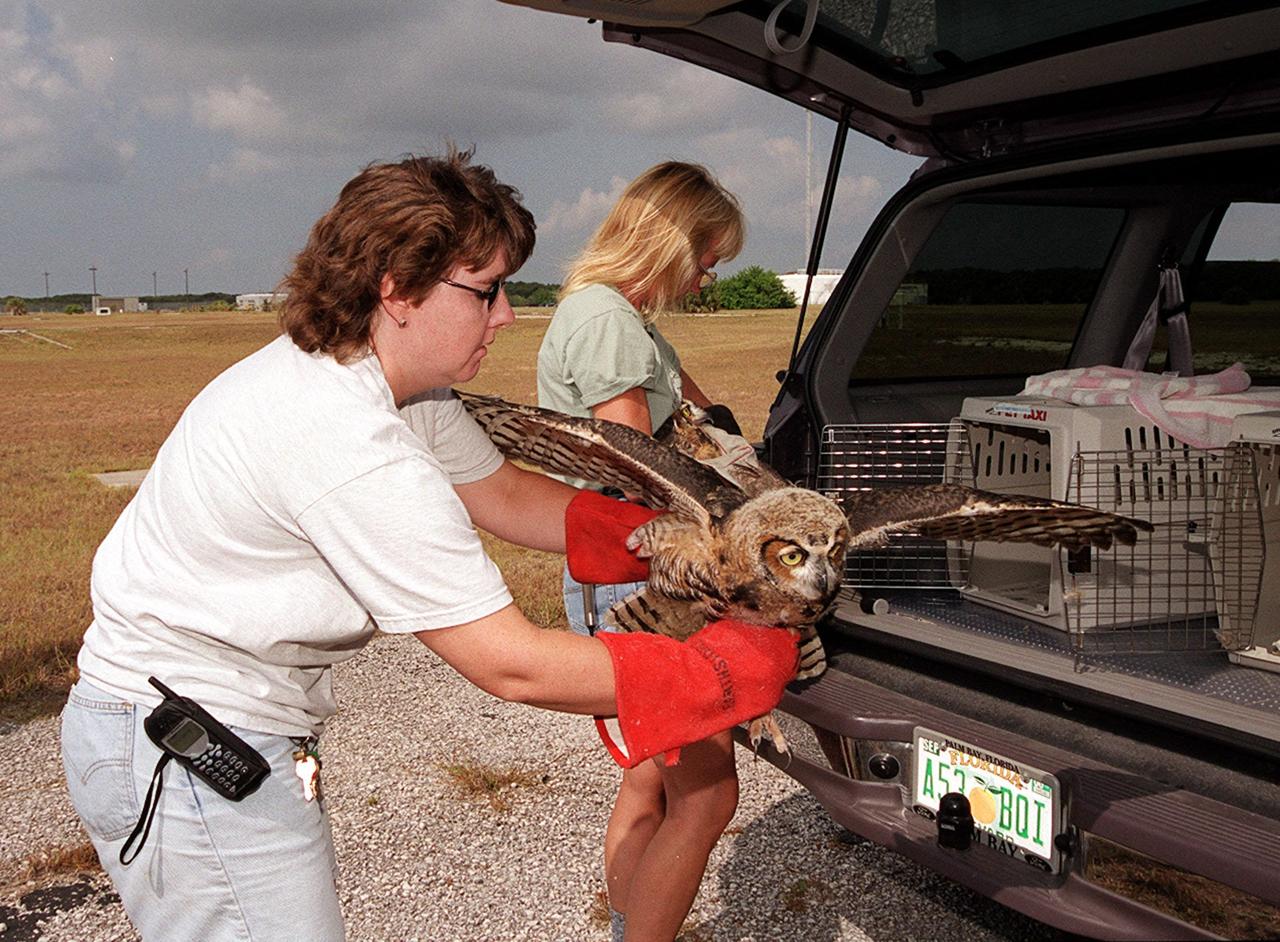
Eileen Olejarski (left), manager of Florida Wildlife Hospital, and Susan Small, director of the hospital, remove two great horned owls from the vehicle before releasing them at Cape Canaveral Air Force Station, Complex 25/29. The owls were found in June on the floor of CCAFS Hangar G, where their nest was located. They were treated at a local veterinary hospital and then taken to the Florida Wildlife Hospital in Melbourne for care and rehabilitation before release.
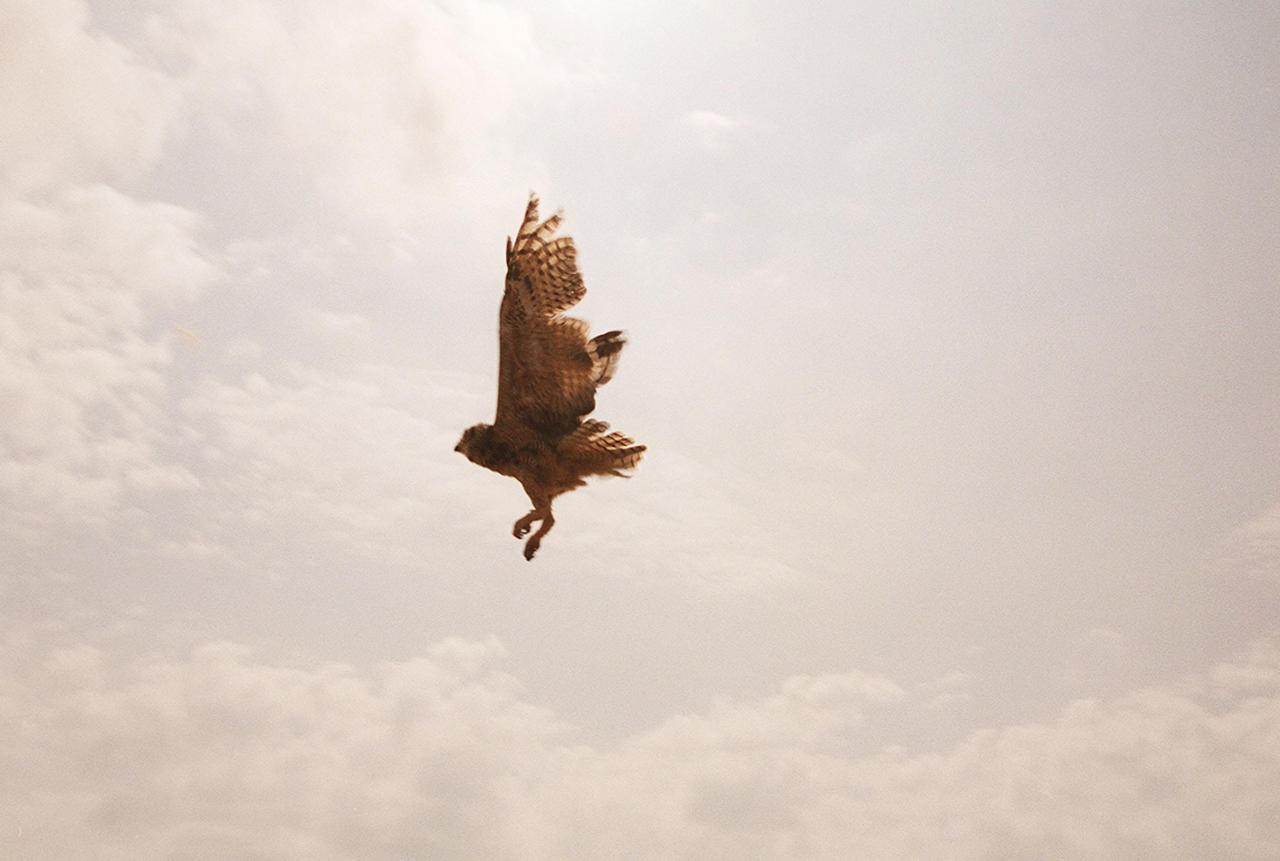
A great horned owl flies to freedom after its release at Cape Canaveral Air Force Station, Complex 25/29. The owl is one of two found in June on the floor of CCAFS Hangar G, where their nest was located. They were treated at a local veterinary hospital and then taken to the Florida Wildlife Hospital in Melbourne for care and rehabilitation before release
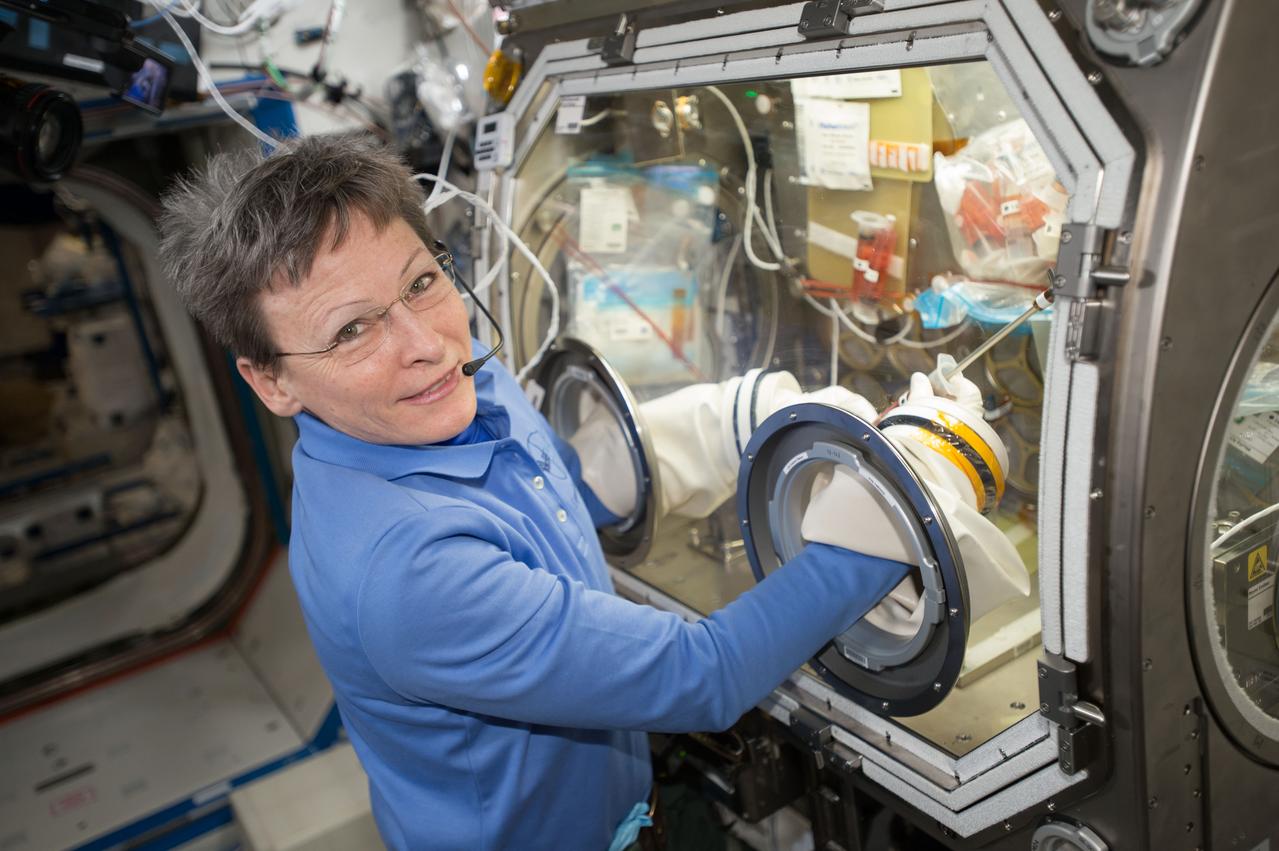
iss051e034105 (May 2, 2017) --- Commander Peggy Whitson is working on the OsteoOmics bone cell study that utilizes the Microgravity Science Glovebox inside the U.S. Destiny laboratory. OsteoOmics investigates the molecular mechanisms that dictate bone loss in microgravity by examining osteoblasts, which form bone, and osteoclasts, which dissolves bone. This leads to better preventative care or therapeutic treatments for people suffering bone loss as a result of bone diseases like osteopenia and osteoporosis, or for patients on prolonged bed rest.
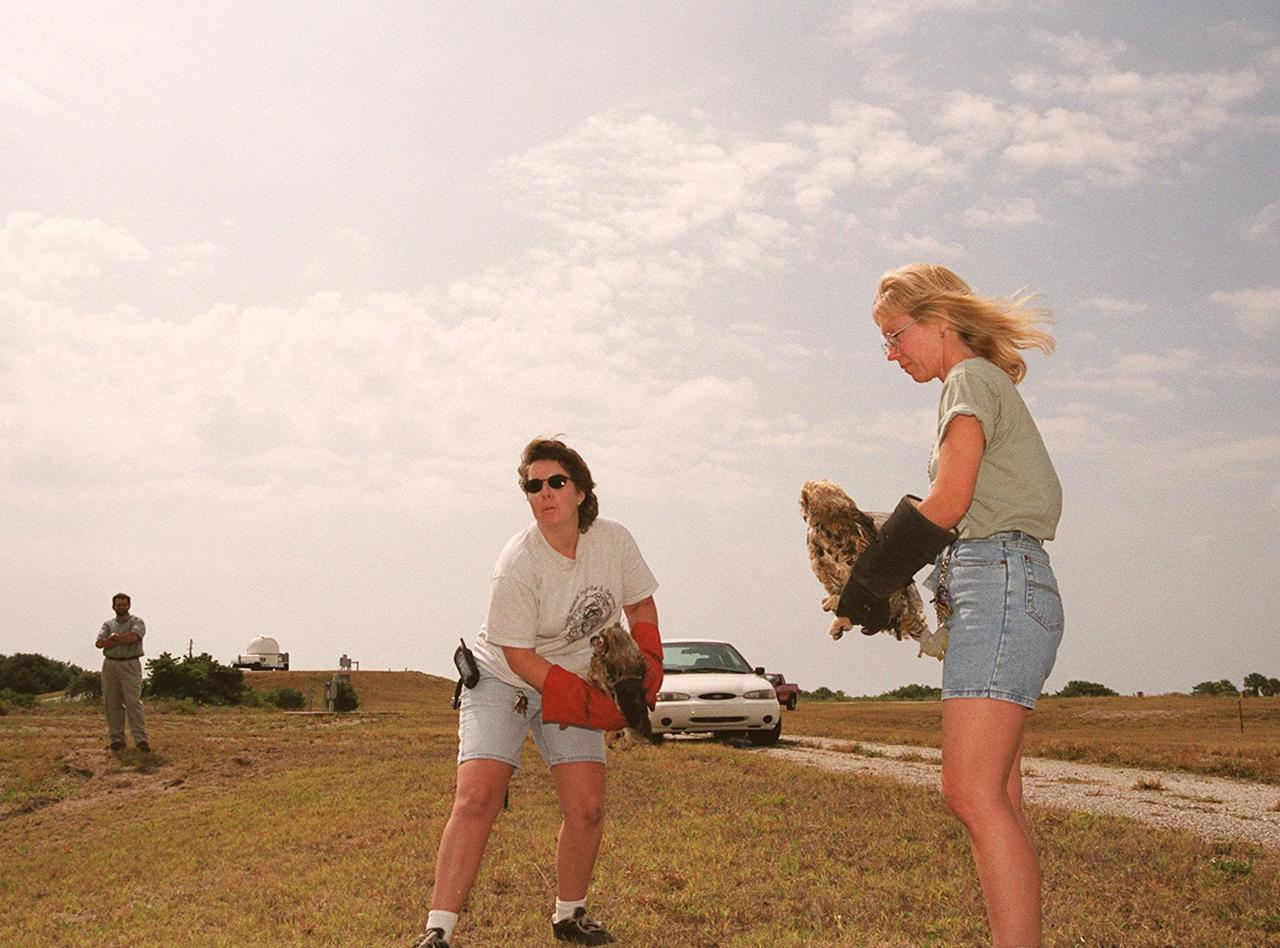
Eileen Olejarski (left), manager of Florida Wildlife Hospital, and Susan Small, director of the hospital, get ready to release two great horned owls at Cape Canaveral Air Force Station, Complex 25/29. The owls were found in June on the floor of CCAFS Hangar G, where their nest was located. They were treated at a local veterinary hospital and then taken to the Florida Wildlife Hospital in Melbourne for care and rehabilitation before release
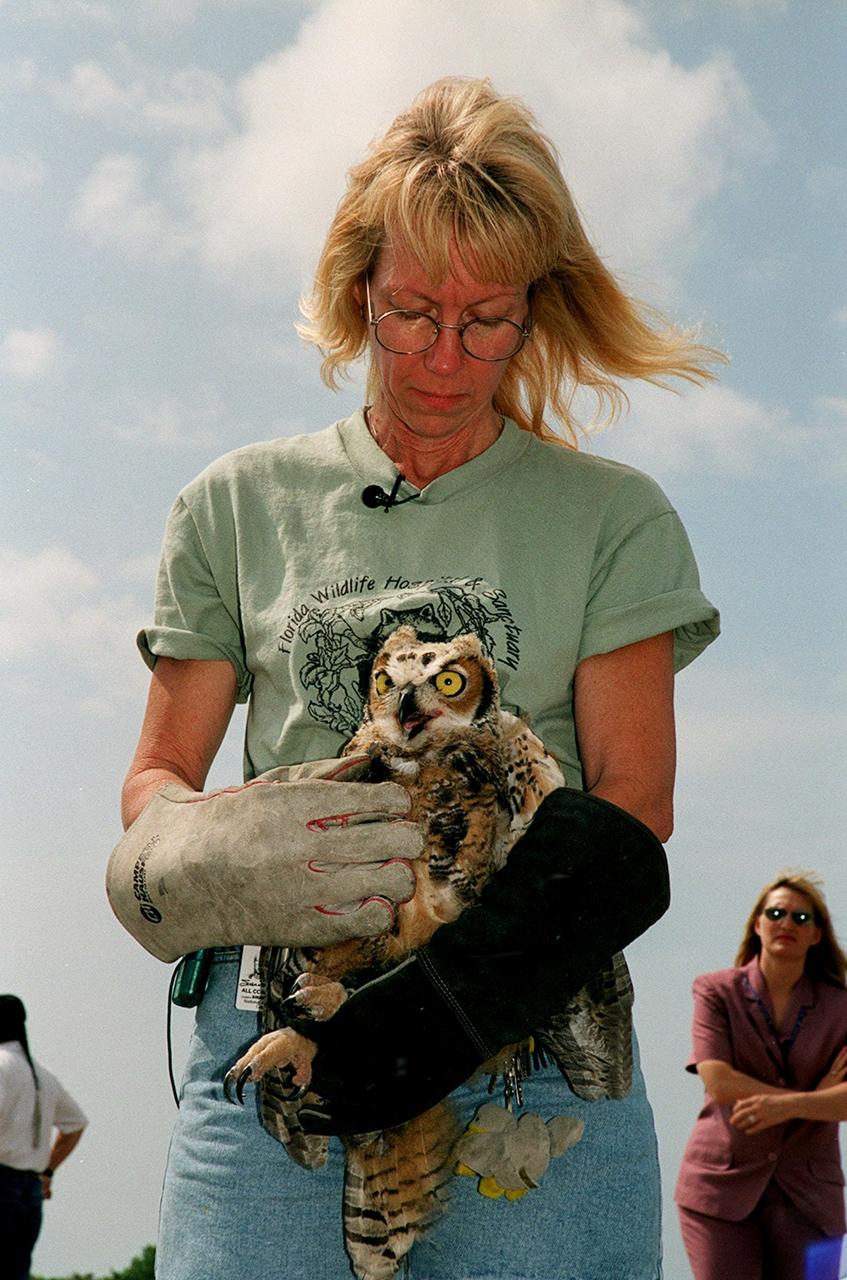
Susan Small, director of the Florida Wildlife Hospital, holds a great horned owl before releasing it at Cape Canaveral Air Force Station, Complex 25/29. The owl is one of two found in June on the floor of CCAFS Hangar G, where their nest was located. They were treated at a local veterinary hospital and then taken to the Florida Wildlife Hospital in Melbourne for care and rehabilitation before release

Young people prepare model rockets during an Astro Camp activity at Keesler Air Force Base in Biloxi. Stennis hosted the camp June 28 - July 1 in support of the White House Military Families Initiative. The camp also marked the beginning of a partnership between Stennis and Keesler to provide NASA education experiences to military children and to train children and youth care-providers. It is hoped that this activity can be expanded to other military bases next summer.
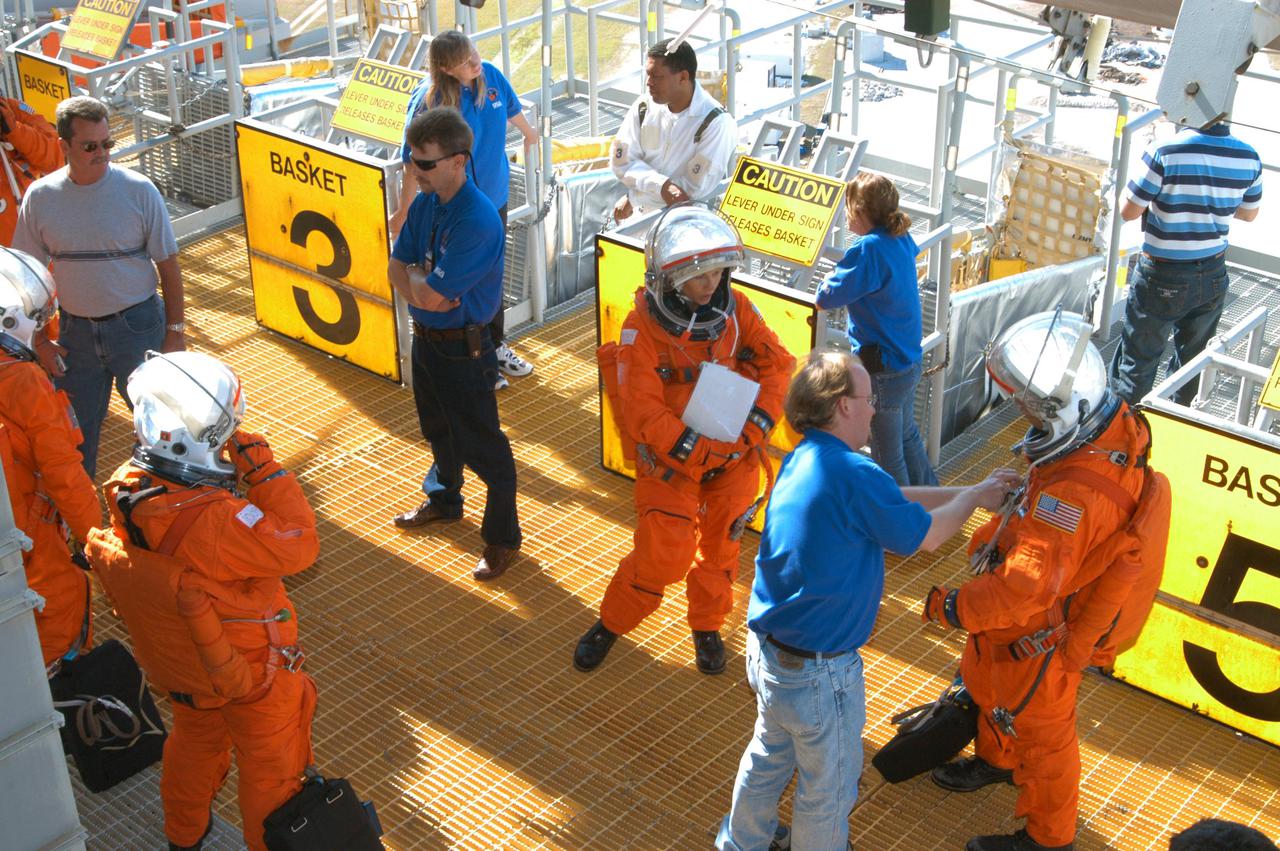
KENNEDY SPACE CENTER, FLA. - On Launch Pad 39-A, team members (in blue) help astronaut-suited co-workers near the slidewire baskets prepare for an emergency egress scenario. The four-hour exercise simulated normal launch countdown operations, with the added challenge of a fictitious event causing an evacuation of the vehicle and launch pad. It tested the team’s rescue approaches on the Fixed Service Structure, slidewire basket evacuation, triage care and transportation of injured personnel to hospitals, as well as communications and coordination.
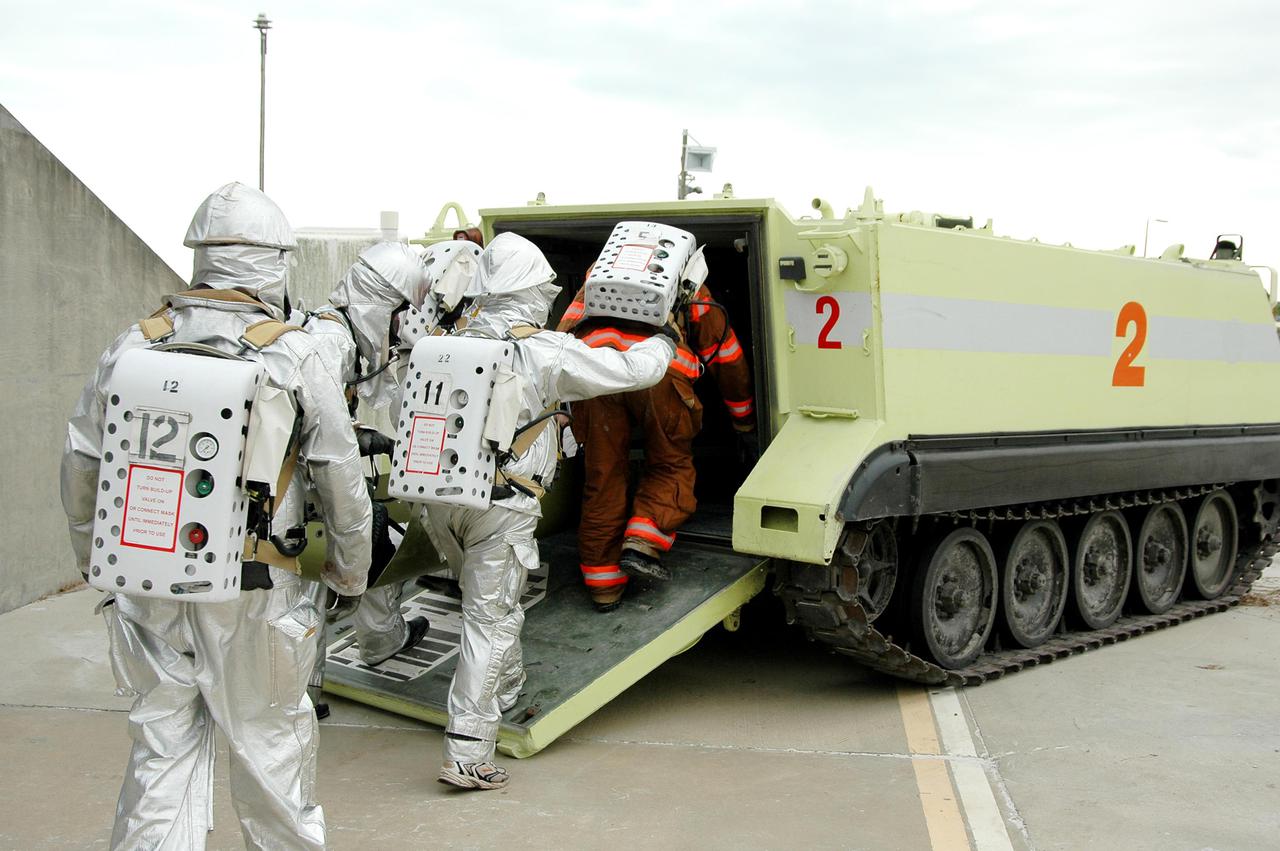
KENNEDY SPACE CENTER, FLA. - During a simulated launch countdown_emergency simulation on Launch Pad 39A, the rescue team helps astronaut-suited workers climb into an M-113 armored personnel carrier for transport away from the pad. The four-hour exercise simulated normal launch countdown operations, with the added challenge of a fictitious event causing an evacuation of the vehicle and launch pad. It tested the team’s rescue approaches on the Fixed Service Structure, slidewire basket evacuation, triage care and transportation of injured personnel to hospitals, as well as communications and coordination.
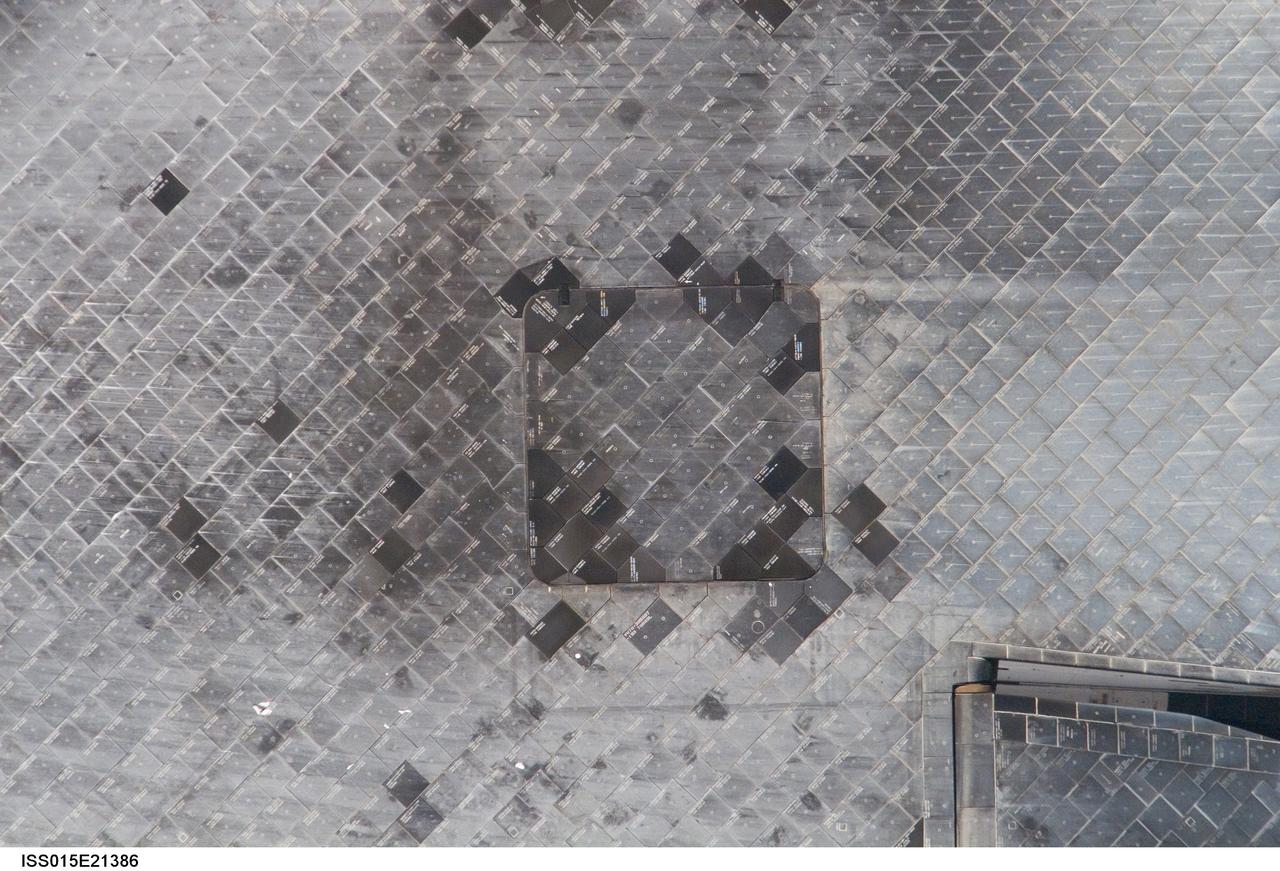
ISS015-E-21386 (10 Aug. 2007) --- This photo of the underside of the Space Shuttle Endeavour was taken from the International Space Station during a back flip and careful survey by crewmembers onboard the orbital outpost. After ground studies, mission managers suspect debris came off Endeavour's external fuel tank one minute after liftoff on Wednesday and struck tiles on the shuttle's underside, near the right main landing gear door.
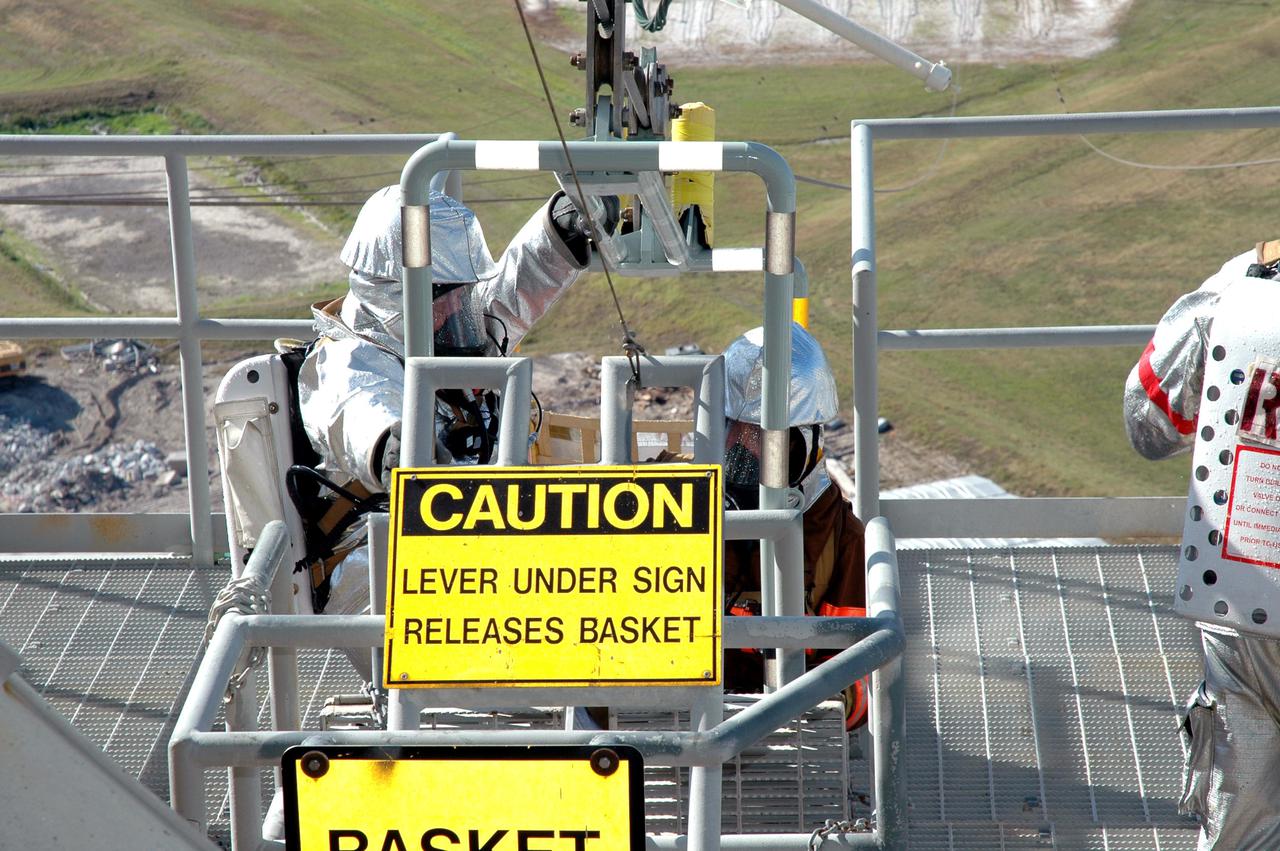
KENNEDY SPACE CENTER, FLA. - On Launch Pad 39A, a rescue force climbs into slidewire baskets on the Fixed Service Structure during an emergency egress scenario. The four-hour exercise simulated normal launch countdown operations, with the added challenge of a fictitious event causing an evacuation of the vehicle and launch pad. It tested the team’s rescue approaches on the Fixed Service Structure, slidewire basket evacuation, triage care and transportation of injured personnel to hospitals, as well as communications and coordination.
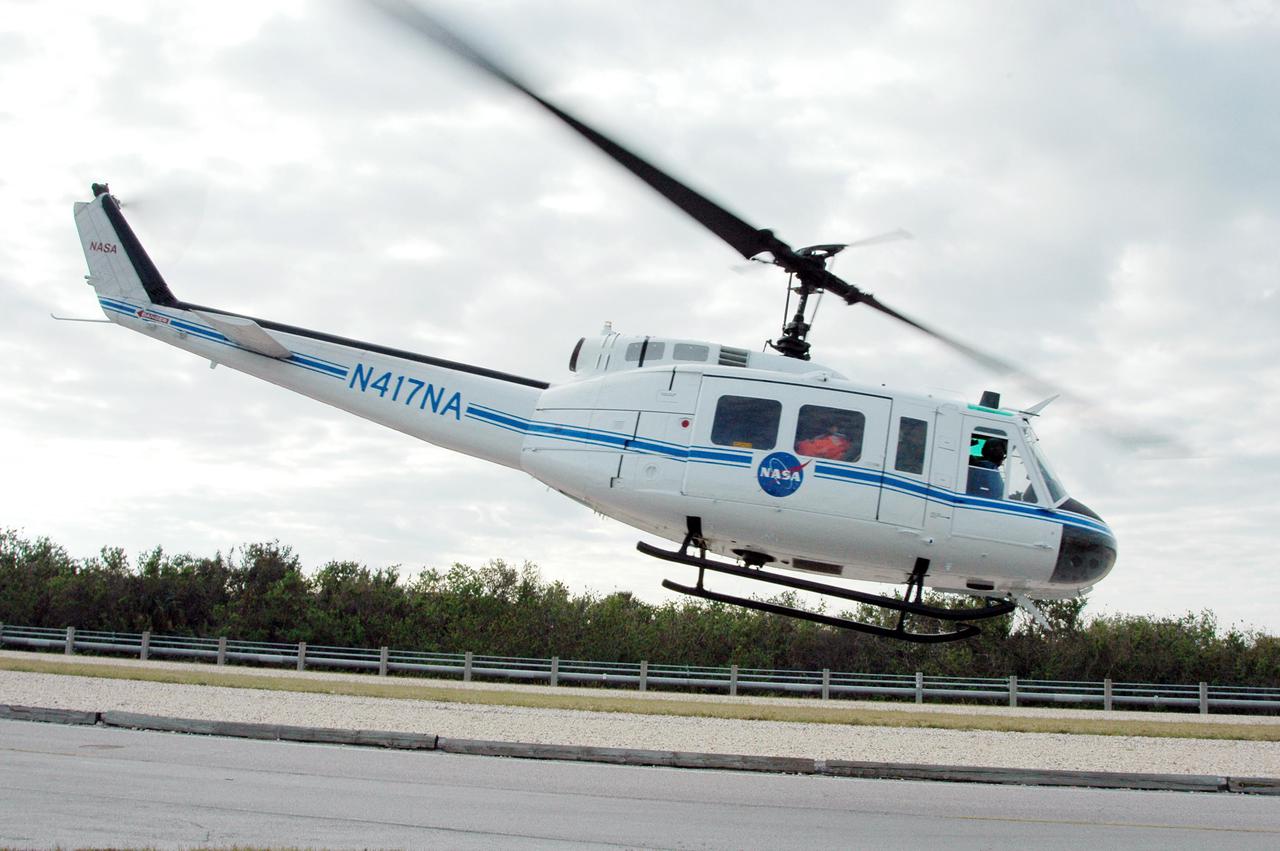
KENNEDY SPACE CENTER, FLA. - During a simulated launch countdown_emergency simulation on Launch Pad 39A, the NASA helicopter leaves the scene with “injured” astronaut-suited workers, heading to a hospital. Pad team members participated in the four-hour exercise simulating normal launch countdown operations, with the added challenge of a fictitious event causing an evacuation of the vehicle and launch pad. The simulation tested the team’s rescue approaches on the Fixed Service Structure, slidewire basket evacuation, triage care and transportation of injured personnel to hospitals, as well as communications and coordination.
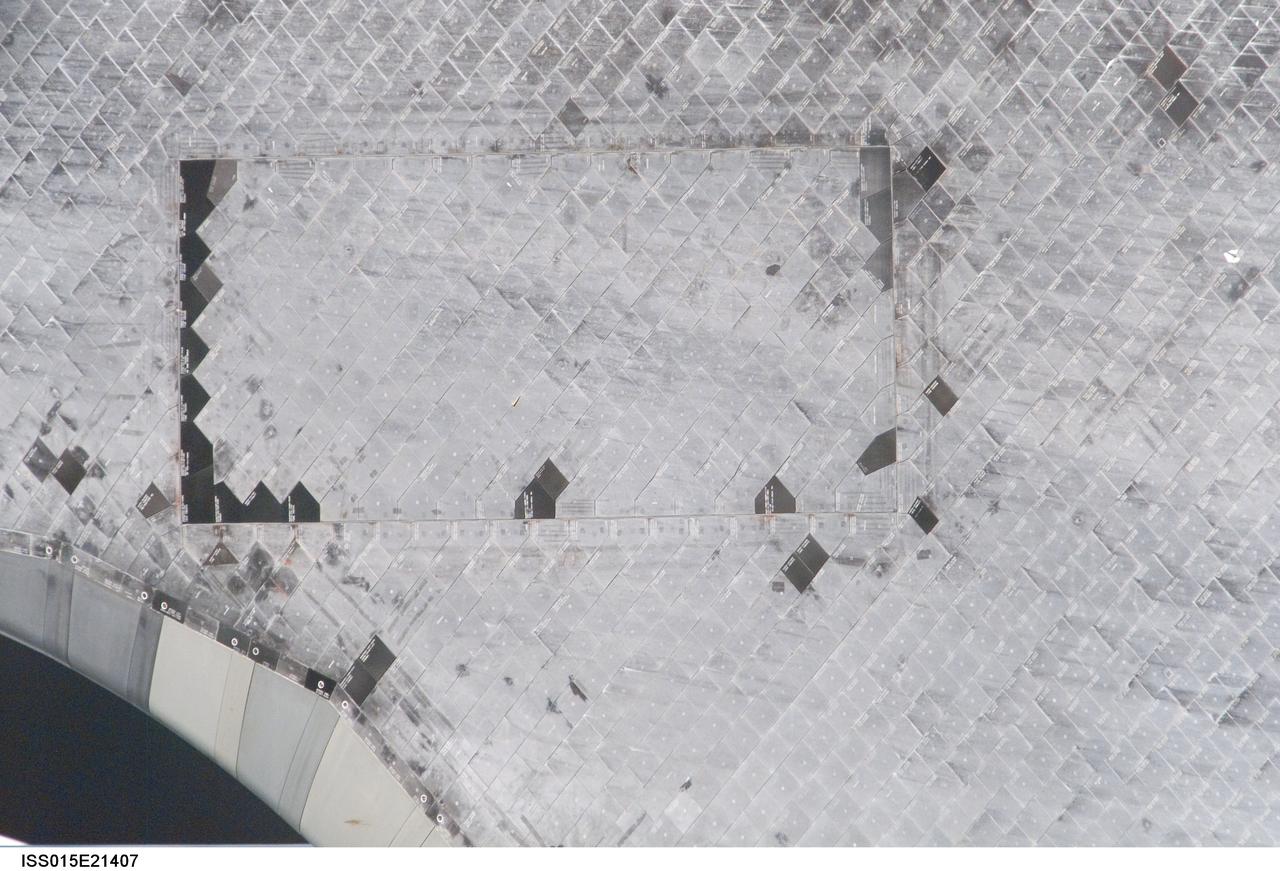
ISS015-E-21407 (10 Aug. 2007) --- This photo of the underside of the Space Shuttle Endeavour was taken from the International Space Station during a back flip and careful survey by crewmembers onboard the orbital outpost. After ground studies, mission managers suspect debris came off Endeavour's external fuel tank one minute after liftoff on Wednesday and struck tiles on the shuttle's underside, near the right main landing gear door.
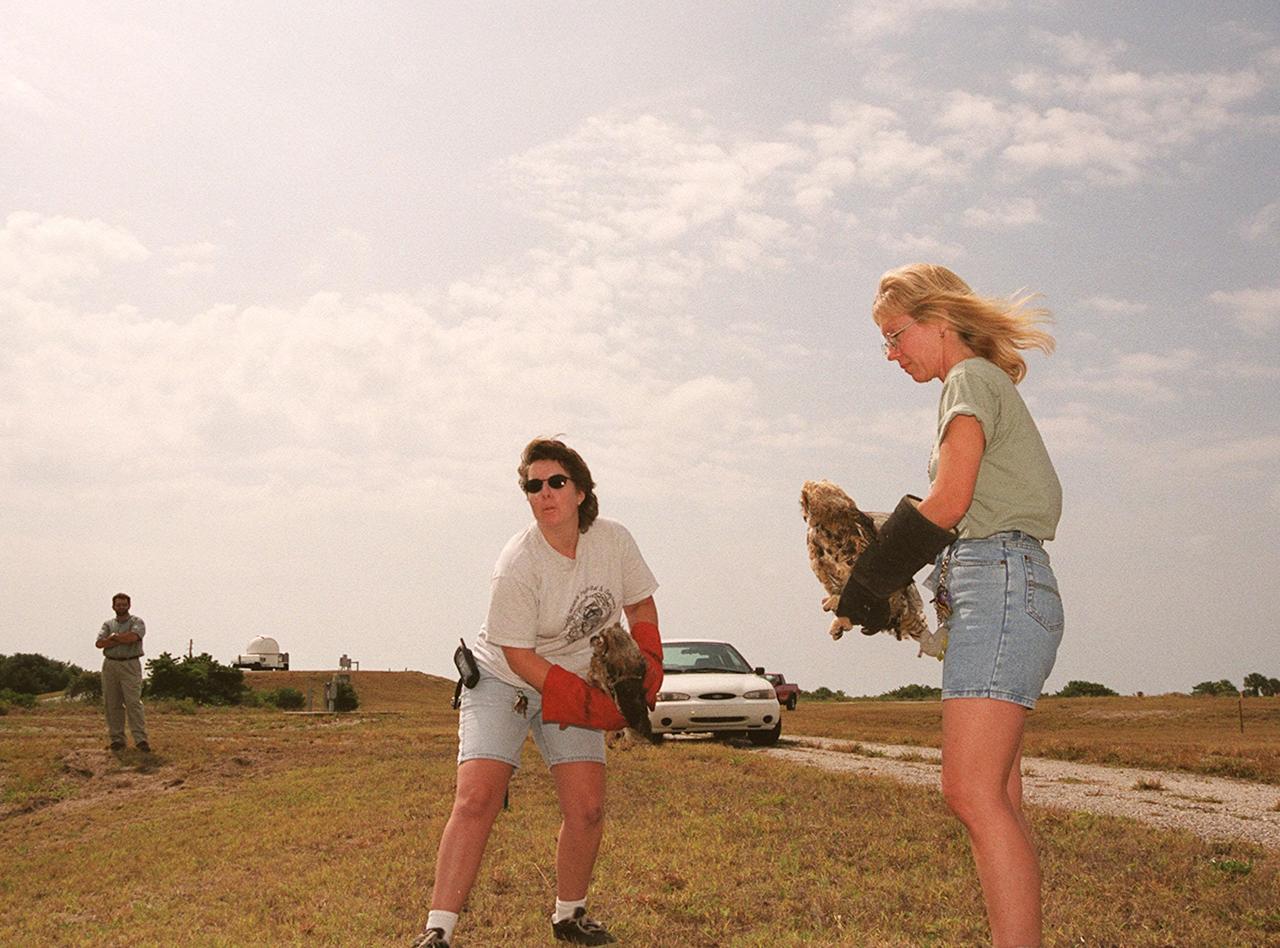
Eileen Olejarski (left), manager of Florida Wildlife Hospital, and Susan Small, director of the hospital, get ready to release two great horned owls at Cape Canaveral Air Force Station, Complex 25/29. The owls were found in June on the floor of CCAFS Hangar G, where their nest was located. They were treated at a local veterinary hospital and then taken to the Florida Wildlife Hospital in Melbourne for care and rehabilitation before release
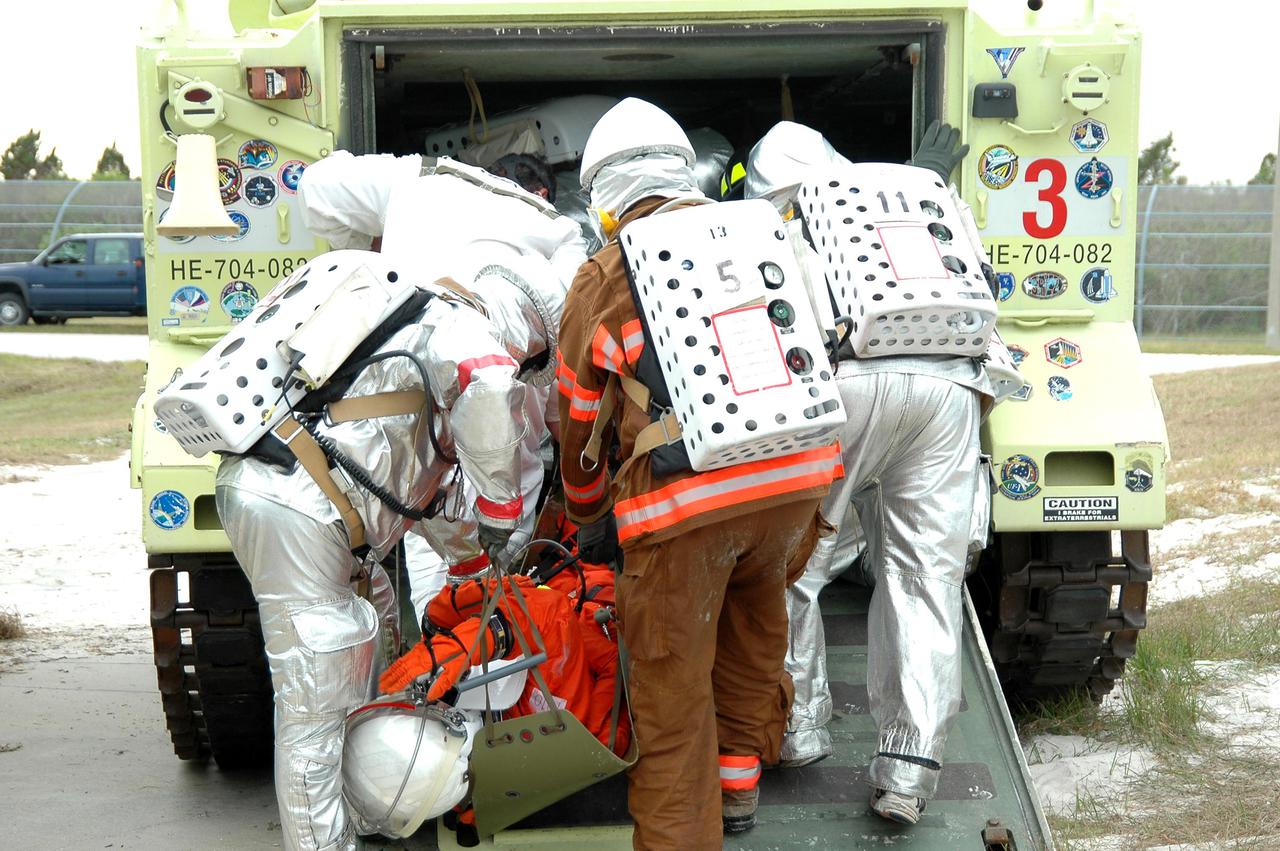
KENNEDY SPACE CENTER, FLA. - During a simulated launch countdown_emergency simulation on Launch Pad 39A, the rescue team carries “injured” astronaut-suited workers into an M-113 armored personnel carrier for transport away from the pad. The four-hour exercise simulated normal launch countdown operations, with the added challenge of a fictitious event causing an evacuation of the vehicle and launch pad. It tested the team’s rescue approaches on the Fixed Service Structure, slidewire basket evacuation, triage care and transportation of injured personnel to hospitals, as well as communications and coordination.
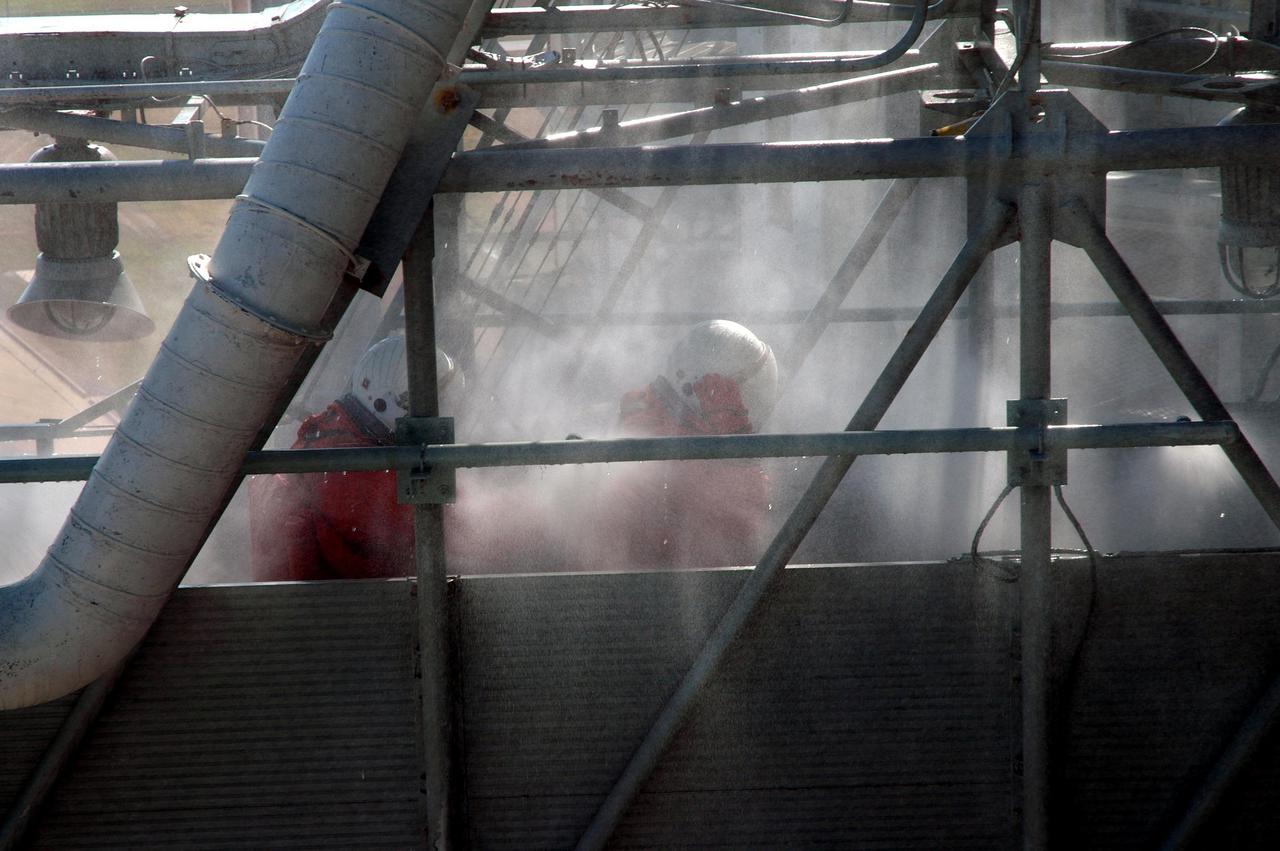
KENNEDY SPACE CENTER, FLA. - On Launch Pad 39A, astronaut-suited workers take part in an emergency egress scenario. The four-hour exercise simulated normal launch countdown operations, with the added challenge of a fictitious event causing an evacuation of the vehicle and launch pad. It tested the team’s rescue approaches on the Fixed Service Structure, slidewire basket evacuation, triage care and transportation of injured personnel to hospitals, as well as communications and coordination.
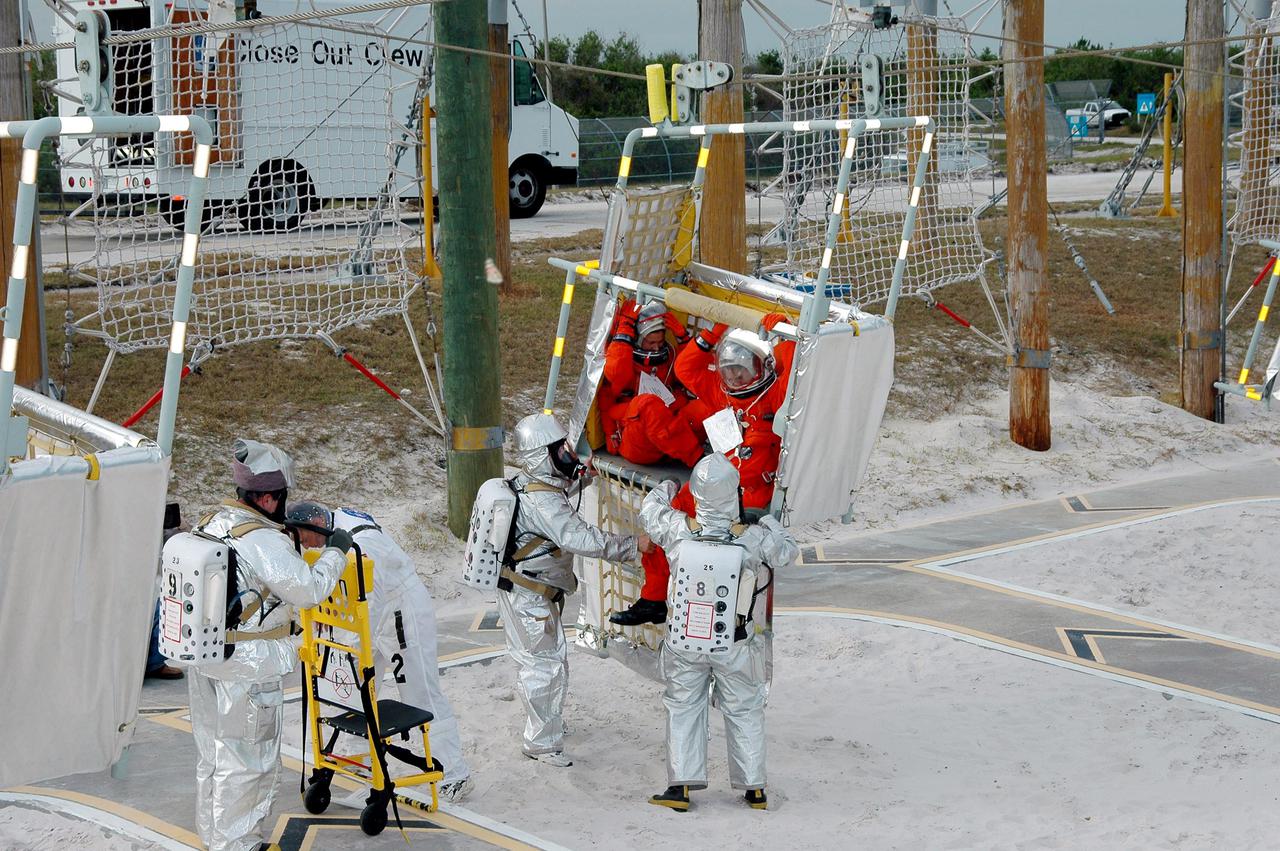
KENNEDY SPACE CENTER, FLA. - On Launch Pad 39A, rescue team members and astronaut-suited workers exit a slidewire basket during an emergency egress scenario. The four-hour exercise simulated normal launch countdown operations, with the added challenge of a fictitious event causing an evacuation of the vehicle and launch pad. It tested the team’s rescue approaches on the Fixed Service Structure, slidewire basket evacuation, triage care and transportation of injured personnel to hospitals, as well as communications and coordination.
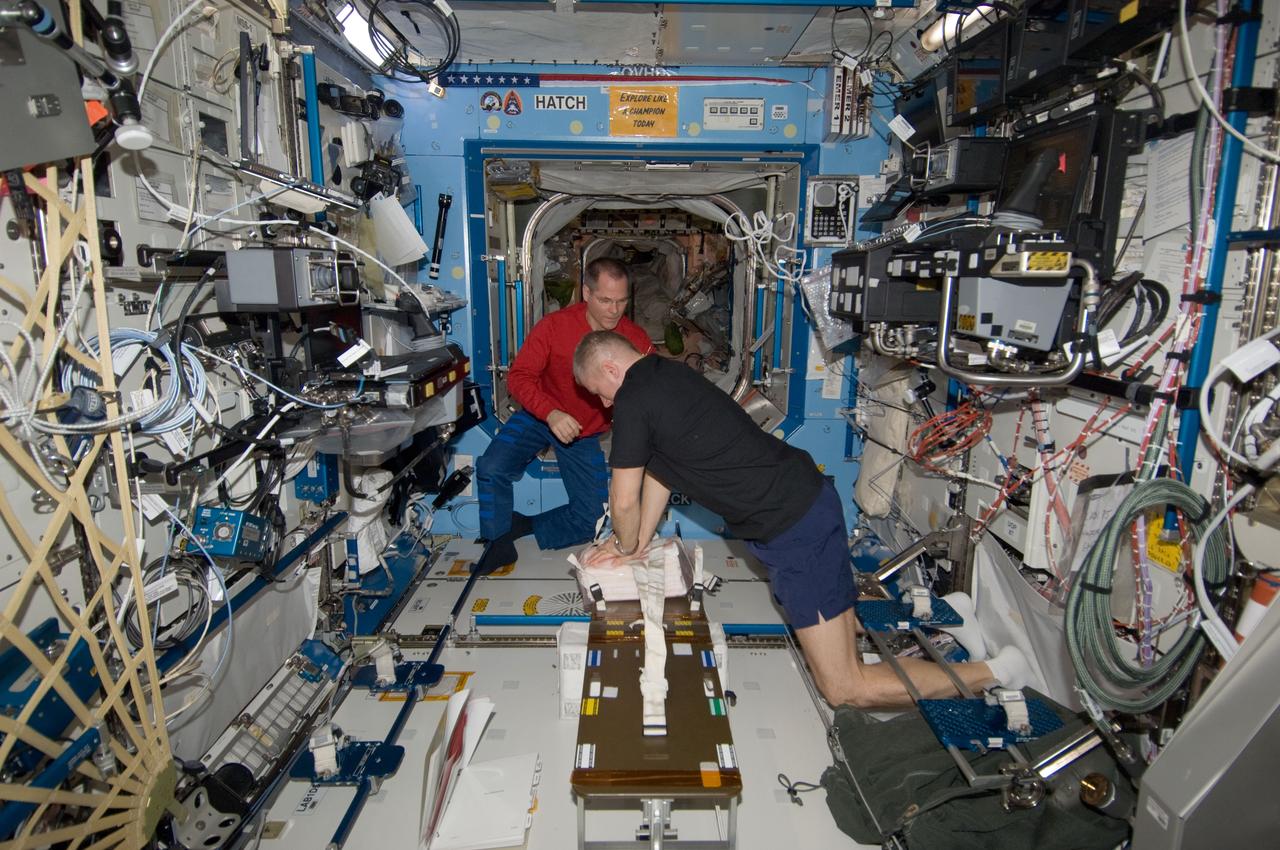
ISS034-E-005268 (26 Nov. 2012) --- NASA astronaut Kevin Ford (background), Expedition 34 commander; and Russian cosmonaut Oleg Novitskiy, flight engineer, participate in a Crew Health Care System (CHeCS) medical contingency drill in the Destiny laboratory of the International Space Station. This drill gives crew members the opportunity to work as a team in resolving a simulated medical emergency onboard the space station.
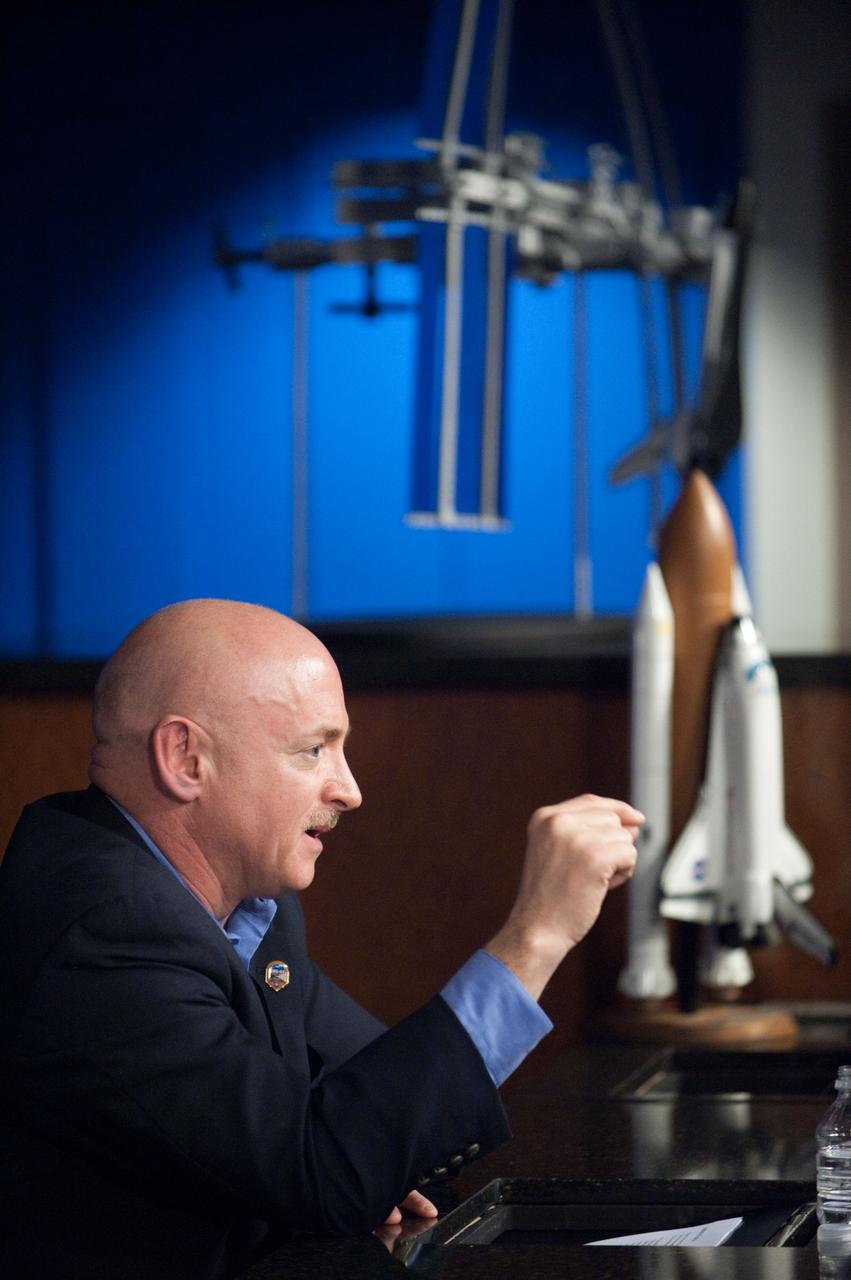
JSC2011-E-015244 (4 Feb. 2011) --- NASA astronaut Mark Kelly, STS-134 commander, speaks to reporters during a news conference at NASA's Johnson Space Center. The briefing was held to discuss Kelly resuming training as the STS-134 shuttle mission commander. With the exception of some proficiency training, Kelly has been on personal leave since Jan. 8 to care for his wife, congresswoman Gabrielle Giffords, who was critically wounded in a Tucson, Ariz. shooting. Photo credit: NASA or National Aeronautics and Space Administration
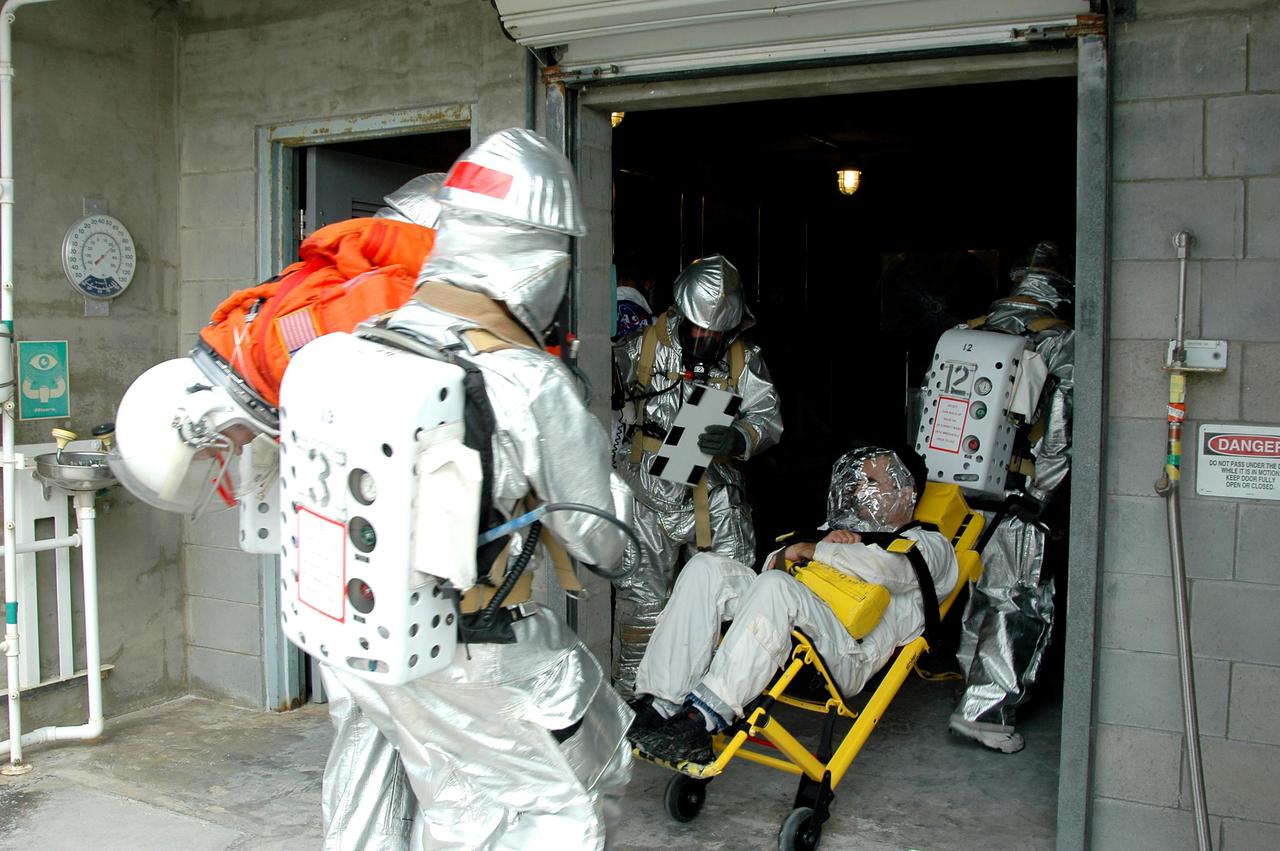
KENNEDY SPACE CENTER, FLA. - During a simulated launch countdown_emergency simulation on Launch Pad 39A, the rescue team takes “injured” astronaut-suited workers into the pad bunker. The four-hour exercise simulated normal launch countdown operations, with the added challenge of a fictitious event causing an evacuation of the vehicle and launch pad. It tested the team’s rescue approaches on the Fixed Service Structure, slidewire basket evacuation, triage care and transportation of injured personnel to hospitals, as well as communications and coordination.
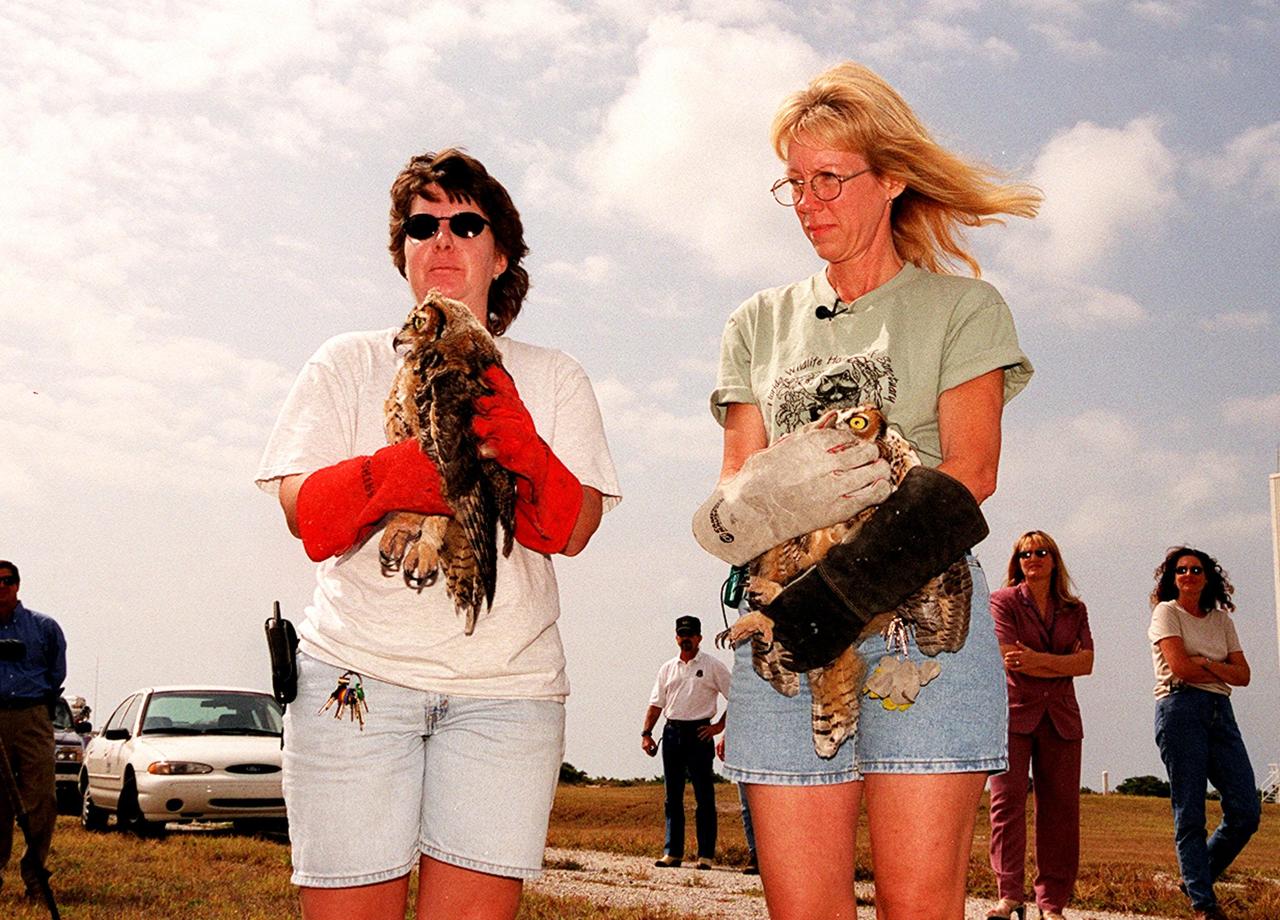
Eileen Olejarski (left), manager of Florida Wildlife Hospital, and Susan Small, director of the hospital, get ready to release two great horned owls at Cape Canaveral Air Force Station, Complex 25/29. The owls were found in June on the floor of CCAFS Hangar G, where their nest was located. They were treated at a local veterinary hospital and then taken to the Florida Wildlife Hospital in Melbourne for care and rehabilitation before release
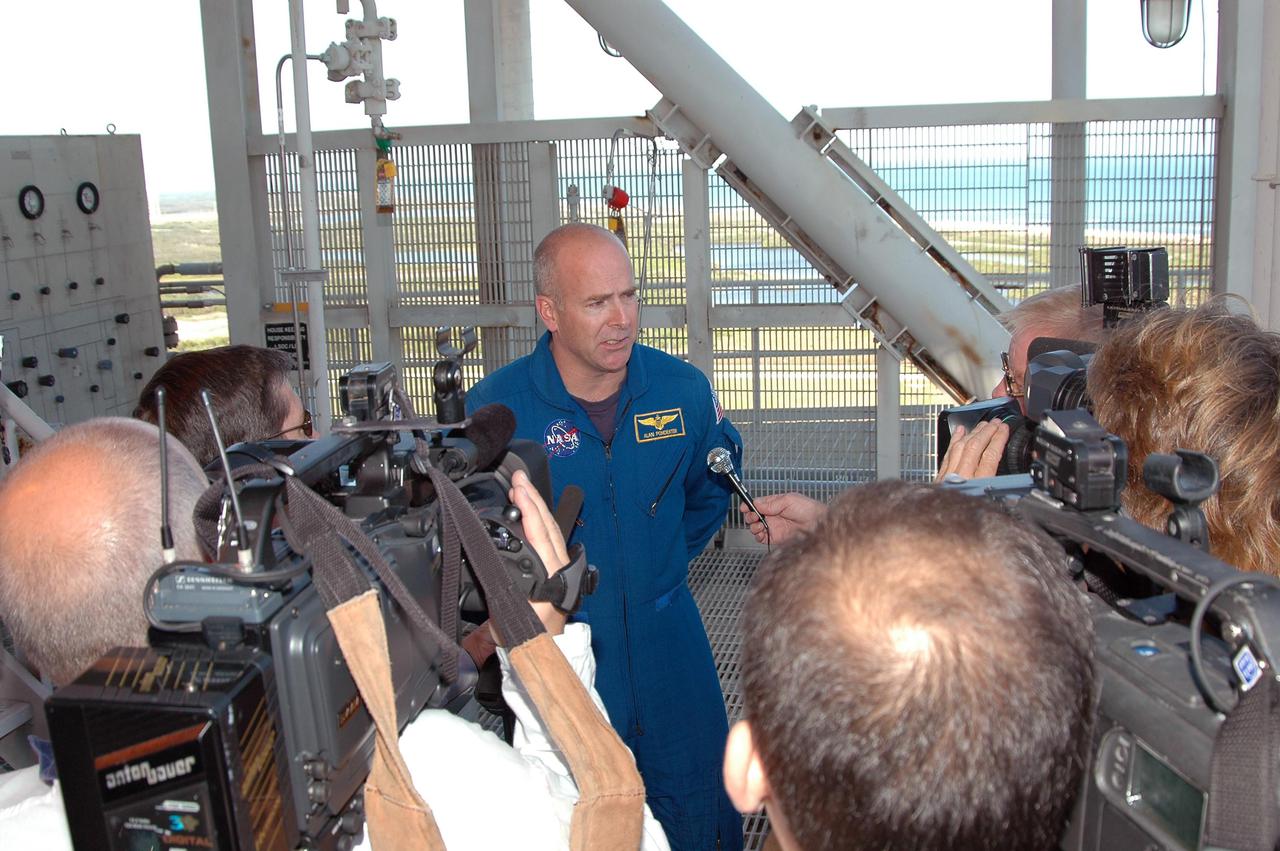
KENNEDY SPACE CENTER, FLA. - Prior to a simulated launch countdown_emergency simulation on Launch Pad 39A, the media photograph and interview astronaut Alan G. Poindexter. Pad team members participated in the four-hour exercise simulating normal launch countdown operations, with the added challenge of a fictitious event causing an evacuation of the vehicle and launch pad. The simulation tested the team’s rescue approaches on the Fixed Service Structure, slidewire basket evacuation, triage care and transportation of injured personnel to hospitals, as well as communications and coordination.
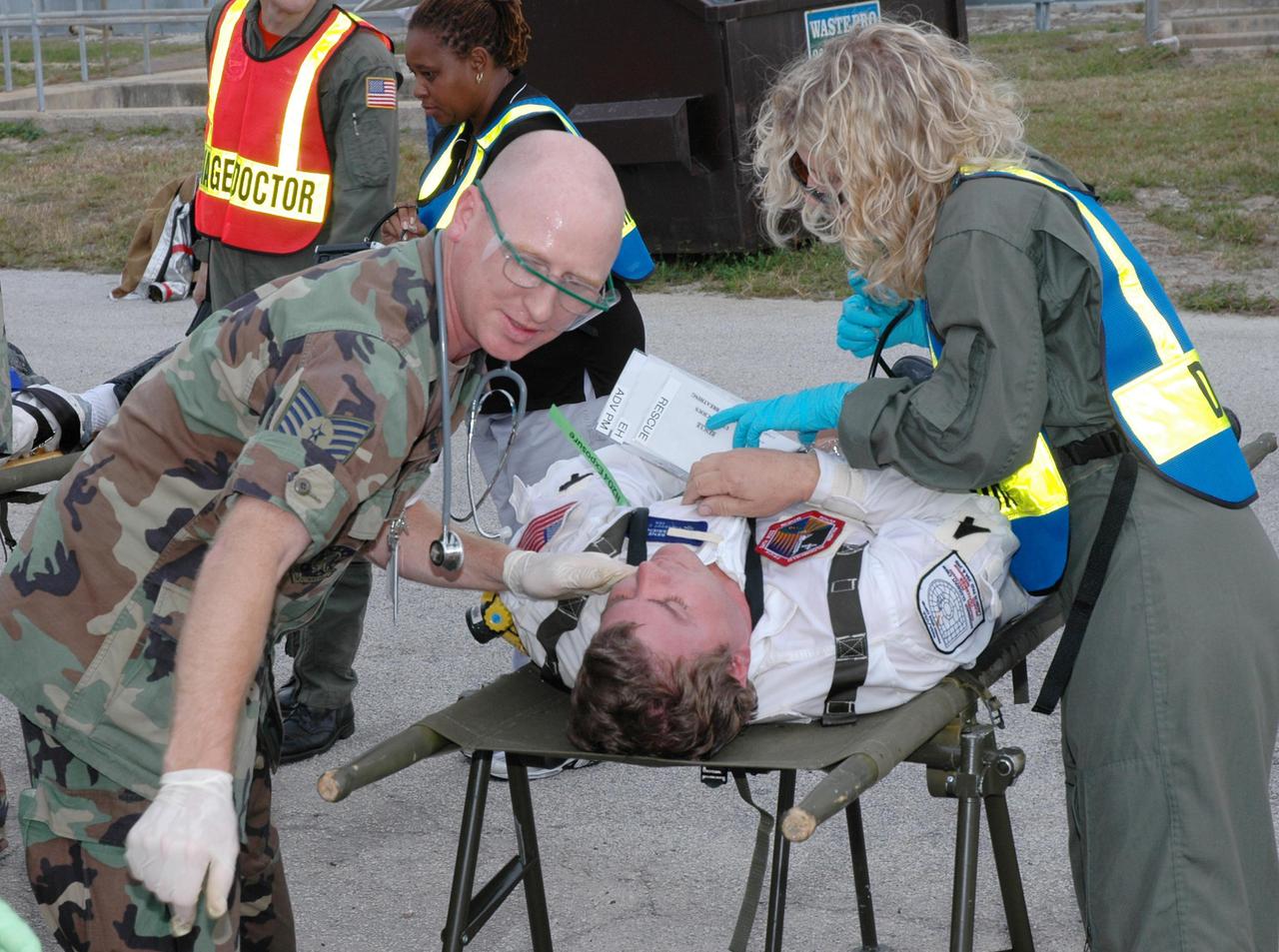
KENNEDY SPACE CENTER, FLA. - During a simulated launch countdown_emergency simulation on Launch Pad 39A, the rescue team performs triage on “injured” astronaut-suited workers. Pad team members participated in the four-hour exercise simulating normal launch countdown operations, with the added challenge of a fictitious event causing an evacuation of the vehicle and launch pad. The simulation tested the team’s rescue approaches on the Fixed Service Structure, slidewire basket evacuation, triage care and transportation of injured personnel to hospitals, as well as communications and coordination.
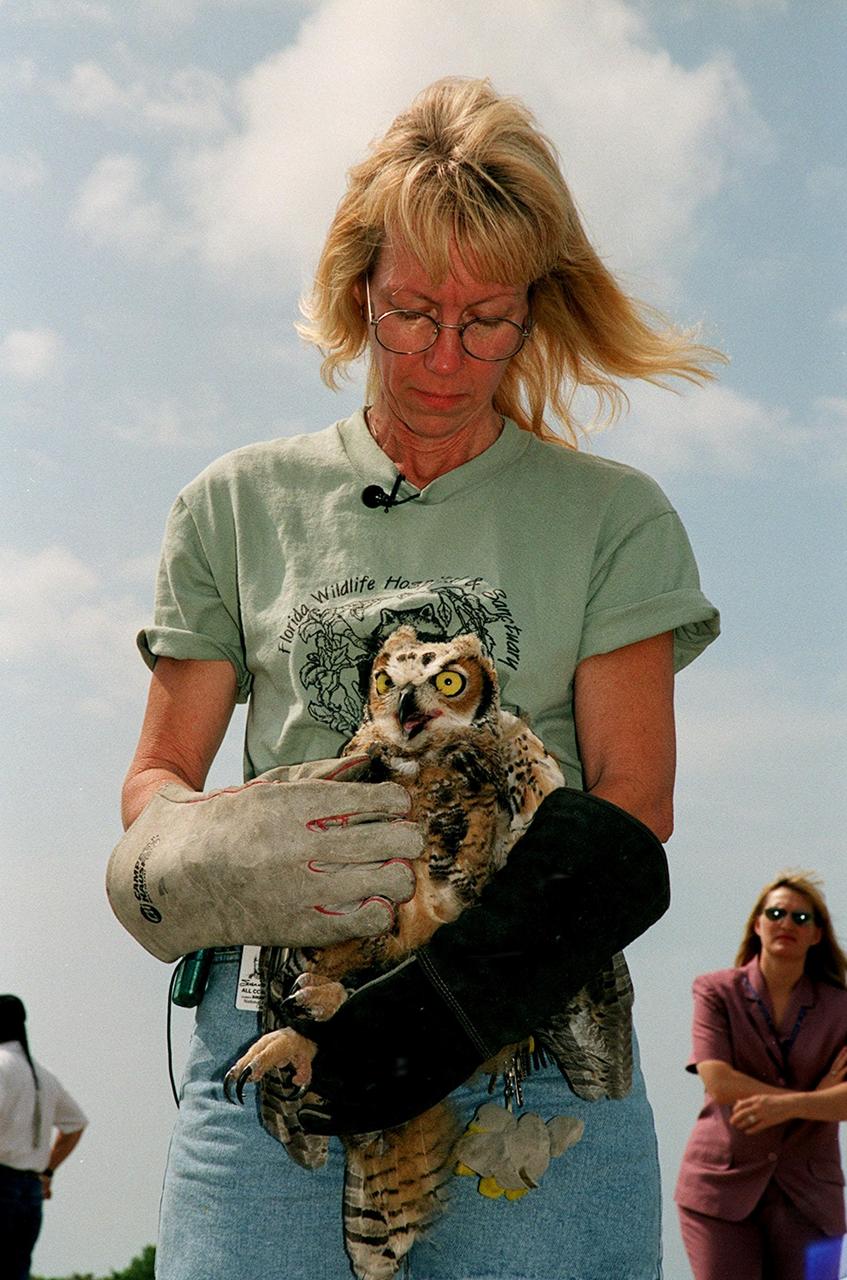
Susan Small, director of the Florida Wildlife Hospital, holds a great horned owl before releasing it at Cape Canaveral Air Force Station, Complex 25/29. The owl is one of two found in June on the floor of CCAFS Hangar G, where their nest was located. They were treated at a local veterinary hospital and then taken to the Florida Wildlife Hospital in Melbourne for care and rehabilitation before release
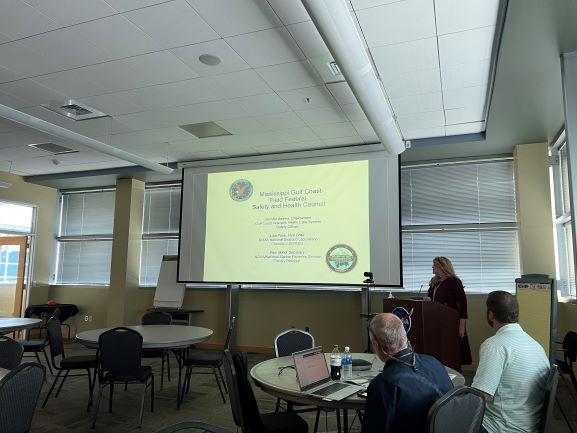
Jennifer Adams, representing the Gulf Coast Veterans Health Care System, speaks during the Mississippi/Louisiana Gulf Coast Voluntary Protection Program (VPP) Local Area Council Meeting on Oct. 29, hosted by NASA’s Stennis Space Center at INFINITY Science Center. The regional meeting focused on how workplace safety team members can achieve and maintain consistent and effective safety and health programs for their current and potential OSHA VPP worksites across south Mississippi and Louisiana.
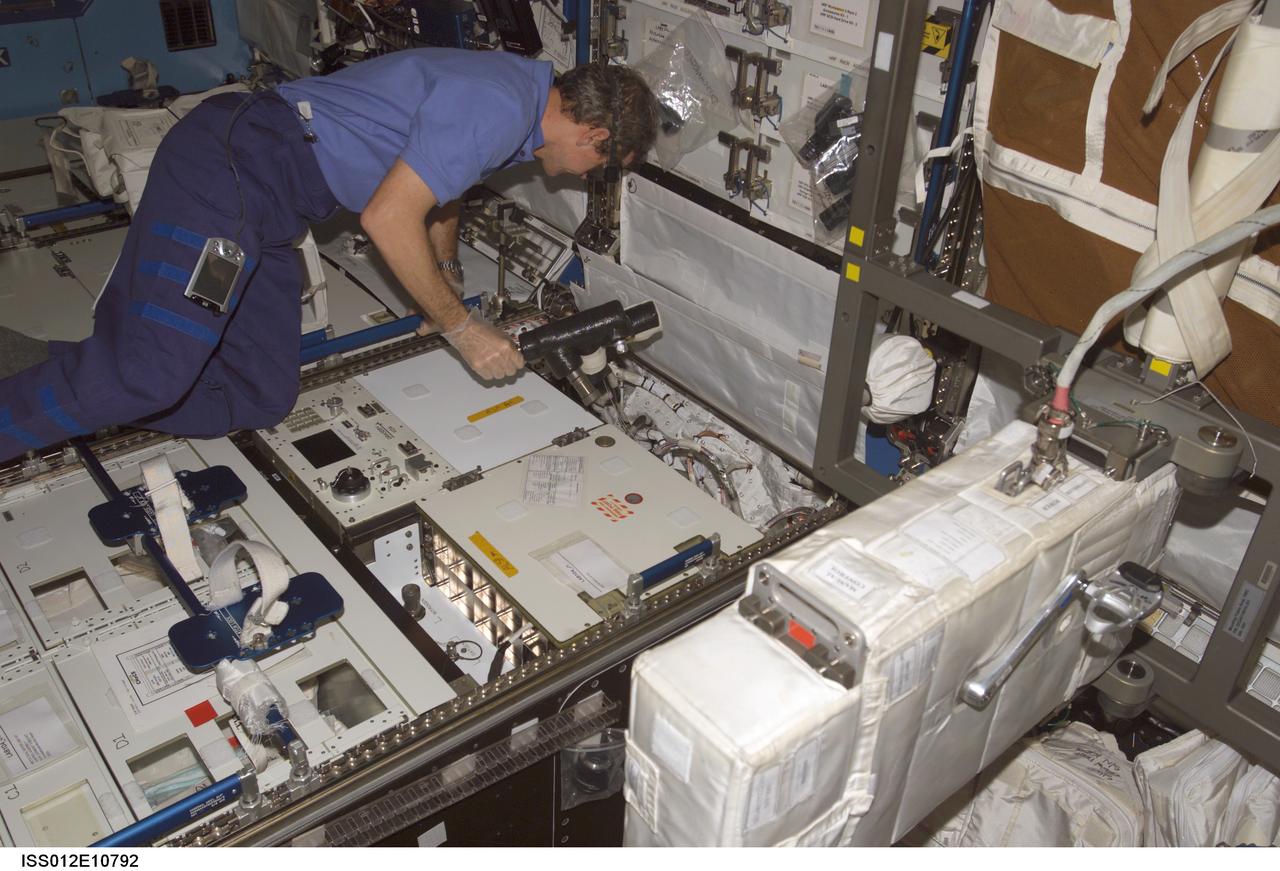
ISS012-E-10792 (9 December 2005) --- Astronaut William S. (Bill) McArthur Jr., Expedition 12 commander and NASA space station science officer, prepares to remove the Avionics Air Assembly (AAA) from the Crew Health Care System (CHeCS) rack during in-flight maintenance (IFM) in the Destiny laboratory of the International Space Station.
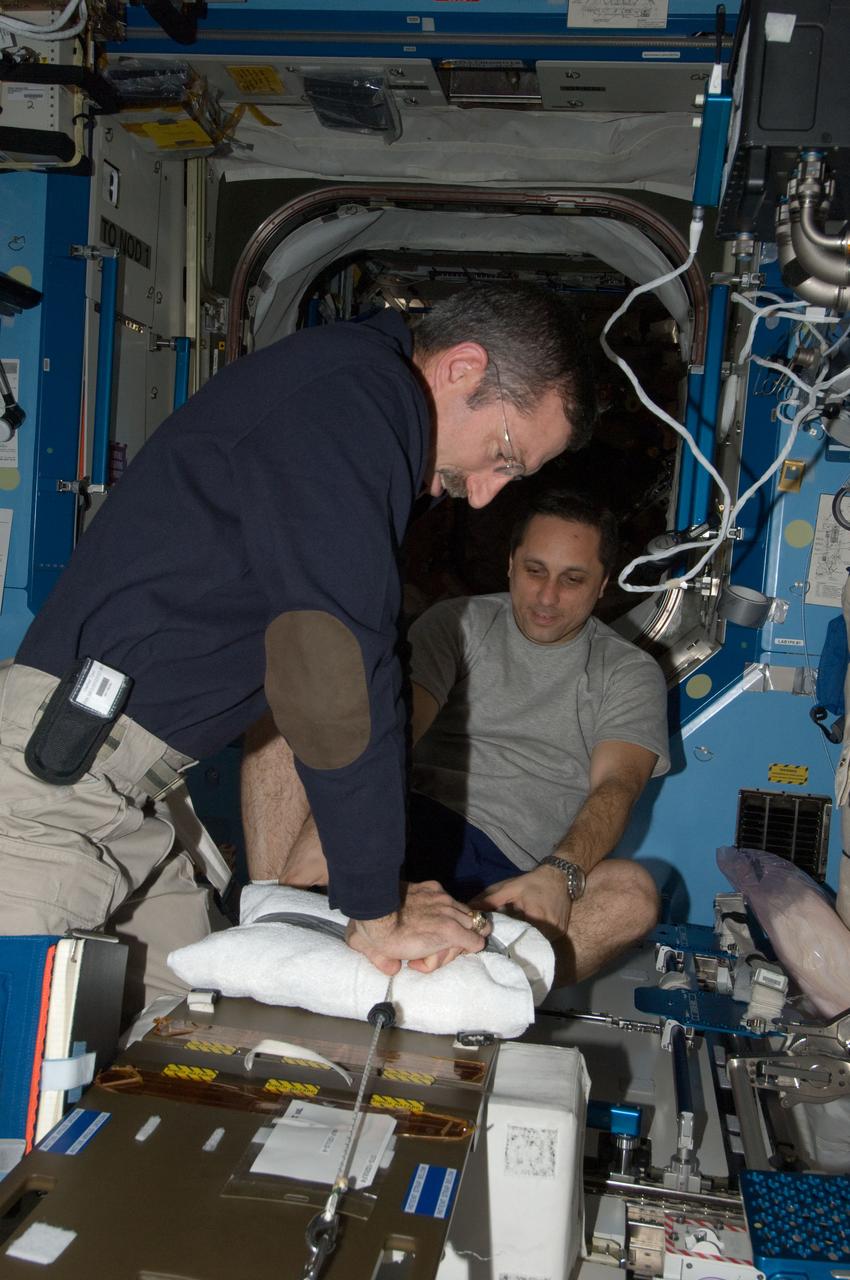
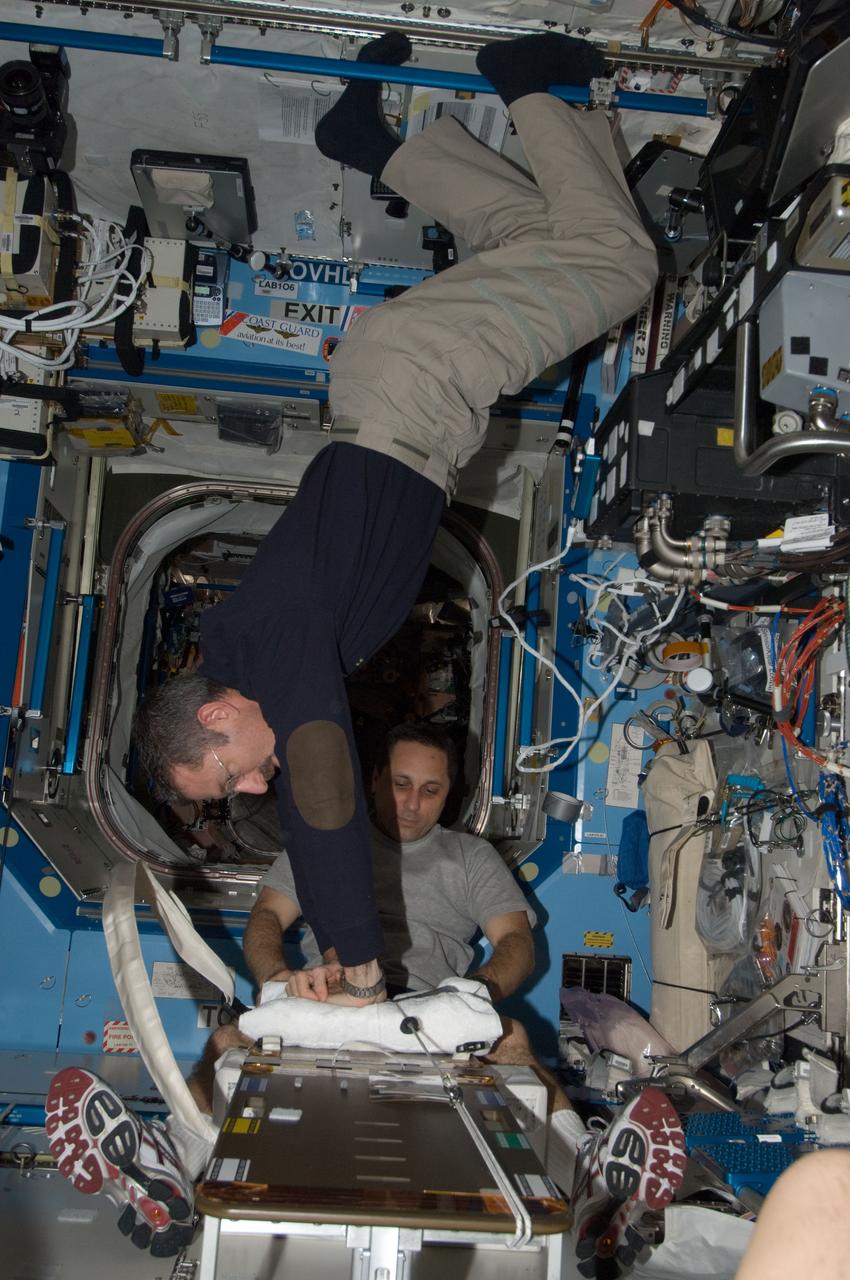
ISS030-E-012609 (16 Dec. 2011) --- NASA astronaut Dan Burbank (foreground), Expedition 30 commander, and Russian cosmonaut Anton Shkaplerov, flight engineer, participate in a Crew Health Care System (CHeCS) medical contingency drill in the Destiny laboratory of the International Space Station. This drill gives crew members the opportunity to work as a team in resolving a simulated medical emergency onboard the space station.
ISS030-E-012613 (16 Dec. 2011) --- NASA astronaut Dan Burbank (foreground), Expedition 30 commander, and Russian cosmonaut Anton Shkaplerov, flight engineer, participate in a Crew Health Care System (CHeCS) medical contingency drill in the Destiny laboratory of the International Space Station. This drill gives crew members the opportunity to work as a team in resolving a simulated medical emergency onboard the space station.
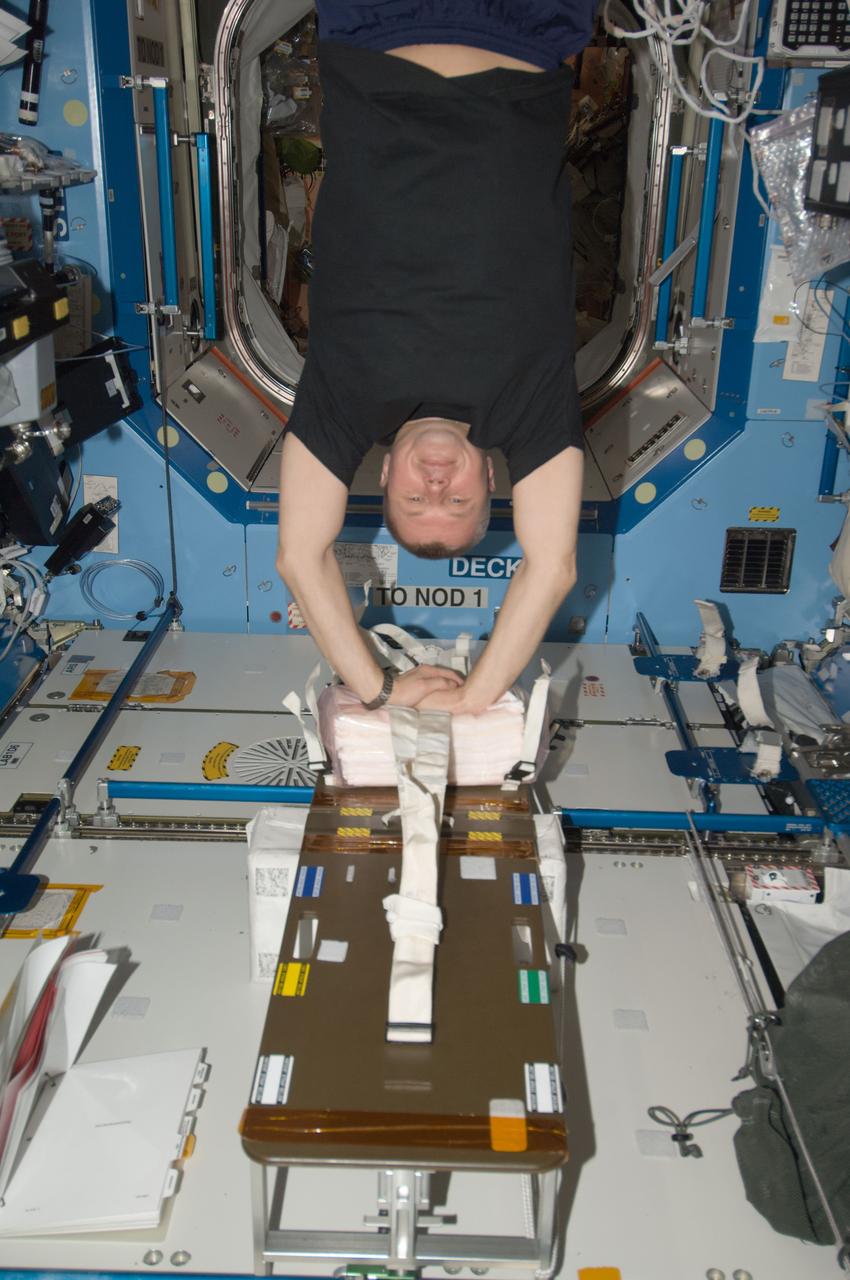
ISS034-E-005266 (26 Nov. 2012) --- Russian cosmonaut Oleg Novitskiy, Expedition 34 flight engineer, participates in a Crew Health Care System (CHeCS) medical contingency drill in the Destiny laboratory of the International Space Station. This drill gives crew members the opportunity to work as a team in resolving a simulated medical emergency onboard the space station.
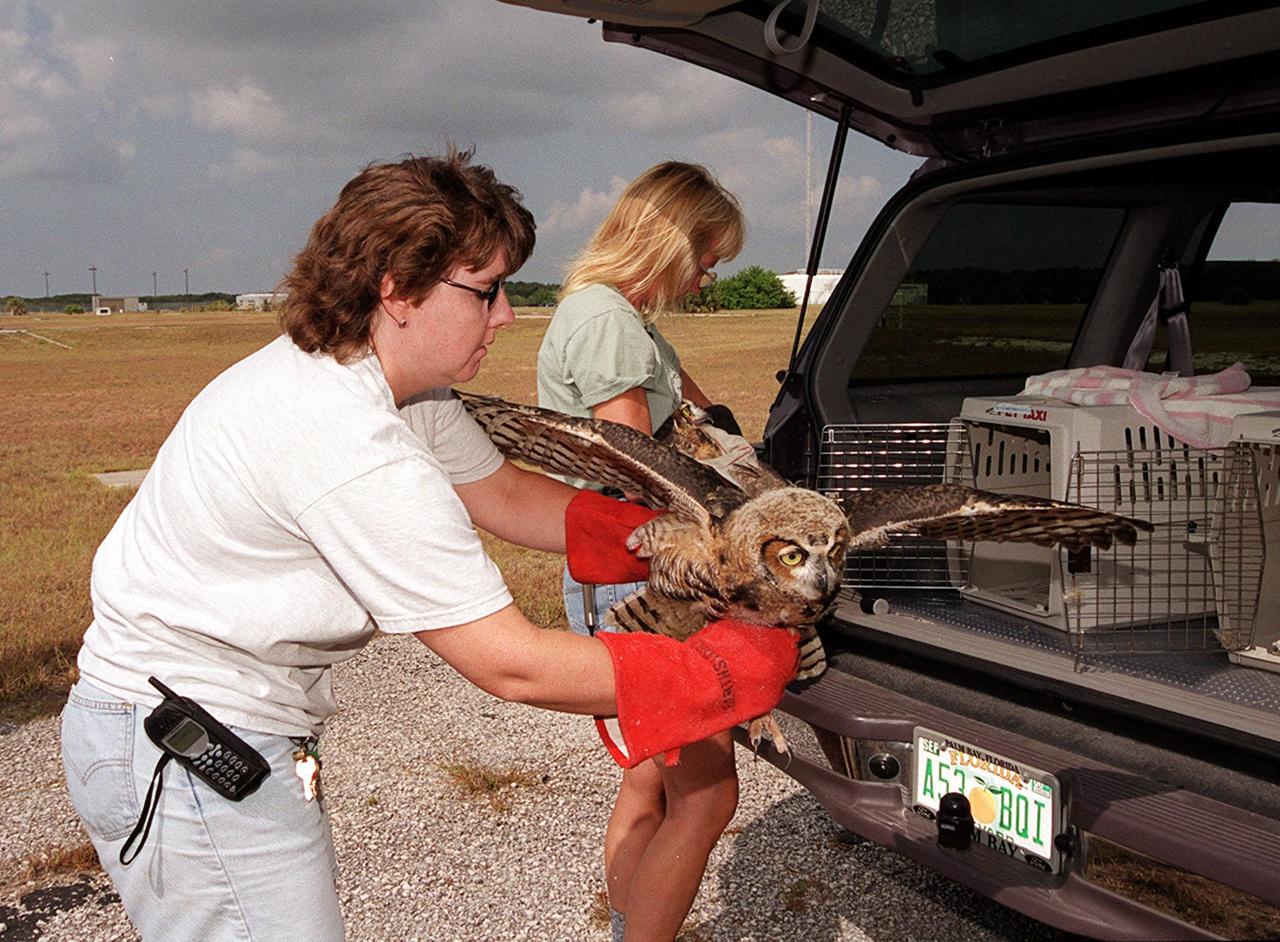
Eileen Olejarski (left), manager of Florida Wildlife Hospital, and Susan Small, director of the hospital, remove two great horned owls from the vehicle before releasing them at Cape Canaveral Air Force Station, Complex 25/29. The owls were found in June on the floor of CCAFS Hangar G, where their nest was located. They were treated at a local veterinary hospital and then taken to the Florida Wildlife Hospital in Melbourne for care and rehabilitation before release.

iss070e005393 (12/182023) --- NASA astronaut Jasmin Moghbeli is shown performing steps to extract and amplify DNA from a water sample for later sequencing. The EHS BioMole Facility demonstrates technology for monitoring the microbial environment onboard a spacecraft. As part of a Crew Health Care System (CHeCS), this technology could support missions such as Gateway and Mars transit that do not have the capability to return samples to Earth for analysis. The investigation evaluates the ability of the EHS BioMole Facility to accurately analyze potable water samples on the space station.
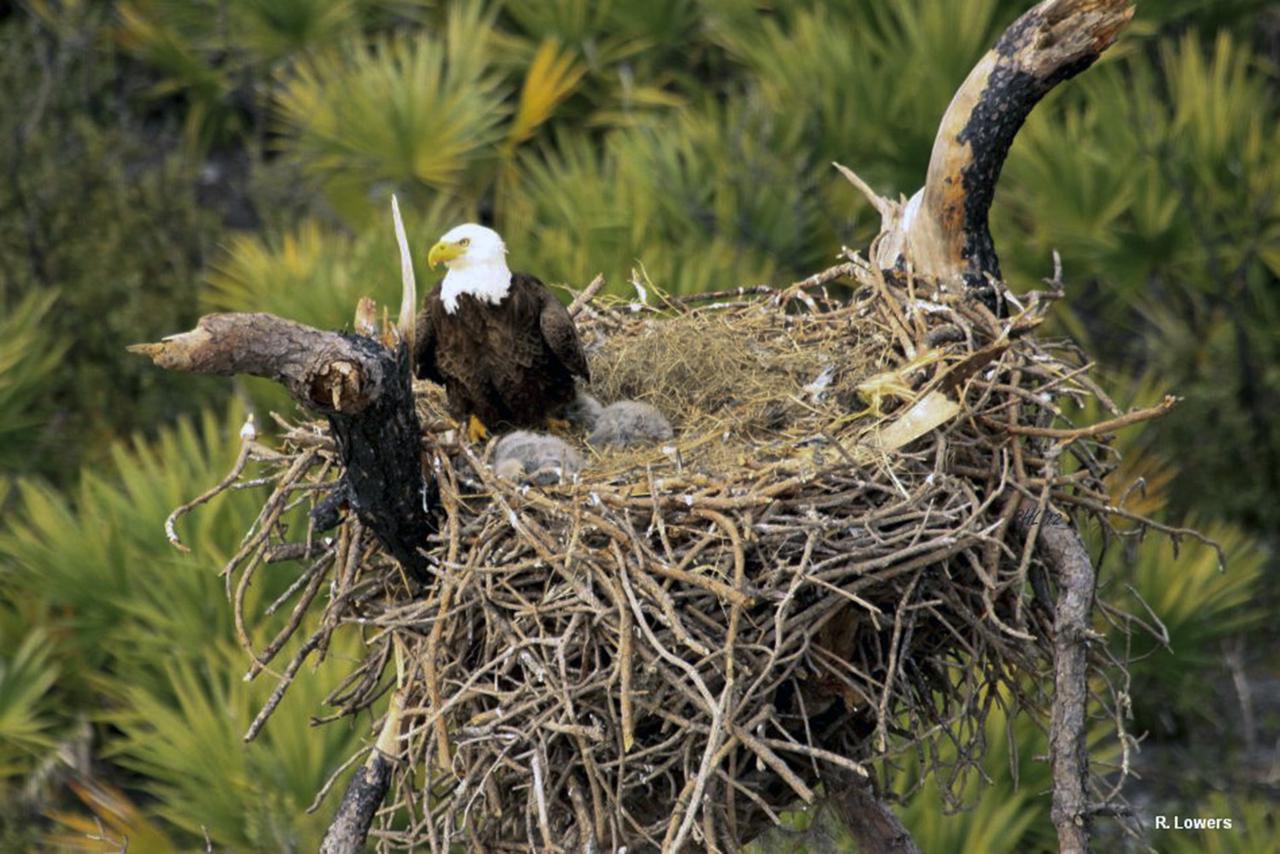
CAPE CANAVERAL, Fla. -- At the Kennedy Space Center in Florida, a bald eagle stands watch over two fledglings. The nest was in a dead, leafless pine tree, called a 'snag.' When a strong thunderstorm recently blew through NASA's Kennedy Space Center in Florida on March 24, two eagles fell to the ground along with their nest. Ecologists at the spaceport, who take great care to track the birds and protect their habitat, stepped in and rescued the eaglets. For more: http:__www.nasa.gov_centers_kennedy_about_sustainability_eagles_rescued.html Photo courtesy: InoMedic Health Applications_Russ Lowers
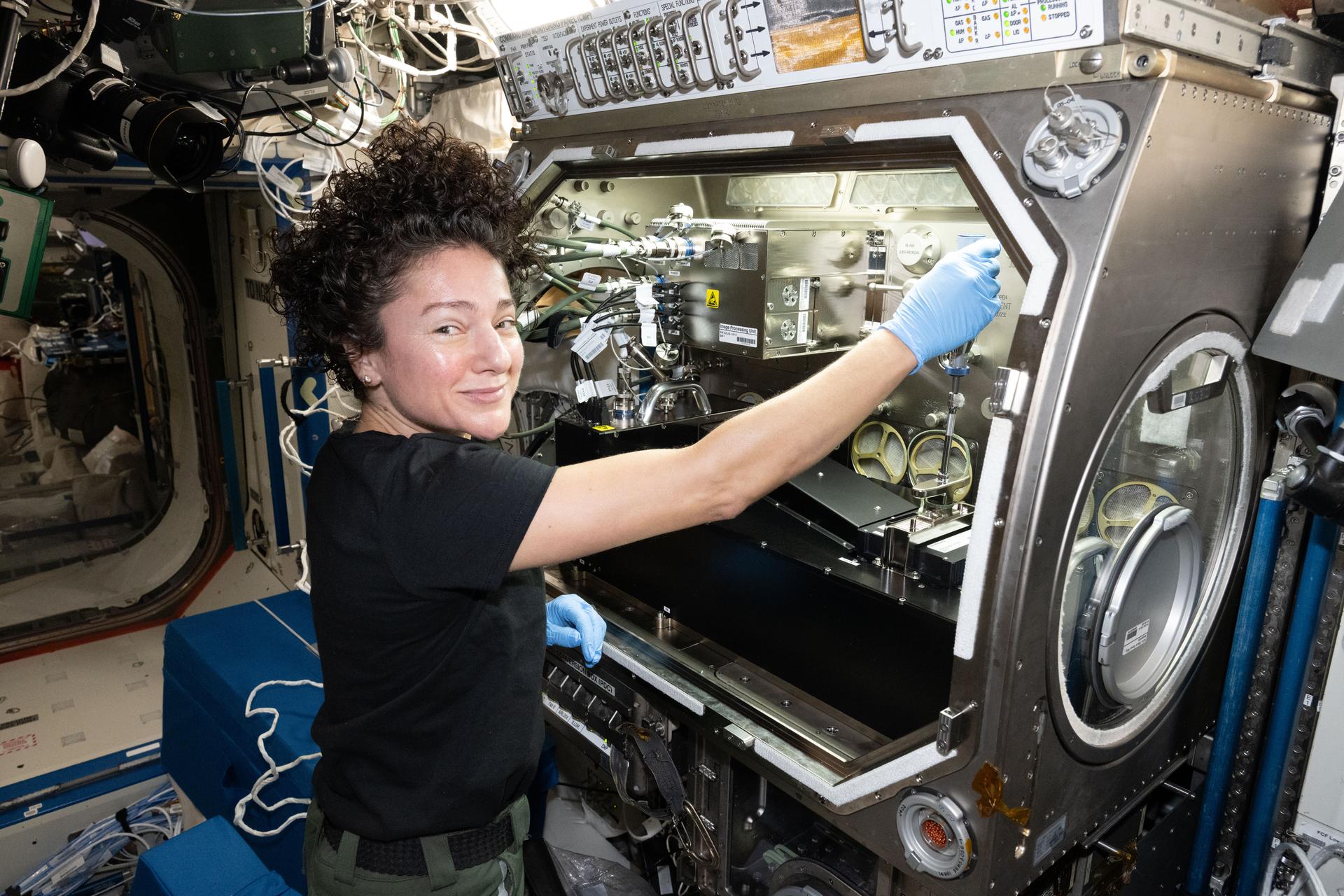
iss074e0541212 (April 29, 2026) --- NASA astronaut and Expedition 74 flight engineer Jessica Meir configures research gear inside the Destiny laboratory module's Microgravity Science Glovebox aboard the International Space Station. Meir was exploring how weightlessness affects tiny particles floating in a gelatin-like substance, known as a colloidal solid. Results may lead to advanced manufacturing techniques leading to new medicines, better food textures, and improved personal care products on Earth and in space. Credit: NASA/Jessica Meir
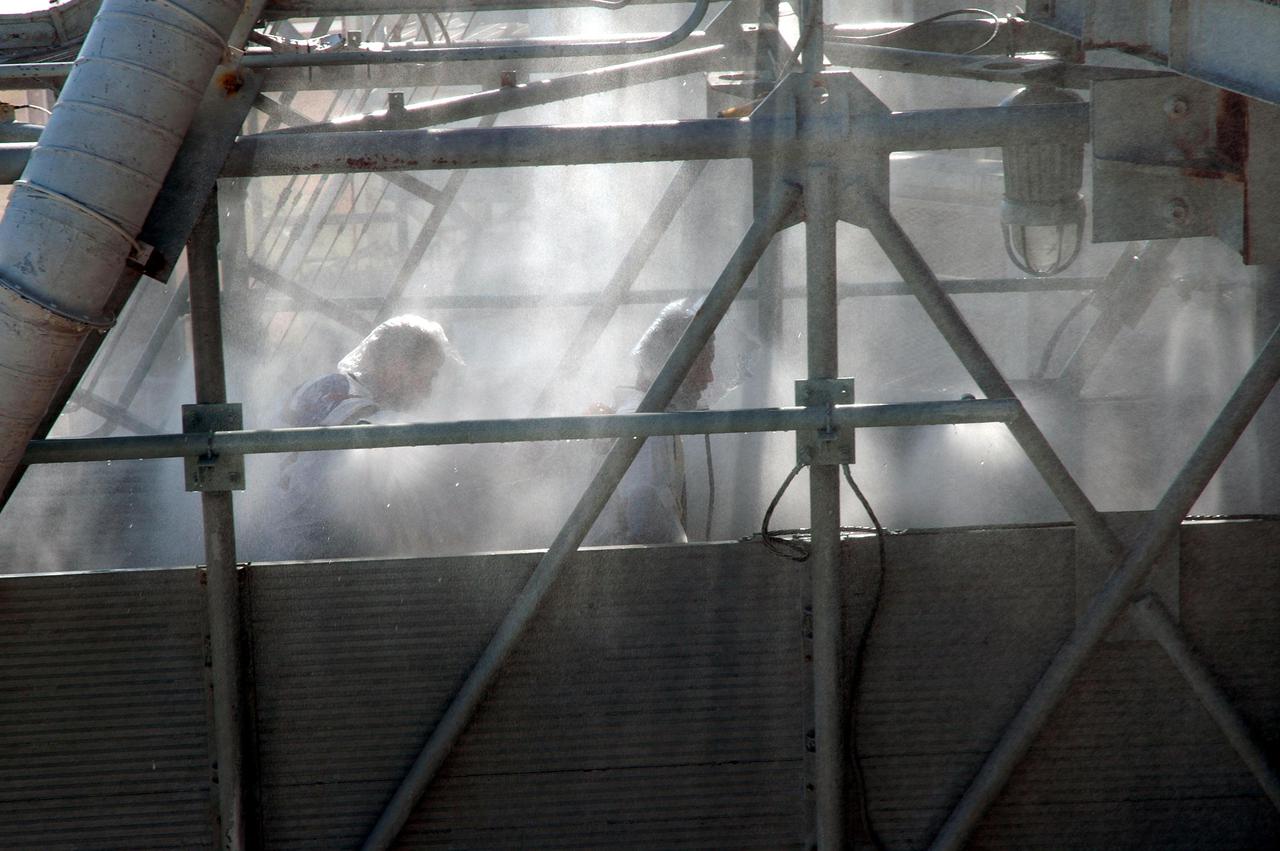
KENNEDY SPACE CENTER, FLA. - On Launch Pad 39A, astronaut-suited workers take part in an emergency egress scenario. The four-hour exercise simulated normal launch countdown operations, with the added challenge of a fictitious event causing an evacuation of the vehicle and launch pad. It tested the team’s rescue approaches on the Fixed Service Structure, slidewire basket evacuation, triage care and transportation of injured personnel to hospitals, as well as communications and coordination.
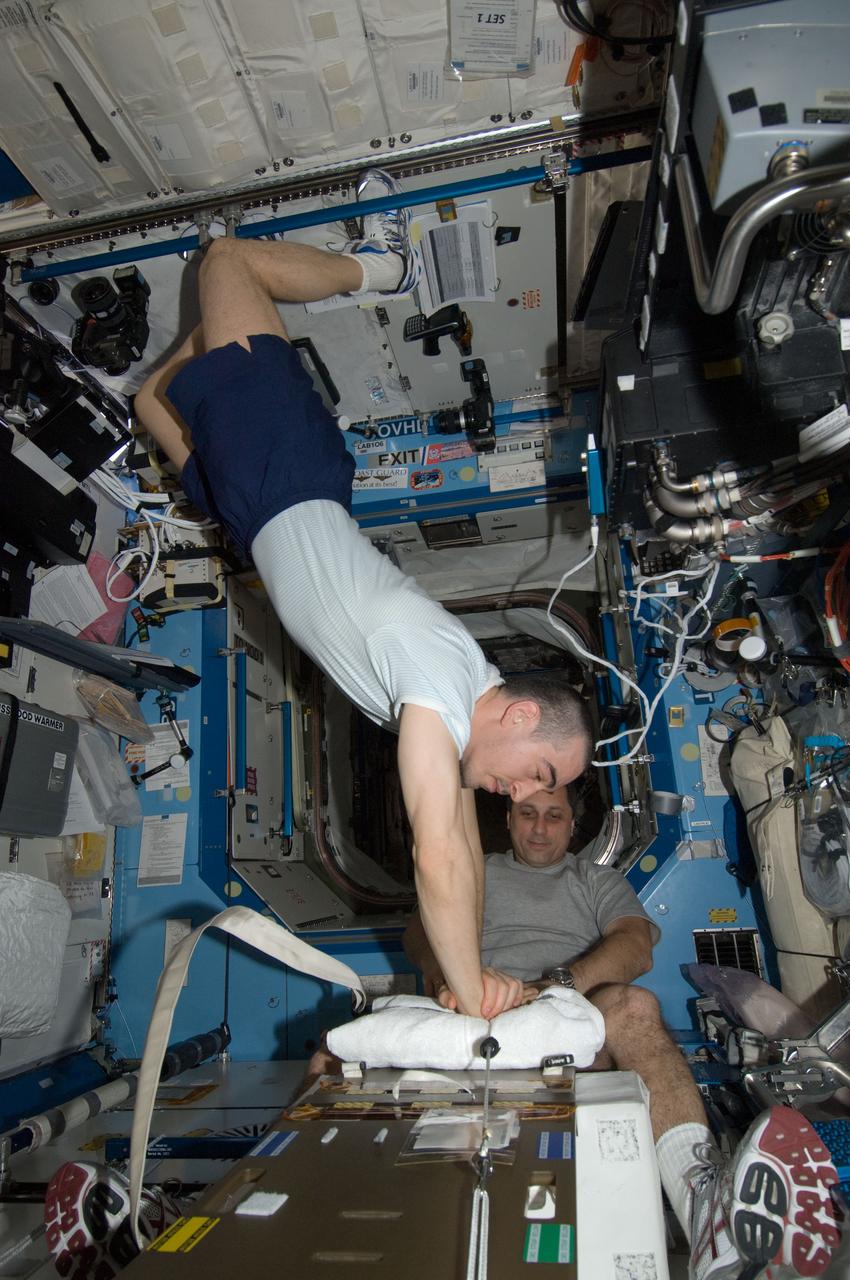
ISS030-E-012604 (16 Dec. 2011) --- Russian cosmonauts Anatoly Ivanishin (foreground) and Anton Shkaplerov, both Expedition 30 flight engineers, participate in a Crew Health Care System (CHeCS) medical contingency drill in the Destiny laboratory of the International Space Station. This drill gives crew members the opportunity to work as a team in resolving a simulated medical emergency onboard the space station.
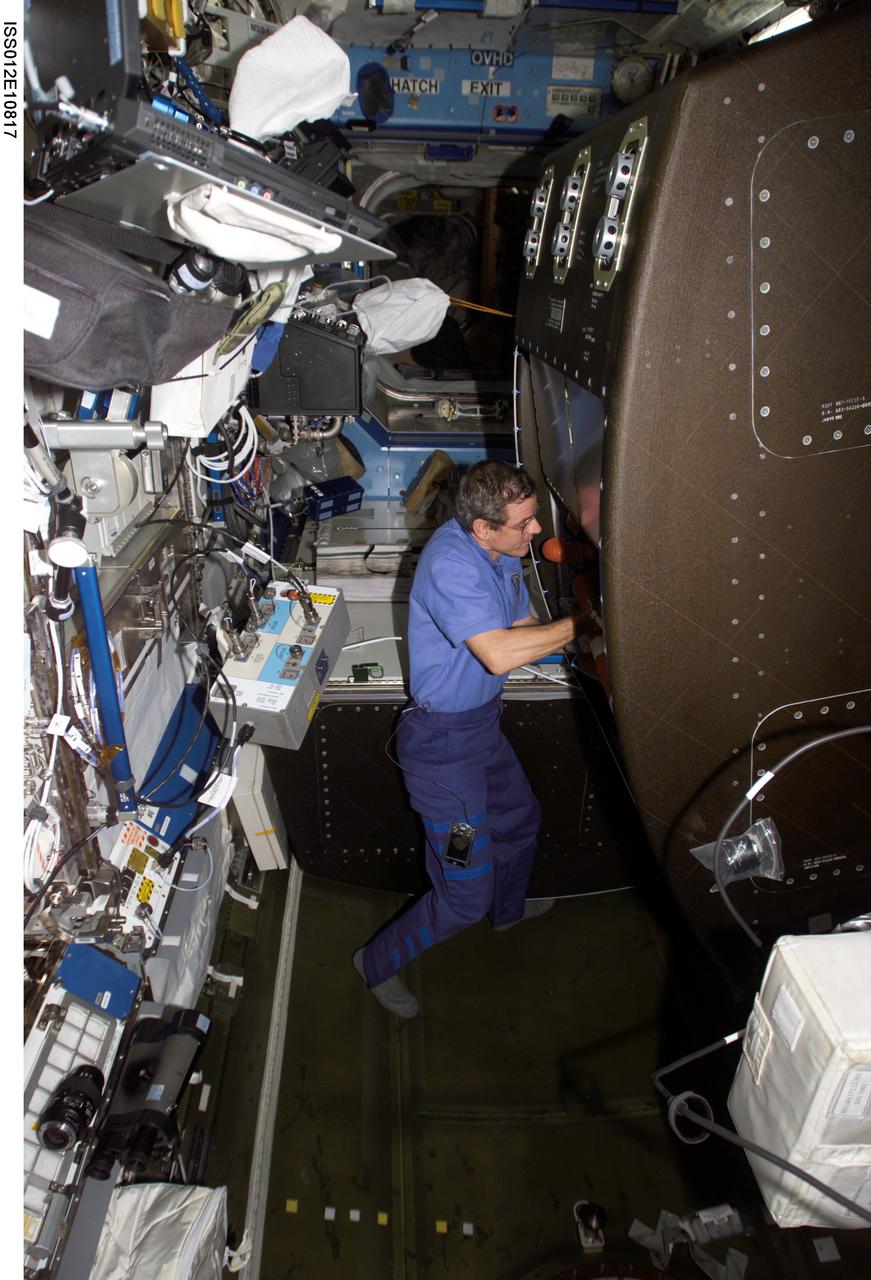
ISS012-E-10817 (9 December 2005) --- Astronaut William S. (Bill) McArthur Jr., Expedition 12 commander and NASA space station science officer, opens the back panel of the Crew Health Care System (CHeCS) rack and removes the Avionics Air Assembly (AAA) air ducts during in-flight maintenance (IFM) in the Destiny laboratory of the International Space Station.
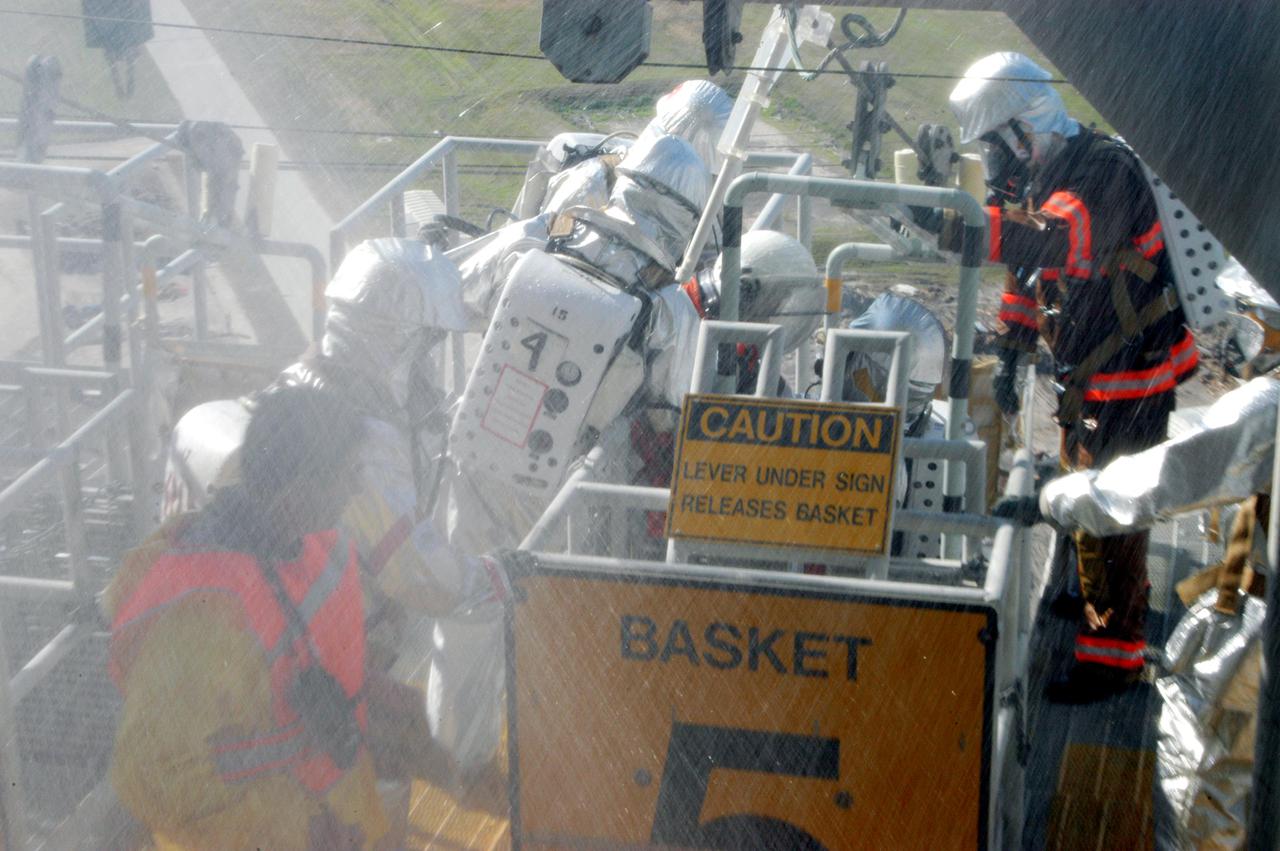
KENNEDY SPACE CENTER, FLA. - On Launch Pad 39-A, a rescue force helps co-workers as part of an emergency egress scenario. The four-hour exercise simulated normal launch countdown operations, with the added challenge of a fictitious event causing an evacuation of the vehicle and launch pad. It tested the team’s rescue approaches on the Fixed Service Structure, slidewire basket evacuation, triage care and transportation of injured personnel to hospitals, as well as communications and coordination.
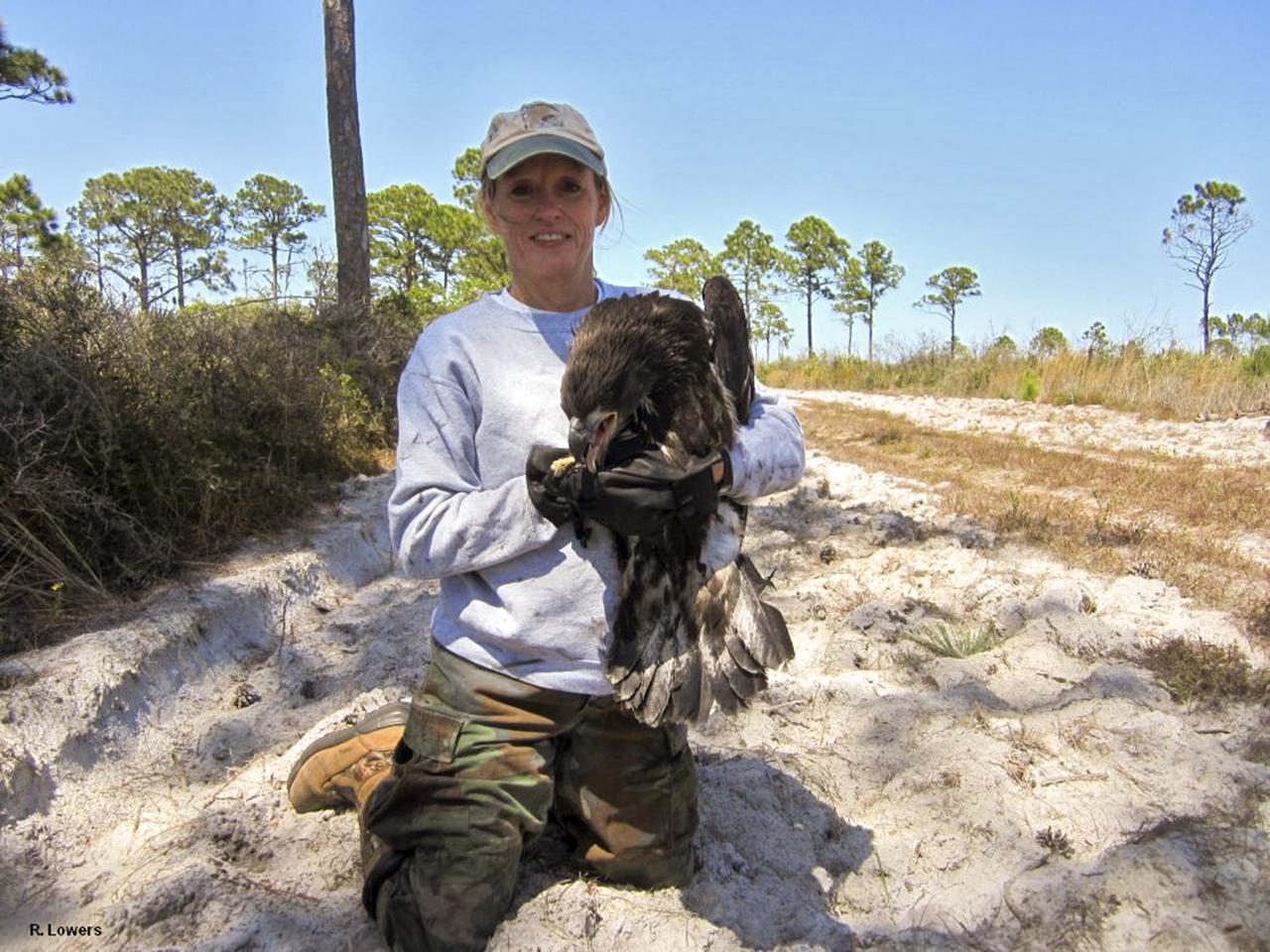
CAPE CANAVERAL, Fla. -- At the Kennedy Space Center in Florida, Becky Bolt, a wildlife ecologist with InoMedic Health Applications, Inc., holds one of the rescued eaglets. When a strong thunderstorm recently blew through NASA's Kennedy Space Center in Florida on March 24, two eagles fell to the ground along with their nest. Ecologists at the spaceport, who take great care to track the birds and protect their habitat, stepped in and rescued the eaglets. For more: http:__www.nasa.gov_centers_kennedy_about_sustainability_eagles_rescued.html Photo courtesy: InoMedic Health Applications_Russ Lowers
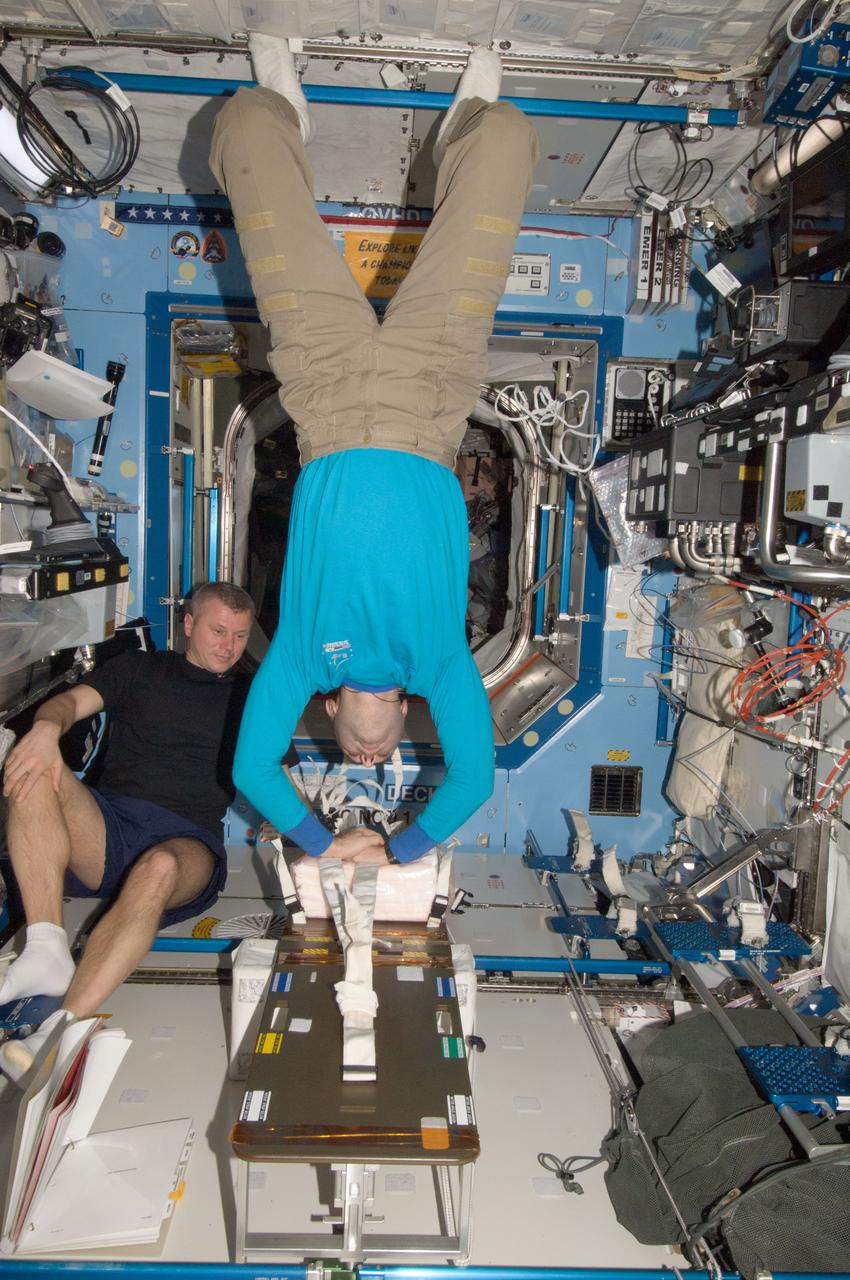
ISS034-E-005261 (26 Nov. 2012) --- Russian cosmonauts Oleg Novitskiy (left) and Evgeny Tarelkin, both Expedition 34 flight engineers, participate in a Crew Health Care System (CHeCS) medical contingency drill in the Destiny laboratory of the International Space Station. This drill gives crew members the opportunity to work as a team in resolving a simulated medical emergency onboard the space station.
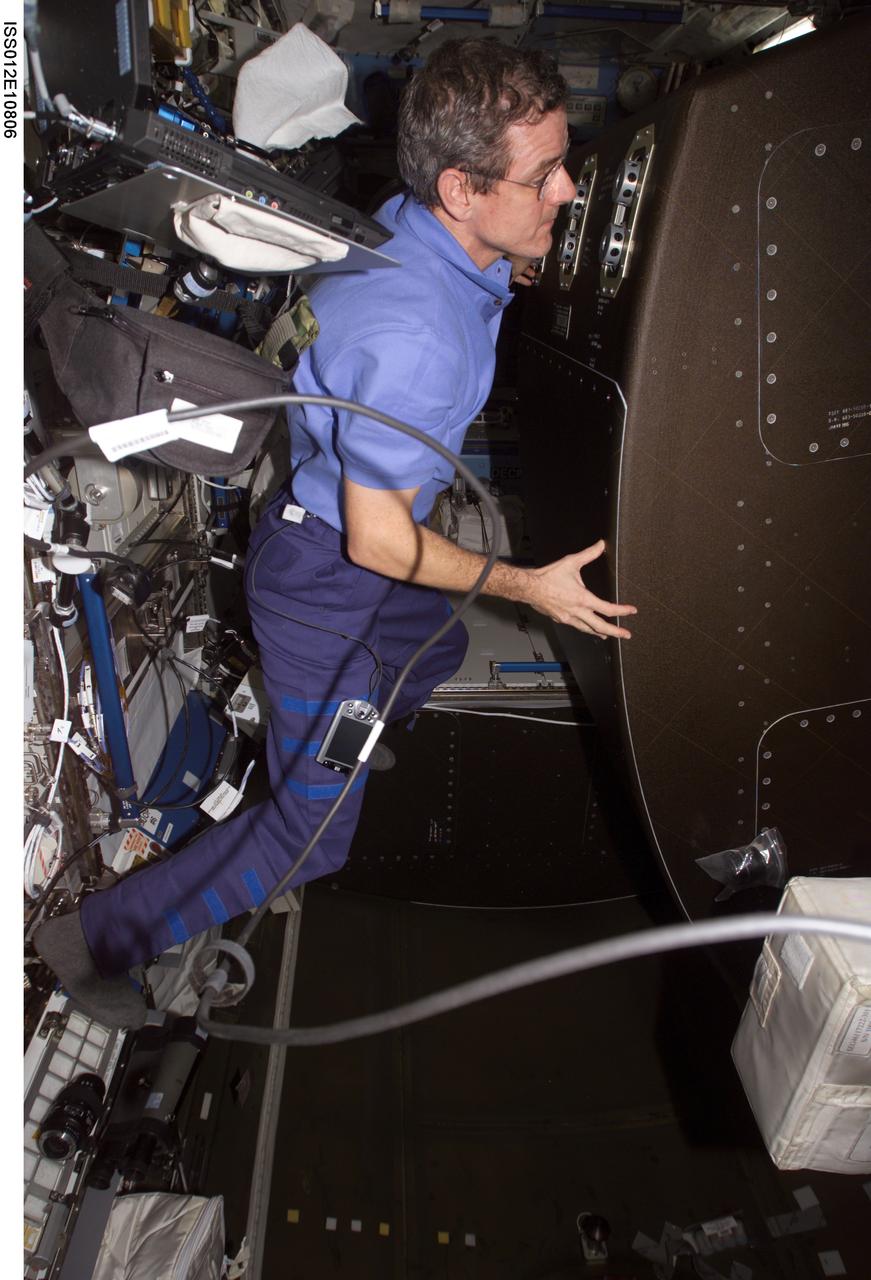
ISS012-E-10806 (9 December 2005) --- Astronaut William S. (Bill) McArthur Jr., Expedition 12 commander and NASA space station science officer, rotates the Crew Health Care System (CHeCS) rack in order to access the Avionics Air Assembly (AAA) air ducts during in-flight maintenance (IFM) in the Destiny laboratory of the International Space Station.
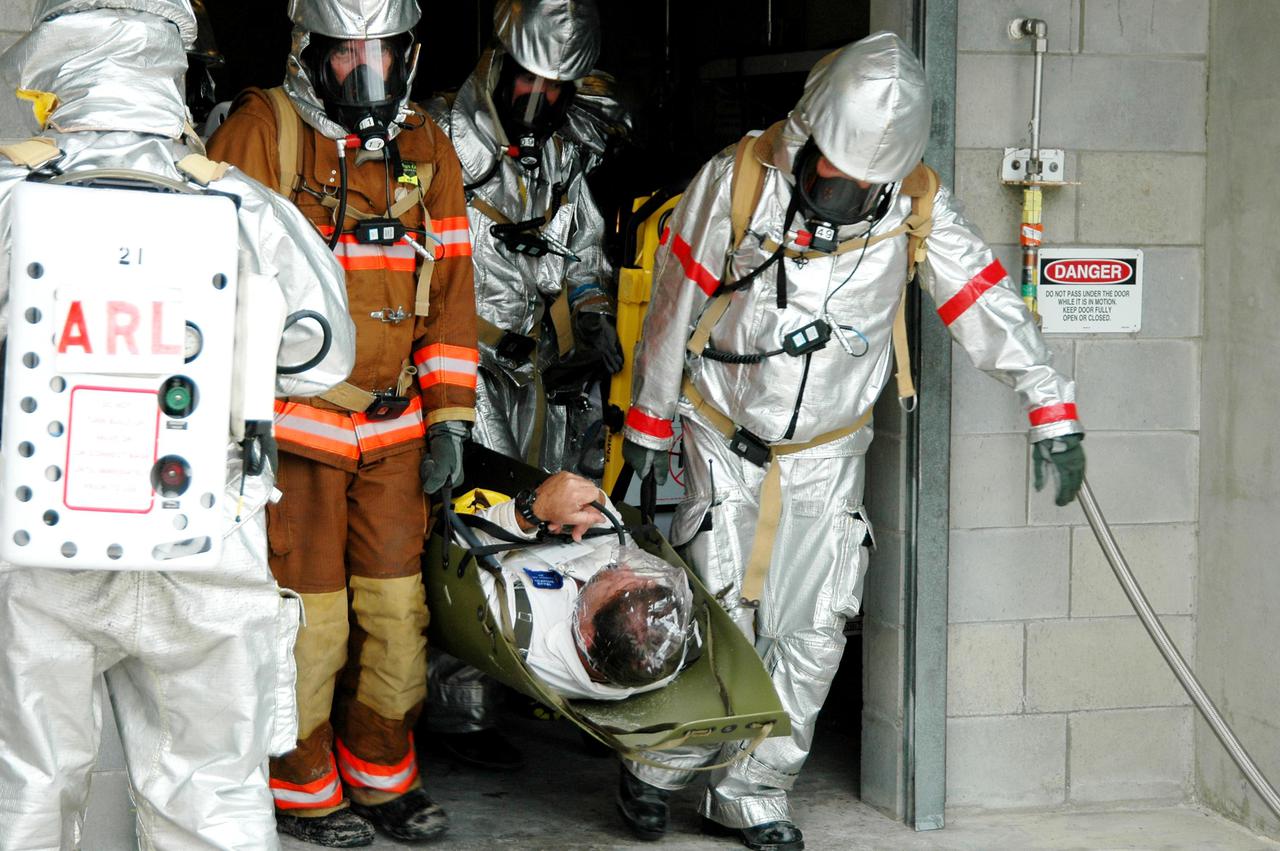
KENNEDY SPACE CENTER, FLA. - During a simulated launch countdown_emergency simulation on Launch Pad 39A, the rescue team carries “injured” astronaut-suited workers out of the pad bunker. The four-hour exercise simulated normal launch countdown operations, with the added challenge of a fictitious event causing an evacuation of the vehicle and launch pad. It tested the team’s rescue approaches on the Fixed Service Structure, slidewire basket evacuation, triage care and transportation of injured personnel to hospitals, as well as communications and coordination.
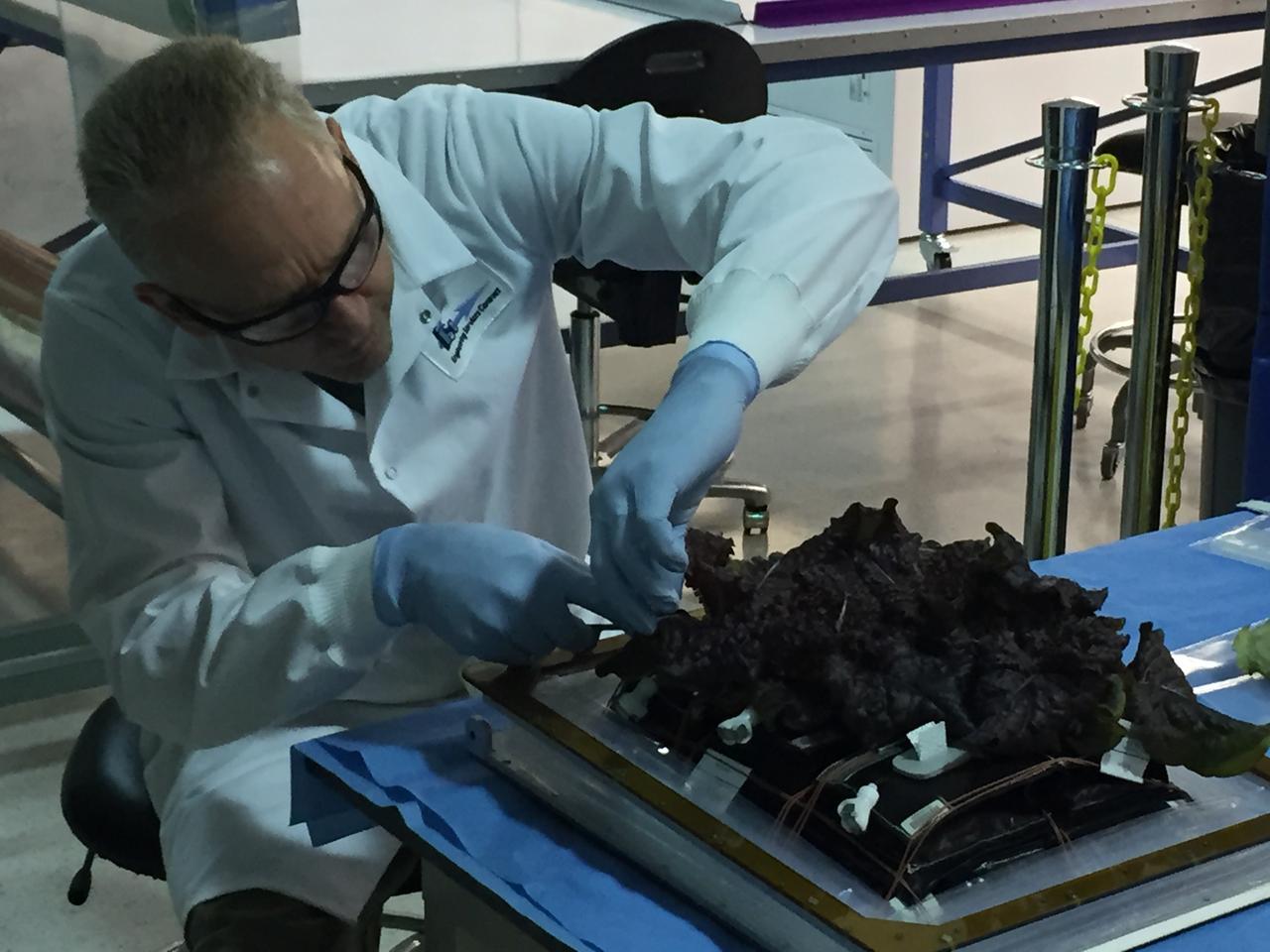
Astronaut Scott Kelly initiated VEG-01 B, the second crop of lettuce, on July, 8, 2015, and both Kelly and Astronaut Kjell Lindgren cared for the plants. The crop grew for 33 days. VEG-01 B included one set of six plant pillows planted with red romaine lettuce seeds. On Aug. 10, 2015, the crew harvested and consumed leaves from each plant. This was the first crop grown and consumed in NASA hardware. They harvested the rest of the plant tissue and froze it in the station’s Minus Eighty-Degree Laboratory Freezer for ISS (MELFI) for return to Earth for further study including microbial analysis, antioxidant capacity, mineral analysis and anthocyanin concentration.
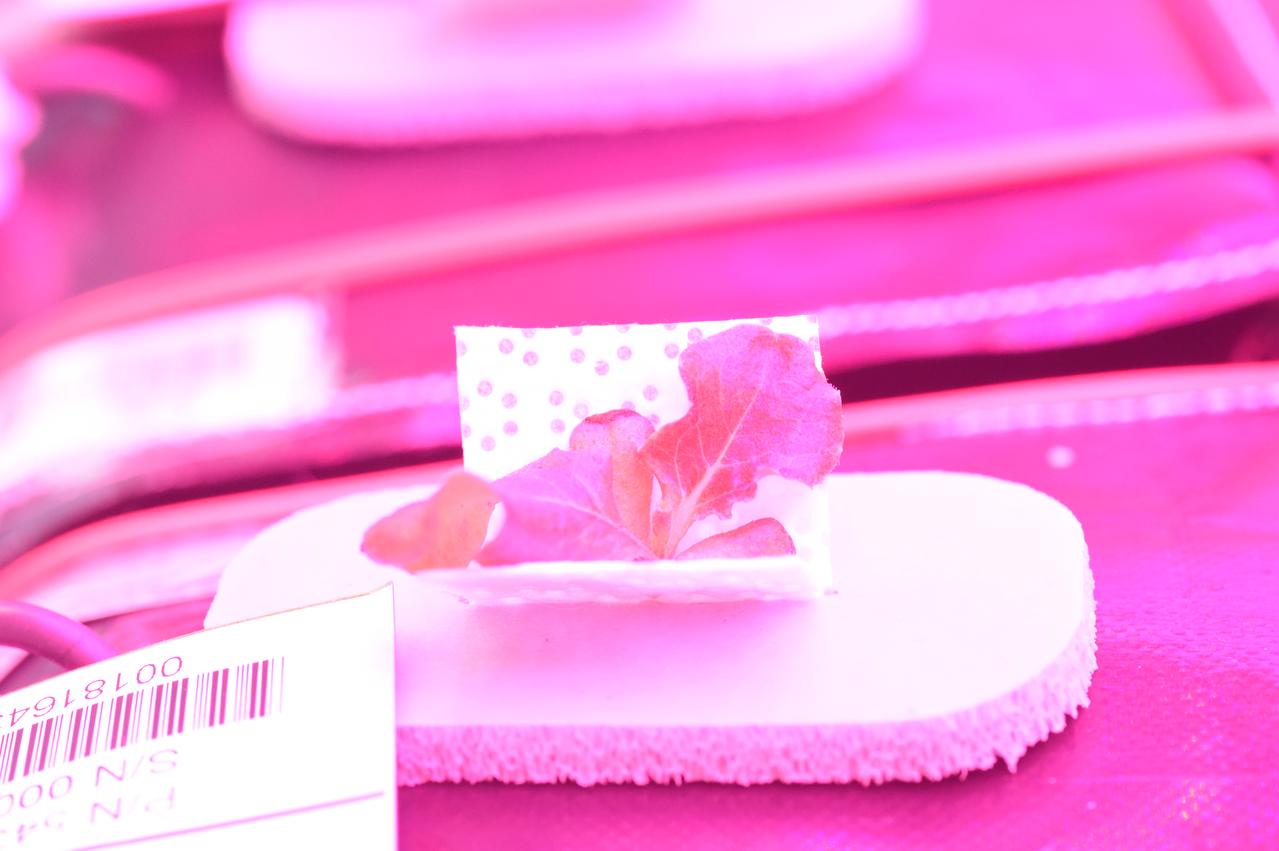
Astronaut Scott Kelly initiated VEG-01 B, the second crop of lettuce, on July, 8, 2015, and both Kelly and Astronaut Kjell Lindgren cared for the plants. The crop grew for 33 days. VEG-01 B included one set of six plant pillows planted with red romaine lettuce seeds. On Aug. 10, 2015, the crew harvested and consumed leaves from each plant. This was the first crop grown and consumed in NASA hardware. They harvested the rest of the plant tissue and froze it in the station’s Minus Eighty-Degree Laboratory Freezer for ISS (MELFI) for return to Earth for further study including microbial analysis, antioxidant capacity, mineral analysis and anthocyanin concentration.
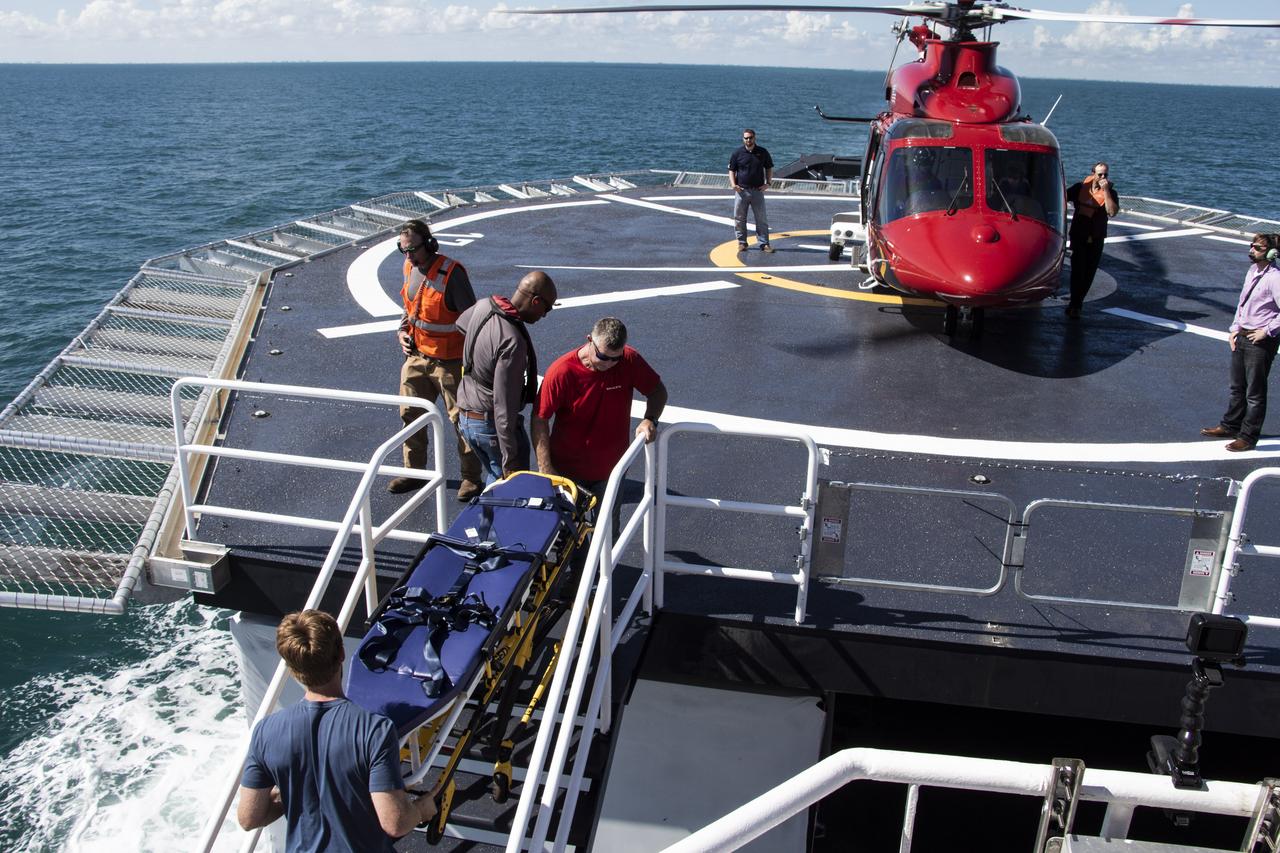
SpaceX rehearses helicopter landing and patient loading on its recovery ship, GO Searcher, practicing how the aircraft will pick up astronauts and fly them to a nearby hospital in the unlikely event of a medical emergency. The company outfitted the ship with a medical treatment facility and a helipad in the center of the vessel. When astronauts splash down into the ocean after their journey to the International Space Station on SpaceX’s Crew Dragon spacecraft, NASA and SpaceX doctors will work together to evaluate the crew onboard the vessel. Should astronauts need to be airlifted to a hospital, the helicopter also will pick up paramedics and doctors from the ship who will care for the astronauts in-flight.

Astronaut Scott Kelly initiated VEG-01 B, the second crop of lettuce, on July, 8, 2015, and both Kelly and Astronaut Kjell Lindgren cared for the plants. The crop grew for 33 days. VEG-01 B included one set of six plant pillows planted with red romaine lettuce seeds. On Aug. 10, 2015, the crew harvested and consumed leaves from each plant. This was the first crop grown and consumed in NASA hardware. They harvested the rest of the plant tissue and froze it in the station’s Minus Eighty-Degree Laboratory Freezer for ISS (MELFI) for return to Earth for further study including microbial analysis, antioxidant capacity, mineral analysis and anthocyanin concentration.
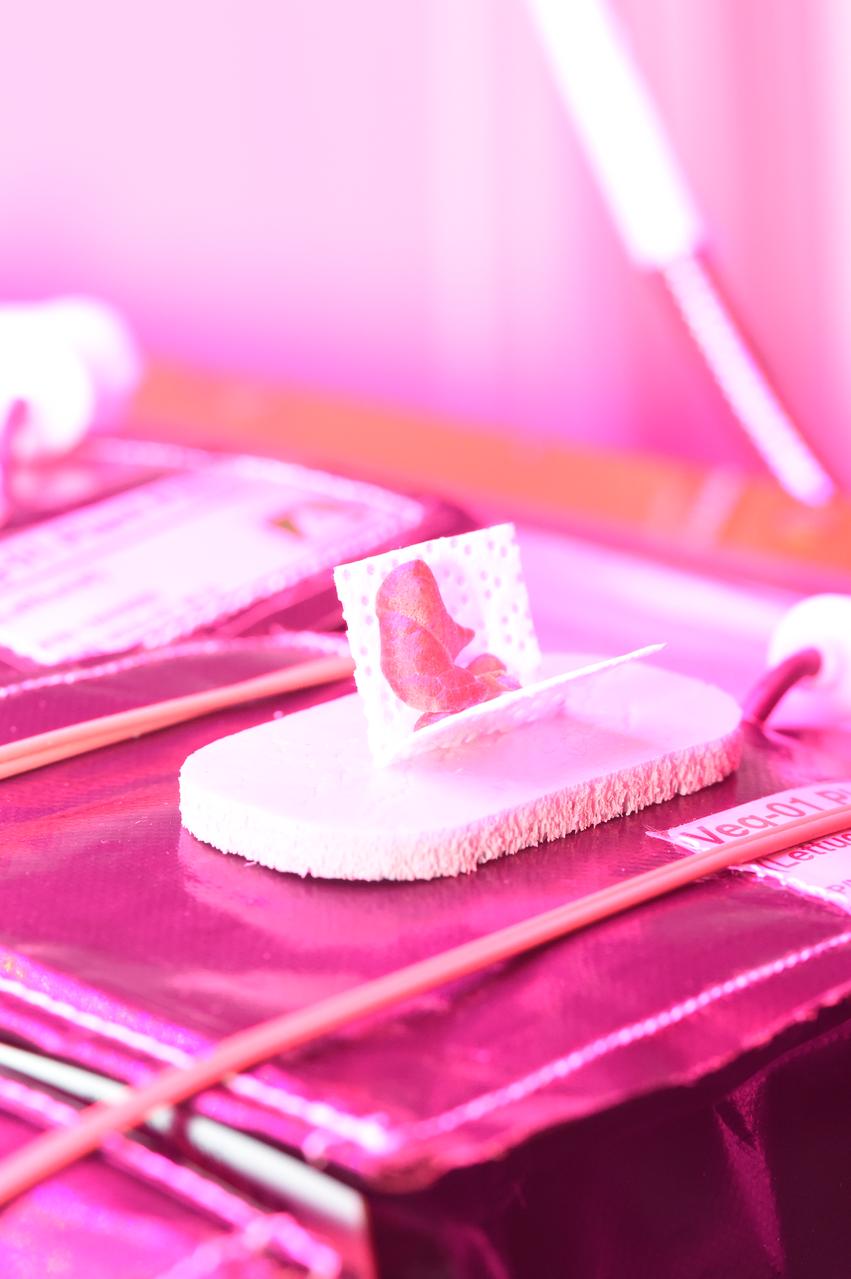
Astronaut Scott Kelly initiated VEG-01 B, the second crop of lettuce, on July, 8, 2015, and both Kelly and Astronaut Kjell Lindgren cared for the plants. The crop grew for 33 days. VEG-01 B included one set of six plant pillows planted with red romaine lettuce seeds. On Aug. 10, 2015, the crew harvested and consumed leaves from each plant. This was the first crop grown and consumed in NASA hardware. They harvested the rest of the plant tissue and froze it in the station’s Minus Eighty-Degree Laboratory Freezer for ISS (MELFI) for return to Earth for further study including microbial analysis, antioxidant capacity, mineral analysis and anthocyanin concentration.
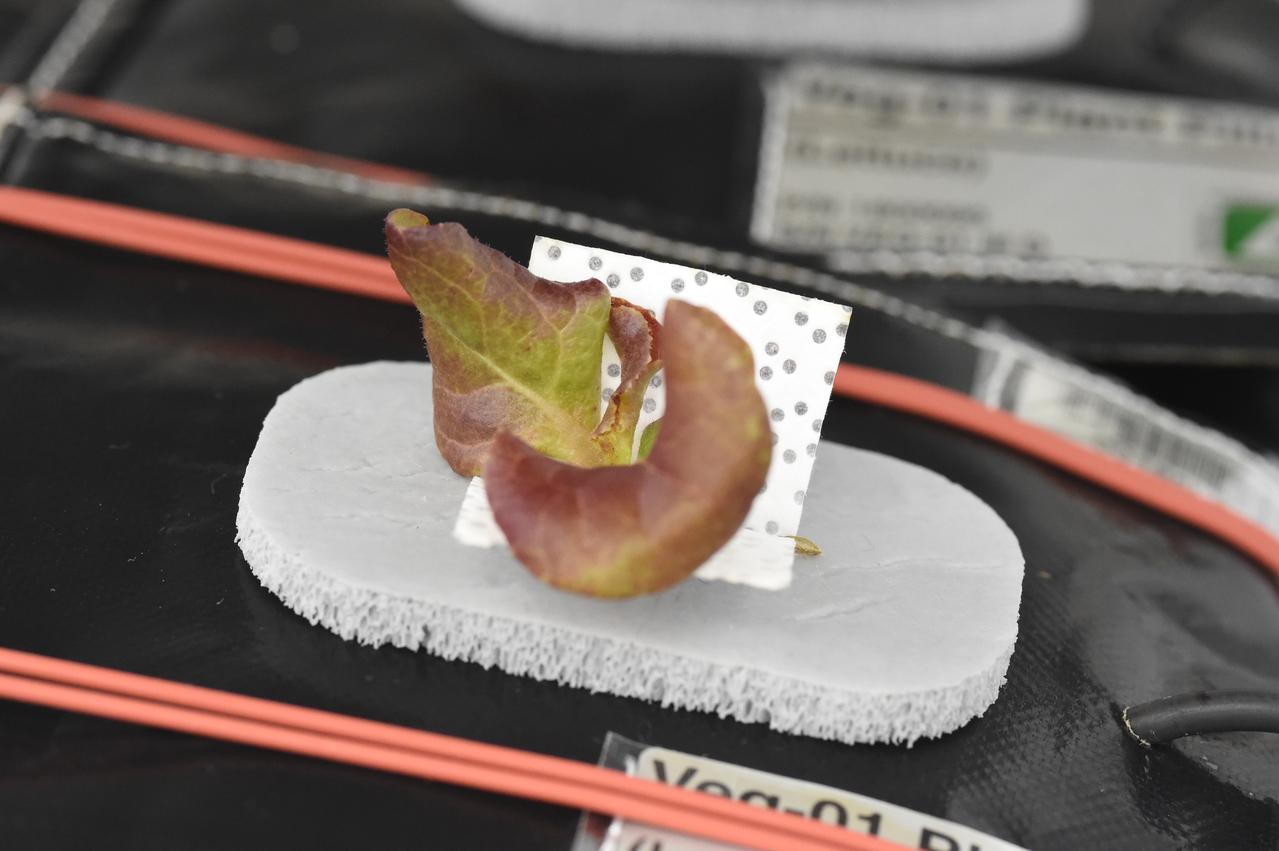
Astronaut Scott Kelly initiated VEG-01 B, the second crop of lettuce, on July, 8, 2015, and both Kelly and Astronaut Kjell Lindgren cared for the plants. The crop grew for 33 days. VEG-01 B included one set of six plant pillows planted with red romaine lettuce seeds. On Aug. 10, 2015, the crew harvested and consumed leaves from each plant. This was the first crop grown and consumed in NASA hardware. They harvested the rest of the plant tissue and froze it in the station’s Minus Eighty-Degree Laboratory Freezer for ISS (MELFI) for return to Earth for further study including microbial analysis, antioxidant capacity, mineral analysis and anthocyanin concentration.
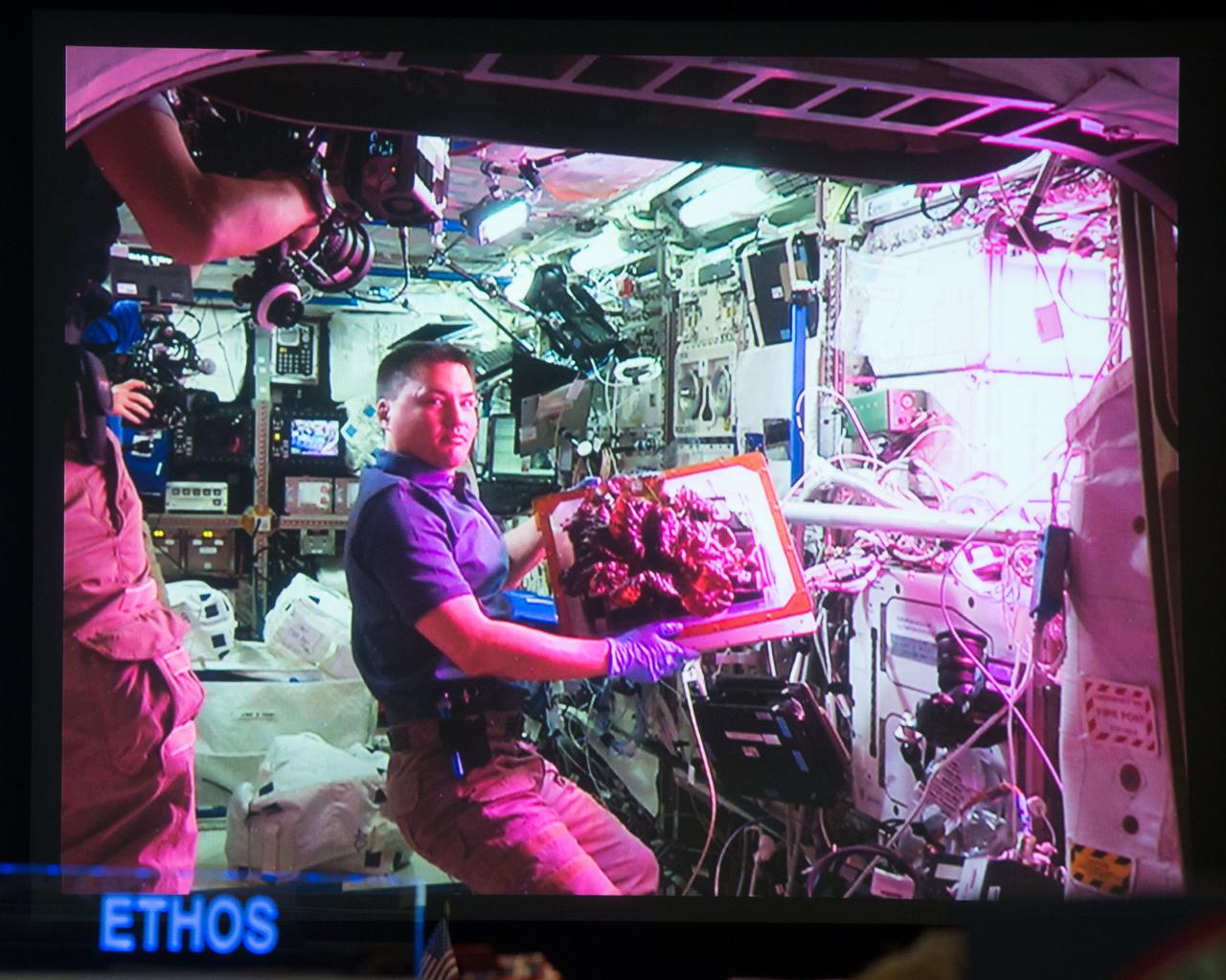
Astronaut Scott Kelly initiated VEG-01 B, the second crop of lettuce, on July, 8, 2015, and both Kelly and Astronaut Kjell Lindgren cared for the plants. The crop grew for 33 days. VEG-01 B included one set of six plant pillows planted with red romaine lettuce seeds. On Aug. 10, 2015, the crew harvested and consumed leaves from each plant. This was the first crop grown and consumed in NASA hardware. They harvested the rest of the plant tissue and froze it in the station’s Minus Eighty-Degree Laboratory Freezer for ISS (MELFI) for return to Earth for further study including microbial analysis, antioxidant capacity, mineral analysis and anthocyanin concentration.