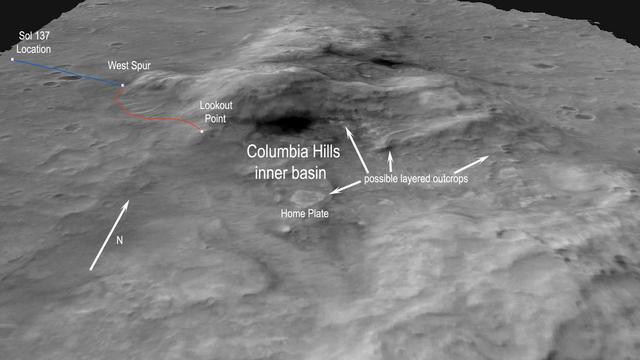
Columbia Hills from Orbit
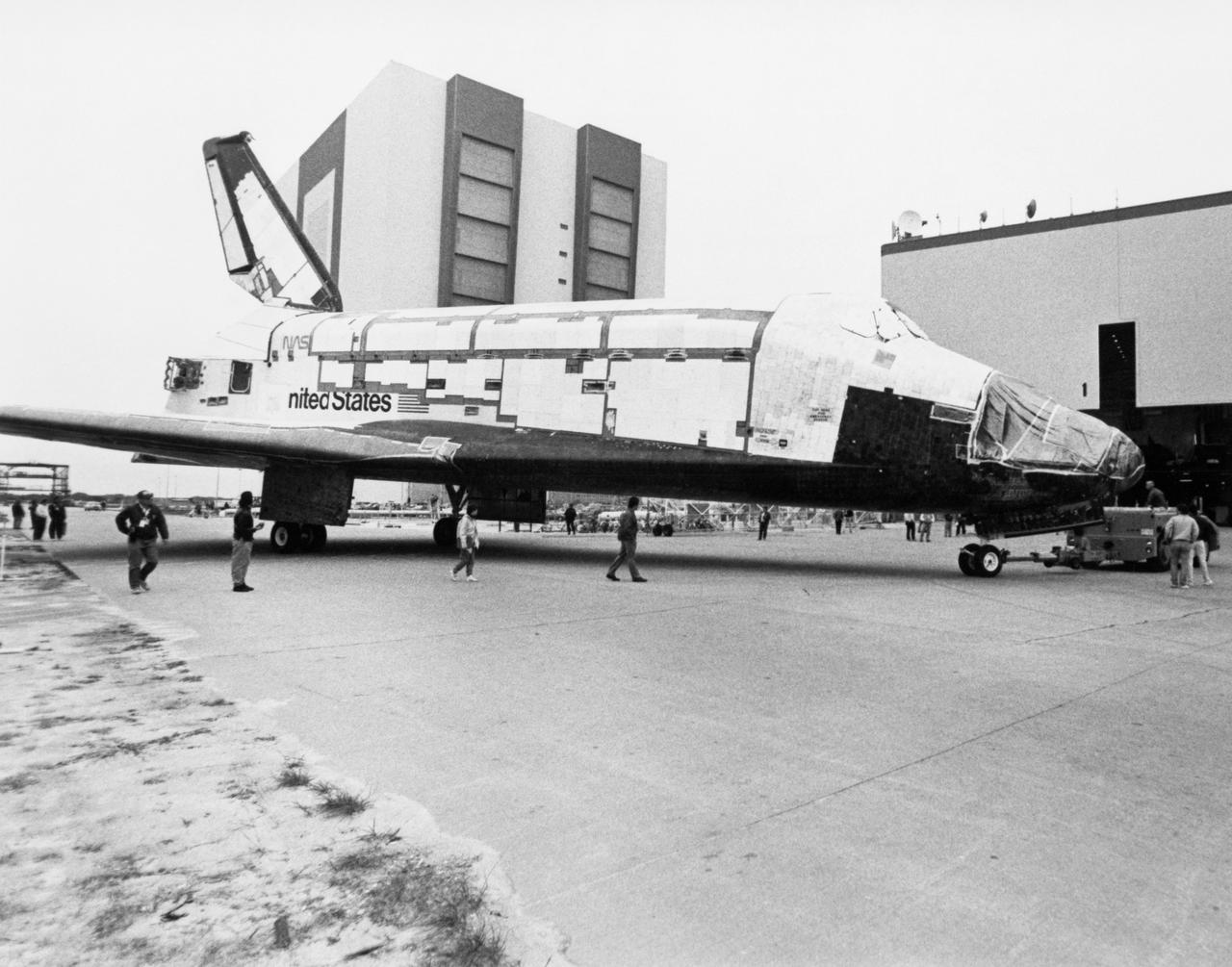
S89-28090 (24 Jan 1989) --- The orbiter Columbia, slated for mission STS-28 is rolled over from the Orbiter Maintenance and Refurbishment Facility to the Orbiter Processing Facility bay 1 to begin processing for its mission in July 1989. The Department of Defense dedicted mission will be commanded by astronaut Brewster Shaw.
STS-28 Columbia, Orbiter Vehicle (OV) 102, roll over to KSC OPF
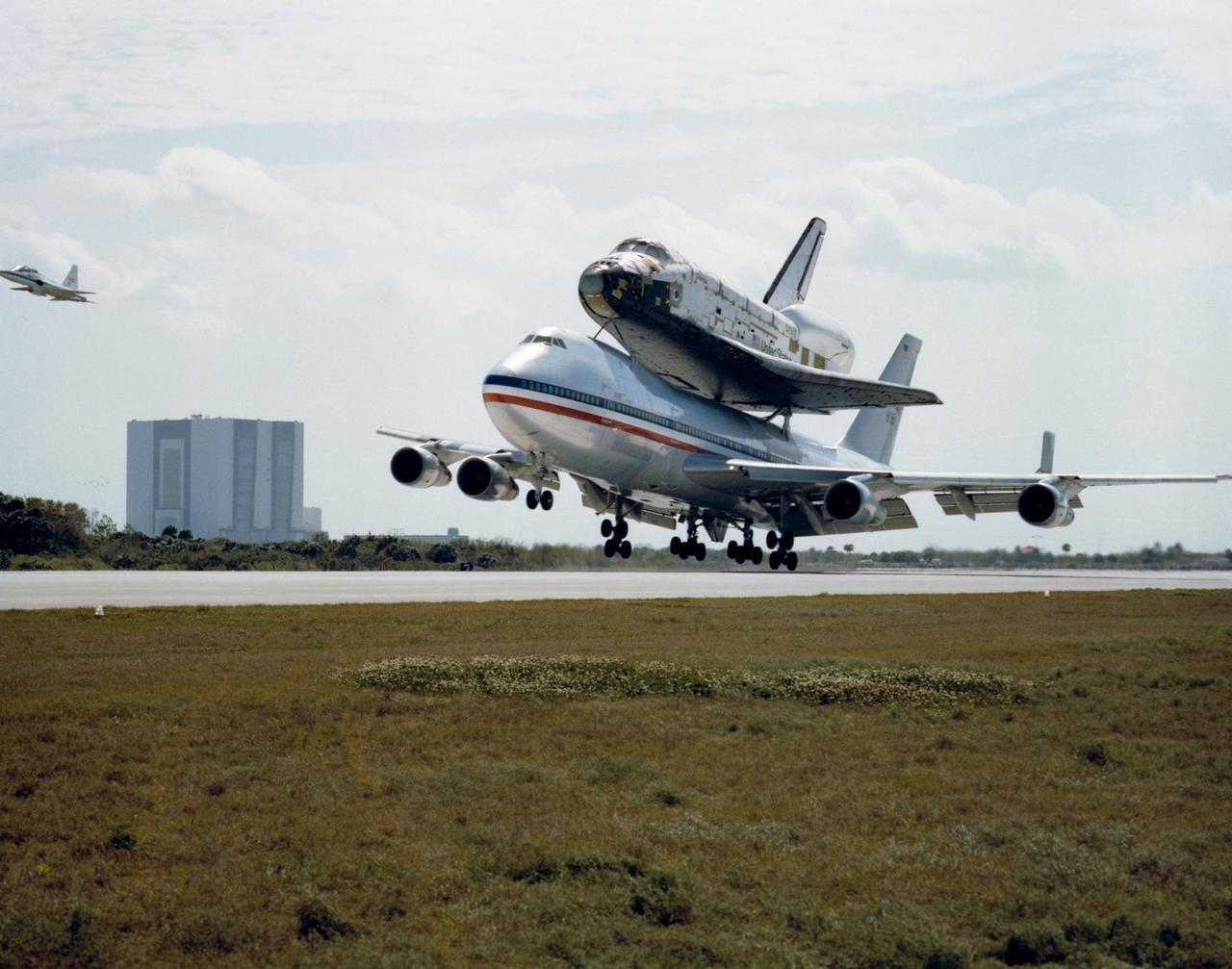
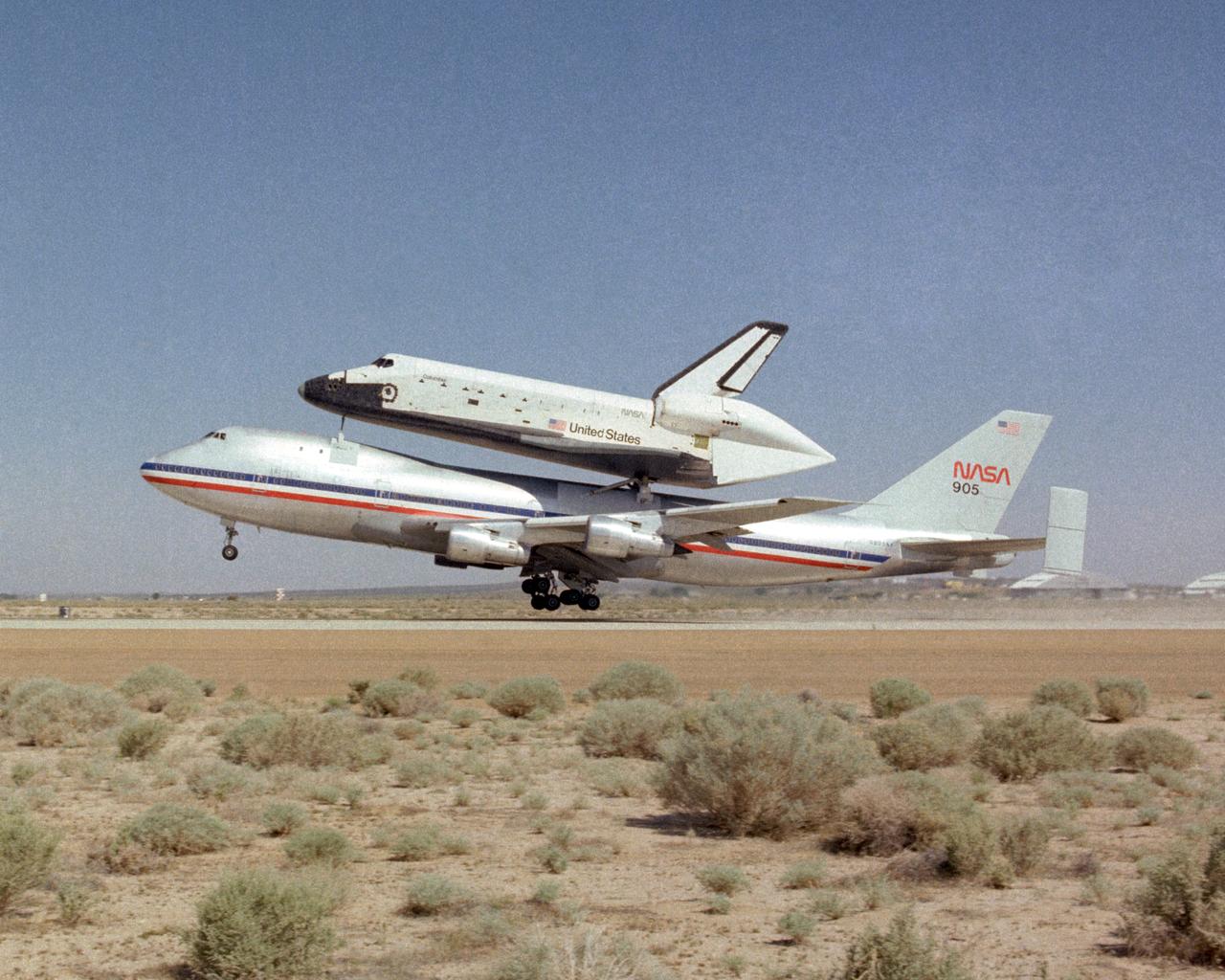
NASA's specially modified 747 with the Space Shuttle Columbia atop takes off to ferry the Shuttle back to Kennedy Space Center in Florida. Columbia had recently completed its first orbital mission with a landing at Edwards Air Force Base in California.
NASA's 747 with Columbia atop takes off to ferry the Shuttle back to KSC in Florida, after completing its first orbital mission with a landing at Edwards AFB
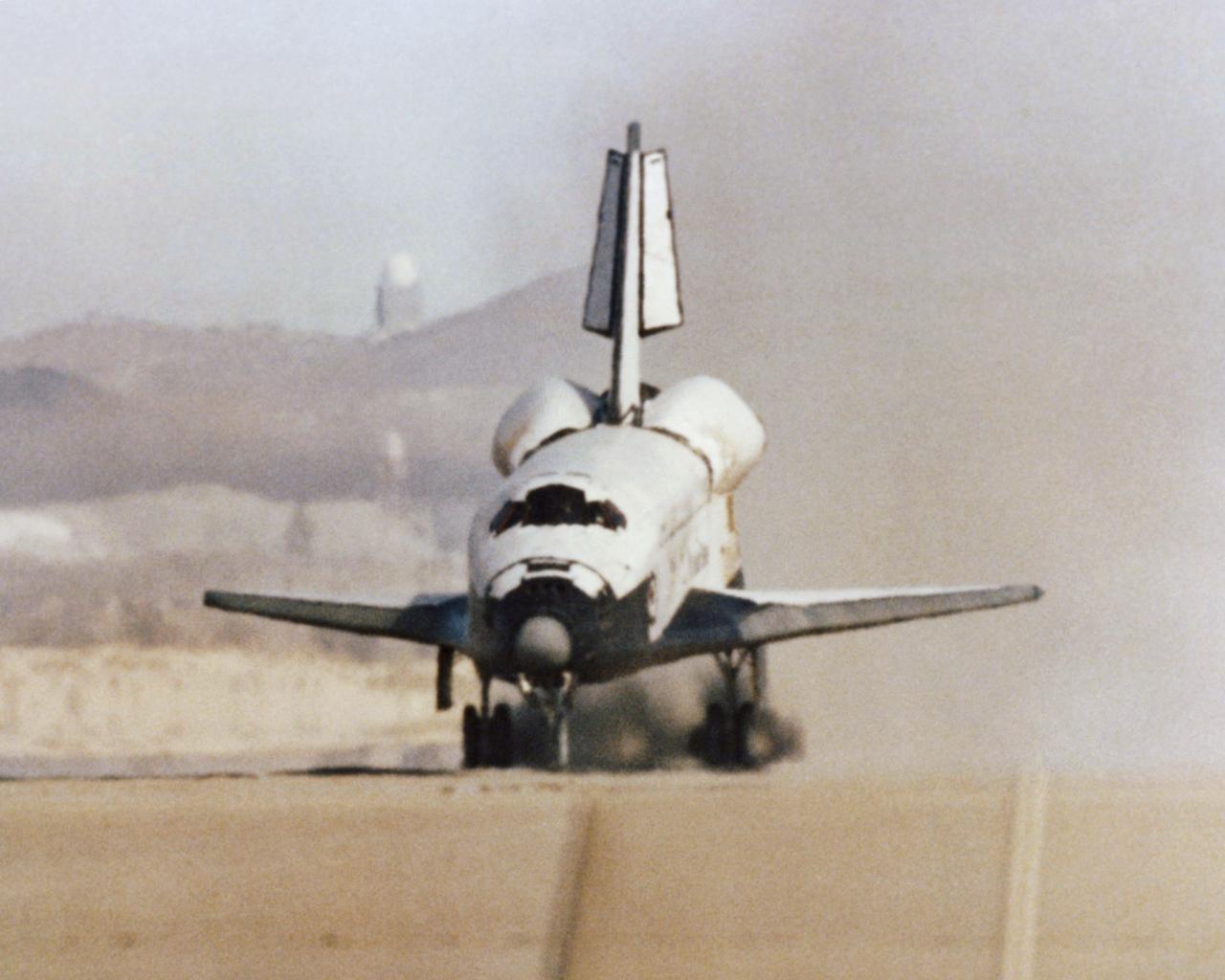
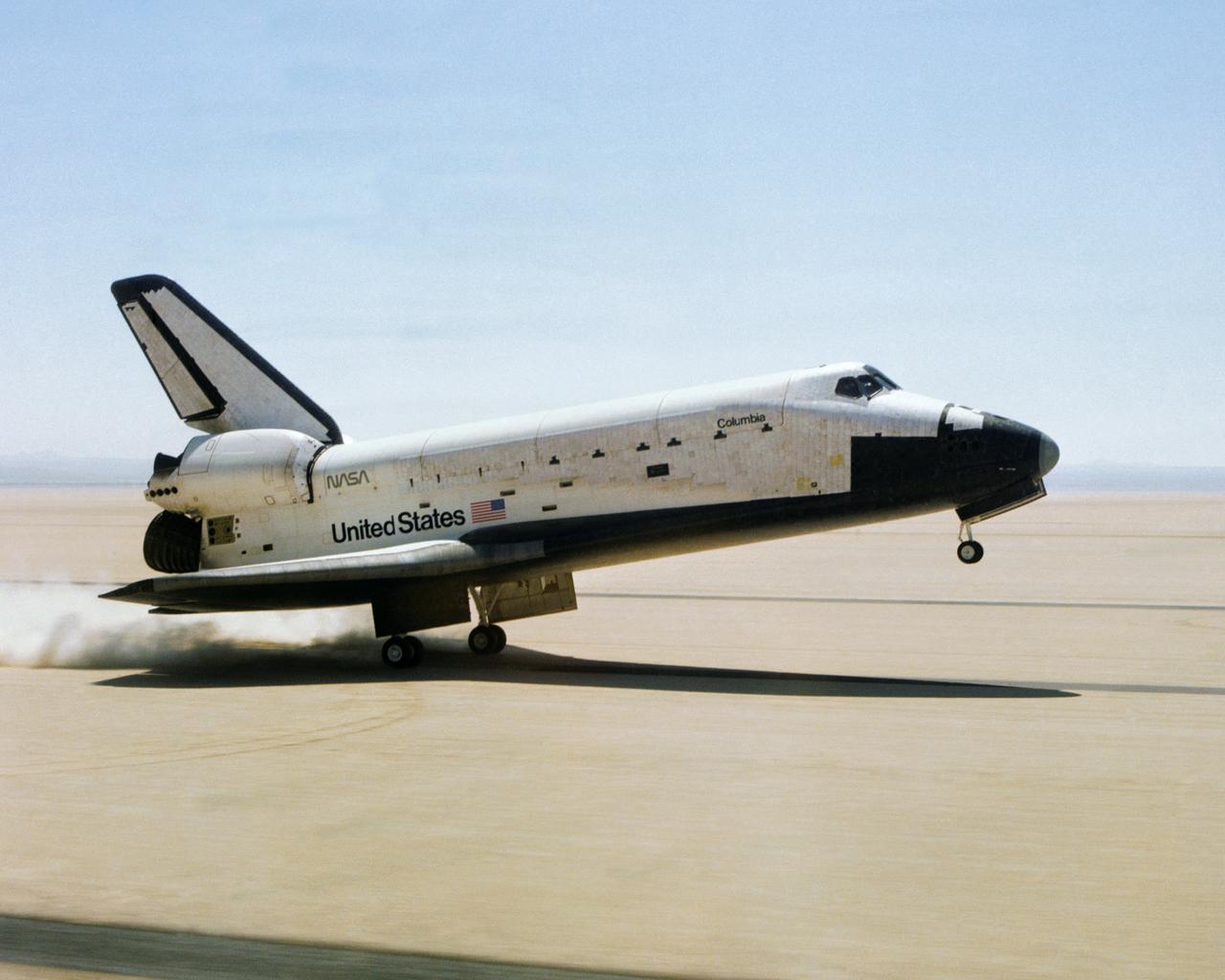
The Space Shuttle Columbia touches down on lakebed runway 23 at Edwards Air Force Base, Calif., to conclude the first orbital shuttle mission.
The Space Shuttle Columbia touches down on lakebed runway 23 at Edwards Air Force Base, Calif., to conclude the first orbital shuttle mission
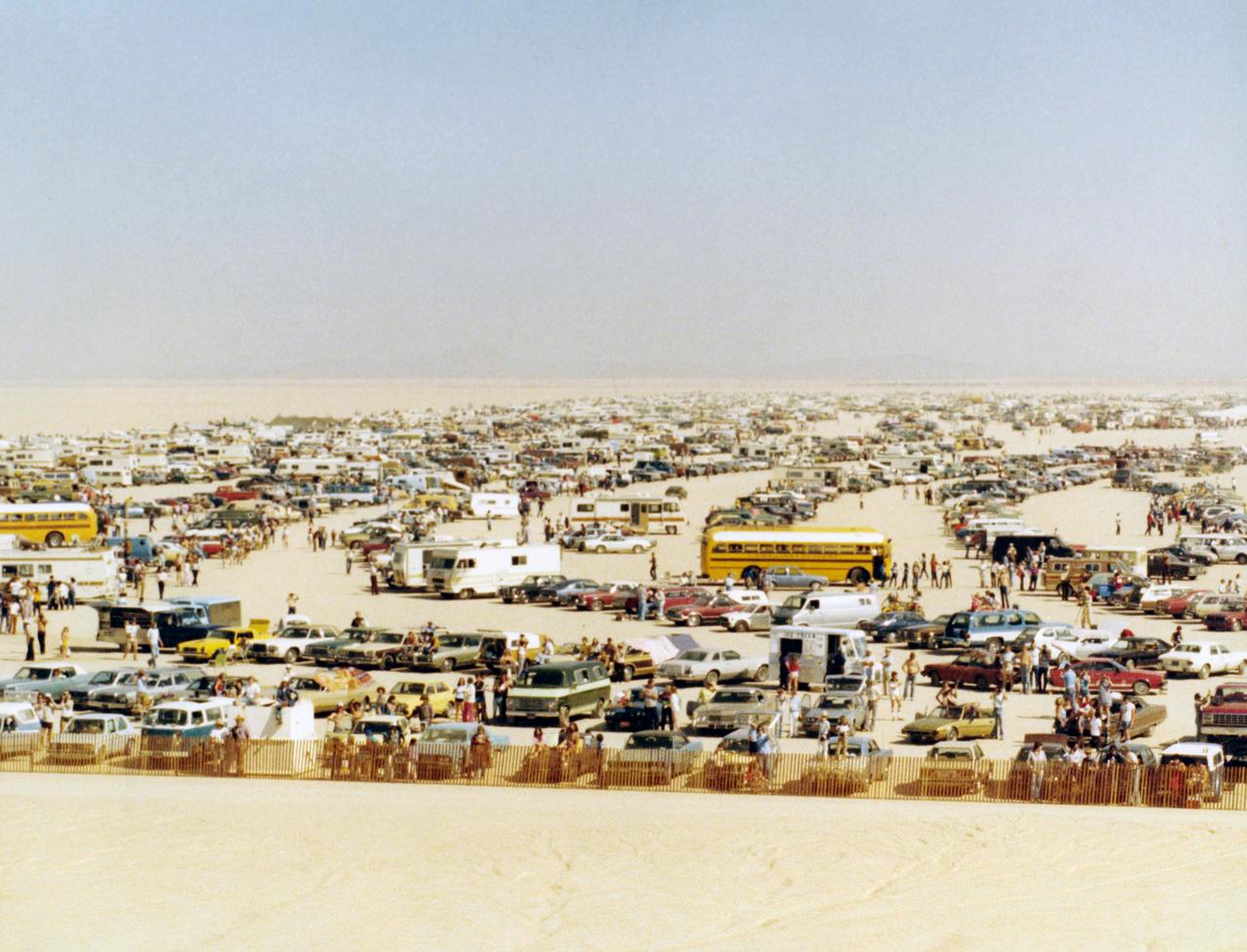
Large crowds gathered on Rogers Dry Lake at Edwards AFB to see the first landing of the Space Shuttle Columbia, completing its first orbital mission.
Large crowds gathered on Rogers Dry Lake at Edwards AFB to see the first landing of the Space Shuttle Columbia, completing its first orbital mission
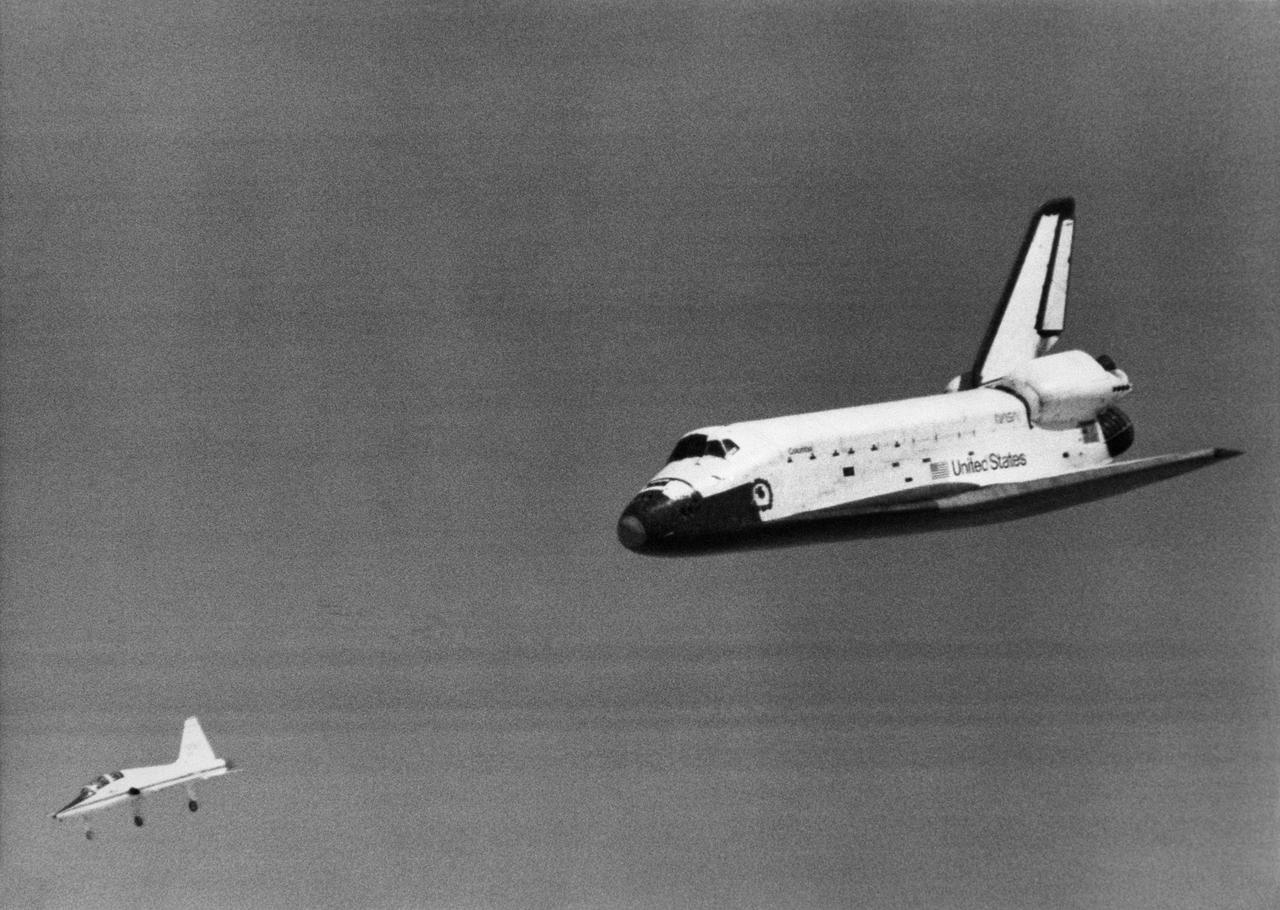
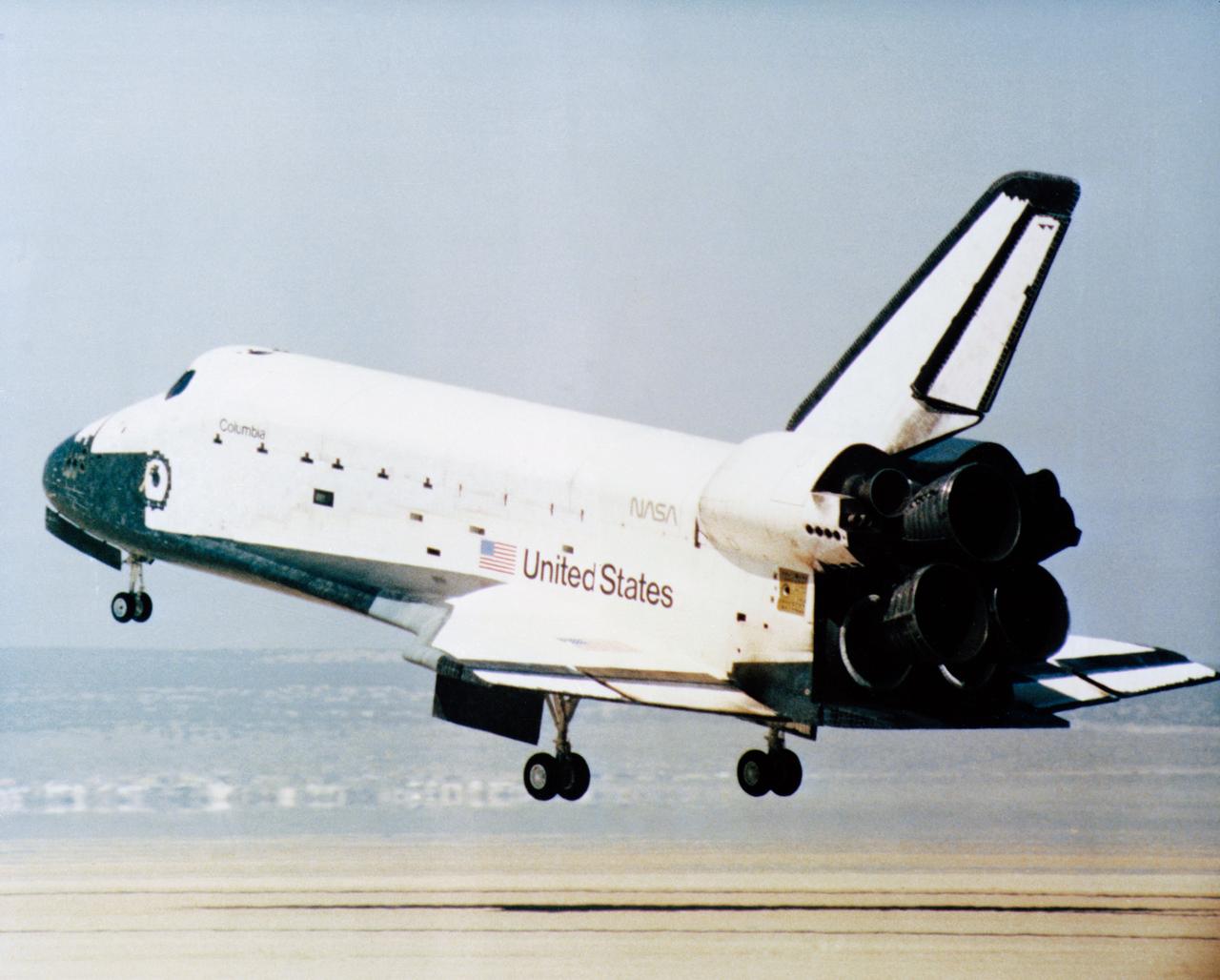
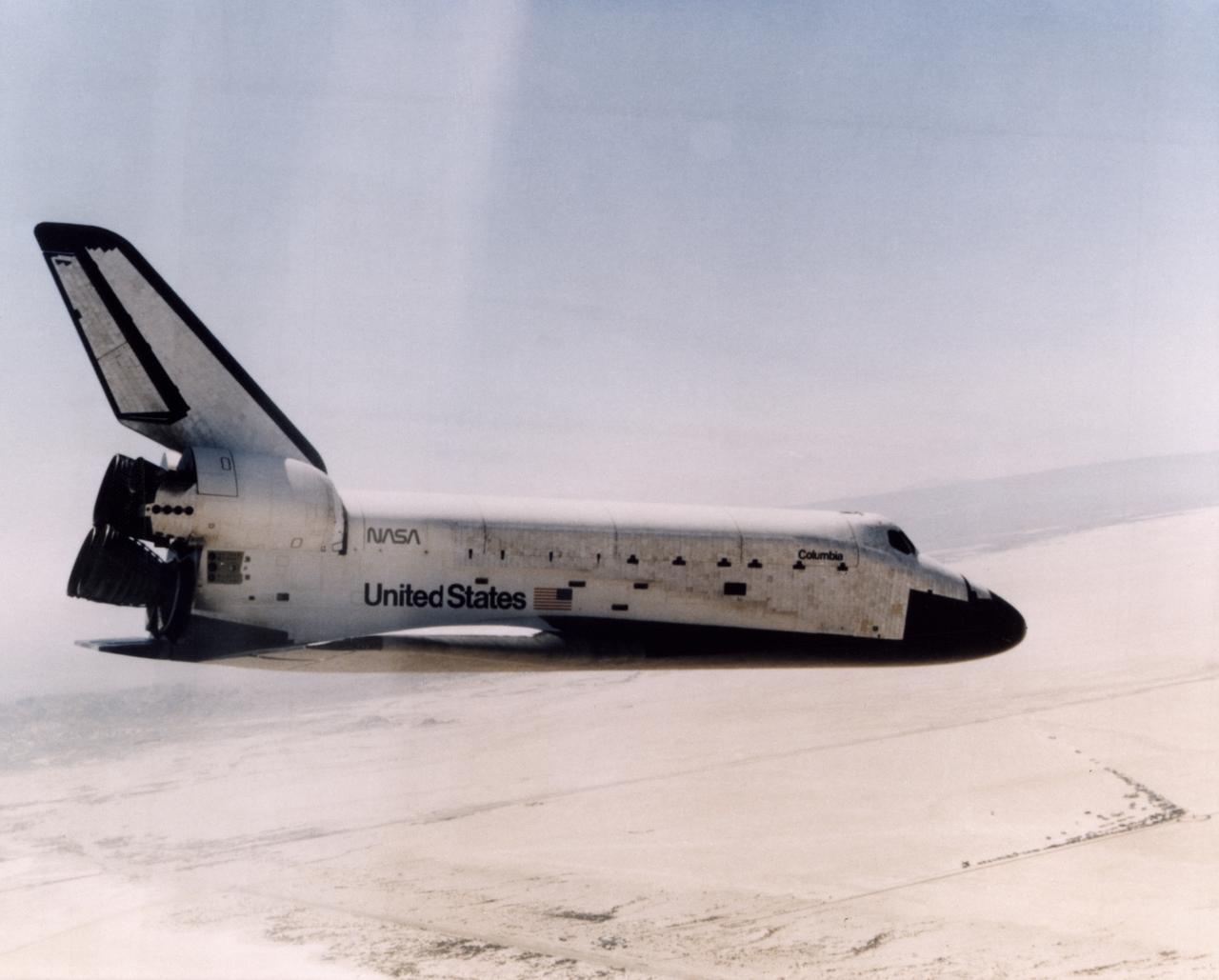
The Space Shuttle Columbia glides down over Rogers Dry Lake as it heads for a landing at Edwards Air Force Base at the conclusion of its first orbital mission on April 14, 1981.
The Space Shuttle Columbia glides down over Rogers Dry Lake as it heads for a landing at Edwards AFB at the conclusion of its first orbital mission
The Space Shuttle Columbia touches down on lakebed runway 23 at Edwards Air Force Base, Calif., to conclude the first orbital shuttle mission. (JSC photo # S81-30734)
The Space Shuttle Columbia touches down on lakebed runway 23 at Edwards Air Force Base, Calif., to conclude the first orbital shuttle mission
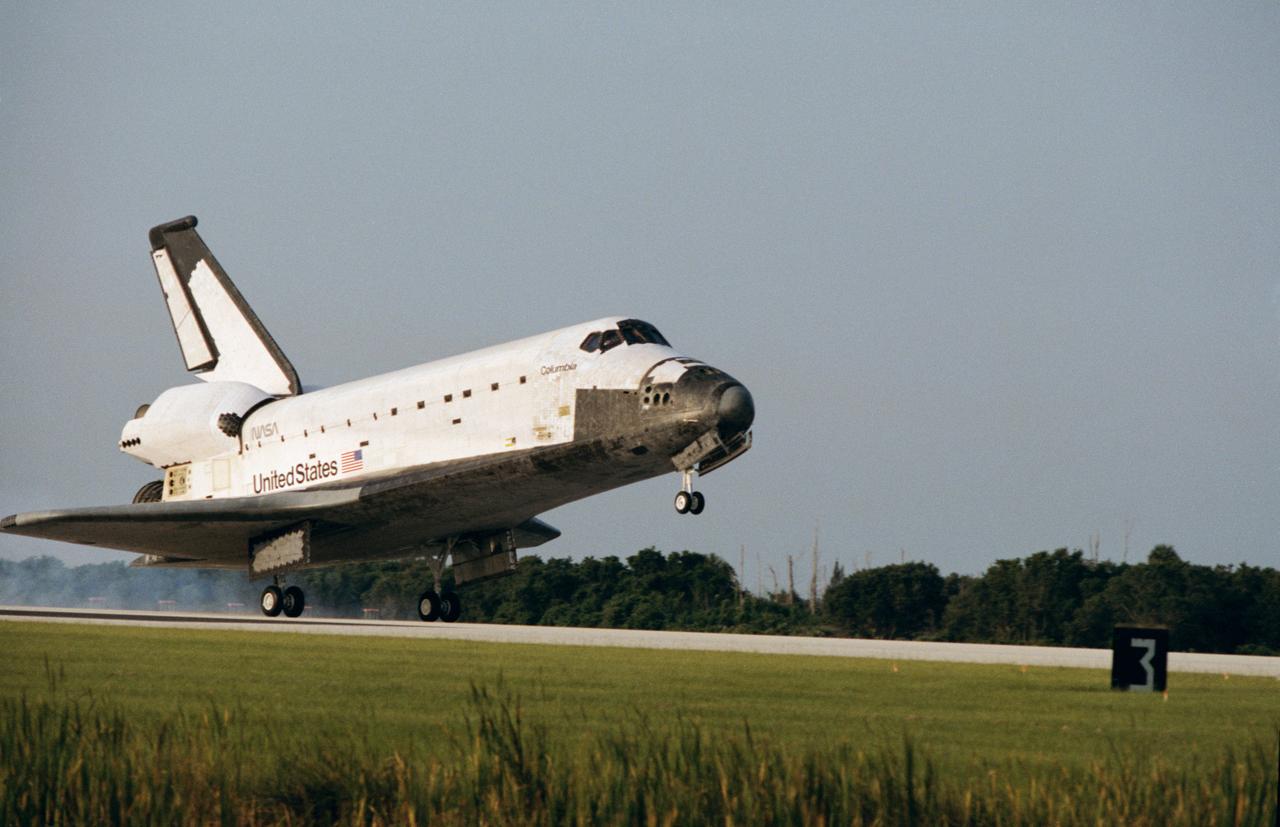
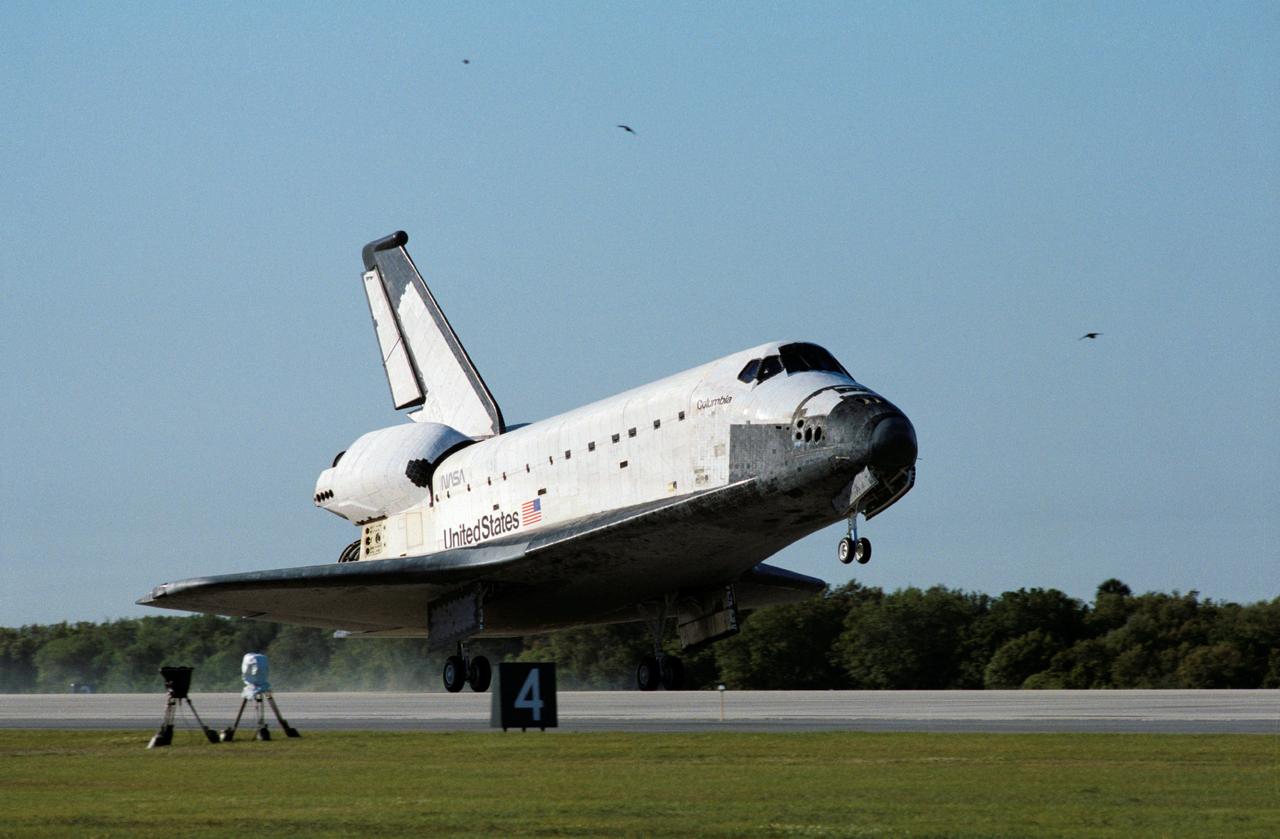
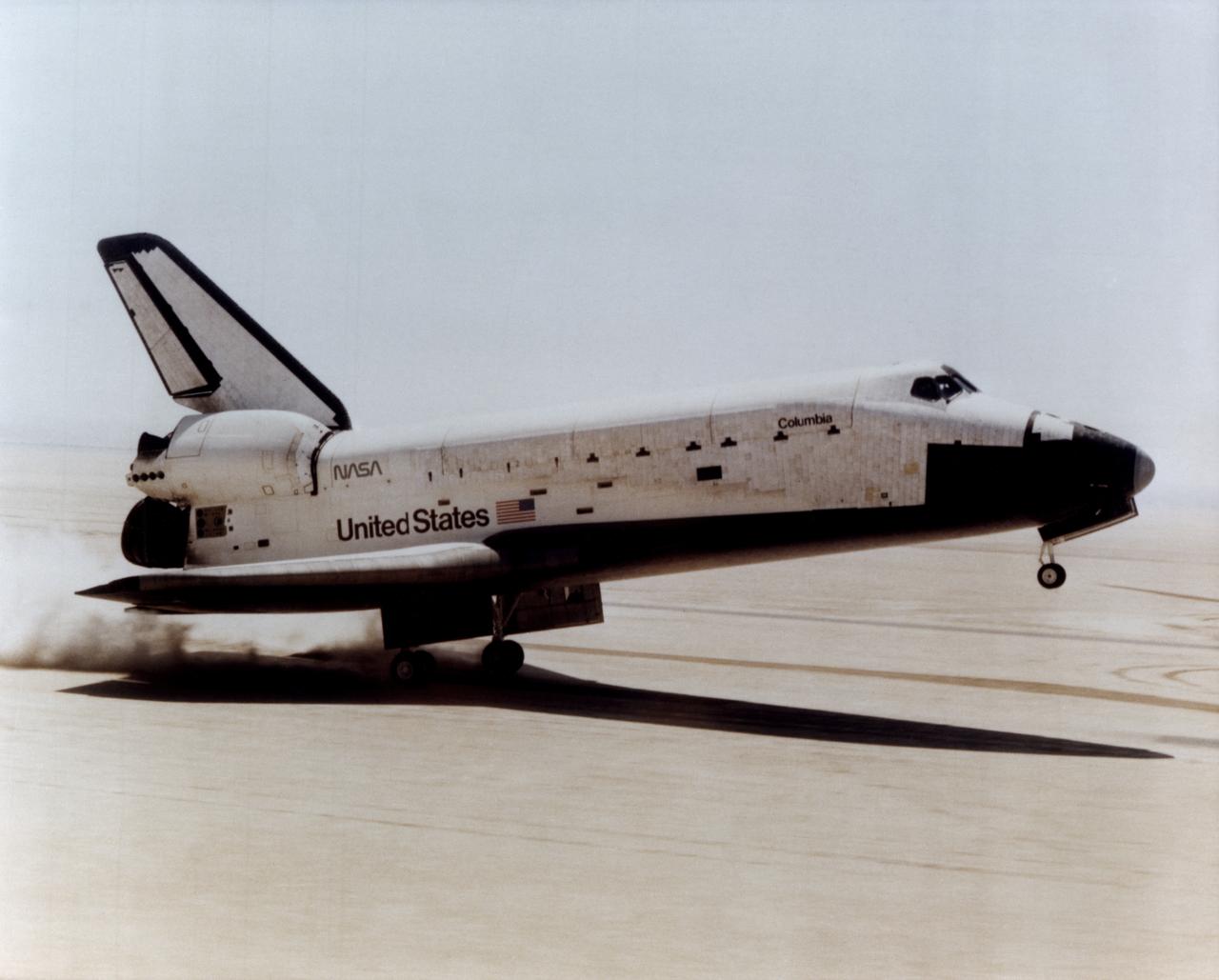
STS-50 Columbia's, Orbiter Vehicle (OV) 102's, main landing gear touches down on runway 33 at the Kennedy Space Center (KSC) Shuttle Landing Facility (SLF) producing a small cloud of dust. Landing occurred at 7:42 am (Eastern Daylight Time (EDT)). In this view of the OV-102's starboard side, the nose landing gear (NLG) continues to ride above the runway surface. Florida vegetation, a runway sign, and runway lights appear in the foreground.
STS-50 Columbia, Orbiter Vehicle (OV) 102, lands on runway 33 at KSC SLF
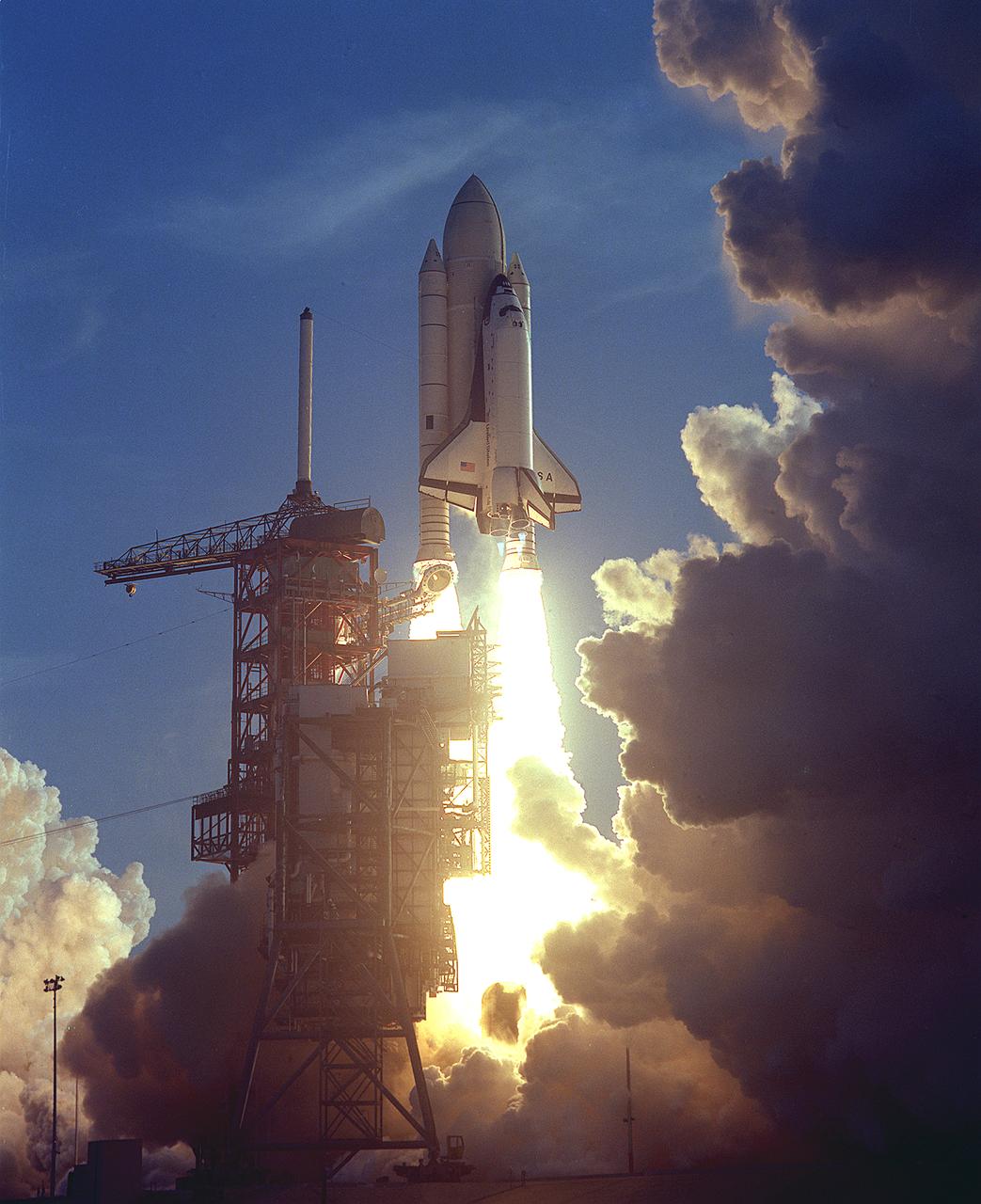
The new era in space flight began on April 12, 1981. That is when the first Space Shuttle mission (STS-1) was launched. The Marshall Space Flight Center developed the propulsion system for the Space Shuttle. This photograph depicts the launch of the Space Shuttle Orbiter Columbia marned with two astronauts, John Young and Robert Crippen.
Space Shuttle Projects
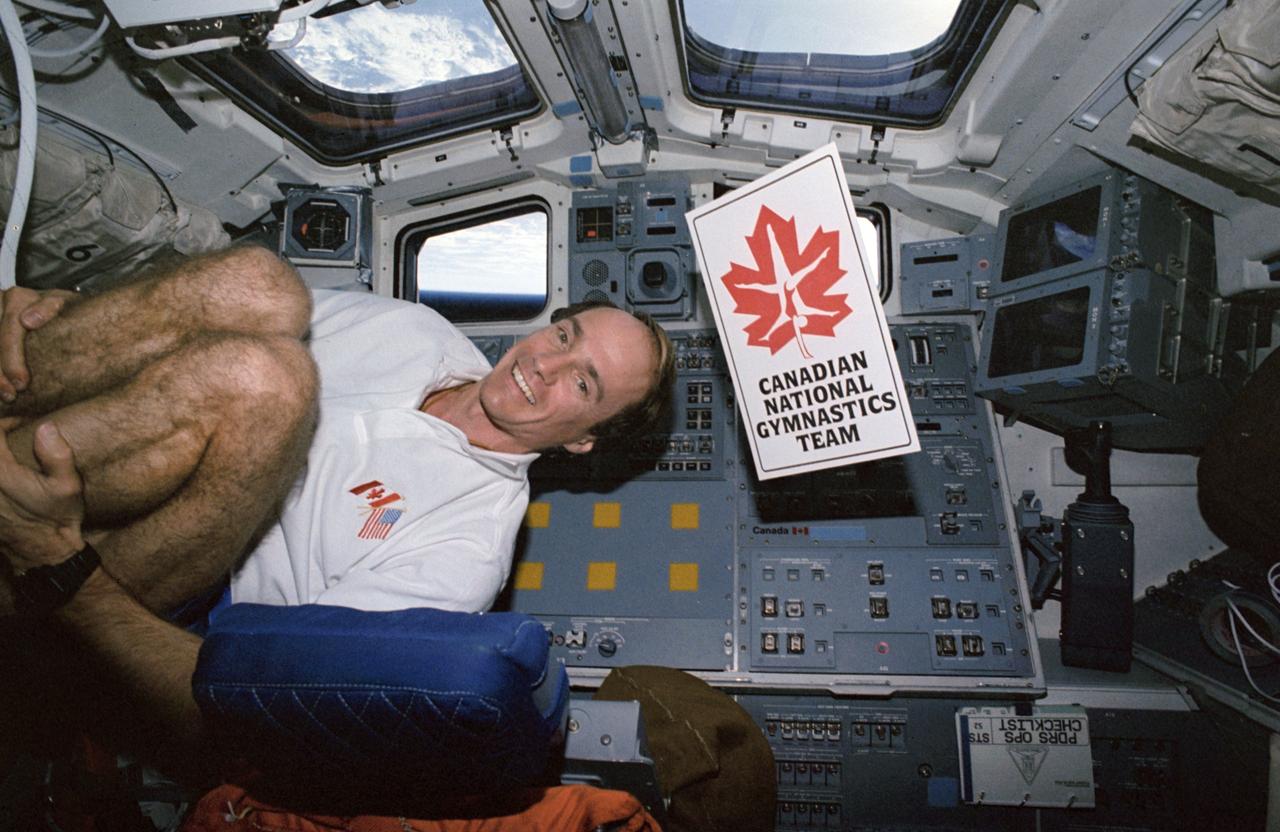
STS052-24-014 (22 Oct-1 Nov 1992) ---  Canadian payload specialist Steven G. MacLean tries out gymnastics in the weightlessness of space on the aft flight deck of the Earth-orbiting Space Shuttle Columbia.  MacLean, along with five NASA astronauts, spent ten days aboard Columbia for the STS-52 mission.
Crewmember in the aft flight deck.
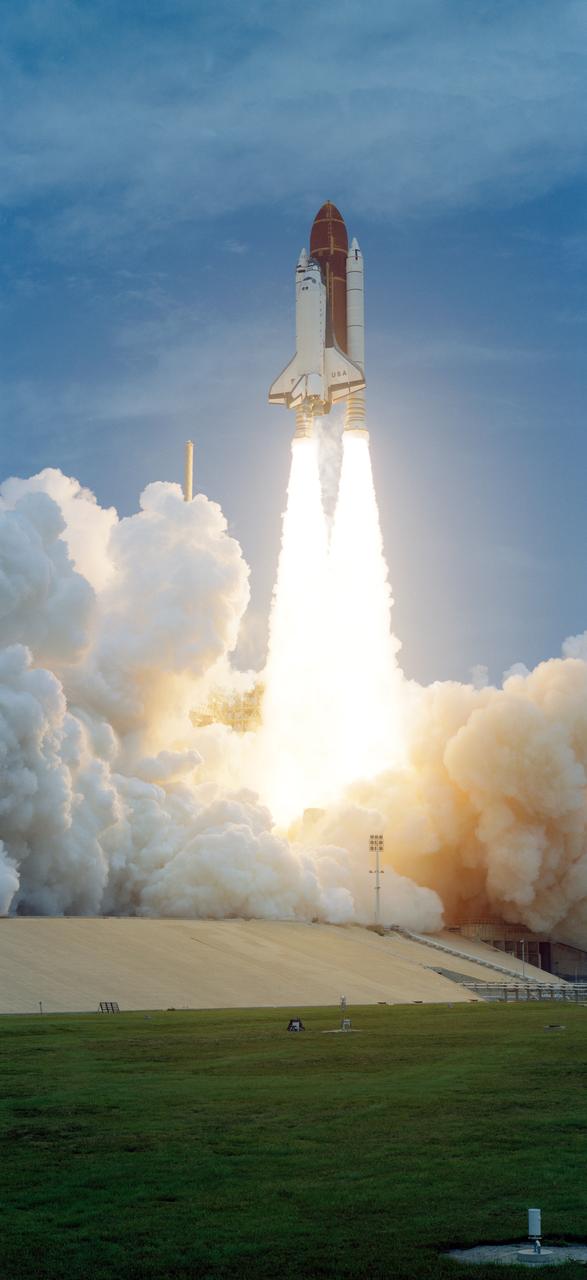
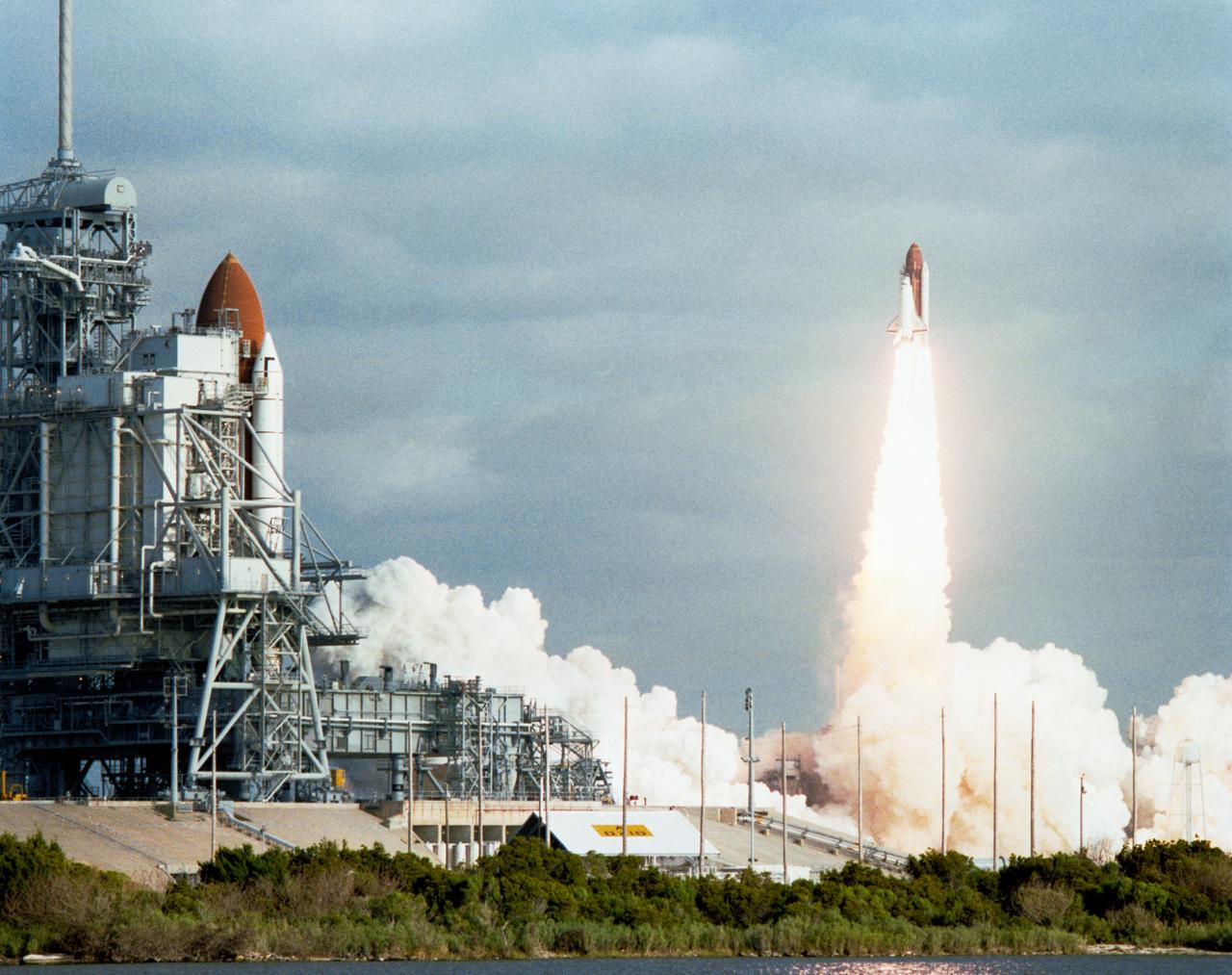
STS050-S-038 (25 June 1992) --- The Space Shuttle Columbia, NASA's first Extended Duration Orbiter (EDO), lifts off on its way toward a scheduled record 13-day mission in Earth-orbit.  Liftoff occurred at 12:12:23:0534 p.m. (EDT) on June 25, 1992.  Five NASA astronauts and two scientists/payload specialists are aboard.  The seven will divide into two shifts to support United States Microgravity Laboratory (USML) research.
STS-50 Columbia, Orbiter Vehicle (OV) 102, lifts off from KSC LC Pad 39A
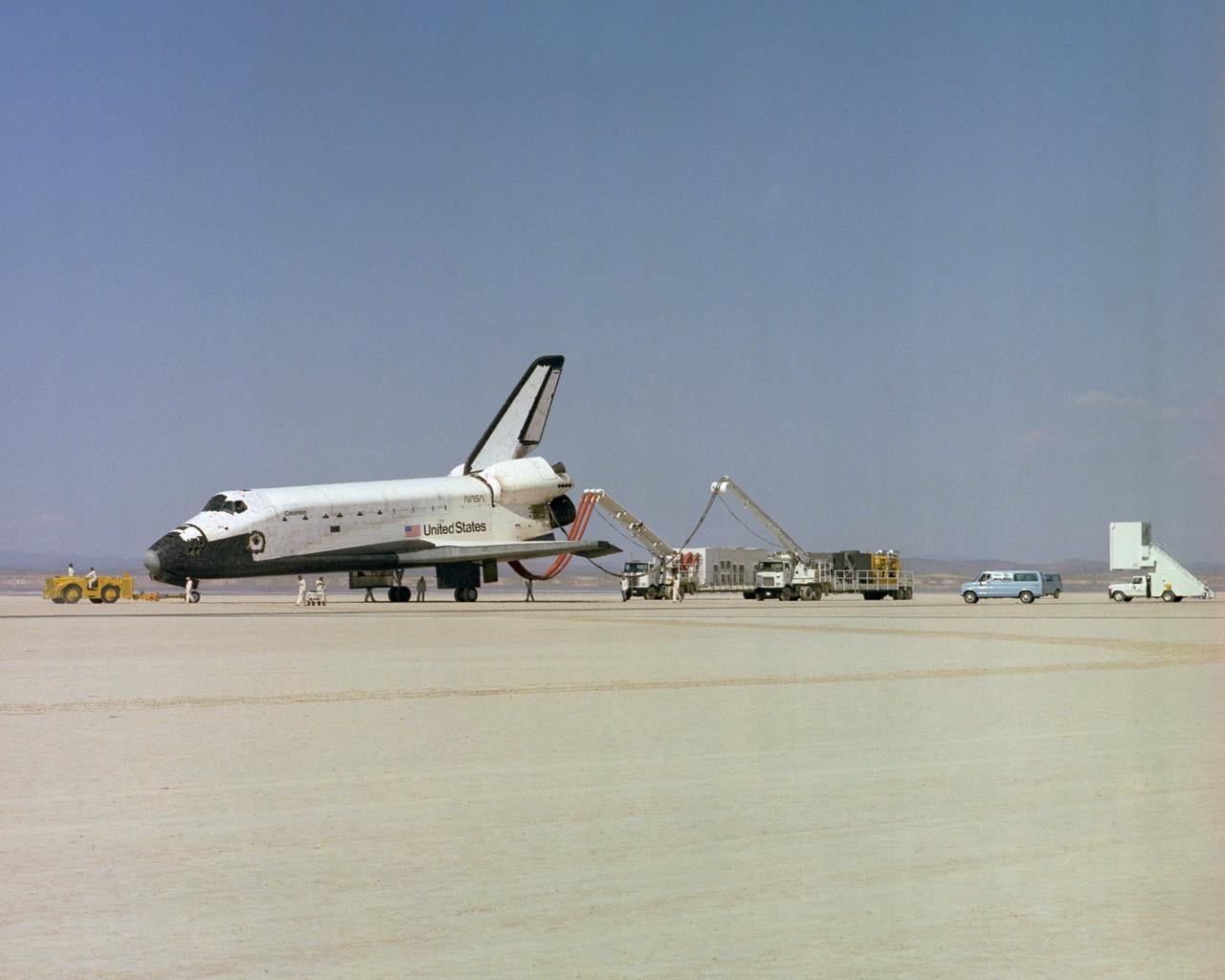
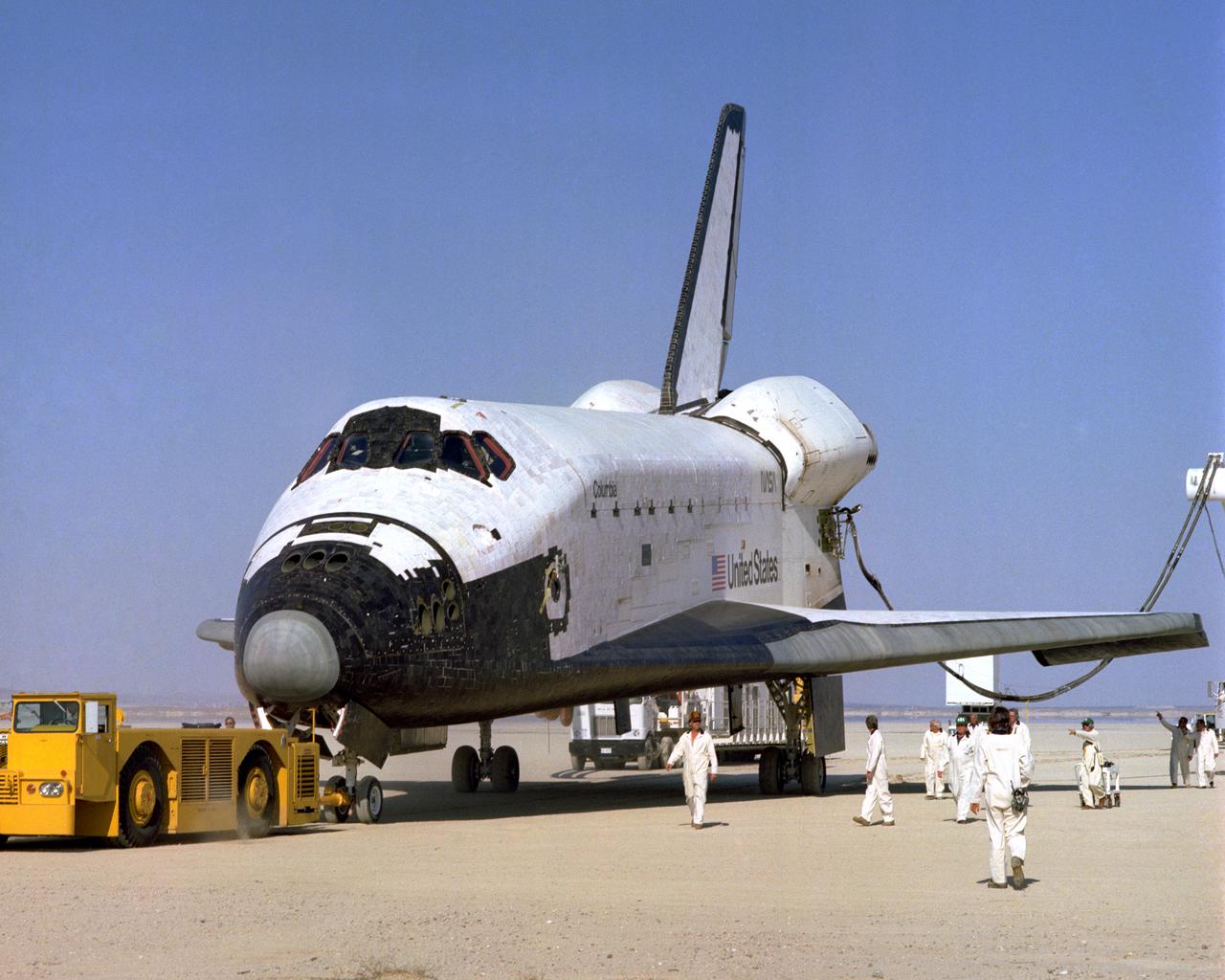
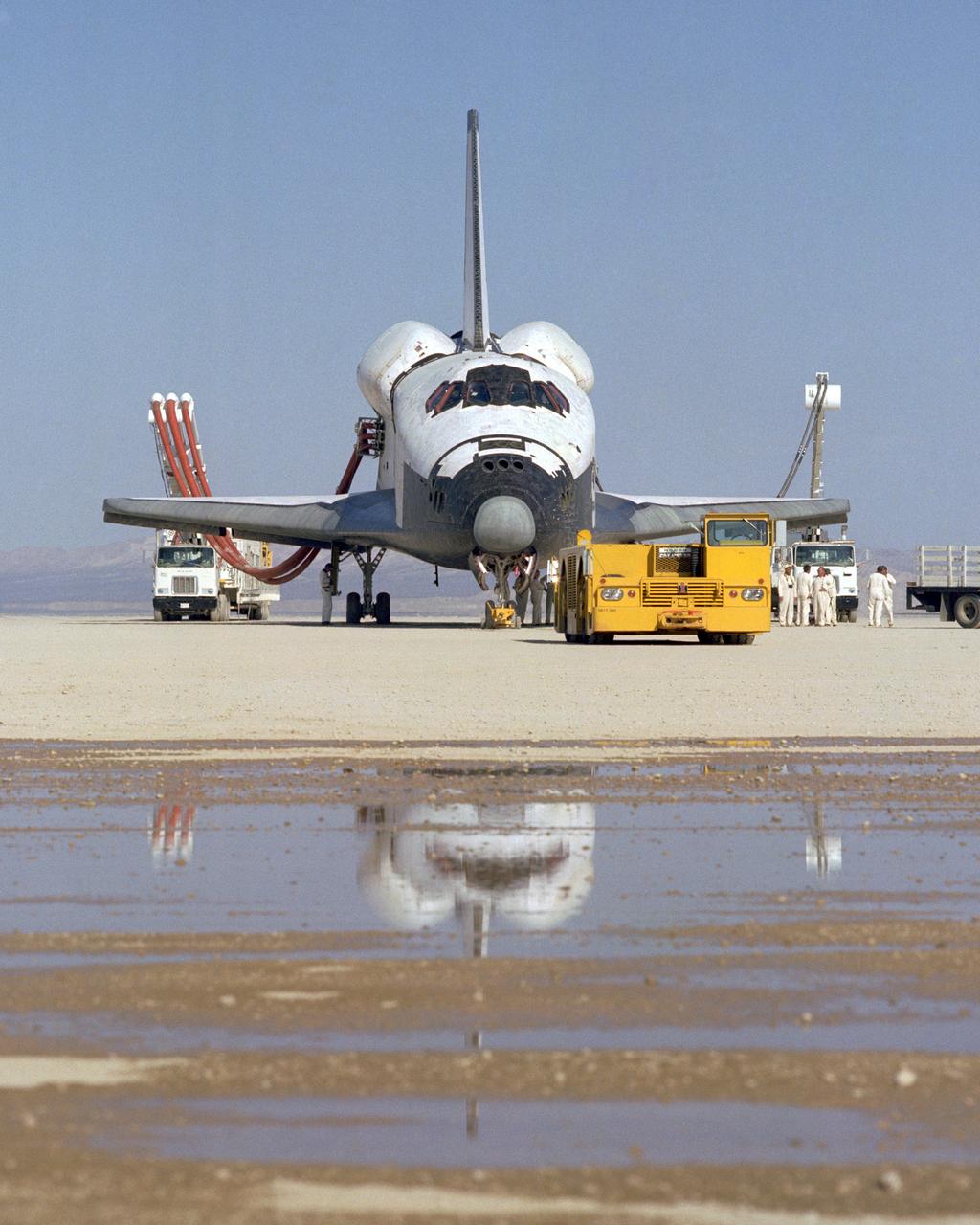
The Space Shuttle Columbia on Rogers Dry lakebed at Edwards AFB after landing to complete its first orbital mission on April 14, 1981. Technicians towed the Shuttle back to the NASA Dryden Flight Research Center for post-flight processing and preparation for a return ferry flight atop a modified 747 to Kennedy Space Center in Florida. (JSC photo # S81-30749)
The Space Shuttle Columbia on Rogers Dry lakebed at Edwards AFB after landing to complete its first orbital mission on April 14, 1981
The Space Shuttle Columbia on Rogers Dry lakebed at Edwards AFB after landing to complete its first orbital mission on April 14, 1981. Technicians towed the Shuttle back to the NASA Dryden Flight Research Center for post-flight processing and preparation for a return ferry flight atop a modified 747 to Kennedy Space Center in Florida. (JSC photo # S81-31163)
The Space Shuttle Columbia on Rogers Dry lakebed at Edwards AFB after landing to complete its first orbital mission on April 14, 1981
The Space Shuttle Columbia on Rogers Dry lakebed at Edwards AFB after landing to complete its first orbital mission on April 14, 1981. Technicians towed the Shuttle back to the NASA Dryden Flight Research Center for post-flight processing and preparation for a return ferry flight atop a modified 747 to Kennedy Space Center in Florida.
The Space Shuttle Columbia on Rogers Dry lakebed at Edwards AFB after landing to complete its first orbital mission on April 14, 1981
STS58-S-126 (1 Nov 1993) --- The Space Shuttle Columbia is about to touch down on the runway at Edwards Air Force Base (EAFB) in California.  The landing, which occurred at 7:06 a.m. (PST), November 1, 1993, completed a two week mission in space devoted to medical research.  Onboard the spacecraft were astronauts John E. Blaha, Richard A. Searfoss, Rhea Seddon, Shannon W. Lucid, David A. Wolf and William S. McArthur along with payload specialist Martin J. Fettman, DVM.
Landing of STS-58 Orbiter Columbia at Edwards Air Force Base
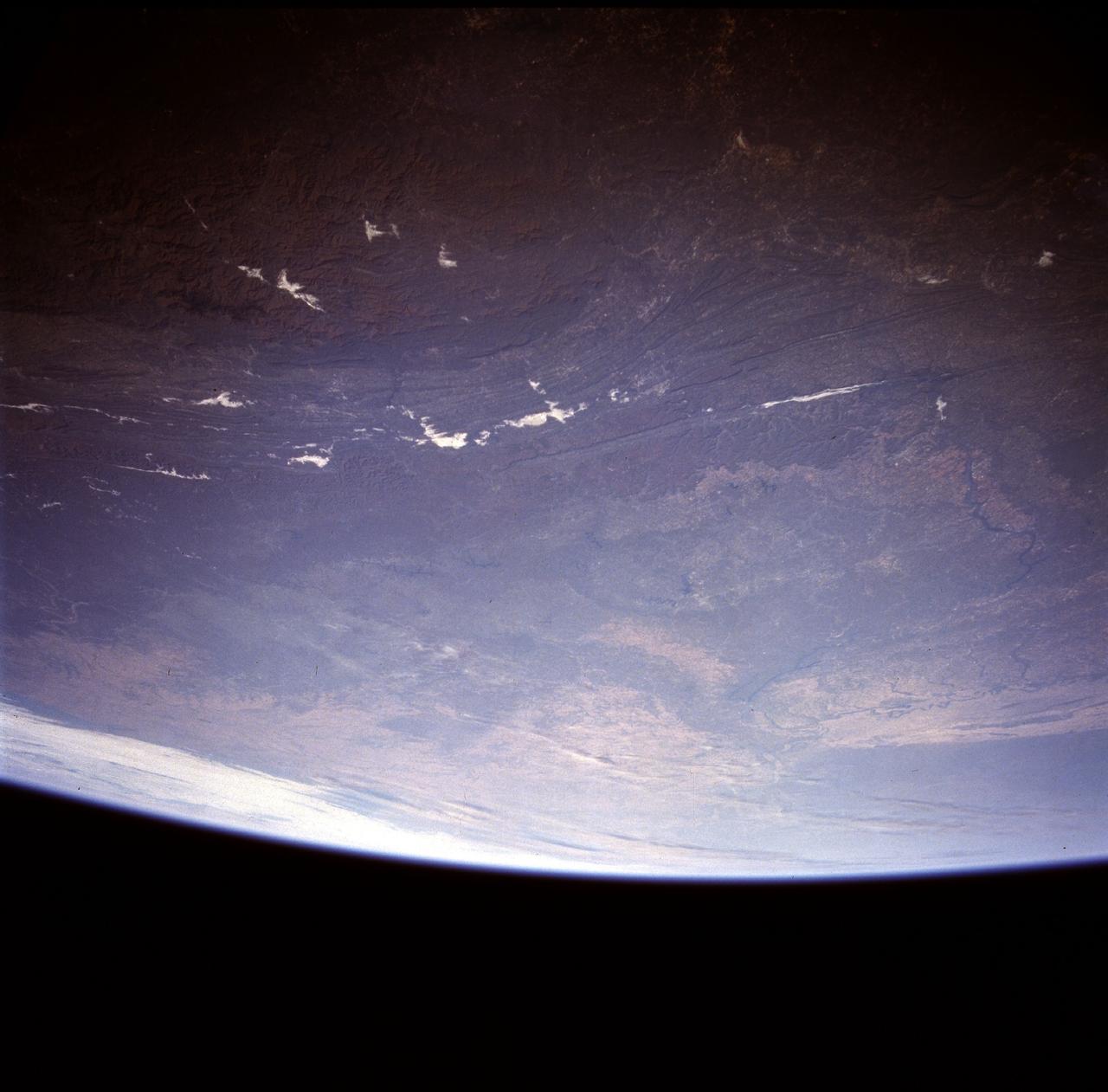
STS073-728-010 (22 October 1995) --- Photographed by the astronauts aboard the Space Shuttle Columbia orbiting at 146 nautical miles above Earth is this scene over West Virginia featuring the Appalachian Mountains. Center point coordinates are 37.5 degrees north latitude and 80.5 degrees west longitude.
Earth observations taken from shuttle orbiter Columbia
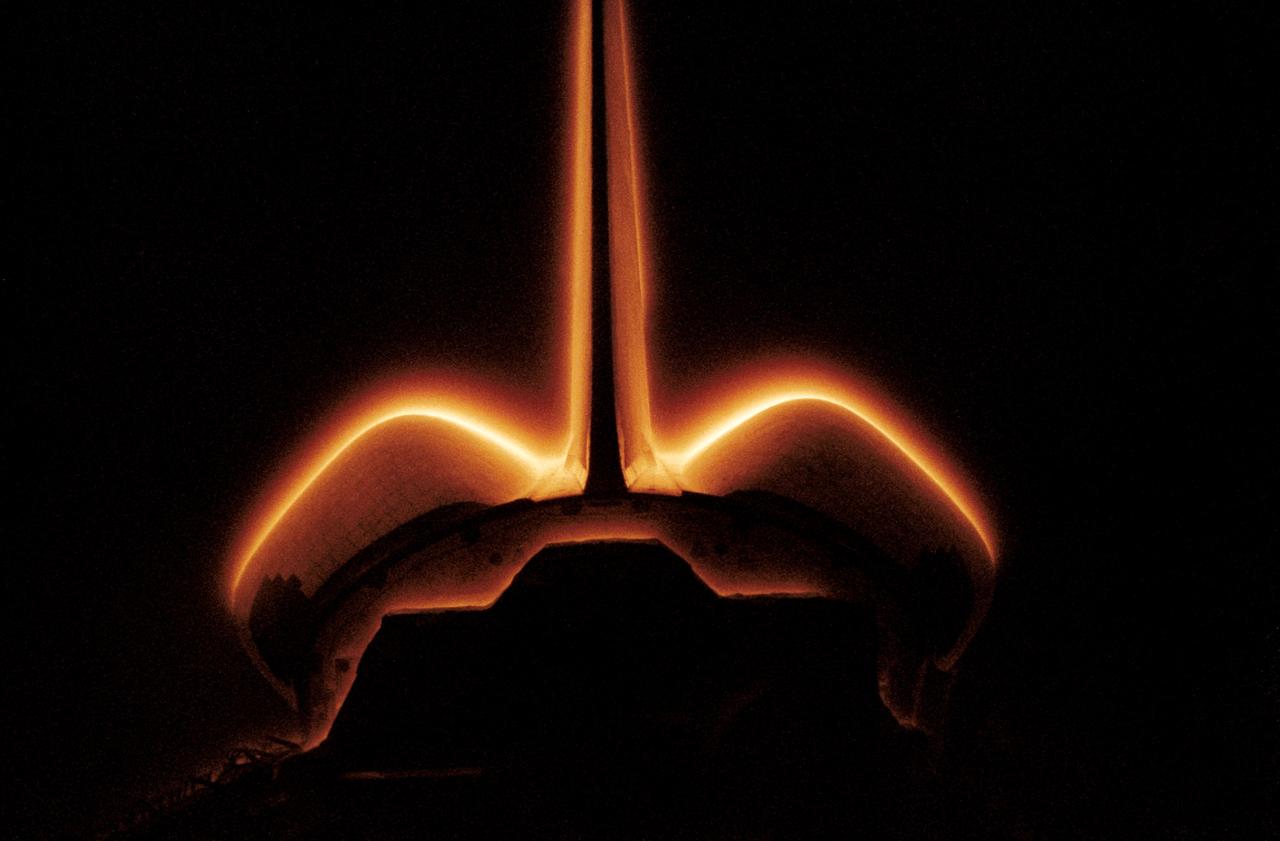
STS062-42-026 (4-18 March 1994) --- This 35mm frame, photographed as the Space Shuttle Columbia was orbiting Earth during a "night" pass, documents the glow phenomenon surrounding the vertical stabilizer and the Orbital Maneuvering System (OMS) pods of the spacecraft.
Glow phenomenon surrounding the vertical stabilizer and OMS pods
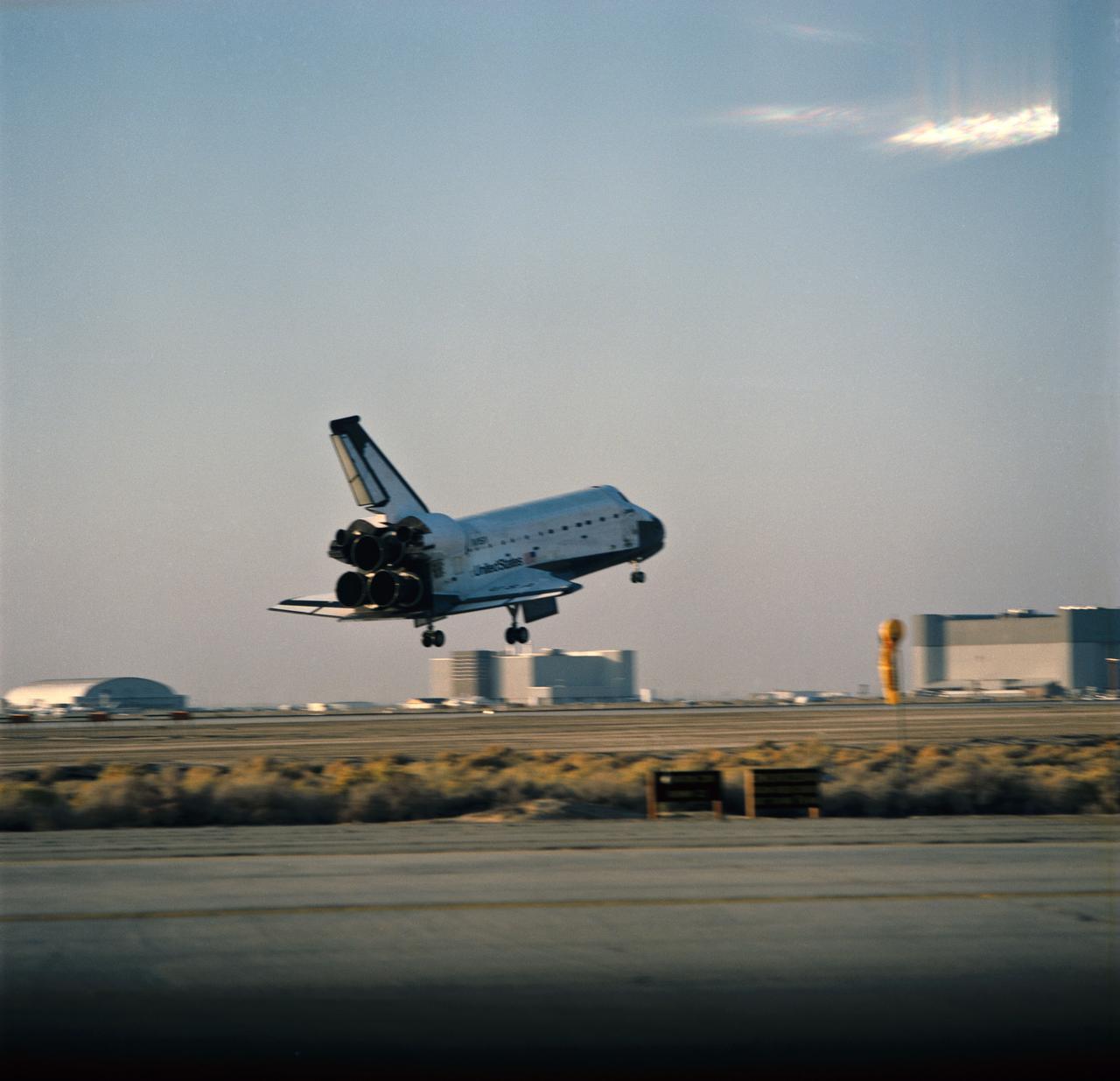
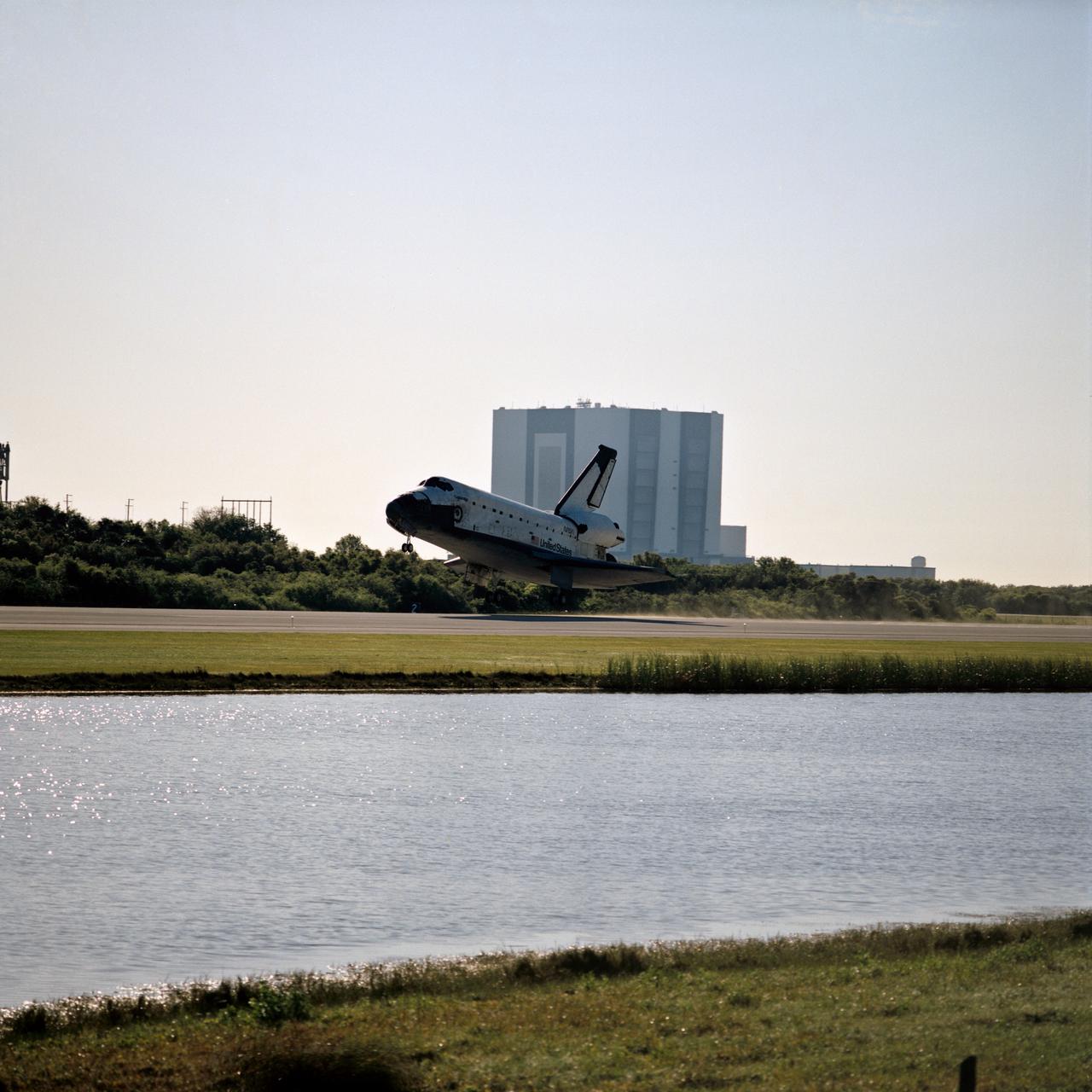
STS062-S-030 (18 March 1994) --- The Space Shuttle Columbia is about to touch down on the Shuttle landing facility following almost 14 days in earth orbit for five NASA astronauts and a variety of experiments.  The giant Vehicle Assembly Building (VAB) where Columbia had been mated to its external fuel tank and two solid rockets is in the background.  Touchdown occurred at 8:09 a.m. (EST), March 18, 1994.  Thirteen days, 23 hours and 16 minutes were logged by the crew members -- astronauts John H. Casper, Andrew M. Allen, Marsha S. Ivins, Pierre J. Thuot and Charles D. (Sam) Gemar.
Columbia just prior to touchdown after STS-62
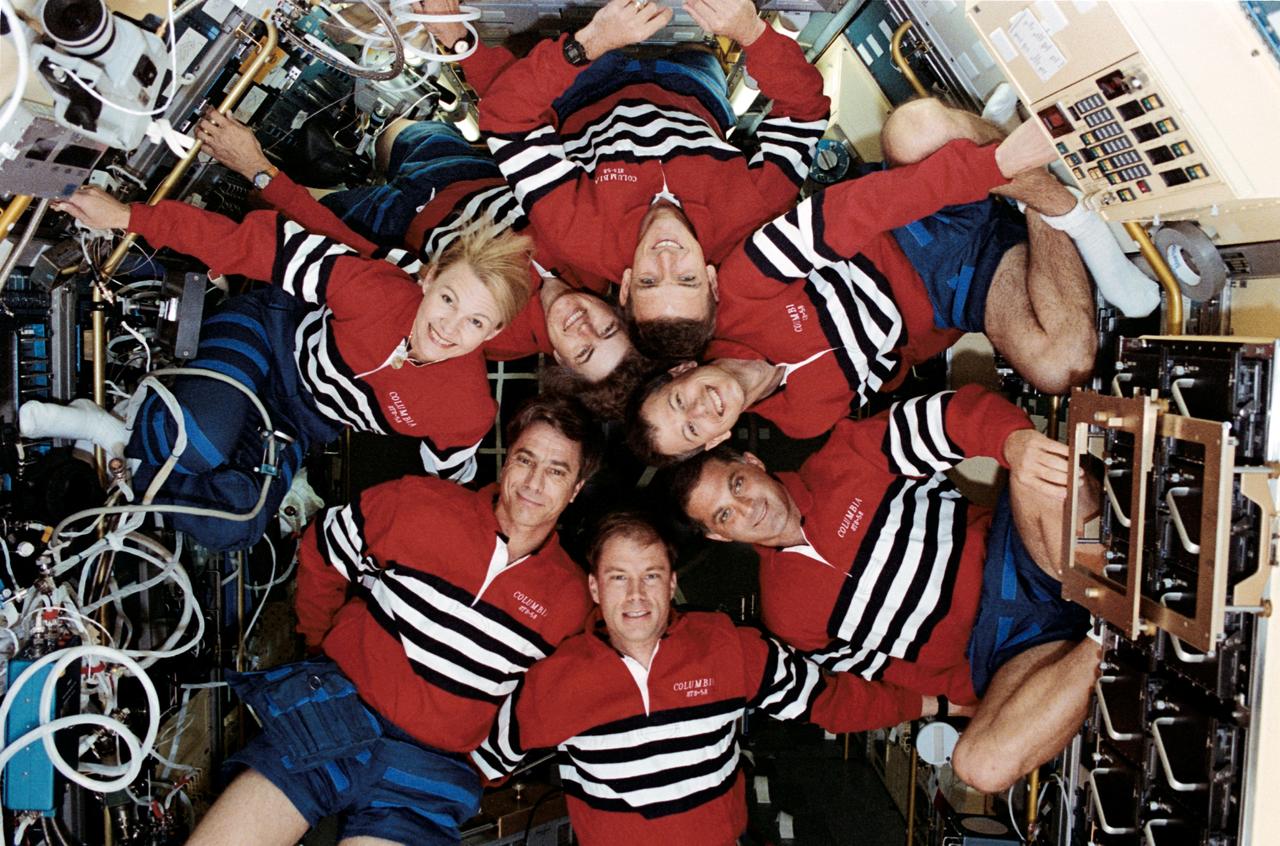
STS058-16-008 (18 Oct.-1 Nov. 1993) --- Inside the science module aboard the Earth-orbiting space shuttle Columbia, a pre-set 35mm camera recorded the traditional inflight portrait of the STS-58 crew. Pictured are (counter-clockwise from the roll of tape at upper right) payload specialist Martin J. Fettman, DVM; William S. McArthur and Shannon W. Lucid, mission specialists; Rhea Seddon, payload commander; John E. Blaha, mission commander; Richard A. Searfoss, pilot; and David A. Wolf, mission specialist. Photo credit: NASA
STS-58 crew onboard portrait
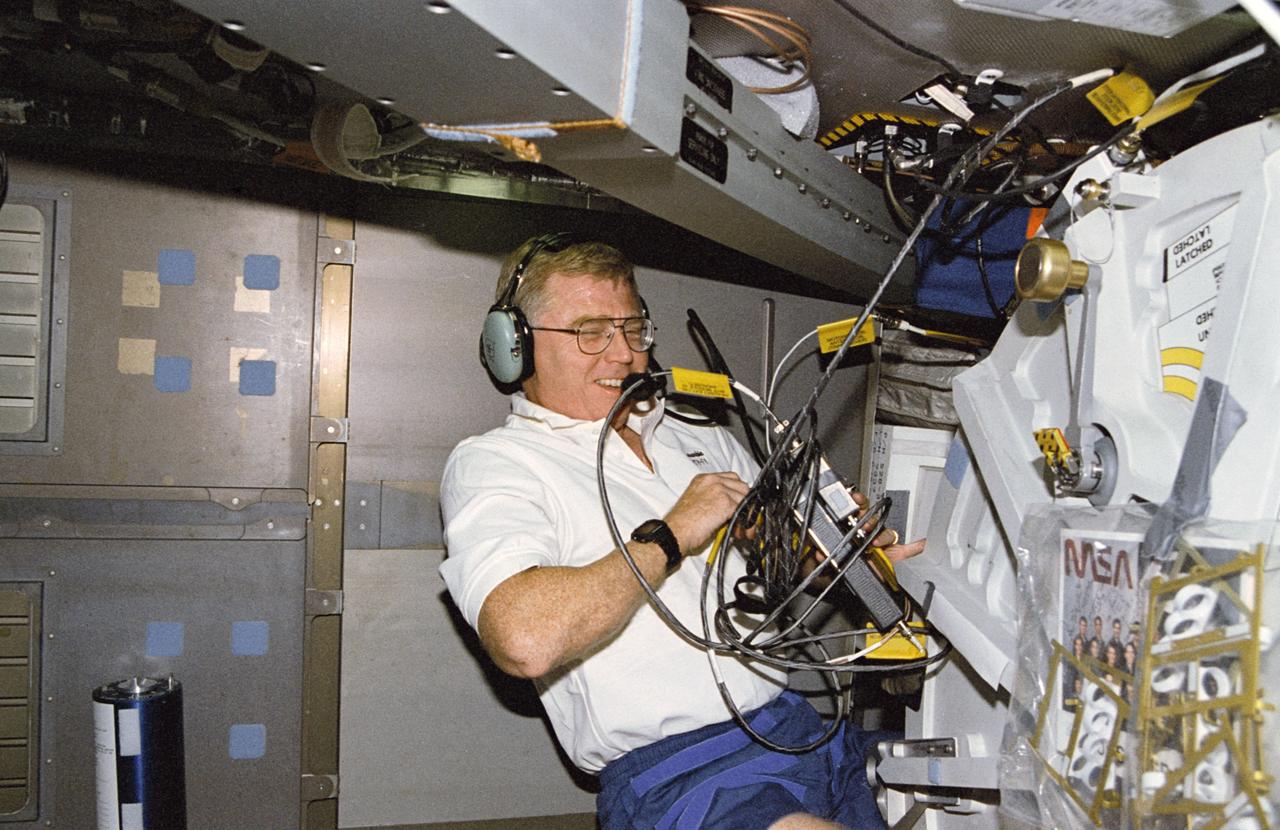
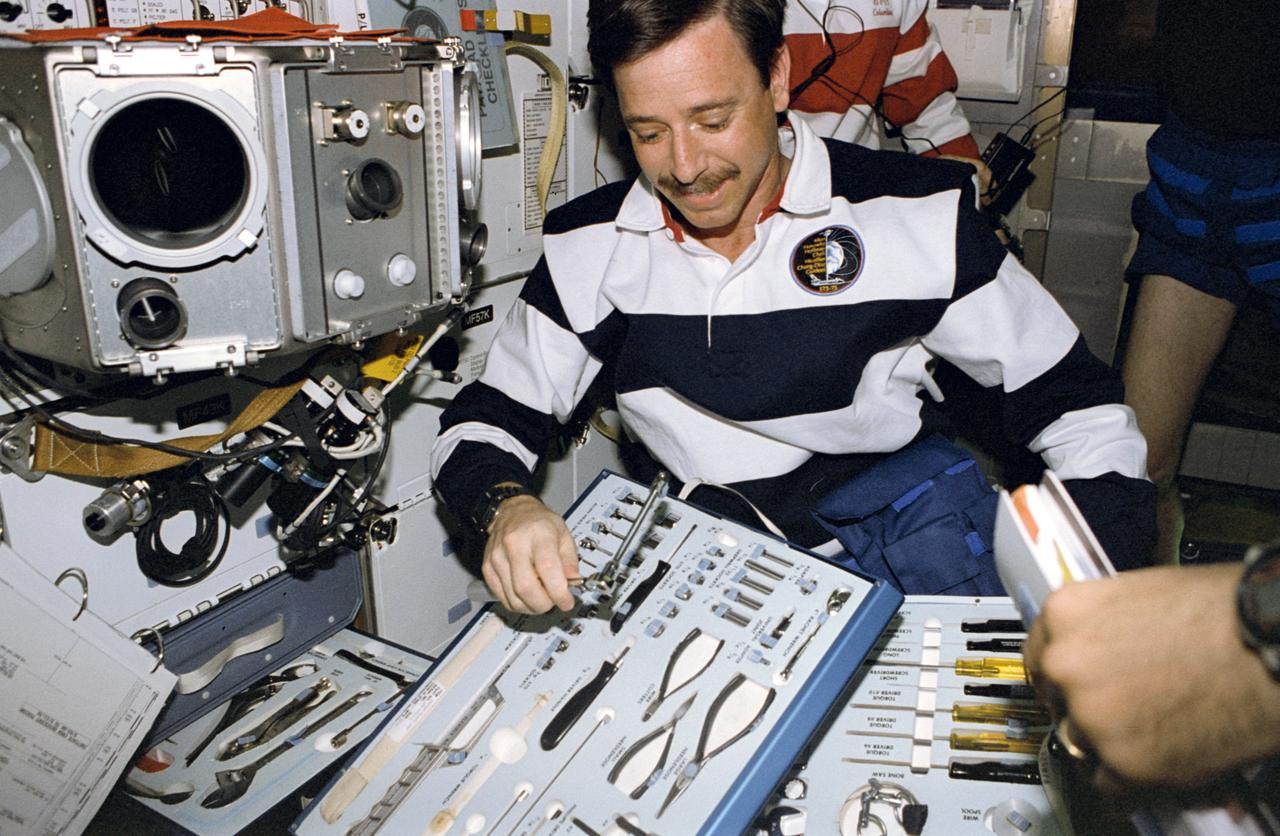
STS075-333-032 (22 Feb.- 9 March 1996) --- Astronaut Scott J. Horowitz, pilot, looks over tools he may use to perform an Inflight Maintenance (IFM) chore on the mid deck of the Earth-orbiting space shuttle Columbia. The glovebox facility is at upper left. Horowitz joined four other astronauts and an international payload specialist for 16 days of scientific research in Earth-orbit.
Astronaut Horowitz with tools
The Space Shuttle Columbia on Rogers Dry lakebed at Edwards AFB after landing to complete its first orbital mission on April 14, 1981. Technicians towed the Shuttle back to the NASA Dryden Flight Research Center for post-flight processing and preparation for a return ferry flight atop a modified 747 to Kennedy Space Center in Florida.
The Space Shuttle Columbia on Rogers Dry lakebed at Edwards AFB after landing to complete its first orbital mission on April 14, 1981
The Space Shuttle Columbia on Rogers Dry lakebed at Edwards AFB after landing to complete its first orbital mission on April 14, 1981. Technicians towed the Shuttle back to the NASA Dryden Flight Research Center for post-flight processing and preparation for a return ferry flight atop a modified 747 to Kennedy Space Center in Florida.
The Space Shuttle Columbia on Rogers Dry lakebed at Edwards AFB after landing to complete its first orbital mission on April 14, 1981
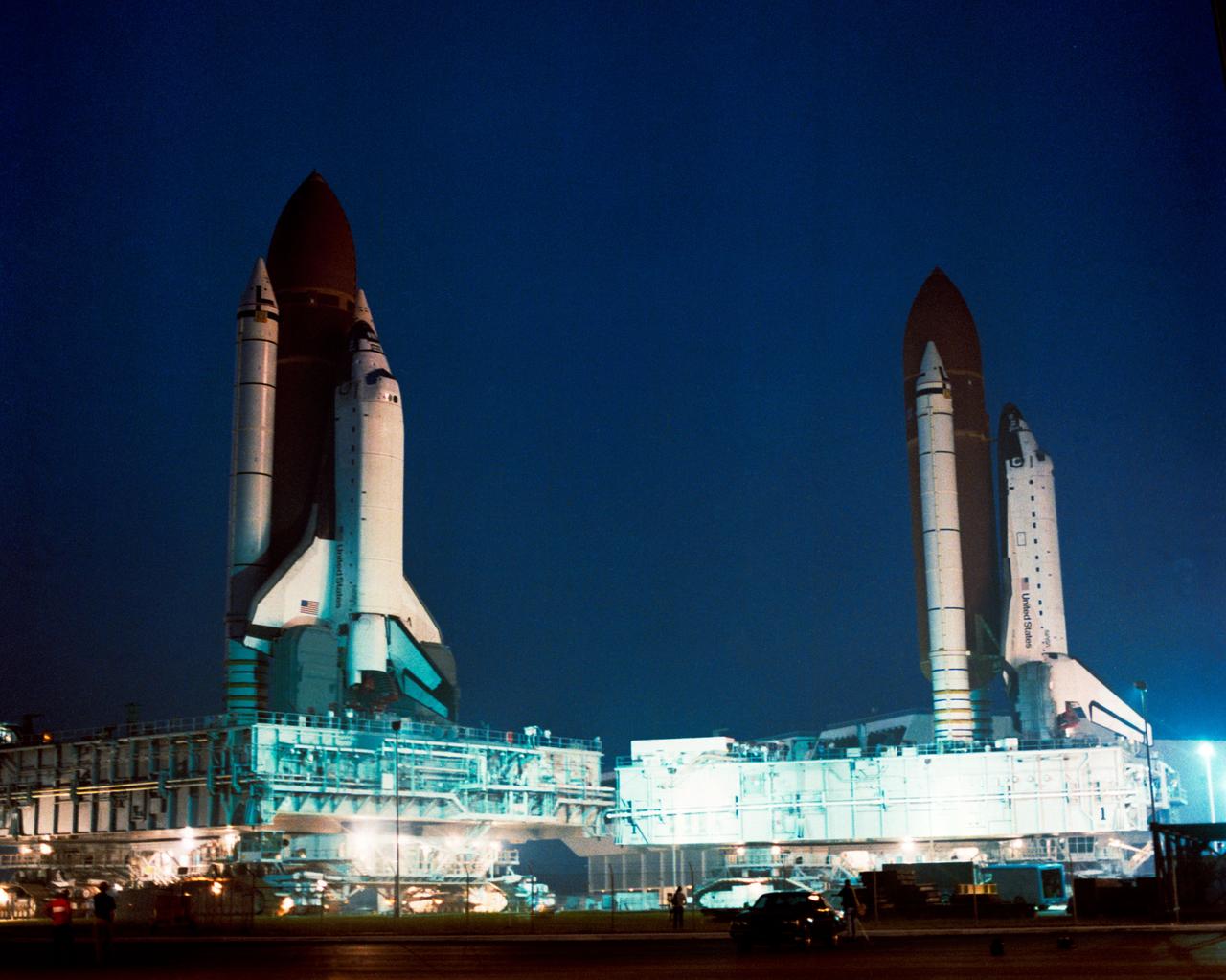
Columbia, Orbiter Vehicle (OV) 102, slated for mission STS-35, left, rolls past Atlantis, OV-104, on its way to Kennedy Space Center (KSC) launch pad 39A. OV-104, being readied for STS-38, is parked in front of the Vehicle Assembly Building (VAB) following its rollback from the pad for liquid hydrogen (LH2) line repairs. View provided by KSC with alternate number KSC-90PC-1152.
STS-35 Columbia, OV-102, passes STS-38 Atlantis, OV-104, heading to Pad 39A
S79-30819 (24 March 1979) --- The space shuttle orbiter 102 Columbia riding ?piggyback? on NASA 905, a 747 carrier aircraft, is only seconds away from landing on Kennedy Space Center?s Shuttle landing facility, ending a 2,400-mile ferry flight from California. The T-38 chase plane at left is flown by Donald K. Slayton, manager for the orbital fight test (OFT) program. Columbia will be used for the OFT program, and it will be manned by astronauts John W. Young and Robert L. Crippen the first time it flies in space. The vehicle assembly building (VAB) is in right background. Photo credit: NASA
ORBITER 102 - COLUMBIA PIGGY-BACK - NASA 905 - KSC
STS052-S-051 (22 Oct 1992) --- This distant 70mm image shows the Space Shuttle Columbia clearing the tower at Launch Pad 39B, at the Kennedy Space Center (KSC), on its way toward a ten-day Earth-orbital mission with a crew of five NASA astronauts and a Canadian payload specialist.  Liftoff occurred at 1:09:39 p.m. (EDT), October 22, 1992.  Crew members are astronauts James D. Wetherbee, Michael A. Baker, Tamara E. Jernigan, Charles L. (Lacy) Veach and William M. Shepherd, along with payload specialist Steven G. MacLean.  Payloads onboard include the Laser Geodynamic Satellite II (LAGEOS II), which will be deployed early in the mission, a series of Canadian experiments, and the United States Microgravity Payload-1 (USMP-1).
STS-52 Columbia, Orbiter Vehicle (OV) 102, lifts off from KSC LC Pad 39B
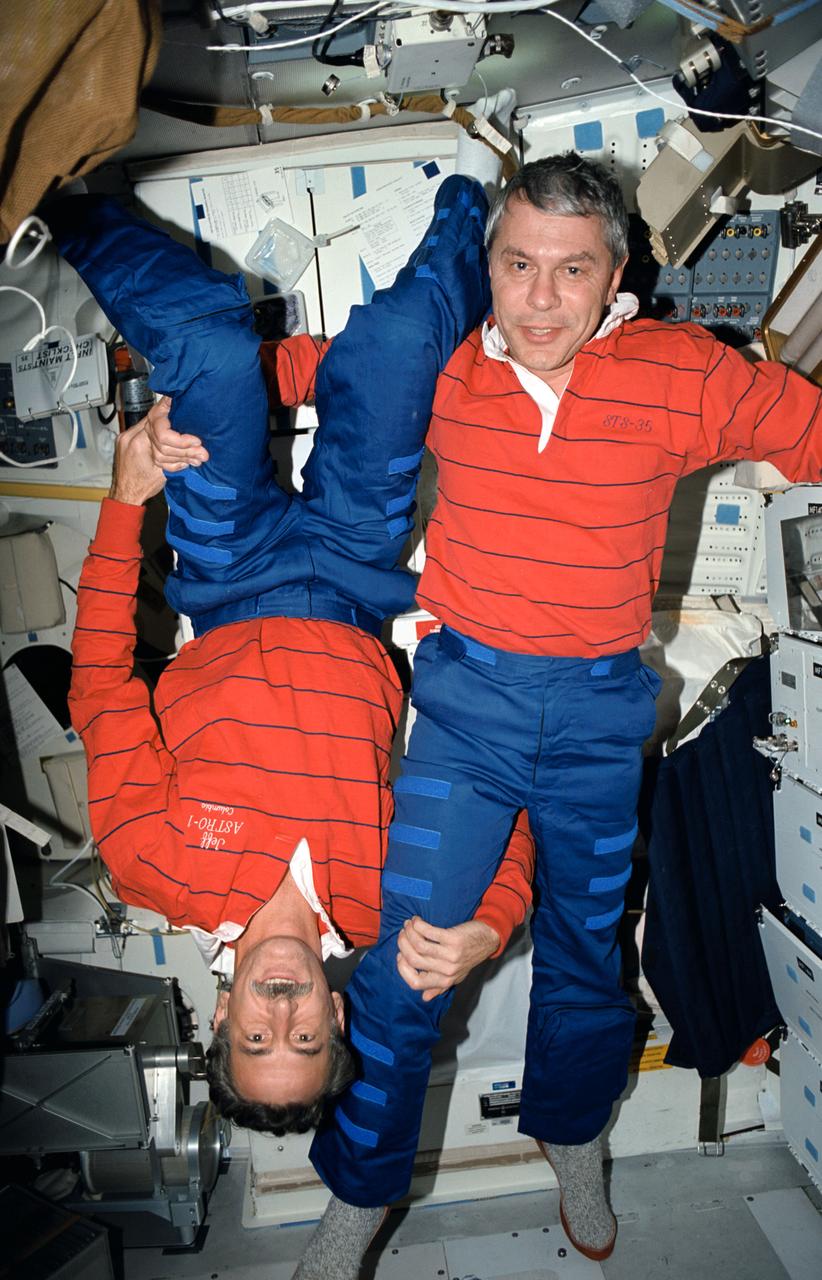
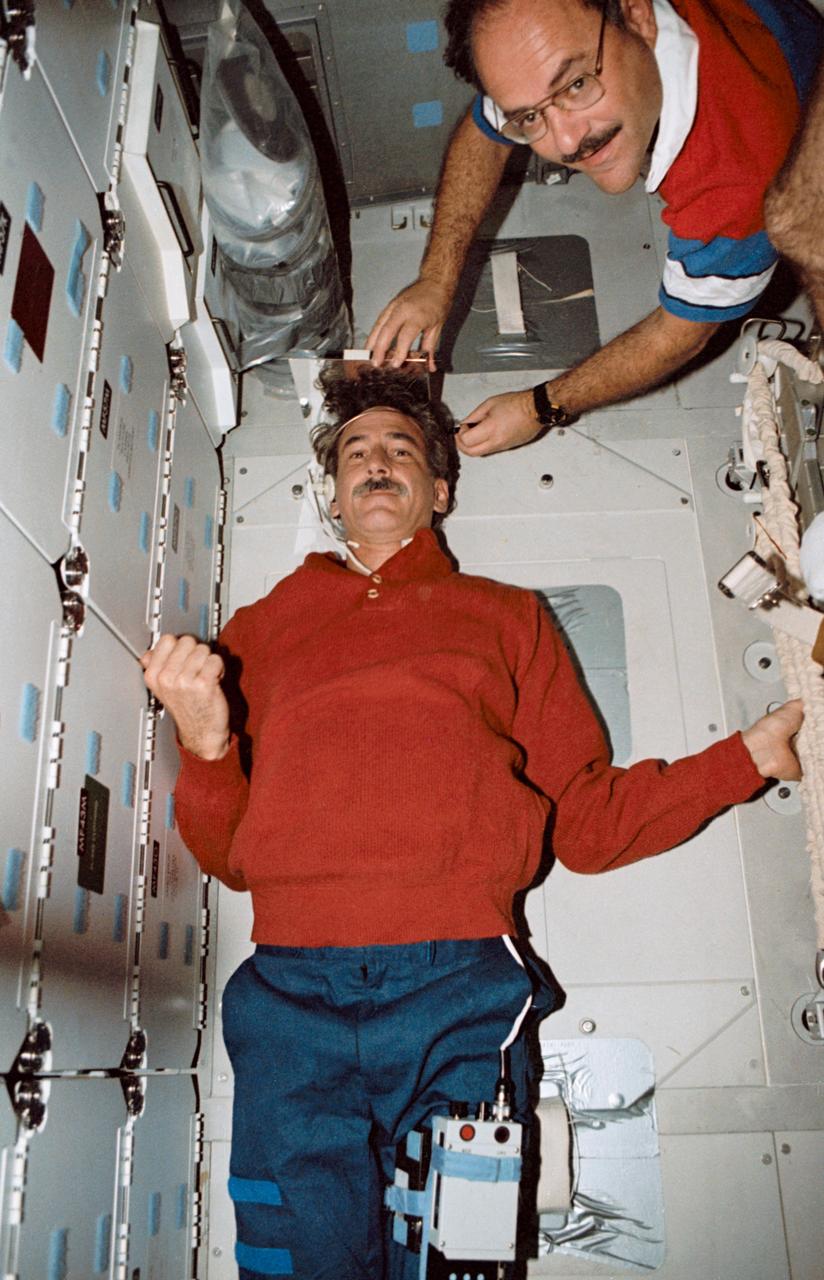
STS035-49-029 (2-10 Dec 1990) --- Posing on the middeck of Columbia, Orbiter Vehicle (OV) 102, are Mission Specialist (MS) Jeffrey A. Hoffman (mustache) and MS Robert A. R. Parker. Determining who is right side up is complicated by the microgravity of space. Hoffman's head is at the middeck floor and his feet are at the ceiling. The two crewmembers are in front of OV-102's port side with the waste collection system (WCS) contingency unit, side hatch, and galley visible behind them.
STS-35 MS Hoffman and MS Parker on the middeck of Columbia, OV-102
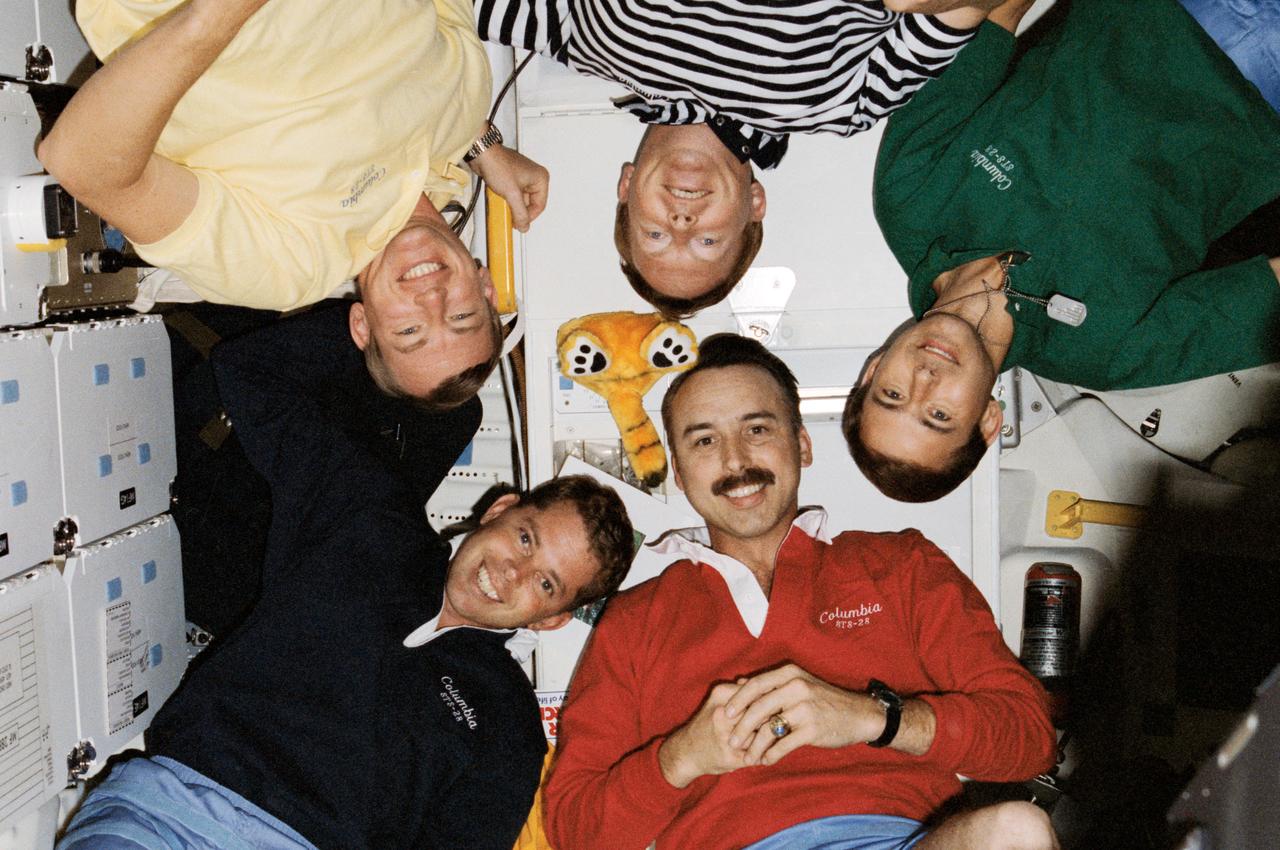
STS028-22-030 (August 1989) --- An in-space crew portrait of the astronauts for the STS-28 mission.  Brewster H. Shaw Jr., mission commander, is at lower left corner.  Others are, clockwise from Shaw's position, James C. Adamson, David C. Leestma and Mark N. Brown, all mission specialists; and Richard N. Richards, pilot.  The photo was taken on the middeck of the earth-orbiting Columbia.
STS-28 Columbia, OV-102, crewmembers pose for group portrait on middeck
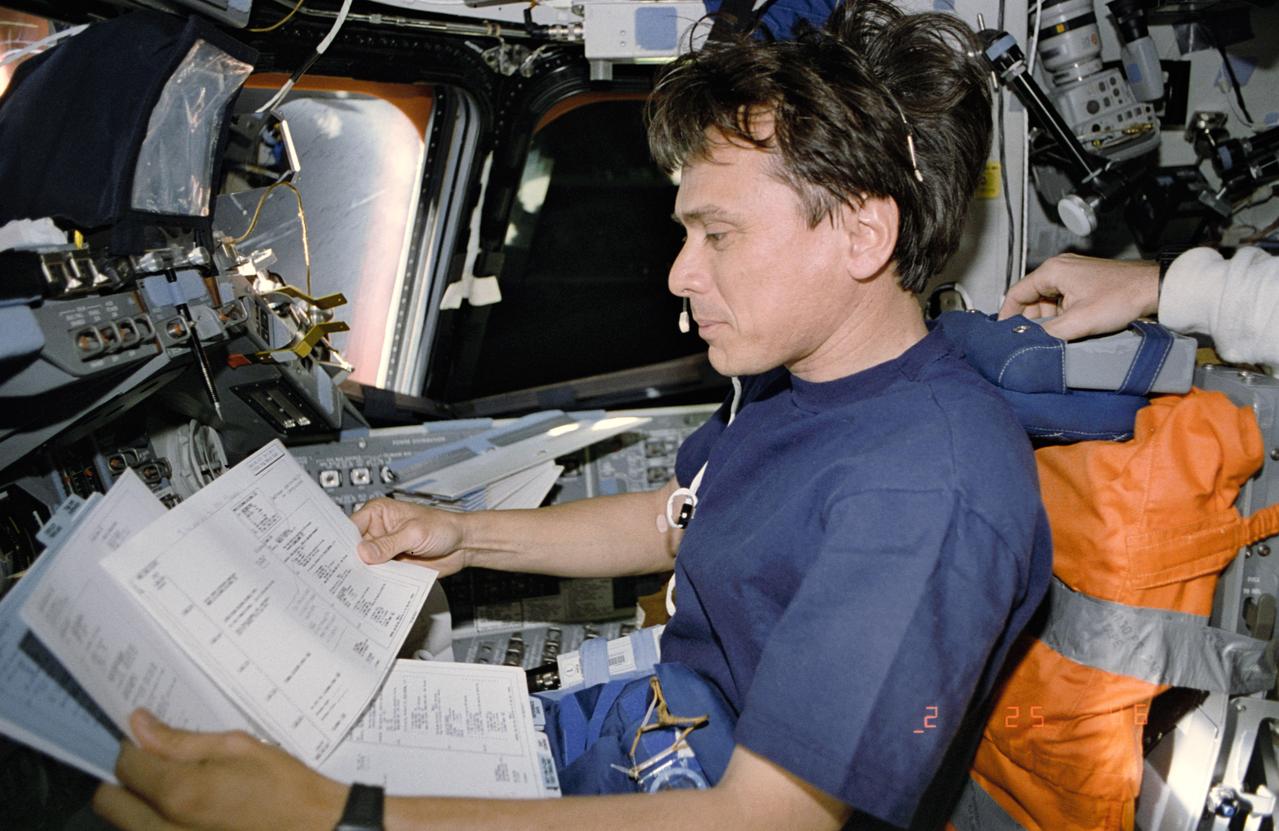
STS075-328-018 (25 Feb. 1996) --- Astronaut Franklin R. Chang-Diaz, STS-75 payload commander, is busy at the pilot's station during operations to deploy the Tethered Satellite System (TSS). His five crew mates (out of frame) were also on the flight deck, of the Earth-orbiting space shuttle Columbia, during the busy deployment activities.
Astronaut Chang-Diaz on forward flight deck during TSS-1R deployment
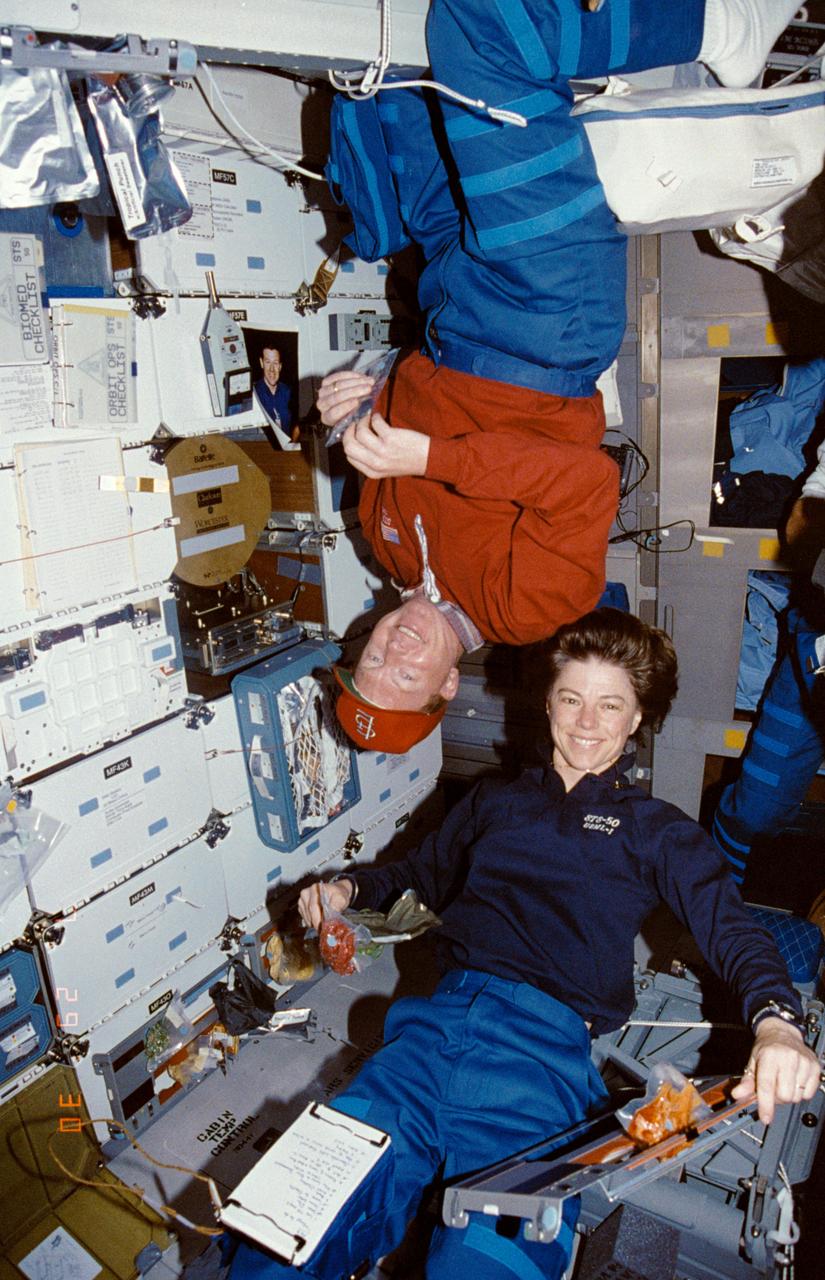
STS050-25-024 (25 June-9 July 1992) --- Astronauts Richard N. Richards and Bonnie J. Dunbar, momentarily on leave from the United States Microgravity Laboratory (USML-1) science module, share a meal on the middeck of the Earth-orbiting Space Shuttle Columbia. Richards is mission commander, and Dunbar is payload commander on the record-setting 14-day mission.  Near Richards' head is the Astroculture experiment.
Crewmembers eating in the mid deck.
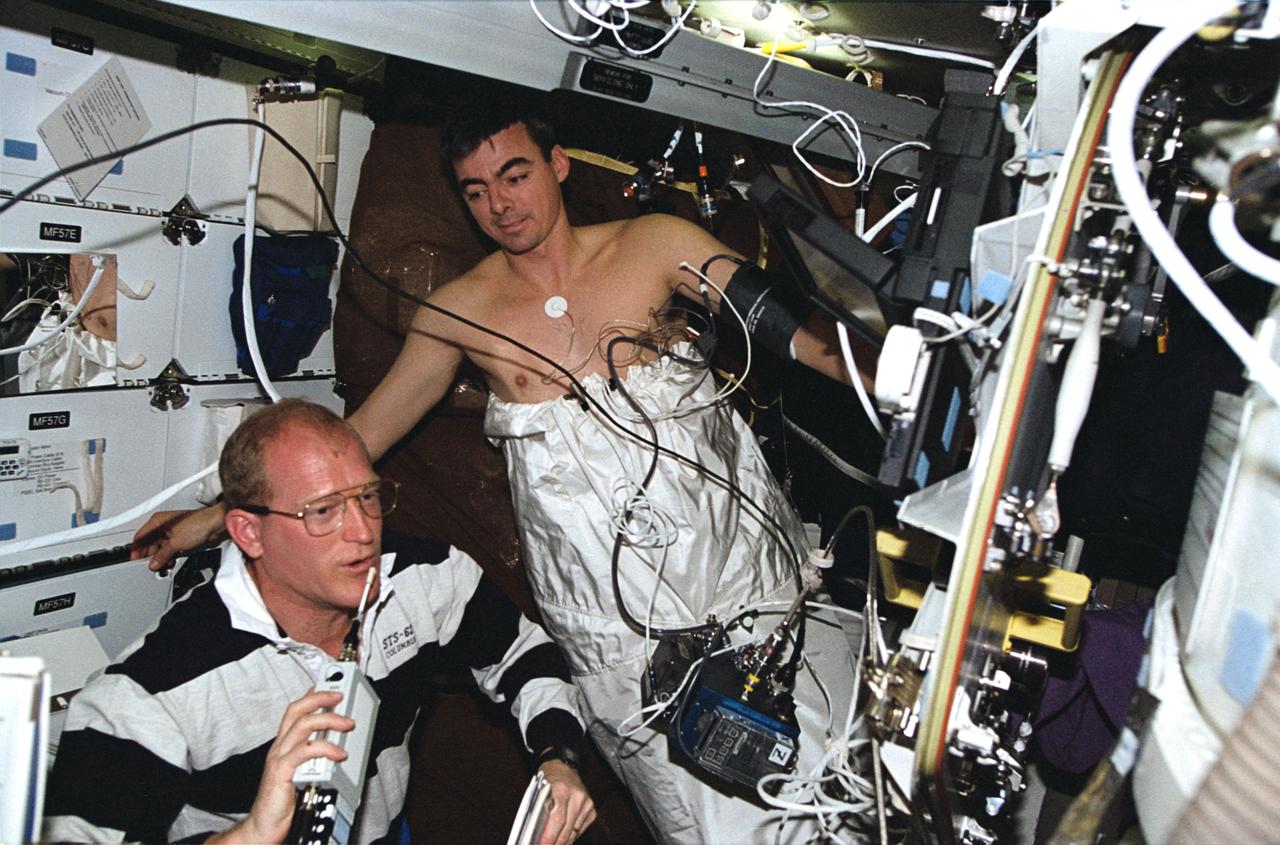
STS062-01-032 (4-14 March 1994) --- Astronaut Charles D. (Sam) Gemar, mission specialist, talks to ground controllers while assisting astronaut Andrew M. Allen with a "soak" in the Lower Body Negative Pressure (LBNP) apparatus on Columbia's middeck.  The pair was joined by three other veteran NASA astronauts for 14-days of scientific research aboard the Space Shuttle Columbia in earth orbit.
Astronauts Gemar and Allen work with lower body negative pressure experiment
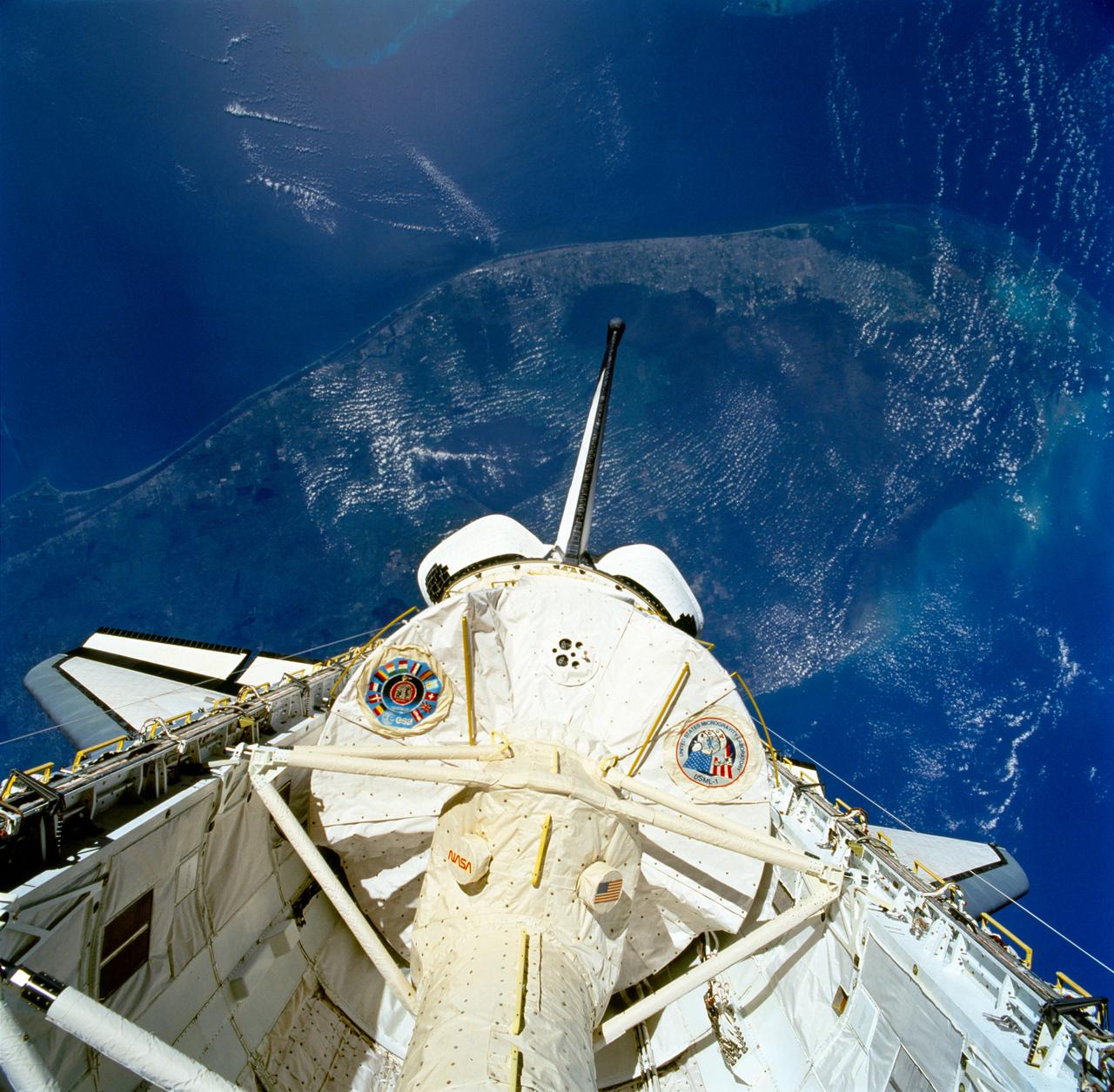
STS050-81-027 (25 June-9 July 1992) --- The first United States Microgravity Laboratory 1 (USML-1) module is pictured in the payload bay of the Earth-orbiting Space Shuttle Columbia in this scene over the southern two-thirds of the Florida peninsula.  The Kennedy Space Center (KSC), where the mission began, can be seen just above Columbia's starboard wing.  (Hold photo with number at left.)
South Florida and Payload Bay
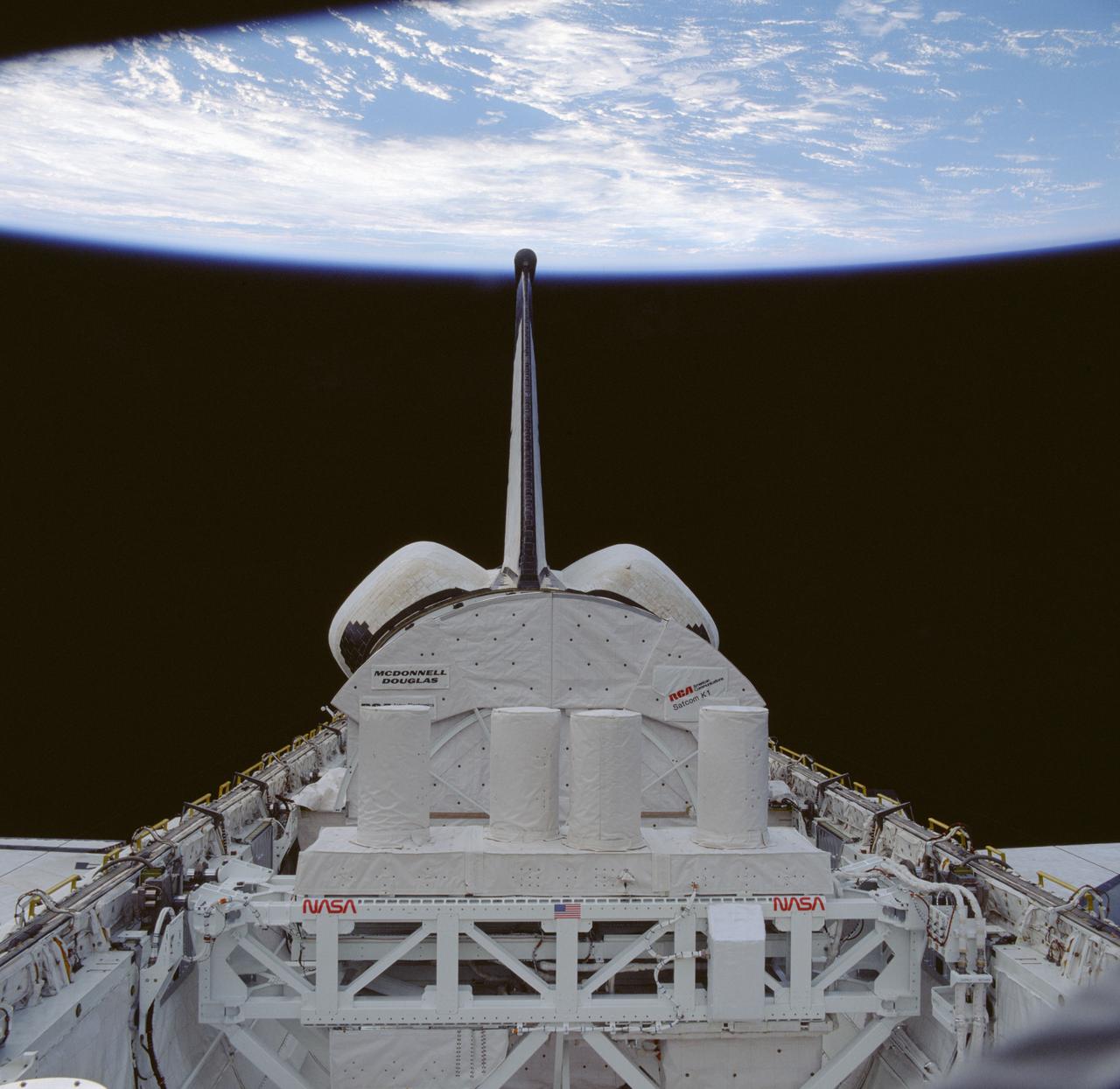
61C-39-002 (12-17 Jan 1986) --- This view of the cargo bay of the Earth-orbiting Space Shuttle Columbia reveals some of the STS 61-C mission payloads.  The materials science laboratory (MSL-2), sponsored by the Marshall Space Flight Center  (MSFC), is in the foreground.  A small portion of  the first Hitchhiker payload, sponsored by the Goddard Space Flight Center (GSFC), is in the immediate foreground, mounted to the spacecraft's starboard side.  The closed sun shield for the now-vacated RCA SATCOM K-1 communications satellite is behind the MSL.  Completely out of view, behind the shield, are 13 getaway specials in canisters.  Clouds over ocean and the blackness of space share the backdrop for the 70mm camera's frame.
View of the Shuttle Columbia's payload bay and payloads in orbit
STS062-S-031 (18 March 1994) --- The main landing gear on the Space Shuttle Columbia touches down on the Shuttle Landing Facility at Kennedy Space Center (KSC). The scene followed almost 14-days in Earth-orbit for five NASA astronauts and a variety of experiments. Touch down occurred at 8:09 a.m. (EST), March 18, 1994. Thirteen days, 23 hours and 16 minutes were logged by the crew members -- astronauts John H. Casper, Andrew M. Allen, Marsha S. Ivins, Pierre J. Thuot and Charles D. (Sam) Gemar.
Columbia just prior to touchdown, at the end of STS-62
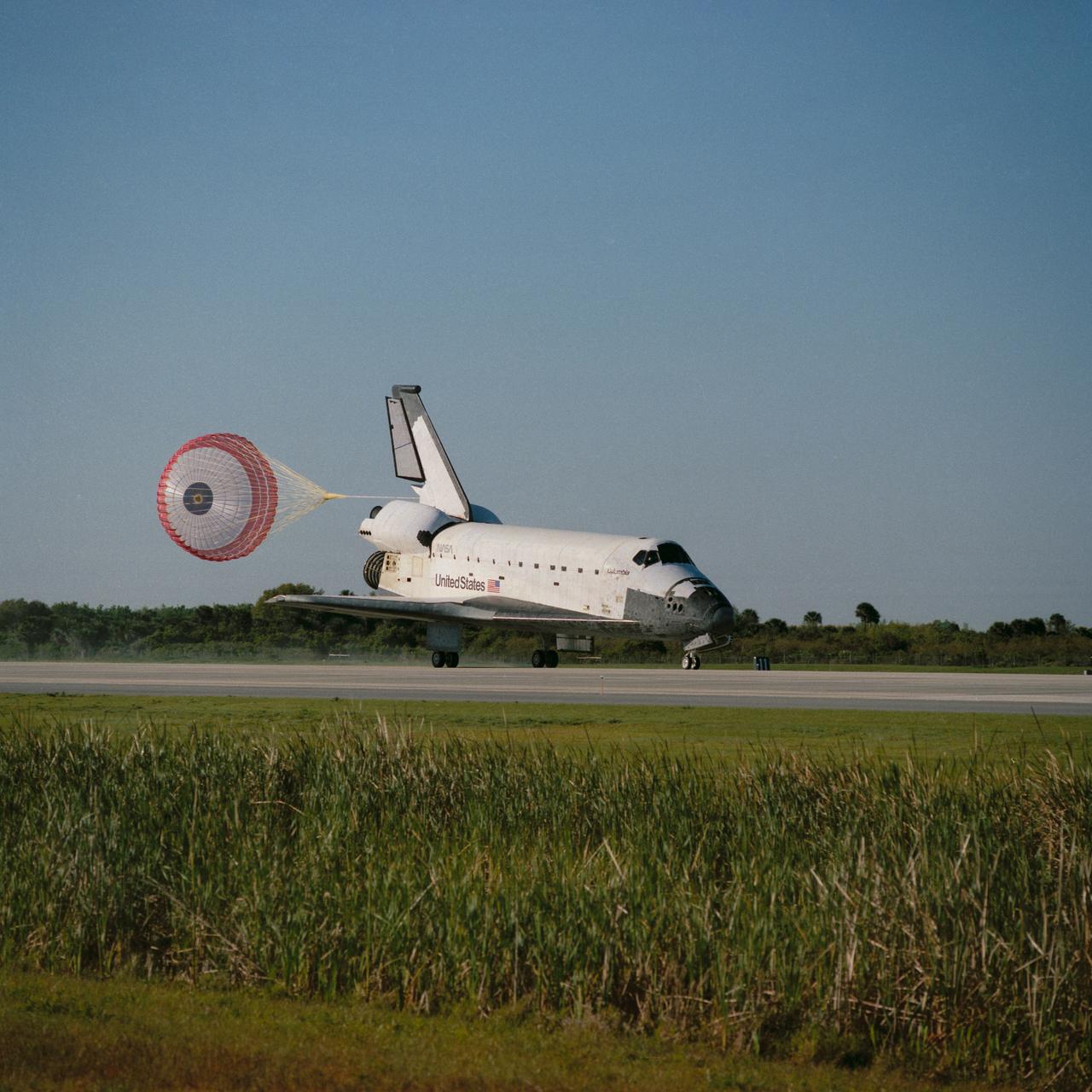
STS062-S-029 (18 March 1994) --- The drag chute on the Space Shuttle Columbia is deployed as the spacecraft rolls down the Shuttle landing facility at Kennedy Space Center (KSC).  The scene followed almost 14 days in earth orbit for five NASA astronauts and a variety of experiments.  Touchdown occurred at 8:09 a.m. (EST), March 18, 1994.  Thirteen days, 23 hours and 16 minutes were logged by the crew members -- astronauts John H. Casper, Andrew M. Allen, Marsha S. Ivins, Pierre J. Thuot and Charles D. (Sam) Gemar.
Landing of the STS-62 Space Shuttle Columbia at Kennedy Space Center
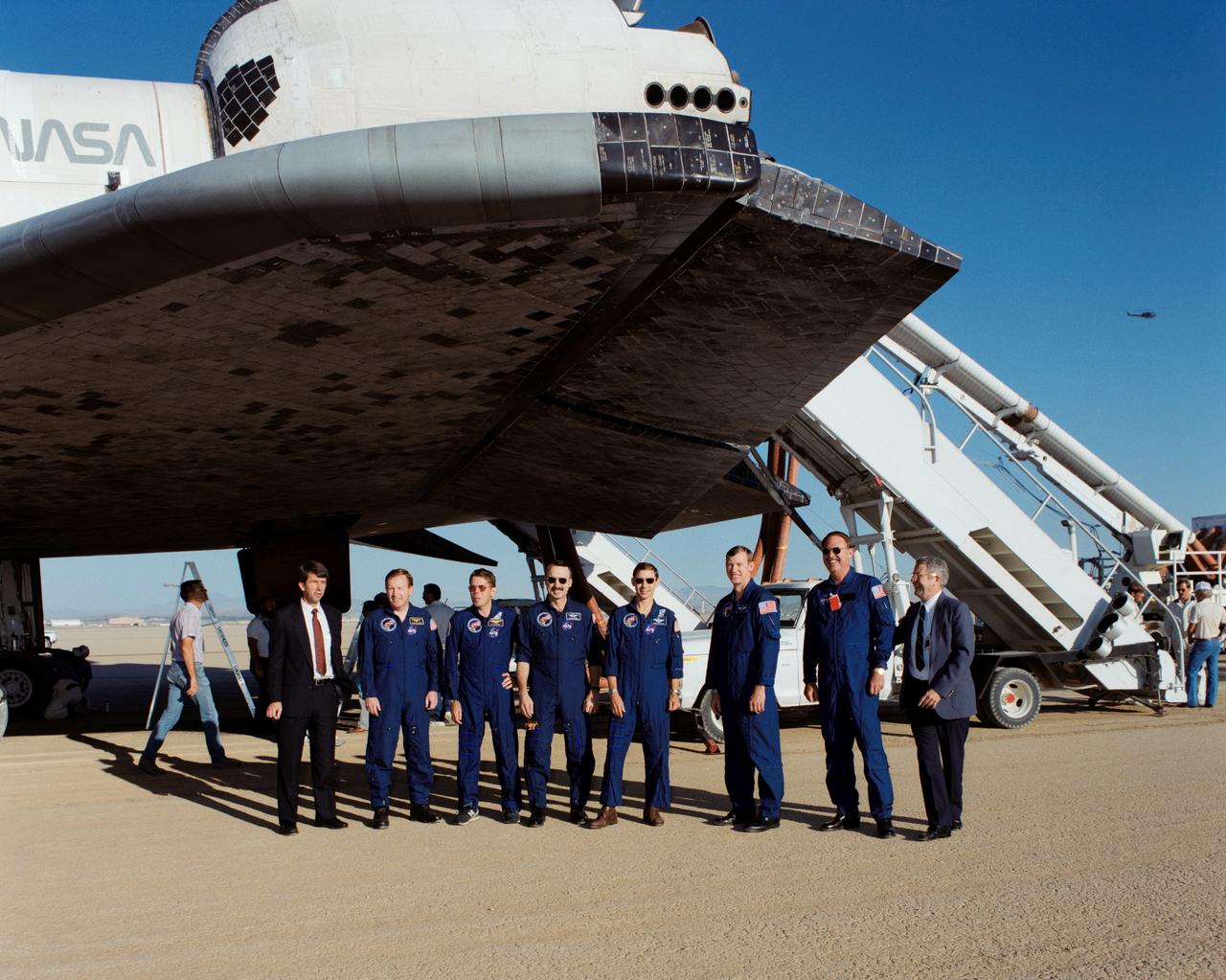
STS028-S-014 (13 Aug. 1989) --- The five astronaut crewmembers for STS-28 pose near the Space Shuttle Columbia after spending five days in Earth orbit for a DOD-devoted mission. They were greeted and are flanked here by William B. Lenoir (left), NASA Associate Administrator for Spaceflight; Donald R. Puddy (second right), director of flight crew operations; and Rear Adm. Richard H. Truly (right), NASA Administrator. The astronauts are, from left to right, Richard N.  Richards, David C. Leestma, James C. Adamson, Brewster H. Shaw Jr. and Mark N. Brown.
STS-28 crew poses for group portrait during post landing activities
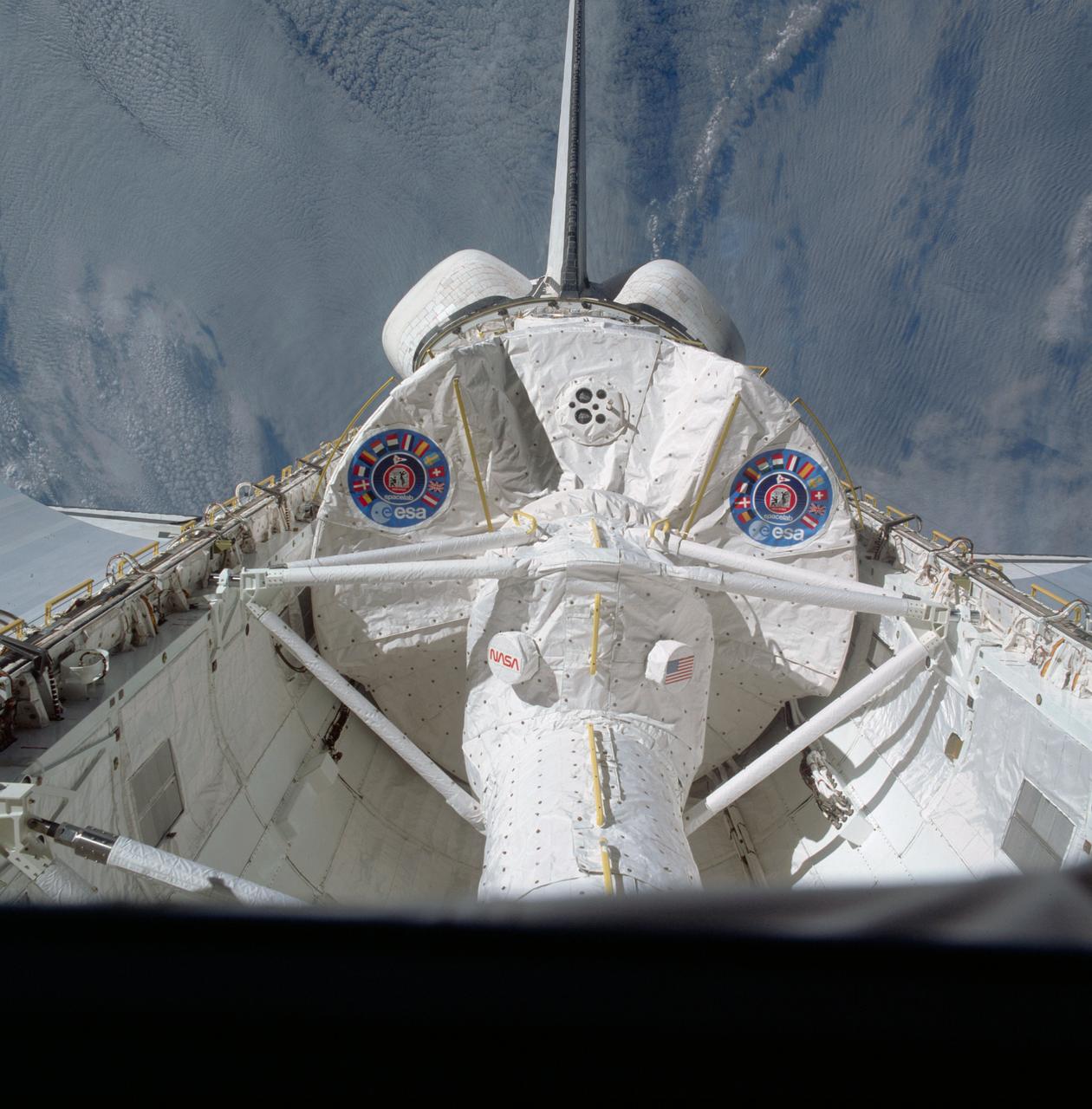
STS009-32-1112 (28 Nov-8 Dec 1983) --- A handheld Hasselblad camera was aimed through the aft windows on the flight deck of Columbia for this initially released scene of the active Spacelab module in the cargo bay.  The docking tunnel, leading from the shirt-sleeve environment of the orbiter to the equally comfortable environment of Spacelab, is in the foreground.
View of the Spacelab module in the payload bay of the Columbia during STS-9
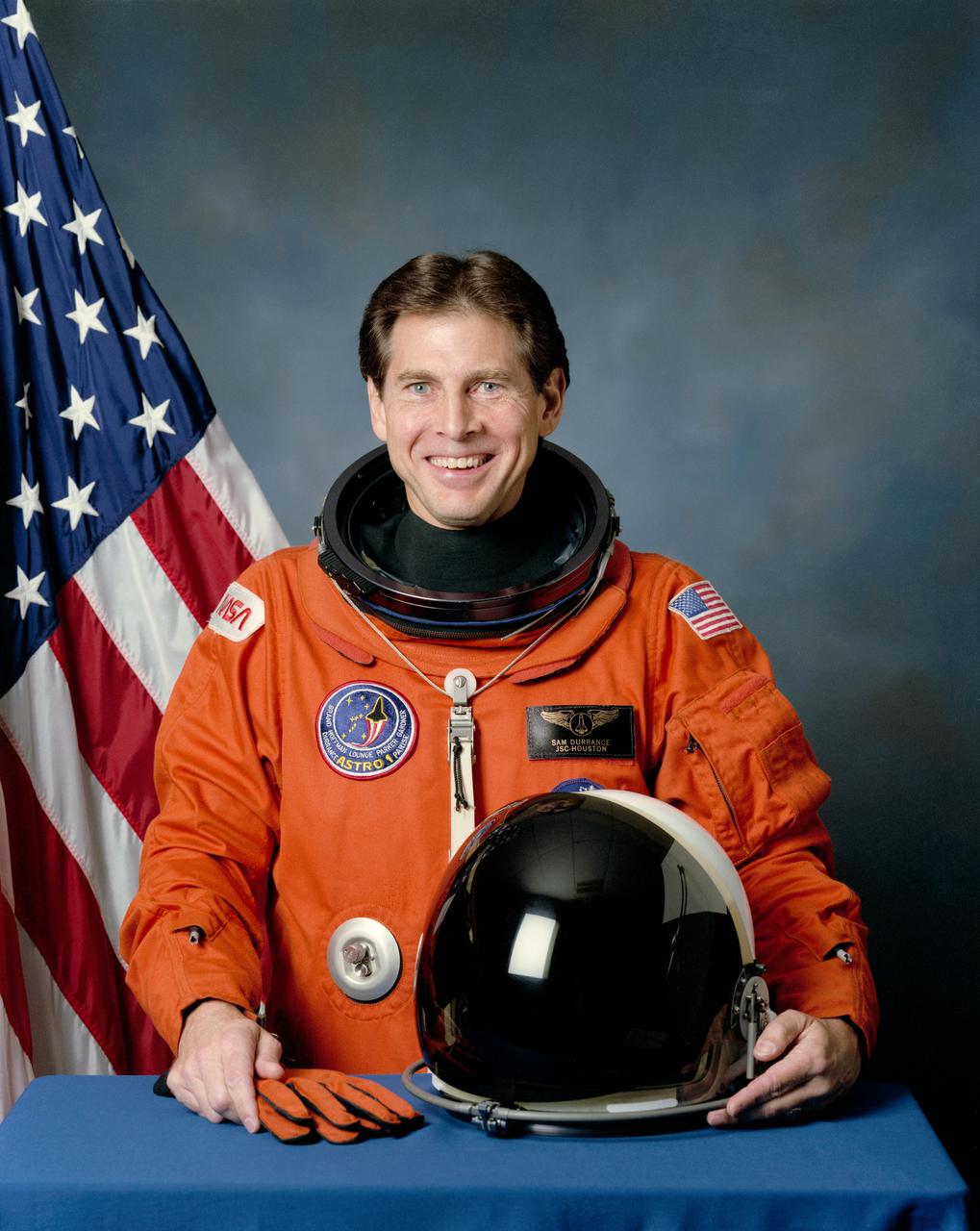
Official portrait of Samuel T. Durrance, Ph.D. and STS-35 Columbia, Orbiter Vehicle (OV) 102, Astronomy Laboratory 1 (ASTRO-1) payload specialist. Durrance wears launch and entry suit (LES) with helmet displayed on table at his left.
Official portrait of Samuel T. Durrance
STS062-10-010 (4-18 March 1994) --- Astronaut John H. Casper, mission commander, takes stock of paraphenalia used to support medical testing onboard Columbia's middeck.  Casper was poind by four other veteran astronauts for 14 days of variegated research in earth orbit.
Astronaut John Casper checks equipment to support medical testing
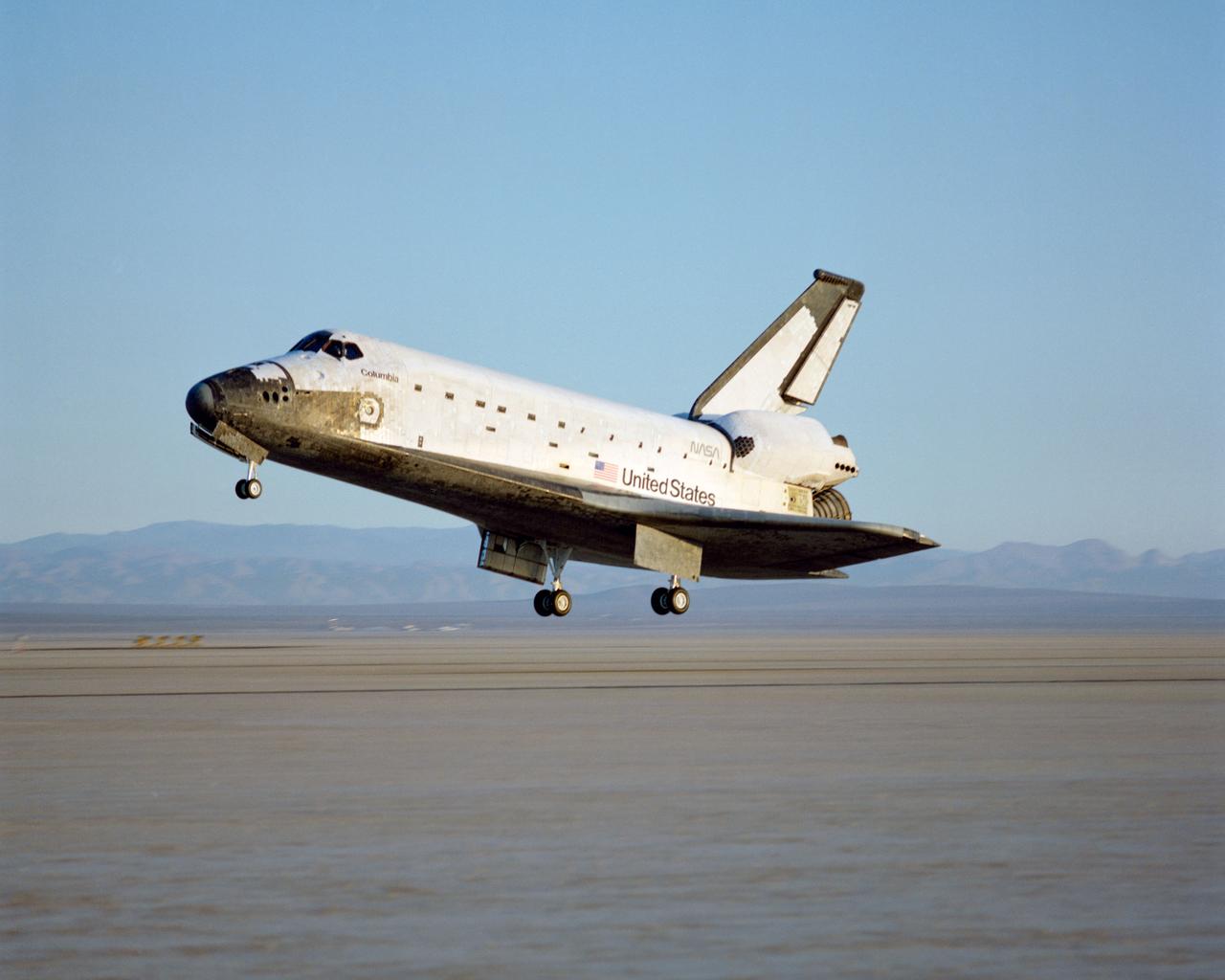
STS-28 Columbia, Orbiter Vehicle (OV) 102, approaches Runway 17 dry lake bed at Edwards Air Force Base (EAFB) California and is photographed just moments before main landing gear (MLG) touchdown. In the distance, are peaks of Southern California mountain range.
STS-28 Columbia, OV-102, landing at Edwards Air Force Base (EAFB) California
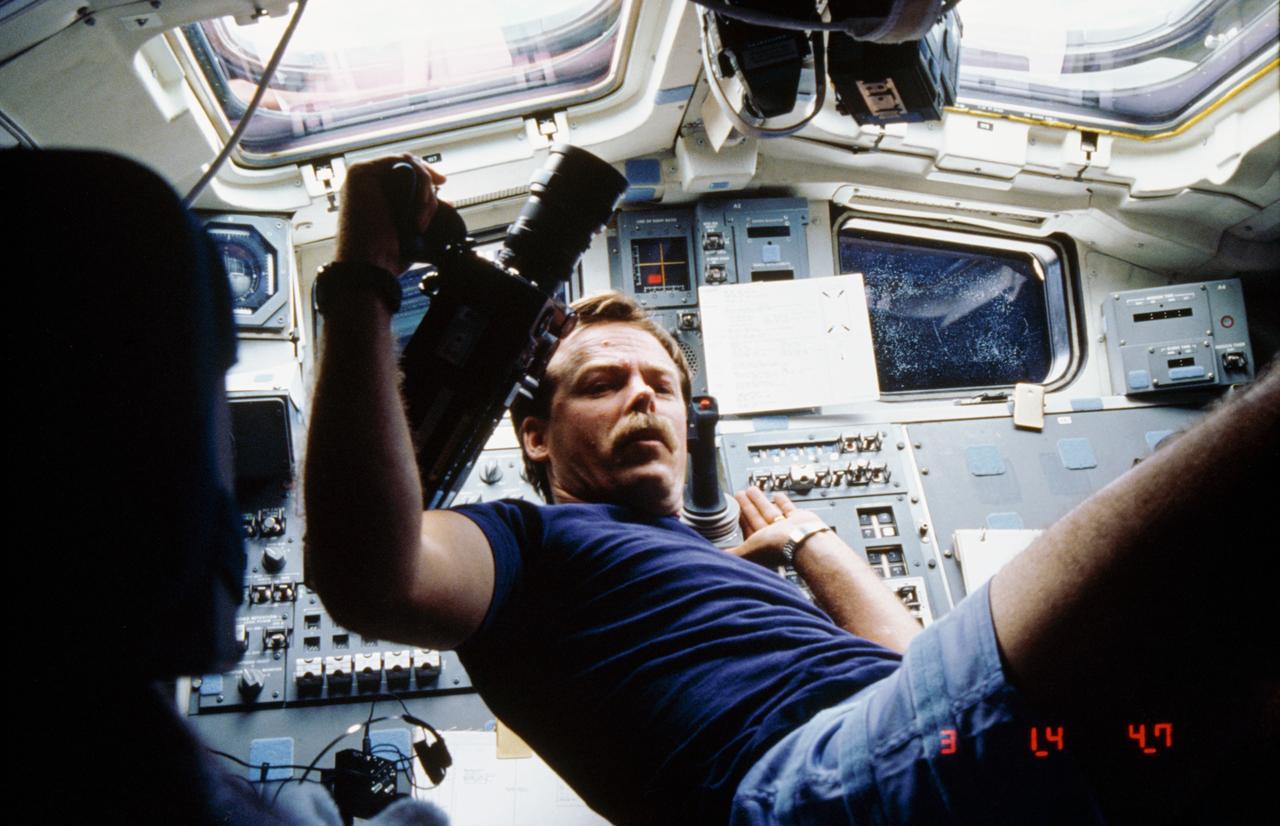
61C-07-030 (15 Jan 1986) --- Astronaut Robert L. Gibson, STS 61-C mission commander, partially floats on the aft flight deck of the earth-orbiting Space Shuttle Columbia while preparing to use a motion picture camera.  The windows overlooking the cargo bay are visible in the background.
Astronaut Robert Gibson prepares to use motion picture camera
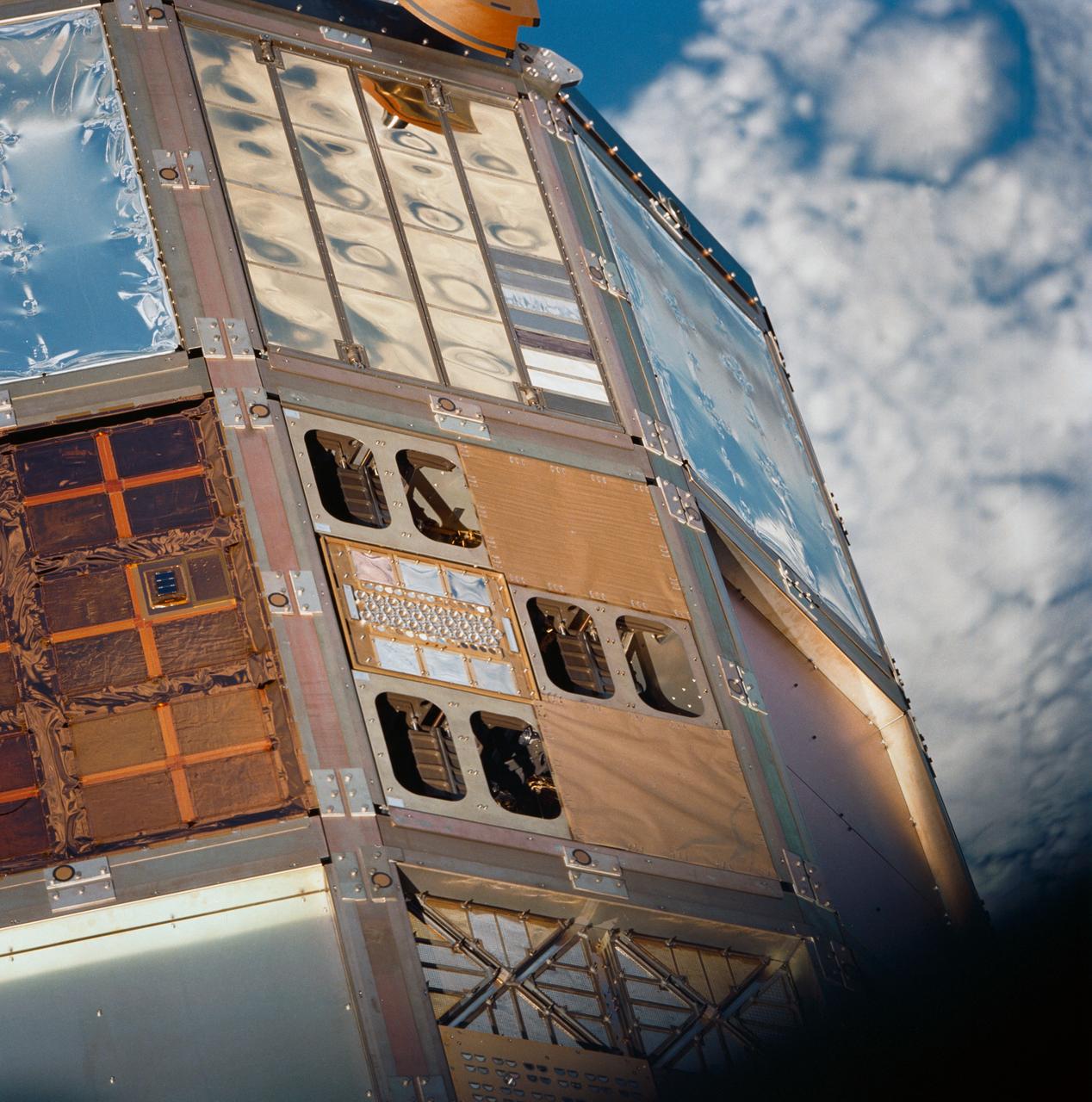
Closeup of Long Duration Exposure Facility (LDEF) experiment trays is documented during STS-32 retrieval activity and photo survey conducted by crewmembers onboard Columbia, Orbiter Vehicle (OV) 102. Partially visible is the Polymer Matrix Composite Materials Experiment. In the background is the surface of the Earth.
Closeup of LDEF experiment trays documented during STS-32 photo survey
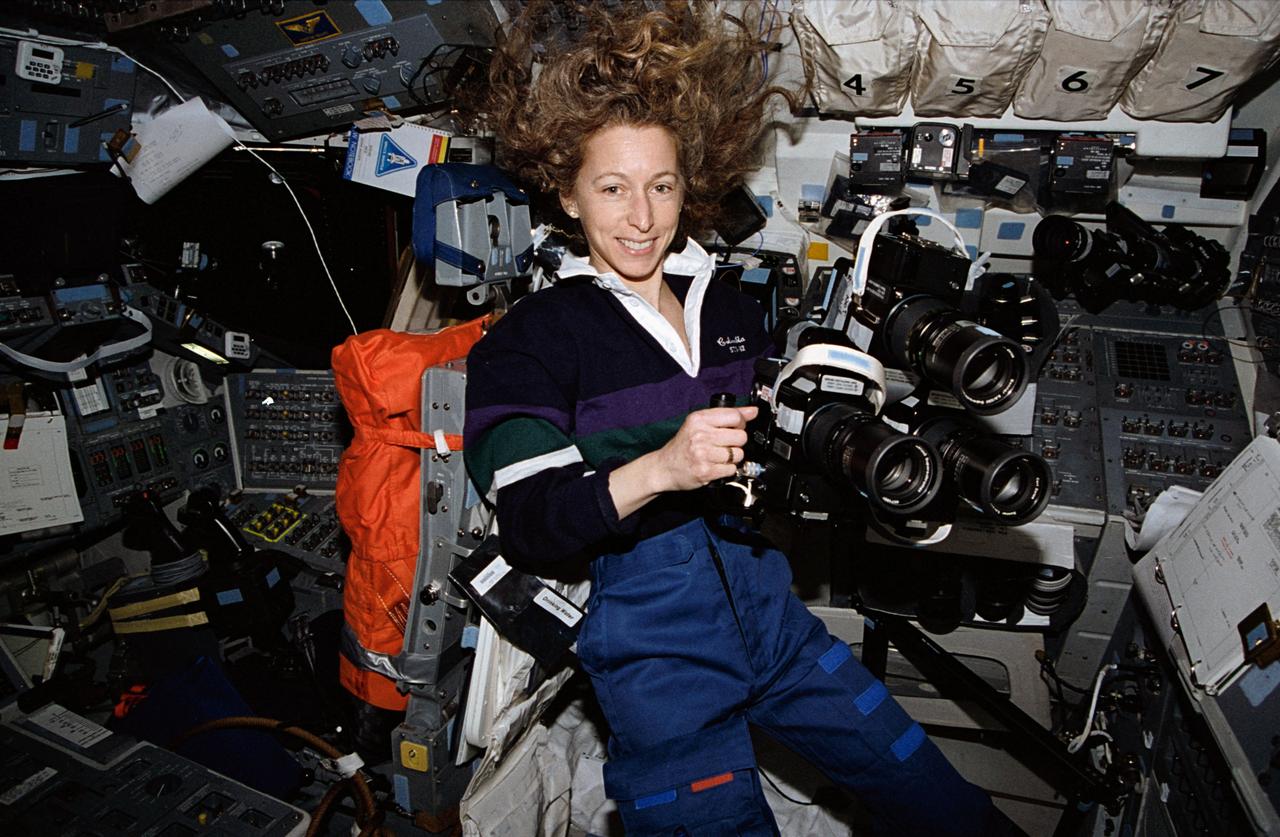
STS062-03-023 (4-14 March 1994) --- Astronaut Marsha S. Ivins, mission specialist, prepares to aim three Hasselblad cameras through the overhead windows of the earth-orbiting Space Shuttle Columbia.  The three cameras were allowed to simultaneously record the same imagery on different types of file for purposes of comparison and experimentation.
Astronaut Marsha Ivins prepares to use three Hasselblad cameras together
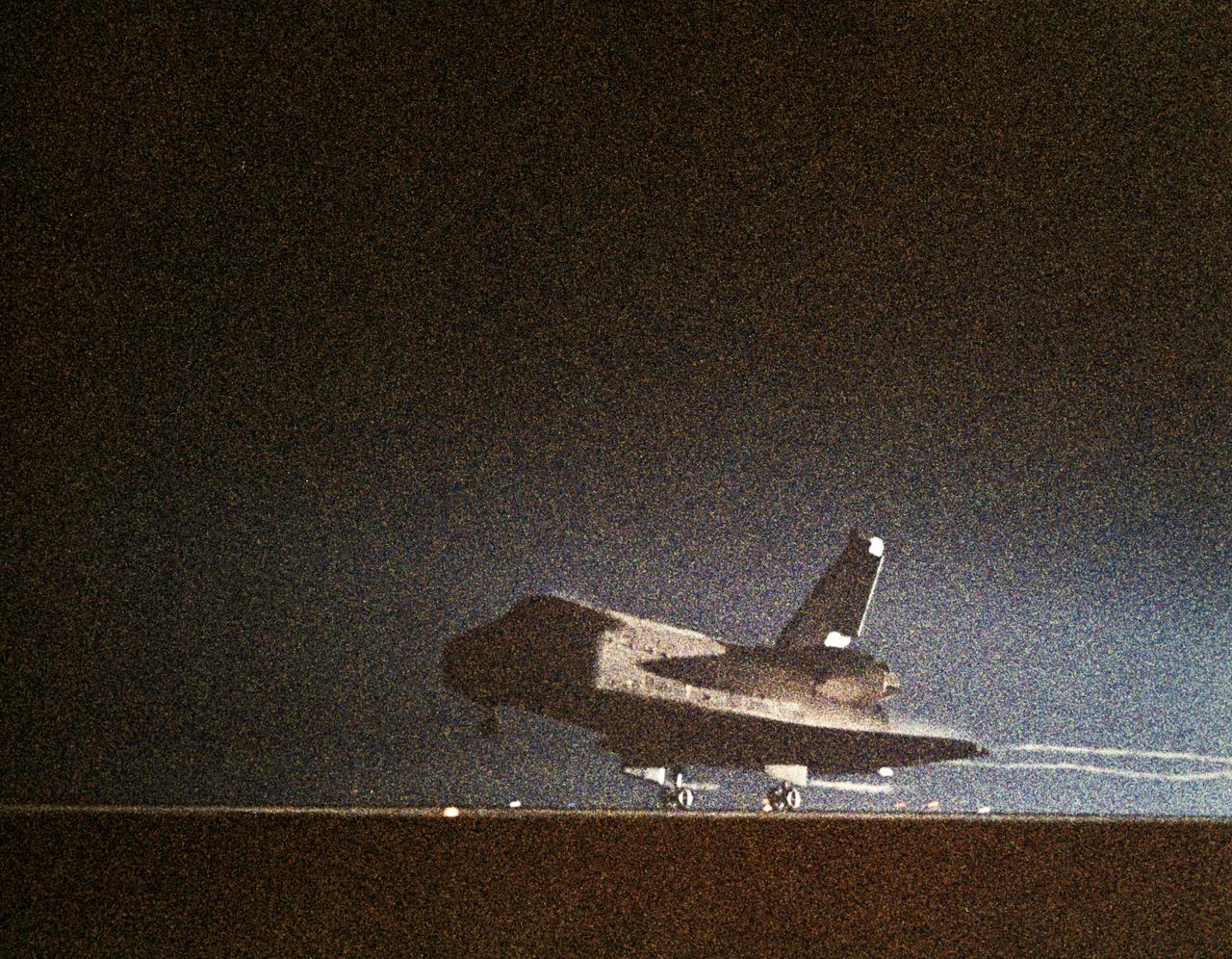
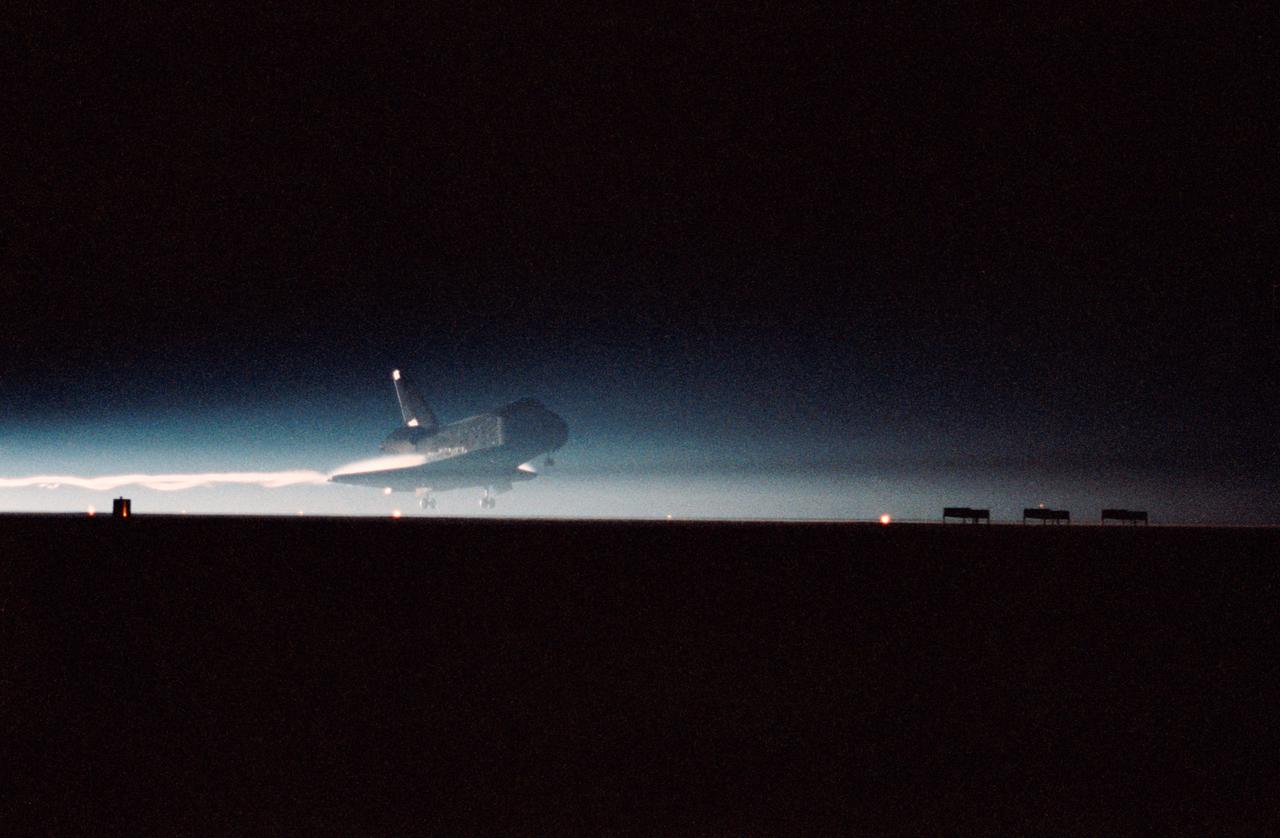
61C-S-050 (18 Jan 1986) --- This NASA photo records the night landing of space shuttle Columbia at Edwards Air Force Base and end of the STS 61-C mission. View is of the shuttle's main landing gear touching down, with streams of light trailing behind the orbiter. Photo credit: NASA
Night landing of Shuttle Columbia at Edwards AFB and end of STS 61-C mission
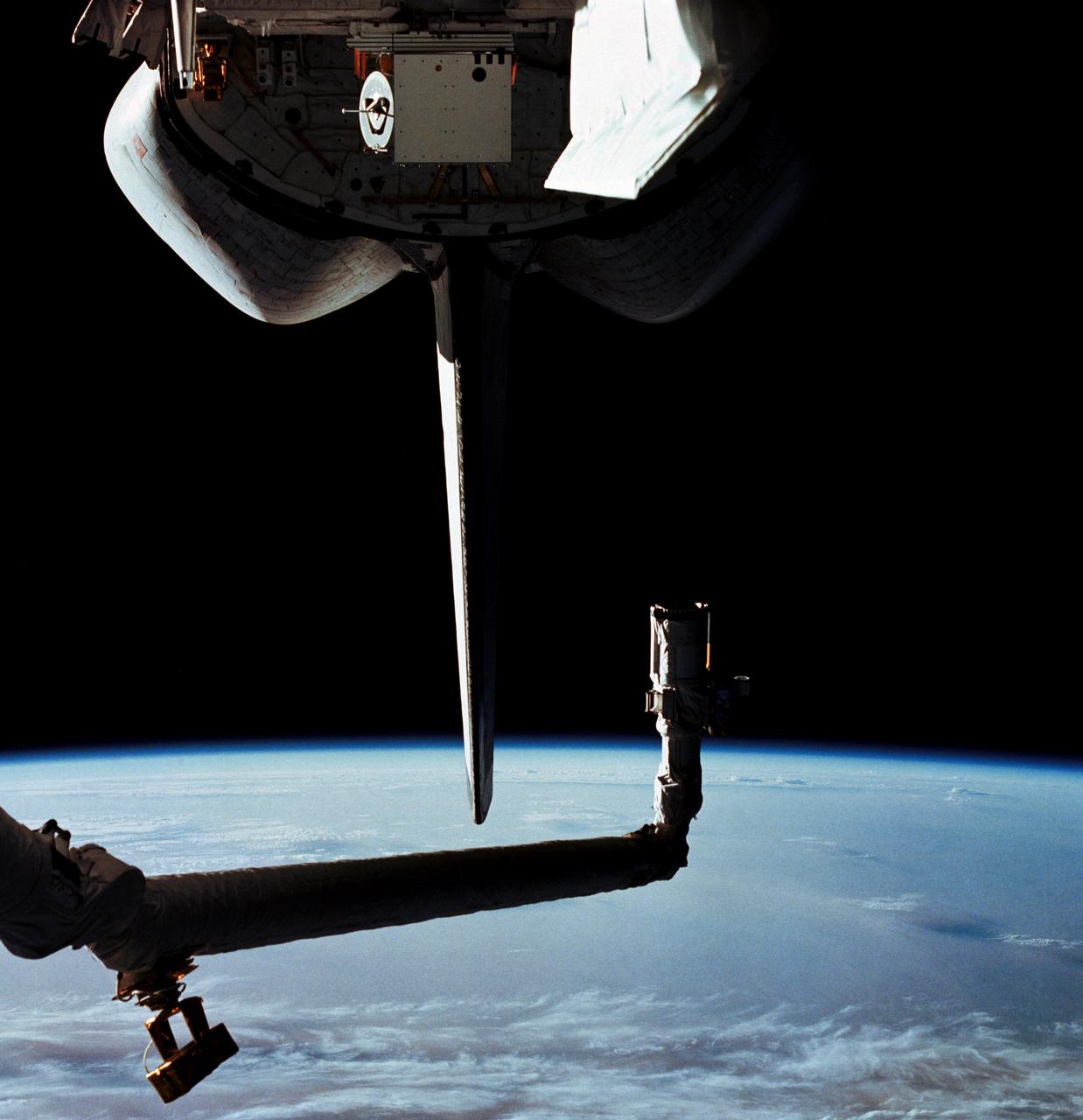
STS002-12-833 (13 Nov. 1981) --- Clouds over Earth and black sky form the background for this unique photograph from the space shuttle Columbia in Earth orbit. The photograph was shot through the aft flight deck windows viewing the cargo bay. Part of the scientific payload of the Office of Space and Terrestrial Applications (OSTA-1) is visible in the open cargo bay. The astronauts inside Columbia's cabin were remotely operating the Canadian-built remote manipulator system (RMS). Note television cameras on its elbow and wrist pieces. Photo credit: NASA
View of the Columbia's open payload bay and the Canadian RMS
STS075-S-004 (22 Feb. 1996) --- The space shuttle Columbia clears the tower to begin the mission.  The liftoff occurred on schedule at 3:18:00 p.m. (EST), Feb. 22, 1996.  Visible at left is the White Room on the orbiter access arm through which the flight crew had entered the orbiter. Onboard Columbia for the scheduled two-week mission were astronauts Andrew M. Allen, commander; Scott J. Horowitz, pilot; Franklin R. Chang-Diaz, payload commander; and astronauts Maurizio Cheli, Jeffrey A. Hoffman and Claude Nicollier, along with payload specialist Umberto Guidoni.  Cheli and Nicollier represent the European Space Agency (ESA), while Guidoni represents the Italian Space Agency (ASI).
STS-75 Columbia OV-102 launch
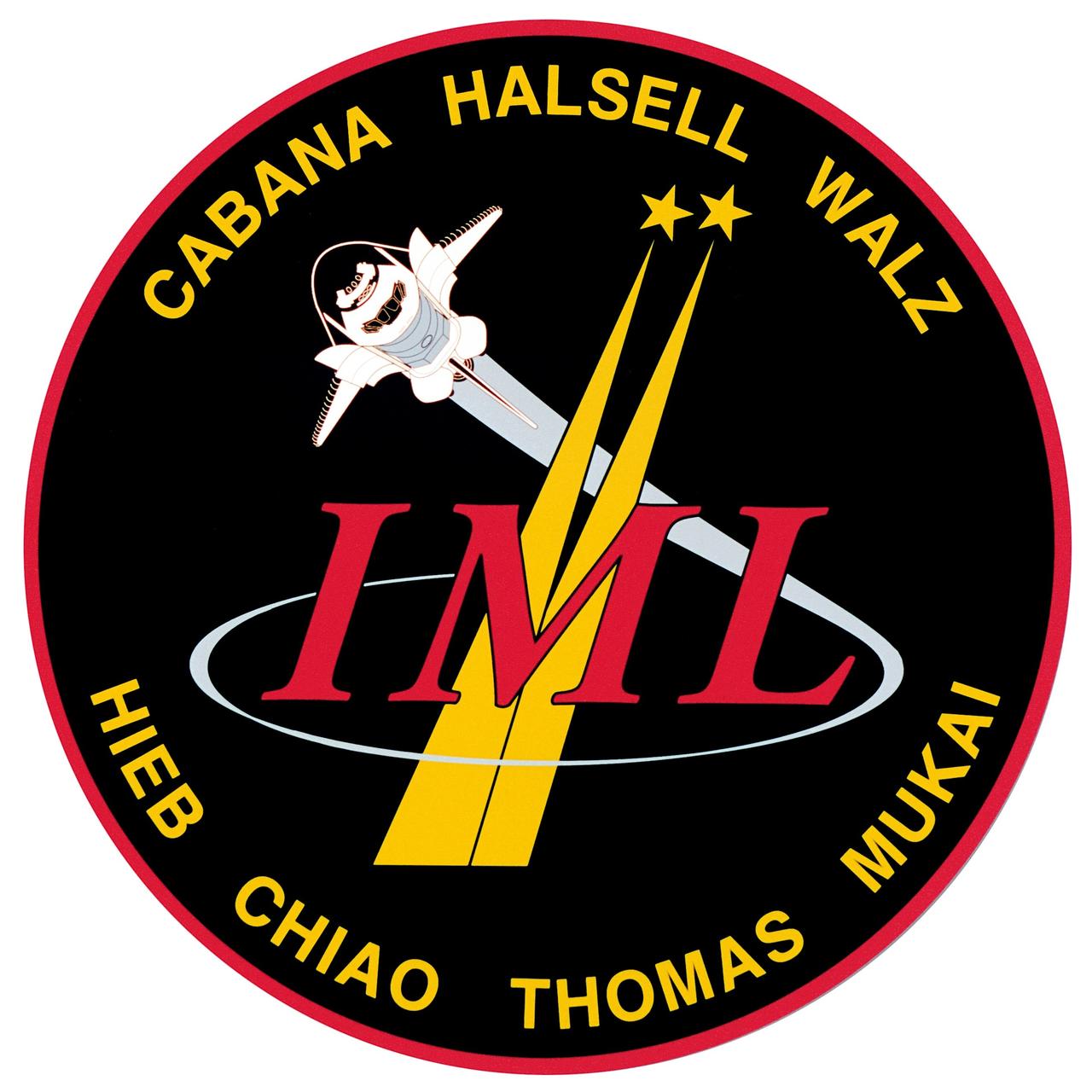
STS065-S-001 (March 1994) --- Designed by the crew members, the STS-65 insignia features the International Microgravity Laboratory (IML-2) mission and its Spacehab module which will fly aboard the space shuttle Columbia. IML-2 is reflected in the emblem by two gold stars shooting toward the heavens behind the IML lettering. The space shuttle Columbia is depicted orbiting the logo and reaching into space, with Spacehab on an international quest for a better understanding of the effects of spaceflight on materials processing and life sciences.    The NASA insignia design for space shuttle flights is reserved for use by the astronauts and for other official use as the NASA Administrator may authorize. Public availability has been approved only in the forms of illustrations by the various news media. When and if there is any change in this policy, which is not anticipated, the change will be publicly announced. Photo credit: NASA
STS-65 Columbia, Orbiter Vehicle (OV) 102, crew insignia
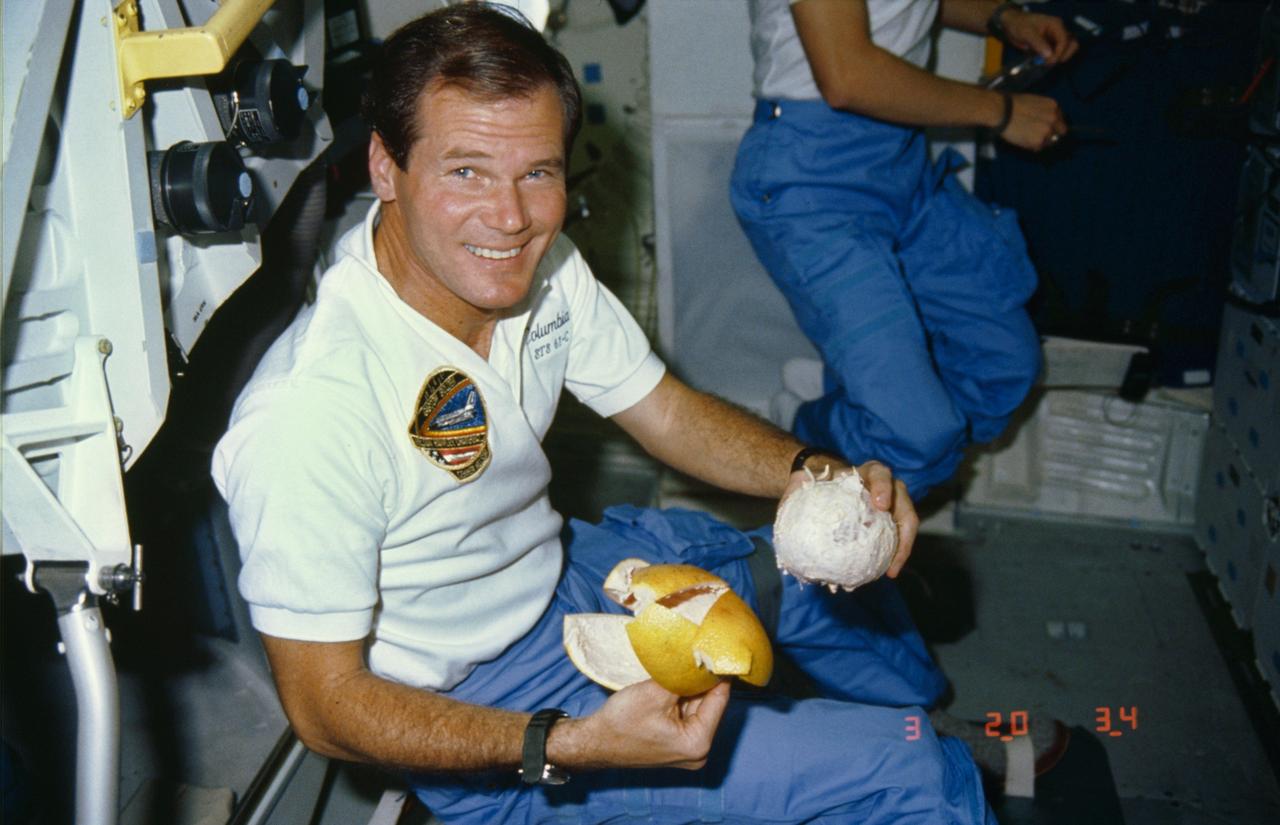
61C-09-005 (15 Jan 1986) --- U.S. Representative Bill Nelson, (D. Florida), STS 61-C payload specialist, prepares to enjoy a freshly peeled grapefruit on the middeck of the earth-orbiting Space Shuttle Columbia.
Representative Bill Nelson prepares to eat a peeled grapefruit
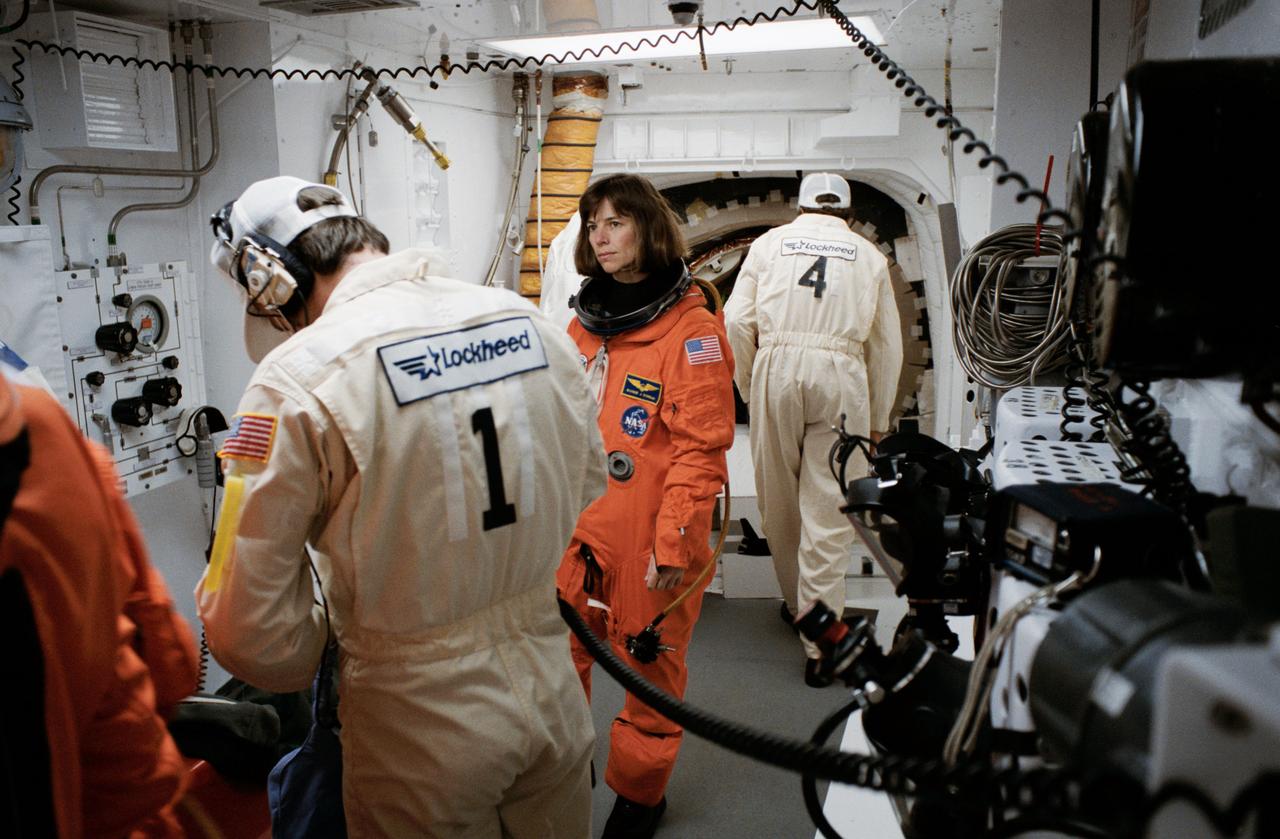
STS-32 Mission Specialist (MS) Bonnie J. Dunbar, wearing launch and entry suit (LES), looks on as technicians prepare LES equipment in the white room on the orbiter access arm at Kennedy Space Center (KSC) Launch Complex (LC) Pad 39A before entering Columbia, Orbiter Vehicle (OV) 102. In the background, a technician looks through OV-102 side hatch.
STS-32 MS Dunbar looks on as technicians prepare LES equipment in white room
S82-28923 (March 1982) --- Astronaut C. Gordon Fullerton, STS-3 pilot, uses both hands to retrieve part of a meal from an orbital flight test food warmer in the middeck area of the Earth-orbiting space shuttle Columbia. The food warmer is a versatile briefcase-like device developed by life sciences personnel at the Johnson Space Center (JSC). Astronaut Jack R. Lousma, STS-3 commander, took this photograph with a 35mm camera. Photo credit: NASA
Pilot Fullerton prepares meal on middeck
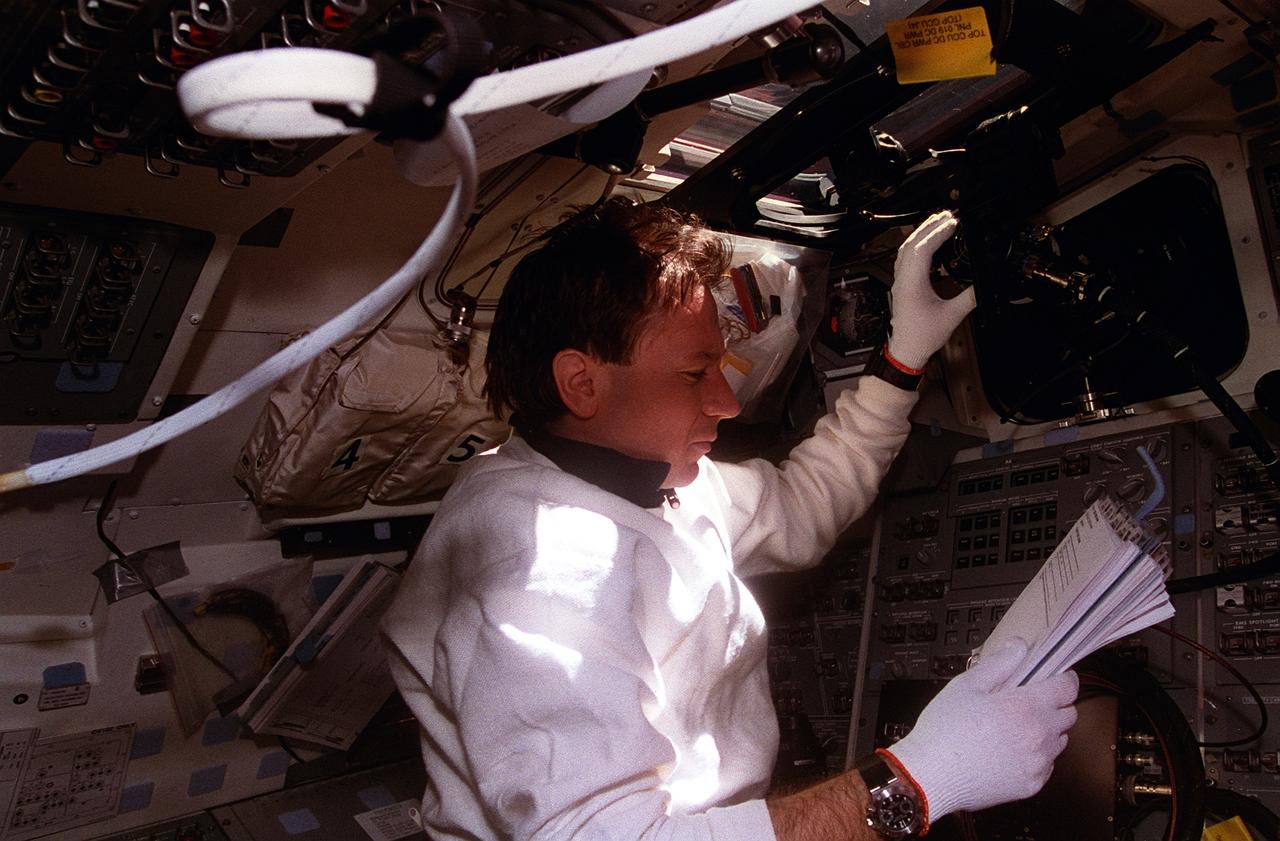
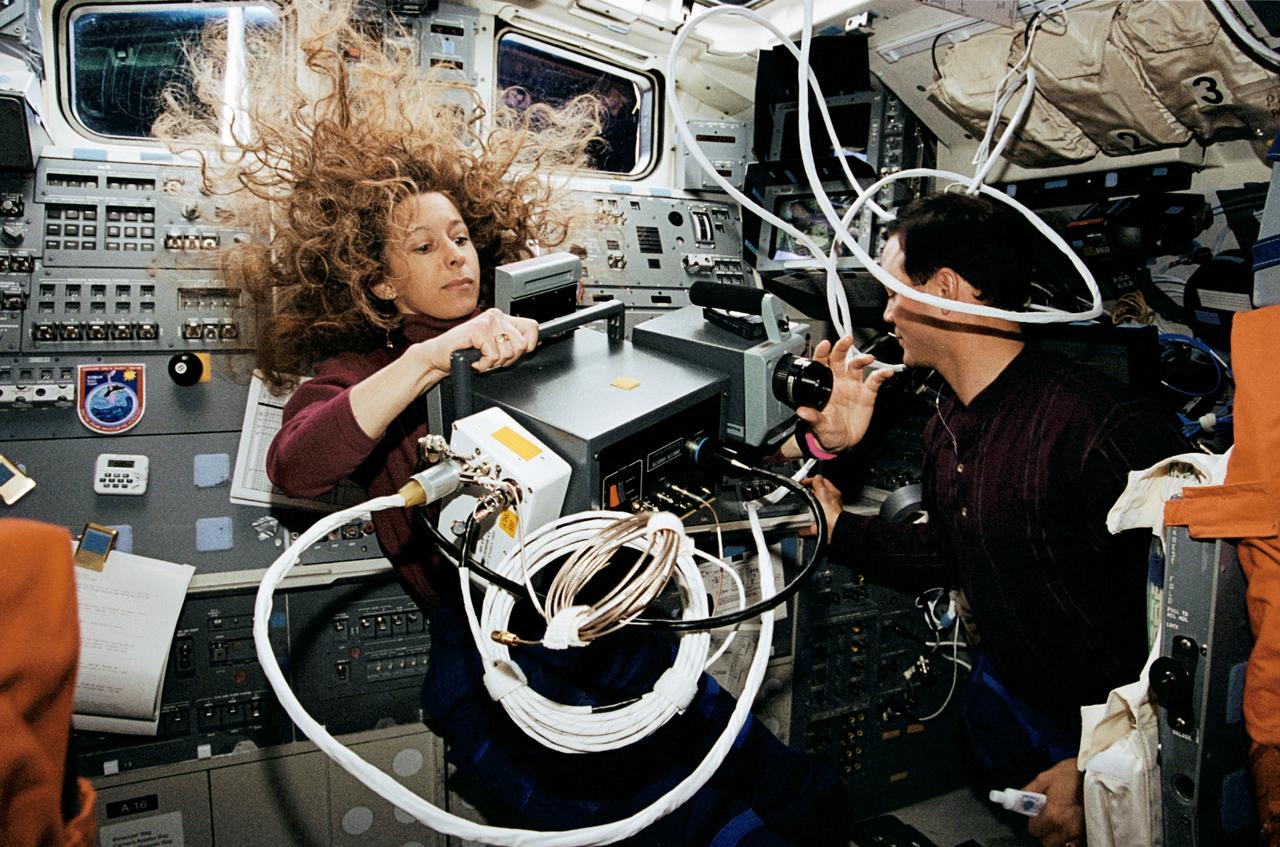
STS075-310-002 (22 Feb.-9 March 1996) --- Astronaut Maurizio Cheli, STS-75 mission specialist, works with the Tether Optical Phenomenon System (TOPS) on the flight deck of the Earth-orbiting Space Shuttle Columbia. Cheli, representing the European Space Agency (ESA), joined four other astronauts and an international payload specialists for 16 days of scientific research in Earth-orbit.
Tether Optical Phenomena (TOP) experiment
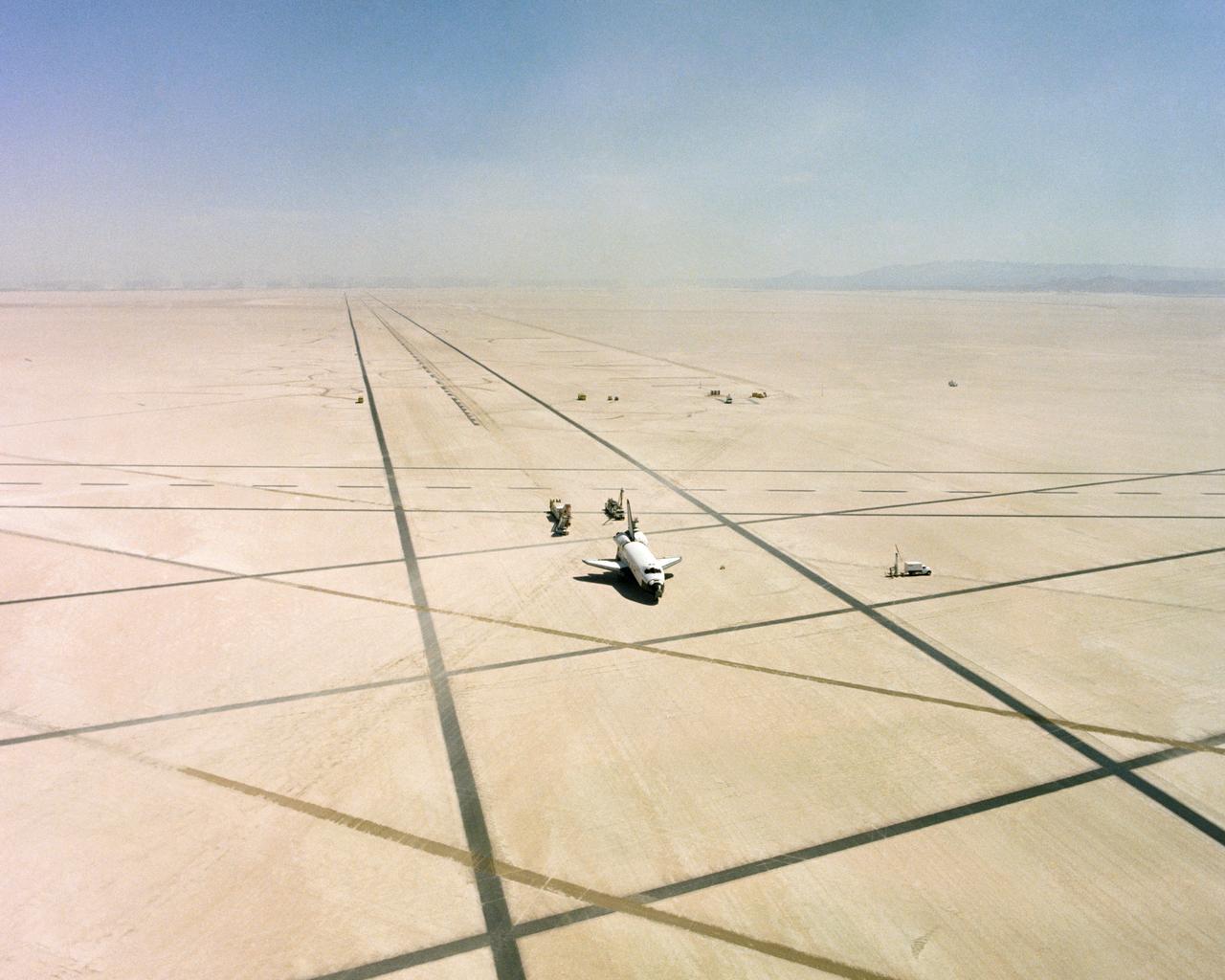
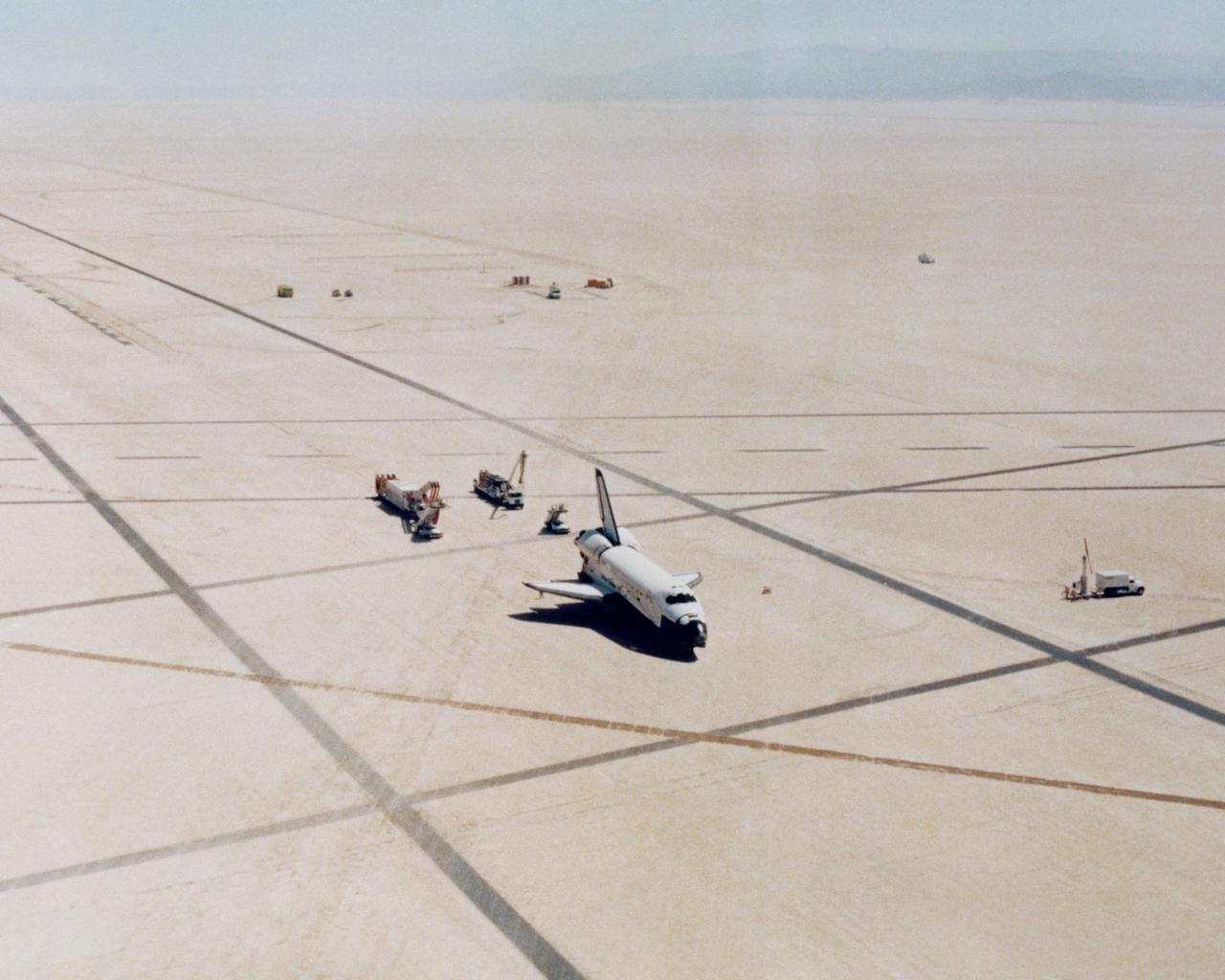
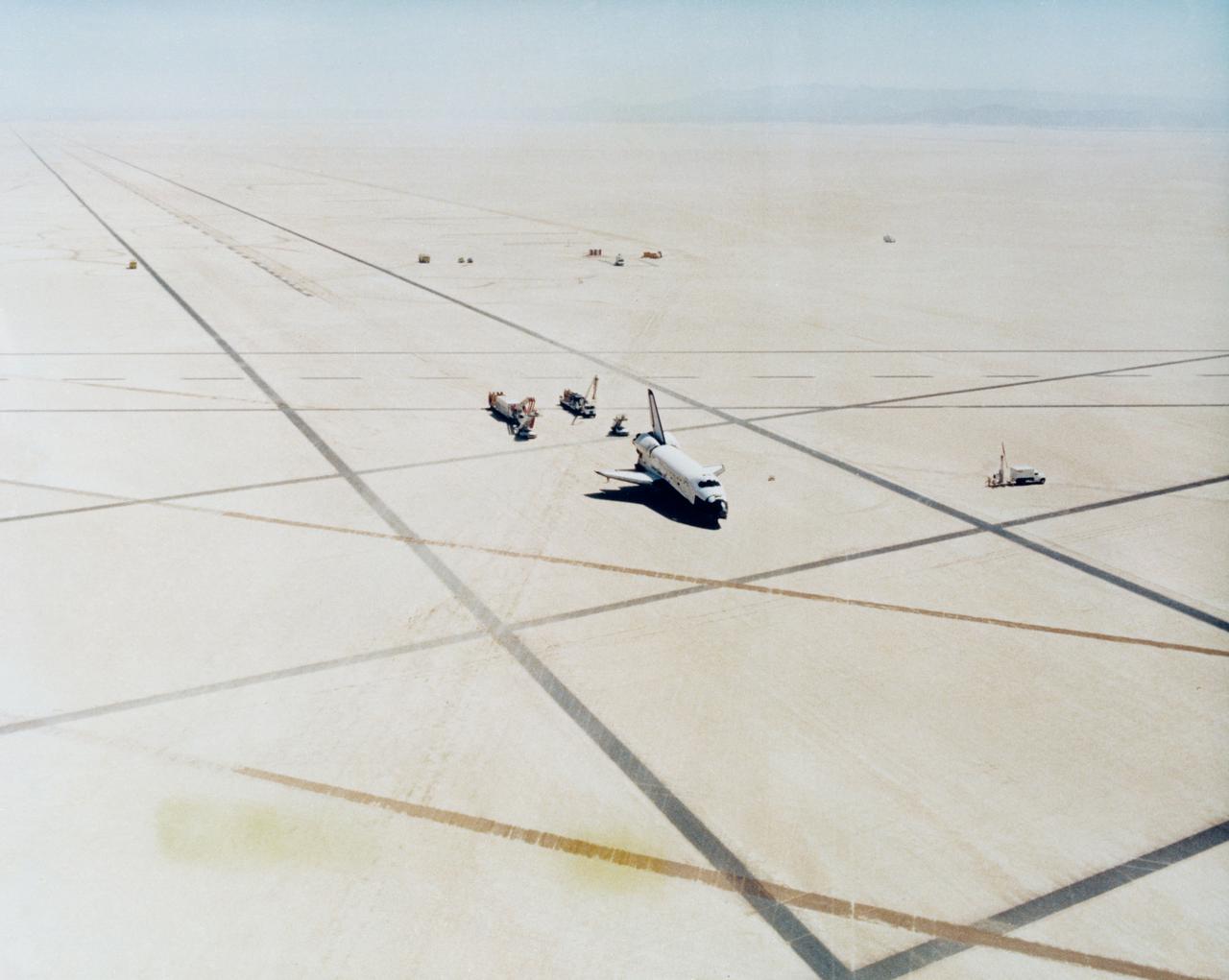
S81-30749 (14 April 1981) --- This high angle view shows the scene at Edwards Air Force Base in southern California soon after the successful landing of the space shuttle orbiter Columbia to end STS-1. Service vehicles approach the spacecraft to perform evaluations for safety, egress preparedness, etc. Astronauts John W. Young, commander, and Robert L. Crippen, pilot, are still inside the spacecraft. Photo credit: NASA
Space Shuttle orbiter Columbia on the ground at Edwards Air Force Base
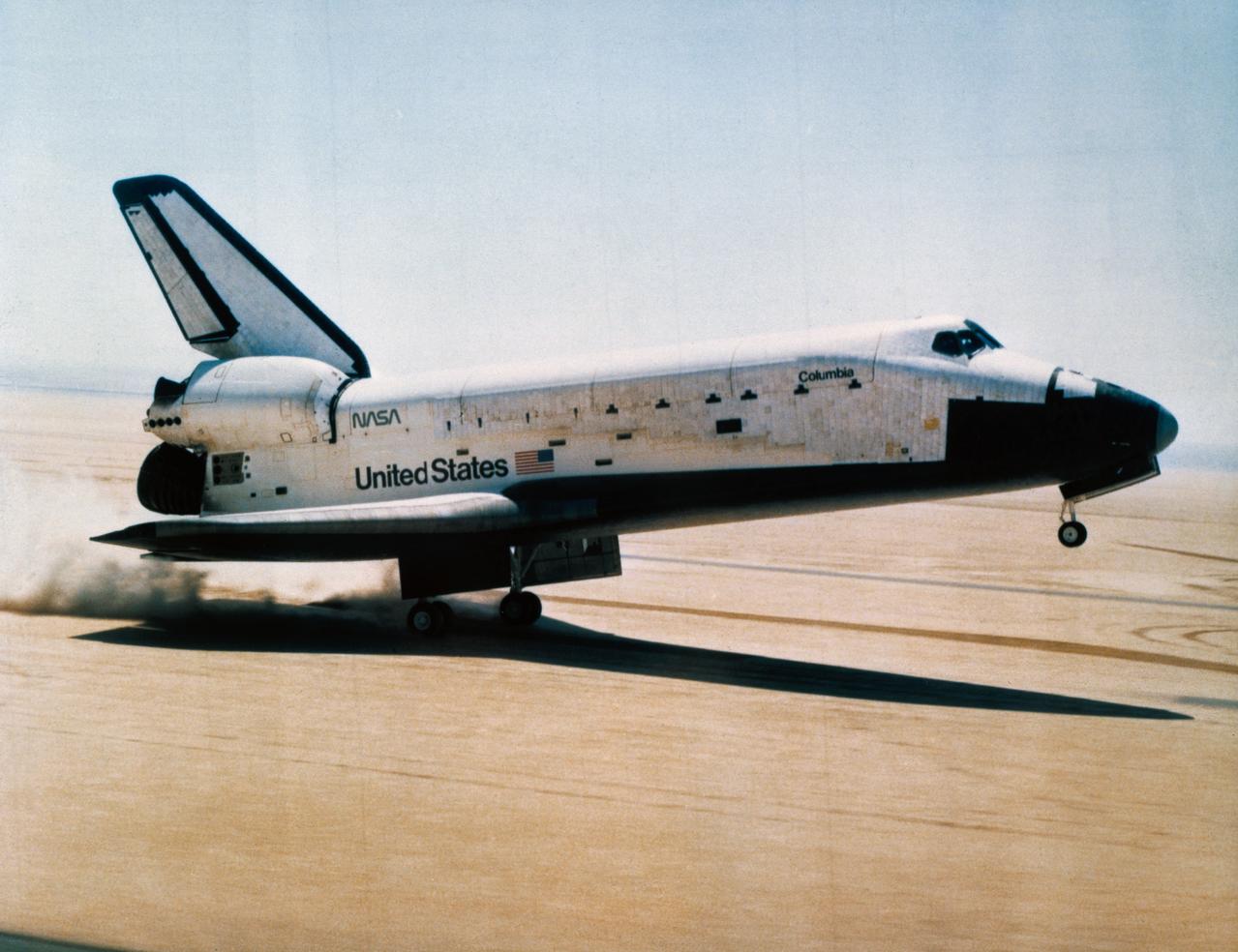
S81-30746 (14 April 1981) --- The rear wheels of the space shuttle orbiter Columbia touch down on Rogers dry lake at Edwards Air Force Base in southern California to successfully complete a stay in space of more than two days. Astronauts John W. Young, STS-1 commander, and Robert L. Crippen, pilot, are aboard the vehicle. The mission marked the first NASA flight to end with a wheeled landing and represents the beginning of a new age of spaceflight that will employ the same hardware repeatedly. Photo credit: NASA
SPACE SHUTTLE ORBITER COLUMBIA - TOUCHDOWN - EDWARDS AFB (EAFB), CA
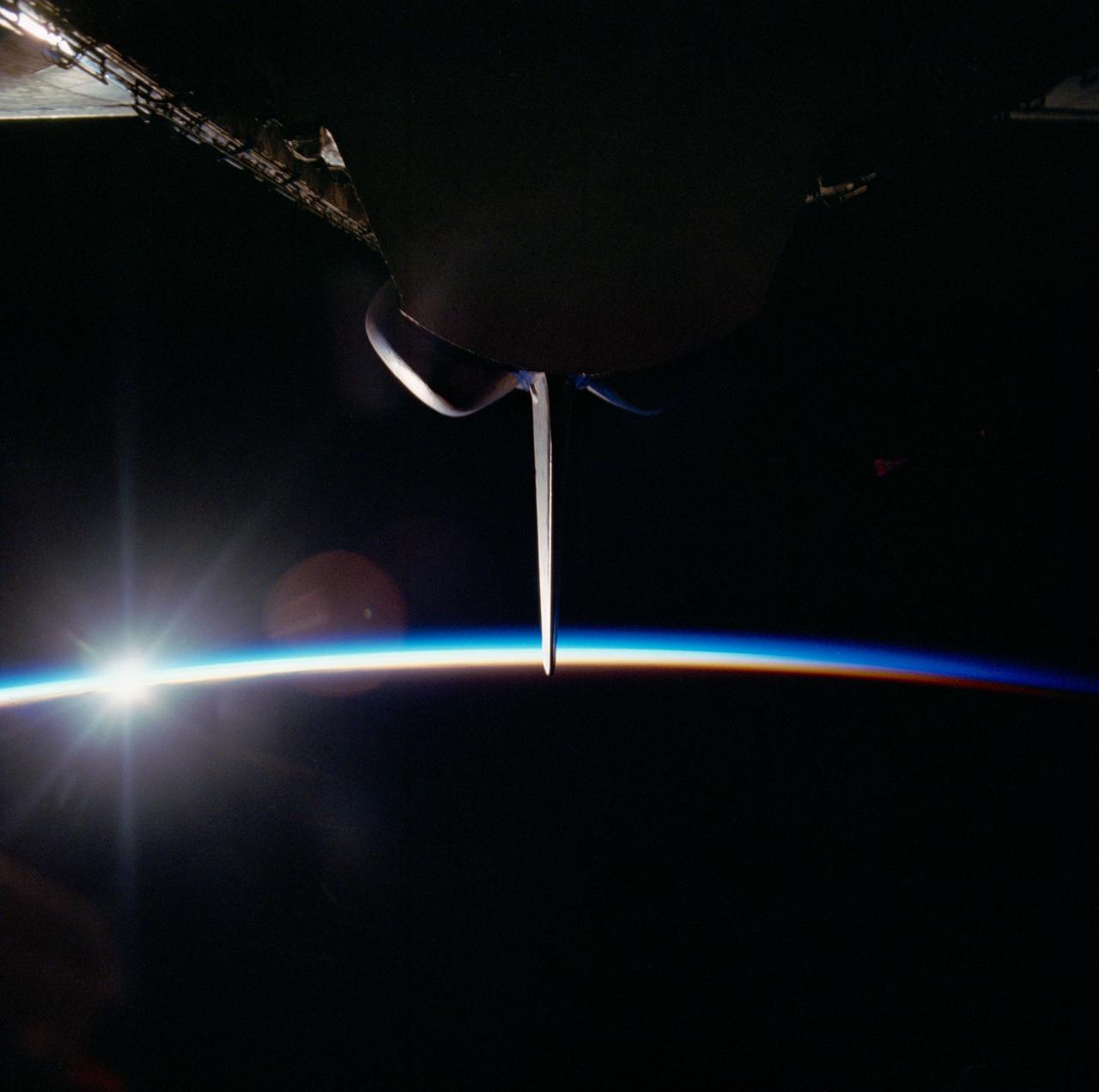
S82-39796 (11-16 Nov. 1982) --- A ?night? scene of the STS-5 space shuttle Columbia in orbit over Earth?s glowing horizon was captured by an astronaut crew member aiming a 70mm handheld camera through the aft windows of the flight deck. The aft section of the cargo bay contains two closed protective shields for satellites which were deployed on the flight. The nearest ?cradle? or shield houses the Satellite Business System?s (SBS-3) spacecraft and is visible in this frame while the Telesta Canada ANIK C-3 shield is out of view. The vertical stabilizer, illuminated by the sun, is flanked by two orbital maneuvering system (OMS) pods. Photo credit: NASA
"Night" scene of the STS-5 Columbia in orbit over the earth
STS-31 Discovery, Orbiter Vehicle (OV) 103, lifts off from Kennedy Space Center (KSC) Launch Complex (LC) 39 Pad B. In the foreground STS-35 Columbia, OV-102, is visible on launch pad 39A. This event marked the first time since January 1986 that there was an orbiter on each pad. LC 39 pads are separated by 1.6 miles. View provided by KSC with alternate number KSC-90PC-610.
STS-31 Discovery, OV-103, liftoff from KSC
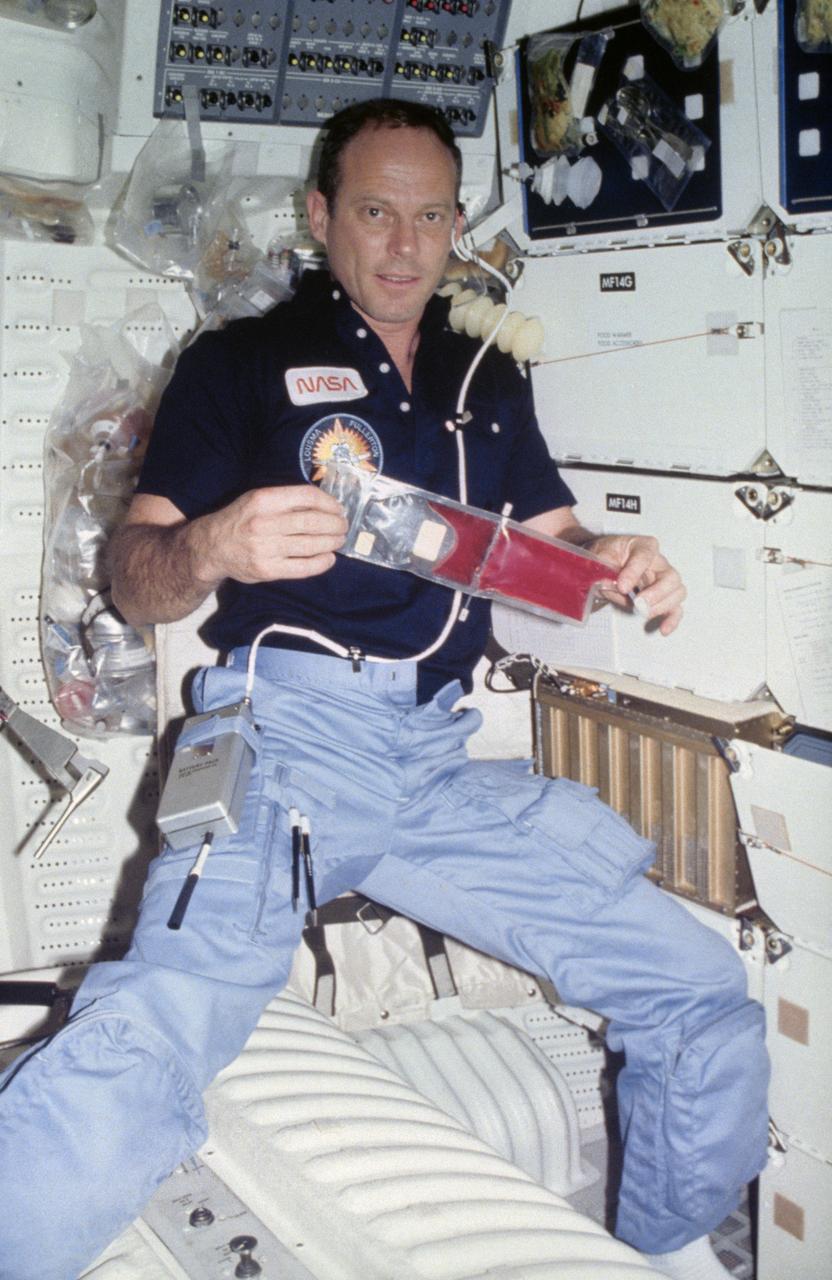
S82-28914 (26 March 1982) --- Astronaut Jack R. Lousma, STS-3 commander, spins a package of colored liquid in zero-gravity aboard the Earth-orbiting space shuttle Columbia. He was actually creating a centrifuge to conduct a test involving the separation of bubbles from the liquid rehydrated strawberry powder for visible clarity. The gas from liquid experiment is a test devised by scientist-astronaut William E. Thornton. The gun-like device at center of left edge is a water-dispenser which the astronauts use in rehydrating food packets, many of which can be seen in the background of this middeck area of the Columbia. Astronaut C. Gordon Fullerton, pilot, exposed this frame with a 35mm camera. Photo credit: NASA
Commander Lousma with Bubble Separation Experiment
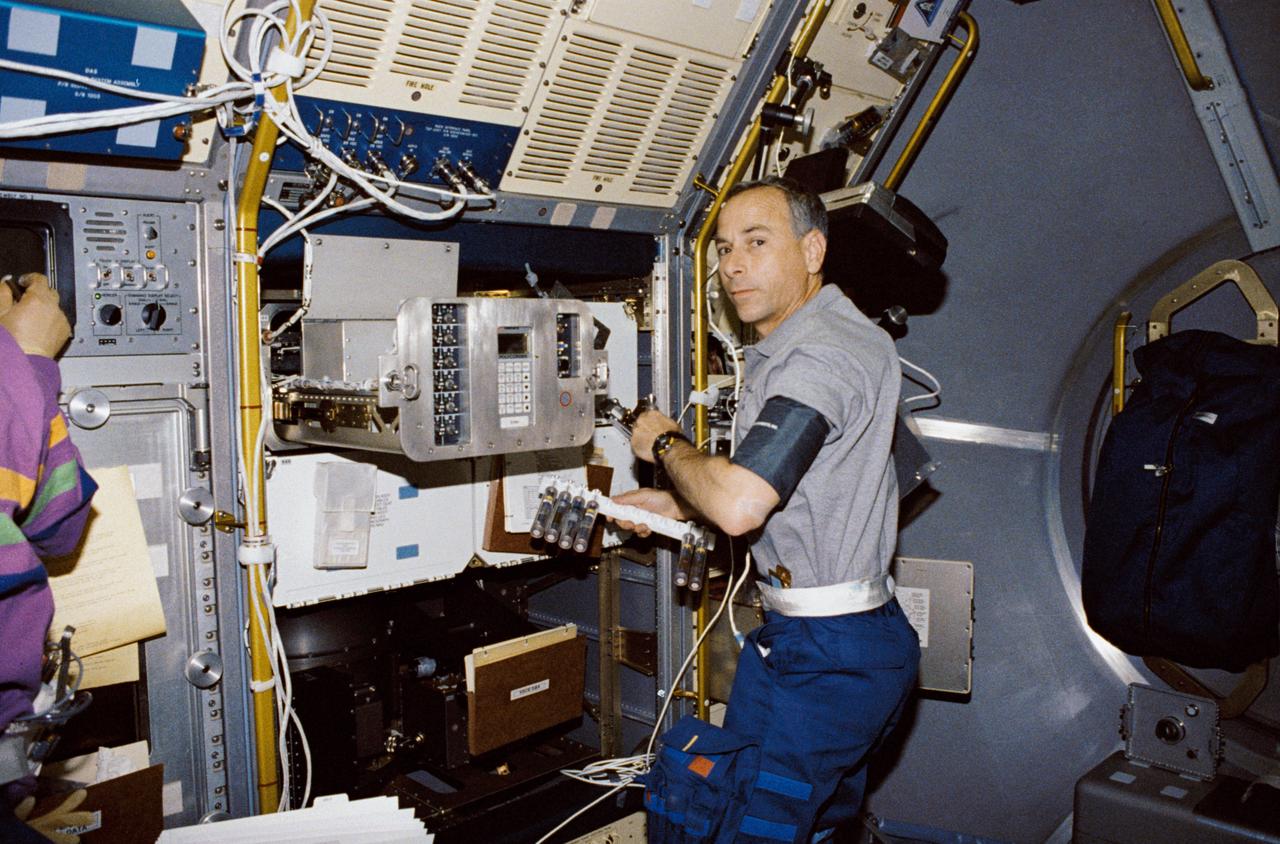
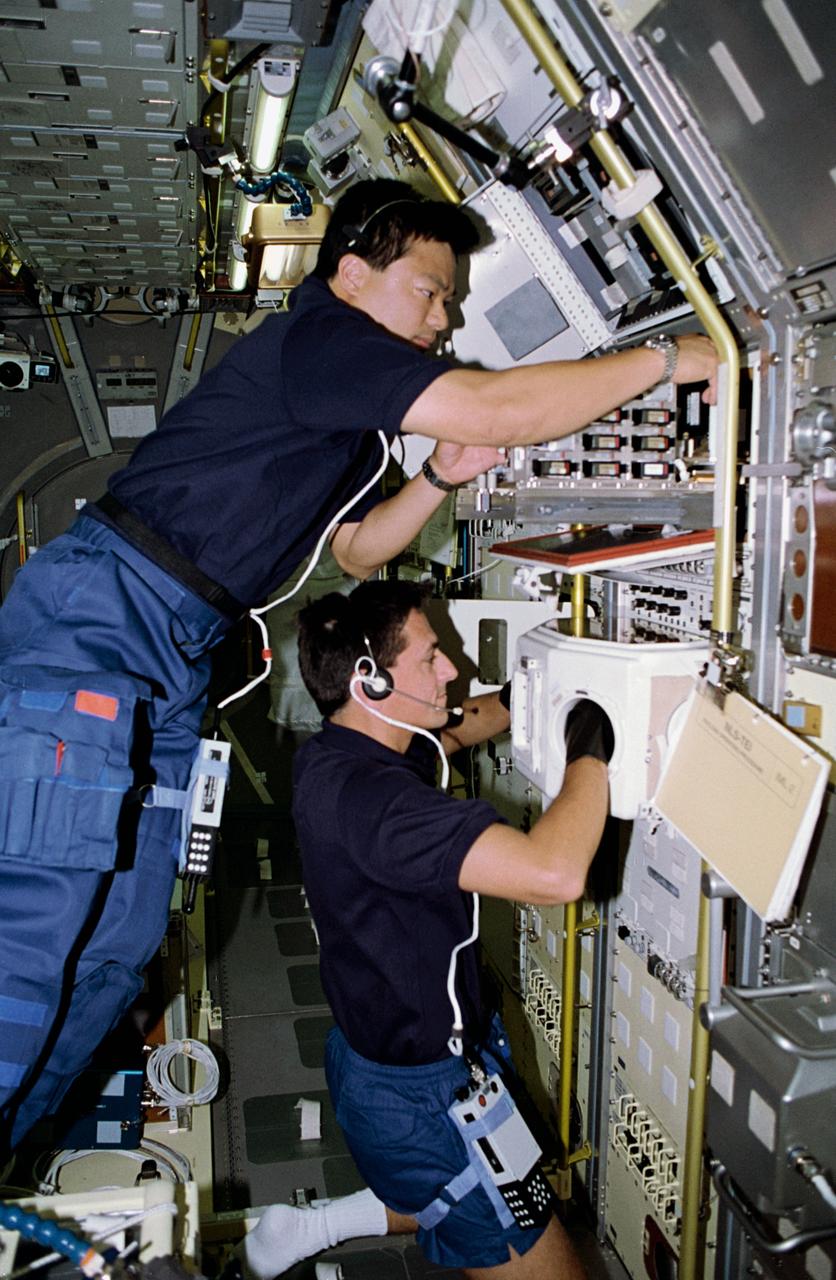
STS-65 Mission Specialist (MS) Leroy Chiao (top) and MS Donald A. Thomas are seen at work in the International Microgravity Laboratory 2 (IML-2) spacelab science module aboard the Space Shuttle Columbia, Orbiter Vehicle (OV) 102. The two crewmembers are conducting experiments at the IML-2 Rack 5 Biorack (BR). Chiao places a sample in the BR incubator as Thomas handles another sample inside the BR glovebox. The glovebox is used to prepare samples for BR and slow rotating centrifuge microscope (NIZEMI) experiments.
STS-65 crewmembers work at IML-2 Rack 5 Biorack (BR) aboard Columbia, OV-102
STS062-04-005 (4-18 March 1994) --- Astronaut Marsha S. Ivins has her hands full with a thermal imaging project on the flight deck of the Space Shuttle Columbia as astronaut Pierre J. Thuot stands by to help.  The two mission specialists were joined by three other veteran NASA astronauts for almost 14 full days in Earth-orbit.
Astronaut Marsha Ivins with thermal imaging project on flight deck
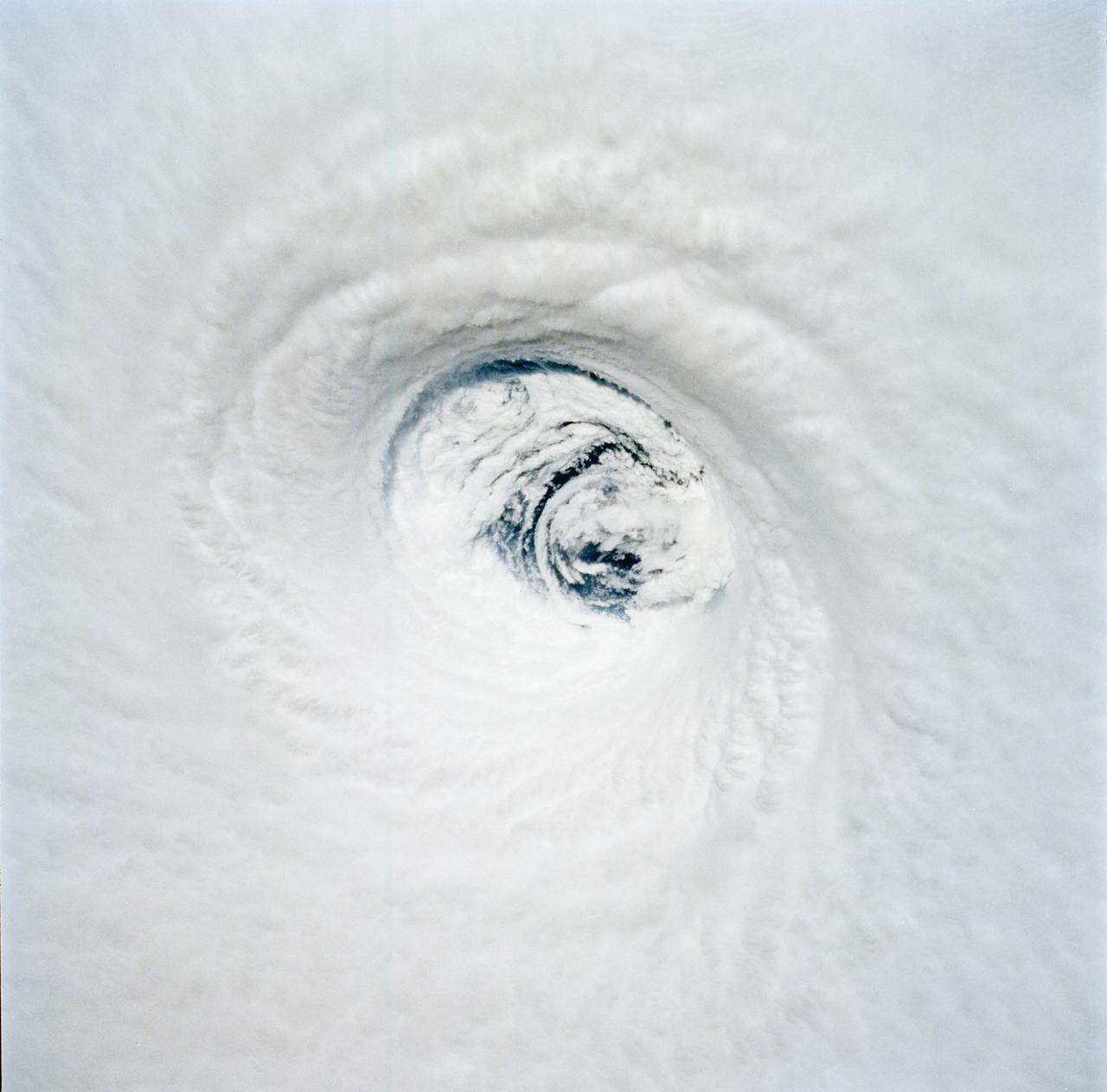
STS-65 Earth observation of Hurricane Emilia in Pacific Ocean was taken aboard Columbia, Orbiter Vehicle (OV) 102. This vertical view, photographed with a handheld 70mm camera, reveals the well-defined eye of the hurricane as it moves westerly several hundred miles southeast of the big island of Hawaii. Early in the flight the crew was able to observe the evolution of the storm and there was some concern that it might eventually head toward the Hawaiian Islands. Fortunately it did not.
STS-65 Earth observation of Hurricane Emilia taken aboard Columbia, OV-102
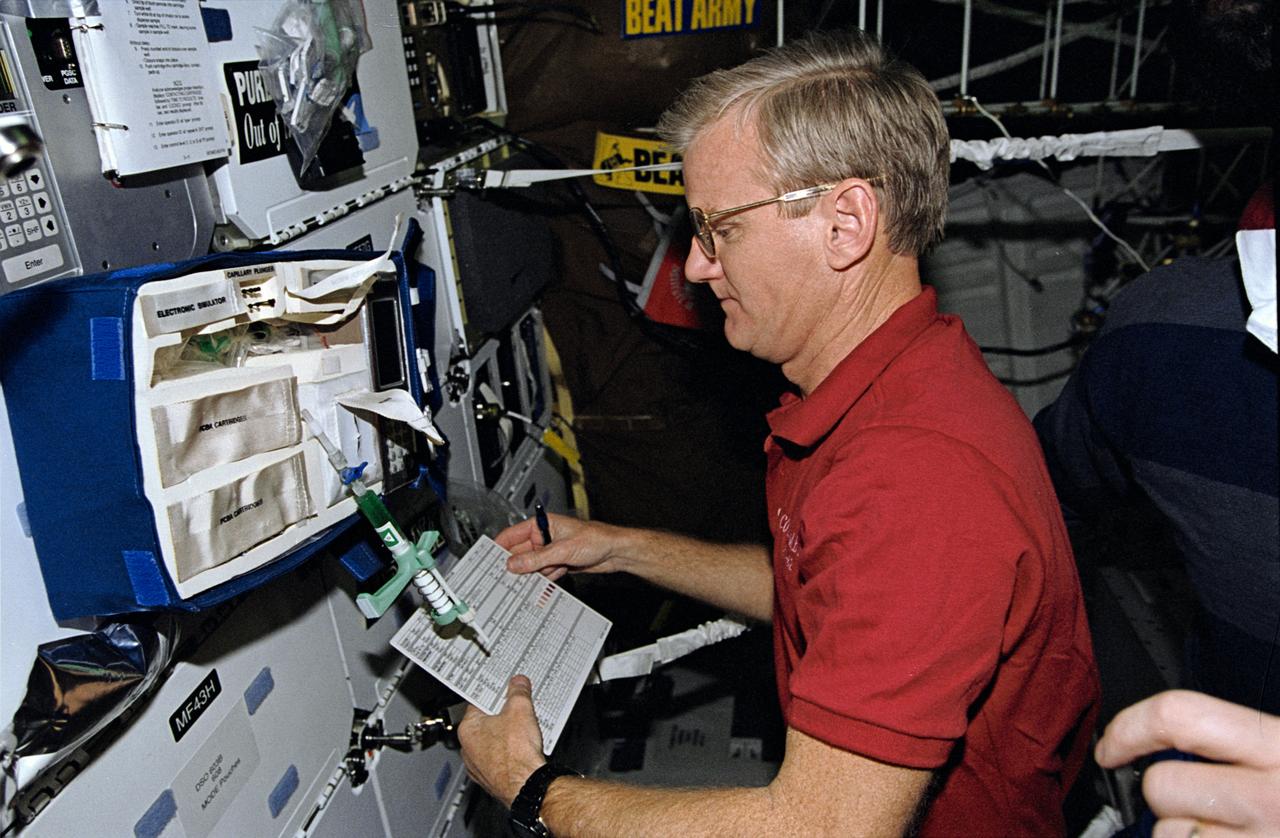
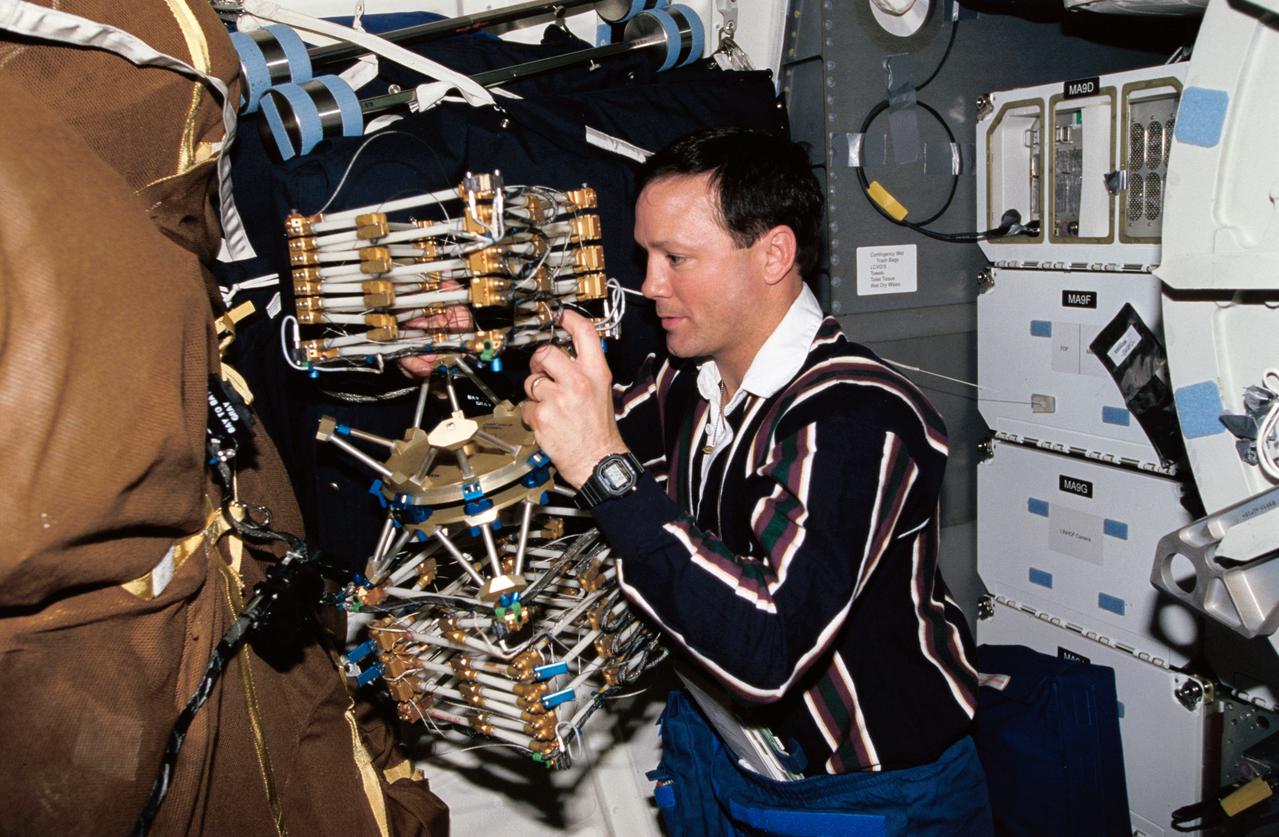
STS062-52-025 (4-18 March 1994) --- Astronaut Pierre J. Thuot, mission specialist, works with the Middeck 0-Gravity Dynamics Experiment (MODE) aboard the earth-orbiting Space Shuttle Columbia.  The reusable test facility is designed to study the nonlinear, gravity-dependent behavior of two types of space hardware -- contained fluids and (as depicted here) large space structures -- planned for future spacecraft.
Astronaut Pierre Thuot works with Middeck O-Gravity Dynamics Experiment
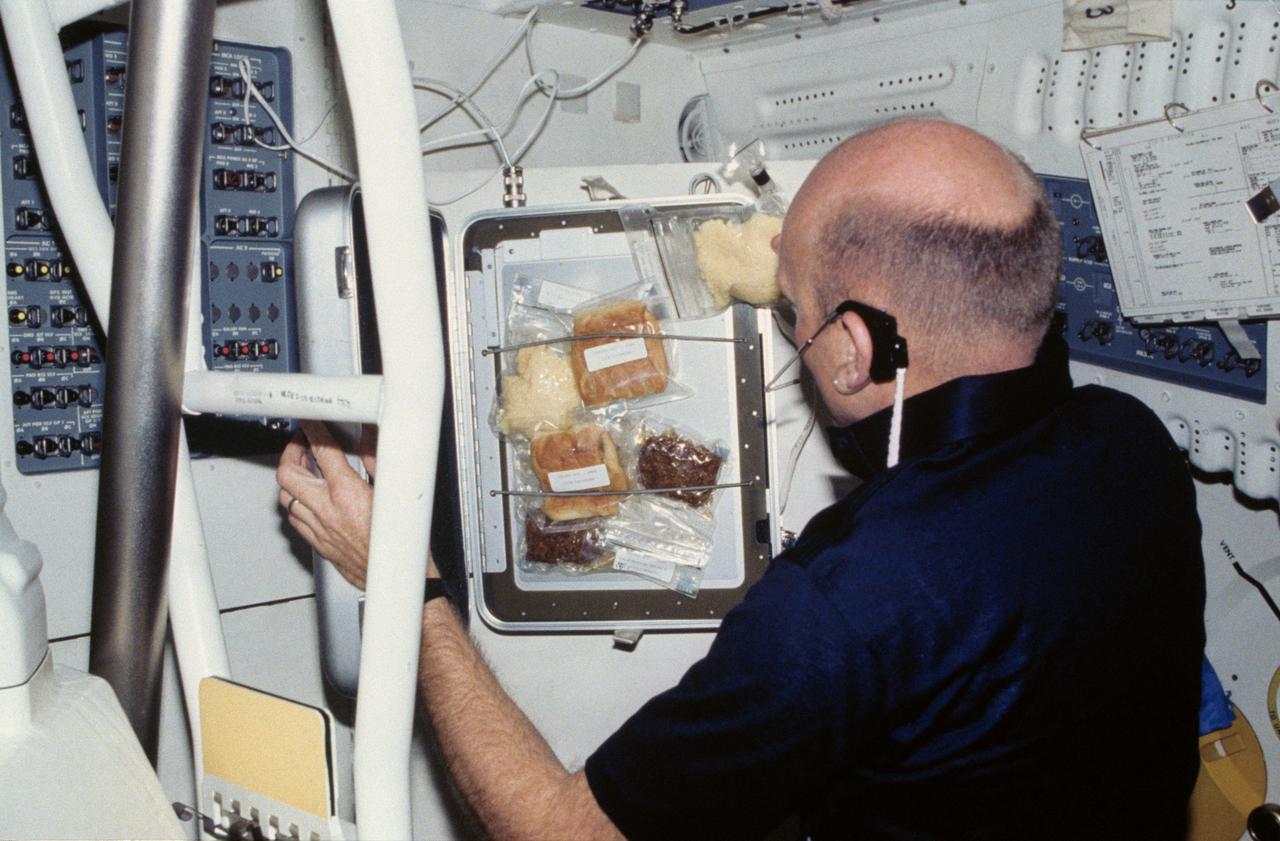
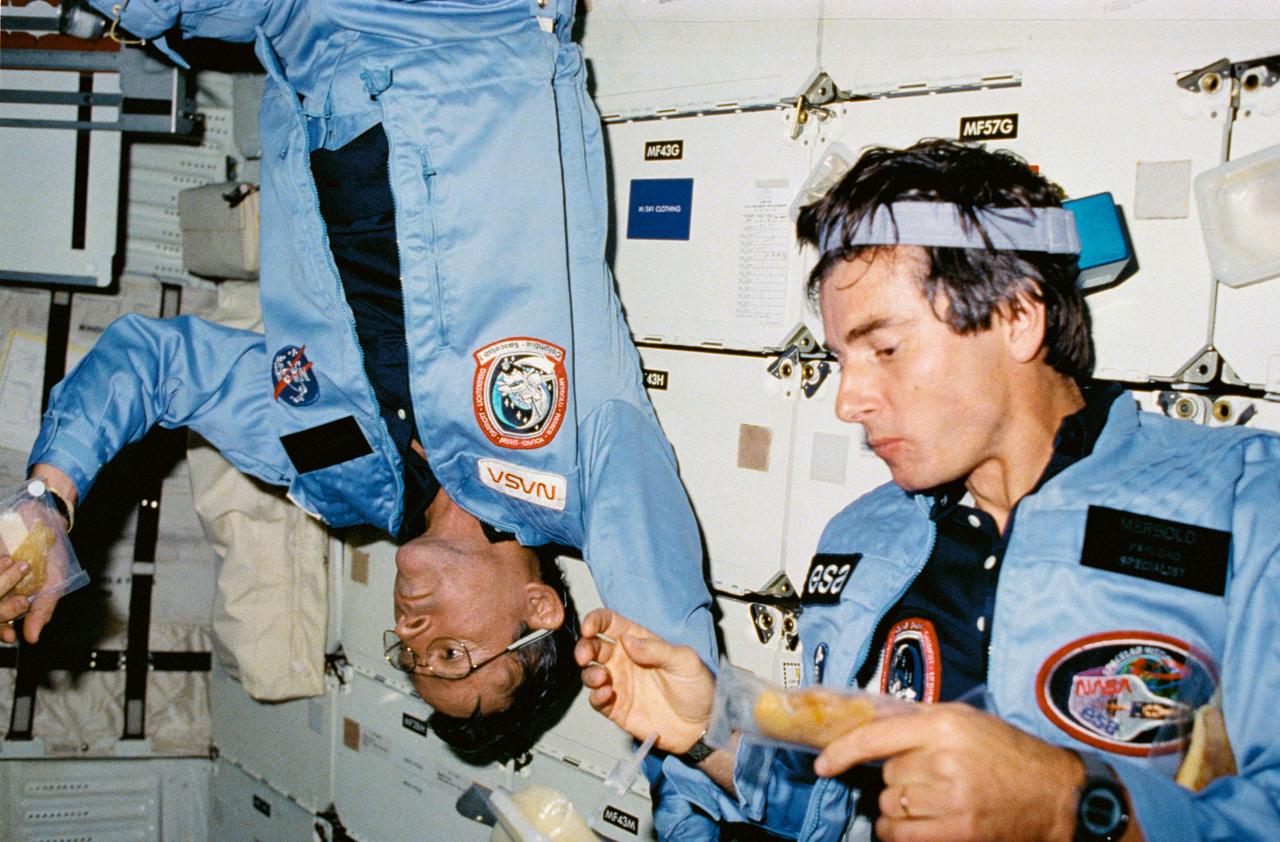
STS009-003-075 (28 November - 8 December 1983) --- Astronaut John W. Young (left), STS-9 crew commander; and Ulf Merbold, payload specialist, enjoy a meal in the middeck of the Earth-orbiting Space Shuttle Columbia. Merbold is a physicist from the Federal Republic of Germany, representing the European Space Agency (ESA) on this 10-day flight. Many of the nearby stowage lockers are used for clothing and food. The photograph was made with a 35mm camera.
Astronauts Young and Merbold have meal in the middeck of Columbia
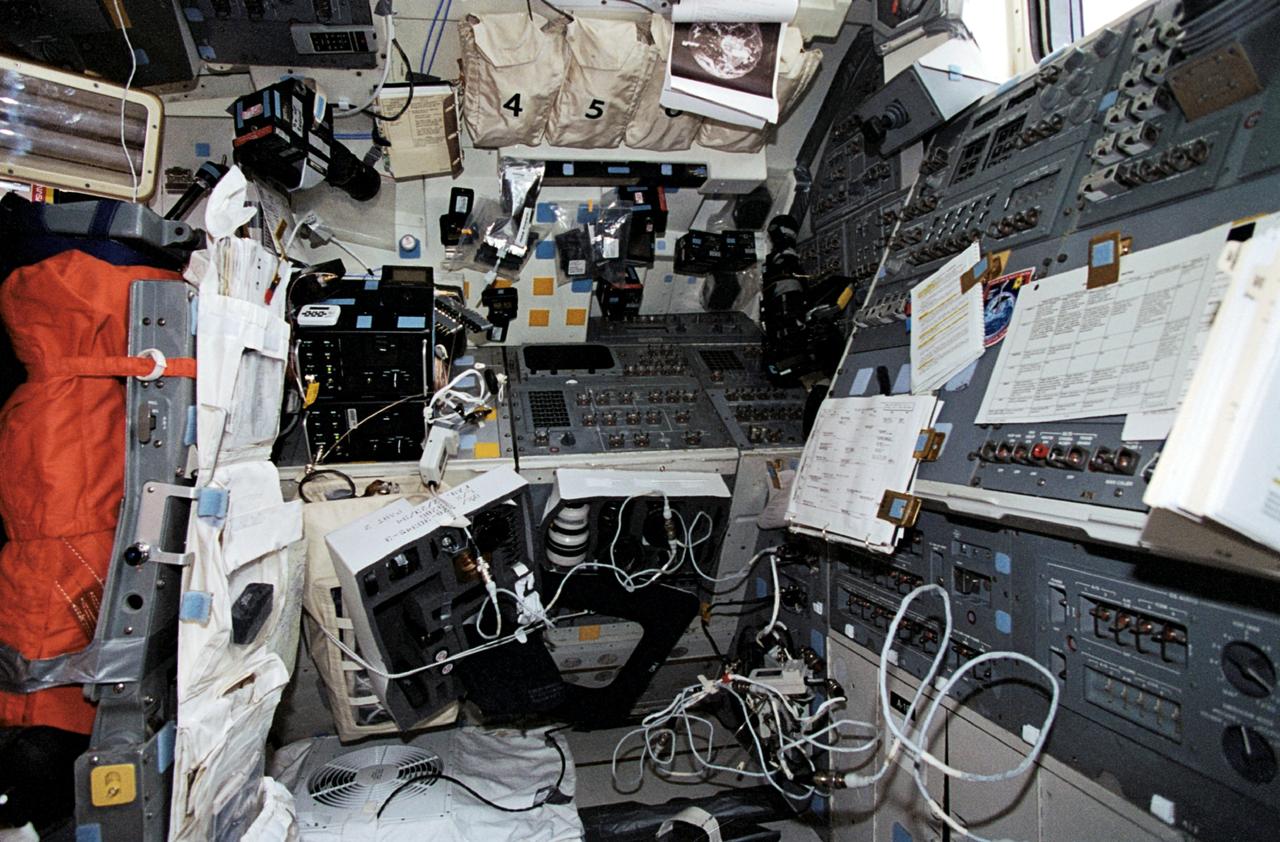
STS062-17-034 (4-18 March 1994) --- This scene, resembling a photographer's studio/laboratory, actually shows the aft flight deck of the Earth-orbiting Space Shuttle Columbia. A variety of cameras, lenses, visual aids and other gear are seen stowed around the flight deck. The five astronaut crew members devoted a large portion of their on-duty time at this workstation using some of this photographic equipment to record Earth imagery.
Aft flight deck of Columbia during STS-62
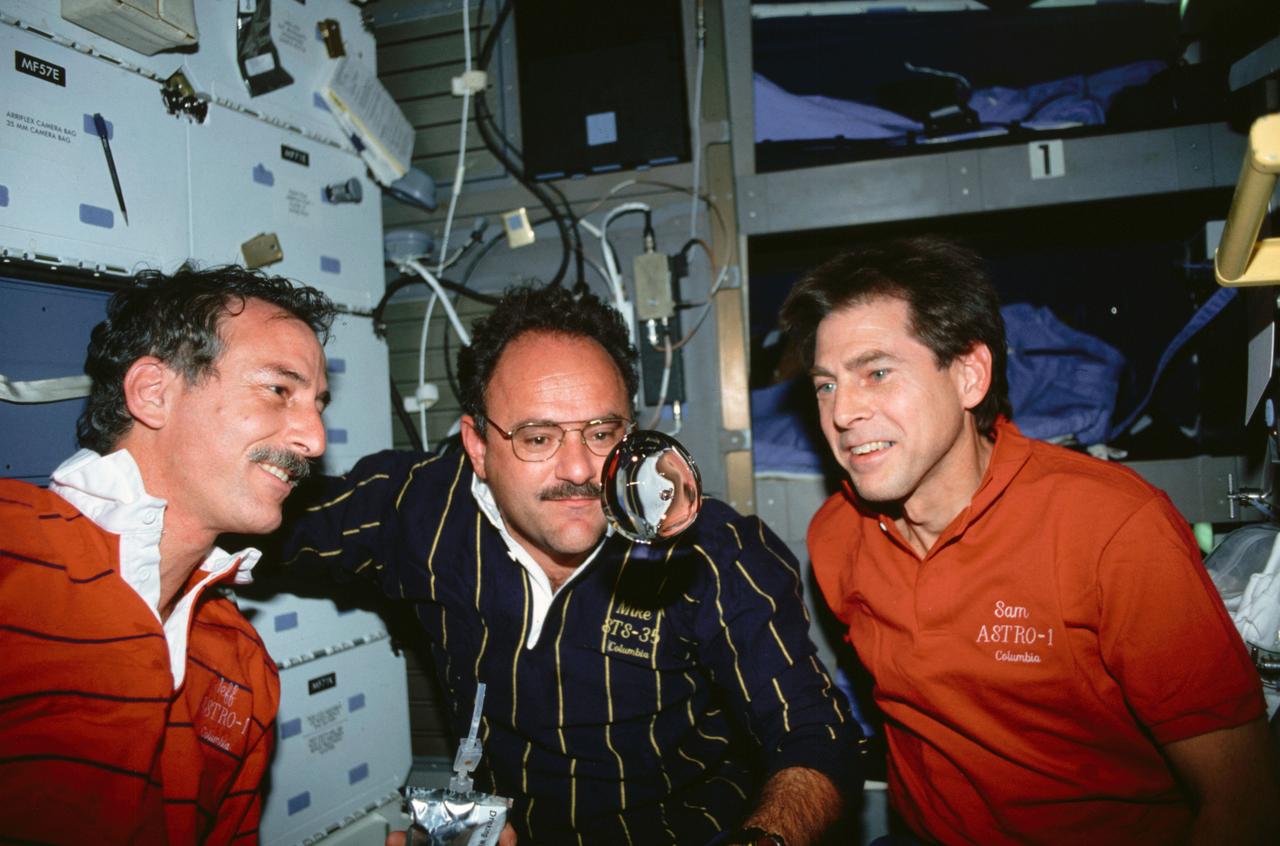
STS035-15-035 (2-10 Dec 1990) --- STS-35 crewmembers perform a microgravity experiment using their drinking water while on the middeck of Columbia, Orbiter Vehicle (OV) 102. Mission Specialist (MS) Jeffrey A. Hoffman (left) has released some water from a drinking container which he holds in his hand. MS John M. Lounge (wearing glasses, center) and Payload Specialist Samuel T. Durrance along with Hoffman study the changing shape and movement of the sphere of water.
STS-35 crewmembers watch a sphere of water float on OV-102's middeck
STS-32 Columbia, Orbiter Vehicle (OV) 102, is captured as its main landing gear (MLG) touches down on runway 22 at Edwards Air Force Base (EAFB), California, in the early morning darkness. The night landing ended a record 11-day mission in space. Moments later, at 1:36:38 am Pacific Standard Time (PST), OV-102 came to a complete stop, having logged 4,509,972 miles in flight.
STS-32 Columbia, OV-102, makes night landing on runway 22 at EAFB, California
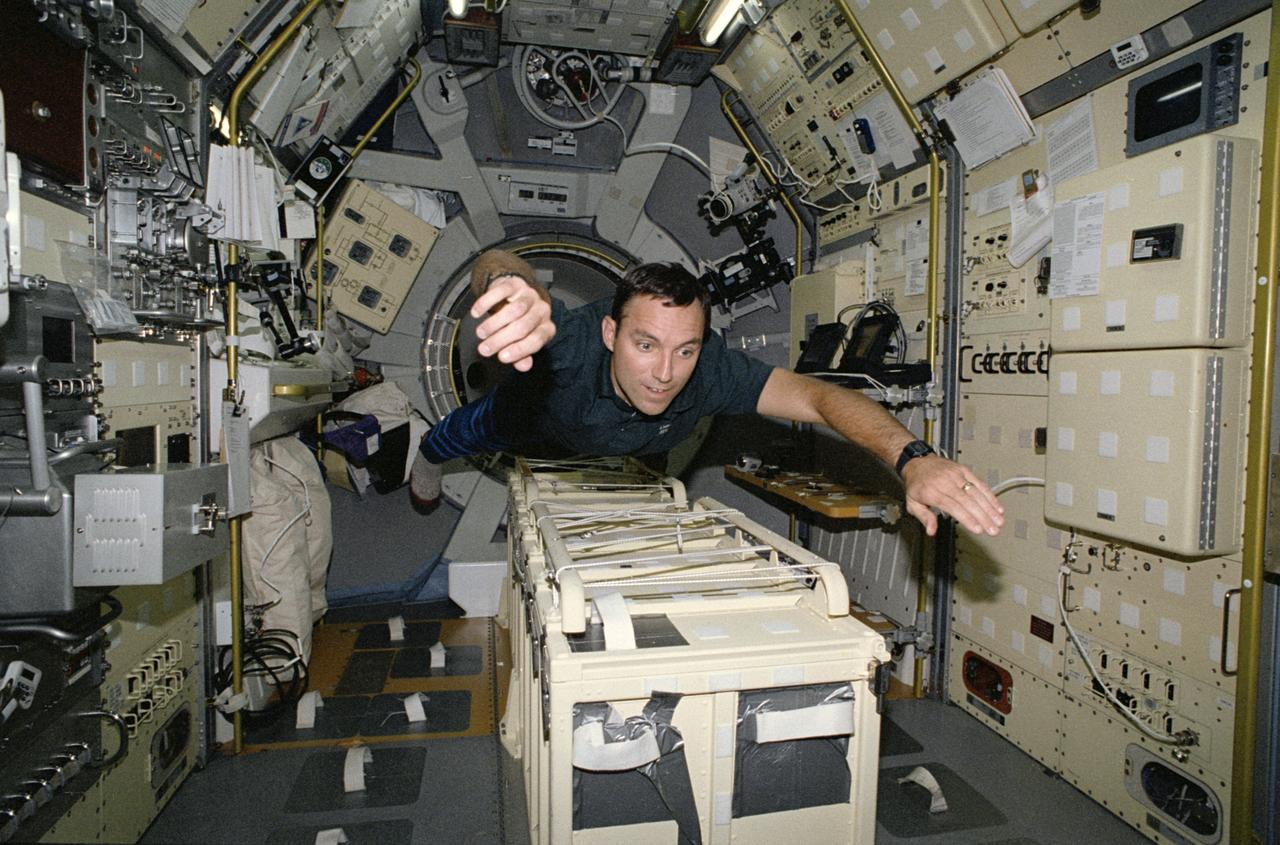
STS040-212-004 (5-14 June 1991) --- Astronaut James P. Bagian, STS-40 mission specialist, floats through the Spacelab Life Sciences (SLS-1) module aboard the Earth-orbiting Space Shuttle Columbia. Bagian and six other crew members spent over nine-days in space conducting life sciences research.
STS-40 Mission Specialist (MS) Bagian "flies" through SLS-1 module
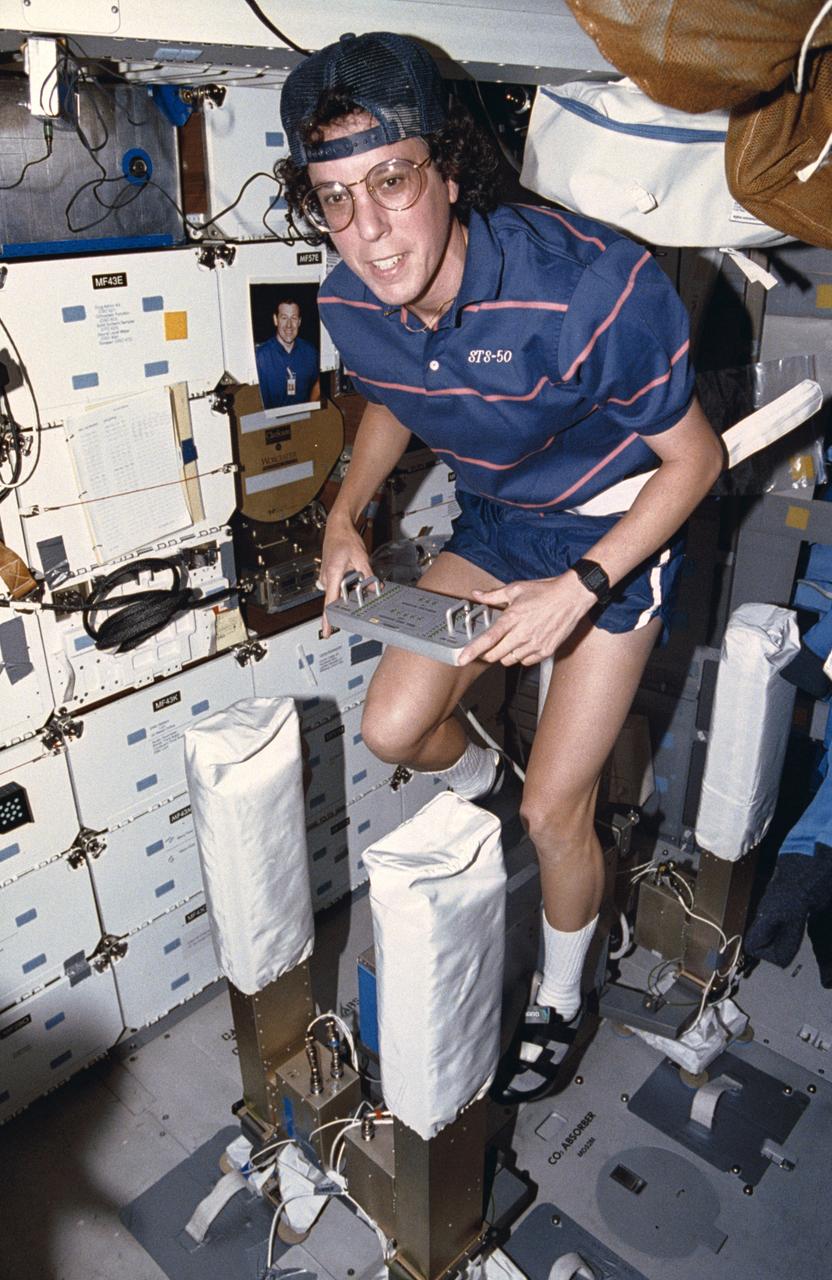
STS050-21-035 (25 June- 9 July 1992) --- Astronaut Ellen S. Baker, mission specialist, works out on the bicycle ergometer on the mid-deck of the Earth-orbiting Space Shuttle Columbia.  Baker was joined by four other astronauts and two scientists from the private sector for the record-setting 14-day United States Microgravity Laboratory 1 (USML-1) mission.
Crewmember exercising on the mid deck ergometer.
STS062-S-053 (4 March 1994) --- Carrying a crew of five veteran NASA astronauts and the United States Microgravity Payload (USMP), the Space Shuttle Columbia heads toward its sixteenth mission in Earth-orbit.  Launch occurred at 8:53 a.m. (EST), March 4, 1994. Onboard were astronauts John H. Casper, Andrew M. Allen, Marsha S. Ivins, Charles D. (Sam) Gemar and Pierre J. Thuot.
Liftoff of STS-62 Space Shuttle Columbia
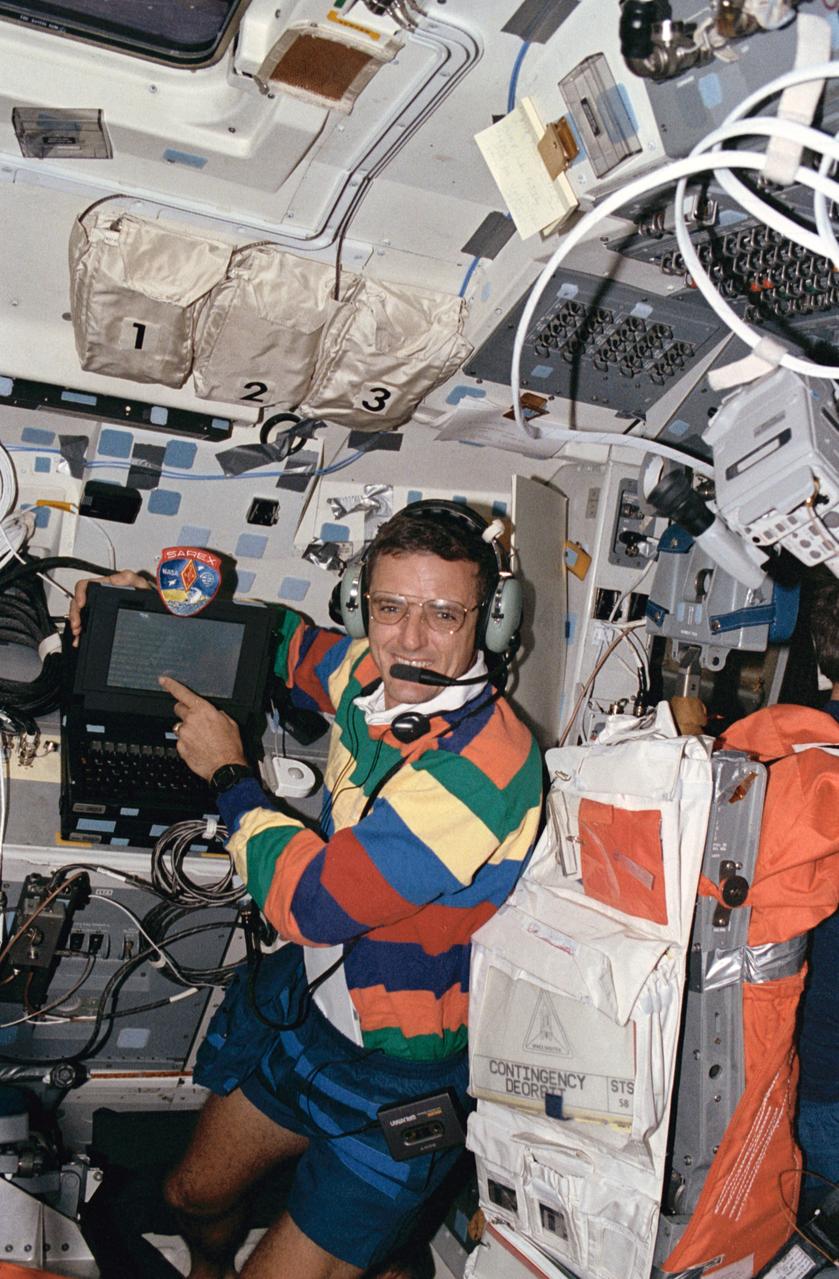
STS058-21-011 (24 Oct 1993) --- From the flight deck of the Earth-orbiting Space Shuttle Columbia, astronaut William S. McArthur talks to students on Earth.  The mission specialist's activity was part of the Shuttle Amateur Radio Experiment (SAREX), a frequent payload on Shuttle missions which serves to enlighten students around the world on the topic of space travel.  McArthur (call letters KC5ACR) is one of three licensed amateur radio operators on the seven-member flight.
Astronaut William McArthur talks to students on earth using SAREX
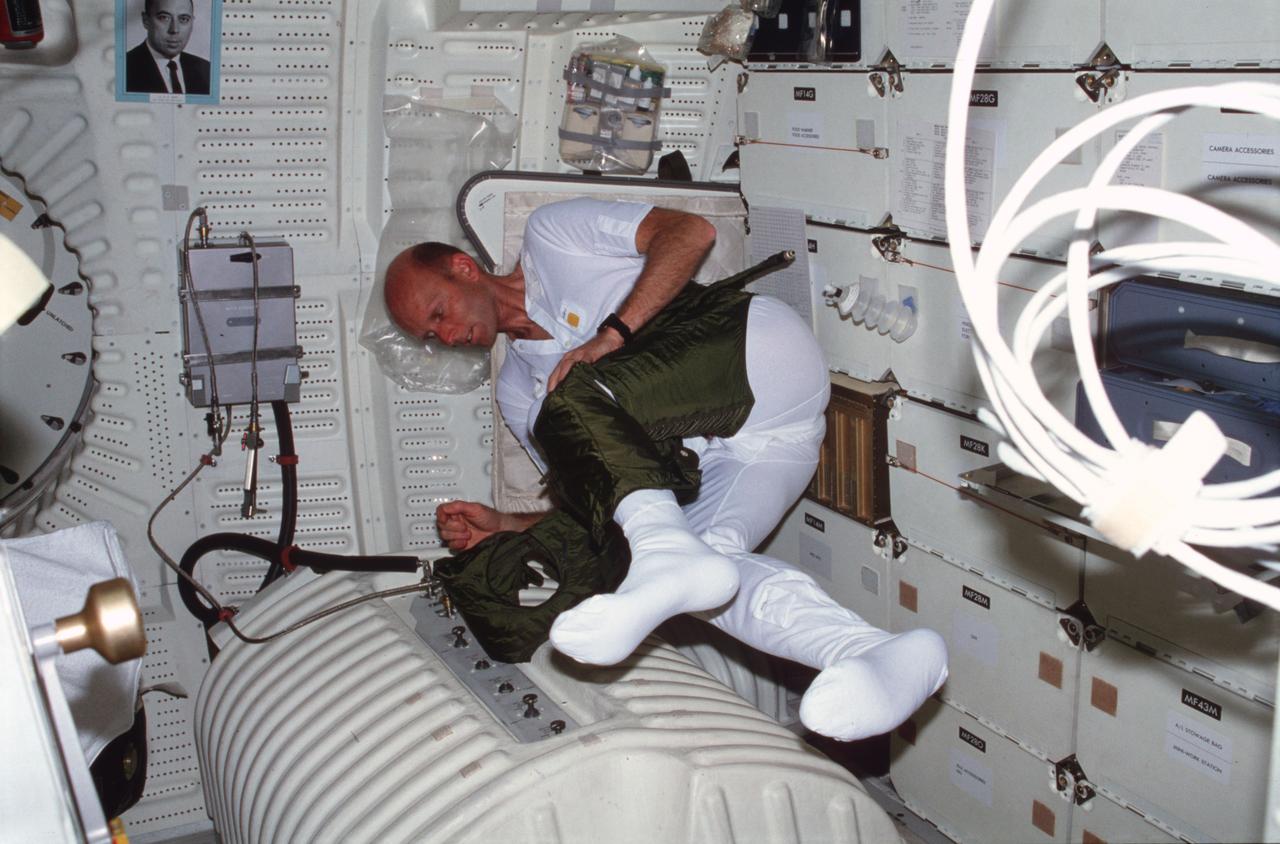
STS003-23-161 (24 March 1982) --- Astronaut C. Gordon Fullerton, STS-3 pilot, dons an olive drab inner garment which complements the space shuttle Extravehicular Mobility Unit (EMU) spacesuit. Since there are no plans for an extravehicular activity (EVA) on the flight, Fullerton is just getting some practice time ?in the field? as he is aboard the Earth-orbiting Columbia. He is in the middeck area of the vehicle. The photograph was taken with a 35mm camera by astronaut Jack R. Lousma, STS-3 commander. Photo credit: NASA
Pilot Fullerton dons EES anti-gravity suit lower torso on middeck
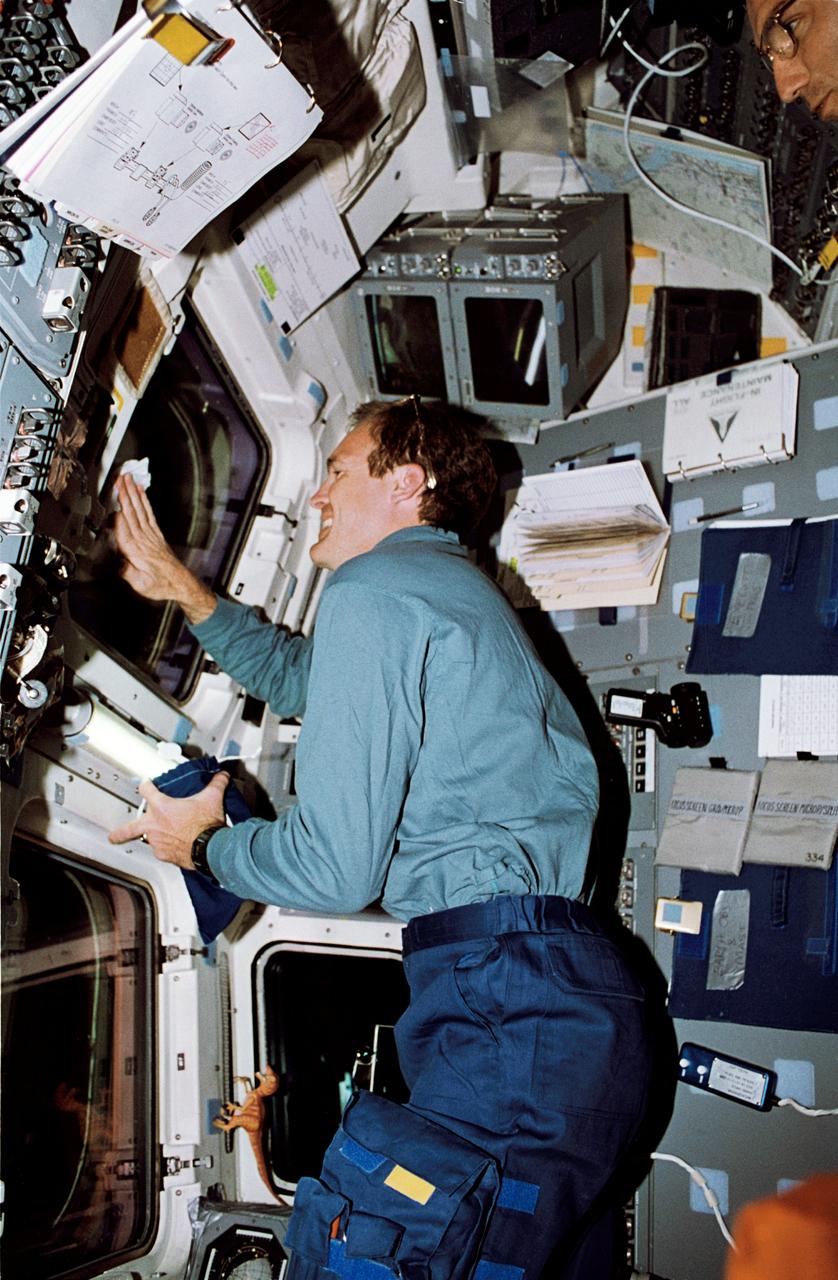
STS065-52-034 (8-23 July 1994) --- On the Space Shuttle Columbia's aft flight deck, astronaut James D. Halsel,l Jr., pilot, cleans off one of the overhead windows. Astronaut Carl E. Walz, mission specialist, looks on (photo's edge). The two shared over fourteen days in Earth-orbit with four other NASA astronauts and a Japanese payload specialist in support of the second International Microgravity Laboratory (IML-2) mission.
STS-65 Pilot Halsell cleans window on the aft flight deck of Columbia, OV-102
STS050-301-001 (25 June-9July 1992) --- Astronaut Carl J. Meade, mission specialist, works with the Generic Bioprocessing Apparatus in the science module aboard the Earth-orbiting Space Shuttle Columbia.  Payload specialist Eugene H. Trinh is partially visible (left), monitoring an experiment in the Drop Physics Module (DPM). The two joined four other astronauts and a second scientist from the private sector for 14-days of scientific data-gathering.
Crewmember in spacelab with the Generic Bioprocessing Apparatus, rack # 10.
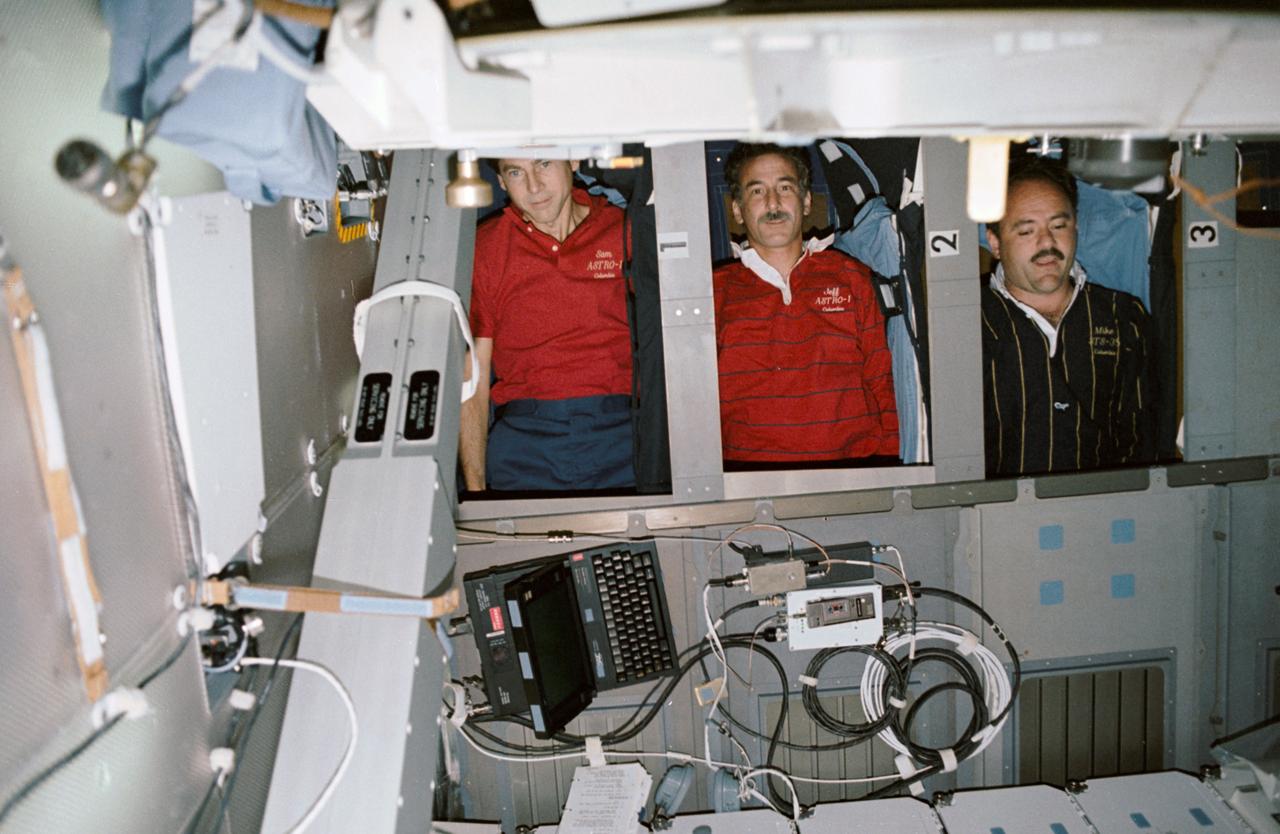
Though they are not actually asleep, three STS-35 crewmembers demonstrate the bunk-style sleep compartments onboard Columbia's, Orbiter Vehicle (OV) 102's, middeck. From top to bottom are Payload Specialist Samuel T. Durrance, Mission Specialist (MS) Jeffrey A. Hoffman, and MS John M. Lounge. At the left is the shuttle amateur radio experiment (SAREX). The crew escape pole (CES) is visible overhead and the open airlock hatch in the foreground. The sleep station is located against the middeck starboard wall.
STS-35 crewmembers in sleep station compartments on OV-102's middeck
STS009-128-858 (28 Nov-8 Dec 1983) --- Astronaut John W. Young takes notes in the commander?s station on the flight deck of the Columbia.  The cathode ray tube (CRT) among the forward panels displays the orbiter?s position in relation to the Earth on its monitor.  Astronaut Brewster H. Shaw Jr., pilot, took this photograph.
Astronaut Young at the commander's station
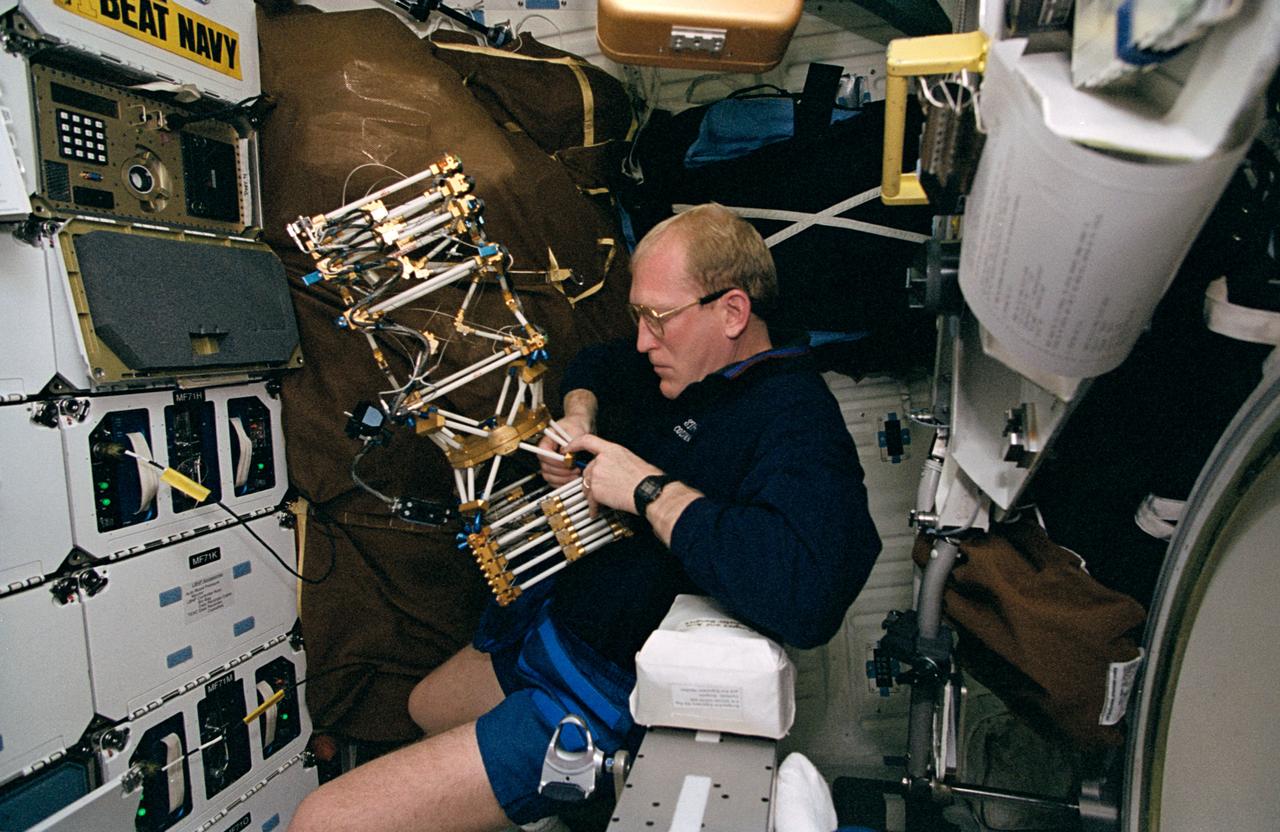
STS062-23-017 (4-18 March 1994) --- Astronaut Charles D. (Sam) Gemar, mission specialist, works with Middeck 0-Gravity Dynamics Experiment (MODE) aboard the earth-orbiting Space Shuttle Columbia.  The reusable test facility is designed to study the nonlinear, gravity-dependent behavior of two types of space hardware -- contained fluids and (as depicted here) large space structures -- planned for future spacecraft.
Astronaut Sam Gemar works with Middeck O-Gravity Dynamics Experiment (MODE)
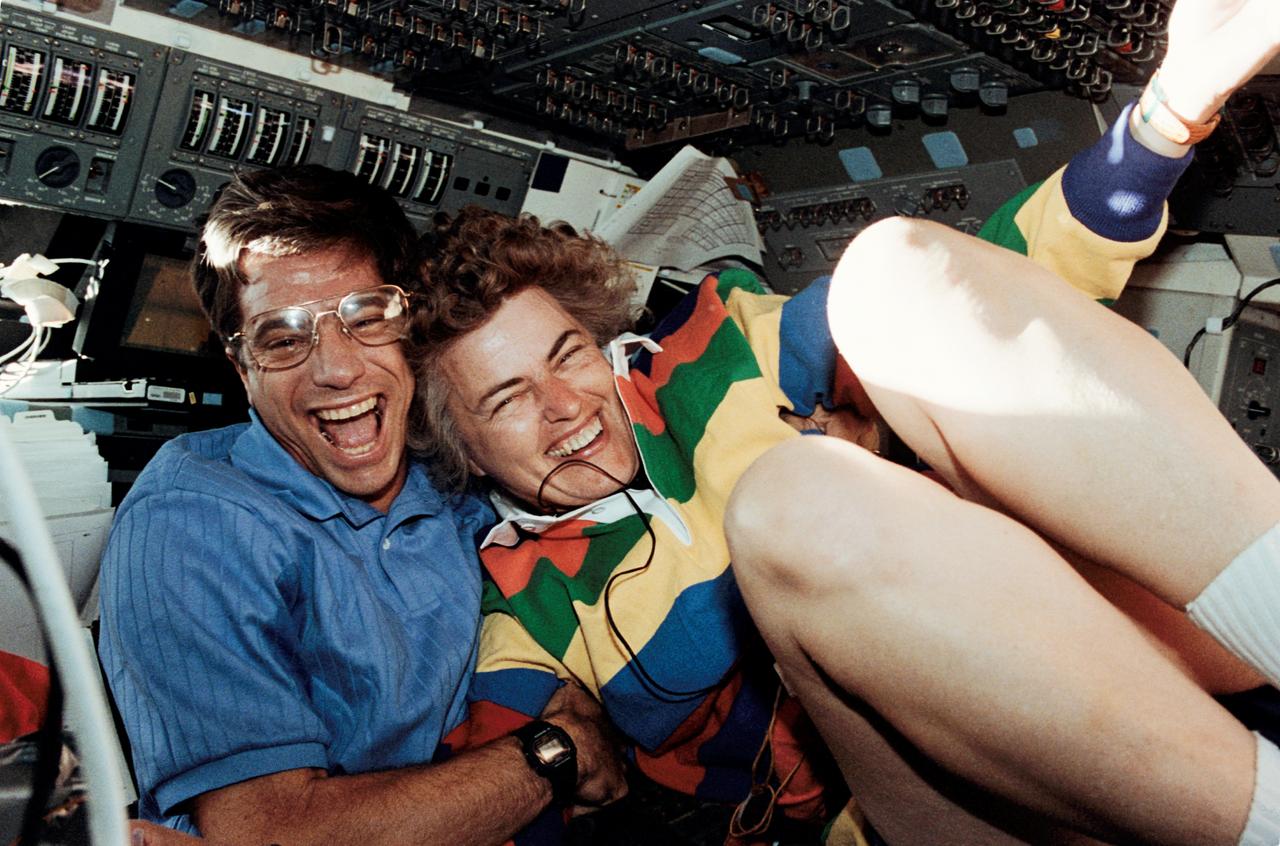
STS058-25-004 (29 Oct. 1993) --- On the forward flight deck of the Earth-orbiting Space Shuttle Columbia, astronauts John E. Blaha and Shannon W. Lucid show their glee at a milestone achieved a while earlier. The mission commander had earlier announced that Lucid's just achieved 752nd hour in space marked a space shuttle record for time spent on a mission.
Astronauts Blaha and Lucid celebrate Lucid's 752 hour in space
STS032-30-024 (17 Jan 1990) --- Astronaut Daniel C. Brandenstein, STS-32 mission commander, holds up a card signed by friends in the astronaut office and around JSC.  The commander celebrated his 47th birthday on January 17, 1990, about two thirds the way through an eleven-day mission in Earth orbit aboard Columbia.  Brandenstein is seated at the commander's station.
STS-32 Commander Brandenstein displays birthday card on OV-102's flight deck
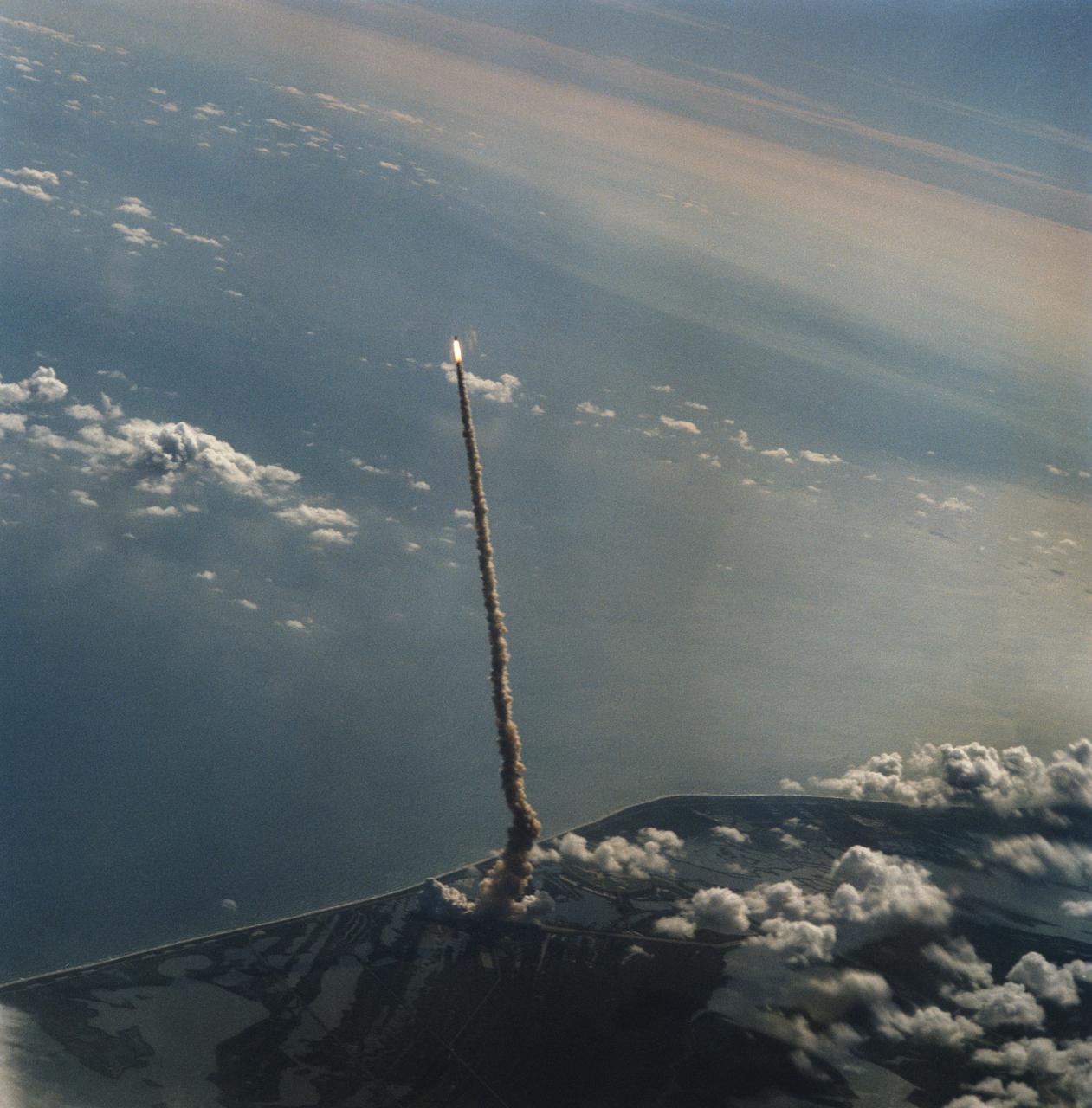
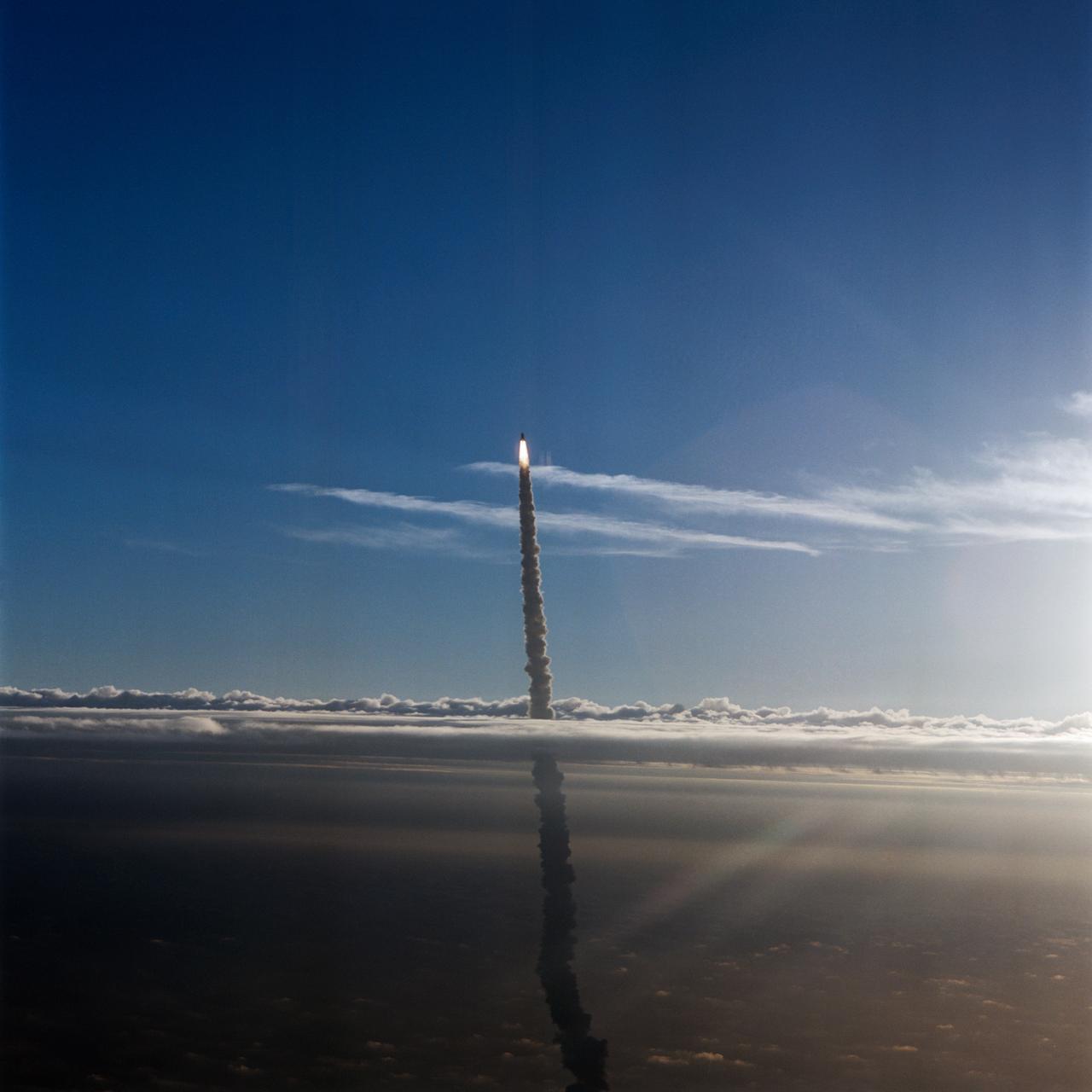
STS058-S-122 (18 Oct 1993) --- This distant shot of Columbia on its way to Earth-orbit was captured on film from the Shuttle Training Aircraft (STA) assigned to advance launch range screening.  Onboard the spacecraft were six NASA astronauts, a veterinarian from the private sector and the Spacelab Life Sciences (SLS-2) science module.  The crew will spend two weeks in Earth-orbiting devoting all its on-duty time to life sciences research.  Launch occurred at 10:53 a.m. (EDT), October 18, 1993, from the Kennedy Space Center (KSC).
Distant view of STS-58 Columbia launch from Shuttle Training Aircraft
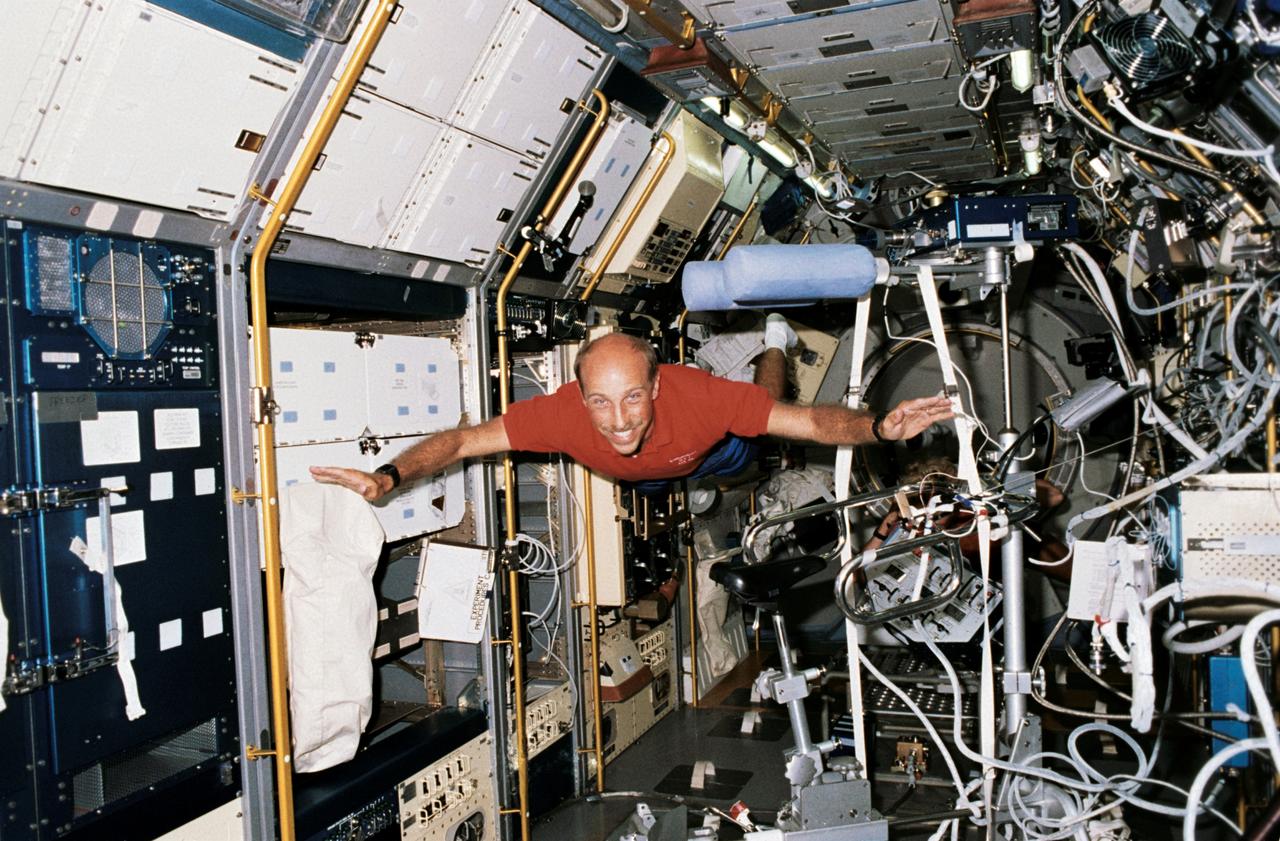
STS-65 Mission Specialist Carl E. Walz floats above center aisle equipment in the International Microgravity Laboratory 2 (IML-2) spacelab science module. Walz has just entered the IML-2 module via the spacelab tunnel (note hatch opening behind him). The tunnel connects the IML-2 module with Columbia's, Orbiter Vehicle (OV) 102's, crew compartment. Walz along with five other NASA astronauts and a Japanese payload specialist spent more than two weeks in Earth orbit conducting IML-2 experiments. This photo was among the first released by NASA following IML-2.
STS-65 Mission Specialist Walz in IML-2 spacelab aboard Columbia, OV-102
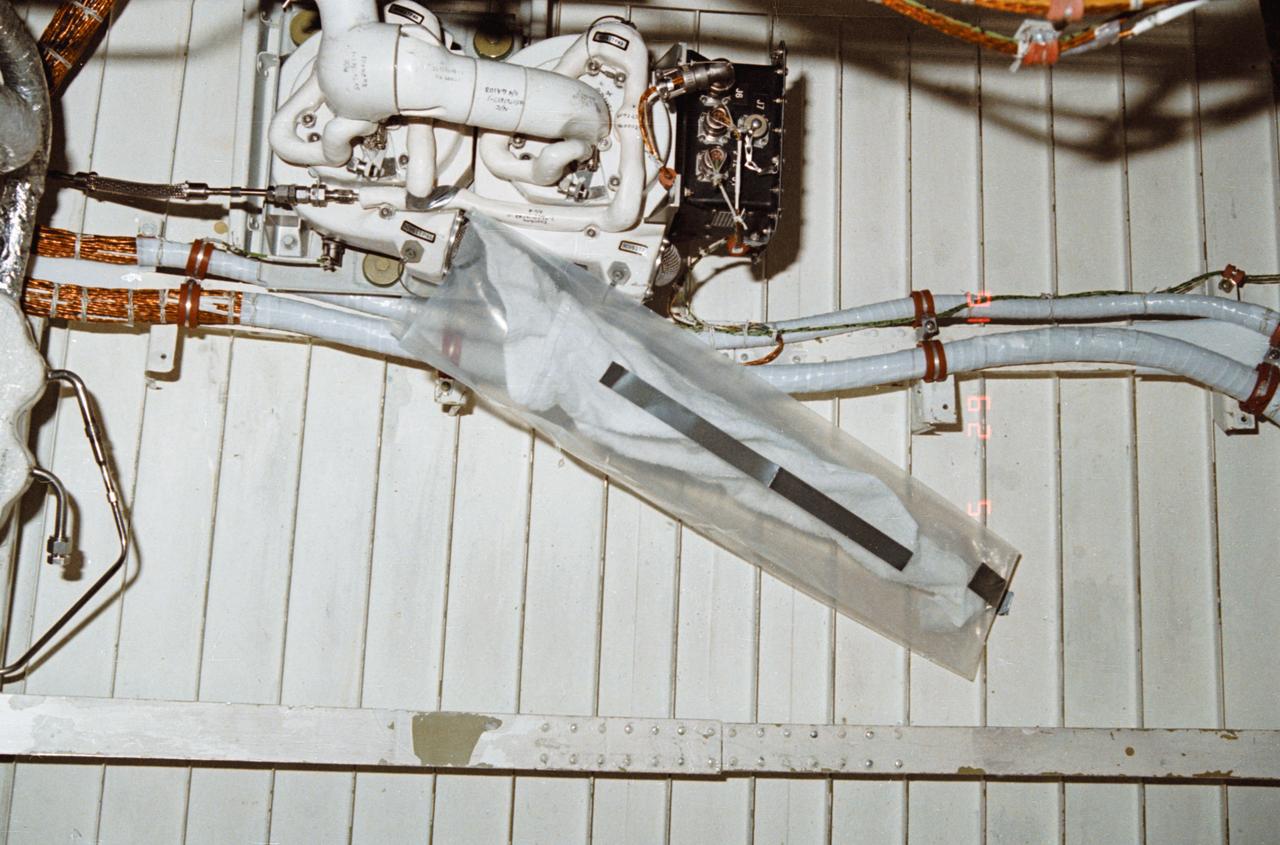
During STS-32, onboard Columbia, Orbiter Vehicle (OV) 102, a leakage problem at environmental control and life support system (ECLSS) air revitalization system (ARS) humidity separator A below the middeck is solved with a plastic bag and a towel. The towel inserted inside a plastic bag absorbed the water that had collected at the separator inlet.
STS-32 OV-102 air revitalization system (ARS) humidity separator problem
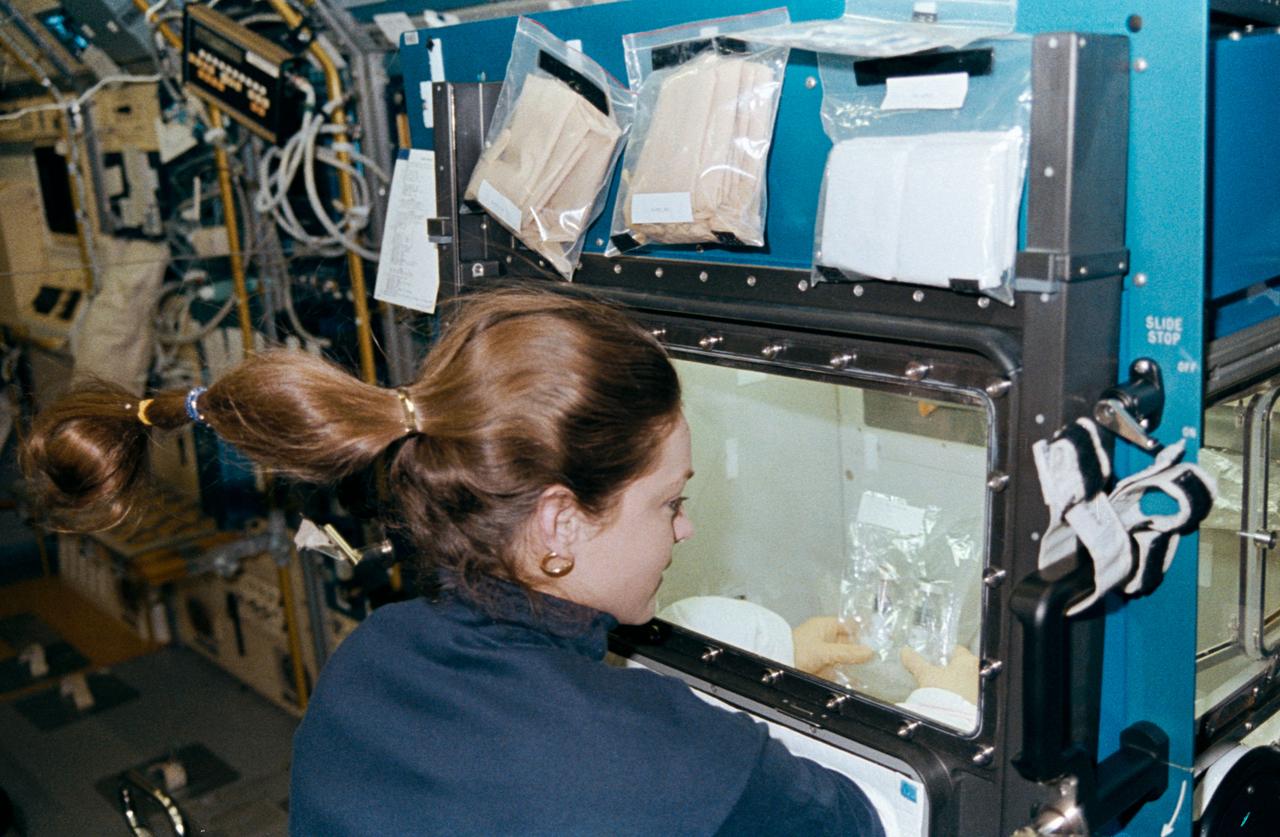
STS040-224-005 (5-14 June 1991) --- Astronaut Tamara E. Jernigan, STS-40 mission specialist, conducts an evaluation of the General Purpose Work Station (GPWS) in the Spacelab Life Sciences (SLS-1) module onboard the Earth-orbiting Space Shuttle Columbia.  The photograph was taken with a 35mm camera.
STS-40 Mission Specialist (MS) Jernigan uses the SLS-1 GPWS glovebox
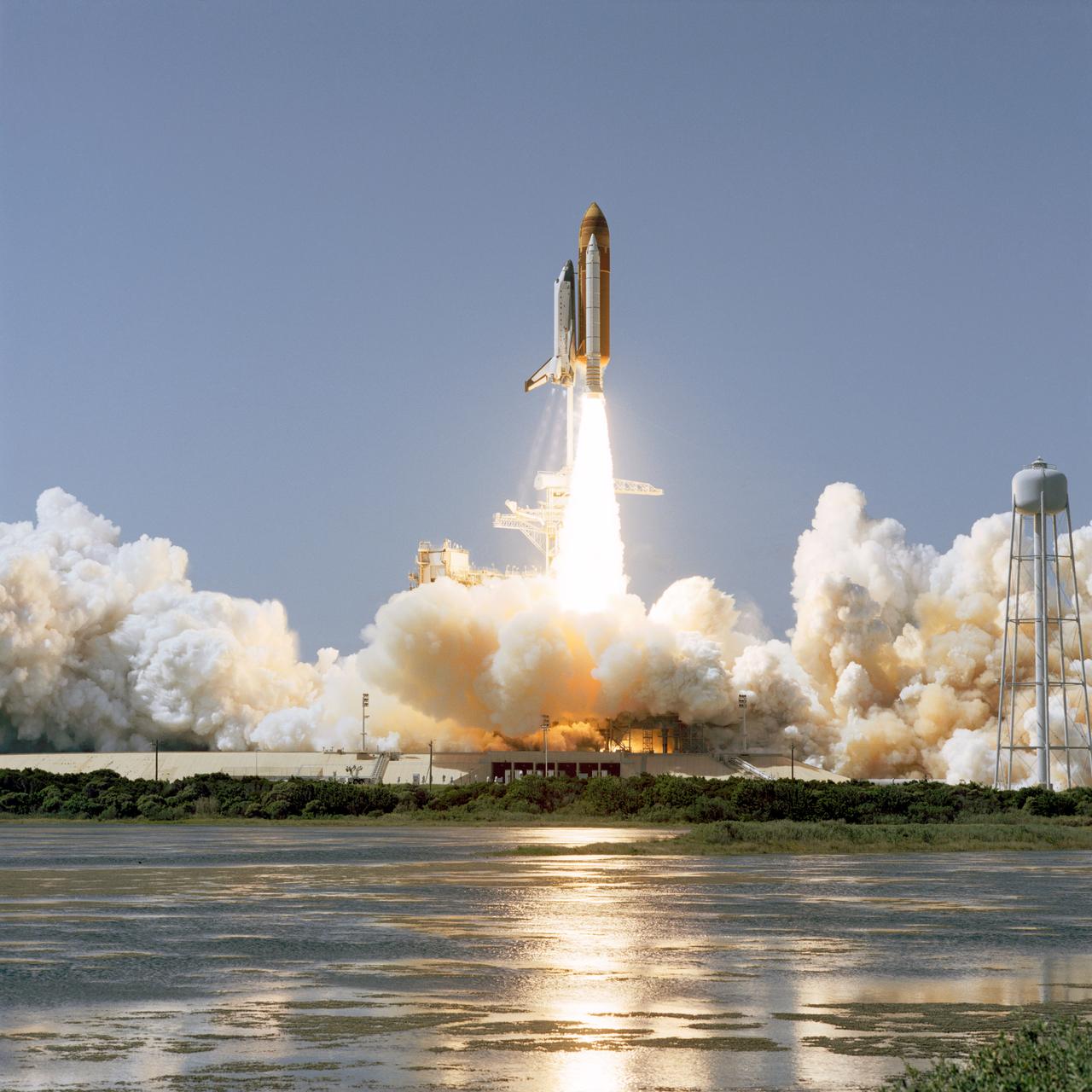
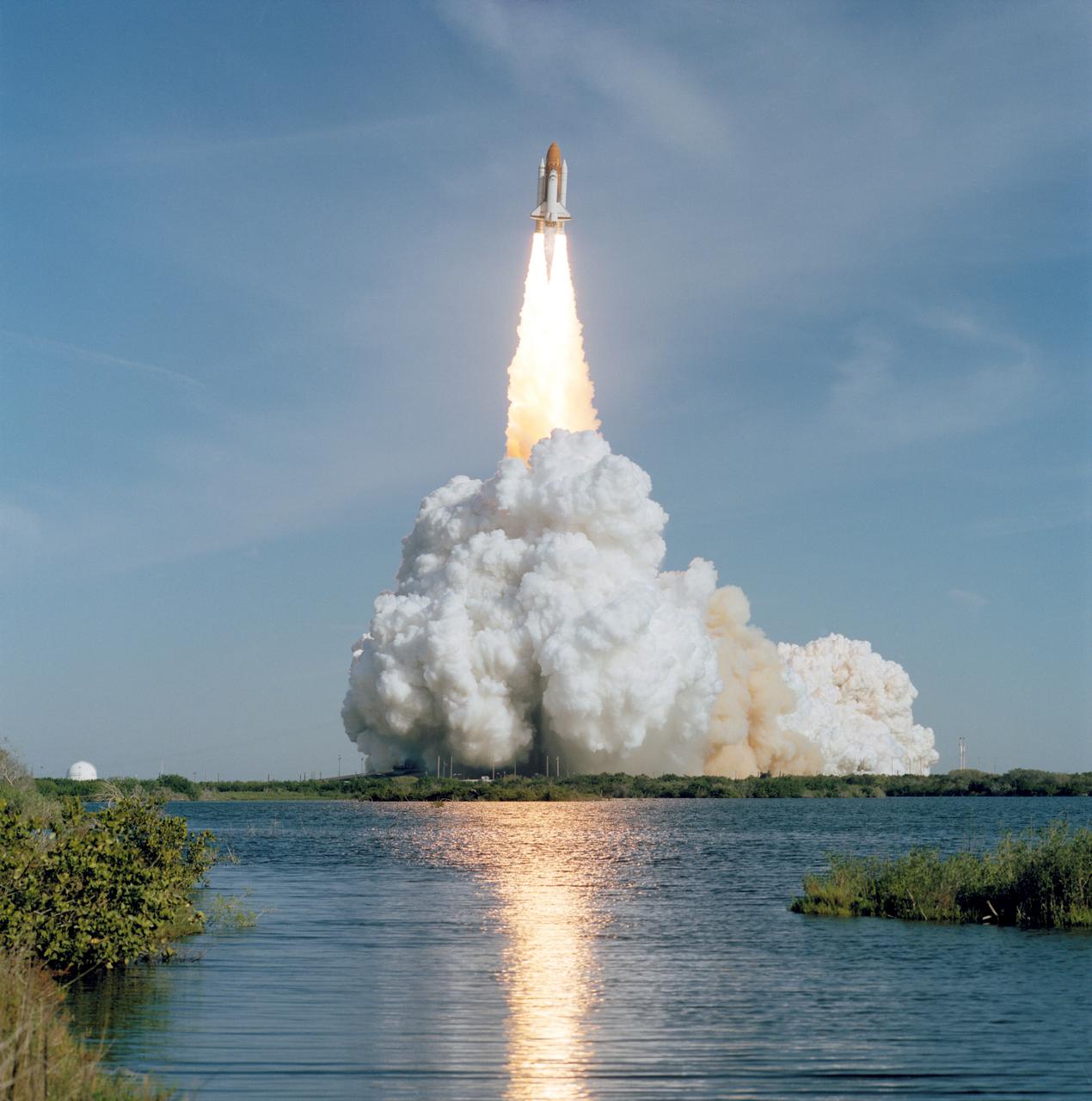
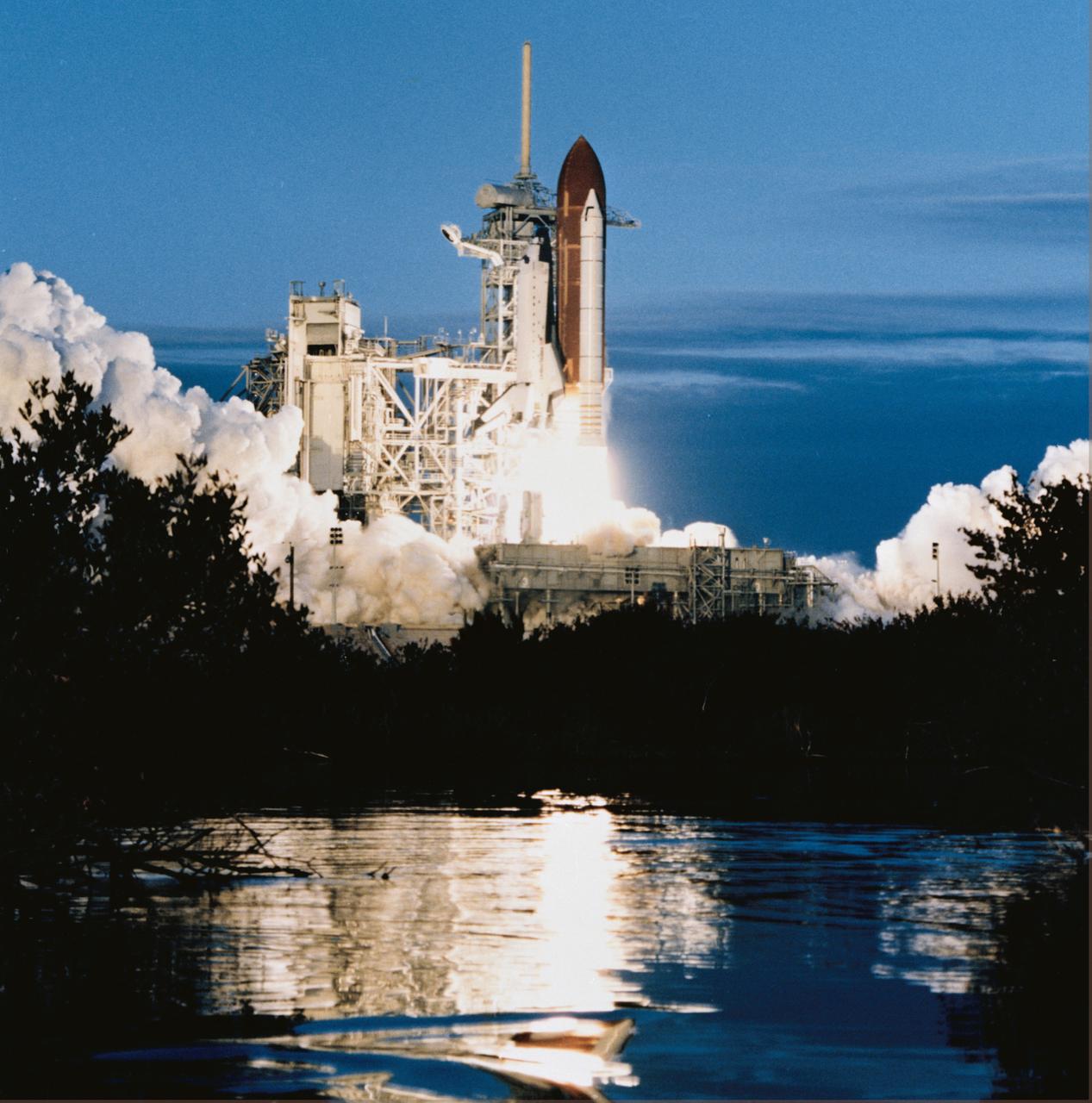
STS032-S-069 (9 Jan. 1990) --- The space shuttle Columbia, with a five member crew aboard, lifts off for the ninth time as STS-32 begins a 10-day mission in Earth orbit. Leaving from Launch Pad 39A at 7:34:59:98 a.m. EST, in this horizontal (cropped 70mm) frame, Columbia is seen reflected in nearby marsh waters some 24 hours after dubious weather at the return-to-launch site (RTLS) had cancelled a scheduled launch. Onboard the spacecraft were astronauts Daniel C. Brandenstein, James D. Wetherbee, Bonnie J. Dunbar, G. David Low and Marsha S. Ivins. Photo credit: NASA
STS-32 Columbia, OV-102, liftoff from KSC LC Pad 39A is reflected in waterway
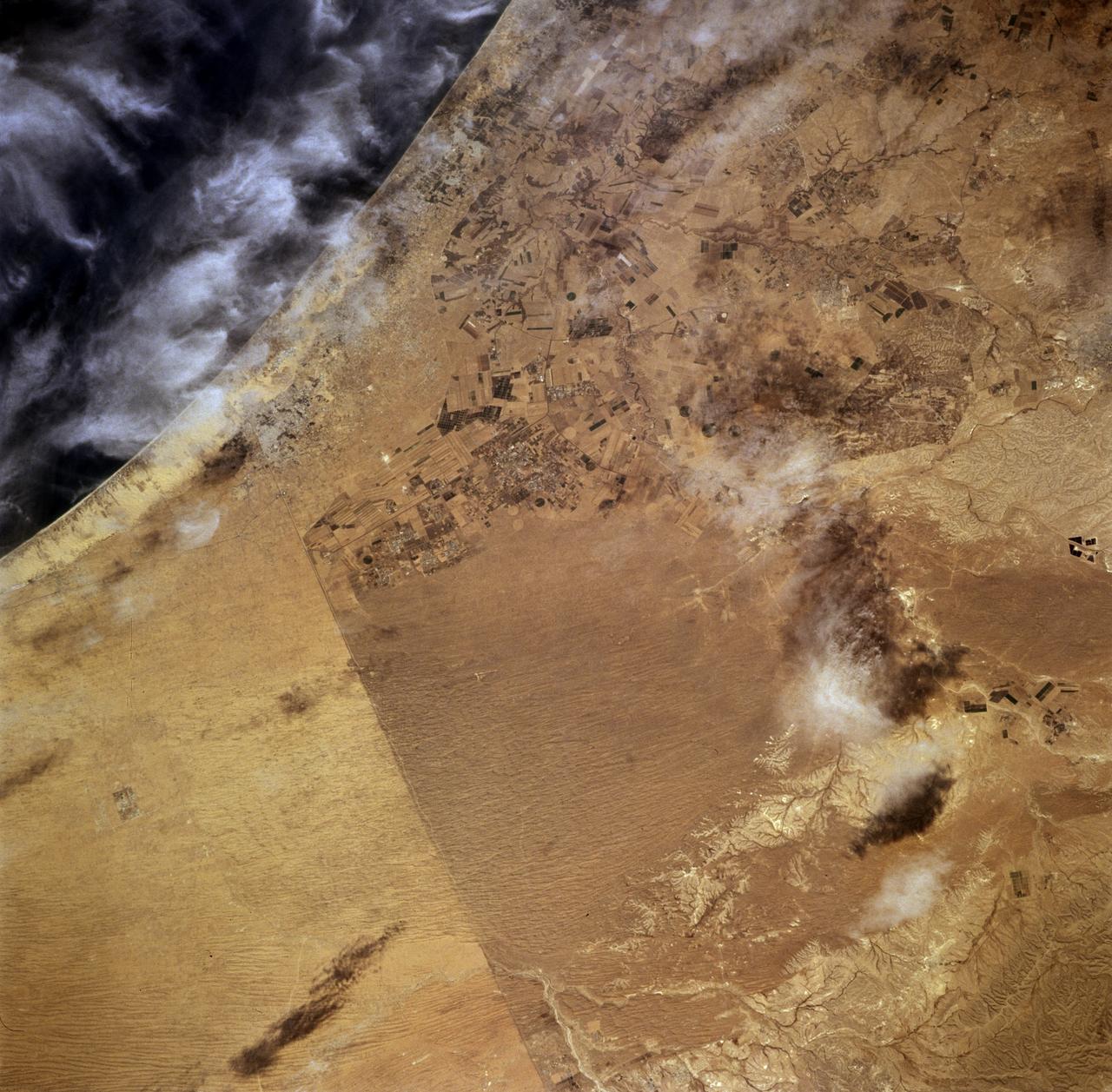
STS073-708-089 (26 October 1995) --- As evidenced by this 70mm photograph from the Earth-orbiting Space Shuttle Columbia, international borders have become easier to see from space in recent decades.  This, according to NASA scientists studying the STS-73 photo collection, is particularly true in arid and semi-arid environments.  The scientists go on to cite this example of the razor-sharp vegetation boundary between southern Israel and Gaza and the Sinai.  The nomadic grazing practices to the south (the lighter areas of the Sinai and Gaza, top left) have removed most of the vegetation from the desert surface.  On the north side of the border, Israel uses advanced irrigation techniques in Israel, mainly "trickle irrigation" by which small amounts of water are delivered directly to plant roots.  These water-saving techniques have allowed precious supplies from the Jordan River to be used on farms throughout the country.  Numerous fields of dark green can be seen in this detailed view.  Scientists say this redistribution of the Jordan River waters has increased the Israeli vegetation cover to densities that approach those that may have been common throughout the Mid-East in wetter early Biblical times.  A small portion of the Mediterranean Sea appears top right.
Earth observations taken from shuttle orbiter Columbia
S81-30744 (14 April 1981) --- The rear wheels of the space shuttle orbiter Columbia are about to touch down on Rogers Lake (a dry bed) at Edwards Air Force Base in southern California to successfully complete a stay in space of more than two days. Astronauts John W. Young, STS-1 commander, and Robert L. Crippen, pilot, are aboard the vehicle. The mission marked the first NASA flight to end with a wheeled landing and represents the beginning of a new age of spaceflight that will employ the same hardware repeatedly. Photo credit: NASA
Space Shuttle orbiter Columbia touches down at Edwards Air Force Base
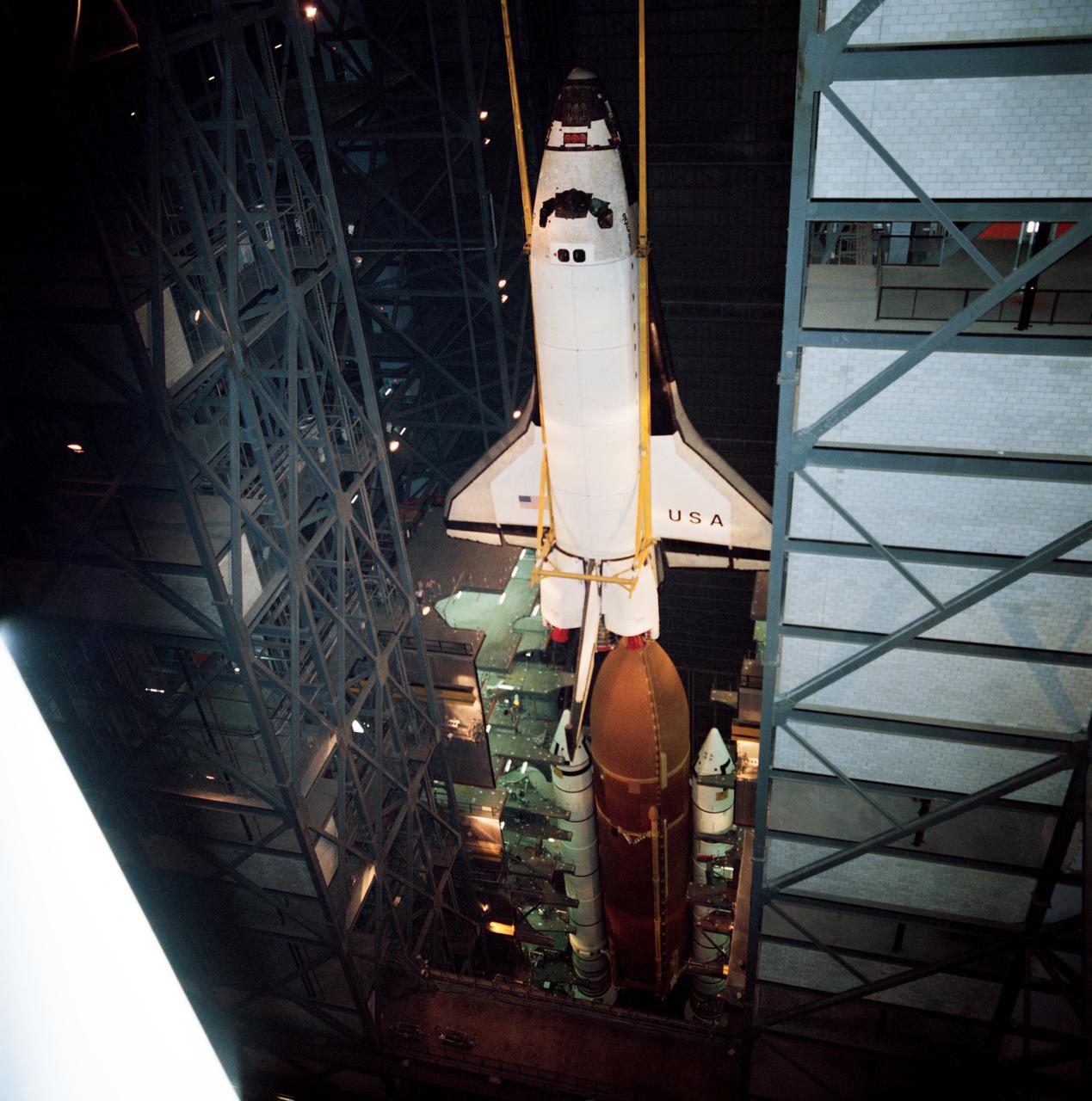
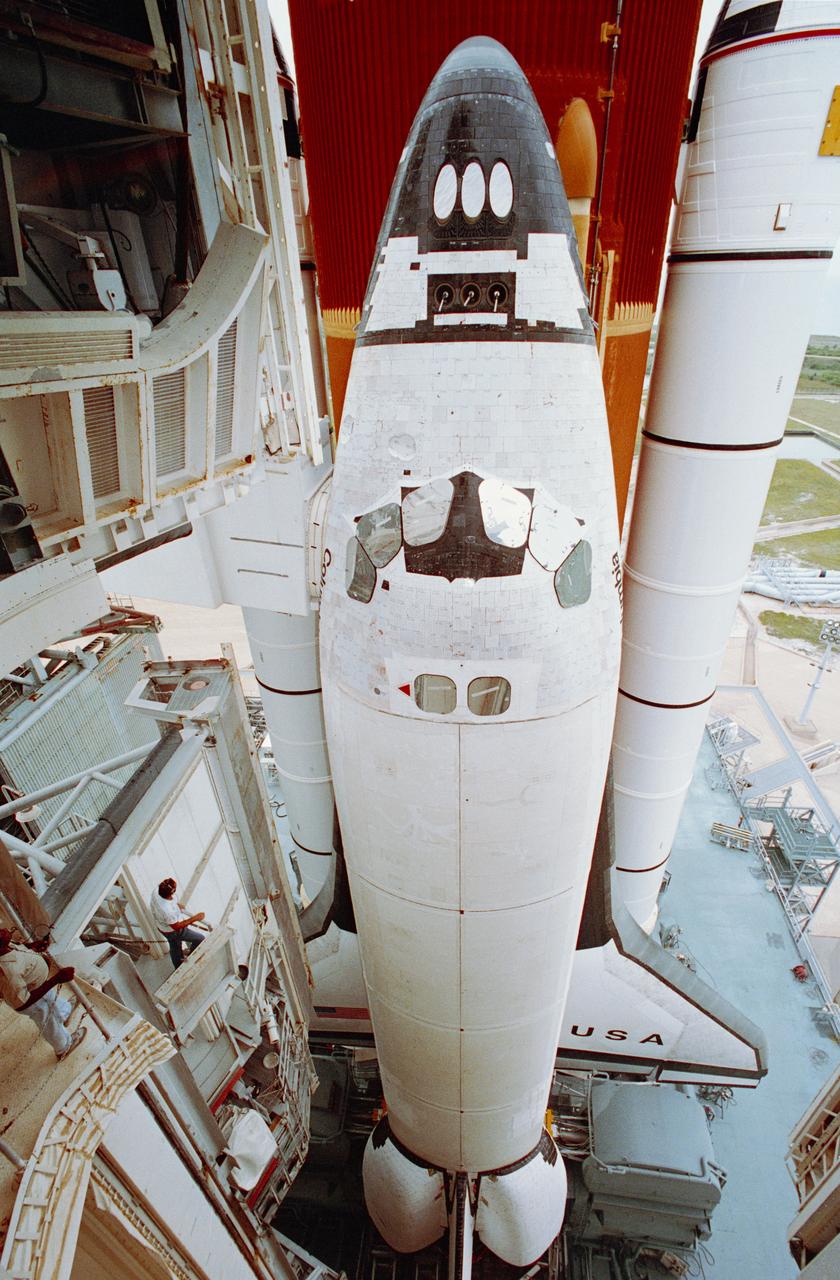
S89-40392 (12 July 1989) ---  Inside KSC's giant vehicle assembly building, Space Shuttle Columbia is mated to two solid rocket boosters (SRB) and an external fuel tank as preparations continue for an early September launch.  The mission is scheduled as a DOD-devoted flight, set for launch early next month.
STS-28 Columbia, Orbiter Vehicle (OV) 102, ET/SRB mating operations at KSC
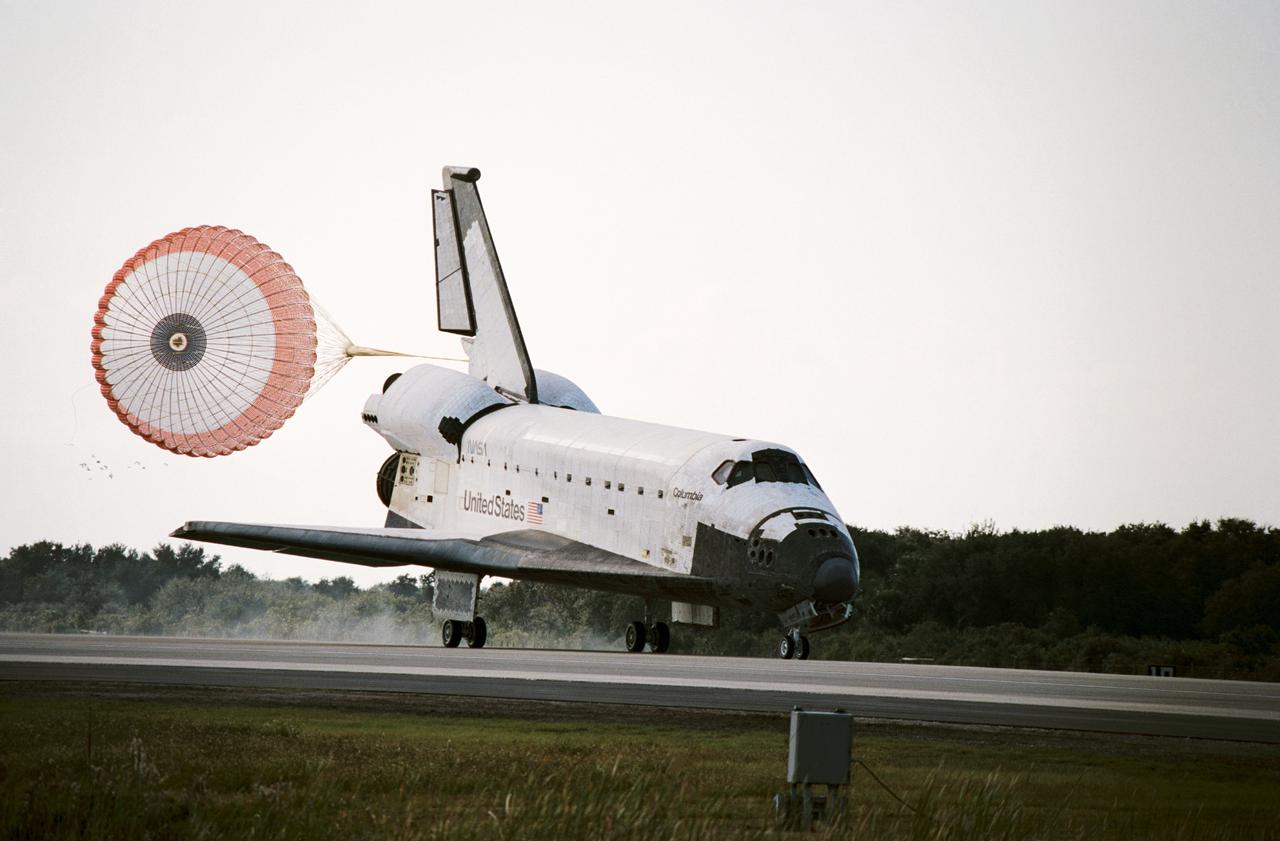
STS052-S-099 (1 Nov. 1992) --- This three-quarter front view shows the Space Shuttle Columbia just after deployment of the drag chute during landing at KSC's Shuttle Landing Facility. Onboard were a crew of five NASA astronauts and a Canadian payload specialist. Landing occurred at 9:05:53 a.m. (EST), November 1, 1992. Crewmembers are astronauts James D. Wetherbee, Michael A. Baker, Tamara E. Jernigan, Charles L. (Lacy) Veach and William M. Shepherd along with payload specialist Steven G.  MacLean. The photo was taken with a 35mm camera.
STS-52 Columbia, Orbiter Vehicle (OV) 102, lands on runway 33 at KSC SLF
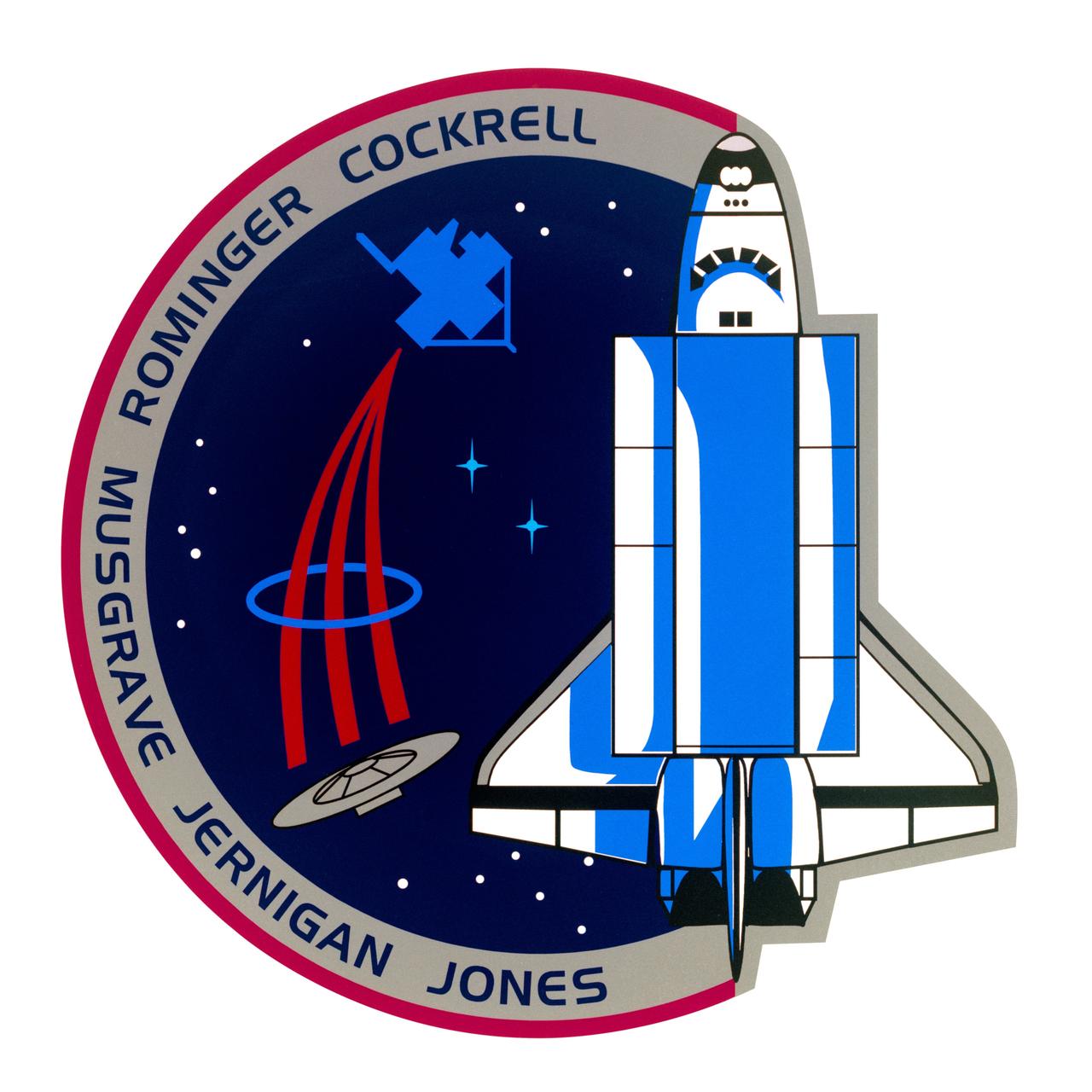
STS080-S-001 (August 1996) --- This STS-80 mission patch depicts the space shuttle Columbia and the two research satellites its crew will deploy into the blue field of space. The uppermost satellite is the Orbiting Retrievable Far and Extreme Ultraviolet Spectrograph-Shuttle Pallet Satellite (ORFEUS-SPAS), a telescope aimed at unraveling the life cycles of stars and understanding the gases that drift between them. The lower satellite is the Wake Shield Facility (WSF), flying for the third time. It will use the vacuum of space to create advanced semiconductors for the nation’s electronics industry. ORFEUS and WSF are joined by the symbol of the Astronaut Corps, representing the human contribution to scientific progress in space. The two bright blue stars represent the mission’s extravehicular activities (EVA), final rehearsals for techniques and tools to be used in assembly of the International Space Station (ISS). Surrounding Columbia is a constellation of 16 stars, one for each day of the mission, representing the stellar talents of the ground and flight teams that share the goal of expanding knowledge through a permanent human presence in space.    The NASA insignia design for space shuttle flights is reserved for use by the astronauts and for other official use as the NASA Administrator may authorize. Public availability has been approved only in the forms of illustrations by the various news media. When and if there is any change in this policy, which is not anticipated, the change will be publicly announced. Photo credit: NASA
STS-80 Columbia, Orbiter Vehicle (OV) 102, crew insignia
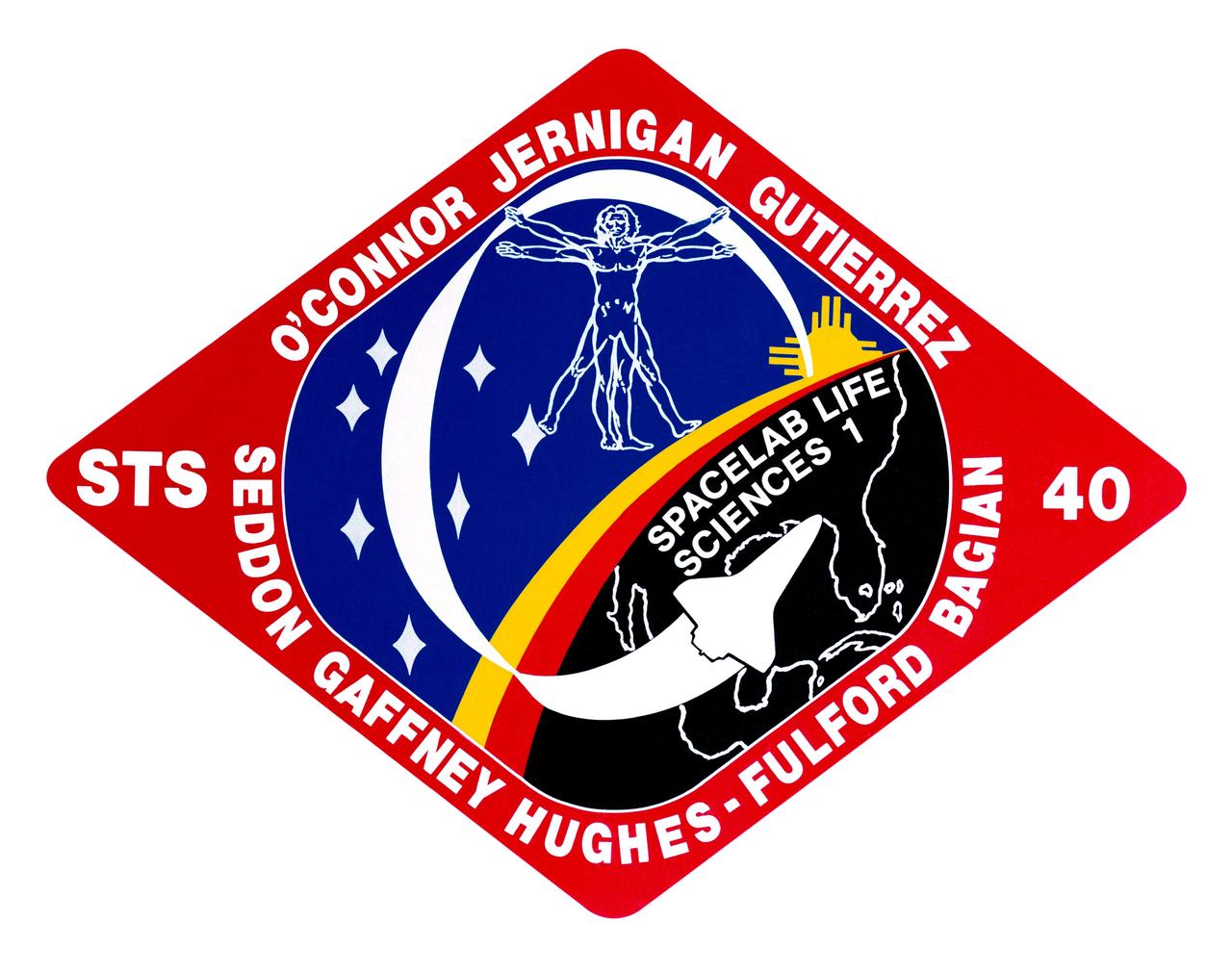
STS40-S-001 (May 1990) --- The STS-40 patch makes a contemporary statement focusing on human beings living and working in space. Against a background of the universe, seven silver stars, interspersed about the Orbital path of the space shuttle Columbia, represent the seven crew members. The orbiter's flight path forms a double-helix, designed to represent the DNA molecule common to all living creatures. In the words of a crew spokesman, "...(the helix) affirms the ceaseless expansion of human life and American involvement in space while simultaneously emphasizing the medical and biological studies to which this flight is dedicated." Above Columbia, the phrase "Spacelab Life Sciences 1" defines both the shuttle mission and its payload. Leonardo Da Vinci's Vitruvian man, silhouetted against the blue darkness of the heavens, is in the upper center portion of the patch. With one foot on Earth and arms extended to touch shuttle's orbit, the crew feels, he serves as a powerful embodiment of the extension of human inquiry from the boundaries of Earth to the limitless laboratory of space. Sturdily poised amid the stars, he serves to link scentists on Earth to the scientists in space asserting the harmony of efforts which produce meaningful scientific spaceflight missions. A brilliant red and yellow Earth limb (center) links Earth to space as it radiates from a native American symbol for the sun. At the frontier of space, the traditional symbol for the sun vividly links America's past to America's future, the crew states. Beneath the orbiting space shuttle, darkness of night rests peacefully over the United States. Drawn by artist Sean Collins, the STS-40 space shuttle patch was designed by the crew members for the flight.     The NASA insignia design for space shuttle flights is reserved for use by the astronauts and for other official use as the NASA Administrator may authorize. Public availability has been approved only in the forms of illustrations by the various news media. When and if there is any change in this policy, which is not anticipated, the change will be publicly announced. Photo credit: NASA
STS-40 Columbia, Orbiter Vehicle (OV) 102, crew insignia
FIRST SHUTTLE LANDING -- The Space Shuttle Columbia glides down over Rogers Dry Lake as it heads for a landing at Edwards Air Force Base at the conclusion of its first orbital mission on April 14, 1981.
The Space Shuttle Columbia glides down over Rogers Dry Lake as it heads for a landing at Edwards Air Force Base at the conclusion of its first orbital mission
TOUCHDOWN! -- The Space Shuttle Columbia touches down on lakebed runway 23 at Edwards Air Force Base, Calif., to conclude the first orbital shuttle mission, April 14, 1981.
The Space Shuttle Columbia touches down on lakebed runway 23 at Edwards Air Force Base, Calif., to conclude the first orbital shuttle mission
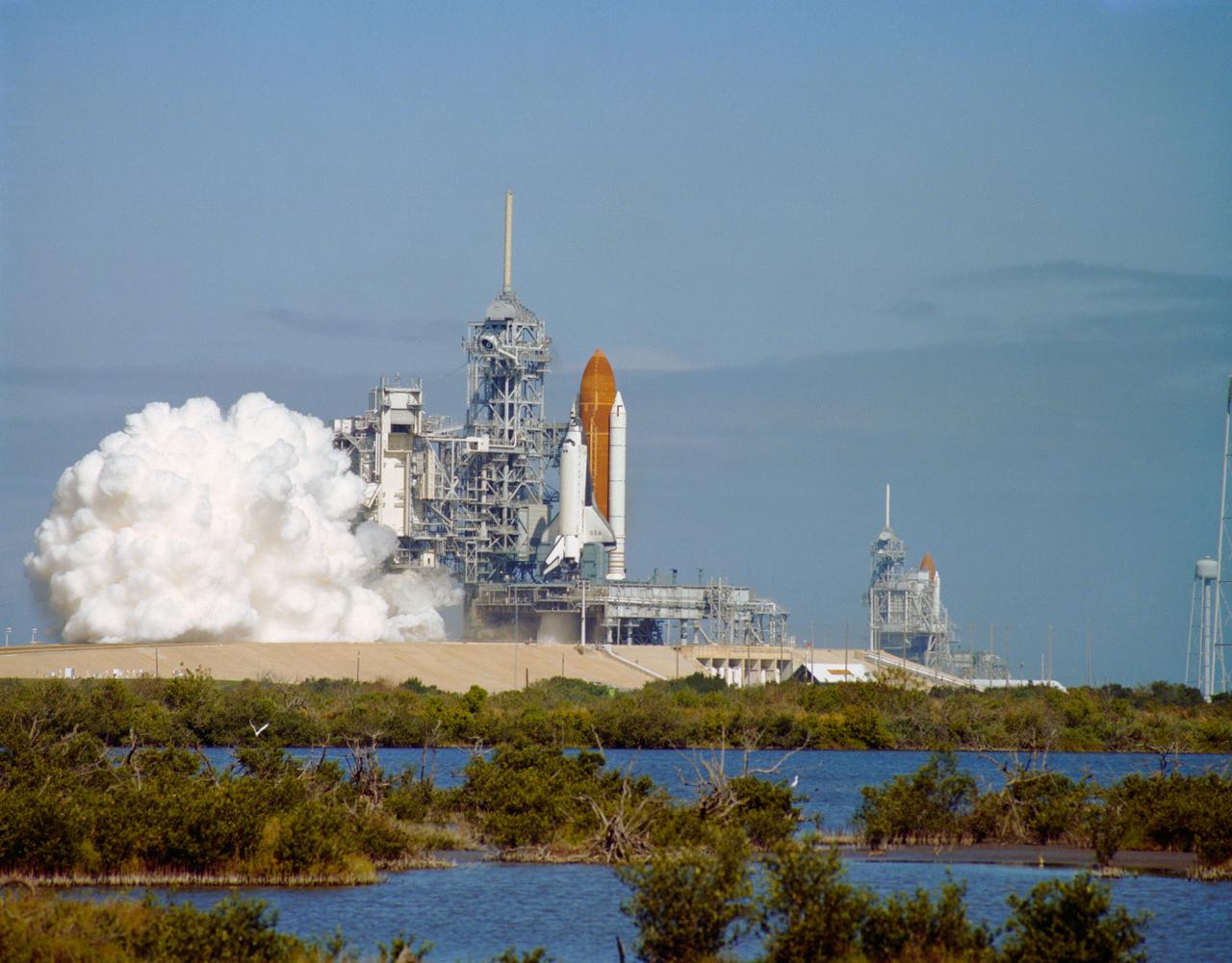
S92-41075 (3 June 1992)  --- The Space Shuttle Columbia arrived at Launch Pad 39A for final preparation on its launch of STS-50 scheduled for later this month.  The journey from the Vehicle Assembly Building began shortly before midnight and ended six hours later.  STS-50 will be Columbia's first space flight since June 1991, after which the oldest orbiter in the fleet was removed from operational service for extended checkout and modification.  STS-50 also will be longest Shuttle flight to date, slated to last 13 days.*    *Because of inclement weather at the prime landing facility, STS-50 landed one-day later, marking a Shuttle record 14-days in orbit.
STS-50 Columbia, Orbiter Vehicle (OV) 102, on KSC Launch Pad 39A
S93-31601 (March 1993) --- The second Space Shuttle launch attempt of 1993 comes to an abrupt halt when one of the three main engines on the orbiter Columbia shuts down at T -3 seconds, resulting in an on-the-pad abort of Mission STS-55.  This was the first time in the post-Challenger era that a main engine shutdown has halted a Shuttle launch countdown, and only the third time in the history of the program.  In 1984, STS-41D was scrubbed at T -4 seconds when the orbiter General Purpose Computer detected an anomaly in a main engine, and in 1985, STS-51F was halted at T -3 seconds due to a main engine malfunction that caused shutdown of all three engines.  Columbia had been scheduled to lift off from Launch Pad 39B is the Space Shuttle Discovery, undergoing preparations for lift off on Mission STS-56.
STS-55 Columbia, Orbiter Vehicle (OV) 102, SSME abort at KSC LC Pad 39A
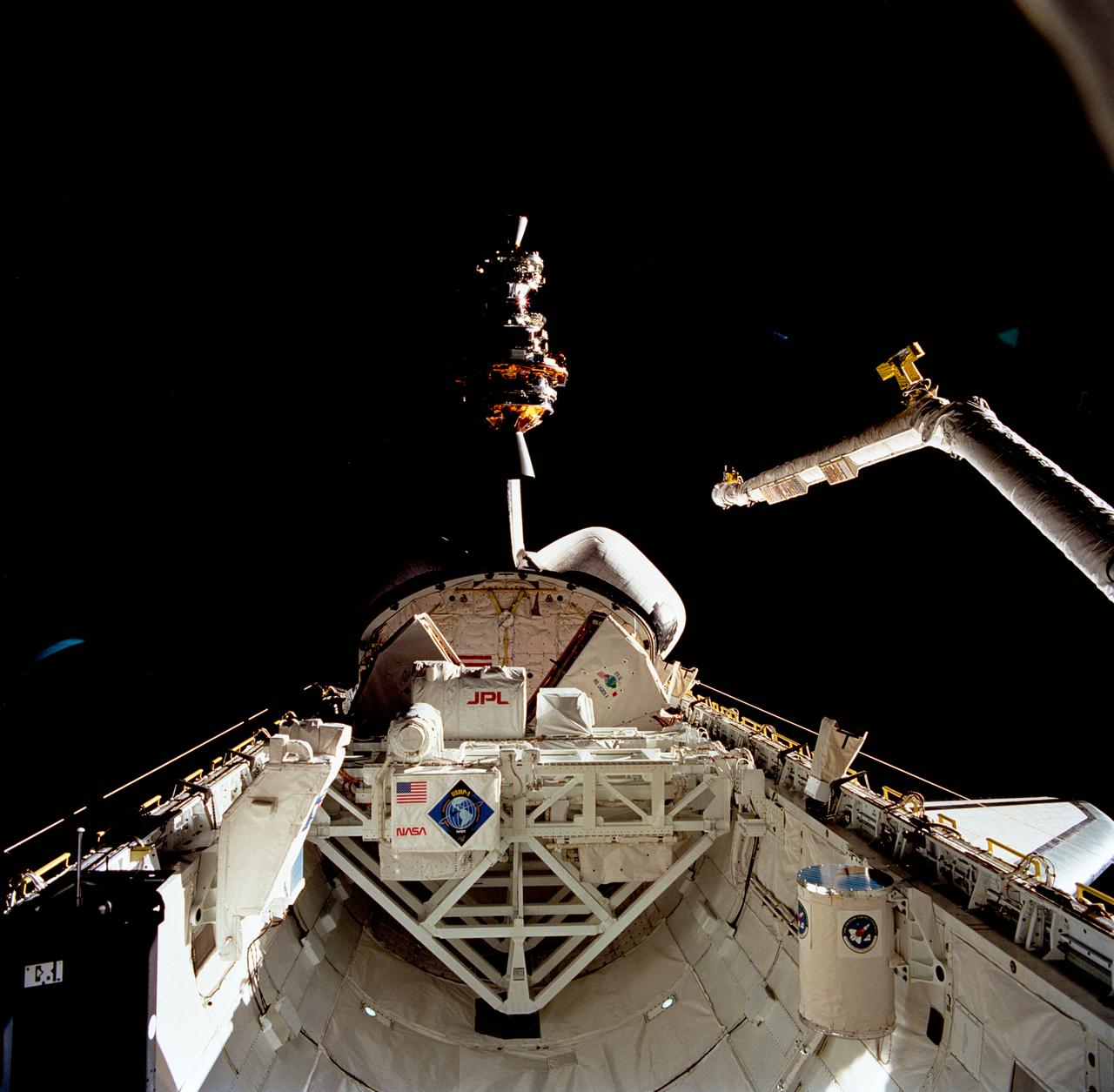
STS052-80-030 (23 Oct 1992) --- One of a series of three views of the deployment of the Laser Geodynamic Satellite (LAGEOS). The photograph was taken with a 70mm handheld camera aimed through the aft flight deck windows of the Earth-orbiting Space Shuttle Columbia.  A crew of five NASA astronauts and a Canadian payload specialist spent ten days aboard Columbia for the STS-52 mission.
STS-52 deployment of LAGEOS / IRIS spacecraft from OV-102's payload bay (PLB)
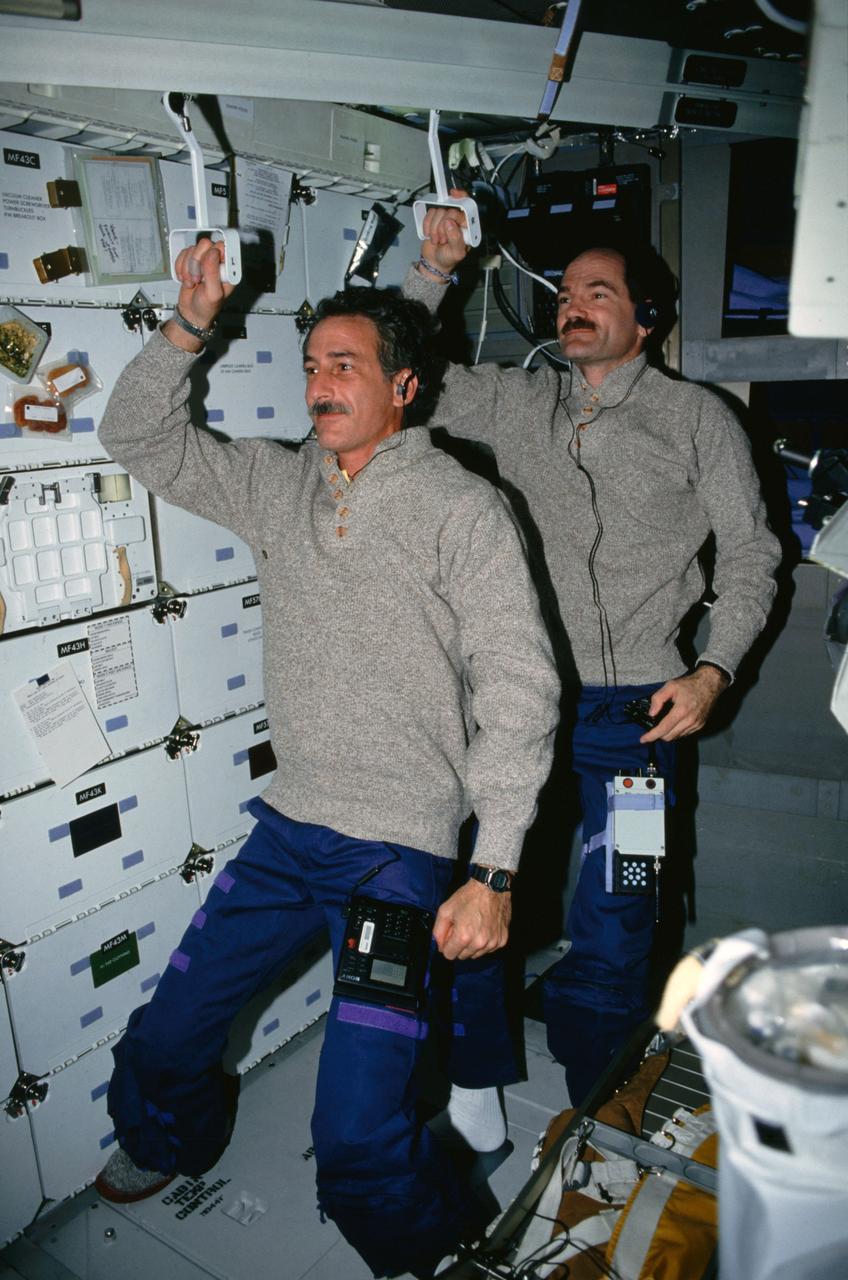
STS035-10-005 (2-10 Dec 1990) --- STS-35 Mission Specialist (MS) Jeffrey A. Hoffman (front) and Pilot Guy S. Gardner, holding Development Test Objective (DTO) 634 trash compactor handles to the ceiling, "commute" to work on the middeck of Columbia, Orbiter Vehicle (OV) 102. Just below Hoffman's right elbow in locker MF43G DTO 634, Trash Compaction and Retention System Demonstration, trash compactor with a geared mechanism that allows manual compaction of wet and dry trash is visible. Also in the view are the stowed treadmill on the middeck floor and the starboard side sleep station.
STS-35 MS Hoffman & Pilot Gardner "commute" to work on the middeck of OV-102
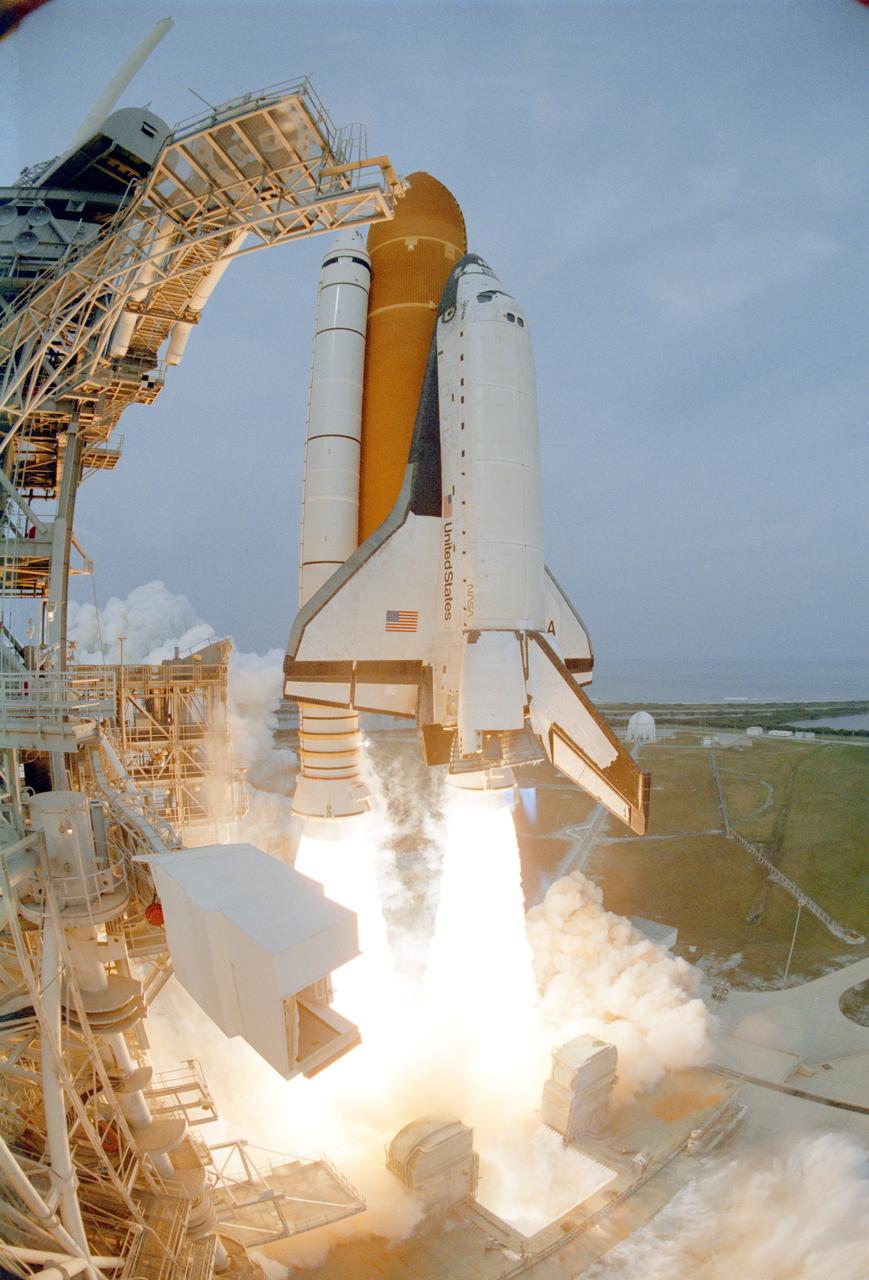
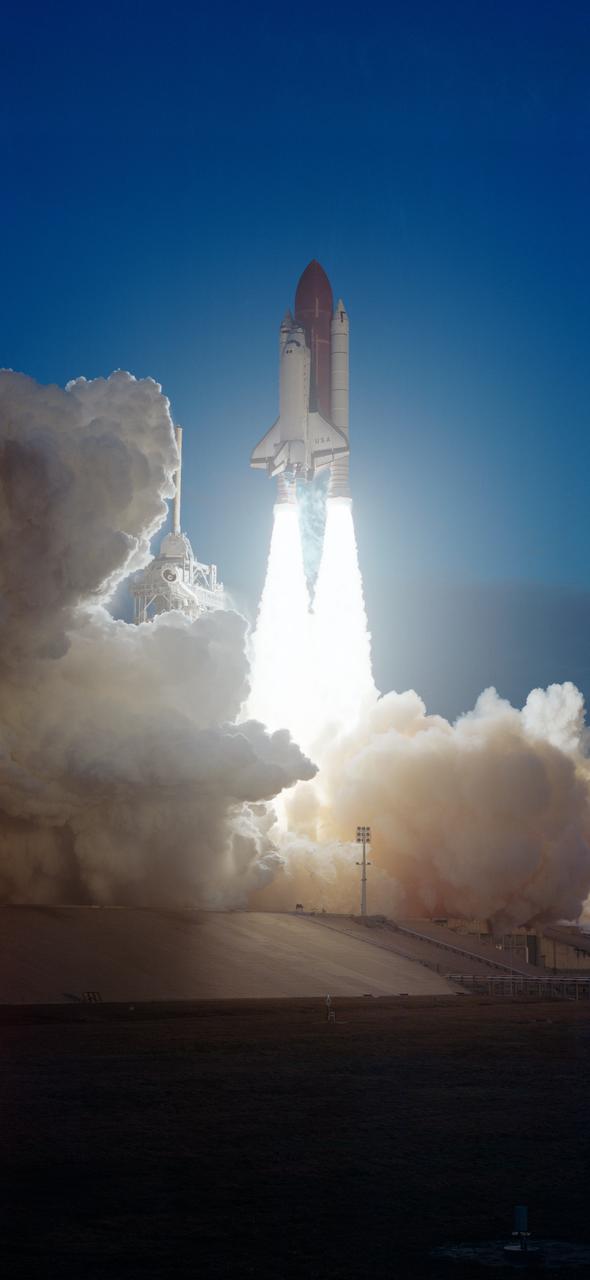
STS-32 Columbia, Orbiter Vehicle (OV) 102, atop the external tank (ET) and flanked by two solid rocket boosters (SRBs) rises above the mobile launcher platform and is nearly clear of the fixed service structure (FSS) tower at Kennedy Space Center (KSC) Launch Complex (LC) Pad 39A. Plumes of smoke billow from the SRBs and cover the launch pad in a cloud. Liftoff occurred at 7:34:59:98 am Eastern Standard Time (EST) some 24 hours after dubious weather at the return-to-landing site (RTLS) had cancelled a scheduled launch. OV-102's launch is highlighted against the early morning darkness.
STS-32 Columbia, OV-102, liftoff from KSC LC Pad 39A
STS035-19-021 (December 1990) ---  STS-35 Mission Specialist  Jeffrey A. Hoffman stretches out on the middeck floor while MS John M. (Mike) Lounge records his height. The two crew members are in front of the forward lockers aboard Columbia, Orbiter Vehicle (OV) 102. Hoffman steadies himself using the stowed treadmill and the lockers. Above Hoffman's head is a plastic bag filled with Development Test Objective (DTO) 634, Trash Compaction and Retention System Demonstration, trash compactor charcoal filtered bag lids. This image was selected by the Public Affairs Office (PAO) for public release.
STS-35 MS Hoffman's height is recorded by MS Lounge on OV-102's middeck
STS078-429-017 (20 June-7 July 1996) --- Aboard the middeck of the Earth-orbiting space shuttle Columbia, astronaut Charles J. Brady, mission specialist and a licensed amateur radio operator or "ham", talks to students on Earth.  Some of the crew members devoted some of their off-duty time to continue a long-standing Shuttle tradition of communicating with students and other hams between their shifts of assigned duty.  Brady joined four other NASA astronauts and two international payload specialists for almost 17-days of research in support of  the Life and Microgravity Spacelab (LMS-1) mission.
SAREX & DTO 623, Brady talks to amateur radio operators
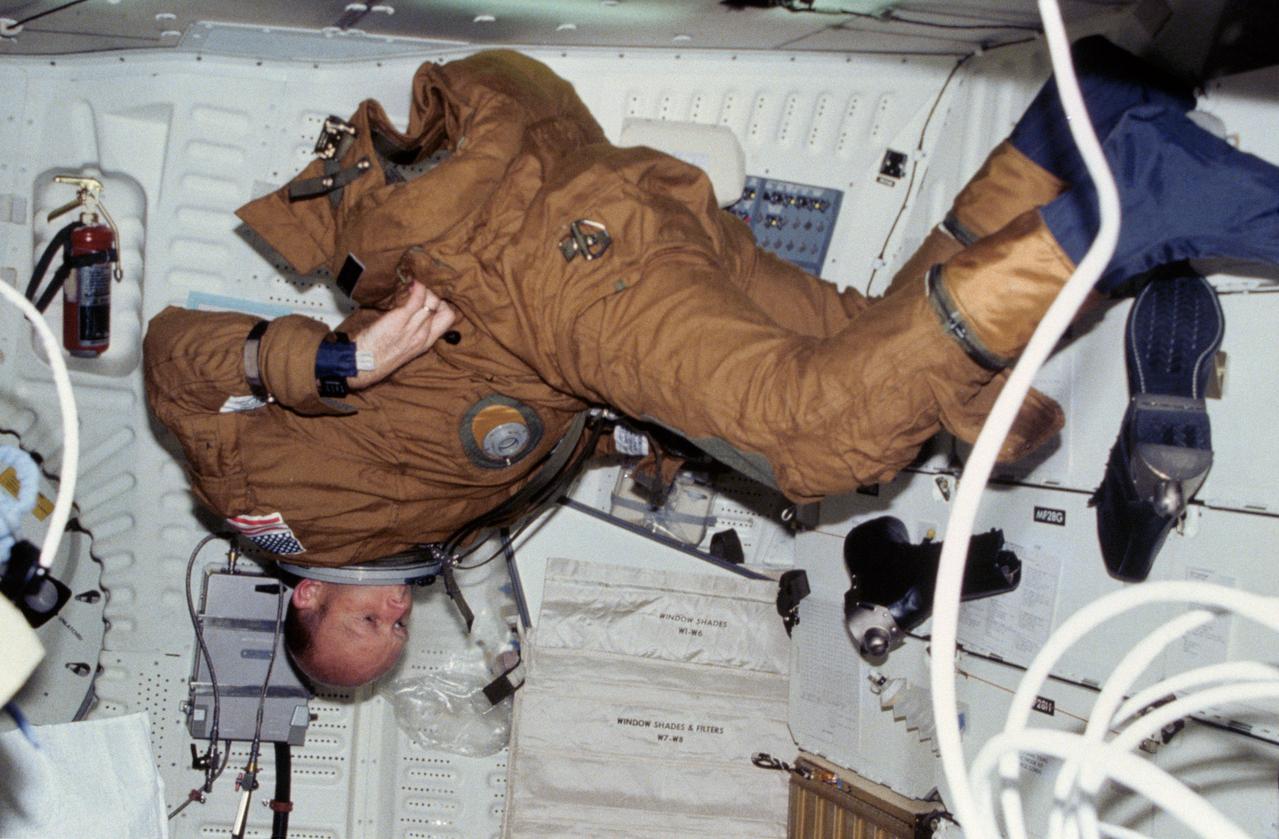
S82-28922 (30 March 1982) --- Astronaut C. Gordon Fullerton, STS-3 pilot, floats upside down in the zero-gravity environment of the middeck area of the Earth-orbiting space shuttle Columbia as he dons a modified USAF high altitude pressure garment. The brownish ejection/escape suit is used by the astronauts at launch and entry. Most of the remainder of their mission time, they are attired in a blue constant-wear garment. Astronaut Jack R. Lousma, crew commander, took this picture with a 35mm camera. The crew spent eight full days in the reusable spacecraft, a shuttle record. Photo credit: NASA
Pilot Fullerton dons anti-g and ejection escape suit (EES) on middeck
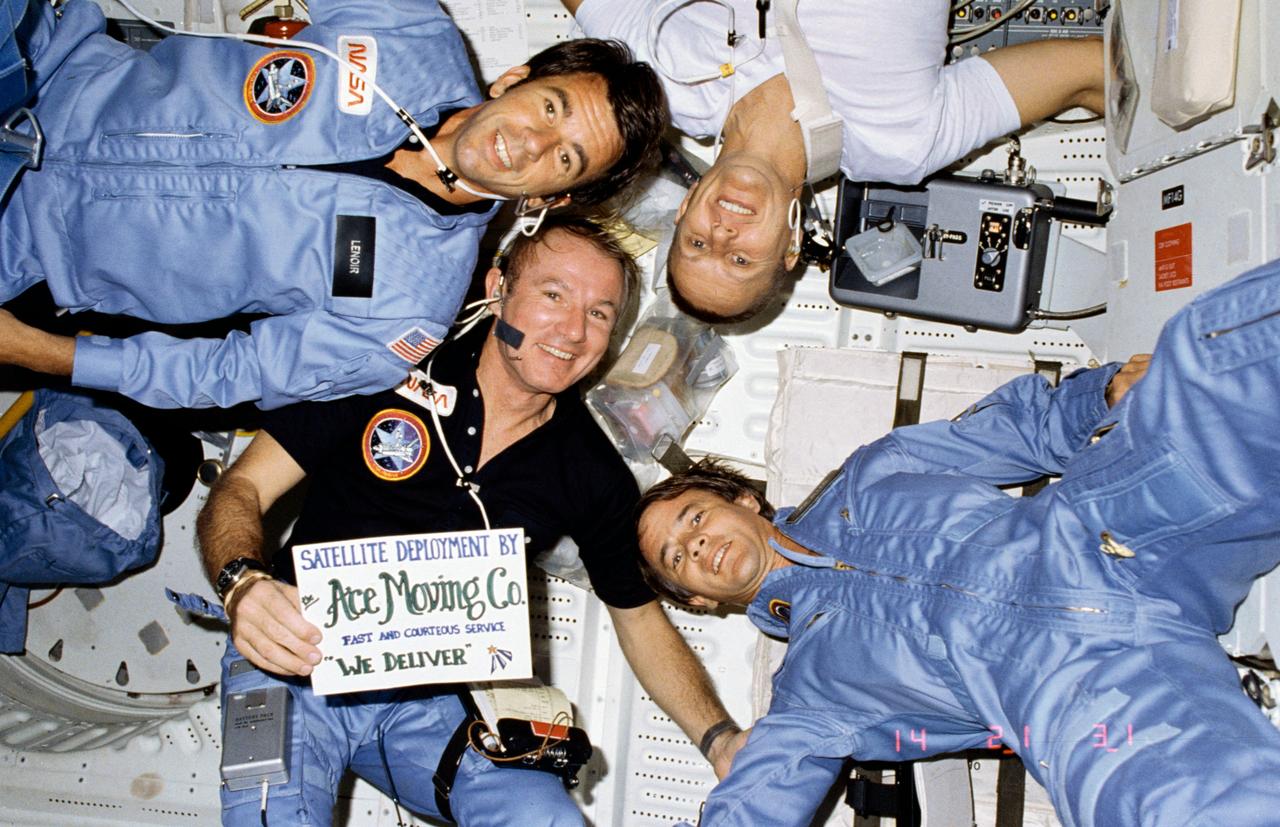
STS005-07-267 (12 Nov. 1982) --- A pre-set 35mm camera?s exposure of all four STS-5 astronaut crew members reveals a bit of their humorous side. The sign held by astronaut Vance D. Brand, crew commander, refers to the successful deployment of two commercial communications satellites on the flight's first two days. Brand is surrounded by, clockwise, left to right, astronauts William B. Lenoir, mission specialist, Robert F. Overmyer, pilot, and Joseph O. Allen IV, mission specialist, in the middeck area of the Earth-orbiting space shuttle Columbia. Photo credit: NASA
STS-5 crew onboard portrait on port side middeck
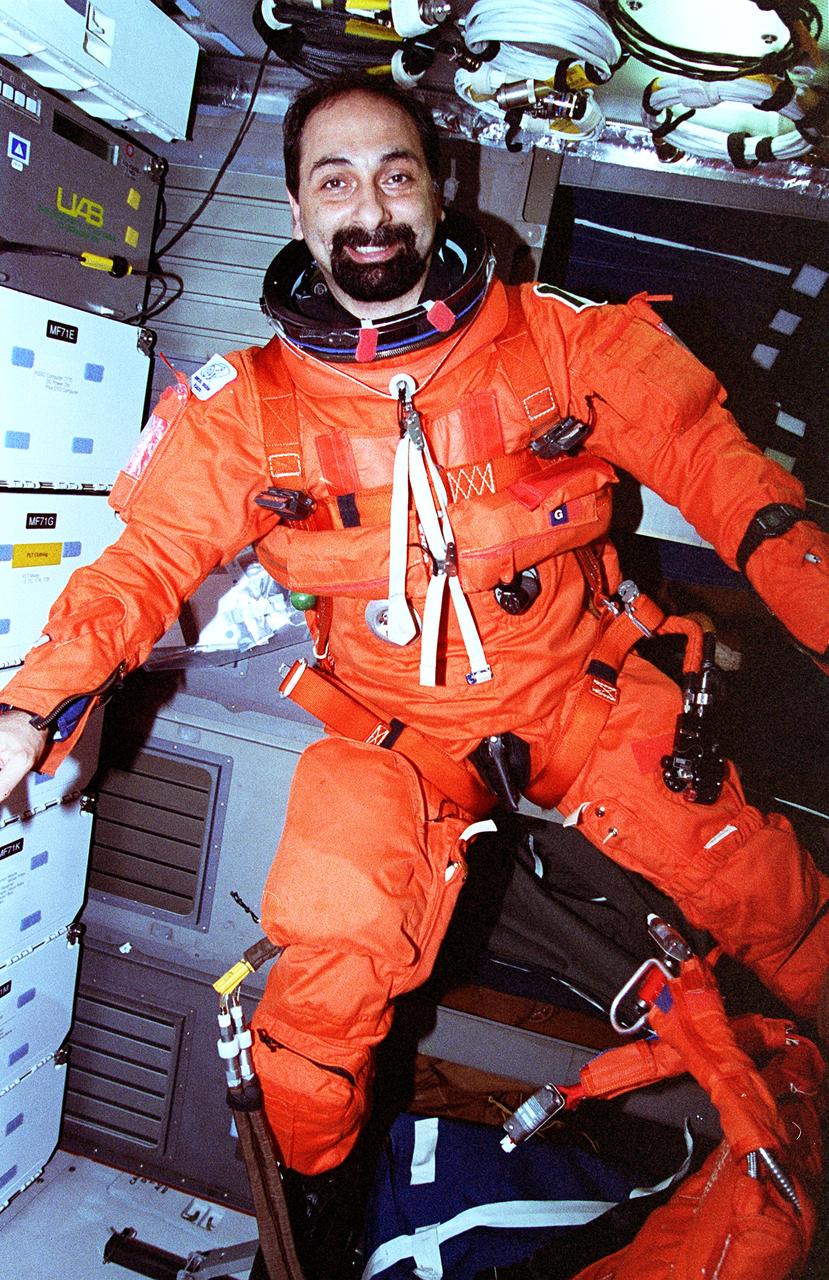
STS075-355-032 (9 March 1996) --- Payload specialist Umberto Guidoni, wearing the shuttle launch and entry garment, prepares for the de-orbit phase of the 16-day flight.  Guidoni represents the Italian Space Agency (ASI).  The seven member crew was launched aboard the Space Shuttle Columbia on February 22, 1996, and landed on March 9, 1996.  Crew members were Andrew M. Allen, mission commander; Scott J. Horowitz, pilot; Franklin R. Chang-Diaz, payload commander; and Maurizio Cheli, European Space Agency (ESA); Jeffrey A. Hoffman and Claude Nicollier, (ESA), all mission specialists; along with Guidoni.
STS-75 crew preparing for landing
KENNEDY SPACE CENTER, FLA. - Astronaut John Herrington (right) holds part of a flag presented by dancers from the Shoshone-Bannock Junior-Senior High School, Fort Hall, Idaho, commemorating the orbiter Columbia and her crew.  The dancers performed a healing ceremony during the memorial service held at the Space Memorial Mirror for the crew of Columbia.  Feb. 1 is the one-year anniversary of the loss of the crew and orbiter Columbia in a tragic accident as the ship returned to Earth following mission STS-107.  Students and staff of the Shoshone-Bannock Nation had an experiment on board Columbia. The public was invited to the memorial service, held in the KSC Visitor Complex, which included comments by Center Director Jim Kennedy and Executive Director of Florida Space Authority Winston Scott.  Scott is a former astronaut who flew on Columbia in 1997.
KENNEDY SPACE CENTER, FLA. - Astronaut John Herrington (right) holds part of a flag presented by dancers from the Shoshone-Bannock Junior-Senior High School, Fort Hall, Idaho, commemorating the orbiter Columbia and her crew. The dancers performed a healing ceremony during the memorial service held at the Space Memorial Mirror for the crew of Columbia. Feb. 1 is the one-year anniversary of the loss of the crew and orbiter Columbia in a tragic accident as the ship returned to Earth following mission STS-107. Students and staff of the Shoshone-Bannock Nation had an experiment on board Columbia. The public was invited to the memorial service, held in the KSC Visitor Complex, which included comments by Center Director Jim Kennedy and Executive Director of Florida Space Authority Winston Scott. Scott is a former astronaut who flew on Columbia in 1997.
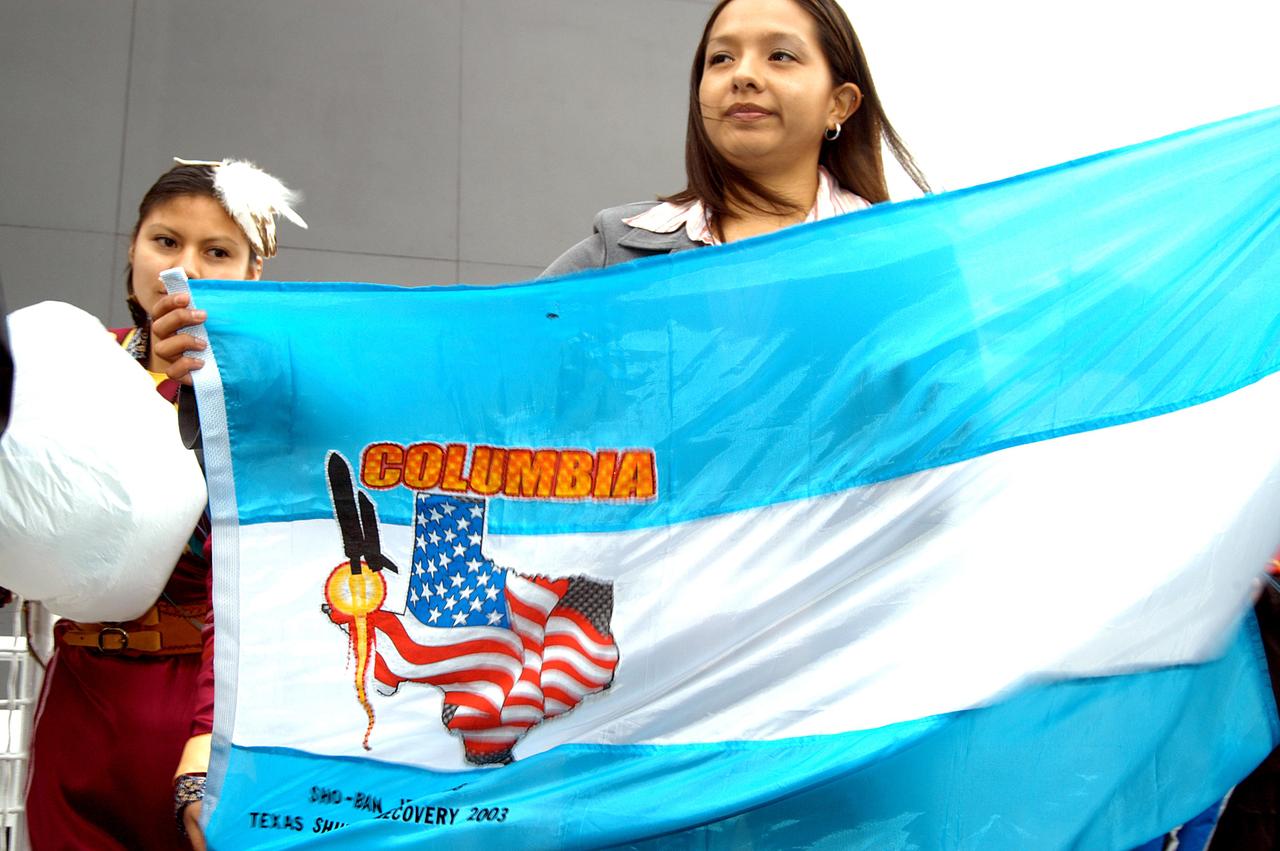
KENNEDY SPACE CENTER, FLA. - Some of the dancers from the Shoshone-Bannock Junior-Senior High School, Fort Hall, Idaho, hold a flag commemorating the orbiter Columbia and her crew.  The dancers performed a healing ceremony during the memorial service held at the Space Memorial Mirror for the crew of Columbia.  Students and staff of the Shoshone-Bannock Nation had an experiment on board Columbia.  Feb. 1 is the one-year anniversary of the loss of the crew and orbiter Columbia in a tragic accident as the ship returned to Earth following mission STS-107. The public was invited to the memorial service, held in the KSC Visitor Complex, which included comments by Center Director Jim Kennedy and Executive Director of Florida Space Authority Winston Scott.  Scott is a former astronaut who flew on Columbia in 1997.
KENNEDY SPACE CENTER, FLA. - Some of the dancers from the Shoshone-Bannock Junior-Senior High School, Fort Hall, Idaho, hold a flag commemorating the orbiter Columbia and her crew. The dancers performed a healing ceremony during the memorial service held at the Space Memorial Mirror for the crew of Columbia. Students and staff of the Shoshone-Bannock Nation had an experiment on board Columbia. Feb. 1 is the one-year anniversary of the loss of the crew and orbiter Columbia in a tragic accident as the ship returned to Earth following mission STS-107. The public was invited to the memorial service, held in the KSC Visitor Complex, which included comments by Center Director Jim Kennedy and Executive Director of Florida Space Authority Winston Scott. Scott is a former astronaut who flew on Columbia in 1997.