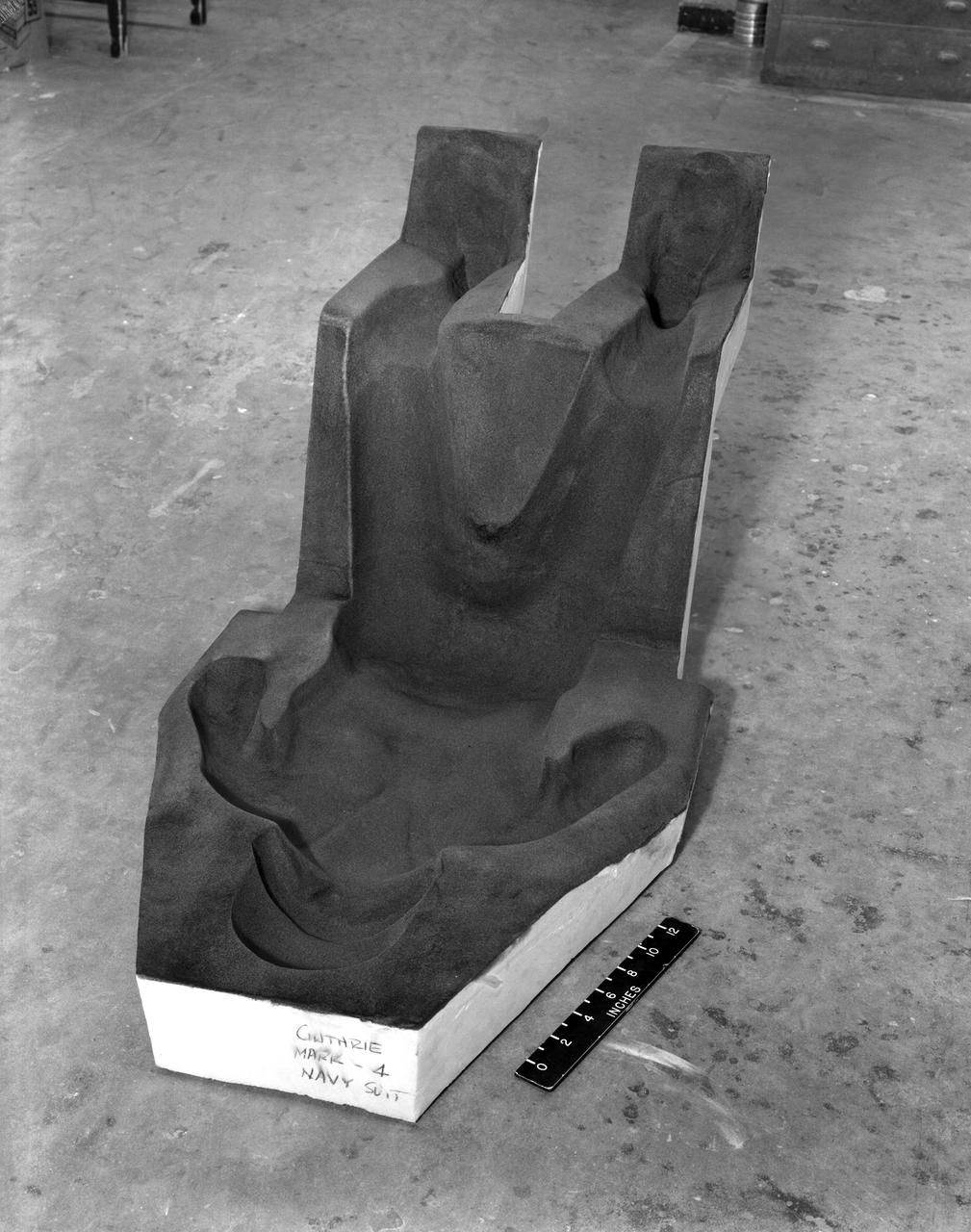
Lockfoam Couch
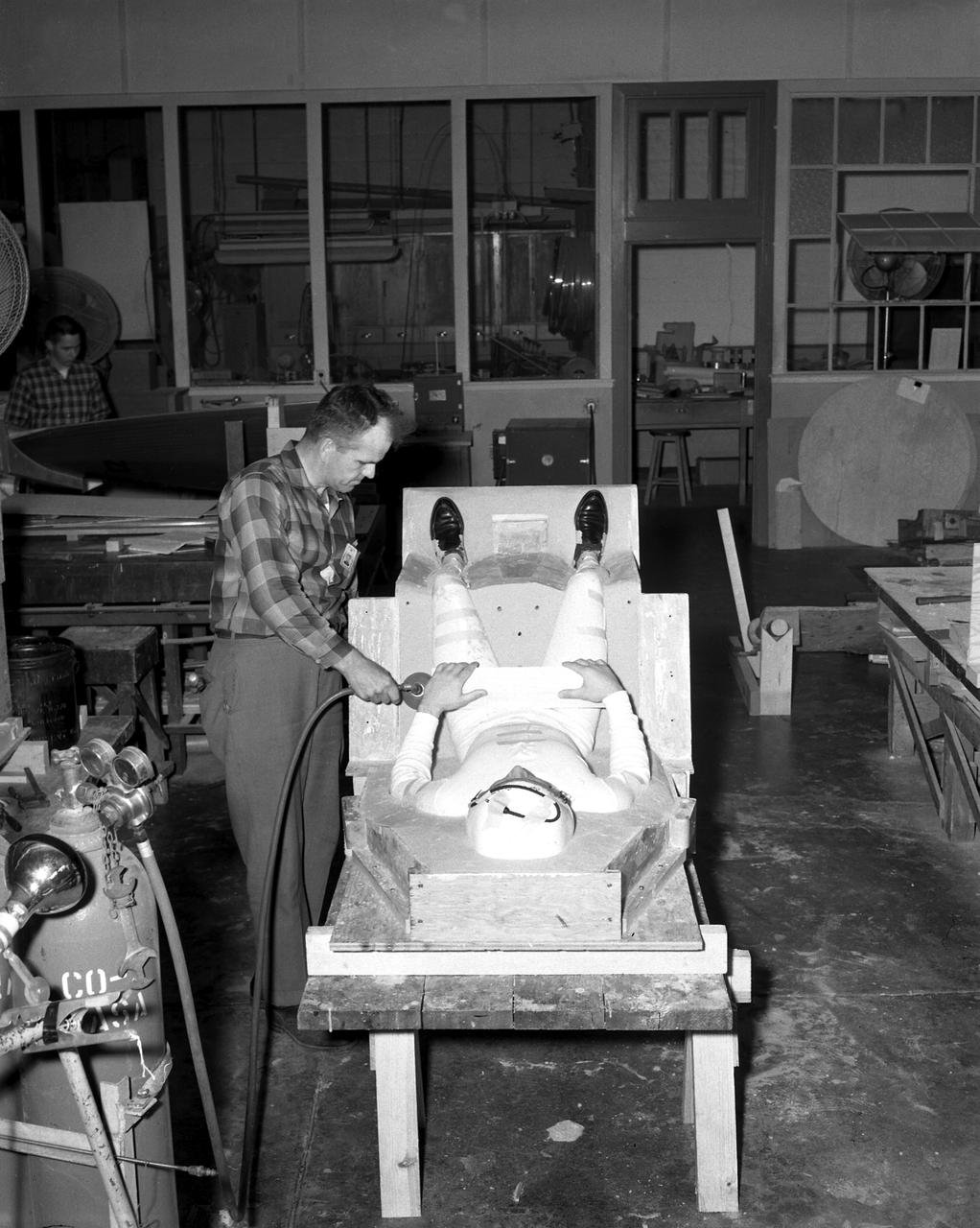
Molding of Space Couch
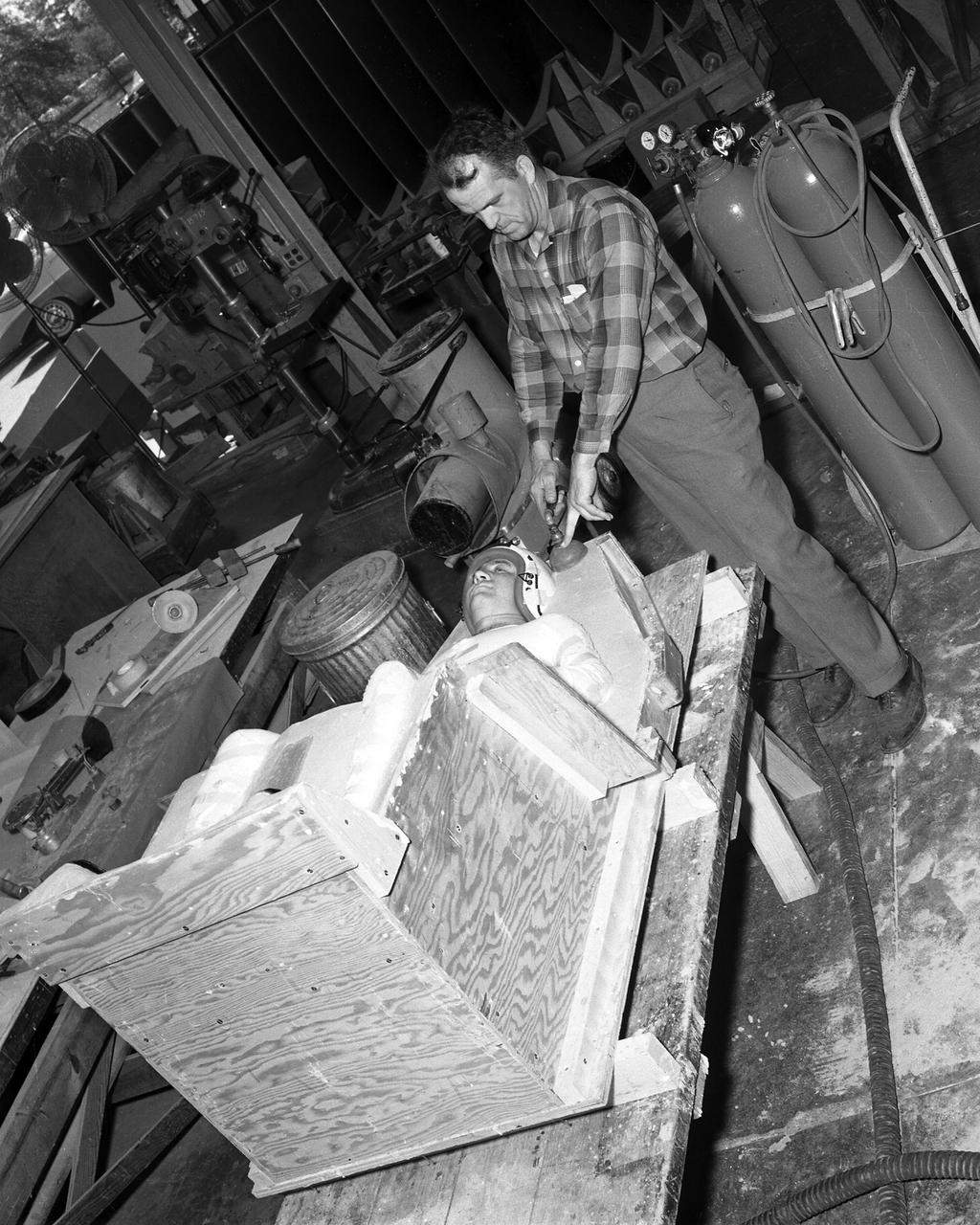
Molding of Space Couch
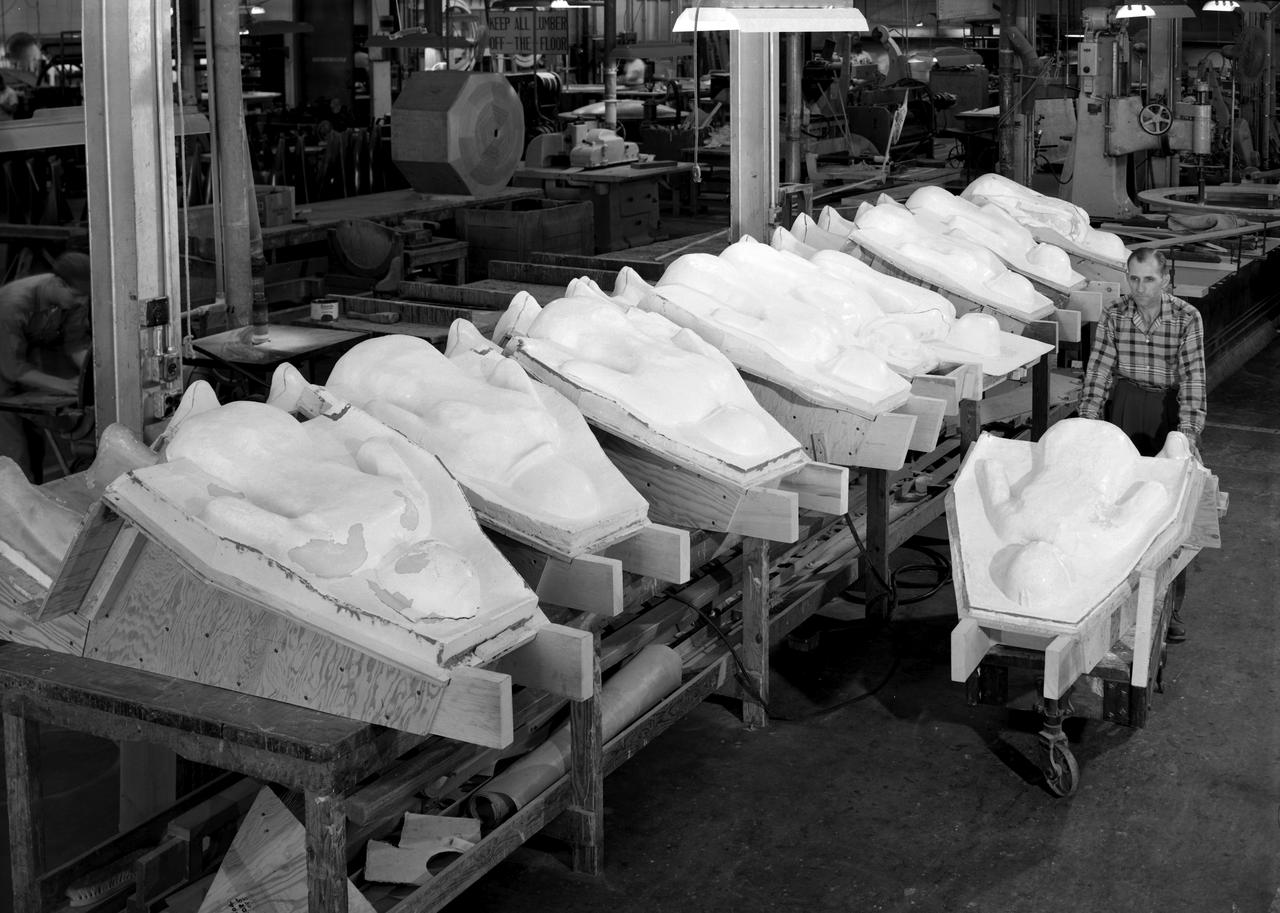
Plaster Molds for Space Couch
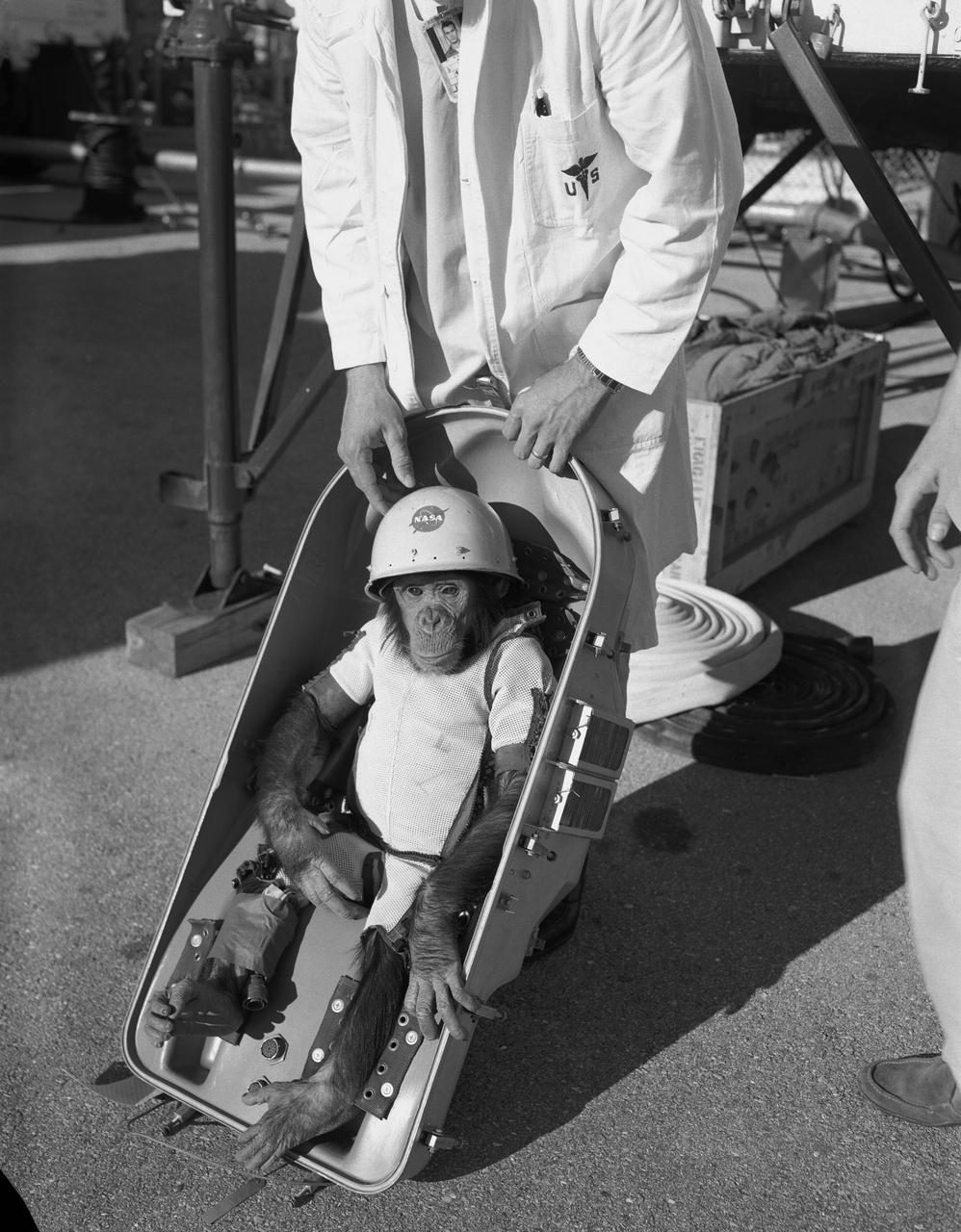
S63-20801 (23 Jan. 1961) --- Primate chimpanzee ?Ham?, in his spacesuit, is fitted into the couch of the Mercury-Redstone 2 (MR-2) capsule #5 prior to its test flight which was conducted on Jan. 31, 1961. Photo credit: NASA
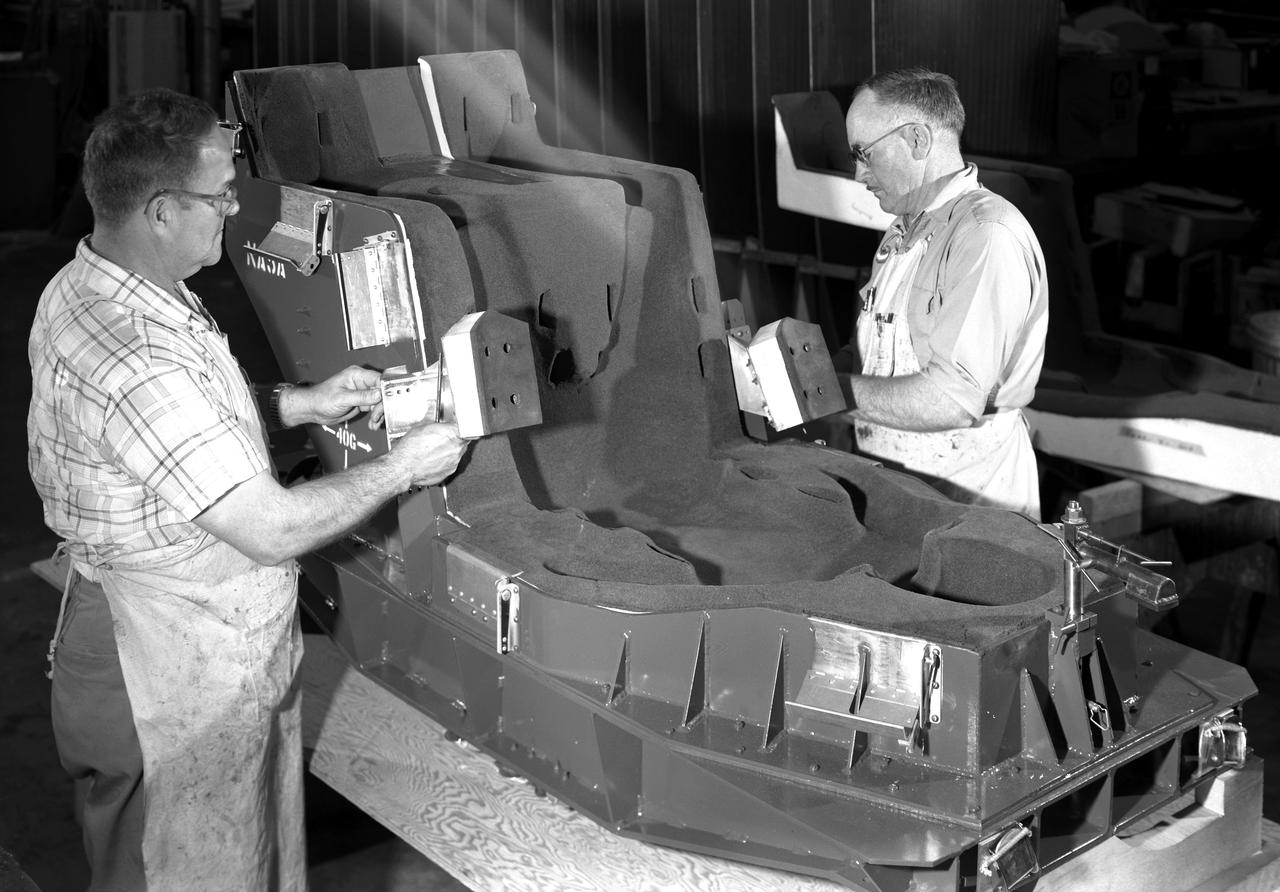
Space Couch Preparation. Man with the mustache is Richard H. Pingley
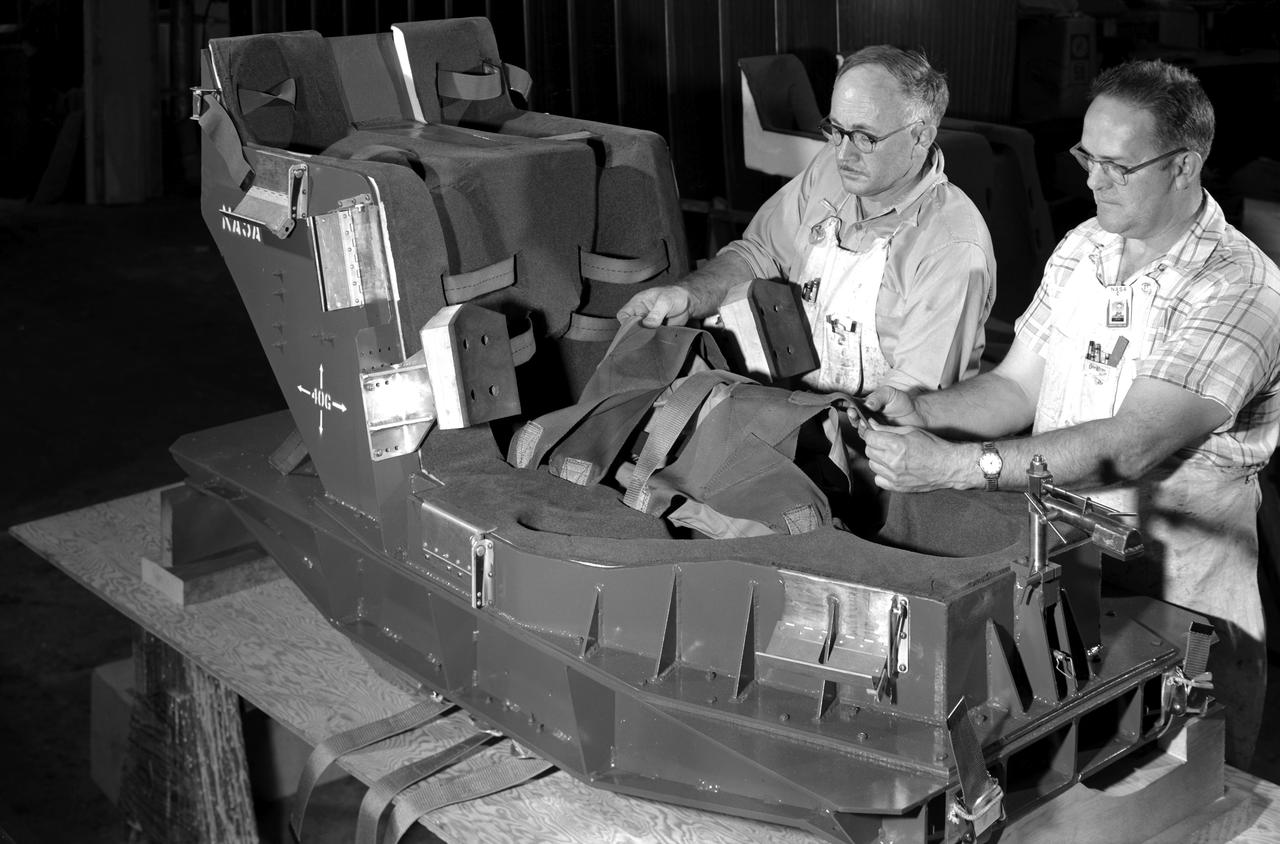
Space Couch Preparation man with the mustache is Richard H. Pingley
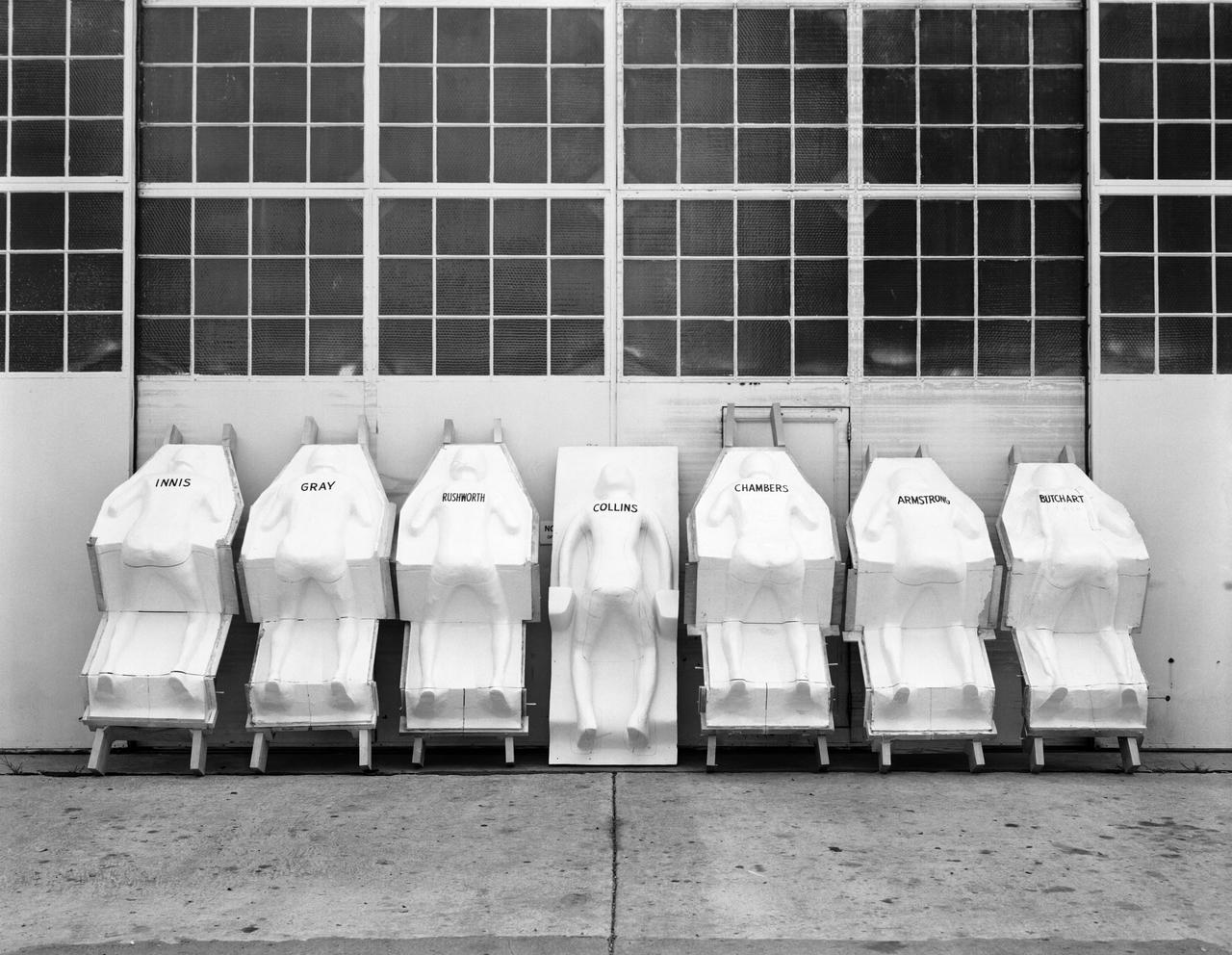
Molds for couches for test pilots, line the NASA Langley Research Centers model shop wall. The names of the test subjects (Langley employees) are written on the back. The couches are similar to those made for each astronaut and fitted into the Mercury capsules for manned spaceflight.
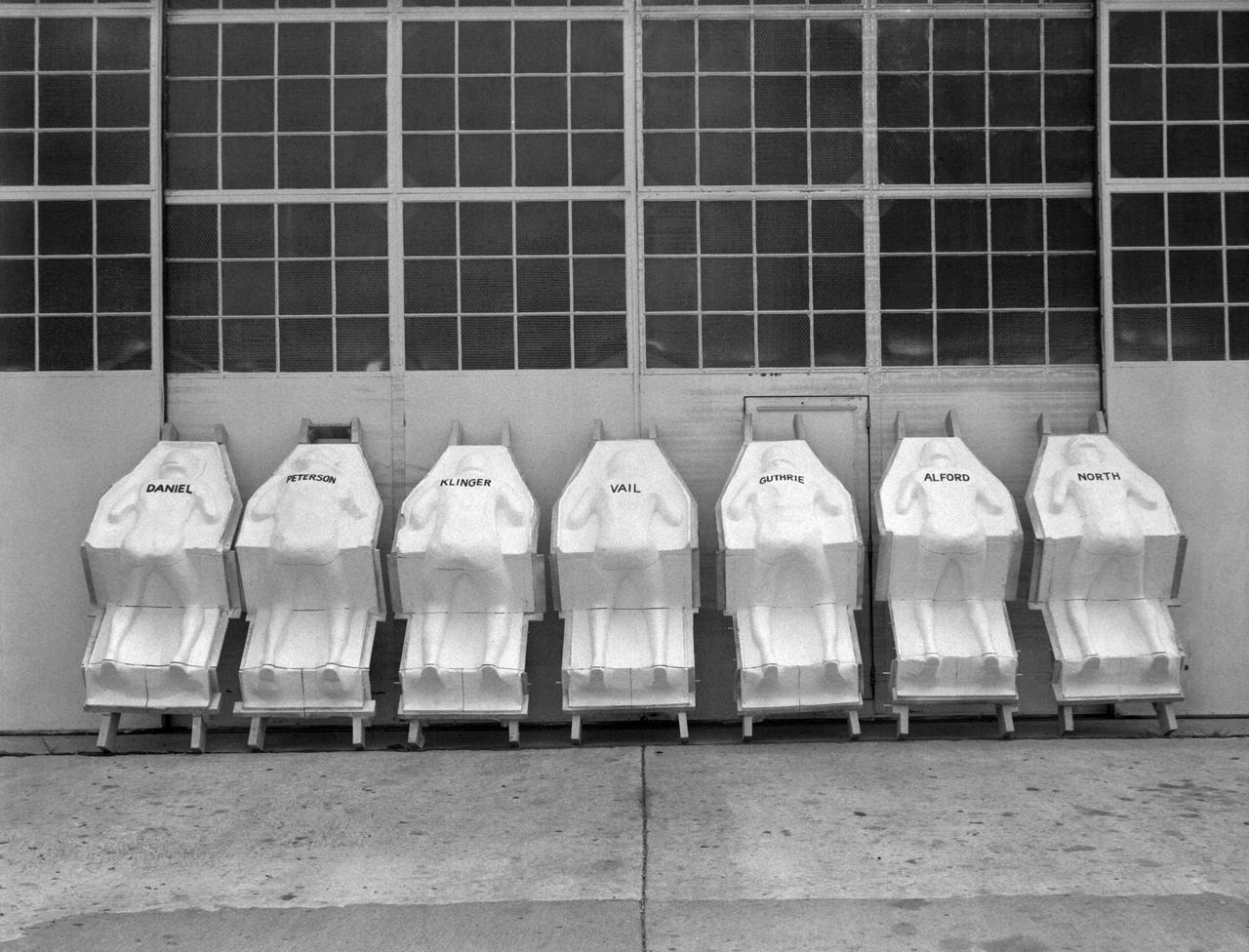
Molds for couches for test pilots, line the NASA Langley Research Centers model shop wall. The names of the test subjects (Langley employees) are written on the back. The couches are similar to those made for each astronaut and fitted into the Mercury capsules for manned spaceflight.

This area of terrain near the Sagan Memorial Station was taken by NASA Mars Pathfinder. The curved rock dubbed Couch. 3D glasses are necessary to identify surface detail.
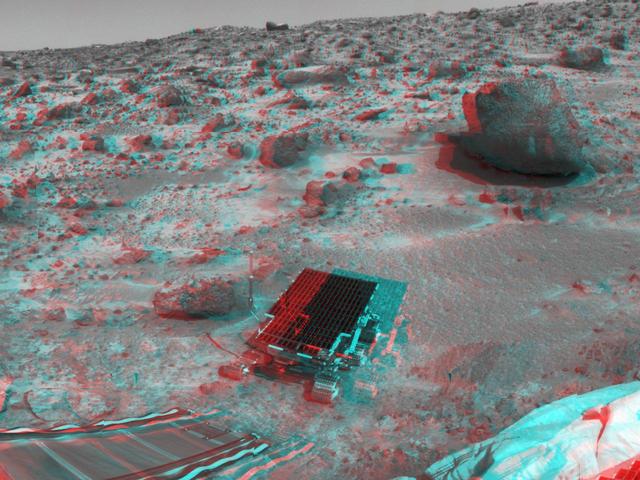
This area of terrain near the Sagan Memorial Station was taken by NASA Mars Pathfinder. The curved rock dubbed Couch. 3D glasses are necessary to identify surface detail.
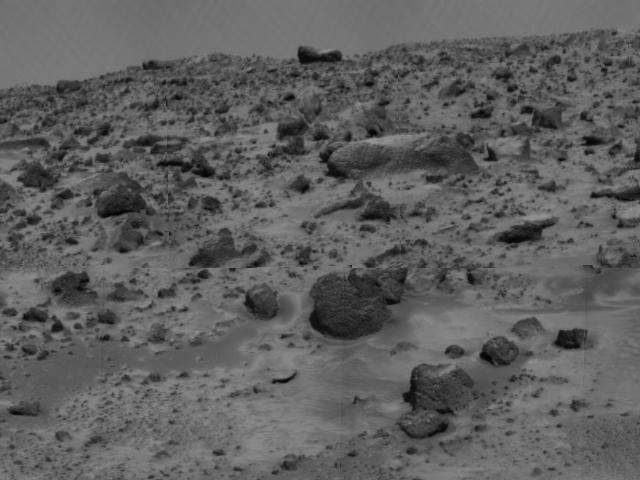
Terrain and Rock Couch
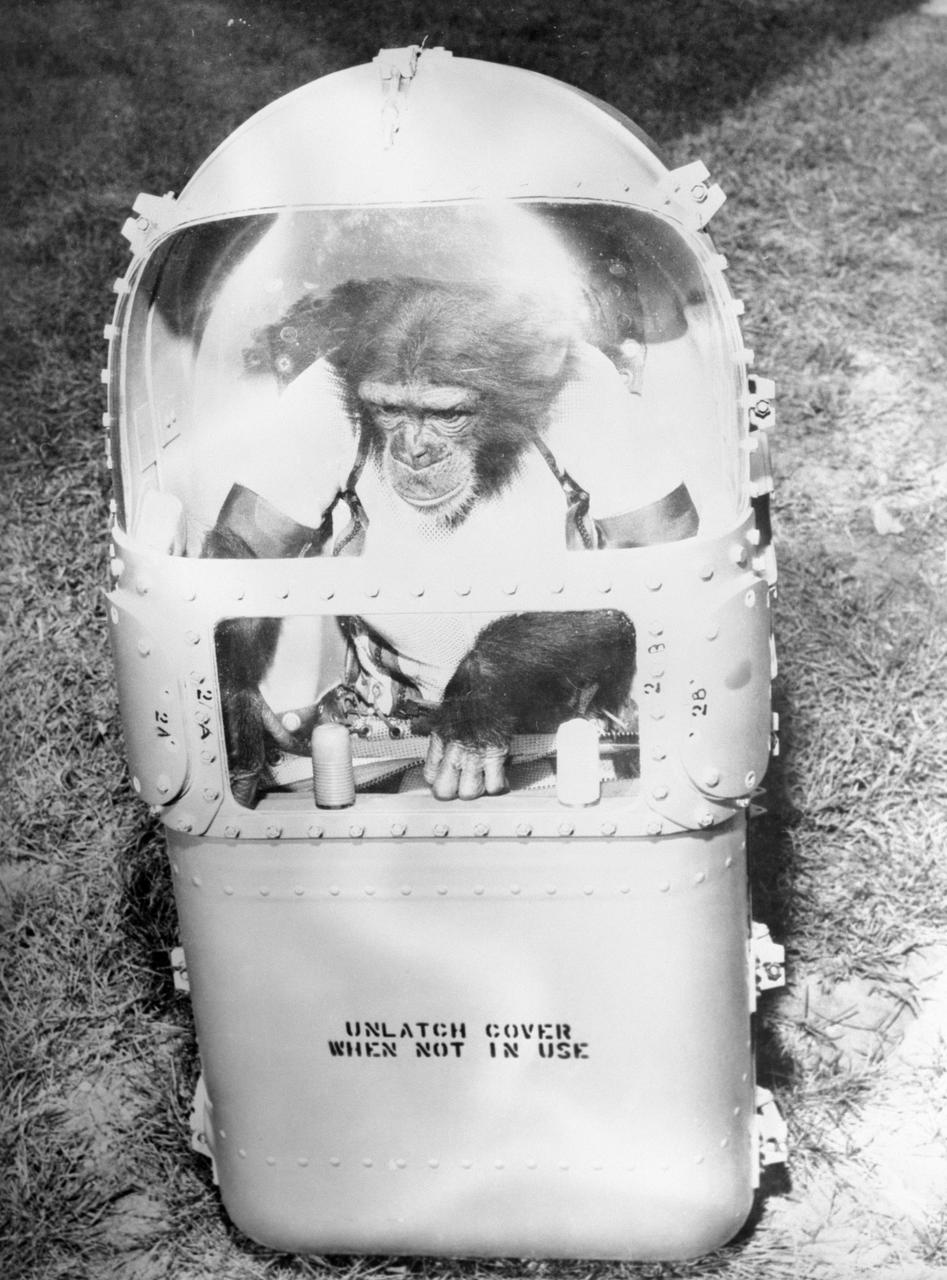
S62-01698 (31 Jan. 1961) --- Chimpanzee "Ham" in his flight couch, after his trip in the Mercury-Redstone 2 (MR-2) on Jan. 31, 1961. Photo credit: NASA
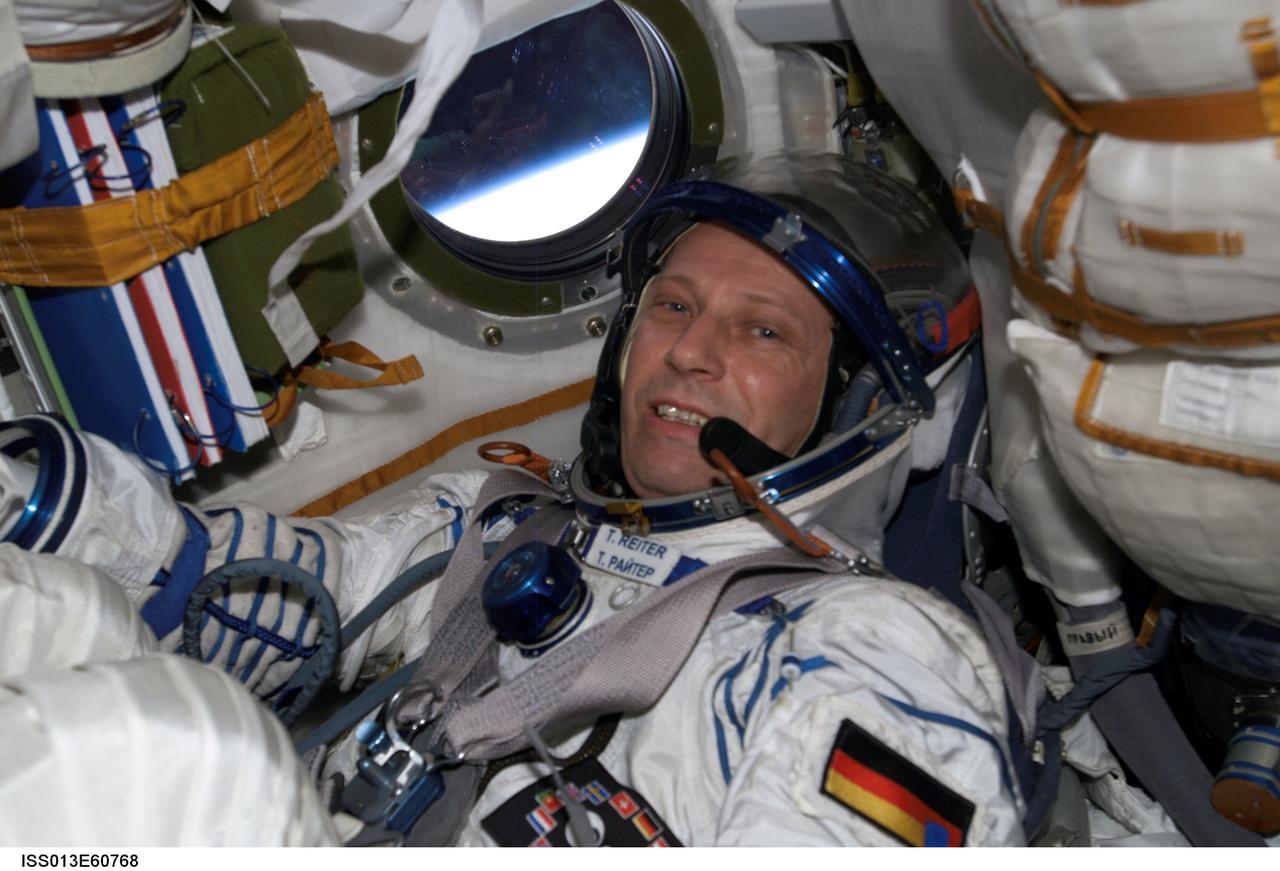
ISS013-E-60768 (26 July 2006) --- Attired in a Russian Sokol launch and entry suit, European Space Agency (ESA) astronaut Thomas Reiter, Expedition 13 flight engineer, participates in a Kazbek couch fit check in the TMA-8 Soyuz spacecraft docked to the International Space Station.
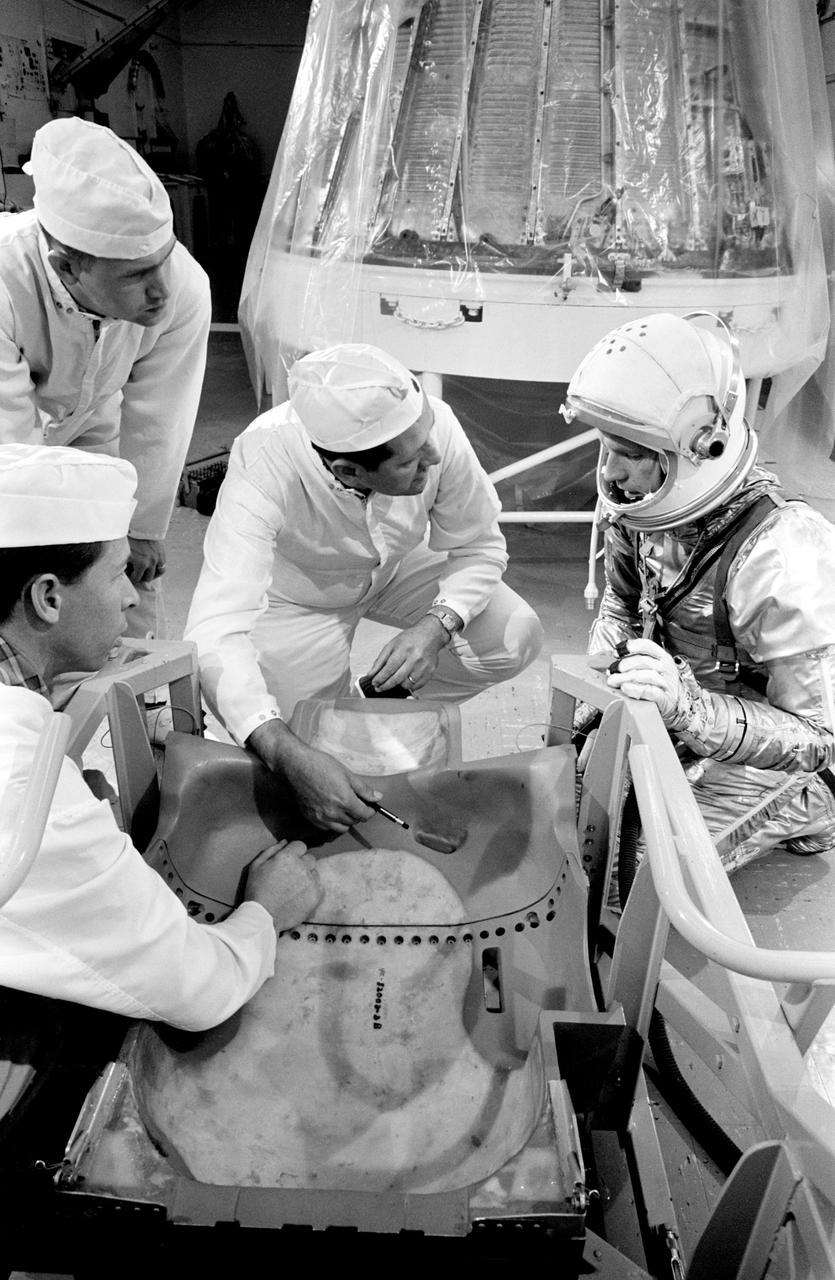
S63-03968 (1963) --- Astronaut L. Gordon Cooper Jr., prime pilot for the Mercury-Atlas 9 (MA-9) mission; Joe Trammel, MAC technician; A. Rochford, NASA suit technician; and C.R. Coyle, MAC technician, look over spacecraft couch. Photo credit: NASA
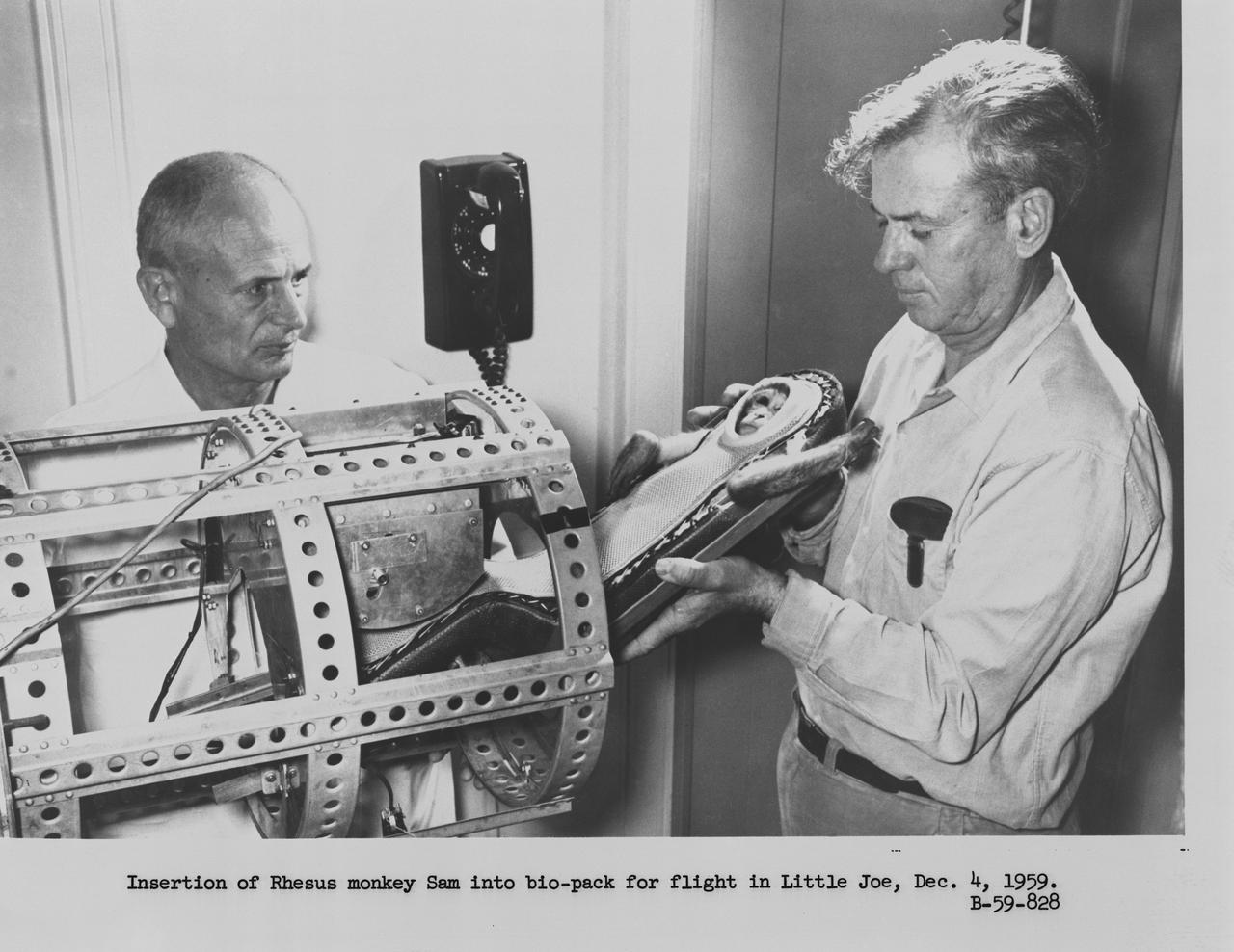
B59-00828 (21 Jan. 1959) --- The test subject, a rhesus monkey named Miss Sam, is seen encased in a model of the Mercury fiberglass contour couch. She is being placed in a container for the Little Joe 1B suborbital test flight of the Mercury Capsule. Photo credit: NASA
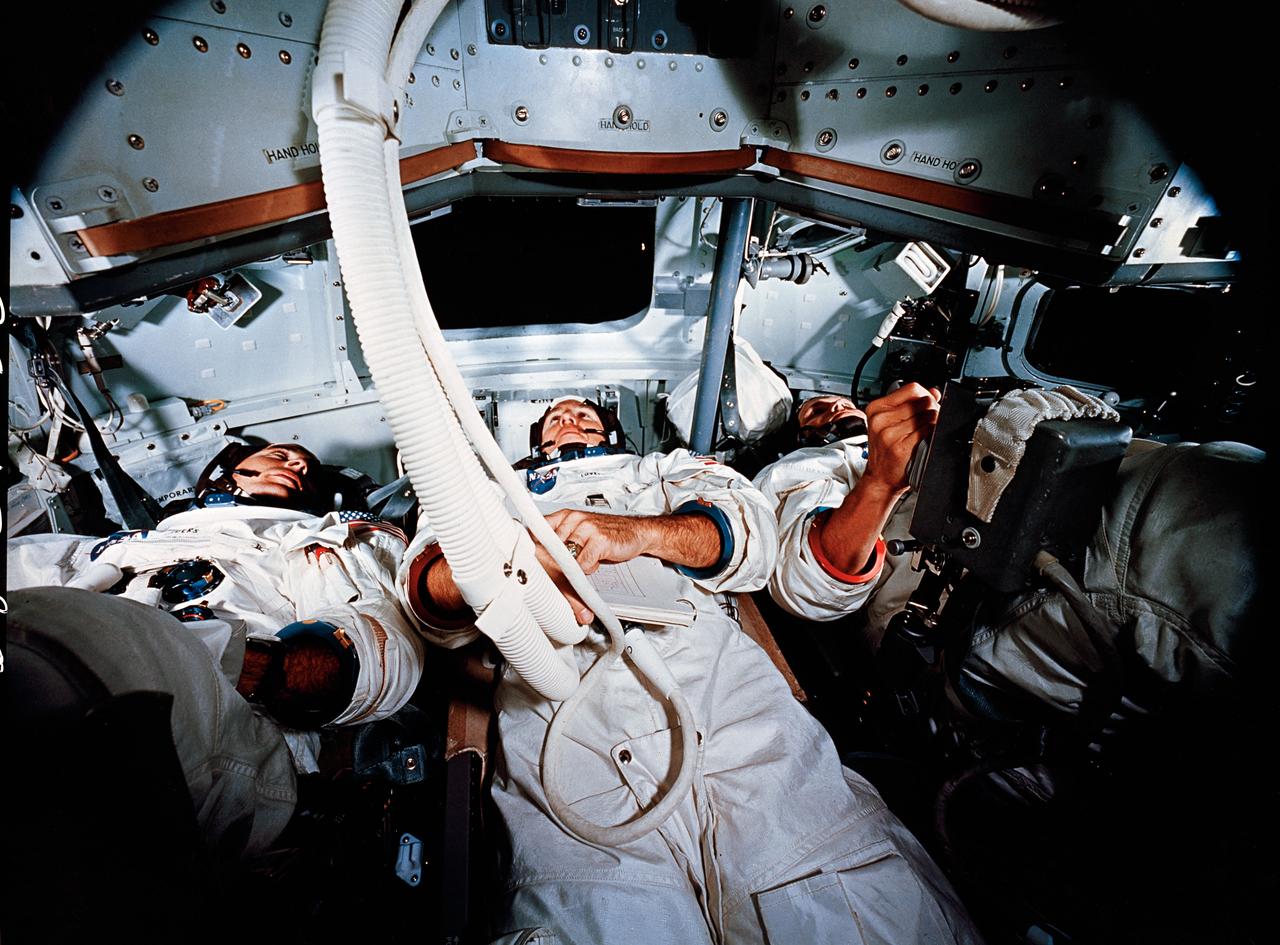
S68-54520 (13 Nov. 1968) --- The Apollo 8 prime crew is seen inside a simulator at the Kennedy Space Center (KSC) during training preparations for their forthcoming lunar orbit mission. Left to right, are astronauts William A. Anders, lunar module pilot; James A. Lovell Jr., command module pilot; and Frank Borman, commander.
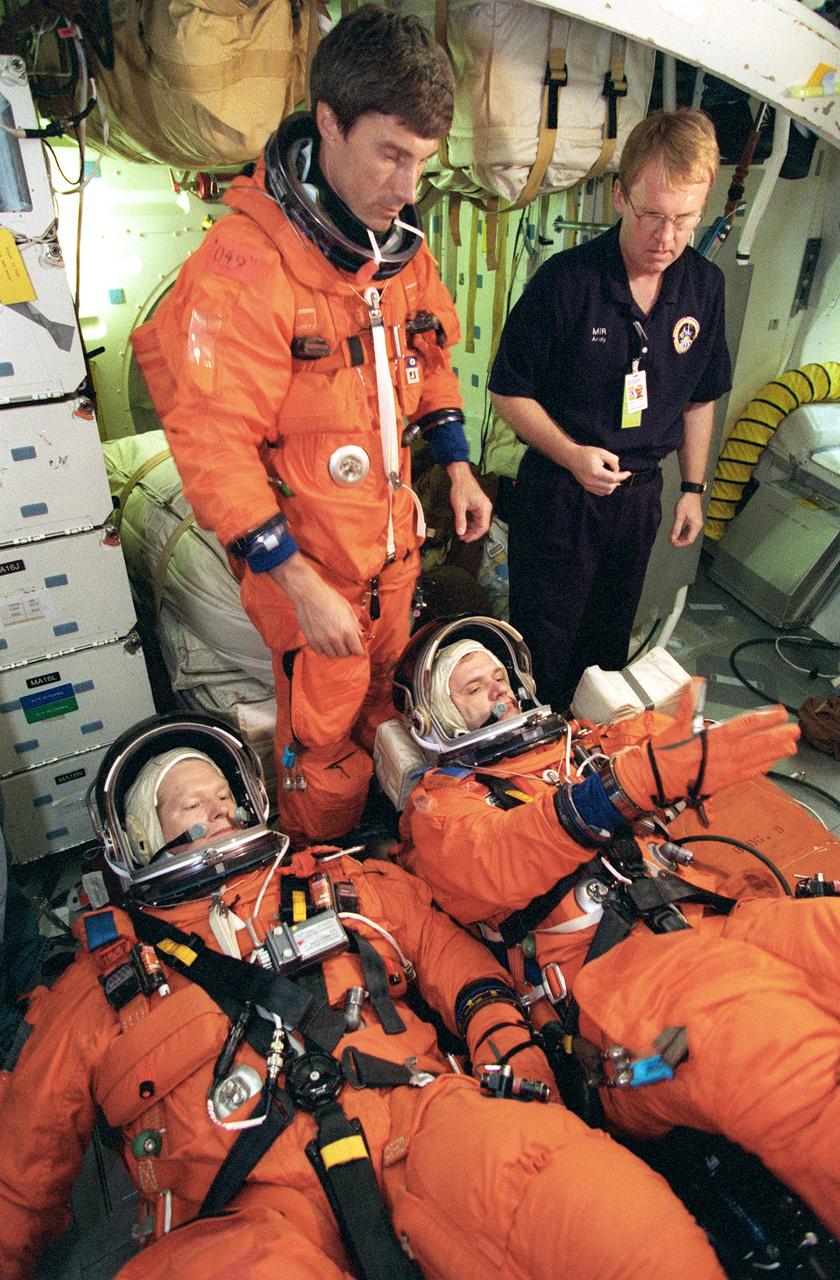
JSC2000-04073 (12 May 2000) --- Astronaut William Shepherd (bottom left), Expedition One mission commander, and cosmonaut Yuri Gidzenko, Soyuz commander, lie on couches on the mid deck of a Johnson Space Center trainer during a rehearsal of shuttle descent. Cosmonaut Sergei Krikalev, the third Expedition One crew member, is not yet positioned on his couch. He will serve as flight engineer for the crew. Next to him is astronaut Andrew S.W. Thomas, who assisted in the shuttle-descent simulation in one of the Johnson Space Center's Crew Compartment Trainers (CCT).
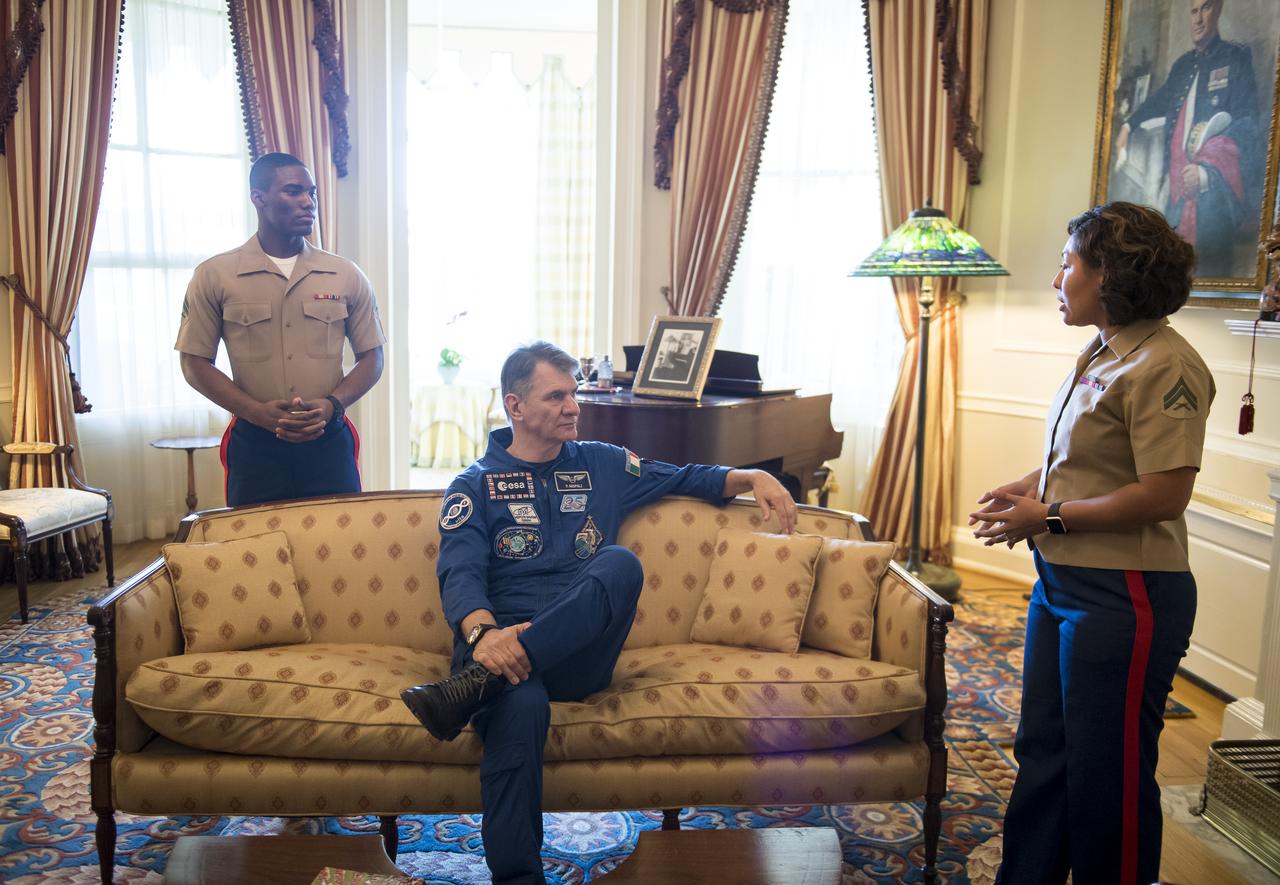
ESA astronaut Paolo Nespoli sits on a couch where Archibald Henderson, the 5th Commandant of the Marine Corps passed away in 1859, during a tour of the Home of the Commandants, Monday, May 7, 2018 in Washington. Photo Credit: (NASA/Aubrey Gemignani)
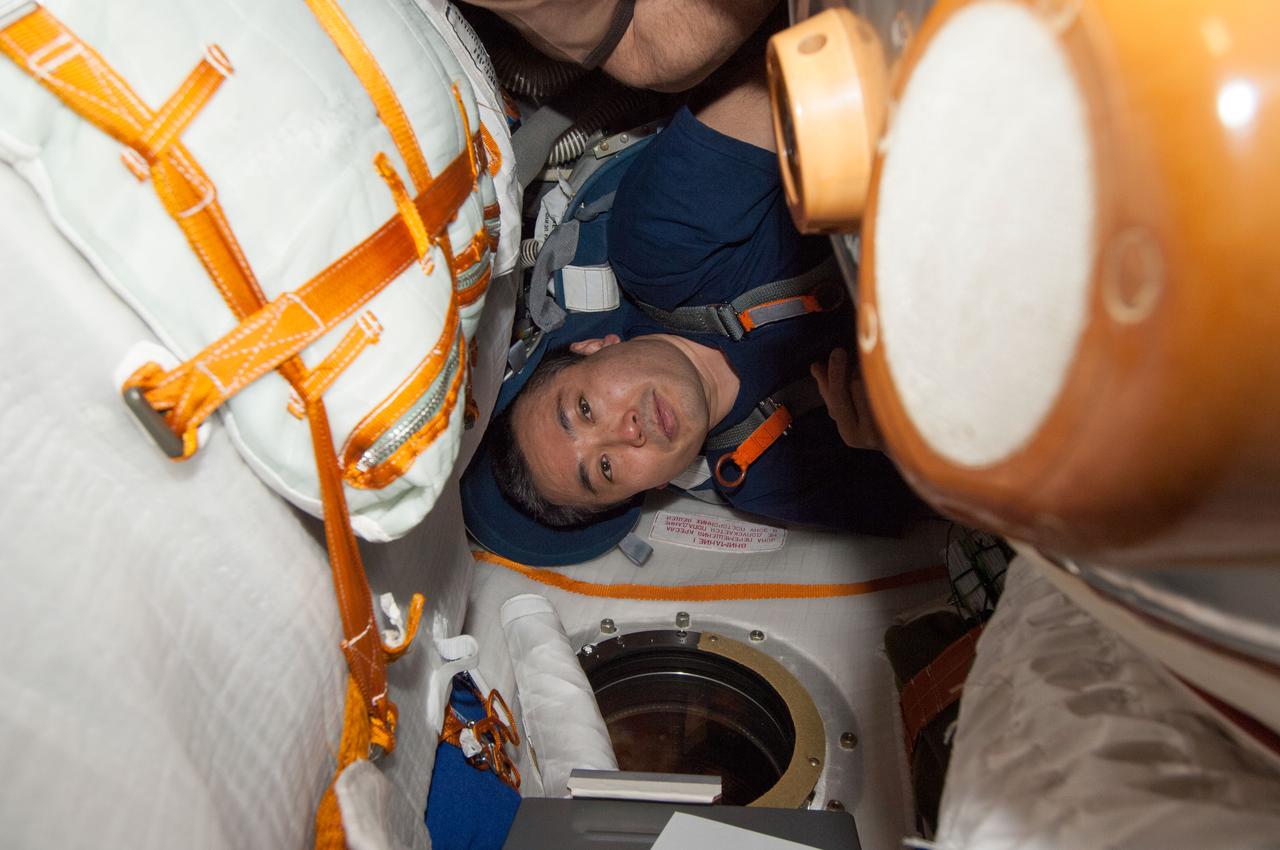
ISS39-E-001422 (14 March 2014) --- Expedition 39 Commander Koichi Wakata of the Japan Aerospace Exploration Agency (JAXA) is photographed during a fit check of the Kazbek couches in the Soyuz TMA-11M spacecraft, which is docked to the International Space Station.
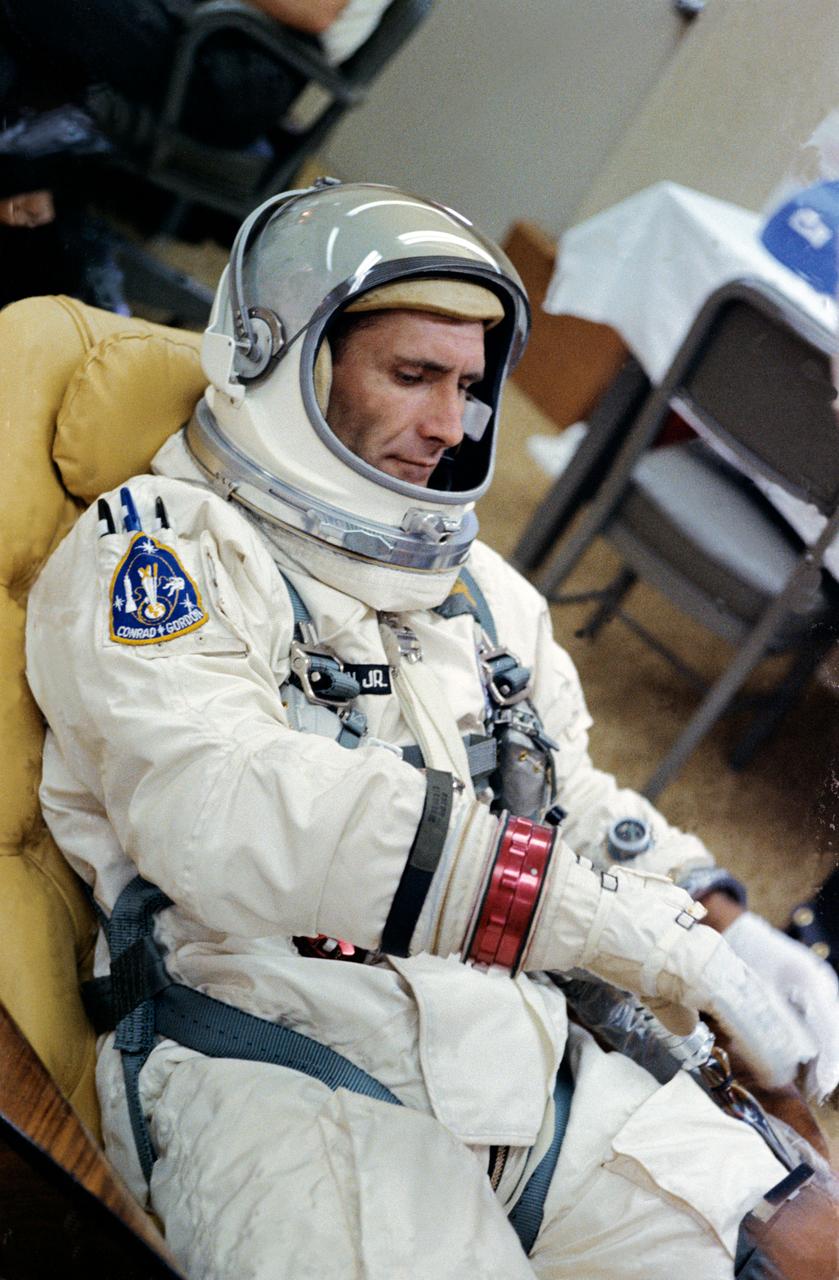
S66-50725 (12 Sept. 1966) --- Astronaut Richard F. Gordon Jr., pilot of the Gemini-11 spaceflight, reclines on a couch as he adjusts his spacesuit in the Launch Complex 16 suiting trailer during the Gemini-11 prelaunch countdown. He is already wearing the full suit and helmet. Photo credit: NASA
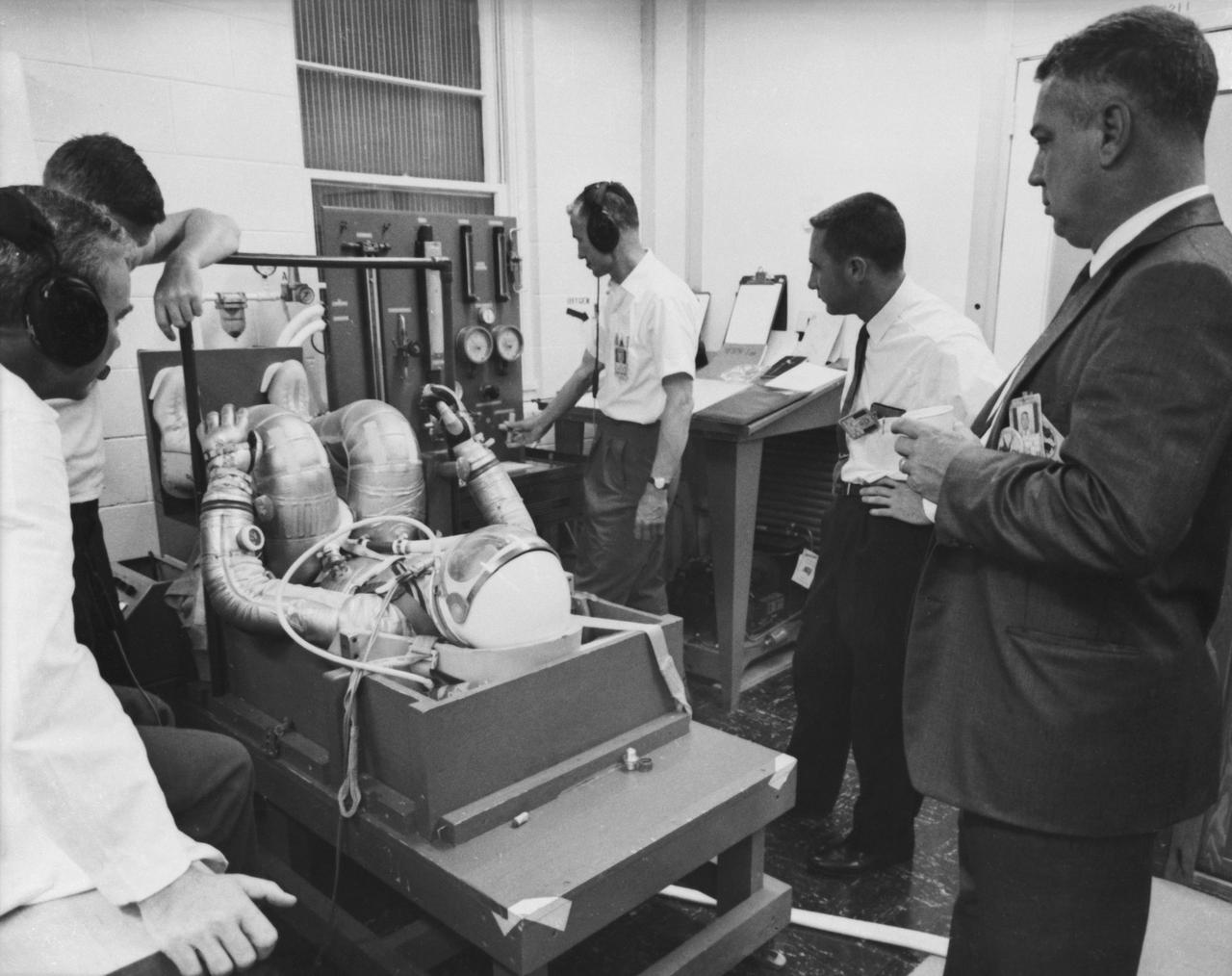
S61-02767 (5 May 1961) --- Astronaut Alan B. Shepard Jr. in flight couch for final check before insertion into capsule for his Mercury-Redstone 3 (MR-3) flight. Photo credit: NASA or National Aeronautics and Space Administration
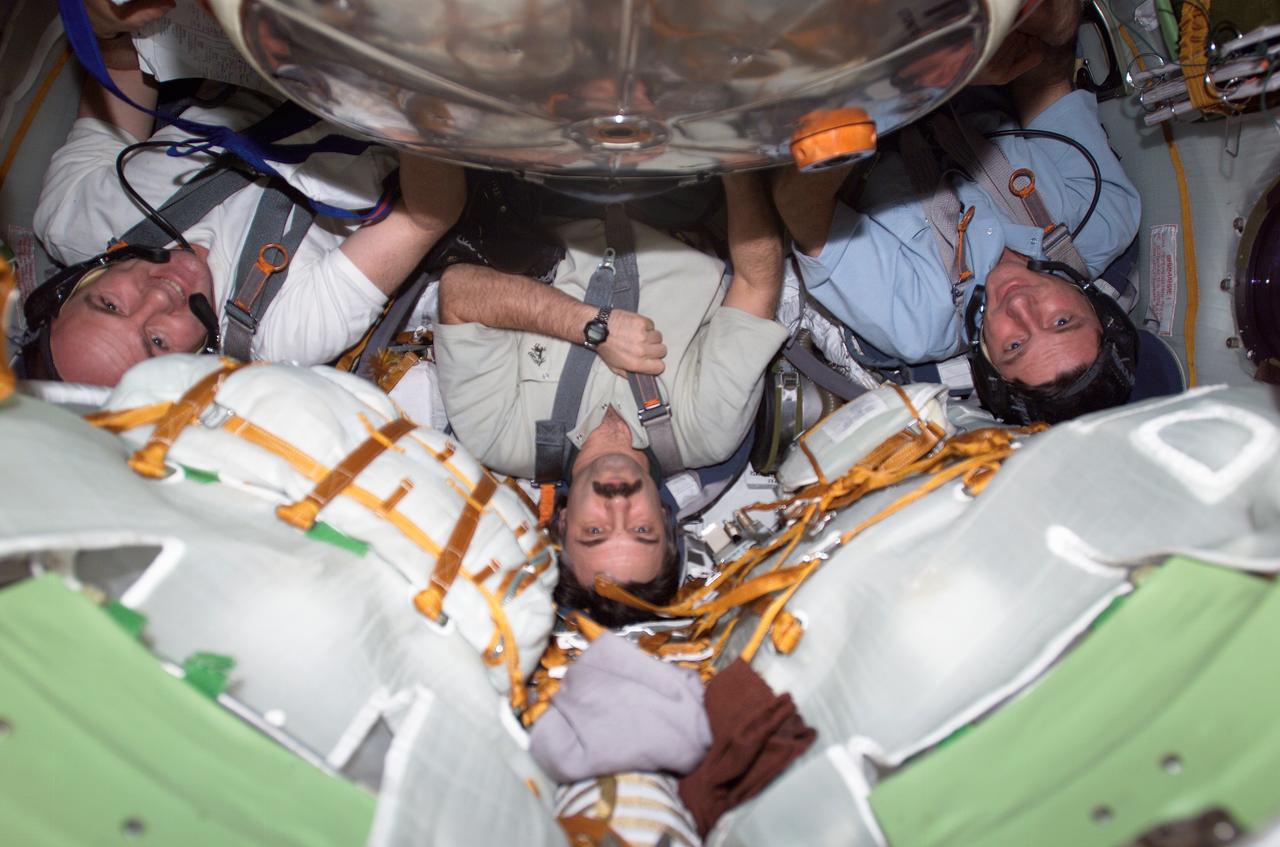
ISS008-E-22361 (27 April 2004) --- Astronaut C. Michael Foale (left), Expedition 8 commander and NASA ISS science officer; cosmonaut Alexander Y. Kaleri, flight engineer (FE) representing Russia’s Federal Space Agency; and European Space Agency (ESA) astronaut Andre Kuipers of the Netherlands participate in the Soyuz descent training exercise, which is standard procedure for each crew returning on a Soyuz. During the descent, Kaleri, as Soyuz commander, will occupy the middle couch, with FE-1 Kuipers in the left seat and FE-2 Foale in the Descent Module’s right “Kazbek” couch. The ISS Soyuz 7 is scheduled to undock from the Station at 3:52 p.m. (CDT) Thursday, April 29.
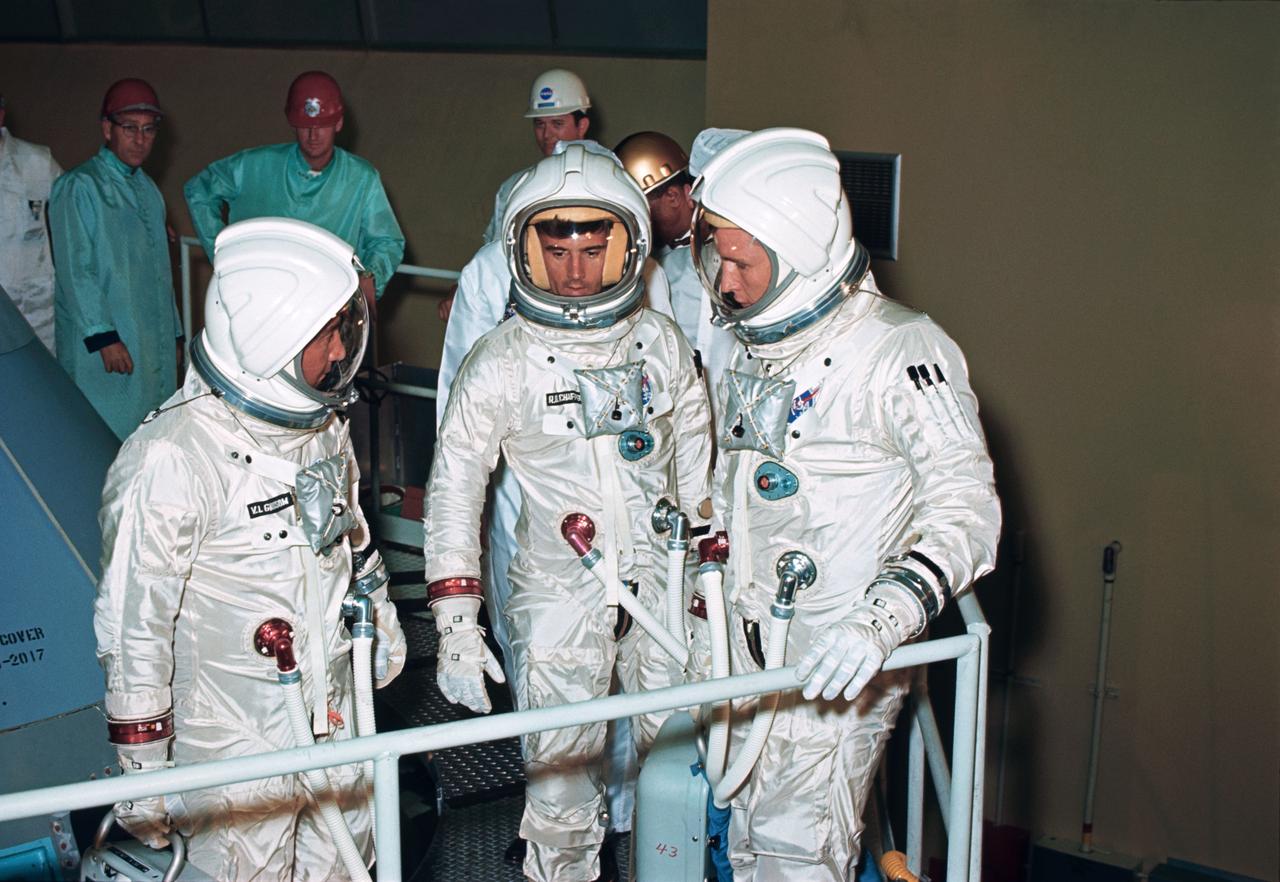
S66-49181 (August 1966) --- The three crew members for the Apollo-Saturn 204 (AS-204) mission check out the couch installation on the Apollo Command Module (CM) at North American's Downey facility. Left to right in their pressurized space suits are astronauts Virgil I. Grissom, Roger B. Chaffee and Edward H. White II. Editor's Note: The three astronauts died in a fire on the launch pad, Jan. 27, 1967.
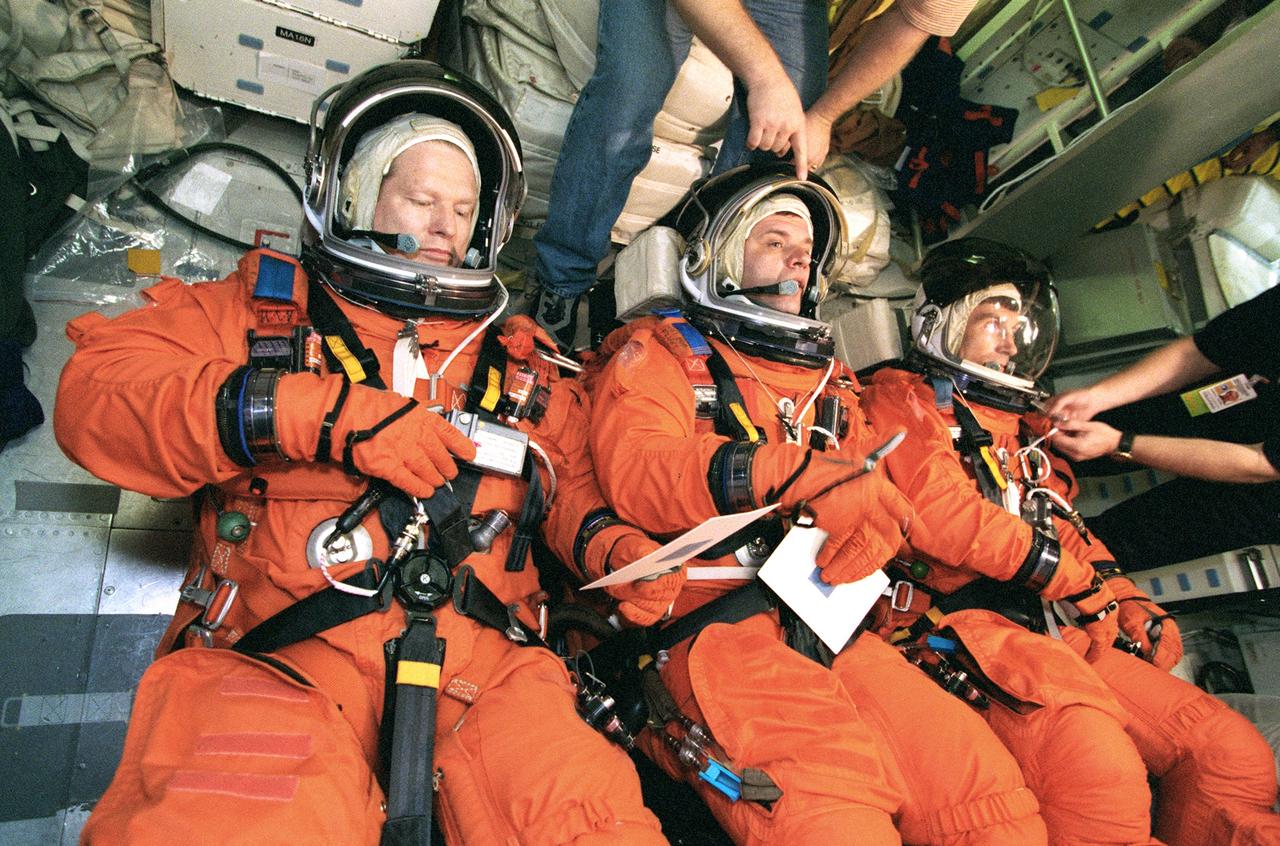
JSC2000-04077 (12 May 2000) --- The ISS Expedition One crew rehearses procedures for a shuttle descent in the Systems Integration Facility at the Johnson Space Center (JSC). Lying on portable couches on the mid deck of the crew compartment trainer (CCT) are, from the left, astronaut William Shepherd, mission commander; cosmonaut Yuri Gidzenko, Soyuz commander; and cosmonaut Sergei Krikalev, flight engineer.
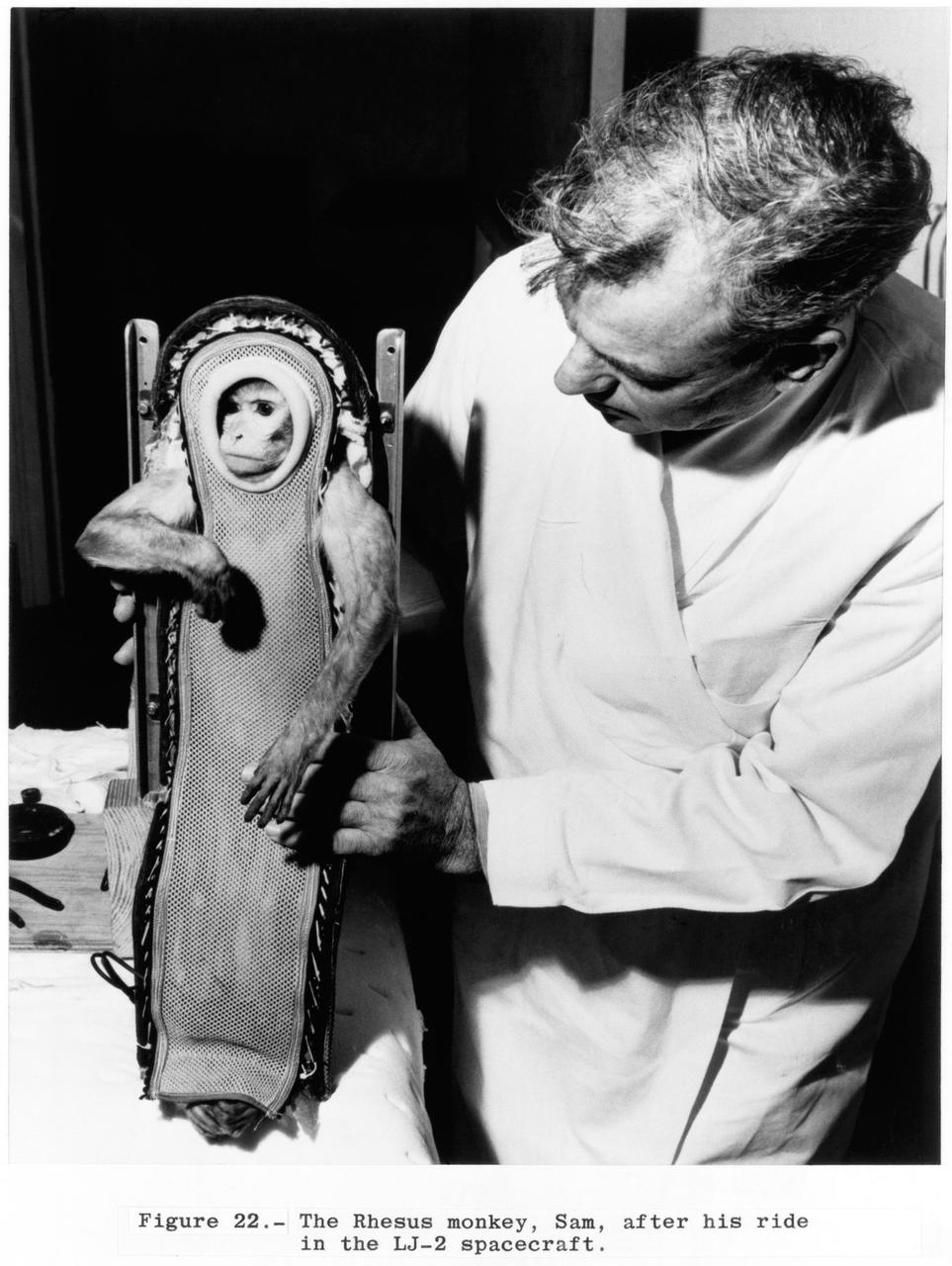
S63-19199 (4 Dec. 1959) --- Sam, the Rhesus monkey, and his handler after his ride in the Little Joe 2 (LJ-2) spacecraft. He is still encased in his contour couch. A U.S. Navy destroyer safely recovered Sam after he experienced three minutes of weightlessness during the flight. Photo credit: NASA
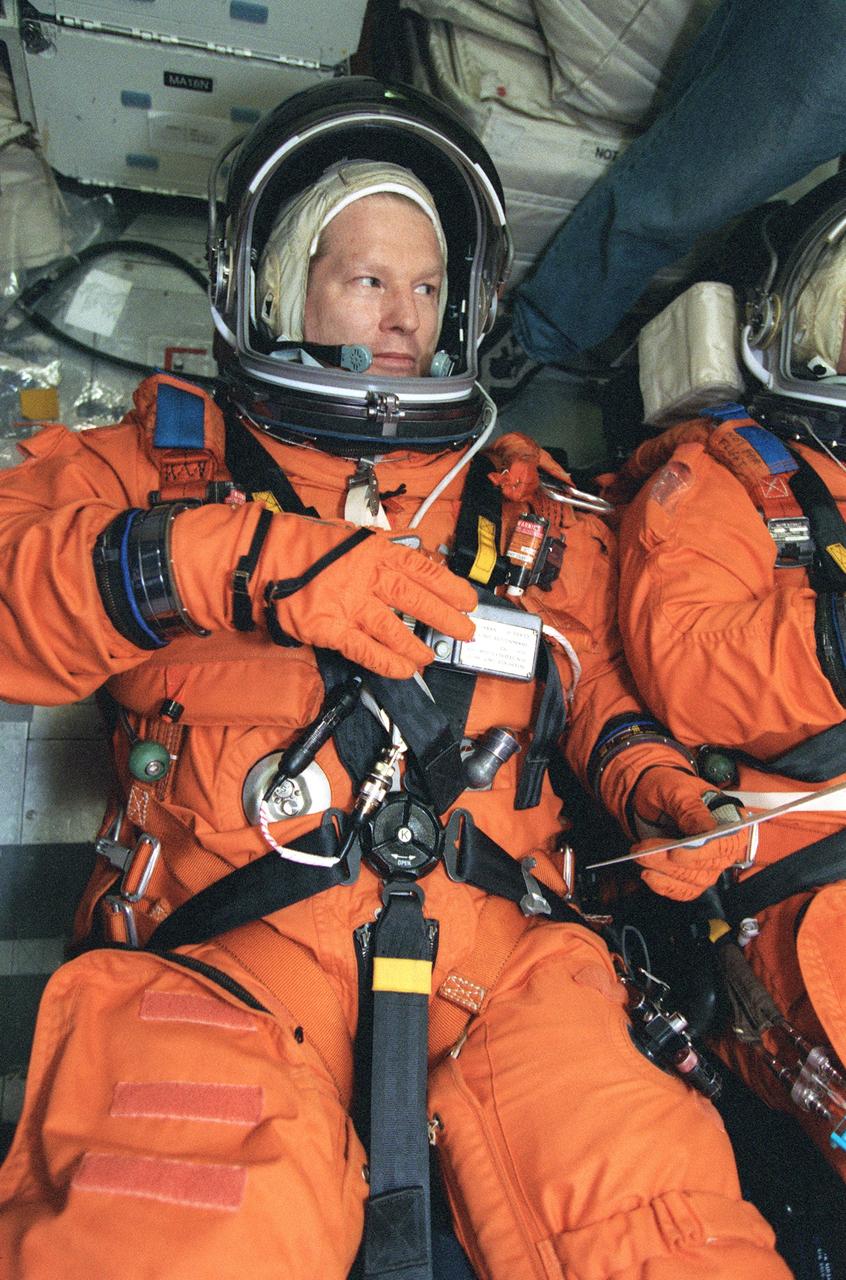
JSC2000-04075 (12 May 2000) --- Astronaut William Shepherd, Expedition One mission commander, lies on a couch on the mid deck of a Johnson Space Center trainer during a rehearsal of shuttle descent. Shepherd and his Expedition One crewmates will return from their stay aboard ISS in the Space Shuttle Discovery around mid February 2001.
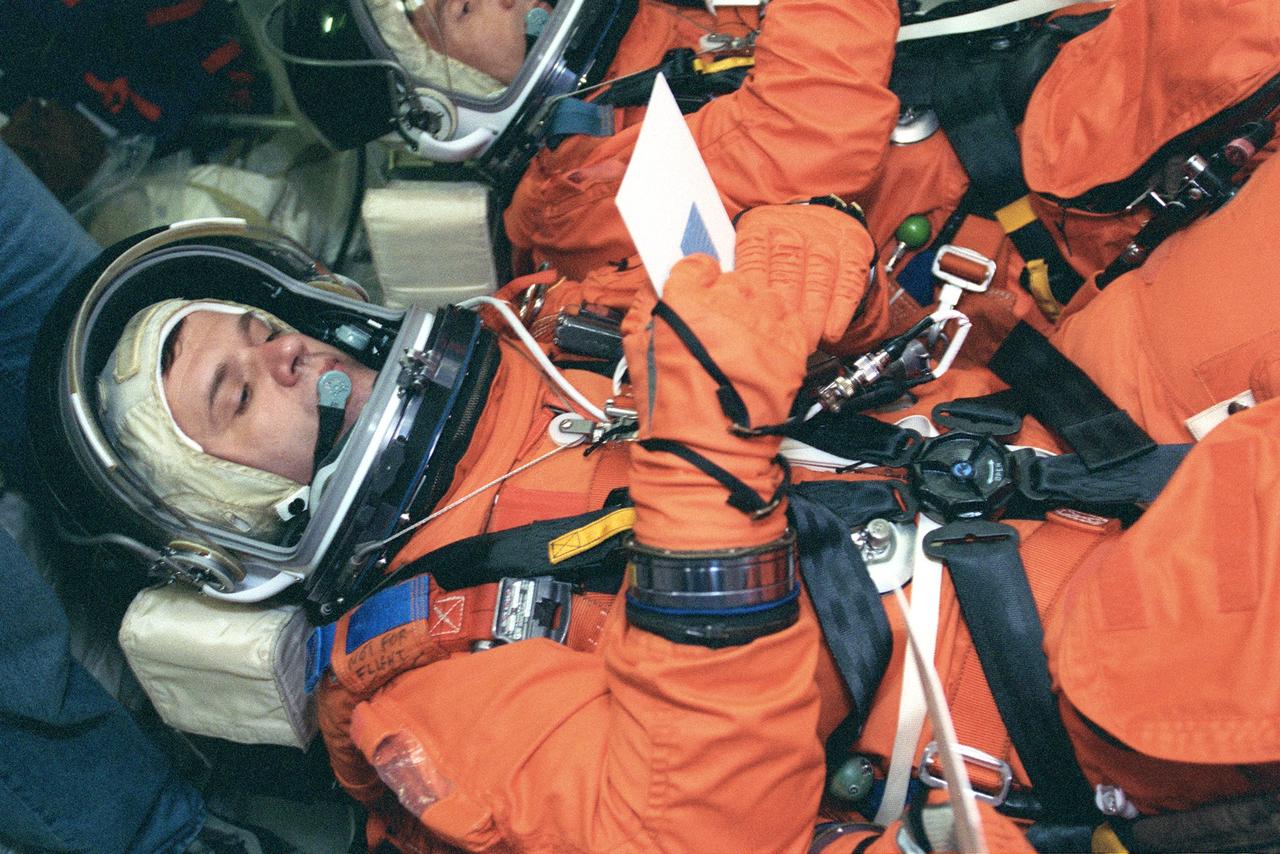
JSC2000-04076 (12 May 2000) --- Cosmonaut Yuri Gidzenko, Expedition One Soyuz commander, lies on a couch on the mid deck of a Johnson Space Center trainer during a rehearsal of shuttle descent. Gidzenko and his Expedition One crewmates will return from their stay aboard ISS in the Space Shuttle Discovery around mid February 2001.
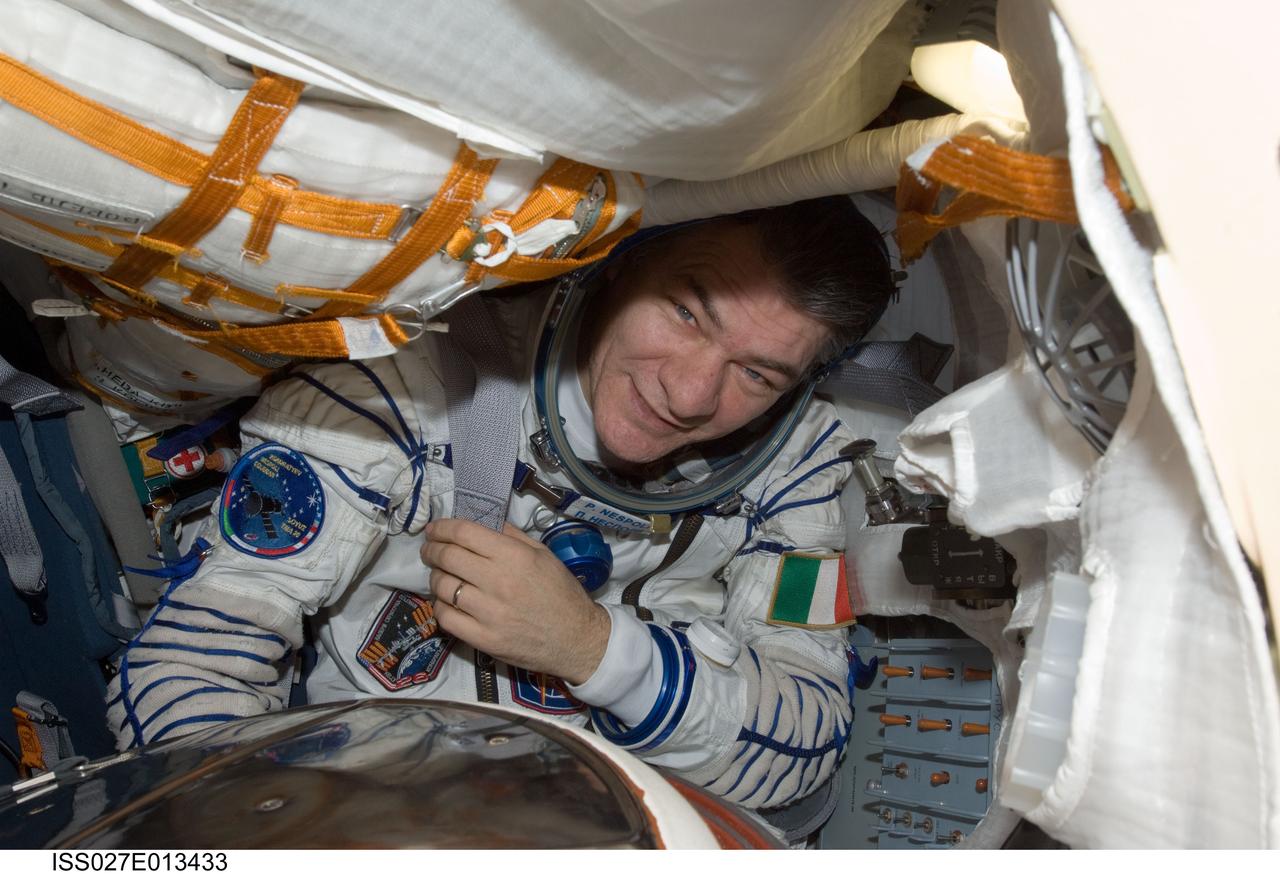
ISS027-E-013433 (13 April 2011) --- European Space Agency astronaut Paolo Nespoli, Expedition 27 flight engineer, attired in a Russian Sokol launch and entry suit, is pictured in the Soyuz TMA-20 spacecraft currently docked to the Rassvet Mini-Research Module 1 (MRM1) of the International Space Station. Nespoli was conducting a fit check of his Kazbek couch in the Soyuz.
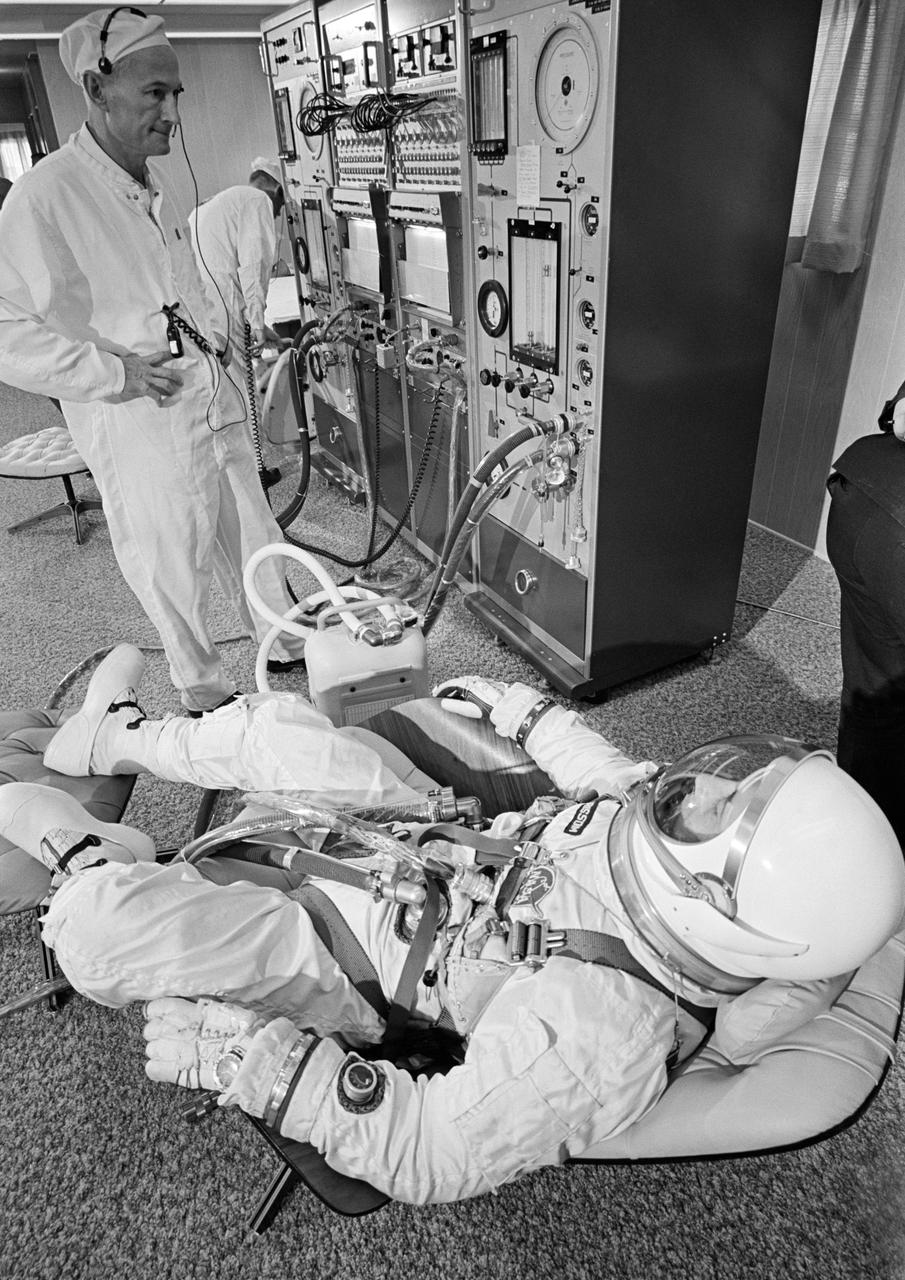
S65-20639 (18 March 1965) --- Astronaut Virgil I. Grissom, Gemini-Titan 3 command pilot, reclines on a couch in the Pad 16 ready room during preflight checks prior to going to Pad 19 for flight simulations in the Gemini-3 spacecraft. Joe Schmitt, suit technician from NASA?s Manned Spacecraft Center Crew Systems Division, stands by to assist Grissom.
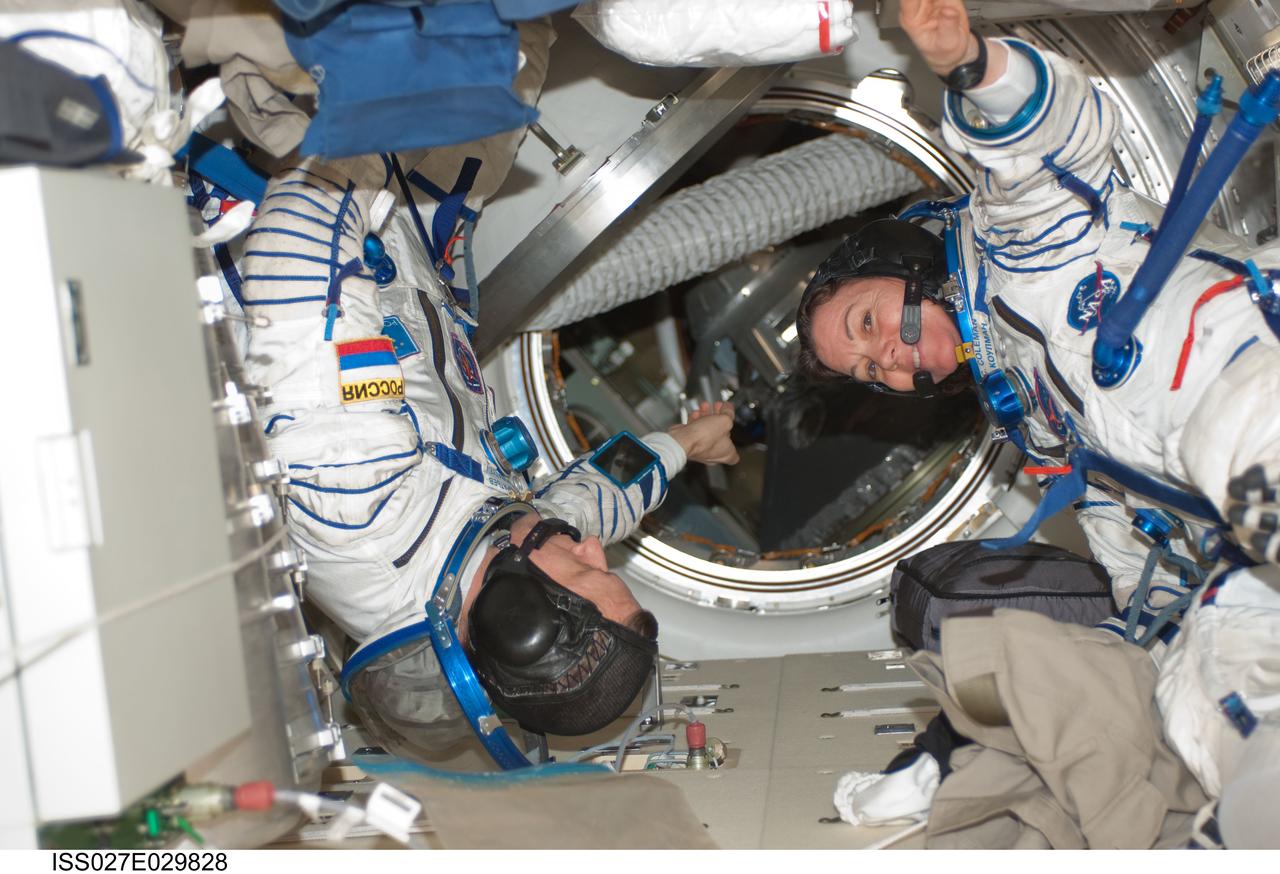
ISS027-E-029828 (13 May 2011) --- Attired in their Russian Sokol launch and entry suits, Russian cosmonaut Dmitry Kondratyev, Expedition 27 commander; and NASA astronaut Cady Coleman, flight engineer, prepare to perform a fit check in their body-contoured Kazbek couches in the Soyuz TMA-20 spacecraft docked to the International Space Station. Kondratyev, Coleman and European Space Agency astronaut Paolo Nespoli (out of frame) are scheduled to return to Earth on May 23.
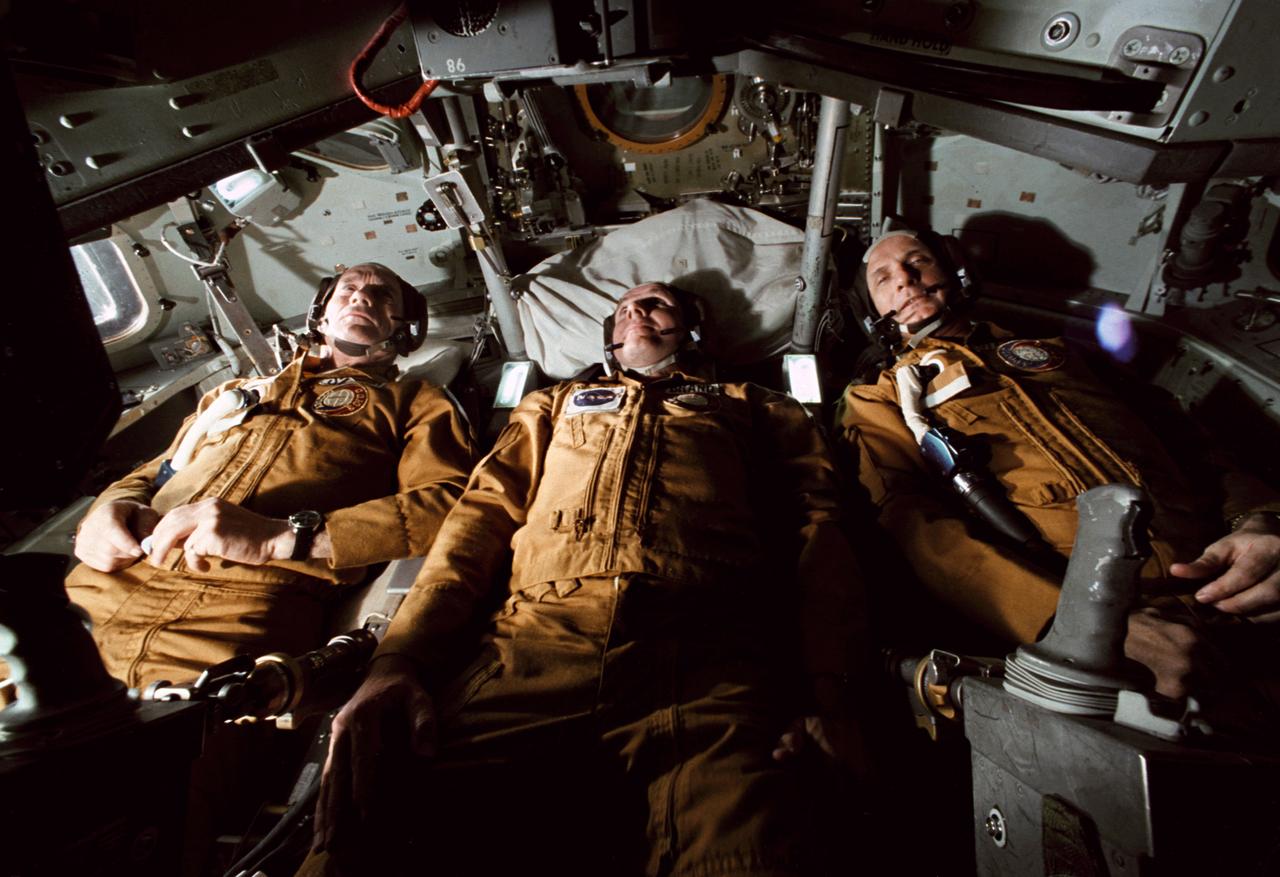
S75-22747 (25 Feb. 1975) --- An interior view of the Apollo Command Module trainer in Building 35 showing the three American ASTP prime crewmen lying in their couches during Apollo-Soyuz Test Project training at NASA's Johnson Space Center. They are, left to right, astronauts Donald K. Slayton, docking module pilot; Vance D. Brand, command module pilot; and Thomas P. Stafford, commander.
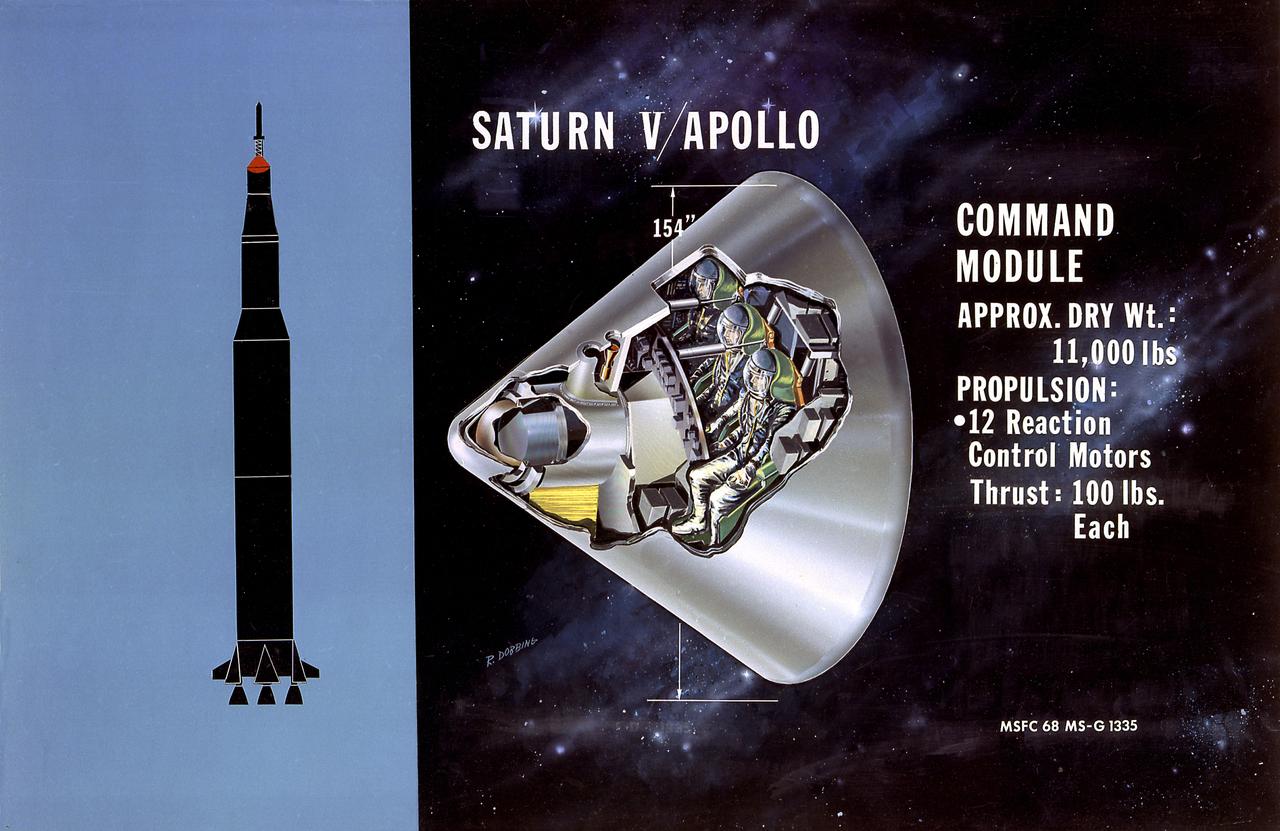
This is a cutaway illustration of the Saturn V command module (CM) configuration. The CM was crammed with some of the most complex equipment ever sent into space at the time. The three astronaut couches were surrounded by instrument panels, navigation gear, radios, life-support systems, and small engines to keep it stable during reentry. The entire cone, 11 feet long and 13 feet in diameter, was protected by a charring heat shield. The 6.5 ton CM was all that was finally left of the 3,000-ton Saturn V vehicle that lifted off on the journey to the Moon.
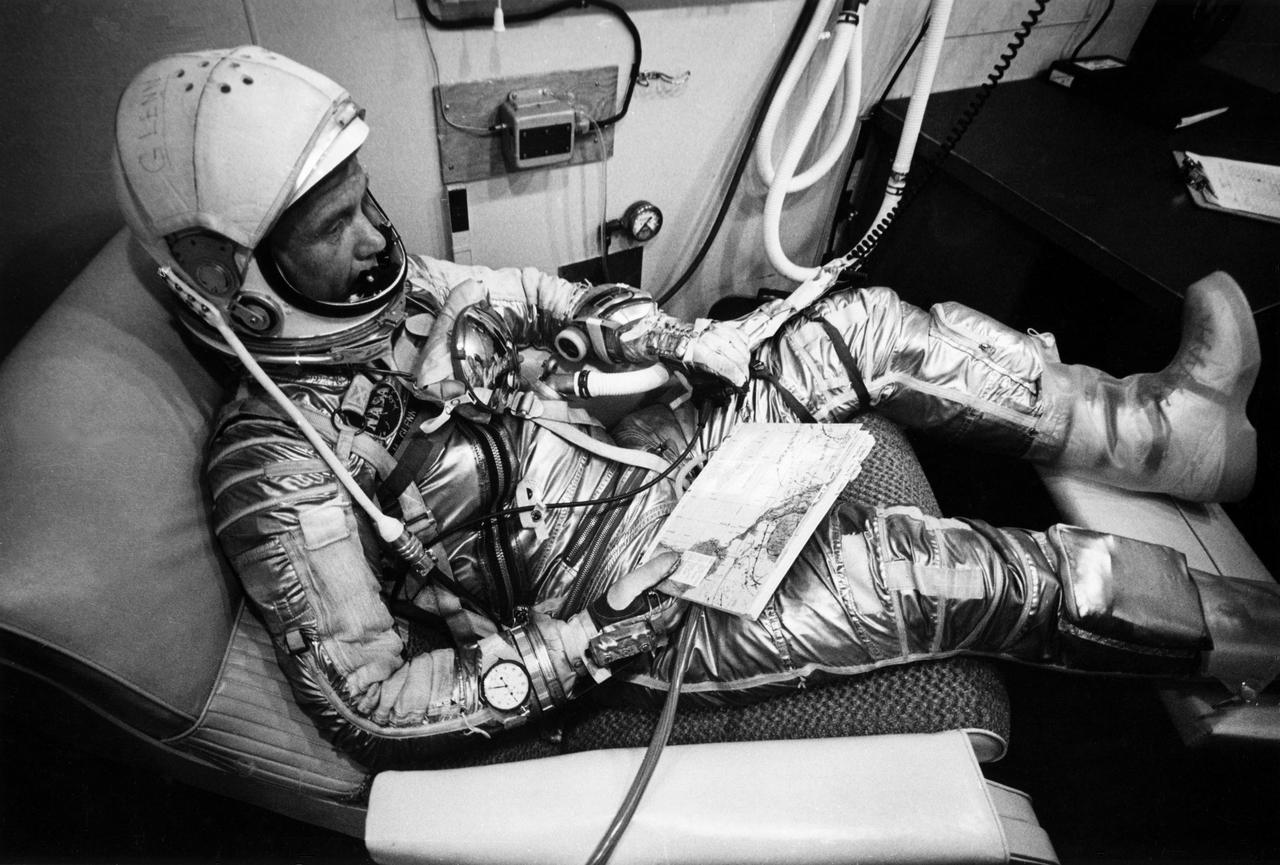
CAPE CANAVERAL, Fla. – John Glenn in flight suit prior to MA-6 launch at Cape Canaveral, Fla. He is relaxing on his contour couch in Hangar S early Feb. 20, 1962. Glanced over his flight maps in a last-minute check before leaving for his Friendship 7 space capsule and an orbital flight of the Earth. Glenn completed three orbits of the Earth and plunged to a safe landing in the Atlantic nearly five hours after blastoff. Photo credit: NASA
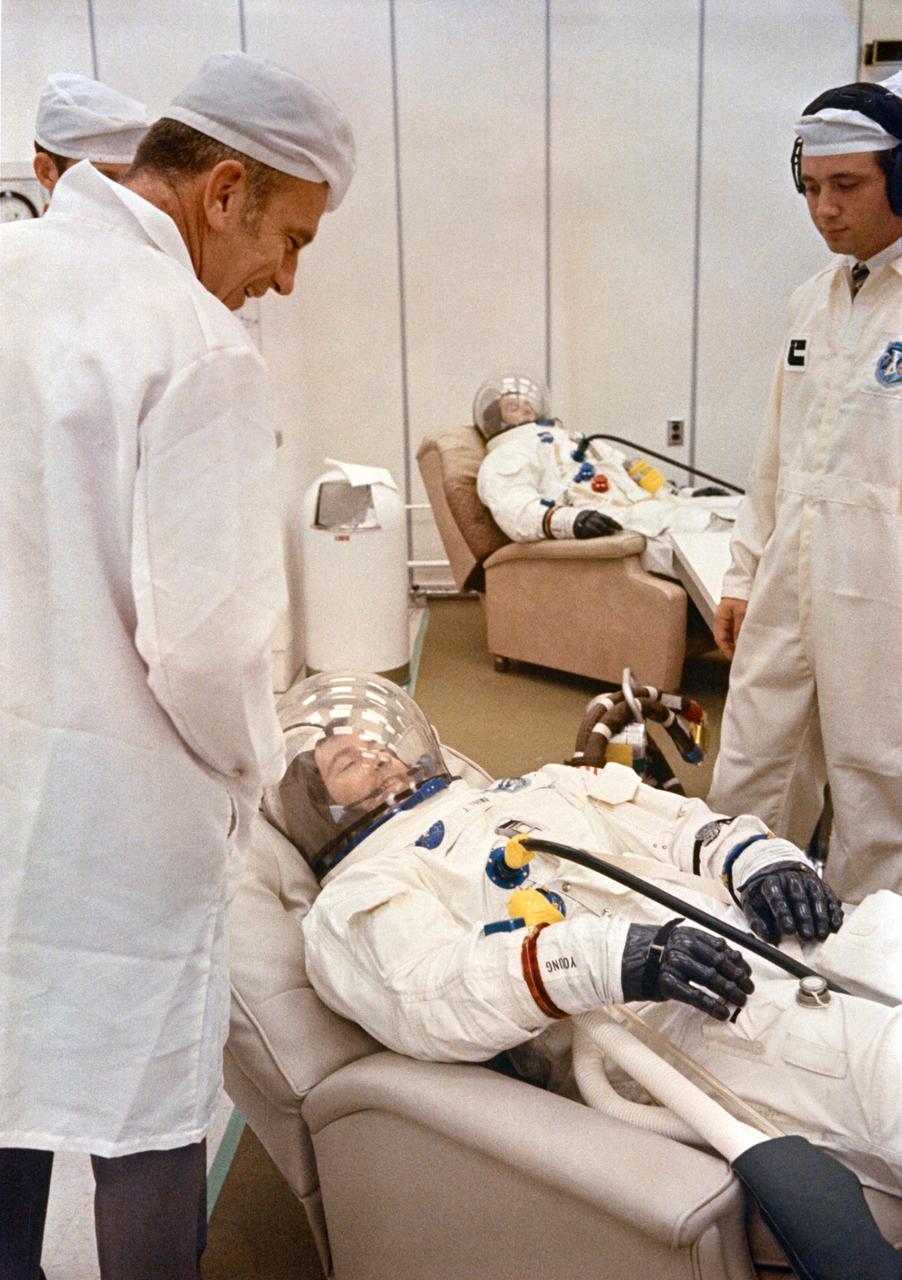
S69-34482 (18 May 1969) --- Astronaut John W. Young, Apollo 10 command module pilot, jokes with Donald K. Slayton (standing left), director of Flight Crew Operations, Manned Spacecraft Center, during Apollo 10 suiting up operations. On couch in background is astronaut Eugene A. Cernan, lunar module pilot. Astronauts Young; Cernan; and Thomas P. Stafford, commander, rode a transfer van from the Manned Spacecraft Operations Building over to Pad B, Launch Complex 39 where their spacecraft awaited them. Liftoff was at 12:49 p.m. (EDT), May 18, 1969.
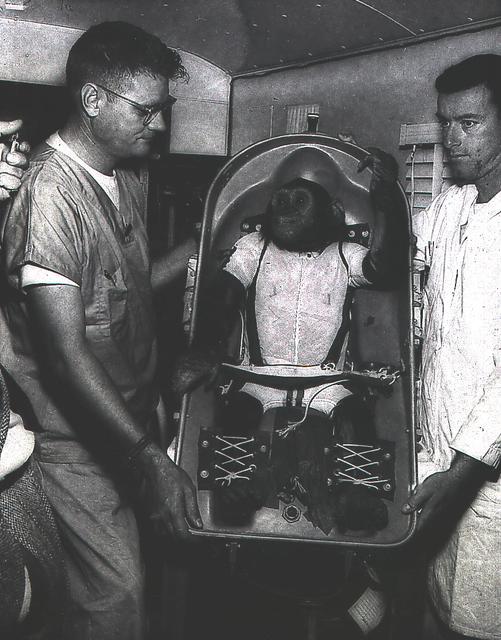
A three-year-old chimpanzee, named Ham, in the biopack couch for the MR-2 suborbital test flight. On January 31, 1961, a Mercury-Redstone launch from Cape Canaveral carried the chimpanzee "Ham" over 640 kilometers down range in an arching trajectory that reached a peak of 254 kilometers above the Earth. The mission was successful and Ham performed his lever-pulling task well in response to the flashing light. NASA used chimpanzees and other primates to test the Mercury Capsule before launching the first American astronaut Alan Shepard in May 1961. The successful flight and recovery confirmed the soundness of the Mercury-Redstone systems.
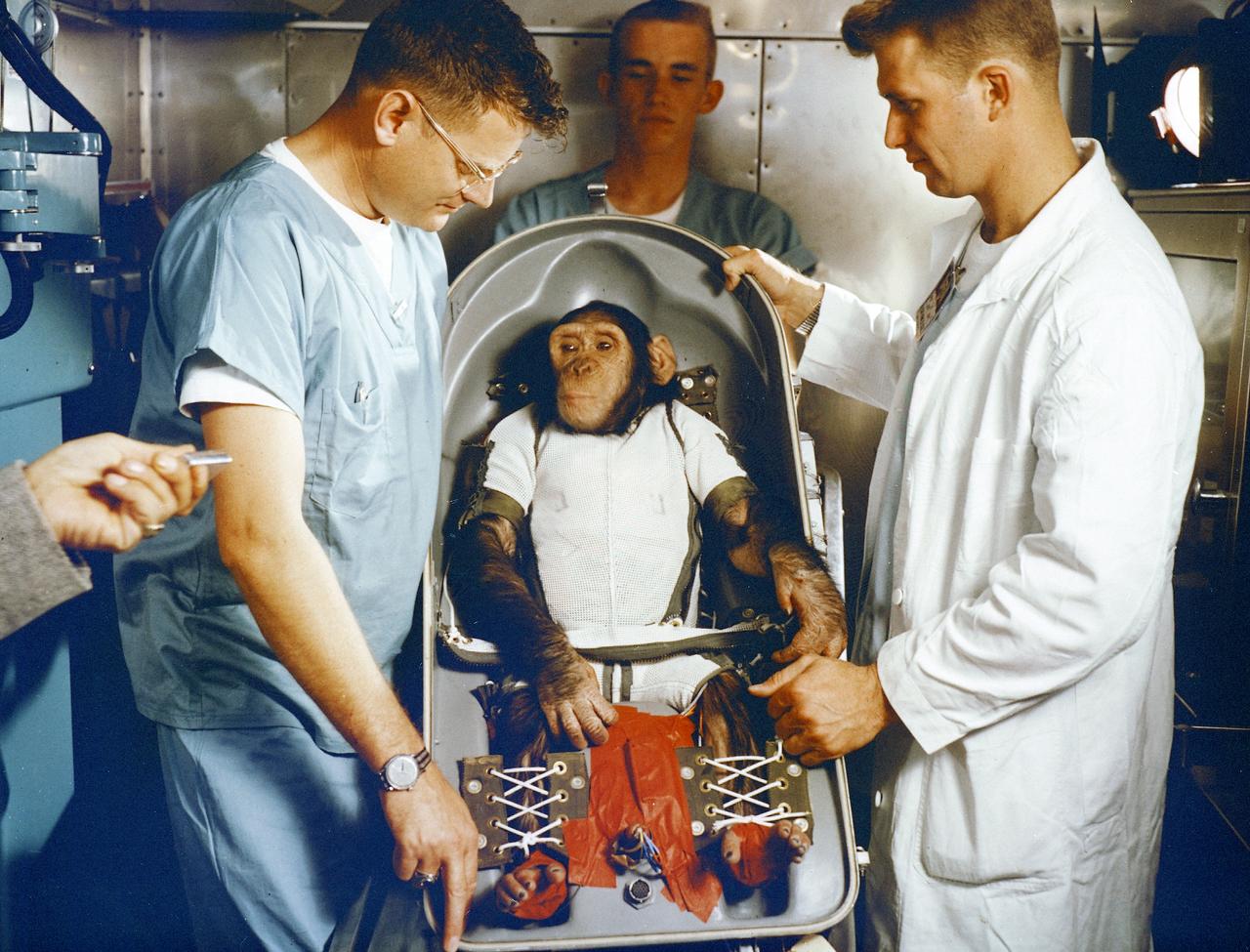
A three-year-old chimpanzee, named Ham, in the biopack couch for the MR-2 suborbital test flight. On January 31, 1961, a Mercury-Redstone launch from Cape Canaveral carried the chimpanzee "Ham" over 640 kilometers down range in an arching trajectory that reached a peak of 254 kilometers above the Earth. The mission was successful and Ham performed his lever-pulling task well in response to the flashing light. NASA used chimpanzees and other primates to test the Mercury Capsule before launching the first American astronaut Alan Shepard in May 1961. The successful flight and recovery confirmed the soundness of the Mercury-Redstone systems.
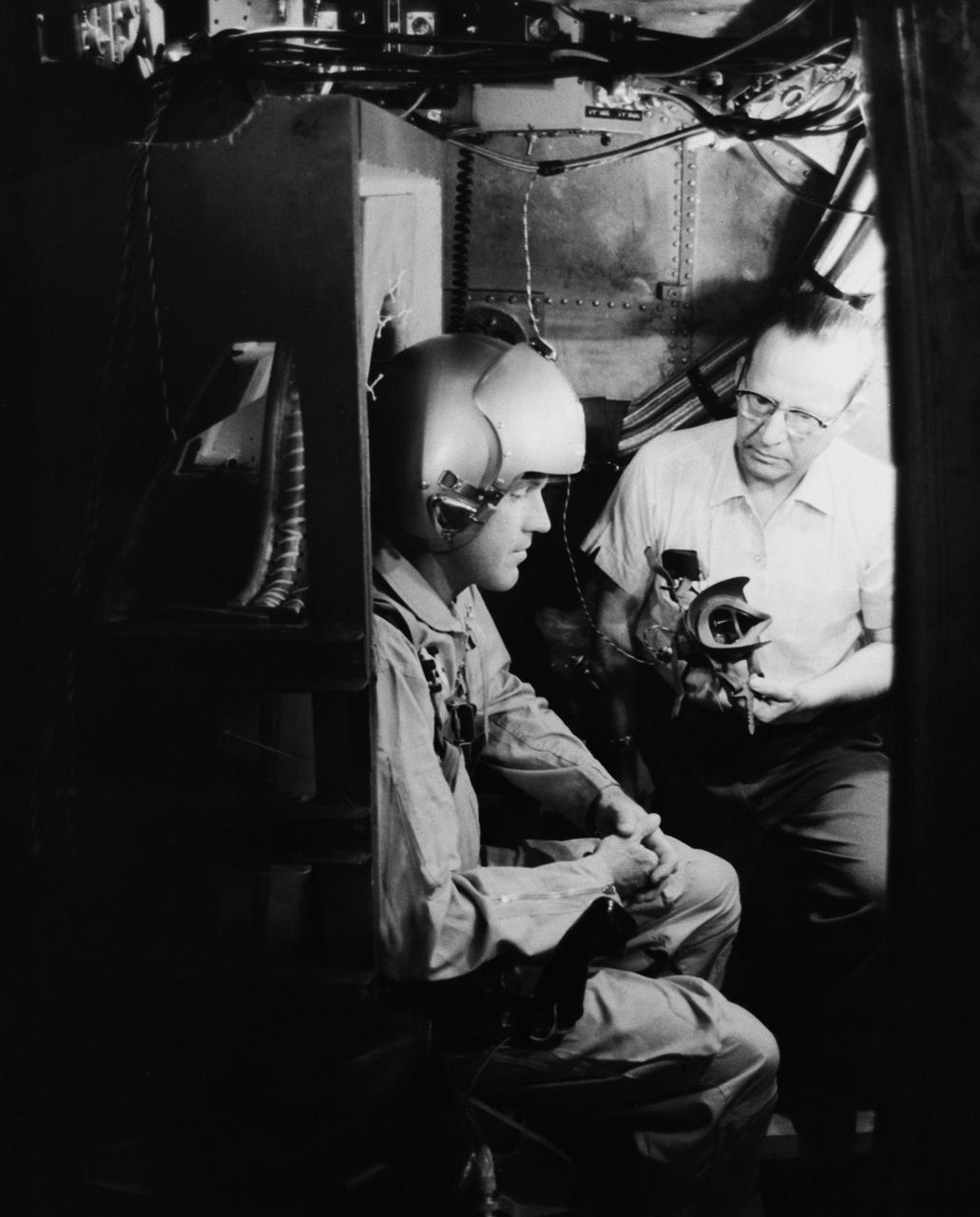
S63-03978 (1963) --- Astronaut L. Gordon Cooper Jr., prime pilot for the Mercury-Atlas 9 (MA-9) mission, is strapped into the gondola while undergoing tests in the centrifuge at the Naval Air Development Center, Johnsville, Pennsylvania. The centrifuge is used to investigate by simulation the pilot's capability to control the vehicle during the actual flight in its booster and reentry profile. Photo credit: NASA
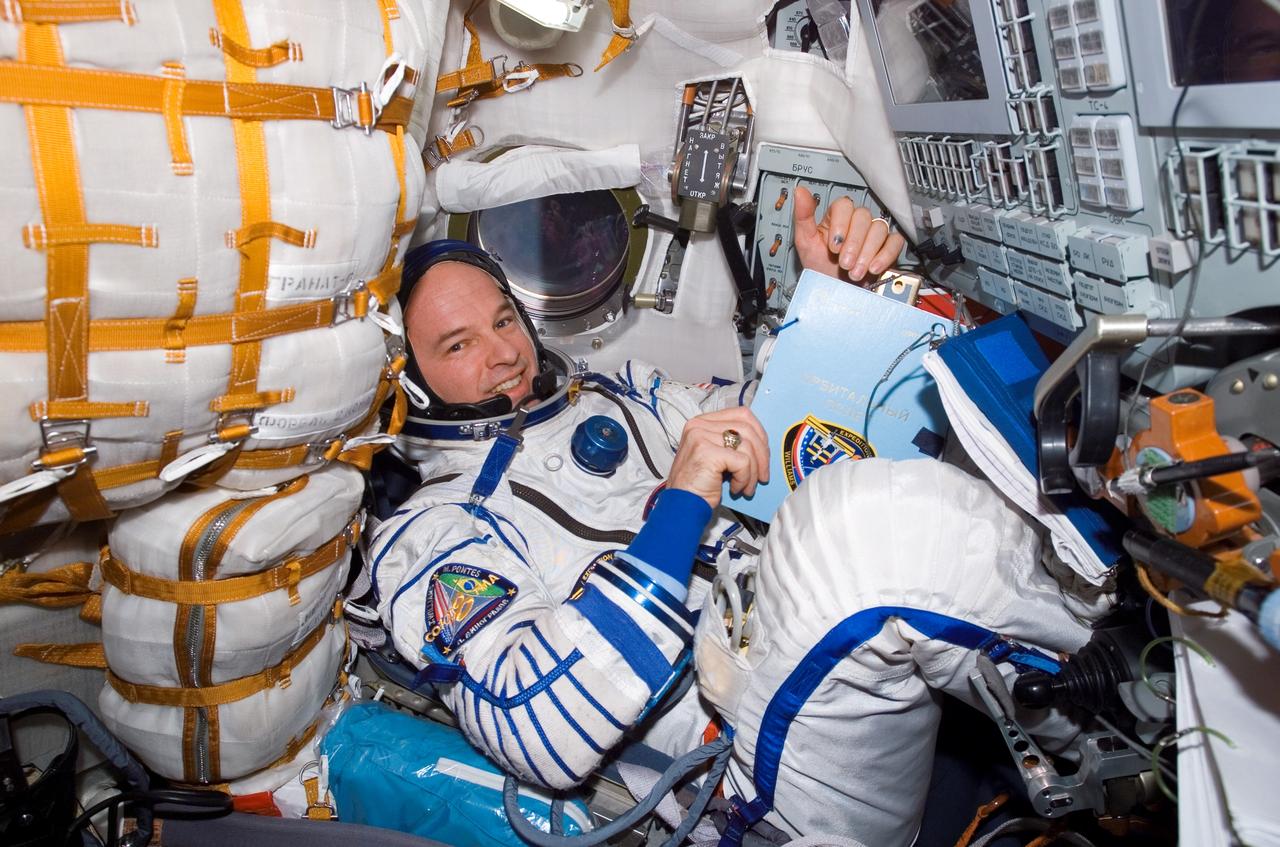
ISS013-E-60772 (26 July 2006) --- Attired in a Russian Sokol launch and entry suit, astronaut Jeffrey N. Williams, Expedition 13 NASA space station science officer and flight engineer, is photographed in the TMA-8 Soyuz spacecraft docked to the International Space Station.
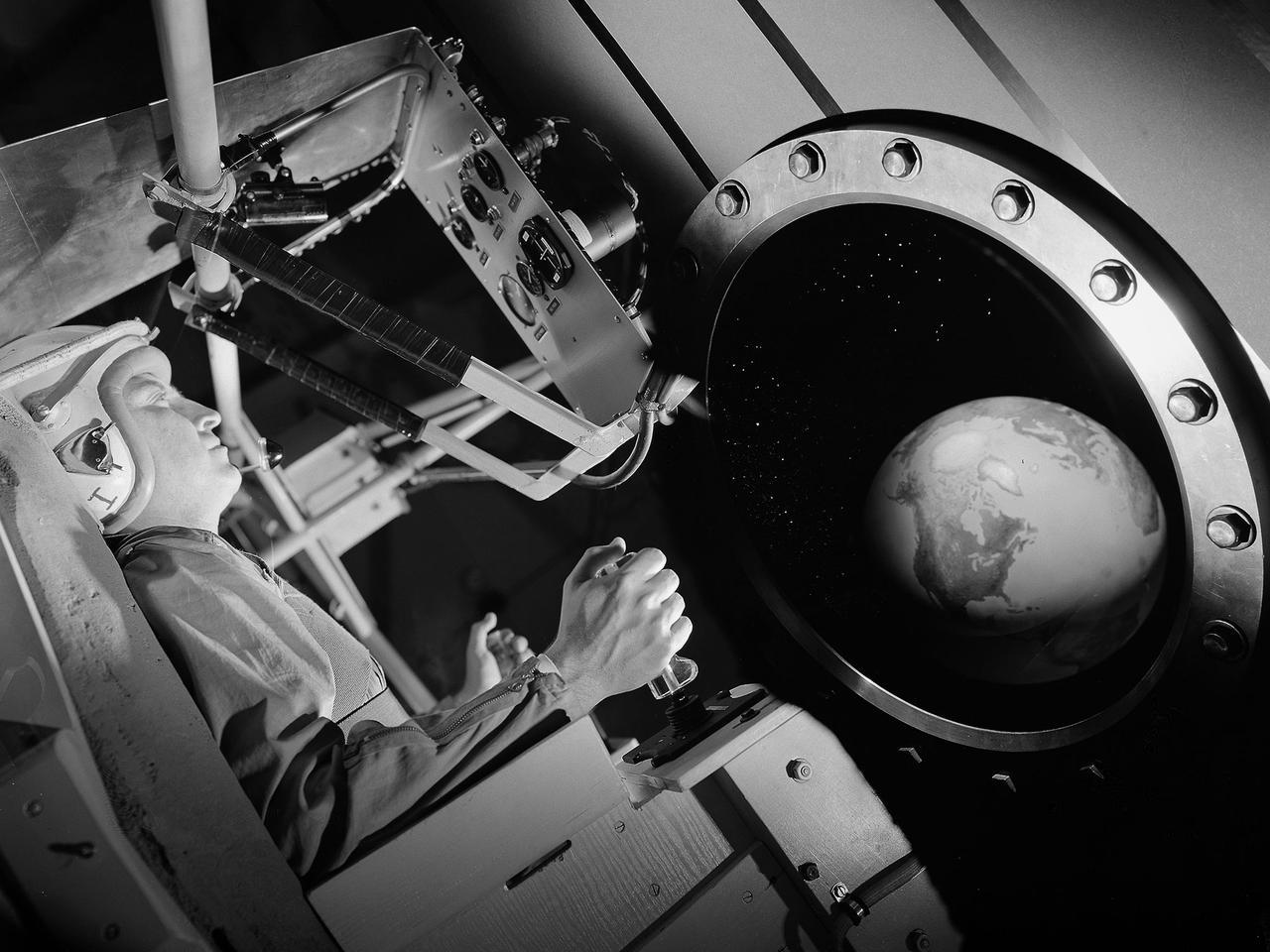
This composite image includes a photograph of pilot Joe Algranti testing the Multi-Axis Space Test Inertia Facility (MASTIF) inside Altitude Wind Tunnel at NASA’s Lewis Research Center with other images designed to simulate the interior of a Mercury space capsule. As part of the space agency’s preparations for Project Mercury missions, the seven Mercury astronauts traveled to Cleveland in early 1960 to train on the MASTIF. Researchers used the device to familiarize the astronauts with the sensations of an out-of-control spacecraft. The MASTIF was a three-axis rig with a pilot’s chair mounted in the center. An astronaut was secured in a foam couch in the center of the rig. The rig then spun on three axes from 2 to 50 rotations per minute. The astronauts used small nitrogen gas thrusters to bring the MASTIF under control. In the fall of 1959, prior to the astronauts’ visit, Lewis researcher James Useller and Algranti perfected and calibrated the MASTIF.
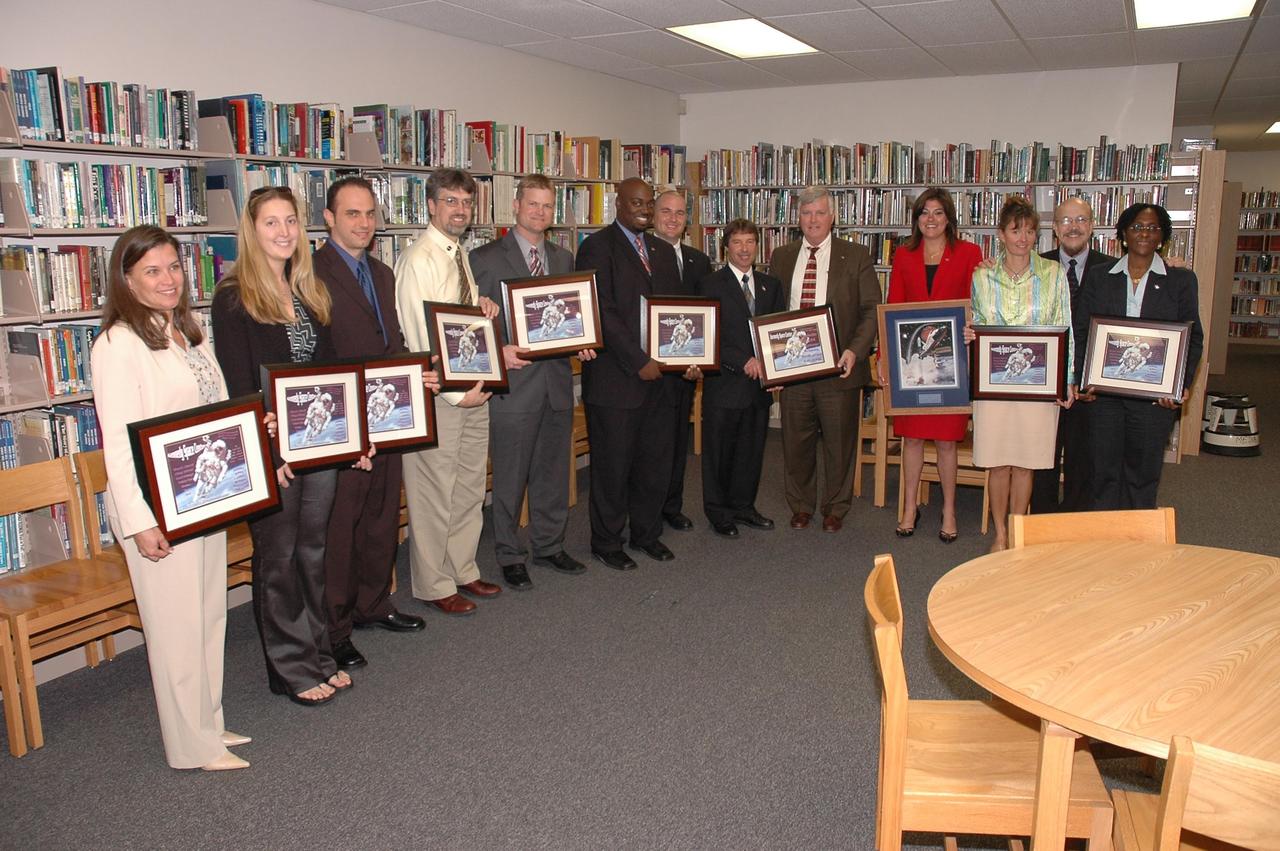
KENNEDY SPACE CENTER, FLA. - The NASA Explorer School (NES) team at Kennedy Space Center poses with the NES team at South Plantation High School in Plantation, Fla. Center Director Jim Kennedy is fifth from the right. On the far right is Hortense Burt, with the Education Office at Kennedy. The Kennedy team, which also included astronaut Roger Couch, is visiting the school to share the vision for space exploration with the next generation. During the visit, Crouch is talking with students about our destiny as explorers, NASA's stepping stone approach to exploring Earth, the moon, Mars and beyond, how space impacts our lives, and how people and machines rely on each other in space. The Agency's NES program establishes a three-year partnership annually between NASA and 50 NASA Explorer School teams, consisting of teachers and education administrators from diverse communities nationwide. Photo credit: NASA/Cory Huston
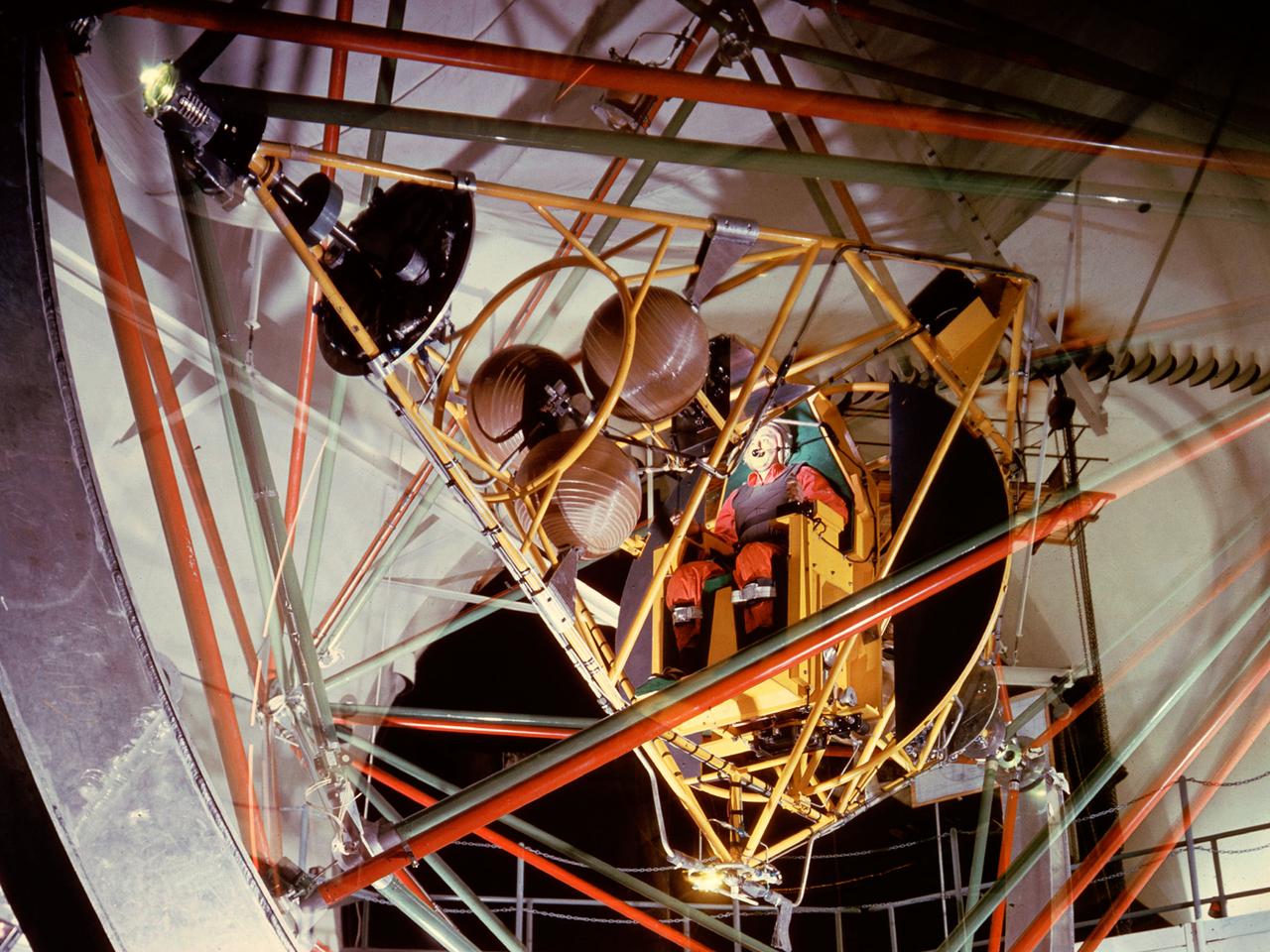
National Aeronautics and Space Administration (NASA) pilot Joe Algranti tests the Multi-Axis Space Test Inertia Facility (MASTIF) inside the Altitude Wind Tunnel while researcher Robert Miller looks on. The MASTIF was a three-axis rig with a pilot’s chair mounted in the center to train Project Mercury pilots to bring a spinning spacecraft under control. An astronaut was secured in a foam couch in the center of the rig. The rig then spun on three axes from 2 to 50 rotations per minute. Small nitrogen gas thrusters were used by the astronauts to bring the MASTIF under control. The device was originally designed in early 1959 without the chair and controllers. It was used by Lewis researchers to determine if the Lewis-designed autopilot system could rectify the capsule’s attitude following separation. If the control system failed to work properly, the heatshield would be out of place and the spacecraft would burn up during reentry. The system was flight tested during the September 1959 launch of the Lewis-assembled Big Joe capsule. The MASTIF was adapted in late 1959 for the astronaut training. NASA engineers added a pilot’s chair, a hand controller, and an instrument display to the MASTIF in order familiarize the astronauts with the sensations of an out-of-control spacecraft. NASA Lewis researcher James Useller and Algranti perfected and calibrated the MASTIF in the fall of 1959. In February and March 1960, the seven Project Mercury astronauts traveled to Cleveland to train on the MASTIF.
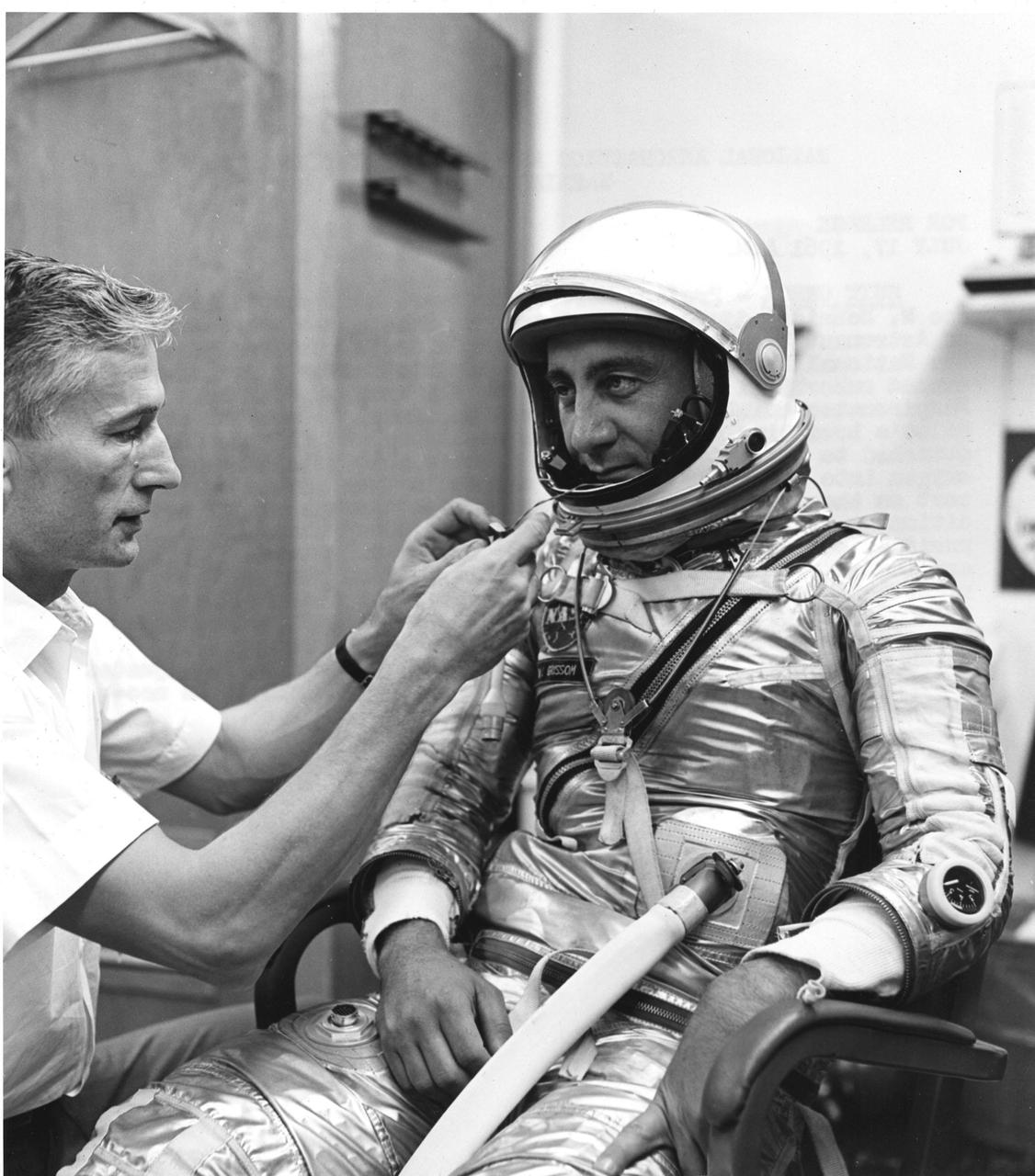
KENNEDY SPACE CENTER, FLA. -- SUIT CHECK - Project Mercury pressure suit specialist Joe. W. Schidt adjusts a respirometer attached to the helmet of astronaut Virgil I. Grissom during a dress rehearsal for the National Aeronautics and Space Administration's second manned suborbital flight, dubbed Liberty Bell 7, planned for the week of July 16. Respirometer enables ground medical personnel to monitor the pilot's breathing rate during the countdown and flight. Hose attached to the left side of the pilot's suit brings breathing oxygen into the suit. Expelled oxygen is then vented out a port on the side of the helmet and passed through an air conditioning system beneath the astronaut's couch where it is purified before being recycled into the suit. Gauge on left arm indicates pressure within the suit. Canon plug on the right thigh brings medical information out of the suit for telemetering to ground stations. Suit is not inflated during the mission unless there is a failure in cabin pressure, in which event the 'V' shaped cable around the neck ring is adjusted prior to flight to prevent helmet from rising should it be necessary to pressurize the suit

Jerrie Cobb prepares to operate the Multi-Axis Space Test Inertia Facility (MASTIF) inside the Altitude Wind Tunnel at the National Aeronautics and Space Administration (NASA) Lewis Research Center. The MASTIF was a three-axis rig with a pilot’s chair mounted in the center to train Project Mercury pilots to bring a spinning spacecraft under control. An astronaut was secured in a foam couch in the center of the rig. The rig was then spun on three axes from 2 to 50 rotations per minute. The pilots were tested on each of the three axis individually, then all three simultaneously. The two controllers in Cobb’s hands activated the small nitrogen gas thrusters that were used to bring the MASTIF under control. A makeshift spacecraft control panel was set up in front of the trainee’s face. Cobb was one of several female pilots who underwent the skill and endurance testing that paralleled that of the Project Mercury astronauts. In 1961 Jerrie Cobb was the first female to pass all three phases of the Mercury Astronaut Program. NASA rules, however, stipulated that only military test pilots could become astronauts and there were no female military test pilots. The seven Mercury astronauts had taken their turns on the MASTIF in February and March 1960.

Mercury astronaut John Glenn prepares for a test in the Multi-Axis Space Test Inertia Facility (MASTIF) inside the Altitude Wind Tunnel at the National Aeronautics and Space Administration (NASA) Lewis Research Center. The MASTIF was a three-axis test rig with a pilot’s chair mounted in the center. The device was designed to train Project Mercury pilots to bring a spinning spacecraft under control. An astronaut was secured in a foam couch in the center of the rig. The rig was then spun on three axes from 2 to 50 rotations per minute. Small nitrogen gas thrusters were used by the astronauts to bring the MASTIF under control. In February and March 1960, the seven Project Mercury astronauts traveled to Cleveland to train on the MASTIF. Warren North and a team of air force physicians were on hand to monitor their health. After being briefed by Lewis pilot Joe Algranti and researcher James Useller, the rider would climb into the rig and be secured in the chair, as seen in this photograph. A Lewis engineer would then slowly set the MASTIF in motion. It was the astronaut’s job to bring it under control. Each individual was required to accumulate 4.5 to 5 hours of MASTIF time. Glenn became the first American to orbit the earth on February 20, 1962 in the Friendship 7 Mercury capsule. In March 1999, the Lewis Research Center was renamed the John H. Glenn Research Center at Lewis Field.
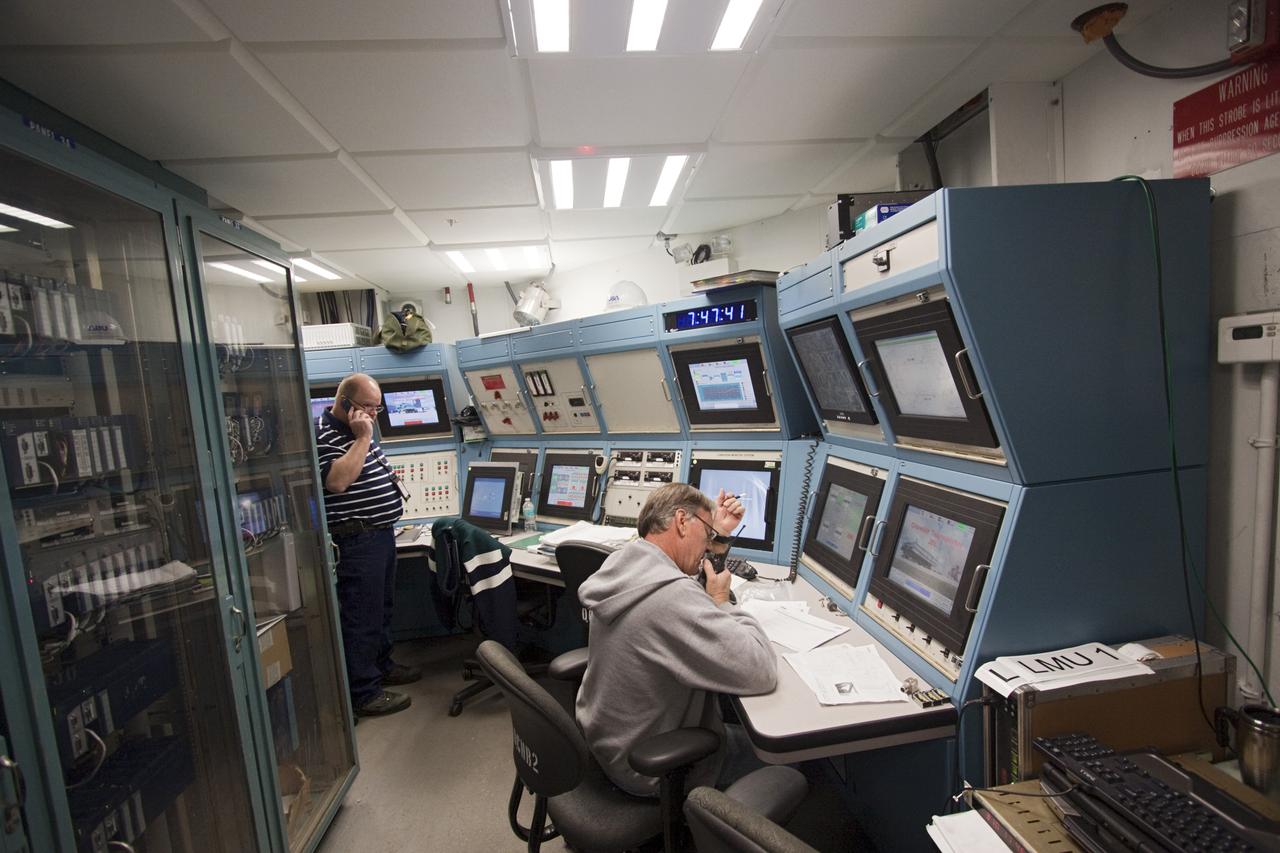
CAPE CANAVERAL, Fla. -- Bill Couch, standing on the left, and Gary Milbourne, both of United Space Alliance monitor the updated controls of crawler-transporter No. 2 as it moves out of high bay 2 of the Vehicle Assembly Building at NASA's Kennedy Space Center in Florida. The test drive is designed to check out recent modifications and upgrades to ensure its capability to carry launch vehicles such as the space agency's Space Launch System heavy-lift rocket to the launch pad. NASA's Ground Systems Development and Operations Program is leading the 20-year life-extension project for the crawler. A pair of behemoth machines called crawler-transporters has carried the load of taking rockets and spacecraft to the launch pad for more than 40 years at NASA’s Kennedy Space Center in Florida. Each the size of a baseball infield and powered by locomotive and large electrical power generator engines, the crawler-transporters will stand ready to keep up the work for the next generation of launch vehicles projects to lift astronauts into space. For more information, visit http://www.nasa.gov/exploration/systems/ground/index.html Photo credit: NASA/Jim Grossmann
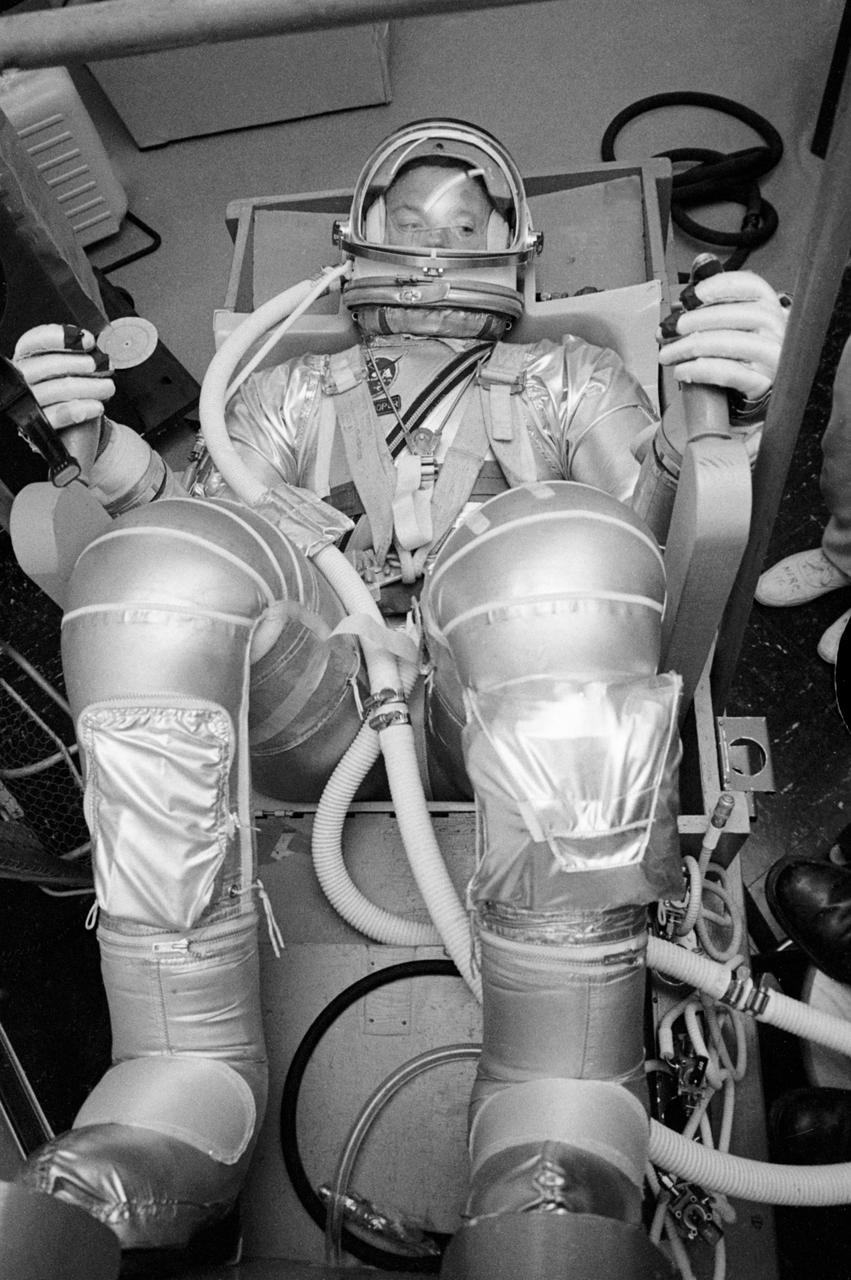
S63-03976 (1963) --- Astronaut L. Gordon Cooper Jr., prime pilot for the Mercury-Atlas 9 (MA-9) mission, undergoes suit pressurization tests. Photo credit: NASA
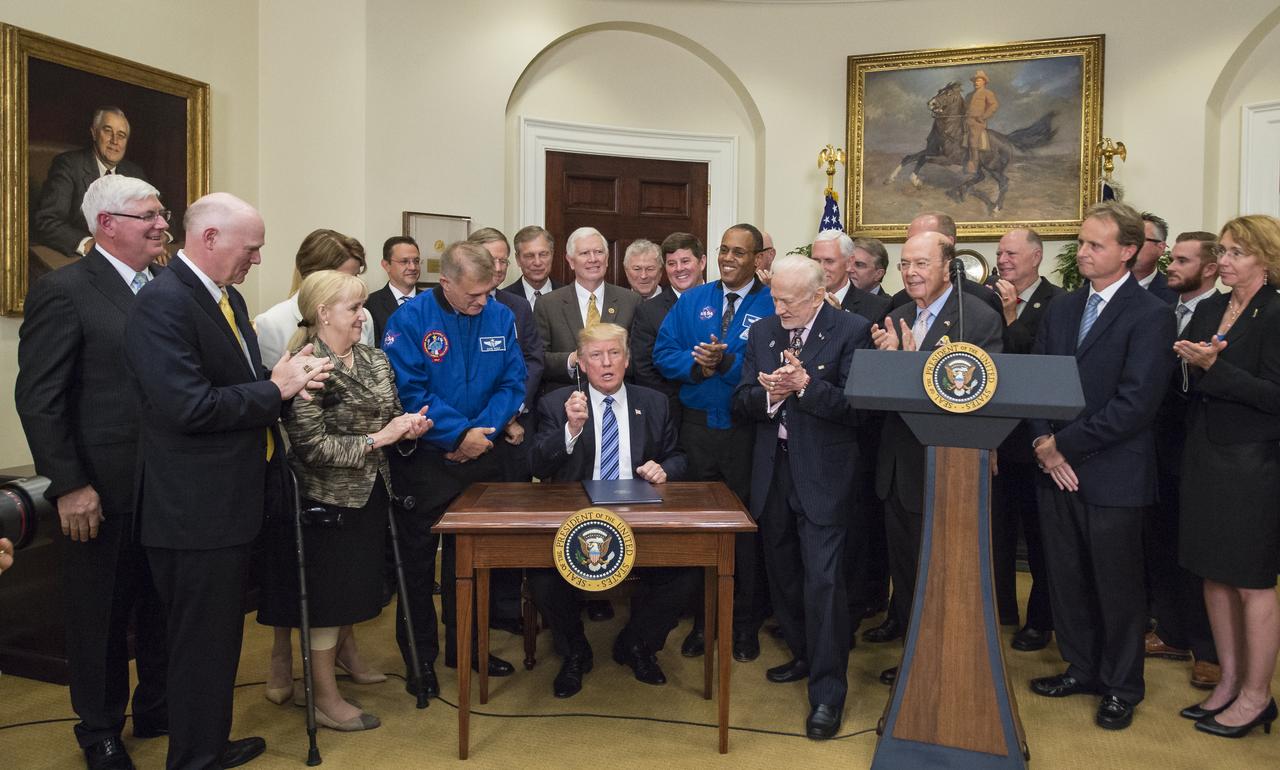
President Donald Trump, center, asks who should receive the pen after signing an Executive Order to reestablish the National Space Council, alongside members of the Congress, National Aeronautics and Space Administration, and Commercial Space Companies in the Roosevelt room of the White House in Washington, Friday, June 30, 2017. Retired astronaut Buzz Aldrin was given the pen. Also pictured are, Vice President Mike Pence, Rep. Bill Posey, R-Florida, Rep. Lamar Smith, R-Texas, Rep. John Culberson, R-Texas, Rep. Steven Palazzo, R-Miss., Rep. Brian Babin, R-Texas, Rep. Mo Brooks, R-Alabama, Rep. Dana Rohrbacher, R-California, Former Rep. Bob Walker, R-Pennsylvania, Sandy Magnus, executive director, American Institute of Aeronautics and Astronautics, David Melcher, executive director, Aerospace Industries Association, Tory Bruno, CEO, United Launch Alliance, Michal Riley, CEO, AMRO Fabricating Corporation, John Couch, president, Futuramic, Mike Cain, owner, Cain Tubular Products, Mary Lynne Dittmar, executive director, Coalition for Deep Space Exploration, Dennis Muilenburg, CEO Boeing Company, Marilyn Hewson, CEO, Lockheed Martin, Wes Bush, CEO, Northrop Grumman, NASA Astronaut Alvin Drew, retired NASA astronaut David Wolf, Apollo 13 flight director, Gene Kranz, Secretary of Commerce Wilbur Ross, Under Secretary of the Air Force Lisa Disbrow, and Acting Deputy Director of National Intelligence, Dawn Eilengerger. Photo Credit: (NASA/Aubrey Gemignani)
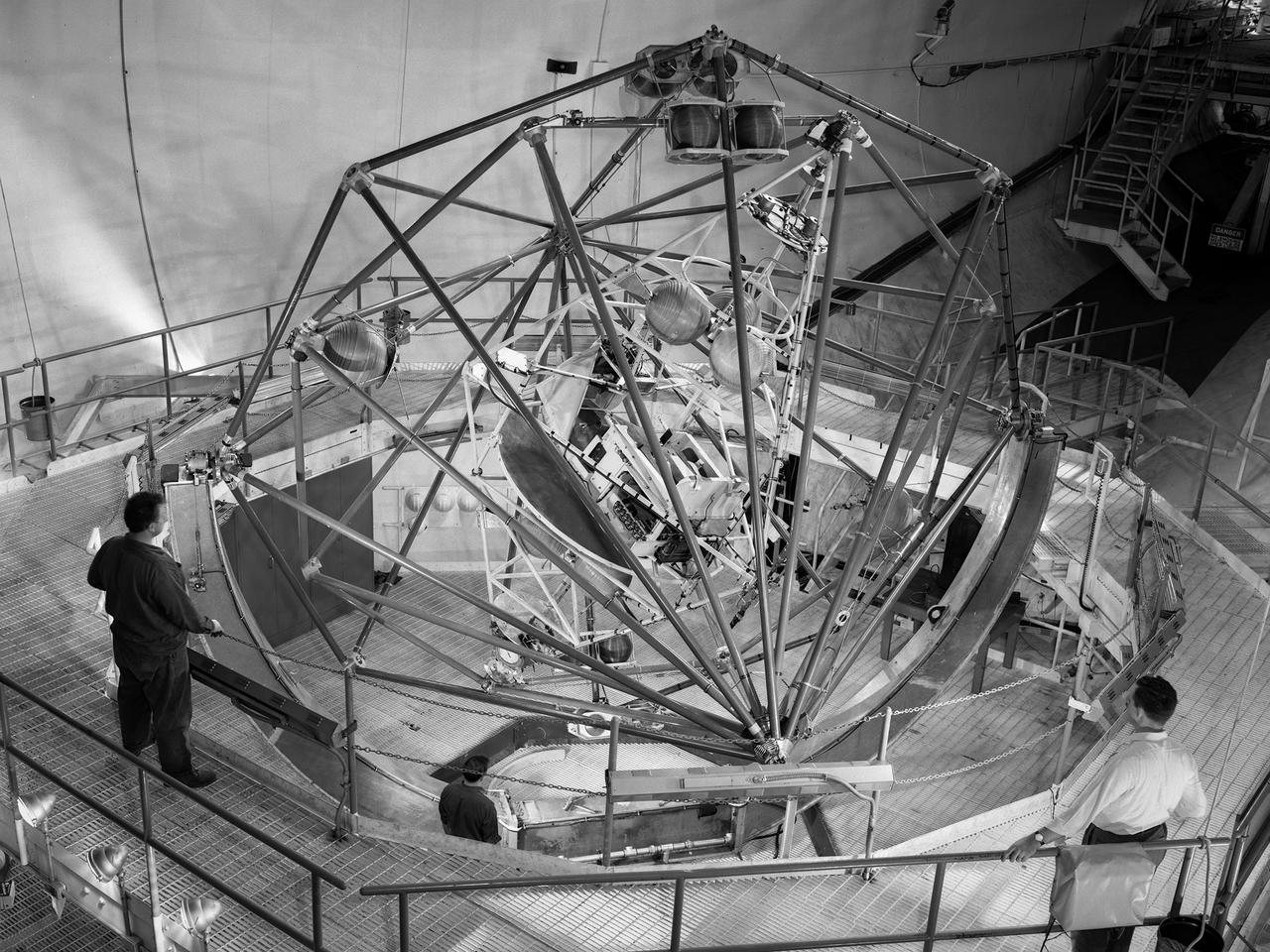
The Multi-Axis Space Test Inertial Facility (MASTIF) in the Altitude Wind Tunnel at the National Aeronautics and Space Administration (NASA) Lewis Research Center. Although the Mercury astronaut training and mission planning were handled by the Space Task Group at Langley Research Center, NASA Lewis played an important role in the program, beginning with the Big Joe launch. Big Joe was a singular attempt early in the program to use a full-scale Atlas booster and simulate the reentry of a mockup Mercury capsule without actually placing it in orbit. A unique three-axis gimbal rig was built inside Lewis’ Altitude Wind Tunnel to test Big Joe’s attitude controls. The control system was vital since the capsule would burn up on reentry if it were not positioned correctly. The mission was intended to assess the performance of the Atlas booster, the reliability of the capsule’s attitude control system and beryllium heat shield, and the capsule recovery process. The September 9, 1959 launch was a success for the control system and heatshield. Only a problem with the Atlas booster kept the mission from being a perfect success. The MASTIF was modified in late 1959 to train Project Mercury pilots to bring a spinning spacecraft under control. An astronaut was secured in a foam couch in the center of the rig. The rig then spun on three axes from 2 to 50 rotations per minute. Small nitrogen gas thrusters were used by the astronauts to bring the MASTIF under control.
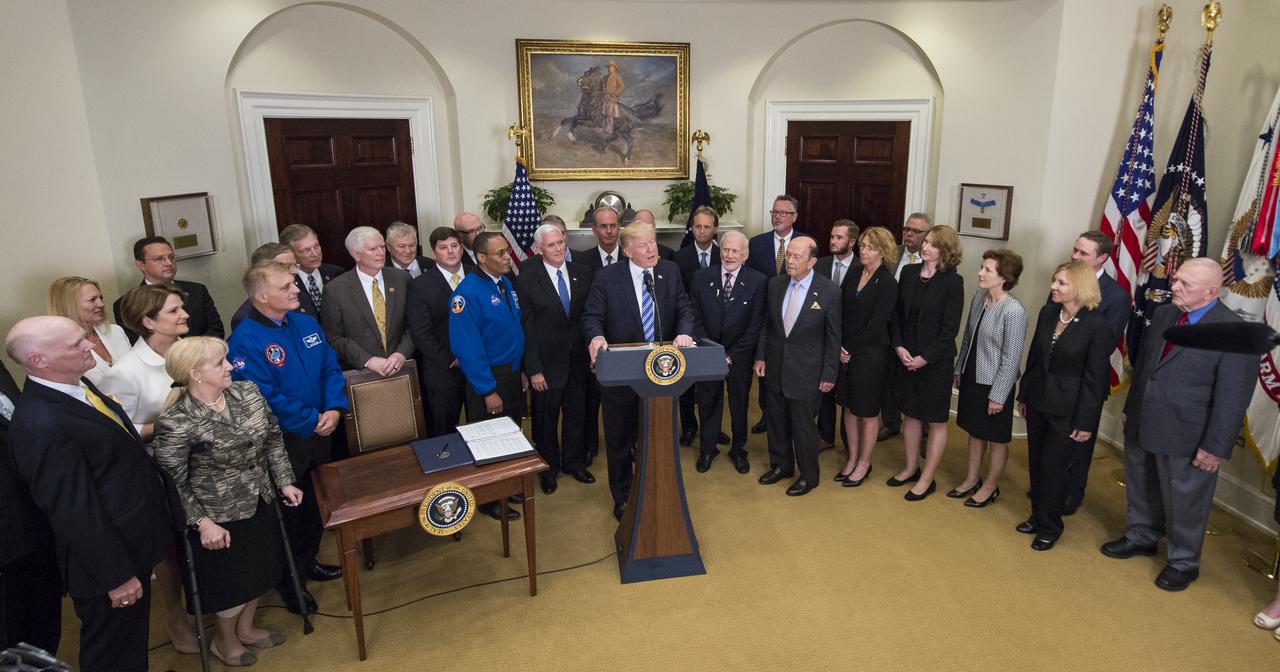
President Donald Trump, center, speaks before signing an Executive Order to reestablish the National Space Council, alongside members of the Congress, National Aeronautics and Space Administration, and Commercial Space Companies in the Roosevelt room of the White House in Washington, Friday, June 30, 2017. Vice President Mike Pence, also in attendance, will chair the council. Also pictured are, Rep. Bill Posey, R-Florida, Rep. Lamar Smith, R-Texas, Rep. John Culberson, R-Texas, Rep. Steven Palazzo, R-Miss., Rep. Brian Babin, R-Texas, Rep. Mo Brooks, R-Alabama, Rep. Dana Rohrbacher, R-California, Former Rep. Bob Walker, R-Pennsylvania, Sandy Magnus, executive director, American Institute of Aeronautics and Astronautics, David Melcher, executive director, Aerospace Industries Association, Tory Bruno, CEO, United Launch Alliance, Michal Riley, CEO, AMRO Fabricating Corporation, John Couch, president, Futuramic, Mike Cain, owner, Cain Tubular Products, Mary Lynne Dittmar, executive director, Coalition for Deep Space Exploration, Dennis Muilenburg, CEO Boeing Company, Marilyn Hewson, CEO, Lockheed Martin, Wes Bush, CEO, Northrop Grumman, retired NASA astronaut Buzz Aldrin, NASA astronaut Alvin Drew, retired NASA astronaut David Wolf, Apollo 13 flight director, Gene Kranz, Secretary of Commerce Wilbur Ross, Under Secretary of the Air Force Lisa Disbrow, and Acting Deputy Director of National Intelligence, Dawn Eilengerger. Photo Credit: (NASA/Aubrey Gemignani)