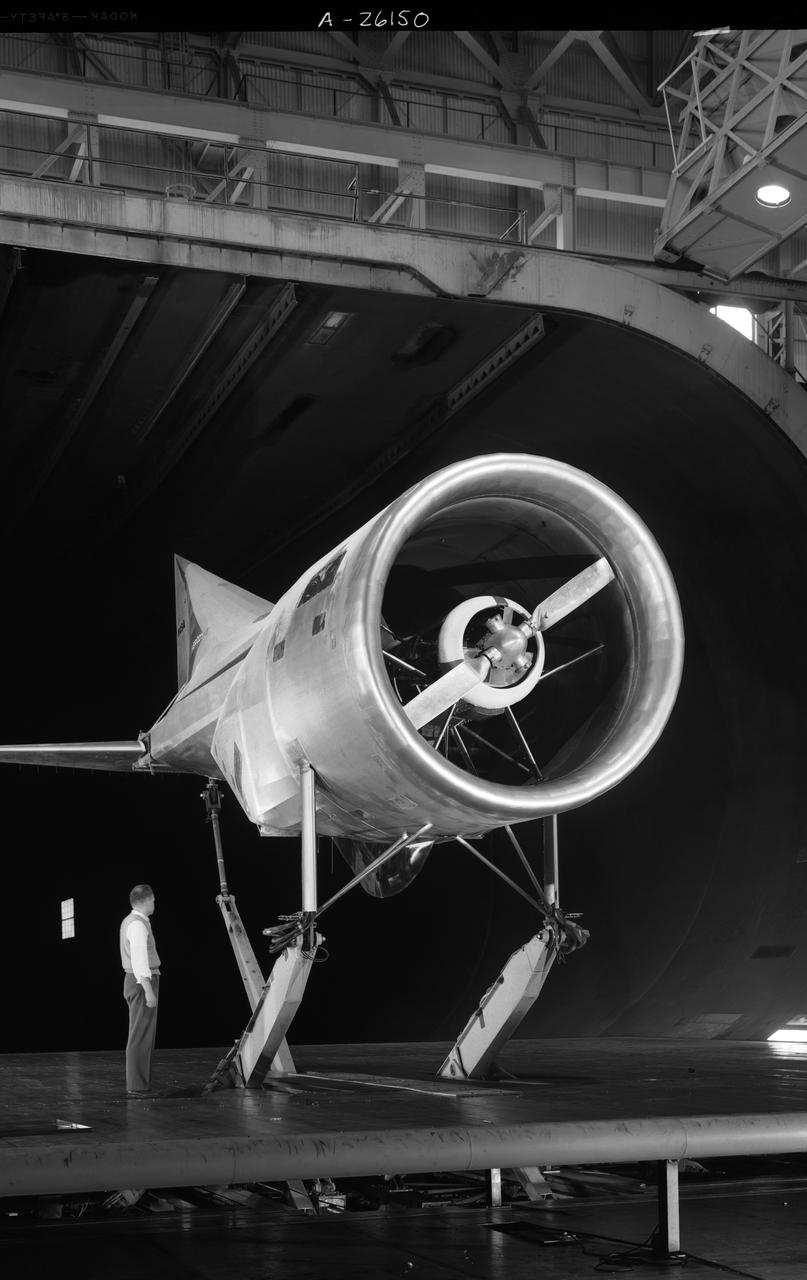
Collins Aerodyne vertical take-off and landing (VTOL) aircraft investigations. Ground plane support system. 3/4 front view. Dave Koening (from Collins Aerodyne) in photo. Mounted on variable height struts, ground board system, zero degree angle of attack. 01/11/1960
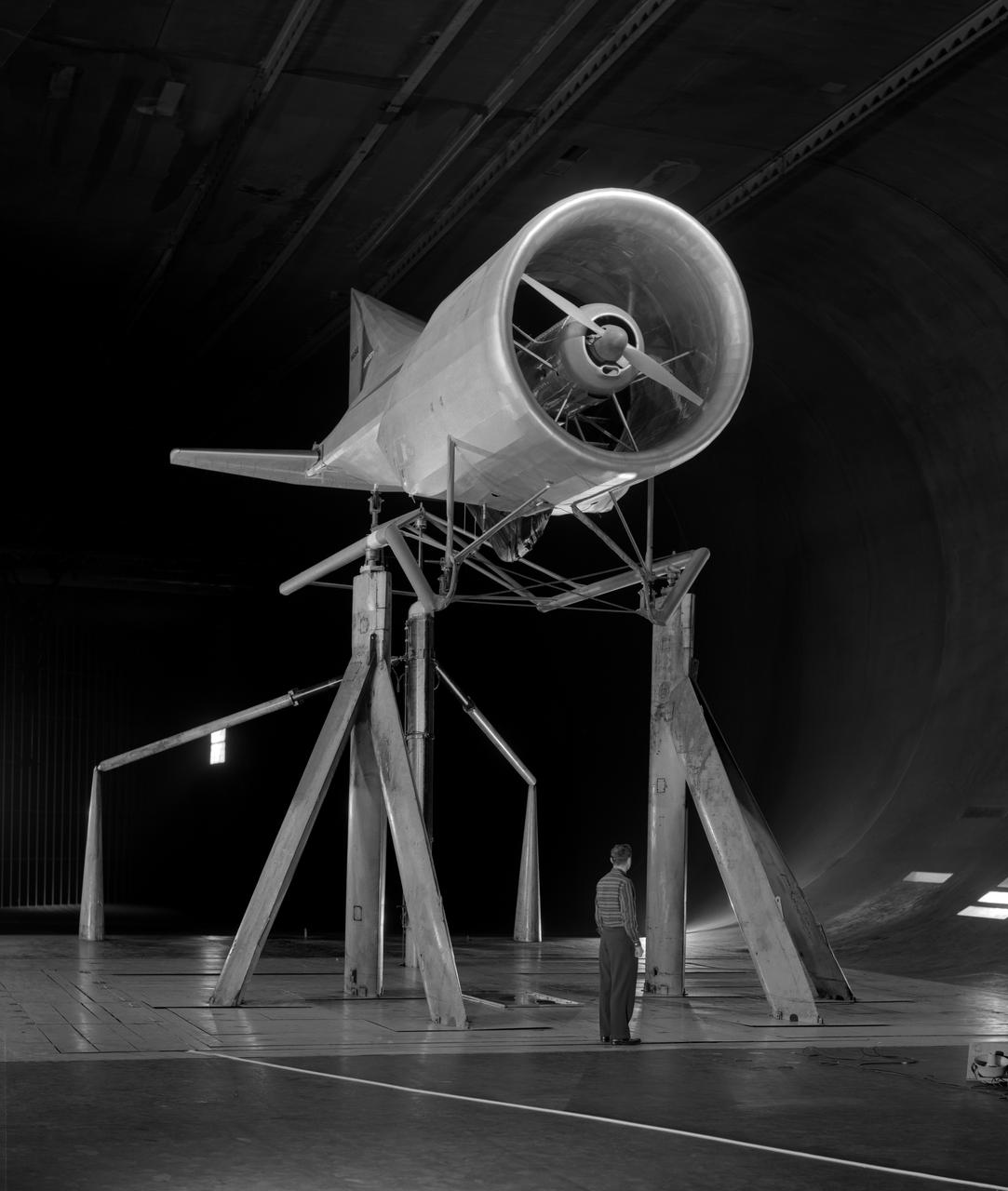
Collins Aerodyne VTOL Vertical take off and landing model in the 40x80 foot wind tunnel at NASA's Ames Research Center. Designed by Alexander Lippisch.
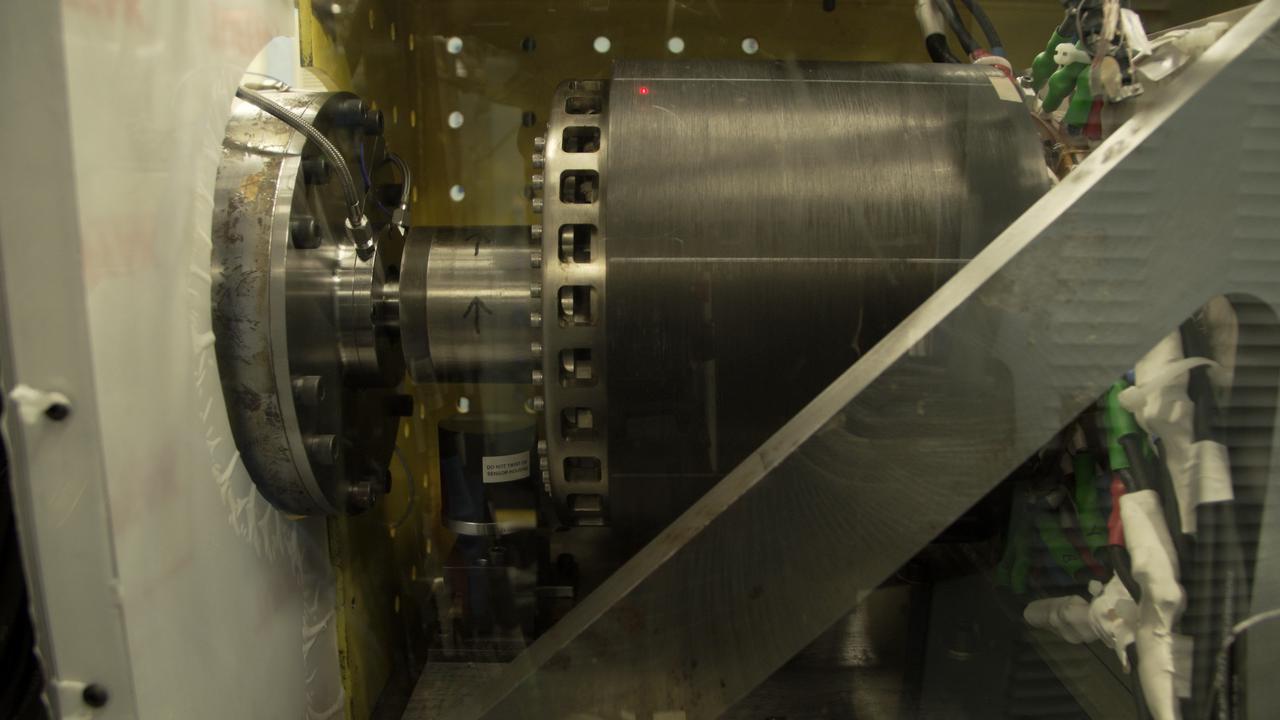
UIUC’s megawatt machine (right) was connected to a dynamometer (left) to test its effectiveness as an electric generator in a safety enclosure at a Collins Aerospace test facility in Rockford, Illinois. This unusual design has its rotating parts on the outside, so that both the cylinder on the right and the cylinder with arrows spin during operation.

The Astronaut Hall of Fame display for astronaut Michael Collins is shown following a wreath-laying ceremony honoring his memory on April 30, 2021, at NASA’s Kennedy Space Center in Florida. Collins served as pilot on the three-day Gemini X mission in 1966, and he was the command module pilot for the historic Apollo 11 mission in 1969, where he remained in lunar orbit while Neil Armstrong and Buzz Aldrin become the first people to walk on the Moon. Collins passed away on April 28, 2021, at the age of 90.

A wreath-laying ceremony honoring the memory of former Apollo 11 astronaut Michael Collins is held outside of the Heroes and Legends exhibit at the Kennedy Space Center Visitor Complex in Florida on April 30, 2021. Kennedy Director Bob Cabana and Therrin Protze, chief operating officer of Delaware North at the visitor complex, provided remarks during the ceremony. Collins served as pilot on the three-day Gemini X mission in 1966, and he was the command module pilot for the historic Apollo 11 mission in 1969, where he remained in lunar orbit while Neil Armstrong and Buzz Aldrin become the first people to walk on the Moon. Collins passed away on April 28, 2021, at the age of 90.
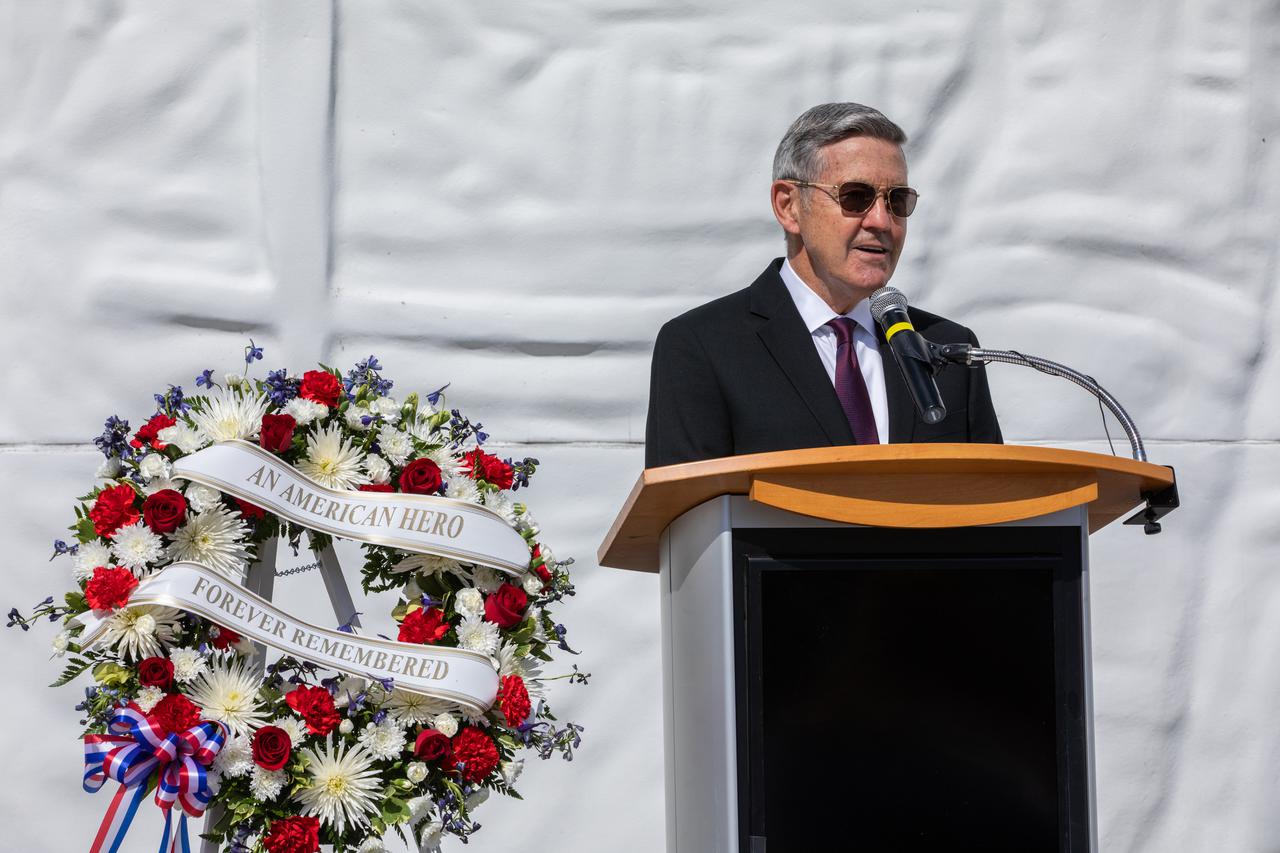
Kennedy Space Center Director Bob Cabana provides remarks during a wreath-laying ceremony in Florida, honoring the memory of former Apollo 11 astronaut Michael Collins on April 30, 2021. Therrin Protze, chief operating officer of Delaware North at Kennedy’s visitor complex, also spoke during the ceremony, held just outside of the Heroes and Legends exhibit at the visitor complex. Collins served as pilot on the three-day Gemini X mission in 1966, and he was the command module pilot for the historic Apollo 11 mission in 1969, where he remained in lunar orbit while Neil Armstrong and Buzz Aldrin become the first people to walk on the Moon. Collins passed away on April 28, 2021, at the age of 90.
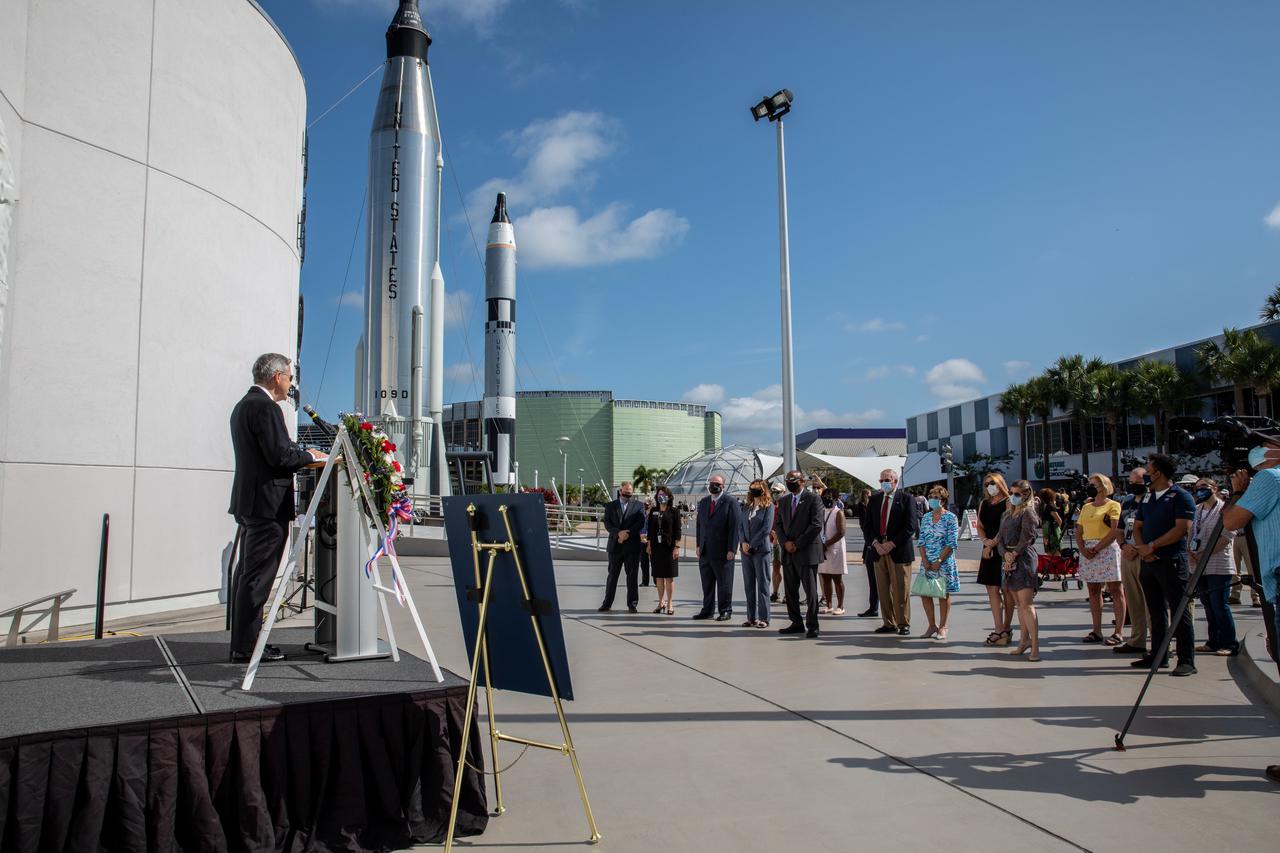
Kennedy Space Center Director Bob Cabana provides remarks during a wreath-laying ceremony in Florida, honoring the memory of former Apollo 11 astronaut Michael Collins on April 30, 2021. Therrin Protze, chief operating officer of Delaware North at Kennedy’s visitor complex, also spoke during the ceremony, held just outside of the Heroes and Legends exhibit at the visitor complex. Collins served as pilot on the three-day Gemini X mission in 1966, and he was the command module pilot for the historic Apollo 11 mission in 1969, where he remained in lunar orbit while Neil Armstrong and Buzz Aldrin become the first people to walk on the Moon. Collins passed away on April 28, 2021, at the age of 90.
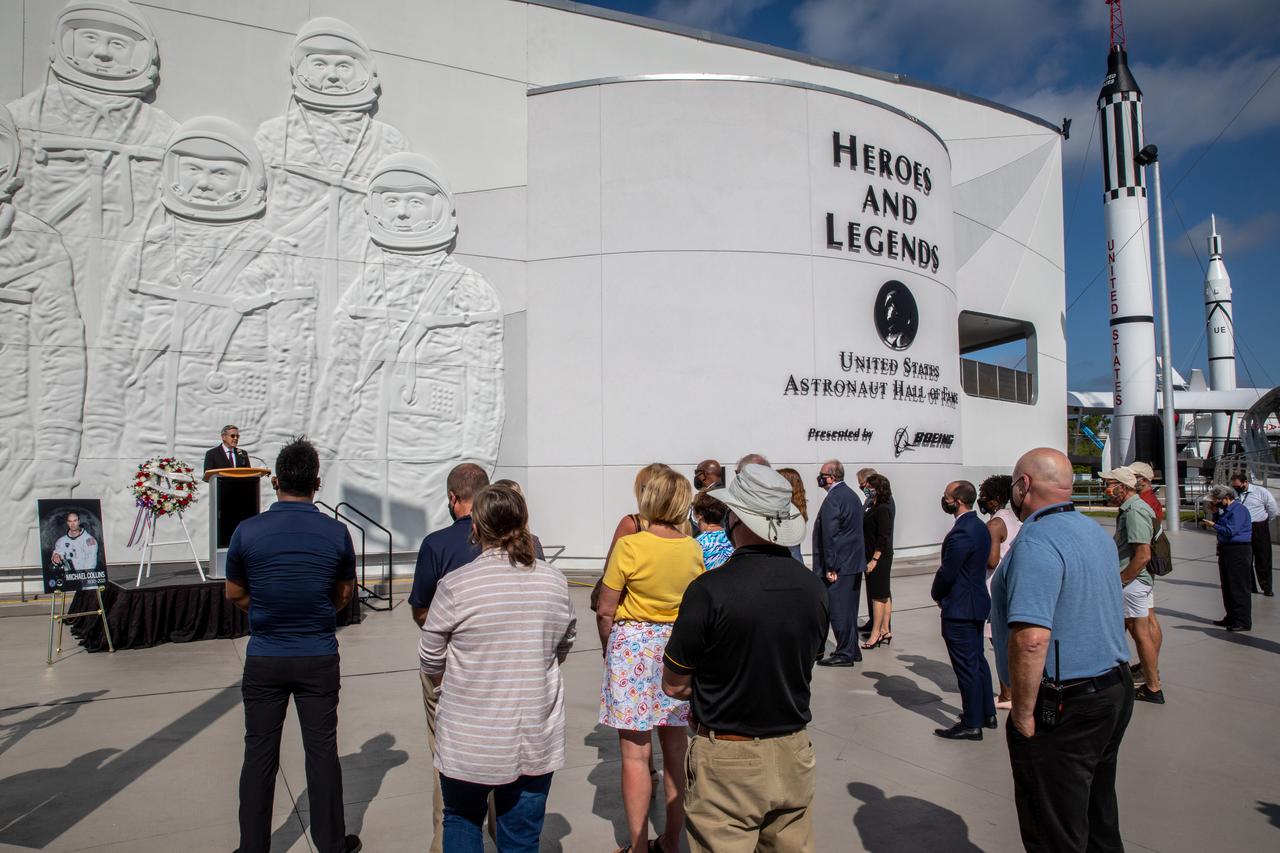
Kennedy Space Center Director Bob Cabana provides remarks during a wreath-laying ceremony in Florida, honoring the memory of former Apollo 11 astronaut Michael Collins on April 30, 2021. Therrin Protze, chief operating officer of Delaware North at Kennedy’s visitor complex, also spoke during the ceremony, held just outside of the Heroes and Legends exhibit at the visitor complex. Collins served as pilot on the three-day Gemini X mission in 1966, and he was the command module pilot for the historic Apollo 11 mission in 1969, where he remained in lunar orbit while Neil Armstrong and Buzz Aldrin become the first people to walk on the Moon. Collins passed away on April 28, 2021, at the age of 90.
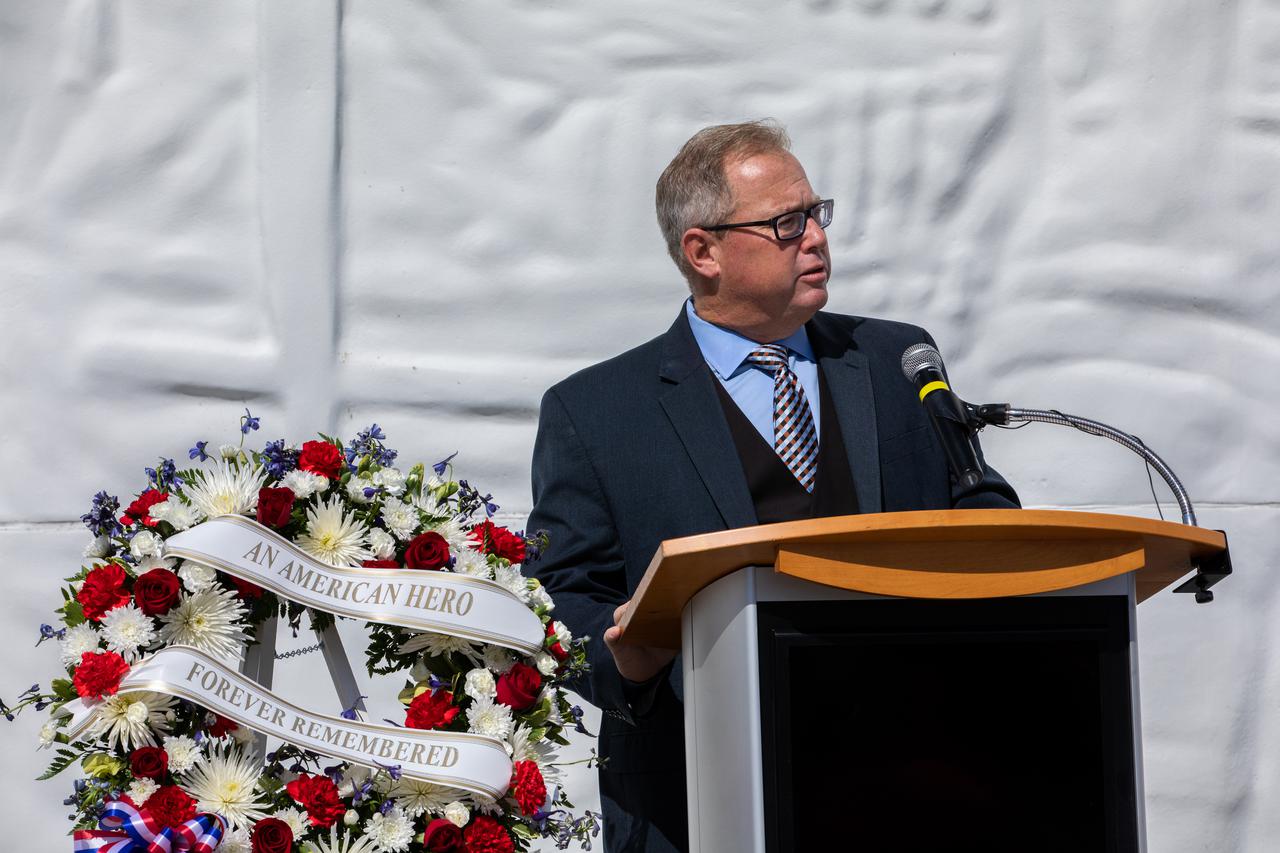
Therrin Protze, chief operating officer of Delaware North at the Kennedy Space Center Visitor Complex, provides remarks during a wreath-laying ceremony honoring the memory of former Apollo 11 astronaut Michael Collins on April 30, 2021. Kennedy Director Bob Cabana also spoke during the ceremony, held just outside of the Heroes and Legends exhibit at the Florida spaceport’s visitor complex. Collins served as pilot on the three-day Gemini X mission in 1966, and he was the command module pilot for the historic Apollo 11 mission in 1969, where he remained in lunar orbit while Neil Armstrong and Buzz Aldrin become the first people to walk on the Moon. Collins passed away on April 28, 2021, at the age of 90.
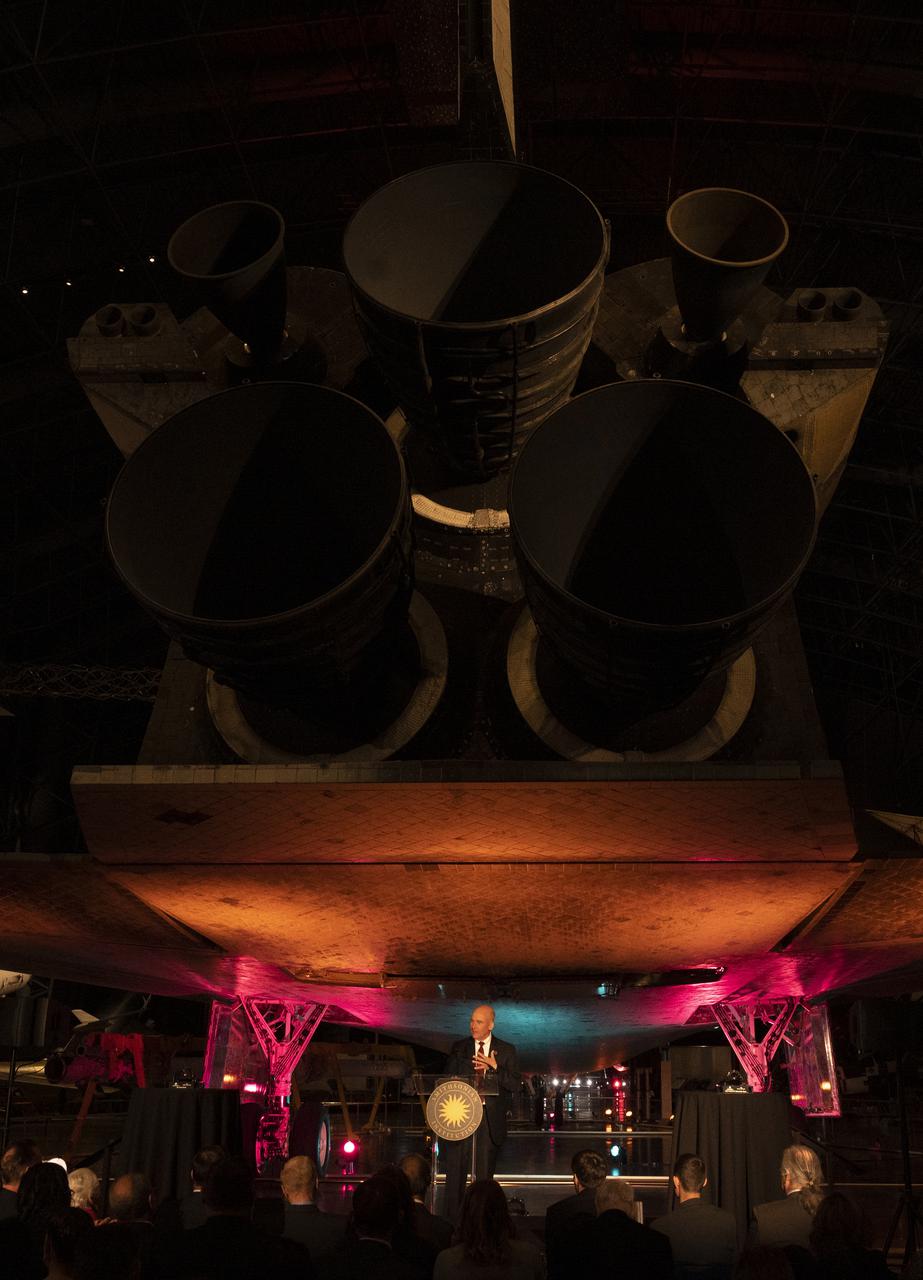
Christopher Browne, acting director of the Smithsonian’s National Air and Space Museum delivers opening remarks at the presentation of the 2022 Michael Collins Trophy, Thursday, March 24, 2022, at the Smithsonian National Air and Space Museum’s Steven F. Udvar-Hazy center in Chantilly, Va. The Smithsonian National Air and Space Museum’s Michael Collins Trophy recognizes extraordinary accomplishments in aeronautics and spaceflight. Photo Credit: (NASA/Joel Kowsky)
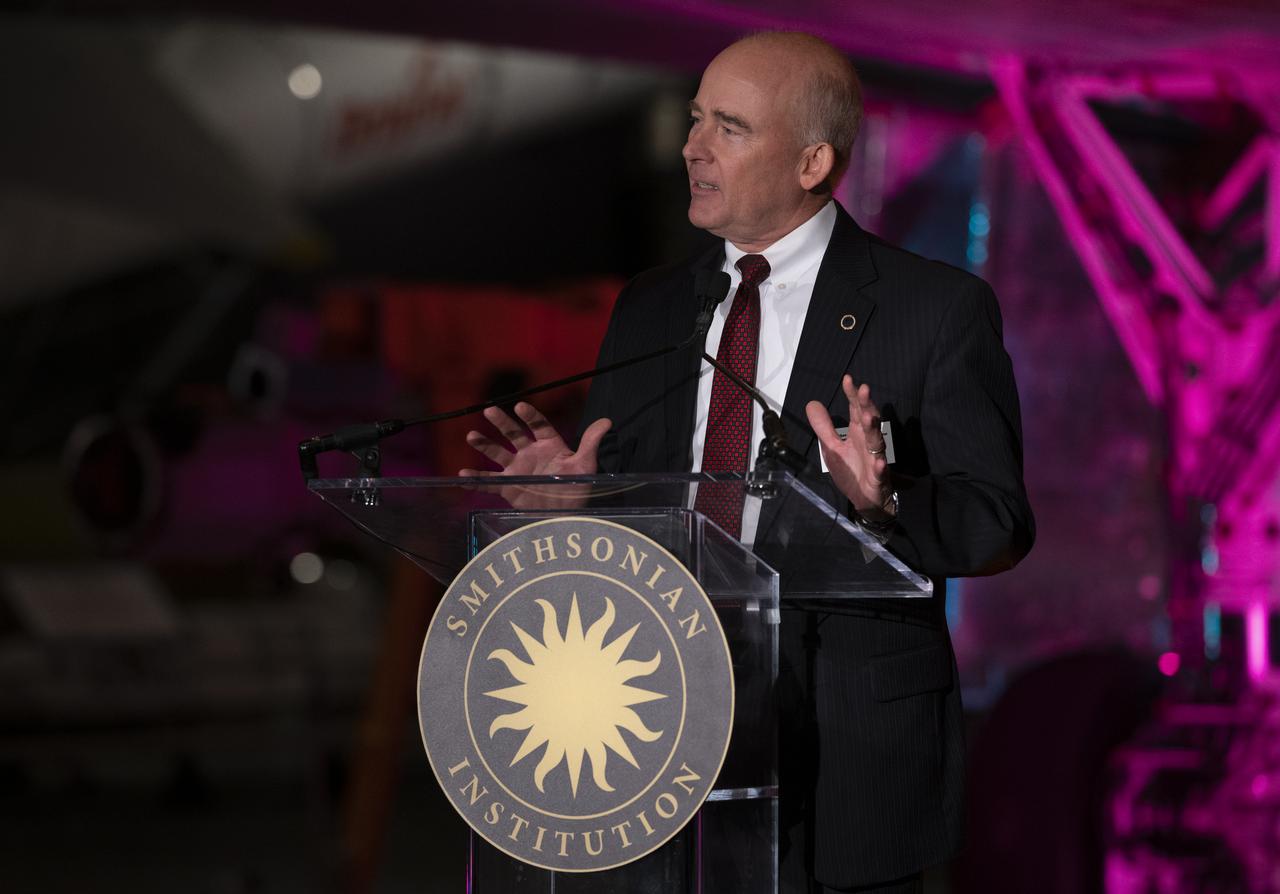
Christopher Browne, acting director of the Smithsonian’s National Air and Space Museum delivers opening remarks at the presentation of the 2022 Michael Collins Trophy, Thursday, March 24, 2022, at the Smithsonian National Air and Space Museum’s Steven F. Udvar-Hazy center in Chantilly, Va. The Smithsonian National Air and Space Museum’s Michael Collins Trophy recognizes extraordinary accomplishments in aeronautics and spaceflight. Photo Credit: (NASA/Joel Kowsky)

Wally Funk delivers remarks after accepting the 2022 Michael Collins Trophy for Lifetime Achievement, Thursday, March 24, 2022, at the Smithsonian National Air and Space Museum’s Steven F. Udvar-Hazy center in Chantilly, Va. The Smithsonian National Air and Space Museum’s Michael Collins Trophy recognizes extraordinary accomplishments in aeronautics and spaceflight. Photo Credit: (NASA/Joel Kowsky)
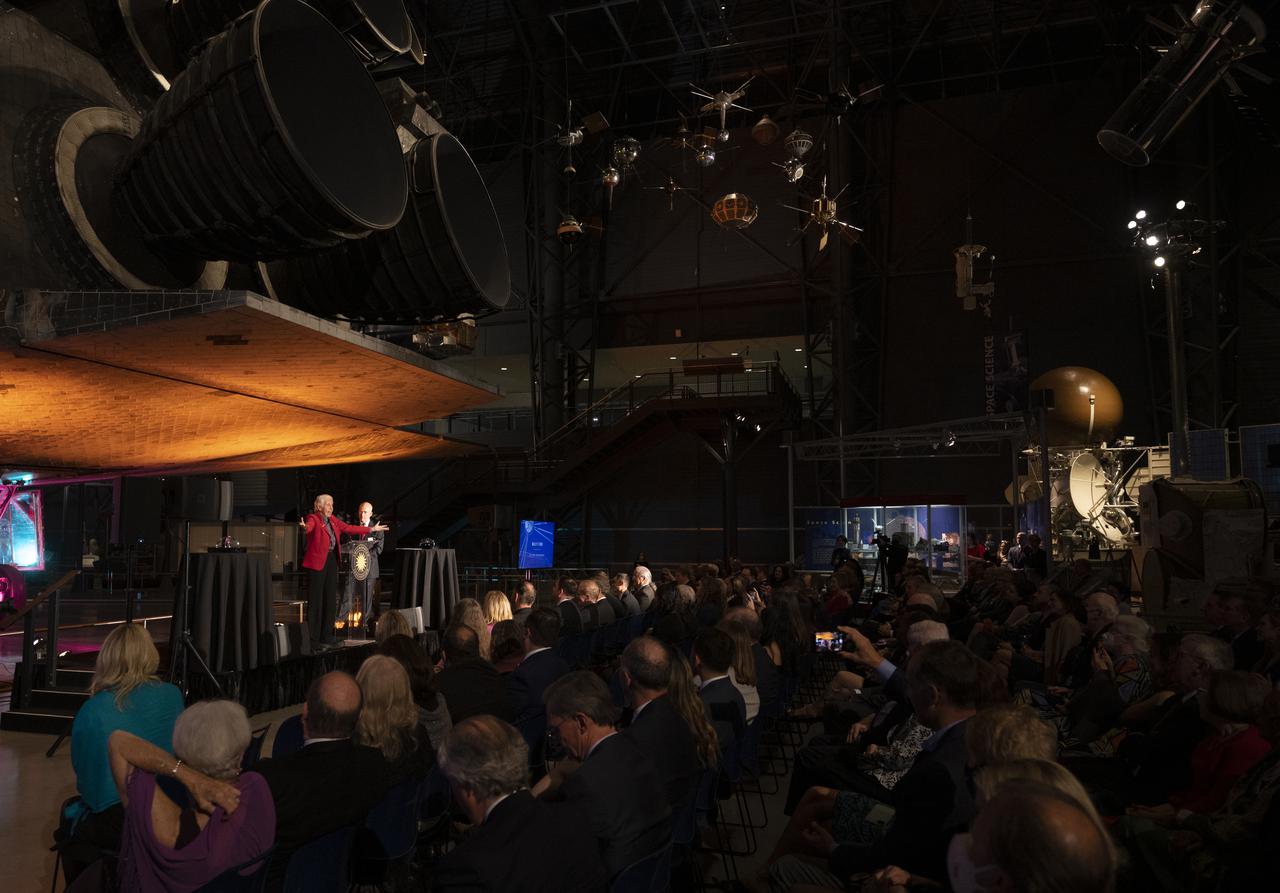
Wally Funk delivers remarks after accepting the 2022 Michael Collins Trophy for Lifetime Achievement, Thursday, March 24, 2022, at the Smithsonian National Air and Space Museum’s Steven F. Udvar-Hazy center in Chantilly, Va. The Smithsonian National Air and Space Museum’s Michael Collins Trophy recognizes extraordinary accomplishments in aeronautics and spaceflight. Photo Credit: (NASA/Joel Kowsky)
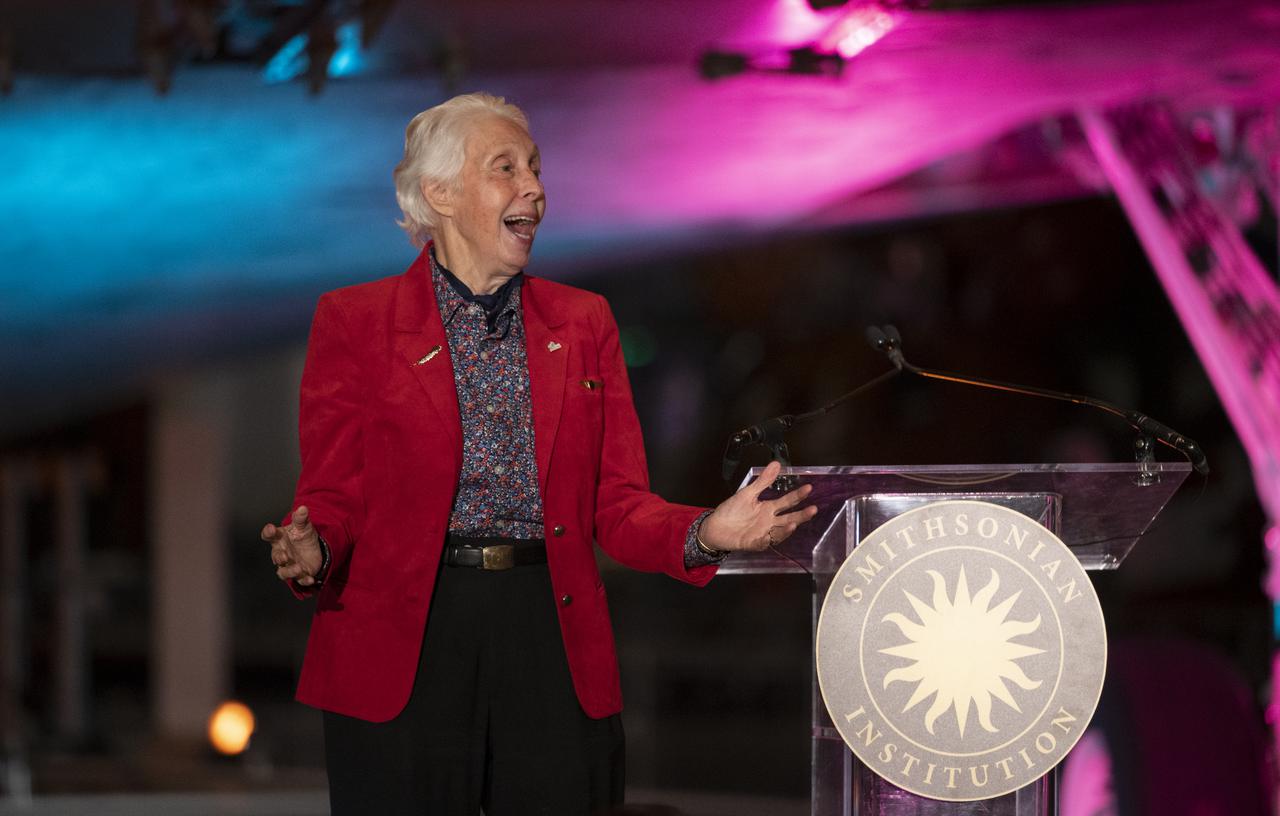
Wally Funk delivers remarks after accepting the 2022 Michael Collins Trophy for Lifetime Achievement, Thursday, March 24, 2022, at the Smithsonian National Air and Space Museum’s Steven F. Udvar-Hazy center in Chantilly, Va. The Smithsonian National Air and Space Museum’s Michael Collins Trophy recognizes extraordinary accomplishments in aeronautics and spaceflight. Photo Credit: (NASA/Joel Kowsky)
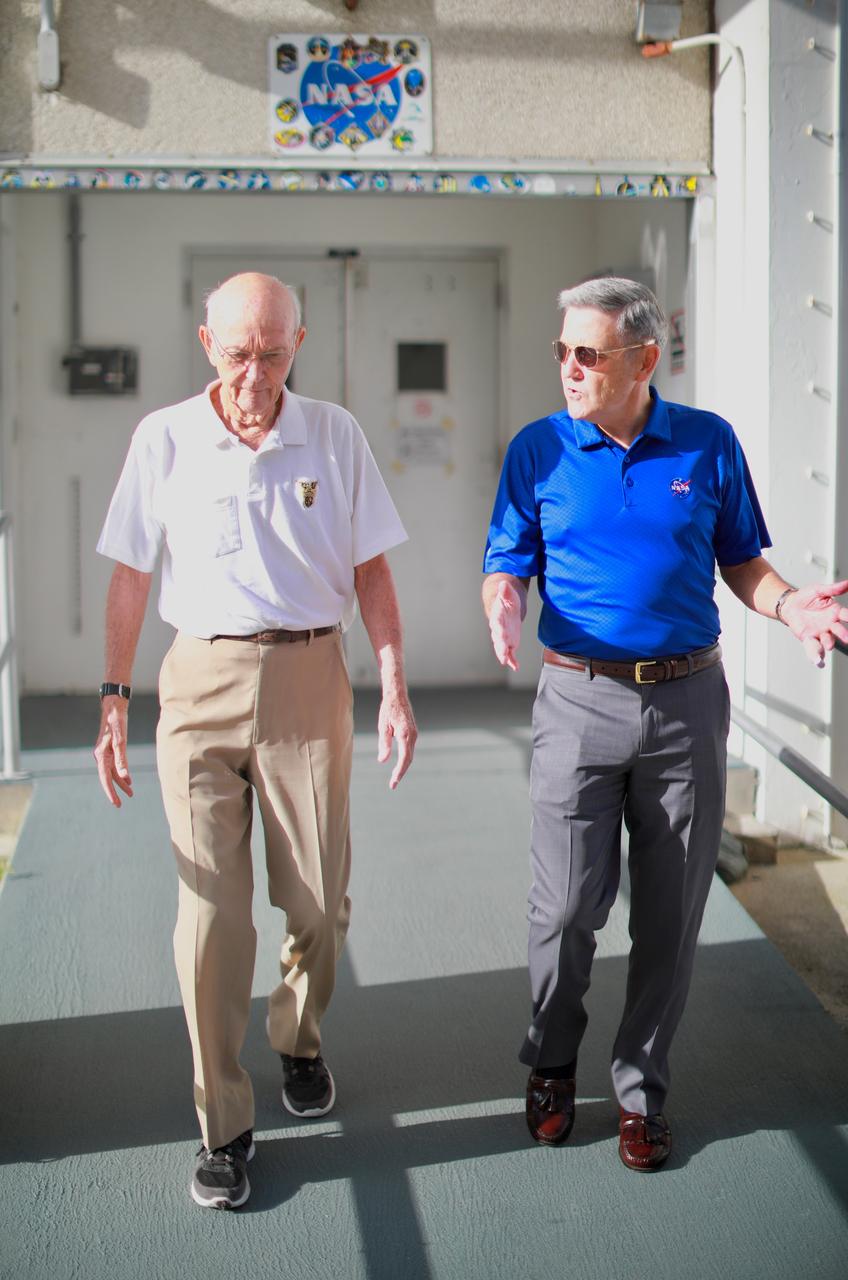
On the 50th anniversary of the Apollo 11 launch, July 16, 2019, astronaut Michael Collins, left, and Kennedy Space Center Director Bob Cabana exit the astronaut crew quartaers. Collins is speaking to Cabana about the moments leading up to launch at 9:32 a.m. on July 16, 1969, and what it was like to be the first to land on the Moon.
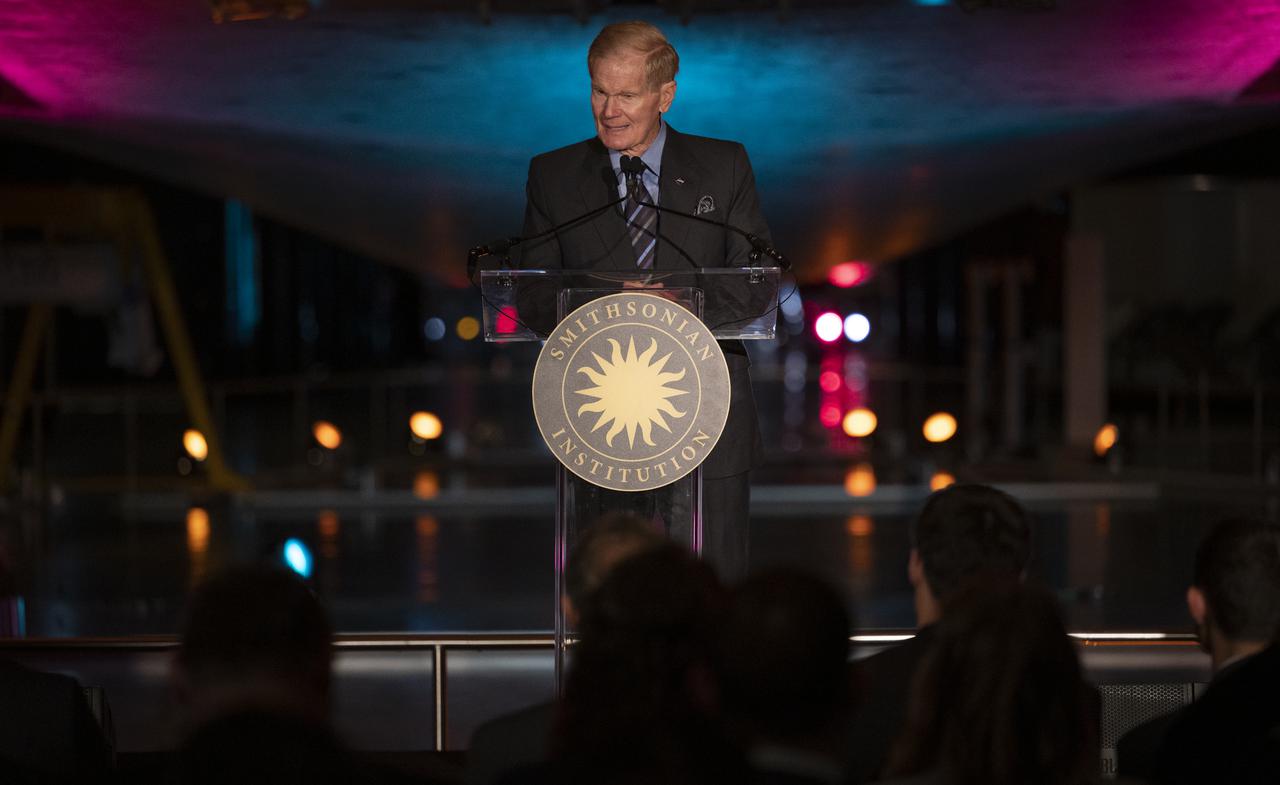
NASA Administrator Bill Nelson speaks at the presentation of the 2022 Michael Collins Trophy, Thursday, March 24, 2022, at the Smithsonian National Air and Space Museum’s Steven F. Udvar-Hazy center in Chantilly, Va. The Smithsonian National Air and Space Museum’s Michael Collins Trophy recognizes extraordinary accomplishments in aeronautics and spaceflight. Photo Credit: (NASA/Joel Kowsky)
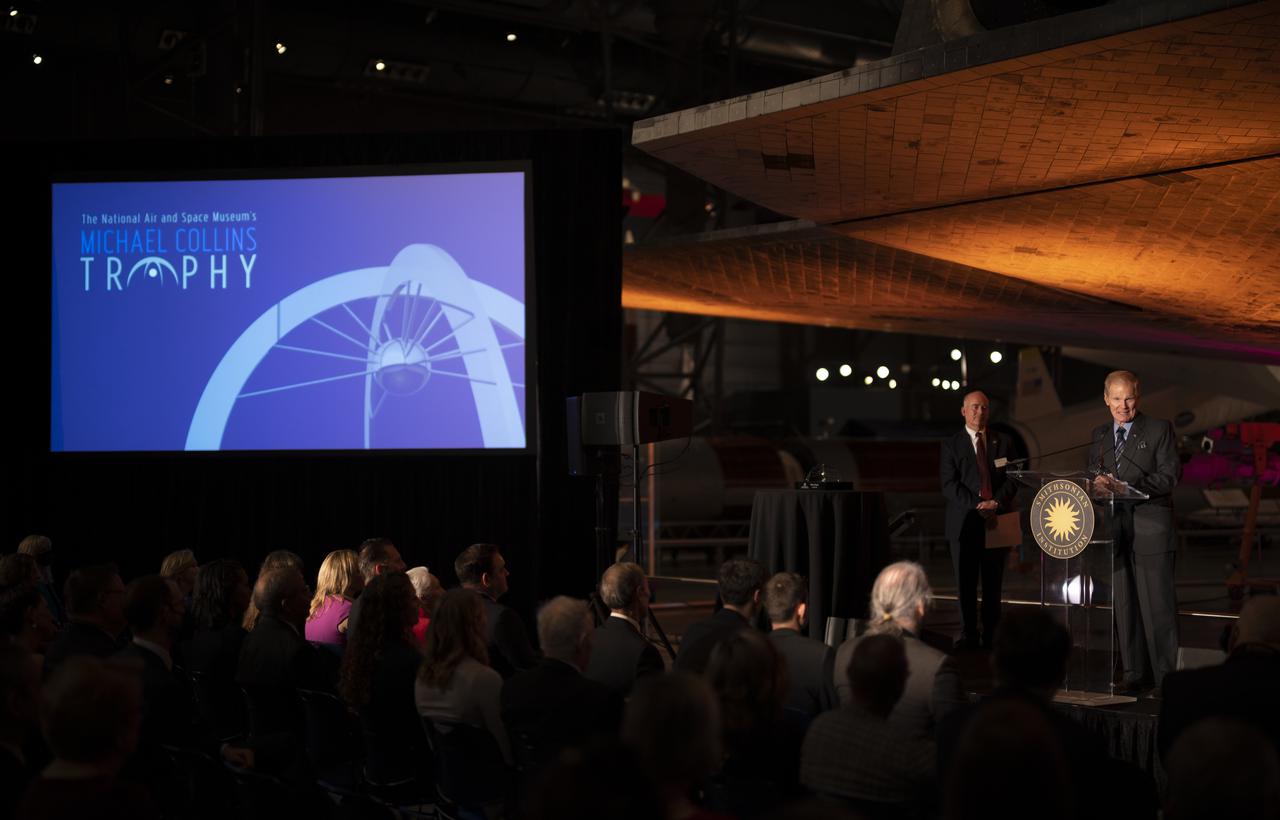
NASA Administrator Bill Nelson speaks at the presentation of the 2022 Michael Collins Trophy, Thursday, March 24, 2022, at the Smithsonian National Air and Space Museum’s Steven F. Udvar-Hazy center in Chantilly, Va. The Smithsonian National Air and Space Museum’s Michael Collins Trophy recognizes extraordinary accomplishments in aeronautics and spaceflight. Photo Credit: (NASA/Joel Kowsky)
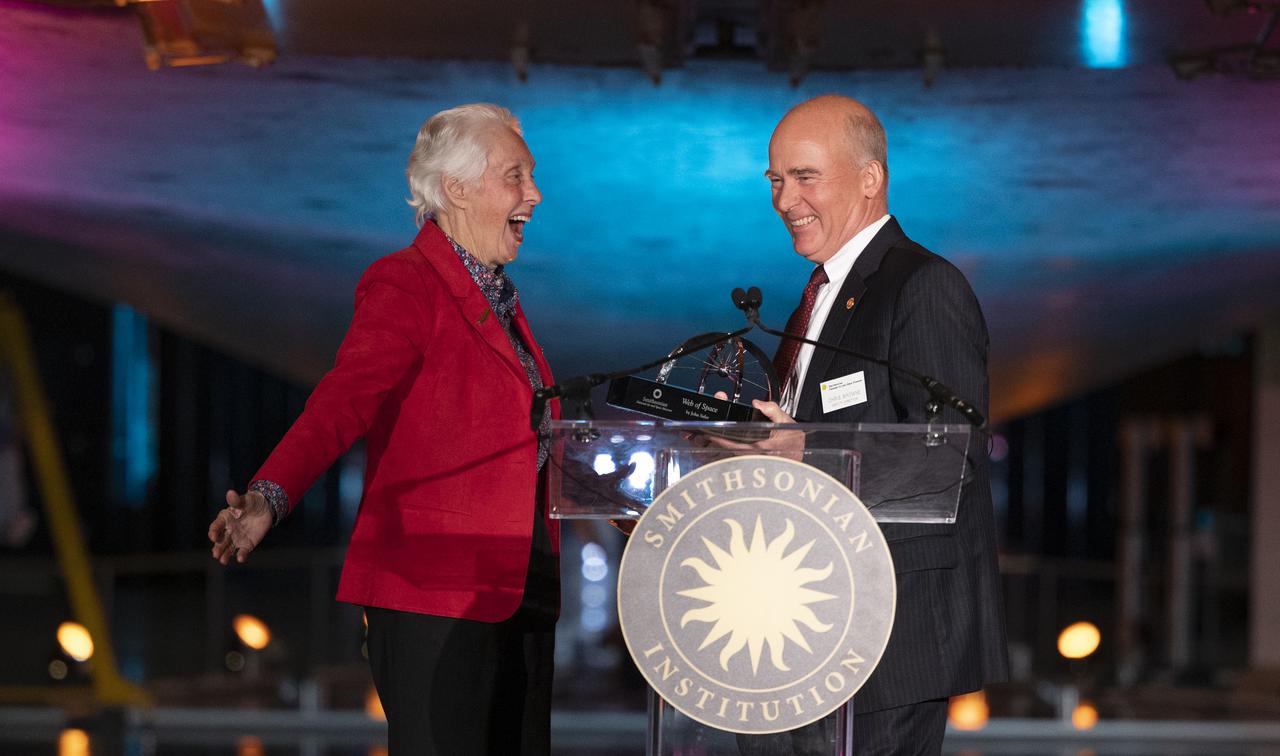
Wally Funk, left, accepts the 2022 Michael Collins Trophy for Lifetime Achievement from Christopher Browne, acting director of the Smithsonian’s National Air and Space Museum, right, Thursday, March 24, 2022, at the Smithsonian National Air and Space Museum’s Steven F. Udvar-Hazy center in Chantilly, Va. The Smithsonian National Air and Space Museum’s Michael Collins Trophy recognizes extraordinary accomplishments in aeronautics and spaceflight. Photo Credit: (NASA/Joel Kowsky)
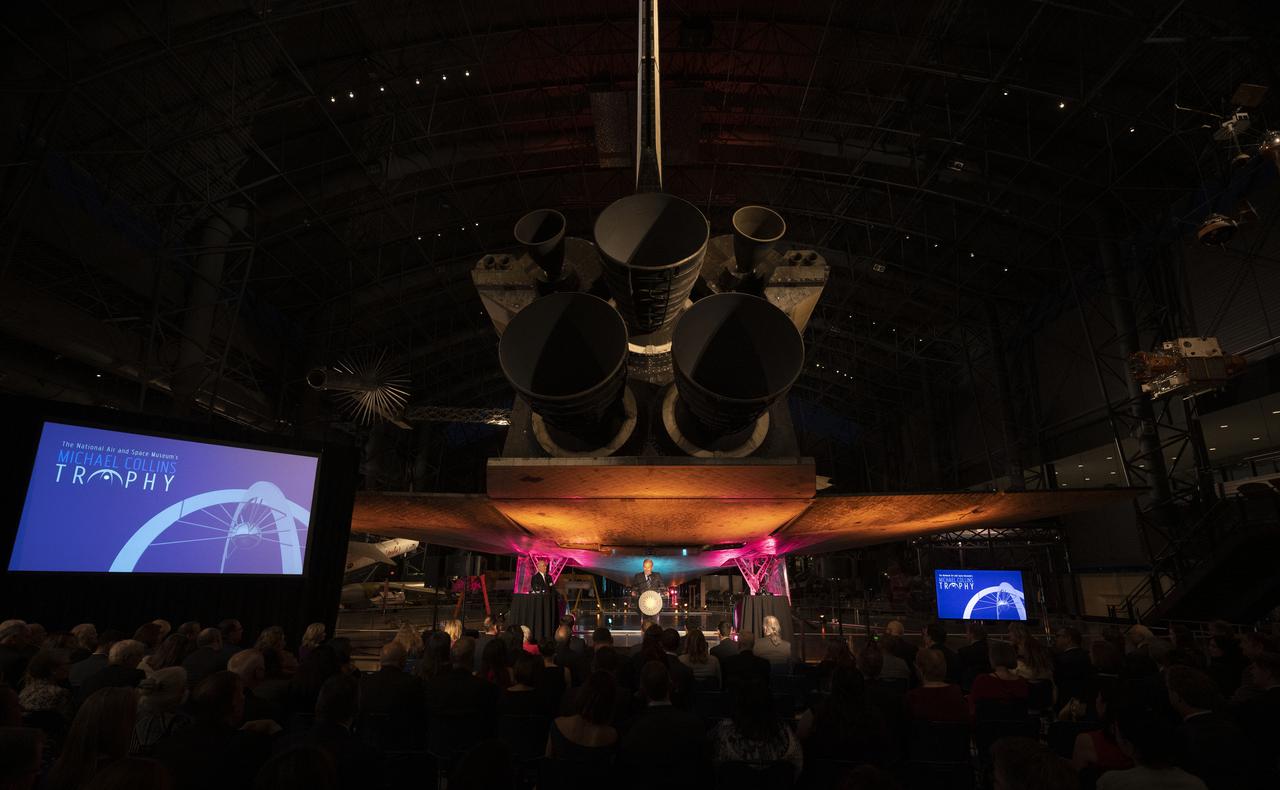
NASA Administrator Bill Nelson speaks at the presentation of the 2022 Michael Collins Trophy, Thursday, March 24, 2022, at the Smithsonian National Air and Space Museum’s Steven F. Udvar-Hazy center in Chantilly, Va. The Smithsonian National Air and Space Museum’s Michael Collins Trophy recognizes extraordinary accomplishments in aeronautics and spaceflight. Photo Credit: (NASA/Joel Kowsky)
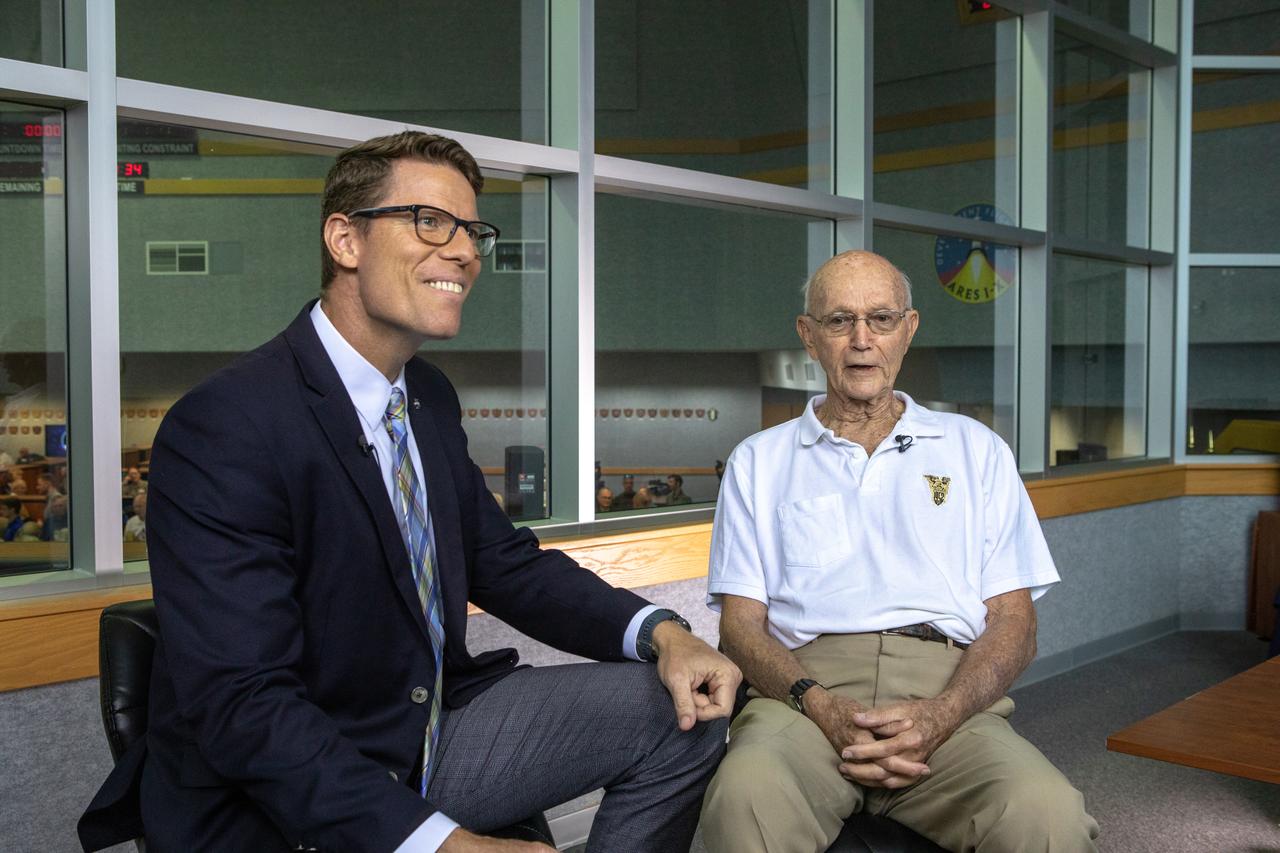
On July 16, 2019, the 50th anniversary of the Apollo 11 launch, Apollo 11 astronaut Michael Collins talks to NASA’s Derrol Nail at Launch Control Center Firing Room 1 at NASA's Kennedy Space Center in Florida. Collins talked about the moments leading up to the Apollo 11 launch at 9:32 a.m. on July 16, 1969.
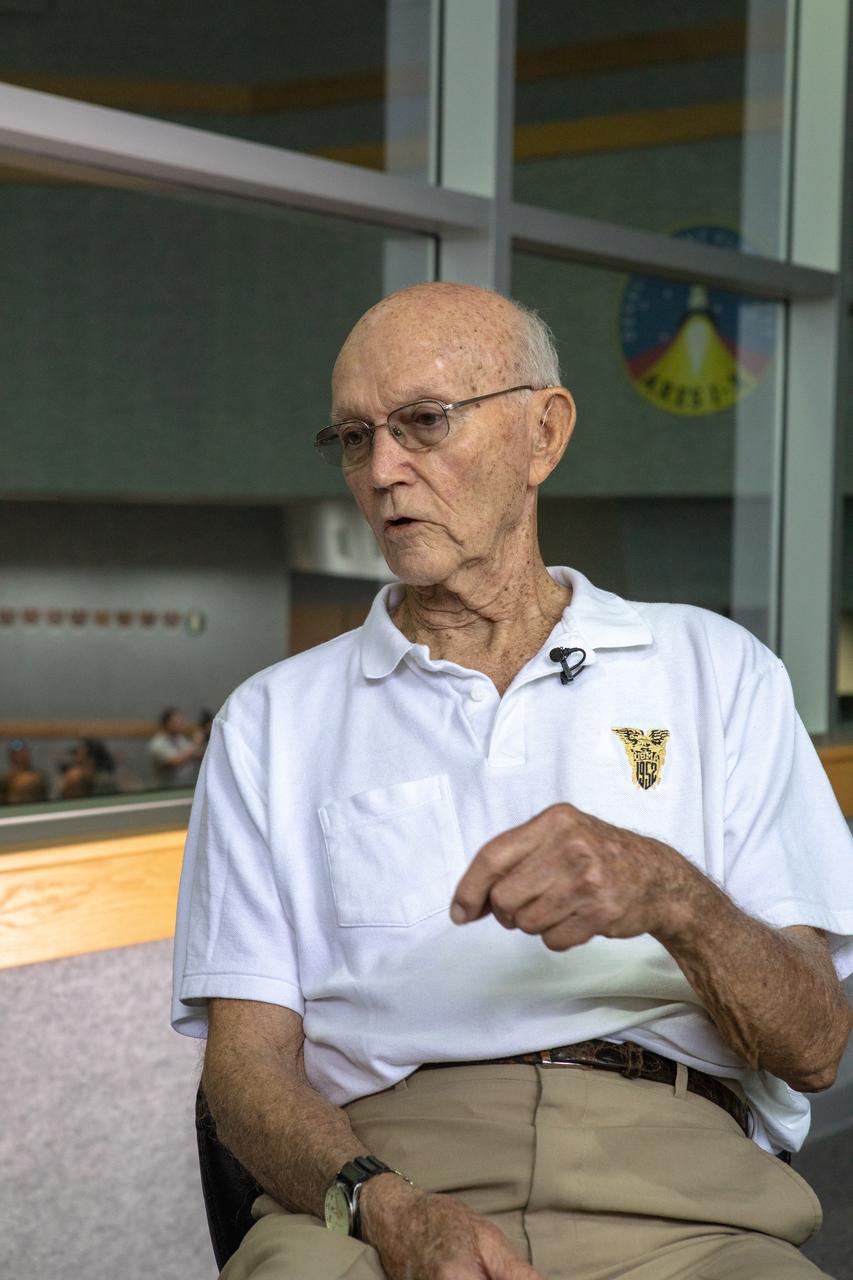
On July 16, 2019, the 50th anniversary of the Apollo 11 launch, Apollo 11 astronaut Michael Collins talks to NASA’s Derrol Nail at Launch Control Center Firing Room 1 at NASA's Kennedy Space Center in Florida. Collins talked about the moments leading up to the Apollo 11 launch at 9:32 a.m. on July 16, 1969.
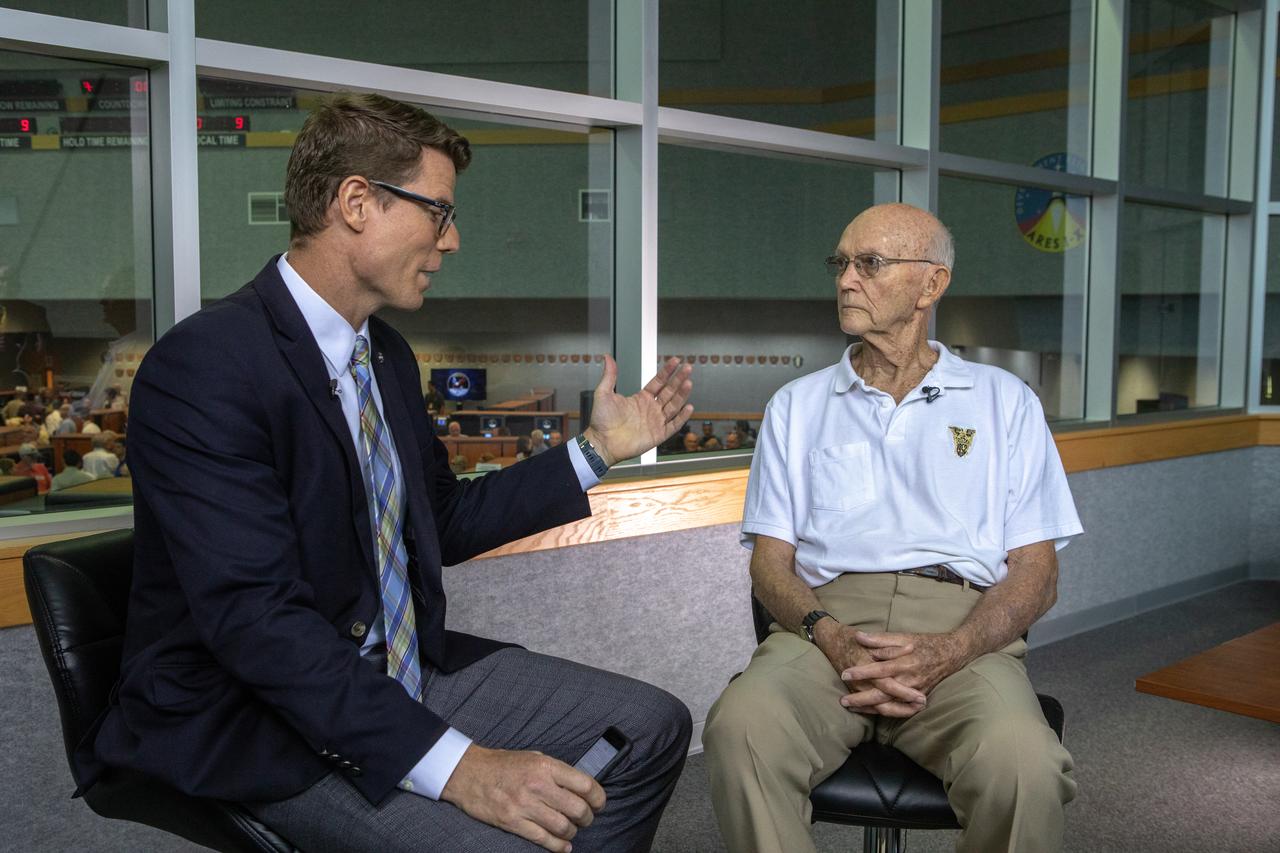
On July 16, 2019, the 50th anniversary of the Apollo 11 launch, Apollo 11 astronaut Michael Collins talks to NASA’s Derrol Nail at Launch Control Center Firing Room 1 at NASA's Kennedy Space Center in Florida. Collins talked about the moments leading up to the Apollo 11 launch at 9:32 a.m. on July 16, 1969.
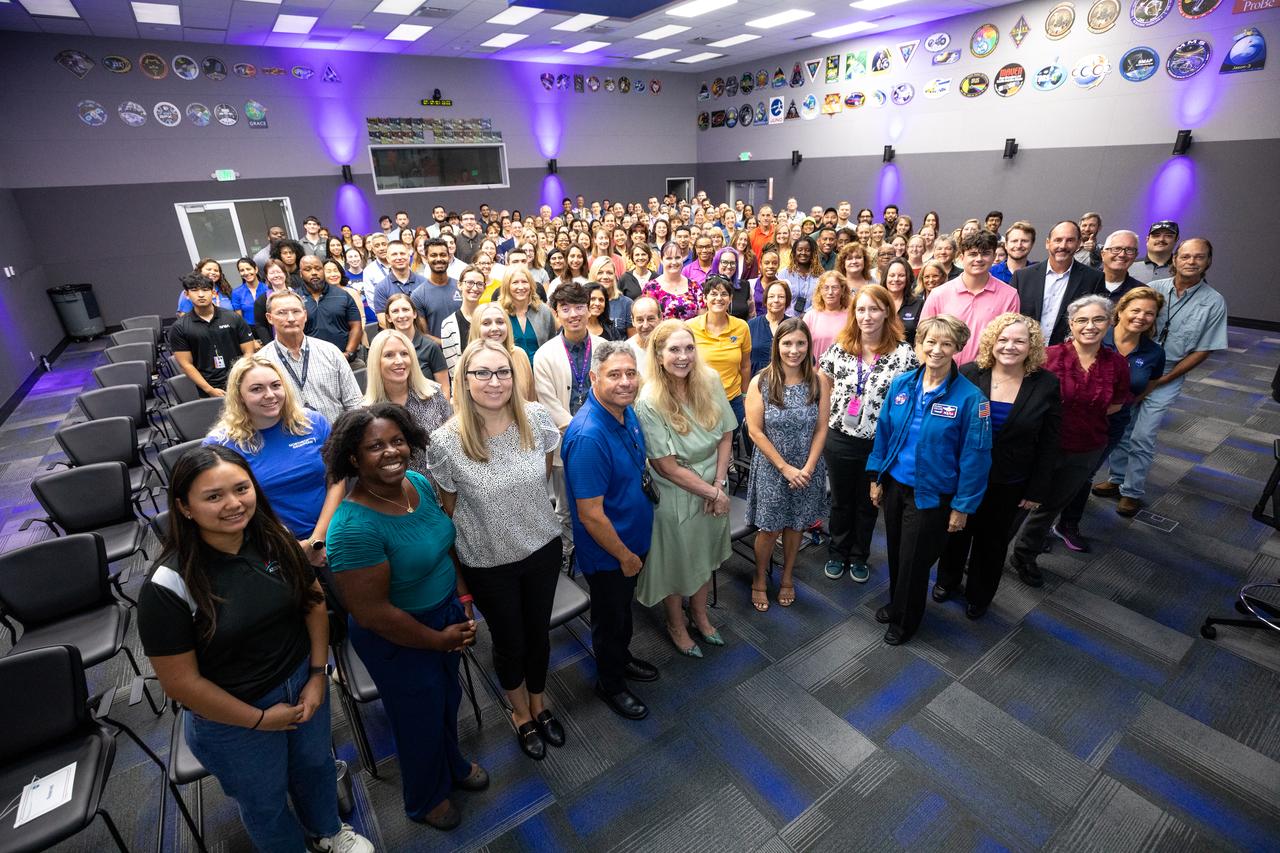
Retired NASA astronaut Eileen Collins poses with NASA employees and contractors after participating in a special presentation and question and answer session inside the Neil A. Armstrong Operations and Checkout Building’s Mission Briefing Room at the agency’s Kennedy Space Center in Florida on Wednesday, July 17, 2024. Collins visited NASA Kennedy in celebration of the 25th anniversary of becoming the first woman to command a space mission during STS-93, in which space shuttle Columbia lifted off from the spaceport’s Launch Complex 39B on July 23, 1999.
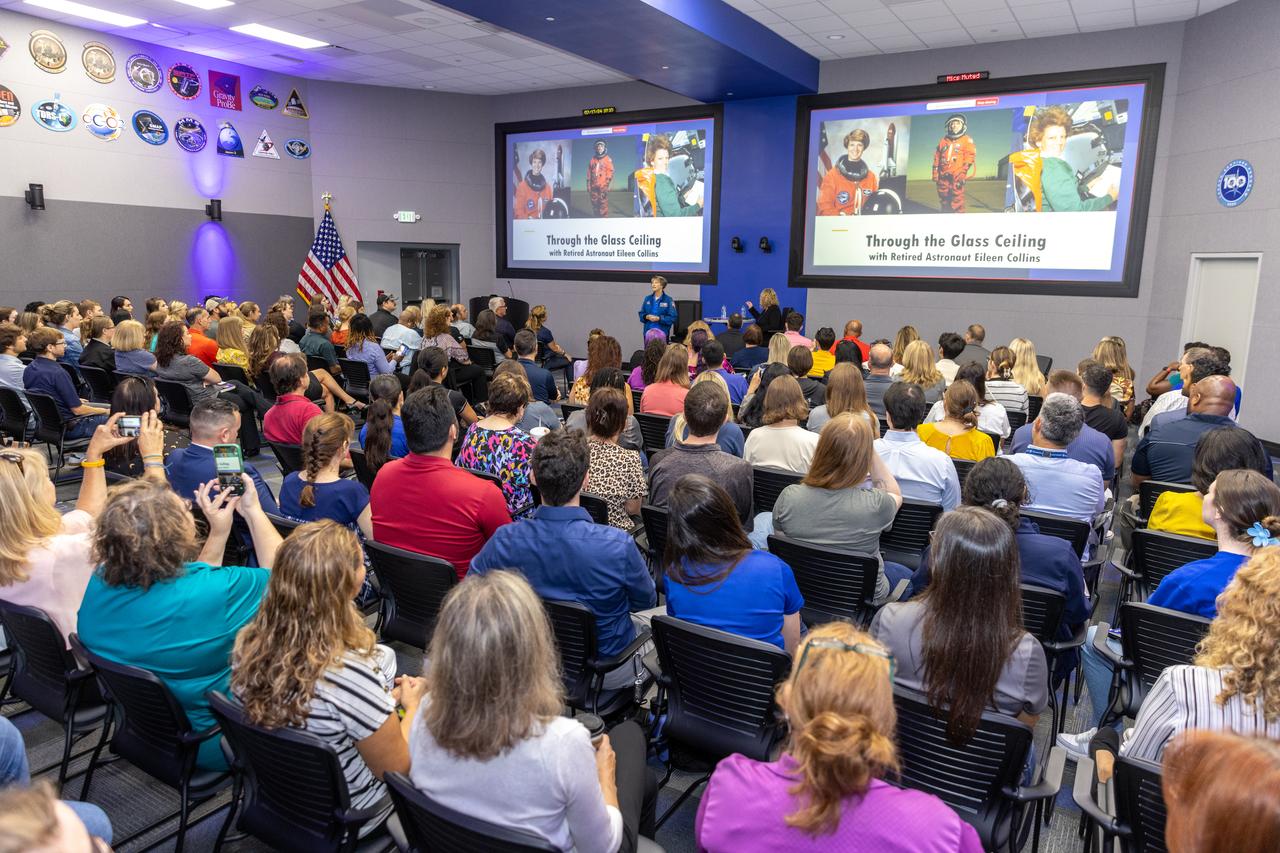
Retired NASA astronaut Eileen Collins participates in a special presentation and question and answer session inside the Neil A. Armstrong Operations and Checkout Building’s Mission Briefing Room at the agency’s Kennedy Space Center in Florida on Wednesday, July 17, 2024. Collins visited NASA Kennedy in celebration of the 25th anniversary of becoming the first woman to command a space mission during STS-93, in which space shuttle Columbia lifted off from the spaceport’s Launch Complex 39B on July 23, 1999.
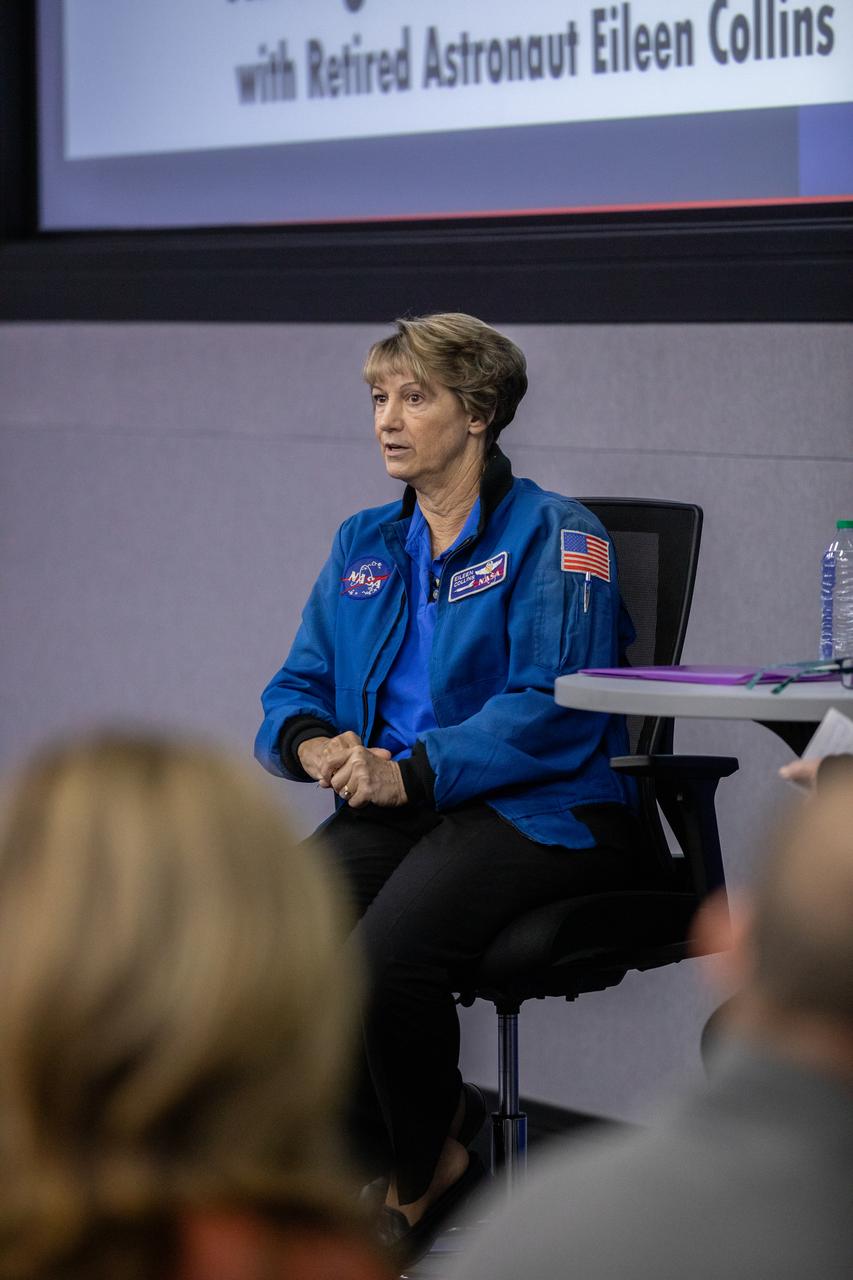
Retired NASA astronaut Eileen Collins participates in a special presentation and question and answer session inside the Neil A. Armstrong Operations and Checkout Building’s Mission Briefing Room at the agency’s Kennedy Space Center in Florida on Wednesday, July 17, 2024. Collins visited NASA Kennedy in celebration of the 25th anniversary of becoming the first woman to command a space mission during STS-93, in which space shuttle Columbia lifted off from the spaceport’s Launch Complex 39B on July 23, 1999.
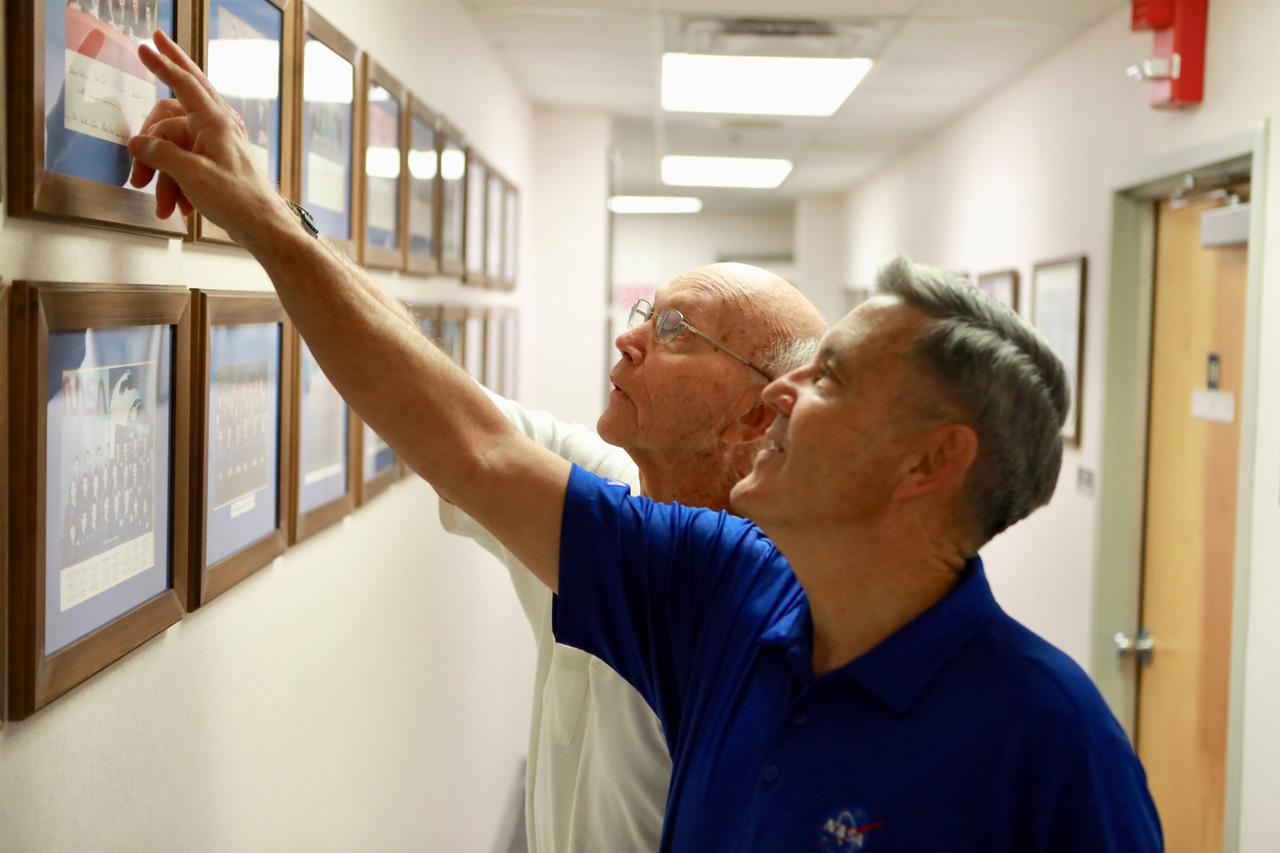
On the 50th anniversary of the Apollo 11 launch, July 16, 2019, astronaut Michael Collins, left, speaks to Kennedy Space Center Director Bob Cabana in the astronaut crew quarters about the moments leading up to launch at 9:32 a.m. on July 16, 1969, and what it was like to be the first to land on the Moon.
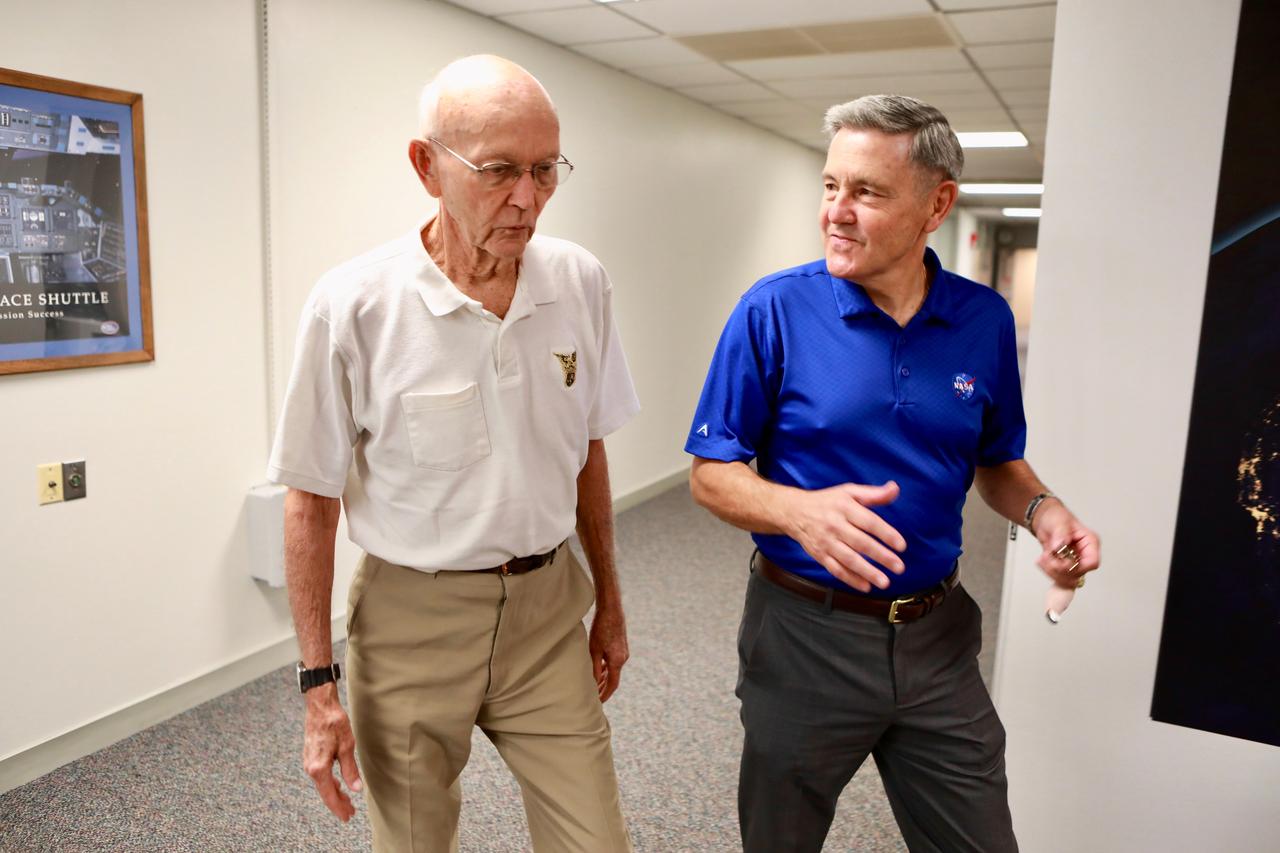
On the 50th anniversary of the Apollo 11 launch, July 16, 2019, astronaut Michael Collins speaks to Kennedy Space Center Director Bob Cabana in the astronaut crew quarters about the moments leading up to launch at 9:32 a.m. on July 16, 1969, and what it was like to be the first to land on the Moon.
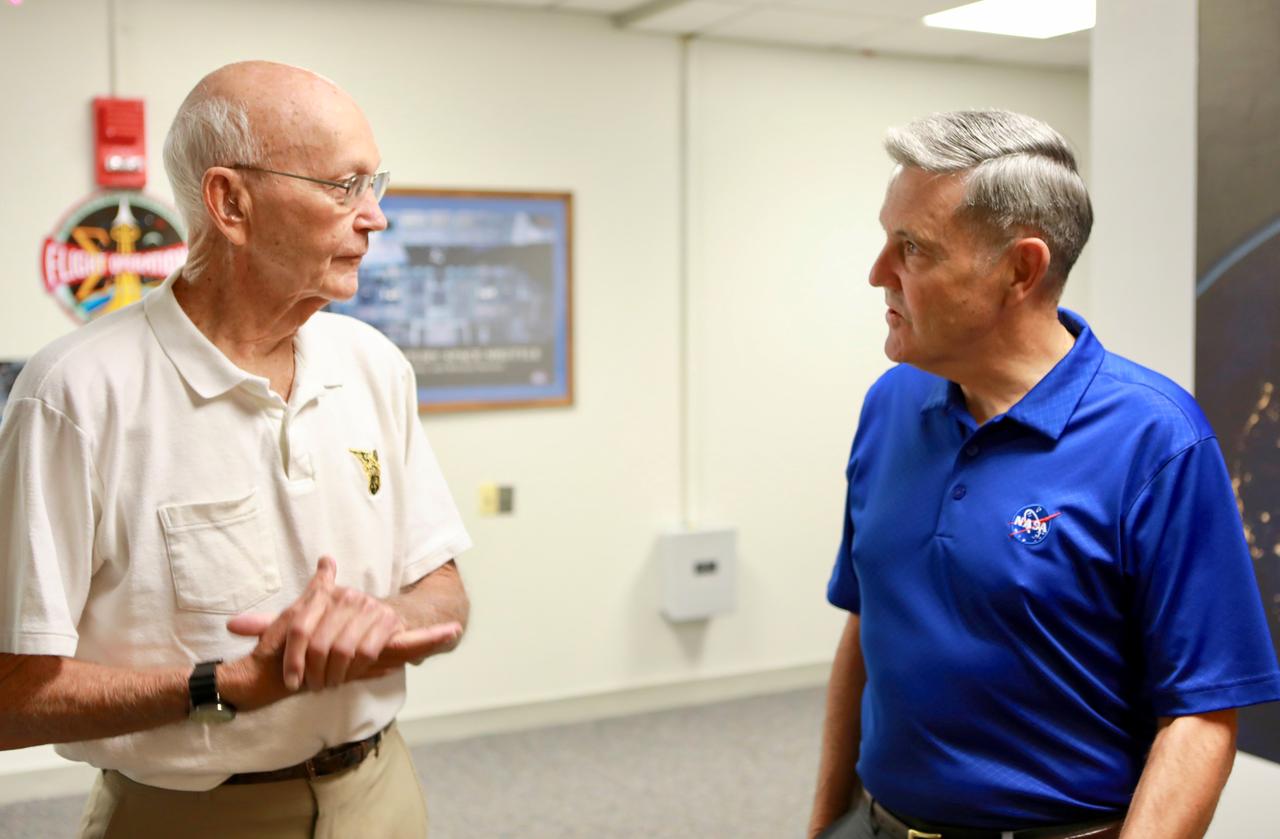
On the 50th anniversary of the Apollo 11 launch, July 16, 2019, astronaut Michael Collins, left, speaks to Kennedy Space Center Director Bob Cabana in the astronaut crew quarters about the moments leading up to launch at 9:32 a.m. on July 16, 1969, and what it was like to be the first to land on the Moon.
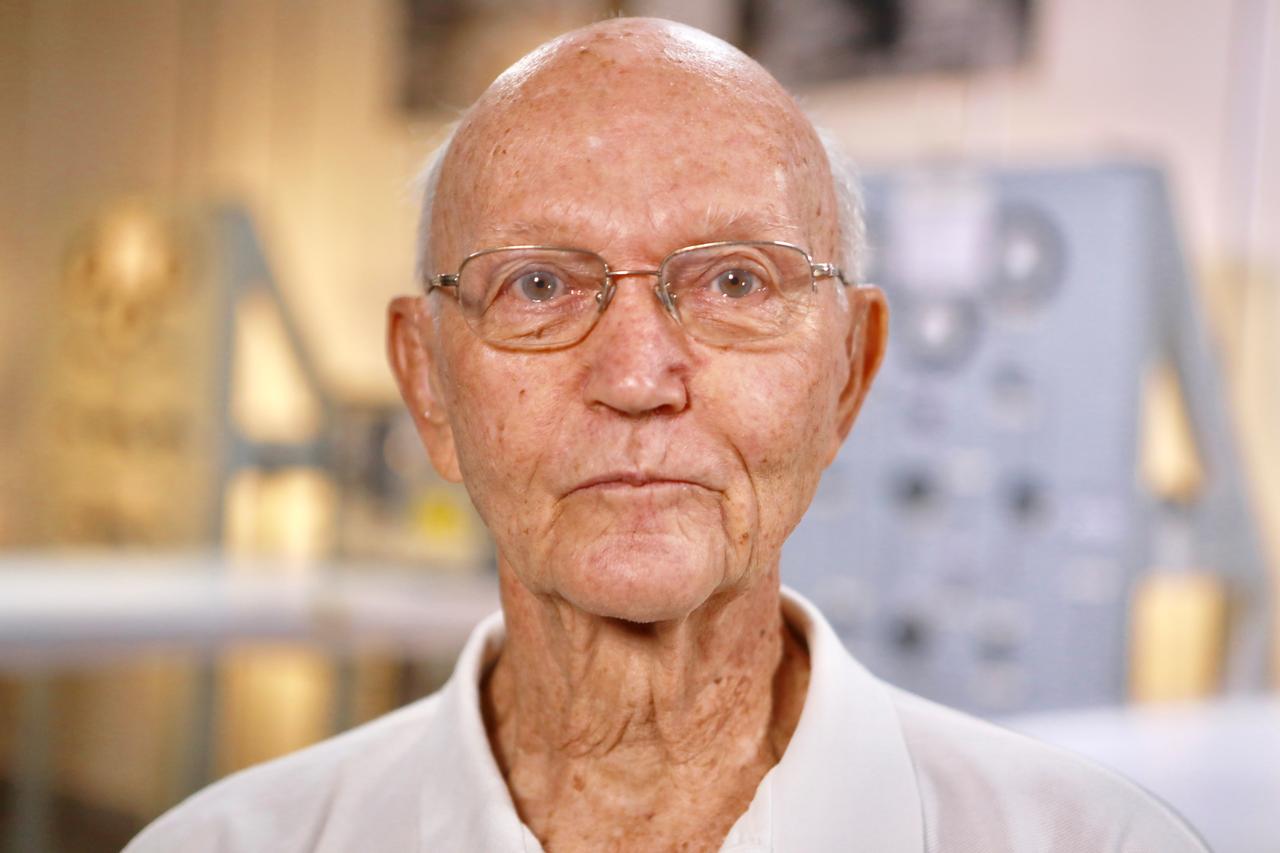
On the 50th anniversary of the Apollo 11 launch, July 16, 2019, Michael Collins stands in the suit-up room in the astronaut crew quarters at NASA’s Kennedy Space Center in Florida, just as he did 50 years ago today.
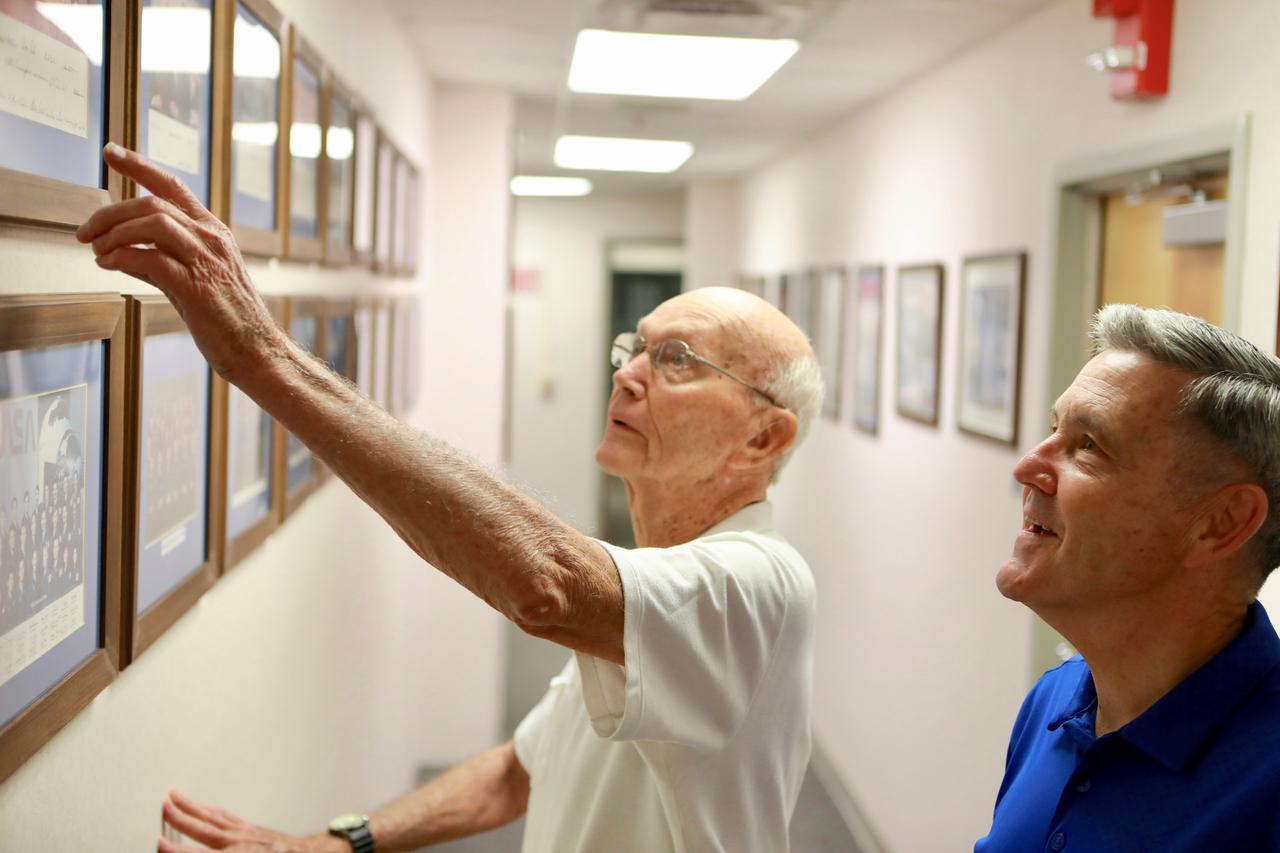
On the 50th anniversary of the Apollo 11 launch, July 16, 2019, astronaut Michael Collins speaks to Kennedy Space Center Director Bob Cabana in the astronaut crew quarters about the moments leading up to launch at 9:32 a.m. on July 16, 1969, and what it was like to be the first to land on the Moon.
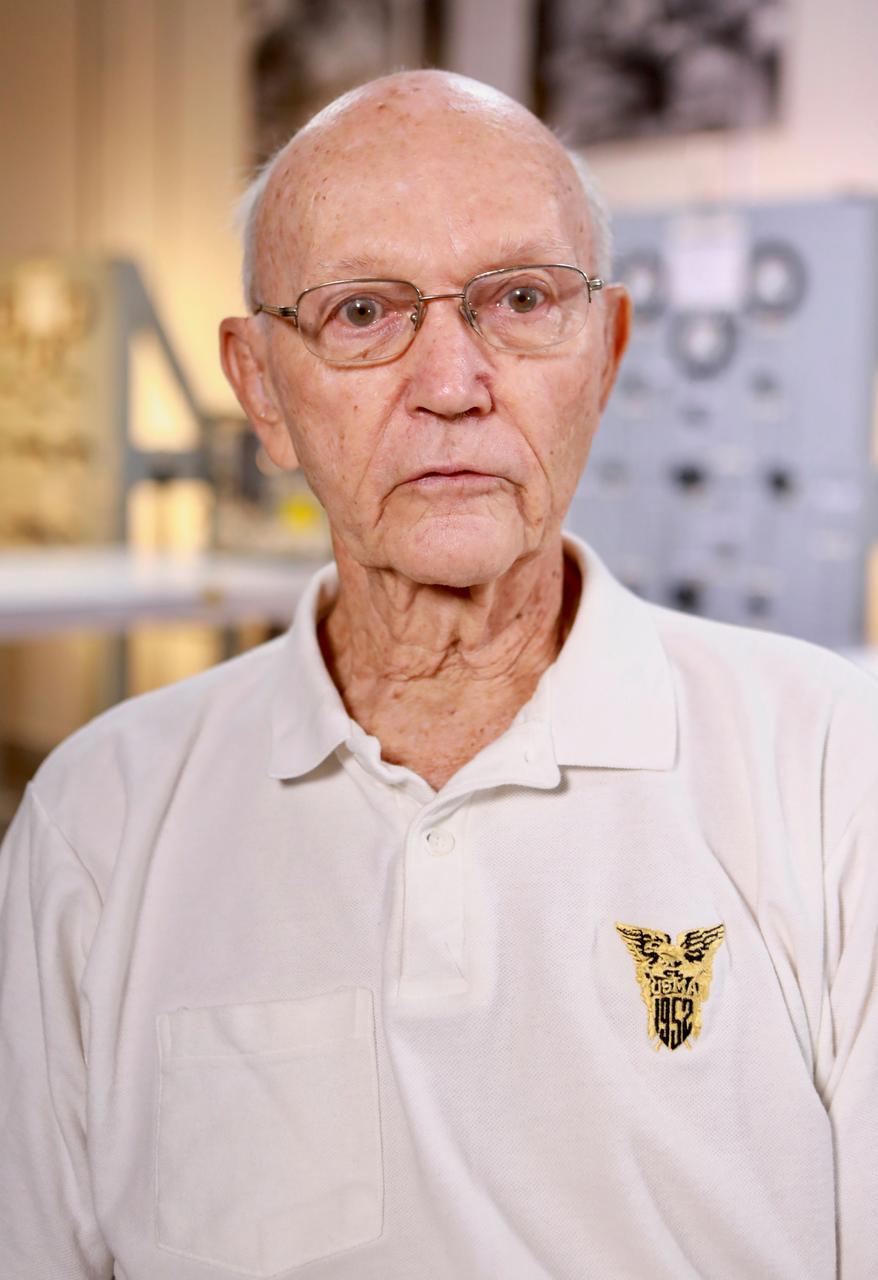
On the 50th anniversary of the Apollo 11 launch, July 16, 2019, Michael Collins stands in the suit-up room in the astronaut crew quarters at NASA’s Kennedy Space Center in Florida, just as he did 50 years ago today.

On July 16, 2019, the 50th anniversary of the Apollo 11 launch, Kennedy Space Center Director Bob Cabana, left, and astronaut Michael Collins take a walk at Launch Complex 39A. During his visit to the Florida spaceport, Collins discussed the moments leading up to launch at 9:32 a.m. on July 16, 1969, and what it was like to be part of the first crew to land on the Moon.
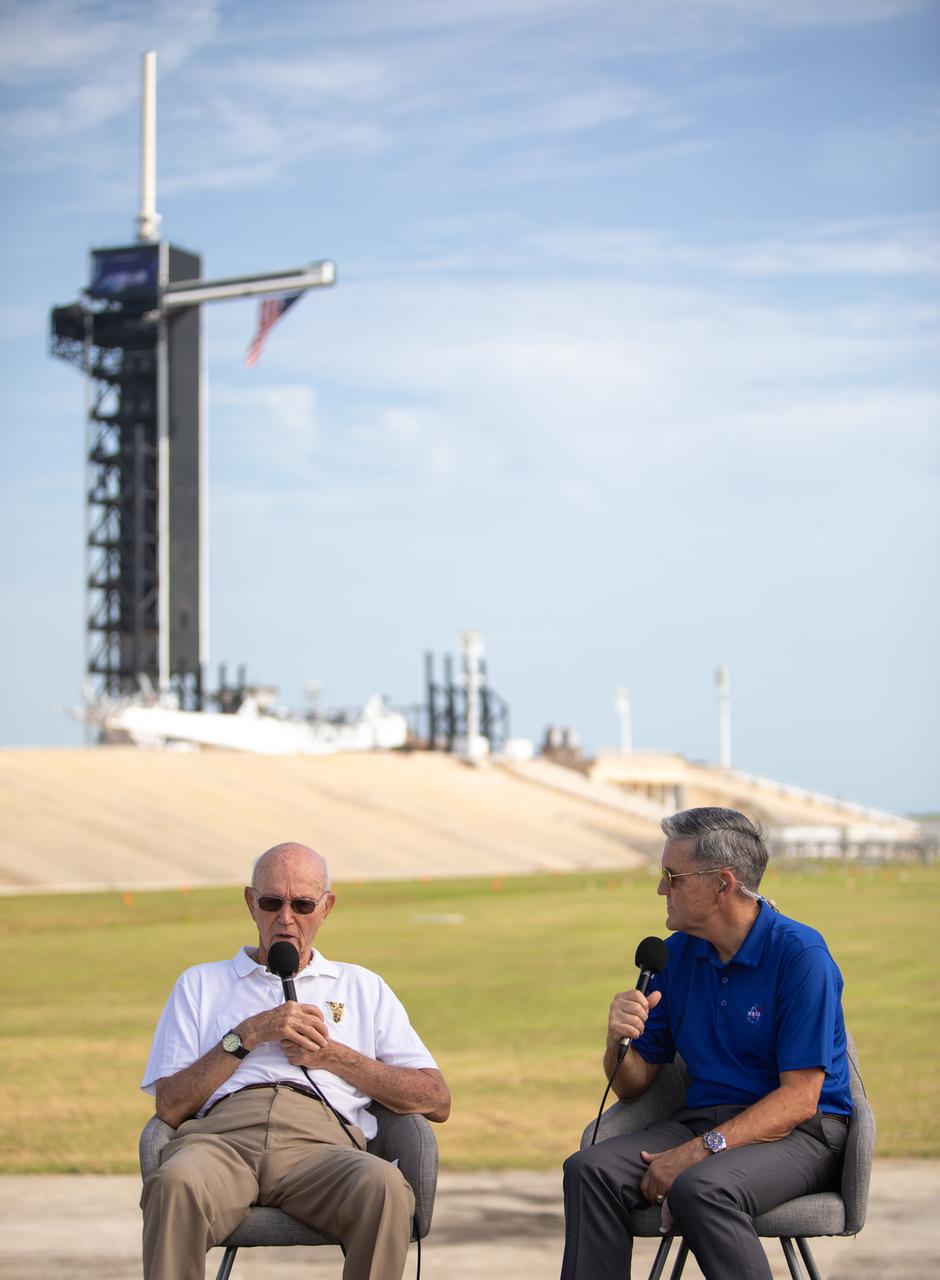
On July 16, 2019, the 50th anniversary of the Apollo 11 launch, astronaut Michael Collins, left, speaks to Kennedy Space Center Director Bob Cabana at Launch Complex 39A. During his visit to the Florida spaceport, Collins discussed the moments leading up to launch at 9:32 a.m. on July 16, 1969, and what it was like to be part of the first crew to land on the Moon.

On July 16, 2019, the 50th anniversary of the Apollo 11 launch, Kennedy Space Center Director Bob Cabana, left, and astronaut Michael Collins pause for a photo at Launch Complex 39A. During his visit to the Florida spaceport, Collins discussed the moments leading up to launch at 9:32 a.m. on July 16, 1969, and what it was like to be part of the first crew to land on the Moon.
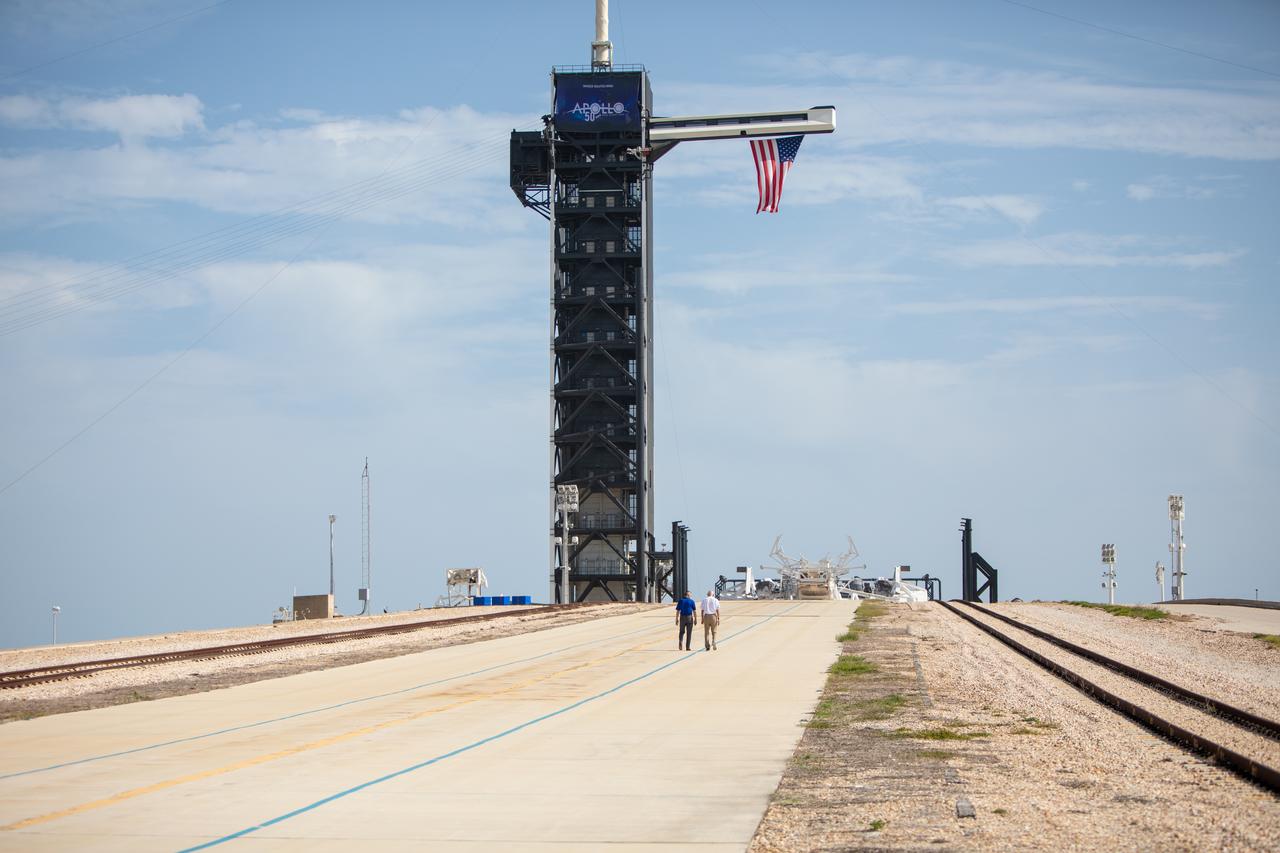
On July 16, 2019, the 50th anniversary of the Apollo 11 launch, Kennedy Space Center Director Bob Cabana, left, and astronaut Michael Collins take a walk at Launch Complex 39A. During his visit to the Florida spaceport, Collins discussed the moments leading up to launch at 9:32 a.m. on July 16, 1969, and what it was like to be part of the first crew to land on the Moon.
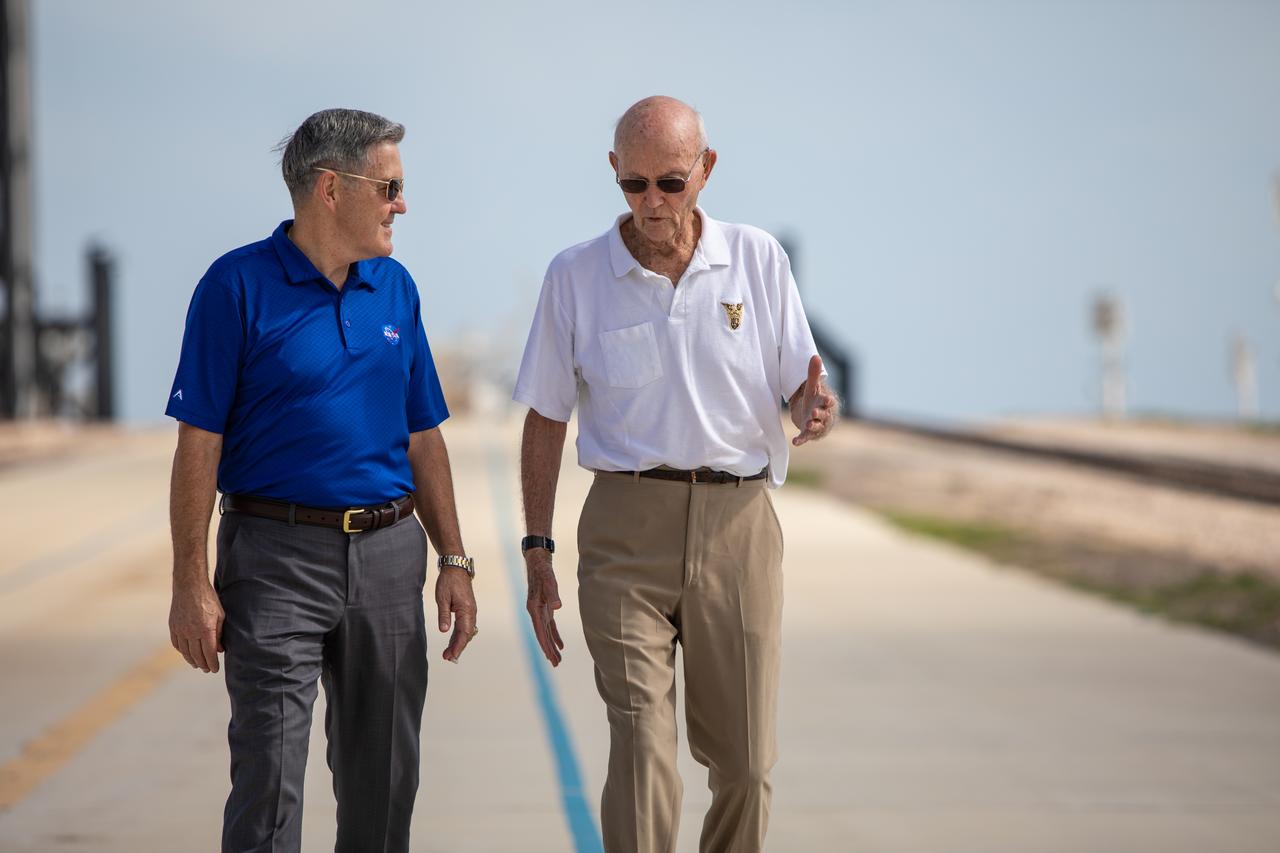
On July 16, 2019, the 50th anniversary of the Apollo 11 launch, astronaut Michael Collins, right, speaks to Kennedy Space Center Director Bob Cabana at Launch Complex 39A. During his visit to the Florida spaceport, Collins discussed the moments leading up to launch at 9:32 a.m. on July 16, 1969, and what it was like to be part of the first crew to land on the Moon.
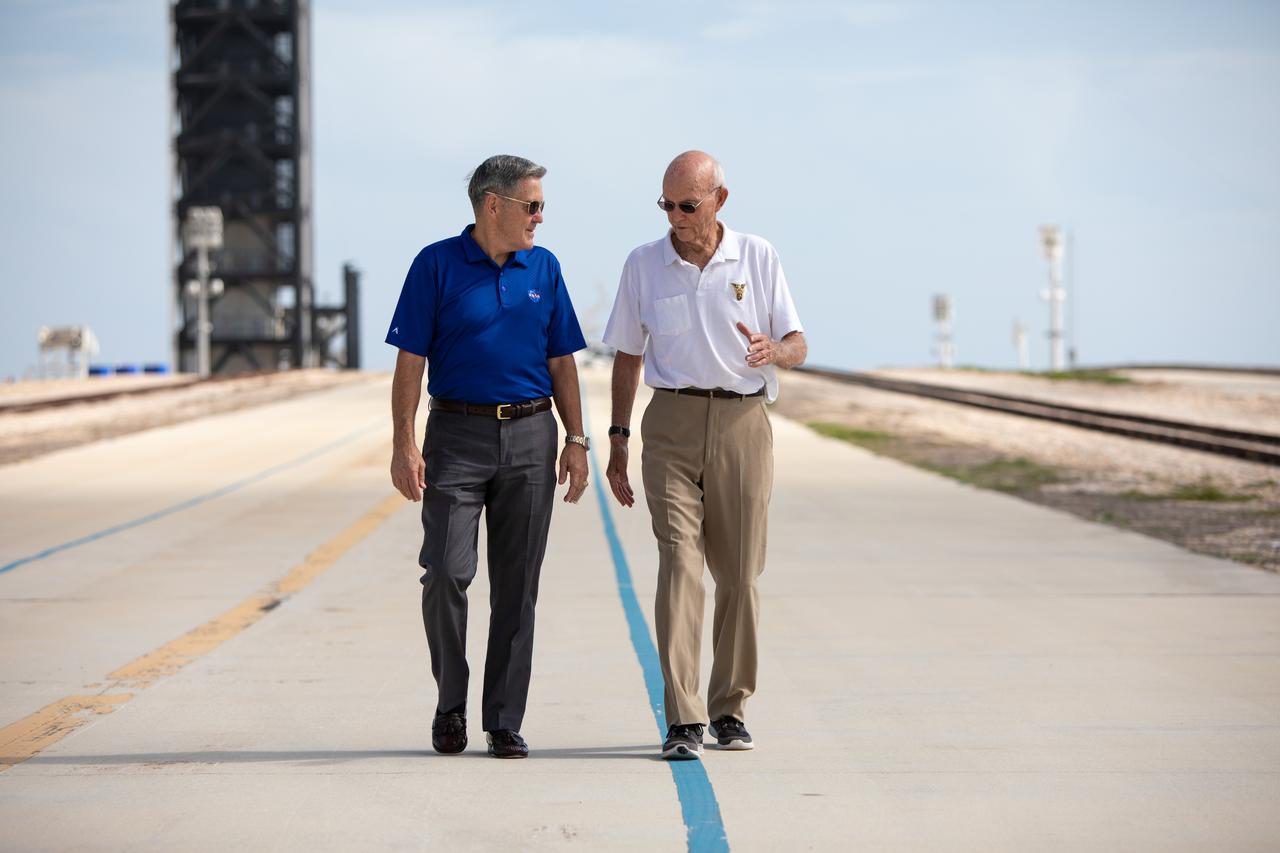
On July 16, 2019, the 50th anniversary of the Apollo 11 launch, astronaut Michael Collins, right, speaks to Kennedy Space Center Director Bob Cabana at Launch Complex 39A. During his visit to the Florida spaceport, Collins discussed the moments leading up to launch at 9:32 a.m. on July 16, 1969, and what it was like to be part of the first crew to land on the Moon.
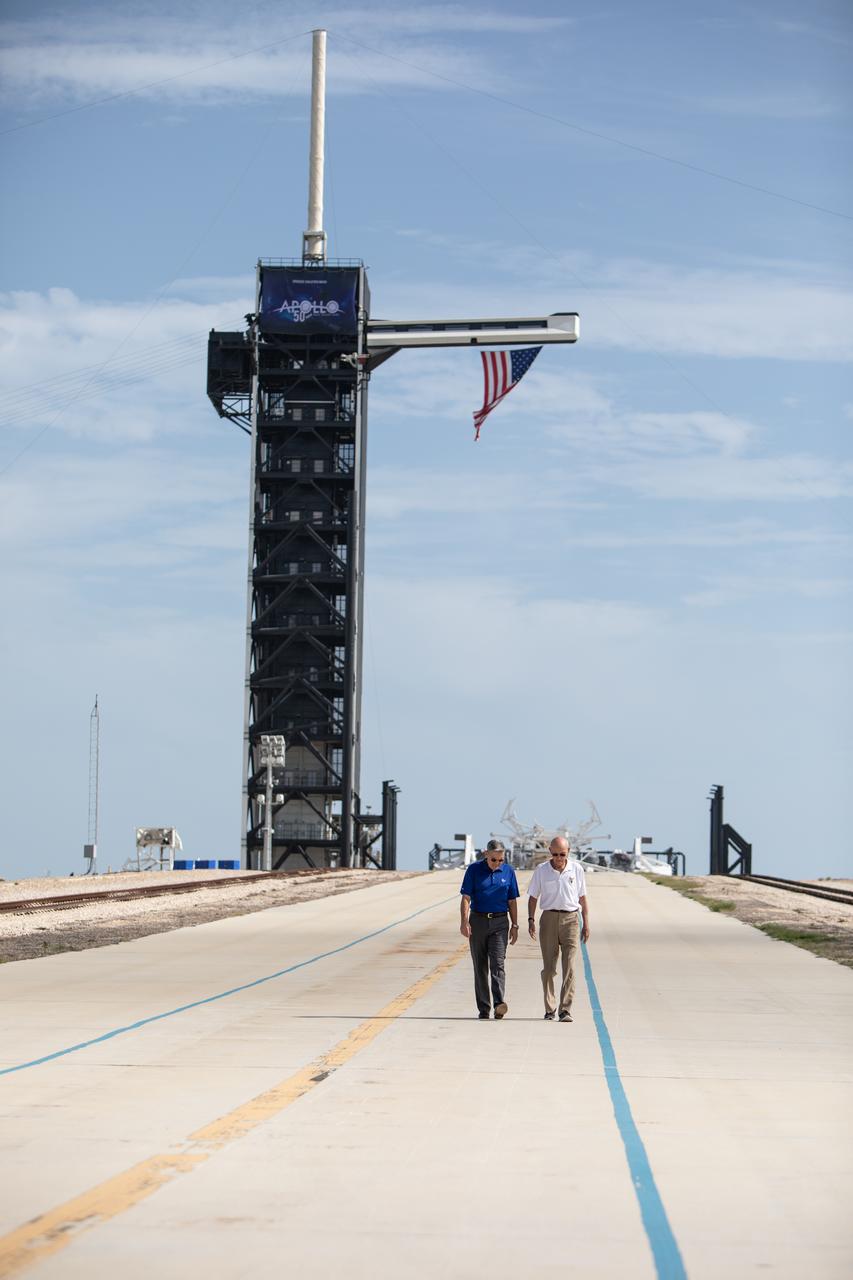
On July 16, 2019, the 50th anniversary of the Apollo 11 launch, Kennedy Space Center Director Bob Cabana, left, and astronaut Michael Collins talk a walk at Launch Complex 39A. During his visit to the Florida spaceport, Collins discussed the moments leading up to launch at 9:32 a.m. on July 16, 1969, and what it was like to be part of the first crew to land on the Moon.

On July 16, 2019, the 50th anniversary of the Apollo 11 launch to the Moon, astronaut Michael Collins speaks to launch team members from Apollo 11 and the current launch team for Artemis 1 in Firing Room 1 in the Launch Control Center at NASA’s Kennedy Space Center in Florida.
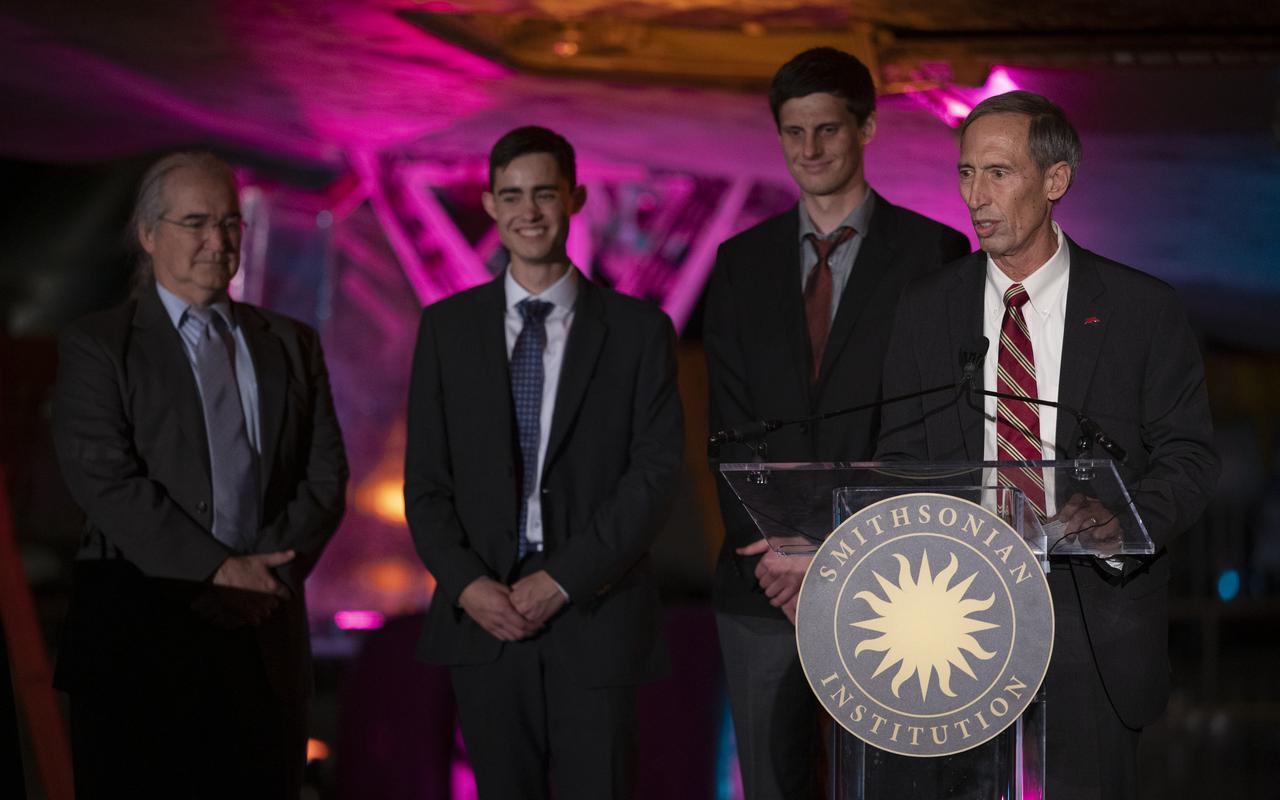
Interim director of NASA’s Jet Propulsion Laboratory Lt. Gen. Larry James, USAF (Ret.), right, delivers remarks after accepting the 2022 Michael Collins Trophy for Current Achievement on behalf of MiMi Aung and the Mars Ingenuity Helicopter Team, Thursday, March 24, 2022, at the Smithsonian National Air and Space Museum’s Steven F. Udvar-Hazy center in Chantilly, Va. Pictured with James are Dave Lavery, program executive for Solar System Exploration at NASA Headquarters, left, Joshua Anderson, Ingenuity Mars Helicopter tactical lead at NASA JPL, second from left, and Gerik Kubiak, Ingenuity Mars Helicopter flight software lead at NASA JPL, center. The Smithsonian National Air and Space Museum’s Michael Collins Trophy recognizes extraordinary accomplishments in aeronautics and spaceflight. Photo Credit: (NASA/Joel Kowsky)
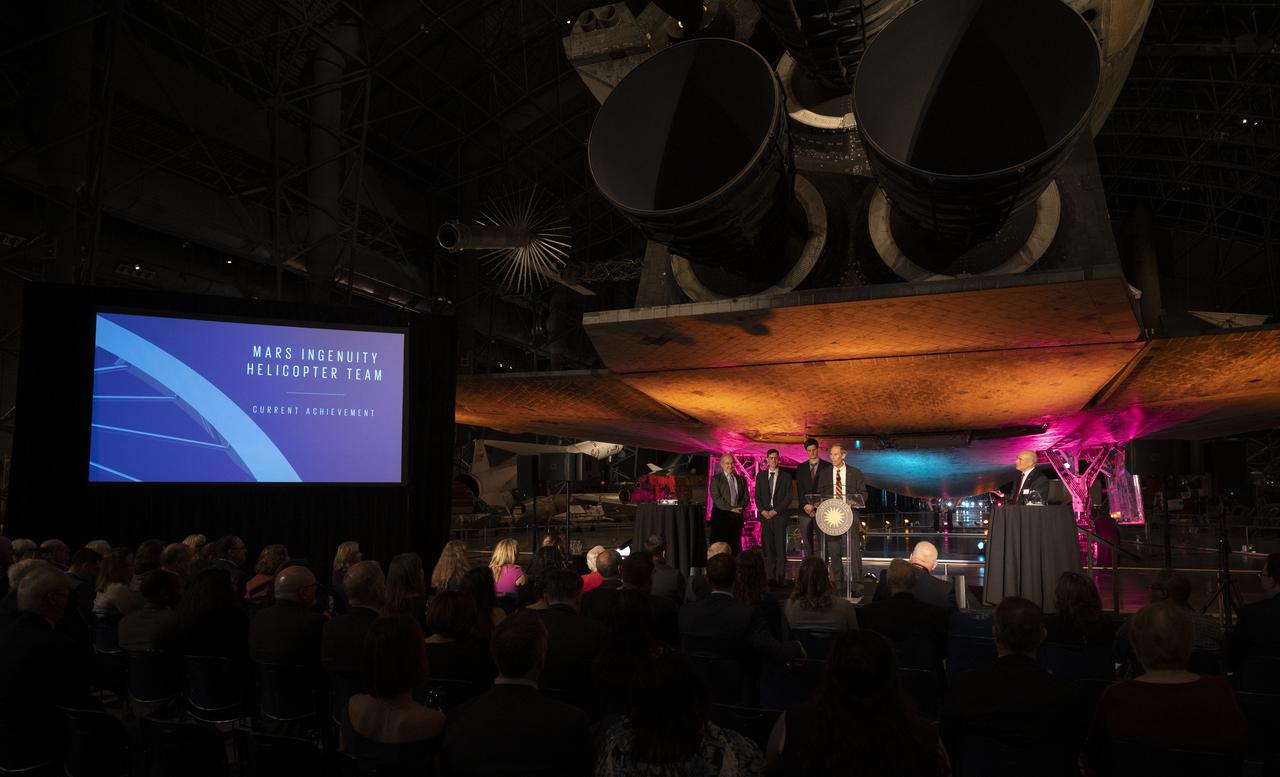
Interim director of NASA’s Jet Propulsion Laboratory Lt. Gen. Larry James, USAF (Ret.), right, delivers remarks after accepting the 2022 Michael Collins Trophy for Current Achievement on behalf of MiMi Aung and the Mars Ingenuity Helicopter Team, Thursday, March 24, 2022, at the Smithsonian National Air and Space Museum’s Steven F. Udvar-Hazy center in Chantilly, Va. Pictured with James are Dave Lavery, program executive for Solar System Exploration at NASA Headquarters, left, Joshua Anderson, Ingenuity Mars Helicopter tactical lead at NASA JPL, second from left, and Gerik Kubiak, Ingenuity Mars Helicopter flight software lead at NASA JPL, center. The Smithsonian National Air and Space Museum’s Michael Collins Trophy recognizes extraordinary accomplishments in aeronautics and spaceflight. Photo Credit: (NASA/Joel Kowsky)
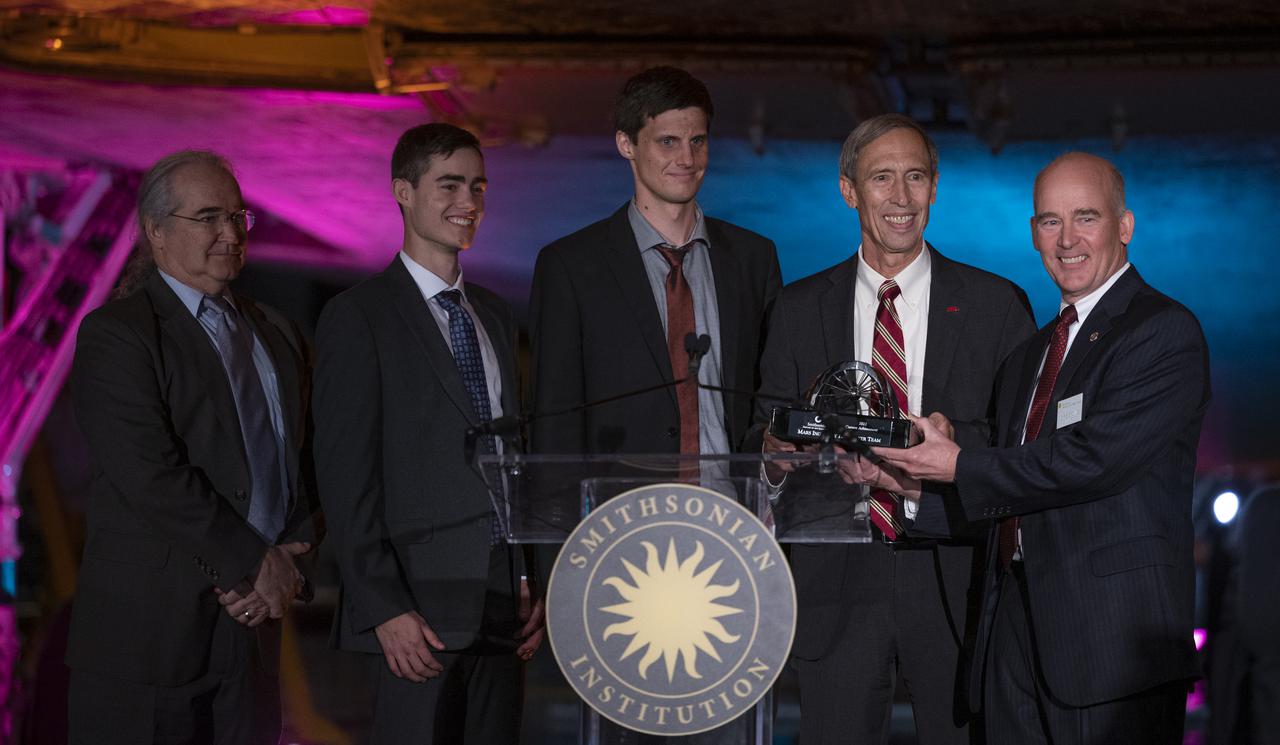
Interim director of NASA’s Jet Propulsion Laboratory Lt. Gen. Larry James, USAF (Ret.), second from right, accepts the 2022 Michael Collins Trophy for Current Achievement from Christopher Browne, acting director of the Smithsonian’s National Air and Space Museum, right, on behalf of MiMi Aung and the Mars Ingenuity Helicopter Team, Thursday, March 24, 2022, at the Smithsonian National Air and Space Museum’s Steven F. Udvar-Hazy center in Chantilly, Va. Pictured with James and Browne are Dave Lavery, program executive for Solar System Exploration at NASA Headquarters, left, Joshua Anderson, Ingenuity Mars Helicopter tactical lead at NASA JPL, second from left, and Gerik Kubiak, Ingenuity Mars Helicopter flight software lead at NASA JPL, center. The Smithsonian National Air and Space Museum’s Michael Collins Trophy recognizes extraordinary accomplishments in aeronautics and spaceflight. Photo Credit: (NASA/Joel Kowsky)
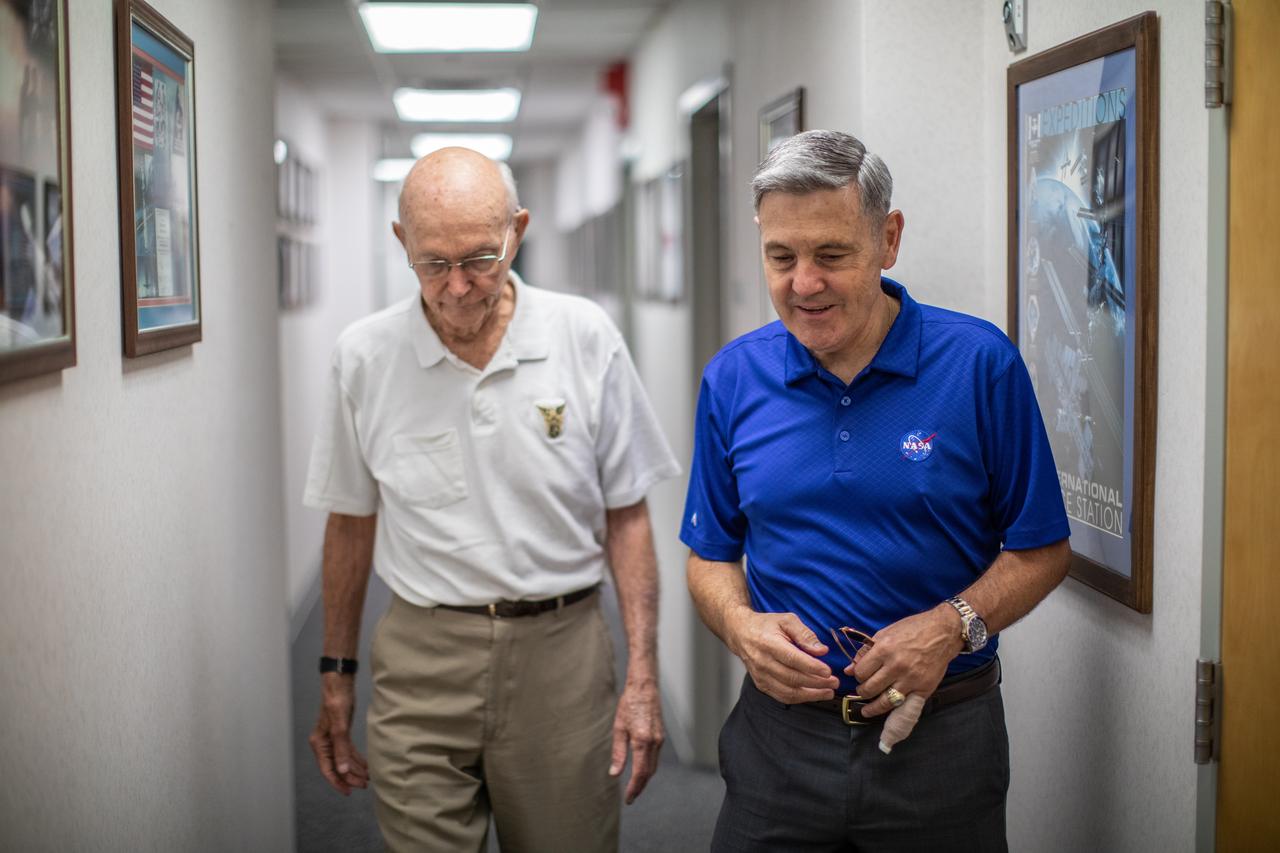
On the 50th anniversary of the Apollo 11 launch, July 16, 2019, astronaut Michael Collins, left, speaks to Kennedy Space Center Director Bob Cabana in the astronaut crew quarters about the moments leading up to launch at 9:32 a.m. on July 16, 1969, and what it was like to be the first to land on the Moon.

On the 50th anniversary of the Apollo 11 launch, July 16, 2019, astronaut Michael Collins, left, speaks to Kennedy Space Center Director Bob Cabana in the astronaut crew quarters about the moments leading up to launch at 9:32 a.m. on July 16, 1969, and what it was like to be the first to land on the Moon.
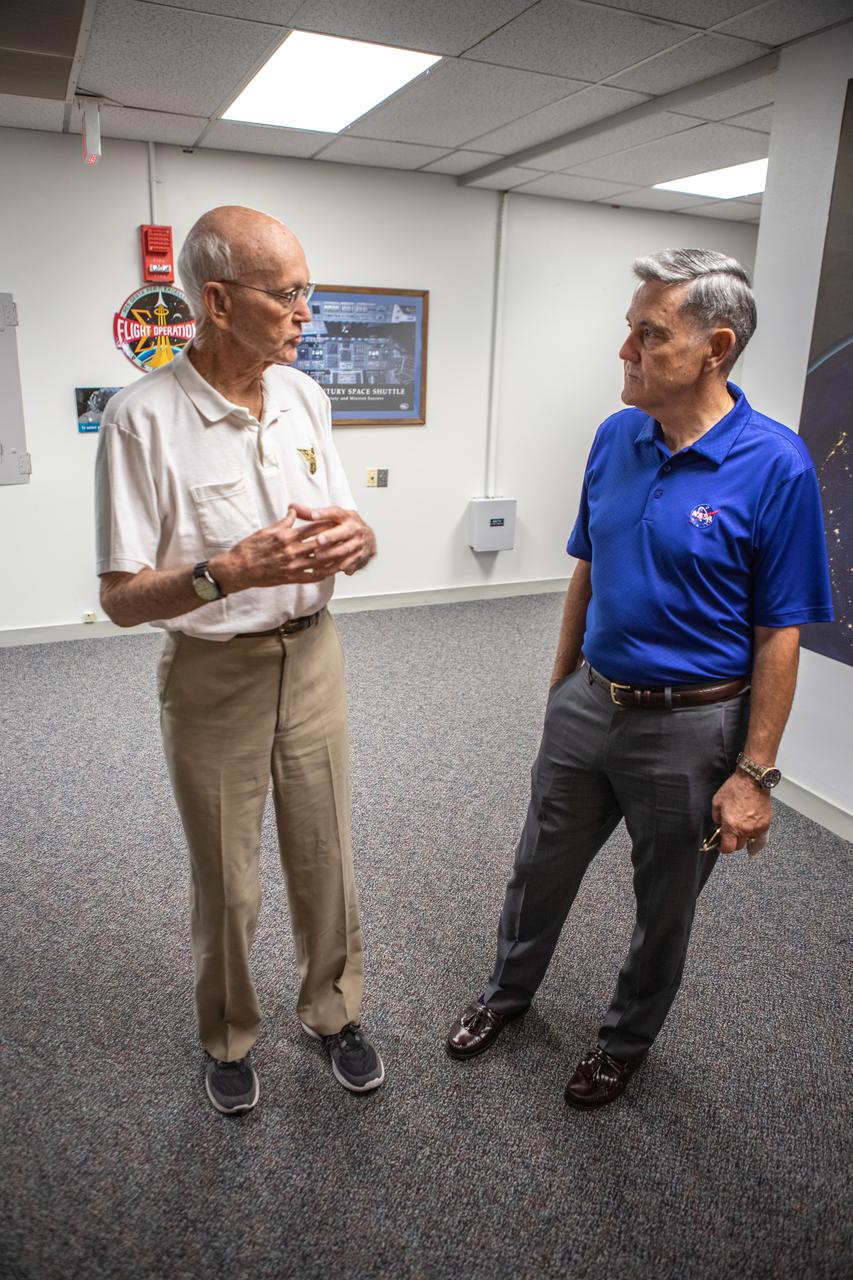
On the 50th anniversary of the Apollo 11 launch, July 16, 2019, astronaut Michael Collins, left, speaks to Kennedy Space Center Director Bob Cabana in the astronaut crew quarters about the moments leading up to launch at 9:32 a.m. on July 16, 1969, and what it was like to be the first to land on the Moon.
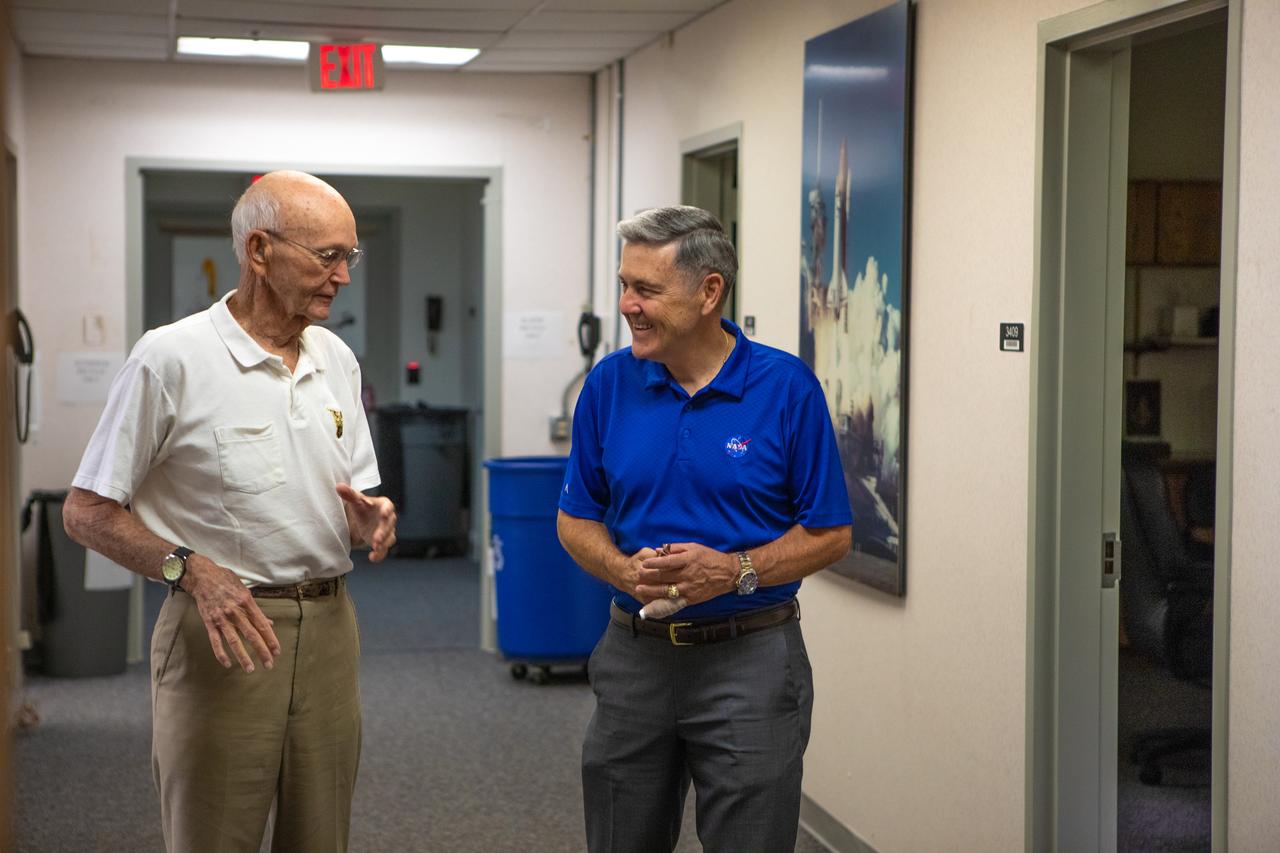
On the 50th anniversary of the Apollo 11 launch, July 16, 2019, astronaut Michael Collins, left, speaks to Kennedy Space Center Director Bob Cabana in the astronaut crew quarters about the moments leading up to launch at 9:32 a.m. on July 16, 1969, and what it was like to be the first to land on the Moon.
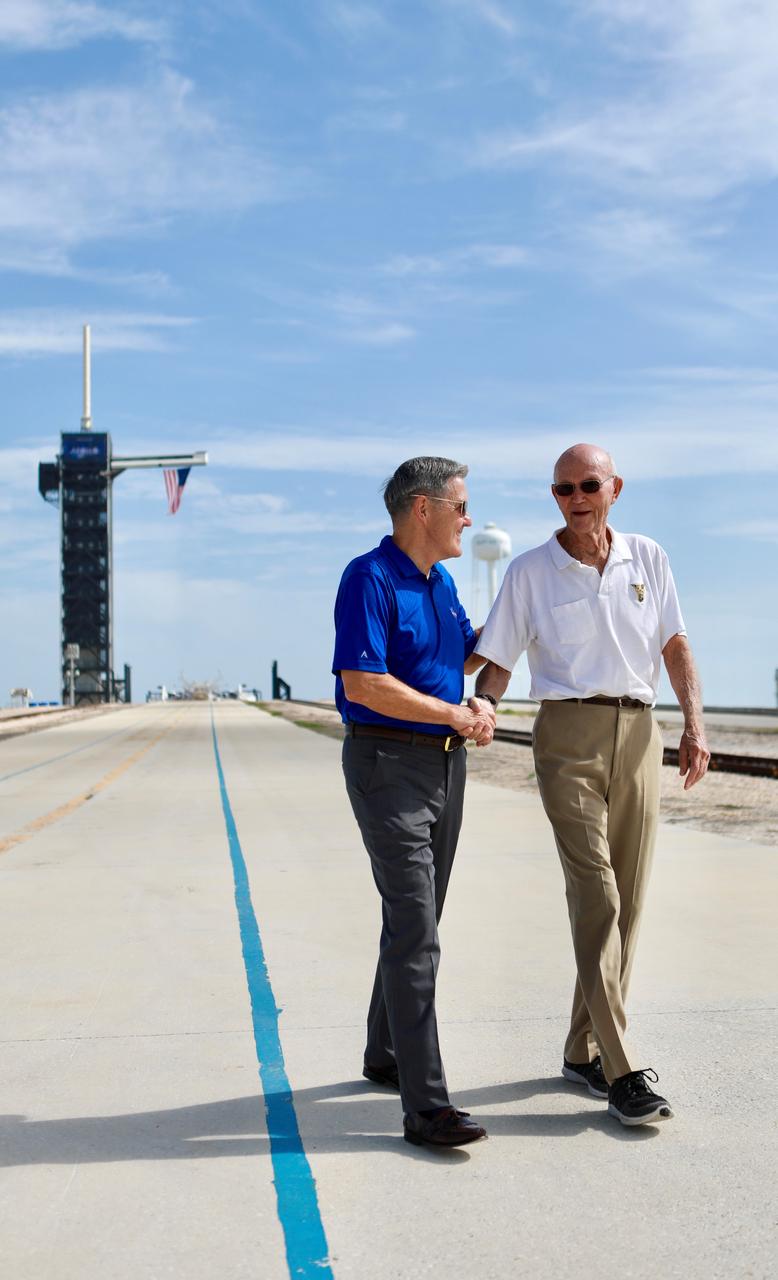
On the 50th anniversary of the Apollo 11 launch, July 16, 2019, astronaut Michael Collins, right, speaks to Kennedy Space Center Director Bob Cabana at Launch Complex 39A, about the moments leading up to launch at 9:32 a.m. on July 16, 1969, and what it was like to be the first to land on the Moon.
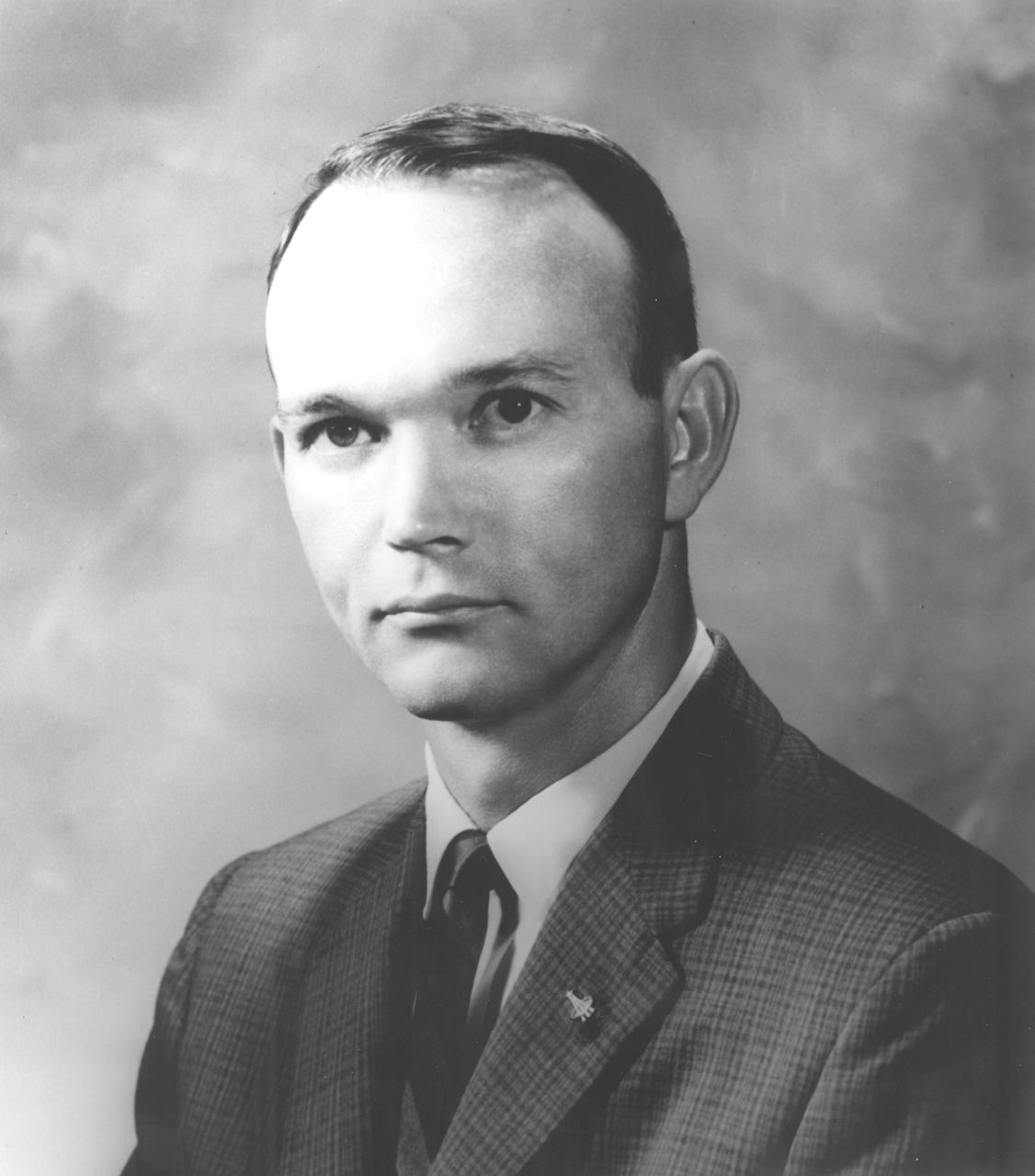
This is the official NASA portrait of astronaut Michael Collins. Collins chose an Air Force career following graduation from West Point. He served as an experimental flight test officer at the Air Force Flight Test Center, Edwards Air Force Base, California, and, in that capacity, tested performance and stability and control characteristics of Air Force aircraft, primarily jet fighters. Having logged approximately 5,000 hours flying time, Collins was one of the third group of astronauts named by NASA in October 1963. Collins completed two space flights, logging 266 hours in space, of which, 1 hour and 27 minutes was spent in Extra Vehicular Activity (EVA). On July 18, 1966, he served as backup pilot for the Gemini VII mission which included a successful rendezvous and docking with a separately launched Agena target vehicle and, using the power of the Agena, maneuvered the Gemini spacecraft into another orbit for a rendezvous with a second, passive Agena. His skillful performance in completing two periods of EVA included the recovery of a micrometeorite detection experiment from the passive Agena. July 16-24, 1969, Collins served as command module (CM) pilot on Apollo 11, the historic first lunar landing mission. He remained aboard the CM, Columbia, on station in lunar orbit and performed the final re-docking maneuvers following a successful lunar orbit rendezvous with the Lunar Module (LM), Eagle. Collins left NASA in January 1970.
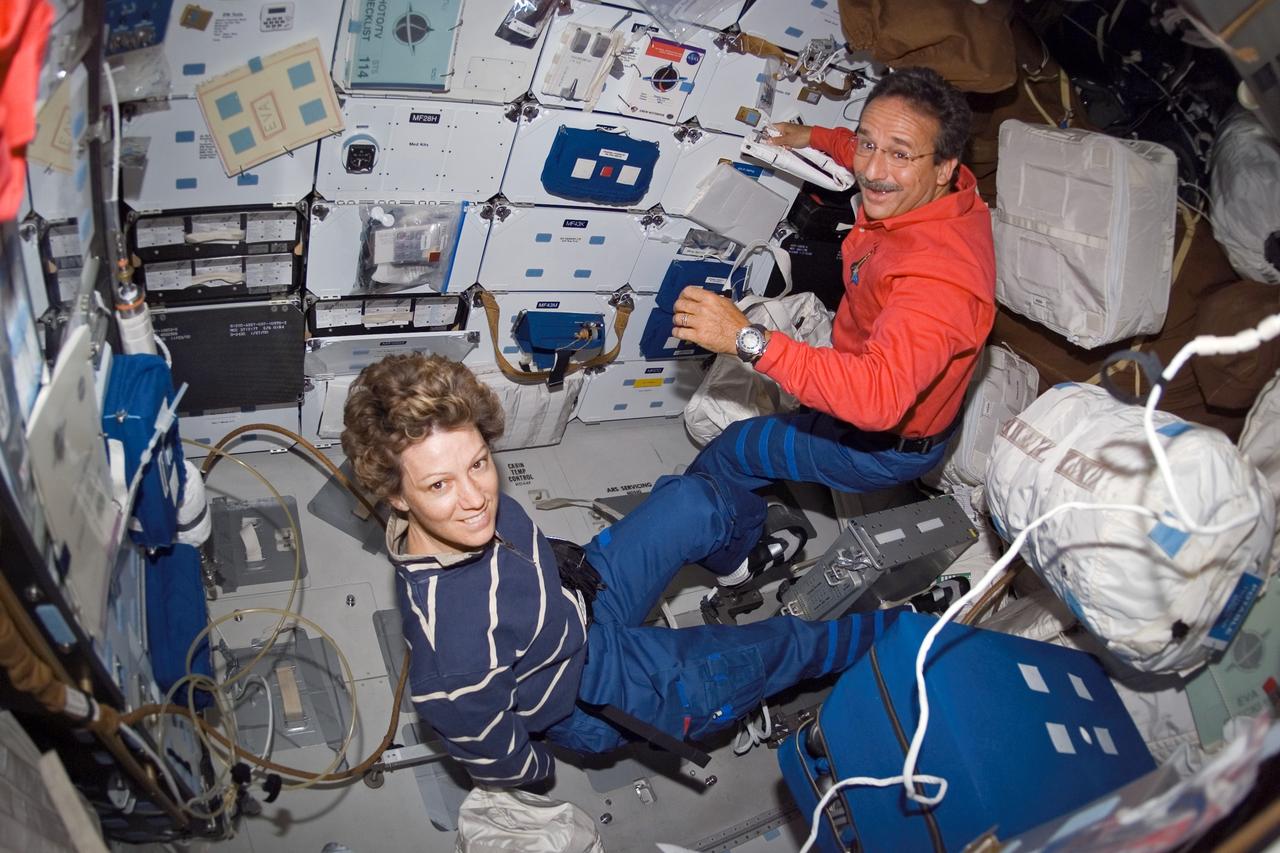
S114-E-6946 (4 August 2005) --- Astronaut Eileen M. Collins, STS-114 commander, works out on the bicycle ergometer on the Space Shuttle Discovery's middeck. Astronaut Charles J. Camarda, mission specialist, works along side Collins.
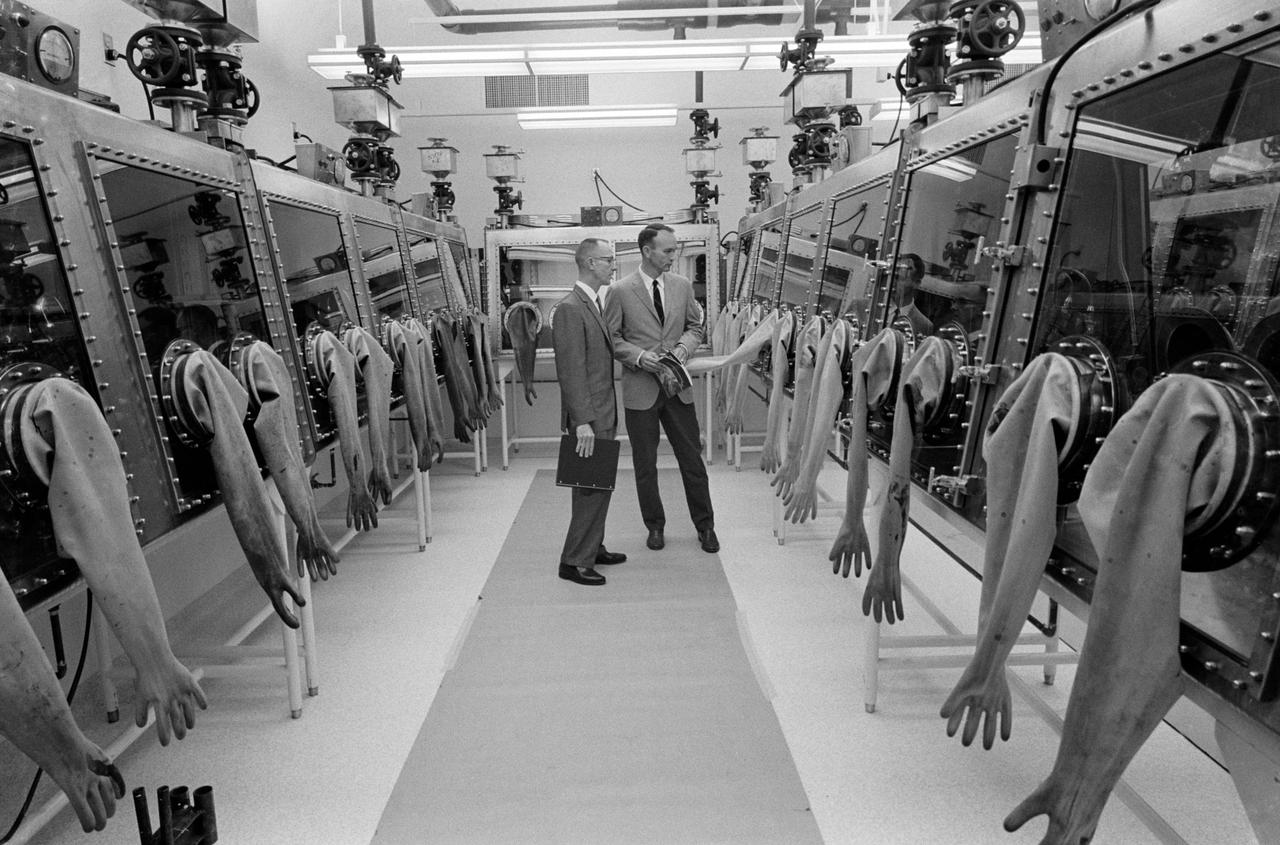
Astronaut Michael Collins on the right and Richard Wright on the left during tour of Lunar Receiving Lab (LRL) at MSC.
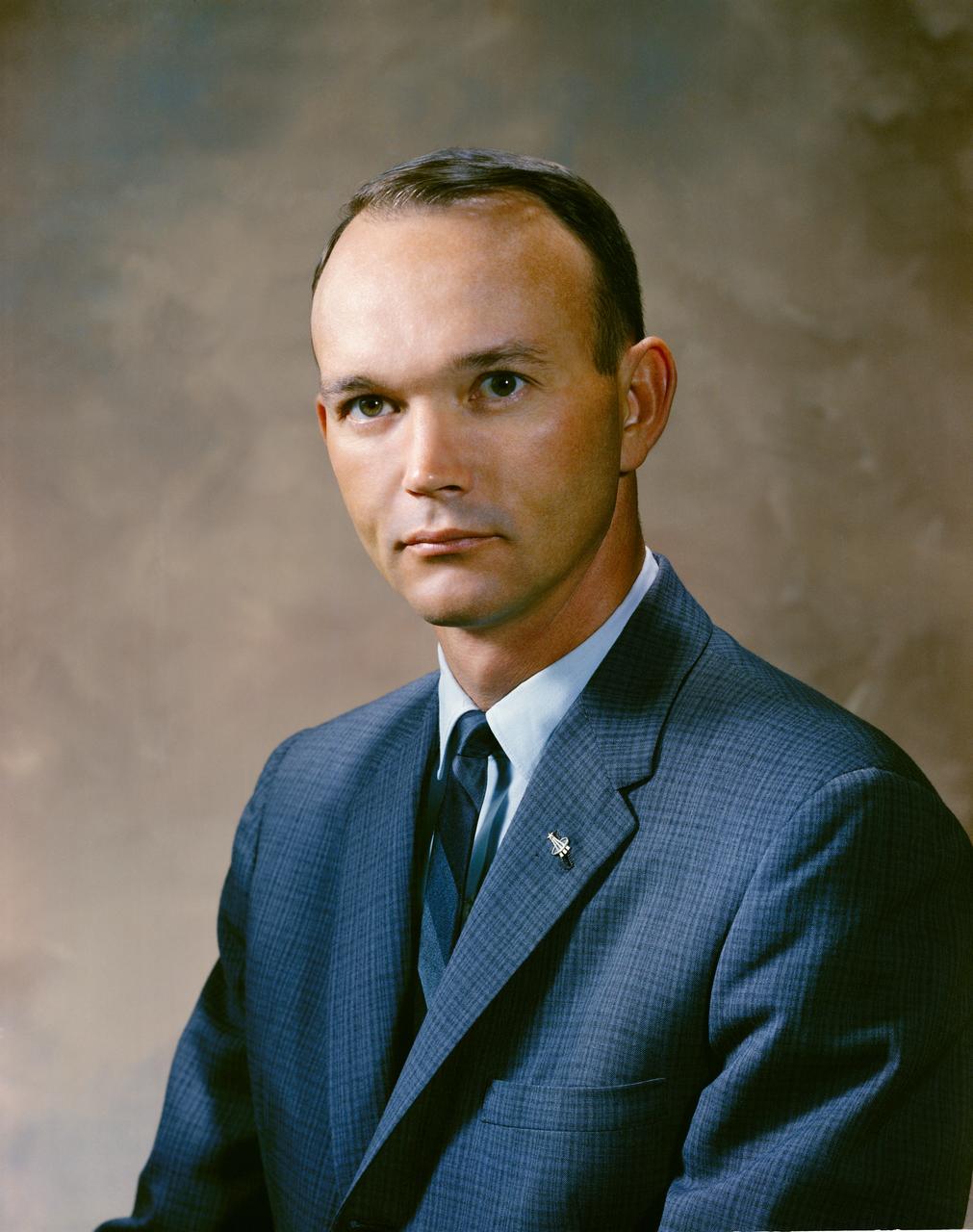
S64-29926 (1964) --- Portrait of astronaut Michael Collins in a business suit. Photo credit: NASA
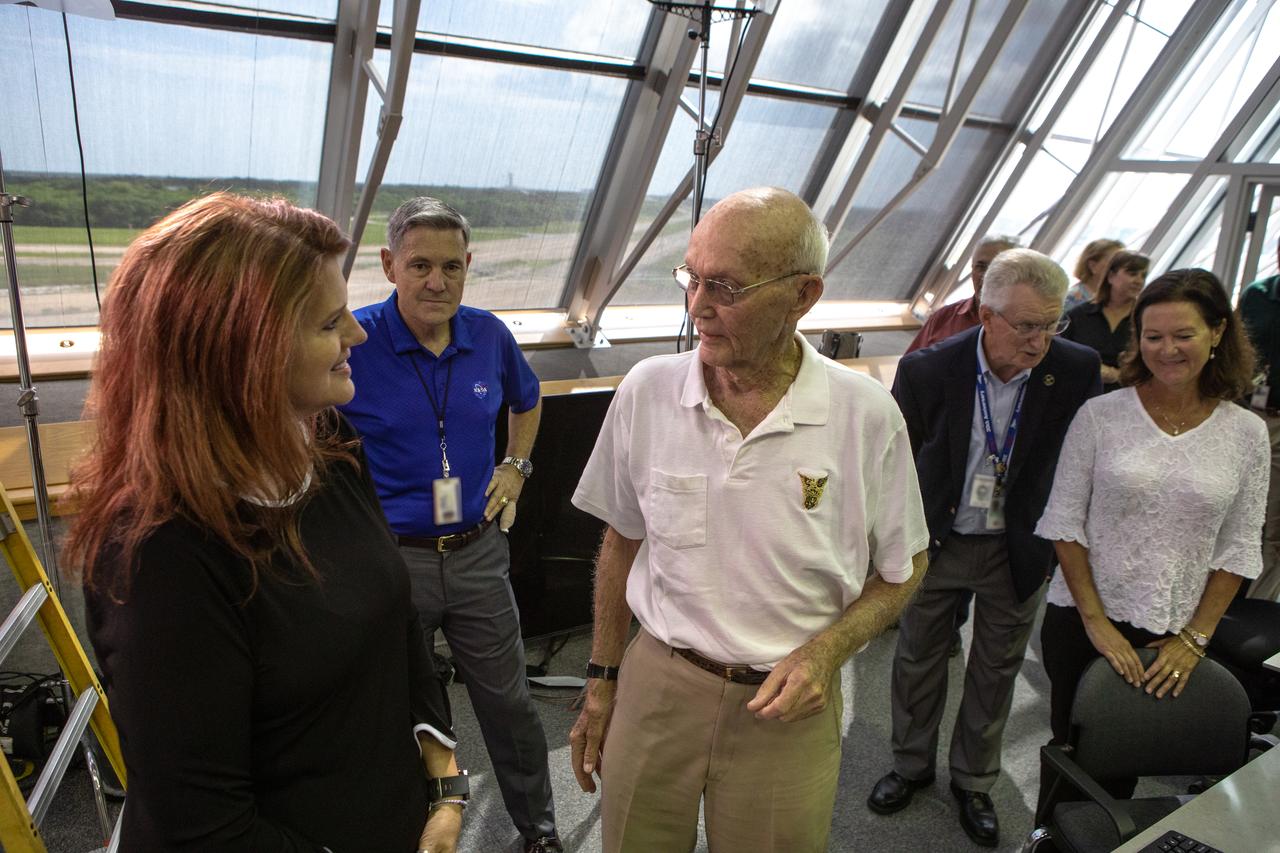
On July 16, 2019, the 50th anniversary of the Apollo 11 launch to the Moon, Apollo 11 and Artemis 1 launch team members mingle in Launch Control Center Firing Room 1 at NASA's Kennedy Space Center in Florida. Artemis 1 Launch Director Charlie Blackwell-Thompson, left, talks to Apollo 11 astronaut Michael Collins. In the background is Kennedy Director Bob Cabana.
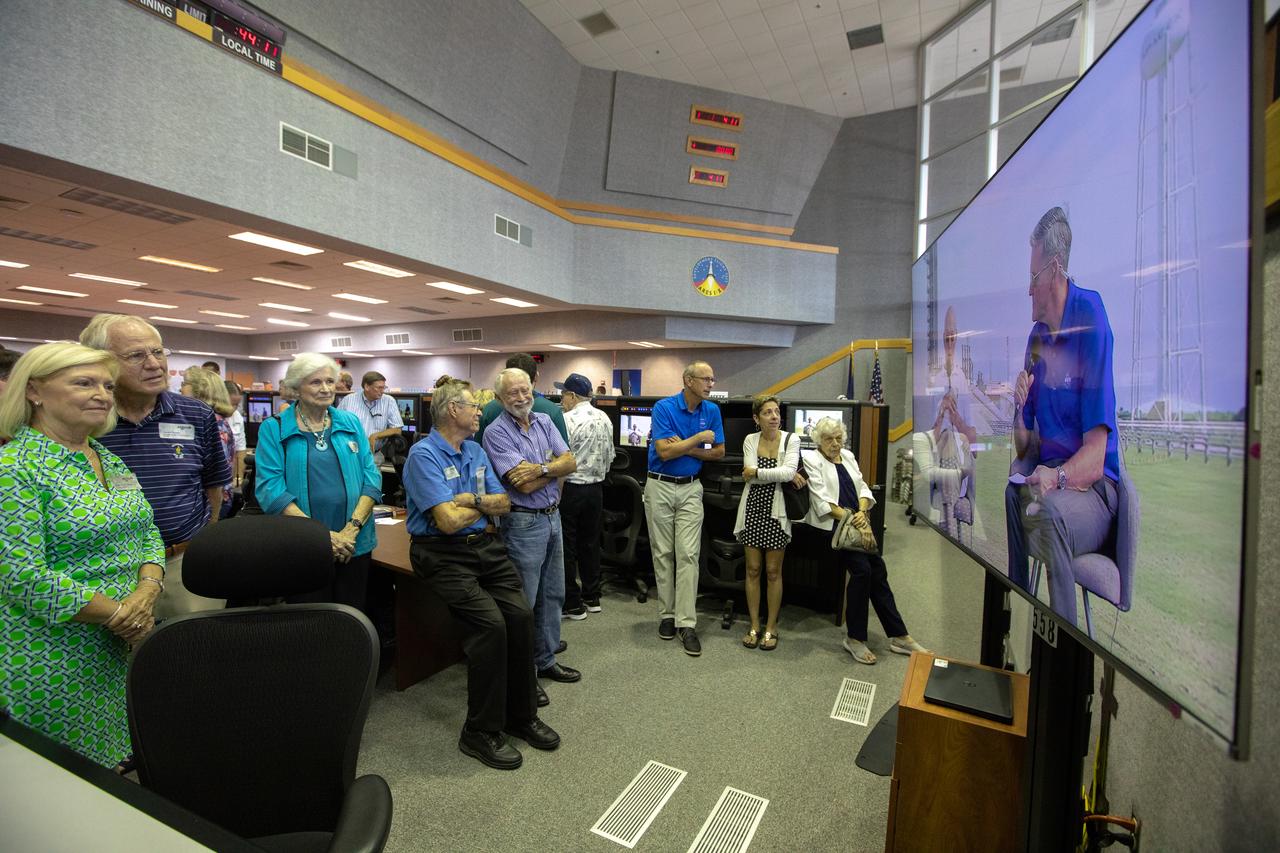
On July 16, 2019, the 50th anniversary of the Apollo 11 launch to the Moon, Apollo-era and Artemis 1 launch team members watch a live broadcast on monitors in Launch Control Center Firing Room 1 at NASA's Kennedy Space Center in Florida. On screen, Kennedy Center Director Bob Cabana is talking with Apollo 11 astronaut Michael Collins at Launch Complex 39A, the site of the Apollo 11 launch.

On July 16, 2019, the 50th anniversary of the Apollo 11 launch to the Moon, Apollo 11 and Artemis 1 launch team members mingle in Launch Control Center Firing Room 1 at NASA's Kennedy Space Center in Florida. Artemis 1 Launch Director Charlie Blackwell-Thompson, left, talks to Apollo 11 astronaut Michael Collins. In the background is Kennedy Director Bob Cabana.
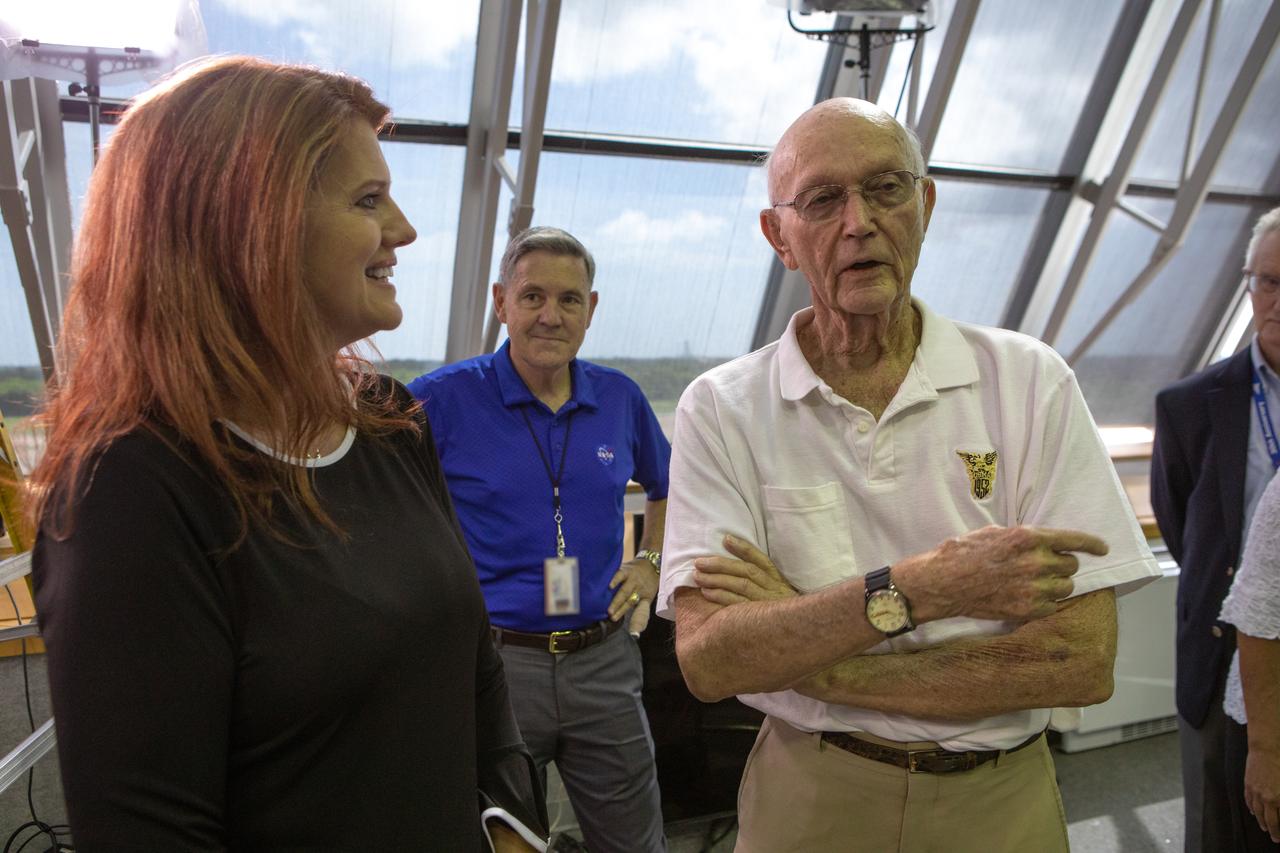
On July 16, 2019, the 50th anniversary of the Apollo 11 launch to the Moon, Apollo 11 and Artemis 1 launch team members mingle in Launch Control Center Firing Room 1 at NASA's Kennedy Space Center in Florida. Artemis 1 Launch Director Charlie Blackwell-Thompson, left, talks to Apollo 11 astronaut Michael Collins. In the background is Kennedy Director Bob Cabana.
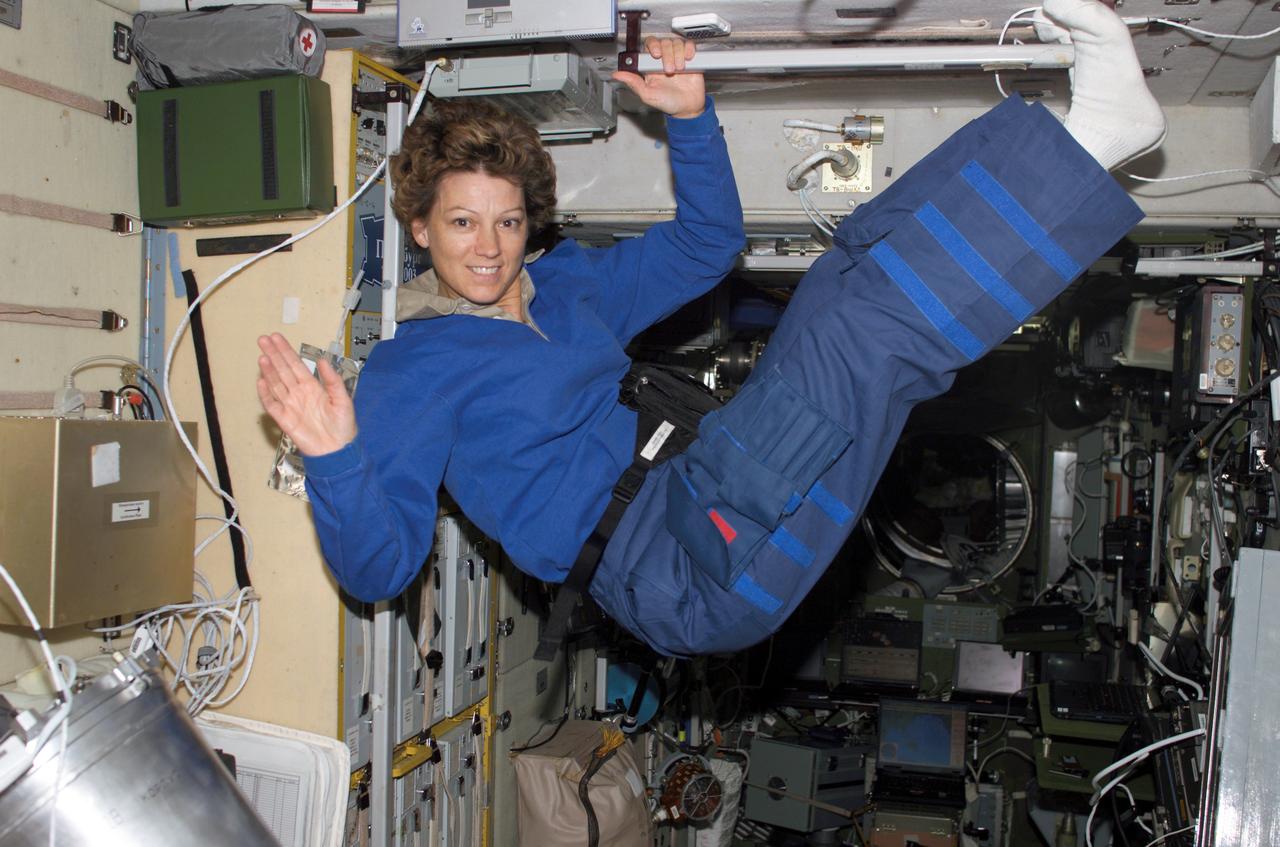
S114-E-7138 (5 August 2005) --- Astronaut Eileen M. Collins, STS-114 commander, waves while floating in the Zvezda Service Module of the international space station while Space Shuttle Discovery was docked to the station.
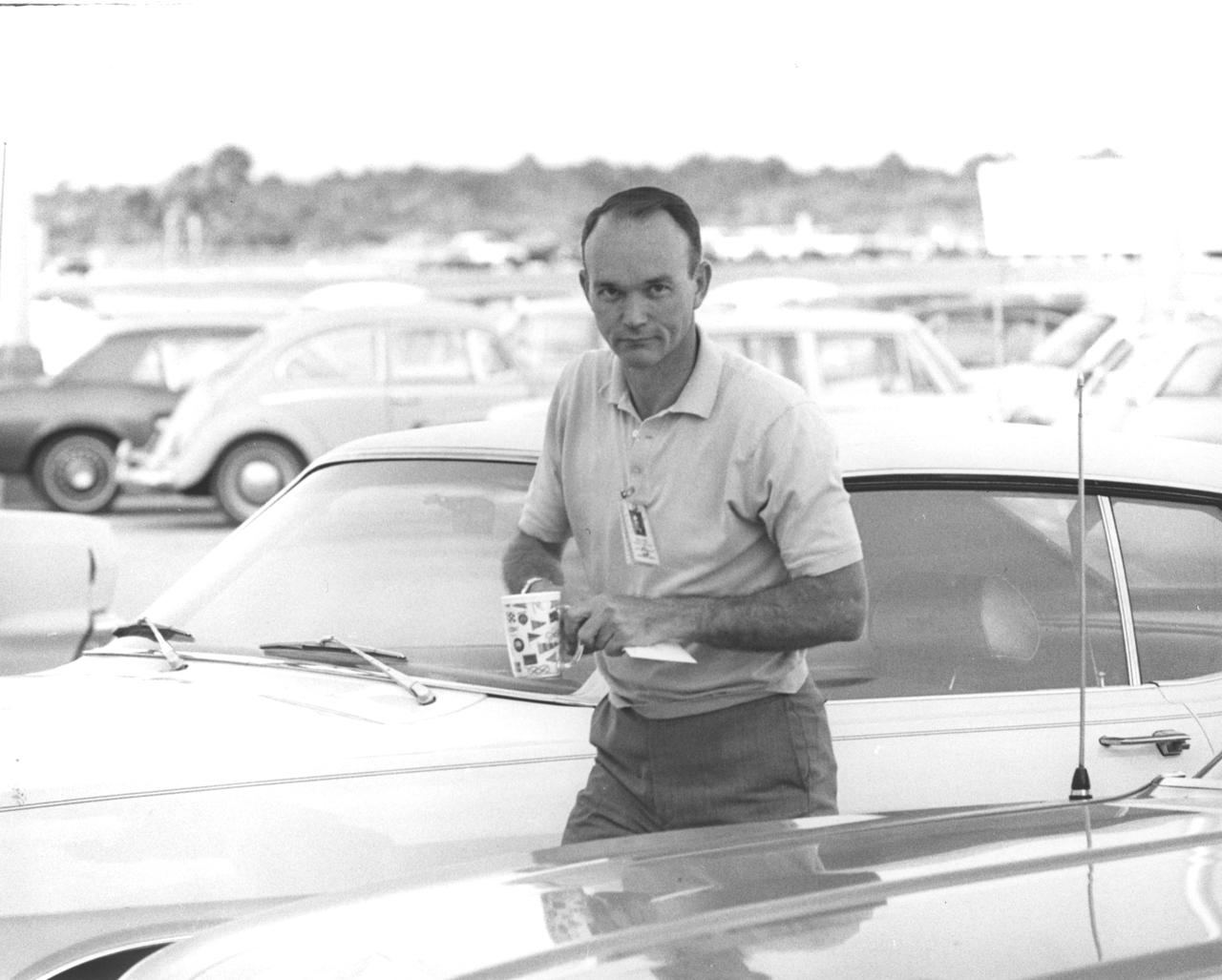
In this photograph, Apollo 11 astronaut Michael Collins carries his coffee with him as he arrives at the flight crew training building of the NASA Kennedy Space Center (KSC) in Florida, one week before the nation’s first lunar landing mission. The Apollo 11 mission launched from KSC via the Marshall Space Flight Center (MSFC) developed Saturn V launch vehicle on July 16, 1969 and safely returned to Earth on July 24, 1969. Aboard the space craft were astronauts Neil A. Armstrong, commander; Michael Collins, Command Module (CM) pilot; and Edwin E. (Buzz) Aldrin Jr., Lunar Module (LM) pilot. The CM, “Columbia”, piloted by Collins, remained in a parking orbit around the Moon while the LM, “Eagle’’, carrying astronauts Armstrong and Aldrin, landed on the Moon. On July 20, 1969, Armstrong was the first human to ever stand on the lunar surface, followed by Aldrin. During 2½ hours of surface exploration, the crew collected 47 pounds of lunar surface material for analysis back on Earth. With the success of Apollo 11, the national objective to land men on the Moon and return them safely to Earth had been accomplished.
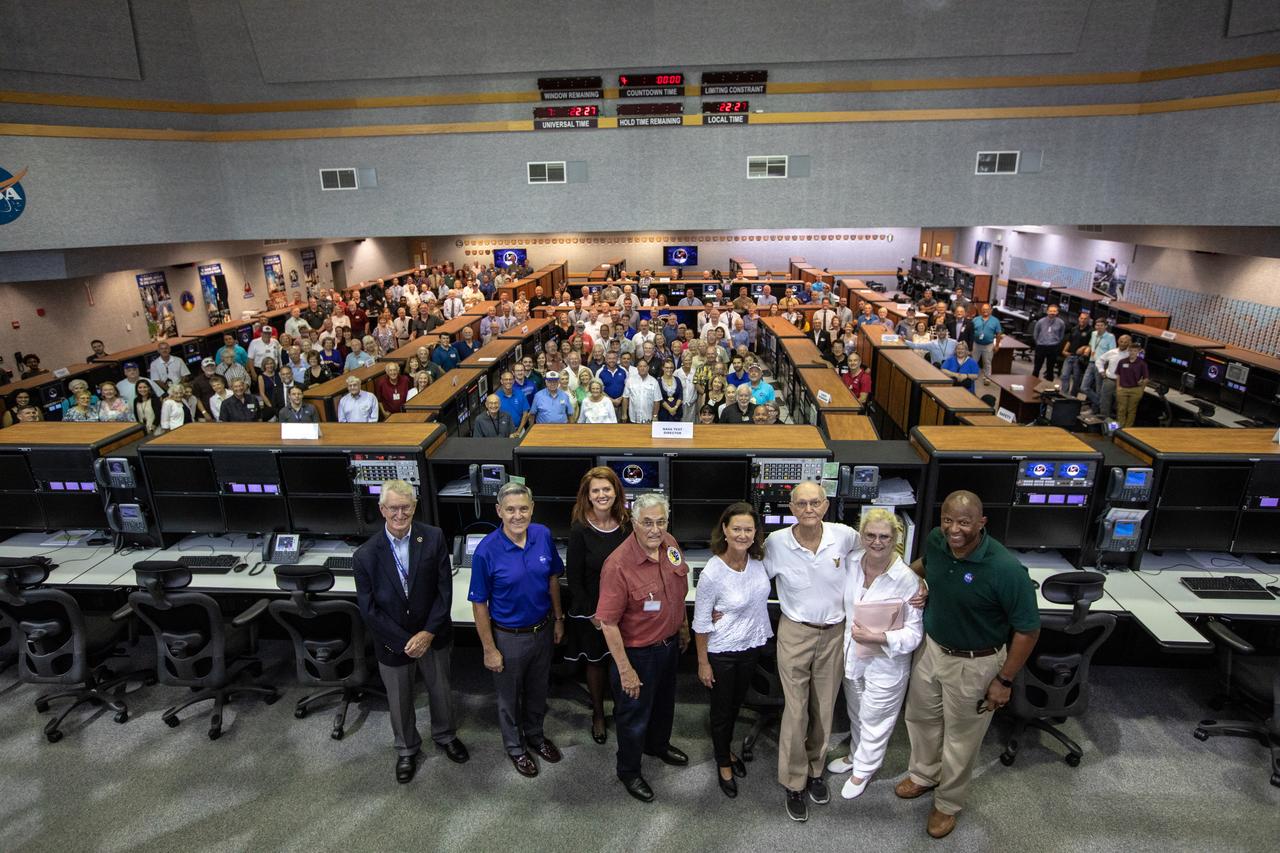
On July 16, 2019, the 50th anniversary of the Apollo 11 launch to the Moon, launch team members from Apollo 11 and Artemis 1 mingled in Launch Control Center Firing Room 1 at NASA's Kennedy Space Center in Florida. From left, are John Tribe, Apollo 11 launch team member; Kennedy Space Center Director Bob Cabana; Artemis 1 Launch Director Charlie Blackwell-Thompson; Harrison Schmitt, Apollo 17 astronaut; Apollo 11 astronaut Michael Collins, with his daughters Ann (left) and Kate (right); and Kelvin Manning, associate director, technical.
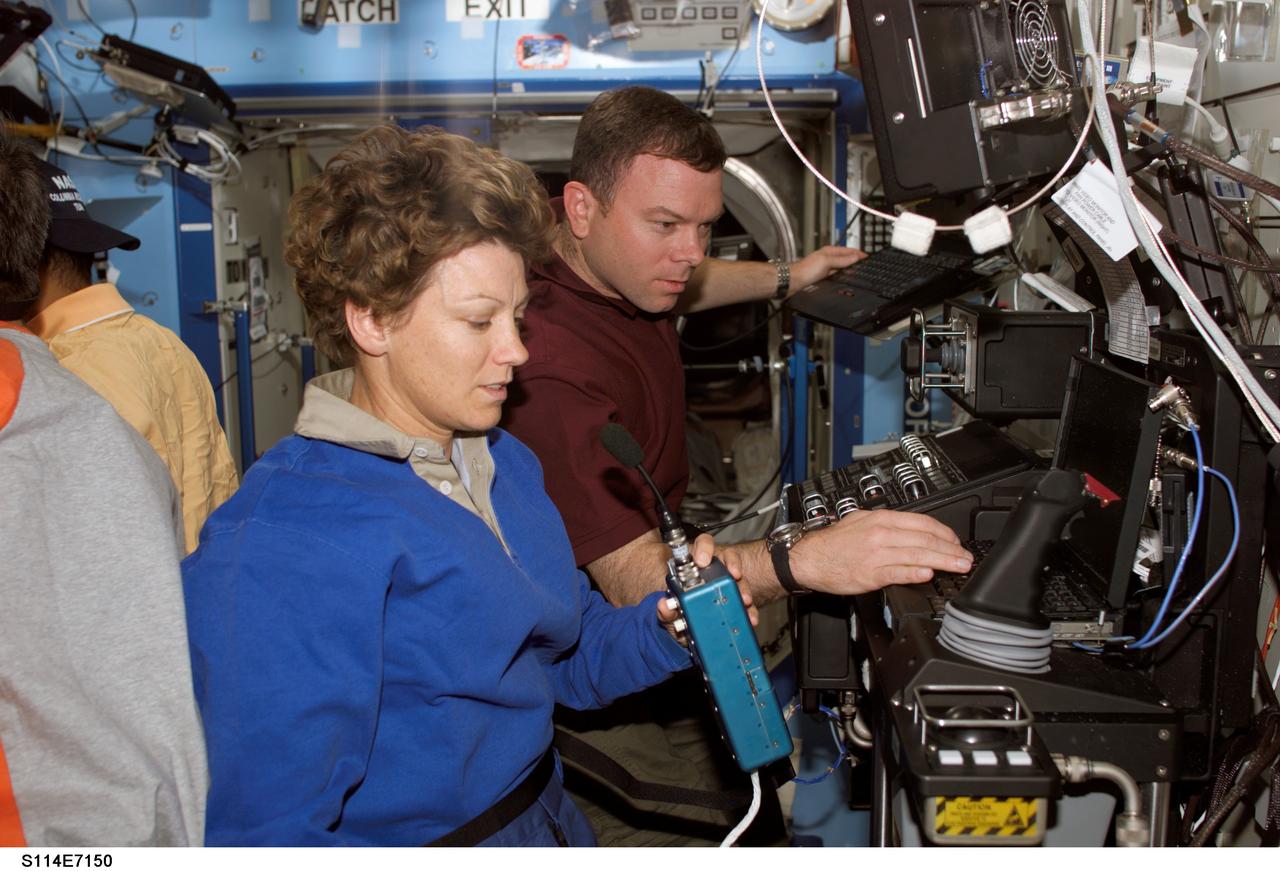
S114-E-7150 (5 August 2005) --- Astronauts Eileen M. Collins (foreground) and James M. Kelly, STS-114 commander and pilot, respectively, work with the Mobile Service System (MSS) and Canadarm2 controls in the Destiny laboratory of the International Space Station while Space Shuttle Discovery was docked to the Station.
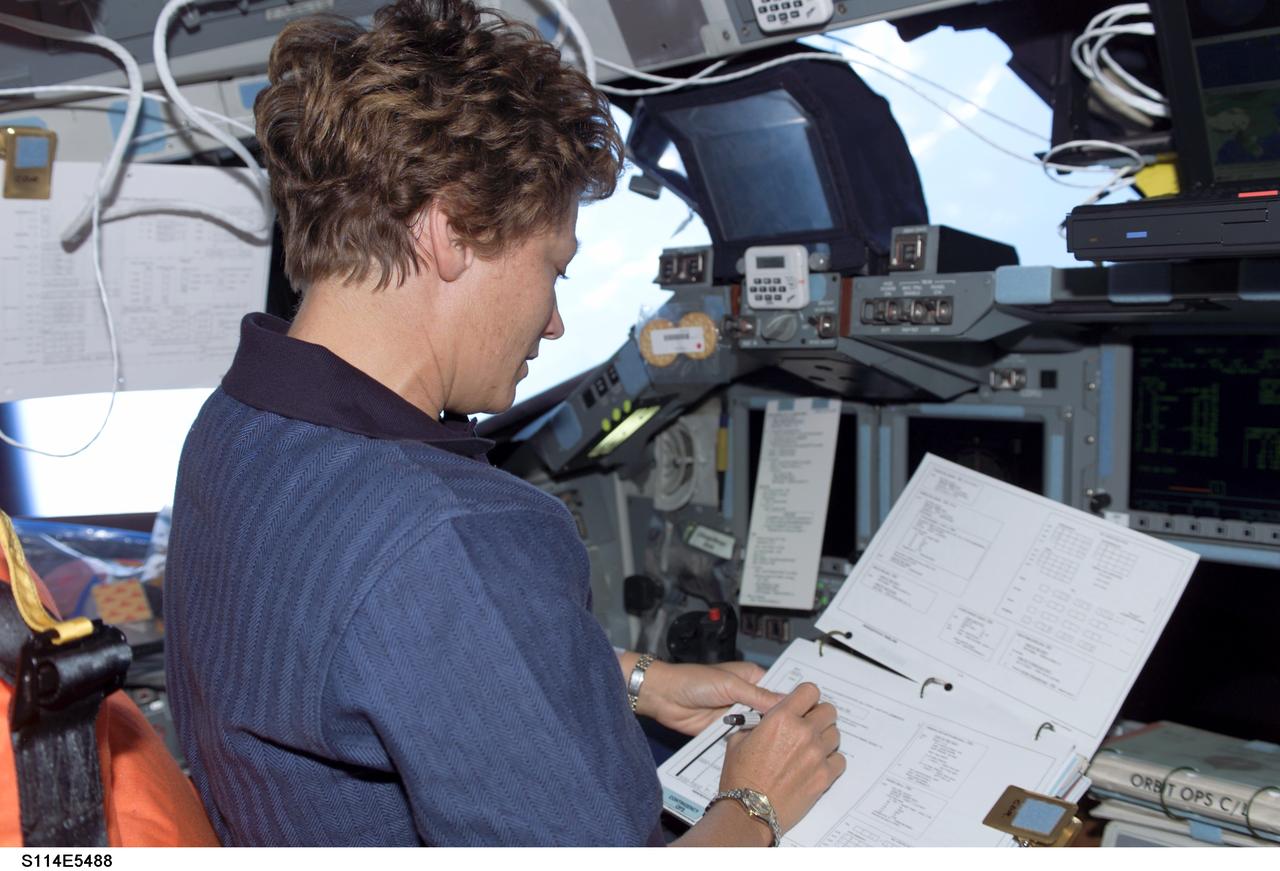
S114-E-5488 (28 July 2005) --- Astronaut Eileen M. Collins, STS-114 commander, looks over a checklist on Discovery's forward flight deck on a day dedicated to rendezvous and docking activities with the International Space Station and followup operations.
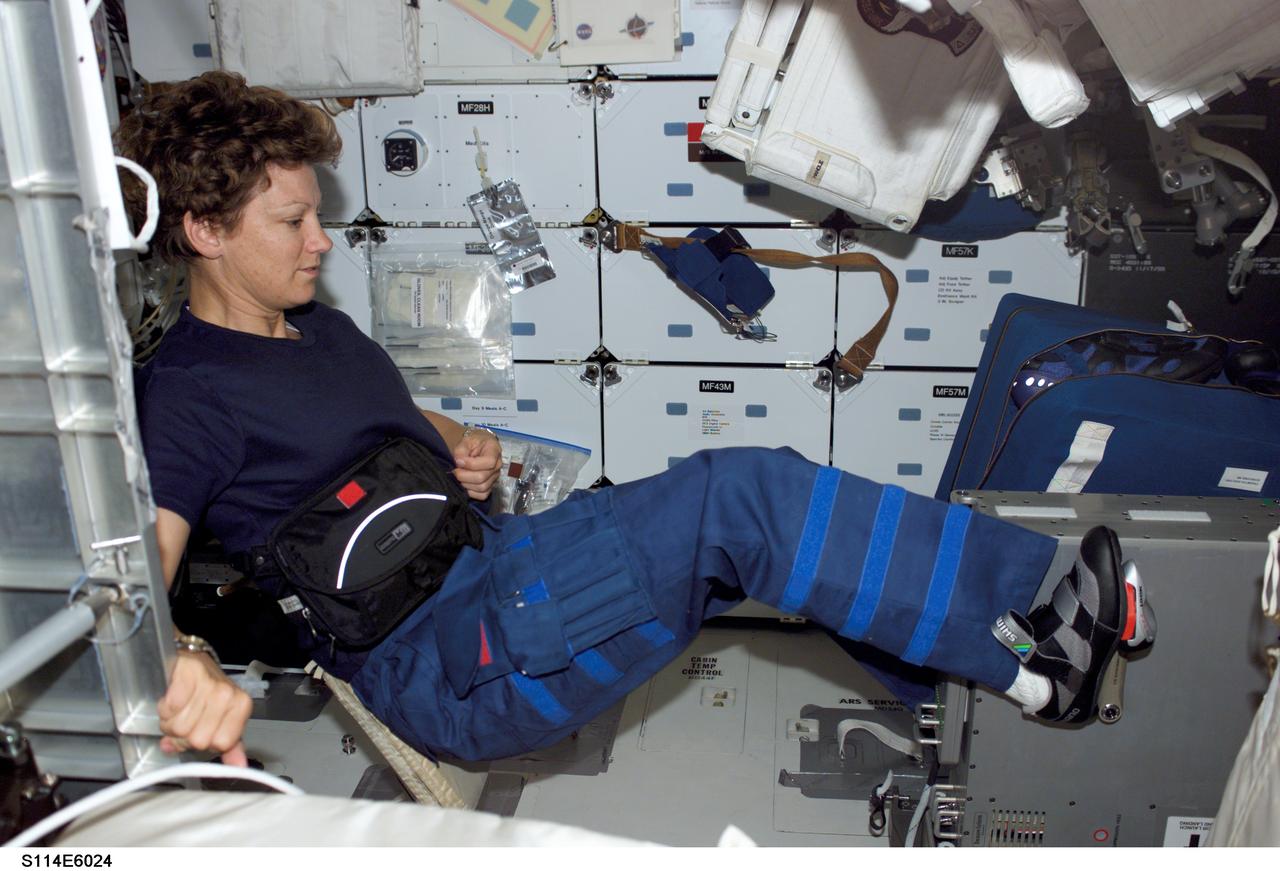
S114-E-6024 (1 August 2005) --- Astronaut Eileen M. Collins, STS-114 commander, works out on the bicycle ergometer on the Space Shuttle Discovery's middeck.
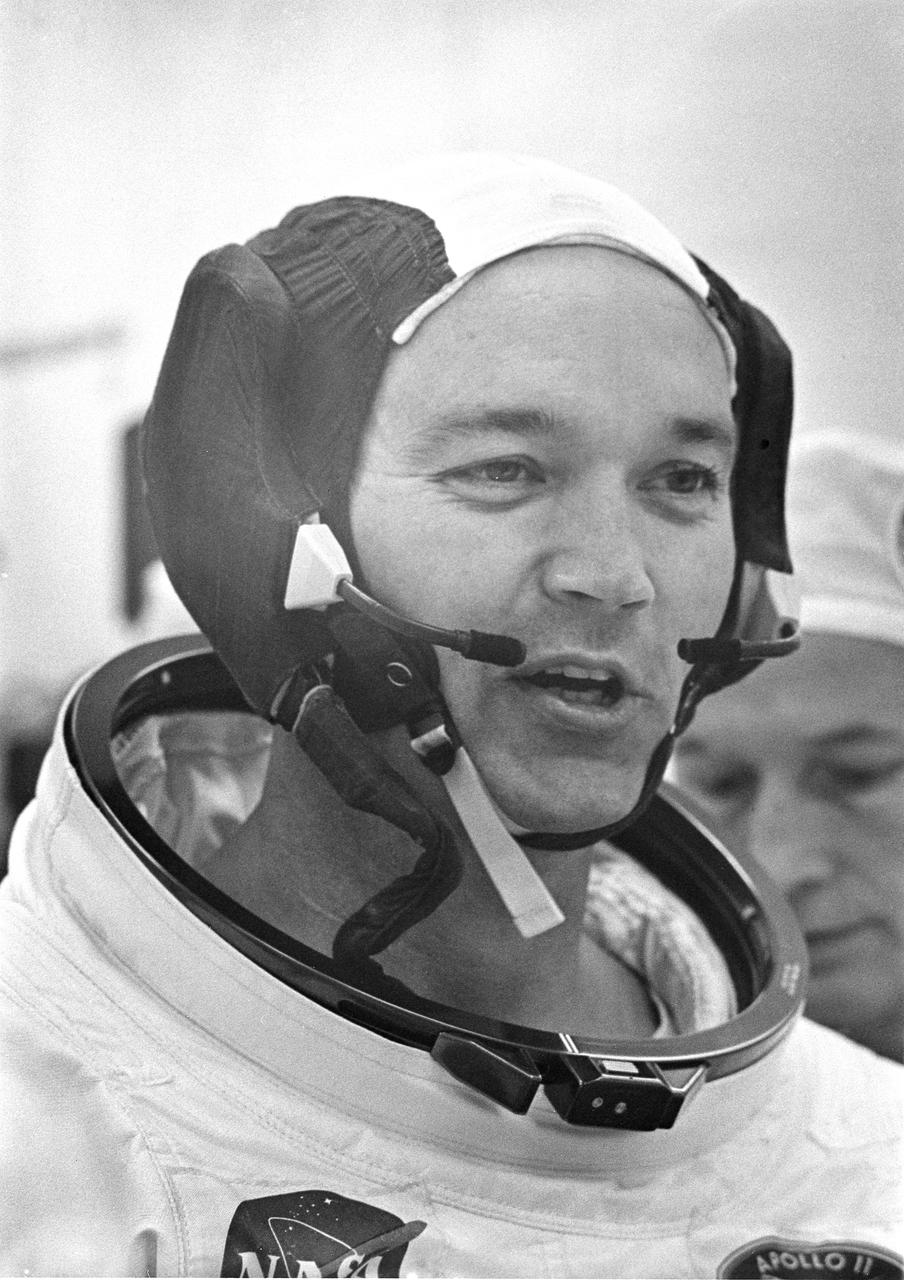
Dunned in his space suit, Command Module (CM) pilot Michael Collins does a final check of his communications system before the boarding of the Apollo 11 mission. Launched via a Saturn V launch vehicle, the first manned lunar mission launched from the Kennedy Space Center, Florida on July 16, 1969 and safely returned to Earth on July 24, 1969. The Saturn V vehicle was developed by the Marshall Space Flight Center (MSFC) under the direction of Dr. Wernher von Braun. The 3-man crew aboard the flight consisted of astronauts Collins; Neil A. Armstrong, Mission Commander; and Edwin E. Aldrin, Jr., Lunar Module (LM) Pilot. Armstrong was the first human to ever stand on the lunar surface, followed by Edwin (Buzz) Aldrin. Meanwhile, astronaut Collins piloted the CM in a parking orbit around the Moon. During a 2½ hour surface exploration, the crew collected 47 pounds of lunar surface material which was returned to Earth for analysis. With the success of Apollo 11, the national objective to land men on the Moon and return them safely to Earth had been accomplished.
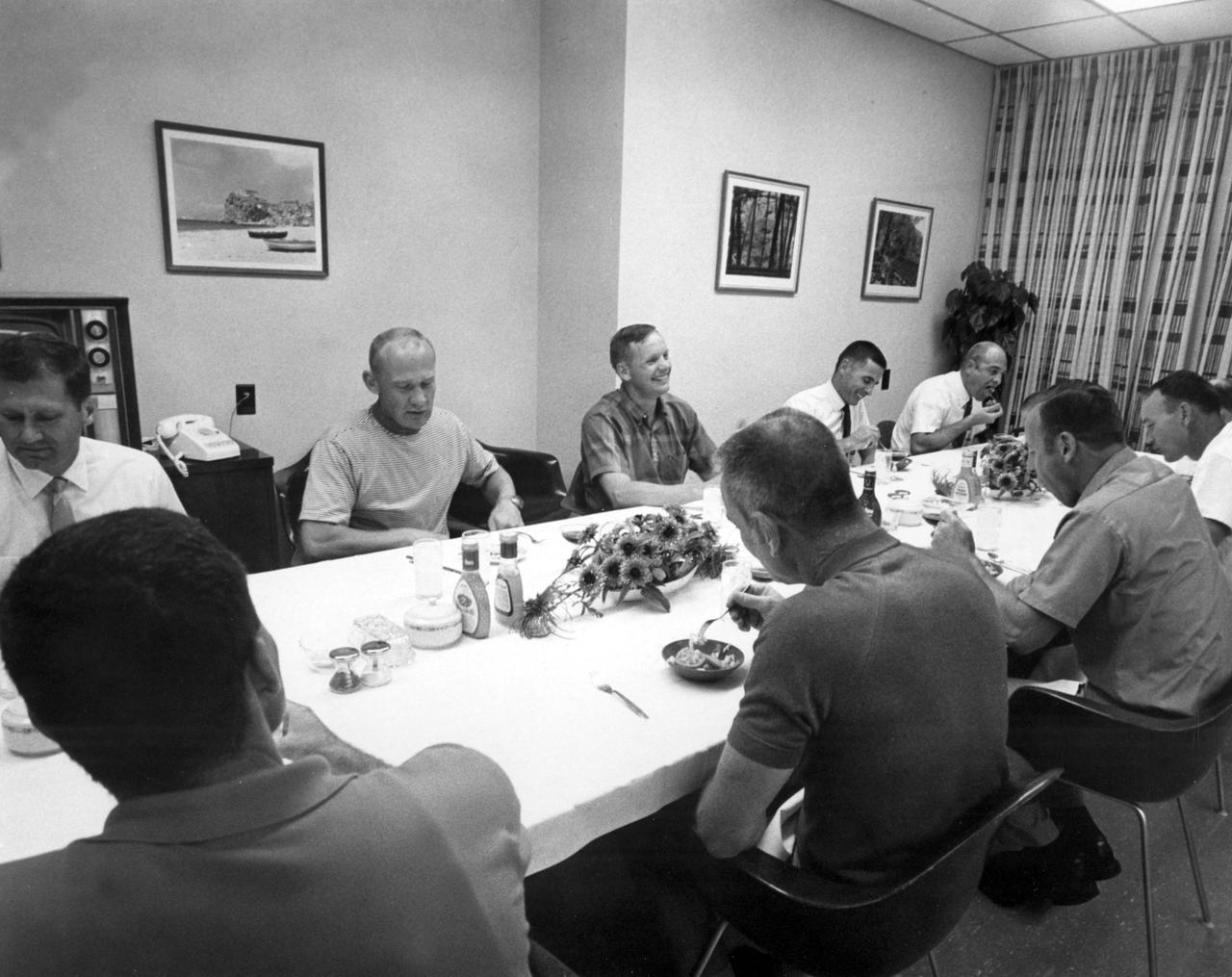
Apollo 11 astronauts Edwin E. Aldrin (striped shirt), Neil A. Armstrong, (left of Aldrin), and Michael Collins (extreme right on opposite side of table) had dinner with other astronauts the night before launching for the first lunar landing mission. The Apollo 11 mission launched from the NASA Kennedy Space Center (KSC) in Florida via the Marshall Space Flight Center (MSFC) developed Saturn V launch vehicle on July 16, 1969 and safely returned to Earth on July 24, 1969. Aboard the space craft were astronauts Neil A. Armstrong, commander; Michael Collins, Command Module (CM) pilot; and Edwin E. (Buzz) Aldrin Jr., Lunar Module (LM) pilot. The CM, “Columbia”, piloted by Collins, remained in a parking orbit around the Moon while the LM, “Eagle’’, carrying astronauts Armstrong and Aldrin, landed on the Moon. On July 20, 1969, Armstrong was the first human to ever stand on the lunar surface, followed by Aldrin. During 2½ hours of surface exploration, the crew collected 47 pounds of lunar surface material for analysis back on Earth. With the success of Apollo 11, the national objective to land men on the Moon and return them safely to Earth had been accomplished.
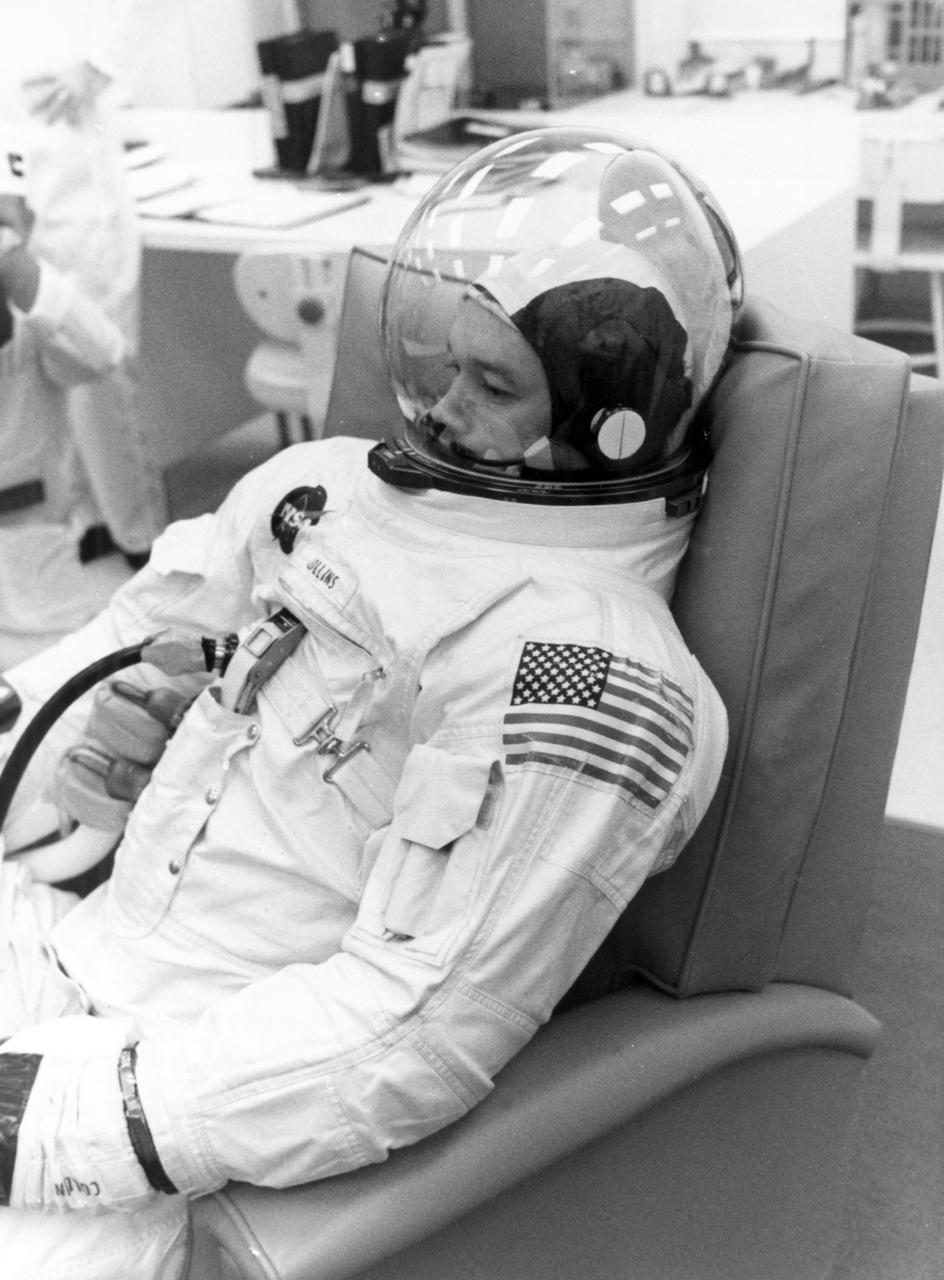
Apollo 11 crew member Michael Collins appears calm after suiting up activities for his participation in the countdown demonstration test aboard the Apollo 11 space craft along with astronauts Aldrin and Armstrong. The Apollo 11 mission, the first lunar landing mission, launched from the Kennedy Space Center (KSC) in Florida via the Marshall Space Flight Center (MSFC) developed Saturn V launch vehicle on July 16, 1969 and safely returned to Earth on July 24, 1969. Aboard the space craft were astronauts Neil A. Armstrong, commander; Michael Collins, Command Module (CM) pilot; and Edwin E. (Buzz) Aldrin Jr., Lunar Module (LM) pilot. The CM, “Columbia”, piloted by Collins, remained in a parking orbit around the Moon while the LM, “Eagle’’, carrying astronauts Armstrong and Aldrin, landed on the Moon. On July 20, 1969, Armstrong was the first human to ever stand on the lunar surface, followed by Aldrin. During 2½ hours of surface exploration, the crew collected 47 pounds of lunar surface material for analysis back on Earth. With the success of Apollo 11, the national objective to land men on the Moon and return them safely to Earth had been accomplished.
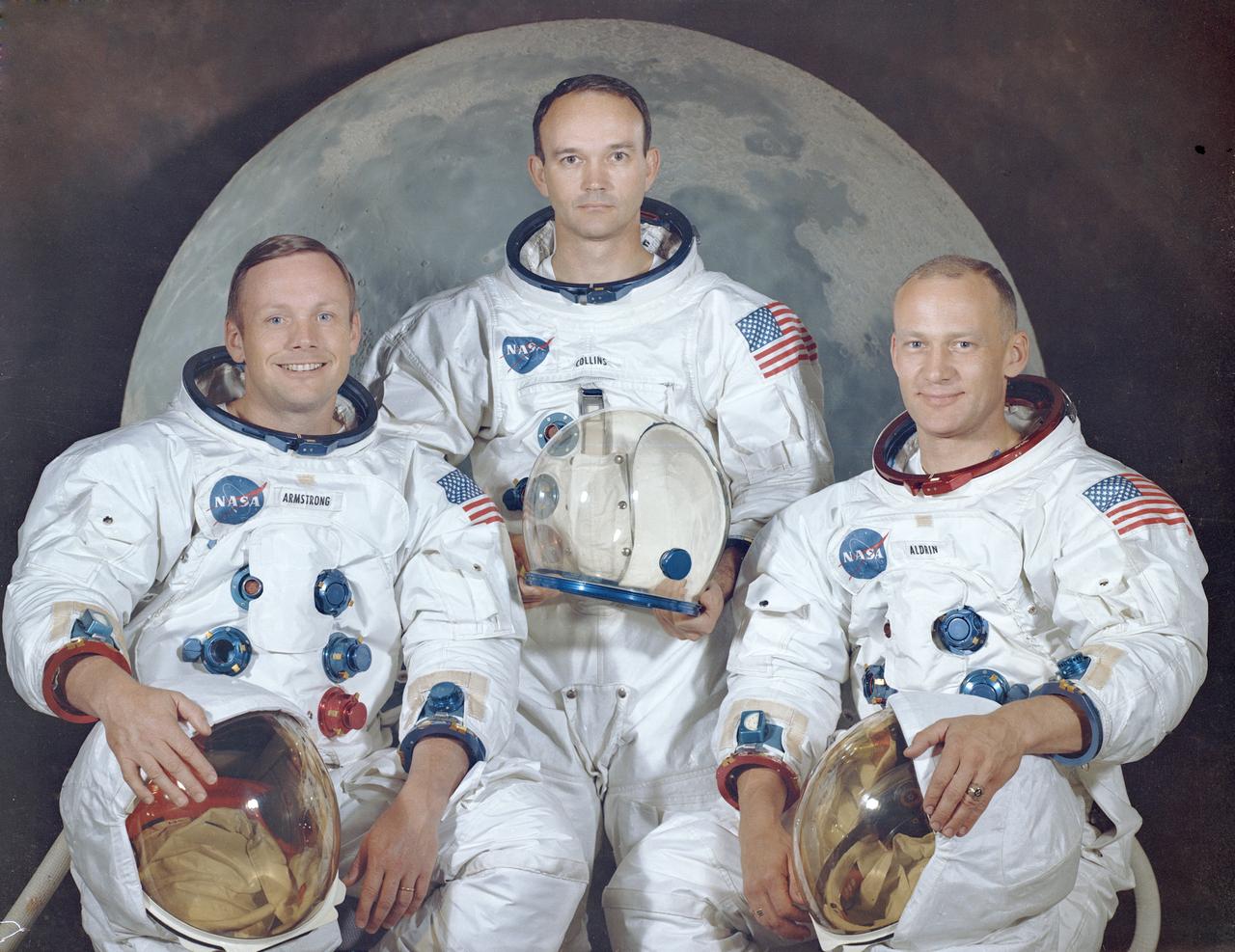
This is the official crew portrait of the Apollo 11 astronauts. Pictured from left to right are: Neil A. Armstrong, Commander; Michael Collins, Module Pilot; Edwin E. "Buzz" Aldrin, Lunar Module Pilot. Apollo 11 was the first marned lunar landing mission that placed the first humans on the surface of the moon and returned them back to Earth. Astronaut Armstrong became the first man on the lunar surface, and astronaut Aldrin became the second. Astronaut Collins piloted the Command Module in a parking orbit around the Moon. Launched aboard the Saturn V launch vehicle (SA-506), the three astronauts began their journey to the moon with liftoff from launch complex 39A at the Kennedy Space Center at 8:32 am CDT, July 16, 1969.

In preparation of the nation’s first lunar landing mission, Apollo 11 crew members underwent training to practice activities they would be performing during the mission. In this photograph, astronaut Collins (left) and chief astronaut and director of flight crew operations, Donald K. Slayton, walk away from a T-38 jet plane at Patrick Air Force Base. The two had been flying arcs to give Collins more time under weightless conditions. The Apollo 11 mission launched from the Kennedy Space Center (KSC) in Florida via the Marshall Space Flight Center (MSFC) developed Saturn V launch vehicle on July 16, 1969 and safely returned to Earth on July 24, 1969. Aboard the space craft were astronauts Neil A. Armstrong, commander; Michael Collins, Command Module (CM) pilot; and Edwin E. (Buzz) Aldrin Jr., Lunar Module (LM) pilot. The CM, “Columbia”, piloted by Collins, remained in a parking orbit around the Moon while the LM, “Eagle’’, carrying astronauts Armstrong and Aldrin, landed on the Moon. On July 20, 1969, Armstrong was the first human to ever stand on the lunar surface, followed by Aldrin. During 2½ hours of surface exploration, the crew collected 47 pounds of lunar surface material for analysis back on Earth. With the success of Apollo 11, the national objective to land men on the Moon and return them safely to Earth had been accomplished
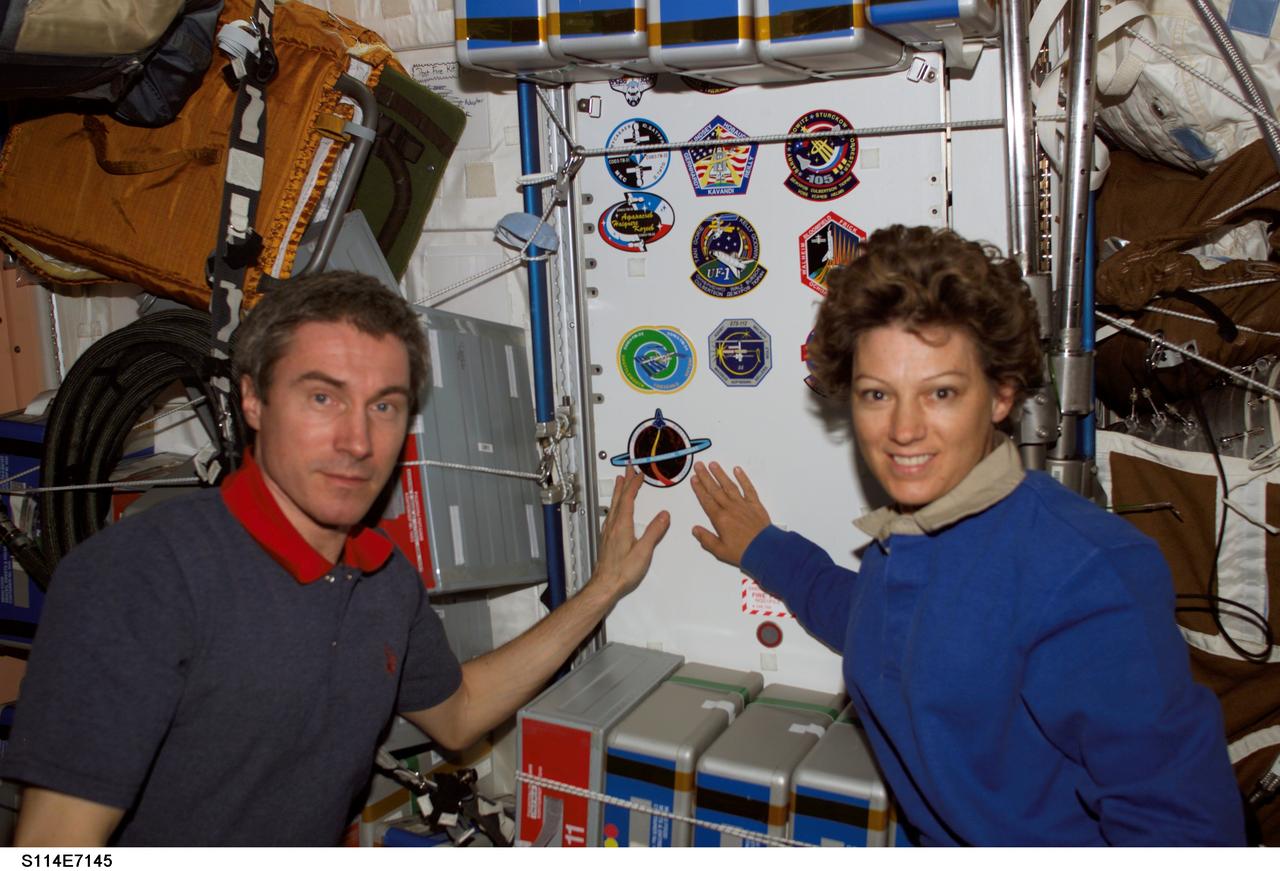
S114-E-7145 (5 August 2005) --- Astronaut Eileen M. Collins (right), STS-114 commander, and cosmonaut Sergei K. Krikalev, Expedition 11 commander representing Russia's Federal Space Agency, pose for a photo in the Unity node after the STS-114 crew patch was added to the growing collection of insignias representing crews who have worked on the International Space Station.

S114-E-5560 (28 July 2005) --- Astronaut Eileen M. Collins, STS-114 commander, accomplishes some pre-spacewalk checkouts onboard the Space Shuttle Discovery. Two of her Discovery crewmates -- astronauts Stephen K. Robinson and Japanese Aerospace Agency astronaut Soichi Noguchi -- are scheduled to perform their first joint session of extravehicular activity (EVA) in less than 24 hours, on July 30.
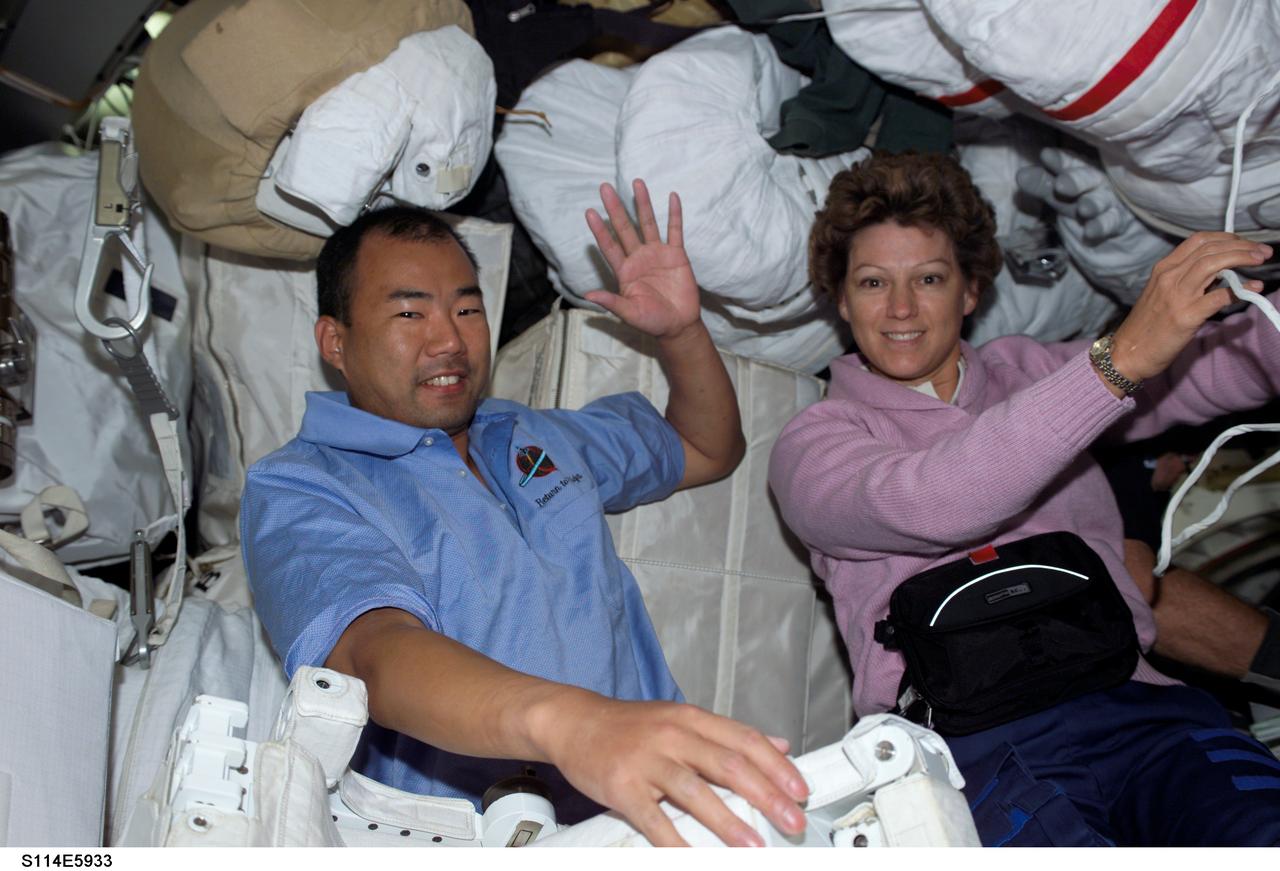
S114-E-5933 (30 July 2005) --- Japan Aerospace Agency astronaut Soichi Noguchi, STS-114 mission specialist, and astronaut Eileen M. Collins, mission commander, share space with spacesuits and other supplies onboard Discovery during activities of Discovery's fifth flight day. Earlier on this day, astronauts Noguchi and Stephen K. Robinson, out of frame, used the NASA extravehicular mobility unit (EMU) spacesuits as they conducted a successful spacewalk.
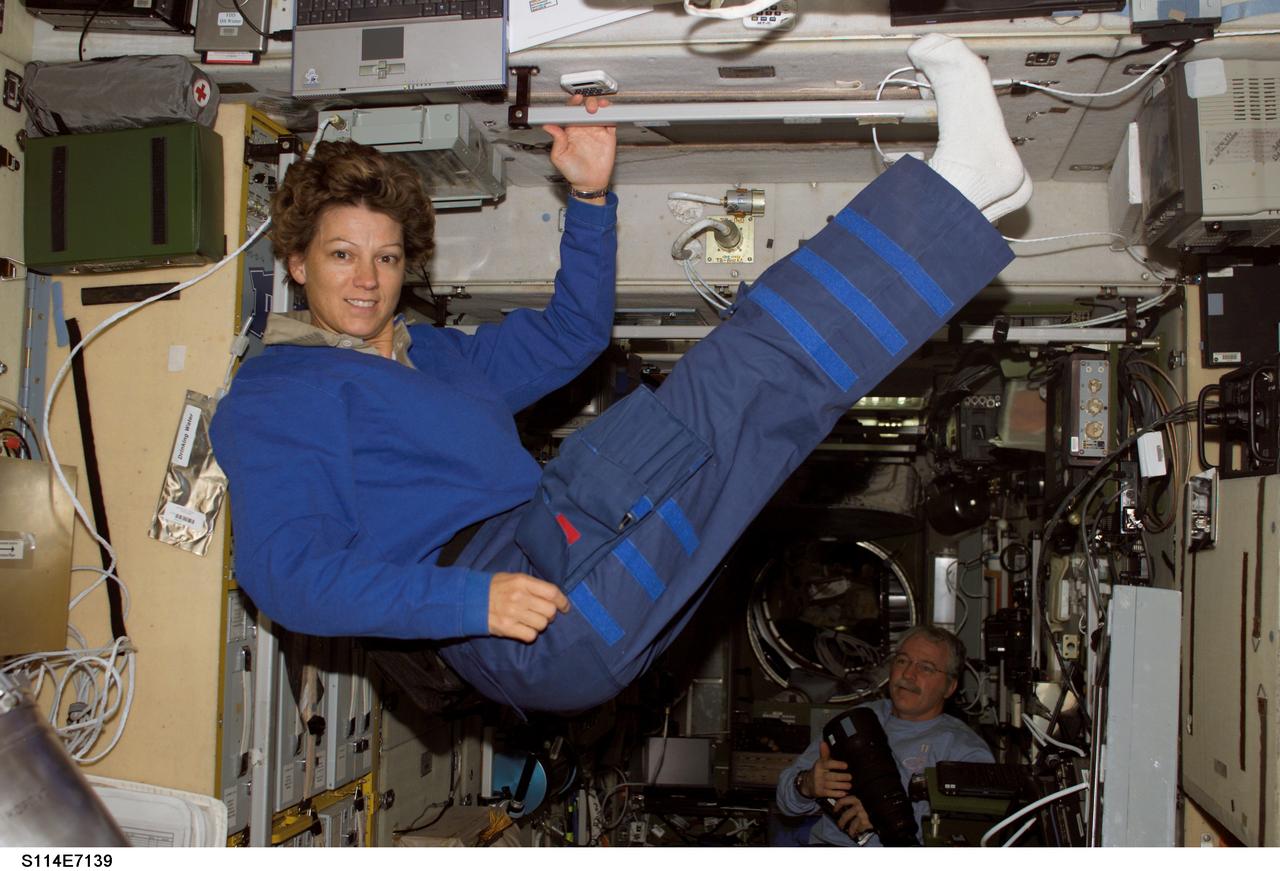
S114-E-7139 (5 August 2005) --- Astronaut Eileen M. Collins, STS-114 commander, floats in the Zvezda Service Module of the International Space Station while Space Shuttle Discovery was docked to the Station. Astronaut John L. Phillips, Expedition 11 NASA Space Station science officer and flight engineer, is visible at bottom right.
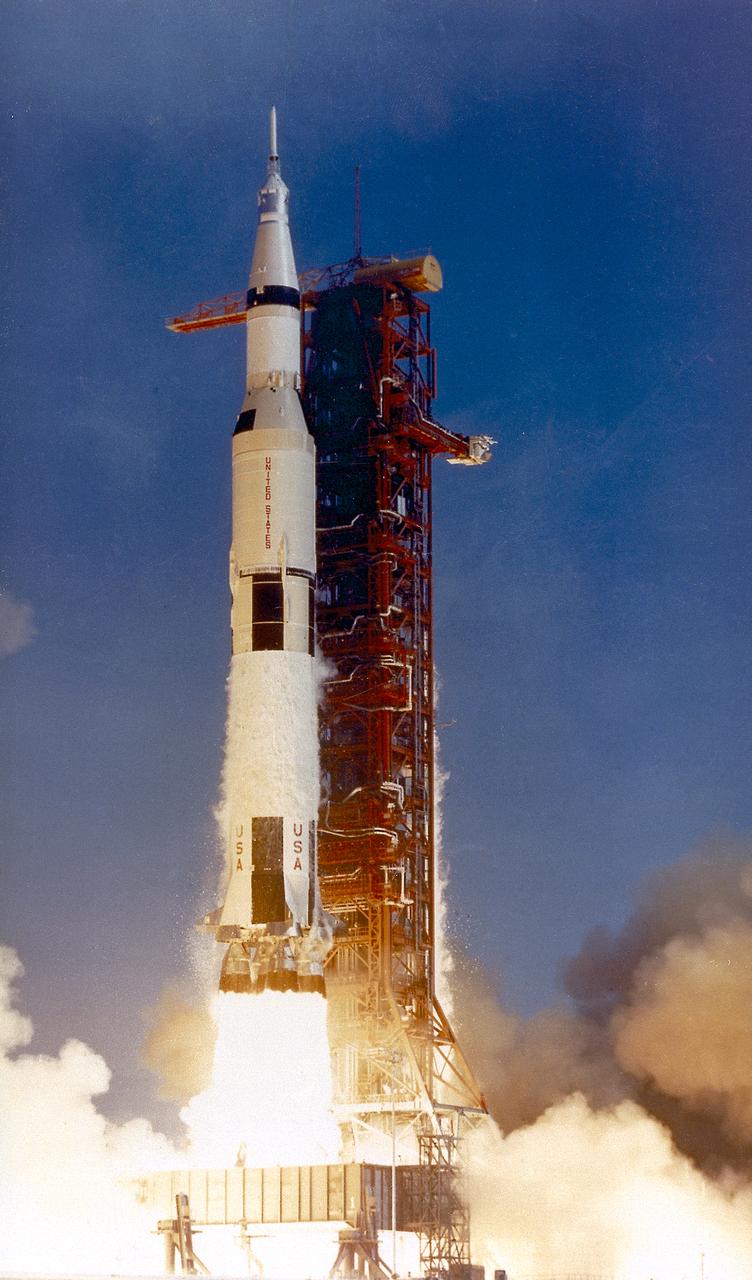
This photograph shows the Saturn V launch vehicle (SA-506) for the Apollo 11 mission liftoff at 8:32 am CDT, July 16, 1969, from launch complex 39A at the Kennedy Space Center. Apollo 11 was the first manned lunar landing mission with a crew of three astronauts: Mission commander Neil A. Armstrong, Command Module pilot Michael Collins, and Lunar Module pilot Edwin E. Aldrin, Jr. It placed the first humans on the surface of the moon and returned them back to Earth. Astronaut Armstrong became the first man on the lunar surface, and astronaut Aldrin became the second. Astronaut Collins piloted the Command Module in a parking orbit around the Moon.
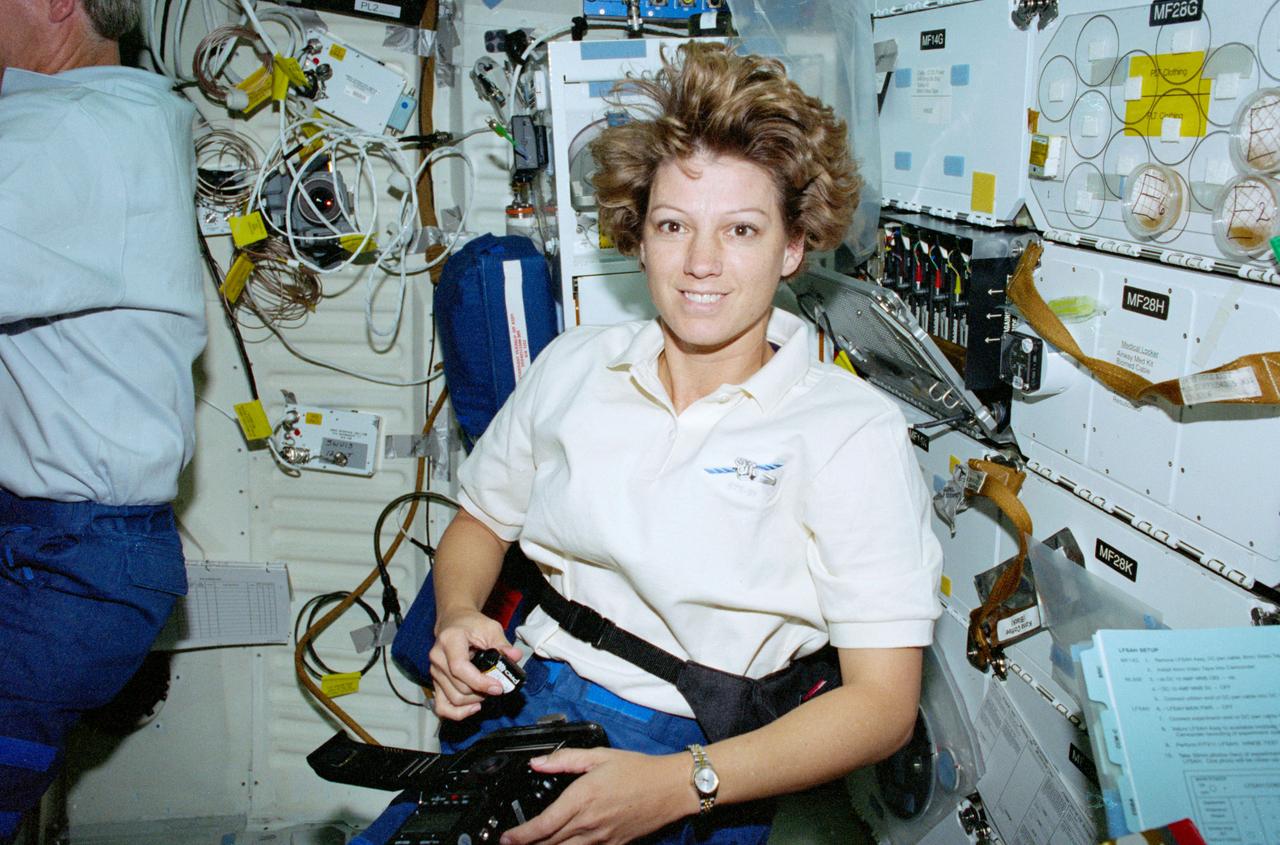
STS093-347-015 (23-27 July 1999) --- Astronaut Eileen M. Collins, mission commander, loads a roll of film into a still camera on Columbia's middeck. Collins is the first woman mission commander in the history of human space flight.
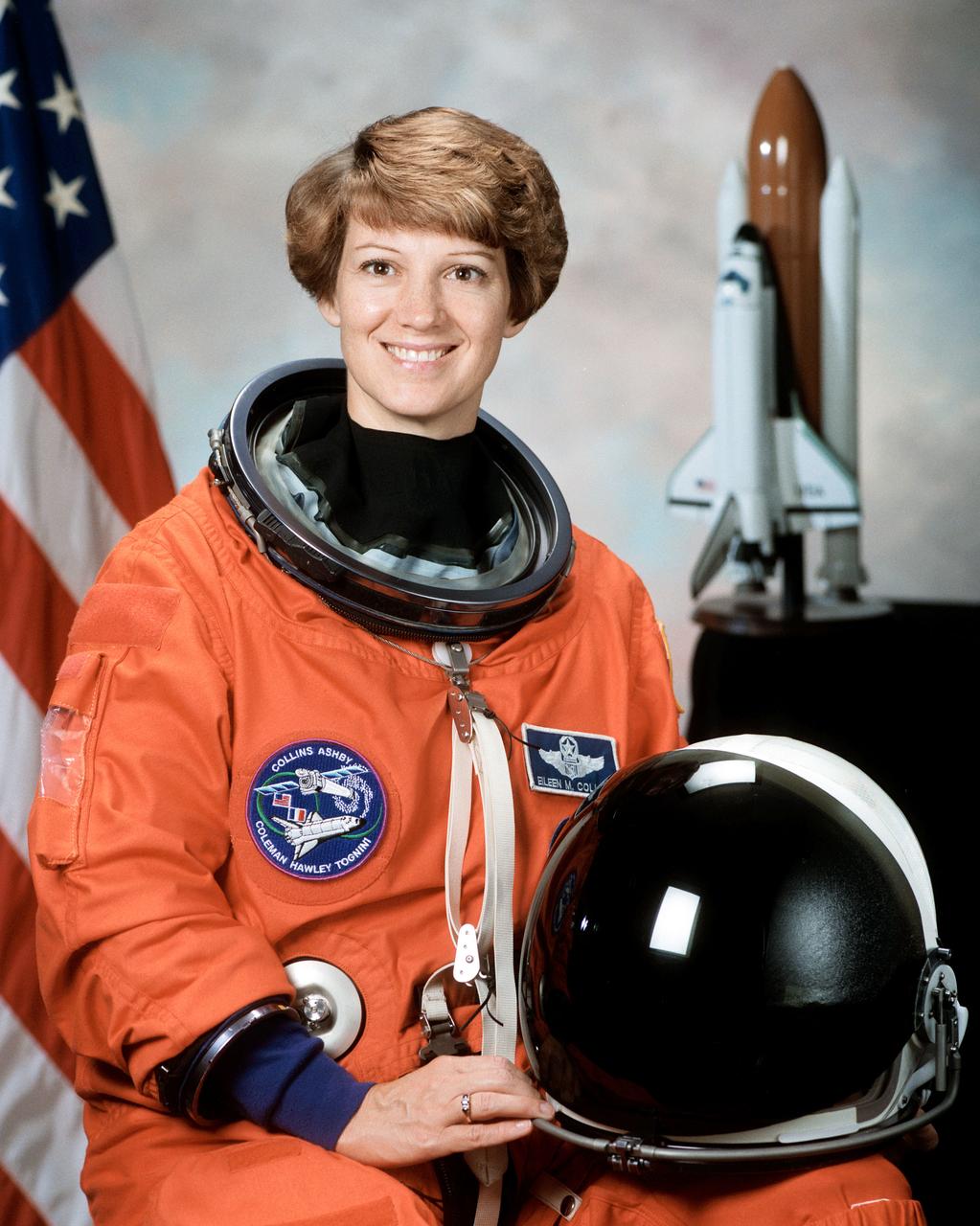
S99-00858 (30 Oct 1998) --- Astronaut Eileen M. Collins, commander.
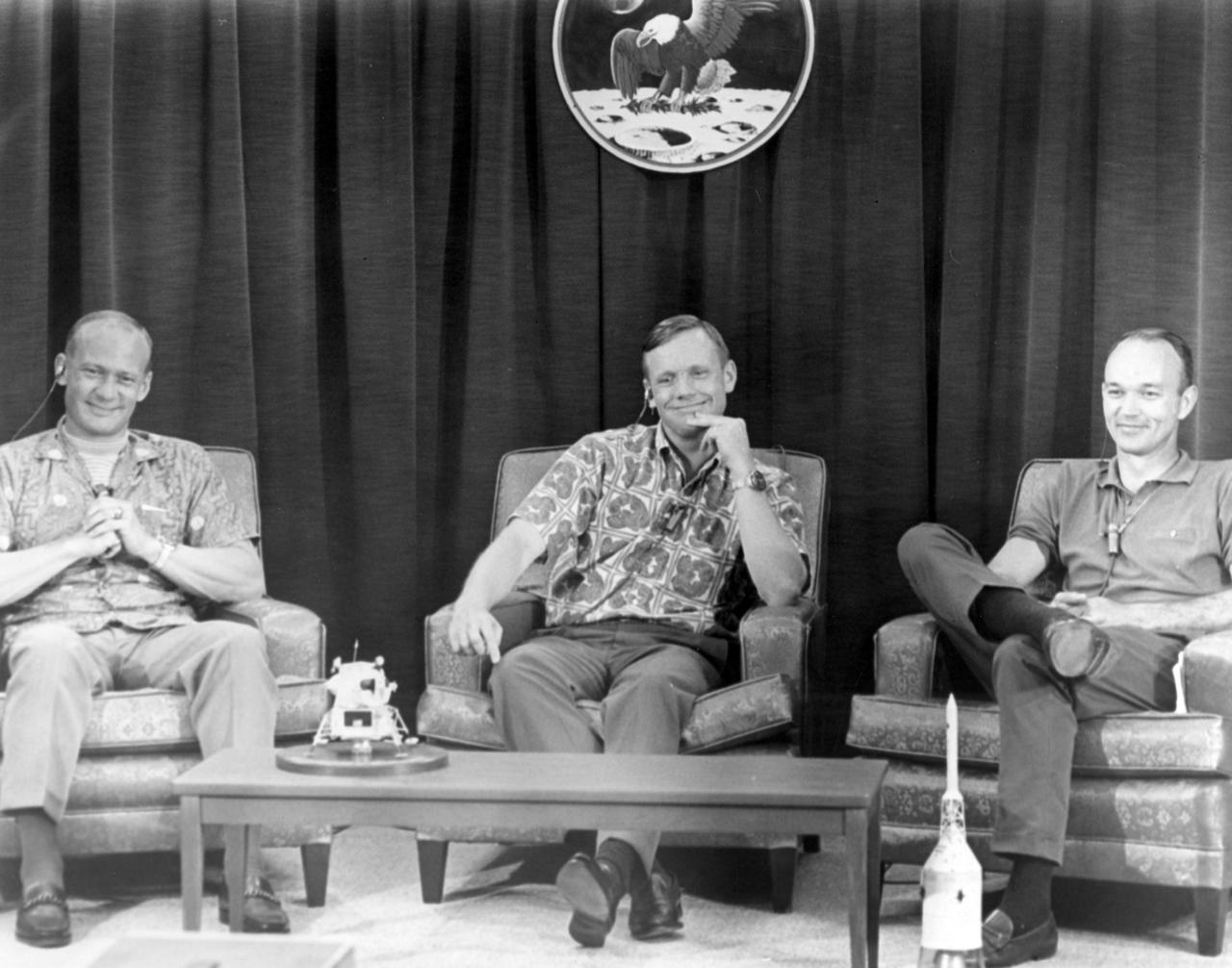
Apollo 11 crew members (L-R) Edwin Aldrin, Neil Armstrong, and Michael Collins were amused by a question posed during a closed circuit press conference the night before they began their historic first lunar landing mission. The press conference with questions via intercom, was held under semi-isolation conditions to avoid exposing the astronauts to possible illness at the last minute. The Apollo 11 mission launched from the Kennedy Space Center (KSC) in Florida via the Marshall Space Flight Center (MSFC) developed Saturn V launch vehicle on July 16, 1969 and safely returned to Earth on July 24, 1969. Aboard the space craft were astronauts Neil A. Armstrong, commander; Michael Collins, Command Module (CM) pilot; and Edwin E. (Buzz) Aldrin Jr., Lunar Module (LM) pilot. The CM, “Columbia”, piloted by Collins, remained in a parking orbit around the Moon while the LM, “Eagle’’, carrying astronauts Armstrong and Aldrin, landed on the Moon. On July 20, 1969, Armstrong was the first human to ever stand on the lunar surface, followed by Aldrin. During 2½ hours of surface exploration, the crew collected 47 pounds of lunar surface material for analysis back on Earth. With the success of Apollo 11, the national objective to land men on the Moon and return them safely to Earth had been accomplished.
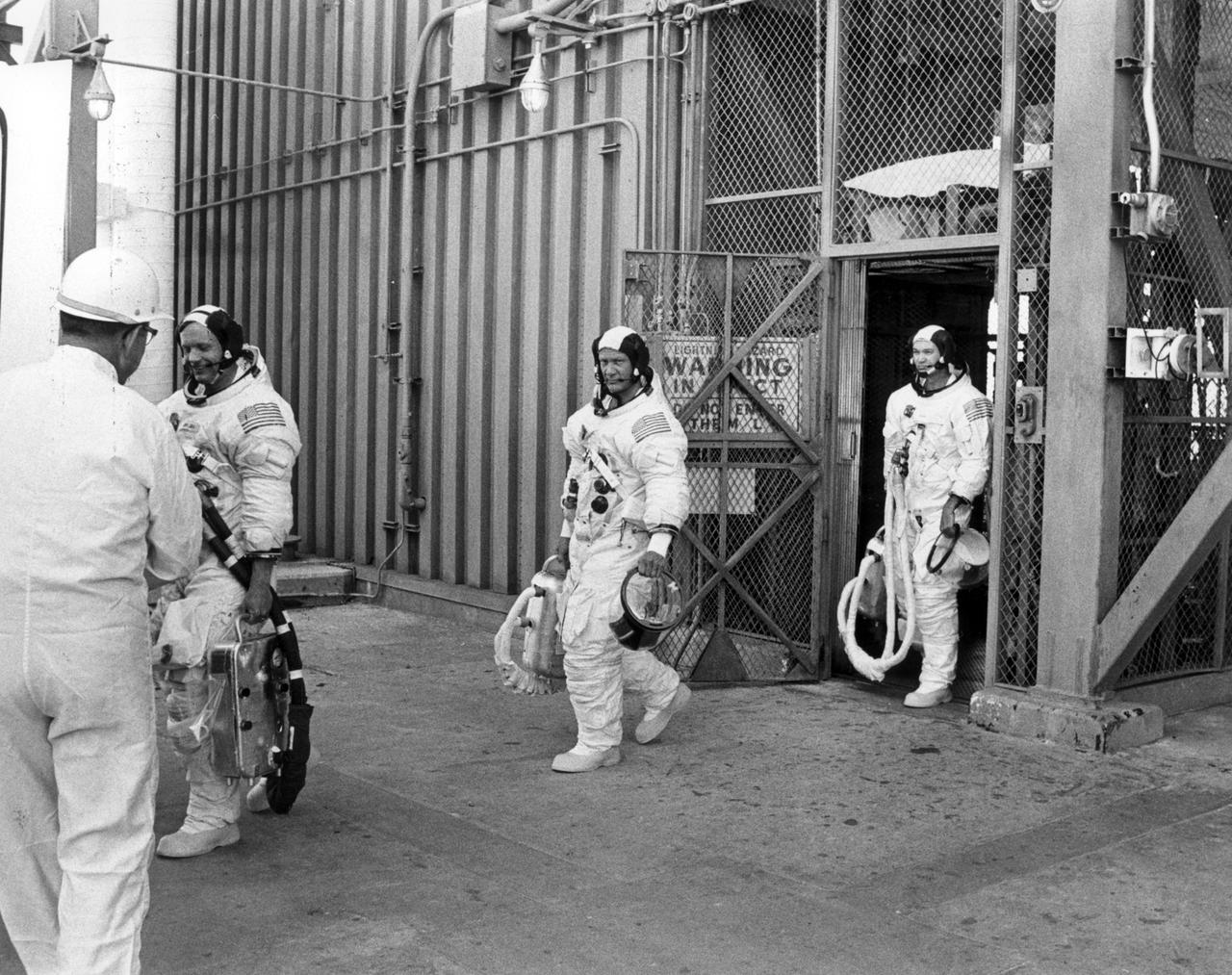
Apollo 11 crew members (left to right) Neil Armstrong, Edwin Aldrin, and Michael Collins, wearing space suits, leave the elevator after descending from the top of the launch tower. The three had just completed participation in the countdown demonstration test for the upcoming Apollo 11 mission. The Apollo 11 mission, the first lunar landing mission, launched from the Kennedy Space Center (KSC) in Florida via the Marshall Space Flight Center (MSFC) developed Saturn V launch vehicle on July 16, 1969 and safely returned to Earth on July 24, 1969. Aboard the space craft were astronauts Neil A. Armstrong, commander; Michael Collins, Command Module (CM) pilot; and Edwin E. (Buzz) Aldrin Jr., Lunar Module (LM) pilot. The CM, “Columbia”, piloted by Collins, remained in a parking orbit around the Moon while the LM, “Eagle’’, carrying astronauts Armstrong and Aldrin, landed on the Moon. On July 20, 1969, Armstrong was the first human to ever stand on the lunar surface, followed by Aldrin. During 2½ hours of surface exploration, the crew collected 47 pounds of lunar surface material for analysis back on Earth. With the success of Apollo 11, the national objective to land men on the Moon and return them safely to Earth had been accomplished.
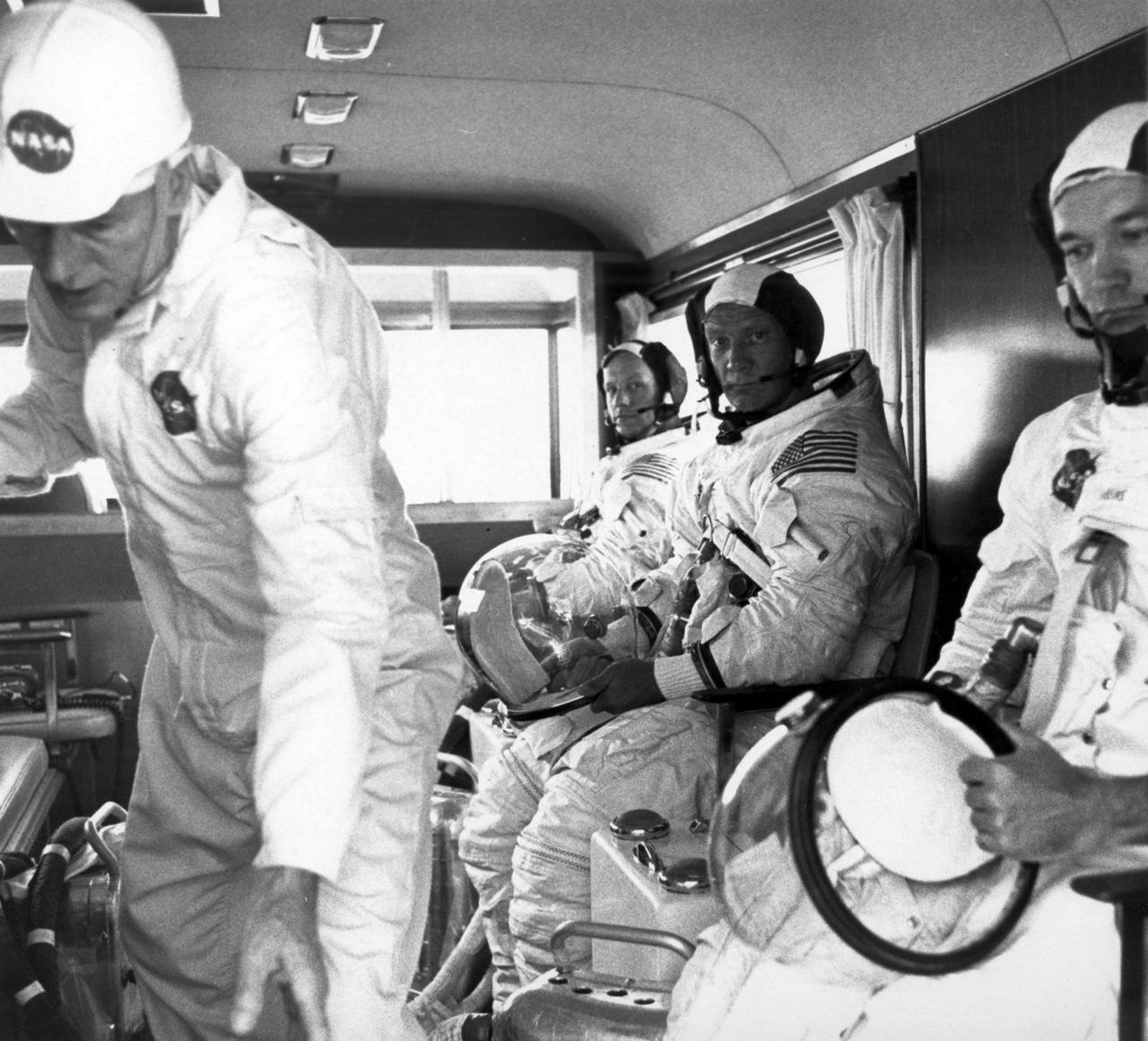
Apollo 11 crew members (rear to front) Neil Armstrong, Edwin Aldrin, and Michael Collins, wearing space suits, ride the van to the launch pad to participate in the countdown demonstration test for the upcoming Apollo 11 mission. The Apollo 11 mission, the first lunar landing mission, launched from the Kennedy Space Center (KSC) in Florida via the Marshall Space Flight Center (MSFC) developed Saturn V launch vehicle on July 16, 1969 and safely returned to Earth on July 24, 1969. Aboard the space craft were astronauts Neil A. Armstrong, commander; Michael Collins, Command Module (CM) pilot; and Edwin E. (Buzz) Aldrin Jr., Lunar Module (LM) pilot. The CM, “Columbia”, piloted by Collins, remained in a parking orbit around the Moon while the LM, “Eagle’’, carrying astronauts Armstrong and Aldrin, landed on the Moon. On July 20, 1969, Armstrong was the first human to ever stand on the lunar surface, followed by Aldrin. During 2½ hours of surface exploration, the crew collected 47 pounds of lunar surface material for analysis back on Earth. With the success of Apollo 11, the national objective to land men on the Moon and return them safely to Earth had been accomplished.
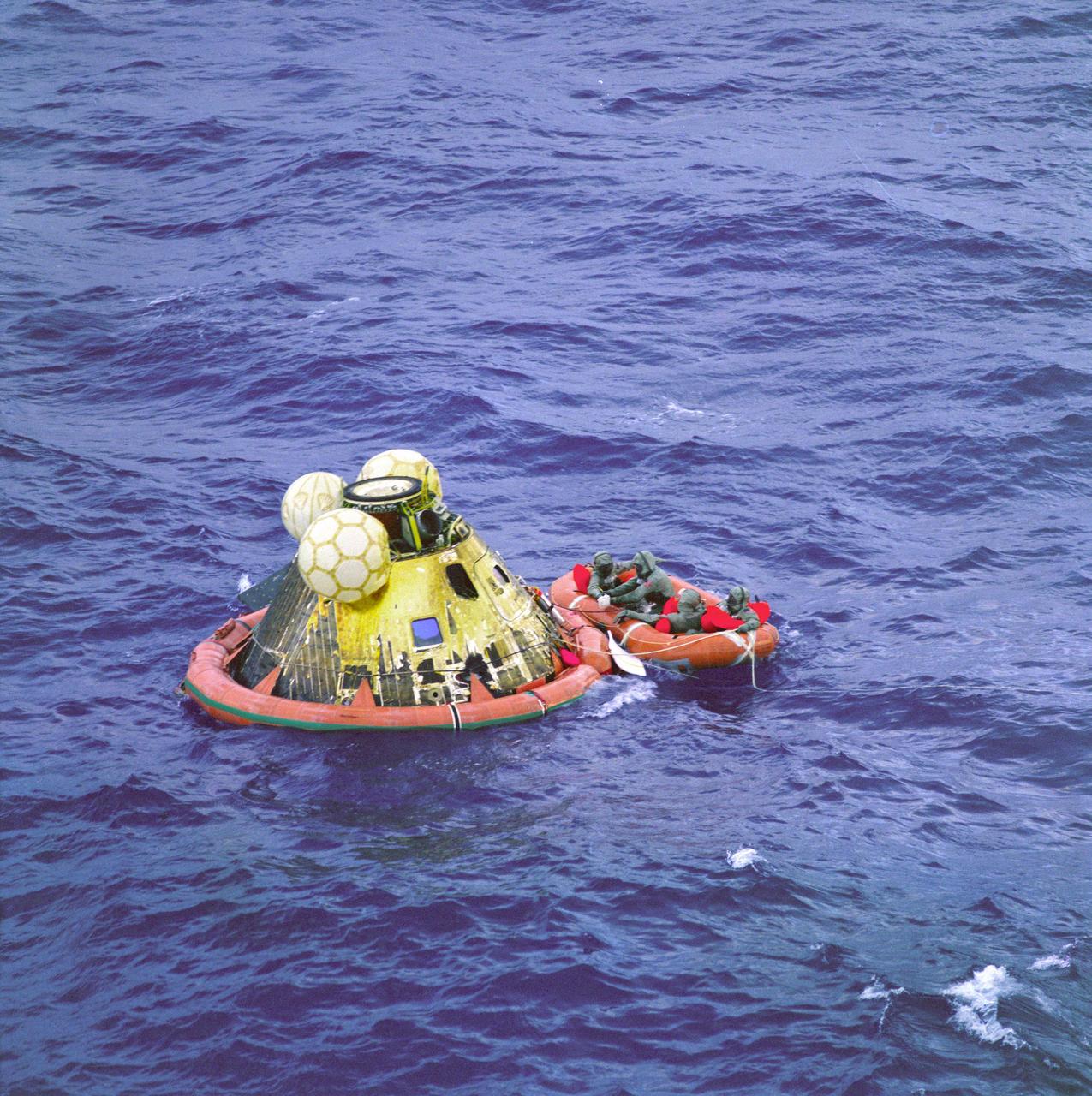
The Apollo 11 command module Columbia with astronauts Neil Armstrong, Michael Collins, and Buzz Aldrin aboard splashed down at 11:49 a.m. CDT, July 24, 1969, about 812 nautical miles southwest of Hawaii and only 12 nautical miles from the USS Hornet.
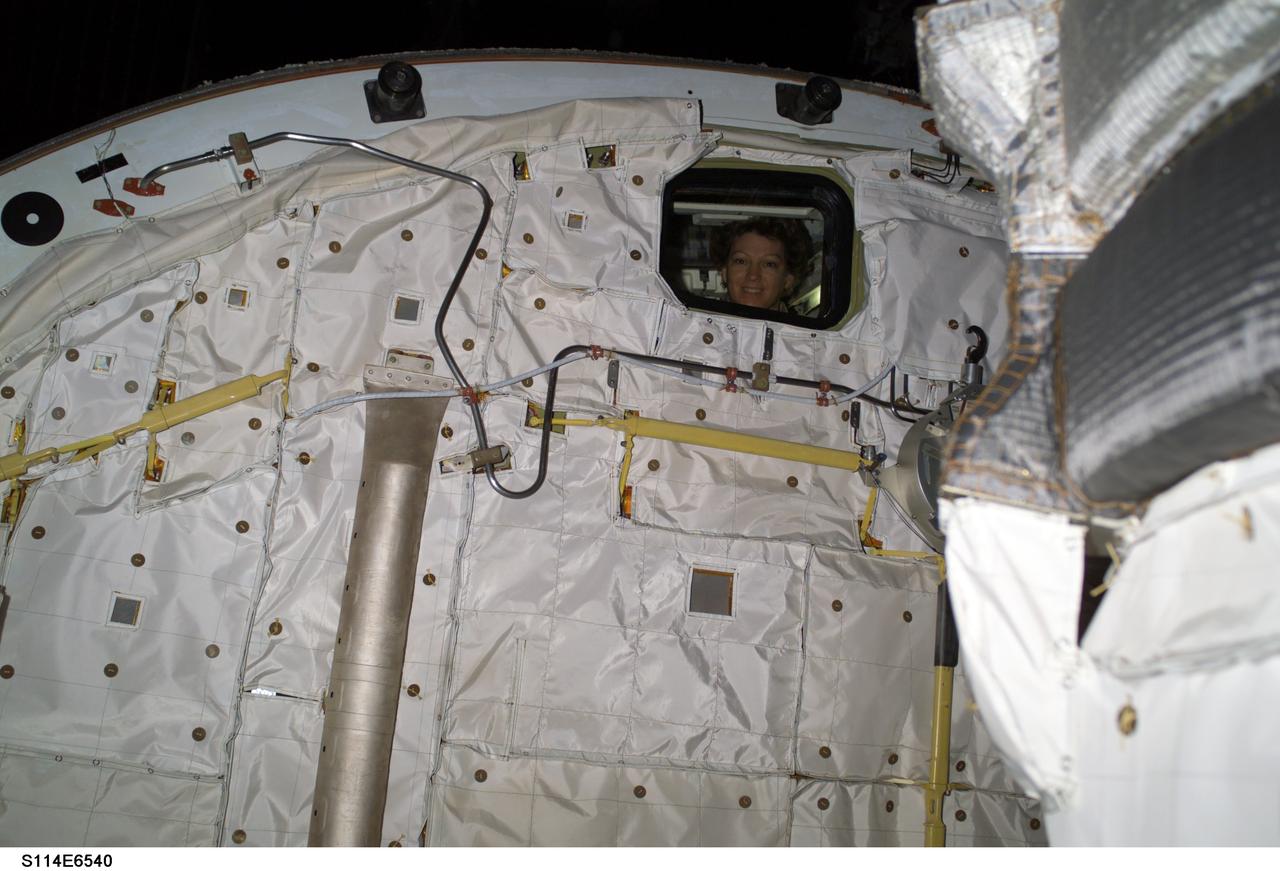
S114-E-6540 (3 August 2005) --- Astronaut Eileen M. Collins, STS-114 commander, watches her crewmates Stephen K. Robinson (out of frame) and Soichi Noguchi (out of frame) representing Japan Aerospace Exploration Agency (JAXA), during today;s session of extravehicular activity (EVA) from an aft cabin cargo interface window on the Space Shuttle Discovery.
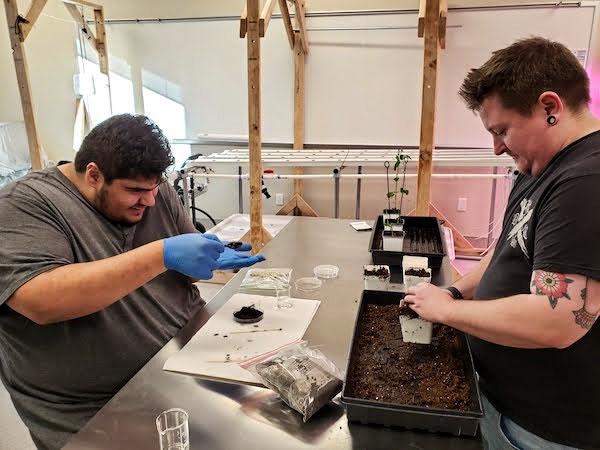
jsc2023e065205 (1/26/2023) --- Collin College student researchers Henry Elmendorf and Stefano Sacripanti work on their experiment, which will be included in the Nanoracks-National Center for Earth and Space Science Education-Orbiter-Student Spaceflight Experiments Program Mission 17 to ISS (Nanoracks-NCESSE-Orbiter-SSEP).
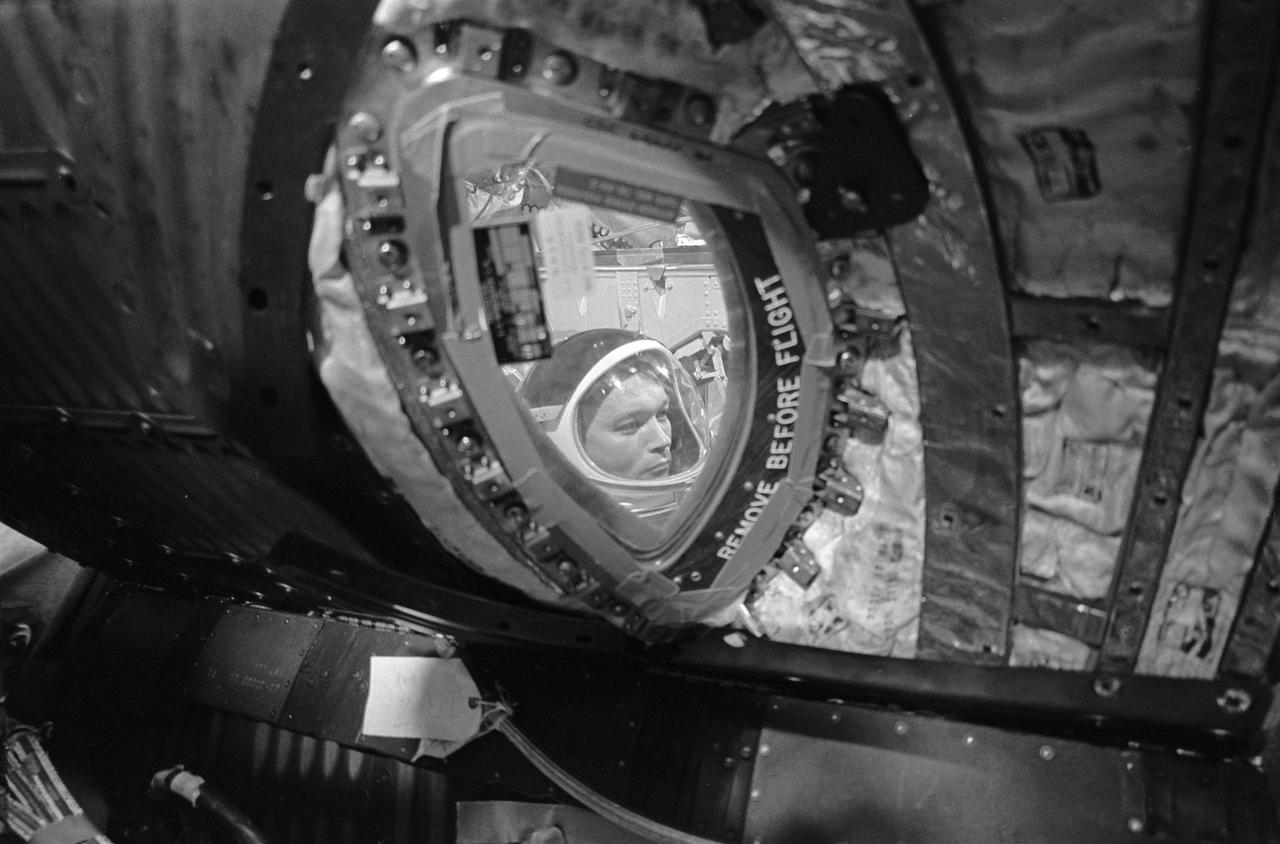
S66-42704 (12 July 1966) --- Astronaut Michael Collins, prime crew pilot for the Gemini-10 spaceflight, is seen through a hatch in the spacecraft during a Simultaneous Launch Demonstration in the White Room atop Pad 19, Cape Kennedy, Florida. Photo credit: NASA
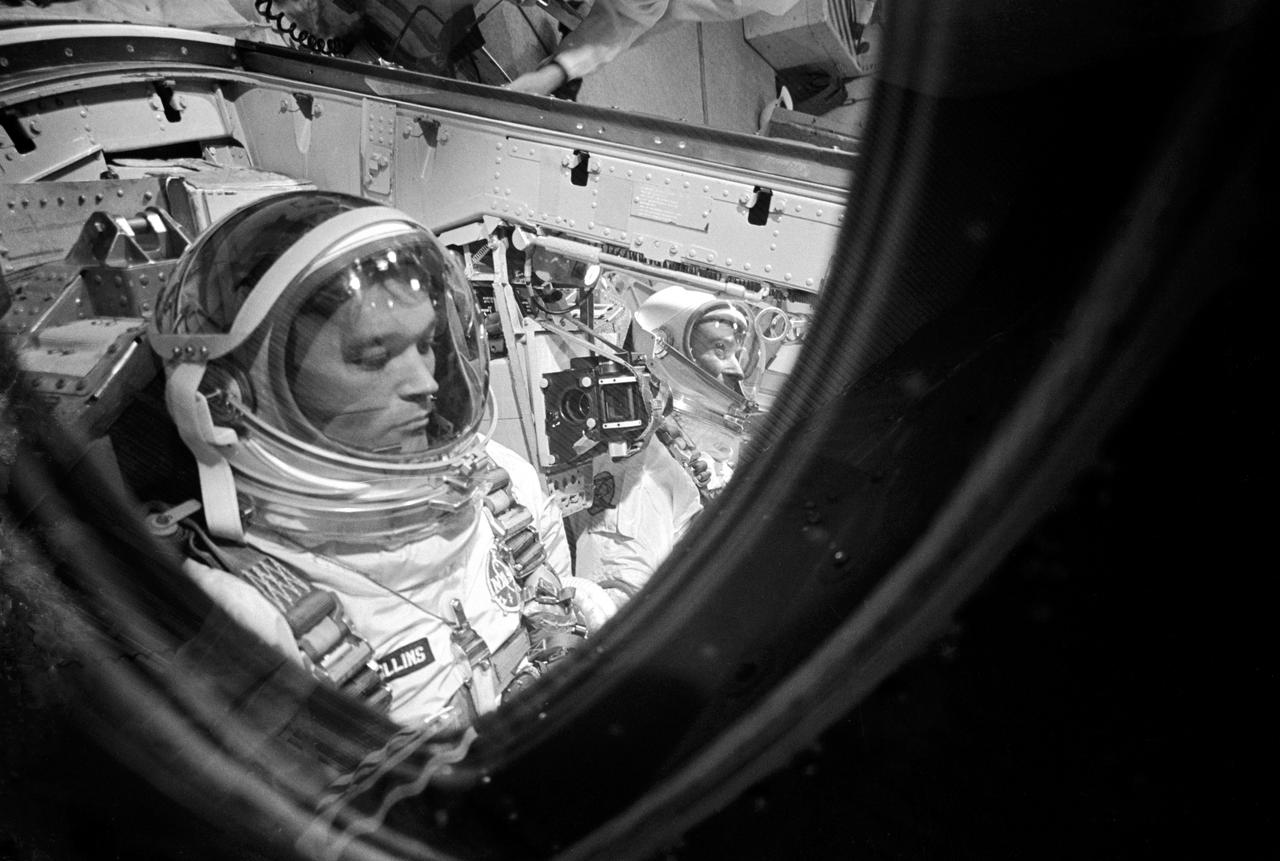
S66-46477 (18 July 1966) --- Close-up of astronaut Michael Collins, Gemini-10 pilot, making final adjustments and checks in the Gemini spacecraft during prelaunch countdown. In right background is astronaut John W. Young, command pilot. Photo credit: NASA
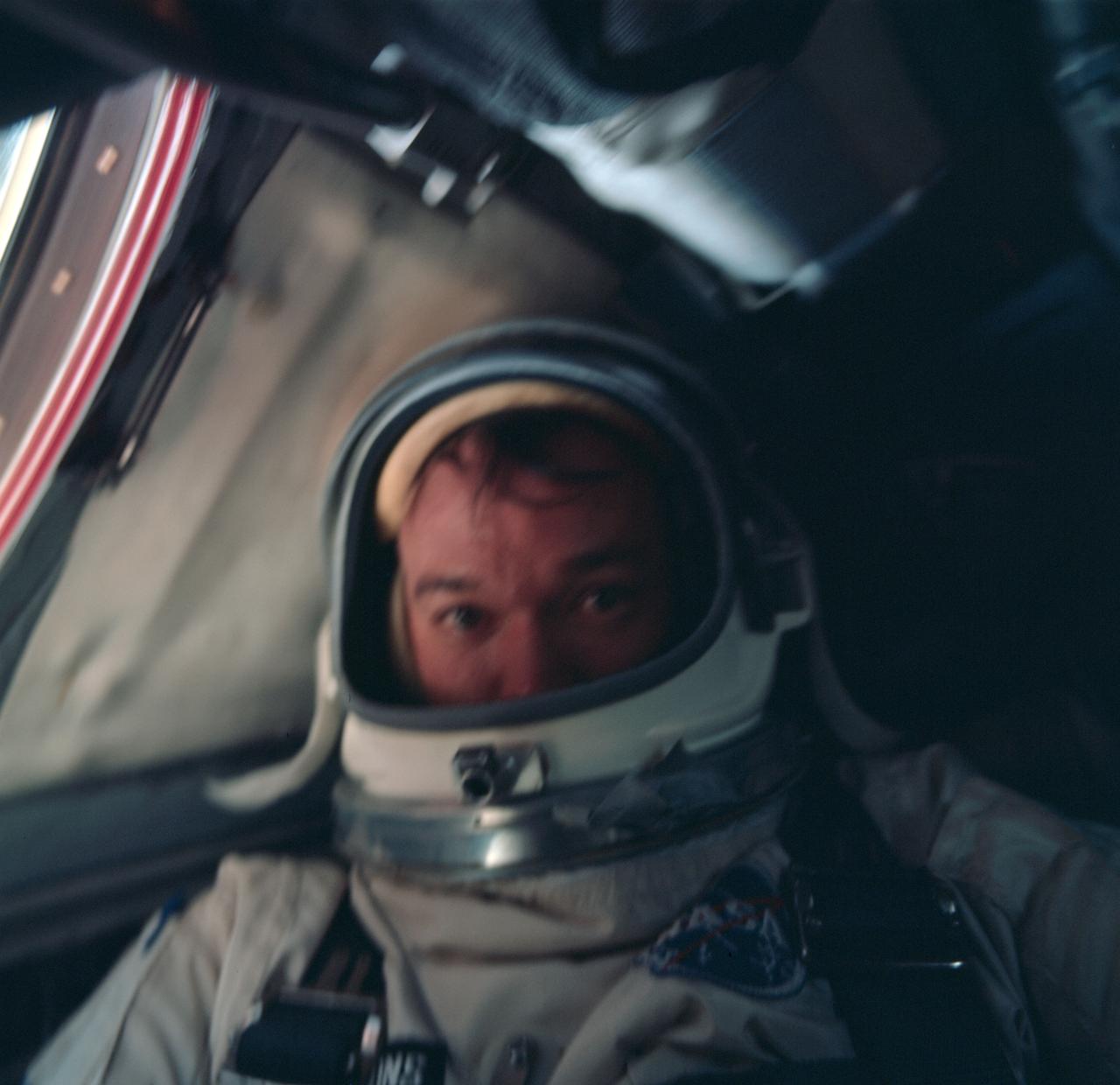
S66-46270 (18 July 1966) --- Astronaut Michael Collins is photographed inside the spacecraft during the Gemini-10 mission. Photo credit: NASA
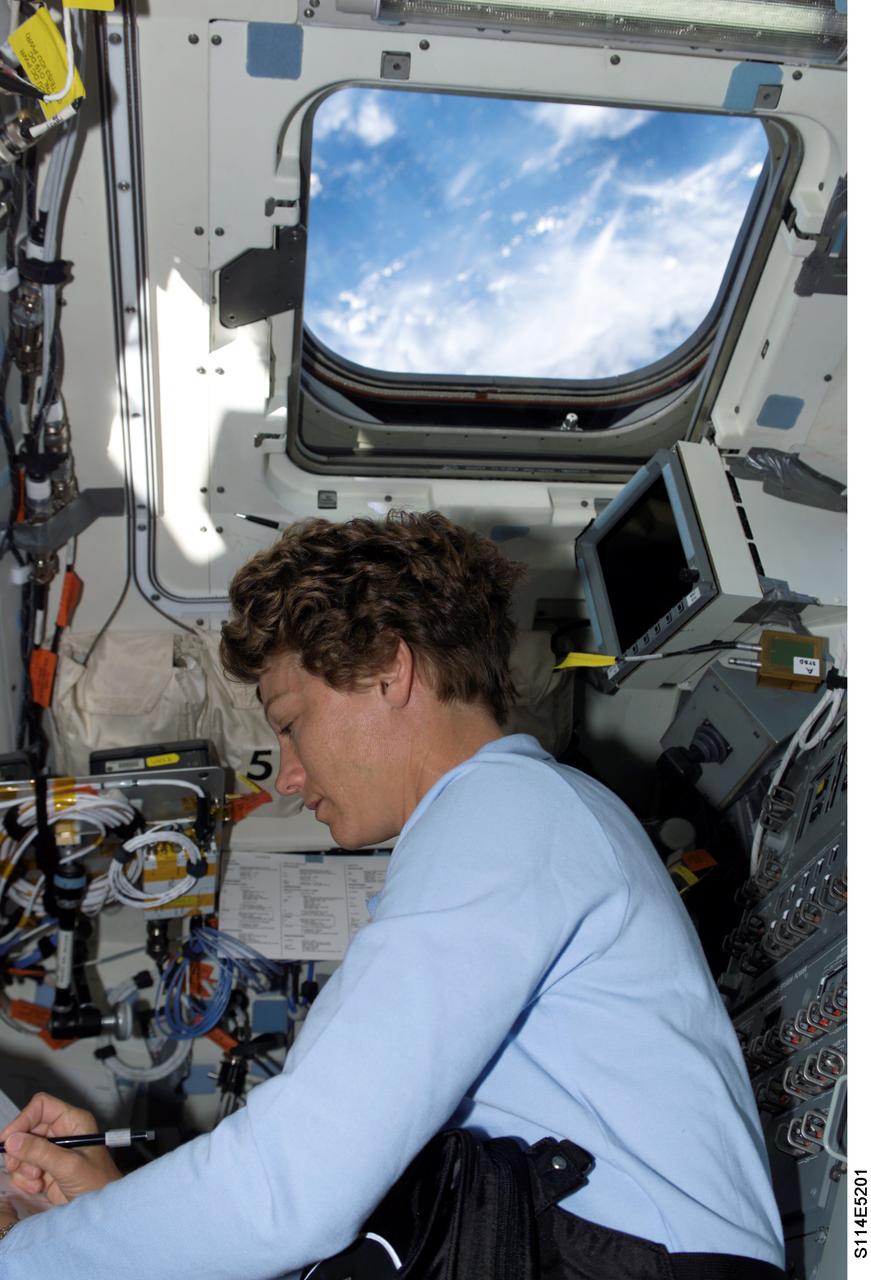
STS114-E-5201 (27 July 2005) --- Astronaut Eileen M. Collins, STS-114 commander, tends to a task on Discovery's aft flight deck.
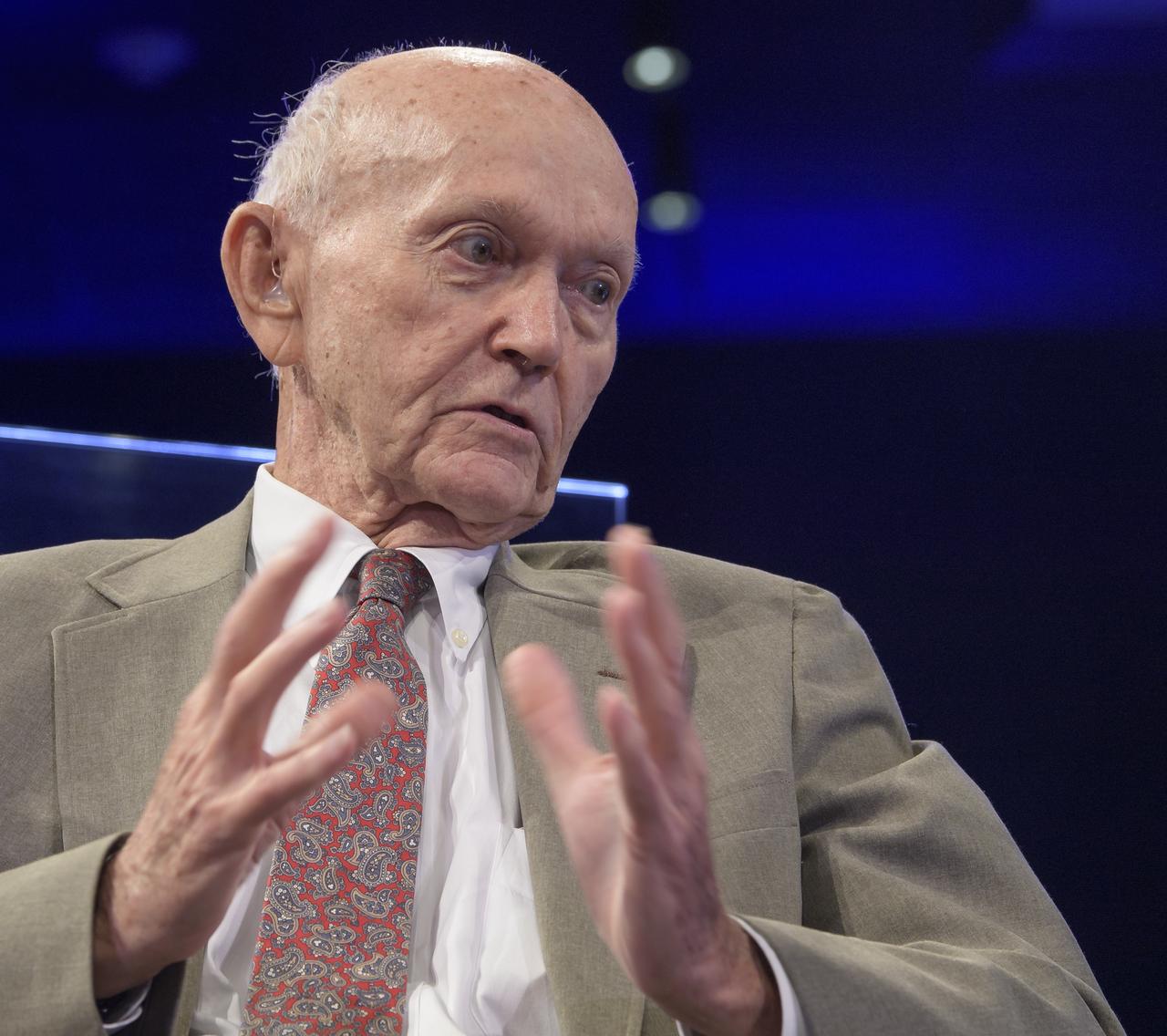
Apollo 11 astronaut Mike Collins talks about his mission during “NASA’s Giant Leaps: Past and Future," a live television program on Friday, July 19, 2019 from the Smithsonian National Air and Space Museum in Washington. NASA and the world are recognizing the 50th anniversary of Apollo 11, in which astronauts Neil Armstrong, Michael Collins, and Buzz Aldrin crewed the first mission to land astronauts on the Moon. Photo Credit: (NASA/Bill Ingalls)
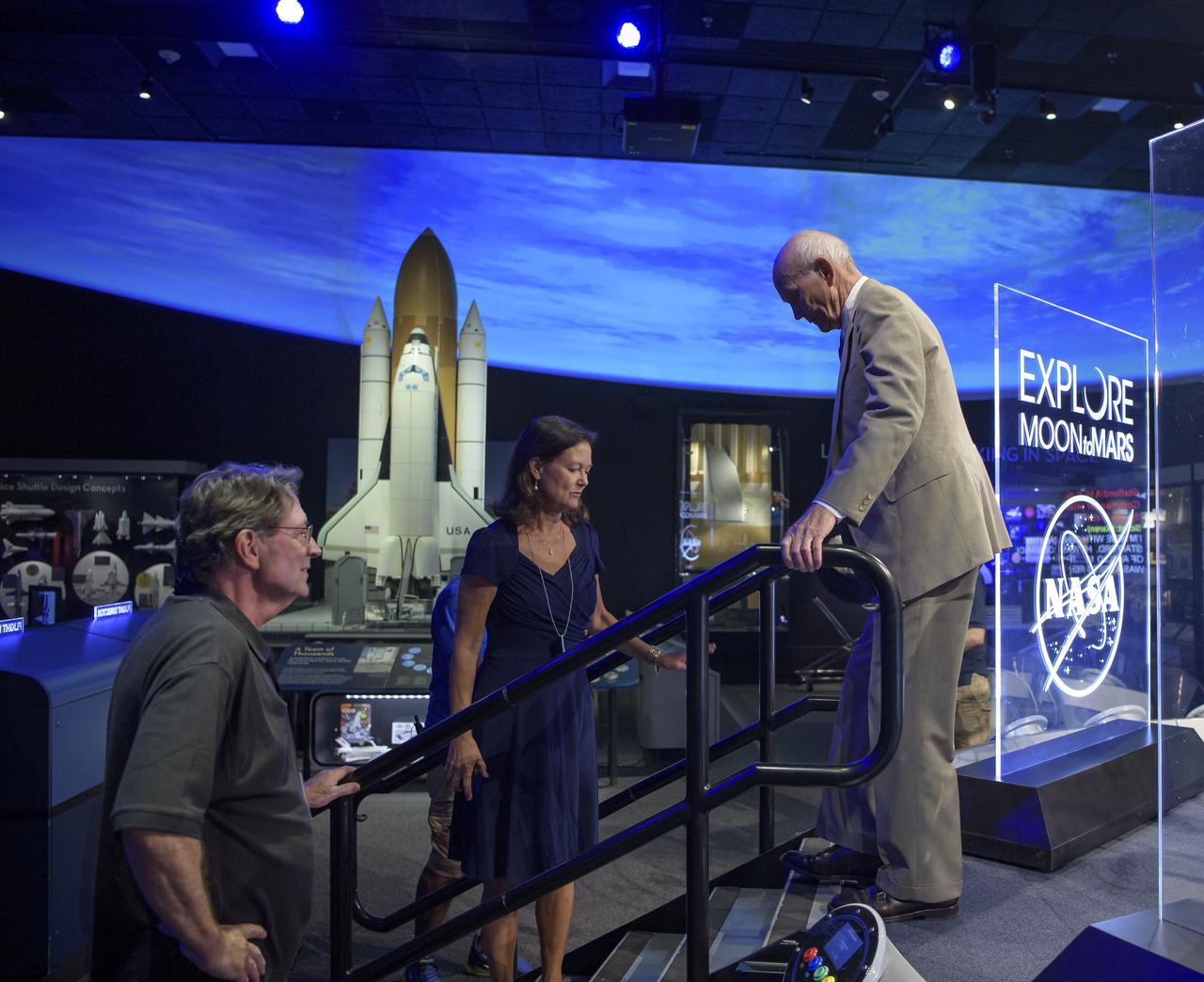
Apollo 11 astronaut Mike Collins leaves the stage after appearing on a live television program titled “NASA’s Giant Leaps: Past and Future," Friday, July 19, 2019 at the Smithsonian National Air and Space Museum in Washington. NASA and the world are recognizing the 50th anniversary of Apollo 11, in which astronauts Neil Armstrong, Michael Collins, and Buzz Aldrin crewed the first mission to land astronauts on the Moon. Photo Credit: (NASA/Bill Ingalls)
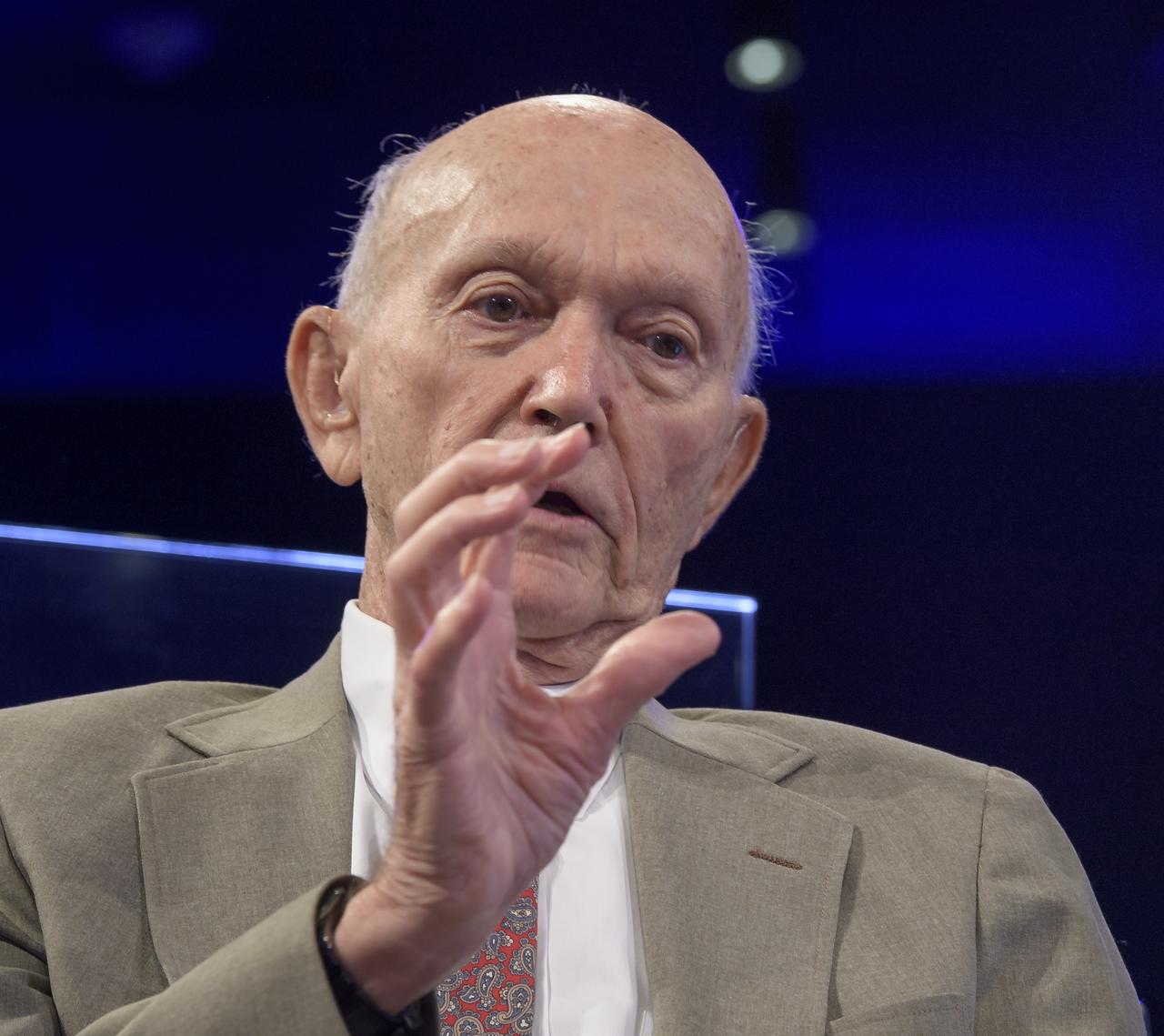
Apollo 11 astronaut Mike Collins talks about his mission during “NASA’s Giant Leaps: Past and Future," a live television program on Friday, July 19, 2019 from the Smithsonian National Air and Space Museum in Washington. NASA and the world are recognizing the 50th anniversary of Apollo 11, in which astronauts Neil Armstrong, Michael Collins, and Buzz Aldrin crewed the first mission to land astronauts on the Moon. Photo Credit: (NASA/Bill Ingalls)
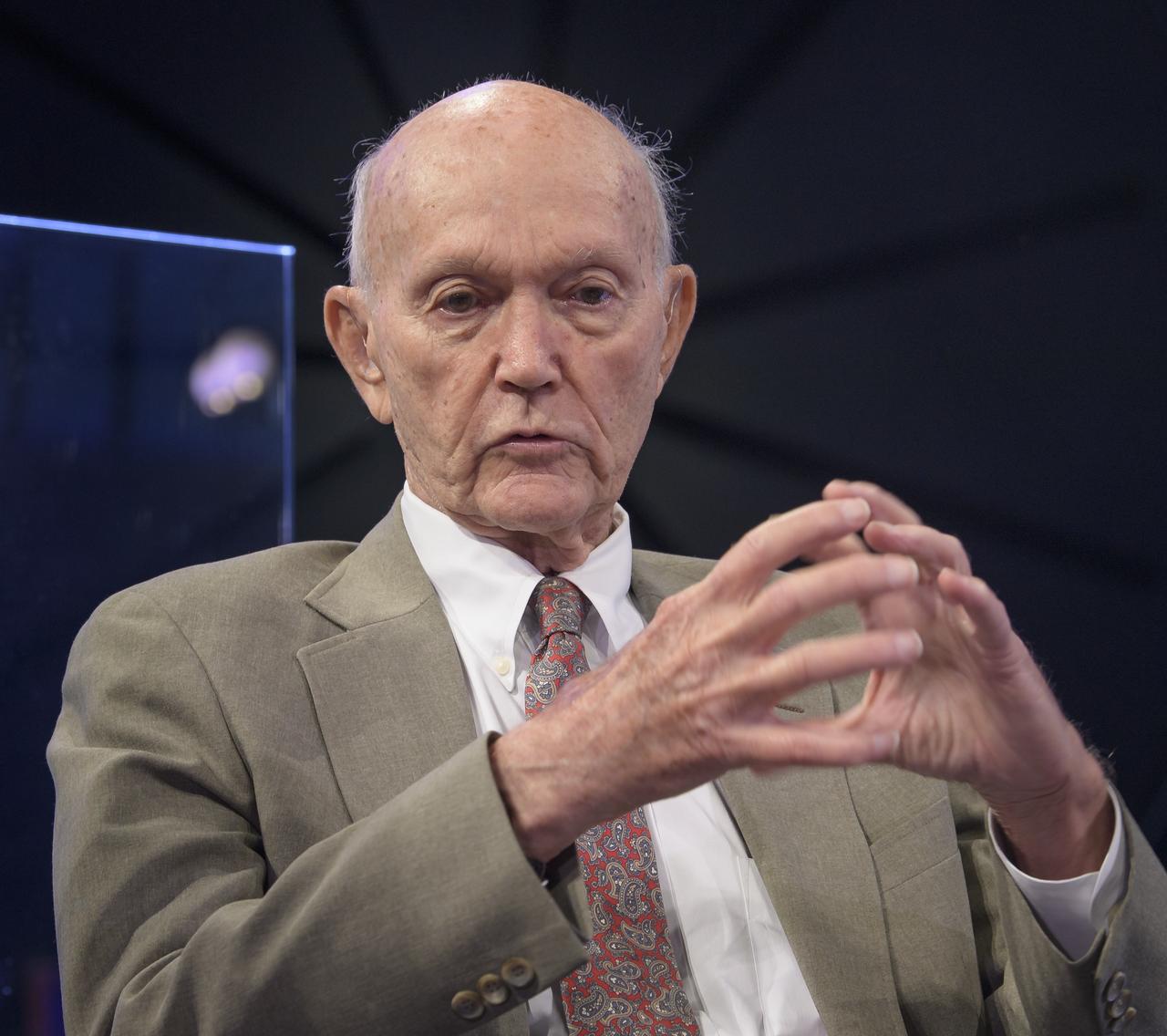
Apollo 11 astronaut Mike Collins talks about his mission during “NASA’s Giant Leaps: Past and Future," a live television program on Friday, July 19, 2019 from the Smithsonian National Air and Space Museum in Washington. NASA and the world are recognizing the 50th anniversary of Apollo 11, in which astronauts Neil Armstrong, Michael Collins, and Buzz Aldrin crewed the first mission to land astronauts on the Moon. Photo Credit: (NASA/Bill Ingalls)
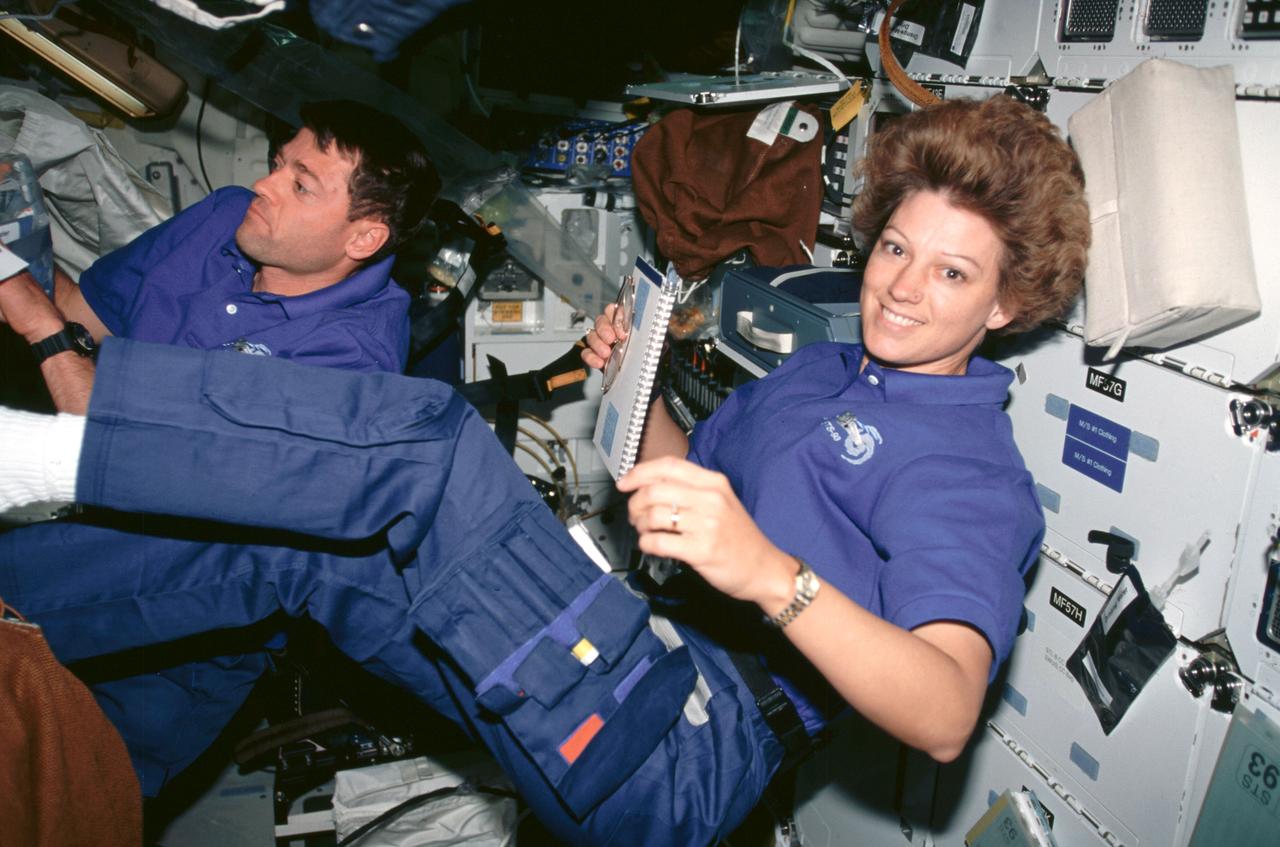
STS093-309-027 (23-27 July 1999) --- Astronauts Eileen M. Collins, mission commander; and Jeffrey S. Ashby, pilot, peruse checklists on Columbia's middeck. Collins and Ashby were joined by three mission specialists for almost five days in Earth orbit. The busiest of those days was the first, during which they released into space the world's most powerful X-Ray telescope and initiated a number of in-cabin experiments.
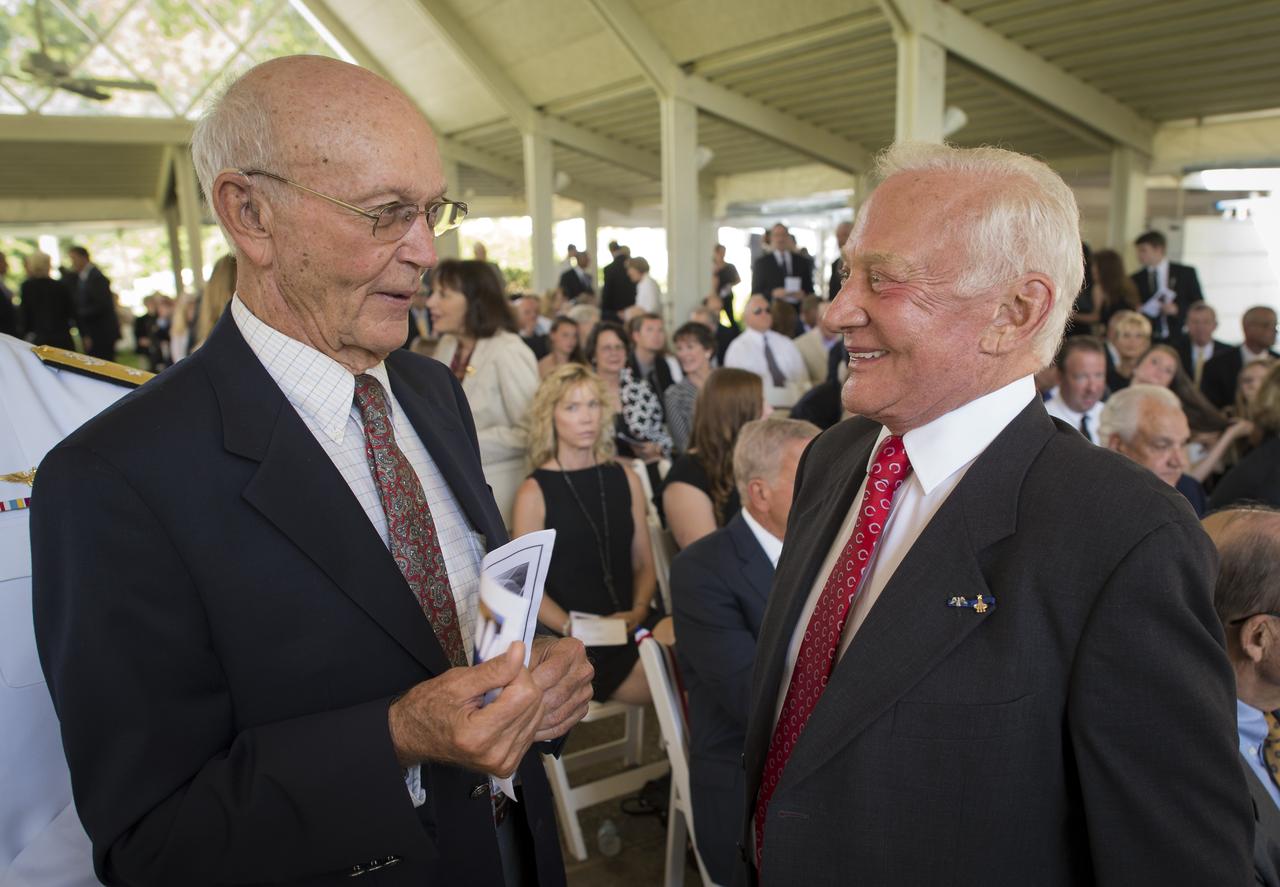
Apollo 11 Astronauts Michael Collins, left, and Buzz Aldrin talk at a private memorial service celebrating the life of Neil Armstrong, Aug. 31, 2012, at the Camargo Club in Cincinnati. Armstrong, the first man to walk on the moon during the 1969 Apollo 11 mission, died Saturday, Aug. 25. He was 82. Photo Credit: (NASA/Bill Ingalls)
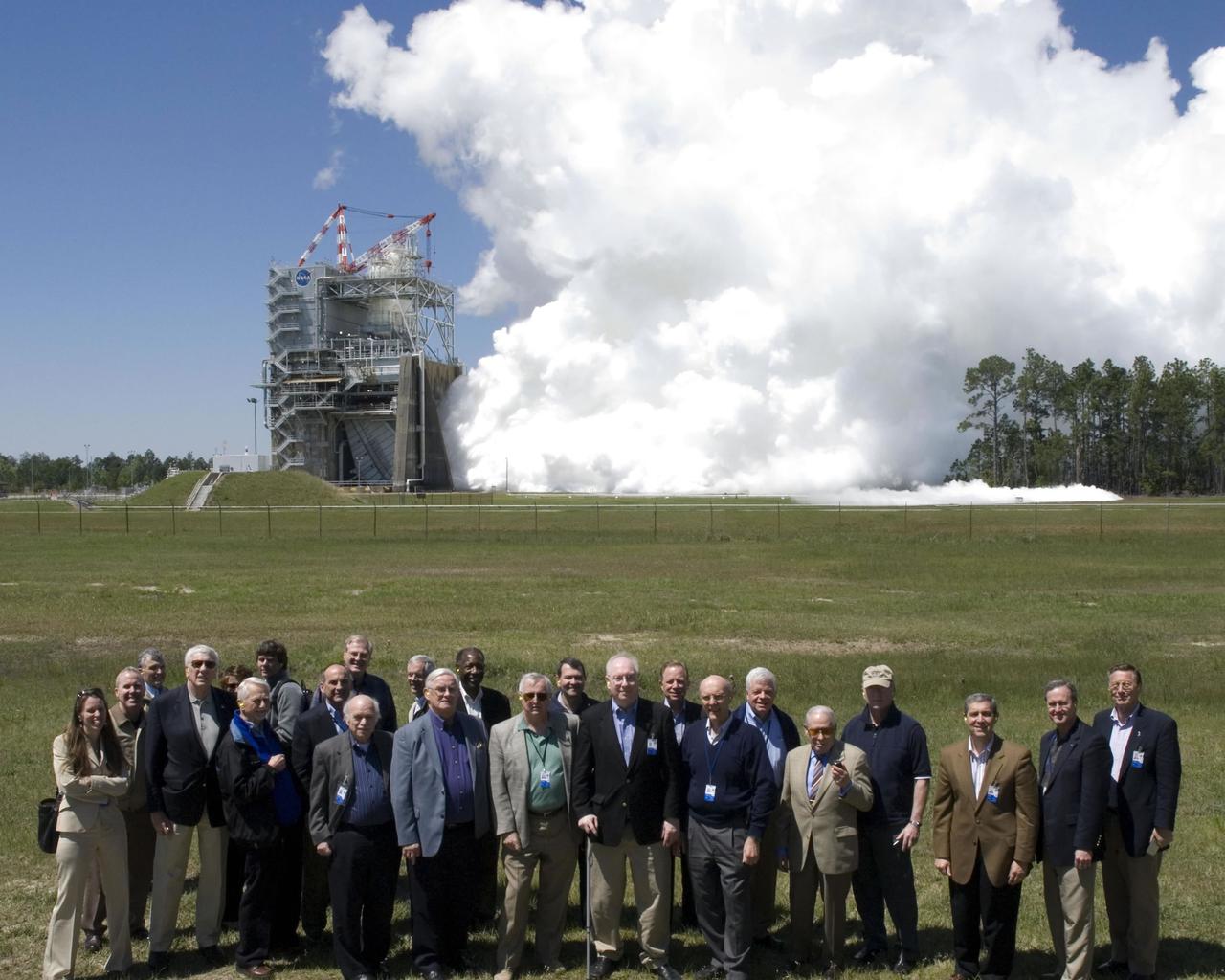
NASA Advisory Council members visited Stennis Space Center April 15 and 16, touring facilities and participating in various presentations. They also viewed a space shuttle main engine test on the A-2 Test Stand. The council of accomplished citizens advises NASA on major policy and program issues. The council includes former Apollo 17 astronaut Harrison Hagan Schmitt as chair, as well as former astronaut Eileen Collins, the first woman to command a space shuttle mission.
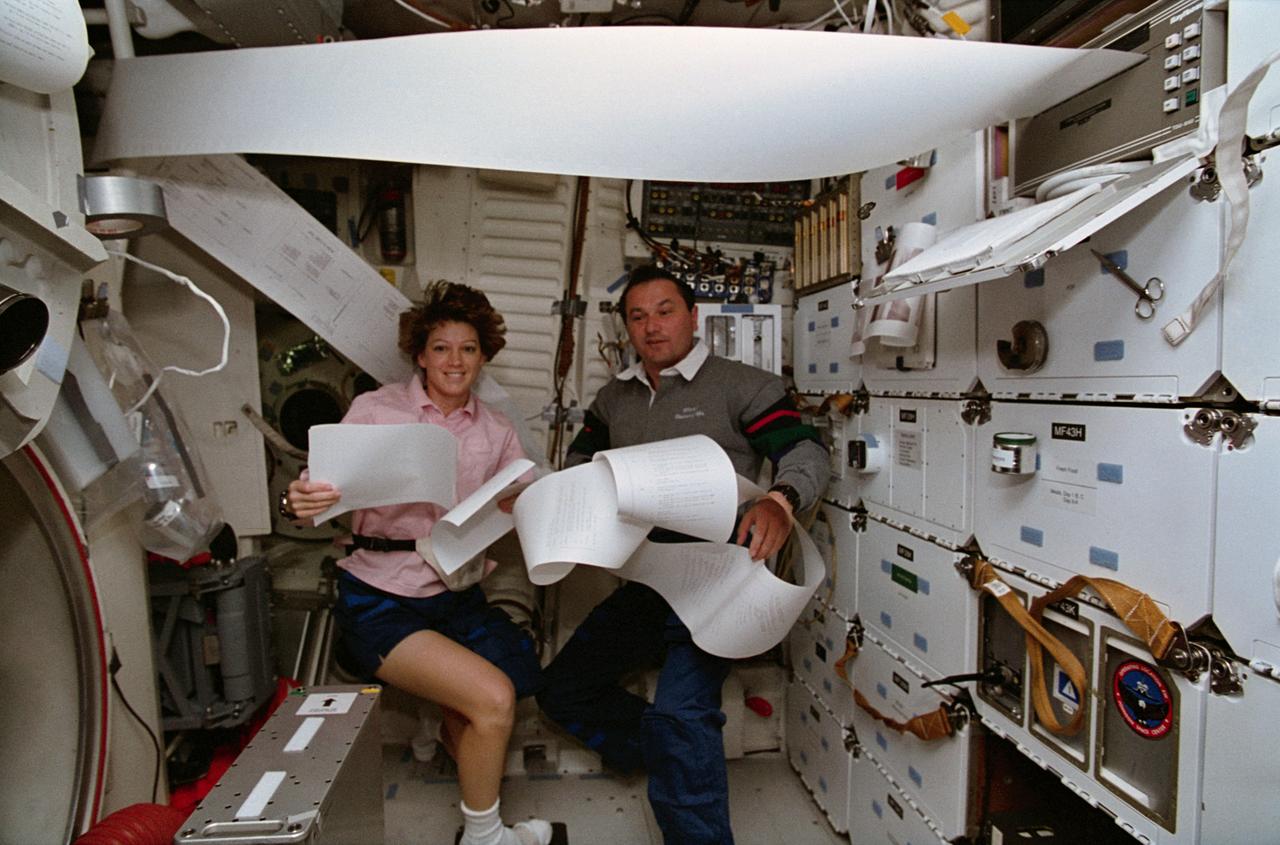
STS063-86-028 (3-11 Feb 1995) --- On the Space Shuttle Discovery's middeck, astronaut Eileen M. Collins and cosmonaut Vladimir G. Titov attempt to organize a lengthy mail message from flight controllers on Earth. Collins was pilot for the eight day mission and Titov served as a mission specialist representing the Russian Space Agency (RSA), thus becoming one of a small number of people to have flown on spacecraft launched by the United States and Russia. Approximately 30 feet of messages from the Thermal Imaging Printing System (TIPS) are spread around the middeck.
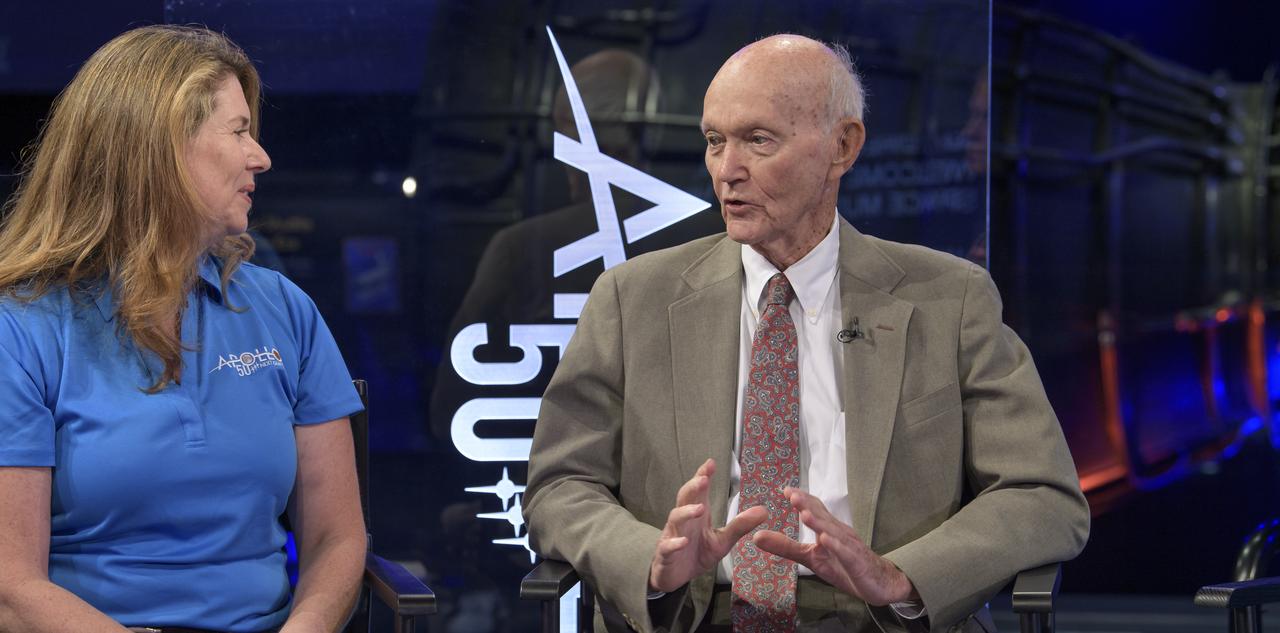
NASA Public Affairs Officer for Heliophysics Karen Fox, interviews, Apollo 11 astronaut Mike Collins during “NASA’s Giant Leaps: Past and Future," a live television program on Friday, July 19, 2019 from the Smithsonian National Air and Space Museum in Washington. NASA and the world are recognizing the 50th anniversary of Apollo 11, in which astronauts Neil Armstrong, Michael Collins, and Buzz Aldrin crewed the first mission to land astronauts on the Moon. Photo Credit: (NASA/Bill Ingalls)
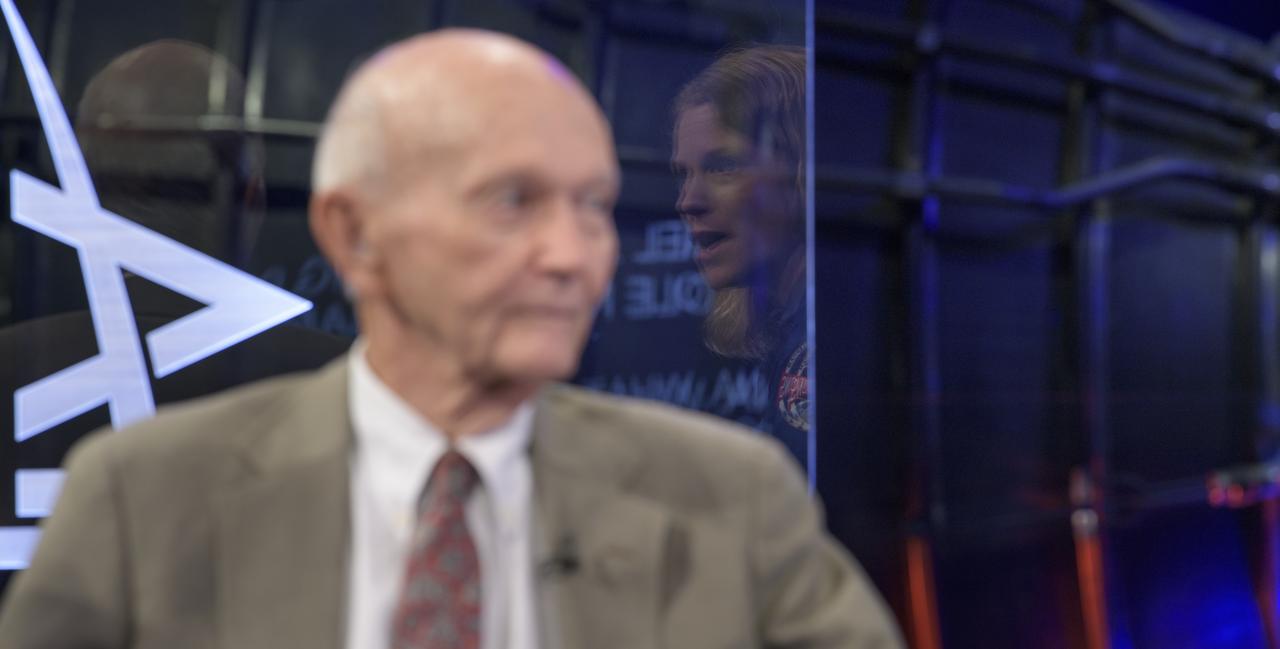
NASA astronaut candidate Zena Cardman is reflected in the glass as she talks with Apollo 11 astronaut Mike Collins during “NASA’s Giant Leaps: Past and Future," a live television program on Friday, July 19, 2019 from the Smithsonian National Air and Space Museum in Washington. NASA and the world are recognizing the 50th anniversary of Apollo 11, in which astronauts Neil Armstrong, Michael Collins, and Buzz Aldrin crewed the first mission to land astronauts on the Moon. Photo Credit: (NASA/Bill Ingalls)
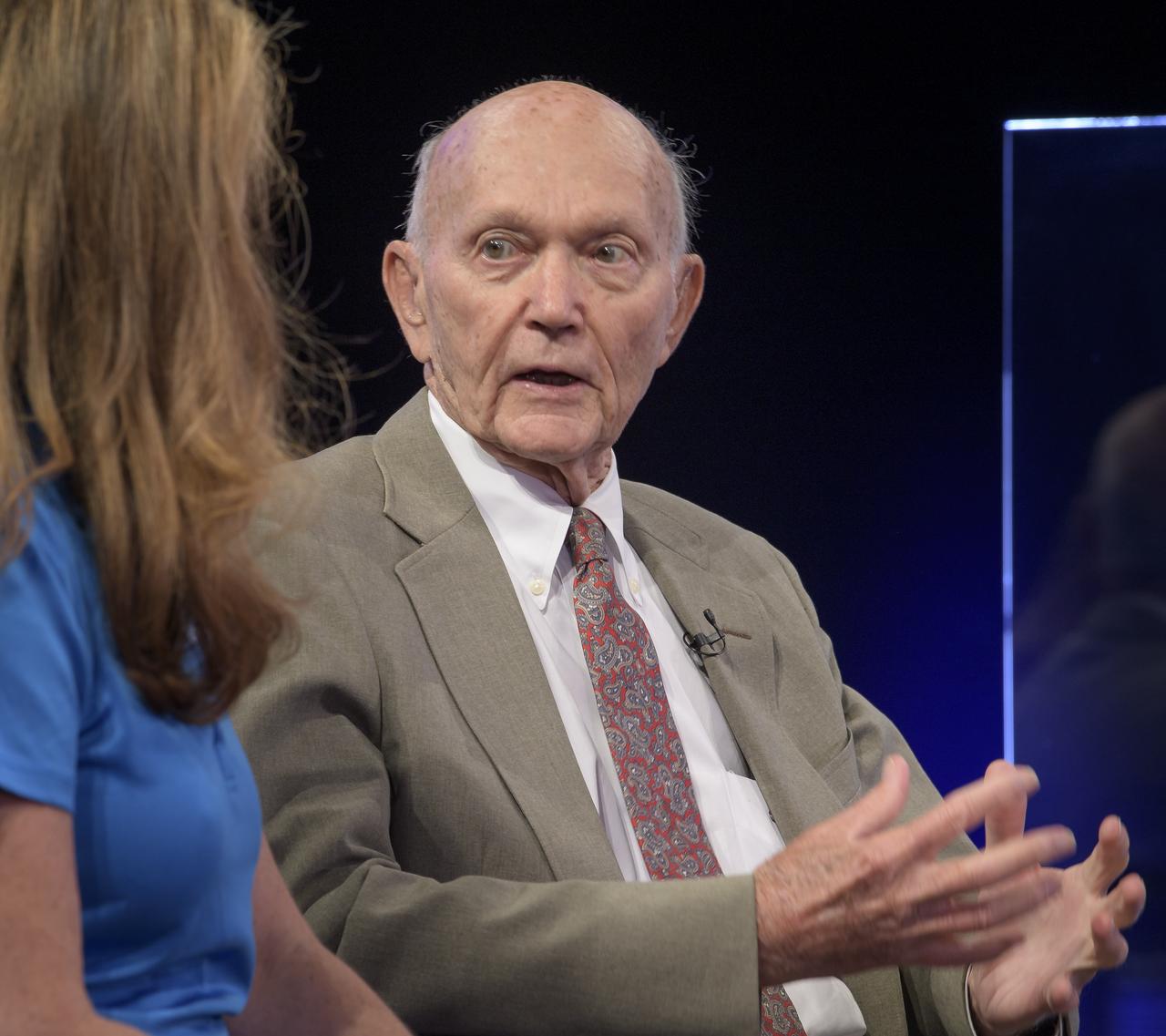
NASA Public Affairs Officer for Heliophysics Karen Fox, interviews, Apollo 11 astronaut Mike Collins during “NASA’s Giant Leaps: Past and Future," a live television program on Friday, July 19, 2019 from the Smithsonian National Air and Space Museum in Washington. NASA and the world are recognizing the 50th anniversary of Apollo 11, in which astronauts Neil Armstrong, Michael Collins, and Buzz Aldrin crewed the first mission to land astronauts on the Moon. Photo Credit: (NASA/Bill Ingalls)
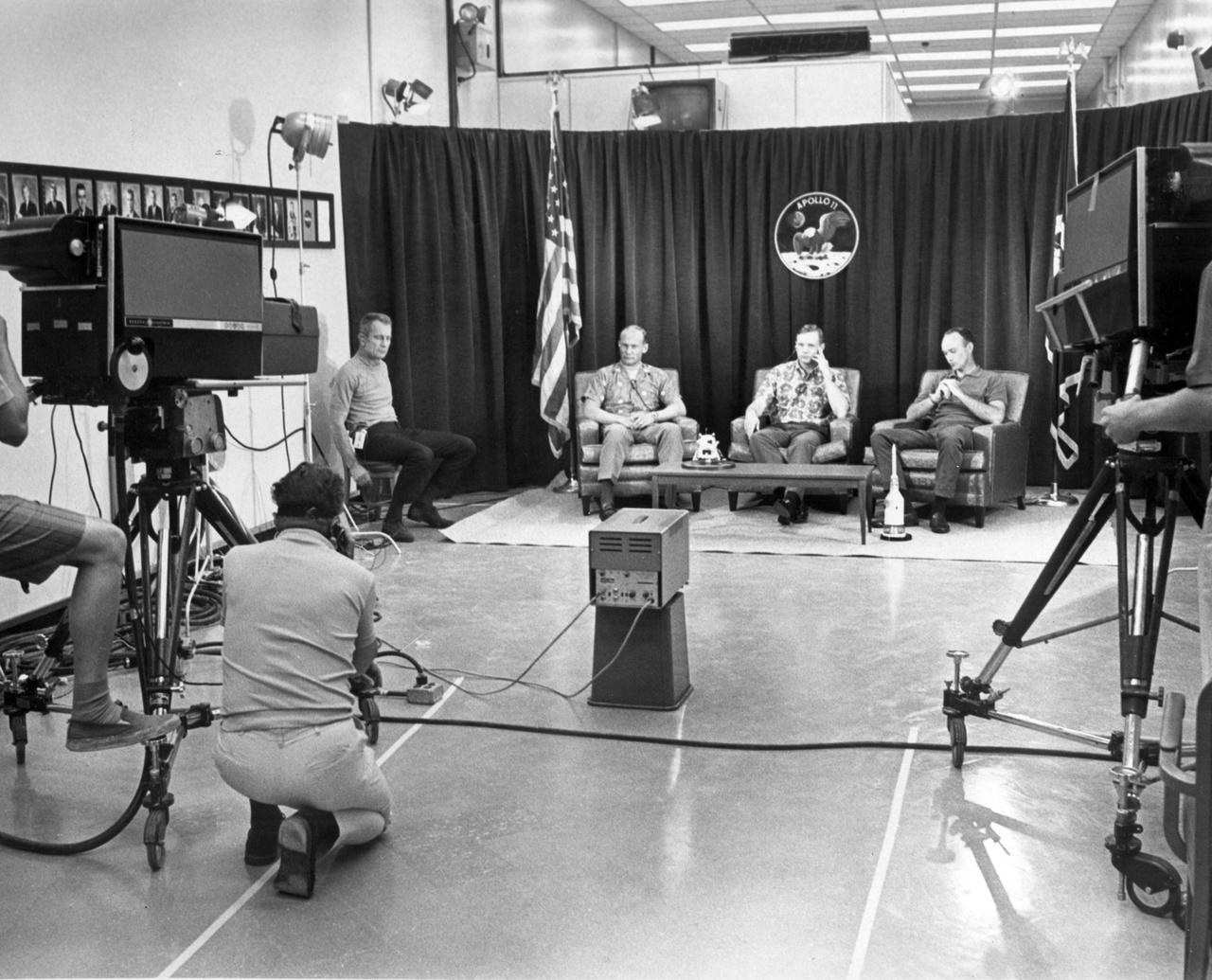
The night before launch day, Apollo 11 crew members (R-L) Michael Collins, Neil Armstrong, and Edwin Aldrin, participated in a closed circuit press conference the night before they began their historic lunar landing mission. At far left is chief astronaut and director of flight crew operations, Donald K. Slayton. The press conference with questions via intercom, was held under semi-isolation conditions to avoid exposing the astronauts to possible illness at the last minute. The Apollo 11 mission, the first lunar landing mission, launched from the Kennedy Space Center (KSC) in Florida via the Marshall Space Flight Center (MSFC) developed Saturn V launch vehicle on July 16, 1969 and safely returned to Earth on July 24, 1969. Aboard the space craft were astronauts Neil A. Armstrong, commander; Michael Collins, Command Module (CM) pilot; and Edwin E. (Buzz) Aldrin Jr., Lunar Module (LM) pilot. The CM, “Columbia”, piloted by Collins, remained in a parking orbit around the Moon while the LM, “Eagle’’, carrying astronauts Armstrong and Aldrin, landed on the Moon. On July 20, 1969, Armstrong was the first human to ever stand on the lunar surface, followed by Aldrin. During 2½ hours of surface exploration, the crew collected 47 pounds of lunar surface material for analysis back on Earth. With the success of Apollo 11, the national objective to land men on the Moon and return them safely to Earth had been accomplished.
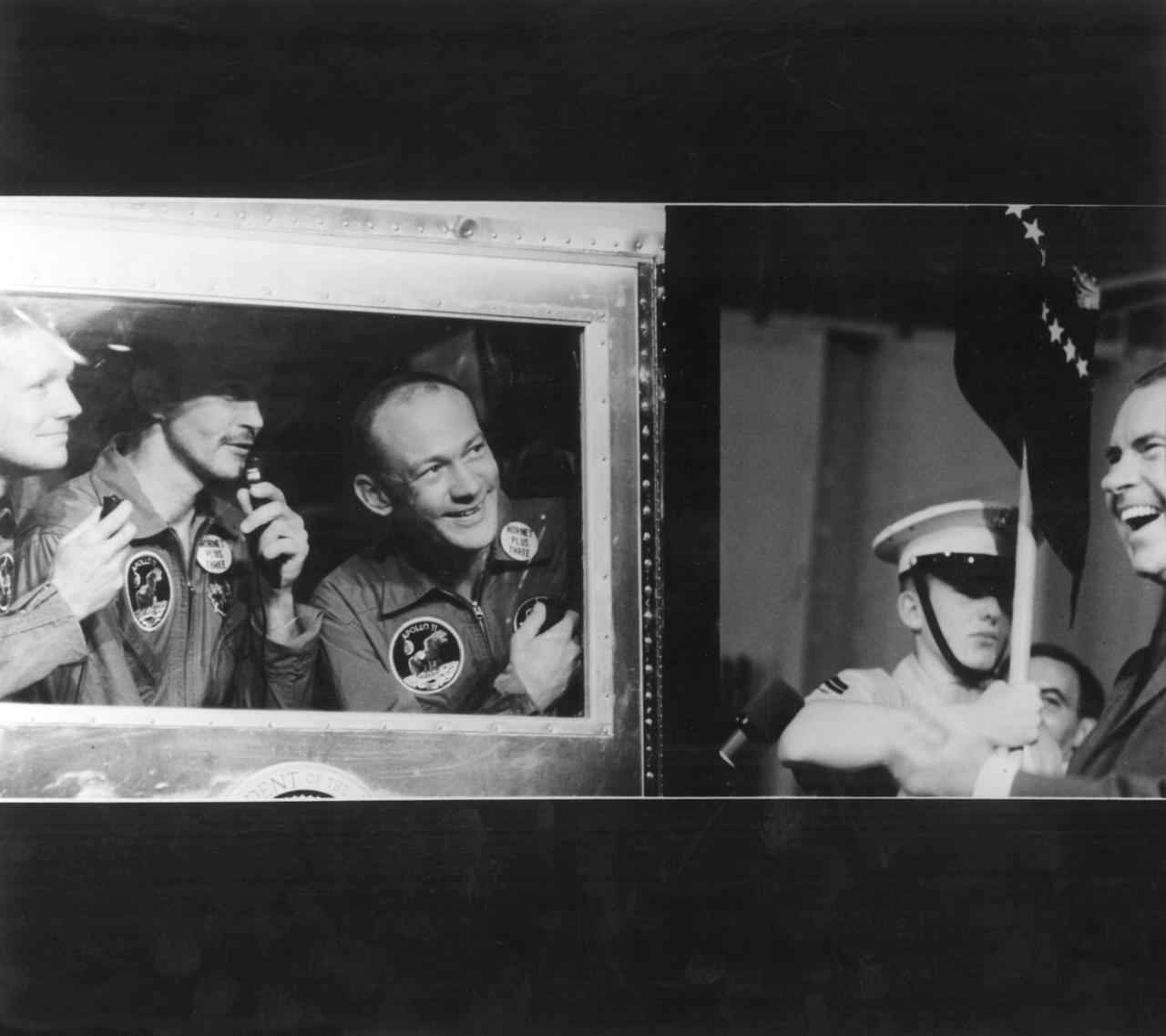
The Apollo 11 mission, the first manned lunar mission, launched from the Kennedy Space Center, Florida via the Marshall Space Flight Center (MSFC) developed Saturn V launch vehicle on July 16, 1969 and safely returned to Earth on July 24, 1969. Aboard the space craft were astronauts Neil A. Armstrong, commander; Michael Collins, Command Module (CM) pilot; and Edwin E. Aldrin Jr., Lunar Module (LM) pilot. The CM, piloted by Michael Collins remained in a parking orbit around the Moon while the LM, named “Eagle’’, carrying astronauts Neil Armstrong and Edwin Aldrin, landed on the Moon. During 2½ hours of surface exploration, the crew collected 47 pounds of lunar surface material for analysis back on Earth. The recovery operation took place in the Pacific Ocean where Navy para-rescue men recovered the capsule housing the 3-man Apollo 11 crew. The crew was airlifted to safety aboard the U.S.S. Hornet, where they were quartered in a Mobile Quarantine Facility (MQF) for 21 days. Here, U.S. President Richard Milhous Nixon gets a good laugh at something being said by Astronaut Collins (center) as astronauts Armstrong (left), and Aldrin (right) listen. The president was aboard the recovery vessel awaiting return of the astronauts. With the success of Apollo 11, the national objective to land men on the Moon and return them safely to Earth had been accomplished.
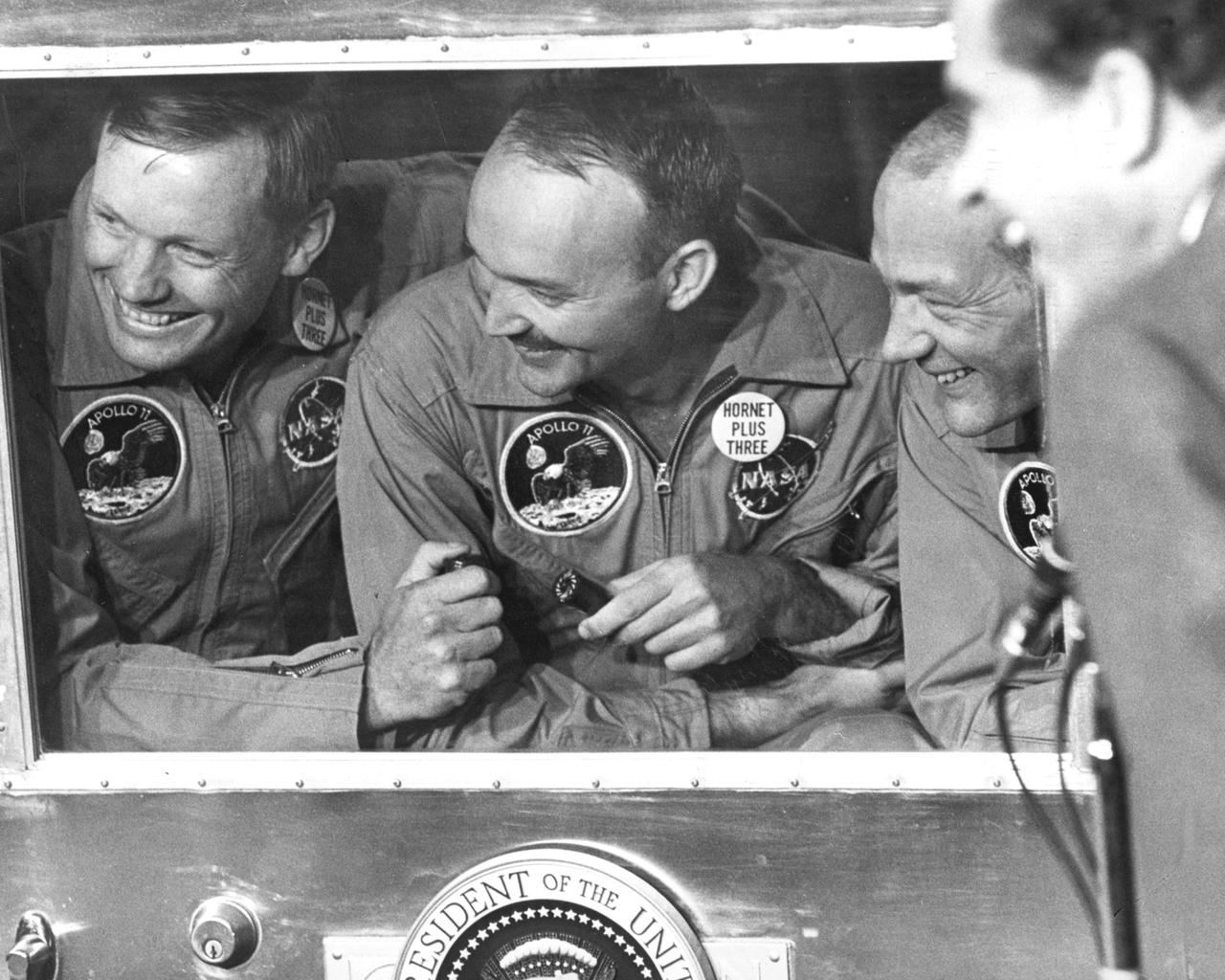
The Apollo 11 mission, the first manned lunar mission, launched from the Kennedy Space Center, Florida via the Saturn V launch vehicle on July 16, 1969 and safely returned to Earth on July 24, 1969. The Saturn V vehicle was developed by the Marshall Space Flight Center (MSFC) under the direction of Dr. Wernher von Braun. Aboard were Neil A. Armstrong, commander; Michael Collins, Command Module (CM) pilot; and Edwin E. Aldrin Jr., Lunar Module (LM) pilot. The CM, piloted by Michael Collins remained in a parking orbit around the Moon while the LM, named “Eagle’’, carrying astronauts Neil Armstrong and Edwin Aldrin, landed on the Moon. Armstrong was the first human to ever stand on the lunar surface, followed by Edwin (Buzz) Aldrin. During 2½ hours of surface exploration, the crew collected 47 pounds of lunar surface material for analysis back on Earth. The recovery operation took place in the Pacific Ocean where Navy para-rescue men recovered the capsule housing the 3-man Apollo 11 crew. The crew was airlifted to safety aboard the U.S.S. Hornet, where they were quartered in a Mobile Quarantine Facility (MQF). Here the quarantined Apollo 11 crew members (l to r) Armstrong, Collins, and Aldrin, and U.S. President Richard Milhous Nixon share laughs over a comment made by fellow astronaut Frank Borman, Apollo 8 commander. The president was aboard the recovery vessel awaiting return of the astronauts. With the success of Apollo 11, the national objective to land men on the Moon and return them safely to Earth had been accomplished.
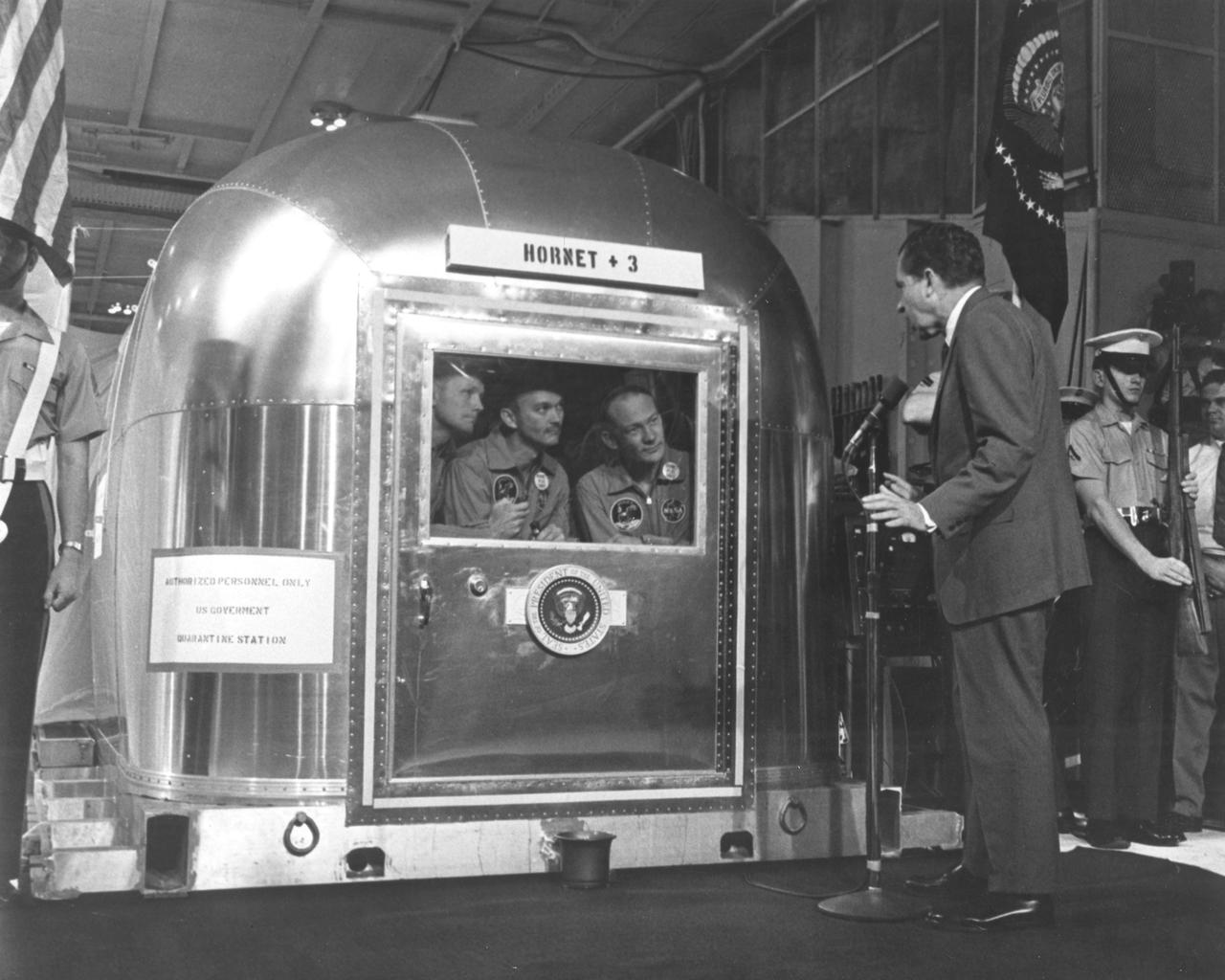
The Apollo 11 mission, the first manned lunar mission, launched from the Kennedy Space Center, Florida via the Saturn V launch vehicle on July 16, 1969 and safely returned to Earth on July 24, 1969. The Saturn V vehicle was developed by the Marshall Space Flight Center (MSFC) under the direction of Dr. Wernher von Braun. Aboard were Neil A. Armstrong, commander; Michael Collins, Command Module (CM) pilot; and Edwin E. Aldrin Jr., Lunar Module (LM) pilot. The CM, piloted by Michael Collins remained in a parking orbit around the Moon while the LM, named “Eagle’’, carrying astronauts Neil Armstrong and Edwin Aldrin, landed on the Moon. Armstrong was the first human to ever stand on the lunar surface, followed by Edwin (Buzz) Aldrin. During 2½ hours of surface exploration, the crew collected 47 pounds of lunar surface material for analysis back on Earth. The recovery operation took place in the Pacific Ocean where Navy para-rescue men recovered the capsule housing the 3-man Apollo 11 crew. The crew was airlifted by helicopter and taken to safety aboard the U.S.S. Hornet, where they were quartered in a Mobile Quarantine Facility (MQF). Shown here are the Apollo 11 crew members (L to R) Neil Armstrong, Michael Collins, and Edwin Aldrin inside the MQF as U.S. President Richard Milhous Nixon speaks to them via intercom. The president was aboard the recovery vessel awaiting return of the astronauts. With the success of Apollo 11, the national objective to land men on the Moon and return them safely to Earth had been accomplished.
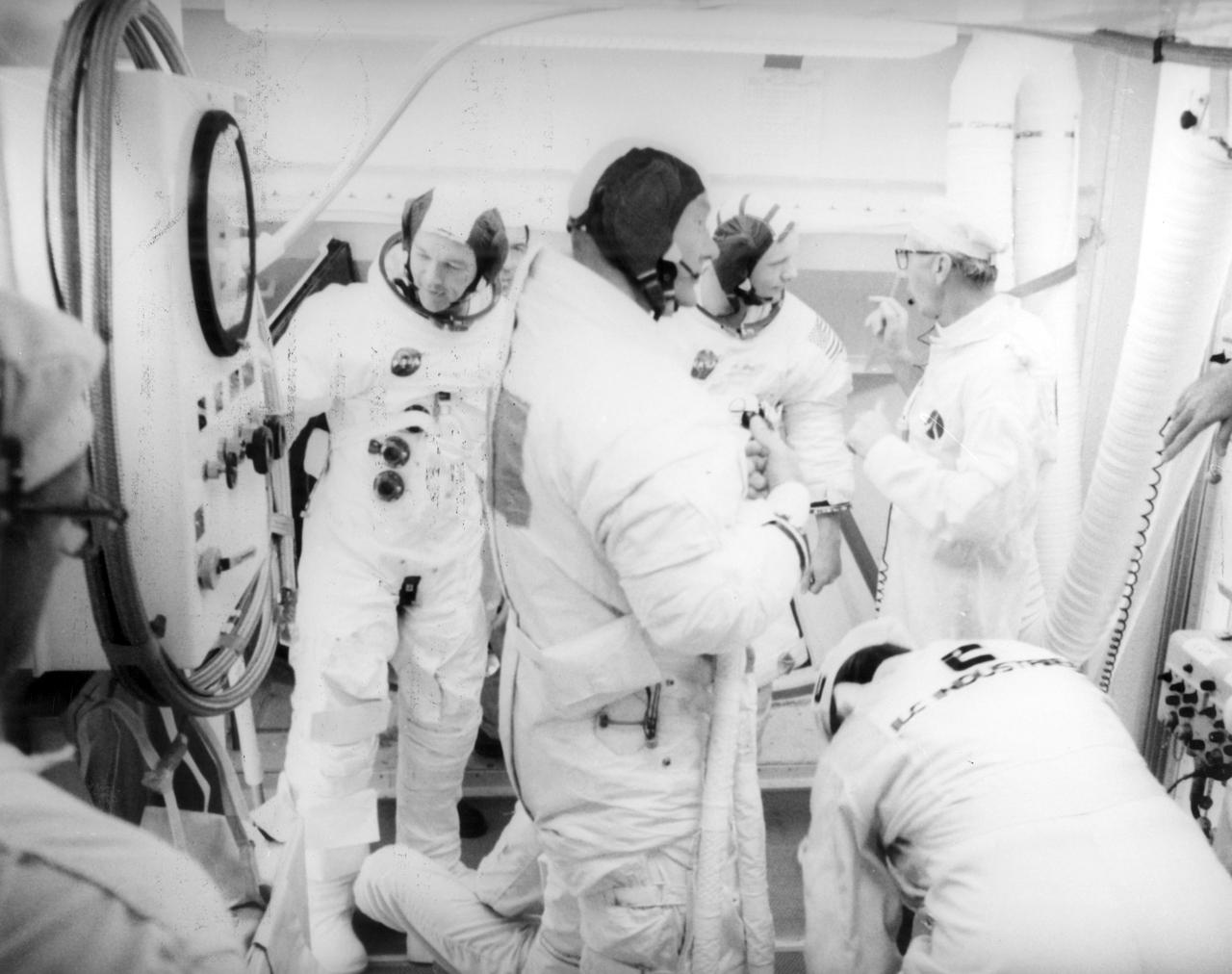
Apollo 11 crew members (left to right) Michael Collins, Edwin Aldrin (foreground), and Neil Armstrong, wearing space suits, leave the Apollo 11 space craft after participation in the countdown demonstration test for the upcoming mission. The Apollo 11 mission, the first lunar landing mission, launched from the Kennedy Space Center (KSC) in Florida via the Marshall Space Flight Center (MSFC) developed Saturn V launch vehicle on July 16, 1969 and safely returned to Earth on July 24, 1969. The CM, “Columbia”, piloted by Collins, remained in a parking orbit around the Moon while the LM, “Eagle’’, carrying astronauts Armstrong and Aldrin, landed on the Moon. On July 20, 1969, Armstrong was the first human to ever stand on the lunar surface, followed Aldrin. During 2½ hours of surface exploration, the crew collected 47 pounds of lunar surface material for analysis back on Earth. With the success of Apollo 11, the national objective to land men on the Moon and return them safely to Earth had been accomplished.
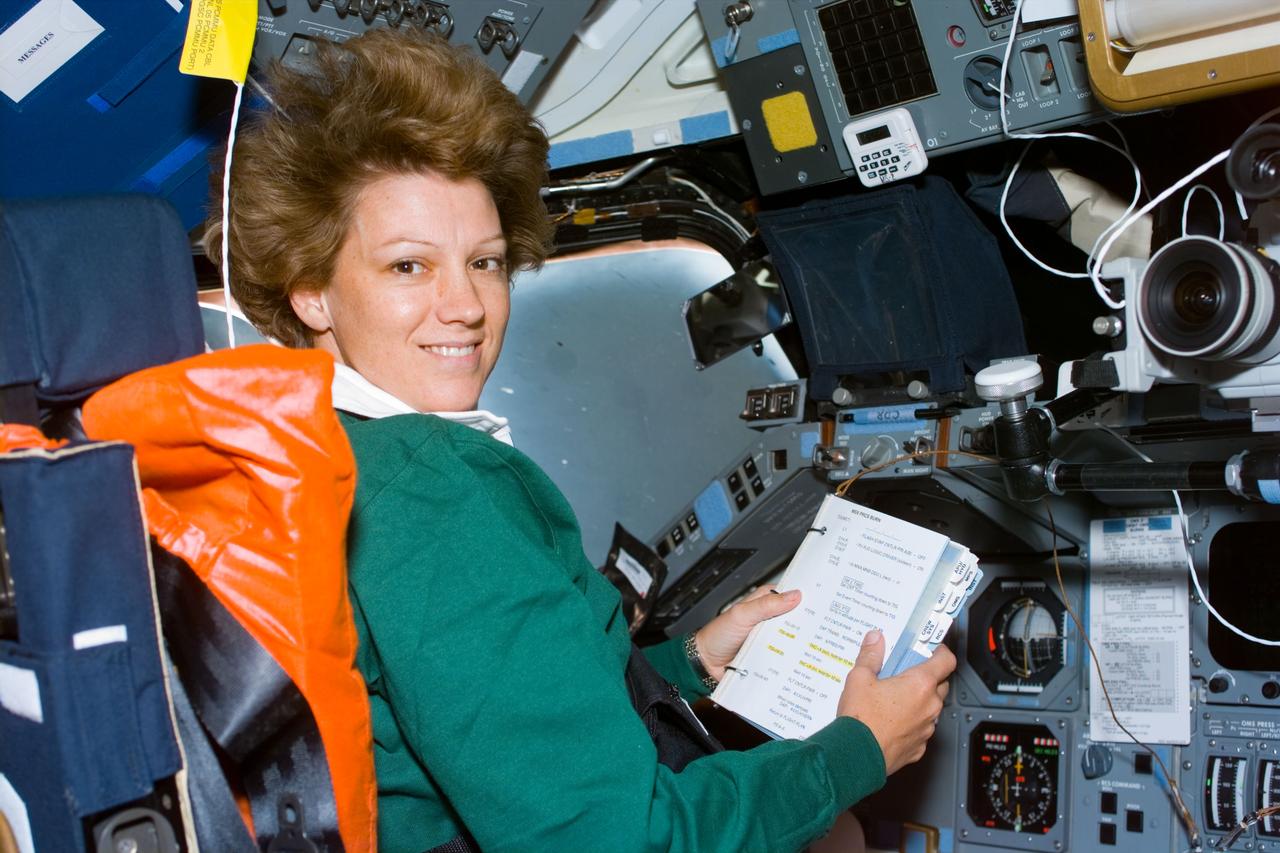
S93-E-5033 (23 July 1999) --- Astronaut Eileen M. Collins, mission commander, looks over a procedures checklist at the commander's station on the forward flight deck of the Space Shuttle Columbia on Flight Day 1. The most important event of this day was the deployment of the Chandra X-Ray Observatory, the world's most powerful X-Ray telescope. The photo was recorded with an electronic still camera (ESC).