
A model of the Transiting Exoplanet Survey Satellite (TESS) and a spare camera lens are seen during a media briefing, Wednesday, March 28, 2018 at NASA Headquarters in Washington. Photo Credit: (NASA/Bill Ingalls)

A model of the Transiting Exoplanet Survey Satellite (TESS) and a spare camera lens are seen during a media briefing, Wednesday, March 28, 2018 at NASA Headquarters in Washington. Photo Credit: (NASA/Bill Ingalls)

Jeff Volosin, TESS project manager, NASA’s Goddard Space Flight Center, holds a spare camera lens and a model of the Transiting Exoplanet Survey Satellite (TESS) during a media briefing, Wednesday, March 28, 2018 at NASA Headquarters in Washington. Photo Credit: (NASA/Bill Ingalls)
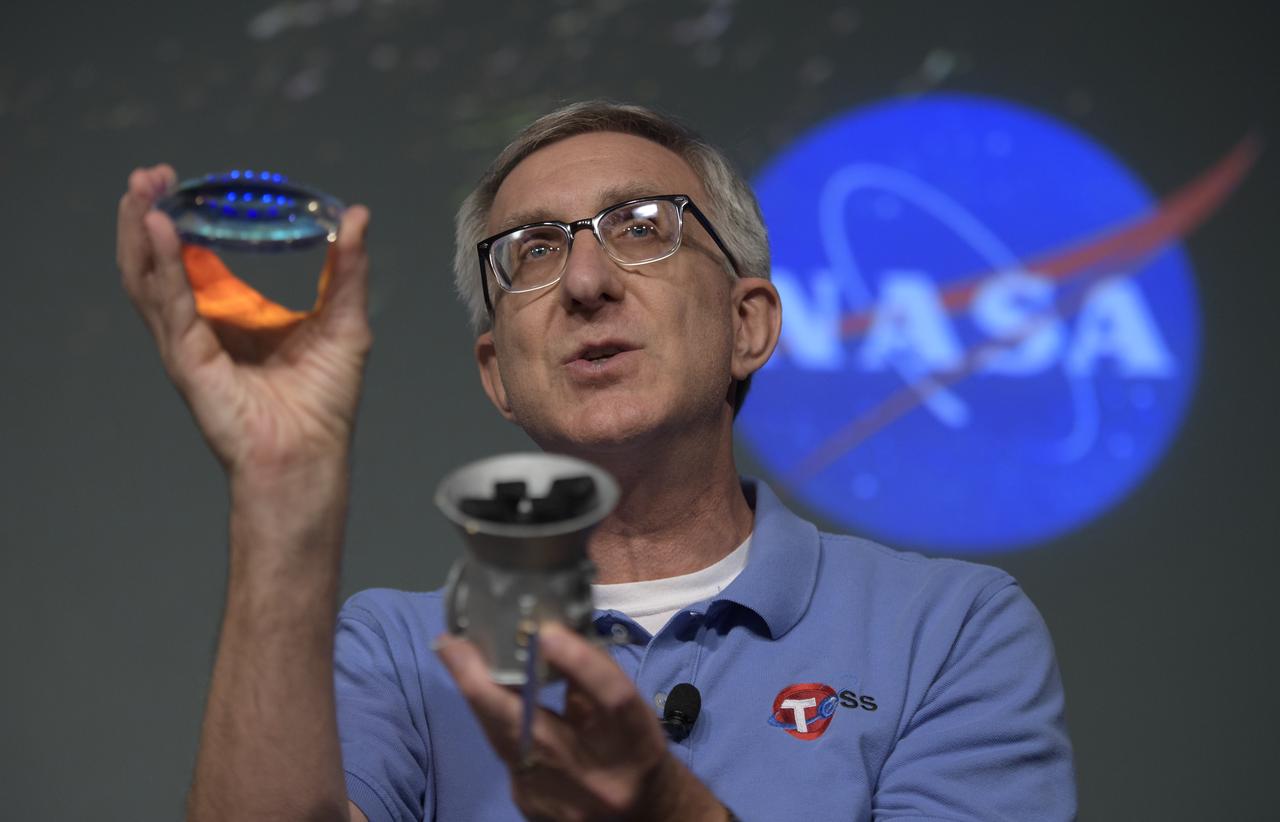
Jeff Volosin, TESS project manager, NASA’s Goddard Space Flight Center, holds a spare camera lens and a model of the Transiting Exoplanet Survey Satellite (TESS) during a media briefing, Wednesday, March 28, 2018 at NASA Headquarters in Washington. Photo Credit: (NASA/Bill Ingalls)
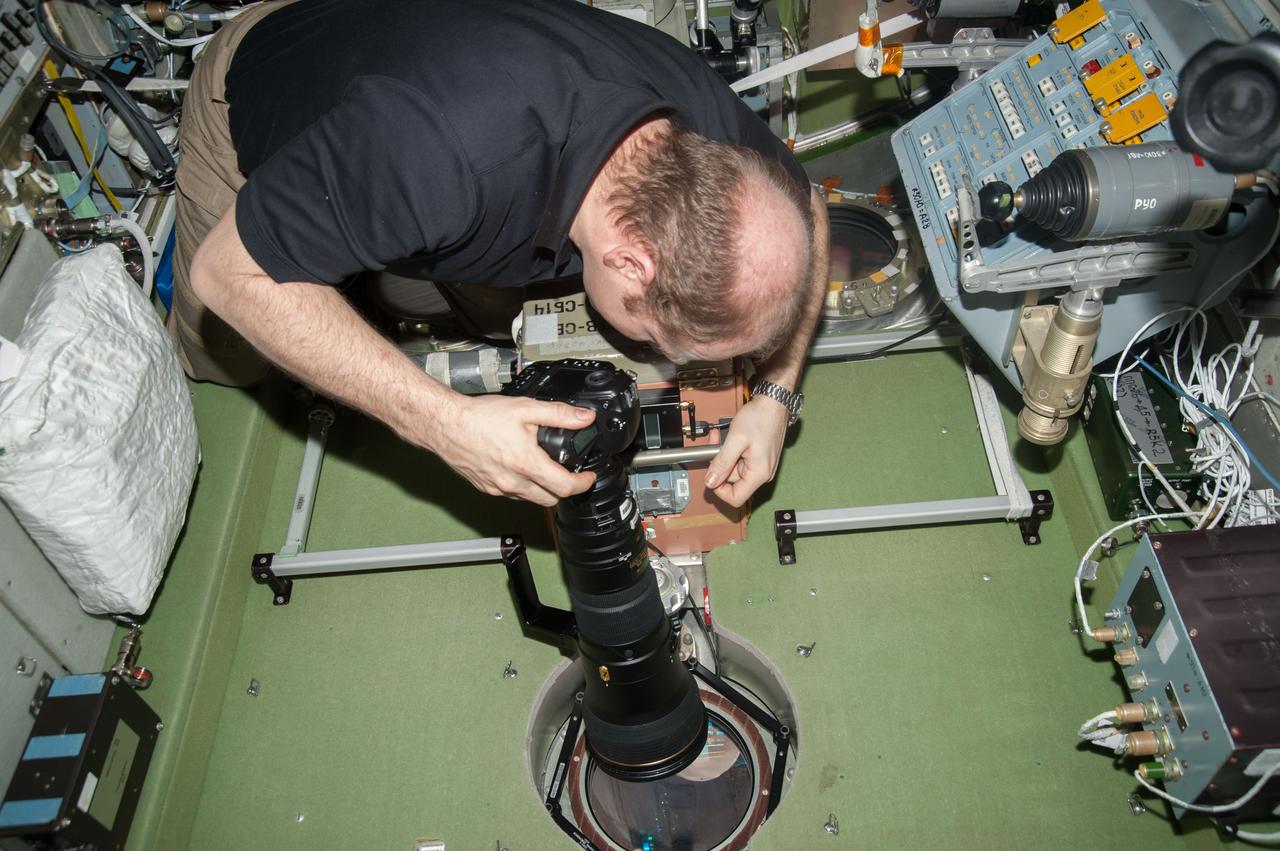
ISS038-E-066832 (8 March 2014) --- Expedition 38 Commander Oleg Kotov of Russia's Federal Space Agency (Roscosmos) aims a camera equipped with a 400mm lens through a window in the Zvezda service module aboard the International Space Station. Kotov, along with Flight Engineers Mike Hopkins of NASA and cosmonaut Sergey Ryazanskiy are scheduled to return to Earth in a couple of days.

ISS038-E-066830 (8 March 2014) --- Expedition 38 Commander Oleg Kotov of Russia's Federal Space Agency (Roscosmos) aims a camera equipped with a 400mm lens through a window in the Zvezda service module aboard the International Space Station. Kotov, along with Flight Engineers Mike Hopkins of NASA (pictured) and cosmonaut Sergey Ryazanskiy are scheduled to return to Earth in a couple of days.
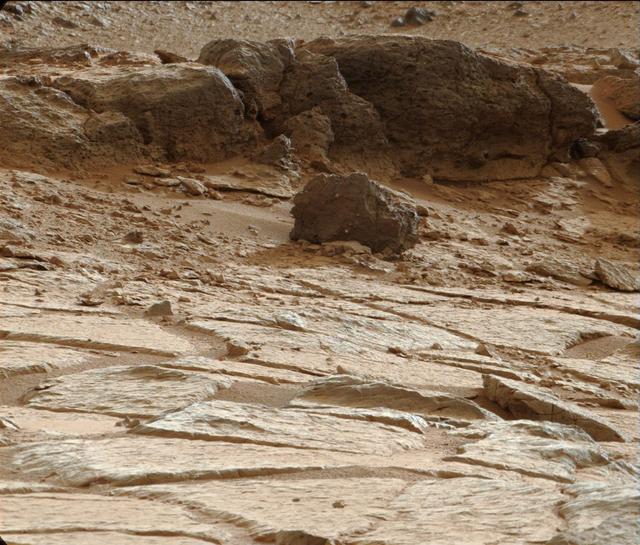
This image from NASA Curiosity was taken by the right telephoto-lens camera of the Mast Camera Mastcam on the rover during the 193rd Martian day, or sol, of Curiosity work on Mars Feb. 20, 2013 in the Glenelg area.
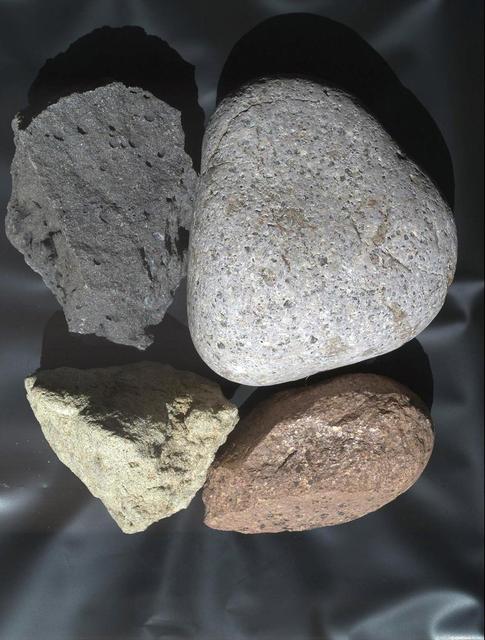
This view of terrestrial rocks was taken by a testing twin -- the life test unit -- of Mars Hand Lens Imager MAHLI camera on NASA Mars Science Laboratory.
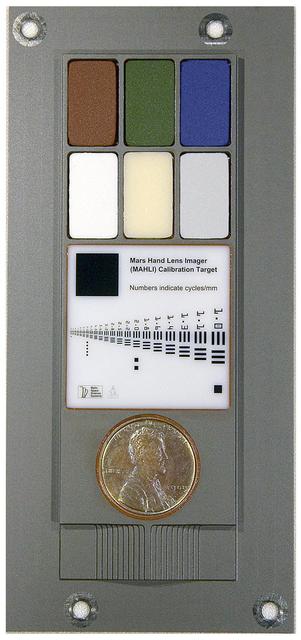
This image provides a way to have a full-size printout of the calibration target for the Mars Hand Lens Imager MAHLI camera on NASA Mars rover Curiosity.
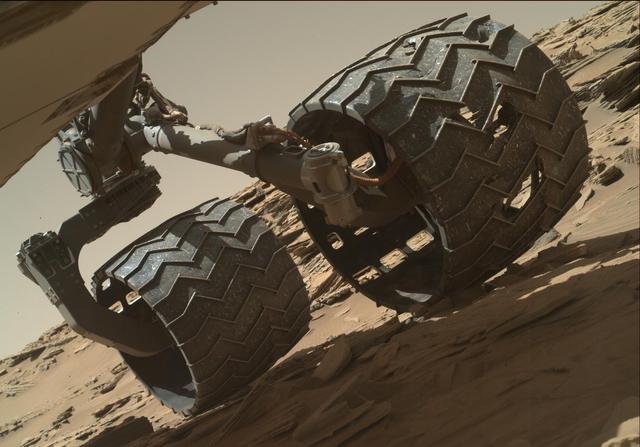
The team operating NASA Curiosity Mars rover uses the Mars Hand Lens Imager MAHLI camera on the rover arm to check the condition of the wheels at routine intervals.
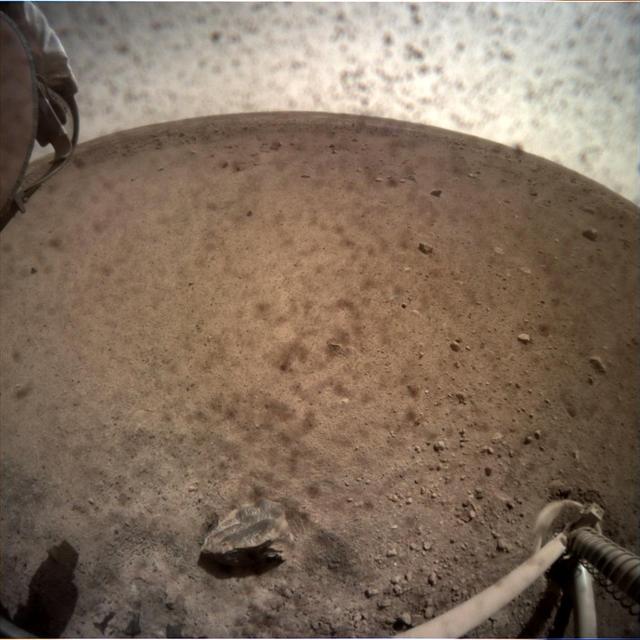
NASA's InSight spacecraft flipped open the lens cover on its Instrument Context Camera (ICC) on Nov. 30, 2018, and captured this view of Mars. Located below the deck of the InSight lander, the ICC has a fisheye view, creating a curved horizon. Some clumps of dust are still visible on the camera's lens. One of the spacecraft's footpads can be seen in the lower right corner. The seismometer's tether box is in the upper left corner. https://photojournal.jpl.nasa.gov/catalog/PIA22893
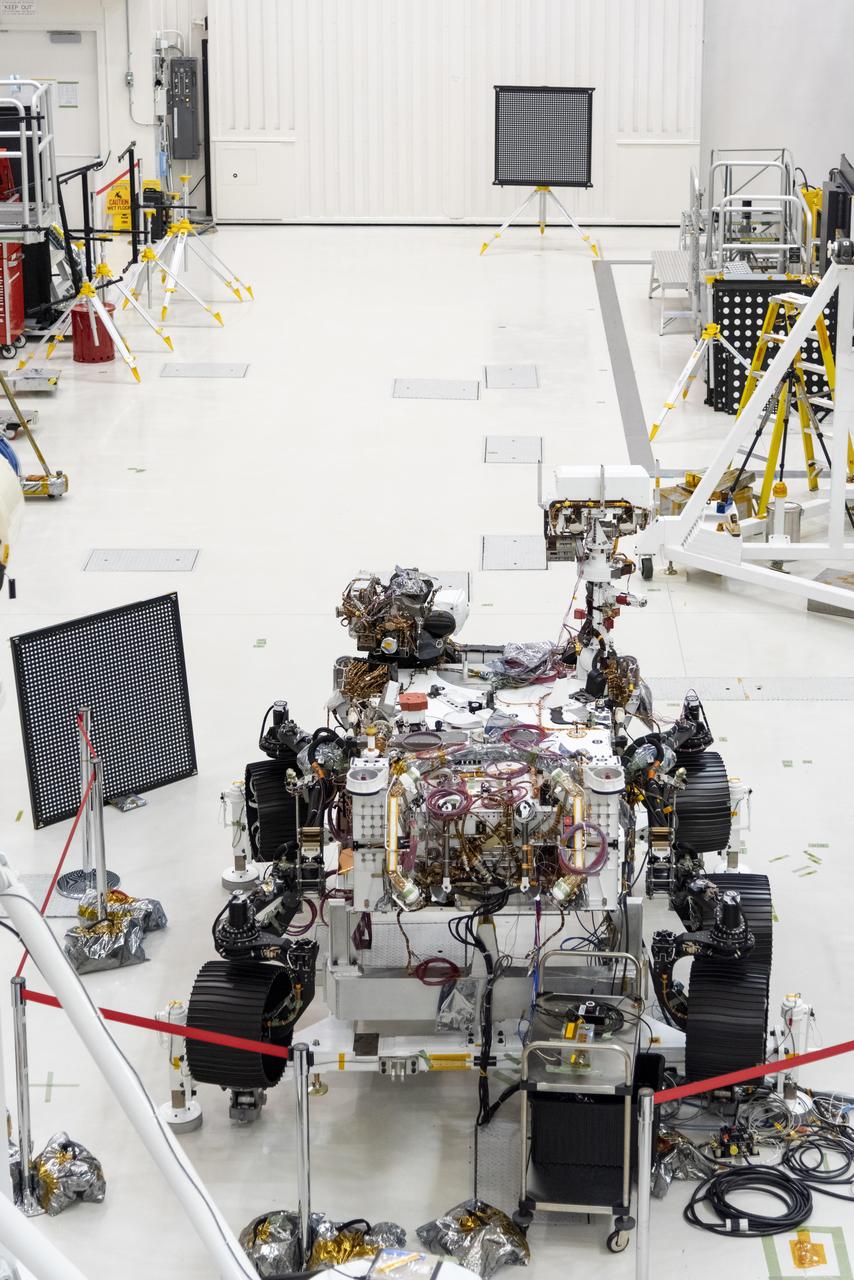
The Mars 2020 rover undergoes an "eye" exam after several cameras were installed. The rover carries everything from wide-angle landscape cameras to narrow-angle high-resolution zoom lens cameras. The image was taken on July 23, 2019, in the Spacecraft Assembly Facility's High Bay 1 at the Jet Propulsion Laboratory in Pasadena, California. https://photojournal.jpl.nasa.gov/catalog/PIA23315
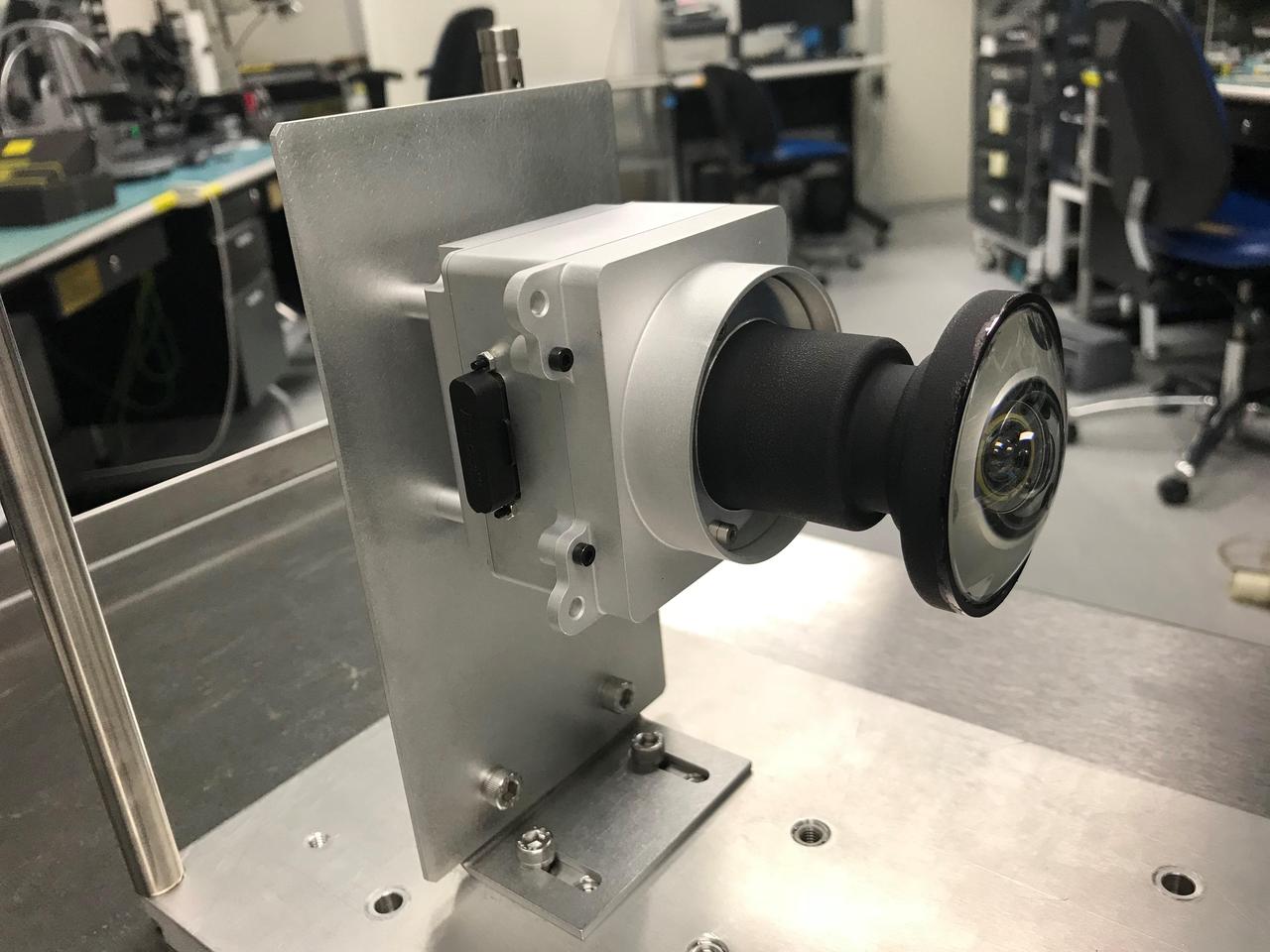
This image shows one of the enhanced engineering cameras with a prototype lens for the Hazcams, which will watch for obstacles encountered by NASA's Mars 2020 rover. https://photojournal.jpl.nasa.gov/catalog/PIA22102
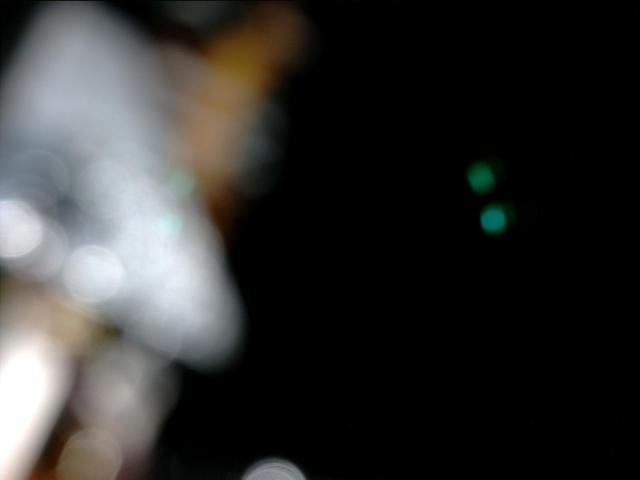
An in-flight camera check produced this out-of-focus image when NASA Mars Science Laboratory spacecraft turned on illumination sources that are part of the Curiosity rover Mars Hand Lens Imager MAHLI instrument.
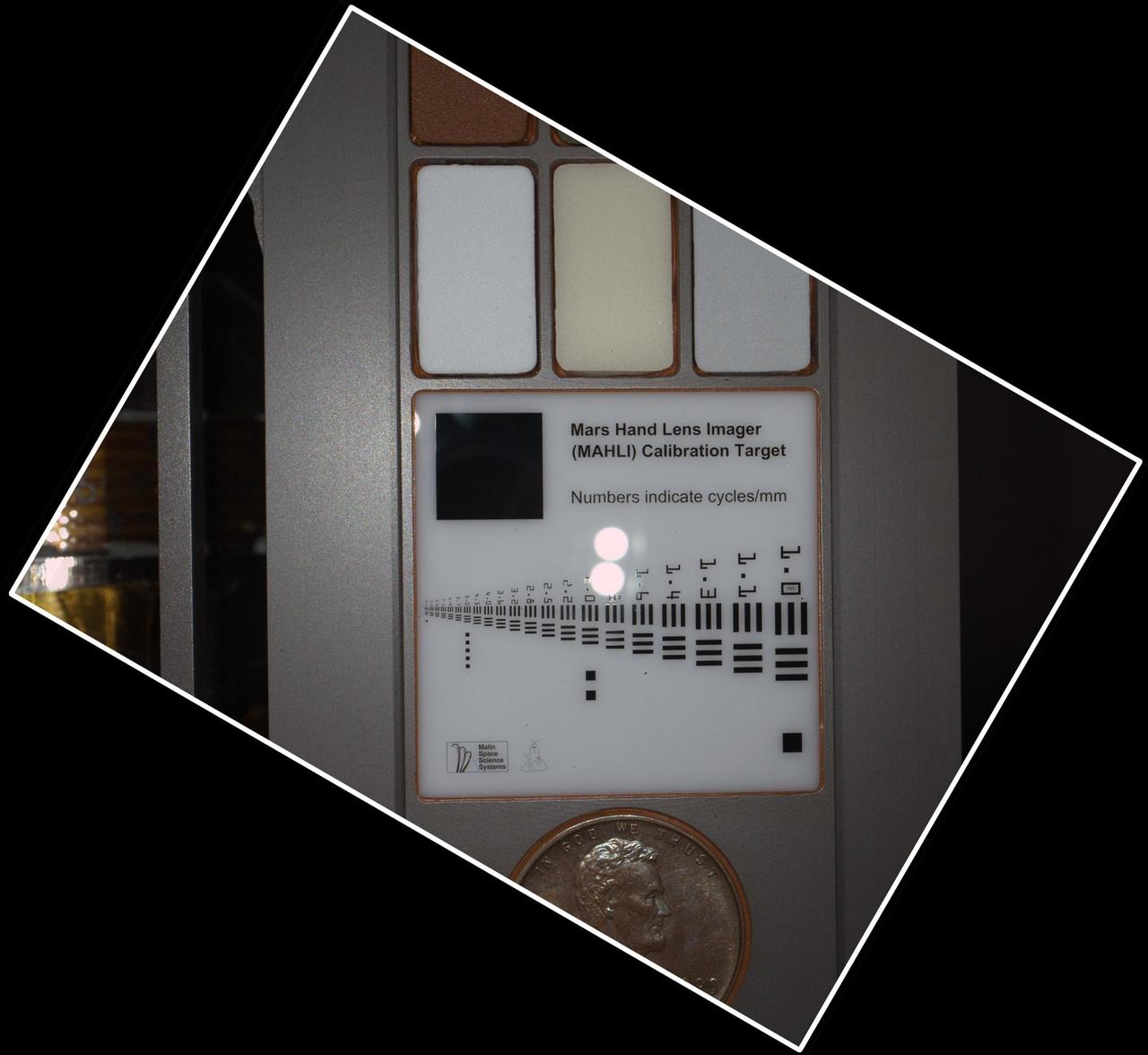
During pre-flight testing, the Mars Hand Lens Imager MAHLI camera on NASA Mars rover Curiosity took this image of the MAHLI calibration target from a distance of 3.94 inches 10 centimeters away from the target.
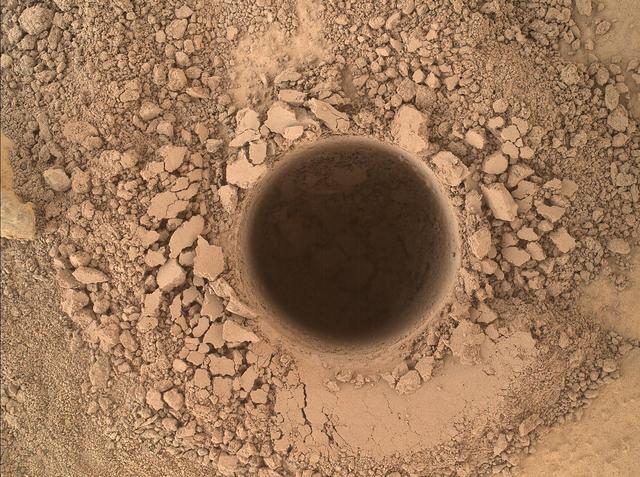
This image from the Mars Hand Lens Imager MAHLI camera on NASA Curiosity Mars rover shows the first sample-collection hole drilled in Mount Sharp, the layered mountain that is the science destination of the rover extended mission.
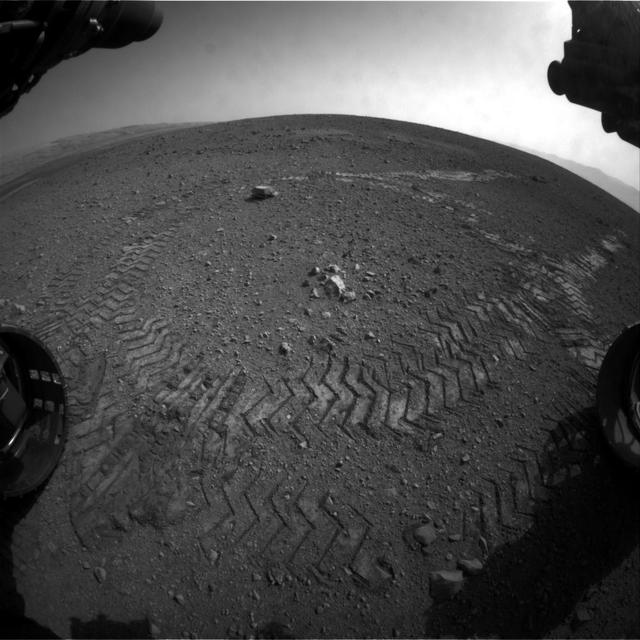
This image shows the tracks left by NASA Curiosity rover on Aug. 22, 2012, as it completed its first test drive on Mars. This image was taken by a front Hazard-Avoidance camera, which has a fisheye lens.
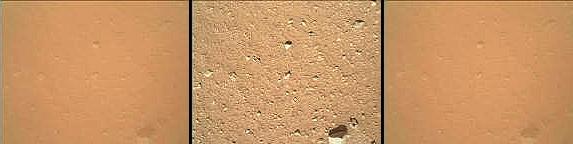
As the last step in a series of inspections of the Mars Hand Lens Imager MAHLI aboard NASA Mars rover Curiosity, this camera reclosable dust cover was opened for the first time on Sept. 8, 2012.
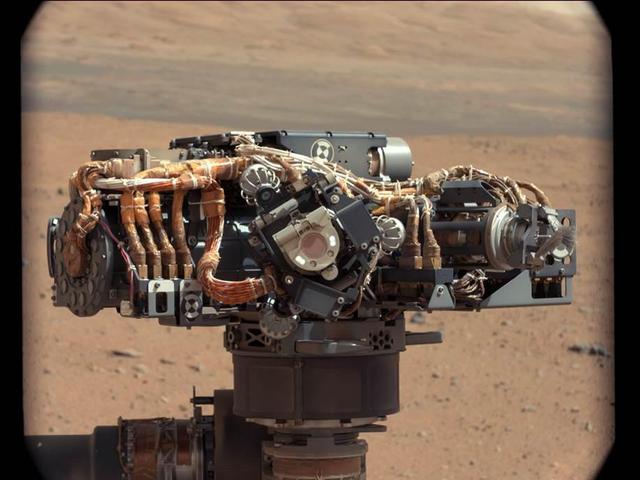
This image shows the Mars Hand Lens Imager MAHLI on NASA Curiosity rover, with the Martian landscape in the background. The image was taken by Curiosity Mast Camera on the 32nd Martian day, or sol, of operations on the surface.
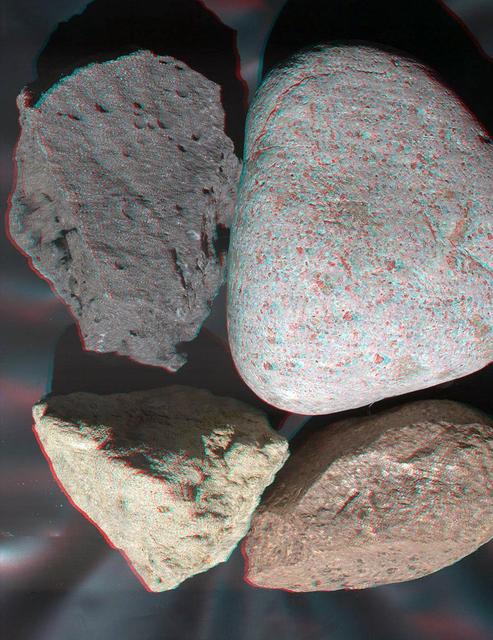
This stereo view of terrestrial rocks combines two images taken by a testing twin of the Mars Hand Lens Imager MAHLI camera on NASA Mars Science Laboratory. 3D glasses are necessary to view this image.
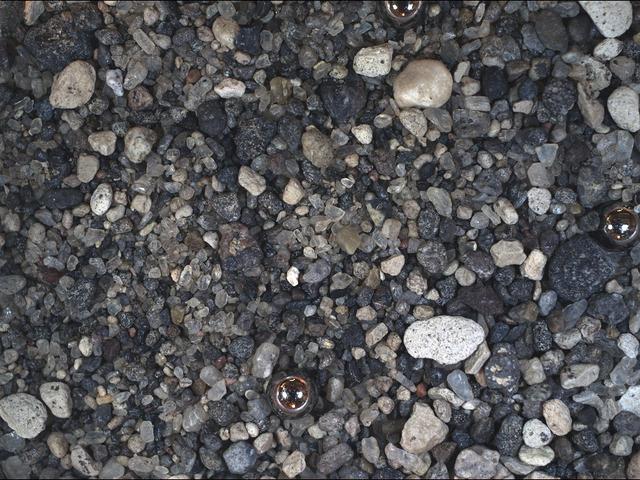
This view of grains from a sand dune near Christmas Lake, Ore., was taken by a testing twin of Mars Hand Lens Imager MAHLI camera on NASA Mars Science Laboratory.
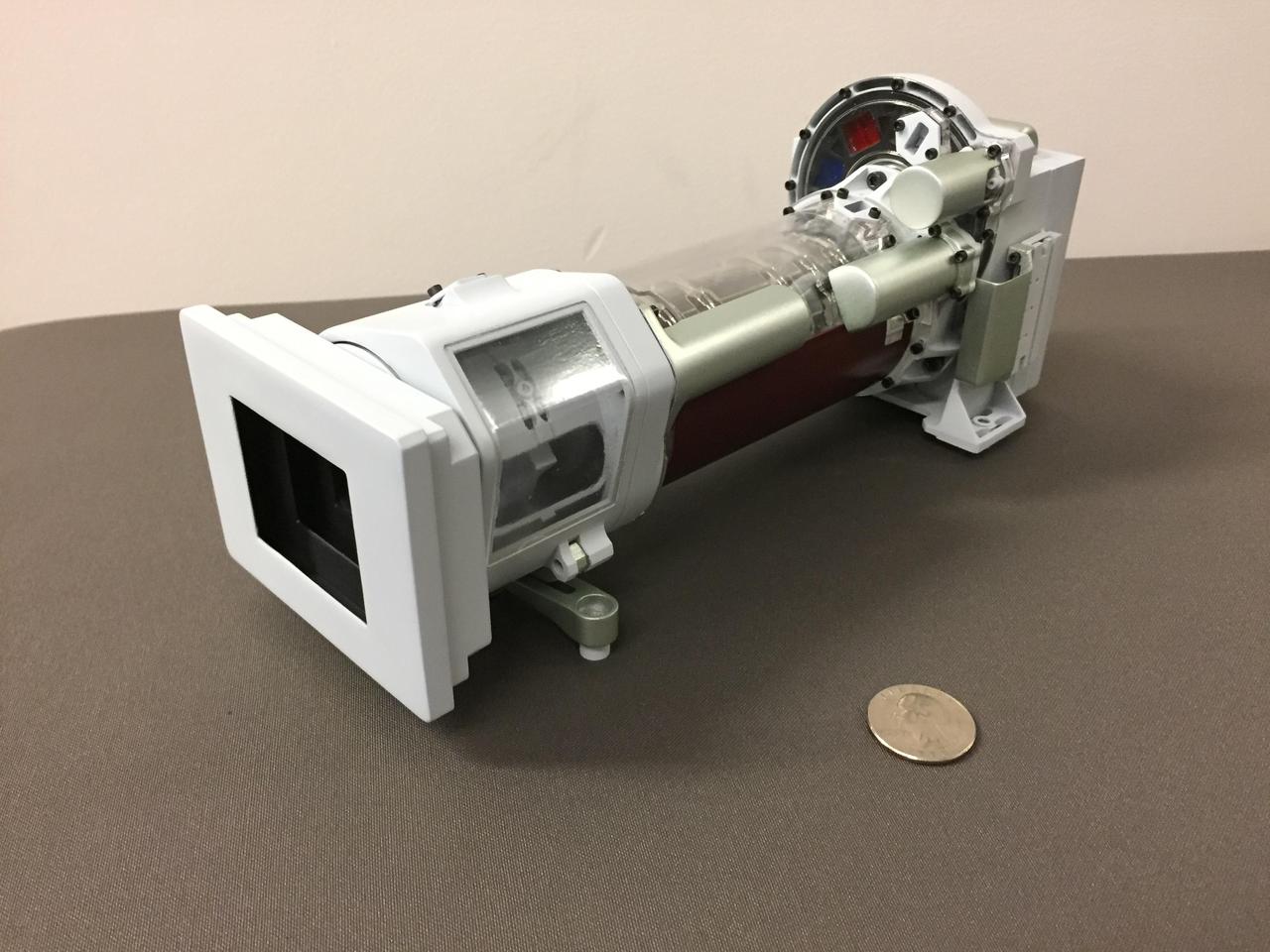
This image shows a 3-D printed model of Mastcam-Z, one of the science cameras on NASA's Mars 2020 rover. Mastcam-Z will include a 3:1 zoom lens. https://photojournal.jpl.nasa.gov/catalog/PIA22101
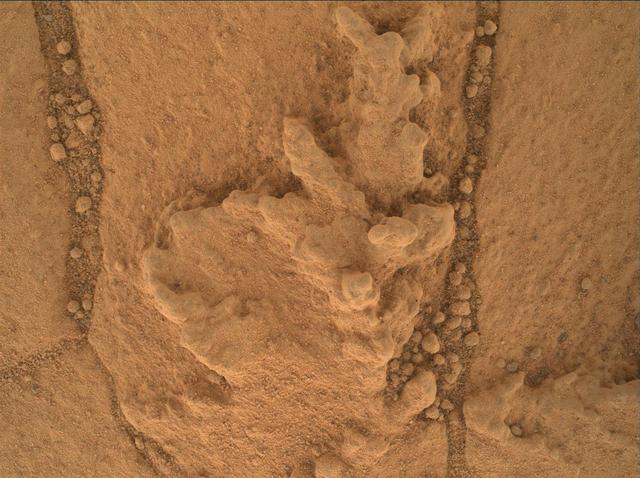
This image from the Mars Hand Lens Imager MAHLI camera on NASA Curiosity Mars rover shows an example of a type of geometrically distinctive feature that researchers are using Curiosity to examine at a mudstone outcrop at the base of Mount Sharp.
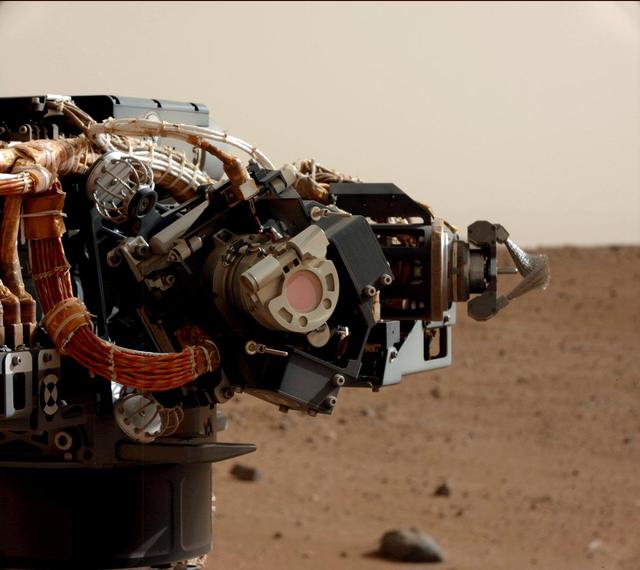
The left eye of the Mast Camera Mastcam on NASA Mars rover Curiosity took this image of the camera on the rover arm, the Mars Hand Lens Imager MAHLI, during the 30th Martian day, or sol, of the rover mission on Mars Sept. 5, 2012.
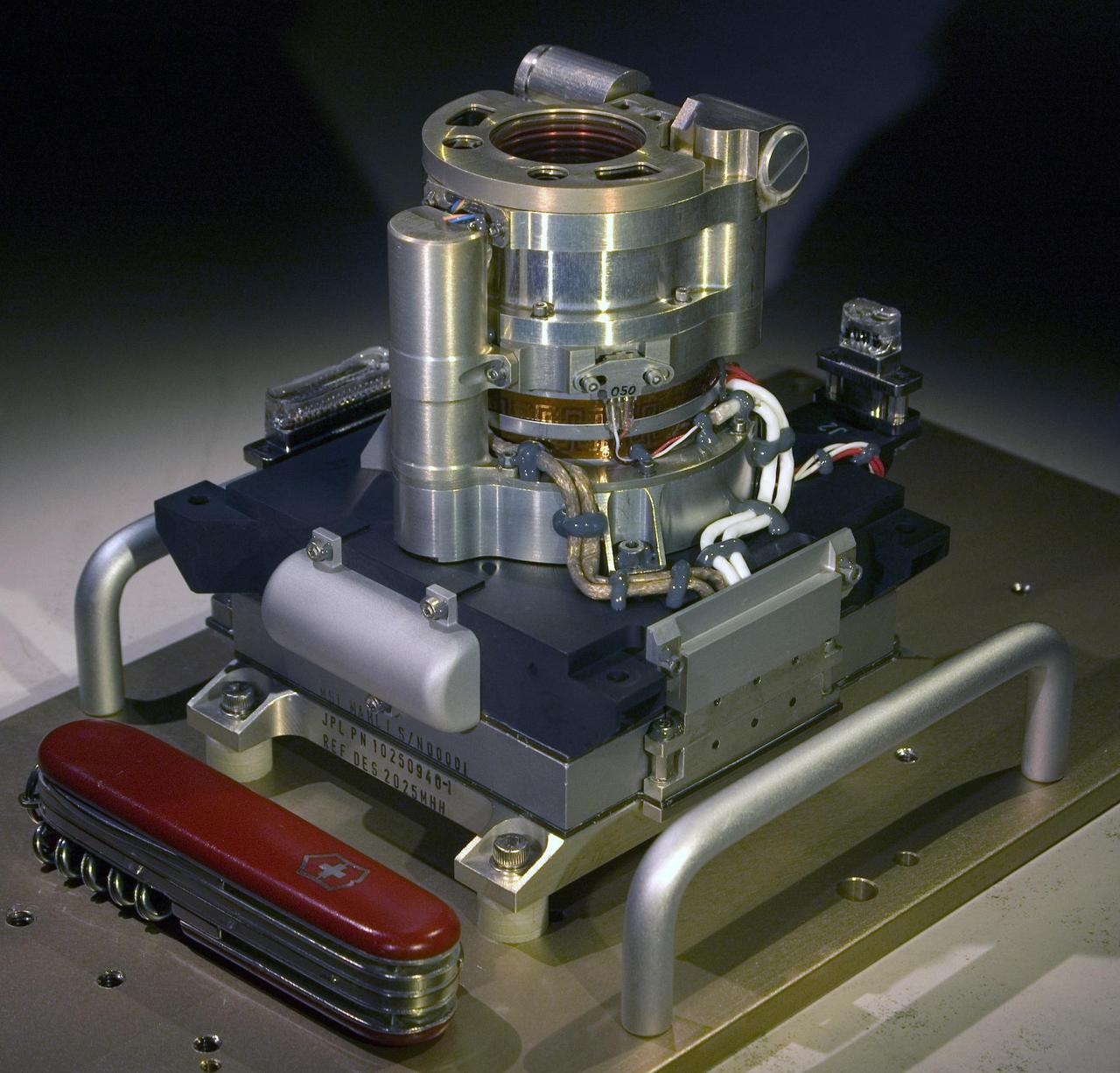
The Mars Hand Lens Imager MAHLI camera will fly on NASA Mars Science Laboratory mission, launching in late 2011. This photo of the camera was taken before MAHLI November 2010 installation onto the robotic arm of the mission Mars rover, Curiosity.
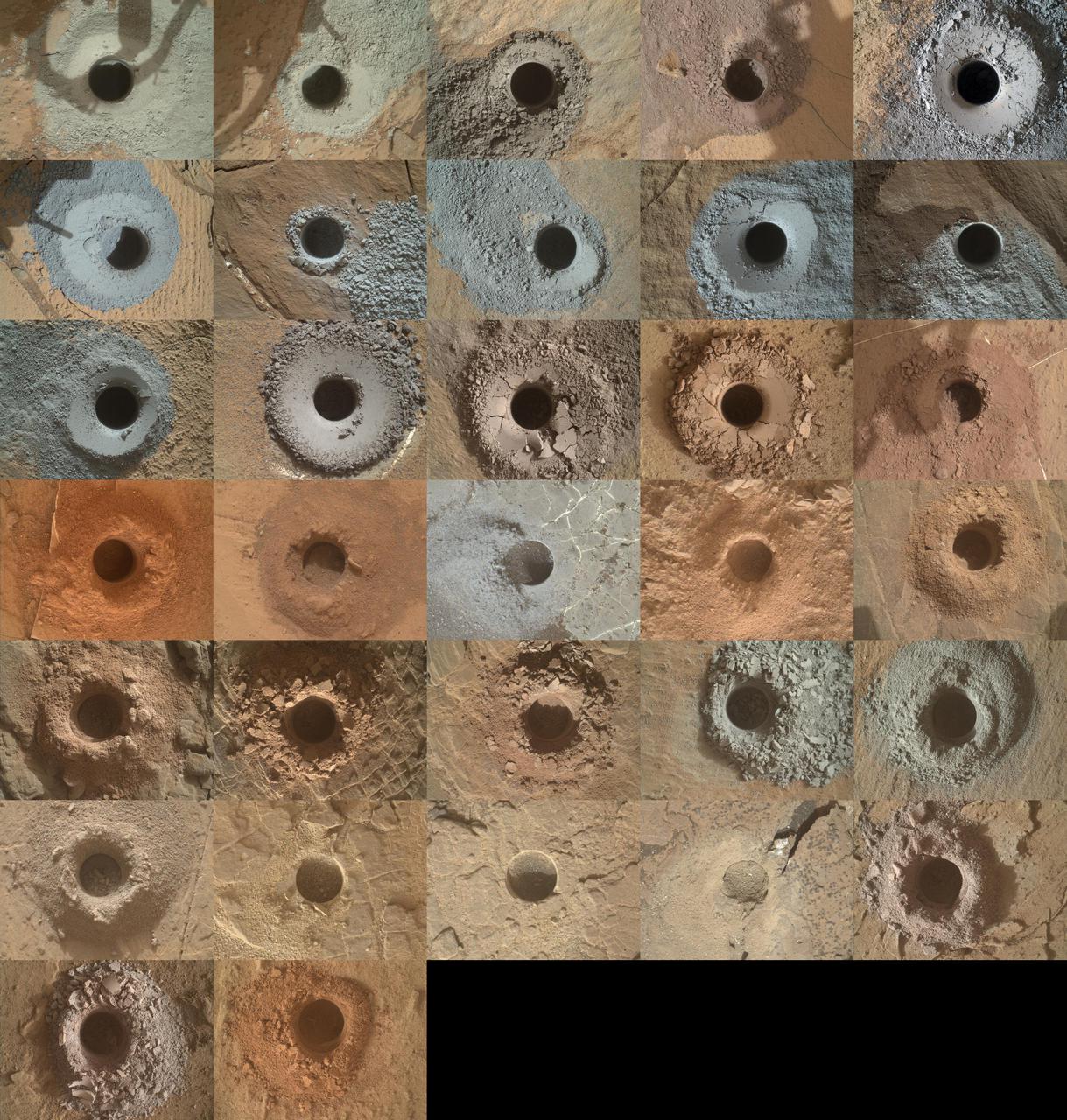
NASA's Curiosity Mars rover has used the drill on its robotic arm to take 32 rock samples to date. The Mars Hand Lens Imager (MAHLI), a camera on the end of the robotic arm, provided the images in this mosaic. https://photojournal.jpl.nasa.gov/catalog/PIA24764
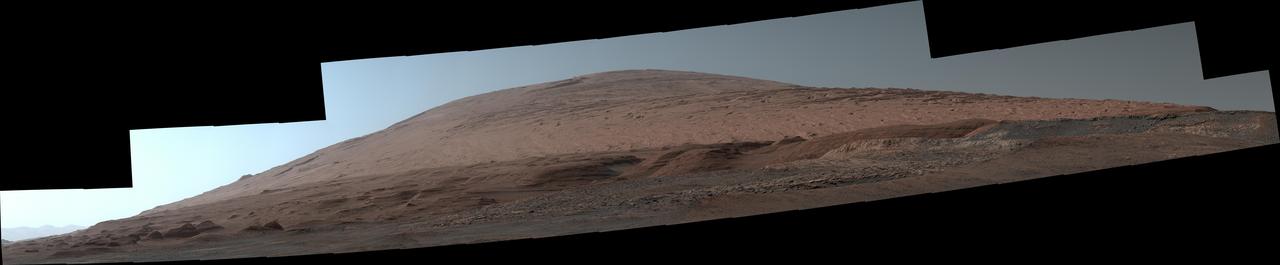
The Mast Camera, or Mastcam, on NASA's Curiosity Mars rover used its telephoto lens to capture Mount Sharp in the morning illumination on Oct. 13, 2019, the 2,555th Martian day, or sol, of the mission. The panorama is composed of 44 individual images stitched together. The panorama has been white-balanced and additionally brightened so that the colors of the rock materials resemble how they would appear under daytime lighting conditions on Earth. https://photojournal.jpl.nasa.gov/catalog/PIA23898
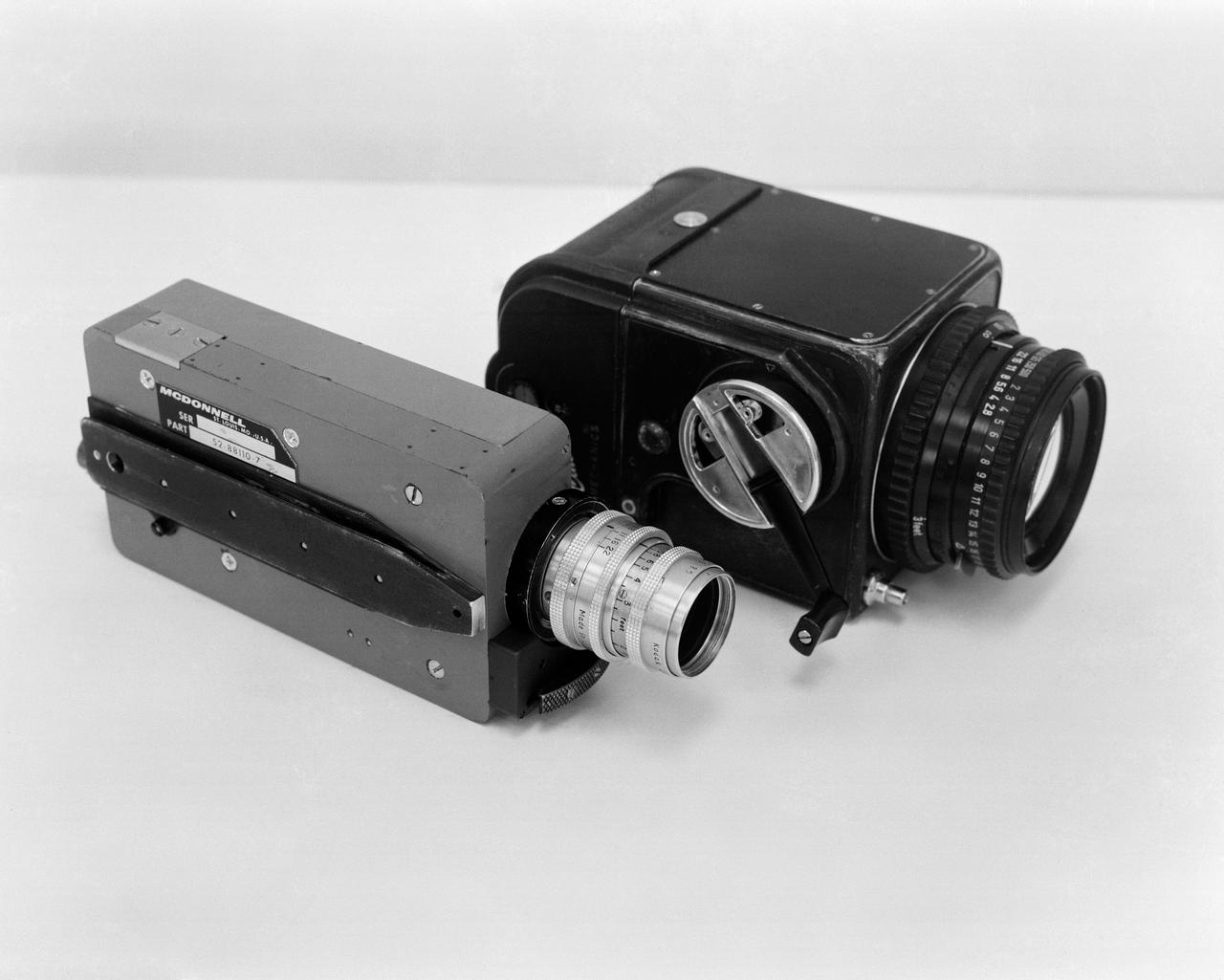
S65-17399 (March 1965) --- Two cameras which will be used on the Gemini-Titan 3 orbital flight. The lighter colored one is a McDonnell 16mm sequential camera, having a 120-feet film capacity, and a 25mm f/1.9 lens. The black camera is a modified Hasselblad, hand-held, with a 70mm flimback, using an 80mm f/2.8 lens.
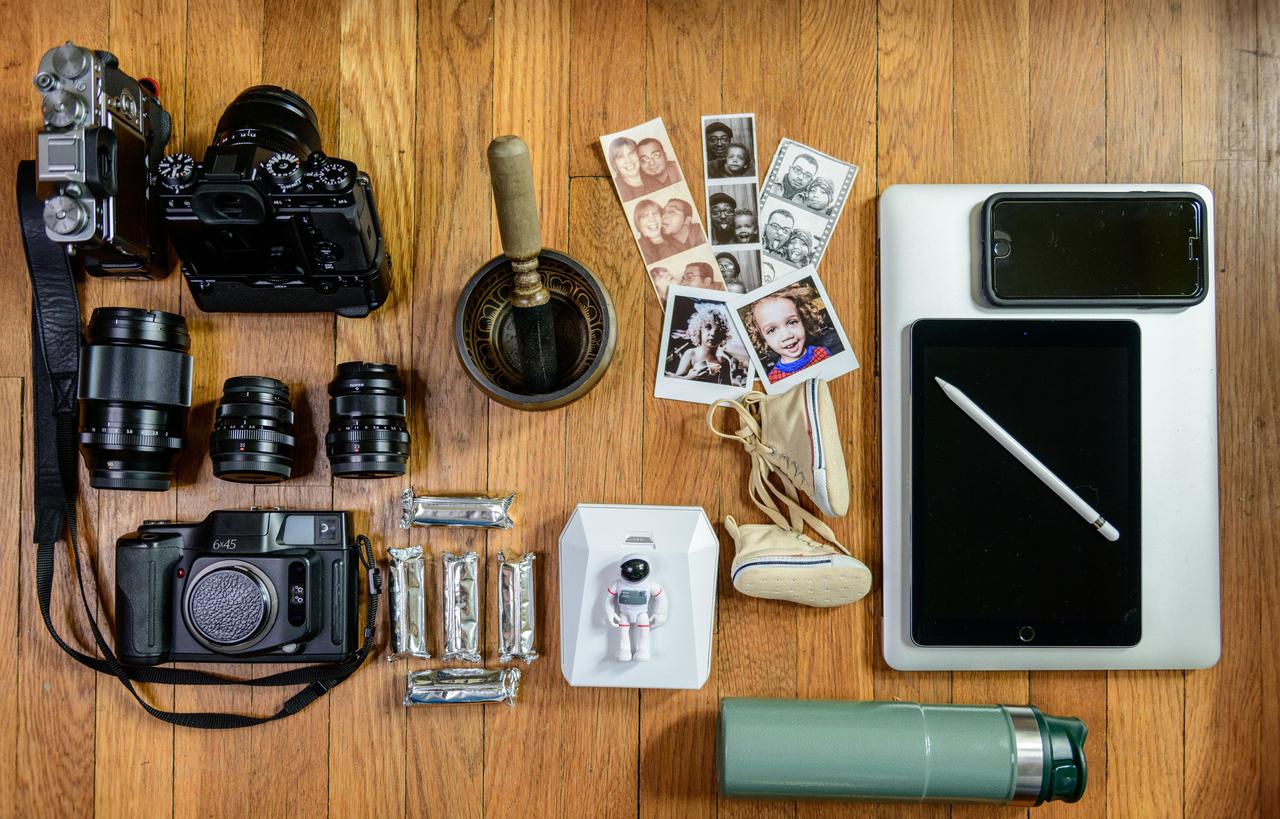
Two mirrirless Digital Camers, 56mm f1.2 lens, 90mm f2 lens, 35mm f2 lens, 23mm f2 lens, 6x4.5 Medium Format Film Camera, 120 film, Singing Bowl, wirerless instant printer, My 3yr olds Astronaut toy, family photos, Oldest Sons (27) baby shoes for luck, Laptop, Phone (for music), Tablet and Pen, Water Bottle.

During pre-flight testing in March 2011, the Mars Hand Lens Imager MAHLI camera on NASA Mars rover Curiosity took this image of the MAHLI calibration target under illumination from MAHLI two ultraviolet LEDs light emitting diodes.
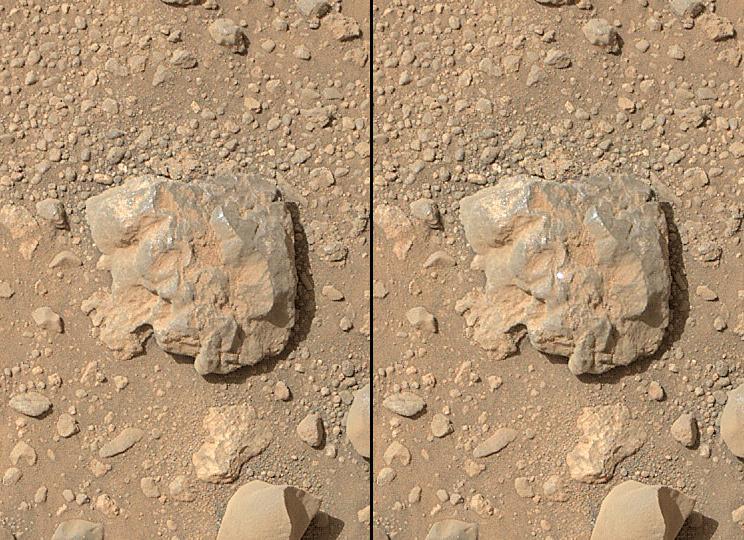
NASA Curiosity Mars rover used the Mars Hand Lens Imager MAHLI camera on its arm to catch the first images of sparks produced by the rover laser being shot at a rock on Mars. The left image is from before the laser zapped this rock, called Nova.
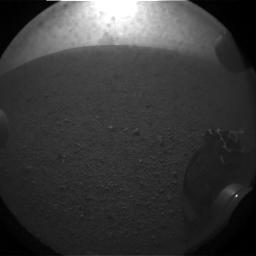
This is the first image taken by NASA Curiosity rover, which landed on Mars the evening of Aug. 5 PDT morning of Aug. 6 EDT. It was taken through a fisheye wide-angle lens on one of the rover rear left Hazard-Avoidance cameras.
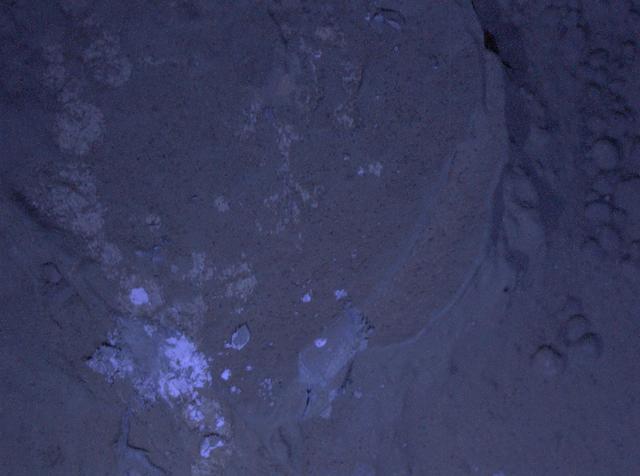
This image of a Martian rock dubbed Sayunei is illuminated by ultraviolet LEDs light emitting diodes is part of the first set of nighttime images taken by the Mars Hand Lens Imagery camera at the end of the robotic arm of NASA Mars rover Curiosity.
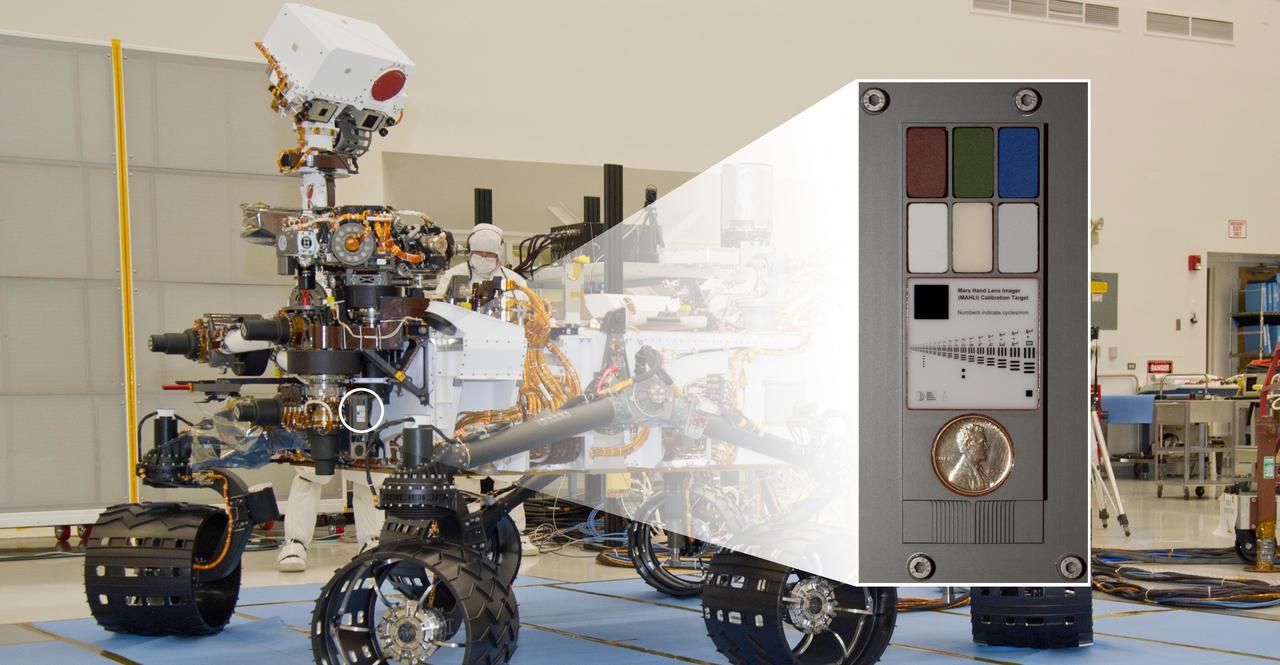
The Mars Hand Lens Imager MAHLI camera at the end of the robotic arm of NASA Curiosity rover will use a calibration target attached to a shoulder joint of the arm.

This mosaic of images shows layers of ancient sediment on a boulder-sized rock called "Strathdon," as seen by the Mars Hand Lens Imager (MAHLI) camera on the end of the robotic arm on NASA's Curiosity rover. The images were taken on July 10, 2019, the 2,462nd Martian day, or sol, of the mission. The images were acquired from about 4 inches (10 centimeters) away and processed to adjust brightness and remove blemishes. https://photojournal.jpl.nasa.gov/catalog/PIA23347
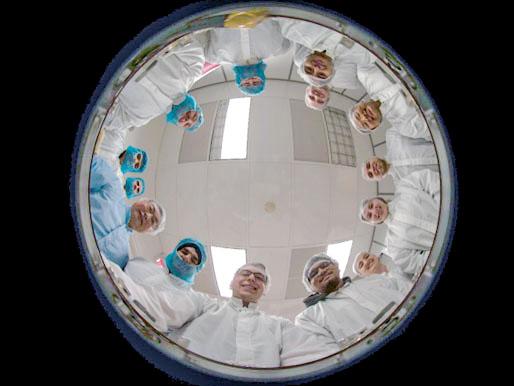
jsc2023e030776 (5/30/2023) --- The student team members who developed ESSENCE as photographed by the wide-angle lens camera installed in the CubeSat. This photo was taken during a camera test in the lab via ground station by radio link. Image courtesy of Nanoracks LLC.

S88-E-5107 (12-11-98) --- Sergei Krikalev, mission specialist representing the Russian Space Agency (RSA), surrounded by monitors and computers on the flight deck, holds a large camera lens. The photo was taken with an electronic still camera (ESC) at 09:33:22 GMT, Dec. 11.
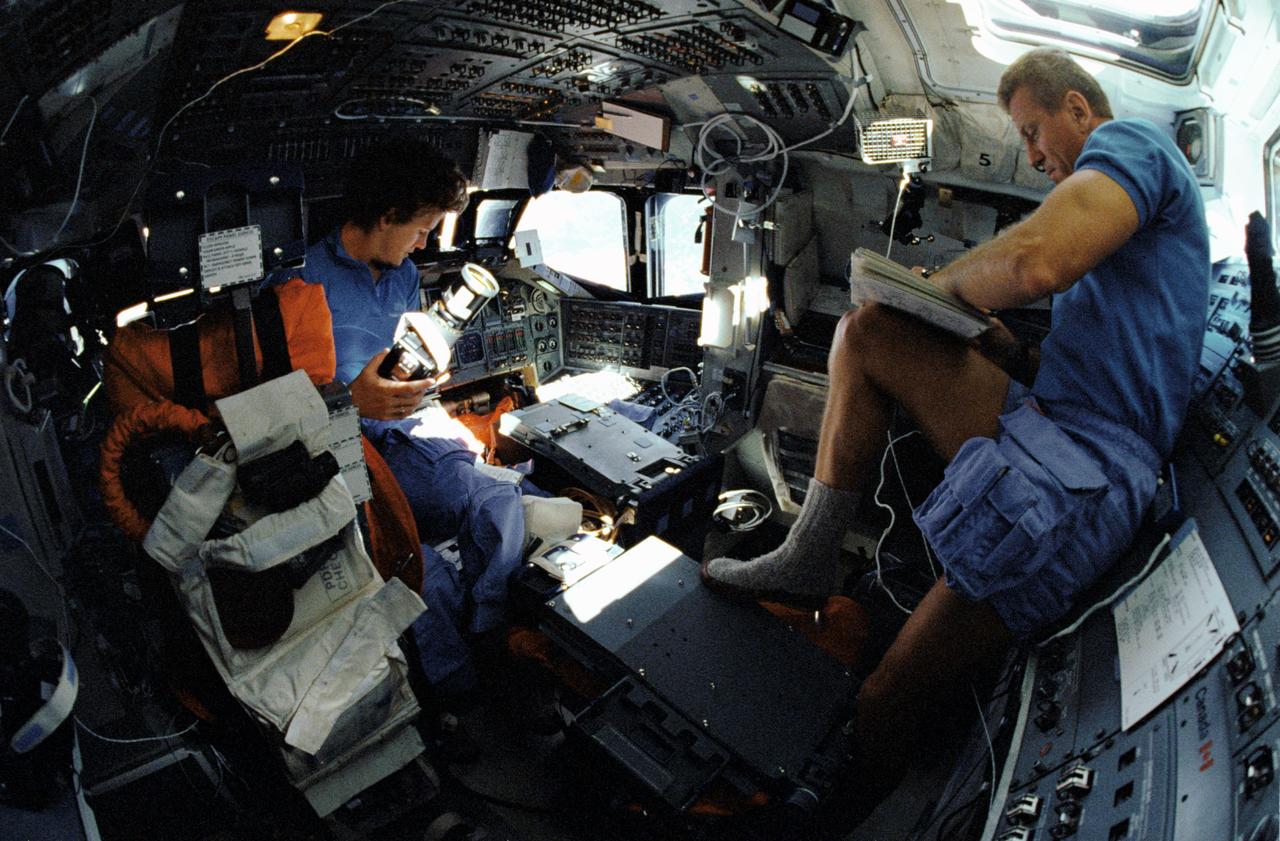
STS031-101-053 (24-29 April 199) --- A 35mm camera equipped with a "fish-eye" lens captured this view on Discovery's flight deck featuring astronaut Kathryn D. Sullivan with a Hasselblad camera on forward flight deck and astronaut Loren J. Shriver, pen in hand, amending flight data on aft flight deck.
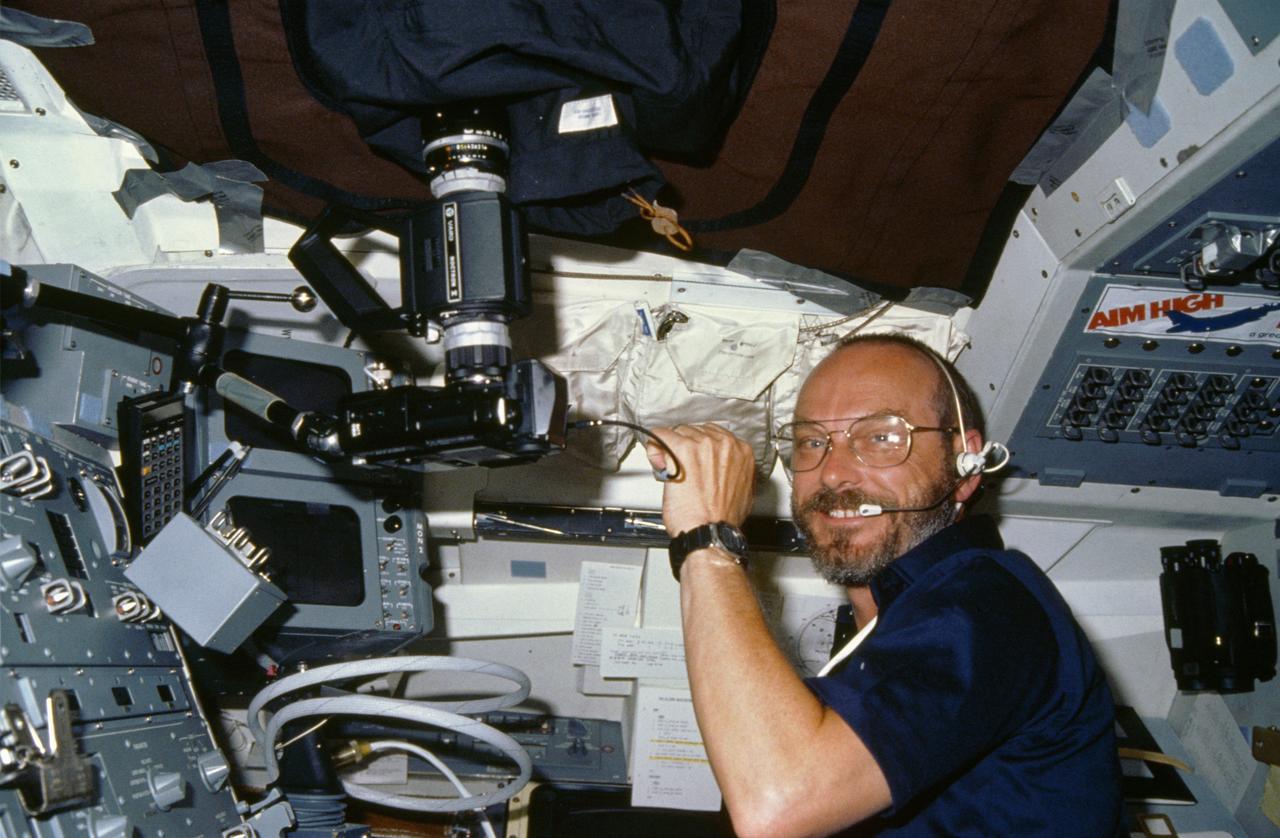
51F-17-011 (29 July-6 Aug 1985) --- Loren W. Acton, 51-F payload specialist, triggers a 35mm camera recording stellar imagery through the aft flight deck overhead windows aboard the Earth-orbiting Space Shuttle Challenger. The extension on the camera's lens is an image intensifier.
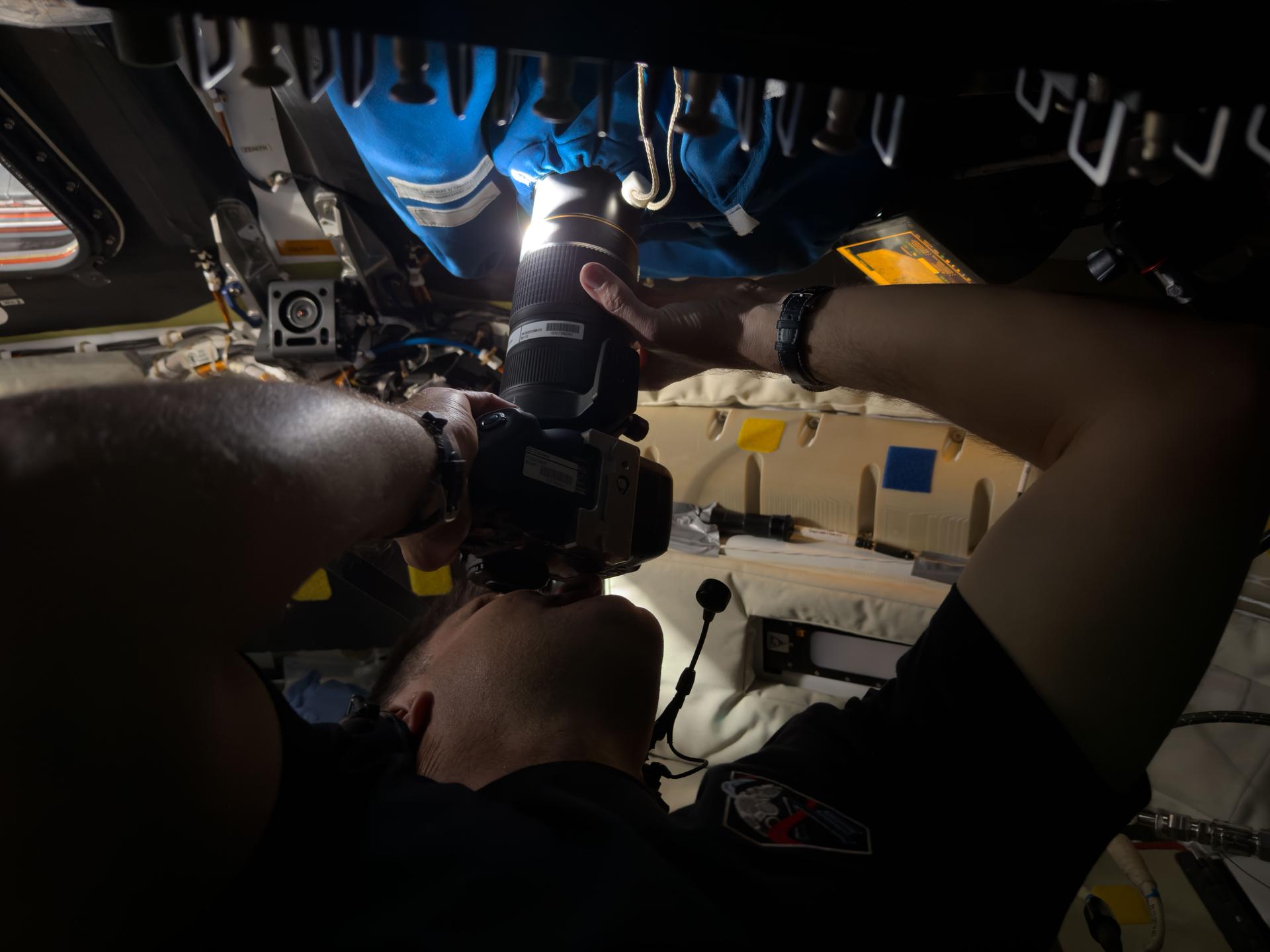
art002e009295 (April 6, 2026) – Astronaut Jeremy Hansen captures an image through the camera shroud covering window 2 of the Orion spacecraft. The camera shroud, essentially a curtain with a hole for the lens to pass through, is used to prevent light from the cabin from reflecting on the windowpanes.
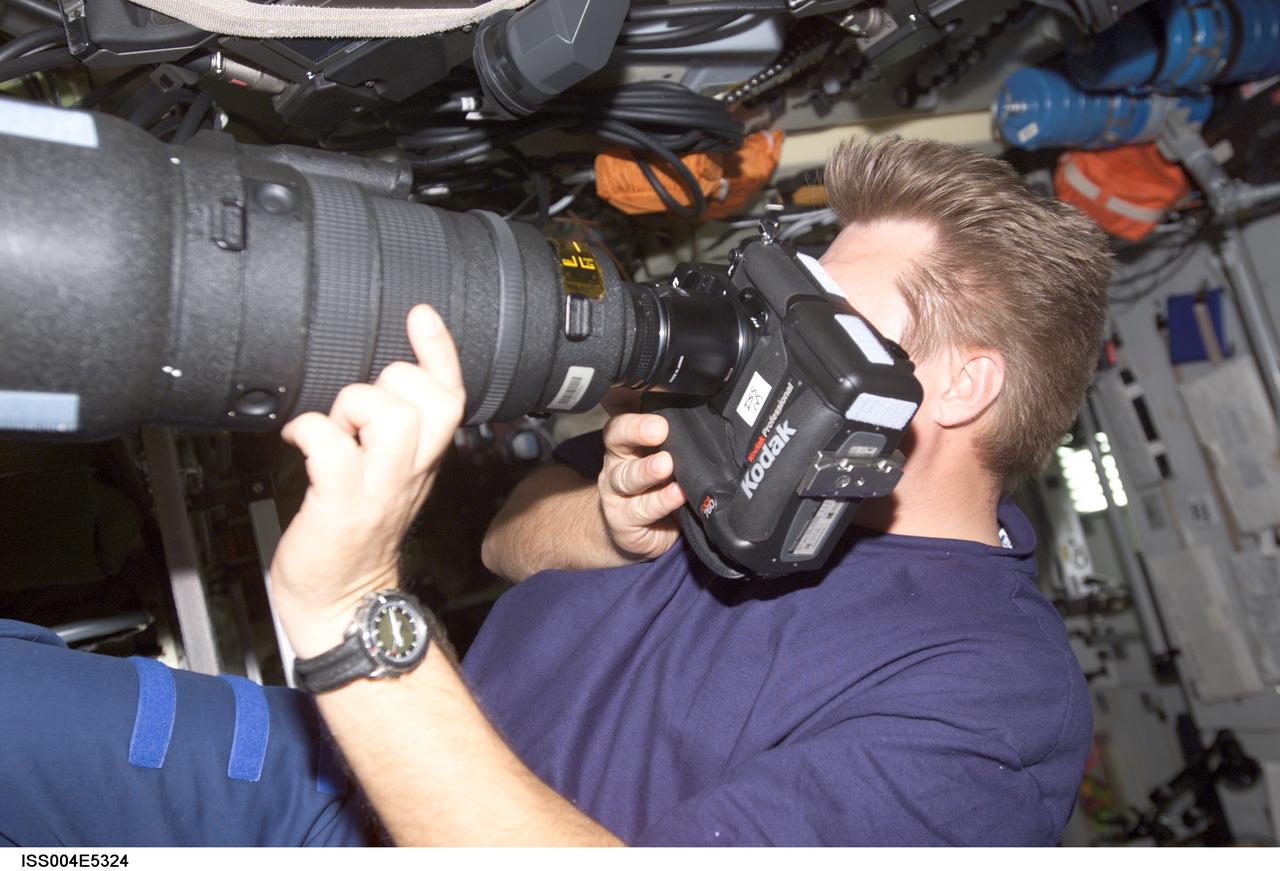
ISS004-E-5324 (December 2001) --- Cosmonaut Yuri I. Onufrienko, Expedition Four mission commander representing Rosaviakosmos, takes Earth observation photos with an electronic still camera equipped with an 800mm lens. Onufrienko is in the Zvezda Service Module on the International Space Station (ISS). The image was taken with a digital still camera.
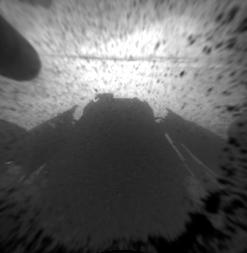
This is a version of one of the first images taken by a front Hazard-Avoidance camera on NASA Curiosity rover. It was taken through a fisheye wide-angle lens but has been linearized so that the horizon looks flat rather than curved.
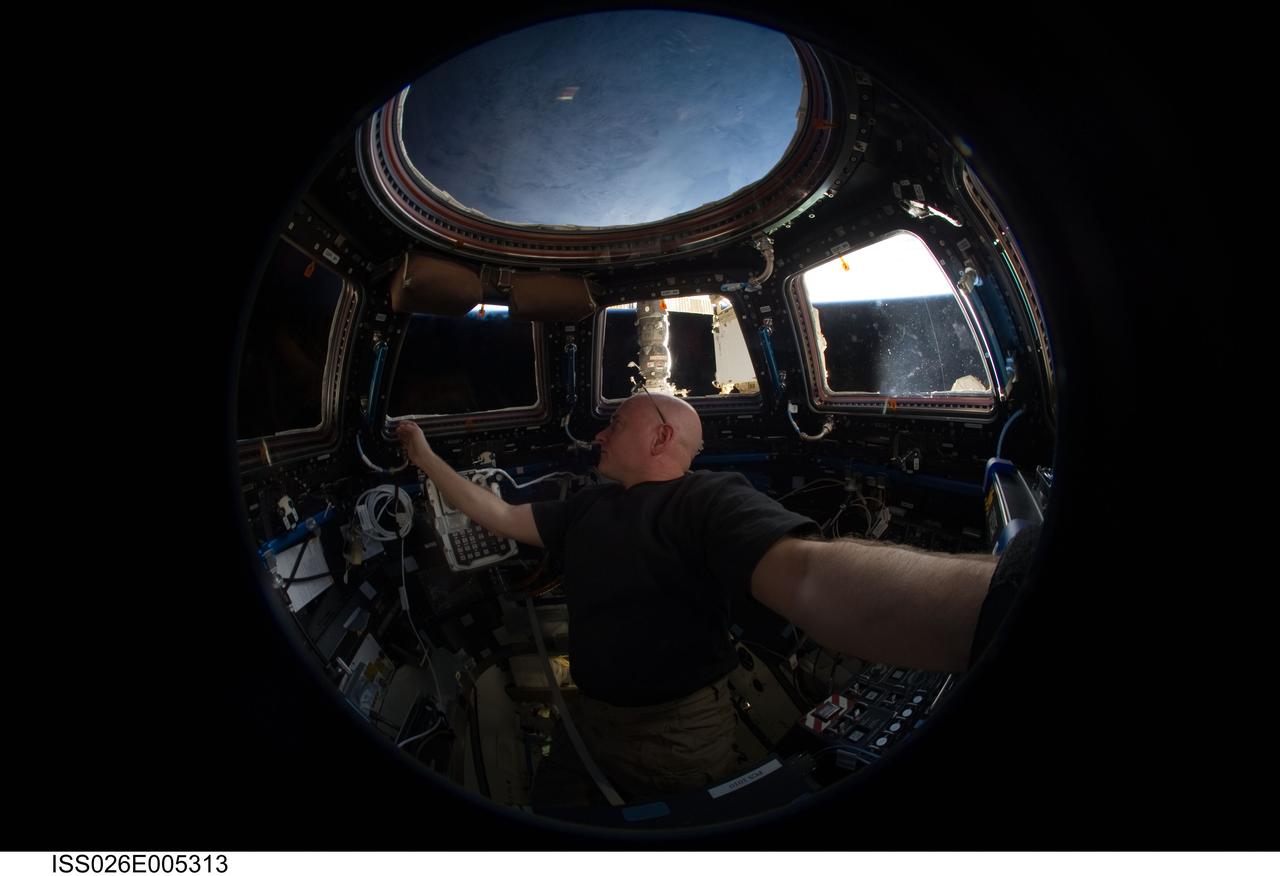
ISS026-E-005313 (26 Nov. 2010) --- A fish-eye lens attached to an electronic still camera was used to capture this image of NASA astronaut Scott Kelly, Expedition 26 commander, in the Cupola of the International Space Station.
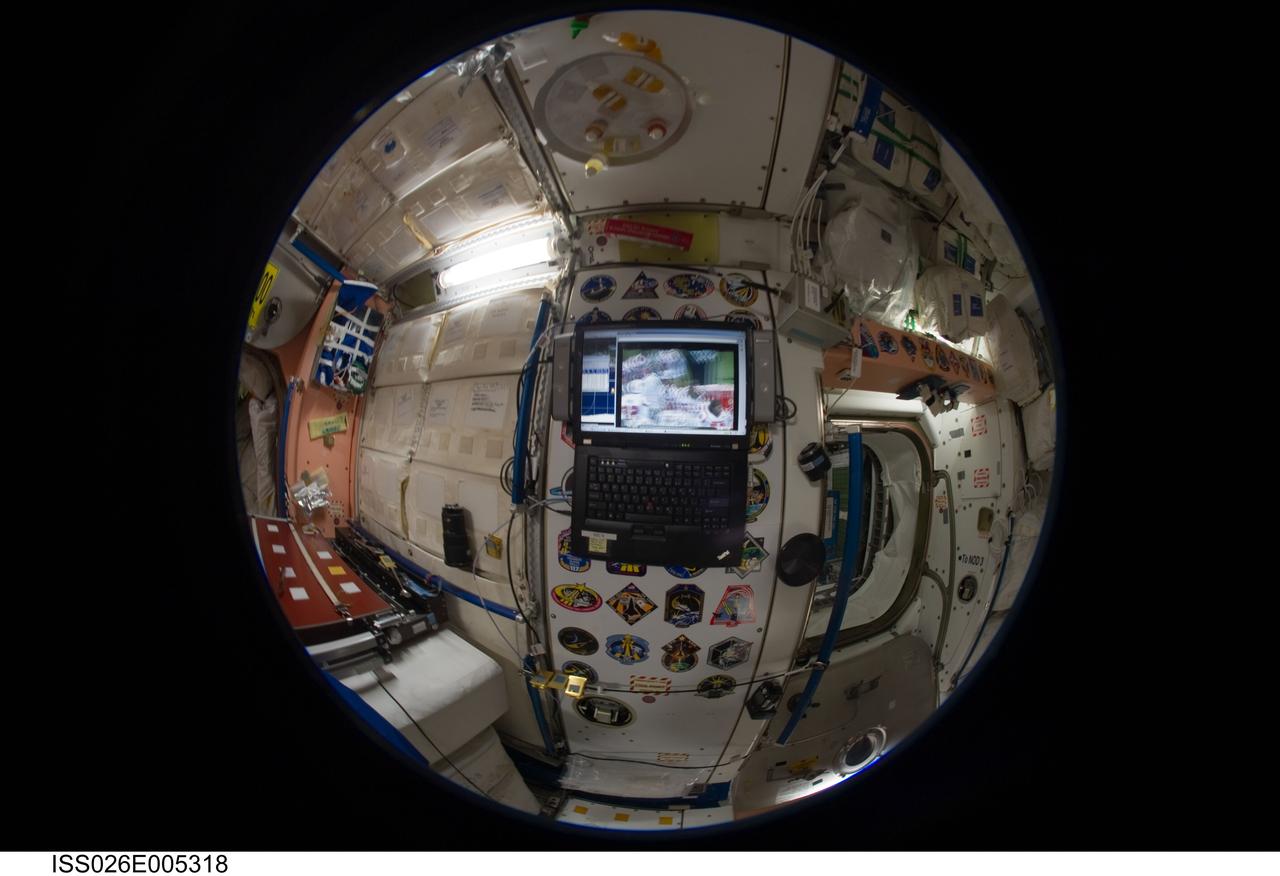
ISS026-E-005318 (26 Nov. 2010) --- A fish-eye lens attached to an electronic still camera was used by an Expedition 26 crew member to capture this image of the Unity node of the International Space Station.

ISS026-E-020960 (27 Jan. 2011) --- An Expedition 26 crew member used a fish-eye lens attached to an electronic still camera to capture this image of the Cupola of the International Space Station.
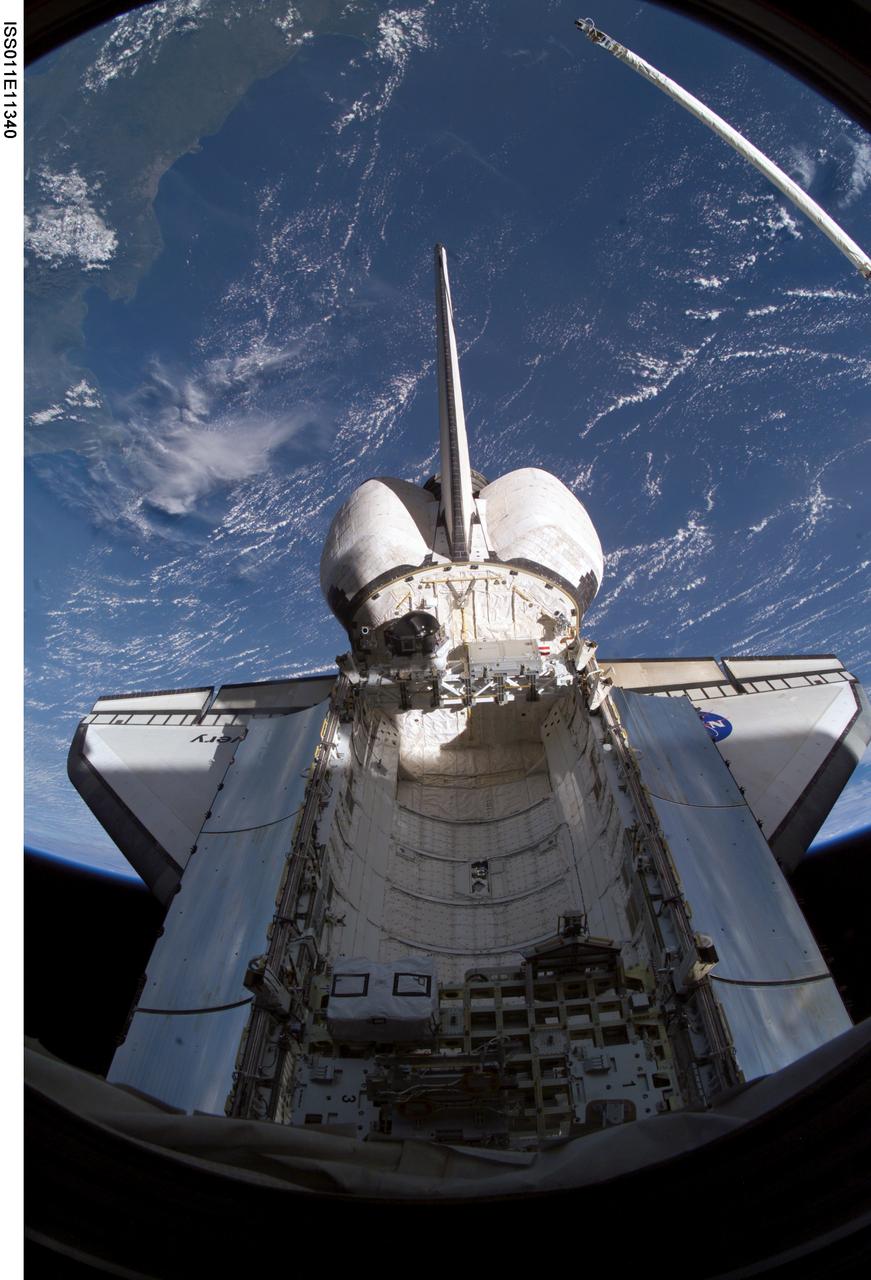
ISS011-E-11340 (29 July 2005) --- A "fish-eye" lens on a digital still camera was used to record this image of the Space Shuttle Discovery from the International Space Station, to which it is docked for several days of joint activities.
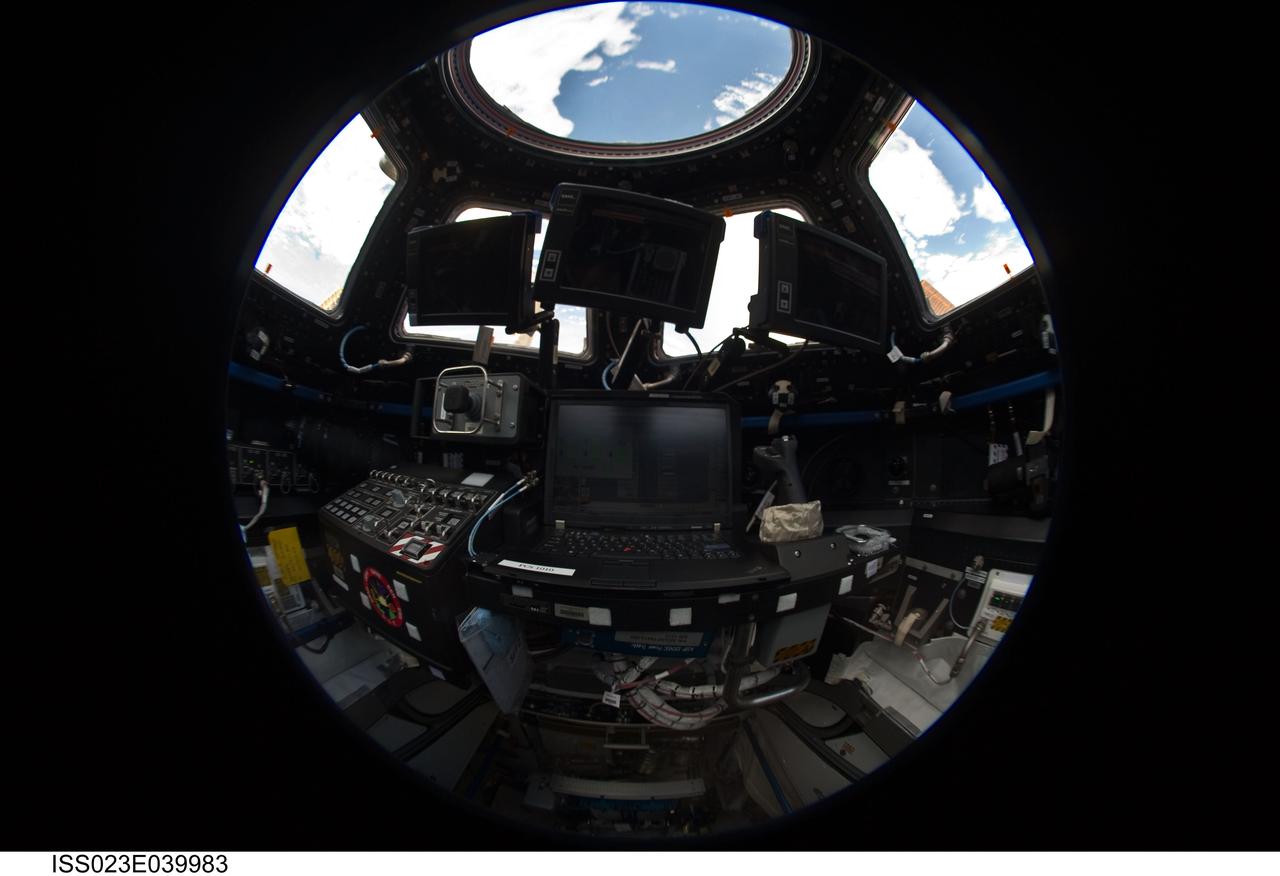
ISS023-E-039983 (8 May 2010) --- A fish-eye lens attached to an electronic still camera was used by an Expedition 23 crew member to capture this image of the robotic workstation in the Cupola of the International Space Station.
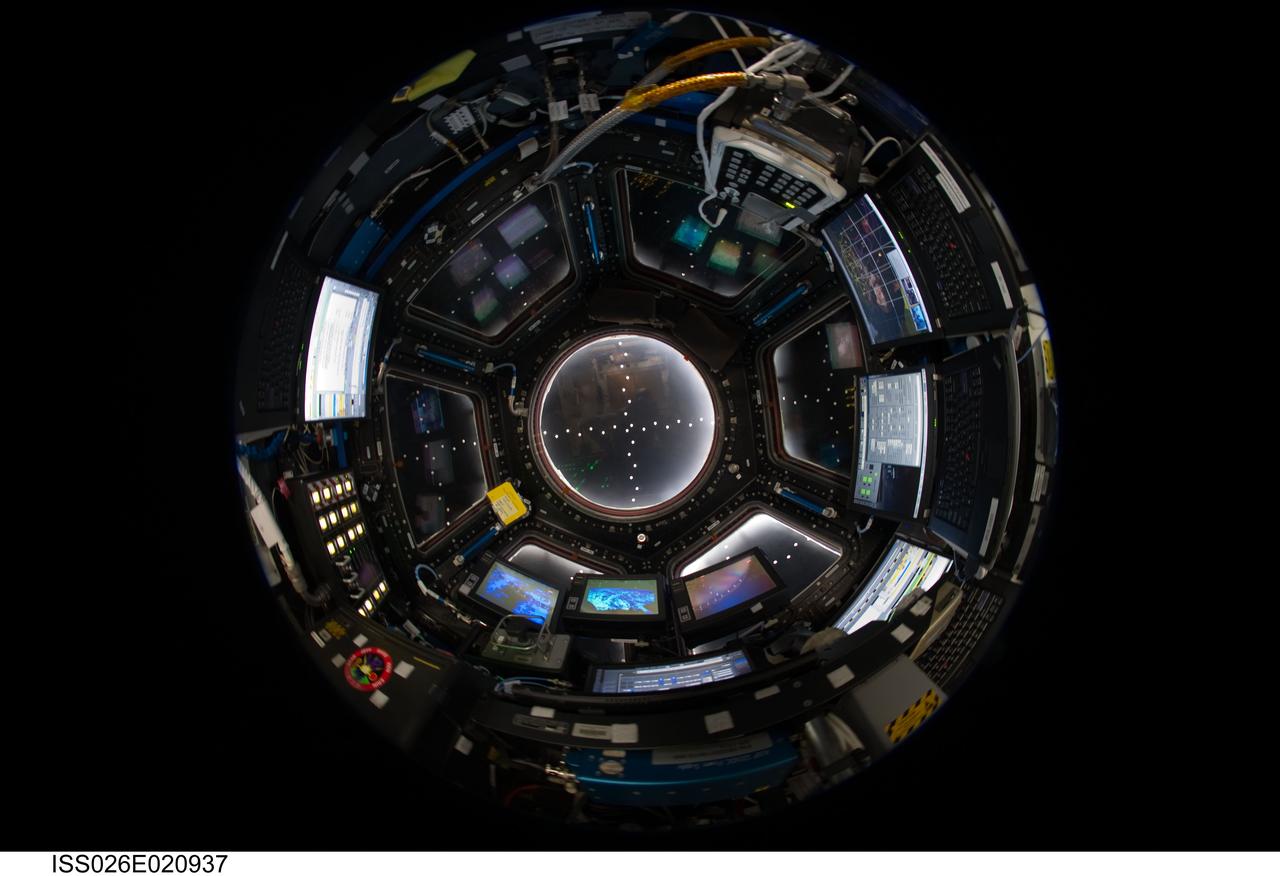
ISS026-E-020937 (27 Jan. 2011) --- An Expedition 26 crew member used a fish-eye lens attached to an electronic still camera to capture this image of the Cupola of the International Space Station.

This is a version of one of the first images taken by a front Hazard-Avoidance camera on NASA Curiosity rover. It was taken through a fisheye wide-angle lens but has been linearized so that the horizon looks flat rather than curved.
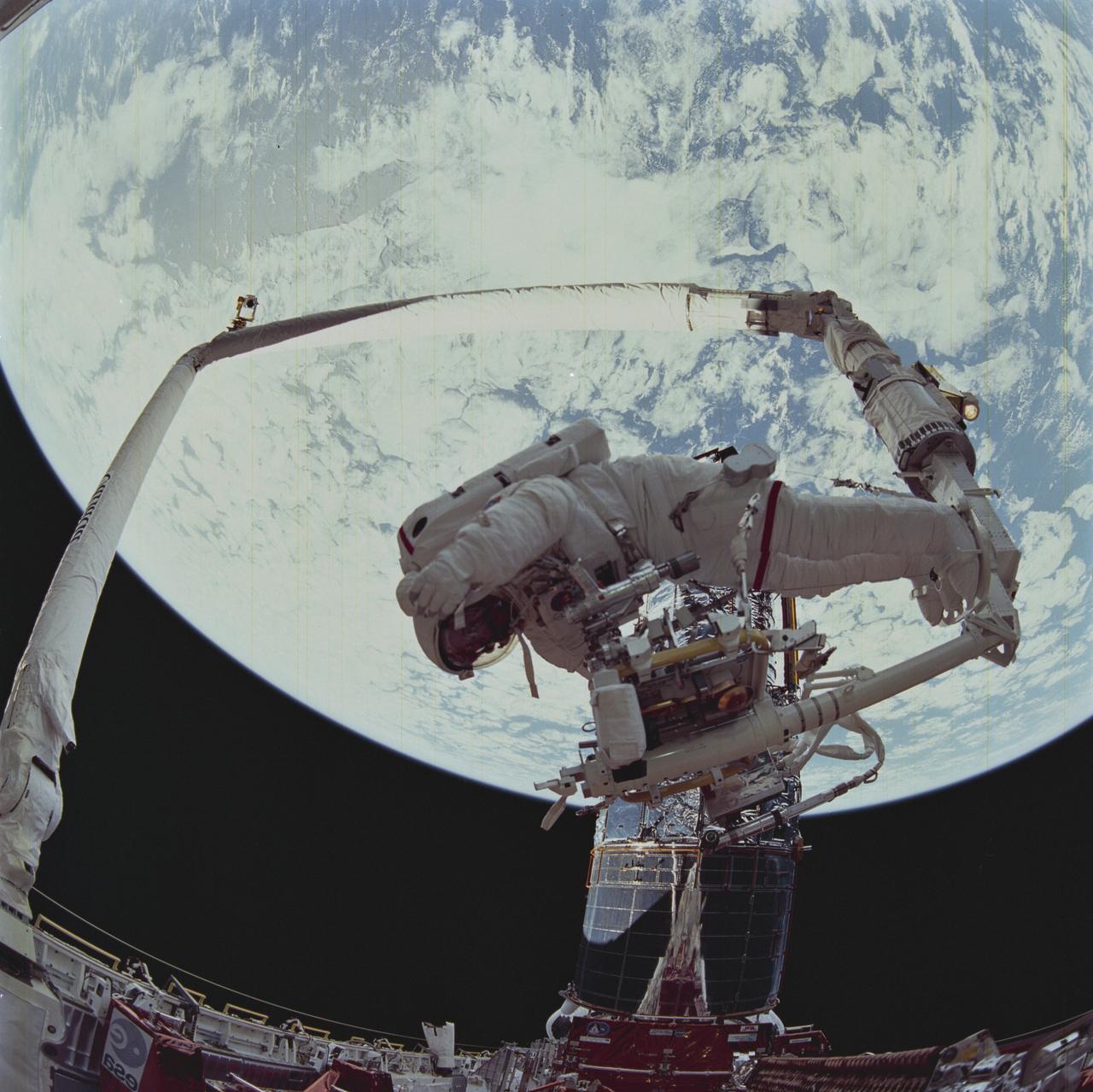
Space Shuttle mission STS-61 onboard view taken by a fish-eyed camera lens showing astronauts Story Musgrave and Jeffrey Hoffman's Extra Vehicular Activity (EVA) to repair the Hubble Space Telescope (HST).

ISS026-E-005316 (26 Nov. 2010) --- A fish-eye lens attached to an electronic still camera was used by an Expedition 26 crew member to capture this image of the Unity node of the International Space Station.
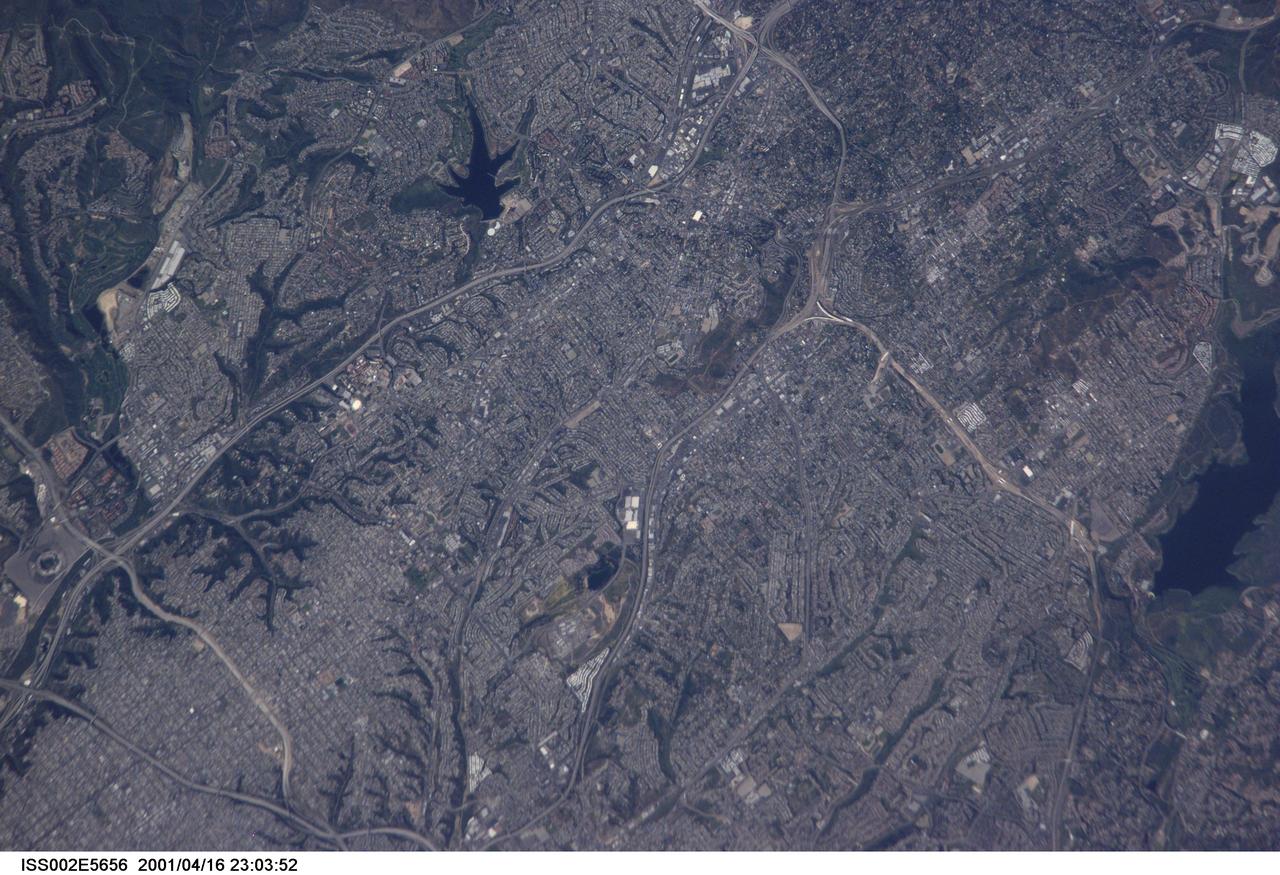
ISS002-E-5656 (16 April 2001) --- Extreme southern topography of California, including inland portions of the San Diego area were captured in this digital still camera's image from the International Space Station's Expedition Two crew members. The previous frame (5655) and this one were both recorded with an 800mm lens, whereas the succeeding frame (5657) was shot with a 105mm lens.
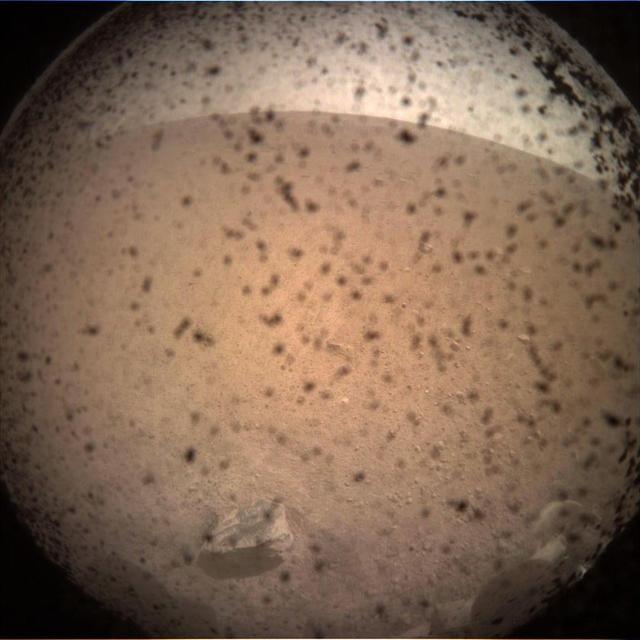
This is the first image taken by NASA's InSight lander on the surface of Mars. The instrument context camera (ICC) mounted below the lander deck obtained this image on Nov. 26, 2018, shortly after landing. The transparent lens cover was still in place to protect the lens from any dust kicked up during landing. https://photojournal.jpl.nasa.gov/catalog/PIA22829
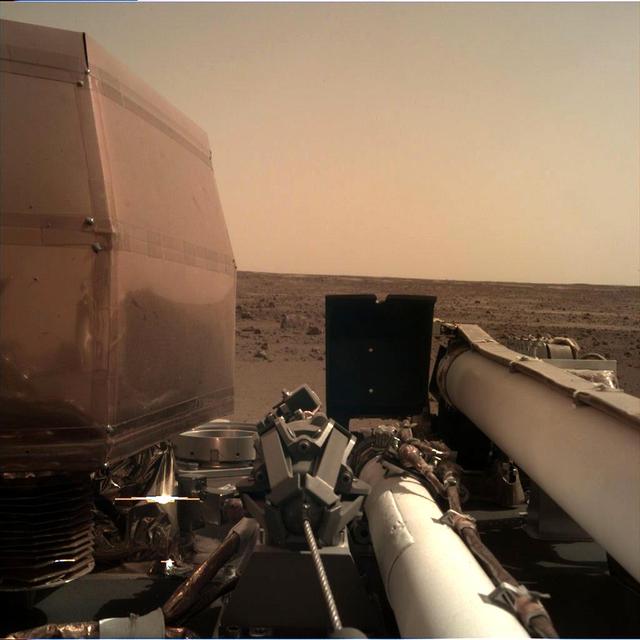
The Instrument Deployment Camera (IDC), located on the robotic arm of NASA's InSight lander, took this picture of the Martian surface on Nov. 26, 2018, the same day the spacecraft touched down on the Red Planet. The camera's transparent dust cover is still on in this image, to prevent particulates kicked up during landing from settling on the camera's lens. This image was relayed from InSight to Earth via NASA's Odyssey spacecraft, currently orbiting Mars. https://photojournal.jpl.nasa.gov/catalog/PIA22575
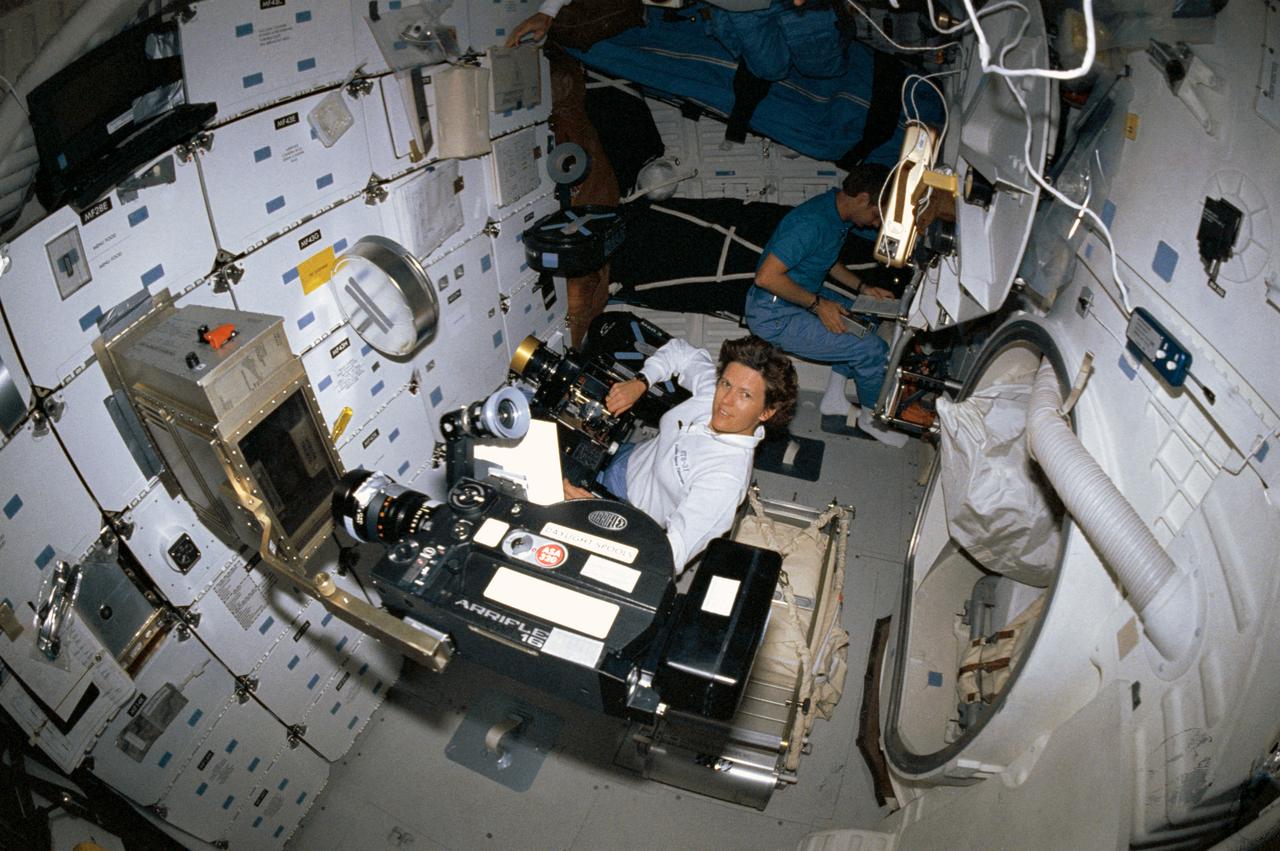
STS031-05-002 (24-29 April 1990) --- A 35mm camera with a "fish eye" lens captured this high angle image on Discovery's middeck. Astronaut Kathryn D. Sullivan works with the IMAX camera in foreground, while Astronaut Steven A. Hawley consults a checklist in corner. An Arriflex motion picture camera records student ion arc experiment in apparatus mounted on stowage locker. The experiment was the project of Gregory S. Peterson, currently a student at Utah State University.

NASA's Mars Exploration Rover Opportunity has extended its robotic arm for studying a light-toned rock target called "Athens" in this image from the rover's front hazard avoidance camera. The camera recorded this image during the 3,970th Martian day, or sol, of Opportunity's work on Mars (March 25, 2015). This camera is mounted low on the rover and has a wide-angle lens. http://photojournal.jpl.nasa.gov/catalog/PIA19160
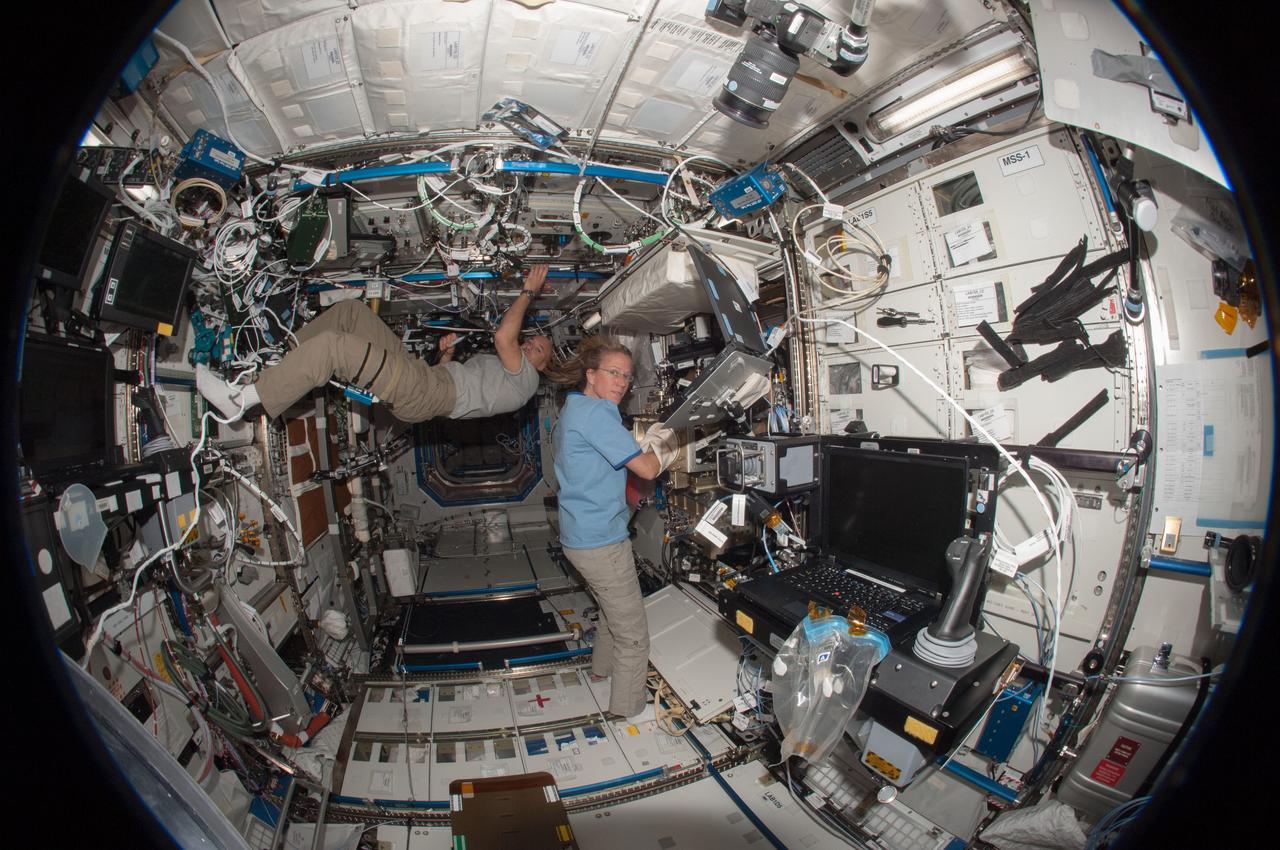
ISS036-E-019781 (24 June 2013) --- A fisheye lens attached to an electronic still camera was used to capture this image of European Space Agency astronaut Luca Parmitano and NASA astronaut Karen Nyberg, both Expedition 36 flight engineers, as they work in the Destiny laboratory of the International Space Station.
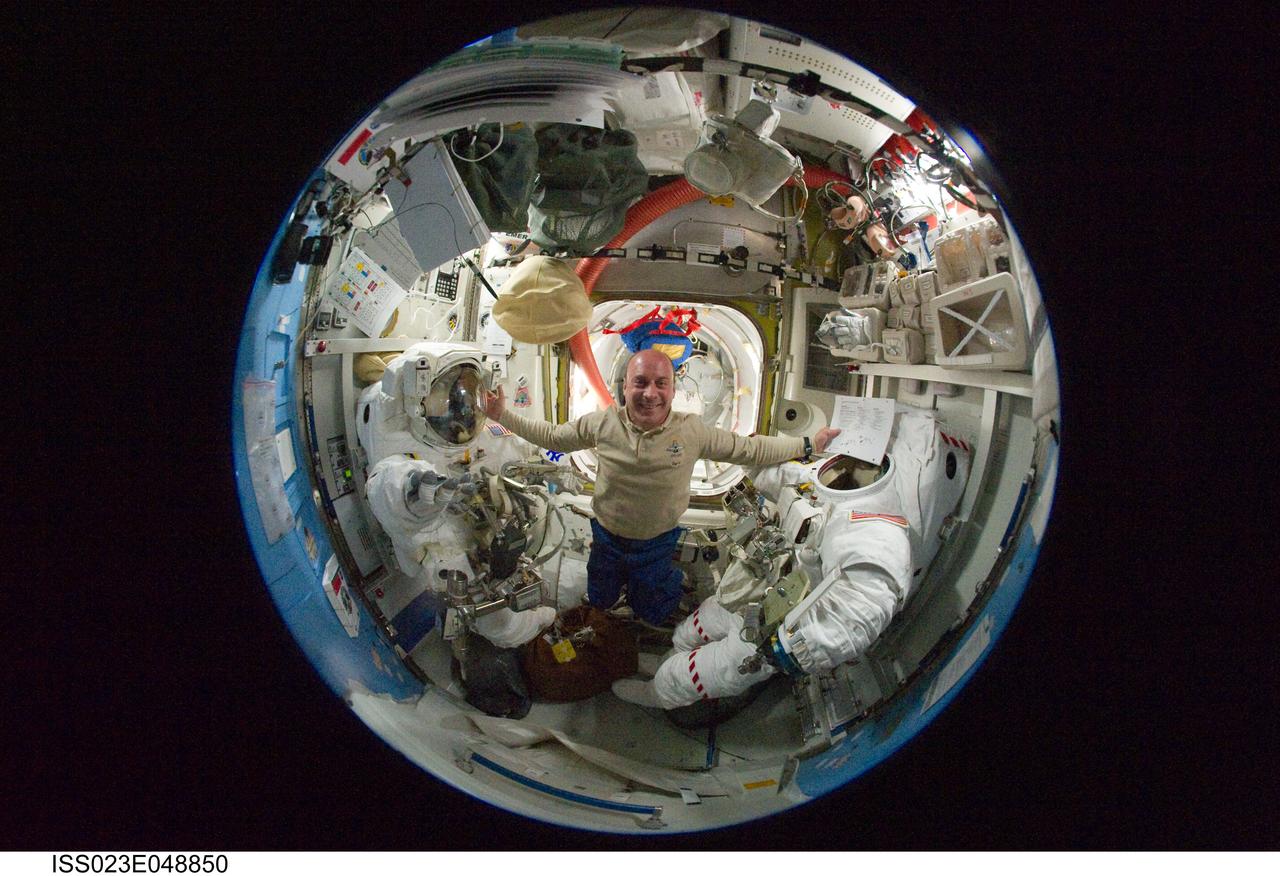
ISS023-E-048850 (20 May 2010) --- A fish-eye lens attached to an electronic still camera was used to capture this image of NASA astronaut Garrett Reisman, STS-132 mission specialist, in the Quest airlock of the International Space Station while space shuttle Atlantis remains docked with the station.
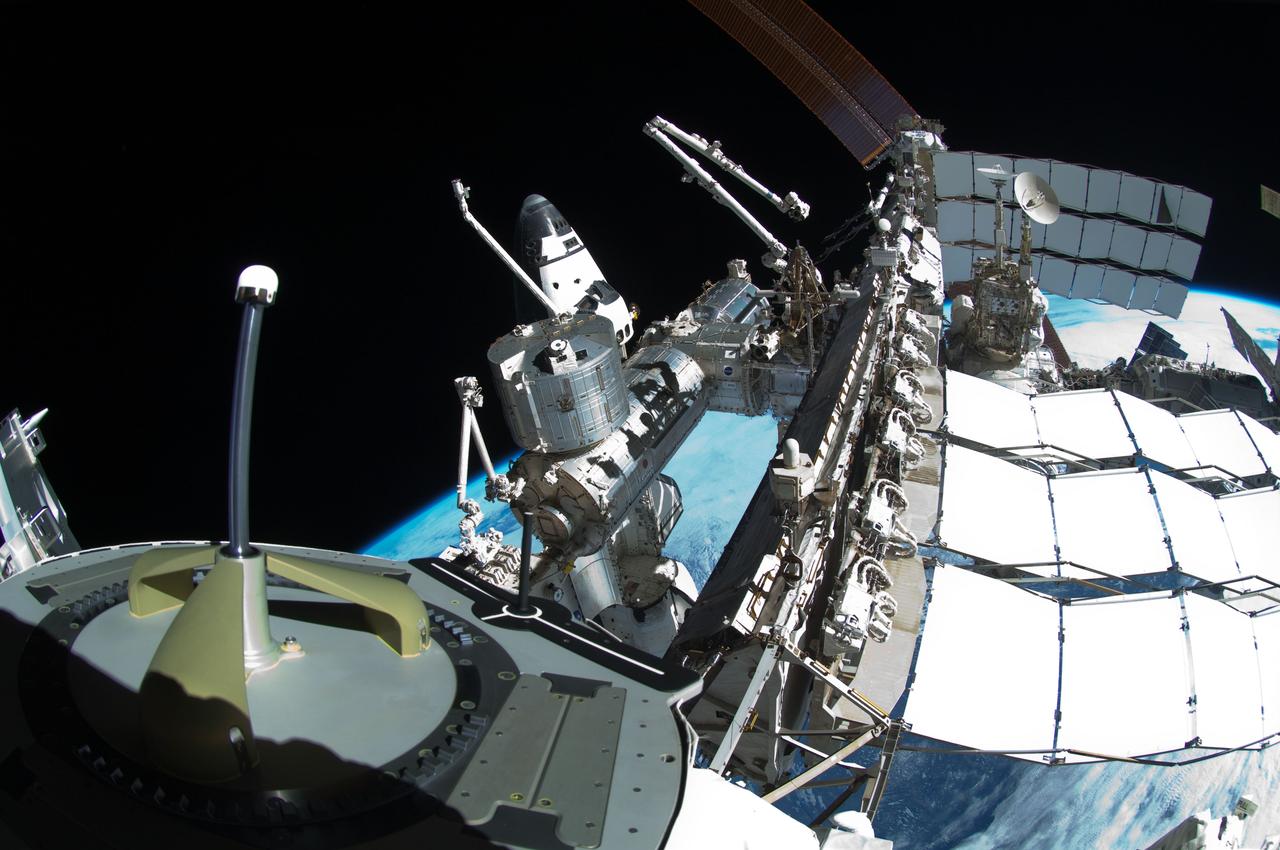
ISS028-E-005680 (27 May 2011) --- A portion of the International Space Station and the docked space shuttle Endeavour are featured in this image photographed by a spacewalker, using a fish-eye lens attached to an electronic still camera, during the STS-134 mission?s fourth session of extravehicular activity (EVA).
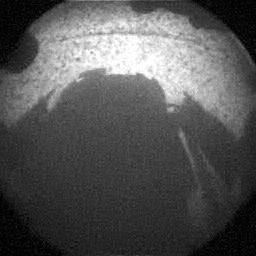
This is the first image taken by NASA Curiosity rover, which landed on Mars the evening of Aug. 5 PDT morning of Aug. 6 EDT. It was taken through a fisheye wide-angle lens on one of the rover front right Hazard-Avoidance cameras.
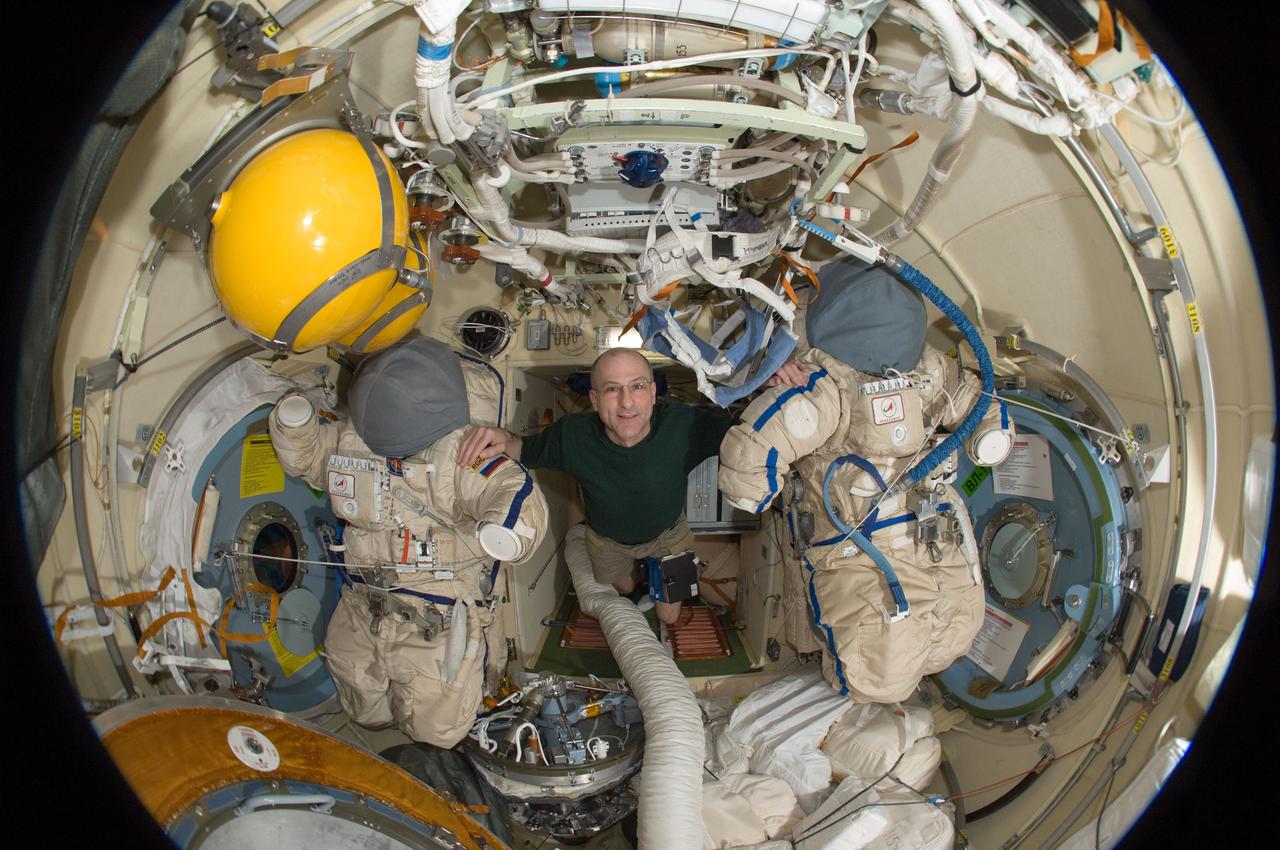
ISS031-E-030471 (12 May 2012) --- A fisheye lens attached to an electronic still camera was used to capture this image of NASA astronaut Don Pettit, Expedition 31 flight engineer, with two Russian Orlan spacesuits in the Pirs Docking Compartment of the International Space Station.
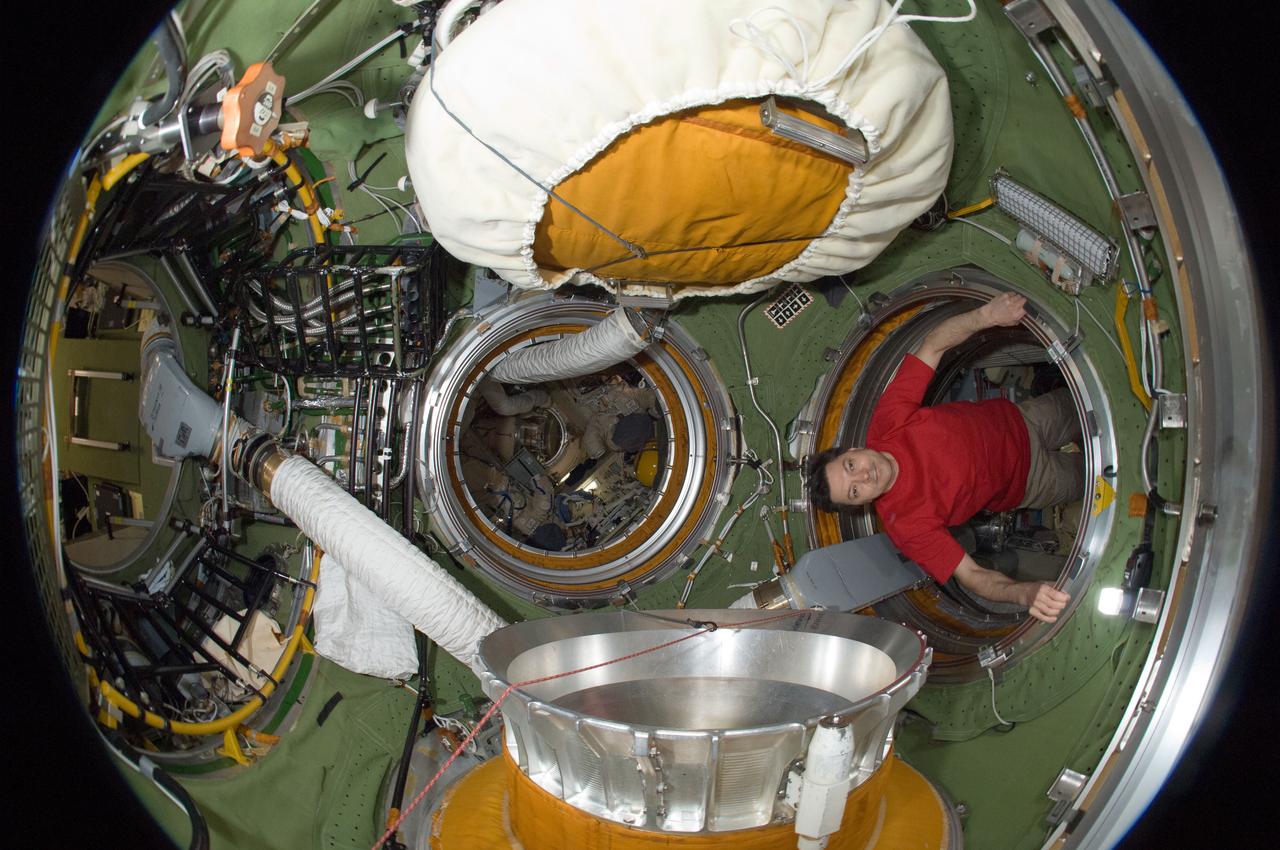
ISS031-E-030462 (12 May 2012) --- A fisheye lens attached to an electronic still camera was used to capture this image of Russian cosmonaut Oleg Kononenko, Expedition 31 commander, in the transfer compartment between the Zarya Functional Cargo Block (FGB) and the Zvezda Service Module of the International Space Station.
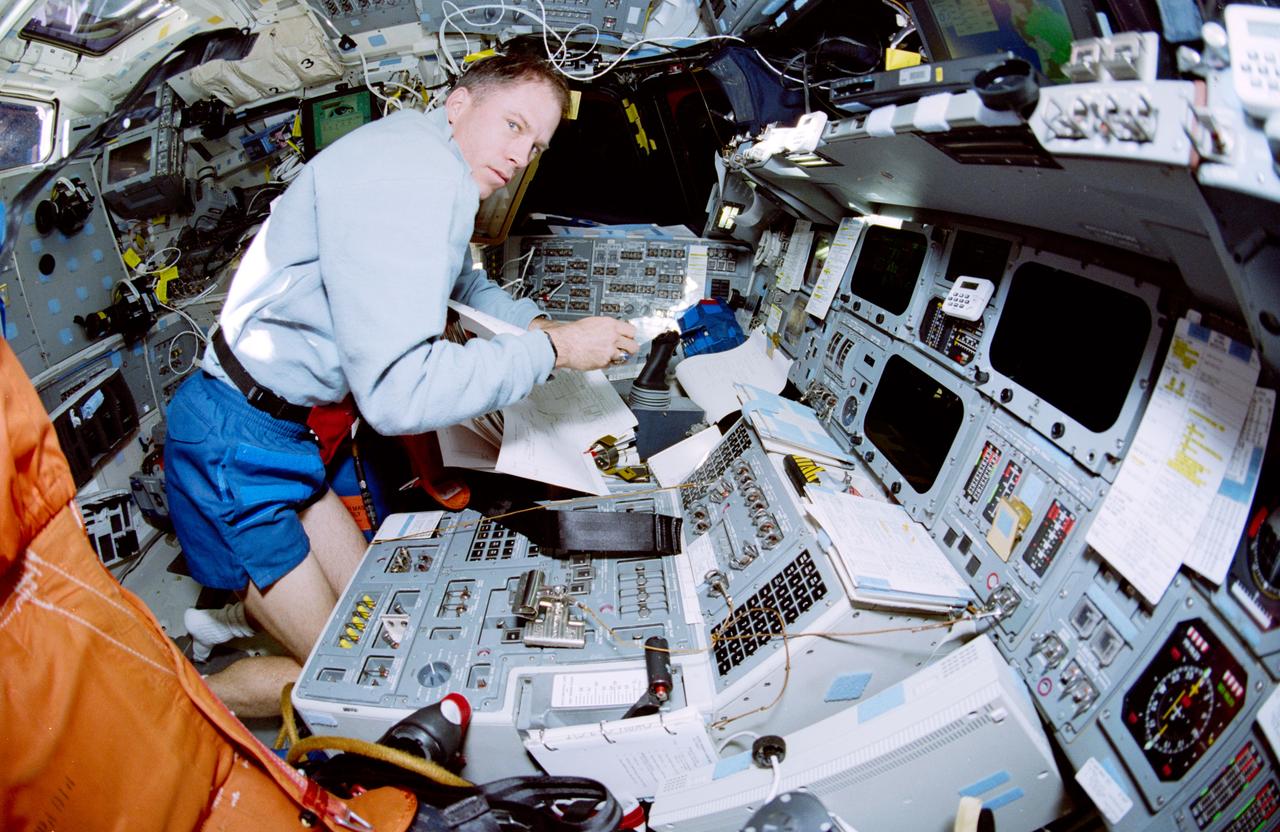
STS090-351-012 (17 April - 3 May 1998) --- A "fish-eye" lens on a 35mm camera records Richard A. Searfoss, mission commander, at the commander's station on forward flight deck of the Earth-orbiting Space Shuttle Columbia. The pilot's station is in the foreground.
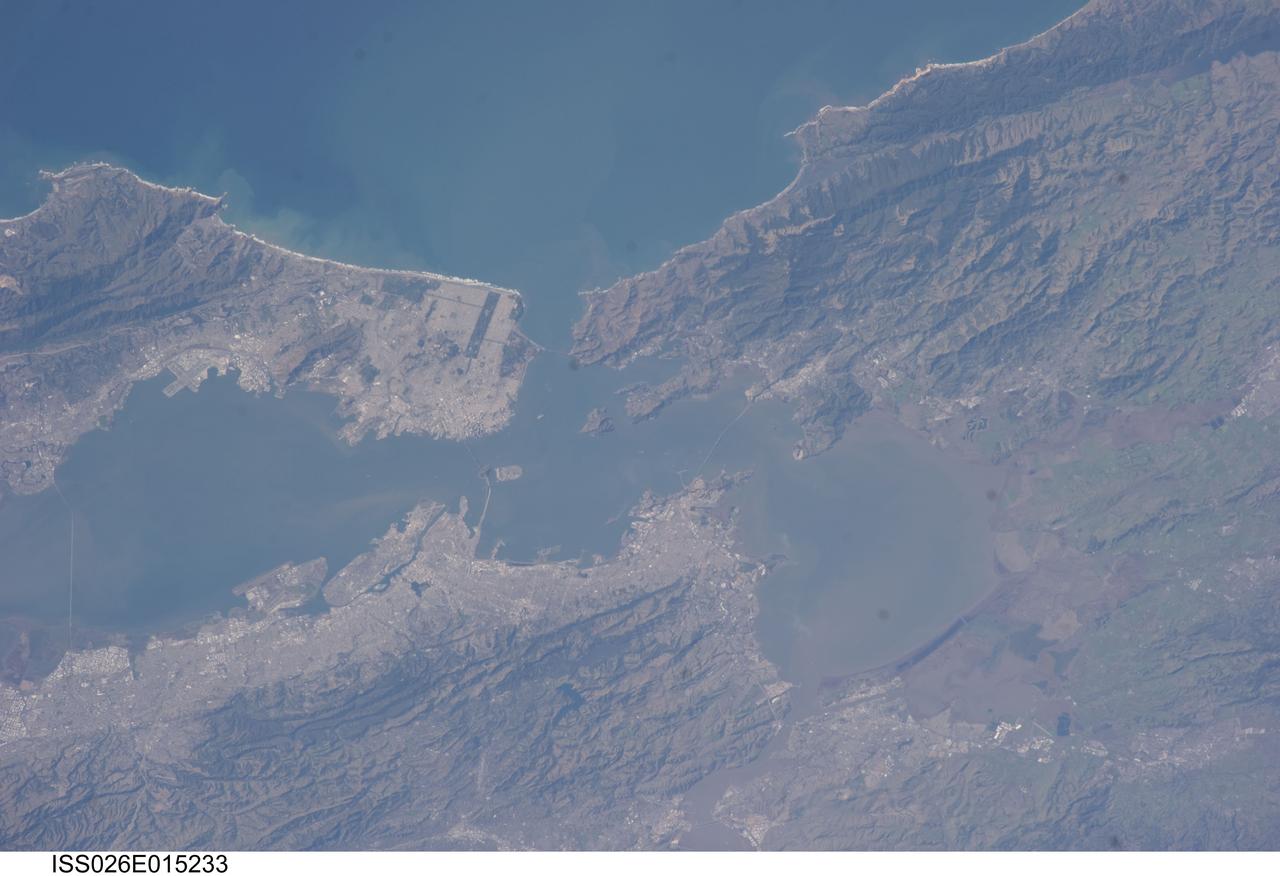
ISS026-E-015233 (5 Jan. 2011) --- This image featuring the San Francisco Bay area was recorded with a still camera using a 180-mm lens by one of the Expedition 26 crew members aboard the International Space Station, flying 220 miles above Earth.
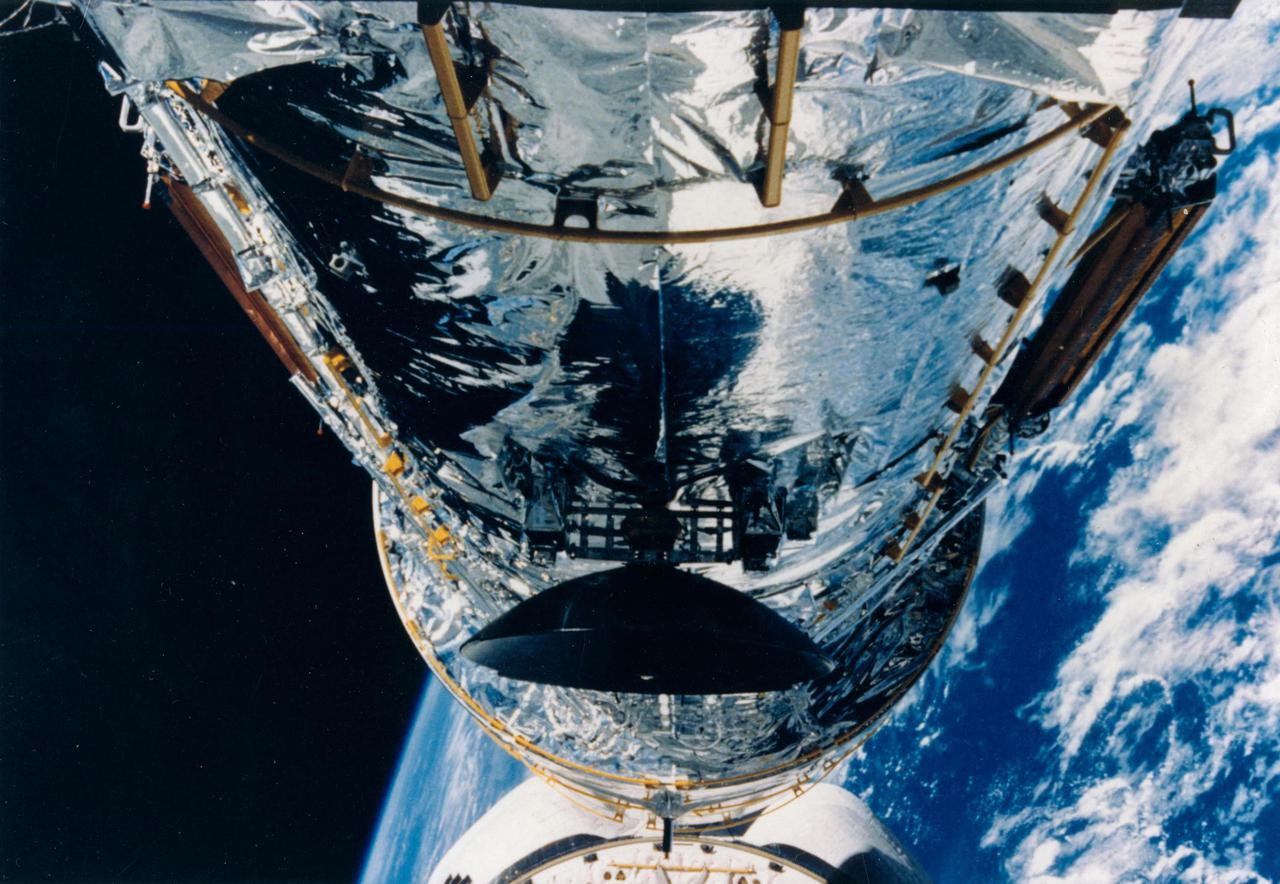
JOHNSON SPACE CENTER, HOUSTON, TEXAS-- STS-31 ONBOARD SCENE -- A medium closeup view photographed with fish-eye lens on a 35mm camera shooting the Hubble Space Telescope (HST) held above Discovery's cargo bay by the remote manipulator system prior to solar array and antennae deployment.
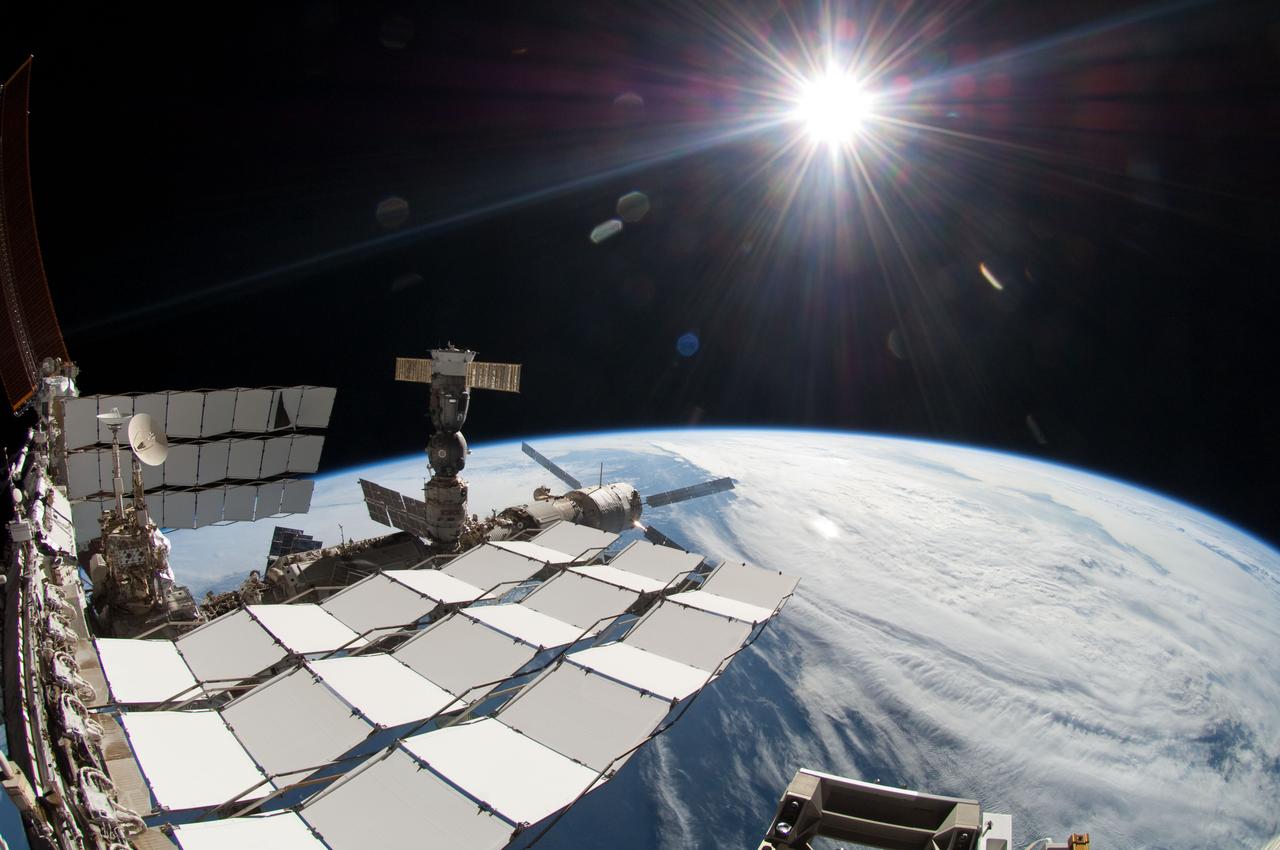
ISS028-E-005671 (27 May 2011) --- A bright sun, a portion of the International Space Station and Earth?s horizon are featured in this image photographed by a spacewalker, using a fish-eye lens attached to an electronic still camera, during the STS-134 mission?s fourth session of extravehicular activity (EVA).
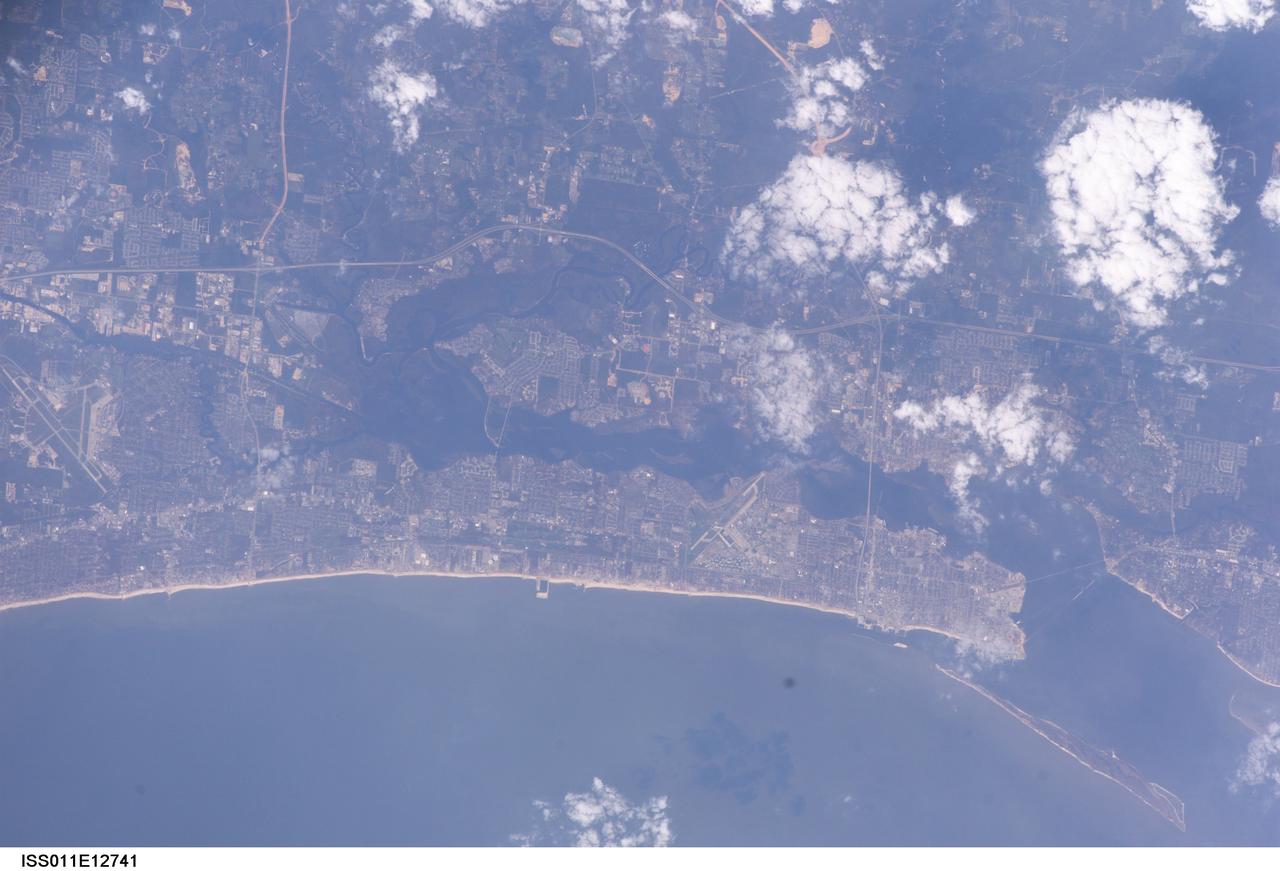
ISS011-E-12741 (10 September 2005) --- This image of the Biloxi, Mississippi area of the Central Gulf Coast was captured by the Expedition 11 crew aboard the International Space Station on the afternoon of September 10, 2005. A 400-mm lens was used on a digital still camera to record the image.
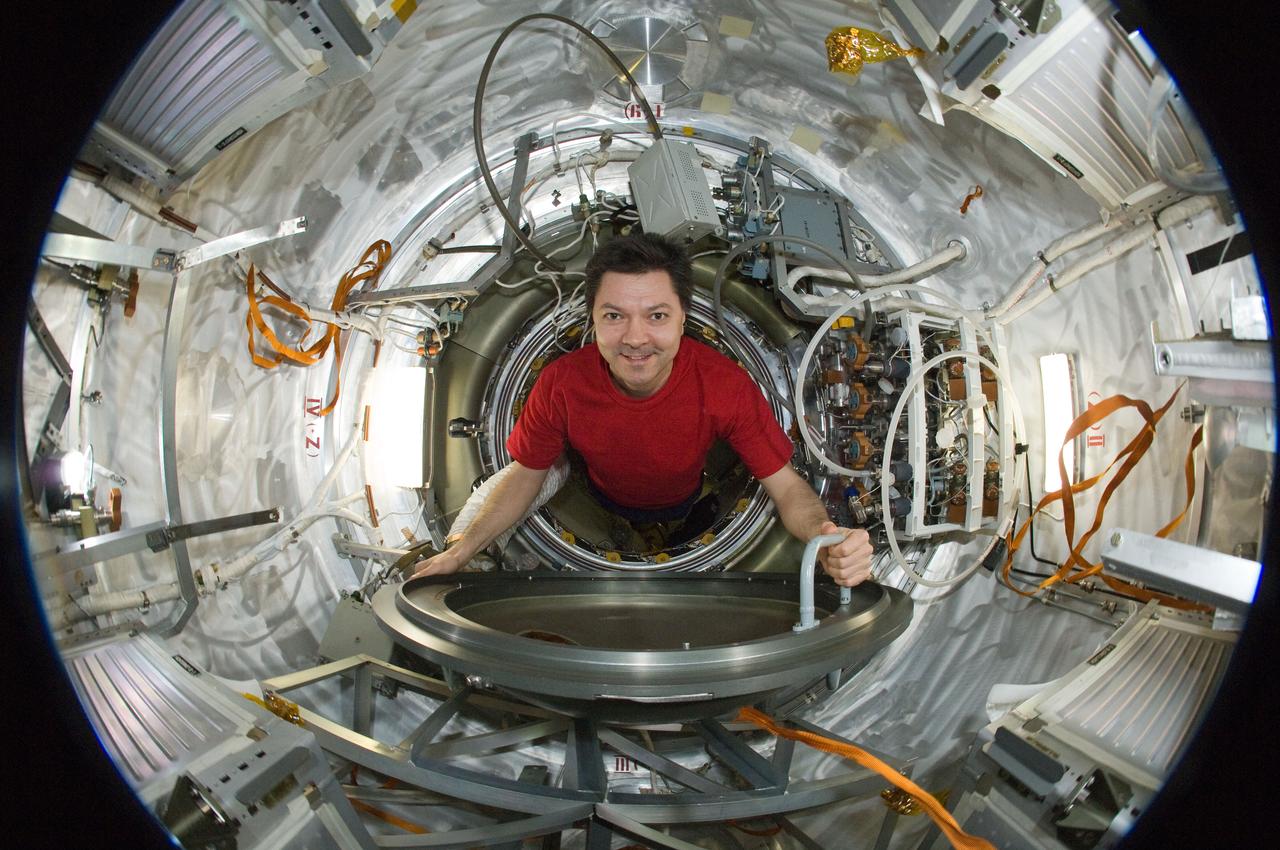
ISS031-E-035440 (15 May 2012) --- A fisheye lens attached to an electronic still camera was used to capture this image of Russian cosmonaut Oleg Kononenko, Expedition 31 commander, in the Progress 47 resupply vehicle docked to the International Space Station’s Pirs Docking Compartment.
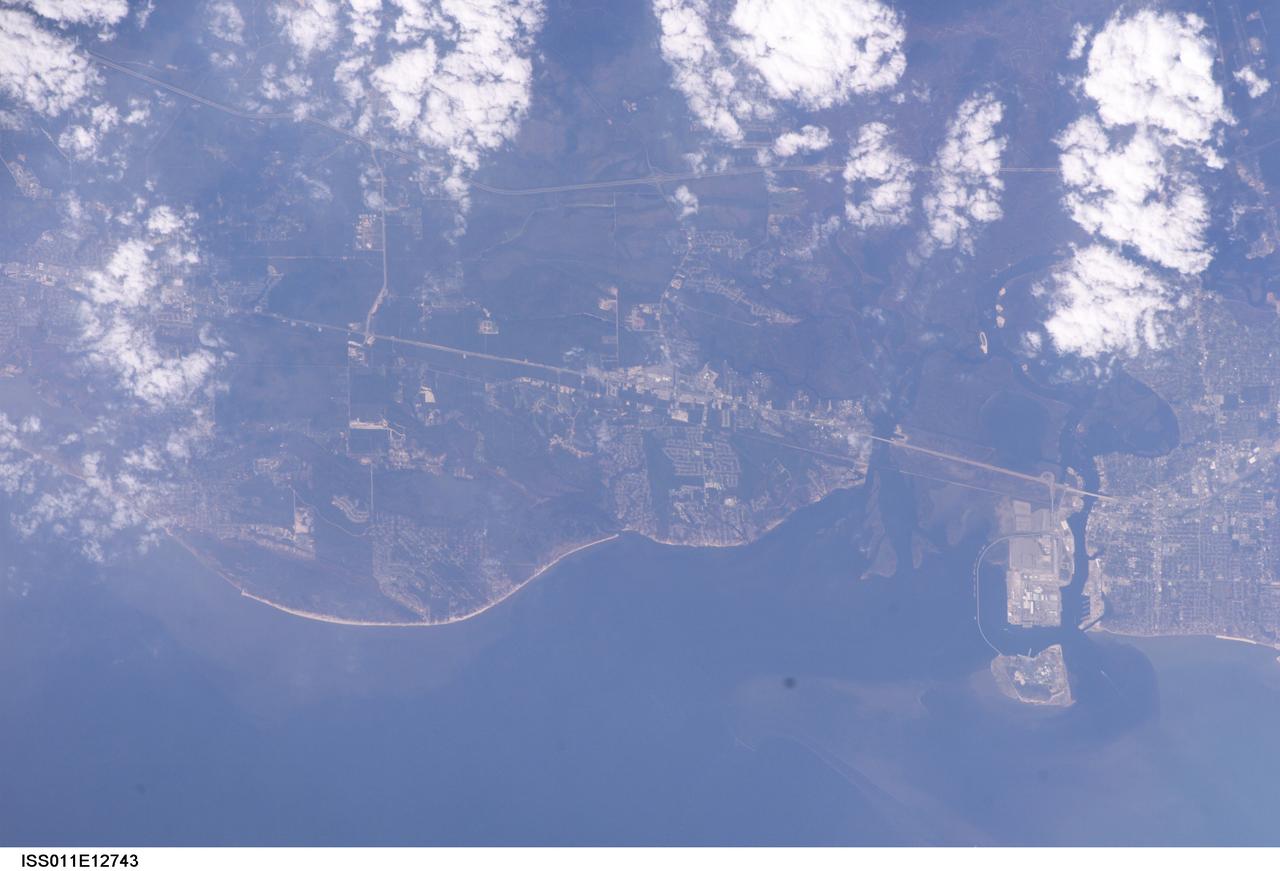
ISS011-E-12743 (10 September 2005) --- This image of the Pascagoula, Mississippi area on the Central Gulf Coast was captured by the Expedition 11 crew aboard the International Space Station on the afternoon of September 10, 2005. A 400-mm lens was used on a digital still camera to record the image.
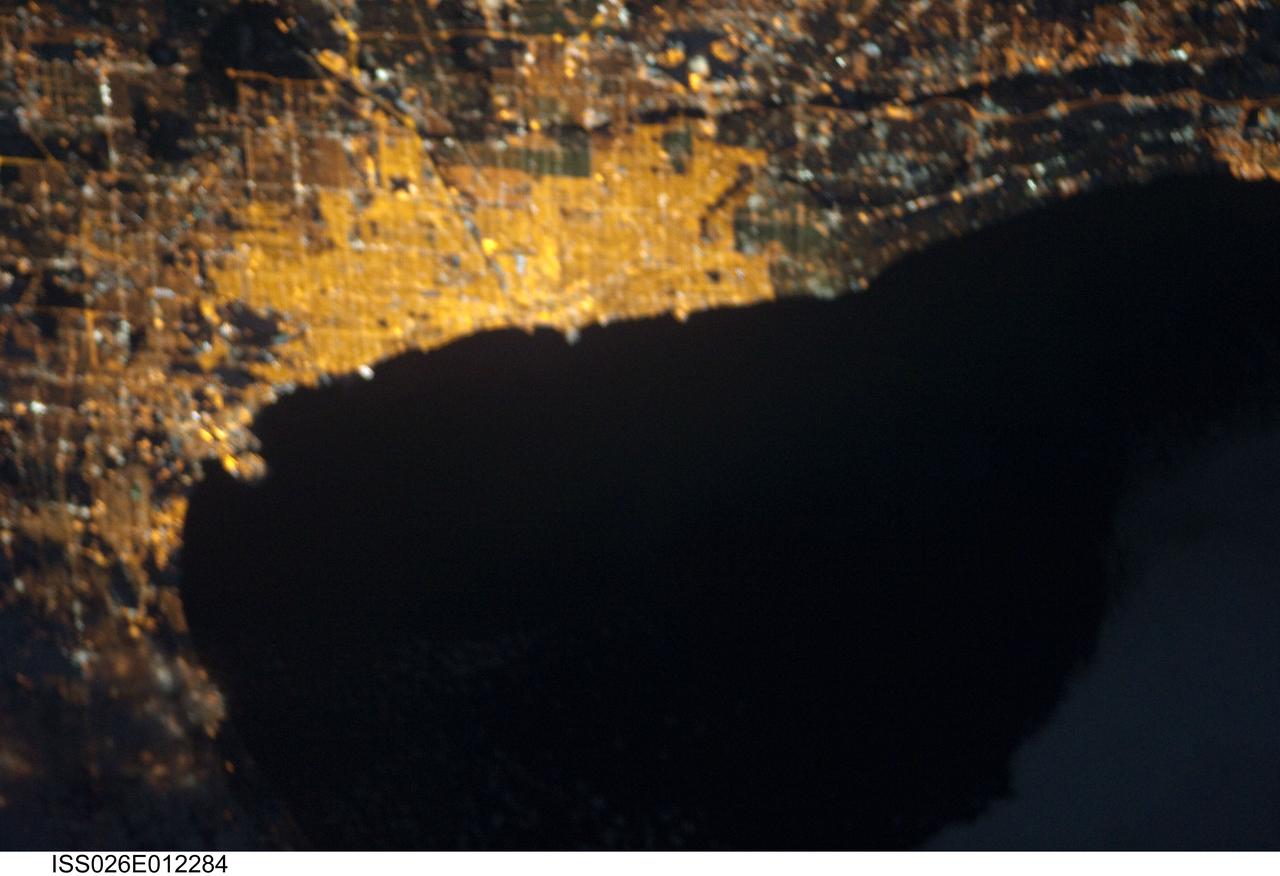
ISS026-E-012284 (23 Dec. 2010) --- From 220 miles above Earth, one of the Expedition 26 crew members aboard the International Space Station recorded this night image of the Chicago metropolitan area and part of Lake Michigan, using a still camera equipped with a 180-mm lens.
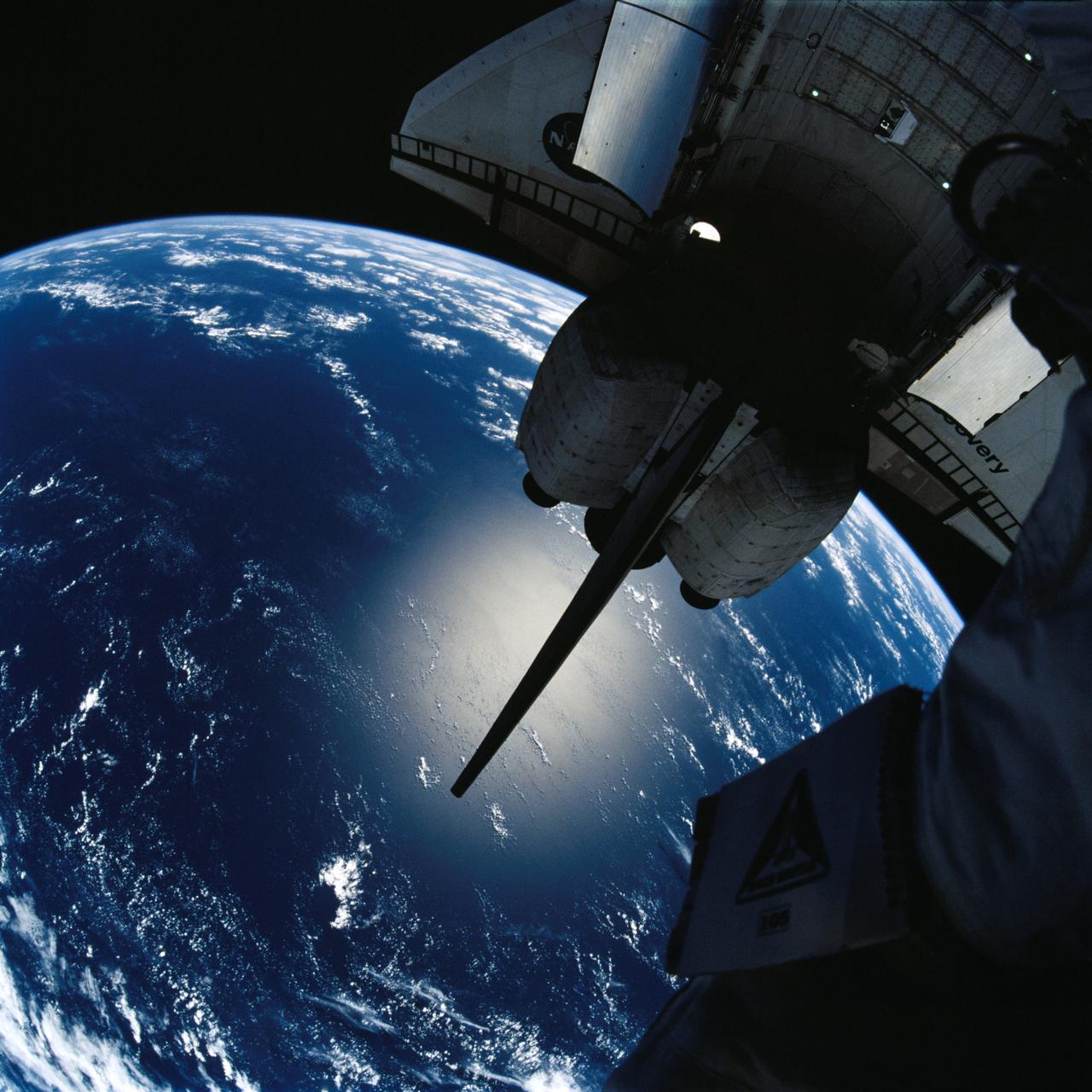
STS105-726-056 (16 August 2001) --- A 30mm lens on a 70mm camera added to this panorama featuring a silhouetted aft portion of the Space Shuttle Discovery over the blue and white Earth. Discovery was docked with the International Space Station (ISS) at the time.
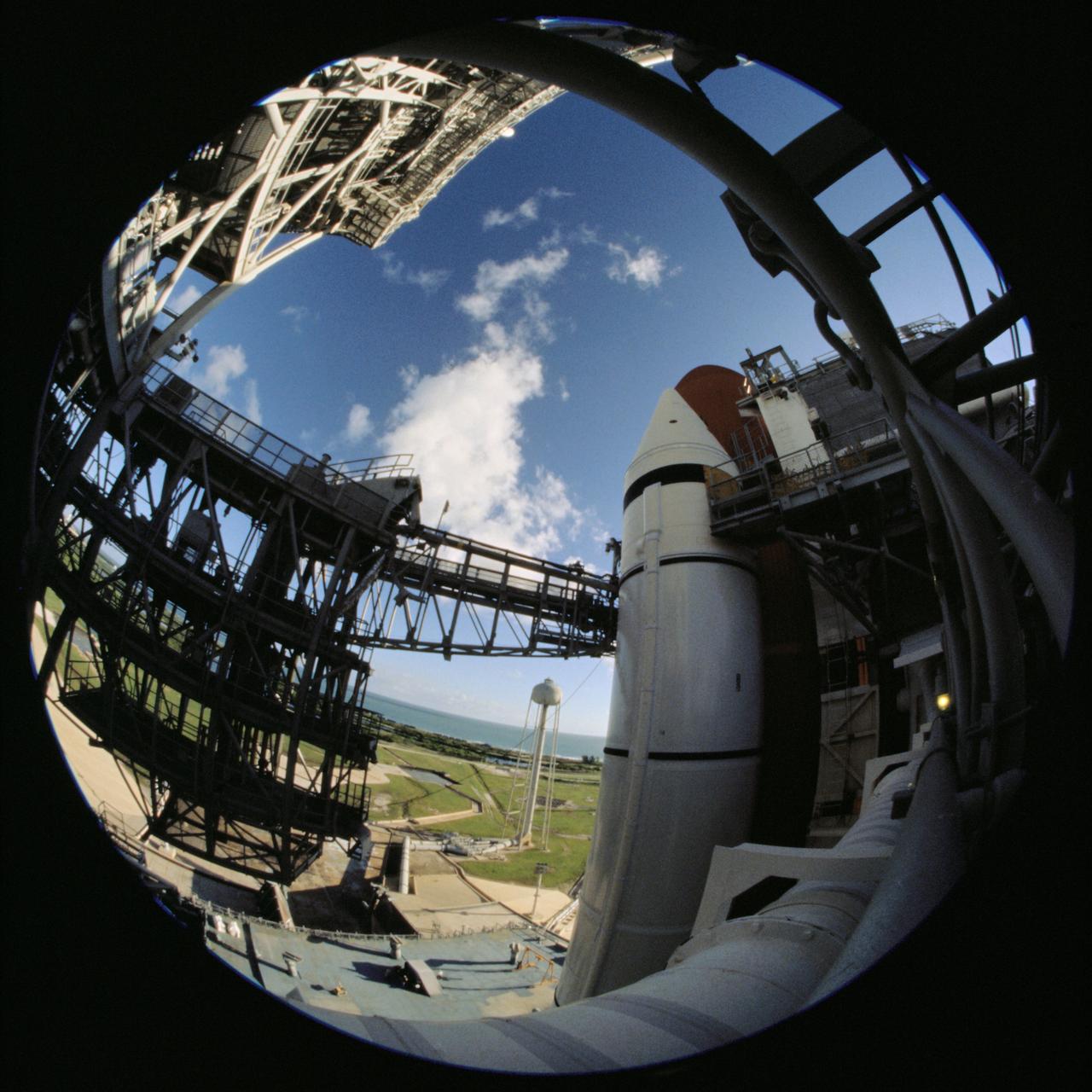
JSC2007-E-53782 (8-10 Oct. 2007) --- A photographer used a fish-eye lens attached to an electronic still camera to record a series of photos of the Space Shuttle Discovery at the launch pad while the STS-120 crew was at Kennedy Space Center for the Terminal Countdown Demonstration Test in October 2007.
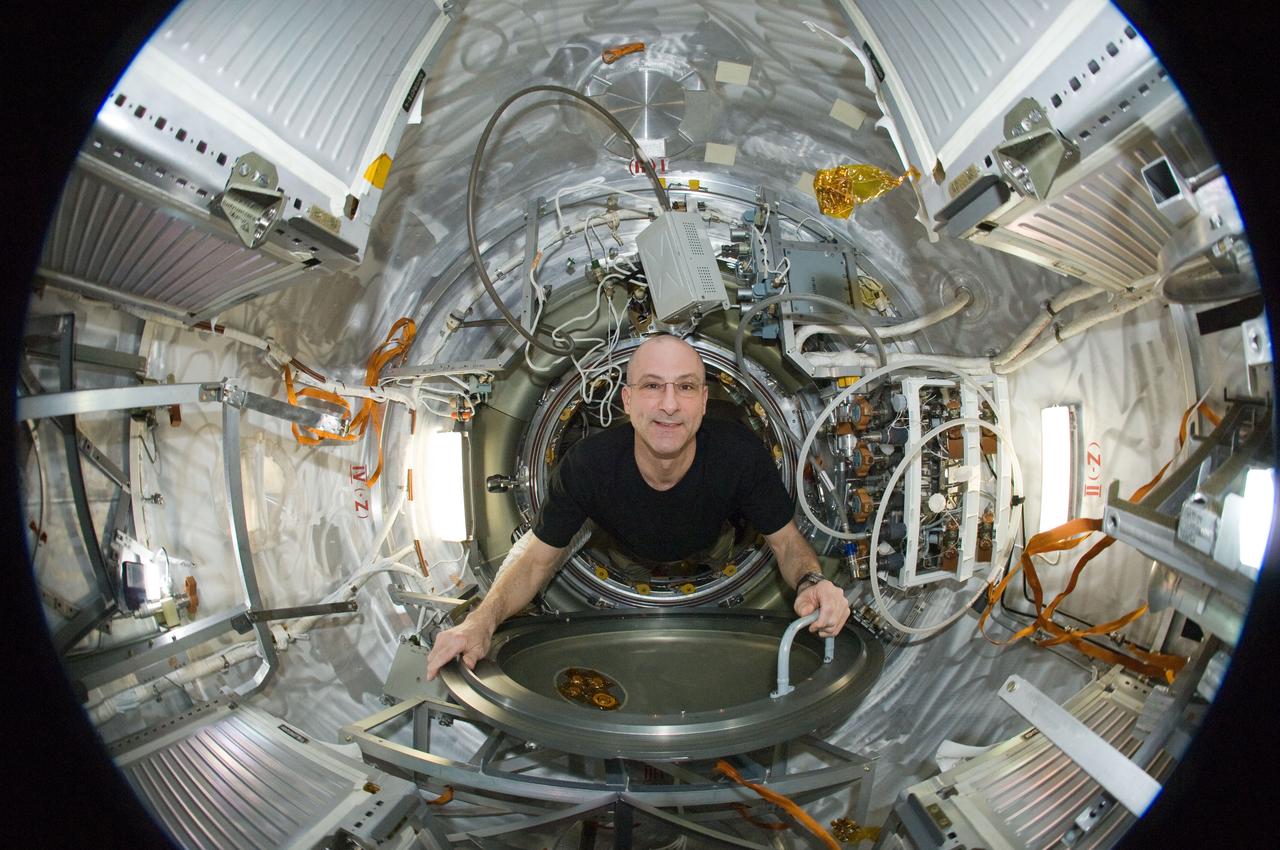
ISS031-E-035441 (15 May 2012) --- A fisheye lens attached to an electronic still camera was used to capture this image of NASA astronaut Don Pettit, Expedition 31 flight engineer, in the Progress 47 resupply vehicle docked to the International Space Station’s Pirs Docking Compartment.
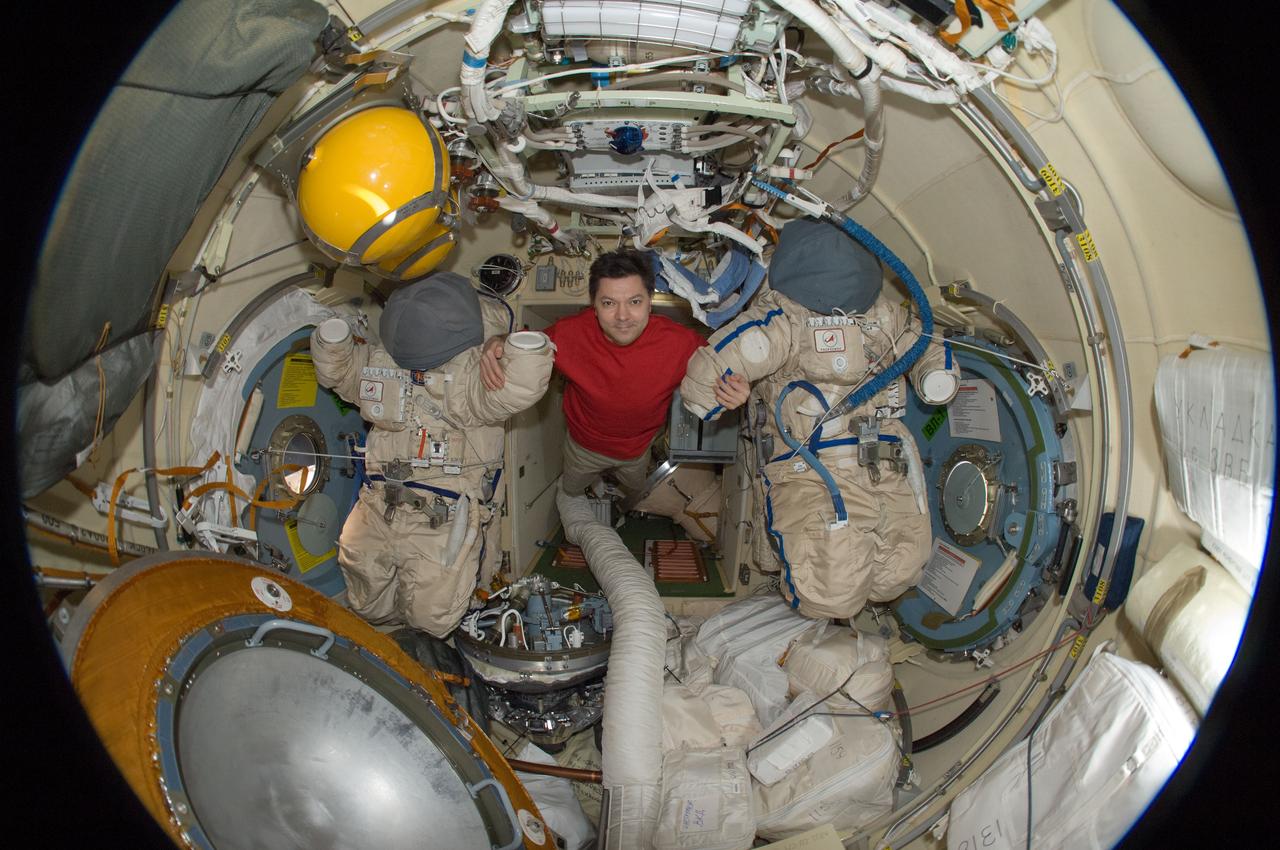
ISS031-E-030470 (12 May 2012) --- A fisheye lens attached to an electronic still camera was used to capture this image of Russian cosmonaut Oleg Kononenko, Expedition 31 commander, with two Russian Orlan spacesuits in the Pirs Docking Compartment of the International Space Station.
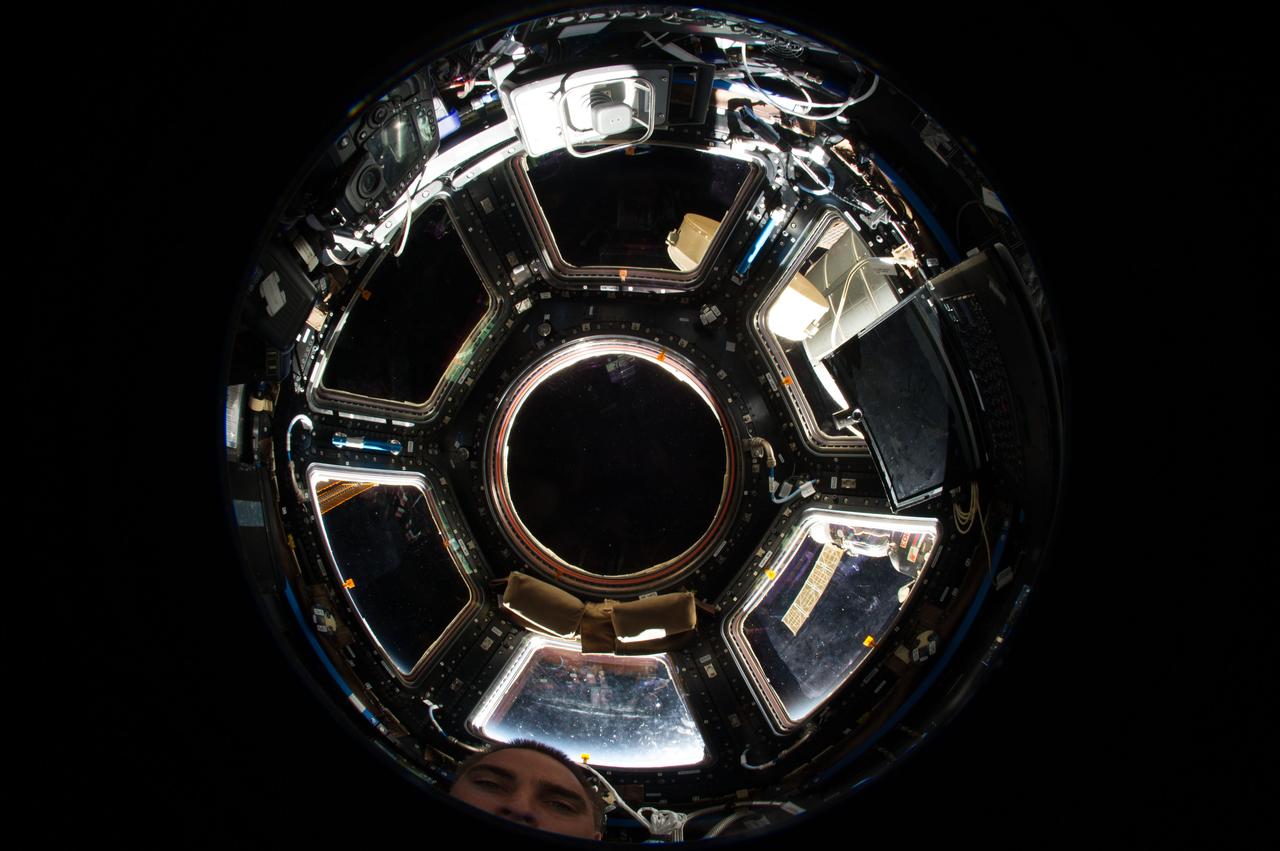
ISS036-E-022157 (20 July 2013) --- A fisheye lens attached to an electronic still camera was used to capture this image of the International Space Station’s Cupola and NASA astronaut Chris Cassidy (mostly out of frame at bottom), Expedition 36 flight engineer.
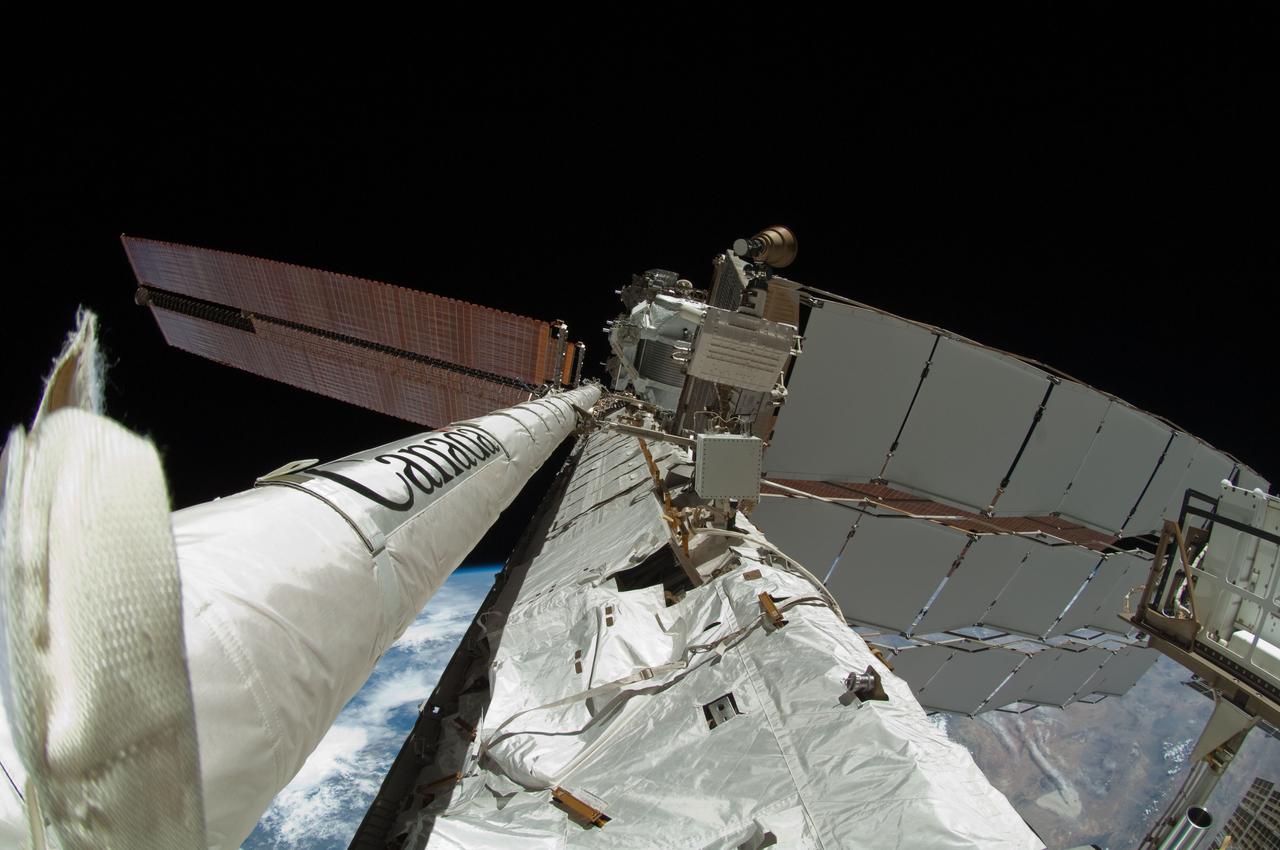
ISS028-E-005646 (27 May 2011) --- The newly-attached 50-foot-long Enhanced International Space Station Boom Assembly (left) is featured in this image photographed by a spacewalker, using a fish-eye lens attached to an electronic still camera, during the STS-134 mission?s fourth session of extravehicular activity (EVA).
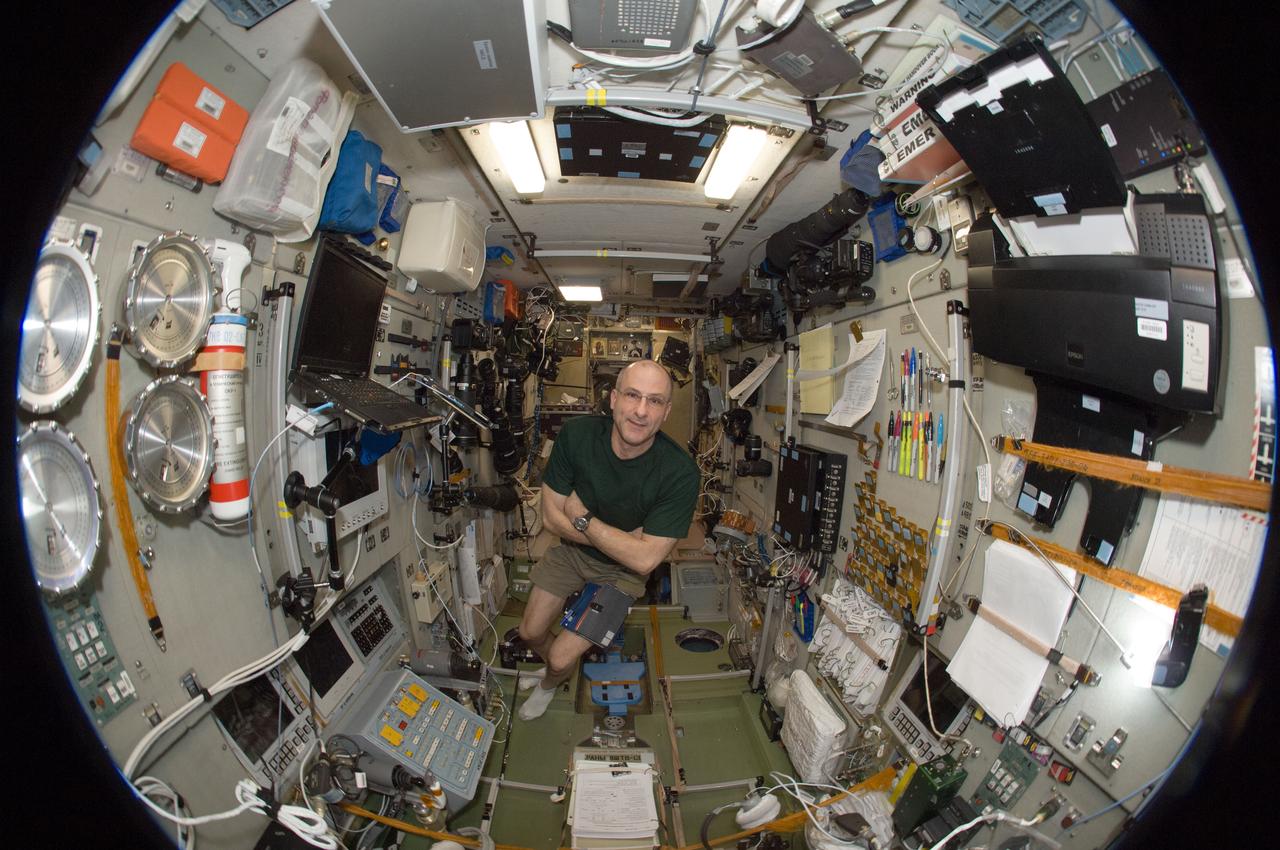
ISS031-E-030486 (12 May 2012) --- A fisheye lens attached to an electronic still camera was used to capture this image of NASA astronaut Don Pettit, Expedition 31 flight engineer, in the Zvezda Service Module of the International Space Station.
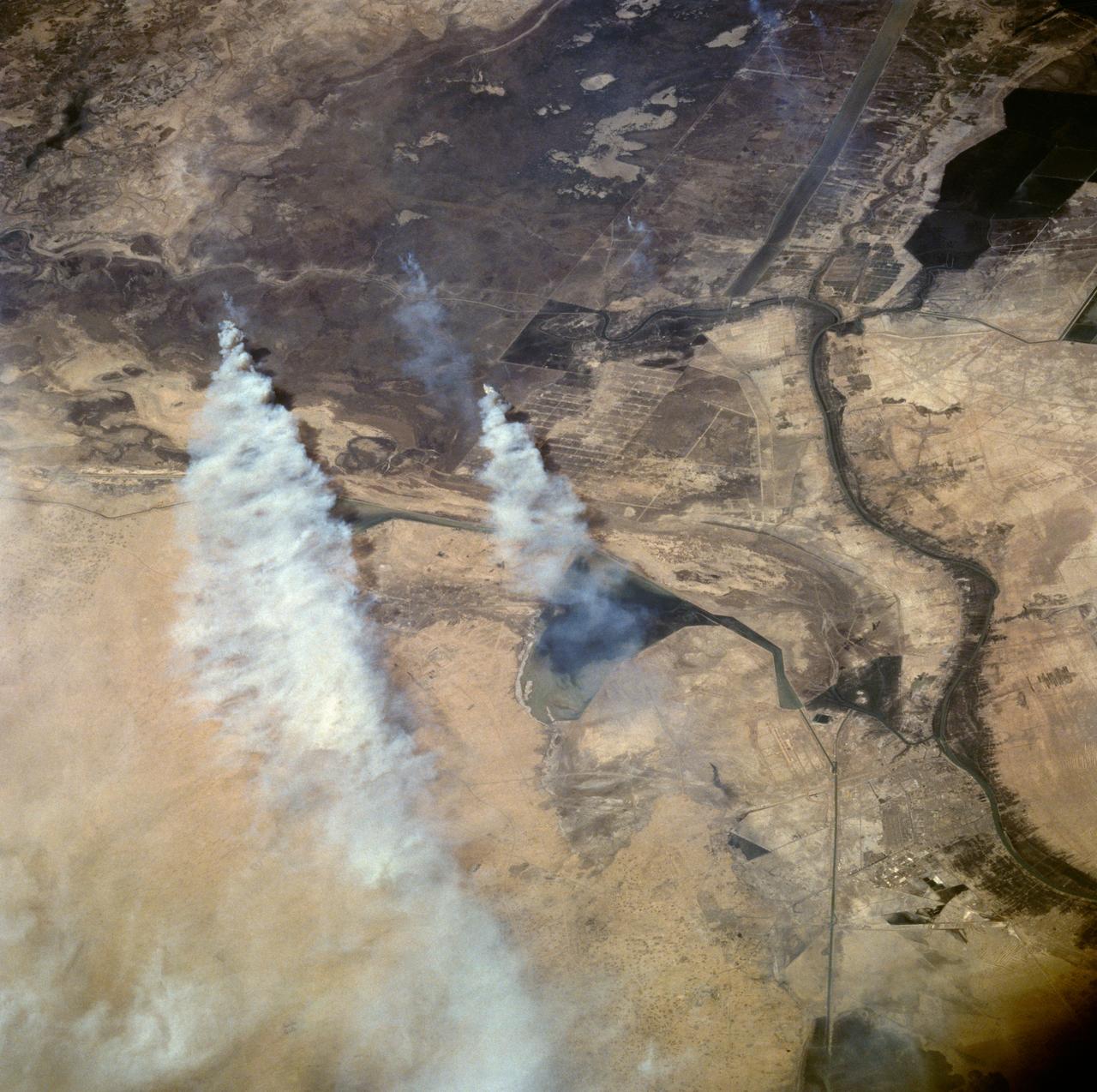
STS059-82-010 (9-20 April 1994) --- View northwestward of a small part of southeastern Iraq. The city of Basra can be seen in the lower left corner, and the former junction of the Tigris and Euphrates Rivers in the upper right. The streams have been channelized, in part to dewater and burn an extensive marsh. Hasselblad camera, 250mm lens.
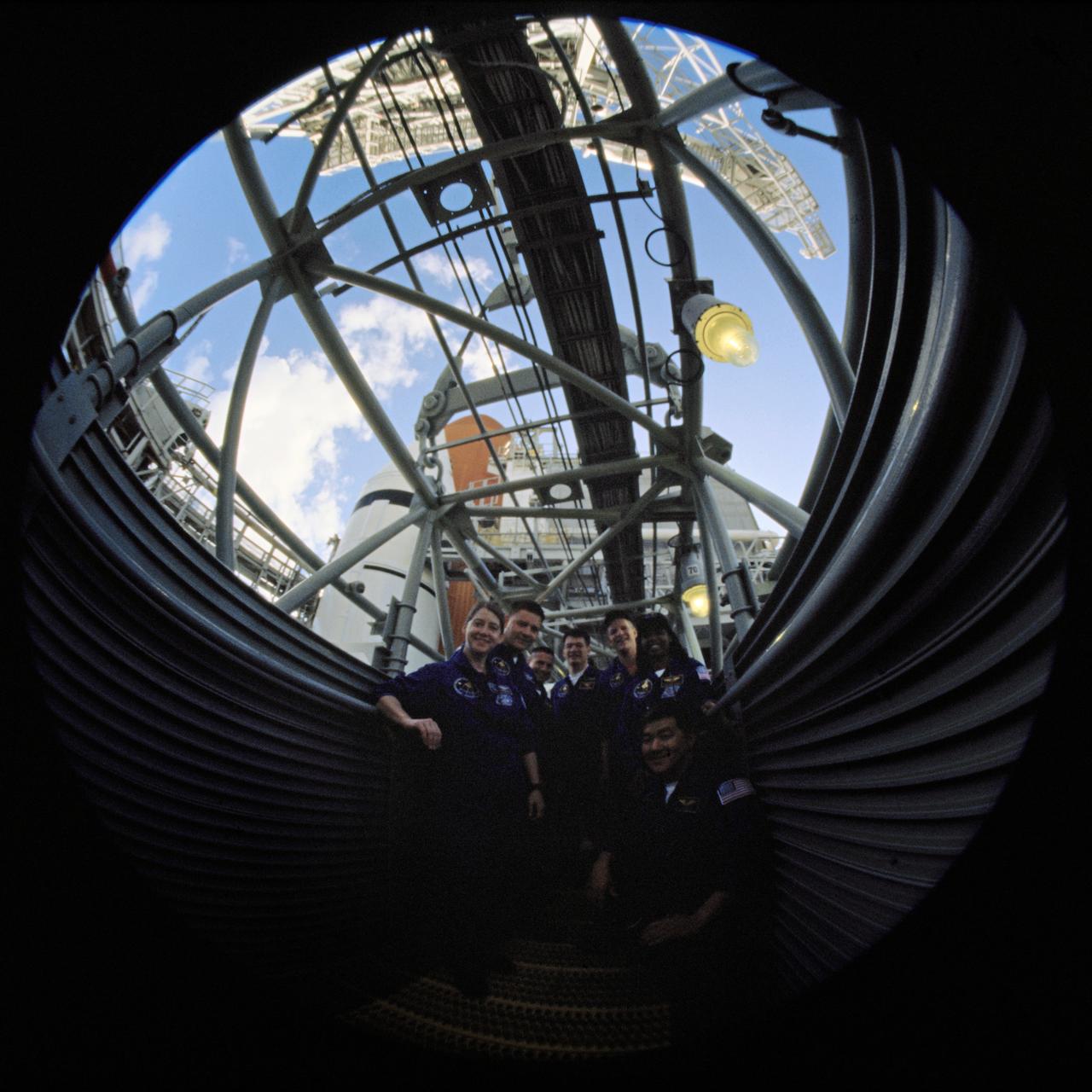
JSC2007-E-53781 (8-10 Oct. 2007) --- A photographer used a fish-eye lens attached to an electronic still camera to record a series of photos of the Space Shuttle Discovery at the launch pad while the STS-120 crew was at Kennedy Space Center for the Terminal Countdown Demonstration Test in October 2007.
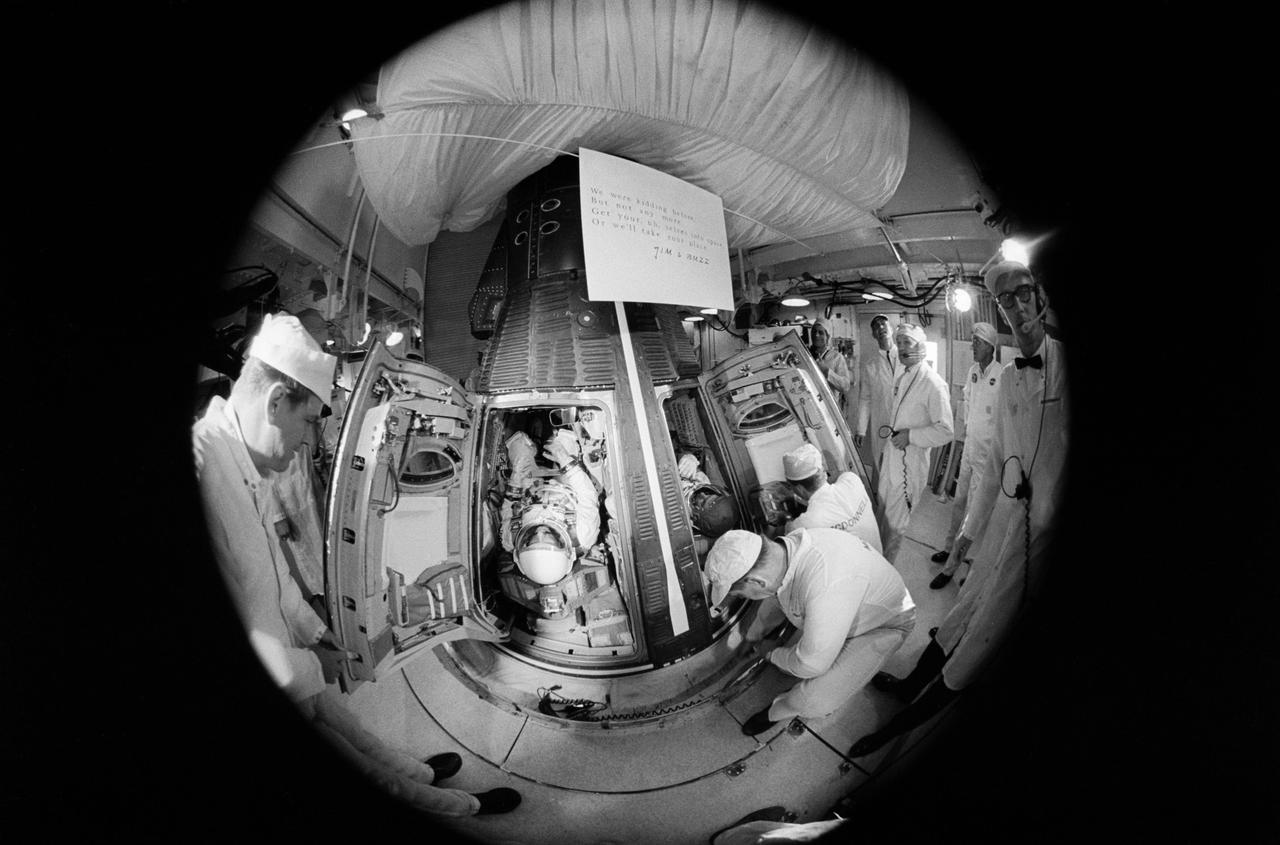
S66-34055 (3 June 1966) --- Fisheye camera lens view of the white room atop Pad 19 during the insertion of astronauts Thomas P. Stafford and Eugene A. Cernan into the Gemini-9A spacecraft. Minutes later the hatches were sealed on the spacecraft in preparation for launch of the proposed three-day mission. Photo credit: NASA
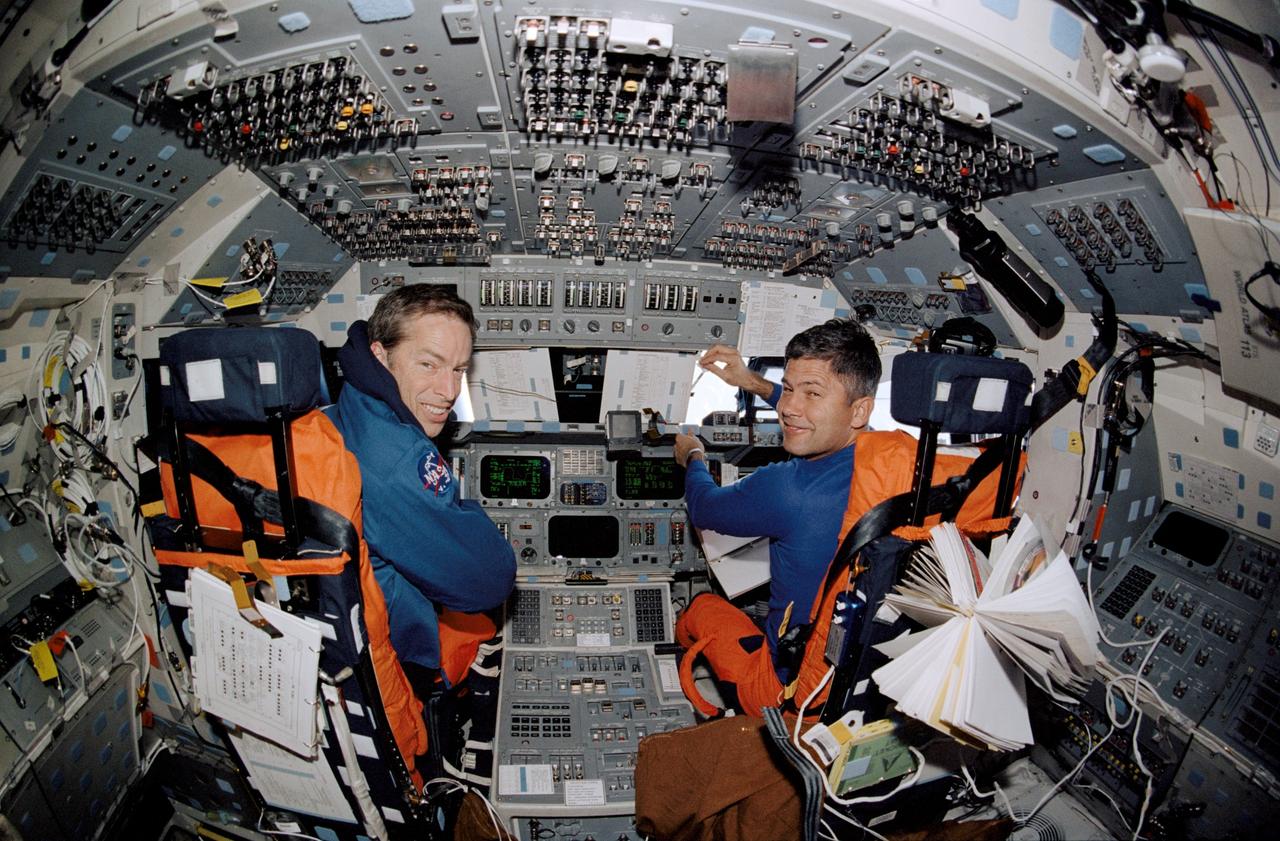
STS113-369-024 (6 December 2002) --- A “fish-eye” lens on a 35mm camera records astronauts James D. Wetherbee (left) and Paul S. Lockhart, STS-113 mission commander and pilot, respectively, on the forward flight deck of the Space Shuttle Endeavour.
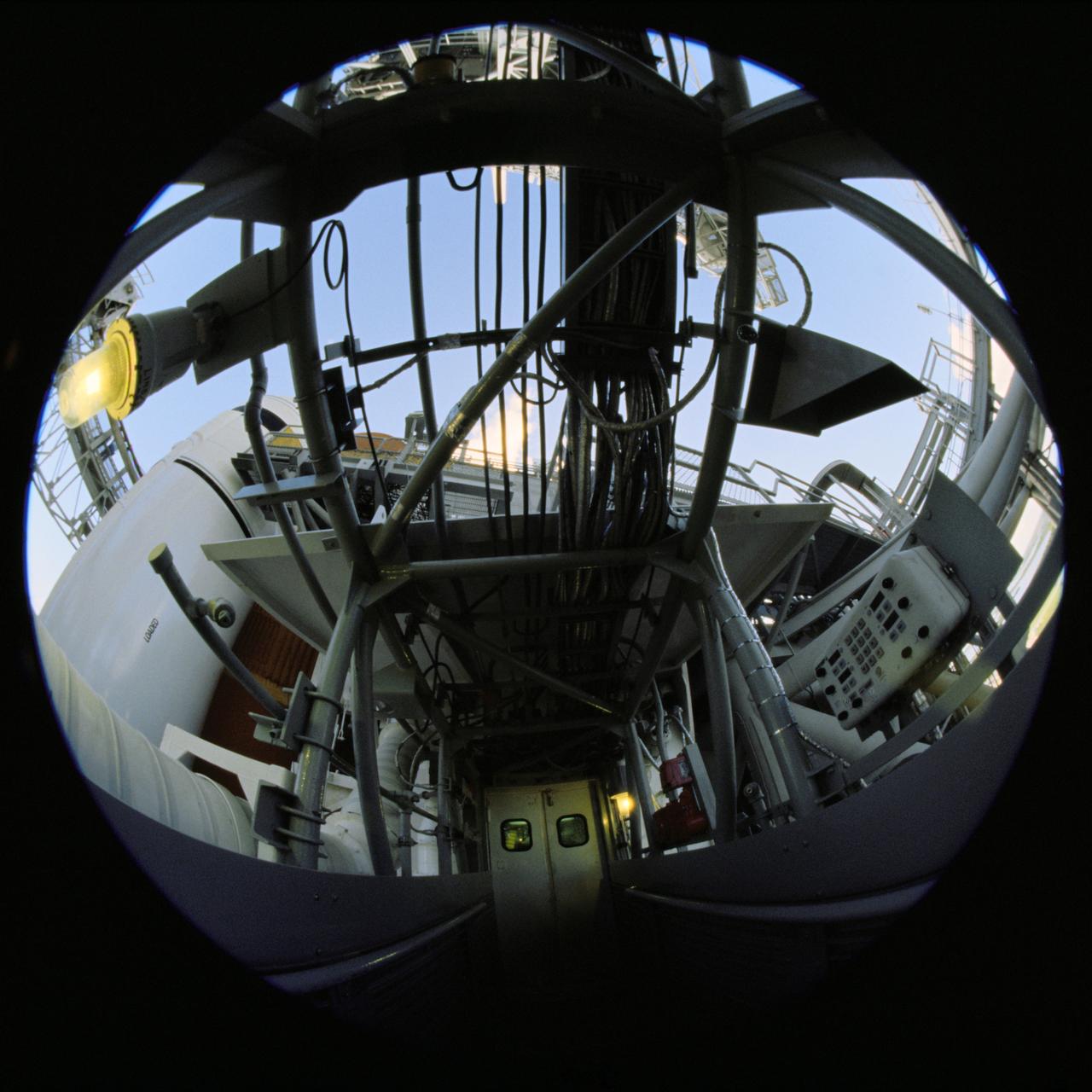
JSC2007-E-53783 (8-10 Oct. 2007) --- A photographer used a fish-eye lens attached to an electronic still camera to record a series of photos of the Space Shuttle Discovery at the launch pad while the STS-120 crew was at Kennedy Space Center for the Terminal Countdown Demonstration Test in October 2007.
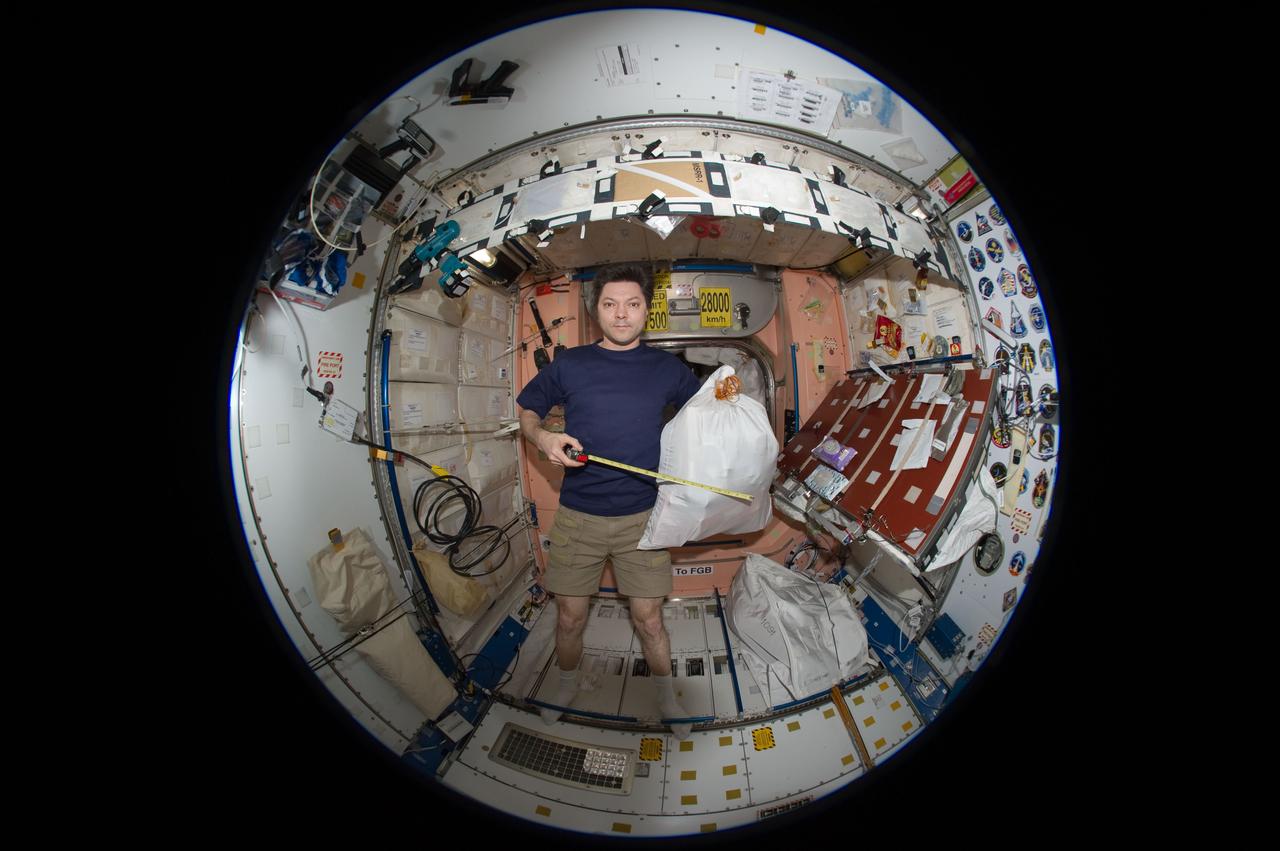
ISS031-E-148931 (28 June 2012) --- A fisheye lens attached to an electronic still camera was used to capture this image of Russian cosmonaut Oleg Kononenko, Expedition 31 commander, during stowage operations in the Unity node of the International Space Station.
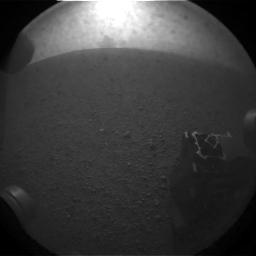
This is the first image taken by NASA Curiosity rover, which landed on Mars the evening of Aug. 5 PDT morning of Aug. 6 EDT. It was taken through a fisheye wide-angle lens on one of the rover rear right Hazard-Avoidance cameras.
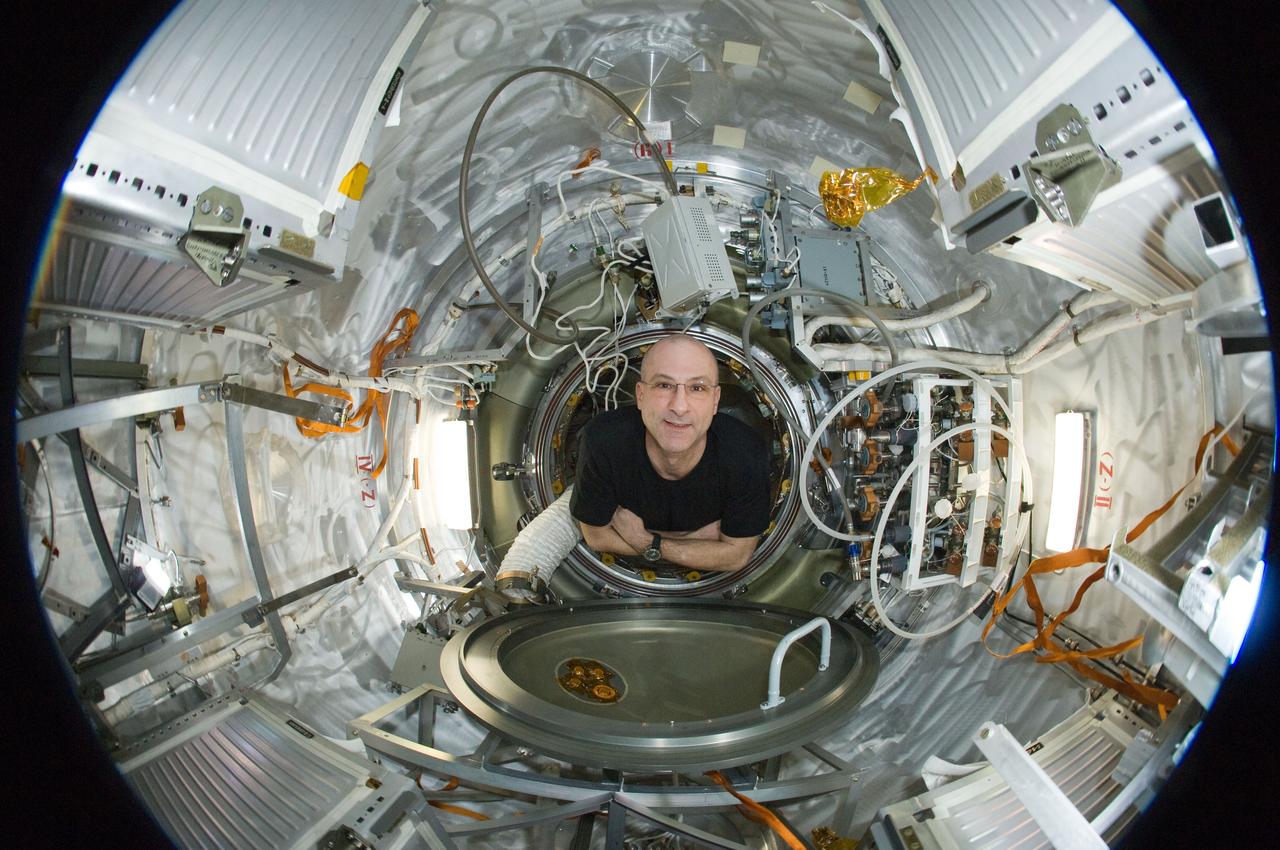
ISS031-E-035443 (15 May 2012) --- A fisheye lens attached to an electronic still camera was used to capture this image of NASA astronaut Don Pettit, Expedition 31 flight engineer, in the Progress 47 resupply vehicle docked to the International Space Station’s Pirs Docking Compartment.
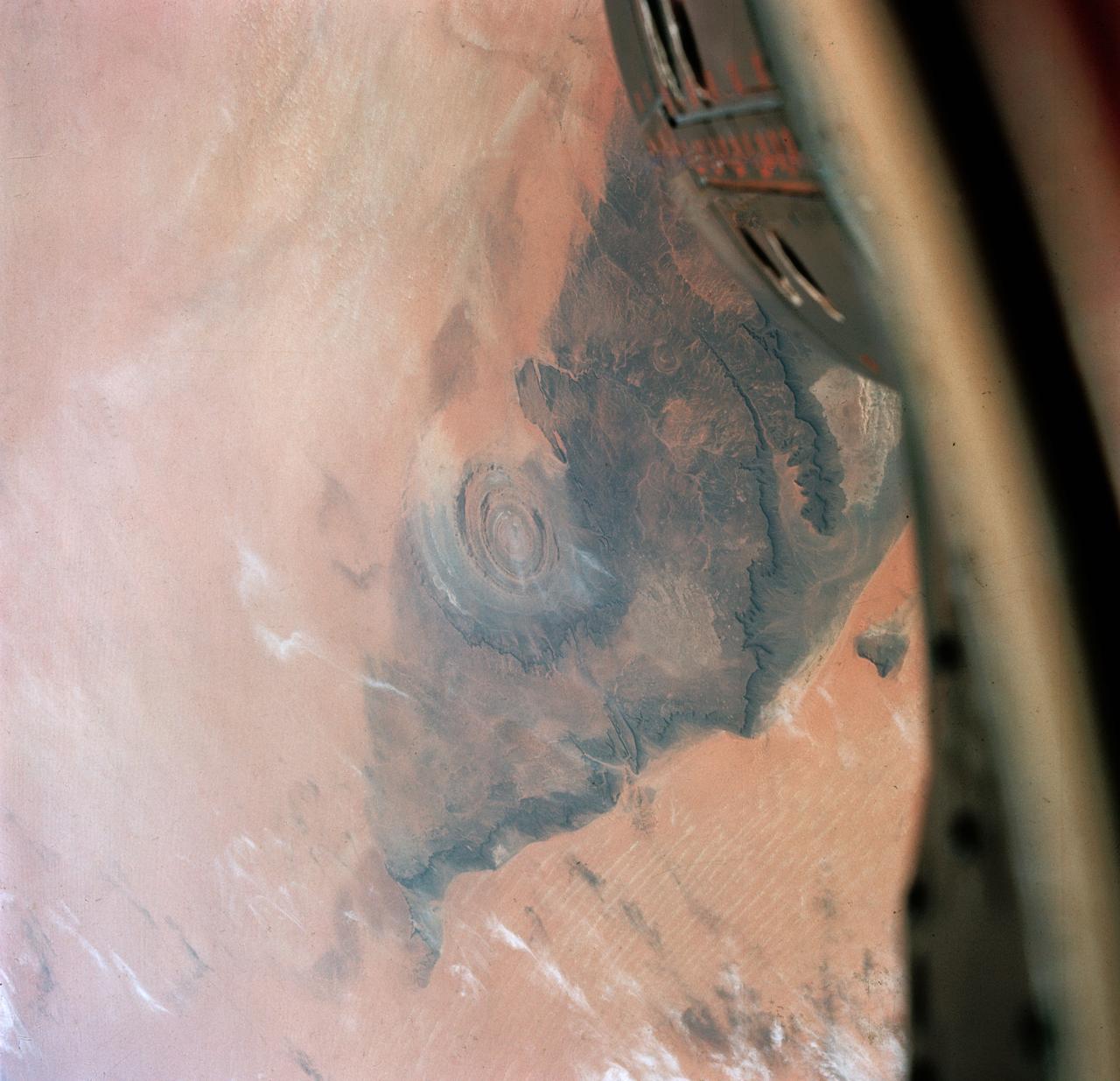
S65-34670 (3-7 June 1965) --- Richat crater in northwest Africa taken from the Gemini-4 spacecraft. Photograph was taken with a modified 70mm Hasselblad camera, using Eastman color film, ASA 64, at a lens setting of 250th of a second at f/11.
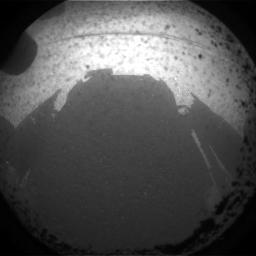
This is the first image taken by NASA Curiosity rover, which landed on Mars the evening of Aug. 5 PDT morning of Aug. 6 EDT. It was taken through a fisheye wide-angle lens on one of the rover front left Hazard-Avoidance cameras.
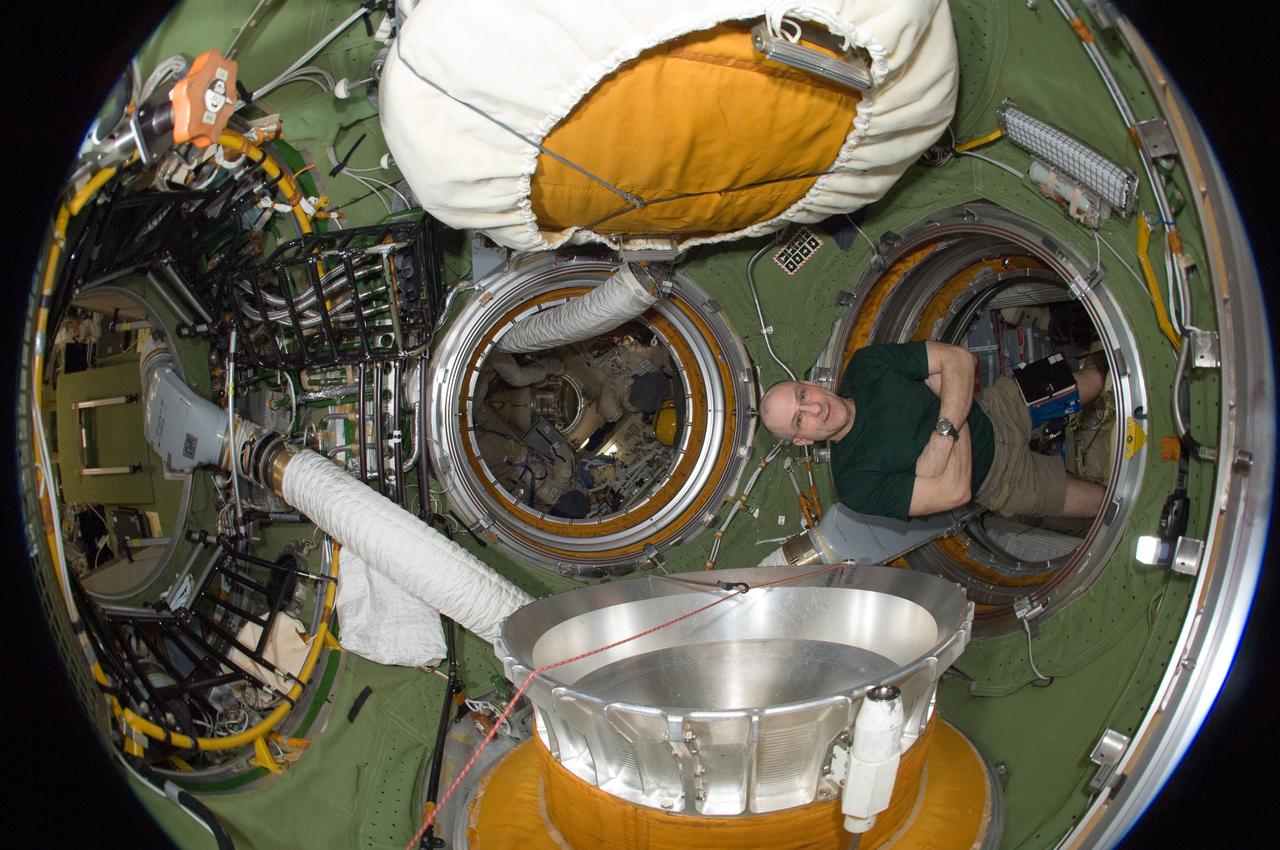
ISS031-E-030465 (12 May 2012) --- A fisheye lens attached to an electronic still camera was used to capture this image of NASA astronaut Don Pettit, Expedition 31 flight engineer, in the transfer compartment between the Zarya Functional Cargo Block (FGB) and the Zvezda Service Module of the International Space Station.
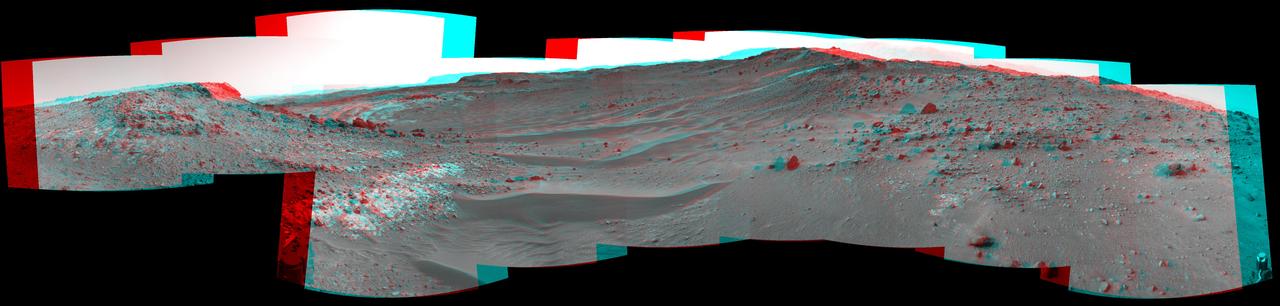
This stereo view from the Navigation Camera (Navcam) on NASA's Curiosity Mars rover shows the terrain ahead of the rover as it makes its way westward through a valley called "Artist's Drive." The image appears three-dimensional when viewed through red-blue glasses with the red lens on the left. The Navcam recorded the component images of this mosaic on April 10, 2015, during the 951st Martian Day, or sol, of Curiosity's work on Mars. The valley is on the rover's route toward a higher site on Mount Sharp than the "Pahrump Hills" area the mission investigated at the base of the layered mountain. http://photojournal.jpl.nasa.gov/catalog/PIA19165
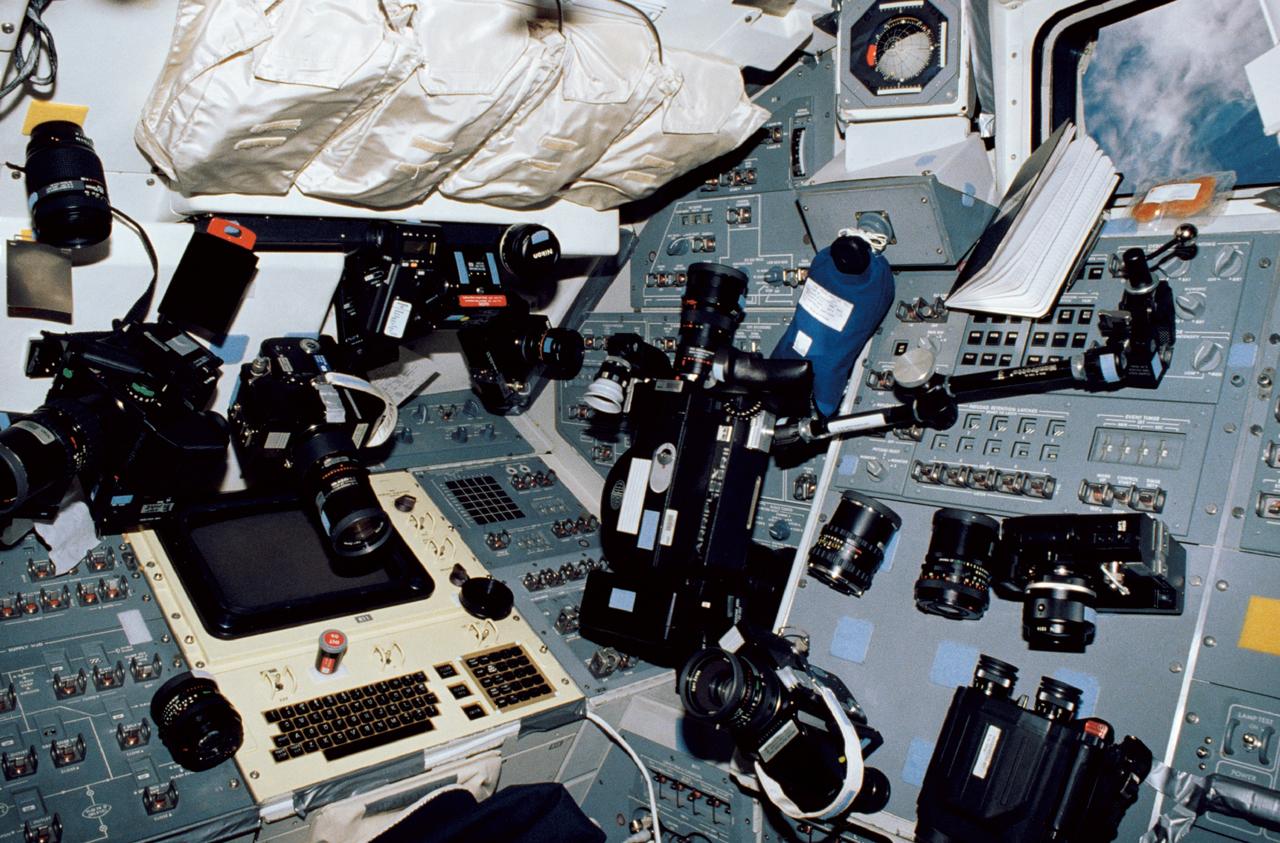
STS035-10-015 (2-10 Dec 1990) --- This busy scene shows cameras and supportive photographic gear temporarily stowed on Space Shuttle Columbia's aft flight deck. It was photographed with a 35mm camera by astronaut Jeffrey A. Hoffman, mission specialist, who called the cluster a "camera forest." The seven STS-35 crewmembers trained to record a wide variety of imagery with an equally broad range of equipment. In addition to cameras, a spot meter, film, a pair of binoculars, a bracket, lenses, lens cleaner and other photographic equipment are in the scene. Clouds over ocean waters are framed by an aft flight deck window at upper right.
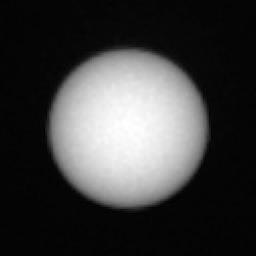
This series of images shows the Martian moon Phobos as it crossed in front of the Sun, as seen by NASA's Curiosity Mars rover on Tuesday, March 26, 2019 (the 2,359th sol, or Martian day, of the mission). The images were captured by Curiosity's telephoto-lens camera, called its Mast Camera (Mastcam) using its right-eye solar filter. The images have been sped up by a factor of 10; the entire eclipse lasted about 35 seconds. Movie available at https://photojournal.jpl.nasa.gov/catalog/PIA23133
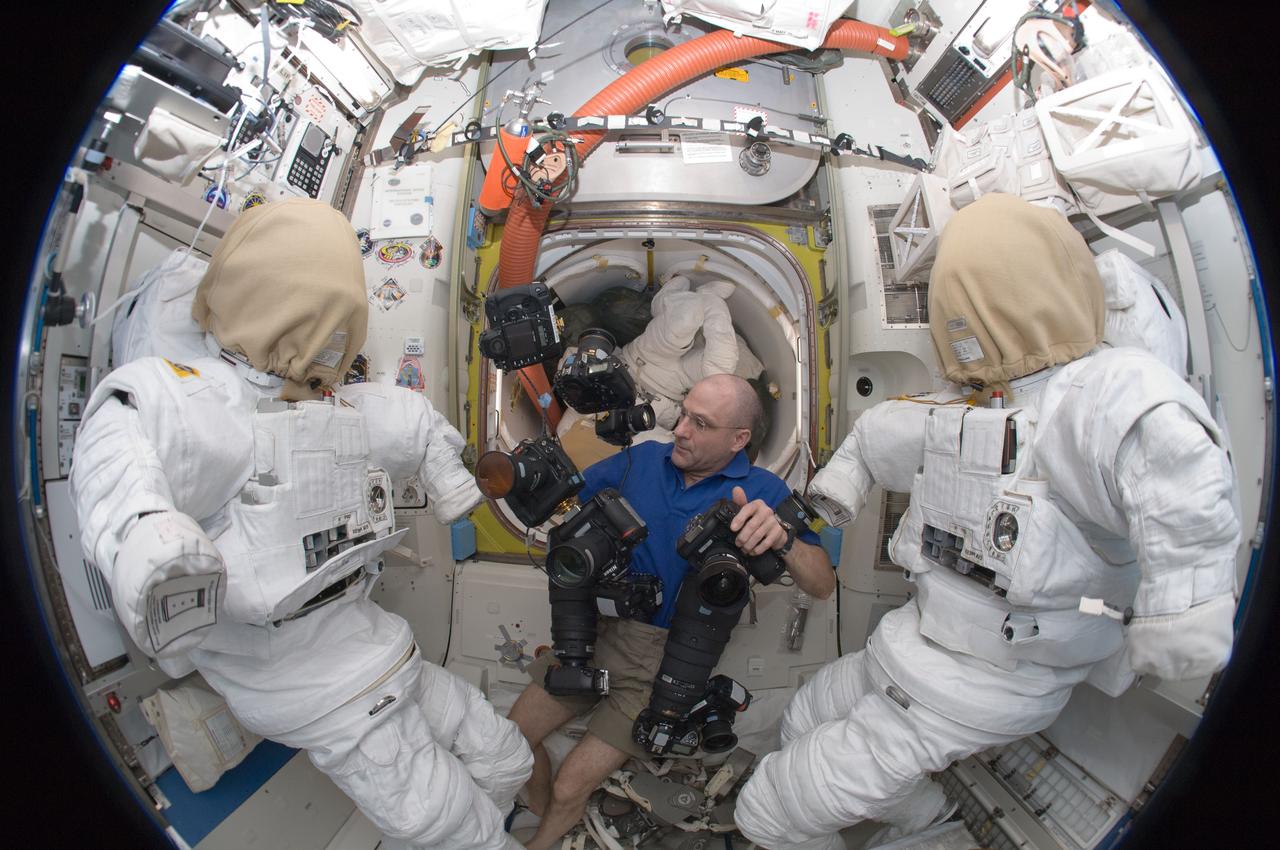
ISS031-E-112512 (10 June 2012) --- A fisheye lens attached to an electronic still camera was used to capture this image of NASA astronaut Don Pettit, Expedition 31 flight engineer, as he works with still camera equipment in the Quest airlock of the International Space Station, while flanked by a pair of NASA Extravehicular Mobility Unit (EMU) spacesuits.
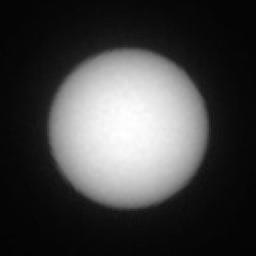
This series of images shows the Martian moon Deimos as it crossed in front of the Sun, as seen by NASA's Curiosity Mars rover on Sunday, March 17, 2019 (the 2,350th Martian day, or sol, of the mission). The images were captured by Curiosity's telephoto-lens camera, called its Mast Camera pair (right Mastcam). The images have been sped up by a factor of 10. Deimos is small enough that scientists consider it a transit rather than an eclipse. The Deimos transit lasted several minutes. Movie available at https://photojournal.jpl.nasa.gov/catalog/PIA23134
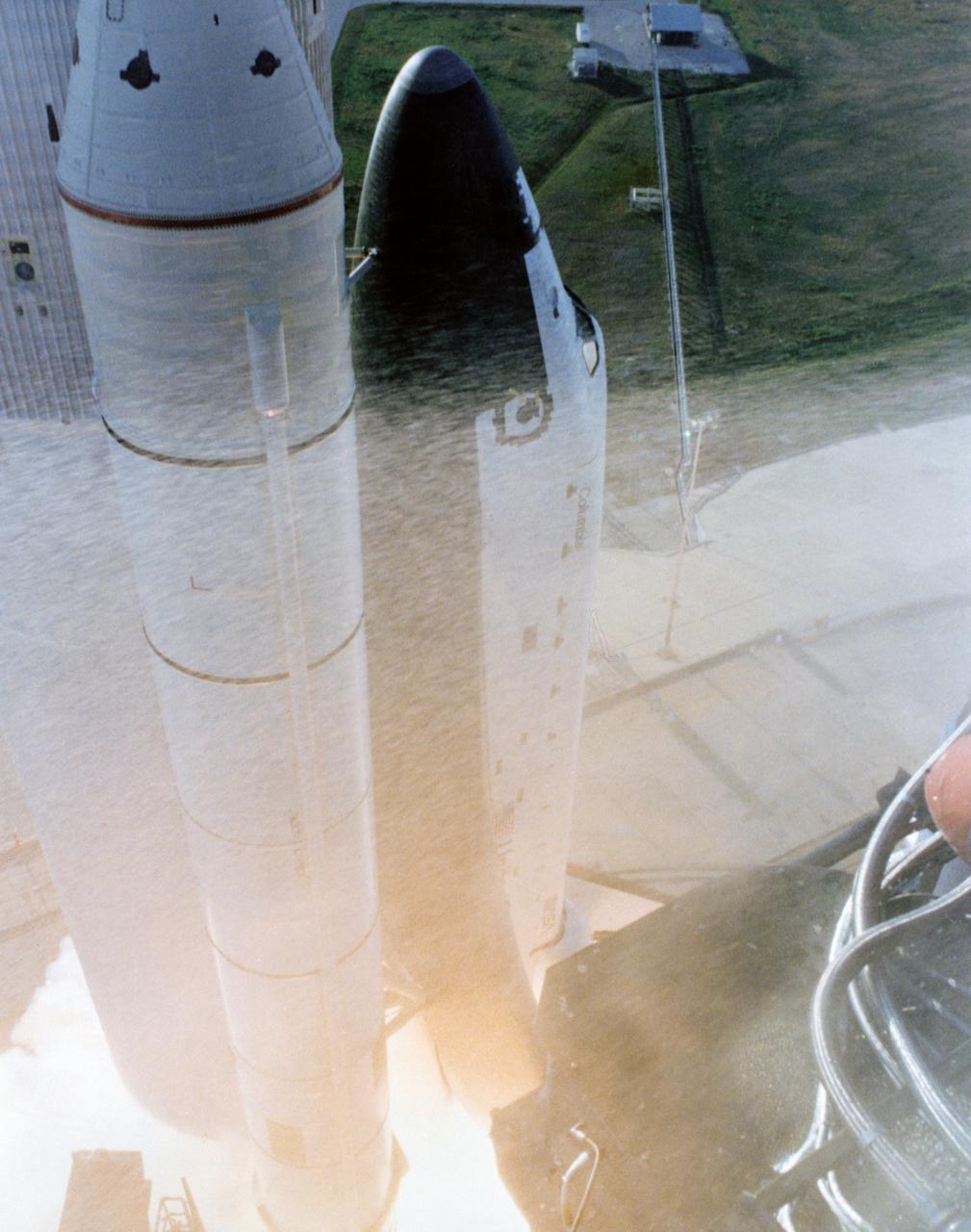
S81-30501 (12 April 1981) --- Nose pointed skyward, space shuttle Columbia begins its climb toward orbit moments after solid rocket booster ignition in this first view of a dramatic liftoff sequence photographed from the 275-feet level of the Fixed Service Structure on Pad 39A. The seven frame sequence documenting the space shuttle’s historic launch on its maiden voyage was taken with a Nikon camera equipped with a 28mm lens with a 250 exposure back. The camera was protected in a fire box. Photo credit: NASA
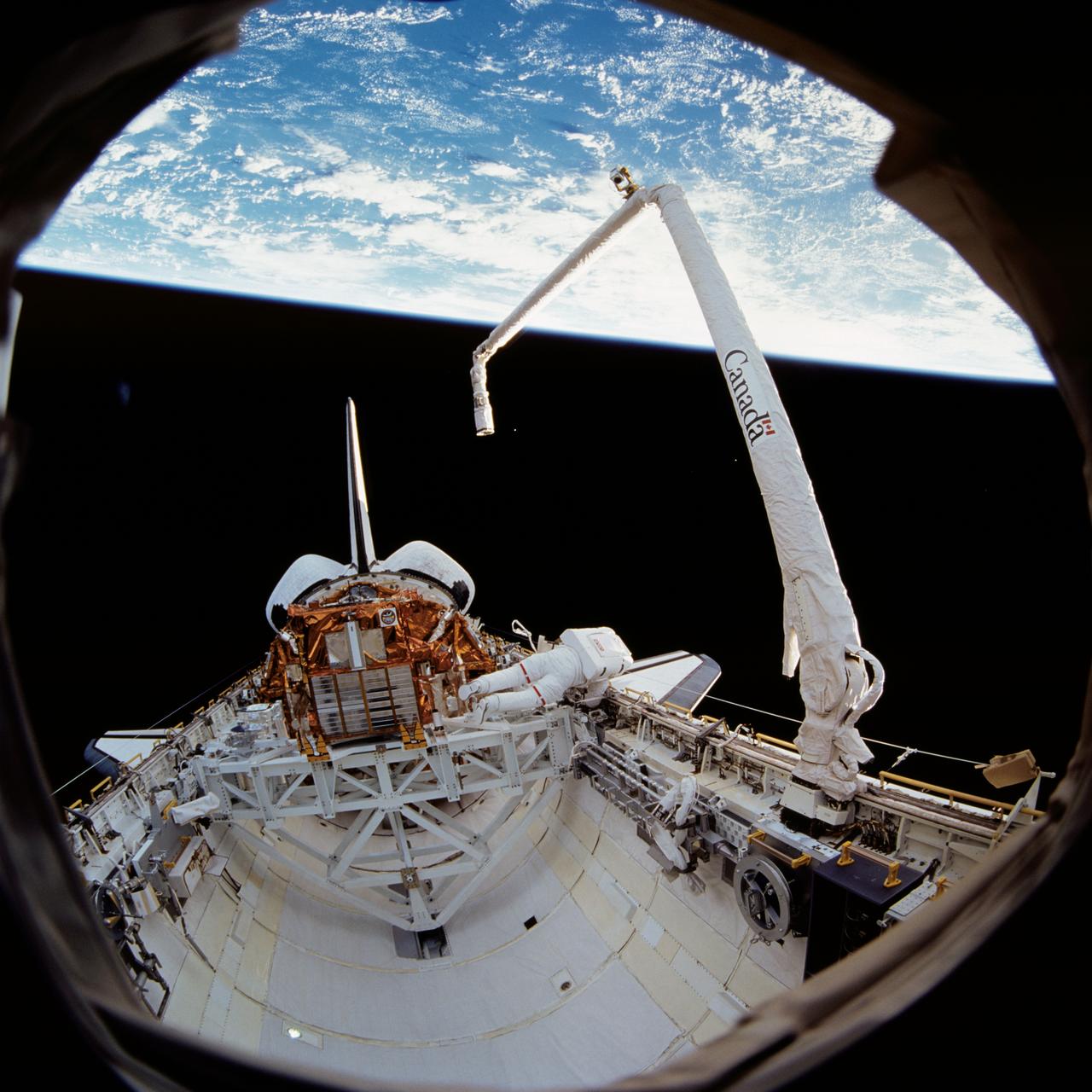
STS072-722-041 (17 Jan. 1996) --- Astronaut Winston E. Scott traverses the portside of the Space Shuttle Endeavour's cargo bay during the second of two Extravehicular Activities (EVA) to demonstrate space station assembly techniques. A 30mm lens on a 70mm handheld camera gives a "fish-eye" effect to the scene. Both the Japanese Space Flyer Unit (SFU) and the Office of Aeronautics and Space Technology (OAST) Flyer satellite are in their stowed positions. TV cameras on the Remote Manipulator System (RMS) provided live coverage of the activity.
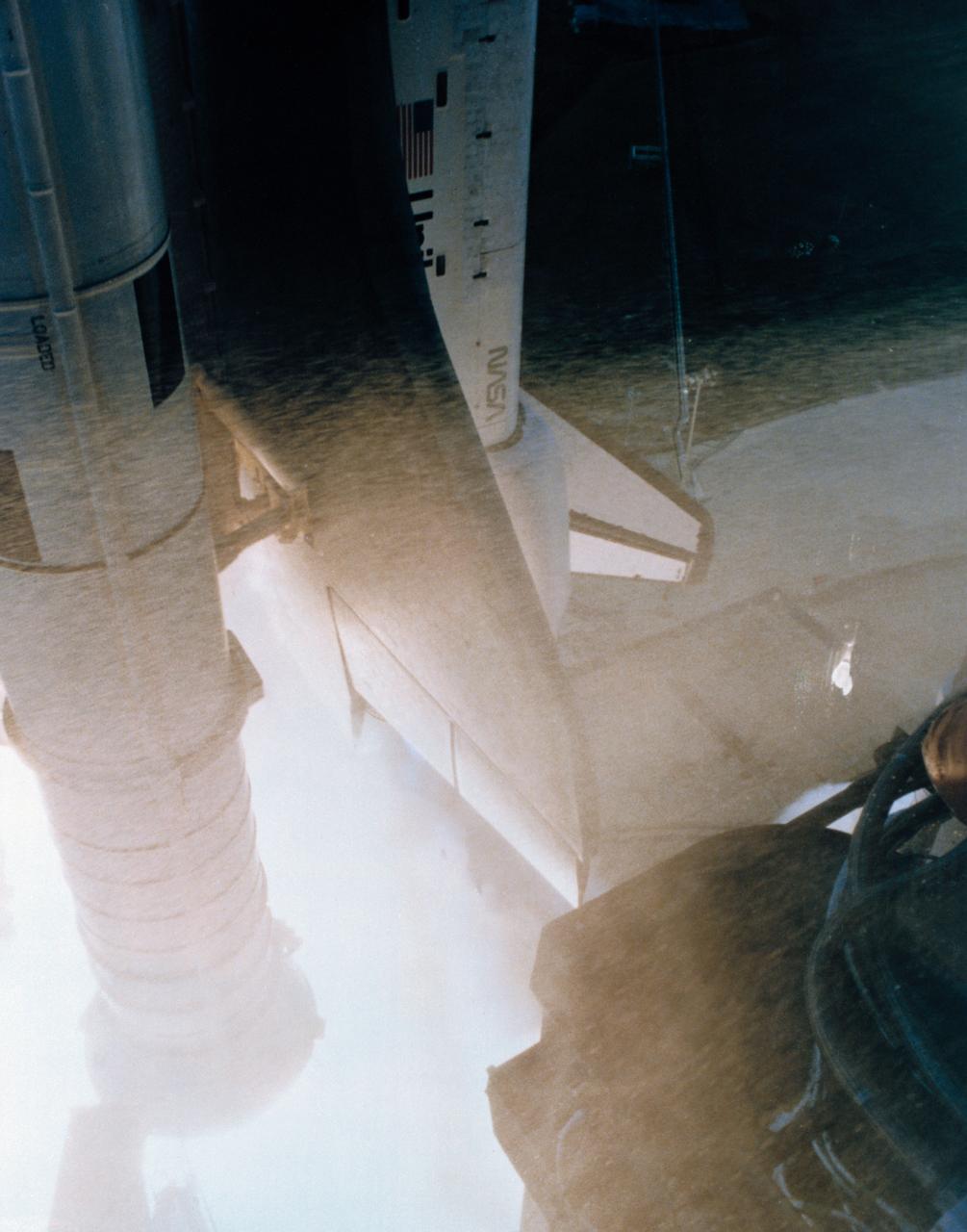
S81-30502 (12 April 1981) --- Space shuttle Columbia’s aft orbiter section dominates the field of view in this fifth frame of a dramatic liftoff sequence photographed from the 275-foot level of the Fixed Service Structures on Pad 39A. The seven-frame sequence documenting the space shuttle’s historic launch on its maiden voyage was taken with a Nikon camera equipped with a 28mm lens and a 250 exposure back. The camera was protected in a fire box. Photo credit: NASA
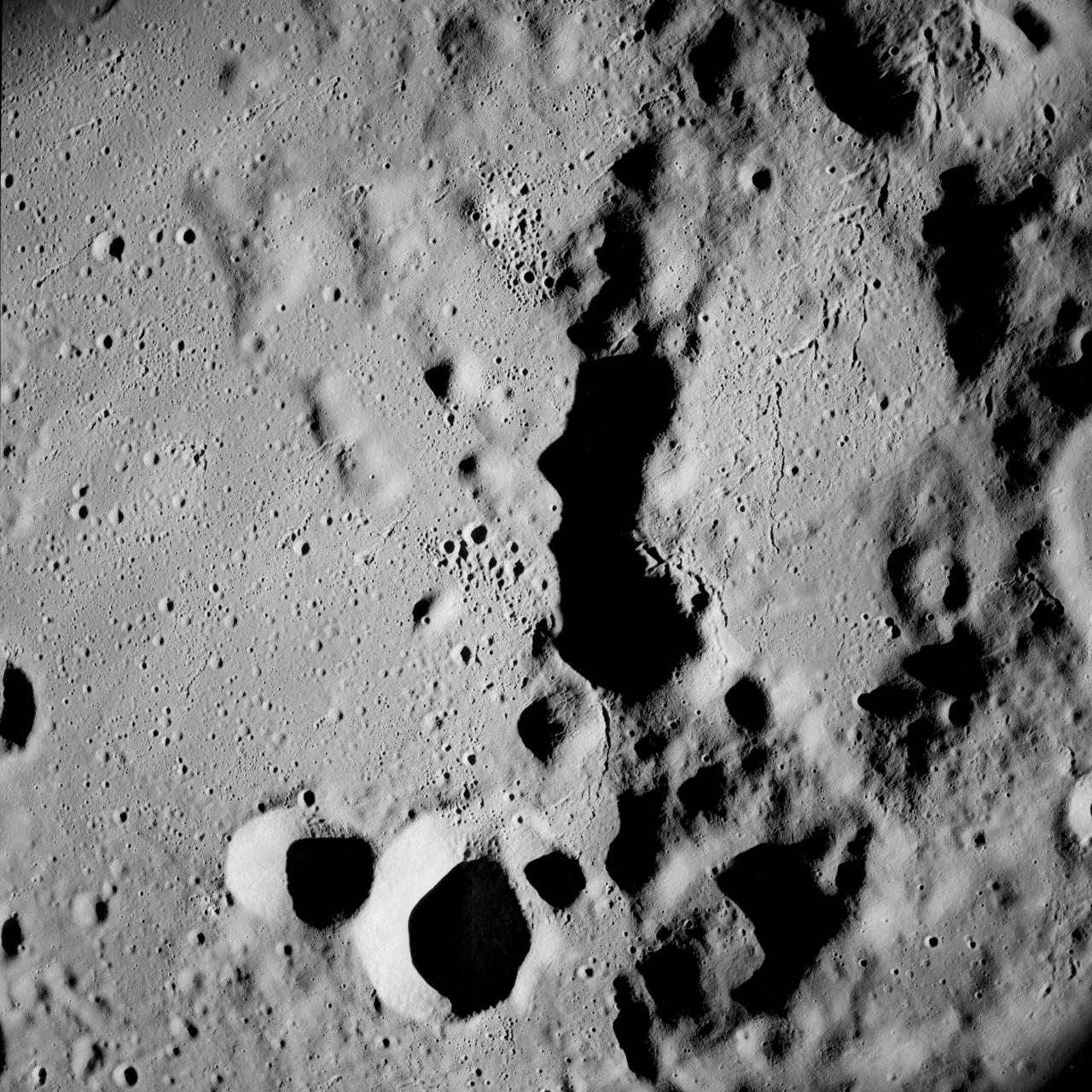
Apollo 8,Farside of Moon. Image taken on Revolution 4. Camera Tilt Mode: Vertical Stereo. Sun Angle: 13. Original Film Magazine was labeled D. Camera Data: 70mm Hasselblad. Lens: 80mm; F-Stop: F/2.8; Shutter Speed: 1/250 second. Film Type: Kodak SO-3400 Black and White,ASA 40. Flight Date: December 21-27,1968.
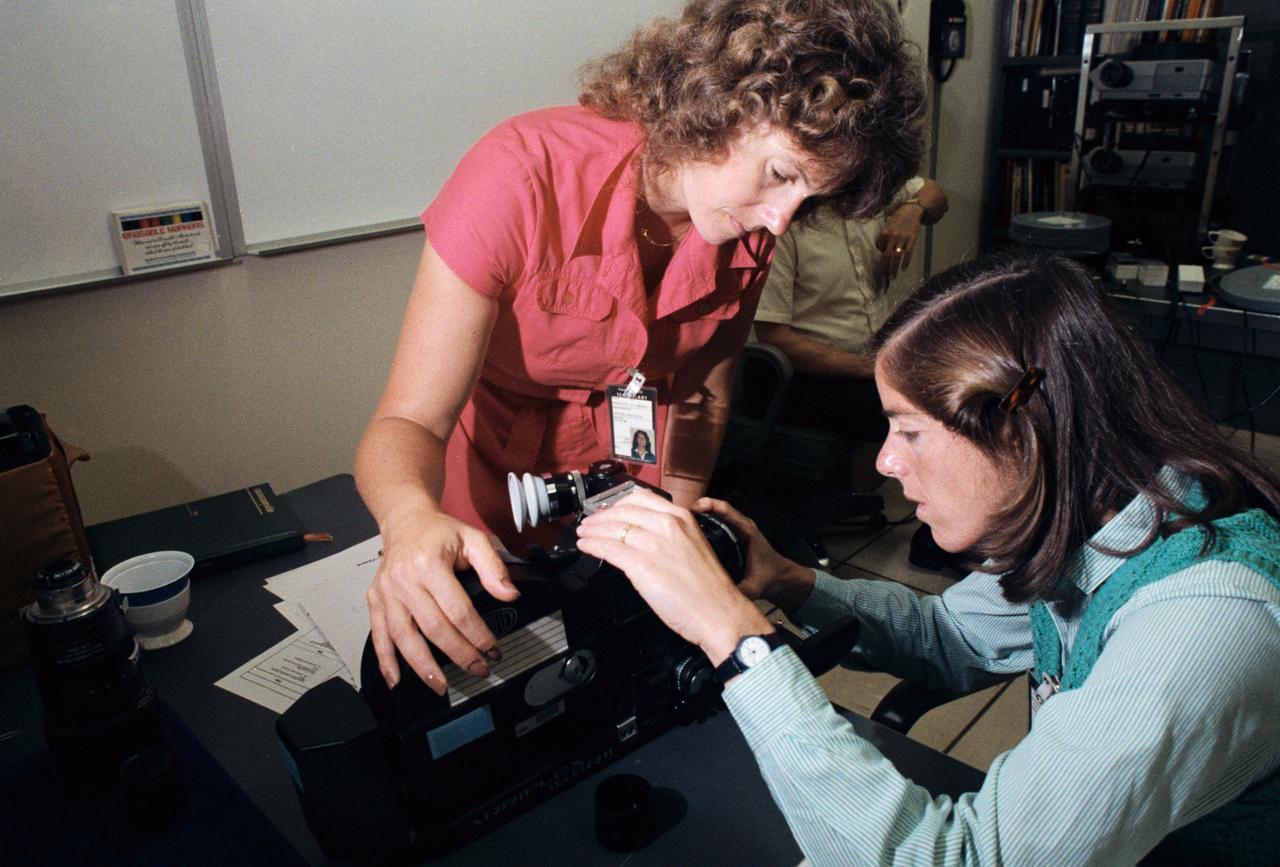
S85-40669 (18 Sept. 1985) --- The two teachers, Sharon Christa McAuliffe (left) and Barbara R. Morgan have hands-on experience with an Arriflex motion picture camera following a briefing on space photography. The two began training Sept. 10, 1985 with the STS-51L crew and learning basic procedure for space travelers. The second week of training included camera training, aircraft familiarization and other activities. Morgan adjusts a lens as a studious McAuliffe looks on. Photo credit: NASA
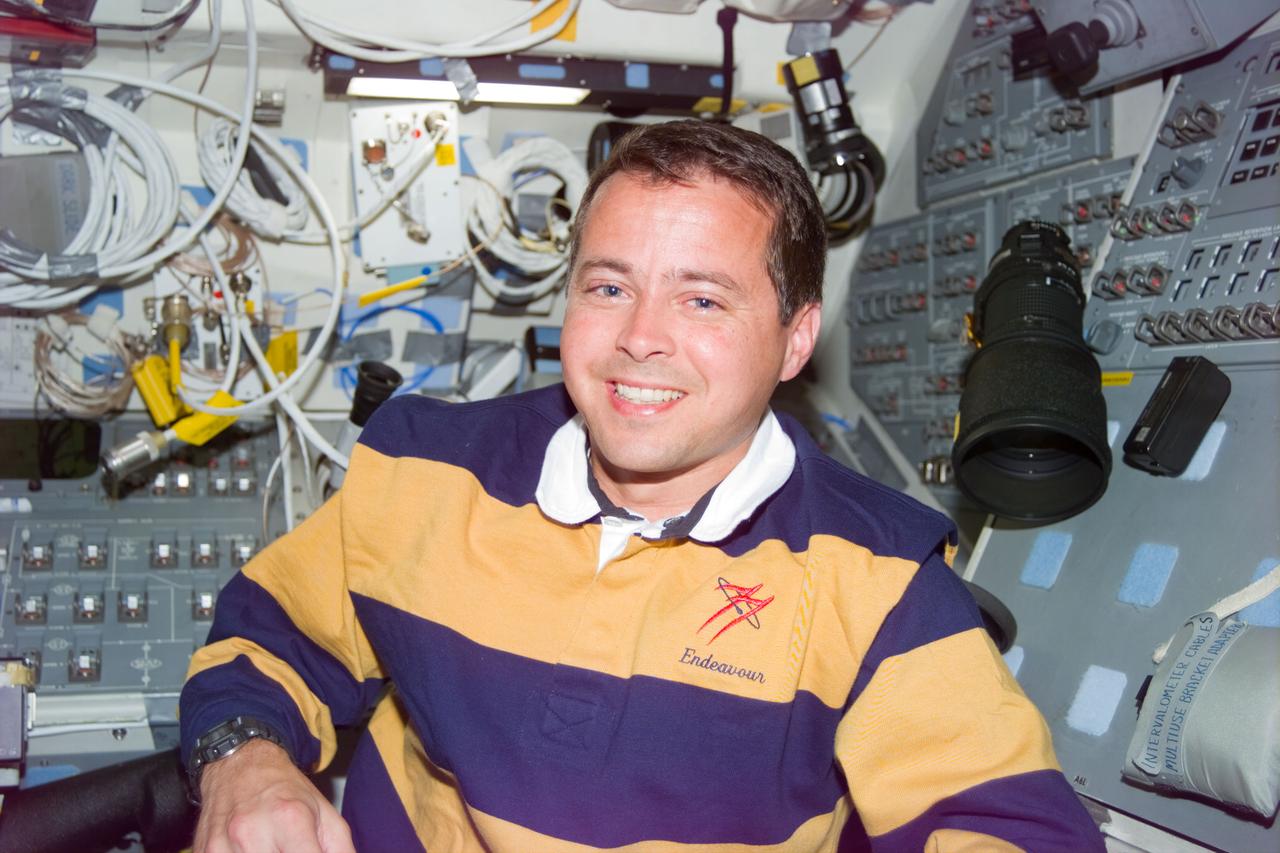
S77-E-5077 (24 May 1996) --- On the Space Shuttle Endeavour's aft flight deck, astronaut Daniel W. Bursch, mission specialist, is photographed prior to recording still pictures of an Earth observation target of opportunity. A camera lens is temporarily stowed nearby on the aft wall. A crew mate exposed the image with an Electronic Still Camera (ESC).
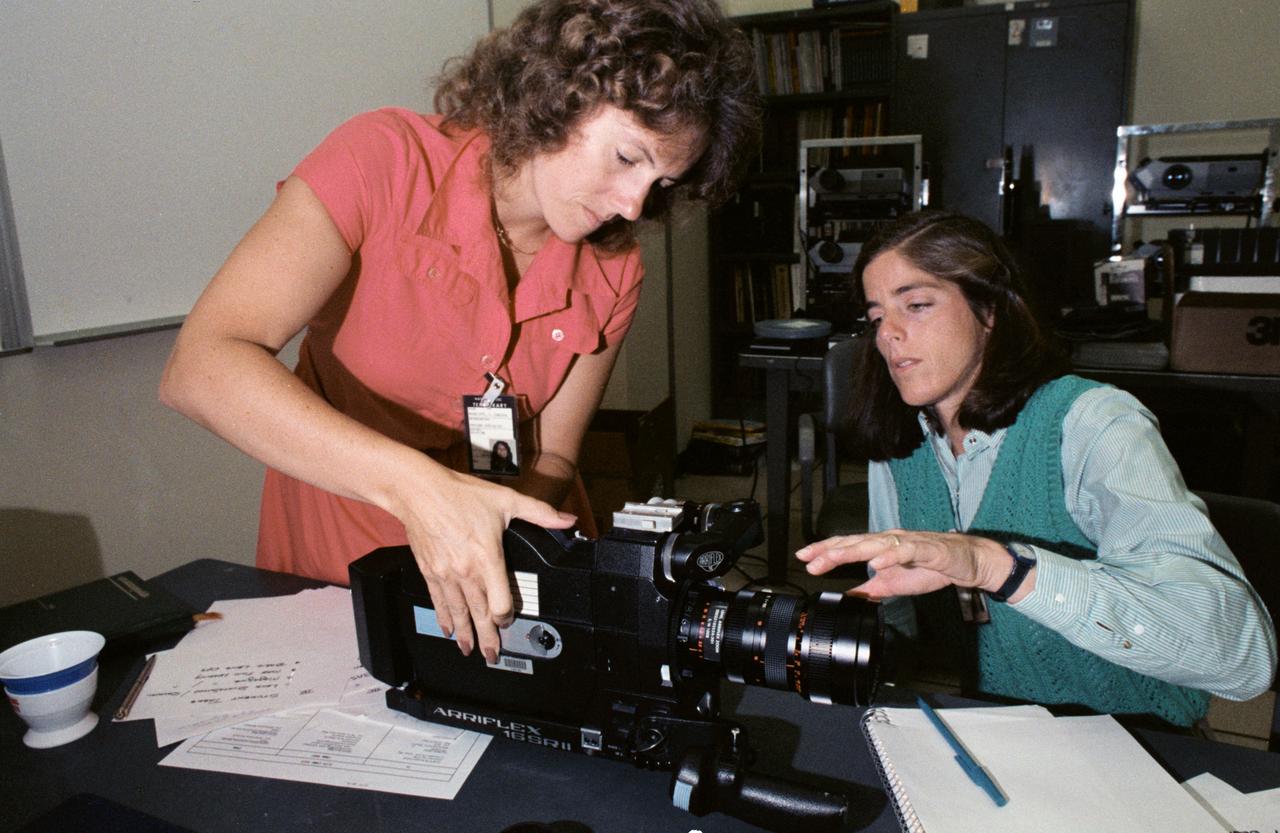
S85-41033 (18 Sept. 1985) --- Two women in training at JSC as part of the Teacher-in-Space Project and a position on NASA’s STS-51L mission learn handling of the Arriflex motion picture camera used on shuttle flights. Sharon Christa McAuliffe (left) was recently named as prime crew member for the 51-L flight; and Barbara R. Morgan, here lending help with camera’s lens, will serve as backup. The photograph was taken by Otis Imboden. Photo credit: NASA