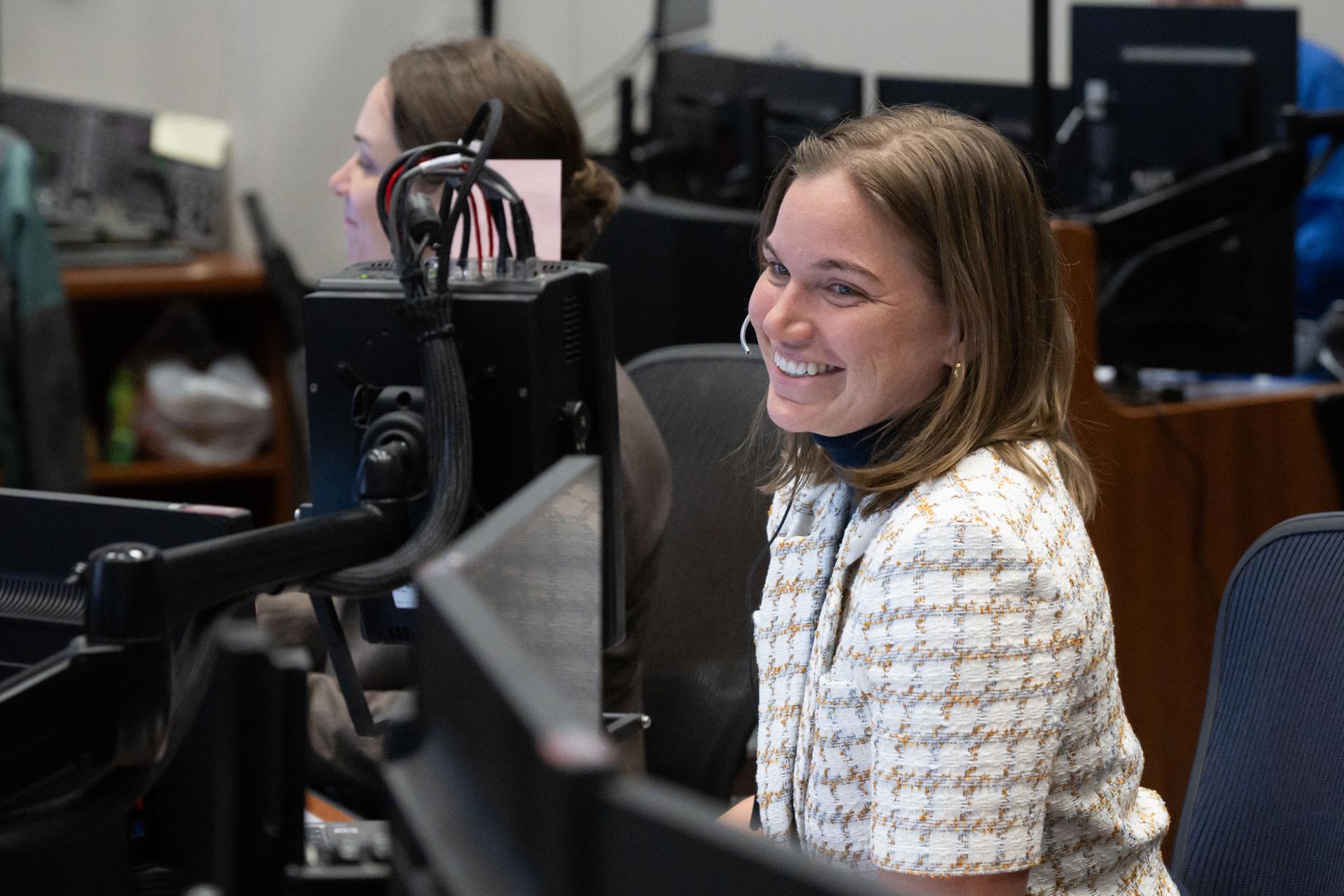
jsc2026e021107 (April 4, 2026) – CSA (Canadian Space Agency) astronaut and backup Artemis II crew member Jenni Gibbons serves as capsule communicator (capcom) during an Orion manual piloting demonstration on the fourth day of the mission. Credit: NASA/Bill Stafford
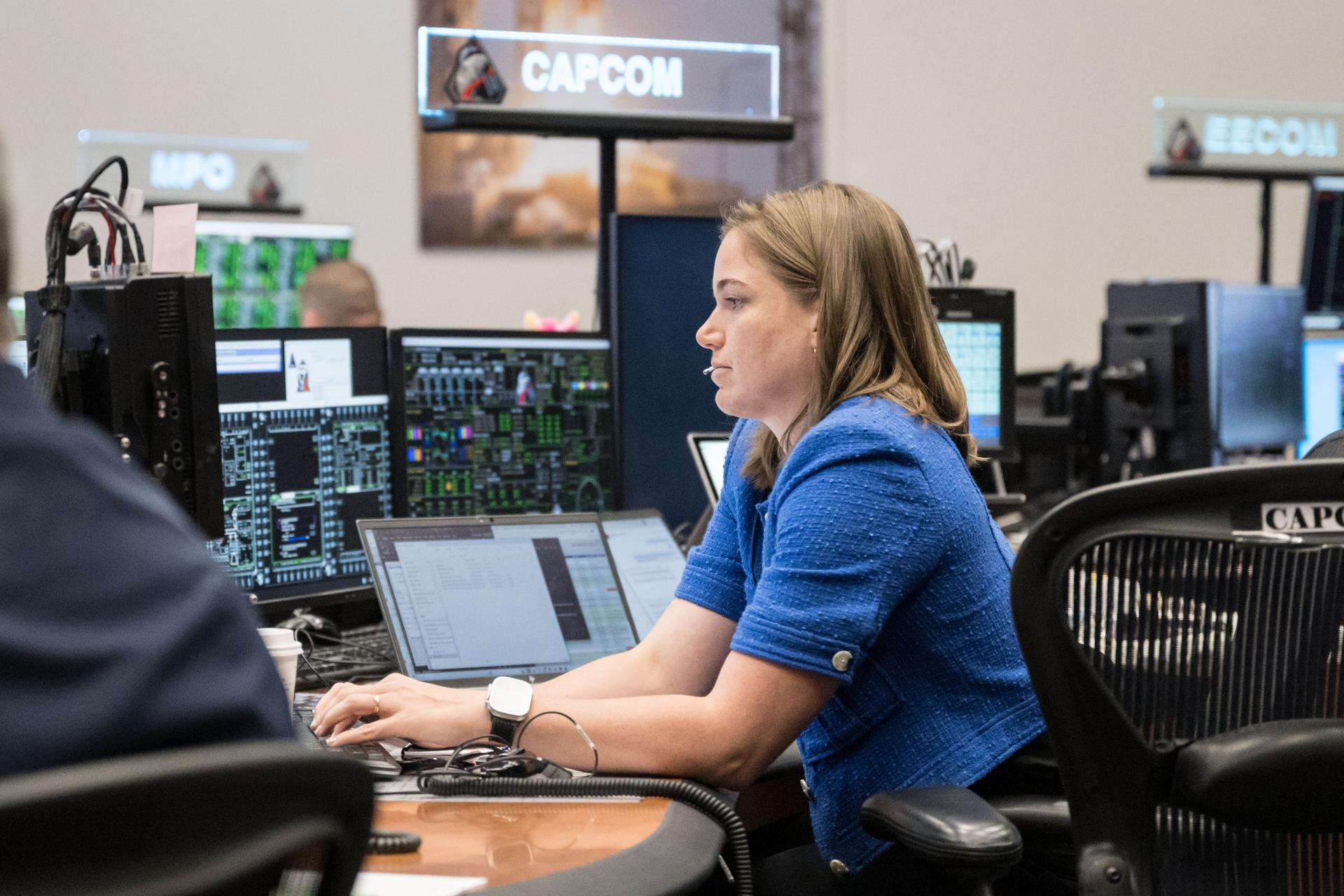
jsc2026e020046 (April 2, 2026) – CSA (Canadian Space Agency) astronaut and backup Artemis II crew member Jenni Gibbons serves as capsule communicator (capcom) during the mission’s translunar injection burn, which sent the crew in Orion out of Earth orbit and on a trajectory toward the Moon.
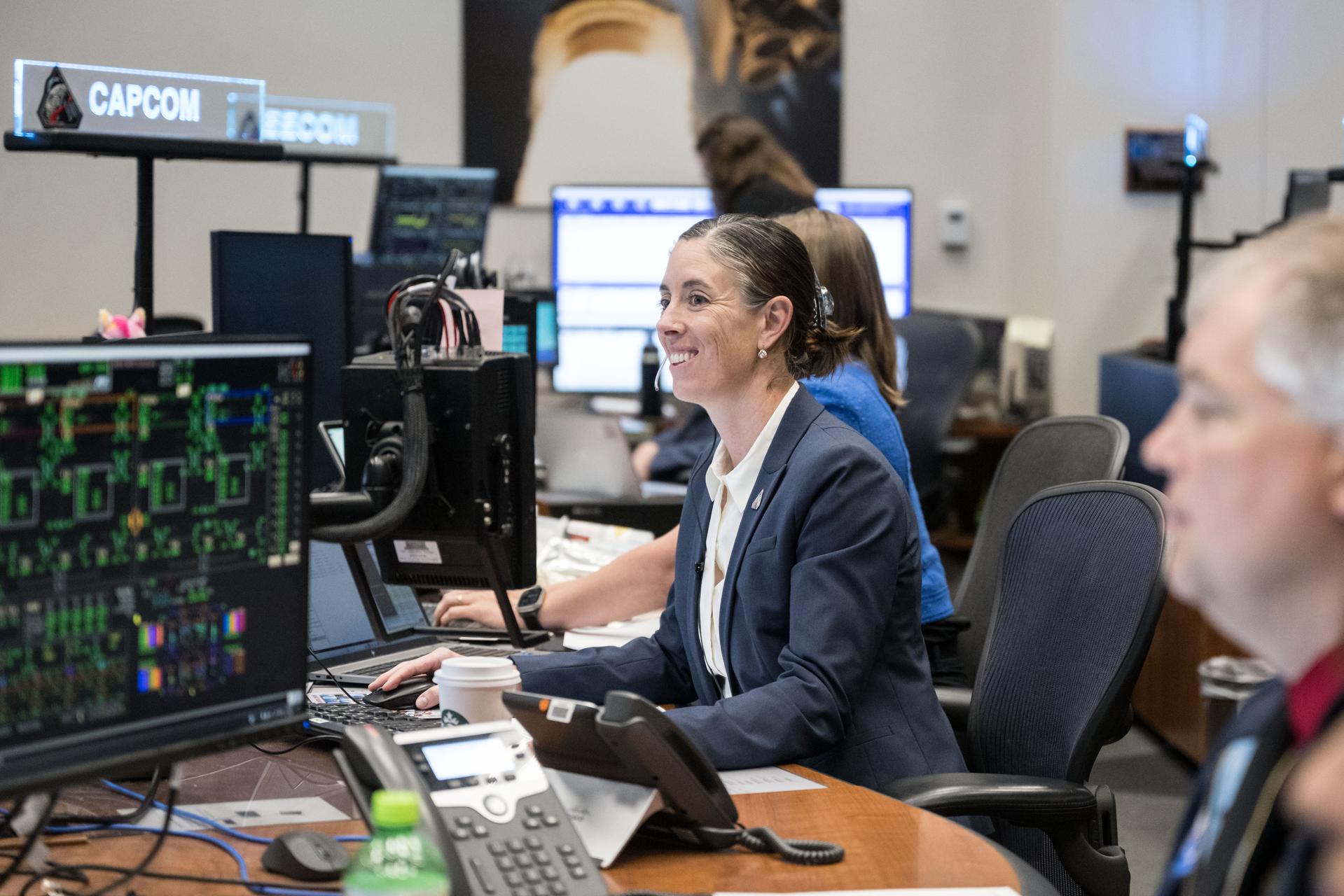
jsc2026e019614 (April 2, 2026) – NASA astronaut Chris Birch serves as capsule communicator (capcom) in the Mission Control Center at NASA’s Johnson Space Center during the mission’s translunar injection burn, which sent the crew in Orion out of Earth orbit and on a trajectory toward the Moon.
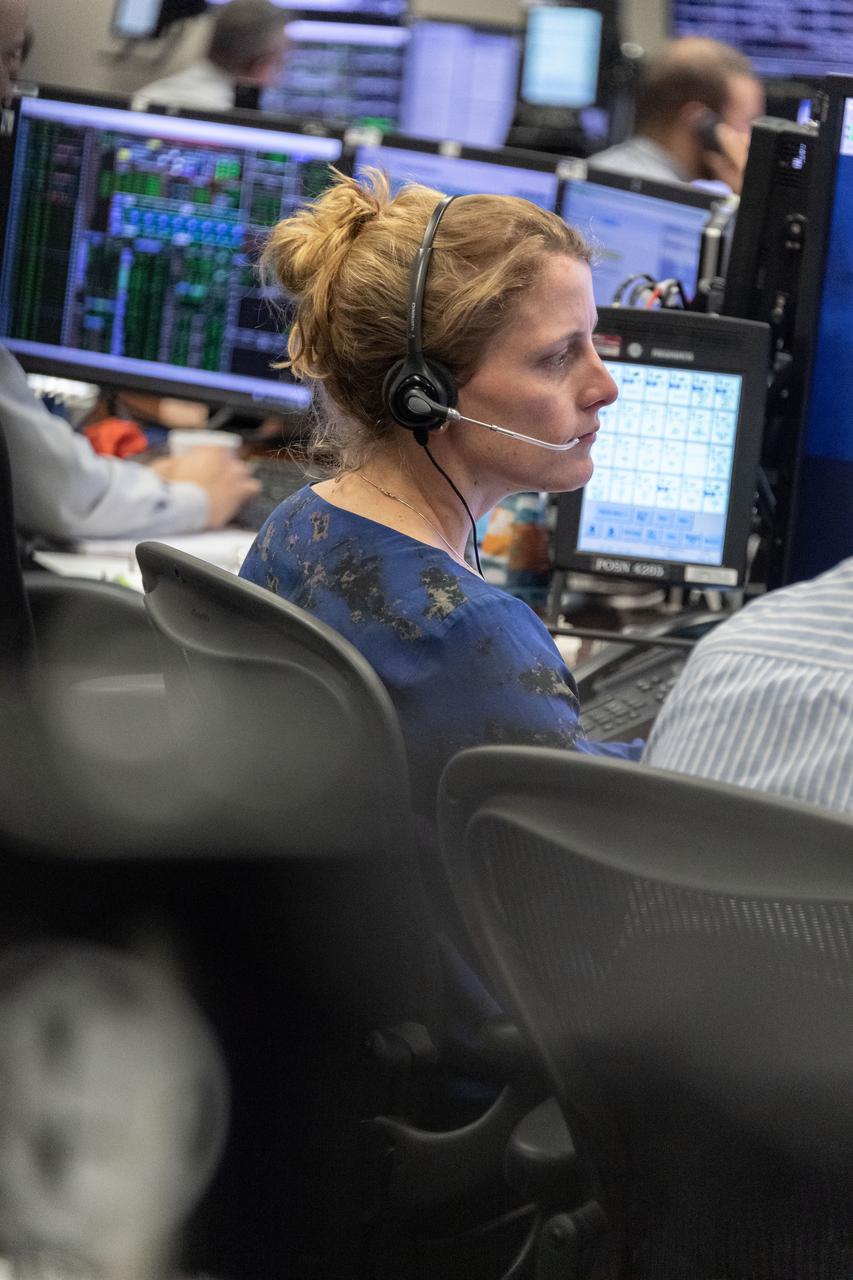
jsc2019e029855 (05-22-2019) --- 2017 NASA astronaut candidate Loral O’Hara on works as a capsule communicator (CAPCOM) in the Mission Control Center to learn communication protocol at NASA Johnson Space Center’s Mission Control Center in Houston. CAPCOM is the individual who communicates with crew members during flight. Photo Credit: (NASA/Allison Bills)

NASA Office of Communications Senior Science Communications Officer Karen Fox calls on reporters during an OSIRIS-REx sample return press conference, Sunday, Sept. 24, 2023, shortly after the capsule landed at the Department of Defense's Utah Test and Training Range. The sample was collected from the asteroid Bennu in October 2020 by NASA’s OSIRIS-REx spacecraft. Photo Credit: (NASA/Keegan Barber)
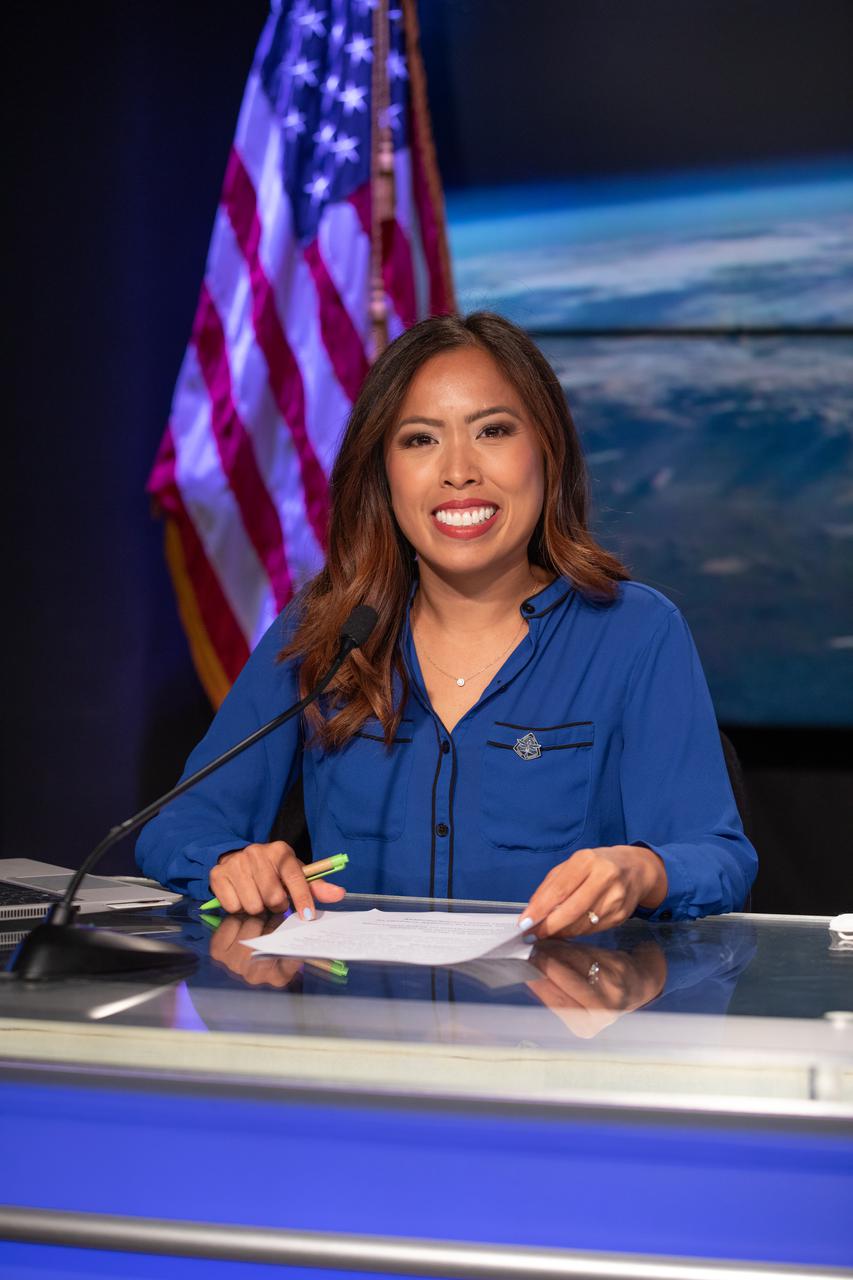
Megan Cruz, NASA Communications, moderates a Crew-4 press briefing April 26, 2022, at NASA’s Kennedy Space Center in Florida ahead of the agency’s SpaceX Crew-4 launch. Crew-4 is the fourth crew rotation flight to the International Space Station as part of NASA’s Commercial Crew Program. The SpaceX Crew Dragon capsule will launch atop the company’s Falcon 9 rocket from Launch Complex 39A to the space station on Wednesday, April 27, at 3:52 a.m. EDT.

Tylar Greene, NASA Communications, moderates a climate conversation at NASA’s Kennedy Space Center in Florida on July 13, 2022, leading up to SpaceX’s 25th Commercial Resupply Services mission for NASA to the International Space Station. The Dragon capsule atop SpaceX’s Falcon 9 rocket is scheduled to lift off from Kennedy’s Launch Complex 39A on July 14 at 8:44 p.m. EDT. Dragon will deliver more than 5,800 pounds of cargo, including a variety of NASA investigations, to the space station.
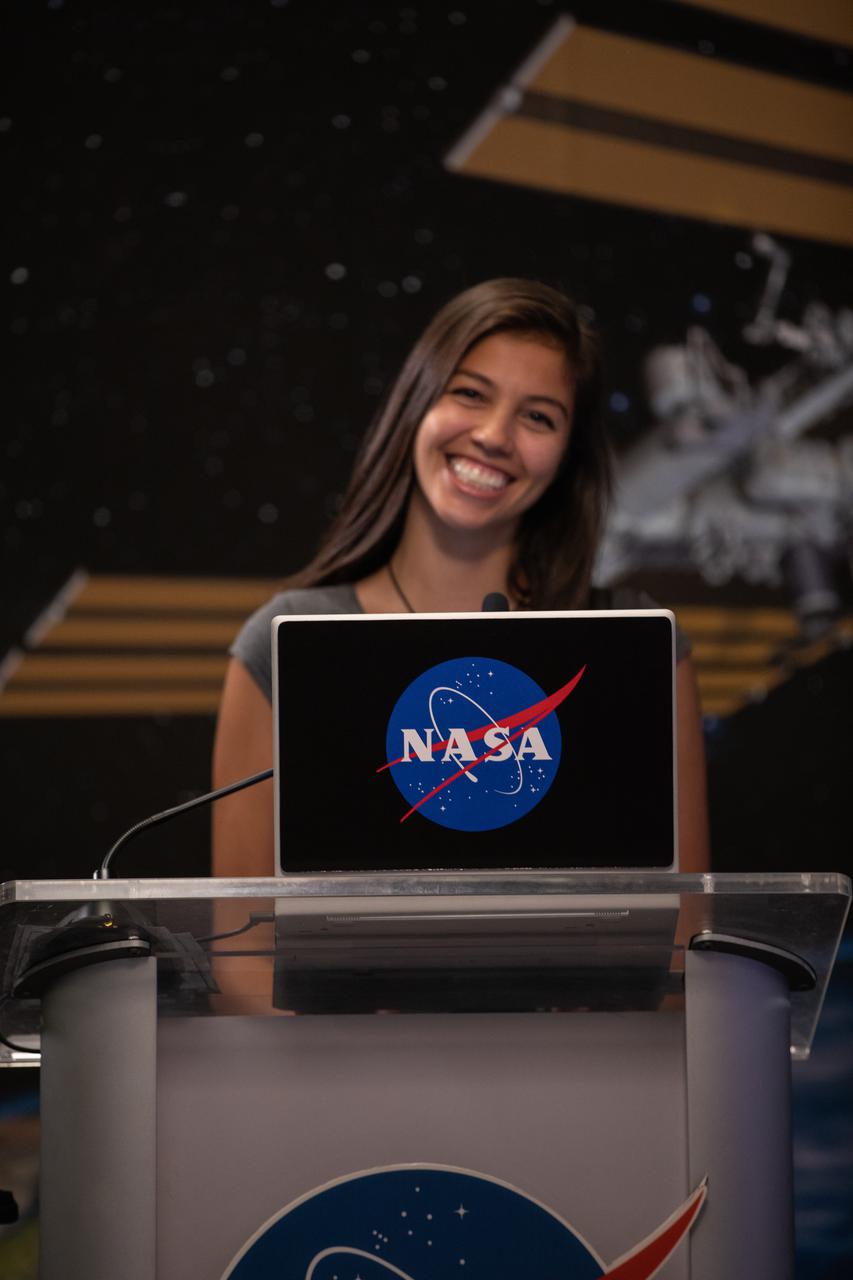
Antonia Jaramillo, NASA Communications, moderates a What’s On Board Science Briefing on June 2, 2021, at Kennedy Space Center in Florida for SpaceX’s 22nd Commercial Resupply Services mission for NASA to the International Space Station. The SpaceX Falcon 9 rocket with the Dragon capsule atop is scheduled to launch at 1:29 p.m. EDT on Thursday, June 3, from the center’s Launch Complex 39A. Dragon will deliver more than 7,300 pounds of cargo and science experiments to the space station.

The Orion crew module adapter for NASA’s Artemis III campaign undergoes wiring installs inside the Neil A. Armstrong Operations and Checkout Building at NASA’s Kennedy Space Center on Wednesday, Sept. 4, 2024. In Orion’s final configuration before launch, the crew module adapter connects the capsule to the European Service Module 3. The crew module adapter houses electronic equipment for communications, power, and control, and includes an umbilical connector that bridges the electrical, data, and fluid systems between the main modules.
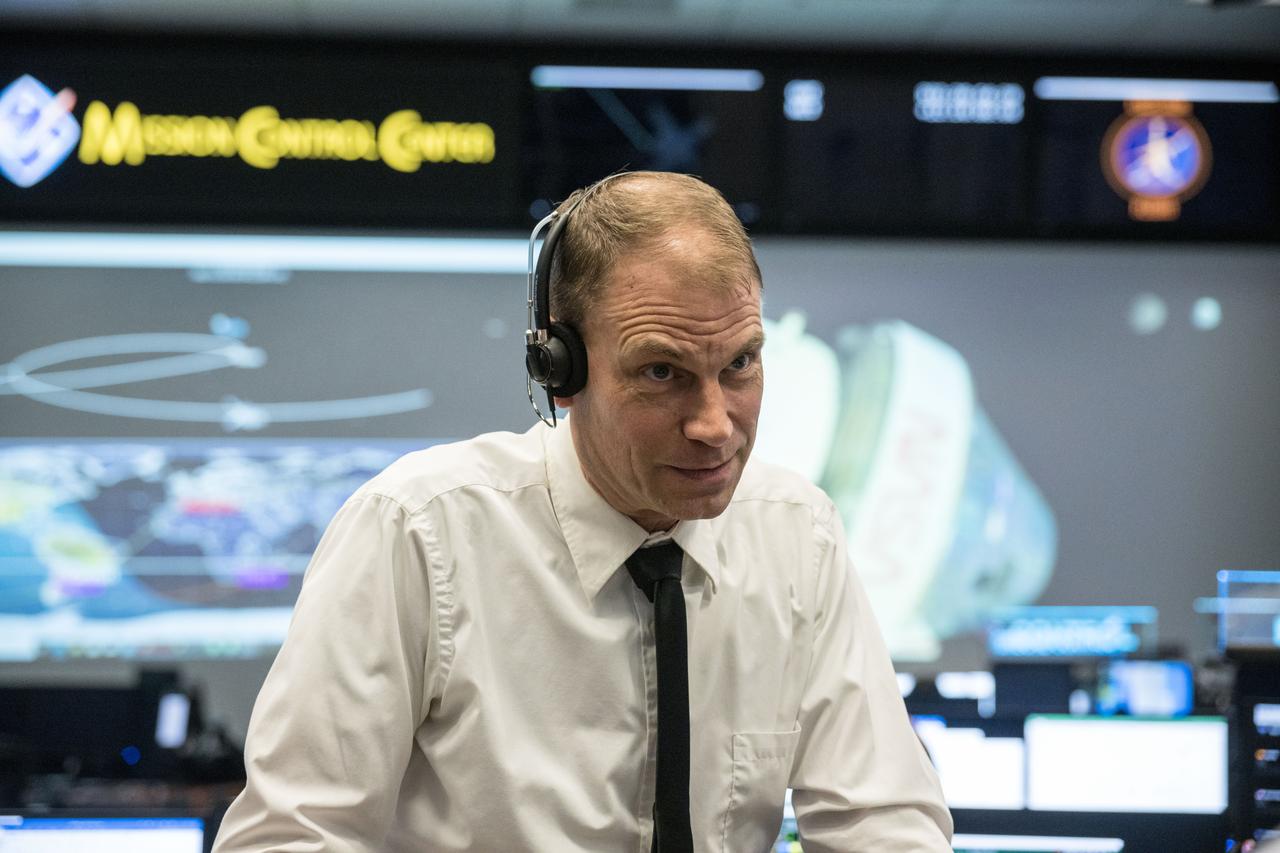
jsc2022e090080 (Nov. 28, 2022): NASA Astronaut Stan Love observes the Orion spacecraft as it reaches its maximum distance from the Earth, nearly 270,000 miles, on flight day 14 of the Artemis I mission from within the Mission Control Center in Houston, Texas. Love is practicing to be capsule communicator, or capcom, during future crewed Artemis missions. Credit: NASA/Robert Markowitz
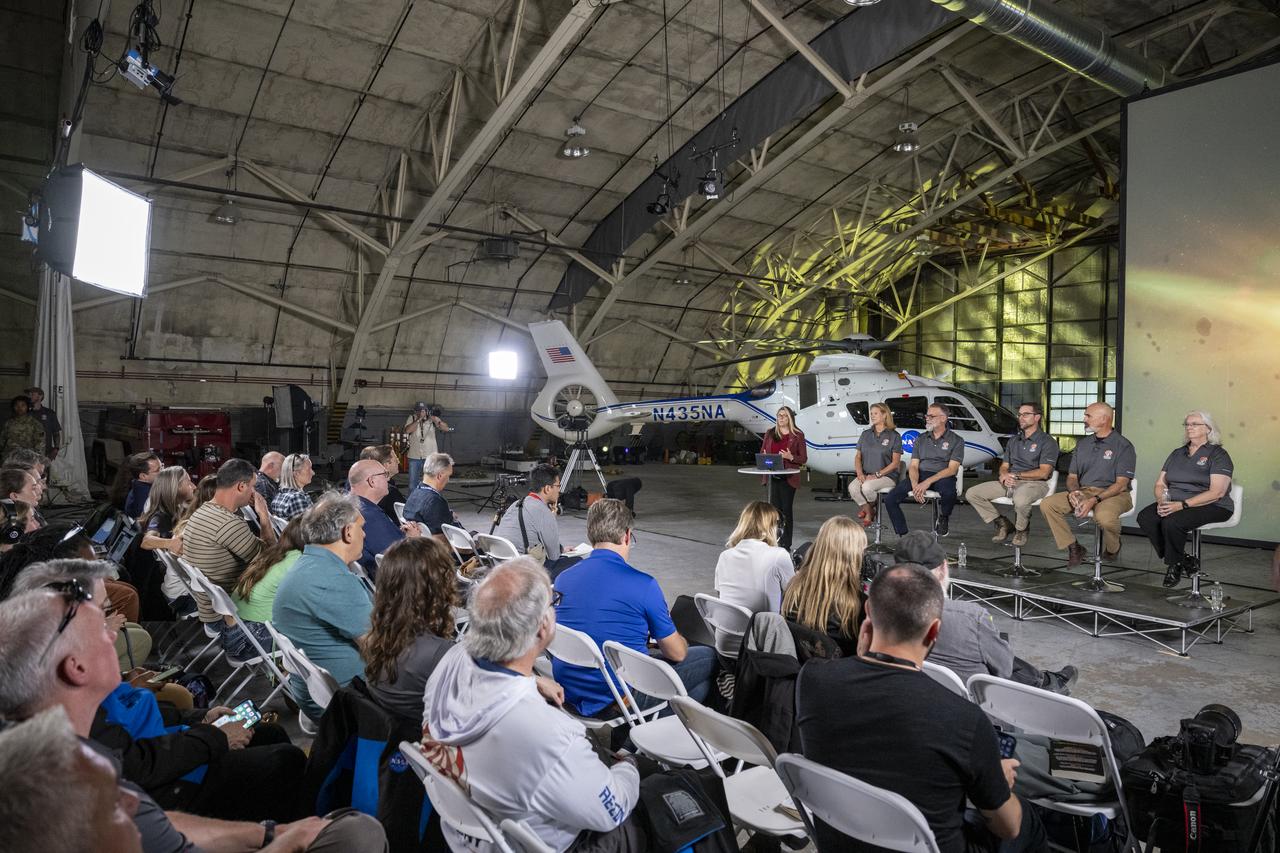
NASA Office of Communications Senior Science Communications Officer Karen Fox introduces, from left to right, NASA Planetary Science Division Director Lori Glaze, University of Arizona OSIRIS-REx Principal Investigator Dante Lauretta, NASA OSIRIS-REx Deputy Project Manager Mike Moreau, Lockheed Martin Deep Space Exploration Chief Engineer Tim Priser, and NASA Chief Scientist Eileen Stansbery during an OSIRIS-REx sample return press conference, Sunday, Sept. 24, 2023, shortly after the capsule landed at the Department of Defense's Utah Test and Training Range. The sample was collected from the asteroid Bennu in October 2020 by NASA’s OSIRIS-REx spacecraft. Photo Credit: (NASA/Keegan Barber)
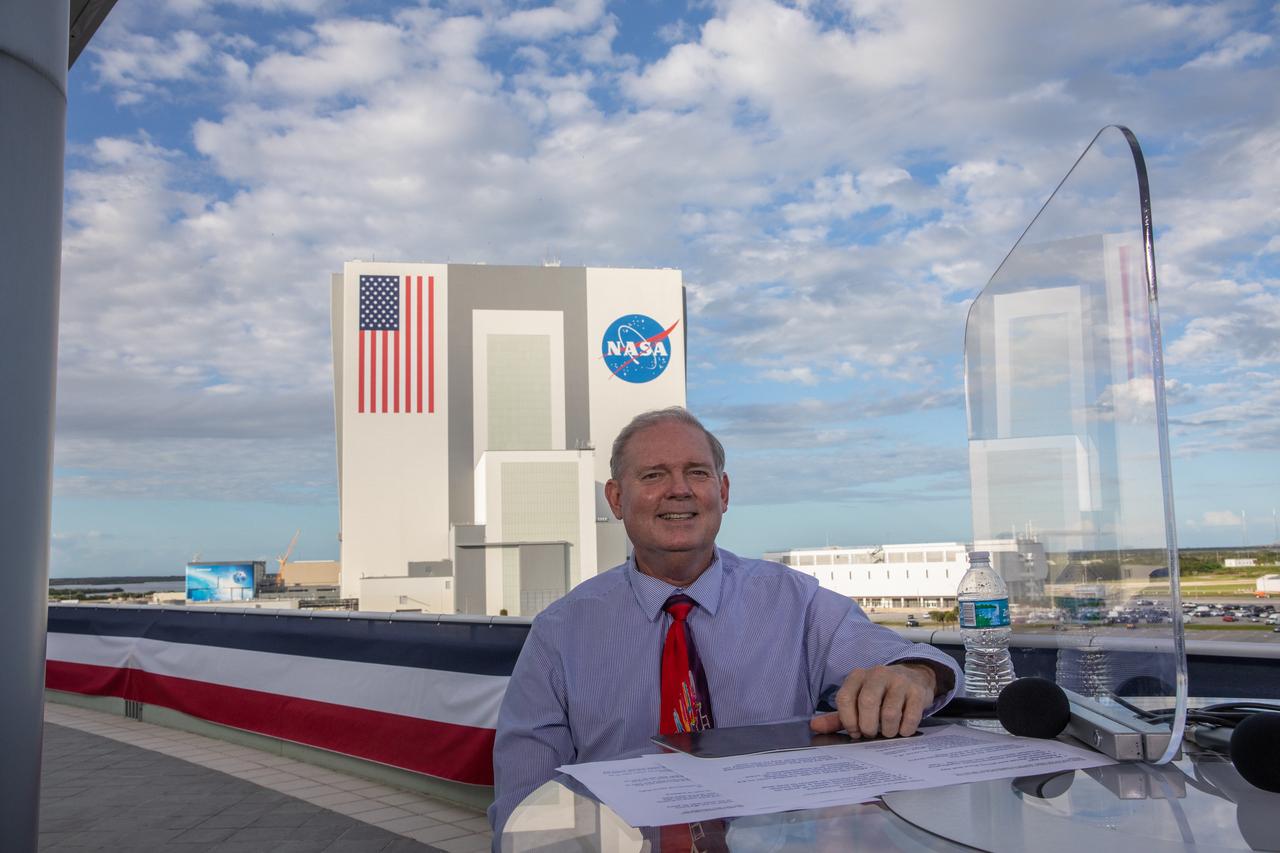
During live television coverage of NASA SpaceX’s Crew-1 launch on Nov. 15, 2020, Kyle Herring, NASA Communications, discusses the launch and the agency’s 20th anniversary of human presence on the International Space Station at Kennedy Space Center in Florida. Crew-1 is the first regular crew mission of a U.S. commercial spacecraft with astronauts to the space station as part of NASA’s Commercial Crew Program. The Crew Dragon Resilience capsule will launch atop a Falcon 9 rocket from Launch Complex 39A carrying NASA astronauts Michael Hopkins, Victor Glover, Shannon Walker and Japan Aerospace Exploration Agency (JAXA) astronaut Soichi Noguchi to the space station for a six-month science mission.

jsc2019e060008 (Oct. 18, 2019) --- From the Mission Control Center in Houston, veteran NASA astronauts Stephanie Wilson and Mark Vande Hei are on the CAPCOM (capsule communicator) console monitoring the spacewalk being conducted by Expedition 61 Flight Engineers Christina Koch and Jessica Meir. Wilson provided robotic arm support maneuvering spacewalkers during the STS-120 and STS-131 space shuttle missions to the International Space Station. Vande Hei conducted four spacewalks totaling 26 hours and 42 minutes during his stay aboard the orbiting lab as an Expedition 53-54 Flight Engineer.
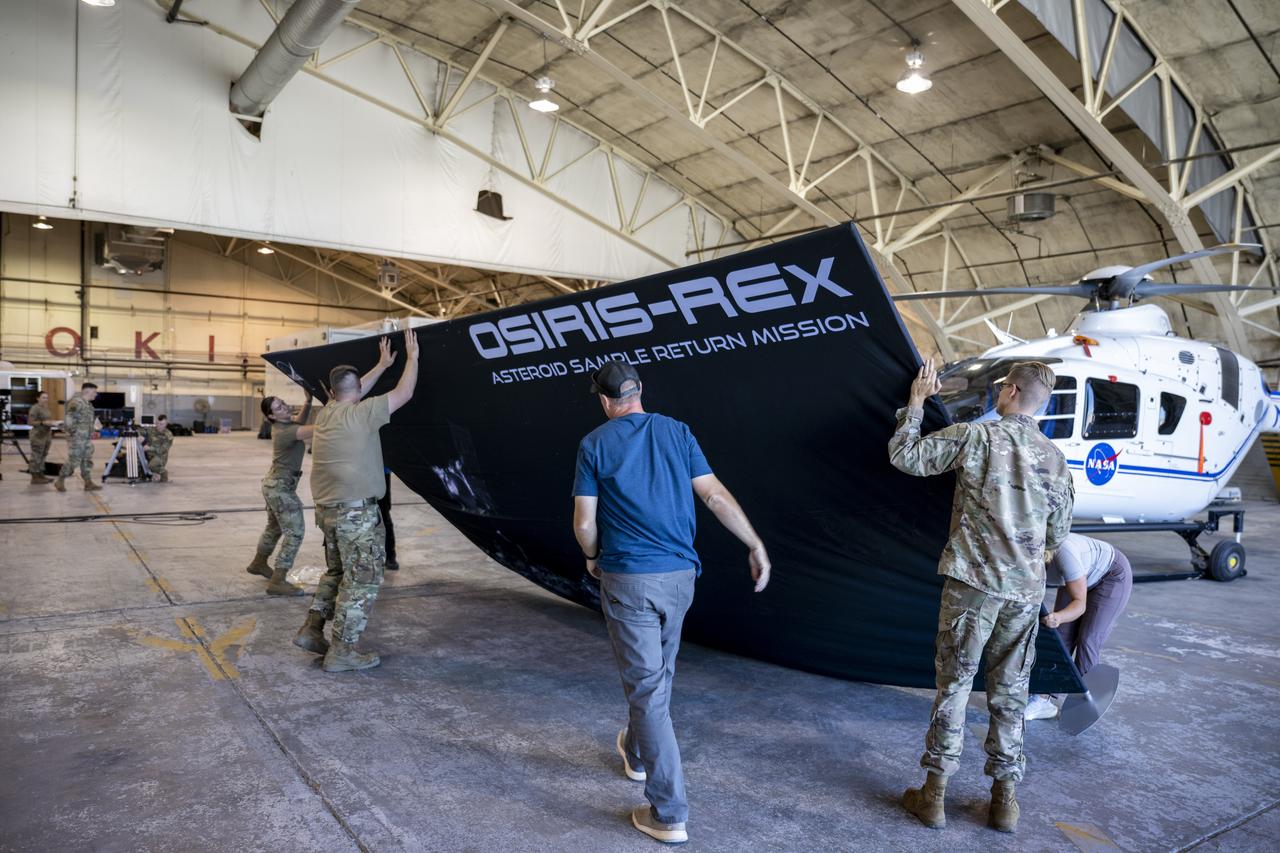
NASA communications teams and members of the Air Force’s 2nd Audiovisual Squadron prepare a backdrop, Sunday, Aug. 27, 2023, at Michael Army Air Field near Dugway, Utah. Teams met in August for rehearsals in preparation for the retrieval of the sample return capsule from NASA's OSIRIS-REx mission. The sample was collected from the asteroid Bennu in October 2020 by NASA’s OSIRIS-REx spacecraft and will return to Earth on September 24th, landing under parachute at the Department of Defense's Utah Test and Training Range. Photo Credit: (NASA/Keegan Barber)
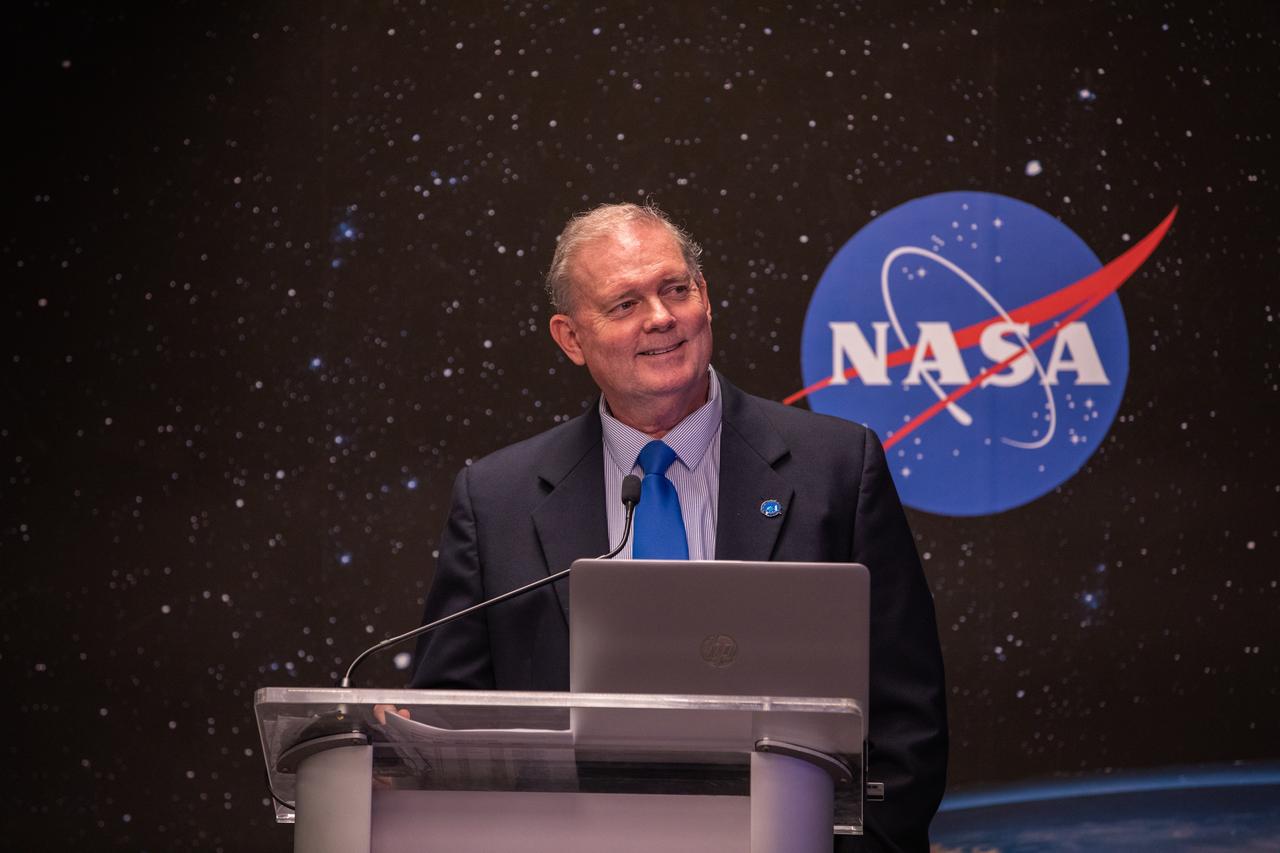
Kyle Herring, NASA Communications, moderates a virtual prelaunch news conference Nov. 13, 2020, inside the Press Site auditorium at NASA’s Kennedy Space Center in Florida ahead of the agency’s SpaceX Crew-1 launch. Crew-1 is the first regular crew mission of a U.S. commercial spacecraft with astronauts to the International Space Station as part of NASA’s Commercial Crew Program. The SpaceX Crew Dragon Resilience capsule will launch atop the company’s Falcon 9 rocket from Launch Complex 39A to the space station for a six-month science mission.
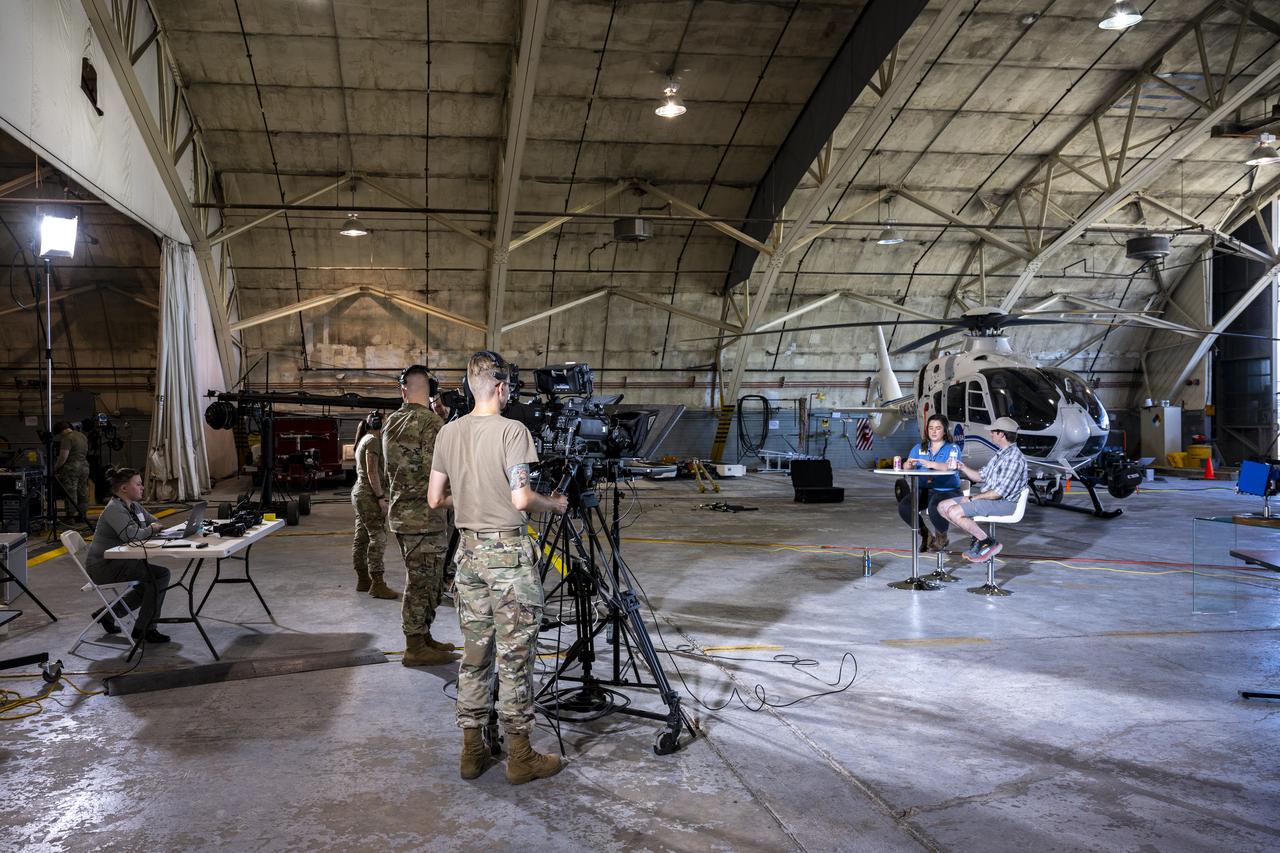
NASA communications teams and members of the Air Force’s 2nd Audiovisual Squadron participate in television rehearsals, Monday, Aug. 28, 2023, at Michael Army Air Field near Dugway, Utah. Teams met in August for rehearsals in preparation for the retrieval of the sample return capsule from NASA's OSIRIS-REx mission. The sample was collected from the asteroid Bennu in October 2020 by NASA’s OSIRIS-REx spacecraft and will return to Earth on September 24th, landing under parachute at the Department of Defense's Utah Test and Training Range. Photo Credit: (NASA/Keegan Barber)
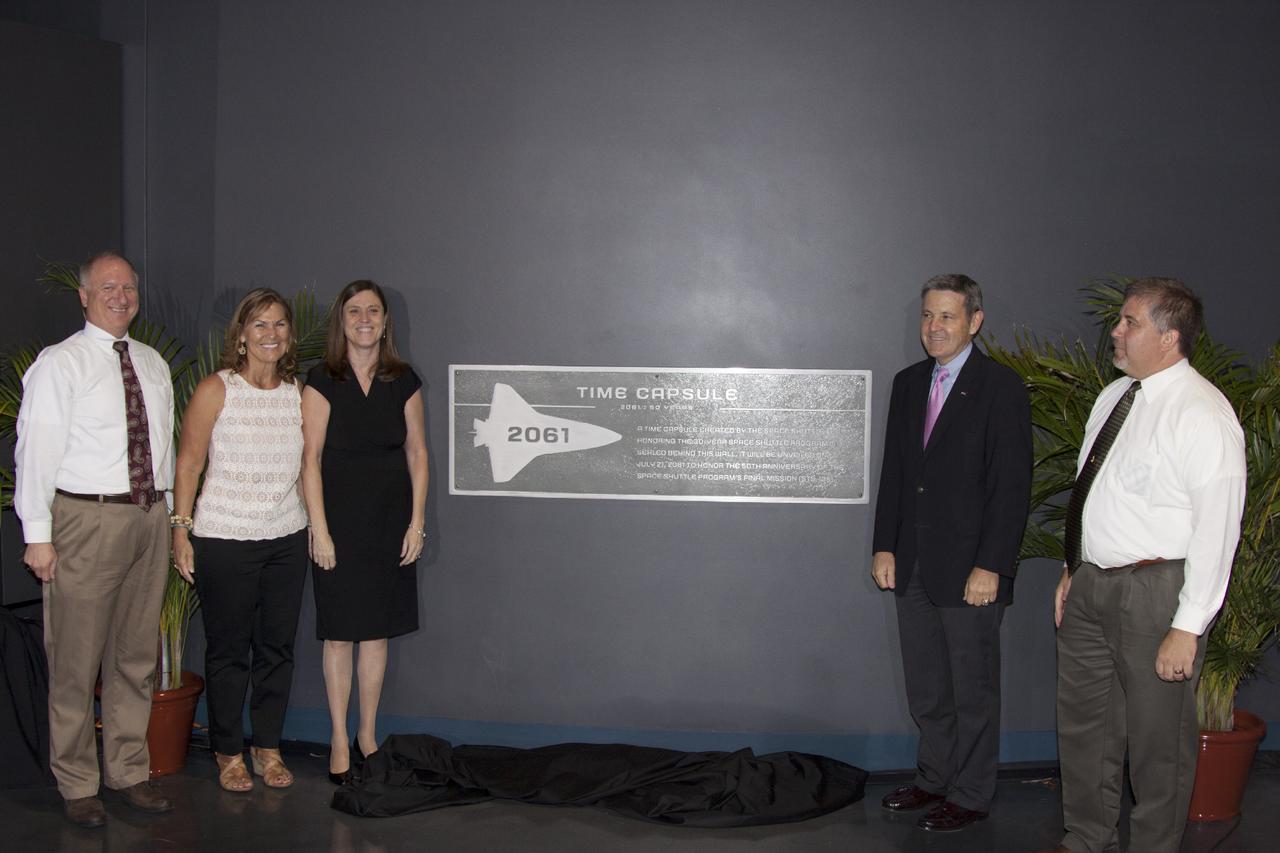
CAPE CANAVERAL, Fla. -- At the Kennedy Space Center Visitor Complex in Florida, officials pose at the site where a Shuttle Program time capsule has been secured vault within the walls of the Space Shuttle Atlantis home at the Kennedy Space Center Visitor Complex. From the left are: Pete Nickolenko, deputy director of NASA Ground Processing at Kennedy, Patty Stratton of Abacus Technology, currently program manager for the Information Management Communications Support Contract. During the Shuttle Program she was deputy director of Ground Operations for NASA's Space Program Operations Contractor, United Space Alliance, Rita Wilcoxon, NASA's now retired director of Shuttle Processing, Bob Cabana, director of the Kennedy Space Center and George Jacobs, deputy director of Center Operations, who was manager of the agency's Shuttle Transition and Retirement Project Office. The time capsule, containing artifacts and other memorabilia associated with the history of the program is designated to be opened on the 50th anniversary of the shuttle's final landing, STS-135. The new $100 million "Space Shuttle Atlantis" facility includes interactive exhibits that tell the story of the 30-year Space Shuttle Program and highlight the future of space exploration. Photo credit: NASA/Jim Grossmann
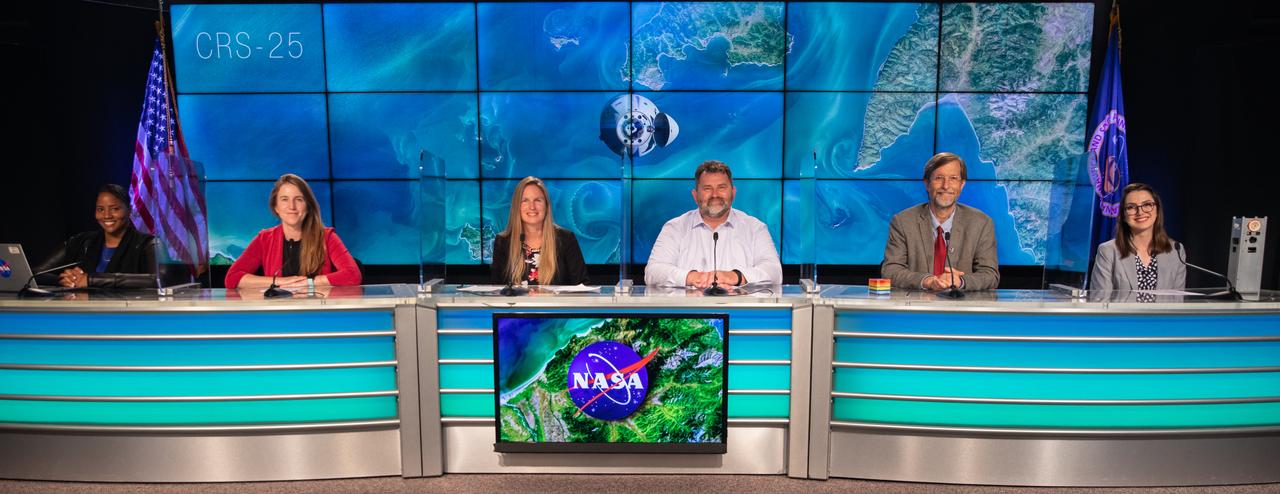
A climate conversation is held at NASA’s Kennedy Space Center in Florida on July 13, 2022, leading up to SpaceX’s 25th Commercial Resupply Services mission for NASA to the International Space Station. Participants, from left are Moderator Tylar Greene, NASA Communications; Kate Calvin, NASA’s chief scientist and climate advisor; Heidi Parris, associate scientist, International Space Station Program; Mike Roberts, chief scientist, ISS National Lab; Rob Green, JPL senior research scientist and EMIT (Earth Surface Mineral Dust Source Investigation) principal investigator; and Paula do Vale Pereira, BeaverCube, Massachusetts Institute of Technology. The Dragon capsule atop SpaceX’s Falcon 9 rocket is scheduled to lift off from Kennedy’s Launch Complex 39A on July 14 at 8:44 p.m. EDT. Dragon will deliver more than 5,800 pounds of cargo, including a variety of NASA investigations, to the space station.
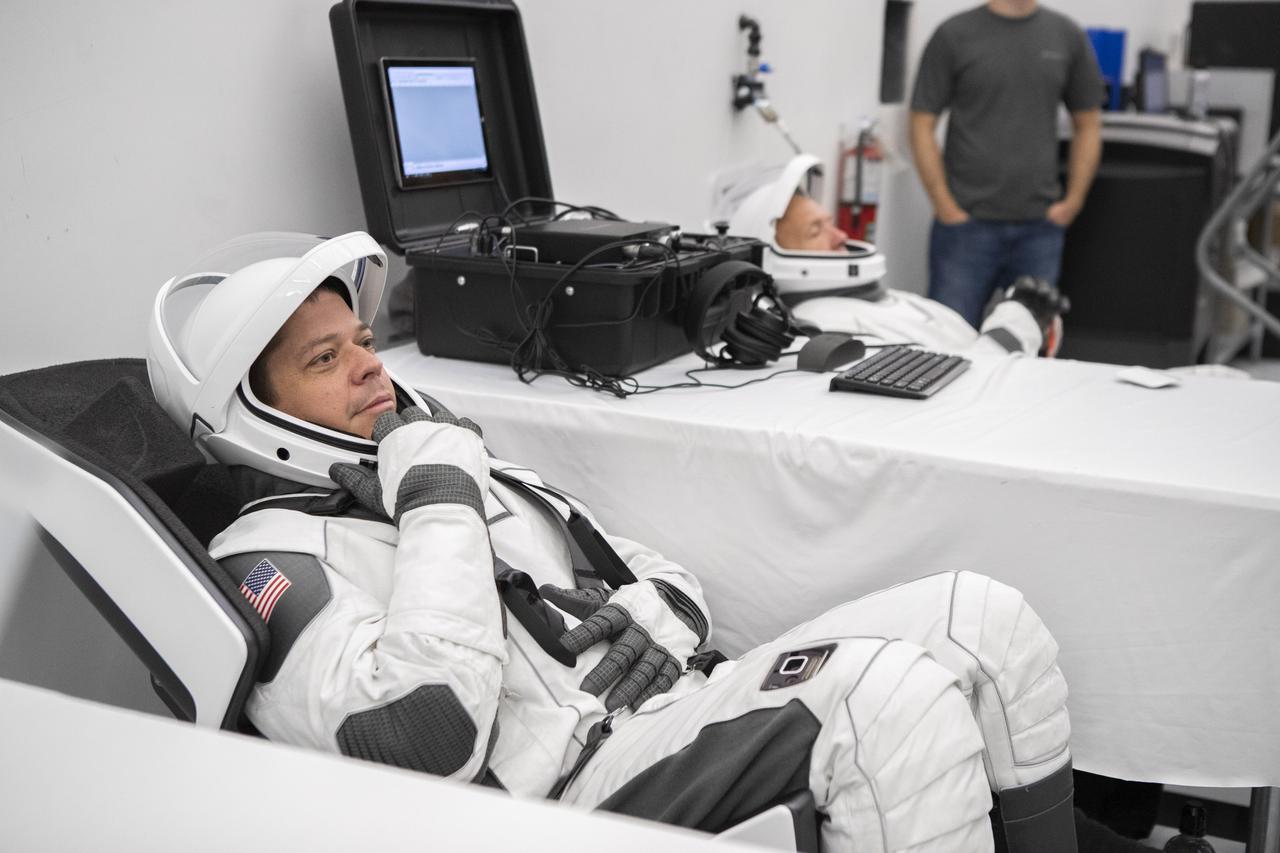
NASA and SpaceX held a joint training event for pre-launch operations, which provided an opportunity for the crew and ground operators to rehearse all of the activities, procedures, and communication the teams will exercise on launch day from crew suit-up in Kennedy Space Center’s Operations & Checkout (O&C) building in Florida through launch; this training event also included simulated emergency egress scenarios. NASA astronauts Bob Behnken, in front, and Doug Hurley, in back, are participating in a suit-up for launch, using the same Ground Support Equipment hardware, such as the seats and suit leak check boxes, that the crew will use for launch, with the SpaceX ground closeout team and suit engineers that will help the crew suit up and ingress the Dragon on launch day. Following crew suit-up, the crew ingressed the capsule simulator in Hawthorne, California, as they would on launch day, and the teams performed a simulated launch countdown and several emergency egress scenarios.
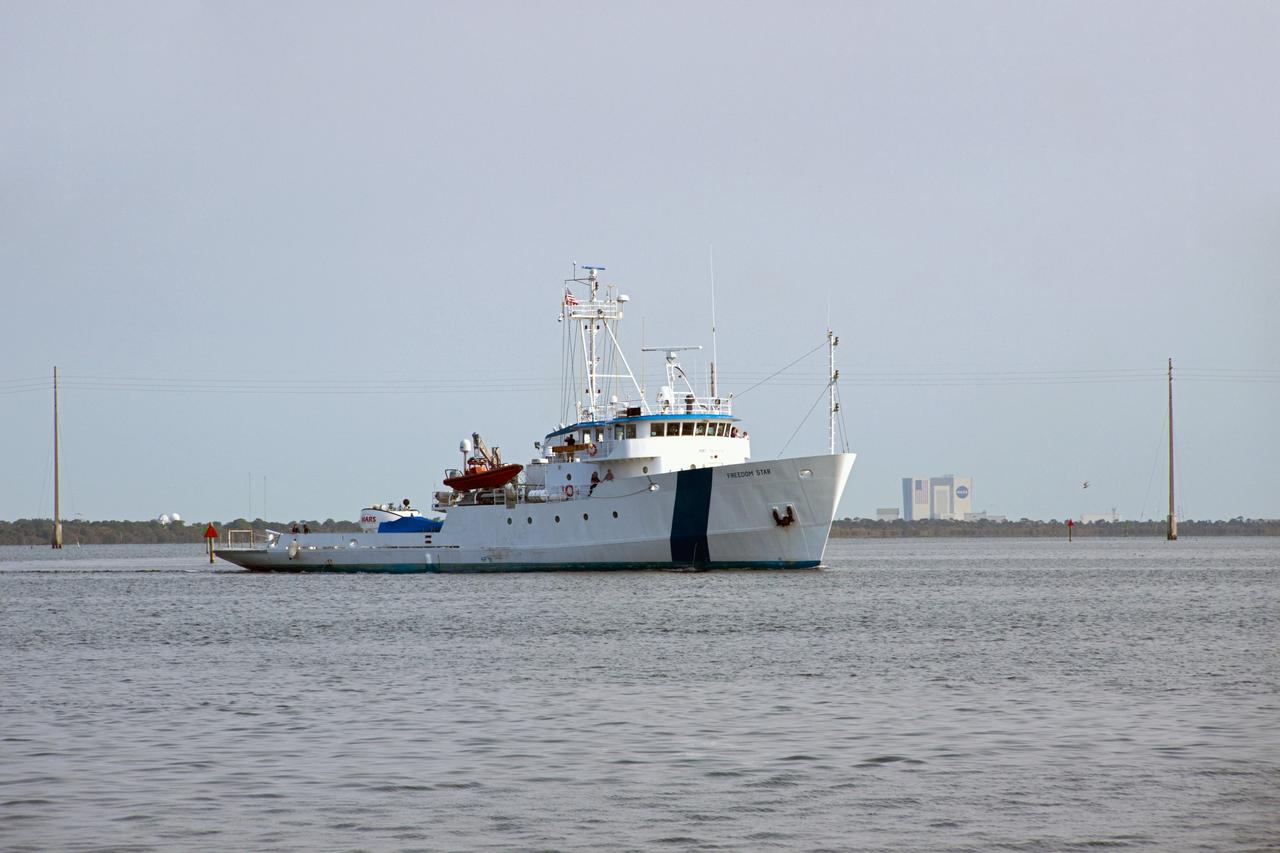
CAPE CANAVERAL, Fla. -- NASA’s Freedom Star boat sets out for a day of testing after departing from port near Cape Canaveral Air Force Station in Florida for the Atlantic Ocean with NASA’s Mobile Aerospace Reconnaissance System, or MARS, secured aboard. MARS, run by NASA’s Langley Research Center in Hampton, Va., with its spatial, hyperspectral, thermal, and directed energy capabilities will be used for thermal imaging testing for the upcoming SpaceX Falcon 9 and Dragon capsule test flight to the International Space Station. During today’s test, the MARS X-band radar and kineto tracking mount KTM were tested to ensure that they were synchronized to receive a rocket launch feed. The radar was used to identify an object to see if the KTM could lock on to and track it. The MARS team performed maintenance on the system, confirmed communications links, and tested the design of the mounting system and environmental enclosure. Photo credit: NASA/Jim Grossmann
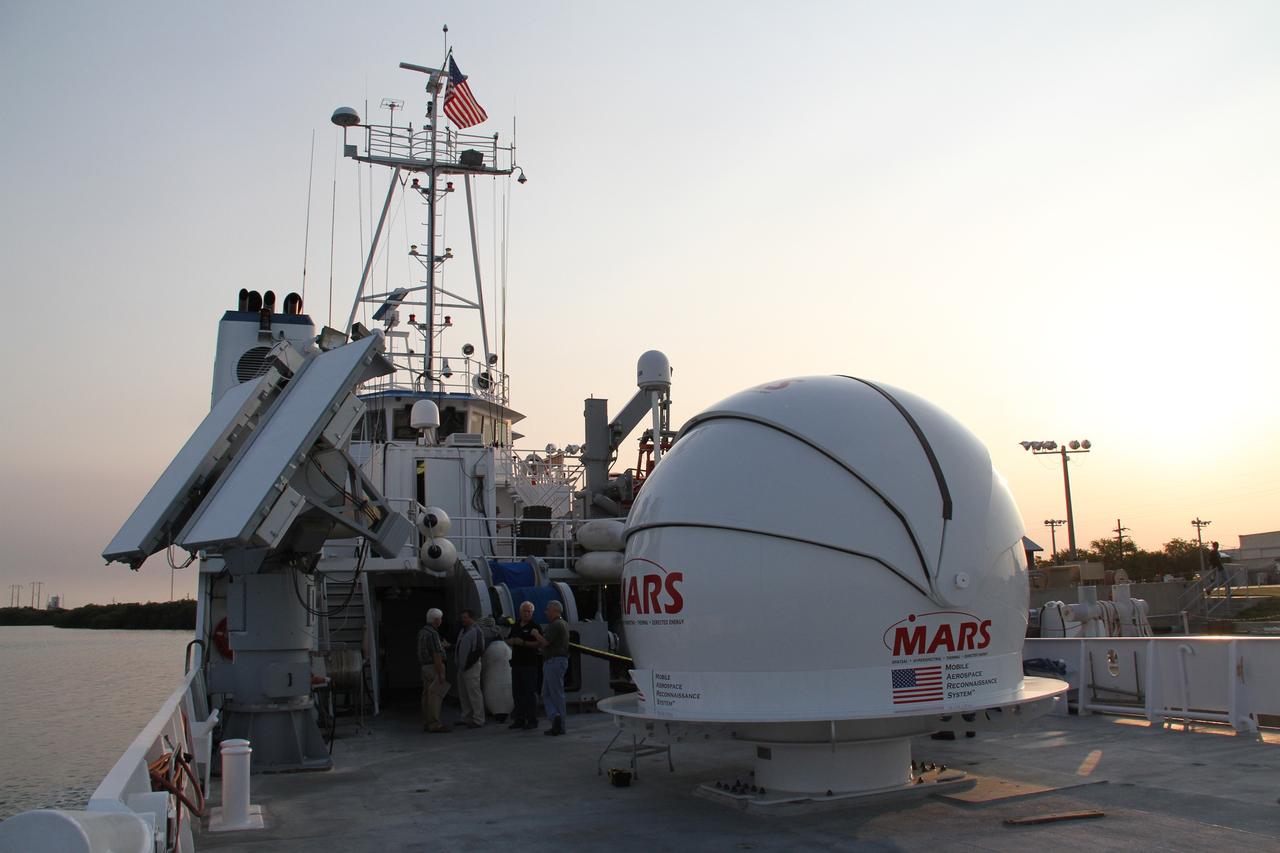
CAPE CANAVERAL, Fla. – NASA’s Freedom Star boat is heading back to Port Canaveral in Florida, after a full day of testing NASA’s Mobile Aerospace Reconnaissance System, or MARS, in the Atlantic Ocean. MARS, run by NASA’s Langley Research Center in Hampton, Va., with its spatial, hyperspectral, thermal, and directed energy capabilities will be used for thermal imaging testing for the upcoming SpaceX Falcon 9 and Dragon capsule test flight to the International Space Station. During today’s test, the MARS X-band radar and kineto tracking mount KTM were tested to ensure that they were synchronized to receive a rocket launch feed. The radar was used to identify an object to see if the KTM could lock on to and track it. The MARS team performed maintenance on the system, confirmed communications links, and tested the design of the mounting system and environmental enclosure. Photo credit: NASA/Cory Huston

CAPE CANAVERAL, Fla. – NASA’s Freedom Star boat is heading back to Port Canaveral in Florida, after a full day of testing NASA’s Mobile Aerospace Reconnaissance System, or MARS, in the Atlantic Ocean. MARS, run by NASA’s Langley Research Center in Hampton, Va., with its spatial, hyperspectral, thermal, and directed energy capabilities will be used for thermal imaging testing for the upcoming SpaceX Falcon 9 and Dragon capsule test flight to the International Space Station. During today’s test, the MARS X-band radar and kineto tracking mount KTM were tested to ensure that they were synchronized to receive a rocket launch feed. The radar was used to identify an object to see if the KTM could lock on to and track it. The MARS team performed maintenance on the system, confirmed communications links, and tested the design of the mounting system and environmental enclosure. Photo credit: NASA/Cory Huston
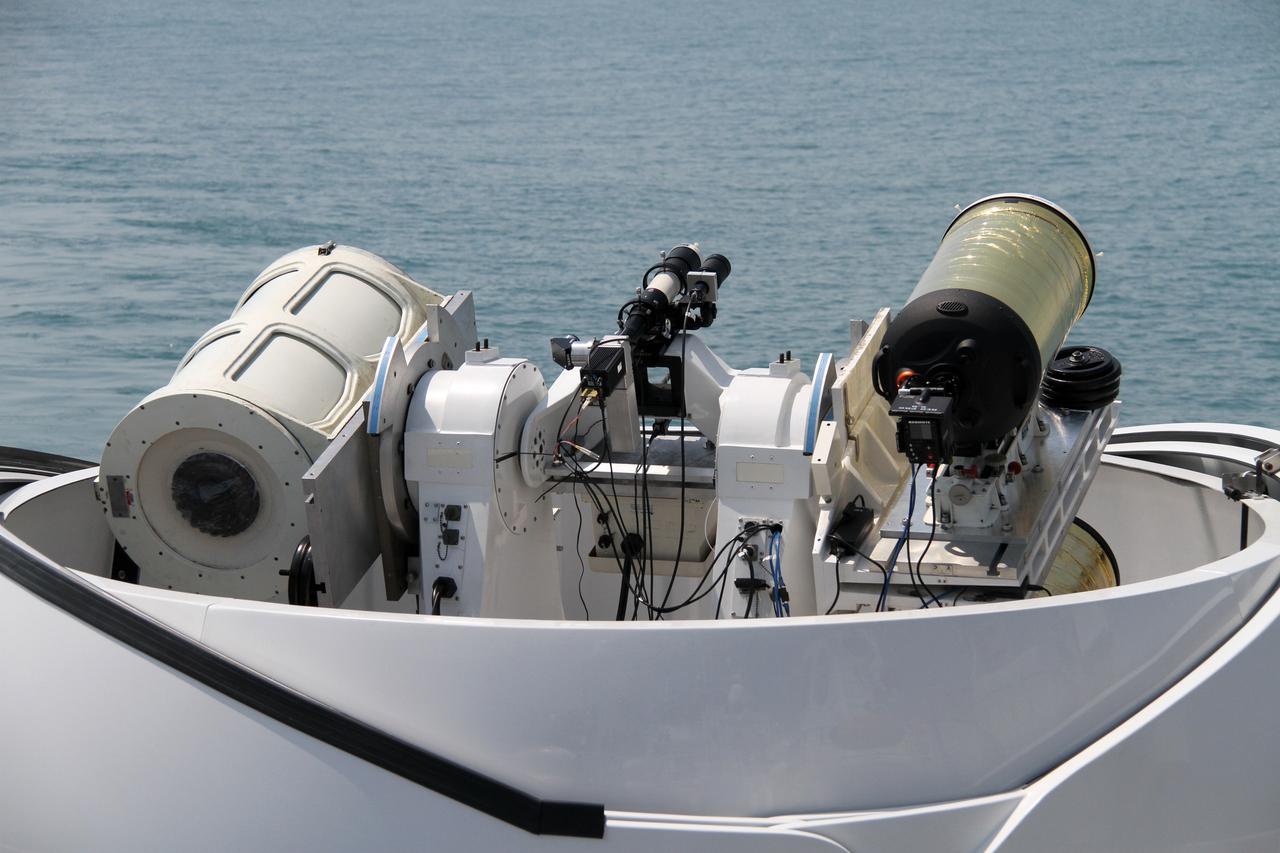
CAPE CANAVERAL, Fla. – Aboard NASA’s Freedom Star boat in the Atlantic Ocean off the coast of Port Canaveral in Florida, the covering around NASA’s Mobile Aerospace Reconnaissance System, or MARS, has been removed. MARS is being prepared for a day of testing in the Atlantic Ocean. MARS, run by NASA’s Langley Research Center in Hampton, Va., with its spatial, hyperspectral, thermal, and directed energy capabilities will be used for thermal imaging testing for the upcoming SpaceX Falcon 9 and Dragon capsule test flight to the International Space Station. During today’s test, the MARS X-band radar and kineto tracking mount KTM were tested to ensure that they were synchronized to receive a rocket launch feed. The radar was used to identify an object to see if the KTM could lock on to and track it. The MARS team performed maintenance on the system, confirmed communications links, and tested the design of the mounting system and environmental enclosure. Photo credit: NASA/Cory Huston
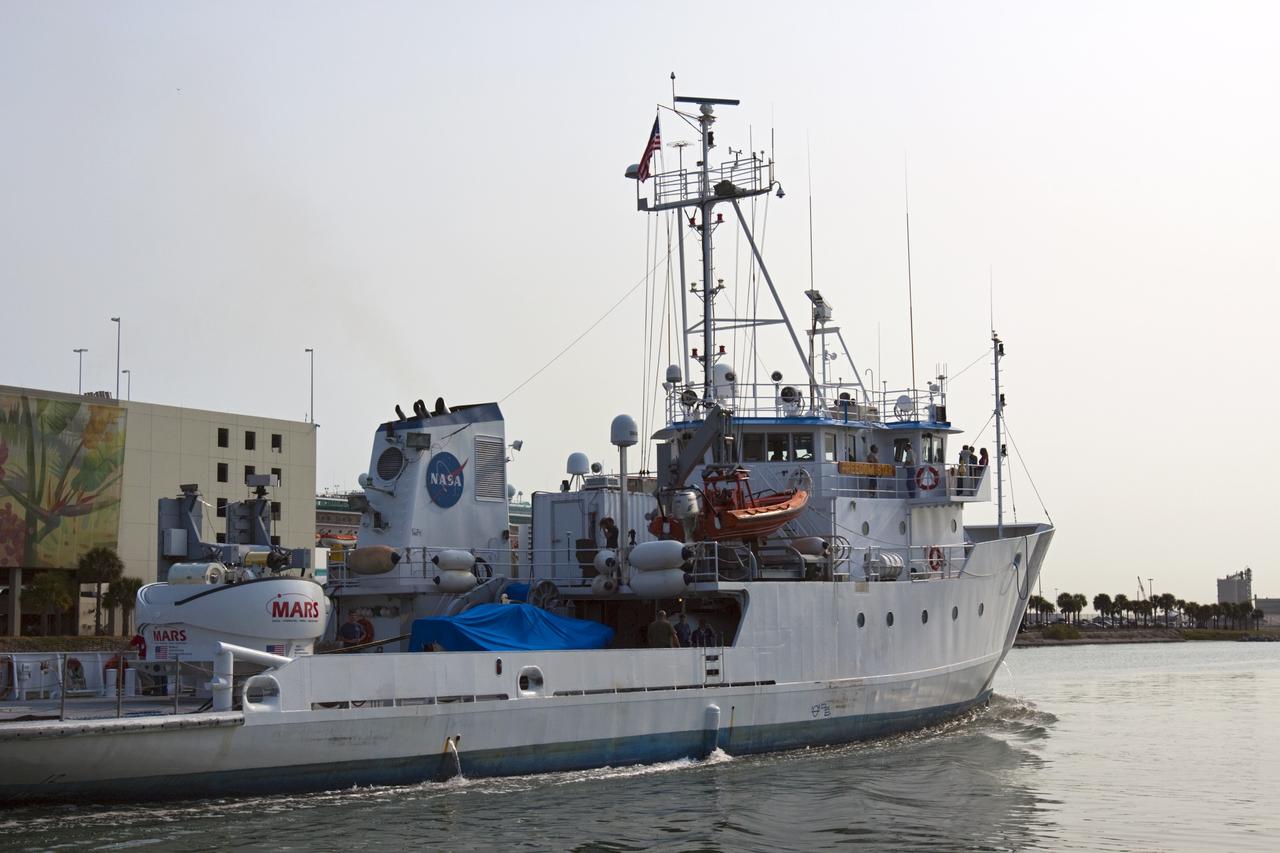
CAPE CANAVERAL, Fla. -- NASA’s Freedom Star boat sets out for a day of testing after departing through Port Canaveral in Florida for the Atlantic Ocean with NASA’s Mobile Aerospace Reconnaissance System, or MARS, secured aboard. MARS, run by NASA’s Langley Research Center in Hampton, Va., with its spatial, hyperspectral, thermal, and directed energy capabilities will be used for thermal imaging testing for the upcoming SpaceX Falcon 9 and Dragon capsule test flight to the International Space Station. During today’s test, the MARS X-band radar and kineto tracking mount KTM were tested to ensure that they were synchronized to receive a rocket launch feed. The radar was used to identify an object to see if the KTM could lock on to and track it. The MARS team performed maintenance on the system, confirmed communications links, and tested the design of the mounting system and environmental enclosure. Photo credit: NASA/Jim Grossmann
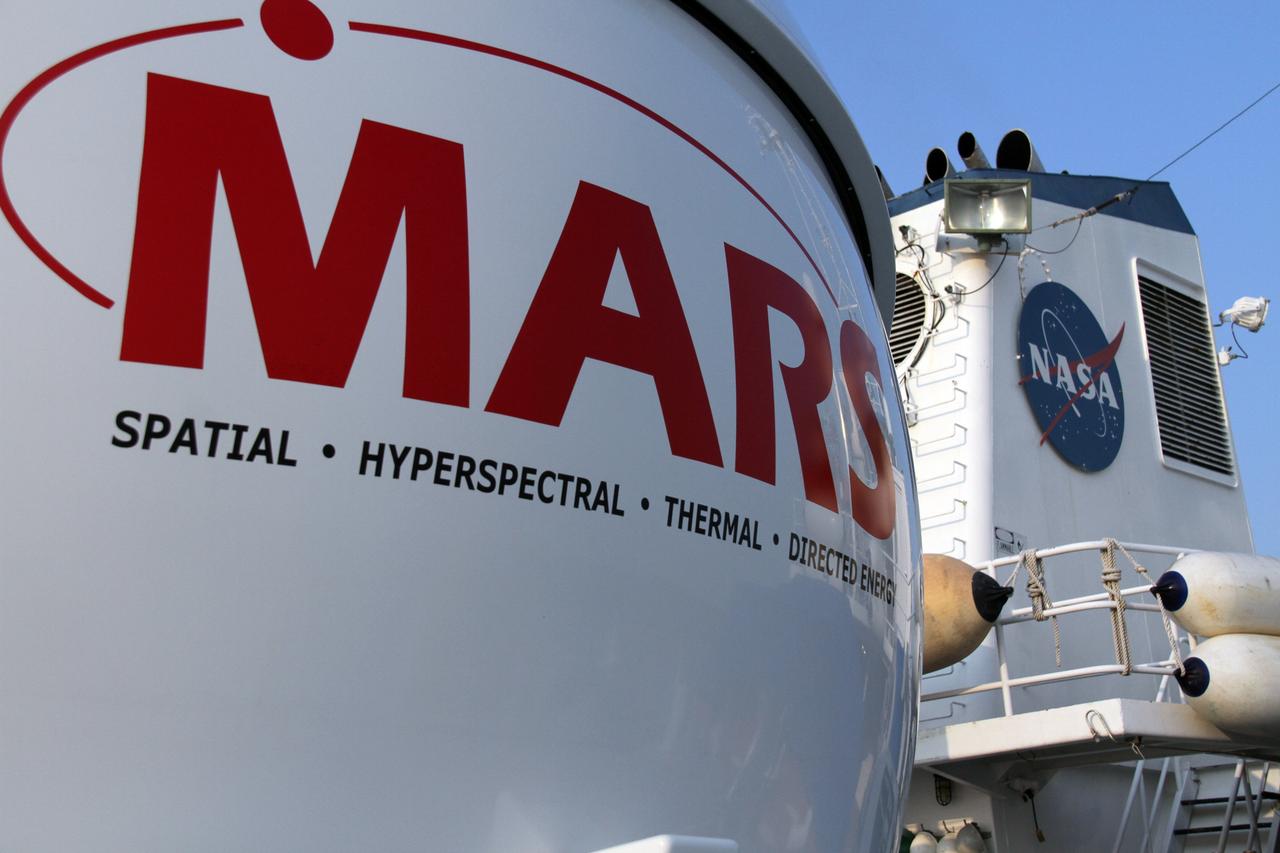
CAPE CANAVERAL, Fla. – NASA’s Freedom Star boat is heading back to Port Canaveral in Florida, after a full day of testing NASA’s Mobile Aerospace Reconnaissance System, or MARS, in the Atlantic Ocean. MARS, run by NASA’s Langley Research Center in Hampton, Va., with its spatial, hyperspectral, thermal, and directed energy capabilities will be used for thermal imaging testing for the upcoming SpaceX Falcon 9 and Dragon capsule test flight to the International Space Station. During today’s test, the MARS X-band radar and kineto tracking mount KTM were tested to ensure that they were synchronized to receive a rocket launch feed. The radar was used to identify an object to see if the KTM could lock on to and track it. The MARS team performed maintenance on the system, confirmed communications links, and tested the design of the mounting system and environmental enclosure. Photo credit: NASA/Cory Huston
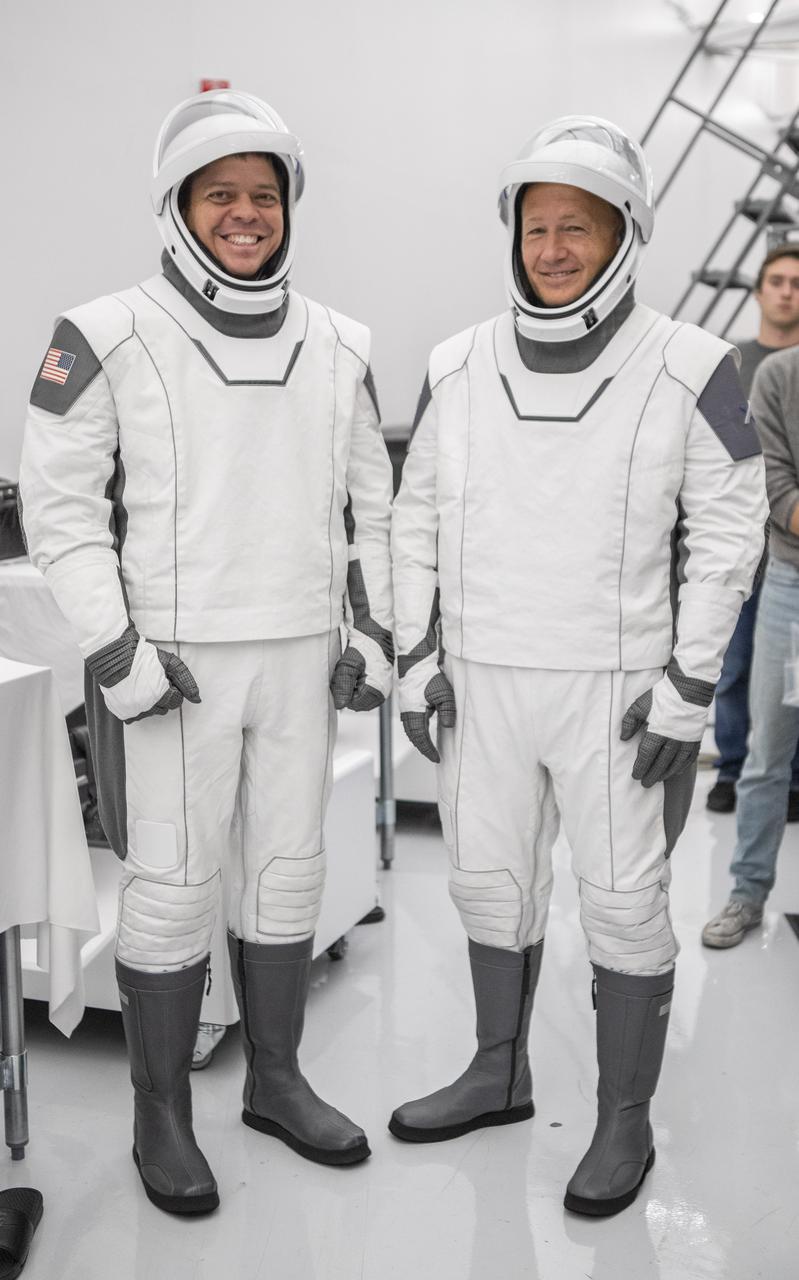
NASA and SpaceX held a joint training event for pre-launch operations, which provided an opportunity for the crew and ground operators to rehearse all of the activities, procedures, and communication the teams will exercise on launch day from crew suit-up in Kennedy Space Center’s Operations & Checkout (O&C) building in Florida through launch; this training event also included simulated emergency egress scenarios. NASA astronauts Bob Behnken, left, and Doug Hurley are participating in a suit-up for launch, using the same Ground Support Equipment hardware, such as the seats and suit leak check boxes, that the crew will use for launch, with the SpaceX ground closeout team and suit engineers that will help the crew suit up and ingress the Dragon on launch day. Following crew suit-up, the crew ingressed the capsule simulator in Hawthorne, California, as they would on launch day, and the teams performed a simulated launch countdown and several emergency egress scenarios.
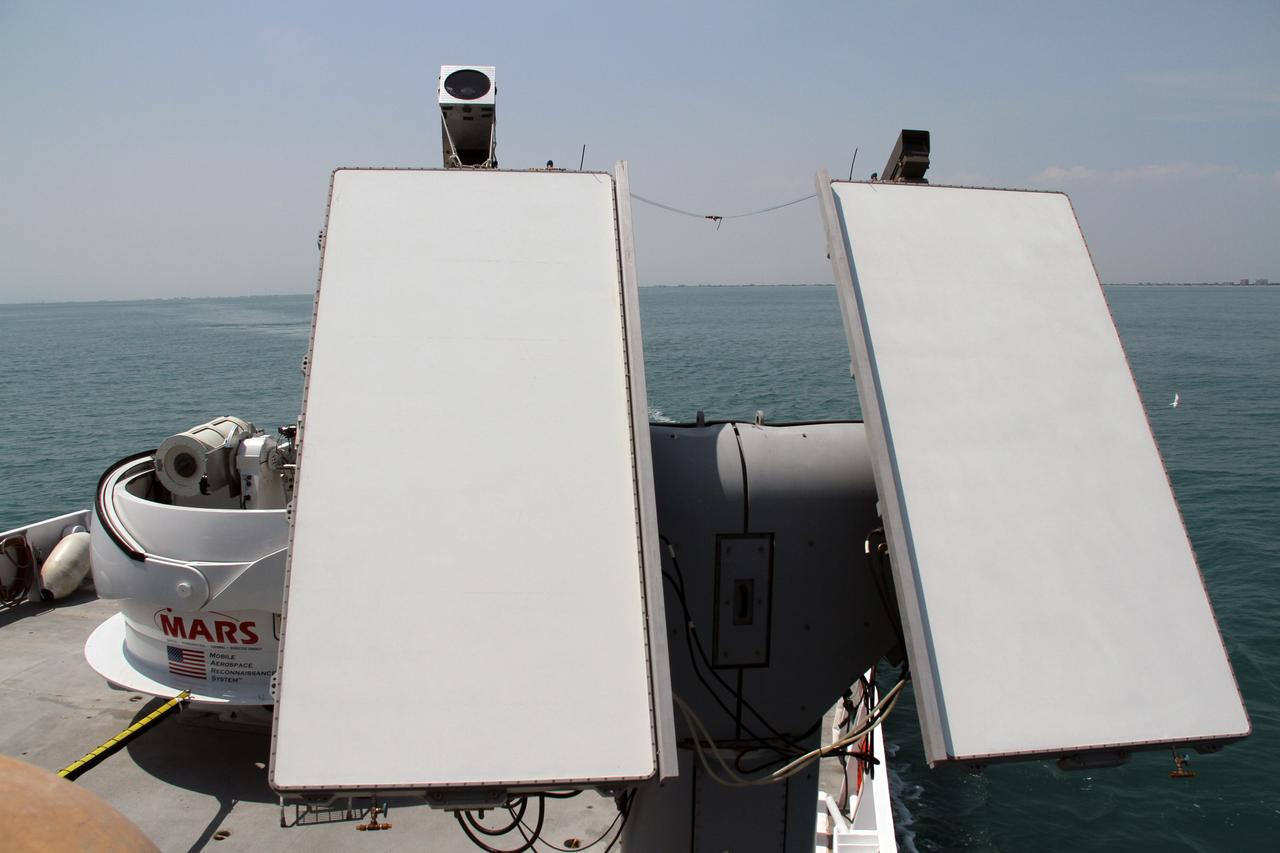
CAPE CANAVERAL, Fla. – Aboard NASA’s Freedom Star boat in the Atlantic Ocean off the coast of Port Canaveral in Florida, the covering around NASA’s Mobile Aerospace Reconnaissance System, or MARS, has been removed. MARS is being prepared for a day of testing in the Atlantic Ocean. MARS, run by NASA’s Langley Research Center in Hampton, Va., with its spatial, hyperspectral, thermal, and directed energy capabilities will be used for thermal imaging testing for the upcoming SpaceX Falcon 9 and Dragon capsule test flight to the International Space Station. During today’s test, the MARS X-band radar and kineto tracking mount KTM were tested to ensure that they were synchronized to receive a rocket launch feed. The radar was used to identify an object to see if the KTM could lock on to and track it. The MARS team performed maintenance on the system, confirmed communications links, and tested the design of the mounting system and environmental enclosure. Photo credit: NASA/Cory Huston
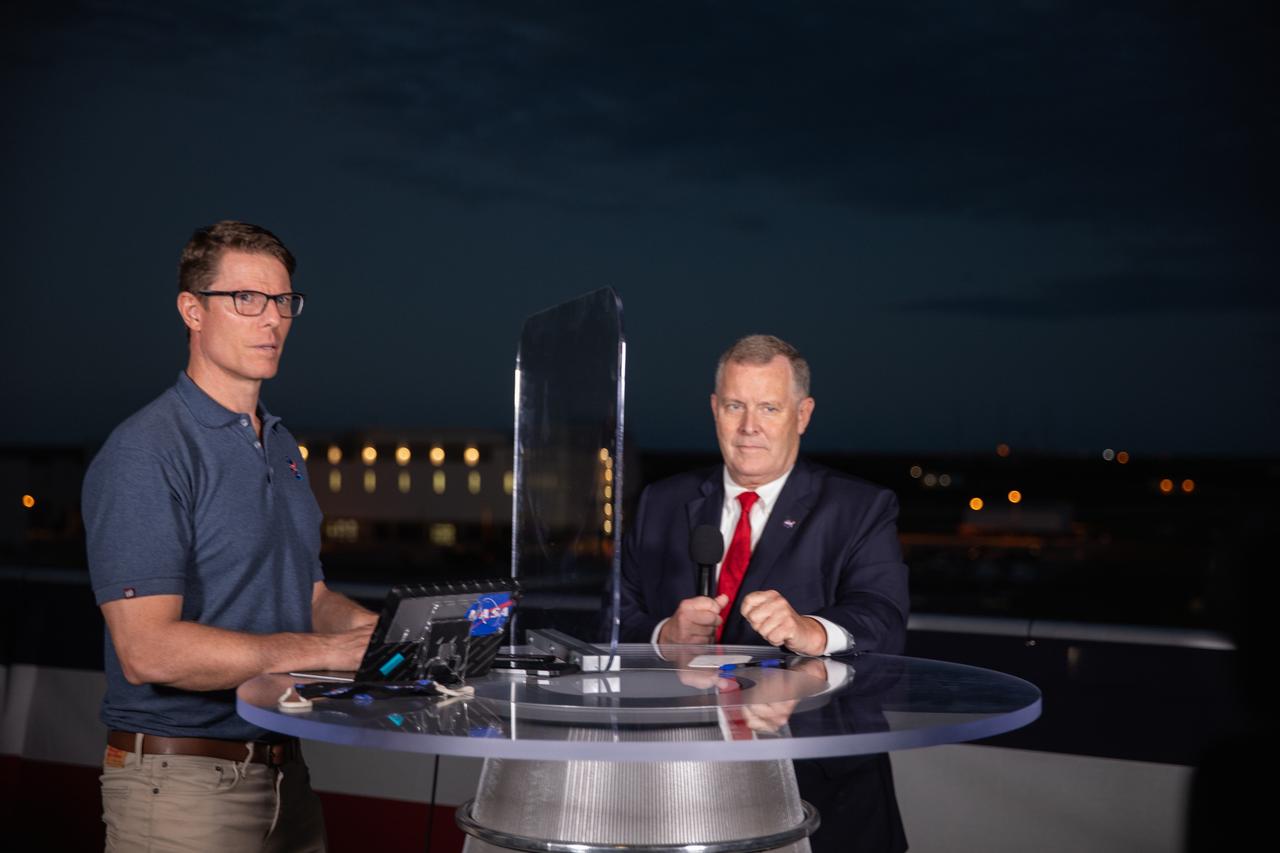
During live television coverage of NASA SpaceX’s Crew-1 launch on Nov. 15, 2020, Derrol Nail, left, NASA Communications, talks with NASA Deputy Administrator Jim Morhard on the observation deck of Operations Support Building II at Kennedy Space Center in Florida. Crew-1 is the first regular crew mission of a U.S. commercial spacecraft with astronauts to the International Space Station as part of NASA’s Commercial Crew Program. The Crew Dragon Resilience capsule will launch atop a Falcon 9 rocket from Launch Complex 39A carrying NASA astronauts Michael Hopkins, Victor Glover, Shannon Walker and Japan Aerospace Exploration Agency (JAXA) astronaut Soichi Noguchi to the space station for a six-month science mission.
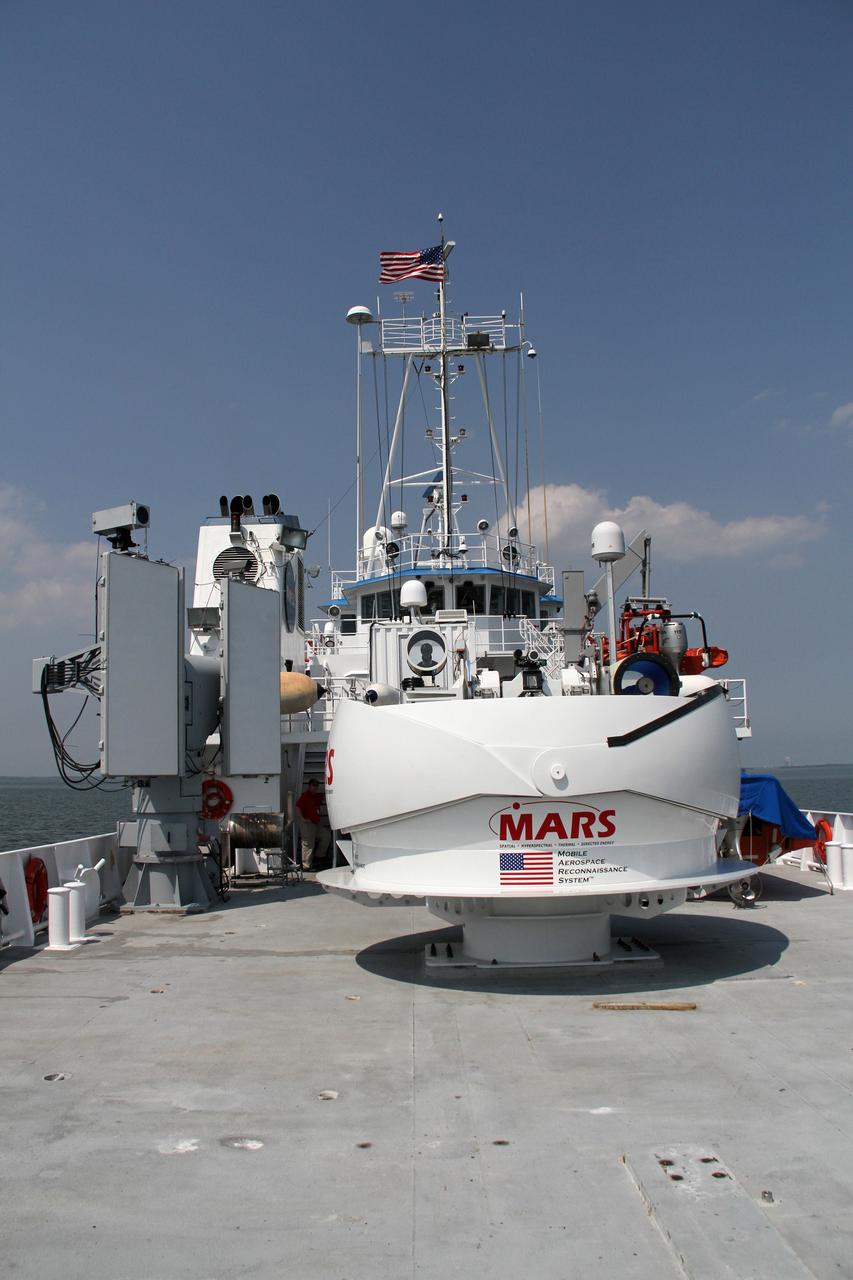
CAPE CANAVERAL, Fla. – Aboard NASA’s Freedom Star boat in the Atlantic Ocean off the coast of Port Canaveral in Florida, NASA’s Mobile Aerospace Reconnaissance System, or MARS, is being tested. MARS, run by NASA’s Langley Research Center in Hampton, Va., with its spatial, hyperspectral, thermal, and directed energy capabilities will be used for thermal imaging testing for the upcoming SpaceX Falcon 9 and Dragon capsule test flight to the International Space Station. During today’s test, the MARS X-band radar and kineto tracking mount KTM were tested to ensure that they were synchronized to receive a rocket launch feed. The radar was used to identify an object to see if the KTM could lock on to and track it. The MARS team performed maintenance on the system, confirmed communications links, and tested the design of the mounting system and environmental enclosure. Photo credit: NASA/Cory Huston
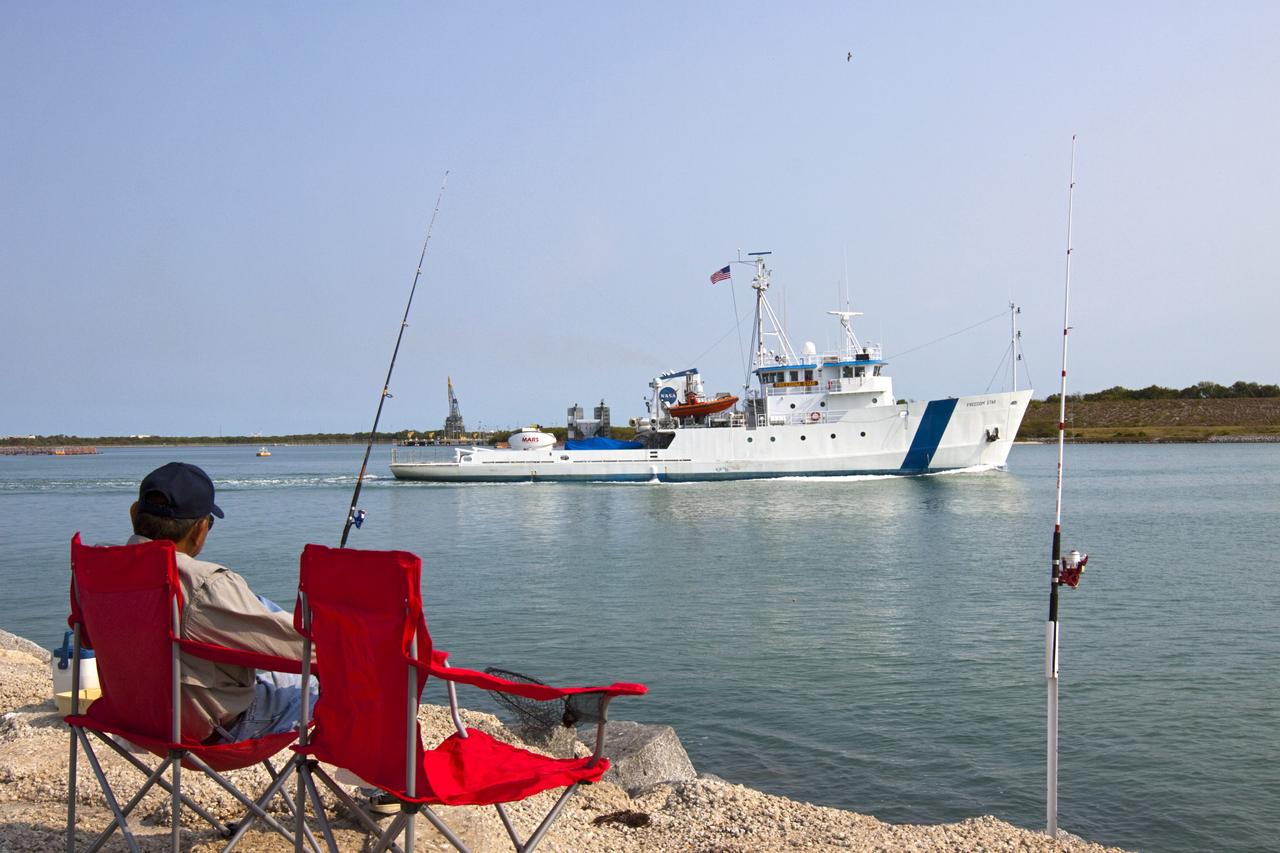
CAPE CANAVERAL, Fla. -- NASA’s Freedom Star boat sets out for a day of testing after departing through Port Canaveral in Florida for the Atlantic Ocean with NASA’s Mobile Aerospace Reconnaissance System, or MARS, secured aboard. MARS, run by NASA’s Langley Research Center in Hampton, Va., with its spatial, hyperspectral, thermal, and directed energy capabilities will be used for thermal imaging testing for the upcoming SpaceX Falcon 9 and Dragon capsule test flight to the International Space Station. During today’s test, the MARS X-band radar and kineto tracking mount KTM were tested to ensure that they were synchronized to receive a rocket launch feed. The radar was used to identify an object to see if the KTM could lock on to and track it. The MARS team performed maintenance on the system, confirmed communications links, and tested the design of the mounting system and environmental enclosure. Photo credit: NASA/Jim Grossmann
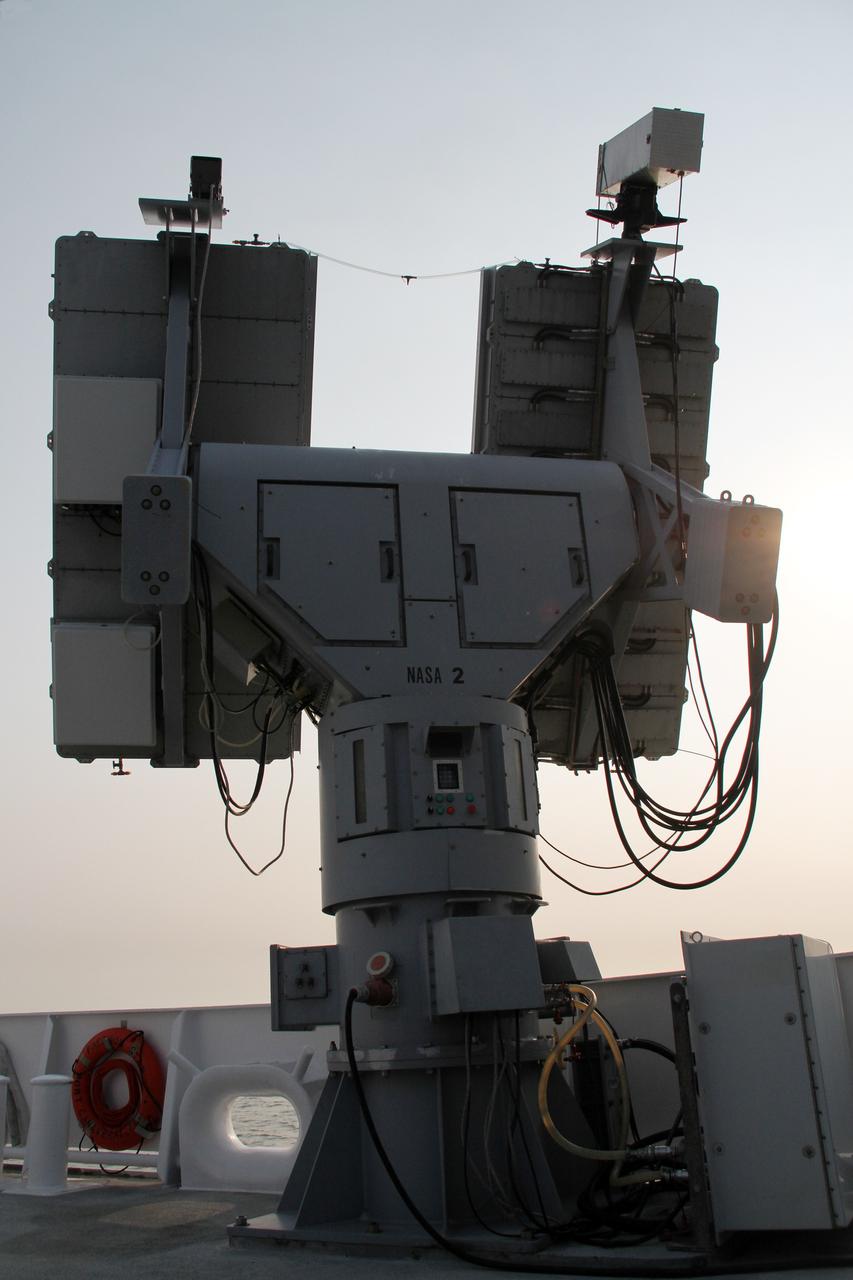
CAPE CANAVERAL, Fla. – NASA’s Mobile Aerospace Reconnaissance System, or MARS, is secured aboard NASA’s Freedom Star boat as it is being prepared for a day of testing after departing from Port Canaveral in Florida for the Atlantic Ocean. MARS, run by NASA’s Langley Research Center in Hampton, Va., with its spatial, hyperspectral, thermal, and directed energy capabilities will be used for thermal imaging testing for the upcoming SpaceX Falcon 9 and Dragon capsule test flight to the International Space Station. During today’s test, the MARS X-band radar and kineto tracking mount KTM were tested to ensure that they were synchronized to receive a rocket launch feed. The radar was used to identify an object to see if the KTM could lock on to and track it. The MARS team performed maintenance on the system, confirmed communications links, and tested the design of the mounting system and environmental enclosure. Photo credit: NASA/Cory Huston
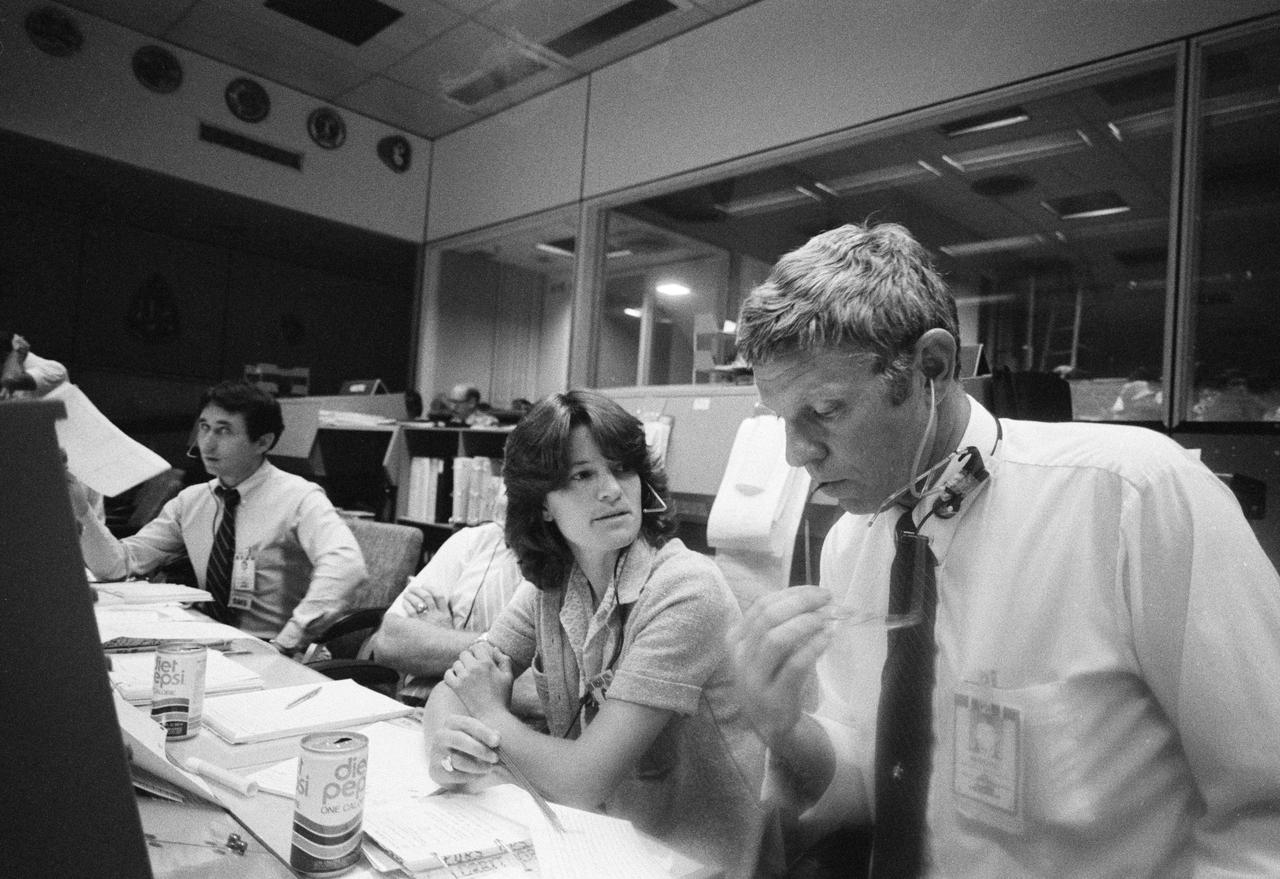
S81-33963 (July 1981) --- Mission specialist/astronaut Sally K. Ride and Dale E. Moore of the flight control division?s electrical, mechanical and environmental systems branch take a special interest in a simulations session during which the remote manipulator system (RMS, a mechanized arm) takes a momentary spotlight. They are seated at the CAPCOM or capsule communicator console in the mission operations control room of JSC?s mission control center. Dr. Ride will converse with astronauts Joe H. Engle and Richard H. Truly during their STS-2 mission in space when the RMS will have its debut in the Columbia?s cargo bay. Astronaut James F. Buchli, serving in a CAPCOM capacity, is partially obscured behind Dr. Ride. Photo credit: NASA
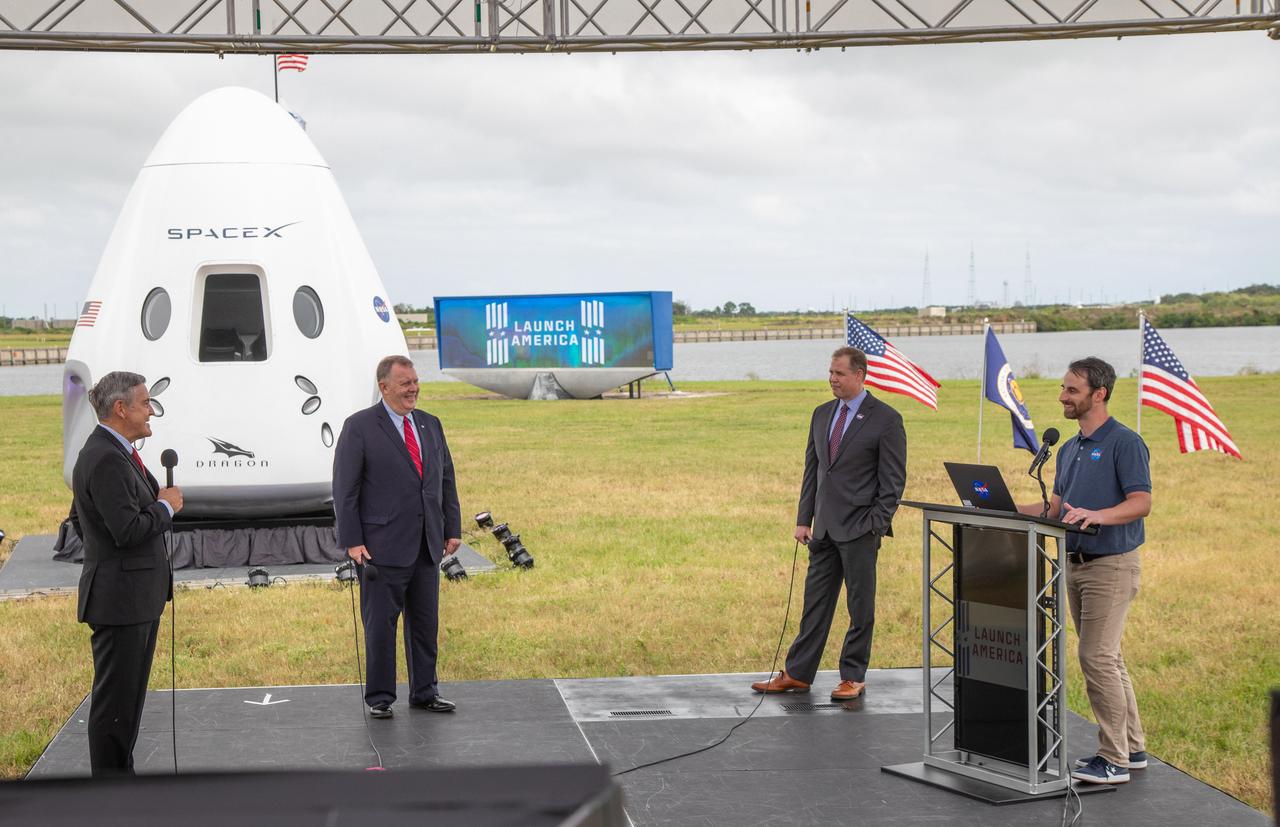
Joshua Santora, far right, NASA Communications, moderates a press briefing Nov. 13, 2020, near the Press Site countdown clock at the agency’s Kennedy Space Center in Florida ahead of NASA’s SpaceX Crew-1 launch. Speaking to the media, from right, are Kennedy Space Center Director Bob Cabana, NASA Deputy Administrator Jim Morhard, and NASA Administrator Jim Bridenstine. Crew-1 is the first regular crew mission of a U.S. commercial spacecraft with astronauts to the International Space Station as part of NASA’s Commercial Crew Program. The SpaceX Crew Dragon Resilience capsule will launch atop the company’s Falcon 9 rocket from Launch Complex 39A to the space station for a six-month science mission.
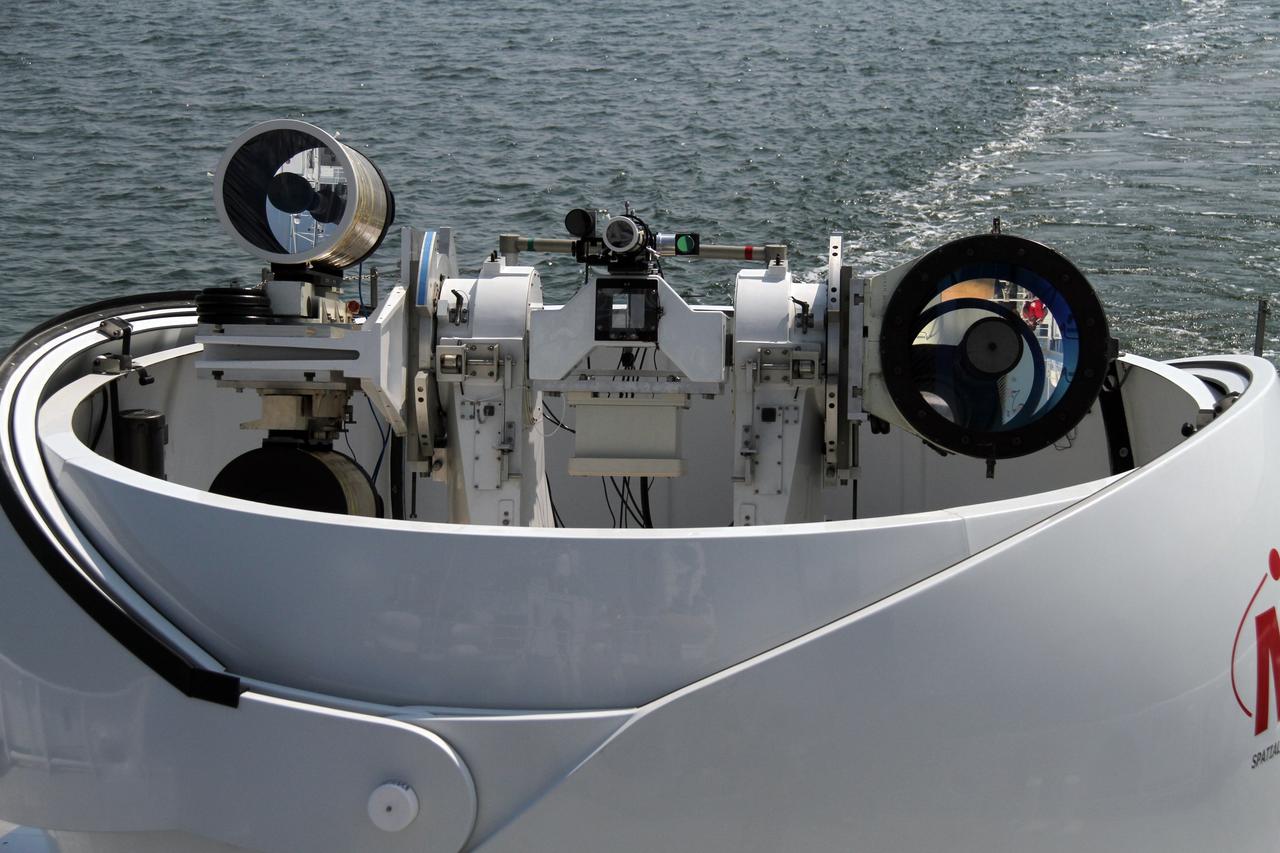
CAPE CANAVERAL, Fla. – Aboard NASA’s Freedom Star boat in the Atlantic Ocean off the coast of Port Canaveral in Florida, the covering around NASA’s Mobile Aerospace Reconnaissance System, or MARS, has been removed. MARS is being prepared for a day of testing in the Atlantic Ocean. MARS, run by NASA’s Langley Research Center in Hampton, Va., with its spatial, hyperspectral, thermal, and directed energy capabilities will be used for thermal imaging testing for the upcoming SpaceX Falcon 9 and Dragon capsule test flight to the International Space Station. During today’s test, the MARS X-band radar and kineto tracking mount KTM were tested to ensure that they were synchronized to receive a rocket launch feed. The radar was used to identify an object to see if the KTM could lock on to and track it. The MARS team performed maintenance on the system, confirmed communications links, and tested the design of the mounting system and environmental enclosure. Photo credit: NASA/Cory Huston
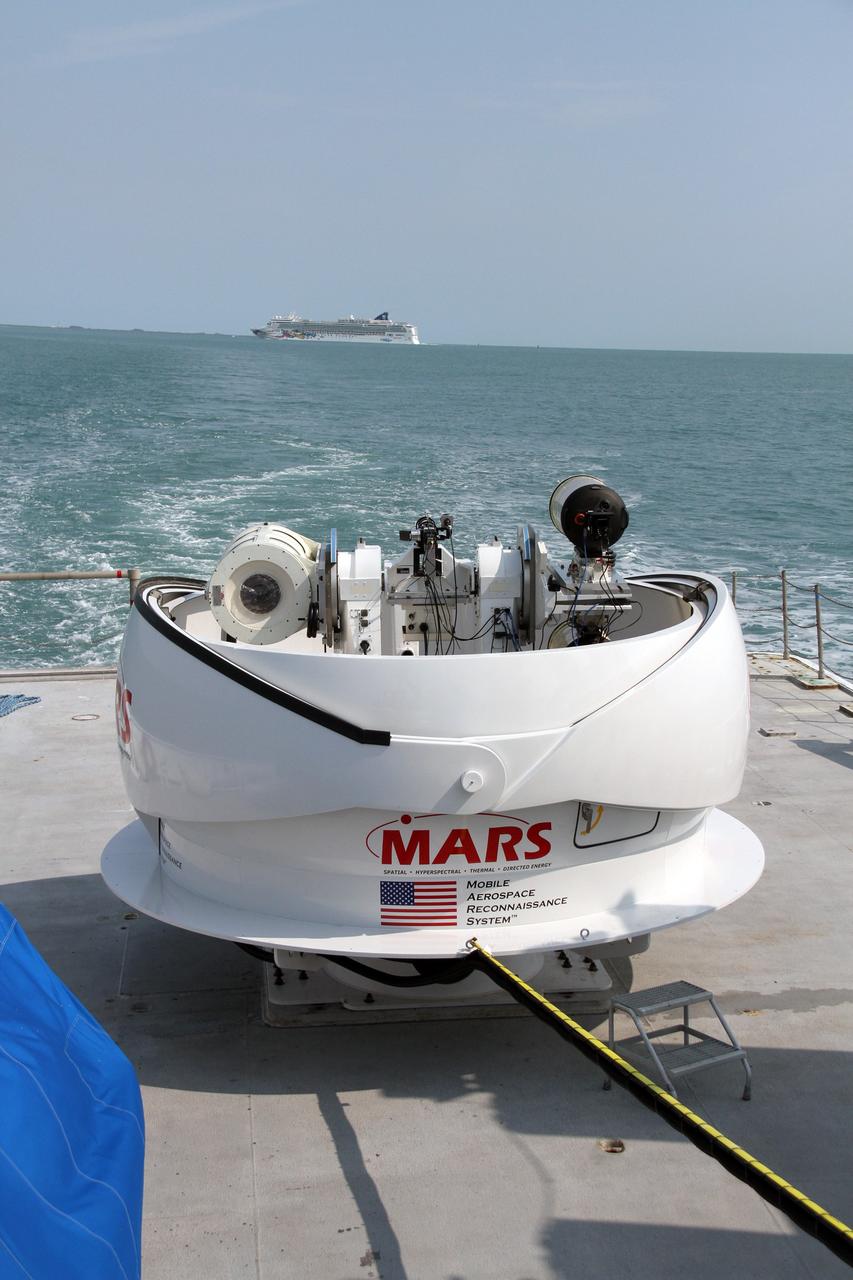
CAPE CANAVERAL, Fla. – NASA’s Freedom Star boat sets out for a day of testing after departing through Port Canaveral in Florida for the Atlantic Ocean with NASA’s Mobile Aerospace Reconnaissance System, or MARS, secured aboard. MARS, run by NASA’s Langley Research Center in Hampton, Va., with its spatial, hyperspectral, thermal, and directed energy capabilities will be used for thermal imaging testing for the upcoming SpaceX Falcon 9 and Dragon capsule test flight to the International Space Station. During today’s test, the MARS X-band radar and kineto tracking mount KTM were tested to ensure that they were synchronized to receive a rocket launch feed. The radar was used to identify an object to see if the KTM could lock on to and track it. The MARS team performed maintenance on the system, confirmed communications links, and tested the design of the mounting system and environmental enclosure. Photo credit: NASA/Cory Huston
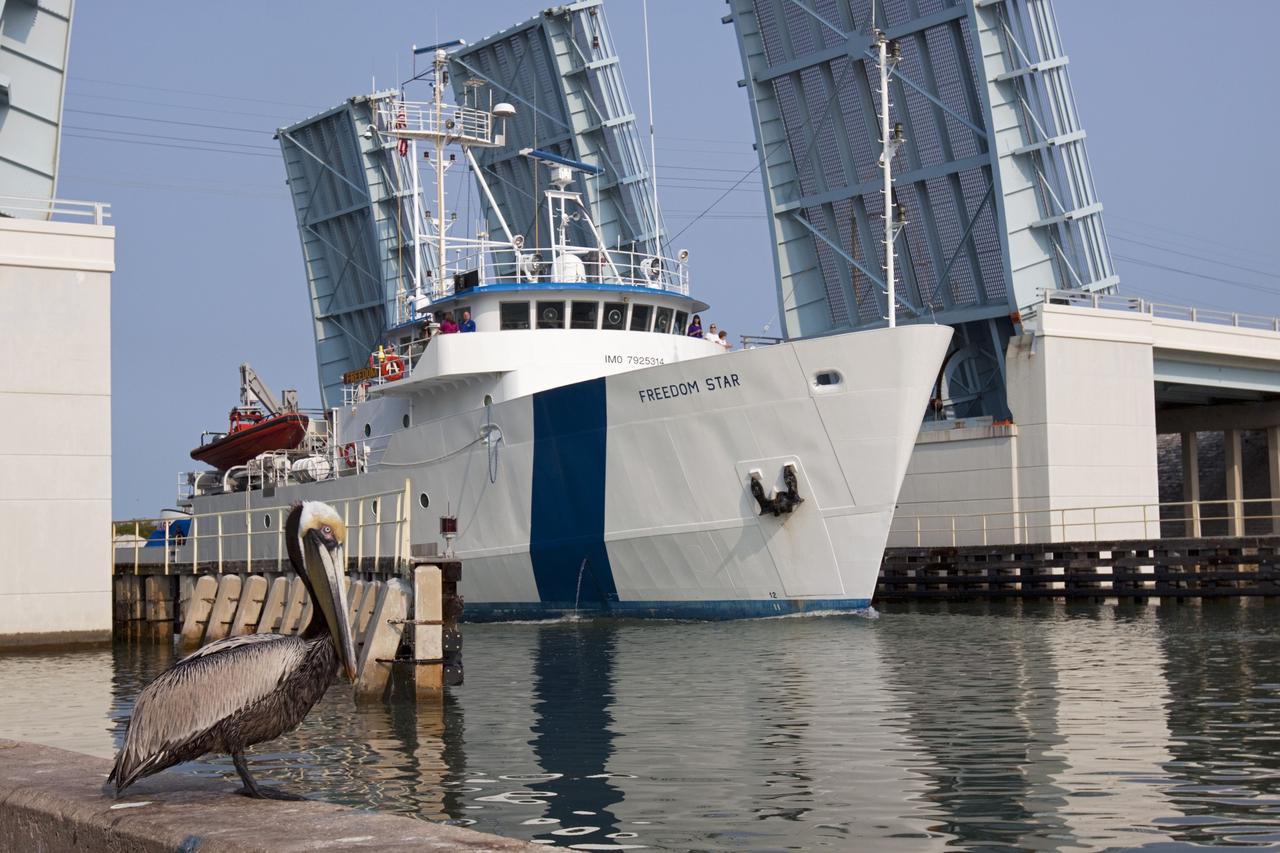
CAPE CANAVERAL, Fla. -- NASA’s Freedom Star boat sets out for a day of testing after departing from port near Cape Canaveral Air Force Station in Florida for the Atlantic Ocean with NASA’s Mobile Aerospace Reconnaissance System, or MARS, secured aboard. MARS, run by NASA’s Langley Research Center in Hampton, Va., with its spatial, hyperspectral, thermal, and directed energy capabilities will be used for thermal imaging testing for the upcoming SpaceX Falcon 9 and Dragon capsule test flight to the International Space Station. During today’s test, the MARS X-band radar and kineto tracking mount KTM were tested to ensure that they were synchronized to receive a rocket launch feed. The radar was used to identify an object to see if the KTM could lock on to and track it. The MARS team performed maintenance on the system, confirmed communications links, and tested the design of the mounting system and environmental enclosure. Photo credit: NASA/Jim Grossmann
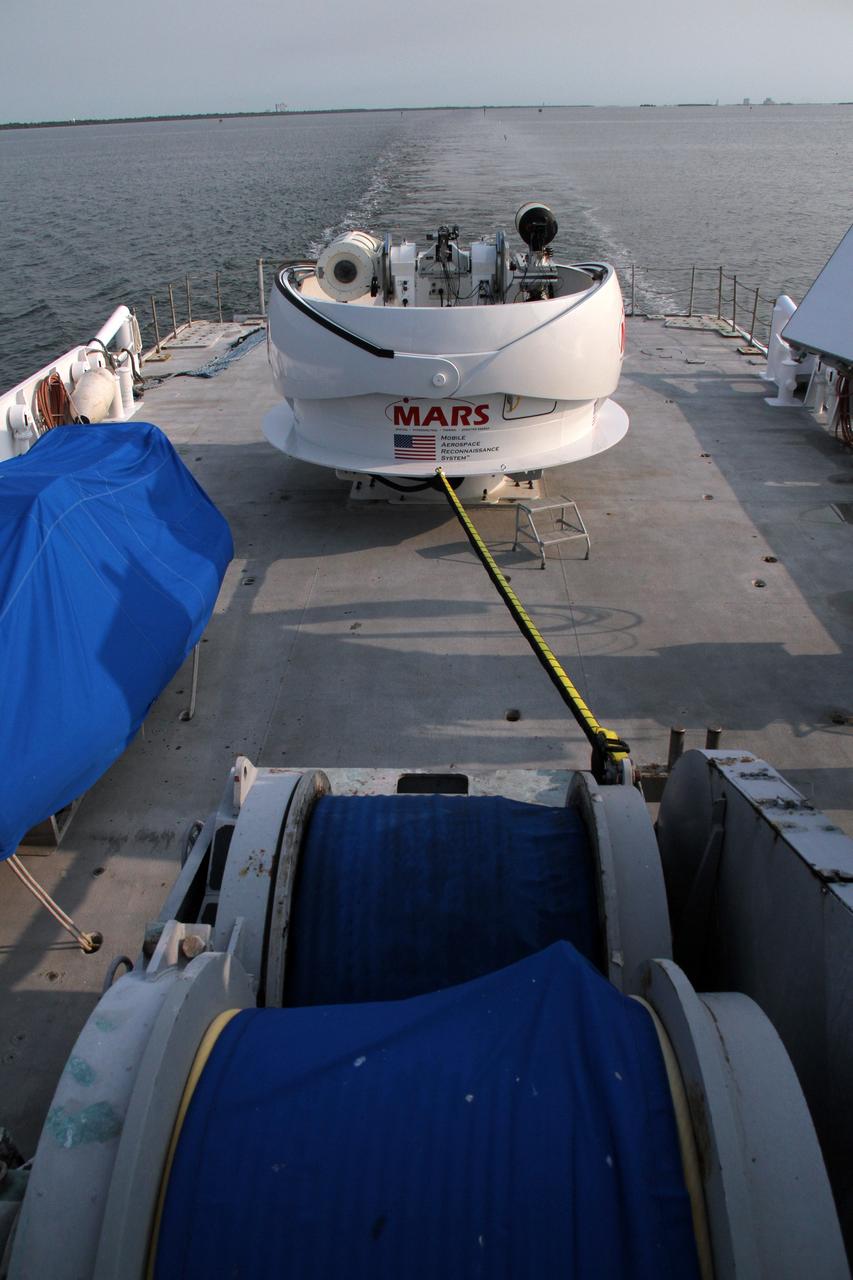
CAPE CANAVERAL, Fla. – NASA’s Freedom Star boat heads for the open waters of the Atlantic Ocean after departing from Port Canaveral in Florida. NASA’s Mobile Aerospace Reconnaissance System, or MARS, is secured aboard Freedom Star for a day of testing. MARS, run by NASA’s Langley Research Center in Hampton, Va., with its spatial, hyperspectral, thermal, and directed energy capabilities will be used for thermal imaging testing for the upcoming SpaceX Falcon 9 and Dragon capsule test flight to the International Space Station. During today’s test, the MARS X-band radar and kineto tracking mount KTM were tested to ensure that they were synchronized to receive a rocket launch feed. The radar was used to identify an object to see if the KTM could lock on to and track it. The MARS team performed maintenance on the system, confirmed communications links, and tested the design of the mounting system and environmental enclosure. Photo credit: NASA/Cory Huston
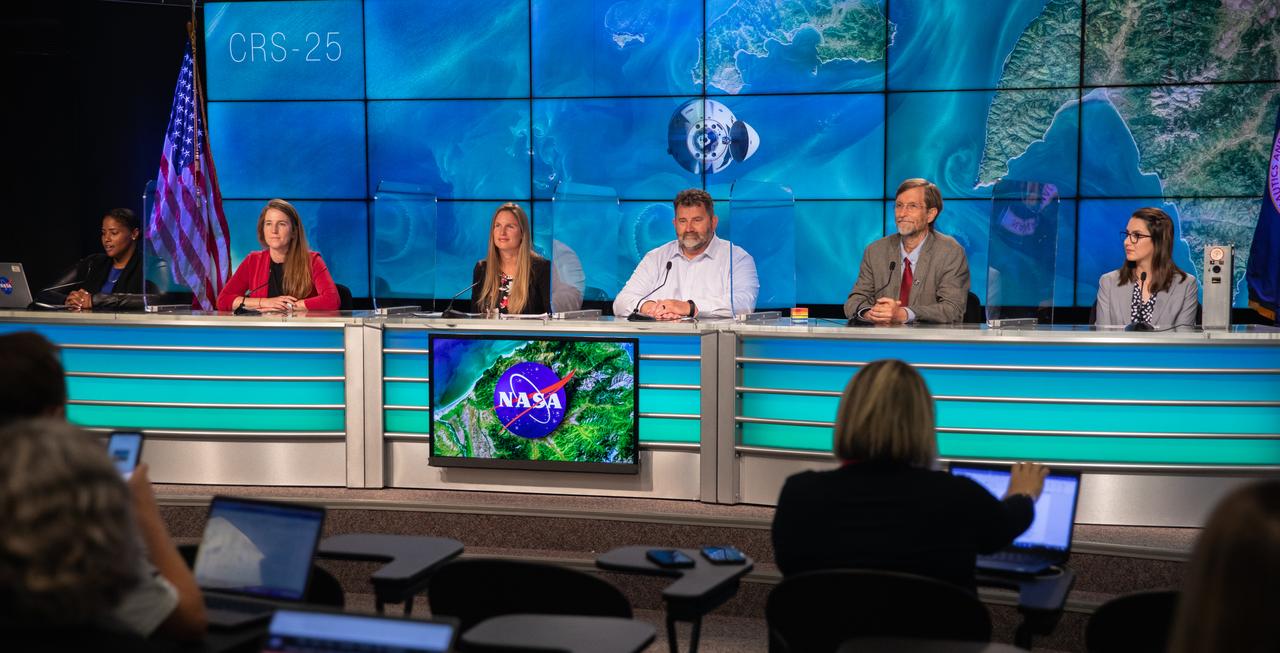
A climate conversation is held at NASA’s Kennedy Space Center in Florida on July 13, 2022, leading up to SpaceX’s 25th Commercial Resupply Services mission for NASA to the International Space Station. Participants, from left are Moderator Tylar Greene, NASA Communications; Kate Calvin, NASA’s chief scientist and climate advisor; Heidi Parris, associate scientist, International Space Station Program; Mike Roberts, chief scientist, ISS National Lab; Rob Green, JPL senior research scientist and EMIT (Earth Surface Mineral Dust Source Investigation) principal investigator; and Paula do Vale Pereira, BeaverCube, Massachusetts Institute of Technology. The Dragon capsule atop SpaceX’s Falcon 9 rocket is scheduled to lift off from Kennedy’s Launch Complex 39A on July 14 at 8:44 p.m. EDT. Dragon will deliver more than 5,800 pounds of cargo, including a variety of NASA investigations, to the space station.
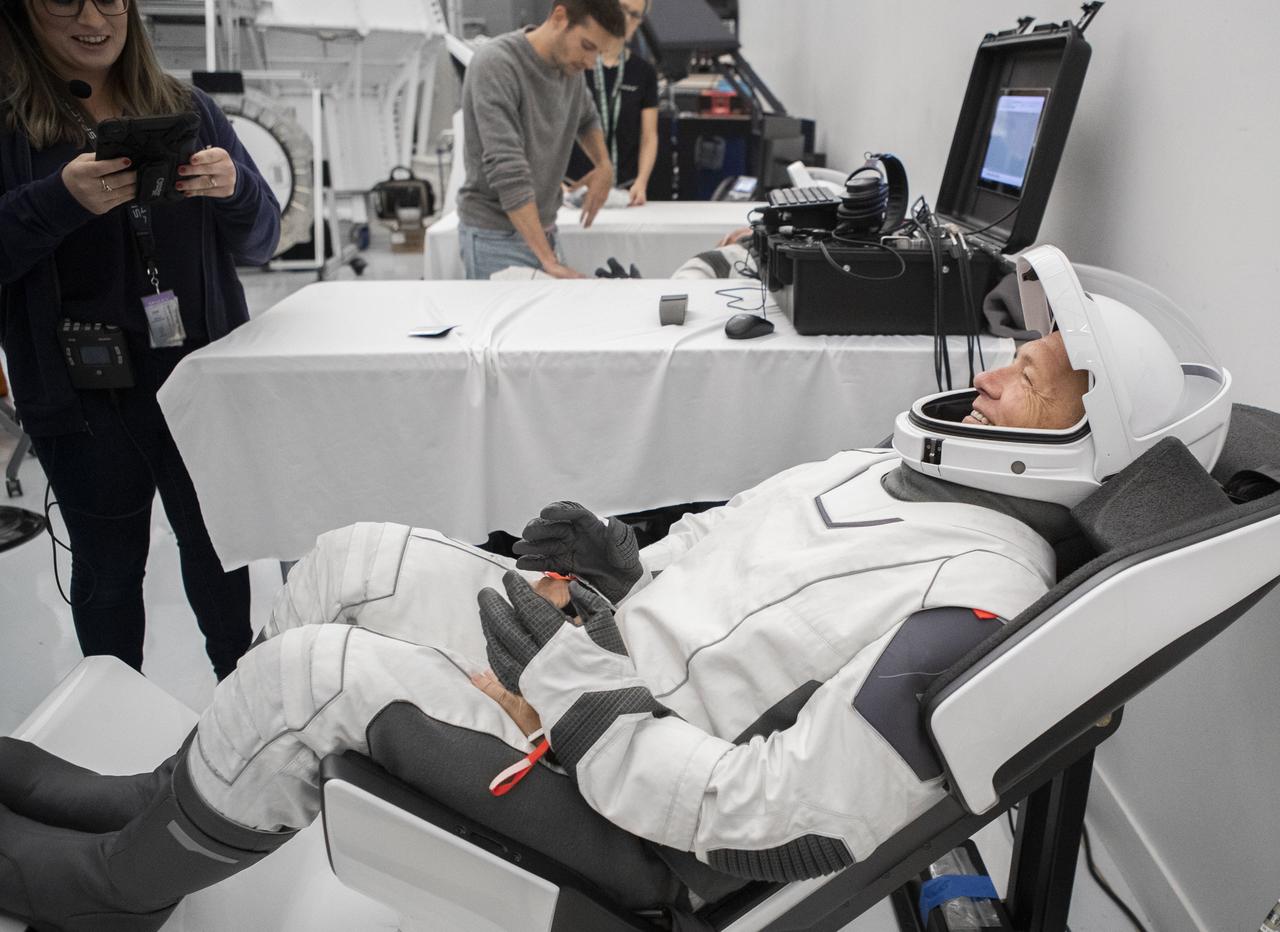
NASA and SpaceX held a joint training event for pre-launch operations, which provided an opportunity for the crew and ground operators to rehearse all of the activities, procedures, and communication the teams will exercise on launch day from crew suit-up in Kennedy Space Center’s Operations & Checkout (O&C) building in Florida through launch; this training event also included simulated emergency egress scenarios. NASA astronaut Doug Hurley is participating in a suit-up for launch, using the same Ground Support Equipment hardware, such as the seats and suit leak check boxes, that the crew will use for launch, with the SpaceX ground closeout team and suit engineers that will help the crew suit up and ingress the Dragon on launch day. Following crew suit-up, the crew ingressed the capsule simulator in Hawthorne, California, as they would on launch day, and the teams performed a simulated launch countdown and several emergency egress scenarios.
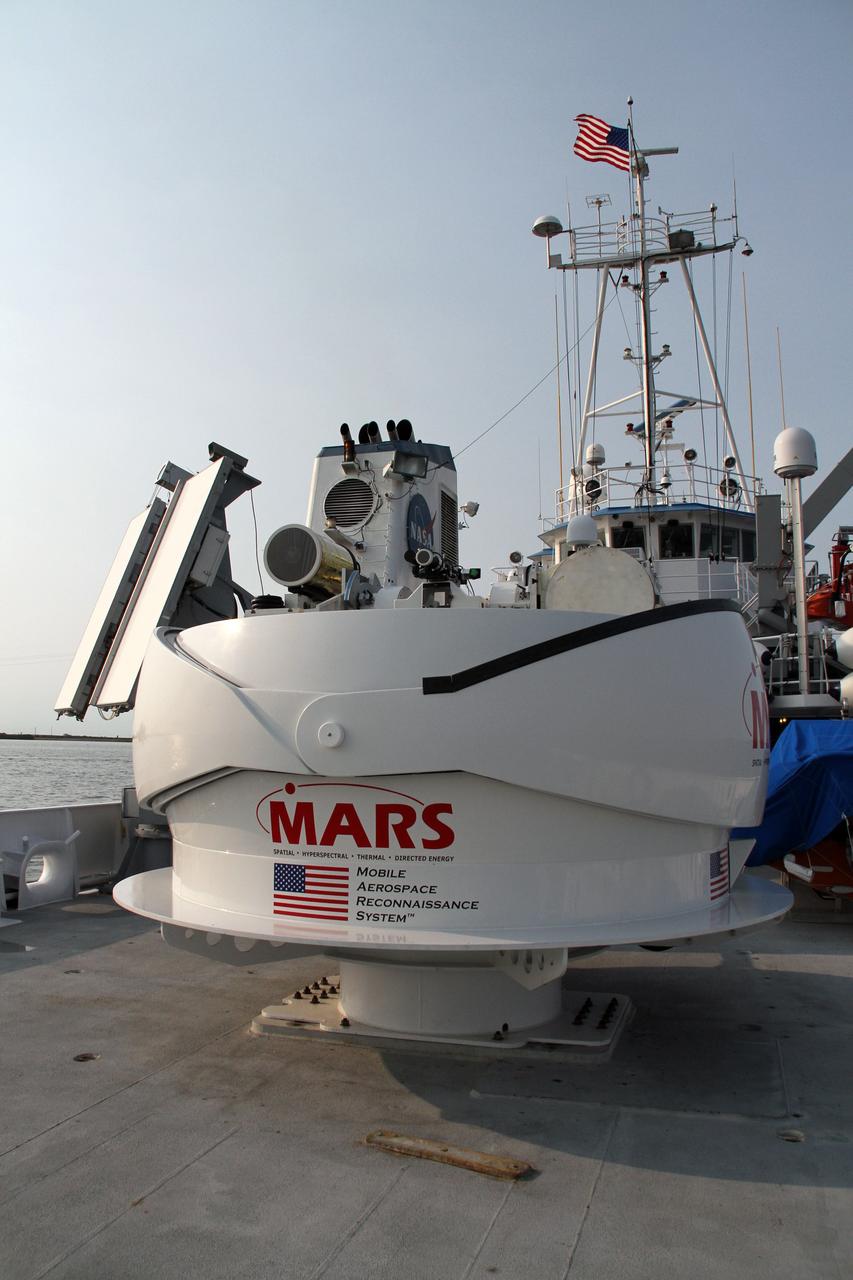
CAPE CANAVERAL, Fla. – NASA’s Freedom Star boat sets out for a day of testing after departing from port near Cape Canaveral Air Force Station in Florida for the Atlantic Ocean with NASA’s Mobile Aerospace Reconnaissance System, or MARS, secured aboard. MARS, run by NASA’s Langley Research Center in Hampton, Va., with its spatial, hyperspectral, thermal, and directed energy capabilities will be used for thermal imaging testing for the upcoming SpaceX Falcon 9 and Dragon capsule test flight to the International Space Station. During today’s test, the MARS X-band radar and kineto tracking mount KTM were tested to ensure that they were synchronized to receive a rocket launch feed. The radar was used to identify an object to see if the KTM could lock on to and track it. The MARS team performed maintenance on the system, confirmed communications links, and tested the design of the mounting system and environmental enclosure. Photo credit: NASA/Cory Huston
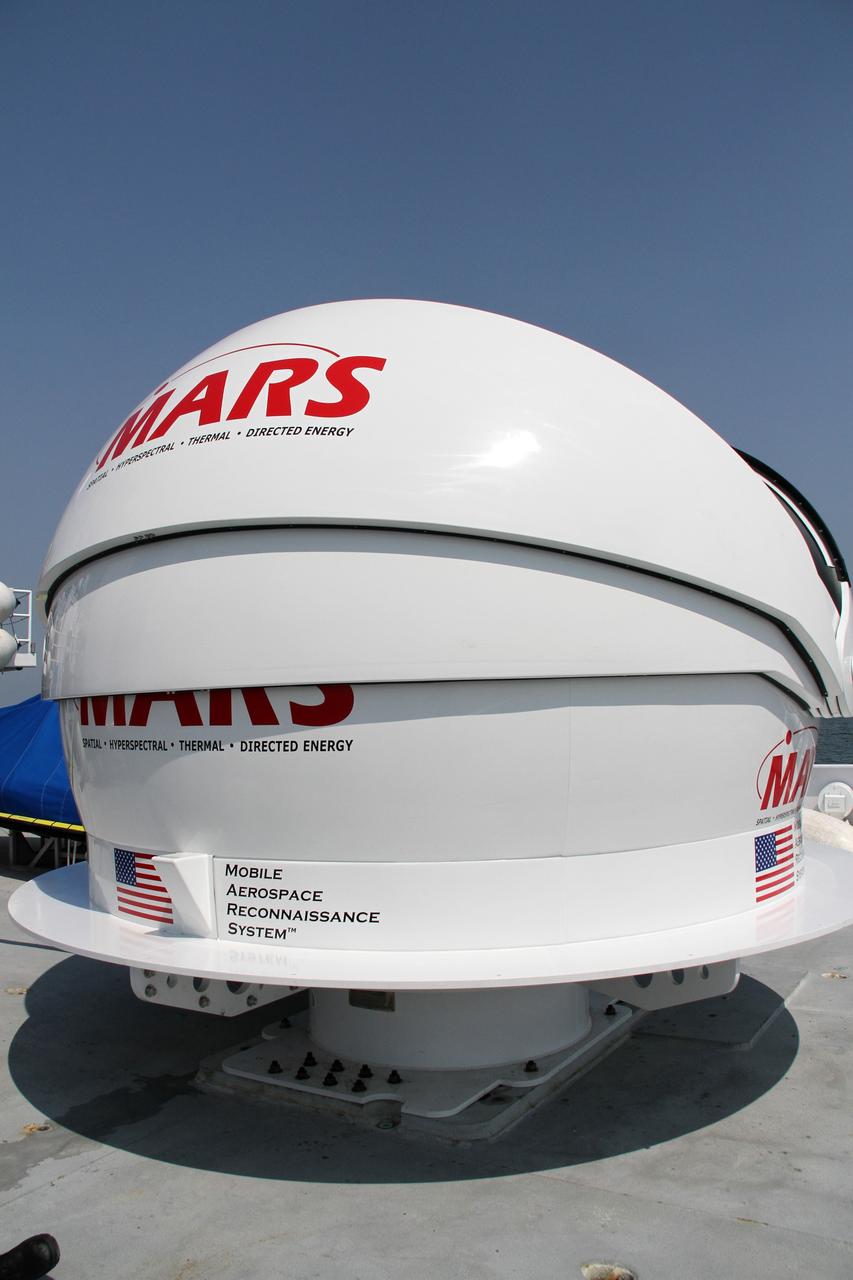
CAPE CANAVERAL, Fla. – Aboard NASA’s Freedom Star boat in the Atlantic Ocean off the coast of Port Canaveral in Florida, the covering around NASA’s Mobile Aerospace Reconnaissance System, or MARS, has been removed. MARS is being prepared for a day of testing in the Atlantic Ocean. MARS, run by NASA’s Langley Research Center in Hampton, Va., with its spatial, hyperspectral, thermal, and directed energy capabilities will be used for thermal imaging testing for the upcoming SpaceX Falcon 9 and Dragon capsule test flight to the International Space Station. During today’s test, the MARS X-band radar and kineto tracking mount KTM were tested to ensure that they were synchronized to receive a rocket launch feed. The radar was used to identify an object to see if the KTM could lock on to and track it. The MARS team performed maintenance on the system, confirmed communications links, and tested the design of the mounting system and environmental enclosure. Photo credit: NASA/Cory Huston
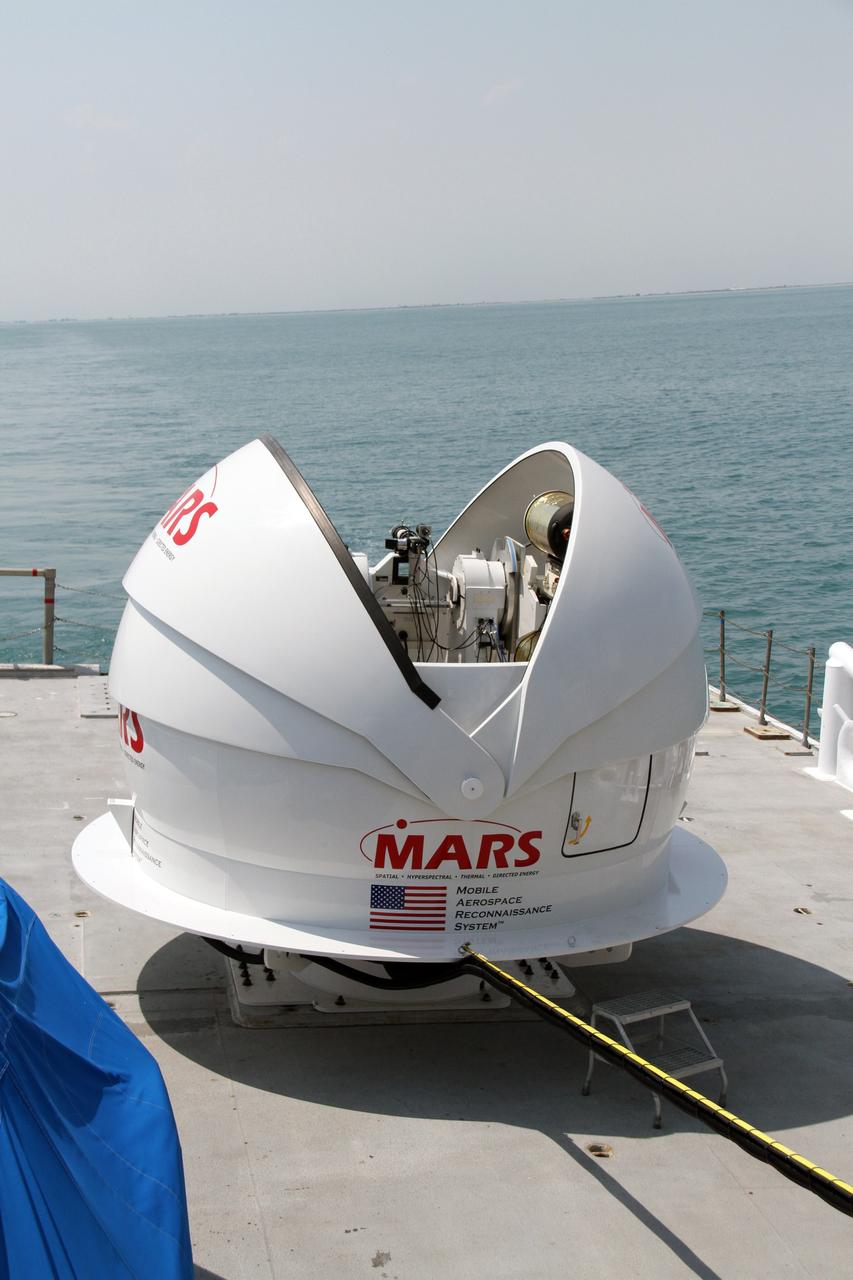
CAPE CANAVERAL, Fla. – NASA’s Mobile Aerospace Reconnaissance System, or MARS, is secured aboard NASA’s Freedom Star boat as it is being prepared for a day of testing after departing from Port Canaveral in Florida for the Atlantic Ocean. MARS, run by NASA’s Langley Research Center in Hampton, Va., with its spatial, hyperspectral, thermal, and directed energy capabilities will be used for thermal imaging testing for the upcoming SpaceX Falcon 9 and Dragon capsule test flight to the International Space Station. During today’s test, the MARS X-band radar and kineto tracking mount KTM were tested to ensure that they were synchronized to receive a rocket launch feed. The radar was used to identify an object to see if the KTM could lock on to and track it. The MARS team performed maintenance on the system, confirmed communications links, and tested the design of the mounting system and environmental enclosure. Photo credit: NASA/Cory Huston
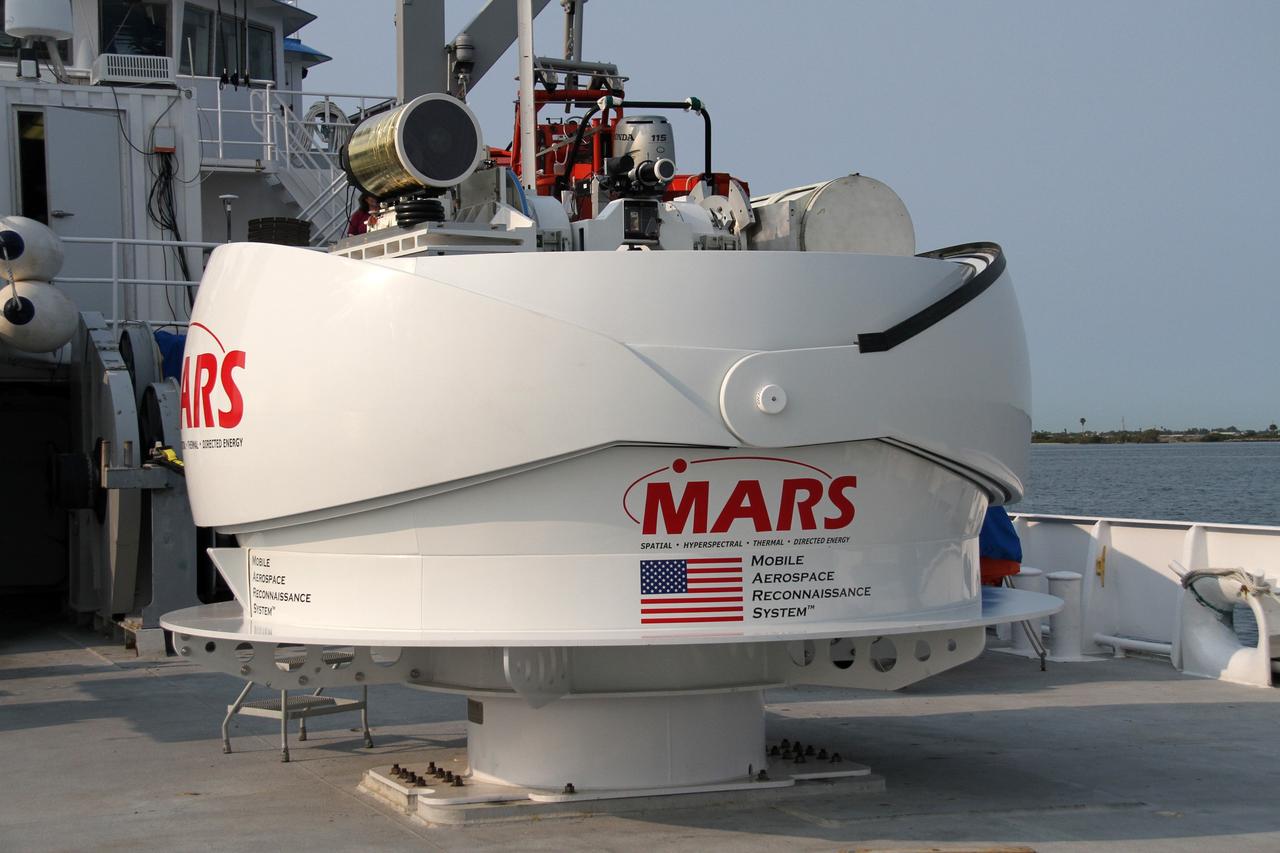
CAPE CANAVERAL, Fla. – NASA’s Freedom Star boat sets out for a day of testing after departing from port near Cape Canaveral Air Force Station in Florida for the Atlantic Ocean with NASA’s Mobile Aerospace Reconnaissance System, or MARS, secured aboard. MARS, run by NASA’s Langley Research Center in Hampton, Va., with its spatial, hyperspectral, thermal, and directed energy capabilities will be used for thermal imaging testing for the upcoming SpaceX Falcon 9 and Dragon capsule test flight to the International Space Station. During today’s test, the MARS X-band radar and kineto tracking mount KTM were tested to ensure that they were synchronized to receive a rocket launch feed. The radar was used to identify an object to see if the KTM could lock on to and track it. The MARS team performed maintenance on the system, confirmed communications links, and tested the design of the mounting system and environmental enclosure. Photo credit: NASA/Cory Huston
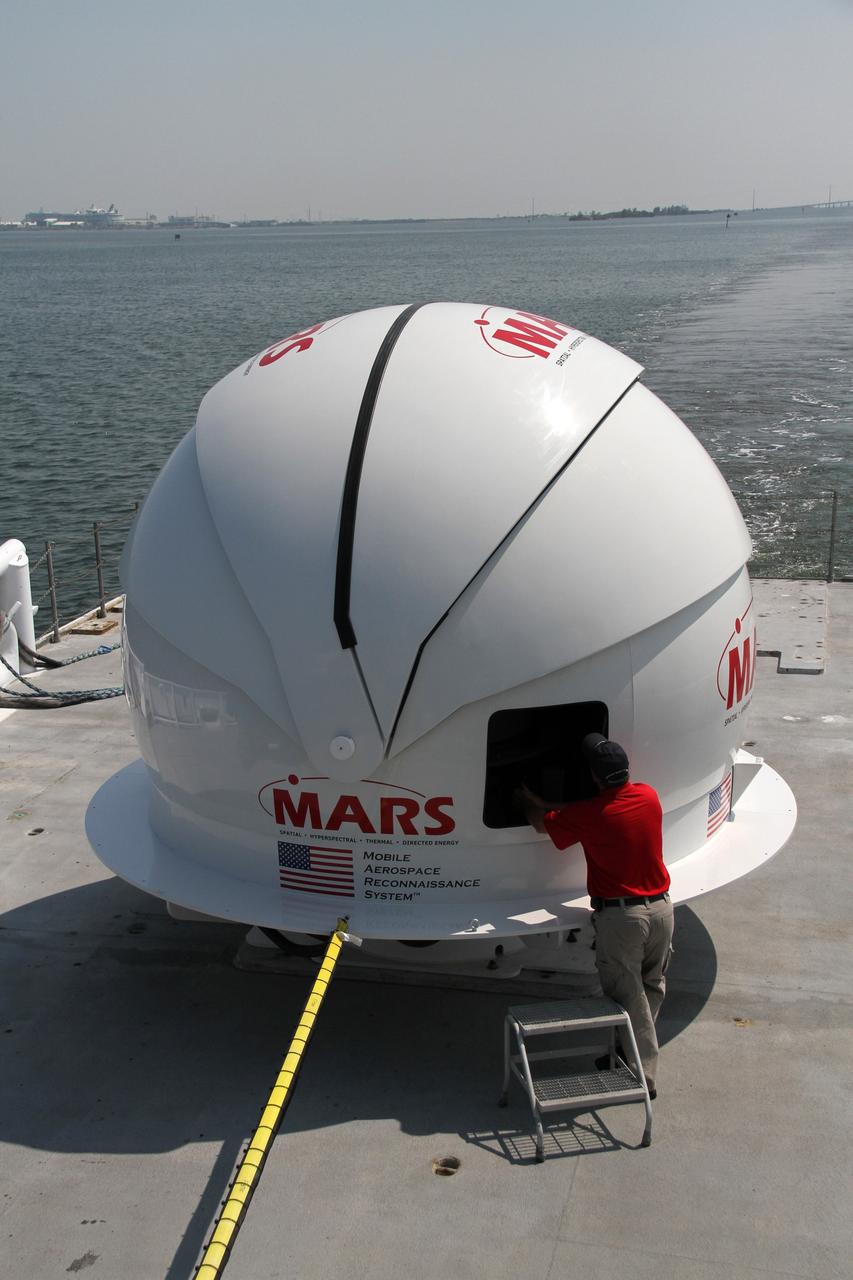
CAPE CANAVERAL, Fla. – A technician aboard NASA’s Freedom Star boat in the Atlantic Ocean off the coast of Port Canaveral in Florida, checks NASA’s Mobile Aerospace Reconnaissance System, or MARS, during a day of testing in the Atlantic Ocean. MARS, run by NASA’s Langley Research Center in Hampton, Va., with its spatial, hyperspectral, thermal, and directed energy capabilities will be used for thermal imaging testing for the upcoming SpaceX Falcon 9 and Dragon capsule test flight to the International Space Station. During today’s test, the MARS X-band radar and kineto tracking mount KTM were tested to ensure that they were synchronized to receive a rocket launch feed. The radar was used to identify an object to see if the KTM could lock on to and track it. The MARS team performed maintenance on the system, confirmed communications links, and tested the design of the mounting system and environmental enclosure. Photo credit: NASA/Cory Huston
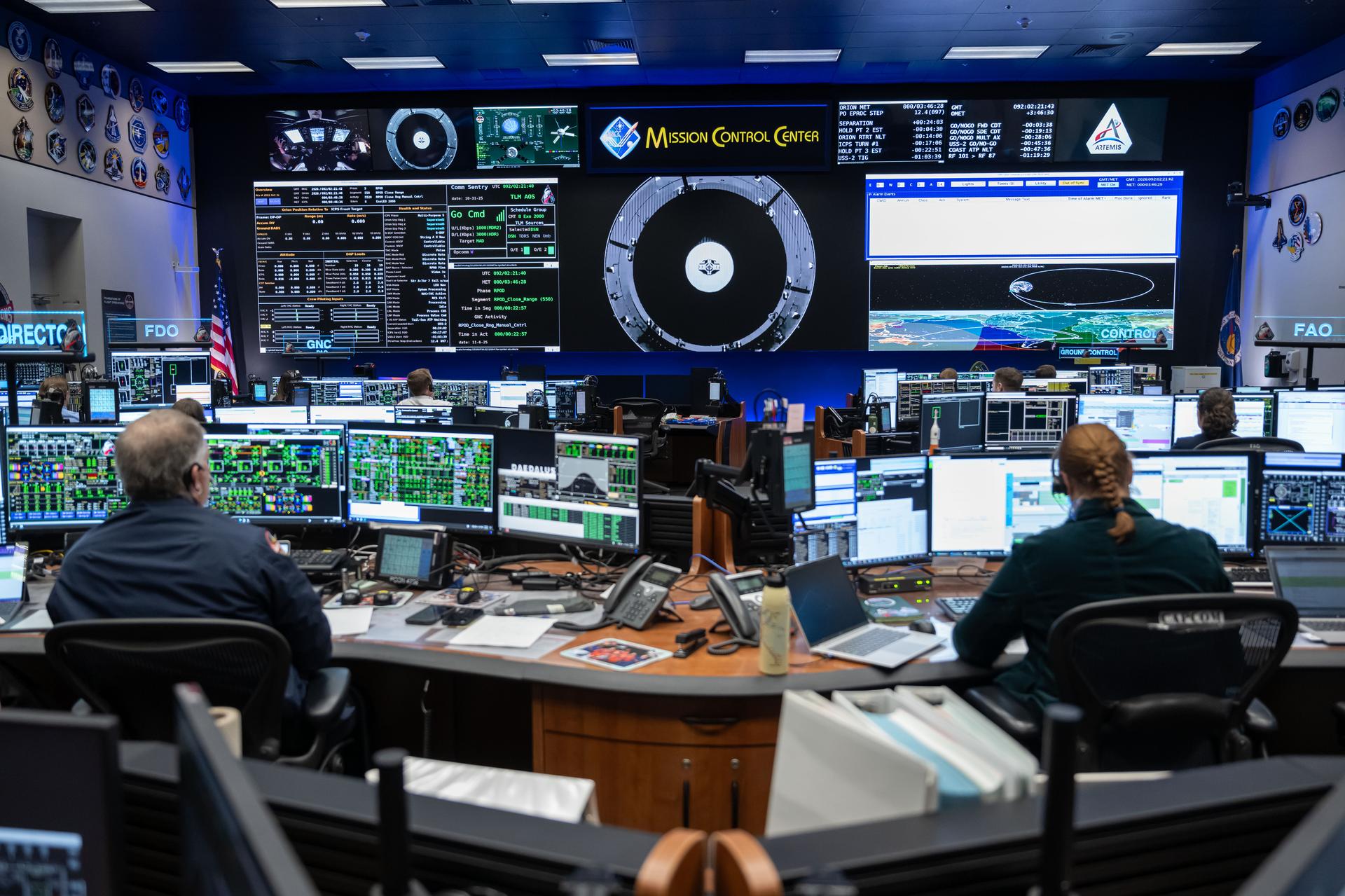
jsc2026e019255 (April 1, 2026) – Lead Artemis II Flight Director Jeff Radigan (left) and capsule communicator (capcom) Amy Dill (right) in the White Flight Control Room at the Mission Control Center at NASA’s Johnson Space Center in Houston. At the time of this photograph, a little over three hours into the mission, the Artemis II crew conducting a manual piloting test called the proximity operations demonstration. During the demonstration, mission controllers monitored Orion as the astronauts transitioned the spacecraft to manual mode and piloted its flight path and orientation. This demonstration will provide performance data and operational experience that cannot be readily gained on the ground in preparation for critical rendezvous, proximity operations, docking, and undocking for future Artemis missions. Credit: NASA
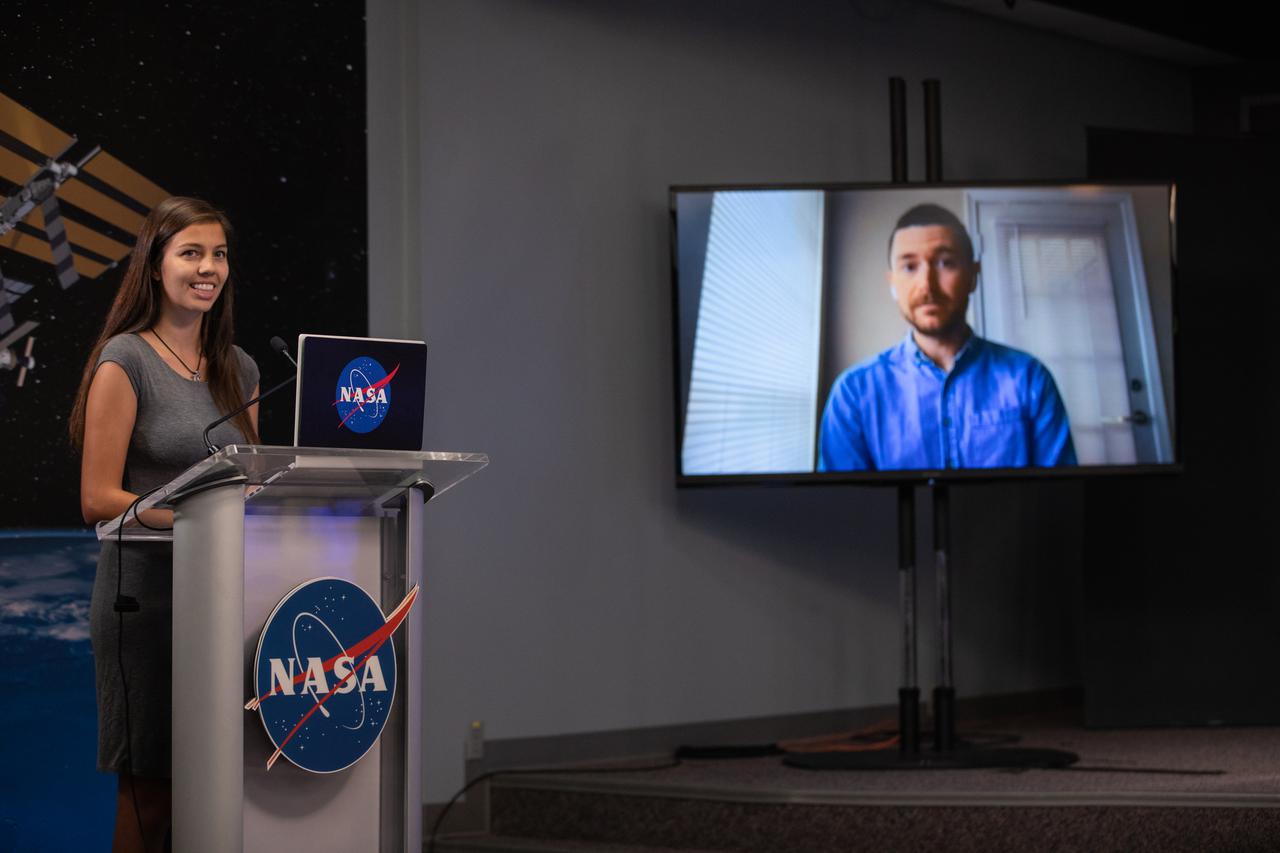
Antonia Jaramillo, NASA Communications, moderates a What’s On Board Science Briefing on June 2, 2021, at Kennedy Space Center in Florida for SpaceX’s 22nd Commercial Resupply Services mission for NASA to the International Space Station. On screen, principal investigator Dr. Thomas Boothby describes the Cell Science-04 experiment that will be delivered to the space station. Cell Science-04 will research the effects of microgravity on tardigrades, more commonly known as water bears. The results could advance understanding of the stress factors affecting humans in space. The SpaceX Falcon 9 rocket with the Dragon capsule atop is scheduled to launch at 1:29 p.m. EDT on Thursday, June 3, from the center’s Launch Complex 39A. Dragon will deliver more than 7,300 pounds of cargo and science experiments to the space station.
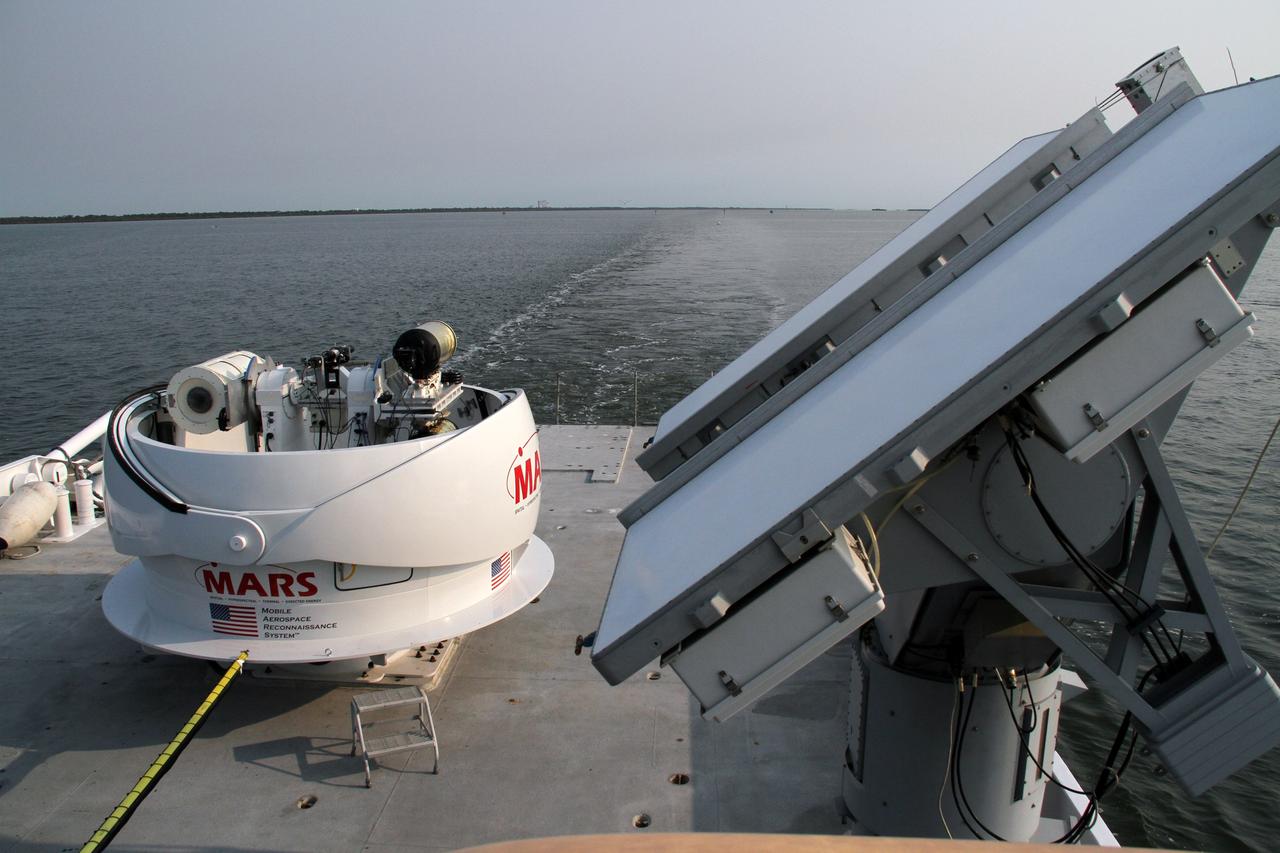
CAPE CANAVERAL, Fla. – NASA’s Freedom Star boat heads for the open waters of the Atlantic Ocean after departing from Port Canaveral in Florida. NASA’s Mobile Aerospace Reconnaissance System, or MARS, is secured aboard Freedom Star for a day of testing. MARS, run by NASA’s Langley Research Center in Hampton, Va., with its spatial, hyperspectral, thermal, and directed energy capabilities will be used for thermal imaging testing for the upcoming SpaceX Falcon 9 and Dragon capsule test flight to the International Space Station. During today’s test, the MARS X-band radar and kineto tracking mount KTM were tested to ensure that they were synchronized to receive a rocket launch feed. The radar was used to identify an object to see if the KTM could lock on to and track it. The MARS team performed maintenance on the system, confirmed communications links, and tested the design of the mounting system and environmental enclosure. Photo credit: NASA/Cory Huston
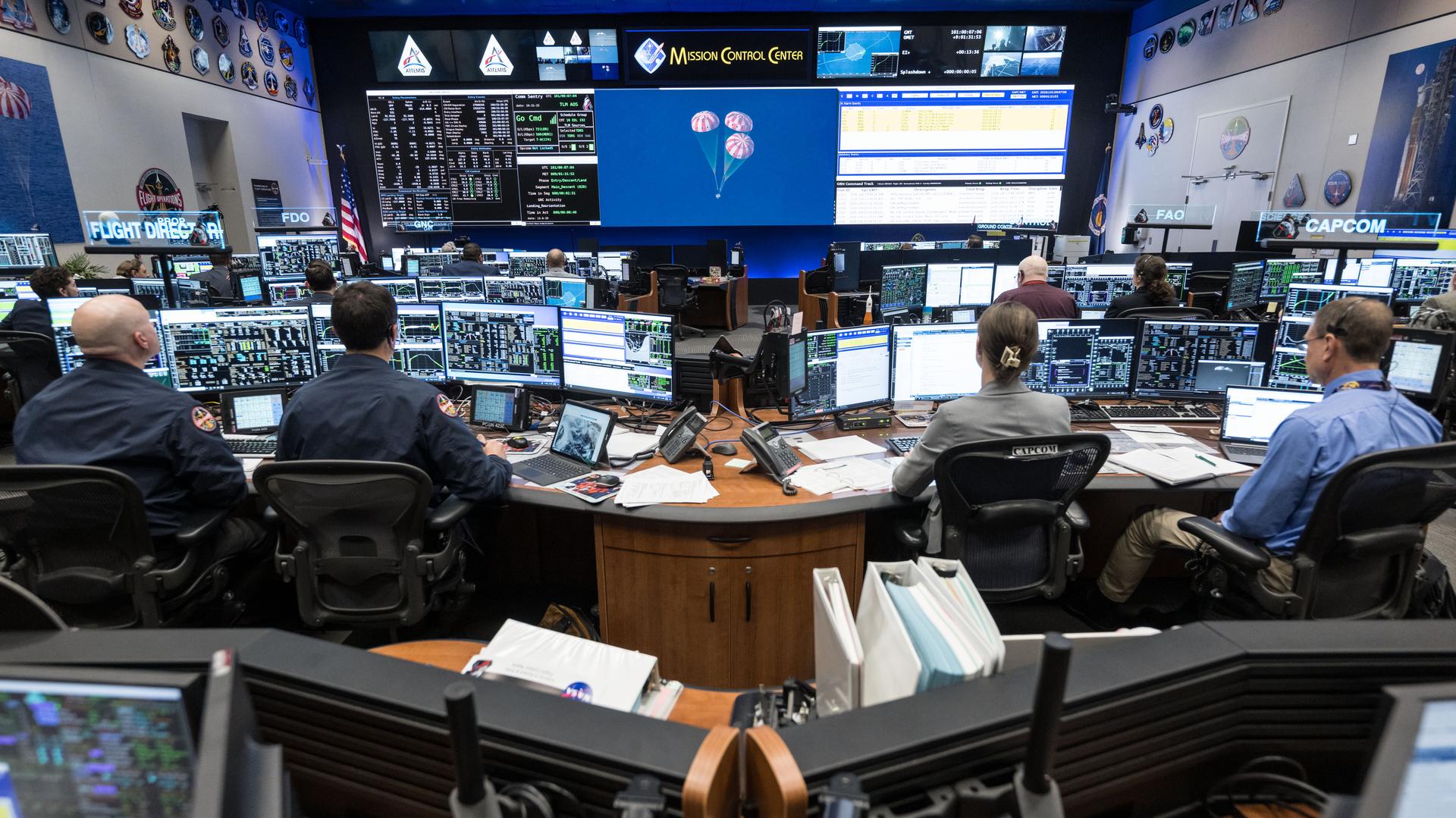
jsc2026e022251(April 10, 2026) - Artemis II Flight Control Team pictured at consoles within the White Flight Control Room in the Mission Control Center at NASA’s Johnson Space Center for the splashdown and recovery of the Artemis II crew as it landed in the Pacific Ocean off the coast of California, Friday, April 10, 2026 at 7:07 p.m. CDT. NASA’s Artemis II mission took NASA astronauts Reid Wiseman, commander; Victor Glover, pilot; Christina Koch, mission specialist; and CSA (Canadian Space Agency) astronaut Jeremy Hansen on a nearly 10-day journey around the Moon and back to Earth. In the foreground, from right to left, are Flight Director Judd Frieling, Flight Director Rick Henfling, CAPCOM (capsule communicator) Jacki Mahaffey, and astronaut Stan Love.
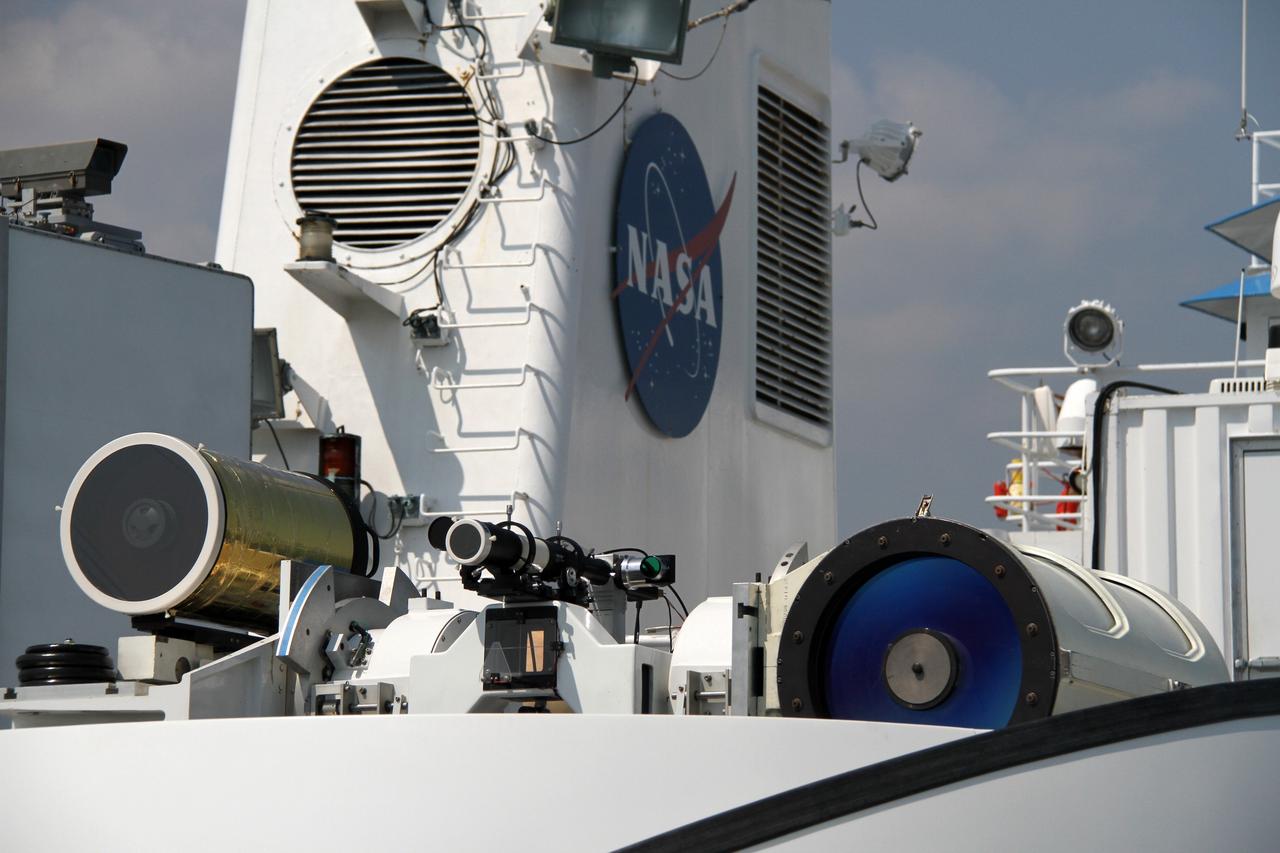
CAPE CANAVERAL, Fla. – Aboard NASA’s Freedom Star boat in the Atlantic Ocean off the coast of Port Canaveral in Florida, NASA’s Mobile Aerospace Reconnaissance System, or MARS, is being tested. MARS, run by NASA’s Langley Research Center in Hampton, Va., with its spatial, hyperspectral, thermal, and directed energy capabilities will be used for thermal imaging testing for the upcoming SpaceX Falcon 9 and Dragon capsule test flight to the International Space Station. During today’s test, the MARS X-band radar and kineto tracking mount KTM were tested to ensure that they were synchronized to receive a rocket launch feed. The radar was used to identify an object to see if the KTM could lock on to and track it. The MARS team performed maintenance on the system, confirmed communications links, and tested the design of the mounting system and environmental enclosure. Photo credit: NASA/Cory Huston
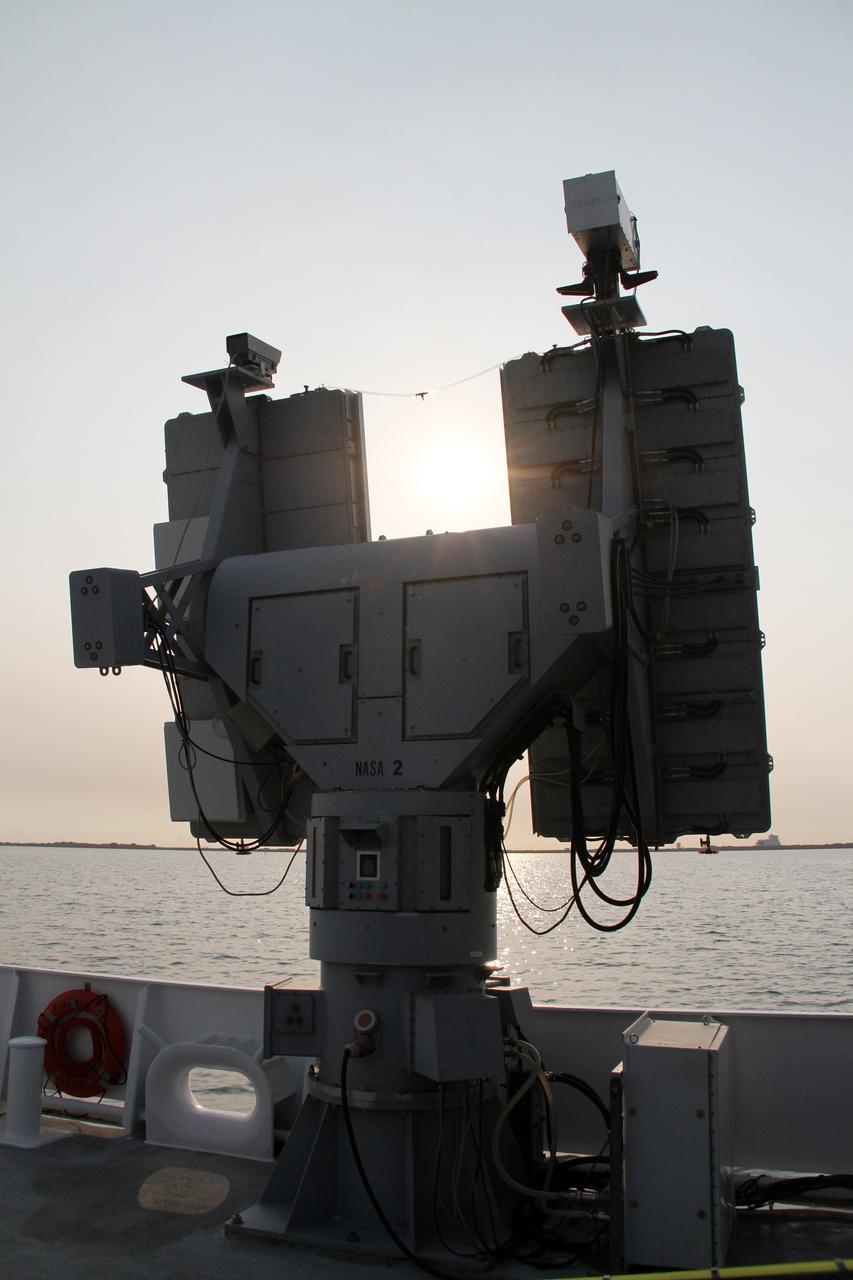
CAPE CANAVERAL, Fla. – NASA’s Freedom Star boat is heading back to Port Canaveral in Florida, after a full day of testing NASA’s Mobile Aerospace Reconnaissance System, or MARS, in the Atlantic Ocean. MARS, run by NASA’s Langley Research Center in Hampton, Va., with its spatial, hyperspectral, thermal, and directed energy capabilities will be used for thermal imaging testing for the upcoming SpaceX Falcon 9 and Dragon capsule test flight to the International Space Station. During today’s test, the MARS X-band radar and kineto tracking mount KTM were tested to ensure that they were synchronized to receive a rocket launch feed. The radar was used to identify an object to see if the KTM could lock on to and track it. The MARS team performed maintenance on the system, confirmed communications links, and tested the design of the mounting system and environmental enclosure. Photo credit: NASA/Cory Huston
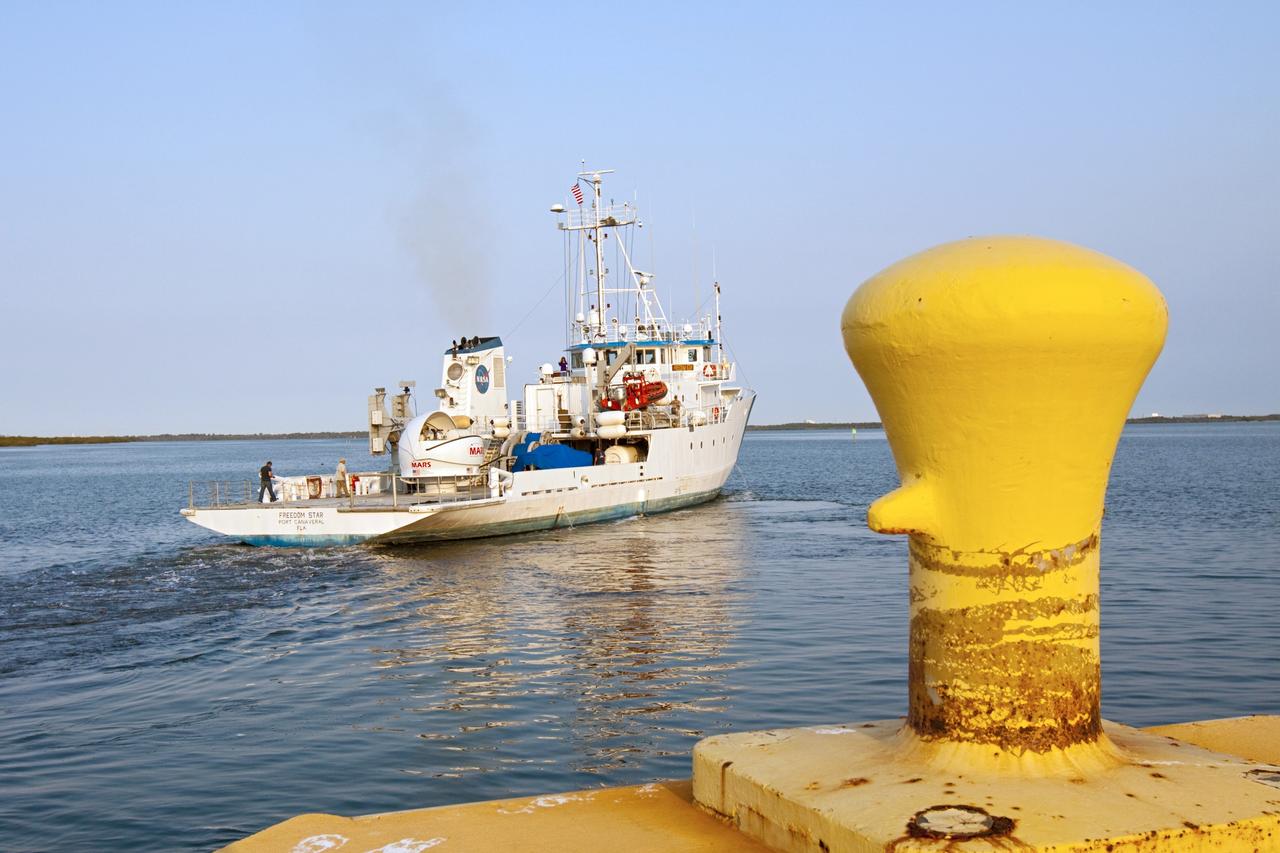
CAPE CANAVERAL, Fla. -- NASA’s Freedom Star boat sets out for a day of testing after departing from port near Cape Canaveral Air Force Station in Florida for the Atlantic Ocean with NASA’s Mobile Aerospace Reconnaissance System, or MARS, secured aboard. MARS, run by NASA’s Langley Research Center in Hampton, Va., with its spatial, hyperspectral, thermal, and directed energy capabilities will be used for thermal imaging testing for the upcoming SpaceX Falcon 9 and Dragon capsule test flight to the International Space Station. During today’s test, the MARS X-band radar and kineto tracking mount KTM were tested to ensure that they were synchronized to receive a rocket launch feed. The radar was used to identify an object to see if the KTM could lock on to and track it. The MARS team performed maintenance on the system, confirmed communications links, and tested the design of the mounting system and environmental enclosure. Photo credit: NASA/Jim Grossmann
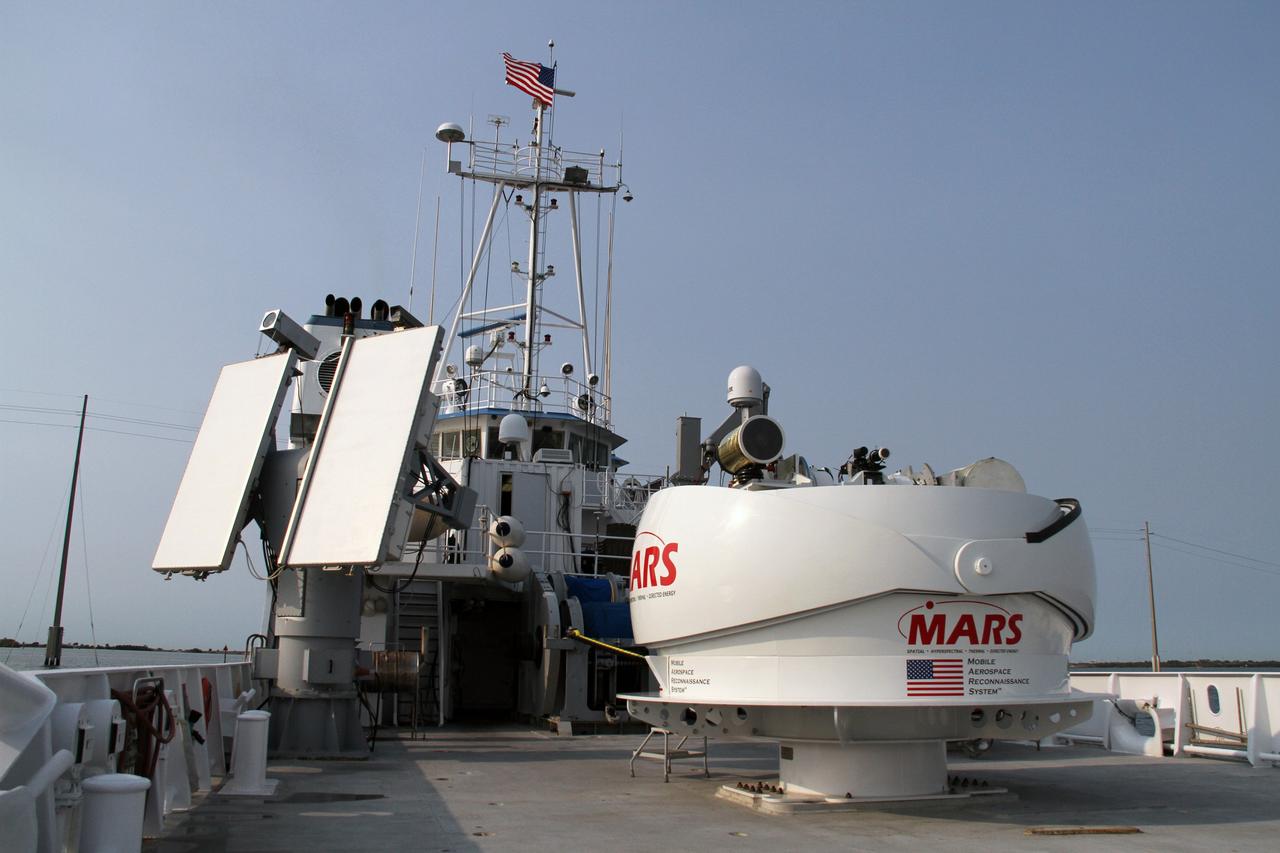
CAPE CANAVERAL, Fla. – NASA’s Freedom Star boat sets out for a day of testing after departing from port near Cape Canaveral Air Force Station in Florida for the Atlantic Ocean with NASA’s Mobile Aerospace Reconnaissance System, or MARS, secured aboard. MARS, run by NASA’s Langley Research Center in Hampton, Va., with its spatial, hyperspectral, thermal, and directed energy capabilities will be used for thermal imaging testing for the upcoming SpaceX Falcon 9 and Dragon capsule test flight to the International Space Station. During today’s test, the MARS X-band radar and kineto tracking mount KTM were tested to ensure that they were synchronized to receive a rocket launch feed. The radar was used to identify an object to see if the KTM could lock on to and track it. The MARS team performed maintenance on the system, confirmed communications links, and tested the design of the mounting system and environmental enclosure. Photo credit: NASA/Cory Huston
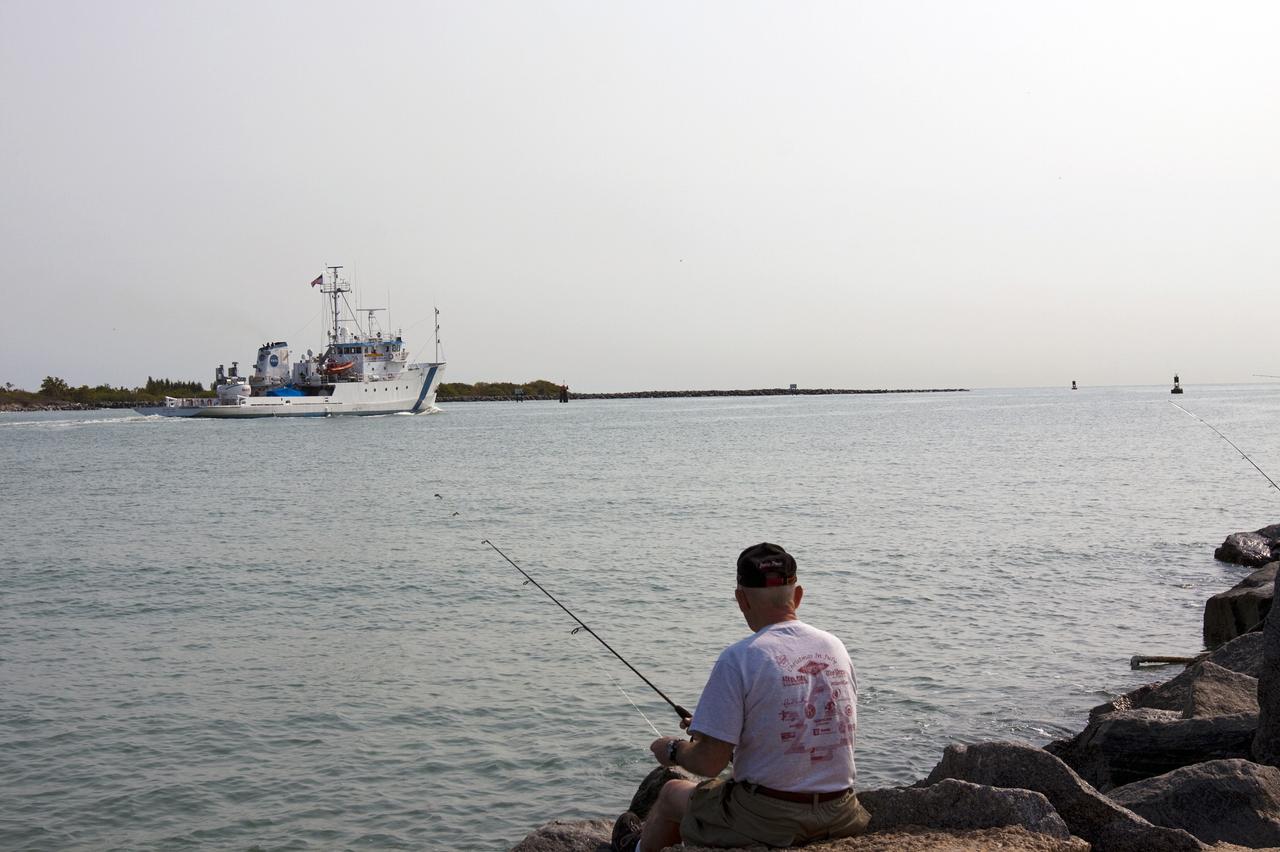
CAPE CANAVERAL, Fla. -- NASA’s Freedom Star boat sets out for a day of testing after departing through Port Canaveral in Florida for the Atlantic Ocean with NASA’s Mobile Aerospace Reconnaissance System, or MARS, secured aboard. MARS, run by NASA’s Langley Research Center in Hampton, Va., with its spatial, hyperspectral, thermal, and directed energy capabilities will be used for thermal imaging testing for the upcoming SpaceX Falcon 9 and Dragon capsule test flight to the International Space Station. During today’s test, the MARS X-band radar and kineto tracking mount KTM were tested to ensure that they were synchronized to receive a rocket launch feed. The radar was used to identify an object to see if the KTM could lock on to and track it. The MARS team performed maintenance on the system, confirmed communications links, and tested the design of the mounting system and environmental enclosure. Photo credit: NASA/Jim Grossmann
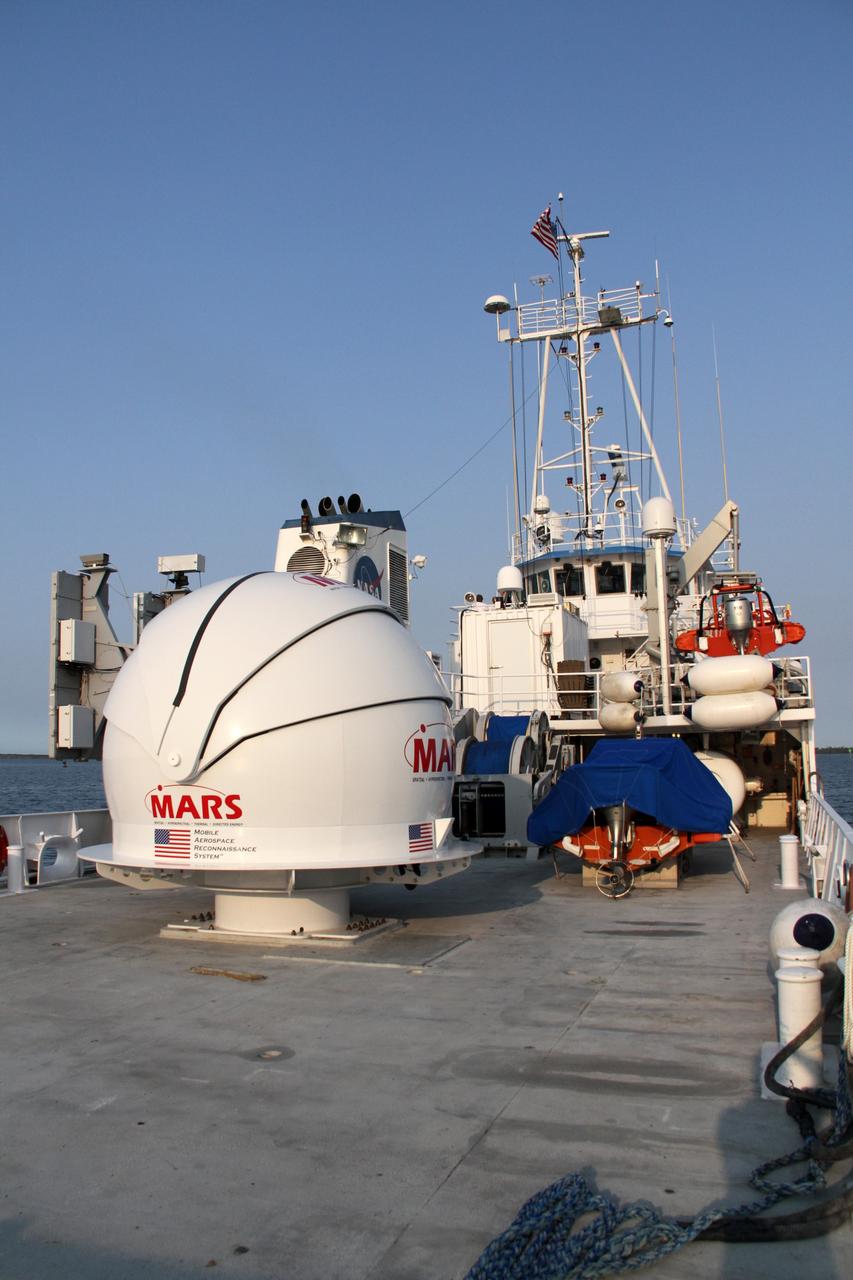
CAPE CANAVERAL, Fla. – NASA’s Freedom Star boat is heading back to Port Canaveral in Florida, after a full day of testing NASA’s Mobile Aerospace Reconnaissance System, or MARS, in the Atlantic Ocean. MARS, run by NASA’s Langley Research Center in Hampton, Va., with its spatial, hyperspectral, thermal, and directed energy capabilities will be used for thermal imaging testing for the upcoming SpaceX Falcon 9 and Dragon capsule test flight to the International Space Station. During today’s test, the MARS X-band radar and kineto tracking mount KTM were tested to ensure that they were synchronized to receive a rocket launch feed. The radar was used to identify an object to see if the KTM could lock on to and track it. The MARS team performed maintenance on the system, confirmed communications links, and tested the design of the mounting system and environmental enclosure. Photo credit: NASA/Cory Huston
![“I had the privilege of being the very first project manager for [the] Near Space Network (NSN), and in my current role as deputy program manager for [the] Exploration and Space Communications Division, it is still in my portfolio. NSN is one of the [agency’s two] communication and navigation networks. When we see the volume and the variety of NASA, other agency, and commercial missions supported by the network, and the science being achieved, and the exploration being enabled — when you leave for the day, you feel accomplished that you contributed [to the] agency’s goal. You contributed toward [the] nation’s priorities, such as cislunar [exploration], and then you helped humankind by enabling the science and exploration. Without communication, every satellite in this space is a black box. So, just knowing that every single day we are flowing terabytes of data through relay and direct-to-earth services directly to our [missions], enabling the exploration and achieving the science — is a great sense of accomplishment. ... Whatever role you are in, as long as you find a way to understand what mission, what goal, what objective you are contributing to, there is no bigger motivator than that. As a software programmer, normally you think that your job is to come in and write some code and solve some discrepancy reports and do the testing — and then you go home. But in the end, when you see that the program you are writing or fixing is something that controls the satellite that’s observing the sea levels and the sea temperatures or [controls] a capsule that is carrying astronauts, now you know you're actually contributing to a bigger purpose, a bigger objective. I say that to my team, whenever I have an opportunity. I share with my team that they are enabling science and exploration for dozens of missions being supported by NSN. Initially it just seems like words, but once they start realizing [their contributions] are real, I can tell you t](https://images-assets.nasa.gov/image/NHQ202402070014/NHQ202402070014~medium.jpg)
“I had the privilege of being the very first project manager for [the] Near Space Network (NSN), and in my current role as deputy program manager for [the] Exploration and Space Communications Division, it is still in my portfolio. NSN is one of the [agency’s two] communication and navigation networks. When we see the volume and the variety of NASA, other agency, and commercial missions supported by the network, and the science being achieved, and the exploration being enabled — when you leave for the day, you feel accomplished that you contributed [to the] agency’s goal. You contributed toward [the] nation’s priorities, such as cislunar [exploration], and then you helped humankind by enabling the science and exploration. Without communication, every satellite in this space is a black box. So, just knowing that every single day we are flowing terabytes of data through relay and direct-to-earth services directly to our [missions], enabling the exploration and achieving the science — is a great sense of accomplishment. ... Whatever role you are in, as long as you find a way to understand what mission, what goal, what objective you are contributing to, there is no bigger motivator than that. As a software programmer, normally you think that your job is to come in and write some code and solve some discrepancy reports and do the testing — and then you go home. But in the end, when you see that the program you are writing or fixing is something that controls the satellite that’s observing the sea levels and the sea temperatures or [controls] a capsule that is carrying astronauts, now you know you're actually contributing to a bigger purpose, a bigger objective. I say that to my team, whenever I have an opportunity. I share with my team that they are enabling science and exploration for dozens of missions being supported by NSN. Initially it just seems like words, but once they start realizing [their contributions] are real, I can tell you t
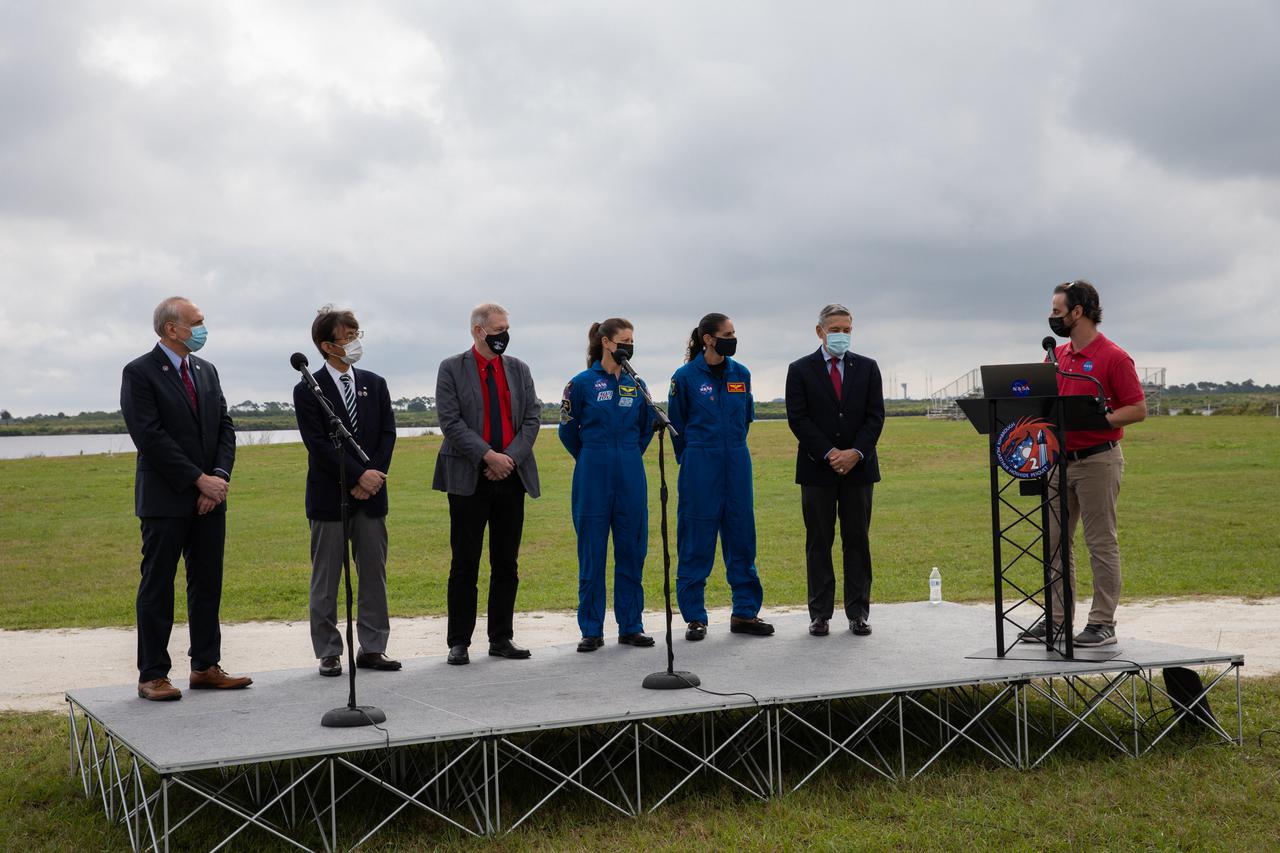
At right, moderator Joshua Santora, NASA Communications, addresses the participants in a NASA Social Facebook Live event held April 21, 2021, near the Press Site countdown clock at NASA’s Kennedy Space Center in Florida, ahead of the agency’s SpaceX Crew-2 launch. Participants, from left to right, are: Steve Jurczyk, acting NASA administrator; Hiroshi Sasaki, vice president and director general, JAXA’s Human Spaceflight Technology Directorate; Frank de Winne, manager, International Space Station Program, ESA; NASA astronauts Tracy Caldwell Dyson and Jasmin Moghbeli; and Kennedy Director Bob Cabana. Crew-2 is the second regular crew mission of a U.S. commercial spacecraft with astronauts to the International Space Station as part of NASA’s Commercial Crew Program. The SpaceX Crew Dragon Endeavour capsule will launch atop the company’s Falcon 9 rocket from Launch Complex 39A to the space station for a six-month science mission. Liftoff is targeted for Friday, April 23, at 5:49 a.m. EDT.
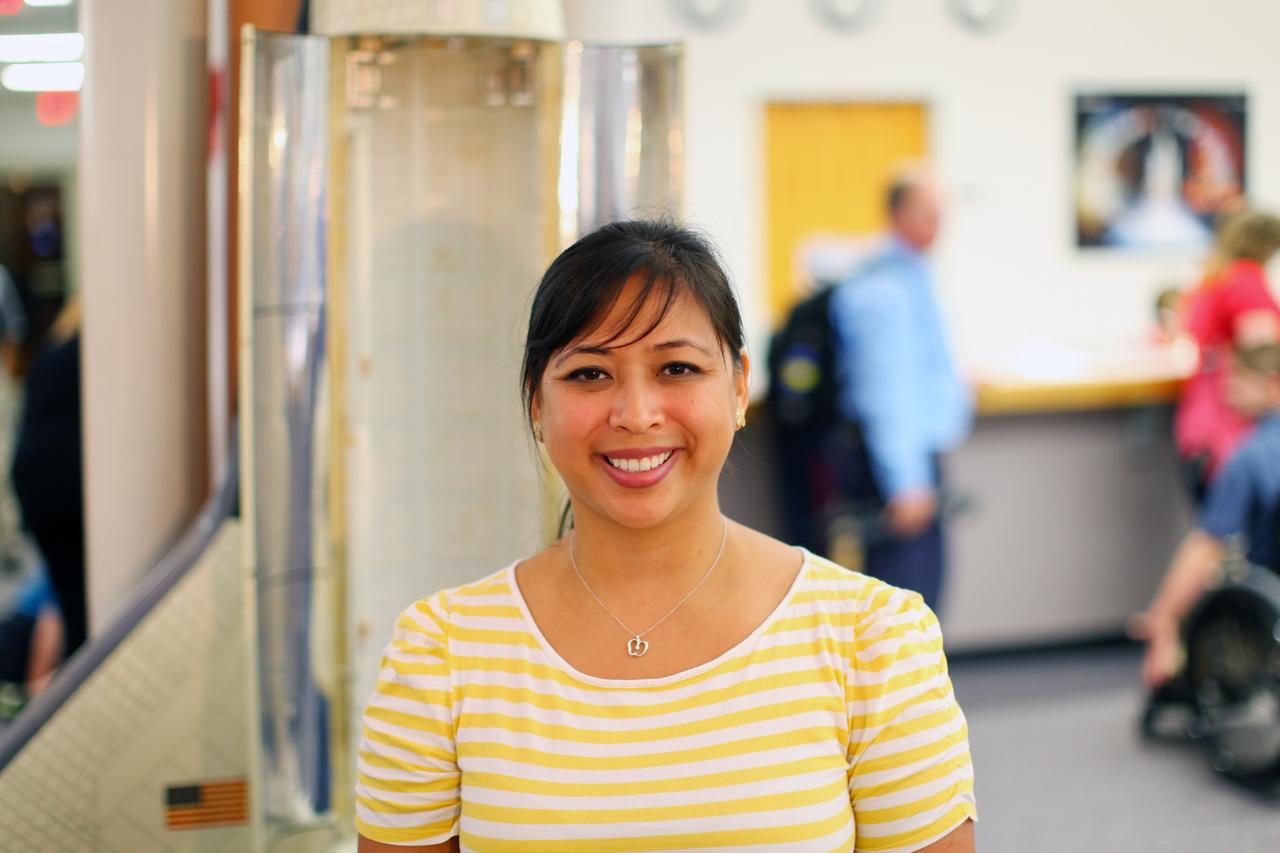
CAPE CANAVERAL, Fla. – Teacher Anthonette Pena is interviewed by the media in the NASA Newsroom at Kennedy Space Center in Florida during prelaunch activities for the SpaceX demonstration test flight. Pena is the facilitator for the student experiment developed by a team of eighth-graders at the Capitol Hill Cluster School in Washington, D.C. The experiment, “Does Hay Bacillus Break Down Human Waste Represented by Brown Egg in Microgravity as Well as in Earth Gravity?” is one of 15 in the Student Spaceflight Experiments Program, or SSEP, being ferried to the International Space Station inside the Dragon capsule. The launch will be the second demonstration test flight for SpaceX for NASA's Commercial Orbital Transportation Services program, or COTS. SSEP, which began operation in June 2010 through a partnership of the National Center for Earth and Space Science Education with NanoRacks LLC, is a U.S. national science, technology, engineering and mathematics STEM education initiative that gives students across a community the opportunity to propose and design real experiments to fly in low Earth orbit. SSEP experiments flew on space shuttle missions STS-134 and STS-135 in 2011, the final flights of space shuttles Endeavour and Atlantis. For more information on SSEP, visit http://www.nasa.gov/audience/foreducators/station-here-we-come.html. Photo credit: NASA/Gianni Woods

CAPE CANAVERAL, Fla. – Student investigator Emily Soice is interviewed by the media in the NASA Newsroom at Kennedy Space Center in Florida during prelaunch activities for the SpaceX demonstration test flight. Soice is an eighth-grade student at Johnston Middle School in Houston, Texas. Her experiment, “Hepatocyte Development in Bioscaffolds Infused with TGFB3 in Microgravity,” is one of 15 in the Student Spaceflight Experiments Program, or SSEP, being ferried to the International Space Station inside the Dragon capsule. The launch will be the second demonstration test flight for SpaceX for NASA's Commercial Orbital Transportation Services program, or COTS. SSEP, which began operation in June 2010 through a partnership of the National Center for Earth and Space Science Education with NanoRacks LLC, is a U.S. national science, technology, engineering and mathematics STEM education initiative that gives students across a community the opportunity to propose and design real experiments to fly in low Earth orbit. SSEP experiments flew on space shuttle missions STS-134 and STS-135 in 2011, the final flights of space shuttles Endeavour and Atlantis. For more information on SSEP, visit http://www.nasa.gov/audience/foreducators/station-here-we-come.html. Photo credit: NASA/Gianni Woods
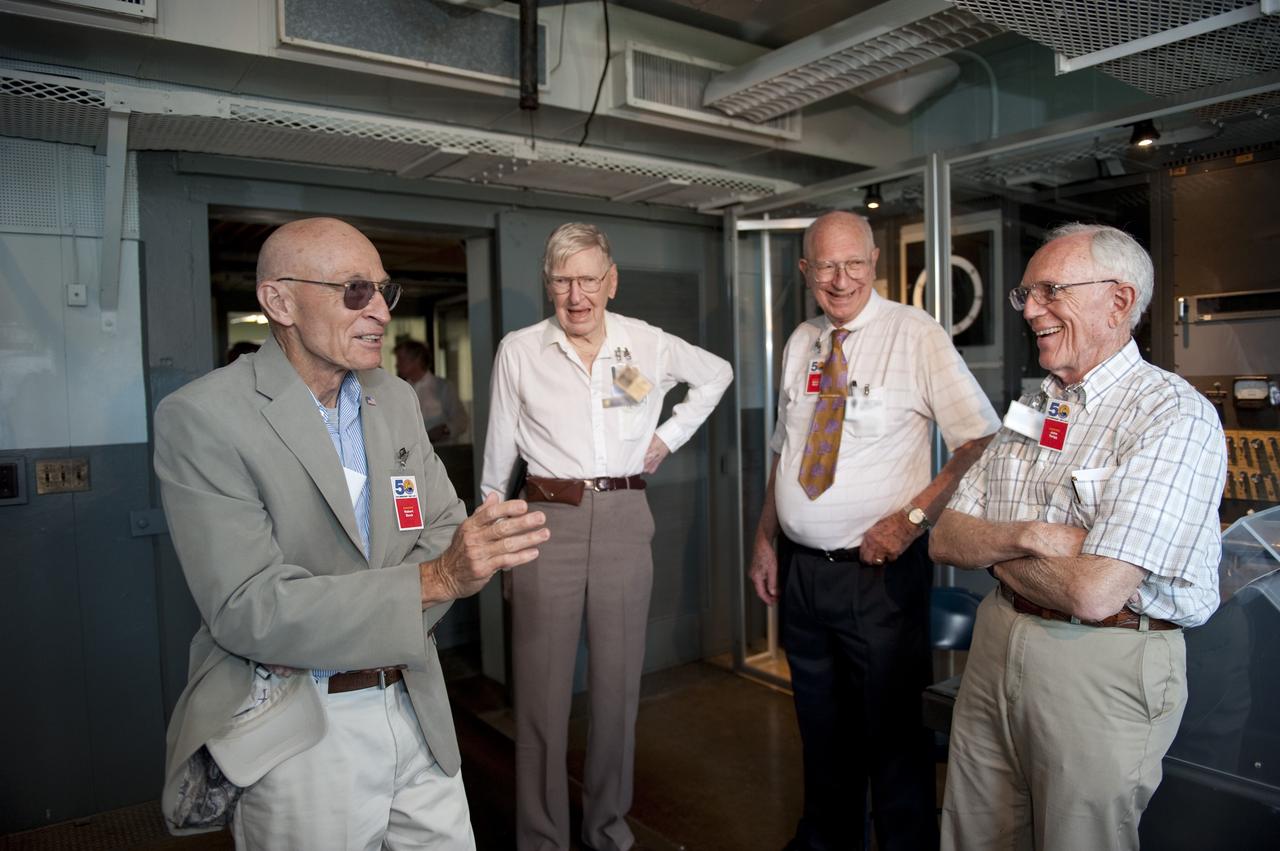
CAPE CANAVERAL, Fla. -- On Cape Canaveral Air Force Station in Florida, invited guests tour the blockhouse at Complex 5/6 during a celebration of Alan Shepard's historic flight 50 years ago. From left are Robert Sieck, former shuttle launch director; Andy Anderson, former manager for communications in the Mercury Mission Control Center; Bob Moser, former chief test conductor for the Mercury-Redstone launches; and John Twigg, former backup chief test conductor for the Mercury-Redstone launches. The celebration was held at the launch site of the first U.S. manned spaceflight May 5, 1961, to mark the 50th anniversary of the flight. Fifty years ago, astronaut Alan Shepard lifted off inside the Mercury capsule, "Freedom 7," atop an 82-foot-tall Mercury-Redstone rocket at 9:34 a.m. EST, sending him on a remarkably successful, 15-minute suborbital flight. The event was attended by more than 200 workers from the original Mercury program and included a re-creation of Shepard's flight and recovery, as well as a tribute to his contributions as a moonwalker on the Apollo 14 lunar mission. For more information, visit www.nasa.gov/topics/history/milestones/index.html. Photo credit: NASA/Kim Shiflett
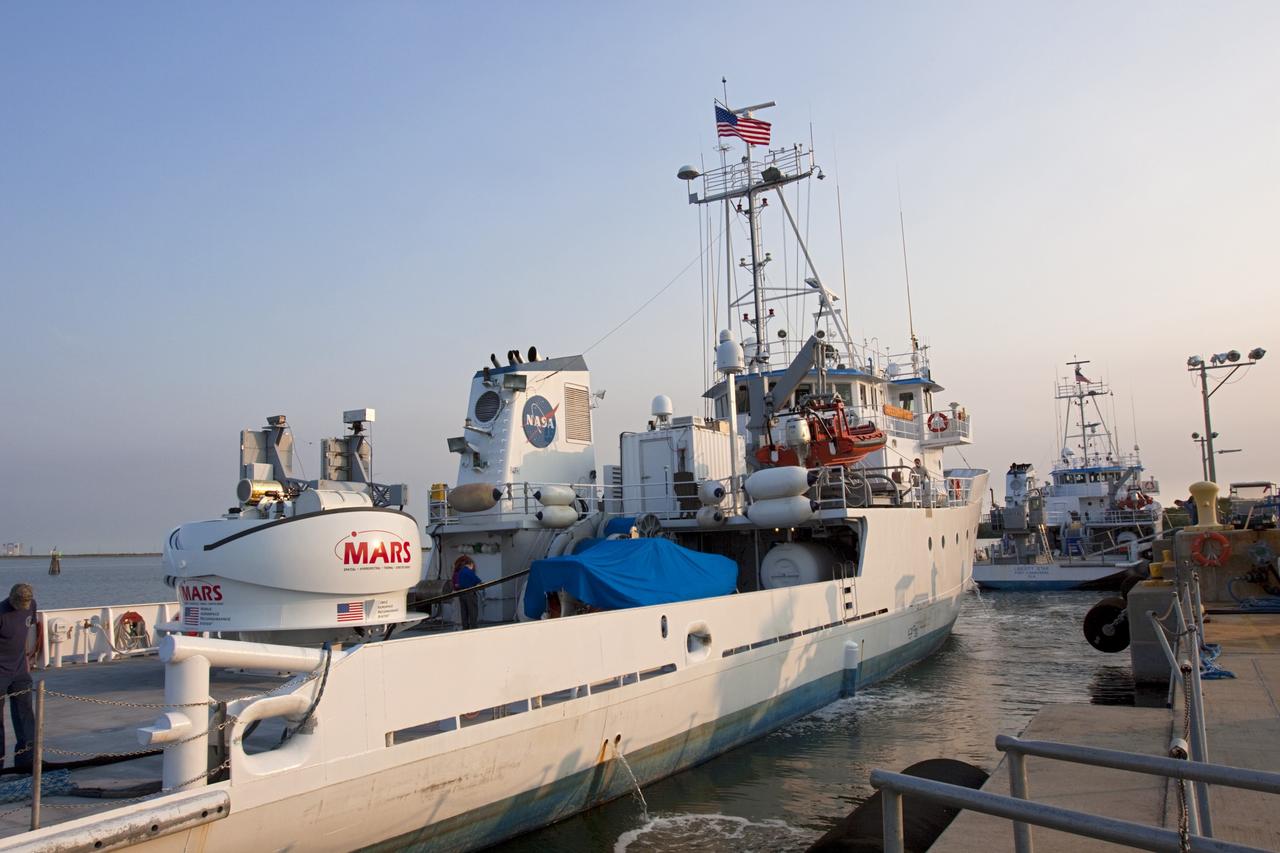
CAPE CANAVERAL, Fla. -- NASA’s Mobile Aerospace Reconnaissance System, or MARS, is secured aboard NASA’s Freedom Star boat near Hangar AE at Cape Canaveral Air Force Station in Florida. MARS is being prepared for a day of testing after departing from Port Canaveral out to the Atlantic Ocean. MARS, run by NASA’s Langley Research Center in Hampton, Va., with its spatial, hyperspectral, thermal, and directed energy capabilities will be used for thermal imaging testing for the upcoming SpaceX Falcon 9 and Dragon capsule test flight to the International Space Station. During today’s test, the MARS X-band radar and kineto tracking mount KTM were tested to ensure that they were synchronized to receive a rocket launch feed. The radar was used to identify an object to see if the KTM could lock on to and track it. The MARS team performed maintenance on the system, confirmed communications links, and tested the design of the mounting system and environmental enclosure. Photo credit: NASA/Jim Grossmann
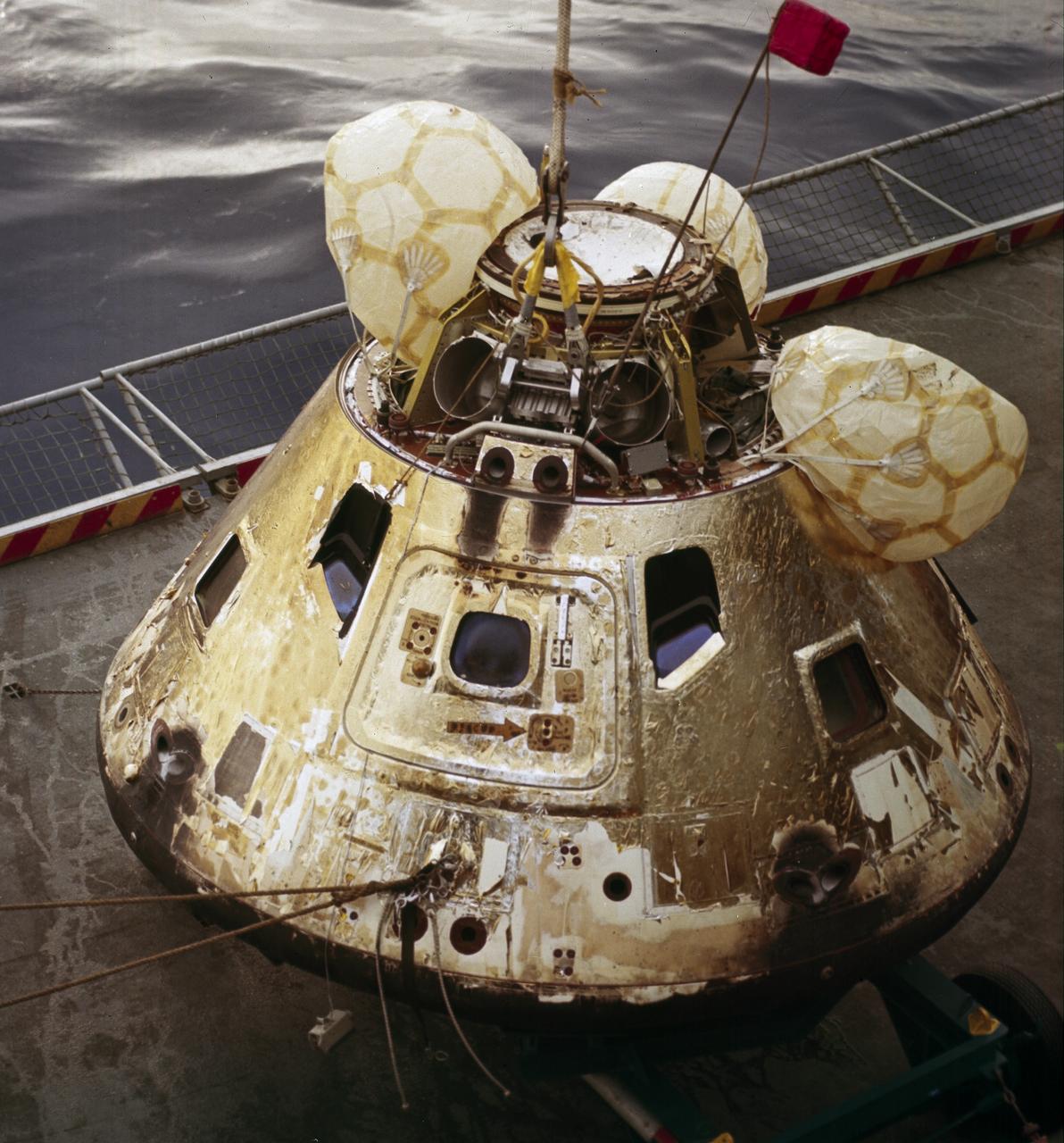
This is a photograph of the Apollo 8 Capsule being hoisted onto the recovery ship following splashdown on December 27, 1968. The first manned Apollo mission to escape Earth’s gravity and travel to the lunar vicinity, the Saturn V, SA-503, Apollo 8 mission liftoff occurred seven days prior, on December 21, 1968. Aboard were astronauts William Anders, Lunar Module (LM) Pilot; James Lovell, Command Module (CM) pilot; and Frank Borman, commander. The mission achieved operational experience and tested the Apollo command module systems, including communications, tracking, and life-support, in cis-lunar space and lunar orbit, and allowed evaluation of crew performance on a lunar orbiting mission. The crew photographed the lunar surface, both far side and near side, obtaining information on topography and landmarks as well as other scientific information necessary for future Apollo landings. All systems operated within allowable parameters and all objectives of the mission were achieved.
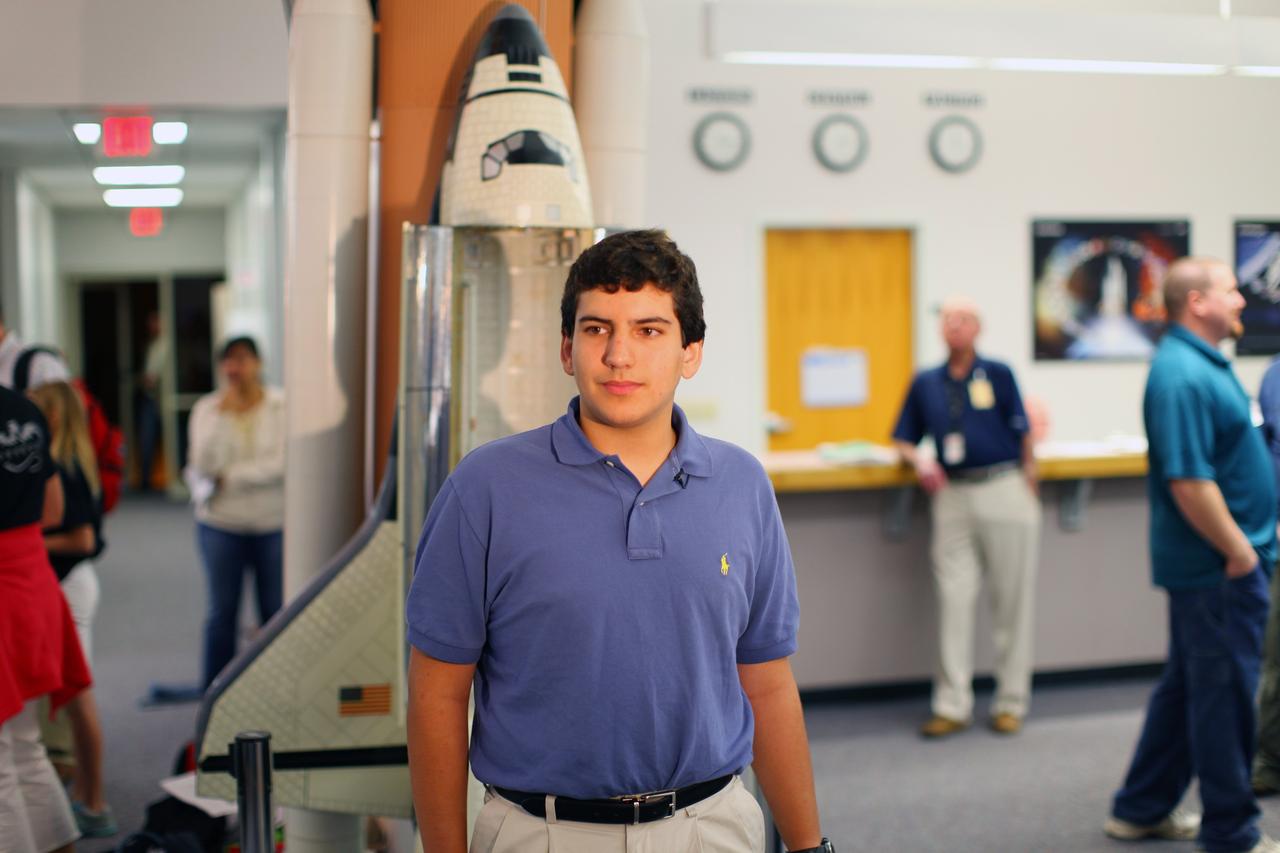
CAPE CANAVERAL, Fla. – Student investigator Ryan Puri is interviewed by the media in the NASA Newsroom at Kennedy Space Center in Florida during prelaunch activities for the SpaceX demonstration test flight. Puri, a tenth-grade student at San Marino High School in San Marino, Calif., is co-investigator of the student-developed experiment “Effect of Microgravity on the Antibacterial Resistance of P. aeruginosa.” The experiment is one of 15 in the Student Spaceflight Experiments Program, or SSEP, being ferried to the International Space Station inside the Dragon capsule. The launch will be the second demonstration test flight for SpaceX for NASA's Commercial Orbital Transportation Services program, or COTS. SSEP, which began operation in June 2010 through a partnership of the National Center for Earth and Space Science Education with NanoRacks LLC, is a U.S. national science, technology, engineering and mathematics STEM education initiative that gives students across a community the opportunity to propose and design real experiments to fly in low Earth orbit. SSEP experiments flew on space shuttle missions STS-134 and STS-135 in 2011, the final flights of space shuttles Endeavour and Atlantis. For more information on SSEP, visit http://www.nasa.gov/audience/foreducators/station-here-we-come.html. Photo credit: NASA/Gianni Woods
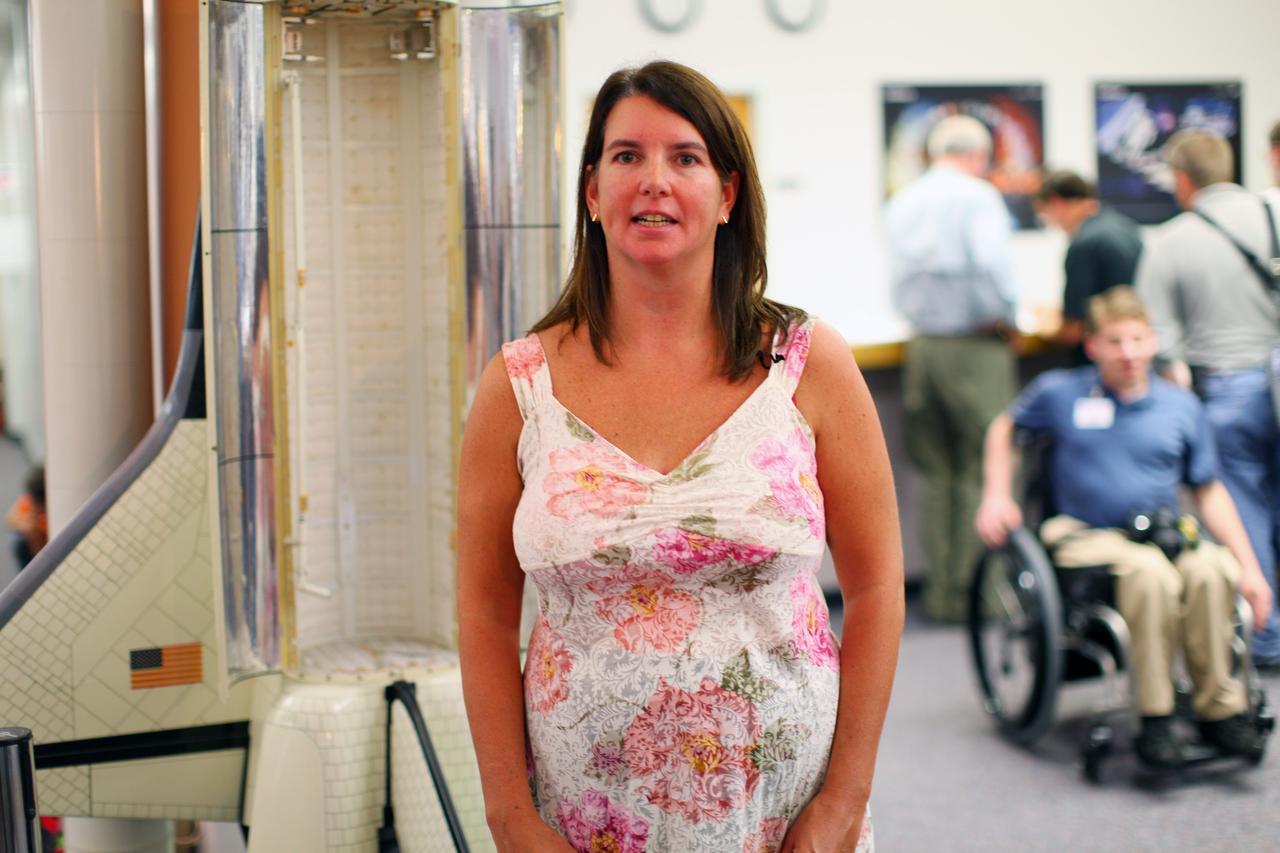
CAPE CANAVERAL, Fla. – Dr. Freya Shephard is interviewed by the media in the NASA Newsroom at Kennedy Space Center in Florida during prelaunch activities for the SpaceX demonstration test flight. Shephard is a researcher from the University of Nottingham in the United Kingdom and mentor to Paul Warren, an eleventh-grade student investigator from Henry E. Lackey High School in Charles County, Md. Warren’s experiment “Physiological Effects of Microgravity and Increased Levels of Radiation on Wild Type and Genetically Engineered Caenorhabditis elegans,” is one of 15 in the Student Spaceflight Experiments Program, or SSEP, being ferried to the International Space Station inside the Dragon capsule. The launch will be the second demonstration test flight for SpaceX for NASA's Commercial Orbital Transportation Services program, or COTS. SSEP, which began operation in June 2010 through a partnership of the National Center for Earth and Space Science Education with NanoRacks LLC, is a U.S. national science, technology, engineering and mathematics STEM education initiative that gives students across a community the opportunity to propose and design real experiments to fly in low Earth orbit. SSEP experiments flew on space shuttle missions STS-134 and STS-135 in 2011, the final flights of space shuttles Endeavour and Atlantis. For more information on SSEP, visit http://www.nasa.gov/audience/foreducators/station-here-we-come.html. Photo credit: NASA/Gianni Woods
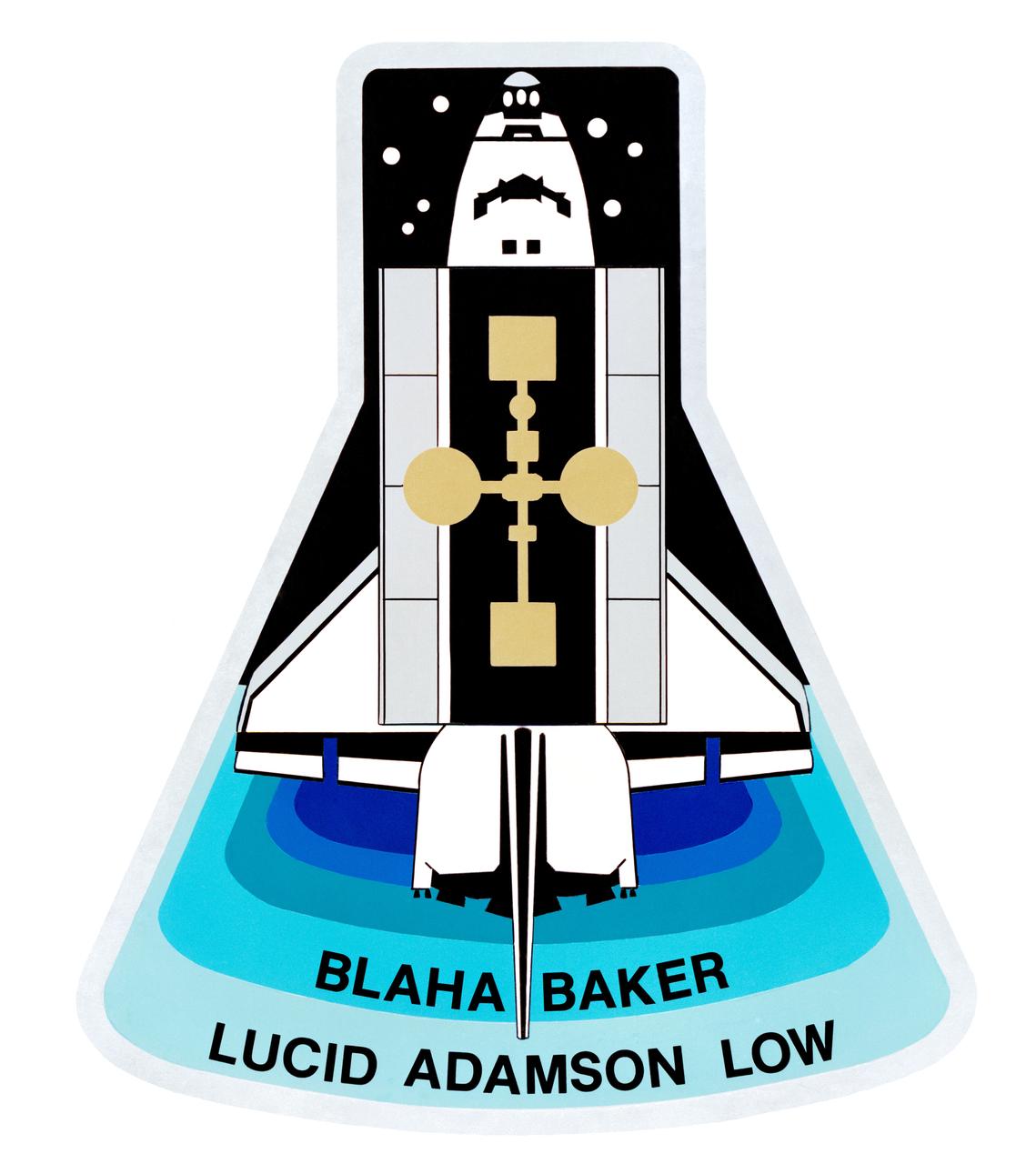
STS043-S-001 (6 Feb. 1991) --- Designed by the astronauts assigned to fly on the mission, the STS-43 patch portrays the evolution and continuity of the United States of America's space program by highlighting 30 years of American manned space flight experience - from Mercury to the space shuttle. The emergence of the space shuttle Atlantis from the outlined configuration of the Mercury space capsule commemorates this special relationship. The energy and momentum of launch are conveyed by the gradations of blue which mark the space shuttle's ascent from Earth to space. Once in Earth orbit, Atlantis' cargo bay opens to reveal the Tracking and Data Relay Satellite (TDRS) which appears in gold emphasis against the white wings of the space shuttle Atlantis and the stark blackness of space. A primary mission objective, the Tracking and Data Relay Satellite System (TDRSS) will enable almost continuous communication from Earth to space for future space shuttle missions. The stars on the patch are arranged to suggest this mission's numerical designation, with four stars left of Atlantis and three to the right. The NASA insignia design for space shuttle flights is reserved for use by the astronauts and for other official use as the NASA Administrator may authorize. Public availability has been approved only in the forms of illustrations by the various news media. When and if there is any change in this policy, which is not anticipated, the change will be publicly announced. Photo credit: NASA
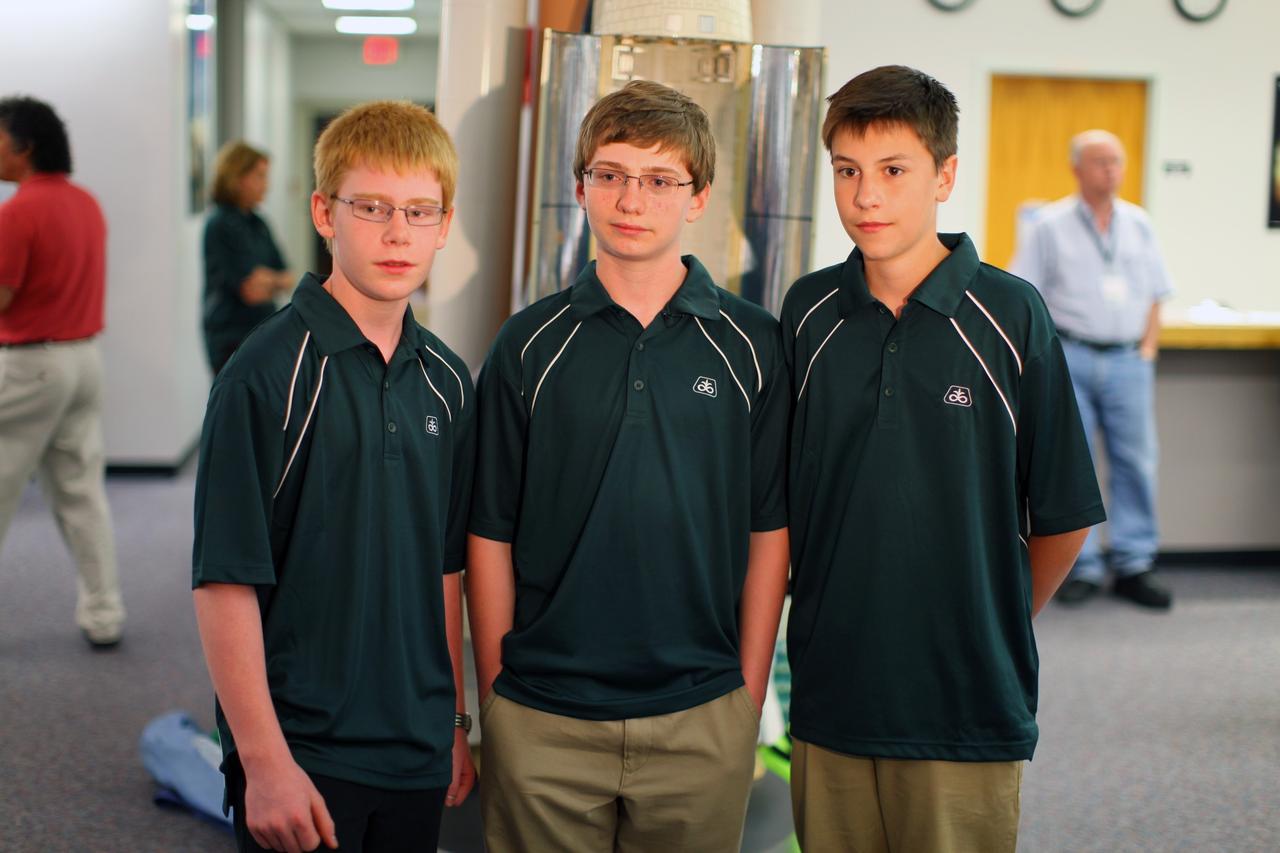
CAPE CANAVERAL, Fla. – Student investigators Cameron Zandstra, Jack Barth and JP Peerbolte are interviewed by the media in the NASA Newsroom at Kennedy Space Center in Florida during prelaunch activities for the SpaceX demonstration test flight. The team members are seventh- and eighth-grade students at Highland Christian School in Lake County, Ind. Their experiment, “The Effect of Microgravity on the Quality and Nutritional Value of the Seed Sprout of Germinated 92M72 Genetically-Modified Soy Bean,” is one of 15 in the Student Spaceflight Experiments Program, or SSEP, being ferried to the International Space Station inside the Dragon capsule. The launch will be the second demonstration test flight for SpaceX for NASA's Commercial Orbital Transportation Services program, or COTS. SSEP, which began operation in June 2010 through a partnership of the National Center for Earth and Space Science Education with NanoRacks LLC, is a U.S. national science, technology, engineering and mathematics STEM education initiative that gives students across a community the opportunity to propose and design real experiments to fly in low Earth orbit. SSEP experiments flew on space shuttle missions STS-134 and STS-135 in 2011, the final flights of space shuttles Endeavour and Atlantis. For more information on SSEP, visit http://www.nasa.gov/audience/foreducators/station-here-we-come.html. Photo credit: NASA/Gianni Woods
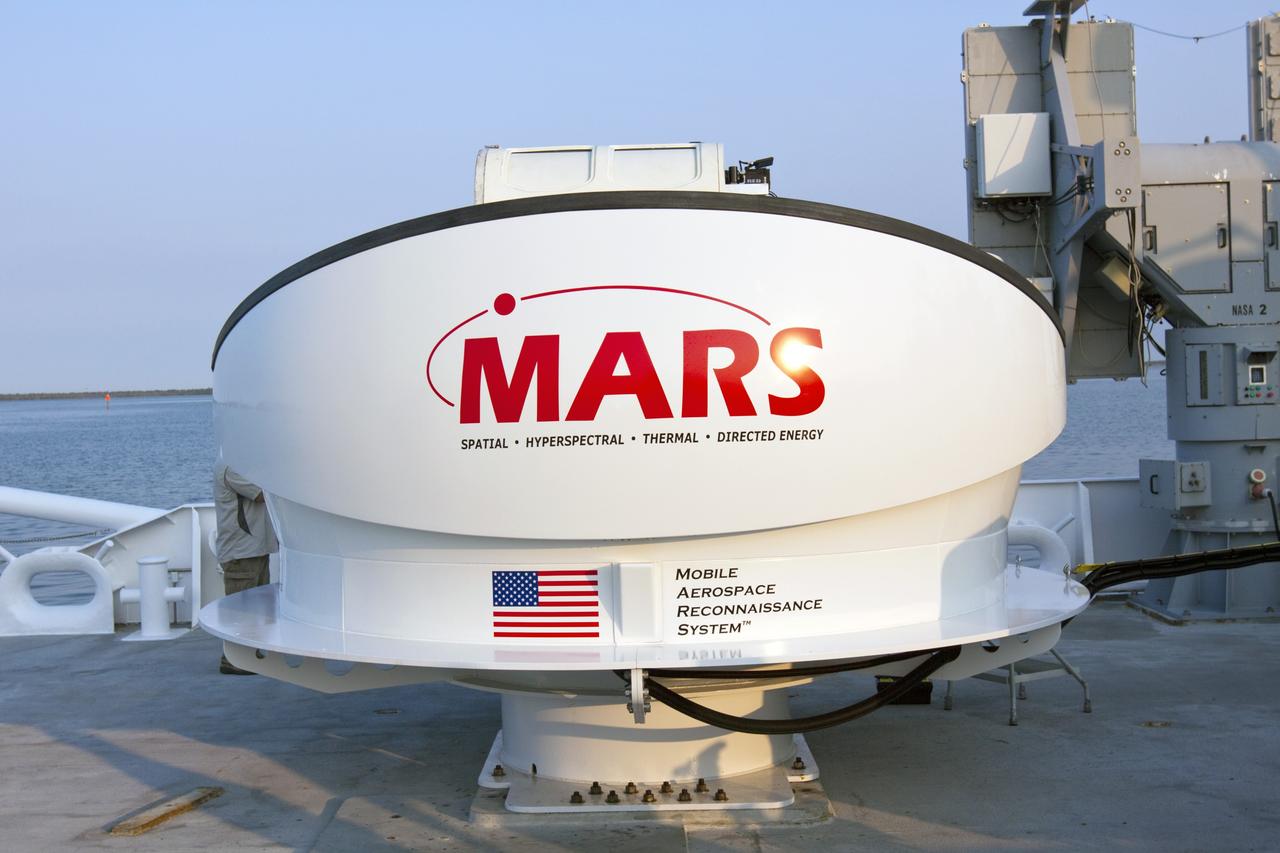
CAPE CANAVERAL, Fla. -- NASA’s Mobile Aerospace Reconnaissance System, or MARS, is secured aboard NASA’s Freedom Star boat near Hangar AE at Cape Canaveral Air Force Station in Florida. MARS is being prepared for a day of testing after departing from Port Canaveral out to the Atlantic Ocean. MARS, run by NASA’s Langley Research Center in Hampton, Va., with its spatial, hyperspectral, thermal, and directed energy capabilities will be used for thermal imaging testing for the upcoming SpaceX Falcon 9 and Dragon capsule test flight to the International Space Station. During today’s test, the MARS X-band radar and kineto tracking mount KTM were tested to ensure that they were synchronized to receive a rocket launch feed. The radar was used to identify an object to see if the KTM could lock on to and track it. The MARS team performed maintenance on the system, confirmed communications links, and tested the design of the mounting system and environmental enclosure. Photo credit: NASA/Jim Grossmann
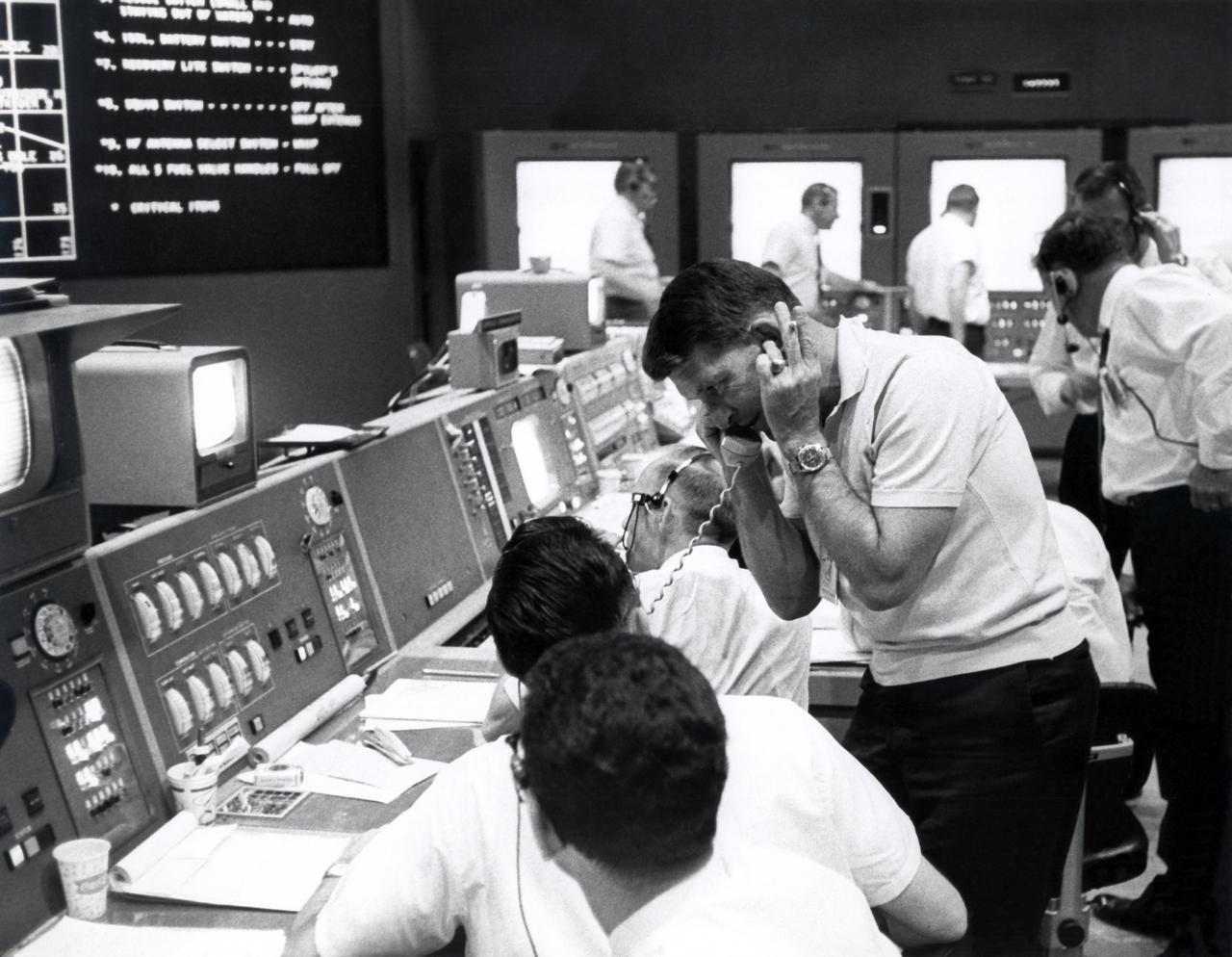
CAPE CANAVERAL, Fla. - Inside Mercury Mission Control, astronaut Wally Schirra, capsule communicator, or capcom for the Mercury-Atlas 9 mission, talks to Trudy Cooper, wife of astronaut Gordon Cooper, on May 16, 1963, to inform her that he had just been recovered by the USS Kearsarge after his 22-orbit flight. The Mercury Mission Control Center in Florida played a key role in the United States' early spaceflight program. Located at Cape Canaveral Air Force Station, the original part of the building was constructed between 1956 and 1958, with additions in 1959 and 1963. The facility officially was transferred to NASA on Dec. 26, 1963, and served as mission control during all the Project Mercury missions, as well as the first three flights of the Gemini Program, when it was renamed Mission Control Center. With its operational days behind, on June 1, 1967, the Mission Control Center became a stop on the public tour of NASA facilities until the mid-90s. In 1999, much of the equipment and furnishings from the Flight Control Area were moved to the Kennedy Space Center Visitor Complex where they became part of the exhibit there. The building was demolished in spring 2010. Photo credit: NASA
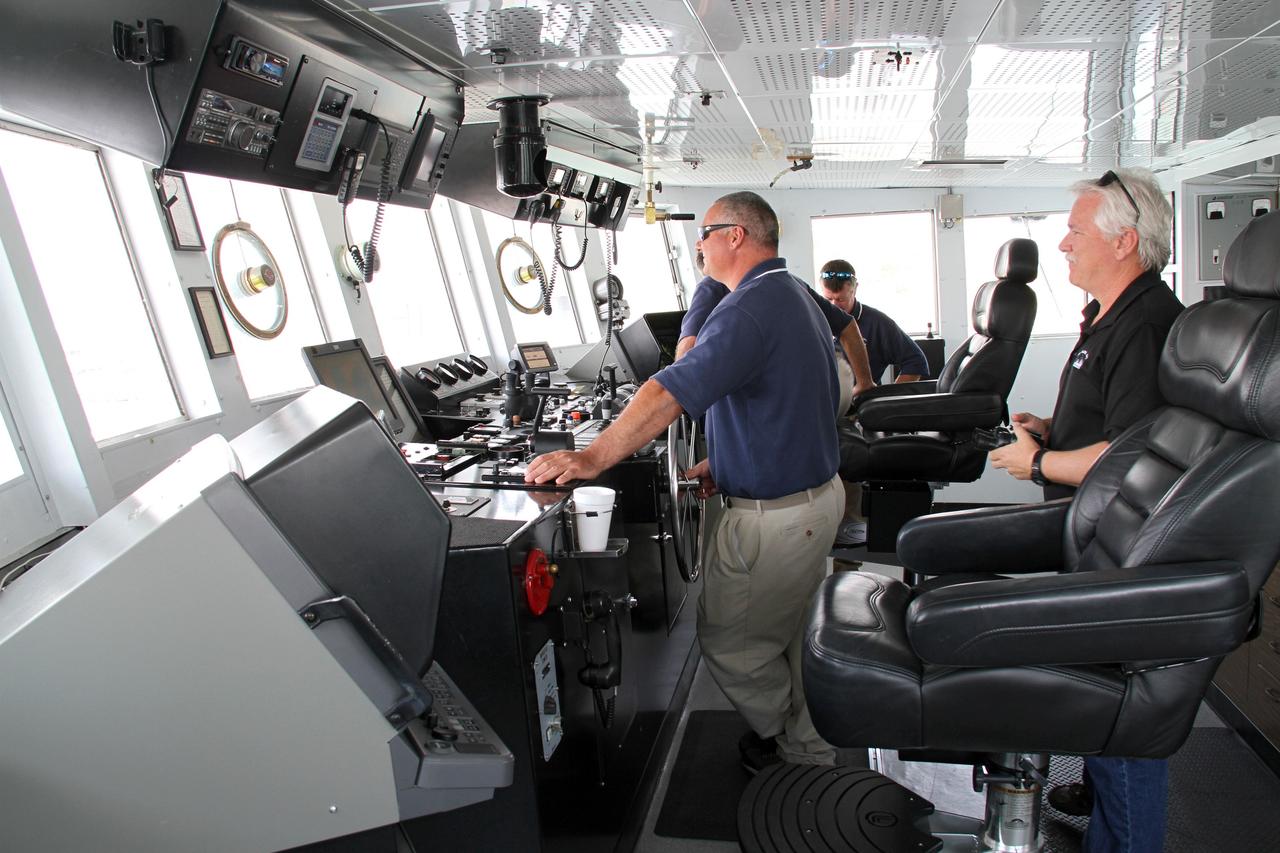
CAPE CANAVERAL, Fla. – Aboard NASA’s Freedom Star boat, from left, Boatswain Allan Gravina at the wheel, Captain Mike Nicholas hidden, Aerospace Technician Darin Schuster and Marine Operations Manager Joe Chaput, all with United Space Alliance, monitor the progress as NASA’s Mobile Aerospace Reconnaissance System, or MARS, secured on the boat, is being prepared for a day of testing in the Atlantic Ocean off the coast of Port Canaveral in Florida. MARS, run by NASA’s Langley Research Center in Hampton, Va., with its spatial, hyperspectral, thermal, and directed energy capabilities will be used for thermal imaging testing for the upcoming SpaceX Falcon 9 and Dragon capsule test flight to the International Space Station. During today’s test, the MARS X-band radar and kineto tracking mount KTM were tested to ensure that they were synchronized to receive a rocket launch feed. The radar was used to identify an object to see if the KTM could lock on to and track it. The MARS team performed maintenance on the system, confirmed communications links, and tested the design of the mounting system and environmental enclosure. Photo credit: NASA/Cory Huston
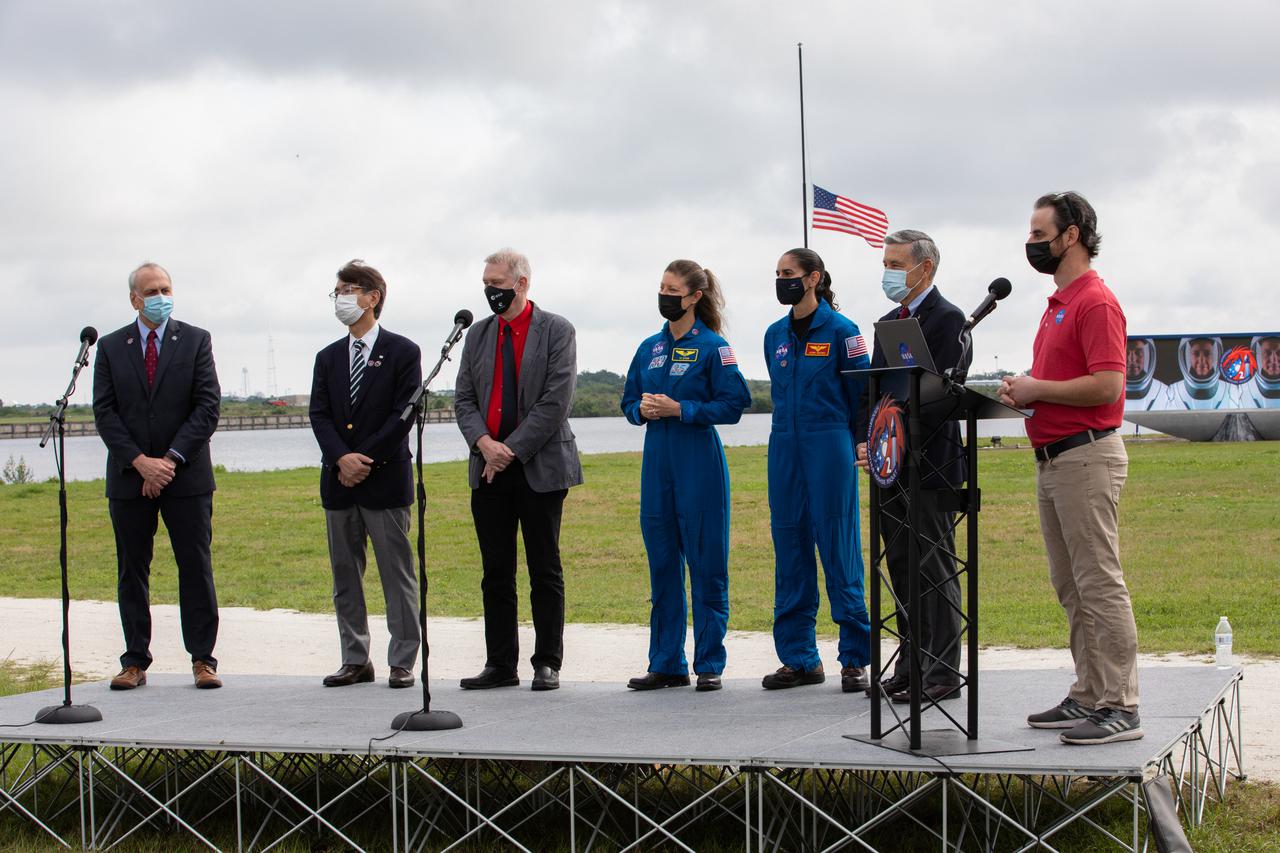
At right, moderator Joshua Santora, NASA Communications, addresses the audience during a NASA Social Facebook Live event held April 21, 2021, near the Press Site countdown clock at NASA’s Kennedy Space Center in Florida, ahead of the agency’s SpaceX Crew-2 launch. Participants, from left to right, are: Steve Jurczyk, acting NASA administrator; Hiroshi Sasaki, vice president and director general, JAXA’s Human Spaceflight Technology Directorate; Frank de Winne, manager, International Space Station Program, ESA; NASA astronauts Tracy Caldwell Dyson and Jasmin Moghbeli; and Kennedy Director Bob Cabana. Crew-2 is the second regular crew mission of a U.S. commercial spacecraft with astronauts to the International Space Station as part of NASA’s Commercial Crew Program. The SpaceX Crew Dragon Endeavour capsule will launch atop the company’s Falcon 9 rocket from Launch Complex 39A to the space station for a six-month science mission. Liftoff is targeted for Friday, April 23, at 5:49 a.m. EDT.
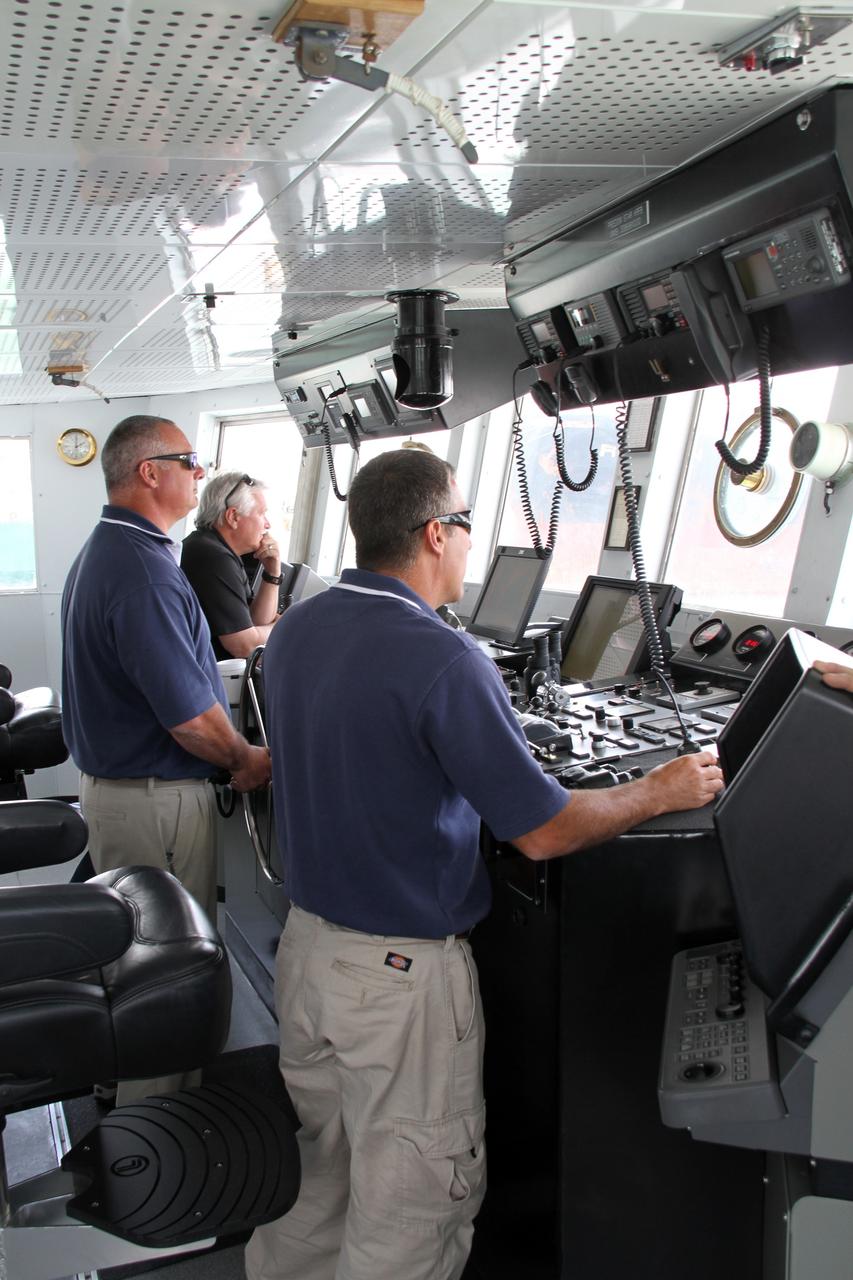
CAPE CANAVERAL, Fla. – Aboard NASA’s Freedom Star boat, Captain Mike Nicholas in foreground, Boatswain Allan Gravina at the wheel, and Marine Operations Manager Joe Chaput, all with United Space Alliance, monitor the progress as NASA’s Mobile Aerospace Reconnaissance System, or MARS, secured on the boat, is being prepared for a day of testing in the Atlantic Ocean off the coast of Port Canaveral in Florida. MARS, run by NASA’s Langley Research Center in Hampton, Va., with its spatial, hyperspectral, thermal, and directed energy capabilities will be used for thermal imaging testing for the upcoming SpaceX Falcon 9 and Dragon capsule test flight to the International Space Station. During today’s test, the MARS X-band radar and kineto tracking mount KTM were tested to ensure that they were synchronized to receive a rocket launch feed. The radar was used to identify an object to see if the KTM could lock on to and track it. The MARS team performed maintenance on the system, confirmed communications links, and tested the design of the mounting system and environmental enclosure. Photo credit: NASA/Cory Huston
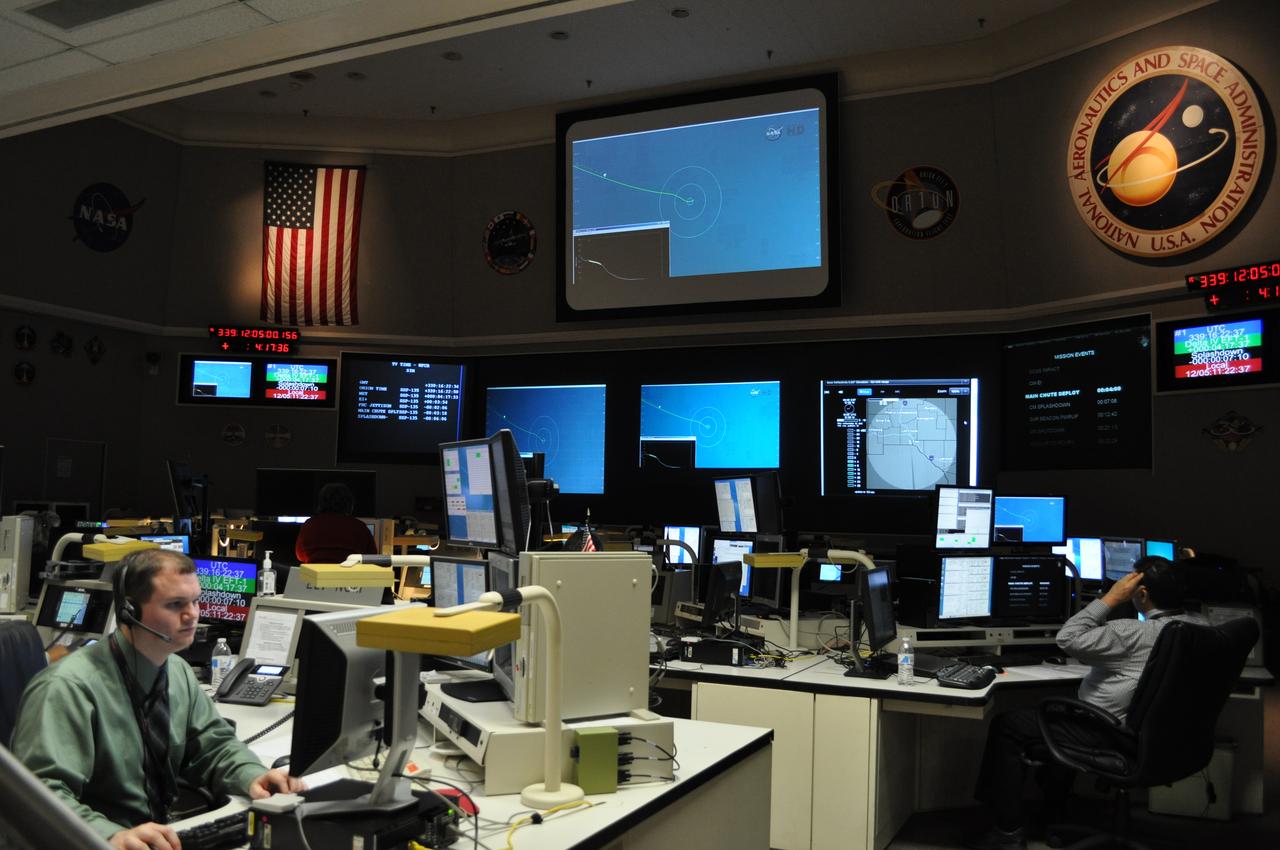
NASA's Goddard Space Flight Center in Greenbelt, Maryland, played a critical role in the test flight of the #Orion spacecraft on Dec. 5, 2014. Goddard's Networks Integration Center, pictured here, coordinated the communications support for both the Orion vehicle and the Delta IV rocket, ensuring complete communications coverage through NASA's Space Network and Tracking and Data Relay Satellite. The Orion spacecraft lifted off from Cape Canaveral Air Force Station's Space Launch Complex 37 in Florida at 7:05 a.m. EST. The Orion capsule splashed down about four and a half hours later, at 11:29 a.m. EST, about 600 miles off the coast of San Diego, California. While no humans were aboard Orion for this test flight, in the future, Orion will allow humans to travel deeper in to space than ever before, including an asteroid and Mars. Credit: NASA/Goddard/Amber Jacobson Credit: NASA/Goddard/Amber Jacobson <b><a href="http://www.nasa.gov/audience/formedia/features/MP_Photo_Guidelines.html" rel="nofollow">NASA image use policy.</a></b> <b><a href="http://www.nasa.gov/centers/goddard/home/index.html" rel="nofollow">NASA Goddard Space Flight Center</a></b> enables NASA’s mission through four scientific endeavors: Earth Science, Heliophysics, Solar System Exploration, and Astrophysics. Goddard plays a leading role in NASA’s accomplishments by contributing compelling scientific knowledge to advance the Agency’s mission. <b>Follow us on <a href="http://twitter.com/NASAGoddardPix" rel="nofollow">Twitter</a></b> <b>Like us on <a href="http://www.facebook.com/pages/Greenbelt-MD/NASA-Goddard/395013845897?ref=tsd" rel="nofollow">Facebook</a></b> <b>Find us on <a href="http://instagram.com/nasagoddard?vm=grid" rel="nofollow">Instagram</a></b>
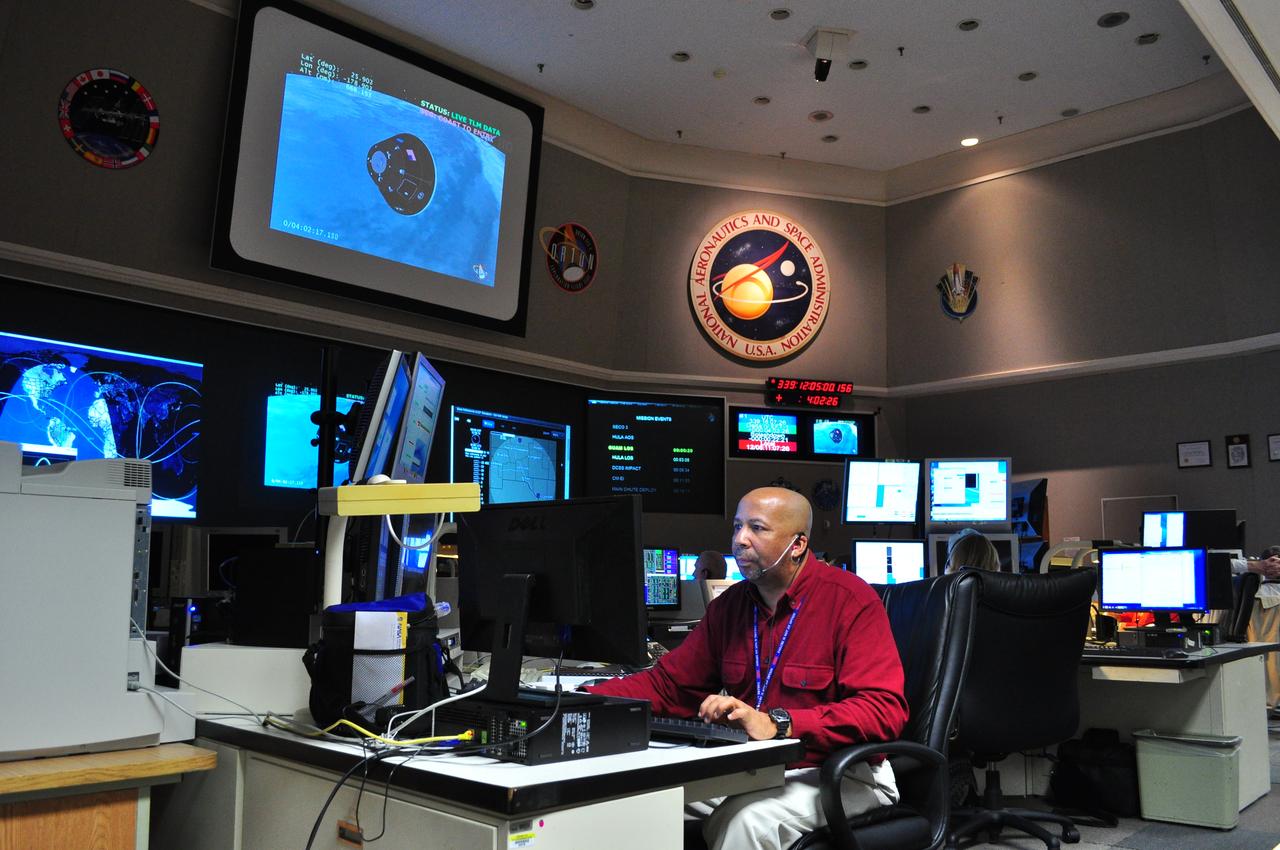
NASA's Goddard Space Flight Center in Greenbelt, Maryland, played a critical role in the test flight of the #Orion spacecraft on Dec. 5, 2014. Goddard's Networks Integration Center, pictured here, coordinated the communications support for both the Orion vehicle and the Delta IV rocket, ensuring complete communications coverage through NASA's Space Network and Tracking and Data Relay Satellite. The Orion spacecraft lifted off from Cape Canaveral Air Force Station's Space Launch Complex 37 in Florida at 7:05 a.m. EST. The Orion capsule splashed down about four and a half hours later, at 11:29 a.m. EST, about 600 miles off the coast of San Diego, California. While no humans were aboard Orion for this test flight, in the future, Orion will allow humans to travel deeper in to space than ever before, including an asteroid and Mars. Credit: NASA/Goddard/Amber Jacobson Credit: NASA/Goddard/Amber Jacobson <b><a href="http://www.nasa.gov/audience/formedia/features/MP_Photo_Guidelines.html" rel="nofollow">NASA image use policy.</a></b> <b><a href="http://www.nasa.gov/centers/goddard/home/index.html" rel="nofollow">NASA Goddard Space Flight Center</a></b> enables NASA’s mission through four scientific endeavors: Earth Science, Heliophysics, Solar System Exploration, and Astrophysics. Goddard plays a leading role in NASA’s accomplishments by contributing compelling scientific knowledge to advance the Agency’s mission. <b>Follow us on <a href="http://twitter.com/NASAGoddardPix" rel="nofollow">Twitter</a></b> <b>Like us on <a href="http://www.facebook.com/pages/Greenbelt-MD/NASA-Goddard/395013845897?ref=tsd" rel="nofollow">Facebook</a></b> <b>Find us on <a href="http://instagram.com/nasagoddard?vm=grid" rel="nofollow">Instagram</a></b>
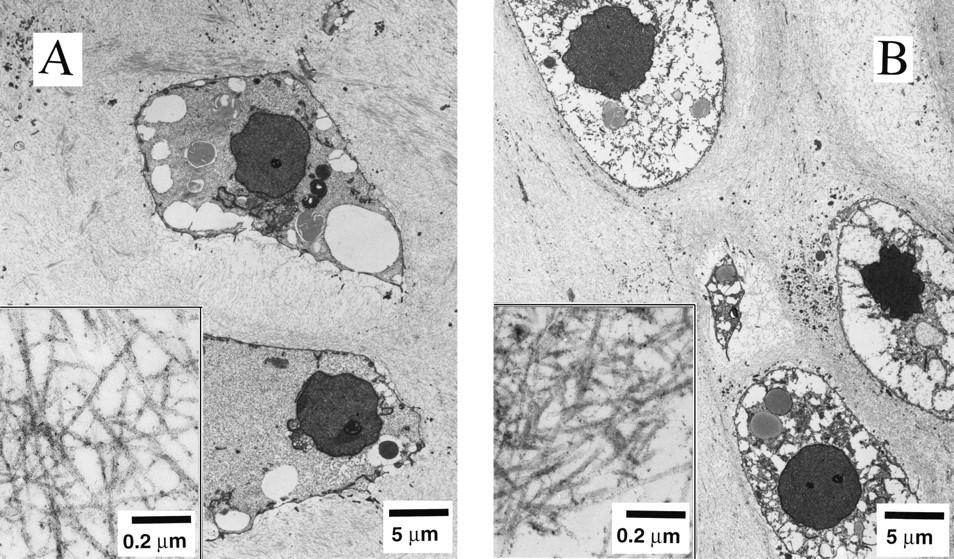
Dr. Lisa E. Freed of the Massachusetts Institute of Technology and her colleagues have reported that initially disc-like specimens tend to become spherical in space, demonstrating that tissues can grow and differentiate into distinct structures in microgravity. The Mir Increment 3 (Sept. 16, 1996 - Jan. 22, 1997) samples were smaller, more spherical, and mechanically weaker than Earth-grown control samples. These results demonstrate the feasibility of microgravity tissue engineering and may have implications for long human space voyages and for treating musculoskeletal disorders on earth. Final samples from Mir and Earth appeared histologically cartilaginous throughout their entire cross sections (5-8 mm thick), with the exception of fibrous outer capsules. Constructs grown on Earth (A) appeared to have a more organized extracellular matrix with more uniform collagen orientation as compared with constructs grown on Mir (B), but the average collagen fiber diameter was similar in the two groups (22 +- 2 nm) and comparable to that previously reported for developing articular cartilage. Randomly oriented collagen in Mir samples would be consistent with previous reports that microgravity disrupts fibrillogenesis. These are transmission electron micrographs of constructs from Mir (A) and Earth (B) groups at magnifications of x3,500 and x120,000 (Inset). The work is sponsored by NASA's Office of Biological and Physical Research. The bioreactor is managed by the Biotechnology Cell Science Program at NASA's Johnson Space Center (JSC). NASA-sponsored bioreactor research has been instrumental in helping scientists to better understand normal and cancerous tissue development. In cooperation with the medical community, the bioreactor design is being used to prepare better models of human colon, prostate, breast and ovarian tumors. Credit: Proceedings of the National Academy of Sciences.