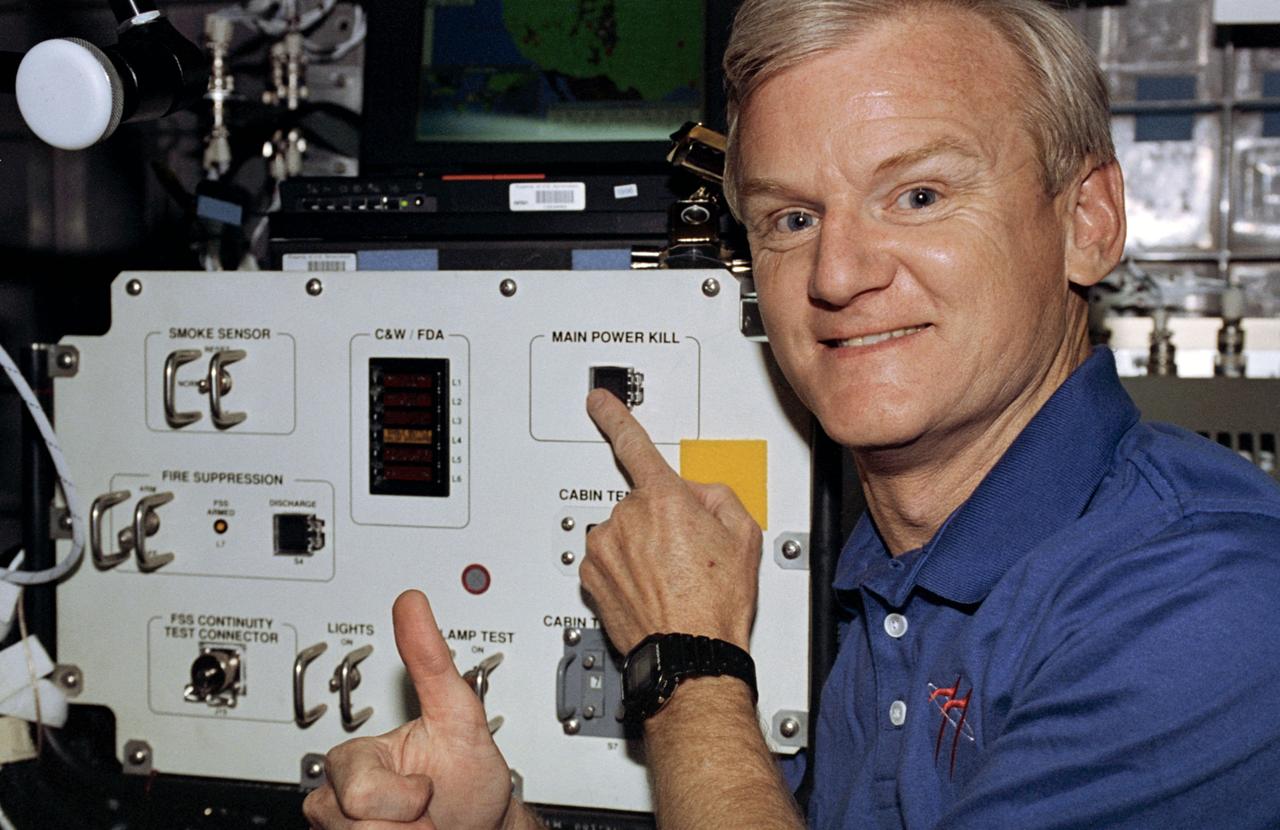
STS077-372-019 (19-29 May 1996) --- Astronaut John H. Casper, commander, holds his finger on the power kill switch on the Spacehab 4 Module aboard the Earth-orbiting Space Shuttle Endeavour. Casper and five other astronauts spent almost ten days aboard Endeavour in support of the Spacehab 4 mission and a number of other payloads.
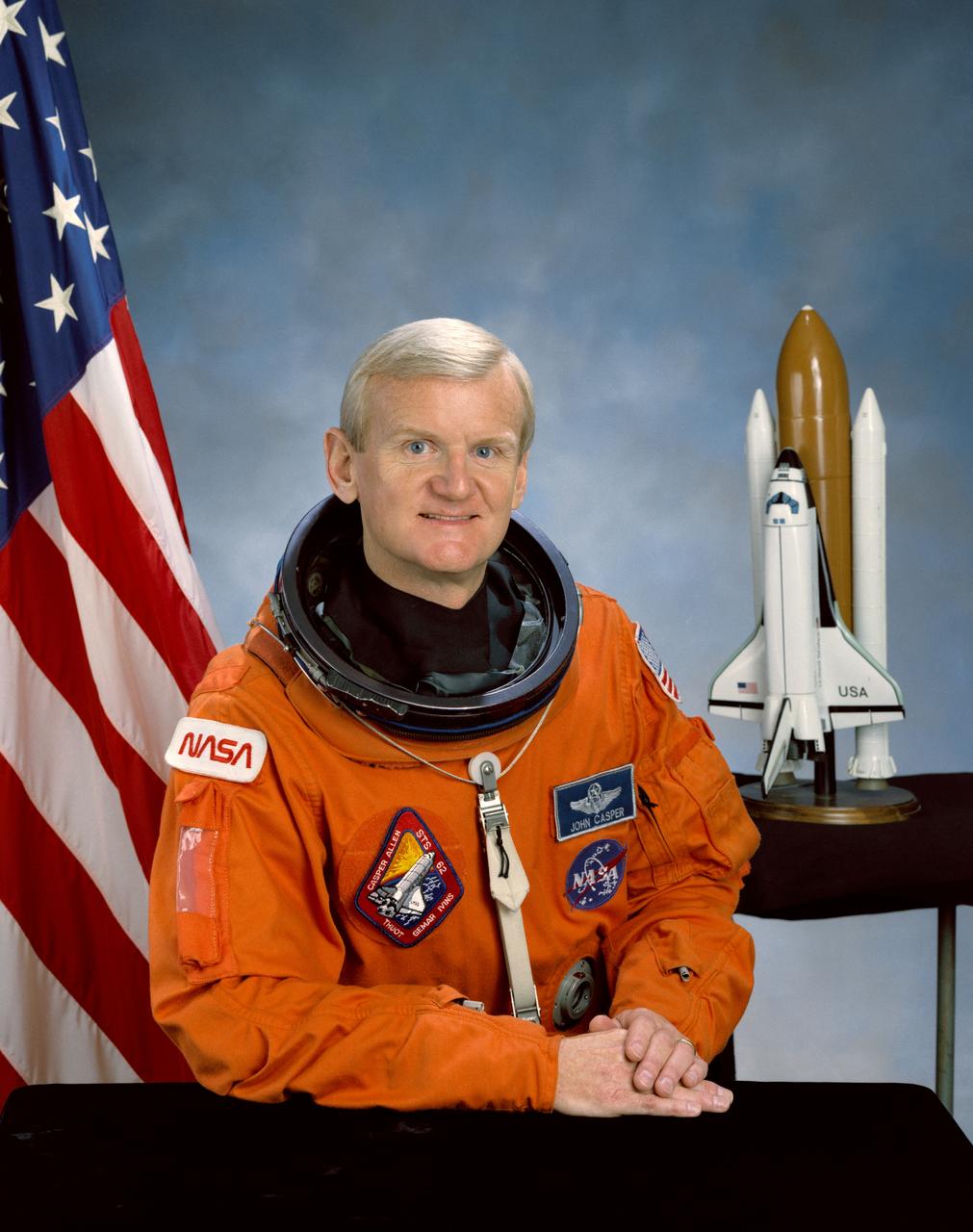
S94-25739 (16 Dec. 1989) --- Astronaut John H. Casper. Photo credit: NASA
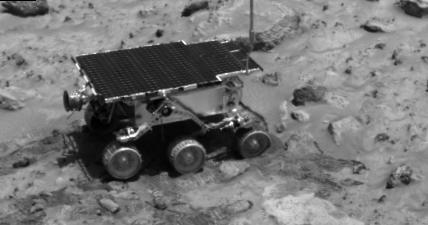
Rover Soil Experiments Near Casper & Shaggy
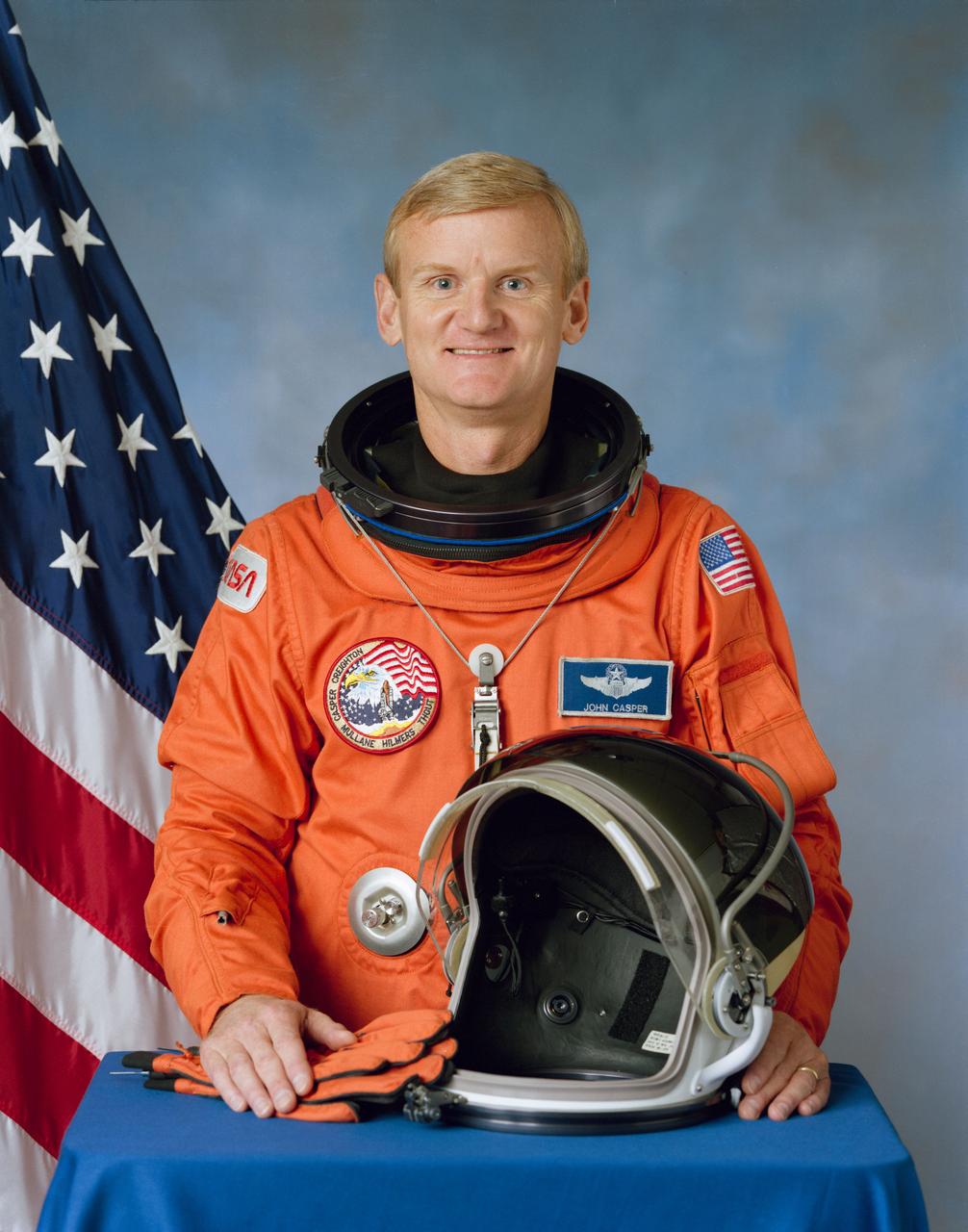
S89-51923 (16 Dec 1989) --- Astronaut John H. Casper.
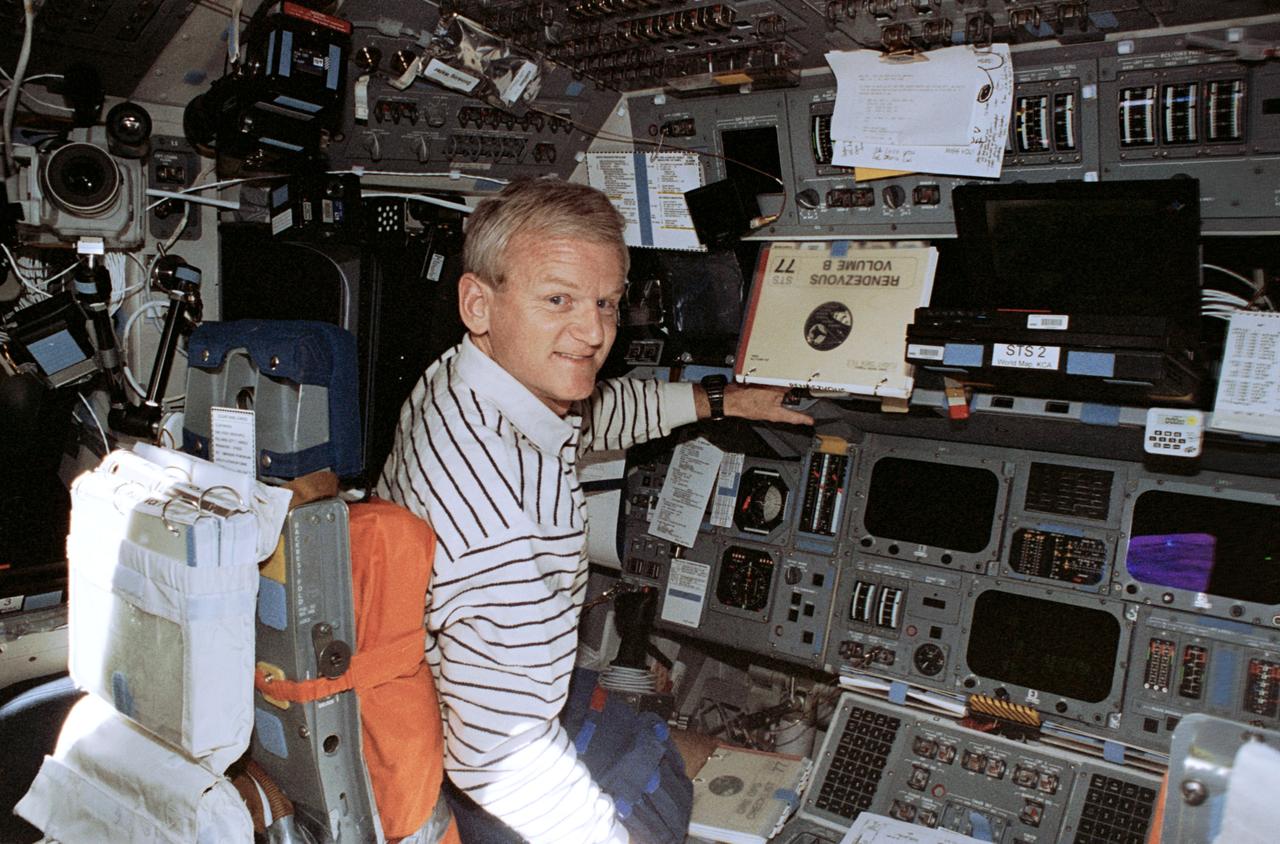
STS077-364-037 (19-29 May 1996) --- Astronaut John H. Casper, mission commander, mans the commander?s station during rendezvous operations. During the flight, the six-member crew was involved in deployment and rendezvous operations with the Spartan 207/Inflatable Antenna Experiment (IAE) as well as the Passive Aerodynamically Stabilized Magnetically Damped Satellite (PAMS)/Satellite Test Unit (STU).
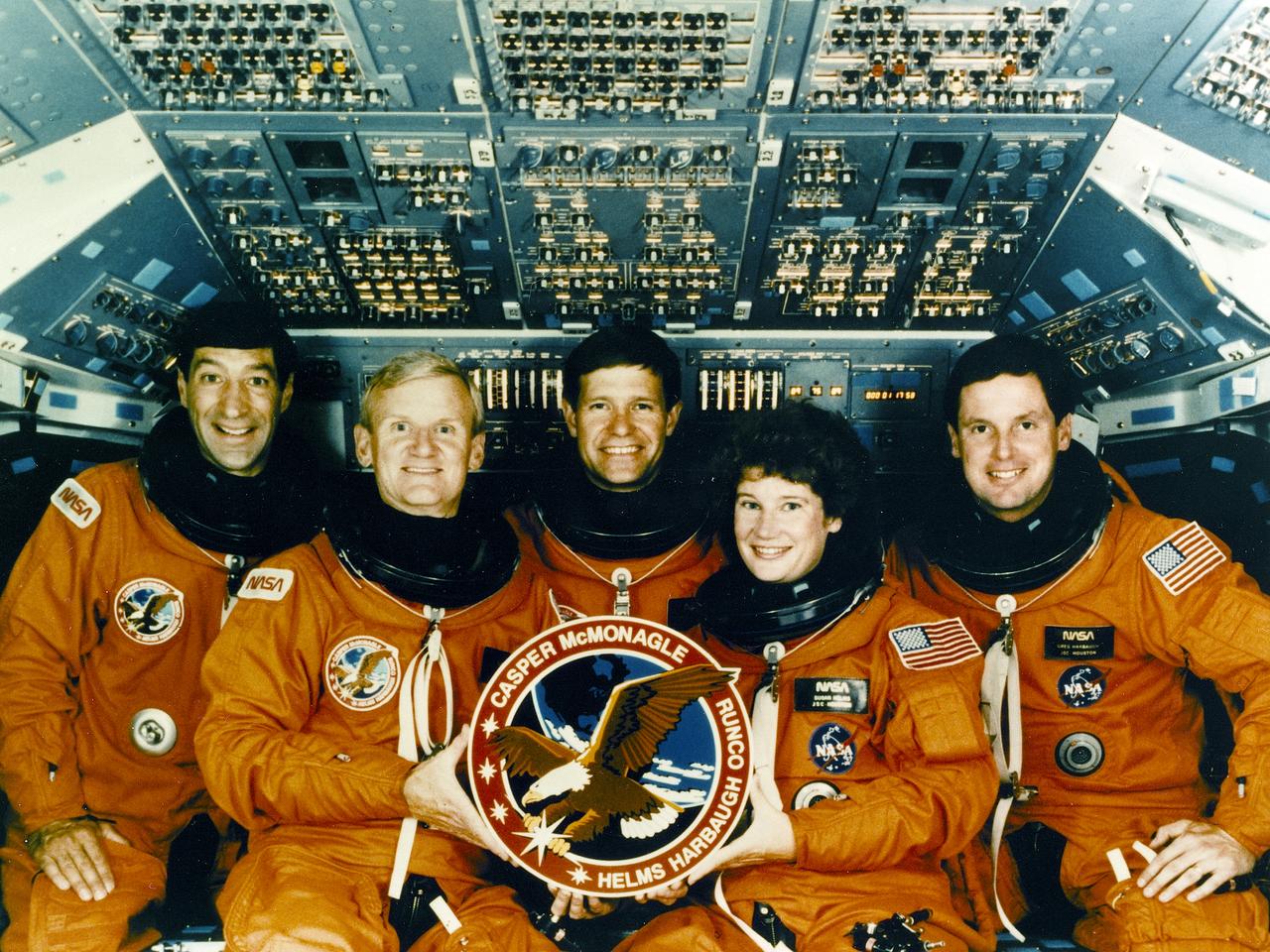
Astronauts pictured in the STS-54 crew portrait from left to right are: Mario Runco, Jr., mission specialist; John H. Casper, commander; Donald R. McMonagle, pilot; and mission specialists Susan J. Helms, and Gregory J. Harbaugh. Launched aboard the Space Shuttle Endeavour on January 13, 1993 at 8:59:30 am (EST), the crew deployed the fifth Tracking and Data Relay Satellite (TDRS-6).
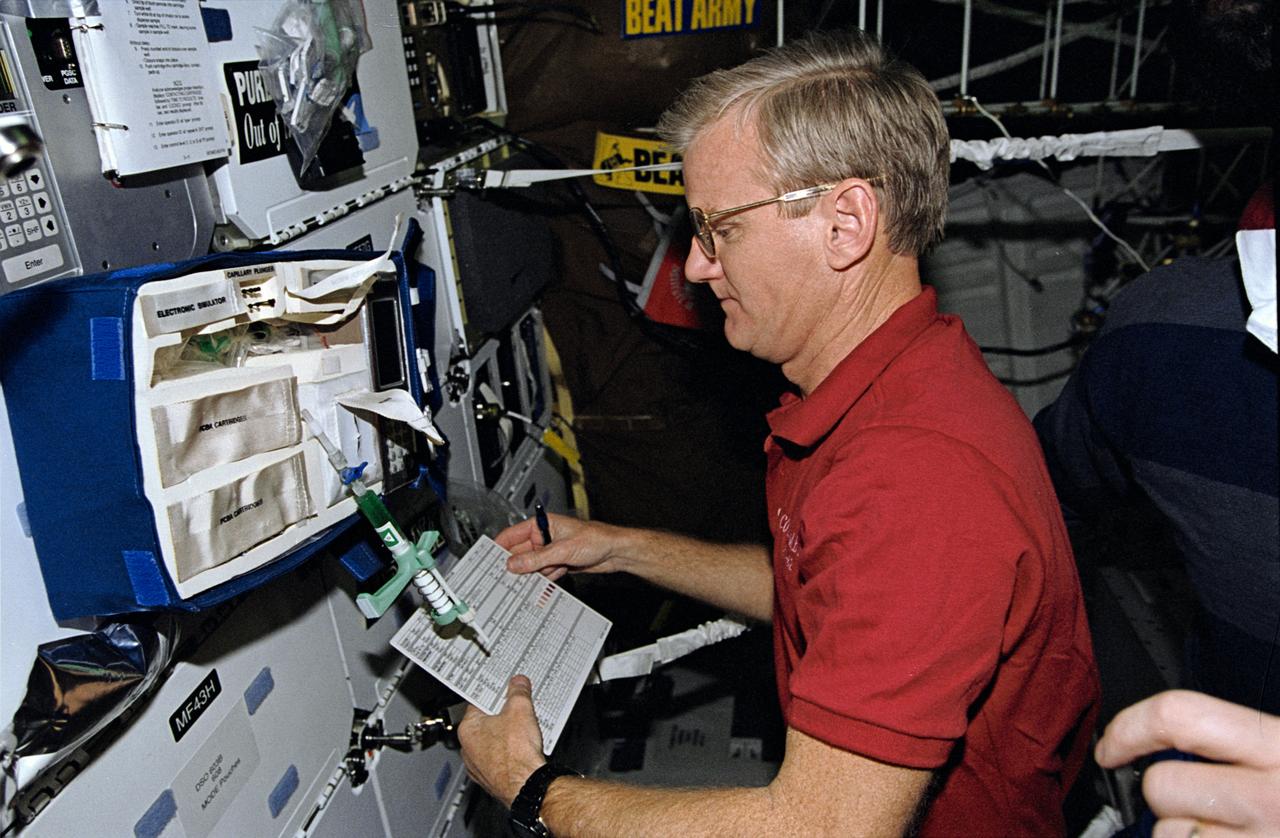
STS062-10-010 (4-18 March 1994) --- Astronaut John H. Casper, mission commander, takes stock of paraphenalia used to support medical testing onboard Columbia's middeck. Casper was poind by four other veteran astronauts for 14 days of variegated research in earth orbit.
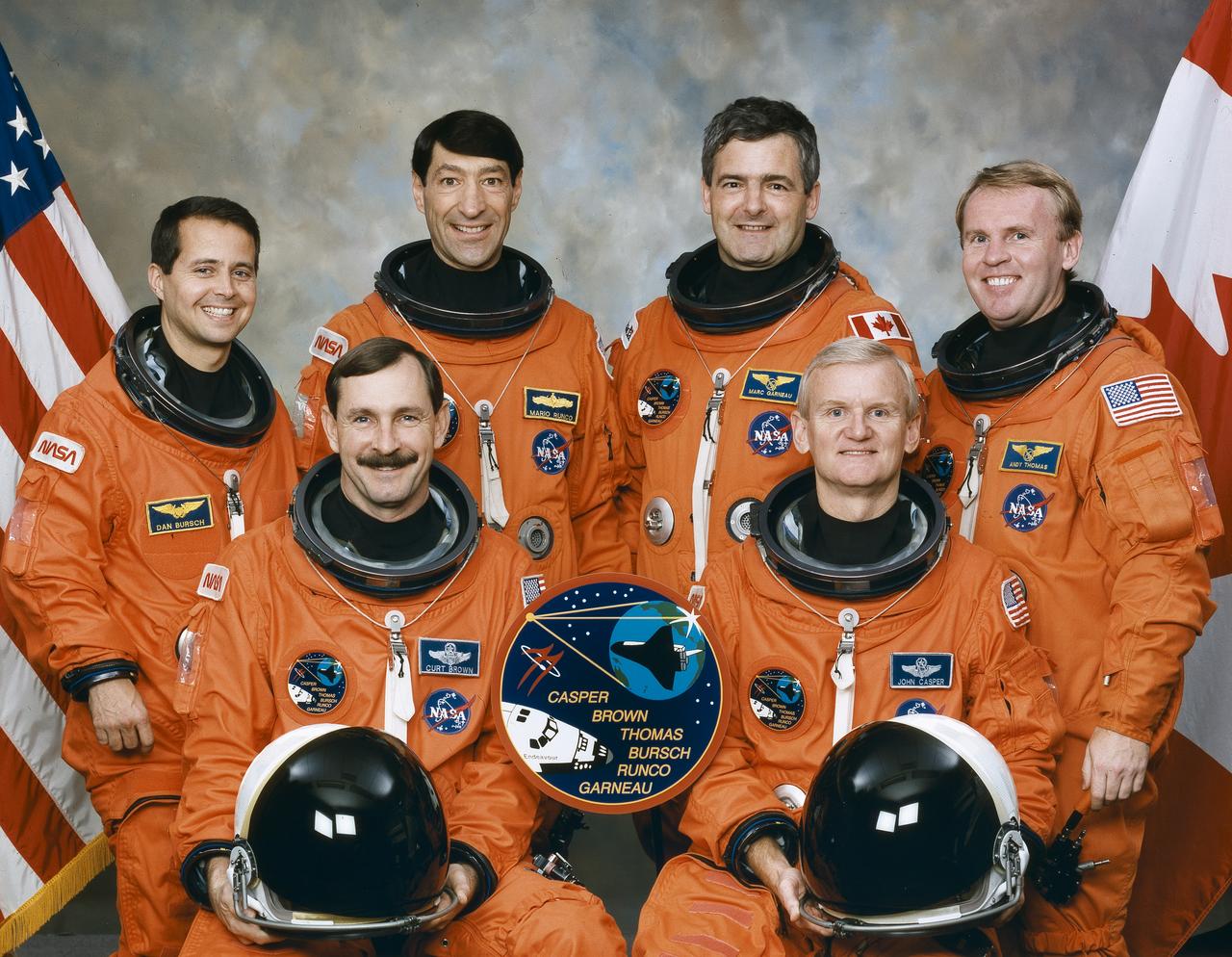
The crew assigned to the STS-77 mission included (seated left to right) Curtis L. Brown, pilot; and John H. Casper, commander. Standing, left to right, are mission specialists Daniel W. Bursch, Mario Runco, Marc Garneau (CSA), and Andrew S. W. Thomas. Launched aboard the Space Shuttle Endeavour on May 19, 1996 at 6:30:00 am (EDT), the STS-77 mission carried three primary payloads; the SPACEHAB-4 pressurized research module, the Inflatable Antenna Experiment (IAE) mounted on a Spartan 207 free-flyer, and a suite of four technology demonstration experiments known as Technology Experiments for Advancing Missions in Space (TEAMS).
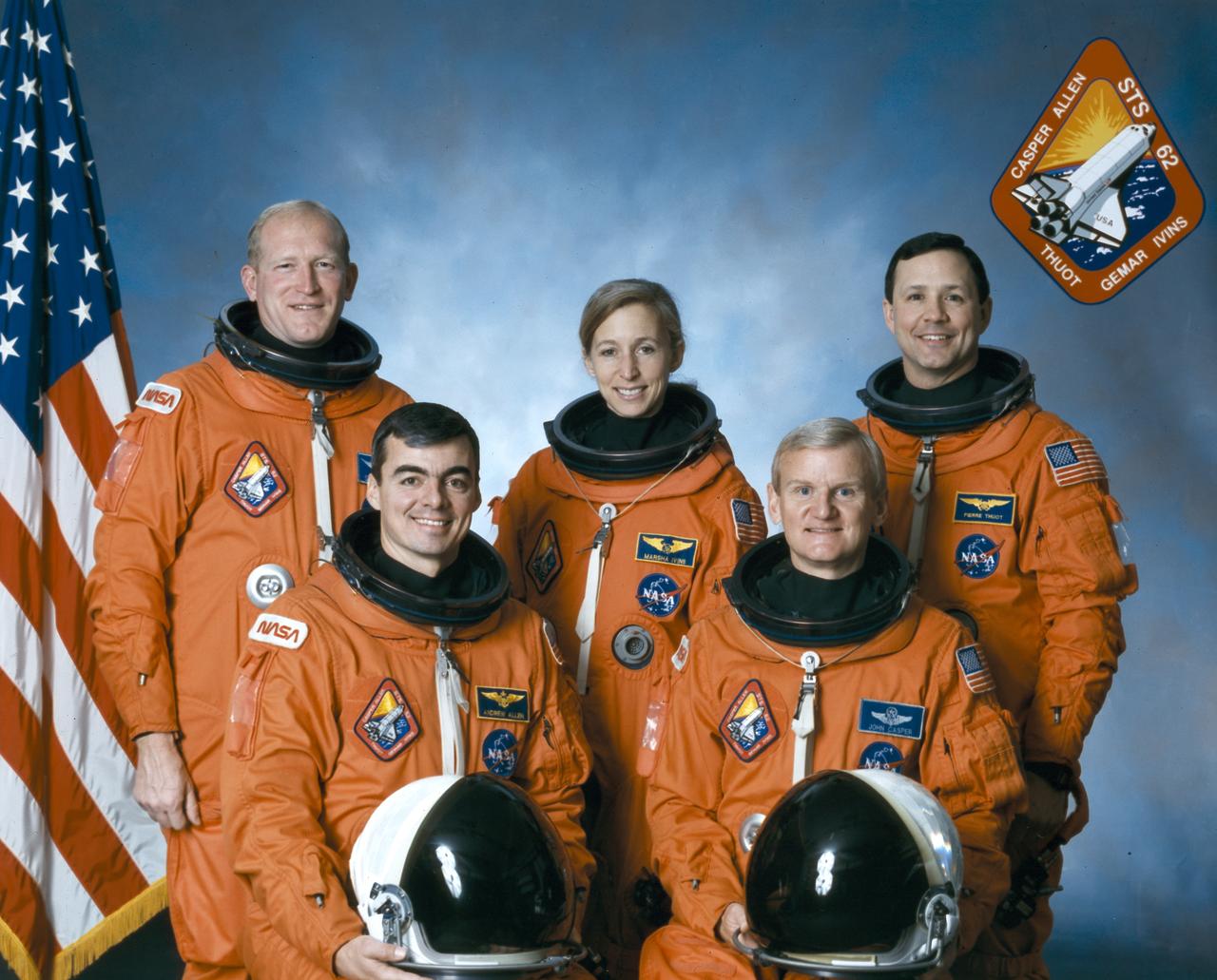
Astronauts included in the STS-62 crew portrait include (standing left to right) mission specialists Charles D. Gemar, Marsha S. Ivins, and Pierre J. Thuot. Seated left to right are Andrew M. Allen, pilot; and John H. Casper, commander. Launched aboard the Space Shuttle Columbia on March 4, 1994 at 8:53:00 am (EST), the STS-62 mission carried two primary payloads; the U.S Microgravity Payload-2 (USMP-2) and the Office of Aeronautics and Space Technology-2 (OAST-2).
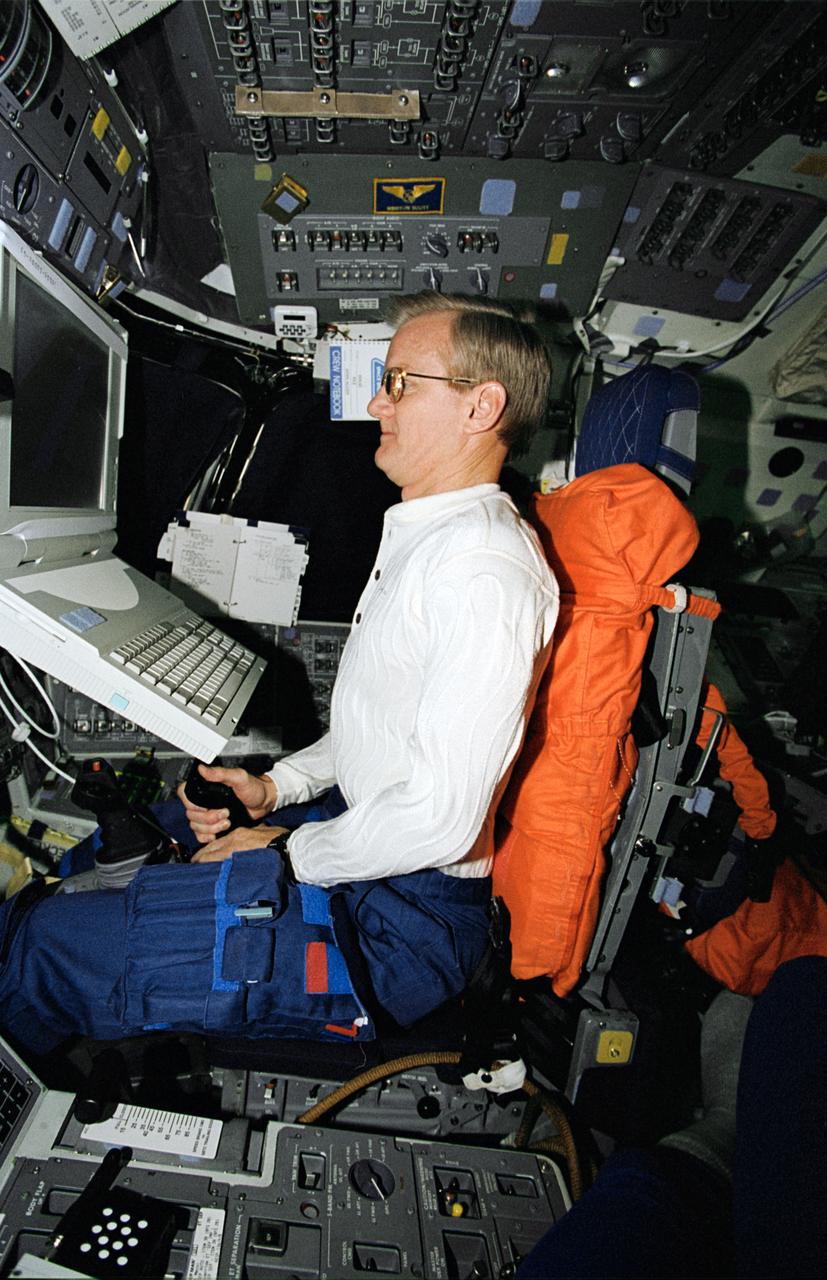
STS062-15-013 (4-18 March 1994) --- Astronaut John H. Casper, mission commander, participates in an experiment that measures the effects of space flight on pilot proficiency. Astronauts Casper and Andrew M. Allen, pilot, continued the testing of the Portable Inflight Landing Operations Trainer (PILOT), which first flew onboard Columbia in October of 1993.
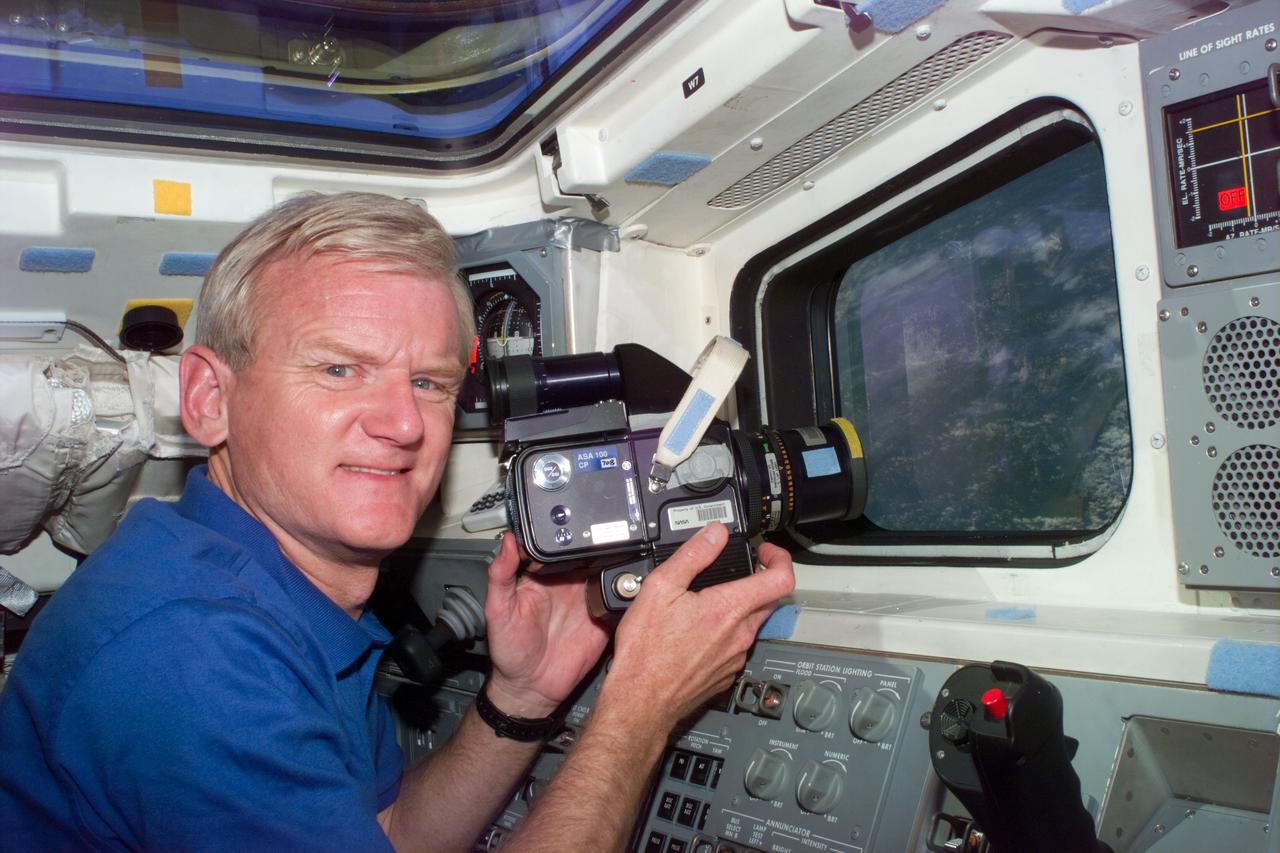
S77-E-5109 (26 May 1996) --- Astronaut John H. Casper, commander, pauses during a photography session on the aft flight deck of the Space Shuttle Endeavour. The scene was recorded with an Electronic Still Camera (ESC).
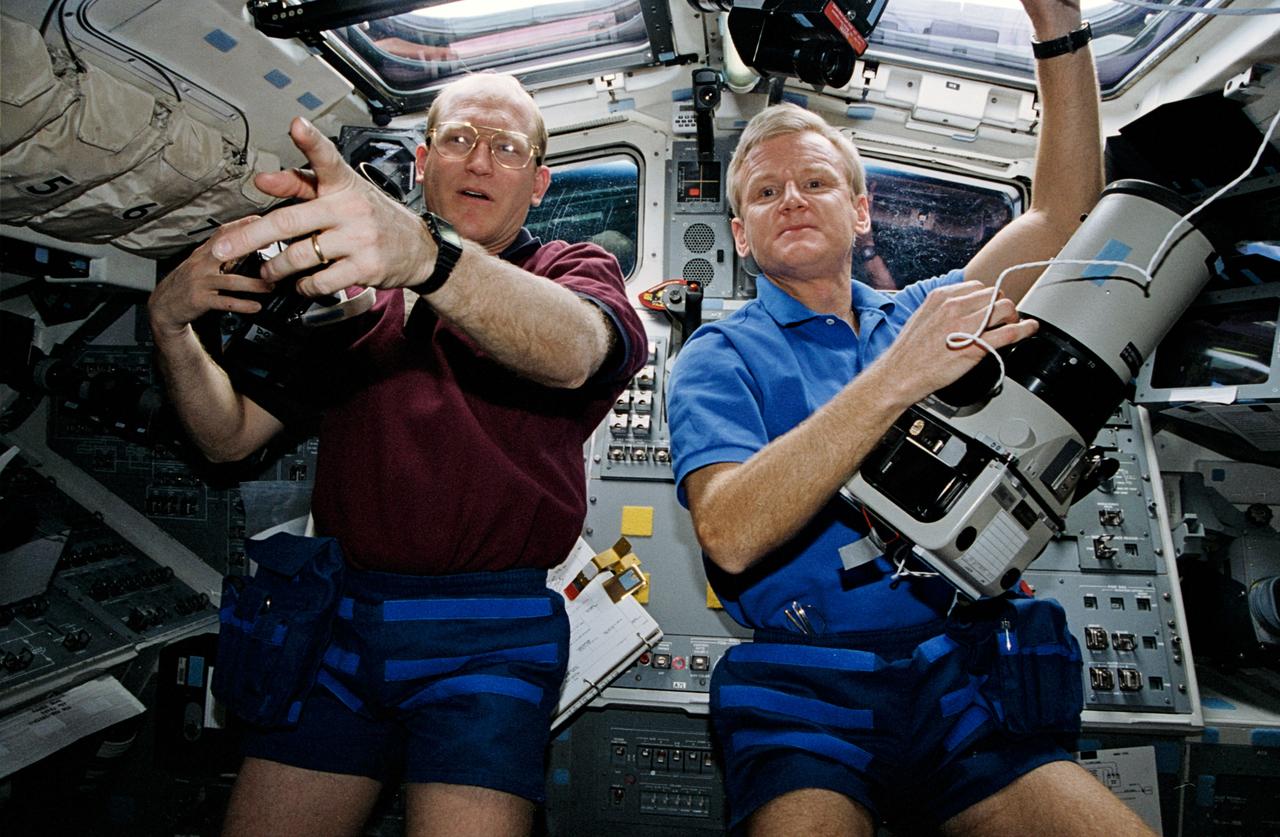
STS062-06-030 (4-18 March 1994) --- With cameras in hand two of the STS-62 astronauts prepare to take pictures of their home planet. John H. Casper (right), mission commander, handles a large format, Linhof camera, while Charles D. (Sam) Gemar, mission specialist, has just added a roll of film to a 70mm handheld Hasselblad camera. Earth observations and documentation occupied muc of the on-duty time of all five of the STS-62 crewmembers during their 14-day mission in earth orbit.
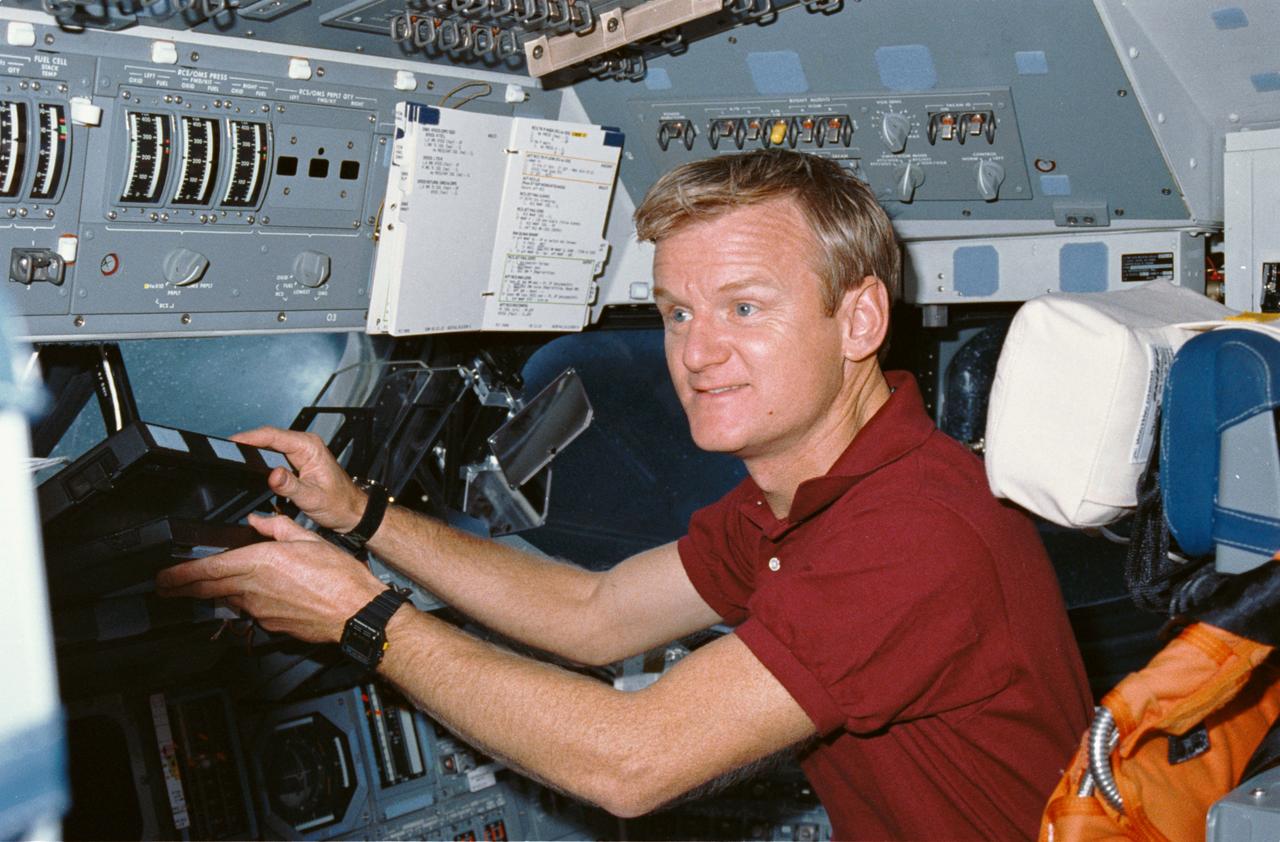
STS036-03-027 (3 March 1990) --- STS-36 Pilot John H. Casper reaches for the shuttle portable onboard computer (SPOC), a laptop computer, while at the pilots station on the forward flight deck of Atlantis, Orbiter Vehicle (OV) 104. Casper, seated in the pilot’s seat, lifts the SPOC from the forward window ledge. Appearing around him are forward crew compartment windows, the head up display (HUD), the flight mirror assembly, and a checklist attached to control panel O3. Casper and four other astronauts spent four days, 10 hours and 19 minutes aboard the spacecraft for a Department of Defense (DOD) devoted mission.
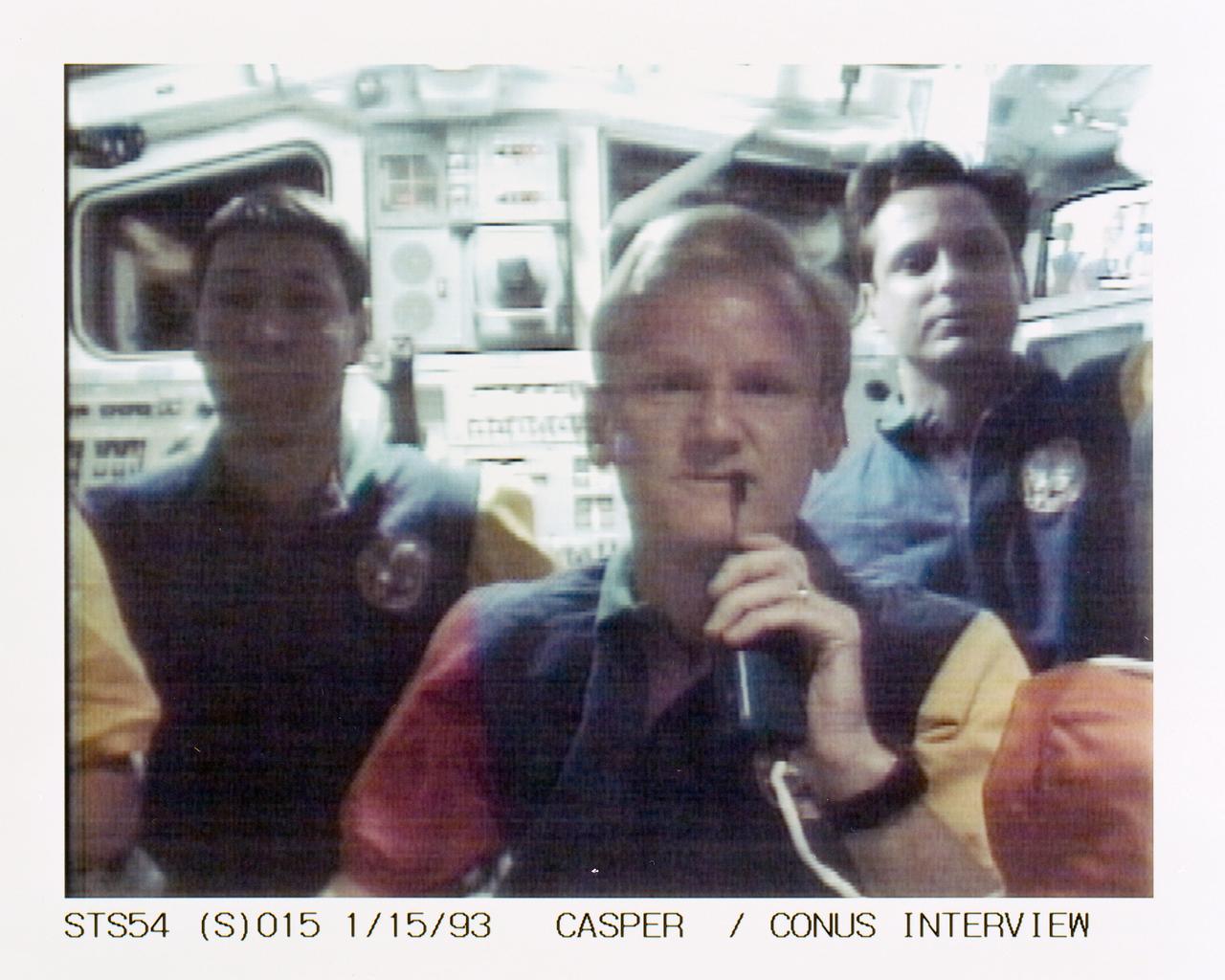
STS054-S-015 (15 Jan 1993) --- Casper talks to a radio station from the flight deck of Endeavour while, in the background, Runco, left, and Harbaugh await their turns to communicate with other stations. The scene was recorded at 13:45:54:05 GMT, Jan. 15, 1993.

S92-45750 (1 Sept 1992) --- Astronaut John H. Casper, mission commander, assigned to fly aboard the Space Shuttle Endeavour for the STS-54 mission, gets in some rehearsal time at JSC's Shuttle mockup and integration facility. Part of a spacesuit is visible at lower right. Two STS-54 crewmembers will spend four-plus hours wearing extravehicular mobility units (EMU) for a planned spacewalk in a continuing evaluation program for EVA techniques and gear for Space Station Freedom.
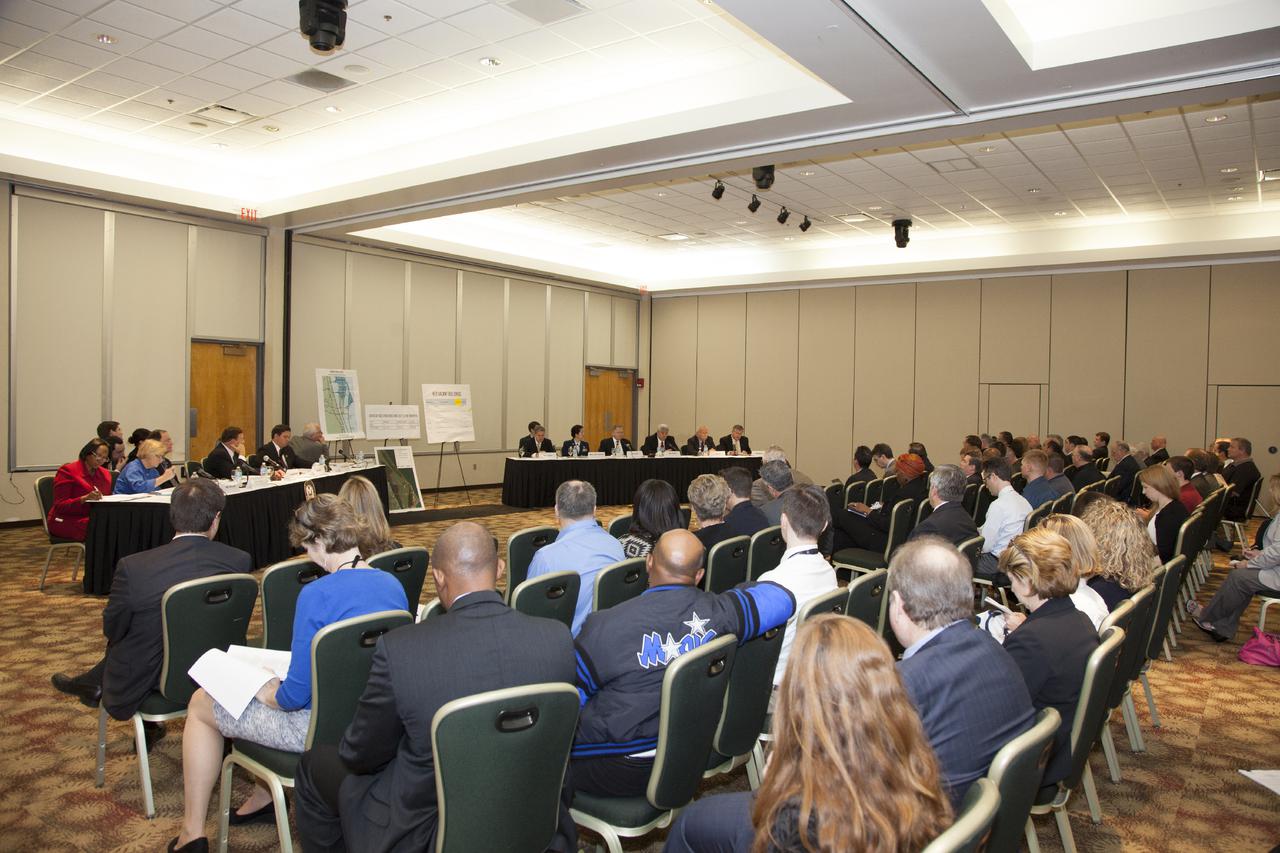
CAPE CANAVERAL, Fla. – At the Kurt H. Debus Conference Facility at the Kennedy Space Center Visitor Complex, guests listen to a hearing of the U.S. House of Representatives' Subcommittee on Government Operations. The Congressional hearing took place to review plans for putting vacant buildings and excess property at the Kennedy Space Center to their best and most productive use. Photo credit: NASA_Daniel Casper
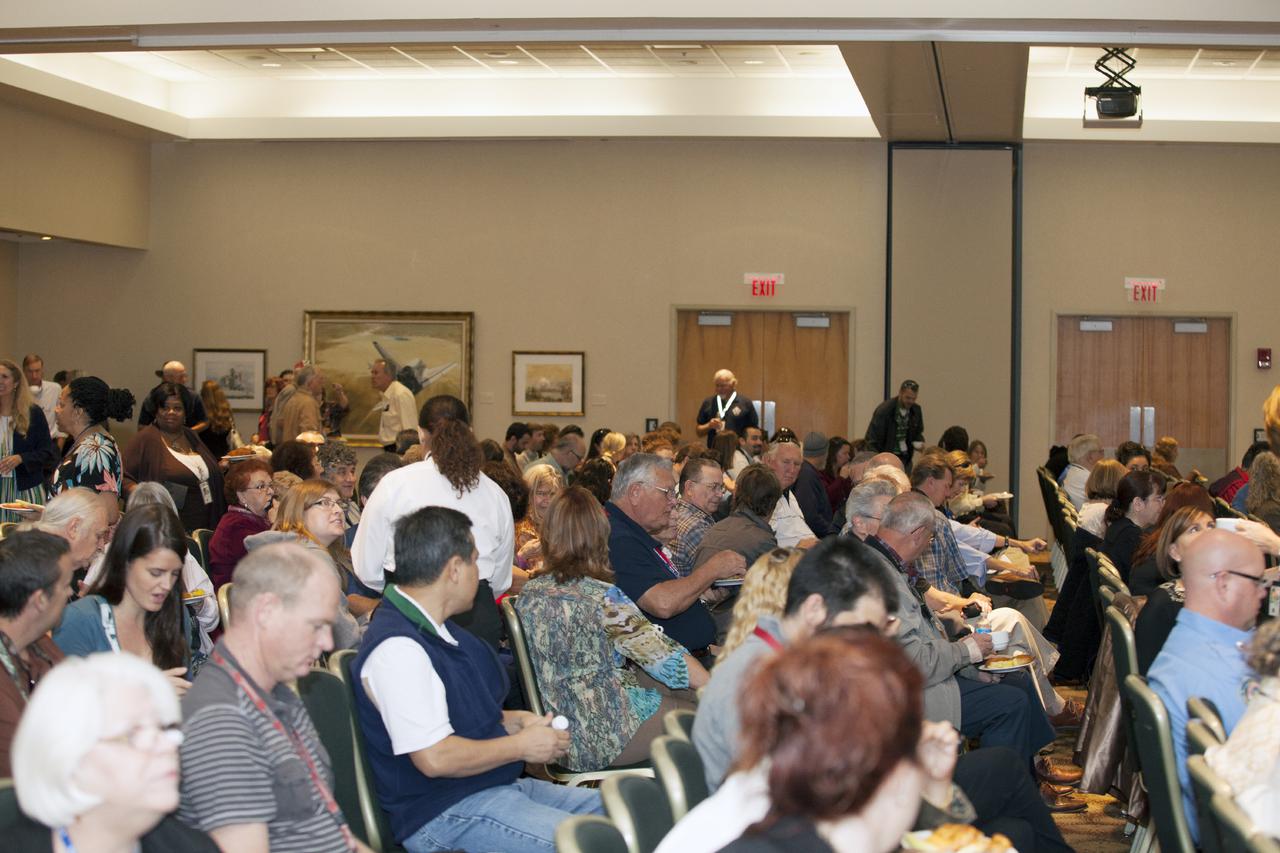
CAPE CANAVERAL, Fla. – NASA Kennedy Space Center volunteers fill the Debus Conference Facility at the Kennedy Space Center Visitor Complex in Florida for a KSC Volunteer Appreciation Event. The group was given a briefing by Kennedy Associate Director Kelvin Manning on future prospects for the space center, entitled 'Pushing the Boundaries.' To learn about NASA's Speakers Bureau, visit http:__speakers.grc.nasa.gov_speaker. Photo credit: NASA_Daniel Casper
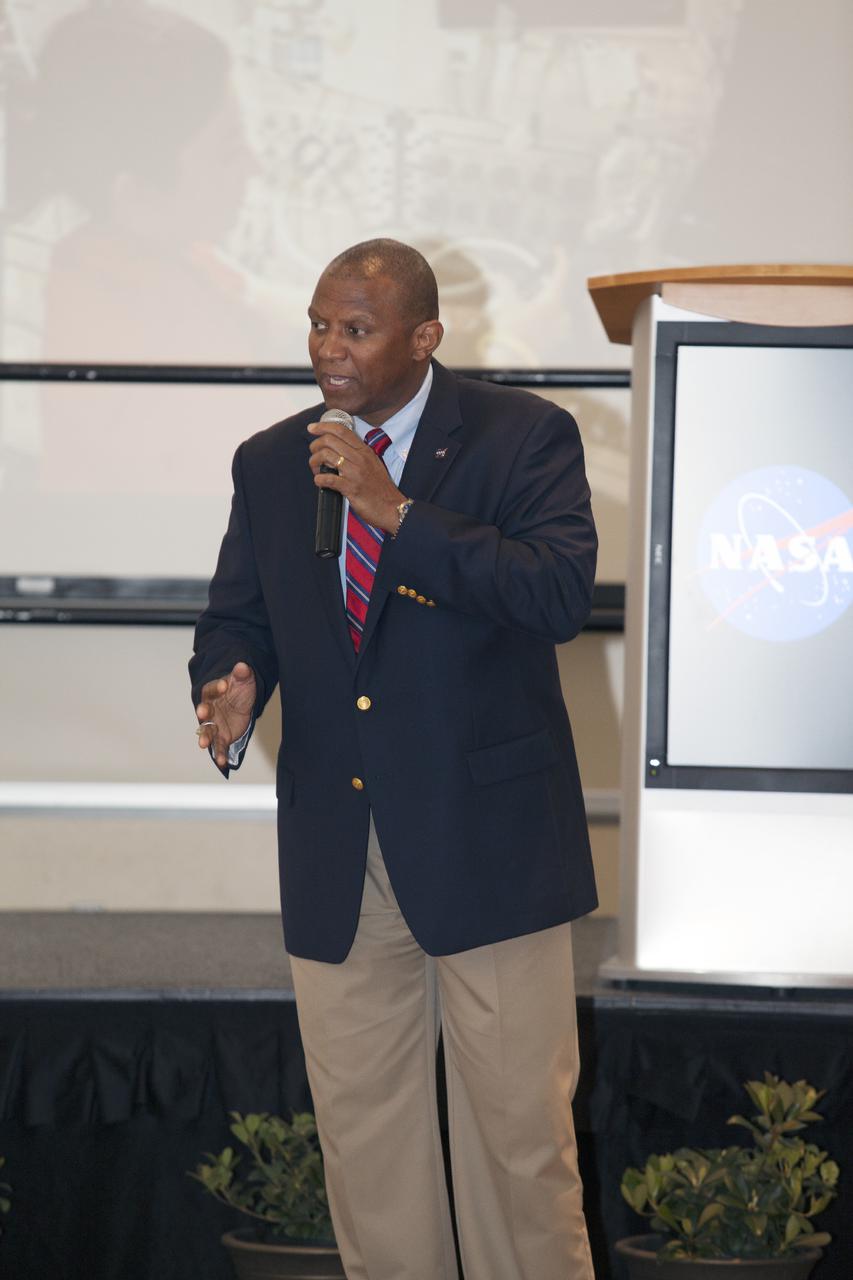
CAPE CANAVERAL, Fla. – NASA Kennedy Space Center Associate Director Kelvin Manning addresses Kennedy's volunteers during a KSC Volunteer Appreciation Event held in the Debus Conference Facility at the Kennedy Space Center Visitor Complex in Florida. Manning briefed the group on future prospects for the space center with a presentation entitled 'Pushing the Boundaries.' To learn about NASA's Speakers Bureau, visit http:__speakers.grc.nasa.gov_speaker. Photo credit: NASA_Daniel Casper
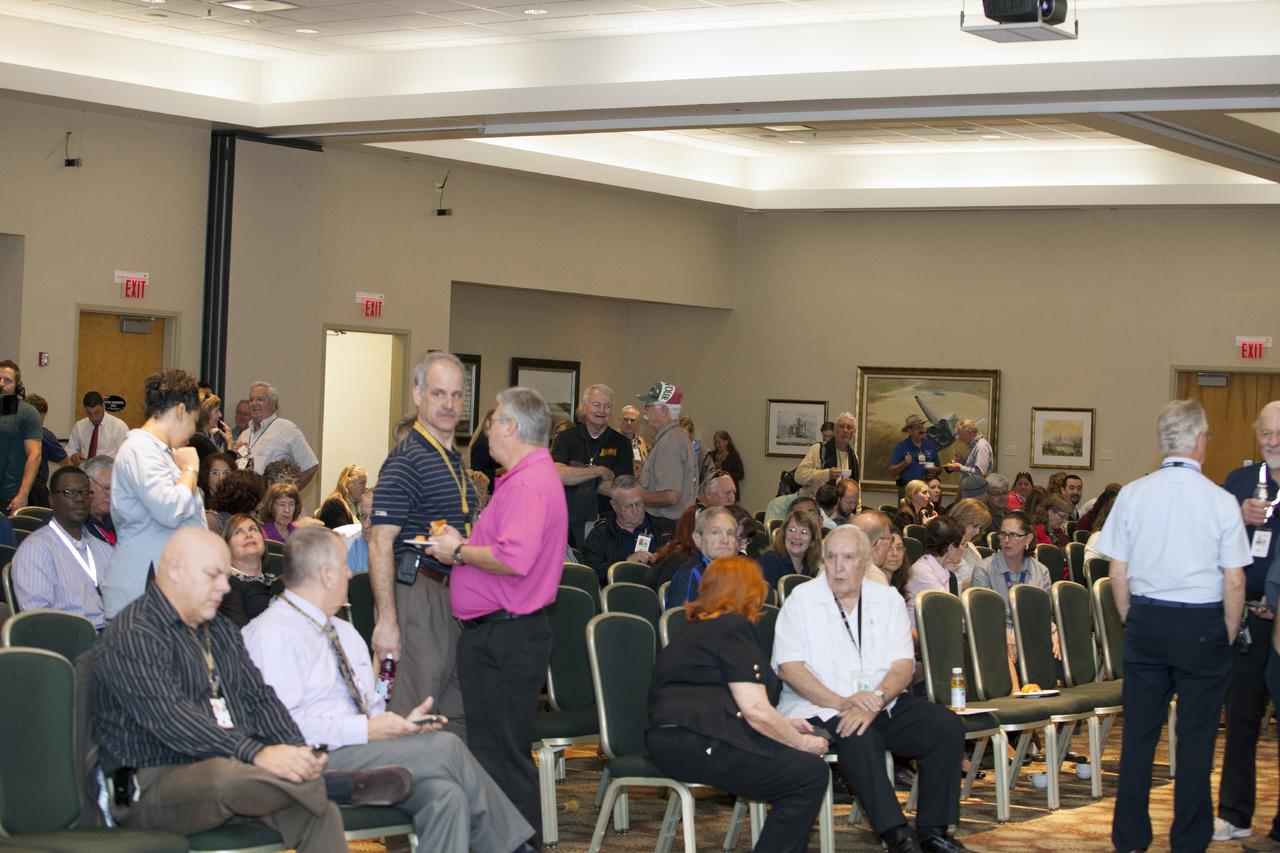
CAPE CANAVERAL, Fla. – NASA Kennedy Space Center volunteers turn out in full force for a KSC Volunteer Appreciation Event held in the Debus Conference Facility at the Kennedy Space Center Visitor Complex in Florida. The group was given a briefing by Kennedy Associate Director Kelvin Manning on future prospects for the space center, entitled 'Pushing the Boundaries.' To learn about NASA's Speakers Bureau, visit http:__speakers.grc.nasa.gov_speaker. Photo credit: NASA_Daniel Casper
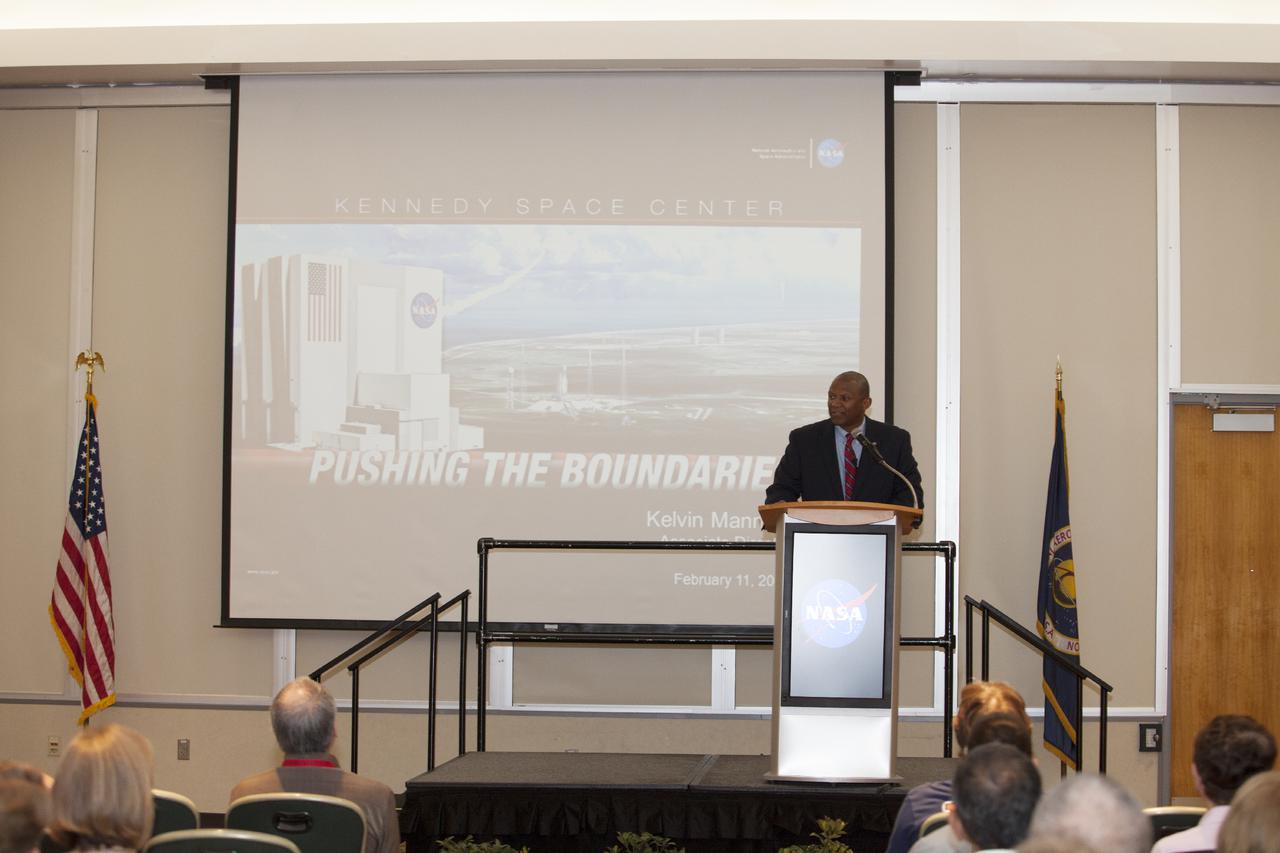
CAPE CANAVERAL, Fla. – NASA Kennedy Space Center Associate Director Kelvin Manning welcomes Kennedy's volunteers to a KSC Volunteer Appreciation Event held in the Debus Conference Facility at the Kennedy Space Center Visitor Complex in Florida. Manning briefed the group on future prospects for the space center with a presentation entitled 'Pushing the Boundaries.' To learn about NASA's Speakers Bureau, visit http:__speakers.grc.nasa.gov_speaker. Photo credit: NASA_Daniel Casper

STS054-S-023 (15 Jan 1993) --- Casper holds up a paper boomerang before sailing it across Endeavour's middeck. The demonstration was part of a lengthy "physics of toys" program conducted by all five crewmembers on their third day aboard the Shuttle. Through telephone and TV downlinks, students in four schools around the country participated in a special lesson to discover how specific toys function differently in the classroom compared to those on the Shuttle. The boomerang was used to demonstrate Bernouli's principle and gyroscopic stability. The entire collection of toys will be videotaped for an educational program to be distributed to schools in the autumn. The scene was downlinked at 18:11:04:26 GMT, Jan. 15, 1993.
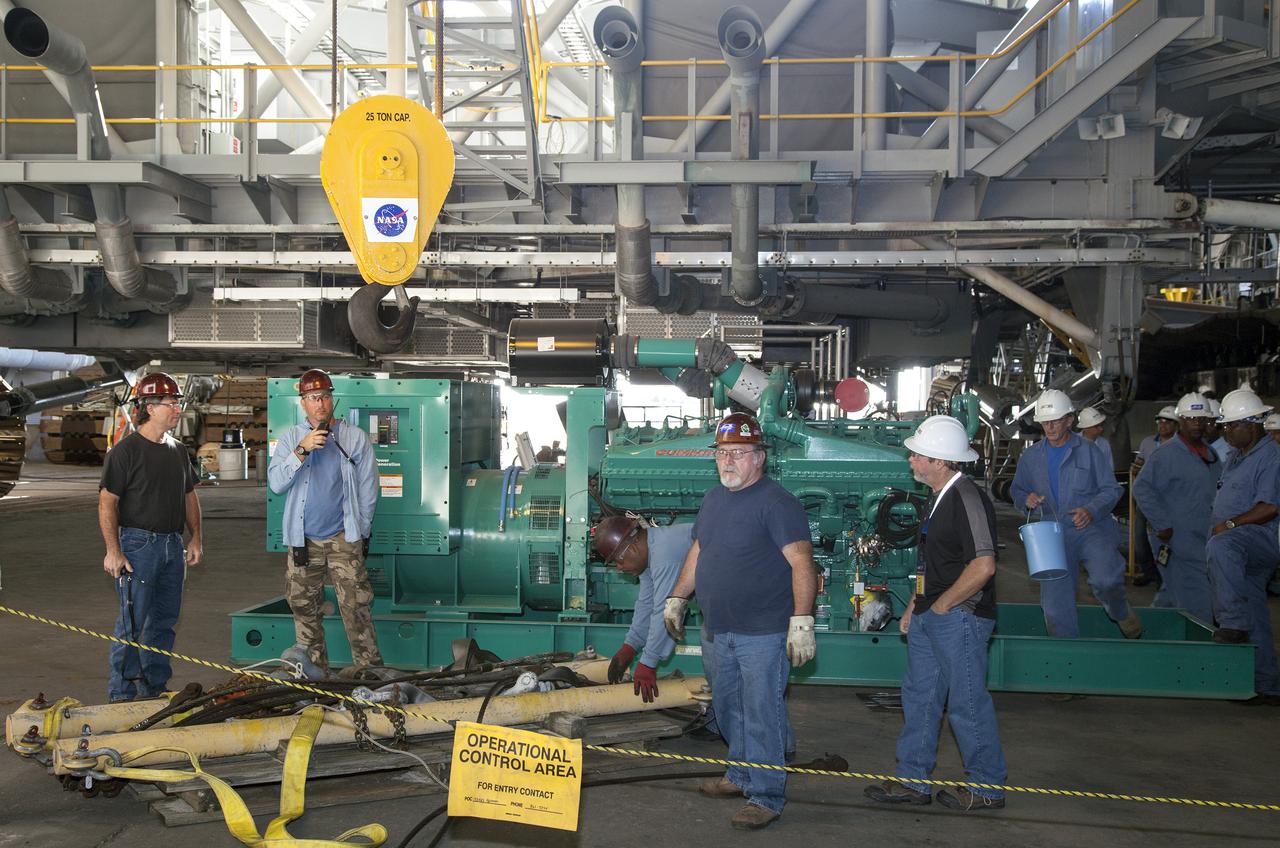
CAPE CANAVERAL, Fla. – Inside the Vehicle Assembly Building at NASA’s Kennedy Space Center in Florida, technicians prepare a new generator to be lifted by crane for installation in crawler-transporter 1, or CT-1. Work continues in high bay 3 to upgrade CT-1 as part of its general maintenance. CT-1 could be available to carry commercial launch vehicles to the launch pad. The crawler-transporters were used to carry the mobile launcher platform and space shuttle to Launch Complex 39 for space shuttle launches for 30 years. Photo credit: NASA_Daniel Casper
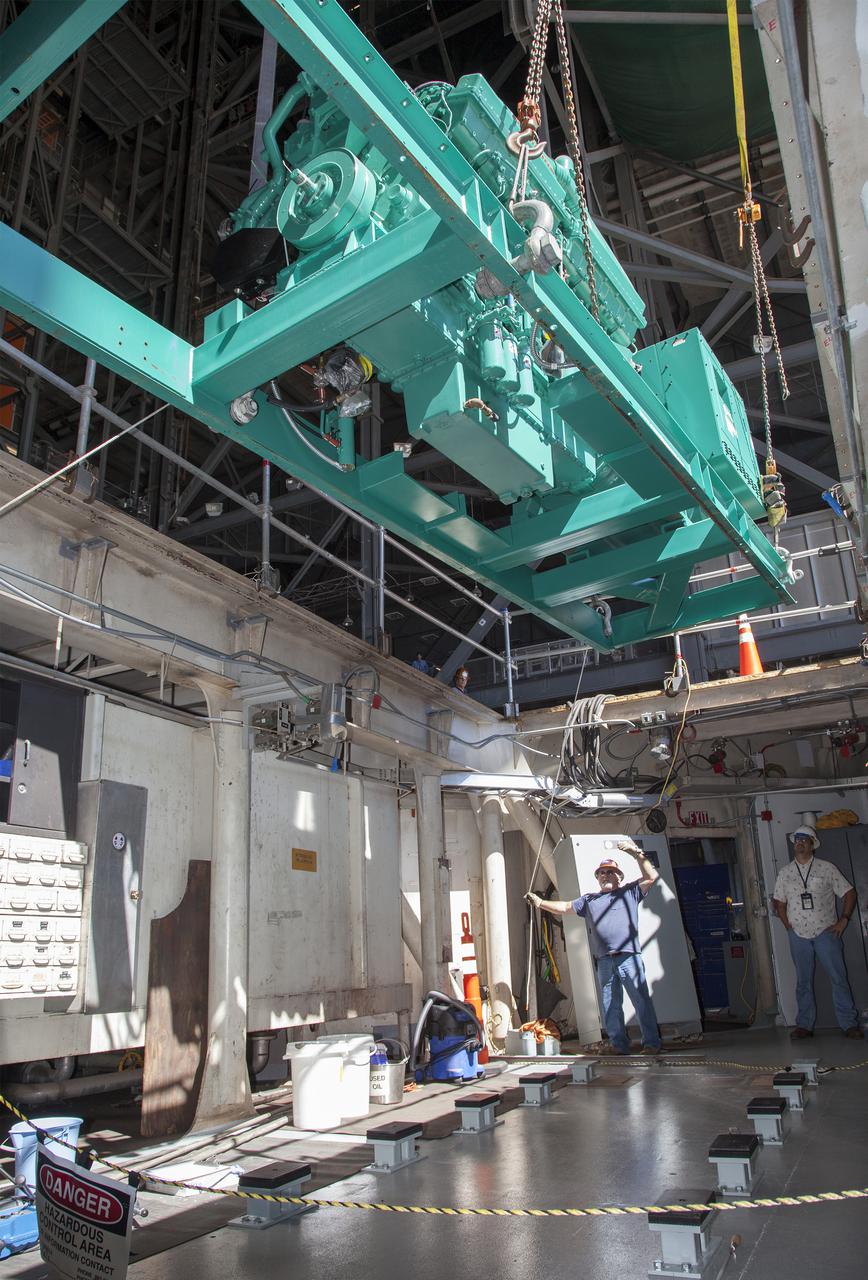
CAPE CANAVERAL, Fla. – Inside the Vehicle Assembly Building at NASA’s Kennedy Space Center in Florida, technicians monitor the progress as a large crane lowers a new generator up for installation in crawler-transporter 1, or CT-1. Work continues in high bay 3 to upgrade CT-1 as part of its general maintenance. CT-1 could be available to carry commercial launch vehicles to the launch pad. The crawler-transporters were used to carry the mobile launcher platform and space shuttle to Launch Complex 39 for space shuttle launches for 30 years. Photo credit: NASA_Daniel Casper
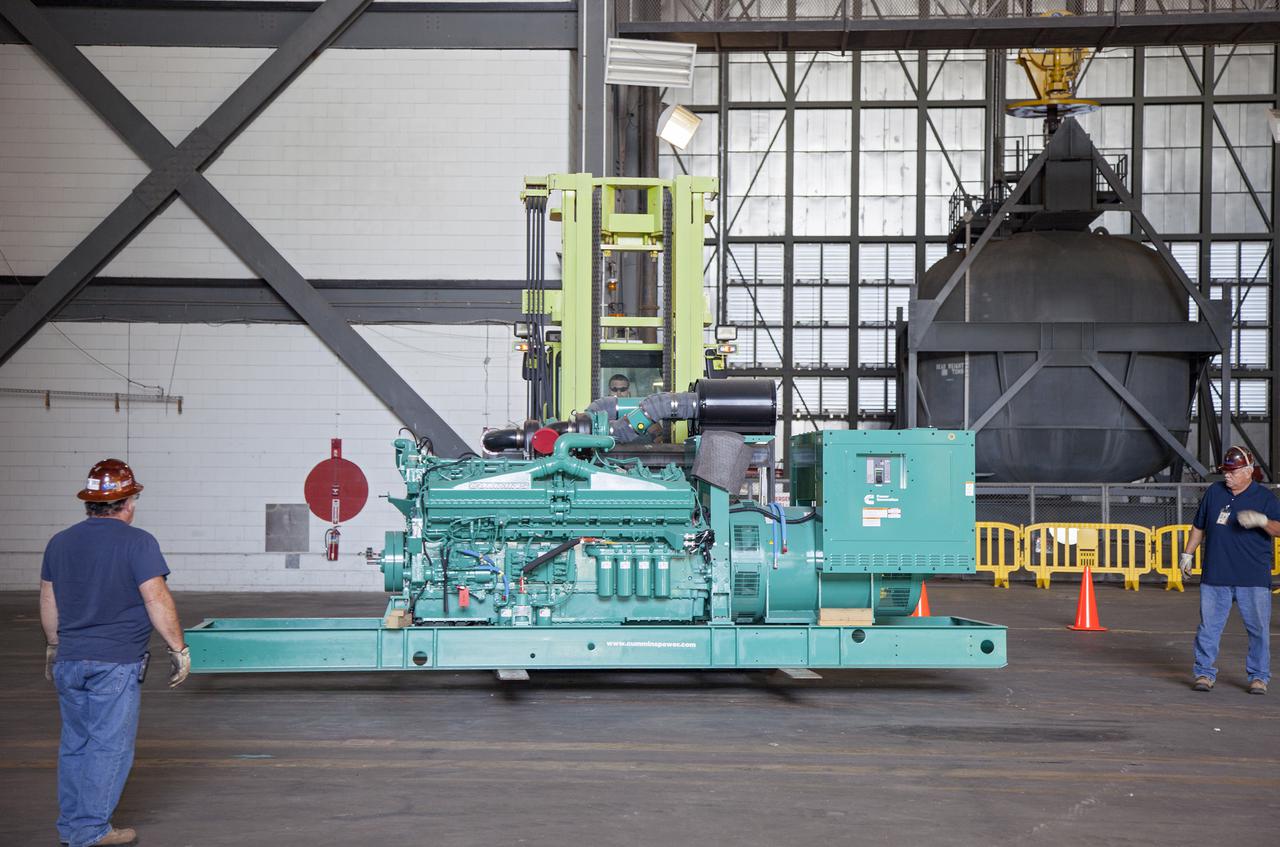
CAPE CANAVERAL, Fla. – Inside the Vehicle Assembly Building at NASA’s Kennedy Space Center in Florida, technicians prepare a new generator for installation in crawler-transporter 1, or CT-1. Work continues in high bay 3 to upgrade CT-1 as part of its general maintenance. CT-1 could be available to carry commercial launch vehicles to the launch pad. The crawler-transporters were used to carry the mobile launcher platform and space shuttle to Launch Complex 39 for space shuttle launches for 30 years. Photo credit: NASA_Daniel Casper
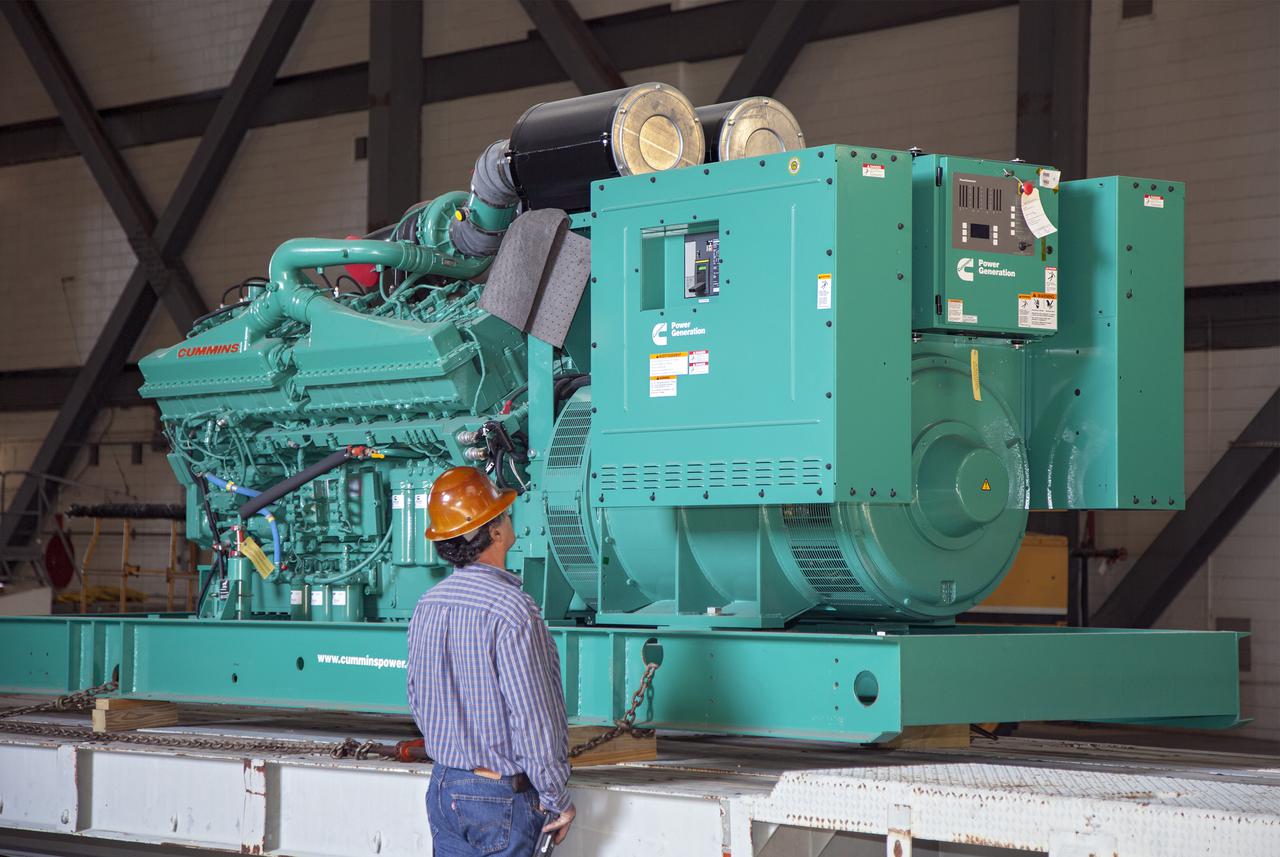
CAPE CANAVERAL, Fla. – Inside the Vehicle Assembly Building at NASA’s Kennedy Space Center in Florida, a technician inspects a new generator for installation in crawler-transporter 1, or CT-1. Work continues in high bay 3 to upgrade CT-1 as part of its general maintenance. CT-1 could be available to carry commercial launch vehicles to the launch pad. The crawler-transporters were used to carry the mobile launcher platform and space shuttle to Launch Complex 39 for space shuttle launches for 30 years. Photo credit: NASA_Daniel Casper
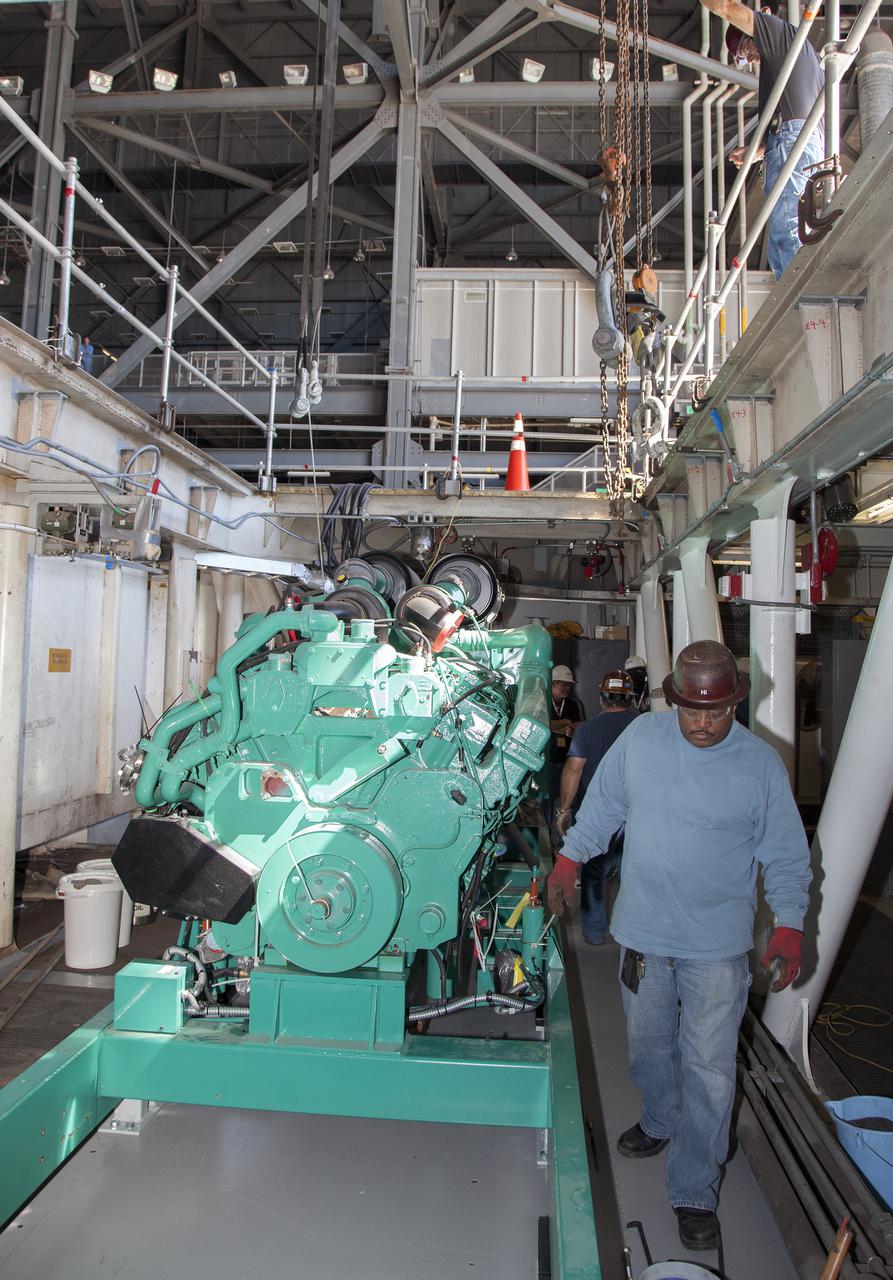
CAPE CANAVERAL, Fla. – Inside the Vehicle Assembly Building at NASA’s Kennedy Space Center in Florida, technicians prepare to install a new generator in crawler-transporter 1, or CT-1. Work continues in high bay 3 to upgrade CT-1 as part of its general maintenance. CT-1 could be available to carry commercial launch vehicles to the launch pad. The crawler-transporters were used to carry the mobile launcher platform and space shuttle to Launch Complex 39 for space shuttle launches for 30 years. Photo credit: NASA_Daniel Casper
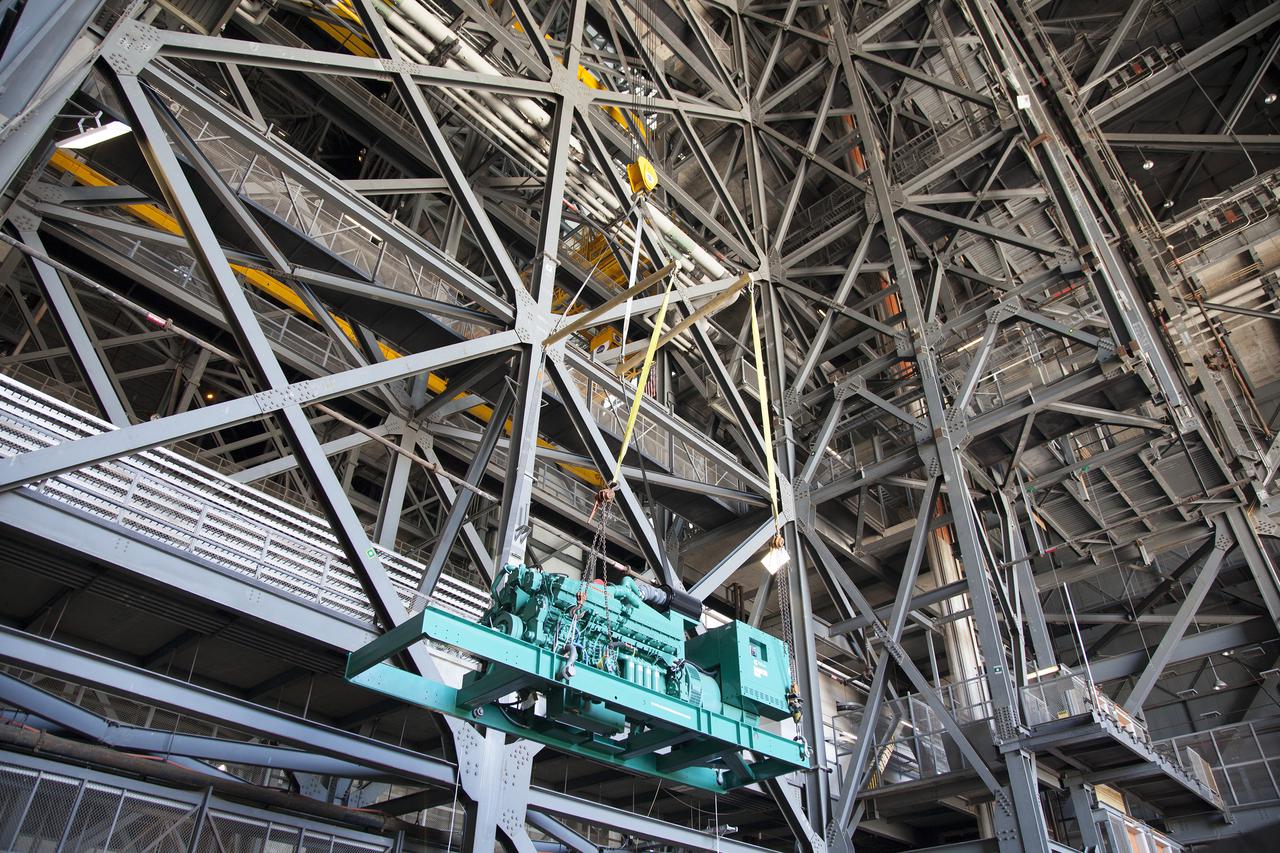
CAPE CANAVERAL, Fla. – Inside the Vehicle Assembly Building at NASA’s Kennedy Space Center in Florida, a large crane lifts a new generator up for installation in crawler-transporter 1, or CT-1. Work continues in high bay 3 to upgrade CT-1 as part of its general maintenance. CT-1 could be available to carry commercial launch vehicles to the launch pad. The crawler-transporters were used to carry the mobile launcher platform and space shuttle to Launch Complex 39 for space shuttle launches for 30 years. Photo credit: NASA_Daniel Casper
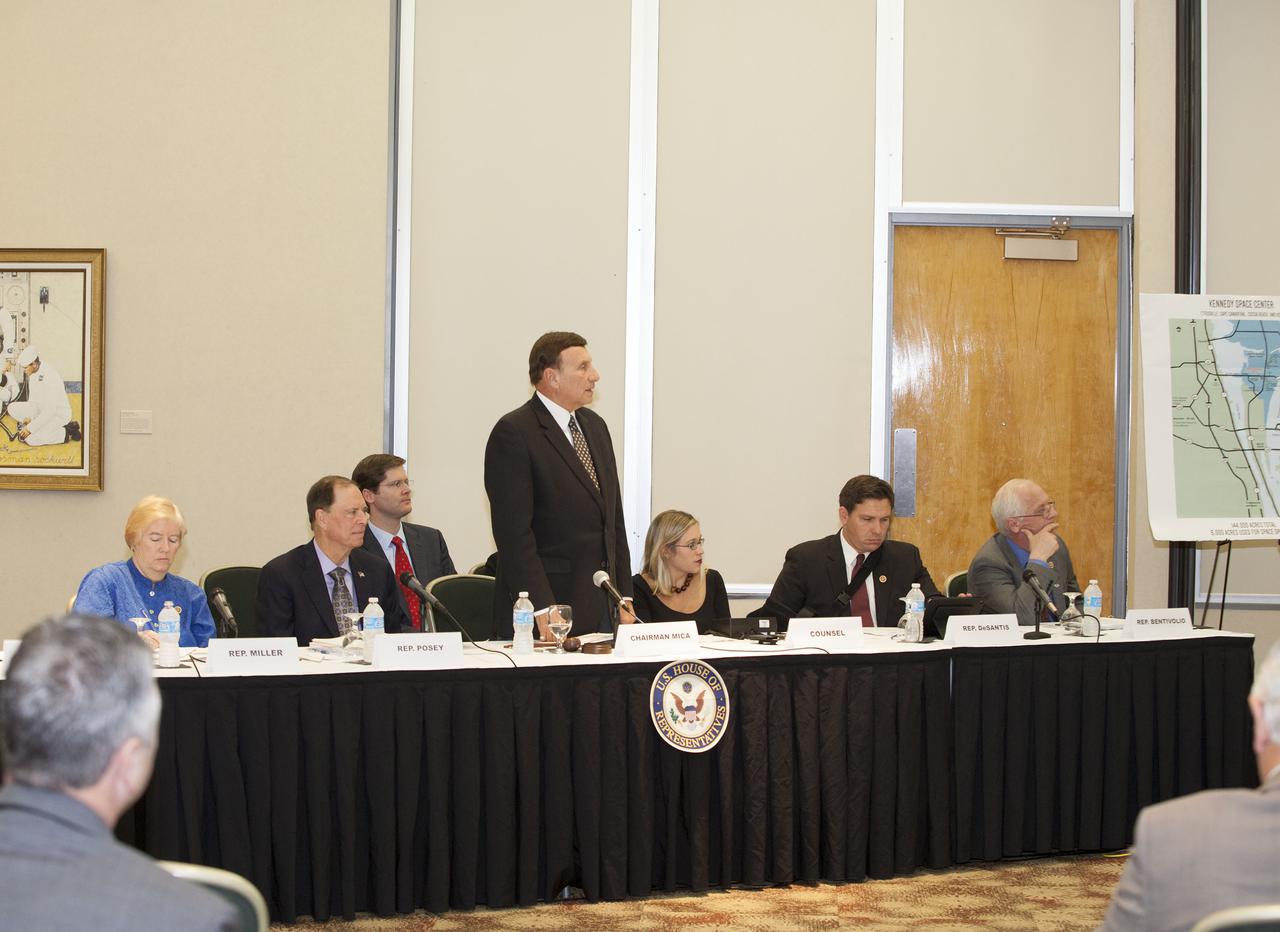
CAPE CANAVERAL, Fla. – At the Kurt H. Debus Conference Facility at the Kennedy Space Center Visitor Complex, Rep. John Mica, R-Fla., standing, speaks to witnesses during a hearing of the U.S. House of Representatives' Subcommittee on Government Operations. From the left are Rep. Candace Miller, R-Mich., Rep. Bill Posey, R-Fla., Mica, the counsel for Rep. Mica, Rep. Ron Desantis, R-Fla., and Rep. Kerry Bentivollo, R-Mich. The Congressional hearing took place to review plans for putting vacant buildings and excess property at the Kennedy Space Center to their best and most productive use. Photo credit: NASA_Daniel Casper
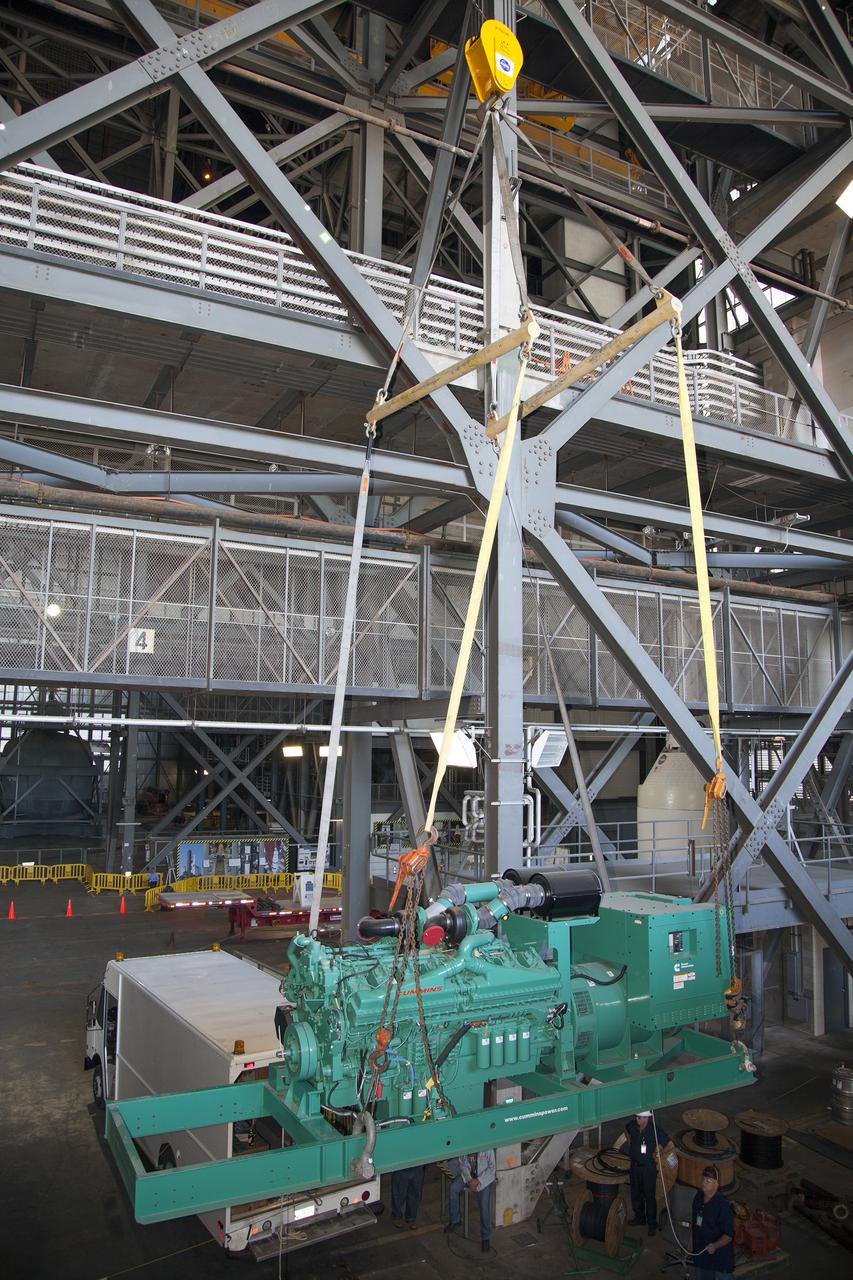
CAPE CANAVERAL, Fla. – Inside the Vehicle Assembly Building at NASA’s Kennedy Space Center in Florida, a large crane is used to lift a new generator for installation in crawler-transporter 1, or CT-1. Work continues in high bay 3 to upgrade CT-1 as part of its general maintenance. CT-1 could be available to carry commercial launch vehicles to the launch pad. The crawler-transporters were used to carry the mobile launcher platform and space shuttle to Launch Complex 39 for space shuttle launches for 30 years. Photo credit: NASA_Daniel Casper
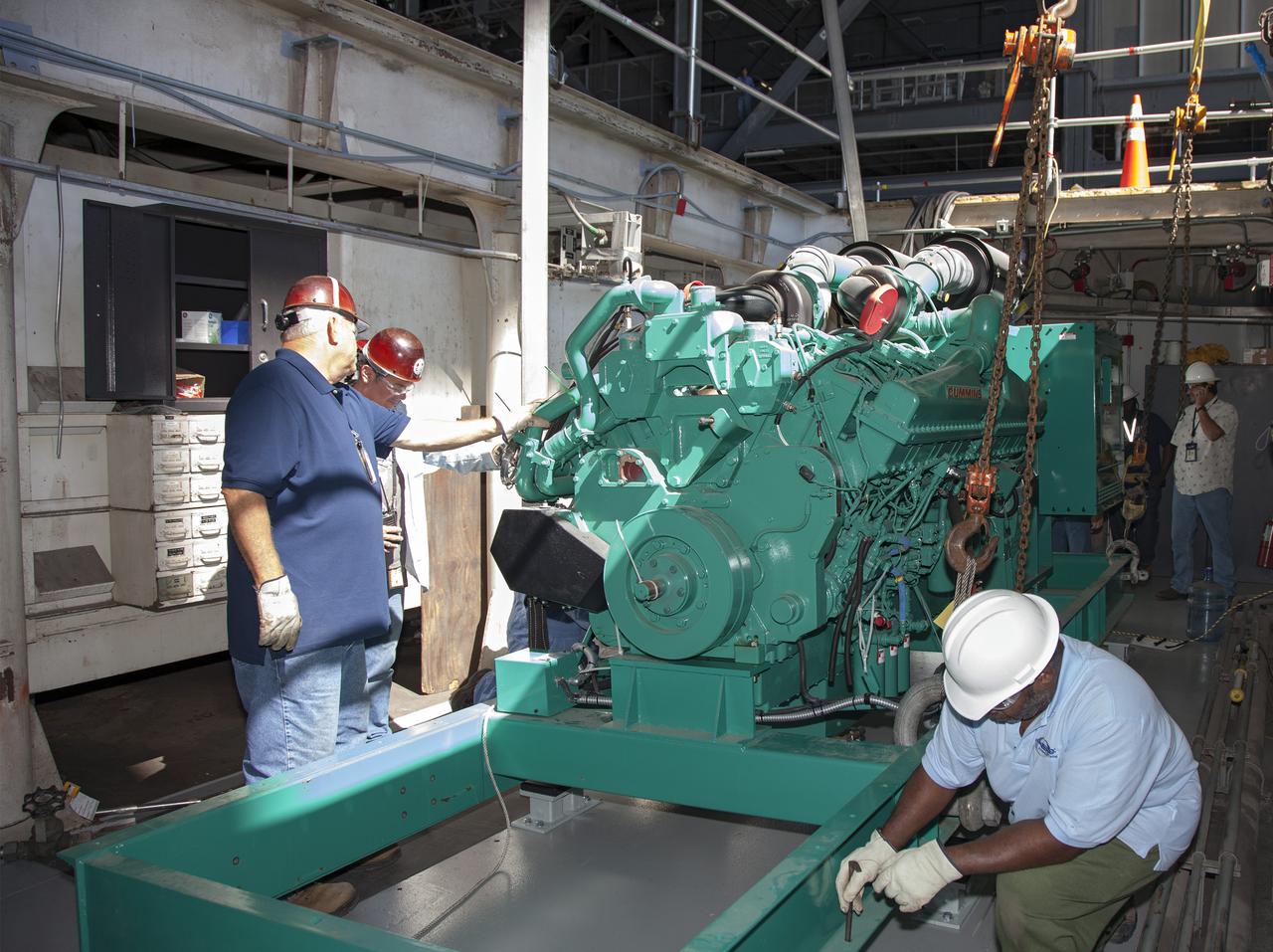
CAPE CANAVERAL, Fla. – Inside the Vehicle Assembly Building at NASA’s Kennedy Space Center in Florida, technicians prepare to install a new generator in crawler-transporter 1, or CT-1. Work continues in high bay 3 to upgrade CT-1 as part of its general maintenance. CT-1 could be available to carry commercial launch vehicles to the launch pad. The crawler-transporters were used to carry the mobile launcher platform and space shuttle to Launch Complex 39 for space shuttle launches for 30 years. Photo credit: NASA_Daniel Casper
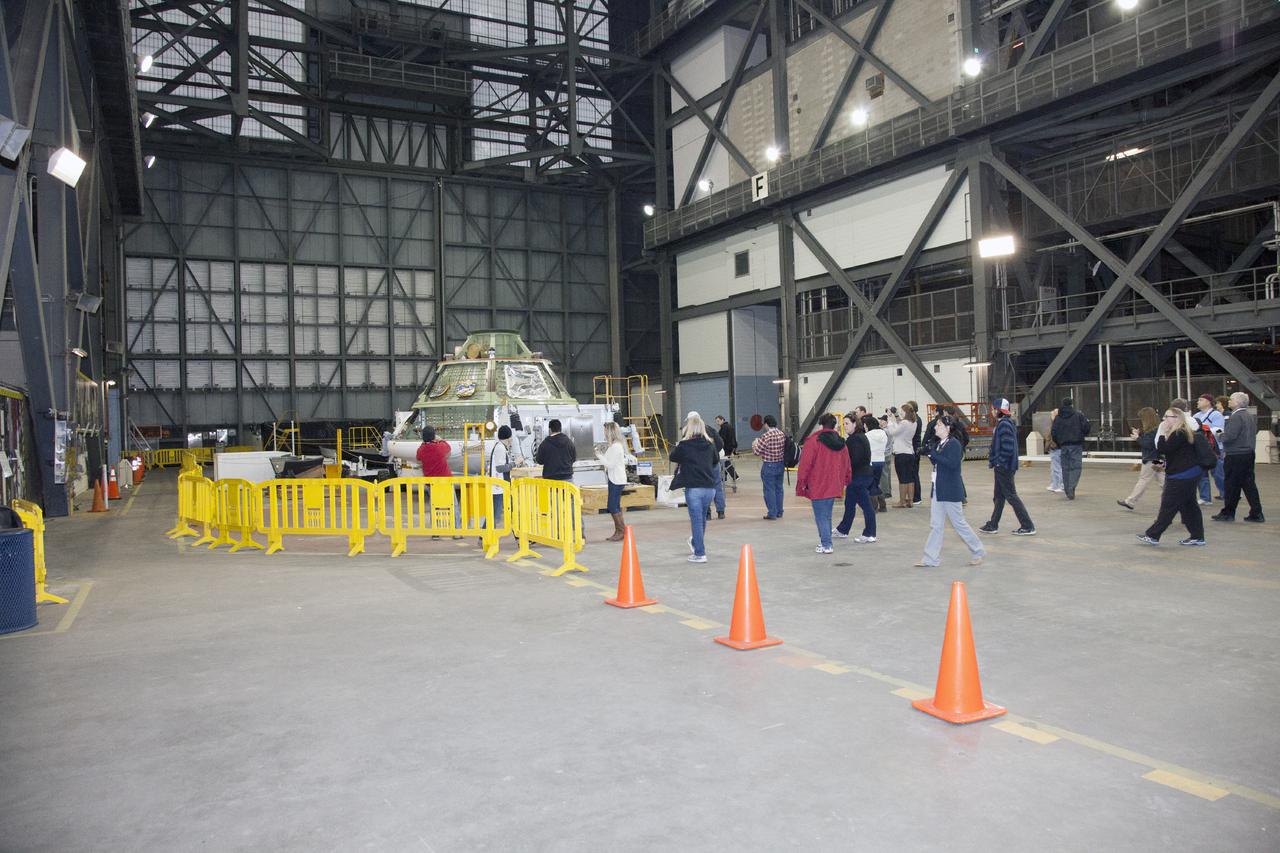
CAPE CANAVERAL, Fla. -- At NASA's Kennedy Space Center in Florida, social media participants were given an opportunity to go inside the spaceport's Vehicle Assembly Building. They were given an opportunity to see the Orion spacecraft currently being prepared for its first flight test, Exploration Flight Test EFT-1. The social media participants gathered at the Florida spaceport for the launch of the Tracking and Data Relay Satellite, or TDRS-L spacecraft. Their visit included tours of key facilities and participating in presentations by key NASA leaders who updated the space agency's current efforts. Photo credit: NASA_Dan Casper
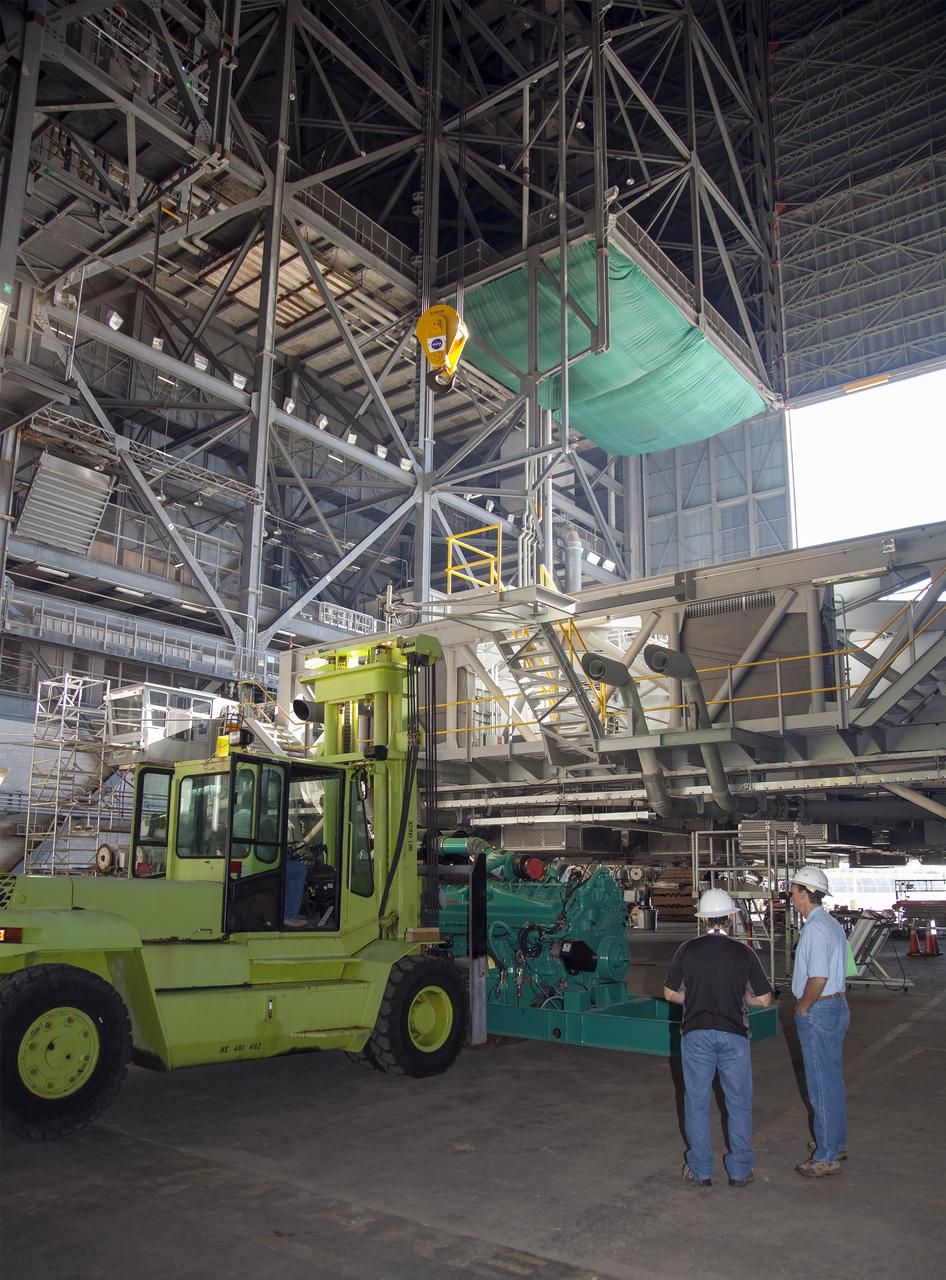
CAPE CANAVERAL, Fla. – Inside the Vehicle Assembly Building at NASA’s Kennedy Space Center in Florida, a forklift is used to move a new generator closer for installation in crawler-transporter 1, or CT-1. Work continues in high bay 3 to upgrade CT-1 as part of its general maintenance. CT-1 could be available to carry commercial launch vehicles to the launch pad. The crawler-transporters were used to carry the mobile launcher platform and space shuttle to Launch Complex 39 for space shuttle launches for 30 years. Photo credit: NASA_Daniel Casper
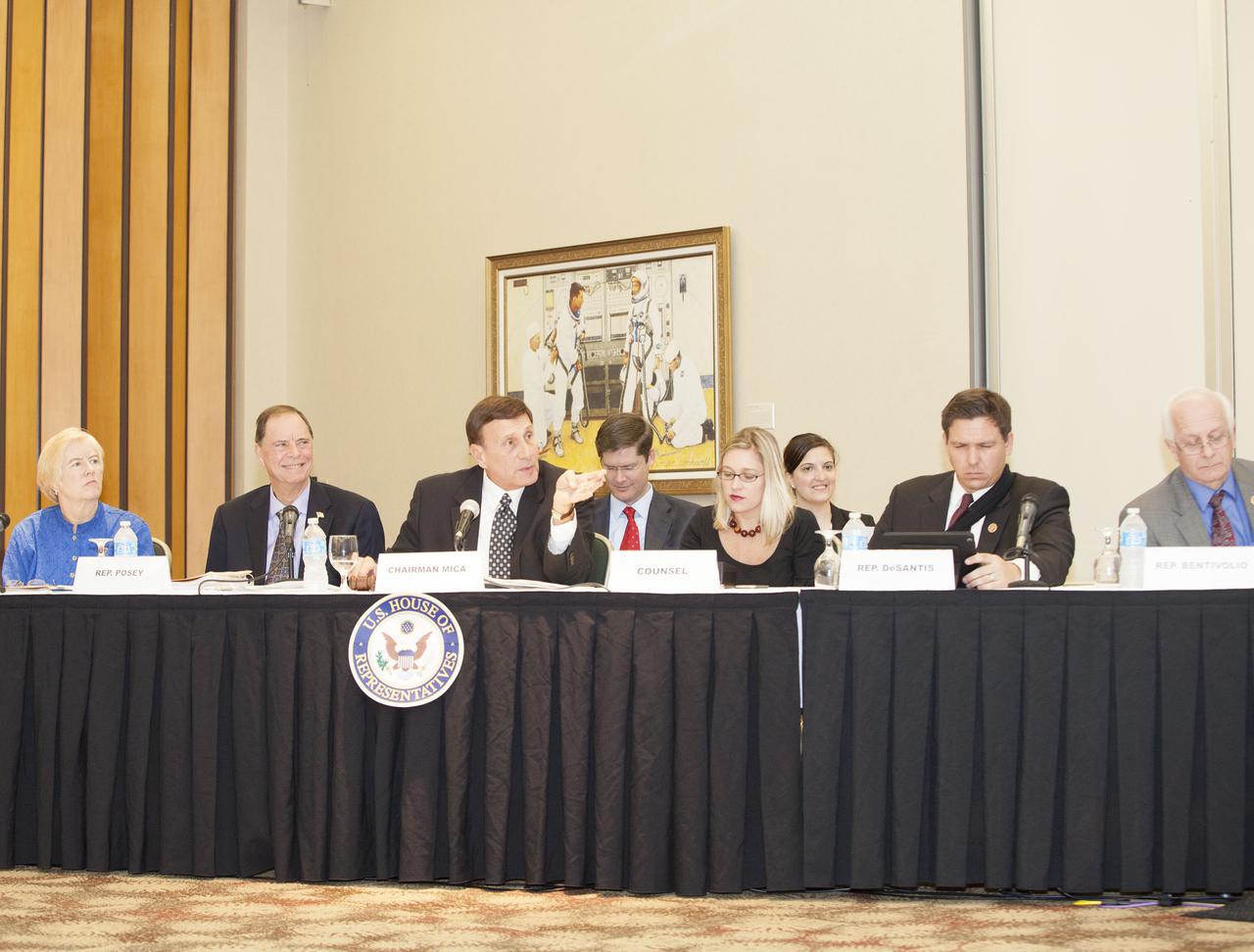
CAPE CANAVERAL, Fla. – At the Kurt H. Debus Conference Facility at the Kennedy Space Center Visitor Complex, Rep. John Mica, R-Fla., center, speaks to witnesses during a hearing of the U.S. House of Representatives' Subcommittee on Government Operations. From the left are Rep. Candace Miller, R-Mich., Rep. Bill Posey, R-Fla., Mica, the counsel for Rep. Mica, Rep. Ron Desantis, R-Fla., and Rep. Kerry Bentivollo, R-Mich. The Congressional hearing took place to review plans for putting vacant buildings and excess property at the Kennedy Space Center to their best and most productive use. Photo credit: NASA_Daniel Casper
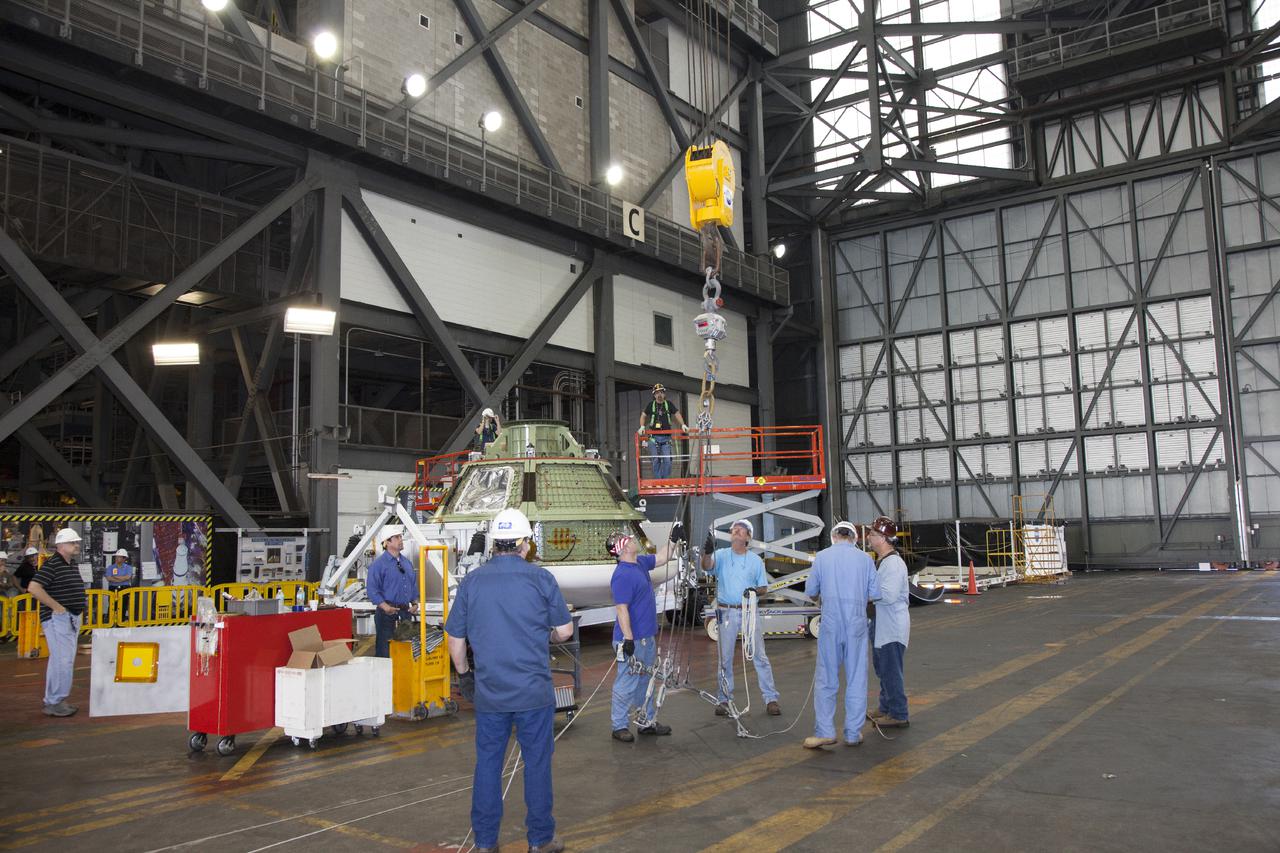
CAPE CANAVERAL, Fla. – At NASA’s Kennedy Space Center in Florida, technicians prepare to attach a bridge crane to the Orion ground test vehicle for heat shield removal inside the Vehicle Assembly Building. The ground test vehicle is being prepared for its move to Langley Research Center in Hampton, Va., for a water test. The test vehicle is being used by the Ground Systems Development and Operations Program for path finding operations, including simulated manufacturing, assembly and stacking procedures. Orion is the exploration spacecraft designed to carry astronauts to destinations not yet explored by humans. It will have emergency abort capability, sustain the crew during space travel and provide safe re-entry from deep space return velocities. The first unpiloted test flight of Orion is scheduled to launch in 2014 atop a Delta IV Heavy rocket and in 2017 on NASA’s Space Launch System rocket. For more information, visit www.nasa.gov_orion. Photo credit: Daniel Casper
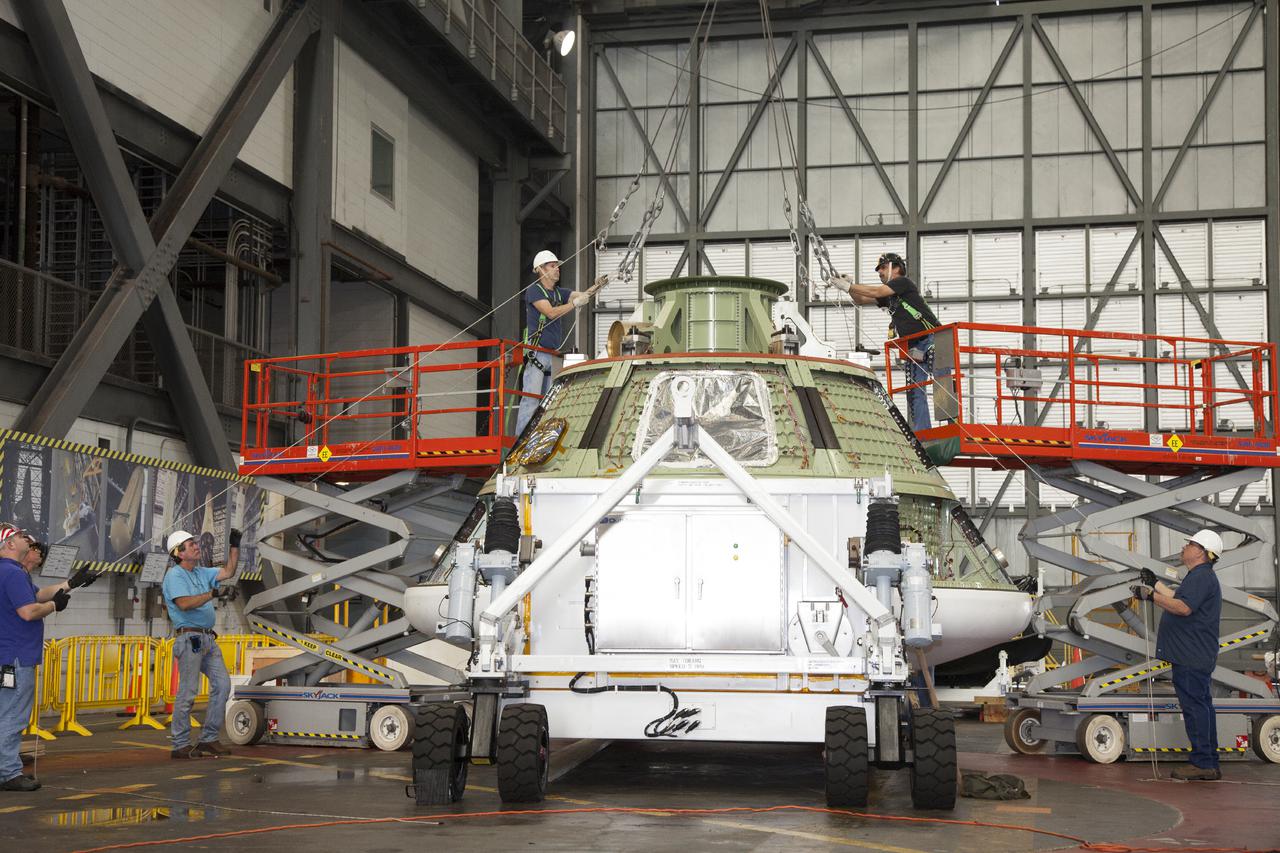
CAPE CANAVERAL, Fla. – Inside the Vehicle Assembly Building at NASA’s Kennedy Space Center in Florida, technicians on scissor lifts prepare to attach a bridge crane to the Orion ground test vehicle for heat shield removal. The ground test vehicle is being prepared for its move to Langley Research Center in Hampton, Va., for a water test. The test vehicle is being used by the Ground Systems Development and Operations Program for path finding operations, including simulated manufacturing, assembly and stacking procedures. Orion is the exploration spacecraft designed to carry astronauts to destinations not yet explored by humans. It will have emergency abort capability, sustain the crew during space travel and provide safe re-entry from deep space return velocities. The first unpiloted test flight of Orion is scheduled to launch in 2014 atop a Delta IV Heavy rocket and in 2017 on NASA’s Space Launch System rocket. For more information, visit www.nasa.gov_orion. Photo credit: Daniel Casper
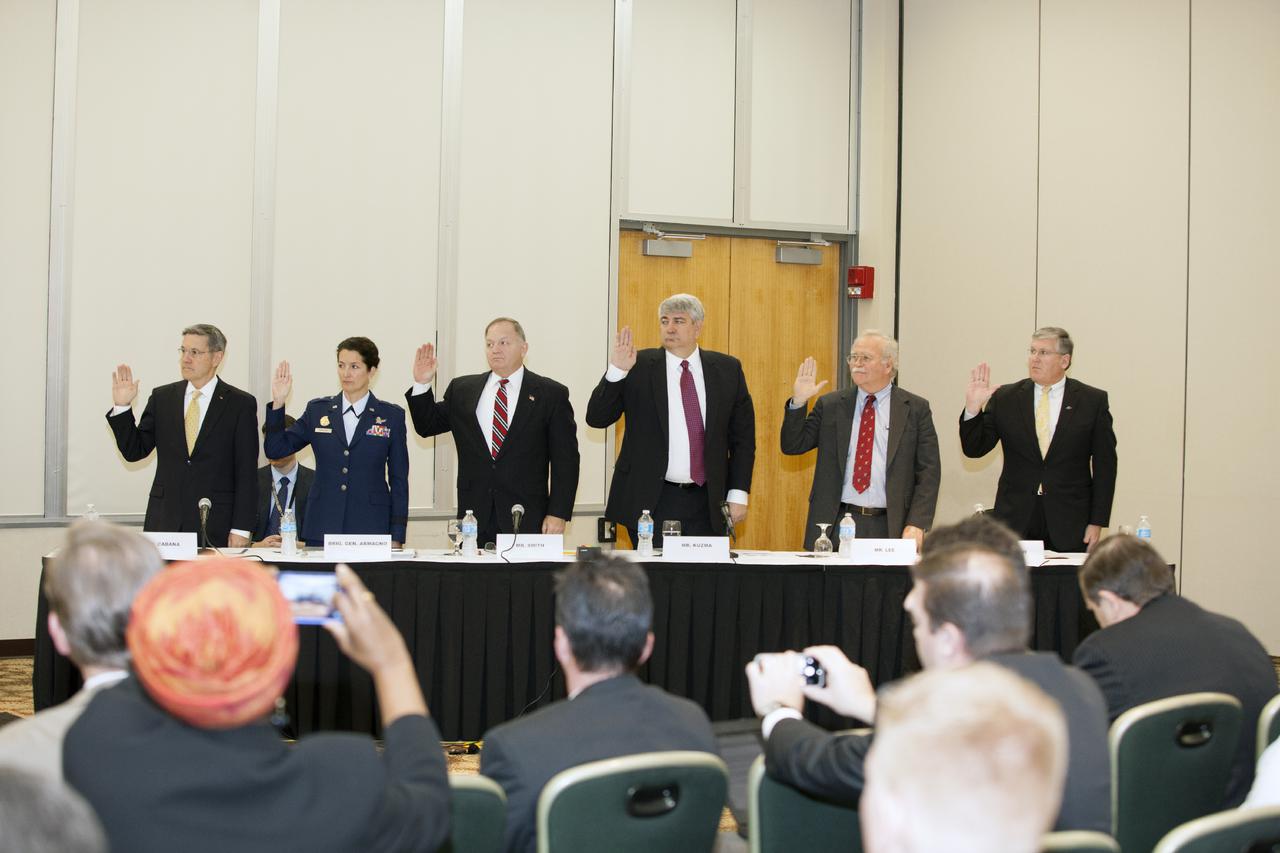
CAPE CANAVERAL, Fla. – At the Kurt H. Debus Conference Facility at the Kennedy Space Center Visitor Complex, witnesses are sworn in prior to a hearing of the U.S. House of Representatives'. From the left are Bob Cabana, director of the Kennedy Space Center, Brig. Gen. Nina Armagno, commander of the 45th Space Wing and director of the Eastern Range at Patrick Air Force Base, John Smith, regional commissioner of the U.S. General Services Administration, Jim Kuzma, chief operating officer of Space Florida, Charles Lee of the Audubon Society, and John Walsh, chief executive officer of the Canaveral Port Authority. The Congressional hearing took place to review plans for putting vacant buildings and excess property at the Kennedy Space Center to their best and most productive use. Photo credit: NASA_Daniel Casper
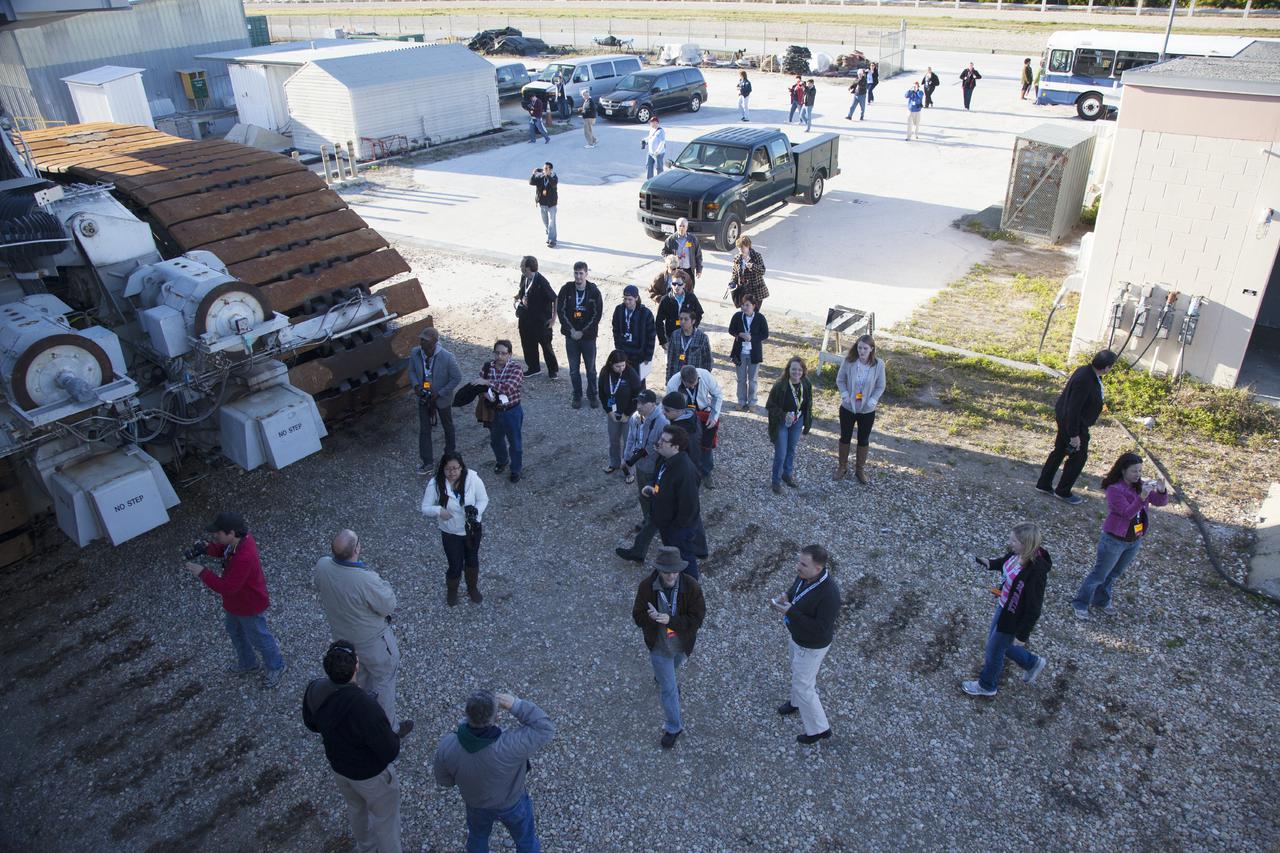
CAPE CANAVERAL, Fla. -- At NASA's Kennedy Space Center in Florida, social media participants were given an up-close look at one of the spaceport's mammoth crawler-transporters. Recent work has included preparations to install upgraded components that will enable the crawler to carry the greater loads anticipated with the agency's new rocket designed to take astronauts beyond low-Earth orbit for the first time since the early 1970s. The social media participants gathered at the Florida spaceport for the launch of the Tracking and Data Relay Satellite, or TDRS-L spacecraft. Their visit included tours of key facilities and participating in presentations by key NASA leaders who updated the space agency's current efforts. Photo credit: NASA_Dan Casper
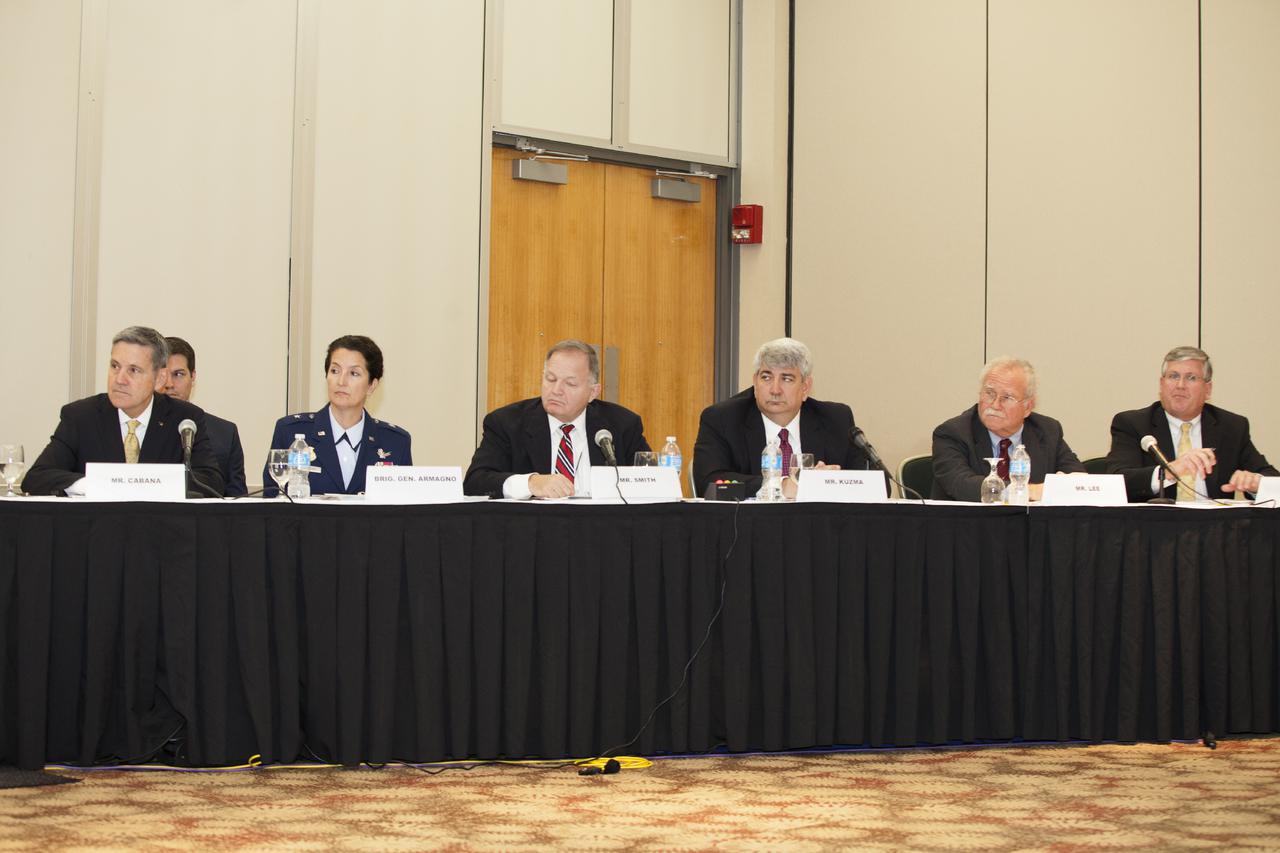
CAPE CANAVERAL, Fla. – At the Kurt H. Debus Conference Facility at the Kennedy Space Center Visitor Complex, witnesses listen during a hearing of the U.S. House of Representatives' Subcommittee on Government Operations. From the left are Bob Cabana, director of the Kennedy Space Center, Brig. Gen. Nina Armagno, commander of the 45th Space Wing and director of the Eastern Range at Patrick Air Force Base, John Smith, regional commissioner of the U.S. General Services Administration, Jim Kuzma, chief operating officer of Space Florida, Charles Lee of the Audubon Society, and John Walsh, chief executive officer of the Canaveral Port Authority. The Congressional hearing took place to review plans for putting vacant buildings and excess property at the Kennedy Space Center to their best and most productive use. Photo credit: NASA_Daniel Casper
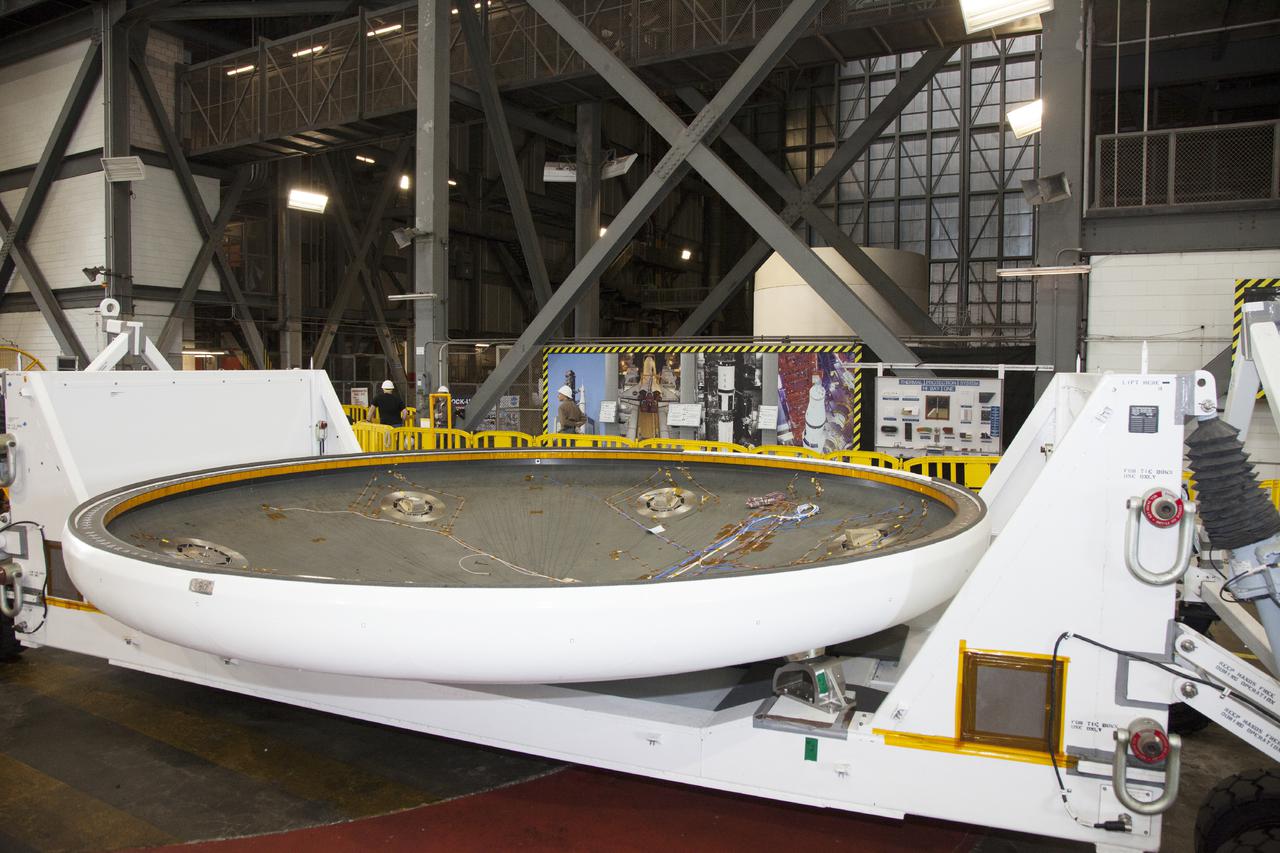
CAPE CANAVERAL, Fla. – Inside the Vehicle Assembly Building at NASA’s Kennedy Space Center in Florida, the Orion ground test vehicle has been lifted away from the heat shield. The ground test vehicle is being prepared for its move to Langley Research Center in Hampton, Va., for a water test. The test vehicle is being used by the Ground Systems Development and Operations Program for path finding operations, including simulated manufacturing, assembly and stacking procedures. Orion is the exploration spacecraft designed to carry astronauts to destinations not yet explored by humans. It will have emergency abort capability, sustain the crew during space travel and provide safe re-entry from deep space return velocities. The first unpiloted test flight of Orion is scheduled to launch in 2014 atop a Delta IV Heavy rocket and in 2017 on NASA’s Space Launch System rocket. For more information, visit www.nasa.gov_orion. Photo credit: Daniel Casper
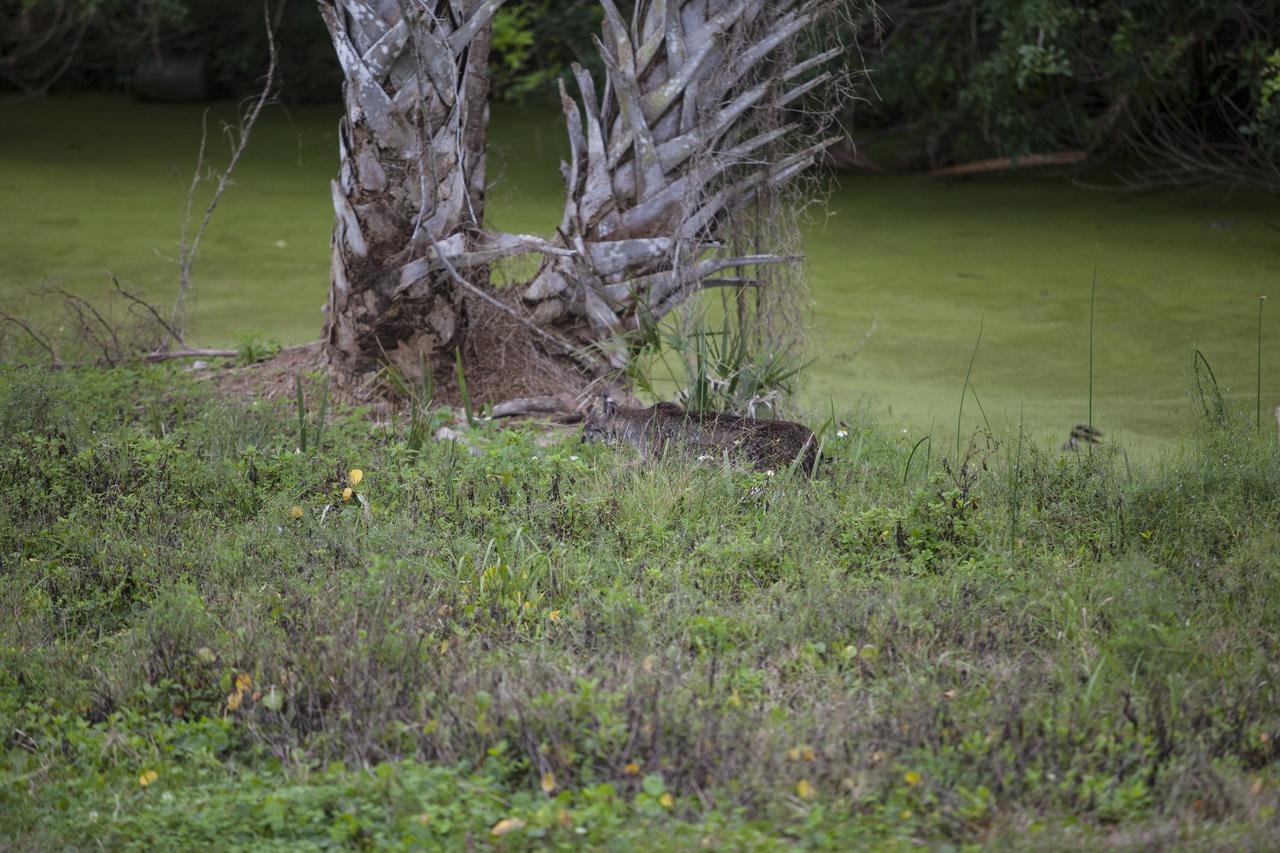
CAPE CANAVERAL, Fla. – A bobcat walks along a canal near the NASA News Center at Kennedy Space Center in Florida. The center shares a boundary with the Merritt Island National Wildlife Refuge. The refuge encompasses 140,000 acres that are a habitat for more than 330 species of birds, 31 mammals, 117 fishes, and 65 amphibians and reptiles. Photo credit: NASA/Daniel Casper
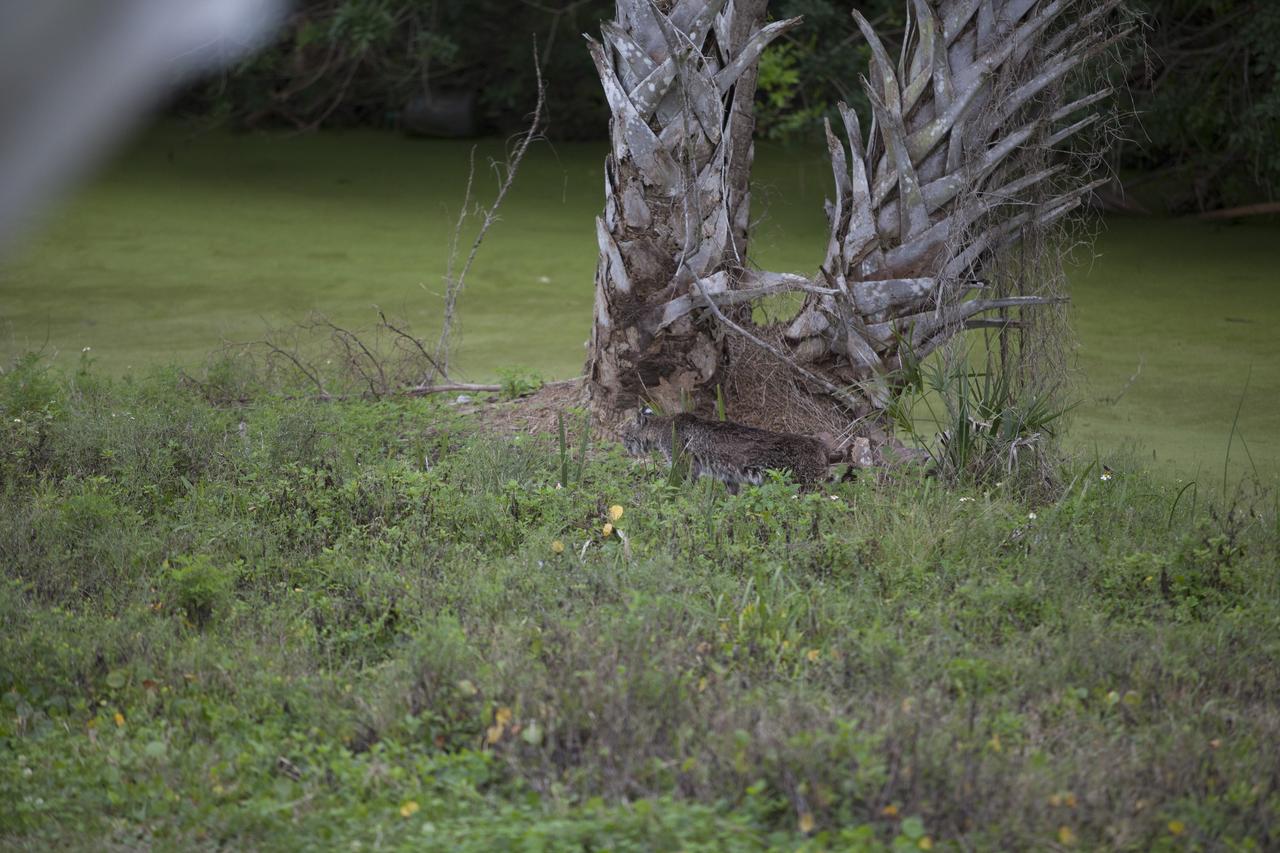
CAPE CANAVERAL, Fla. – A bobcat walks along a canal near the NASA News Center at Kennedy Space Center in Florida. The center shares a boundary with the Merritt Island National Wildlife Refuge. The refuge encompasses 140,000 acres that are a habitat for more than 330 species of birds, 31 mammals, 117 fishes, and 65 amphibians and reptiles. Photo credit: NASA/Daniel Casper. Note: Selected image is cropped
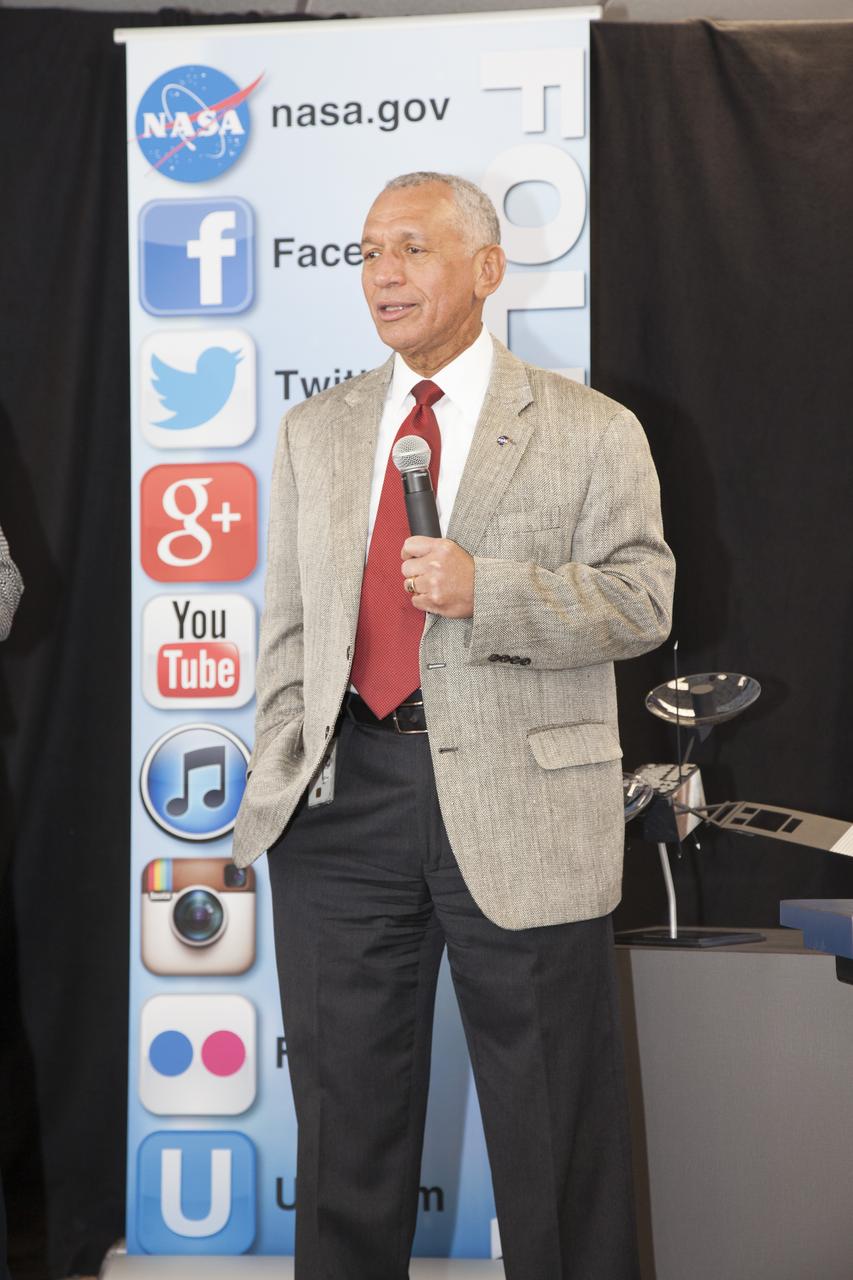
CAPE CANAVERAL, Fla. -- In the NASA News Center annex at NASA's Kennedy Space Center in Florida, social media participants listen to a briefing by NASA Administrator Charles Bolden. The social media participants gathered at the Florida spaceport for the launch of the Tracking and Data Relay Satellite, or TDRS-L spacecraft. Their visit included tours of key facilities and participating in presentations by key NASA leaders who updated the space agency's current efforts. Photo credit: NASA/Dan Casper
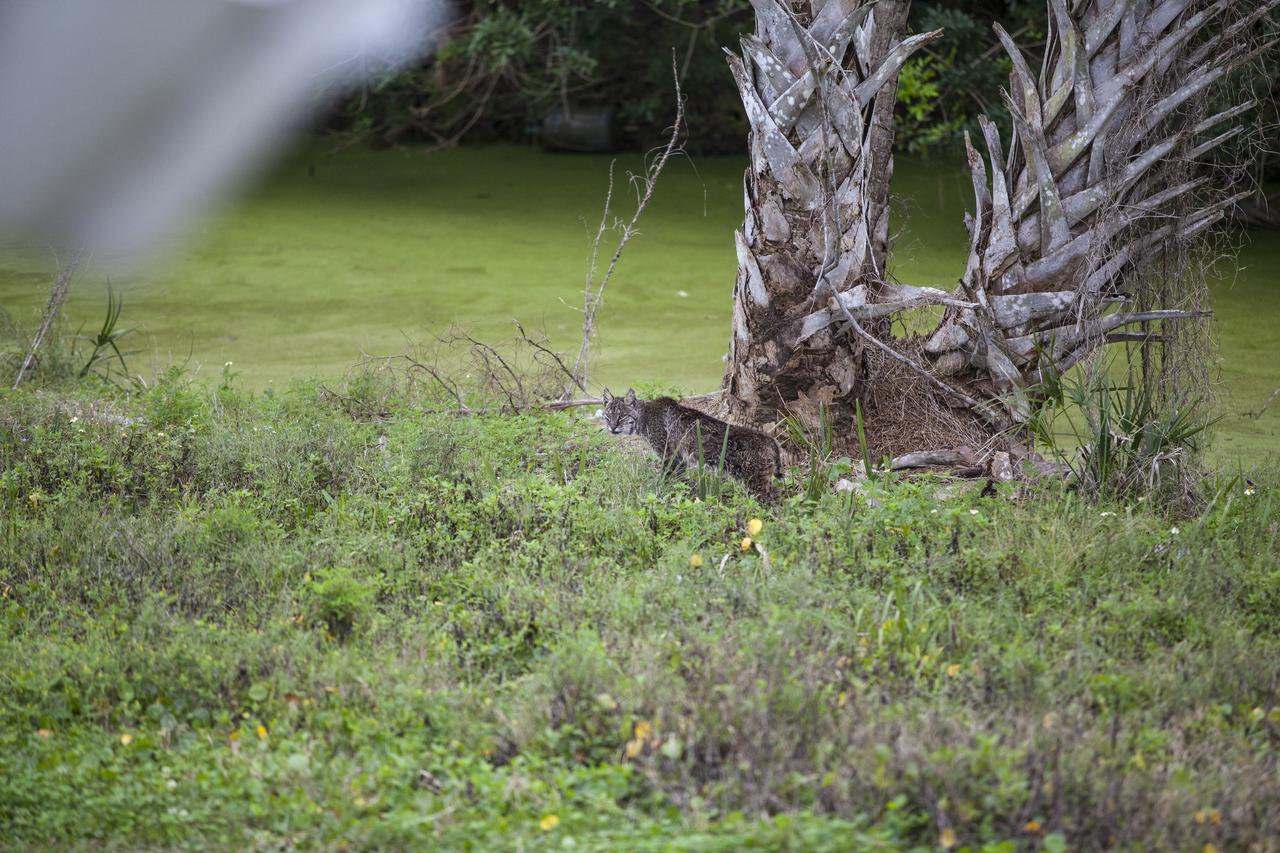
CAPE CANAVERAL, Fla. – A bobcat pauses to look back at the photographer while out for a walk at NASA's Kennedy Space Center in Florida. The center shares a boundary with the Merritt Island National Wildlife Refuge. The refuge encompasses 140,000 acres that are a habitat for more than 330 species of birds, 31 mammals, 117 fishes, and 65 amphibians and reptiles. Photo credit: NASA/Daniel Casper Note: selected image is cropped
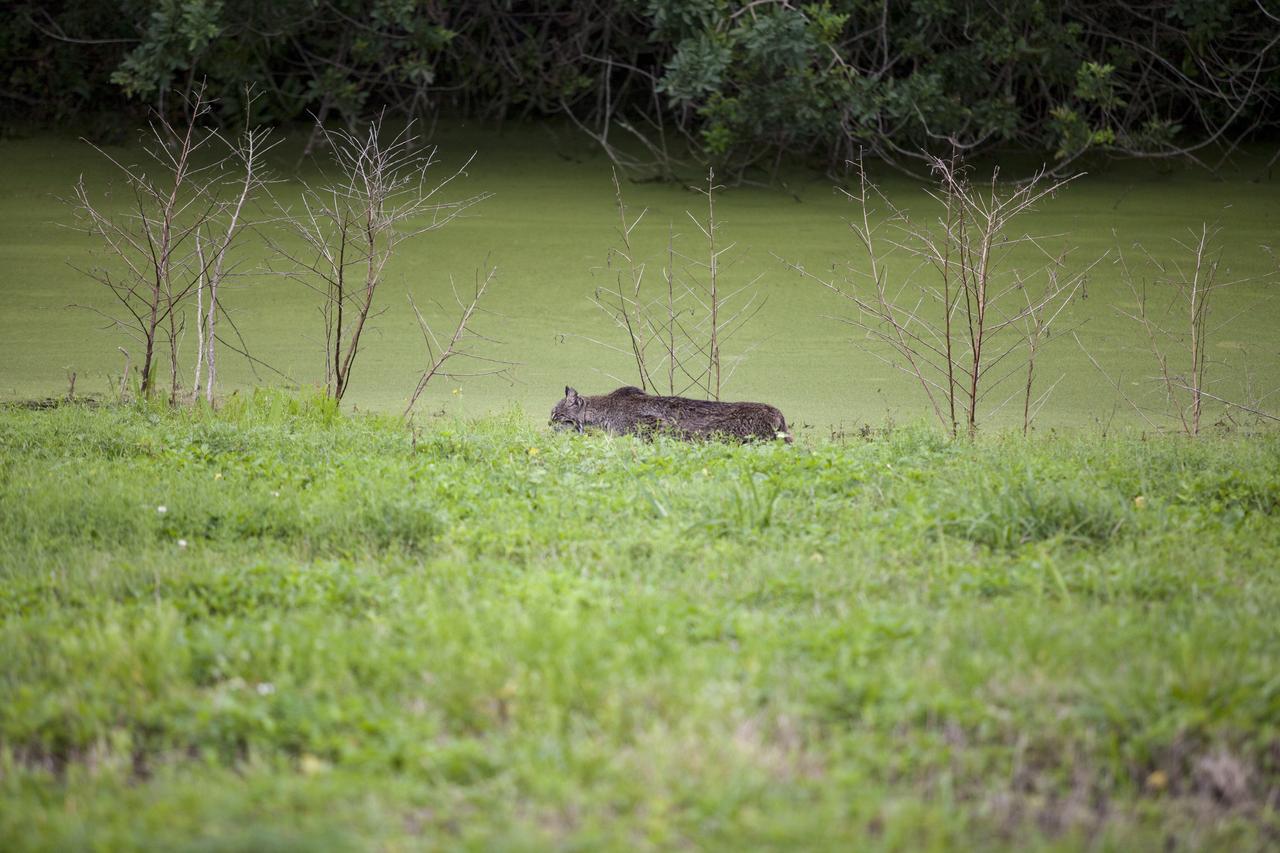
CAPE CANAVERAL, Fla. – A bobcat walks on the shore of a canal near the NASA News Center at Kennedy Space Center in Florida. The center shares a boundary with the Merritt Island National Wildlife Refuge. The refuge encompasses 140,000 acres that are a habitat for more than 330 species of birds, 31 mammals, 117 fishes, and 65 amphibians and reptiles. Photo credit: NASA/Daniel Casper
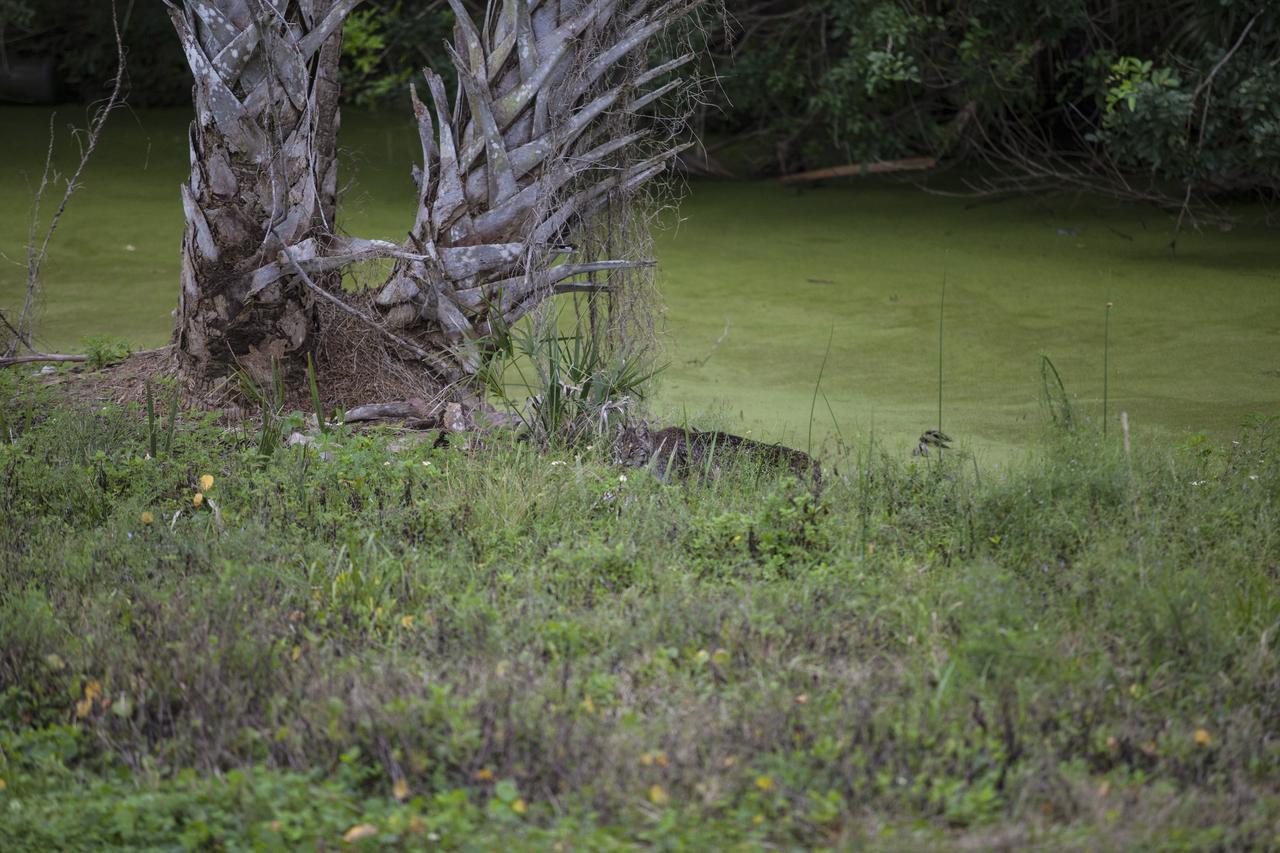
CAPE CANAVERAL, Fla. – A bobcat walks along a canal near the NASA News Center at Kennedy Space Center in Florida. The center shares a boundary with the Merritt Island National Wildlife Refuge. The refuge encompasses 140,000 acres that are a habitat for more than 330 species of birds, 31 mammals, 117 fishes, and 65 amphibians and reptiles. Photo credit: NASA/Daniel Casper
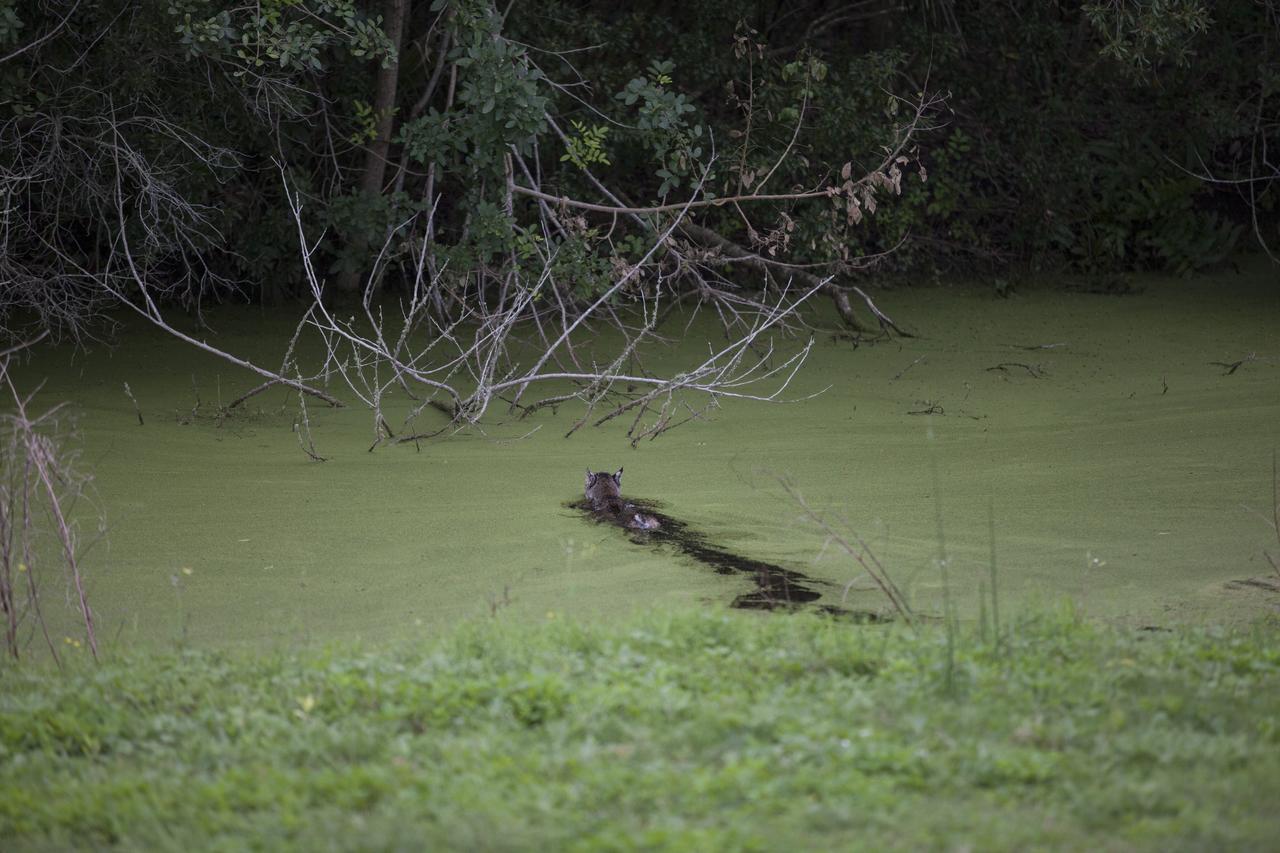
CAPE CANAVERAL, Fla. – A bobcat leaves a trail as it swims across an algae-covered canal near the NASA News Center at Kennedy Space Center in Florida. The center shares a boundary with the Merritt Island National Wildlife Refuge. The refuge encompasses 140,000 acres that are a habitat for more than 330 species of birds, 31 mammals, 117 fishes, and 65 amphibians and reptiles. Photo credit: NASA/Daniel Casper
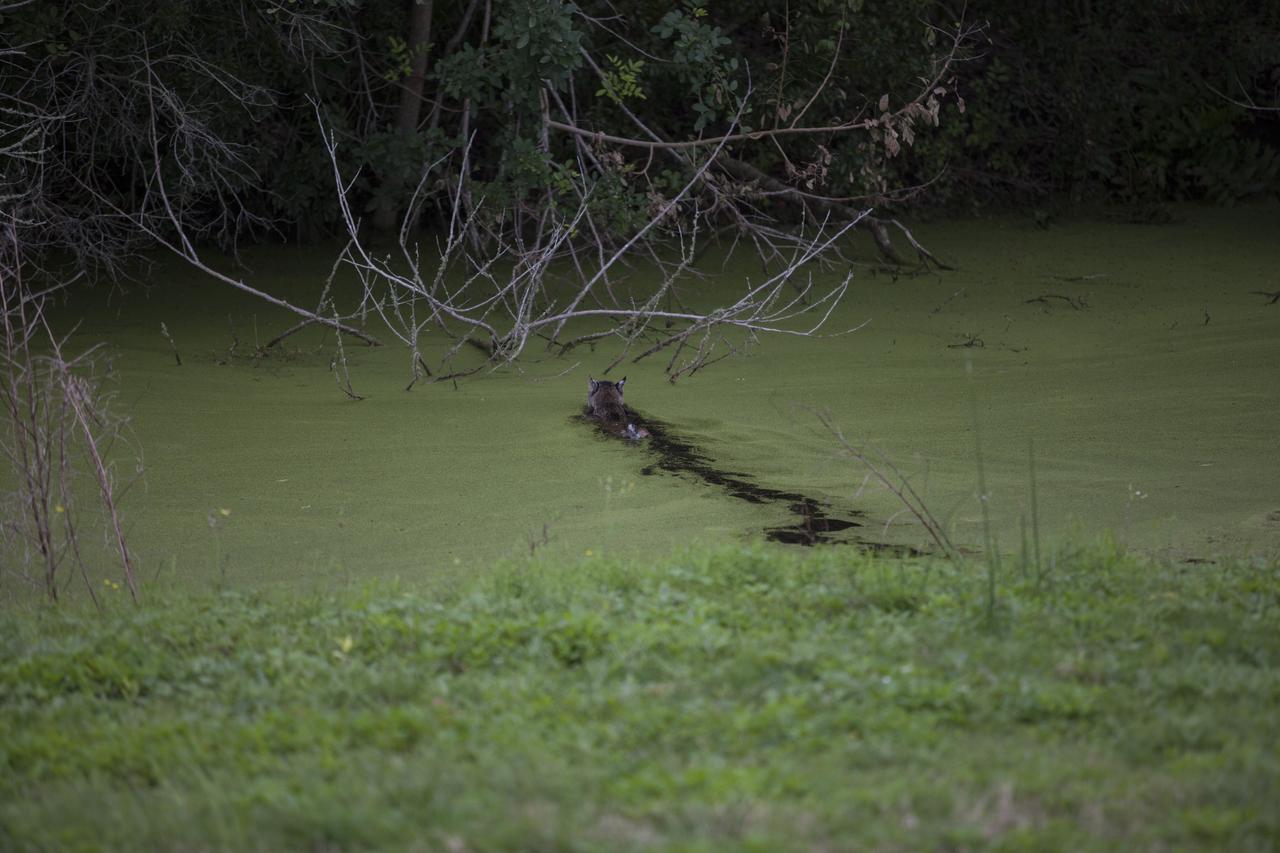
CAPE CANAVERAL, Fla. – A bobcat leaves a trail as it swims across an algae-covered canal near the NASA News Center at Kennedy Space Center in Florida. The center shares a boundary with the Merritt Island National Wildlife Refuge. The refuge encompasses 140,000 acres that are a habitat for more than 330 species of birds, 31 mammals, 117 fishes, and 65 amphibians and reptiles. Photo credit: NASA/Daniel Casper
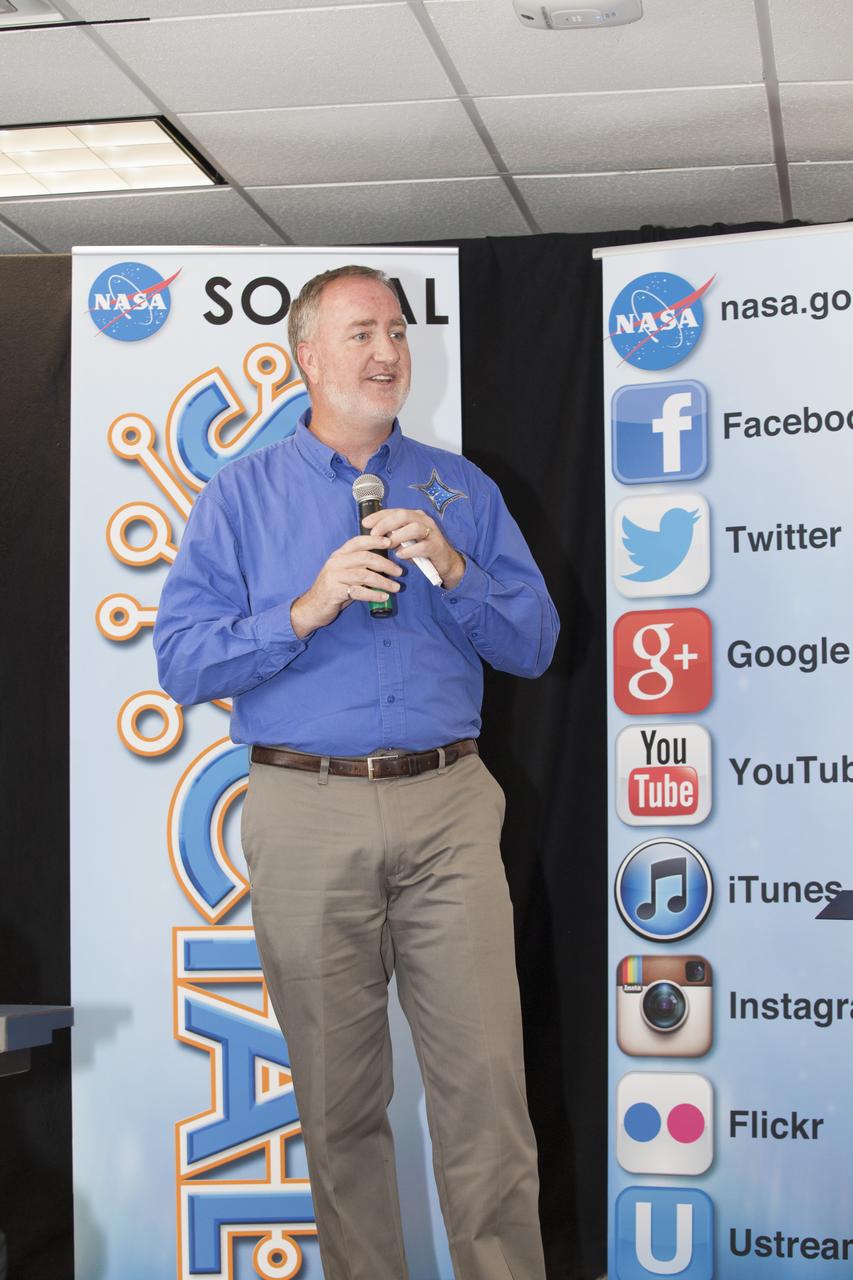
CAPE CANAVERAL, Fla. -- In the NASA News Center annex at NASA's Kennedy Space Center in Florida, social media participants listen to a briefing by Michael Woltman of Kennedy's Launch Services Program. The social media participants gathered at the Florida spaceport for the launch of the Tracking and Data Relay Satellite, or TDRS-L spacecraft. Their visit included tours of key facilities and participating in presentations by key NASA leaders who updated the space agency's current efforts. Photo credit: NASA/Dan Casper
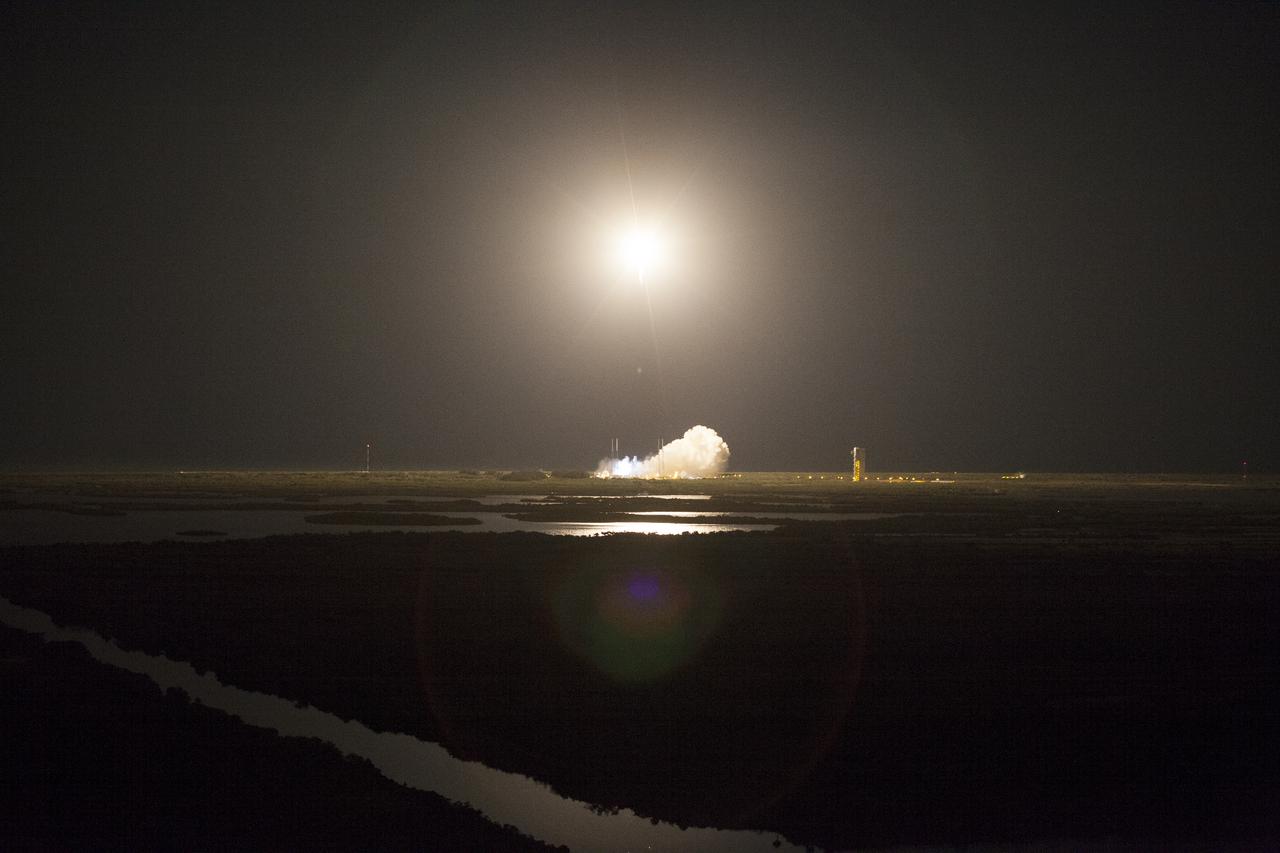
CAPE CANAVERAL, Fla. -- A United Launch Alliance Atlas V rocket lights up the night sky over Space Launch Complex 41 at Cape Canaveral Air Force Station in Florida as it carries NASA's Tracking and Data Relay Satellite, or TDRS-L, to Earth orbit. Launch was at 9:33 p.m. EST Jan. 23 during a 40-minute launch window. The TDRS-L spacecraft is the second of three new satellites designed to ensure vital operational continuity for NASA by expanding the lifespan of the Tracking and Data Relay Satellite System TDRSS fleet, which consists of eight satellites in geosynchronous orbit. The spacecraft provide tracking, telemetry, command and high-bandwidth data return services for numerous science and human exploration missions orbiting Earth. These include NASA's Hubble Space Telescope and the International Space Station. TDRS-L has a high-performance solar panel designed for more spacecraft power to meet the growing S-band communications requirements. TDRSS is one of three NASA Space Communication and Navigation SCaN networks providing space communications to NASA’s missions. For more information more about TDRS-L, visit http:__www.nasa.gov_tdrs. To learn more about SCaN, visit www.nasa.gov_scan. Photo credit: NASA_Dan Casper
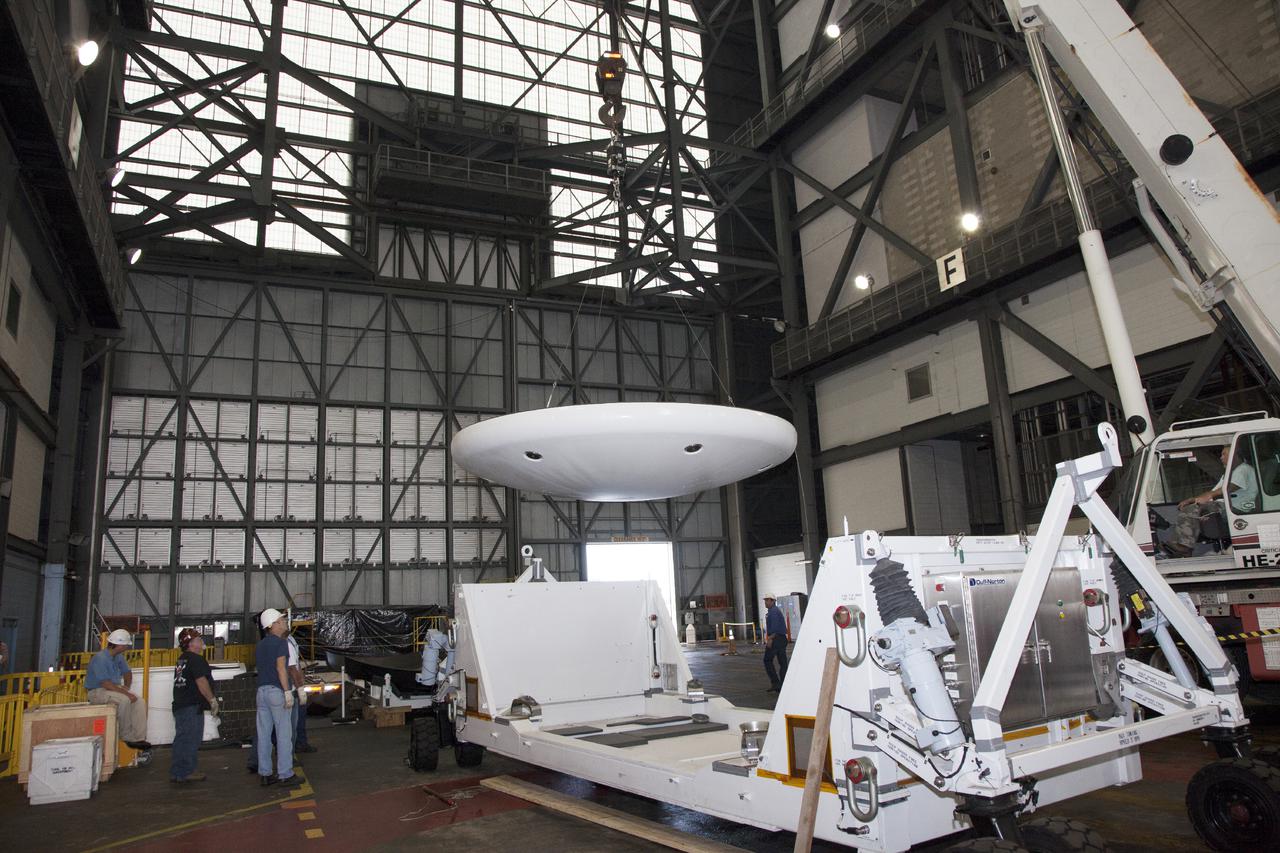
CAPE CANAVERAL, Fla. – Inside the Vehicle Assembly Building at NASA’s Kennedy Space Center in Florida, technicians monitor the progress as a crane moves the heat shield that was removed from the Orion ground test vehicle toward a special holding platform. The ground test vehicle is being prepared for its move to Langley Research Center in Hampton, Va., for a water test. The test vehicle is being used by the Ground Systems Development and Operations Program for path finding operations, including simulated manufacturing, assembly and stacking procedures. Orion is the exploration spacecraft designed to carry astronauts to destinations not yet explored by humans. It will have emergency abort capability, sustain the crew during space travel and provide safe re-entry from deep space return velocities. The first unpiloted test flight of Orion is scheduled to launch in 2014 atop a Delta IV Heavy rocket and in 2017 on NASA’s Space Launch System rocket. For more information, visit www.nasa.gov_orion. Photo credit: Daniel Casper
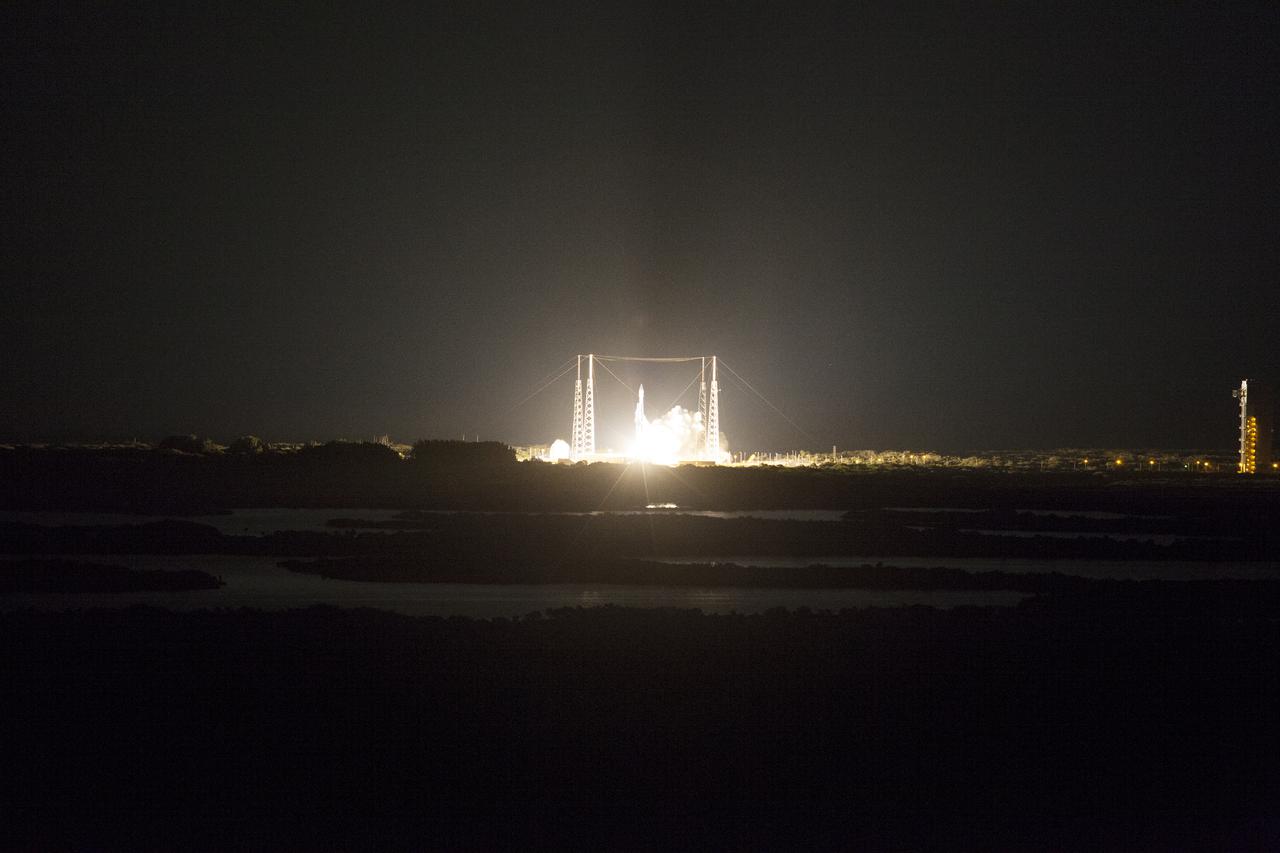
CAPE CANAVERAL, Fla. -- An exhaust plume forms at Space Launch Complex 41 on Cape Canaveral Air Force Station in Florida as the engines ignite under the United Launch Alliance Atlas V rocket carrying NASA's Tracking and Data Relay Satellite, or TDRS-L, to Earth orbit. Launch was at 9:33 p.m. EST Jan. 23 during a 40-minute launch window. The TDRS-L spacecraft is the second of three new satellites designed to ensure vital operational continuity for NASA by expanding the lifespan of the Tracking and Data Relay Satellite System TDRSS fleet, which consists of eight satellites in geosynchronous orbit. The spacecraft provide tracking, telemetry, command and high-bandwidth data return services for numerous science and human exploration missions orbiting Earth. These include NASA's Hubble Space Telescope and the International Space Station. TDRS-L has a high-performance solar panel designed for more spacecraft power to meet the growing S-band communications requirements. TDRSS is one of three NASA Space Communication and Navigation SCaN networks providing space communications to NASA’s missions. For more information more about TDRS-L, visit http:__www.nasa.gov_tdrs. To learn more about SCaN, visit www.nasa.gov_scan. Photo credit: NASA_Dan Casper
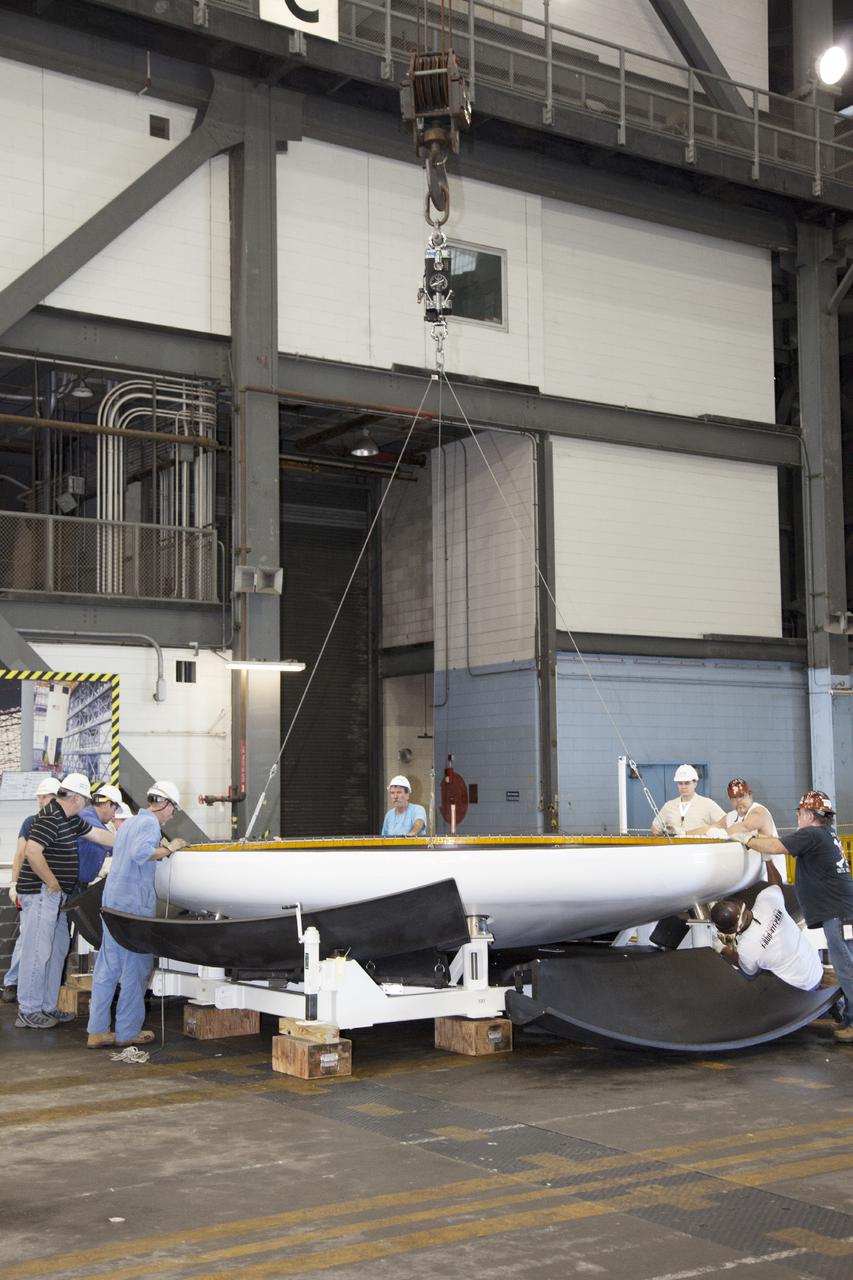
CAPE CANAVERAL, Fla. – Inside the Vehicle Assembly Building at NASA’s Kennedy Space Center in Florida, technicians help secure the heat shield that was removed from the Orion ground test vehicle onto a special holding platform. The ground test vehicle is being prepared for its move to Langley Research Center in Hampton, Va., for a water test. The test vehicle is being used by the Ground Systems Development and Operations Program for path finding operations, including simulated manufacturing, assembly and stacking procedures. Orion is the exploration spacecraft designed to carry astronauts to destinations not yet explored by humans. It will have emergency abort capability, sustain the crew during space travel and provide safe re-entry from deep space return velocities. The first unpiloted test flight of Orion is scheduled to launch in 2014 atop a Delta IV Heavy rocket and in 2017 on NASA’s Space Launch System rocket. For more information, visit www.nasa.gov_orion. Photo credit: Daniel Casper
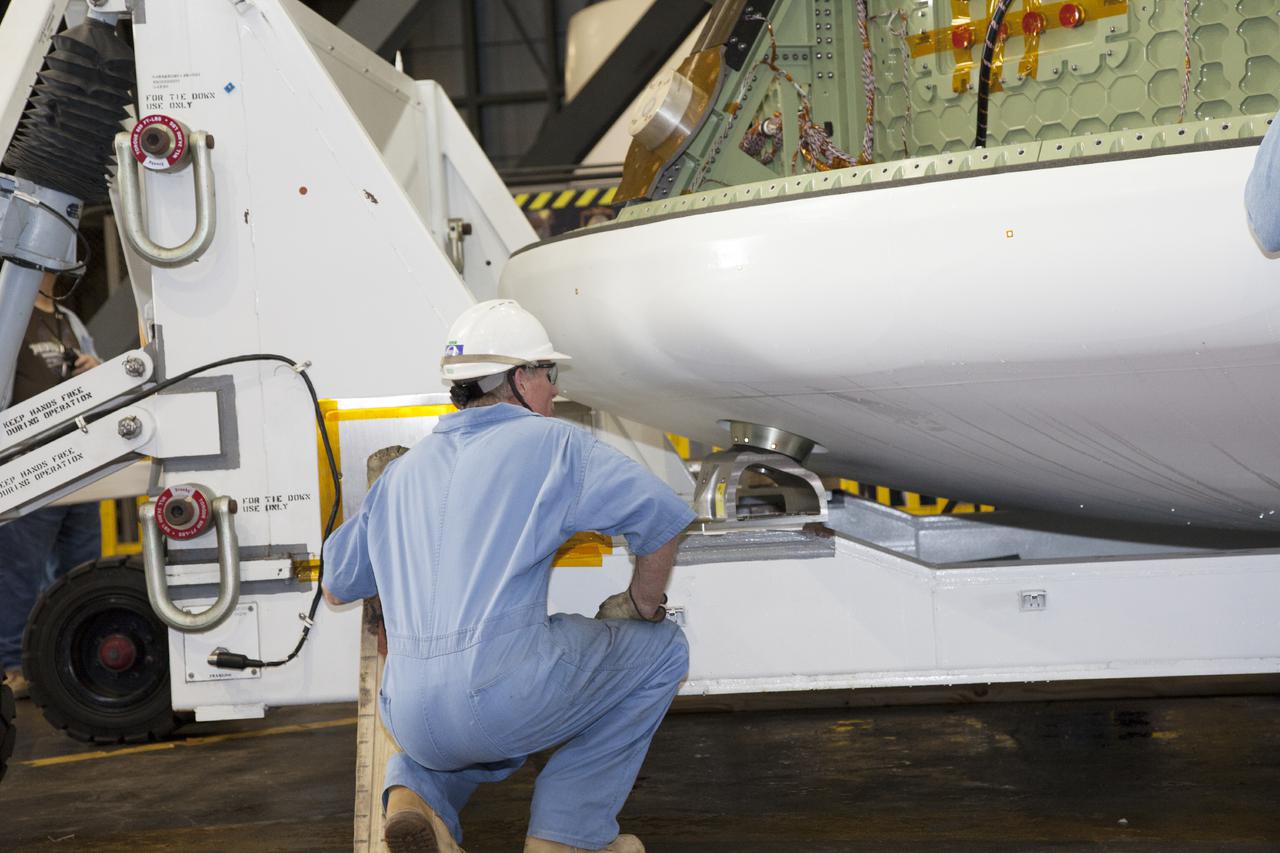
CAPE CANAVERAL, Fla. – Inside the Vehicle Assembly Building at NASA’s Kennedy Space Center in Florida, a technician monitors the progress as a bridge crane attached to the Orion ground test vehicle begins to lift it away from the heat shield. The ground test vehicle is being prepared for its move to Langley Research Center in Hampton, Va., for a water test. The test vehicle is being used by the Ground Systems Development and Operations Program for path finding operations, including simulated manufacturing, assembly and stacking procedures. Orion is the exploration spacecraft designed to carry astronauts to destinations not yet explored by humans. It will have emergency abort capability, sustain the crew during space travel and provide safe re-entry from deep space return velocities. The first unpiloted test flight of Orion is scheduled to launch in 2014 atop a Delta IV Heavy rocket and in 2017 on NASA’s Space Launch System rocket. For more information, visit www.nasa.gov_orion. Photo credit: Daniel Casper
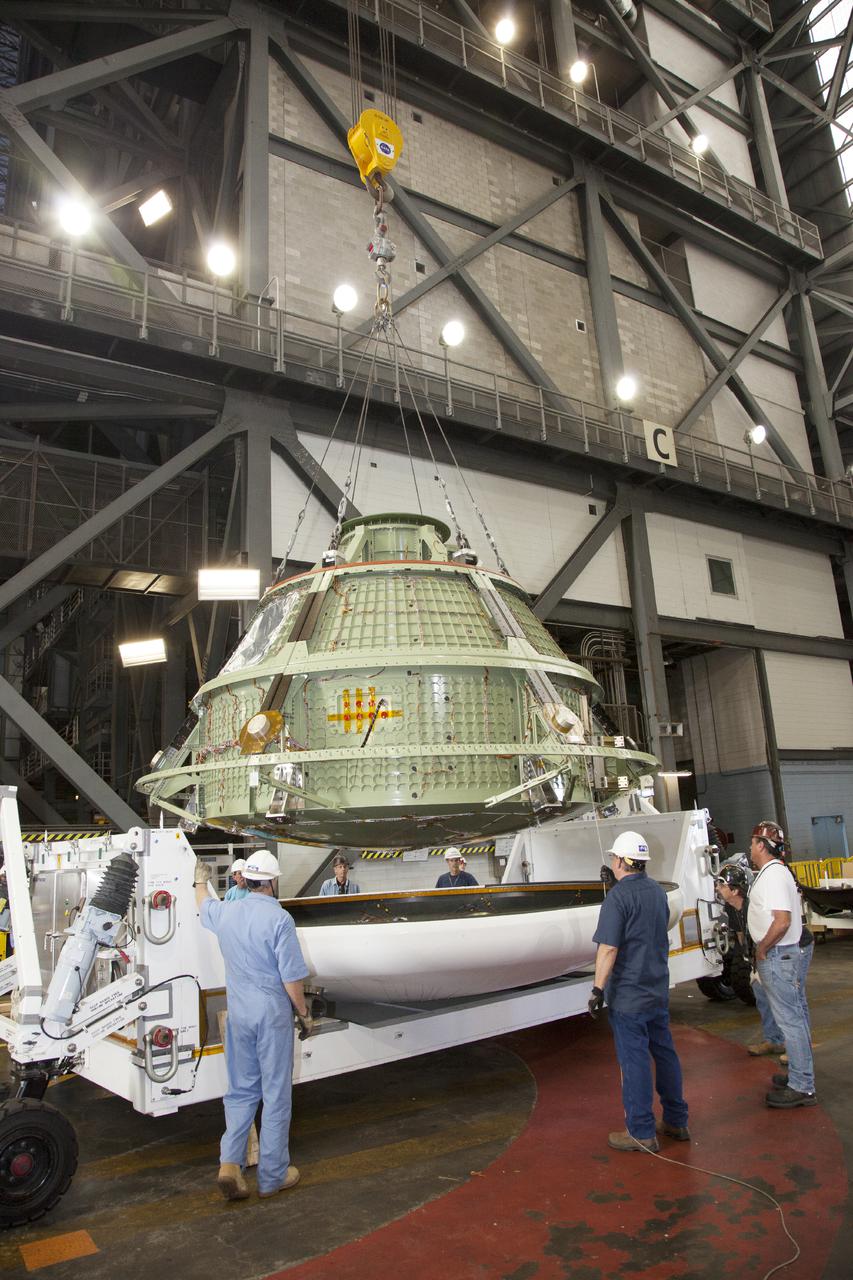
CAPE CANAVERAL, Fla. – Inside the Vehicle Assembly Building at NASA’s Kennedy Space Center in Florida, technicians monitor the progress as a bridge crane attached to the Orion ground test vehicle begins to lift it away from the heat shield. The ground test vehicle is being prepared for its move to Langley Research Center in Hampton, Va., for a water test. The test vehicle is being used by the Ground Systems Development and Operations Program for path finding operations, including simulated manufacturing, assembly and stacking procedures. Orion is the exploration spacecraft designed to carry astronauts to destinations not yet explored by humans. It will have emergency abort capability, sustain the crew during space travel and provide safe re-entry from deep space return velocities. The first unpiloted test flight of Orion is scheduled to launch in 2014 atop a Delta IV Heavy rocket and in 2017 on NASA’s Space Launch System rocket. For more information, visit www.nasa.gov_orion. Photo credit: Daniel Casper
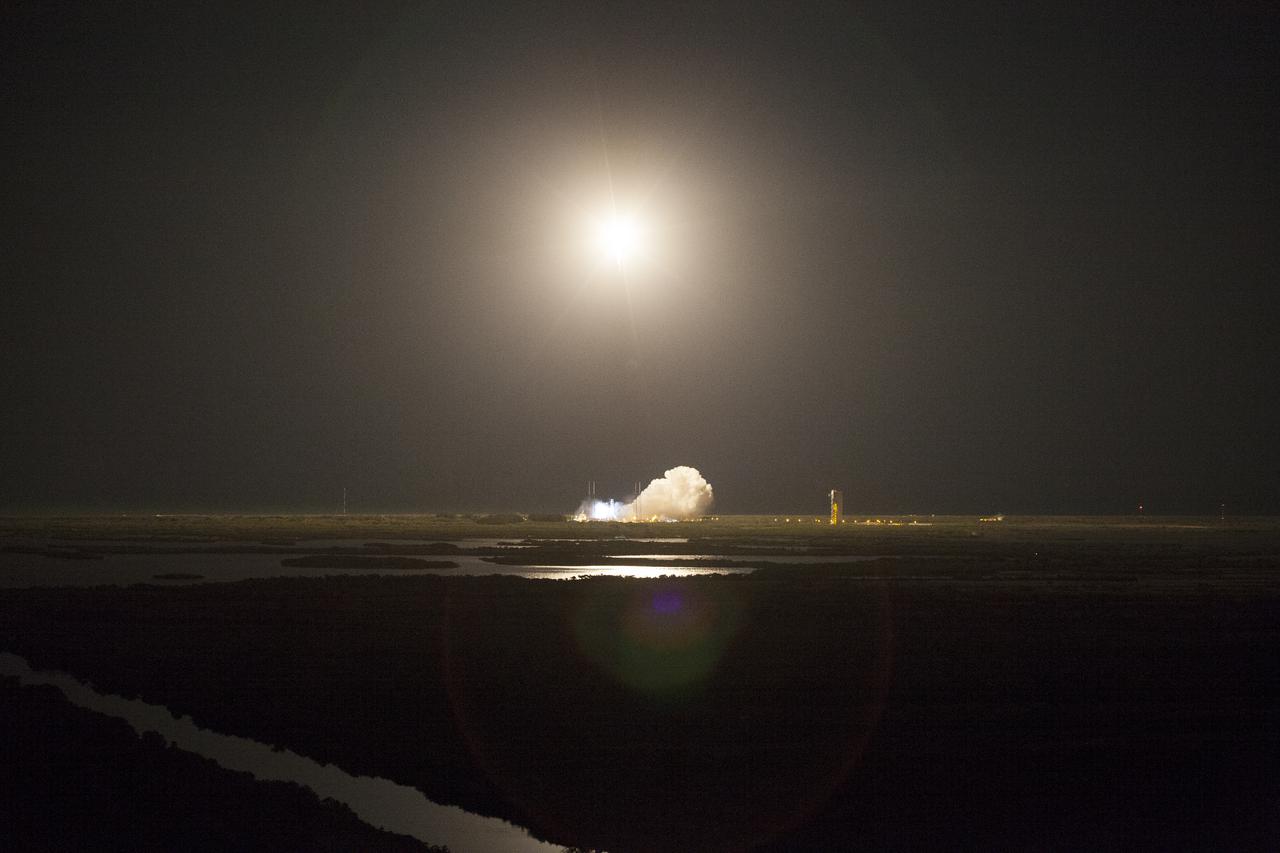
CAPE CANAVERAL, Fla. -- A United Launch Alliance Atlas V rocket streaks into the night from Space Launch Complex 41 at Cape Canaveral Air Force Station in Florida, carrying NASA's Tracking and Data Relay Satellite, or TDRS-L, to Earth orbit. Launch was at 9:33 p.m. EST Jan. 23 during a 40-minute launch window. The TDRS-L spacecraft is the second of three new satellites designed to ensure vital operational continuity for NASA by expanding the lifespan of the Tracking and Data Relay Satellite System TDRSS fleet, which consists of eight satellites in geosynchronous orbit. The spacecraft provide tracking, telemetry, command and high-bandwidth data return services for numerous science and human exploration missions orbiting Earth. These include NASA's Hubble Space Telescope and the International Space Station. TDRS-L has a high-performance solar panel designed for more spacecraft power to meet the growing S-band communications requirements. TDRSS is one of three NASA Space Communication and Navigation SCaN networks providing space communications to NASA’s missions. For more information more about TDRS-L, visit http:__www.nasa.gov_tdrs. To learn more about SCaN, visit www.nasa.gov_scan. Photo credit: NASA_Dan Casper
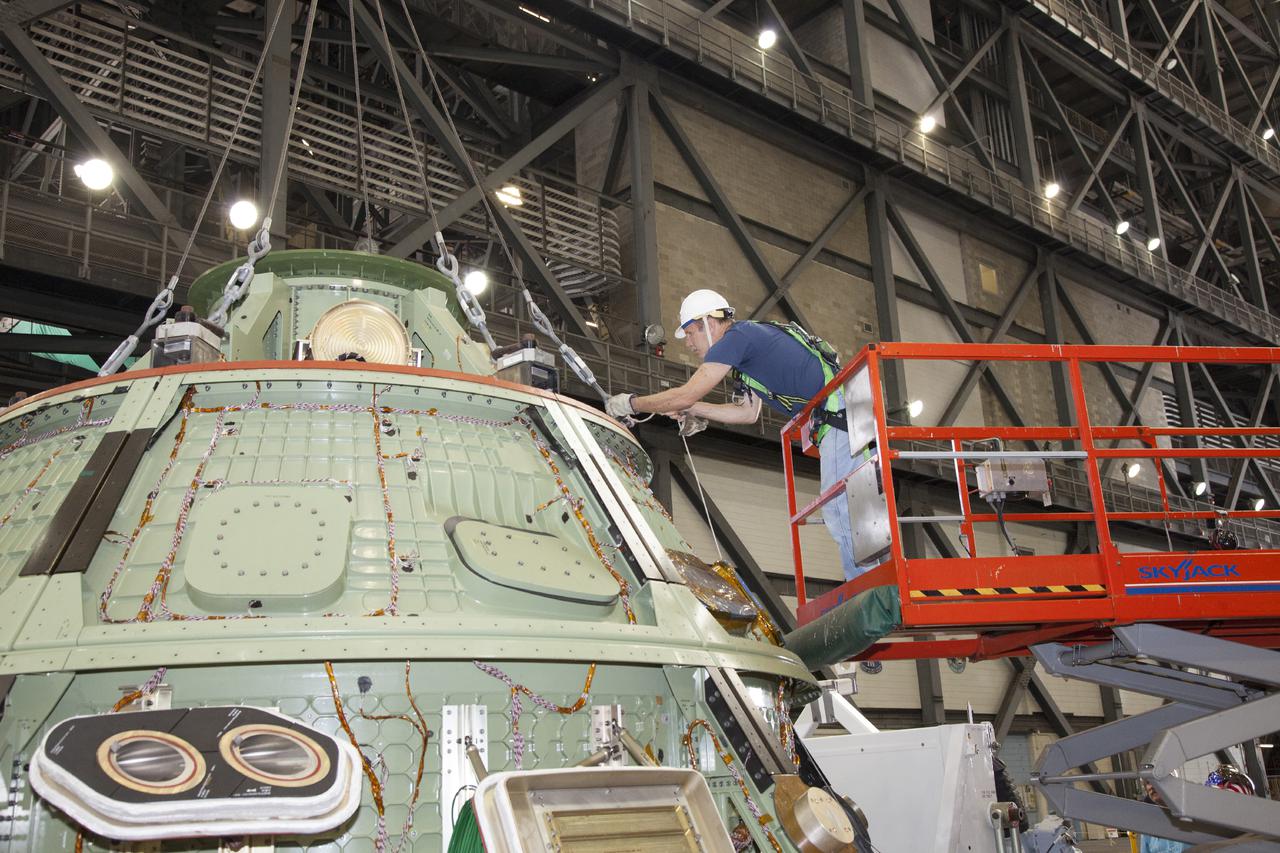
CAPE CANAVERAL, Fla. – Inside the Vehicle Assembly Building at NASA’s Kennedy Space Center in Florida, a technician on scissor lift secures the lines of a bridge crane attached to the Orion ground test vehicle for heat shield removal. The ground test vehicle is being prepared for its move to Langley Research Center in Hampton, Va., for a water test. The test vehicle is being used by the Ground Systems Development and Operations Program for path finding operations, including simulated manufacturing, assembly and stacking procedures. Orion is the exploration spacecraft designed to carry astronauts to destinations not yet explored by humans. It will have emergency abort capability, sustain the crew during space travel and provide safe re-entry from deep space return velocities. The first unpiloted test flight of Orion is scheduled to launch in 2014 atop a Delta IV Heavy rocket and in 2017 on NASA’s Space Launch System rocket. For more information, visit www.nasa.gov_orion. Photo credit: Daniel Casper
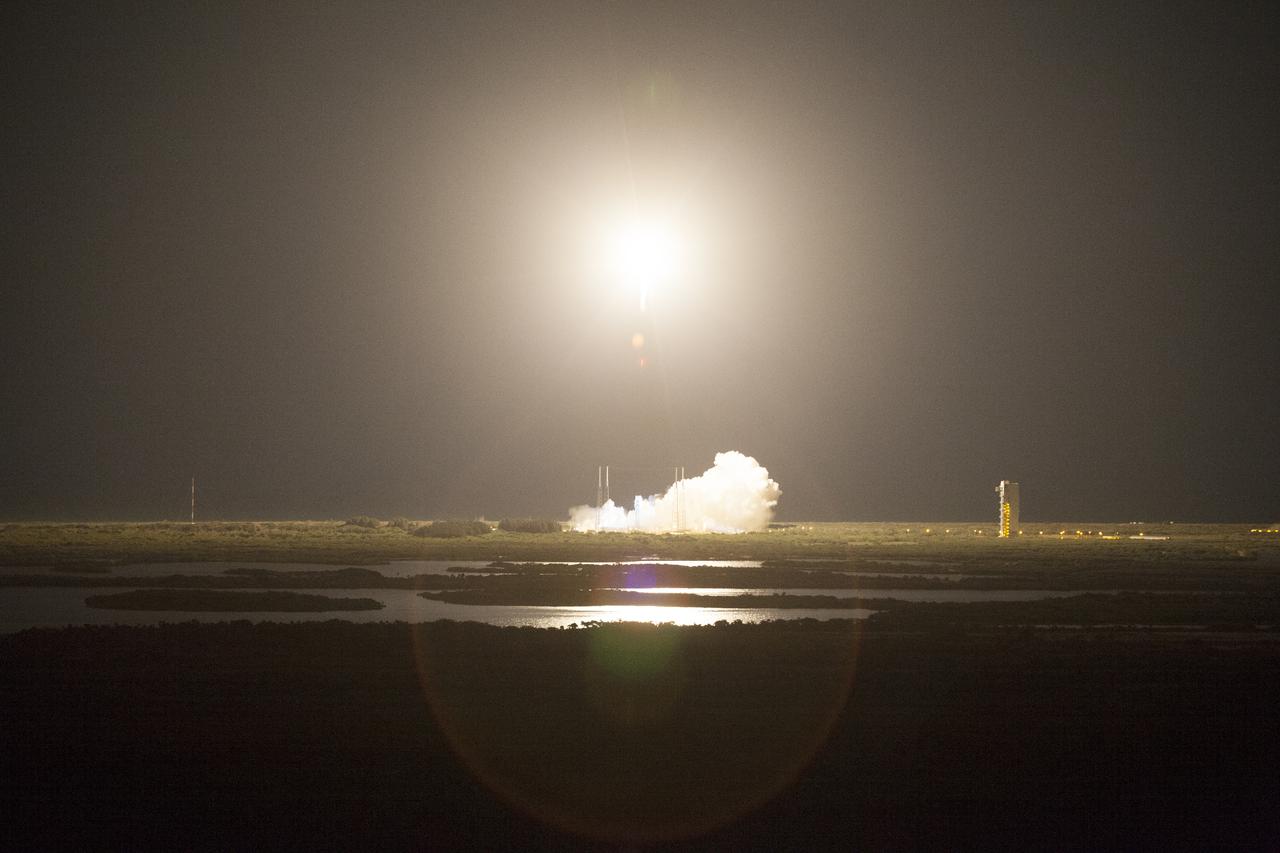
CAPE CANAVERAL, Fla. -- A United Launch Alliance Atlas V rocket lights up the night sky over Space Launch Complex 41 at Cape Canaveral Air Force Station in Florida as it carries NASA's Tracking and Data Relay Satellite, or TDRS-L, to Earth orbit. Launch was at 9:33 p.m. EST Jan. 23 during a 40-minute launch window. The TDRS-L spacecraft is the second of three new satellites designed to ensure vital operational continuity for NASA by expanding the lifespan of the Tracking and Data Relay Satellite System TDRSS fleet, which consists of eight satellites in geosynchronous orbit. The spacecraft provide tracking, telemetry, command and high-bandwidth data return services for numerous science and human exploration missions orbiting Earth. These include NASA's Hubble Space Telescope and the International Space Station. TDRS-L has a high-performance solar panel designed for more spacecraft power to meet the growing S-band communications requirements. TDRSS is one of three NASA Space Communication and Navigation SCaN networks providing space communications to NASA’s missions. For more information more about TDRS-L, visit http:__www.nasa.gov_tdrs. To learn more about SCaN, visit www.nasa.gov_scan. Photo credit: NASA_Dan Casper
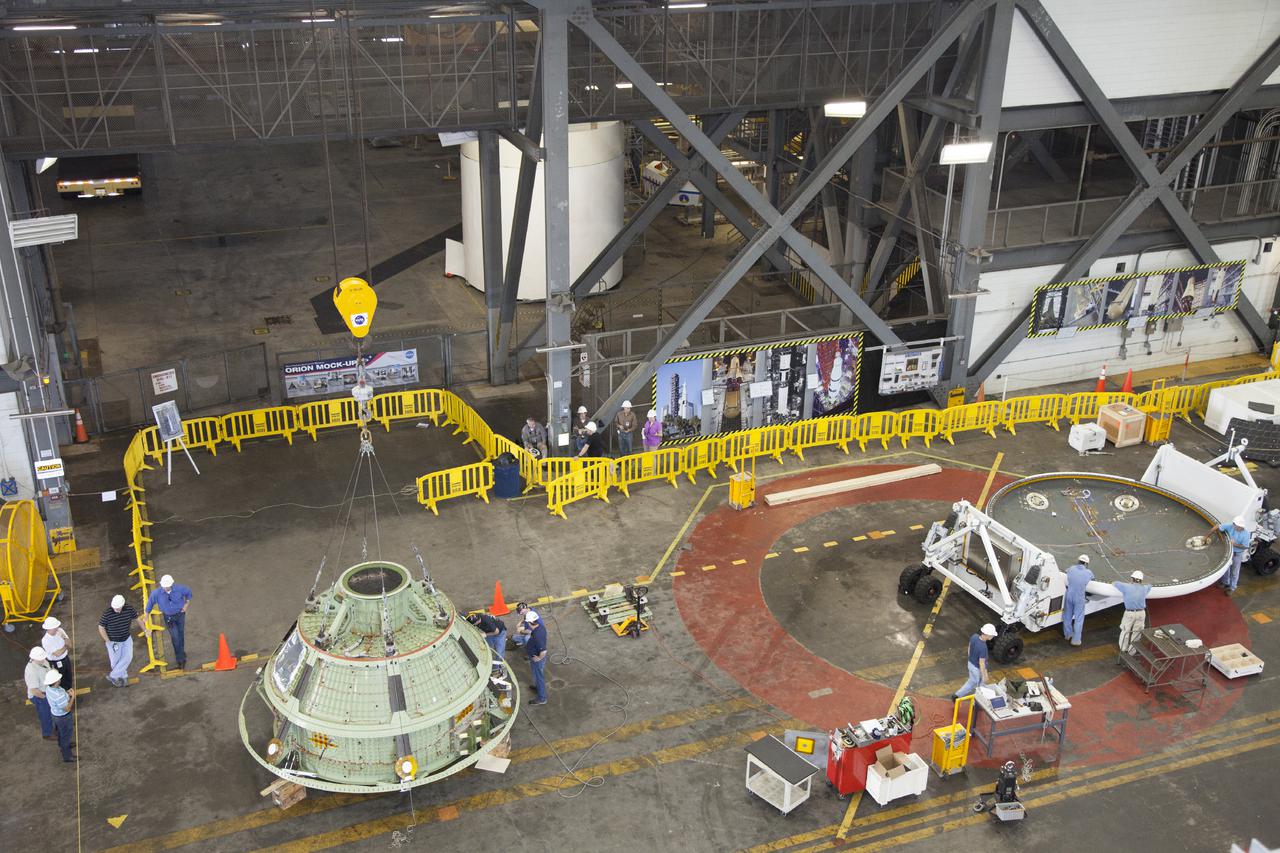
CAPE CANAVERAL, Fla. – Inside the Vehicle Assembly Building at NASA’s Kennedy Space Center in Florida, a bridge crane attached to the Orion ground test vehicle has lifted it away from the heat shield and lowered it onto a platform. The ground test vehicle is being prepared for its move to Langley Research Center in Hampton, Va., for a water test. The test vehicle is being used by the Ground Systems Development and Operations Program for path finding operations, including simulated manufacturing, assembly and stacking procedures. Orion is the exploration spacecraft designed to carry astronauts to destinations not yet explored by humans. It will have emergency abort capability, sustain the crew during space travel and provide safe re-entry from deep space return velocities. The first unpiloted test flight of Orion is scheduled to launch in 2014 atop a Delta IV Heavy rocket and in 2017 on NASA’s Space Launch System rocket. For more information, visit www.nasa.gov_orion. Photo credit: Daniel Casper
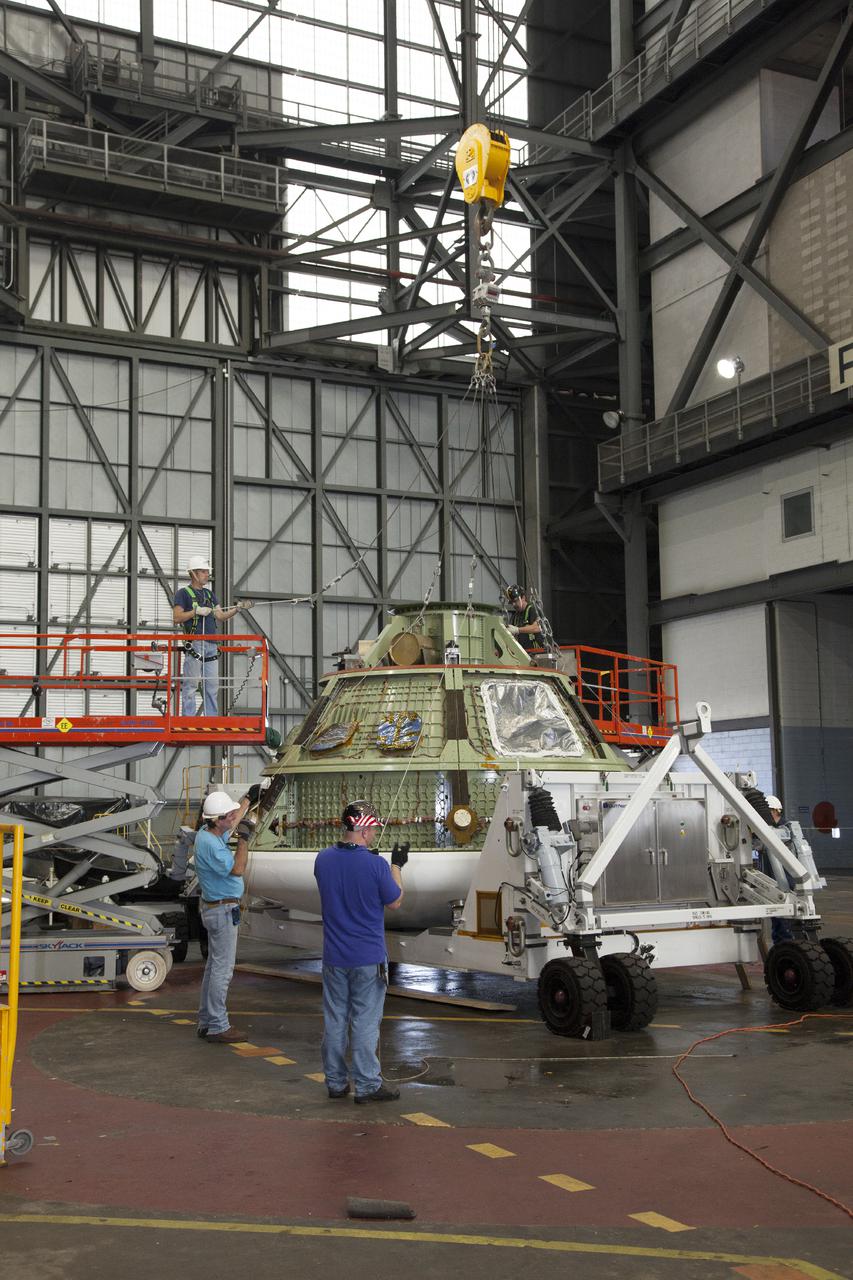
CAPE CANAVERAL, Fla. – Inside the Vehicle Assembly Building at NASA’s Kennedy Space Center in Florida, technicians on scissor lifts secure the lines of a bridge crane attached to the Orion ground test vehicle for heat shield removal. The ground test vehicle is being prepared for its move to Langley Research Center in Hampton, Va., for a water test. The test vehicle is being used by the Ground Systems Development and Operations Program for path finding operations, including simulated manufacturing, assembly and stacking procedures. Orion is the exploration spacecraft designed to carry astronauts to destinations not yet explored by humans. It will have emergency abort capability, sustain the crew during space travel and provide safe re-entry from deep space return velocities. The first unpiloted test flight of Orion is scheduled to launch in 2014 atop a Delta IV Heavy rocket and in 2017 on NASA’s Space Launch System rocket. For more information, visit www.nasa.gov_orion. Photo credit: Daniel Casper

CAPE CANAVERAL, Fla. – Inside the Vehicle Assembly Building at NASA’s Kennedy Space Center in Florida, technicians monitor the progress as a bridge crane attached to the Orion ground test vehicle moves it away from the heat shield. The ground test vehicle is being prepared for its move to Langley Research Center in Hampton, Va., for a water test. The test vehicle is being used by the Ground Systems Development and Operations Program for path finding operations, including simulated manufacturing, assembly and stacking procedures. Orion is the exploration spacecraft designed to carry astronauts to destinations not yet explored by humans. It will have emergency abort capability, sustain the crew during space travel and provide safe re-entry from deep space return velocities. The first unpiloted test flight of Orion is scheduled to launch in 2014 atop a Delta IV Heavy rocket and in 2017 on NASA’s Space Launch System rocket. For more information, visit www.nasa.gov_orion. Photo credit: Daniel Casper
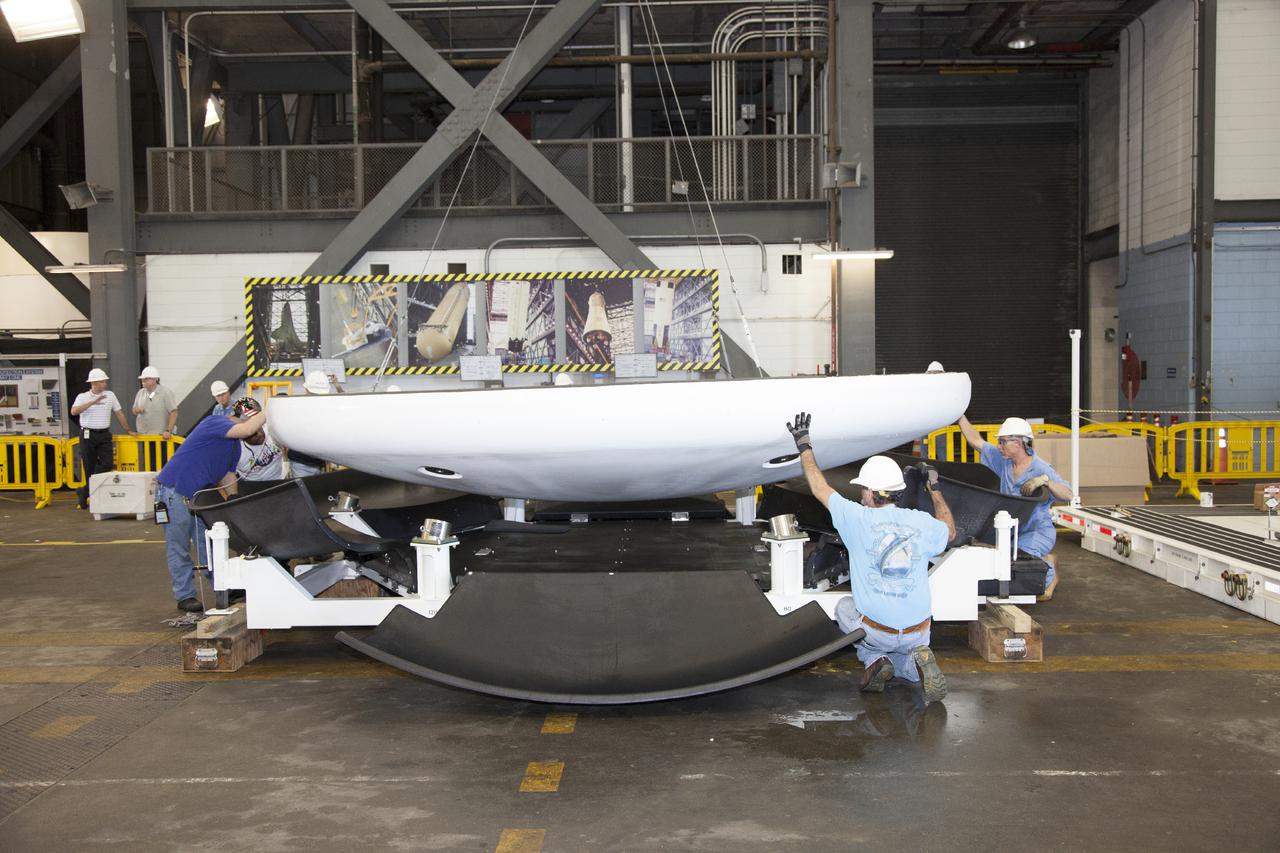
CAPE CANAVERAL, Fla. – Inside the Vehicle Assembly Building at NASA’s Kennedy Space Center in Florida, technicians assist as a crane lowers the heat shield that was removed from the Orion ground test vehicle onto a special holding platform. The ground test vehicle is being prepared for its move to Langley Research Center in Hampton, Va., for a water test. The test vehicle is being used by the Ground Systems Development and Operations Program for path finding operations, including simulated manufacturing, assembly and stacking procedures. Orion is the exploration spacecraft designed to carry astronauts to destinations not yet explored by humans. It will have emergency abort capability, sustain the crew during space travel and provide safe re-entry from deep space return velocities. The first unpiloted test flight of Orion is scheduled to launch in 2014 atop a Delta IV Heavy rocket and in 2017 on NASA’s Space Launch System rocket. For more information, visit www.nasa.gov_orion. Photo credit: Daniel Casper
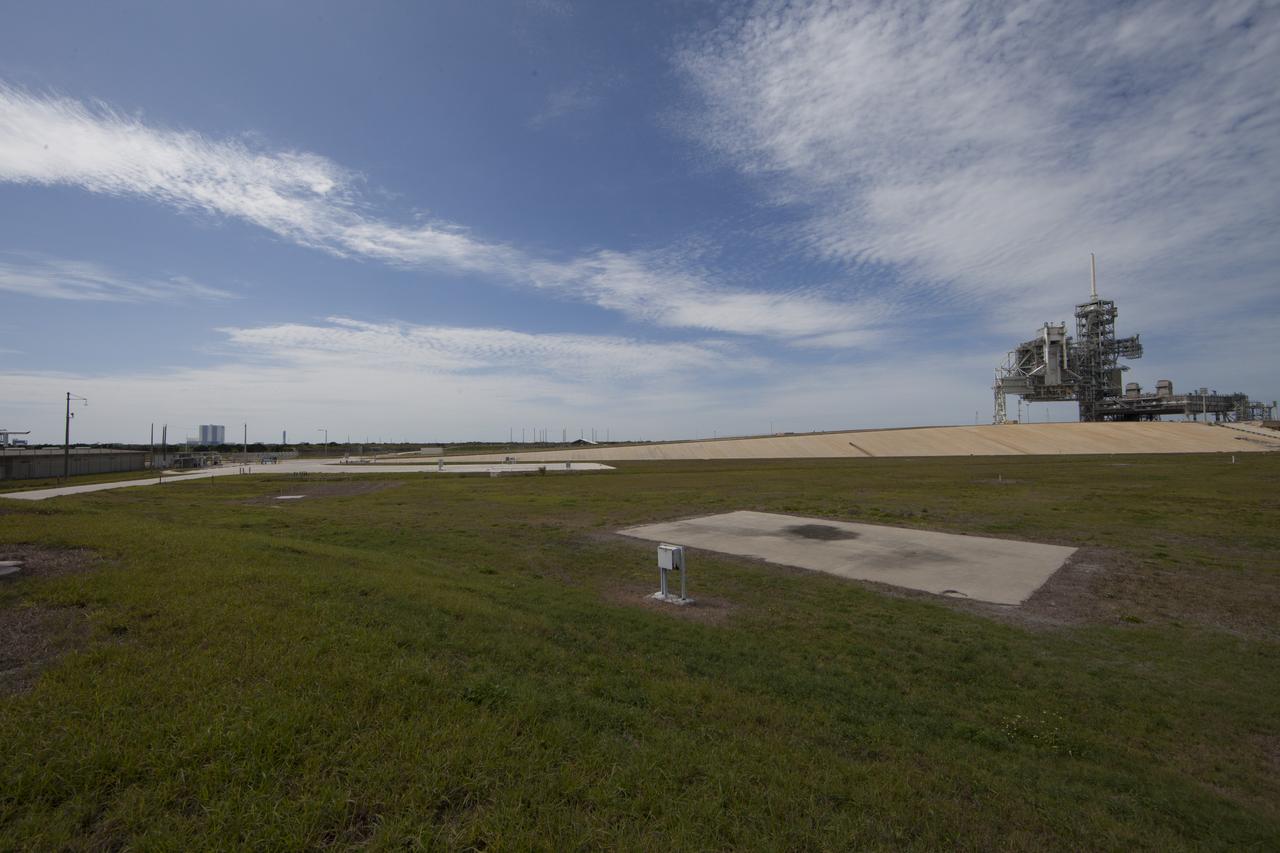
CAPE CANAVERAL, Fla. -- At NASA's Kennedy Space Center in Florida, launch pad 39A looks much like it did after the liftoff of STS-135, the final space shuttle mission, on July 8, 2011. Both launch pad 39A and 39B pad 39A was originally built for the Apollo/Saturn V rockets that launched American astronauts on their historic journeys to the moon and later modified to support the 30-year shuttle program. To learn more about Launch Pad 39A visit: http://www.nasa.gov/mission_pages/shuttle/launch/launch-complex39-toc.html Photo credit: NASA/Dan Casper
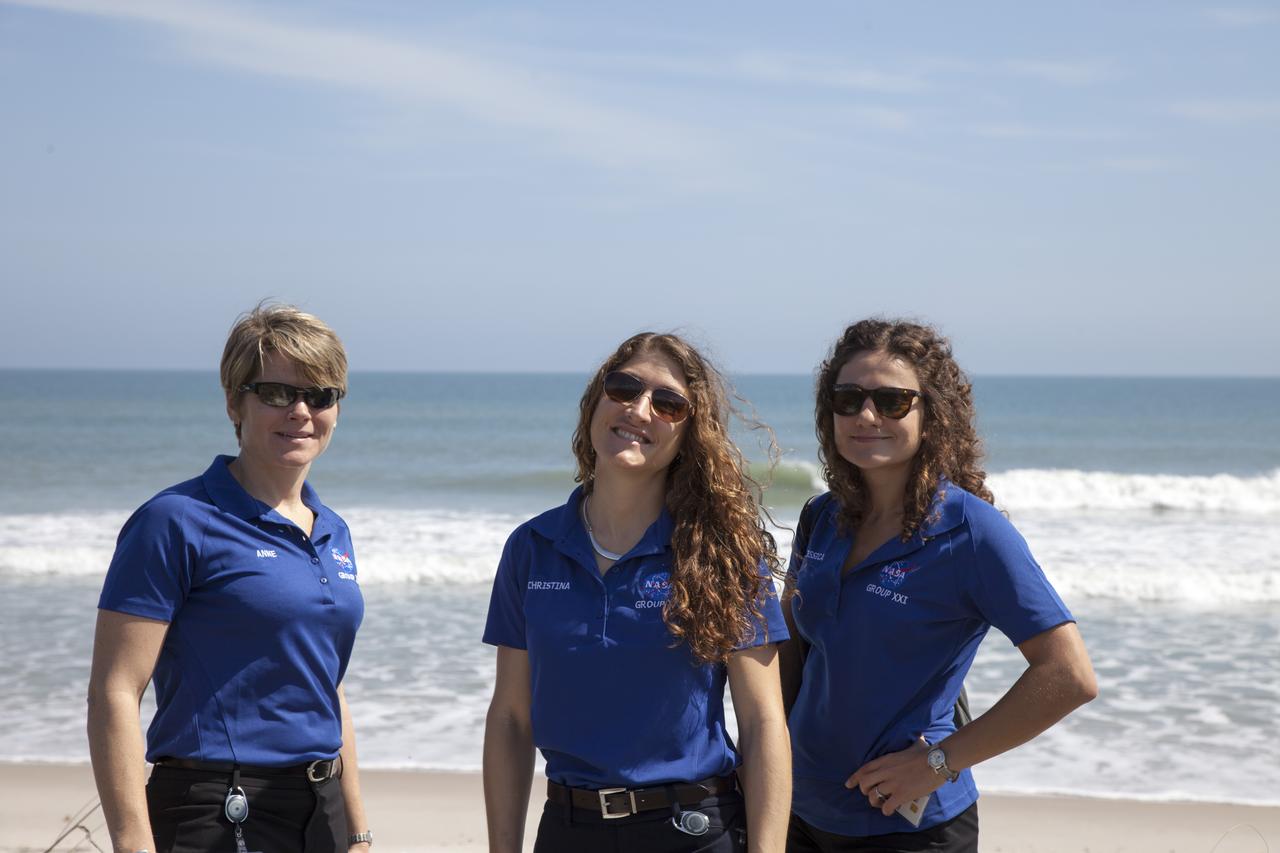
CAPE CANAVERAL, Fla. - NASA astronaut candidates, from left, Anne McClain, Christina Hammock and Jessica Meir stand on the beach overlooking the Atlantic Ocean at the Beach House at NASA's Kennedy Space Center. The Beach House is a traditional gathering place for astronauts before they fly into space. The astronaut class of 2013 was selected by NASA after an extensive year-and-a-half search. The new group will help the agency push the boundaries of exploration and travel to new destinations in the solar system. To learn more about the astronaut class of 2013, visit: http://www.nasa.gov/astronauts/2013astroclass.html Photo credit: NASA/Daniel Casper
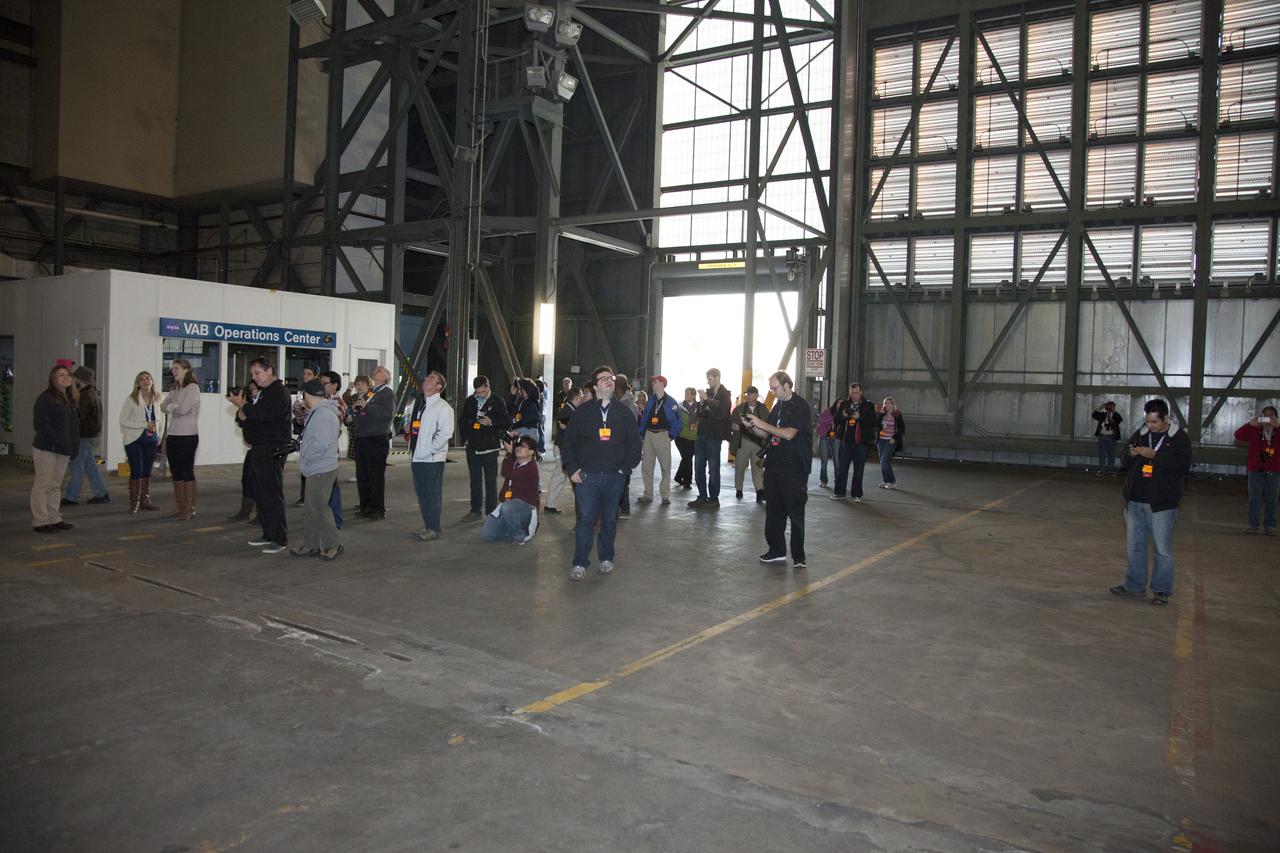
CAPE CANAVERAL, Fla. -- At NASA's Kennedy Space Center in Florida, social media participants were given an opportunity to go inside the spaceport's Vehicle Assembly Building. After serving through the Apollo and Space Shuttle Programs, the structure now is undergoing renovations to accommodate future launch vehicles and to continue as a major part of America's efforts to explore space. The social media participants gathered at the Florida spaceport for the launch of the Tracking and Data Relay Satellite, or TDRS-L spacecraft. Their visit included tours of key facilities and participating in presentations by key NASA leaders who updated the space agency's current efforts. Photo credit: NASA/Dan Casper
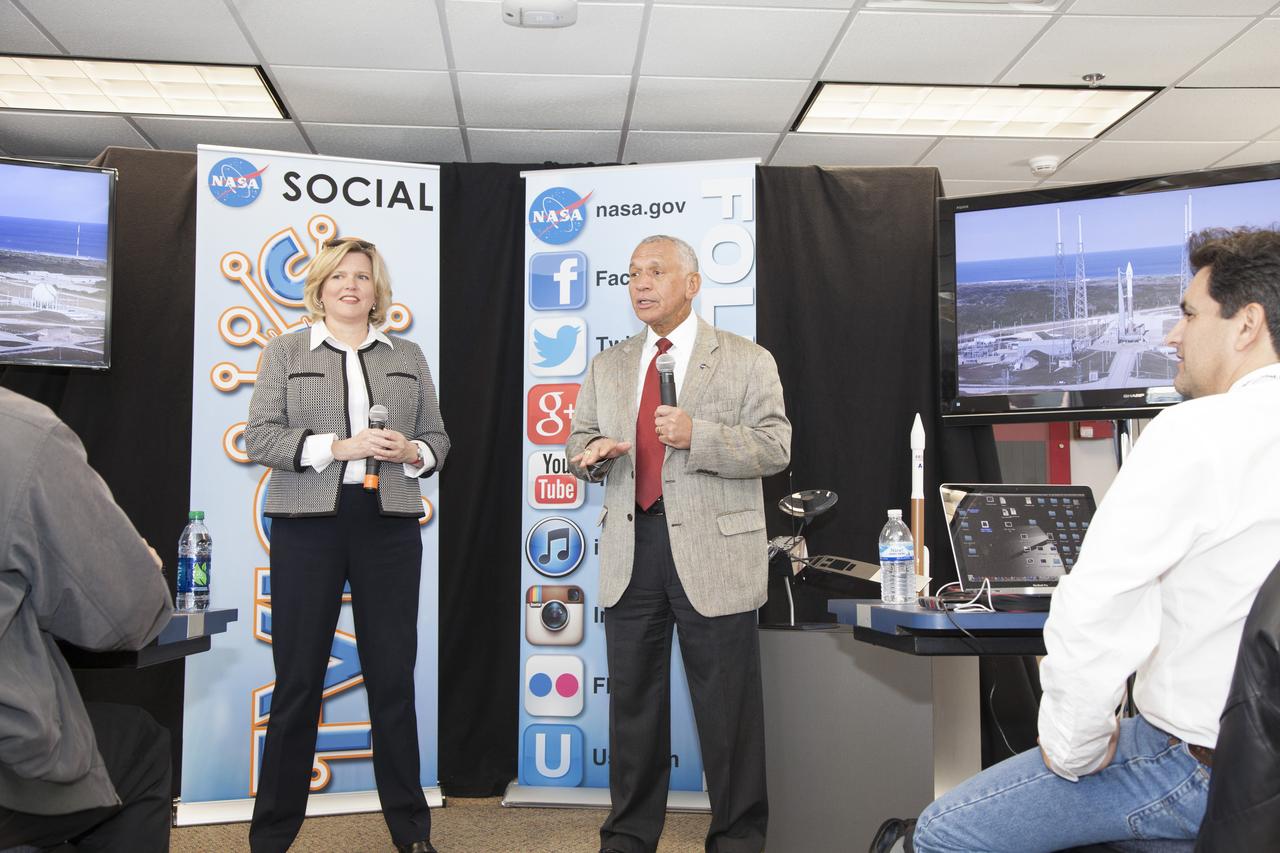
CAPE CANAVERAL, Fla. -- In the NASA News Center annex at NASA's Kennedy Space Center in Florida, social media participants listen to a briefing by Acting Administrator of the U.S. Small Business Administration Jeanne Holit, left, and NASA Administrator Charles Bolden. The social media participants gathered at the Florida spaceport for the launch of the Tracking and Data Relay Satellite, or TDRS-L spacecraft. Their visit included tours of key facilities and participating in presentations by key NASA leaders who updated the space agency's current efforts. Photo credit: NASA/Dan Casper
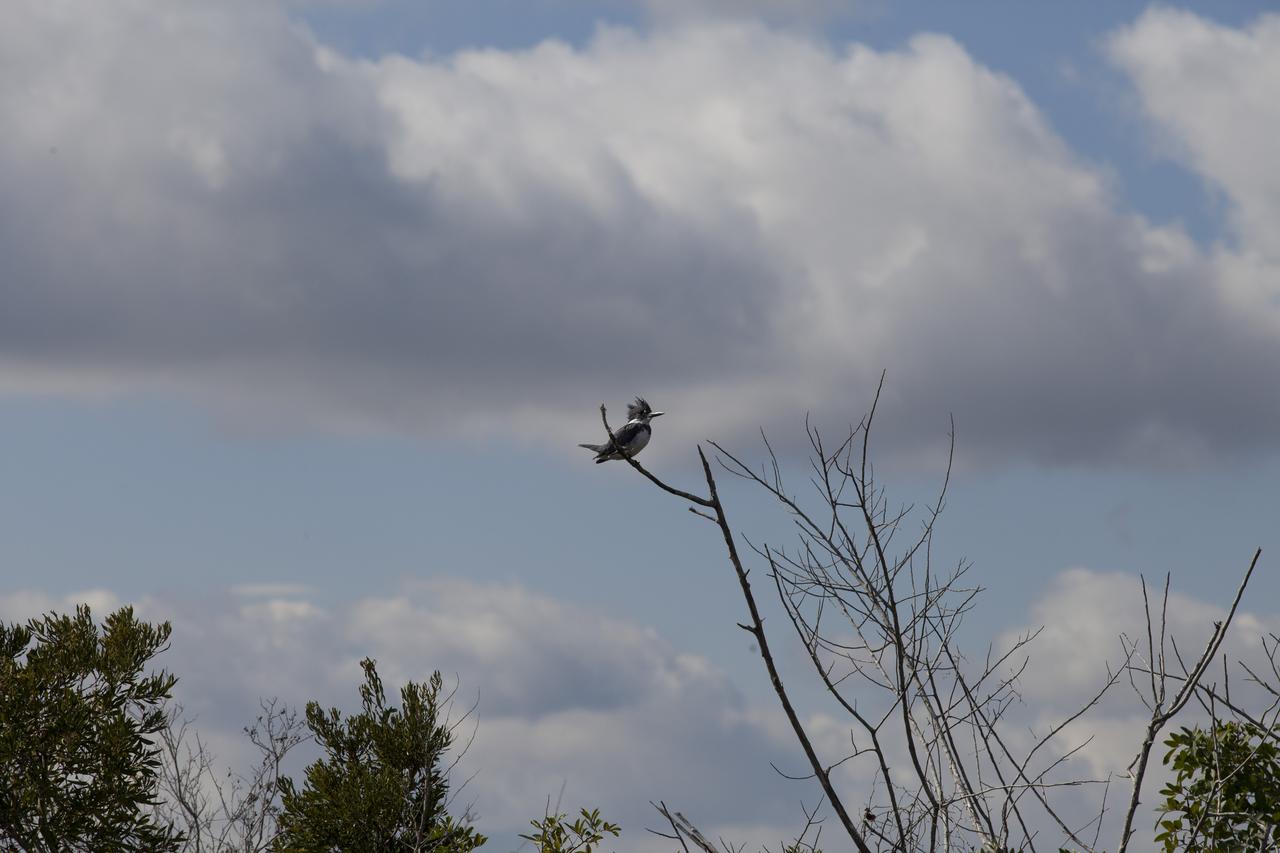
CAPE CANAVERAL, Fla. - A Kingfisher perches on the branch of a tree at NASA’s Kennedy Space Center in Florida. The center shares a boundary with the Merritt Island National Wildlife Refuge. The refuge encompasses 140,000 acres that are a habitat for more than 330 species of birds, 31 mammals, 117 fishes, and 65 amphibians and reptiles. It contains more than 1,000 known plant species. The marshes and open water of the refuge provide wintering areas for 23 species of migratory waterfowl, as well as a year-round home for great blue herons, great egrets, wood storks, cormorants, brown pelicans and other species of marsh and shore birds, and a variety of insects. Photo credit: NASA/Daniel Casper
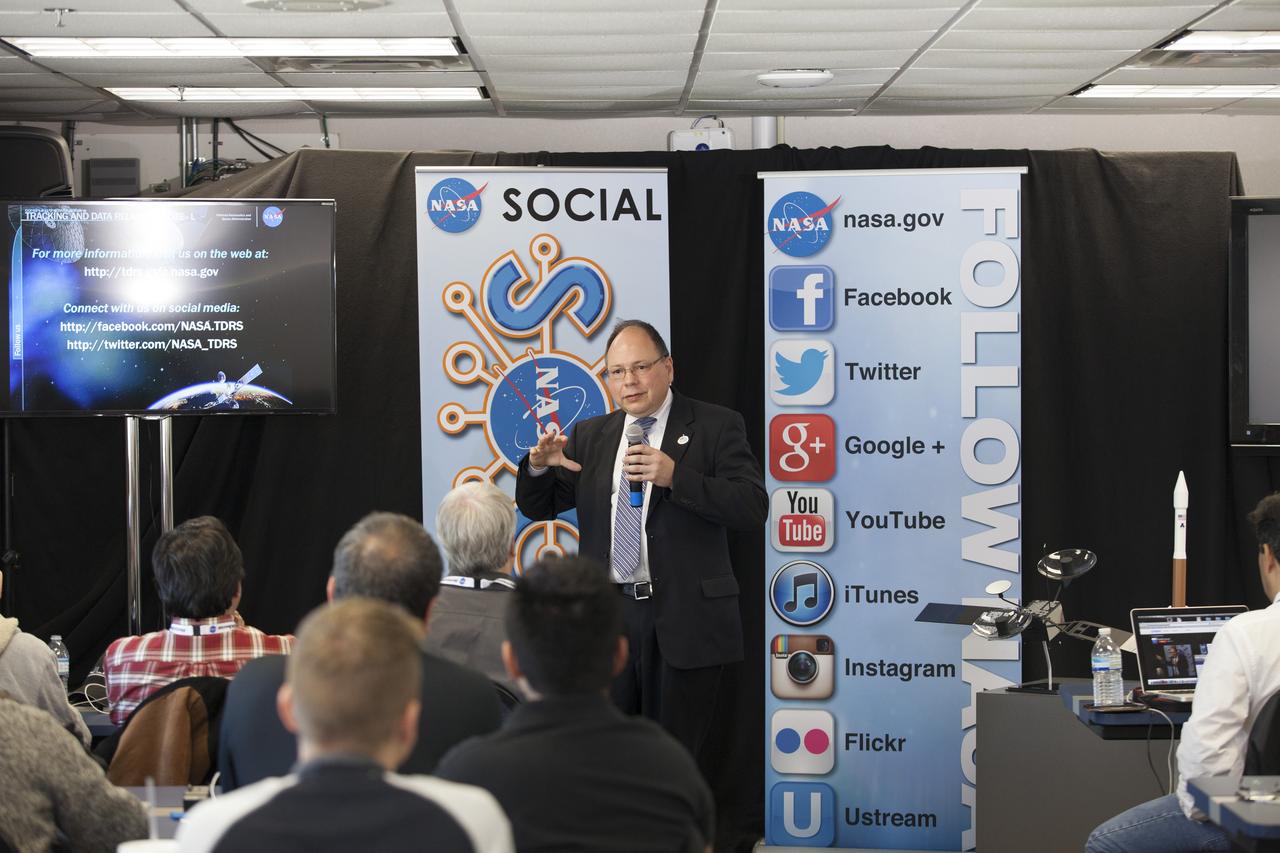
CAPE CANAVERAL, Fla. -- In the NASA News Center annex at NASA's Kennedy Space Center in Florida, social media participants listen to a briefing by Marco Toral, deputy program manager for the Tracking and Data Relay Satellite Program at the agency's Goddard Space Flight Center in Maryland. The social media participants gathered at the Florida spaceport for the launch of the Tracking and Data Relay Satellite, or TDRS-L spacecraft. Their visit included tours of key facilities and participating in presentations by key NASA leaders who updated the space agency's current efforts. Photo credit: NASA/Dan Casper
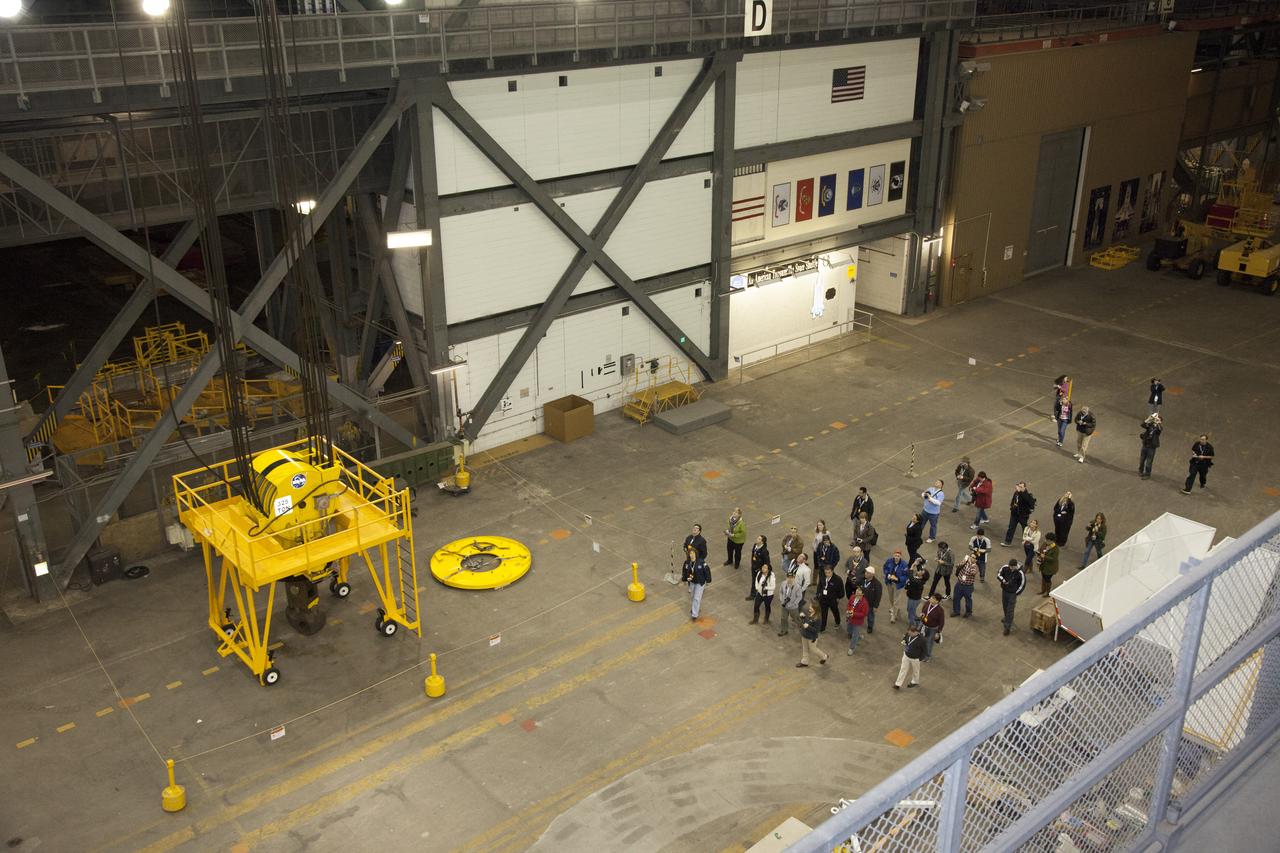
CAPE CANAVERAL, Fla. -- At NASA's Kennedy Space Center in Florida, social media participants were given an opportunity to go inside the spaceport's Vehicle Assembly Building. After serving through the Apollo and Space Shuttle Programs, the structure now is undergoing renovations to accommodate future launch vehicles and to continue as a major part of America's efforts to explore space. The social media participants gathered at the Florida spaceport for the launch of the Tracking and Data Relay Satellite, or TDRS-L spacecraft. Their visit included tours of key facilities and participating in presentations by key NASA leaders who updated the space agency's current efforts. Photo credit: NASA/Dan Casper
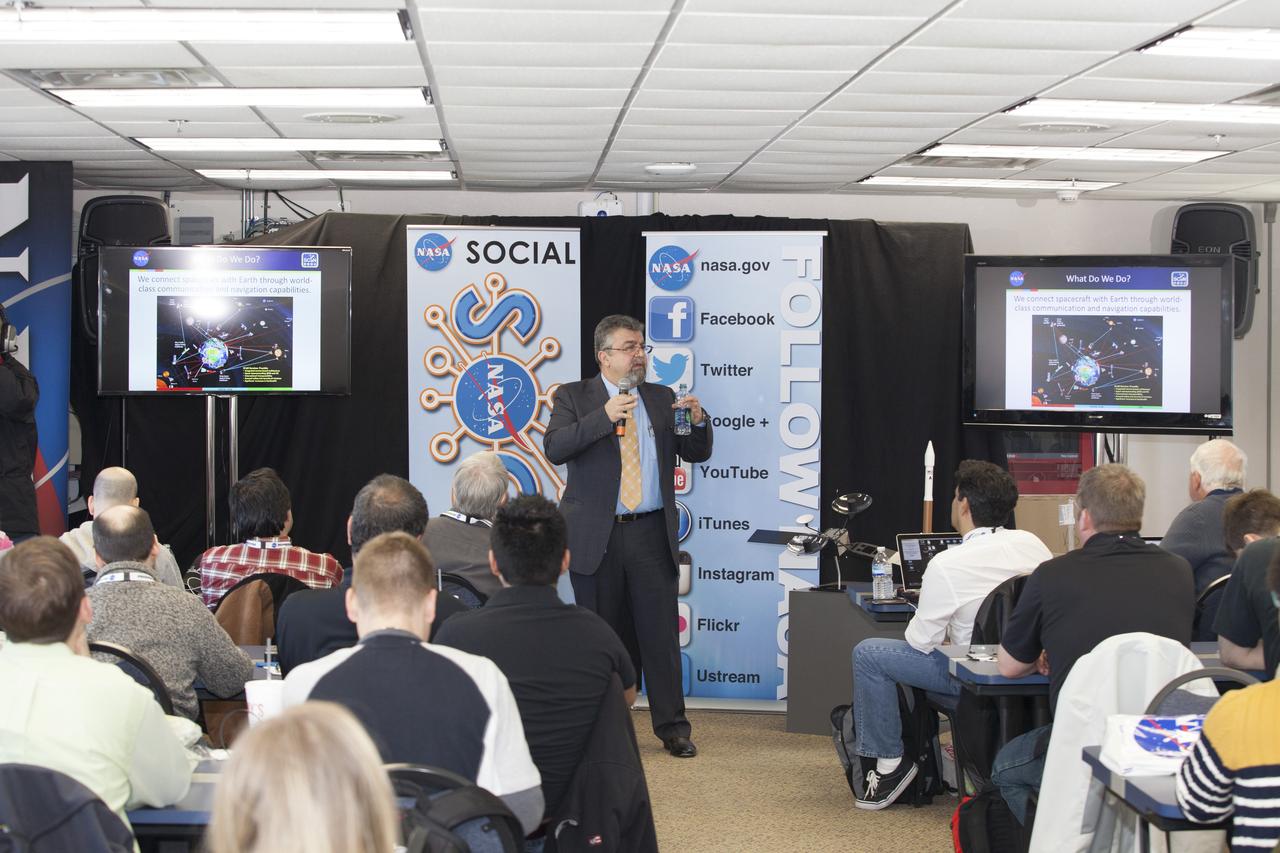
CAPE CANAVERAL, Fla. -- In the NASA News Center annex at NASA's Kennedy Space Center in Florida, social media participants listen to a briefing by Badri Younes, deputy associate administrator, Space Communications and Navigation SCaN NASA Human Exploration and Operations Mission Directorate at NASA Headquarters in Washington D.C. The social media participants gathered at the Florida spaceport for the launch of the Tracking and Data Relay Satellite, or TDRS-L spacecraft. Their visit included tours of key facilities and participating in presentations by key NASA leaders who updated the space agency's current efforts. Photo credit: NASA/Dan Casper
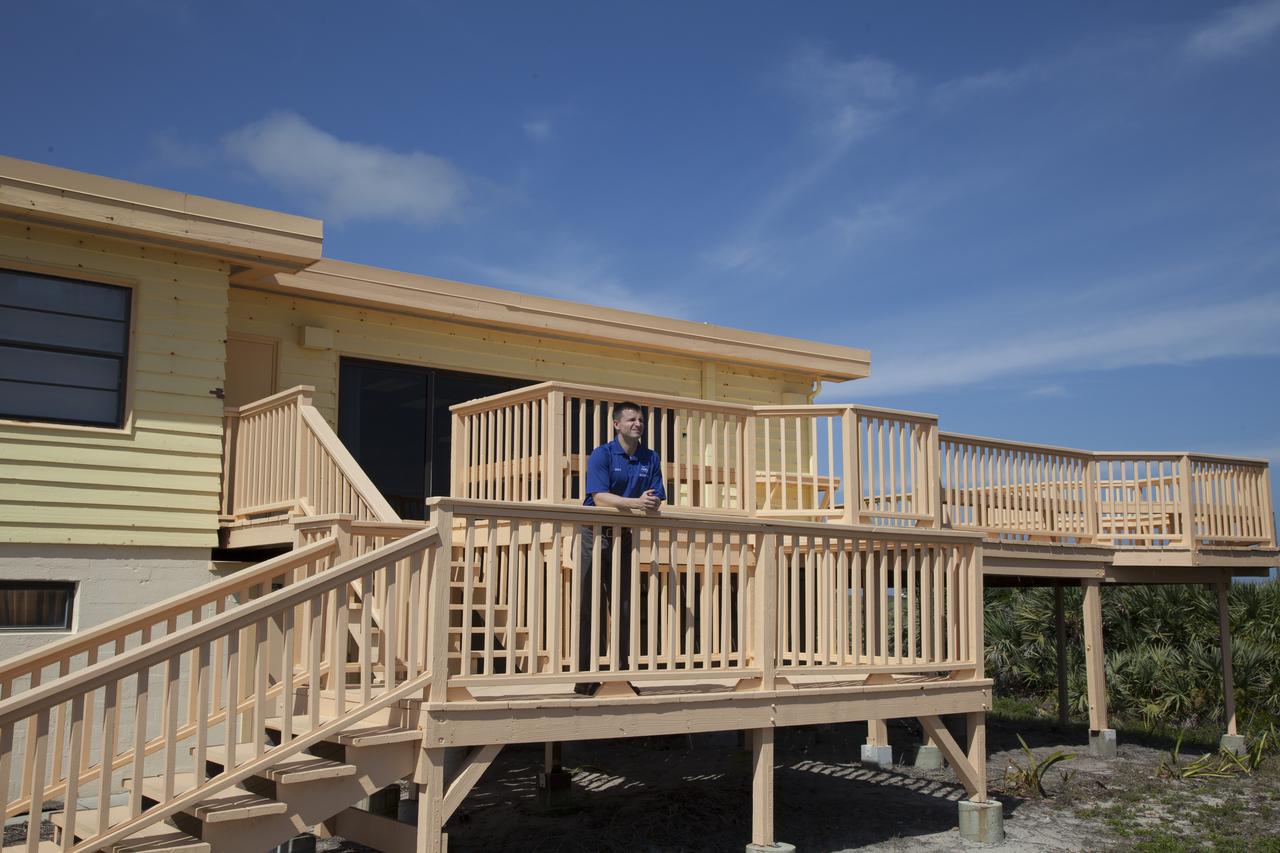
CAPE CANAVERAL, Fla. - NASA astronaut candidate Andrew Morgan looks over the beach while standing at the Beach House at NASA's Kennedy Space Center. The Beach House is a traditional gathering place for astronauts before they fly into space. The astronaut class of 2013 was selected by NASA after an extensive year-and-a-half search. The new group will help the agency push the boundaries of exploration and travel to new destinations in the solar system. To learn more about the astronaut class of 2013, visit: http://www.nasa.gov/astronauts/2013astroclass.html Photo credit: NASA/Daniel Casper
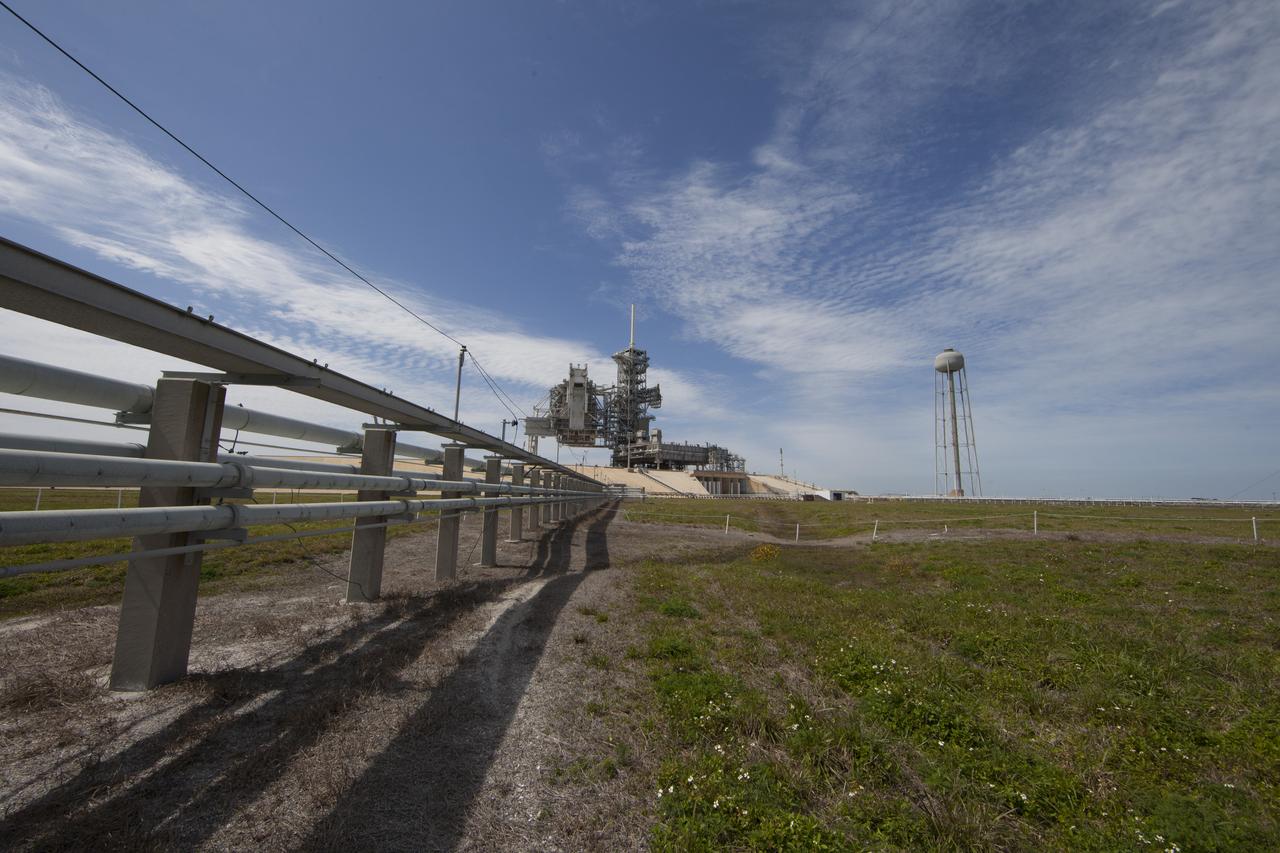
CAPE CANAVERAL, Fla. -- At NASA's Kennedy Space Center in Florida, launch pad 39A looks much like it did after the liftoff of STS-135, the final space shuttle mission, on July 8, 2011. Both launch pad 39A and 39B pad 39A was originally built for the Apollo/Saturn V rockets that launched American astronauts on their historic journeys to the moon and later modified to support the 30-year shuttle program. To learn more about Launch Pad 39A visit: http://www.nasa.gov/mission_pages/shuttle/launch/launch-complex39-toc.html Photo credit: NASA/Dan Casper
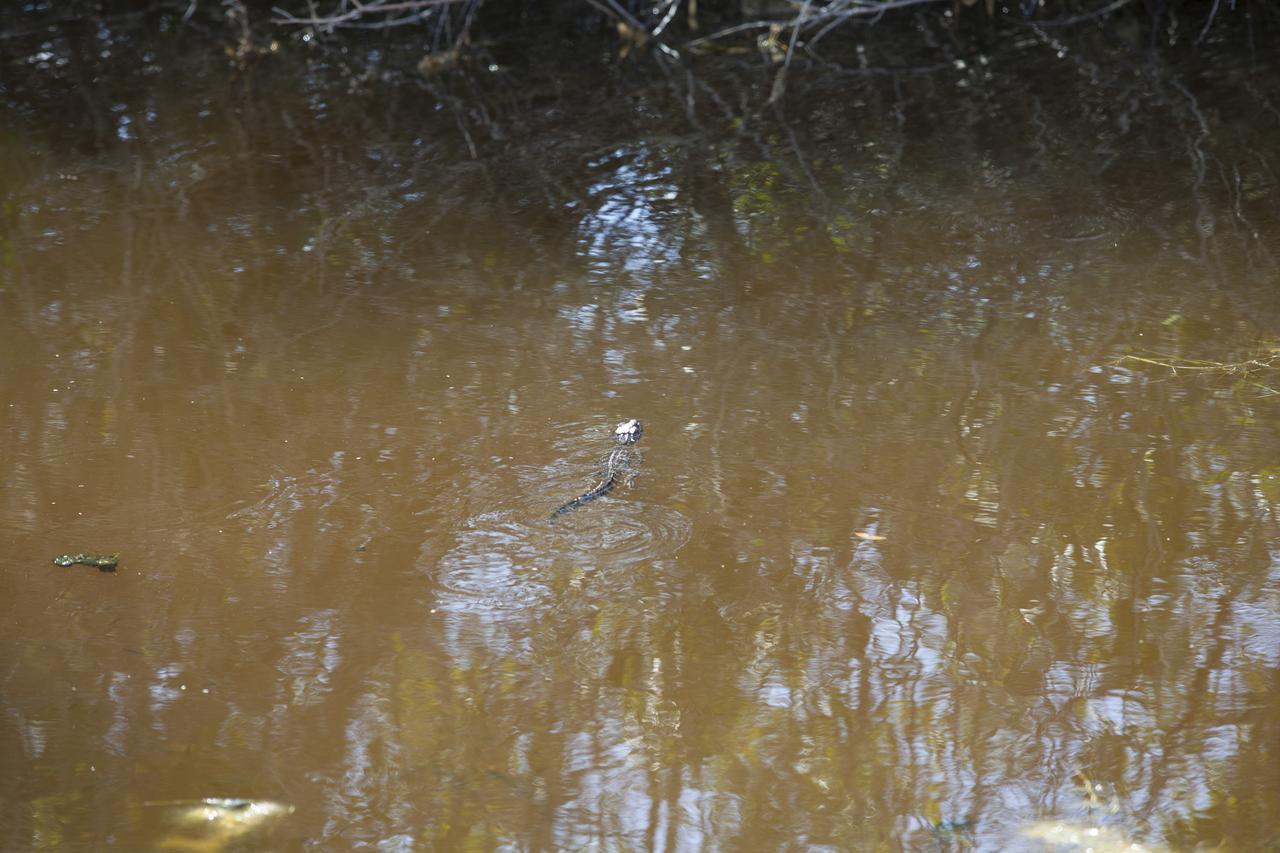
CAPE CANAVERAL, Fla. - An American alligator swims in a stream at NASA’s Kennedy Space Center in Florida. The center shares a boundary with the Merritt Island National Wildlife Refuge. The refuge encompasses 140,000 acres that are a habitat for more than 330 species of birds, 31 mammals, 117 fishes, and 65 amphibians and reptiles. It contains more than 1,000 known plant species. The marshes and open water of the refuge provide wintering areas for 23 species of migratory waterfowl, as well as a year-round home for great blue herons, great egrets, wood storks, cormorants, brown pelicans and other species of marsh and shore birds, and a variety of insects. Photo credit: NASA/Daniel Casper
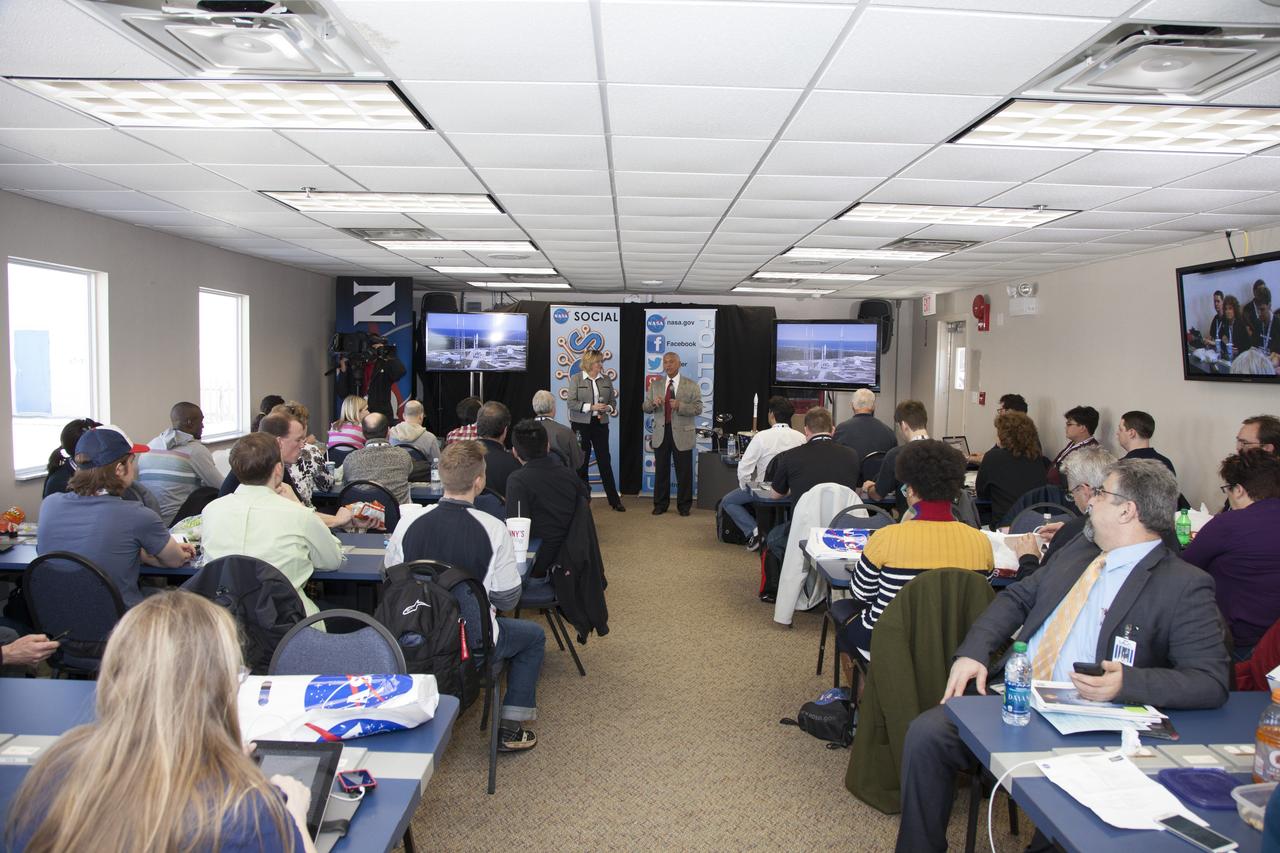
CAPE CANAVERAL, Fla. -- In the NASA News Center annex at NASA's Kennedy Space Center in Florida, social media participants listen to a briefing by Acting Administrator of the U.S. Small Business Administration Jeanne Holit, left, and NASA Administrator Charles Bolden. The social media participants gathered at the Florida spaceport for the launch of the Tracking and Data Relay Satellite, or TDRS-L spacecraft. Their visit included tours of key facilities and participating in presentations by key NASA leaders who updated the space agency's current efforts. Photo credit: NASA/Dan Casper
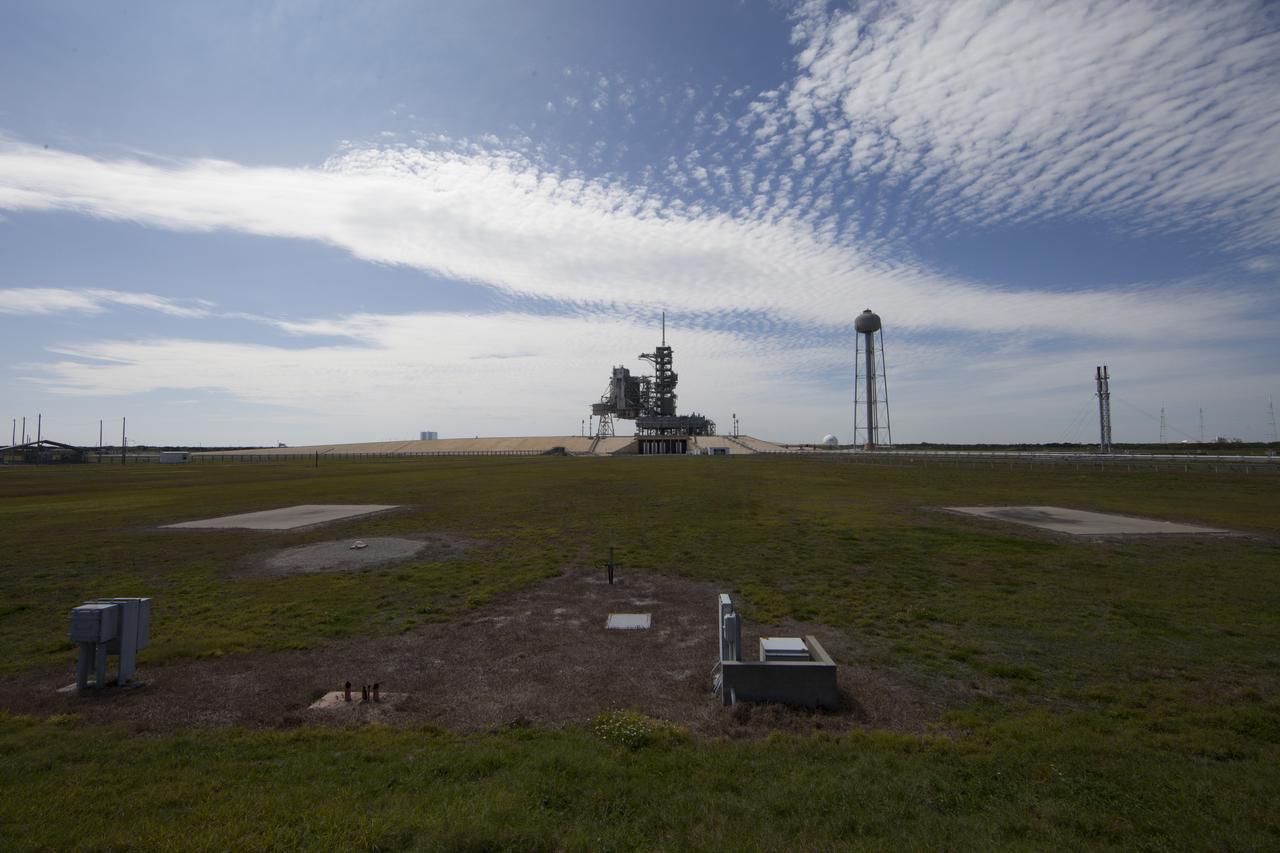
CAPE CANAVERAL, Fla. -- At NASA's Kennedy Space Center in Florida, launch pad 39A looks much like it did after the liftoff of STS-135, the final space shuttle mission, on July 8, 2011. Both launch pad 39A and 39B pad 39A was originally built for the Apollo/Saturn V rockets that launched American astronauts on their historic journeys to the moon and later modified to support the 30-year shuttle program. To learn more about Launch Pad 39A visit: http://www.nasa.gov/mission_pages/shuttle/launch/launch-complex39-toc.html Photo credit: NASA/Dan Casper
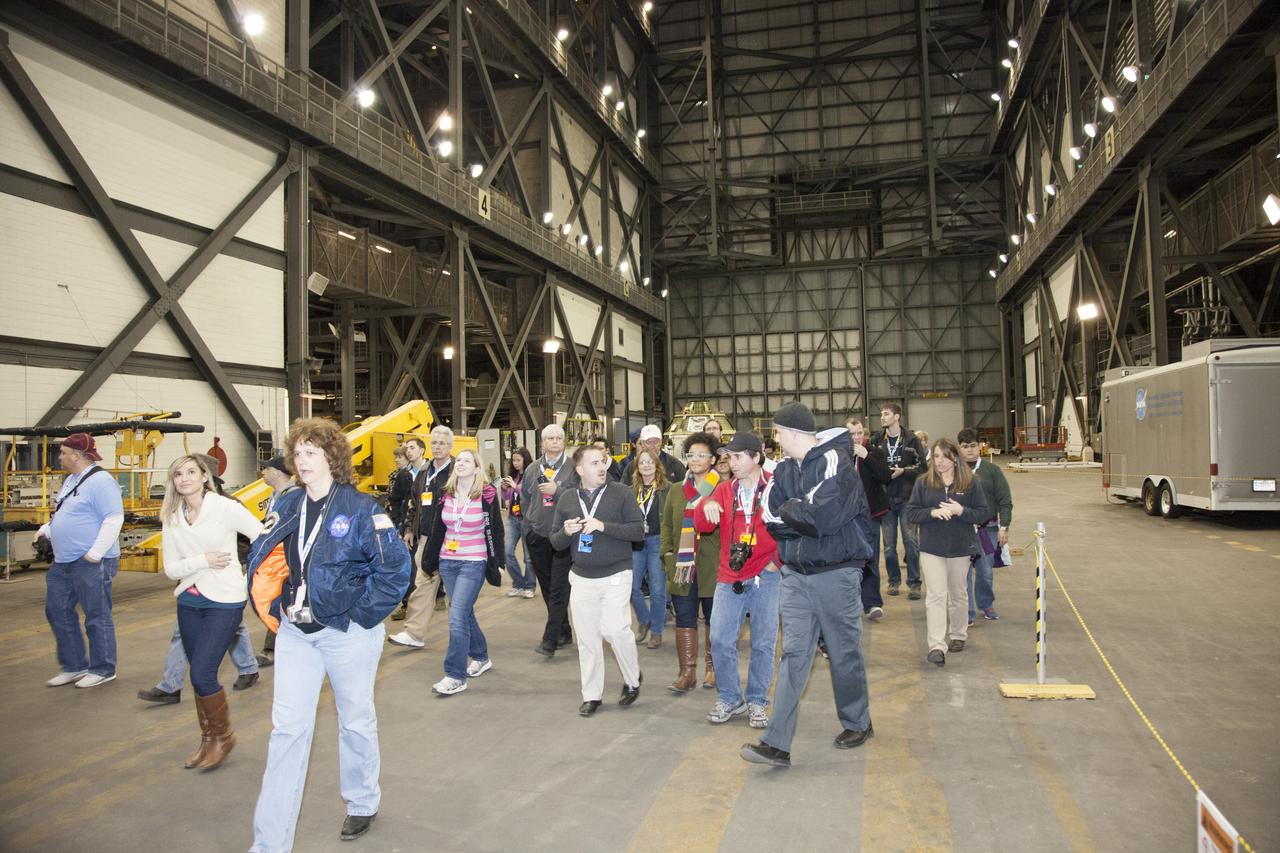
CAPE CANAVERAL, Fla. -- At NASA's Kennedy Space Center in Florida, social media participants were given an opportunity to go inside the spaceport's Vehicle Assembly Building. After serving through the Apollo and Space Shuttle Programs, the structure now is undergoing renovations to accommodate future launch vehicles and to continue as a major part of America's efforts to explore space. The social media participants gathered at the Florida spaceport for the launch of the Tracking and Data Relay Satellite, or TDRS-L spacecraft. Their visit included tours of key facilities and participating in presentations by key NASA leaders who updated the space agency's current efforts. Photo credit: NASA/Dan Casper
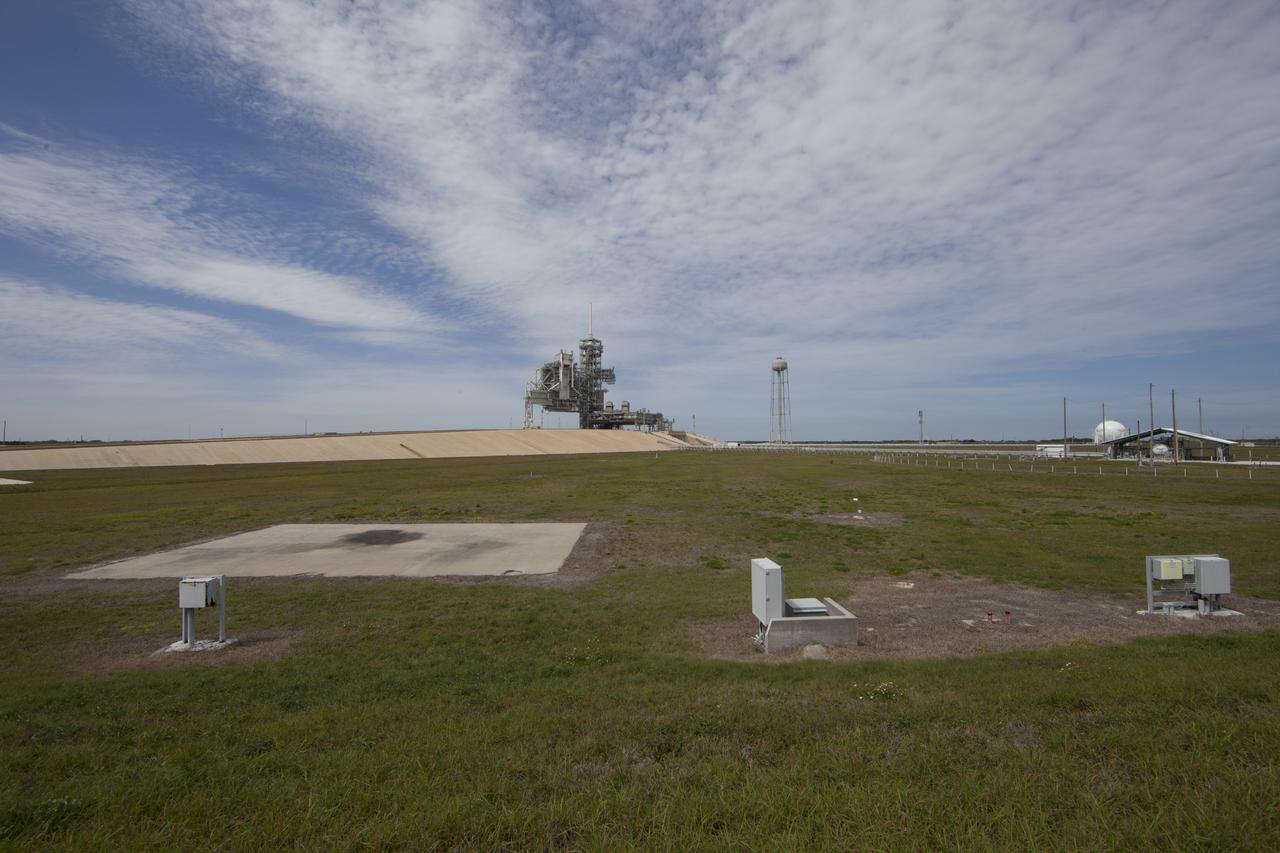
CAPE CANAVERAL, Fla. -- At NASA's Kennedy Space Center in Florida, launch pad 39A looks much like it did after the liftoff of STS-135, the final space shuttle mission, on July 8, 2011. Both launch pad 39A and 39B pad 39A was originally built for the Apollo/Saturn V rockets that launched American astronauts on their historic journeys to the moon and later modified to support the 30-year shuttle program. To learn more about Launch Pad 39A visit: http://www.nasa.gov/mission_pages/shuttle/launch/launch-complex39-toc.html Photo credit: NASA/Dan Casper
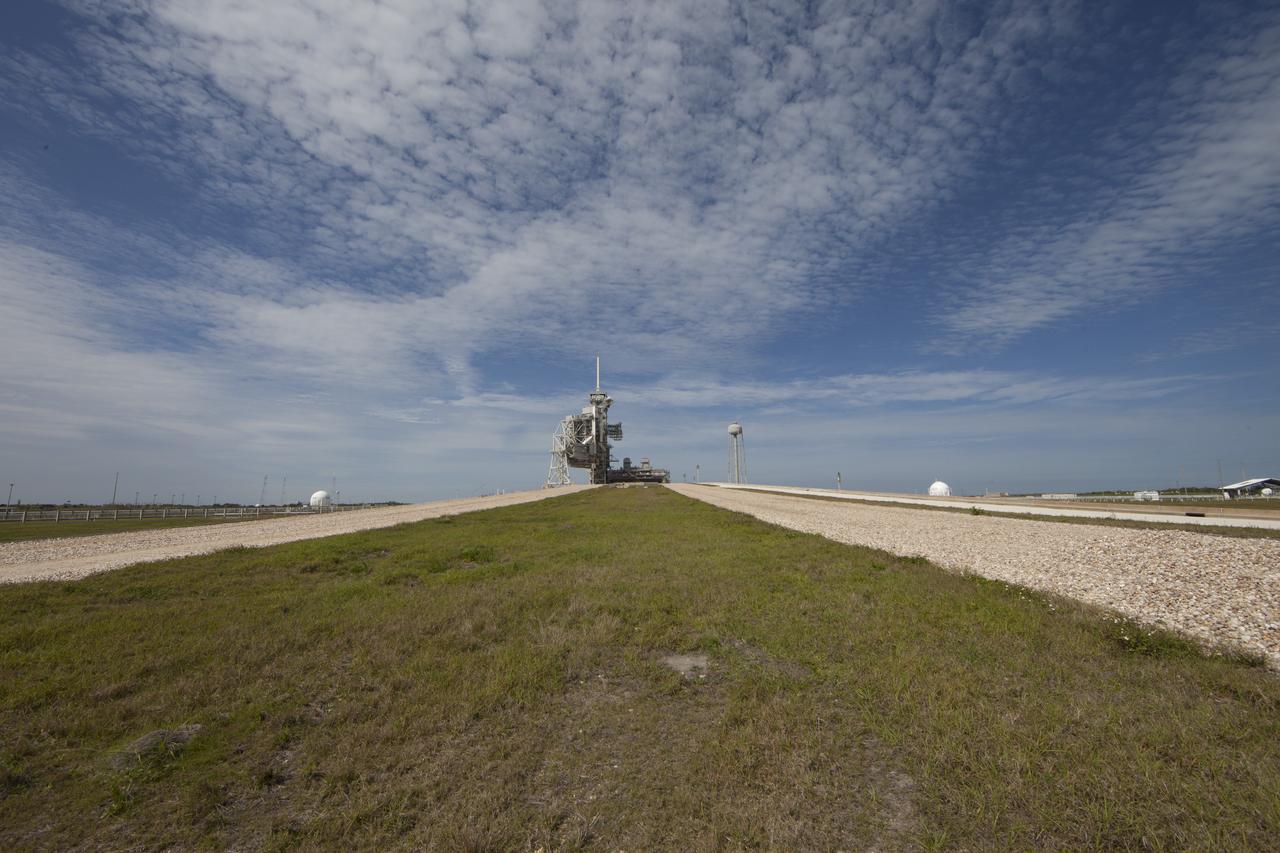
CAPE CANAVERAL, Fla. -- At NASA's Kennedy Space Center in Florida, launch pad 39A looks much like it did after the liftoff of STS-135, the final space shuttle mission, on July 8, 2011. Both launch pad 39A and 39B pad 39A was originally built for the Apollo/Saturn V rockets that launched American astronauts on their historic journeys to the moon and later modified to support the 30-year shuttle program. To learn more about Launch Pad 39A visit: http://www.nasa.gov/mission_pages/shuttle/launch/launch-complex39-toc.html Photo credit: NASA/Dan Casper
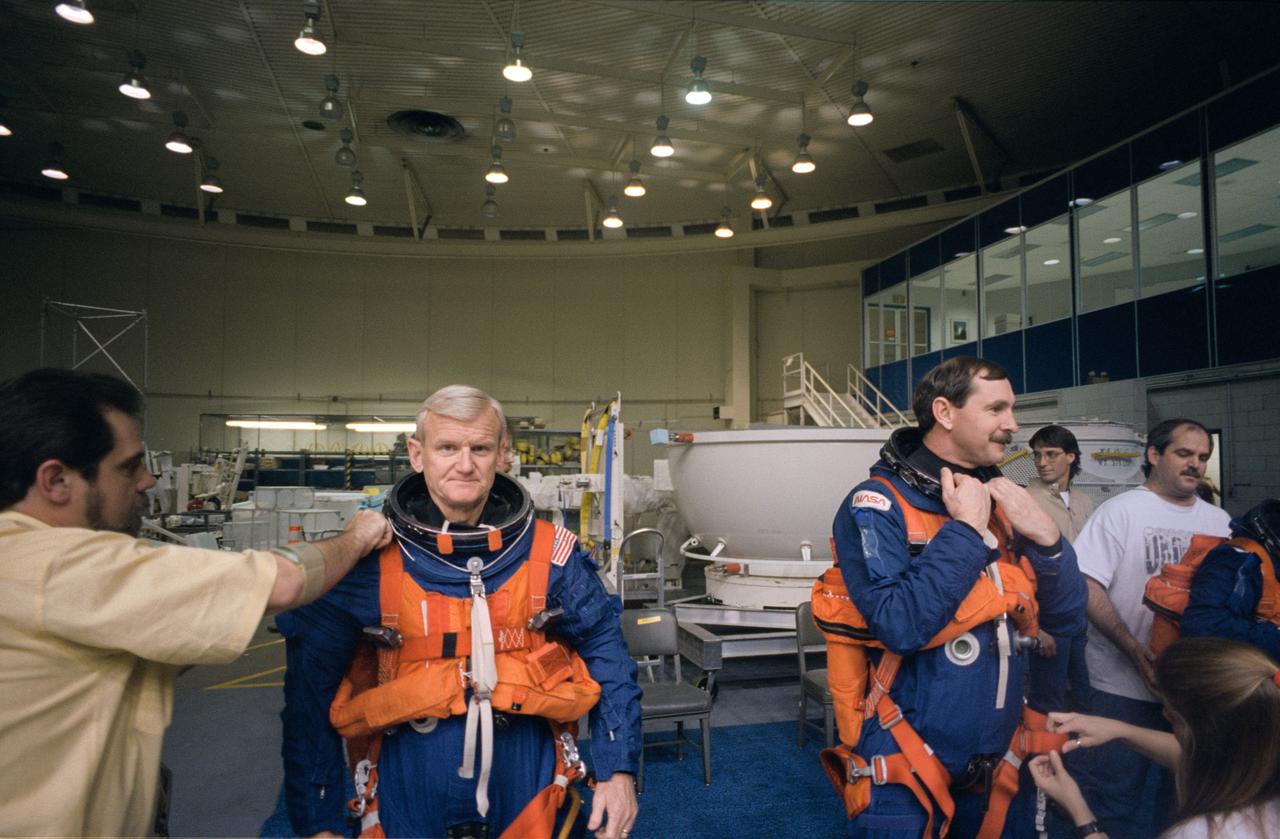
S96-08066 (April 1996) --- Left to right, astronauts John H. Casper, mission commander, and Curtis L. Brown, Jr., pilot, get help with the final touches of suit donning during emergency bailout training for STS-77 crew members in the Johnson Space Center?s (JSC) Weightless Environment Training Facility (WET-F). Casper and Brown will join four other astronauts for nine days aboard the Space Shuttle Endeavour next month.
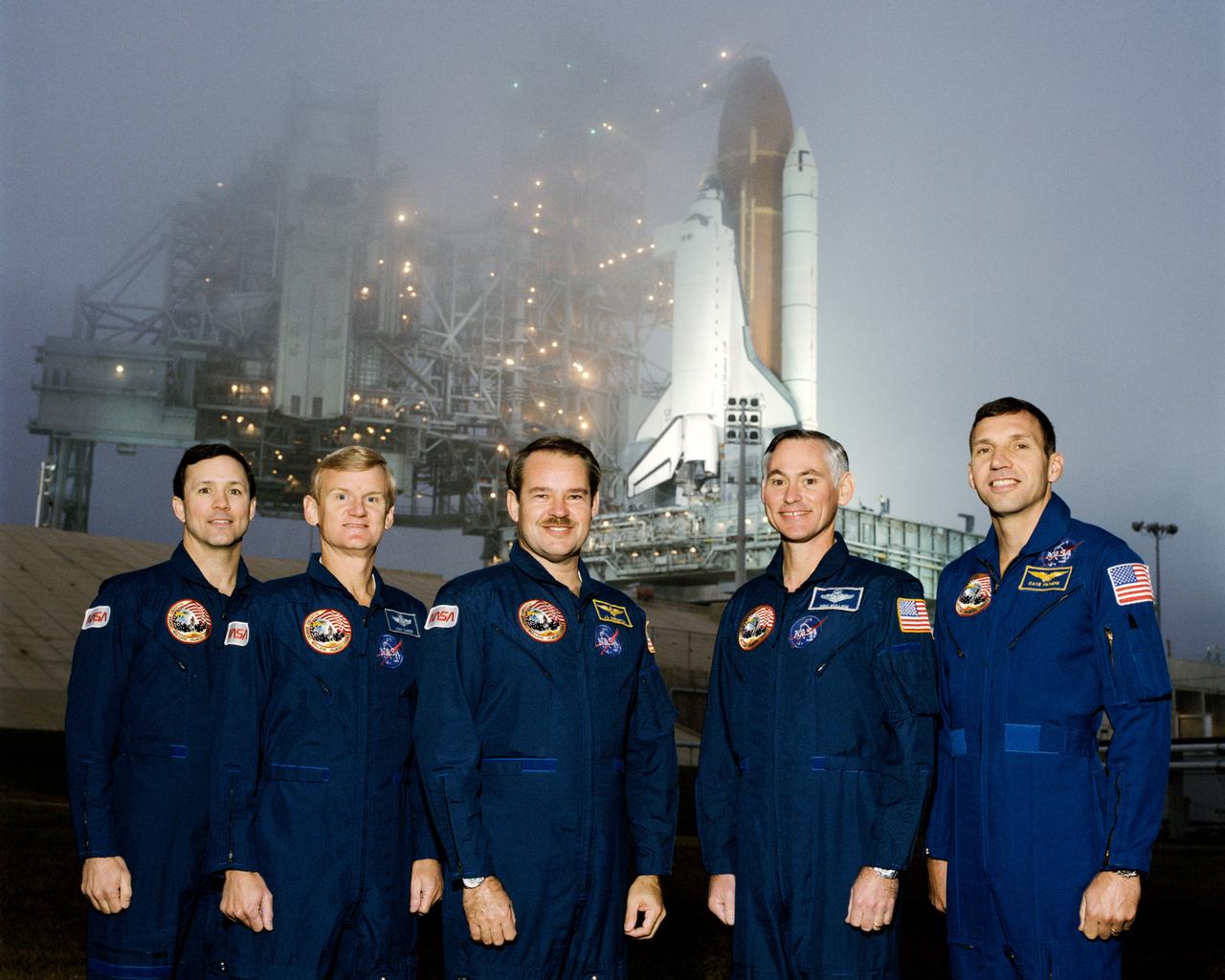
STS036-S-002 (21 Nov. 1989) --- The five astronauts in training for STS-36 pose near the Space Shuttle Discovery on Launch Pad 39B. Astronaut John O. Creighton (center) is mission commander. Others pictured are (left to right) astronauts Pierre J. Thuot, John H. Casper, Richard M. (Mike) Mullane and David C. Hilmers. Casper is pilot and the other three are mission specialists for the DOD-devoted mission.
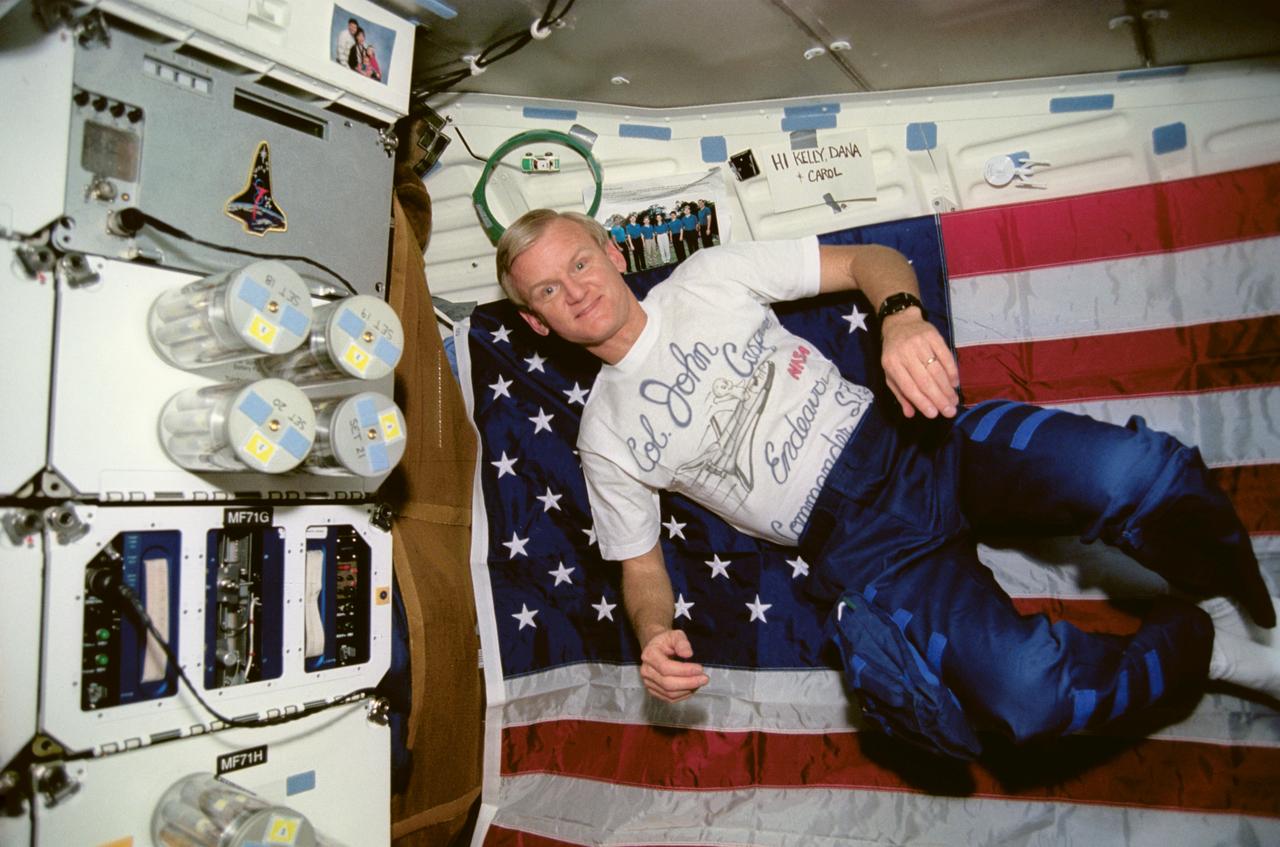
STS054-07-003 (13-19 Jan 1993) --- Astronaut John H. Casper, mission commander, floats near the Commercial Generic Bioprocessing Apparatus (CGBA) station on Endeavour's middeck. A friction car and its accompanying loop -- part of the Toys in Space package onboard -- can be seen just above Casper's head. The photograph was taken with a 35mm camera.
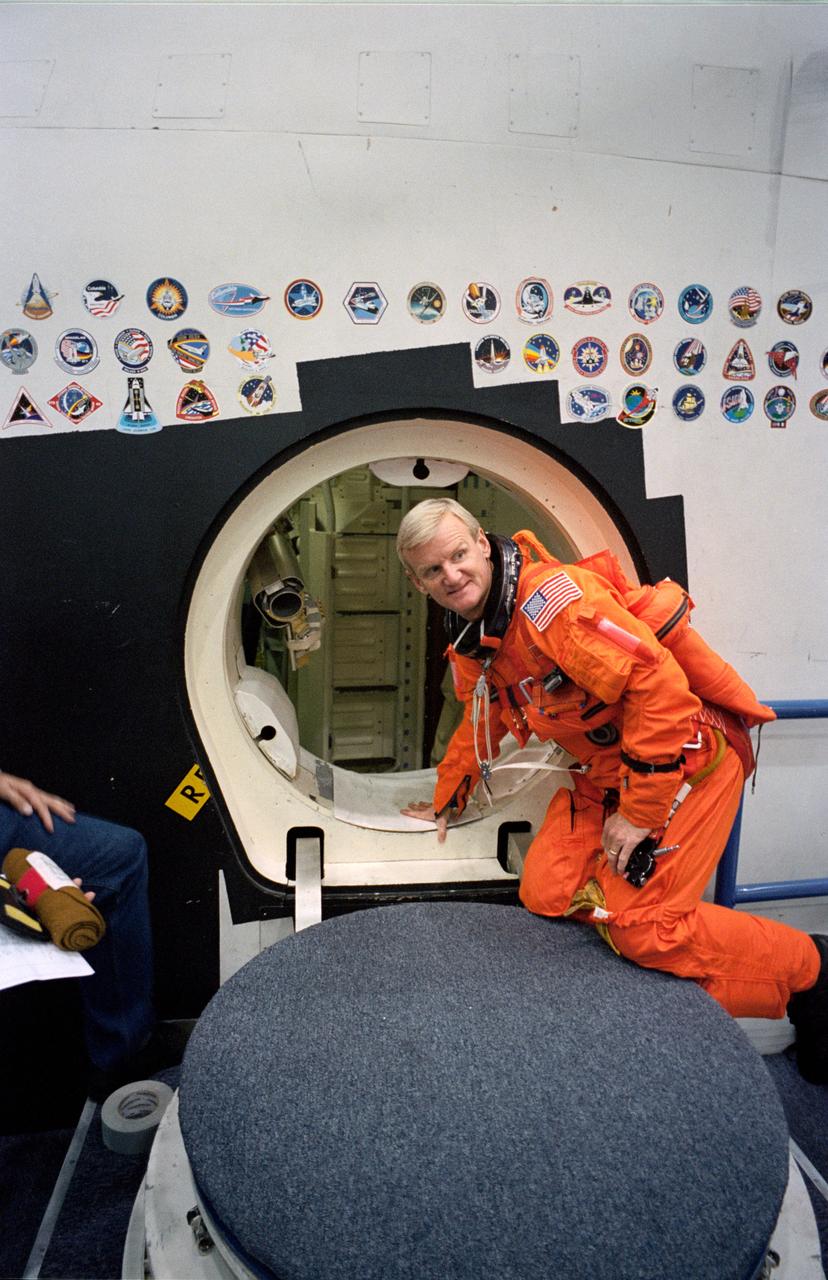
S93-48461 (5 Nov. 1993) --- In the Johnson Space Center's (JSC) Shuttle mockup and integration laboratory, astronaut John H. Casper simulates an emergency ejection from the space shuttle. Barely visible in the hatchway of the Shuttle crew compartment trainer (CCT) is the escape pole device like that flown on each shuttle flight. Casper and four other NASA astronauts will spend two weeks in space aboard the Space Shuttle Columbia in March 1994.
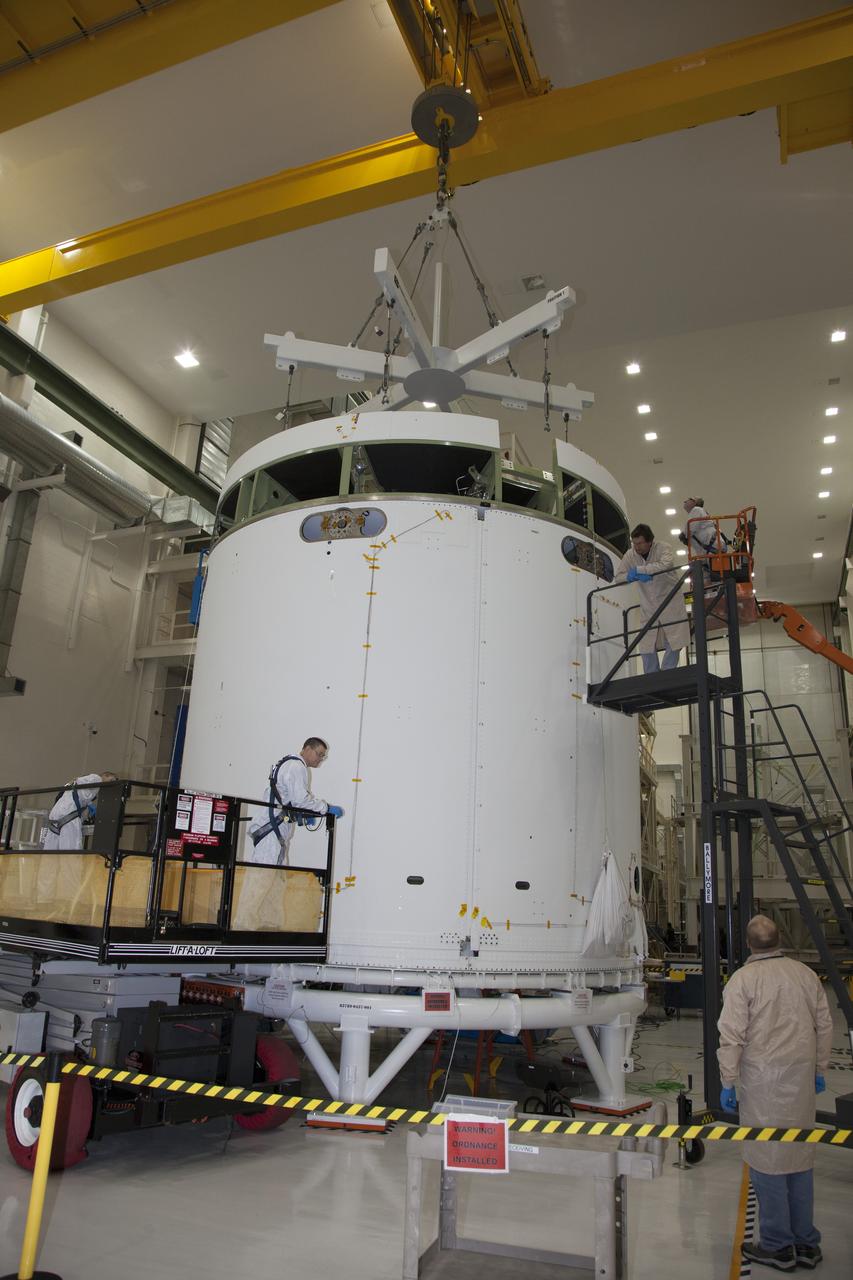
CAPE CANAVERAL, Fla. - Inside the Operations and Checkout Building high bay at NASA’s Kennedy Space Center in Florida, a crane lowers a ground support tool toward the service module for the Orion spacecraft. The service module will be transferred to a static test stand. Orion is the exploration spacecraft designed to carry astronauts to destinations not yet explored by humans, including an asteroid and Mars. It will have emergency abort capability, sustain the crew during space travel and provide safe re-entry from deep space return velocities. The first unpiloted test flight of the Orion is scheduled to launch in 2014 atop a Delta IV rocket and in 2017 on NASA’s Space Launch System rocket. For more information, visit http://www.nasa.gov/orion. Photo credit: NASA/Daniel Casper
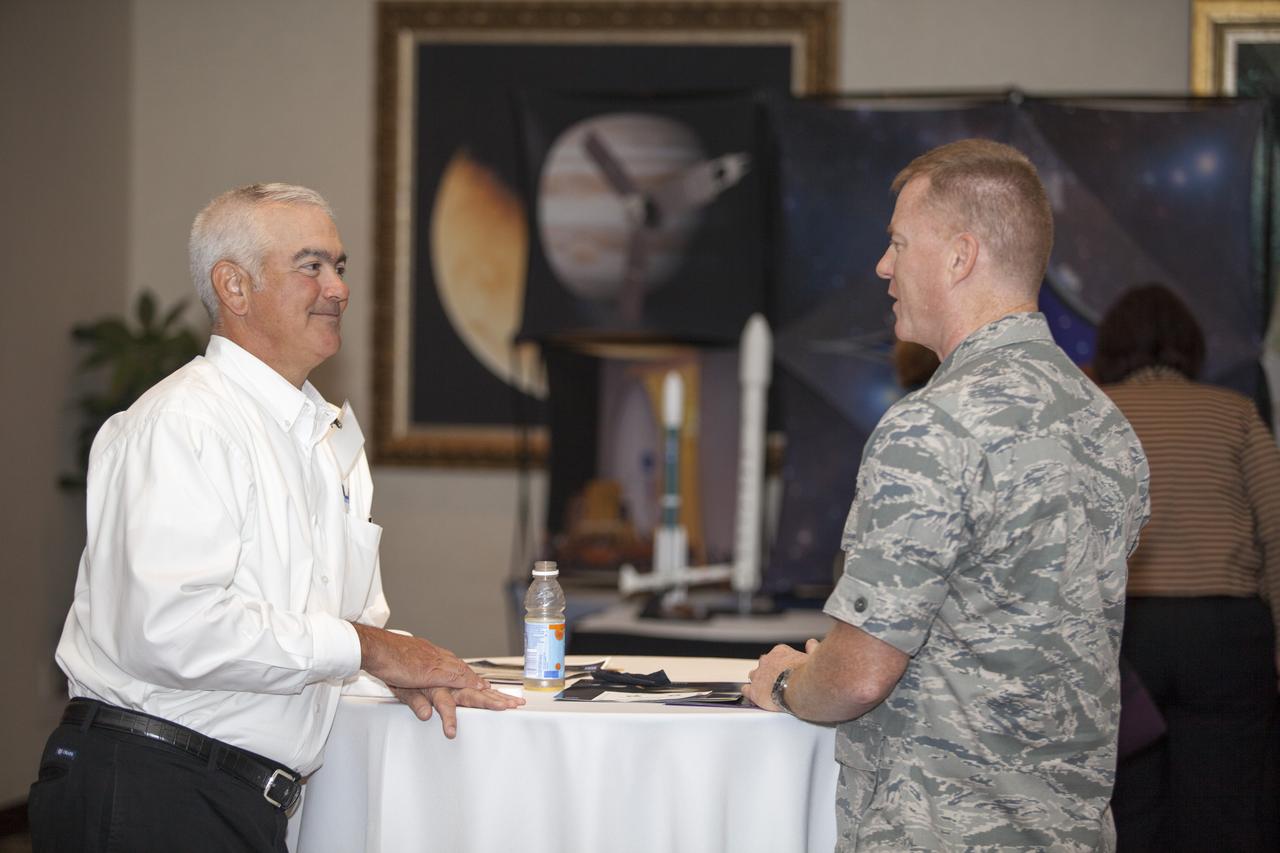
CAPE CANAVERAL, Fla. - Community leaders, business executives, educators, and state and local government leaders were updated on NASA Kennedy Space Center programs and accomplishments during KSC Center Director Bob Cabana’s Center Director Update at the Debus Center at the Kennedy Space Center Visitor Complex in Florida. Attendees talked with Cabana and other senior Kennedy managers and visited displays featuring updates on Kennedy programs and projects, including International Space Station, Commercial Crew, Ground System Development and Operations, Launch Services, Center Planning and Development, Technology, KSC Swamp Works and NASA Education. The morning concluded with a tour of the new Space Shuttle Atlantis exhibit at the visitor complex. For more information, visit http://www.nasa.gov/kennedy. Photo credit: NASA/Daniel Casper
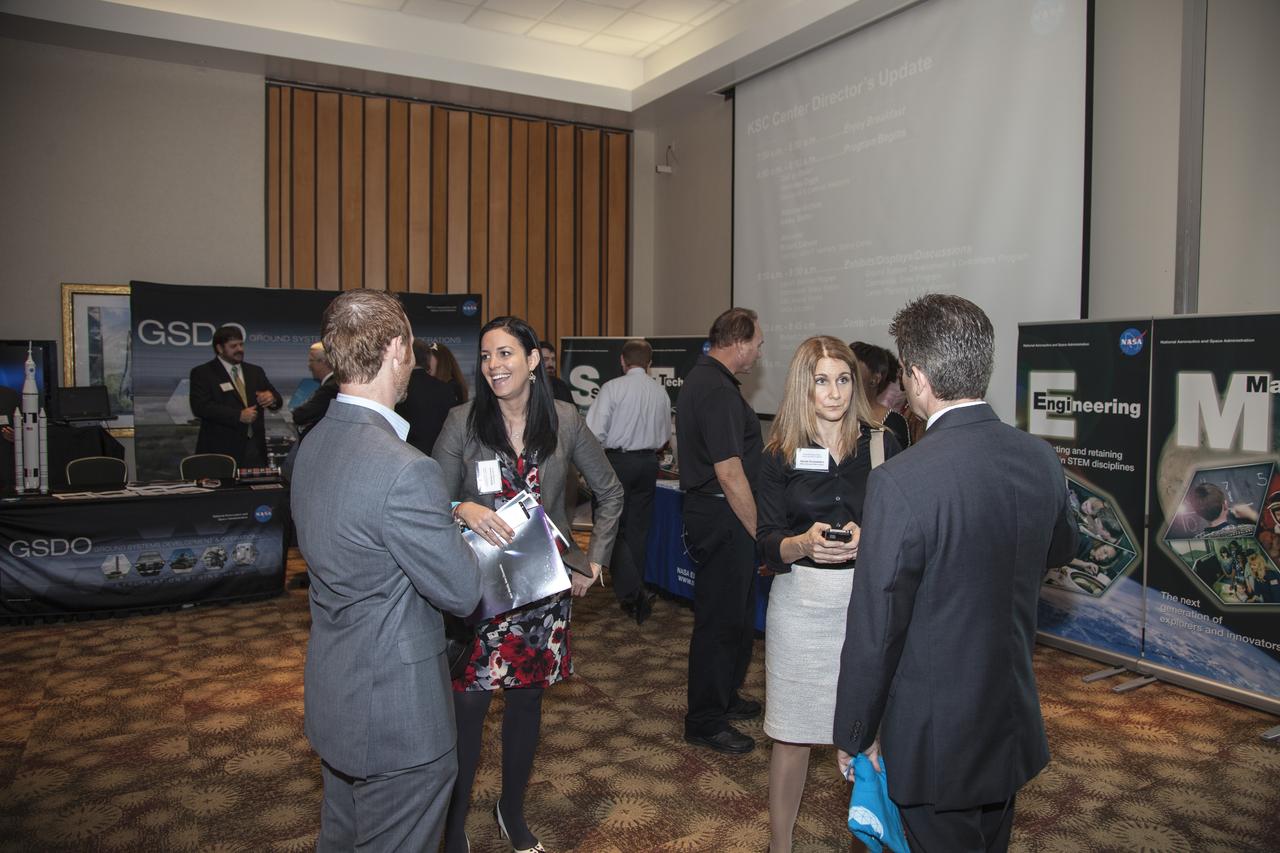
CAPE CANAVERAL, Fla. - Community leaders, business executives, educators, and state and local government leaders were updated on NASA Kennedy Space Center programs and accomplishments during Center Director Bob Cabana’s Center Director Update at the Debus Center at the Kennedy Space Center Visitor Complex in Florida. Attendees mingled and visited various displays, including Ground Systems Development and Operations Program and Education Office displays. Attendees talked with Cabana and other senior Kennedy managers and visited displays featuring updates on Kennedy programs and projects, including International Space Station, Commercial Crew, Ground System Development and Operations, Launch Services, Center Planning and Development, Technology, KSC Swamp Works and NASA Education. The morning concluded with a tour of the new Space Shuttle Atlantis exhibit at the visitor complex. For more information, visit http://www.nasa.gov/kennedy. Photo credit: NASA/Daniel Casper
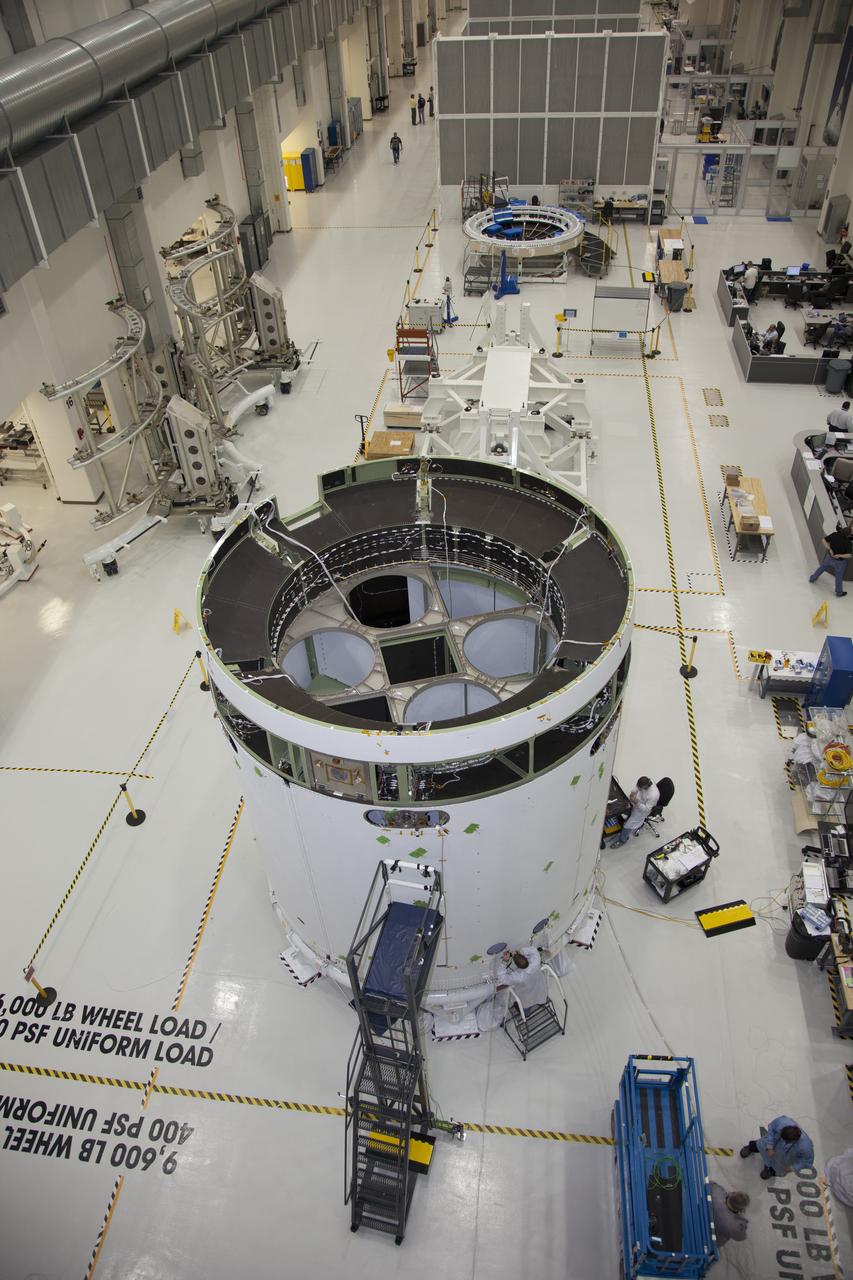
CAPE CANAVERAL, Fla. – A view from above inside the Operations and Checkout Building high bay at NASA’s Kennedy Space Center in Florida, shows the service module for the Orion spacecraft secured to a work stand. Technicians are completing the installation of the three fairings around the service module that will protect it during launch. The Orion spacecraft is being prepared for its first unpiloted flight test, Exploration Flight Test-1, or EFT-1, scheduled for launch atop a Delta IV rocket in September 2014. The Orion spacecraft is designed to carry astronauts to destinations not yet explored by humans. It will have emergency abort capability, sustain the crew during space travel and provide safe re-entry from deep space return velocities. Orion is scheduled to launch atop NASA’s Space Launch System rocket in 2017. For more information, visit http://www.nasa.gov/orion. Photo credit: NASA/Daniel Casper
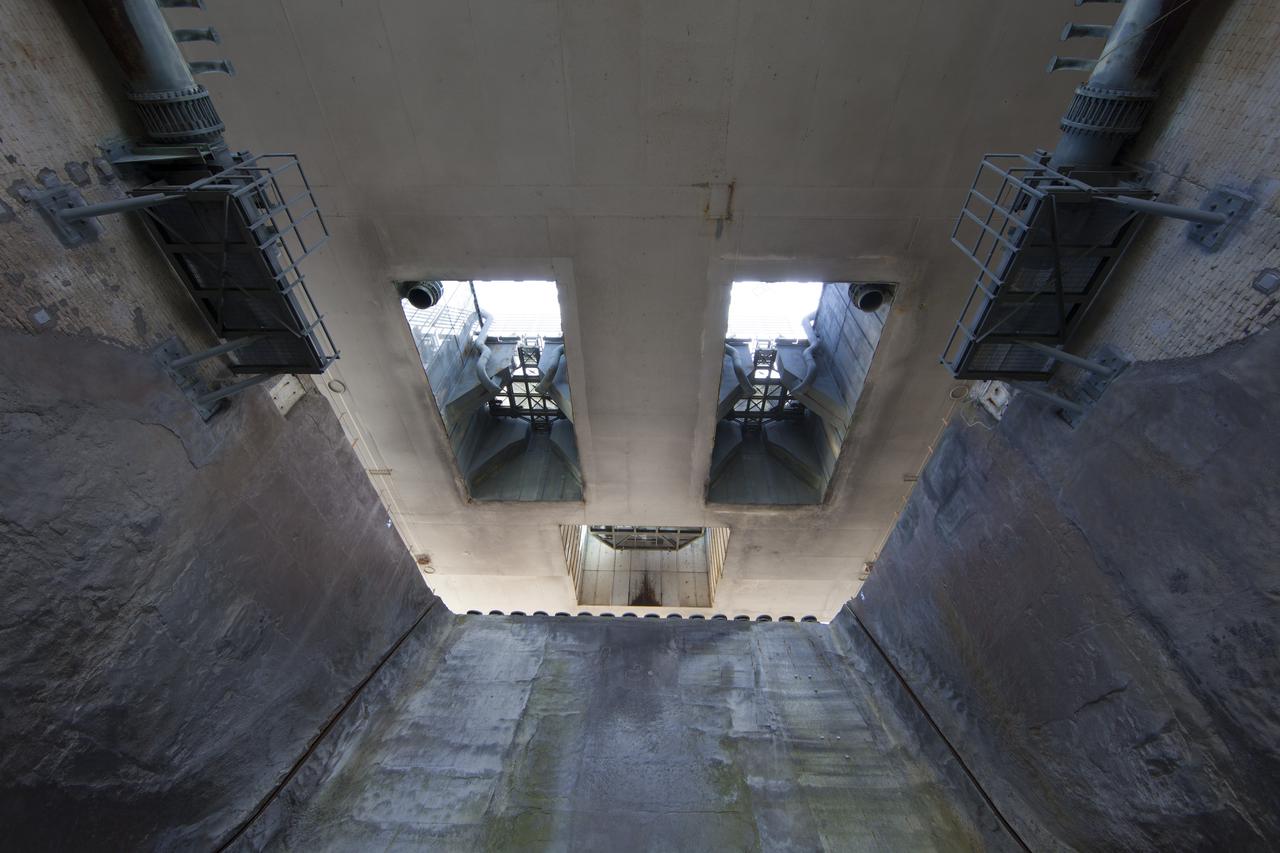
CAPE CANAVERAL, Fla. -- At NASA's Kennedy Space Center in Florida, launch pad 39A looks much like it did after the liftoff of STS-135, the final space shuttle mission, on July 8, 2011. This view shows the flame trench where smoke and flame from the shuttle's twin solid rocket boosters were deflected away from the pad. Both launch pad 39A and 39B pad 39A was originally built for the Apollo/Saturn V rockets that launched American astronauts on their historic journeys to the moon and later modified to support the 30-year shuttle program. To learn more about Launch Pad 39A visit: http://www.nasa.gov/mission_pages/shuttle/launch/launch-complex39-toc.html Photo credit: NASA/Dan Casper
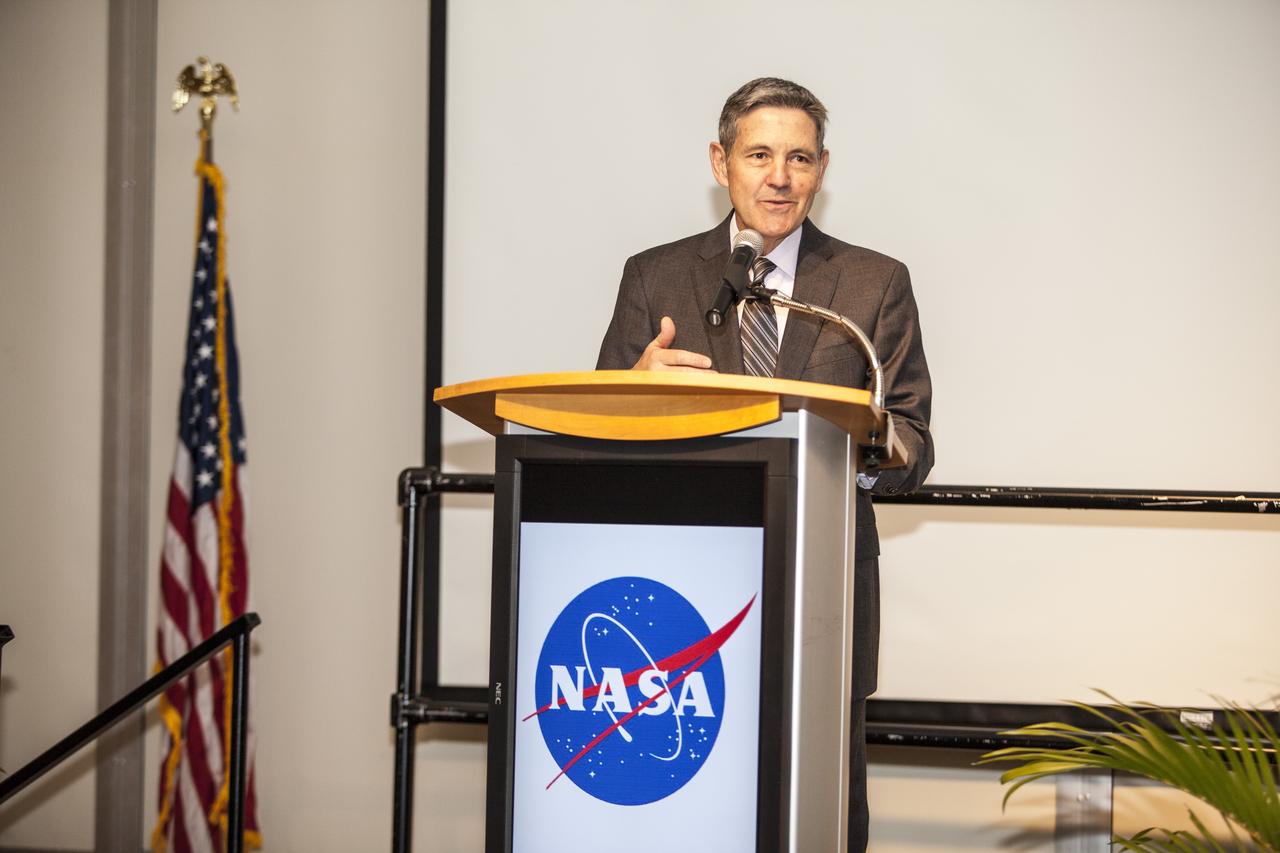
CAPE CANAVERAL, Fla. – NASA Kennedy Space Center Director Robert Cabana welcomes community leaders, business executives, educators, community organizers, and state and local government leaders to the Kennedy Space Center Visitor Complex Debus Center for the Kennedy Space Center Director Update. Attendees talked with Cabana and other senior Kennedy managers and visited displays featuring updates on Kennedy programs and projects, including International Space Station, Commercial Crew, Ground System Development and Operations, Launch Services, Center Planning and Development, Technology, KSC Swamp Works and NASA Education. The morning concluded with a tour of the new Space Shuttle Atlantis exhibit at the visitor complex. For more information, visit http://www.nasa.gov/kennedy. Photo credit: NASA/Daniel Casper
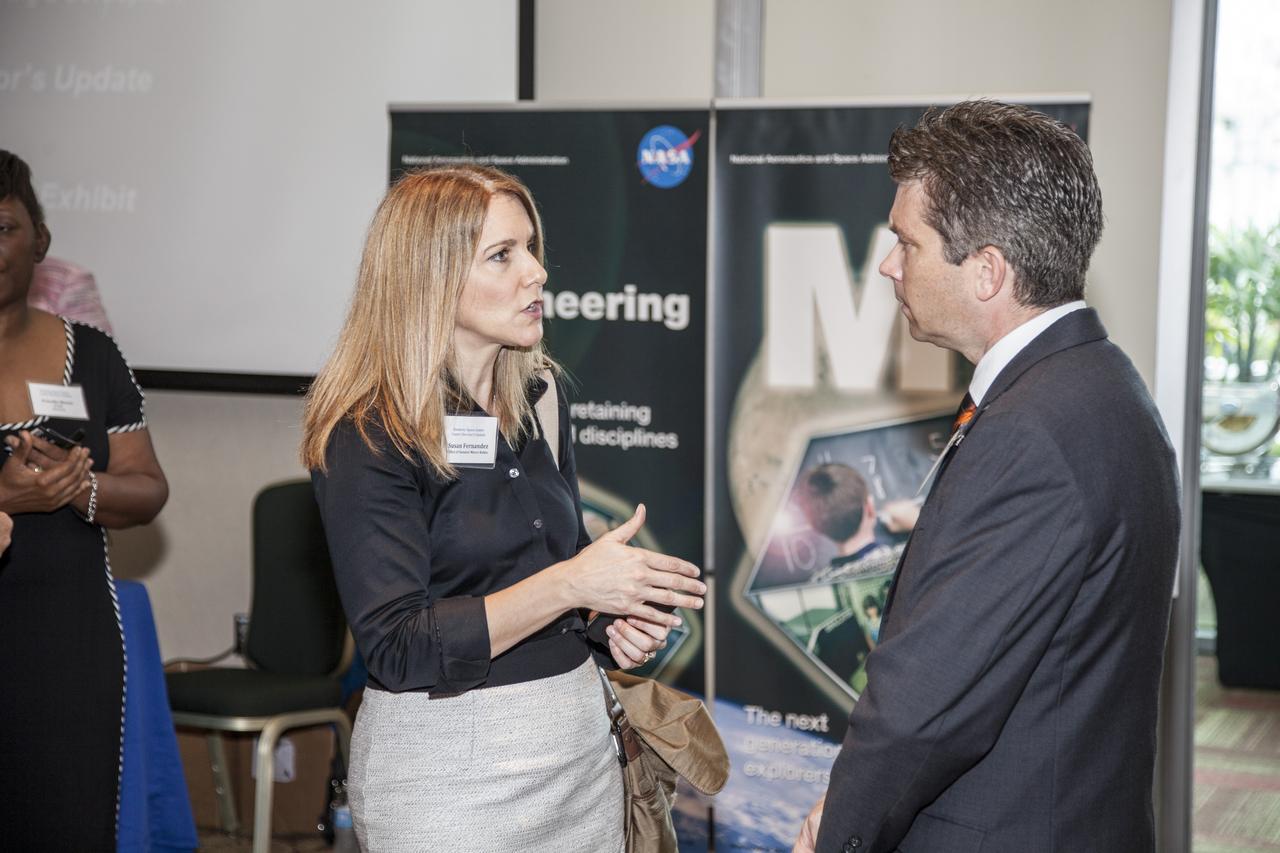
CAPE CANAVERAL, Fla. - Community leaders, business executives, educators, and state and local government leaders were updated on NASA Kennedy Space Center programs and accomplishments during Center Director Bob Cabana’s Center Director Update at the Debus Center at the Kennedy Space Center Visitor Complex in Florida. At left, Susan Fernandez from the Office of Senator Marco Rubio talks with another attendee near the Education display. Attendees talked with Cabana and other senior Kennedy managers and visited displays featuring updates on Kennedy programs and projects, including International Space Station, Commercial Crew, Ground System Development and Operations, Launch Services, Center Planning and Development, Technology, KSC Swamp Works and NASA Education. The morning concluded with a tour of the new Space Shuttle Atlantis exhibit at the visitor complex. For more information, visit http://www.nasa.gov/kennedy. Photo credit: NASA/Daniel Casper
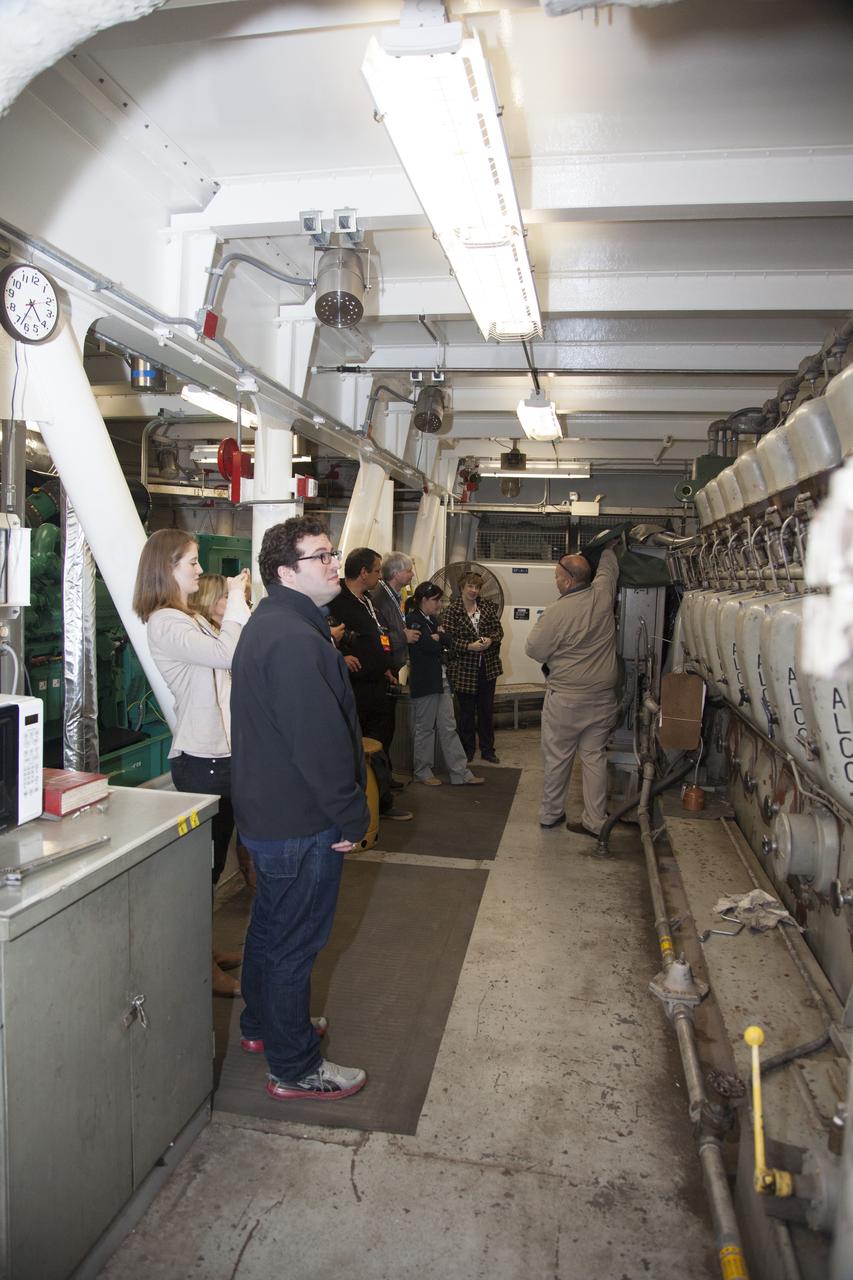
CAPE CANAVERAL, Fla. -- At NASA's Kennedy Space Center in Florida, social media participants were given an up-close look at the interior of one of the spaceport's mammoth crawler-transporters. Recent work has included preparations to install upgraded components that will enable the crawler to carry the greater loads anticipated with the agency's new rocket designed to take astronauts beyond low-Earth orbit for the first time since the early 1970s. The social media participants gathered at the Florida spaceport for the launch of the Tracking and Data Relay Satellite, or TDRS-L spacecraft. Their visit included tours of key facilities and participating in presentations by key NASA leaders who updated the space agency's current efforts. Photo credit: NASA/Dan Casper
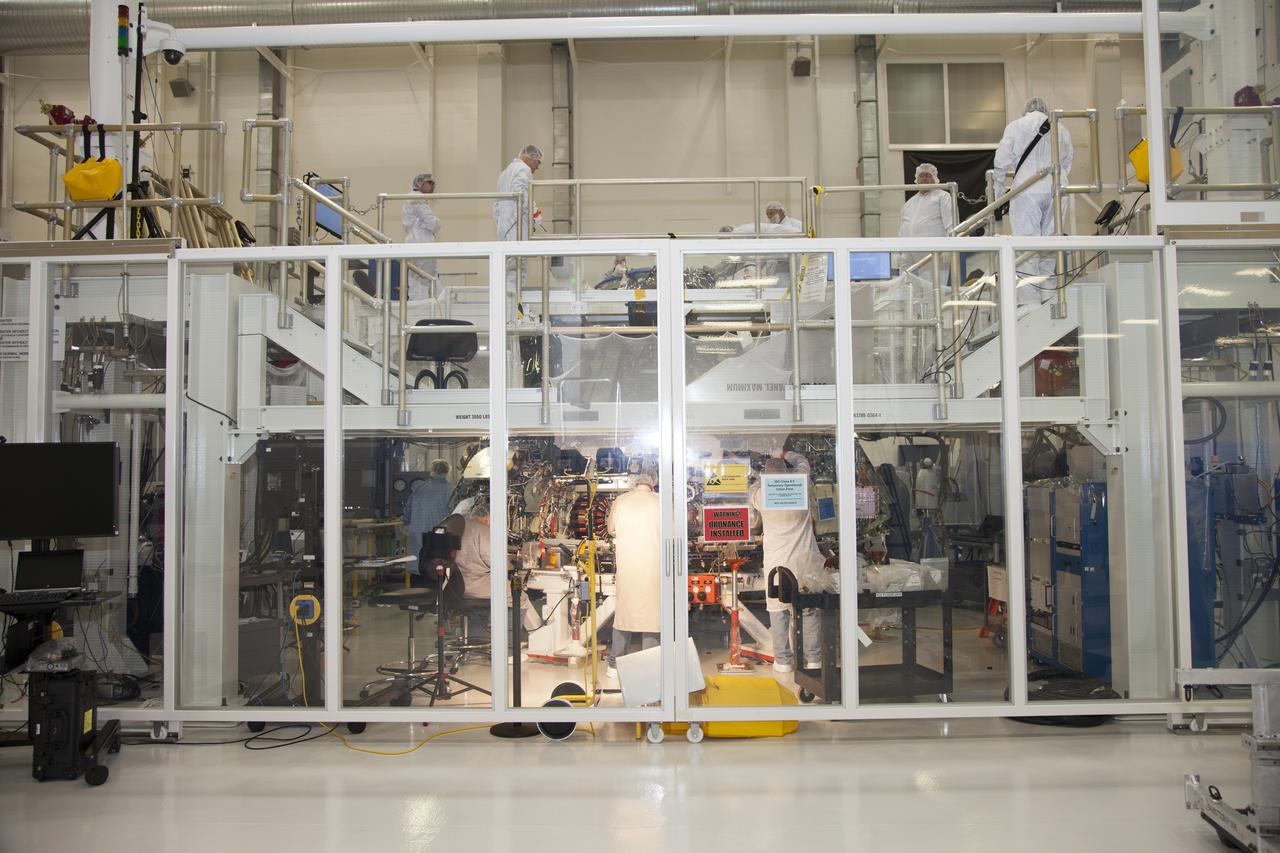
CAPE CANAVERAL, Fla. – Inside the Operations and Checkout Building high bay at NASA’s Kennedy Space Center in Florida, engineers work on the Orion crew module inside a temporary clean room. Welding on the crew module was completed this month. The Orion spacecraft is being prepared for its first unpiloted flight test, Exploration Flight Test-1, or EFT-1, scheduled for launch atop a Delta IV rocket in September 2014. The Orion spacecraft is designed to carry astronauts to destinations not yet explored by humans. It will have emergency abort capability, sustain the crew during space travel and provide safe re-entry from deep space return velocities. Orion is scheduled to launch atop NASA’s Space Launch System rocket in 2017. For more information, visit http://www.nasa.gov/orion. Photo credit: NASA/Daniel Casper
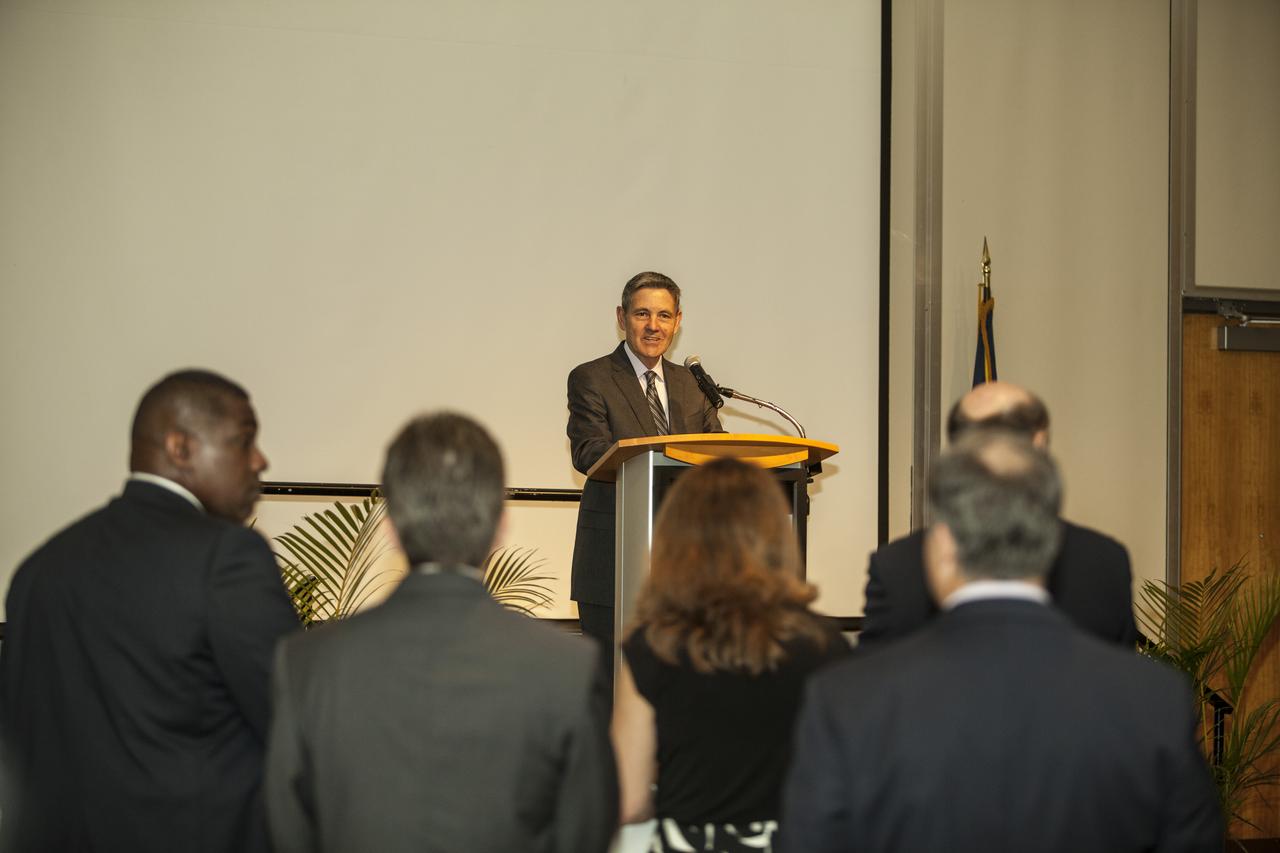
CAPE CANAVERAL, Fla. – NASA Kennedy Space Center Director Robert Cabana briefs the community leaders, business executives, educators, community organizers, and state and local government leaders attending the Kennedy Space Center Director in the Kennedy Space Center Visitor Complex Debus Center. Attendees talked with Cabana and other senior Kennedy managers and visited displays featuring updates on Kennedy programs and projects, including International Space Station, Commercial Crew, Ground System Development and Operations, Launch Services, Center Planning and Development, Technology, KSC Swamp Works and NASA Education. The morning concluded with a tour of the new Space Shuttle Atlantis exhibit at the visitor complex. For more information, visit http://www.nasa.gov/kennedy. Photo credit: NASA/Daniel Casper
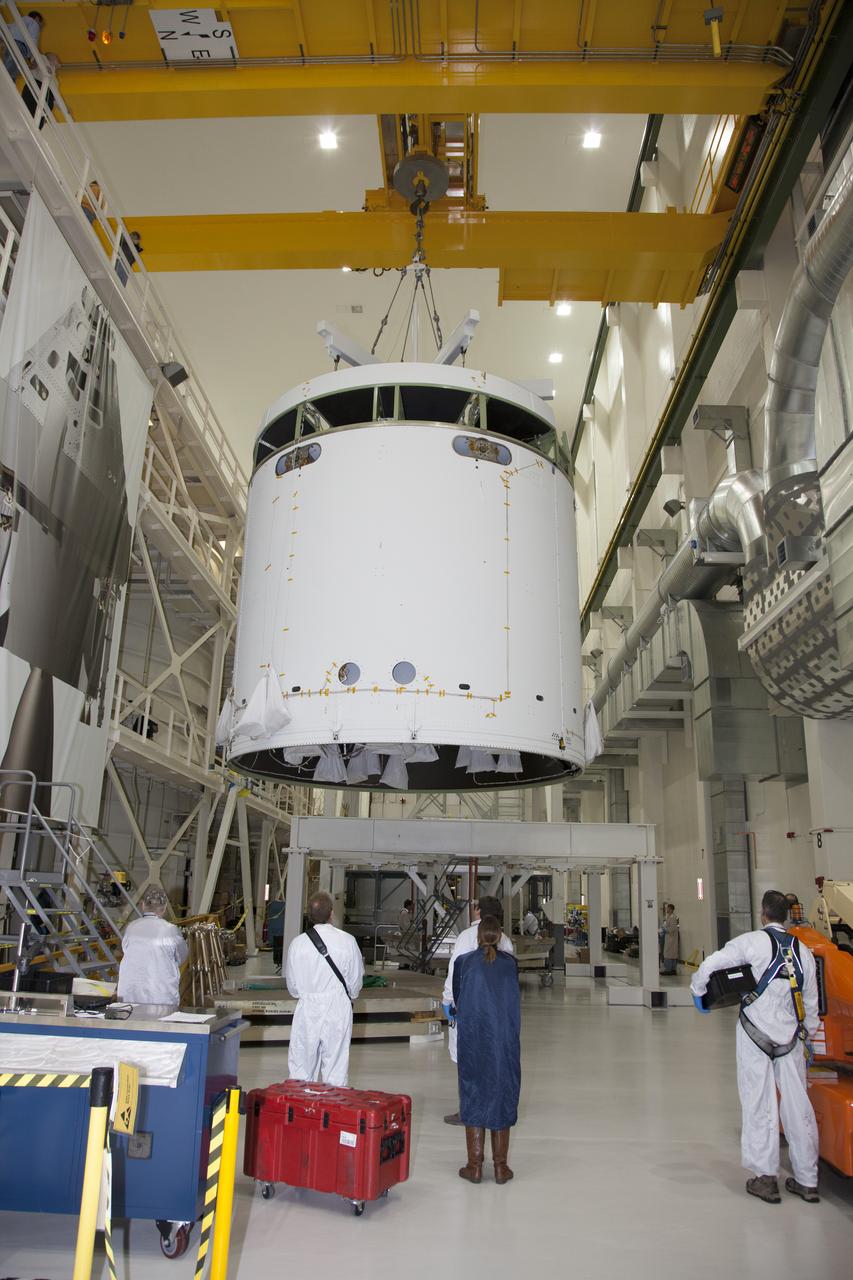
CAPE CANAVERAL, Fla. - Inside the Operations and Checkout Building high bay at NASA’s Kennedy Space Center in Florida, a ground support tool attached to a crane is used to lift the service module for the Orion spacecraft from a stand. The service module is being transferred to a static test stand. Orion is the exploration spacecraft designed to carry astronauts to destinations not yet explored by humans, including an asteroid and Mars. It will have emergency abort capability, sustain the crew during space travel and provide safe re-entry from deep space return velocities. The first unpiloted test flight of the Orion is scheduled to launch in 2014 atop a Delta IV rocket and in 2017 on NASA’s Space Launch System rocket. For more information, visit http://www.nasa.gov/orion. Photo credit: NASA/Daniel Casper
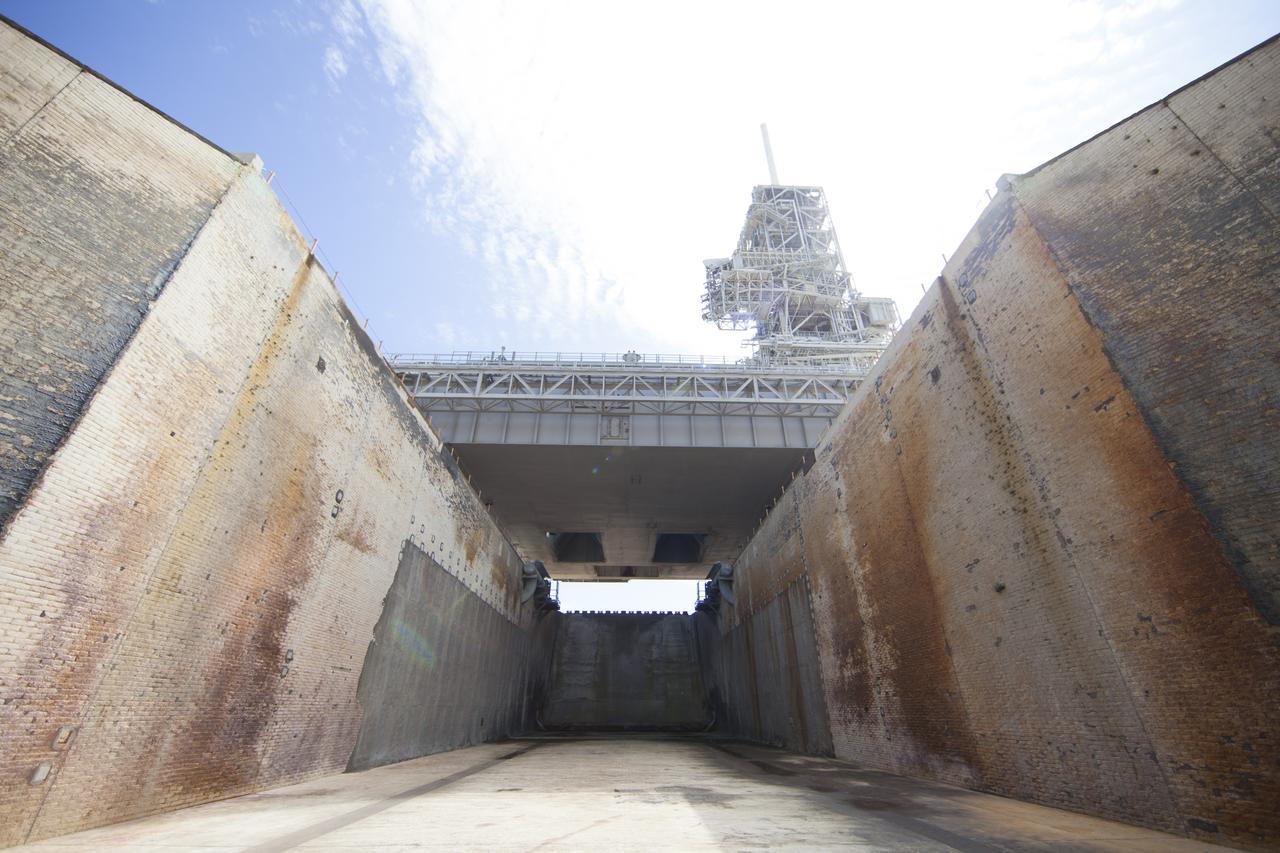
CAPE CANAVERAL, Fla. -- At NASA's Kennedy Space Center in Florida, launch pad 39A looks much like it did after the liftoff of STS-135, the final space shuttle mission, on July 8, 2011. This view shows the flame trench where smoke and flame from the shuttle's twin solid rocket boosters were deflected away from the pad. Both launch pad 39A and 39B pad 39A was originally built for the Apollo/Saturn V rockets that launched American astronauts on their historic journeys to the moon and later modified to support the 30-year shuttle program. To learn more about Launch Pad 39A visit: http://www.nasa.gov/mission_pages/shuttle/launch/launch-complex39-toc.html Photo credit: NASA/Dan Casper
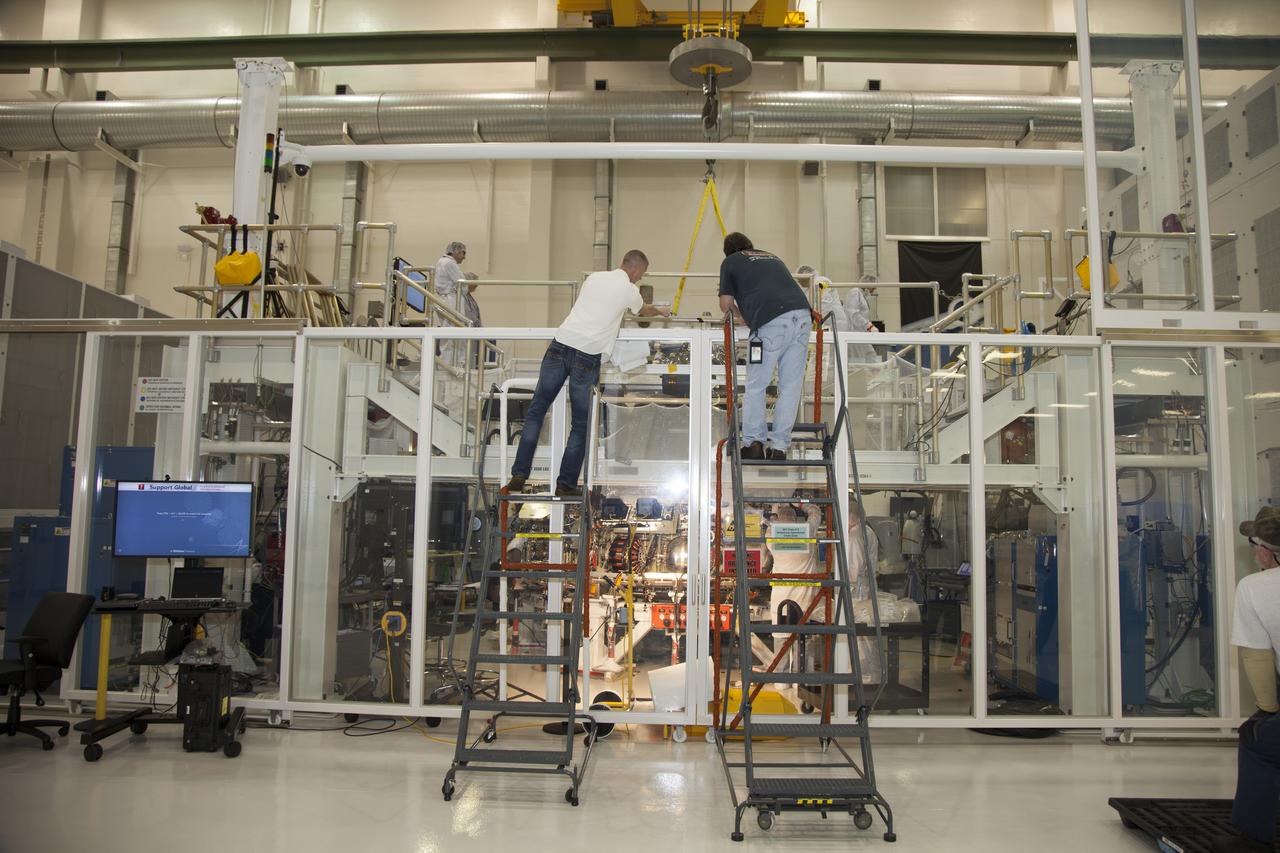
CAPE CANAVERAL, Fla. – Inside the Operations and Checkout Building high bay at NASA’s Kennedy Space Center in Florida, engineers work on the Orion crew module inside a temporary clean room. Welding on the crew module was completed this month. The Orion spacecraft is being prepared for its first unpiloted flight test, Exploration Flight Test-1, or EFT-1, scheduled for launch atop a Delta IV rocket in September 2014. The Orion spacecraft is designed to carry astronauts to destinations not yet explored by humans. It will have emergency abort capability, sustain the crew during space travel and provide safe re-entry from deep space return velocities. Orion is scheduled to launch atop NASA’s Space Launch System rocket in 2017. For more information, visit http://www.nasa.gov/orion. Photo credit: NASA/Daniel Casper
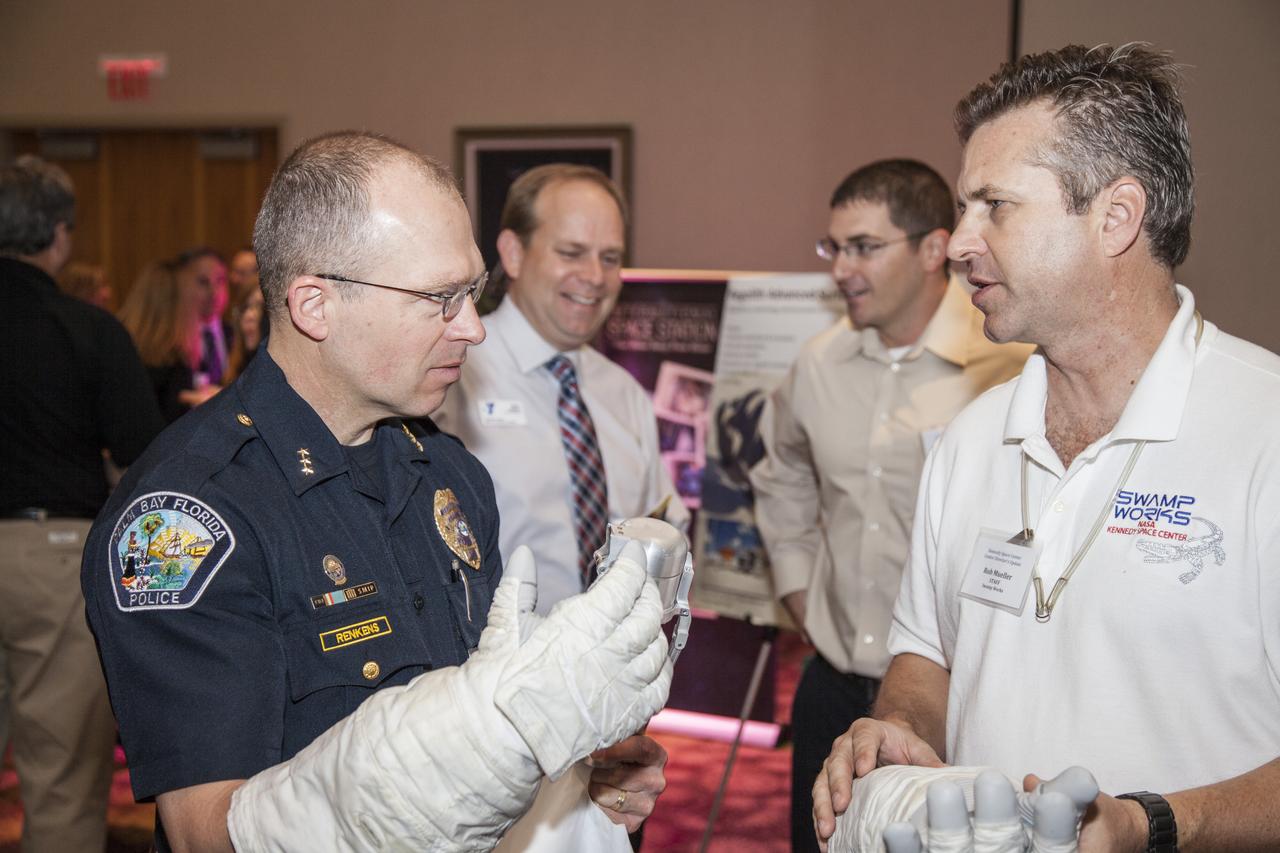
CAPE CANAVERAL, Fla. - Community leaders, business executives, educators, and state and local government leaders were updated on NASA Kennedy Space Center programs and accomplishments during Center Director Bob Cabana’s Center Director Update at the Debus Center at the Kennedy Space Center Visitor Complex in Florida. Rob Mueller, senior technologist, talks with attendees at the Swamp Works display. Attendees talked with Cabana and other senior Kennedy managers and visited displays featuring updates on Kennedy programs and projects, including International Space Station, Commercial Crew, Ground System Development and Operations, Launch Services, Center Planning and Development, Technology, KSC Swamp Works and NASA Education. The morning concluded with a tour of the new Space Shuttle Atlantis exhibit at the visitor complex. For more information, visit http://www.nasa.gov/kennedy. Photo credit: NASA/Daniel Casper
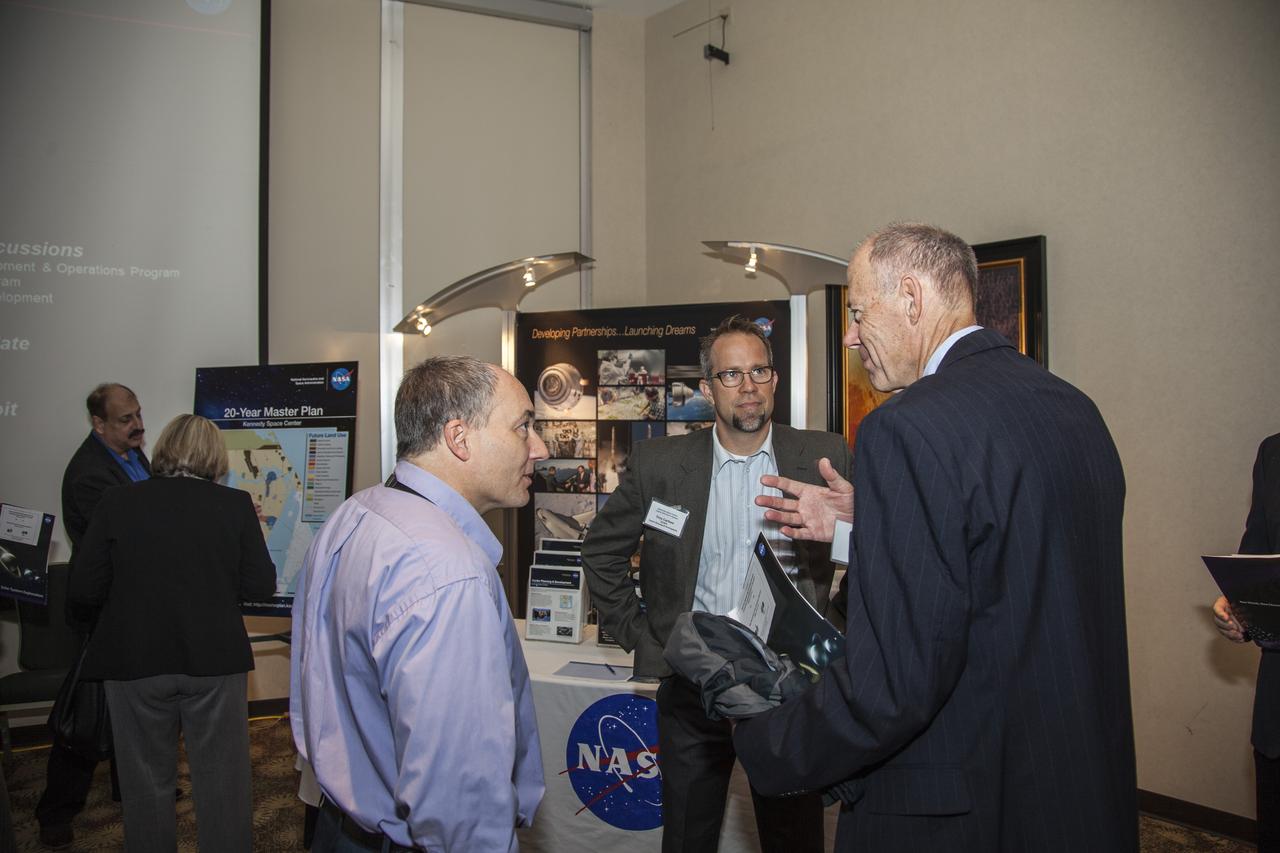
CAPE CANAVERAL, Fla. - Community leaders, business executives, educators, and state and local government leaders were updated on NASA Kennedy Space Center programs and accomplishments during Center Director Bob Cabana’s Center Director Update at the Debus Center at the Kennedy Space Center Visitor Complex in Florida. Attendees talk with Trey Carlson, Kennedy Master Planner, at the Center Planning and Development Directorate, or CPDD, display. In the background is Mario Busacca, chief of CPDD’s Spaceport Planning Office. Attendees talked with Cabana and other senior Kennedy managers and visited displays featuring updates on Kennedy programs and projects, including International Space Station, Commercial Crew, Ground System Development and Operations, Launch Services, Center Planning and Development, Technology, KSC Swamp Works and NASA Education. The morning concluded with a tour of the new Space Shuttle Atlantis exhibit at the visitor complex. For more information, visit http://www.nasa.gov/kennedy. Photo credit: NASA/Daniel Casper
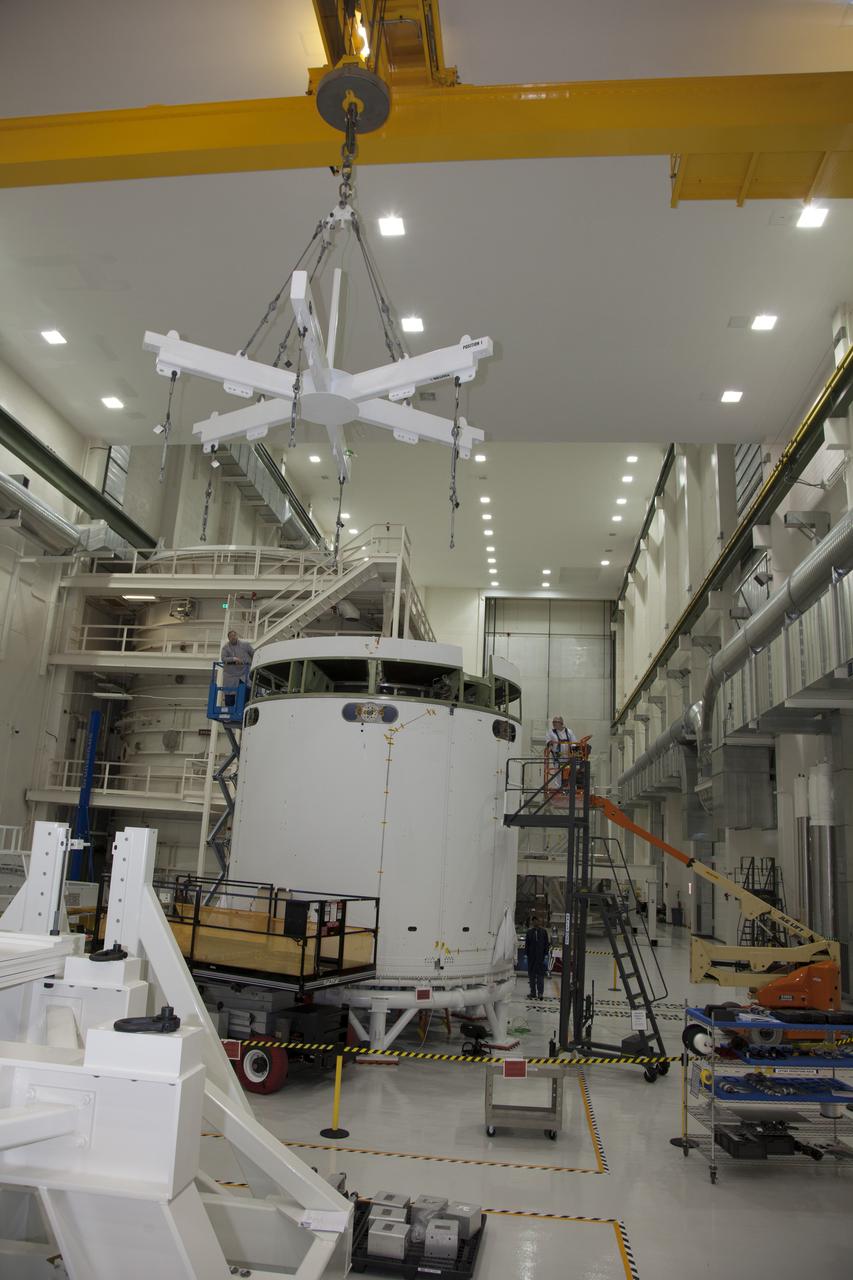
CAPE CANAVERAL, Fla. - Inside the Operations and Checkout Building high bay at NASA’s Kennedy Space Center in Florida, a crane is used to lift a ground support tool that will be used to transfer the service module for the Orion spacecraft to a static test stand. Orion is the exploration spacecraft designed to carry astronauts to destinations not yet explored by humans, including an asteroid and Mars. It will have emergency abort capability, sustain the crew during space travel and provide safe re-entry from deep space return velocities. The first unpiloted test flight of the Orion is scheduled to launch in 2014 atop a Delta IV rocket and in 2017 on NASA’s Space Launch System rocket. For more information, visit http://www.nasa.gov/orion. Photo credit: NASA/Daniel Casper
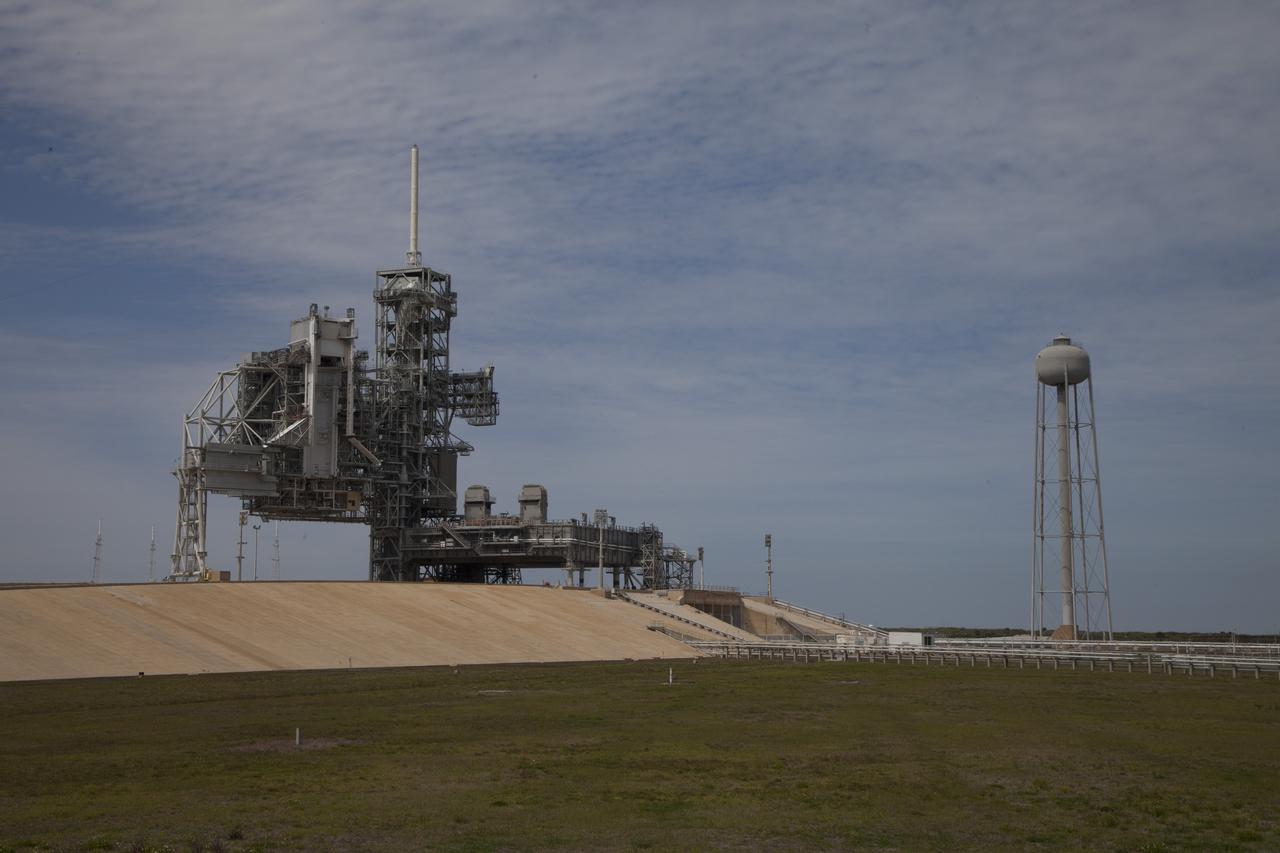
CAPE CANAVERAL, Fla. -- At NASA's Kennedy Space Center in Florida, launch pad 39A looks much like it did after the liftoff of STS-135, the final space shuttle mission, on July 8, 2011. The mobile launcher platform remains in place next to the fixed service structure and rotating service structure. Both launch pad 39A and 39B pad 39A was originally built for the Apollo/Saturn V rockets that launched American astronauts on their historic journeys to the moon and later modified to support the 30-year shuttle program. To learn more about Launch Pad 39A visit: http://www.nasa.gov/mission_pages/shuttle/launch/launch-complex39-toc.html Photo credit: NASA/Dan Casper
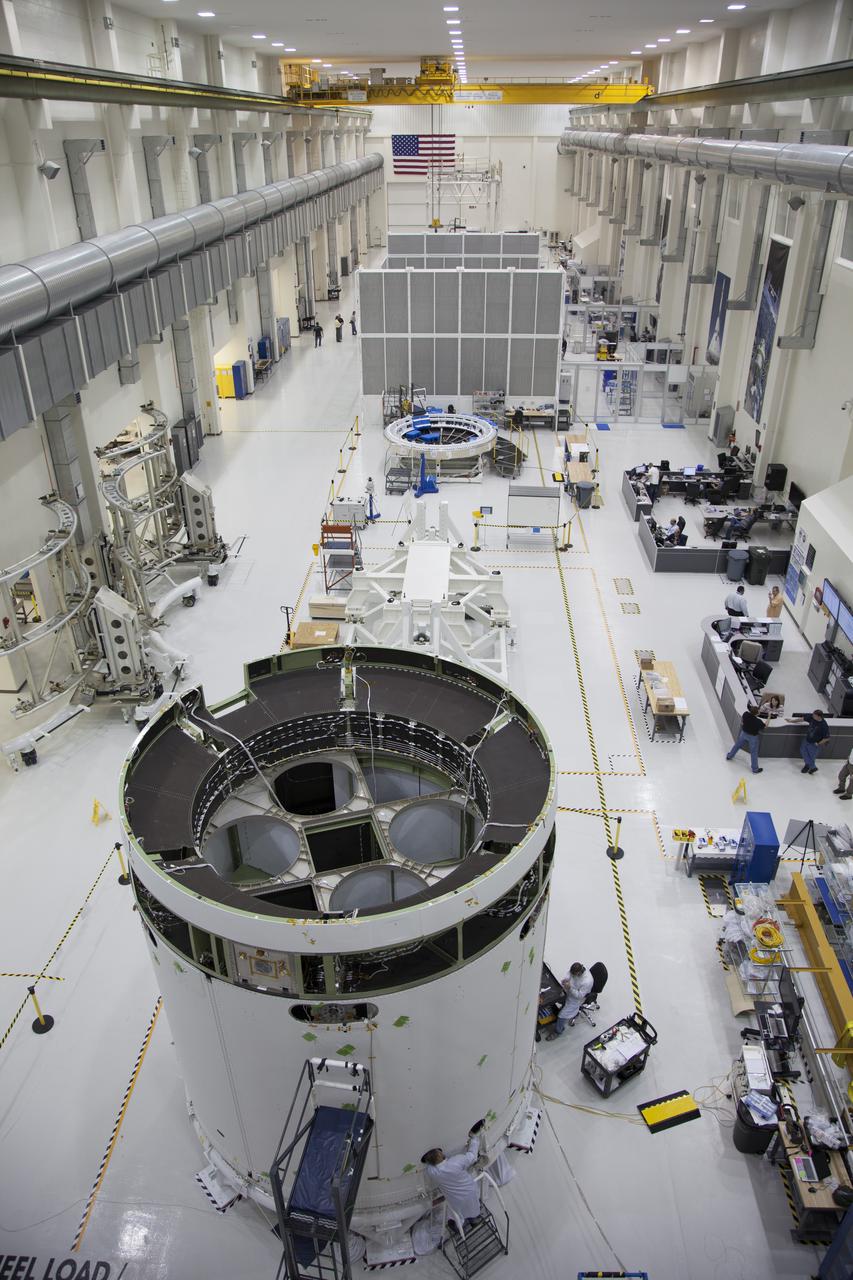
CAPE CANAVERAL, Fla. – A view from above inside the Operations and Checkout Building high bay at NASA’s Kennedy Space Center in Florida, shows the service module for the Orion spacecraft secured to a work stand. Technicians are completing the installation of the three fairings around the service module that will protect it during launch. The Orion spacecraft is being prepared for its first unpiloted flight test, Exploration Flight Test-1, or EFT-1, scheduled for launch atop a Delta IV rocket in September 2014. The Orion spacecraft is designed to carry astronauts to destinations not yet explored by humans. It will have emergency abort capability, sustain the crew during space travel and provide safe re-entry from deep space return velocities. Orion is scheduled to launch atop NASA’s Space Launch System rocket in 2017. For more information, visit http://www.nasa.gov/orion. Photo credit: NASA/Daniel Casper
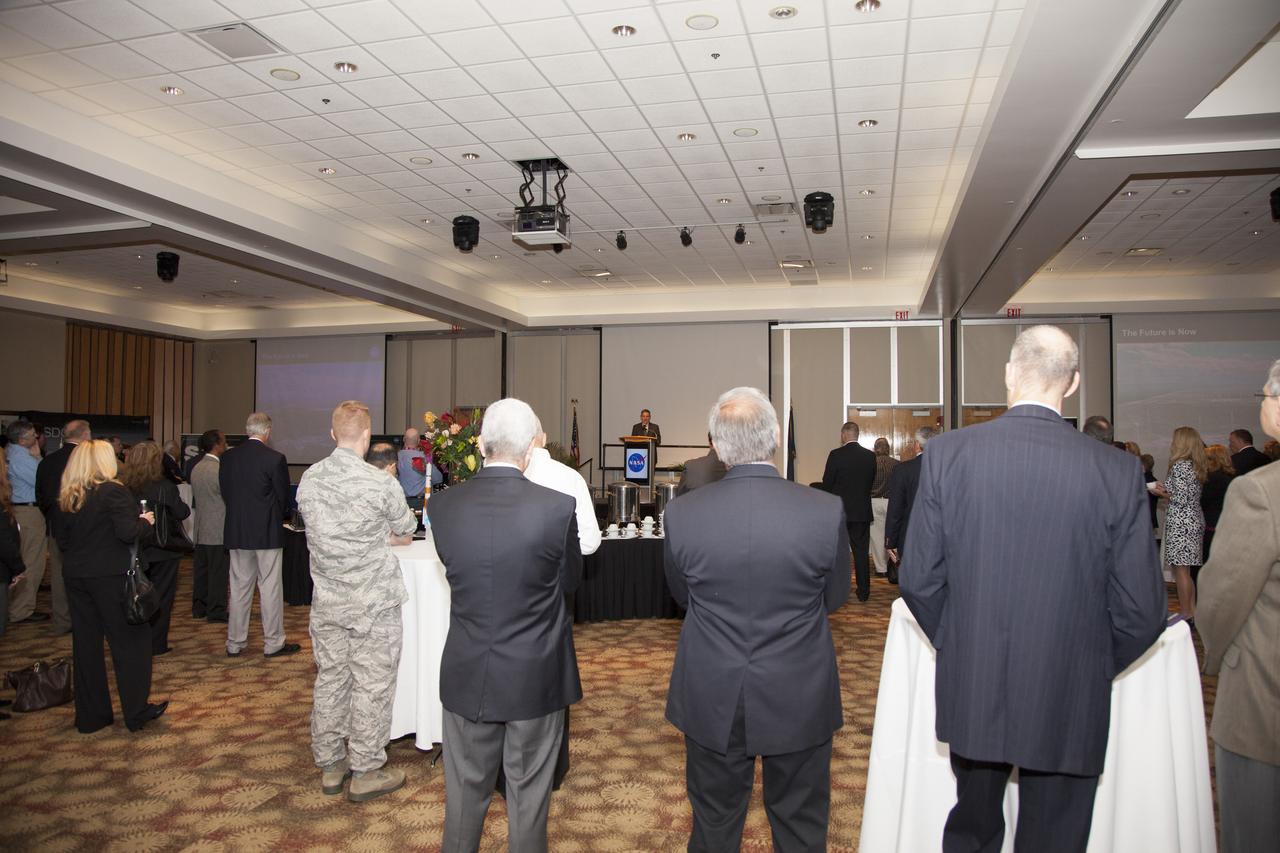
CAPE CANAVERAL, Fla. – NASA Kennedy Space Center Director Robert Cabana addresses the community leaders, business executives, educators, community organizers, and state and local government leaders attending the Kennedy Space Center Director in the Kennedy Space Center Visitor Complex Debus Center. Attendees talked with Cabana and other senior Kennedy managers and visited displays featuring updates on Kennedy programs and projects, including International Space Station, Commercial Crew, Ground System Development and Operations, Launch Services, Center Planning and Development, Technology, KSC Swamp Works and NASA Education. The morning concluded with a tour of the new Space Shuttle Atlantis exhibit at the visitor complex. For more information, visit http://www.nasa.gov/kennedy. Photo credit: NASA/Daniel Casper