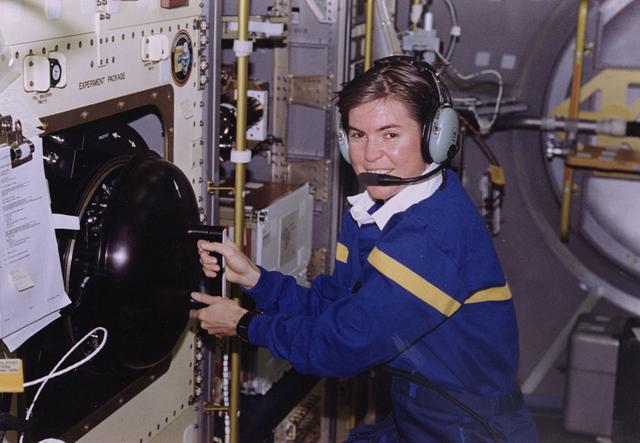
Astronaut Janice Voss is opening the lid of the combustion chamber of the Combustion Module-1 during STS-94
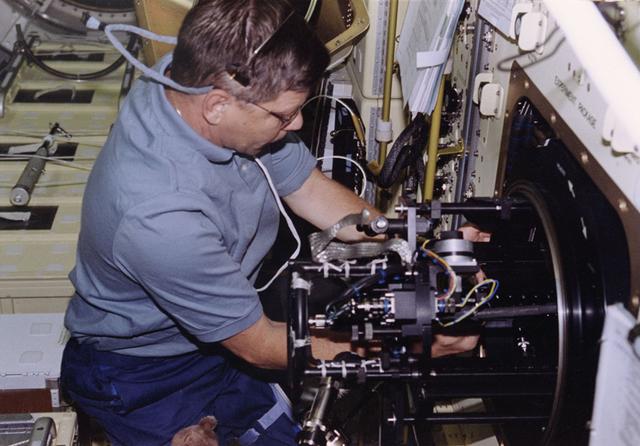
Astronaut Roger Crouch performs a change-out of the experiment in the Combustion Module-1 combustion chamber during STS-94.
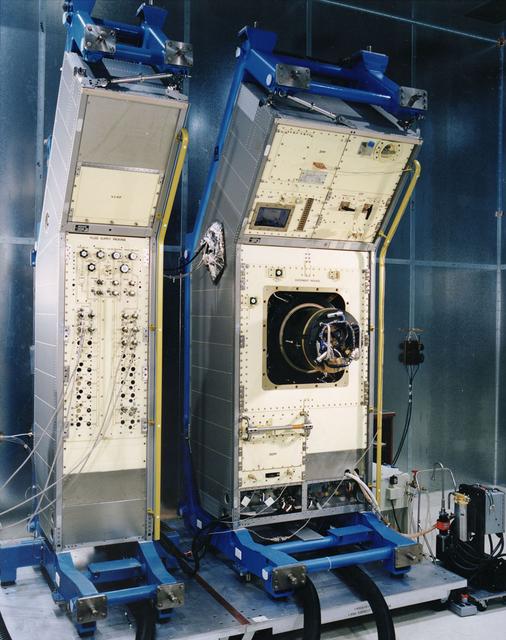
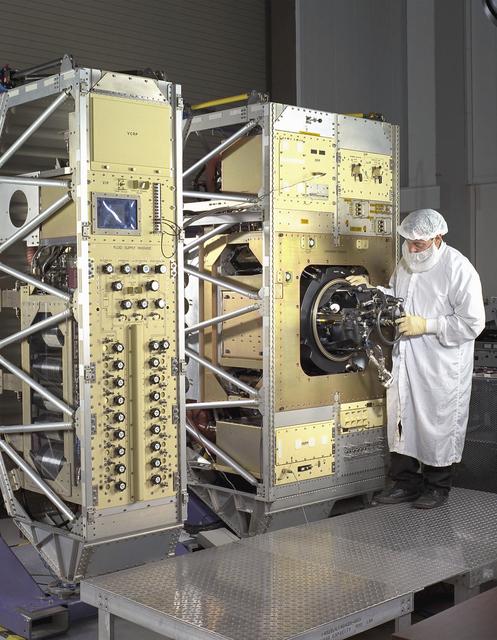
Combustion Module-1 was one of the most complex and technologically sophisticated pieces of hardware ever to be included as a part of a Spacelab mission. Shown here are the two racks which comprised CM-1, the rack on the right shows the combustion chamber with the Structure Of Flame Balls at Low Lewis-numbers (SOFBALL) experiment inside.
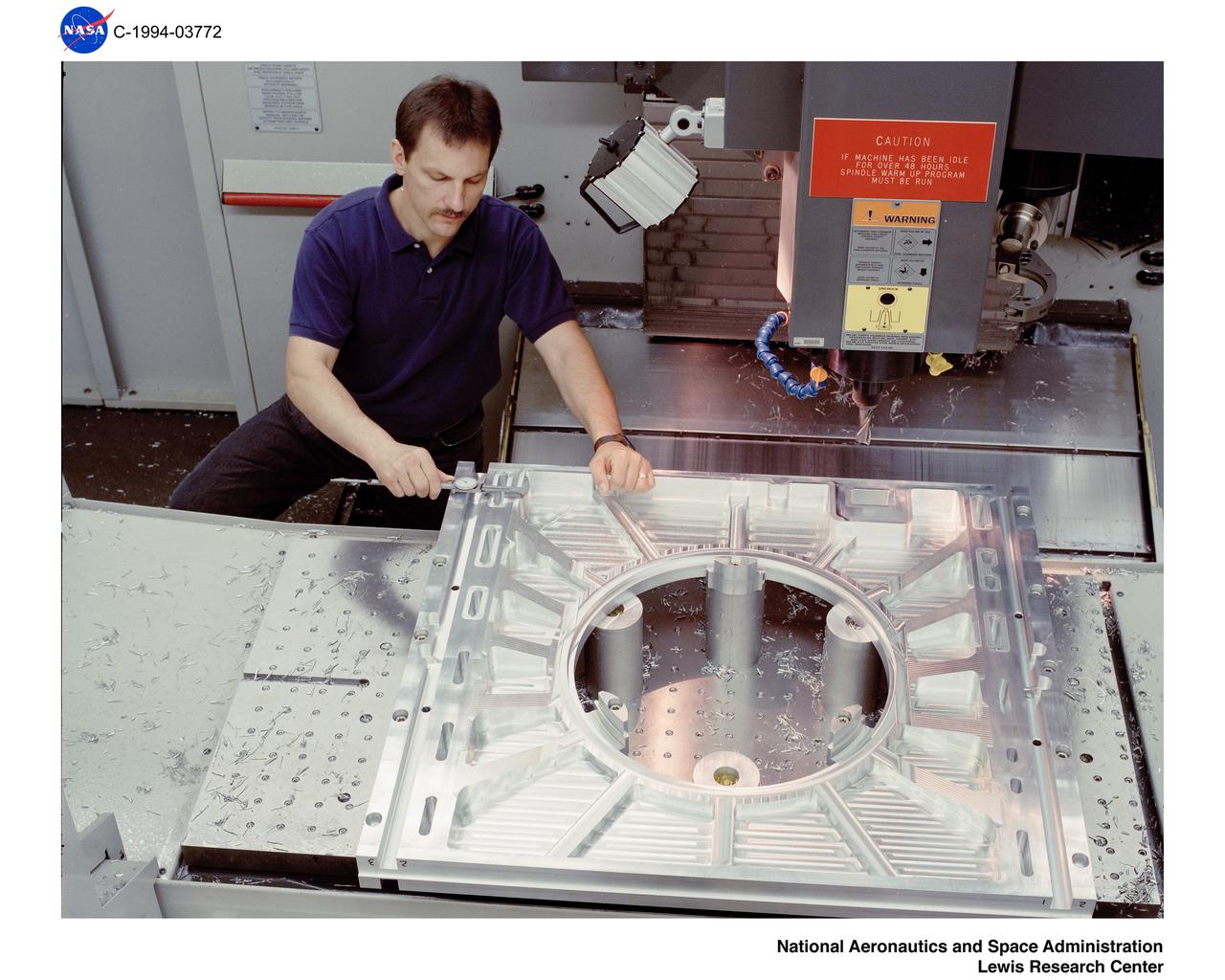
COMBUSTION MODULE 1 FLIGHT HARDWARE
COMBUSTION MODULE 1 FLIGHT HARDWARE
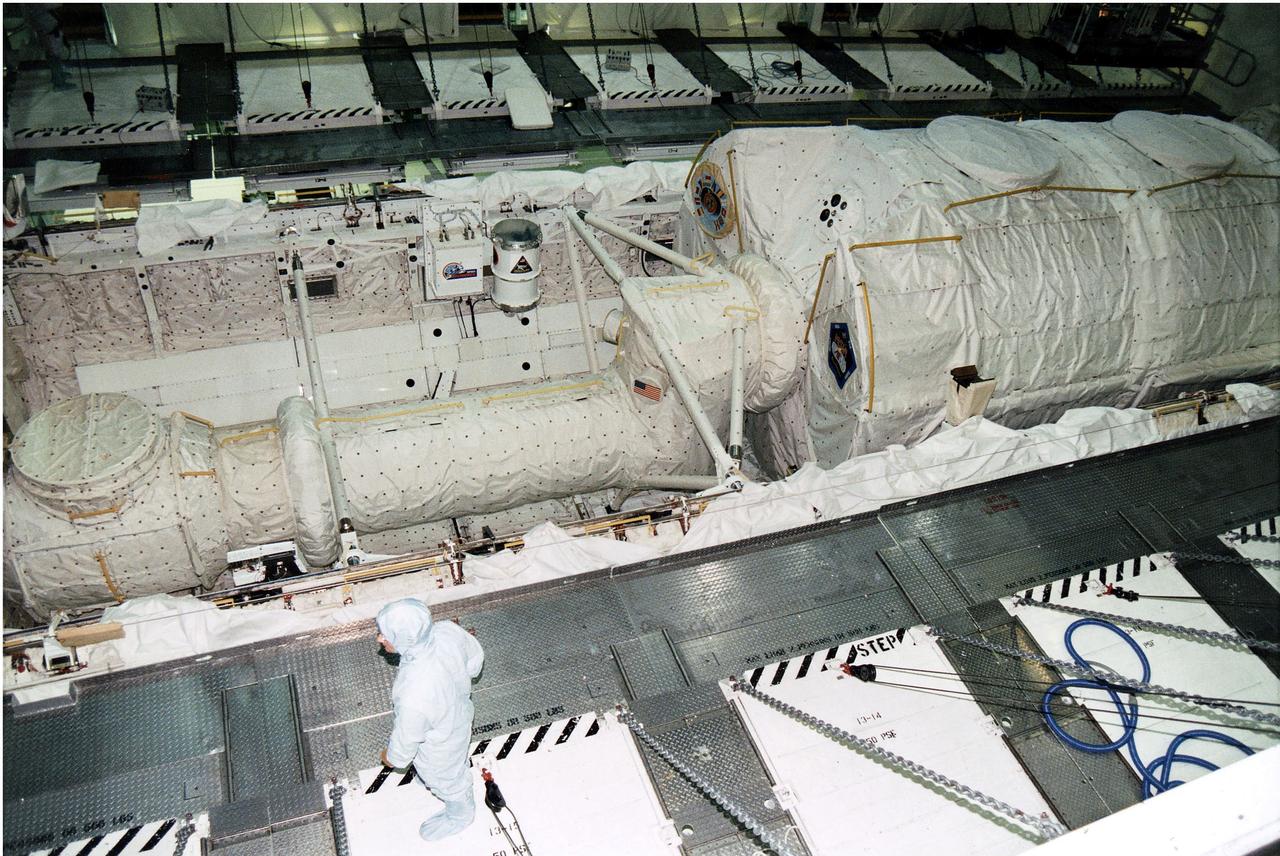
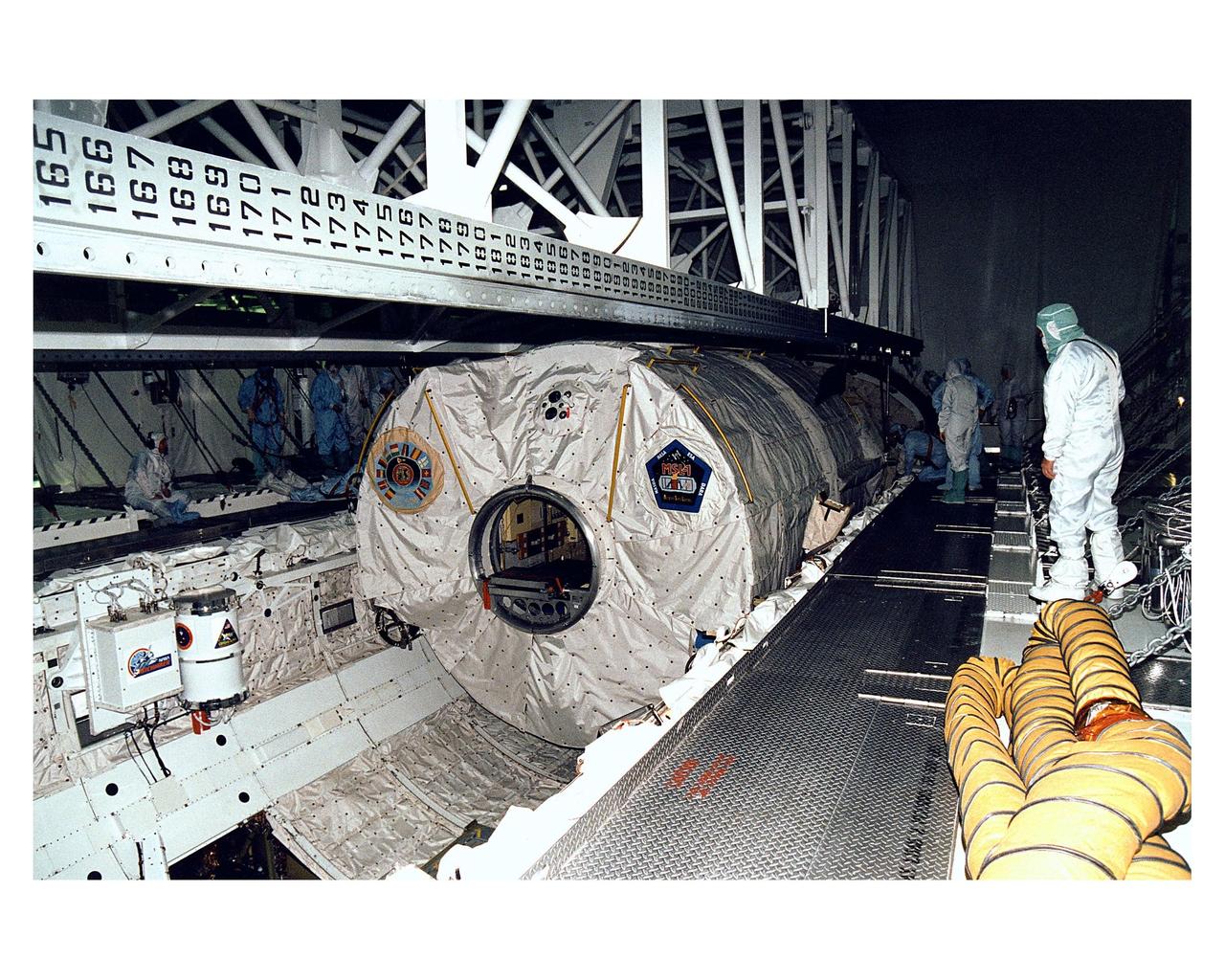
KENNEDY SPACE CENTER, FLA. - The Microgravity Science Laboratory-1 (MSL-1) Spacelab module is installed into the payload bay of the Space Shuttle Orbiter Columbia in Orbiter Processing Facility 1. The Spacelab long crew transfer tunnel that leads from the orbiter's crew airlock to the module is also aboard, as well as the Hitchhiker Cryogenic Flexible Diode (CRYOFD) experiment payload, which is attached to the right side of Columbia's payload bay. During the scheduled 16-day STS-83 mission, the MSL-1 will be used to test some of the hardware, facilities and procedures that are planned for use on the International Space Station while the flight crew conducts combustion, protein crystal growth and materials processing experiments.
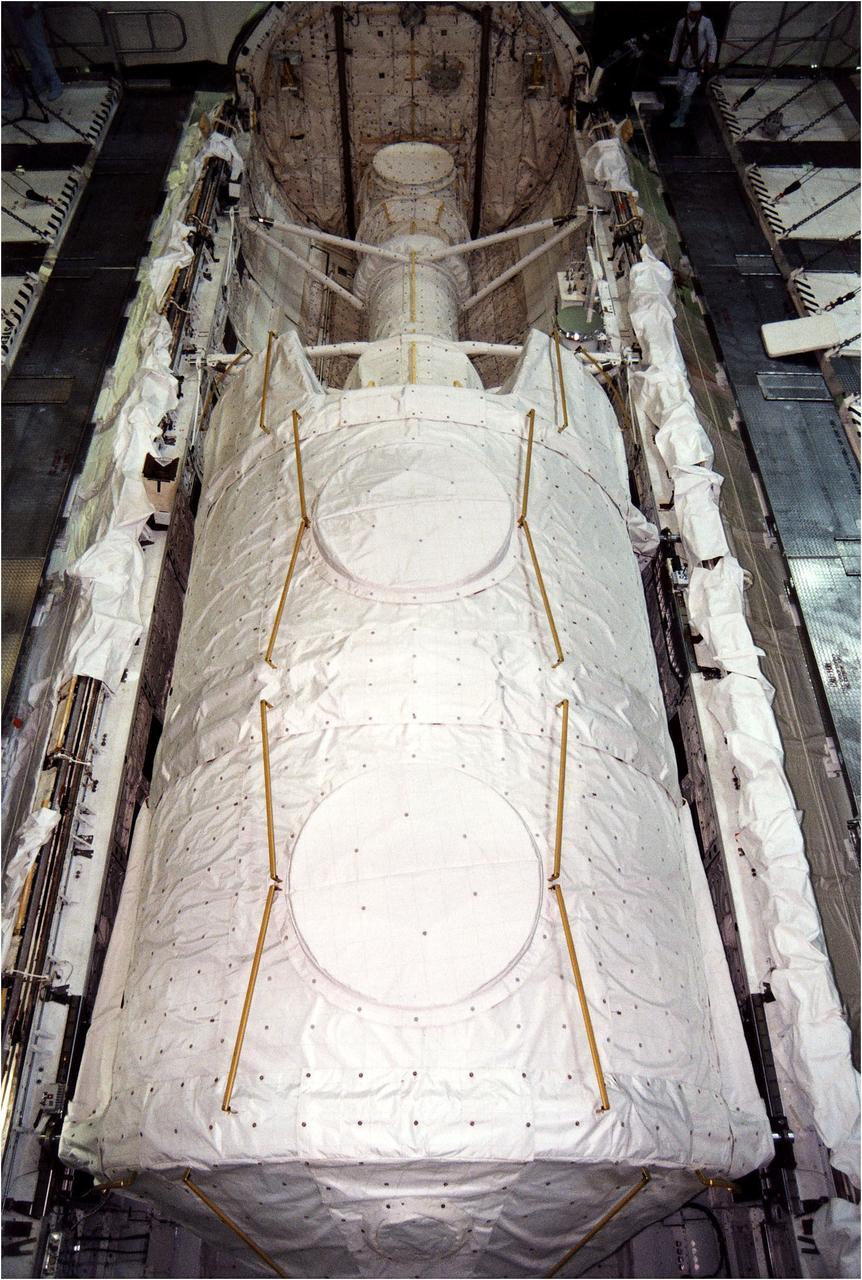
KENNEDY SPACE CENTER, FLA. - The Microgravity Science Laboratory-1 (MSL-1) Spacelab module is installed into the payload bay of the Space Shuttle Orbiter Columbia in Orbiter Processing Facility 1. The Spacelab long crew transfer tunnel that leads from the orbiter's crew airlock to the module is also aboard, as well as the Hitchhiker Cryogenic Flexible Diode (CRYOFD) experiment payload, which is attached to the right side of Columbia's payload bay. During the scheduled 16-day STS-83 mission, the MSL-1 will be used to test some of the hardware, facilities and procedures that are planned for use on the International Space Station while the flight crew conducts combustion, protein crystal growth and materials processing experiments.
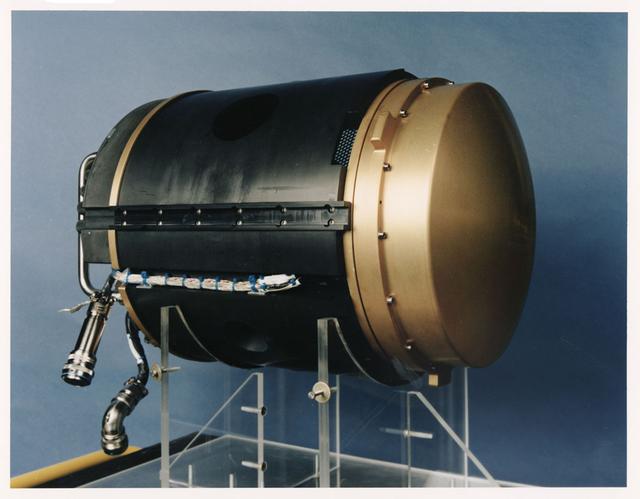
Structure Of Flame Balls At Low Lewis-numbers (SOFBALL) Experiment Mounting Structure (EMS) was used to conduct the SOFBALL experiment on Combustion Module-1. The EMS was inserted into the CM-1 combustion chamber. The chamber was filled with a lean fuel/oxidizer mixture and a spark igniter on the EMS ignited the gas. Very small, weak flames, in the shape of spheres, were formed and studied.
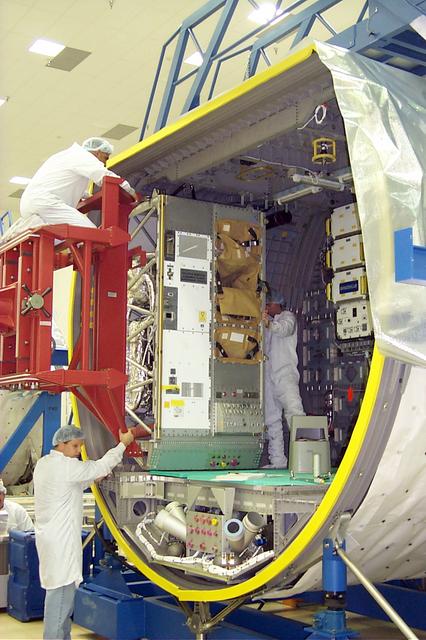
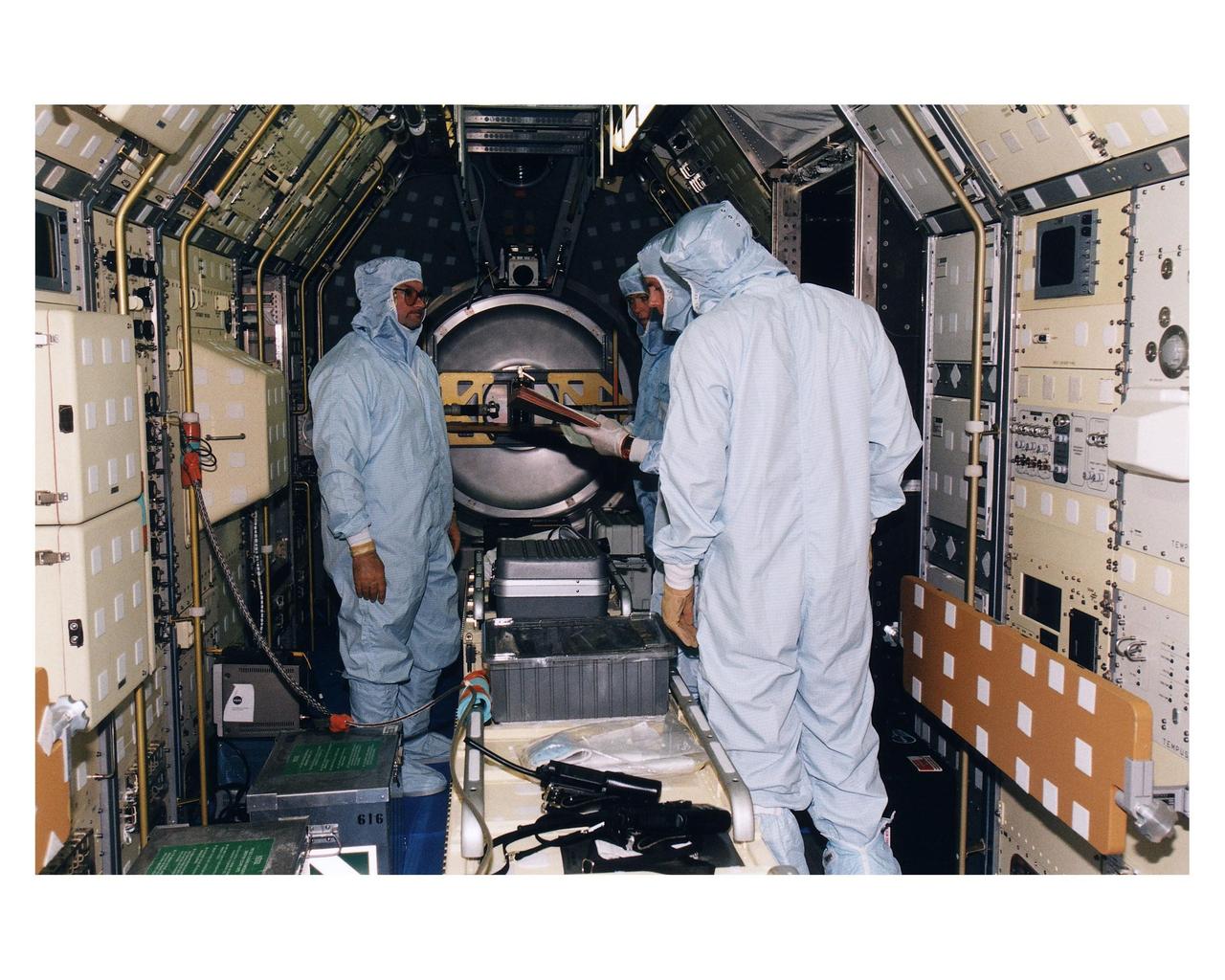
Interior of a Spacehab module showing the type of rack mounting that will be used, and crew working space that will be available, on the STS-107 Research 1 mission in 2002. Experiments plarned for the mission include soil mechanics, combustion physics, and cell science.
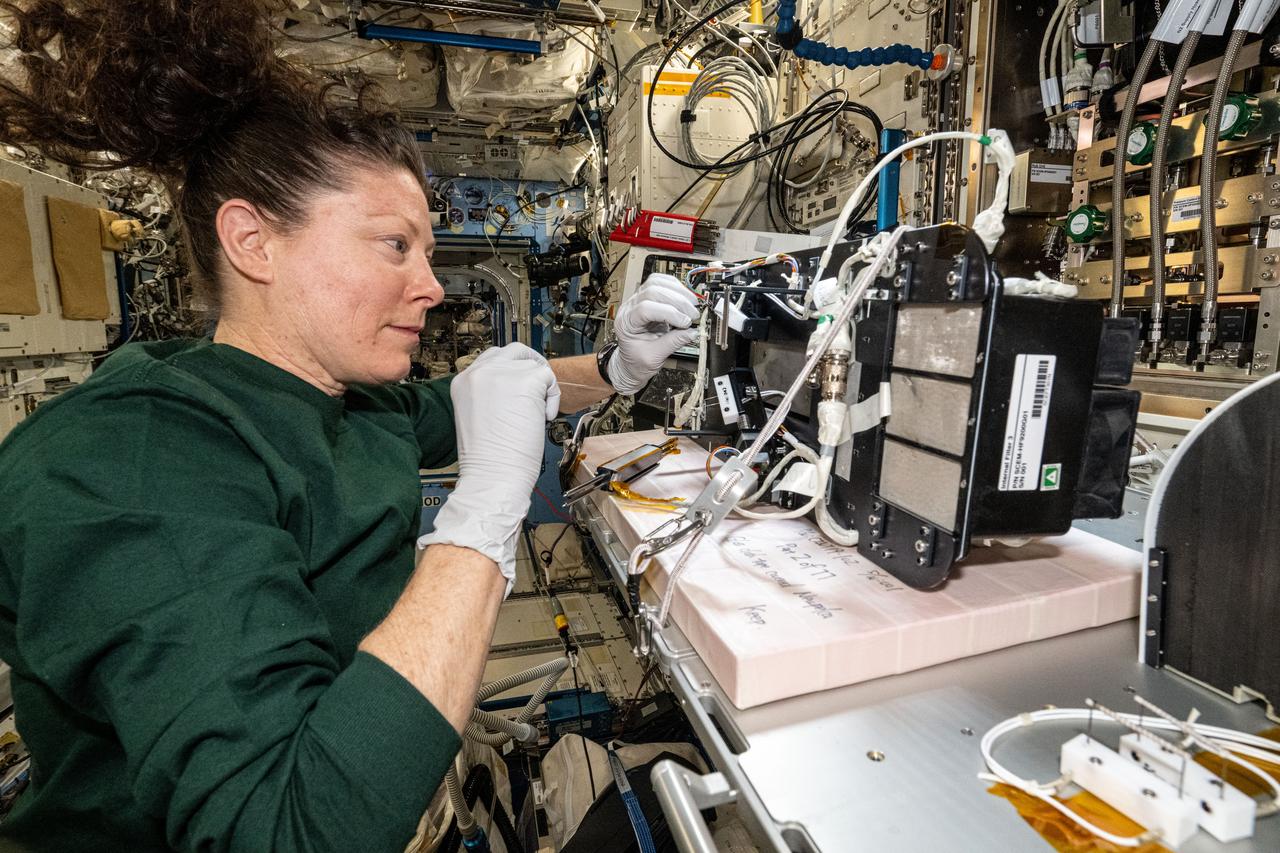
iss071e414661 (Aug. 1, 2024) --- NASA astronaut and Expedition 71 Flight Engineer Tracy C. Dyson services research components inside the Solid Combustion Experiment Module (SCEM) aboard in the Interational Space Station's Kibo laboratory module. The SCEM enables combustion research in microgravity to study how materials burn in weightlessness and improve fire safety techniques aboard spacecraft.
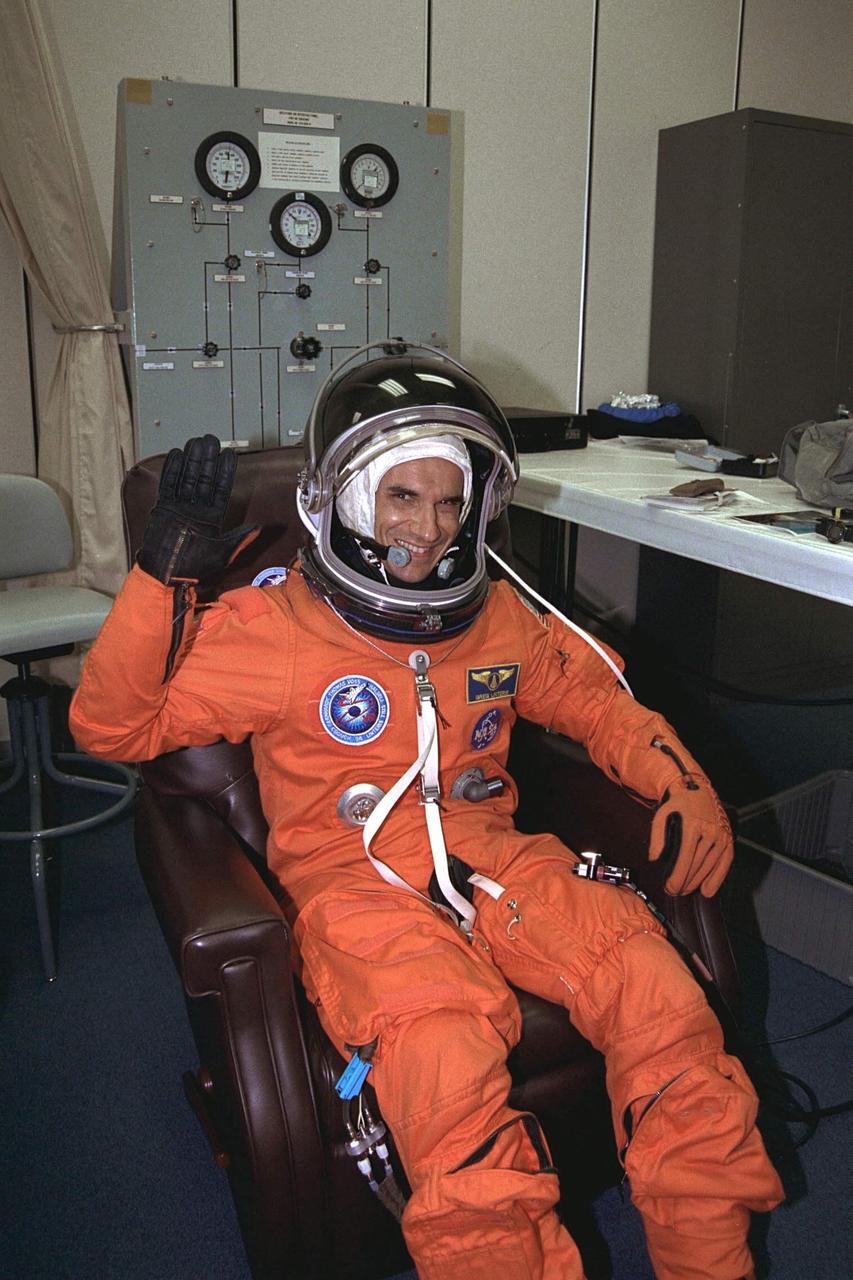
STS-94 Payload Specialist Gregory T. Linteris waves as he completes the donning of his launch/entry suit in the Operations and Checkout (O&C) Building. He holds a doctorate in mechanical and aerospace engineering. Linteris has worked at the National Institute of Standards and Technology and is the Principal Investigator on a NASA microgravity combustion experiment. As a member of the Red team, Linteris will concentrate on three combustion experiments. Two of these experiments are housed in the Combustion Module. He will also be backing up crew members on the other Microgravity Science Laboratory-1 (MSL-1) investigations. He and six fellow crew members will shortly depart the O&C and head for Launch Pad 39A, where the Space Shuttle Columbia will lift off during a launch window that opens at 1:50 p.m. EDT, July 1. The launch window was opened 47 minutes early to improve the opportunity to lift off before Florida summer rain showers reached the space center
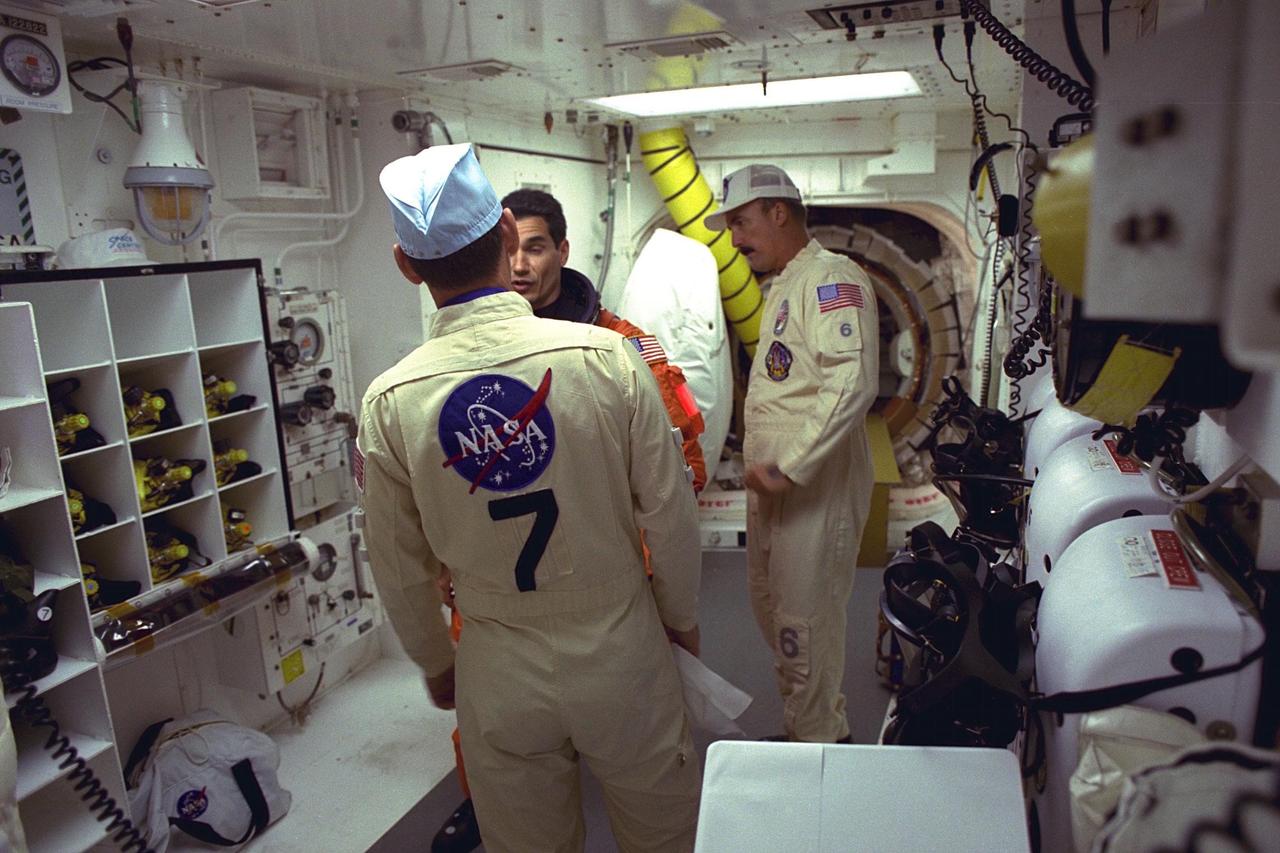
STS-94 Payload Specialist Gregory T. Linteris prepares to enter the Space Shuttle Columbia at Launch Pad 39A in preparation for launch. He holds a doctorate in mechanical and aerospace engineering. Linteris has worked at the National Institute of Standards and Technology and is the Principal Investigator on a NASA microgravity combustion experiment. As a member of the Red team, Linteris will concentrate on three combustion experiments. Two of these experiments are housed in the Combustion Module. He will also be backing up crew members on the other Microgravity Science Laboratory-1 (MSL-1) investigations. He and six fellow crew members will lift off during a launch window that opens at 1:50 p.m. EDT, July 1. The launch window will open 47 minutes early to improve the opportunity to lift off before Florida summer rain showers reach the space center
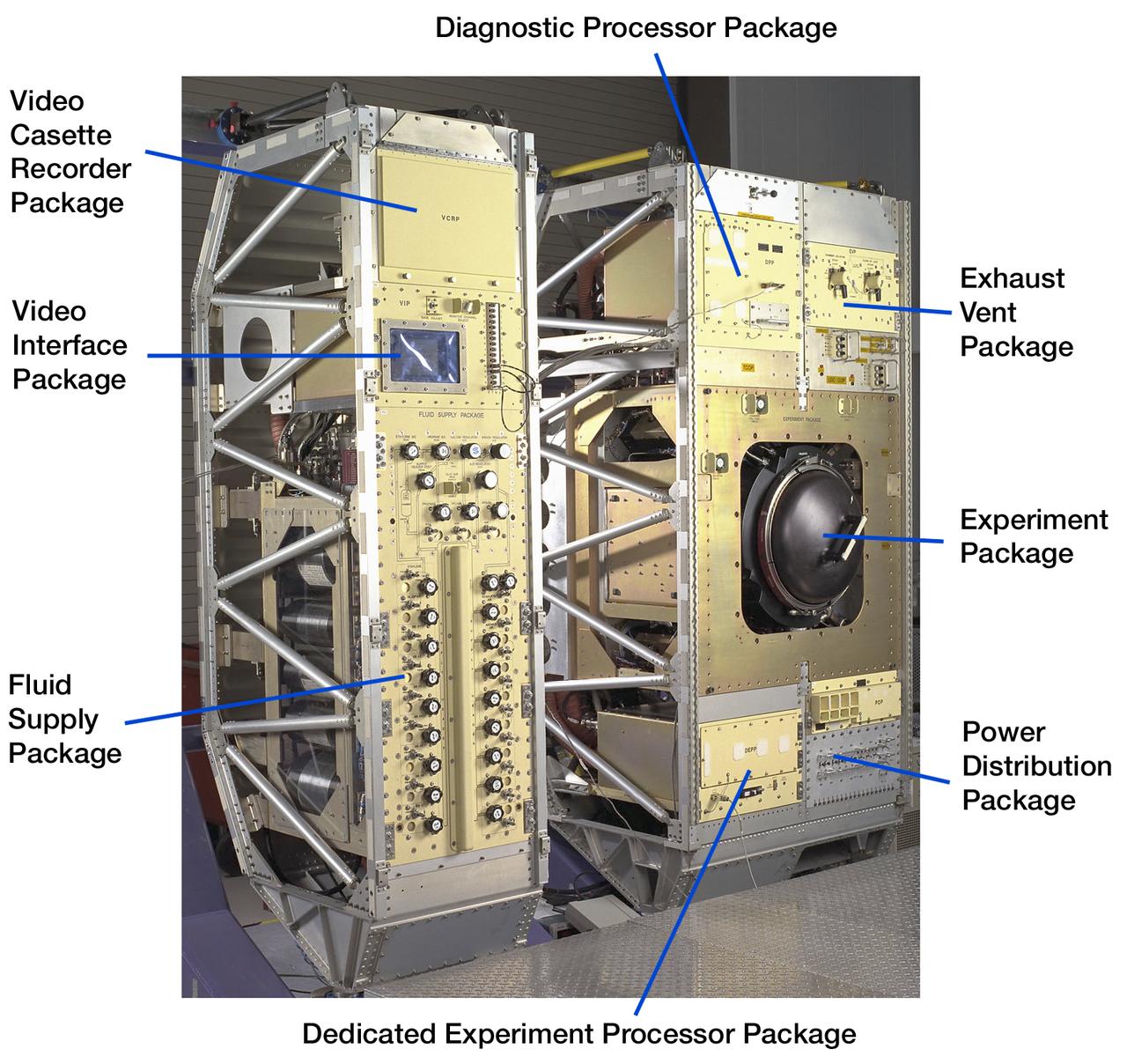
Exterior view of Combustion Module-2 with callouts to identify key sections. The original CM flew on the Microgravity Sciences Lab-1 and 1R in 1997. It has been refurbished and placed in new racks for flight on the STS-107 Research 1 mission in 2001. Glenn Research in Cleveland, OH, manages the project.
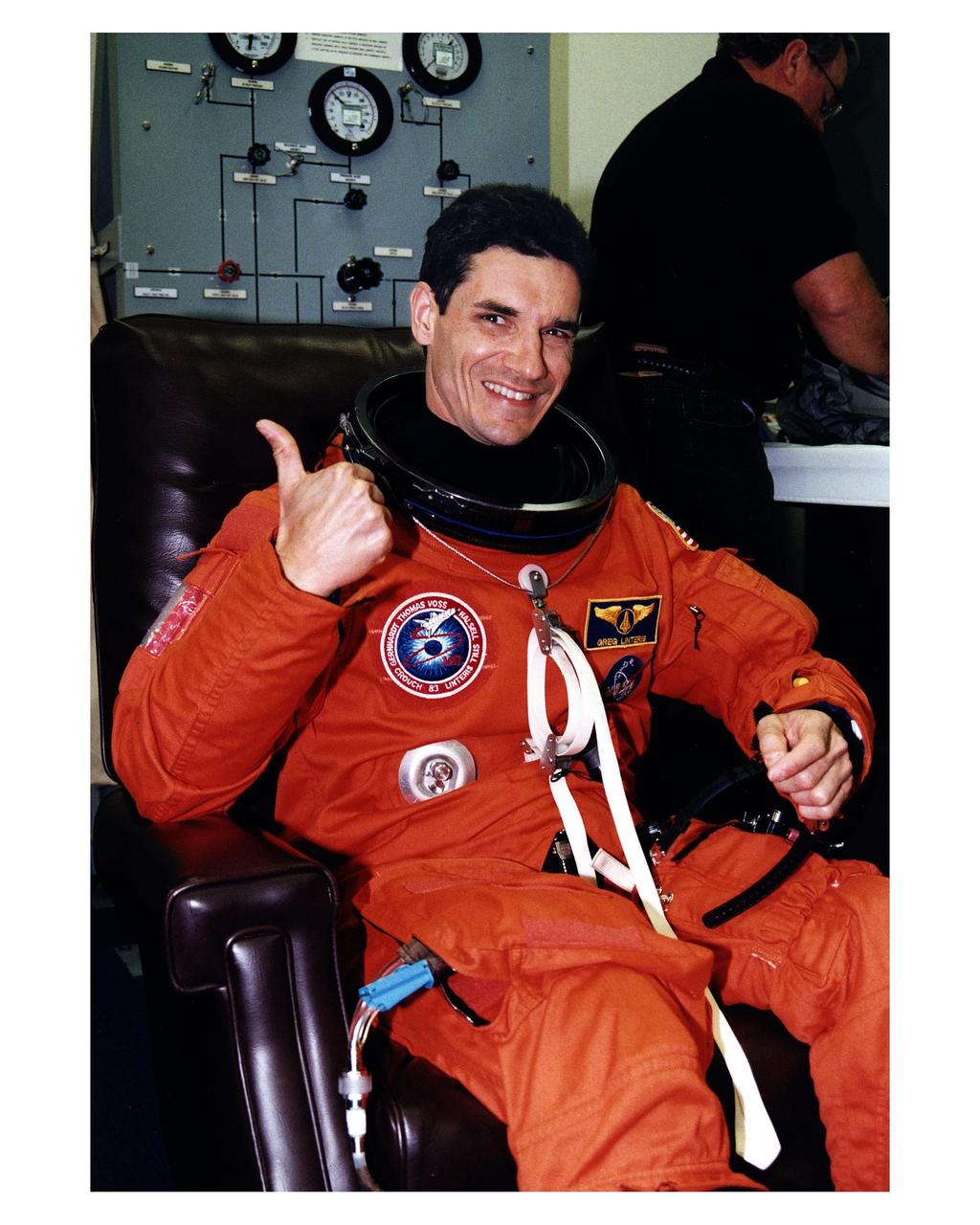
STS-83 Payload Specialist Gregory T. Linteris gives a thumbs-up as he is assisted into his launch/entry suit in the Operations and Checkout (O&C) Building. He holds a doctorate in mechanical and aerospace engineering. Linteris has worked at the National Institute of Standards and Technology and is the Principal Investigator on a NASA microgravity combustion experiments. As a member of the Red team, Linteris will concentrate on three combustion experiments. Two of these experiments are housed in the Combustion Module. He will also be backing up crew members on the other Microgravity Science Laboratory-1 (MSL-1) investigations. He and six fellow crew members will shortly depart the O&C and head for Launch Pad 39A, where the Space Shuttle Columbia will lift off during a launch window that opens at 2:00 p.m. EST, April 4
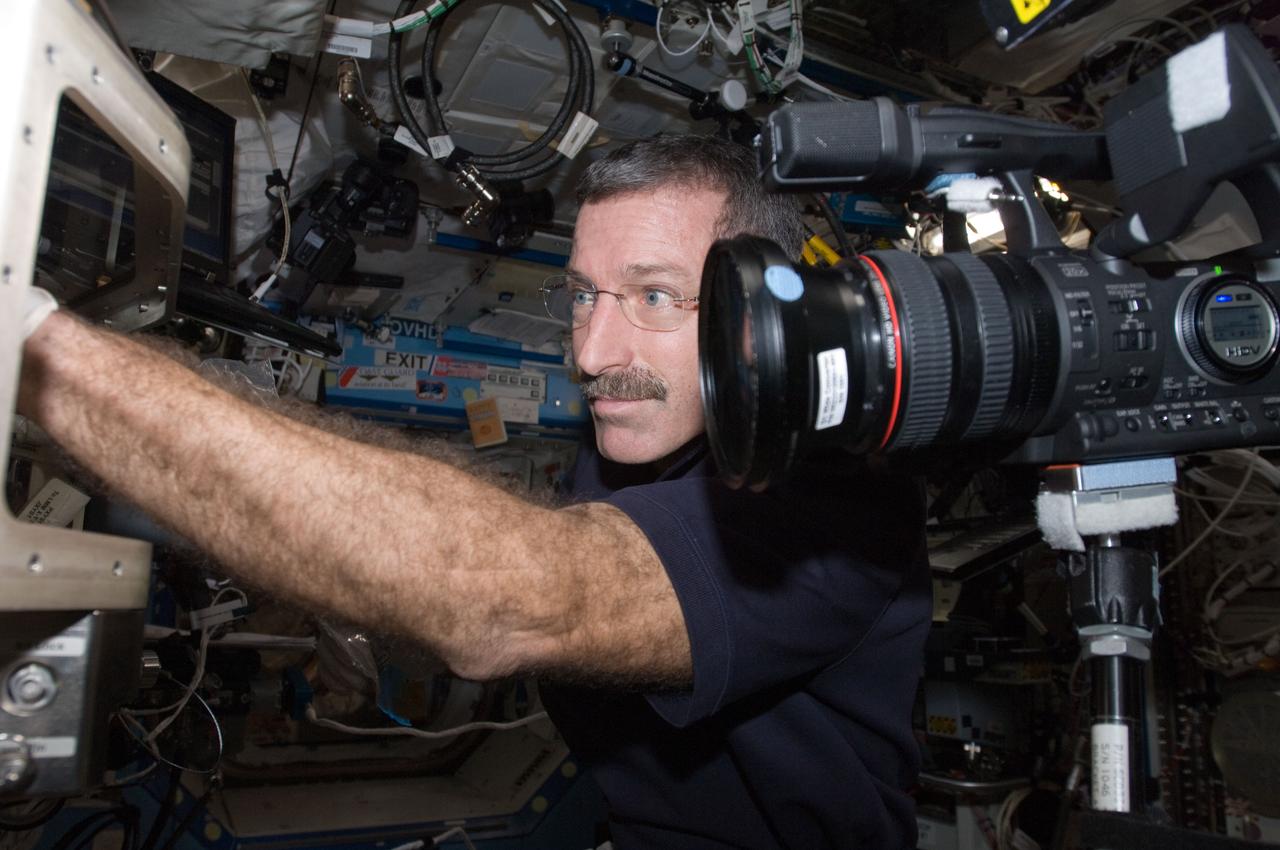
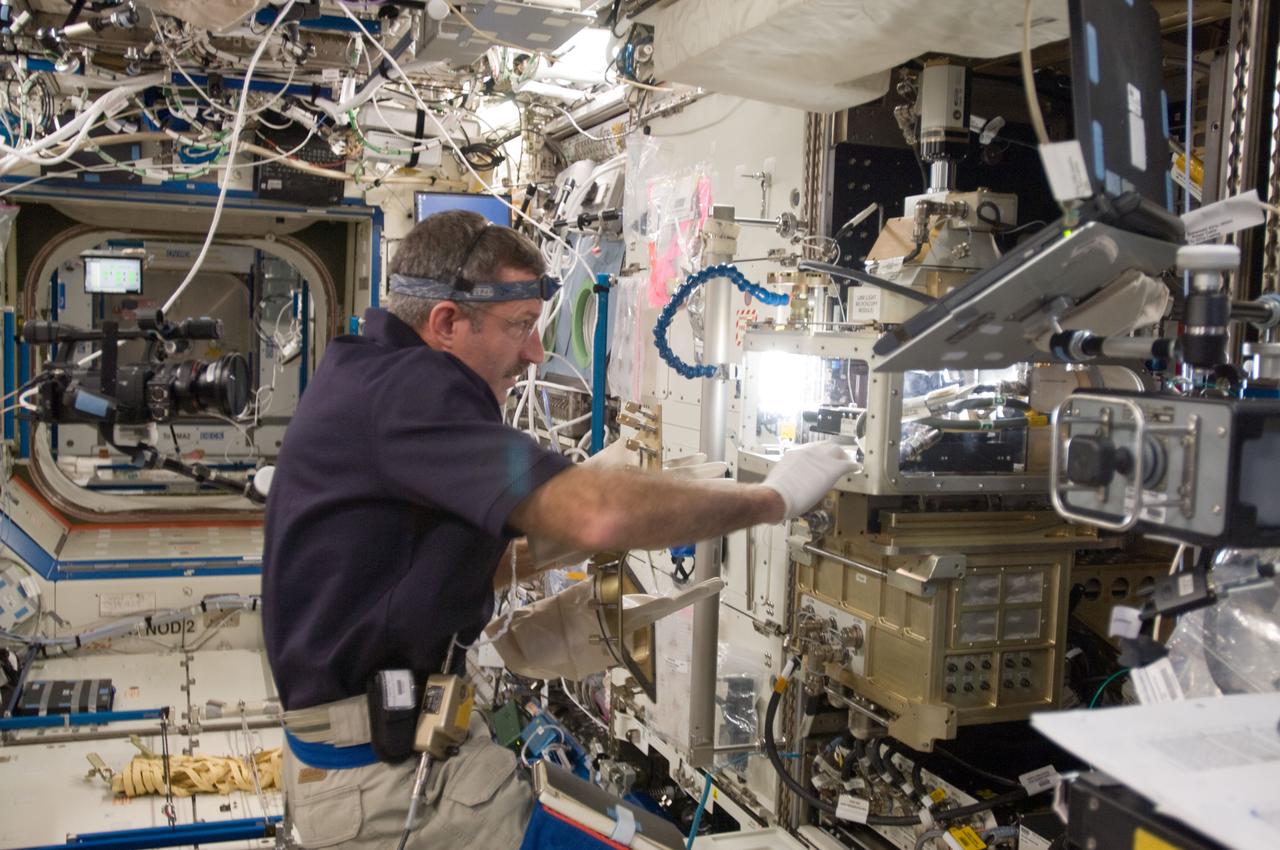
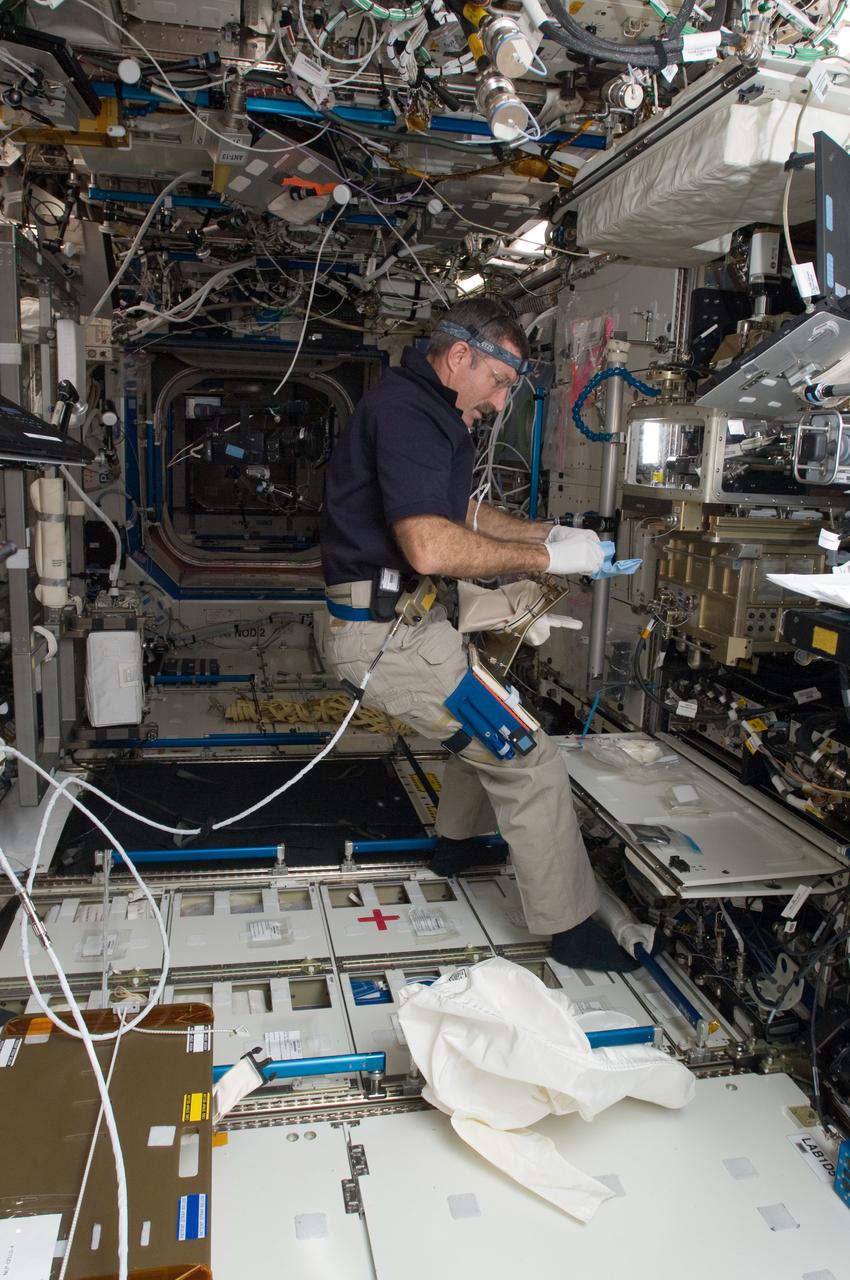
ISS030-E-007426 (1 Dec. 2011) --- NASA astronaut Dan Burbank, Expedition 30 commander, works at the Light Microscopy Module (LMM) in the Fluids Integrated Rack / Fluids Combustion Facility (FIR/FCF) located in the Destiny laboratory of the International Space Station.
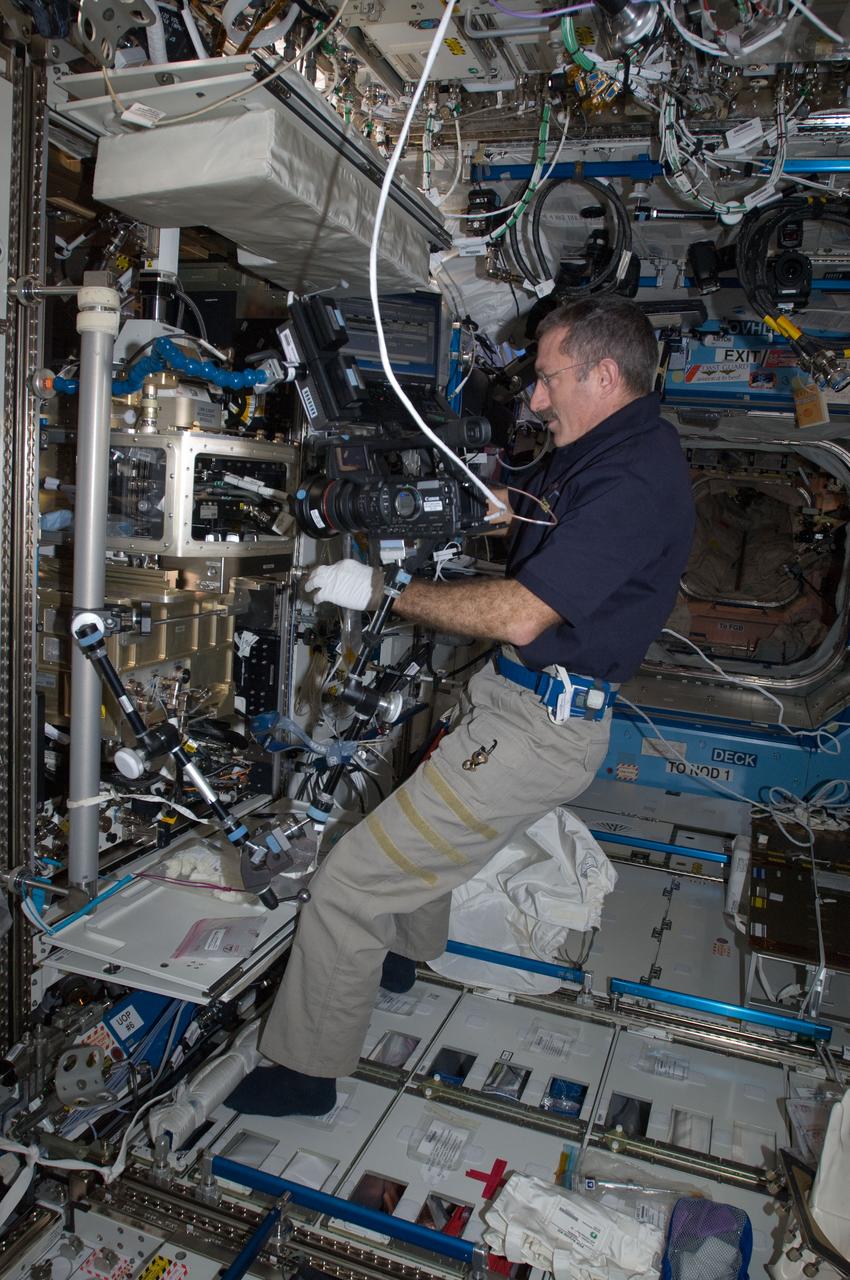
ISS030-E-007428 (1 Dec. 2011) --- NASA astronaut Dan Burbank, Expedition 30 commander, works at the Light Microscopy Module (LMM) in the Fluids Integrated Rack / Fluids Combustion Facility (FIR/FCF) located in the Destiny laboratory of the International Space Station.
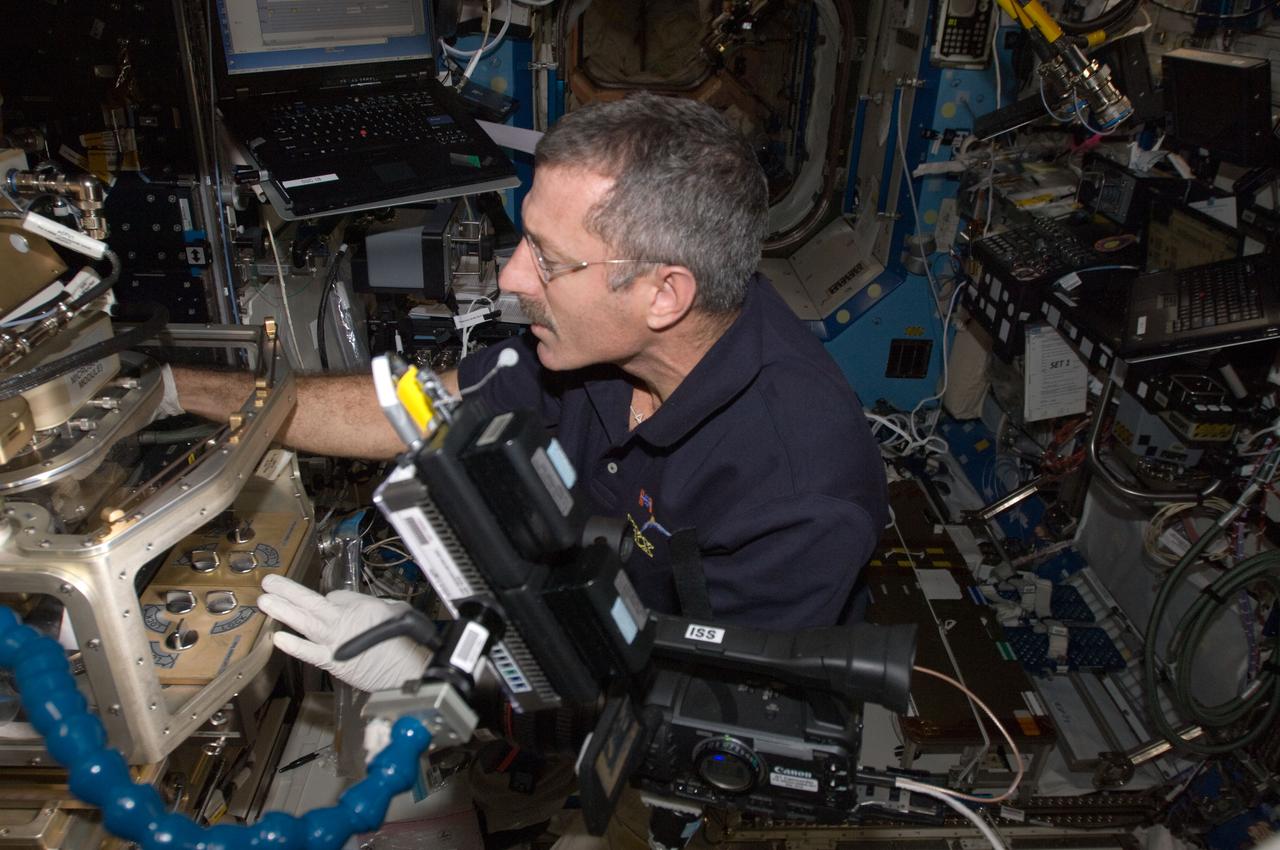
ISS030-E-007429 (1 Dec. 2011) --- NASA astronaut Dan Burbank, Expedition 30 commander, works at the Light Microscopy Module (LMM) in the Fluids Integrated Rack / Fluids Combustion Facility (FIR/FCF) located in the Destiny laboratory of the International Space Station.
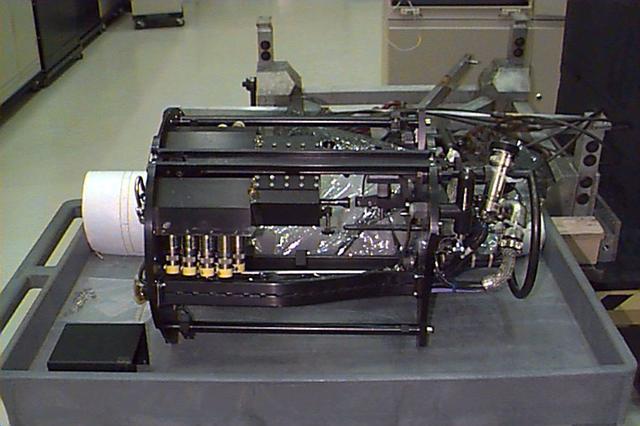
The Laminar Soot Processes (LSP) Experiment Mounting Structure (EMS) was used to conduct the LSP experiment on Combustion Module-1. The EMS was inserted into the nozzle on the EMS and ignited by a hot wire igniter. The flame and its soot emitting properties were studied.
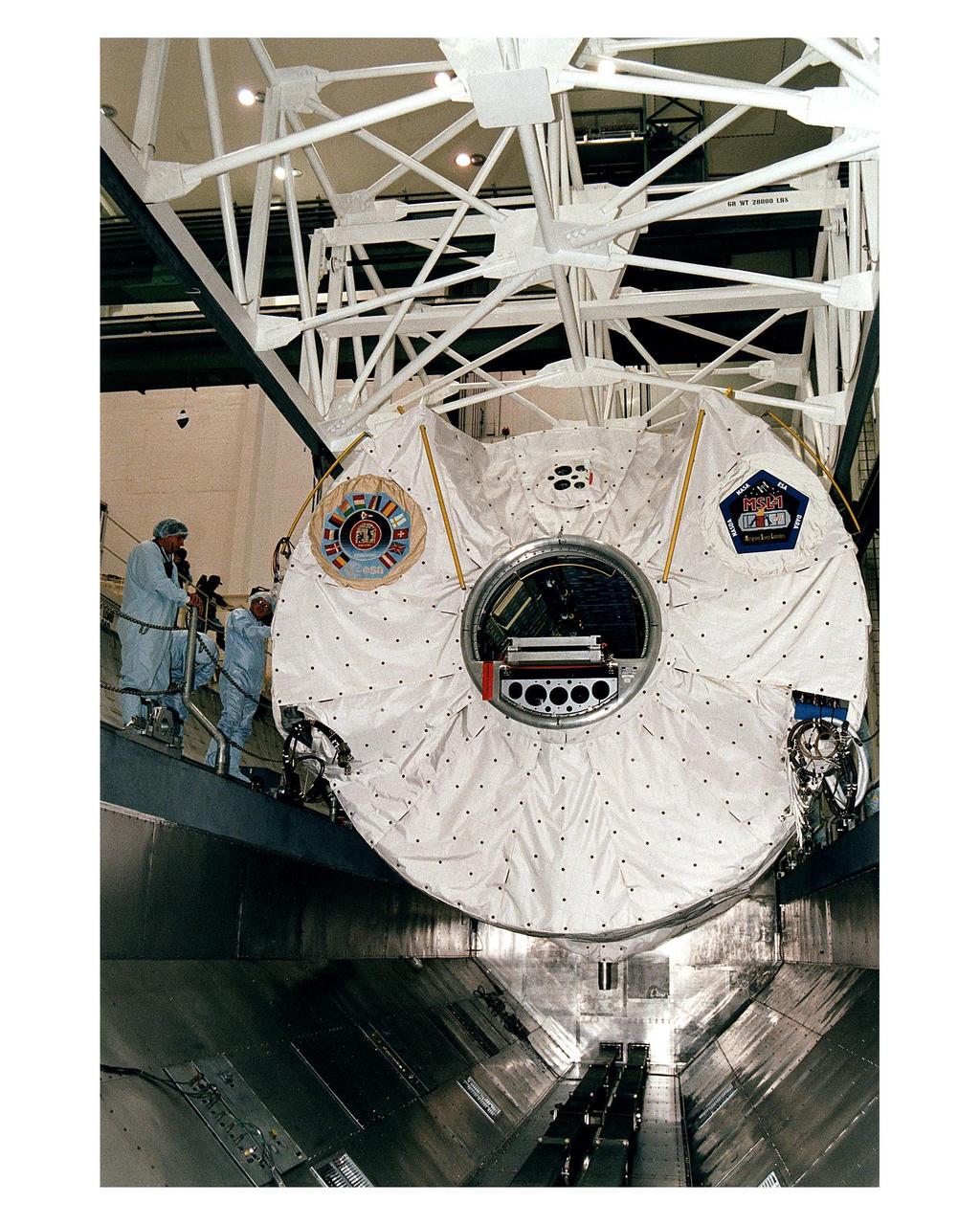
The Microgravity Science Laboratory-1 (MSL-1) Spacelab module is moved to be installed into a payload canister in the Operations and Checkout Building. Once in the canister, the MSL-1 will be transported to Orbiter Processing Bay 1 where it will be integrated into the payload bay of the Space Shuttle orbiter Columbia. During the scheduled 16-day STS-83 mission, the MSL-1 will be used to test some of the hardware, facilities and procedures that are planned for use on the International Space Station while the flight crew conducts combustion, protein crystal growth and materials processing experiments
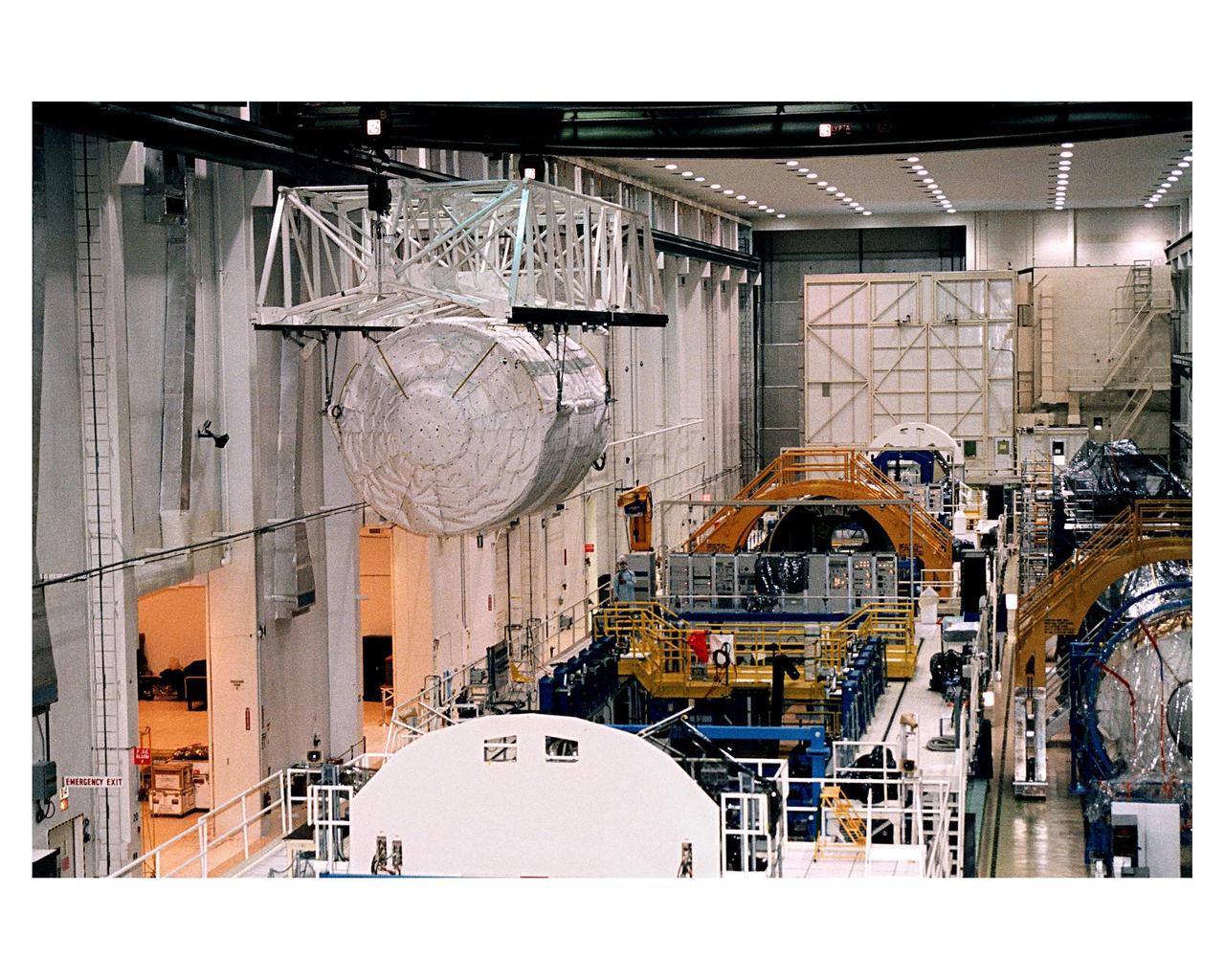
The Microgravity Science Laboratory-1 (MSL-1) Spacelab module is moved to be installed into a payload canister in the Operations and Checkout Building. Once in the canister, the MSL-1 will be transported to Orbiter Processing Bay 1 where it will be integrated into the payload bay of the Space Shuttle orbiter Columbia. During the scheduled 16-day STS-83 mission, the MSL-1 will be used to test some of the hardware, facilities and procedures that are planned for use on the International Space Station while the flight crew conducts combustion, protein crystal growth and materials processing experiments

The Microgravity Science Laboratory-1 (MSL-1) Spacelab module is moved to be installed into a payload canister in the Operations and Checkout Building. Once in the canister, the MSL-1 will be transported to Orbiter Processing Bay 1 where it will be integrated into the payload bay of the Space Shuttle orbiter Columbia. During the scheduled 16-day STS-83 mission, the MSL-1 will be used to test some of the hardware, facilities and procedures that are planned for use on the International Space Station while the flight crew conducts combustion, protein crystal growth and materials processing experiments
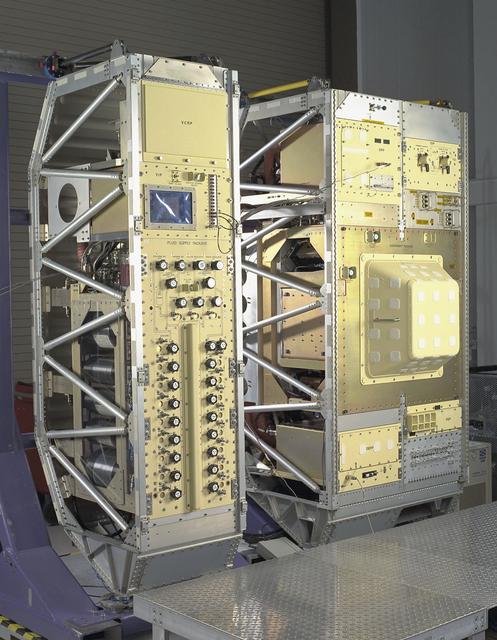
Exterior view of Combustion Module-2 with the Experiment Module covered. The original CM flew on the Microgravity Sciences Lab-1 and 1R in 1997. It has been refurbished and placed in new racks for flight on the STS-107 Research 1 mission in 2001. See MSFC 0100158 for a view with callouts. Glenn Research in Cleveland, OH, manages the project.
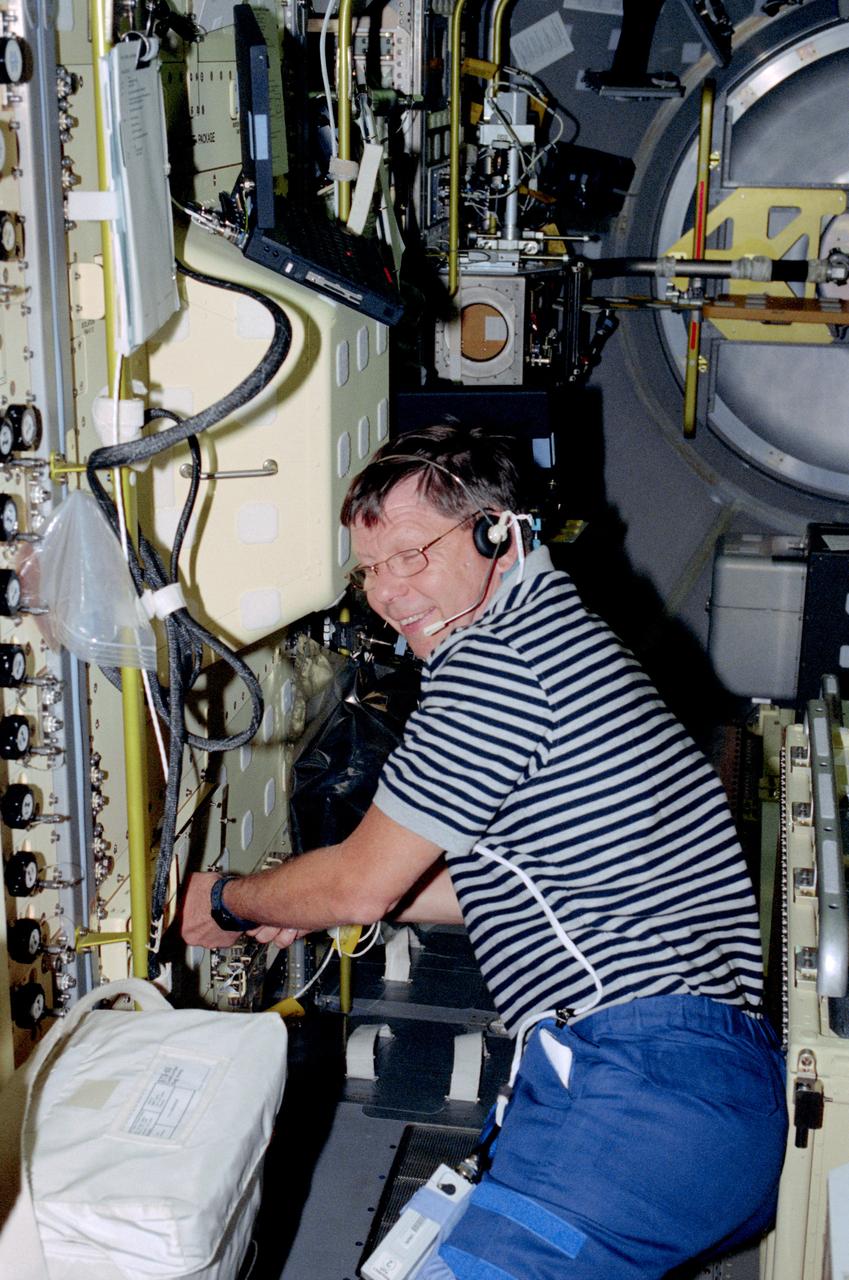
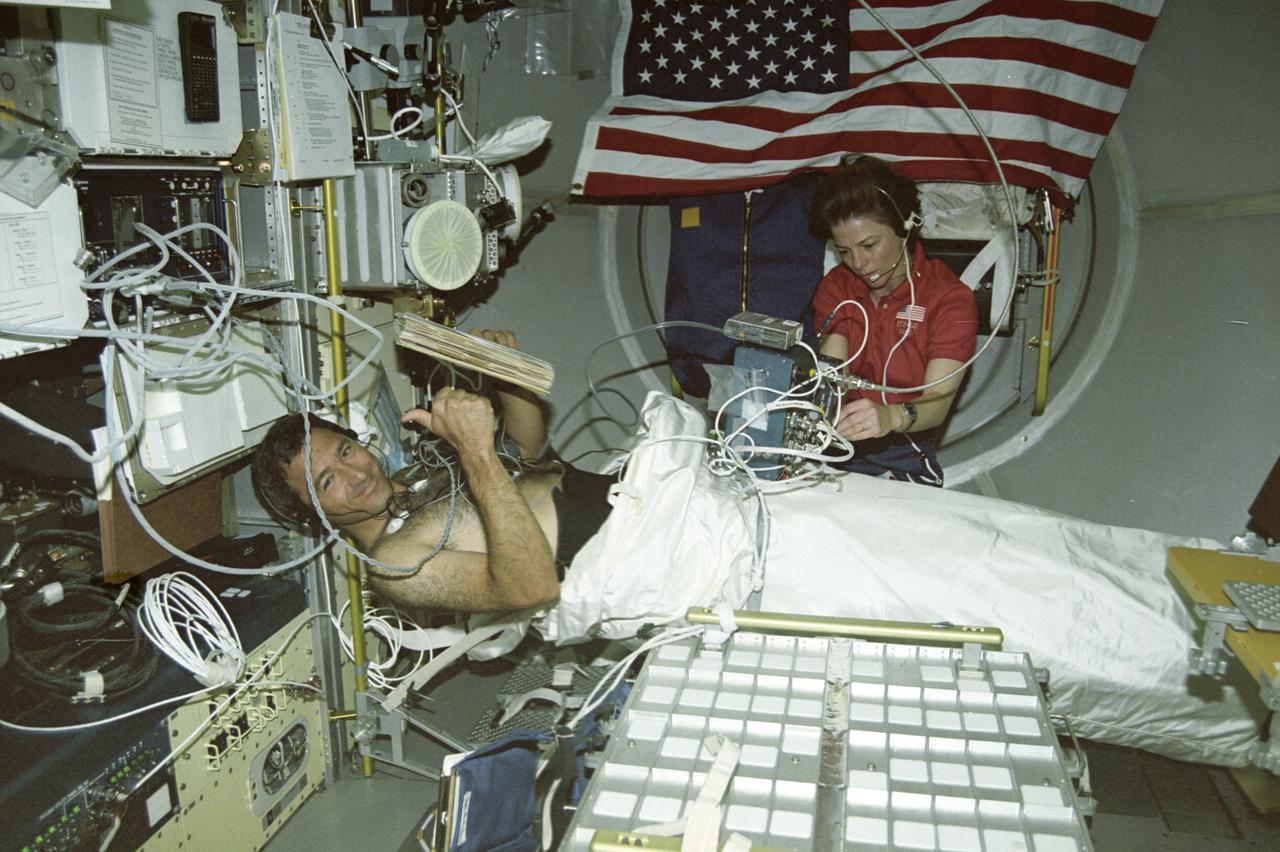
STS083-308-025 (4-8 April 1997) --- Payload specialist Roger K. Crouch, talks to ground controllers while working at Combustion Module-1 in the Spacelab Science Module. Crouch, along with five other NASA astronauts and a second payload specialist supporting the Microgravity Sciences Laboratory (MSL-1) mission were less than a fourth of the way through a scheduled 16-day flight when a power problem cut short their planned stay.
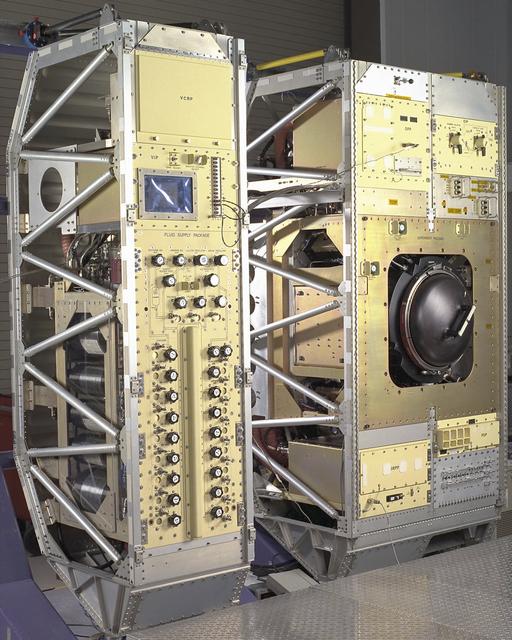
Exterior view of Combustion Module-2 with the Experiment Module cover (black dome) exposed. The original CM flew on the Microgravity Sciences Lab-1 and 1R in 1997. It has been refurbished and placed in new racks for flight on the STS-107 Research 1 mission in 2001. See MSFC 0100158 for a view with callouts. Glenn Research in Cleveland, OH, manages the project.
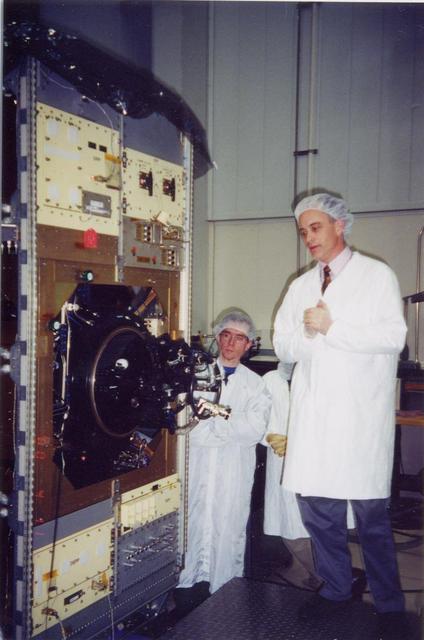
Exterior view of Combustion Module-2 with an Experiment Module partially extracted during a crew training session. The original CM flew on the Microgravity Sciences Lab-1 and 1R in 1997. It has been refurbished and placed in new racks for flight on the STS-107 Research 1 mission in 2001. See MSFC 0100158 for a view with callouts. Glenn Research in Cleveland, OH, manages the project.
Exterior view of Combustion Module-2 with an Experiment Module partially extracted during a crew training session. The original CM flew on the Microgravity Sciences Lab-1 and 1R in 1997. It has been refurbished and placed in new racks for flight on the STS-107 Research 1 mission in 2001. See MSFC 0100158 for a view with callouts. Glenn Research in Cleveland, OH, manages the project.
The Microgravity Science Laboratory-1 (MSL-1) Spacelab module is lowered into the payload bay of the Space Shuttle orbiter Columbia in Orbiter Processing Facility 1. During the scheduled 16-day STS-83 mission, the MSL-1 will be used to test some of the hardware, facilities and procedures that are planned for use on the International Space Station while the flight crew conducts combustion, protein crystal growth and materials processing experiments

The Microgravity Science Laboratory-1 (MSL-1) Spacelab module is lowered into the payload bay of the Space Shuttle orbiter Columbia in Orbiter Processing Facility 1. During the scheduled 16-day STS-83 mission, the MSL-1 will be used to test some of the hardware, facilities and procedures that are planned for use on the International Space Station while the flight crew conducts combustion, protein crystal growth and materials processing experiments
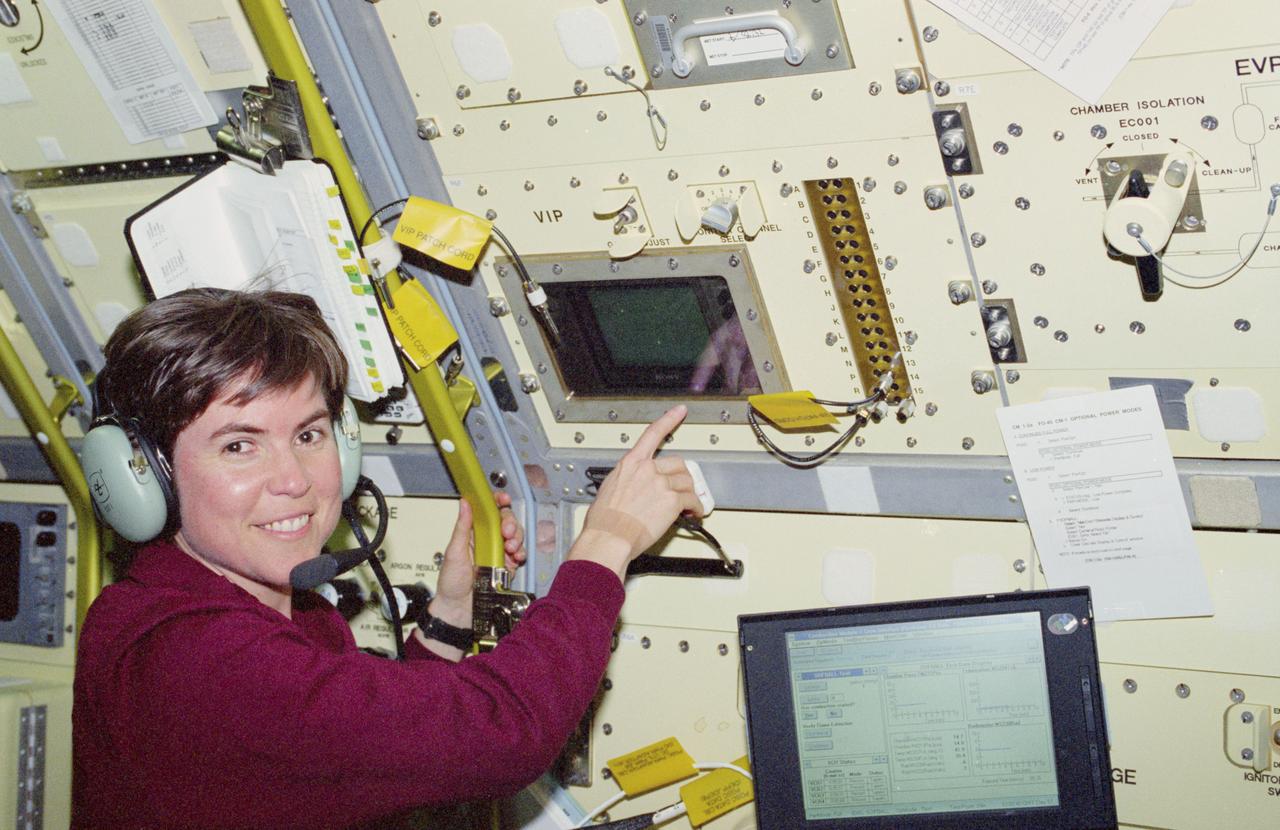
STS083-305-017 (4-8 April 1997) --- Astronaut Janice E. Voss, payload commander, displays a pleasant countenance following a successful test at the Combustion Module-1 (CM-1). The test was designed to study the Structures of Flame Balls at Low Lewis (SOFBALL) numbers. The CM-1 facility accommodates a number of experiments using different chamber inserts.
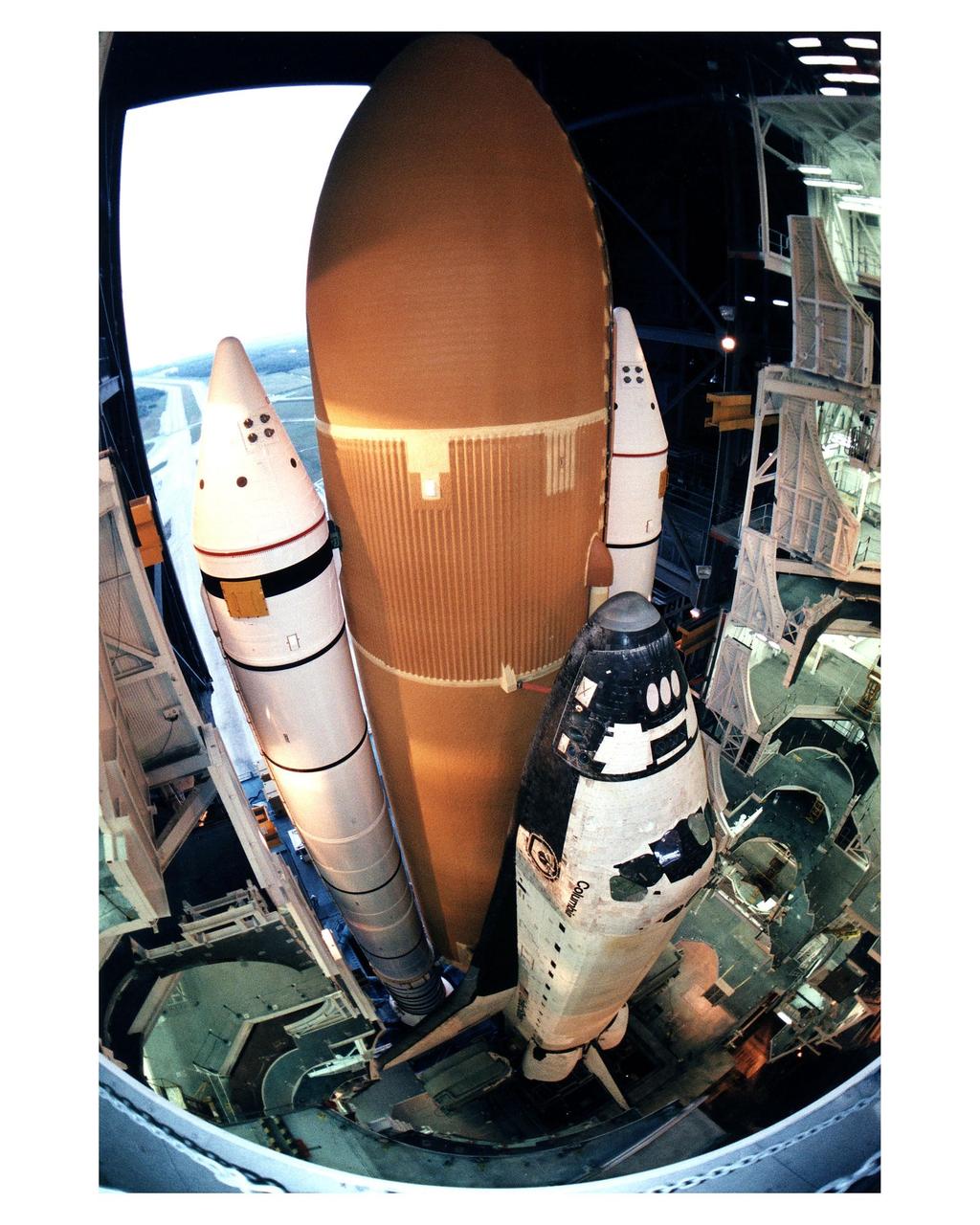
KENNEDY SPACE CENTER, Fla. -- The Space Shuttle Orbiter Columbia begins its rollout from the Vehicle Assembly Building to Launch Pad 39A in preparation for the STS-83 mission. The Microgravity Science Laboratory-1 (MSL-1) Spacelab module is the primary payload on this 16-day spaceflight. The MSL-1 will be used to test some of the hardware, facilities and procedures that are planned for use on the International Space Station, while the seven-member flight crew conducts combustion, protein crystal growth and materials processing experiments
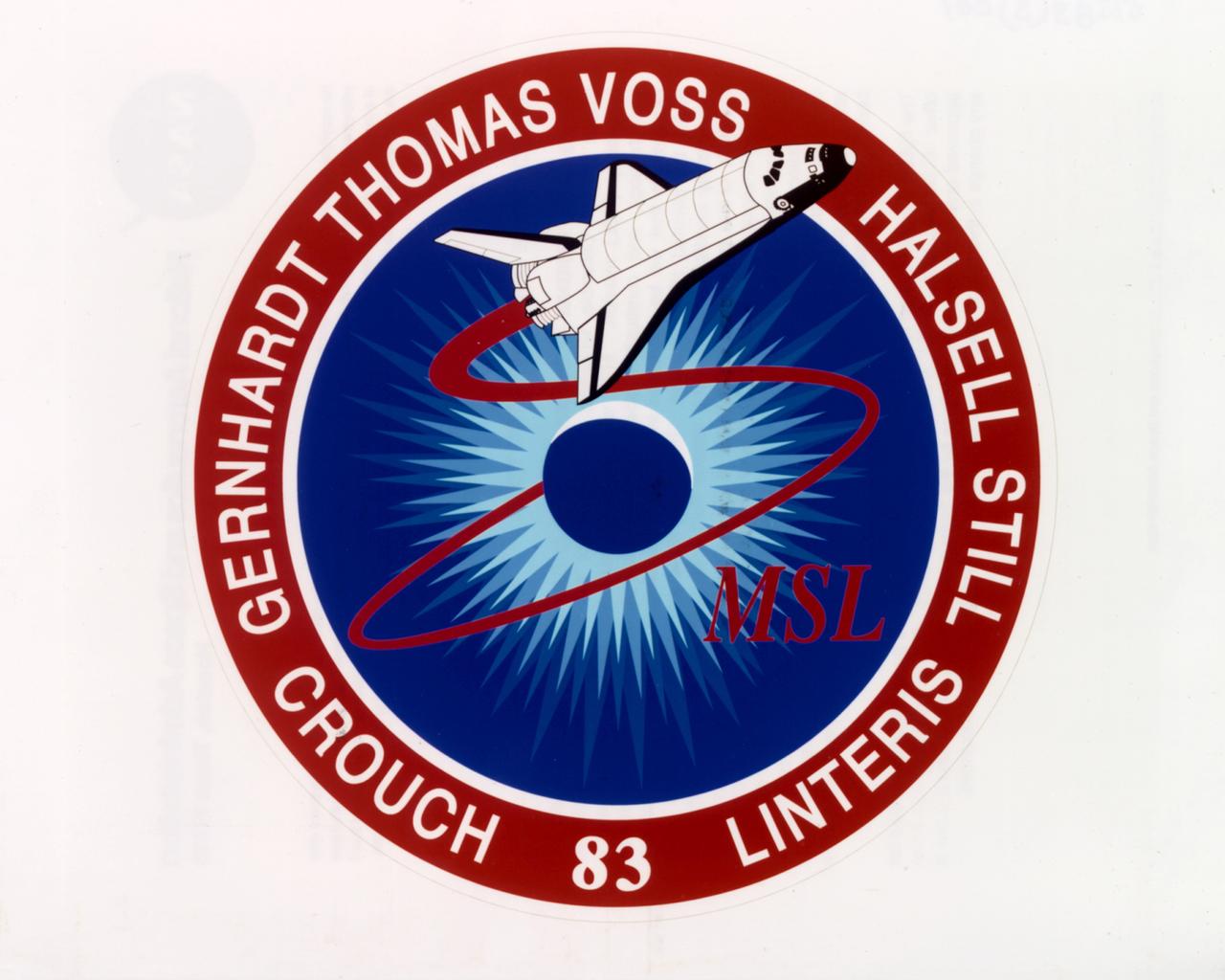
The crew patch for NASA's STS-83 mission depicts the Space Shuttle Columbia launching into space for the first Microgravity Sciences Laboratory 1 (MSL-1) mission. MSL-1 investigated materials science, fluid dynamics, biotechnology, and combustion science in the microgravity environment of space, experiments that were conducted in the Spacelab Module in the Space Shuttle Columbia's cargo bay. The center circle symbolizes a free liquid under microgravity conditions representing various fluid and materials science experiments. Symbolic of the combustion experiments is the surrounding starburst of a blue flame burning in space. The 3-lobed shape of the outermost starburst ring traces the dot pattern of a transmission Laue photograph typical of biotechnology experiments. The numerical designation for the mission is shown at bottom center. As a forerunner to missions involving International Space Station (ISS), STS-83 represented the hope that scientific results and knowledge gained during the flight will be applied to solving problems on Earth for the benefit and advancement of humankind.
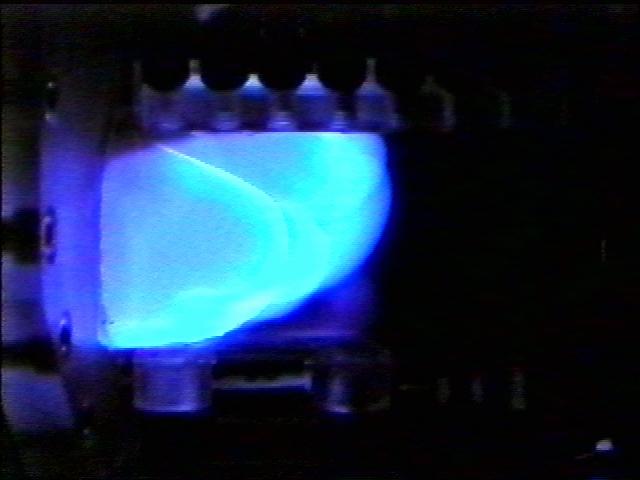
The Water Mist commercial research program is scheduled to fly an investigation on STS-107 in 2002 in the updated Combustion Module (CM-2), a sophisticated combustion chamber plus diagnostic equipment. The Center for the Commercial Applications of Combustion in Space (CCACS), a NASA Commercial Space Center located at the Colorado School of Mines, is investigating the properties of mist fire suppression in microgravity with Industry Partner Environmental Engineering Concepts. These experiments consist of varying water droplet sizes and water mist concentrations applied to flame fronts of different propane/air mixtures. Observations from these tests will provide valuable information on the change of flame speed in the presence of water mist. Shown here is a flame front propagating through the Mist flame tube during 1-g testing at NASA/Glenn Research Center.
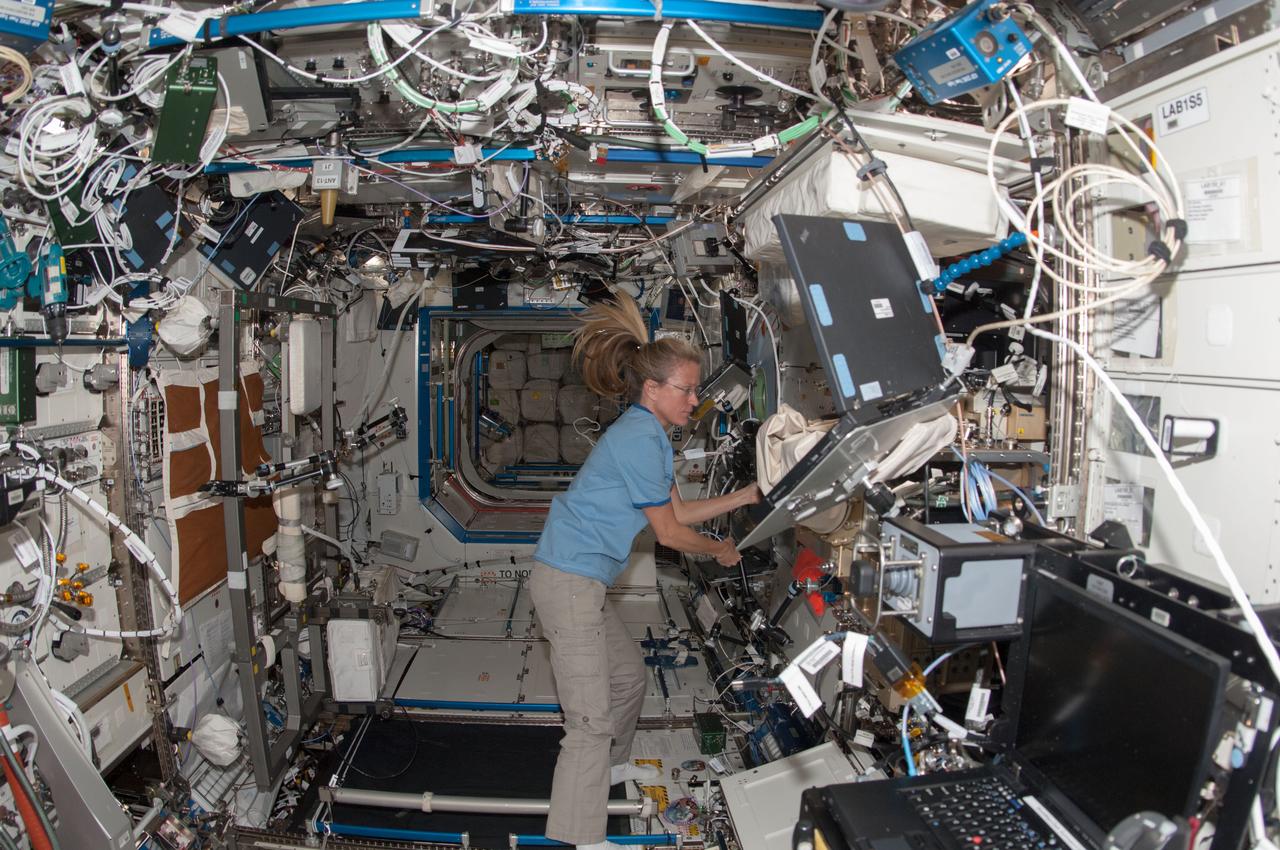
In the International Space Stations Destiny laboratory,NASA astronaut Karen Nyberg,Expedition 36 flight engineer,speaks into a microphone while conducting a session with the Advanced Colloids Experiment (ACE)-1 sample preparation at the Light Microscopy Module (LMM) in the Fluids Integrated Rack / Fluids Combustion Facility (FIR/FCF). ACE-1 is a series of microscopic imaging investigations that uses the microgravity environment to examine flow characteristics and the evolution and ordering effects within a group of colloidal materials.
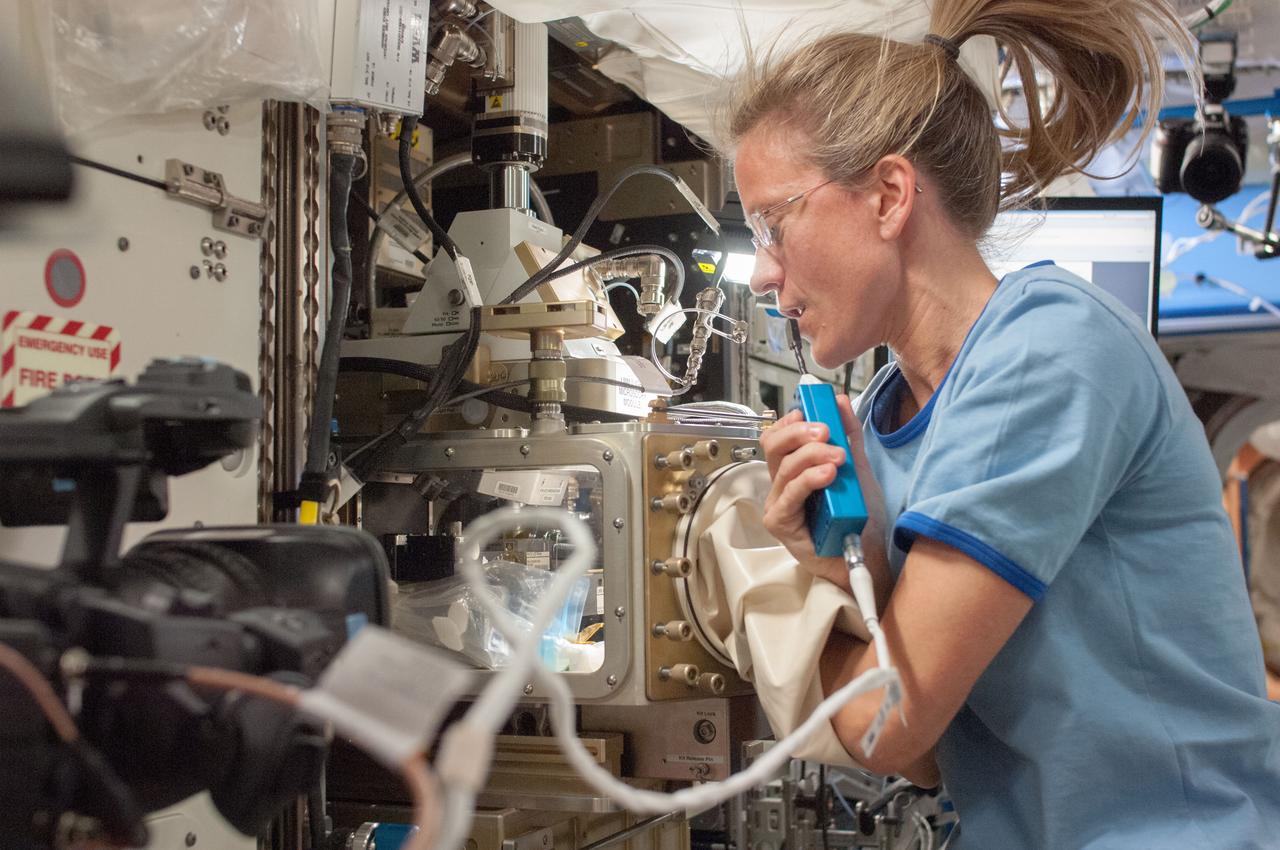
ISS036-E-019830 (24 June 2013) --- In the International Space Station’s Destiny laboratory, NASA astronaut Karen Nyberg, Expedition 36 flight engineer, speaks into a microphone while conducting a session with the Advanced Colloids Experiment (ACE)-1 sample preparation at the Light Microscopy Module (LMM) in the Fluids Integrated Rack / Fluids Combustion Facility (FIR/FCF). ACE-1 is a series of microscopic imaging investigations that uses the microgravity environment to examine flow characteristics and the evolution and ordering effects within a group of colloidal materials.
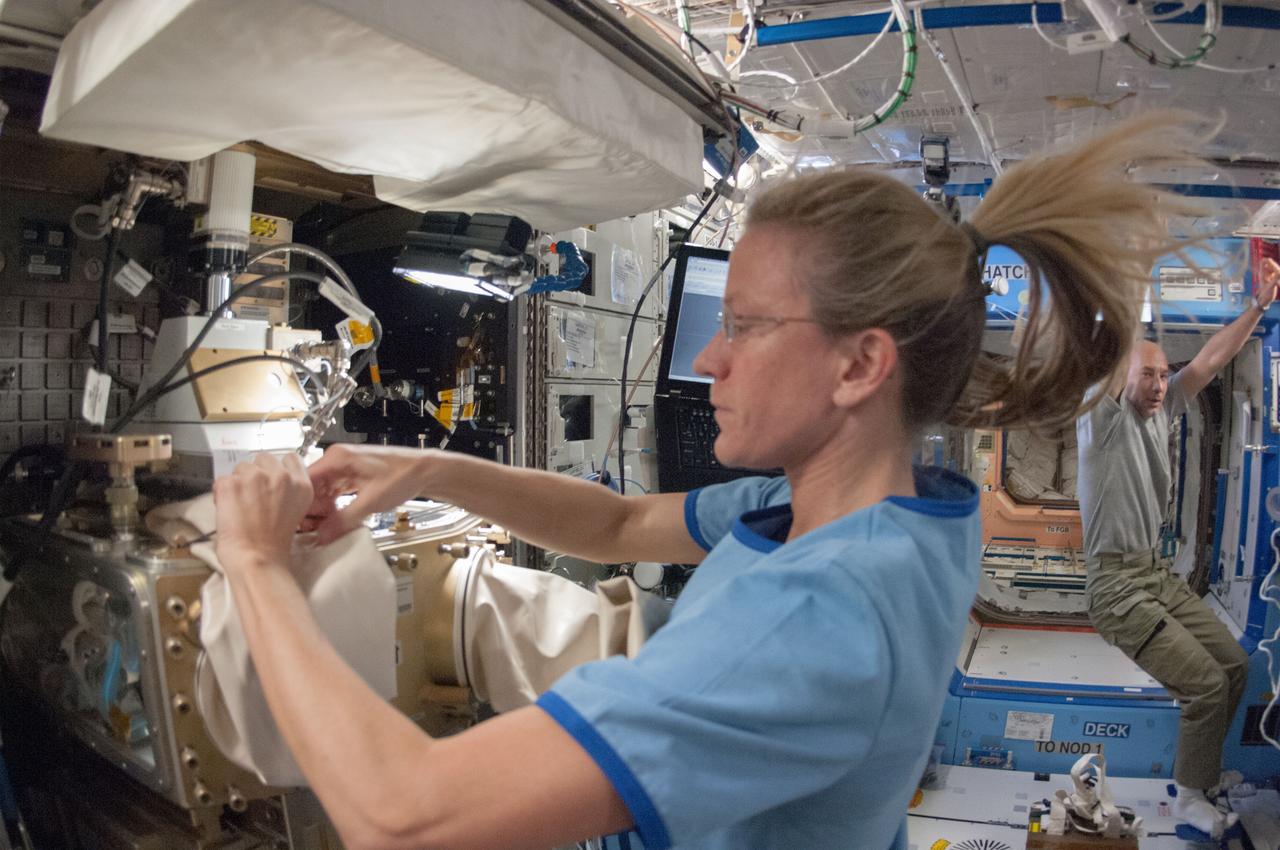
ISS036-E-019760 (24 June 2013) --- In the International Space Station’s Destiny laboratory, NASA astronaut Karen Nyberg, Expedition 36 flight engineer, conducts a session with the Advanced Colloids Experiment (ACE)-1 sample preparation at the Light Microscopy Module (LMM) in the Fluids Integrated Rack / Fluids Combustion Facility (FIR/FCF). ACE-1 is a series of microscopic imaging investigations that uses the microgravity environment to examine flow characteristics and the evolution and ordering effects within a group of colloidal materials.
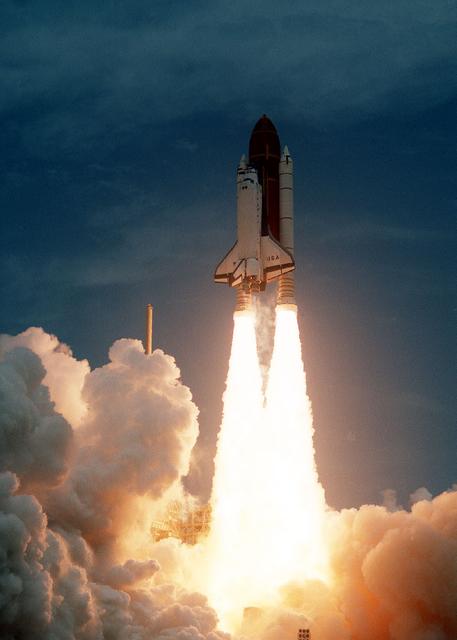
Space Shuttle Columbia (STS-50) launched into history carrying crew of seven and its payload was comprised of the US Microgravity Laboratory 1 (USML-1).The USML-1 was one of NASA's missions dedicated to scientific investigations in a microgravity environment inside the Spacelab module. Investigations aboard the USML-1 included: materials science, fluid dynamics, biotechnology (crystal growth), and combustion science. Managed by Marshall Space Flight Center, the STS-50 mission was plarned for a 13-day duration, the mission ended with 14 days in space, the longest Shuttle mission to date.
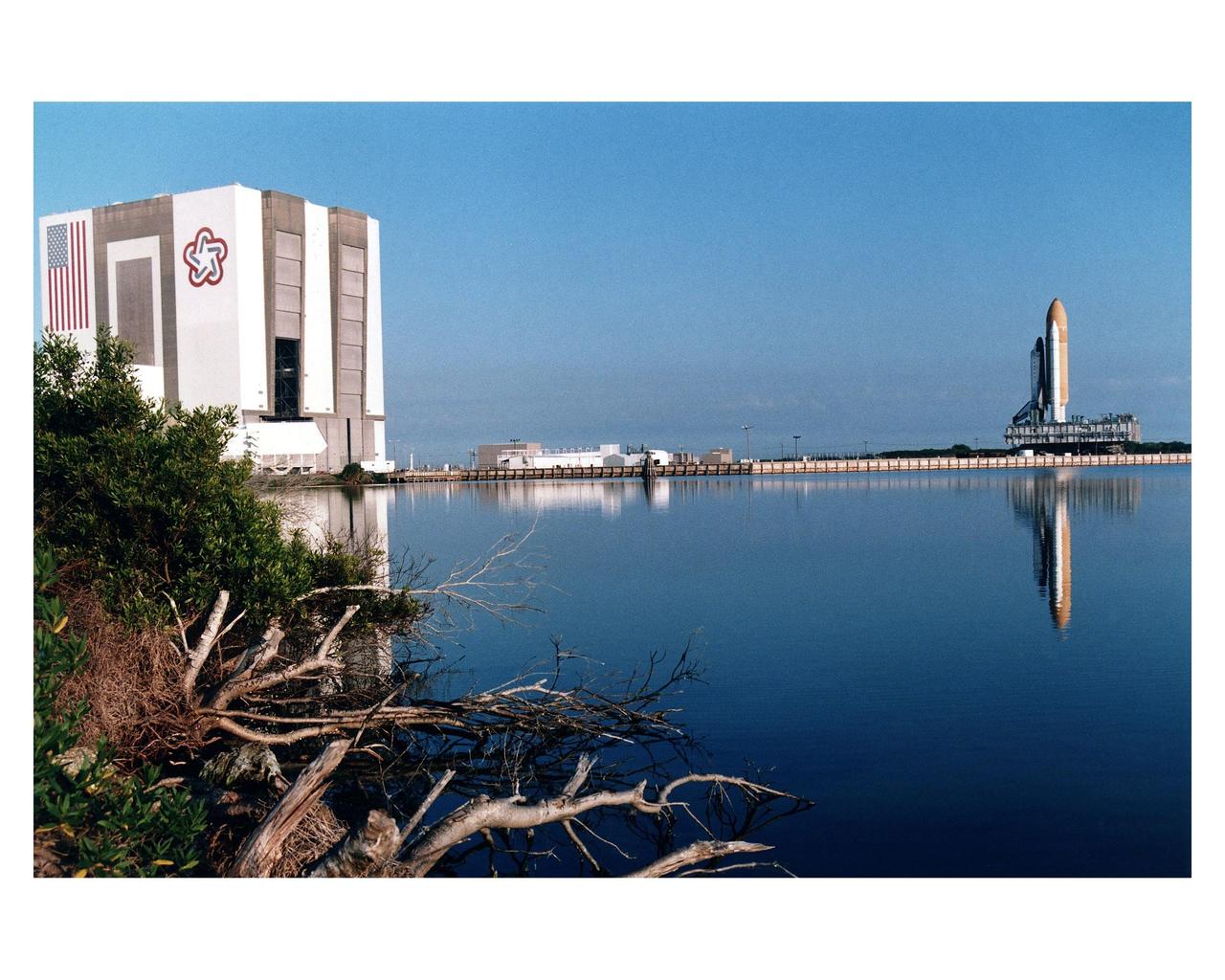
KENNEDY SPACE CENTER, Fla. -- Under a clear blue sky that is reflected in the water of the turn basin, the Space Shuttle Orbiter Columbia rolls out to Launch Pad 39A in preparation for the STS-83 mission.Tthe Microgravity Science Laboratory-1 (MSL-1) Spacelab module is the primary payload on this 16-day space flight. The MSL-1 will be used to test some of the hardware, facilities and procedures that are planned for use on the International Space Station while the seven-member flight crew conducts combustion, protein crystal growth and materials processing experiments.
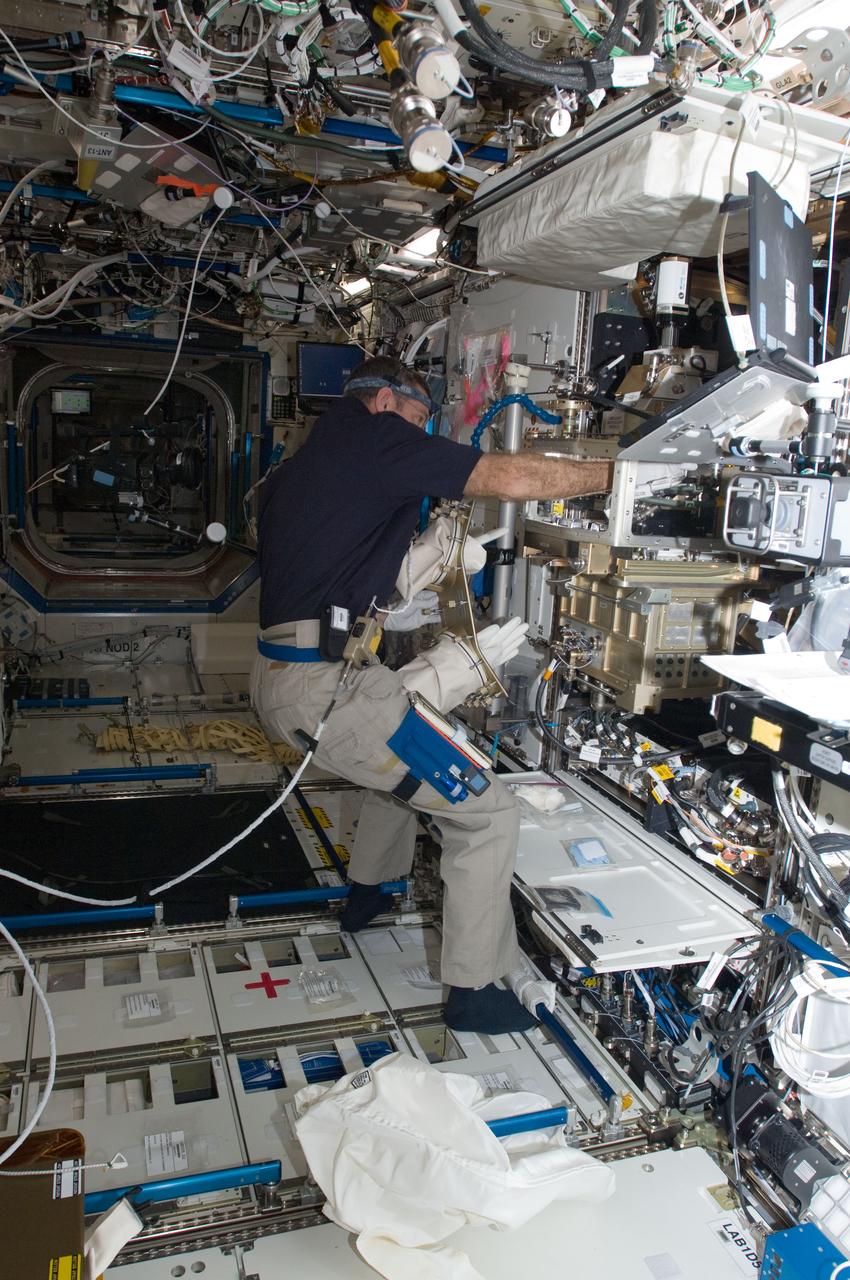
ISS030-E-007418 (1 Dec. 2011) --- In the International Space Station’s Destiny laboratory, NASA astronaut Dan Burbank, Expedition 30 commander, conducts a session with the Preliminary Advanced Colloids Experiment (PACE) at the Light Microscopy Module (LMM) in the Fluids Integrated Rack / Fluids Combustion Facility (FIR/FCF). PACE is designed to investigate the capability of conducting high magnification colloid experiments with the LMM for determining the minimum size particles which can be resolved with it.
ISS030-E-007417 (1 Dec. 2011) --- In the International Space Station?s Destiny laboratory, NASA astronaut Dan Burbank, Expedition 30 commander, conducts a session with the Preliminary Advanced Colloids Experiment (PACE) at the Light Microscopy Module (LMM) in the Fluids Integrated Rack / Fluids Combustion Facility (FIR/FCF). PACE is designed to investigate the capability of conducting high magnification colloid experiments with the LMM for determining the minimum size particles which can be resolved with it.
ISS030-E-007419 (1 Dec. 2011) --- In the International Space Station’s Destiny laboratory, NASA astronaut Dan Burbank, Expedition 30 commander, conducts a session with the Preliminary Advanced Colloids Experiment (PACE) at the Light Microscopy Module (LMM) in the Fluids Integrated Rack / Fluids Combustion Facility (FIR/FCF). PACE is designed to investigate the capability of conducting high magnification colloid experiments with the LMM for determining the minimum size particles which can be resolved with it.
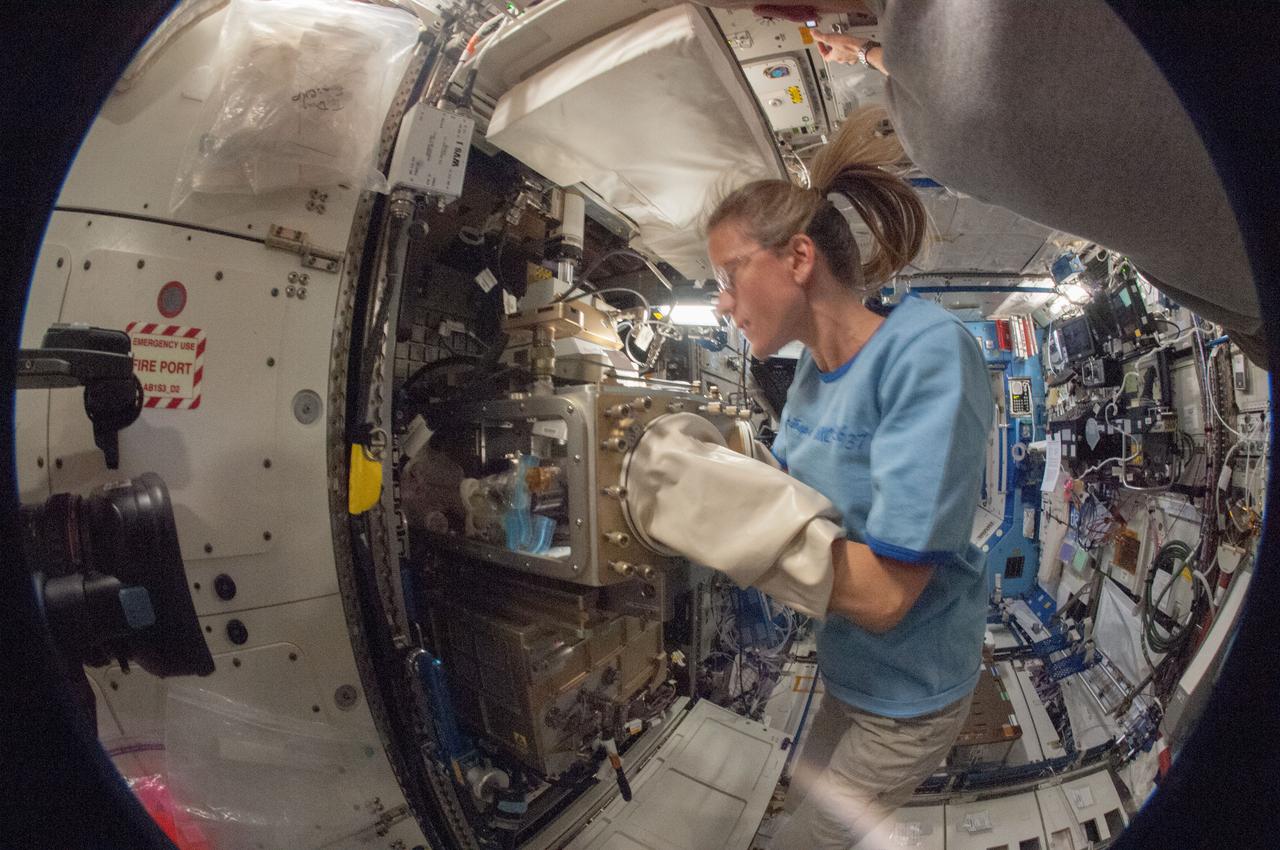
ISS036-E-019783 (24 June 2013) --- In the International Space Station’s Destiny laboratory, a fisheye lens attached to an electronic still camera was used to capture this image of NASA astronaut Karen Nyberg, Expedition 36 flight engineer, as she conducts a session with the Advanced Colloids Experiment (ACE)-1 sample preparation at the Light Microscopy Module (LMM) in the Fluids Integrated Rack / Fluids Combustion Facility (FIR/FCF). ACE-1 is a series of microscopic imaging investigations that uses the microgravity environment to examine flow characteristics and the evolution and ordering effects within a group of colloidal materials.
KENNEDY SPACE CENTER, FLA. -- KSC payloads processing employees work to reservice the Microgravity Science Laboratory-1 (MSL-1) Spacelab module in the Space Shuttle Orbiter Columbia’s payload bay for the STS-94 mission in Orbiter Processing Facility 1. That mission is now scheduled to lift off in early July. This was the first time that this type of payload was reserviced without removing it from the payload bay. This new procedure pioneers processing efforts for quick relaunch turnaround times for future payloads. The Spacelab module was scheduled to fly again with the full complement of STS-83 experiments after that mission was cut short due to a faulty fuel cell. During the scheduled 16-day STS-94 mission, the experiments will be used to test some of the hardware, facilities and procedures that are planned for use on the International Space Station while the flight crew conducts combustion, protein crystal growth and materials processing experiments

KSC payloads processing employees work to reservice the Microgravity Science Laboratory-1 (MSL-1) Spacelab module in the Space Shuttle Orbiter Columbia’s payload bay for the STS-94 mission in Orbiter Processing Facility 1. That mission is now scheduled to lift off in early July. This was the first time that this type of payload was reserviced without removing it from the payload bay. This new procedure pioneers processing efforts for quick relaunch turnaround times for future payloads. The Spacelab module was scheduled to fly again with the full complement of STS-83 experiments after that mission was cut short due to a faulty fuel cell. During the scheduled 16-day STS-94 mission, the experiments will be used to test some of the hardware, facilities and procedures that are planned for use on the International Space Station while the flight crew conducts combustion, protein crystal growth and materials processing experiments
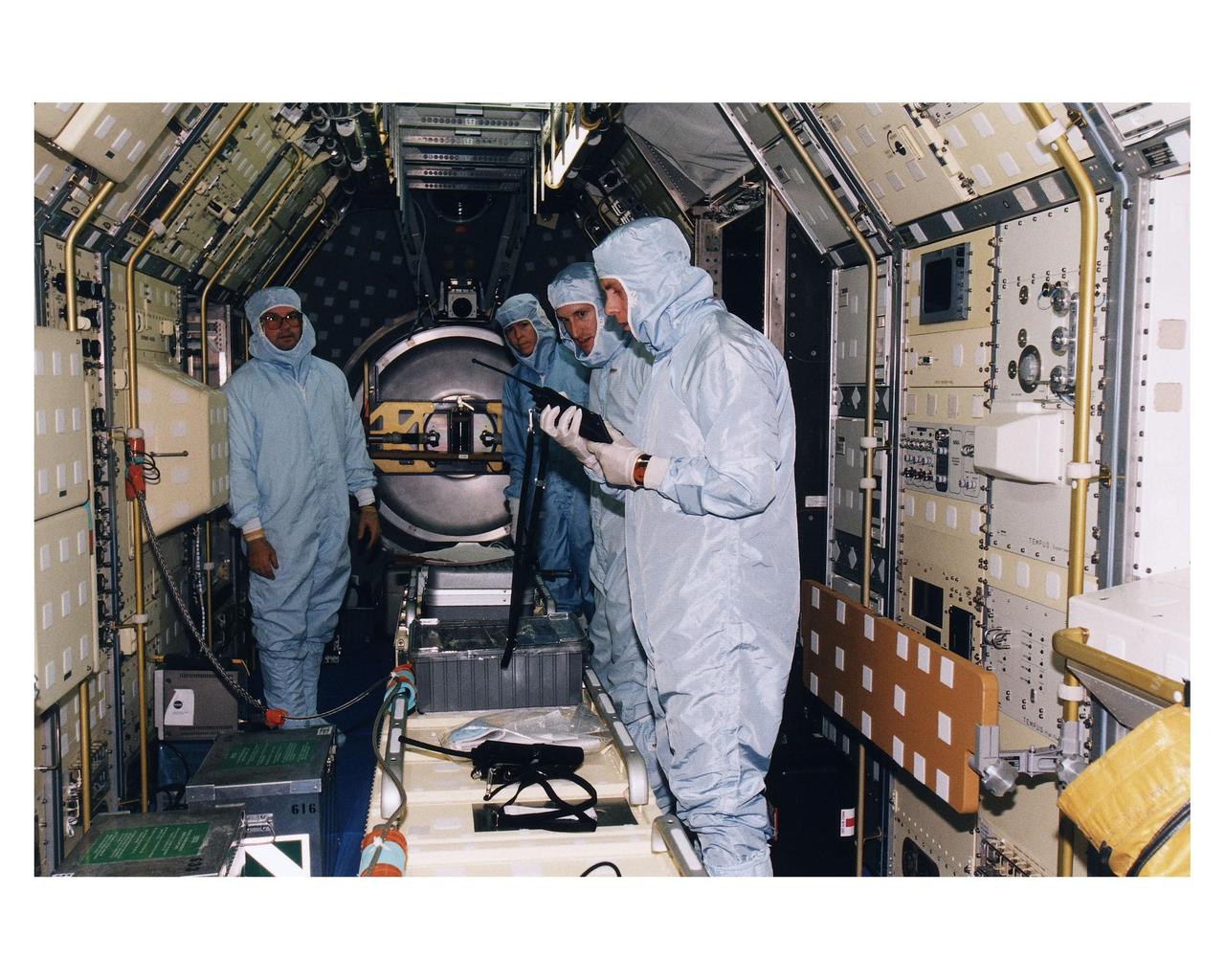
KENNEDY SPACE CENTER, FLA. -- KSC payloads processing employees work to reservice the Microgravity Science Laboratory-1 (MSL-1) Spacelab module in the Space Shuttle Orbiter Columbia’s payload bay for the STS-94 mission in Orbiter Processing Facility 1. That mission is now scheduled to lift off in early July. This was the first time that this type of payload was reserviced without removing it from the payload bay. This new procedure pioneers processing efforts for quick relaunch turnaround times for future payloads. The Spacelab module was scheduled to fly again with the full complement of STS-83 experiments after that mission was cut short due to a faulty fuel cell. During the scheduled 16-day STS-94 mission, the experiments will be used to test some of the hardware, facilities and procedures that are planned for use on the International Space Station while the flight crew conducts combustion, protein crystal growth and materials processing experiments
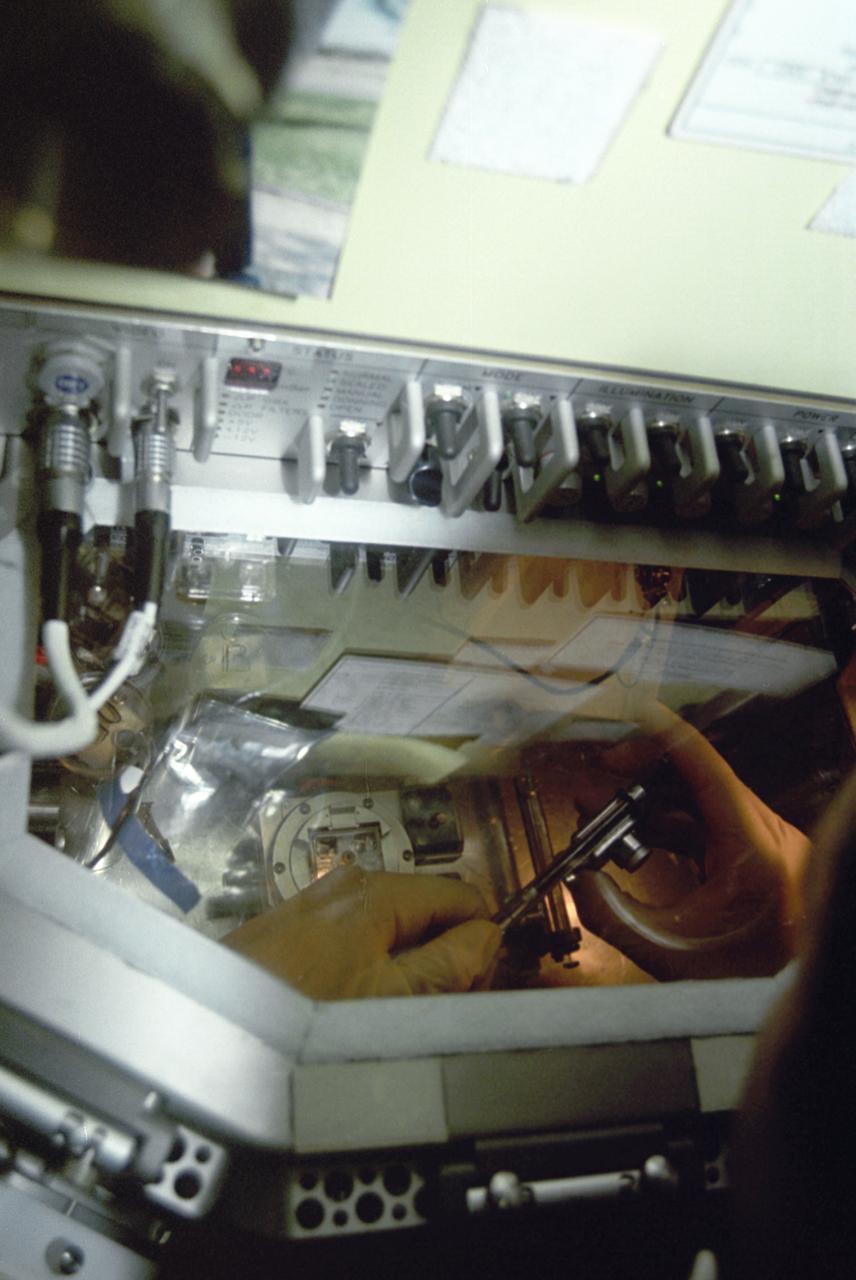
The first United States Microgravity Laboratory (USML-1) provided scientific research in materials science, fluid dynamics, biotechnology, and combustion science in a weightless environment inside the Spacelab module. This photograph is a close-up view of the Glovebox in operation during the mission. The Spacelab Glovebox, provided by the European Space Agency, offers experimenters new capabilities to test and develop science procedures and technologies in microgravity. It enables crewmembers to handle, transfer, and otherwise manipulate materials in ways that are impractical in the open Spacelab. The facility is equipped with three doors: a central port through which experiments are placed in the Glovebox and two glovedoors on both sides with an attachment for gloves or adjustable cuffs and adapters for cameras. The Glovebox has an enclosed compartment that offers a clean working space and minimizes the contamination risks to both Spacelab and experiment samples. Although fluid containment and ease of cleanup are major benefits provided by the facility, it can also contain powders and bioparticles; toxic, irritating, or potentially infectious materials; and other debris produced during experiment operations. The facility is equipped with photographic/video capabilities and permits mounting a microscope. For the USML-1 mission, the Glovebox experiments fell into four basic categories: fluid dynamics, combustion science, crystal growth, and technology demonstration. The USML-1 flew aboard the STS-50 mission in June 1992.
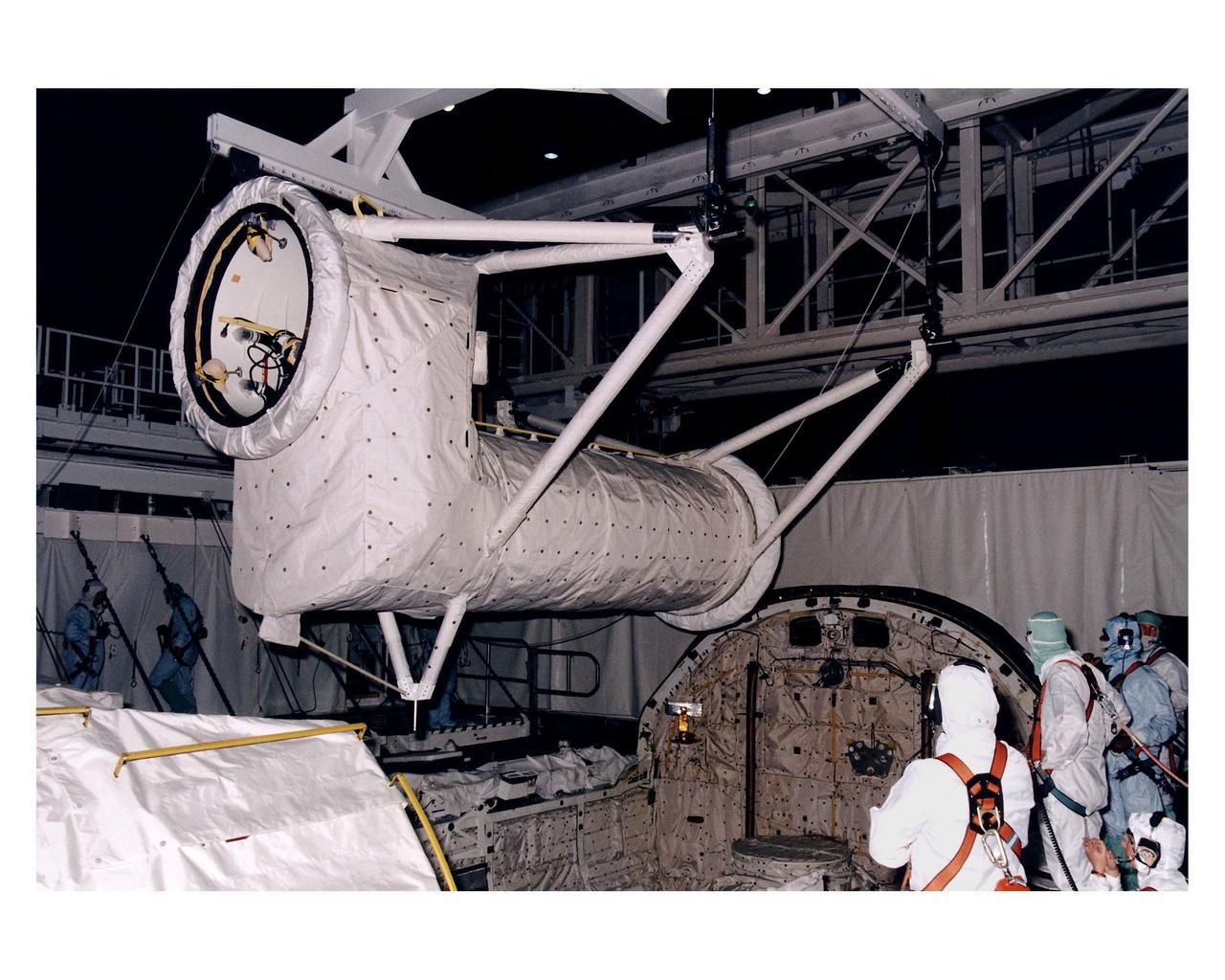
The Spacelab long transfer tunnel that leads from the Space Shuttle Orbiter Columbia’s crew airlock to the Microgravity Science Laboratory-1 (MSL-1) Spacelab module in the spaceplane’s payload bay is removed in Orbiter Processing Facility 1. The tunnel was taken out to allow better access to the MSL-1 module during reservicing operations to prepare it for its reflight as MSL-1R. That mission is now scheduled to lift off July 1. This was the first time that this type of payload was reserviced without removing it from the payload bay. This new procedure pioneers processing efforts for quick relaunch turnaround times for future payloads. The Spacelab module was scheduled to fly again with the full complement of STS-83 experiments after that mission was cut short due to a faulty fuel cell. During the scheduled 16-day reflight, the experiments will be used to test some of the hardware, facilities and procedures that are planned for use on the International Space Station while the flight crew conducts combustion, protein crystal growth and materials processing experiments
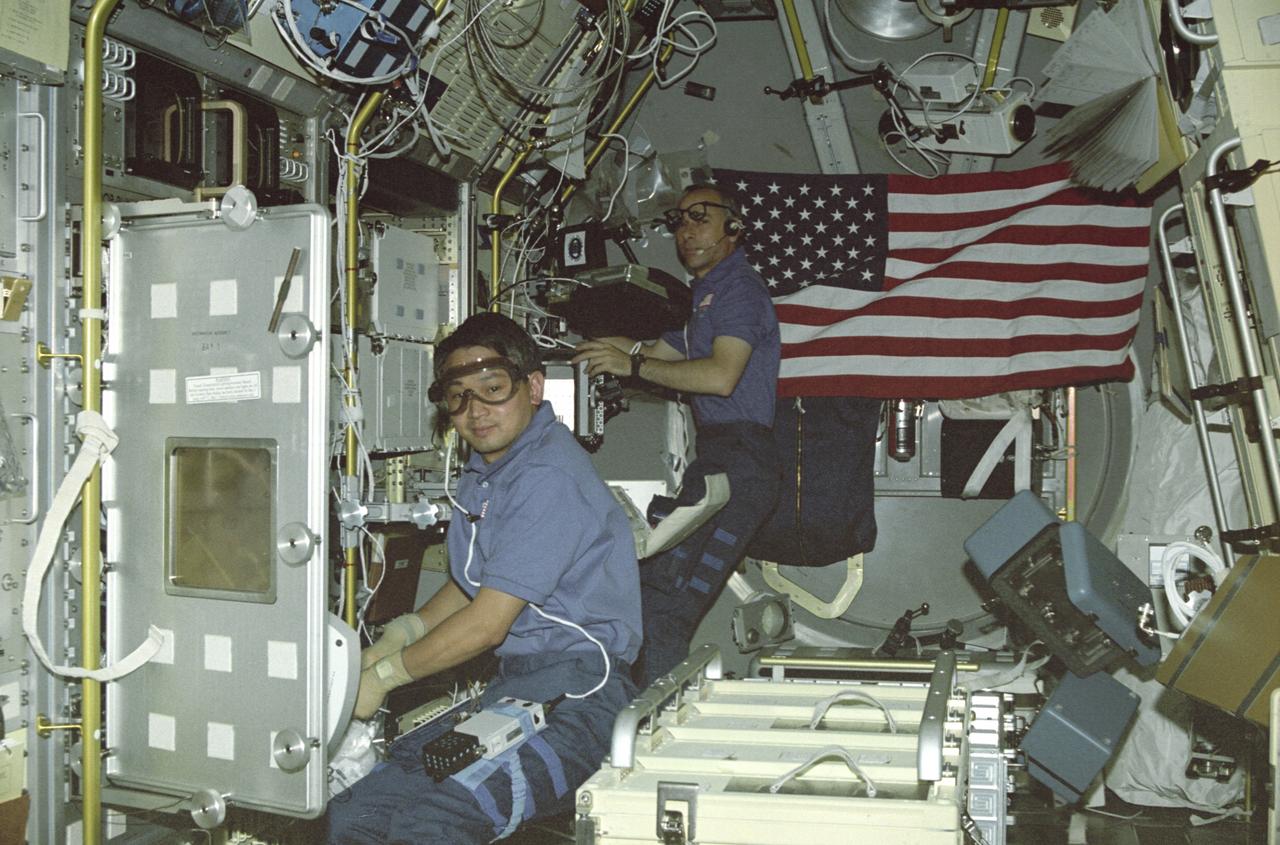
In this photograph, astronaut Eugene Trinh, a payload specialist for this mission, is working at the Drop Physics Module (DPM), and mission specialist Carl Meade is working on the experiment at the Glovebox inside the first United States Microgravity Laboratory (USML-1) Science Module. The USML-1 was one of NASA's missions dedicated to scientific investigations in a microgravity environment inside the Spacelab module. Investigations aboard the USML-1 included: materials science, fluid dynamics, biotechnology (crystal growth), and combustion science. The DPM is dedicated to the detailed study of the dynamics of fluid drops in microgravity. The Glovebox offers experimenters new capabilities and technologies in microgravity with a clean working space and minimizes contamination risks to both Spacelab and experiment samples. Payload specialists are professional scientists or engineers whose only assignment on a space flight is to carry out scientific and technological experiments. Their specific training for a space flight is usually limited to a short period of learning how to live and work in weightlessness. Mission Specialists are both professional scientists and career astronauts. Thus they are a link or bridge between the other crew members, and combine the functions of resident maintenance engineers, in-space counterparts of flight engineers in aircraft, and fully qualified scientists. The USML-1 flew aboard the STS-50 mission on June 1992, and was managed by the Marshall Space Flight Center.
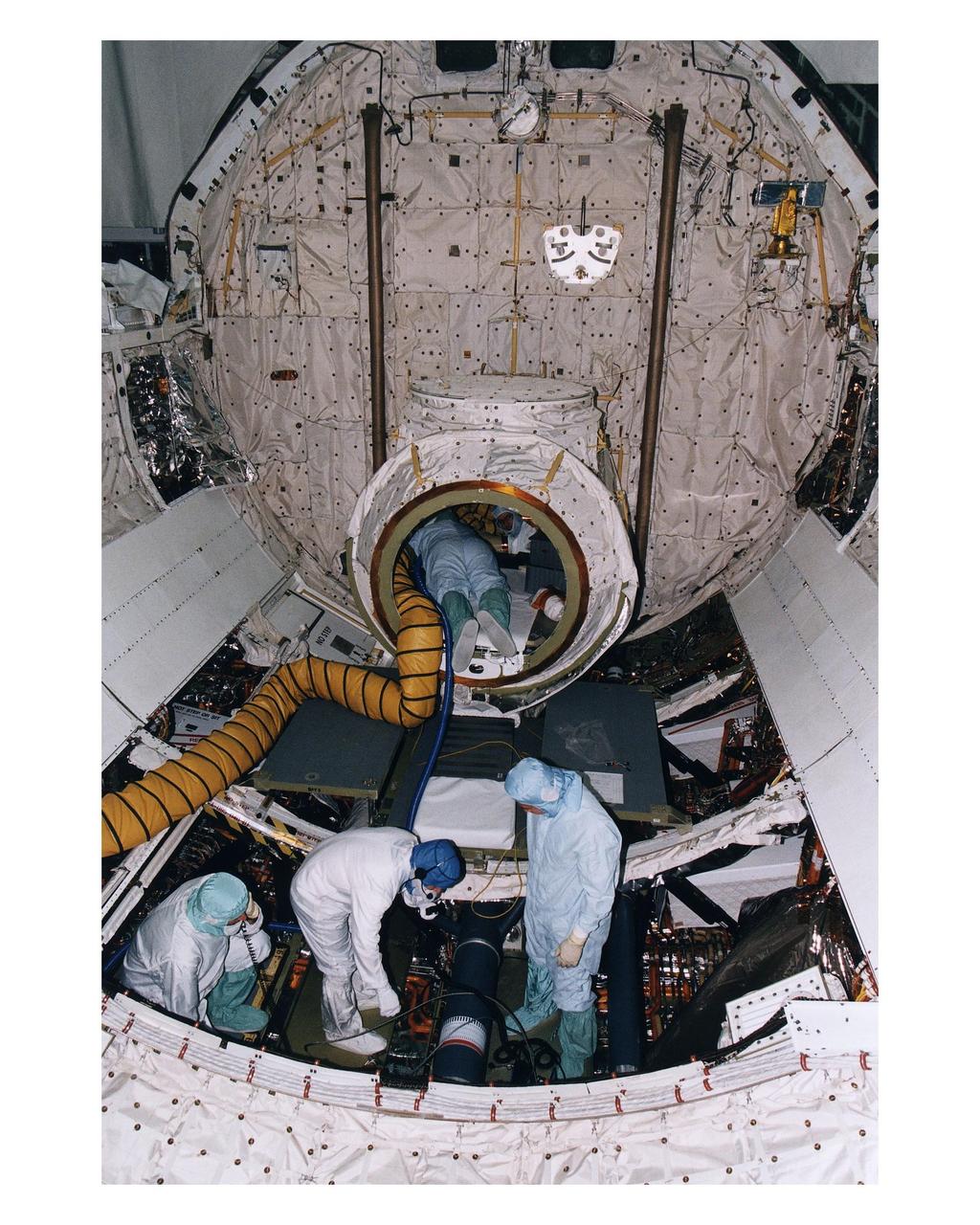
KSC payload processing employees in Orbiter Processing Facility 1 prepare the Space Shuttle Orbiter Columbia’s crew airlock and payload bay for the reinstallation of the Spacelab long transfer tunnel that leads from the airlock to the Microgravity Science Laboratory-1 (MSL-1) Spacelab module. The tunnel was taken out after the STS-83 mission to allow better access to the MSL-1 module during reservicing operations to prepare it for for the STS-94 mission. That space flight is now scheduled to lift off in early July. This was the first time that this type of payload was reserviced without removing it from the payload bay. This new procedure pioneers processing efforts for quick relaunch turnaround times for future payloads. The Spacelab module was scheduled to fly again with the full complement of STS-83 experiments after that mission was cut short due to a faulty fuel cell. During the scheduled 16-day STS-94 mission, the experiments will be used to test some of the hardware, facilities and procedures that are planned for use on the International Space Station while the flight crew conducts combustion, protein crystal growth and materials processing experiments
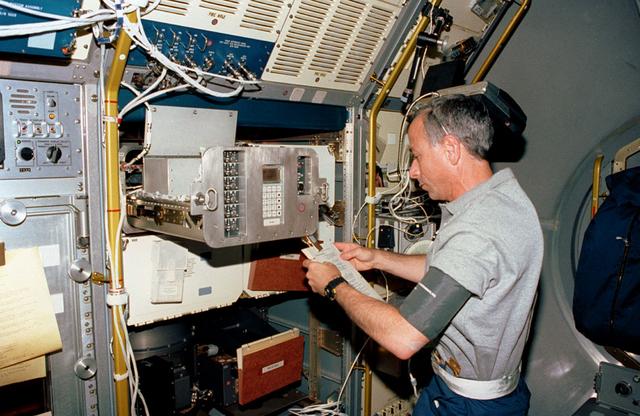
The first United States Microgravity Laboratory (USML-1) was one of NASA's science and technology programs and provided scientists an opportunity to research various scientific investigations in a weightless environment inside the Spacelab module. It also provided demonstrations of new equipment to help prepare for advanced microgravity research and processing aboard the Space Station. The USML-1 flew in orbit for extended periods, providing greater opportunities for research in materials science, fluid dynamics, biotechnology, and combustion science. In this photograph, astronaut Carl Meade is reviewing the manual to activate the Generic Bioprocessing Apparatus (GBA) inside the Spacelab module. The GBA for the USML-1 mission was a multipurpose facility that could help us answer important questions about the relationship between gravity and biology. This unique facility allowed scientists to study biological processes in samples ranging from molecules to small organisms. For example, scientists would examine how collagen, a protein substance found in cornective tissue, bones, and cartilage, forms fibers. In microgravity, it might be possible to alter collagen fiber assembly so that this material could be used more effectively as artificial skin, blood vessels, and other parts of the body. The USML-1 was managed by the Marshall Space Flight Center and waslaunched aboard the Space Shuttle Orbiter Columbia (STS-50) on June 25, 1992.
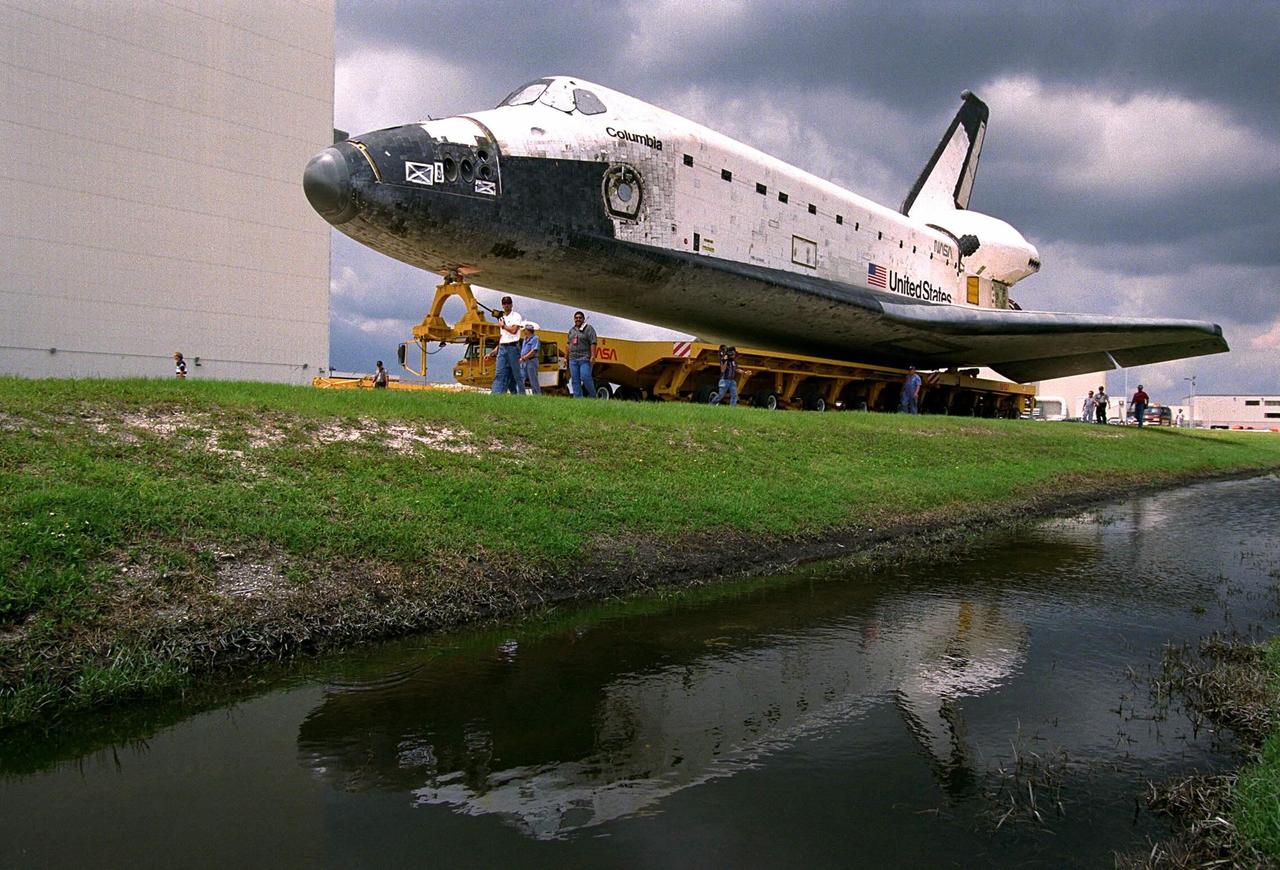
The Space Shuttle Orbiter Columbia is reflected in a nearby pond as it rolls over to the Vehicle Assembly Building (VAB) June 4 from Orbiter Processing Facility (OPF) 1 atop its transporter in preparation for the STS-94 mission. Once inside the VAB, Columbia will be hoisted to be mated with its solid rocket boosters and external tank. Columbia was moved to the OPF April 8 after the completion of the STS-83 mission. KSC payloads processing employees then began work to reservice the Microgravity Science Laboratory-1 (MSL-1) Spacelab module in the orbiter’s payload bay for the STS-94 mission. This was the first time that this type of payload was reserviced without removing it from the payload bay. This new procedure pioneers processing efforts for possible quick relaunch turnaround times for future payloads. The MSL-1 module will fly again with the full complement of STS-83 experiments after that mission was cut short due to indications of a faulty fuel cell. During the scheduled 16-day STS-94 mission, the experiments will be used to test some of the hardware, facilities and procedures that are planned for use on the International Space Station while the flight crew conducts combustion, protein crystal growth and materials processing experiments
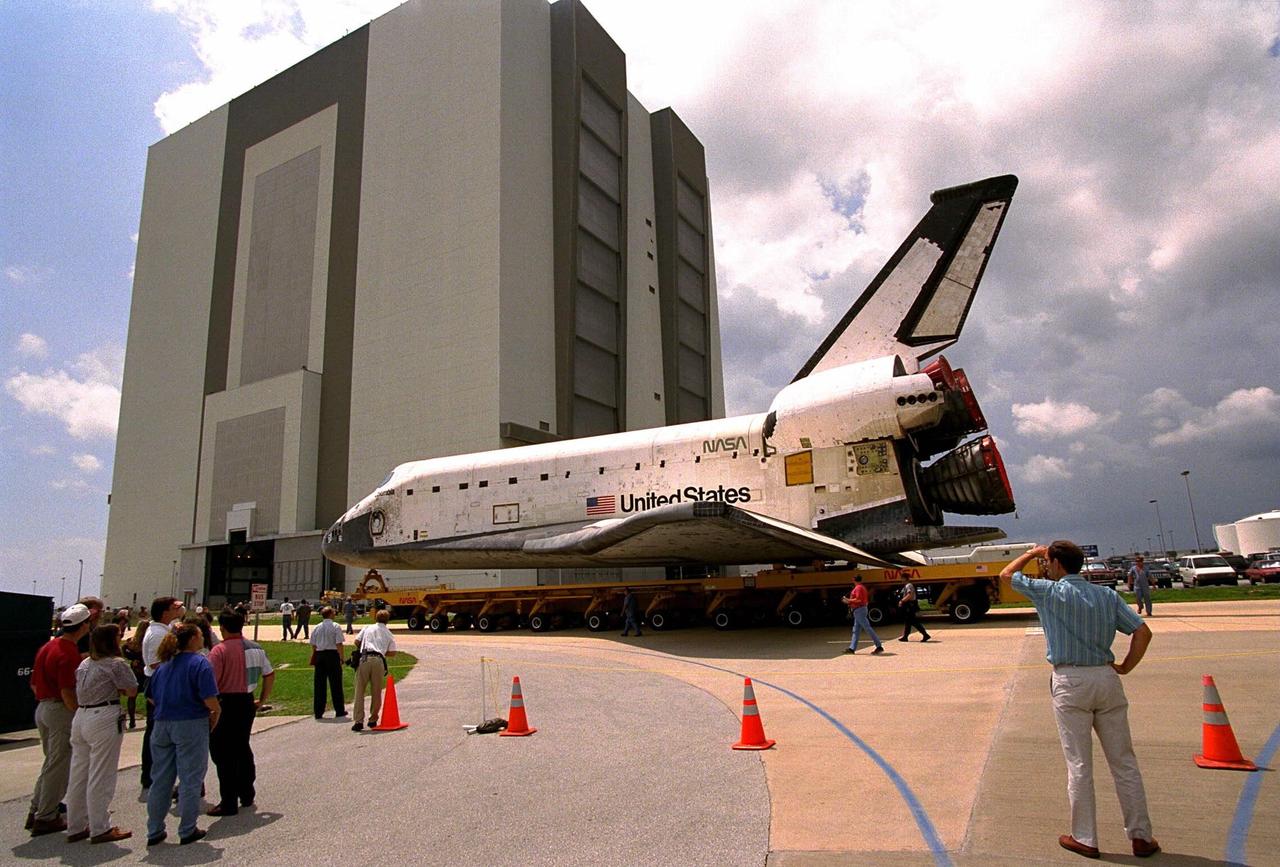
While KSC workers in the Launch Complex 39 Area watch, The Space Shuttle Orbiter Columbia rolls over to the Vehicle Assembly Building (VAB) June 4 from Orbiter Processing Facility (OPF)1 atop its transporter in preparation for the STS-94 mission. Once inside the VAB, Columbia will be hoisted to be mated with its solid rocket boosters and external tank. Columbia was moved to the OPF April 8 after the completion of the STS-83 mission. KSC payloads processing employees then began work to reservice the Microgravity Science Laboratory-1 (MSL-1) Spacelab module in the orbiter’s payload bay for the STS-94 mission. This was the first time that this type of payload was reserviced without removing it from the payload bay. This new procedure pioneers processing efforts for possible quick relaunch turnaround times for future payloads. The MSL-1 module will fly again with the full complement of STS-83 experiments after that mission was cut short due to indications of a faulty fuel cell. During the scheduled 16-day STS-94 mission, the experiments will be used to test some of the hardware, facilities and procedures that are planned for use on the International Space Station while the flight crew conducts combustion, protein crystal growth and materials processing experiments
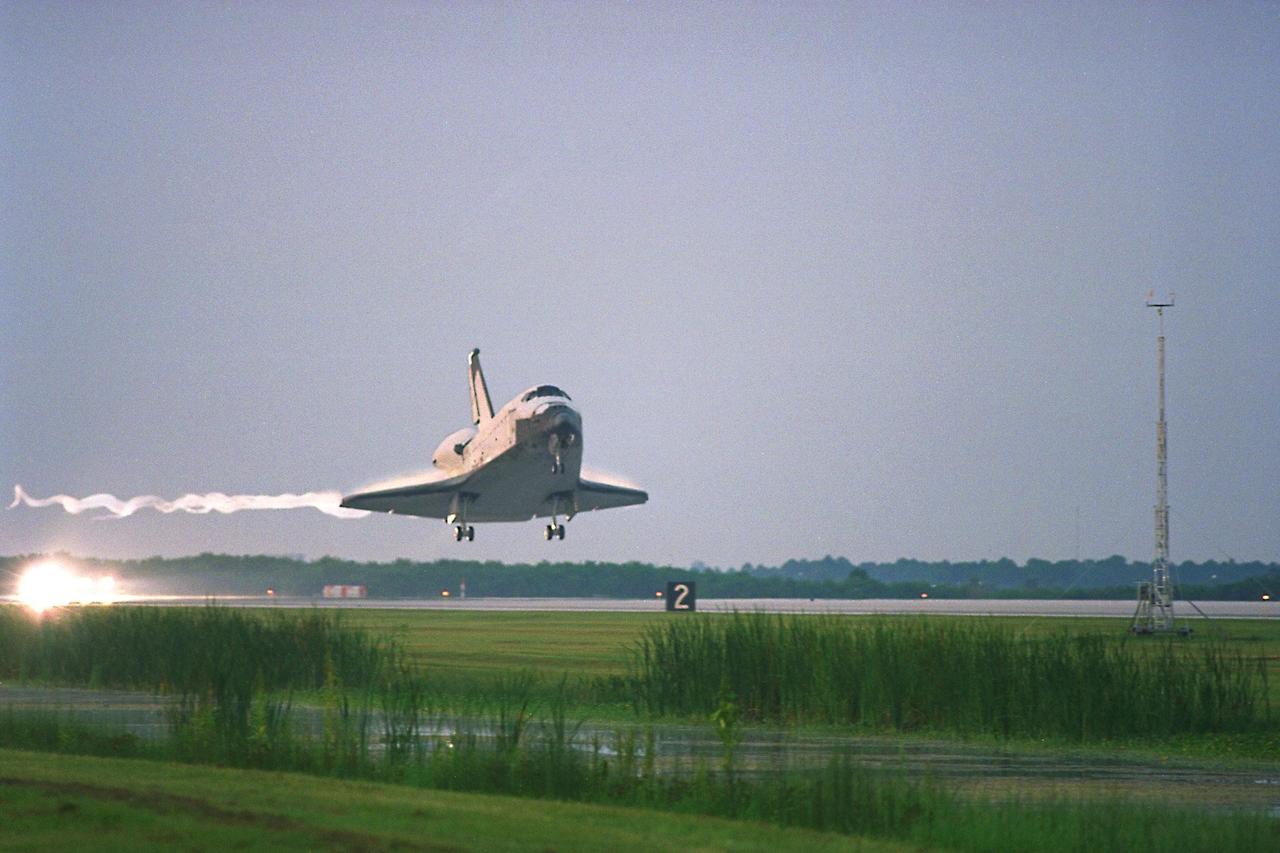
KENNEDY SPACE CENTER, FLA. -- The Space Shuttle orbiter Columbia glides in for a touchdown on Runway 33 at KSC’s Shuttle Landing Facility at approximately 6:46 a.m. EDT with Mission Commander James D. Halsell Jr. and Pilot Susan L. Still at the controls to complete the STS-94 mission. Also on board are Mission Specialist Donald A. Thomas, Mission Specialist Michael L. Gernhardt, Payload Commander Janice Voss, and Payload Specialists Roger K.Crouch and Gregory T. Linteris. During the Microgravity Science Laboratory-1 (MSL-1) mission, the Spacelab module was used to test some of the hardware, facilities and procedures that are planned for use on the International Space Station while the flight crew conducted combustion, protein crystal growth and materials processing experiments. This mission was a reflight of the STS-83 mission that lifted off from KSC in April of this year. That space flight was cut short due to indications of a faulty fuel cell
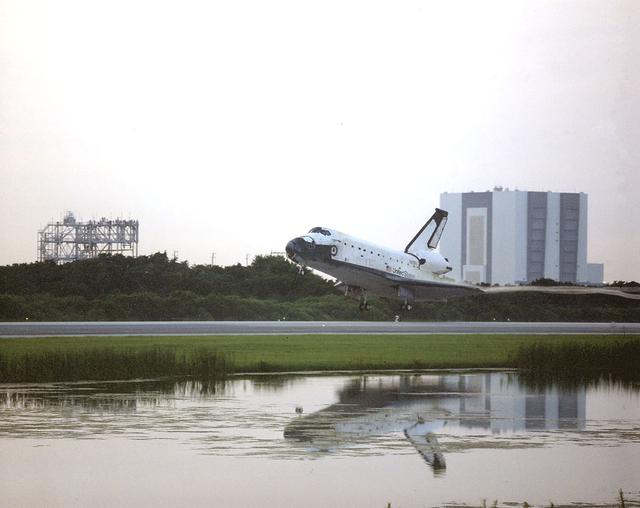
Framed by the Vehicle Assembly Building at right and the Mate-Demate Device at left, the Space Shuttle orbiter Columbia (STS-94) glided onto Runway 33 of Kennedy Space Center's Shuttle Landing Facility. On board for the reflight of STS-83 were a crew of seven and the Microgravity Science Laboratory-1 (MSL-1)which was managed by scientists and engineers from the Marshall Space Flight Center. Mission STS-94 marked the 23rd flight of Columbia and the 85th mission flown since the start of the Space Shuttle program in 1981. During the mission, the Spacelab module was used to test some of the hardware, facilities and procedures that are planned for use on the International Space Station while the flight crew conducted combustion, protein crystal growth and materials processing experiments.

The first United States Microgravity Laboratory (USML-1) flew in orbit inside the Spacelab science module for extended periods, providing scientists and researchers greater opportunities for research in materials science, fluid dynamics, biotechnology (crystal growth), and combustion science. This photograph shows Astronaut Larry De Lucas wearing a stocking plethysmograph during the mission. Muscle size in the legs changes with exposure to microgravity. A stocking plethysmograph, a device for measuring the volume of a limb, was used to help determine these changes. Several times over the course of the mission, an astronaut will put on the plethysmograph, pull the tapes tight and mark them. By comparing the marks, changes in muscle volume can be measured. The USML-1 was launched aboard the Space Shuttle Orbiter Columbia (STS-50) on June 25, 1992.
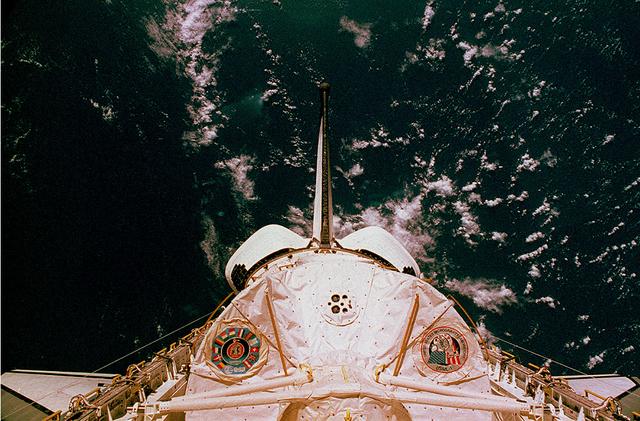
This is a photograph of the Spacelab module for the first United States Microgravity Laboratory (USML-1) mission, showing logos of the Spacelab mission on the left and the USML-1 mission on the right. The USML-1 was one part of a science and technology program that opened NASA's next great era of discovery and established the United States' leadership in space. From investigations designed to gather fundamental knowledge in a variety of areas to demonstrations of new equipment, USML-1 forged the way for future USML missions and helped prepare for advanced microgravity research and processing aboard the Space Station. Thirty-one investigations comprised the payload of the first USML-1 mission. The experiments aboard USML-1 covered five basic areas: fluid dynamics, the study of how liquids and gases respond to the application or absence of differing forces; crystal growth, the production of inorganic and organic crystals; combustion science, the study of the processes and phenomena of burning; biological science, the study of plant and animal life; and technology demonstrations. The USML-1 was managed by the Marshall Space Flight Center and launched aboard the Space Shuttle Orbiter Columbia (STS-50) on June 25, 1992.
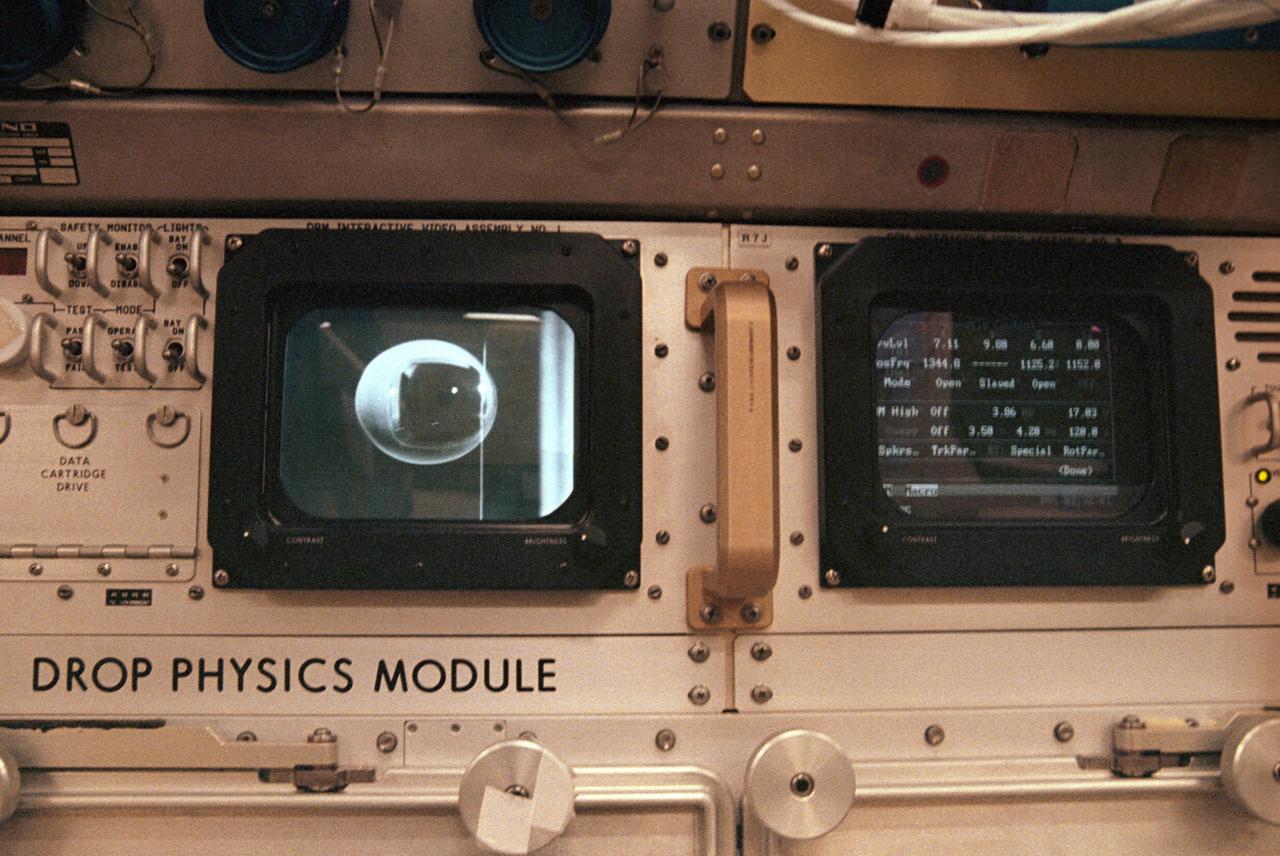
The first United States Microgravity Laboratory (USML-1) was one of NASA's science and technology programs that provided scientists an opportunity to research various scientific investigations in a weightlessness environment inside the Spacelab module. It also provided demonstrations of new equipment to help prepare for advanced microgravity research and processing aboard the Space Station. The USML-1 flew in orbit for extended periods, providing greater opportunities for research in materials science, fluid dynamics, biotechnology (crystal growth), and combustion science. This is a close-up view of the Drop Physics Module (DPM) in the USML science laboratory. The DPM was dedicated to the detailed study of the dynamics of fluid drops in microgravity: their equilibrium shapes, the dynamics of their flows, and their stable and chaotic behaviors. It also demonstrated a technique known as containerless processing. The DPM and microgravity combine to remove the effects of the container, such as chemical contamination and shape, on the sample being studied. Sound waves, generating acoustic forces, were used to suspend a sample in microgravity and to hold a sample of free drops away from the walls of the experiment chamber, which isolated the sample from potentially harmful external influences. The DPM gave scientists the opportunity to test theories of classical fluid physics, which have not been confirmed by experiments conducted on Earth. This image is a close-up view of the DPM. The USML-1 flew aboard the STS-50 mission on June 1992, and was managed by the Marshall Space Flight Center.
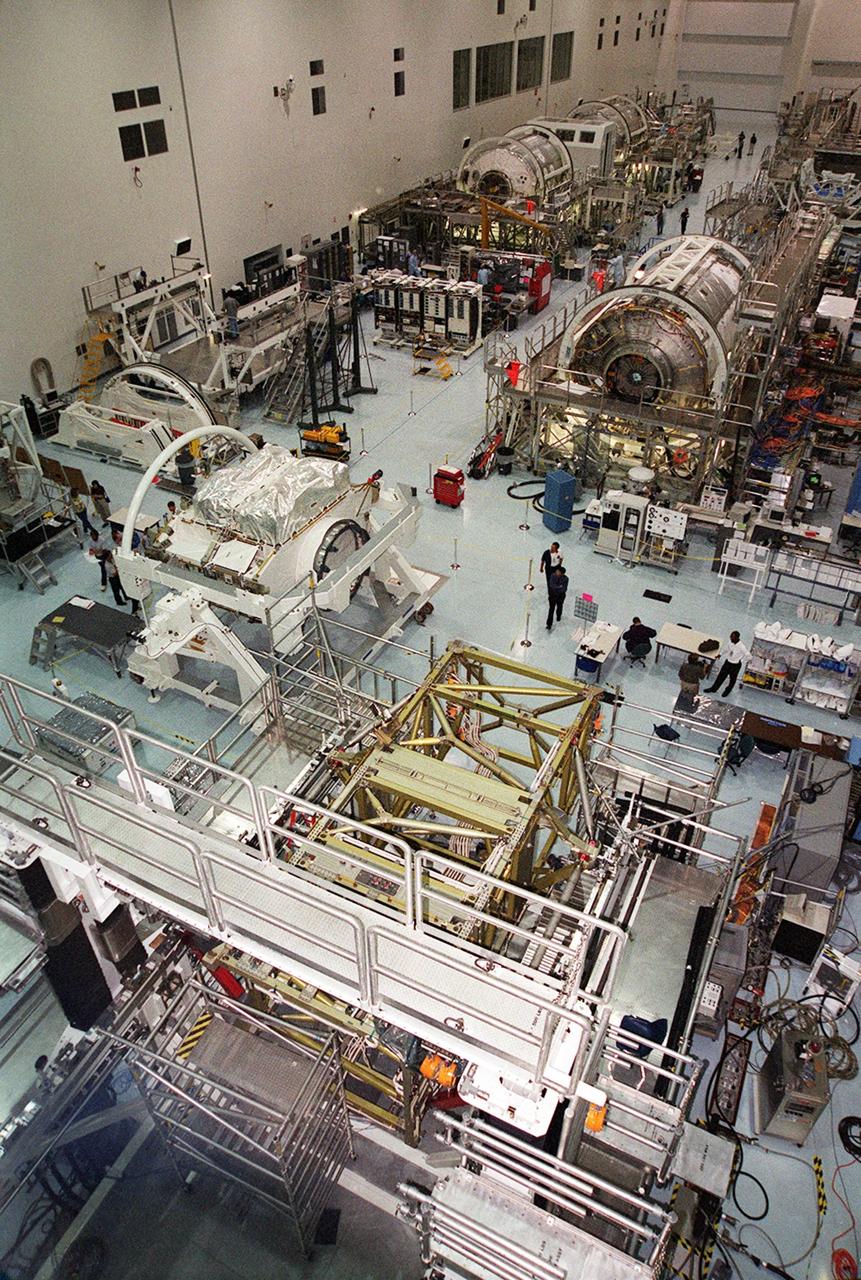
A wide-angle view of the floor of the Space Station Processing Facility. The floor is filled with racks and hardware for processing and testing the various components of the International Space Station (ISS). At center left is the Zenith-1 (Z-1) Truss, the cornerstone truss of the Space Station. The Z-1 Truss was officially turned over to NASA from The Boeing Co. on July 31. It is scheduled to fly in Space Shuttle Discovery's payload pay on STS-92 targeted for launch Oct. 5, 2000. The Z-1 is considered a cornerstone truss because it carries critical components of the Station's attitude, communications, thermal and power control systems as well as four control moment gyros, high and low gain antenna systems, and two plasma contactor units used to disperse electrical charge build-ups. The Z-1 truss and a Pressurized Mating Adapter (PMA-3), also flying to the Station on the same mission, will be the first major U.S. elements flown to the ISS aboard the Shuttle since the launch of the Unity element in December 1998. The large module in the upper right hand corner of the floor is the U.S. Lab, Destiny. Expected to be a major feature in future research, Destiny will provide facilities for biotechnology, fluid physics, combustion, and life sciences research. It is scheduled to be launched on mission STS-98 (no date determined yet for launch)
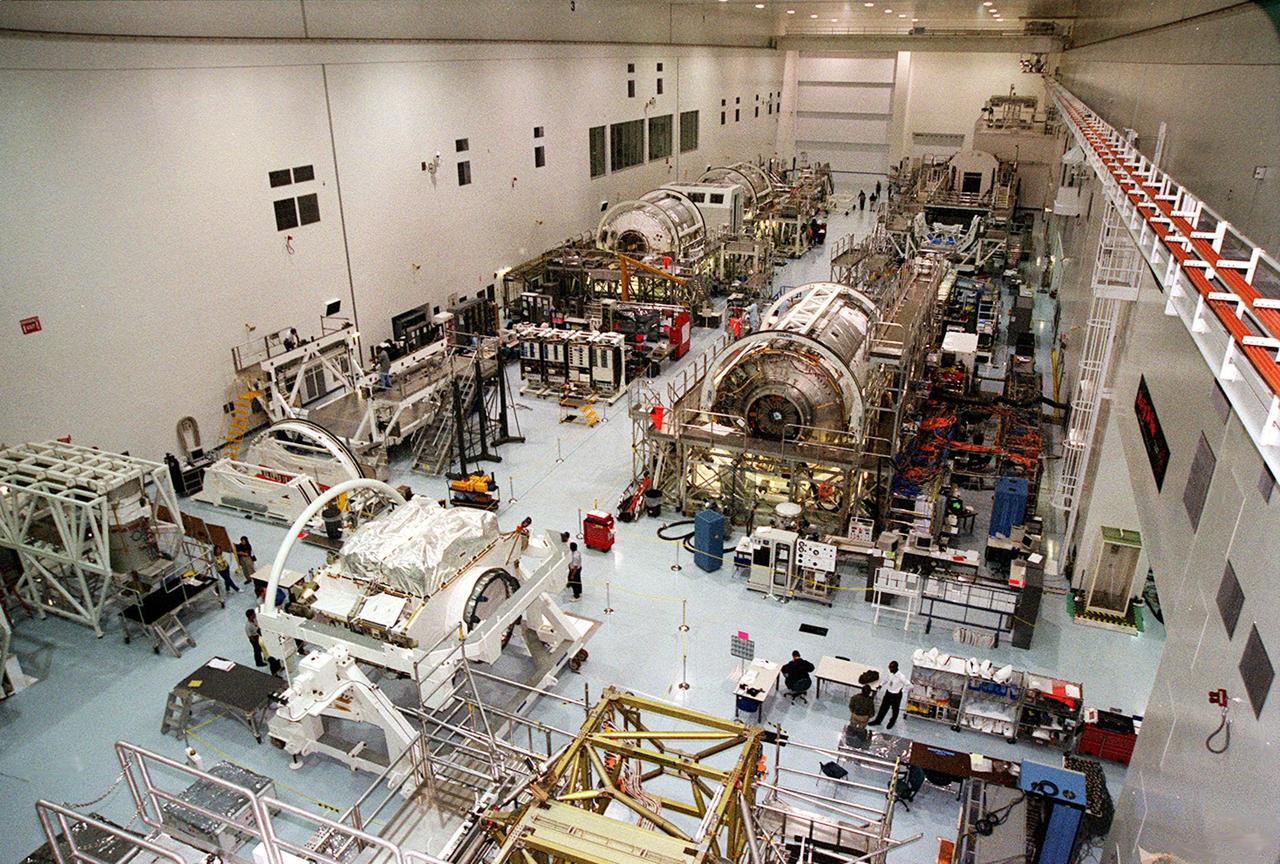
A wide-angle view of the floor of the Space Station Processing Facility. The floor is filled with racks and hardware for processing and testing the various components of the International Space Station (ISS). At the bottom left is the Zenith-1 (Z-1) Truss, the cornerstone truss of the Space Station. The Z-1 Truss was officially turned over to NASA from The Boeing Co. on July 31. The truss is scheduled to fly in Space Shuttle Discovery's payload pay on STS-92 targeted for launch Oct. 5, 2000. The Z-1 is considered a cornerstone truss because it carries critical components of the Station's attitude, communications, thermal and power control systems as well as four control moment gyros, high and low gain antenna systems, and two plasma contactor units used to disperse electrical charge build-ups. The Z-1 truss and a Pressurized Mating Adapter (PMA-3), also flying to the Station on the same mission, will be the first major U.S. elements flown to the ISS aboard the Shuttle since the launch of the Unity element in December 1998. The large module in the center of the floor is the U.S. Lab, Destiny. Expected to be a major feature in future research, Destiny will provide facilities for biotechnology, fluid physics, combustion, and life sciences research. It is scheduled to be launched on mission STS-98 (no date determined yet for launch)
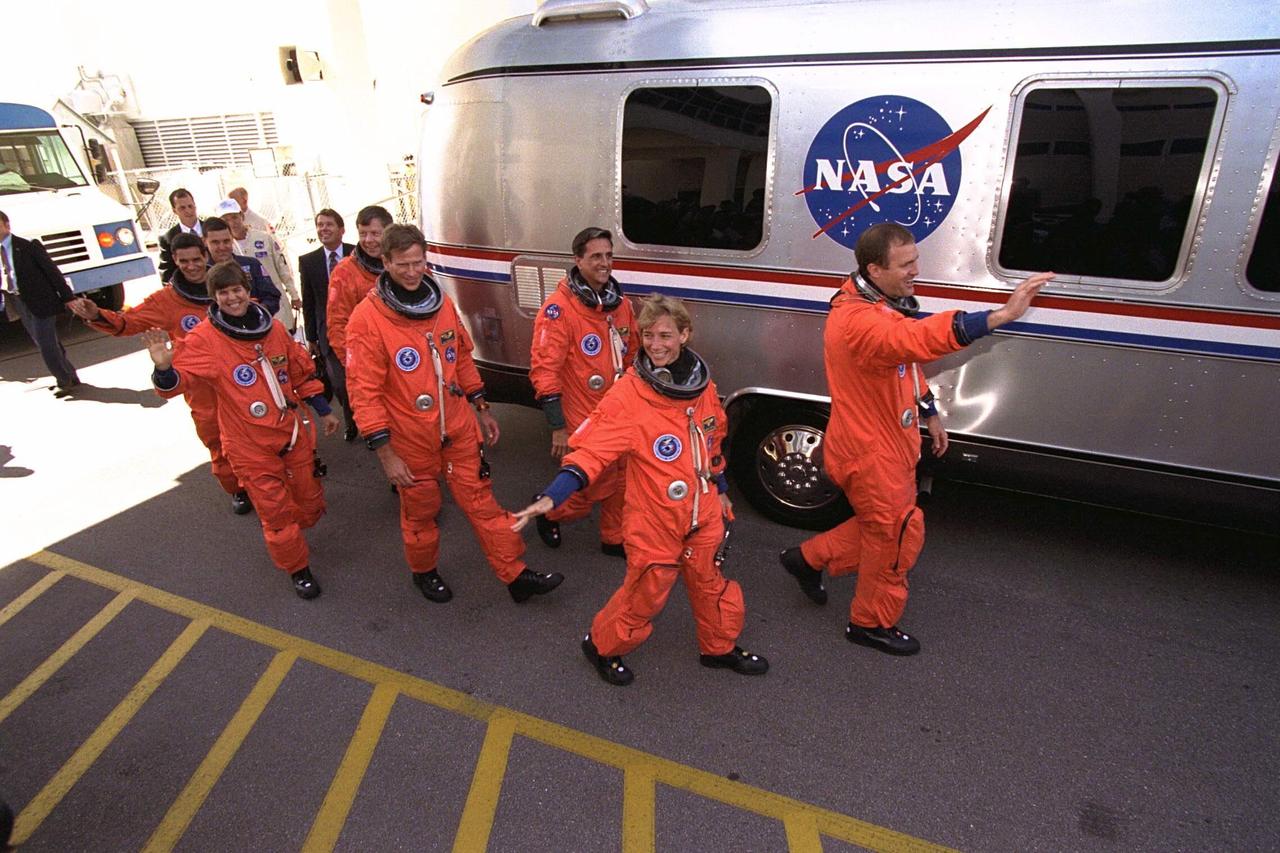
The STS-94 crew walks out of the Operations and Checkout Building and heads for the Astrovan that will transport them to Launch Pad 39A as KSC employees show their support. Waving to the crowd and leading the way are Mission Commander James D. Halsell, Jr. and Pilot Susan L. Still. Behind Still is Mission Specialist Donald A.Thomas, followed by Mission Specialist Michael L. Gernhardt , Payload Commander Janice Voss, and Payload Specialists Roger K.Crouch and Gregory T. Linteris. During the scheduled 16-day Microgravity Science Laboratory-1 (MSL-1) mission, the Spacelab module will be used to test some of the hardware, facilities and procedures that are planned for use on the International Space Station while the flight crew conducts combustion, protein crystal growth and materials processing experiments. Also onboard is the Hitchhiker Cryogenic Flexible Diode (CRYOFD) experiment payload, which is attached to the right side of Columbia’s payload bay.The Space Shuttle Columbia is scheduled to lift off when the launch window opens at 1:50 p.m. EDT, July 1. The launch window was opened 47 minutes early to improve the opportunity to lift off before Florida summer rain showers reached the space center
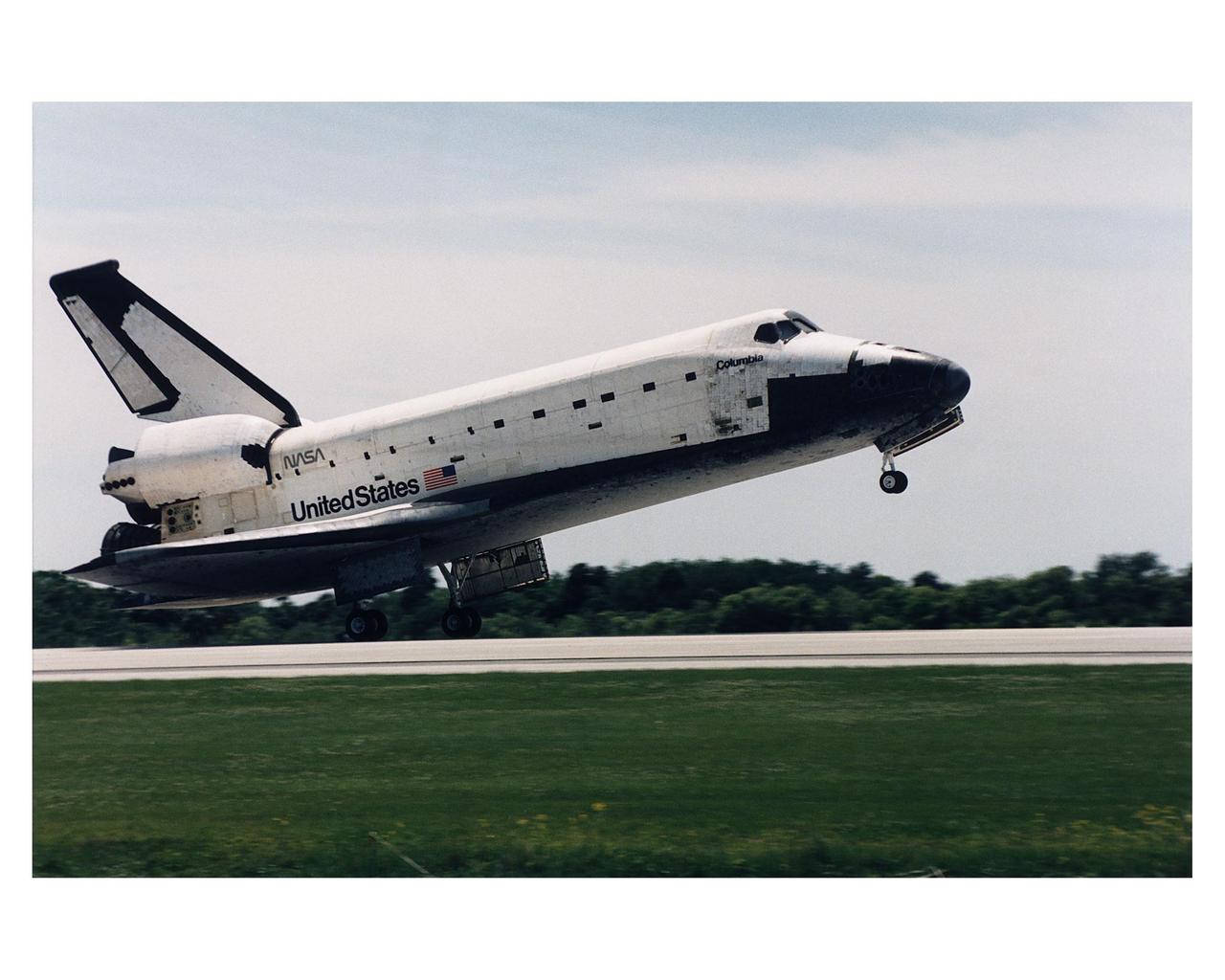
KENNEDY SPACE CENTER, FLA. -- The Space Shuttle Columbia touches down on Runway 33 at KSC's Shuttle Landing Facility at 2:33:11 p.m. EDT, April 8, to conclude the Microgravity Science Laboratory-1 (MSL-1) mission. At main gear touchdown, the STS-83 mission duration was 3 days, 23 hours, 12 minutes. The planned 16-day mission was cut short by a faulty fuel cell. This is only the third time in Shuttle program history that an orbiter was brought home early due to mechanical problems. This was also the 36th KSC landing since the program began in 1981. Mission Commander James D. Halsell, Jr. flew Columbia to a perfect landing with help from Pilot Susan L. Still. Other crew members are Payload Commander Janice E. Voss; Mission Specialists Michael L. Gernhardt and Donald A. Thomas; and Payload Specialists Roger K. Crouch and Gregory T. Linteris. In spite of the abbreviated flight, the crew was able to perform MSL-1 experiments. The Spacelab-module-based experiments were used to test some of the hardware, facilities and procedures that are planned for use on the International Space Station and to conduct combustion, protein crystal growth and materials processing investigations
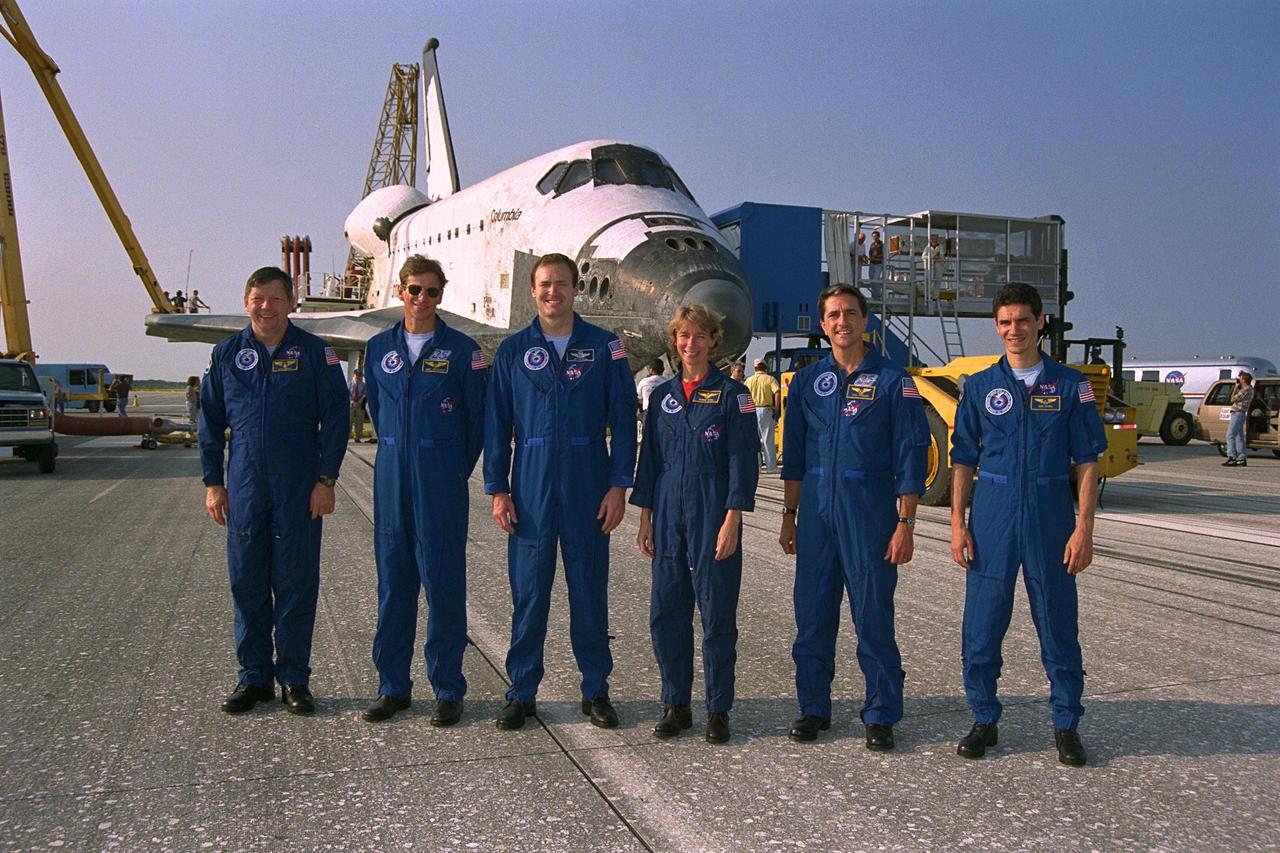
KENNEDY SPACE CENTER, FLA. -- The STS-94 flight crew poses in front of the Space Shuttle orbiter Columbia after an end-of-mission landing on Runway 33 at KSC’s Shuttle Landing Facility July 17 to complete the Microgravity Science Laboratory-1 (MSL-1) mission. They are (from left): Payload Specialist Roger K. Crouch; Mission Specialist Michael L. Gernhardt; Mission Commander James D. Halsell Jr.; Pilot Susan L. Still; Mission Specialist Donald A. Thomas; and Payload Specialist Gregory T. Linteris. Not shown is Payload Commander Janice Voss. During the 15-day, 16-hour spaceflight, the MSL-1 Spacelab module was used to test some of the hardware, facilities and procedures that are planned for use on the International Space Station; the flight crew also conducted combustion, protein crystal growth and materials processing experiments. This mission was a reflight of the STS-83 mission earlier this year that was cut short due to indications of a faulty fuel cell
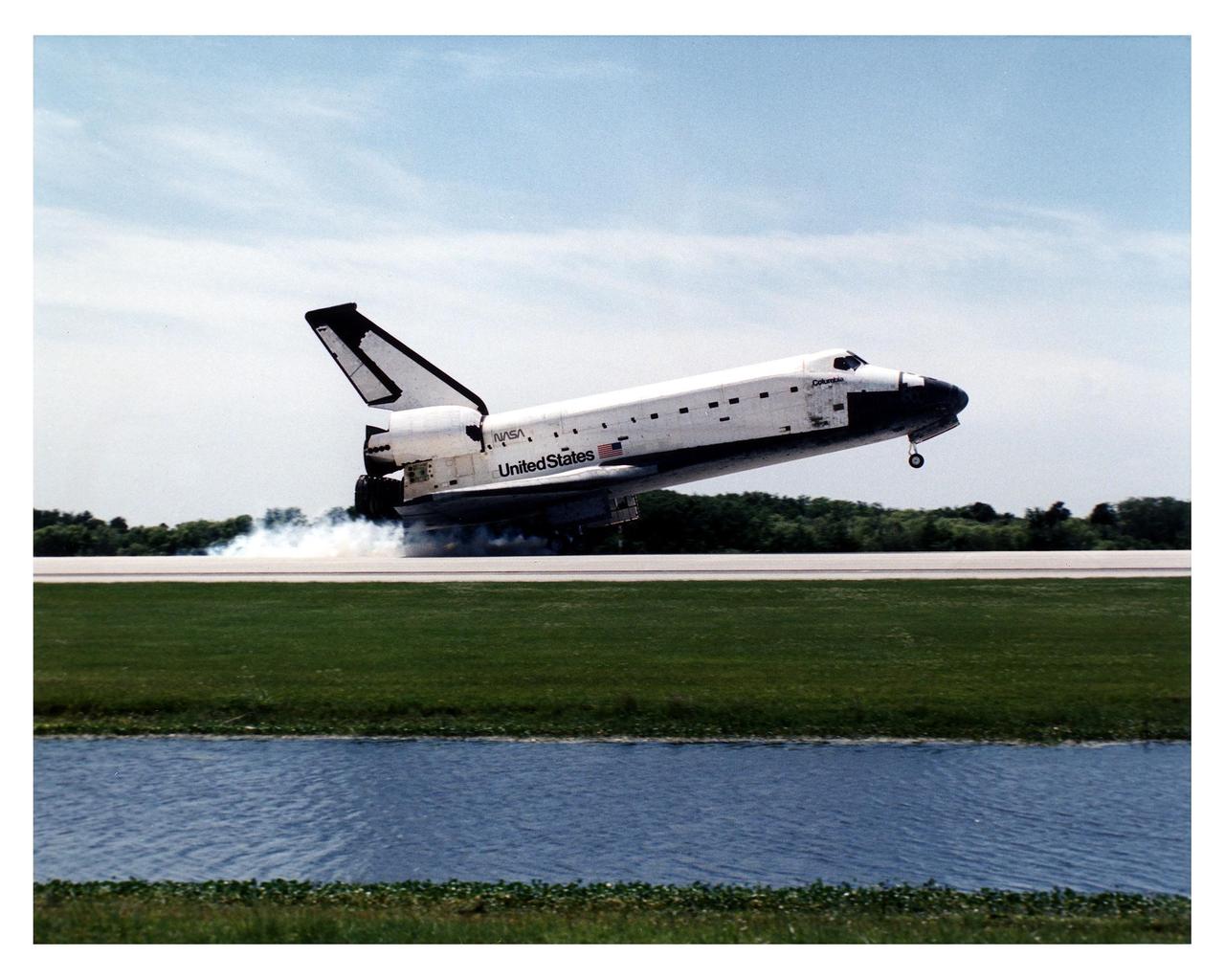
KENNEDY SPACE CENTER, FLA. -- The Space Shuttle Columbia touches down on Runway 33 at KSC's Shuttle Landing Facility at 2:33:11 p.m. EDT, April 8, to conclude the Microgravity Science Laboratory-1 (MSL-1) mission. At main gear touchdown, the STS-83 mission duration was 3 days, 23 hours, 12 minutes. The planned 16-day mission was cut short by a faulty fuel cell. This is only the third time in Shuttle program history that an orbiter was brought home early due to mechanical problems. This was also the 36th KSC landing since the program began in 1981. Mission Commander James D. Halsell, Jr. flew Columbia to a perfect landing with help from Pilot Susan L. Still. Other crew members are Payload Commander Janice E. Voss; Mission Specialists Michael L. Gernhardt and Donald A. Thomas; and Payload Specialists Roger K. Crouch and Gregory T. Linteris. In spite of the abbreviated flight, the crew was able to perform MSL-1 experiments. The Spacelab-module-based experiments were used to test some of the hardware, facilities and procedures that are planned for use on the International Space Station and to conduct combustion, protein crystal growth and materials processing investigations
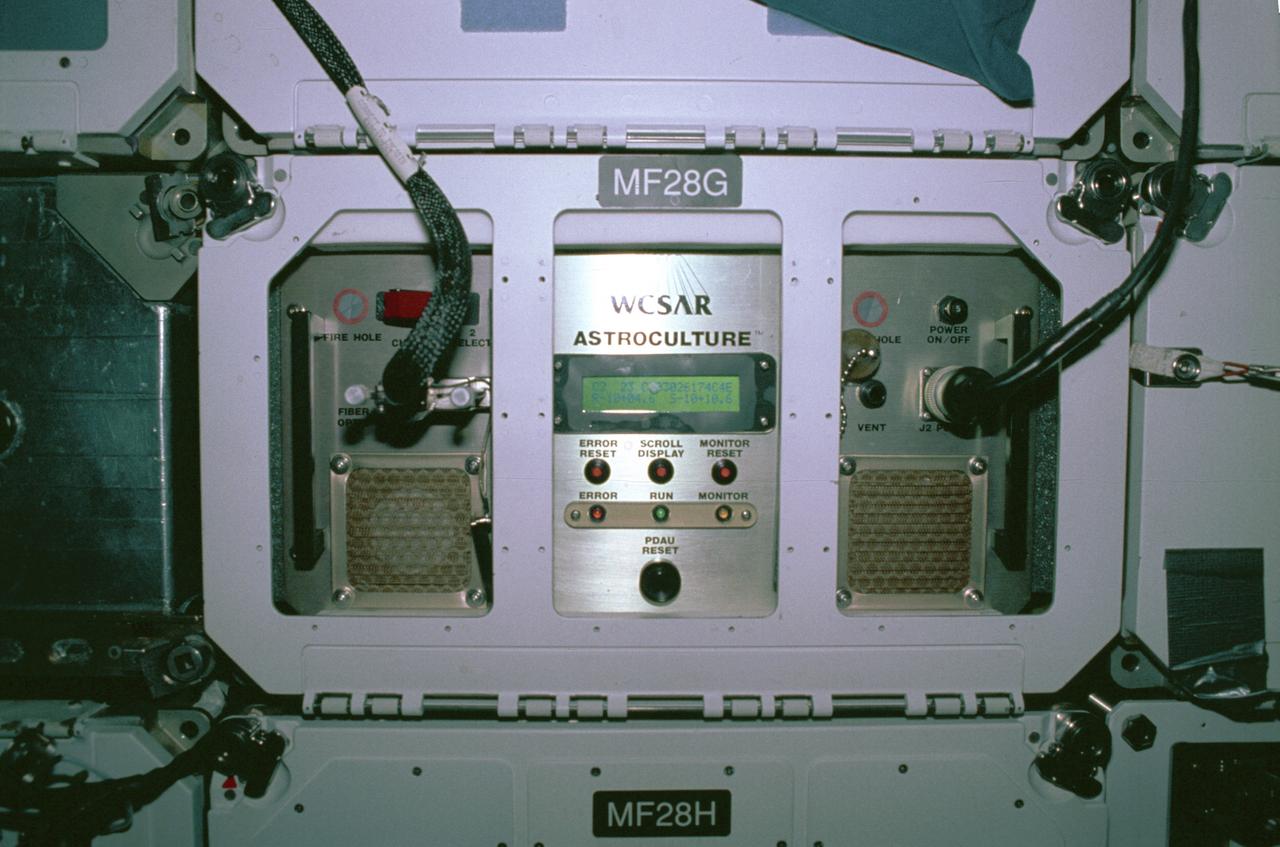
The first United States Microgravity Laboratory (USML-1) was one of NASA's science and technology programs that provided scientists an opportunity to research various scientific investigations in a weightless environment inside the Spacelab module. It also provided demonstrations of new equipment to help prepare for advanced microgravity research and processing aboard the Space Station. The USML-1 flew in orbit for extended periods, providing greater opportunities for research in materials science, fluid dynamics, biotechnology (crystal growth), and combustion science. This is a close-up view of the Astroculture experiment rack in the middeck of the orbiter. The Astroculture experiment was to evaluate and find effective ways to supply nutrient solutions for optimizing plant growth and avoid releasing solutions into the crew quarters in microgravity. Since fluids behave differently in microgravity, plant watering systems that operate well on Earth do not function effectively in space. Plants can reduce the costs of providing food, oxygen, and pure water, as well as lower the costs of removing carbon dioxide in human space habitats. The USML-1 flew aboard the STS-50 mission on June 1992 and was managed by the Marshall Space Flight Center.
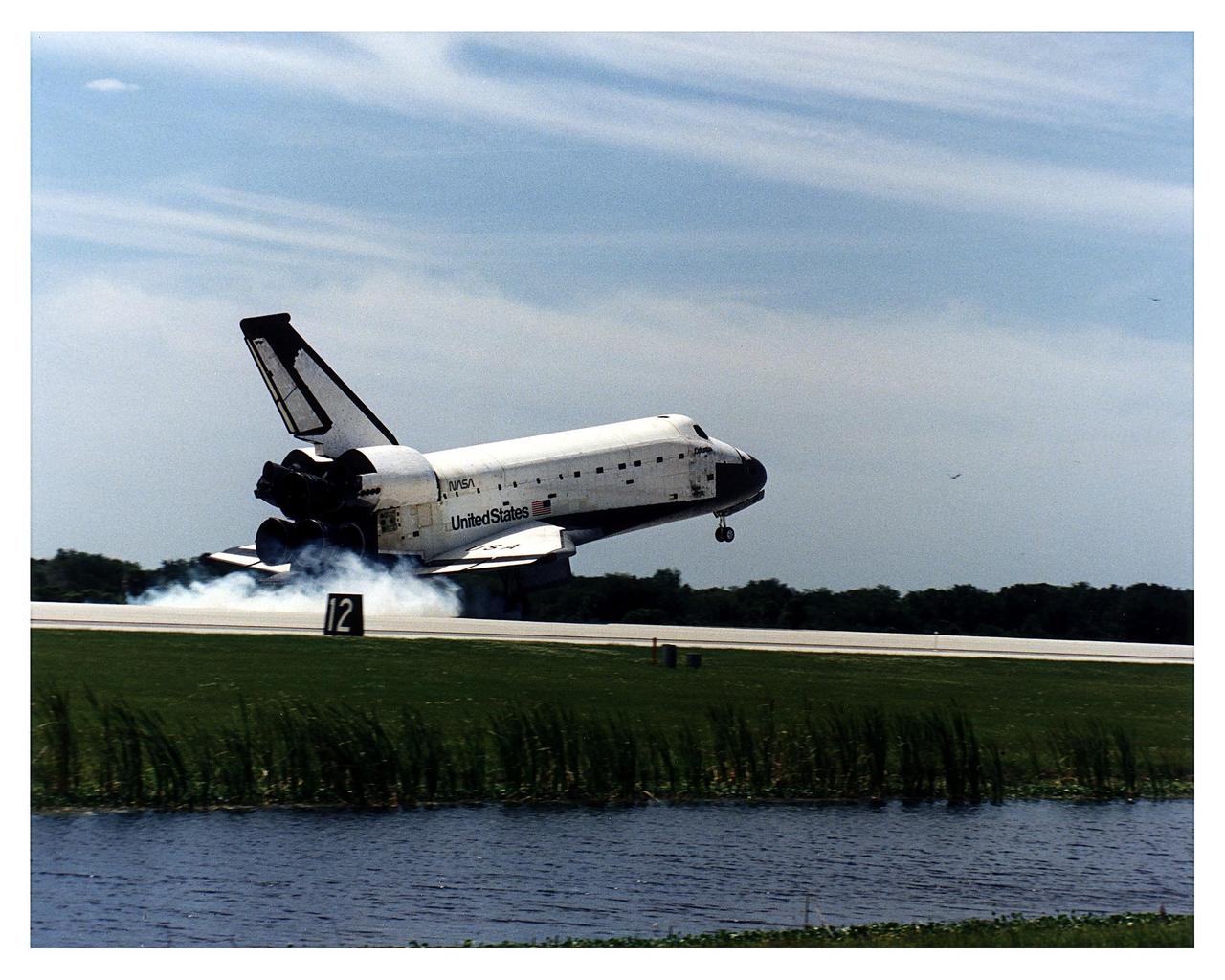
KENNEDY SPACE CENTER, FLA. -- The Space Shuttle Columbia touches down on Runway 33 at KSC's Shuttle Landing Facility at 2:33:11 p.m. EDT, April 8, to conclude the Microgravity Science Laboratory-1 (MSL-1) mission. At main gear touchdown, the STS-83 mission duration was 3 days, 23 hours, 12 minutes. The planned 16-day mission was cut short by a faulty fuel cell. This is only the third time in Shuttle program history that an orbiter was brought home early due to mechanical problems. This was also the 36th KSC landing since the program began in 1981. Mission Commander James D. Halsell, Jr. flew Columbia to a perfect landing with help from Pilot Susan L. Still. Other crew members are Payload Commander Janice E. Voss; Mission Specialists Michael L. Gernhardt and Donald A. Thomas; and Payload Specialists Roger K. Crouch and Gregory T. Linteris. In spite of the abbreviated flight, the crew was able to perform MSL-1 experiments. The Spacelab-module-based experiments were used to test some of the hardware, facilities and procedures that are planned for use on the International Space Station and to conduct combustion, protein crystal growth and materials processing investigations
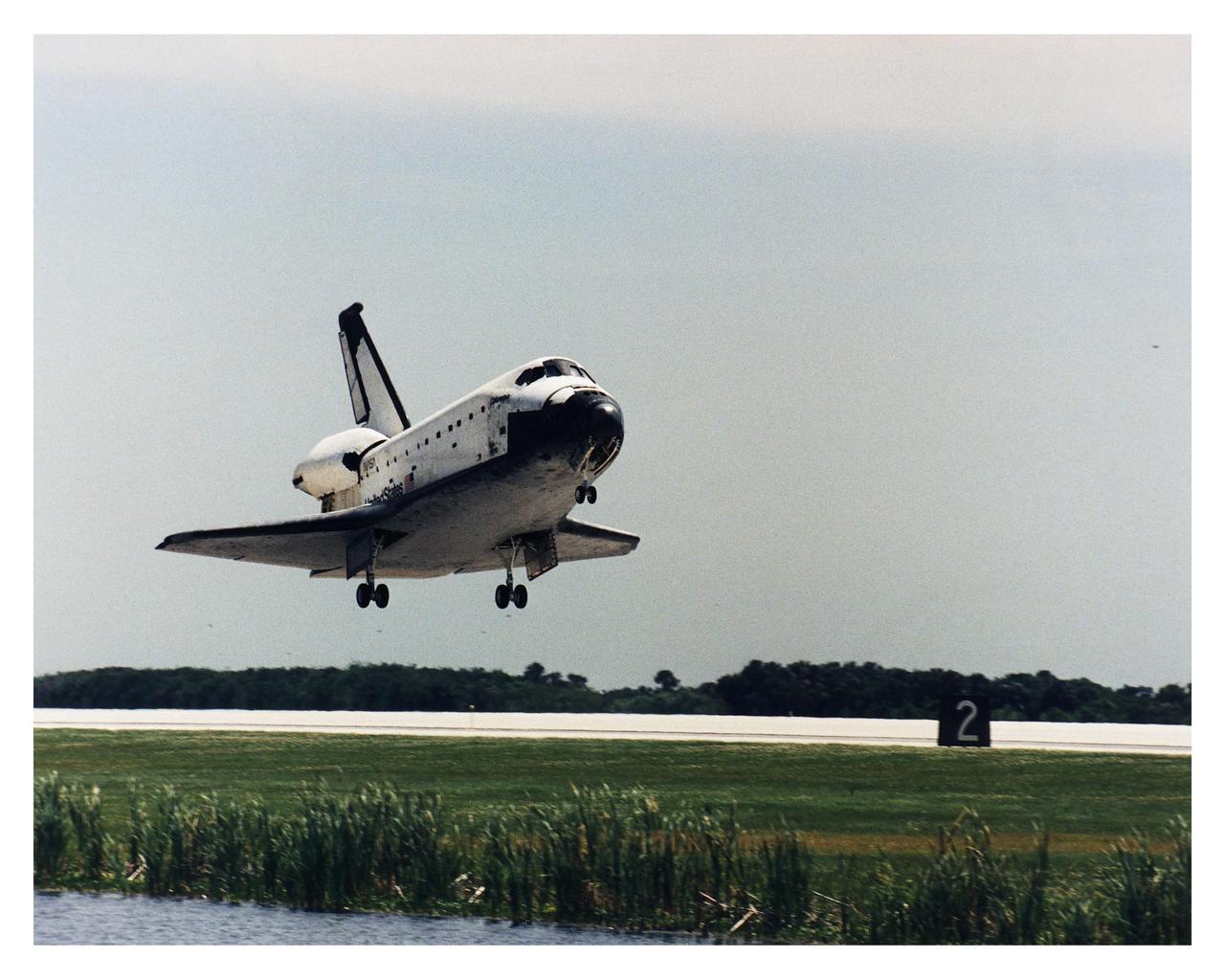
KENNEDY SPACE CENTER, FLA. -- The Space Shuttle Columbia prepares to touch down on Runway 33 at KSC's Shuttle Landing Facility at approximately 2:33 p.m. EDT, April 8, to conclude the Microgravity Science Laboratory-1 (MSL-1) mission. At main gear touchdown, the STS-83 mission duration will be just under four days. The planned 16-day mission was cut short by a faulty fuel cell. This is only the third time in Shuttle program history that an orbiter was brought home early due to mechanical problems. This was also the 36th KSC landing since the program began in 1981. Mission Commander James D. Halsell, Jr. flew Columbia to a perfect landing with help from Pilot Susan L. Still. Other crew members are Payload Commander Janice E. Voss; Mission Specialists Michael L.Gernhardt and Donald A. Thomas; and Payload Specialists Roger K. Crouch and Gregory T. Linteris. In spite of the abbreviated flight, the crew was able to perform MSL-1 experiments. The Spacelab-module-based experiments were used to test some of the hardware, facilities and procedures that are planned for use on the International Space Station and to conduct combustion, protein crystal growth and materials processing investigations
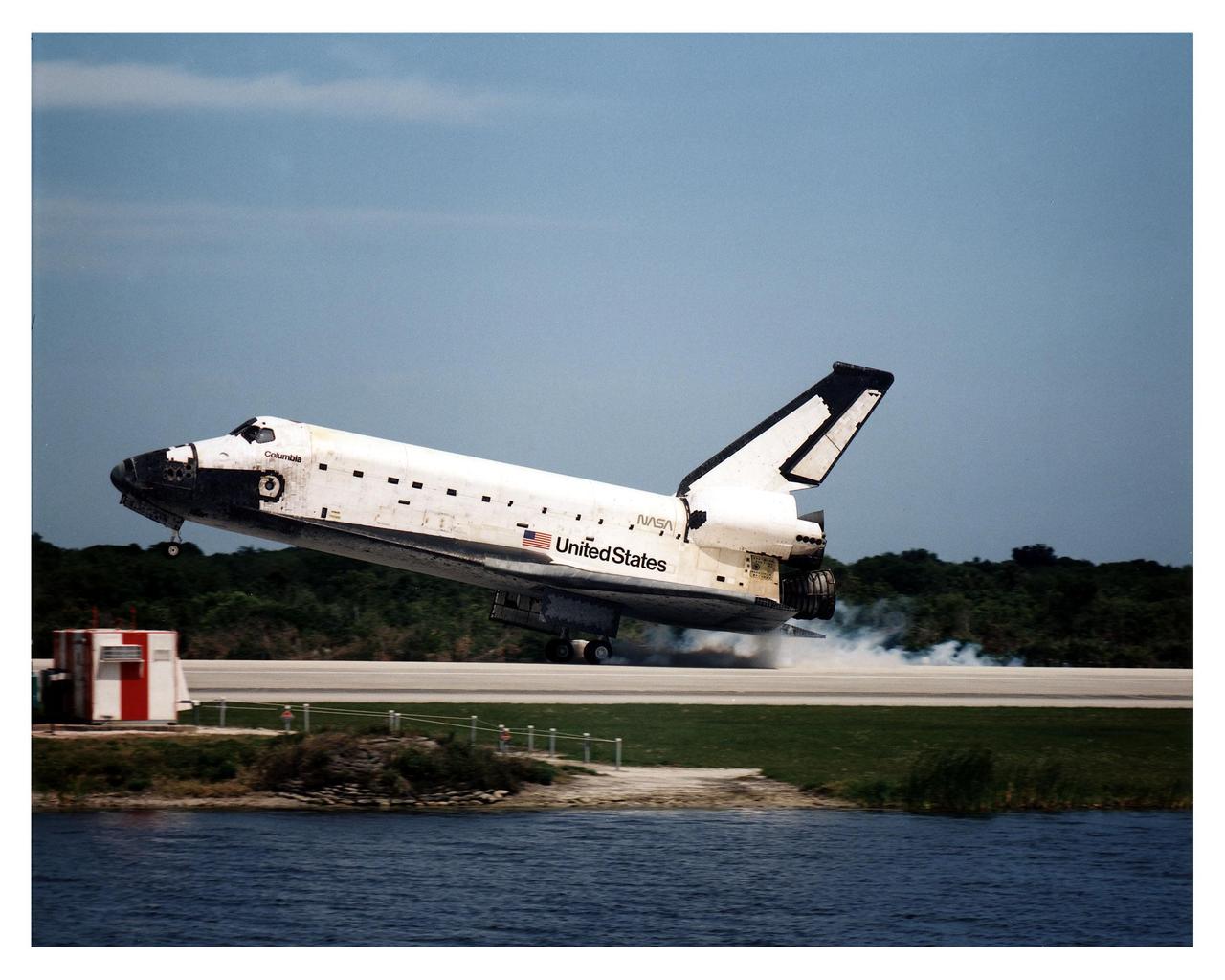
KENNEDY SPACE CENTER, FLA. -- The Space Shuttle Columbia touches down on Runway 33 at KSC's Shuttle Landing Facility at 2:33:11 p.m. EDT, April 8, to conclude the Microgravity Science Laboratory-1 (MSL-1) mission. At main gear touchdown, the STS-83 mission duration was 3 days, 23 hours, 12 minutes. The planned 16-day mission was cut short by a faulty fuel cell. This is only the third time in Shuttle program history that an orbiter was brought home early due to mechanical problems. This was also the 36th KSC landing since the program began in 1981. Mission Commander James D. Halsell, Jr. flew Columbia to a perfect landing with help from Pilot Susan L. Still. Other crew members are Payload Commander Janice E. Voss; Mission Specialists Michael L. Gernhardt and Donald A. Thomas; and Payload Specialists Roger K. Crouch and Gregory T. Linteris. In spite of the abbreviated flight, the crew was able to perform MSL-1 experiments. The Spacelab-module-based experiments were used to test some of the hardware, facilities and procedures that are planned for use on the International Space Station and to conduct combustion, protein crystal growth and materials processing investigations
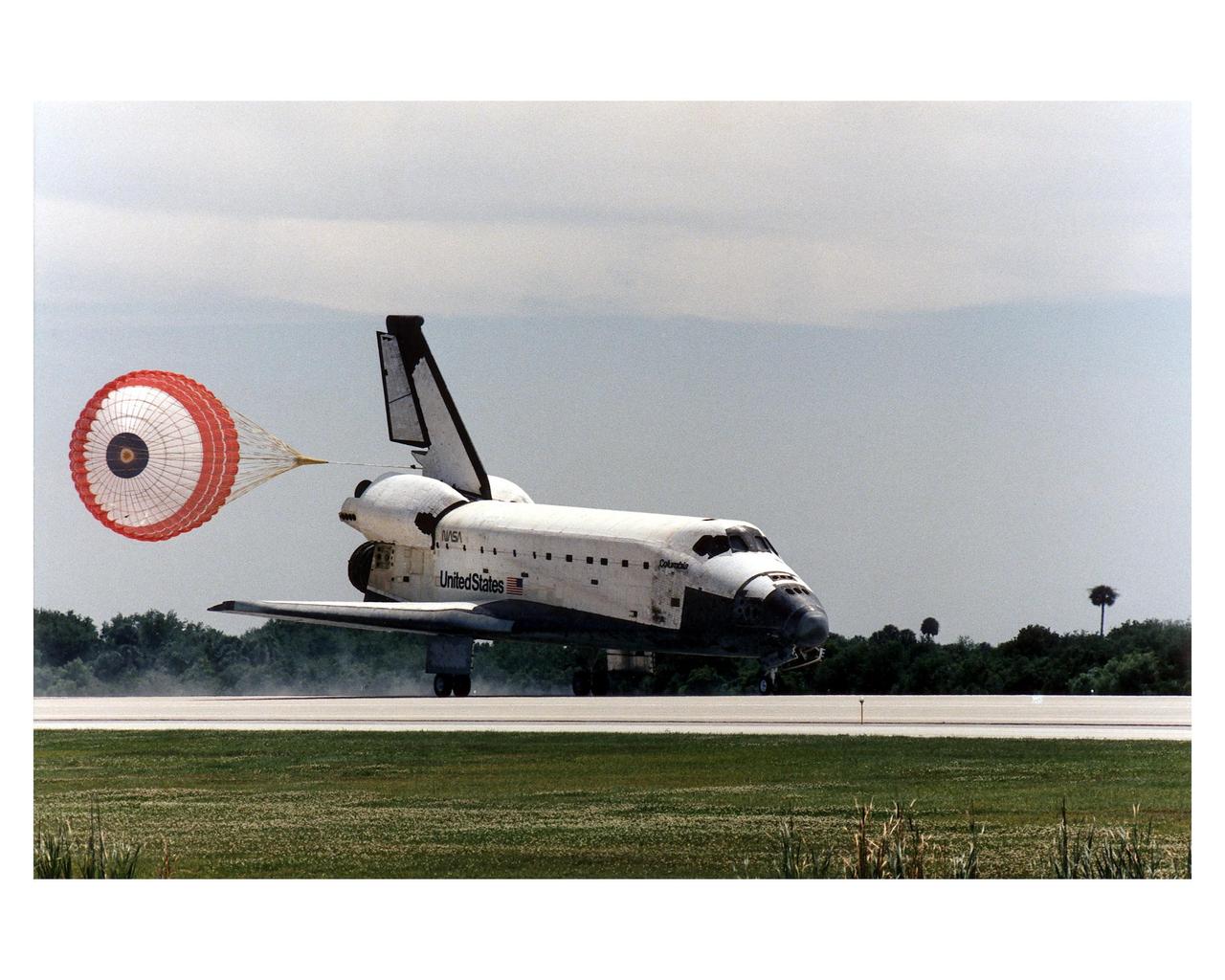
KENNEDY SPACE CENTER, FLA. -- With drag chute deployed, the Space Shuttle Columbia hurtles down Runway 33 at KSCþs Shuttle Landing Facility to conclude the Microgravity Science Laboratory-1 (MSL-1) mission. With main gear touchdown at 2:33:11 p.m. EDT, April 8, the STS-83 mission duration was 3 days, 23 hours, 12 minutes. The planned 16-day mission was cut short by a faulty fuel cell. This is only the third time in Shuttle program history that an orbiter was brought home early due to a mechanical problem. This was also the 36th KSC landing since the program began in 1981. Mission Commander James D. Halsell, Jr. flew Columbia to a perfect landing with help from Pilot Susan L. Still. Other crew members are Payload Commander Janice E. Voss; Mission Specialists Michael L.Gernhardt and Donald A. Thomas; and Payload Specialists Roger K. Crouch and Gregory T. Linteris. In spite of the abbreviated flight, the crew was able to perform MSL-1 experiments. The Spacelab-module-based experiments were used to test some of the hardware, facilities and procedures that are planned for use on the International Space Station and to conduct combustion, protein crystal growth and materials processing investigations

KENNEDY SPACE CENTER, FLA. -- With drag chute deployed, the Space Shuttle Columbia hurtles down Runway 33 at KSC's Shuttle Landing Facility to conclude the Microgravity Science Laboratory-1 (MSL-1) mission. With main gear touchdown at 2:33:11 p.m. EDT, April 8, the STS-83 mission duration was 3 days, 23 hours, 12 minutes. The planned 16-day mission was cut short by a faulty fuel cell. This is only the third time in Shuttle program history that an orbiter was brought home early due to a mechanical problem. This was also the 36th KSC landing since the program began in 1981. Mission Commander James D. Halsell, Jr. flew Columbia to a perfect landing with help from Pilot Susan L. Still. Other crew members are Payload Commander Janice E. Voss; Mission Specialists Michael L.Gernhardt and Donald A. Thomas; and Payload Specialists Roger K. Crouch and Gregory T. Linteris. In spite of the abbreviated flight, the crew was able to perform MSL-1 experiments. The Spacelab-module-based experiments were used to test some of the hardware, facilities and procedures that are planned for use on the International Space Station and to conduct combustion, protein crystal growth and materials processing investigations
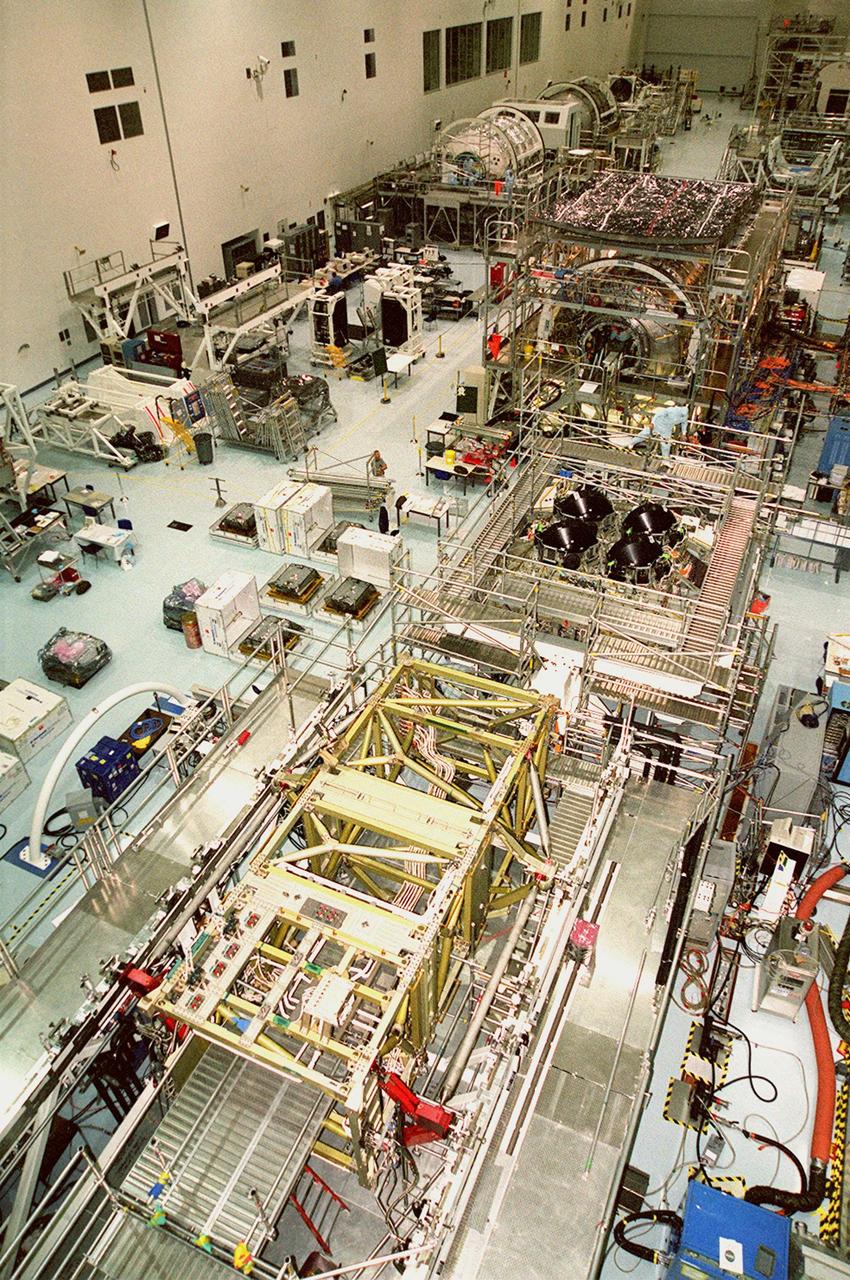
KENNEDY SPACE CENTER, FLA. -- The floor of the Space Station Processing Facility is filled with racks and hardware for testing the various components of the International Space Station (ISS). The large module in the center of the floor (top) is the U.S. Lab, Destiny. The U.S. Laboratory module continues a long tradition of microgravity materials research, first conducted by Skylab and later Shuttle and Spacelab missions. Destiny is expected to be a major feature in future research, providing facilities for biotechnology, fluid physics, combustion, and life sciences research. It is scheduled to be launched on mission STS-98 (no date determined yet for launch). At top left are the Multi-Purpose Logistics Modules Raffaello and Leonardo and the Pressurized Mating Adapter-3 (PMA-3). Italy's major contributions to the ISS program, Raffaello and Leonardo are reusable logistics carriers to resupply and return Station cargo requiring a pressurized environment. They are slated as payloads on missions STS-102 and STS-100, respectively. Dates have not yet been determined for the two missions. The PMA-3, once launched, will be mated to Node 1, a connecting passageway to the living and working areas of the Space Station. The primary purpose of PMA-3 is to serve as a Shuttle docking port through which crew members and equipment will transfer to the Space Station during later assembly missions. PMA-3 is scheduled as payload on mission STS-92, whose date for launch is not yet determined
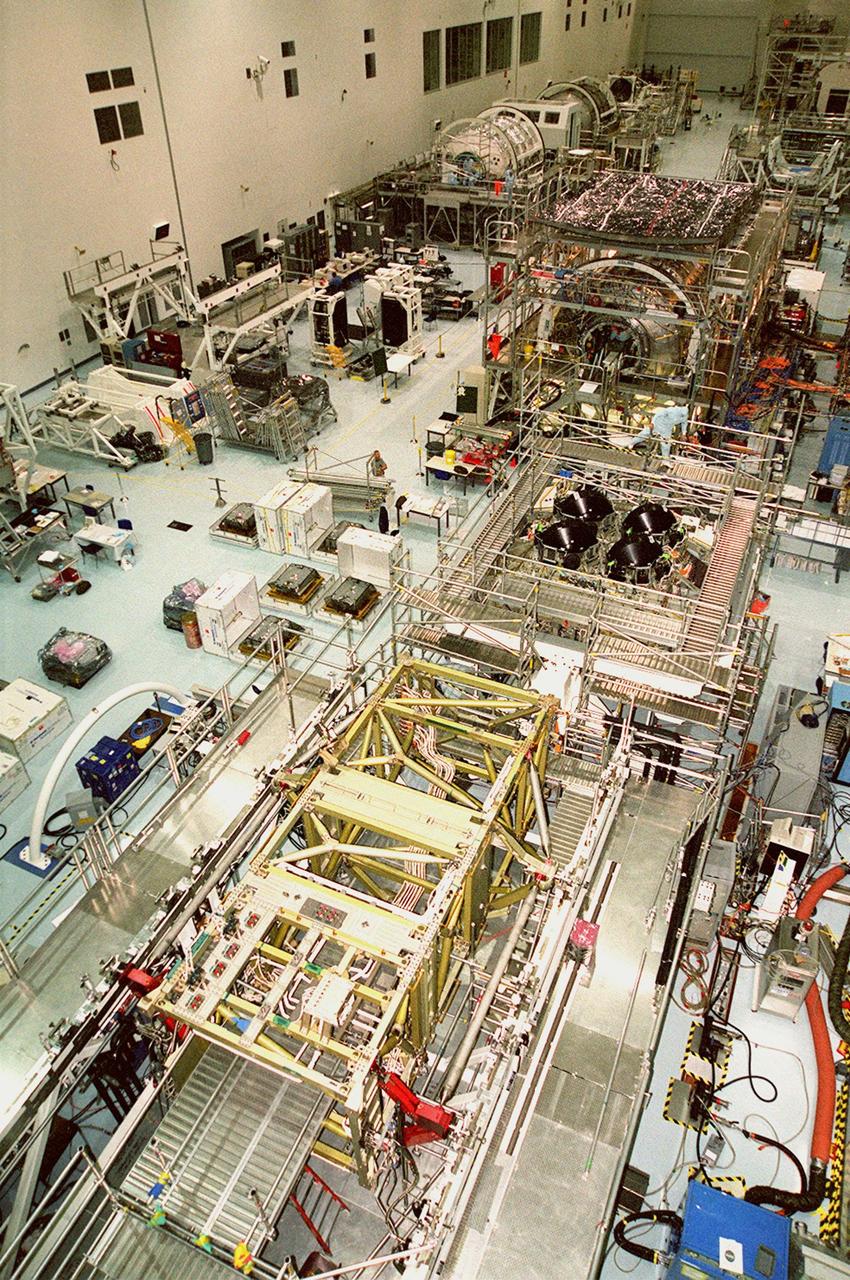
KENNEDY SPACE CENTER, FLA. -- The floor of the Space Station Processing Facility is filled with racks and hardware for testing the various components of the International Space Station (ISS). The large module in the center of the floor (top) is the U.S. Lab, Destiny. The U.S. Laboratory module continues a long tradition of microgravity materials research, first conducted by Skylab and later Shuttle and Spacelab missions. Destiny is expected to be a major feature in future research, providing facilities for biotechnology, fluid physics, combustion, and life sciences research. It is scheduled to be launched on mission STS-98 (no date determined yet for launch). At top left are the Multi-Purpose Logistics Modules Raffaello and Leonardo and the Pressurized Mating Adapter-3 (PMA-3). Italy's major contributions to the ISS program, Raffaello and Leonardo are reusable logistics carriers to resupply and return Station cargo requiring a pressurized environment. They are slated as payloads on missions STS-102 and STS-100, respectively. Dates have not yet been determined for the two missions. The PMA-3, once launched, will be mated to Node 1, a connecting passageway to the living and working areas of the Space Station. The primary purpose of PMA-3 is to serve as a Shuttle docking port through which crew members and equipment will transfer to the Space Station during later assembly missions. PMA-3 is scheduled as payload on mission STS-92, whose date for launch is not yet determined
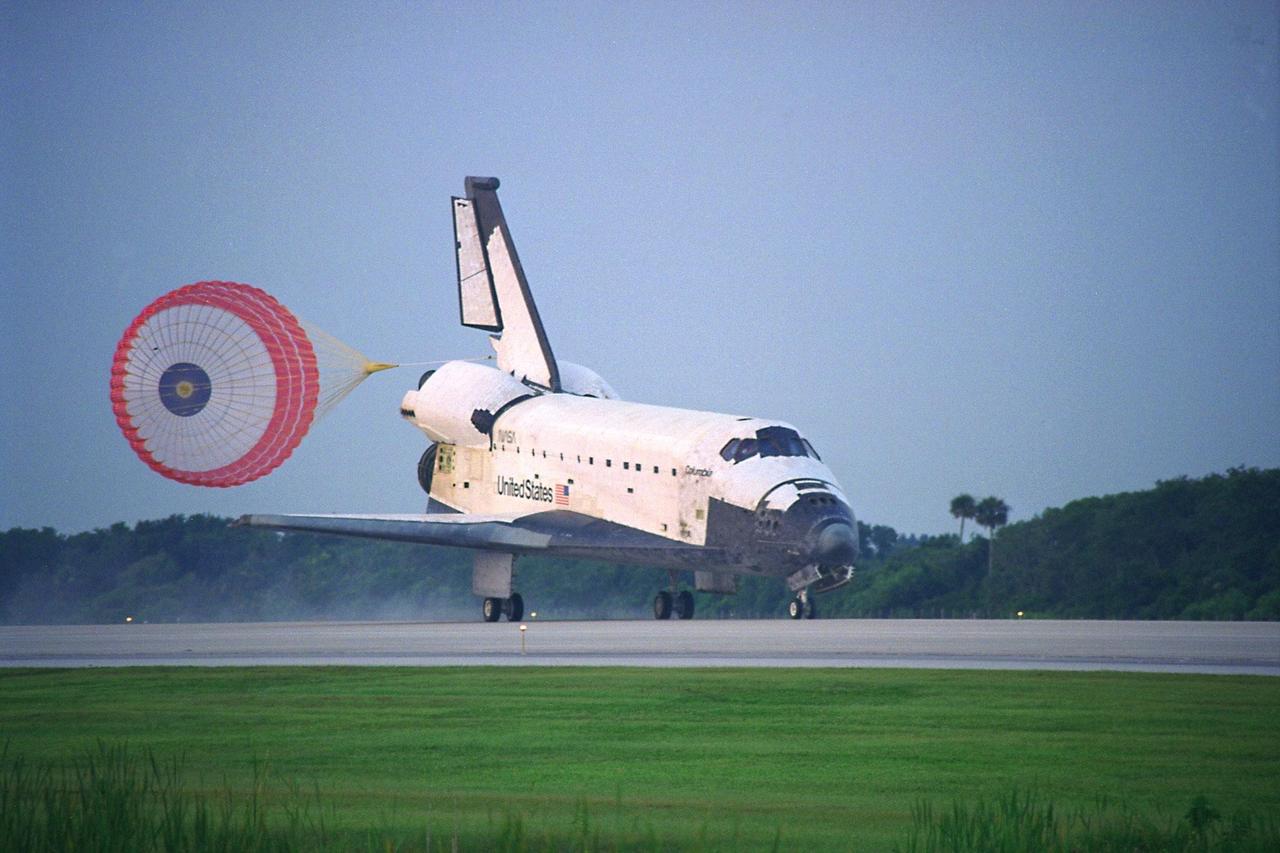
KENNEDY SPACE CENTER, FLA. -- With its drag chute deployed, the Space Shuttle Orbiter Columbia touches down on Runway 33 at KSC’s Shuttle Landing Facility at 6:46:34 a.m. EDT with Mission Commander James D. Halsell Jr. and Pilot Susan L. Still at the controls to complete the STS-94 mission. Also on board are Mission Specialist Donald A. Thomas, Mission Specialist Michael L. Gernhardt , Payload Commander Janice Voss, and Payload Specialists Roger K. Crouch and Gregory T. Linteris. Mission elapsed time for STS-94 was 15 days,16 hours, 44 seconds. During the Microgravity Science Laboratory-1 (MSL-1) mission, the Spacelab module was used to test some of the hardware, facilities and procedures that are planned for use on the International Space Station while the flight crew conducted combustion, protein crystal growth and materials processing experiments. This mission was a reflight of the STS-83 mission that lifted off from KSC in April of this year. That space flight was cut short due to indications of a faulty fuel cell. This was Columbia’s 11th landing at KSC and the 38th landing at the space center in the history of the Shuttle program
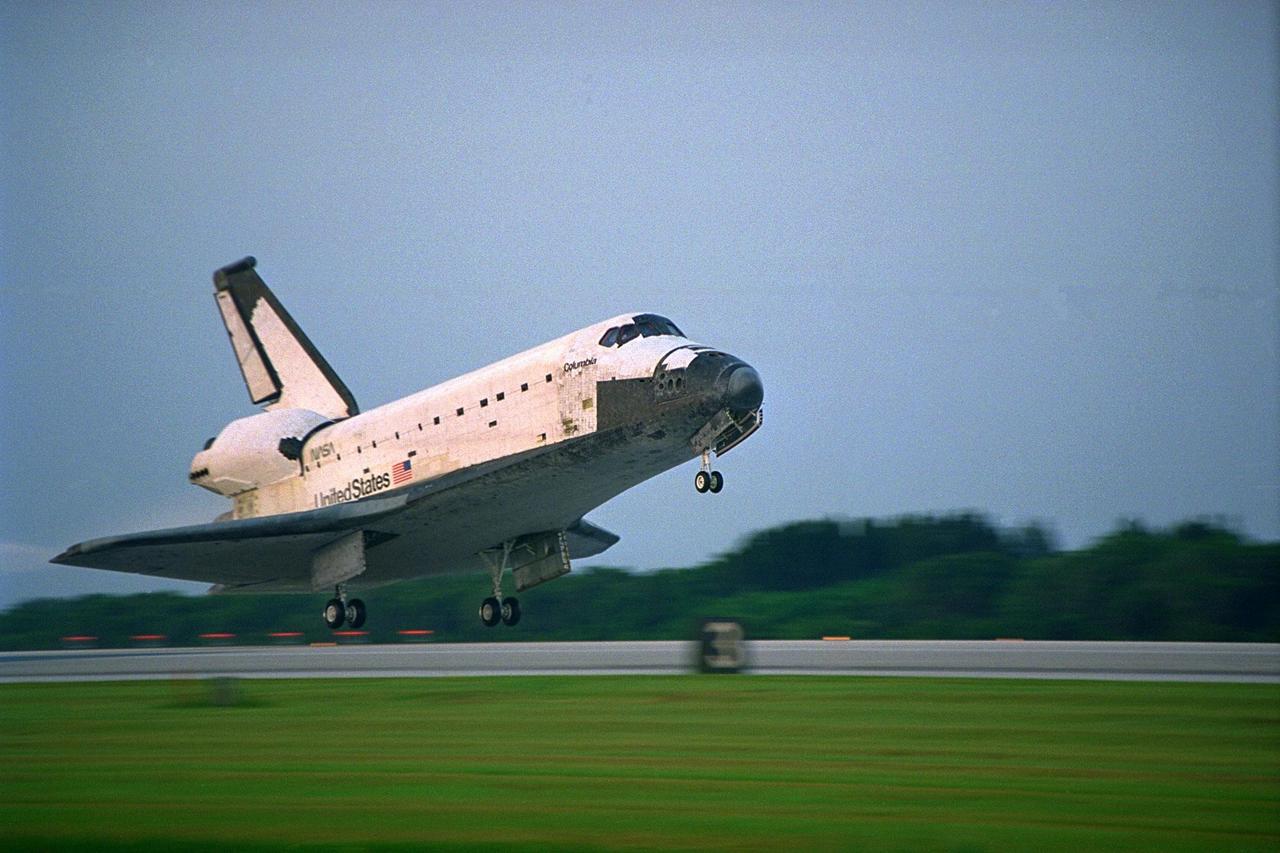
KENNEDY SPACE CENTER, FLA. -- The Space Shuttle orbiter Columbia touches down on Runway 33 at KSC’s Shuttle Landing Facility at 6:46:34 a.m. EDT with Mission Commander James D. Halsell Jr. and Pilot Susan L. Still at the controls to complete the STS-94 mission. Also on board are Mission Specialist Donald A. Thomas, Mission Specialist Michael L. Gernhardt, Payload Commander Janice Voss, and Payload Specialists Roger K. Crouch and Gregory T. Linteris. During the Microgravity Science Laboratory-1 (MSL-1) mission, the Spacelab module was used to test some of the hardware, facilities and procedures that are planned for use on the International Space Station while the flight crew conducted combustion, protein crystal growth and materials processing experiments. This mission was a reflight of the STS-83 mission that lifted off from KSC in April of this year. That space flight was cut short due to indications of a faulty fuel cell. This was Columbia’s 11th landing at KSC and the 38th landing at the space center in the history of the Shuttle program

KENNEDY SPACE CENTER, FLA. -- Framed by the Vehicle Assembly Building at right and the Mate-Demate Device at left, the Space Shuttle orbiter Columbia glides onto Runway 33 at KSC’s Shuttle Landing Facility at 6:46:34 a.m. EDT with Mission Commander James D. Halsell Jr. and Pilot Susan L. Still at the controls to complete the STS-94 mission. Also on board are Mission Specialist Donald A. Thomas, Mission Specialist Michael L. Gernhardt, Payload Commander Janice Voss, and Payload Specialists Roger K. Crouch and Gregory T. Linteris. During the Microgravity Science Laboratory-1 (MSL-1) mission, the Spacelab module was used to test some of the hardware, facilities and procedures that are planned for use on the International Space Station while the flight crew conducted combustion, protein crystal growth and materials processing experiments. This mission was a reflight of the STS-83 mission that lifted off from KSC in April of this year. That space flight was cut short due to indications of a faulty fuel cell. This was Columbia’s 11th landing at KSC and the 38th landing at the space center in the history of the Shuttle program

KENNEDY SPACE CENTER, FLA. -- With its drag chute deployed, the Space Shuttle Orbiter Columbia touches down on Runway 33 at KSC’s Shuttle Landing Facility at 6:46:34 a.m. EDT with Mission Commander James D. Halsell Jr. and Pilot Susan L. Still at the controls to complete the STS-94 mission. Also on board are Mission Specialist Donald A. Thomas, Mission Specialist Michael L. Gernhardt , Payload Commander Janice Voss, and Payload Specialists Roger K. Crouch and Gregory T. Linteris. Mission elapsed time for STS-94 was 15 days,16 hours, 44 seconds. During the Microgravity Science Laboratory-1 (MSL-1) mission, the Spacelab module was used to test some of the hardware, facilities and procedures that are planned for use on the International Space Station while the flight crew conducted combustion, protein crystal growth and materials processing experiments. This mission was a reflight of the STS-83 mission that lifted off from KSC in April of this year. That space flight was cut short due to indications of a faulty fuel cell. This was Columbia’s 11th landing at KSC and the 38th landing at the space center in the history of the Shuttle program
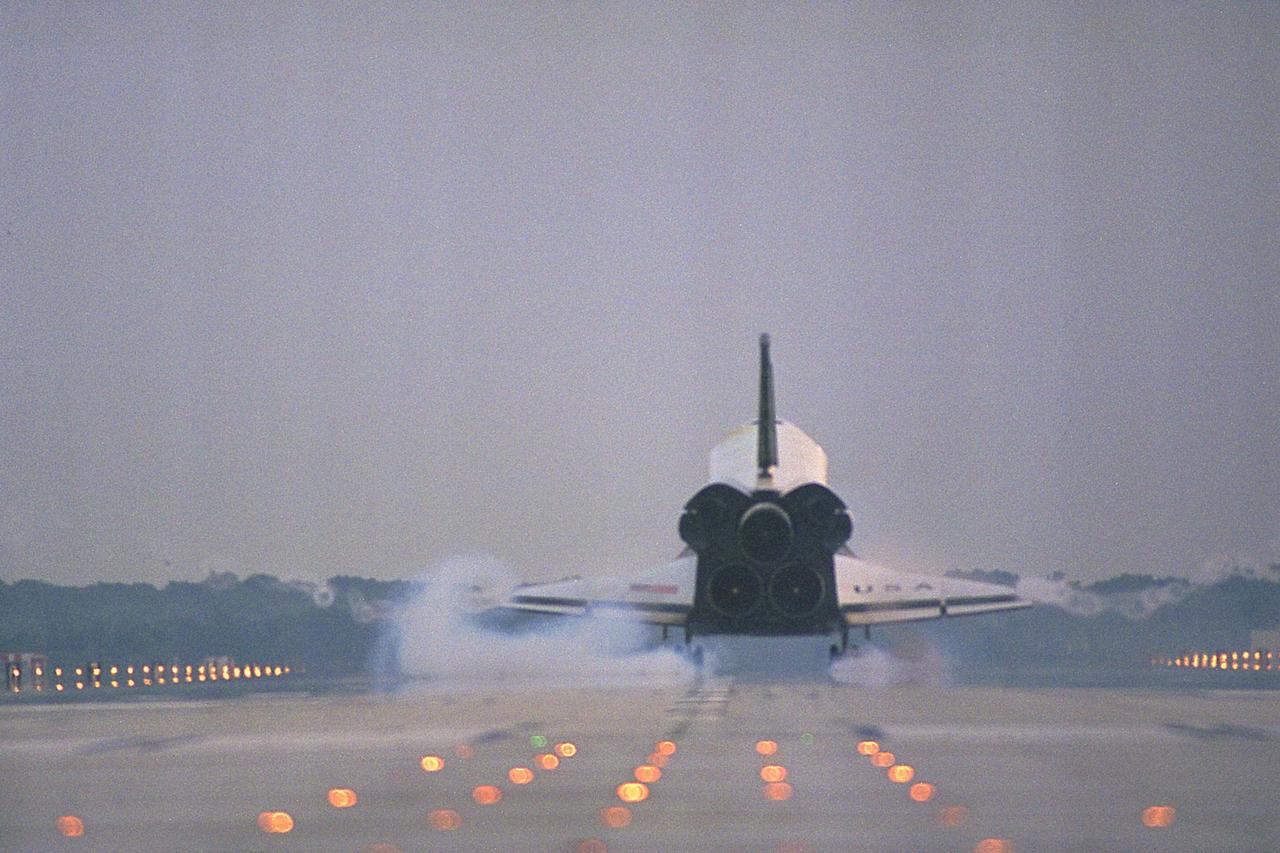
KENNEDY SPACE CENTER, FLA. -- The Space Shuttle orbiter Columbia touches down on Runway 33 at KSC’s Shuttle Landing Facility at 6:46:34 a.m. EDT with Mission Commander James D. Halsell Jr. and Pilot Susan L. Still at the controls to complete the STS-94 mission. Also on board are Mission Specialist Donald A. Thomas, Mission Specialist Michael L. Gernhardt, Payload Commander Janice Voss, and Payload Specialists Roger K. Crouch and Gregory T. Linteris. During the Microgravity Science Laboratory-1 (MSL-1) mission, the Spacelab module was used to test some of the hardware, facilities and procedures that are planned for use on the International Space Station while the flight crew conducted combustion, protein crystal growth and materials processing experiments. This mission was a reflight of the STS-83 mission that lifted off from KSC in April of this year. That space flight was cut short due to indications of a faulty fuel cell. This was Columbia’s 11th landing at KSC and the 38th landing at the space center in the history of the Shuttle program
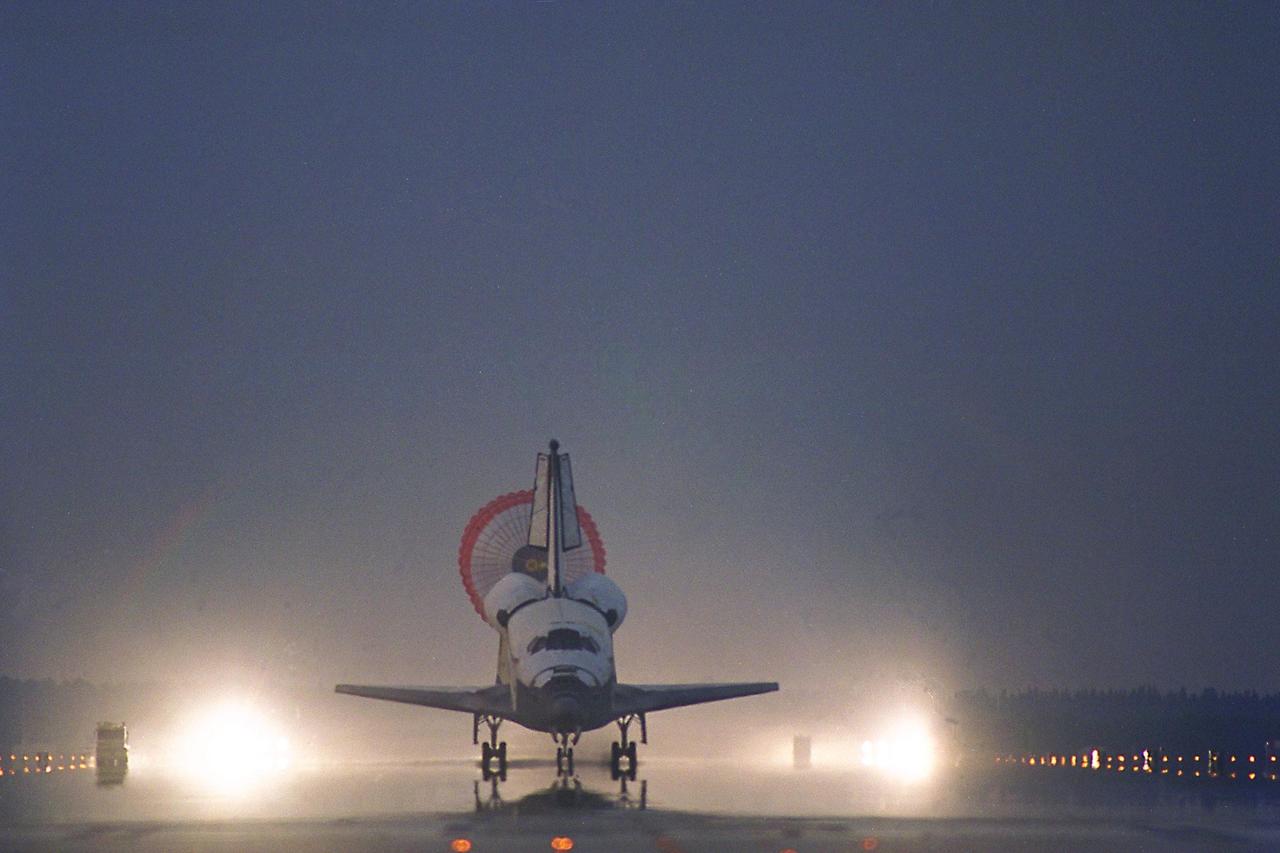
KENNEDY SPACE CENTER, FLA. -- With its drag chute deployed, the Space Shuttle Orbiter Columbia touches down on Runway 33 at KSC’s Shuttle Landing Facility at 6:46:34 a.m. EDT with Mission Commander James D. Halsell Jr. and Pilot Susan L. Still at the controls to complete the STS-94 mission. Also on board are Mission Specialist Donald A. Thomas, Mission Specialist Michael L. Gernhardt , Payload Commander Janice Voss, and Payload Specialists Roger K. Crouch and Gregory T. Linteris. Mission elapsed time for STS-94 was 15 days,16 hours, 44 seconds. During the Microgravity Science Laboratory-1 (MSL-1) mission, the Spacelab module was used to test some of the hardware, facilities and procedures that are planned for use on the International Space Station while the flight crew conducted combustion, protein crystal growth and materials processing experiments. This mission was a reflight of the STS-83 mission that lifted off from KSC in April of this year. That space flight was cut short due to indications of a faulty fuel cell. This was Columbia’s 11th landing at KSC and the 38th landing at the space center in the history of the Shuttle program
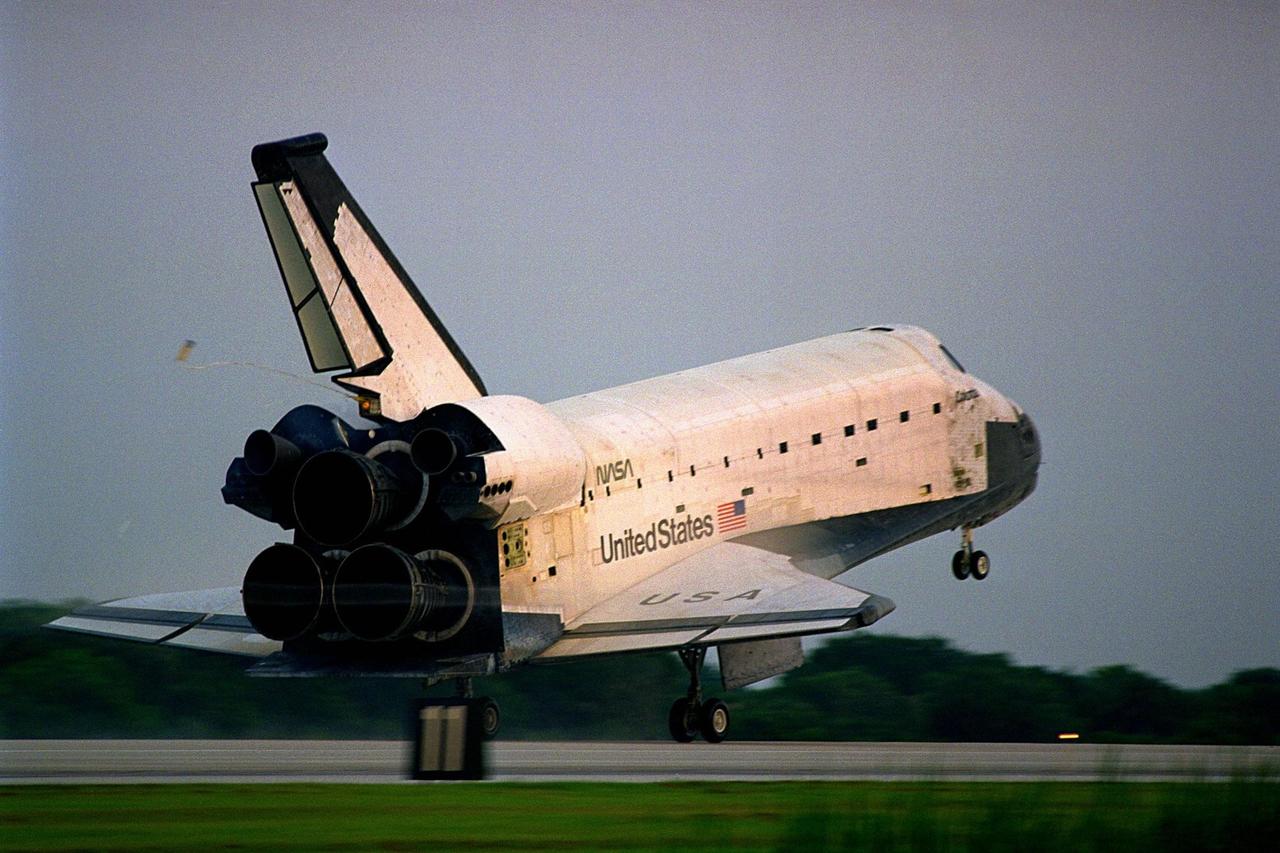
KENNEDY SPACE CENTER, FLA. -- The Space Shuttle orbiter Columbia touches down on Runway 33 at KSC’s Shuttle Landing Facility at 6:46:34 a.m. EDT with Mission Commander James D. Halsell Jr. and Pilot Susan L. Still at the controls to complete the STS-94 mission. Also on board are Mission Specialist Donald A. Thomas, Mission Specialist Michael L. Gernhardt, Payload Commander Janice Voss, and Payload Specialists Roger K. Crouch and Gregory T. Linteris. During the Microgravity Science Laboratory-1 (MSL-1) mission, the Spacelab module was used to test some of the hardware, facilities and procedures that are planned for use on the International Space Station while the flight crew conducted combustion, protein crystal growth and materials processing experiments. This mission was a reflight of the STS-83 mission that lifted off from KSC in April of this year. That space flight was cut short due to indications of a faulty fuel cell. This was Columbia’s 11th landing at KSC and the 38th landing at the space center in the history of the Shuttle program
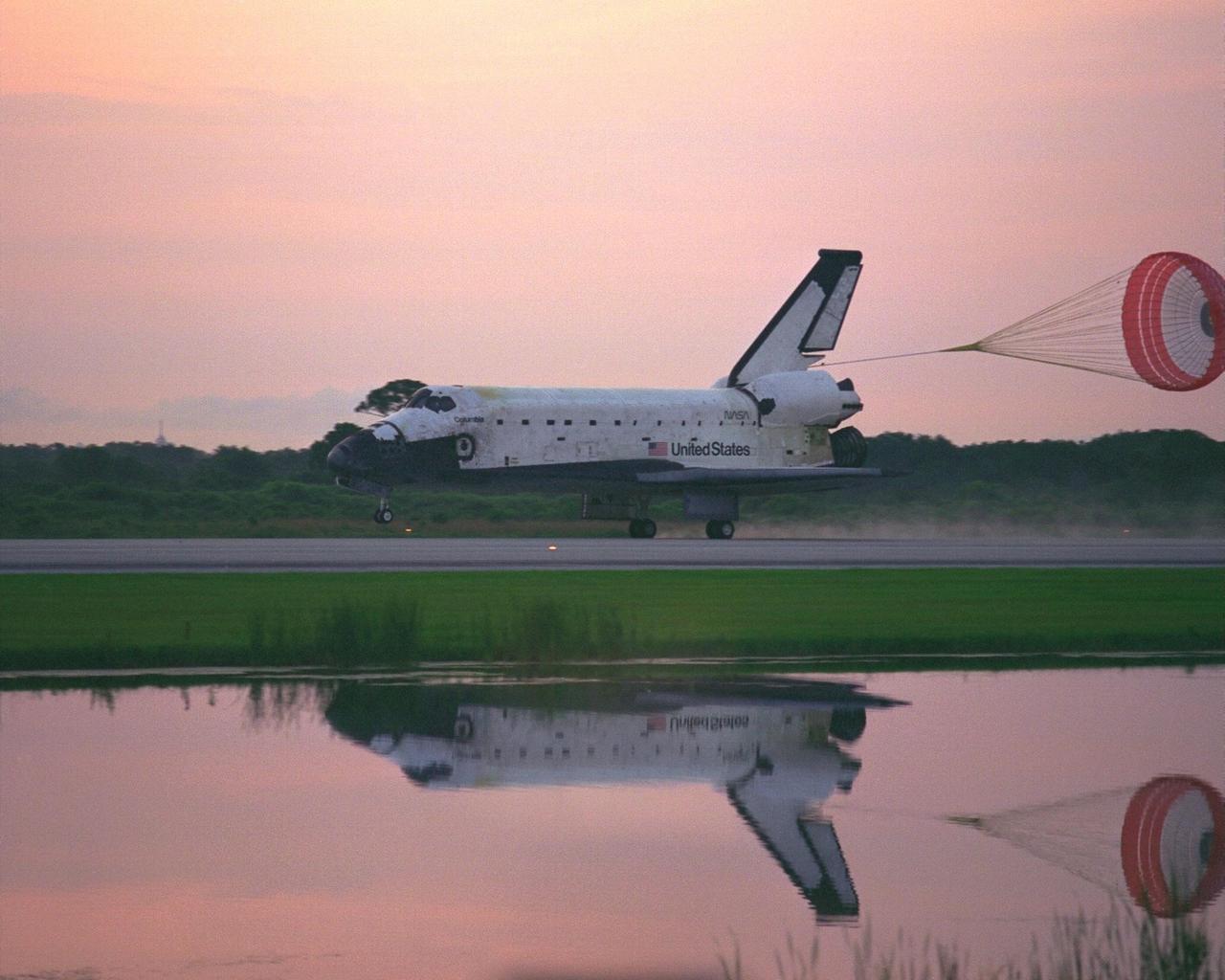
KENNEDY SPACE CENTER, FLA. -- With its drag chute deployed, the Space Shuttle Orbiter Columbia touches down on Runway 33 at KSC’s Shuttle Landing Facility at 6:46:34 a.m. EDT with Mission Commander James D. Halsell Jr. and Pilot Susan L. Still at the controls to complete the STS-94 mission. Also on board are Mission Specialist Donald A. Thomas, Mission Specialist Michael L. Gernhardt , Payload Commander Janice Voss, and Payload Specialists Roger K. Crouch and Gregory T. Linteris. Mission elapsed time for STS-94 was 15 days,16 hours, 44 seconds. During the Microgravity Science Laboratory-1 (MSL-1) mission, the Spacelab module was used to test some of the hardware, facilities and procedures that are planned for use on the International Space Station while the flight crew conducted combustion, protein crystal growth and materials processing experiments. This mission was a reflight of the STS-83 mission that lifted off from KSC in April of this year. That space flight was cut short due to indications of a faulty fuel cell. This was Columbia’s 11th landing at KSC and the 38th landing at the space center in the history of the Shuttle program
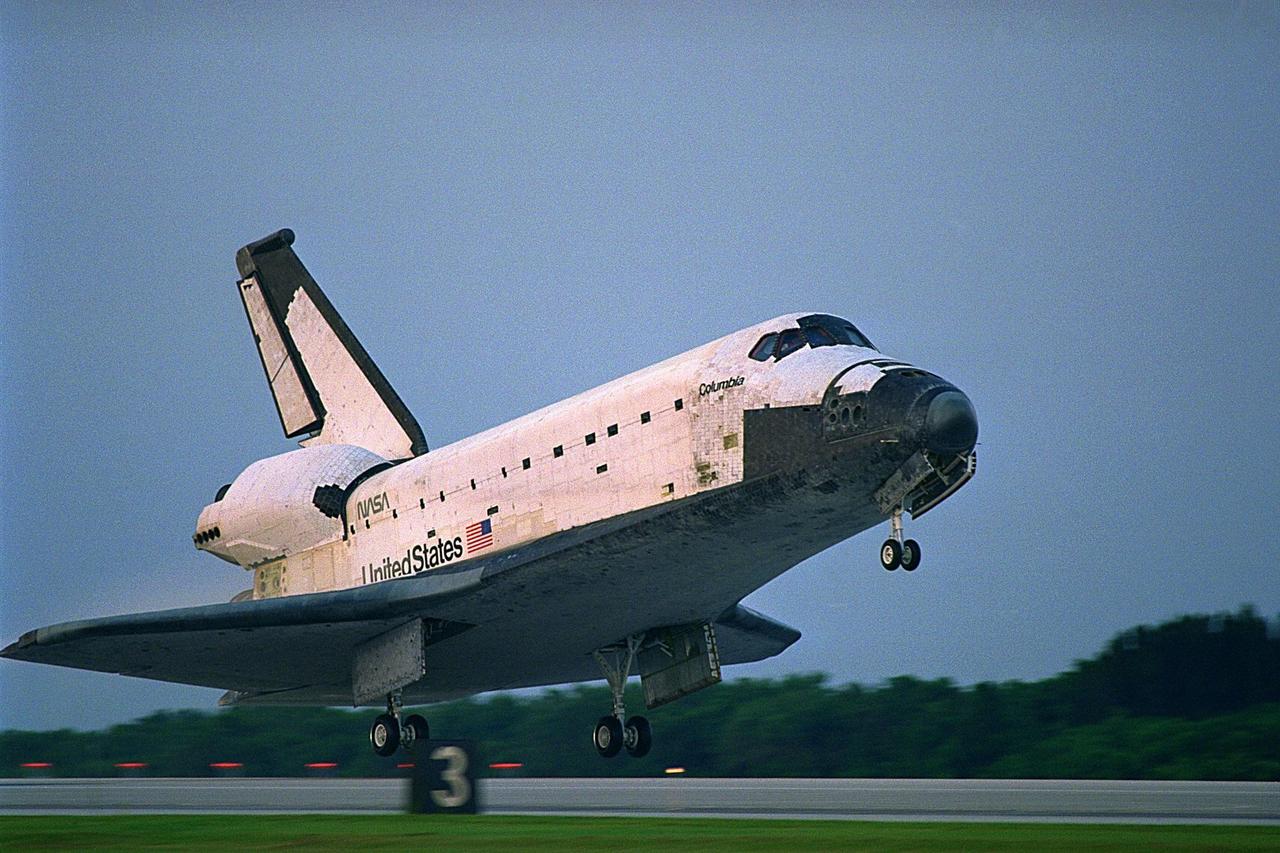
KENNEDY SPACE CENTER, FLA. -- The Space Shuttle orbiter Columbia touches down on Runway 33 at KSC’s Shuttle Landing Facility at 6:46:34 a.m. EDT with Mission Commander James D. Halsell Jr. and Pilot Susan L. Still at the controls to complete the STS-94 mission. Also on board are Mission Specialist Donald A. Thomas, Mission Specialist Michael L. Gernhardt, Payload Commander Janice Voss, and Payload Specialists Roger K. Crouch and Gregory T. Linteris. During the Microgravity Science Laboratory-1 (MSL-1) mission, the Spacelab module was used to test some of the hardware, facilities and procedures that are planned for use on the International Space Station while the flight crew conducted combustion, protein crystal growth and materials processing experiments. This mission was a reflight of the STS-83 mission that lifted off from KSC in April of this year. That space flight was cut short due to indications of a faulty fuel cell. This was Columbia’s 11th landing at KSC and the 38th landing at the space center in the history of the Shuttle program
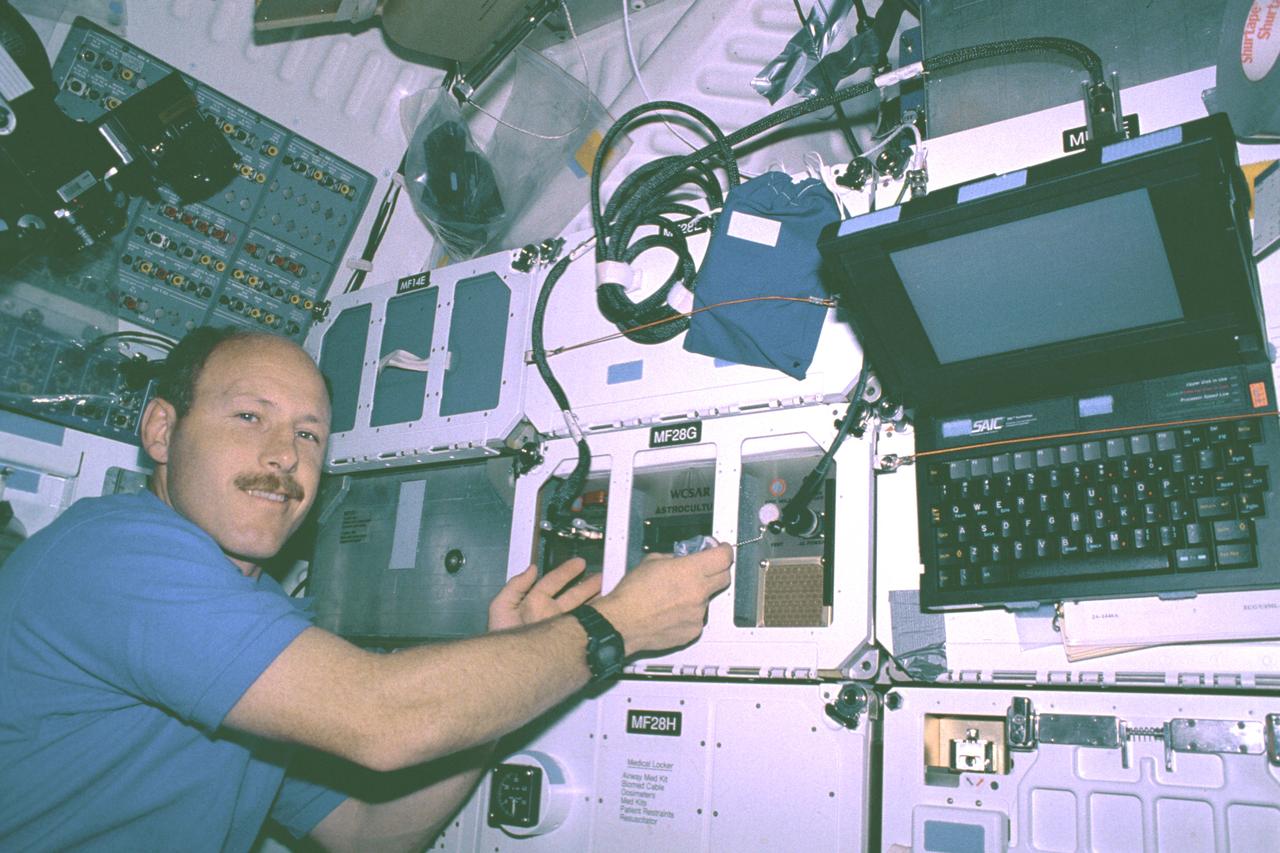
The first United States Microgravity Laboratory (USML-1) was one of NASA's science and technology programs that provided scientists an opportunity to research various scientific investigations in a weightless environment inside the Spacelab module. It also provided demonstrations of new equipment to help prepare for advanced microgravity research and processing aboard the Space Station. The USML-1 flew in orbit for extended periods, providing greater opportunities for research in materials science, fluid dynamics, biotechnology (crystal growth), and combustion science. This photograph shows astronaut Ken Bowersox conducting the Astroculture experiment in the middeck of the orbiter Columbia. This experiment was to evaluate and find effective ways to supply nutrient solutions for optimizing plant growth and avoid releasing solutions into the crew quarters in microgravity. Since fluids behave differently in microgravity, plant watering systems that operate well on Earth do not function effectively in space. Plants can reduce the costs of providing food, oxygen, and pure water as well as lower the costs of removing carbon dioxide in human space habitats. The Astroculture experiment flew aboard the STS-50 mission in June 1992 and was managed by the Marshall Space Flight Center.
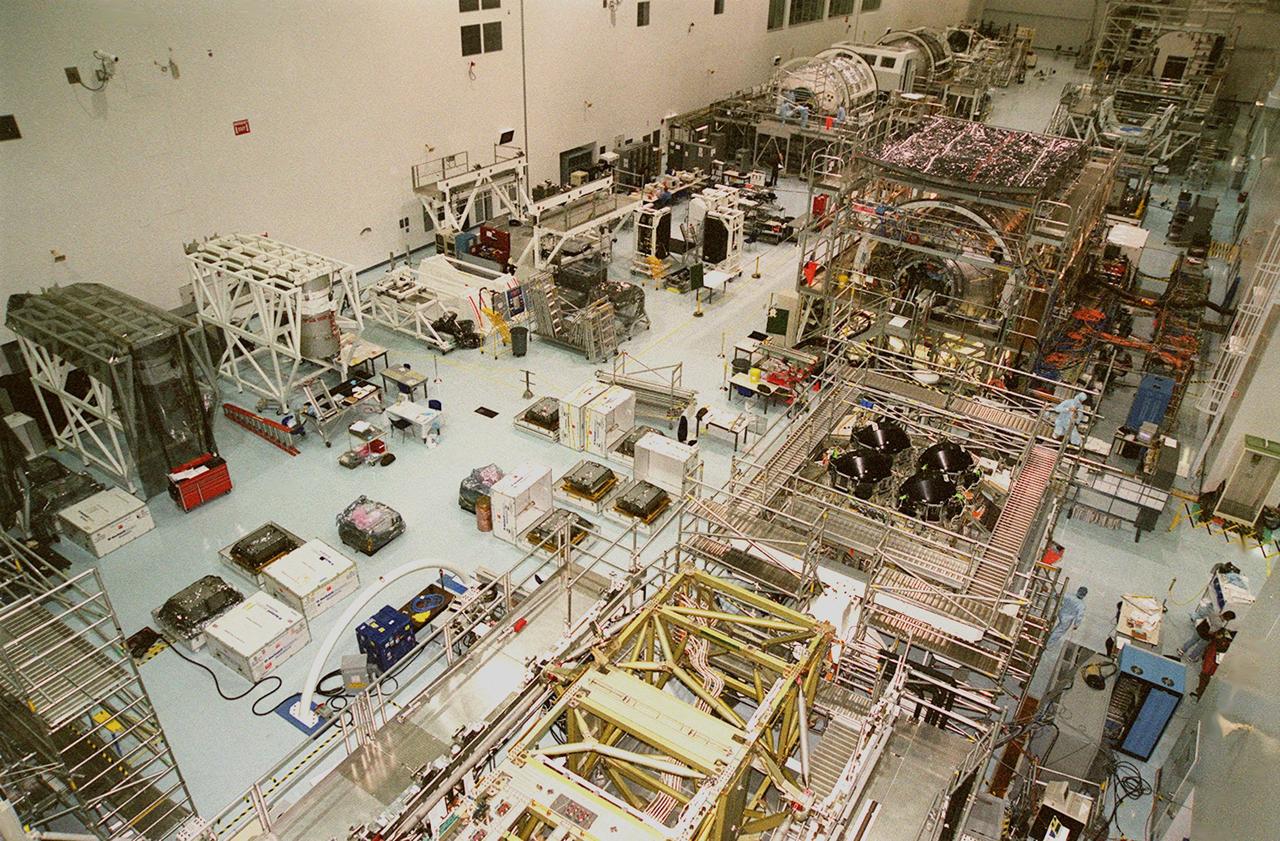
KENNEDY SPACE CENTER, FLA. -- The floor of the Space Station Processing Facility is filled with racks and hardware for testing the various components of the International Space Station (ISS). The large module in the center of the floor (top) is the U.S. Lab, Destiny. Expected to be a major feature in future research, Destiny will provide facilities for biotechnology, fluid physics, combustion, and life sciences research. It is scheduled to be launched on mission STS-98 (no date determined yet for launch). At top left are the Multi-Purpose Logistics Modules Raffaello and Leonardo and the Pressurized Mating Adapter-3 (PMA-3). Italy's major contributions to the ISS program, Raffaello and Leonardo are reusable logistics carriers to resupply and return Station cargo requiring a pressurized environment. They are slated as payloads on missions STS-102 and STS-100, respectively. Dates have not yet been determined for the two missions. The PMA-3, once launched, will be mated to Node 1, a connecting passageway to the living and working areas of the Space Station. The primary purpose of PMA-3 is to serve as a Shuttle docking port through which crew members and equipment will transfer to the Space Station during later assembly missions. PMA-3 is scheduled as payload on mission STS-92, whose date for launch is not yet determined
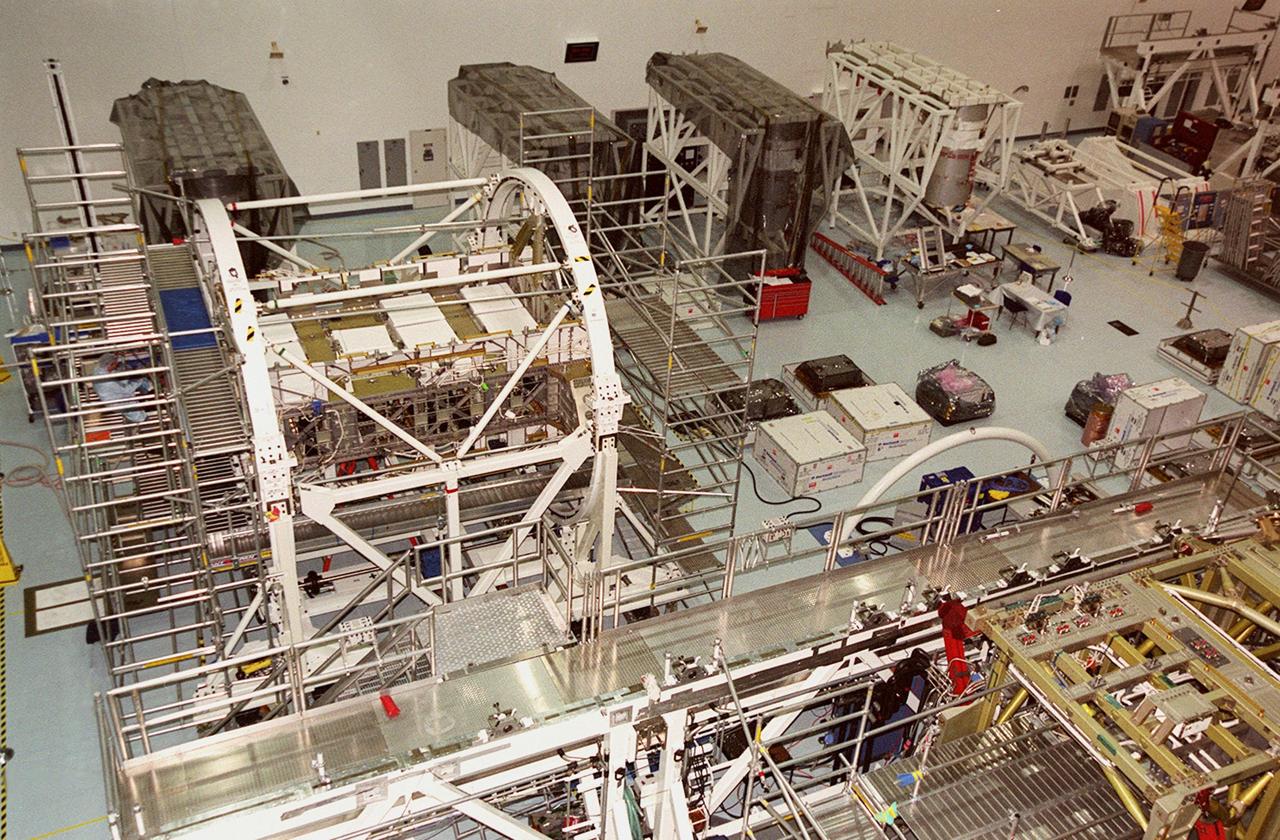
KENNEDY SPACE CENTER, FLA. -- The floor of the Space Station Processing Facility is filled with racks and hardware for testing the various components of the International Space Station (ISS). The large module in the center of the floor (top) is the U.S. Lab, Destiny. Expected to be a major feature in future research, Destiny will provide facilities for biotechnology, fluid physics, combustion, and life sciences research. It is scheduled to be launched on mission STS-98 (no date determined yet for launch). At top left are the Multi-Purpose Logistics Modules Raffaello and Leonardo and the Pressurized Mating Adapter-3 (PMA-3). Italy's major contributions to the ISS program, Raffaello and Leonardo are reusable logistics carriers to resupply and return Station cargo requiring a pressurized environment. They are slated as payloads on missions STS-102 and STS-100, respectively. Dates have not yet been determined for the two missions. The PMA-3, once launched, will be mated to Node 1, a connecting passageway to the living and working areas of the Space Station. The primary purpose of PMA-3 is to serve as a Shuttle docking port through which crew members and equipment will transfer to the Space Station during later assembly missions. PMA-3 is scheduled as payload on mission STS-92, whose date for launch is not yet determined
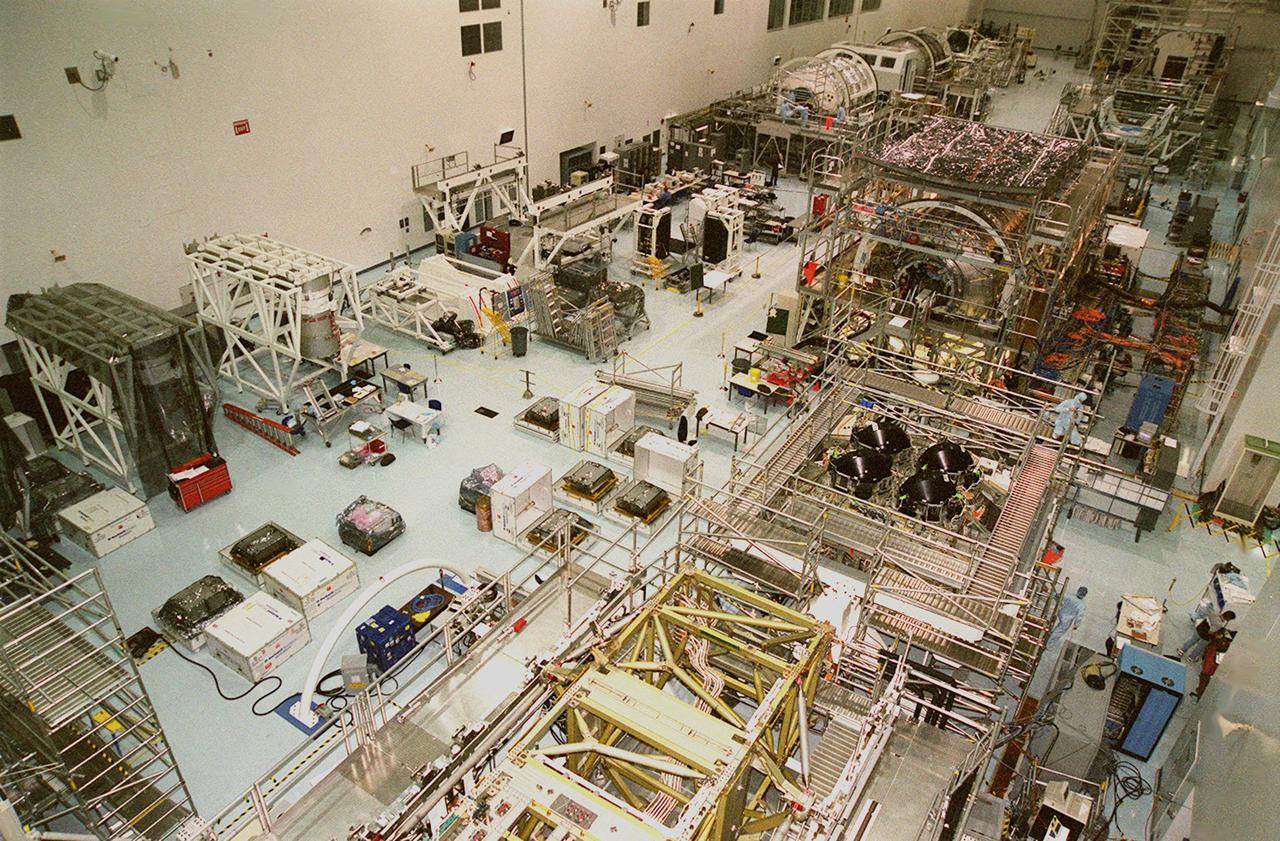
KENNEDY SPACE CENTER, FLA. -- The floor of the Space Station Processing Facility is filled with racks and hardware for testing the various components of the International Space Station (ISS). The large module in the center of the floor (top) is the U.S. Lab, Destiny. Expected to be a major feature in future research, Destiny will provide facilities for biotechnology, fluid physics, combustion, and life sciences research. It is scheduled to be launched on mission STS-98 (no date determined yet for launch). At top left are the Multi-Purpose Logistics Modules Raffaello and Leonardo and the Pressurized Mating Adapter-3 (PMA-3). Italy's major contributions to the ISS program, Raffaello and Leonardo are reusable logistics carriers to resupply and return Station cargo requiring a pressurized environment. They are slated as payloads on missions STS-102 and STS-100, respectively. Dates have not yet been determined for the two missions. The PMA-3, once launched, will be mated to Node 1, a connecting passageway to the living and working areas of the Space Station. The primary purpose of PMA-3 is to serve as a Shuttle docking port through which crew members and equipment will transfer to the Space Station during later assembly missions. PMA-3 is scheduled as payload on mission STS-92, whose date for launch is not yet determined

KENNEDY SPACE CENTER, FLA. -- The floor of the Space Station Processing Facility is filled with racks and hardware for testing the various components of the International Space Station (ISS). The large module in the center of the floor (top) is the U.S. Lab, Destiny. Expected to be a major feature in future research, Destiny will provide facilities for biotechnology, fluid physics, combustion, and life sciences research. It is scheduled to be launched on mission STS-98 (no date determined yet for launch). At top left are the Multi-Purpose Logistics Modules Raffaello and Leonardo and the Pressurized Mating Adapter-3 (PMA-3). Italy's major contributions to the ISS program, Raffaello and Leonardo are reusable logistics carriers to resupply and return Station cargo requiring a pressurized environment. They are slated as payloads on missions STS-102 and STS-100, respectively. Dates have not yet been determined for the two missions. The PMA-3, once launched, will be mated to Node 1, a connecting passageway to the living and working areas of the Space Station. The primary purpose of PMA-3 is to serve as a Shuttle docking port through which crew members and equipment will transfer to the Space Station during later assembly missions. PMA-3 is scheduled as payload on mission STS-92, whose date for launch is not yet determined
The first United States Microgravity Laboratory (USML-1) flew in orbit inside the Spacelab science module for extended periods, providing scientists and researchers greater opportunities for research in materials science, fluid dynamics, biotechnology (crystal growth), and combustion science. In this photograph, Astronaut Bornie Dunbar and Astronaut Larry DeLucas are conducting the Lower Body Negative Pressure (LBNP) experiment, which is to protect the health and safety of the crew and to shorten the time required to readapt to gravity when they return to Earth. When humans go into space, the lack of gravity causes many changes in the body. One change is that fluids normally kept in the lower body by gravity, shift upward to the head and chest. This is why astronauts' faces appear chubby or puffy. The change in fluid volume also affects the heart. The reduced fluid volume means that there is less blood to circulate through the body. Crewmembers may experience reduced blood flow to the brain when returning to Earth. This leads to fainting or near-fainting episodes. With the use of LBNP to simulate the pull of gravity in conjunction with fluids, salt tablets can recondition the cardiovascular system. This treatment, called "soak," is effective up to 24 hours. The LBNP uses a three-layer collapsible cylinder that seals around the crewmember's waist which simulates the effects of gravity and helps pull fluids into the lower body. The data collected will be analyzed to determine physiological changes in the crewmembers and effectiveness of the treatment. The USML-1 was launched aboard the Space Shuttle Orbiter Columbia (STS-50) on June 25, 1992.