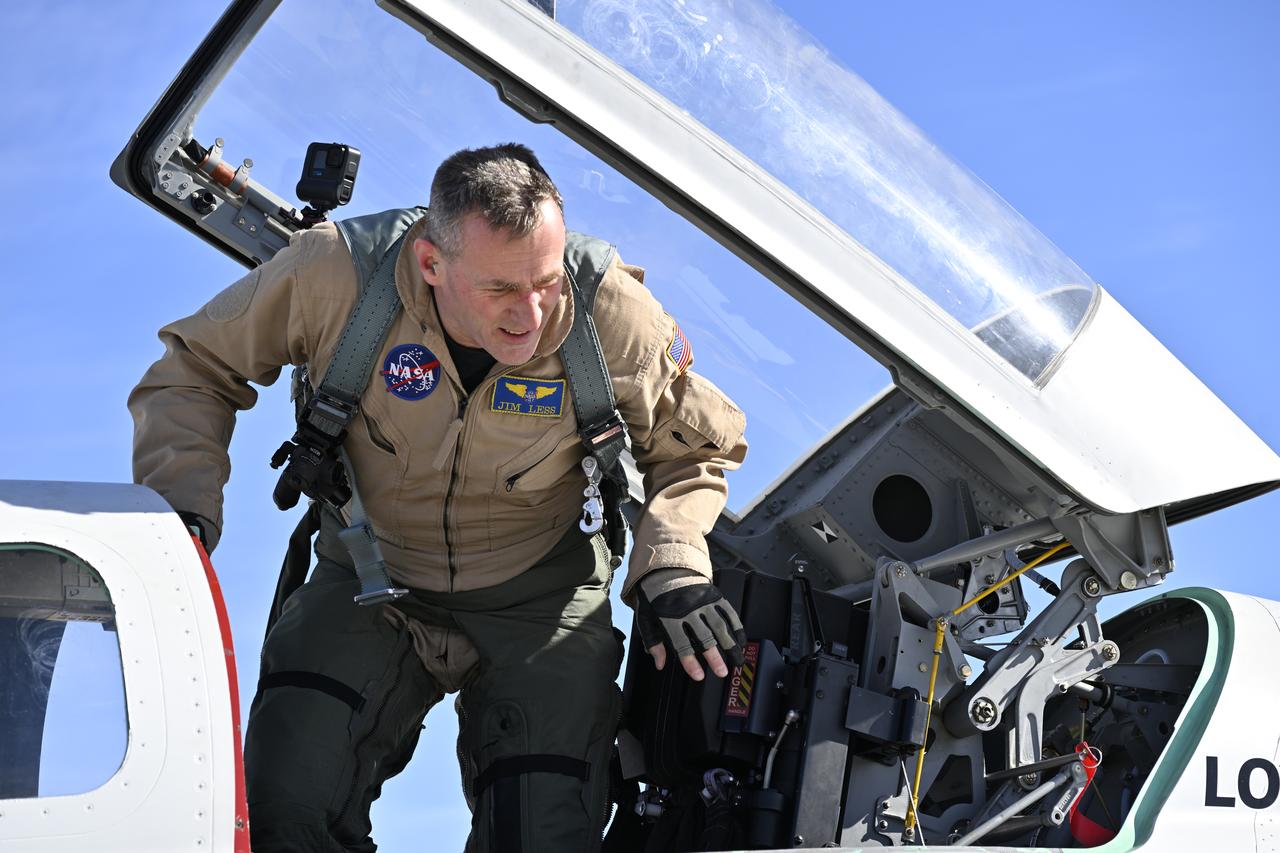
NASA test pilot Jim Less prepares to exit the cockpit of the quiet supersonic X-59 aircraft in between electromagnetic interference (EMI) testing. The EMI testing ensures an aircraft’s systems function properly under various conditions of electromagnetic radiation. The X-59 is the centerpiece of the NASA’s Quesst mission, designed to demonstrate quiet supersonic technology and provide data to address a key barrier to commercial supersonic travel.
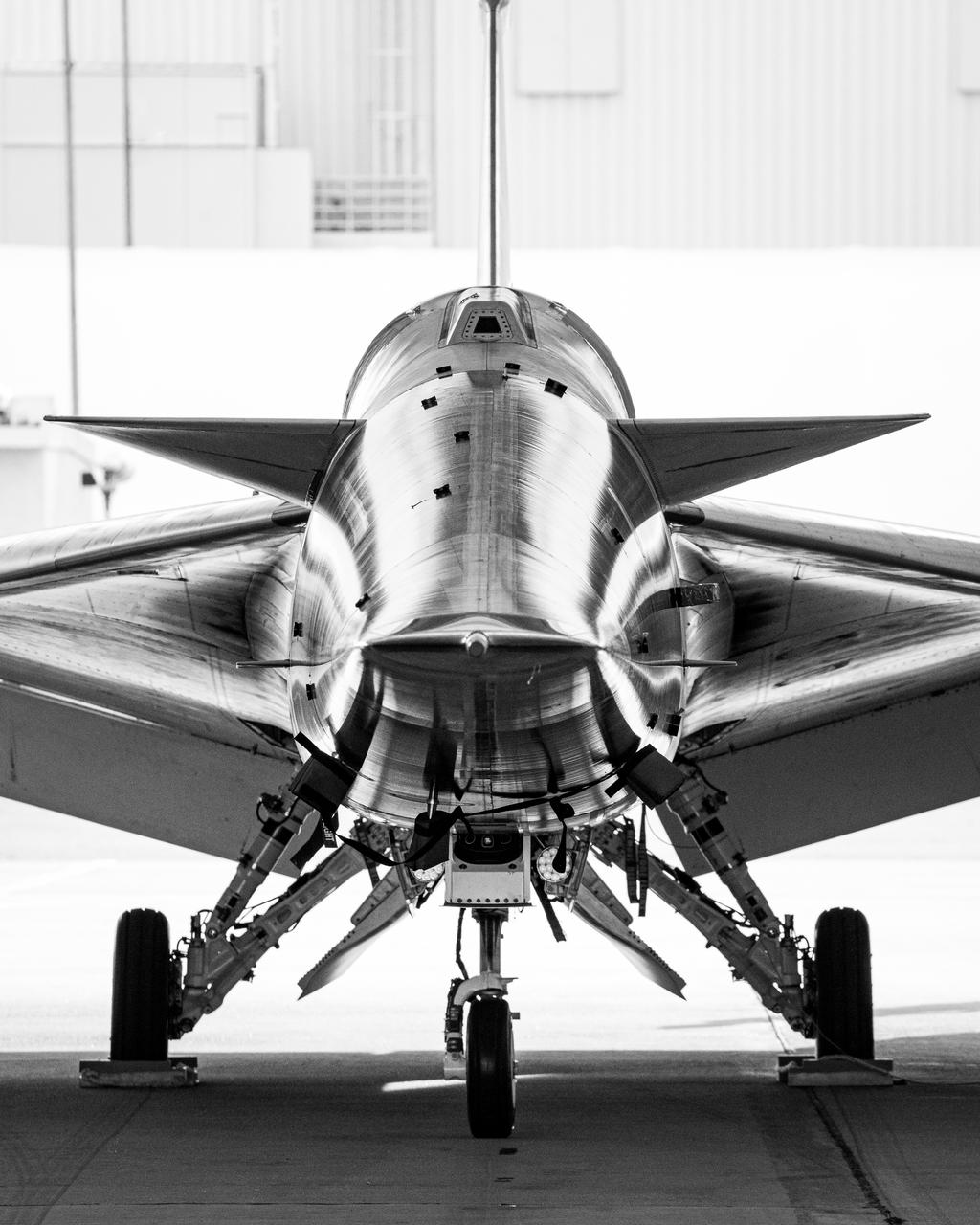
NASA’s X-59 research aircraft moves from its construction site to the flight line – or the space between the hangar and the runway – at Lockheed Martin Skunk Works in Palmdale, California, on June 16, 2023. This milestone kicks off a series of ground tests to ensure the X-59 is safe and ready to fly. The X-59 is designed to fly faster than Mach 1 while reducing the resulting sonic boom to a thump for people on the ground. NASA will evaluate this technology during flight tests as part of the agency’s Quesst mission, which helps enable commercial supersonic air travel over land. Lockheed Martin Photography By Garry Tice 1011 Lockheed Way, Palmdale, Ca. 93599 Event: Move to Run Stall 5 Date: 6/19/2023 Additional Info:

Dr. Forrest Carpenter, left, principal investigator for the third phase of CarpetDIEM, Carpet Determination in Entirety Measurements flights, monitors a test from one of the control rooms at NASA’s Armstrong Flight Research Center. Next to Carpenter is Brian Strovers, chief engineer for Commercial Supersonic Technology. The third phase of CarpetDIEM tested logistics and upgraded ground recording systems in preparation for the acoustic validation phase of the Quesst mission.
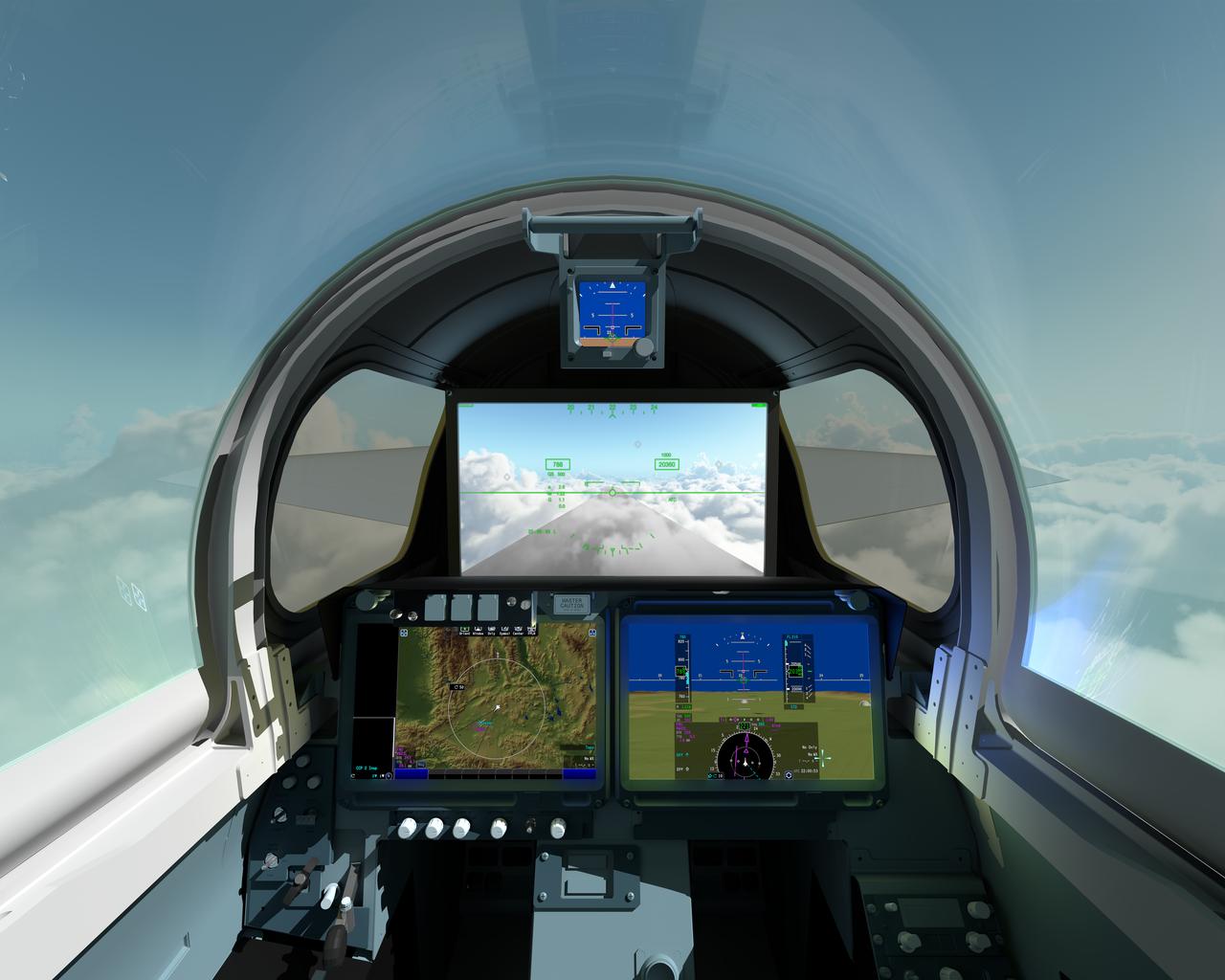
The pilot of NASAÕs X-59 Quiet SuperSonic Technology, or QueSST, aircraft will navigate the skies in a cockpit unlike any other. There wonÕt be a forward-facing window. ThatÕs right; itÕs actually a 4K monitor that serves as the central window and allows the pilot to safely see traffic in his or her flight path, and provides additional visual aids for airport approaches, landings and takeoffs. The 4K monitor, which is part of the aircraftÕs eXternal Visibility System, or XVS, displays stitched images from two cameras outside the aircraft combined with terrain data from an advanced computing system. The two portals and traditional canopy are real windows however, and help the pilot see the horizon. The displays below the XVS will provide a variety of aircraft systems and trajectory data for the pilot to safely fly. The XVS is one of several innovative solutions to help ensure the X-59Õs design shape reduces a sonic boom to a gentle thump heard by people on the ground. Though not intended to ever carry passengers, the X-59 boom-suppressing technology and community response data could help lift current bans on supersonic flight over land and enable a new generation of quiet supersonic commercial aircraft.
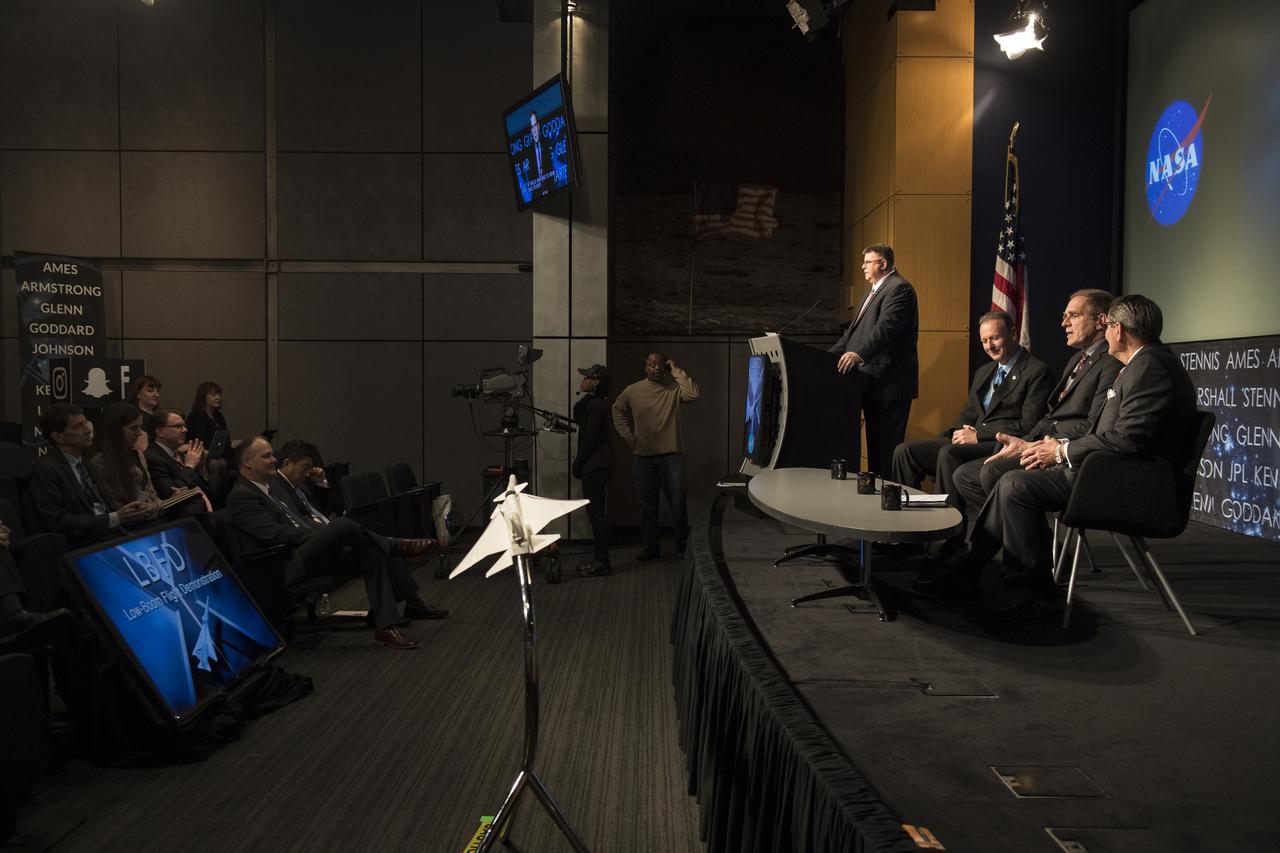
Peter Coen, project manager, Commercial Supersonics Technology Project, Langley Research Center, NASA, center, speaks on a panel with Peter Iosifidis, Lockheed Martin, left, and Dr. Ed Waggoner, NASA, right, at a briefing on the Low Boom Flight Demonstrator, Tuesday, April 3, 2018 at NASA Headquarters in Washington. This new experimental aircraft will cut cross country travel times in half by flying faster than the speed of sound without creating a sonic boom, enabling travel from New York to Los Angeles in two hours. Photo Credit: (NASA/Aubrey Gemignani)
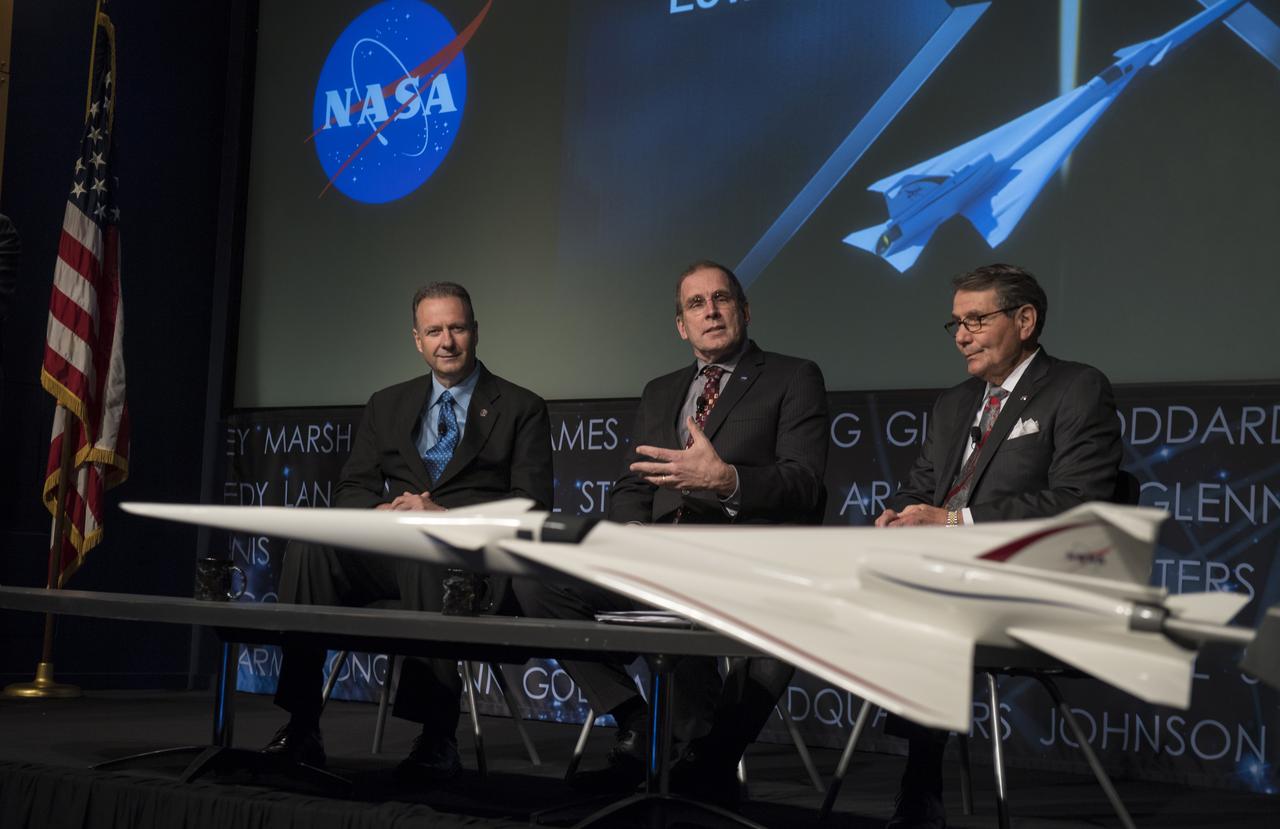
Peter Coen, project manager, Commercial Supersonics Technology Project, Langley Research Center, NASA, speaks on a panel with Peter Iosifidis, Lockheed Martin, left, and Dr. Ed Waggoner, NASA, right, at a briefing on the Low Boom Flight Demonstrator, Tuesday, April 3, 2018 at NASA Headquarters in Washington. This new experimental aircraft will cut cross country travel times in half by flying faster than the speed of sound without creating a sonic boom, enabling travel from New York to Los Angeles in two hours. Photo Credit: (NASA/Aubrey Gemignani)
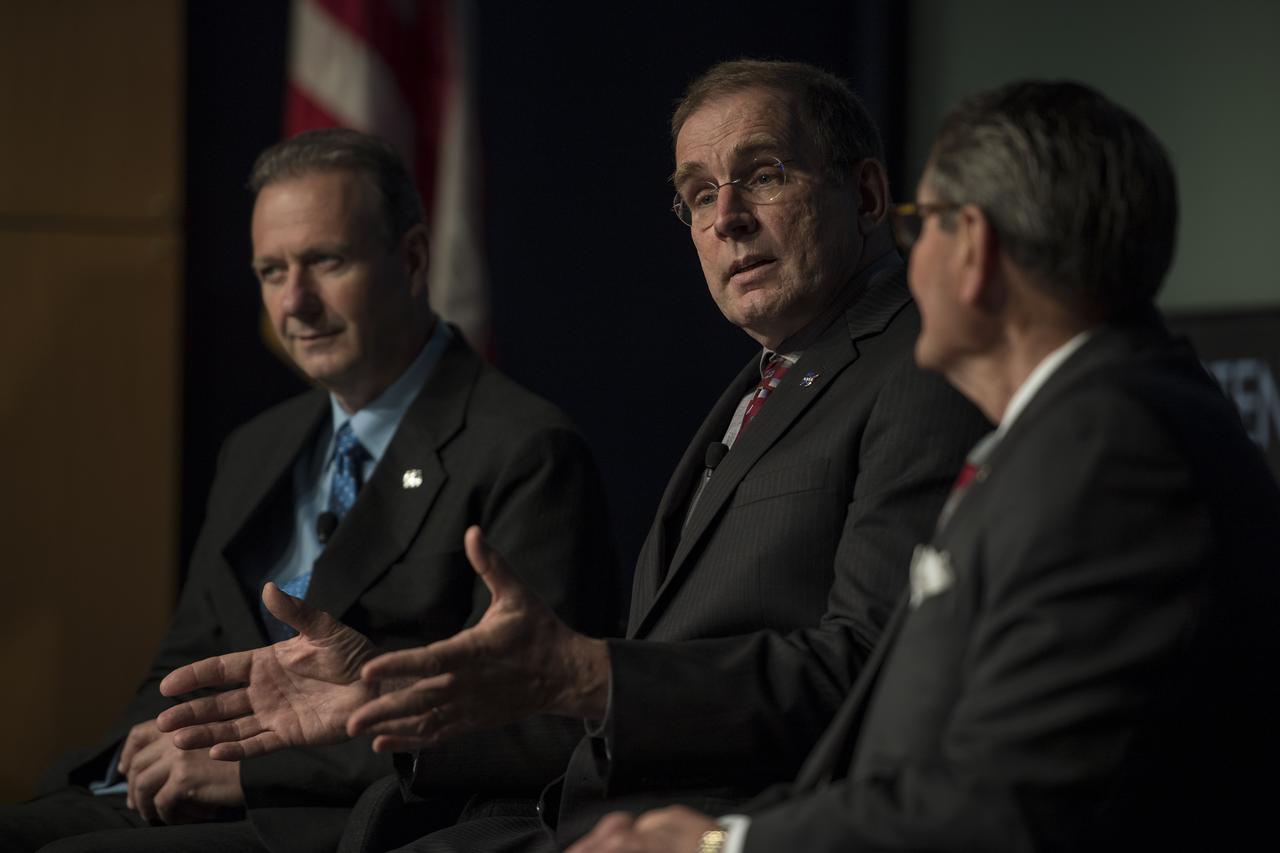
Peter Coen, project manager, Commercial Supersonics Technology Project, Langley Research Center, NASA, speaks on a panel with Peter Iosifidis, Lockheed Martin, left, and Dr. Ed Waggoner, NASA, right, at a briefing on the Low Boom Flight Demonstrator, Tuesday, April 3, 2018 at NASA Headquarters in Washington. This new experimental aircraft will cut cross country travel times in half by flying faster than the speed of sound without creating a sonic boom, enabling travel from New York to Los Angeles in two hours. Photo Credit: (NASA/Aubrey Gemignani)
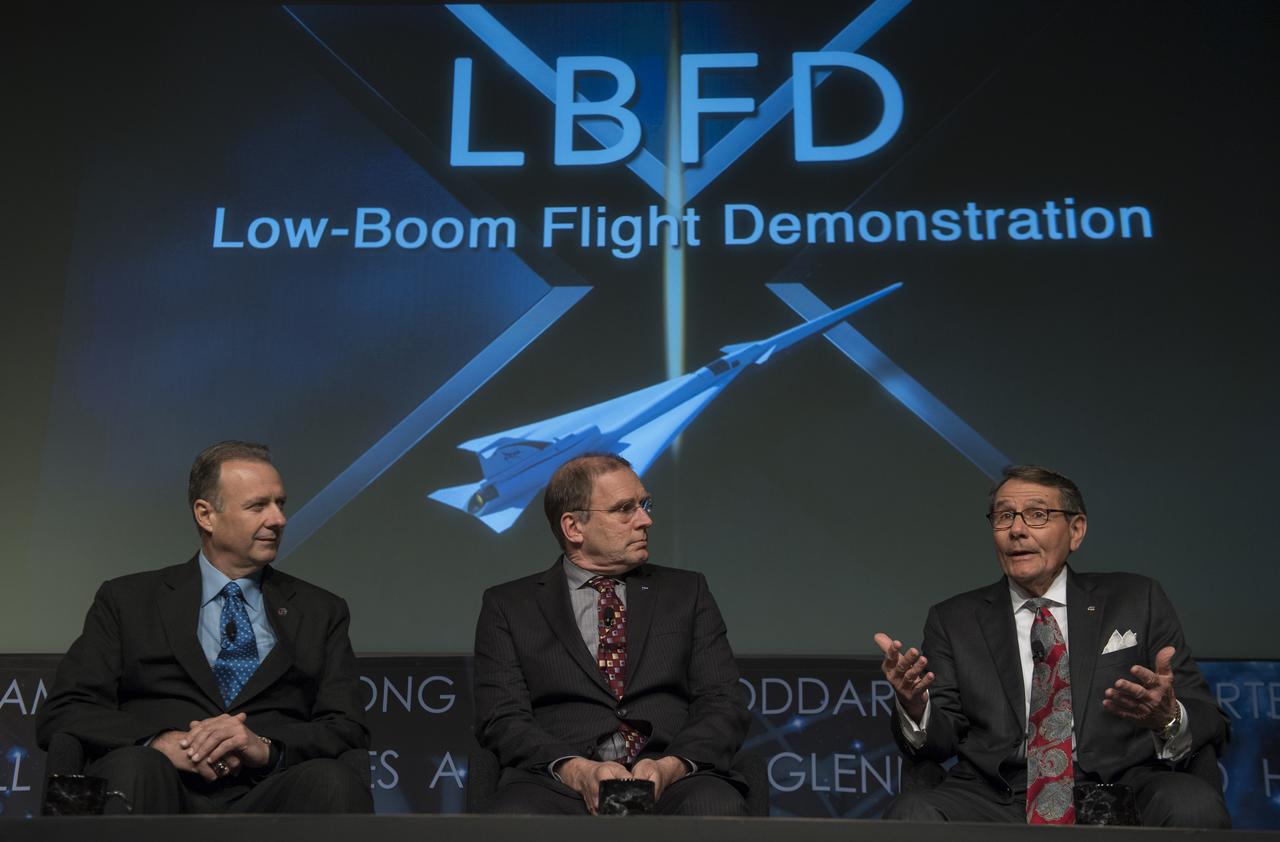
Dr. Ed Waggoner, program director, Integrated Aviation Systems Program, NASA, right, speaks on a panel with Peter Iosifidis, program manager, Low-Boom Flight Demonstrator, Lockheed Martin Skunk Works, left, and Peter Coen, project manager, Commercial Supersonics Technology Project, Langley Research Center, NASA, center, at a briefing on the Low Boom Flight Demonstrator, Tuesday, April 3, 2018 at NASA Headquarters in Washington. This new experimental aircraft will cut cross country travel times in half by flying faster than the speed of sound without creating a sonic boom, enabling travel from New York to Los Angeles in two hours. Photo Credit: (NASA/Aubrey Gemignani)
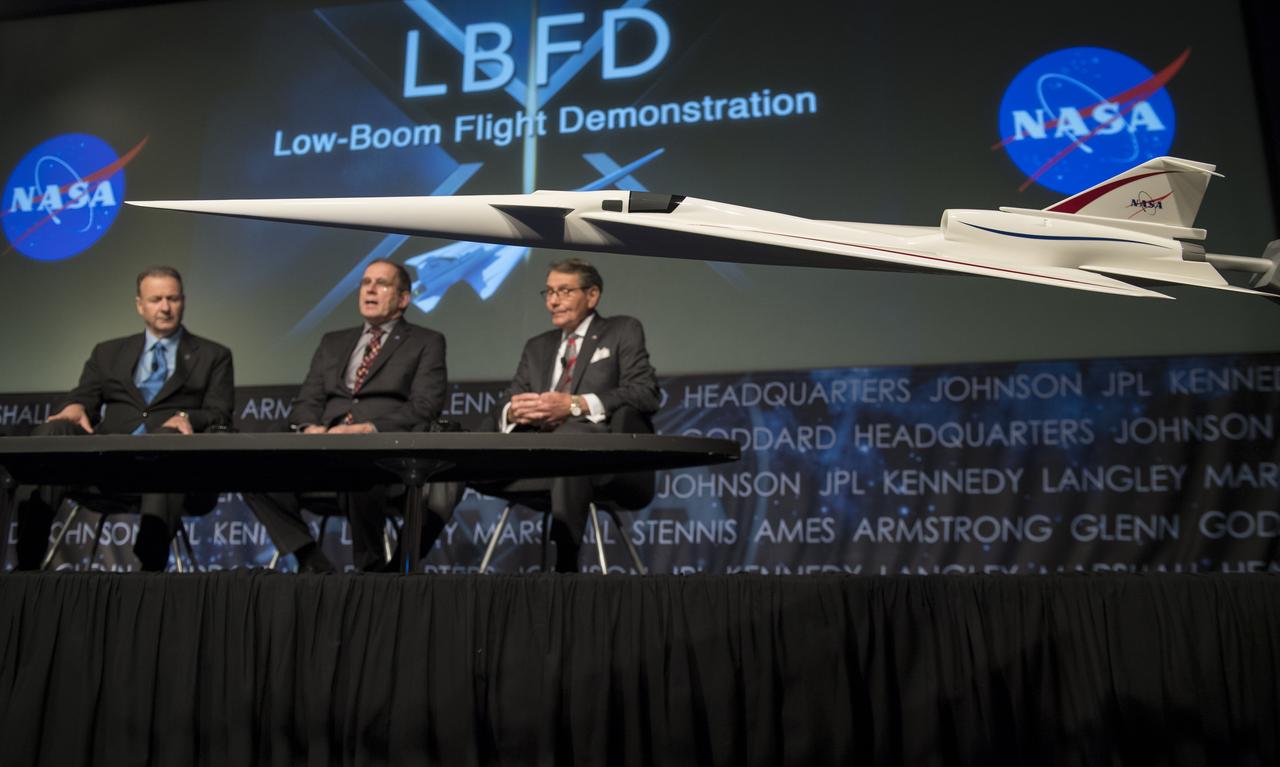
Panelists Peter Iosifidis, program manager, Low-Boom Flight Demonstrator, Lockheed Martin Skunk Works, left, Peter Coen, project manager, Commercial Supersonics Technology Project, Langley Research Center, NASA, center, and Dr. Ed Waggoner, program director, Integrated Aviation Systems Program, NASA, right, are seen behind a model of the Low Boom Flight Demonstrator at a briefing, Tuesday, April 3, 2018 at NASA Headquarters in Washington. This new experimental aircraft will cut cross country travel times in half by flying faster than the speed of sound without creating a sonic boom, enabling travel from New York to Los Angeles in two hours. Photo Credit: (NASA/Aubrey Gemignani)
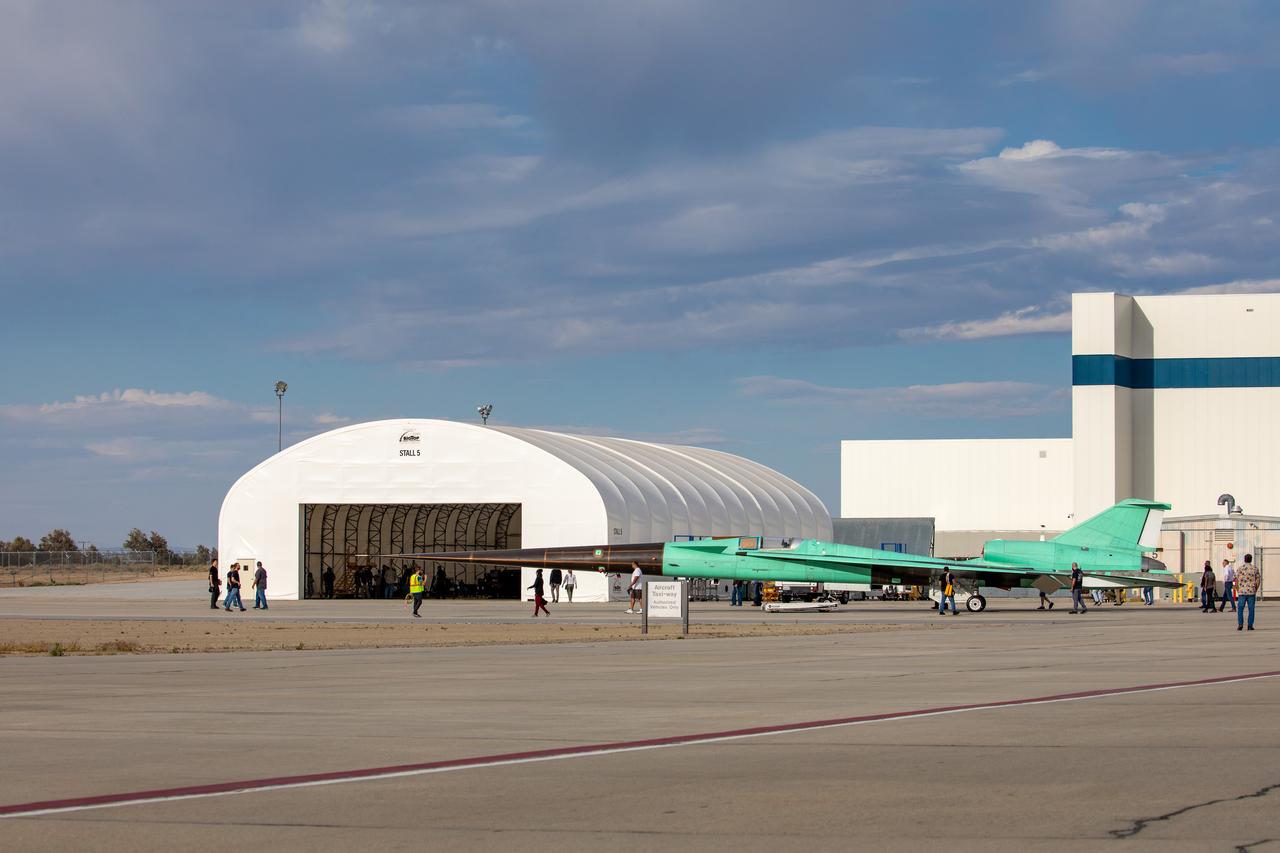
Technicians check out the X-59 aircraft as it sits near the runway at Lockheed Martin Skunk Works in Palmdale, California, on June 19, 2023. Lockheed Martin Photography By Garry Tice 1011 Lockheed Way, Palmdale, Ca. 93599 Event: Move to Run Stall 5 Date: 6/19/2023 Additional Info:
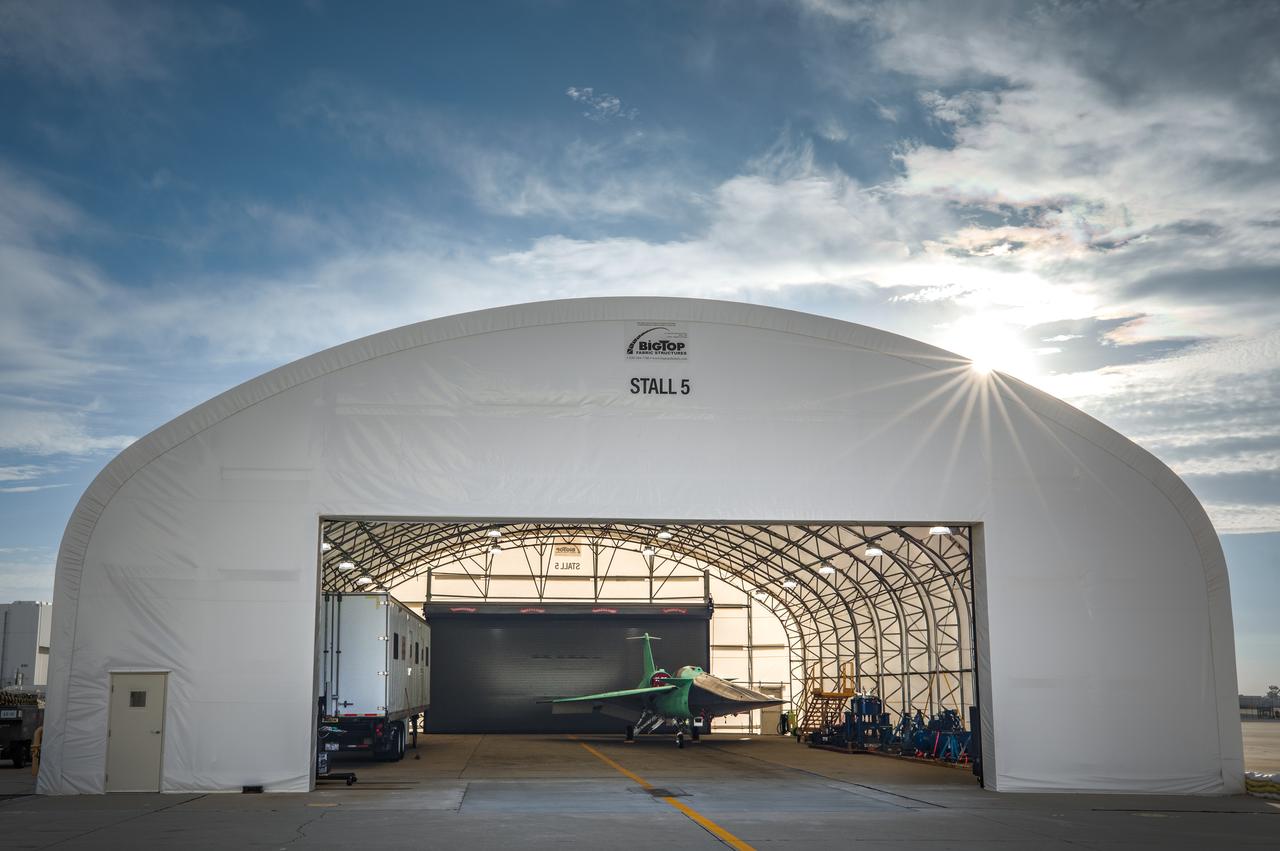
NASA’s X-59 aircraft is parked in stall five near the runway at Lockheed Martin Skunk Works in Palmdale, California, on June 19, 2023. This is where the X-59 will be housed during ground and initial flight tests. Lockheed Martin Photography By Garry Tice 1011 Lockheed Way, Palmdale, Ca. 93599 Event: Move to Run Stall 5 Date: 6/19/2023 Additional Info:
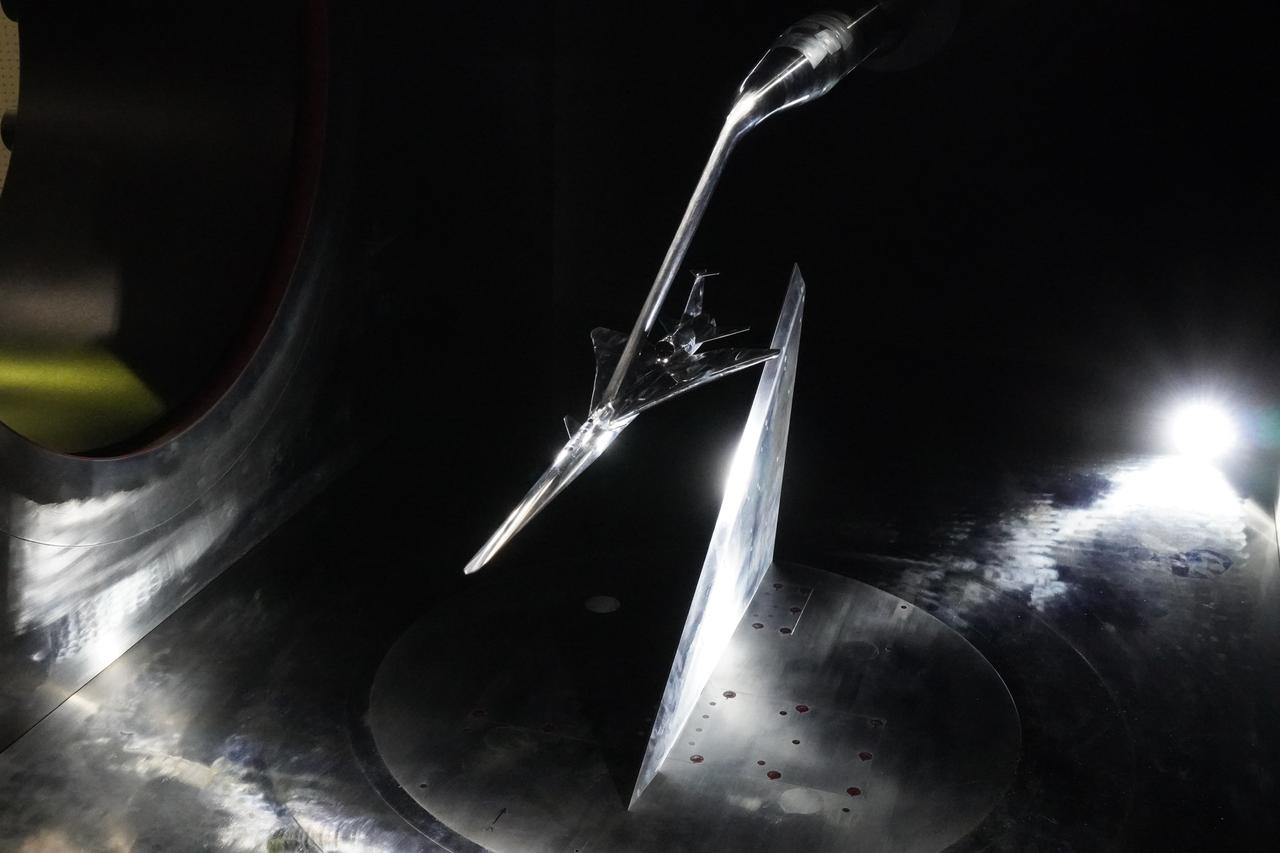
Here you see the X-59 scaled model inside the JAXA supersonic wind tunnel during critical tests related to sound predictions.
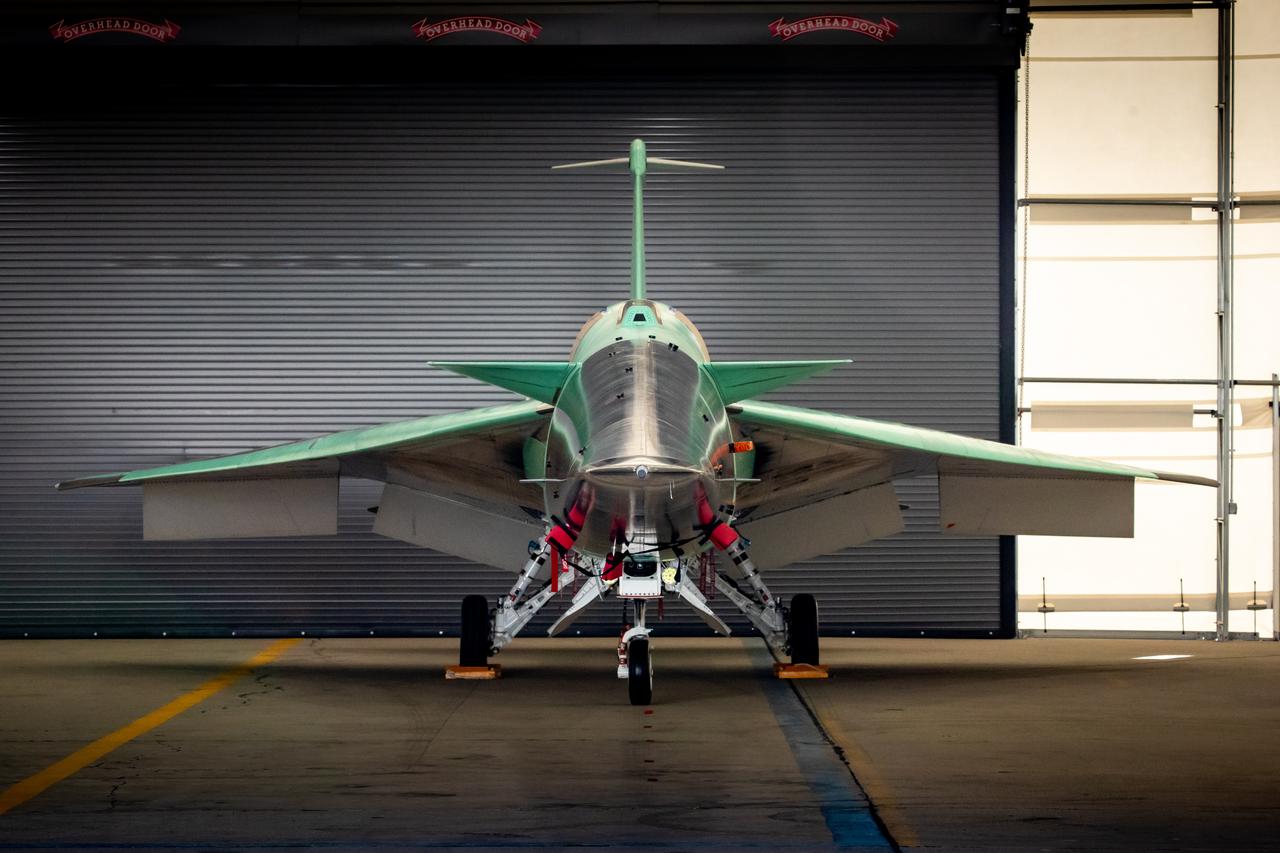
NASA’s X-59 aircraft is parked near the runway at Lockheed Martin Skunk Works in Palmdale, California, on June 19, 2023. This is where the X-59 will be housed during ground and initial flight tests. Lockheed Martin Photography By Garry Tice 1011 Lockheed Way, Palmdale, Ca. 93599 Event: Move to Run Stall 5 Date: 6/19/2023 Additional Info:
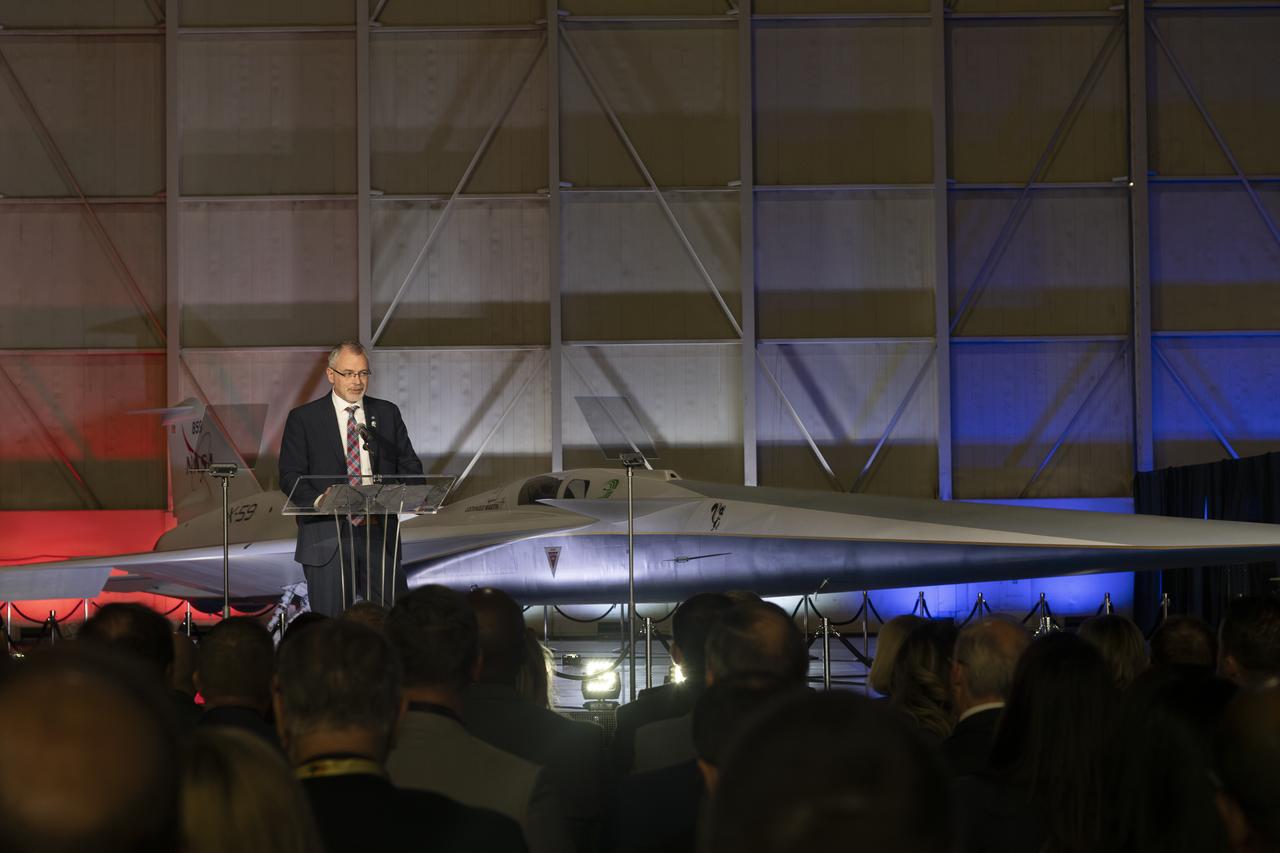
NASA Associate Administrator Jim Free speaks on stage following the unveiling of the agency’s X-59 quiet supersonic research aircraft at a January 12, 2024 event at Lockheed Martin Skunk Works in Palmdale, California. The X-59 is the centerpiece of NASA’s Quesst mission, which seeks to solve one of the major barriers to supersonic flight over land, currently banned in the United States, by making sonic booms quieter.
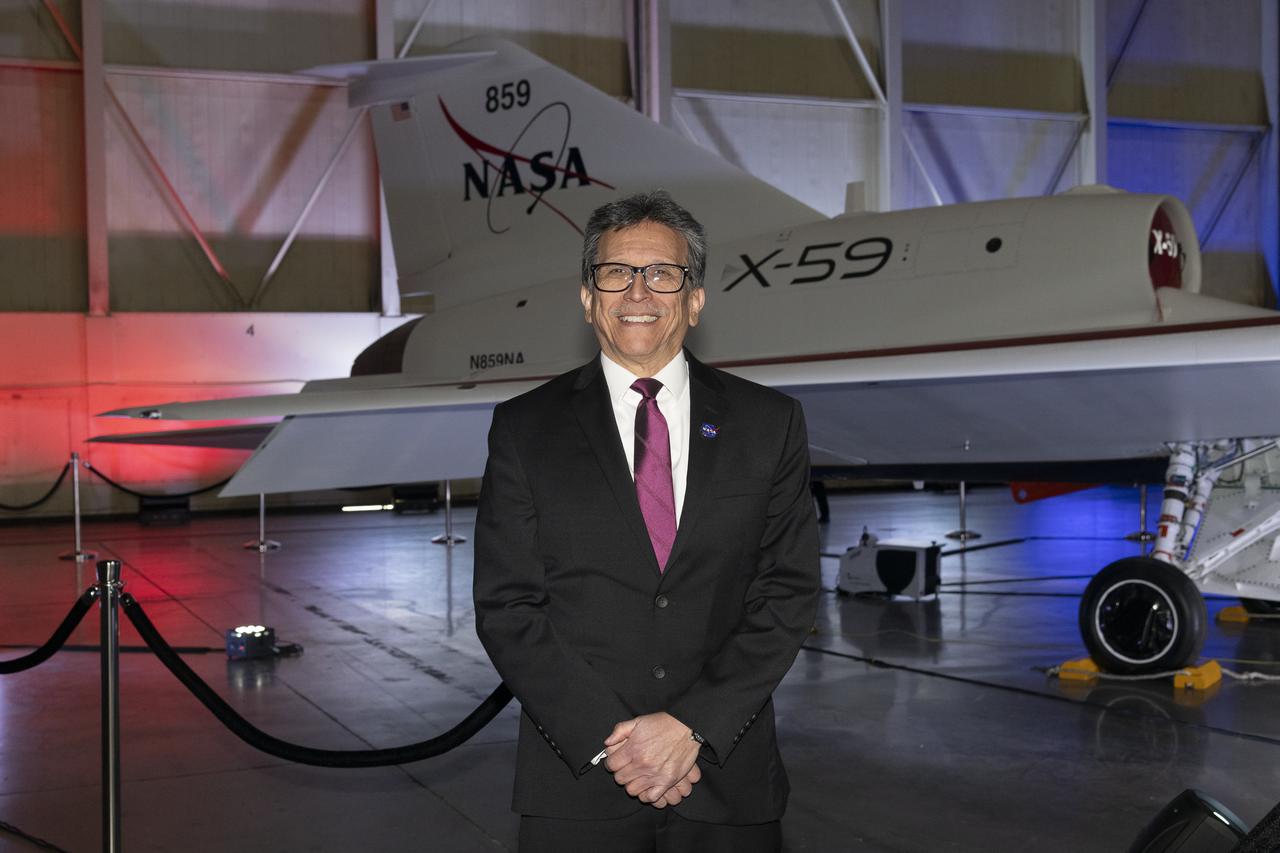
NASA’s structures lead for the X-59, Dr. Walt Silva, poses in front of the agency’s X-59 quiet supersonic research aircraft at a January 12, 2024 event at Lockheed Martin Skunk Works in Palmdale, California. The X-59 is the centerpiece of NASA’s Quesst mission, which seeks to solve one of the major barriers to supersonic flight over land, currently banned in the United States, by making sonic booms quieter.
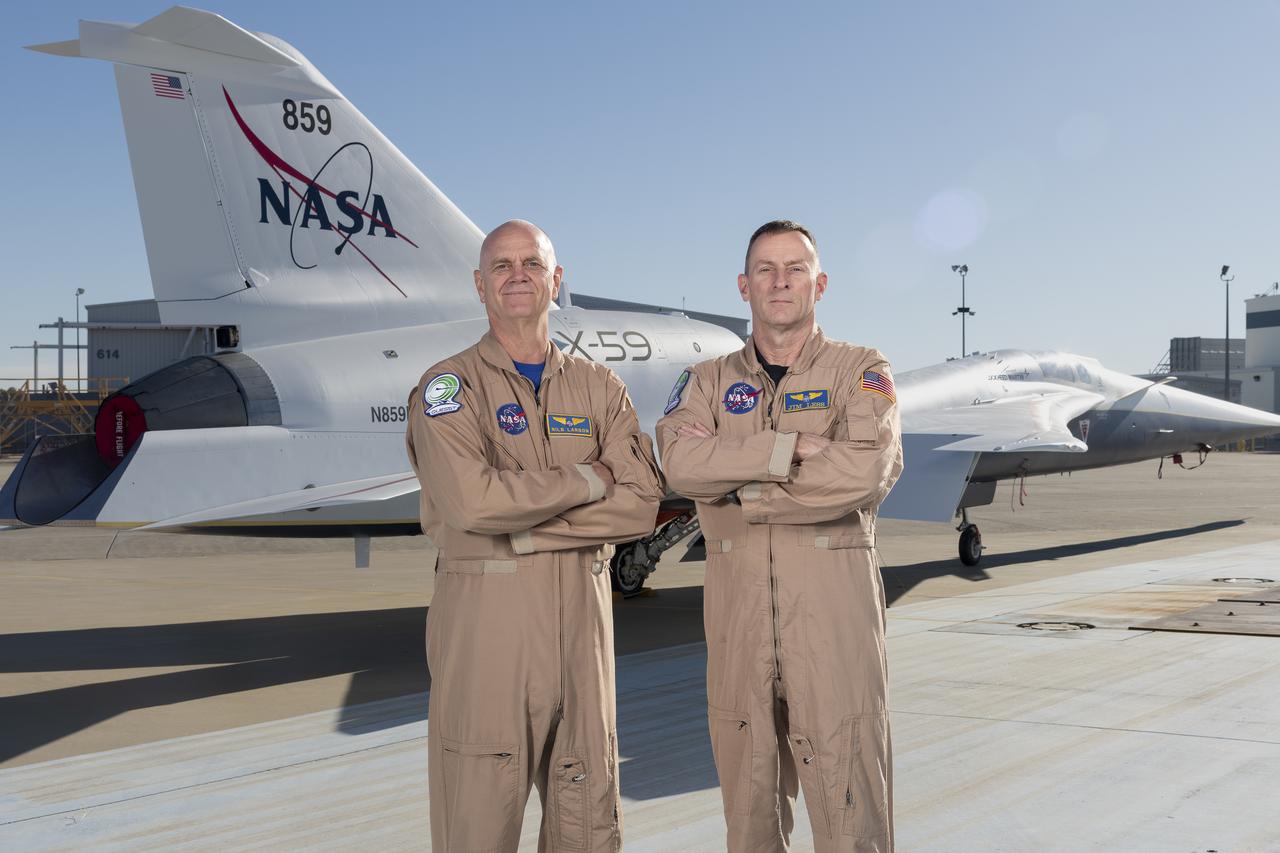
NASA test pilots Nils Larson (left) and Jim “Clue” Less (right) pose with the newly-painted X-59 as it sits on the ramp at Lockheed Martin Skunk Works in Palmdale, California. The X-59 is the centerpiece of NASA’s Quesst mission, which seeks to solve one of the major barriers to supersonic flight over land, currently banned in the United States, by making sonic booms quieter.
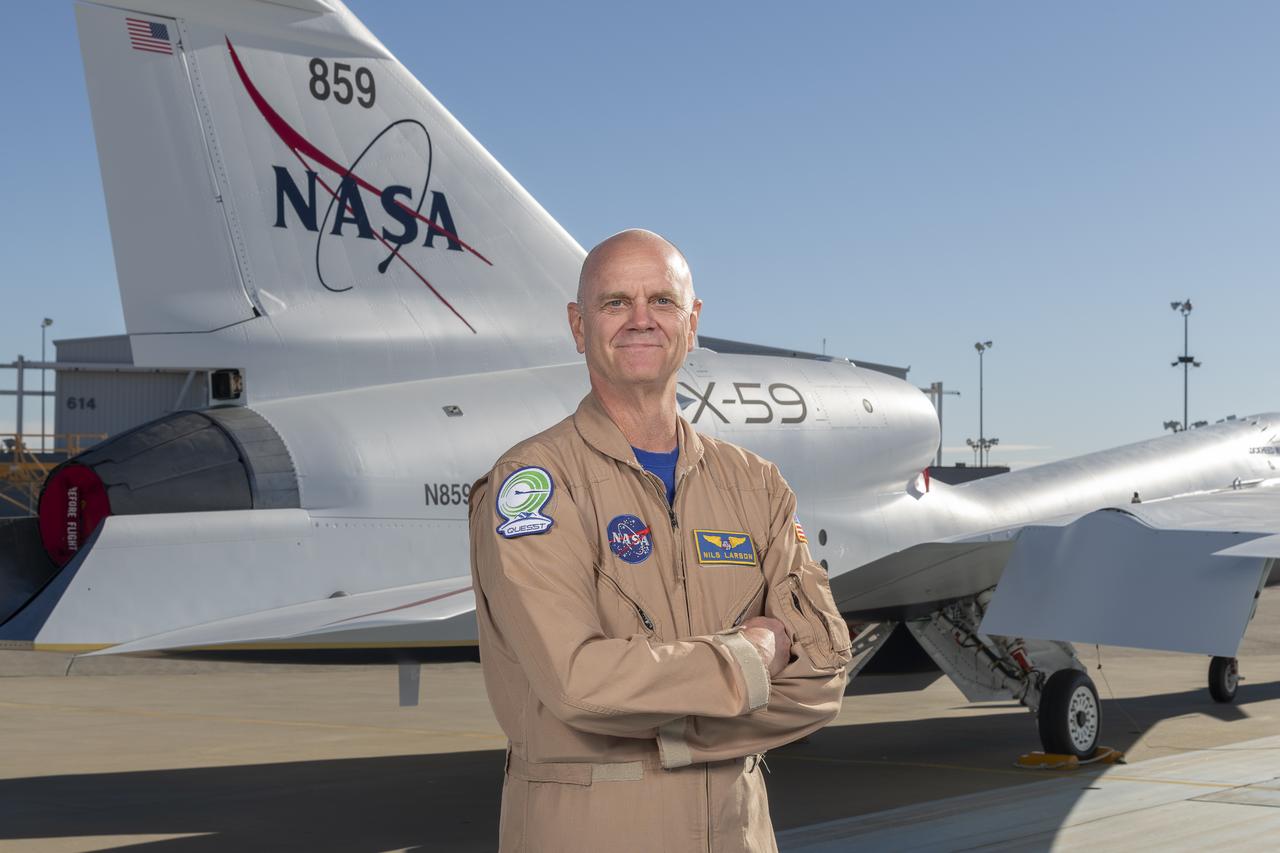
NASA test pilot Nils Larson poses with the newly-painted X-59 as it sits on the ramp at Lockheed Martin Skunk Works in Palmdale, California. The X-59 is the centerpiece of NASA’s Quesst mission, which seeks to solve one of the major barriers to supersonic flight over land, currently banned in the United States, by making sonic booms quieter.

NASA’s X-59 quiet supersonic research aircraft sits on the ramp during engine run testing on Thursday, March 12, 2026, at NASA’s Armstrong Flight Research Center in Edwards, California. Engine runs are one of the final tests before the aircraft is ready for its second flight. The data collected from the aircraft during upcoming flight tests could help inform future regulations for commercial supersonic travel over land.
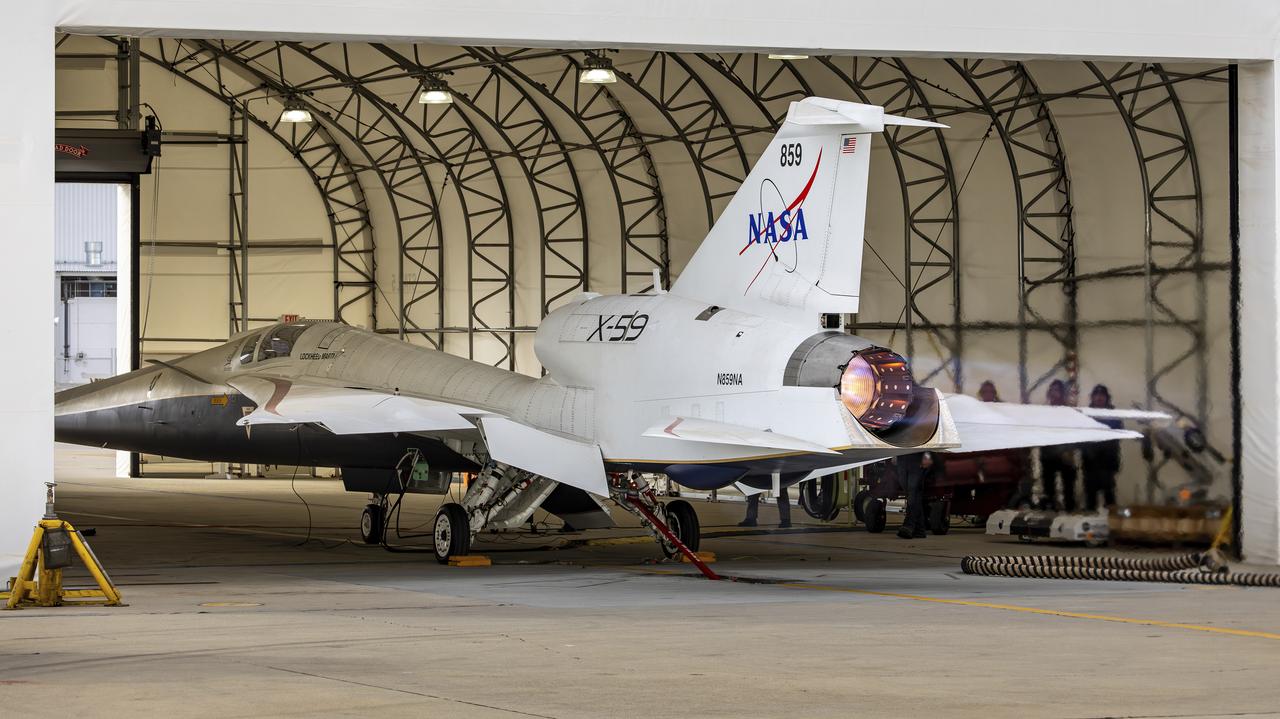
NASA’s X-59 quiet supersonic research aircraft completed its first maximum afterburner test at Lockheed Martin’s Skunk Works facility in Palmdale, California. This full-power test, during which the engine generates additional thrust, validates the additional power needed for meeting the testing conditions of the aircraft. The X-59 is the centerpiece of NASA’s Quesst mission, which aims to overcome a major barrier to supersonic flight over land by reducing the noise of sonic booms.
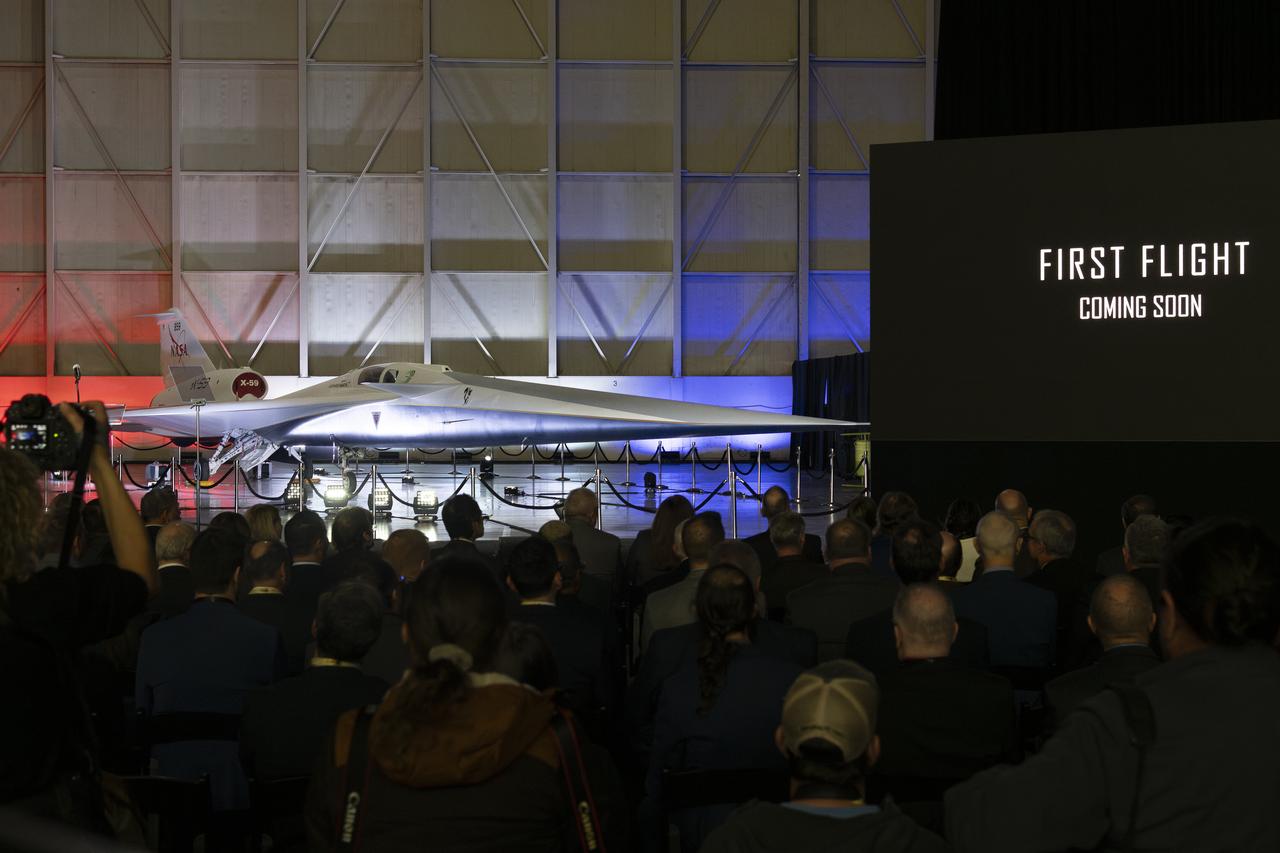
NASA’s X-59 quiet supersonic research aircraft is unveiled at a January 12, 2024 event at Lockheed Martin Skunk Works in Palmdale, California. The X-59 is the centerpiece of NASA’s Quesst mission, which seeks to solve one of the major barriers to supersonic flight over land, currently banned in the United States, by making sonic booms quieter.
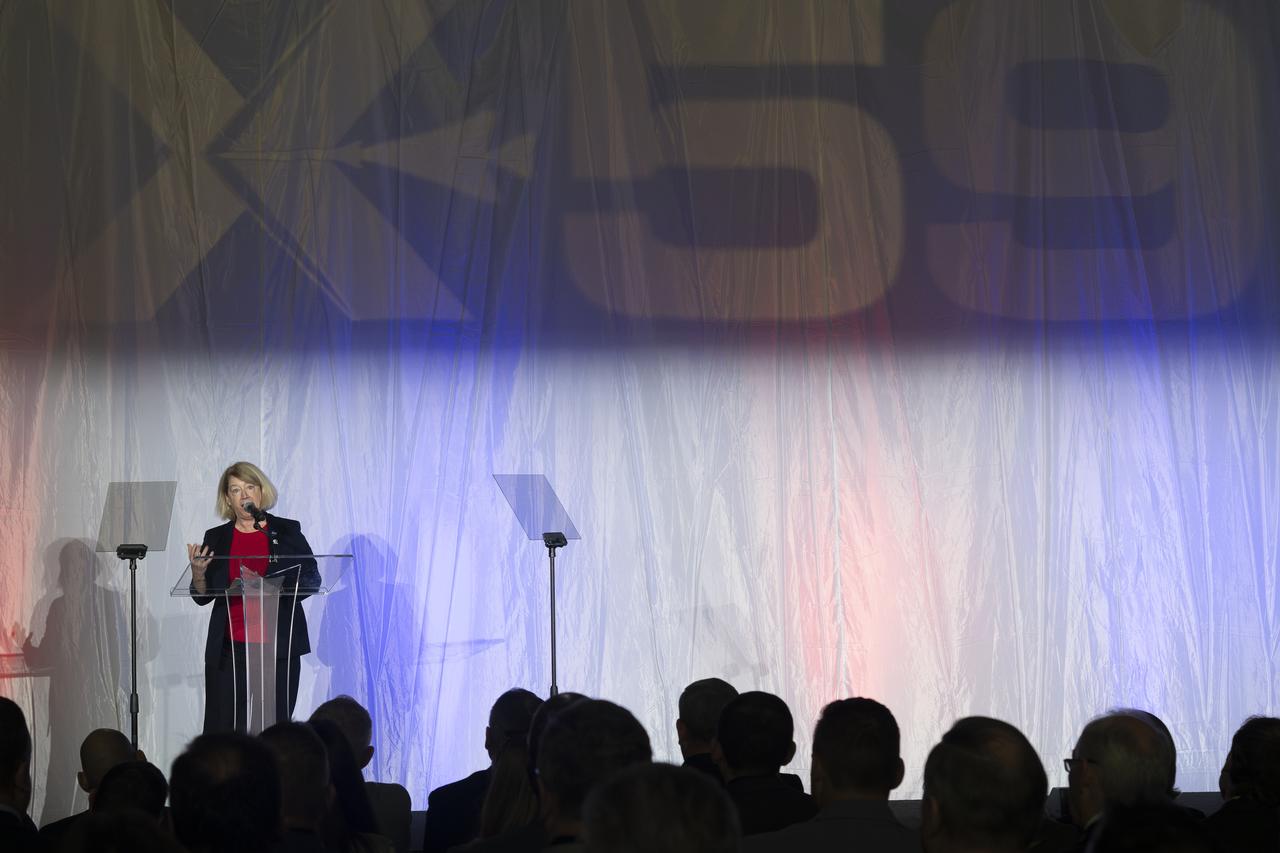
NASA Deputy Administrator Pam Melroy speaks on stage prior to the official unveiling of the agency’s X-59 quiet supersonic research aircraft at a January 12, 2024 event at Lockheed Martin Skunk Works in Palmdale, California. The X-59 is the centerpiece of NASA’s Quesst mission, which seeks to solve one of the major barriers to supersonic flight over land, currently banned in the United States, by making sonic booms quieter.
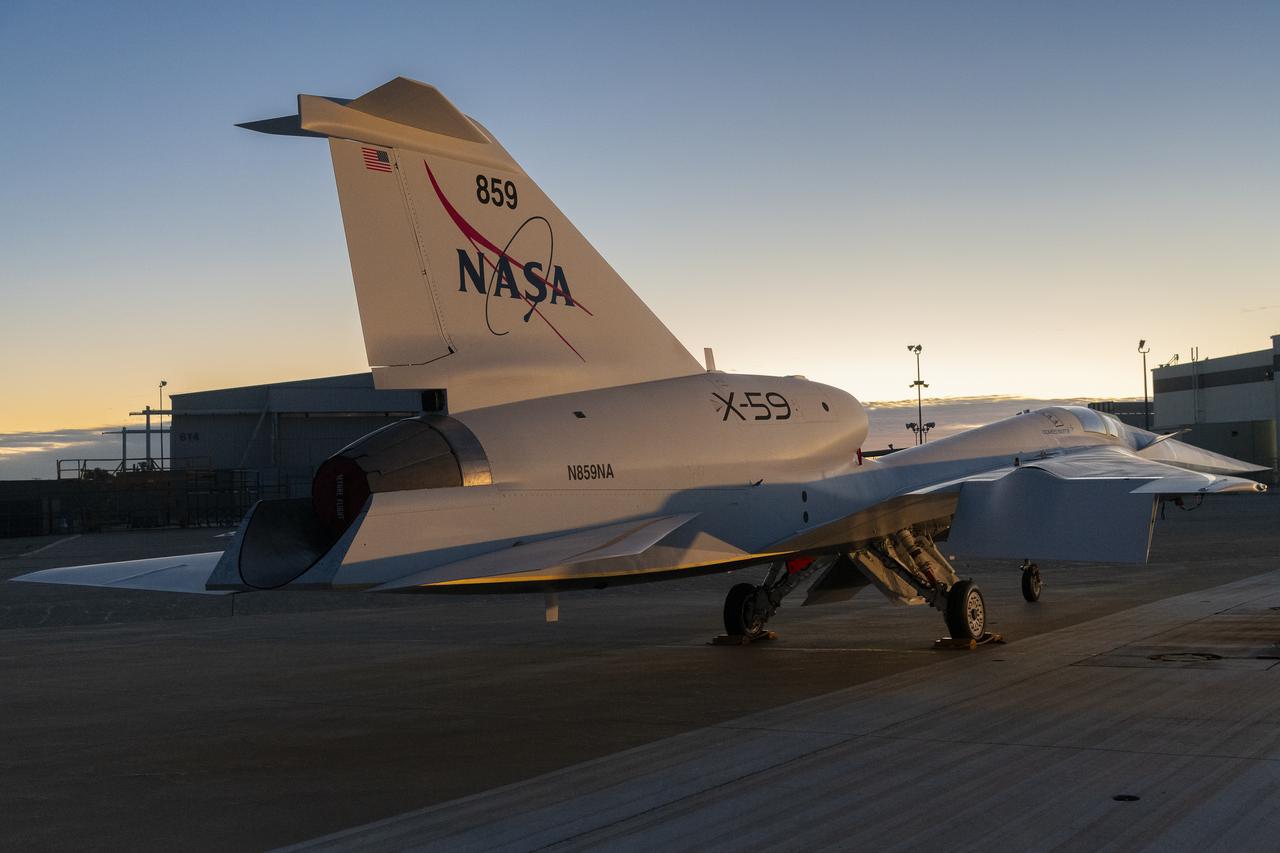
NASA’s X-59 quiet supersonic research aircraft sits on the ramp at Lockheed Martin Skunk Works in Palmdale, California during sunrise, shortly after completion of painting. With its unique design, including a 38-foot-long nose, the X-59 was built to demonstrate the ability to fly supersonic, or faster than the speed of sound, while reducing the typically loud sonic boom produced by aircraft at such speeds to a quieter sonic “thump”. The X-59 is the centerpiece of NASA’s Quesst mission, which seeks to solve one of the major barriers to supersonic flight over land, currently banned in the United States, by making sonic booms quieter.
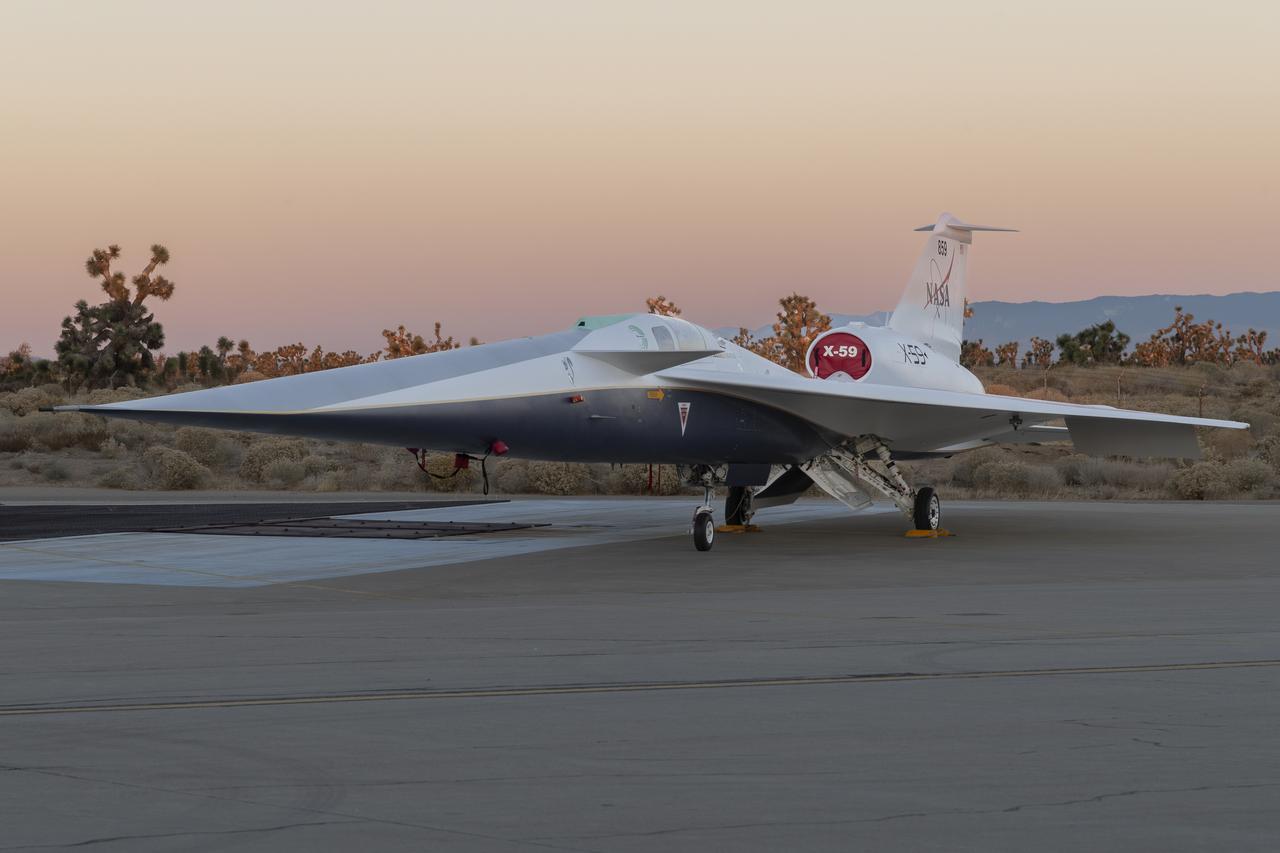
NASA’s X-59 quiet supersonic research aircraft sits on the ramp at Lockheed Martin Skunk Works in Palmdale, California during sunrise, shortly after completion of painting. With its unique design, including a 38-foot-long nose, the X-59 was built to demonstrate the ability to fly supersonic, or faster than the speed of sound, while reducing the typically loud sonic boom produced by aircraft at such speeds to a quieter sonic “thump”. The X-59 is the centerpiece of NASA’s Quesst mission, which seeks to solve one of the major barriers to supersonic flight over land, currently banned in the United States, by making sonic booms quieter.

NASA's F-15B Aeronautics Research Test Bed performs a calibration flight of the shock-sensing probe over Edwards, California, on Aug. 6, 2024. The probe will measure shock waves from NASA's X-59.
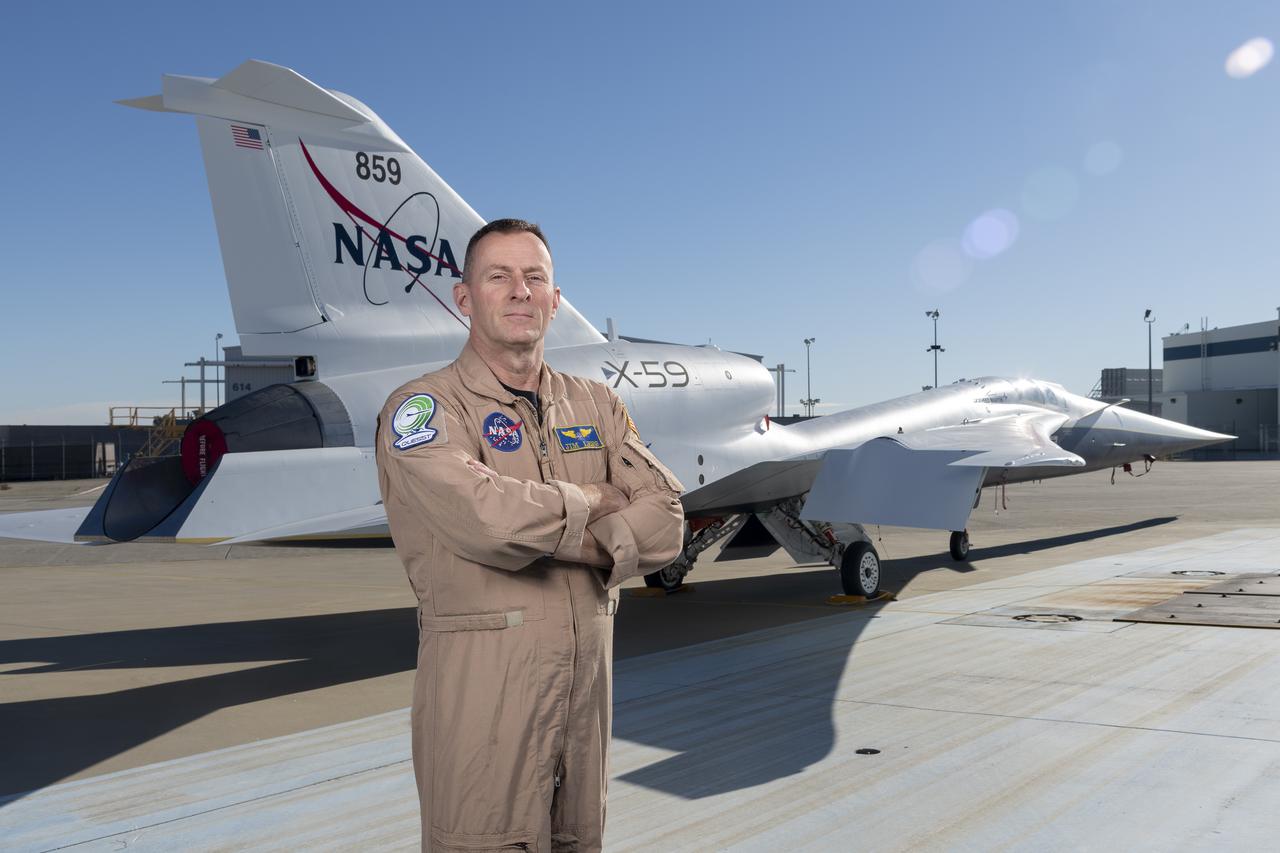
NASA test pilot Jim “Clue” Less poses with the newly-painted X-59 as it sits on the ramp at Lockheed Martin Skunk Works in Palmdale, California. The X-59 is the centerpiece of NASA’s Quesst mission, which seeks to solve one of the major barriers to supersonic flight over land, currently banned in the United States, by making sonic booms quieter.
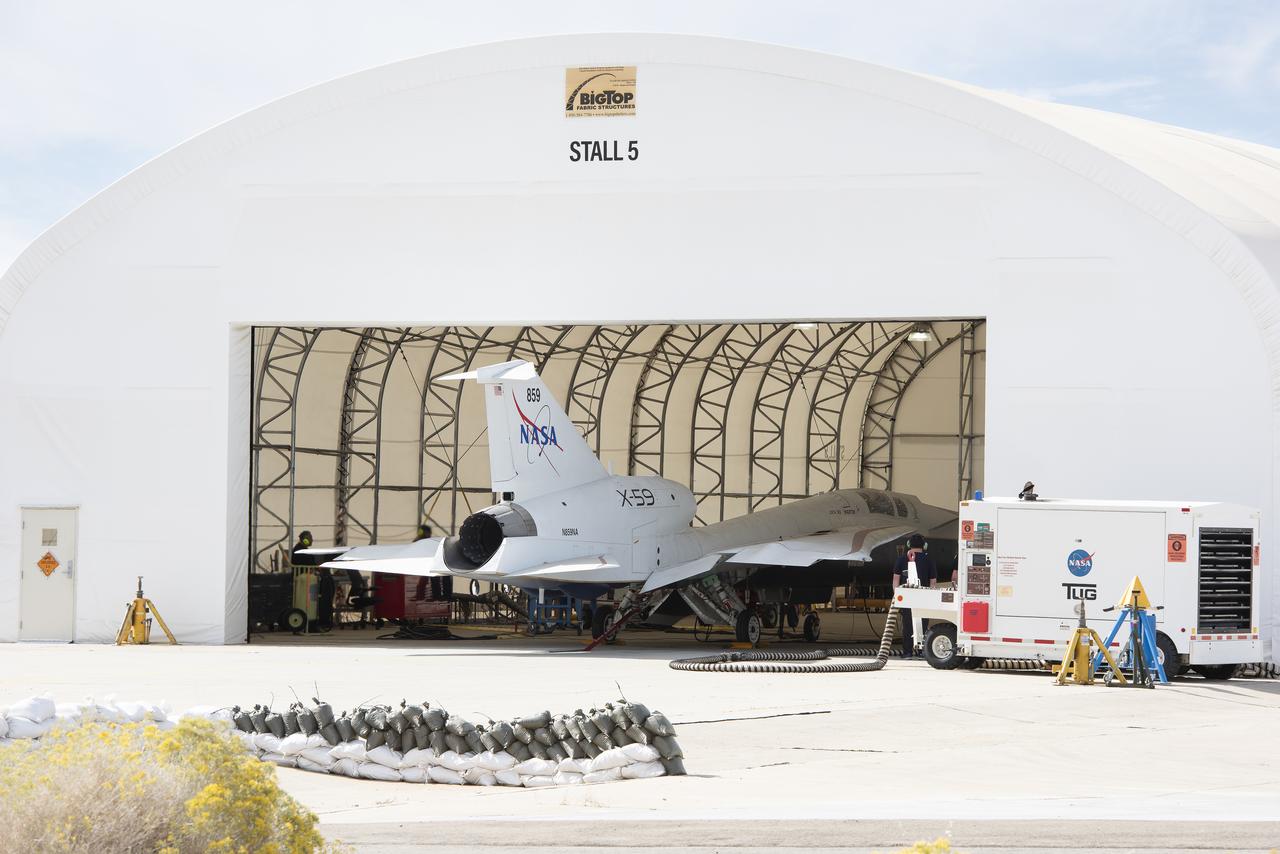
NASA’s X-59 quiet supersonic research aircraft sits in its run stall at Lockheed Martin’s Skunk Works facility in Palmdale, California, firing up its engine for the first time. These engine-run tests start at low power and allow the X-59 team to verify the aircraft’s systems are working together while powered by its own engine. The X-59 is the centerpiece of NASA’s Quesst mission, which seeks to solve one of the major barriers to supersonic flight over land by making sonic booms quieter.
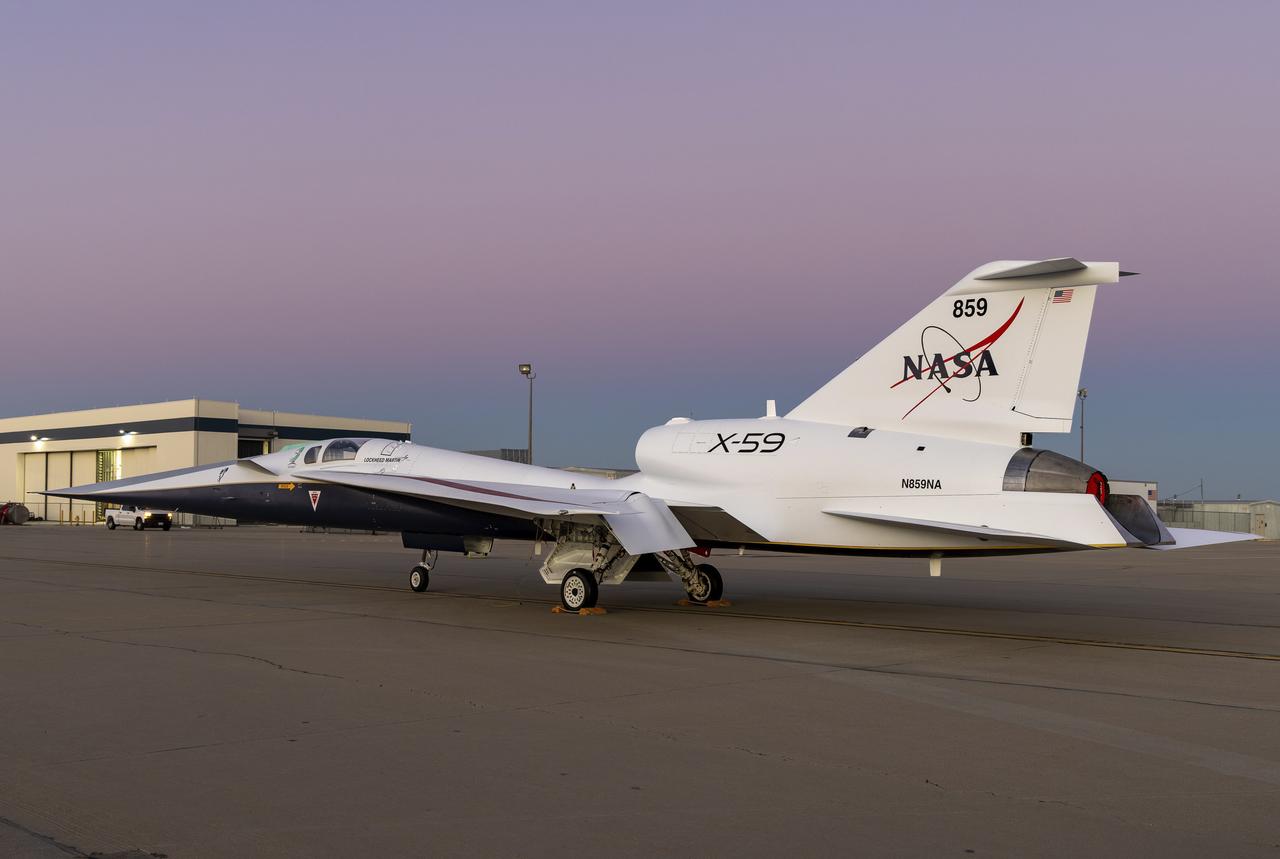
NASA’s X-59 quiet supersonic research aircraft sits on a ramp at Lockheed Martin Skunk Works in Palmdale, California, during sunset. The one-of-a-kind aircraft is powered by a General Electric F414 engine, a variant of the engines used on F/A-18 fighter jets. The engine is mounted above the fuselage to reduce the number of shockwaves that reach the ground. The X-59 is the centerpiece of NASA's Quesst mission, which aims to demonstrate quiet supersonic flight and enable future commercial travel over land – faster than the speed of sound.
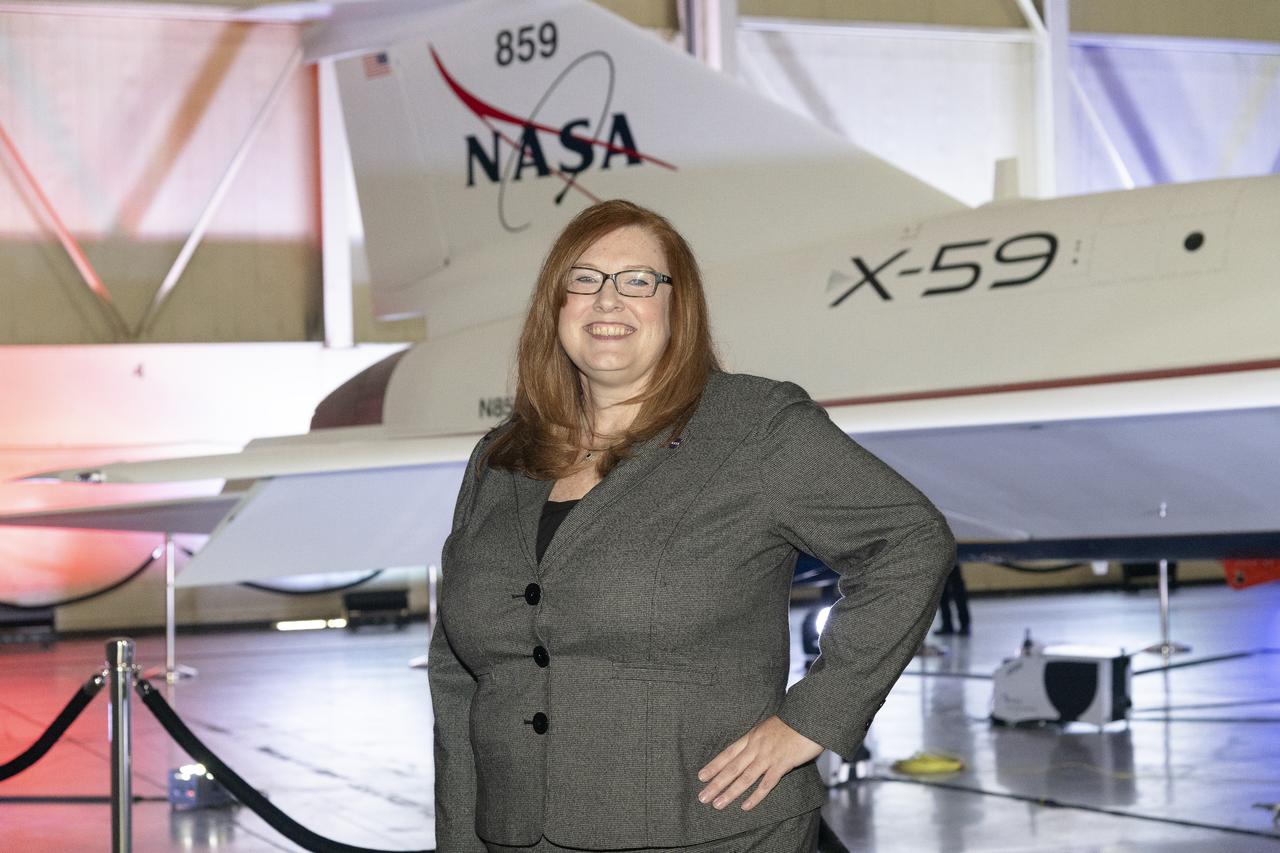
NASA’s project manager for the Low Boom Flight Demonstrator project, Cathy Bahm, poses in front of the agency’s X-59 quiet supersonic research aircraft at a January 12, 2024 event at Lockheed Martin Skunk Works in Palmdale, California. The X-59 is the centerpiece of NASA’s Quesst mission, which seeks to solve one of the major barriers to supersonic flight over land, currently banned in the United States, by making sonic booms quieter.
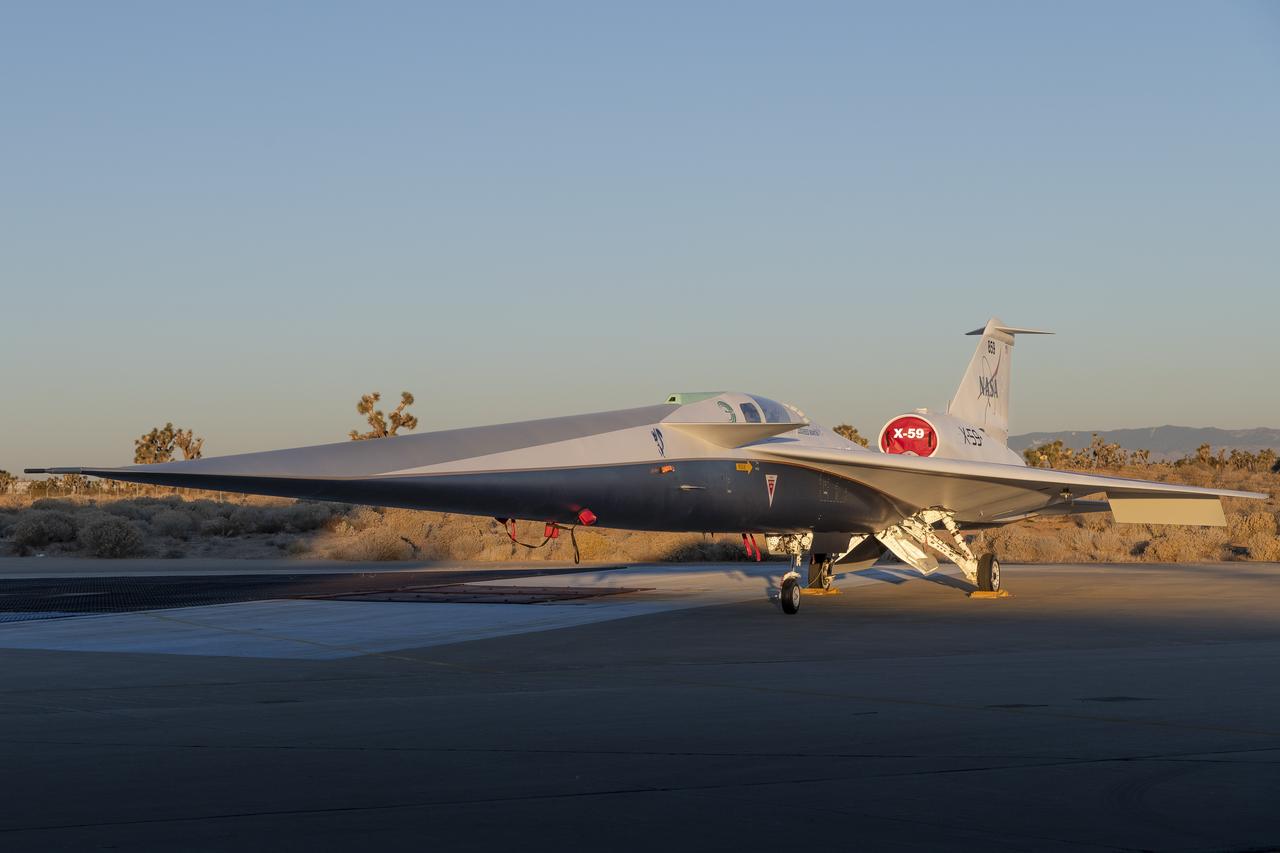
NASA’s X-59 quiet supersonic research aircraft sits on the ramp at Lockheed Martin Skunk Works in Palmdale, California during sunrise, shortly after completion of painting. With its unique design, including a 38-foot-long nose, the X-59 was built to demonstrate the ability to fly supersonic, or faster than the speed of sound, while reducing the typically loud sonic boom produced by aircraft at such speeds to a quieter sonic “thump”. The X-59 is the centerpiece of NASA’s Quesst mission, which seeks to solve one of the major barriers to supersonic flight over land, currently banned in the United States, by making sonic booms quieter.
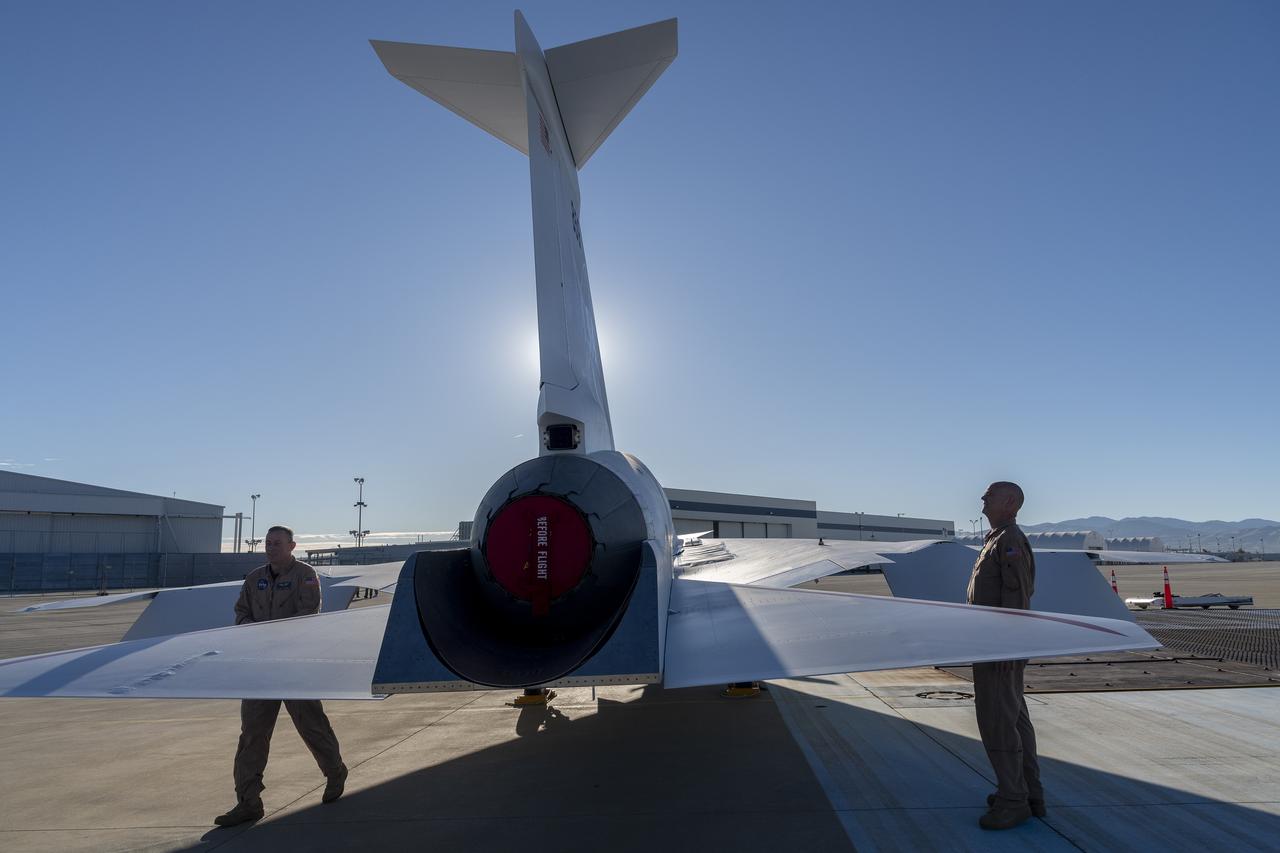
NASA and Lockheed Martin test pilots inspect the painted X-59 as it sits on the ramp at Lockheed Martin Skunk Works in Palmdale, California. The X-59 is the centerpiece of NASA’s Quesst mission, which seeks to solve one of the major barriers to supersonic flight over land, currently banned in the United States, by making sonic booms quieter.

NASA Deputy Administrator Pam Melroy speaks on stage immediately following the unveiling of the agency’s X-59 quiet supersonic research aircraft at a January 12, 2024 event at Lockheed Martin Skunk Works in Palmdale, California. The X-59 is the centerpiece of NASA’s Quesst mission, which seeks to solve one of the major barriers to supersonic flight over land, currently banned in the United States, by making sonic booms quieter.
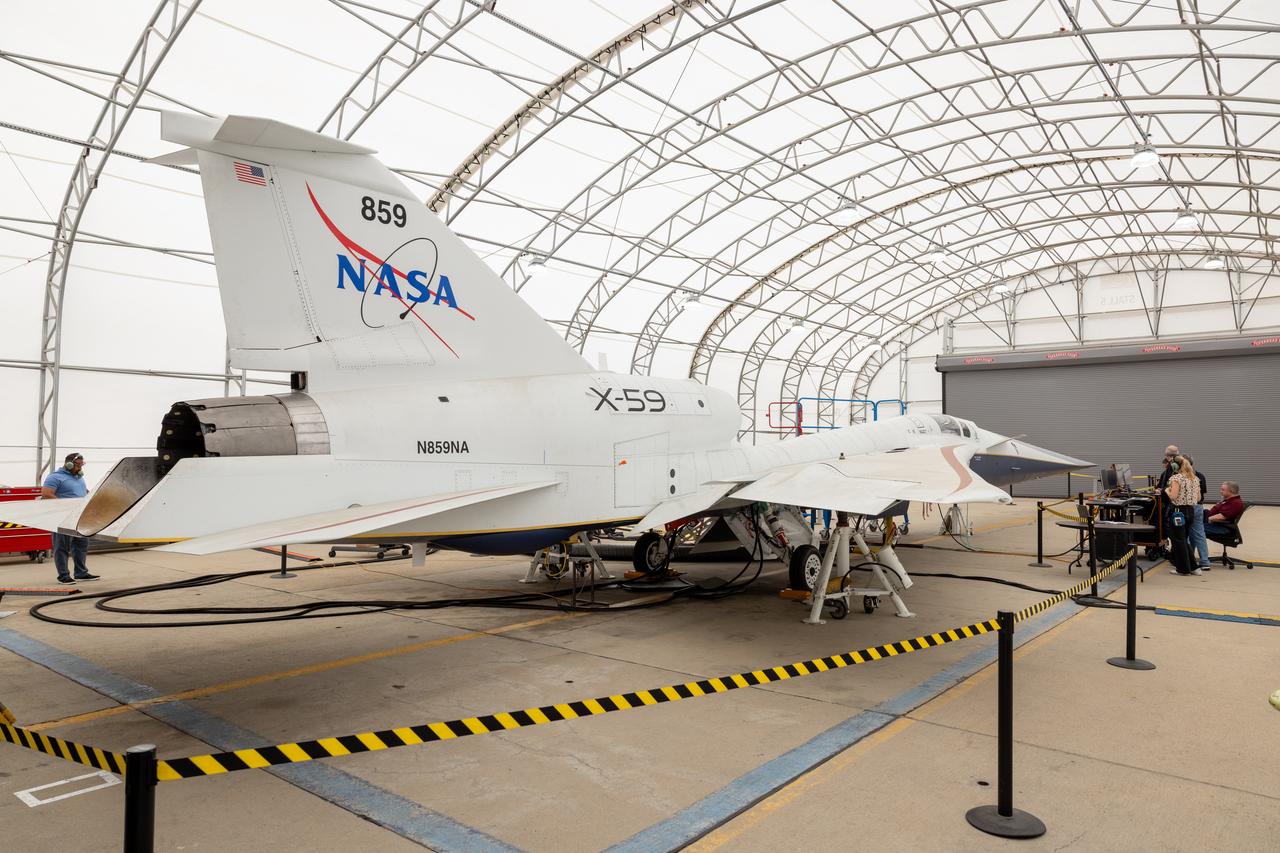
NASA’s X-59 quiet supersonic research aircraft successfully completed its “aluminum bird” systems test at Lockheed Martin’s Skunk Works facility in Palmdale, California. With NASA pilot James Less in the cockpit, the X-59 team simulated flight conditions from takeoff to landing – without ever leaving the ground. The test verified how the aircraft’s hardware and software work together, responding to pilot inputs and handling injected system failures. This milestone confirms the aircraft’s readiness for the next series of tests leading to first flight.
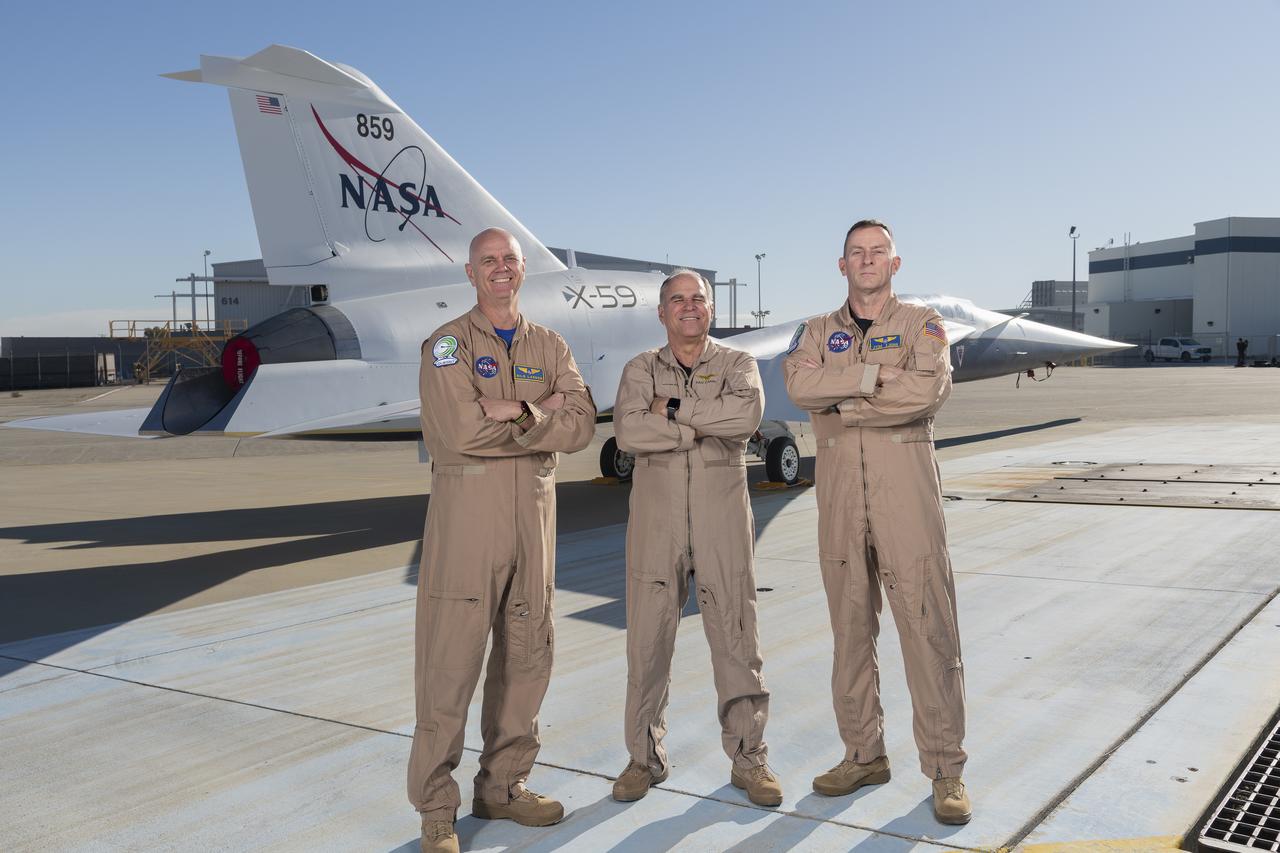
NASA test pilots Nils Larson (left) and Jim “Clue” Less (right), and Lockheed Martin test pilot Dan “Dog” Canin pose with the newly-painted X-59 as it sits on the ramp at Lockheed Martin Skunk Works in Palmdale, California. The X-59 is the centerpiece of NASA’s Quesst mission, which seeks to solve one of the major barriers to supersonic flight over land, currently banned in the United States, by making sonic booms quieter.
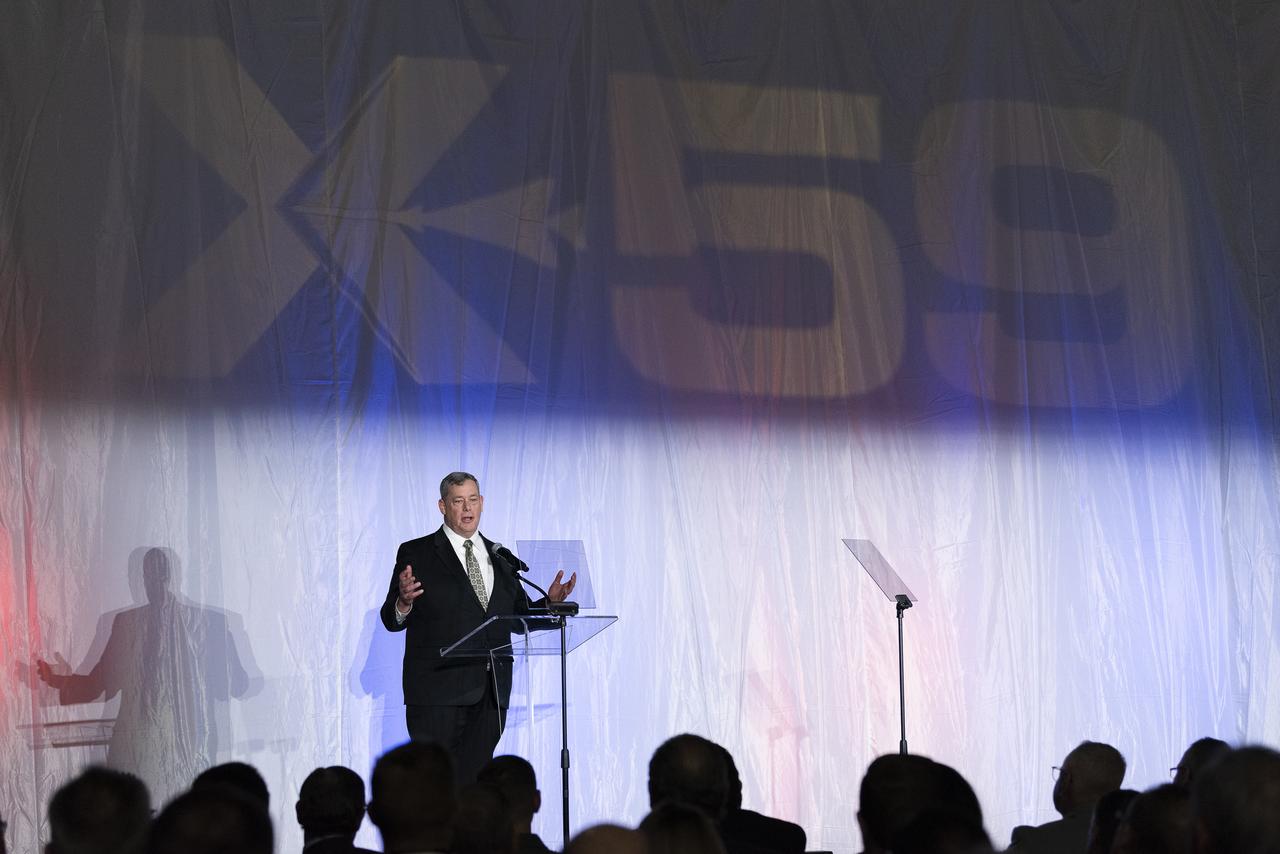
Lockheed Martin Aeronautics Executive Vice President Greg Ulmer speaks on stage prior to the unveiling of the agency’s X-59 quiet supersonic research aircraft at a January 12, 2024 event at Lockheed Martin Skunk Works in Palmdale, California. The X-59 is the centerpiece of NASA’s Quesst mission, which seeks to solve one of the major barriers to supersonic flight over land, currently banned in the United States, by making sonic booms quieter.
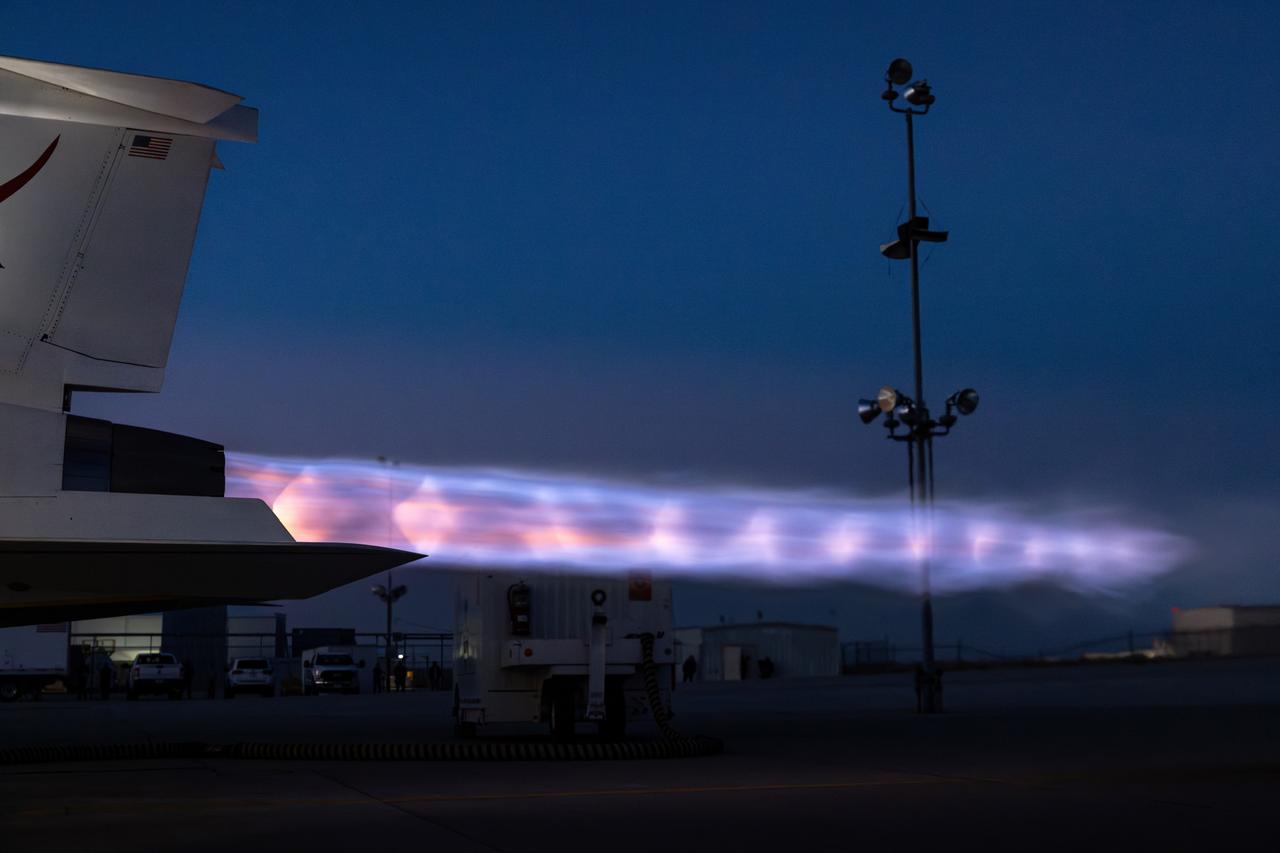
NASA’s X-59 lights up the night sky with its unique Mach diamonds, also known as shock diamonds, during maximum afterburner testing at Lockheed Martin Skunk Works in Palmdale, California. The test demonstrates the engine’s ability to generate the thrust required for supersonic flight, advancing NASA’s Quesst mission.
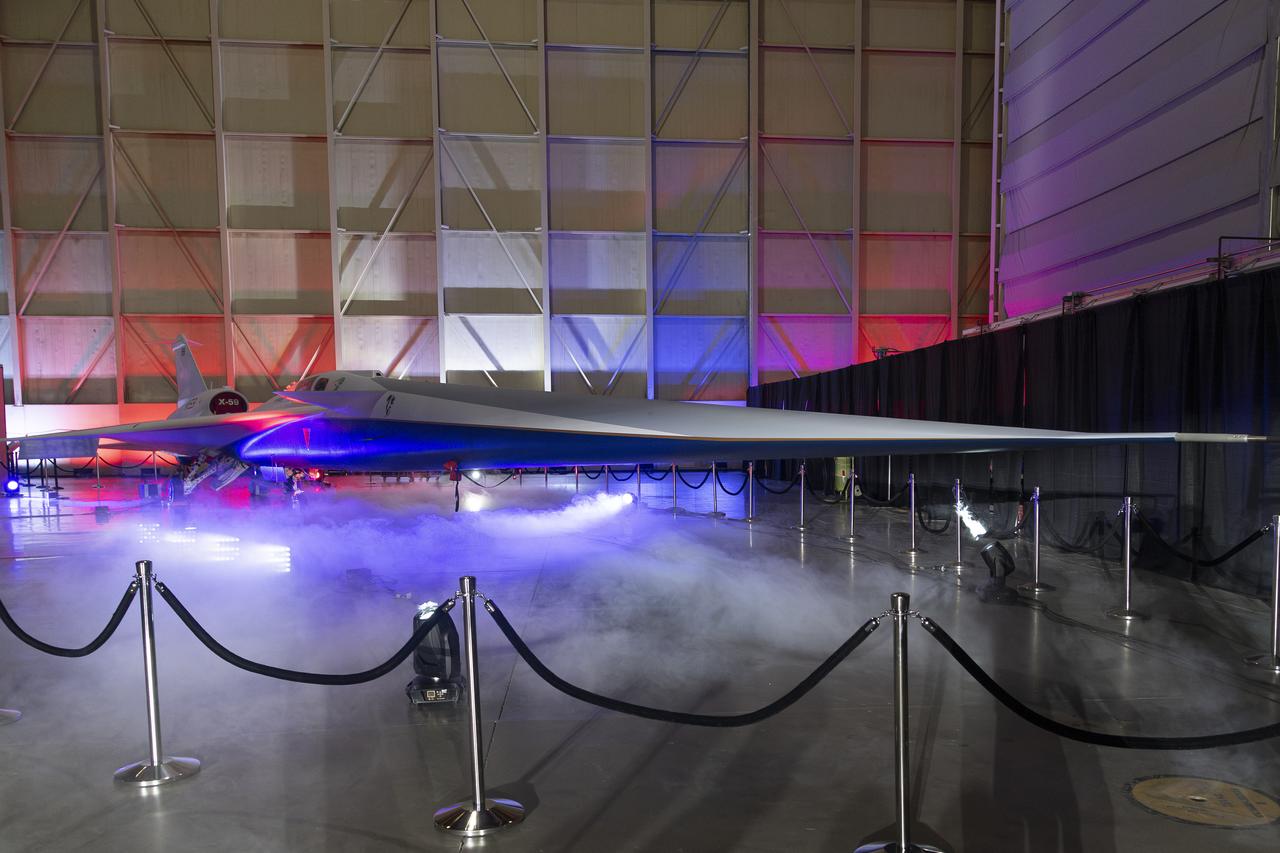
NASA’s X-59 quiet supersonic research aircraft sits in position inside a hangar at Lockheed Martin Skunk Works in Palmdale, California prior to its January 12, 2024 unveiling. The X-59 is the centerpiece of NASA’s Quesst mission, which seeks to solve one of the major barriers to supersonic flight over land, currently banned in the United States, by making sonic booms quieter.
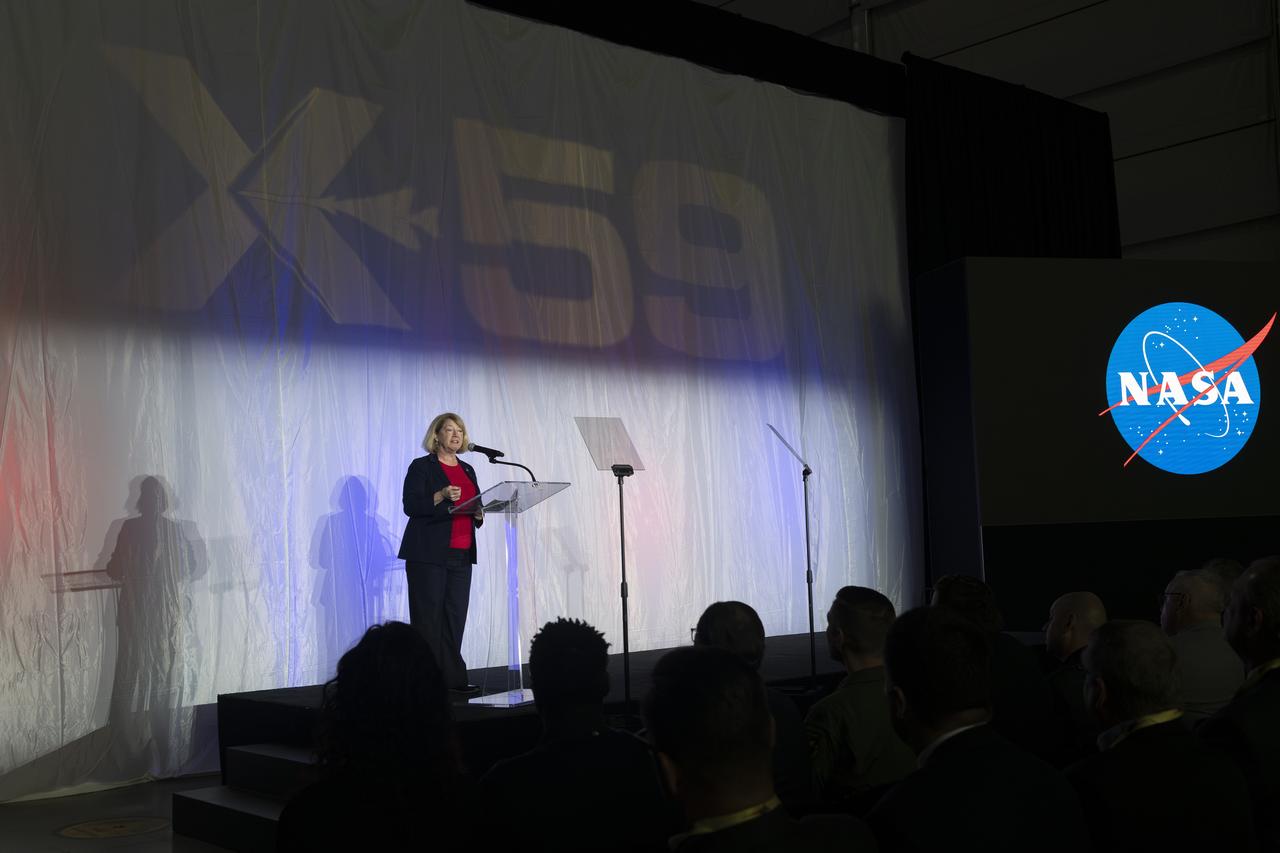
NASA Deputy Administrator Pam Melroy speaks on stage prior to the official unveiling of the agency’s X-59 quiet supersonic research aircraft at a January 12, 2024 event at Lockheed Martin Skunk Works in Palmdale, California. The X-59 is the centerpiece of NASA’s Quesst mission, which seeks to solve one of the major barriers to supersonic flight over land, currently banned in the United States, by making sonic booms quieter.
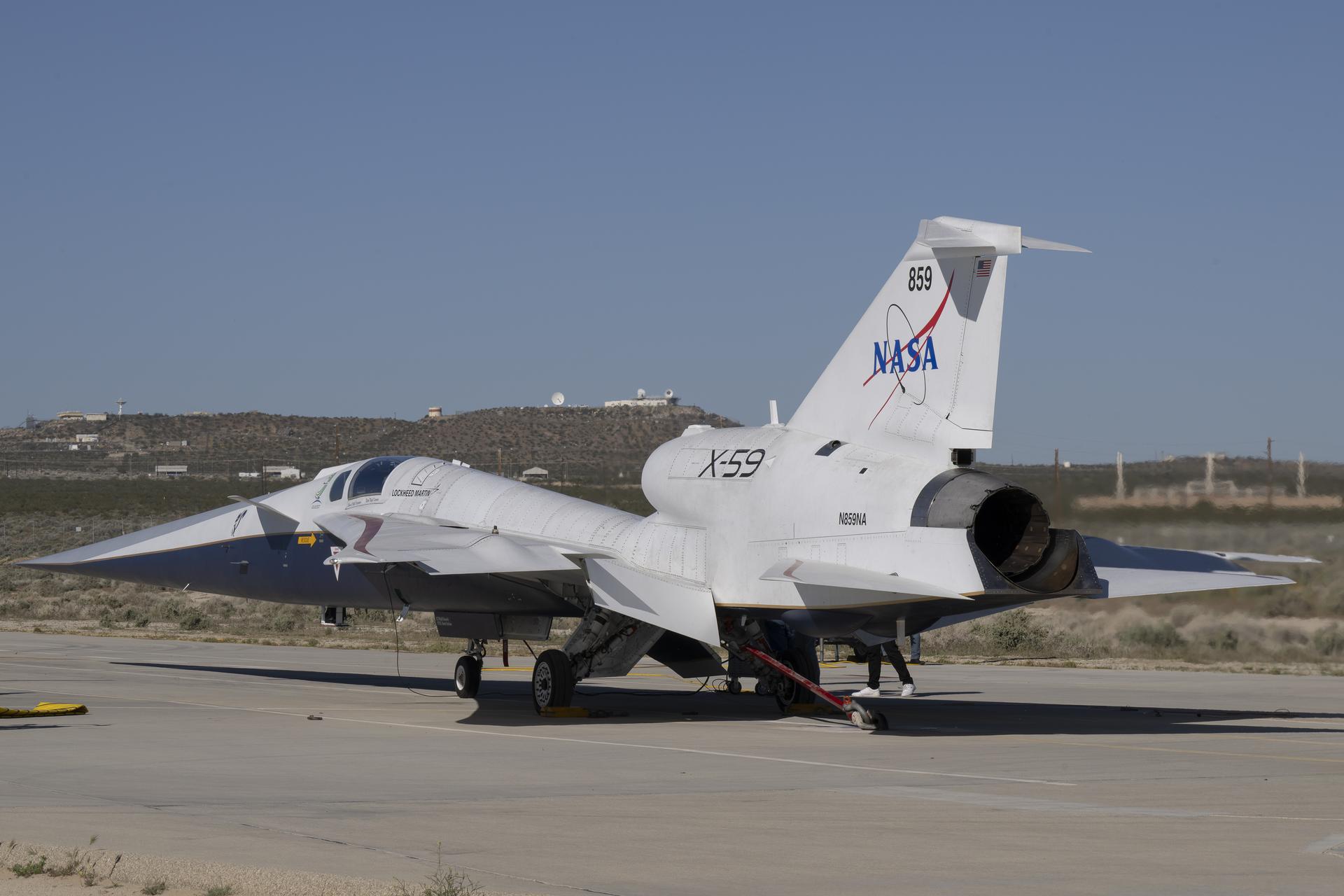
NASA’s X-59 quiet supersonic research aircraft completed a series of engine run tests on Thursday, March 12, 2026, at NASA’s Armstrong Flight Research Center in Edwards, California. These tests mark one of the final ground preparations before the aircraft’s second flight.
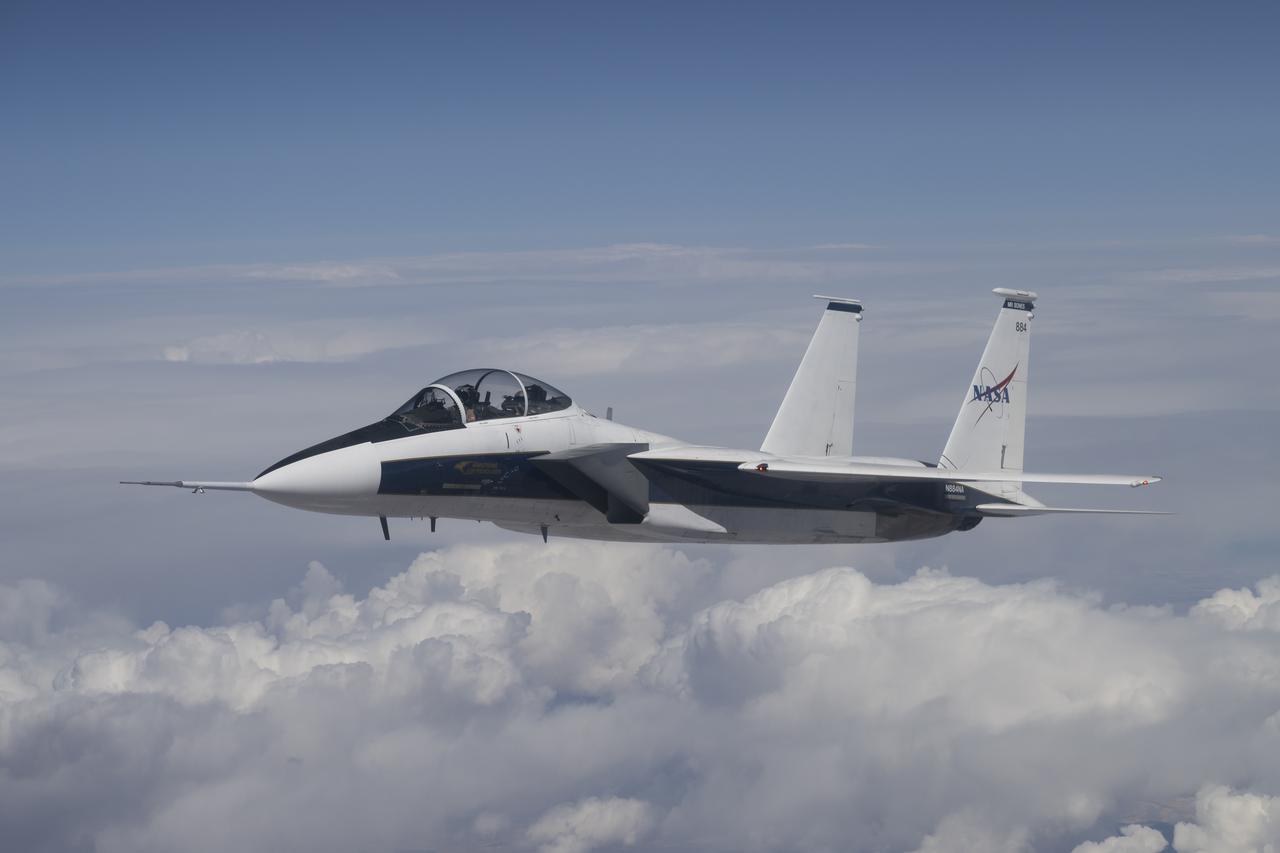
NASA’s F-15D research aircraft conducts a test flight near Edwards, California, with a newly installed near-field shock-sensing probe. Identical to a previously flown version that was intended as the backup, this new probe will capture shock wave data near the X-59 as it flies faster than the speed of sound, supporting NASA’s Quesst mission.
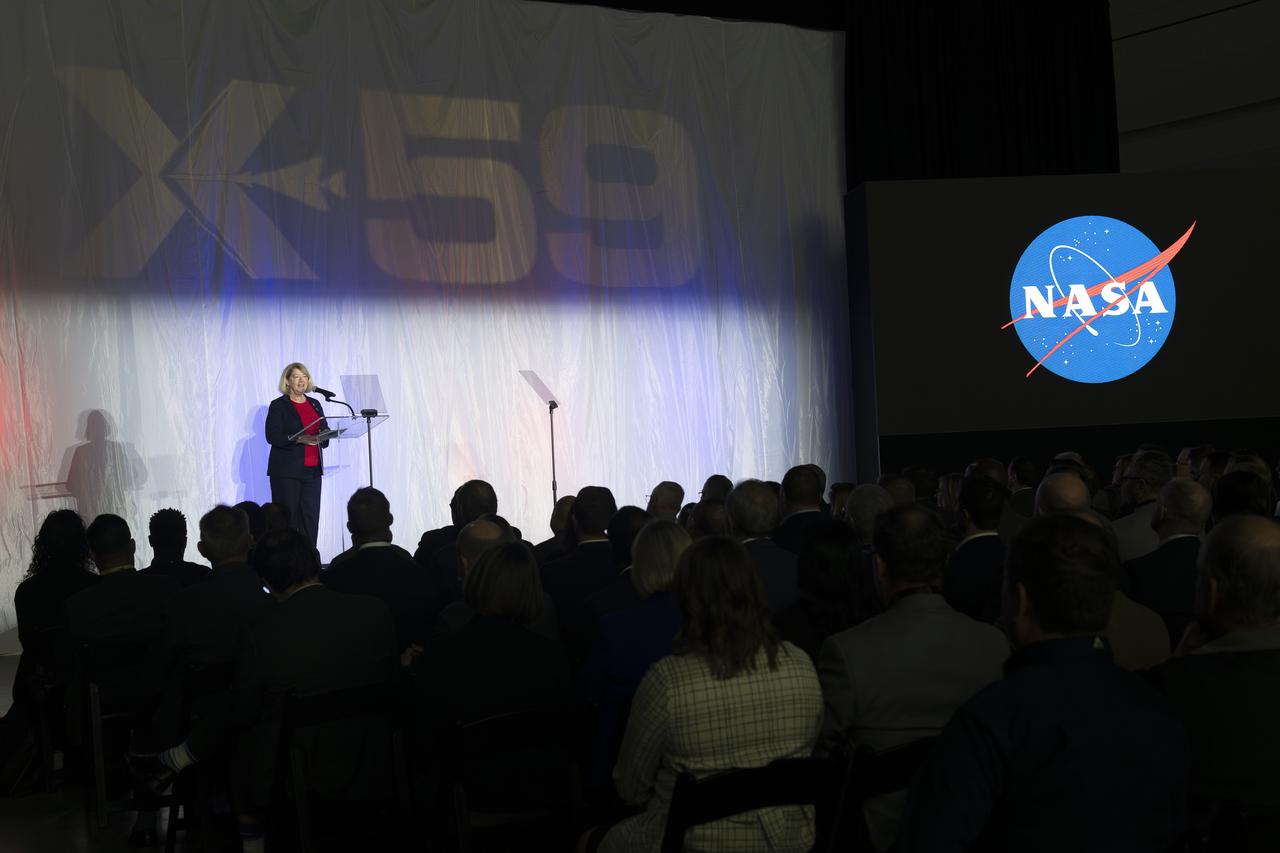
NASA Deputy Administrator Pam Melroy speaks on stage prior to the official unveiling of the agency’s X-59 quiet supersonic research aircraft at a January 12, 2024 event at Lockheed Martin Skunk Works in Palmdale, California. The X-59 is the centerpiece of NASA’s Quesst mission, which seeks to solve one of the major barriers to supersonic flight over land, currently banned in the United States, by making sonic booms quieter.

NASA Associate Administrator for the Aeronautics Research Mission Directorate Bob Pearce speaks on stage prior to the unveiling of the agency’s X-59 quiet supersonic research aircraft at a January 12, 2024 event at Lockheed Martin Skunk Works in Palmdale, California. The X-59 is the centerpiece of NASA’s Quesst mission, which seeks to solve one of the major barriers to supersonic flight over land, currently banned in the United States, by making sonic booms quieter.
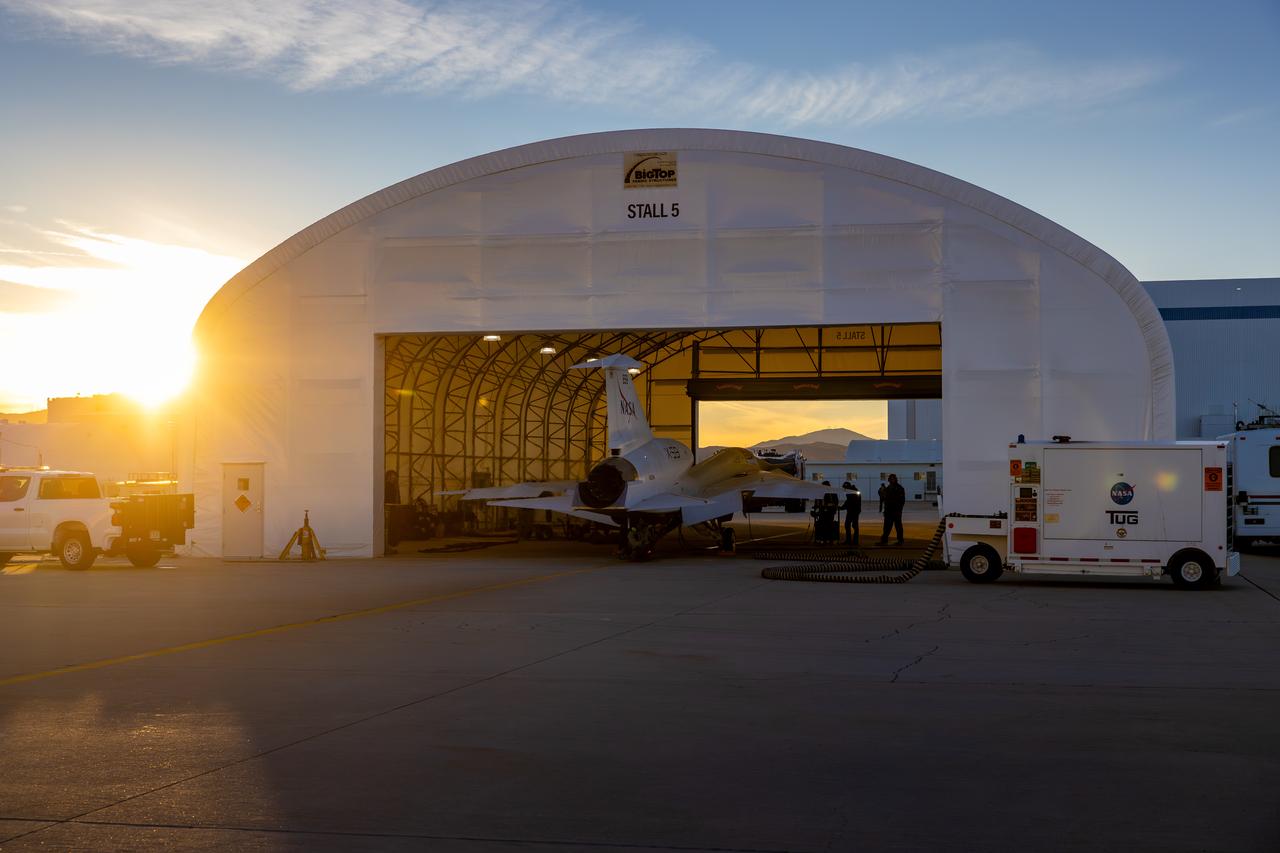
NASA’s X-59 quiet supersonic research aircraft sits inside its run stall in preparation for maximum afterburner testing at Lockheed Martin’s Skunk Works facility in Palmdale, California. Teams conduct final checks on the aircraft before its high-thrust engine runs. The X-59 is the centerpiece of NASA’s Quesst mission designed to demonstrate quiet supersonic flight over land, addressing a key barrier to commercial supersonic travel.

NASA's F-15B Aeronautics Research Test Bed performs a calibration flight of the shock-sensing probe over Edwards, California, on Aug. 6, 2024. The probe will measure shock waves from NASA's X-59.
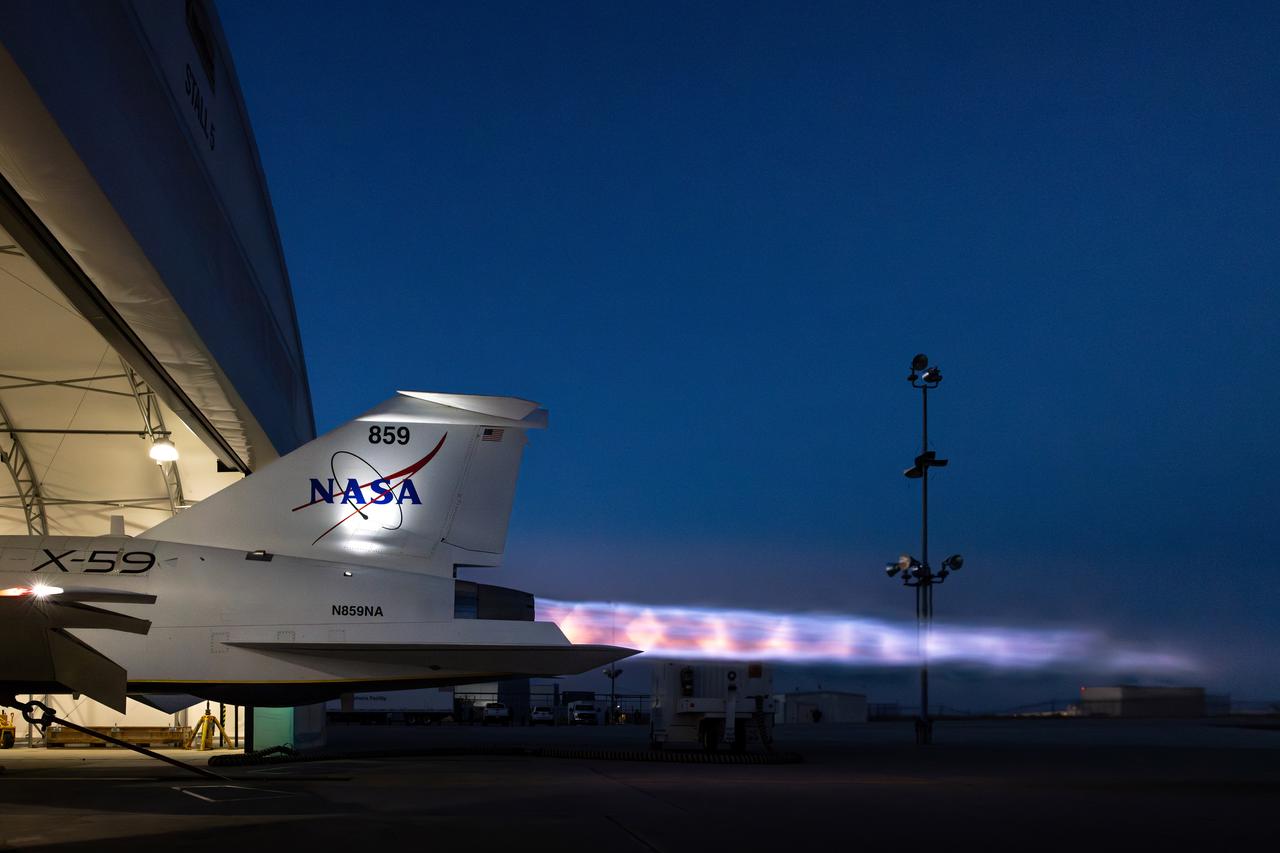
NASA’s X-59 lights up the night sky with its unique Mach diamonds, also known as shock diamonds, during maximum afterburner testing at Lockheed Martin Skunk Works in Palmdale, California. The test demonstrates the engine’s ability to generate the thrust required for supersonic flight, advancing NASA’s Quesst mission.
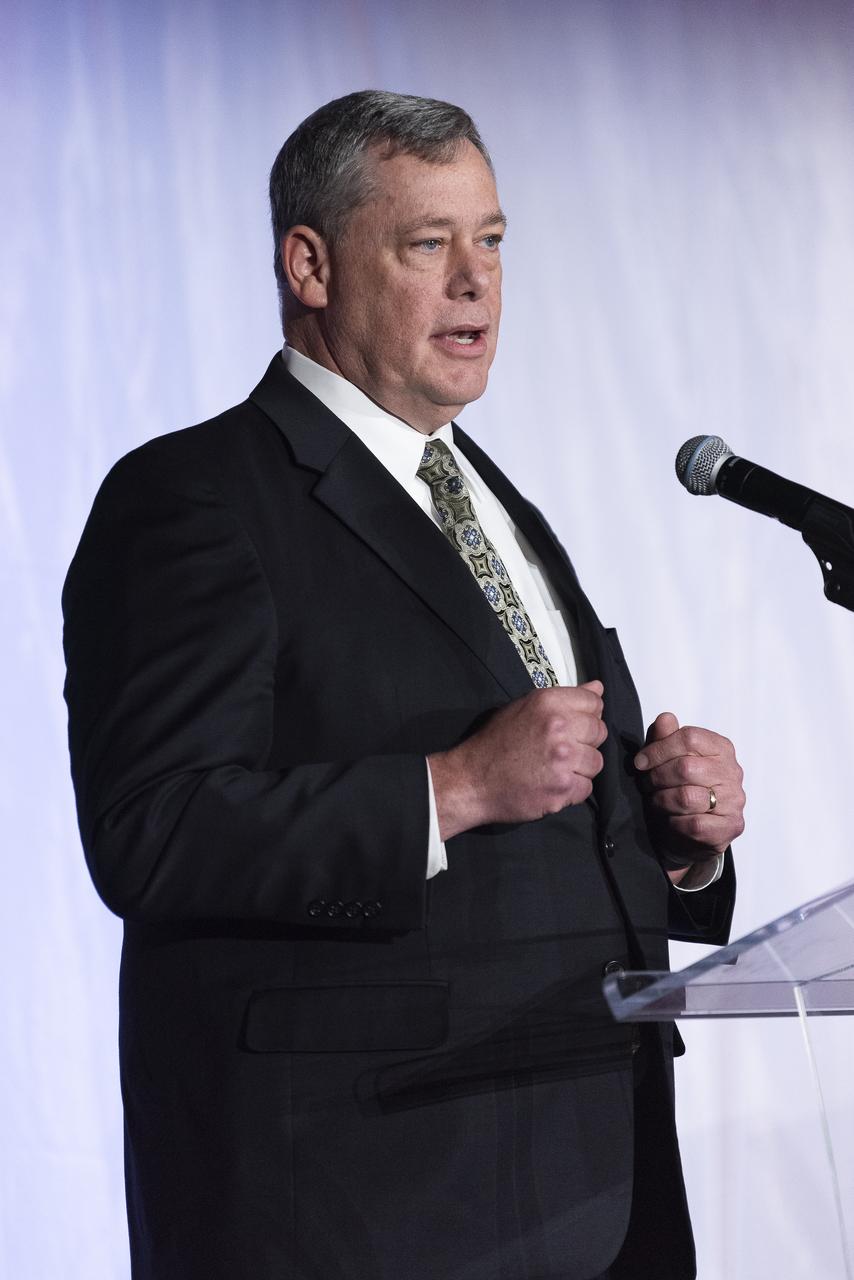
Lockheed Martin Aeronautics Executive Vice President Greg Ulmer speaks on stage prior to the unveiling of the agency’s X-59 quiet supersonic research aircraft at a January 12, 2024 event at Lockheed Martin Skunk Works in Palmdale, California. The X-59 is the centerpiece of NASA’s Quesst mission, which seeks to solve one of the major barriers to supersonic flight over land, currently banned in the United States, by making sonic booms quieter.
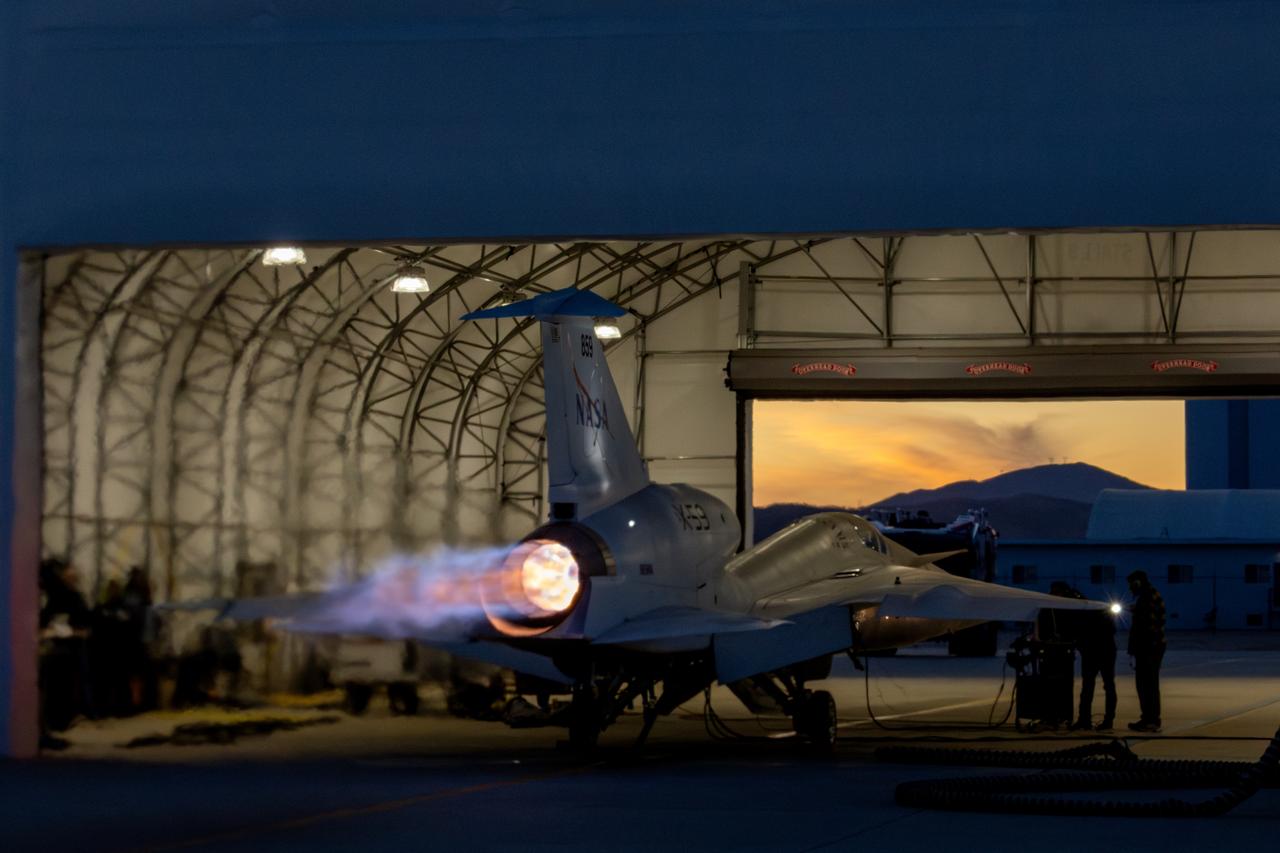
NASA’s X-59 lights up the night sky with its unique Mach diamonds, also known as shock diamonds, during maximum afterburner testing at Lockheed Martin Skunk Works in Palmdale, California. The test demonstrates the engine’s ability to generate the thrust required for supersonic flight, advancing NASA’s Quesst mission.
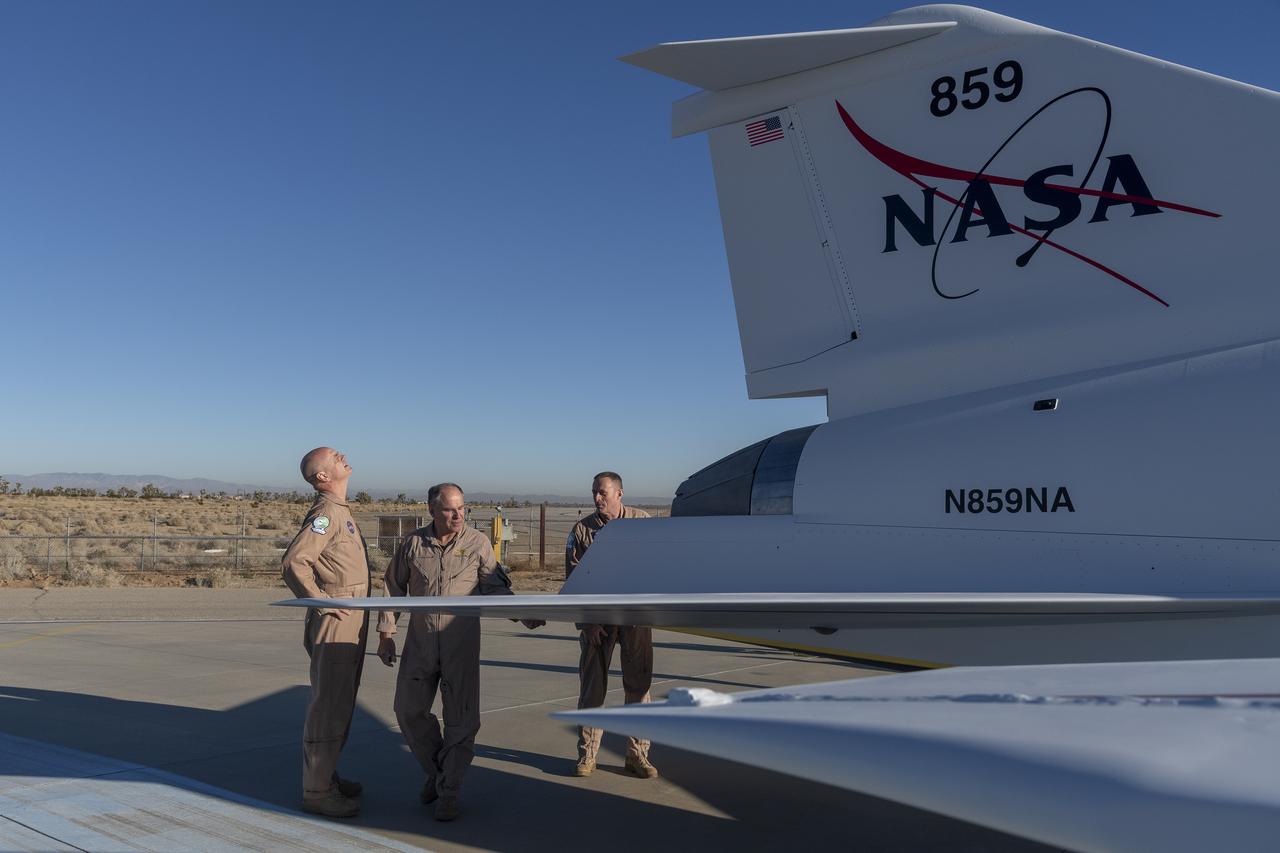
NASA and Lockheed Martin test pilots inspect the painted X-59 as it sits on the ramp at Lockheed Martin Skunk Works in Palmdale, California. The X-59 is the centerpiece of NASA’s Quesst mission, which seeks to solve one of the major barriers to supersonic flight over land, currently banned in the United States, by making sonic booms quieter.
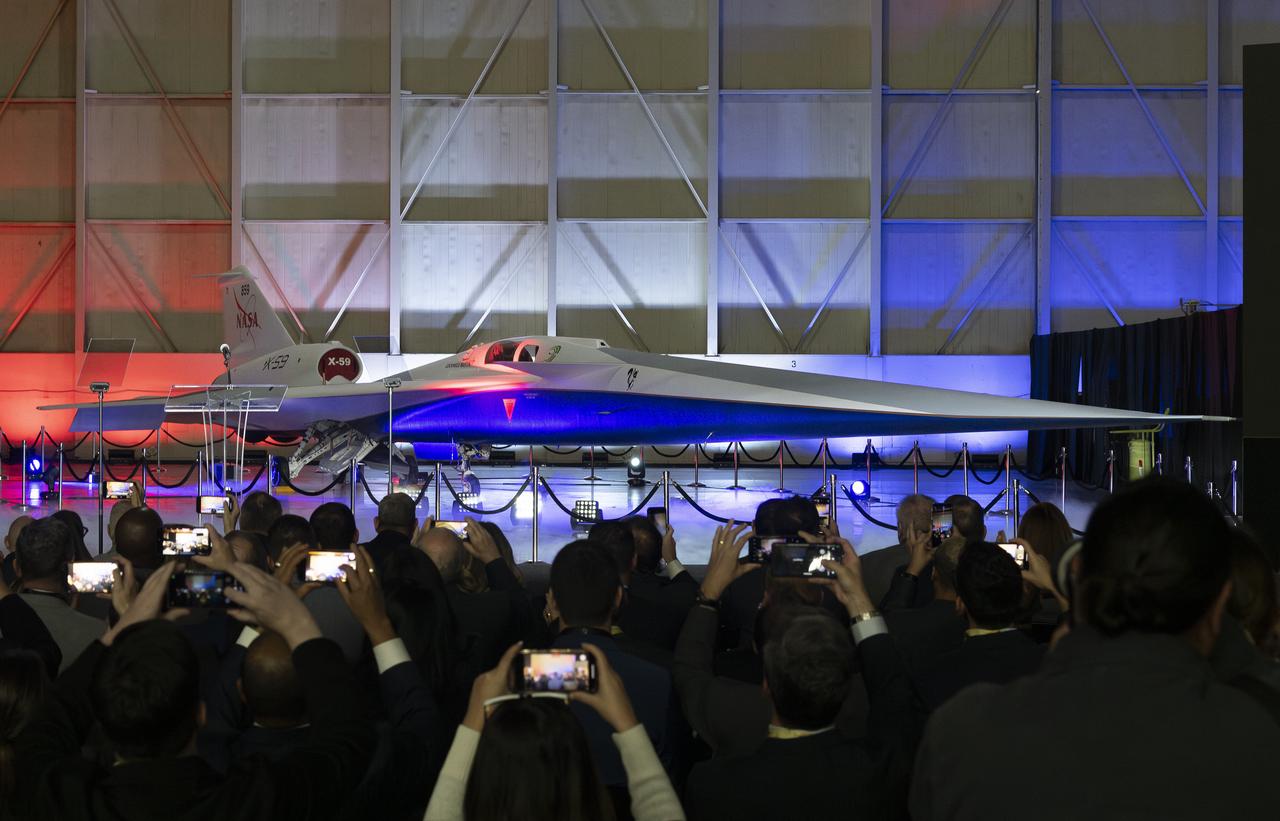
NASA and Lockheed Martin publicly unveil the X-59 quiet supersonic research aircraft at a ceremony in Lockheed Martin’s Skunk Works facility in Palmdale, California. The X-59 is the centerpiece of NASA’s Quesst mission, which seeks to solve one of the major barriers to supersonic flight over land, currently banned in the United States, by making sonic booms quieter.
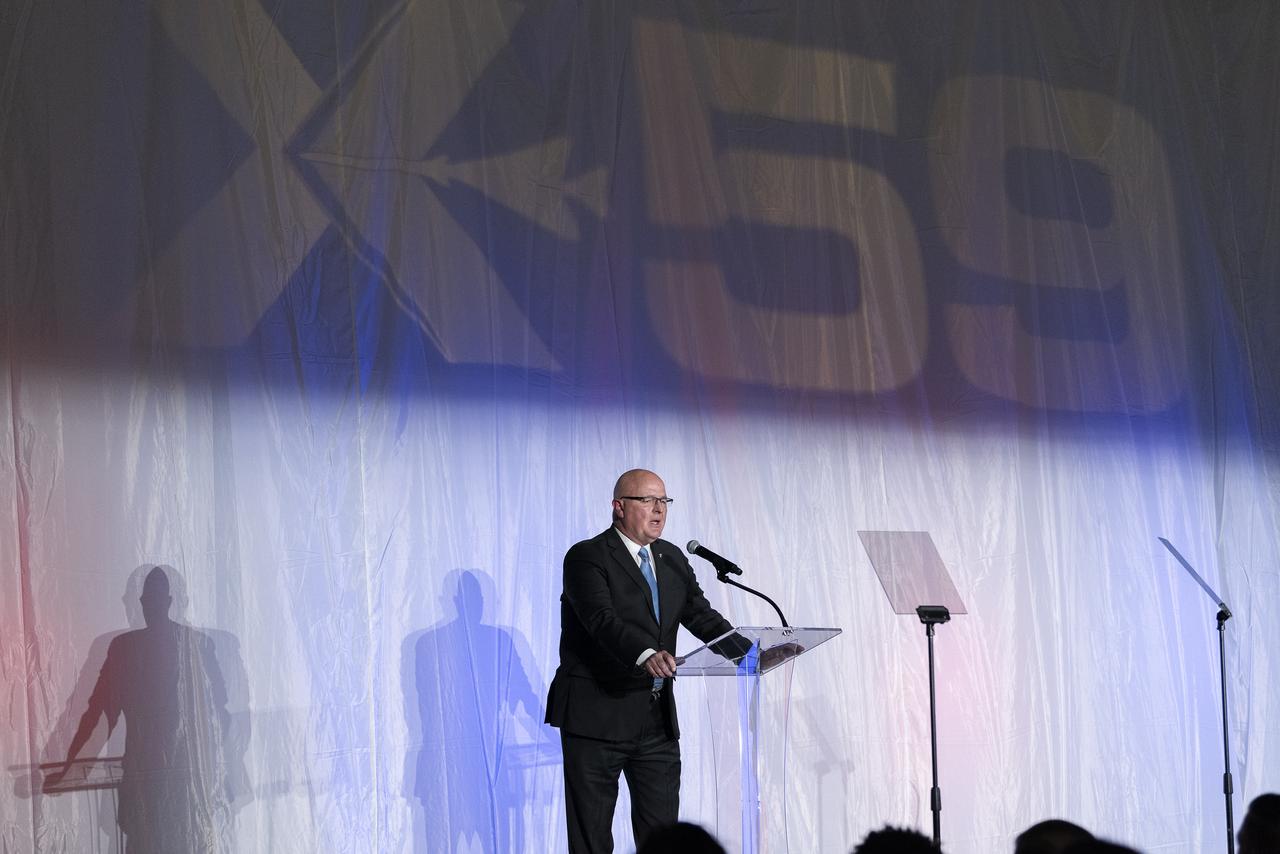
Lockheed Martin Skunk Works Director of Government Affairs Eric Fox speaks on stage prior to the unveiling of the agency’s X-59 quiet supersonic research aircraft at a January 12, 2024 event at Lockheed Martin Skunk Works in Palmdale, California. The X-59 is the centerpiece of NASA’s Quesst mission, which seeks to solve one of the major barriers to supersonic flight over land, currently banned in the United States, by making sonic booms quieter.
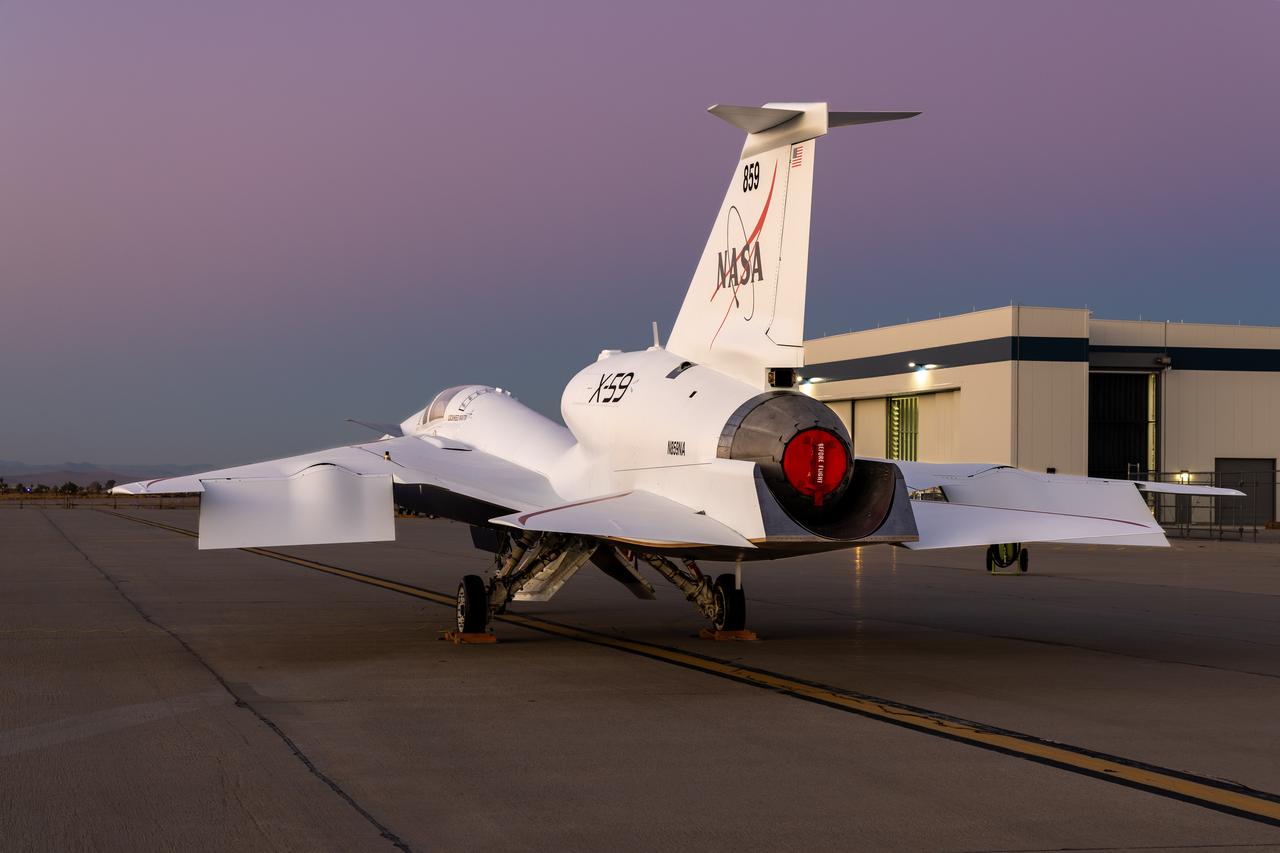
NASA’s X-59 quiet supersonic research aircraft sits on a ramp at Lockheed Martin Skunk Works in Palmdale, California, during sunset. The one-of-a-kind aircraft is powered by a General Electric F414 engine, a variant of the engines used on F/A-18 fighter jets. The engine is mounted above the fuselage to reduce the number of shockwaves that reach the ground. The X-59 is the centerpiece of NASA's Quesst mission, which aims to demonstrate quiet supersonic flight and enable future commercial travel over land – faster than the speed of sound.

NASA’s X-59 quiet supersonic research aircraft sits on the ramp during engine run testing on Thursday, March 12, 2026, at NASA’s Armstrong Flight Research Center in Edwards, California. Engine runs are one of the final tests before the aircraft is ready for its second flight. The data collected from the aircraft during upcoming flight tests could help inform future regulations for commercial supersonic travel over land.
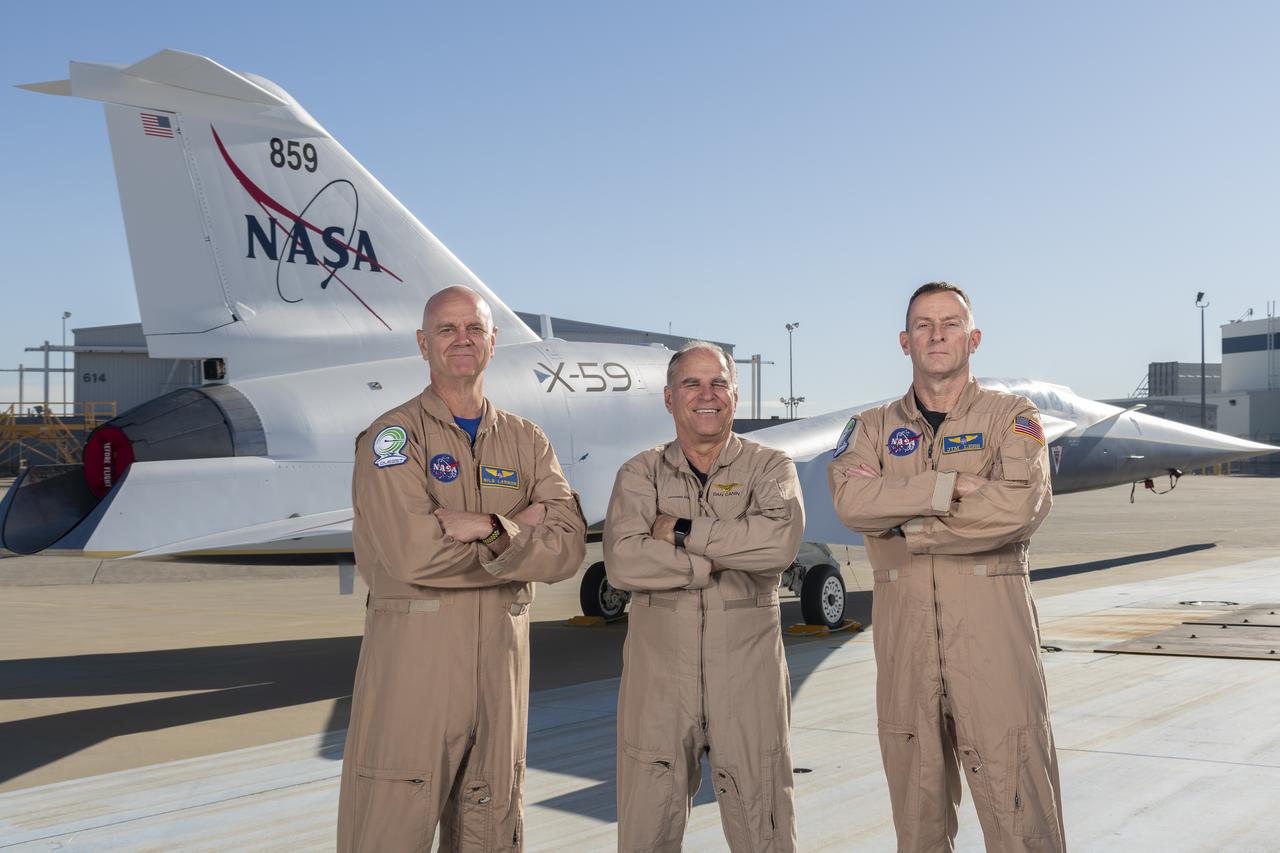
NASA test pilots Nils Larson (left) and Jim “Clue” Less (right), and Lockheed Martin test pilot Dan “Dog” Canin pose with the newly-painted X-59 as it sits on the ramp at Lockheed Martin Skunk Works in Palmdale, California. The X-59 is the centerpiece of NASA’s Quesst mission, which seeks to solve one of the major barriers to supersonic flight over land, currently banned in the United States, by making sonic booms quieter.
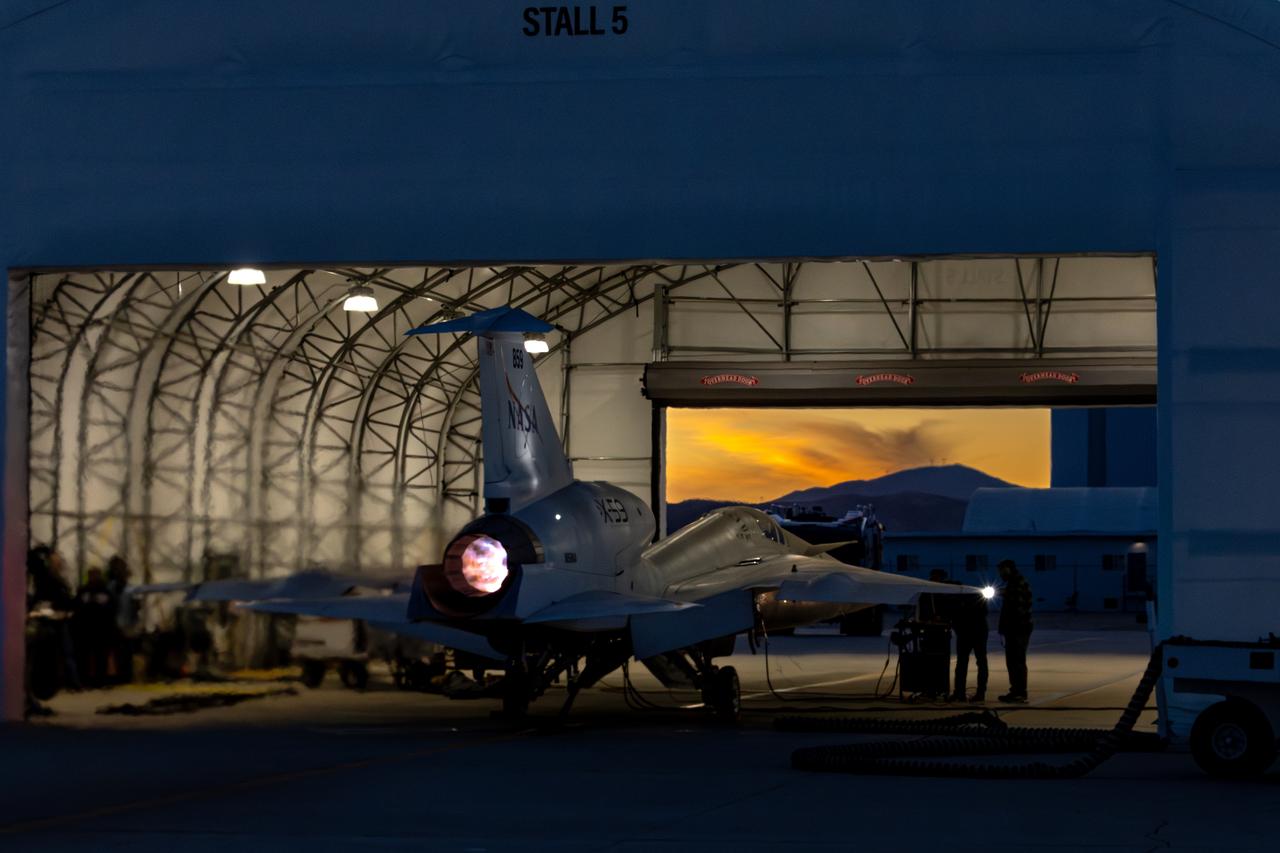
NASA’s X-59 lights up the night sky with its unique Mach diamonds, also known as shock diamonds, during maximum afterburner testing at Lockheed Martin Skunk Works in Palmdale, California. The test demonstrates the engine’s ability to generate the thrust required for supersonic flight, advancing NASA’s Quesst mission.

NASA and Lockheed Martin test pilots inspect the painted X-59 as it sits on the ramp at Lockheed Martin Skunk Works in Palmdale, California. The X-59 is the centerpiece of NASA’s Quesst mission, which seeks to solve one of the major barriers to supersonic flight over land, currently banned in the United States, by making sonic booms quieter.
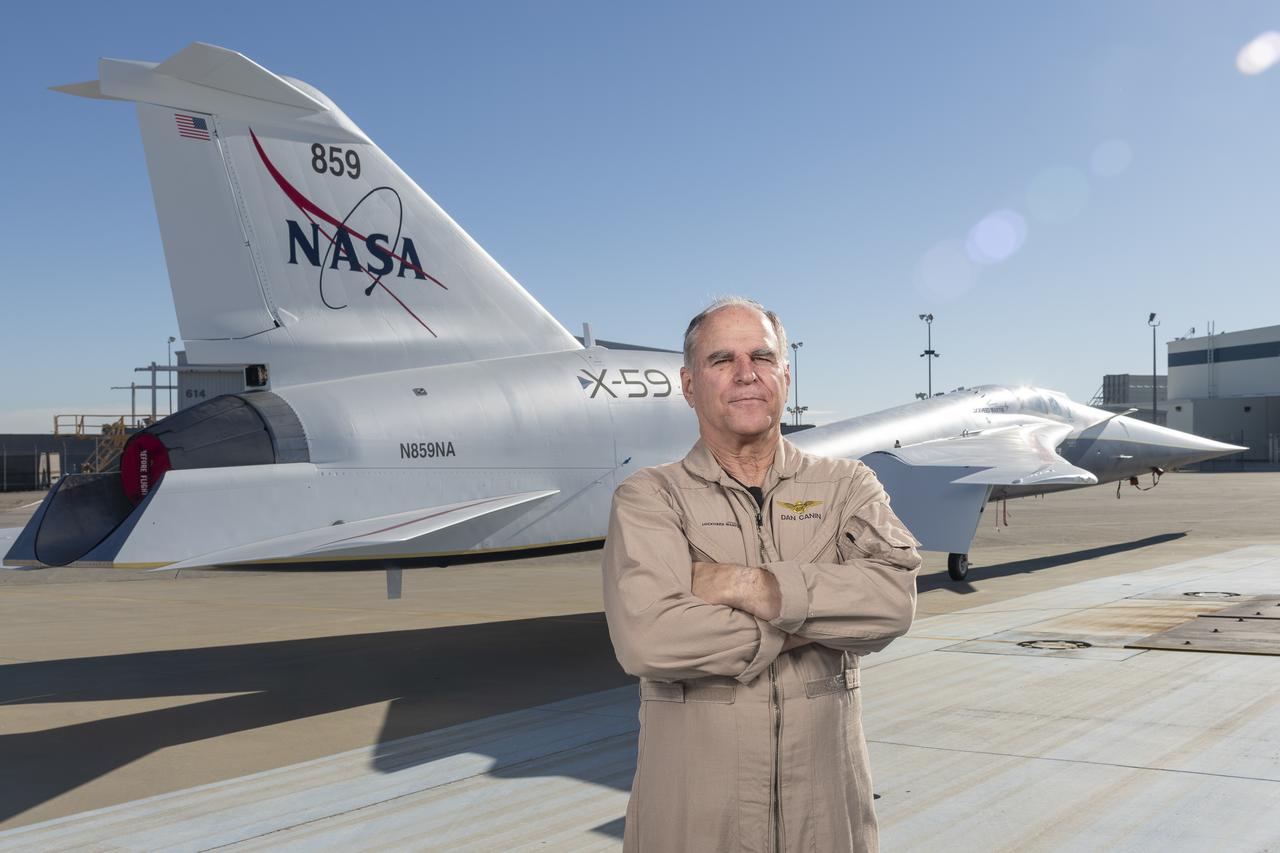
Lockheed Martin test pilot Dan “Dog” Canin poses with the newly-painted X-59 as it sits on the ramp at Lockheed Martin Skunk Works in Palmdale, California. The X-59 is the centerpiece of NASA’s Quesst mission, which seeks to solve one of the major barriers to supersonic flight over land, currently banned in the United States, by making sonic booms quieter.
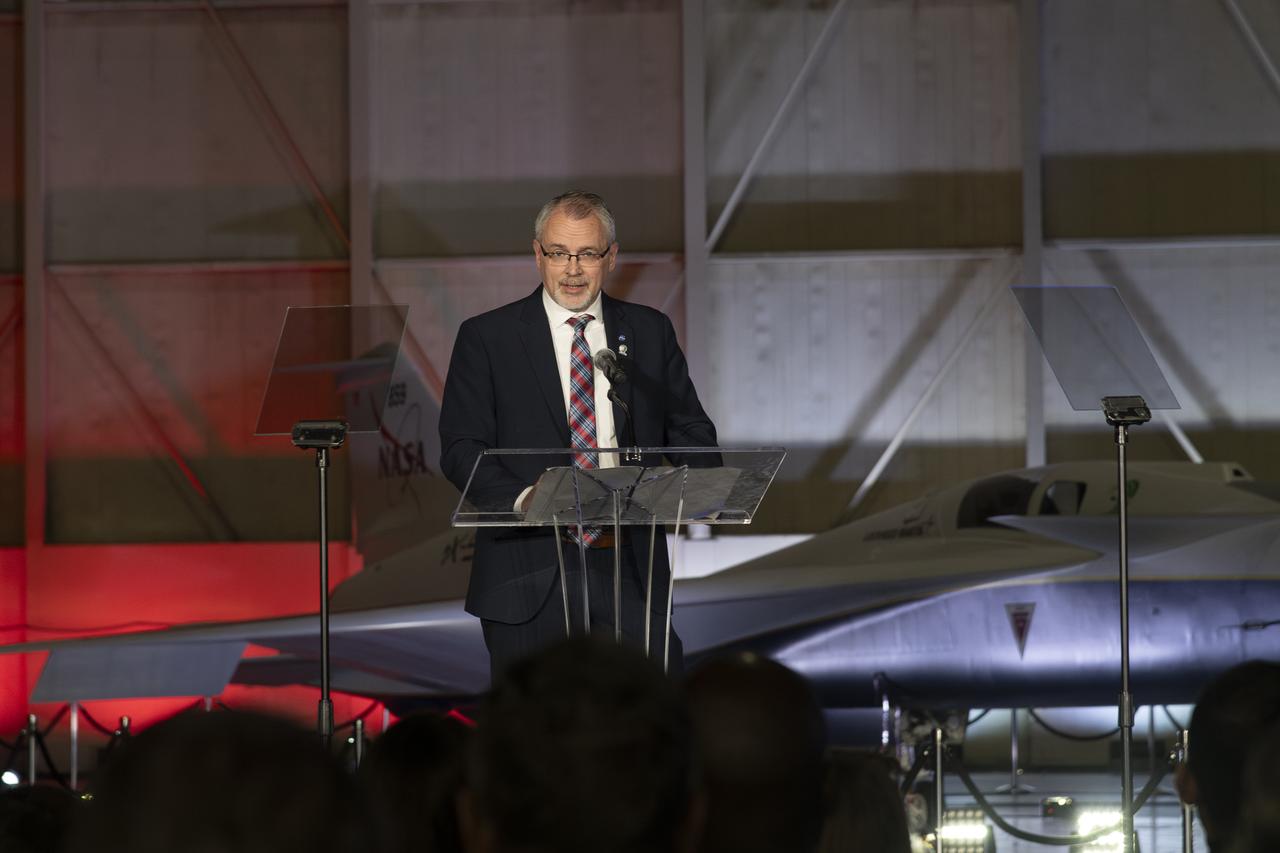
NASA Associate Administrator Jim Free speaks on stage following the unveiling of the agency’s X-59 quiet supersonic research aircraft at a January 12, 2024 event at Lockheed Martin Skunk Works in Palmdale, California. The X-59 is the centerpiece of NASA’s Quesst mission, which seeks to solve one of the major barriers to supersonic flight over land, currently banned in the United States, by making sonic booms quieter.
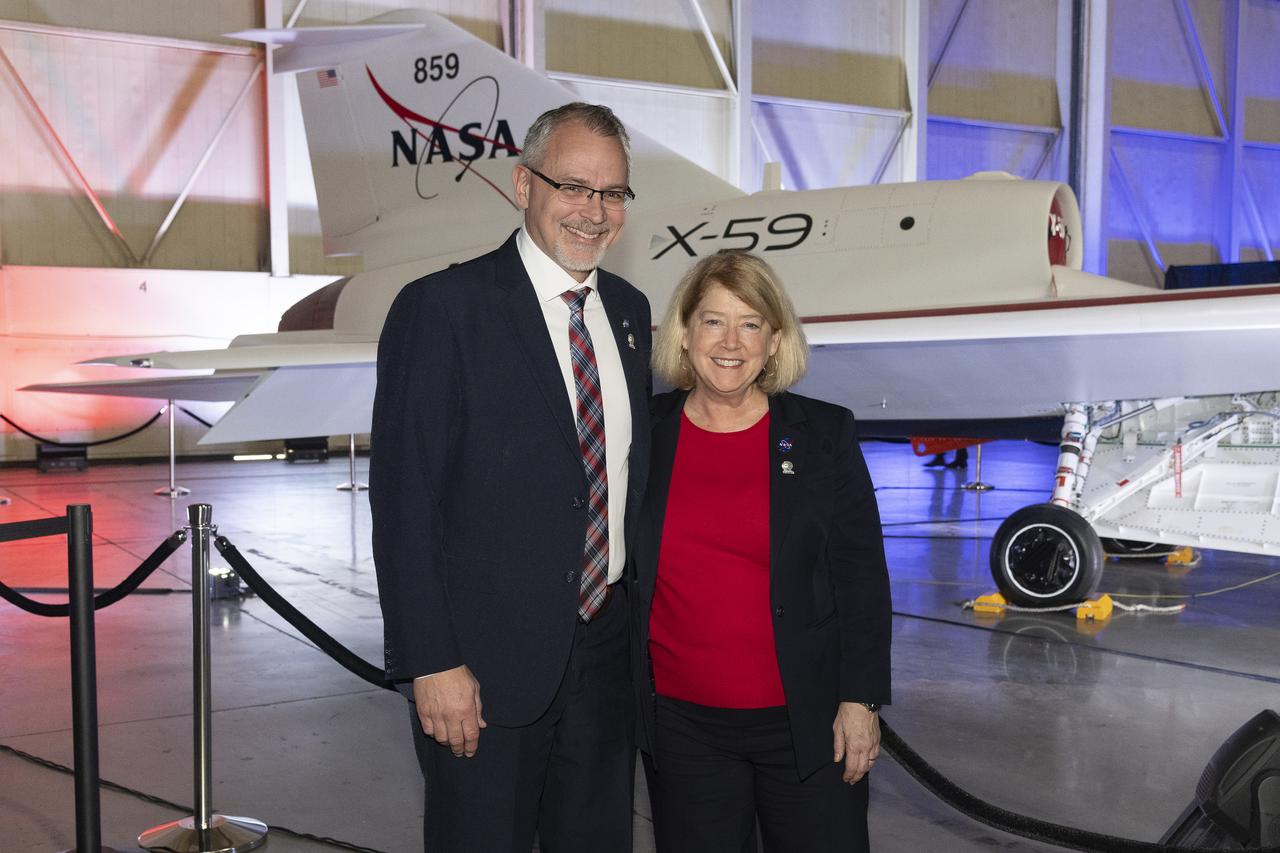
NASA Associate Administrator Jim Free (left) and Deputy Administrator Pam Melroy (right) stand in front of the newly unveiled X-59 quiet supersonic research aircraft at a January 12, 2024 event at Lockheed Martin Skunk Works in Palmdale, California. The X-59 is the centerpiece of NASA’s Quesst mission, which seeks to solve one of the major barriers to supersonic flight over land, currently banned in the United States, by making sonic booms quieter.
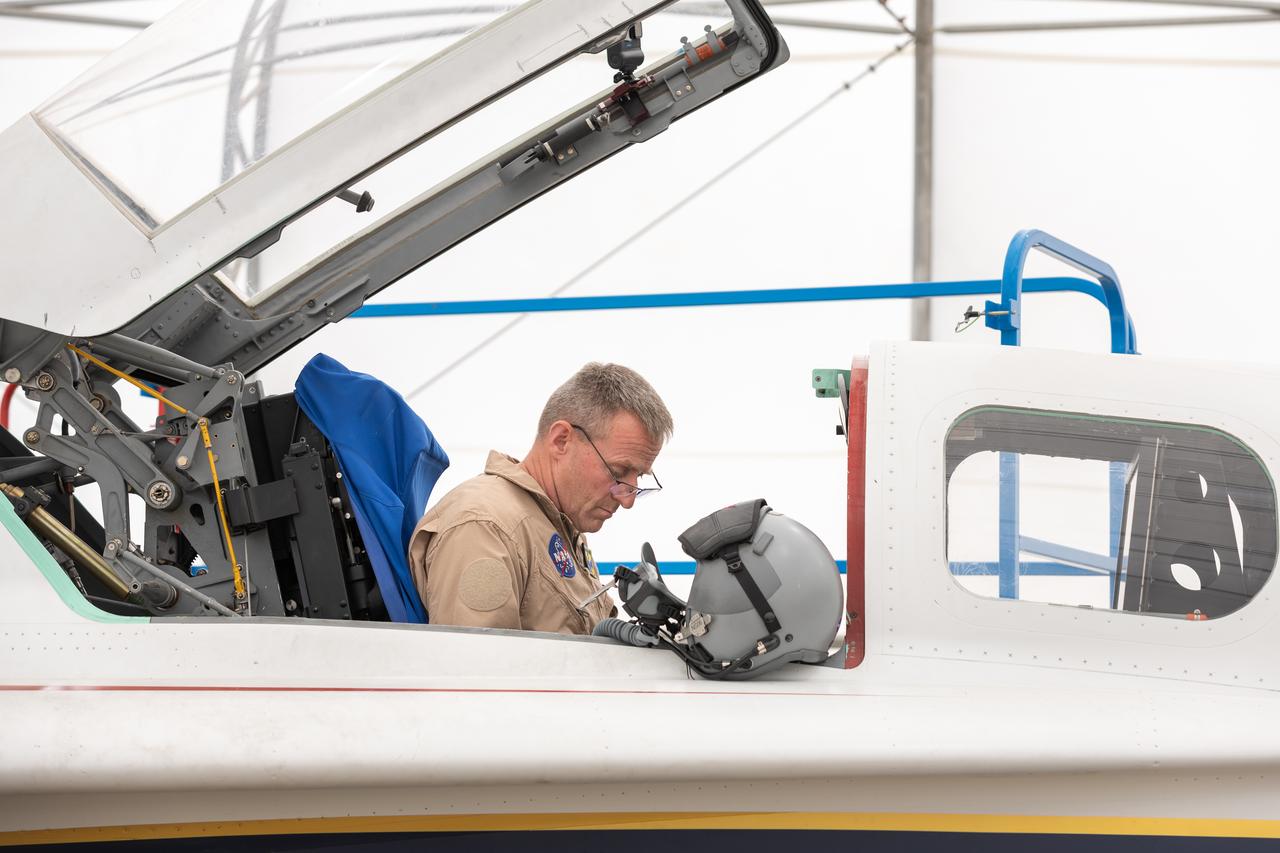
NASA’s X-59 quiet supersonic research aircraft successfully completed its “aluminum bird” systems test at Lockheed Martin’s Skunk Works facility in Palmdale, California. With NASA pilot James Less in the cockpit, the X-59 team simulated flight conditions from takeoff to landing – without ever leaving the ground. The test verified how the aircraft’s hardware and software work together, responding to pilot inputs and handling injected system failures. This milestone confirms the aircraft’s readiness for the next series of tests leading to first flight.

NASA Associate Administrator for the Aeronautics Research Mission Directorate Bob Pearce speaks on stage prior to the unveiling of the agency’s X-59 quiet supersonic research aircraft at a January 12, 2024 event at Lockheed Martin Skunk Works in Palmdale, California. The X-59 is the centerpiece of NASA’s Quesst mission, which seeks to solve one of the major barriers to supersonic flight over land, currently banned in the United States, by making sonic booms quieter.
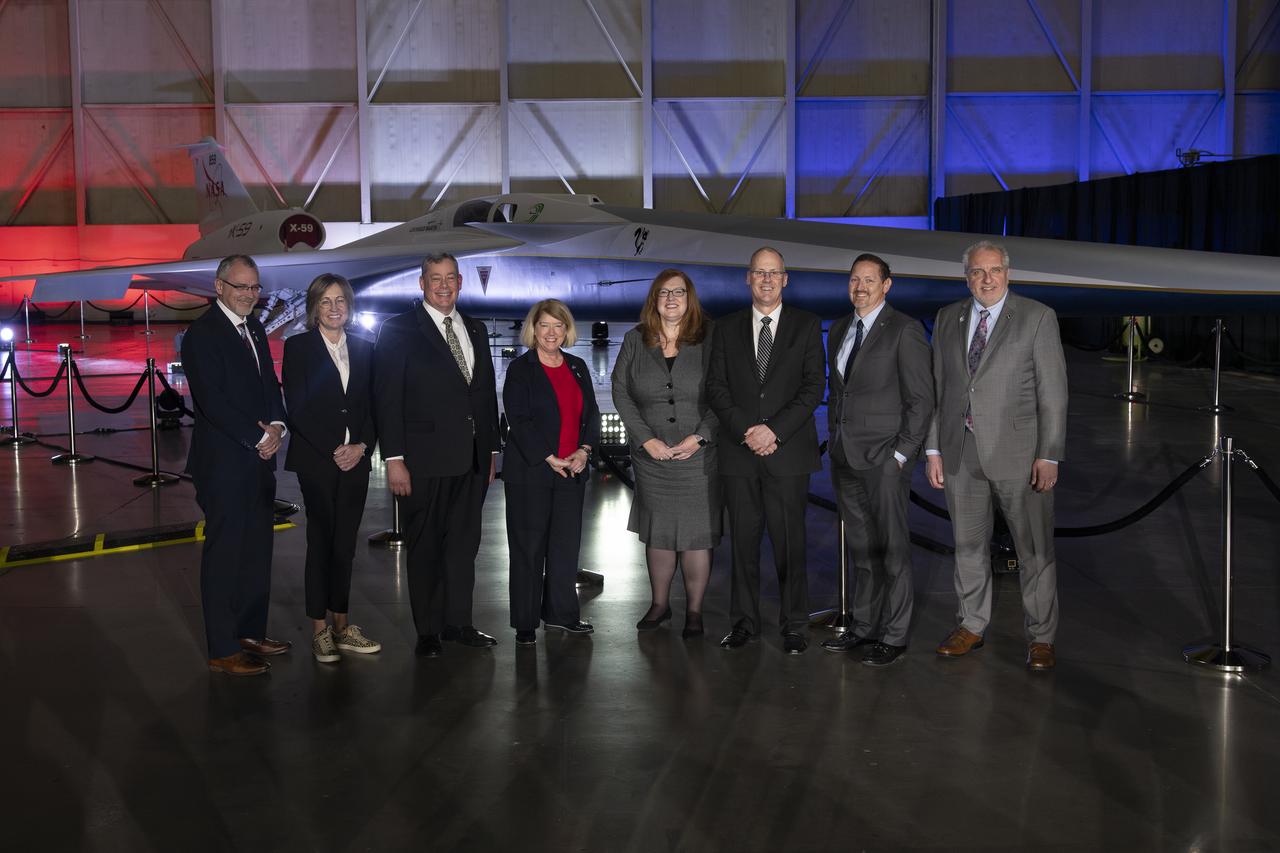
(from left to right) NASA Associate Administrator Jim Free, California Senior Economic Advisor to the Governor Dee Dee Myers, Lockheed Martin Executive Vice President of Aeronautics Greg Ulmer, NASA Deputy Administrator Pam Melroy, Low Boom Flight Demonstrator Project Manager Cathy Bahm, Lockheed Martin X-59 Project Manager David Richardson, Lockheed Martin Skunk Works Vice President and General Manager John Clark, and NASA Associate Administrator for the Aeronautics Research Mission Directorate Bob Pearce pose in front of the agency’s X-59 quiet supersonic research aircraft at a January 12, 2024 event at Lockheed Martin Skunk Works in Palmdale, California. The X-59 is the centerpiece of NASA’s Quesst mission, which seeks to solve one of the major barriers to supersonic flight over land, currently banned in the United States, by making sonic booms quieter.
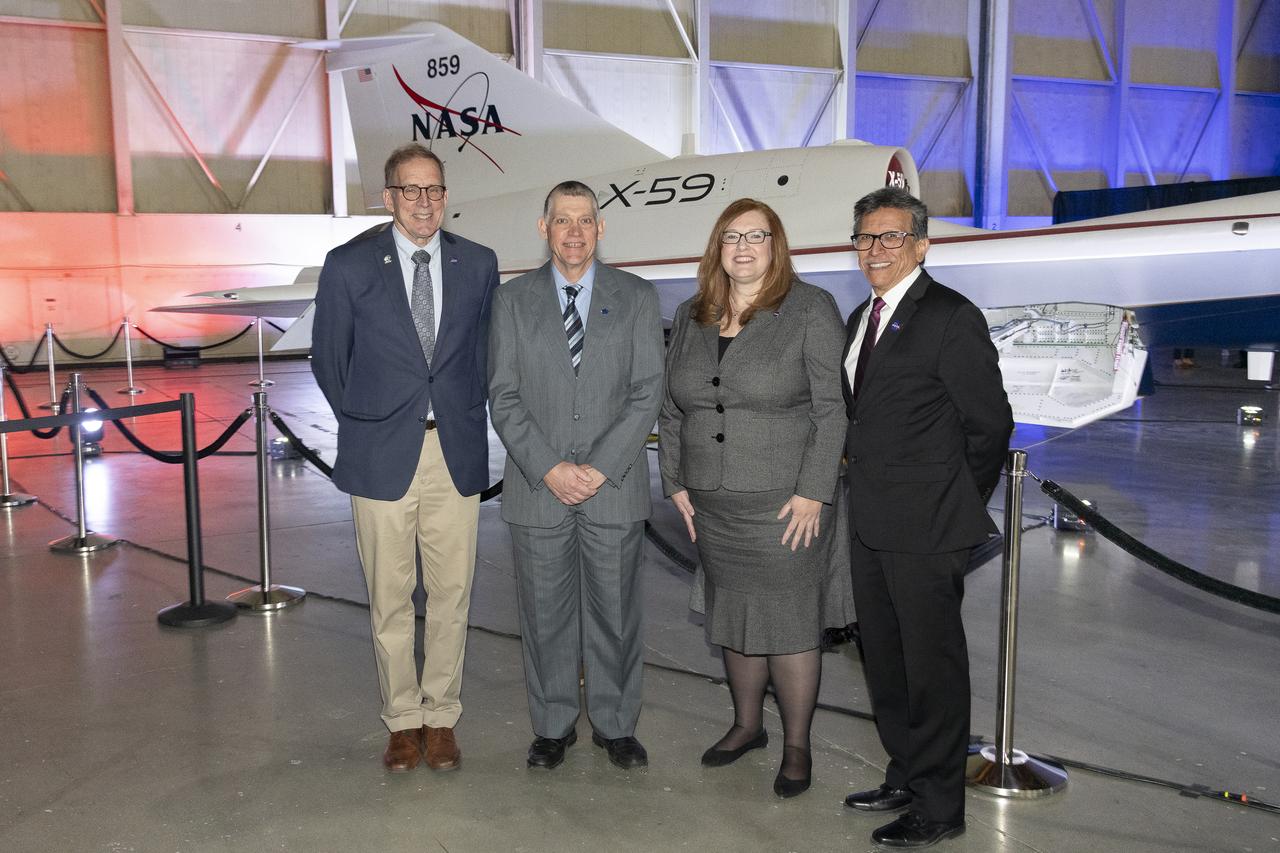
(from left to right), Quesst Mission Integration Manager Peter Coen, Chief Engineer Jay Brandon, Low Boom Flight Demonstrator Project Manager Cathy Bahm, and Structures Lead Dr. Walt Silva pose in front of the agency’s X-59 quiet supersonic research aircraft at a January 12, 2024 event at Lockheed Martin Skunk Works in Palmdale, California. The X-59 is the centerpiece of NASA’s Quesst mission, which seeks to solve one of the major barriers to supersonic flight over land, currently banned in the United States, by making sonic booms quieter.
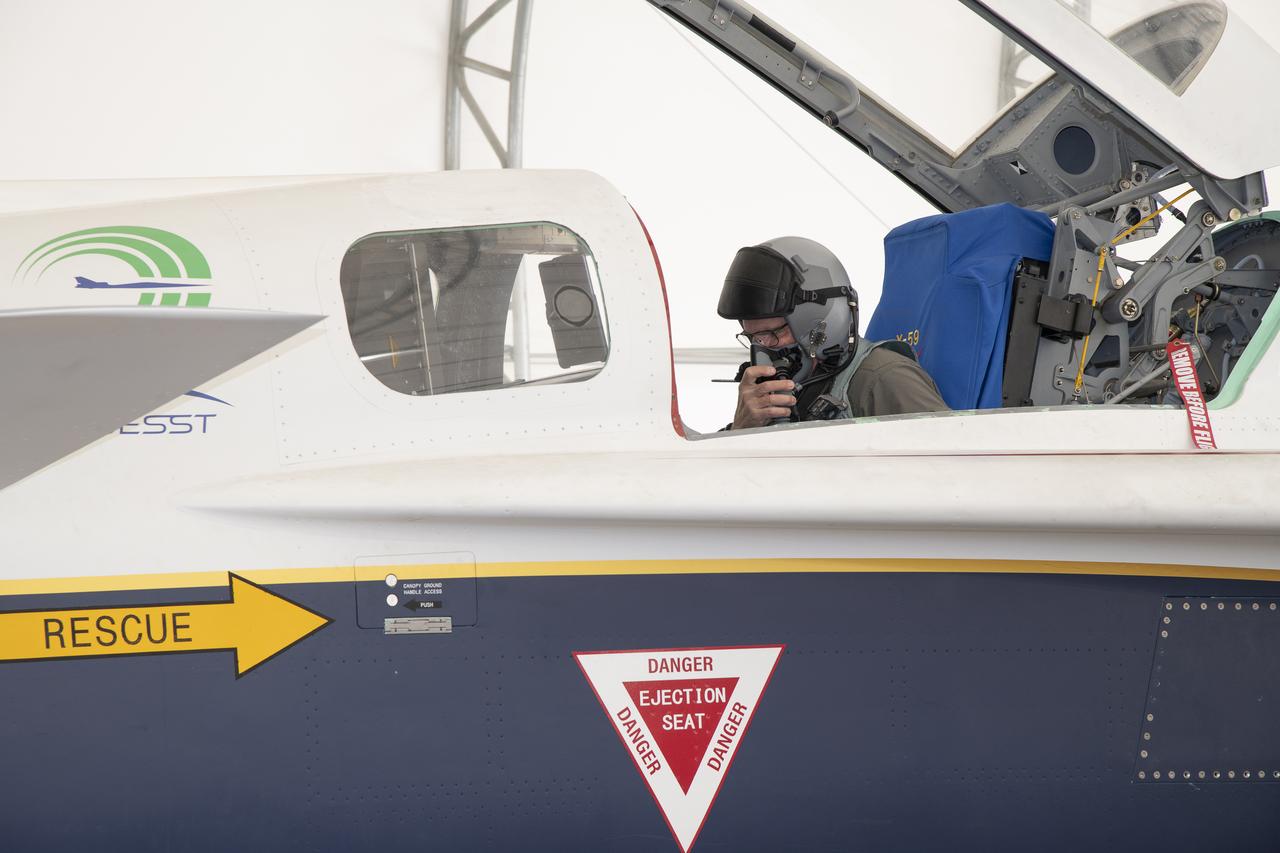
Lockheed Martin test pilot Dan “Dog” Canin sits in the cockpit of NASA’s X-59 quiet supersonic research aircraft in a run stall at Lockheed Martin’s Skunk Works facility in Palmdale, California prior to its first engine run. These engine-run tests featured the X-59 powered by its own engine, whereas in previous tests, the aircraft depended on external sources for power. The X-59 is the centerpiece of NASA’s Quesst mission, which seeks to solve one of the major barriers to supersonic flight over land by making sonic booms quieter.
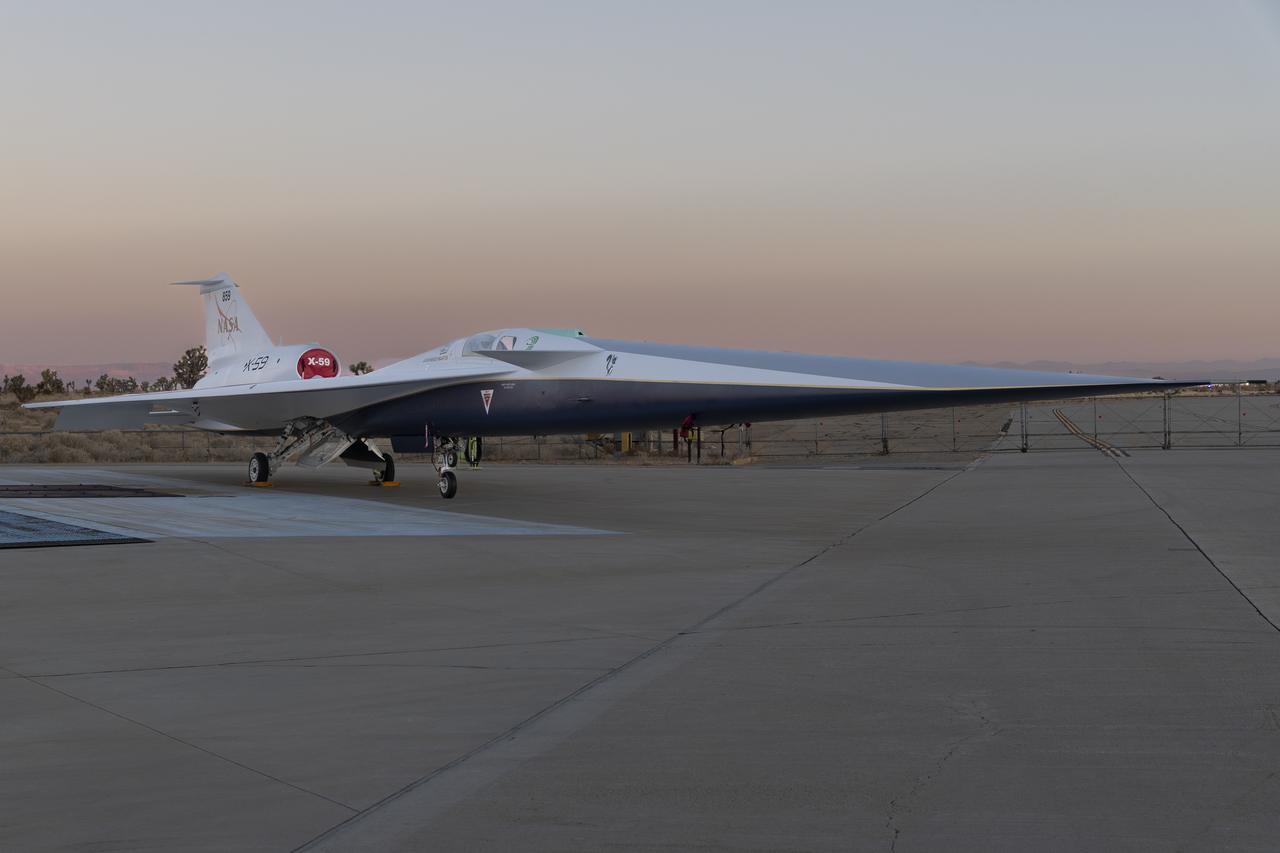
NASA’s X-59 quiet supersonic research aircraft sits on the ramp at Lockheed Martin Skunk Works in Palmdale, California during sunrise, shortly after completion of painting. With its unique design, including a 38-foot-long nose, the X-59 was built to demonstrate the ability to fly supersonic, or faster than the speed of sound, while reducing the typically loud sonic boom produced by aircraft at such speeds to a quieter sonic “thump”. The X-59 is the centerpiece of NASA’s Quesst mission, which seeks to solve one of the major barriers to supersonic flight over land, currently banned in the United States, by making sonic booms quieter.
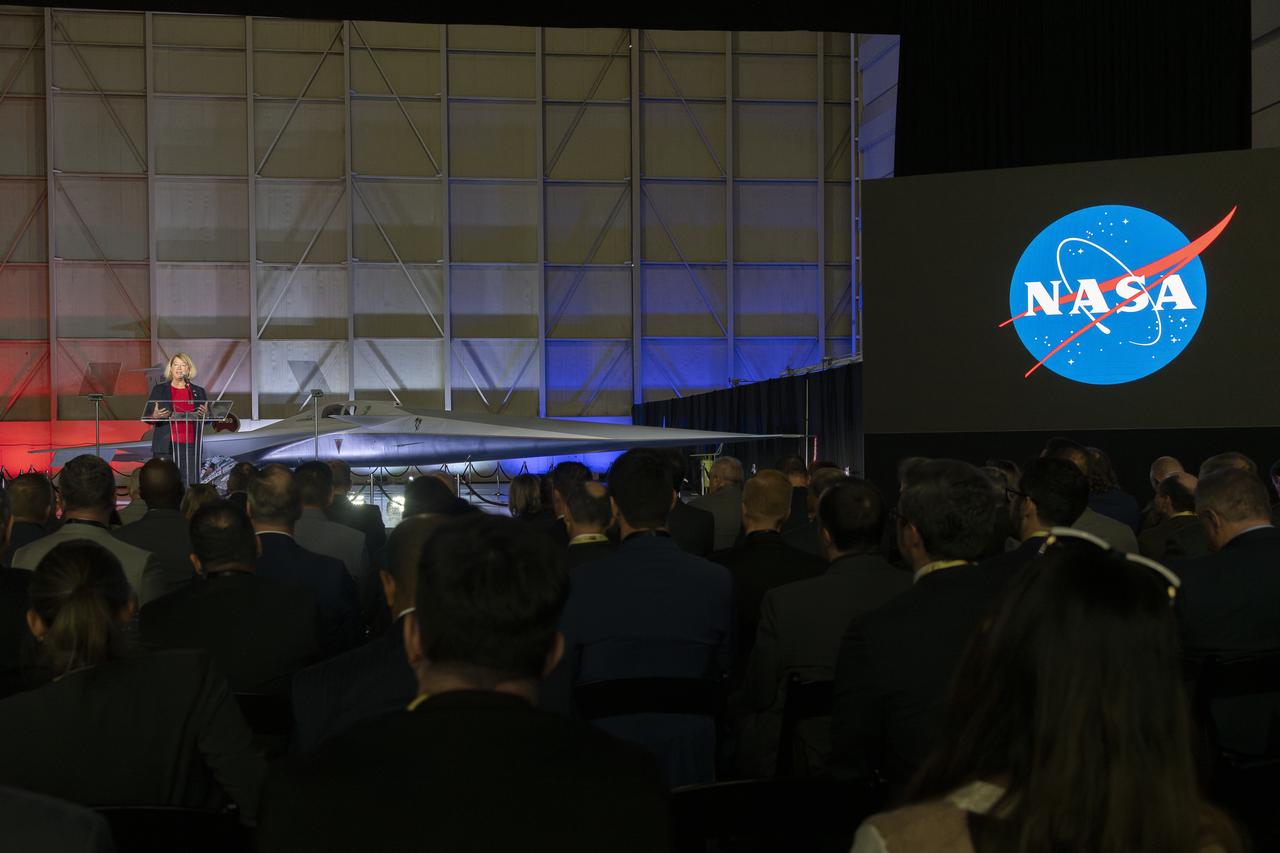
NASA Deputy Administrator Pam Melroy speaks on stage immediately following the unveiling of the agency’s X-59 quiet supersonic research aircraft at a January 12, 2024 event at Lockheed Martin Skunk Works in Palmdale, California. The X-59 is the centerpiece of NASA’s Quesst mission, which seeks to solve one of the major barriers to supersonic flight over land, currently banned in the United States, by making sonic booms quieter.
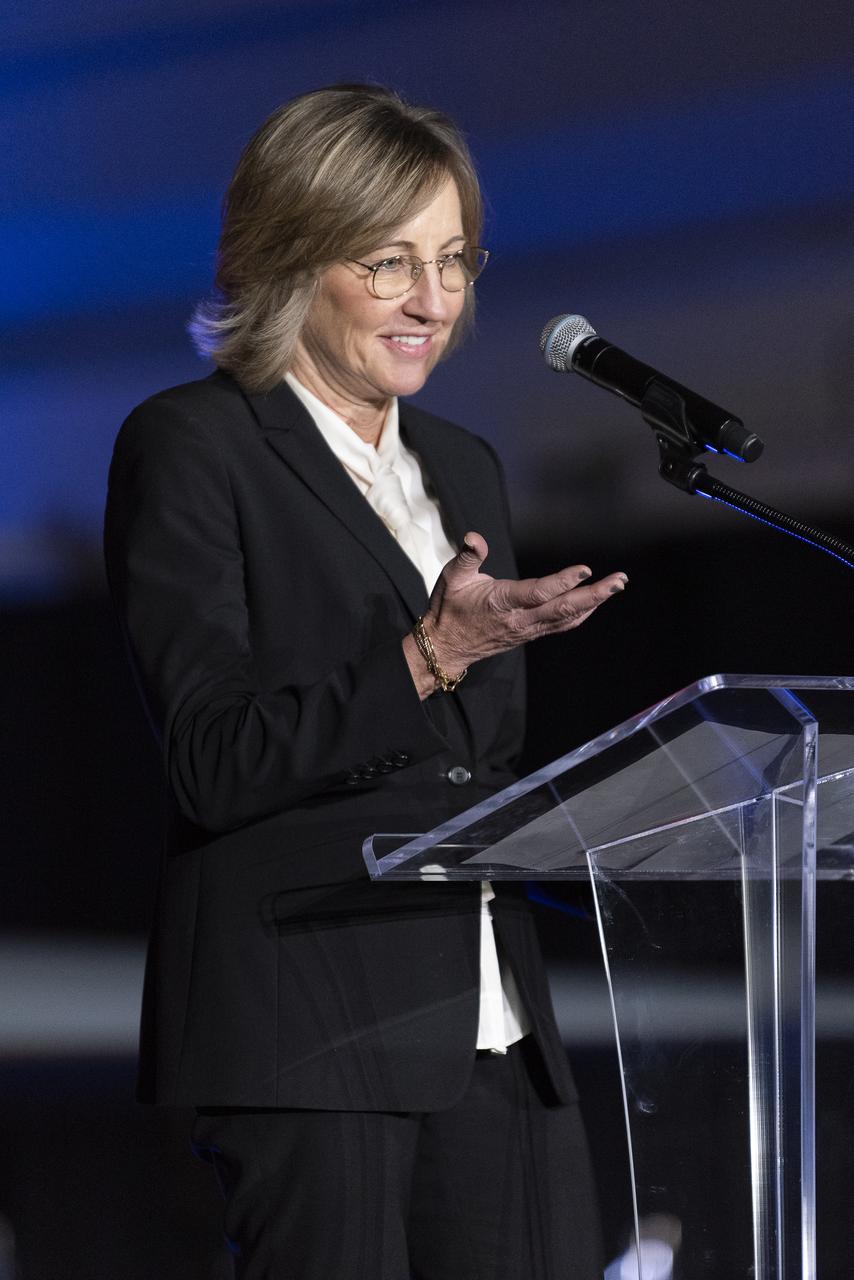
California Senior Economic Advisor to the Governor Dee Dee Myers speaks on stage following the unveiling of the agency’s X-59 quiet supersonic research aircraft at a January 12, 2024 event at Lockheed Martin Skunk Works in Palmdale, California. The X-59 is the centerpiece of NASA’s Quesst mission, which seeks to solve one of the major barriers to supersonic flight over land, currently banned in the United States, by making sonic booms quieter.
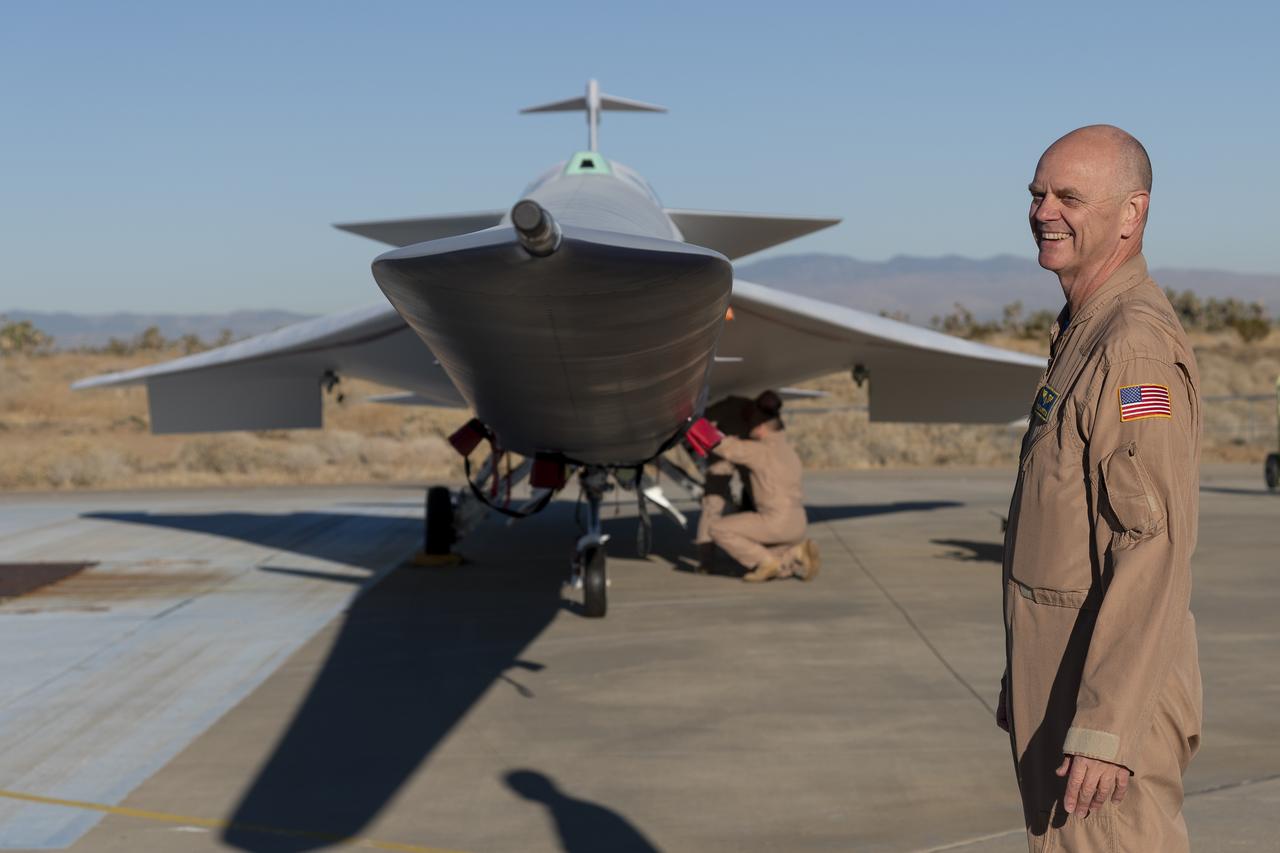
NASA test pilot Nils Larson gets an initial look at the painted X-59 as it sits on the ramp at Lockheed Martin Skunk Works in Palmdale, California. Larson, one of three test pilots training to fly the X-59 inspects the side of the 38-foot-long nose; a primary design feature to the X-59’s purpose of demonstrating the ability to fly supersonic, or faster than sound, without creating a loud sonic boom. The X-59 is the centerpiece of NASA’s Quesst mission, which seeks to solve one of the major barriers to supersonic flight over land, currently banned in the United States, by making sonic booms quieter.
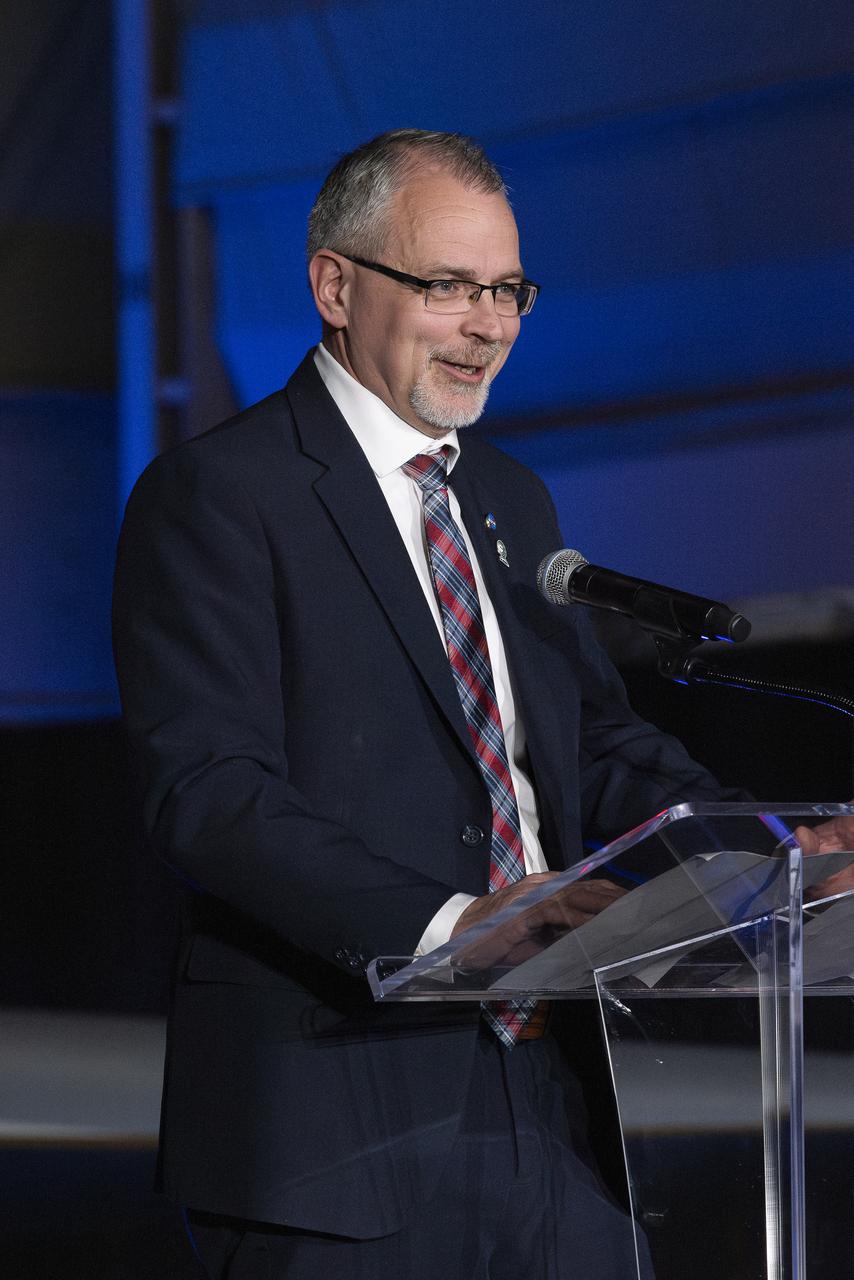
NASA Associate Administrator Jim Free speaks on stage following the unveiling of the agency’s X-59 quiet supersonic research aircraft at a January 12, 2024 event at Lockheed Martin Skunk Works in Palmdale, California. The X-59 is the centerpiece of NASA’s Quesst mission, which seeks to solve one of the major barriers to supersonic flight over land, currently banned in the United States, by making sonic booms quieter.
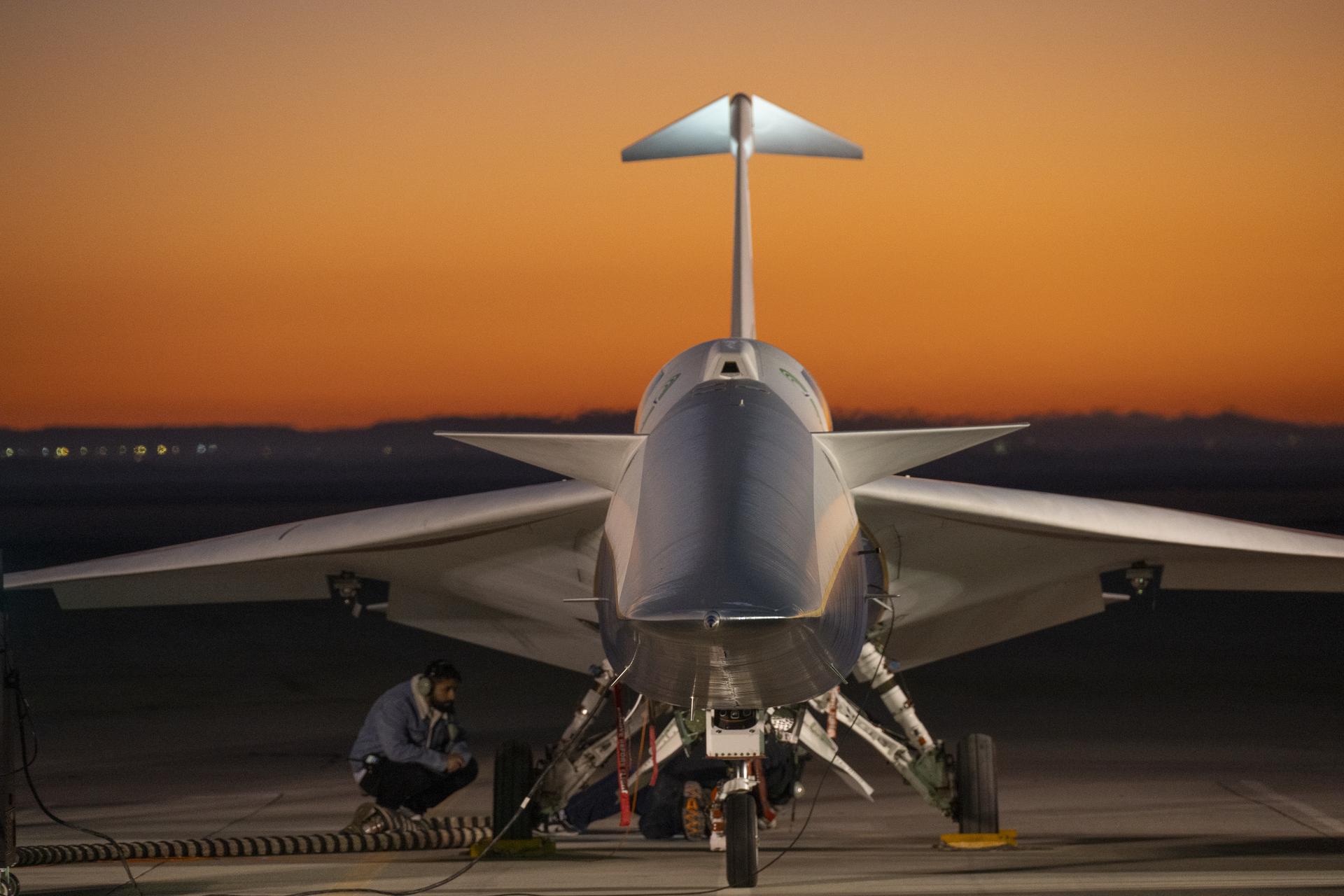
NASA’s X-59 quiet supersonic research aircraft sits on a ramp during engine run tests at NASA’s Armstrong Flight Research Center in Edwards, California, on Thursday, March 12, 2026. A maintenance technician inspects the aircraft near its landing gear as engine runs, one of the final tests before the aircraft’s second flight, take place.
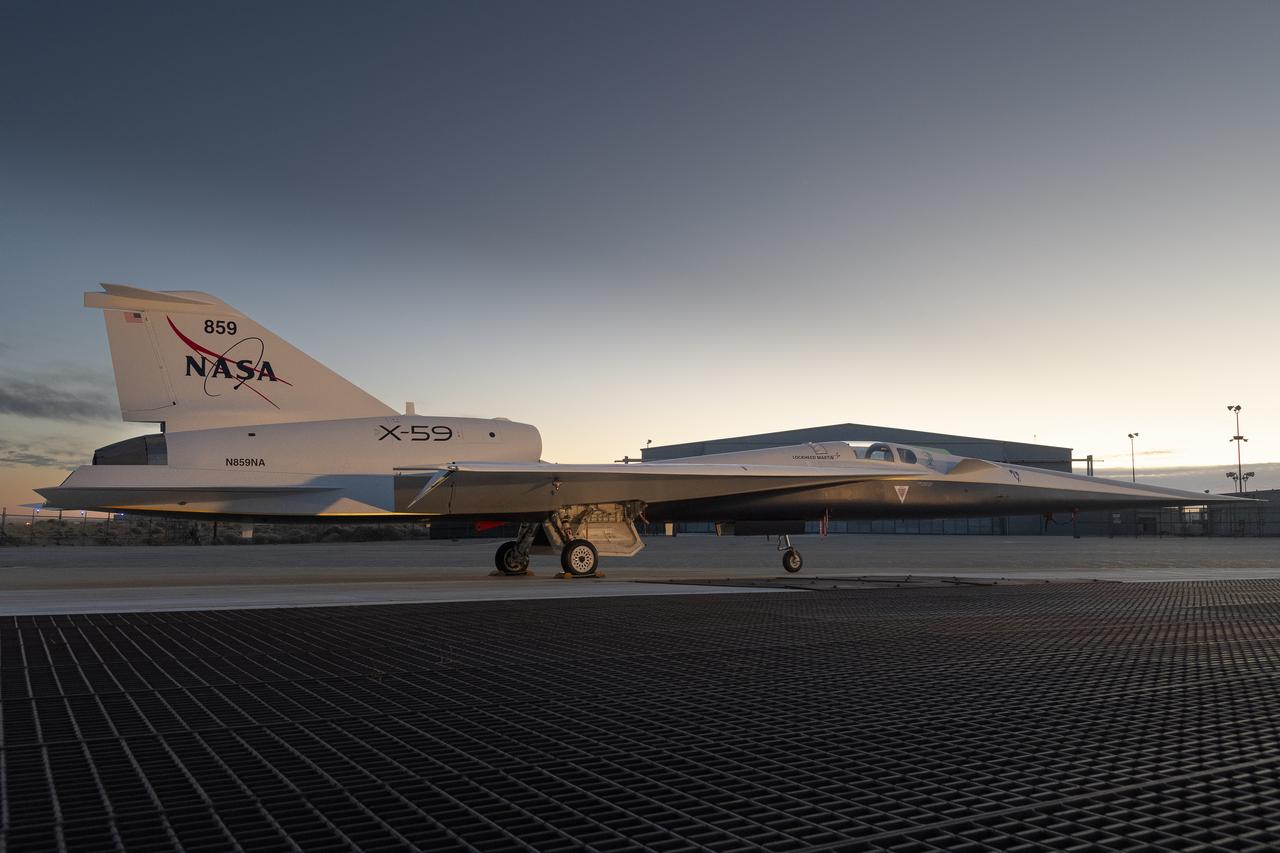
NASA’s X-59 quiet supersonic research aircraft sits on the ramp at Lockheed Martin Skunk Works in Palmdale, California during sunrise, shortly after completion of painting. With its unique design, including a 38-foot-long nose, the X-59 was built to demonstrate the ability to fly supersonic, or faster than the speed of sound, while reducing the typically loud sonic boom produced by aircraft at such speeds to a quieter sonic “thump”. The X-59 is the centerpiece of NASA’s Quesst mission, which seeks to solve one of the major barriers to supersonic flight over land, currently banned in the United States, by making sonic booms quieter.
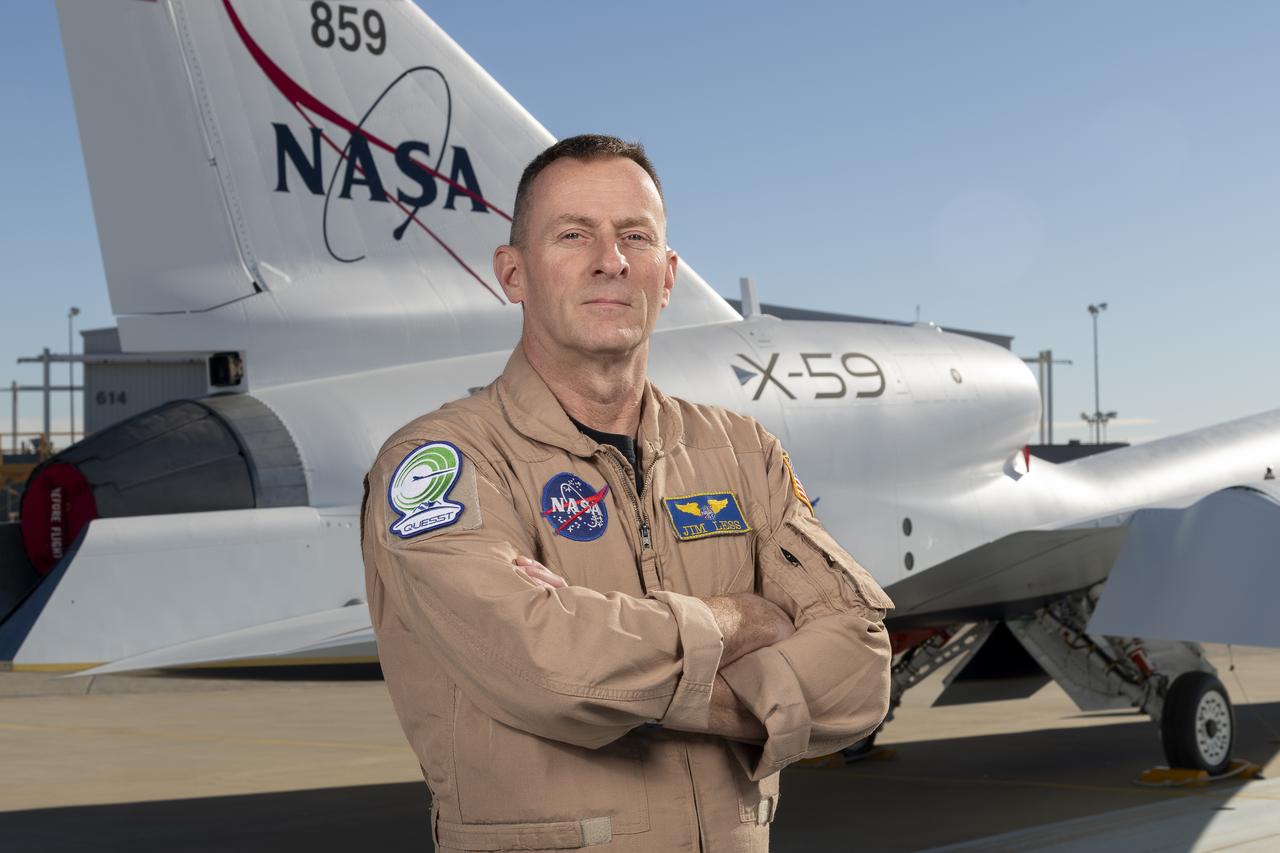
NASA test pilot Jim “Clue” Less poses with the newly-painted X-59 as it sits on the ramp at Lockheed Martin Skunk Works in Palmdale, California. The X-59 is the centerpiece of NASA’s Quesst mission, which seeks to solve one of the major barriers to supersonic flight over land, currently banned in the United States, by making sonic booms quieter.

NASA test pilot Nils Larson inspects the agency’s F-15D research aircraft at NASA’s Armstrong Flight Research Center in Edwards, California, ahead of a calibration flight for a newly installed near-field shock-sensing probe. Mounted on the F-15D, the probe is designed to measure shock waves generated by the X-59 quiet supersonic aircraft during flight. The data will help researchers better understand how shock waves behave in close proximity to the aircraft, supporting NASA’s Quesst mission to enable quiet supersonic flight over land.
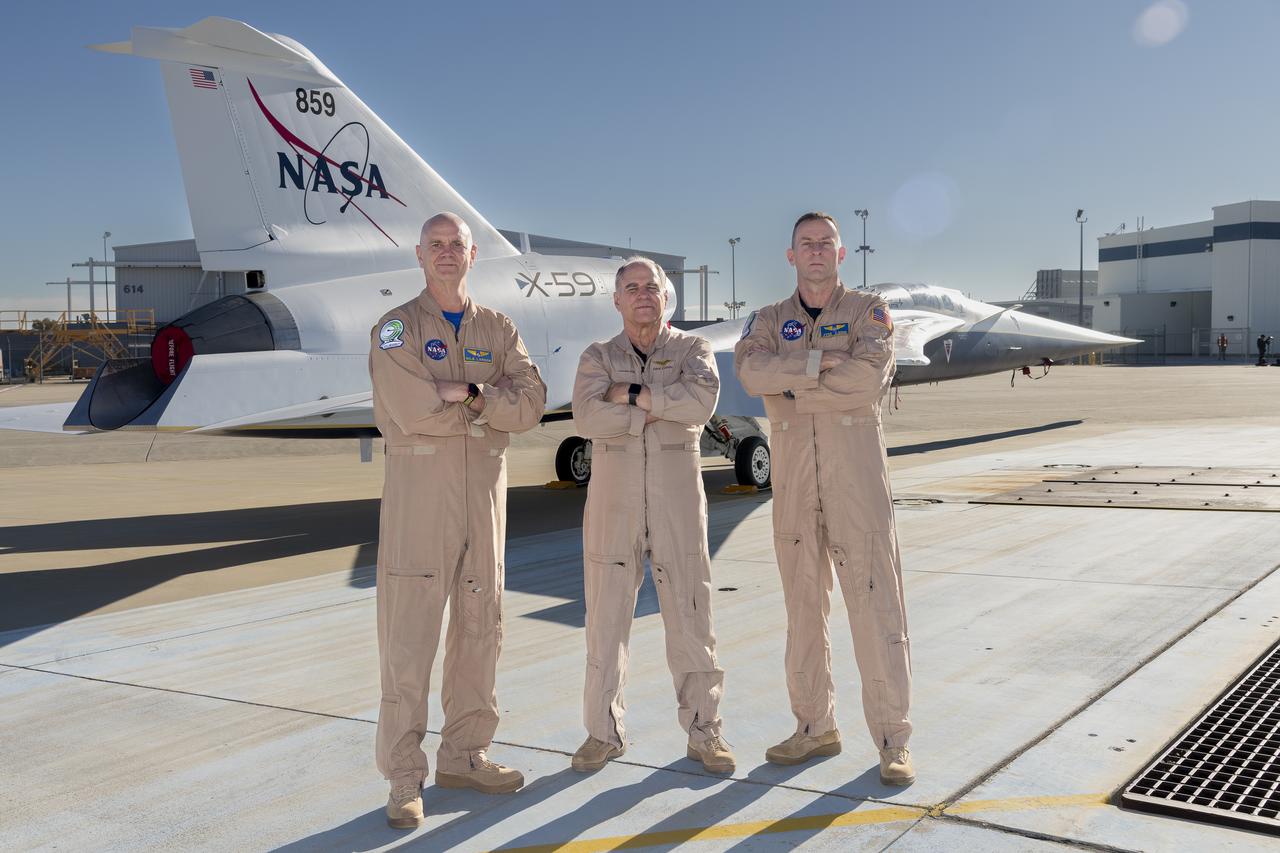
NASA test pilots Nils Larson (left) and Jim “Clue” Less (right), and Lockheed Martin test pilot Dan “Dog” Canin pose with the newly-painted X-59 as it sits on the ramp at Lockheed Martin Skunk Works in Palmdale, California. The X-59 is the centerpiece of NASA’s Quesst mission, which seeks to solve one of the major barriers to supersonic flight over land, currently banned in the United States, by making sonic booms quieter.
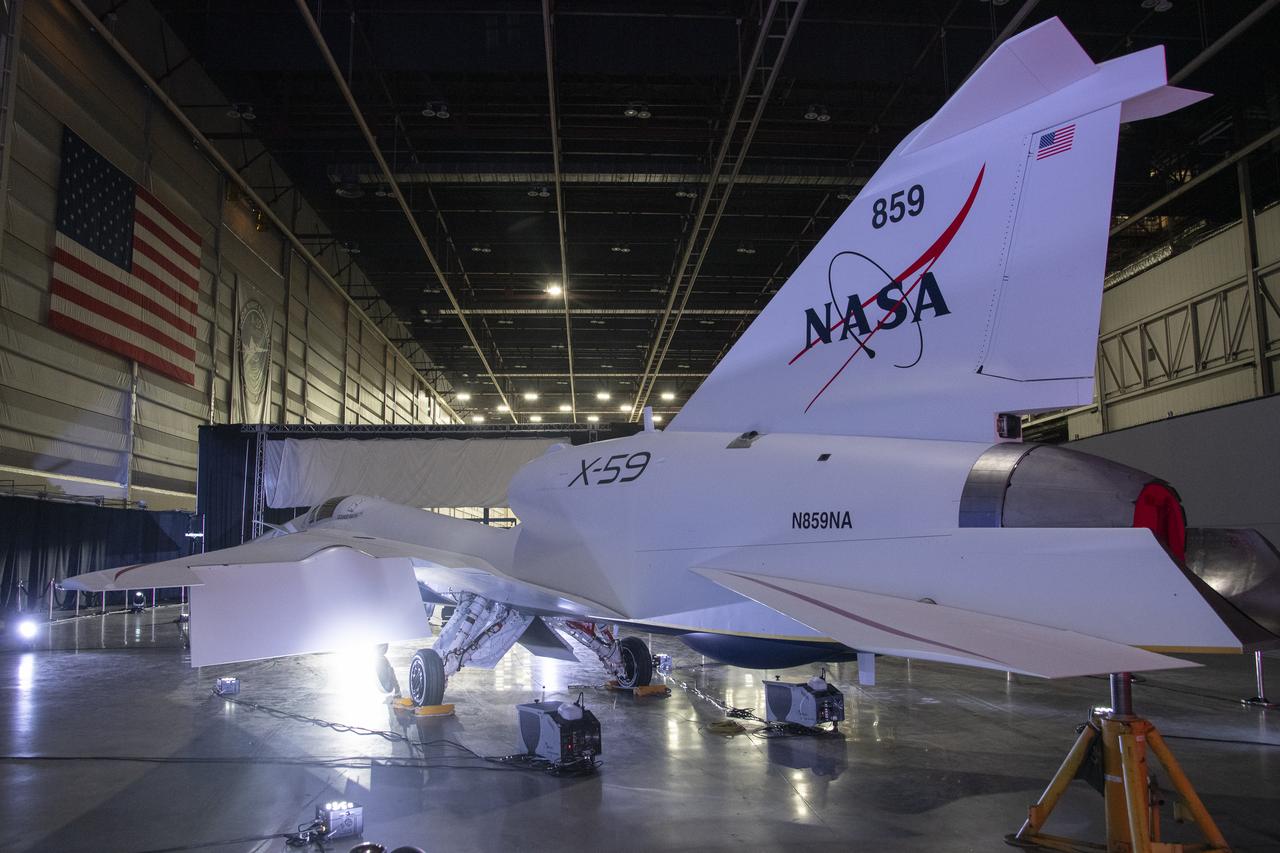
NASA’s X-59 quiet supersonic research aircraft sits in position inside a hangar at Lockheed Martin Skunk Works in Palmdale, California prior to its January 12, 2024 unveiling. The X-59 is the centerpiece of NASA’s Quesst mission, which seeks to solve one of the major barriers to supersonic flight over land, currently banned in the United States, by making sonic booms quieter.
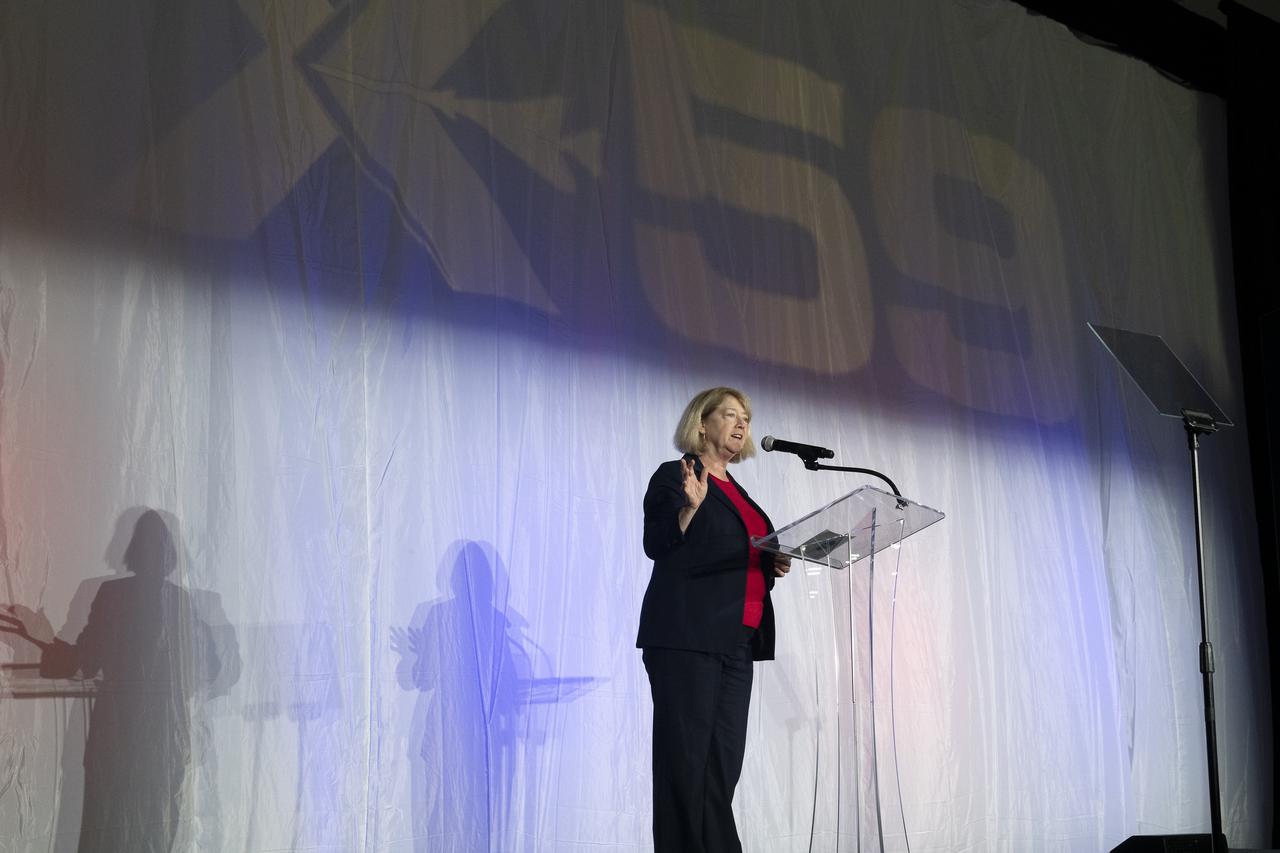
NASA Deputy Administrator Pam Melroy speaks on stage prior to the official unveiling of the agency’s X-59 quiet supersonic research aircraft at a January 12, 2024 event at Lockheed Martin Skunk Works in Palmdale, California. The X-59 is the centerpiece of NASA’s Quesst mission, which seeks to solve one of the major barriers to supersonic flight over land, currently banned in the United States, by making sonic booms quieter.
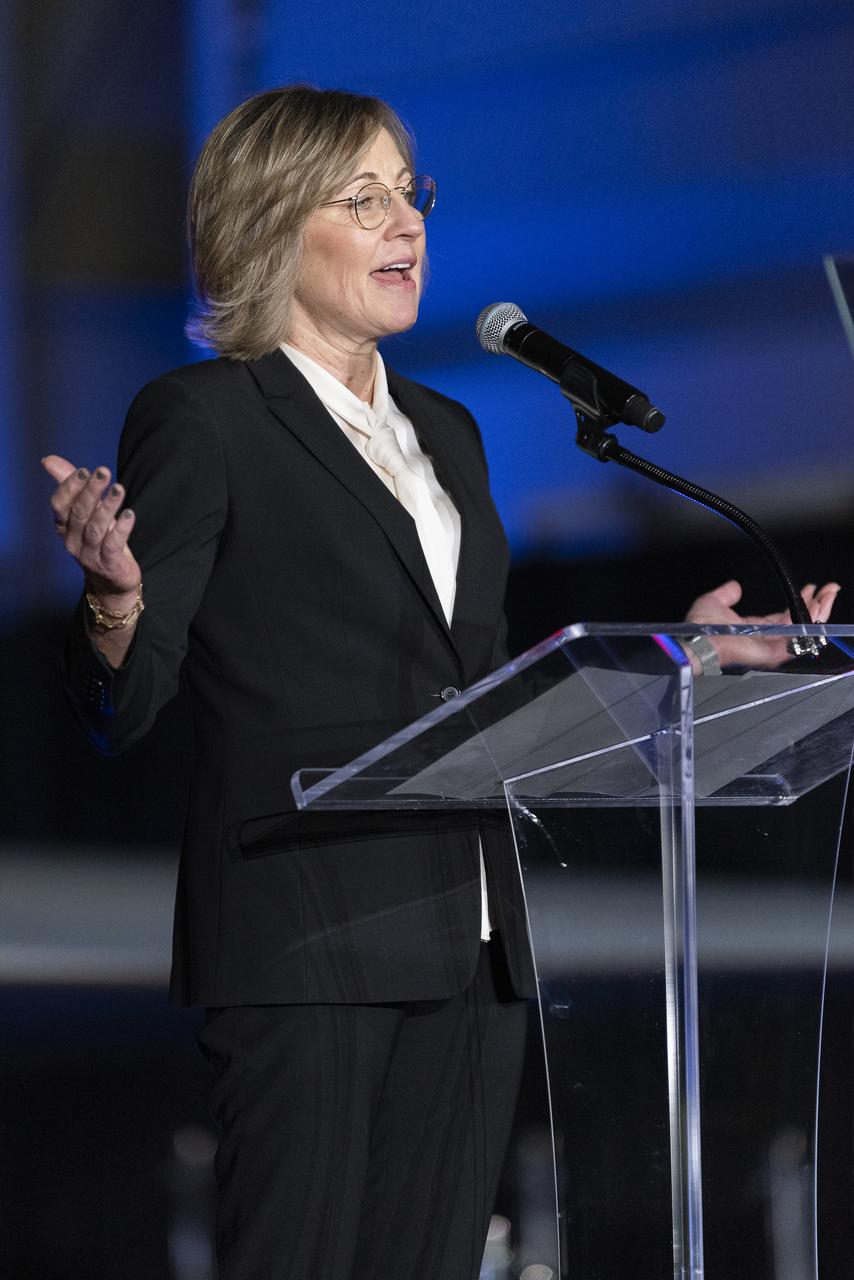
California Senior Economic Advisor to the Governor Dee Dee Myers speaks on stage following the unveiling of the agency’s X-59 quiet supersonic research aircraft at a January 12, 2024 event at Lockheed Martin Skunk Works in Palmdale, California. The X-59 is the centerpiece of NASA’s Quesst mission, which seeks to solve one of the major barriers to supersonic flight over land, currently banned in the United States, by making sonic booms quieter.
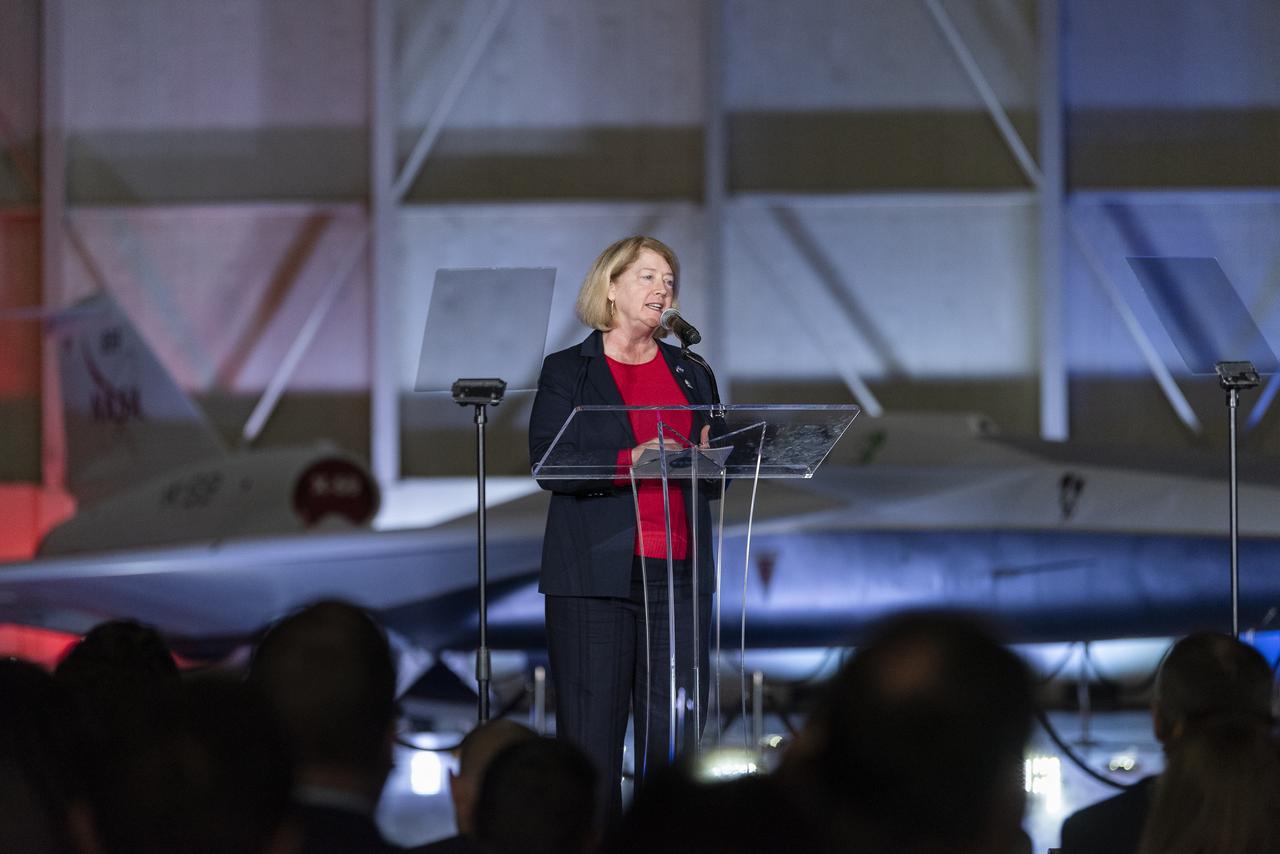
NASA Deputy Administrator Pam Melroy speaks on stage immediately following the unveiling of the agency’s X-59 quiet supersonic research aircraft at a January 12, 2024 event at Lockheed Martin Skunk Works in Palmdale, California. The X-59 is the centerpiece of NASA’s Quesst mission, which seeks to solve one of the major barriers to supersonic flight over land, currently banned in the United States, by making sonic booms quieter.
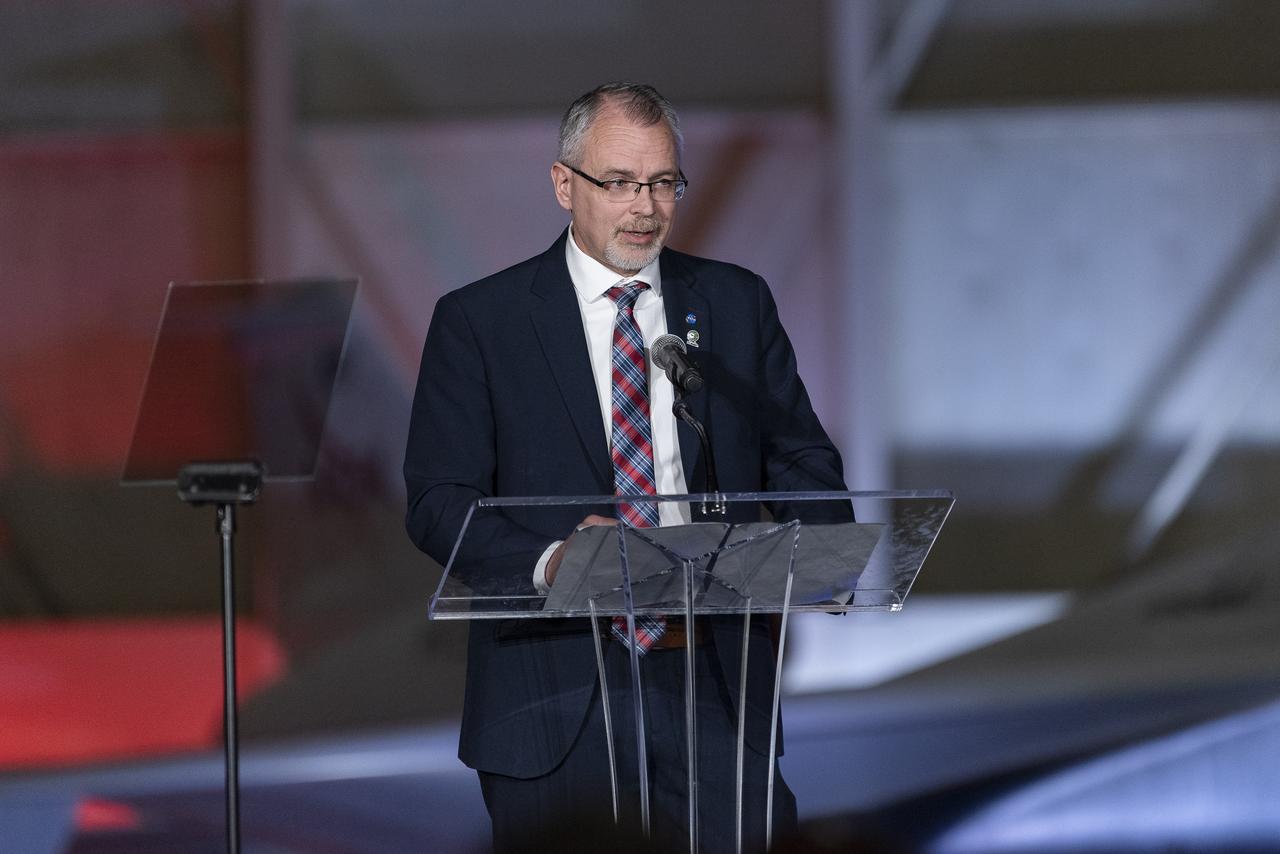
NASA Associate Administrator Jim Free speaks on stage following the unveiling of the agency’s X-59 quiet supersonic research aircraft at a January 12, 2024 event at Lockheed Martin Skunk Works in Palmdale, California. The X-59 is the centerpiece of NASA’s Quesst mission, which seeks to solve one of the major barriers to supersonic flight over land, currently banned in the United States, by making sonic booms quieter.
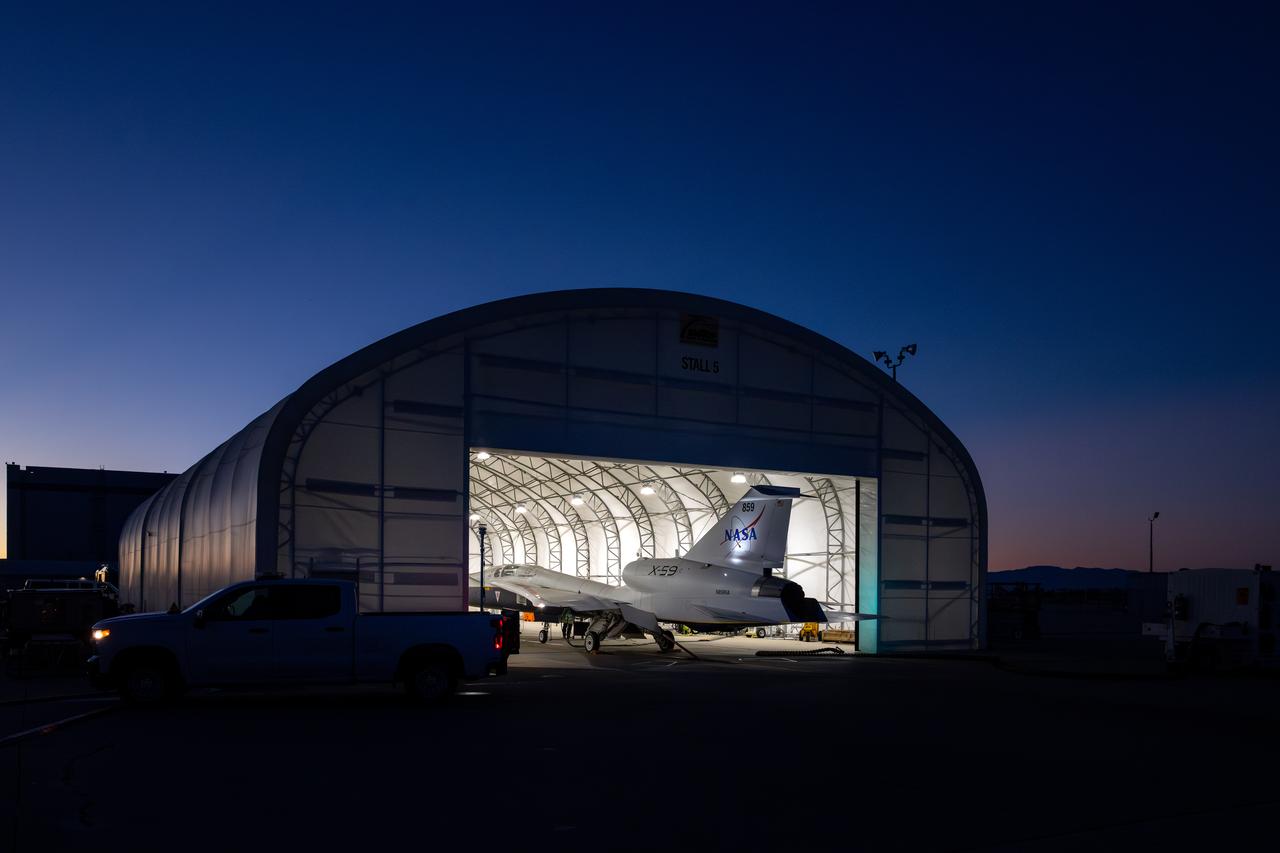
NASA’s X-59 quiet supersonic research aircraft sits inside its run stall following maximum afterburner testing at Lockheed Martin’s Skunk Works facility in Palmdale, California. The test demonstrates the engine’s ability to generate the thrust required for supersonic flight, advancing NASA’s Quesst mission. The X-59 is the centerpiece of the mission, designed to demonstrate quiet supersonic flight over land, addressing a key barrier to commercial supersonic travel.

NASA's F-15B Aeronautics Research Test Bed performs a calibration flight of the shock-sensing probe over Edwards, California, on Aug. 6, 2024. The probe will measure shock waves from NASA's X-59.
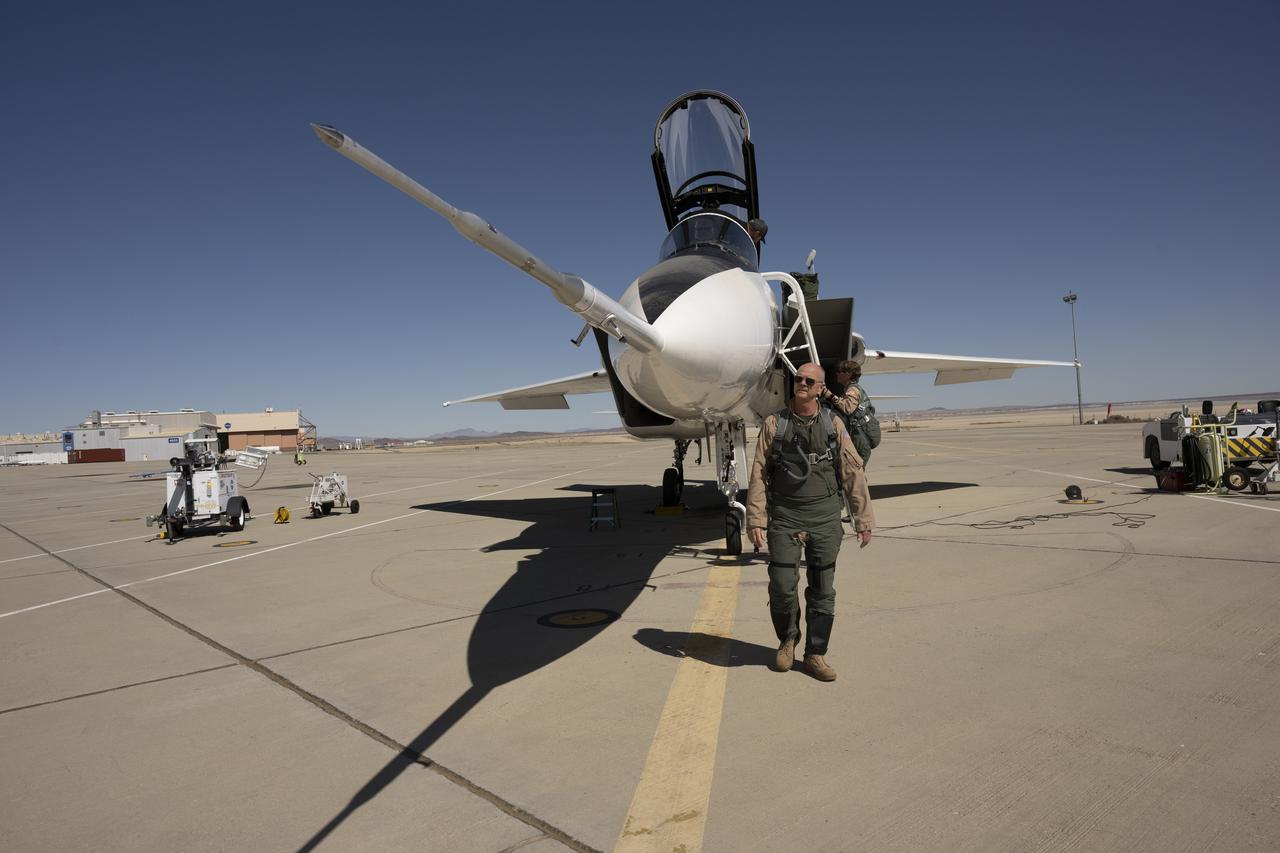
NASA test pilot Nils Larson inspects the agency’s F-15D research aircraft at NASA’s Armstrong Flight Research Center in Edwards, California, ahead of a calibration flight for a newly installed near-field shock-sensing probe. Mounted on the F-15D, the probe is designed to measure shock waves generated by the X-59 quiet supersonic aircraft during flight. The data will help researchers better understand how shock waves behave in close proximity to the aircraft, supporting NASA’s Quesst mission to enable quiet supersonic flight over land.
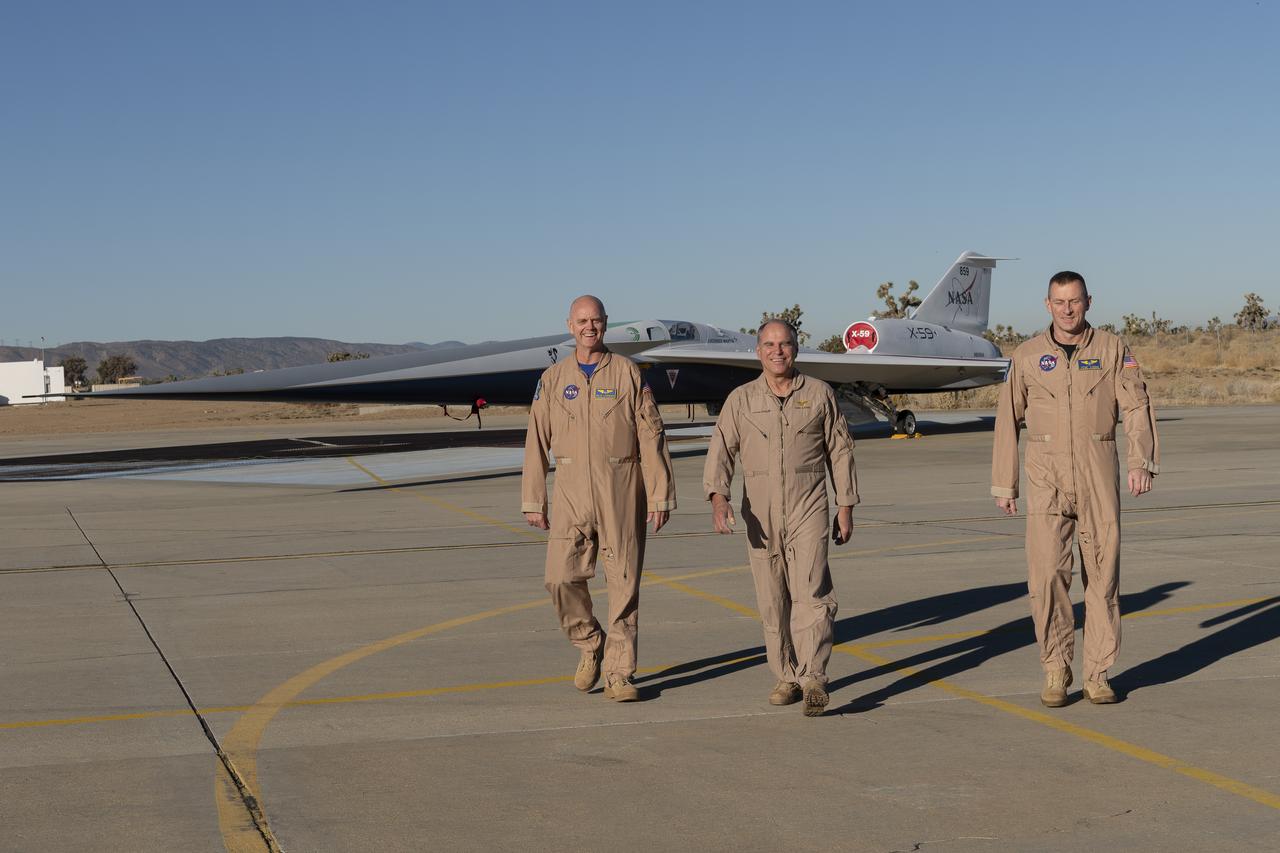
NASA test pilots Nils Larson (left) and Jim “Clue” Less (right), and Lockheed Martin test pilot Dan “Dog” Canin pose with the newly-painted X-59 as it sits on the ramp at Lockheed Martin Skunk Works in Palmdale, California. The X-59 is the centerpiece of NASA’s Quesst mission, which seeks to solve one of the major barriers to supersonic flight over land, currently banned in the United States, by making sonic booms quieter.
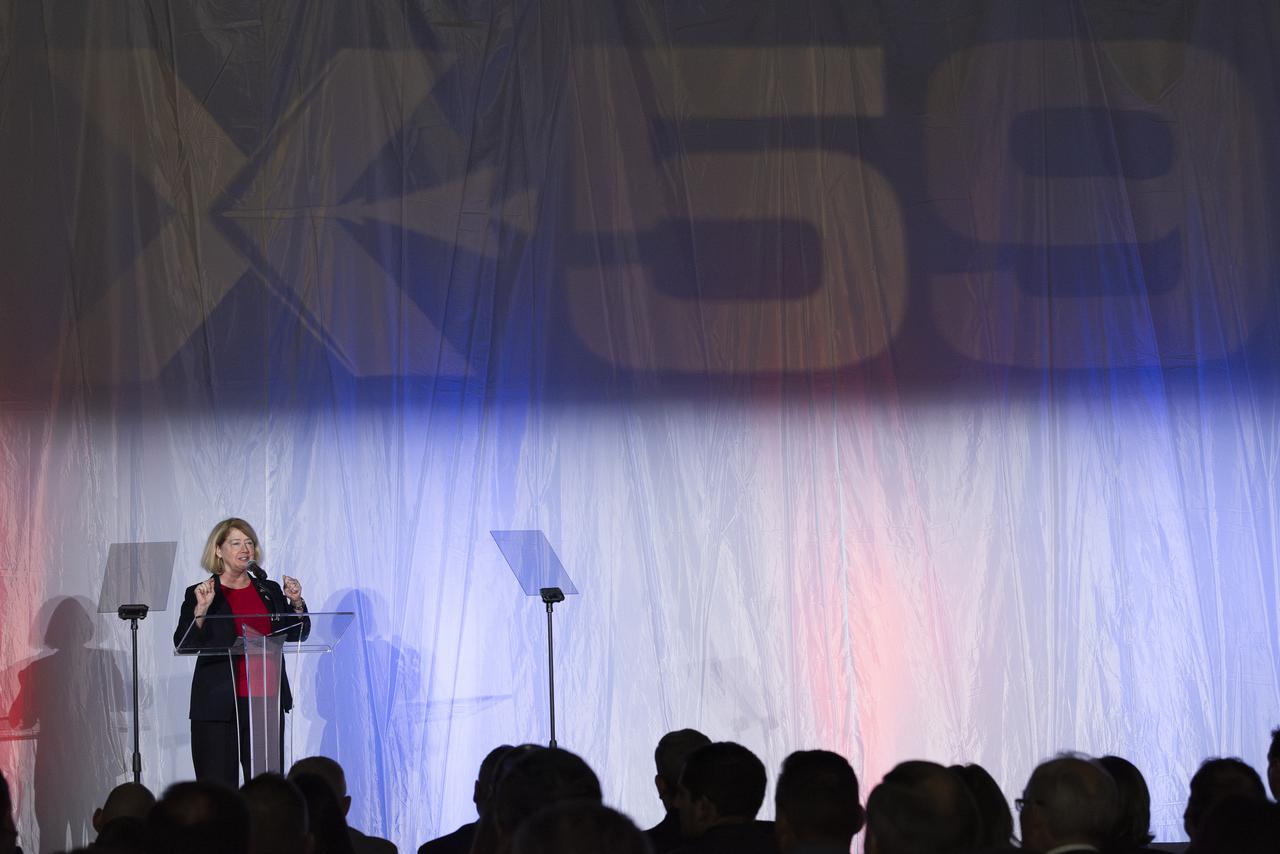
NASA Deputy Administrator Pam Melroy speaks on stage prior to the official unveiling of the agency’s X-59 quiet supersonic research aircraft at a January 12, 2024 event at Lockheed Martin Skunk Works in Palmdale, California. The X-59 is the centerpiece of NASA’s Quesst mission, which seeks to solve one of the major barriers to supersonic flight over land, currently banned in the United States, by making sonic booms quieter.

California Senior Economic Advisor to the Governor Dee Dee Myers speaks on stage following the unveiling of the agency’s X-59 quiet supersonic research aircraft at a January 12, 2024 event at Lockheed Martin Skunk Works in Palmdale, California. The X-59 is the centerpiece of NASA’s Quesst mission, which seeks to solve one of the major barriers to supersonic flight over land, currently banned in the United States, by making sonic booms quieter.
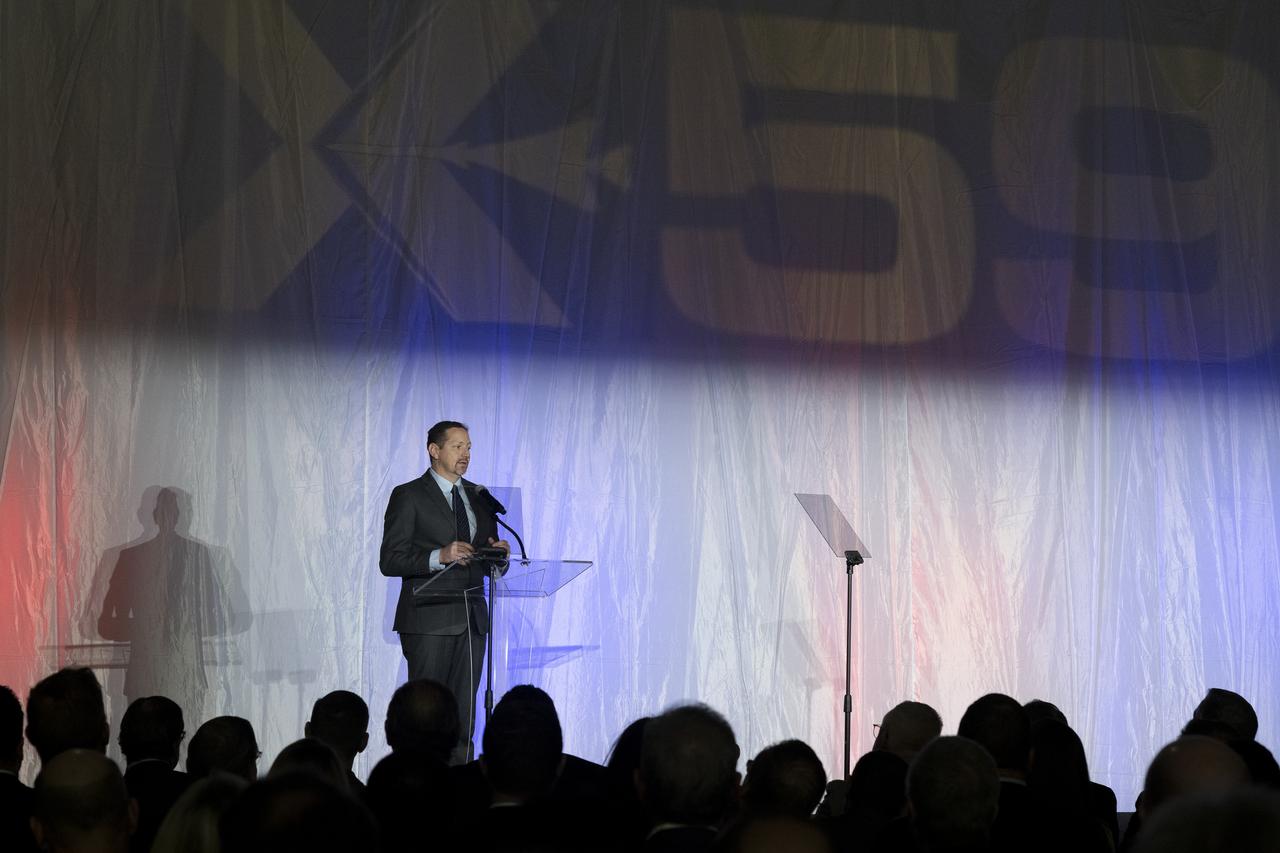
Lockheed Martin Skunk Works Vice President and General Manager John Clark speaks on stage prior to the unveiling of the agency’s X-59 quiet supersonic research aircraft at a January 12, 2024 event at Lockheed Martin Skunk Works in Palmdale, California. The X-59 is the centerpiece of NASA’s Quesst mission, which seeks to solve one of the major barriers to supersonic flight over land, currently banned in the United States, by making sonic booms quieter.
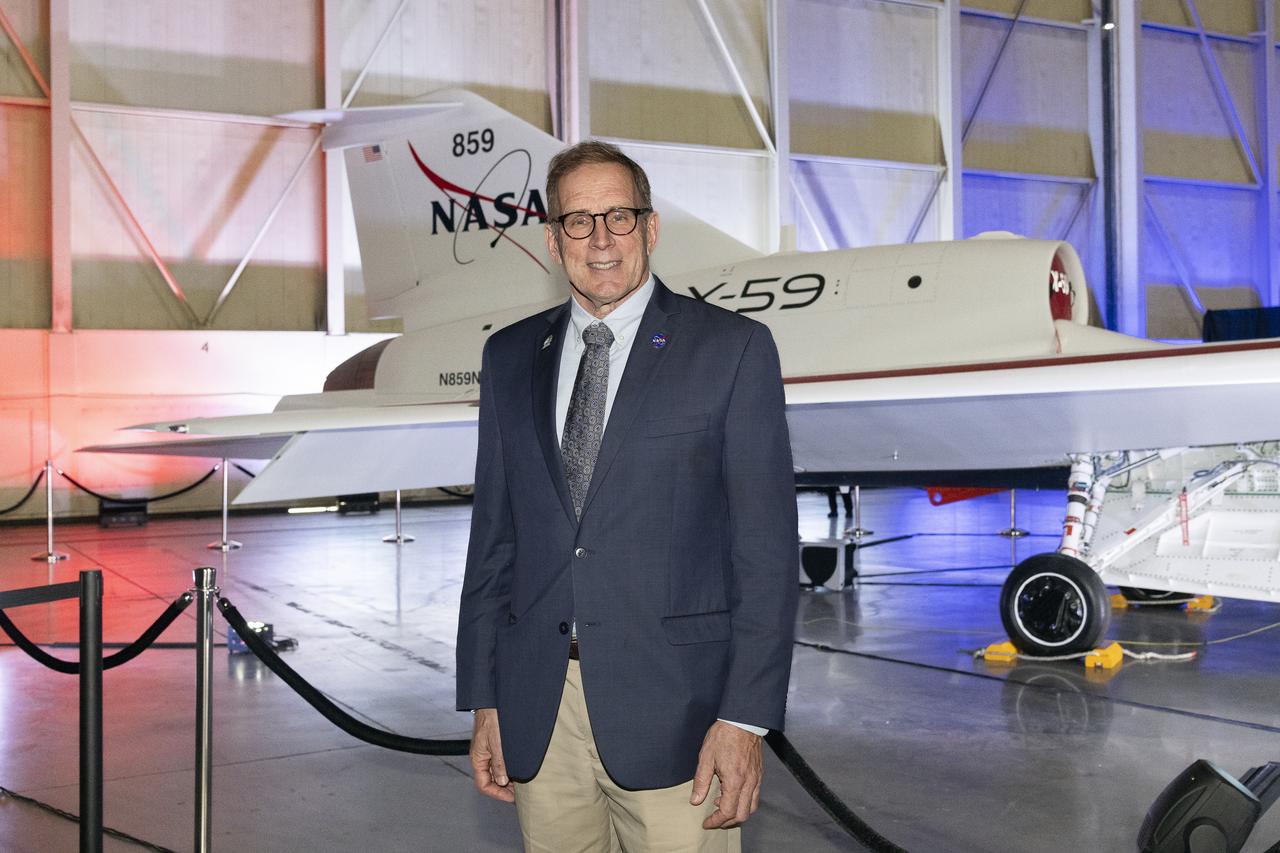
NASA’s mission integration manager for the Quesst mission, Peter Coen, poses in front of the agency’s X-59 quiet supersonic research aircraft at a January 12, 2024 event at Lockheed Martin Skunk Works in Palmdale, California. The X-59 is the centerpiece of NASA’s Quesst mission, which seeks to solve one of the major barriers to supersonic flight over land, currently banned in the United States, by making sonic booms quieter.
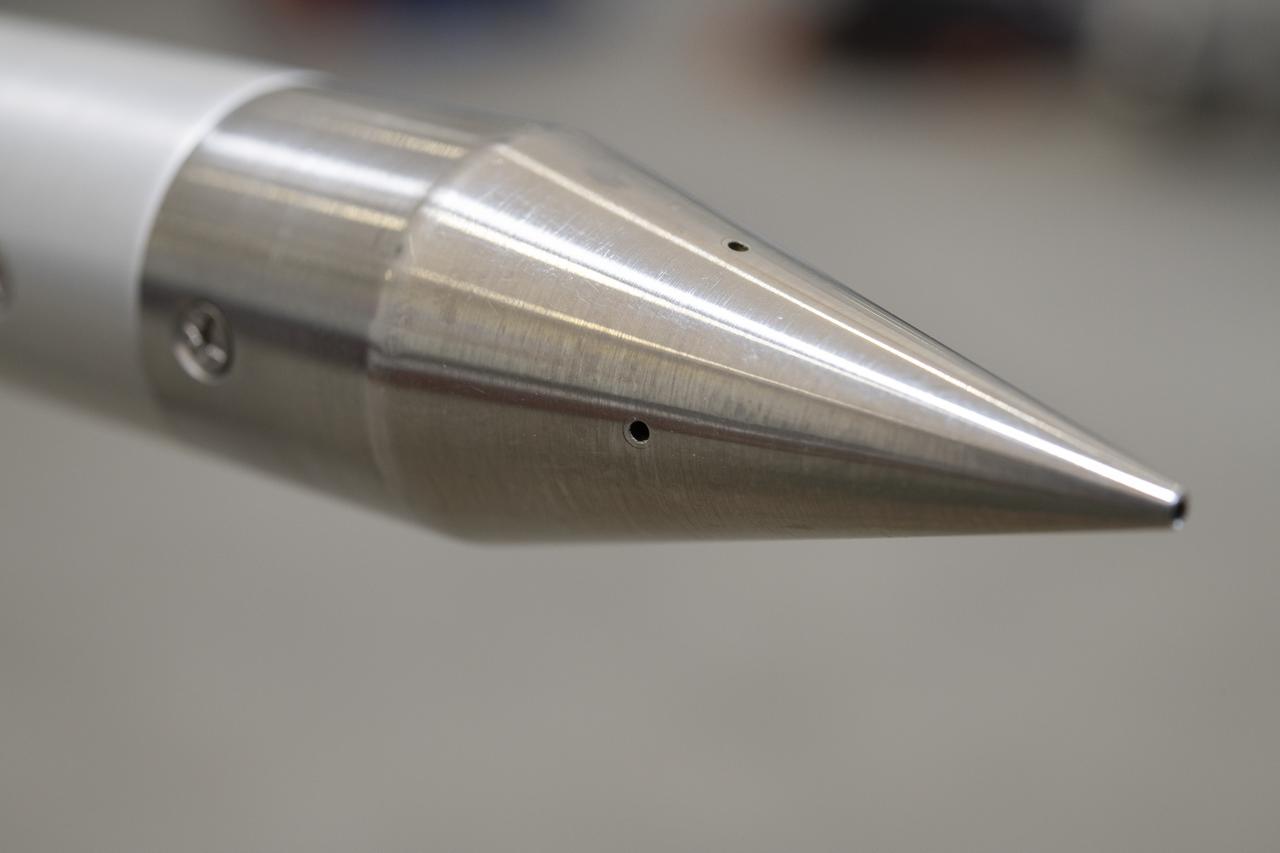
A close-up of NASA’s shock-sensing probe highlights its pressure ports, designed to measure air pressure changes during supersonic flight. The probe will be mounted on NASA’s F-15B Aeronautics Research Test Bed for calibration flights, validating its ability to measure shock waves generated by the X-59 as part of NASA's Quesst mission.
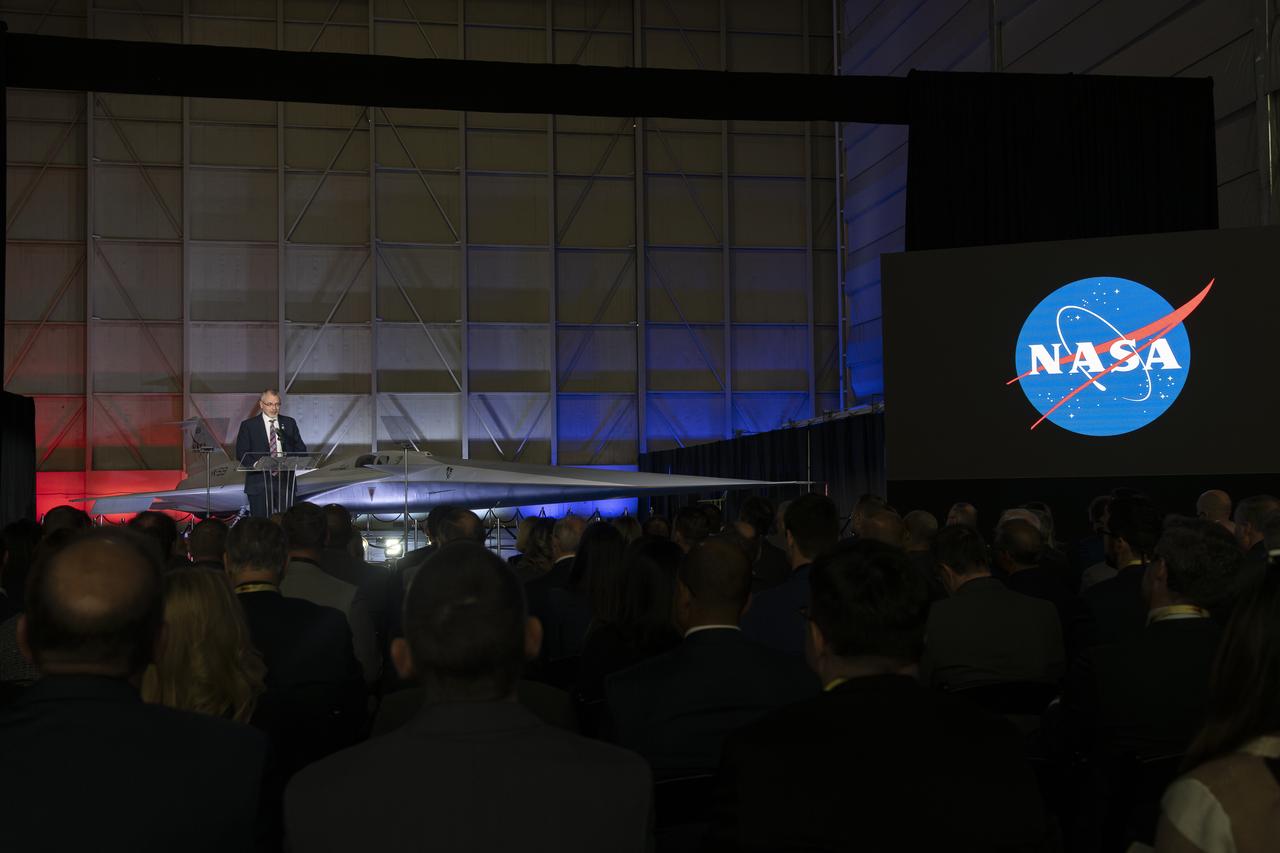
NASA Associate Administrator Jim Free speaks on stage following the unveiling of the agency’s X-59 quiet supersonic research aircraft at a January 12, 2024 event at Lockheed Martin Skunk Works in Palmdale, California. The X-59 is the centerpiece of NASA’s Quesst mission, which seeks to solve one of the major barriers to supersonic flight over land, currently banned in the United States, by making sonic booms quieter.

NASA Associate Administrator for the Aeronautics Research Mission Directorate Bob Pearce speaks on stage prior to the unveiling of the agency’s X-59 quiet supersonic research aircraft at a January 12, 2024 event at Lockheed Martin Skunk Works in Palmdale, California. The X-59 is the centerpiece of NASA’s Quesst mission, which seeks to solve one of the major barriers to supersonic flight over land, currently banned in the United States, by making sonic booms quieter.
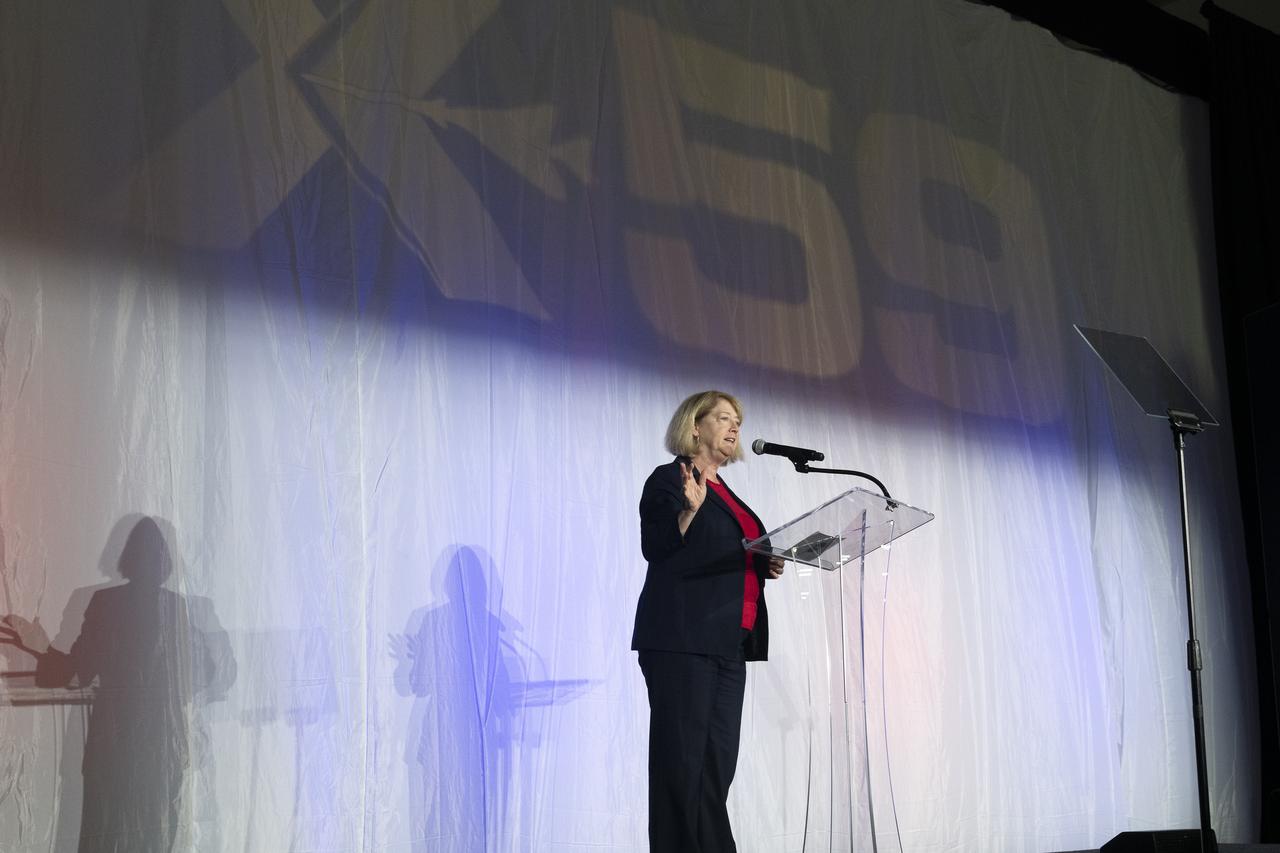
NASA Deputy Administrator Pam Melroy speaks on stage prior to the official unveiling of the agency’s X-59 quiet supersonic research aircraft at a January 12, 2024 event at Lockheed Martin Skunk Works in Palmdale, California. The X-59 is the centerpiece of NASA’s Quesst mission, which seeks to solve one of the major barriers to supersonic flight over land, currently banned in the United States, by making sonic booms quieter.

NASA’s X-59 quiet supersonic research aircraft sits on the ramp during engine run testing on Thursday, March 12, 2026, at NASA’s Armstrong Flight Research Center in Edwards, California. Engine runs are one of the final tests before the aircraft is ready for its second flight. The data collected from the aircraft during upcoming flight tests could help inform future regulations for commercial supersonic travel over land.
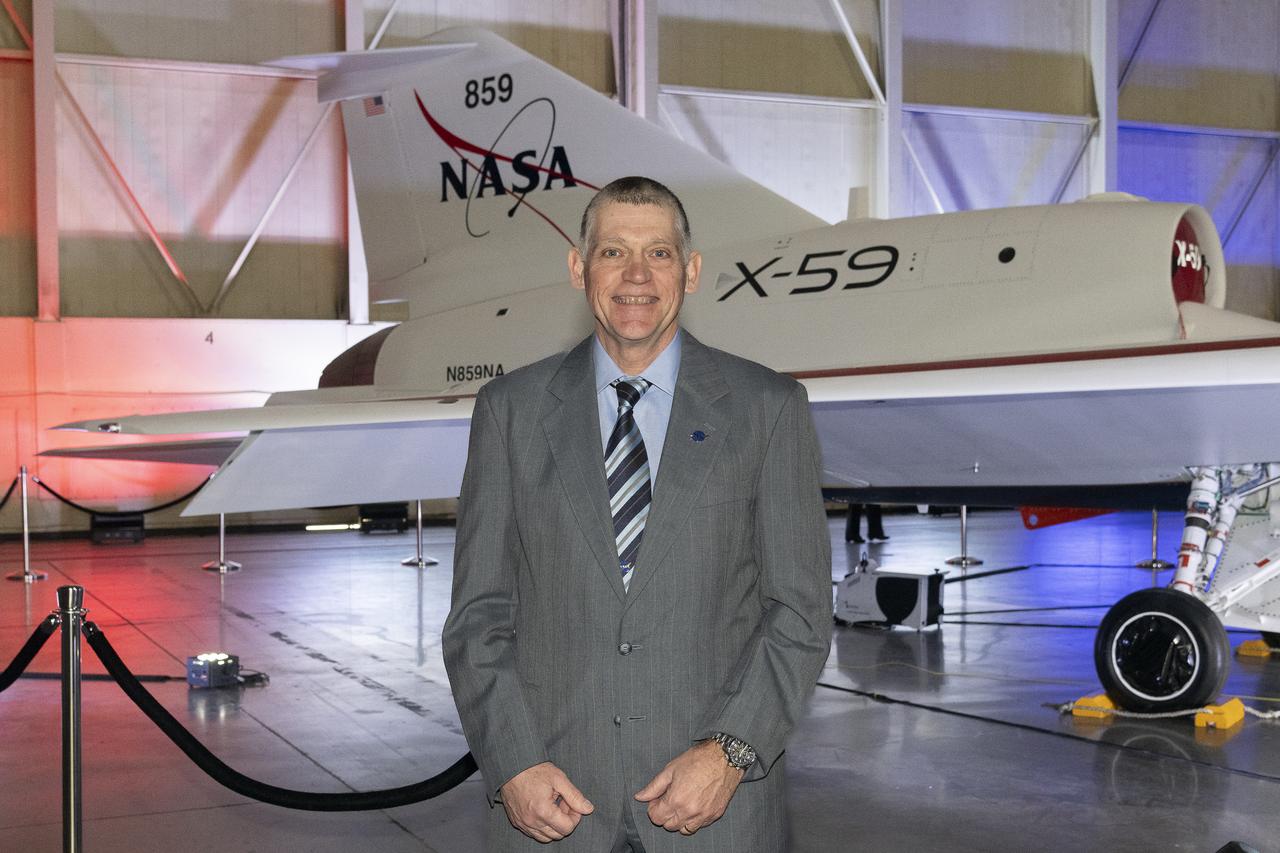
NASA’s chief engineer for the Low Boom Flight Demonstrator project, Jay Brandon, poses in front of the agency’s X-59 quiet supersonic research aircraft at a January 12, 2024 event at Lockheed Martin Skunk Works in Palmdale, California. The X-59 is the centerpiece of NASA’s Quesst mission, which seeks to solve one of the major barriers to supersonic flight over land, currently banned in the United States, by making sonic booms quieter.
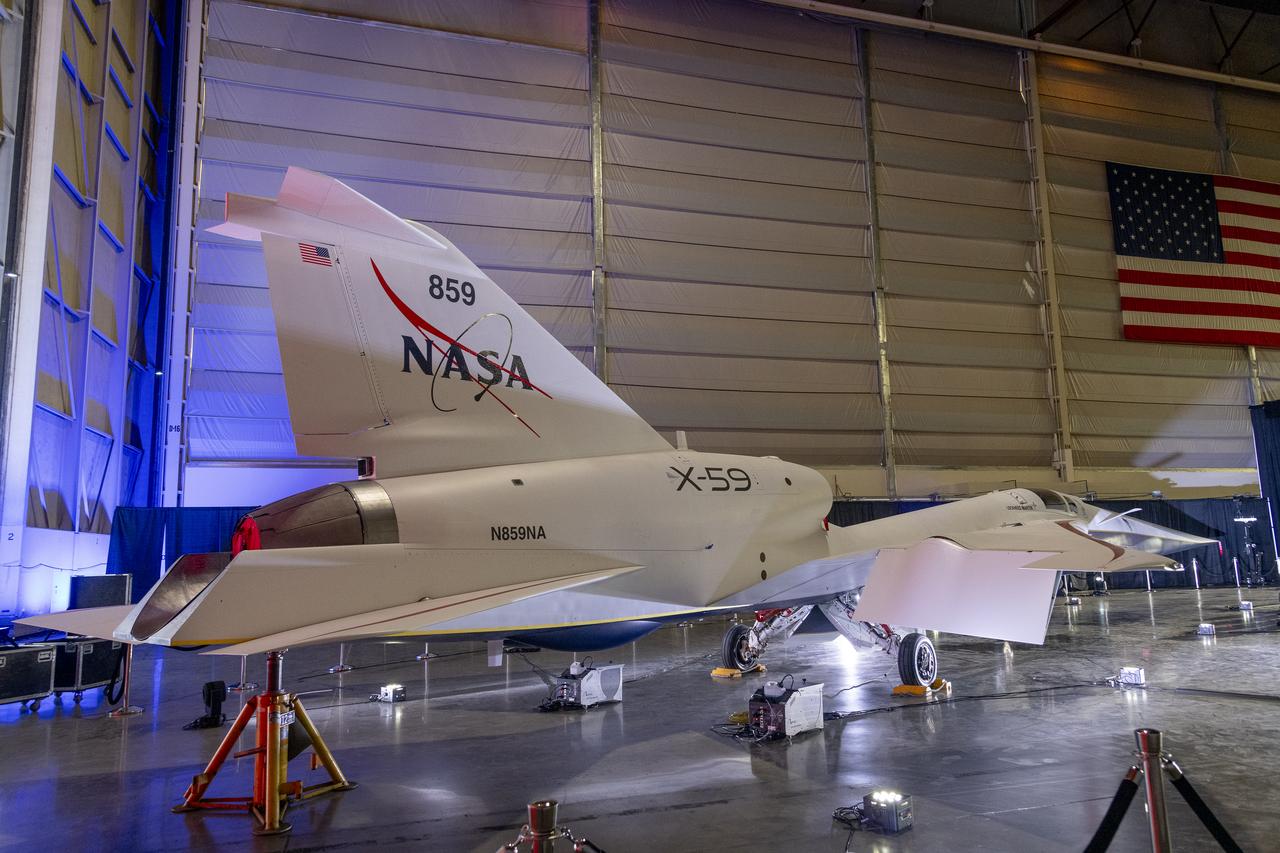
NASA’s X-59 quiet supersonic research aircraft sits in position inside a hangar at Lockheed Martin Skunk Works in Palmdale, California prior to its January 12, 2024 unveiling. The X-59 is the centerpiece of NASA’s Quesst mission, which seeks to solve one of the major barriers to supersonic flight over land, currently banned in the United States, by making sonic booms quieter.
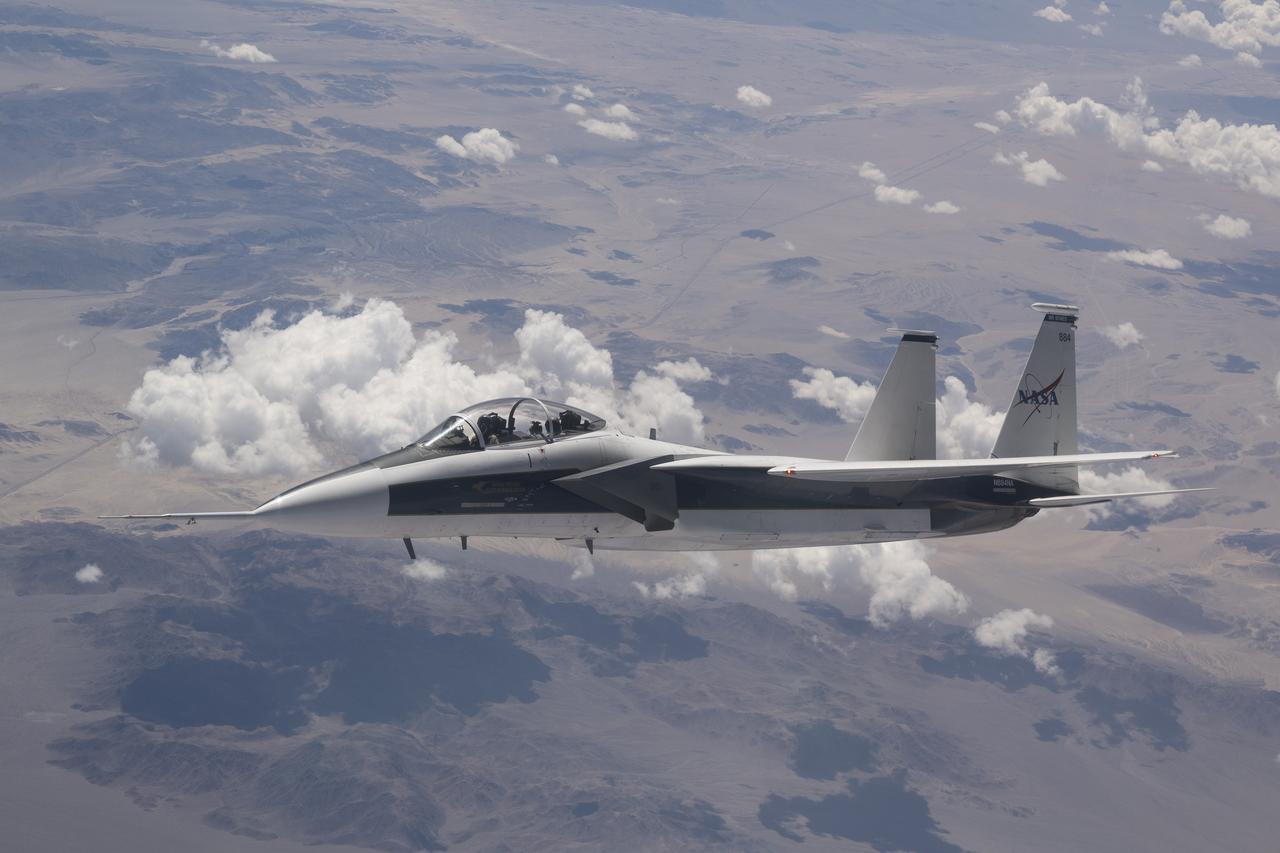
NASA’s F-15D research aircraft conducts a test flight near Edwards, California, with a newly installed near-field shock-sensing probe. Identical to a previously flown version that was intended as the backup, this new probe will capture shock wave data near the X-59 as it flies faster than the speed of sound, supporting NASA’s Quesst mission.
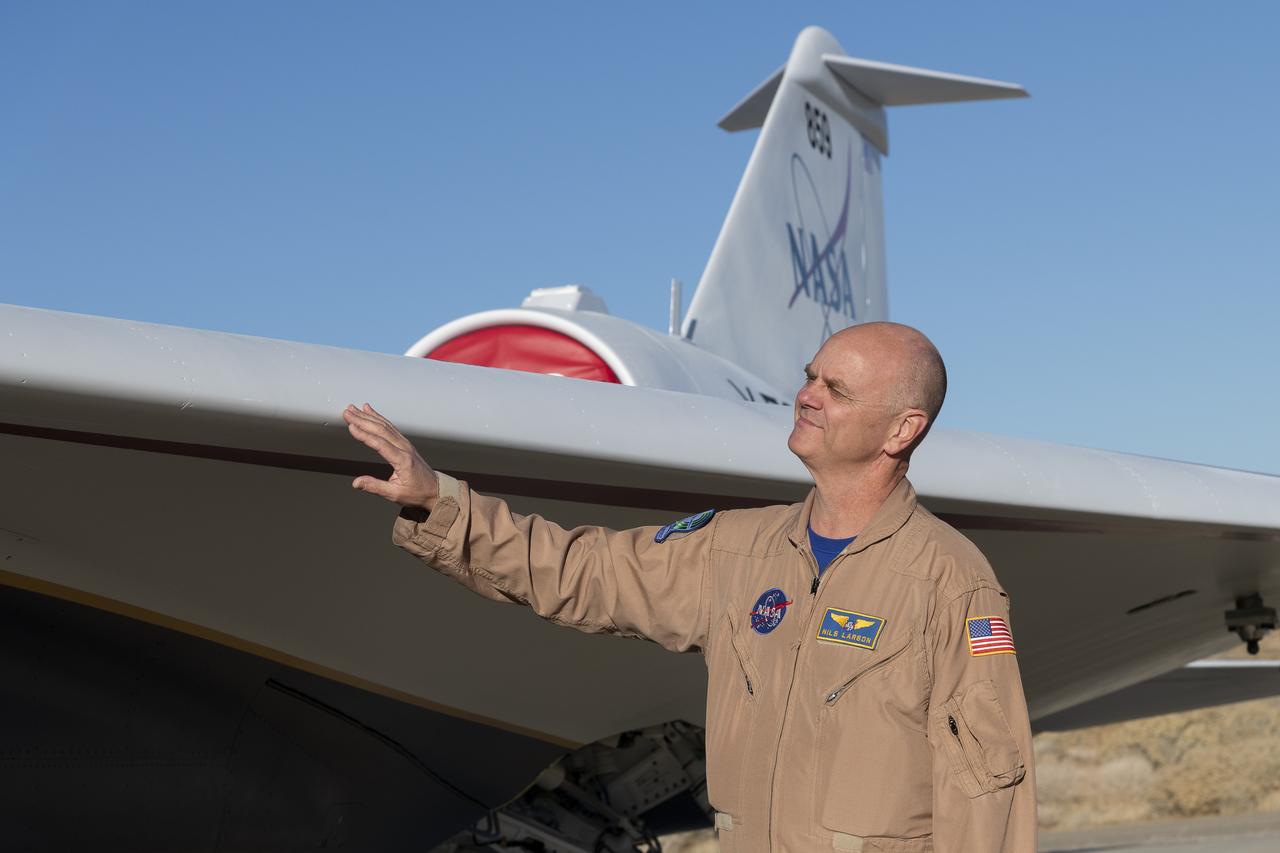
NASA test pilot Nils Larson gets an initial look at the painted X-59 as it sits on the ramp at Lockheed Martin Skunk Works in Palmdale, California. Larson, one of three test pilots training to fly the X-59 inspects aircraft’s delta wing; a requirement for quiet supersonic flight. The X-59 is the centerpiece of NASA’s Quesst mission, which seeks to solve one of the major barriers to supersonic flight over land, currently banned in the United States, by making sonic booms quieter.
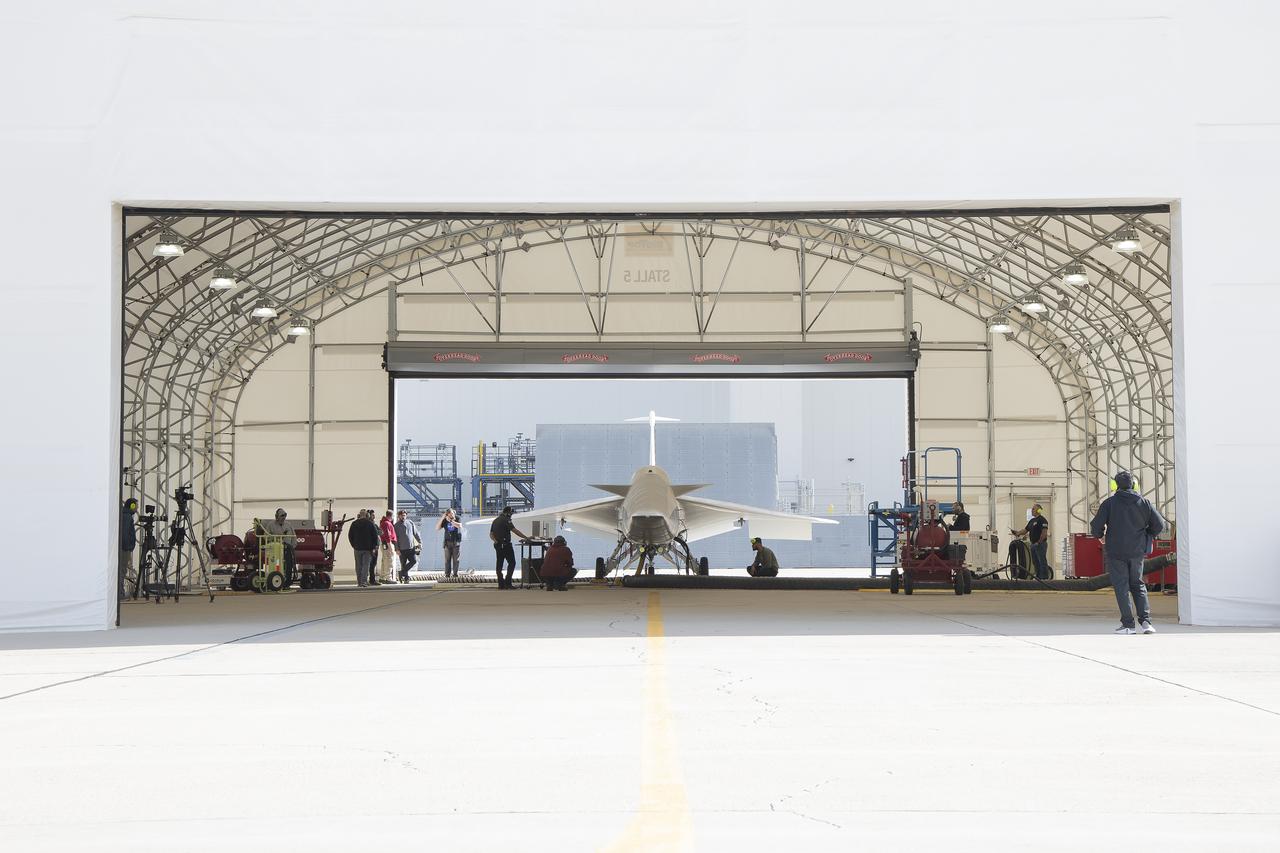
NASA’s X-59 quiet supersonic research aircraft sits in its run stall at Lockheed Martin’s Skunk Works facility in Palmdale, California, prior to its first engine run. Engine runs are part of a series of integrated ground tests needed to ensure safe flight and successful achievement of mission goals. The X-59 is the centerpiece of NASA’s Quesst mission, which seeks to solve one of the major barriers to supersonic flight over land by making sonic booms quieter.
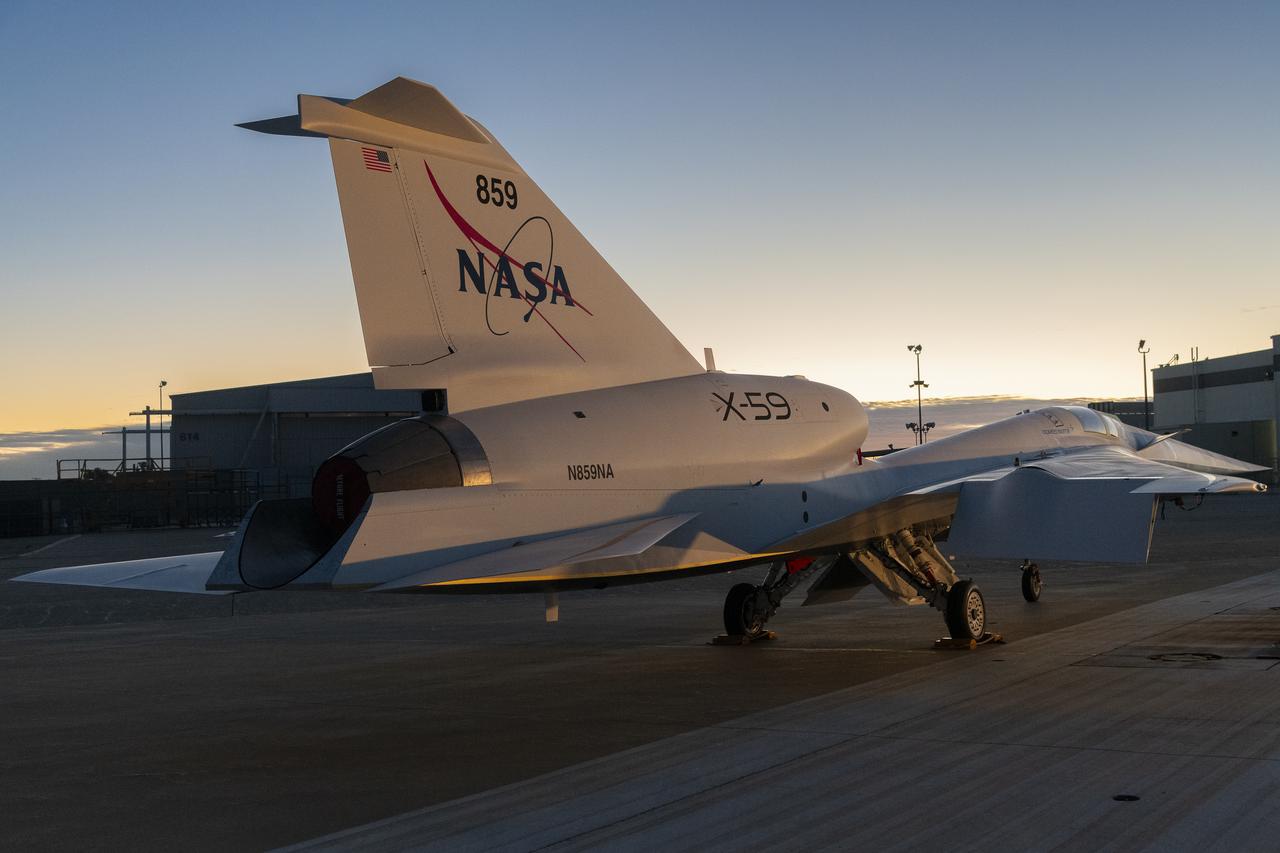
NASA’s X-59 quiet supersonic research aircraft sits on the ramp at Lockheed Martin Skunk Works in Palmdale, California during sunrise, shortly after completion of painting. With its unique design, including a 38-foot-long nose, the X-59 was built to demonstrate the ability to fly supersonic, or faster than the speed of sound, while reducing the typically loud sonic boom produced by aircraft at such speeds to a quieter sonic “thump”. The X-59 is the centerpiece of NASA’s Quesst mission, which seeks to solve one of the major barriers to supersonic flight over land, currently banned in the United States, by making sonic booms quieter.
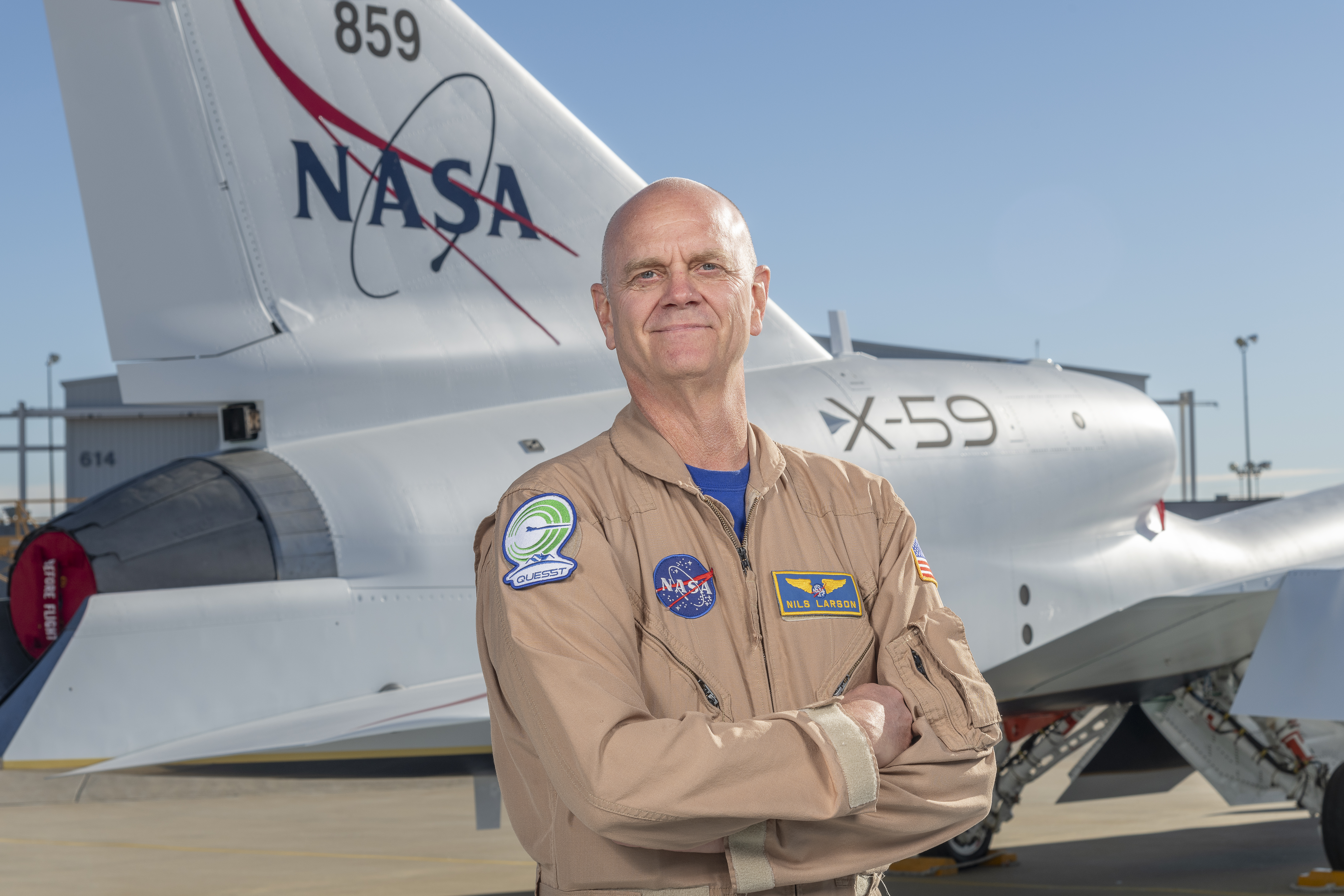
NASA test pilot Nils Larson poses with the newly-painted X-59 as it sits on the ramp at Lockheed Martin Skunk Works in Palmdale, California. The X-59 is the centerpiece of NASA’s Quesst mission, which seeks to solve one of the major barriers to supersonic flight over land, currently banned in the United States, by making sonic booms quieter.
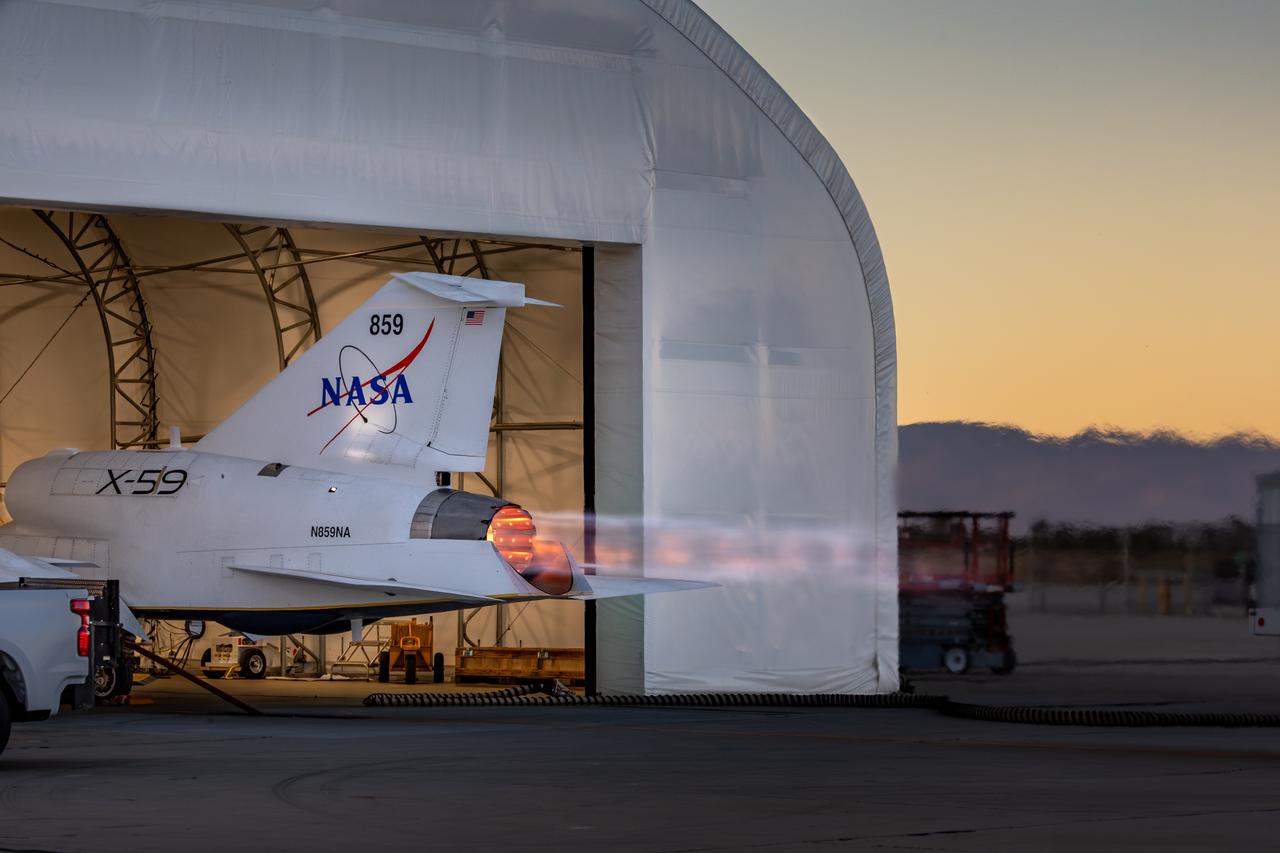
NASA’s X-59 lights up the night sky with its unique Mach diamonds, also known as shock diamonds, during maximum afterburner testing at Lockheed Martin Skunk Works in Palmdale, California. The test demonstrates the engine’s ability to generate the thrust required for supersonic flight, advancing NASA’s Quesst mission.

NASA’s X-59 lights up the night sky with its unique Mach diamonds, also known as shock diamonds, during maximum afterburner testing at Lockheed Martin Skunk Works in Palmdale, California. The test demonstrates the engine’s ability to generate the thrust required for supersonic flight, advancing NASA’s Quesst mission.
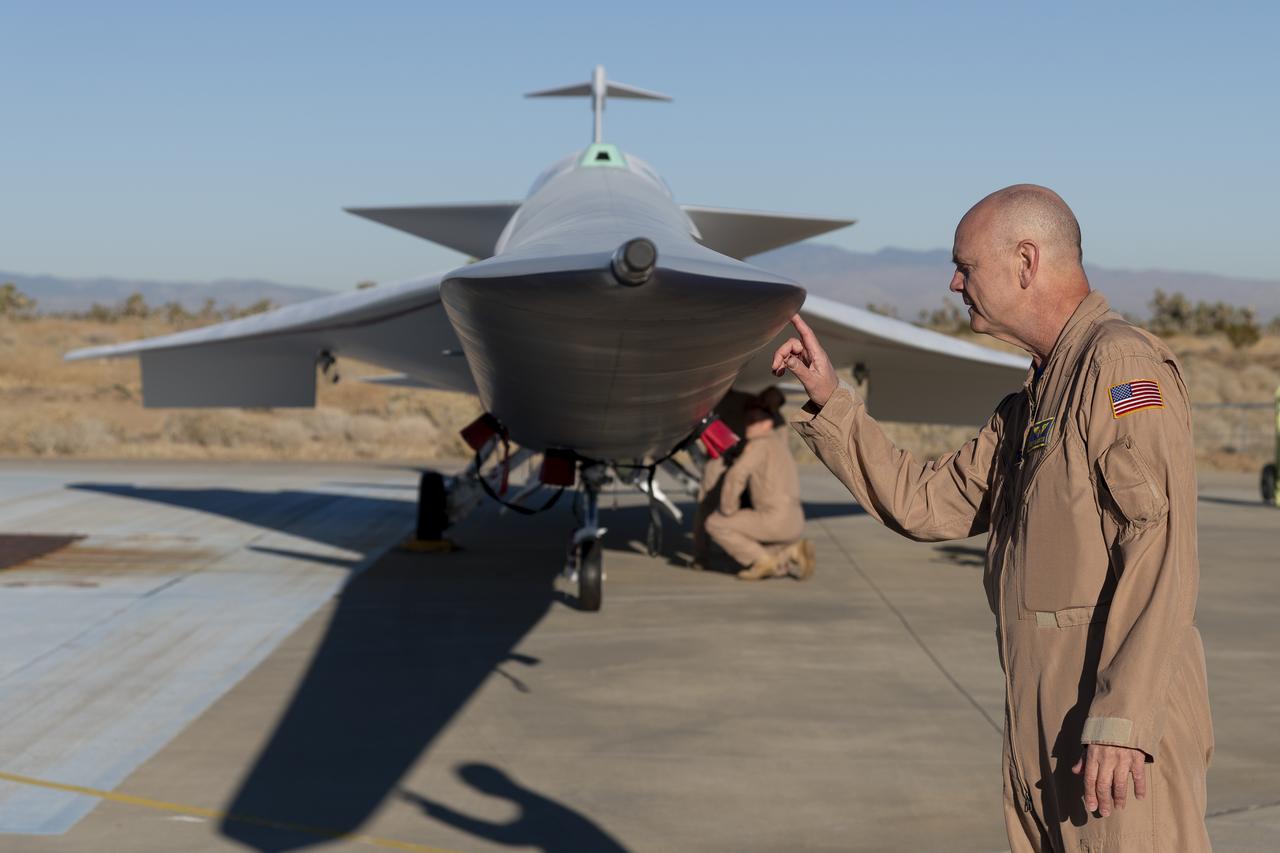
NASA test pilot Nils Larson gets an initial look at the painted X-59 as it sits on the ramp at Lockheed Martin Skunk Works in Palmdale, California. Larson, one of three test pilots training to fly the X-59 inspects the side of the 38-foot-long nose; a primary design feature to the X-59’s purpose of demonstrating the ability to fly supersonic, or faster than sound, without creating a loud sonic boom. The X-59 is the centerpiece of NASA’s Quesst mission, which seeks to solve one of the major barriers to supersonic flight over land, currently banned in the United States, by making sonic booms quieter.