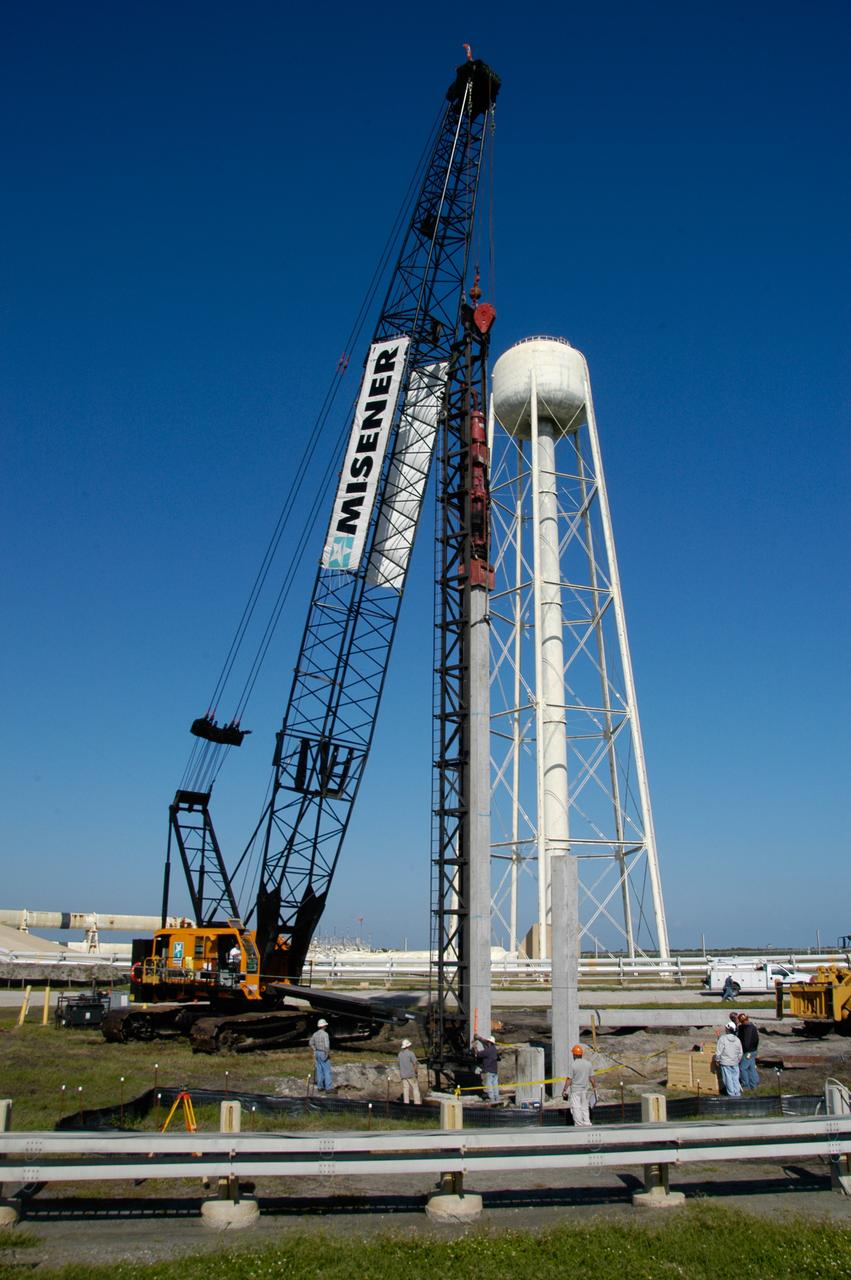
On Launch Pad 39B at NASA's Kennedy Space Center, the crane crawler puts a piling into place to be pounded into the ground to help construct lightning towers for the Constellation Program and Ares/Orion launches. Pad B will be the site of the first Ares vehicle launch, including Ares I-X which is scheduled for April 2009.

On Launch Pad 39B at NASA's Kennedy Space Center, the crane crawler lifts a piling off a truck. The piling will be pounded into the ground to help construct lightning towers for the Constellation Program and Ares/Orion launches. Pad B will be the site of the first Ares vehicle launch, including Ares I-X which is scheduled for April 2009.
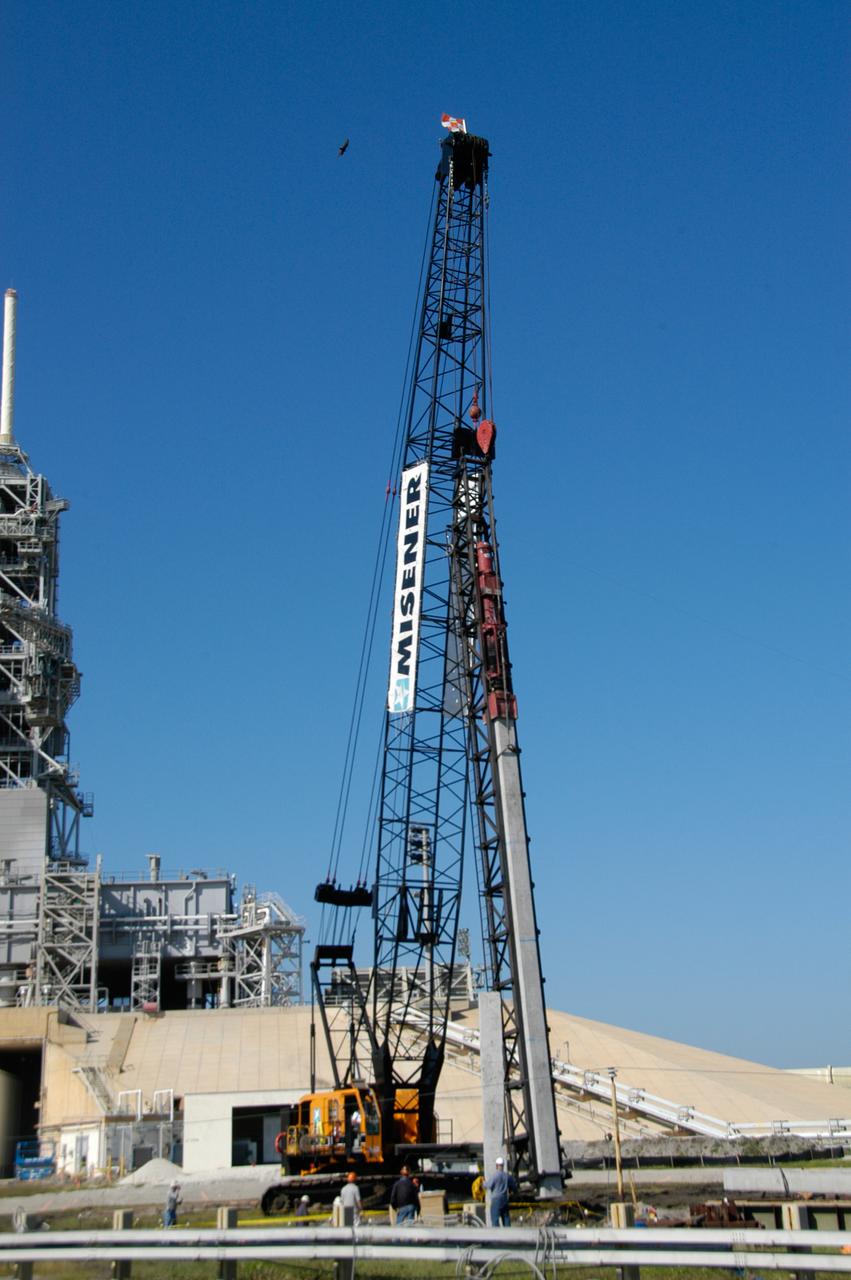
On Launch Pad 39B at NASA's Kennedy Space Center, the crane crawler lifts a piling into place to be pounded into the ground to help construct lightning towers for the Constellation Program and Ares/Orion launches. Pad B will be the site of the first Ares vehicle launch, including Ares I-X which is scheduled for April 2009.
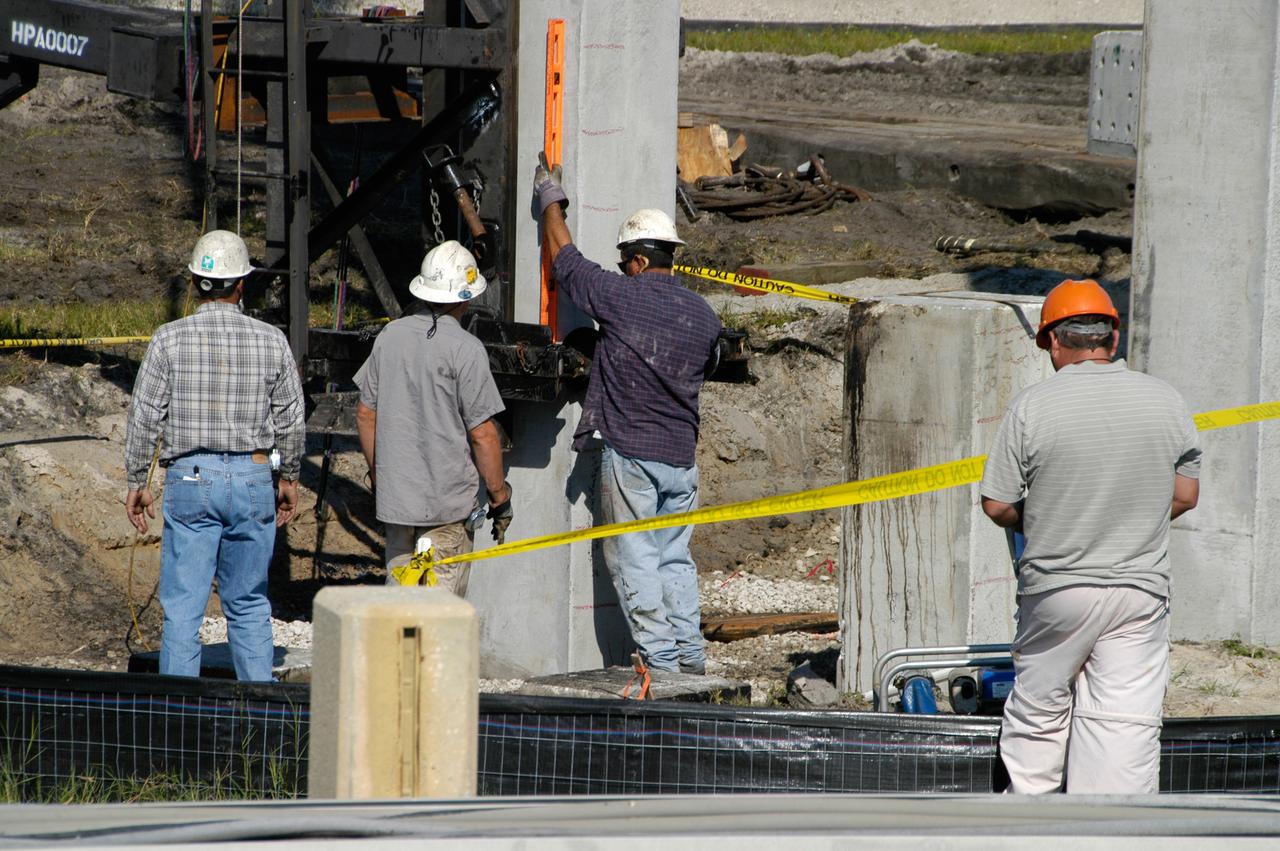
On Launch Pad 39B at NASA's Kennedy Space Center, workers measure the piling being pounded into the ground to help construct lightning towers for the Constellation Program and Ares/Orion launches. Pad B will be the site of the first Ares vehicle launch, including Ares I-X which is scheduled for April 2009.
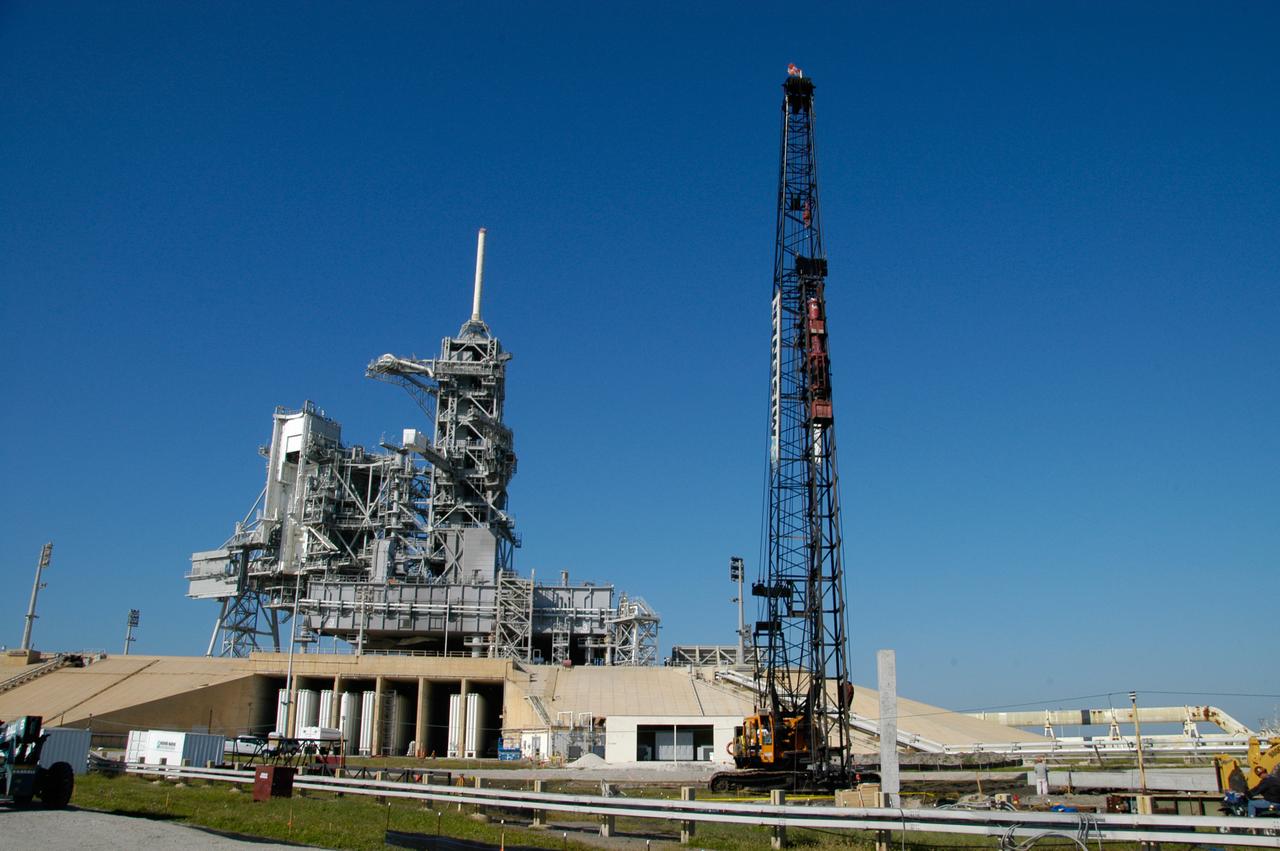
On Launch Pad 39B at NASA's Kennedy Space Center, pilings are being pounded into the ground to help construct lightning towers for the Constellation Program and Ares/Orion launches. Pad B will be the site of the first Ares vehicle launch, including Ares I-X which is scheduled for April 2009.

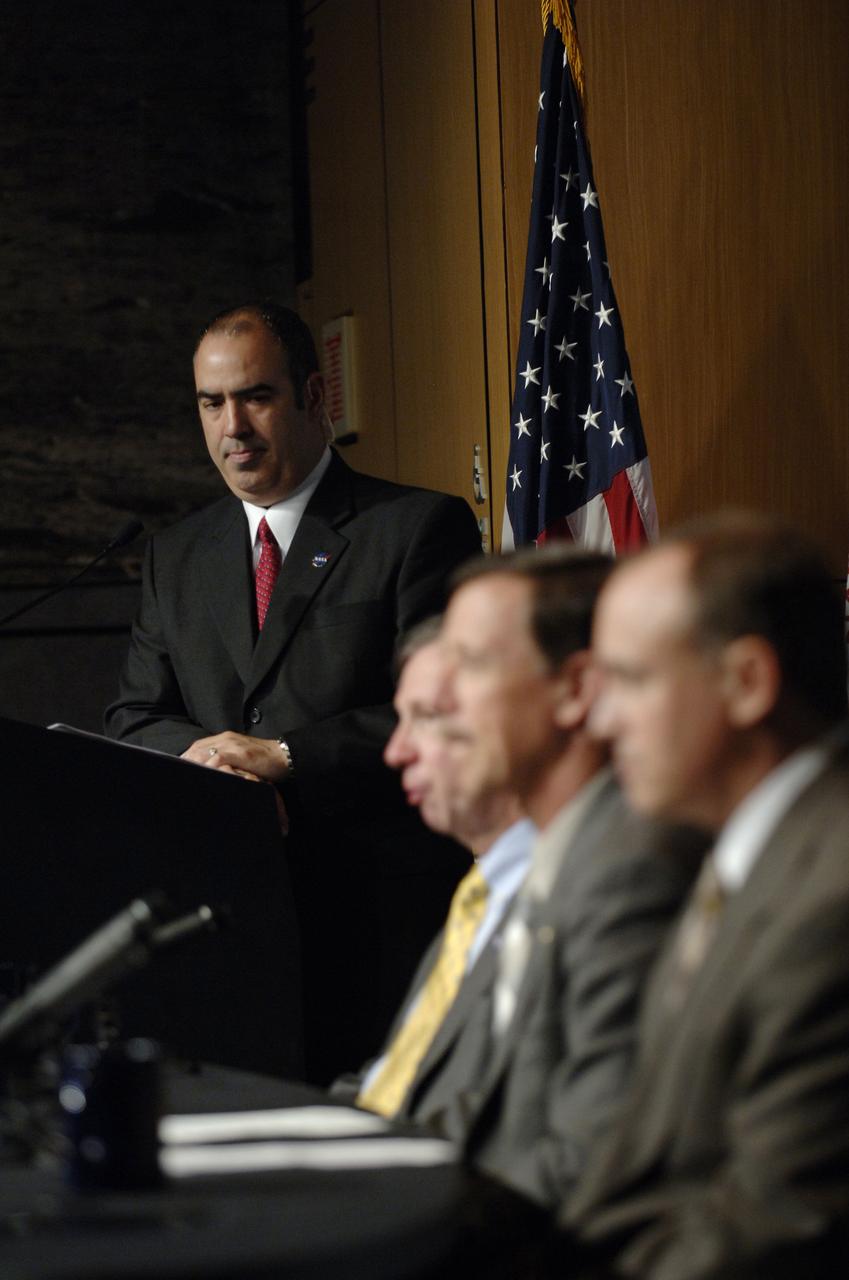
Jeff Hanley, Constellation Program Manager, speaks during a press conference outlining specific center responsibilities associated with the Constellation Program for robotic and human Moon and Mars exploration, Monday, June 5, 2006, at NASA Headquarters in Washington. Photo Credit (NASA/Bill Ingalls)

Jeff Hanley, Constellation Program Manager, right, listens to a question during a NASA Update outlining responsibilities of the NASA centers associated with the Constellation Program for robotic and human Moon and Mars exploration on Wednesday, June 5, 2006, at NASA Headquarters in Washington. Photo Credit: (NASA/Bill Ingalls)

Jeff Hanley, Constellation Program Manager, announces to NASA employees and members of the media the responsibilities of the NASA centers associated with the Constellation Program for robotic and human Moon and Mars exploration on Wednesday, June 5, 2006, at NASA Headquarters in Washington. Photo Credit: (NASA/Bill Ingalls)
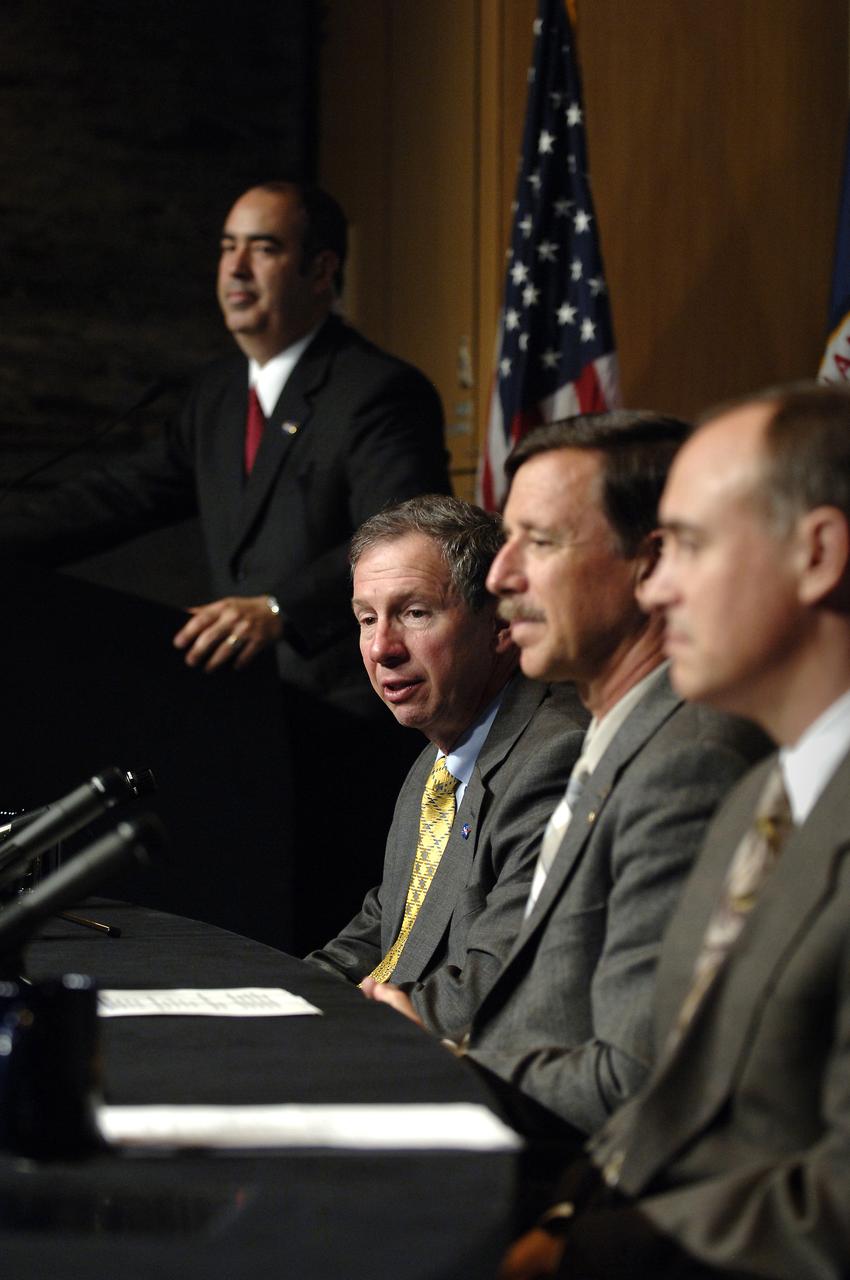
NASA Administrator Michael Griffin, seated left, Scott Horowitz, NASA Associate Administrator for Exploration Systems and Jeff Hanley, Constellation Program Manager, right, are seen during a press conference outlining specific center responsibilities associated with the Constellation Program for robotic and human moon and Mars exploration, Monday, June 5, 2006, at NASA Headquarters in Washington. Dean Acosta, NASA Deputy Assistant Administrator and Press Secretary, far left, moderates the program. Photo Credit (NASA/Bill Ingalls)

Scott Horowitz, NASA Associate Administrator for Exploration Systems, center, speaks as Jeff Hanley, Constellation Program Manager, right, looks on during a press conference outlining specific center responsibilities associated with the Constellation Program for robotic and human Moon and Mars exploration, Monday, June 5, 2006, at NASA Headquarters in Washington. Photo Credit (NASA/Bill Ingalls)
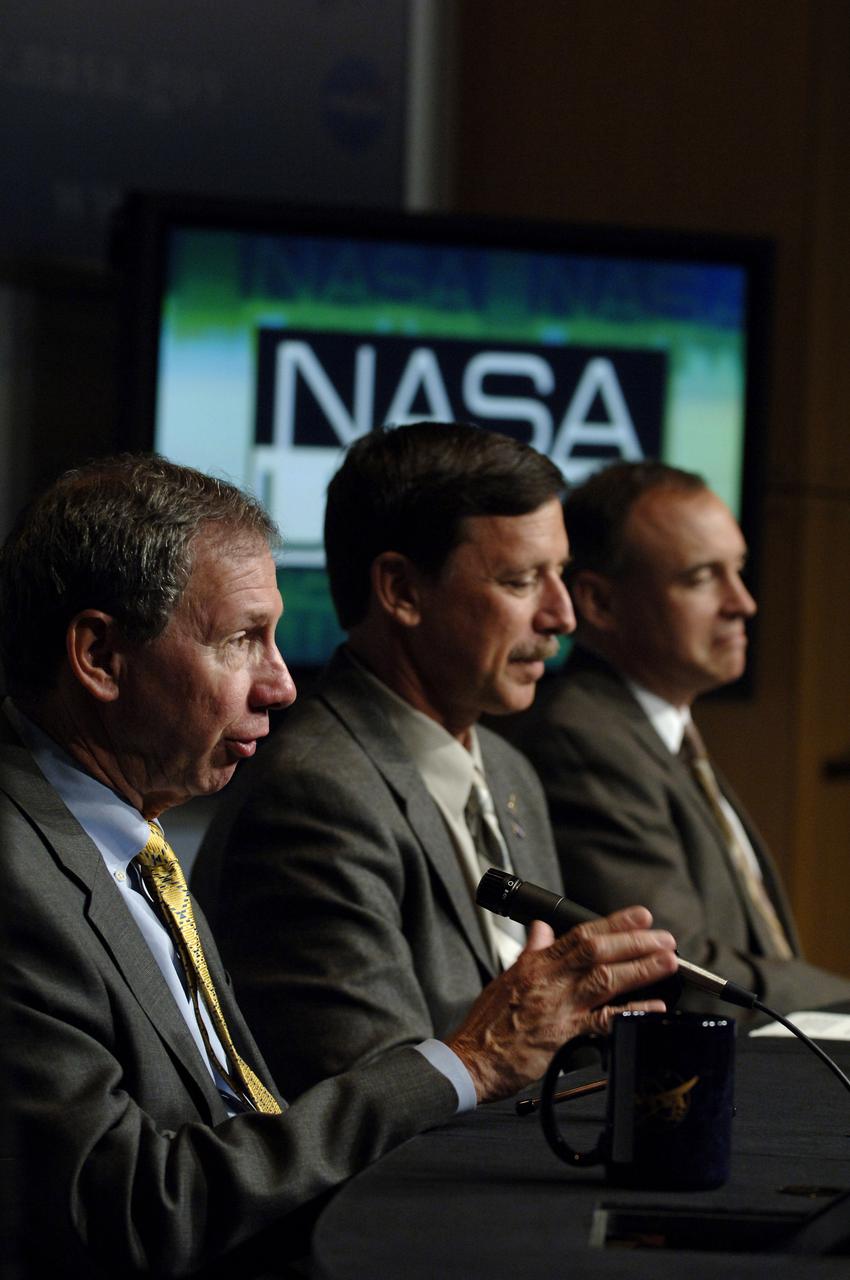
NASA Administrator Michael Griffin, left, announces to NASA employees and members of the media the responsibilities of the NASA centers associated with the Constellation Program for robotic and human Moon and Mars exploration on Wednesday, June 5, 2006, at NASA Headquarters in Washington. He is joined by Scott J. Horowitz, NASA Associate Administrator for Exploration Systems and Jeff Hanley, Constellation Program Manager, right. Photo Credit: (NASA/Bill Ingalls)
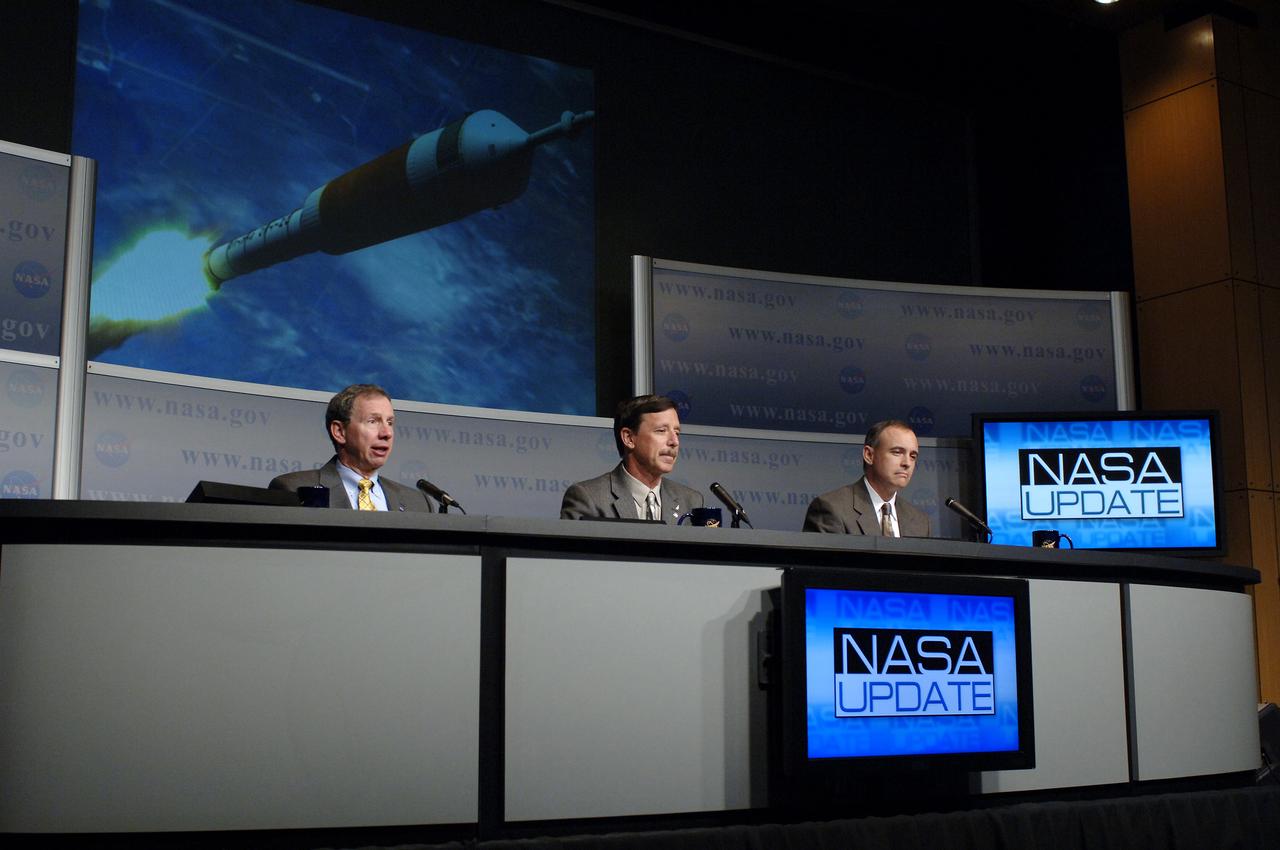
NASA Administrator Michael Griffin, left, Scott Horowitz, NASA Associate Administrator for Exploration Systems and Jeff Hanley, Constellation Program Manager, right, are seen during a press conference outlining specific center responsibilities associated with the Constellation Program for robotic and human Moon and Mars exploration, Monday, June 5, 2006, at NASA Headquarters in Washington. Photo Credit (NASA/Bill Ingalls)

Scott Horowitz, NASA Associate Administrator for Exploration Systems, left, and Jeff Hanley, Constellation Program Manager, are seen during a press conference outlining specific center responsibilities associated with the Constellation Program for robotic and human Moon and Mars exploration, Monday, June 5, 2006, at NASA Headquarters in Washington. Photo Credit (NASA/Bill Ingalls)

Members of the media listen during a press conference with NASA Administrator Michael Griffin, Scott Horowitz, NASA Associate Administrator for Exploration Systems and Jeff Hanley, Constellation Program Manager, outlining specific center responsibilities associated with the Constellation Program for robotic and human Moon and Mars exploration, Monday, June 5, 2006, at NASA Headquarters in Washington. Photo Credit (NASA/Bill Ingalls)
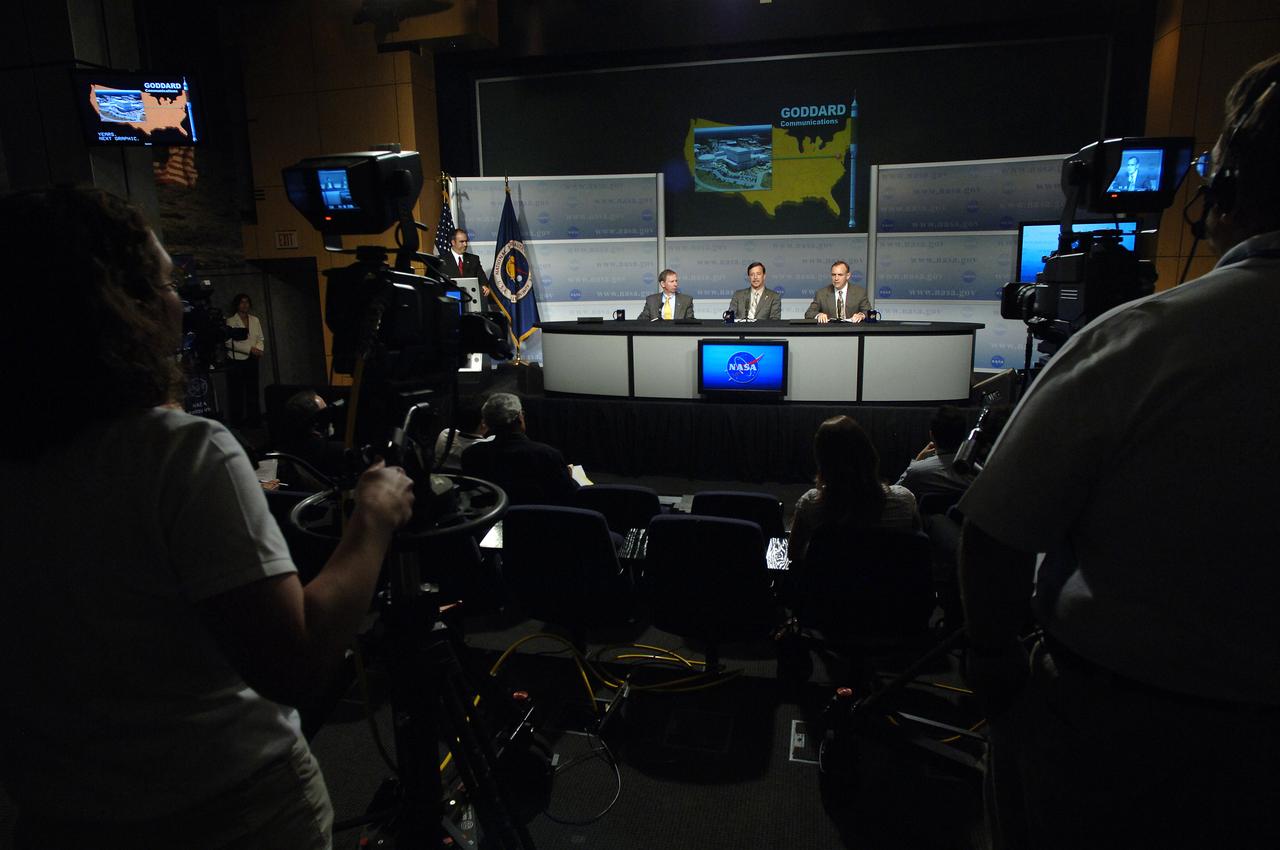
NASA Administrator Michael Griffin, left, Scott J. Horowitz, NASA Associate Administrator for Exploration Systems and Jeff Hanley, Constellation Program Manager, right, announce to NASA employees and members of the media the responsibilities of the NASA centers associated with the Constellation Program for robotic and human Moon and Mars exploration on Wednesday, June 5, 2006, at NASA Headquarters in Washington. Photo Credit: (NASA/Bill Ingalls)
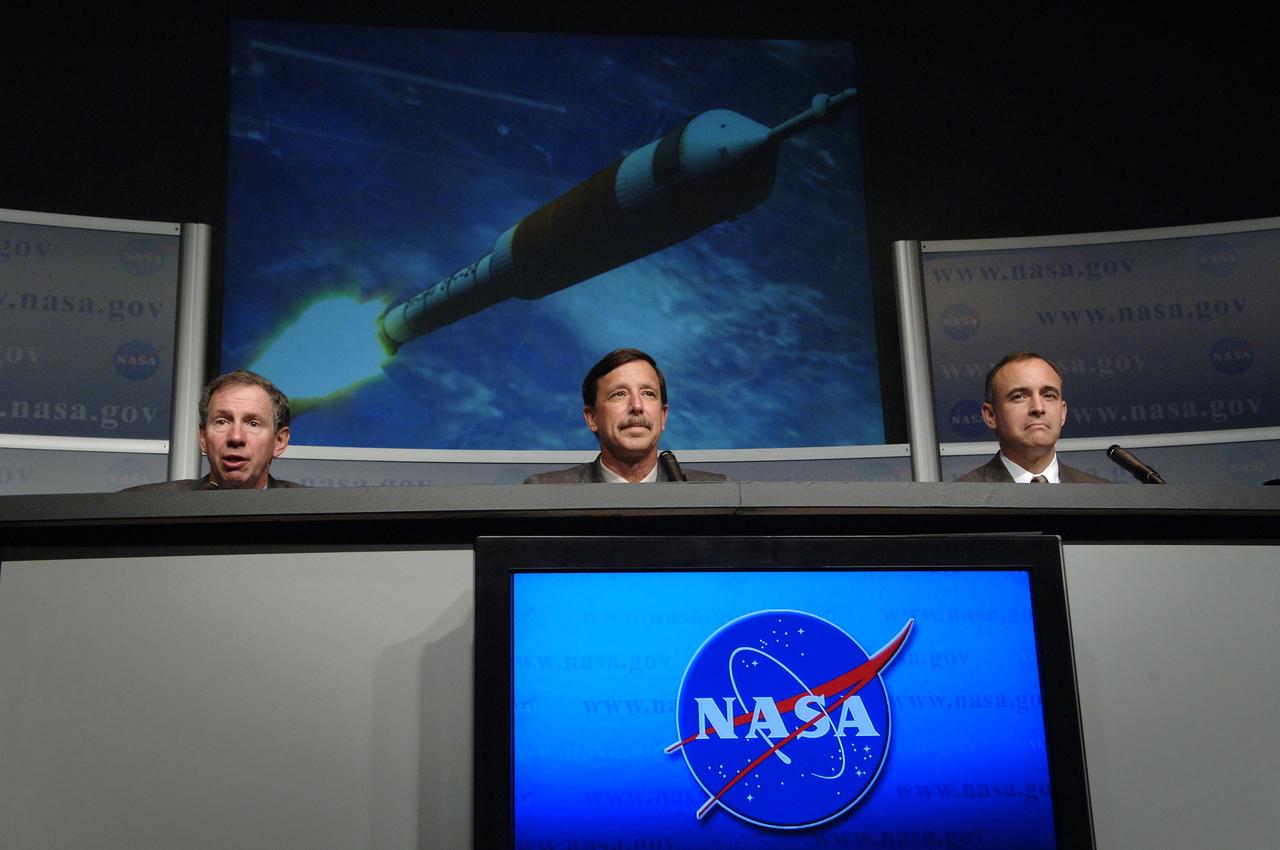
NASA Administrator Michael Griffin, left, Scott Horowitz, NASA Associate Administrator for Exploration Systems and Jeff Hanley, Constellation Program Manager, right, are seen during a press conference outlining specific center responsibilities associated with the Constellation Program for robotic and human Moon and Mars exploration, Monday, June 5, 2006, at NASA Headquarters in Washington. Photo Credit (NASA/Bill Ingalls)
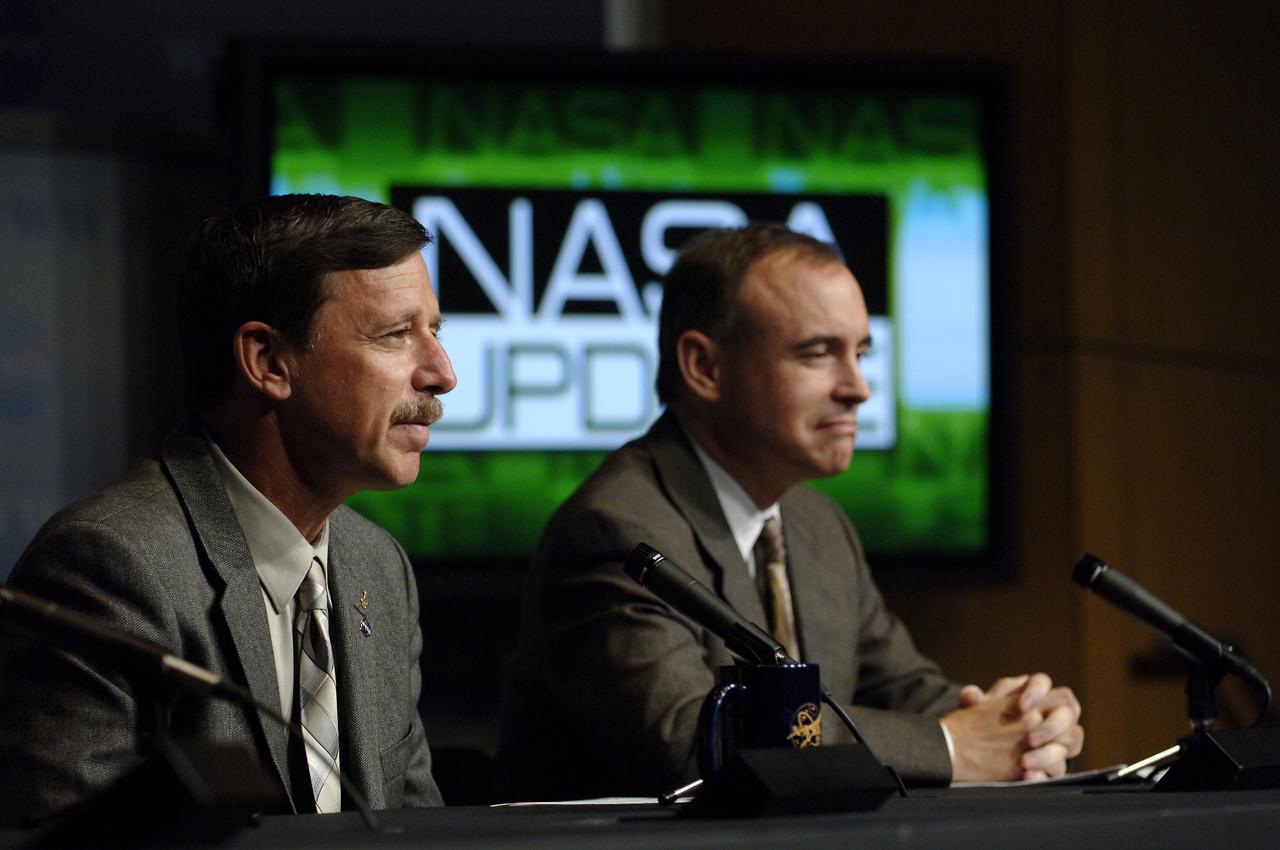
Scott J. Horowitz, NASA Associate Administrator for Exploration Systems, left, and Jeff Hanley, Constellation Program Manager, announce to NASA employees and members of the media the responsibilities of the NASA centers associated with the Constellation Program for robotic and human Moon and Mars exploration on Wednesday, June 5, 2006, at NASA Headquarters in Washington. Photo Credit: (NASA/Bill Ingalls)

Scott Horowitz, NASA Associate Administrator for Exploration Systems, left, looks on as Jeff Hanley, Constellation Program Manager, speaks during a press conference outlining specific center responsibilities associated with the Constellation Program for robotic and human Moon and Mars exploration, Monday, June 5, 2006, at NASA Headquarters in Washington. Photo Credit (NASA/Bill Ingalls)

Dean Acosta, NASA Deputy Assistant Administrator and Press Secretary, moderates a press conference with NASA Administrator Michael Griffin Scott Horowitz, NASA Associate Administrator for Exploration Systems and Jeff Hanley, Constellation Program Manager, outlining specific center responsibilities associated with the Constellation Program for robotic and human Moon and Mars exploration, Monday, June 5, 2006, at NASA Headquarters in Washington. Photo Credit (NASA/Bill Ingalls)

Scott Horowitz, NASA Associate Administrator for Exploration Systems, left, looks on as Jeff Hanley, Constellation Program Manager, speaks during a press conference outlining specific center responsibilities associated with the Constellation Program for robotic and human Moon and Mars exploration, Monday, June 5, 2006, at NASA Headquarters in Washington. Photo Credit (NASA/Bill Ingalls)
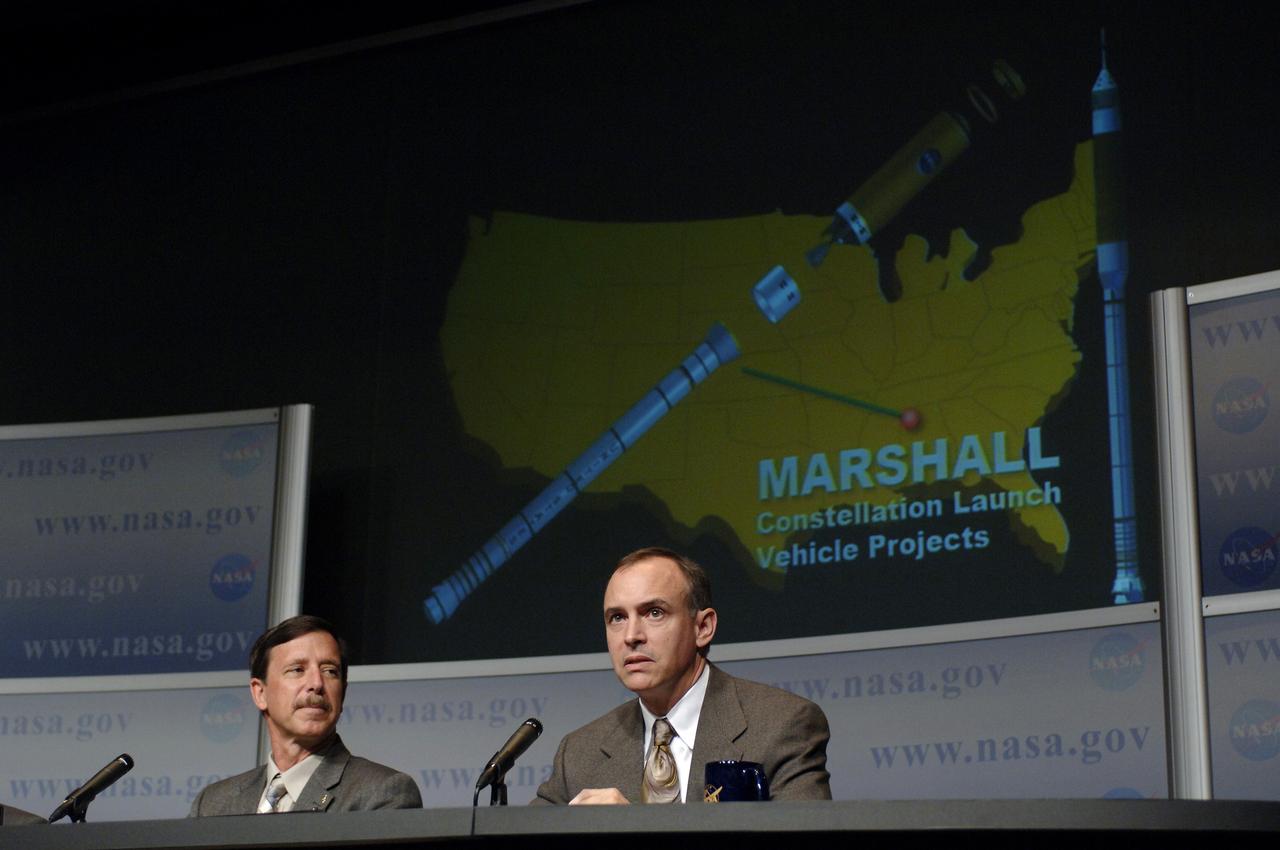
Jeff Hanley, Constellation Program Manager, right, and Scott J. Horowitz, NASA Associate Administrator for Exploration Systems announce to NASA employees and members of the media the responsibilities of the NASA centers associated with the Constellation Program for robotic and human Moon and Mars exploration on Wednesday, June 5, 2006, at NASA Headquarters in Washington. Photo Credit: (NASA/Bill Ingalls)

NASA Administrator Michael Griffin, left, Scott Horowitz, NASA Associate Administrator for Exploration Systems and Jeff Hanley, Constellation Program Manager, right, are seen during a press conference outlining specific center responsibilities associated with the Constellation Program for robotic and human Moon and Mars exploration, Monday, June 5, 2006, at NASA Headquarters in Washington. Photo Credit (NASA/Bill Ingalls)
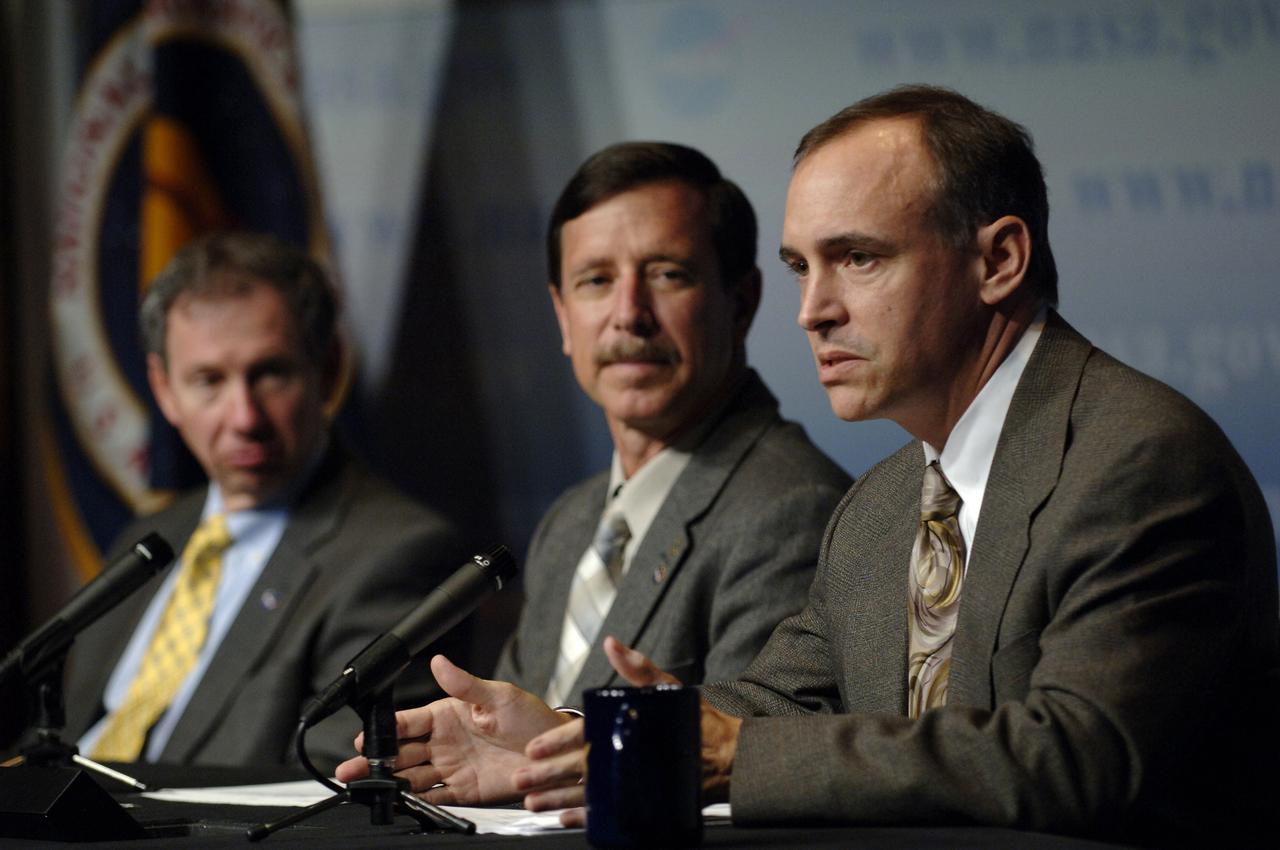
Jeff Hanley, Constellation Program Manager, right, announces to NASA employees and members of the media the responsibilities of the NASA centers associated with the Constellation Program for robotic and human Moon and Mars exploration on Wednesday, June 5, 2006, at NASA Headquarters in Washington. Hanley is joined by Scott J. Horowitz, NASA Associate Administrator for Exploration Systems and NASA Administrator Michael Griffin, left. Photo Credit: (NASA/Bill Ingalls)

Scott J. Horowitz, NASA Associate Administrator for Exploration Systems, center, announces to NASA employees and members of the media the responsibilities of the NASA centers associated with the Constellation Program for robotic and human Moon and Mars exploration on Wednesday, June 5, 2006, at NASA Headquarters in Washington. Horowitz was joined by NASA Administrator Michael Griffin, left, and Jeff Hanley, Constellation Program Manager. Photo Credit: (NASA/Bill Ingalls)
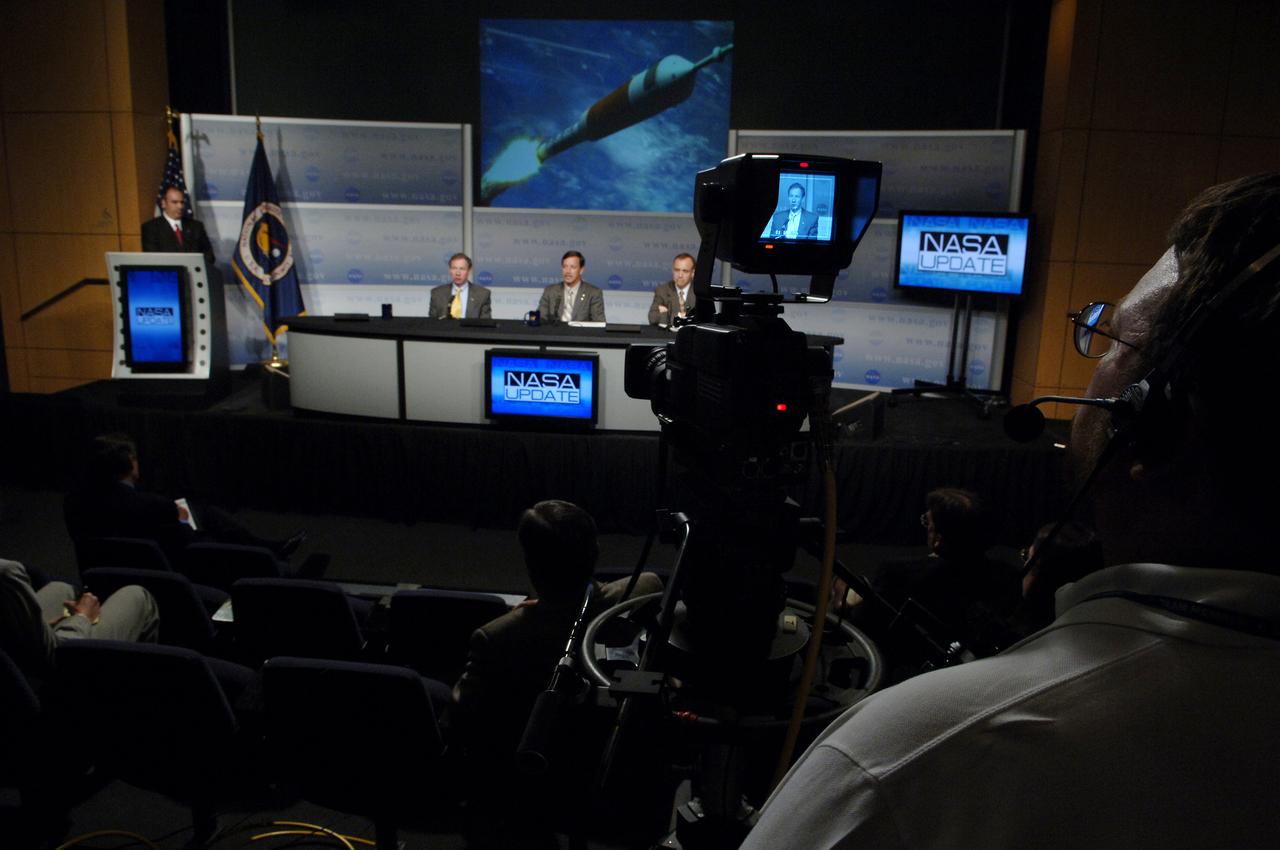
NASA Administrator Michael Griffin is seen through a television camera at a NASA Update announcing to NASA employees and members of the media the responsibilities of the NASA centers associated with the Constellation Program for robotic and human Moon and Mars exploration on Wednesday, June 5, 2006, at NASA Headquarters in Washington. Griffin was joined by Scott J. Horowitz, NASA Associate Administrator for Exploration Systems and Jeff Hanley, Constellation Program Manager, right. Dean Acosta, NASA Deputy Assistant Administrator and Press Secretary, far left, moderates the program. Photo Credit: (NASA/Bill Ingalls)
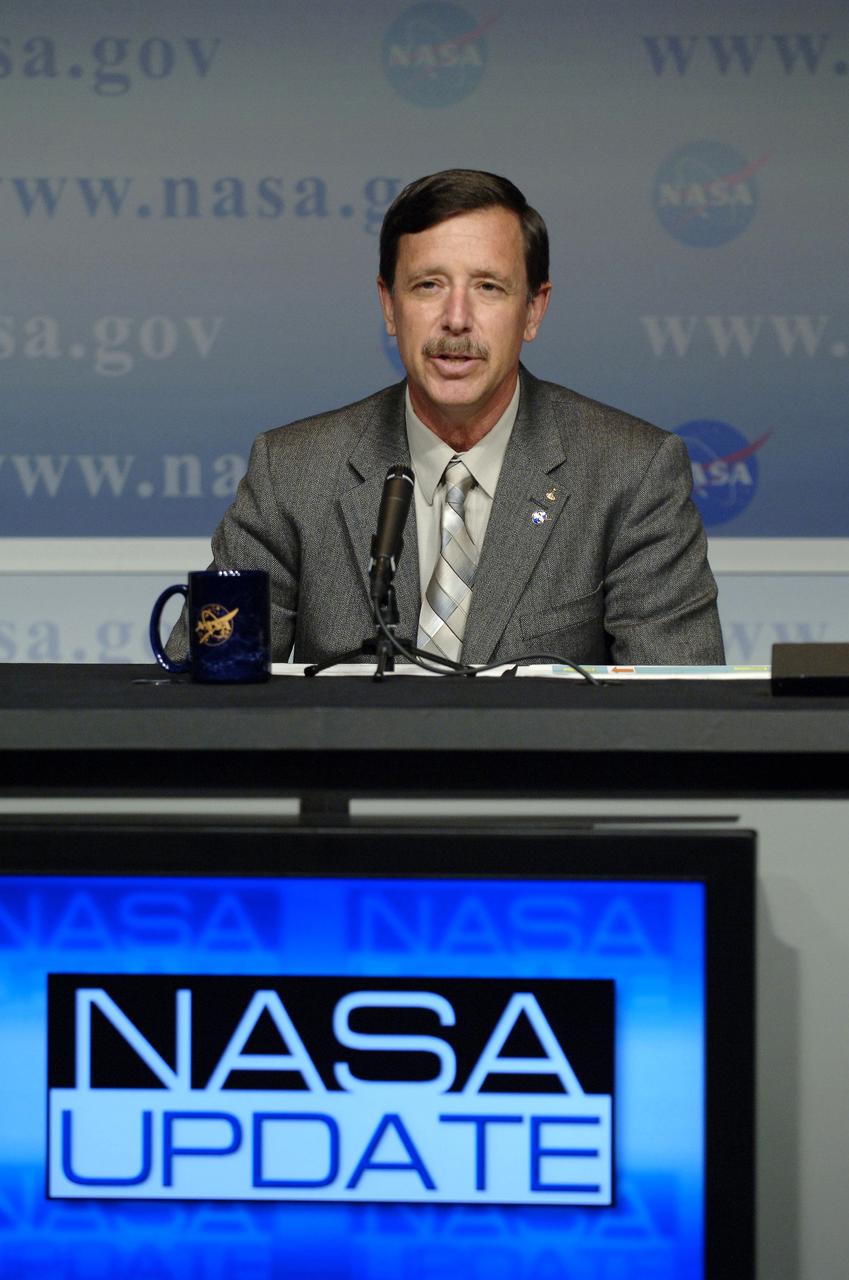
Scott J. Horowitz, NASA Associate Administrator for Exploration Systems, announces to NASA employees and members of the media the responsibilities of the NASA centers associated with the Constellation Program for robotic and human Moon and Mars exploration on Wednesday, June 5, 2006, at NASA Headquarters in Washington. Photo Credit: (NASA/Bill Ingalls)

NASA Administrator Michael Griffin addresses NASA employees and members of the media about the responsibilities of the NASA centers associated with the Constellation Program for robotic and human Moon and Mars exploration during a NASA Update on Wednesday, June 5, 2006, at NASA Headquarters in Washington. Photo Credit: (NASA/Bill Ingalls)
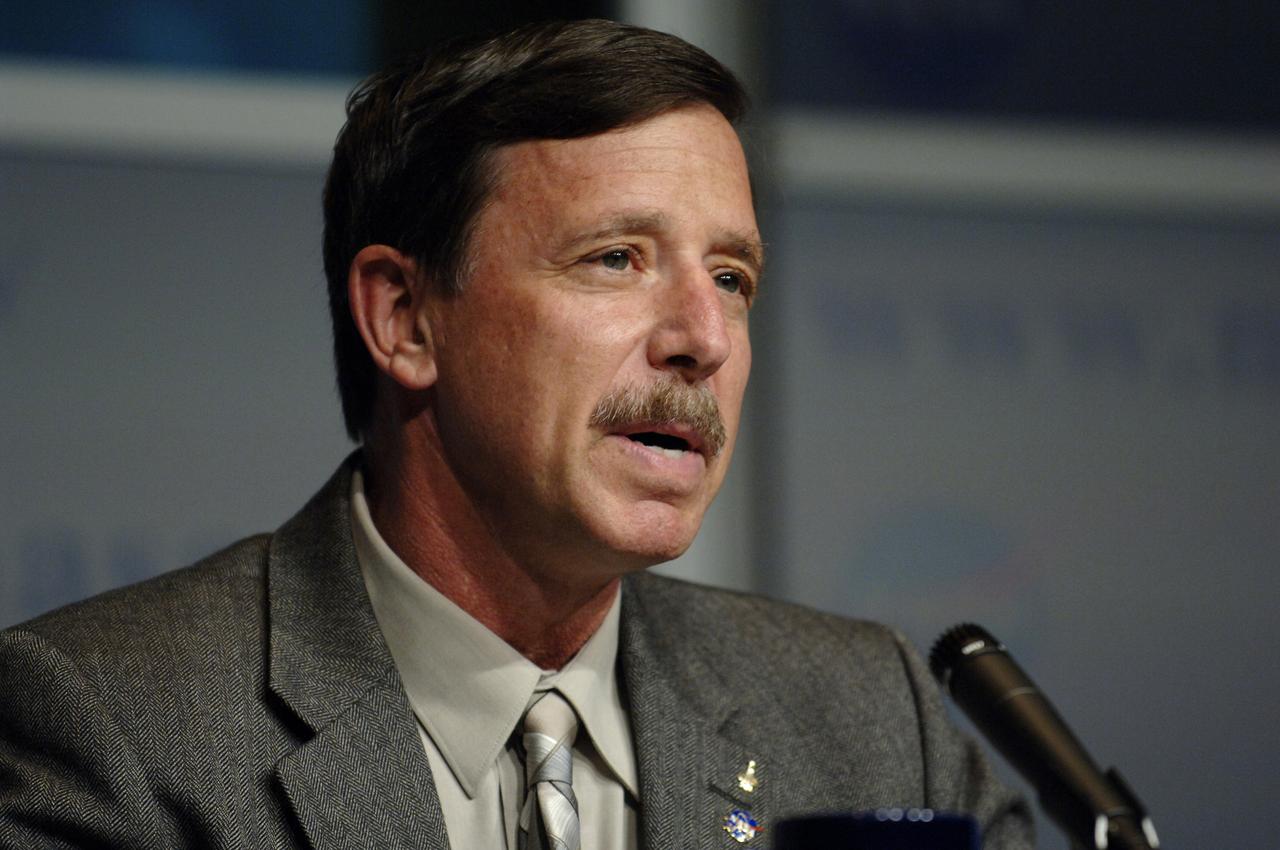
Scott J. Horowitz, NASA Associate Administrator for Exploration Systems, announces to NASA employees and members of the media the responsibilities of the NASA centers associated with the Constellation Program for robotic and human Moon and Mars exploration on Wednesday, June 5, 2006, at NASA Headquarters in Washington. Photo Credit: (NASA/Bill Ingalls)

NASA Administrator Michael Griffin, speaks during a press conference outlining specific center responsibilities associated with the Constellation Program for robotic and human Moon and Mars exploration, Monday, June 5, 2006, at NASA Headquarters in Washington. Photo Credit (NASA/Bill Ingalls)
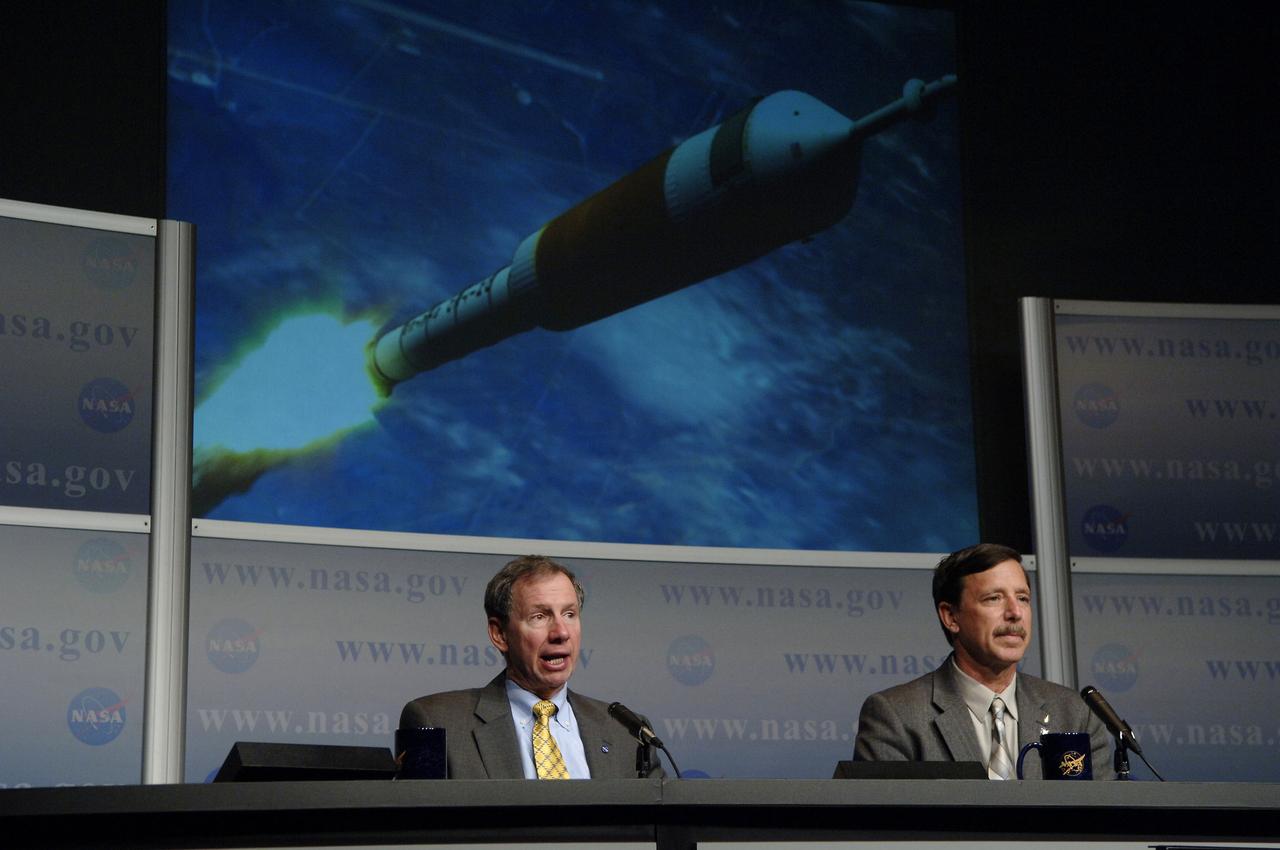
NASA Administrator Michael Griffin, left, and Scott J. Horowitz, NASA Associate Administrator for Exploration Systems, announce to NASA employees and members of the media the responsibilities of the NASA centers associated with the Constellation Program for robotic and human Moon and Mars exploration on Wednesday, June 5, 2006, at NASA Headquarters in Washington. Photo Credit: (NASA/Bill Ingalls)
Dean Acosta, NASA Deputy Assistant Administrator and Press Secretary, left, moderates a NASA Update with NASA Administrator Michael Griffin, Scott J. Horowitz, NASA Associate Administrator for Exploration Systems and Jeff Hanley, Constellation Program Manager, right, on Wednesday, June 5, 2006, at NASA Headquarters in Washington. Photo Credit: (NASA/Bill Ingalls)
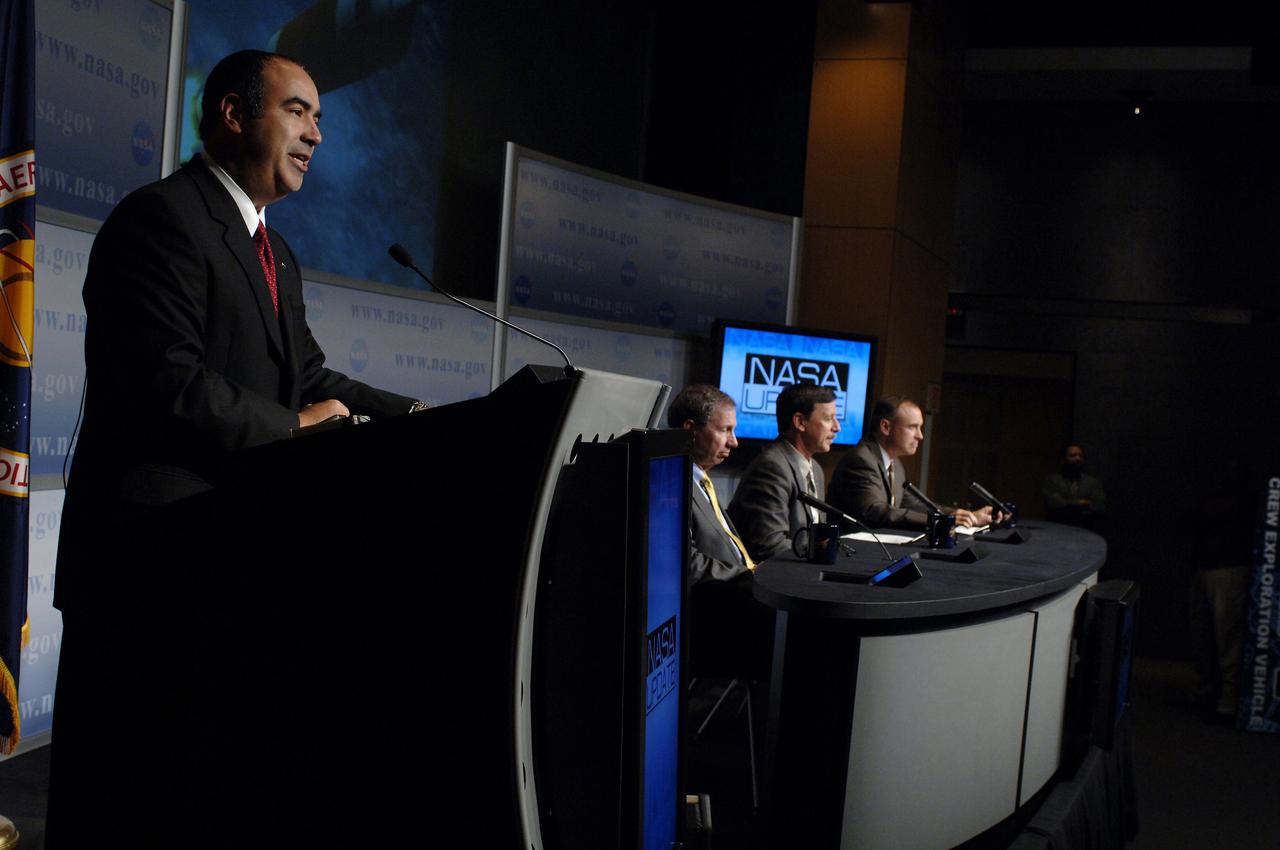
Dean Acosta, NASA Deputy Assistant Administrator and Press Secretary, left, moderates a NASA Update with NASA Administrator Michael Griffin, second from left, Scott J. Horowitz, NASA Associate Administrator for Exploration Systems and Jeff Hanley, Constellation Program Manager, right, on Wednesday, June 5, 2006, at NASA Headquarters in Washington. Photo Credit: (NASA/Bill Ingalls)
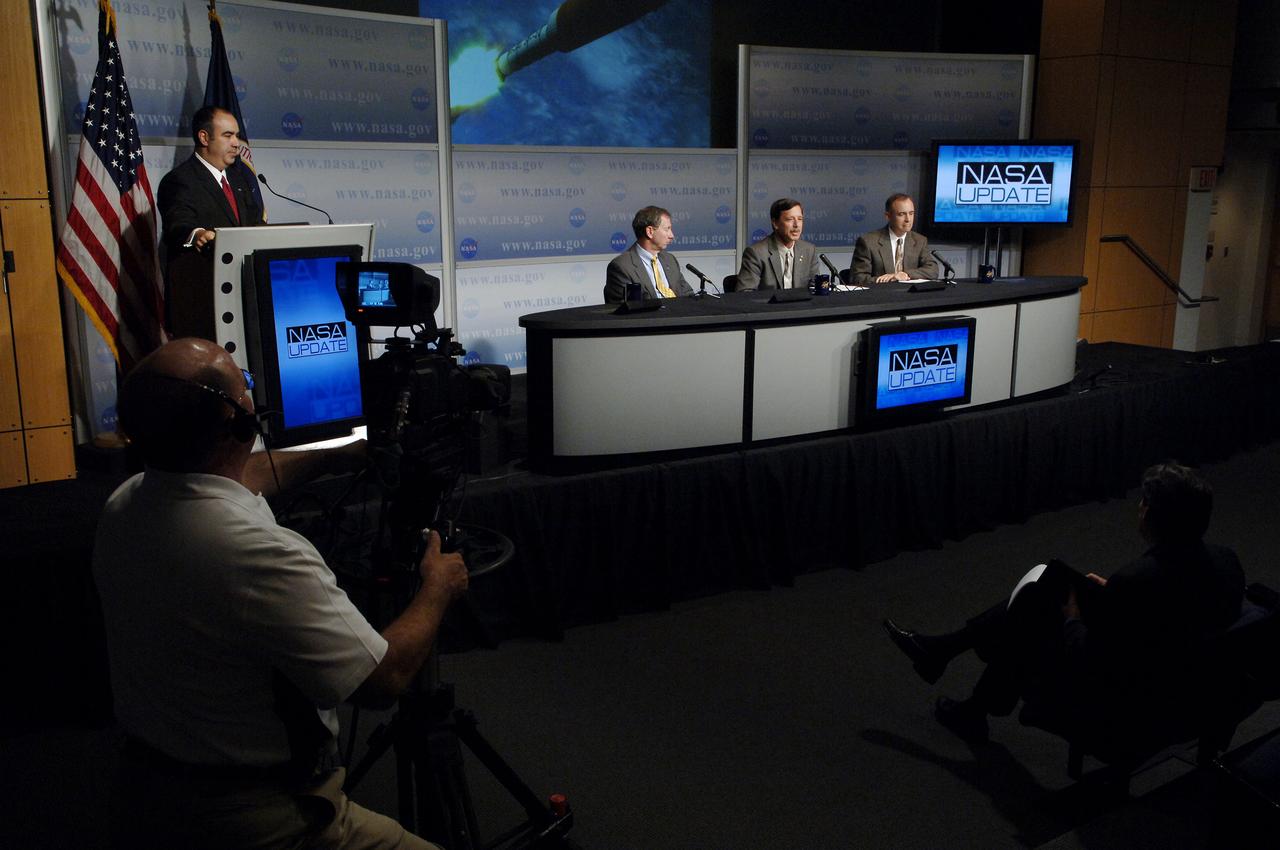
Dean Acosta, NASA Deputy Assistant Administrator and Press Secretary, left, moderates a NASA Update with NASA Administrator Michael Griffin, second from left, Scott J. Horowitz, NASA Associate Administrator for Exploration Systems and Jeff Hanley, Constellation Program Manager, right, on Wednesday, June 5, 2006, at NASA Headquarters in Washington. Photo Credit: (NASA/Bill Ingalls)
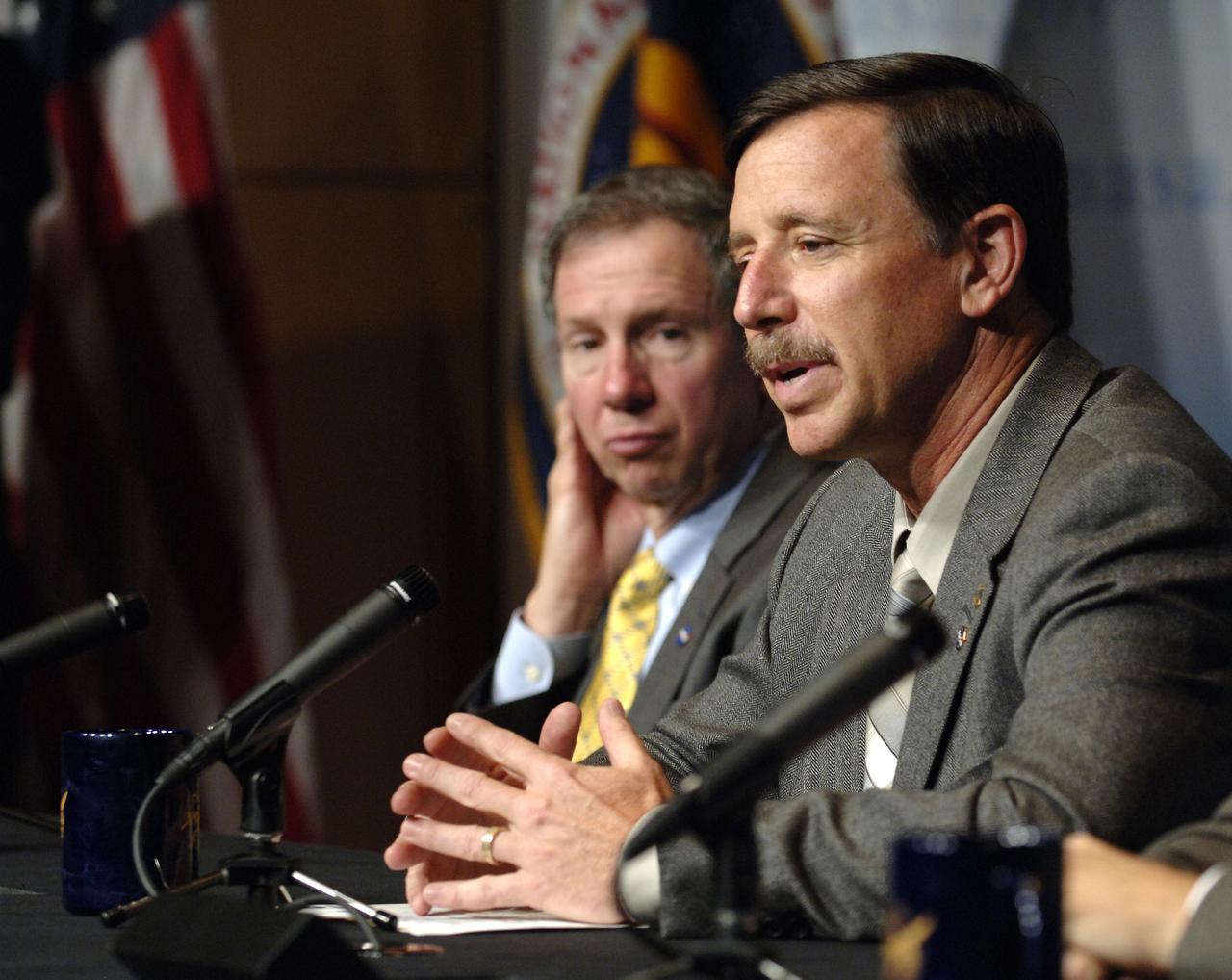
NASA Administrator Michael Griffin, left, looks on as Scott Horowitz, NASA Associate Administrator for Exploration Systems speaks during a press conference outlining specific center responsibilities associated with the Constellation Program for robotic and human Moon and Mars exploration, Monday, June 5, 2006, at NASA Headquarters in Washington. Photo Credit (NASA/Bill Ingalls)

JSC2007-E-14579 (21 March 2007) --- Attired in a Mark III advanced space suit technology demonstrator, Brian Daniel participates in an extravehicular activity (EVA) systems engineering and integration (SE&I) test in the Space Vehicle Mockup Facility at Johnson Space Center. Data collected in the test will be used in development of the next generation of space suits that are being designed for use in the Constellation Program.

The A-1 Test Stand at NASA Stennis Space Center near Bay St. Louis, Miss., was the focus of a ceremony held Thursday to transition the storied facility to a new program of work: testing the J-2X engines that will power the agency's next generation spacecraft, Ares I & V. Standing before the historic structure, with a plaque commemorating the change, are (from left) SSC Center Director Richard Gilbrech; NASA Associate Administrator for Exploration Systems Scott Horowitz; and NASA Space Operations Deputy Associate Administrator for Program Integration Michael Hawes. Ares vehicles are the crew and cargo launch vehicles being developed under NASA's Constellation Program.

Jeff Hanley, Constellation Program Manager at NASA, testifies before a hearing before the House Subcommitte on Space and Aeronautics regarding Safety of Human Spaceflight on Capitol Hill, Wednesday, Dec. 2, 2009, in Washington. Photo Credit: (NASA/Bill Ingalls)

Constellation Program Manager Jeff Hanley testifies during a hearing before the House Subcommitte on Space and Aeronautics regarding Safety of Human Spaceflight on Capitol Hill, Wednesday, Dec. 2, 2009, in Washington. Photo Credit: (NASA/Bill Ingalls)
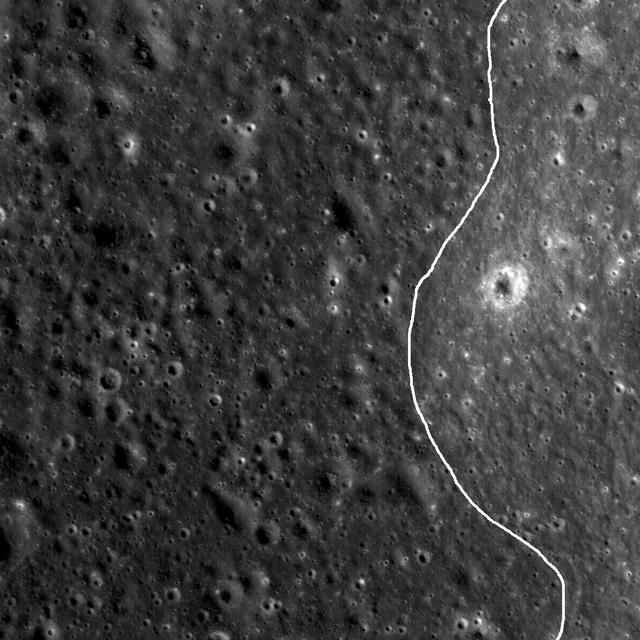
NASA Lunar Reconnaissance Orbiter spied a very subtle mare-highlands boundary in Mare Moscoviense on the lunar farside, near the center of the Constellation Program region of interest.
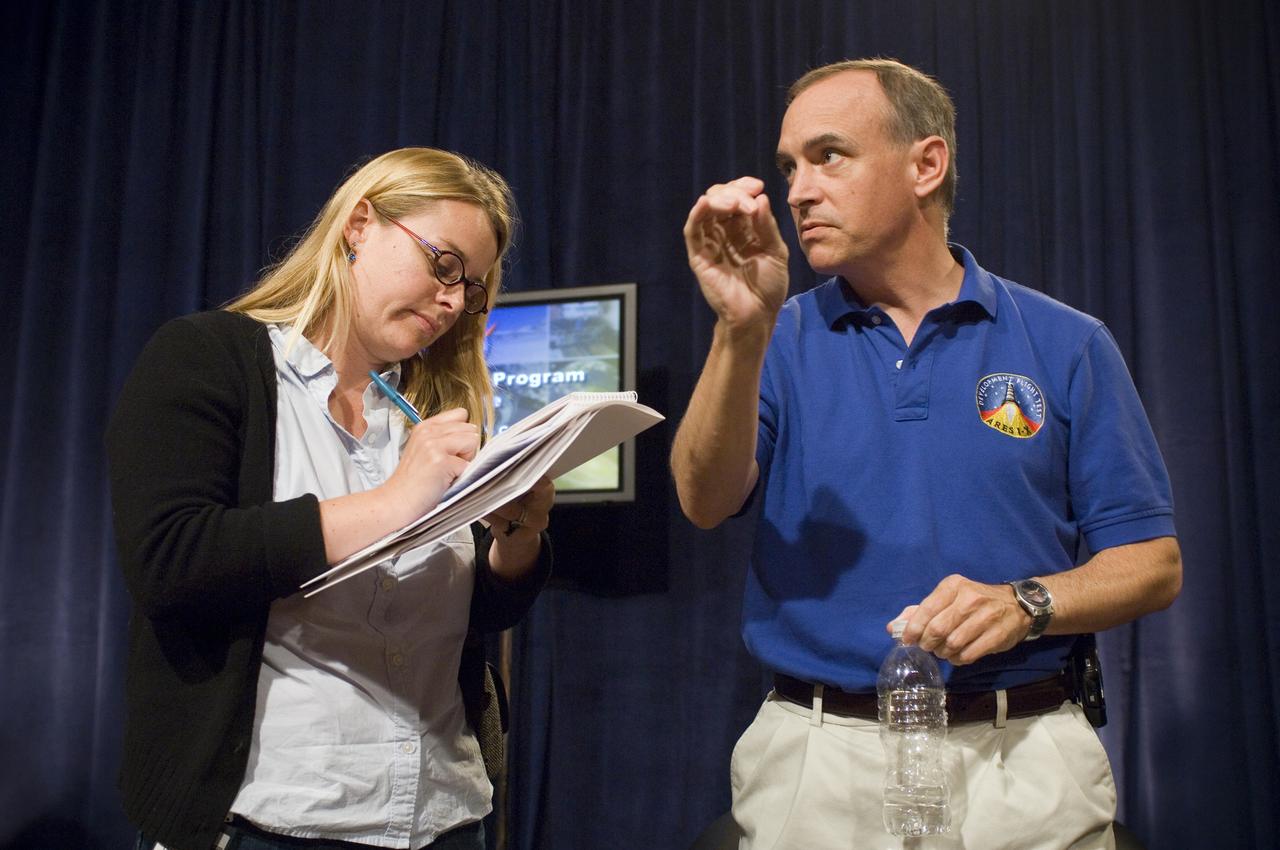
NASA Officials gather at Ames Research Center to discuss Spaceship development progress. Constellation is developing the Orion spacecraft and Ares rockets to support an American return to the moon by 2020. Speaker Jeff Hanley, JSC Constellation program manager
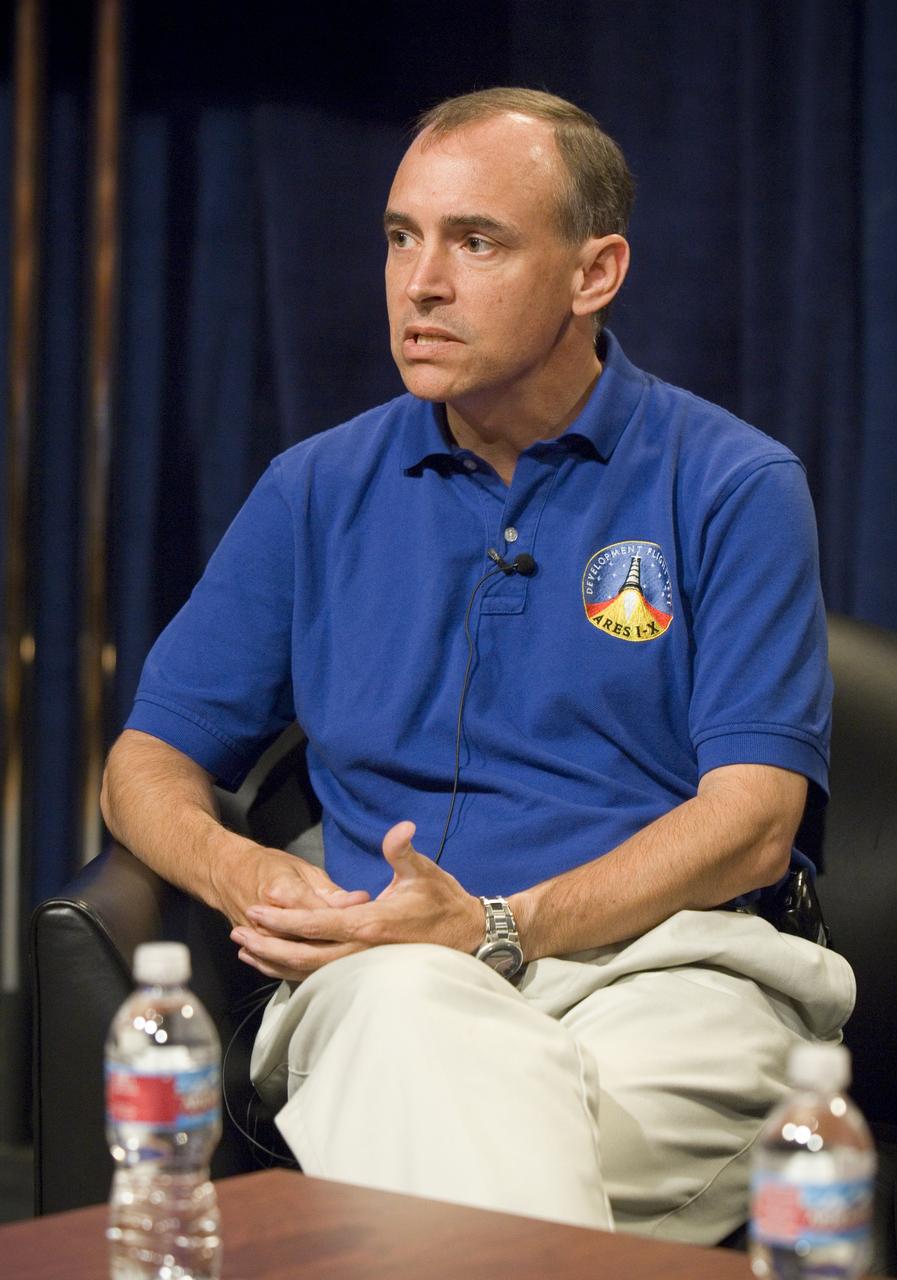
NASA Officials gather at Ames Research Center to discuss Spaceship development progress. Constellation is developing the Orion spacecraft and Ares rockets to support an American return to the moon by 2020. Speaker Jeff Hanley, JSC Constellation program manager
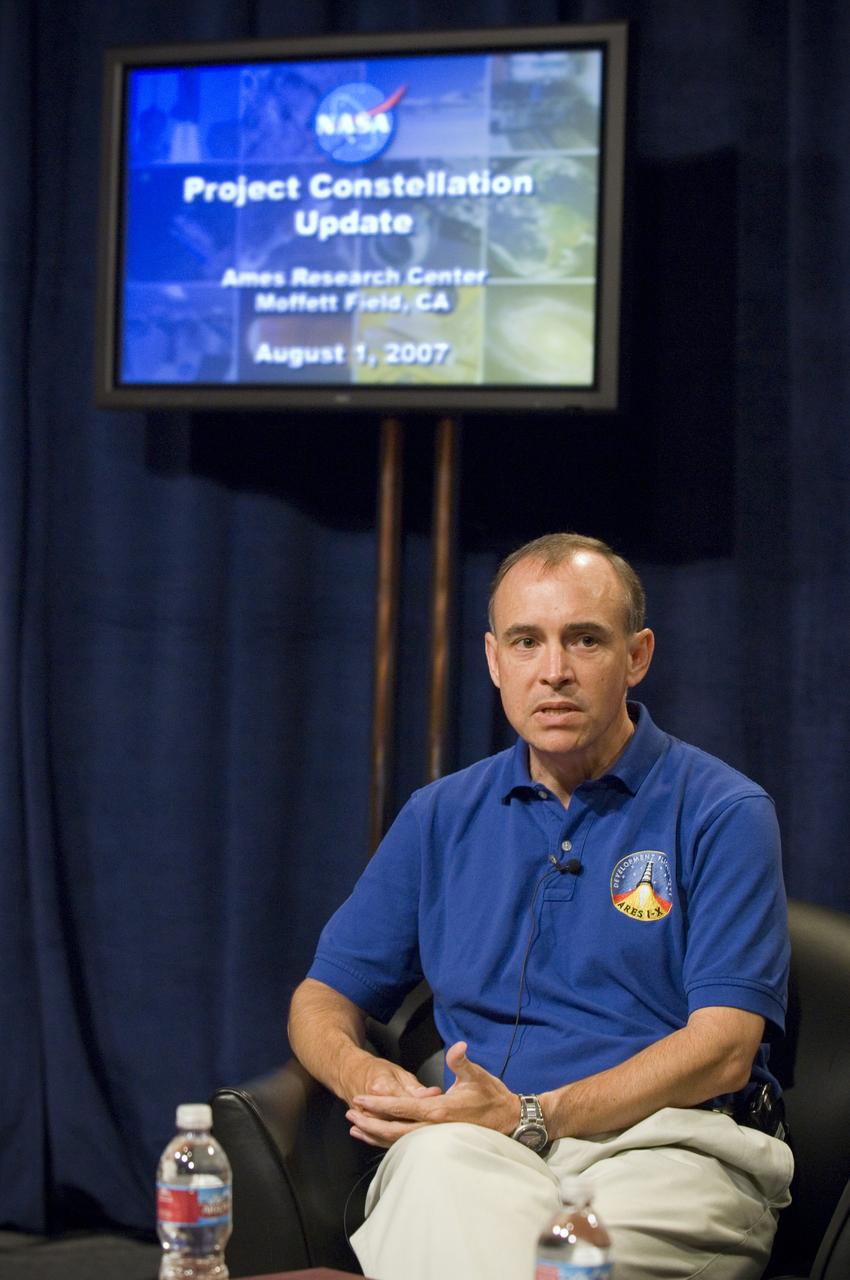
NASA Officials gather at Ames Research Center to discuss Spaceship development progress. Constellation is developing the Orion spacecraft and Ares rockets to support an American return to the moon by 2020. Speaker Jeff Hanley, JSC Constellation program manager
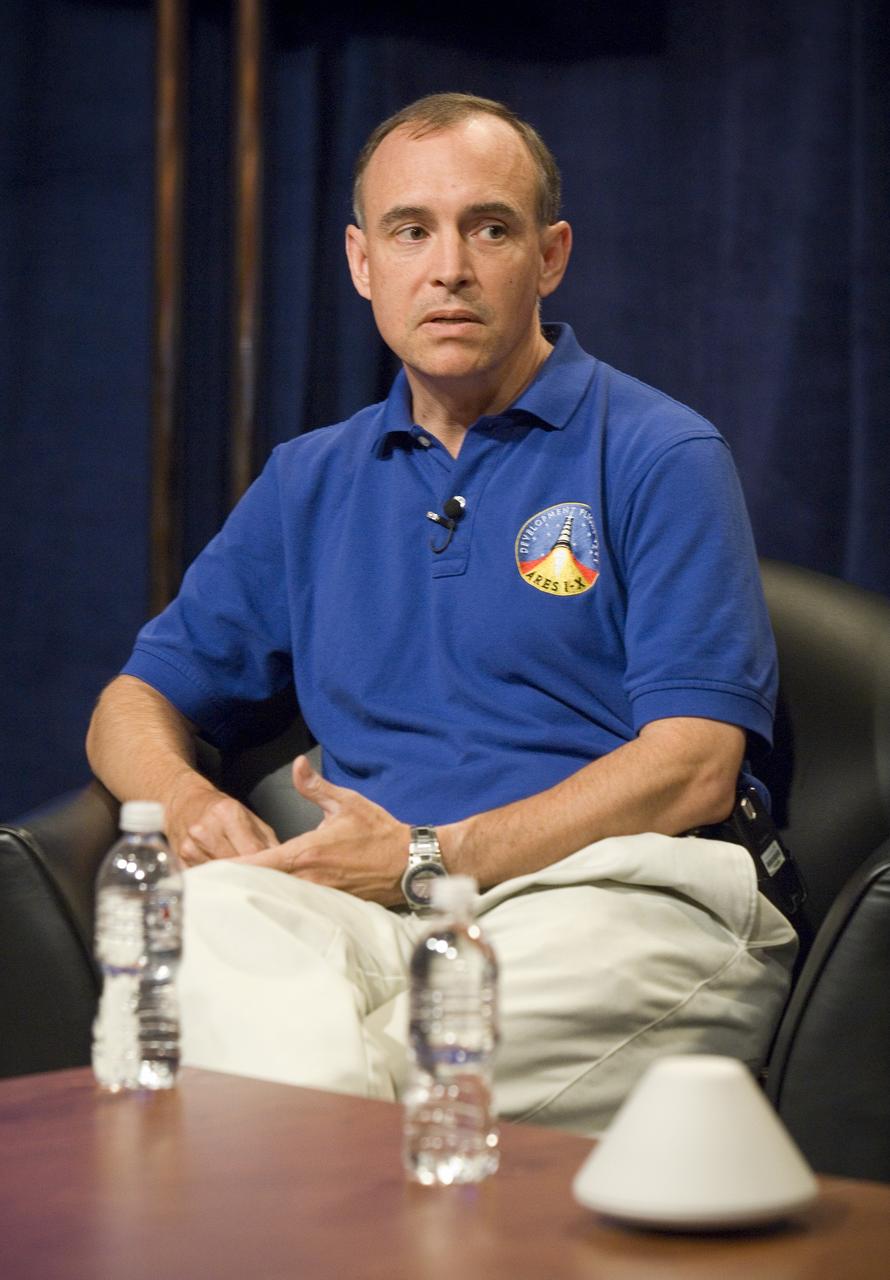
NASA Officials gather at Ames Research Center to discuss Spaceship development progress. Constellation is developing the Orion spacecraft and Ares rockets to support an American return to the moon by 2020. Speaker Jeff Hanley, JSC Constellation program manager
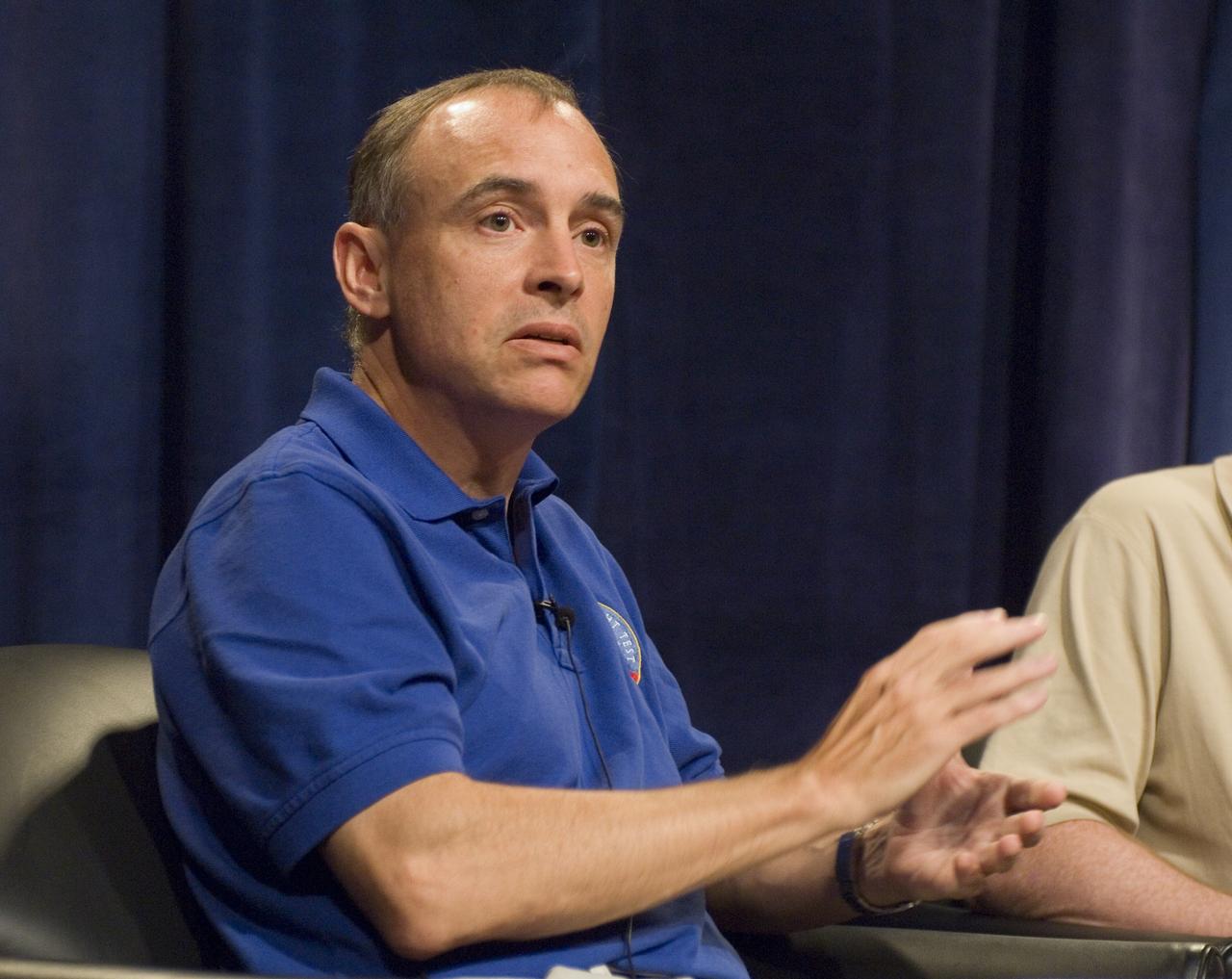
NASA Officials gather at Ames Research Center to discuss Spaceship development progress. Constellation is developing the Orion spacecraft and Ares rockets to support an American return to the moon by 2020. Speaker Jeff Hanley, JSC Constellation program manager
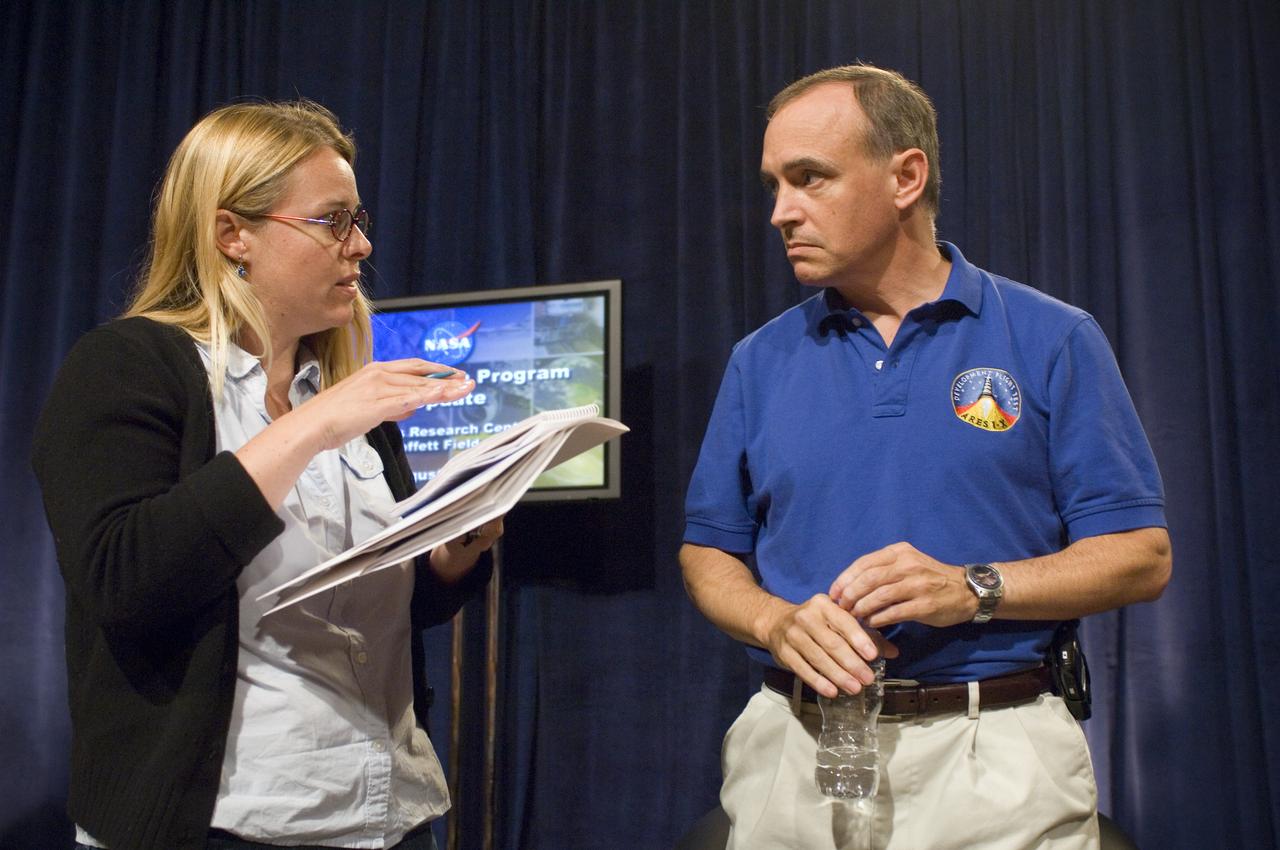
NASA Officials gather at Ames Research Center to discuss Spaceship development progress. Constellation is developing the Orion spacecraft and Ares rockets to support an American return to the moon by 2020. Speaker Jeff Hanley, JSC Constellation program manager
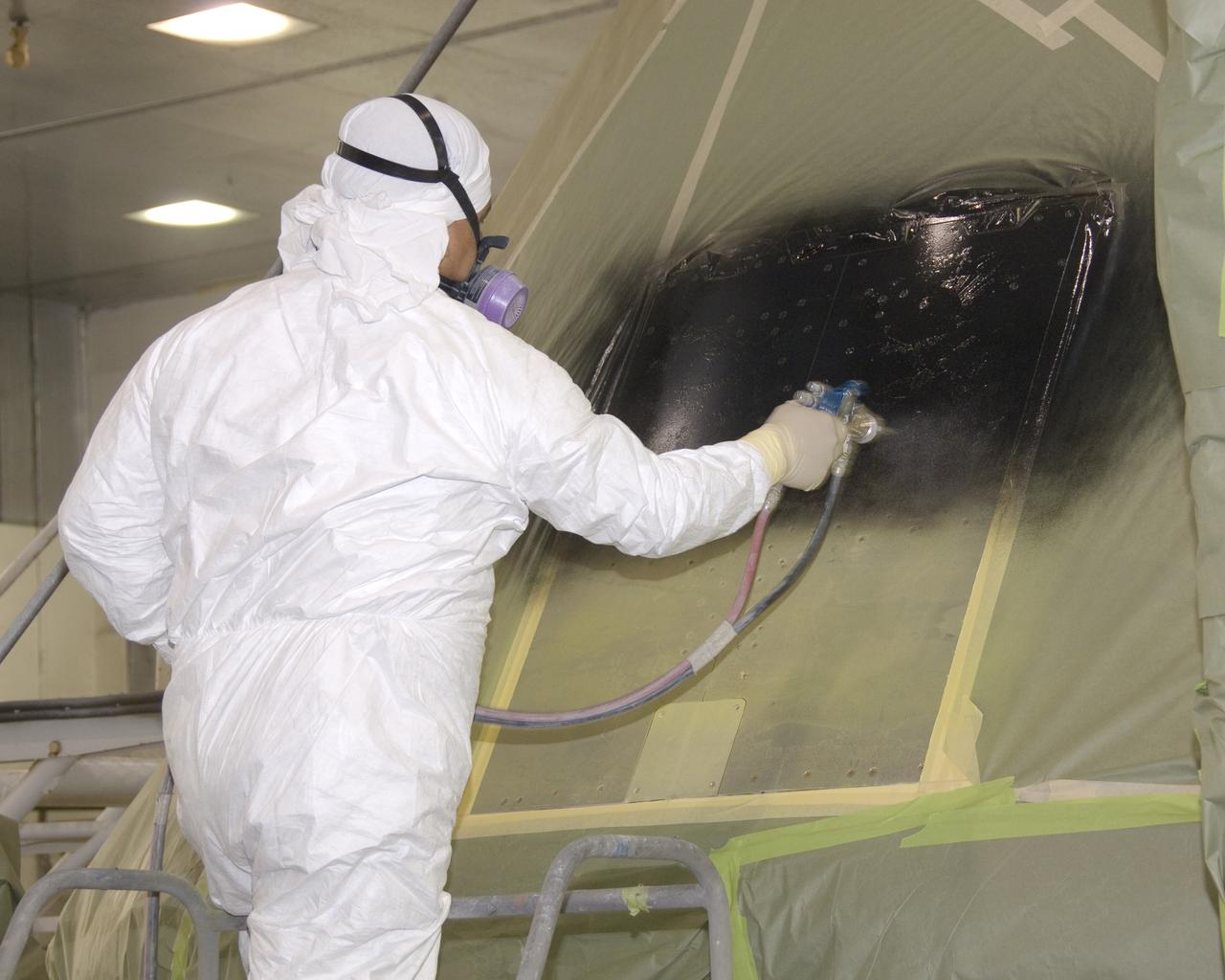
A full-scale flight-test mockup of the Constellation program's Orion crew vehicle arrived at NASA's Dryden Flight Research Center in late March 2008 to undergo preparations for the first short-range flight test of the spacecraft's astronaut escape system later that year. Engineers and technicians at NASA's Langley Research Center fabricated the structure, which precisely represents the size, outer shape and mass characteristics of the Orion space capsule. The Orion crew module mockup was ferried to NASA Dryden on an Air Force C-17. After painting in the Edwards Air Force Base paint hangar, the conical capsule was taken to Dryden for installation of flight computers, instrumentation and other electronics prior to being sent to the U.S. Army's White Sands Missile Range in New Mexico for integration with the escape system and the first abort flight test in late 2008. The tests were designed to ensure a safe, reliable method of escape for astronauts in case of an emergency.
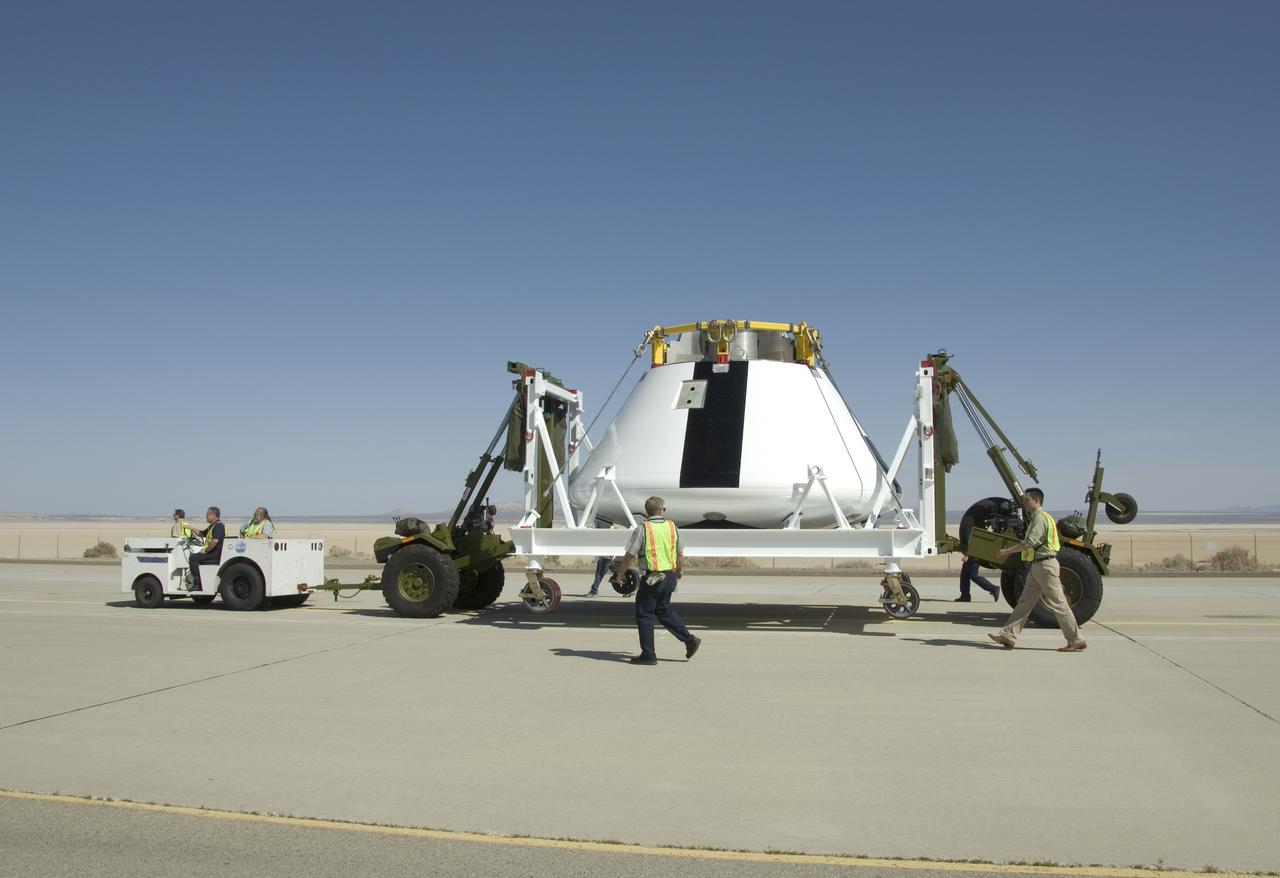
A full-scale flight-test mockup of the Constellation program's Orion crew vehicle arrived at NASA's Dryden Flight Research Center in late March 2008 to undergo preparations for the first short-range flight test of the spacecraft's astronaut escape system later that year. Engineers and technicians at NASA's Langley Research Center fabricated the structure, which precisely represents the size, outer shape and mass characteristics of the Orion space capsule. The Orion crew module mockup was ferried to NASA Dryden on an Air Force C-17. After painting in the Edwards Air Force Base paint hangar, the conical capsule was taken to Dryden for installation of flight computers, instrumentation and other electronics prior to being sent to the U.S. Army's White Sands Missile Range in New Mexico for integration with the escape system and the first abort flight test in late 2008. The tests were designed to ensure a safe, reliable method of escape for astronauts in case of an emergency.
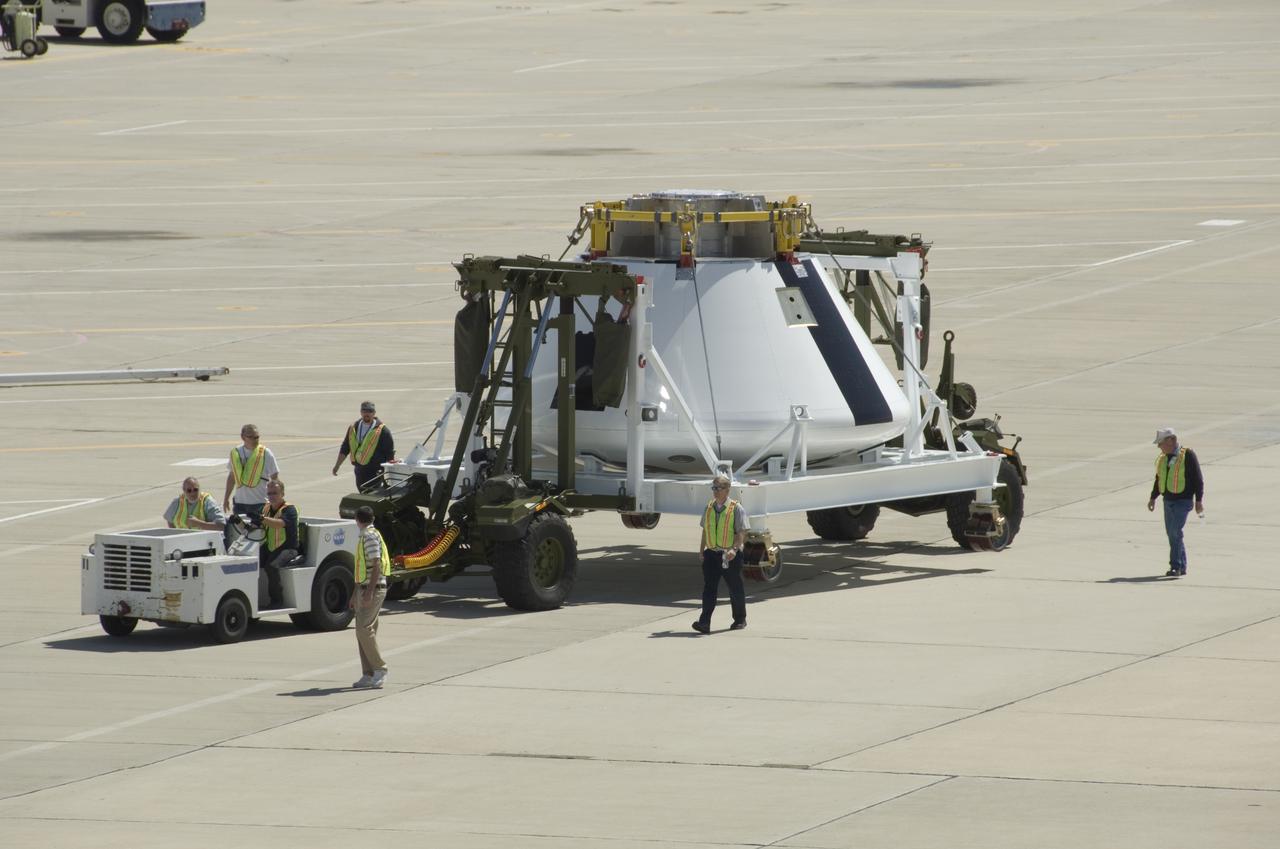
A full-scale flight-test mockup of the Constellation program's Orion crew vehicle arrived at NASA's Dryden Flight Research Center in late March 2008 to undergo preparations for the first short-range flight test of the spacecraft's astronaut escape system later that year. Engineers and technicians at NASA's Langley Research Center fabricated the structure, which precisely represents the size, outer shape and mass characteristics of the Orion space capsule. The Orion crew module mockup was ferried to NASA Dryden on an Air Force C-17. After painting in the Edwards Air Force Base paint hangar, the conical capsule was taken to Dryden for installation of flight computers, instrumentation and other electronics prior to being sent to the U.S. Army's White Sands Missile Range in New Mexico for integration with the escape system and the first abort flight test in late 2008. The tests were designed to ensure a safe, reliable method of escape for astronauts in case of an emergency.
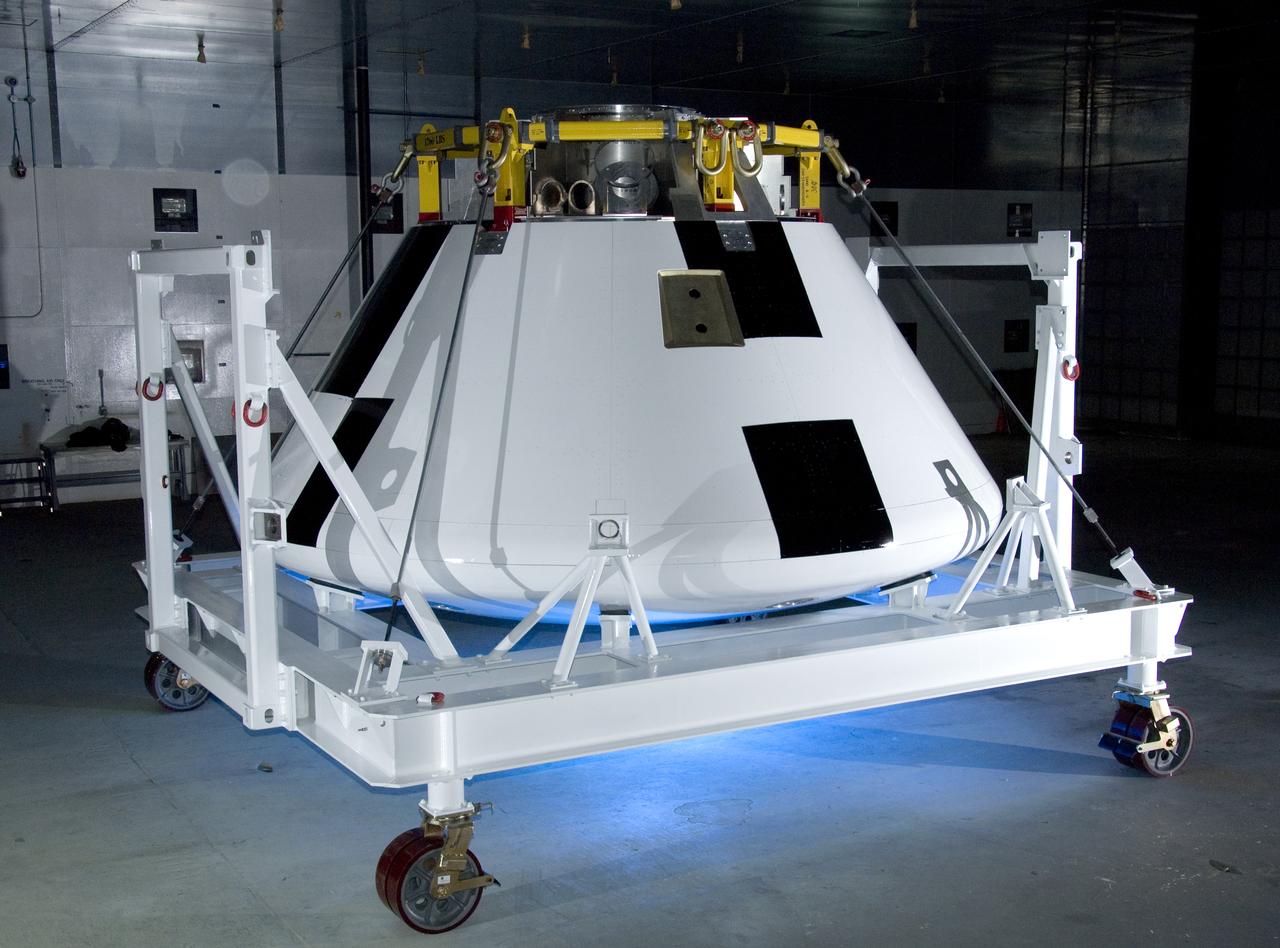
A full-scale flight-test mockup of the Constellation program's Orion crew vehicle arrived at NASA's Dryden Flight Research Center in late March 2008 to undergo preparations for the first short-range flight test of the spacecraft's astronaut escape system later that year. Engineers and technicians at NASA's Langley Research Center fabricated the structure, which precisely represents the size, outer shape and mass characteristics of the Orion space capsule. The Orion crew module mockup was ferried to NASA Dryden on an Air Force C-17. After painting in the Edwards Air Force Base paint hangar, the conical capsule was taken to Dryden for installation of flight computers, instrumentation and other electronics prior to being sent to the U.S. Army's White Sands Missile Range in New Mexico for integration with the escape system and the first abort flight test in late 2008. The tests were designed to ensure a safe, reliable method of escape for astronauts in case of an emergency.
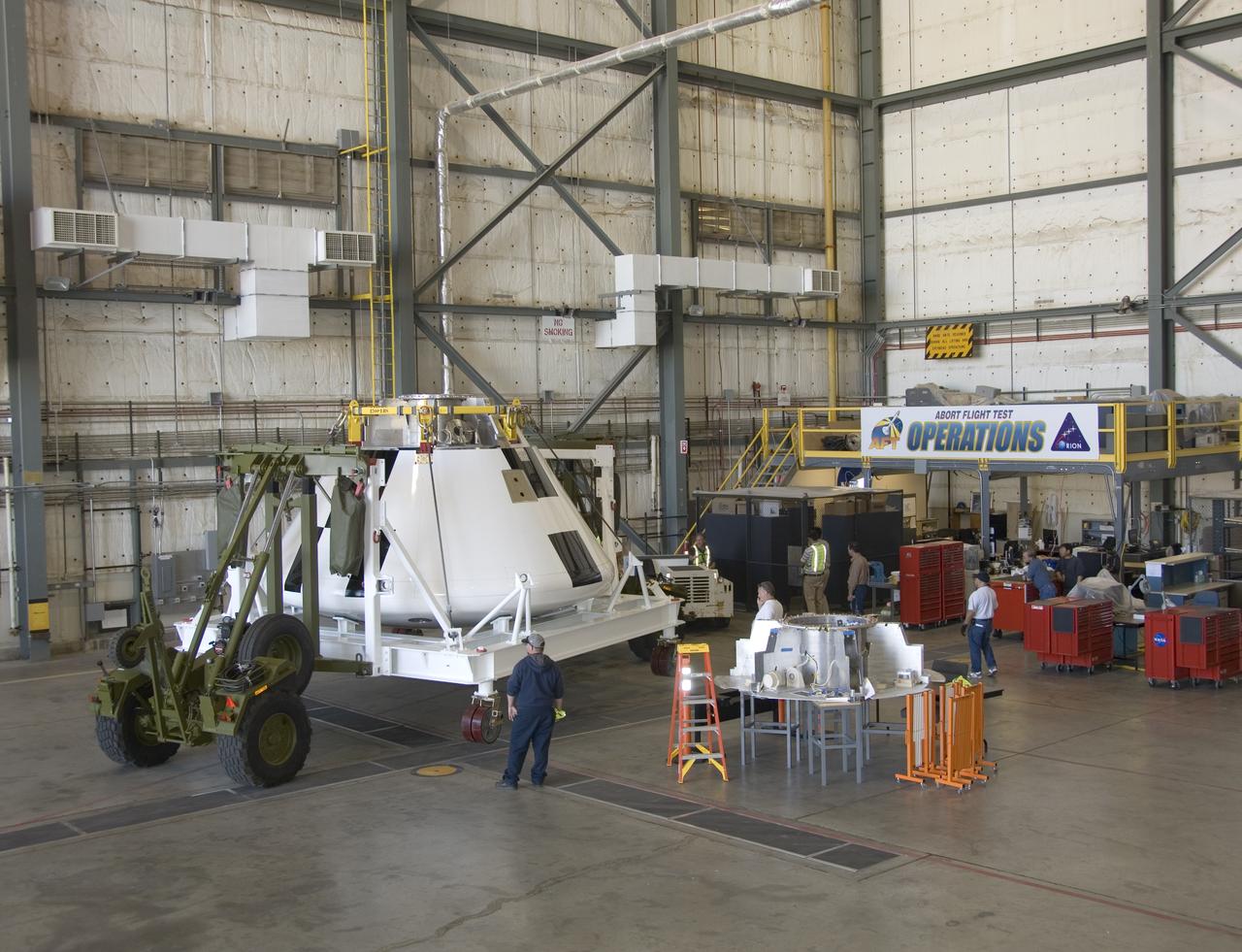
A full-scale flight-test mockup of the Constellation program's Orion crew vehicle arrived at NASA's Dryden Flight Research Center in late March 2008 to undergo preparations for the first short-range flight test of the spacecraft's astronaut escape system later that year. Engineers and technicians at NASA's Langley Research Center fabricated the structure, which precisely represents the size, outer shape and mass characteristics of the Orion space capsule. The Orion crew module mockup was ferried to NASA Dryden on an Air Force C-17. After painting in the Edwards Air Force Base paint hangar, the conical capsule was taken to Dryden for installation of flight computers, instrumentation and other electronics prior to being sent to the U.S. Army's White Sands Missile Range in New Mexico for integration with the escape system and the first abort flight test in late 2008. The tests were designed to ensure a safe, reliable method of escape for astronauts in case of an emergency.
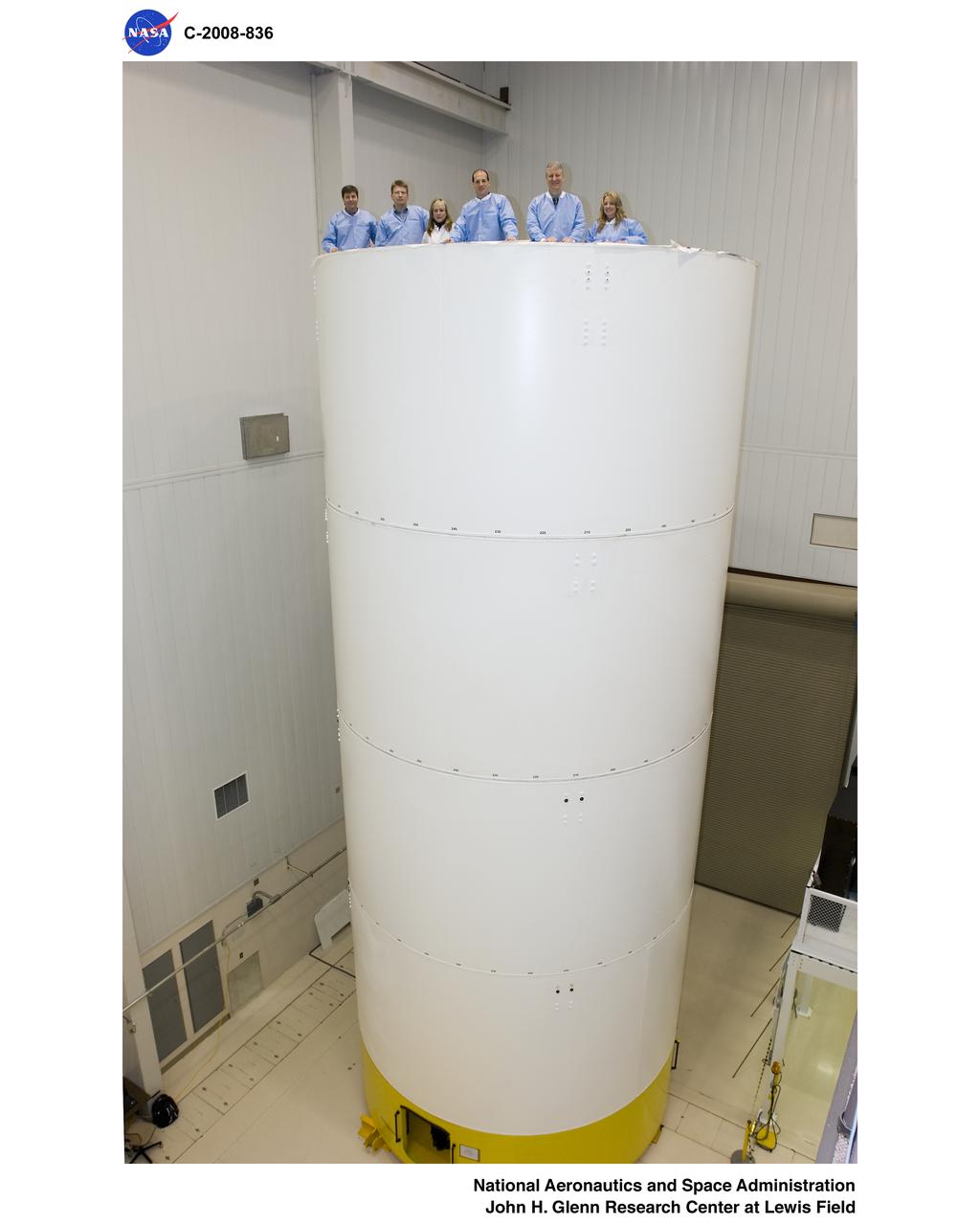
Constellation program office tour of Ares 1-X fabrication facility and segment Super Stack
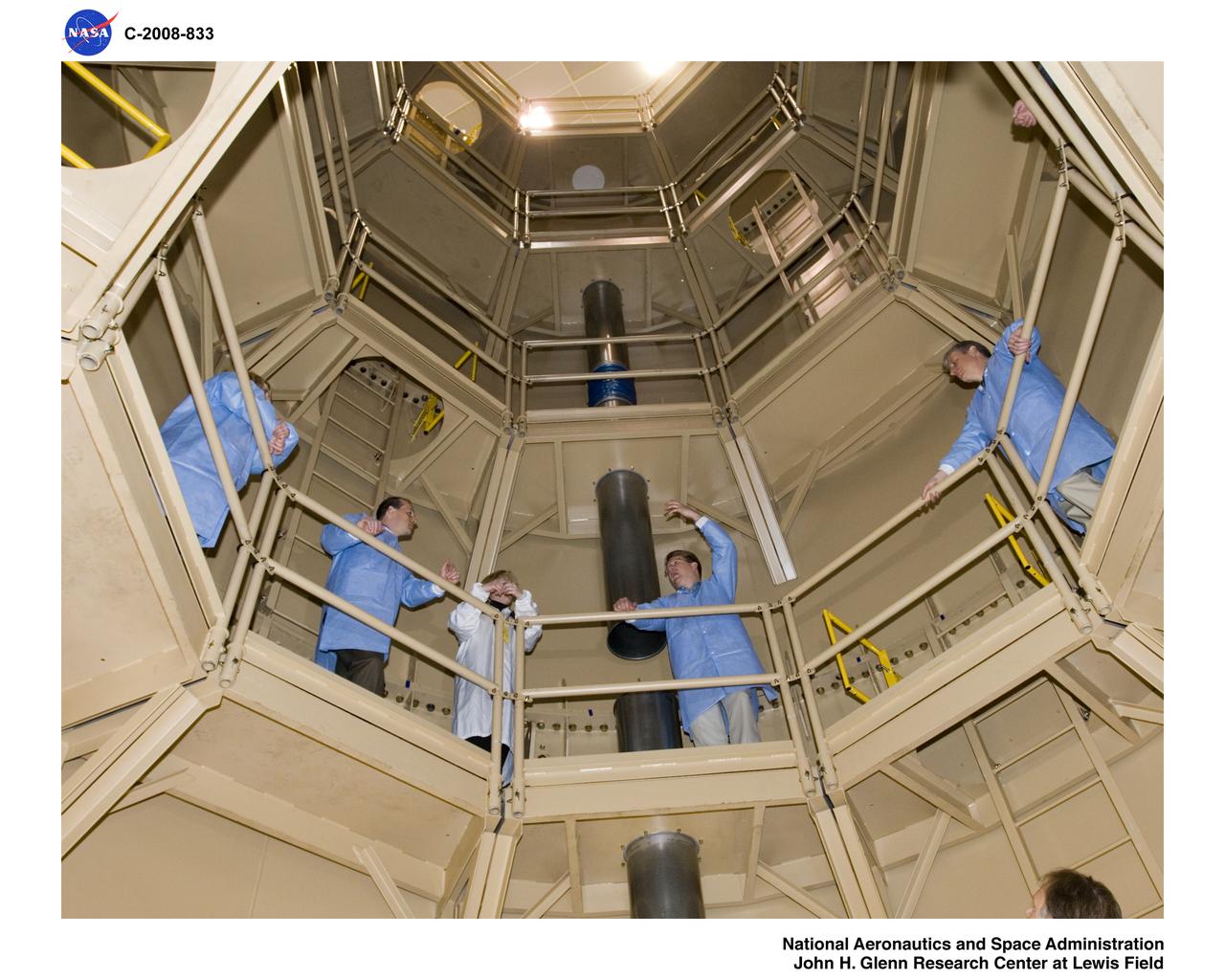
Constellation program office tour of Ares 1-X fabrication facility and segment Super Stack
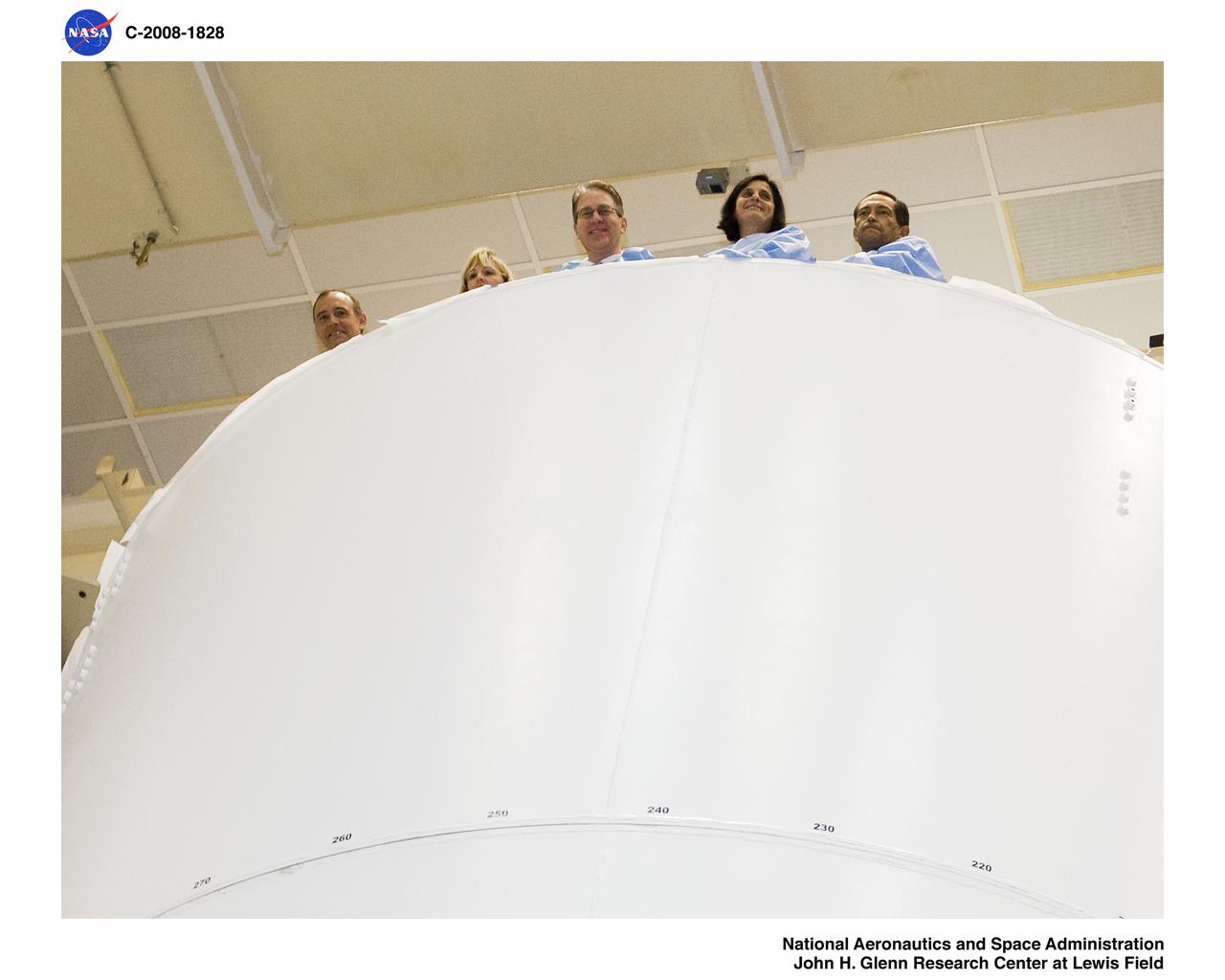
Tour of NASA Glenn's Ares 1-X Manufacturing Facility by NASA's Constellation Program Manager
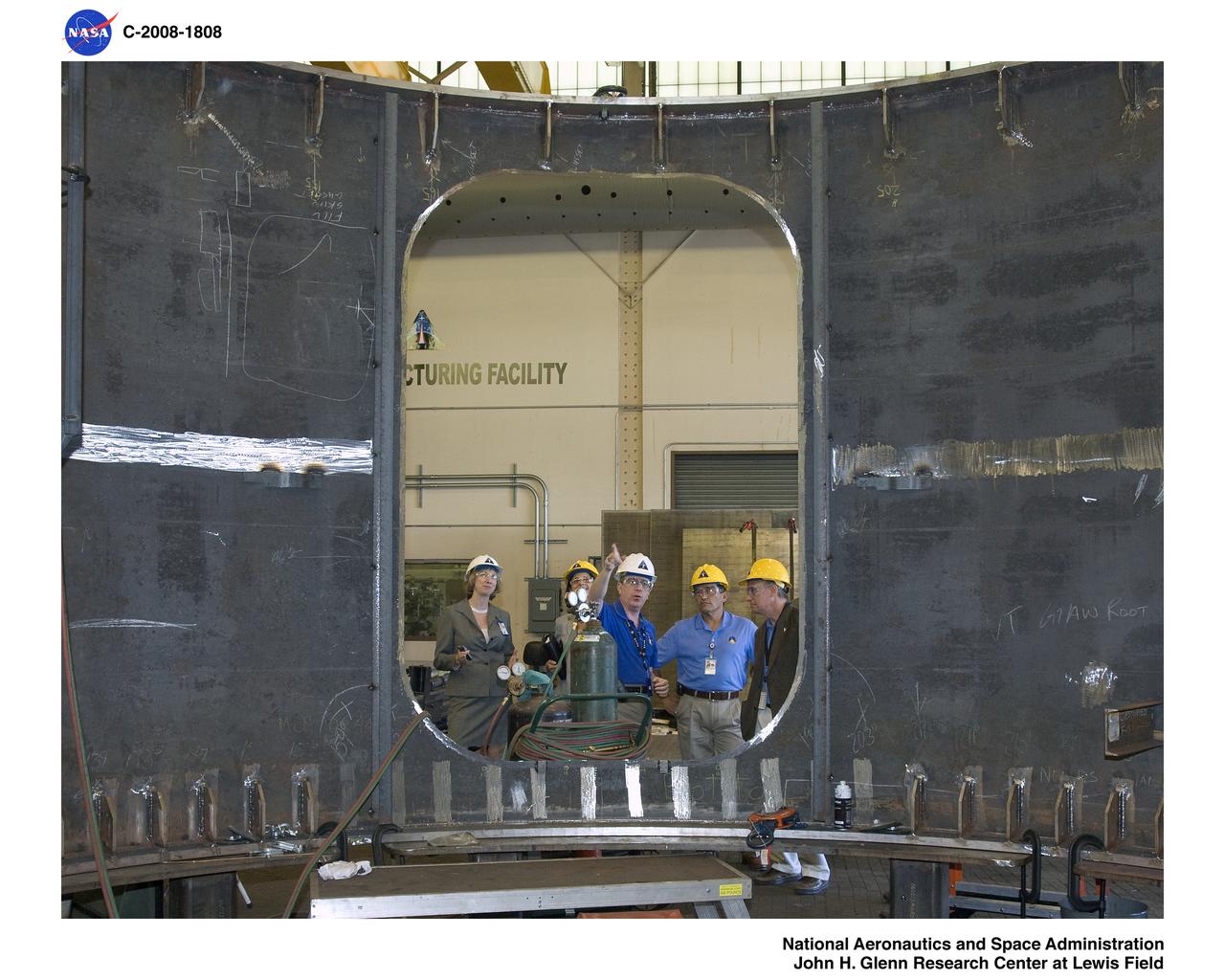
Tour of NASA Glenn's Ares 1-X Manufacturing Facility by NASA's Constellation Program Manager
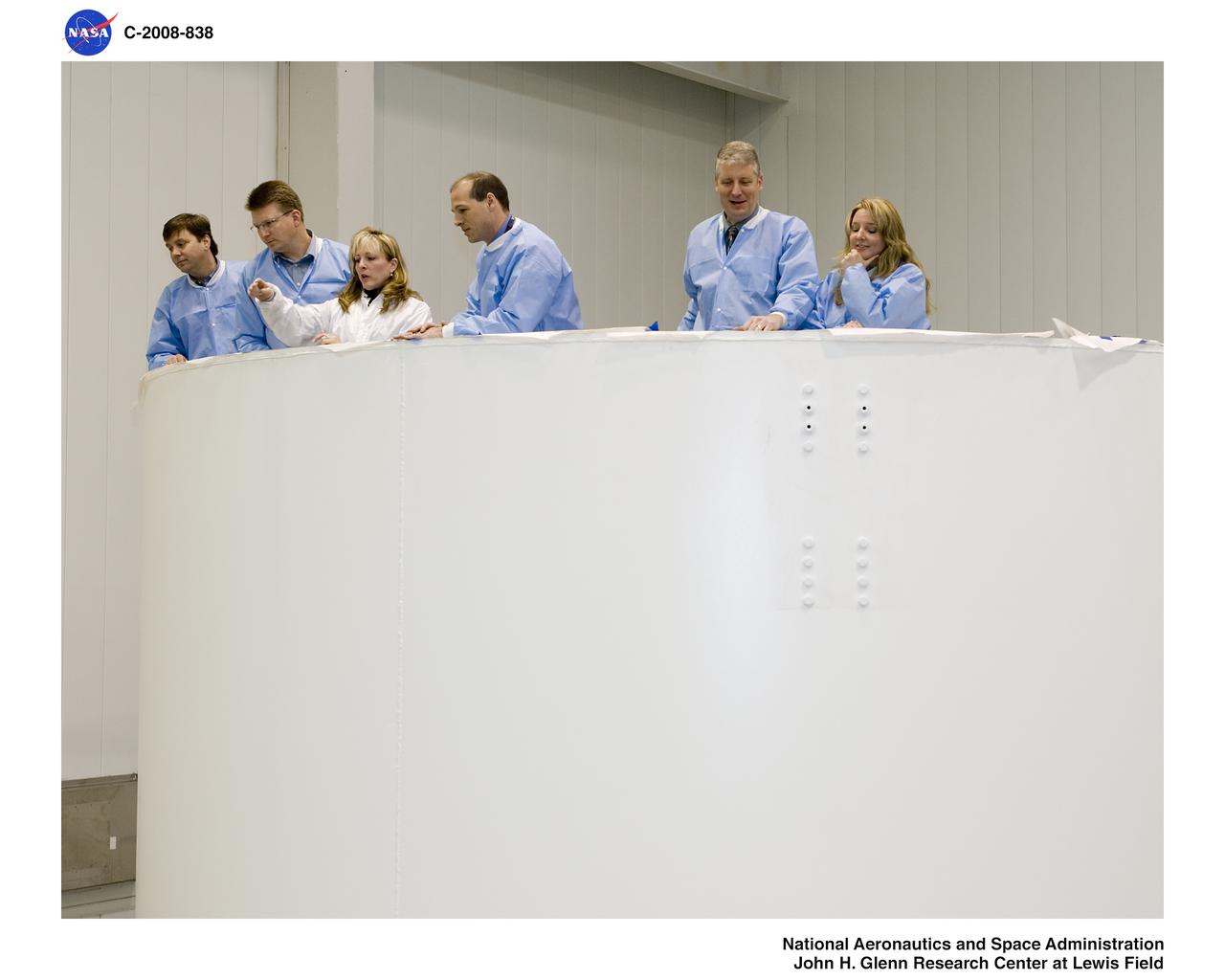
Constellation program office tour of Ares 1-X fabrication facility and segment Super Stack
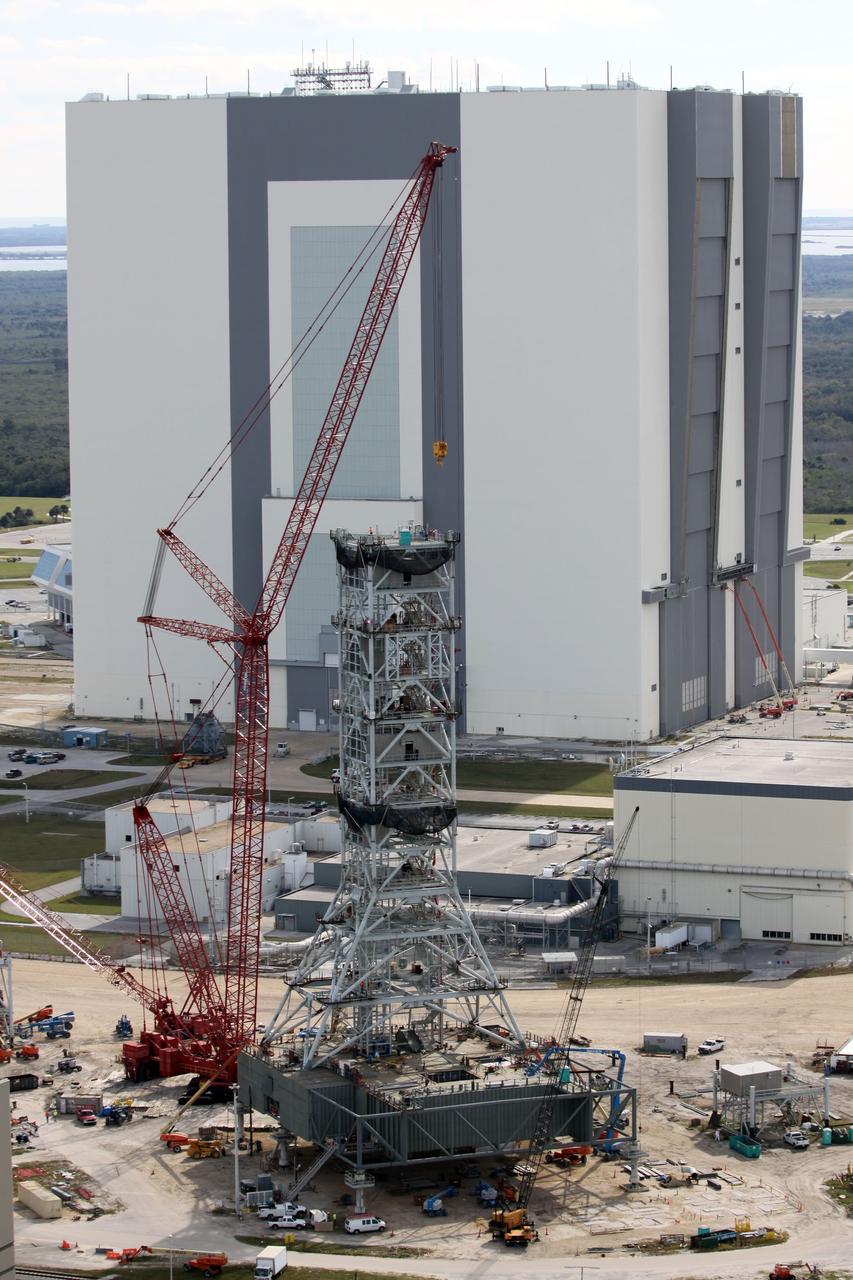
CAPE CANAVERAL, Fla. – At NASA's Kennedy Space Center in Florida, this aerial view of the mobile launcher park site area north of the 525-foot-tall Vehicle Assembly Building, in the background, shows a new mobile launcher, or ML, under construction to support the Constellation Program. When completed, the tower will be approximately 345 feet tall and have multiple platforms for personnel access. Its base is being made lighter than space shuttle mobile launcher platforms so the crawler-transporter can pick up the heavier load of the tower and a taller rocket. For information on the Constellation Program, visit http://www.nasa.gov/constellation. Photo credit: NASA/Cory Huston
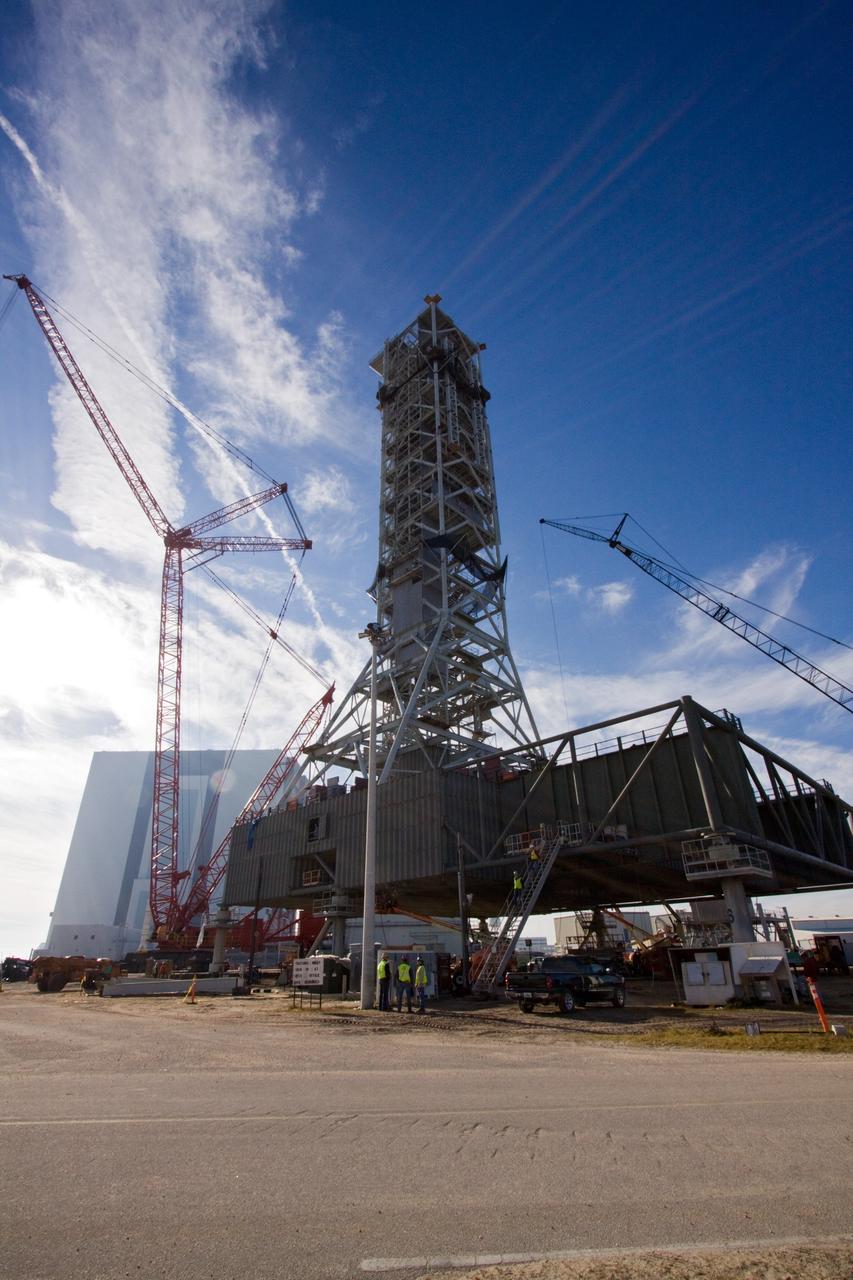
CAPE CANAVERAL, Fla. – At NASA's Kennedy Space Center in Florida, preparations are under way to install the ninth tower segment of a new mobile launcher, or ML, being constructed to support the Constellation Program, on the top of the growing tower. When completed, the tower will be approximately 345 feet tall and have multiple platforms for personnel access. Its base is being made lighter than space shuttle mobile launcher platforms so the crawler-transporter can pick up the heavier load of the tower and a taller rocket. For information on the Constellation Program, visit http://www.nasa.gov/constellation. Photo credit: NASA/Jack Pfaller
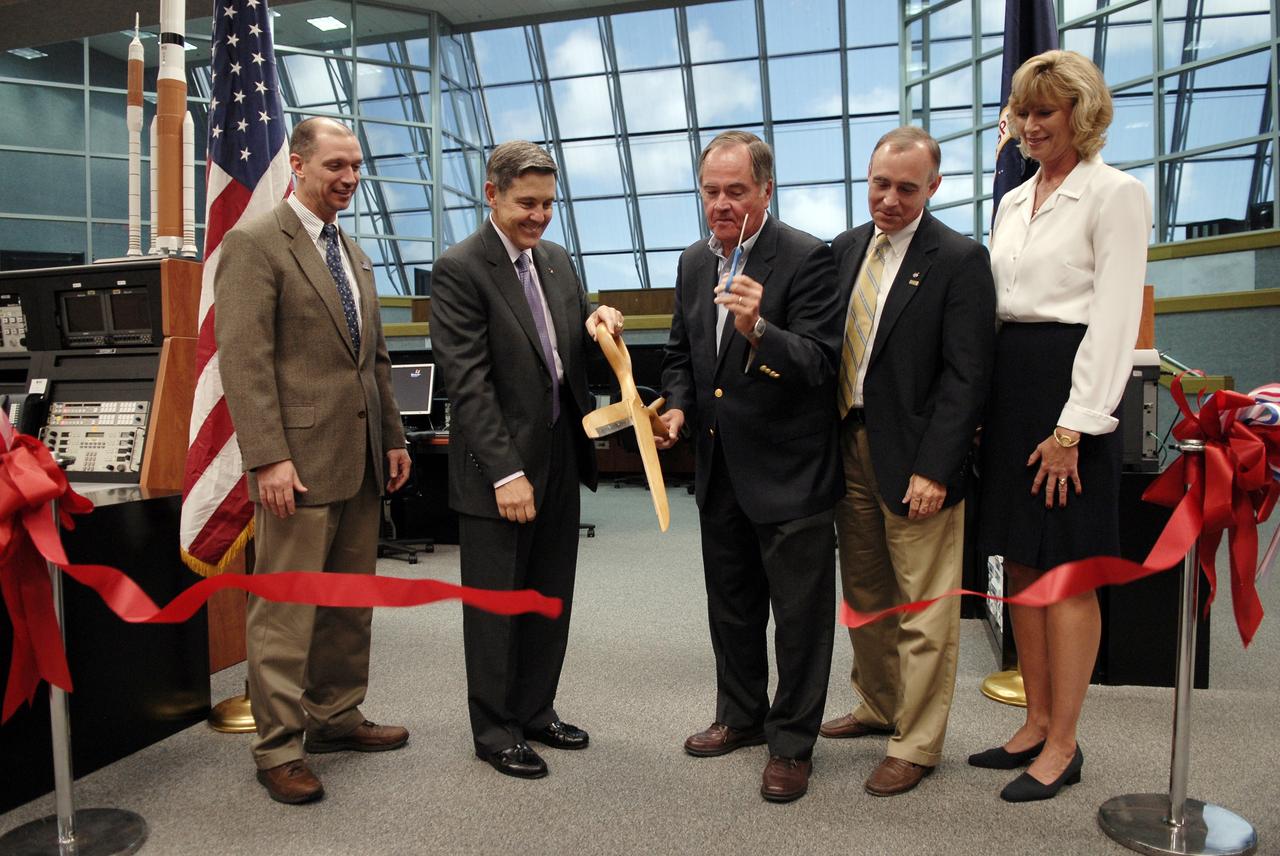
CAPE CANAVERAL, Fla. – This ribbon cutting officially turns over NASA Kennedy Space Center's Launch Control Center Firing Room 1 from the Space Shuttle Program to the Constellation Program. Participating are (from left) Pepper Phillips, director of the Constellation Project Office at Kennedy; Bob Cabana, Kennedy's director; Robert Crippen, former astronaut; Jeff Hanley, manager of the Constellation Program at NASA's Johnson Space Center; and Nancy Bray, deputy director of Center Operations at Kennedy. The room has undergone demolition and construction and been outfitted with consoles for the upcoming Ares I-X rocket flight test targeted for launch on Oct. 27. As the center of launch operations at Kennedy since the Apollo Program, the Launch Control Center, or LCC, has played a central role in NASA's human spaceflight programs. Firing Room 1 was the first operational firing room constructed. From this room, controllers launched the first Saturn V, the first crewed flight of Saturn V, the first crewed mission to the moon and the first space shuttle. Firing Room 1 will continue this tradition of firsts when controllers launch the Constellation Program's first flight test. Also, this firing room will be the center of operations for the upcoming Ares I and Orion operations. Photo credit: NASA/Kim Shiflett
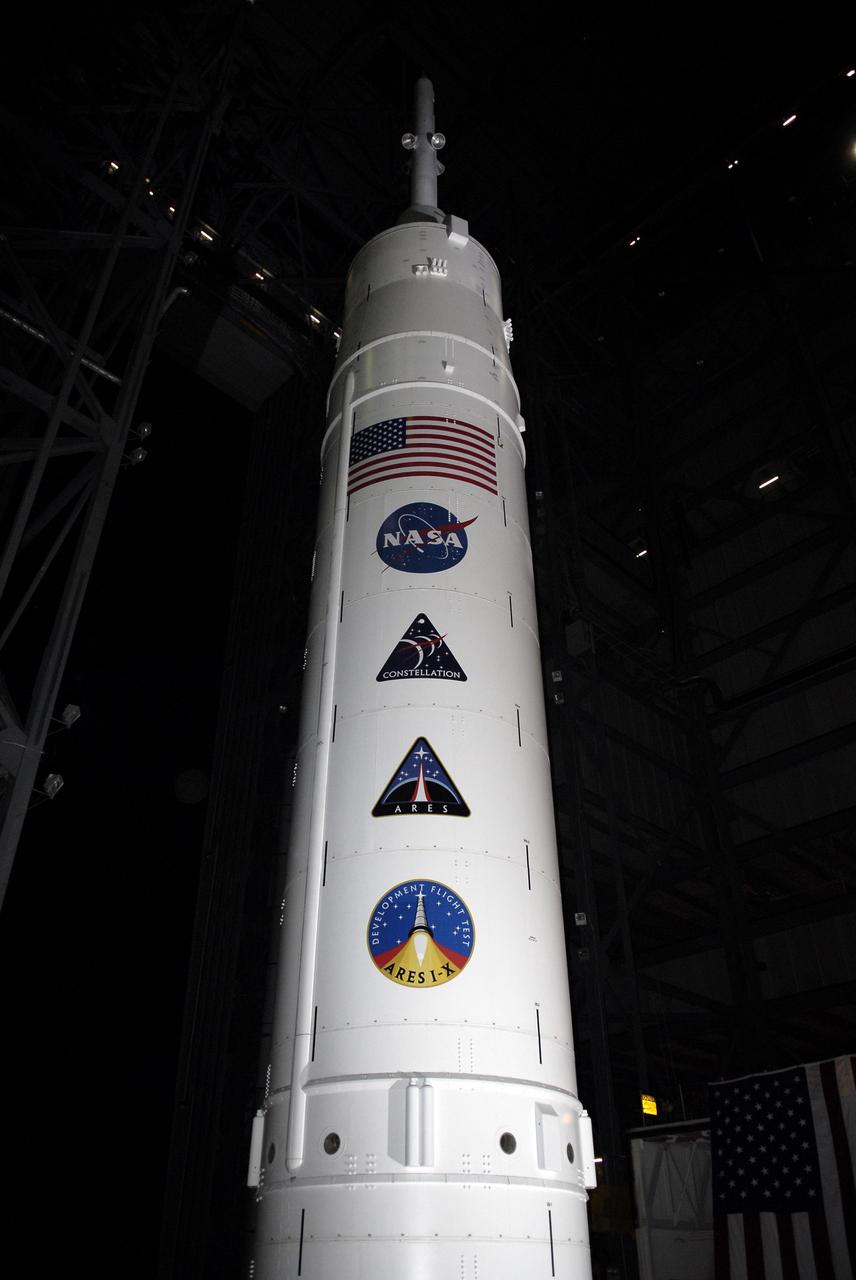
CAPE CANAVERAL, Fla. - Poised inside Vehicle Assembly Building at NASA's Kennedy Space Center in Florida, the Ares I-X rocket's upper stage is adorned with the American flag, NASA logo, and the logos of the Constellation Program, Ares, and Ares I-X. The transfer of the pad from the Space Shuttle Program to the Constellation Program took place May 31. Modifications made to the pad include the removal of shuttle unique subsystems, such as the orbiter access arm and a section of the gaseous oxygen vent arm, along with the installation of three 600-foot lightning towers, access platforms, environmental control systems and a vehicle stabilization system. Part of the Constellation Program, the Ares I-X is the test vehicle for the Ares I. The Ares I-X flight test is targeted for Oct. 27. For information on the Ares I-X vehicle and flight test, visit http://www.nasa.gov/aresIX. Photo credit: NASA/Kim Shiflett
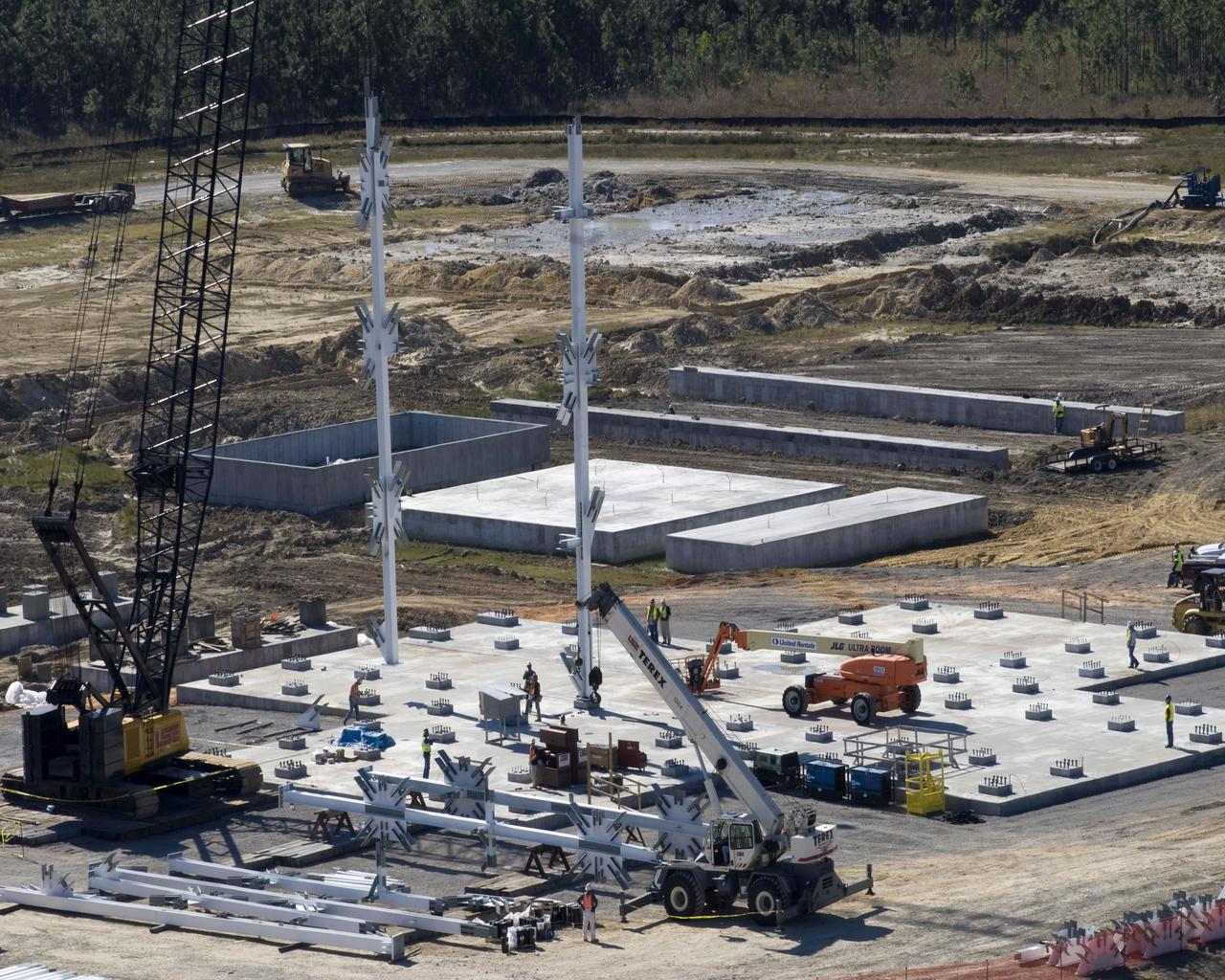
Fabricated steel began arriving by truck Oct. 24 for construction of the A-3 Test Stand that will be used to test the engine for the nation's next generation of moon rockets. Within days workers from Lafayette Steel Erector Inc. began assembling the 16 steel stages needed on the foundation and footings poured in the previous year.
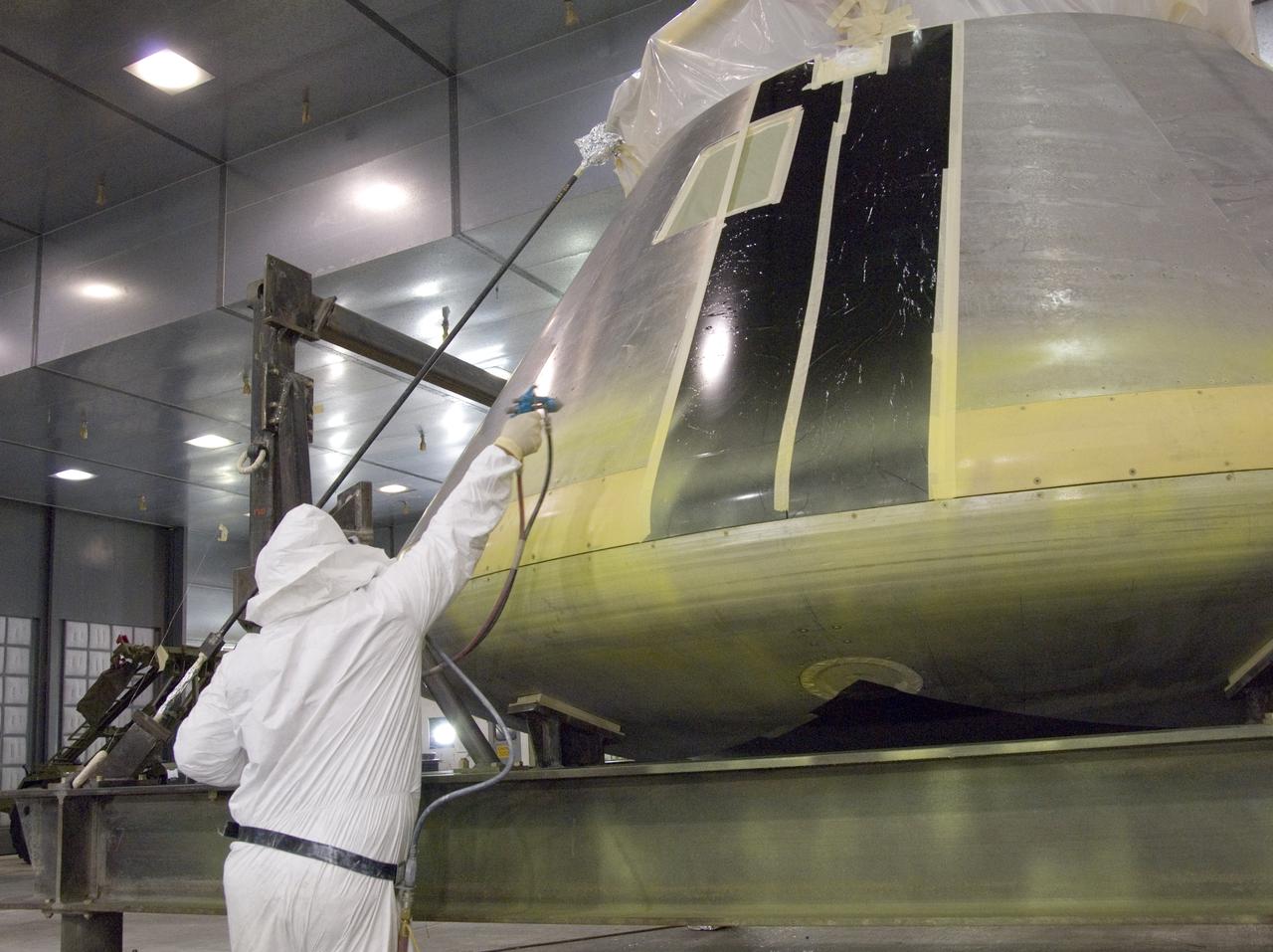
A full-scale flight-test mockup of the Constellation program's Orion crew vehicle arrived at NASA's Dryden Flight Research Center in late March 2008 to undergo preparations for the first short-range flight test of the spacecraft's astronaut escape system later that year. Engineers and technicians at NASA's Langley Research Center fabricated the structure, which precisely represents the size, outer shape and mass characteristics of the Orion space capsule. The Orion crew module mockup was ferried to NASA Dryden on an Air Force C-17. After painting in the Edwards Air Force Base paint hangar, the conical capsule was taken to Dryden for installation of flight computers, instrumentation and other electronics prior to being sent to the U.S. Army's White Sands Missile Range in New Mexico for integration with the escape system and the first abort flight test in late 2008. The tests were designed to ensure a safe, reliable method of escape for astronauts in case of an emergency.
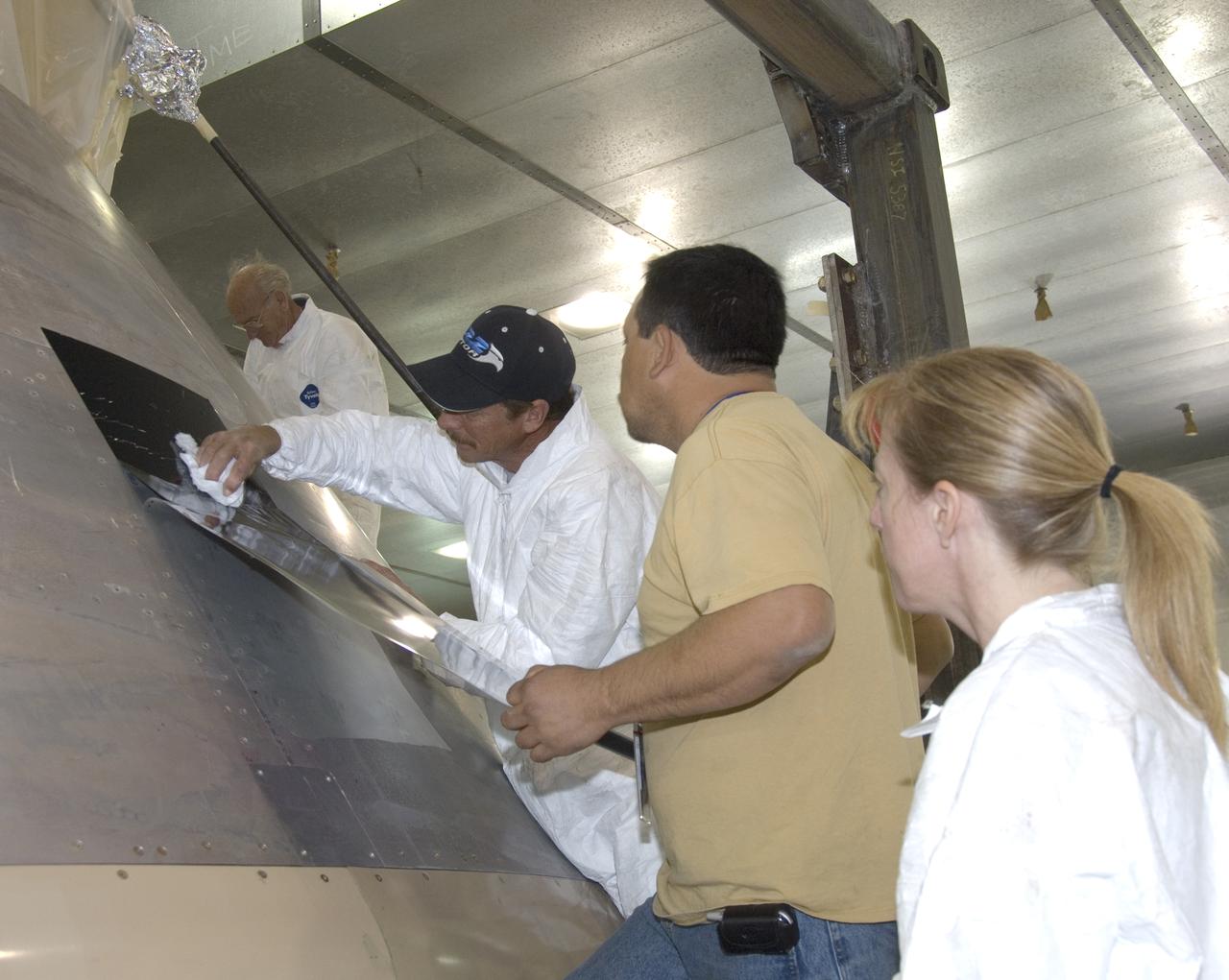
A full-scale flight-test mockup of the Constellation program's Orion crew vehicle arrived at NASA's Dryden Flight Research Center in late March 2008 to undergo preparations for the first short-range flight test of the spacecraft's astronaut escape system later that year. Engineers and technicians at NASA's Langley Research Center fabricated the structure, which precisely represents the size, outer shape and mass characteristics of the Orion space capsule. The Orion crew module mockup was ferried to NASA Dryden on an Air Force C-17. After painting in the Edwards Air Force Base paint hangar, the conical capsule was taken to Dryden for installation of flight computers, instrumentation and other electronics prior to being sent to the U.S. Army's White Sands Missile Range in New Mexico for integration with the escape system and the first abort flight test in late 2008. The tests were designed to ensure a safe, reliable method of escape for astronauts in case of an emergency.
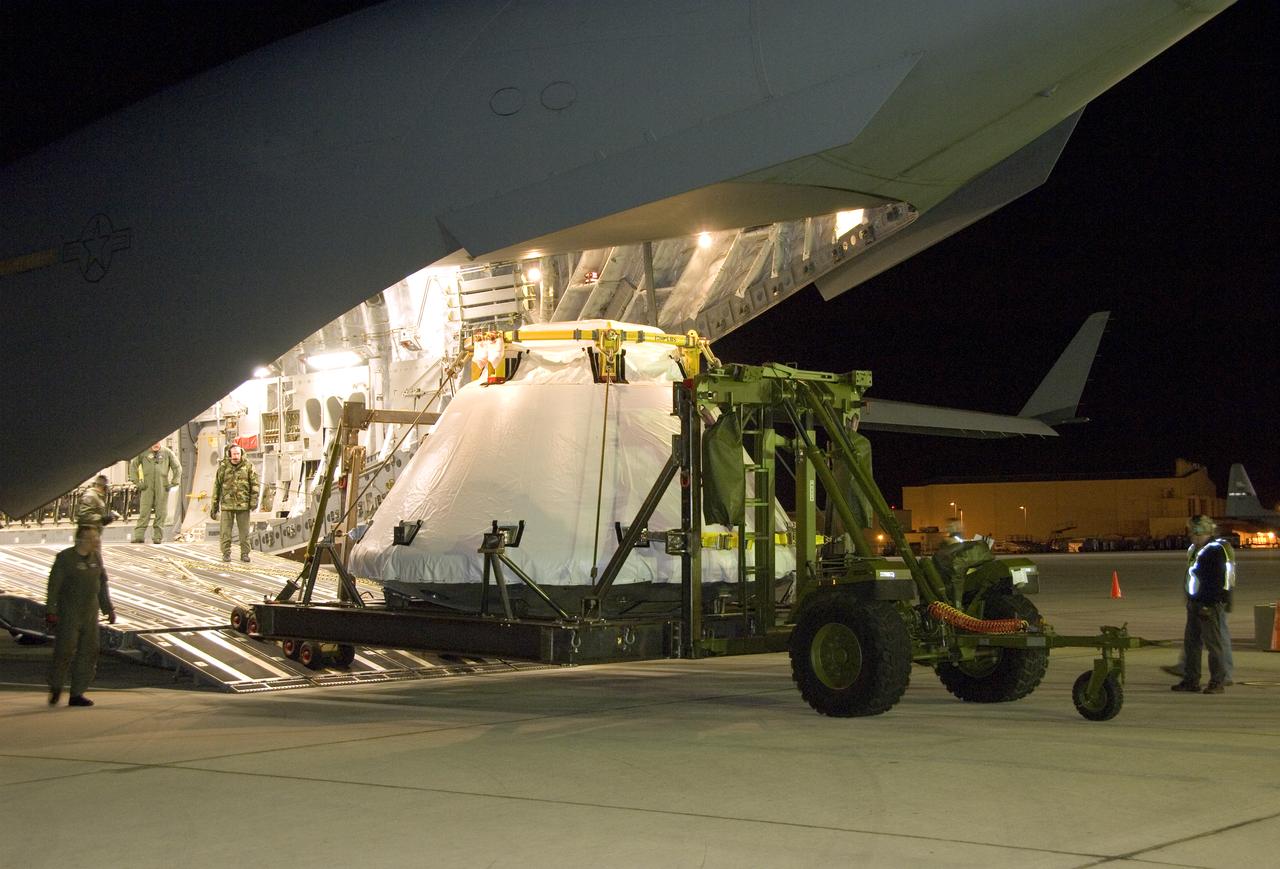
A full-scale flight-test mockup of the Constellation program's Orion crew vehicle arrived at NASA's Dryden Flight Research Center in late March 2008 to undergo preparations for the first short-range flight test of the spacecraft's astronaut escape system later that year. Engineers and technicians at NASA's Langley Research Center fabricated the structure, which precisely represents the size, outer shape and mass characteristics of the Orion space capsule. The Orion crew module mockup was ferried to NASA Dryden on an Air Force C-17. After painting in the Edwards Air Force Base paint hangar, the conical capsule was taken to Dryden for installation of flight computers, instrumentation and other electronics prior to being sent to the U.S. Army's White Sands Missile Range in New Mexico for integration with the escape system and the first abort flight test in late 2008. The tests were designed to ensure a safe, reliable method of escape for astronauts in case of an emergency.
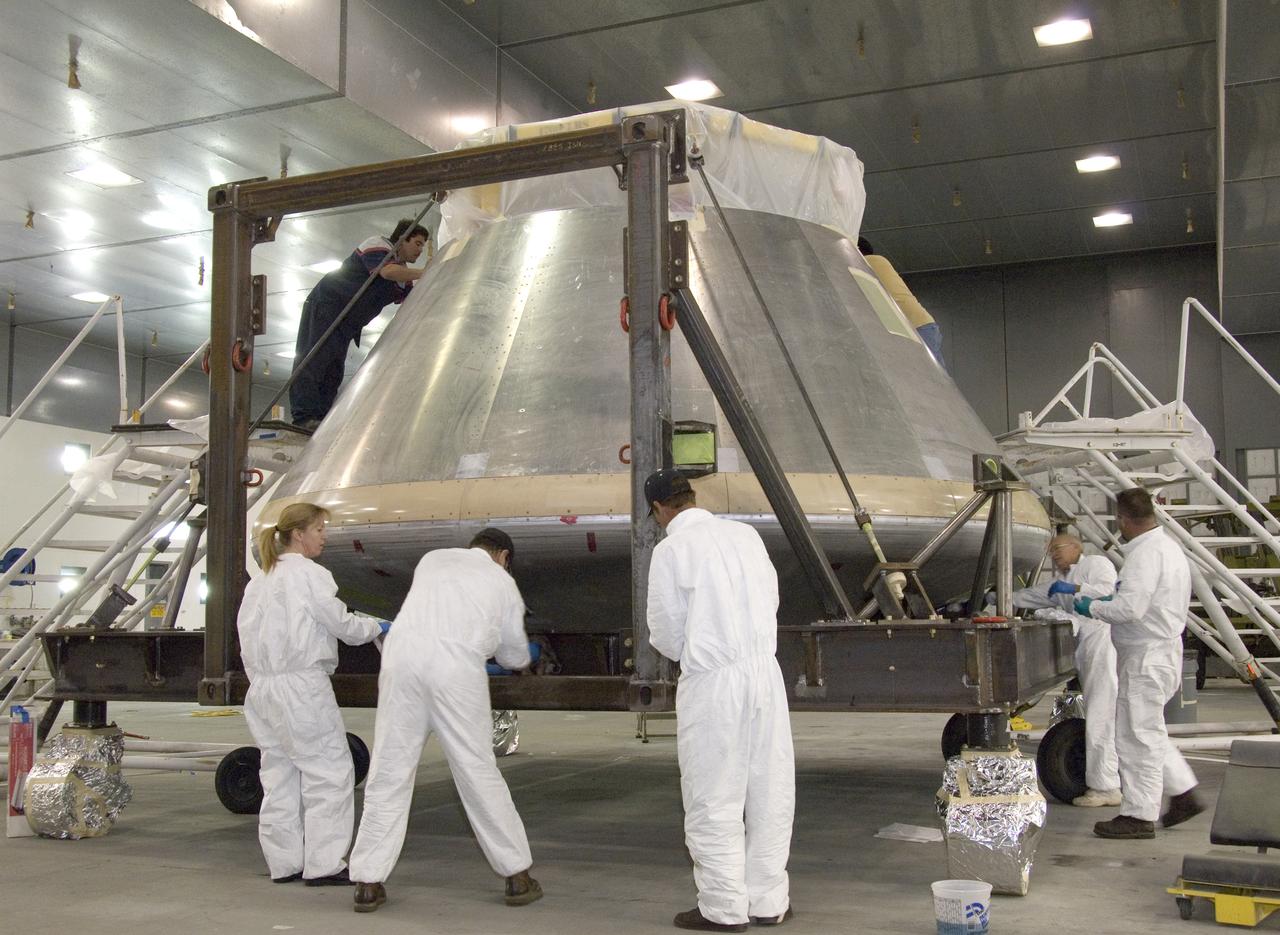
A full-scale flight-test mockup of the Constellation program's Orion crew vehicle arrived at NASA's Dryden Flight Research Center in late March 2008 to undergo preparations for the first short-range flight test of the spacecraft's astronaut escape system later that year. Engineers and technicians at NASA's Langley Research Center fabricated the structure, which precisely represents the size, outer shape and mass characteristics of the Orion space capsule. The Orion crew module mockup was ferried to NASA Dryden on an Air Force C-17. After painting in the Edwards Air Force Base paint hangar, the conical capsule was taken to Dryden for installation of flight computers, instrumentation and other electronics prior to being sent to the U.S. Army's White Sands Missile Range in New Mexico for integration with the escape system and the first abort flight test in late 2008. The tests were designed to ensure a safe, reliable method of escape for astronauts in case of an emergency.
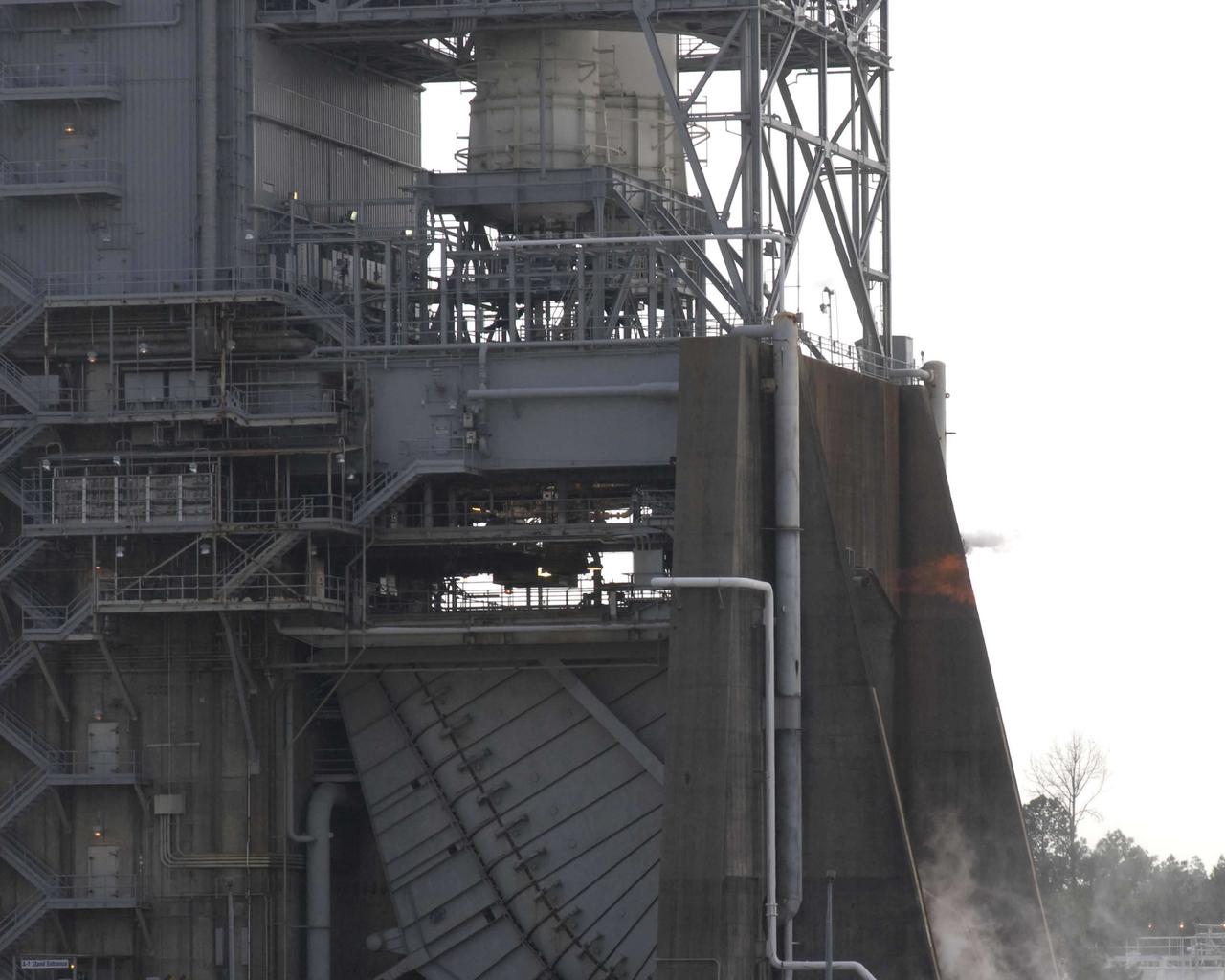
NASA engineers successfully complete the first series of tests in the early development of the J-2X engine that will power the Ares I and Ares V rockets, key components of NASA's Constellation Program.
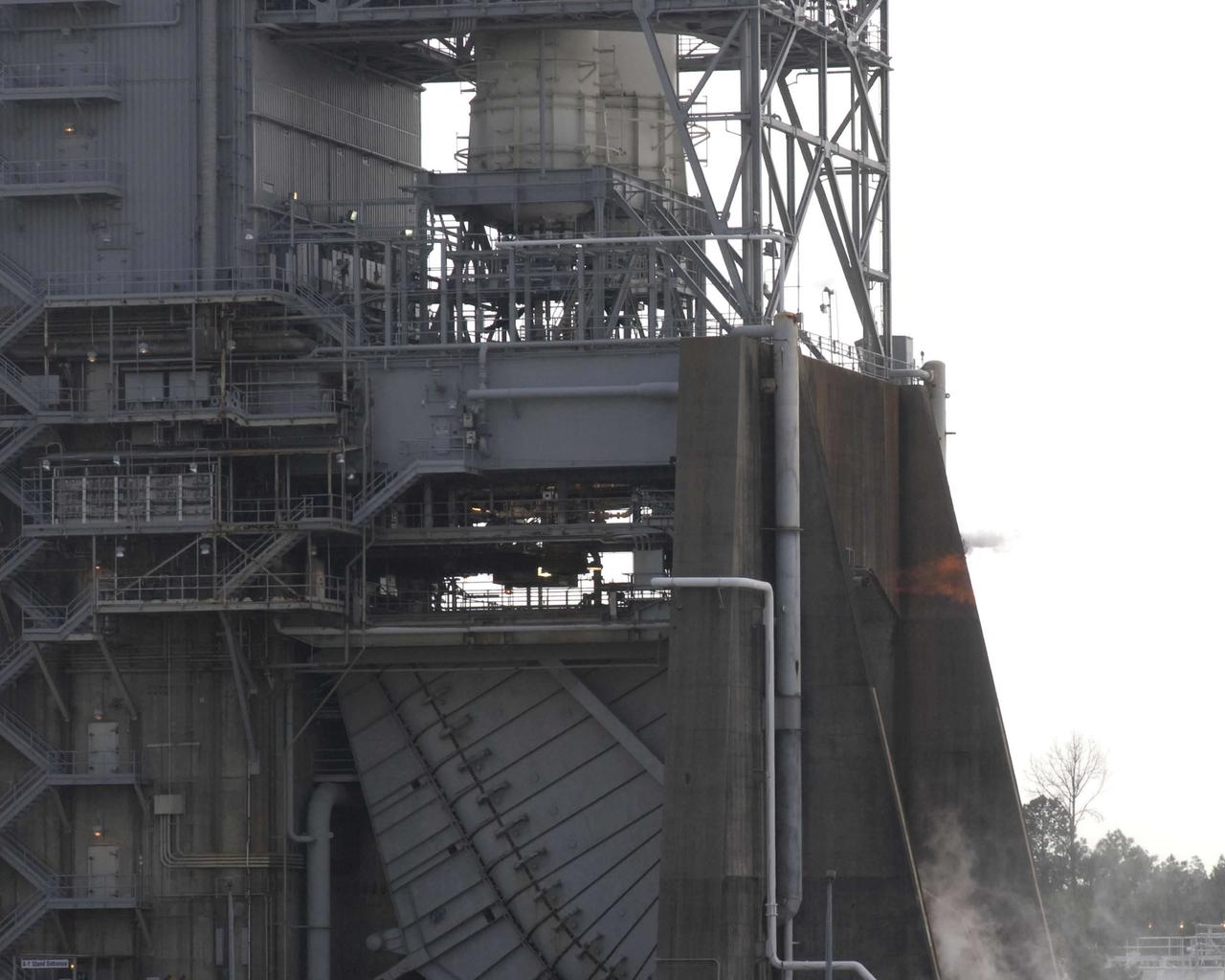
NASA engineers successfully complete the first series of tests in the early development of the J-2X engine that will power the Ares I and Ares V rockets, key components of NASA's Constellation Program.
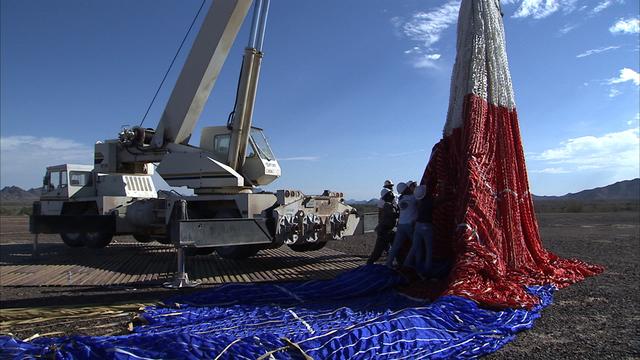
Shown is the testing of the Main Parachute for the Ares/CLV first stage in support of the Ares/Constellation program at the Yuma Proving Ground, Arizona. This image is extracted from high definition video and is the highest resolution available.
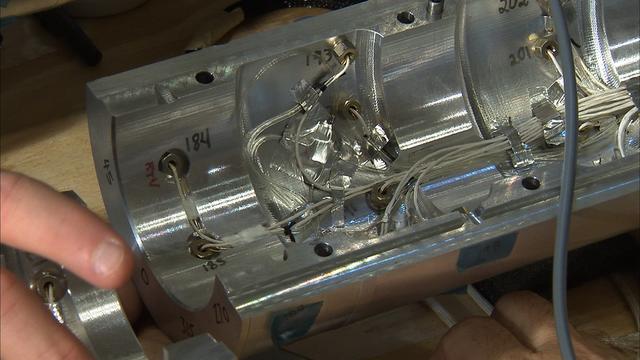
Shown is testing of a 3.5% Ares 1-X buffet model at the transonic wind tunnel at Langley Research Center, Virginia in support of the Ares/Constellation program. This image is extracted from high definition video and is the highest resolution available
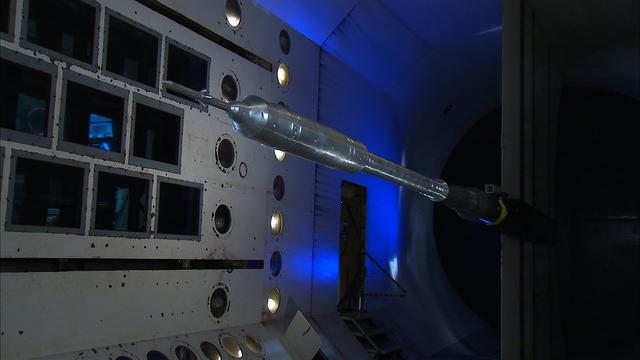
Shown is testing of a 3.5% Ares 1-X buffet model at the transonic wind tunnel at Langley Research Center, Virginia in support of the Ares/Constellation program. This image is extracted from high definition video and is the highest resolution available.
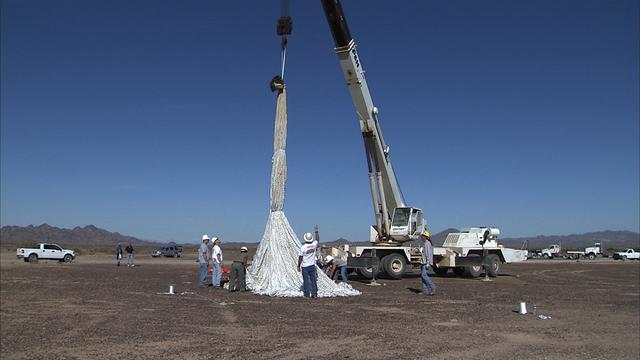
Shown is the testing of the Main Parachute for the Ares/CLV first stage in support of the Ares/Constellation program at the Yuma Proving Ground, Arizona. This image is extracted from high definition video and is the highest resolution available.
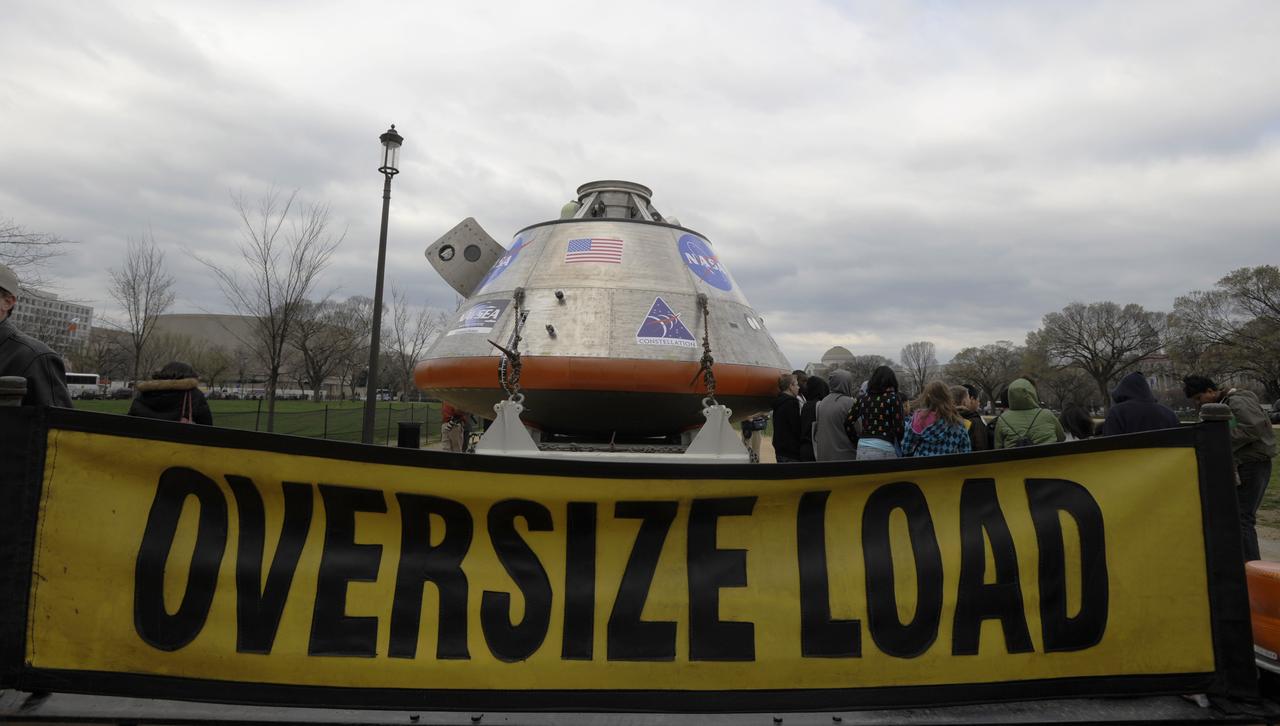
A mock up of the Orion Crew Module is seen on the National Mall in Washington, Monday, March 30, 2009. Orion is the flagship of NASA's programs for space exploration beyond low Earth orbit and a key element of NASA's Constellation Program to explore the moon, Mars and beyond. Photo Credit: (NASA/Paul. E. Alers)
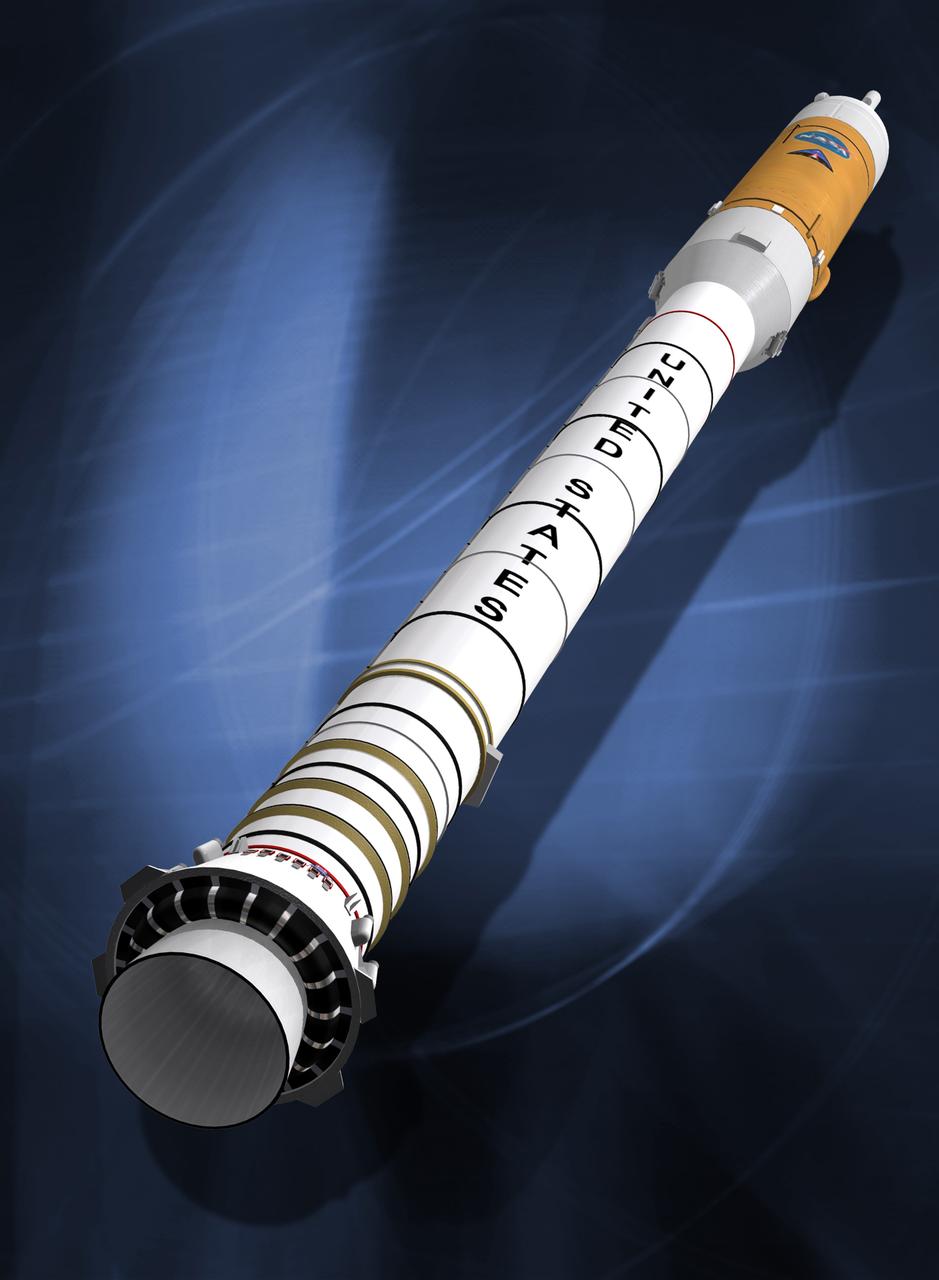
Shown is an illustration of the Ares I concept. The first stage will be a single, five-segment solid rocket booster derived from the space shuttle programs reusable solid rocket motor. The first stage is managed by NASA's Marshall Space Flight Center in Huntsville, Alabama for NASA's Constellation program.
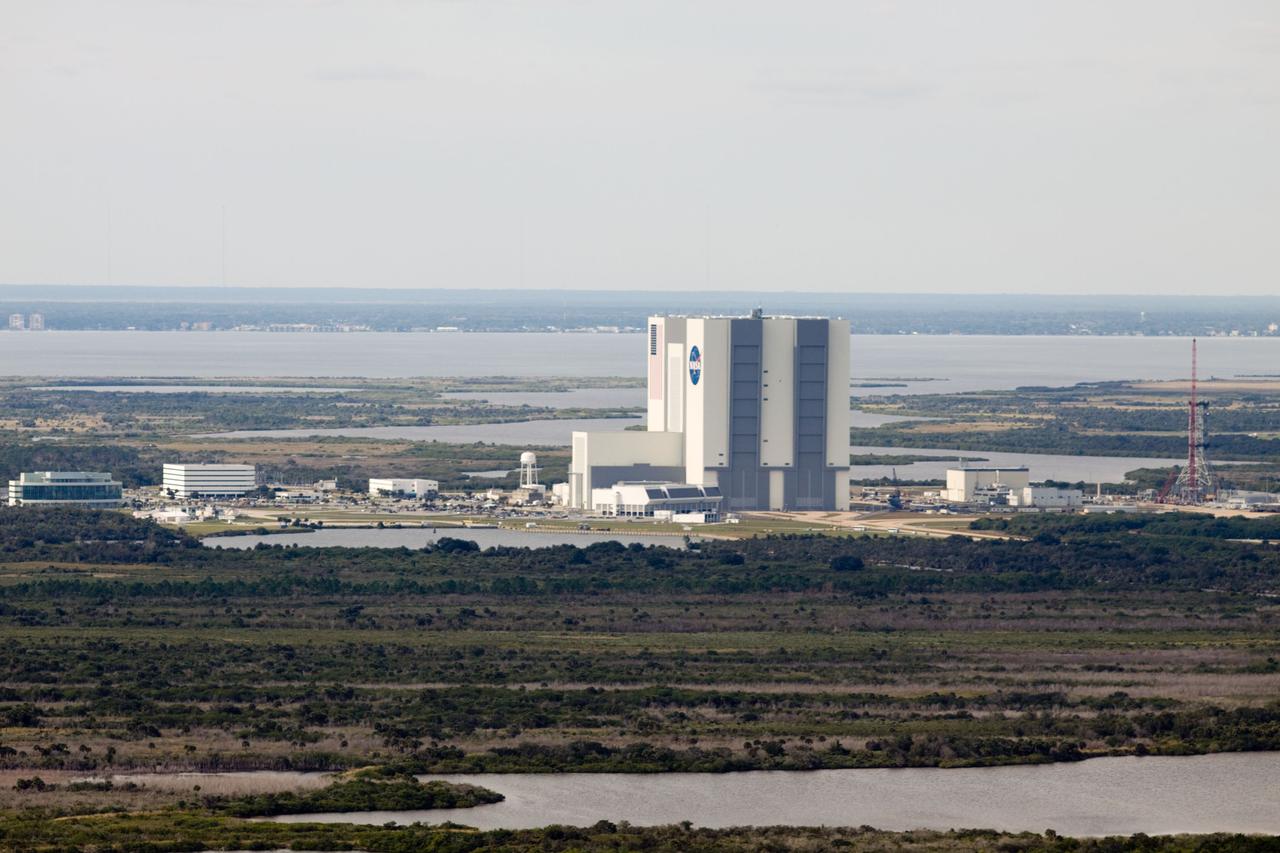
CAPE CANAVERAL, Fla. – At NASA's Kennedy Space Center in Florida, this aerial view of Launch Complex 39 shows a new mobile launcher, or ML, for the Constellation Program, at far right, being constructed in the mobile launcher park site area north of the 525-foot-tall Vehicle Assembly Building. In the background is the Indian River. When completed, the tower will be approximately 345 feet tall and have multiple platforms for personnel access. Its base is being made lighter than space shuttle mobile launcher platforms so the crawler-transporter can pick up the heavier load of the tower and a taller rocket. For information on the Constellation Program, visit http://www.nasa.gov/constellation. Photo credit: NASA/Cory Huston
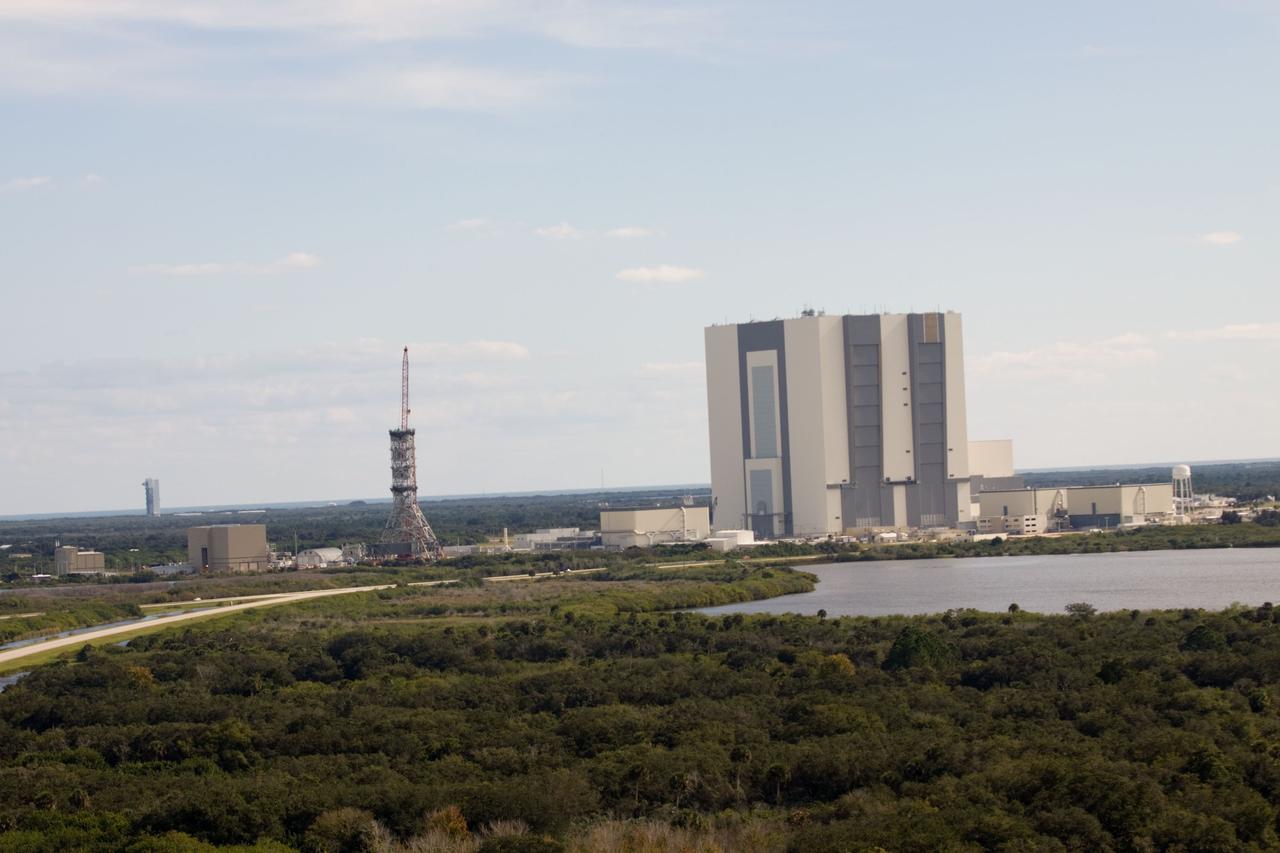
CAPE CANAVERAL, Fla. – At NASA's Kennedy Space Center in Florida, this aerial view of the mobile launcher park site area shows a new mobile launcher, or ML, for the Constellation Program under construction. In the background at left is Launch Complex 41 on Cape Canaveral Air Force Station from which Atlas V rockets are launched. When completed, the tower will be approximately 345 feet tall and have multiple platforms for personnel access. Its base is being made lighter than space shuttle mobile launcher platforms so the crawler-transporter can pick up the heavier load of the tower and a taller rocket. For information on the Constellation Program, visit http://www.nasa.gov/constellation. Photo credit: NASA/Cory Huston
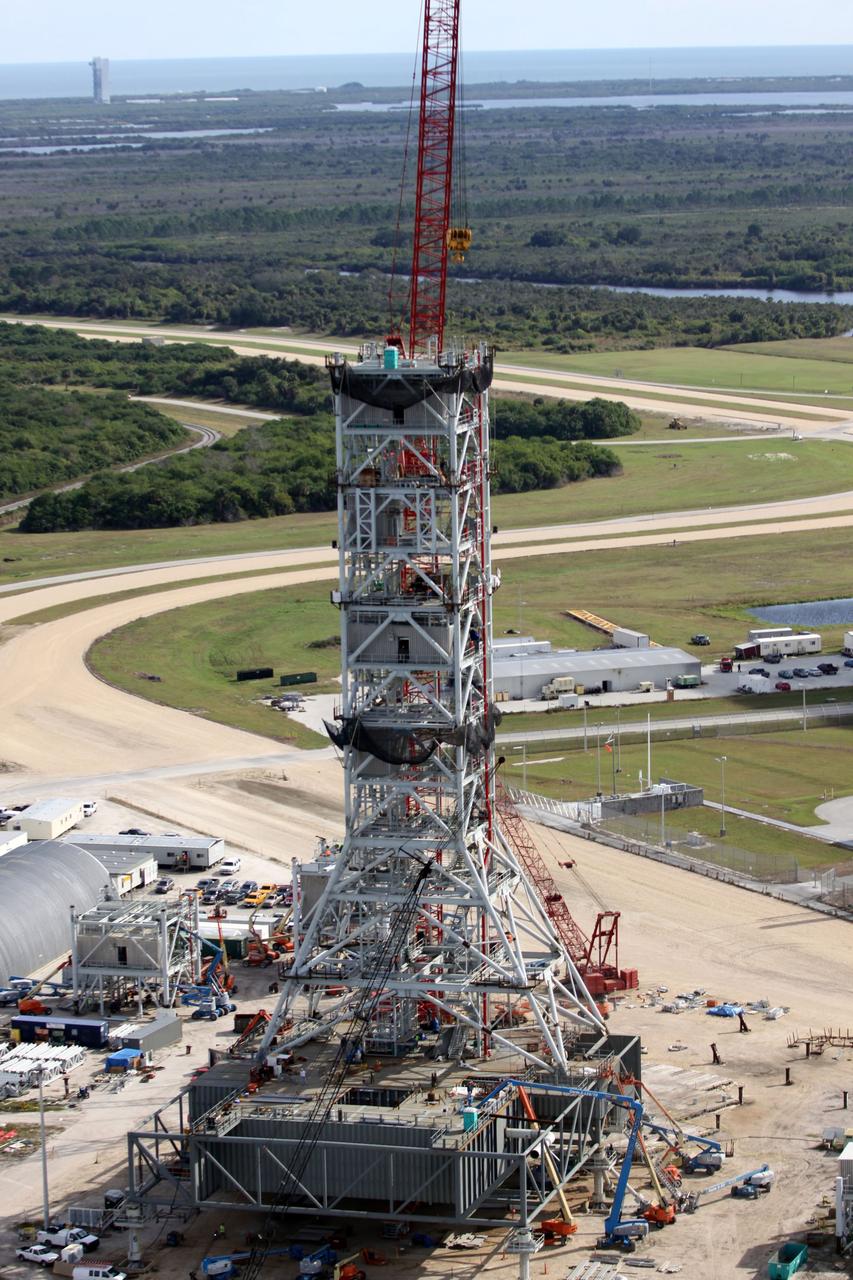
CAPE CANAVERAL, Fla. – At NASA's Kennedy Space Center in Florida, this aerial view of the mobile launcher park site area north of the 525-foot-tall Vehicle Assembly Building shows a new mobile launcher, or ML, for the Constellation Program under construction. In the background are the Atlantic Ocean and Launch Complex 41 on Cape Canaveral Air Force Station, at upper left, from which Atlas V rockets are launched. When completed, the tower will be approximately 345 feet tall and have multiple platforms for personnel access. Its base is being made lighter than space shuttle mobile launcher platforms so the crawler-transporter can pick up the heavier load of the tower and a taller rocket. For information on the Constellation Program, visit http://www.nasa.gov/constellation. Photo credit: NASA/Cory Huston
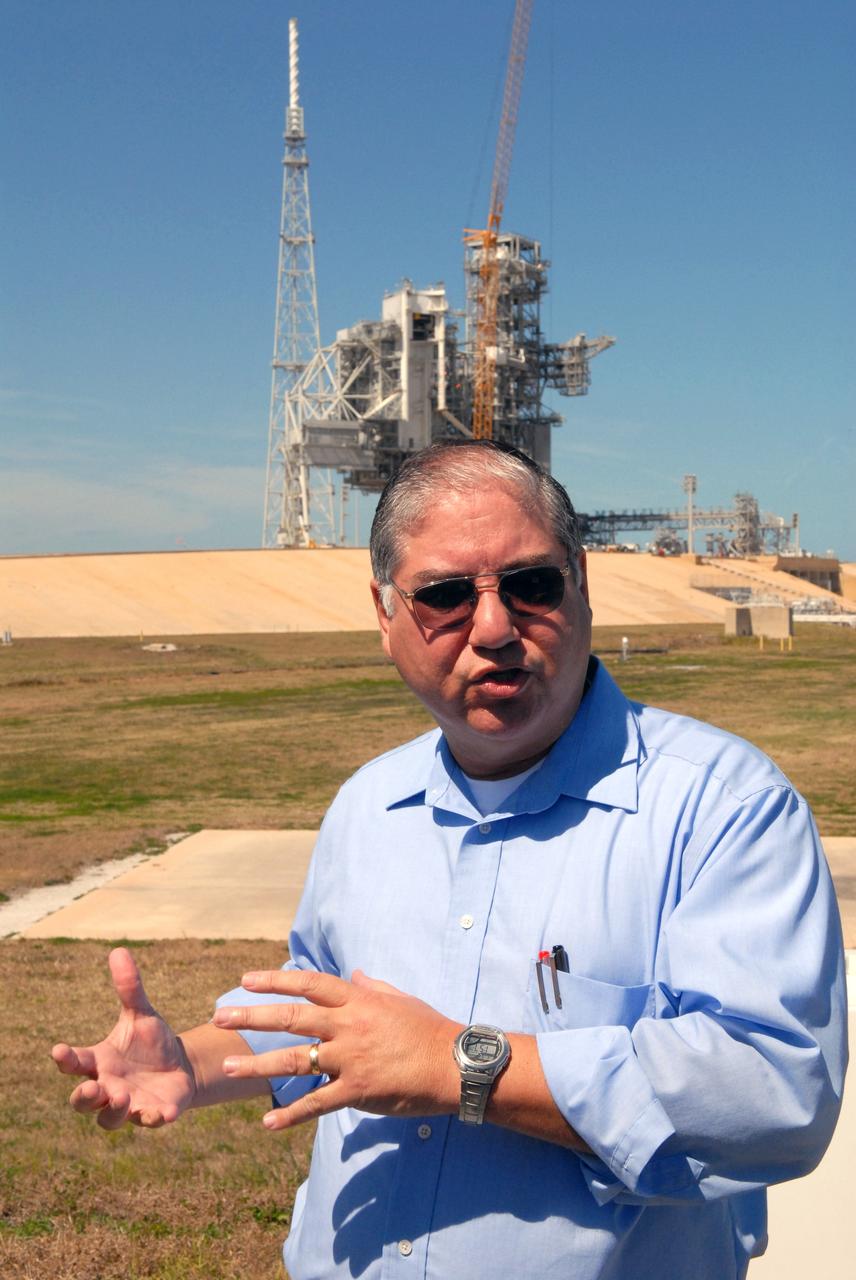
CAPE CANAVERAL, Fla. – Near Launch Pad 39B at NASA's Kennedy Space Center in Florida, Jose Perez-Morales explains use of the launch pad for the Ares rockets in the Constellation Program. Perez-Morales is Constellation senior pad project manager. Pad 39B will be used for the Ares I-X flight test, targeted for July 2009. The I-X flight will provide NASA an early opportunity to test and prove hardware, facilities and ground operations associated with Ares I, part of the Constellation Program to return men to the moon and beyond. Ares I is the essential core of a safe, reliable, cost-effective space transportation system that eventually will carry crewed missions back to the moon, on to Mars and out into the solar system. Photo credit: NASA/Jack Pfaller
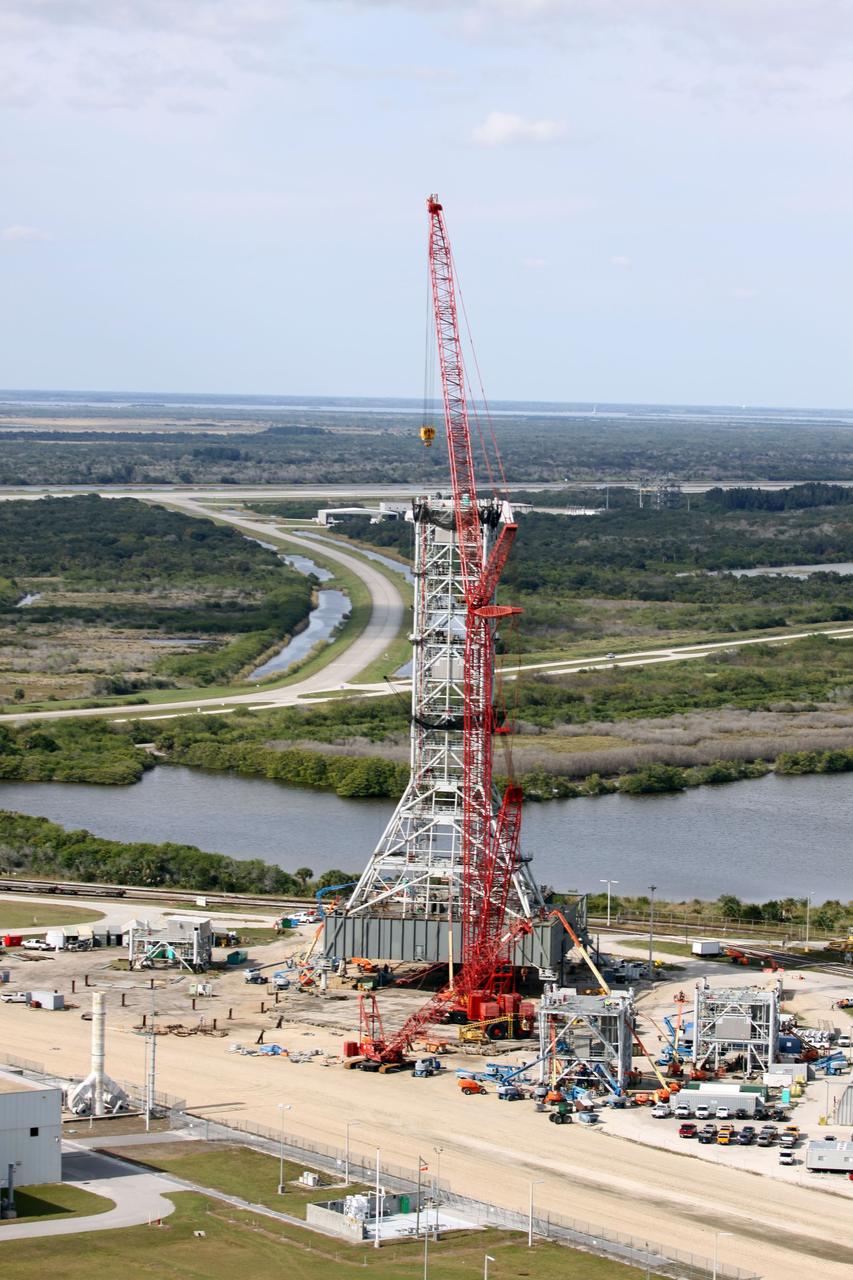
CAPE CANAVERAL, Fla. - At NASA's Kennedy Space Center in Florida, this aerial view of the mobile launcher park site area north of the 525-foot-tall Vehicle Assembly Building shows a new mobile launcher, or ML, for the Constellation Program under construction. In the background are the Shuttle Landing Facility runway, the towway and the mate-demate device. When completed, the tower will be approximately 345 feet tall and have multiple platforms for personnel access. Its base is being made lighter than space shuttle mobile launcher platforms so the crawler-transporter can pick up the heavier load of the tower and a taller rocket. For information on the Constellation Program, visit http://www.nasa.gov/constellation. Photo credit: NASA/Cory Huston
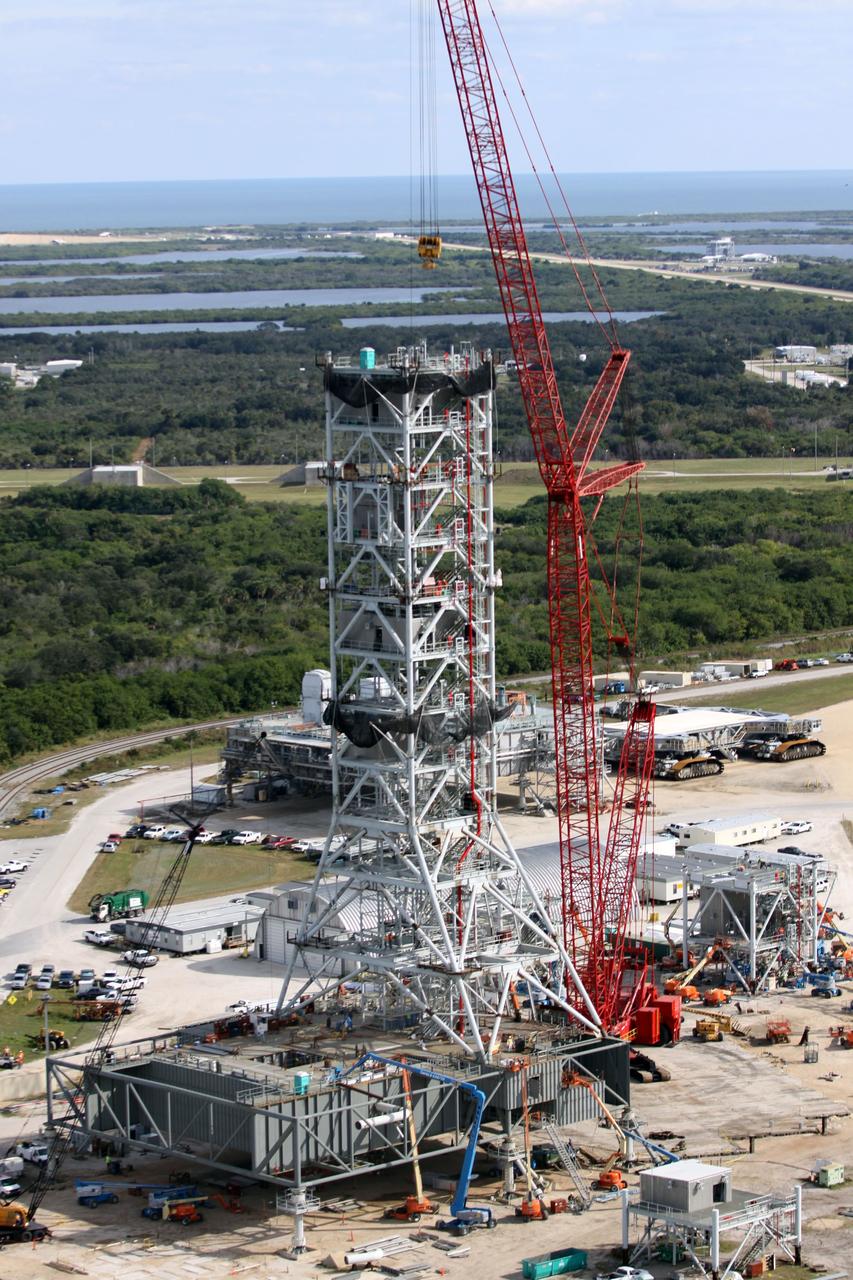
CAPE CANAVERAL, Fla. – At NASA's Kennedy Space Center in Florida, this aerial view of the mobile launcher park site area north of the 525-foot-tall Vehicle Assembly Building shows a new mobile launcher, or ML, for the Constellation Program under construction. In the background are the Atlantic Ocean and the Launch Complex 39 Observation Gantry, at upper right. When completed, the tower will be approximately 345 feet tall and have multiple platforms for personnel access. Its base is being made lighter than space shuttle mobile launcher platforms so the crawler-transporter can pick up the heavier load of the tower and a taller rocket. For information on the Constellation Program, visit http://www.nasa.gov/constellation. Photo credit: NASA/Cory Huston
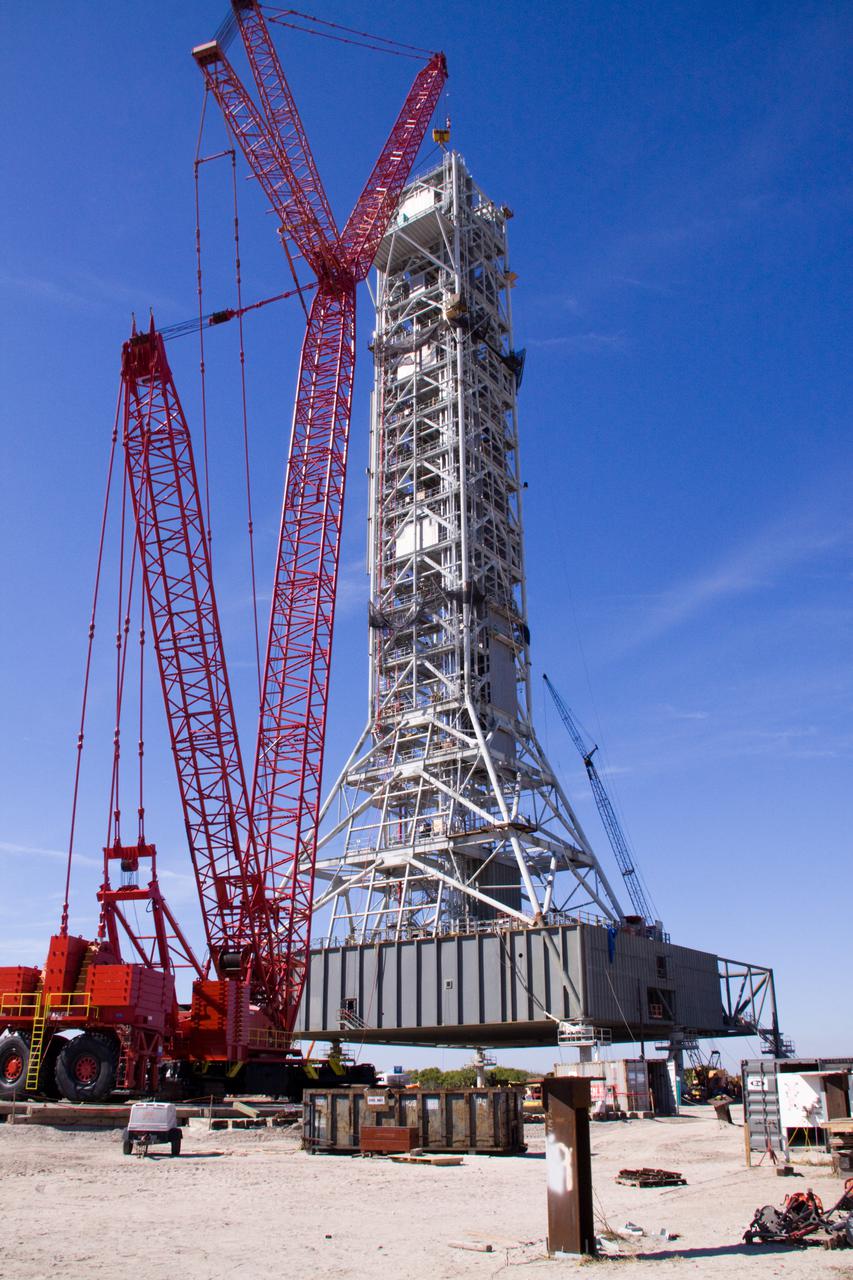
CAPE CANAVERAL, Fla. – At NASA's Kennedy Space Center in Florida, construction of the tower on the Constellation Program's new mobile launcher, or ML, progresses with placement of the ninth tower segment on the growing structure. When completed, the tower will be approximately 345 feet tall and have multiple platforms for personnel access. Its base is being made lighter than space shuttle mobile launcher platforms so the crawler-transporter can pick up the heavier load of the tower and a taller rocket. For information on the Constellation Program, visit http:__www.nasa.gov_constellation. Photo credit: NASA_Jack Pfaller
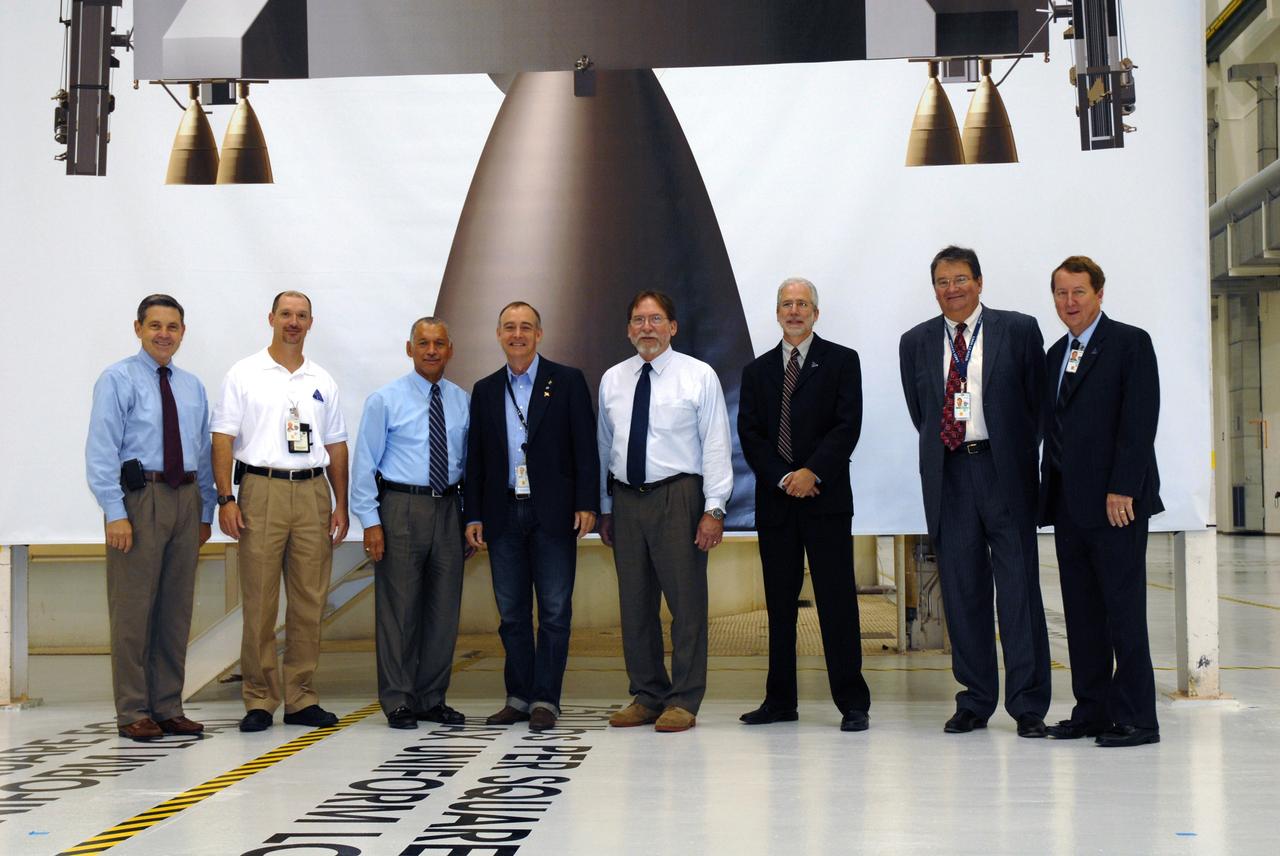
CAPE CANAVERAL, Fla. – Center Director Robert Cabana (left) and Constellation Program directors and managers accompany NASA Administrator Charles Bolden (third from left) on a tour of NASA's Kennedy Space Center in Florida. The tour included this stop in the Operations and Checkout Building to view the high bay planned for the assembly of the Constellation Program's Orion crew vehicle. Bolden also was at Kennedy for several events, including the landing of space shuttle Endeavour's STS-127 mission and the signing of the joint NASA-Japan Aerospace Exploration Agency agreement defining the terms of cooperation between the agencies on the Global Precipitation Measurement, or GPM, mission. Photo credit: NASA/Kim Shiflett
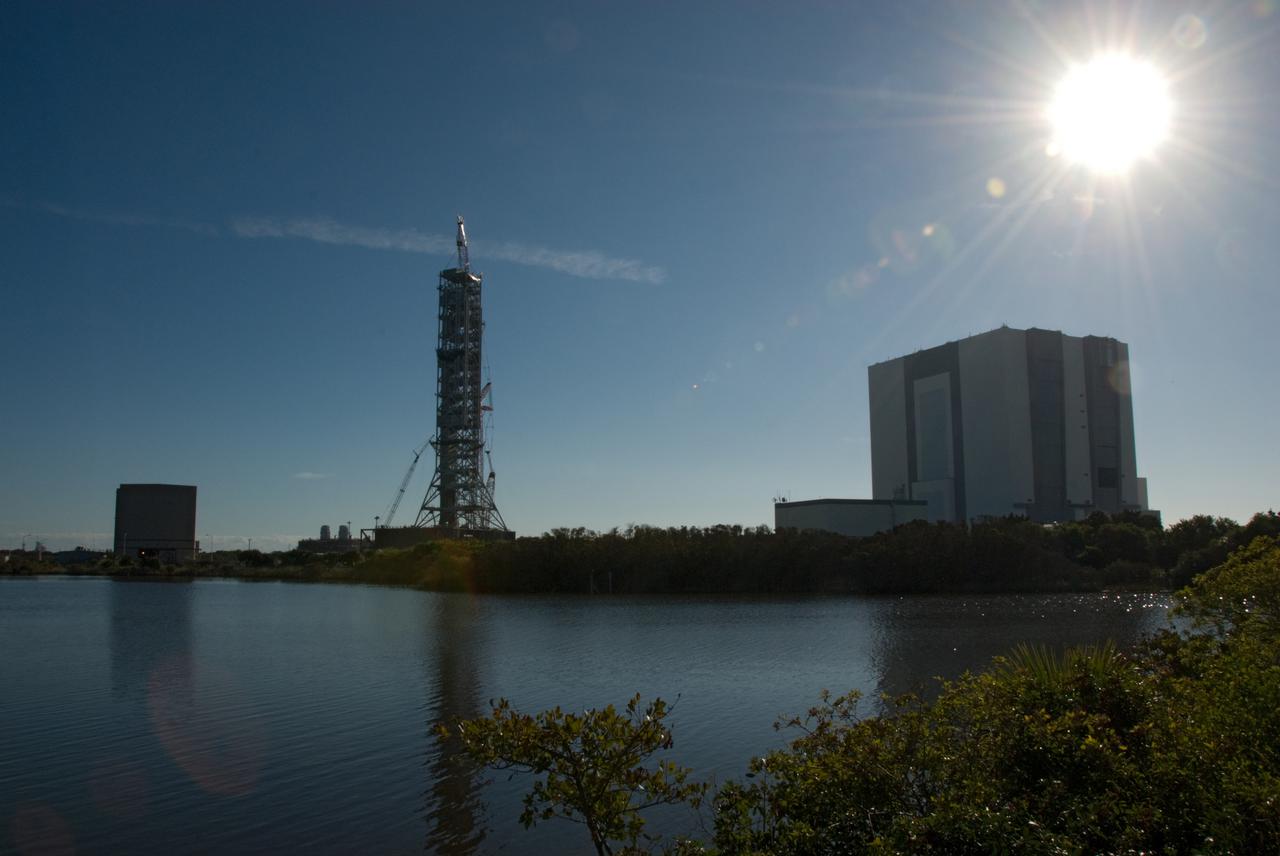
CAPE CANAVERAL, Fla. – At NASA’s Kennedy Space Center in Florida, the sun shines brightly over the Vehicle Assembly Building as a large crane lowers the tenth and final segment of a new mobile launcher, or ML, being constructed to support the Constellation Program, onto the top of the tower. When completed, the tower will be approximately 345 feet tall and have multiple platforms for personnel access. Its base is being made lighter than space shuttle mobile launcher platforms so the crawler-transporter can pick up the heavier load of the tower and a taller rocket. For information on the Constellation Program, visit http:__www.nasa.gov_constellation. Photo credit: NASA_Kim Shiflett
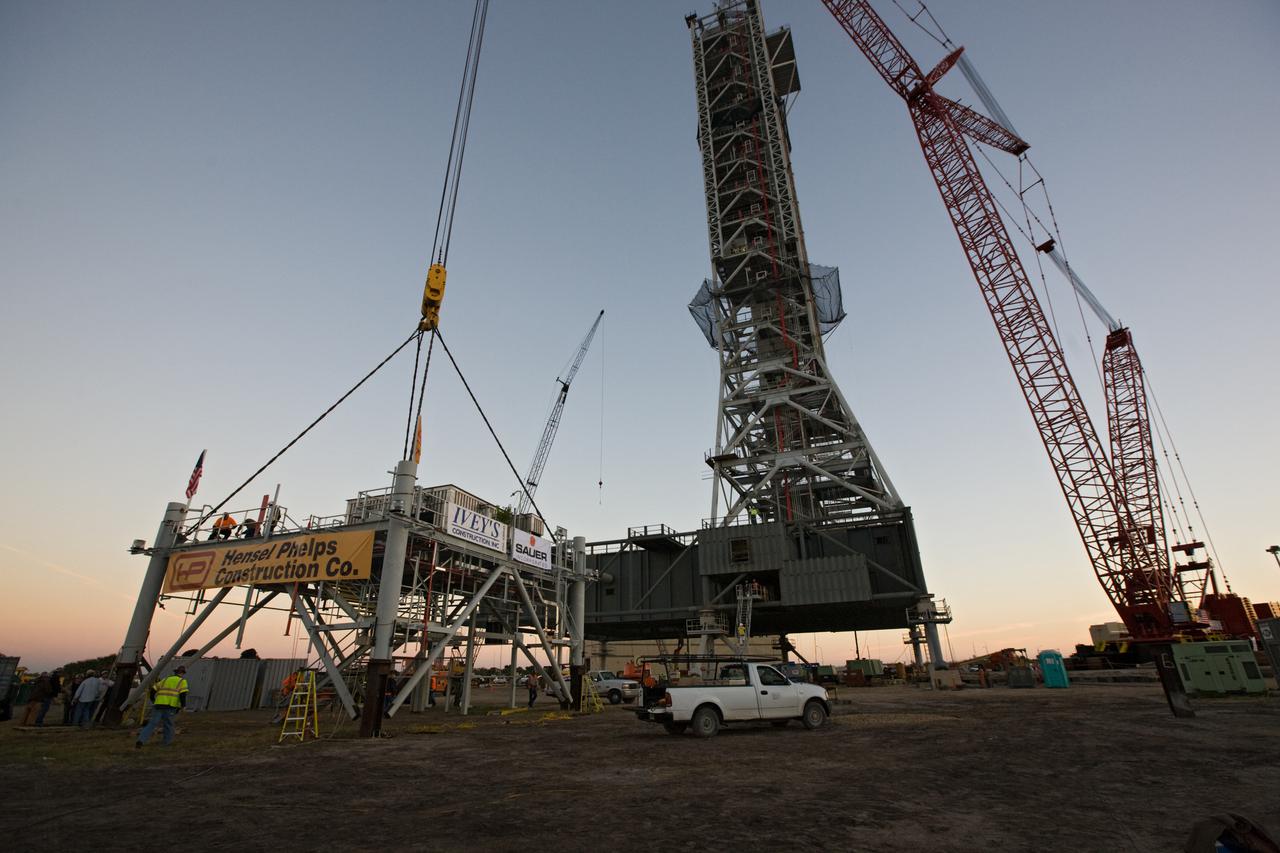
CAPE CANAVERAL, Fla. – At NASA’s Kennedy Space Center in Florida, a large crane is attached to the tenth and final tower segment of the new mobile launcher, or ML, being constructed to support the Constellation Program. When completed, the tower will be approximately 345 feet tall and have multiple platforms for personnel access. Its base is being made lighter than space shuttle mobile launcher platforms so the crawler-transporter can pick up the heavier load of the tower and a taller rocket. For information on the Constellation Program, visit http:__www.nasa.gov_constellation. Photo credit: NASA_Amanda Diller
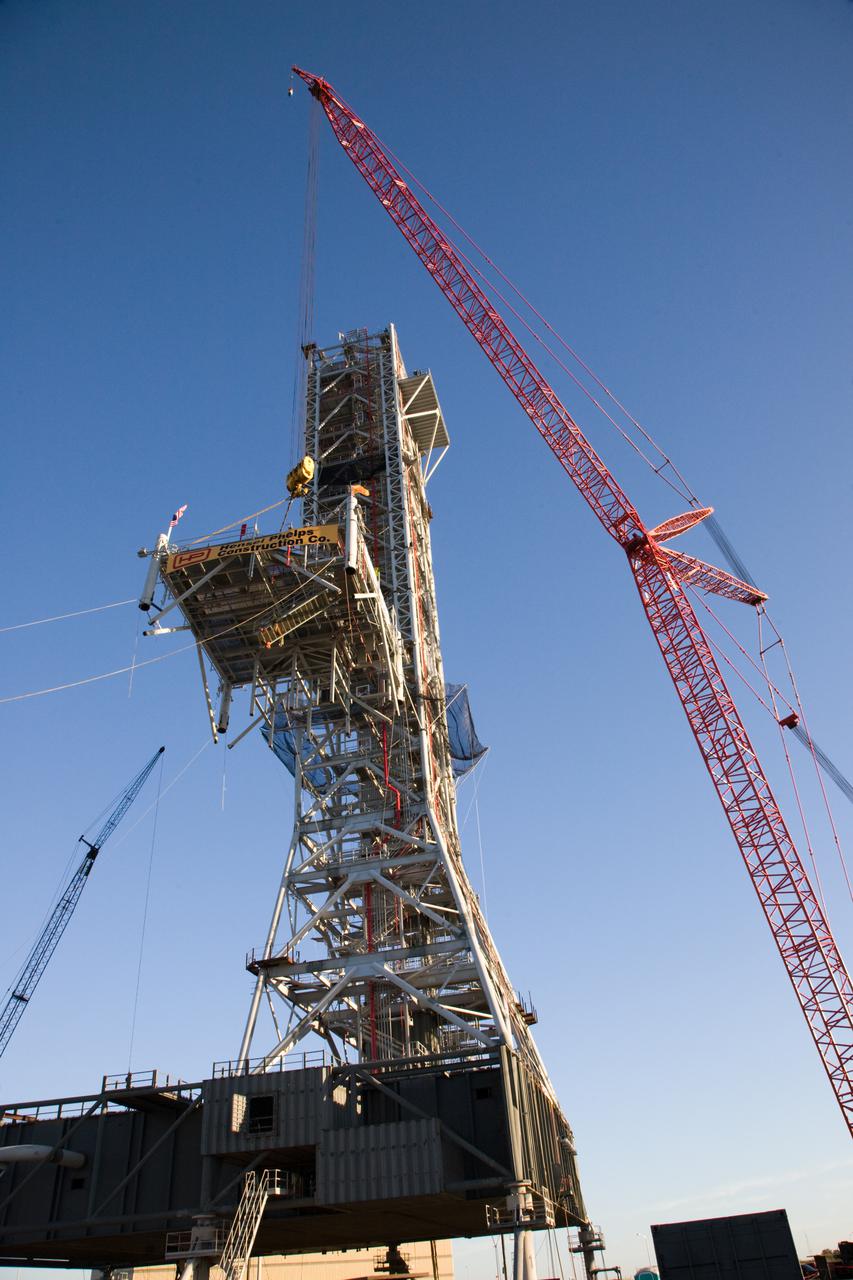
CAPE CANAVERAL, Fla. – At NASA’s Kennedy Space Center in Florida, a large crane lifts the tenth and final tower segment of a new mobile launcher, or ML, being constructed to support the Constellation Program, to the top of the growing tower. When completed, the tower will be approximately 345 feet tall and have multiple platforms for personnel access. Its base is being made lighter than space shuttle mobile launcher platforms so the crawler-transporter can pick up the heavier load of the tower and a taller rocket. For information on the Constellation Program, visit http:__www.nasa.gov_constellation. Photo credit: NASA_Amanda Diller
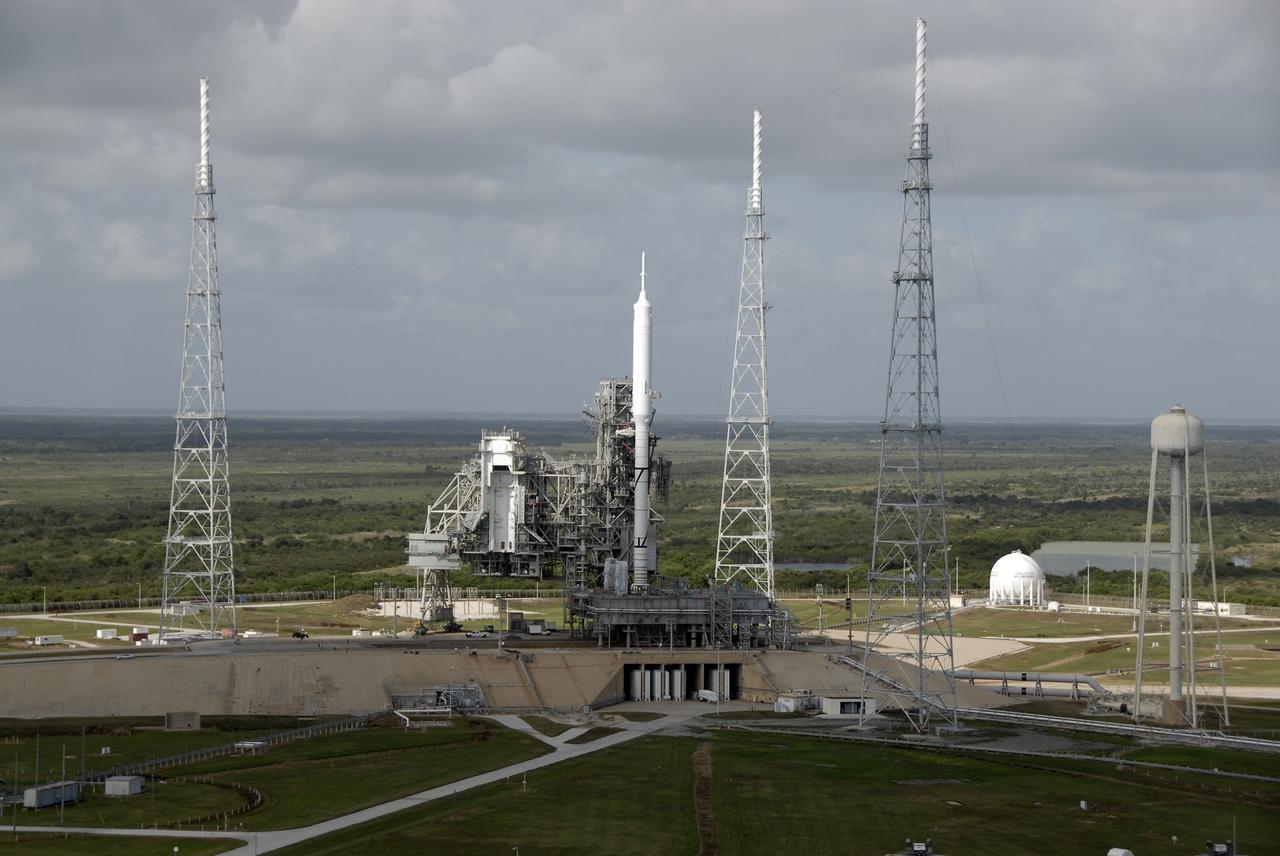
CAPE CANAVERAL, Fla. – At NASA's Kennedy Space Center in Florida, the 327-foot-tall Ares I-X rocket is the first vehicle processed on Launch Pad 39B other than the space shuttle since the Apollo Program's Saturn rockets were retired. The transfer of the pad from the Space Shuttle Program to the Constellation Program took place May 31. Pad modifications to support the Ares I-X include the removal of shuttle unique subsystems, such as the orbiter access arm and a section of the gaseous oxygen vent arm, and the installation of three 600-foot lightning towers, access platforms, environmental control systems and a vehicle stabilization system. Part of the Constellation Program, the Ares I-X is the test vehicle for the Ares I. The Ares I-X flight test is set for Oct. 27. For information on the Ares I-X vehicle and flight test, visit http://www.nasa.gov/aresIX. Photo credit: NASA/Kim Shiflett
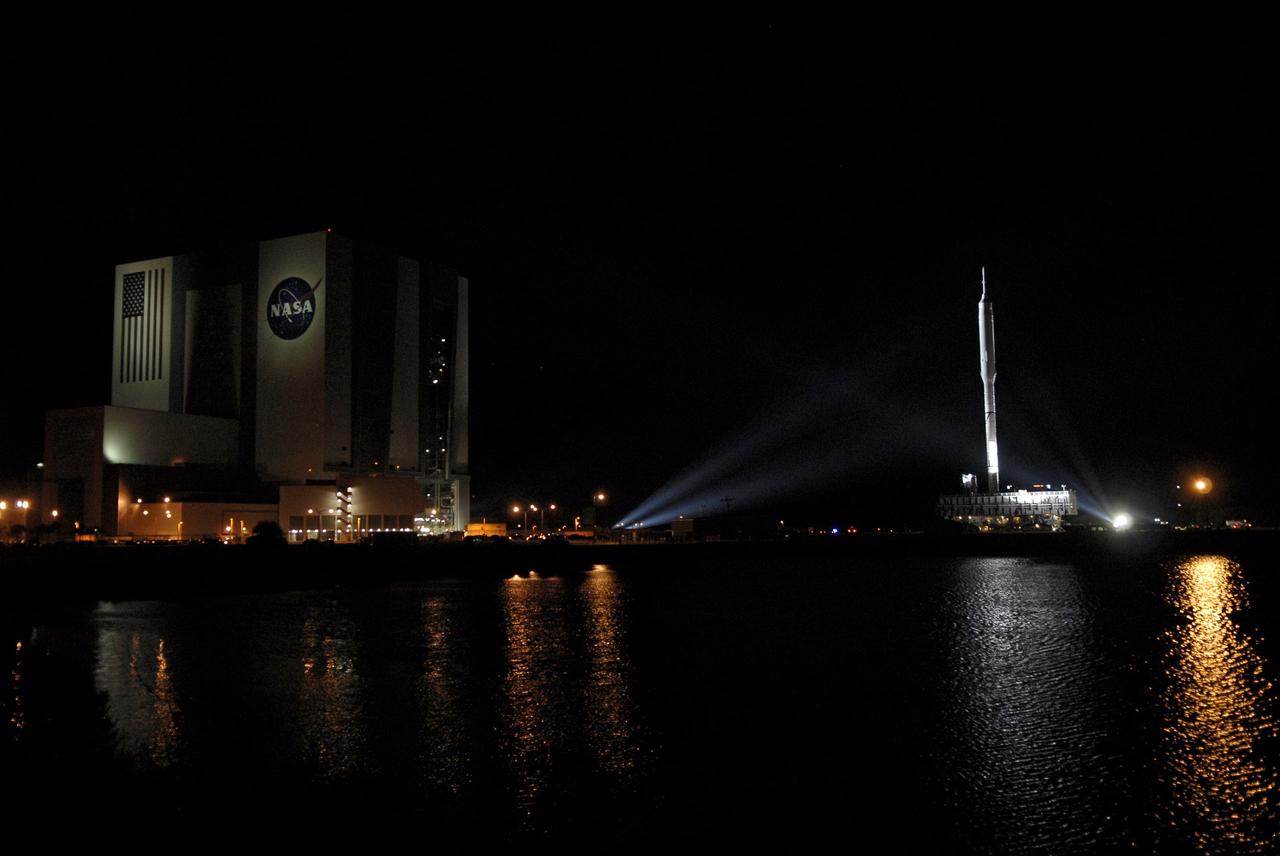
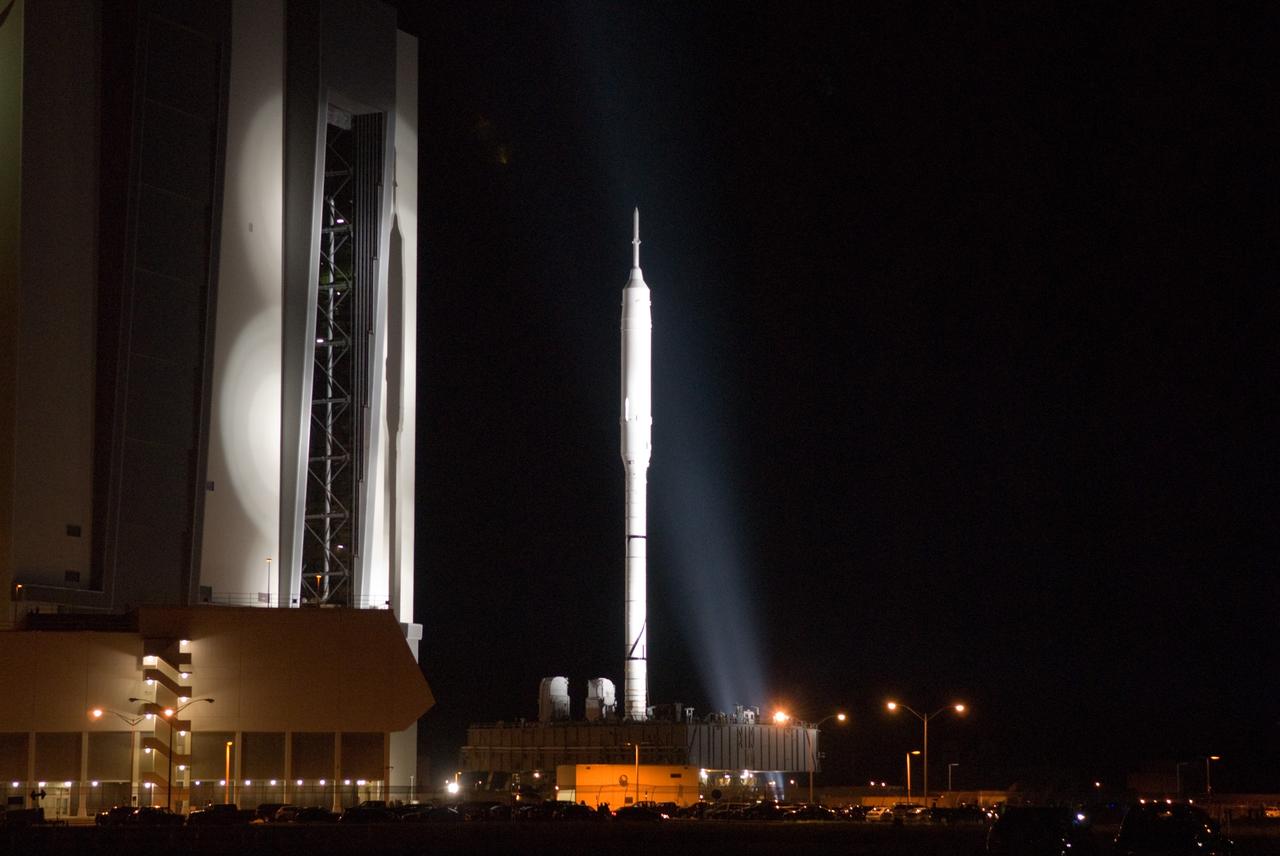
CAPE CANAVERAL, Fla. - The towering 327-foot-tall Ares I-X rocket moves away from the Vehicle Assembly Building at NASA's Kennedy Space Center in Florida. The rocket's slow, 4.2-mile journey to Launch Pad 39B began at 1:39 a.m. EDT. The transfer of the pad from the Space Shuttle Program to the Constellation Program took place May 31. Modifications made to the pad include the removal of shuttle unique subsystems, such as the orbiter access arm and a section of the gaseous oxygen vent arm, along with the installation of three 600-foot lightning towers, access platforms, environmental control systems and a vehicle stabilization system. Part of the Constellation Program, the Ares I-X is the test vehicle for the Ares I. The Ares I-X flight test is targeted for Oct. 27. For information on the Ares I-X vehicle and flight test, visit http://www.nasa.gov/aresIX. Photo credit: NASA/Kim Shiflett
CAPE CANAVERAL, Fla. – Standing tall, the Ares I-X rocket rides atop the crawler-transporter as it moves beyond the Vehicle Assembly Building at NASA's Kennedy Space Center in Florida. Its slow trek to Launch Pad 39B, known as "rollout," began at 1:39 a.m. EDT. The transfer of the pad from the Space Shuttle Program to the Constellation Program took place May 31. Modifications made to the pad include the removal of shuttle unique subsystems, such as the orbiter access arm and a section of the gaseous oxygen vent arm, along with the installation of three 600-foot lightning towers, access platforms, environmental control systems and a vehicle stabilization system. Part of the Constellation Program, the Ares I-X is the test vehicle for the Ares I. The Ares I-X flight test is targeted for Oct. 27. For information on the Ares I-X vehicle and flight test, visit http://www.nasa.gov/aresIX. Photo credit: NASA/Jim Grossmann
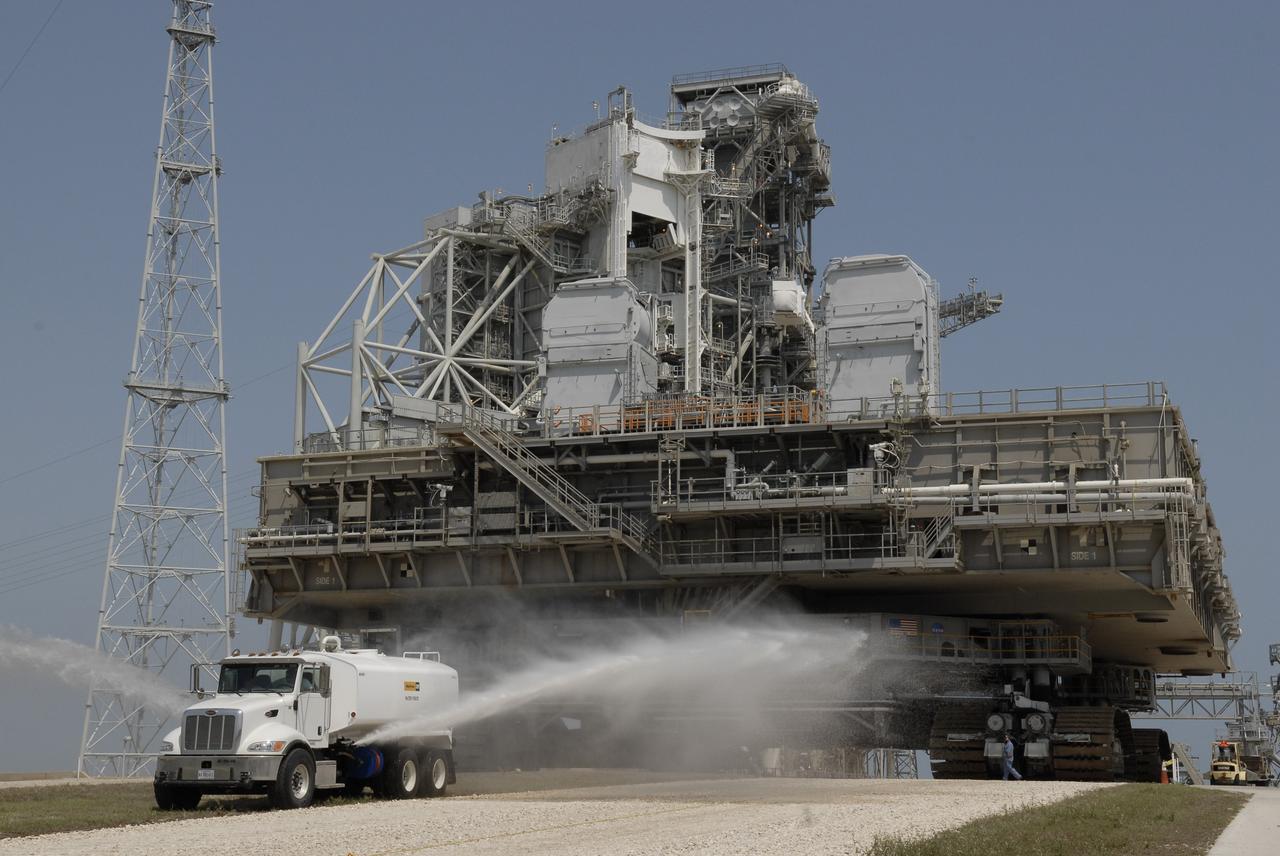
CAPE CANAVERAL, Fla. – At NASA's Kennedy Space Center in Florida, a water truck sprays the dry crawlerway in front of the crawler-transporter carrying the mobile launcher platform on top as it moves away from Kennedy's Launch pad 39B. The platform, turned over from the shuttle program to the Constellation Program last month, will be rolled into the Vehicle Assembly Building's High Bay 3 in preparation for the Ares I-X flight test this summer. Ares I-X is the test vehicle for the Ares I, which is part of the Constellation Program to return men to the moon and beyond. Ground Control System hardware was installed in MLP-1 in December 2008. The platform was moved to the launch pad to check out the installed hardware with the Launch Control Center Firing Room 1 equipment, using the actual circuits that will be used when the fully stacked Ares I-X vehicle is rolled out later this year for launch. Photo credit: NASA/Kim Shiflett
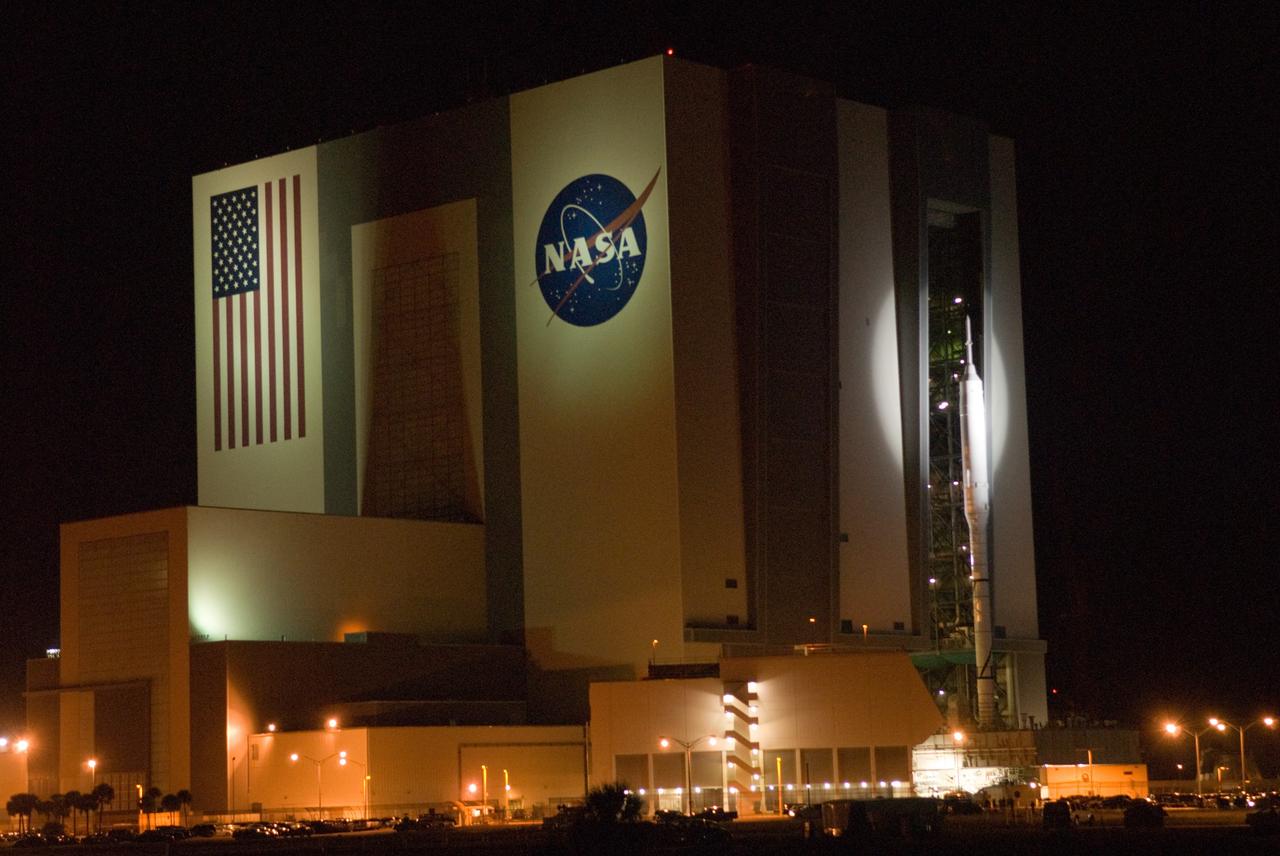
CAPE CANAVERAL, Fla. – Spotlighted against the Vehicle Assembly Building at NASA's Kennedy Space Center in Florida, the 327-foot-tall Ares I-X rocket begins its slow trek to Launch Pad 39B. The move, known as "rollout," began at 1:39 a.m. EDT. The transfer of the pad from the Space Shuttle Program to the Constellation Program took place May 31. Modifications made to the pad include the removal of shuttle unique subsystems, such as the orbiter access arm and a section of the gaseous oxygen vent arm, along with the installation of three 600-foot lightning towers, access platforms, environmental control systems and a vehicle stabilization system. Part of the Constellation Program, the Ares I-X is the test vehicle for the Ares I. The Ares I-X flight test is targeted for Oct. 27. For information on the Ares I-X vehicle and flight test, visit http://www.nasa.gov/aresIX. Photo credit: NASA/Jim Grossmann
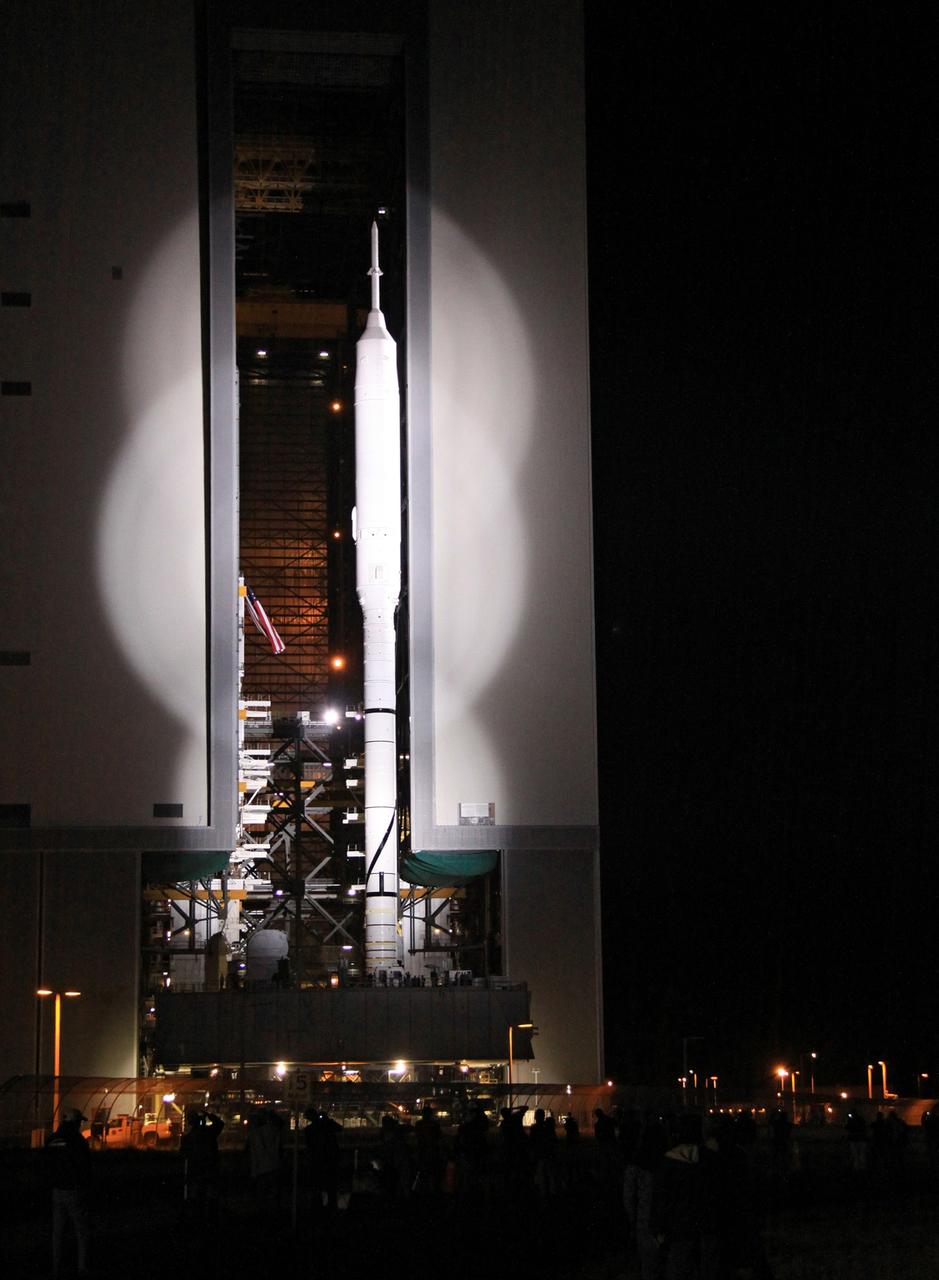
CAPE CANAVERAL, Fla. – Spotlighted in brilliant white, the 327-foot-tall Ares I-X rocket emerges from the Vehicle Assembly Building at NASA's Kennedy Space Center in Florida. The move to the launch pad, known as "rollout," began at 1:39 a.m. EDT. The transfer of the pad from the Space Shuttle Program to the Constellation Program took place May 31. Modifications made to the pad include the removal of shuttle unique subsystems, such as the orbiter access arm and a section of the gaseous oxygen vent arm, along with the installation of three 600-foot lightning towers, access platforms, environmental control systems and a vehicle stabilization system. Part of the Constellation Program, the Ares I-X is the test vehicle for the Ares I. The Ares I-X flight test is targeted for Oct. 27. For information on the Ares I-X vehicle and flight test, visit http://www.nasa.gov/aresIX. Photo credit: NASA/Jack Pfaller
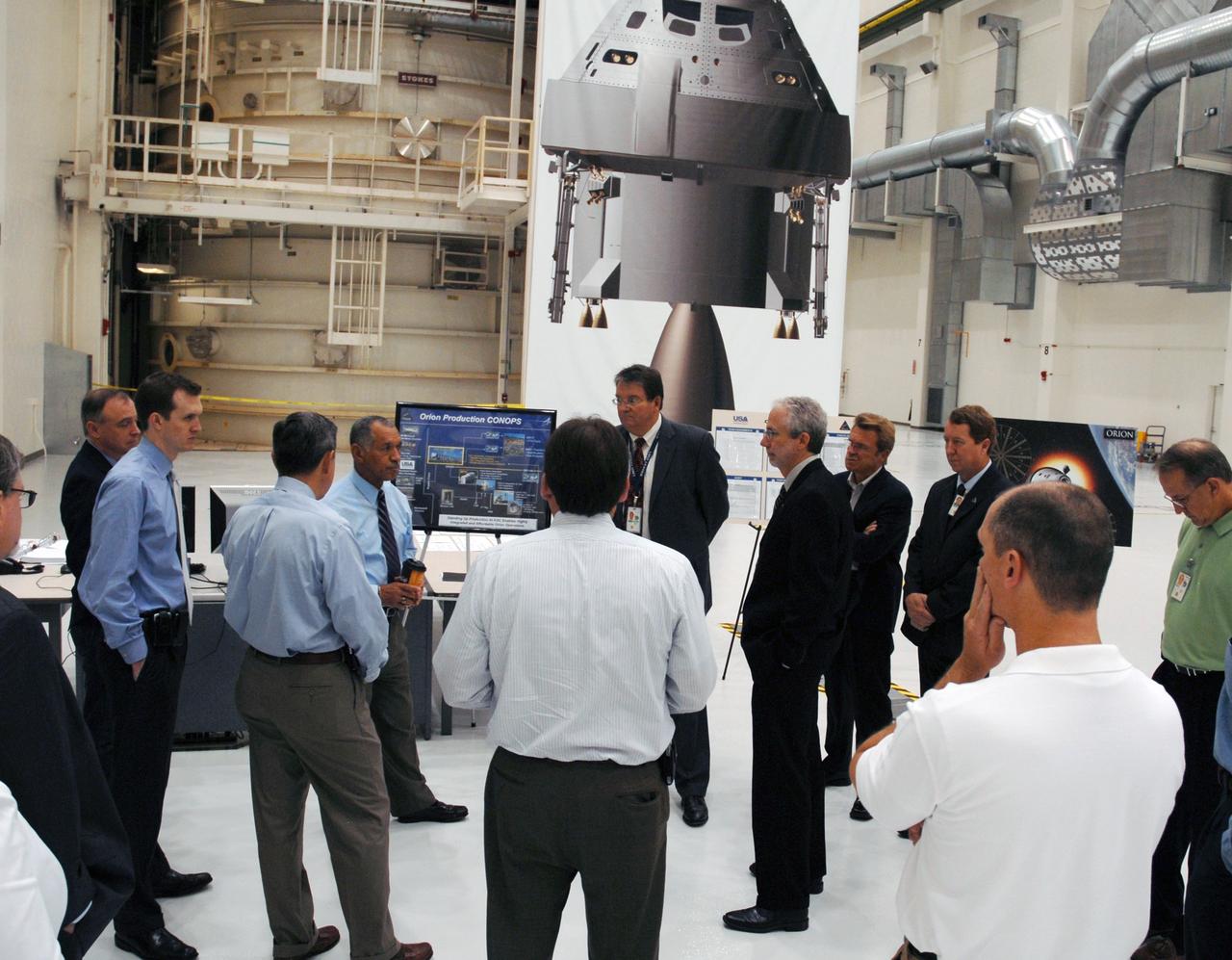
CAPE CANAVERAL, Fla. – On a tour of NASA's Kennedy Space Center in Florida, NASA Administrator Charles Bolden stops in the Operations and Checkout Building to view the high bay planned for the assembly of the Constellation Program's Orion crew vehicle. At left are Chief of Staff in the Office of the Administrator George Whitesides, Center Director Bob Cabana (back to camera) and Bolden. Facing Bolden is Lockheed Martin Space Systems Company Deputy Program Manager Richard F. Harris. Bolden is touring several facilities at Kennedy involved with NASA's Constellation Program. Bolden also was at Kennedy for several events, including the landing of space shuttle Endeavour's STS-127 mission and the signing of the joint NASA-Japan Aerospace Exploration Agency agreement defining the terms of cooperation between the agencies on the Global Precipitation Measurement, or GPM, mission. Photo credit: NASA/Kim Shiflett
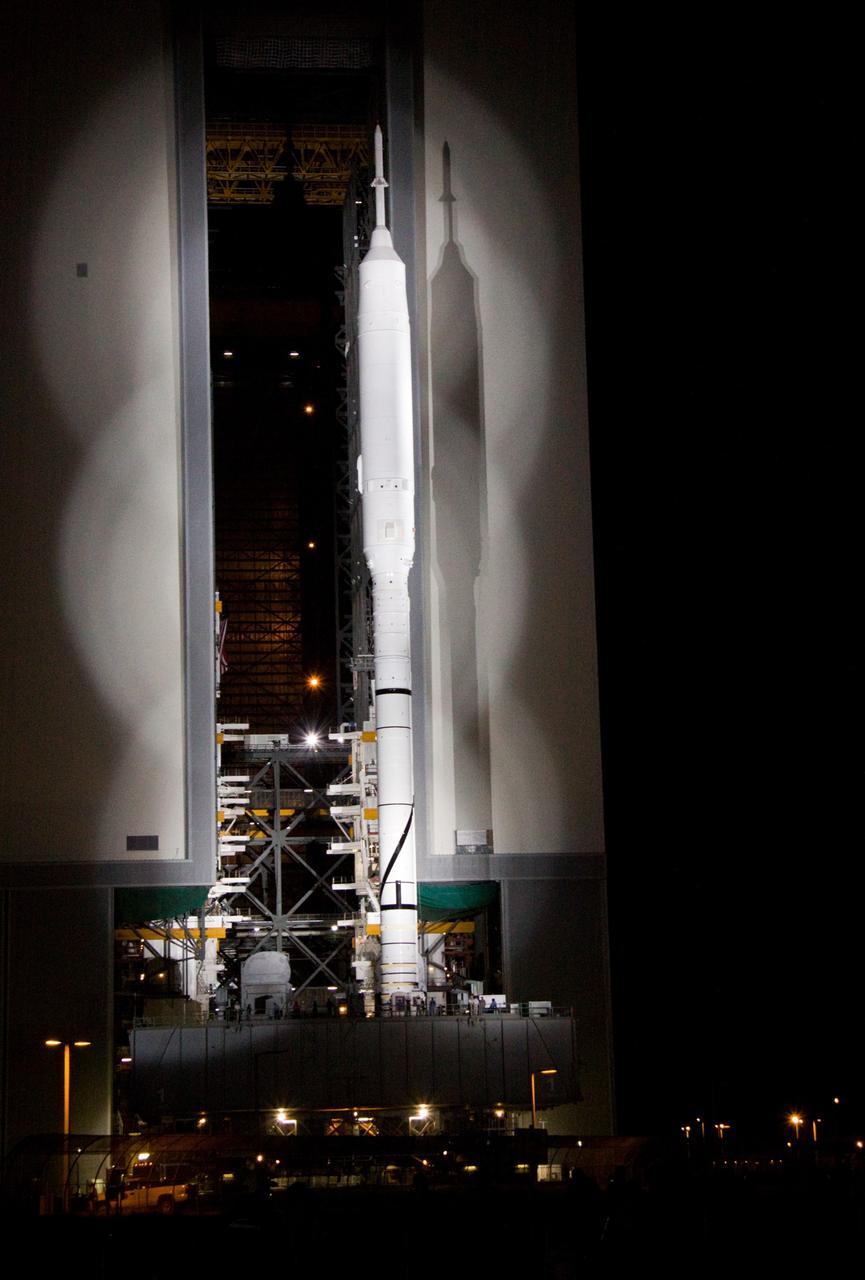
CAPE CANAVERAL, Fla. – The 327-foot-tall Ares I-X rocket clears the door of the Vehicle Assembly Building at NASA's Kennedy Space Center in Florida, on its way to Launch Pad 39B. The move to the launch pad, known as "rollout," began at 1:39 a.m. EDT. The transfer of the pad from the Space Shuttle Program to the Constellation Program took place May 31. Modifications made to the pad include the removal of shuttle unique subsystems, such as the orbiter access arm and a section of the gaseous oxygen vent arm, along with the installation of three 600-foot lightning towers, access platforms, environmental control systems and a vehicle stabilization system. Part of the Constellation Program, the Ares I-X is the test vehicle for the Ares I. The Ares I-X flight test is targeted for Oct. 27. For information on the Ares I-X vehicle and flight test, visit http://www.nasa.gov/aresIX. Photo credit: NASA/Jack Pfaller
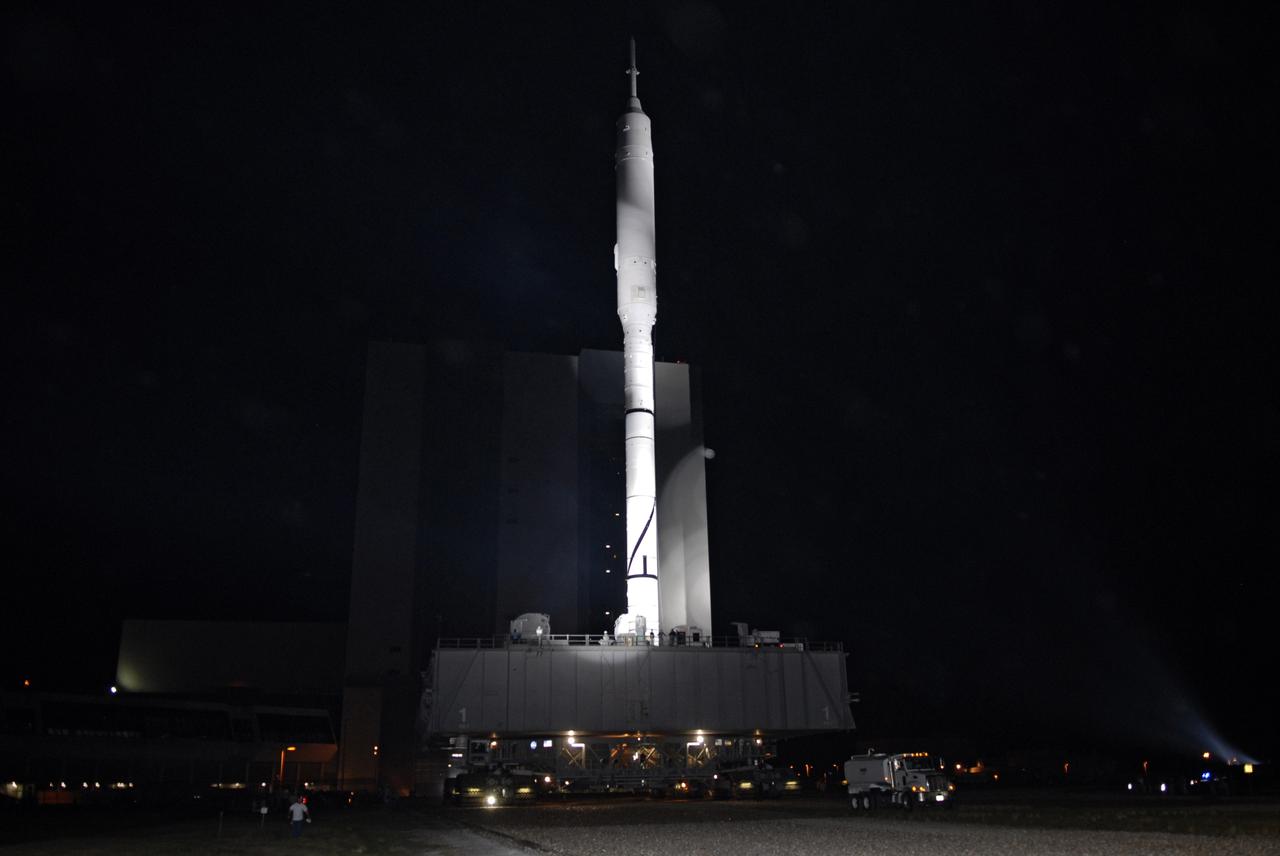
CAPE CANAVERAL, Fla. - The Ares I-X rocket heads toward Launch Pad 39B at NASA's Kennedy Space Center in Florida, riding atop a crawler-transporter. The 4.2-mile trip to the pad from the massive Vehicle Assembly Building began at 1:39 a.m. EDT. The transfer of the pad from the Space Shuttle Program to the Constellation Program took place May 31. Modifications made to the pad include the removal of shuttle unique subsystems, such as the orbiter access arm and a section of the gaseous oxygen vent arm, along with the installation of three 600-foot lightning towers, access platforms, environmental control systems and a vehicle stabilization system. Part of the Constellation Program, the Ares I-X is the test vehicle for the Ares I. The Ares I-X flight test is targeted for Oct. 27. For information on the Ares I-X vehicle and flight test, visit http://www.nasa.gov/aresIX. Photo credit: NASA/Kim Shiflett
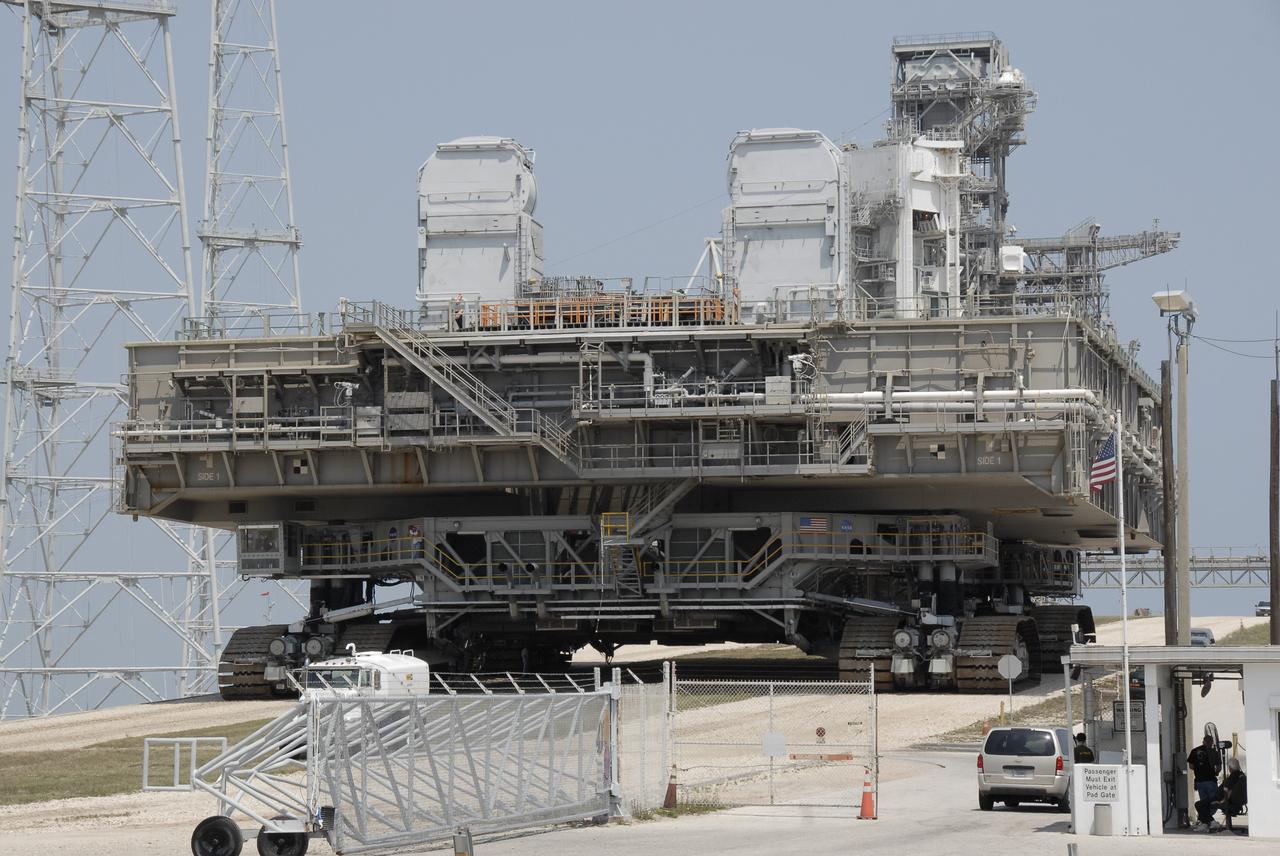
CAPE CANAVERAL, Fla. – At NASA's Kennedy Space Center in Florida, the mobile launcher platform that was turned over from the shuttle program to the Constellation Program last month moves off Kennedy's Launch Pad 39B via the crawler-transporter underneath. The platform will be rolled into the Vehicle Assembly Building's High Bay 3 in preparation for the Ares I-X flight test this summer. Ares I-X is the test vehicle for the Ares I, which is part of the Constellation Program to return men to the moon and beyond. Ground Control System hardware was installed in MLP-1 in December 2008. The platform was moved to the launch pad to check out the installed hardware with the Launch Control Center Firing Room 1 equipment, using the actual circuits that will be used when the fully stacked Ares I-X vehicle is rolled out later this year for launch. Photo credit: NASA/Kim Shiflett
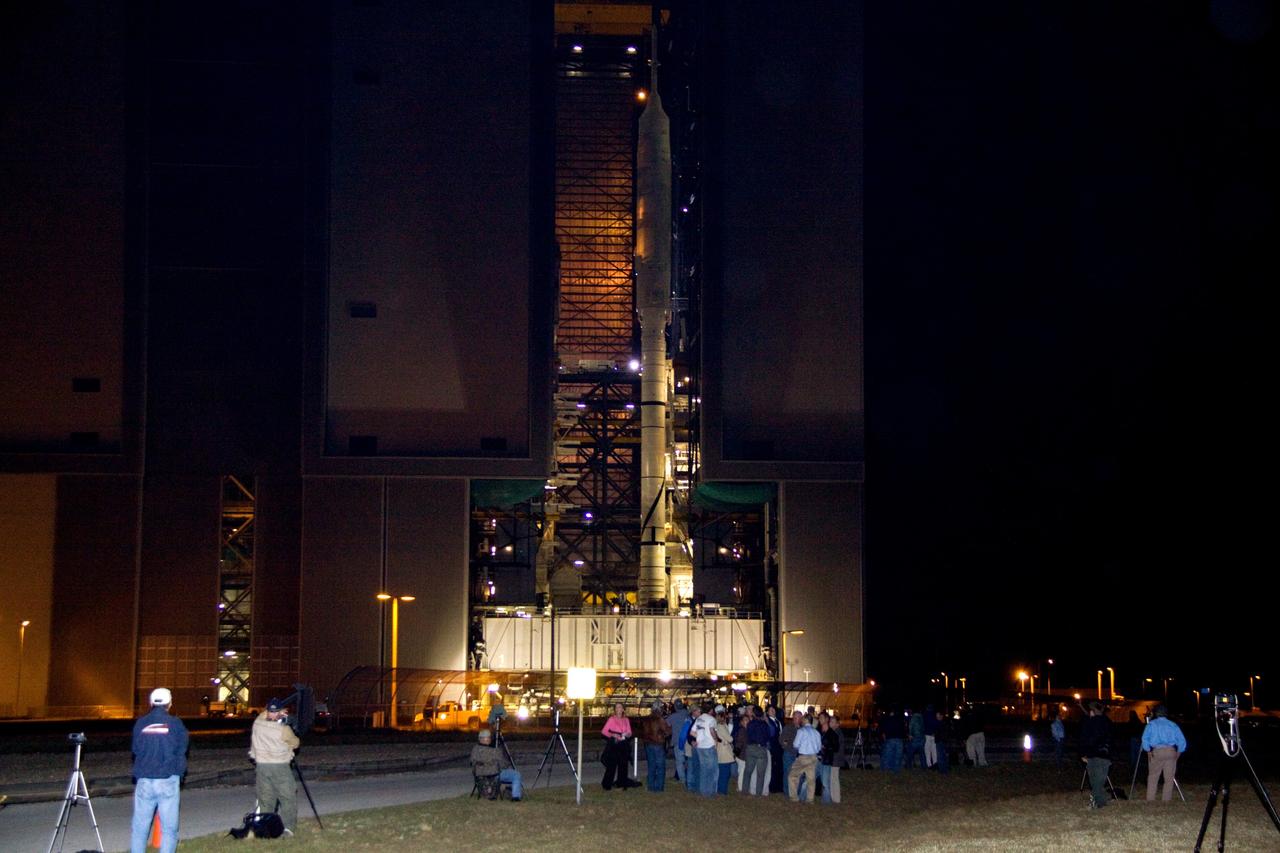
CAPE CANAVERAL, Fla. – Outside the massive Vehicle Assembly Building at NASA's Kennedy Space Center in Florida, members of the news media (foreground) wait in the dark for the rollout of the Ares I-X to begin. The rocket will travel the 4.2 miles to Launch Pad 39B atop the crawler-transporter. The transfer of the pad from the Space Shuttle Program to the Constellation Program took place May 31. Modifications made to the pad include the removal of shuttle unique subsystems, such as the orbiter access arm and a section of the gaseous oxygen vent arm, along with the installation of three 600-foot lightning towers, access platforms, environmental control systems and a vehicle stabilization system. Part of the Constellation Program, the Ares I-X is the test vehicle for the Ares I. The Ares I-X flight test is targeted for Oct. 27. For information on the Ares I-X vehicle and flight test, visit http://www.nasa.gov/aresIX. Photo credit: NASA/Jack Pfaller
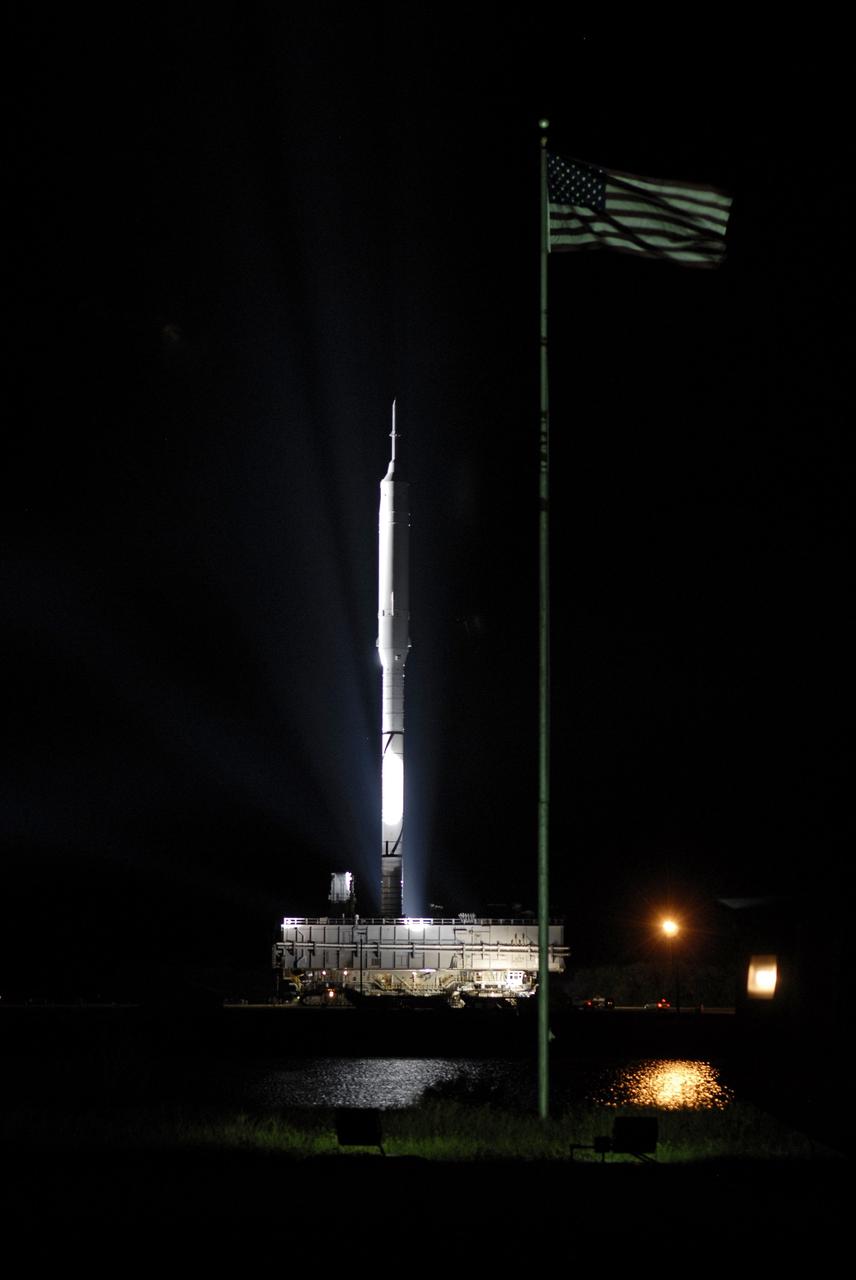
CAPE CANAVERAL, Fla. - The American flag waves as the Ares I-X rocket passes by on its slow trek to Launch Pad 39B at NASA's Kennedy Space Center in Florida. The rocket, riding atop a crawler-transporter, began the 4.2-mile journey at 1:39 a.m. EDT. The transfer of the pad from the Space Shuttle Program to the Constellation Program took place May 31. Modifications made to the pad include the removal of shuttle unique subsystems, such as the orbiter access arm and a section of the gaseous oxygen vent arm, along with the installation of three 600-foot lightning towers, access platforms, environmental control systems and a vehicle stabilization system. Part of the Constellation Program, the Ares I-X is the test vehicle for the Ares I. The Ares I-X flight test is targeted for Oct. 27. For information on the Ares I-X vehicle and flight test, visit http://www.nasa.gov/aresIX. Photo credit: NASA/Kim Shiflett
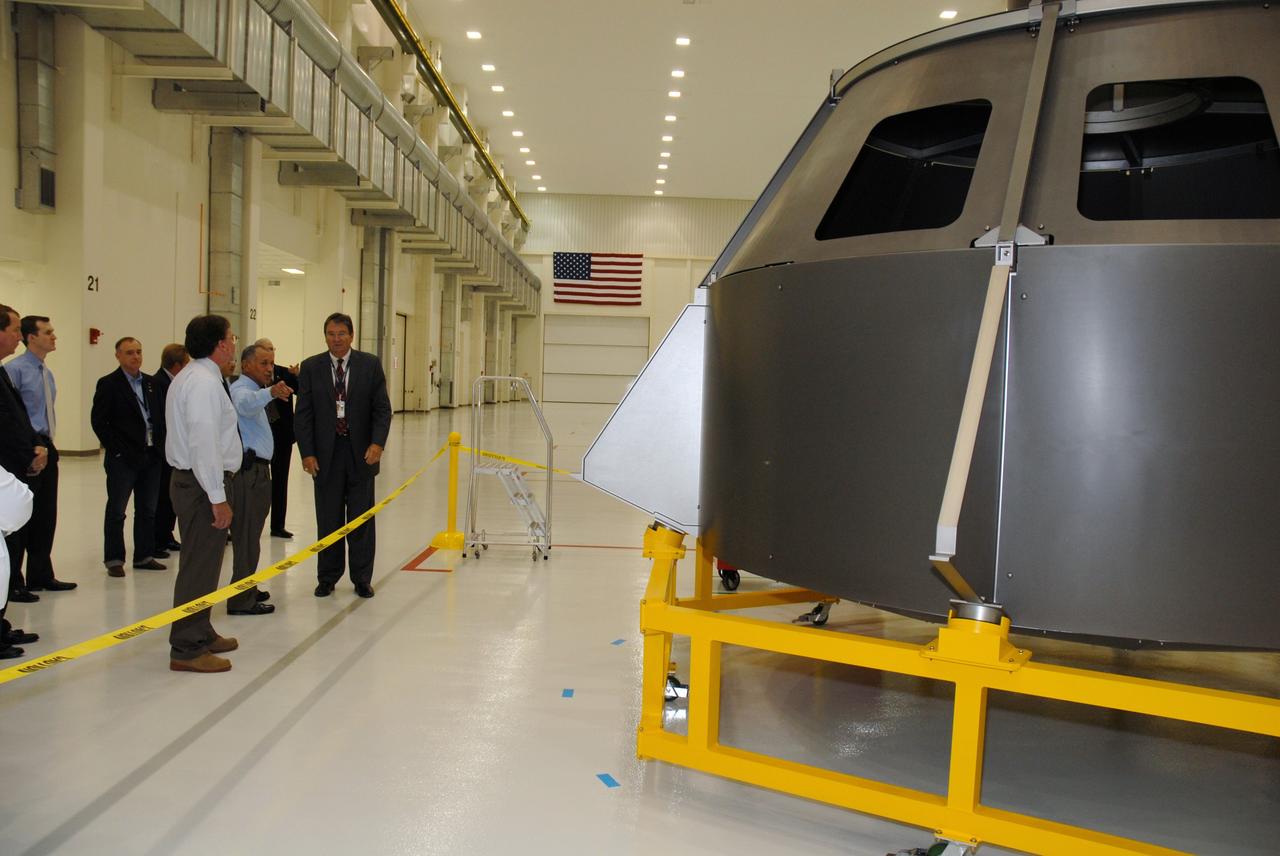
CAPE CANAVERAL, Fla. – On a tour of NASA's Kennedy Space Center in Florida, NASA Administrator Charles Bolden (pointing, at left) stops in the Operations and Checkout Building to view the high bay planned for the assembly of the Constellation Program's Orion crew vehicle (seen at right). On the right is Lockheed Martin Space Systems Company Deputy Program Manager Richard F. Harris. Bolden is touring several facilities at Kennedy involved with NASA's Constellation Program. Bolden also was at Kennedy for several events, including the landing of space shuttle Endeavour's STS-127 mission and the signing of the joint NASA-Japan Aerospace Exploration Agency agreement defining the terms of cooperation between the agencies on the Global Precipitation Measurement, or GPM, mission. Photo credit: NASA/Kim Shiflett
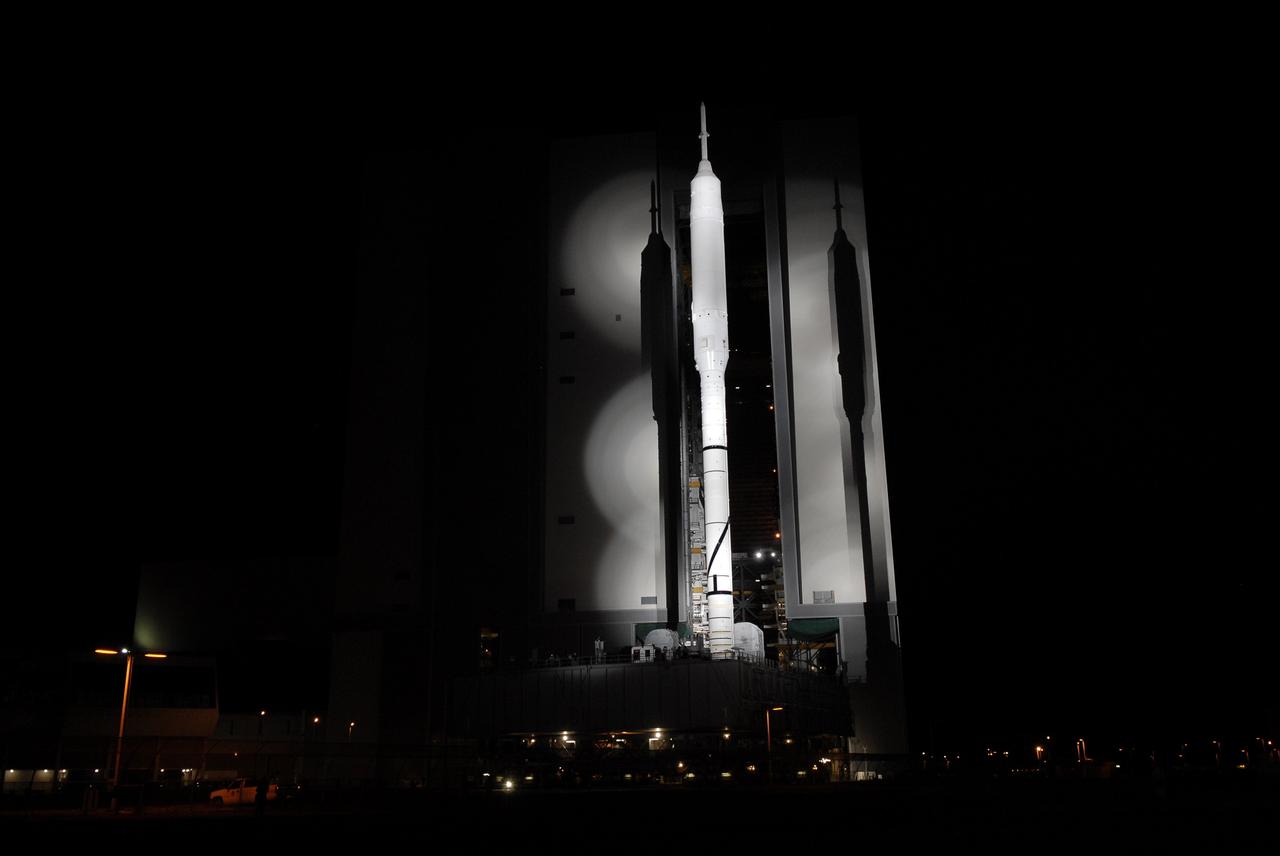
CAPE CANAVERAL, Fla. - The towering 327-foot-tall Ares I-X rocket rides aboard a crawler-transporter as it exits the massive Vehicle Assembly Building at NASA's Kennedy Space Center in Florida. The rocket is bolted to its mobile launcher platform for the move to the launch pad. The transfer of the pad from the Space Shuttle Program to the Constellation Program took place May 31. Modifications made to the pad include the removal of shuttle unique subsystems, such as the orbiter access arm and a section of the gaseous oxygen vent arm, along with the installation of three 600-foot lightning towers, access platforms, environmental control systems and a vehicle stabilization system. Part of the Constellation Program, the Ares I-X is the test vehicle for the Ares I. The Ares I-X flight test is targeted for Oct. 27. For information on the Ares I-X vehicle and flight test, visit http://www.nasa.gov/aresIX. Photo credit: NASA/Kim Shiflett
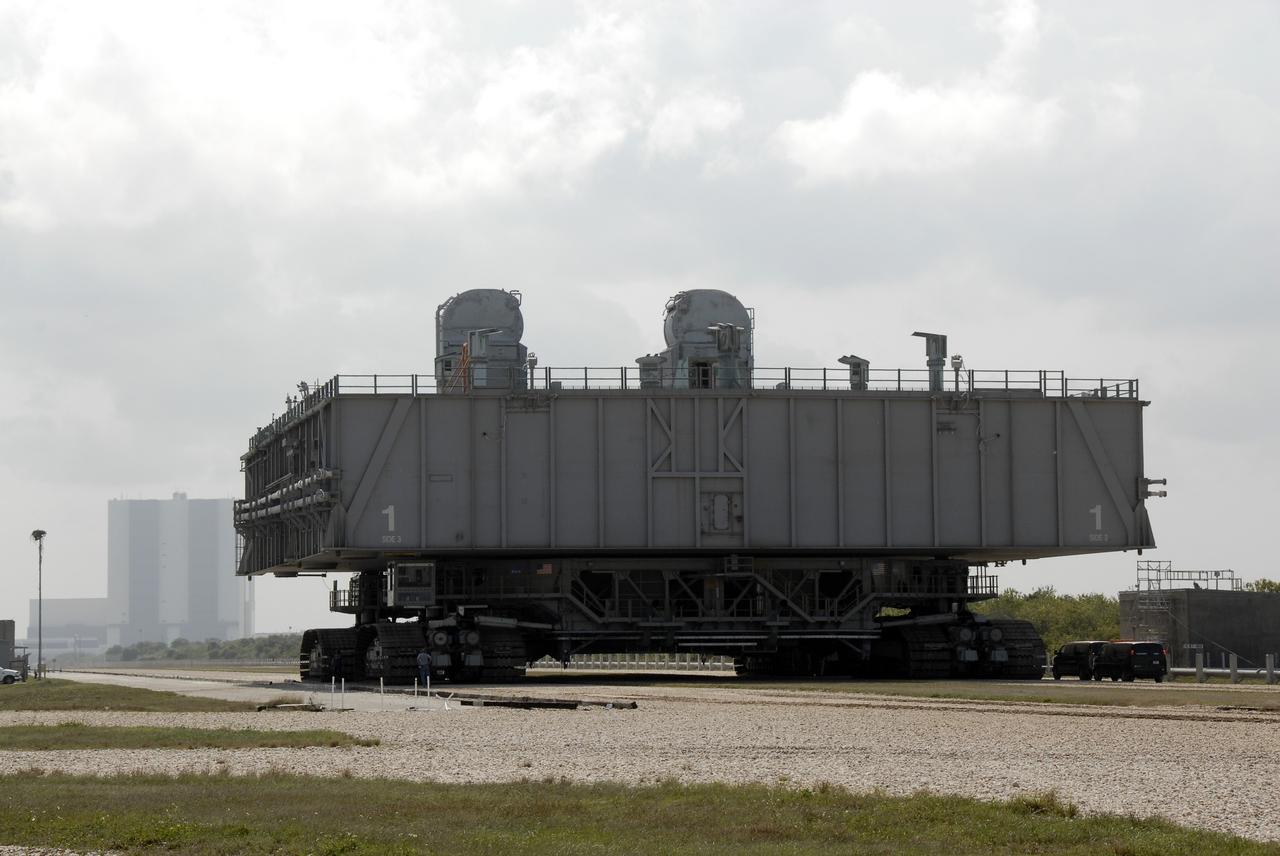
CAPE CANAVERAL, Fla. – At NASA's Kennedy Space Center in Florida, the mobile launcher platform that was turned over from the shuttle program to the Constellation Program last month moves along the crawlerway via the crawler-transporter underneath. In the background is the Vehicle Assembly Building. The platform will be rolled into the VAB's High Bay 3 in preparation for the Ares I-X flight test this summer. Ares I-X is the test vehicle for the Ares I, which is part of the Constellation Program to return men to the moon and beyond. Ground Control System hardware was installed in MLP-1 in December 2008. The platform was moved to the launch pad to check out the installed hardware with the Launch Control Center Firing Room 1 equipment, using the actual circuits that will be used when the fully stacked Ares I-X vehicle is rolled out later this year for launch. Photo credit: NASA/Kim Shiflett
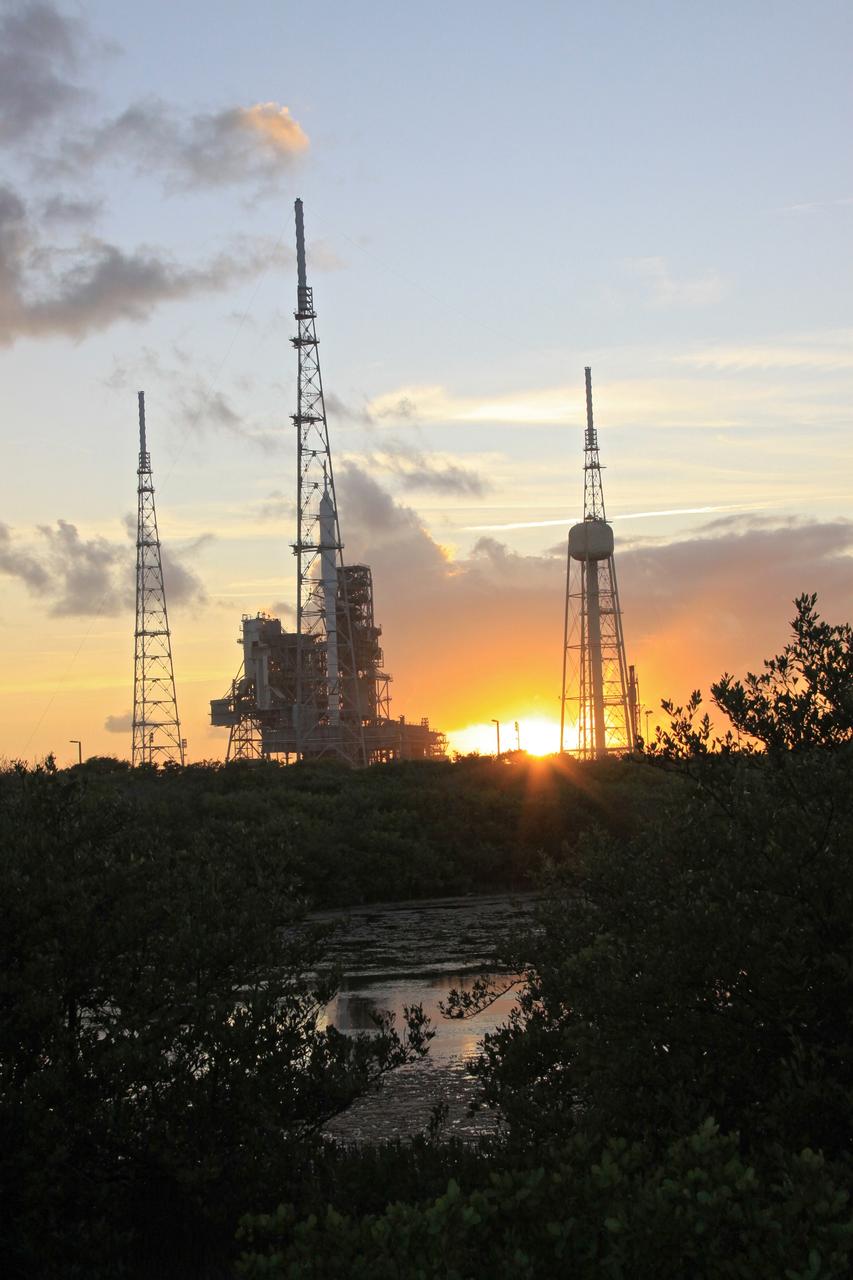
CAPE CANAVERAL, Fla. – As the sun falls behind Launch Pad 39B at NASA's Kennedy Space Center in Florida, the rotating service structure, or RSS, has been retracted from the 327-foot-tall Ares I-X rocket to allow a full test of the rocket to be conducted. The transfer of the pad from the Space Shuttle Program to the Constellation Program took place May 31. Modifications made to the pad include the removal of shuttle unique subsystems, such as the orbiter access arm and a section of the gaseous oxygen vent arm, along with the installation of three 600-foot lightning towers, access platforms, environmental control systems and a vehicle stabilization system. Part of the Constellation Program, the Ares I-X is the test vehicle for the Ares I. The Ares I-X flight test is targeted for Oct. 27. For information on the Ares I-X vehicle and flight test, visit http://www.nasa.gov/aresIX. Photo credit: NASA/Jack Pfaller
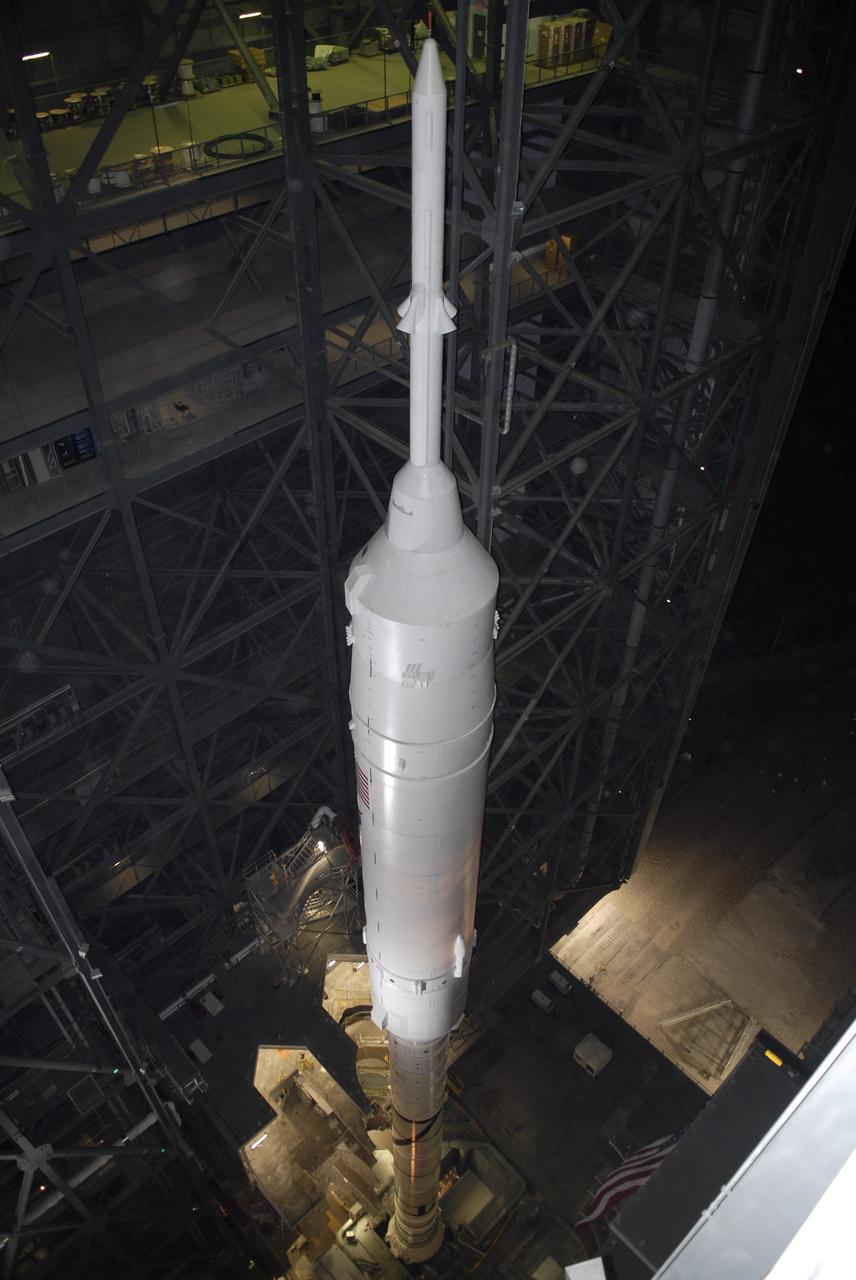
CAPE CANAVERAL, Fla. - Inside the Vehicle Assembly Building at NASA's Kennedy Space Center in Florida, the 327-foot-tall Ares I-X rocket stands on its mobile launcher platform. The transfer of the pad from the Space Shuttle Program to the Constellation Program took place May 31. Modifications made to the pad include the removal of shuttle unique subsystems, such as the orbiter access arm and a section of the gaseous oxygen vent arm, along with the installation of three 600-foot lightning towers, access platforms, environmental control systems and a vehicle stabilization system. Part of the Constellation Program, the Ares I-X is the test vehicle for the Ares I. The Ares I-X flight test is targeted for Oct. 27. For information on the Ares I-X vehicle and flight test, visit http://www.nasa.gov/aresIX. Photo credit: NASA/Kim Shiflett