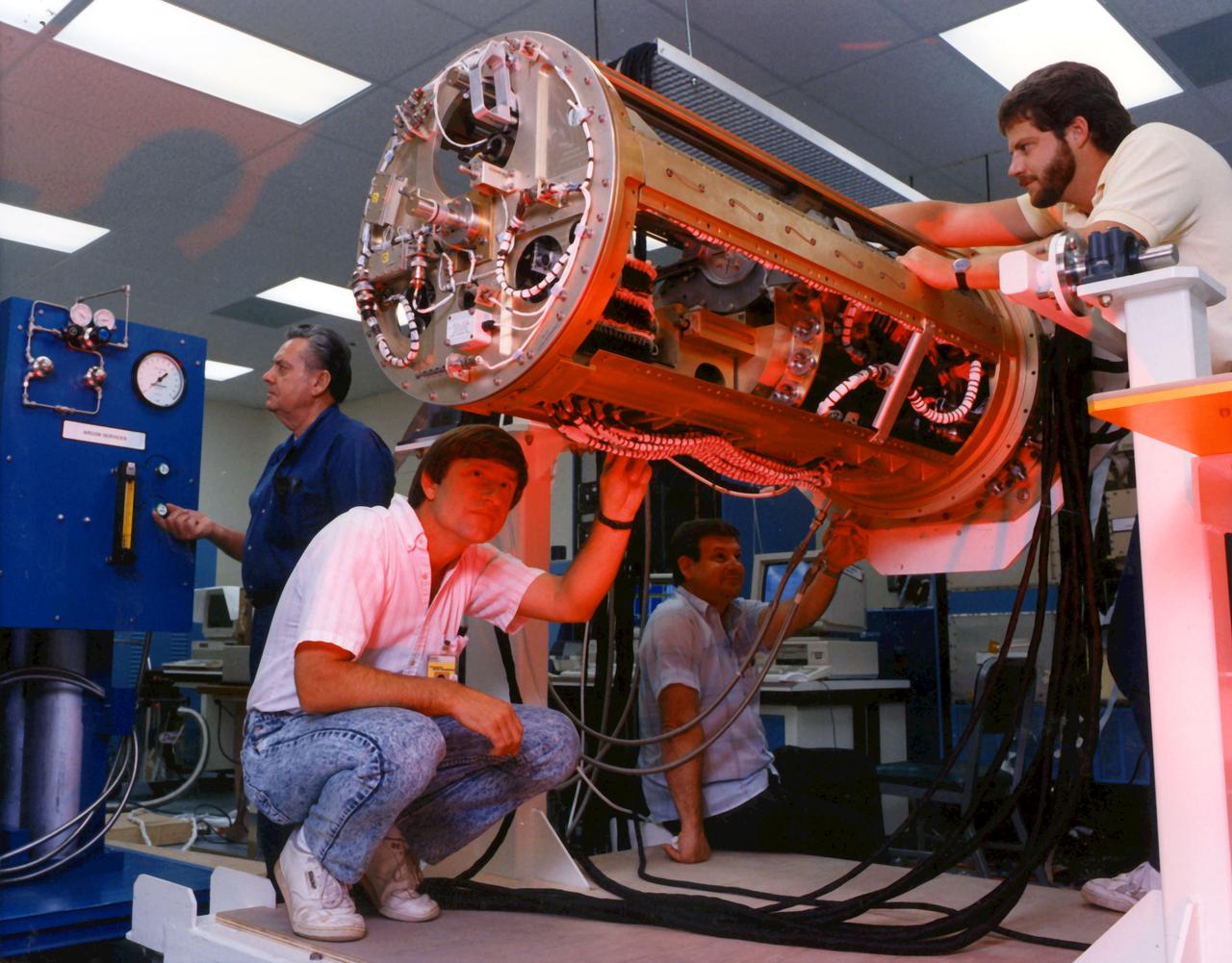
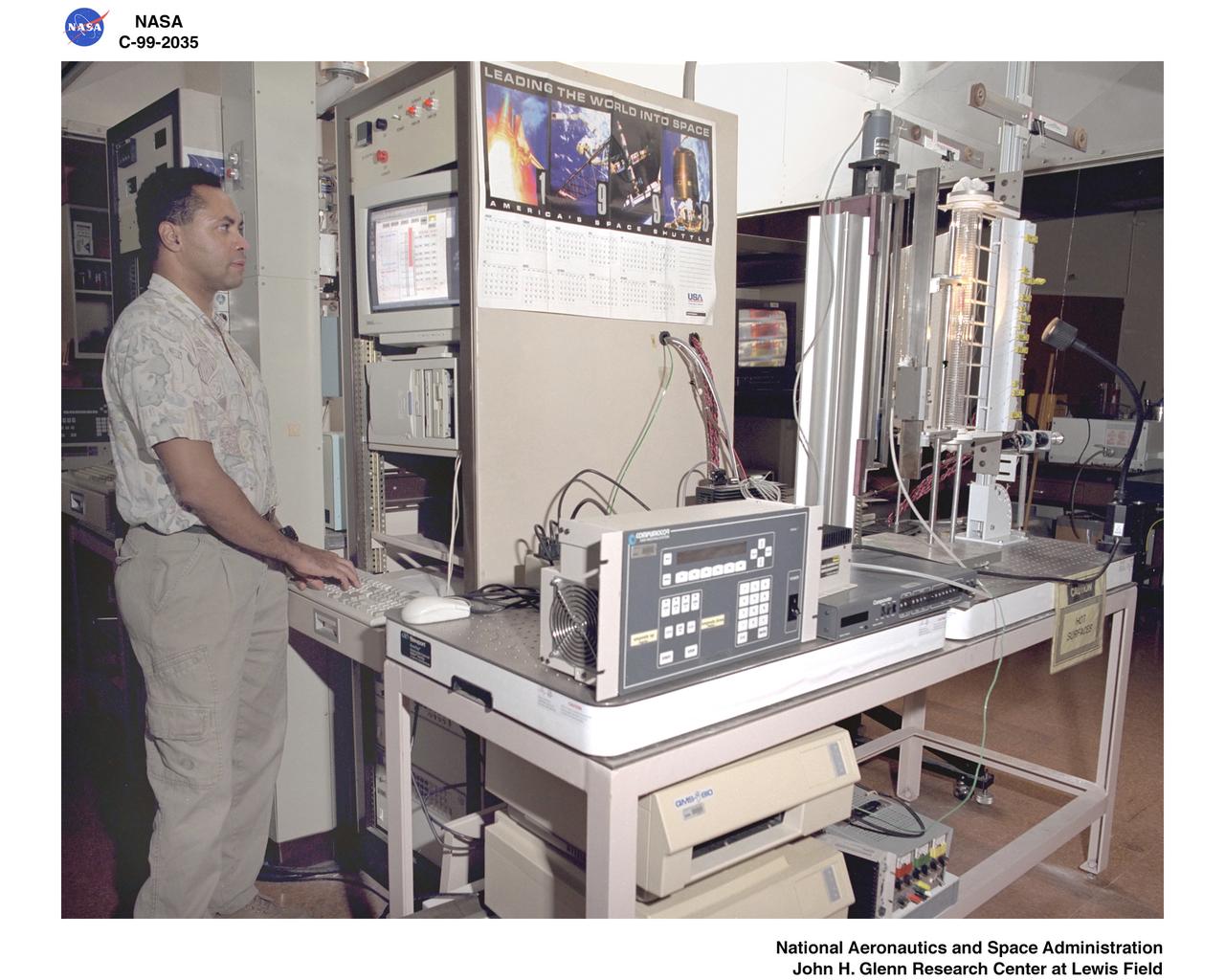
Crystal Growth Furnace (CGF) Being Tested at Manufacturing Facilty
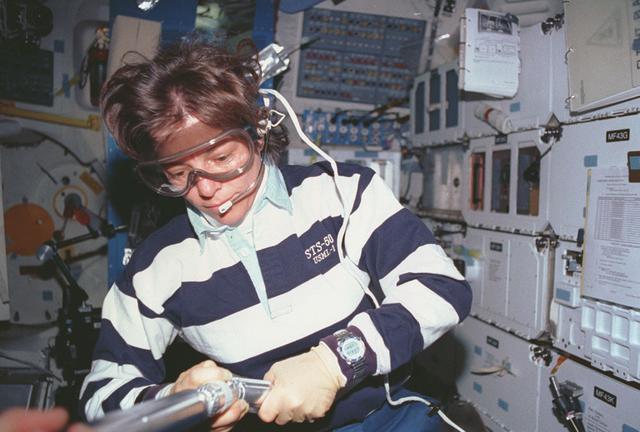
Space Shuttle Columbia (STS-50) astronaut Bornie Dunbar wears protective goggles to assemble a zeolite sample cartridge for the Crystal Growth Furnace (CGF) in the United States Microgravity Laboratory-1 (USML-1) science module.
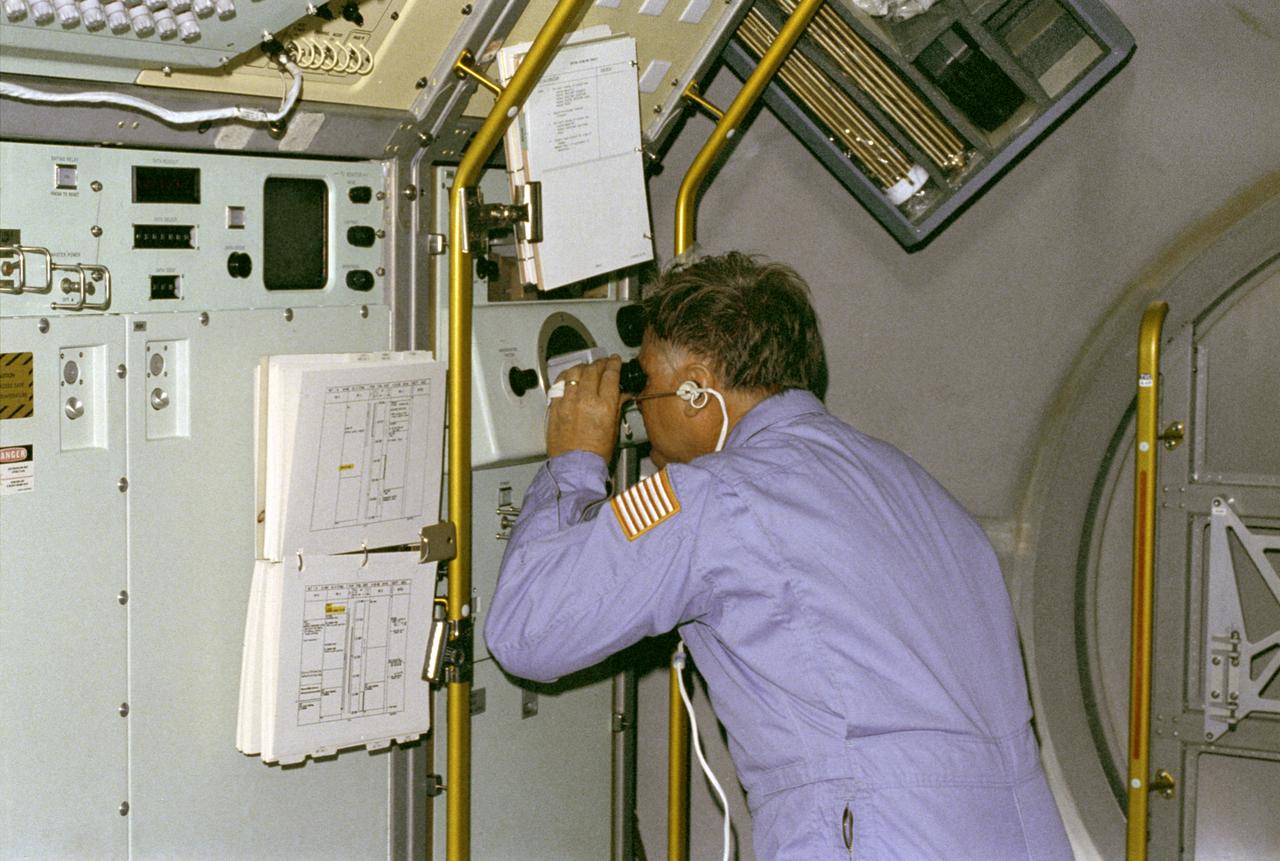
The primary purpose of the Spacelab-3 mission was to conduct materials science experiments in a stable low-gravity environment. In addition, the crew performed research in life sciences, fluid mechanics, atmospheric science, and astronomy. Spacelab-3 was equipped with several new minilabs, special facilities that would be used repeatedly on future flights. Two elaborate crystal growth furnaces, a life support and housing facility for small animals, and two types of apparatus for the study of fluids were evaluated on their inaugural flight. In this photograph, astronaut Don Lind observes the mercuric iodide growth experiment through a microscope at the vapor crystal growth furnace. The goals of this investigation were to grow near-perfect single crystals of mercuric iodide and to gain improved understanding of crystal growth by a vapor process. Mercuric iodide crystals have practical use as sensitive x-ray and gamma-ray detectors, and in portable detector devices for nuclear power plant monitoring, natural resource prospecting, biomedical applications in diagnosis and therapy, and in astronomical instruments. Managed by the Marshall Space Flight Center, Spacelab-3 (STS-51B) was launched aboard the Space Shuttle Orbiter Challenger on April 29, 1985.
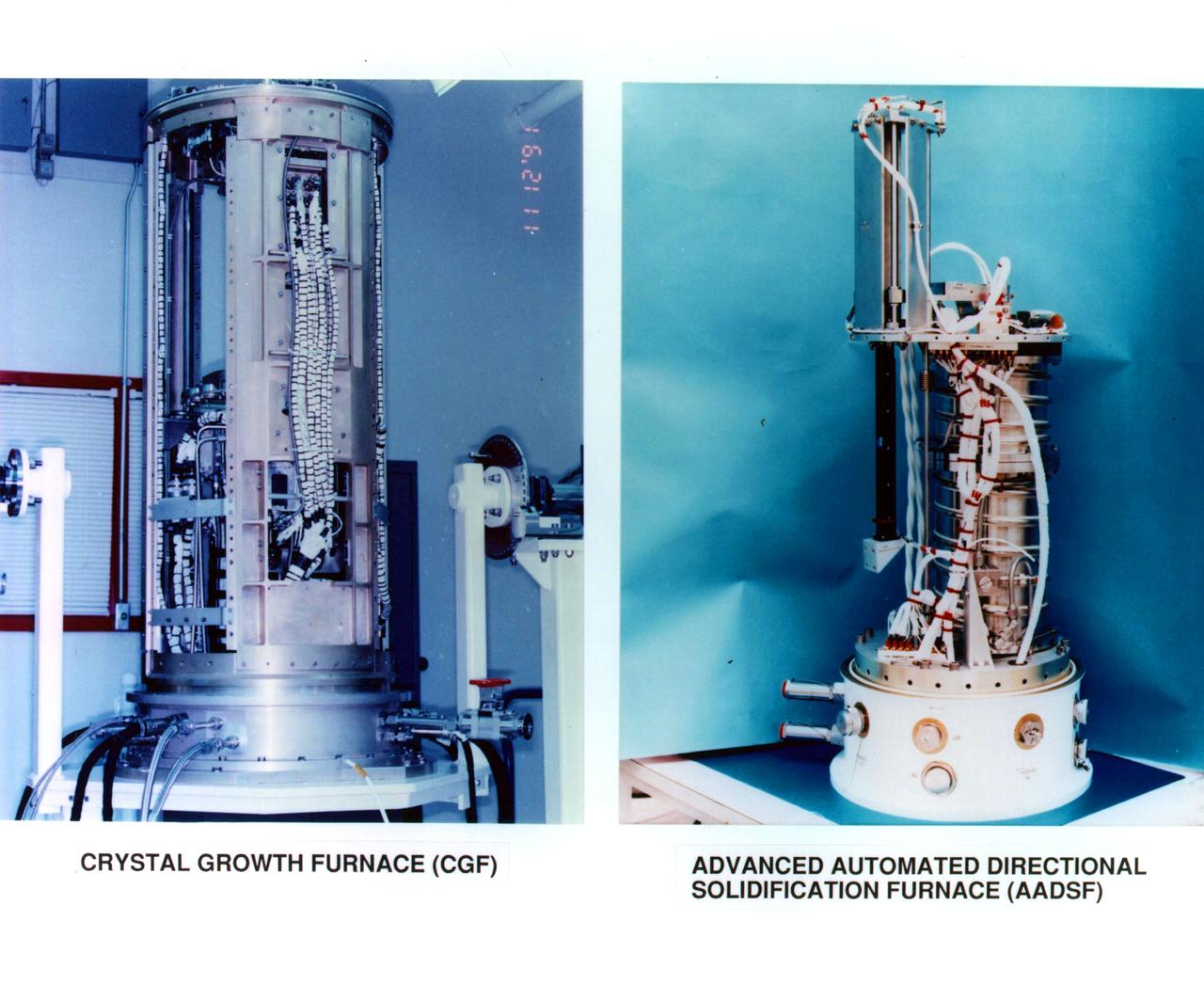
Evolution of Furnaces for Crystal Growth. Left view: Crystal Growth Furnace (CGF) Right view: Advanced Automated Directional Solidification Furnace (AADSF)
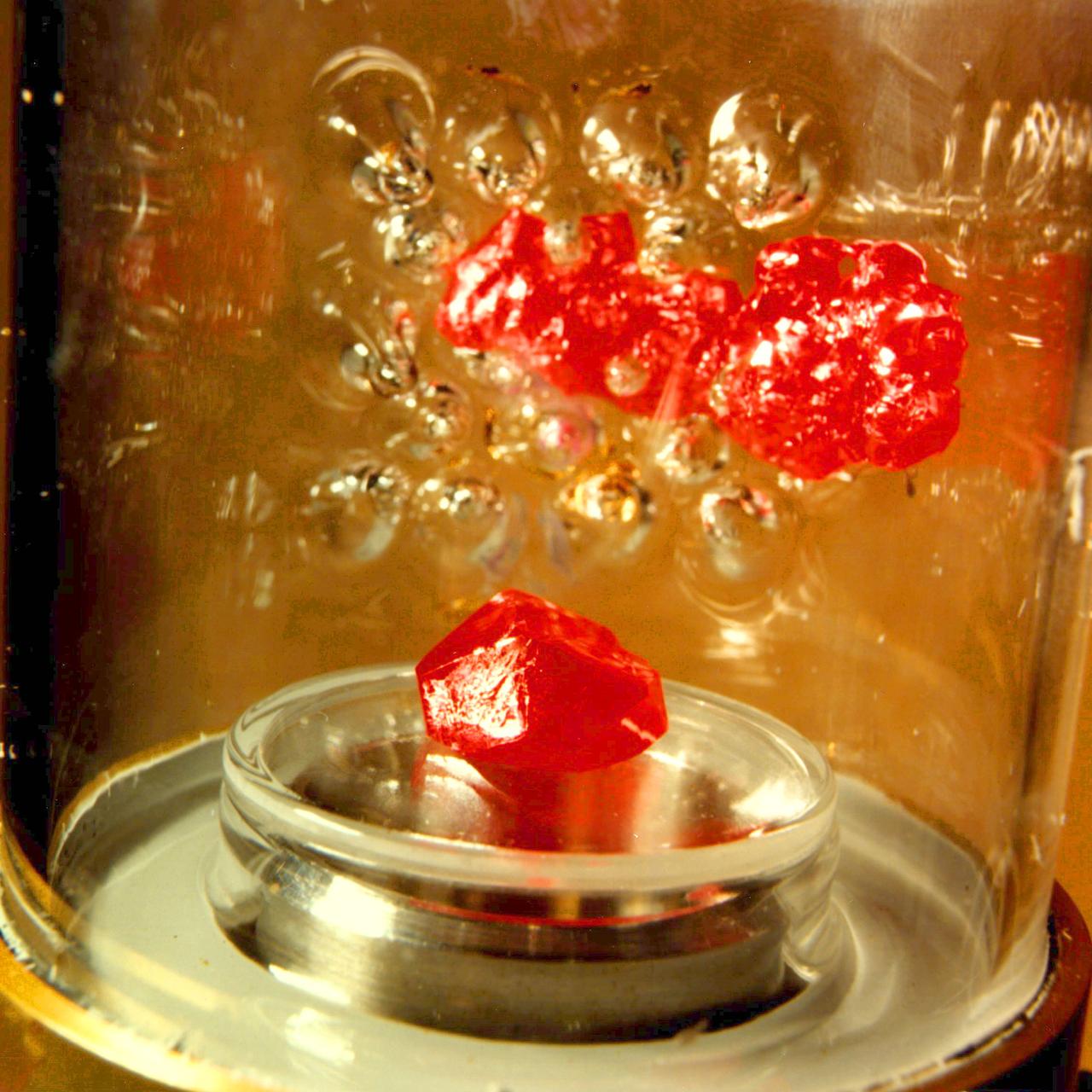
CRYSTAL GROWTH EXPERIMENTS MULTI ZONE TRANSPARENT FURNACE
Vapor Crystal Growth System (VCGS), Flown on IML-1, Spacelab 3, Principal Investigator: Lodewijk van den Berg
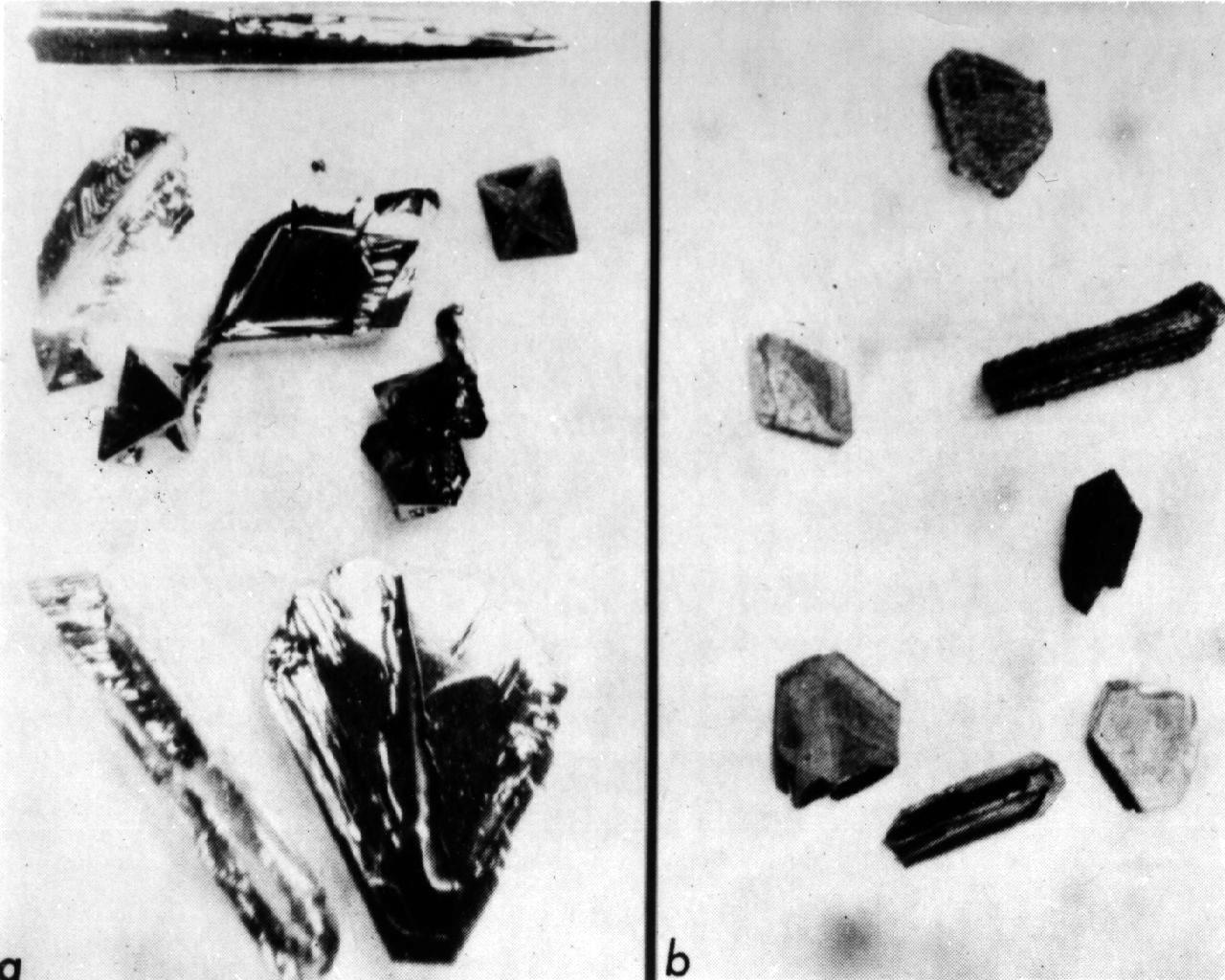
Comparison of Germanium Telluride (GeTe) Crystals grown on Earth (left) and in space (right) during the Skylab SL-3 mission. These crystals were grown using a vapor transport crystal growth method in the Multipurpose Electric Furnace System (MEFS). Crystals grown on earth are needles and platelettes with distorted surfaces and hollow growth habits. The length of the ground-based needle is approximately 2 mm and the average lenth of the platelets is 1 mm. The dull appearance of the Skylab crystals resulted from condensation of the transport agent during the long cooling period dictated by the Skylab furnace. In a dedicated process, this would be prevented by removing the ampoule from the furnace and quenching the vapor source.
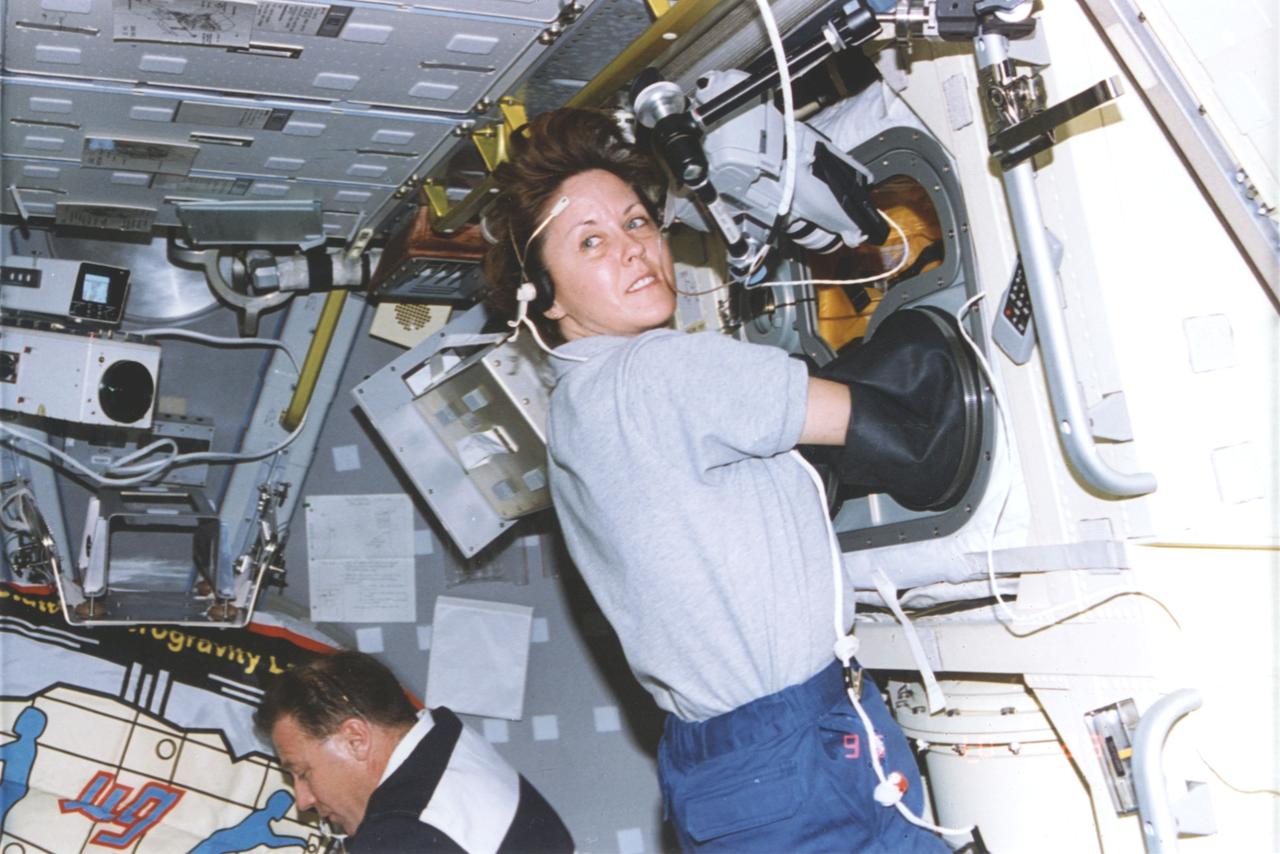
Onboard STS-73, USML-2: Mission Specialist, Payload Commander, Kathryn Thorton with (CGF) Crystal Growth Furnace
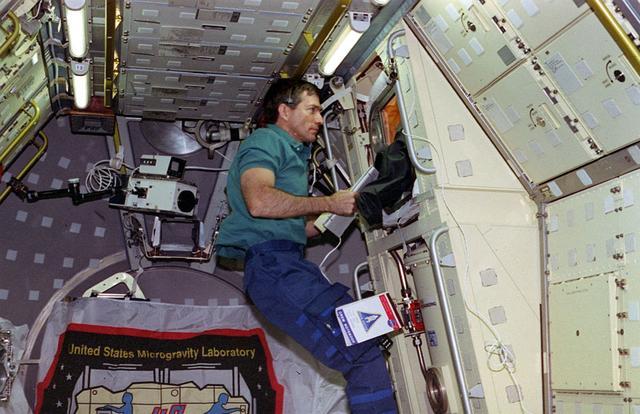
Payload Specialist, Fred Leslie changing samples in (CGF) Crystal Growth Furnace onboard STS-73, USML-2.
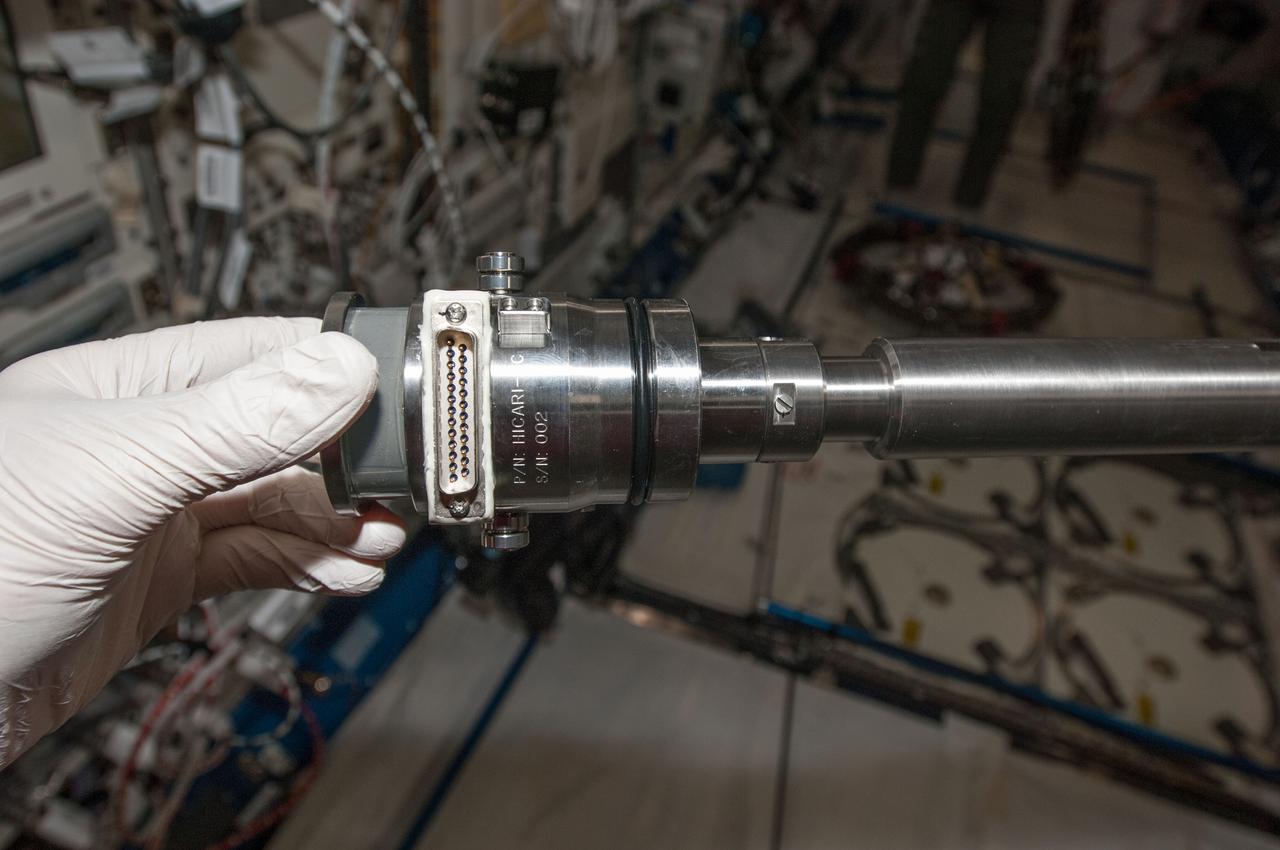
iss040e054521 (7/10/2014) --- A photo of Hicari sample cartridge 2 from the Gradient Heating Furnace (GHF) removed in preparation for return on SpaceX-4. The materials science investigation Growth of Homogeneous SiGe Crystals in Microgravity by the TLZ Method (Hicari) aims to verify the crystal-growth by Travelling Liquidous Zone method, and to produce high-quality crystals of Silicon-Germanium (SiGe) semiconductor using the Japanese Experiment Module-Gradient Heating Furnace (JEM-GHF).
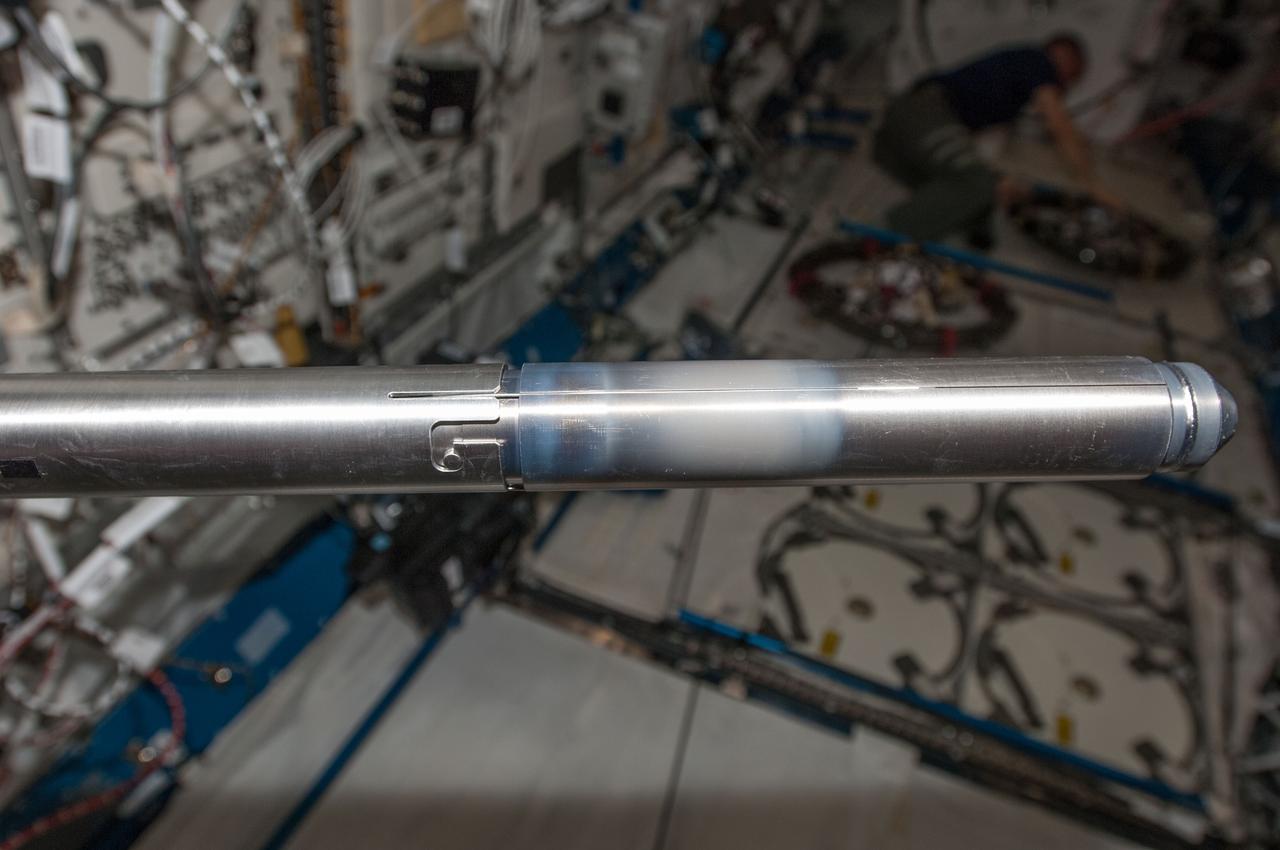
iss040e054526 (7/10/2014) --- A photo of Hicari sample cartridge 2 from the Gradient Heating Furnace (GHF) removed in preparation for return on SpaceX-4. The materials science investigation Growth of Homogeneous SiGe Crystals in Microgravity by the TLZ Method (Hicari) aims to verify the crystal-growth by Travelling Liquidous Zone method, and to produce high-quality crystals of Silicon-Germanium (SiGe) semiconductor using the Japanese Experiment Module-Gradient Heating Furnace (JEM-GHF).
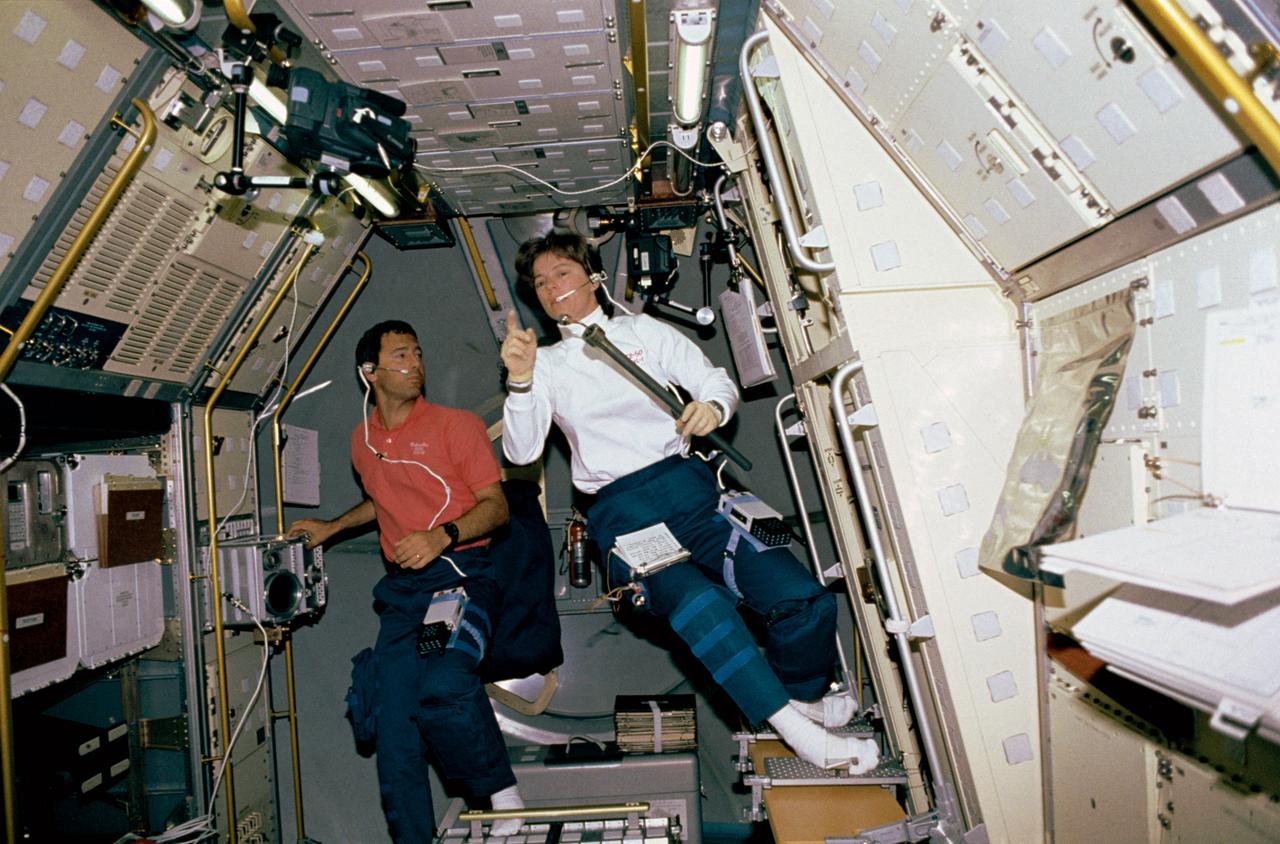
View showing Payload Specialists Bonnie Dunbar and Larry DeLucas in the aft section of the U. S. Microgravity Laboratory-1. Dunbar prepares to load a sample in the Crystal Growth Furnace (CGF) Integrated Furnace Experiment Assembly (IFEA) in rack 9 of the Microgravity Laboratory, while DeLucas checks out the multi-purpose Glovebox Facility.
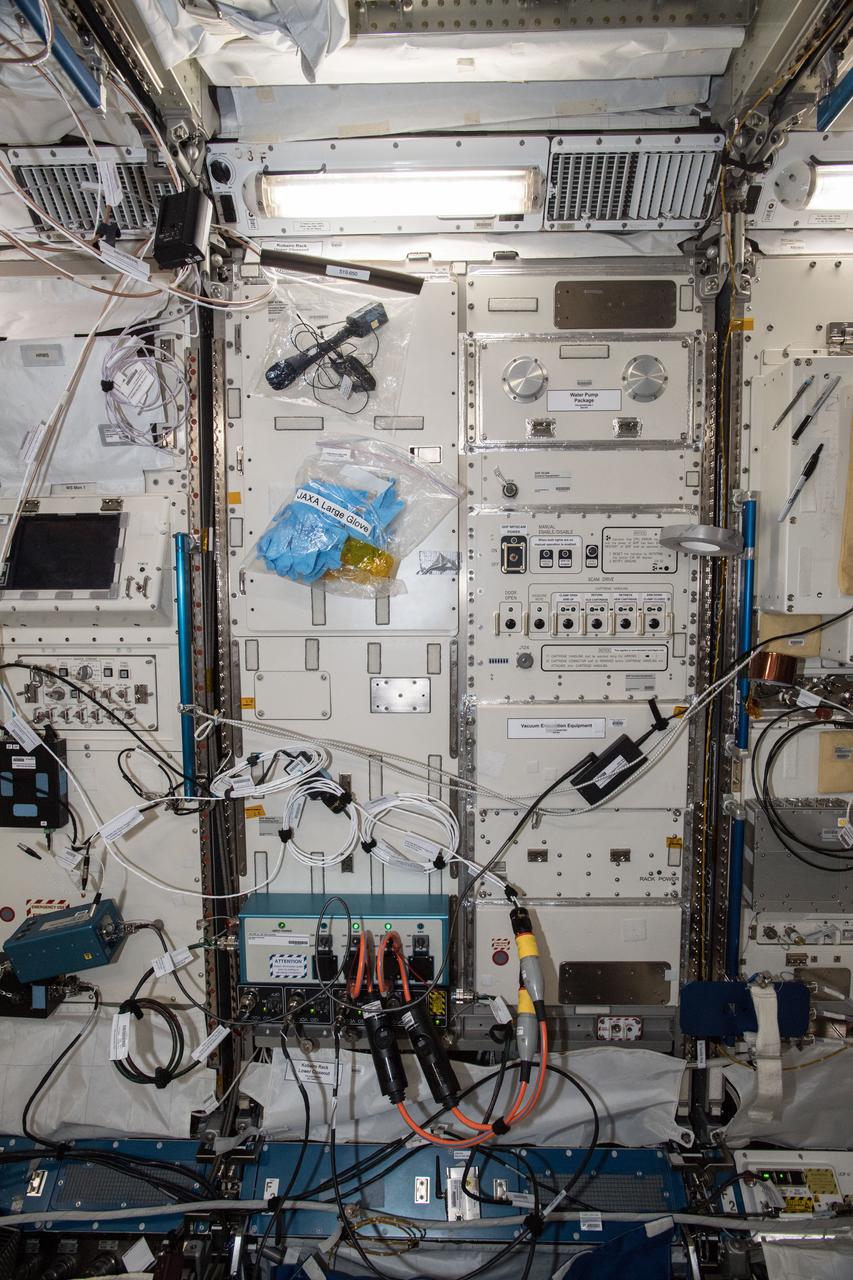
iss057e092614 (11/14/2018) --- Photo documentation of the Kobairo Rack front, JPM1F3 in the Kibo Japanese Experiment Module (JEM) aboard the International Space Staion (ISS). The KOBAIRO Rack houses the Gradient Heating Furnace (GHF), an experiment facility for investigating crystal growth of semiconductors. This furnace has the capability of directional solidification of samples.
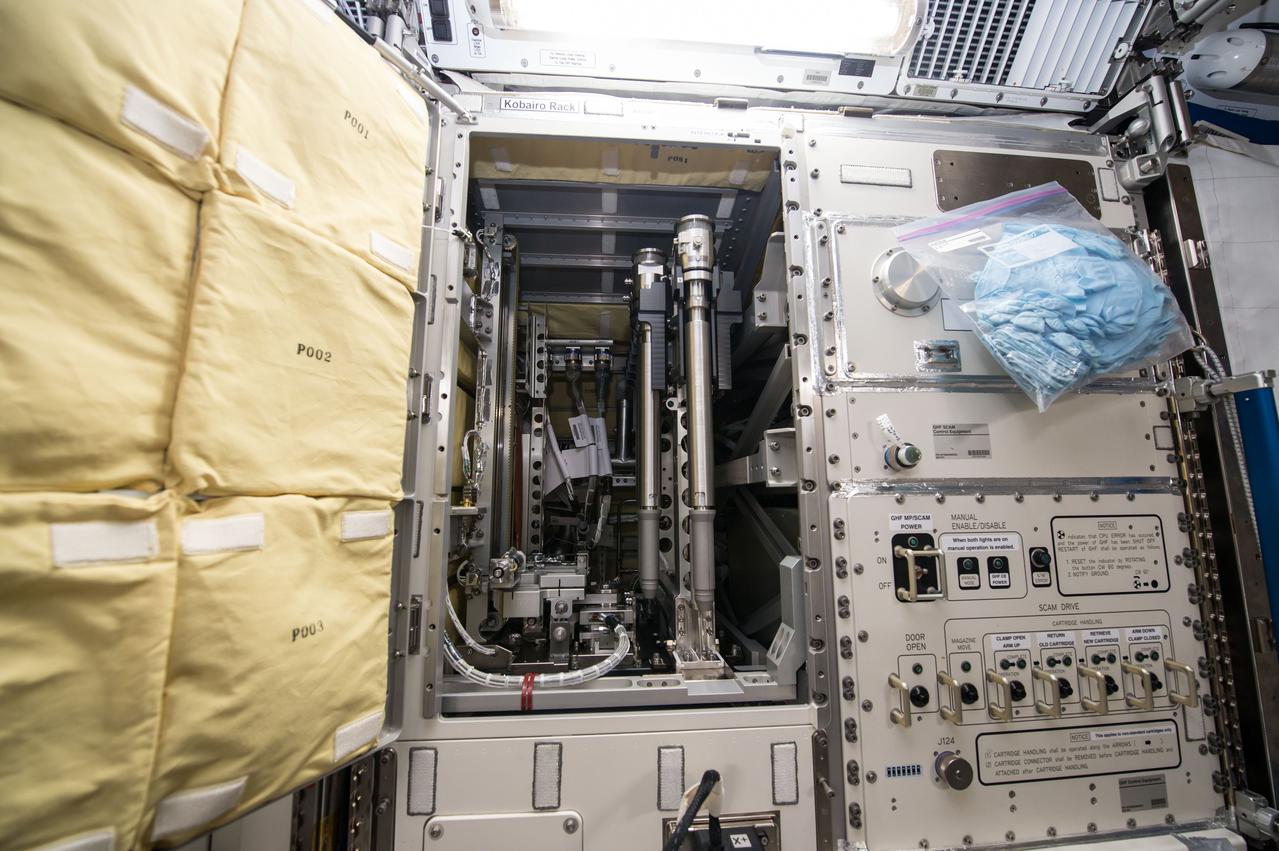
iss042e049014 (12/18/2014) --- A view of the interior of the Kobairo rack of the Japanese Experiment Module (JEM) aboard the International Space station (ISS).The KOBAIRO Rack houses the Gradient Heating Furnace (GHF), an experiment facility for investigating crystal growth of semiconductors. This furnace has the capability of directional solidification of samples.
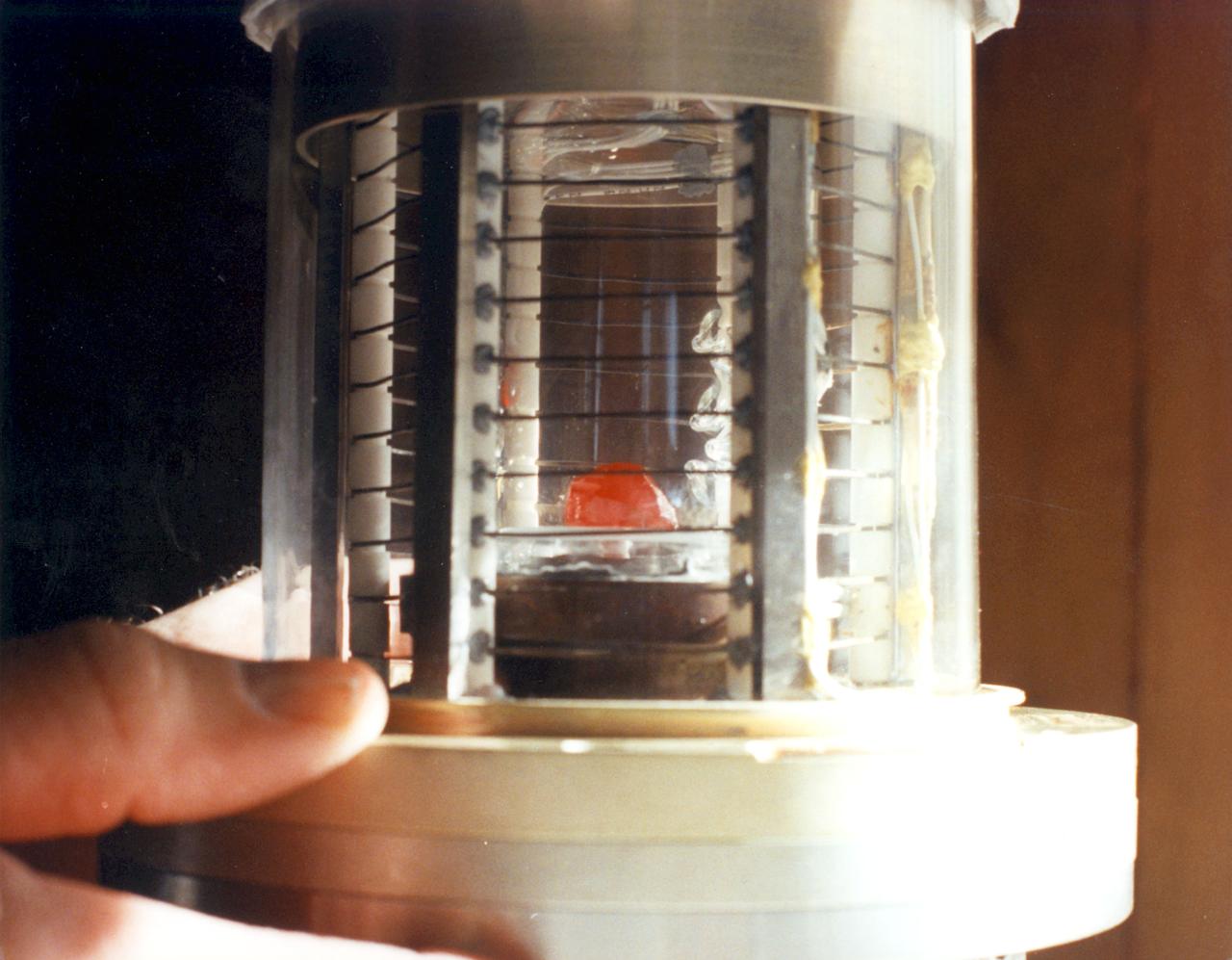
Ampoule view of the Vapor Crystal Growth System (VCGS) Furnace. Used on IML-1 International Microgravity Laboratory Spacelab 3. Prinicipal Investigator and Payload Specialist was Lodewijk van den Berg.
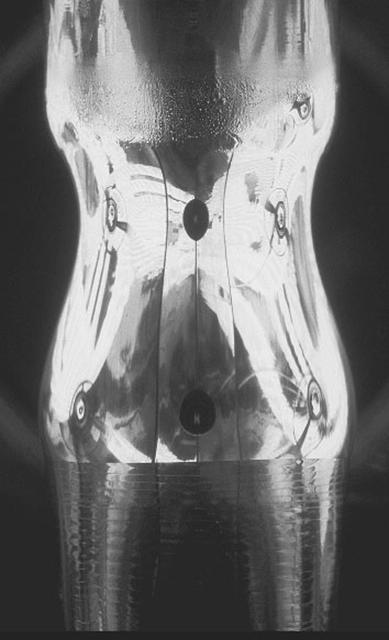
Crystal Growth in magnetic fields, a float-zone sample, the surface tension of the melt keeps the sample suspended between the sample rods in the furnace forming an actual liquid bridge. Principal Investigator: Dr. Frank Szofran
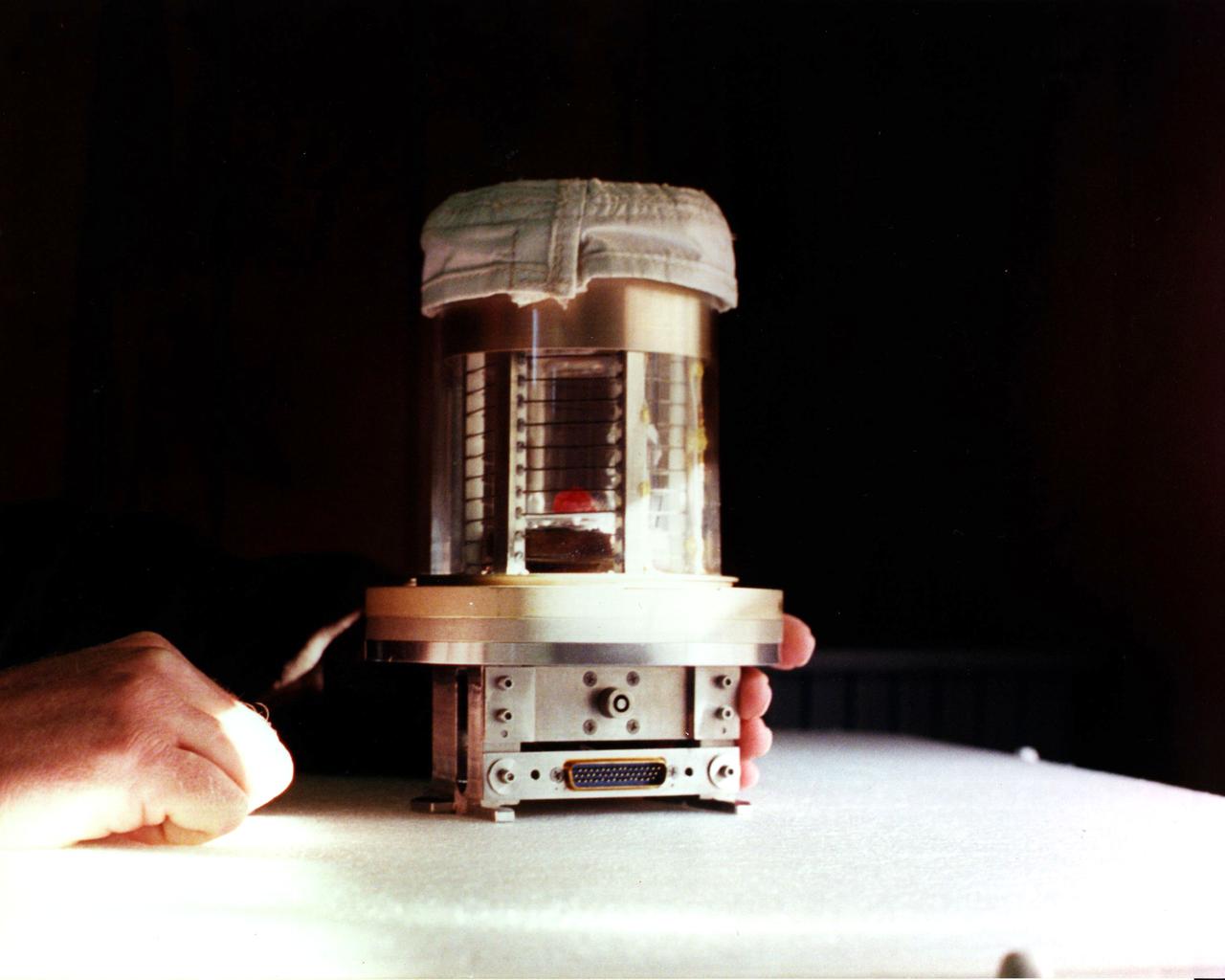
Overall view of the Vapor Crystal Growth System (VCGS) Furnace. Used on IML-1 International Microgravity Laboratory Spacelab 3. Principal Investigator and Payload Specialist was Lodewijk van den Berg.
![iss035e006283 (3/18/2013) --- Photo documentation of the Hicari (Growth of Homogeneous Silicon-Germanium [SiGe] Crystals in Microgravity by the Traveling Liquidous Zone [TLZ] Method) Experiment Sample Cartridge (SC) following its removal from the Kobairo Rack during Expedition 35. The materials science investigation Growth of Homogeneous SiGe Crystals in Microgravity by the TLZ Method (Hicari) aims to verify the crystal-growth by Travelling Liquidous Zone method, and to produce high-quality crystals of Silicon-Germanium (SiGe) semiconductor using the Japanese Experiment Module-Gradient Heating Furnace (JEM-GHF).](https://images-assets.nasa.gov/image/iss035e006283/iss035e006283~medium.jpg)
iss035e006283 (3/18/2013) --- Photo documentation of the Hicari (Growth of Homogeneous Silicon-Germanium [SiGe] Crystals in Microgravity by the Traveling Liquidous Zone [TLZ] Method) Experiment Sample Cartridge (SC) following its removal from the Kobairo Rack during Expedition 35. The materials science investigation Growth of Homogeneous SiGe Crystals in Microgravity by the TLZ Method (Hicari) aims to verify the crystal-growth by Travelling Liquidous Zone method, and to produce high-quality crystals of Silicon-Germanium (SiGe) semiconductor using the Japanese Experiment Module-Gradient Heating Furnace (JEM-GHF).
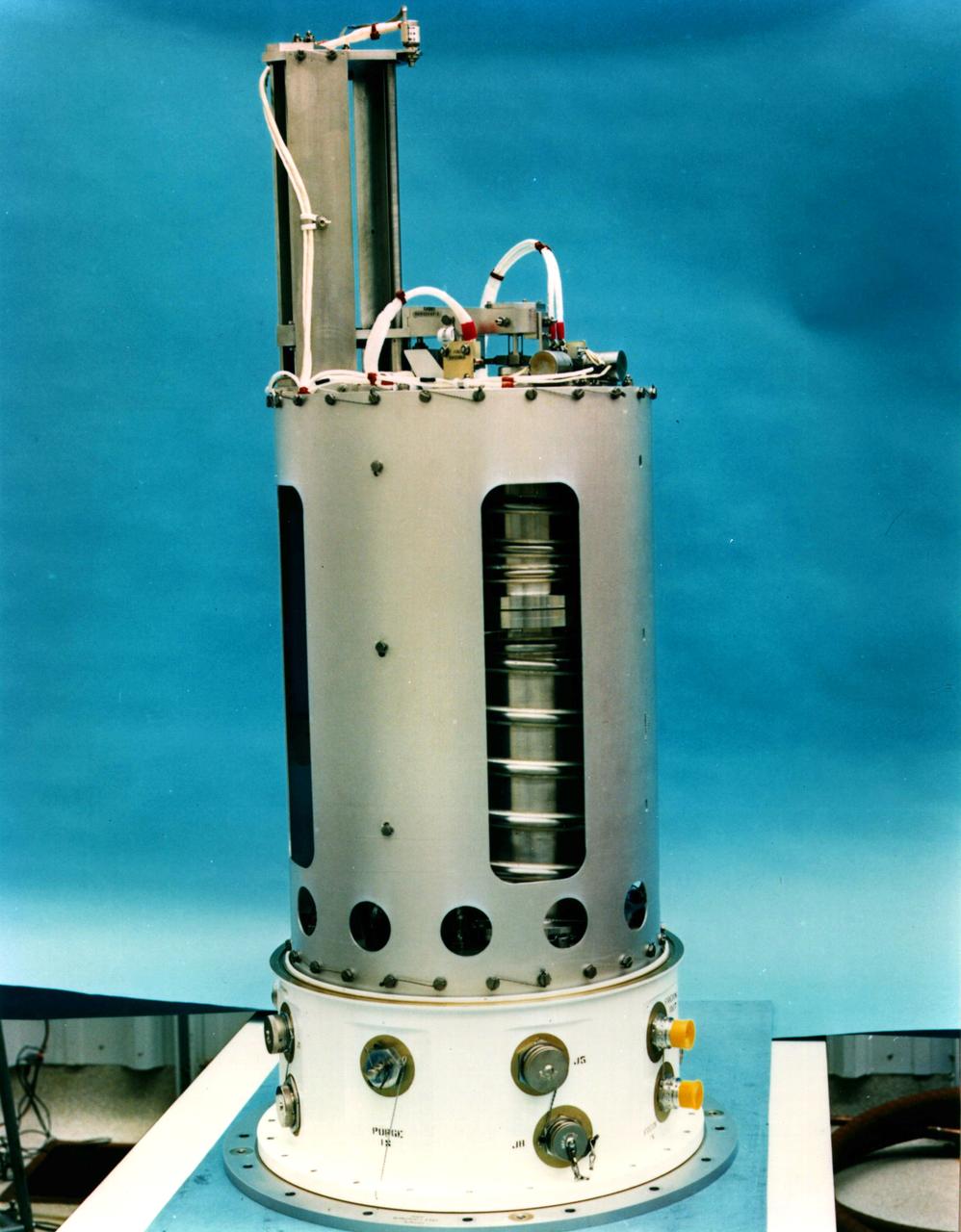
The Advanced Automated Directional Solidification Furnace (AADSF) with the Experimental Apparatus Container (EAC) removed flew during the USMP-2 mission. During USMP-2, the AADSF was used to study the growth of mercury cadmium telluride crystals in microgravity by directional solidification, a process commonly used on earth to process metals and grow crystals. The furnace is tubular and has three independently controlled temperature zones . The sample travels from the hot zone of the furnace (1600 degrees F) where the material solidifies as it cools. The solidification region, known as the solid/liquid interface, moves from one end of the sample to the other at a controlled rate, thus the term directional solidification.
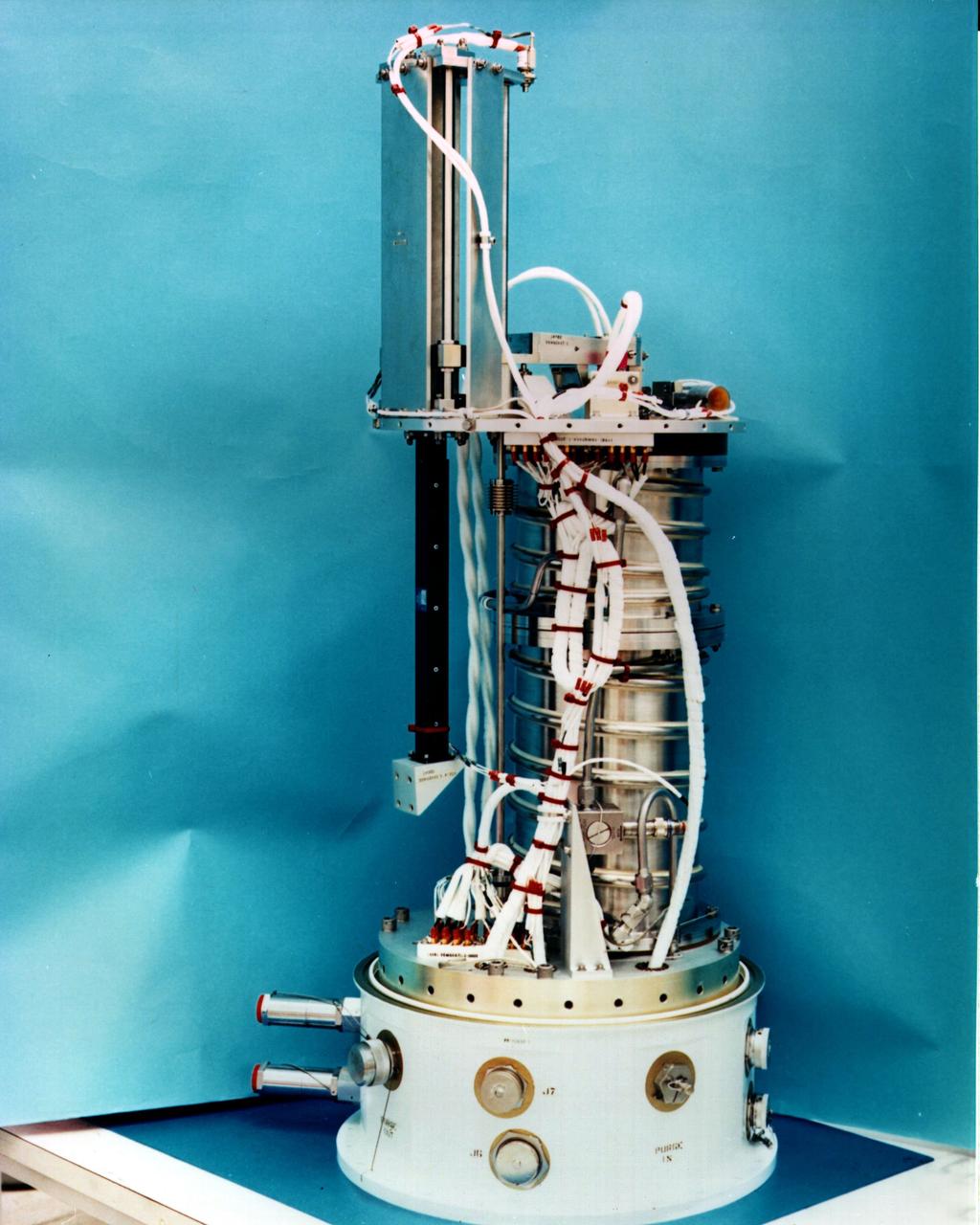
The Advanced Automated Directional Solidification Furnace (AADSF) flew during the USMP-2 mission. During USMP-2, the AADSF was used to study the growth of mercury cadmium telluride crystals in microgravity by directional solidification, a process commonly used on earth to process metals and grow crystals. The furnace is tubular and has three independently controlled temperature zones. The sample travels from the hot zone of the furnace (1600 degrees F) where the material solidifies as it cools. The solidification region, known as the solid/liquid interface, moves from one end of the sample to the other at a controlled rate, thus the term directional solidification.
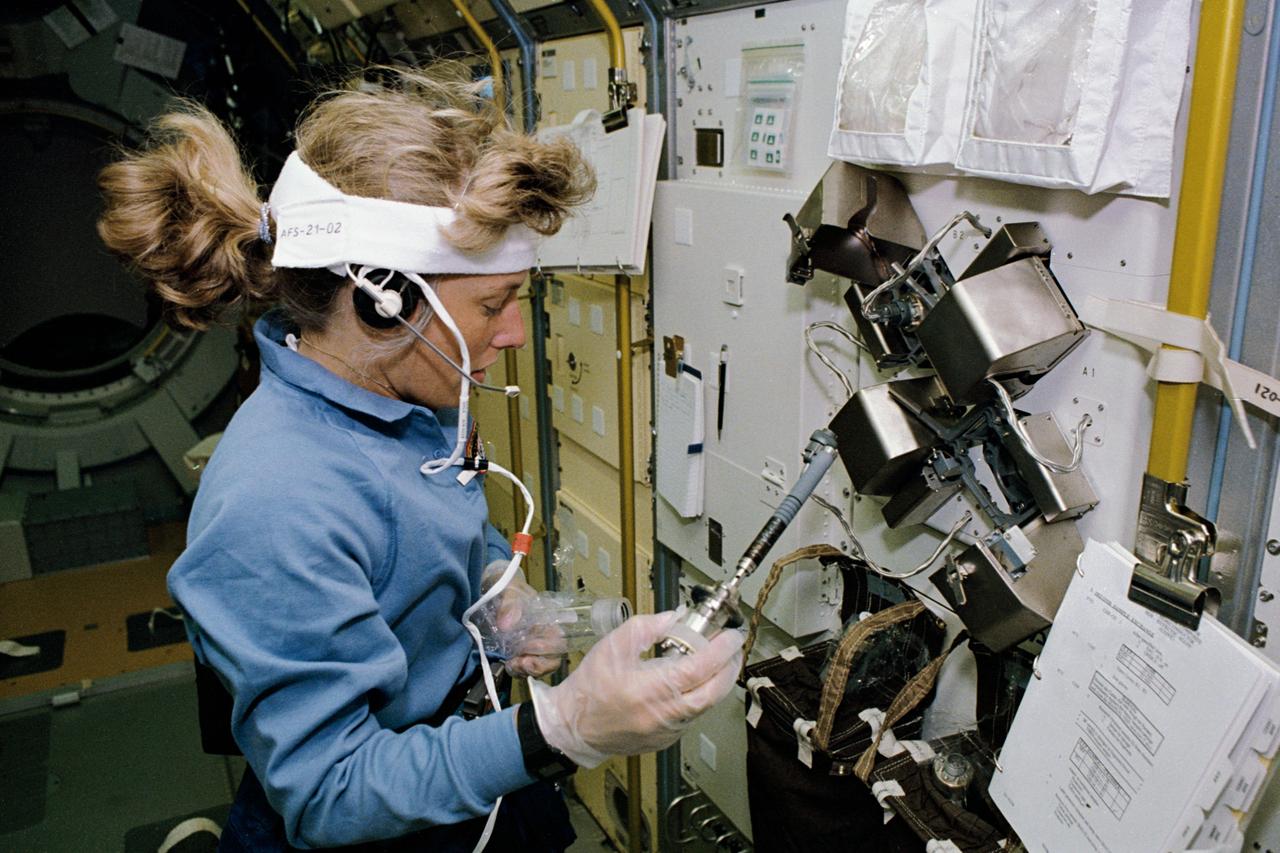
STS047-02-003 (12 - 20 Sept 1992) --- Astronaut N. Jan Davis, mission specialist, works at the Continuous Heating Furnace (CHF) in the Spacelab-J Science Module. This furnace provided temperatures up to 1,300 degrees Celsius and rapid cooling to two sets of samples concurrently. The furnace accommodated in-space experiments in the Fabrication of Si-As-Te:Ni Ternary Amorphous Semiconductor and the Crystal Growth of Compound Semiconductors. These were two of the many experiments designed and monitored by Japan's National Space Development Agency (NASDA).
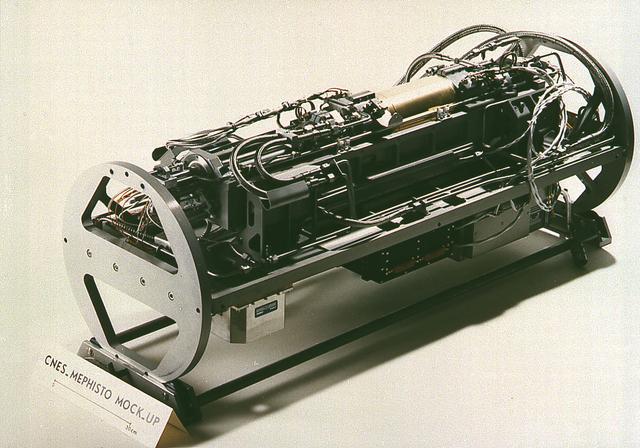
The MEPHISTO experiment is a cooperative American and French investigation of the fundamentals of crystal growth. MEPHISTO is a French-designed and built materials processing furnace. MEPHISTO experiments study solidation (also called freezing) during the growth cycle of liquid materials used for semiconductor crystals. Solidification is the process where materials change from liquid (melt) to solid. An example of the solidification process is water changing into ice.
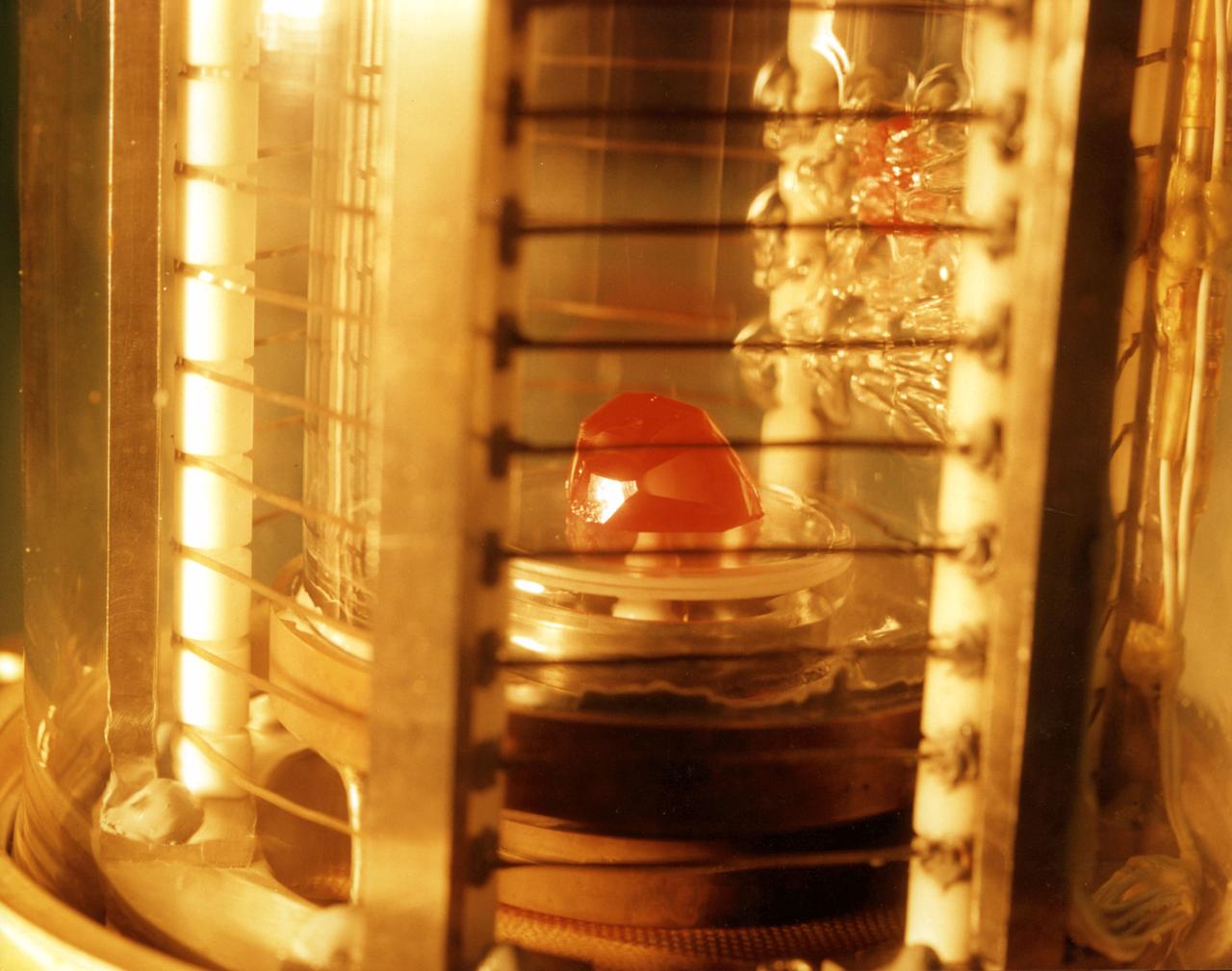
The image shows a test cell of Crystal Growth experiment inside the Vapor Crystal Growth System (VCGS) furnace aboard the STS-42, International Microgravity Laboratory-1 (IML-1), mission. The goal of IML-1, a pressurized marned Spacelab module, was to explore in depth the complex effects of weightlessness of living organisms and materials processing. More than 200 scientists from 16 countires participated in the investigations.
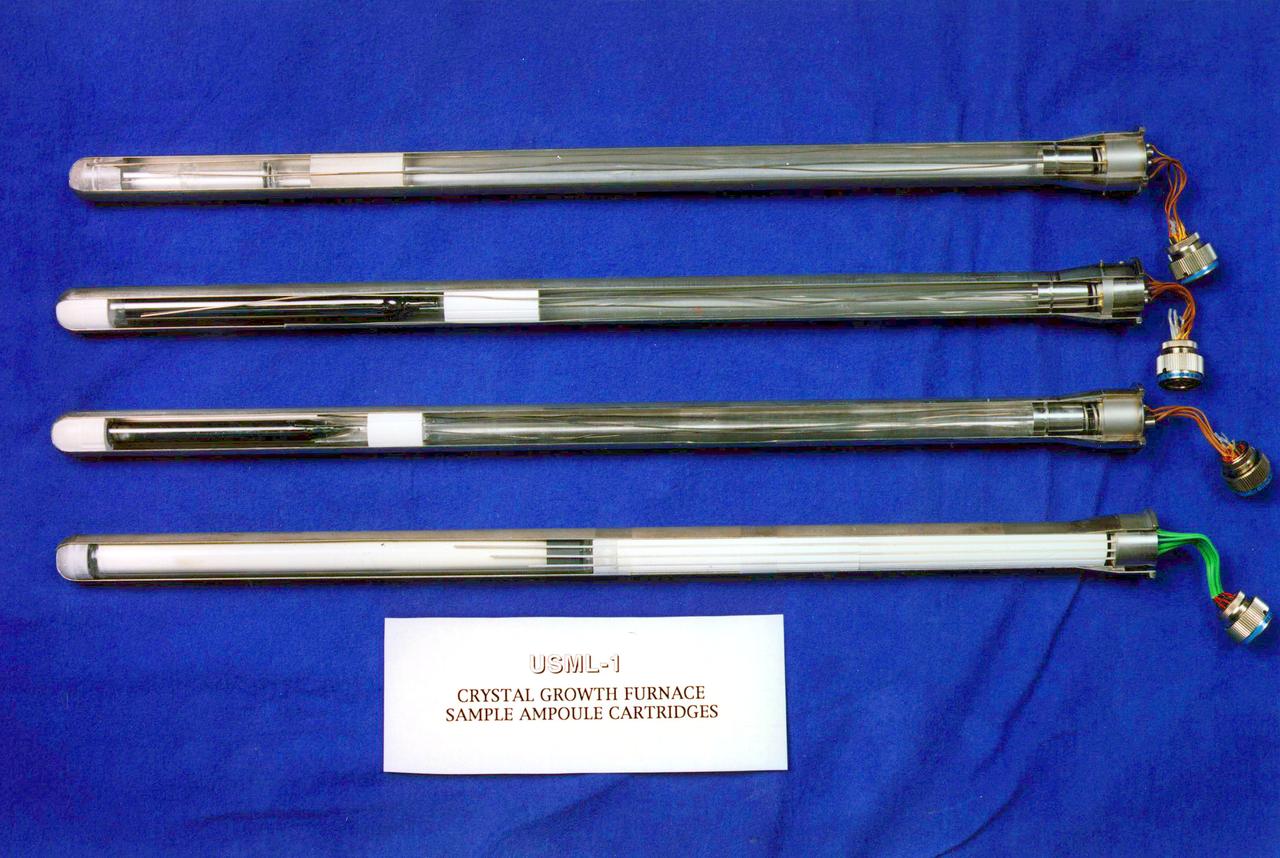
Crystal Growth Furnace (CGF) without the EAC internal support structure. Flown on USML-1 and USML-2. The Principal Investigators on these flights were: Larson, Lehoczky, Matthiesen, Wiedemeier. Processed 6 samples on USML-1 and 7 samples on USML-2.
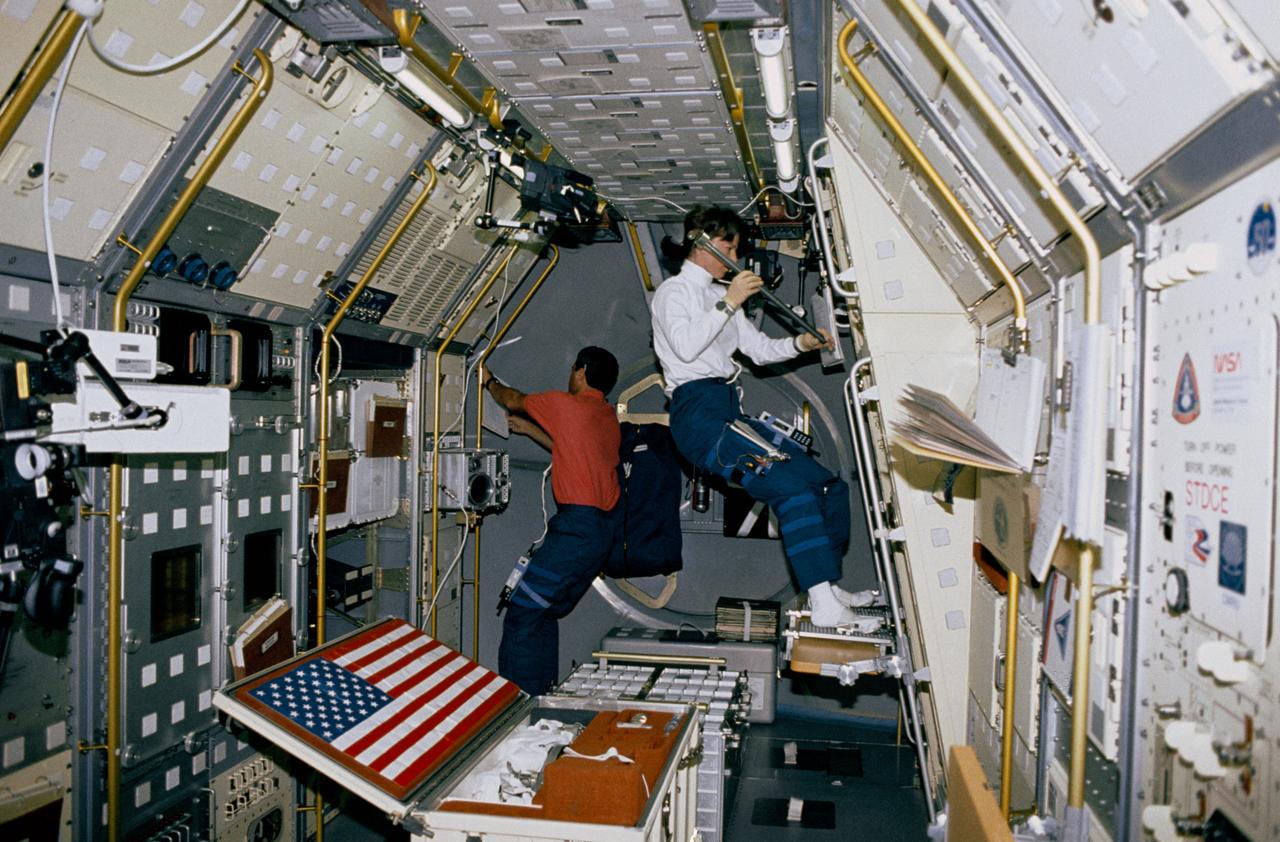
STS050-02-001 (9 July 1992) --- View showing Payload Specialists Bonnie Dunbar and Larry DeLucas in the aft section of the U. S. Microgravity Laboratory-1. Dunbar is preparing to load a sample in the Crystal Growth Furnace (CGF) Integrated Furnace Experiment Assembly (IFEA) in rack 9 of the Microgravity Laboratory. DeLucas is checking out the multipurpose Glovebox Facility.
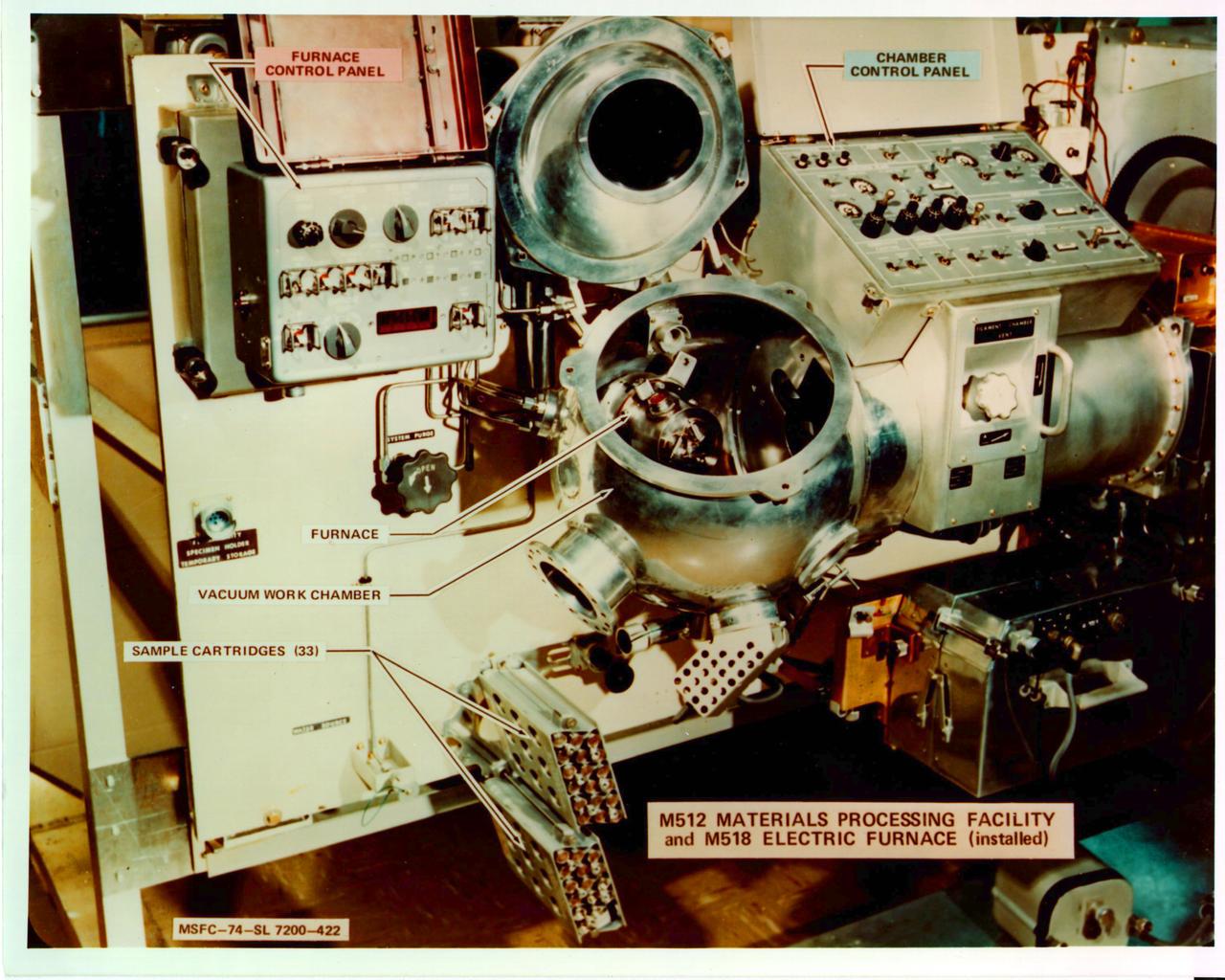
The M512 Materials Processing Facility (MPF) with the M518 Multipurpose Electric Facility (MEF) tested and demonstrated a facility approach for materials process experimentation in space. It also provided a basic apparatus and a common interface for a group of metallic and nonmetallic materials experiments. The MPF consisted of a vacuum work chamber and associated mechanical and electrical controls. The M518 Multipurpose Electric Furnace (MEF) was an electric furnace system in which solidification, crystal growth, and other experiments involving phase changes were performed.
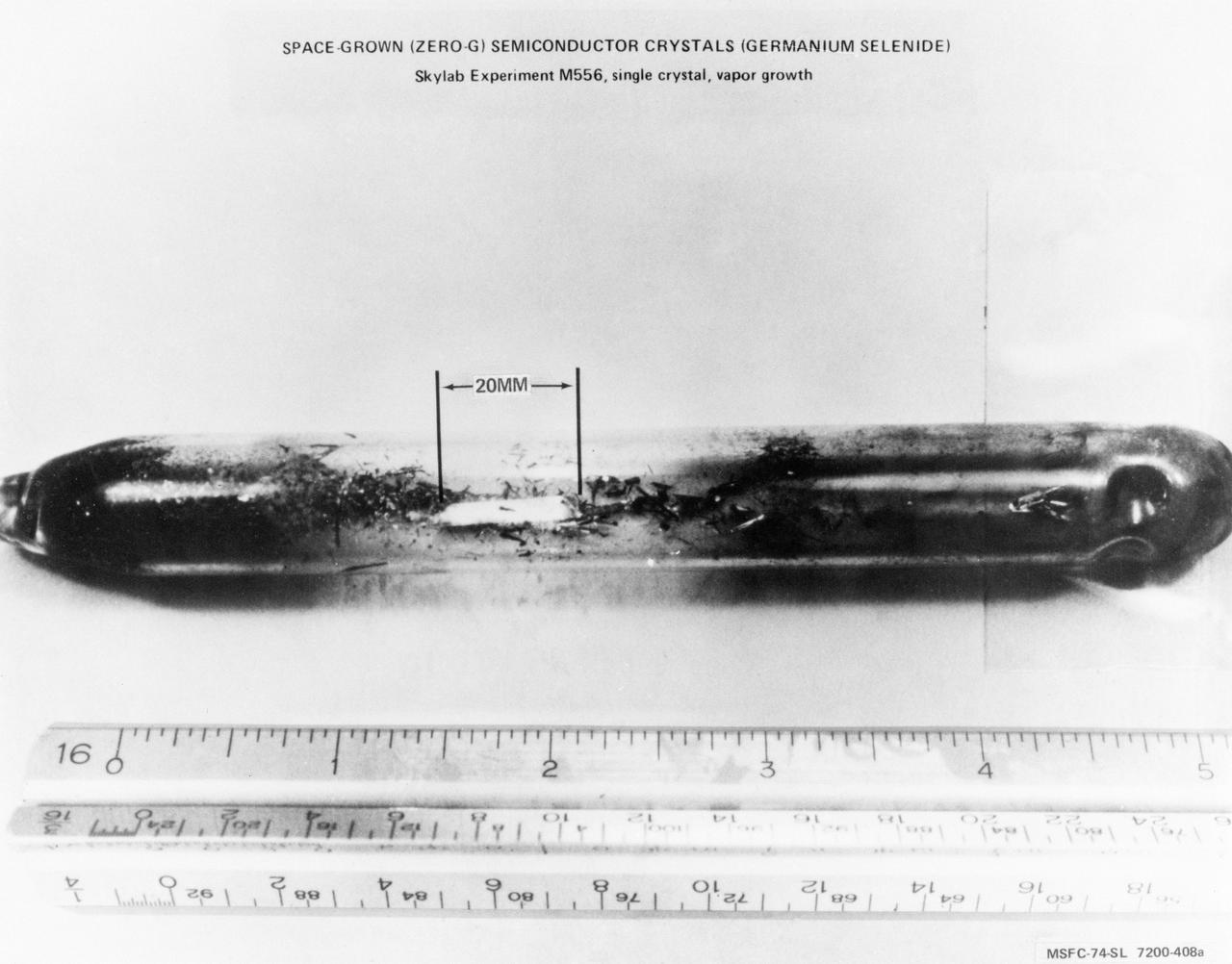
S74-19677 (April 1974) --- This crystal of Germanium Selenide (GeSe) was grown under weightless conditions in an electric furnace aboard the Skylab space station. Experiment M556, Vapor Growth of IV-VI Compounds, was conducted as a comparative test of GeSe crystals grown on Earth and those grown in a weightless environment. Skylab postflight results indicate that crystals grown in a zero-gravity situation demonstrate greater growth and better composite structure than those grown in ground-bases laboratories. The GeSe crystal shown here is 20 millimeters long, the largest crystal ever grown on Earth or in space. Principal Investigator for Experiment M556 is Dr. Harry Wiedemaier, Rensselaer Polytechnic Institute, Troy, New York. (See NASA photograph S74-19676 for an example of an Earth-grown Germanium Selenide crystal.) Photo credit: NASA
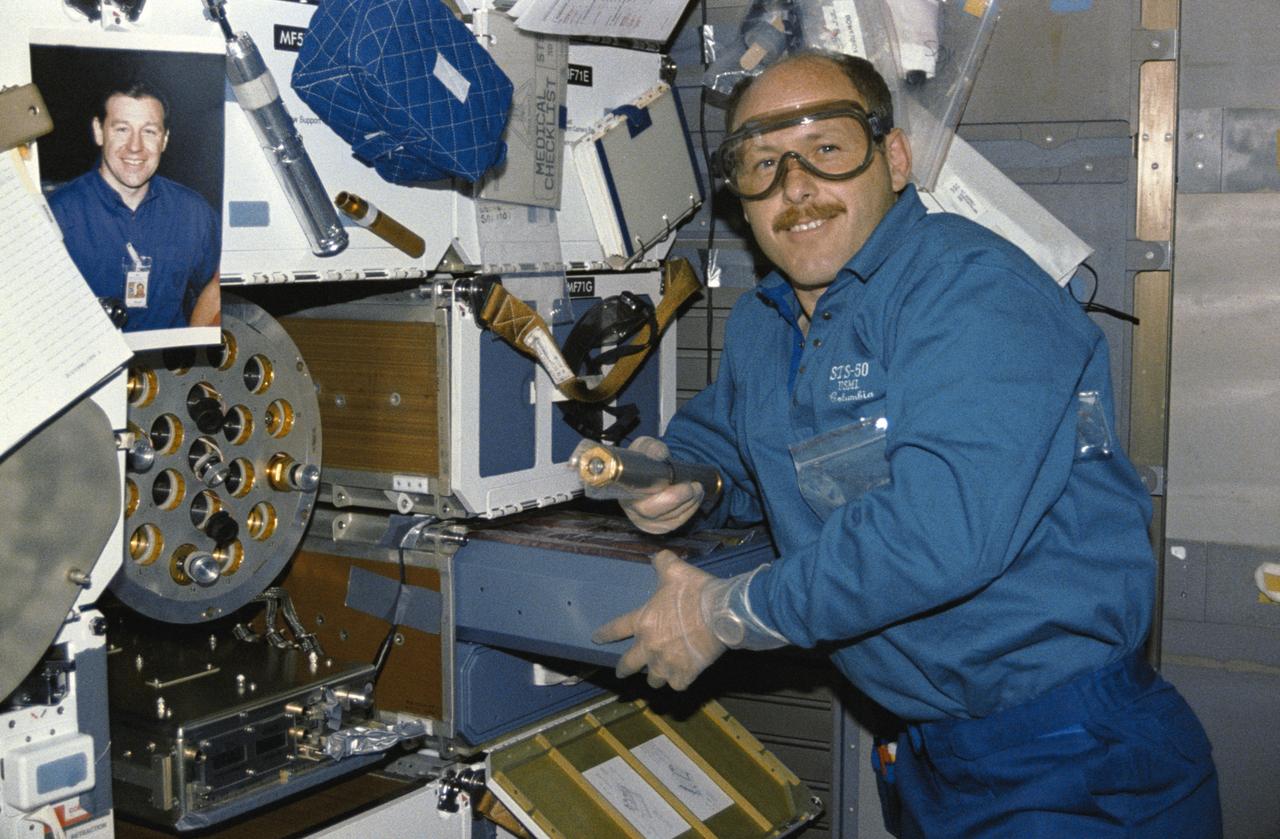
STS50-262-004 (25 June-9 July 1992) --- Astronaut Kenneth D. Bowersox, STS-50 pilot, holds an autoclave used in the growing of zeolite crystals on the middeck of the Earth-orbiting Space Shuttle Columbia. He is standing near the Zeolite Crystal Growth (ZCG) furnace, which is housed in the space of two stowage lockers. On the 14-day U.S. Microgravity Laboratory mission, zeolite crystals were grown in 38 individual autoclaves, which were joined in pairs to be inserted into the 19 furnace orifices. While the autoclaves appear the same externally, there are several types of internal arrangements that were tested to determine which one provides the best mixing of the component solutions. The portrait of alternate payload specialist Albert Sacco, Jr. is mounted nearby. Sacco, serving as a ground controller at Marshall Space Flight Center in Alabama, worked in conjunction with the red shift crew in the science module.
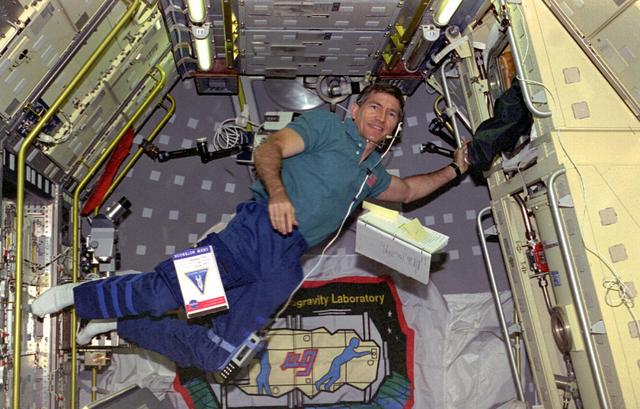
STS073-101-018 (20 October-5 November 1995) --- Payload specialist Fred W. Leslie maneuvers his body to a position conducive to research at the Crystal Growth Furnace (CGF) aboard the science module in the cargo bay of the Earth-orbiting Space Shuttle Columbia. Crystallization has been discovered to be more effectively studied in the weightless environment of space than on Earth, because the gravity-induced phenomena that obscure or change the process or change the process are greatly reduced or eliminated. Leslie was joined by a second guest researcher and five NASA astronauts for 16 full days of in-space research in support of the United States Microgravity Laboratory (USML-2) mission.
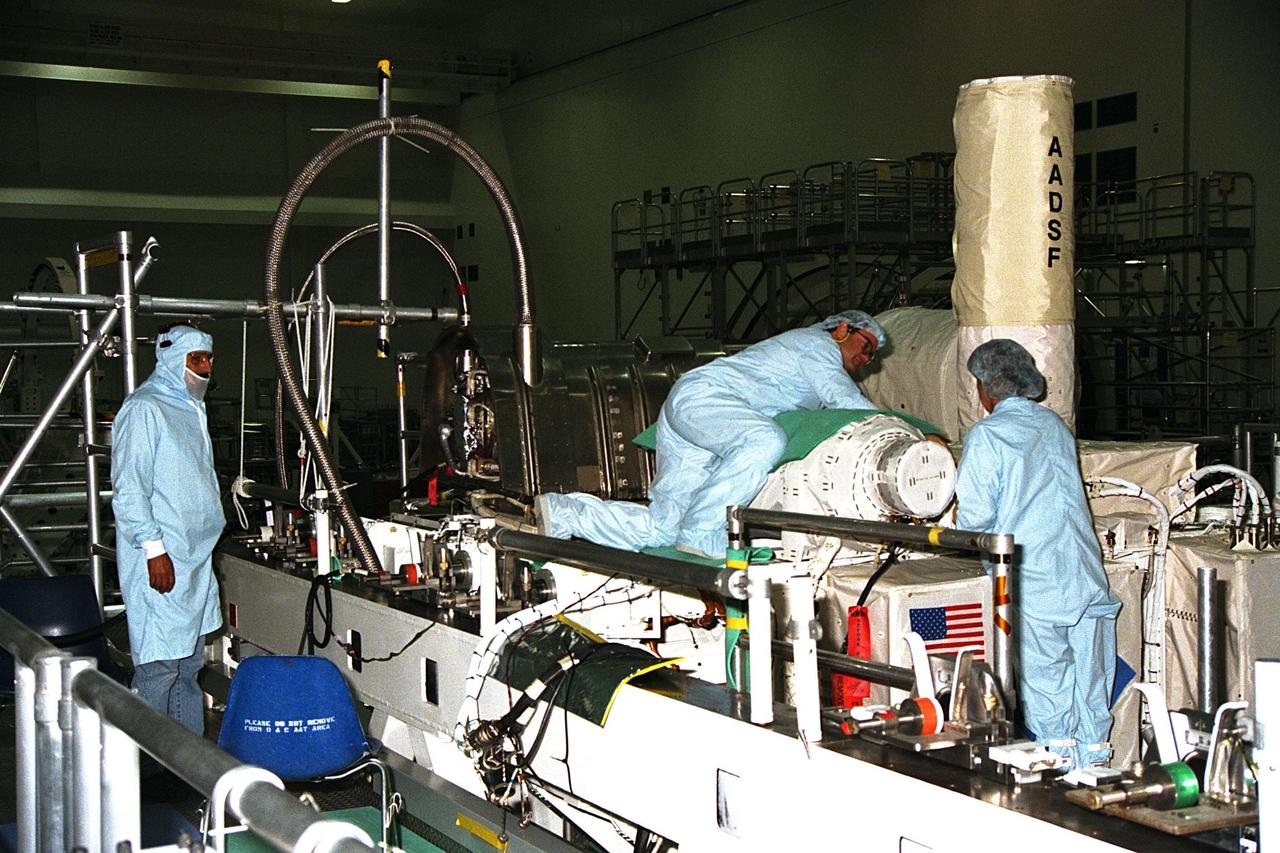
Technicians are monitoring experiments on the United States Microgravity Payload-4 (USMP-4) in preparation for its scheduled launch aboard STS-87 on Nov. 19 from Kennedy Space Center (KSC). USMP-4 experiments are prepared in the Space Station Processing Facility at KSC. The large white vertical cylinder at the right of the photo is the Advanced Automated Directional Solidification Furnace (AADSF ), which is a sophisticated materials science facility used for studying a common method of processing semiconductor crystals called directional solidification. The technician in the middle of the photo is leaning over MEPHISTO, a cooperative American-French investigation of the fundamentals of crystal growth
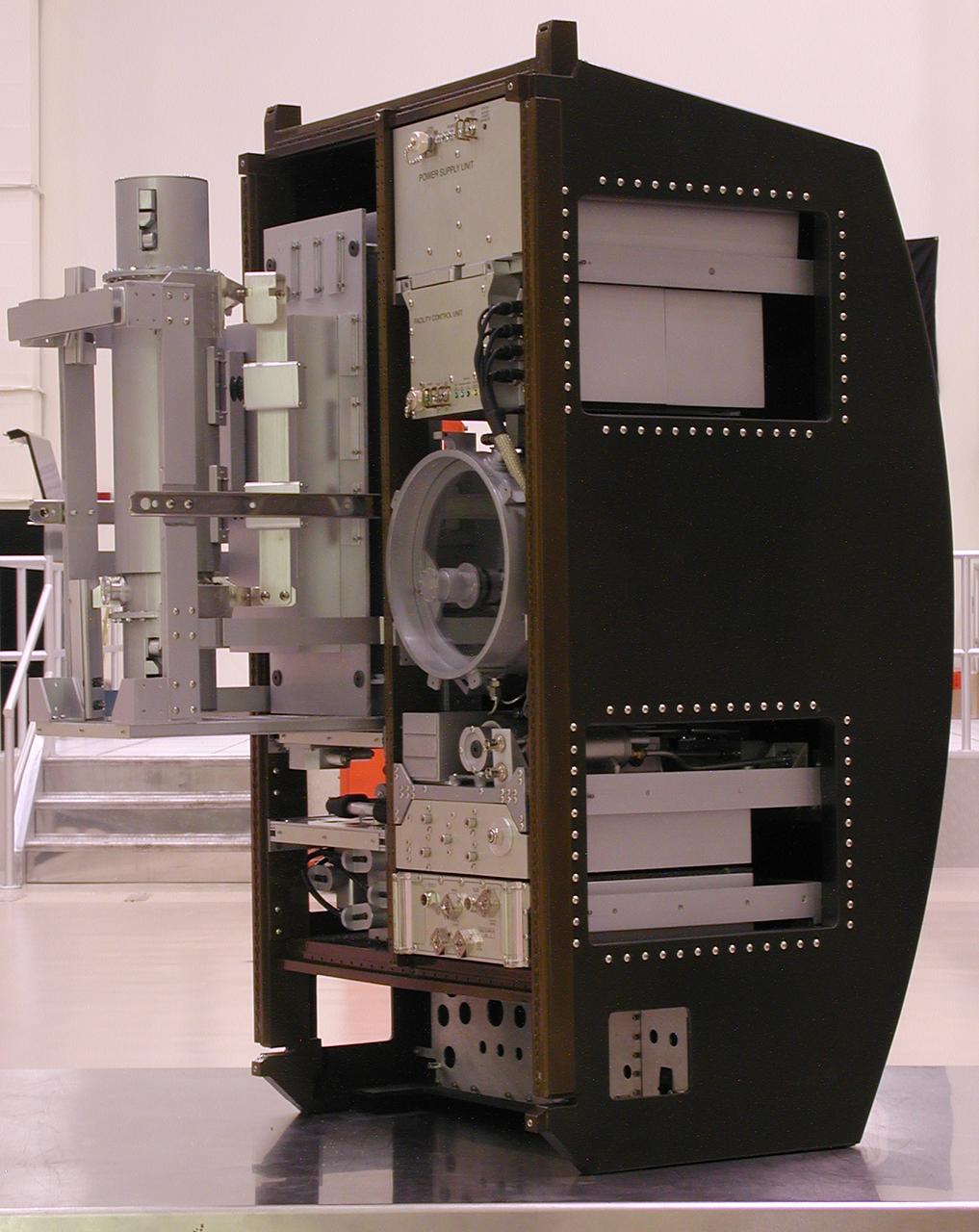
This scale model depicts the Materials Science Research Rack-1 (MSRR-1) being developed by NASA's Marshall Space Flight Center and the European Space Agency (ESA) for placement in the Destiny laboratory module aboard the International Space Station. The rack is part of the plarned Materials Science Research Facility (MSRF) and is expected to include two furnace module inserts, a Quench Module Insert (being developed by NASA's Marshall Space Flight Center) to study directional solidification in rapidly cooled alloys and a Diffusion Module Insert (being developed by the European Space Agency) to study crystal growth, and a transparent furnace (being developed by NASA's Space Product Development program). Multi-user equipment in the rack is being developed under the auspices of NASA's Office of Biological and Physical Research (OBPR) and ESA. Here the transparent furnace is extracted for servicing. Key elements are labeled in other images (0101754, 0101829, 0101830, and TBD).
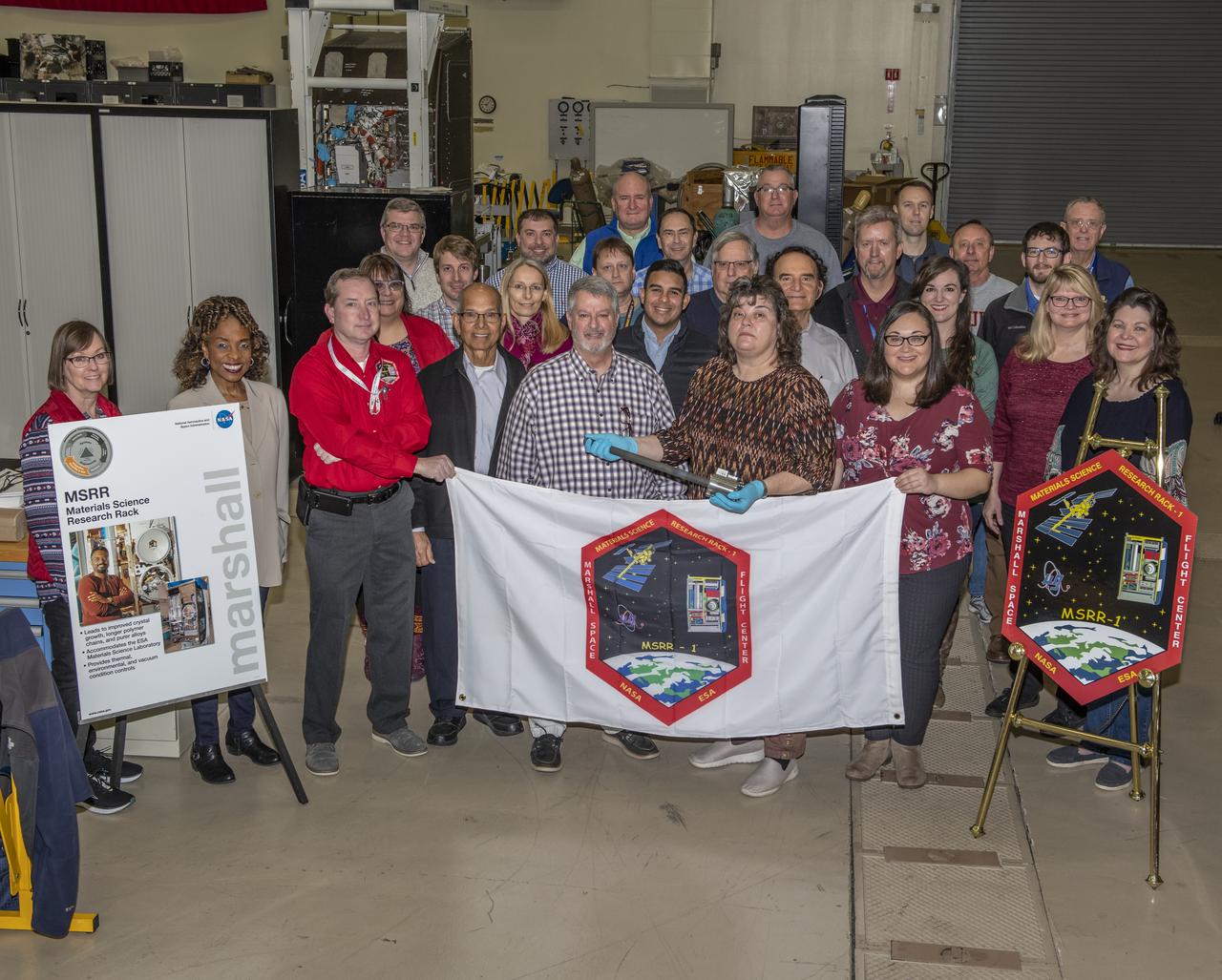
NASA's first Sample Cartridge Assembly (SCA) project designed and validated a payload containing a materials research sample in a sealed environment. The SCA was heated in the European Space Agency's (ESA) Low Gradient Furnace (LGF) that is housed inside the Material Science Research Rack (MSRR) located on the International Space Station (ISS). Sintered metals and crystal growth experiments in microgravity are examples of some of the types of materials research that may be performed with a SCA.
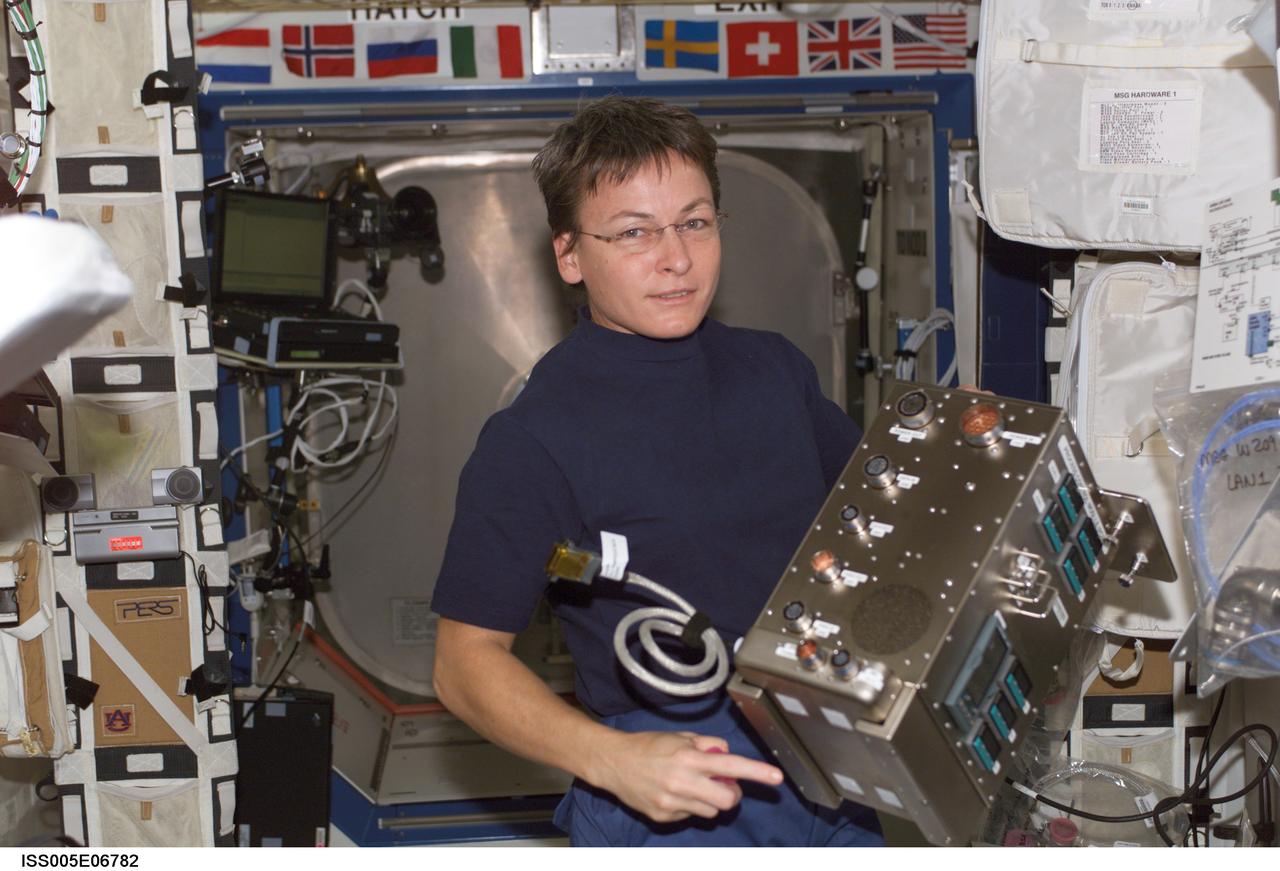
iss005e06782 (7/5/2002) --- NASA astronaut Peggy Whitson installs a Solidification Using a Baffle in Sealed Ampoules (SUBSA) Process Control Module in the Microgravity Science Glovebox (MSG). The SUBSA objective is to advance our understanding of the processes involved in semiconductor crystal growth. It offers a gradient freeze furnace for materials science investigations that can reach 850°C. Samples are contained in transparent quartz or ceramic ampoules with high definition video imaging available in real-time along with remote commanding of thermal control parameters.
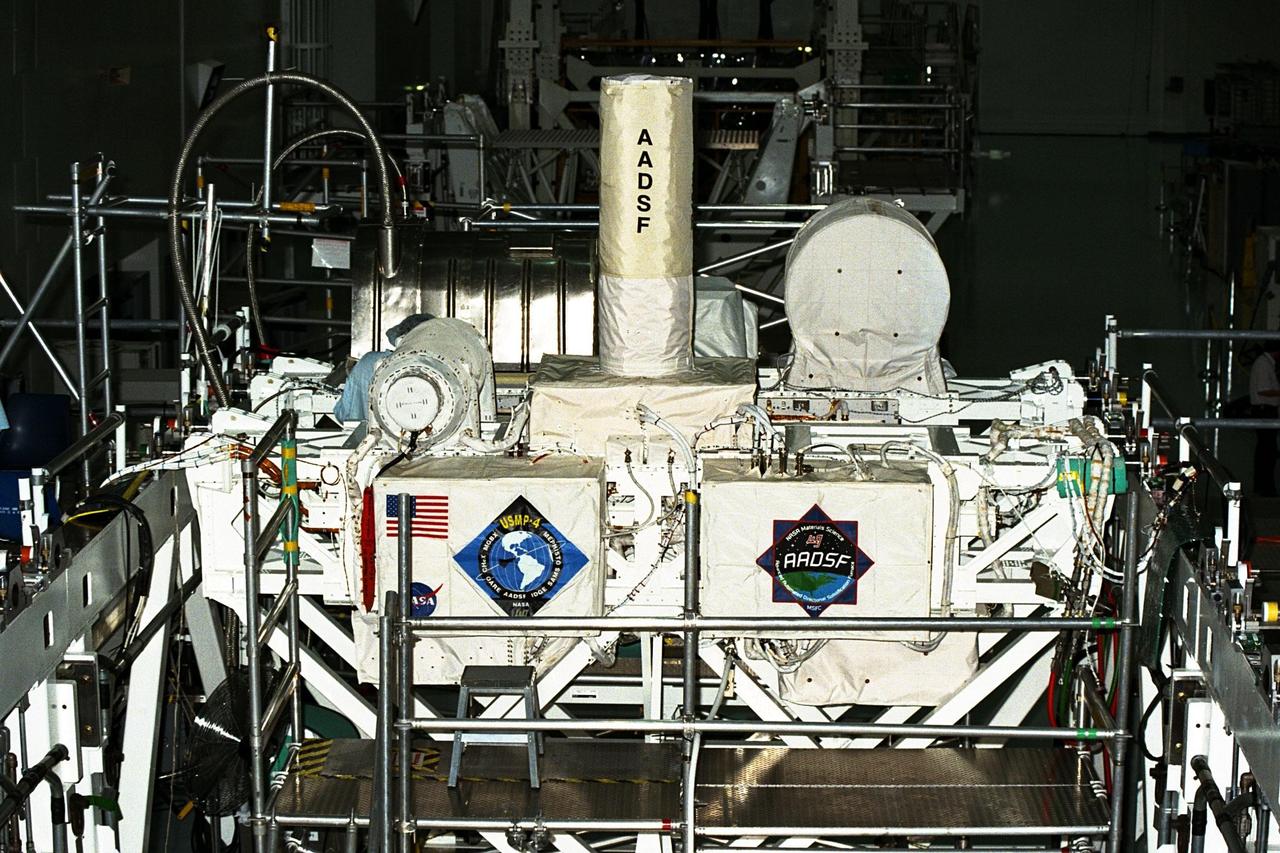
United States Microgravity Payload-4 (USMP-4) experiments are prepared to be flown on Space Shuttle mission STS-87 in the Space Station Processing Facility at Kennedy Space Center (KSC). Seen in the foreground at left is the USMP-4 logo with the acronyms of its experiments. Above the American flag at left is the MEPHISTO experiment, a cooperative American and French investigation of the fundamentals of crystal growth. The large white vertical cylinder in the center of the photo is the Advanced Automated Directional Solidification Furnace (AADSF), which is a sophisticated materials science facility used for studying a common method of processing semiconductor crystals called directional solidification. The white horizontal tube to the right is the Isothermal Dendritic Growth Experiment (IDGE), which will be used to study the dendritic solidification of molten materials in the microgravity environment. All USMP-4 experiments are scheduled for launch aboard STS-87 on Nov. 19 from KSC
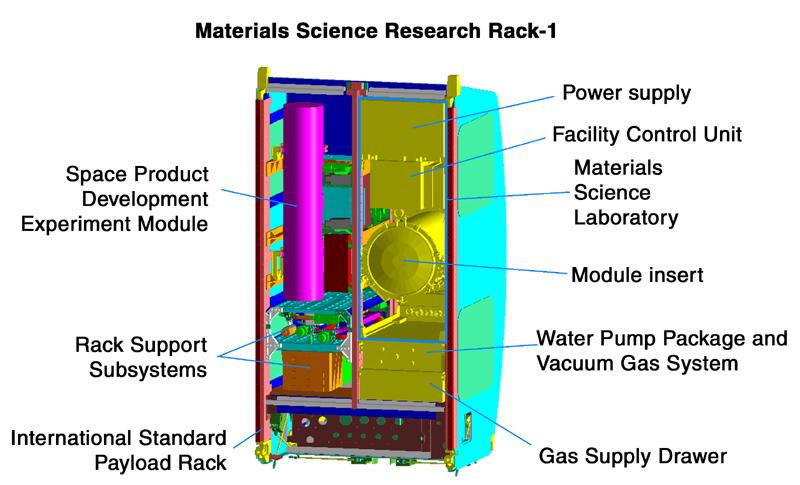
This computer-generated image depicts the Materials Science Research Rack-1 (MSRR-1) being developed by NASA's Marshall Space Flight Center and the European Space Agency (ESA) for placement in the Destiny laboratory module aboard the International Space Station. The rack is part of the plarned Materials Science Research Facility (MSRF) and is expected to include two furnace module inserts, a Quench Module Insert (being developed by NASA's Marshall Space Flight Center) to study directional solidification in rapidly cooled alloys and a Diffusion Module Insert (being developed by the European Space Agency) to study crystal growth, and a transparent furnace (being developed by NASA's Space Product Development program). Multi-user equipment in the rack is being developed under the auspices of NASA's Office of Biological and Physical Research (OBPR) and ESA. A larger image is available without labels (No. 0101755).
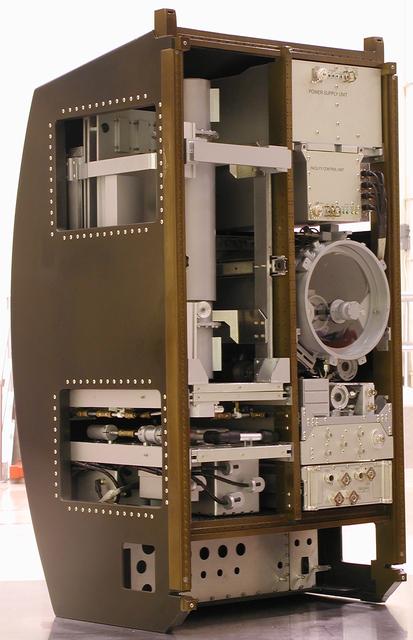
This scale model depicts the Materials Science Research Rack-1 (MSRR-1) being developed by NASA's Marshall Space Flight Center and the European Space Agency (ESA) for placement in the Destiny laboratory module aboard the International Space Station. The rack is part of the plarned Materials Science Research Facility (MSRF) and is expected to include two furnace module inserts, a Quench Module Insert (being developed by NASA's Marshall Space Flight Center) to study directional solidification in rapidly cooled alloys and a Diffusion Module Insert (being developed by the European Space Agency) to study crystal growth, and a transparent furnace (being developed by NASA's Space Product Development program). Multi-user equipment in the rack is being developed under the auspices of NASA's Office of Biological and Physical Research (OBPR) and ESA. Key elements are labeled in other images (0101754, 0101829, 0101830, and TBD). This image is from a digital still camera; higher resolution is not available.
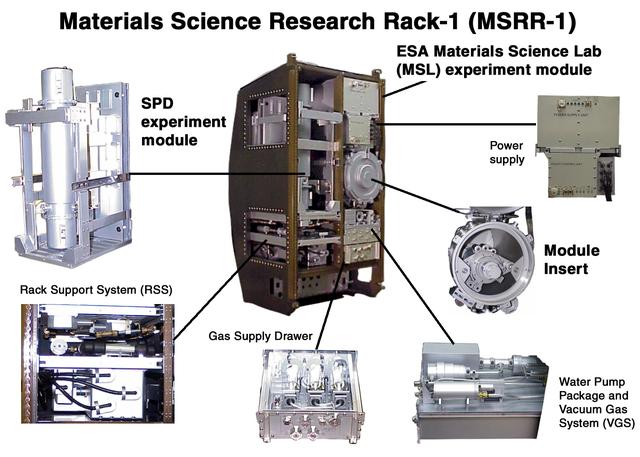
This scale model depicts the Materials Science Research Rack-1 (MSRR-1) being developed by NASA's Marshall Space Flight Center and the European Space Agency (ESA) for placement in the Destiny laboratory module aboard the International Space Station. The rack is part of the plarned Materials Science Research Facility (MSRF) and is expected to include two furnace module inserts, a Quench Module Insert (being developed by NASA's Marshall Space Flight Center) to study directional solidification in rapidly cooled alloys and a Diffusion Module Insert (being developed by the European Space Agency) to study crystal growth, and a transparent furnace (being developed by NASA's Space Product Development program). Multi-user equipment in the rack is being developed under the auspices of NASA's Office of Biological and Physical Research (OBPR) and ESA. Key elements are labeled in other images (0101754, 0101829, and TBD). This composite is from a digital still camera; higher resolution is not available.
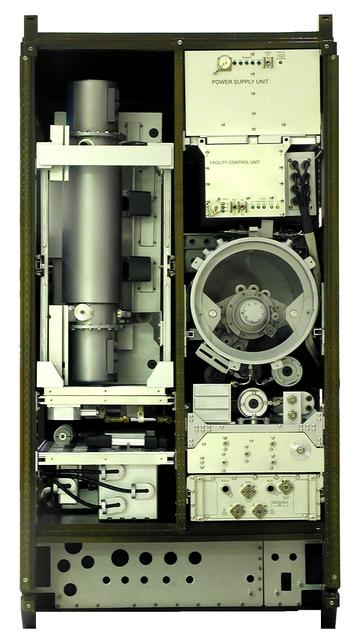
This scale model depicts the Materials Science Research Rack-1 (MSRR-1) being developed by NASA's Marshall Space Flight Center and the European Space Agency (ESA) for placement in the Destiny laboratory module aboard the International Space Station. The rack is part of the plarned Materials Science Research Facility (MSRF) and is expected to include two furnace module inserts, a Quench Module Insert (being developed by NASA's Marshall Space Flight Center) to study directional solidification in rapidly cooled alloys and a Diffusion Module Insert (being developed by the European Space Agency) to study crystal growth, and a transparent furnace (being developed by NASA's Space Product Development program). Multi-user equipment in the rack is being developed under the auspices of NASA's Office of Biological and Physical Research (OBPR) and ESA. Key elements are labeled in other images (0101754, 0101829, 0101830, and TBD).
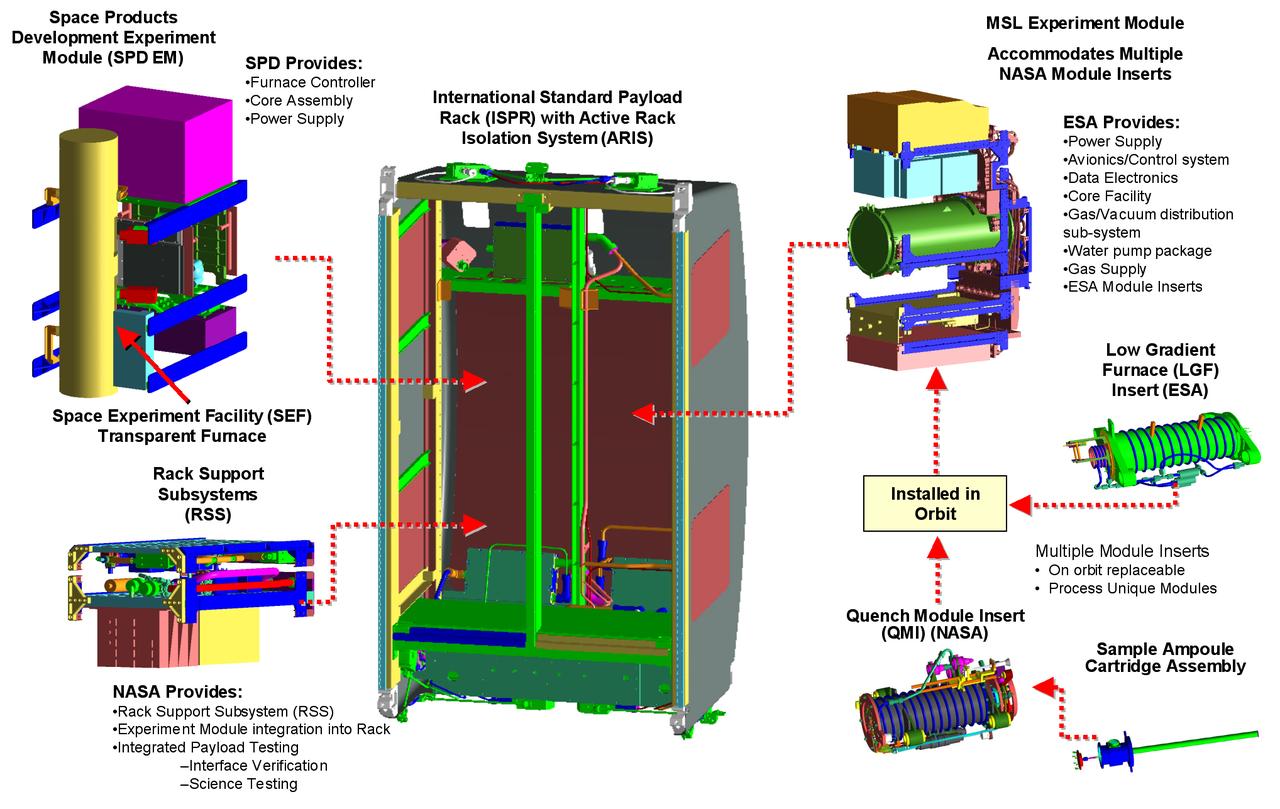
This computer-generated image depicts the Materials Science Research Rack-1 (MSRR-1) being developed by NASA's Marshall Space Flight Center and the European Space Agency (ESA) for placement in the Destiny laboratory module aboard the International Space Station. The rack is part of the plarned Materials Science Research Facility (MSRF) and is expected to include two furnace module inserts, a Quench Module Insert (being developed by NASA's Marshall Space Flight Center) to study directional solidification in rapidly cooled alloys and a Diffusion Module Insert (being developed by the European Space Agency) to study crystal growth, and a transparent furnace (being developed by NASA's Space Product Development program). Multi-user equipment in the rack is being developed under the auspices of NASA's Office of Biological and Physical Research (OBPR) and ESA. Key elements are labeled in other images (0101754, 0101830, and TBD).
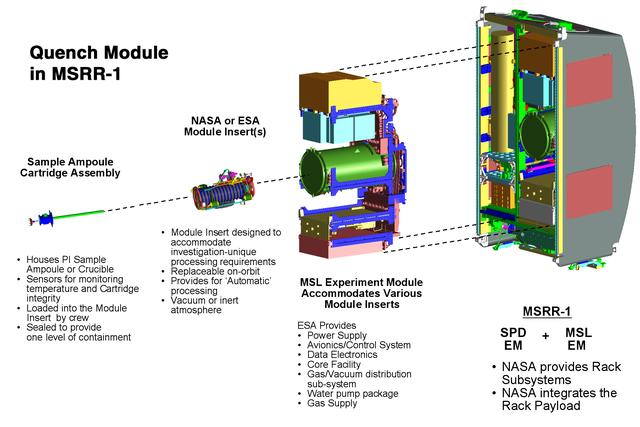
This computer-generated image depicts the Materials Science Research Rack-1 (MSRR-1) being developed by NASA's Marshall Space Flight Center and the European Space Agency (ESA) for placement in the Destiny laboratory module aboard the International Space Station. The rack is part of the plarned Materials Science Research Facility (MSRF) and is expected to include two furnace module inserts, a Quench Module Insert (being developed by NASA's Marshall Space Flight Center) to study directional solidification in rapidly cooled alloys and a Diffusion Module Insert (being developed by the European Space Agency) to study crystal growth, and a transparent furnace (being developed by NASA's Space Product Development program). Multi-user equipment in the rack is being developed under the auspices of NASA's Office of Biological and Physical Research (OBPR) and ESA. Key elements are labeled in other images (0101754, 0101829, 0101830).
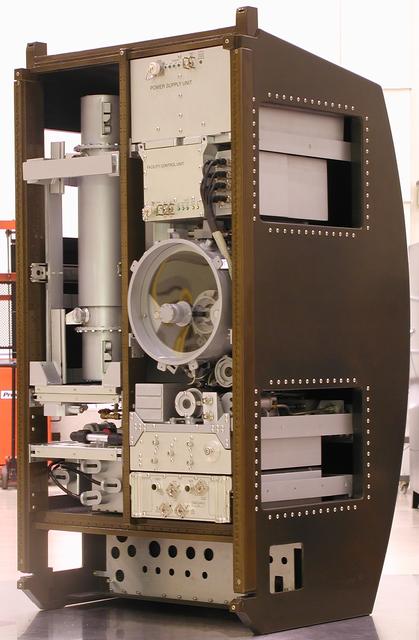
This scale model depicts the Materials Science Research Rack-1 (MSRR-1) being developed by NASA's Marshall Space Flight Center and the European Space Agency (ESA) for placement in the Destiny laboratory module aboard the International Space Station. The rack is part of the plarned Materials Science Research Facility (MSRF) and is expected to include two furnace module inserts, a Quench Module Insert (being developed by NASA's Marshall Space Flight Center) to study directional solidification in rapidly cooled alloys and a Diffusion Module Insert (being developed by the European Space Agency) to study crystal growth, and a transparent furnace (being developed by NASA's Space Product Development program). Multi-user equipment in the rack is being developed under the auspices of NASA's Office of Biological and Physical Research (OBPR) and ESA. Key elements are labeled in other images (0101754, 0101829, 0101830, and TBD). This image is from a digital still camera; higher resolution is not available.
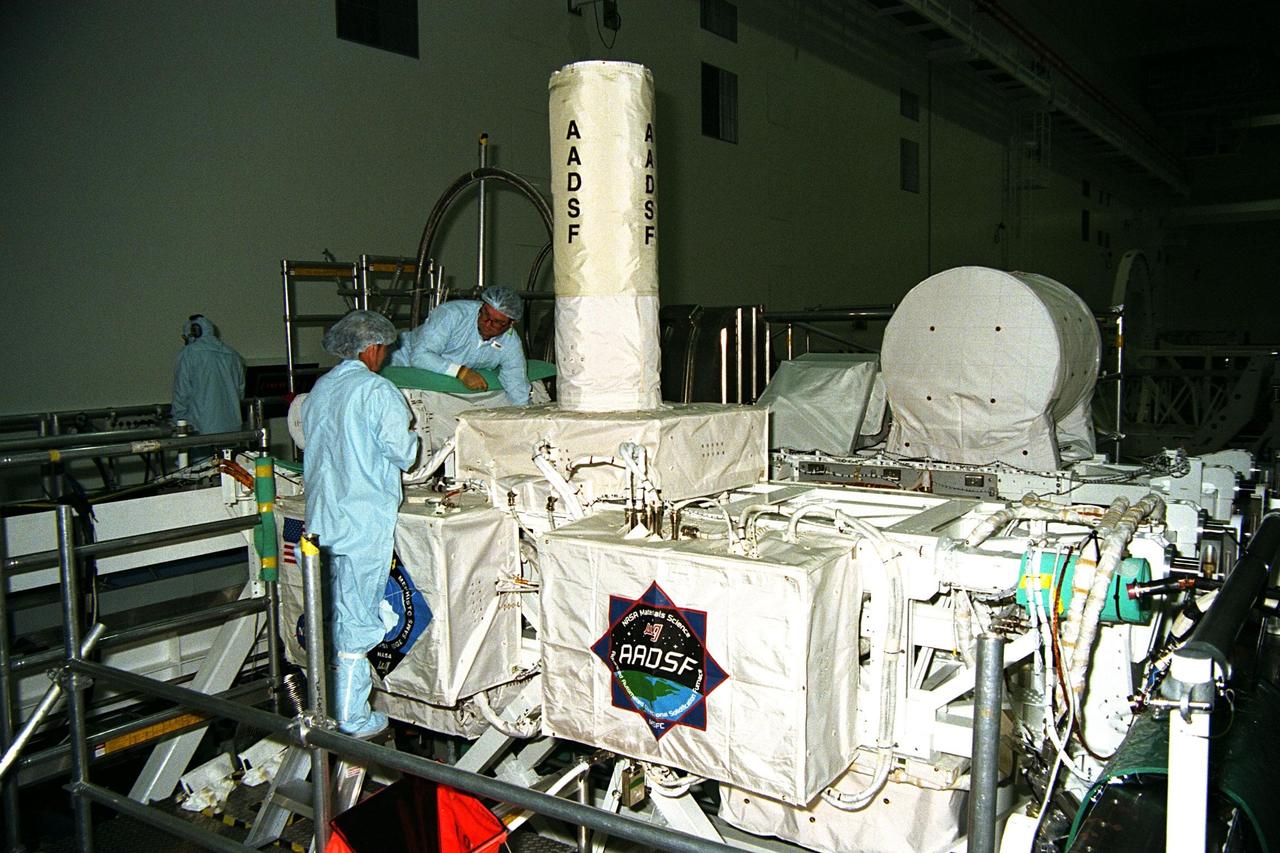
Technicians are monitoring experiments on the United States Microgravity Payload-4 (USMP-4) in preparation for its scheduled launch aboard STS-87 on Nov. 19 from Kennedy Space Center (KSC). USMP-4 experiments are prepared in the Space Station Processing Facility at KSC. The large white vertical cylinder in the center of the photo is the Advanced Automated Directional Solidification Furnace (AADSF), which is a sophisticated materials science facility used for studying a common method of processing semiconductor crystals called directional solidification. The white horizontal tube to the right is the Isothermal Dendritic Growth Experiment (IDGE), which will be used to study the dendritic solidification of molten materials in the microgravity environment
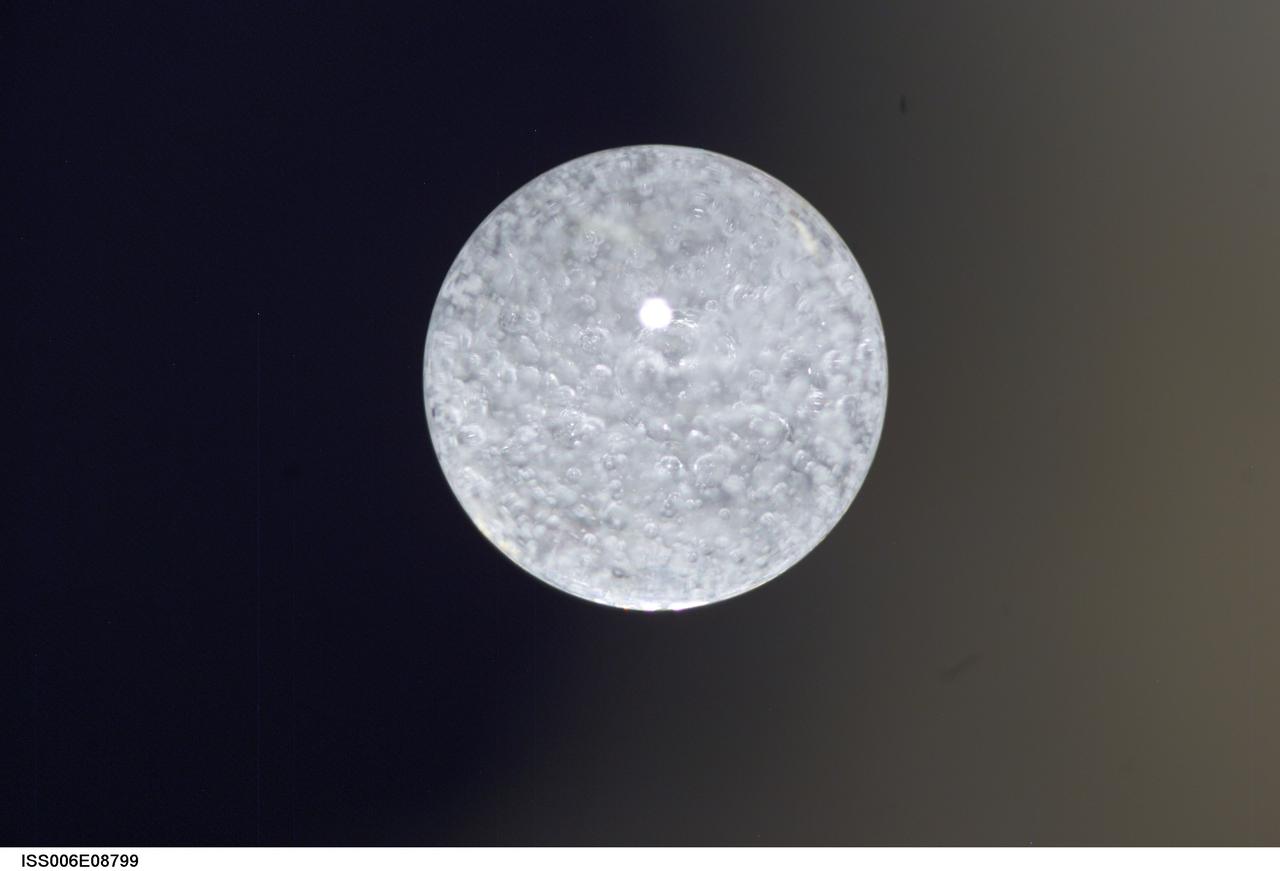
ISS006-E-08799 (14 December 2002) --- View of a bubble formed as a result of a Zeolite Crystal Growth (ZCG) experiment in the Destiny laboratory on the International Space Station (ISS). Expedition Six Commander Kenneth D. Bowersox used a Space Station drill to mix 12 Zeolite samples in clear tubes. Scientists on the ground watching on TV noticed bubbles in the samples. Bowersox used a modified mixing procedure to process autoclaves to isolate bubbles. He re-inserted the samples in the ZCG furnace in Express Rack 2 in the U.S. laboratory/Destiny. This experiment has shown that the bubbles could cause larger number of smaller deformed crystals to grow. Bowersox rotated the samples so that the heavier fluid was thrown to the outside while the lighter bubbles stayed on the inside.
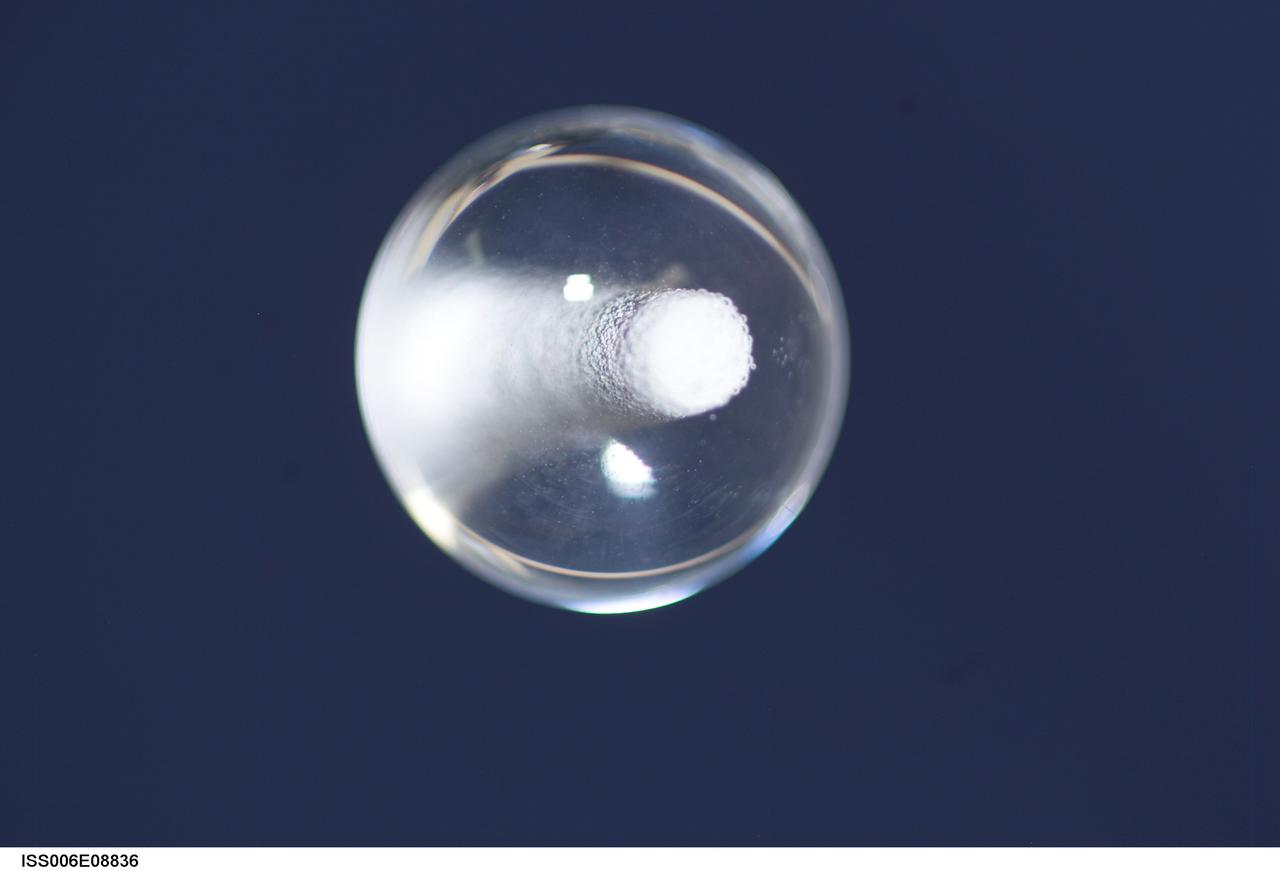
ISS006-E-08836 (14 December 2002) --- View of a bubble formed as a result of a Zeolite Crystal Growth (ZCG) experiment in the Destiny laboratory on the International Space Station (ISS). Expedition Six Commander Kenneth D. Bowersox used a Space Station drill to mix 12 Zeolite samples in clear tubes. Scientists on the ground watching on TV noticed bubbles in the samples. Bowersox used a modified mixing procedure to process autoclaves to isolate bubbles. He re-inserted the samples in the ZCG furnace in Express Rack 2 in the U.S. laboratory/Destiny. This experiment has shown that the bubbles could cause larger number of smaller deformed crystals to grow. Bowersox rotated the samples so that the heavier fluid was thrown to the outside while the lighter bubbles stayed on the inside.
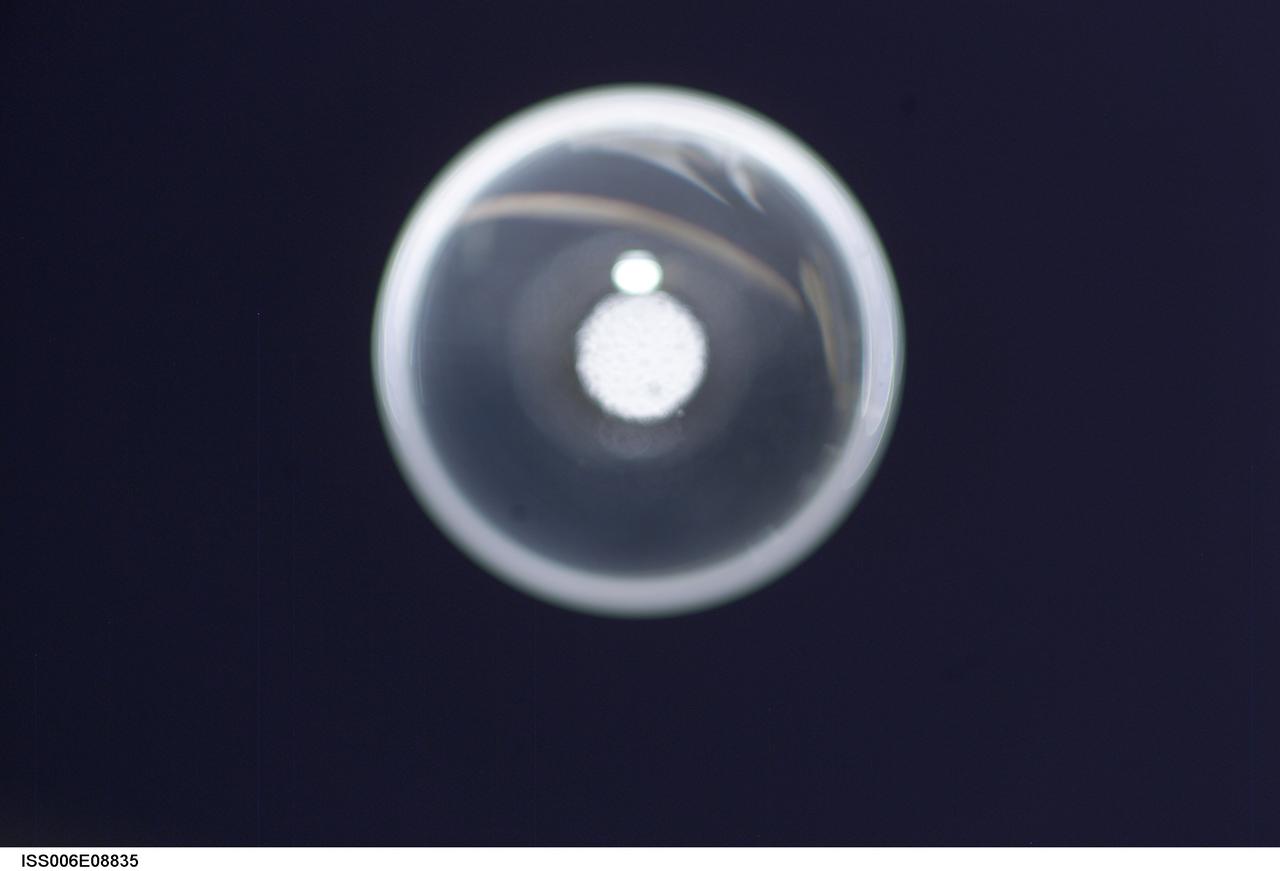
ISS006-E-08835 (14 December 2002) --- View of a bubble formed as a result of a Zeolite Crystal Growth (ZCG) experiment in the Destiny laboratory on the International Space Station (ISS). Expedition Six Commander Kenneth D. Bowersox used a Space Station drill to mix 12 Zeolite samples in clear tubes. Scientists on the ground watching on TV noticed bubbles in the samples. Bowersox used a modified mixing procedure to process autoclaves to isolate bubbles. He re-inserted the samples in the ZCG furnace in Express Rack 2 in the U.S. laboratory/Destiny. This experiment has shown that the bubbles could cause larger number of smaller deformed crystals to grow. Bowersox rotated the samples so that the heavier fluid was thrown to the outside while the lighter bubbles stayed on the inside.
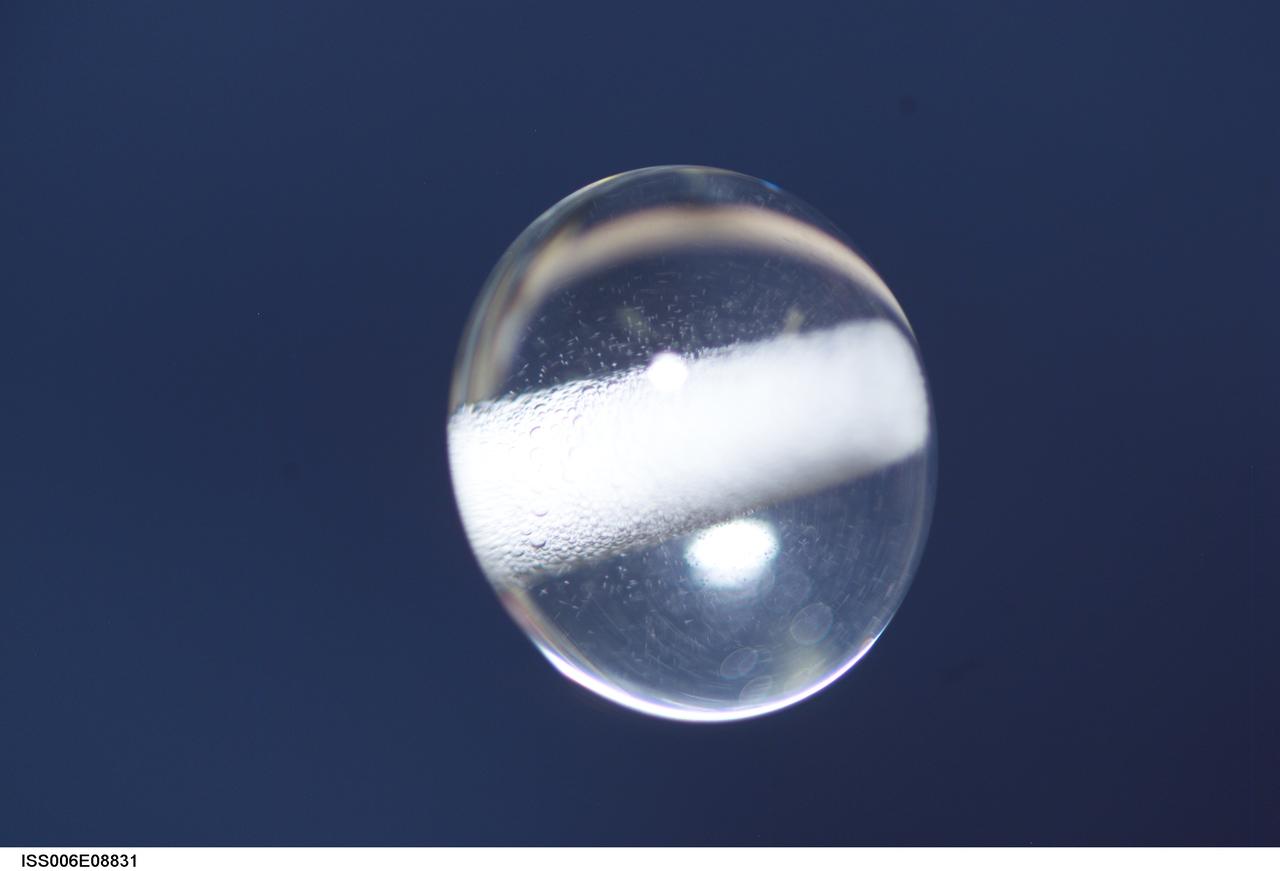
ISS006-E-08831 (14 December 2002) --- View of a bubble formed as a result of a Zeolite Crystal Growth (ZCG) experiment in the Destiny laboratory on the International Space Station (ISS). Expedition Six Commander Kenneth D. Bowersox used a Space Station drill to mix 12 Zeolite samples in clear tubes. Scientists on the ground watching on TV noticed bubbles in the samples. Bowersox used a modified mixing procedure to process autoclaves to isolate bubbles. He re-inserted the samples in the ZCG furnace in Express Rack 2 in the U.S. laboratory/Destiny. This experiment has shown that the bubbles could cause larger number of smaller deformed crystals to grow. Bowersox rotated the samples so that the heavier fluid was thrown to the outside while the lighter bubbles stayed on the inside.
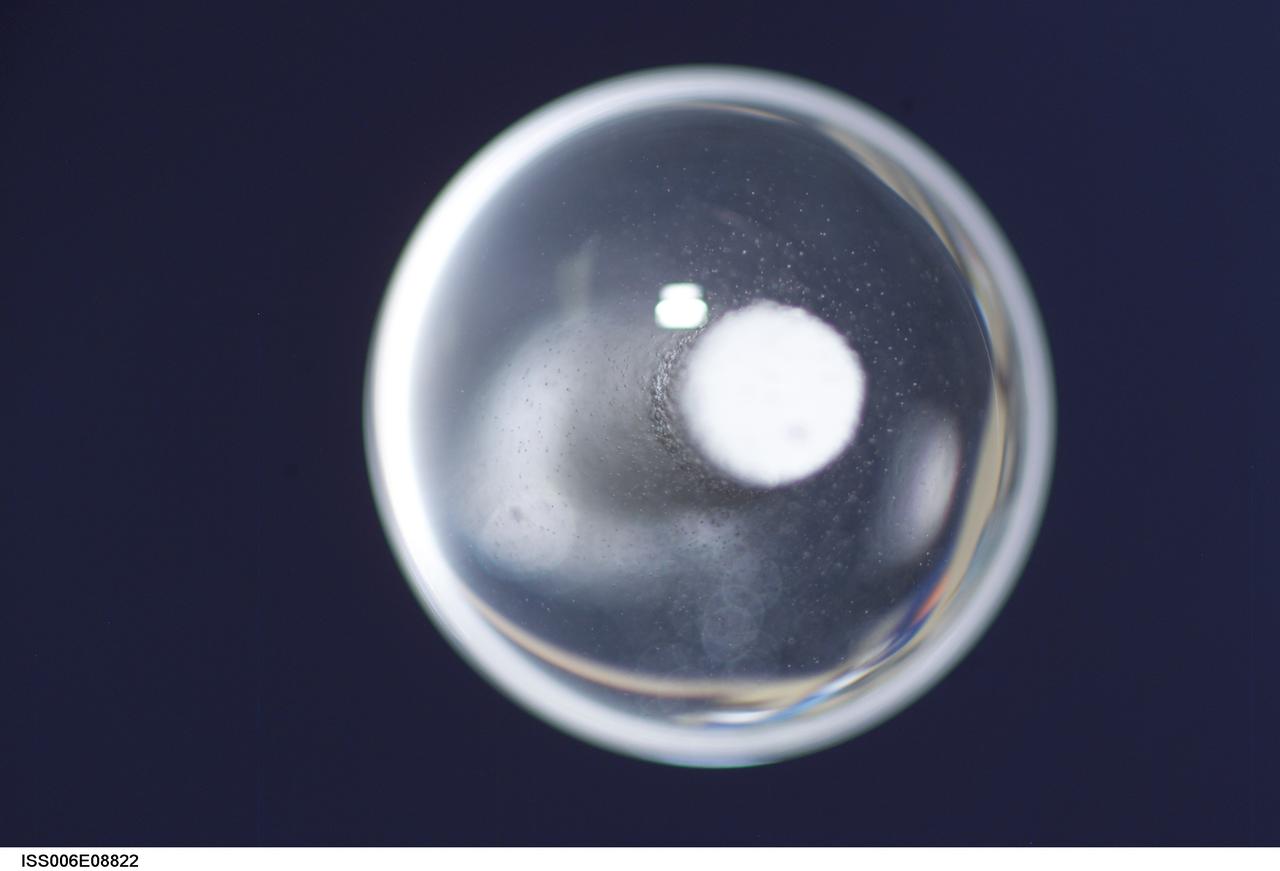
ISS006-E-08822 (14 December 2002) --- View of a bubble formed as a result of a Zeolite Crystal Growth (ZCG) experiment in the Destiny laboratory on the International Space Station (ISS). Expedition Six Commander Kenneth D. Bowersox used a Space Station drill to mix 12 Zeolite samples in clear tubes. Scientists on the ground watching on TV noticed bubbles in the samples. Bowersox used a modified mixing procedure to process autoclaves to isolate bubbles. He re-inserted the samples in the ZCG furnace in Express Rack 2 in the U.S. laboratory/Destiny. This experiment has shown that the bubbles could cause larger number of smaller deformed crystals to grow. Bowersox rotated the samples so that the heavier fluid was thrown to the outside while the lighter bubbles stayed on the inside.
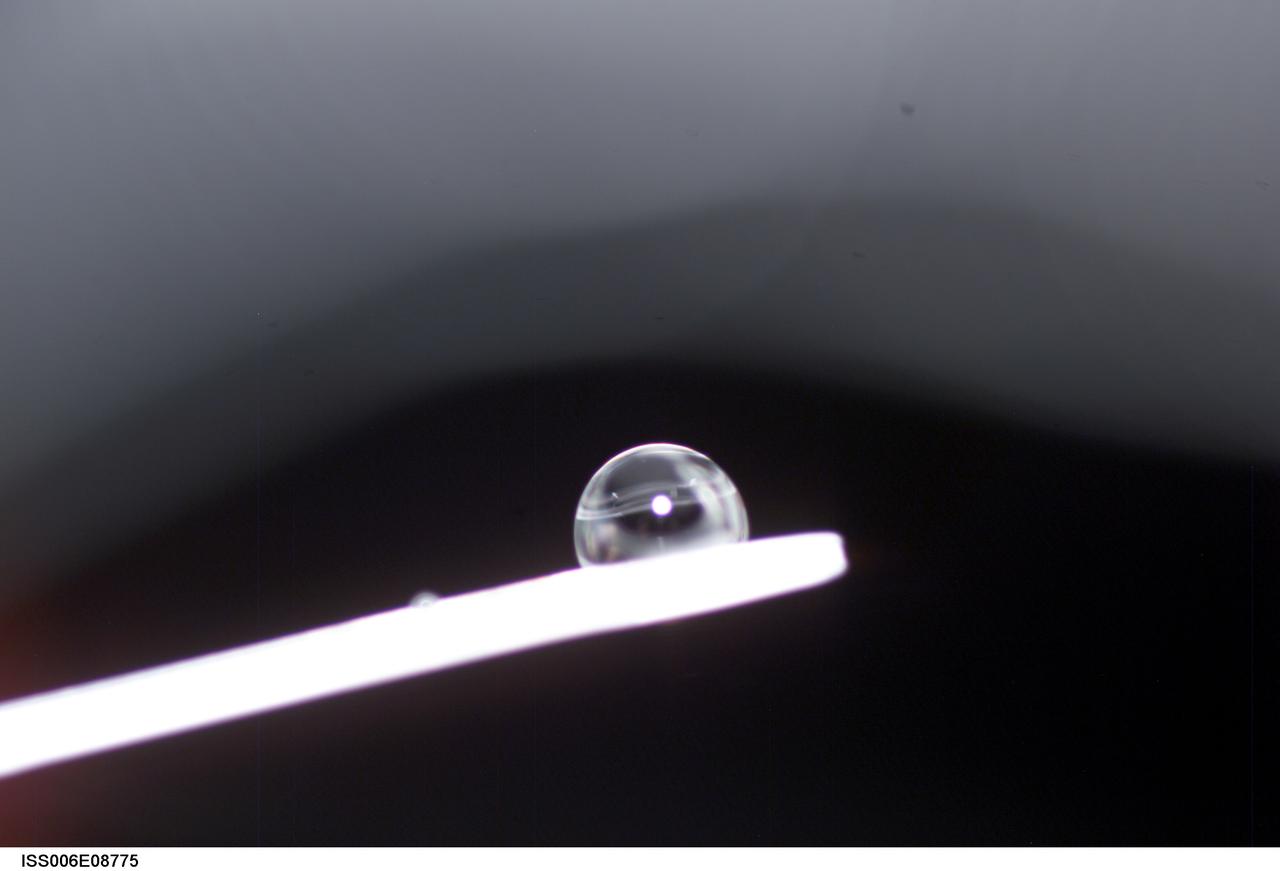
ISS006-E-08775 (14 December 2002) --- View of a bubble formed as a result of a Zeolite Crystal Growth (ZCG) experiment in the Destiny laboratory on the International Space Station (ISS). Expedition Six Commander Kenneth D. Bowersox used a Space Station drill to mix 12 Zeolite samples in clear tubes. Scientists on the ground watching on TV noticed bubbles in the samples. Bowersox used a modified mixing procedure to process autoclaves to isolate bubbles. He re-inserted the samples in the ZCG furnace in Express Rack 2 in the U.S. laboratory/Destiny. This experiment has shown that the bubbles could cause larger number of smaller deformed crystals to grow. Bowersox rotated the samples so that the heavier fluid was thrown to the outside while the lighter bubbles stayed on the inside.
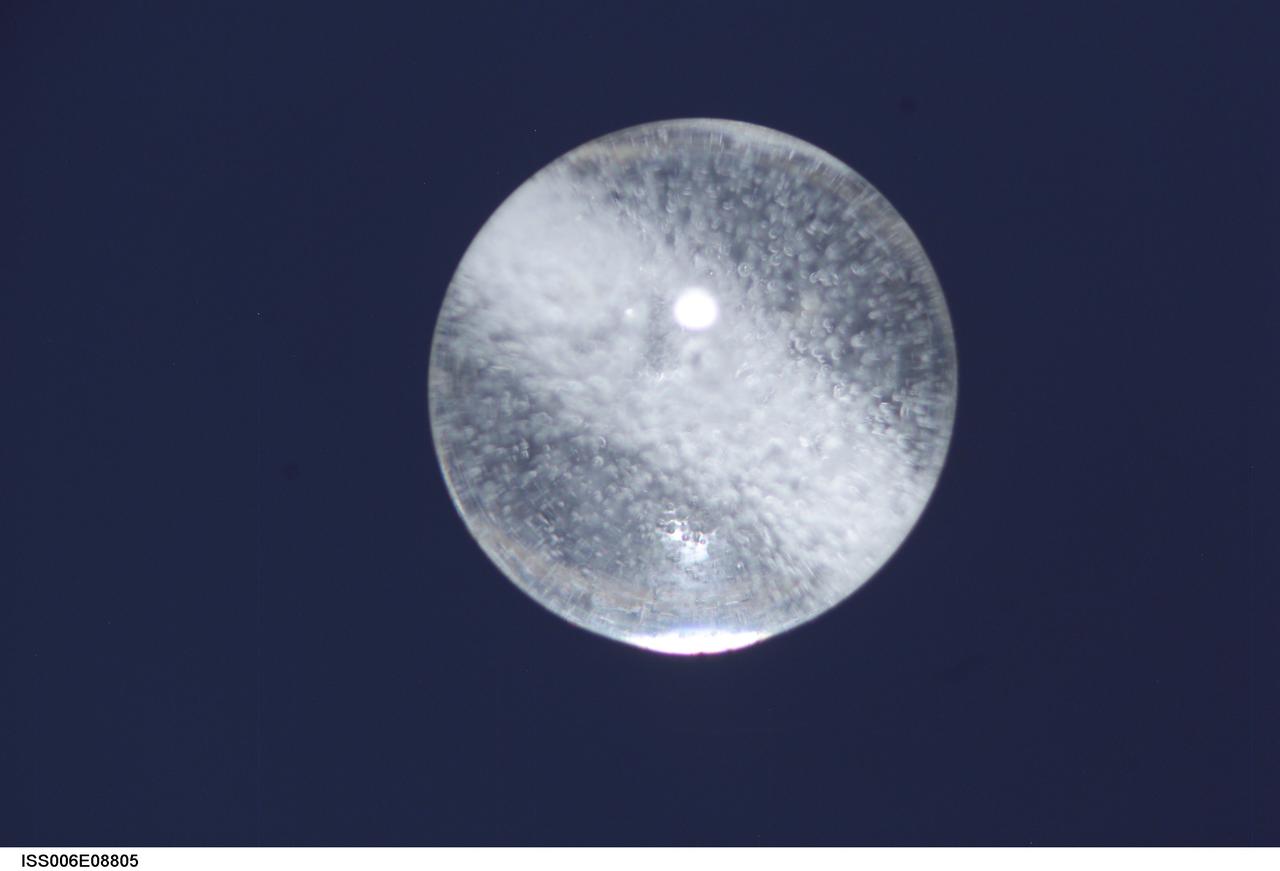
ISS006-E-08805 (14 December 2002) --- View of a bubble formed as a result of a Zeolite Crystal Growth (ZCG) experiment in the Destiny laboratory on the International Space Station (ISS). Expedition Six Commander Kenneth D. Bowersox used a Space Station drill to mix 12 Zeolite samples in clear tubes. Scientists on the ground watching on TV noticed bubbles in the samples. Bowersox used a modified mixing procedure to process autoclaves to isolate bubbles. He re-inserted the samples in the ZCG furnace in Express Rack 2 in the U.S. laboratory/Destiny. This experiment has shown that the bubbles could cause larger number of smaller deformed crystals to grow. Bowersox rotated the samples so that the heavier fluid was thrown to the outside while the lighter bubbles stayed on the inside.
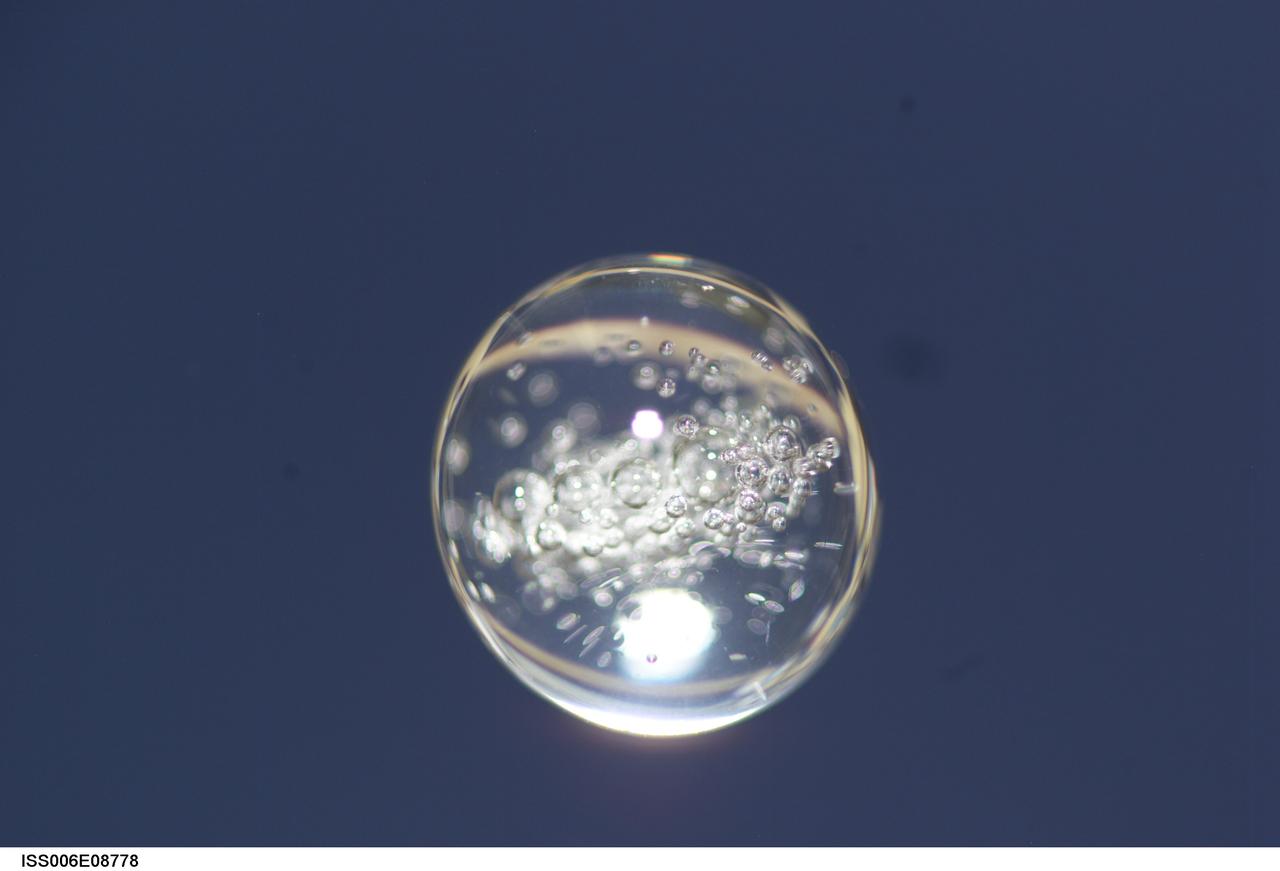
ISS006-E-08778 (14 December 2002) --- View of a bubble formed as a result of a Zeolite Crystal Growth (ZCG) experiment in the Destiny laboratory on the International Space Station (ISS). Expedition Six Commander Kenneth D. Bowersox used a Space Station drill to mix 12 Zeolite samples in clear tubes. Scientists on the ground watching on TV noticed bubbles in the samples. Bowersox used a modified mixing procedure to process autoclaves to isolate bubbles. He re-inserted the samples in the ZCG furnace in Express Rack 2 in the U.S. laboratory/Destiny. This experiment has shown that the bubbles could cause larger number of smaller deformed crystals to grow. Bowersox rotated the samples so that the heavier fluid was thrown to the outside while the lighter bubbles stayed on the inside.
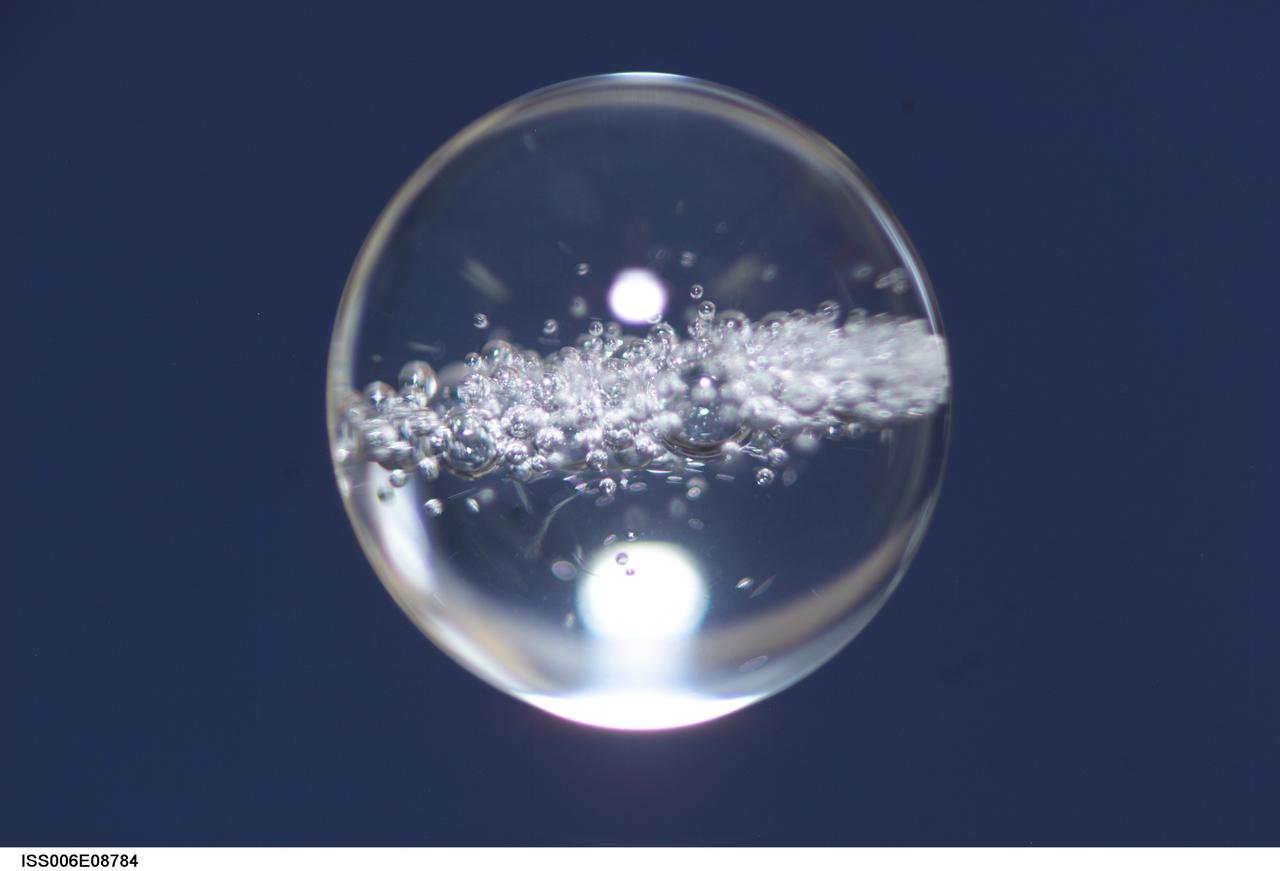
ISS006-E-08784 (14 December 2002) --- View of a bubble formed as a result of a Zeolite Crystal Growth (ZCG) experiment in the Destiny laboratory on the International Space Station (ISS). Expedition Six Commander Kenneth D. Bowersox used a Space Station drill to mix 12 Zeolite samples in clear tubes. Scientists on the ground watching on TV noticed bubbles in the samples. Bowersox used a modified mixing procedure to process autoclaves to isolate bubbles. He re-inserted the samples in the ZCG furnace in Express Rack 2 in the U.S. laboratory/Destiny. This experiment has shown that the bubbles could cause larger number of smaller deformed crystals to grow. Bowersox rotated the samples so that the heavier fluid was thrown to the outside while the lighter bubbles stayed on the inside.
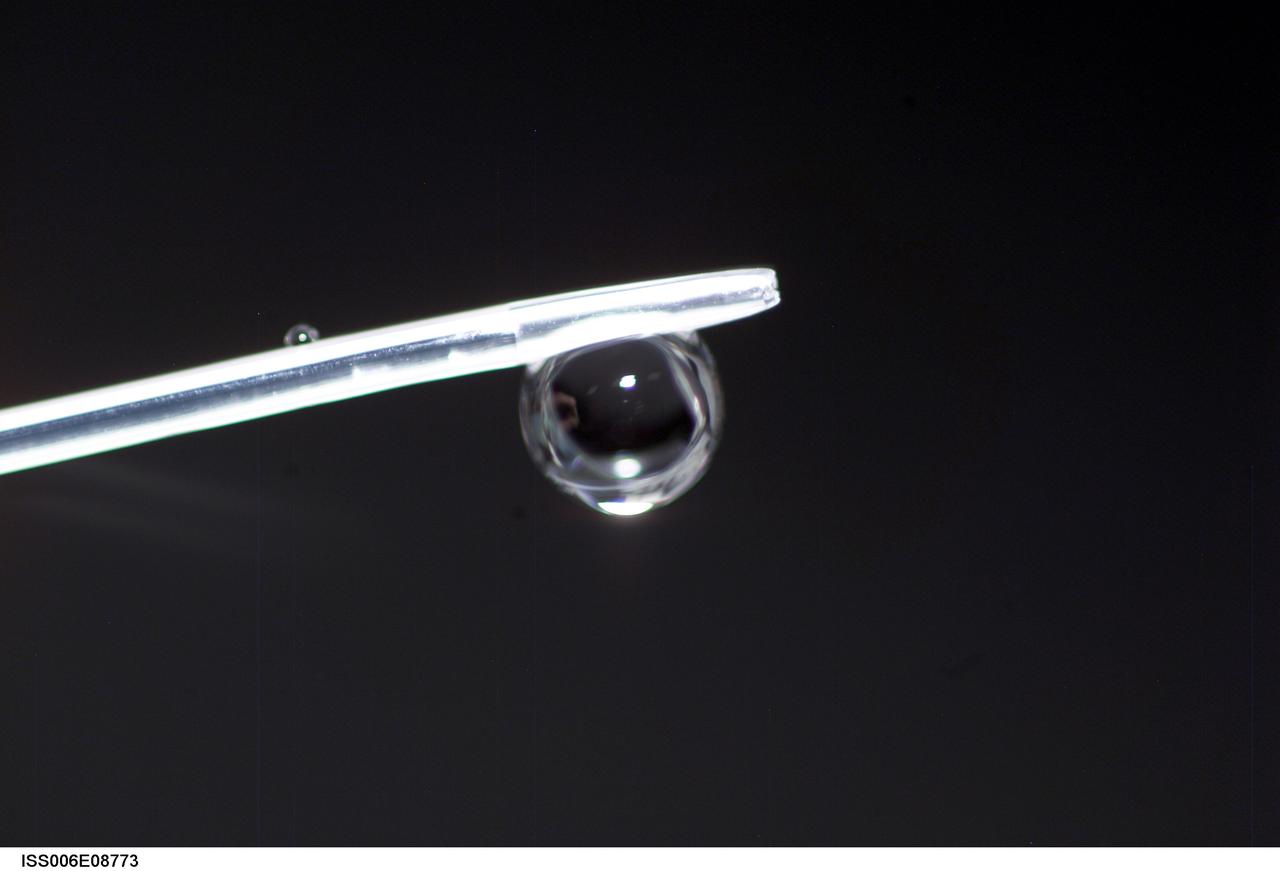
ISS006-E-08773 (14 December 2002) --- View of a bubble formed as a result of a Zeolite Crystal Growth (ZCG) experiment in the Destiny laboratory on the International Space Station (ISS). Expedition Six Commander Kenneth D. Bowersox used a Space Station drill to mix 12 Zeolite samples in clear tubes. Scientists on the ground watching on TV noticed bubbles in the samples. Bowersox used a modified mixing procedure to process autoclaves to isolate bubbles. He re-inserted the samples in the ZCG furnace in Express Rack 2 in the U.S. laboratory/Destiny. This experiment has shown that the bubbles could cause larger number of smaller deformed crystals to grow. Bowersox rotated the samples so that the heavier fluid was thrown to the outside while the lighter bubbles stayed on the inside.
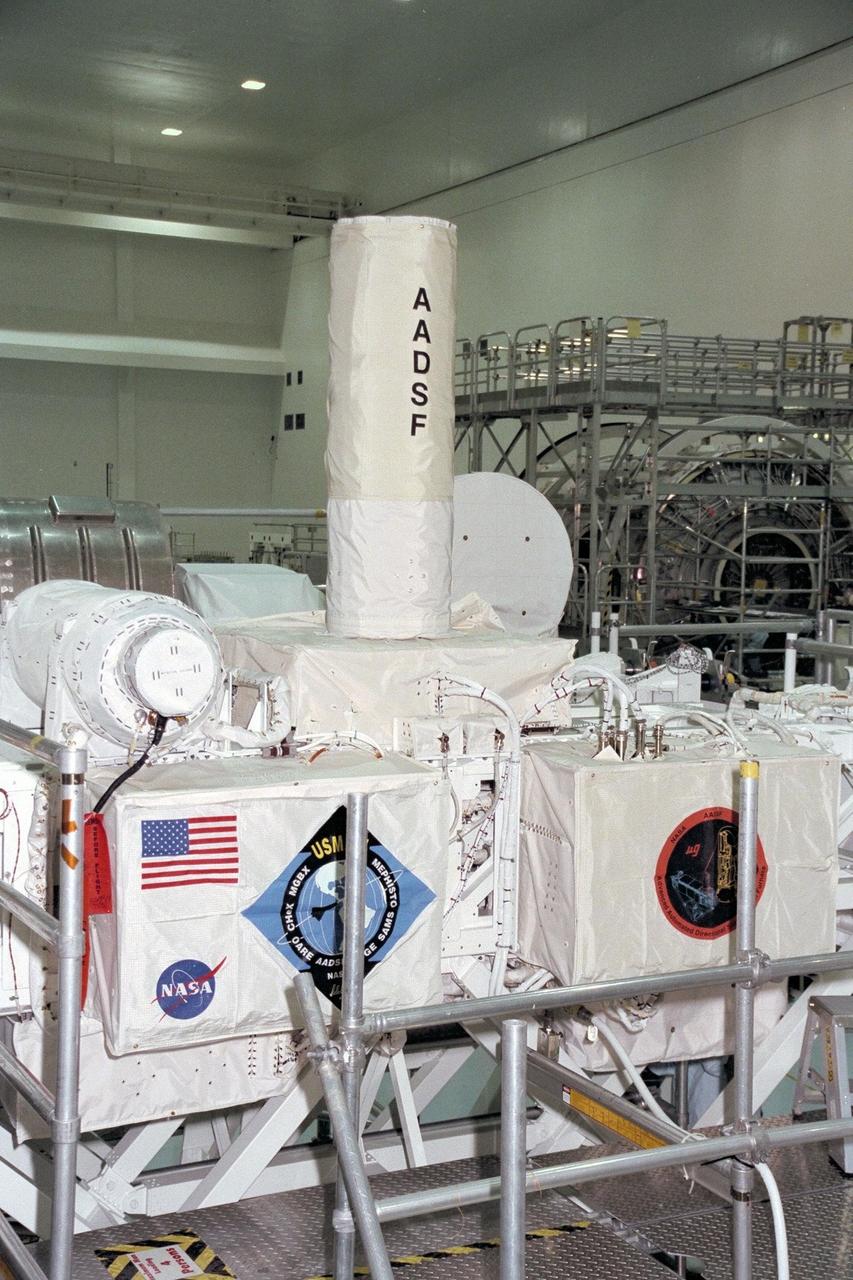
United States Microgravity Payload-4 (USMP-4) experiments are prepared to be flown on Space Shuttle mission STS-87 in the Space Station Processing Facility at Kennedy Space Center (KSC). The large white vertical cylinder in the center of the photo is the Advanced Automated Directional Solidification Furnace (AADSF) and the horizontal tube to the left of it is MEPHISTO, a French acronym for a cooperative American-French investigation of the fundamentals of crystal growth. Seen at right behind the AADSF in the circular white cover is the Isothermal Dendritic Growth Experiment (IDGE), which will be used to study the dendritic solidification of molten materials in the microgravity environment. Under the multi-layer insulation with the American flag and mission logo is the Space Acceleration Measurement System, or SAMS, which measures the microgravity conditions in which the experiments are conducted. All of these experiments are scheduled for launch aboard STS-87 on Nov. 19 from KSC
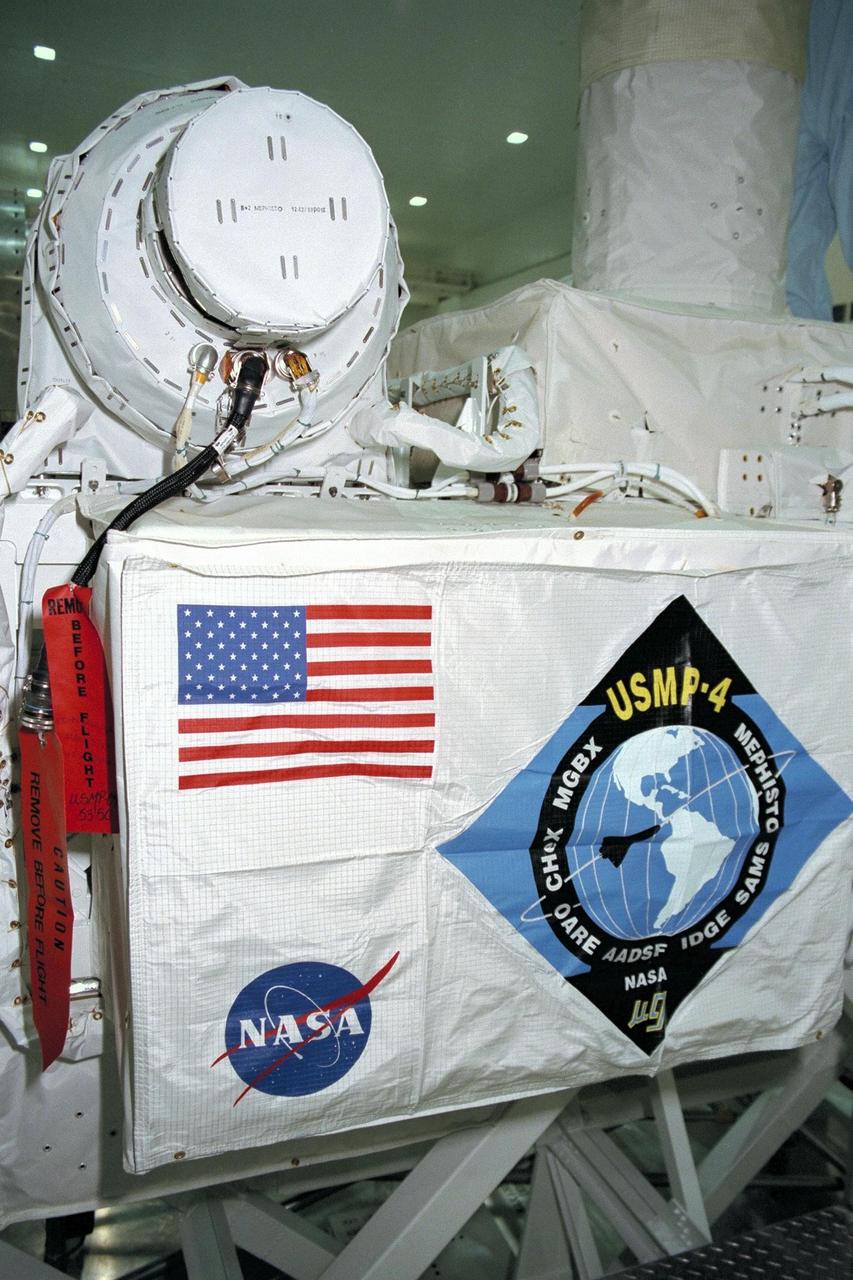
United States Microgravity Payload-4 (USMP-4) experiments are prepared to be flown on Space Shuttle mission STS-87 in the Space Station Processing Facility at Kennedy Space Center (KSC). The large white vertical cylinder in the middle of the photo is the Advanced Automated Directional Solidification Furnace (AADSF) and the horizontal tube to its left is MEPHISTO, the French acronym for a cooperative American-French investigation of the fundamentals of crystal growth. Seen to the right of the AADSF is the Isothermal Dendritic Growth Experiment (IDGE), which will be used to study the dendritic solidification of molten materials in the microgravity environment. Under the multi-layer insulation with the American flag and mission logo is the Space Acceleration Measurement System, or SAMS, which measures the microgravity conditions in which the experiments are conducted. All of these experiments are scheduled for launch aboard STS-87 on Nov. 19 from KSC
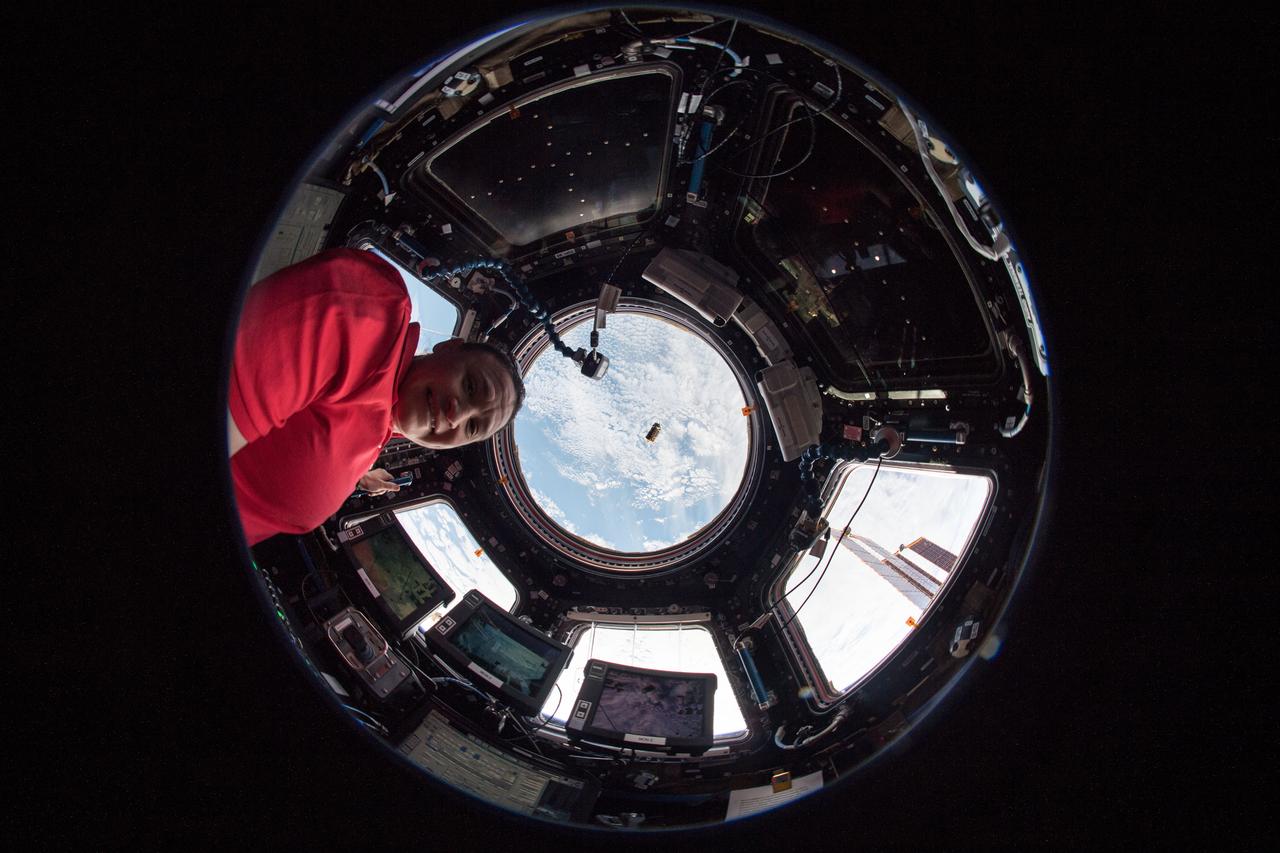
iss056e195892 (Sept. 27, 2018) --- Flight Engineer Serena Auñón-Chancellor of NASA monitors the arrival of the H-II Transfer Vehicle-7 (HTV-7) before it was captured during Expedition 56 by Commander Drew Feustel operating the Canadarm2 robotic arm. The HTV-7 from the Japan Aerospace Exploration Agency (JAXA) delivered six new lithium-ion batteries and adapter plates to upgrade the International Space Station's power systems. The Japanese resupply ship also delivered science experiments and research hardware including a new sample holder for the Electrostatic Levitation Furnace (JAXA-ELF), a protein crystal growth experiment at low temperatures (JAXA LT PCG), an investigation that looks at the effect of microgravity on bone marrow (MARROW), a Life Sciences Glovebox, and additional EXPRESS Racks.
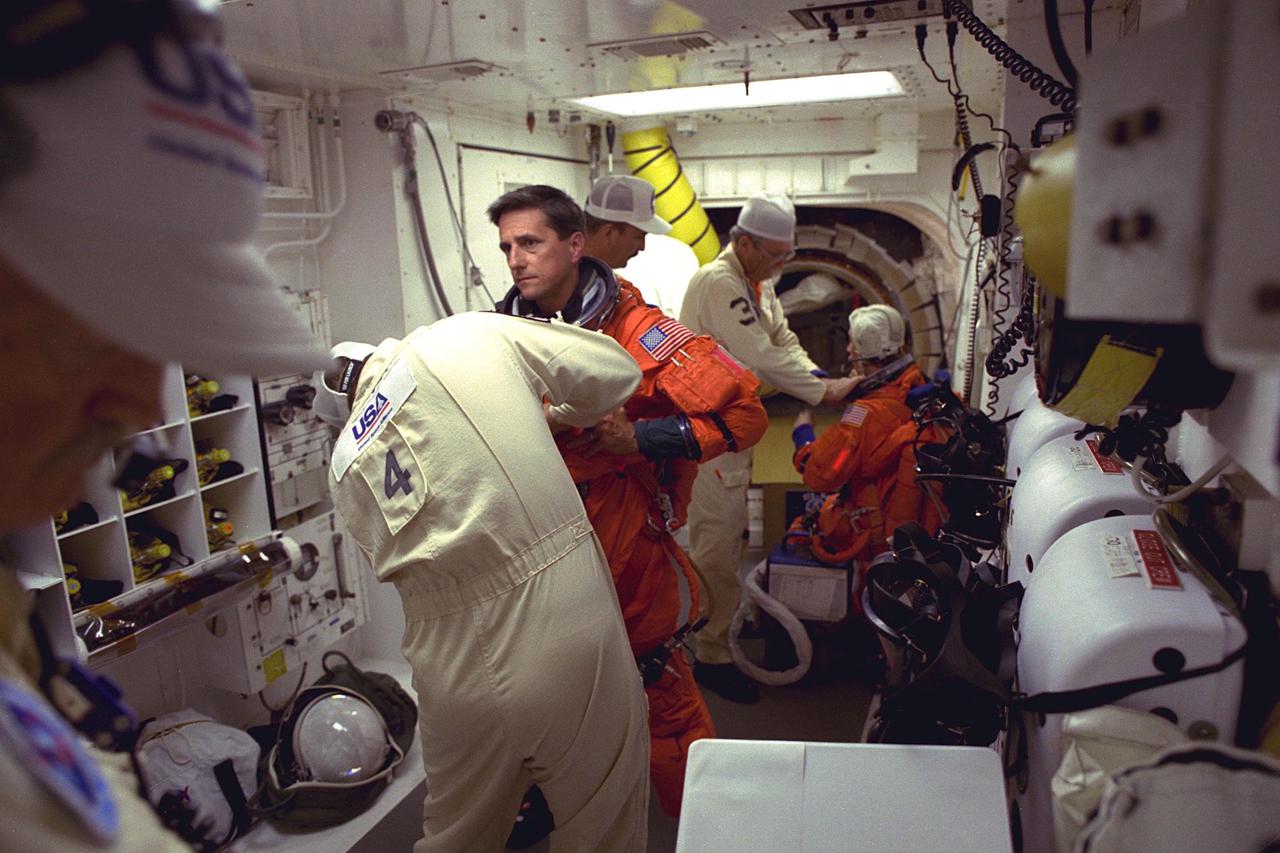
STS-94 Mission Specialist Donald A. Thomas prepares to enter the Space Shuttle Columbia at Launch Pad 39A in preparation for launch. He has flown on STS-83, STS-70 and STS-65. He holds a doctorate in materials science and has been the Principal Investigator for a Space Shuttle crystal growth experiment. Because of his background in materials science, Thomas will be concentrating his efforts during the Red shift on the five experiments in this discipline in the Large Isothermal Furnace. He also will work on the ten materials science investigations in the Electromagnetic Containerless Processing Facility and four that will be measuring the effects of microgravity and motion in the orbiter on the experiments. Thomas and six fellow crew members will lift off during a launch window that opens at 1:50 p.m. EDT, July 1. The launch window will open 47 minutes early to improve the opportunity to lift off before Florida summer rain showers reach the space center
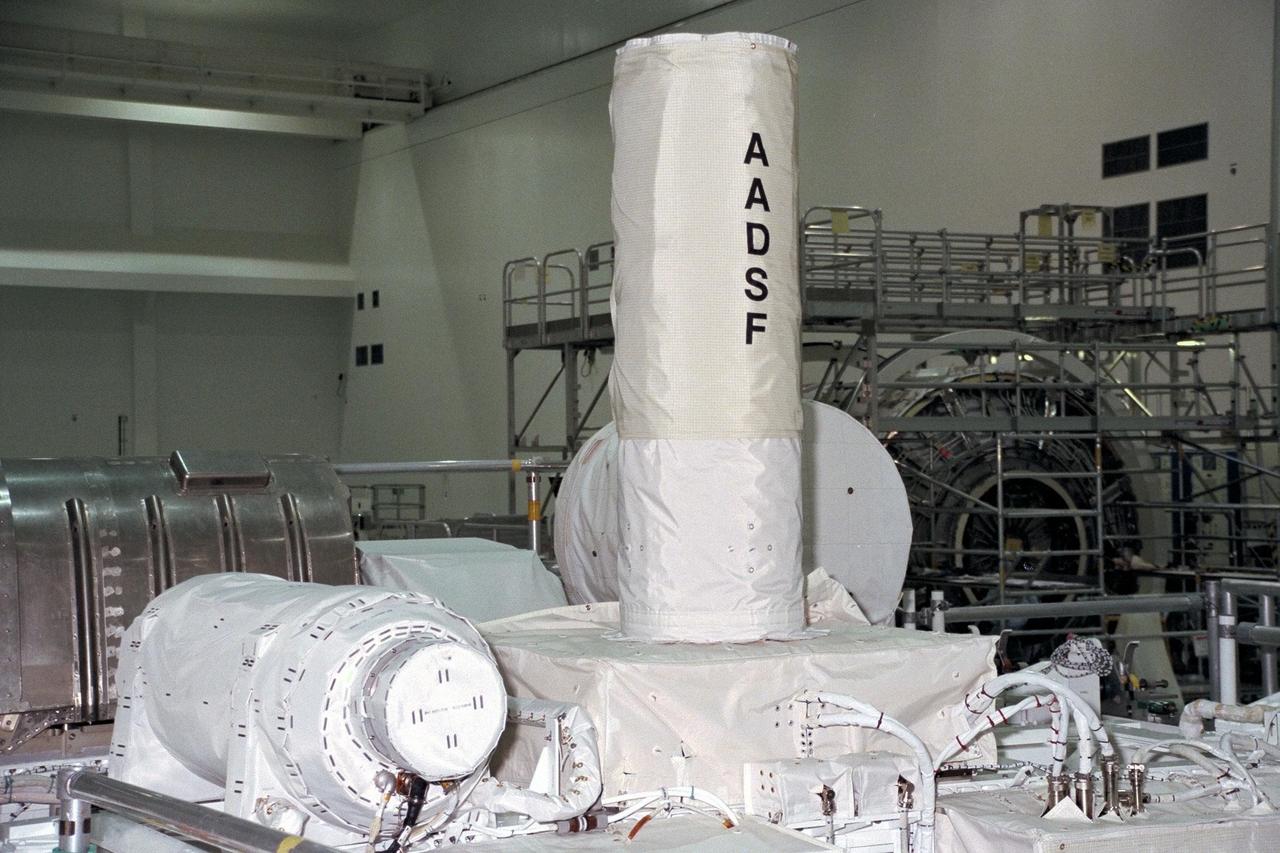
United States Microgravity Payload-4 (USMP-4) experiments are prepared to be flown on Space Shuttle mission STS-87 in the Space Station Processing Facility at Kennedy Space Center (KSC). The vertical tube in the center of the photo is the Advanced Automated Directional Solidification Furnace (AADSF), which will be used by researchers to study the solidification of semiconductor materials in microgravity. Scientists will be able to better understand how microgravity influences the solidification process of these materials and develop better methods for controlling that process during future Space flights and Earth-based production. To its left is MEPHISTO, the French acronym for a cooperative American-French investigation of the fundamentals of crystal growth. All STS-87 experiments are scheduled for launch on Nov. 19 from KSC
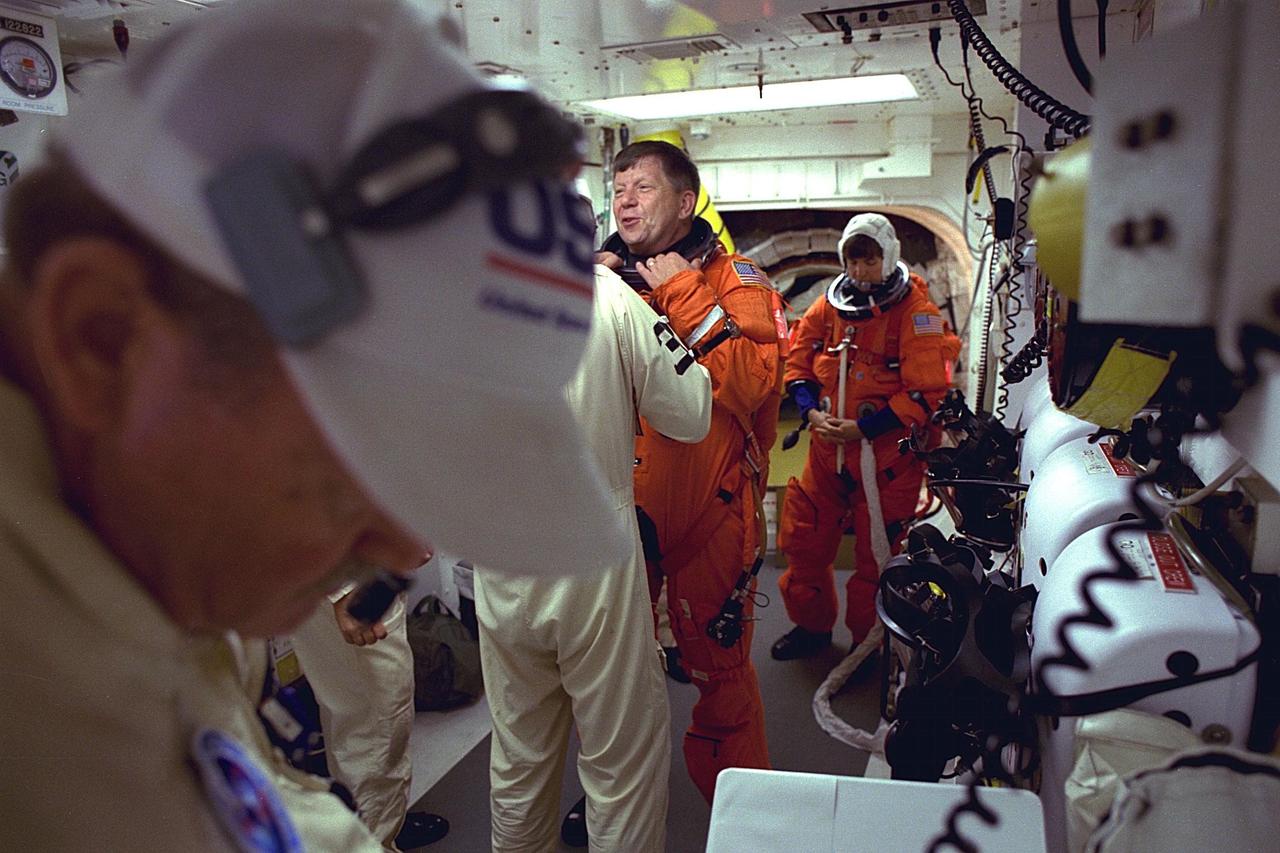
STS-94 Payload Specialist Roger K. Crouch prepares to enter the Space Shuttle Columbia at Launch Pad 39A in preparation for launch. He is the Chief Scientist of the NASA Microgravity Space and Applications Division. He also has served as a Program Scientist for previous Spacelab microgravity missions and is an expert in semiconductor crystal growth. Since Crouch has more than 25 years of experience as a materials scientist, he will be concentrating on the five physics of materials processing experiments in the Middeck Glovebox Facility on the Blue shift. He will also share the workload with Thomas by monitoring the materials furnace experiments during this time. Crouch and six fellow crew members will lift off during a launch window that opens at 1:50 p.m. EDT, July 1. The launch window will open 47 minutes early to improve the opportunity to lift off before Florida summer rain showers reach the space center
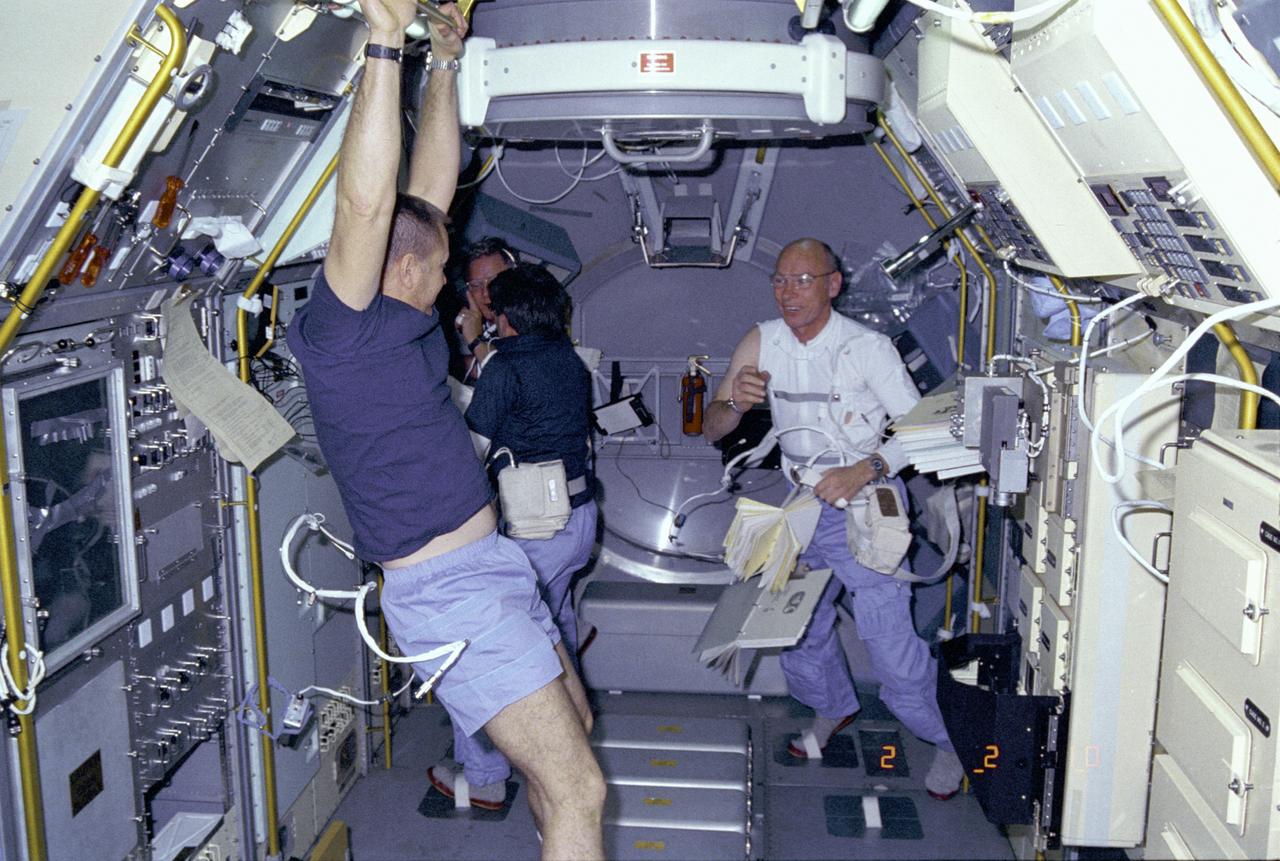
Activities inside the laboratory module during the Spacelab-3 mission are shown in this photograph. Left to right are astronauts Robert Overmyer, Commander of the mission; Don Lind, Mission Specialist; Lodewijk van den Berg, Payload Specialist; and William Thornton, Mission Specialist. The primary purpose of the Spacelab-3 mission was to conduct materials science experiments in a stable low-gravity environment. In addition, the crew did research in life sciences, fluid mechanics, atmospheric science, and astronomy. Spacelab-3 was equipped with several new minilabs, special facilities that would be used repeatedly on future flights. Two elaborate crystal growth furnaces, a life support and housing facility for small animals, and two types of apparatus for the study of fluids were evaluated on their inaugural flight. Spacelab-3 (STS-51B) was launched aboard the Space Shuttle Challenger on April 29, 1985. The Marshall Space Flight Center had managing responsibilities of the mission.
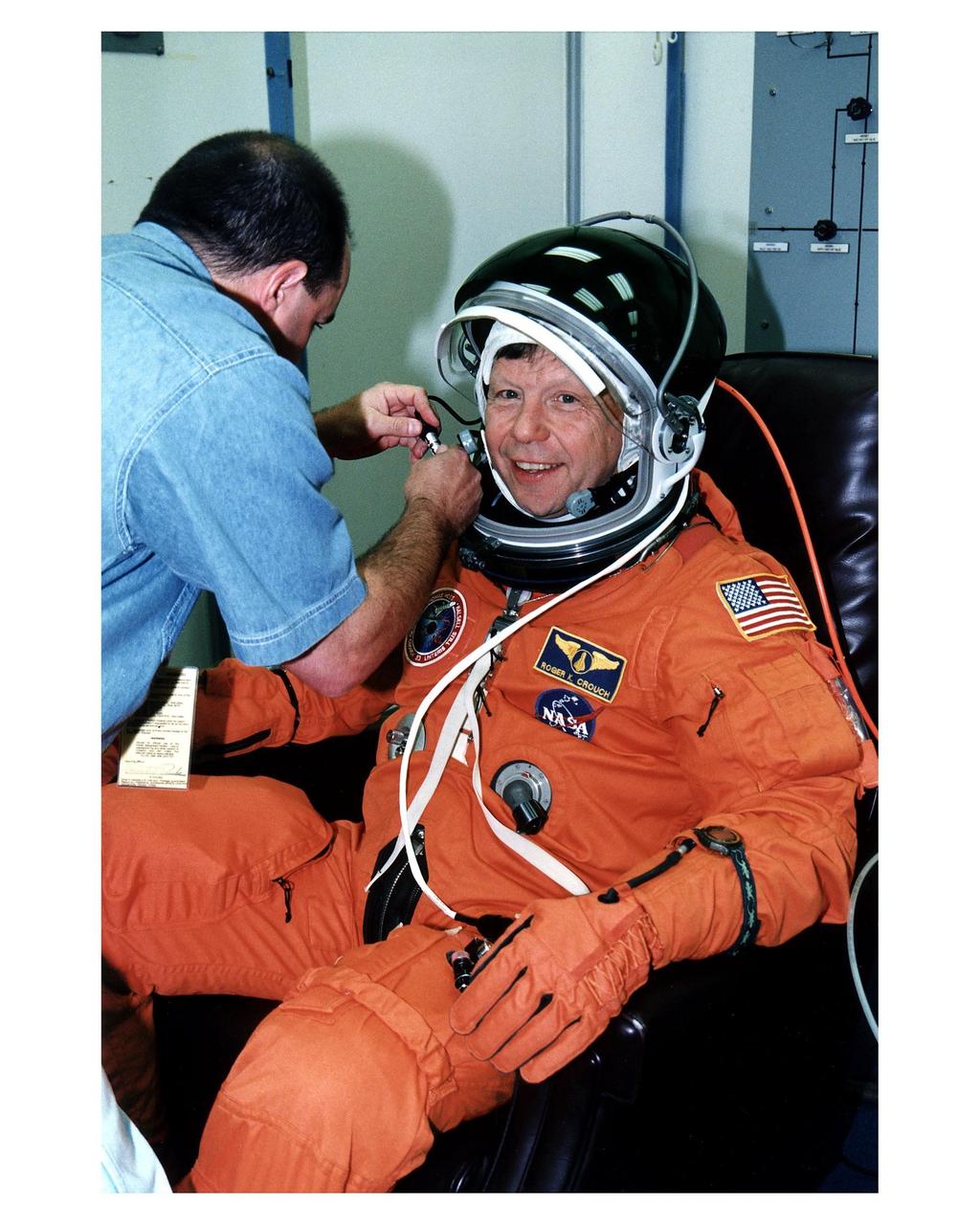
STS-83 Payload Specialist Roger K. Crouch is assisted into his launch/entry suit in the Operations and Checkout (O&C) Building. He is the Chief Scientist of the NASA Microgravity Space and Applications Division. He also has served as a Program Scientist for previous Spacelab microgravity missions and is an expert in semiconductor crystal growth. Since Crouch has more than 25 years of experience as a materials scientist, he will be concentrating on the five physics of materials processing experiments in the Middeck Glovebox Facility on the Blue shift. He will also share the workload with Thomas by monitoring the materials furnace experiments during this time. Crouch and six fellow crew members will shortly depart the O&C and head for Launch Pad 39A, where the Space Shuttle Columbia will lift off during a launch window that opens at 2:00 p.m. EST, April 4
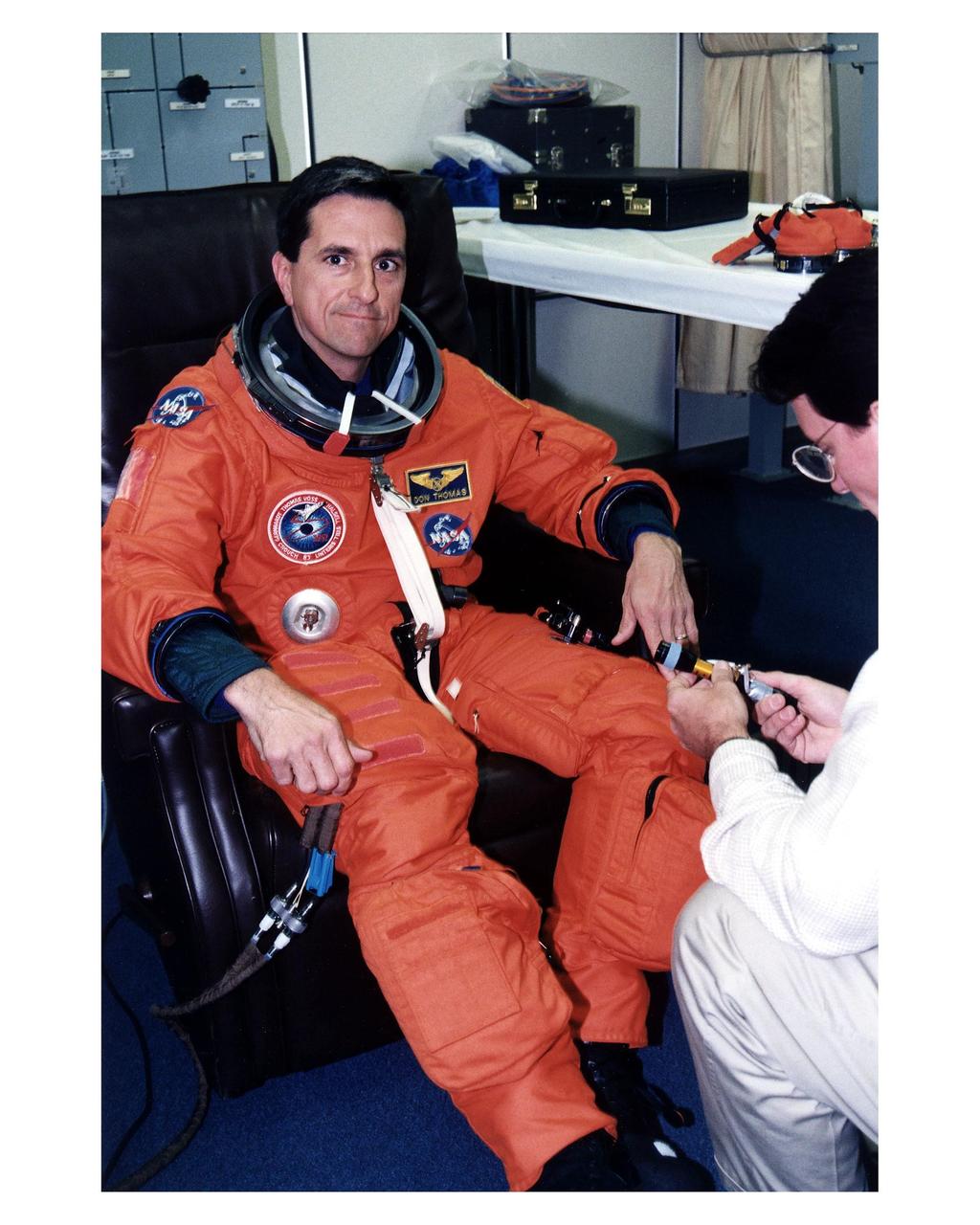
STS-83 Mission Specialist Donald A. Thomas is assisted into his launch/entry suit in the Operations and Checkout (O&C) Building. He has flown on both STS-70 and STS-65. He holds a doctorate in materials science and has been the Principal Investigator for a Space Shuttle crystal growth experiment. Because of his background in materials science, Thomas will be concentrating his efforts during the Red shift on the five experiments in this discipline in the large Isothermal Furnace. He also will work on the ten materials science investigations in the Electromagnetic Containerless Processing Facility and four that will be measuring the effects of microgravity and motion in the orbiter on the experiments. Thomas and six fellow crew members will shortly depart the O&C and head for Launch Pad 39A, where the Space Shuttle Columbia will lift off during a launch window that opens at 2:00 pm EST, April 4
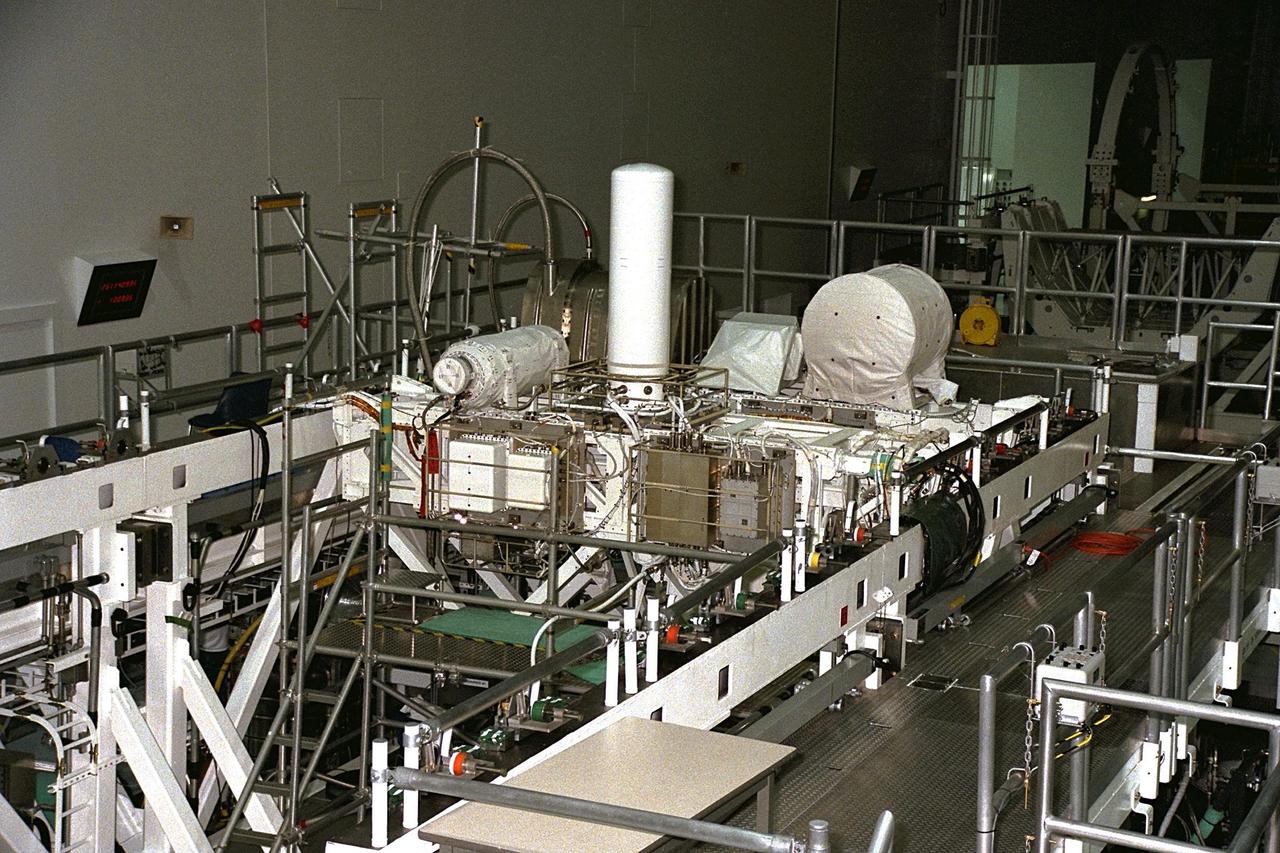
United States Microgravity Payload-4 (USMP-4) experiments are prepared to be flown on Space Shuttle mission STS-87 in the Space Station Processing Facility at Kennedy Space Center (KSC). Seen at right in the circular white cover is the Isothermal Dendritic Growth Experiment (IDGE), which will be used to study the dendritic solidification of molten materials in the microgravity environment. The large white vertical cylinder in the center of the photo is the Advanced Automated Directional Solidification Furnace (AADSF) and the horizontal tube to the left of it is MEPHISTO, a French acronym for a cooperative American-French investigation of the fundamentals of crystal growth. Just below MEPHISTO is the Space Acceleration Measurement System, or SAMS, which measures the microgravity conditions in which the experiments are conducted. The The metallic breadbox-like structure behind the AADSF is the Confined Helium Experiment (CHeX) that will study one of the basic influences on the behavior and properties of materials by using liquid helium confined between solid surfaces and microgravity. All of these experiments are scheduled for launch aboard STS-87 on Nov. 19 from KSC
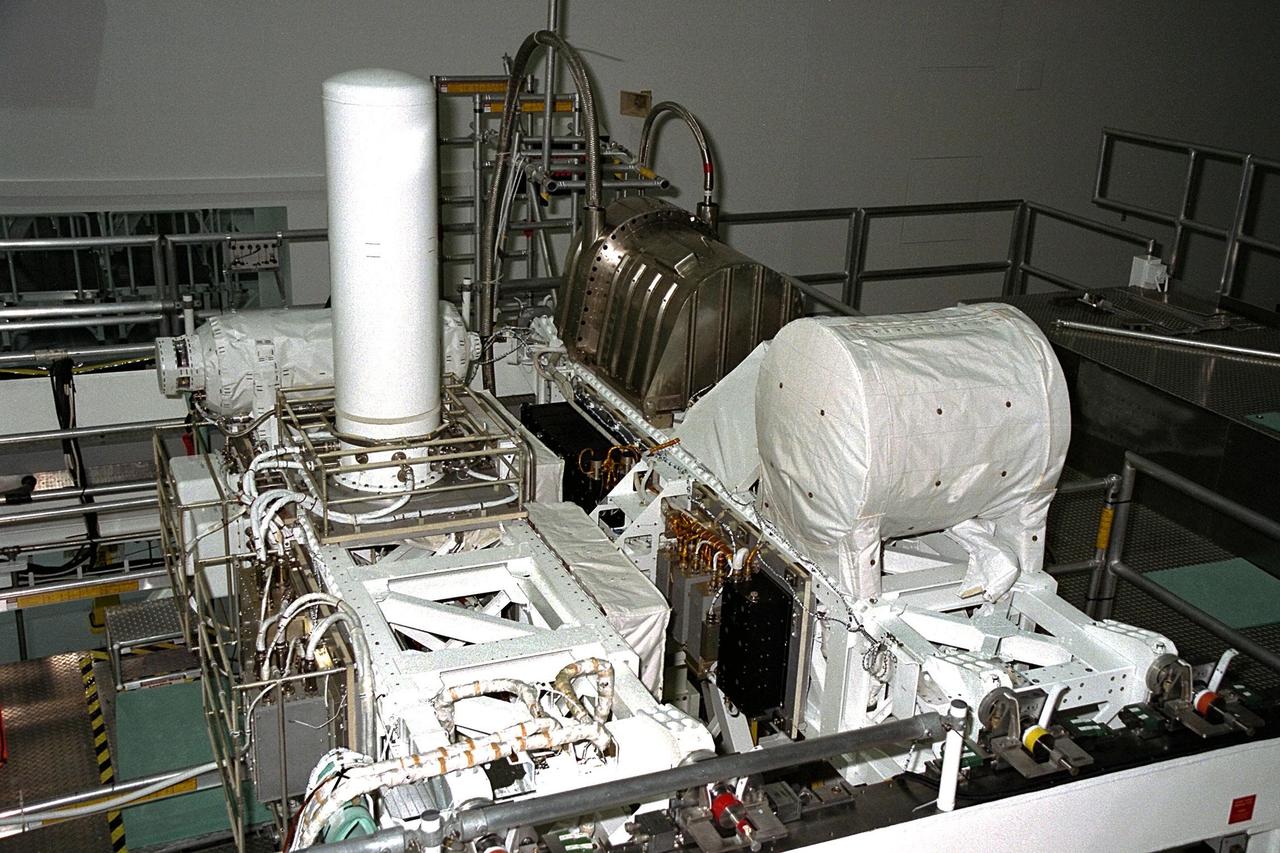
United States Microgravity Payload-4 (USMP-4) experiments are prepared to be flown on Space Shuttle mission STS-87 in the Space Station Processing Facility at Kennedy Space Center (KSC). Seen in the foreground at right is the Isothermal Dendritic Growth Experiment (IDGE), which will be used to study the dendritic solidification of molten materials in the microgravity environment. The metallic breadbox-like structure behind the IDGE is the Confined Helium Experiment (CHeX) that will study one of the basic influences on the behavior and properties of materials by using liquid helium confined between solid surfaces and microgravity. The large white vertical cylinder at left is the Advanced Automated Directional Solidification Furnace (AADSF) and the horizontal tube behind it is MEPHISTO, the French acronym for a cooperative American-French investigation of the fundamentals of crystal growth. Just below the left end of MEPHISTO is the Space Acceleration Measurement System, or SAMS, which measures the microgravity conditions in which the experiments are conducted. All of these experiments are scheduled for launch aboard STS-87 on Nov. 19 from KSC
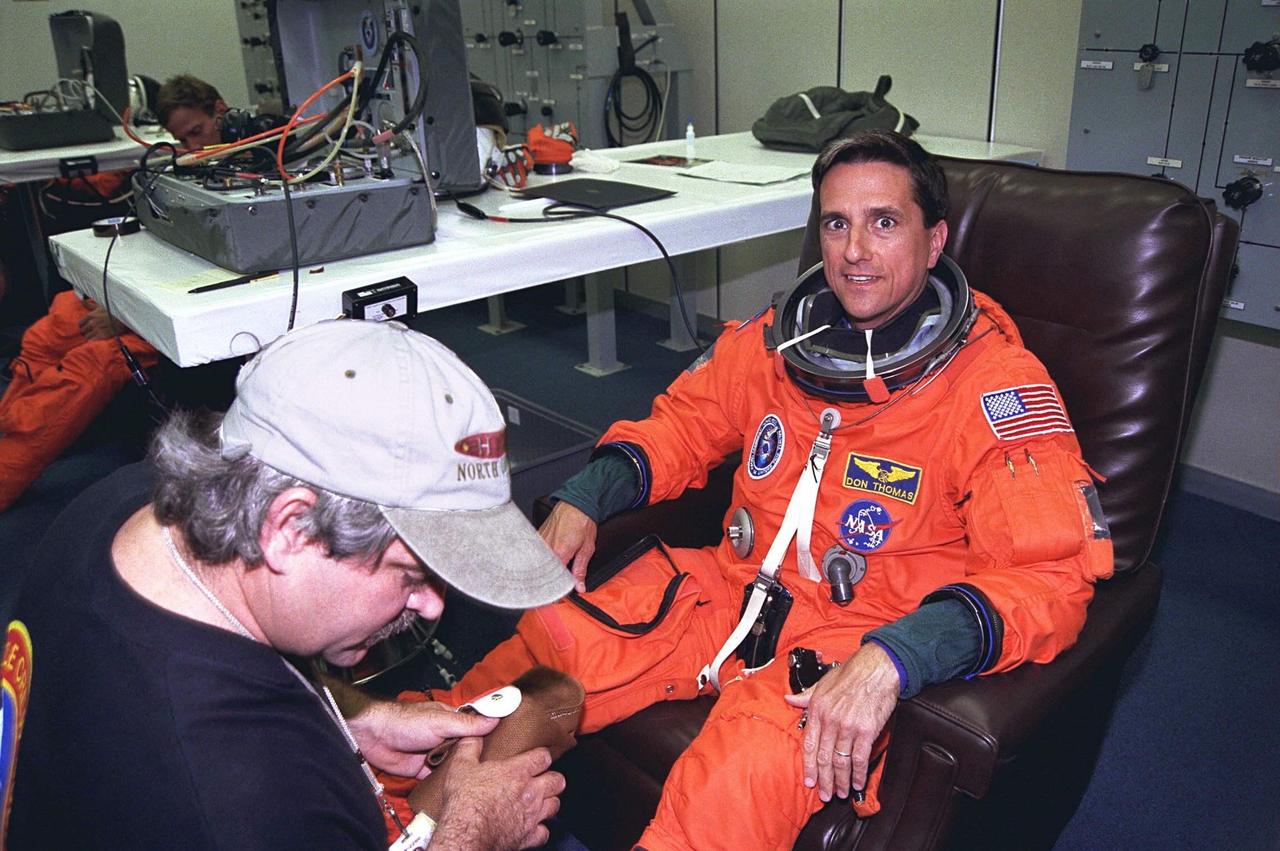
STS-94 Mission Specialist Donald A. Thomas smiles as a suit technician helps him into his launch/entry suit in the Operations and Checkout (O&C) Building. He has flown on STS-83, STS-70 and STS-65. He holds a doctorate in materials science and has been the Principal Investigator for a Space Shuttle crystal growth experiment. Because of his background in materials science, Thomas will be concentrating his efforts during the Red shift on the five experiments in this discipline in the Large Isothermal Furnace. He also will work on the ten materials science investigations in the Electromagnetic Containerless Processing Facility and four that will be measuring the effects of microgravity and motion in the orbiter on the experiments. Thomas and six fellow crew members will shortly depart the O&C and head for Launch Pad 39A, where the Space Shuttle Columbia will lift off during a launch window that opens at 1:50 p.m. EDT, July 1. The launch window was opened 47 minutes early to improve the opportunity to lift off before Florida summer rain showers reached the space center
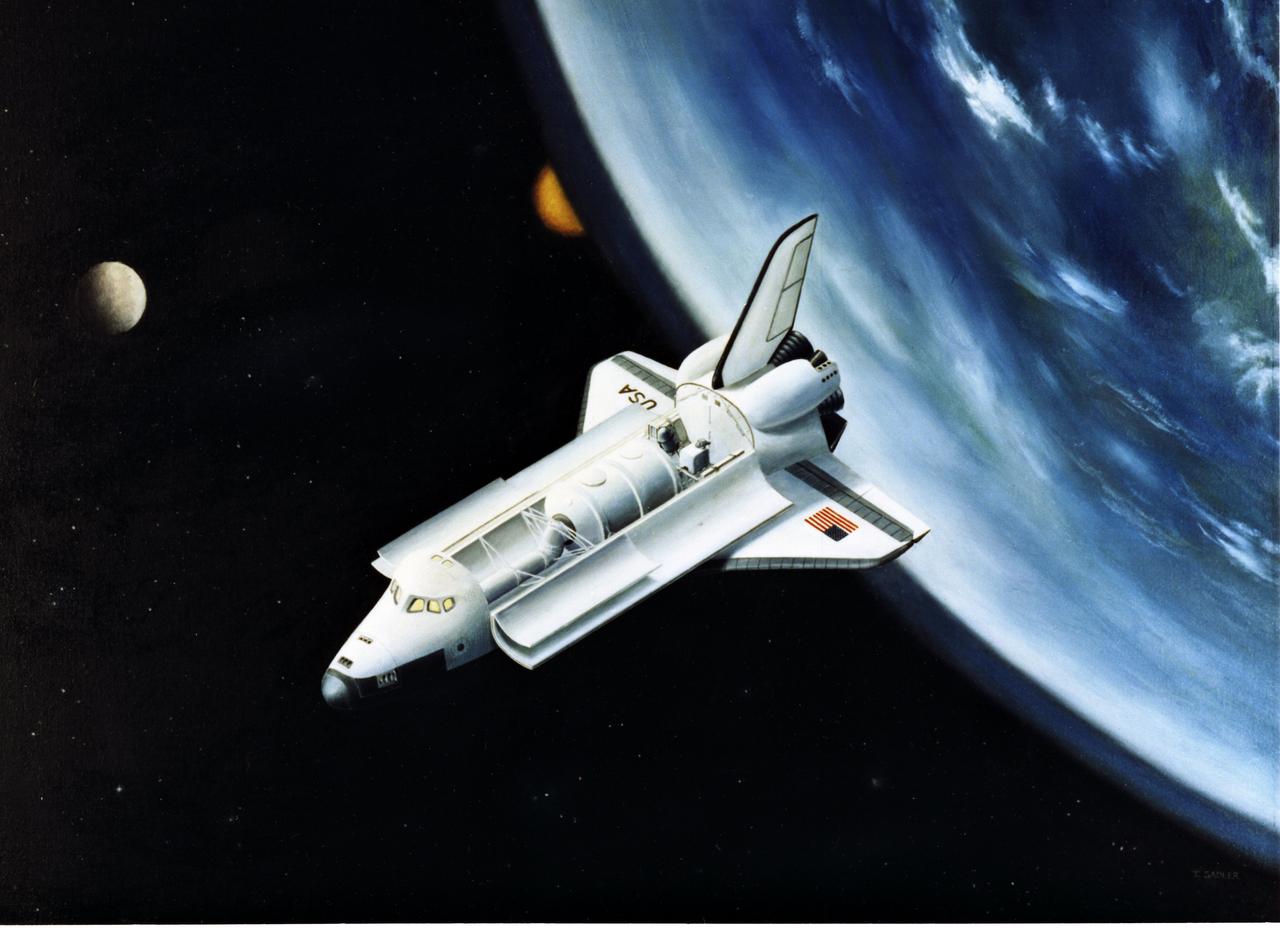
The primary purpose of the Spacelab-3 mission was to conduct materials science experiments in a stable low-gravity environment. In addition, the crew did research in life sciences, fluid mechanics, atmospheric science, and astronomy. Spacelab-3 was equipped with several new mini-labs, special facilities that would be used repeatedly on future flights. Two elaborate crystal growth furnaces, a life support and housing facility for small animals, and two types of apparatus for the study of fluids were evaluated on their inaugural flight. The instruments requiring direct exposure to space were mounted outside in the open payload bay of the Shuttle. Spacelab represented the merger of science and marned spaceflight. It opened remarkable opportunities to push the frontiers of knowledge beyond the limits of research on Earth. Scientists in space performed experiments in close collaboration with their colleagues on the ground. On the Spacelab-3 mission, managed by the Marshall Space Flight Center, this versatile laboratory entered routine operation service for the next two decades. Spacelab-3 (STS-51B mission) was launched aboard Space Shuttle Orbiter Challenger on April 29, 1985.
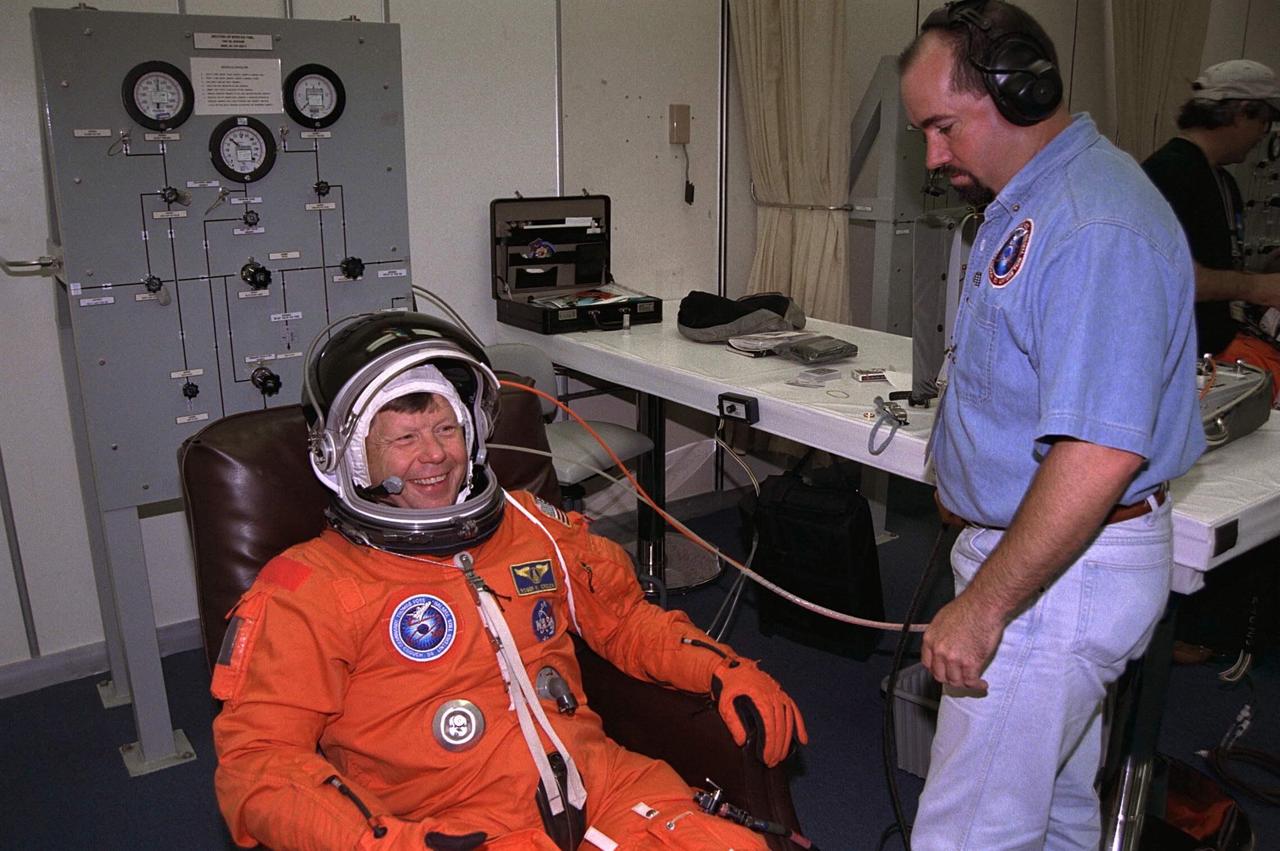
STS-94 Payload Specialist Roger K. Crouch is helped into his launch/entry suit by a suit technician in the Operations and Checkout (O&C) Building after the suit has been given a pressure test. He is the Chief Scientist of the NASA Microgravity Space and Applications Division. He also has served as a Program Scientist for previous Spacelab microgravity missions and is an expert in semiconductor crystal growth. Since Crouch has more than 25 years of experience as a materials scientist, he will be concentrating on the five physics of materials processing experiments in the Middeck Glovebox Facility on the Blue shift. He will also share the workload with Thomas by monitoring the materials furnace experiments during this time. Crouch and six fellow crew members will shortly depart the O&C and head for Launch Pad 39A, where the Space Shuttle Columbia will lift off during a launch window that opens at 1:50 p.m. EDT, July 1. The launch window was opened 47 minutes early to improve the opportunity to lift off before Florida summer rain showers reached the space center