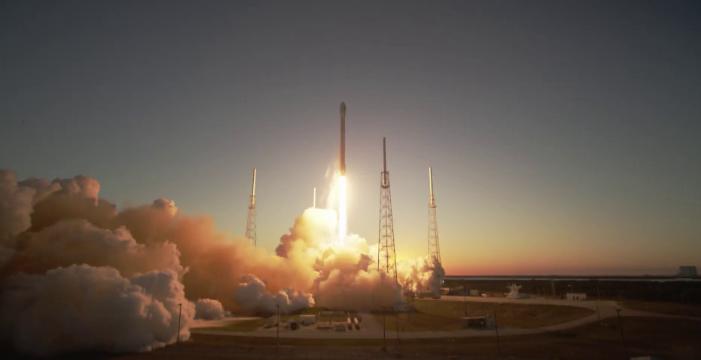
NOAA’s Deep Space Climate Observatory (DSCOVR) lifted off from Cape Canaveral, Florida, at 6:03 p.m. EST on its way to an orbit one million miles from Earth. DSCOVR will give NOAA’s Space Weather Prediction Center (SWPC) forecasters more reliable measurements of solar wind conditions, improving their ability to monitor potentially harmful solar activity. Credit: SpaceX <b><a href="http://www.nasa.gov/audience/formedia/features/MP_Photo_Guidelines.html" rel="nofollow">NASA image use policy.</a></b> <b><a href="http://www.nasa.gov/centers/goddard/home/index.html" rel="nofollow">NASA Goddard Space Flight Center</a></b> enables NASA’s mission through four scientific endeavors: Earth Science, Heliophysics, Solar System Exploration, and Astrophysics. Goddard plays a leading role in NASA’s accomplishments by contributing compelling scientific knowledge to advance the Agency’s mission. <b>Follow us on <a href="http://twitter.com/NASAGoddardPix" rel="nofollow">Twitter</a></b> <b>Like us on <a href="http://www.facebook.com/pages/Greenbelt-MD/NASA-Goddard/395013845897?ref=tsd" rel="nofollow">Facebook</a></b> <b>Find us on <a href="http://instagram.com/nasagoddard?vm=grid" rel="nofollow">Instagram</a></b>
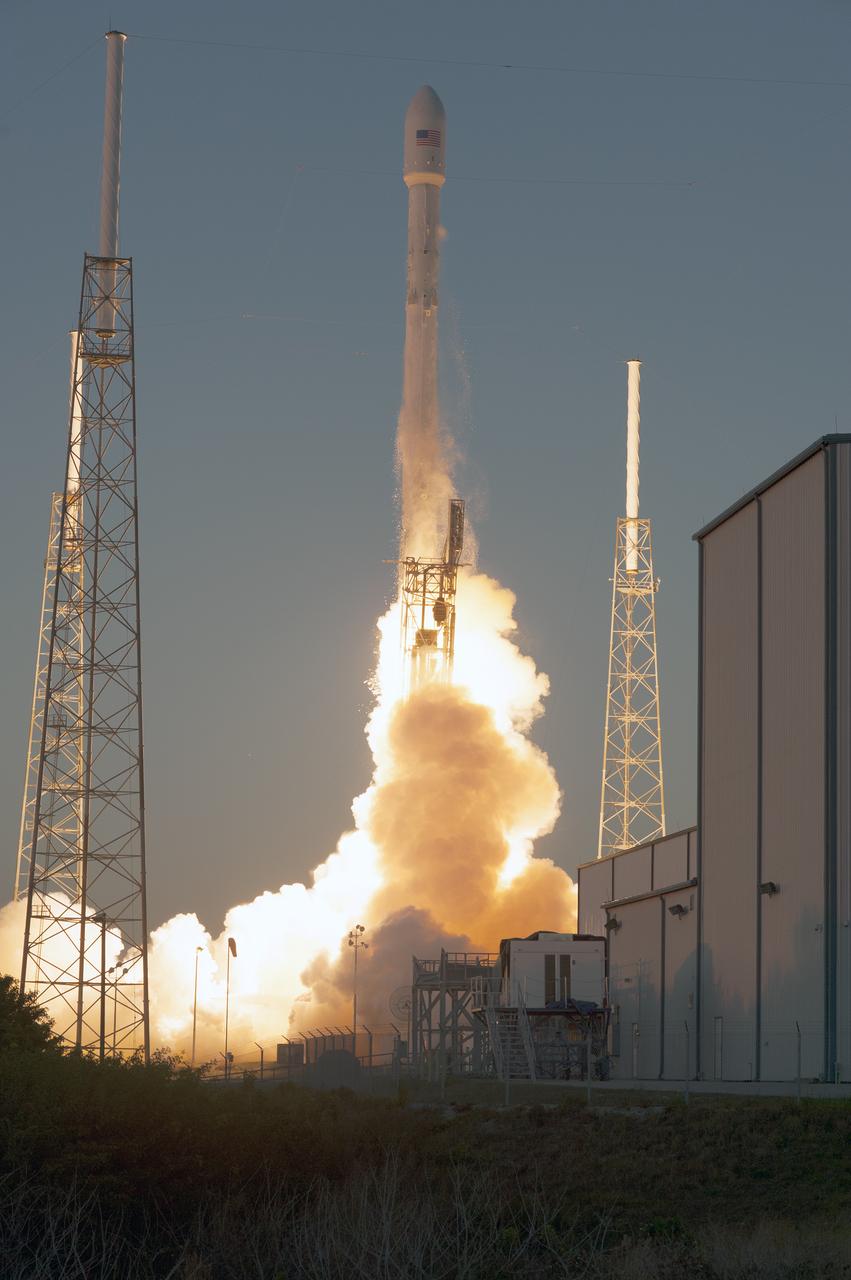
Open Image KSC-2015-1368.KSC-2015-1368 (02/11/2015) --- The SpaceX Falcon 9 rocket carrying NOAA’s Deep Space Climate Observatory spacecraft, or DSCOVR, lifts off from Space Launch Complex 40 at Cape Canaveral Air Force Station in Florida. Liftoff occurred at 6:03 p.m. EST. DSCOVR is a partnership between NOAA, NASA and the U.S. Air Force, and will maintain the nation's real-time solar wind monitoring capabilities. To learn more about DSCOVR, visit <a href="http://www.nesdis.noaa.gov/DSCOVR" rel="nofollow">www.nesdis.noaa.gov/DSCOVR</a>. Photo credit: NASA/Tony Gray and Tim Powers
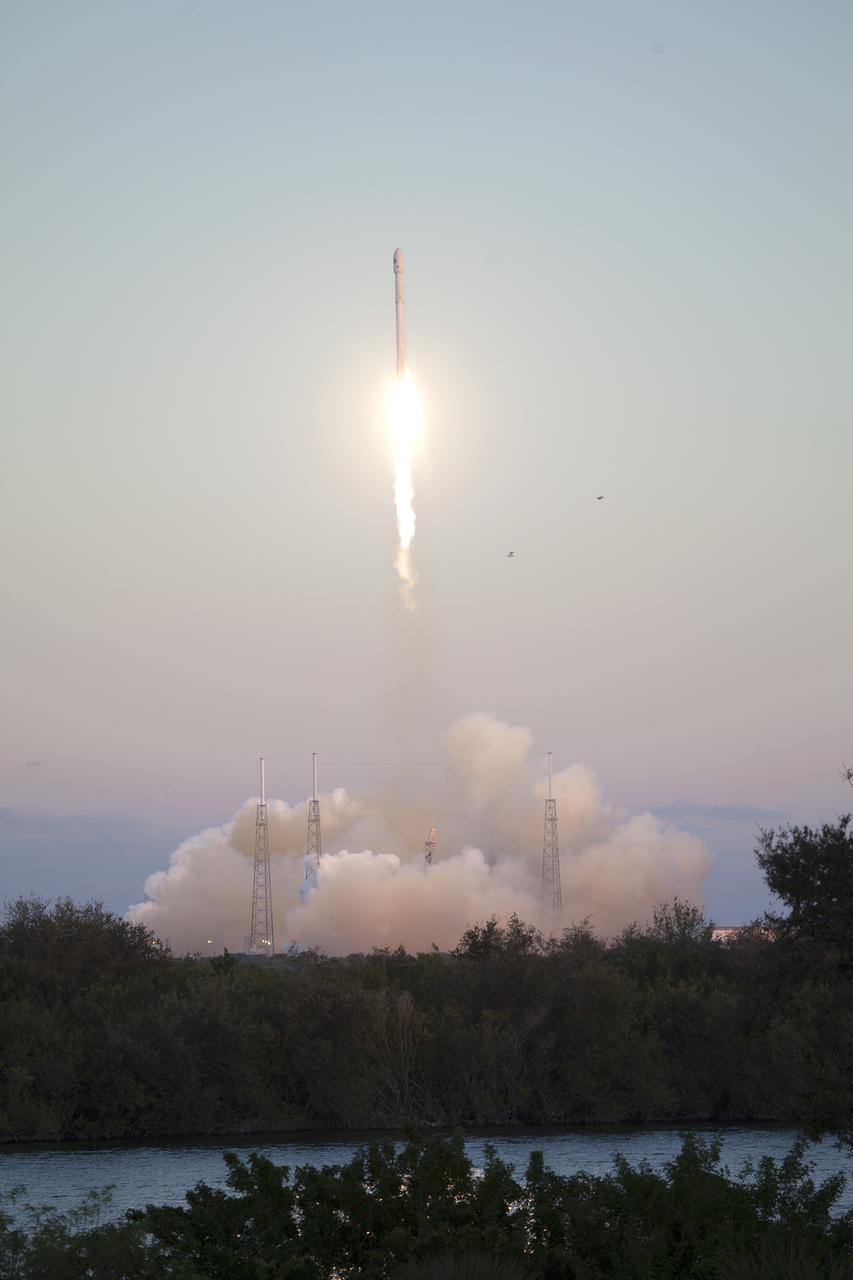
KSC-2015-1341 (02/11/2015) --- The SpaceX Falcon 9 rocket carrying NOAA’s Deep Space Climate Observatory spacecraft, or DSCOVR, lifts off from Space Launch Complex 40 at Cape Canaveral Air Force Station in Florida. Liftoff occurred at 6:03 p.m. EST. DSCOVR is a partnership between NOAA, NASA and the U.S. Air Force, and will maintain the nation's real-time solar wind monitoring capabilities. To learn more about DSCOVR, visit <a href="http://www.nesdis.noaa.gov/DSCOVR" rel="nofollow">www.nesdis.noaa.gov/DSCOVR</a>. Photo credit: NASA/Ben Smegelsky
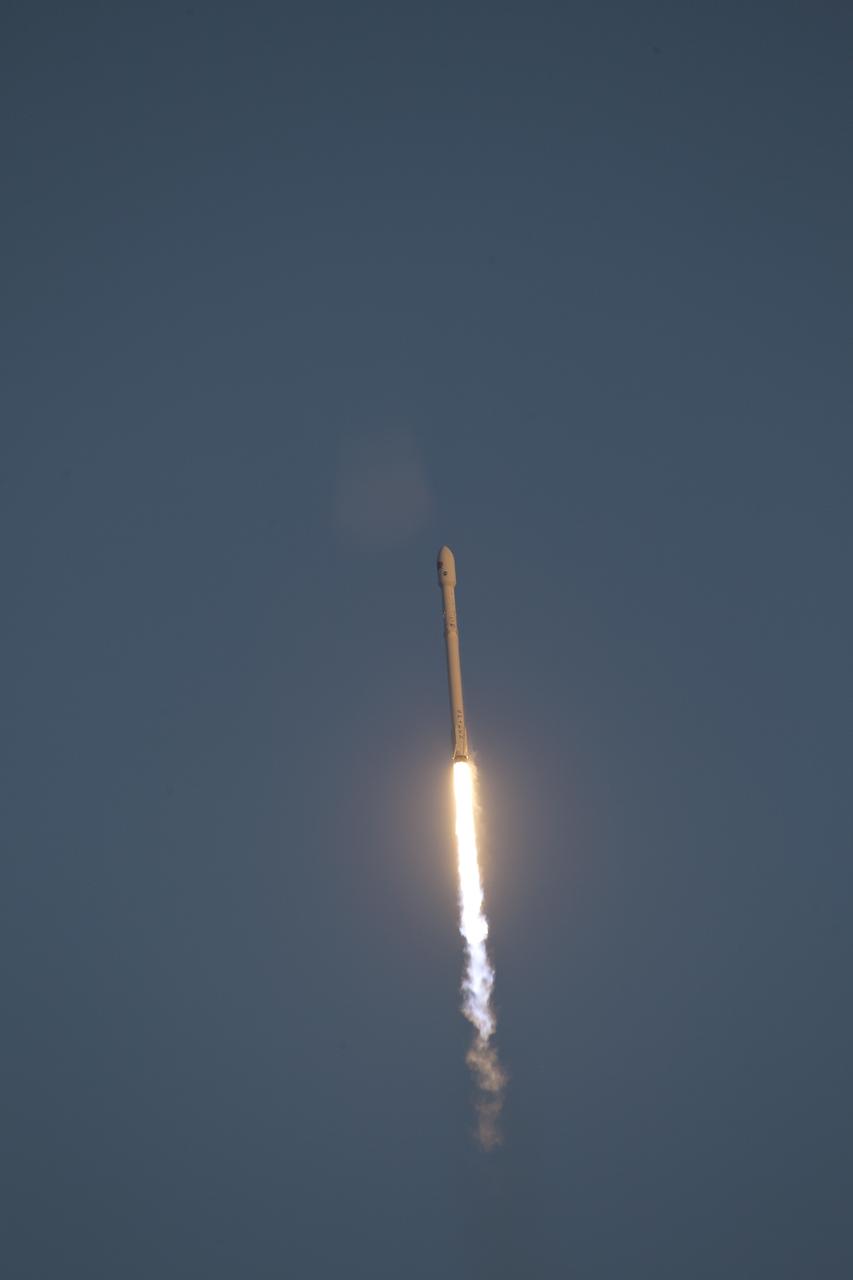
KSC-2015-1342 (02/11/2015) --- Backdropped by a bright blue sky, the SpaceX Falcon 9 rocket carrying NOAA’s Deep Space Climate Observatory spacecraft, or DSCOVR, soars away from Space Launch Complex 40 at Cape Canaveral Air Force Station in Florida. Liftoff occurred at 6:03 p.m. EST. DSCOVR is a partnership between NOAA, NASA and the U.S. Air Force, and will maintain the nation's real-time solar wind monitoring capabilities. To learn more about DSCOVR, visit <a href="http://www.nesdis.noaa.gov/DSCOVR" rel="nofollow">www.nesdis.noaa.gov/DSCOVR</a>. Photo credit: NASA/Ben Smegelsky..
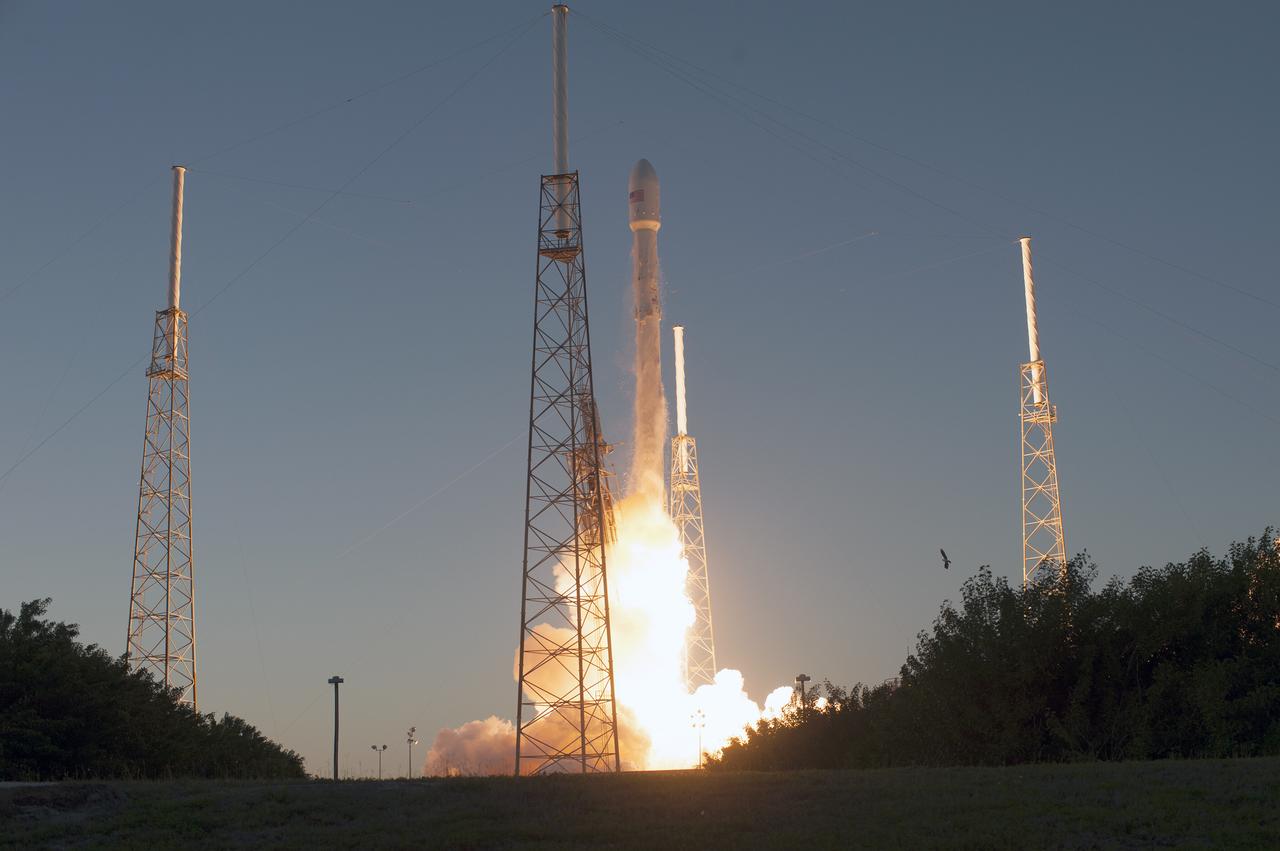
KSC-2015-1363 (02/11/2015) --- The SpaceX Falcon 9 rocket carrying NOAA’s Deep Space Climate Observatory spacecraft, or DSCOVR, lifts off from Space Launch Complex 40 at Cape Canaveral Air Force Station in Florida at 6:03 p.m. EST. DSCOVR is a partnership between NOAA, NASA and the U.S. Air Force, and will maintain the nation's real-time solar wind monitoring capabilities. To learn more about DSCOVR, visit <a href="http://www.nesdis.noaa.gov/DSCOVR" rel="nofollow">www.nesdis.noaa.gov/DSCOVR</a>. Photo credit: NASA/Tony Gray and Tim Powers
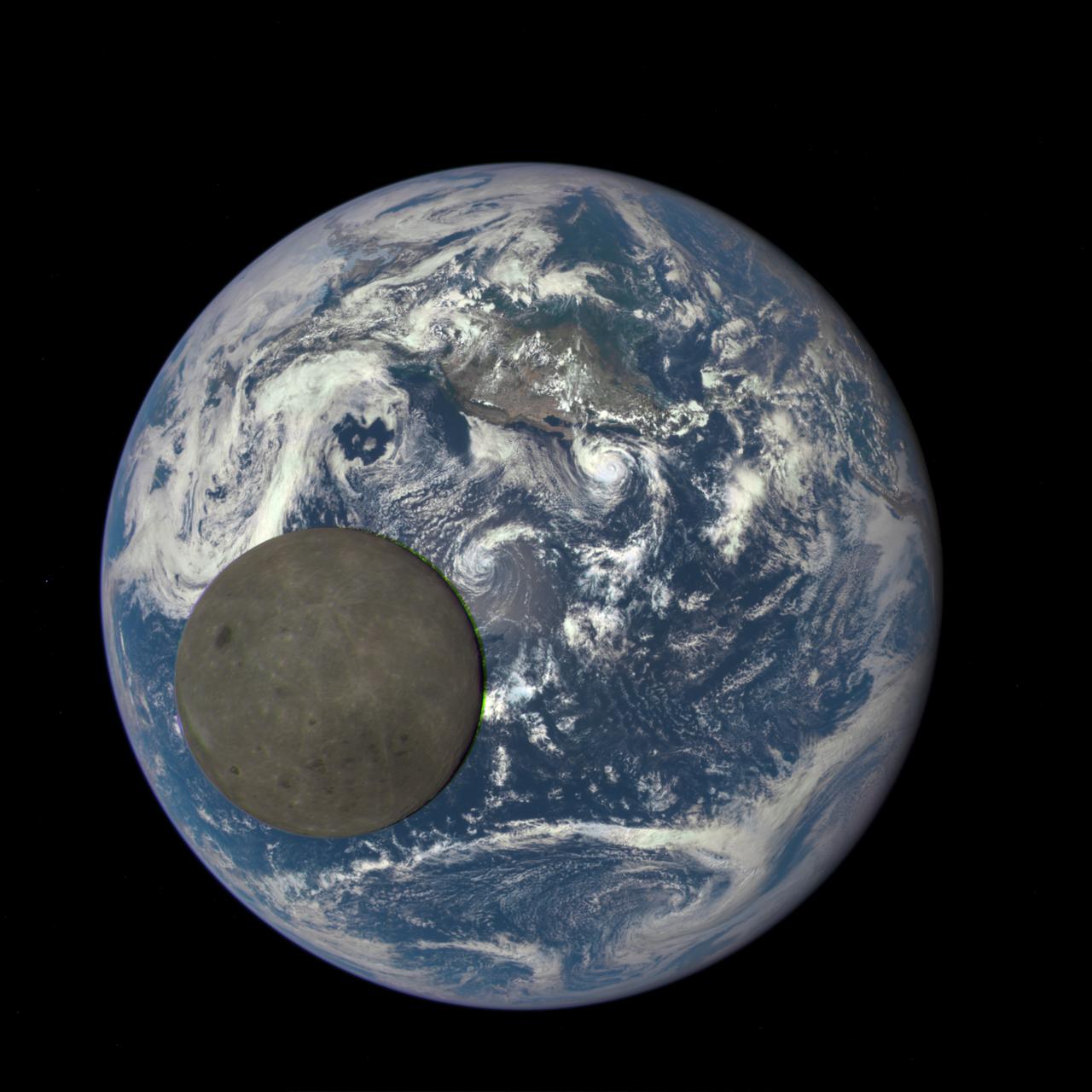
This animation still image shows the far side of the moon, illuminated by the sun, as it crosses between the DISCOVR spacecraft's Earth Polychromatic Imaging Camera (EPIC) camera and telescope, and the Earth - one million miles away. Credits: NASA/NOAA A NASA camera aboard the Deep Space Climate Observatory (DSCOVR) satellite captured a unique view of the moon as it moved in front of the sunlit side of Earth last month. The series of test images shows the fully illuminated “dark side” of the moon that is never visible from Earth. The images were captured by NASA’s Earth Polychromatic Imaging Camera (EPIC), a four megapixel CCD camera and telescope on the DSCOVR satellite orbiting 1 million miles from Earth. From its position between the sun and Earth, DSCOVR conducts its primary mission of real-time solar wind monitoring for the National Oceanic and Atmospheric Administration (NOAA).
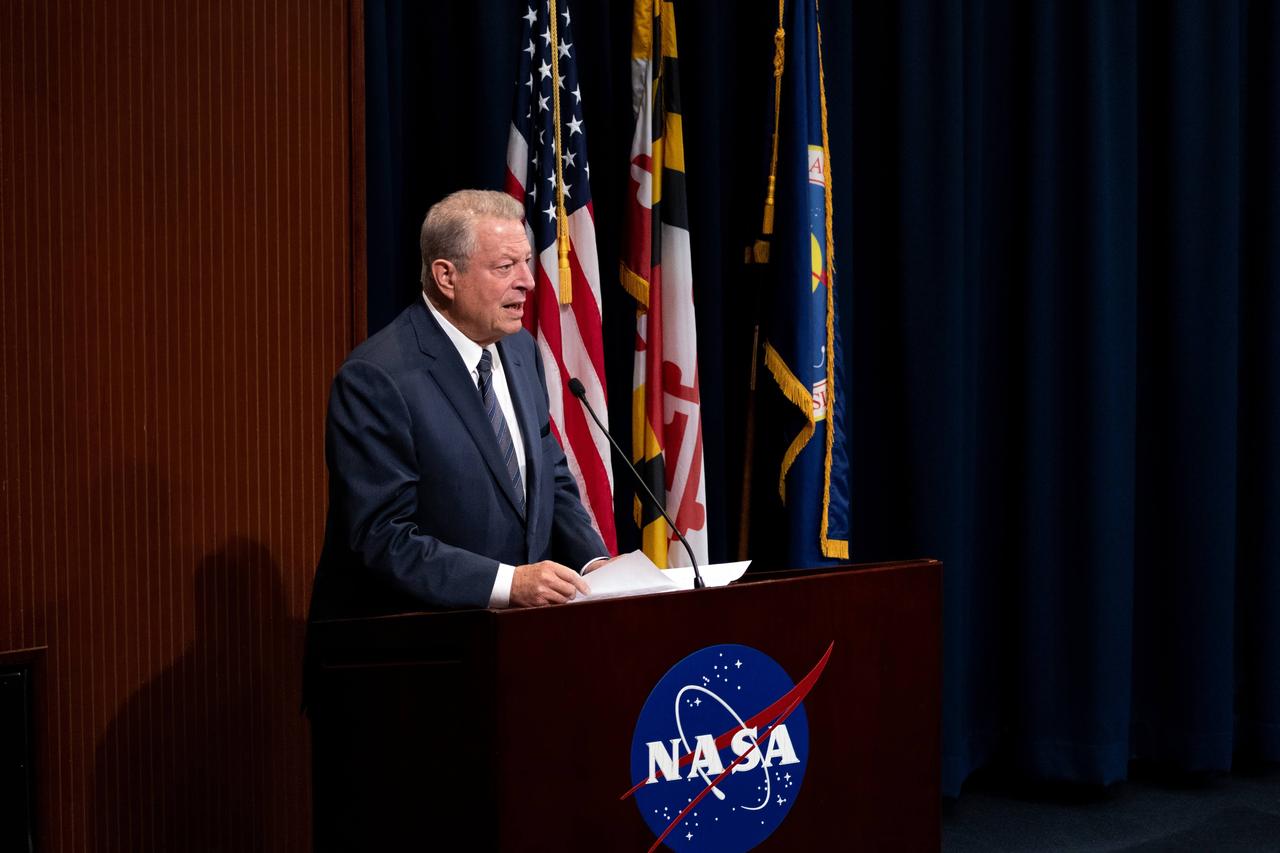
To commemorate the upcoming 10th anniversary of the DSCOVR (Deep Space Climate Observatory) mission, NASA’s Goddard Space Flight Center in Greenbelt, Md., hosted environmentalist and former Vice President Al Gore, shown here addressing a crowd in the Building 3 Harry J. Goett Auditorium, on Oct. 16, 2024. “The image of our Earth from space is the single most compelling iconic image that any of us have ever seen,” Gore said at a panel discussion for employees. “Now we have, thanks to DSCOVR, 50,000 ‘Blue Marble’ photographs … To date there are more than 100 peer-reviewed scientific publications that are based on the unique science gathered at the L1 point by DSCOVR. For all of the scientists who are here and those on the teams that are represented here, I want to say congratulations and thank you.” Following Gore’s talk on climate monitoring, Goddard scientists participated in a panel discussion, “Remote Sensing and the Future of Earth Observations,” which explored the latest advancements in technology that allow for the monitoring of the atmosphere from space and showcased how Goddard’s research drives the future of Earth science. Gore’s visit also entailed a meeting with the DSCOVR science team, a view into the clean room where Goddard is assembling the Roman Space Telescope, and a stop at the control center for PACE: NASA’s Plankton, Aerosol, Cloud, ocean Ecosystem mission. Launched Feb. 11, 2015, DSCOVR is a space weather station that monitors changes in the solar wind, providing space weather alerts and forecasts for geomagnetic storms that could disrupt power grids, satellites, telecommunications, aviation and GPS. DSCOVR is a joint mission among NASA, the National Oceanic and Atmospheric Administration (NOAA), and the U.S. Air Force. The project originally was called Triana, a mission conceived of by Gore in 1998 during his vice presidency.
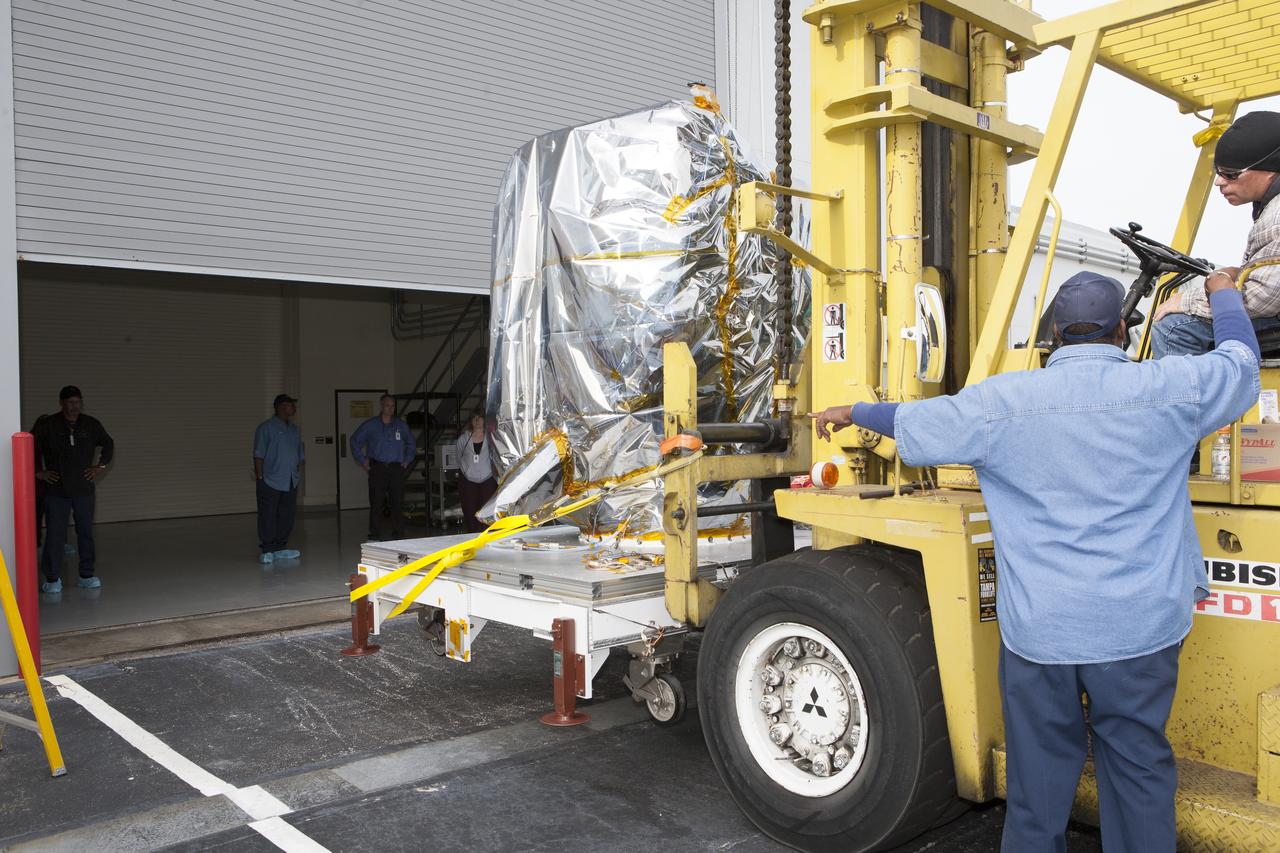
NOAA’s newly arrived Deep Space Climate Observatory spacecraft, or DSCOVR, wrapped in plastic and secured onto a portable work stand, is delivered to the high bay of Building 1 at the Astrotech payload processing facility in Titusville, Florida, near Kennedy Space Center. DSCOVR is a partnership between NOAA, NASA and the U.S. Air Force. DSCOVR will maintain the nation's real-time solar wind monitoring capabilities which are critical to the accuracy and lead time of NOAA's space weather alerts and forecasts. Launch is currently scheduled for January 2015 aboard a SpaceX Falcon 9 v 1.1 launch vehicle from Cape Canaveral Air Force Station, Florida.
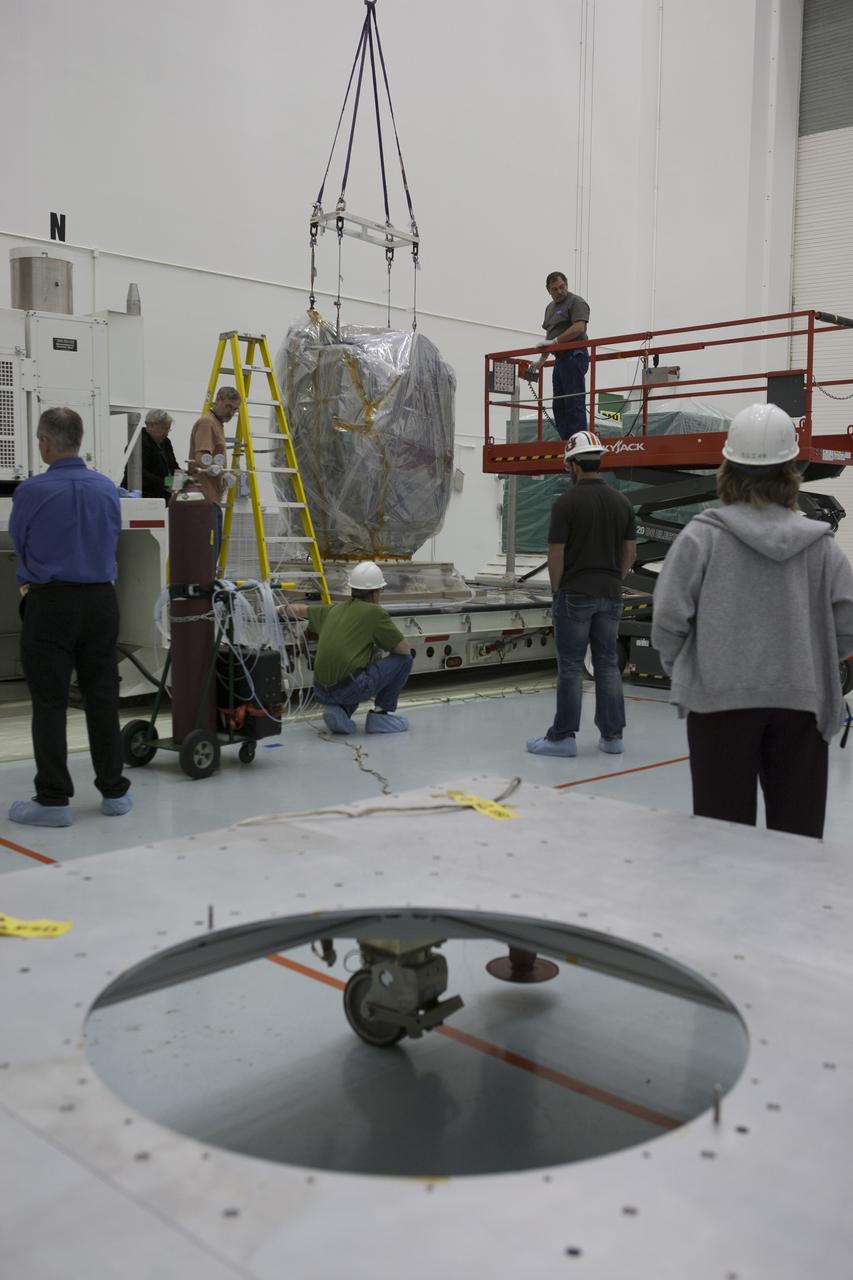
A lifting device is attached to NOAA’s Deep Space Climate Observatory spacecraft, or DSCOVR, wrapped in plastic, to remove it from its transportation pallet at the Astrotech payload processing facility in Titusville, Florida, near Kennedy Space Center. DSCOVR is a partnership between NOAA, NASA and the U.S. Air Force. DSCOVR will maintain the nation's real-time solar wind monitoring capabilities which are critical to the accuracy and lead time of NOAA's space weather alerts and forecasts. Launch is currently scheduled for January 2015 aboard a SpaceX Falcon 9 v 1.1 launch vehicle from Cape Canaveral Air Force Station, Florida.
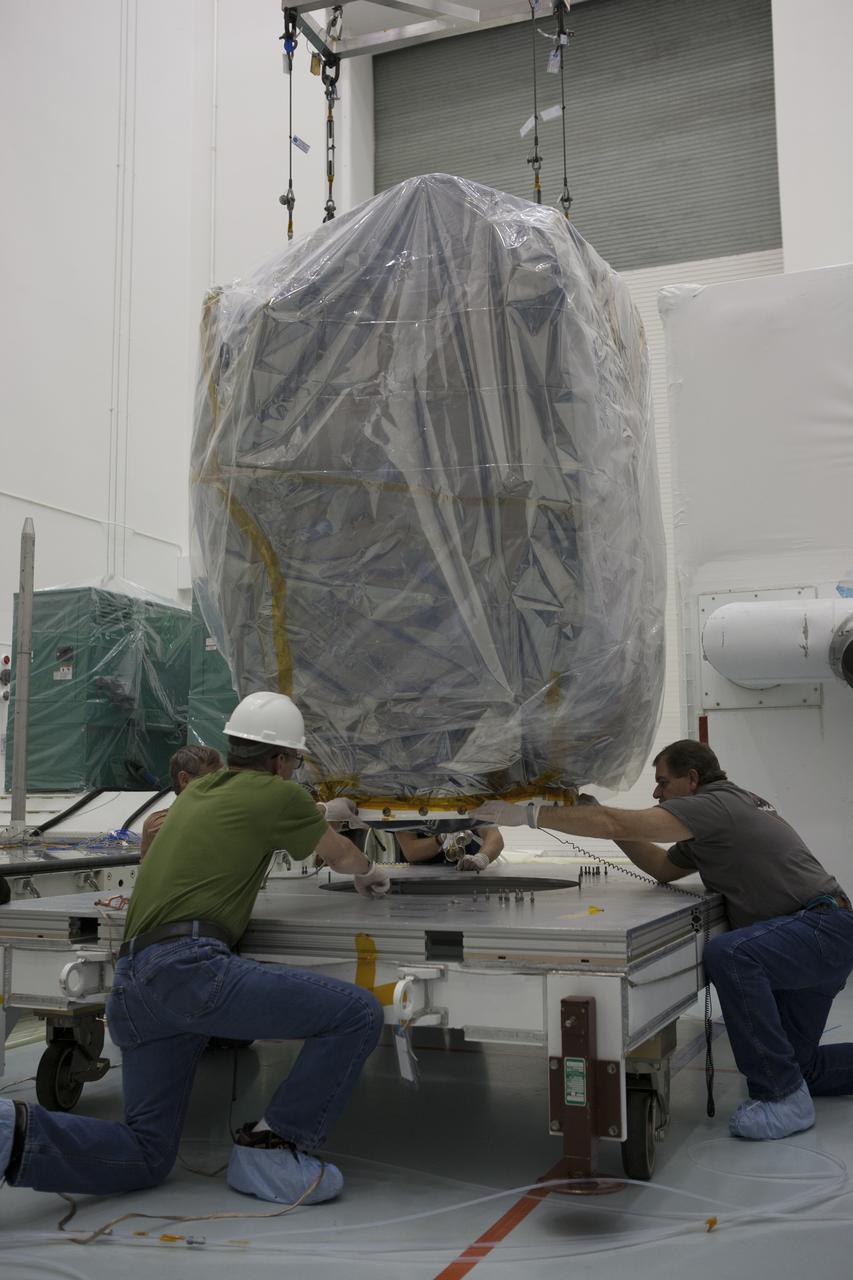
Workers align NOAA’s Deep Space Climate Observatory spacecraft, or DSCOVR, wrapped in plastic, onto a portable work stand at the Astrotech payload processing facility in Titusville, Florida, near Kennedy Space Center. DSCOVR is a partnership between NOAA, NASA and the U.S. Air Force. DSCOVR will maintain the nation's real-time solar wind monitoring capabilities which are critical to the accuracy and lead time of NOAA's space weather alerts and forecasts. Launch is currently scheduled for January 2015 aboard a SpaceX Falcon 9 v 1.1 launch vehicle from Cape Canaveral Air Force Station, Florida.
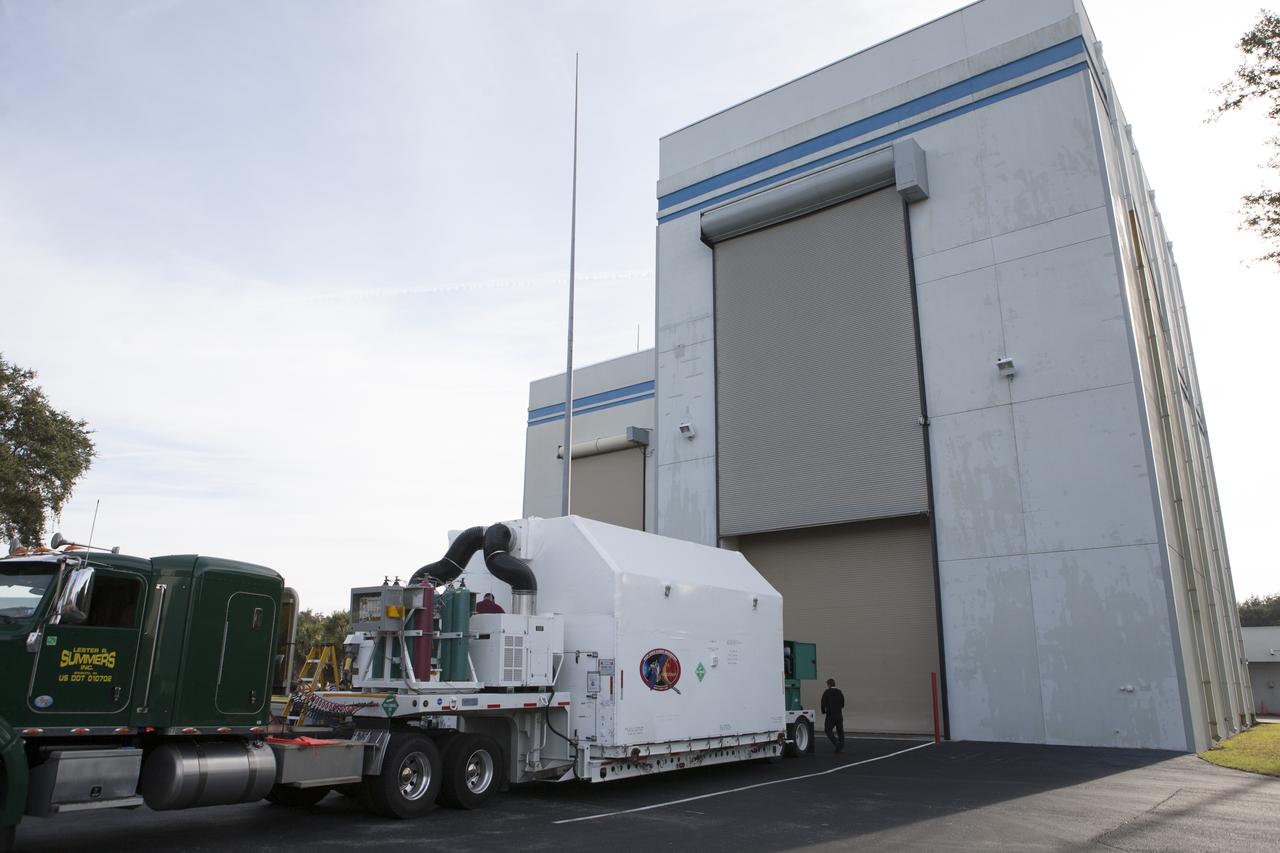
The truck delivering NOAA’s Deep Space Climate Observatory spacecraft, or DSCOVR, enclosed in a protective shipping container, backs up to the door of the airlock of Building 2 at the Astrotech payload processing facility in Titusville, Florida, near Kennedy Space Center. DSCOVR is a partnership between NOAA, NASA and the U.S. Air Force. DSCOVR will maintain the nation's real-time solar wind monitoring capabilities which are critical to the accuracy and lead time of NOAA's space weather alerts and forecasts. Launch is currently scheduled for January 2015 aboard a SpaceX Falcon 9 v 1.1 launch vehicle from Cape Canaveral Air Force Station, Florida.

Workers deploy the solar arrays on NOAA’s Deep Space Climate Observatory spacecraft, or DSCOVR, in the Building 1 high bay at the Astrotech payload processing facility in Titusville, Florida, near Kennedy Space Center. DSCOVR is a partnership between NOAA, NASA and the U.S. Air Force. DSCOVR will maintain the nation's real-time solar wind monitoring capabilities which are critical to the accuracy and lead time of NOAA's space weather alerts and forecasts. Launch is targeted for early 2015 aboard a SpaceX Falcon 9 v 1.1 launch vehicle from Cape Canaveral Air Force Station, Florida.
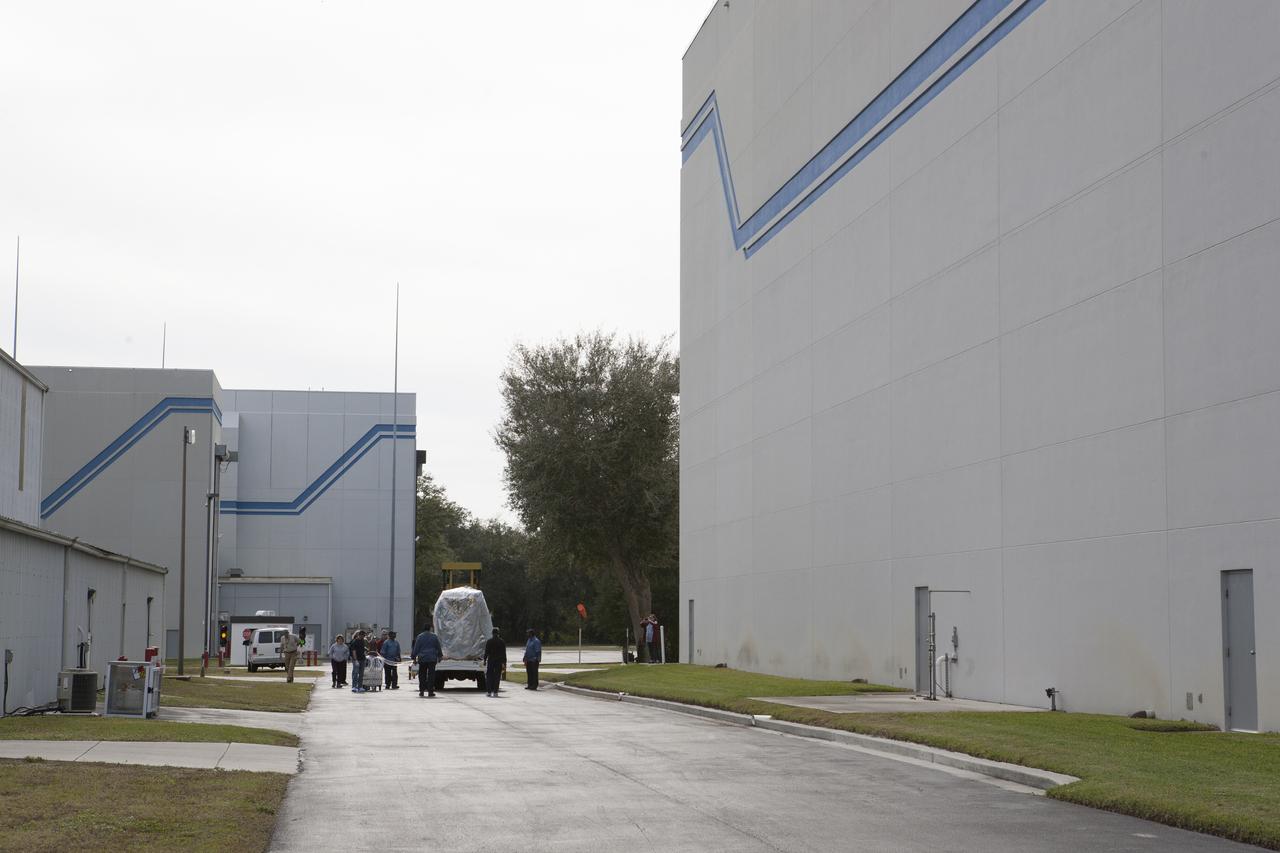
Workers monitor NOAA’s Deep Space Climate Observatory spacecraft, or DSCOVR, wrapped in plastic and secured onto a portable work stand, as it travels between the airlock of Building 2 to the high bay of Building 1 at the Astrotech payload processing facility in Titusville, Florida, near Kennedy Space Center. DSCOVR is a partnership between NOAA, NASA and the U.S. Air Force. DSCOVR will maintain the nation's real-time solar wind monitoring capabilities which are critical to the accuracy and lead time of NOAA's space weather alerts and forecasts. Launch is currently scheduled for January 2015 aboard a SpaceX Falcon 9 v 1.1 launch vehicle from Cape Canaveral Air Force Station, Florida.

NOAA’s Deep Space Climate Observatory spacecraft, or DSCOVR, wrapped in plastic, is transferred from its transportation pallet to a portable work stand at the Astrotech payload processing facility in Titusville, Florida, near Kennedy Space Center. DSCOVR is a partnership between NOAA, NASA and the U.S. Air Force. DSCOVR will maintain the nation's real-time solar wind monitoring capabilities which are critical to the accuracy and lead time of NOAA's space weather alerts and forecasts. Launch is currently scheduled for January 2015 aboard a SpaceX Falcon 9 v 1.1 launch vehicle from Cape Canaveral Air Force Station, Florida.
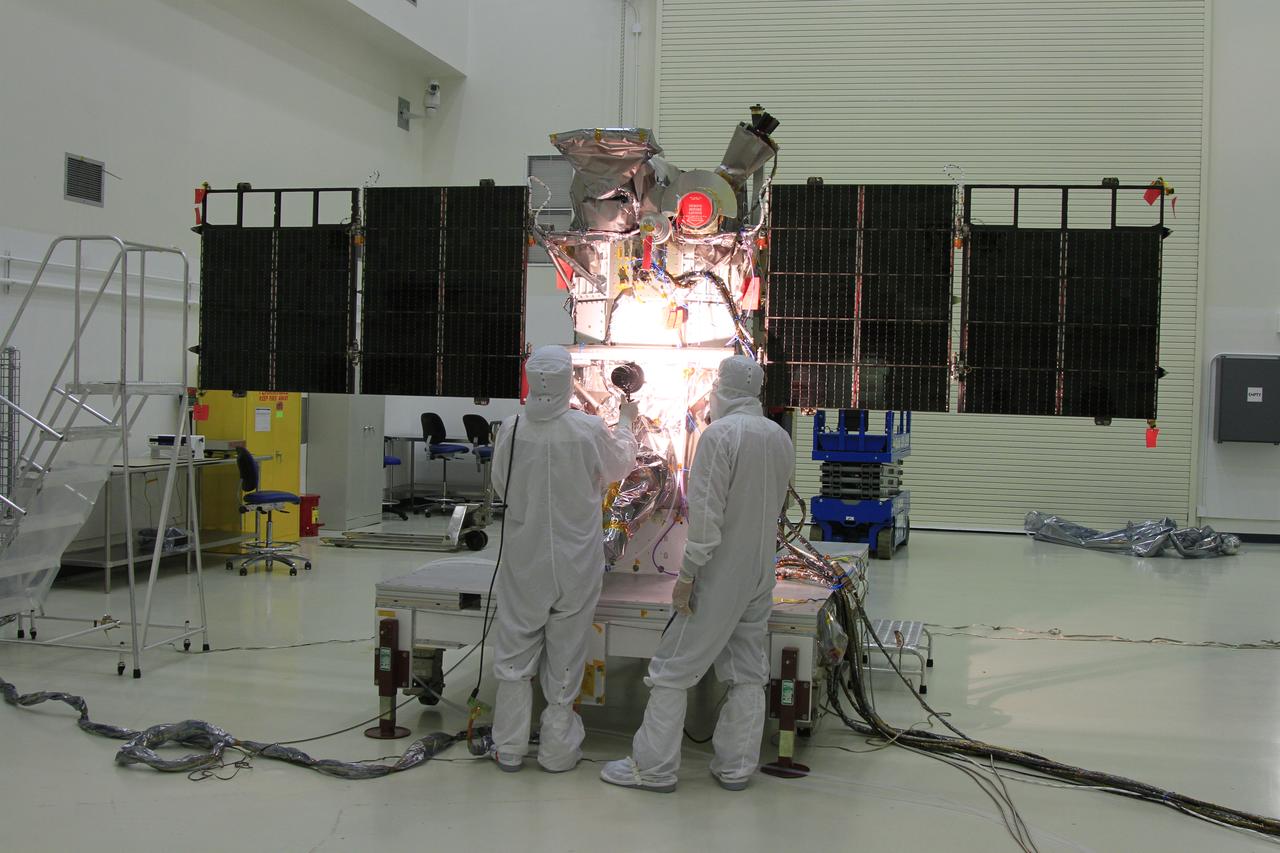
Workers conduct a light test on the solar arrays on NOAA’s Deep Space Climate Observatory spacecraft, or DSCOVR, in the Building 1 high bay at the Astrotech payload processing facility in Titusville, Florida, near Kennedy Space Center. DSCOVR is a partnership between NOAA, NASA and the U.S. Air Force. DSCOVR will maintain the nation's real-time solar wind monitoring capabilities which are critical to the accuracy and lead time of NOAA's space weather alerts and forecasts. Launch is targeted for early 2015 aboard a SpaceX Falcon 9 v 1.1 launch vehicle from Cape Canaveral Air Force Station, Florida.

The solar arrays on NOAA’s Deep Space Climate Observatory spacecraft, or DSCOVR, are unfurled in the Building 1 high bay at the Astrotech payload processing facility in Titusville, Florida, near Kennedy Space Center. DSCOVR is a partnership between NOAA, NASA and the U.S. Air Force. DSCOVR will maintain the nation's real-time solar wind monitoring capabilities which are critical to the accuracy and lead time of NOAA's space weather alerts and forecasts. Launch is targeted for early 2015 aboard a SpaceX Falcon 9 v 1.1 launch vehicle from Cape Canaveral Air Force Station, Florida.
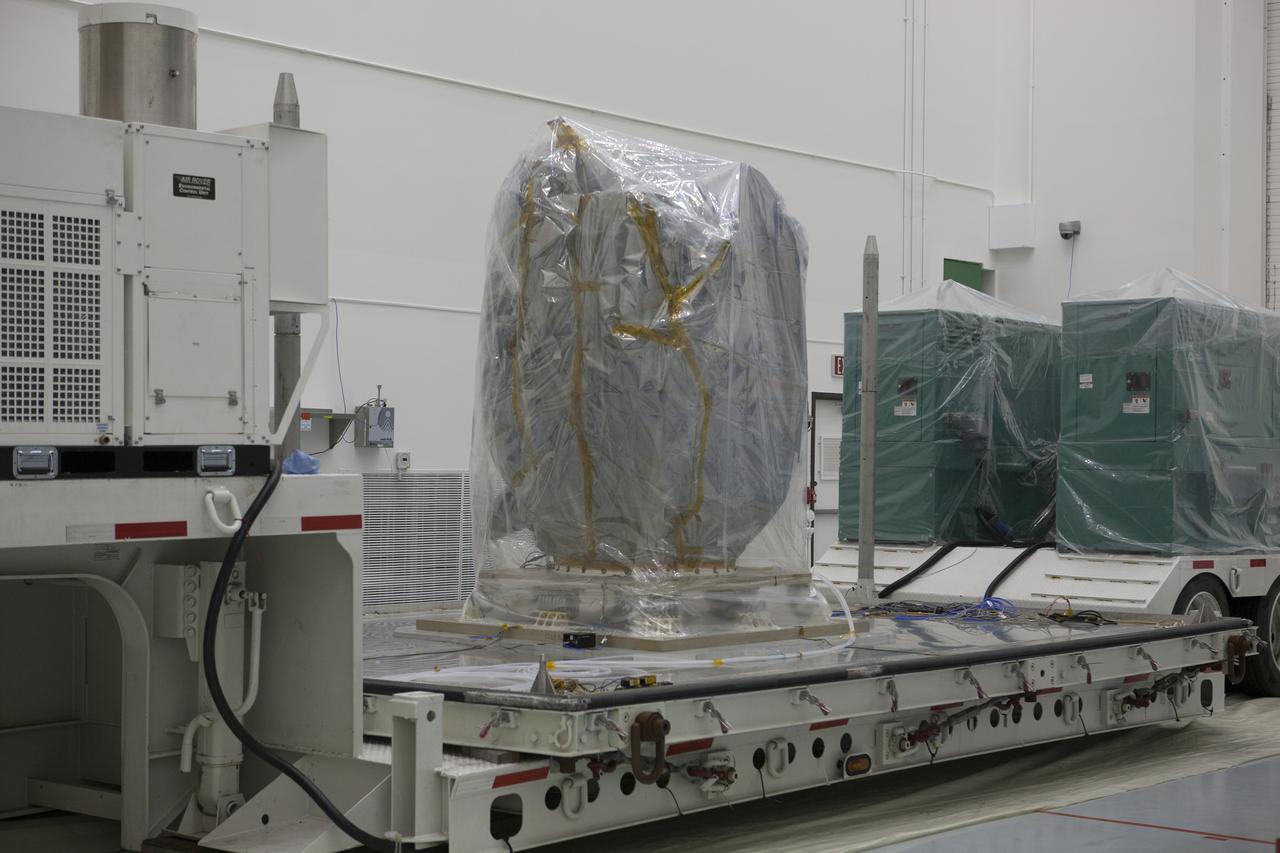
Preparations are underway to lift NOAA’s Deep Space Climate Observatory spacecraft, or DSCOVR, wrapped in plastic, from its transportation pallet at the Astrotech payload processing facility in Titusville, Florida, near Kennedy Space Center. DSCOVR is a partnership between NOAA, NASA and the U.S. Air Force. DSCOVR will maintain the nation's real-time solar wind monitoring capabilities which are critical to the accuracy and lead time of NOAA's space weather alerts and forecasts. Launch is currently scheduled for January 2015 aboard a SpaceX Falcon 9 v 1.1 launch vehicle from Cape Canaveral Air Force Station, Florida.
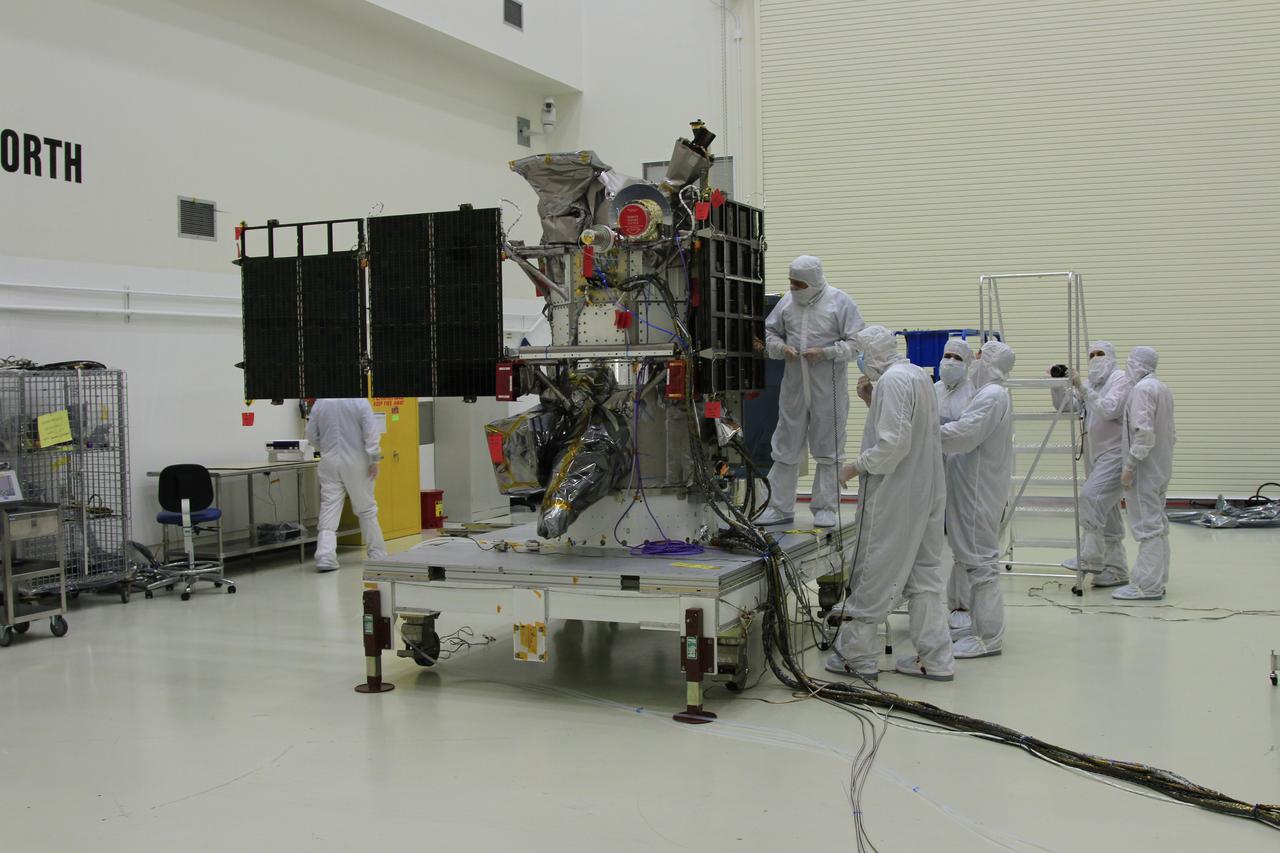
Workers deploy the solar arrays on NOAA’s Deep Space Climate Observatory spacecraft, or DSCOVR, in the Building 1 high bay at the Astrotech payload processing facility in Titusville, Florida, near Kennedy Space Center. DSCOVR is a partnership between NOAA, NASA and the U.S. Air Force. DSCOVR will maintain the nation's real-time solar wind monitoring capabilities which are critical to the accuracy and lead time of NOAA's space weather alerts and forecasts. Launch is targeted for early 2015 aboard a SpaceX Falcon 9 v 1.1 launch vehicle from Cape Canaveral Air Force Station, Florida.

Workers conduct a light test on the solar arrays on NOAA’s Deep Space Climate Observatory spacecraft, or DSCOVR, in the Building 1 high bay at the Astrotech payload processing facility in Titusville, Florida, near Kennedy Space Center. DSCOVR is a partnership between NOAA, NASA and the U.S. Air Force. DSCOVR will maintain the nation's real-time solar wind monitoring capabilities which are critical to the accuracy and lead time of NOAA's space weather alerts and forecasts. Launch is targeted for early 2015 aboard a SpaceX Falcon 9 v 1.1 launch vehicle from Cape Canaveral Air Force Station, Florida.
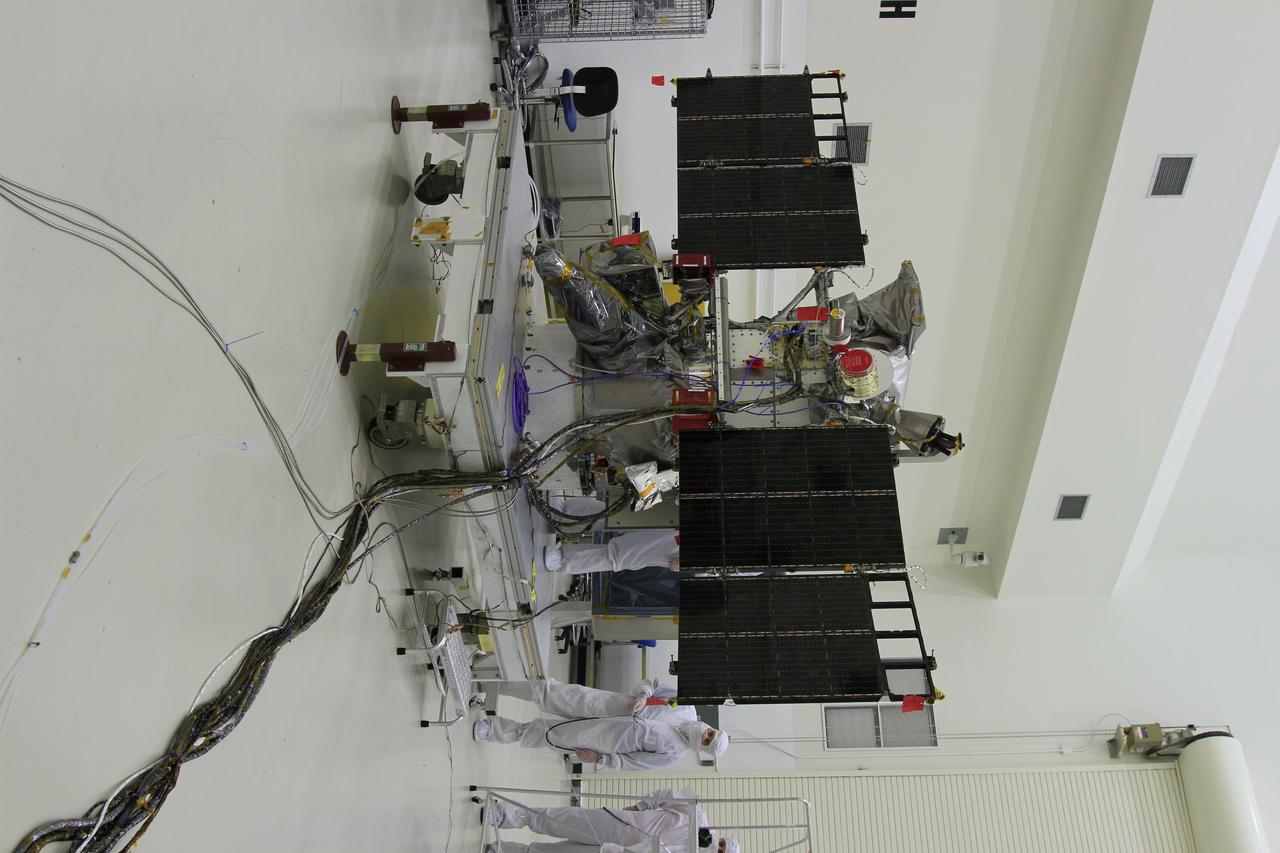
Workers deploy the solar arrays on NOAA’s Deep Space Climate Observatory spacecraft, or DSCOVR, in the Building 1 high bay at the Astrotech payload processing facility in Titusville, Florida, near Kennedy Space Center. DSCOVR is a partnership between NOAA, NASA and the U.S. Air Force. DSCOVR will maintain the nation's real-time solar wind monitoring capabilities which are critical to the accuracy and lead time of NOAA's space weather alerts and forecasts. Launch is targeted for early 2015 aboard a SpaceX Falcon 9 v 1.1 launch vehicle from Cape Canaveral Air Force Station, Florida.

Workers remove the plastic cover from NOAA’s Deep Space Climate Observatory spacecraft, or DSCOVR, in the high bay of Building 1 at the Astrotech payload processing facility in Titusville, Florida, near Kennedy Space Center. DSCOVR is a partnership between NOAA, NASA and the U.S. Air Force. DSCOVR will maintain the nation's real-time solar wind monitoring capabilities which are critical to the accuracy and lead time of NOAA's space weather alerts and forecasts. Launch is currently scheduled for January 2015 aboard a SpaceX Falcon 9 v 1.1 launch vehicle from Cape Canaveral Air Force Station, Florida.
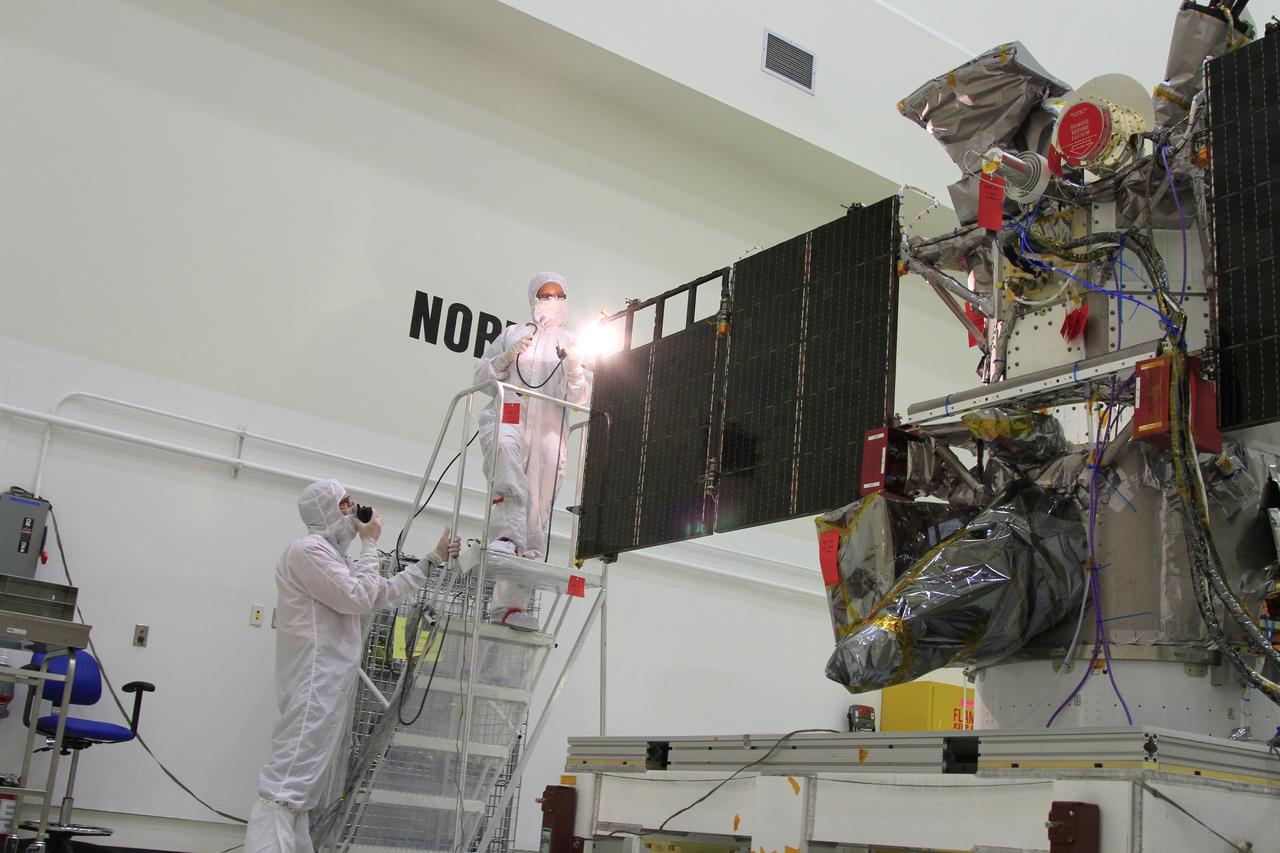
Workers conduct a light test on the solar arrays on NOAA’s Deep Space Climate Observatory spacecraft, or DSCOVR, in the Building 1 high bay at the Astrotech payload processing facility in Titusville, Florida, near Kennedy Space Center. DSCOVR is a partnership between NOAA, NASA and the U.S. Air Force. DSCOVR will maintain the nation's real-time solar wind monitoring capabilities which are critical to the accuracy and lead time of NOAA's space weather alerts and forecasts. Launch is targeted for early 2015 aboard a SpaceX Falcon 9 v 1.1 launch vehicle from Cape Canaveral Air Force Station, Florida.
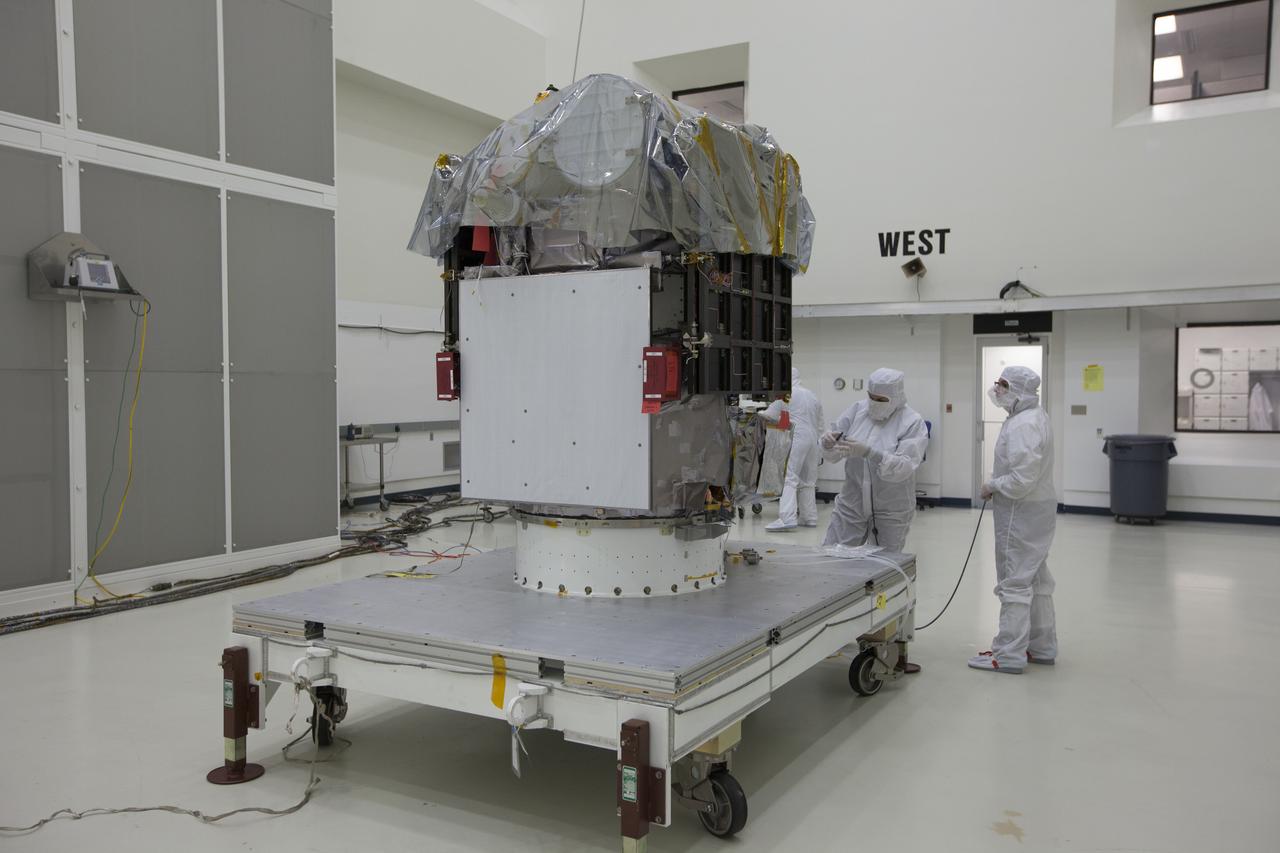
NOAA’s Deep Space Climate Observatory spacecraft, or DSCOVR, has been uncovered and is ready for processing in the high bay of Building 1 at the Astrotech payload processing facility in Titusville, Florida, near Kennedy Space Center. DSCOVR is a partnership between NOAA, NASA and the U.S. Air Force. DSCOVR will maintain the nation's real-time solar wind monitoring capabilities which are critical to the accuracy and lead time of NOAA's space weather alerts and forecasts. Launch is currently scheduled for January 2015 aboard a SpaceX Falcon 9 v 1.1 launch vehicle from Cape Canaveral Air Force Station, Florida.
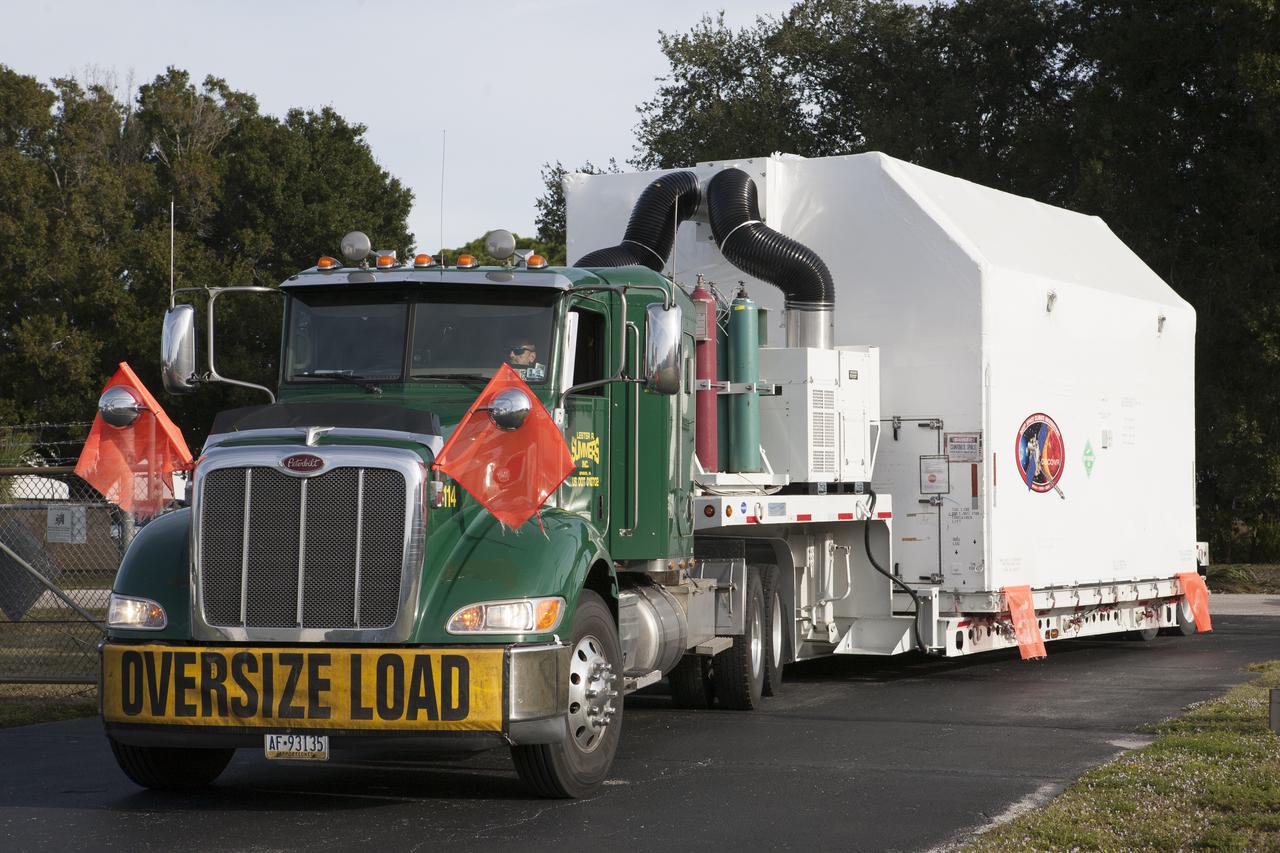
NOAA’s Deep Space Climate Observatory spacecraft, or DSCOVR, enclosed in a protective shipping container, is delivered by truck to the Astrotech payload processing facility in Titusville, Florida, near Kennedy Space Center. DSCOVR is a partnership between NOAA, NASA and the U.S. Air Force. DSCOVR will maintain the nation's real-time solar wind monitoring capabilities which are critical to the accuracy and lead time of NOAA's space weather alerts and forecasts. Launch is currently scheduled for January 2015 aboard a SpaceX Falcon 9 v 1.1 launch vehicle from Cape Canaveral Air Force Station, Florida.

A light test on the solar arrays on NOAA’s Deep Space Climate Observatory spacecraft, or DSCOVR, is managed from the control room next to the Building 1 high bay at the Astrotech payload processing facility in Titusville, Florida, near Kennedy Space Center. DSCOVR is a partnership between NOAA, NASA and the U.S. Air Force. DSCOVR will maintain the nation's real-time solar wind monitoring capabilities which are critical to the accuracy and lead time of NOAA's space weather alerts and forecasts. Launch is targeted for early 2015 aboard a SpaceX Falcon 9 v 1.1 launch vehicle from Cape Canaveral Air Force Station, Florida.
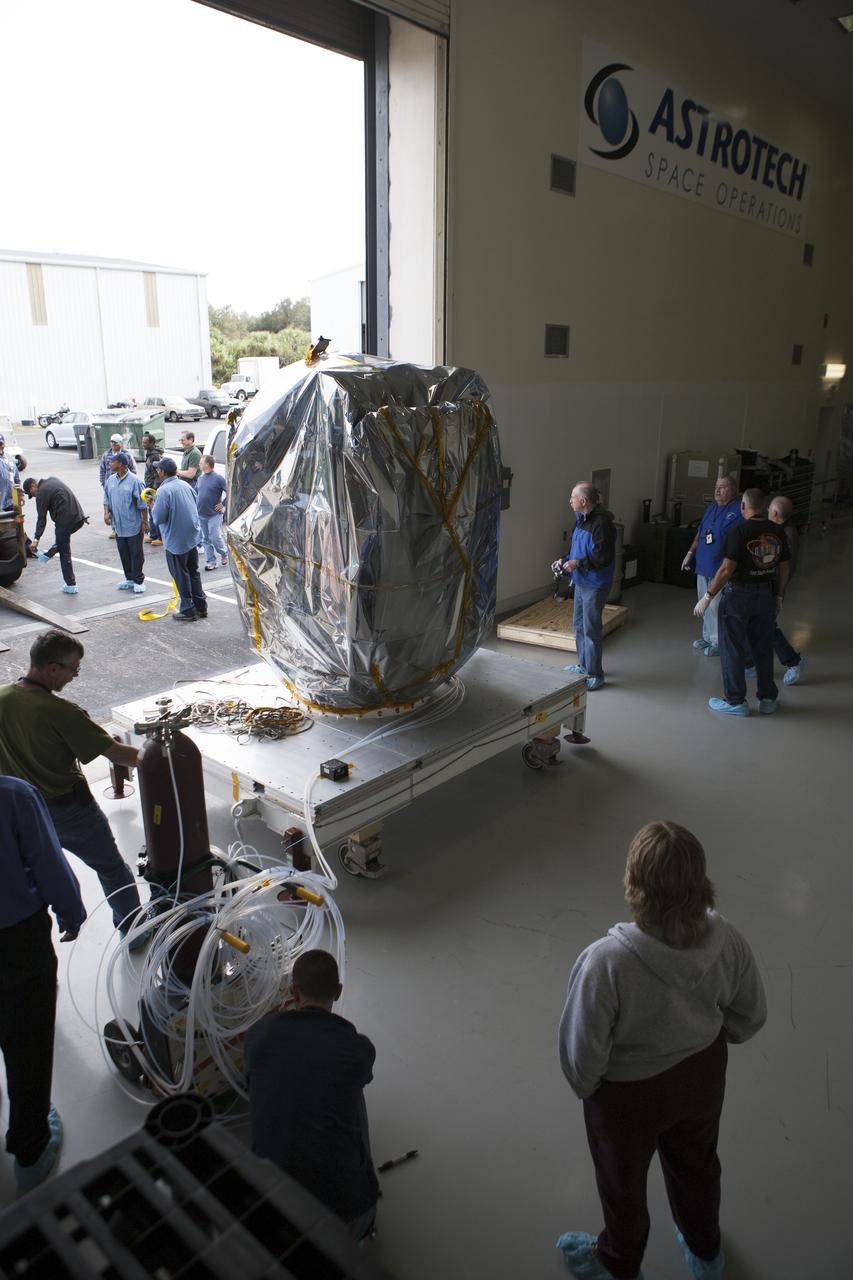
Workers are on hand to receive NOAA’s Deep Space Climate Observatory spacecraft, or DSCOVR, wrapped in plastic and secured onto a portable work stand, into the high bay of Building 1 at the Astrotech payload processing facility in Titusville, Florida, near Kennedy Space Center. DSCOVR is a partnership between NOAA, NASA and the U.S. Air Force. DSCOVR will maintain the nation's real-time solar wind monitoring capabilities which are critical to the accuracy and lead time of NOAA's space weather alerts and forecasts. Launch is currently scheduled for January 2015 aboard a SpaceX Falcon 9 v 1.1 launch vehicle from Cape Canaveral Air Force Station, Florida.
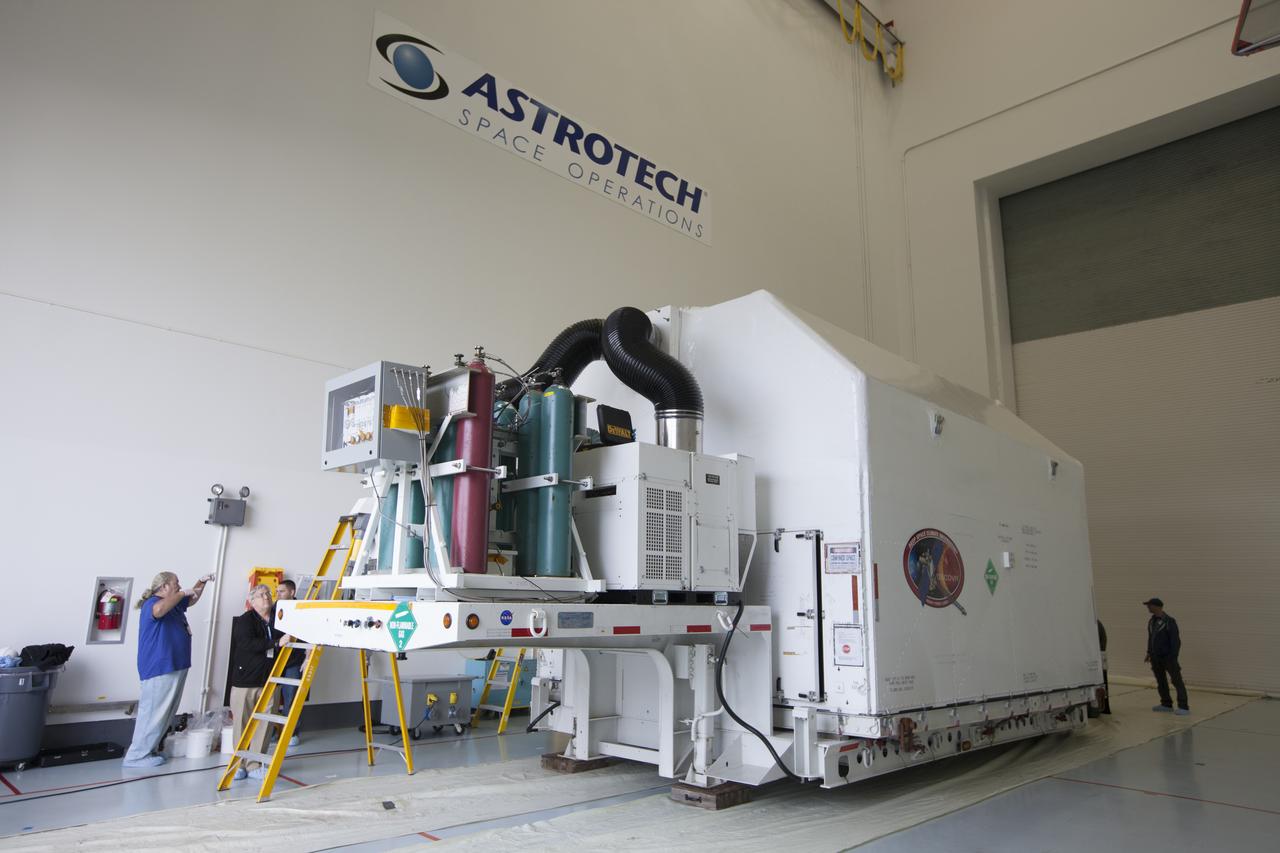
Preparations are underway to remove a protective shipping container from around NOAA’s Deep Space Climate Observatory spacecraft, or DSCOVR, at the Astrotech payload processing facility in Titusville, Florida, near Kennedy Space Center. DSCOVR is a partnership between NOAA, NASA and the U.S. Air Force. DSCOVR will maintain the nation's real-time solar wind monitoring capabilities which are critical to the accuracy and lead time of NOAA's space weather alerts and forecasts. Launch is currently scheduled for January 2015 aboard a SpaceX Falcon 9 v 1.1 launch vehicle from Cape Canaveral Air Force Station, Florida.
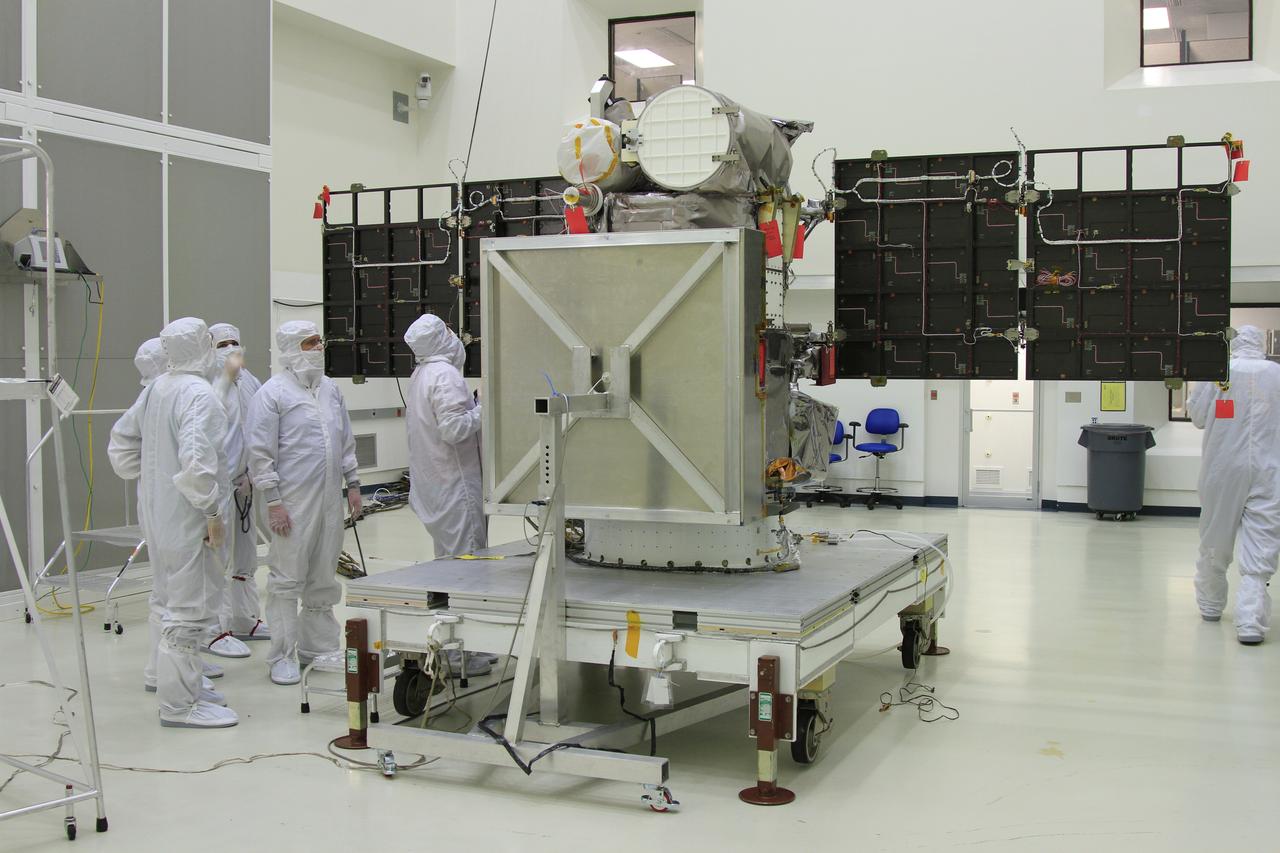
The solar arrays on NOAA’s Deep Space Climate Observatory spacecraft, or DSCOVR, are unfurled in the Building 1 high bay at the Astrotech payload processing facility in Titusville, Florida, near Kennedy Space Center. DSCOVR is a partnership between NOAA, NASA and the U.S. Air Force. DSCOVR will maintain the nation's real-time solar wind monitoring capabilities which are critical to the accuracy and lead time of NOAA's space weather alerts and forecasts. Launch is targeted for early 2015 aboard a SpaceX Falcon 9 v 1.1 launch vehicle from Cape Canaveral Air Force Station, Florida.

Workers remove the plastic cover from NOAA’s Deep Space Climate Observatory spacecraft, or DSCOVR, in the high bay of Building 1 at the Astrotech payload processing facility in Titusville, Florida, near Kennedy Space Center. DSCOVR is a partnership between NOAA, NASA and the U.S. Air Force. DSCOVR will maintain the nation's real-time solar wind monitoring capabilities which are critical to the accuracy and lead time of NOAA's space weather alerts and forecasts. Launch is currently scheduled for January 2015 aboard a SpaceX Falcon 9 v 1.1 launch vehicle from Cape Canaveral Air Force Station, Florida.
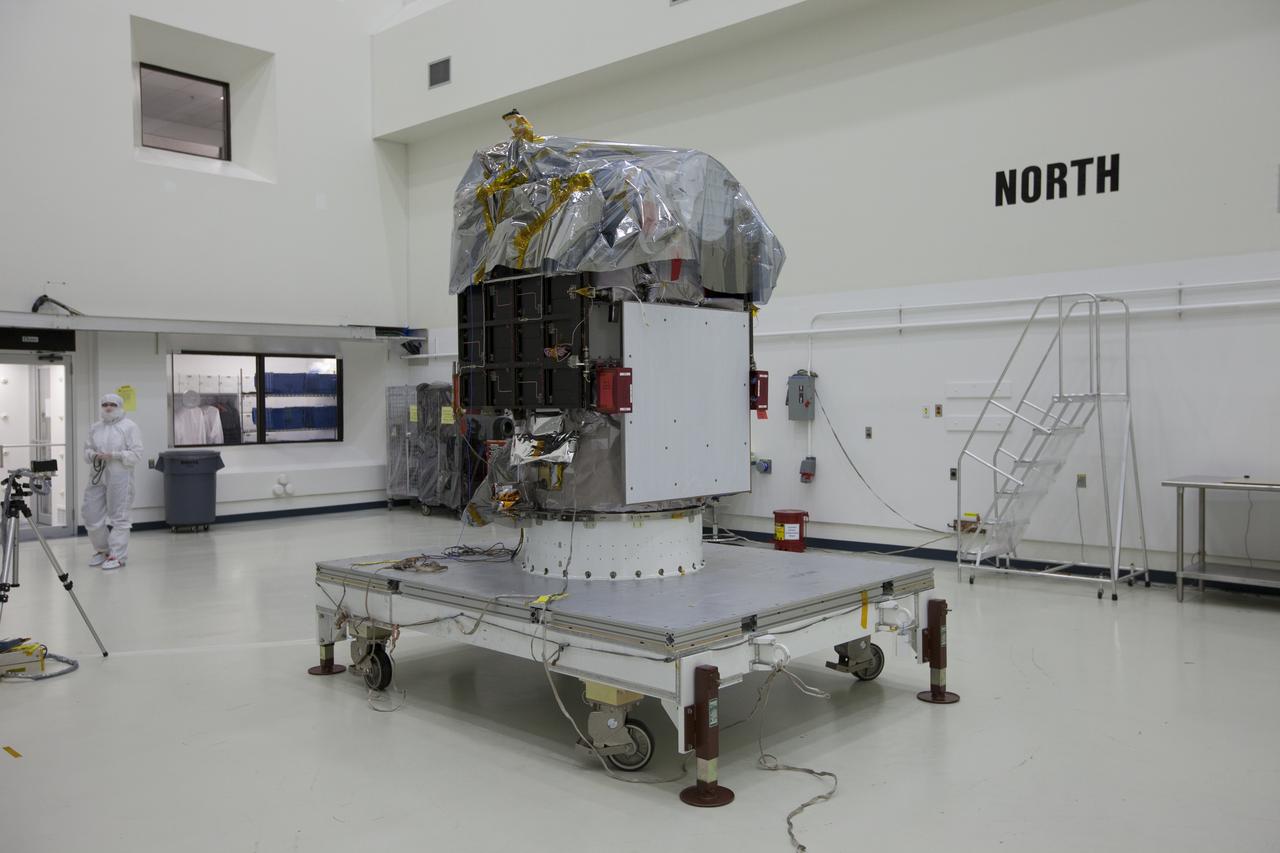
NOAA’s Deep Space Climate Observatory spacecraft, or DSCOVR, has been uncovered and is ready for processing in the high bay of Building 1 at the Astrotech payload processing facility in Titusville, Florida, near Kennedy Space Center. DSCOVR is a partnership between NOAA, NASA and the U.S. Air Force. DSCOVR will maintain the nation's real-time solar wind monitoring capabilities which are critical to the accuracy and lead time of NOAA's space weather alerts and forecasts. Launch is currently scheduled for January 2015 aboard a SpaceX Falcon 9 v 1.1 launch vehicle from Cape Canaveral Air Force Station, Florida.

Workers conduct a light test on the solar arrays on NOAA’s Deep Space Climate Observatory spacecraft, or DSCOVR, in the Building 1 high bay at the Astrotech payload processing facility in Titusville, Florida, near Kennedy Space Center. DSCOVR is a partnership between NOAA, NASA and the U.S. Air Force. DSCOVR will maintain the nation's real-time solar wind monitoring capabilities which are critical to the accuracy and lead time of NOAA's space weather alerts and forecasts. Launch is targeted for early 2015 aboard a SpaceX Falcon 9 v 1.1 launch vehicle from Cape Canaveral Air Force Station, Florida.

Workers conduct a light test on the solar arrays on NOAA’s Deep Space Climate Observatory spacecraft, or DSCOVR, in the Building 1 high bay at the Astrotech payload processing facility in Titusville, Florida, near Kennedy Space Center. DSCOVR is a partnership between NOAA, NASA and the U.S. Air Force. DSCOVR will maintain the nation's real-time solar wind monitoring capabilities which are critical to the accuracy and lead time of NOAA's space weather alerts and forecasts. Launch is targeted for early 2015 aboard a SpaceX Falcon 9 v 1.1 launch vehicle from Cape Canaveral Air Force Station, Florida.
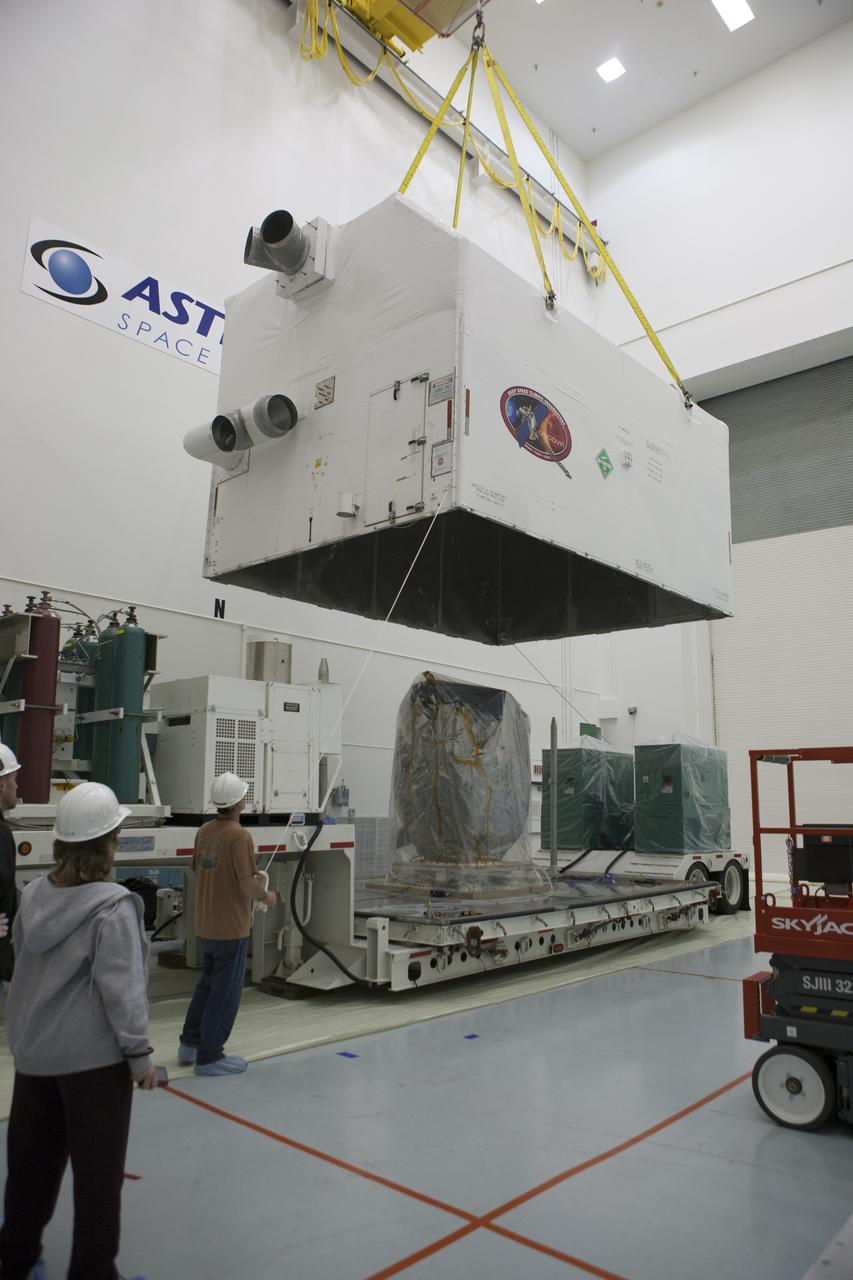
NOAA’s Deep Space Climate Observatory spacecraft, or DSCOVR, wrapped in plastic, comes into view as the protective shipping container is lifted from around the spacecraft at the Astrotech payload processing facility in Titusville, Florida, near Kennedy Space Center. DSCOVR is a partnership between NOAA, NASA and the U.S. Air Force. DSCOVR will maintain the nation's real-time solar wind monitoring capabilities which are critical to the accuracy and lead time of NOAA's space weather alerts and forecasts. Launch is currently scheduled for January 2015 aboard a SpaceX Falcon 9 v 1.1 launch vehicle from Cape Canaveral Air Force Station, Florida.

Workers transfer NOAA’s Deep Space Climate Observatory spacecraft, or DSCOVR, wrapped in plastic and secured onto a portable work stand, from the airlock of Building 2 to the high bay of Building 1 at the Astrotech payload processing facility in Titusville, Florida, near Kennedy Space Center. DSCOVR is a partnership between NOAA, NASA and the U.S. Air Force. DSCOVR will maintain the nation's real-time solar wind monitoring capabilities which are critical to the accuracy and lead time of NOAA's space weather alerts and forecasts. Launch is currently scheduled for January 2015 aboard a SpaceX Falcon 9 v 1.1 launch vehicle from Cape Canaveral Air Force Station, Florida.

Africa is front and center in this image of Earth taken by a NASA camera on the Deep Space Climate Observatory (DSCOVR) satellite. The image, taken July 6 from a vantage point one million miles from Earth, was one of the first taken by NASA’s Earth Polychromatic Imaging Camera (EPIC). Central Europe is toward the top of the image with the Sahara Desert to the south, showing the Nile River flowing to the Mediterranean Sea through Egypt. The photographic-quality color image was generated by combining three separate images of the entire Earth taken a few minutes apart. The camera takes a series of 10 images using different narrowband filters -- from ultraviolet to near infrared -- to produce a variety of science products. The red, green and blue channel images are used in these Earth images. The DSCOVR mission is a partnership between NASA, the National Oceanic and Atmospheric Administration (NOAA) and the U.S. Air Force, with the primary objective to maintain the nation’s real-time solar wind monitoring capabilities, which are critical to the accuracy and lead time of space weather alerts and forecasts from NOAA. DSCOVR was launched in February to its planned orbit at the first Lagrange point or L1, about one million miles from Earth toward the sun. It’s from that unique vantage point that the EPIC instrument is acquiring images of the entire sunlit face of Earth. Data from EPIC will be used to measure ozone and aerosol levels in Earth’s atmosphere, cloud height, vegetation properties and a variety of other features. Image Credit: NASA
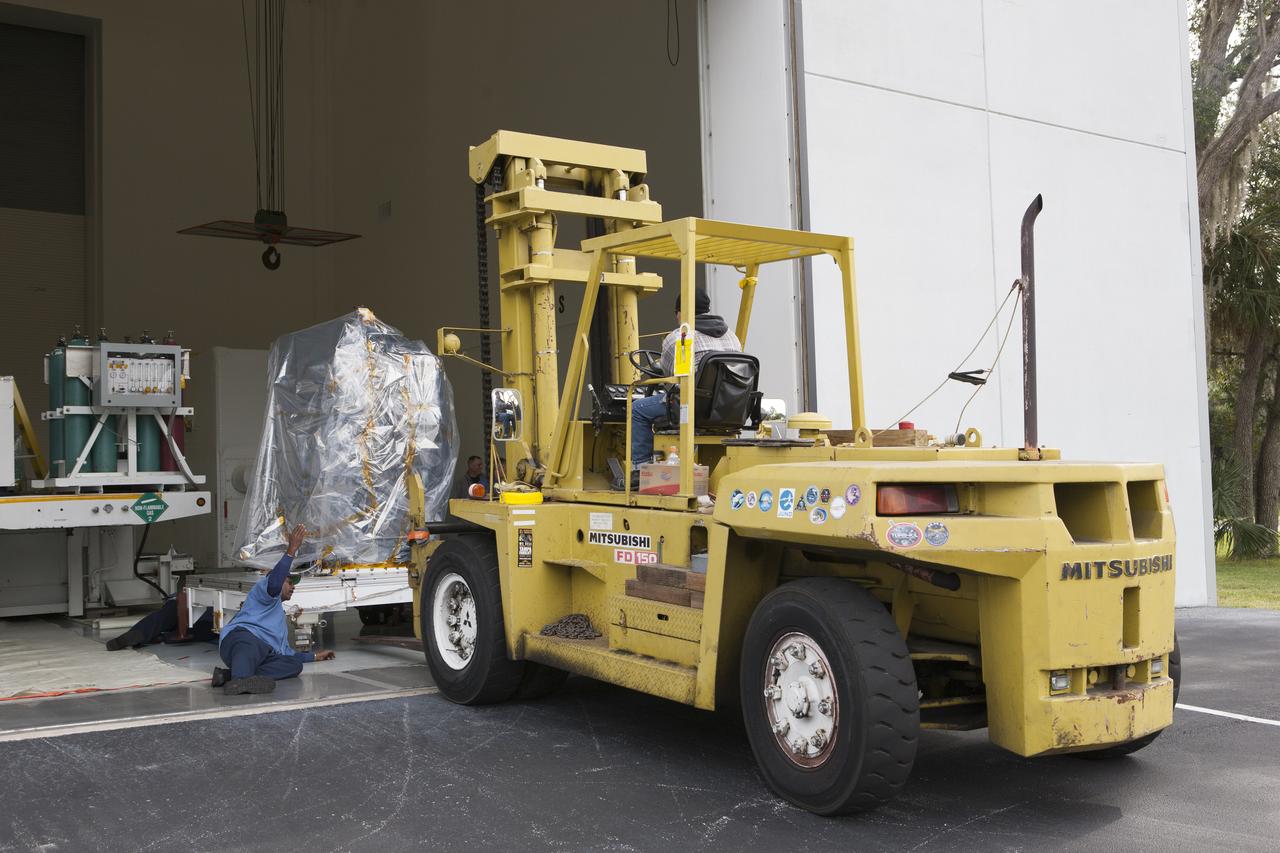
A forklift is enlisted to move NOAA’s Deep Space Climate Observatory spacecraft, or DSCOVR, wrapped in plastic and secured onto a portable work stand, from the airlock of Building 2 to the high bay of Building 1 at the Astrotech payload processing facility.
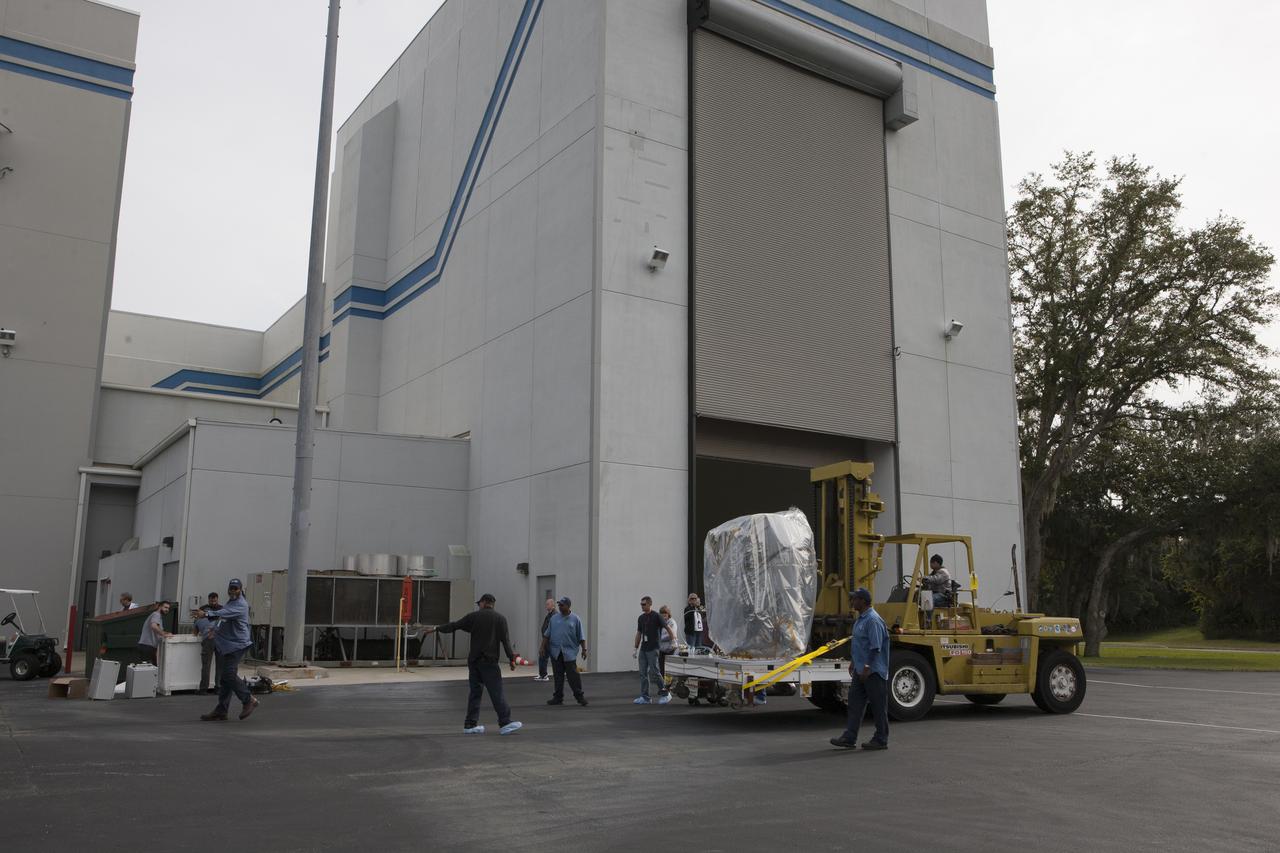
NOAA’s Deep Space Climate Observatory spacecraft, or DSCOVR, wrapped in plastic and secured onto a portable work stand, makes a short trek from the airlock of Building 2 to the high bay of Building 1 at the Astrotech payload processing facility.
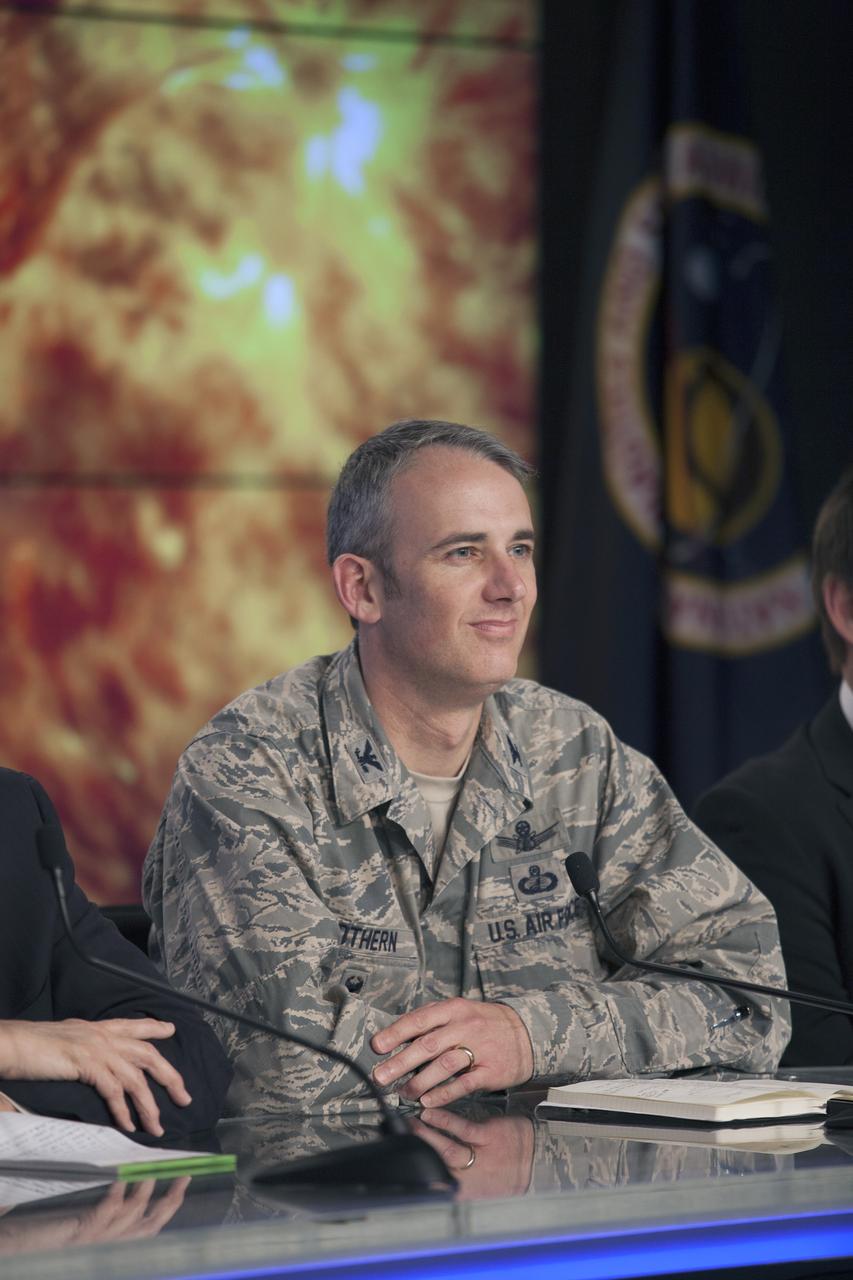
CAPE CANAVERAL, Fla. – Col. D. Jason Cothern, Space Demonstrations Division chief at Kirtland Air Force Base in Albuquerque, New Mexico, listens to a question from a member of the news media during a briefing regarding NOAA’s Deep Space Climate Observatory spacecraft, or DSCOVR. DSCOVR will launch aboard a SpaceX Falcon 9 rocket. The mission is a partnership between NOAA, NASA and the U.S. Air Force. DSCOVR will maintain the nation's real-time solar wind monitoring capabilities which are critical to the accuracy and lead time of NOAA's space weather alerts and forecasts. To learn more about DSCOVR, visit http://www.nesdis.noaa.gov/DSCOVR. Photo credit: NASA/Kim Shiflett
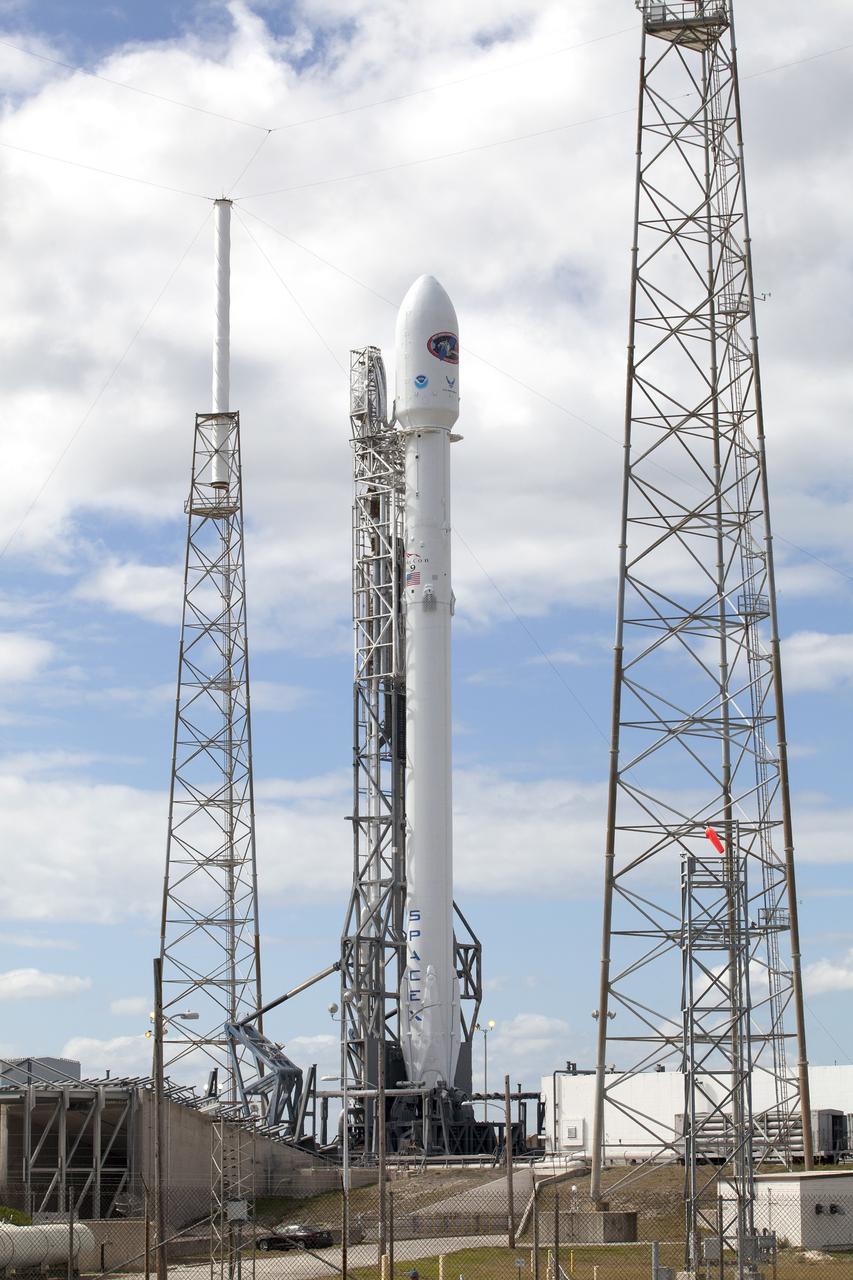
CAPE CANAVERAL, Fla. – CAPE CANAVERAL, Fla. – Backdropped by a blue sky streaked with white clouds, the SpaceX Falcon 9 rocket set to launch NOAA’s Deep Space Climate Observatory spacecraft, or DSCOVR, is flanked by lightning masts at Space Launch Complex 40 at Cape Canaveral Air Force Station in Florida. DSCOVR is a partnership between NOAA, NASA and the U.S. Air Force. DSCOVR will maintain the nation's real-time solar wind monitoring capabilities which are critical to the accuracy and lead time of NOAA's space weather alerts and forecasts. To learn more about DSCOVR, visit http://www.nesdis.noaa.gov/DSCOVR. Photo credit: NASA/Kim Shiflett
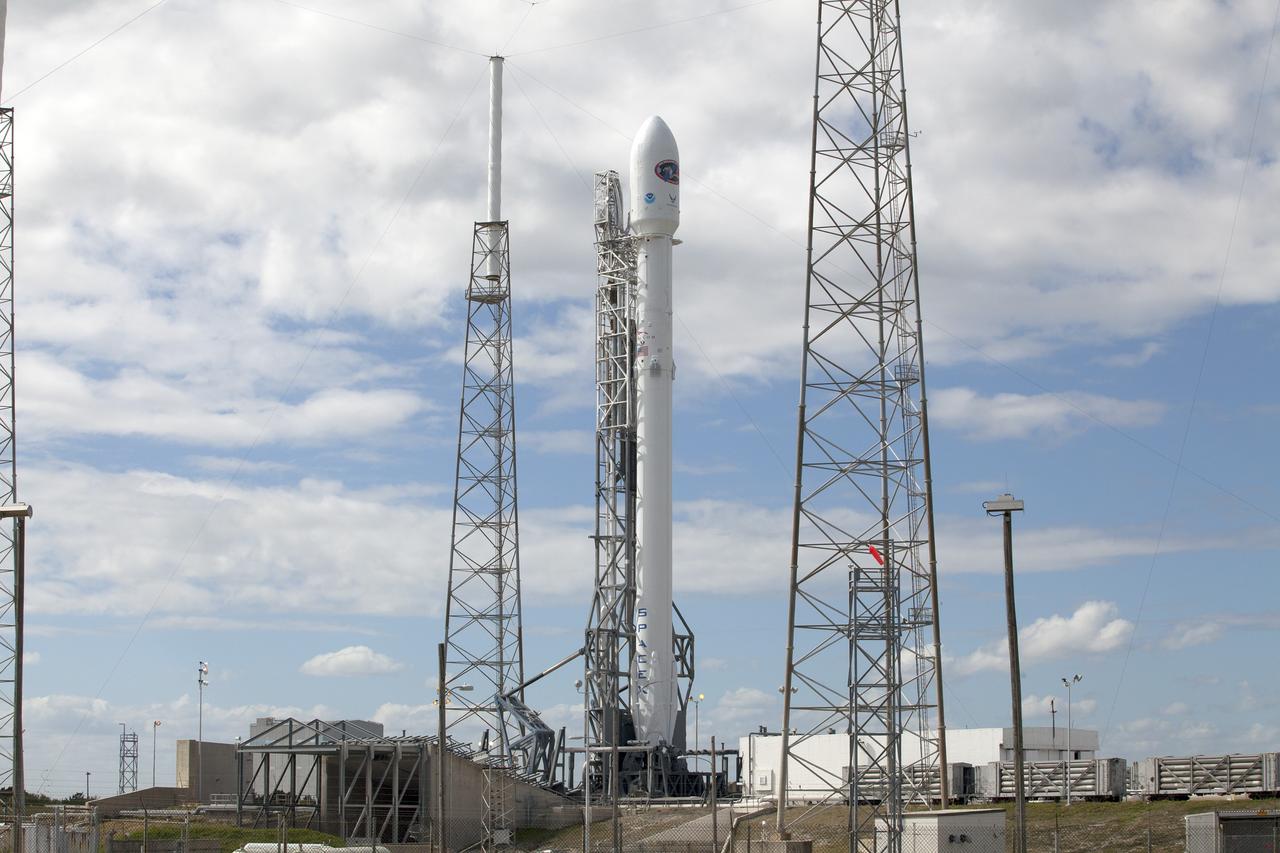
CAPE CANAVERAL, Fla. – The SpaceX Falcon 9 rocket set to launch NOAA’s Deep Space Climate Observatory spacecraft, or DSCOVR, awaits liftoff at 6:10 p.m. EST from Space Launch Complex 40 at Cape Canaveral Air Force Station in Florida. DSCOVR is a partnership between NOAA, NASA and the U.S. Air Force. DSCOVR will maintain the nation's real-time solar wind monitoring capabilities which are critical to the accuracy and lead time of NOAA's space weather alerts and forecasts. To learn more about DSCOVR, visit http://www.nesdis.noaa.gov/DSCOVR. Photo credit: NASA/Kim Shiflett
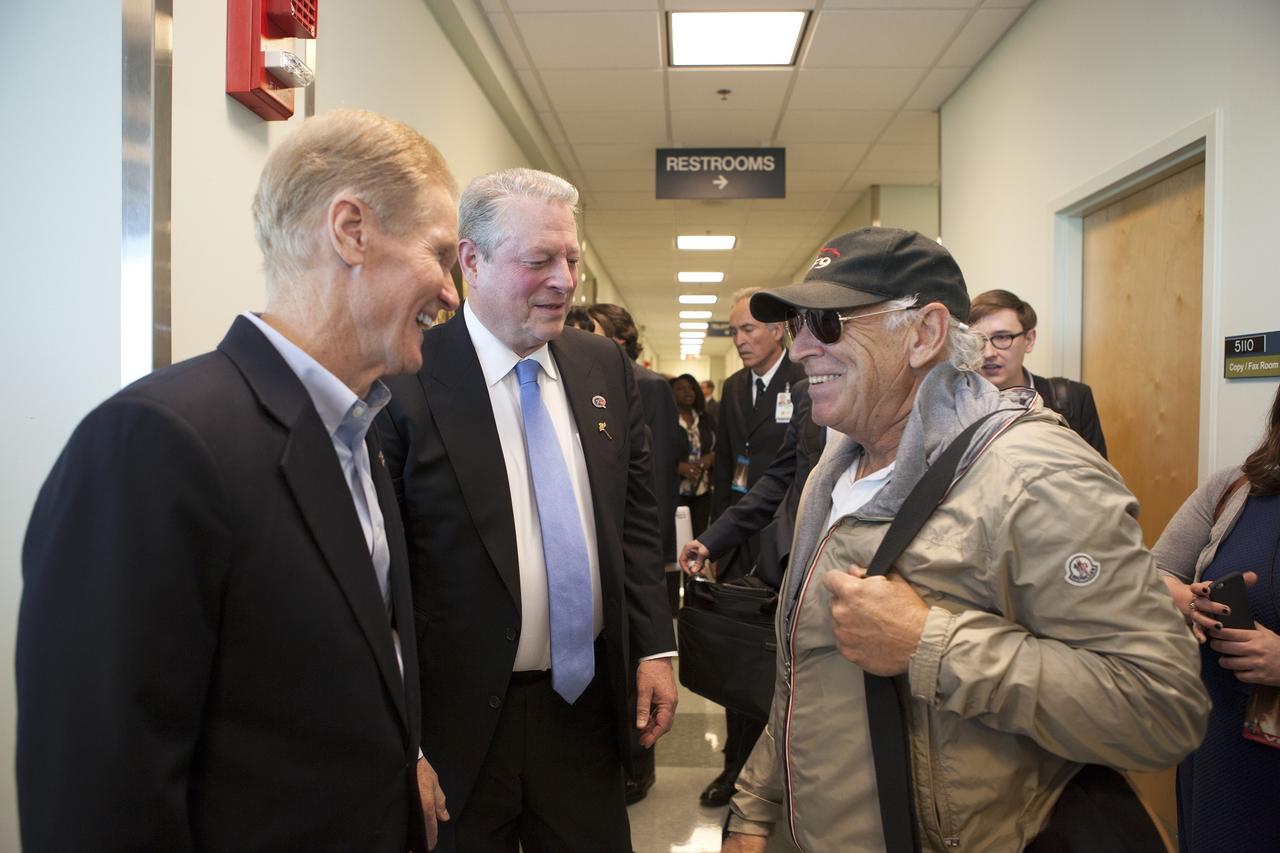
Sen. Bill Nelson, left, and former Vice President Al Gore greet singer Jimmy Buffett, right, at NASA’s Kennedy Space Center in Florida prior to the planned liftoff of NOAA’s Deep Space Climate Observatory mission, or DSCOVR. DSCOVR will launch aboard a SpaceX Falcon 9 rocket. The mission is a partnership between NOAA, NASA and the U.S. Air Force. DSCOVR will maintain the nation's real-time solar wind monitoring capabilities which are critical to the accuracy and lead time of NOAA's space weather alerts and forecasts. To learn more about DSCOVR, visit http://www.nesdis.noaa.gov/DSCOVR. Photo credit: NASA/Kim Shiflett
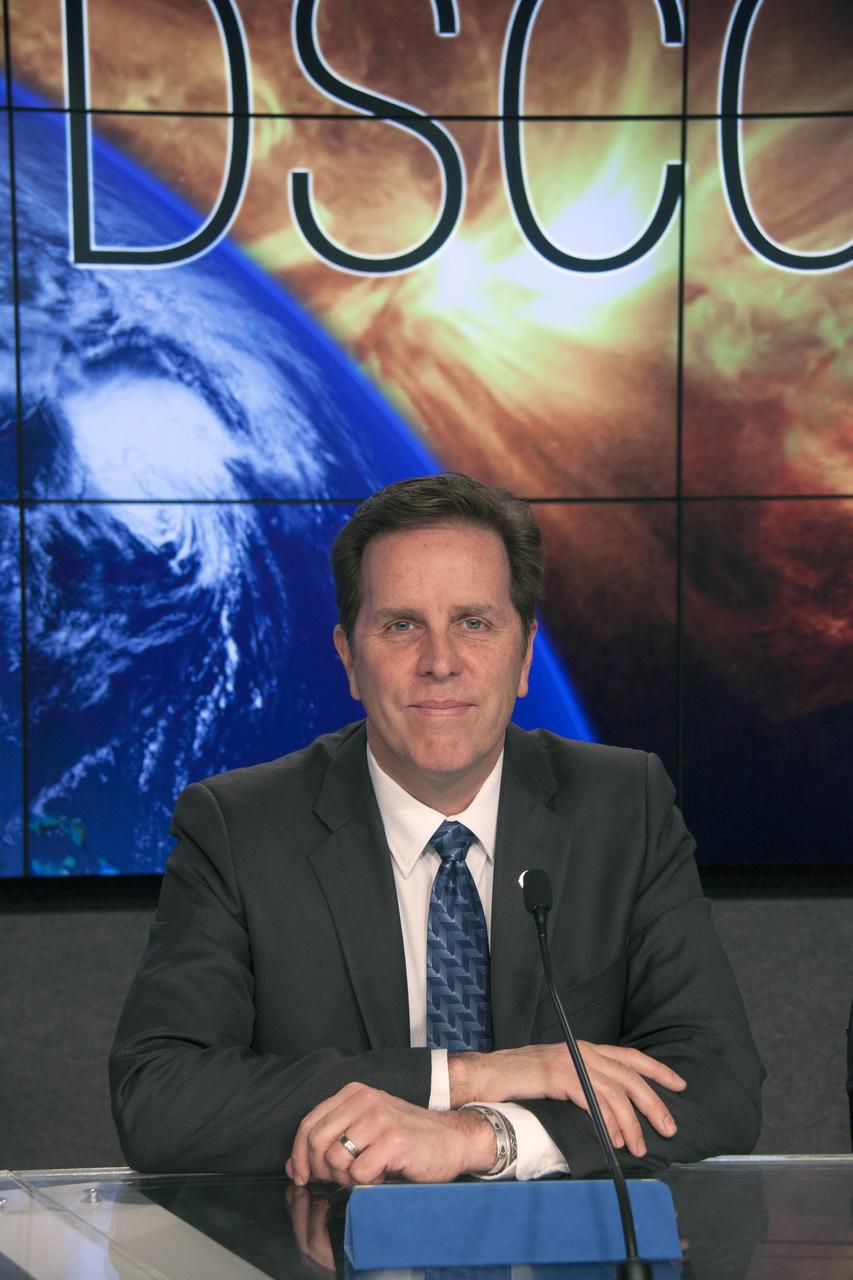
CAPE CANAVERAL, Fla. – Tom Berger, director of the NOAA Space Weather Prediction Center, prepares to brief media on preparations for the liftoff of NOAA’s Deep Space Climate Observatory spacecraft, or DSCOVR. DSCOVR will launch aboard a SpaceX Falcon 9 rocket. The mission is a partnership between NOAA, NASA and the U.S. Air Force. DSCOVR will maintain the nation's real-time solar wind monitoring capabilities which are critical to the accuracy and lead time of NOAA's space weather alerts and forecasts. To learn more about DSCOVR, visit http://www.nesdis.noaa.gov/DSCOVR. Photo credit: NASA/Jim Grossman
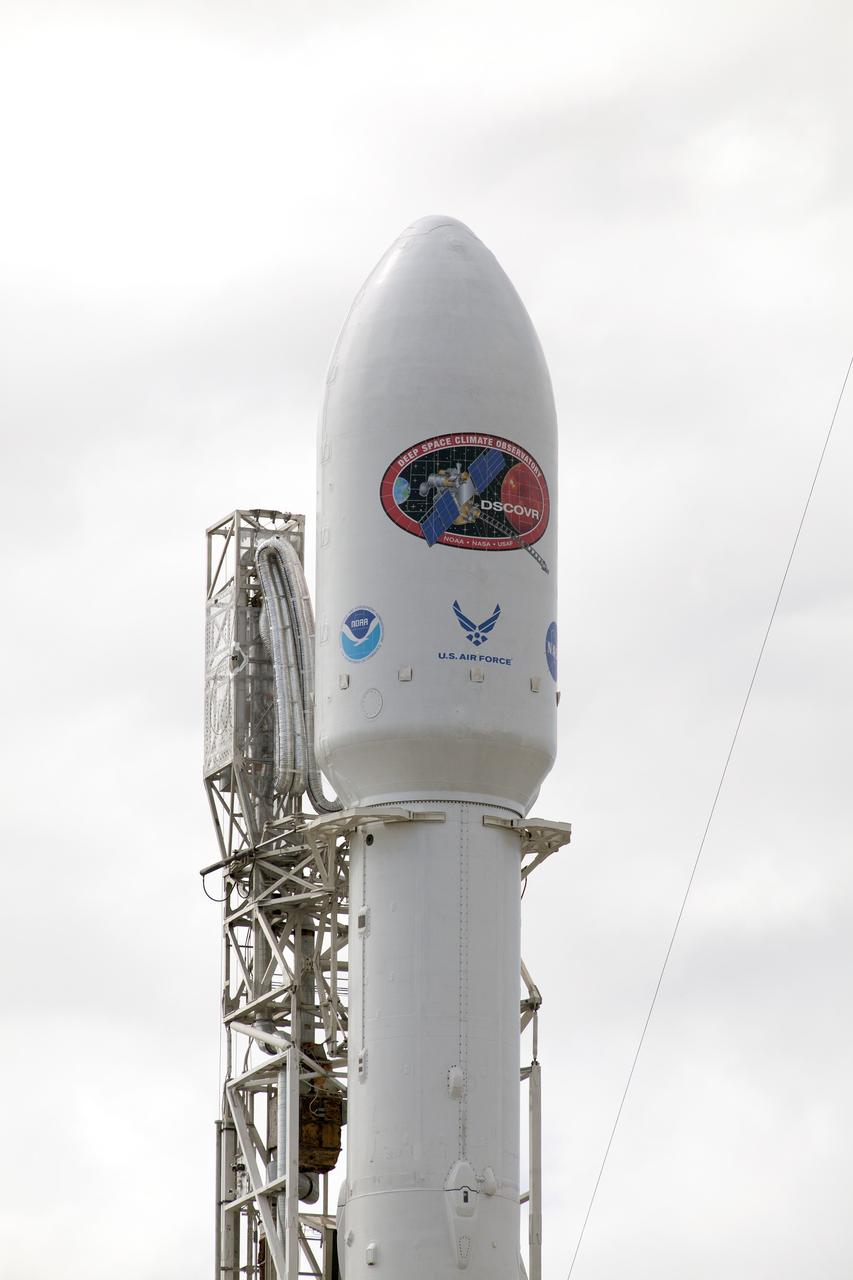
CAPE CANAVERAL, Fla. – The payload fairing protecting NOAA’s Deep Space Climate Observatory spacecraft, or DSCOVR, tops the SpaceX Falcon 9 rocket set to lift off at 6:10 p.m. EST from Space Launch Complex 40 at Cape Canaveral Air Force Station in Florida. DSCOVR is a partnership between NOAA, NASA and the U.S. Air Force. DSCOVR will maintain the nation's real-time solar wind monitoring capabilities which are critical to the accuracy and lead time of NOAA's space weather alerts and forecasts. To learn more about DSCOVR, visit http://www.nesdis.noaa.gov/DSCOVR. Photo credit: NASA/Kim Shiflett
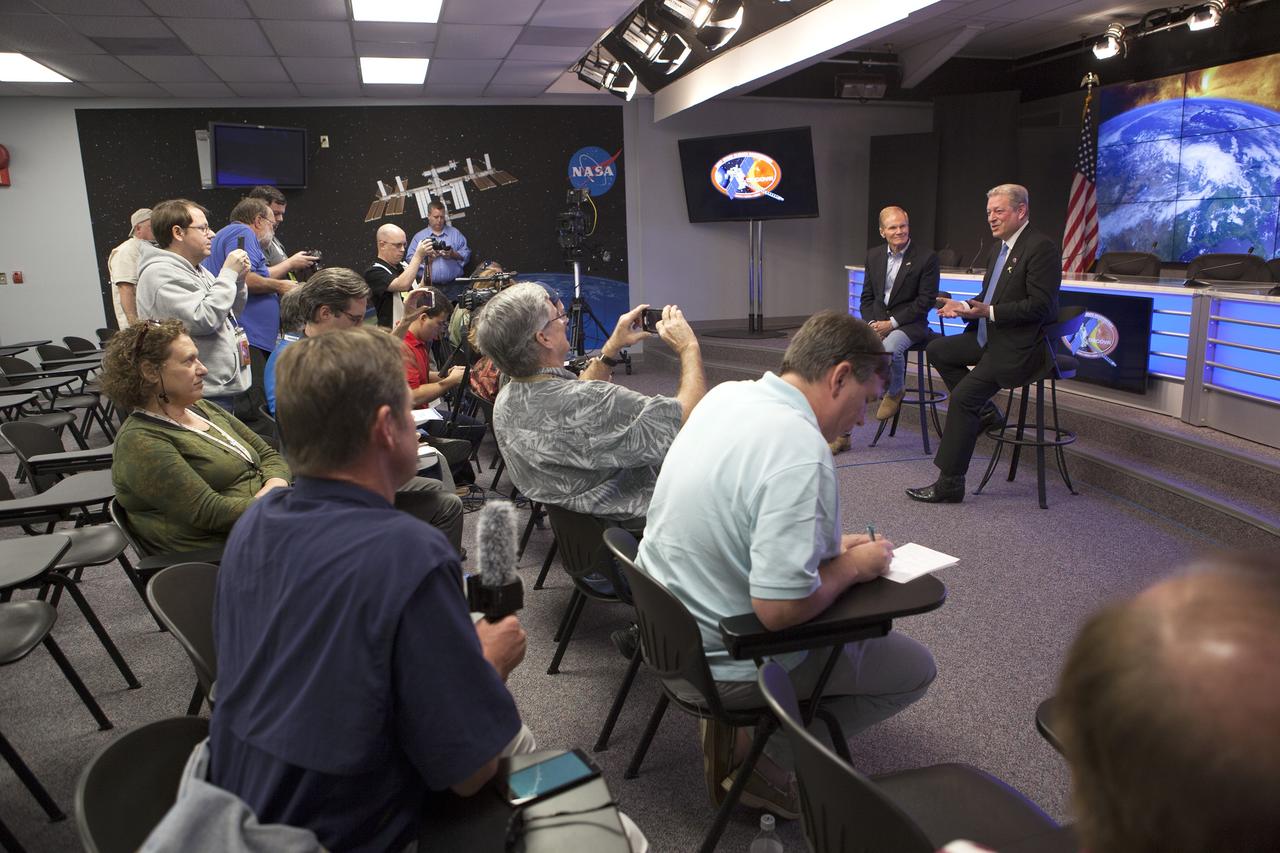
CAPE CANAVERAL, Fla. – Members of the news media listen and take photos at NASA’s Kennedy Space Center in Florida as Sen. Bill Nelson, left, and former Vice President Al Gore, right, answer questions prior to the planned liftoff of NOAA’s Deep Space Climate Observatory spacecraft, or DSCOVR. DSCOVR will launch aboard a SpaceX Falcon 9 rocket. The mission is a partnership between NOAA, NASA and the U.S. Air Force. DSCOVR will maintain the nation's real-time solar wind monitoring capabilities which are critical to the accuracy and lead time of NOAA's space weather alerts and forecasts. To learn more about DSCOVR, visit http://www.nesdis.noaa.gov/DSCOVR. Photo credit: NASA/Kim Shiflett
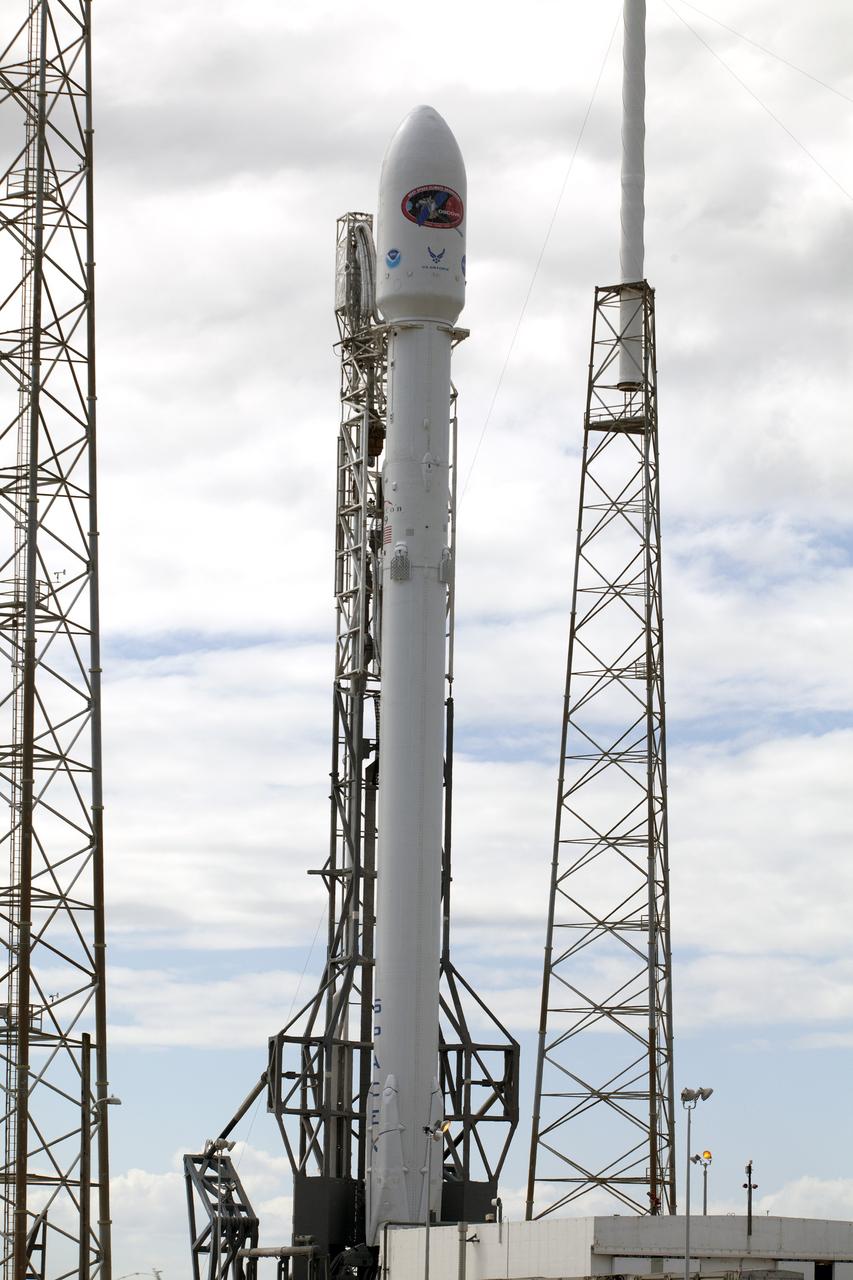
CAPE CANAVERAL, Fla. – The SpaceX Falcon 9 rocket set to launch NOAA’s Deep Space Climate Observatory spacecraft, or DSCOVR, is flanked by lightning masts at Space Launch Complex 40 at Cape Canaveral Air Force Station in Florida. DSCOVR is a partnership between NOAA, NASA and the U.S. Air Force. DSCOVR will maintain the nation's real-time solar wind monitoring capabilities which are critical to the accuracy and lead time of NOAA's space weather alerts and forecasts. To learn more about DSCOVR, visit http://www.nesdis.noaa.gov/DSCOVR. Photo credit: NASA/Kim Shiflett
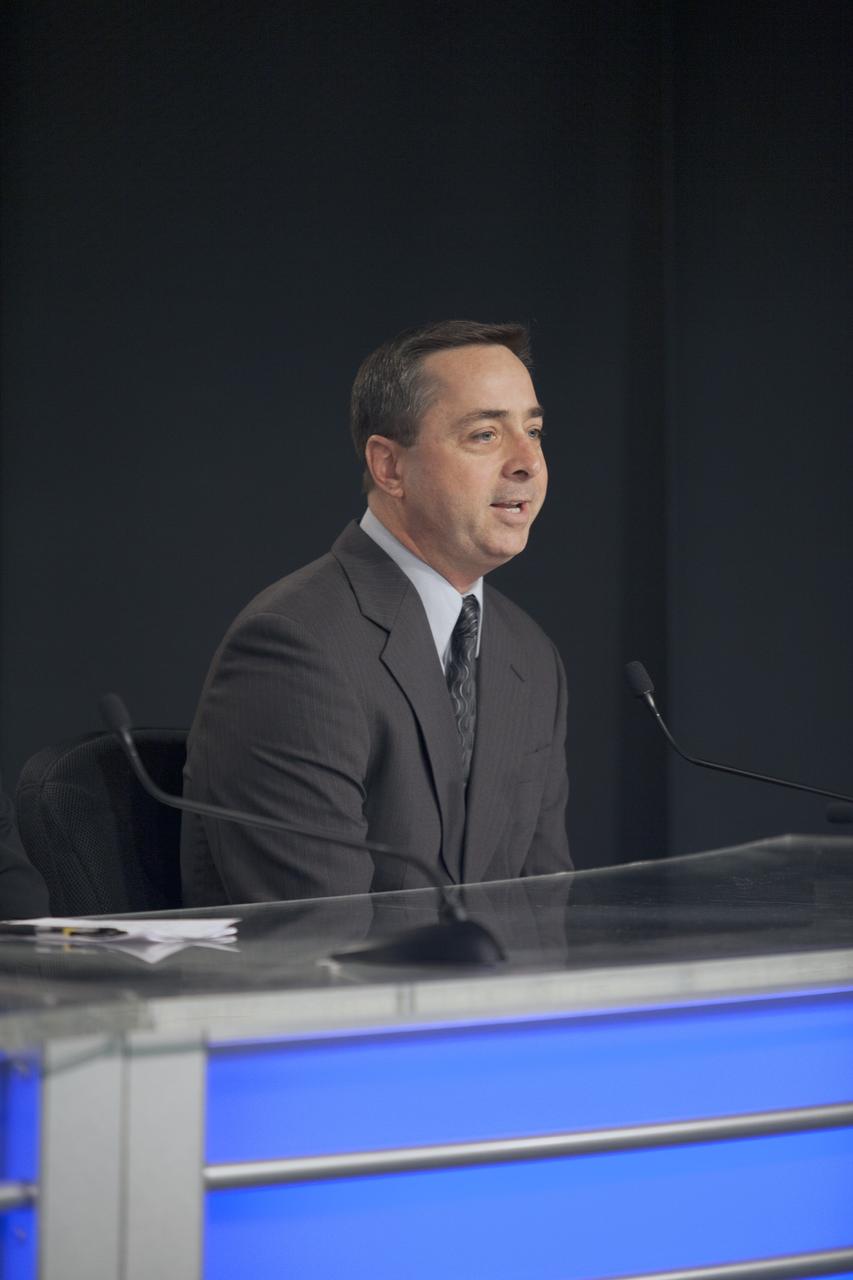
CAPE CANAVERAL, Fla. – Mike McAleenan, launch weather officer with the U.S. Air Force 45th Weather Squadron, provides an on the launch-day forecast during a briefing regarding NOAA’s Deep Space Climate Observatory spacecraft, or DSCOVR. DSCOVR will launch aboard a SpaceX Falcon 9 rocket. The mission is a partnership between NOAA, NASA and the U.S. Air Force. DSCOVR will maintain the nation's real-time solar wind monitoring capabilities which are critical to the accuracy and lead time of NOAA's space weather alerts and forecasts. To learn more about DSCOVR, visit http://www.nesdis.noaa.gov/DSCOVR. Photo credit: NASA/Kim Shiflett
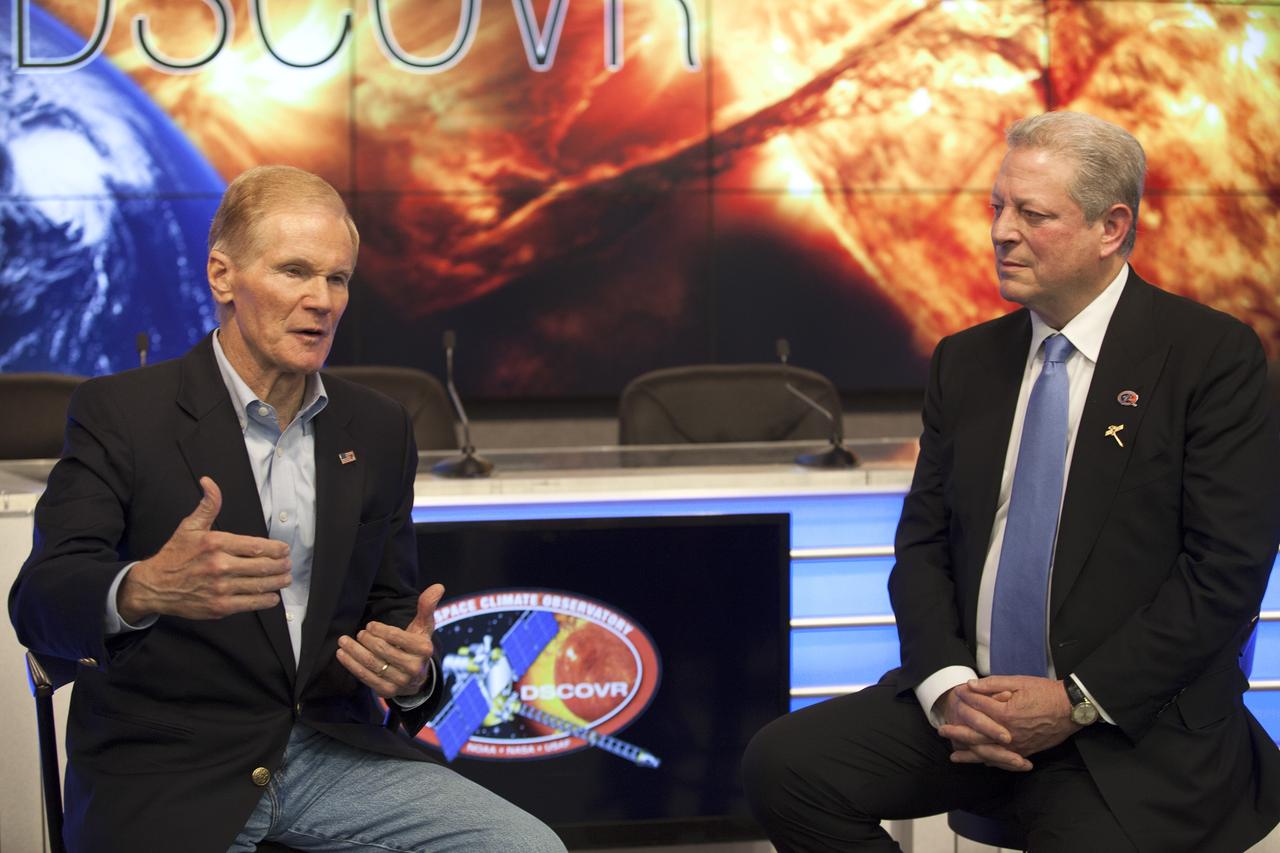
CAPE CANAVERAL, Fla. – Sen. Bill Nelson, left, answers a question as former Vice President Al Gore looks on during a visit with news media at NASA’s Kennedy Space Center in Florida prior to the planned liftoff of NOAA’s Deep Space Climate Observatory spacecraft, or DSCOVR. DSCOVR will launch aboard a SpaceX Falcon 9 rocket. The mission is a partnership between NOAA, NASA and the U.S. Air Force. DSCOVR will maintain the nation's real-time solar wind monitoring capabilities which are critical to the accuracy and lead time of NOAA's space weather alerts and forecasts. To learn more about DSCOVR, visit http://www.nesdis.noaa.gov/DSCOVR. Photo credit: NASA/Kim Shiflett
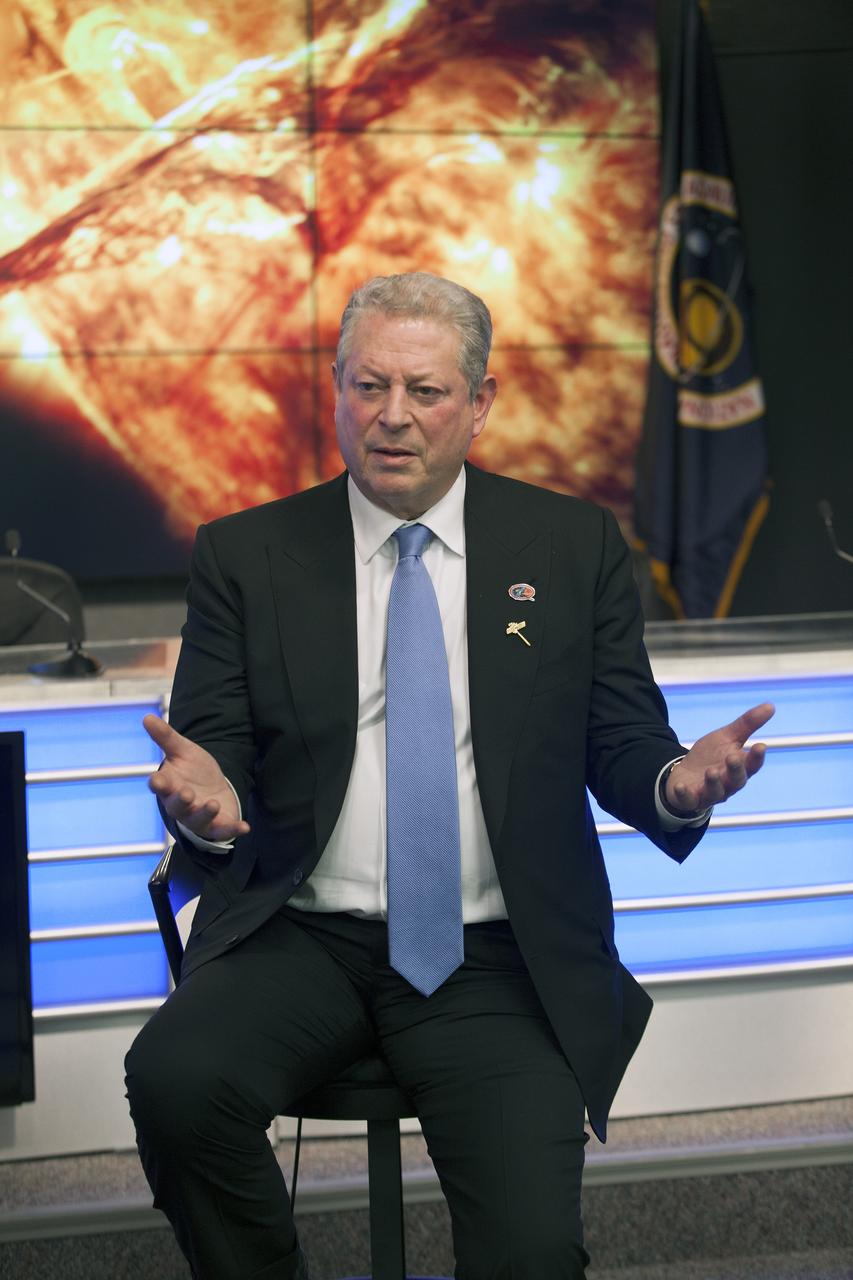
CAPE CANAVERAL, Fla. – Former Vice President Al Gore speaks to news media at NASA’s Kennedy Space Center in Florida prior to the planned liftoff of NOAA’s Deep Space Climate Observatory spacecraft, or DSCOVR. DSCOVR will launch aboard a SpaceX Falcon 9 rocket. The mission is a partnership between NOAA, NASA and the U.S. Air Force. DSCOVR will maintain the nation's real-time solar wind monitoring capabilities which are critical to the accuracy and lead time of NOAA's space weather alerts and forecasts. To learn more about DSCOVR, visit http://www.nesdis.noaa.gov/DSCOVR. Photo credit: NASA/Kim Shiflett
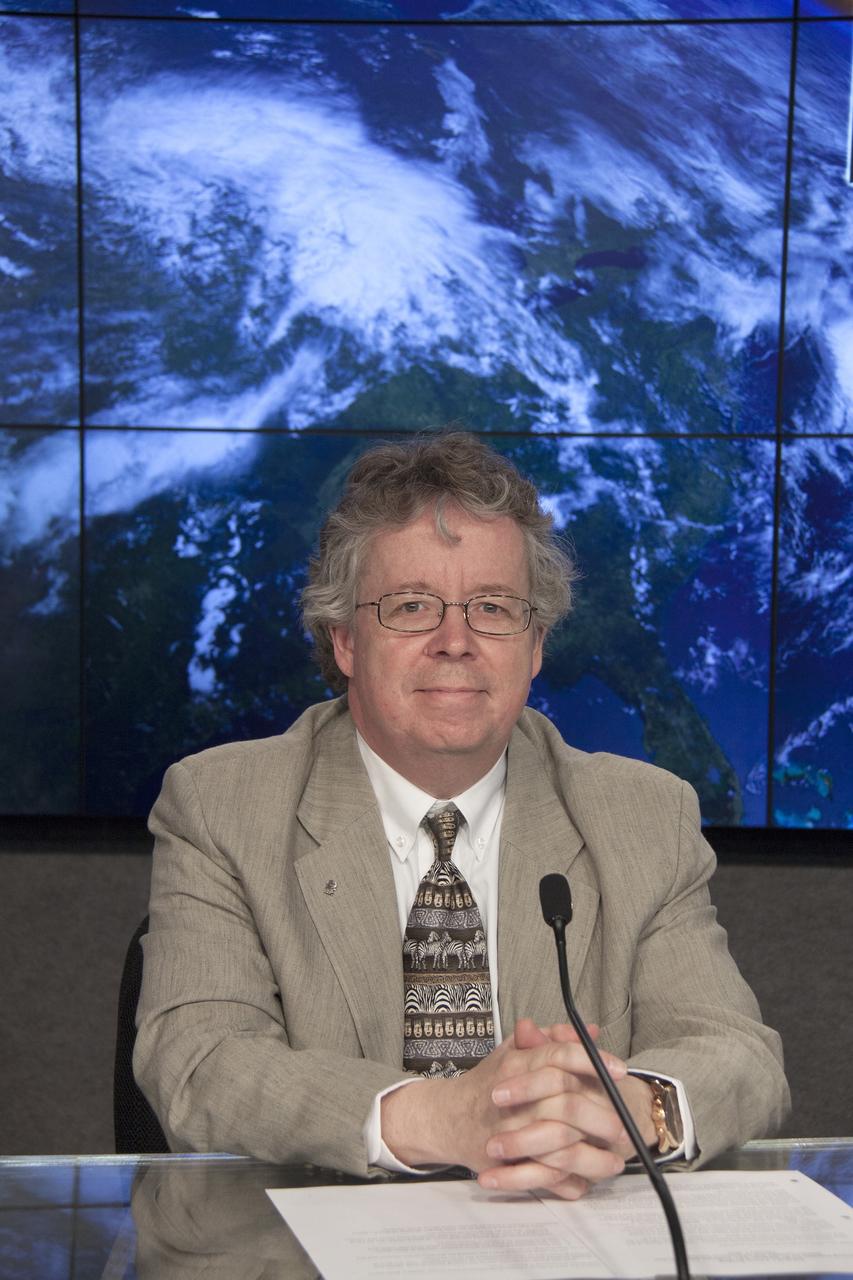
CAPE CANAVERAL, Fla. – Stephen Volz, assistant administrator of the NOAA Satellite and Information Service, prepares to brief media on preparations for the liftoff of NOAA’s Deep Space Climate Observatory spacecraft, or DSCOVR. DSCOVR will launch aboard a SpaceX Falcon 9 rocket. The mission is a partnership between NOAA, NASA and the U.S. Air Force. DSCOVR will maintain the nation's real-time solar wind monitoring capabilities which are critical to the accuracy and lead time of NOAA's space weather alerts and forecasts. To learn more about DSCOVR, visit http://www.nesdis.noaa.gov/DSCOVR. Photo credit: NASA/Jim Grossman
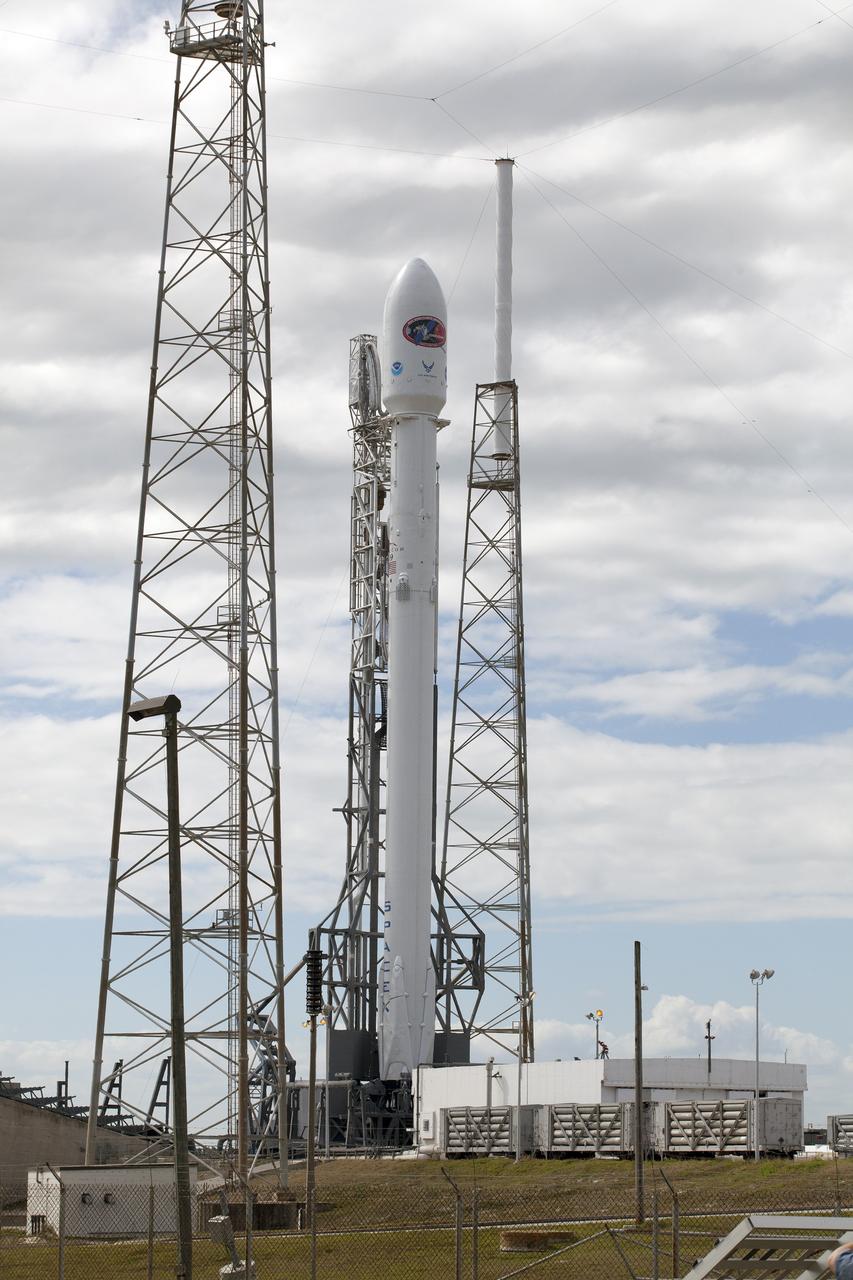
CAPE CANAVERAL, Fla. – The SpaceX Falcon 9 rocket set to launch NOAA’s Deep Space Climate Observatory spacecraft, or DSCOVR, awaits liftoff at 6:10 p.m. EST from Space Launch Complex 40 at Cape Canaveral Air Force Station in Florida. DSCOVR is a partnership between NOAA, NASA and the U.S. Air Force. DSCOVR will maintain the nation's real-time solar wind monitoring capabilities which are critical to the accuracy and lead time of NOAA's space weather alerts and forecasts. To learn more about DSCOVR, visit http://www.nesdis.noaa.gov/DSCOVR. Photo credit: NASA/Kim Shiflett

CAPE CANAVERAL, Fla. – Steven Clarke, NASA Joint Agency Satellite Division director for the agency’s Science Mission Directorate, prepares to brief media on preparations for the liftoff of NOAA’s Deep Space Climate Observatory spacecraft, or DSCOVR. DSCOVR will launch aboard a SpaceX Falcon 9 rocket. The mission is a partnership between NOAA, NASA and the U.S. Air Force. DSCOVR will maintain the nation's real-time solar wind monitoring capabilities which are critical to the accuracy and lead time of NOAA's space weather alerts and forecasts.To learn more about DSCOVR, visit http://www.nesdis.noaa.gov/DSCOVR. Photo credit: NASA/Jim Grossman

CAPE CANAVERAL, Fla. – Hans Koenigsmann, vice president of mission assurance at SpaceX, listens to a question from a member of the news media during a briefing regarding NOAA’s Deep Space Climate Observatory spacecraft, or DSCOVR. DSCOVR will launch aboard a SpaceX Falcon 9 rocket. The mission is a partnership between NOAA, NASA and the U.S. Air Force. DSCOVR will maintain the nation's real-time solar wind monitoring capabilities which are critical to the accuracy and lead time of NOAA's space weather alerts and forecasts. To learn more about DSCOVR, visit http://www.nesdis.noaa.gov/DSCOVR. Photo credit: NASA/Kim Shiflett
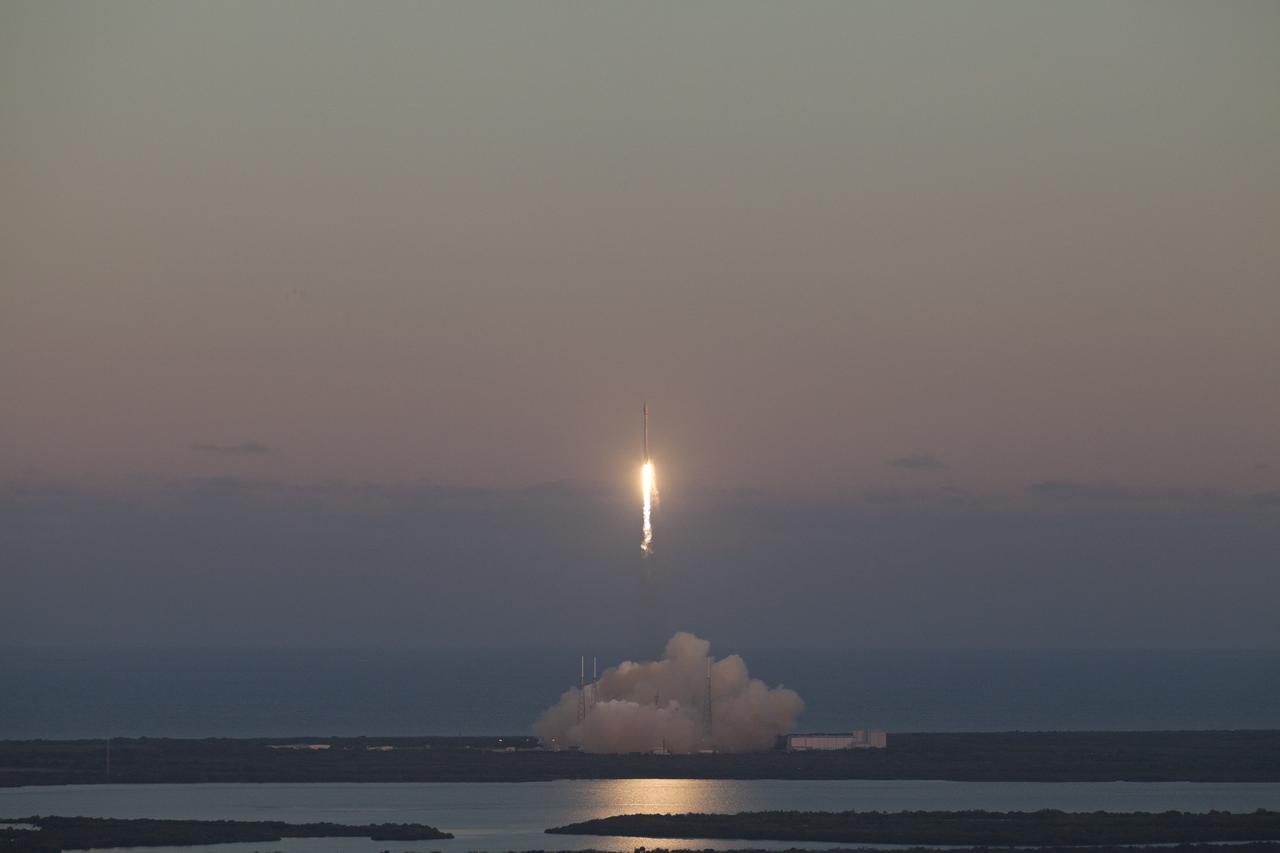
Lit by the glow of sunset, the SpaceX Falcon 9 rocket climbs away from Space Launch Complex 40 at Florida’s Cape Canaveral Air Force Station. On board is NOAA’s Deep Space Climate Observatory spacecraft, or DSCOVR. Liftoff occurred at 6:03 p.m. EST. DSCOVR is a partnership between NOAA, NASA and the U.S. Air Force, and will maintain the nation's real-time solar wind monitoring capabilities. To learn more about DSCOVR, visit http://www.nesdis.noaa.gov/DSCOVR. Photo credit: NASA/Kim Shiflett
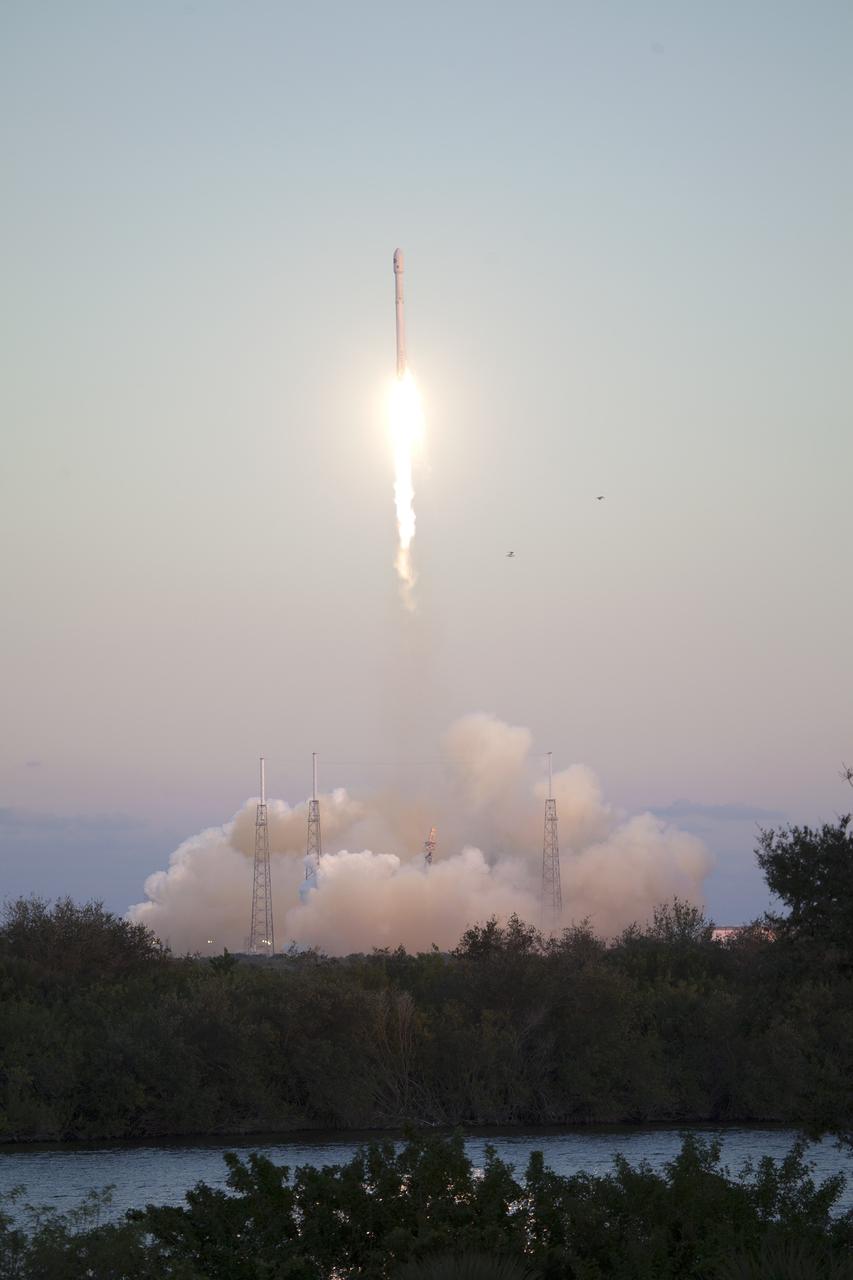
The SpaceX Falcon 9 rocket carrying NOAA’s Deep Space Climate Observatory spacecraft, or DSCOVR, lifts off from Space Launch Complex 40 at Cape Canaveral Air Force Station in Florida. Liftoff occurred at 6:03 p.m. EST. DSCOVR is a partnership between NOAA, NASA and the U.S. Air Force, and will maintain the nation's real-time solar wind monitoring capabilities. To learn more about DSCOVR, visit http://www.nesdis.noaa.gov/DSCOVR. Photo credit: NASA/Ben Smegelsky
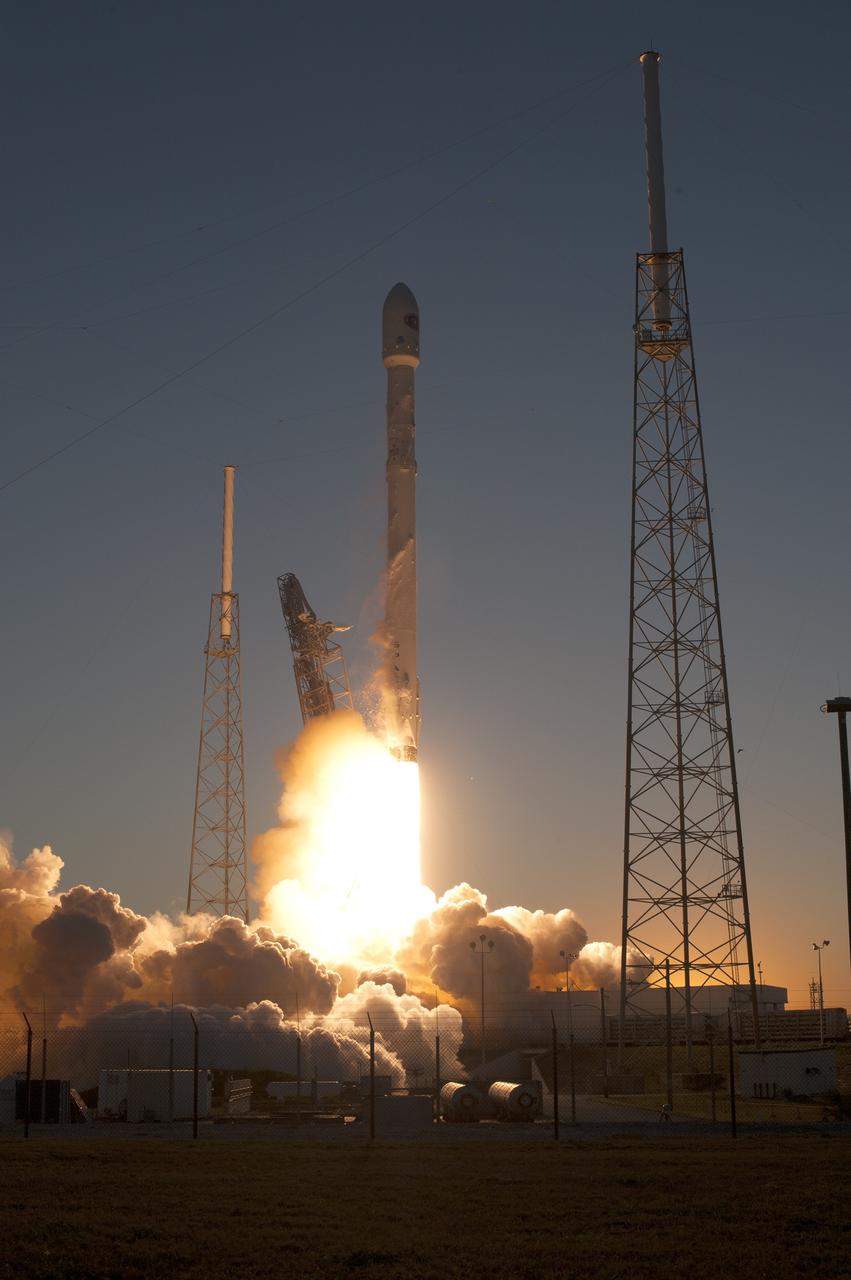
The SpaceX Falcon 9 rocket carrying NOAA’s Deep Space Climate Observatory spacecraft, or DSCOVR, rises from Space Launch Complex 40 at Cape Canaveral Air Force Station in Florida. Liftoff occurred at 6:03 p.m. EST. DSCOVR is a partnership between NOAA, NASA and the U.S. Air Force, and will maintain the nation's real-time solar wind monitoring capabilities. To learn more about DSCOVR, visit http://www.nesdis.noaa.gov/DSCOVR. Photo credit: NASA/Tony Gray and Tim Powers
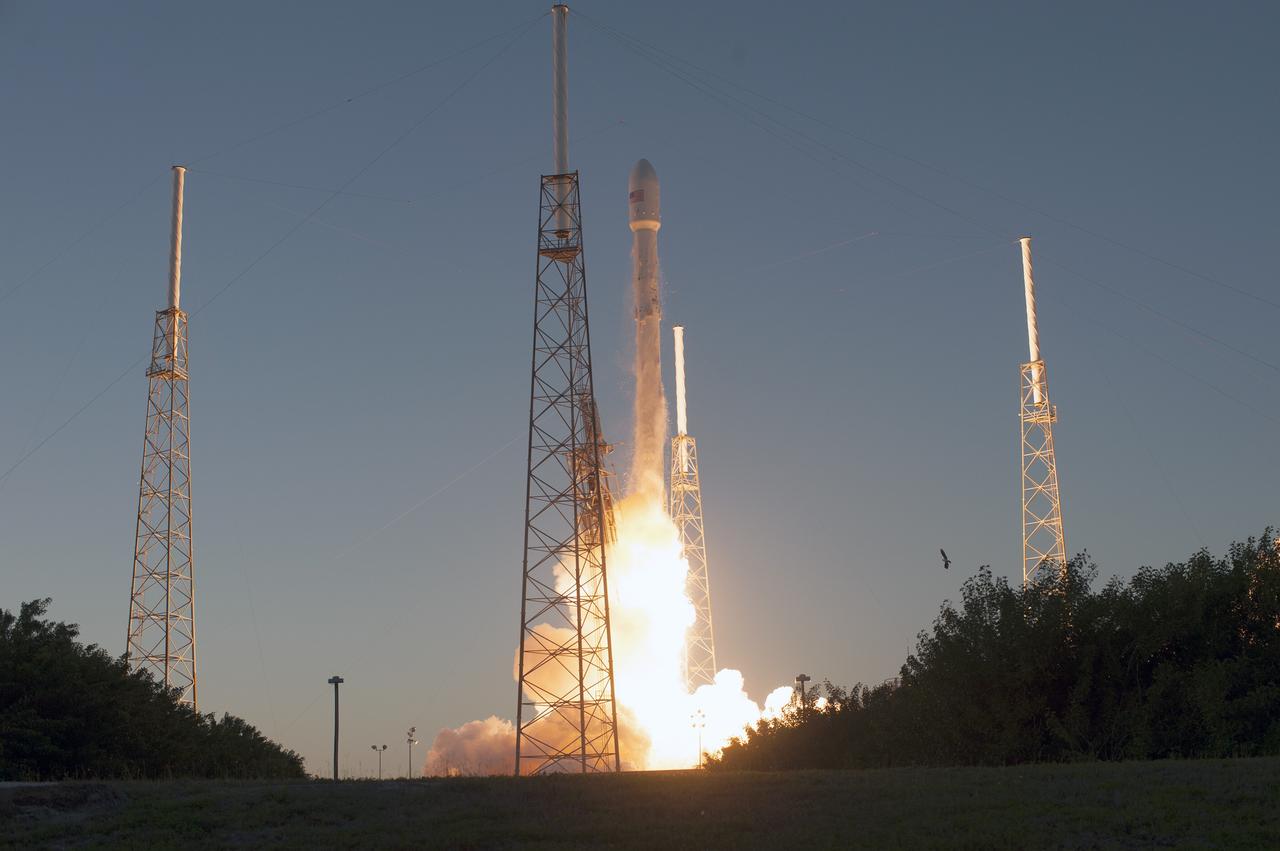
The SpaceX Falcon 9 rocket carrying NOAA’s Deep Space Climate Observatory spacecraft, or DSCOVR, lifts off from Space Launch Complex 40 at Cape Canaveral Air Force Station in Florida at 6:03 p.m. EST. DSCOVR is a partnership between NOAA, NASA and the U.S. Air Force, and will maintain the nation's real-time solar wind monitoring capabilities. To learn more about DSCOVR, visit http://www.nesdis.noaa.gov/DSCOVR. Photo credit: NASA/Tony Gray and Tim Powers
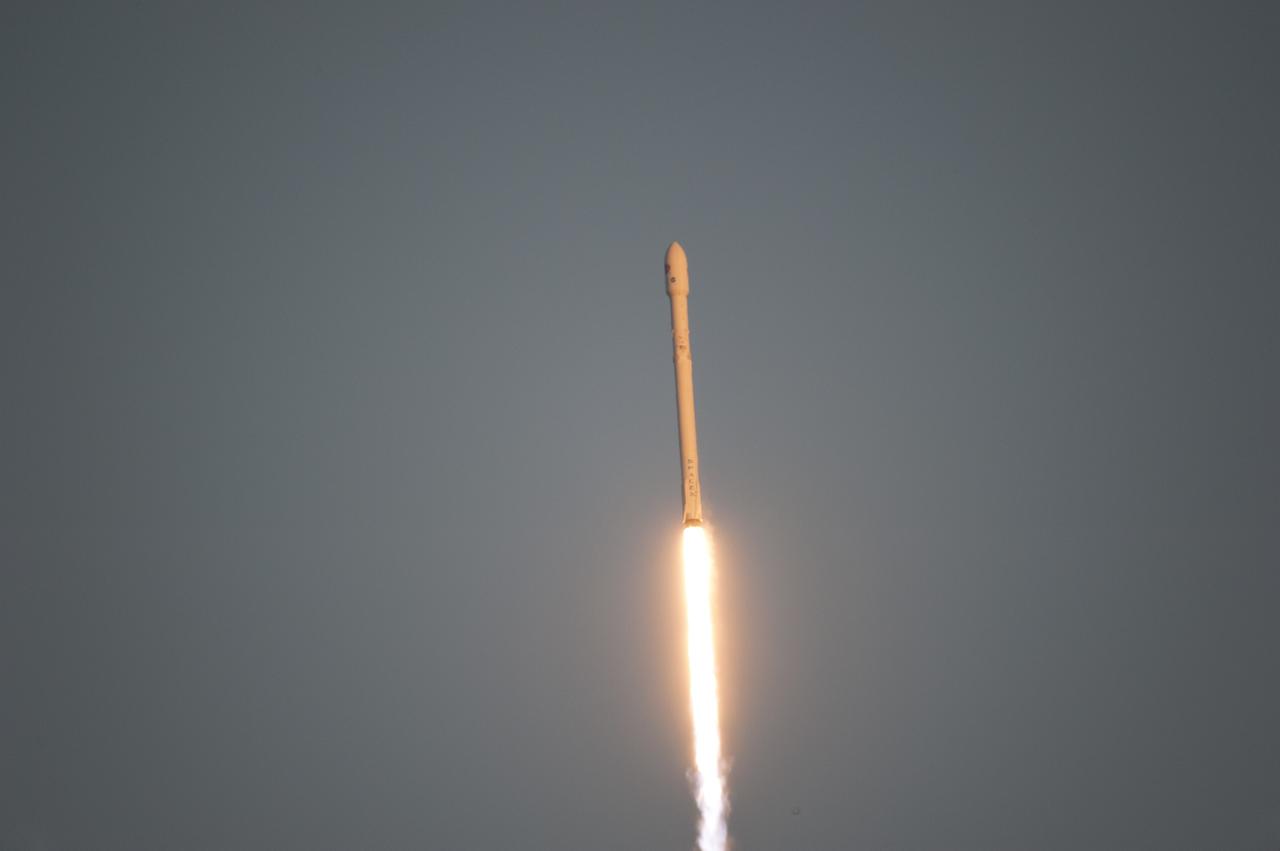
The glow of sunset illuminates the SpaceX Falcon 9 rocket as it soars away from Space Launch Complex 40 at Cape Canaveral Air Force Station in Florida carrying NOAA’s Deep Space Climate Observatory spacecraft, or DSCOVR. Liftoff occurred at 6:03 p.m. EST. DSCOVR is a partnership between NOAA, NASA and the U.S. Air Force, and will maintain the nation's real-time solar wind monitoring capabilities. To learn more about DSCOVR, visit http://www.nesdis.noaa.gov/DSCOVR. Photo credit: NASA/Kim Shiflett

The SpaceX Falcon 9 rocket rises from Space Launch Complex 40 at Cape Canaveral Air Force Station in Florida carrying NOAA’s Deep Space Climate Observatory spacecraft, or DSCOVR. Liftoff occurred at 6:03 p.m. EST. DSCOVR is a partnership between NOAA, NASA and the U.S. Air Force, and will maintain the nation's real-time solar wind monitoring capabilities. To learn more about DSCOVR, visit http://www.nesdis.noaa.gov/DSCOVR. Photo credit: NASA/Kim Shiflett
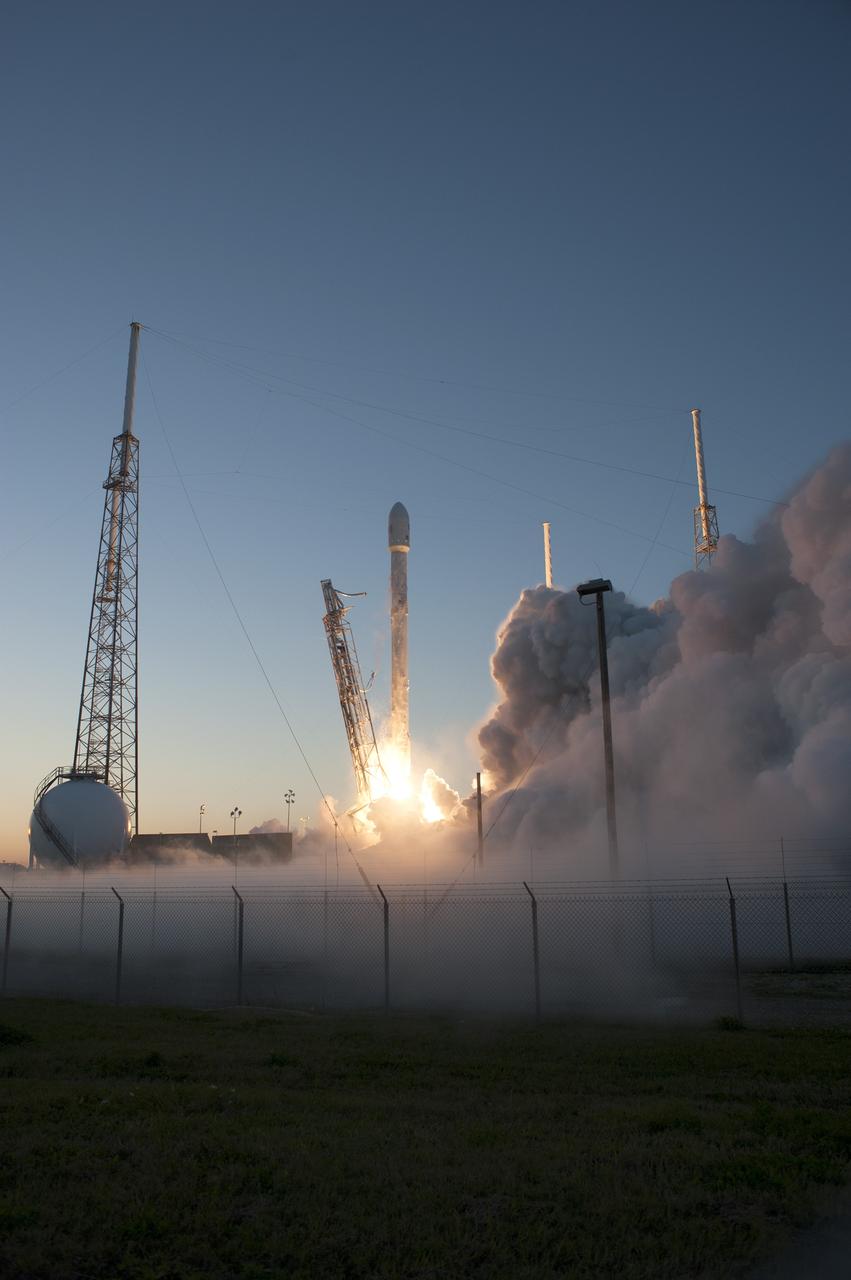
The SpaceX Falcon 9 rocket carrying NOAA’s Deep Space Climate Observatory spacecraft, or DSCOVR, lifts off from Space Launch Complex 40 at Cape Canaveral Air Force Station in Florida. Liftoff occurred at 6:03 p.m. EST. DSCOVR is a partnership between NOAA, NASA and the U.S. Air Force, and will maintain the nation's real-time solar wind monitoring capabilities. To learn more about DSCOVR, visit http://www.nesdis.noaa.gov/DSCOVR. Photo credit: NASA/Tony Gray and Tim Powers

The SpaceX Falcon 9 rocket carrying NOAA’s Deep Space Climate Observatory spacecraft, or DSCOVR, lifts off from Space Launch Complex 40 at Cape Canaveral Air Force Station in Florida. Liftoff occurred at 6:03 p.m. EST. DSCOVR is a partnership between NOAA, NASA and the U.S. Air Force, and will maintain the nation's real-time solar wind monitoring capabilities. To learn more about DSCOVR, visit http://www.nesdis.noaa.gov/DSCOVR. Photo credit: NASA/Tony Gray and Tim Powers
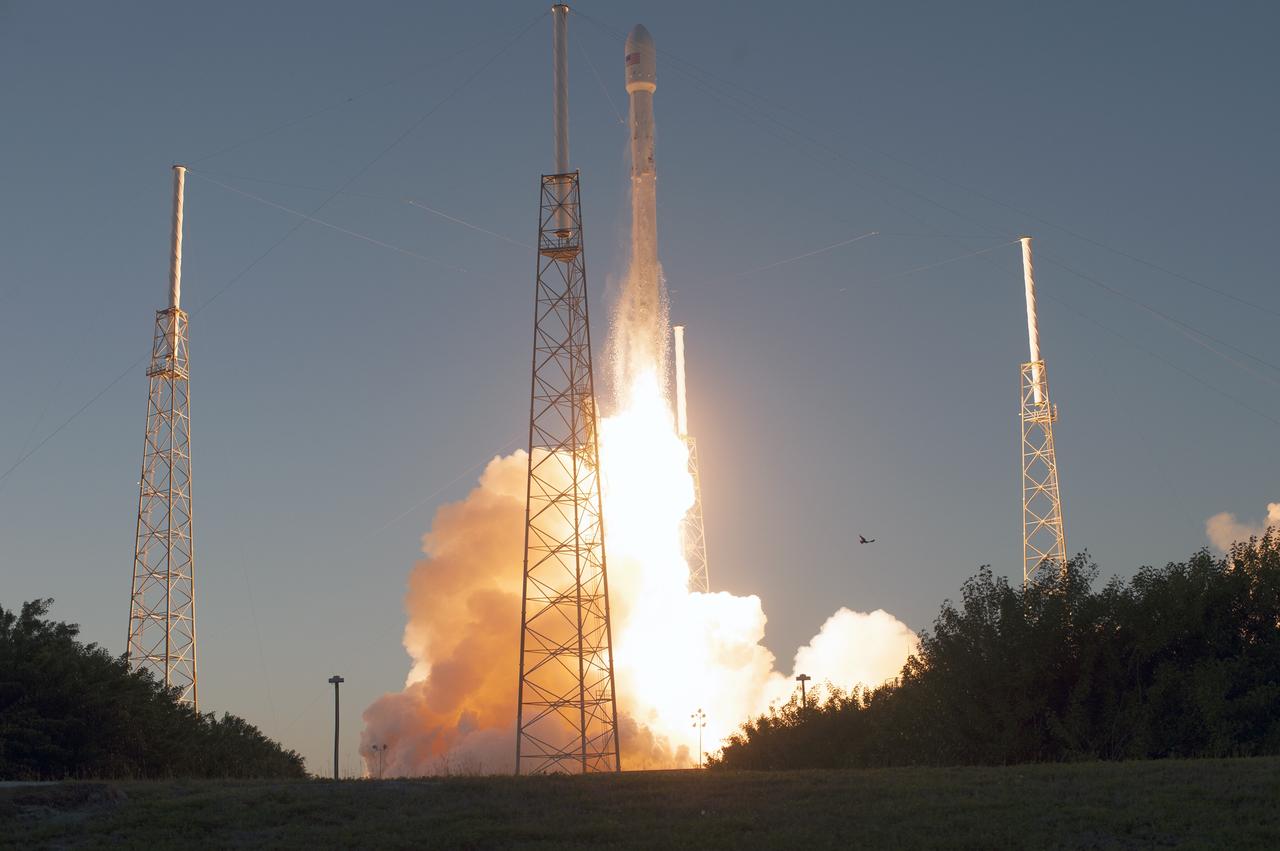
NOAA’s Deep Space Climate Observatory spacecraft, or DSCOVR, gets a boost into space aboard the SpaceX Falcon 9 rocket. Liftoff from Space Launch Complex 40 at Cape Canaveral Air Force Station in Florida occurred at 6:03 p.m. EST. DSCOVR is a partnership between NOAA, NASA and the U.S. Air Force, and will maintain the nation's real-time solar wind monitoring capabilities. To learn more about DSCOVR, visit http://www.nesdis.noaa.gov/DSCOVR. Photo credit: NASA/Tony Gray and Tim Powers
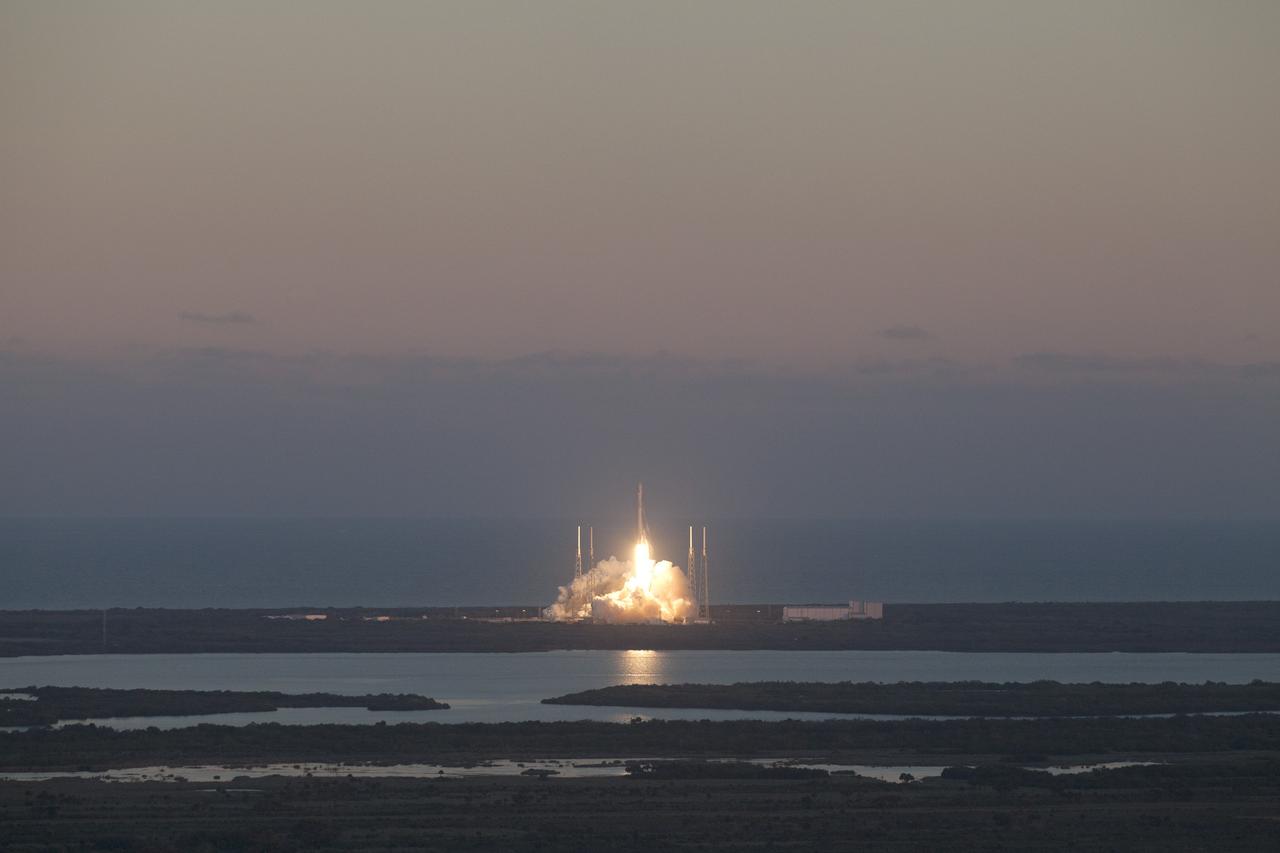
Sunset colors the horizon to the east as the SpaceX Falcon 9 rocket climbs away from Space Launch Complex 40 at Florida’s Cape Canaveral Air Force Station. On board is NOAA’s Deep Space Climate Observatory spacecraft, or DSCOVR. Liftoff occurred at 6:03 p.m. EST. DSCOVR is a partnership between NOAA, NASA and the U.S. Air Force, and will maintain the nation's real-time solar wind monitoring capabilities. To learn more about DSCOVR, visit http://www.nesdis.noaa.gov/DSCOVR. Photo credit: NASA/Kim Shiflett
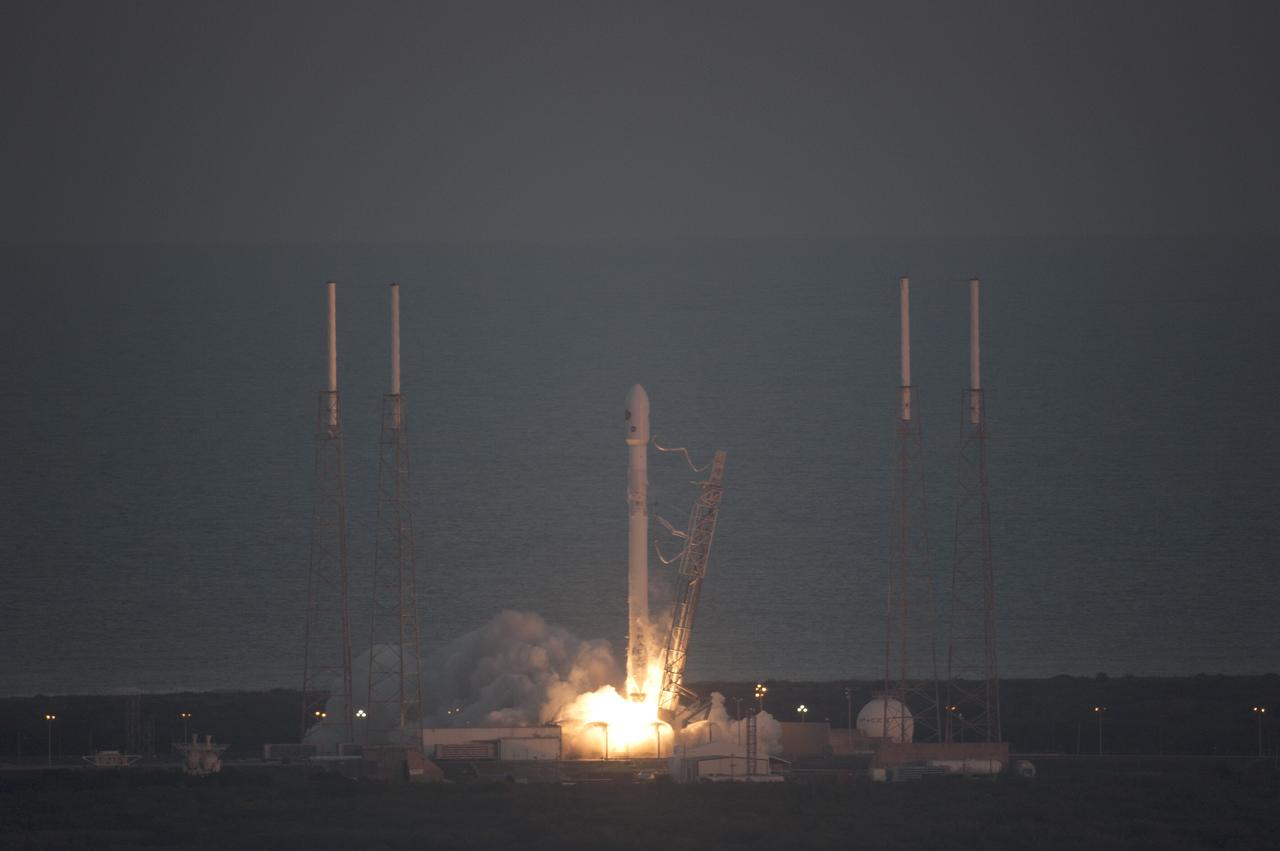
The SpaceX Falcon 9 rocket carrying NOAA’s Deep Space Climate Observatory spacecraft, or DSCOVR, lifts off from Space Launch Complex 40 at Cape Canaveral Air Force Station in Florida. Liftoff occurred at 6:03 p.m. EST. DSCOVR is a partnership between NOAA, NASA and the U.S. Air Force, and will maintain the nation's real-time solar wind monitoring capabilities. To learn more about DSCOVR, visit http://www.nesdis.noaa.gov/DSCOVR. Photo credit: NASA/Kim Shiflett
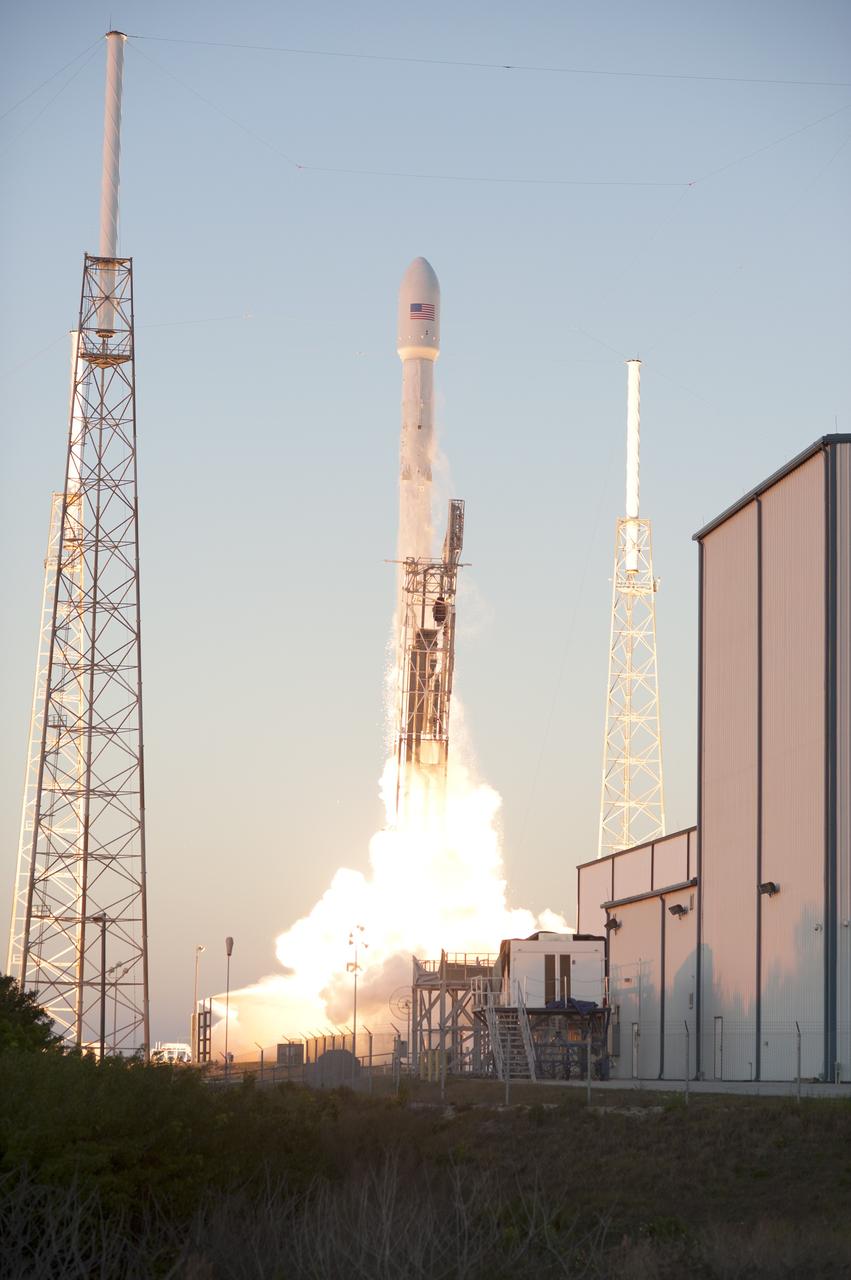
The SpaceX Falcon 9 rocket carrying NOAA’s Deep Space Climate Observatory spacecraft, or DSCOVR, lifts off from Space Launch Complex 40 at Cape Canaveral Air Force Station in Florida. Liftoff occurred at 6:03 p.m. EST. DSCOVR is a partnership between NOAA, NASA and the U.S. Air Force, and will maintain the nation's real-time solar wind monitoring capabilities. To learn more about DSCOVR, visit http://www.nesdis.noaa.gov/DSCOVR. Photo credit: NASA/Tony Gray and Tim Powers
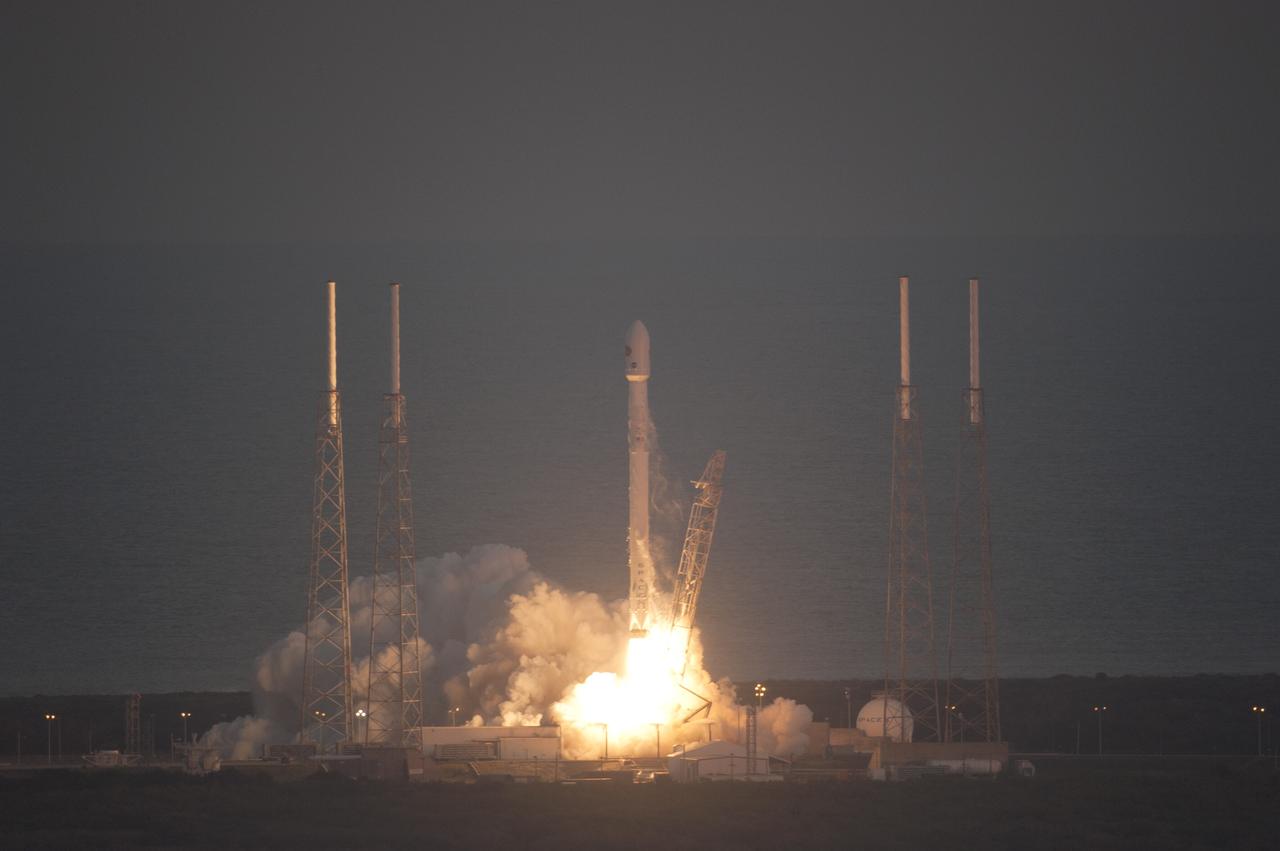
The SpaceX Falcon 9 rocket lifts off from Space Launch Complex 40 at Cape Canaveral Air Force Station in Florida carrying NOAA’s Deep Space Climate Observatory spacecraft, or DSCOVR. Liftoff occurred at 6:03 p.m. EST. DSCOVR is a partnership between NOAA, NASA and the U.S. Air Force, and will maintain the nation's real-time solar wind monitoring capabilities. To learn more about DSCOVR, visit http://www.nesdis.noaa.gov/DSCOVR. Photo credit: NASA/Kim Shiflett
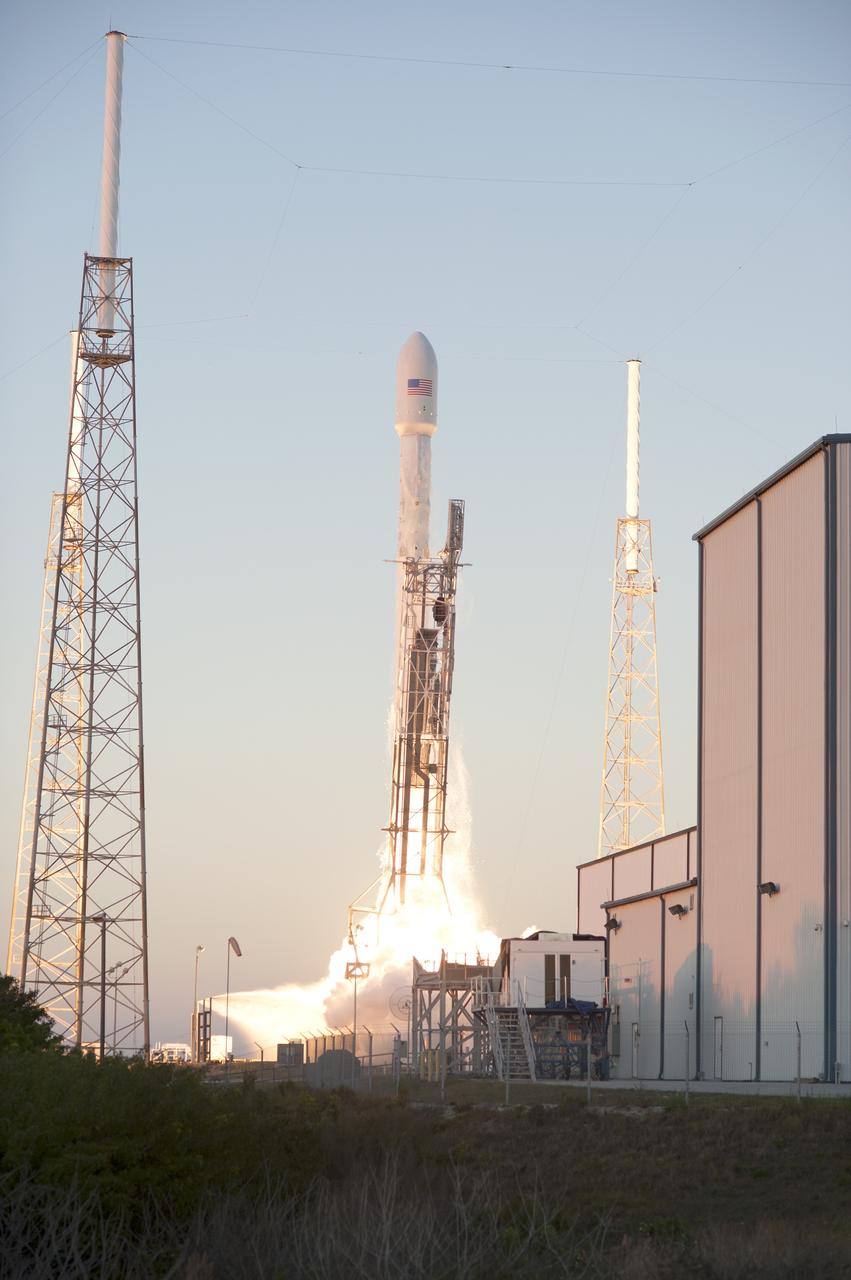
The SpaceX Falcon 9 rocket carrying NOAA’s Deep Space Climate Observatory spacecraft, or DSCOVR, lifts off from Space Launch Complex 40 at Cape Canaveral Air Force Station in Florida. Liftoff occurred at 6:03 p.m. EST. DSCOVR is a partnership between NOAA, NASA and the U.S. Air Force, and will maintain the nation's real-time solar wind monitoring capabilities. To learn more about DSCOVR, visit http://www.nesdis.noaa.gov/DSCOVR. Photo credit: NASA/Tony Gray and Tim Powers
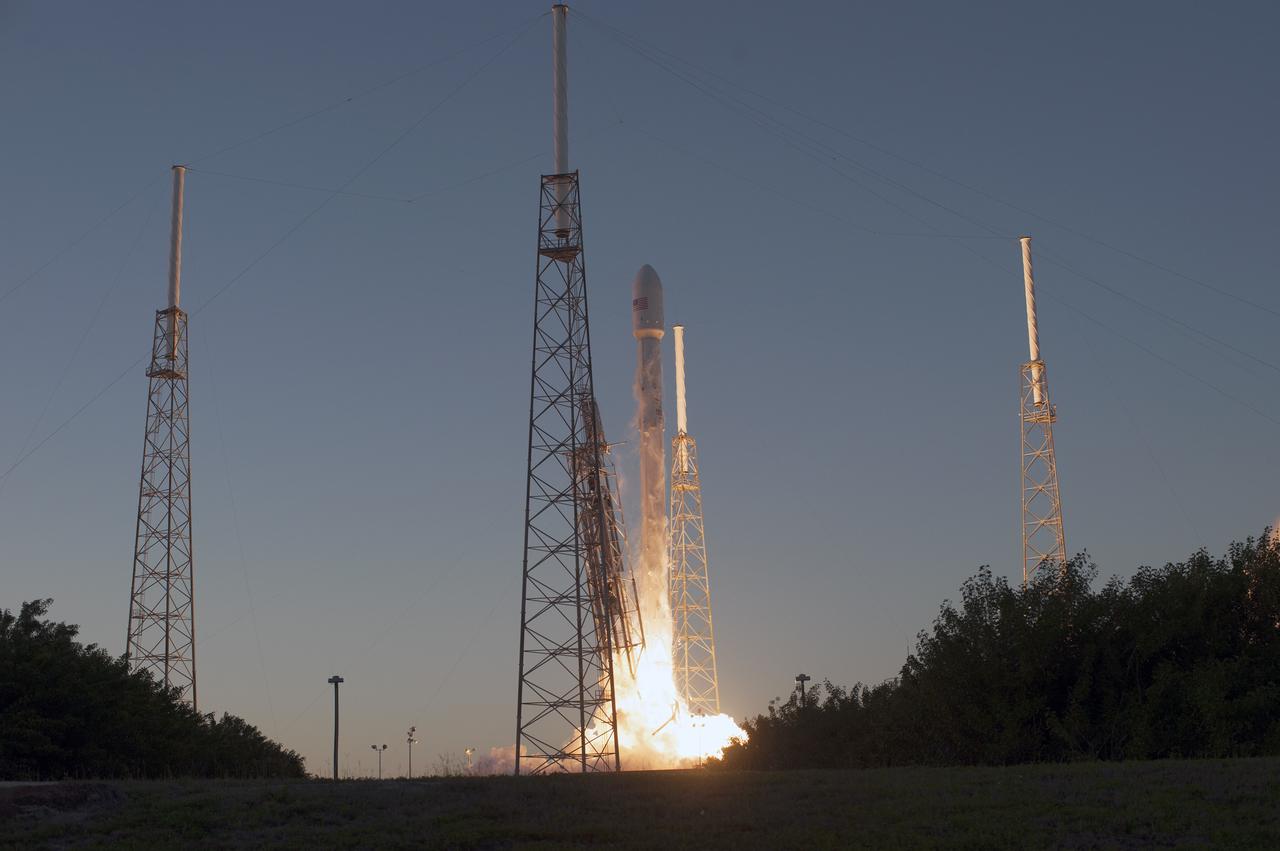
The SpaceX Falcon 9 rocket carrying NOAA’s Deep Space Climate Observatory spacecraft, or DSCOVR, lifts off from Space Launch Complex 40 at Cape Canaveral Air Force Station in Florida at 6:03 p.m. EST. DSCOVR is a partnership between NOAA, NASA and the U.S. Air Force, and will maintain the nation's real-time solar wind monitoring capabilities. To learn more about DSCOVR, visit http://www.nesdis.noaa.gov/DSCOVR. Photo credit: NASA/Tony Gray and Tim Powers

The SpaceX Falcon 9 rocket clears the tower at Space Launch Complex 40 at Florida’s Cape Canaveral Air Force Station. On board is NOAA’s Deep Space Climate Observatory spacecraft, or DSCOVR. Liftoff occurred at 6:03 p.m. EST. DSCOVR is a partnership between NOAA, NASA and the U.S. Air Force, and will maintain the nation's real-time solar wind monitoring capabilities. To learn more about DSCOVR, visit http://www.nesdis.noaa.gov/DSCOVR. Photo credit: NASA/Kim Shiflett
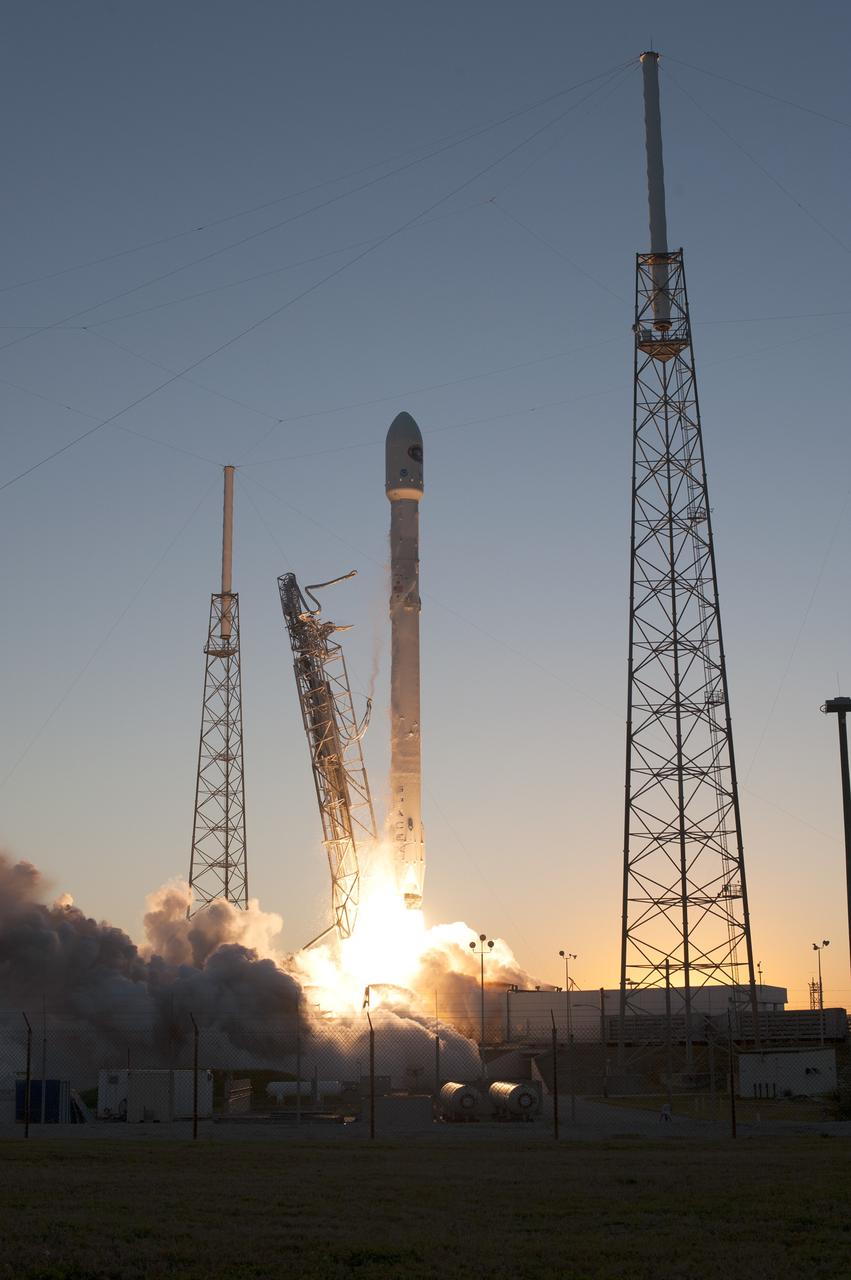
The SpaceX Falcon 9 rocket carrying NOAA’s Deep Space Climate Observatory spacecraft, or DSCOVR, lifts off from Space Launch Complex 40 at Cape Canaveral Air Force Station in Florida. Liftoff occurred at 6:03 p.m. EST. DSCOVR is a partnership between NOAA, NASA and the U.S. Air Force, and will maintain the nation's real-time solar wind monitoring capabilities. To learn more about DSCOVR, visit http://www.nesdis.noaa.gov/DSCOVR. Photo credit: NASA/Tony Gray and Tim Powers
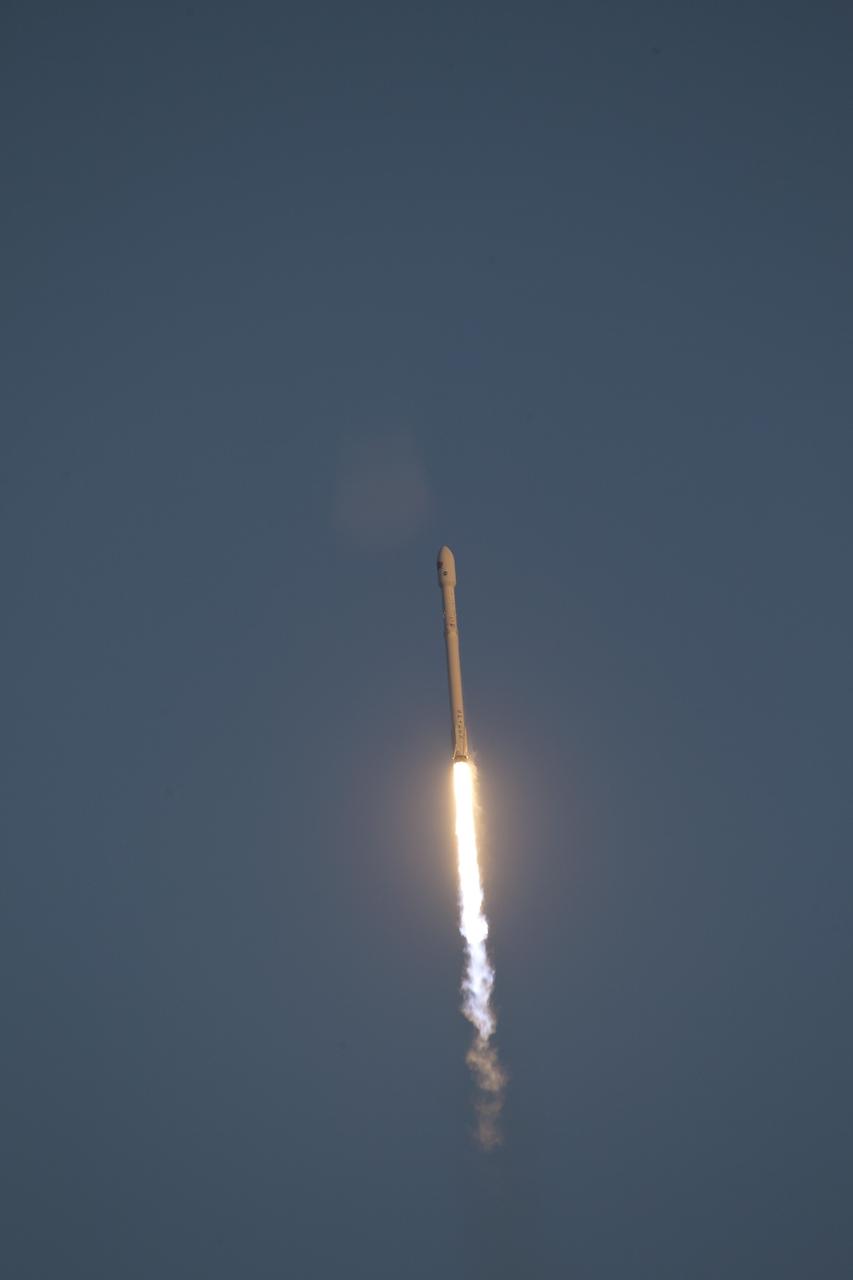
Backdropped by a bright blue sky, the SpaceX Falcon 9 rocket carrying NOAA’s Deep Space Climate Observatory spacecraft, or DSCOVR, soars away from Space Launch Complex 40 at Cape Canaveral Air Force Station in Florida. Liftoff occurred at 6:03 p.m. EST. DSCOVR is a partnership between NOAA, NASA and the U.S. Air Force, and will maintain the nation's real-time solar wind monitoring capabilities. To learn more about DSCOVR, visit http://www.nesdis.noaa.gov/DSCOVR. Photo credit: NASA/Ben Smegelsky
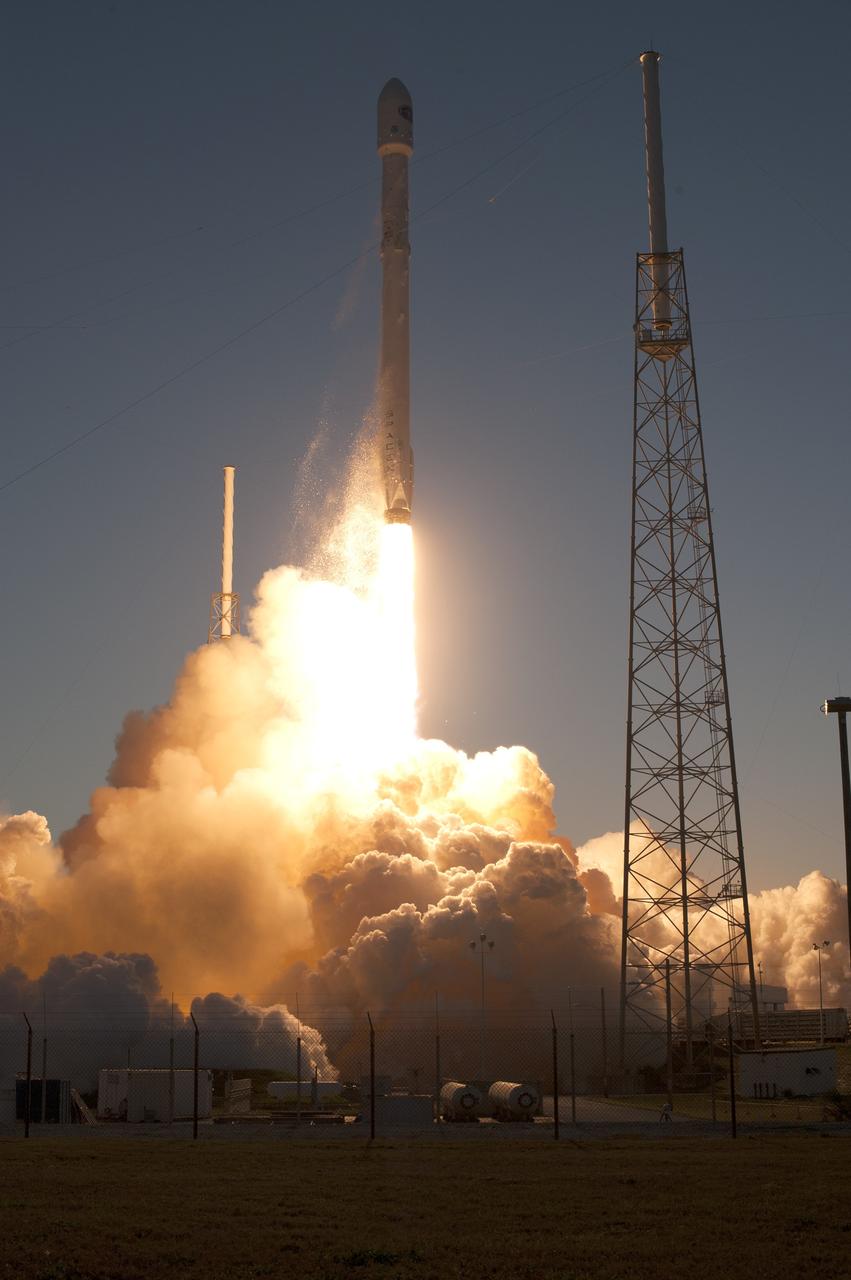
NOAA’s Deep Space Climate Observatory spacecraft, or DSCOVR, is boosted into space aboard the SpaceX Falcon 9 rocket. Liftoff from Space Launch Complex 40 at Cape Canaveral Air Force Station in Florida occurred at 6:03 p.m. EST. DSCOVR is a partnership between NOAA, NASA and the U.S. Air Force, and will maintain the nation's real-time solar wind monitoring capabilities. To learn more about DSCOVR, visit http://www.nesdis.noaa.gov/DSCOVR. Photo credit: NASA/Tony Gray and Tim Powers
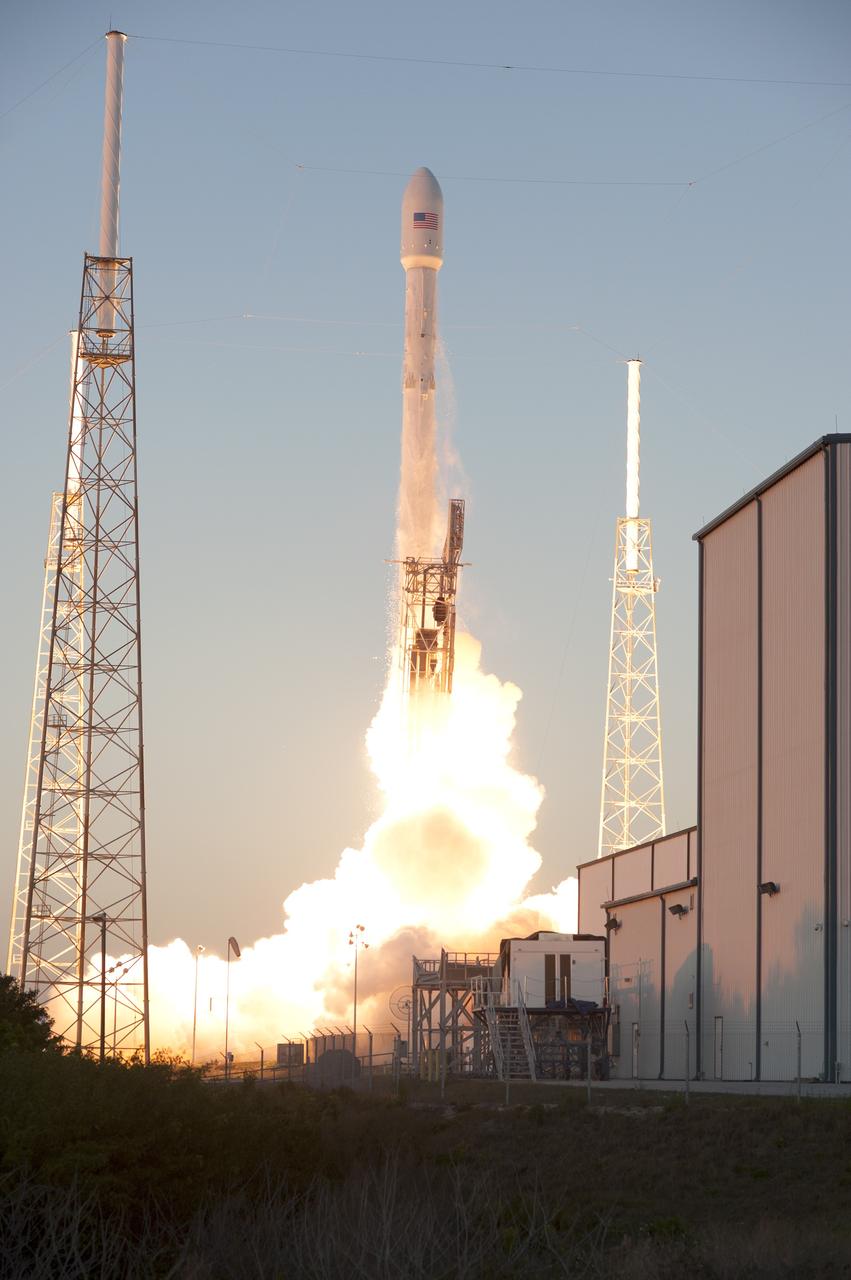
The SpaceX Falcon 9 rocket carrying NOAA’s Deep Space Climate Observatory spacecraft, or DSCOVR, lifts off from Space Launch Complex 40 at Cape Canaveral Air Force Station in Florida. Liftoff occurred at 6:03 p.m. EST. DSCOVR is a partnership between NOAA, NASA and the U.S. Air Force, and will maintain the nation's real-time solar wind monitoring capabilities. To learn more about DSCOVR, visit http://www.nesdis.noaa.gov/DSCOVR. Photo credit: NASA/Tony Gray and Tim Powers
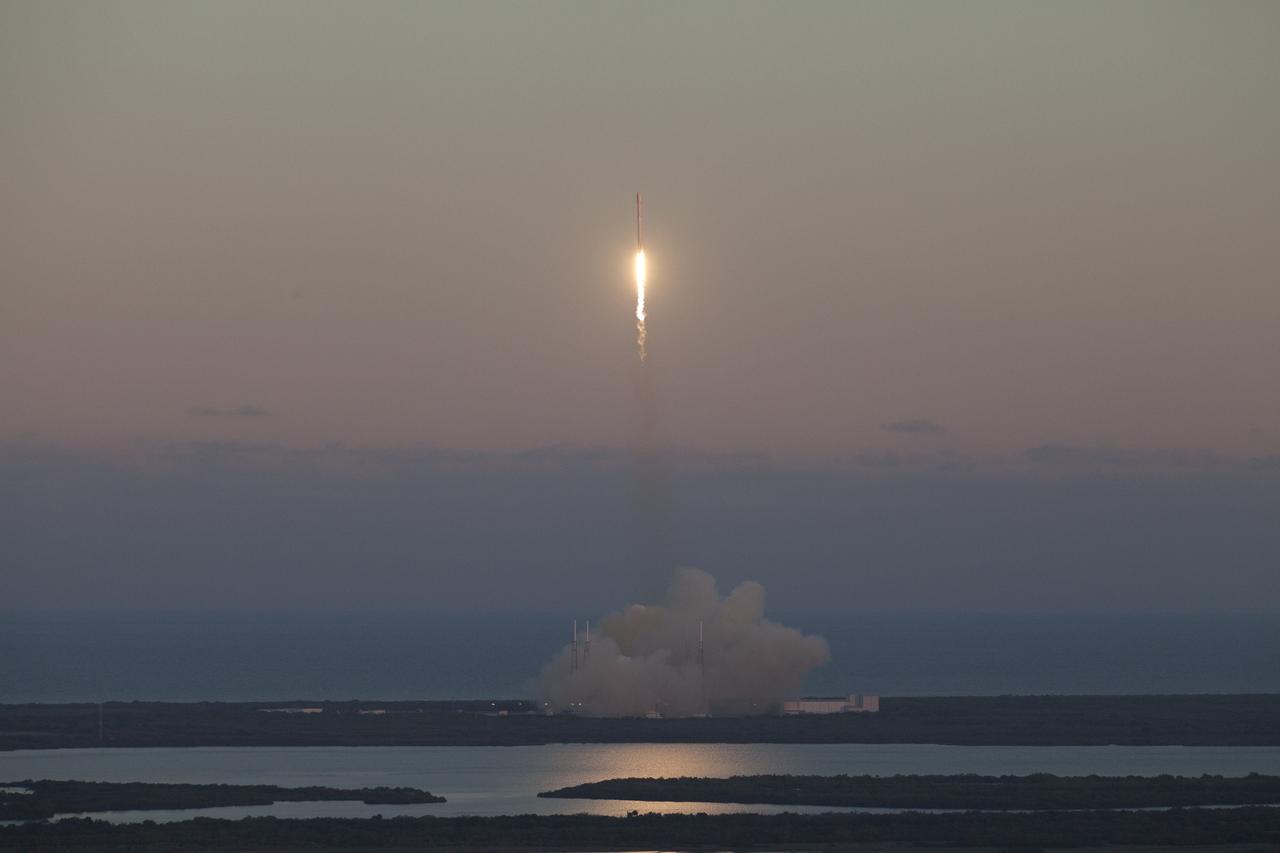
The SpaceX Falcon 9 rocket climbs away from Space Launch Complex 40 at Florida’s Cape Canaveral Air Force Station. On board is NOAA’s Deep Space Climate Observatory spacecraft, or DSCOVR. Liftoff occurred at 6:03 p.m. EST. DSCOVR is a partnership between NOAA, NASA and the U.S. Air Force, and will maintain the nation's real-time solar wind monitoring capabilities. To learn more about DSCOVR, visit http://www.nesdis.noaa.gov/DSCOVR. Photo credit: NASA/Kim Shiflett
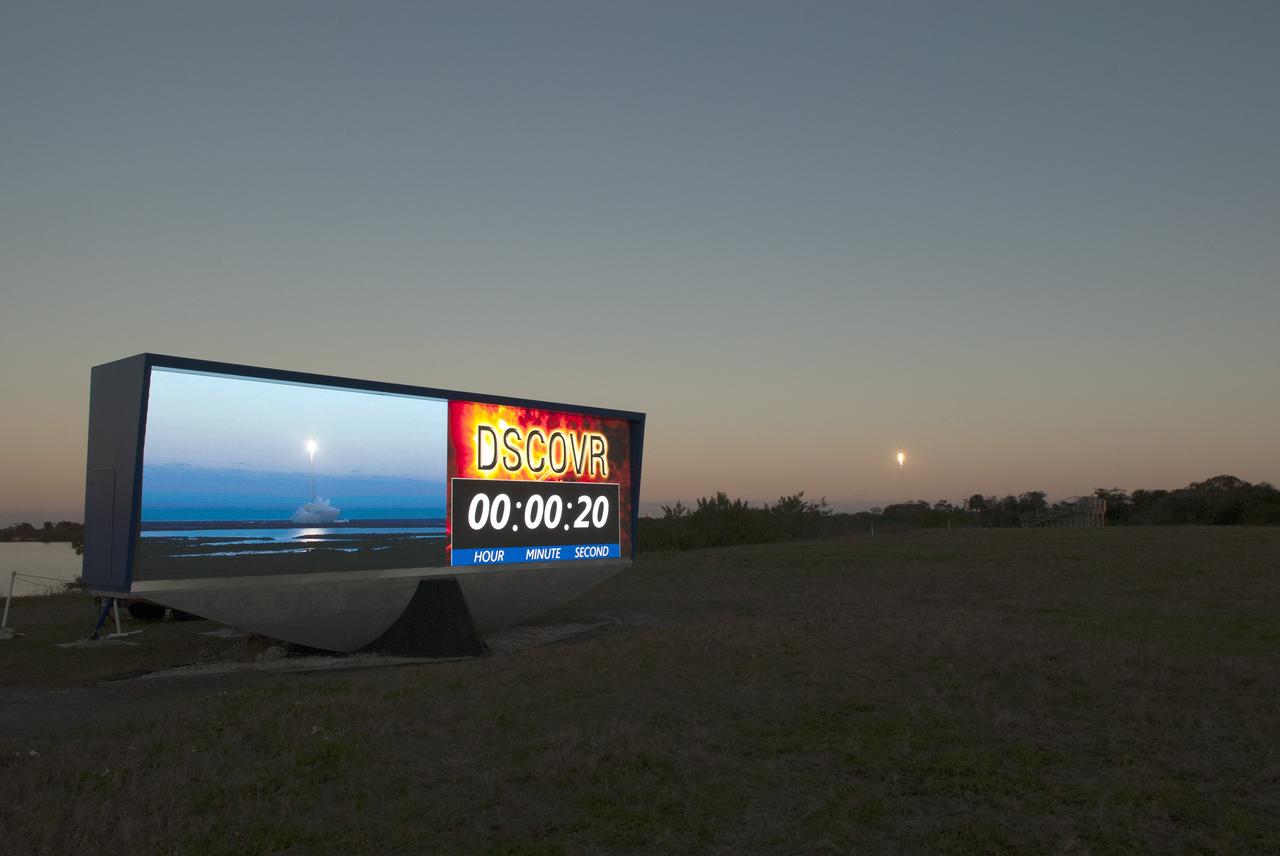
The SpaceX Falcon 9 rocket carrying NOAA’s Deep Space Climate Observatory spacecraft, or DSCOVR, rises above the treeline as a realtime camera view of the launch is visible on the countdown clock at NASA’s Kennedy Space Center in Florida. The Falcon 9 launched from Space Launch Complex 40 at Cape Canaveral Air Force Station at 6:03 p.m. EST. DSCOVR is a partnership between NOAA, NASA and the U.S. Air Force, and will maintain the nation's real-time solar wind monitoring capabilities. To learn more about DSCOVR, visit http://www.nesdis.noaa.gov/DSCOVR. Photo credit: NASA/Frankie Martin
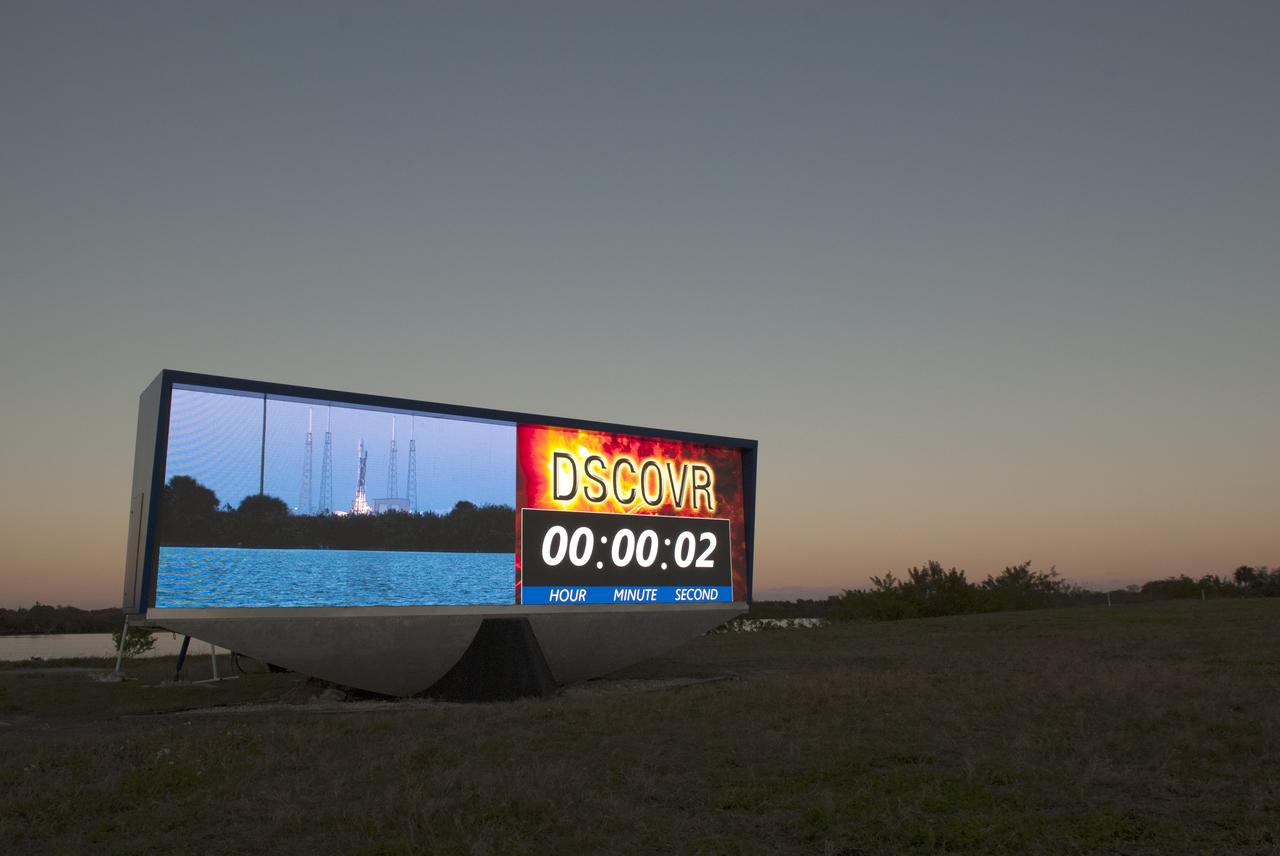
Liftoff of the SpaceX Falcon 9 rocket carrying NOAA’s Deep Space Climate Observatory spacecraft, or DSCOVR, is visible in the realtime camera view on the countdown clock at NASA’s Kennedy Space Center in Florida. The Falcon 9 launched from Space Launch Complex 40 at Cape Canaveral Air Force Station at 6:03 p.m. EST. DSCOVR is a partnership between NOAA, NASA and the U.S. Air Force, and will maintain the nation's real-time solar wind monitoring capabilities. To learn more about DSCOVR, visit http://www.nesdis.noaa.gov/DSCOVR. Photo credit: NASA/Frankie Martin
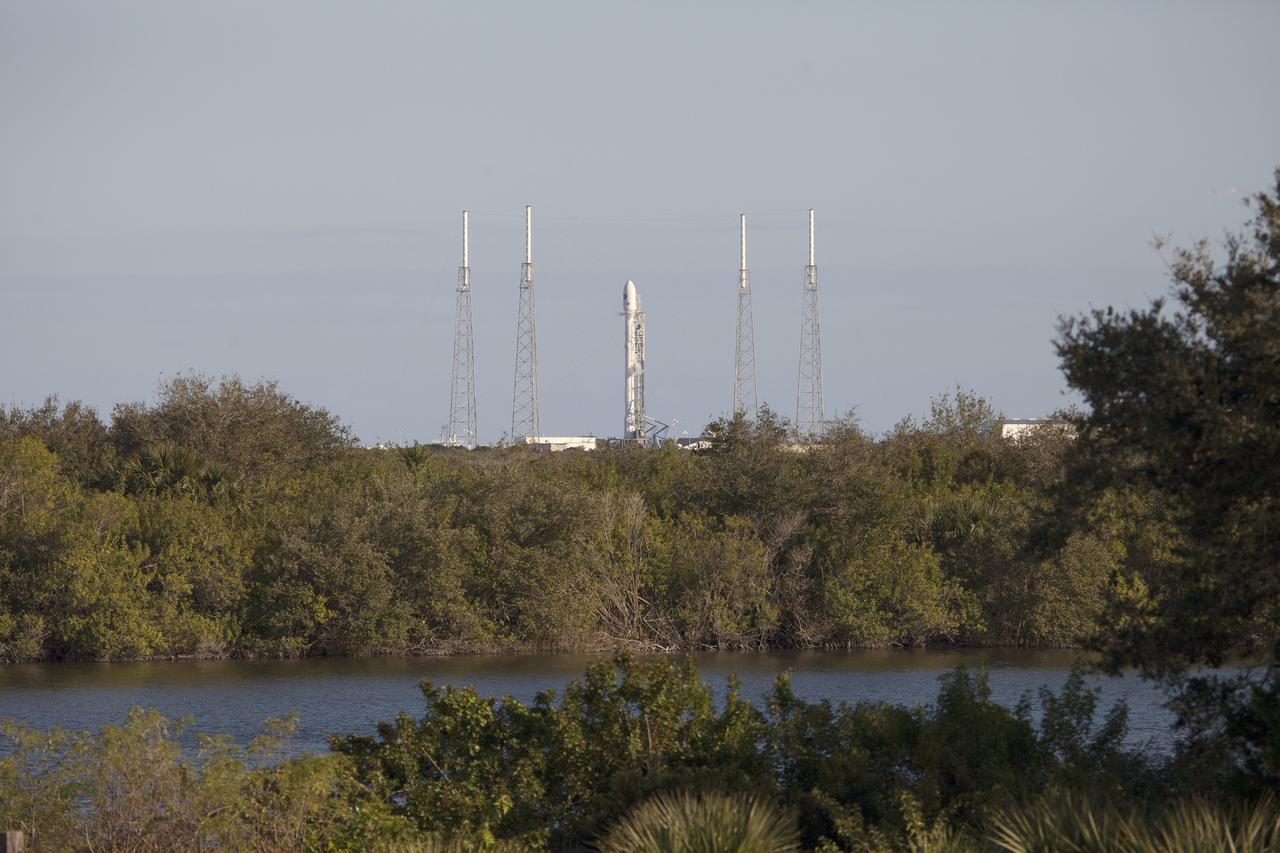
The SpaceX Falcon 9 rocket set to launch NOAA’s Deep Space Climate Observatory spacecraft, or DSCOVR, stands at Space Launch Complex 40 at Florida’s Cape Canaveral Air Force Station during the mission’s first launch attempt. The mission is a partnership between NOAA, NASA and the U.S. Air Force. DSCOVR will maintain the nation's real-time solar wind monitoring capabilities which are critical to the accuracy and lead time of NOAA's space weather alerts and forecasts. To learn more about DSCOVR, visit http://www.nesdis.noaa.gov/DSCOVR. Photo credit: NASA/Ben Smegelsky
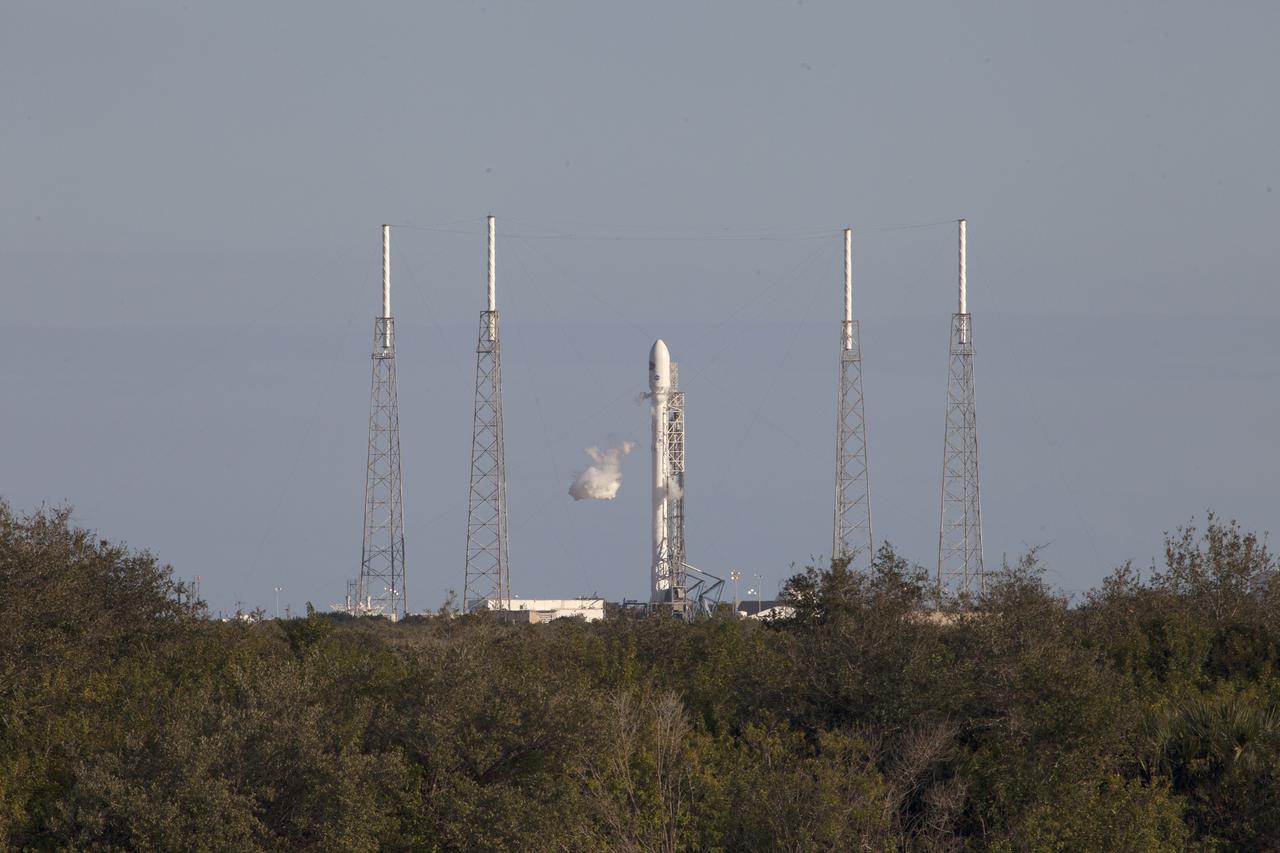
Gaseous oxygen vents away from the SpaceX Falcon 9 rocket standing at Space Launch Complex 40 at Florida’s Cape Canaveral Air Force Station during the first launch attempt for NOAA’s Deep Space Climate Observatory spacecraft, or DSCOVR. The mission is a partnership between NOAA, NASA and the U.S. Air Force. DSCOVR will maintain the nation's real-time solar wind monitoring capabilities which are critical to the accuracy and lead time of NOAA's space weather alerts and forecasts. To learn more about DSCOVR, visit http://www.nesdis.noaa.gov/DSCOVR. Photo credit: NASA/Ben Smegelsky

The SpaceX Falcon 9 rocket’s nine first-stage engines burn brightly during the launch of NOAA’s Deep Space Climate Observatory spacecraft, or DSCOVR, from Space Launch Complex 40 at Cape Canaveral Air Force Station in Florida. Liftoff occurred at 6:03 p.m. EST. DSCOVR is a partnership between NOAA, NASA and the U.S. Air Force, and will maintain the nation's real-time solar wind monitoring capabilities. To learn more about DSCOVR, visit http://www.nesdis.noaa.gov/DSCOVR. Photo credit: NASA/Tony Gray and Tim Powers
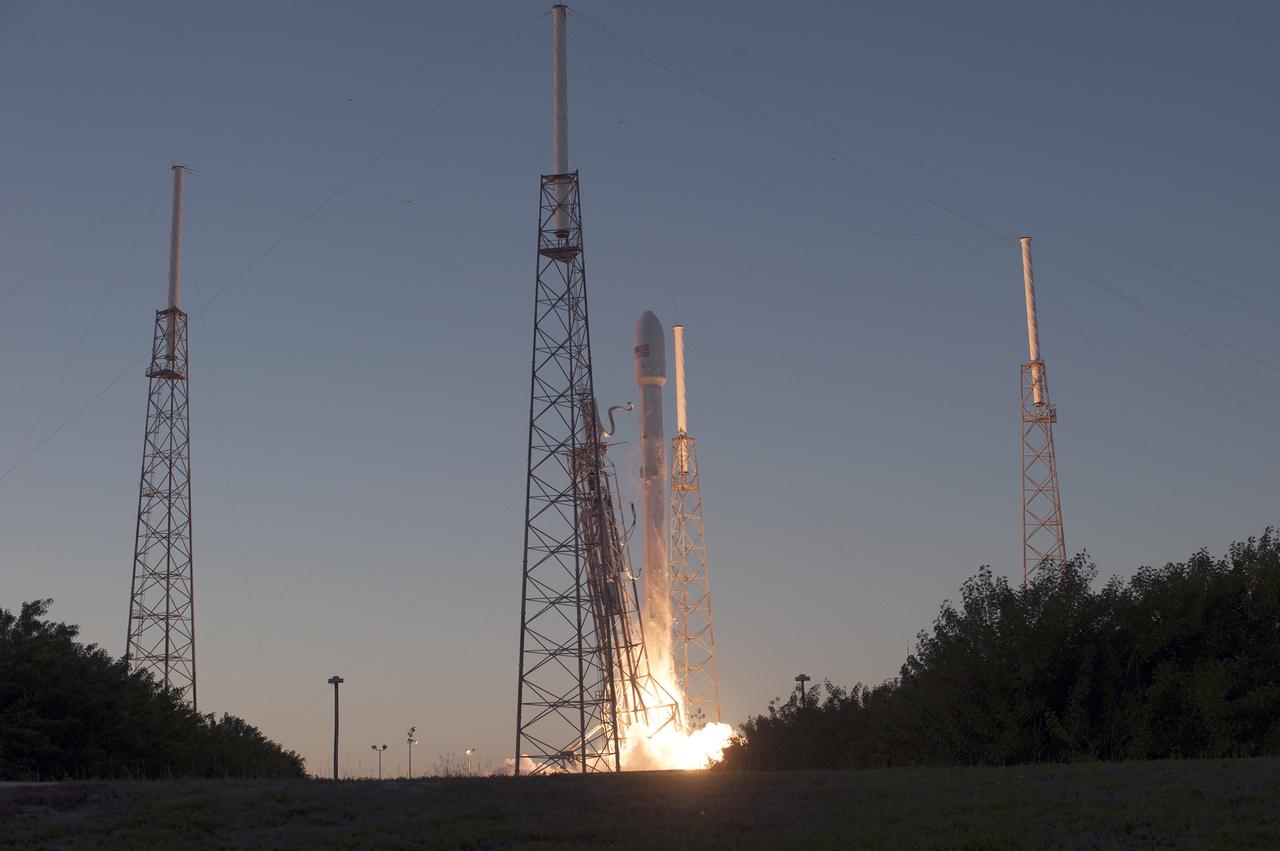
Umbilicals pull away from the SpaceX Falcon 9 rocket as it launches from Space Launch Complex 40 at Cape Canaveral Air Force Station in Florida carrying NOAA’s Deep Space Climate Observatory spacecraft, or DSCOVR. Liftoff occurred at 6:03 p.m. EST. DSCOVR is a partnership between NOAA, NASA and the U.S. Air Force, and will maintain the nation's real-time solar wind monitoring capabilities. To learn more about DSCOVR, visit http://www.nesdis.noaa.gov/DSCOVR. Photo credit: NASA/Tony Gray and Tim Powers
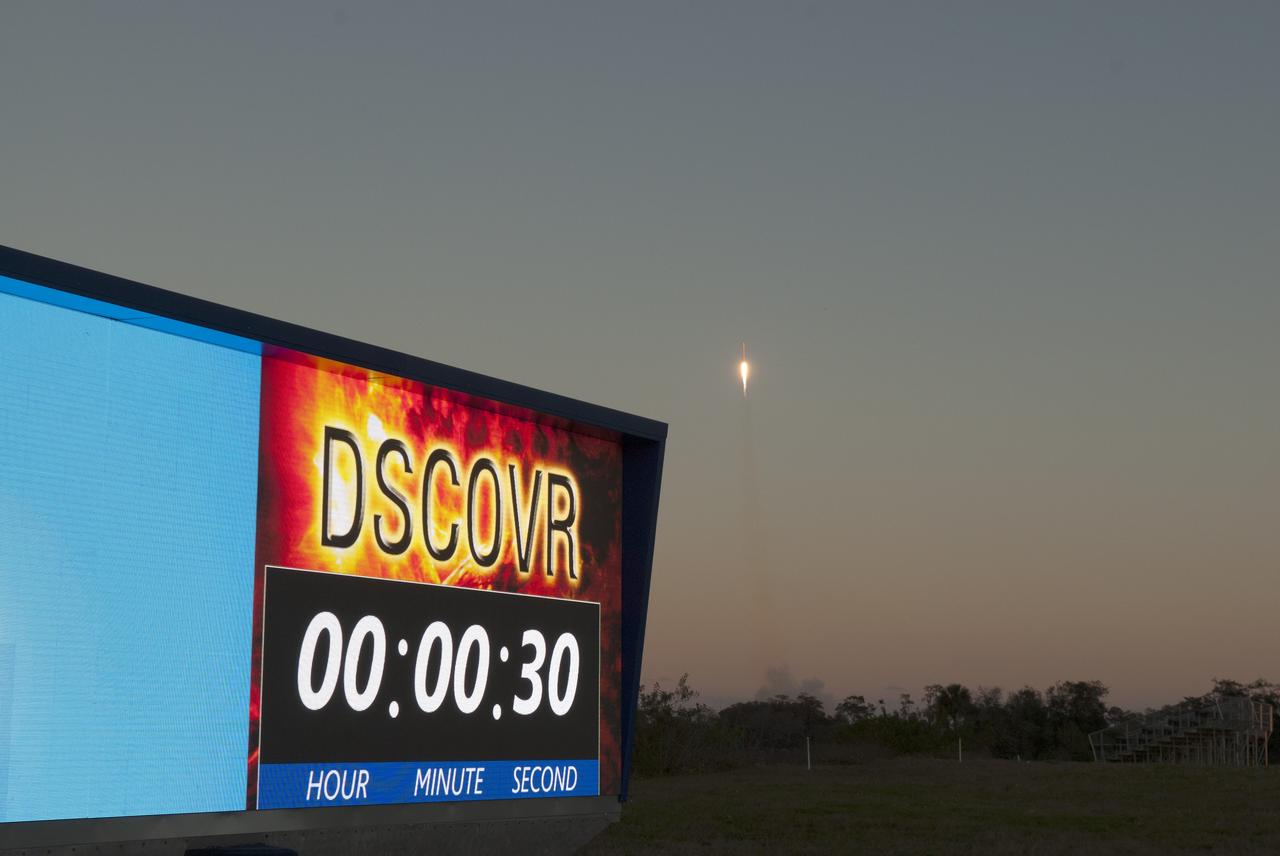
The countdown clock at NASA’s Kennedy Space Center in Florida reads 30 seconds into flight of the SpaceX Falcon 9 rocket carrying NOAA’s Deep Space Climate Observatory spacecraft, or DSCOVR, seen rising in the background. The Falcon 9 launched from Space Launch Complex 40 at Cape Canaveral Air Force Station at 6:03 p.m. EST. DSCOVR is a partnership between NOAA, NASA and the U.S. Air Force, and will maintain the nation's real-time solar wind monitoring capabilities. To learn more about DSCOVR, visit http://www.nesdis.noaa.gov/DSCOVR. Photo credit: NASA/Frankie Martin
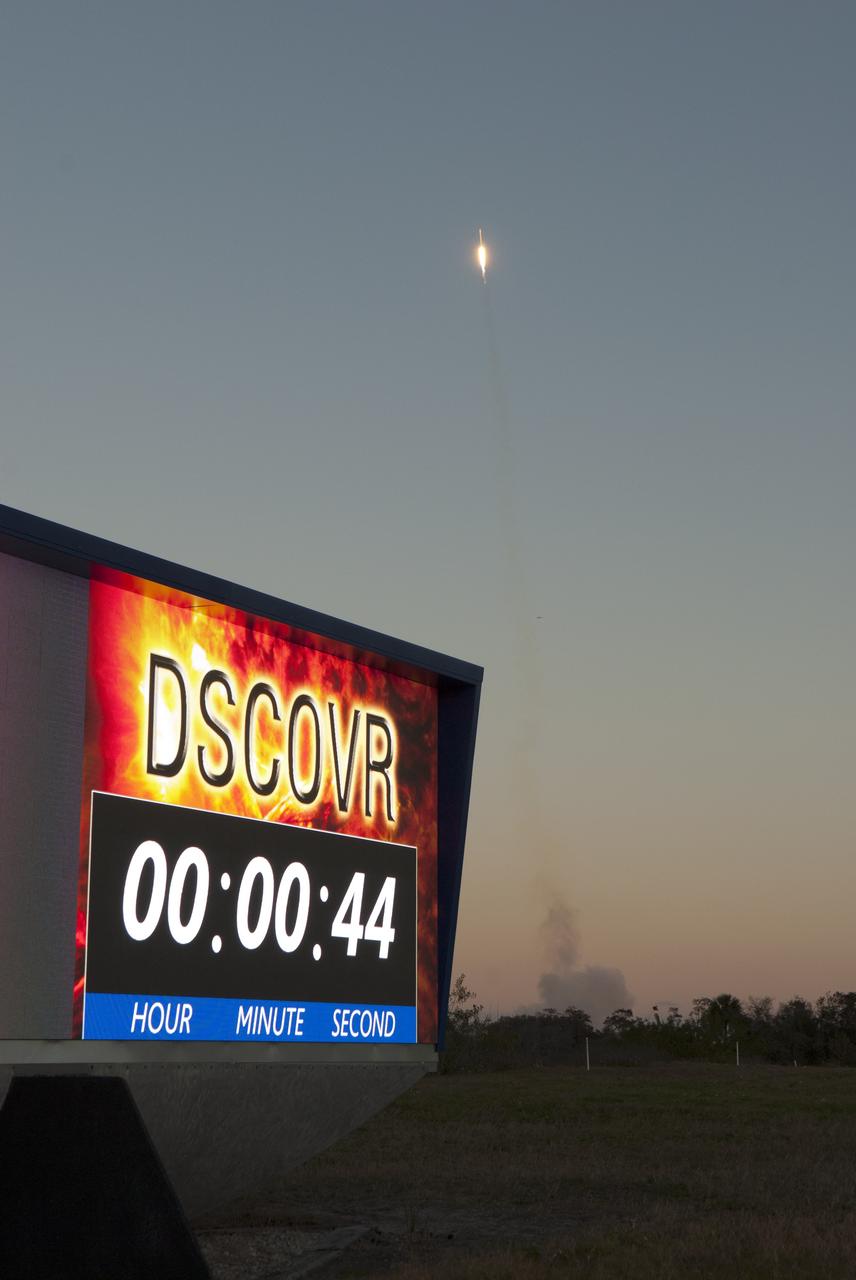
The SpaceX Falcon 9 rocket carrying NOAA’s Deep Space Climate Observatory spacecraft, or DSCOVR, rises in the background as the countdown clock at NASA’s Kennedy Space Center in Florida reads 44 seconds into flight. The Falcon 9 launched from Space Launch Complex 40 at Cape Canaveral Air Force Station at 6:03 p.m. EST. DSCOVR is a partnership between NOAA, NASA and the U.S. Air Force, and will maintain the nation's real-time solar wind monitoring capabilities. To learn more about DSCOVR, visit http://www.nesdis.noaa.gov/DSCOVR. Photo credit: NASA/Frankie Martin
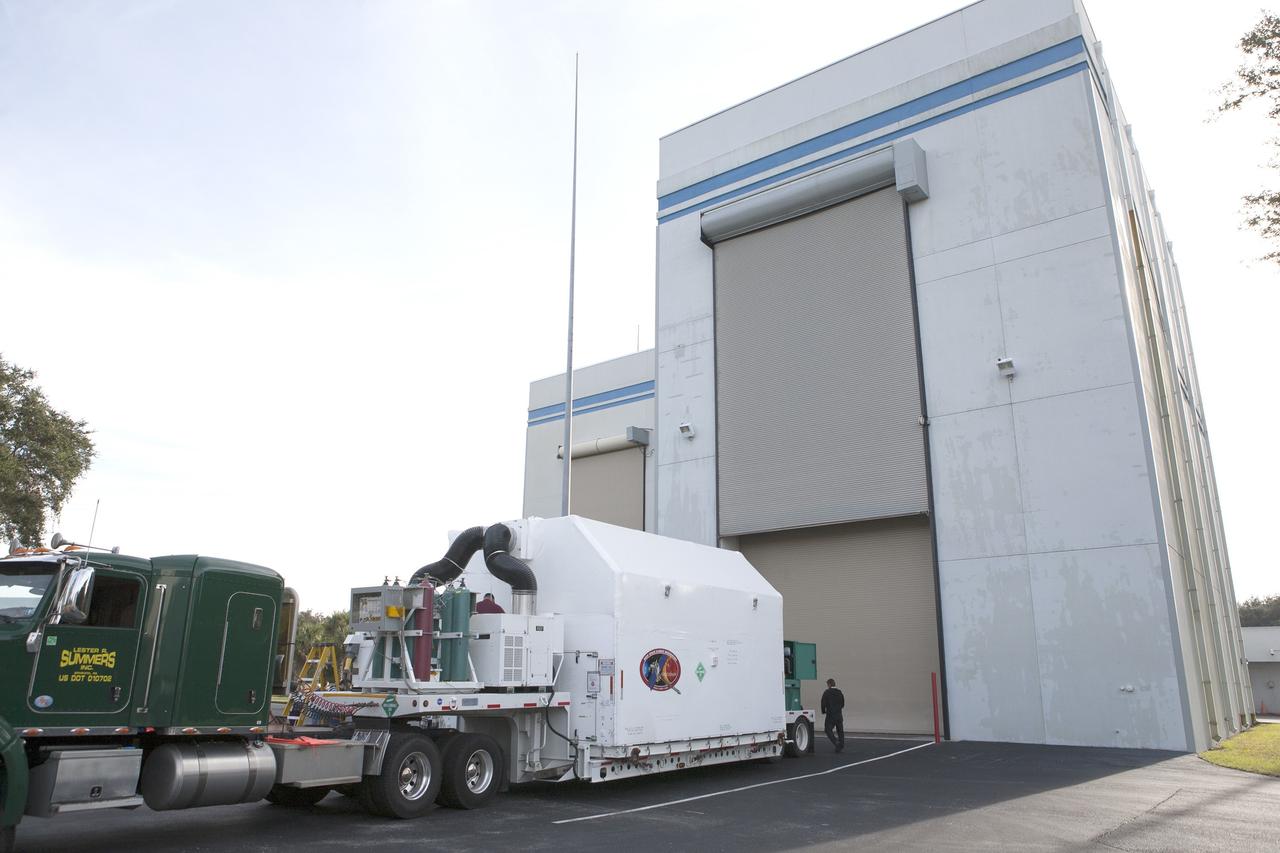
CAPE CANAVERAL, Fla. – The truck delivering NOAA’s Deep Space Climate Observatory spacecraft, or DSCOVR, enclosed in a protective shipping container, backs up to the door of the airlock of Building 2 at the Astrotech payload processing facility in Titusville, Florida, near Kennedy Space Center. DSCOVR is a partnership between NOAA, NASA and the U.S. Air Force. DSCOVR will maintain the nation's real-time solar wind monitoring capabilities which are critical to the accuracy and lead time of NOAA's space weather alerts and forecasts. Launch is currently scheduled for January 2015 aboard a SpaceX Falcon 9 v 1.1 launch vehicle from Cape Canaveral Air Force Station, Florida. To learn more about DSCOVR, visit http://www.nesdis.noaa.gov/DSCOVR. Photo credit: NASA/Kim Shiflett
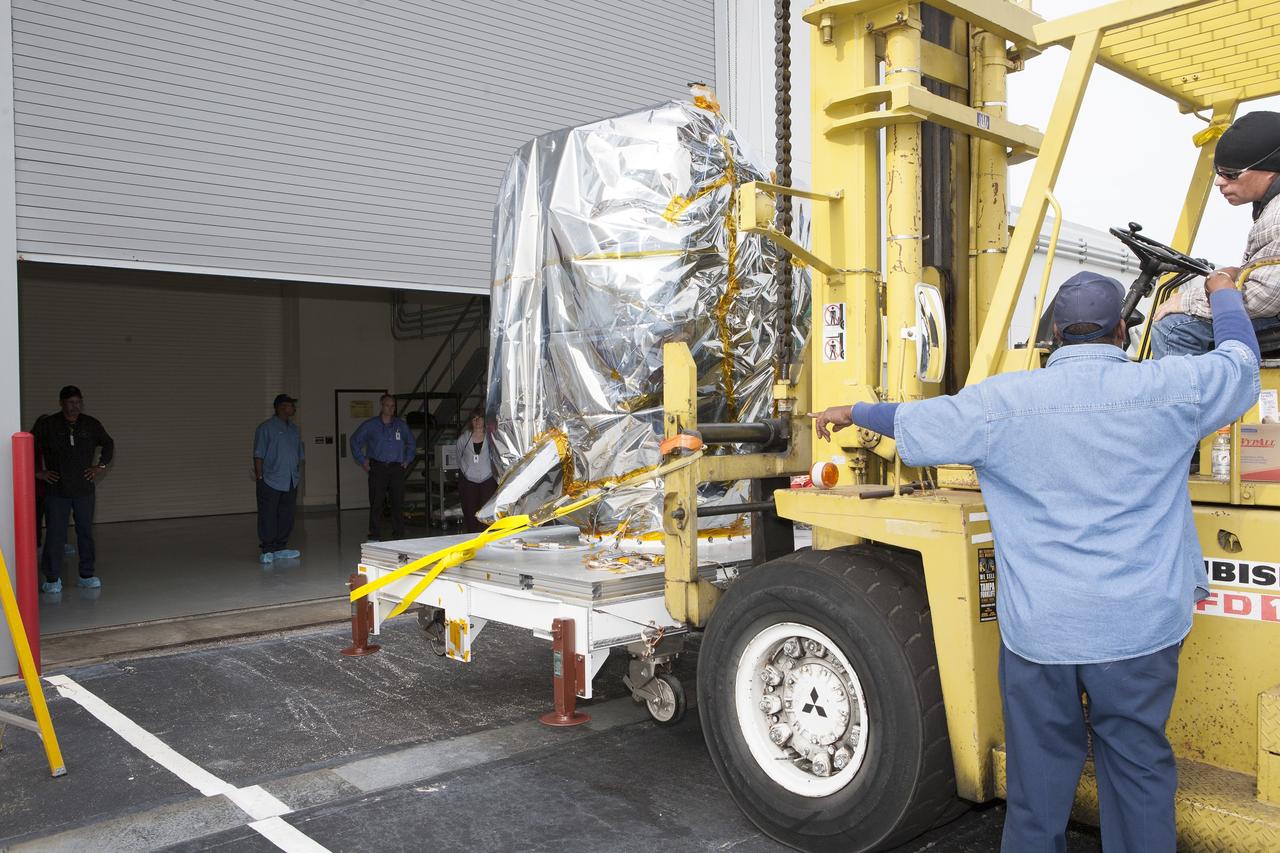
CAPE CANAVERAL, Fla. – NOAA’s newly arrived Deep Space Climate Observatory spacecraft, or DSCOVR, wrapped in plastic and secured onto a portable work stand, is delivered to the high bay of Building 1 at the Astrotech payload processing facility in Titusville, Florida, near Kennedy Space Center. DSCOVR is a partnership between NOAA, NASA and the U.S. Air Force. DSCOVR will maintain the nation's real-time solar wind monitoring capabilities which are critical to the accuracy and lead time of NOAA's space weather alerts and forecasts. Launch is currently scheduled for January 2015 aboard a SpaceX Falcon 9 v 1.1 launch vehicle from Cape Canaveral Air Force Station, Florida. To learn more about DSCOVR, visit http://www.nesdis.noaa.gov/DSCOVR. Photo credit: NASA/Kim Shiflett

CAPE CANAVERAL, Fla. – Workers remove the plastic cover from NOAA’s Deep Space Climate Observatory spacecraft, or DSCOVR, in the high bay of Building 1 at the Astrotech payload processing facility in Titusville, Florida, near Kennedy Space Center. DSCOVR is a partnership between NOAA, NASA and the U.S. Air Force. DSCOVR will maintain the nation's real-time solar wind monitoring capabilities which are critical to the accuracy and lead time of NOAA's space weather alerts and forecasts. Launch is currently scheduled for January 2015 aboard a SpaceX Falcon 9 v 1.1 launch vehicle from Cape Canaveral Air Force Station, Florida. To learn more about DSCOVR, visit http://www.nesdis.noaa.gov/DSCOVR. Photo credit: NASA/Kim Shiflett
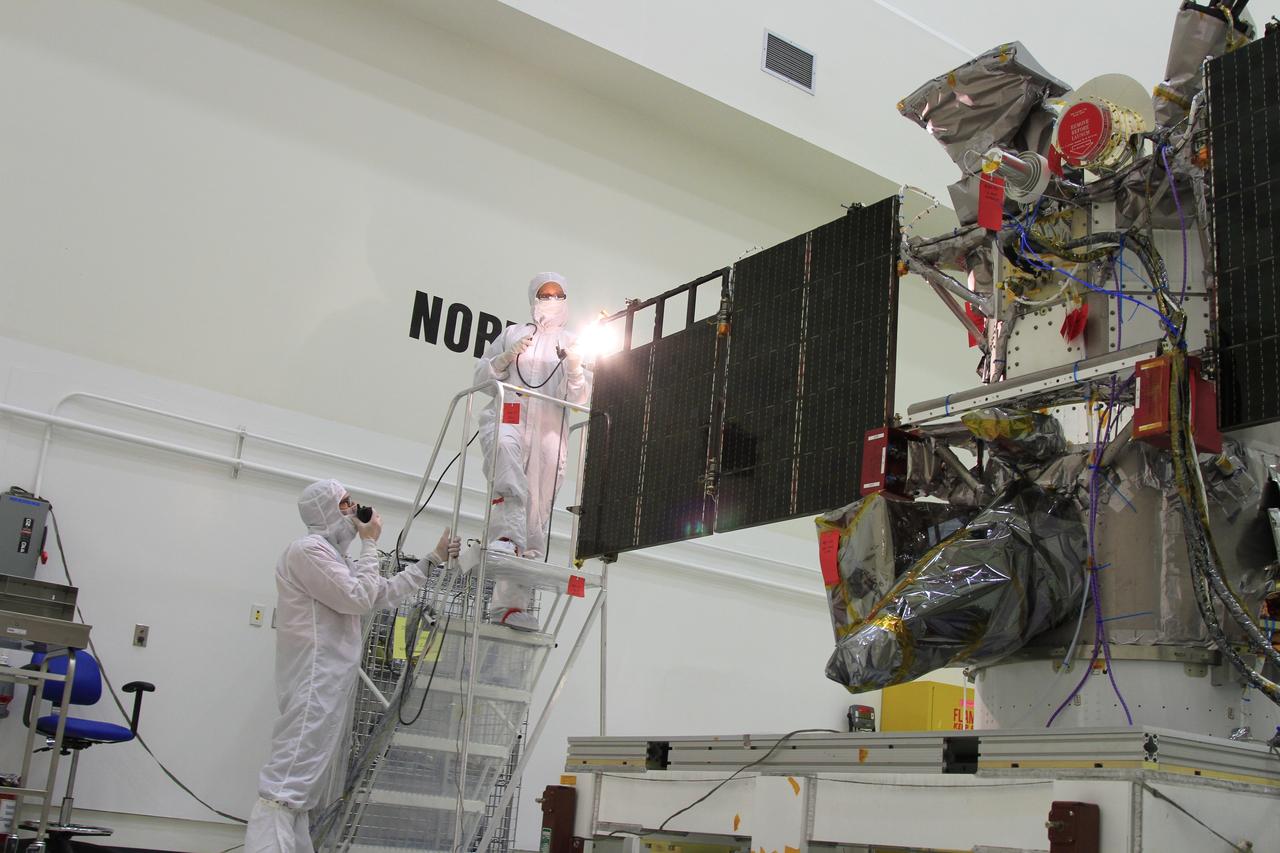
CAPE CANAVERAL, Fla. – Workers conduct a light test on the solar arrays on NOAA’s Deep Space Climate Observatory spacecraft, or DSCOVR, in the Building 1 high bay at the Astrotech payload processing facility in Titusville, Florida, near Kennedy Space Center. DSCOVR is a partnership between NOAA, NASA and the U.S. Air Force. DSCOVR will maintain the nation's real-time solar wind monitoring capabilities which are critical to the accuracy and lead time of NOAA's space weather alerts and forecasts. Launch is targeted for early 2015 aboard a SpaceX Falcon 9 v 1.1 launch vehicle from Cape Canaveral Air Force Station, Florida. To learn more about DSCOVR, visit http://www.nesdis.noaa.gov/DSCOVR. Photo credit: NASA/Ben Smegelsky
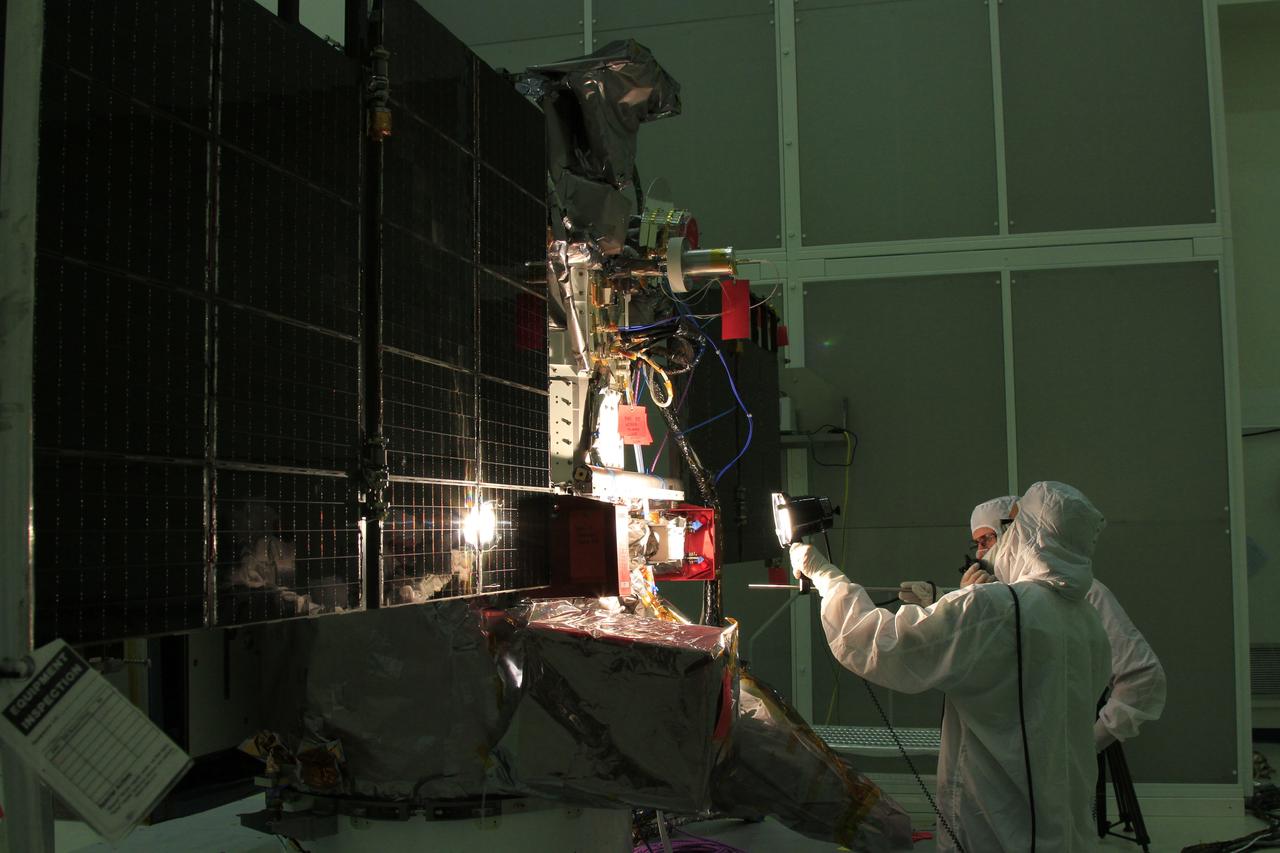
CAPE CANAVERAL, Fla. – Workers conduct a light test on the solar arrays on NOAA’s Deep Space Climate Observatory spacecraft, or DSCOVR, in the Building 1 high bay at the Astrotech payload processing facility in Titusville, Florida, near Kennedy Space Center. DSCOVR is a partnership between NOAA, NASA and the U.S. Air Force. DSCOVR will maintain the nation's real-time solar wind monitoring capabilities which are critical to the accuracy and lead time of NOAA's space weather alerts and forecasts. Launch is targeted for early 2015 aboard a SpaceX Falcon 9 v 1.1 launch vehicle from Cape Canaveral Air Force Station, Florida. To learn more about DSCOVR, visit http://www.nesdis.noaa.gov/DSCOVR. Photo credit: NASA/Ben Smegelsky

CAPE CANAVERAL, Fla. – A light test on the solar arrays on NOAA’s Deep Space Climate Observatory spacecraft, or DSCOVR, is managed from the control room next to the Building 1 high bay at the Astrotech payload processing facility in Titusville, Florida, near Kennedy Space Center. DSCOVR is a partnership between NOAA, NASA and the U.S. Air Force. DSCOVR will maintain the nation's real-time solar wind monitoring capabilities which are critical to the accuracy and lead time of NOAA's space weather alerts and forecasts. Launch is targeted for early 2015 aboard a SpaceX Falcon 9 v 1.1 launch vehicle from Cape Canaveral Air Force Station, Florida. To learn more about DSCOVR, visit http://www.nesdis.noaa.gov/DSCOVR. Photo credit: NASA/Ben Smegelsky
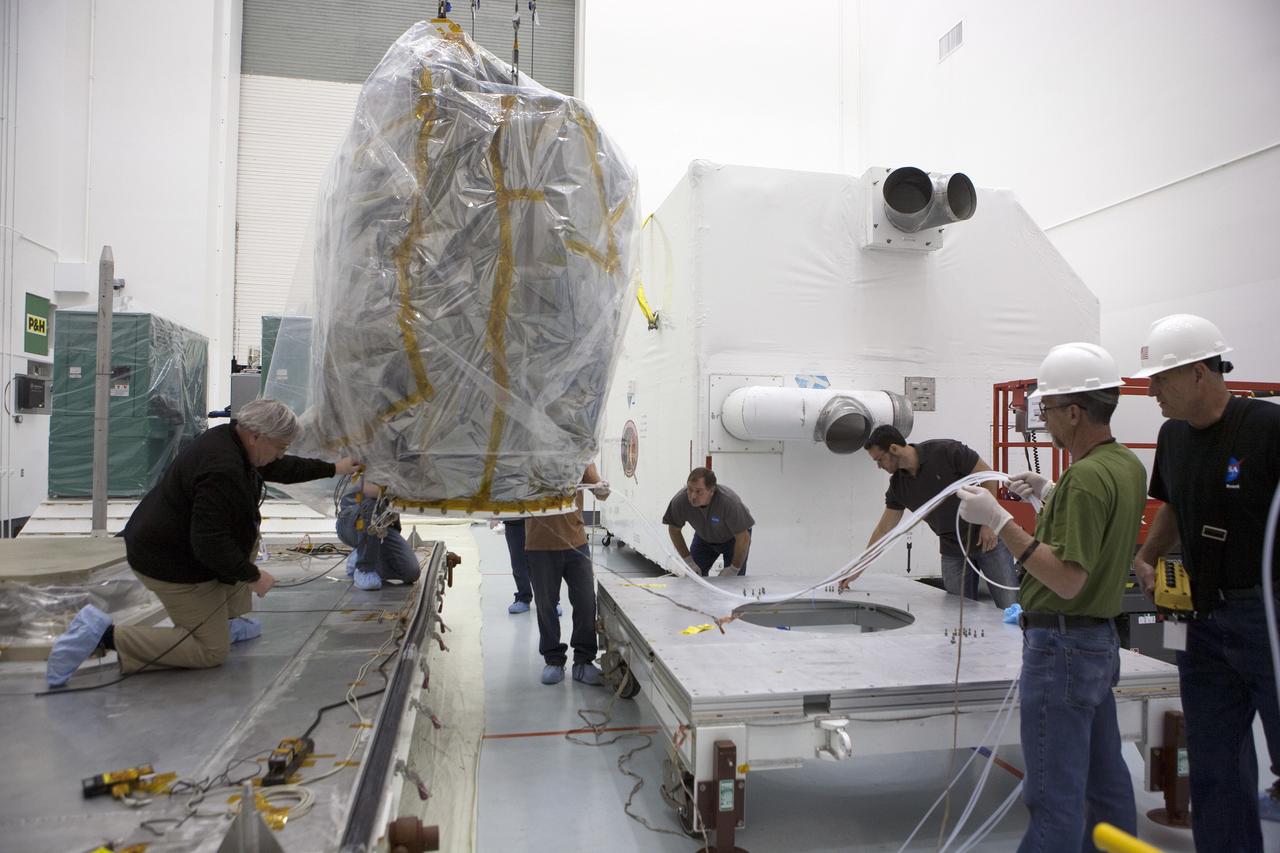
CAPE CANAVERAL, Fla. – NOAA’s Deep Space Climate Observatory spacecraft, or DSCOVR, wrapped in plastic, is transferred from its transportation pallet to a portable work stand at the Astrotech payload processing facility in Titusville, Florida, near Kennedy Space Center. DSCOVR is a partnership between NOAA, NASA and the U.S. Air Force. DSCOVR will maintain the nation's real-time solar wind monitoring capabilities which are critical to the accuracy and lead time of NOAA's space weather alerts and forecasts. Launch is currently scheduled for January 2015 aboard a SpaceX Falcon 9 v 1.1 launch vehicle from Cape Canaveral Air Force Station, Florida. To learn more about DSCOVR, visit http://www.nesdis.noaa.gov/DSCOVR. Photo credit: NASA/Kim Shiflett
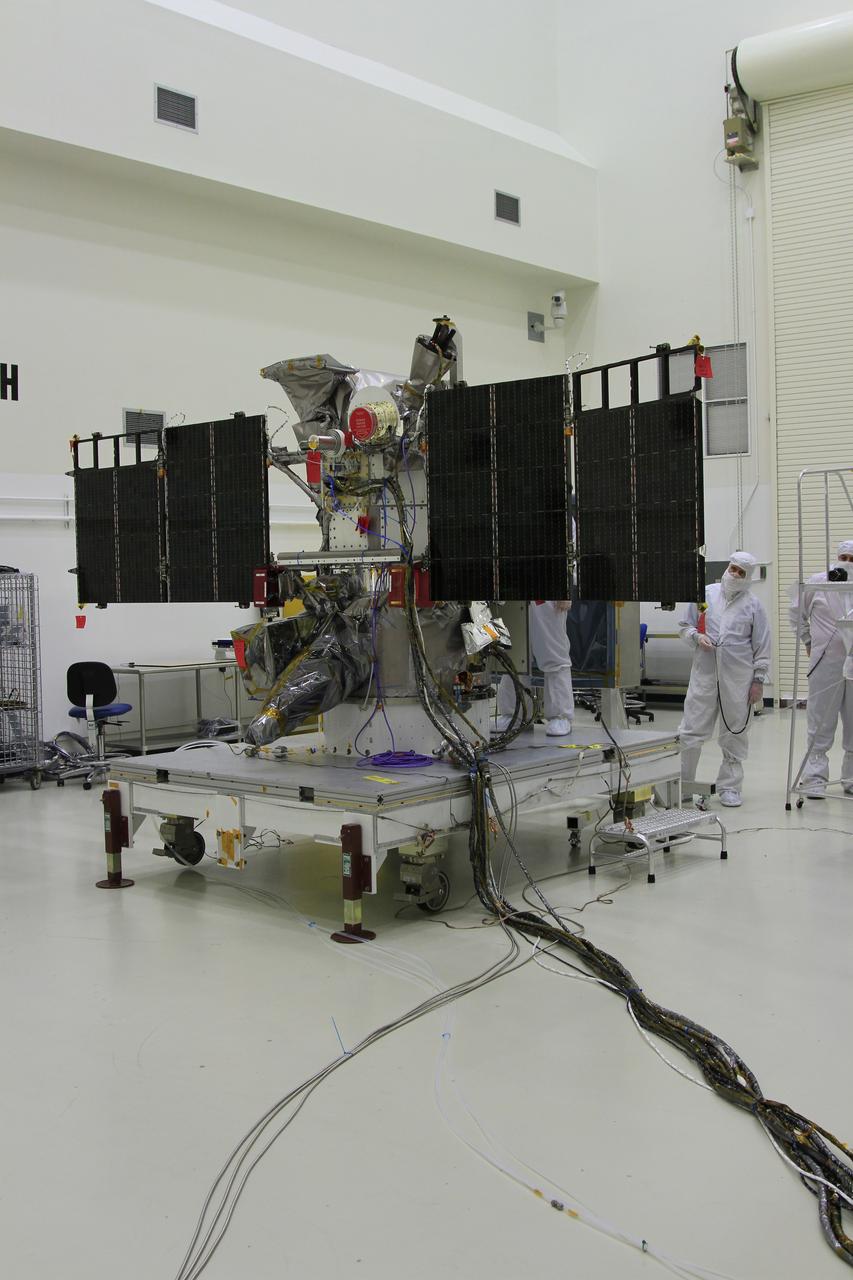
CAPE CANAVERAL, Fla. – Workers deploy the solar arrays on NOAA’s Deep Space Climate Observatory spacecraft, or DSCOVR, in the Building 1 high bay at the Astrotech payload processing facility in Titusville, Florida, near Kennedy Space Center. DSCOVR is a partnership between NOAA, NASA and the U.S. Air Force. DSCOVR will maintain the nation's real-time solar wind monitoring capabilities which are critical to the accuracy and lead time of NOAA's space weather alerts and forecasts. Launch is targeted for early 2015 aboard a SpaceX Falcon 9 v 1.1 launch vehicle from Cape Canaveral Air Force Station, Florida. To learn more about DSCOVR, visit http://www.nesdis.noaa.gov/DSCOVR. Photo credit: NASA/Ben Smegelsky
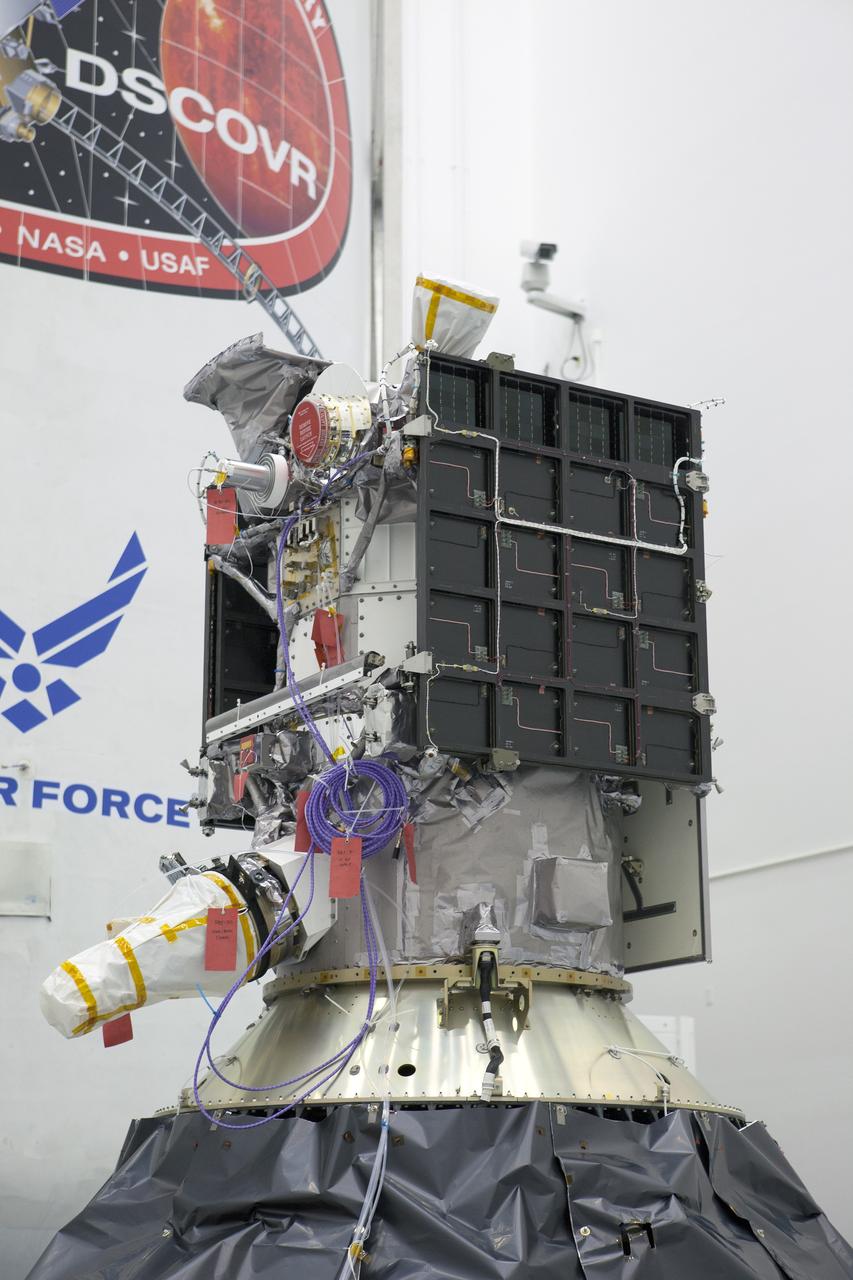
CAPE CANAVERAL, Fla. – Preparations to launch NOAA’s Deep Space Climate Observatory spacecraft, or DSCOVR, near completion in the Building 1 high bay of the Astrotech payload processing facility in Titusville, Florida, near Kennedy Space Center. DSCOVR is a partnership between NOAA, NASA and the U.S. Air Force. DSCOVR will maintain the nation's real-time solar wind monitoring capabilities which are critical to the accuracy and lead time of NOAA's space weather alerts and forecasts. Launch is targeted for no earlier than Feb. 8 aboard a SpaceX Falcon 9 v 1.1 launch vehicle from Cape Canaveral Air Force Station, Florida. To learn more about DSCOVR, visit http://www.nesdis.noaa.gov/DSCOVR. Photo credit: NASA/Kim Shiflett
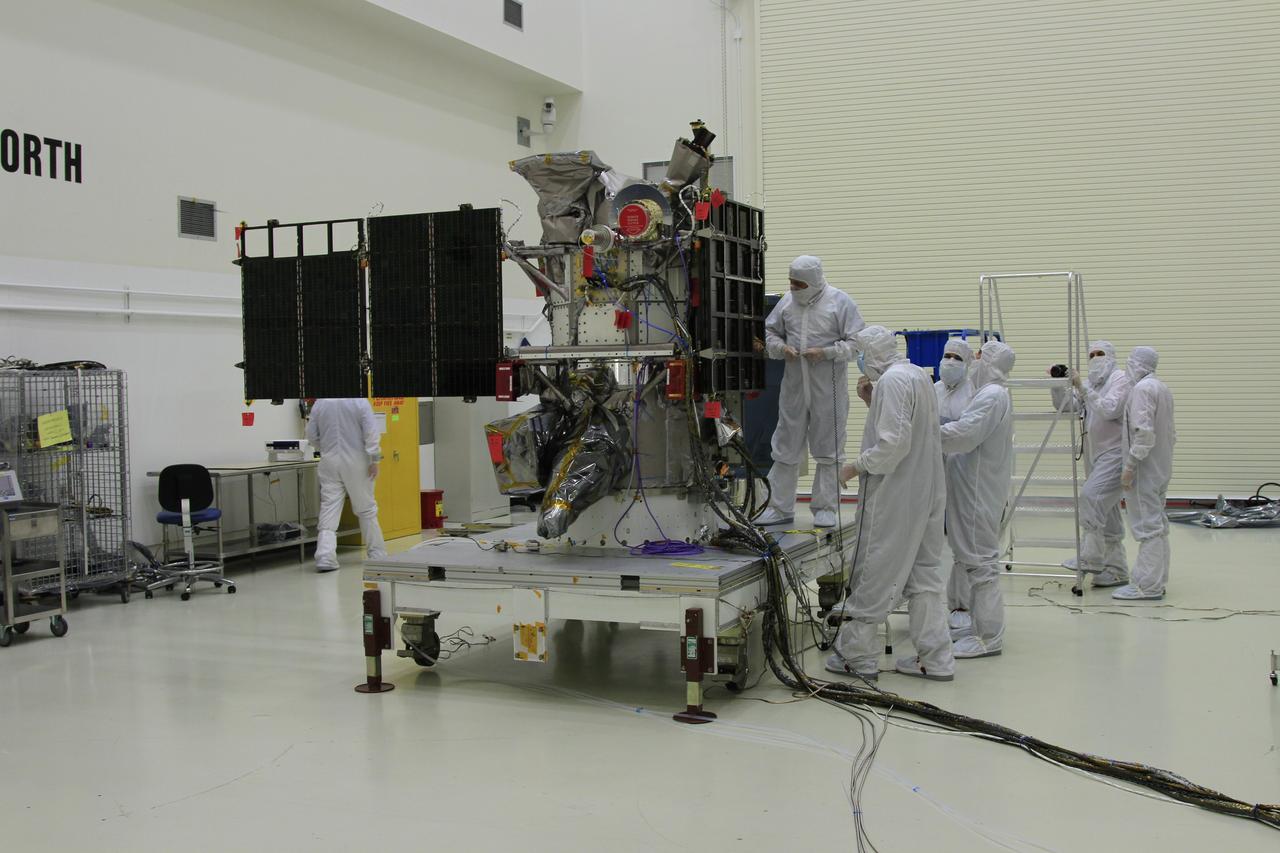
CAPE CANAVERAL, Fla. – Workers deploy the solar arrays on NOAA’s Deep Space Climate Observatory spacecraft, or DSCOVR, in the Building 1 high bay at the Astrotech payload processing facility in Titusville, Florida, near Kennedy Space Center. DSCOVR is a partnership between NOAA, NASA and the U.S. Air Force. DSCOVR will maintain the nation's real-time solar wind monitoring capabilities which are critical to the accuracy and lead time of NOAA's space weather alerts and forecasts. Launch is targeted for early 2015 aboard a SpaceX Falcon 9 v 1.1 launch vehicle from Cape Canaveral Air Force Station, Florida. To learn more about DSCOVR, visit http://www.nesdis.noaa.gov/DSCOVR. Photo credit: NASA/Ben Smegelsky
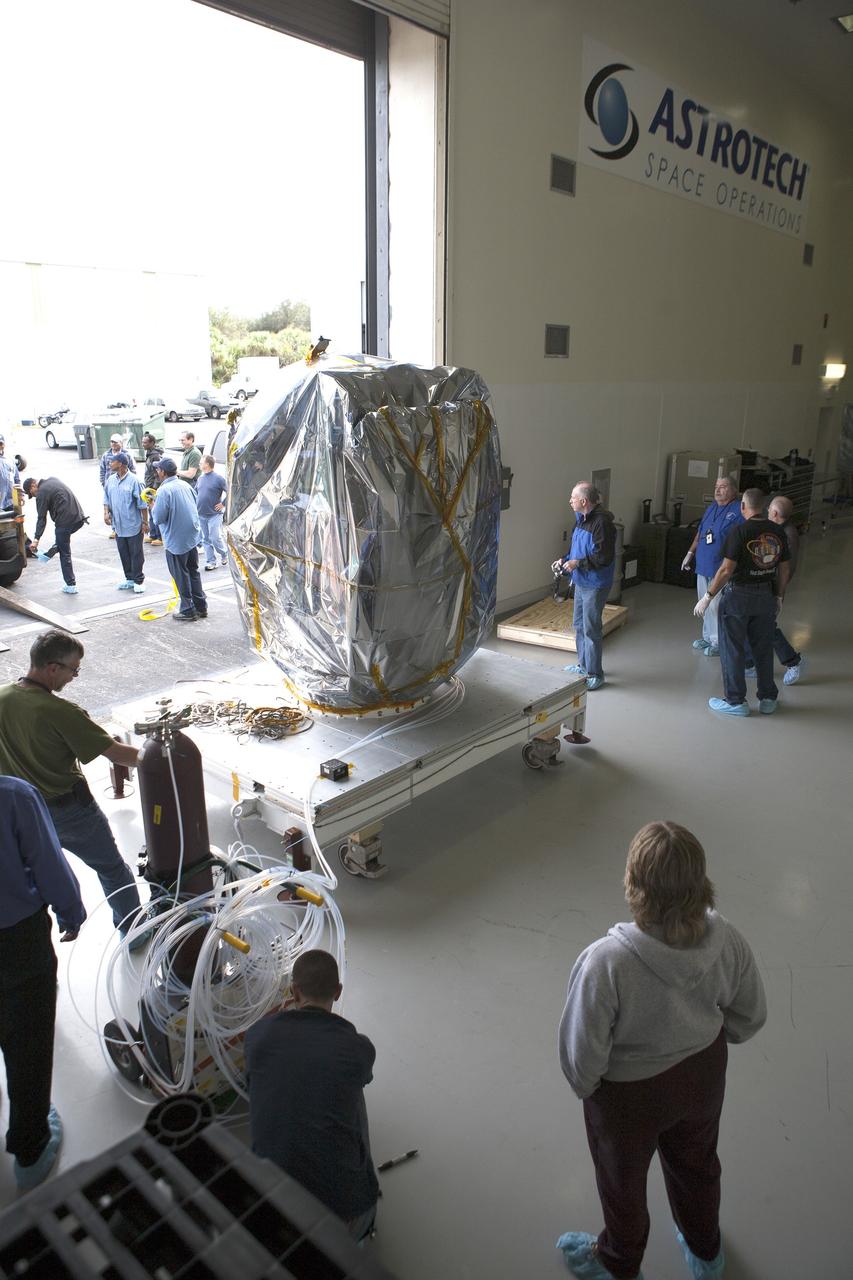
CAPE CANAVERAL, Fla. – Workers are on hand to receive NOAA’s Deep Space Climate Observatory spacecraft, or DSCOVR, wrapped in plastic and secured onto a portable work stand, into the high bay of Building 1 at the Astrotech payload processing facility in Titusville, Florida, near Kennedy Space Center. DSCOVR is a partnership between NOAA, NASA and the U.S. Air Force. DSCOVR will maintain the nation's real-time solar wind monitoring capabilities which are critical to the accuracy and lead time of NOAA's space weather alerts and forecasts. Launch is currently scheduled for January 2015 aboard a SpaceX Falcon 9 v 1.1 launch vehicle from Cape Canaveral Air Force Station, Florida. To learn more about DSCOVR, visit http://www.nesdis.noaa.gov/DSCOVR. Photo credit: NASA/Kim Shiflett
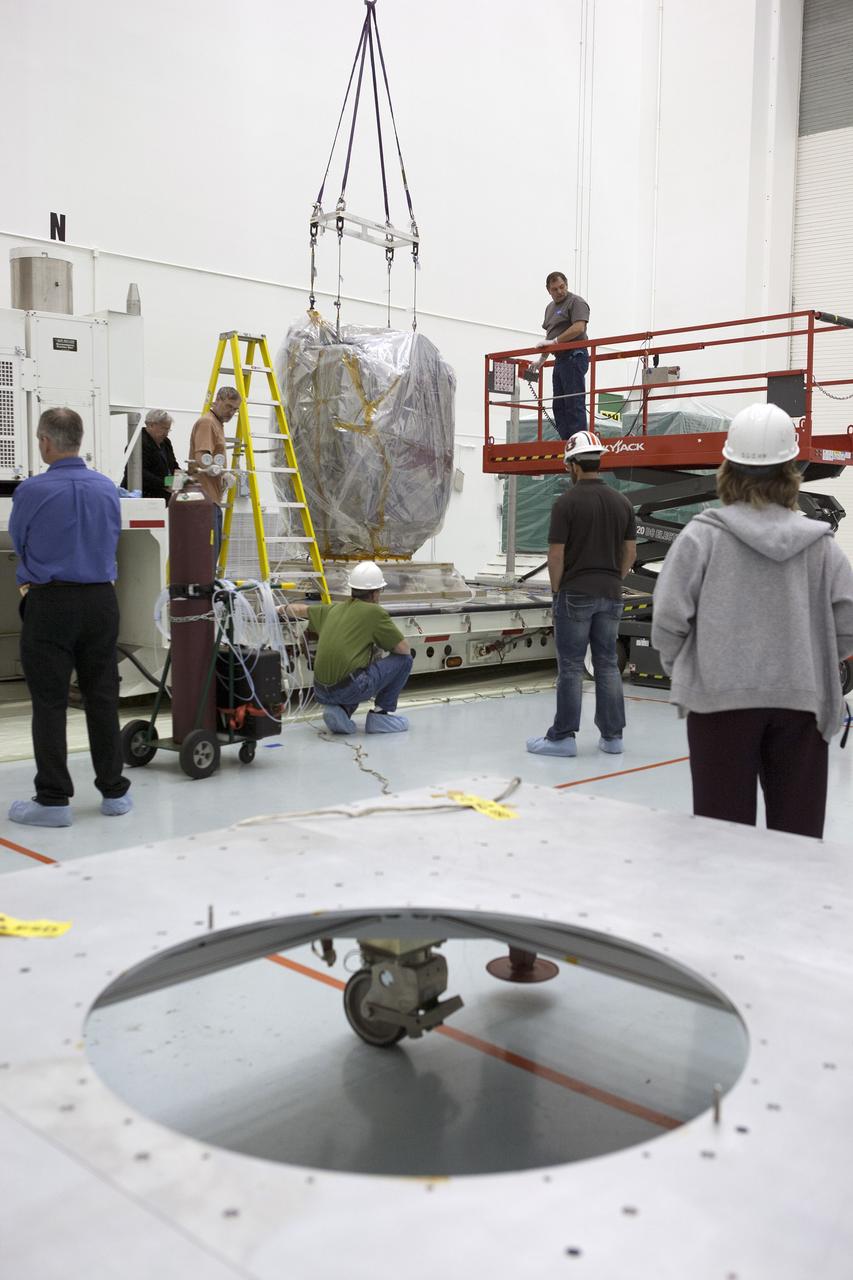
CAPE CANAVERAL, Fla. – A lifting device is attached to NOAA’s Deep Space Climate Observatory spacecraft, or DSCOVR, wrapped in plastic, to remove it from its transportation pallet at the Astrotech payload processing facility in Titusville, Florida, near Kennedy Space Center. DSCOVR is a partnership between NOAA, NASA and the U.S. Air Force. DSCOVR will maintain the nation's real-time solar wind monitoring capabilities which are critical to the accuracy and lead time of NOAA's space weather alerts and forecasts. Launch is currently scheduled for January 2015 aboard a SpaceX Falcon 9 v 1.1 launch vehicle from Cape Canaveral Air Force Station, Florida. To learn more about DSCOVR, visit http://www.nesdis.noaa.gov/DSCOVR. Photo credit: NASA/Kim Shiflett
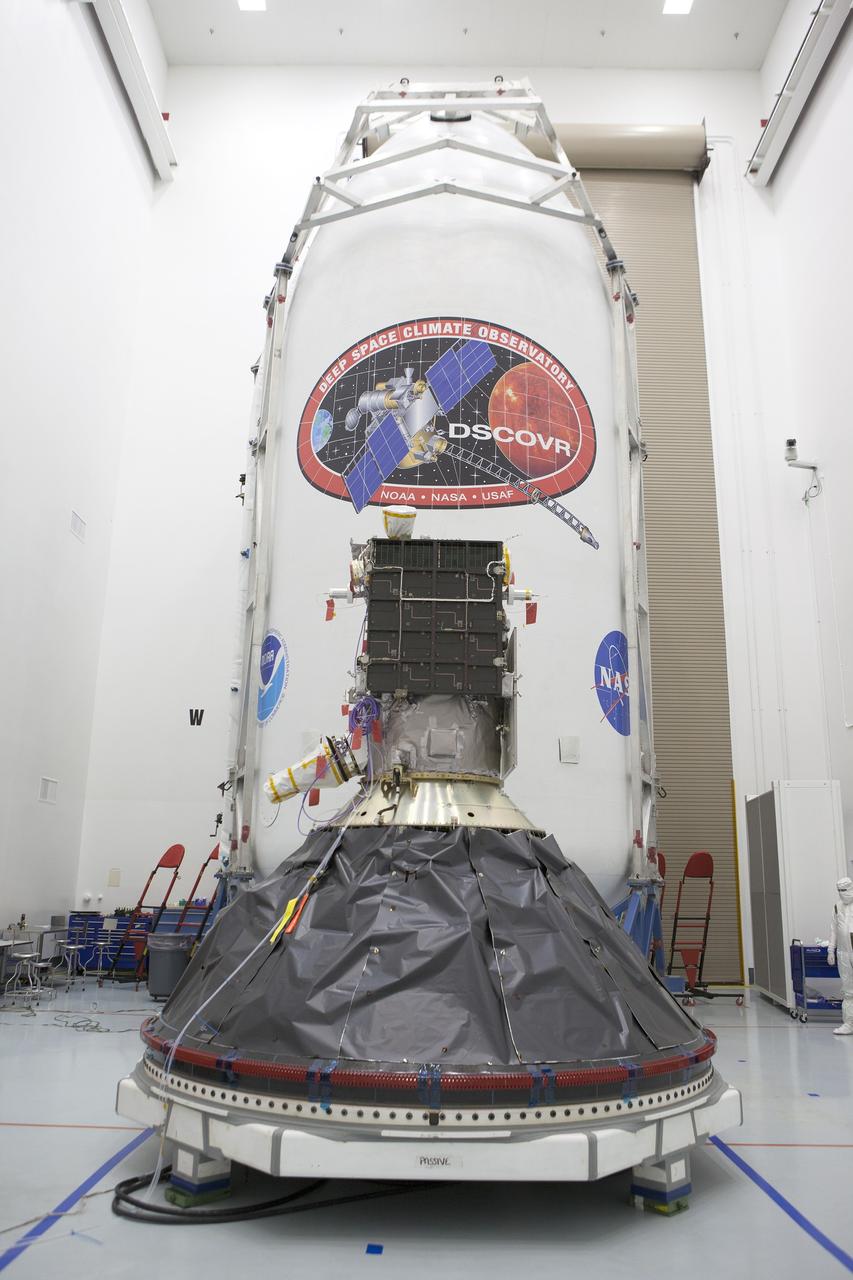
CAPE CANAVERAL, Fla. – Preparations to launch NOAA’s Deep Space Climate Observatory spacecraft, or DSCOVR, near completion in the Building 1 high bay of the Astrotech payload processing facility in Titusville, Florida, near Kennedy Space Center. DSCOVR is a partnership between NOAA, NASA and the U.S. Air Force. DSCOVR will maintain the nation's real-time solar wind monitoring capabilities which are critical to the accuracy and lead time of NOAA's space weather alerts and forecasts. Launch is targeted for no earlier than Feb. 8 aboard a SpaceX Falcon 9 v 1.1 launch vehicle from Cape Canaveral Air Force Station, Florida. To learn more about DSCOVR, visit http://www.nesdis.noaa.gov/DSCOVR. Photo credit: NASA/Kim Shiflett
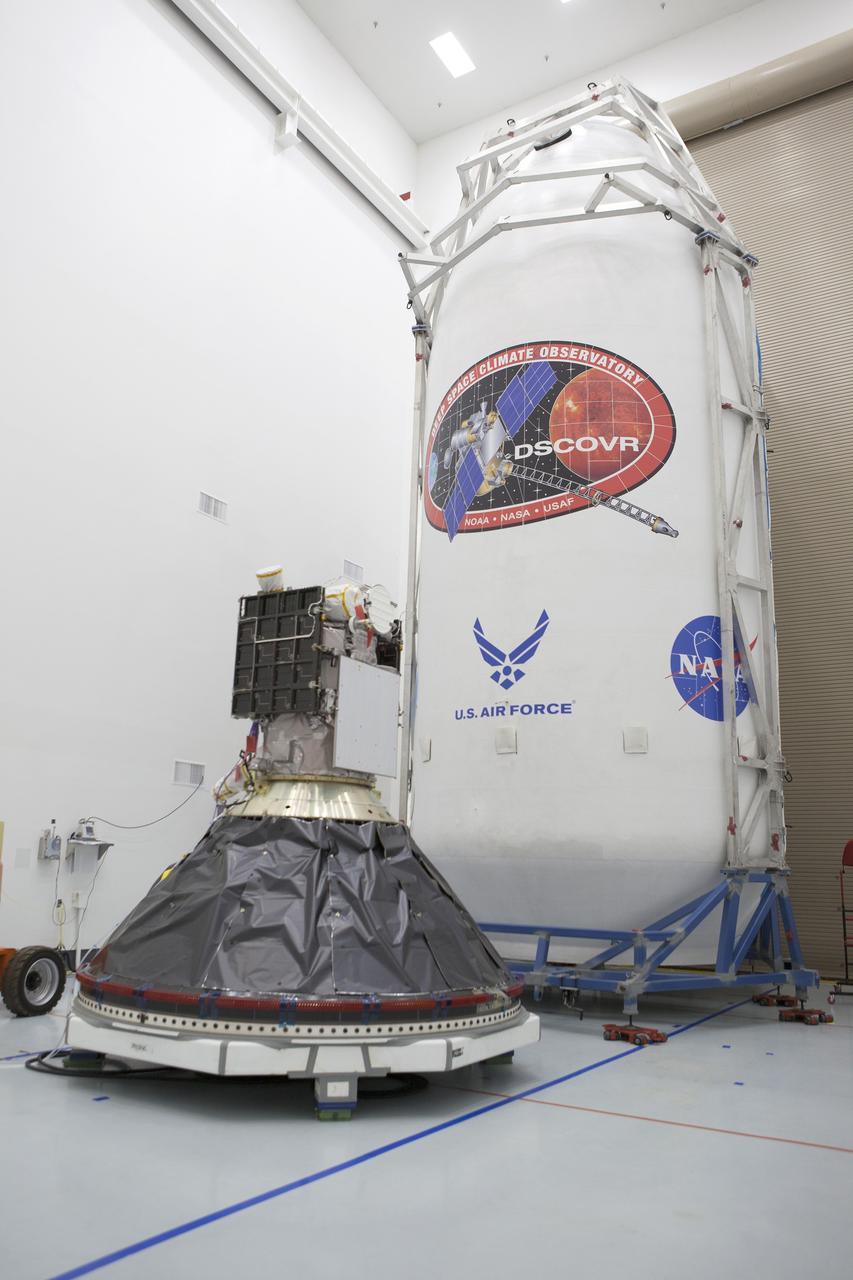
CAPE CANAVERAL, Fla. – Preparations to launch NOAA’s Deep Space Climate Observatory spacecraft, or DSCOVR, near completion in the Building 1 high bay of the Astrotech payload processing facility in Titusville, Florida, near Kennedy Space Center. DSCOVR is a partnership between NOAA, NASA and the U.S. Air Force. DSCOVR will maintain the nation's real-time solar wind monitoring capabilities which are critical to the accuracy and lead time of NOAA's space weather alerts and forecasts. Launch is targeted for no earlier than Feb. 8 aboard a SpaceX Falcon 9 v 1.1 launch vehicle from Cape Canaveral Air Force Station, Florida. To learn more about DSCOVR, visit http://www.nesdis.noaa.gov/DSCOVR. Photo credit: NASA/Kim Shiflett
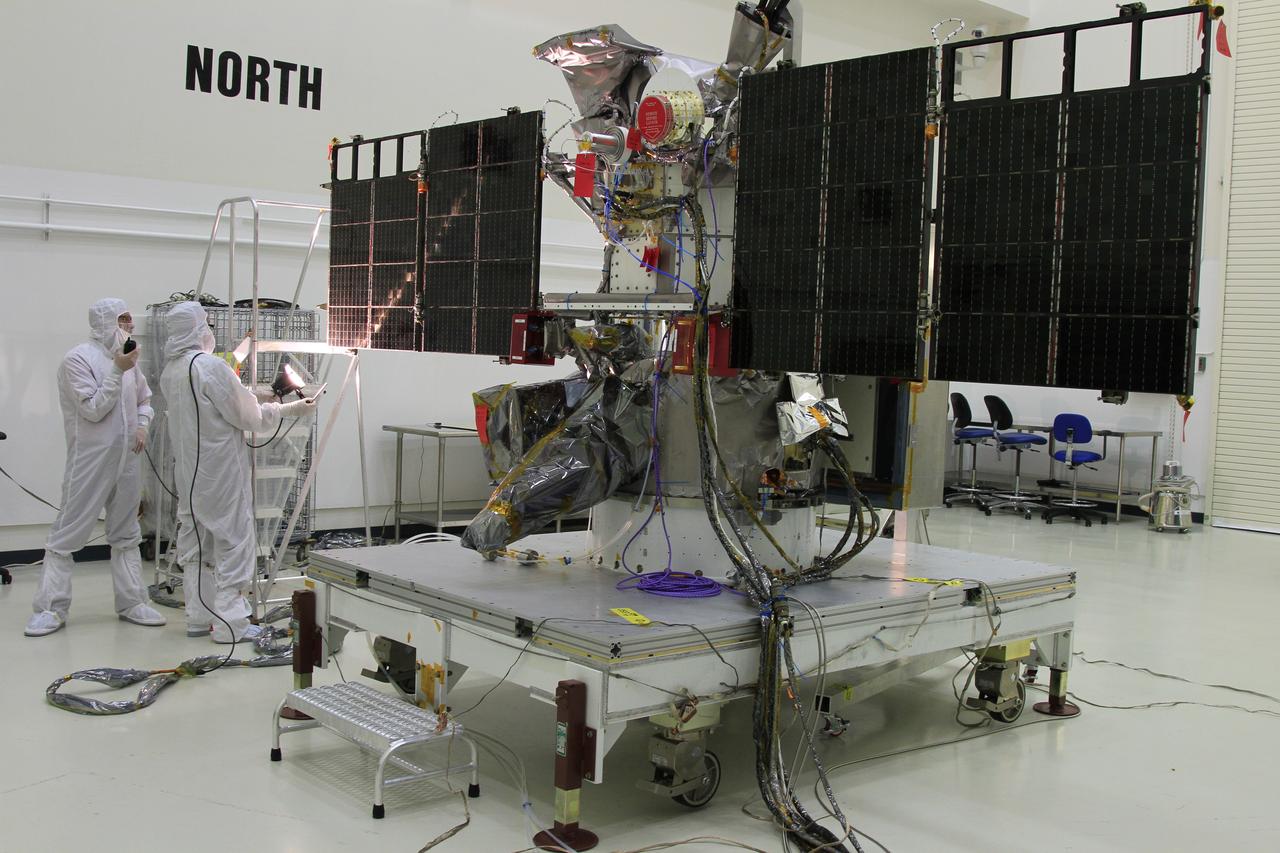
CAPE CANAVERAL, Fla. – Workers conduct a light test on the solar arrays on NOAA’s Deep Space Climate Observatory spacecraft, or DSCOVR, in the Building 1 high bay at the Astrotech payload processing facility in Titusville, Florida, near Kennedy Space Center. DSCOVR is a partnership between NOAA, NASA and the U.S. Air Force. DSCOVR will maintain the nation's real-time solar wind monitoring capabilities which are critical to the accuracy and lead time of NOAA's space weather alerts and forecasts. Launch is targeted for early 2015 aboard a SpaceX Falcon 9 v 1.1 launch vehicle from Cape Canaveral Air Force Station, Florida. To learn more about DSCOVR, visit http://www.nesdis.noaa.gov/DSCOVR. Photo credit: NASA/Ben Smegelsky
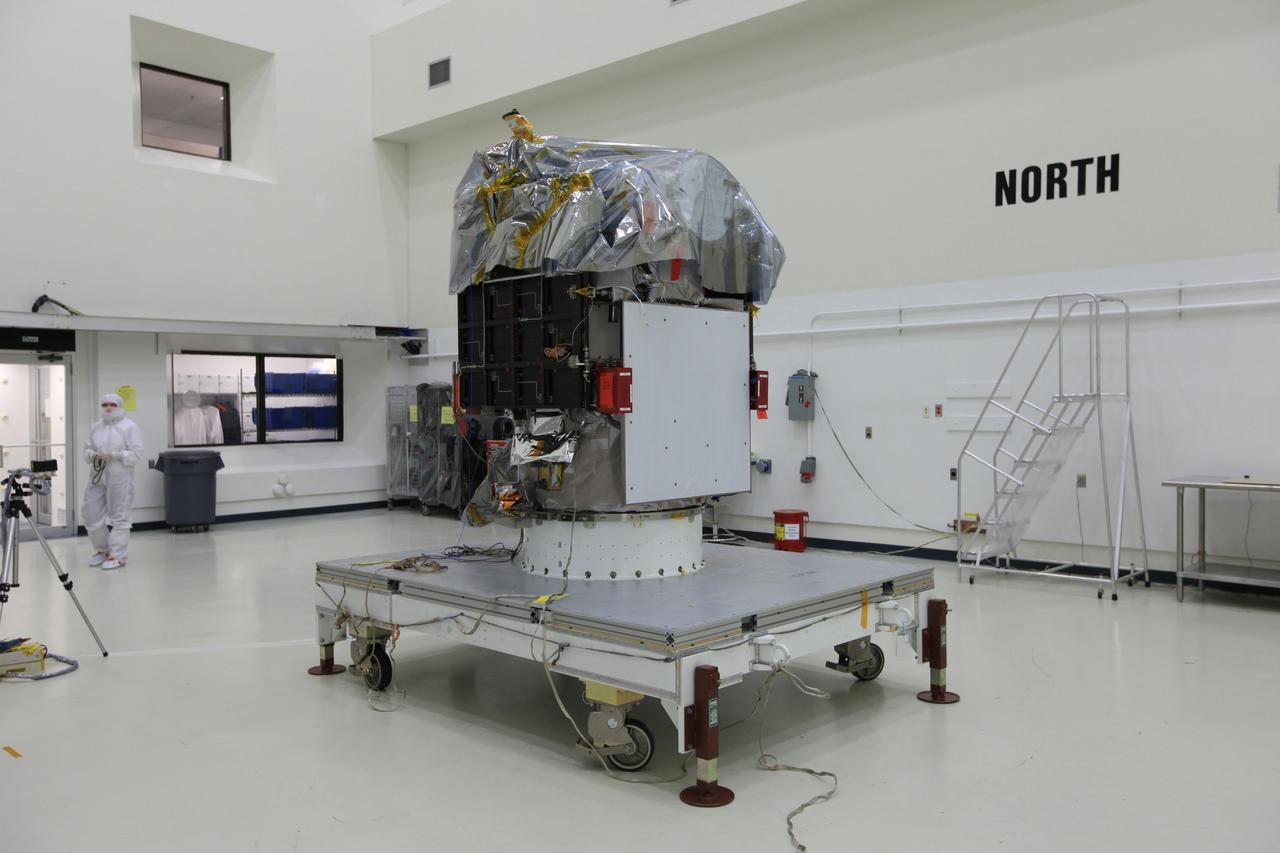
CAPE CANAVERAL, Fla. – NOAA’s Deep Space Climate Observatory spacecraft, or DSCOVR, has been uncovered and is ready for processing in the high bay of Building 1 at the Astrotech payload processing facility in Titusville, Florida, near Kennedy Space Center. DSCOVR is a partnership between NOAA, NASA and the U.S. Air Force. DSCOVR will maintain the nation's real-time solar wind monitoring capabilities which are critical to the accuracy and lead time of NOAA's space weather alerts and forecasts. Launch is currently scheduled for January 2015 aboard a SpaceX Falcon 9 v 1.1 launch vehicle from Cape Canaveral Air Force Station, Florida. To learn more about DSCOVR, visit http://www.nesdis.noaa.gov/DSCOVR. Photo credit: NASA/Kim Shiflett
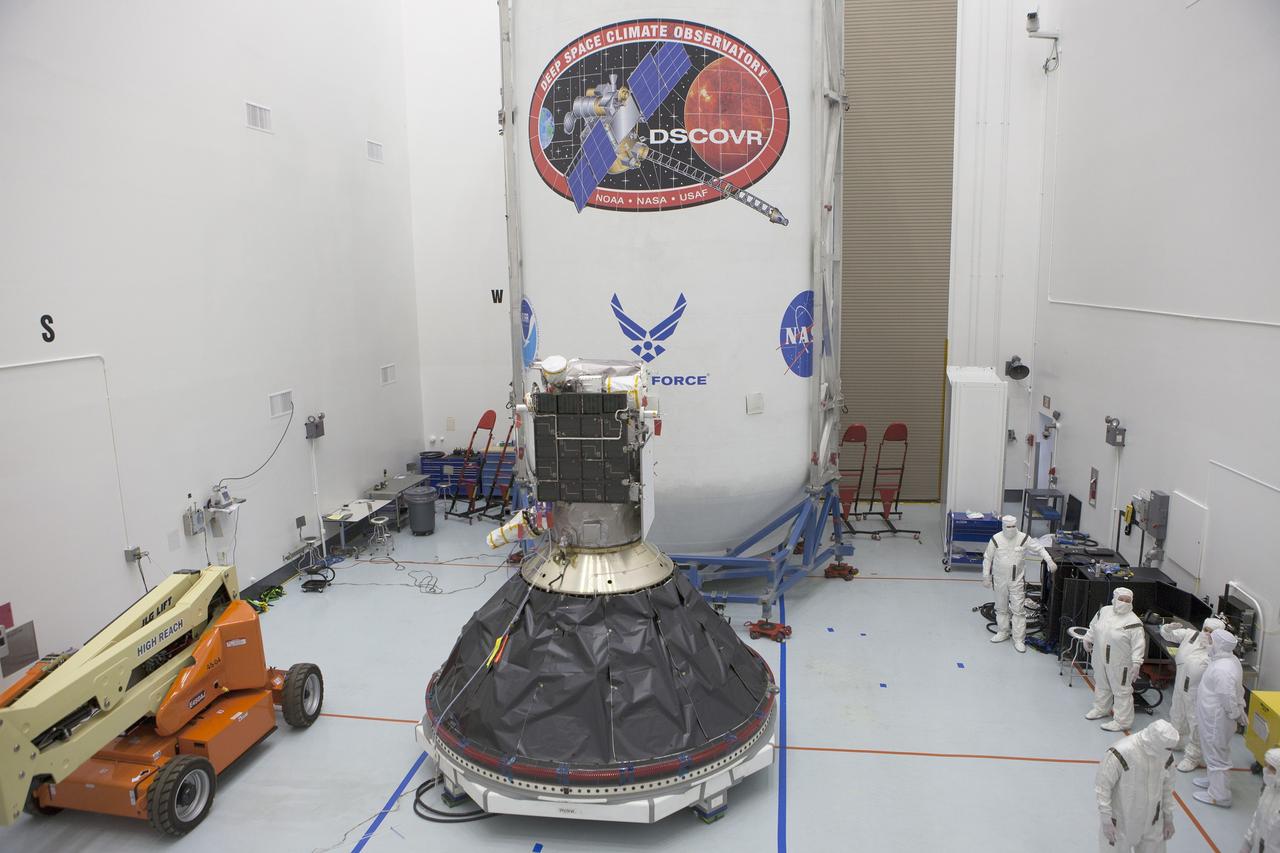
CAPE CANAVERAL, Fla. – Preparations to launch NOAA’s Deep Space Climate Observatory spacecraft, or DSCOVR, near completion in the Building 1 high bay of the Astrotech payload processing facility in Titusville, Florida, near Kennedy Space Center. DSCOVR is a partnership between NOAA, NASA and the U.S. Air Force. DSCOVR will maintain the nation's real-time solar wind monitoring capabilities which are critical to the accuracy and lead time of NOAA's space weather alerts and forecasts. Launch is targeted for no earlier than Feb. 8 aboard a SpaceX Falcon 9 v 1.1 launch vehicle from Cape Canaveral Air Force Station, Florida. To learn more about DSCOVR, visit http://www.nesdis.noaa.gov/DSCOVR. Photo credit: NASA/Kim Shiflett
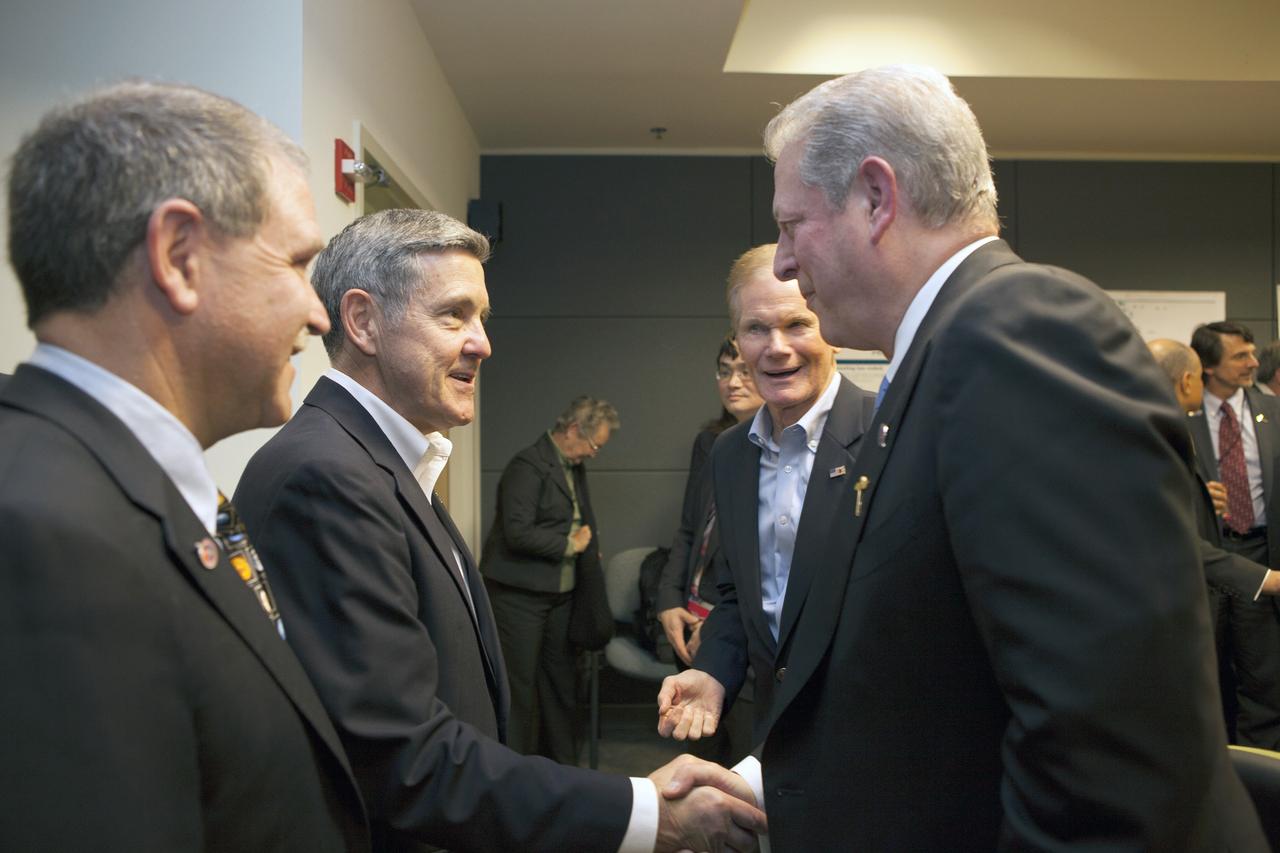
At NASA's Kennedy Space Center in Florida, former Vice President Al Gore, right, shakes the hand of Center Director Bob Cabana before a briefing on NOAA's Deep Space Climate Observatory mission, or DSCOVR. Joining them are John Grunsfeld, left, NASA associate administrator for the Science Mission Directorate, and Sen. Bill Nelson. DSCOVR will launch aboard a SpaceX Falcon 9 rocket. The mission is a partnership between NOAA, NASA and the U.S. Air Force. DSCOVR will maintain the nation's real-time solar wind monitoring capabilities which are critical to the accuracy and lead time of NOAA's space weather alerts and forecasts. To learn more about DSCOVR, visit http://www.nesdis.noaa.gov/DSCOVR. Photo credit: NASA/Kim Shiflett

CAPE CANAVERAL, Fla. – Preparations to launch NOAA’s Deep Space Climate Observatory spacecraft, or DSCOVR, near completion in the Building 1 high bay of the Astrotech payload processing facility in Titusville, Florida, near Kennedy Space Center. DSCOVR is a partnership between NOAA, NASA and the U.S. Air Force. DSCOVR will maintain the nation's real-time solar wind monitoring capabilities which are critical to the accuracy and lead time of NOAA's space weather alerts and forecasts. Launch is targeted for no earlier than Feb. 8 aboard a SpaceX Falcon 9 v 1.1 launch vehicle from Cape Canaveral Air Force Station, Florida. To learn more about DSCOVR, visit http://www.nesdis.noaa.gov/DSCOVR. Photo credit: NASA/Kim Shiflett