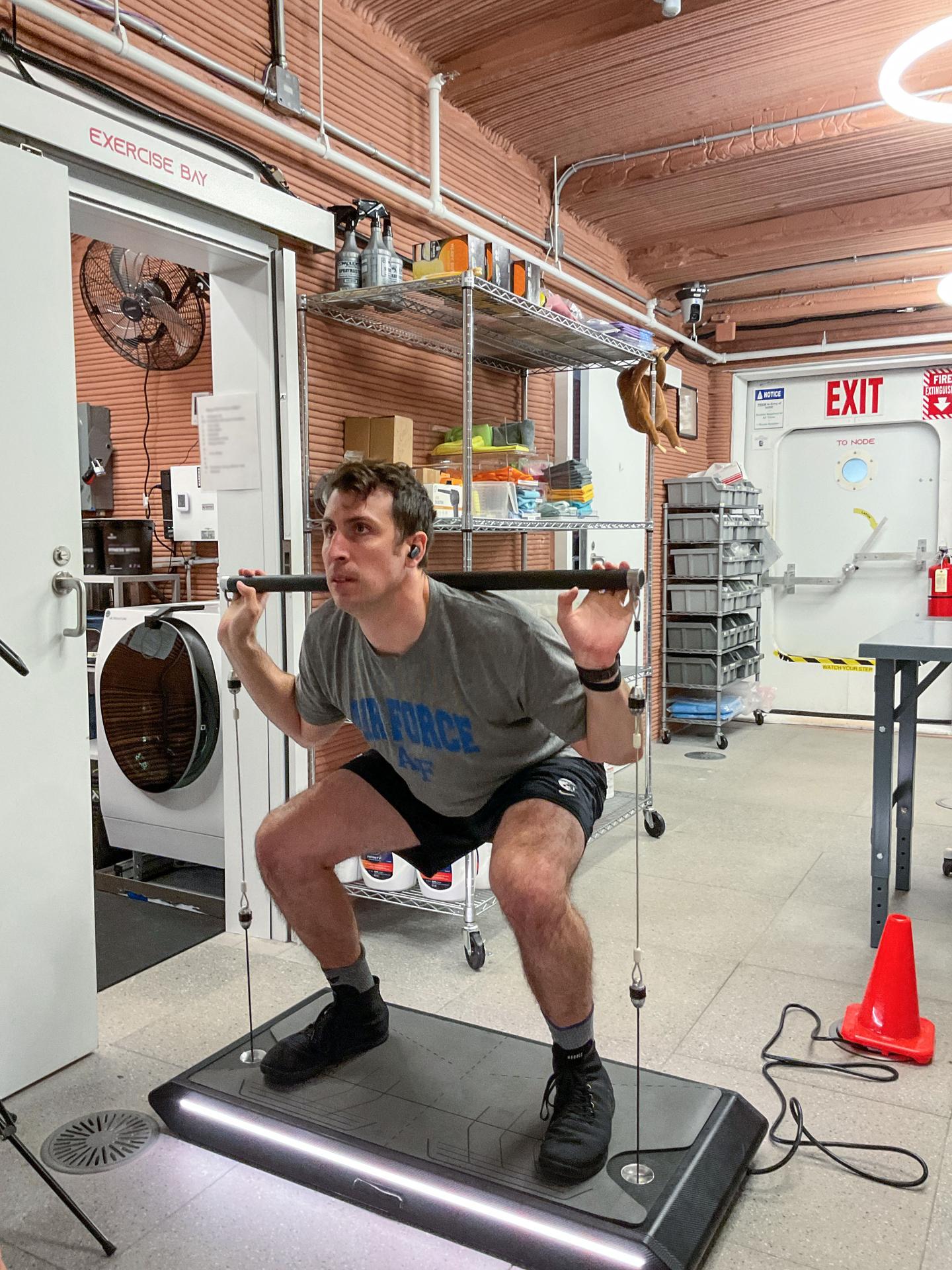
jsc2026e403155 (Oct. 25, 2025) -- Crew Health and Performance Exploration Analog (CHAPEA) mission 2 commander, Ross Elder, exercising in the habitat. Credit: NASA
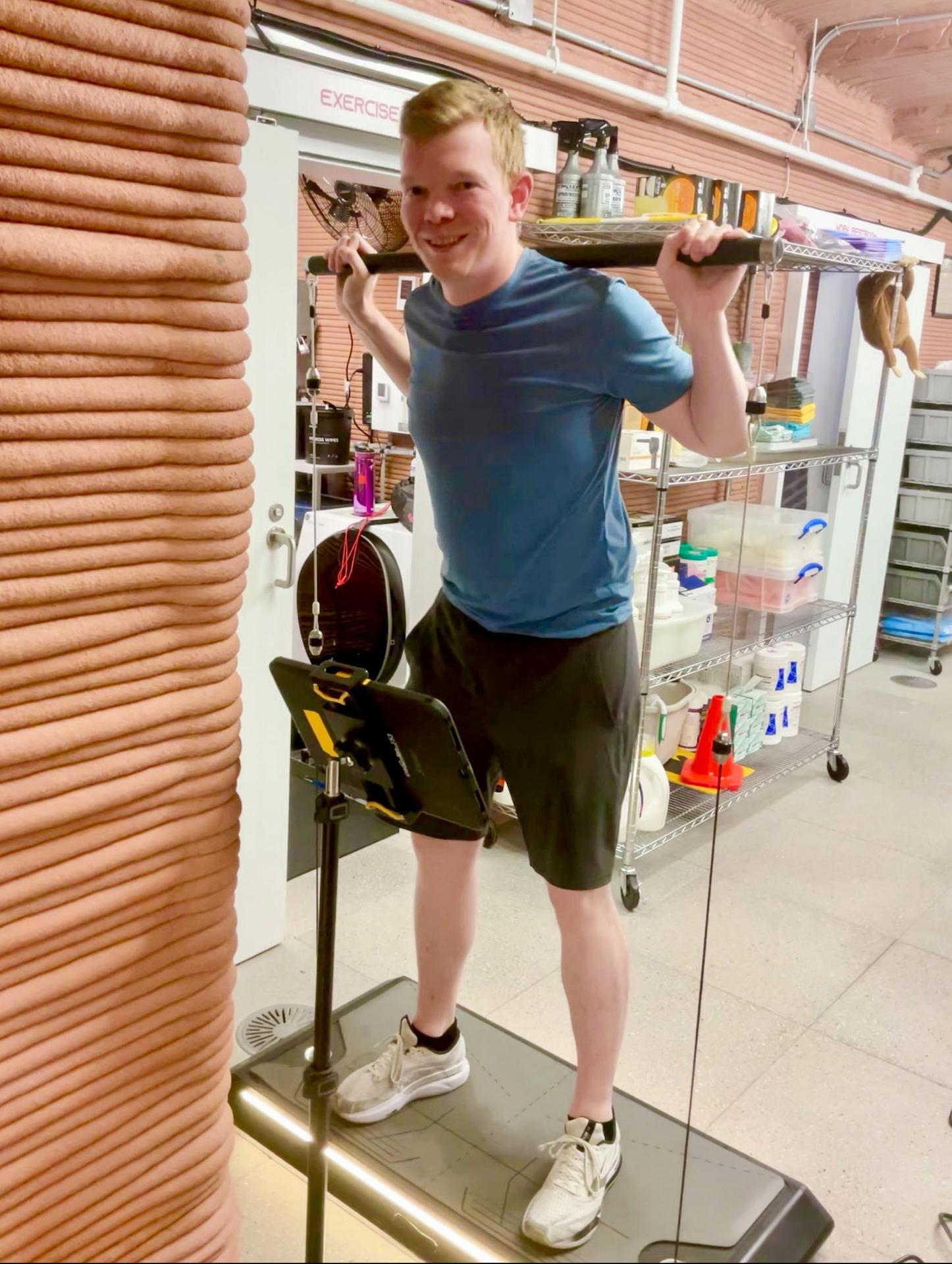
jsc2026e403158 (Oct. 25, 2025) -- Crew Health and Performance Exploration Analog (CHAPEA) mission 2 flight engineer, James Spicer, exercising in the habitat. Credit: NASA
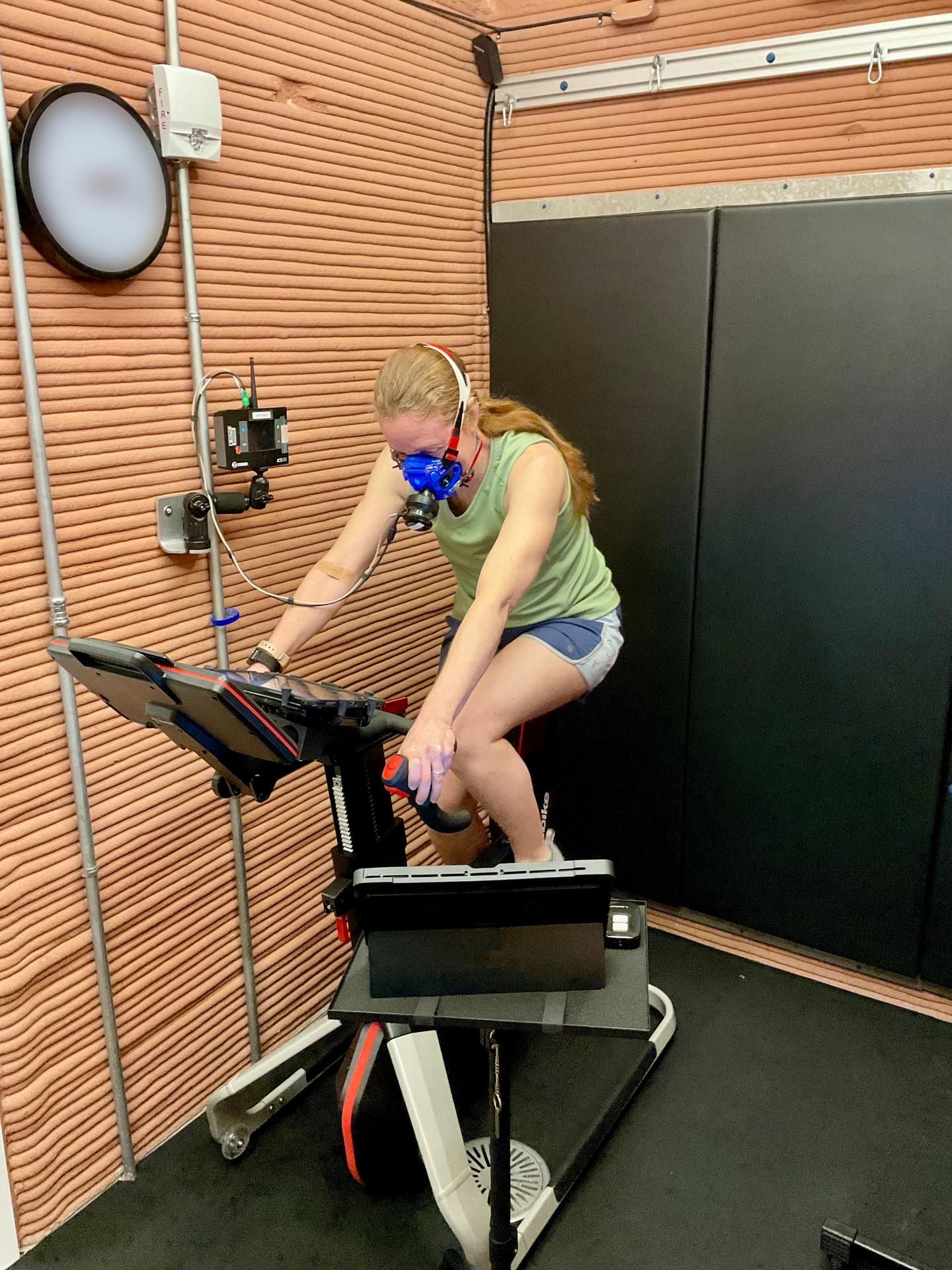
jsc2026e403179 (May 20, 2026) -- Ellen Ellis, Crew Health and Performance Exploration Analog (CHAPEA) Mission 2 medical officer, conducting exercise performance testing. Credit: NASA
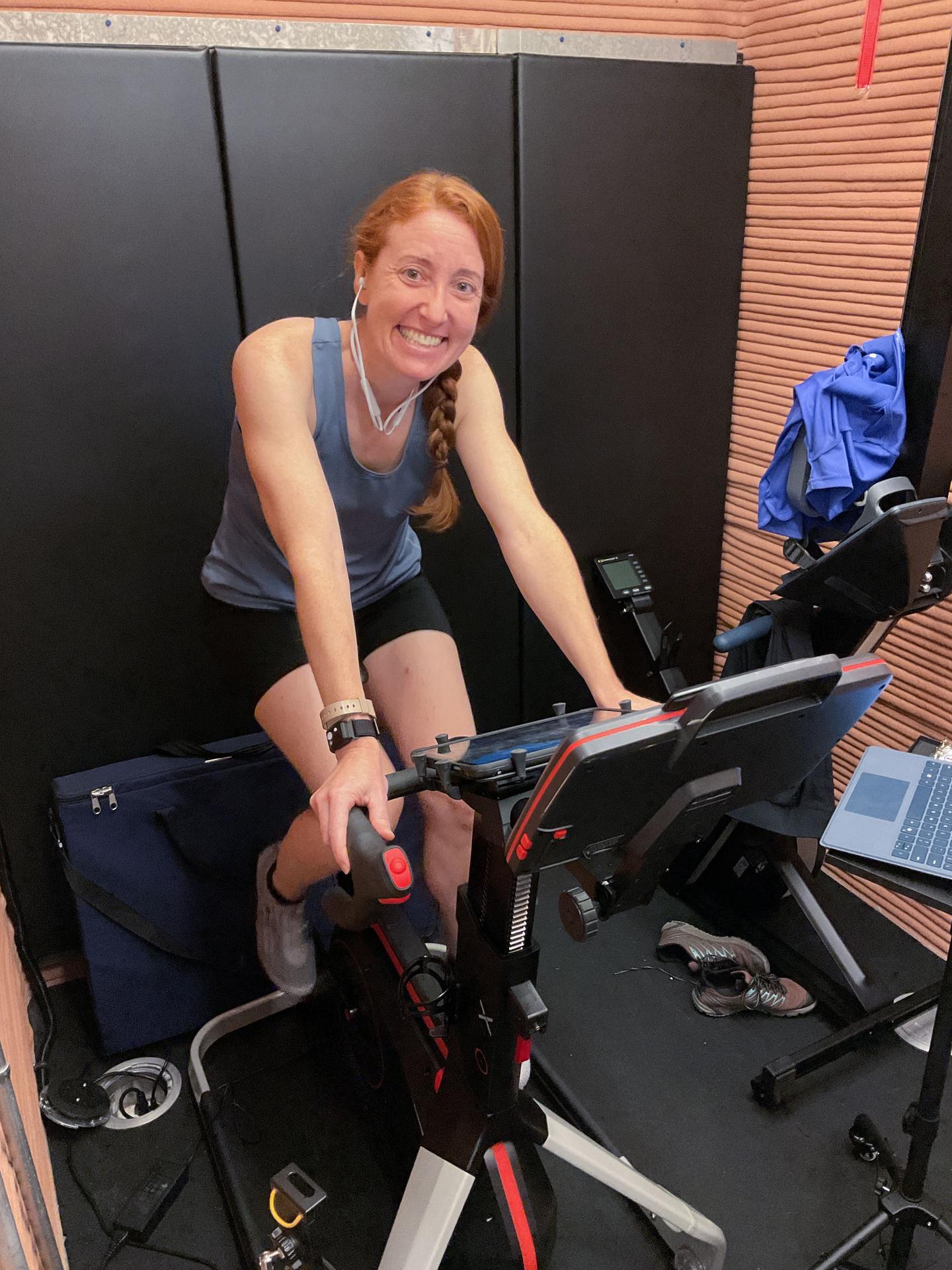
jsc2026e403156 (Oct. 25, 2025) -- Crew Health and Performance Exploration Analog (CHAPEA) mission 2 medical officer, Ellen Ellis, exercising in the habitat using a stationary bike. Credit: NASA
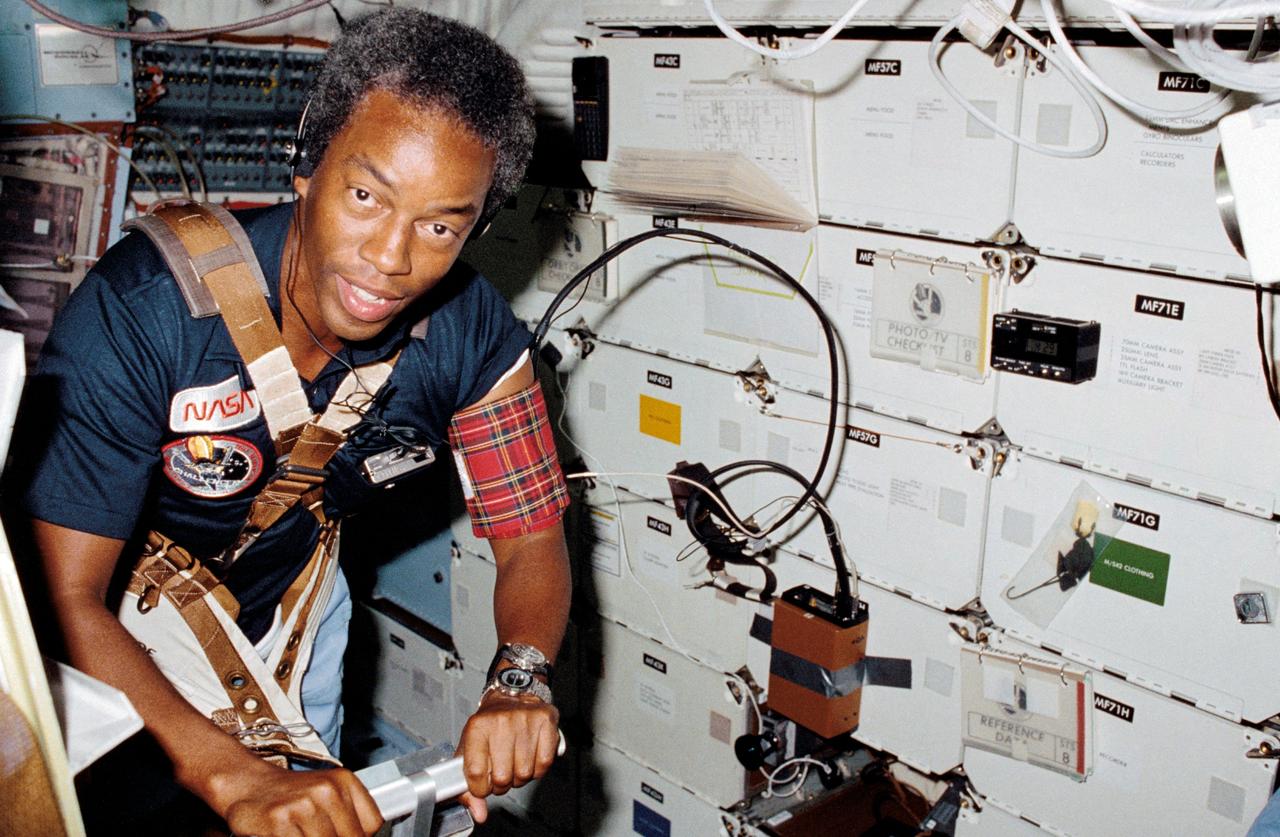
STS008-13-0361 (30 Aug.-5 Sept. 1983) --- Astronaut Guion S. Bluford, STS-8 mission specialist, assists Dr. William E. Thornton (out of frame) with a medical test that requires use of the treadmill exercising device designed for spaceflight by the STS-8 medical doctor. This frame was shot with a 35mm camera. Photo credit: NASA
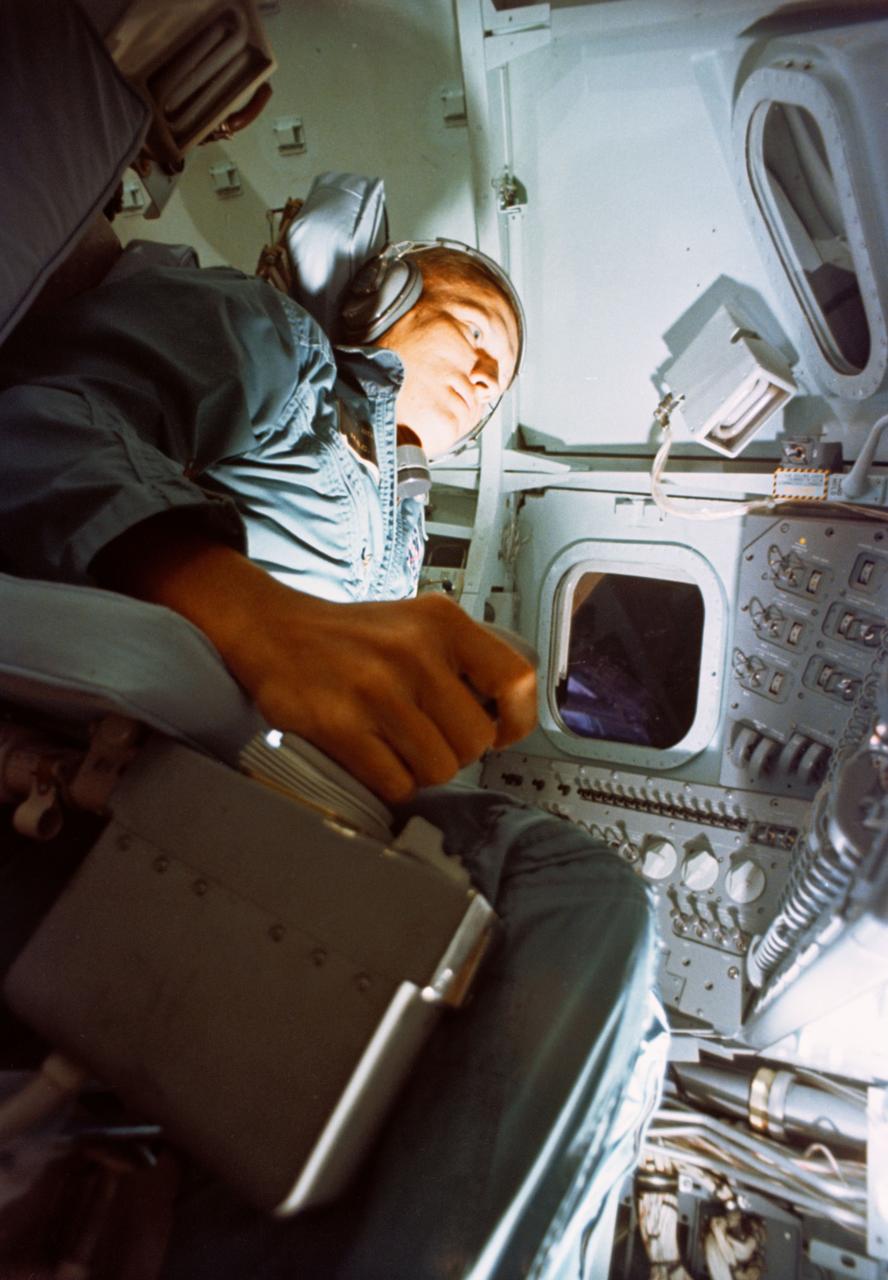
S67-50590 (1867) --- Astronaut Frank Borman, assigned duty as commander of the Apollo 8 mission, participates in a training exercise in the Apollo Mission simulator in the Mission Simulation and training Facility, Building 5, at the Manned Spacecraft Center, Houston, Texas. Photo credit: NASA
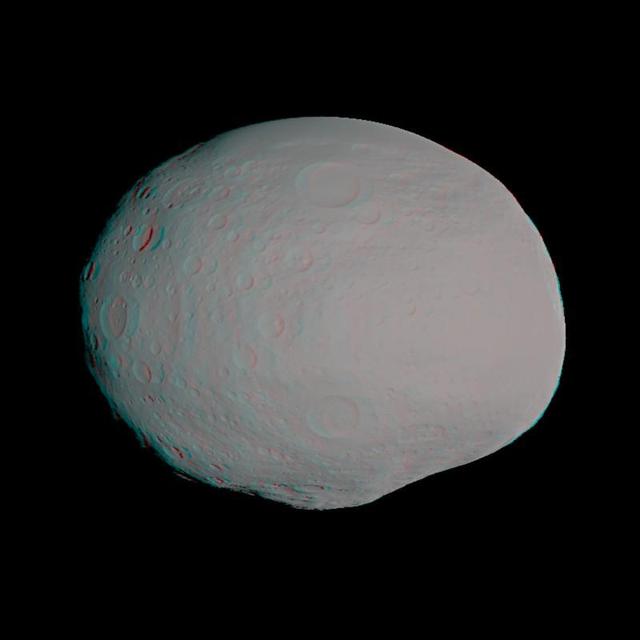
This anaglyph shows a 3-D model of the protoplanet Vesta, using scientists best guess to date of what the surface of the protoplanet might look like. It was created as part of an exercise for NASA Dawn mission. 3D glasses are necessary.
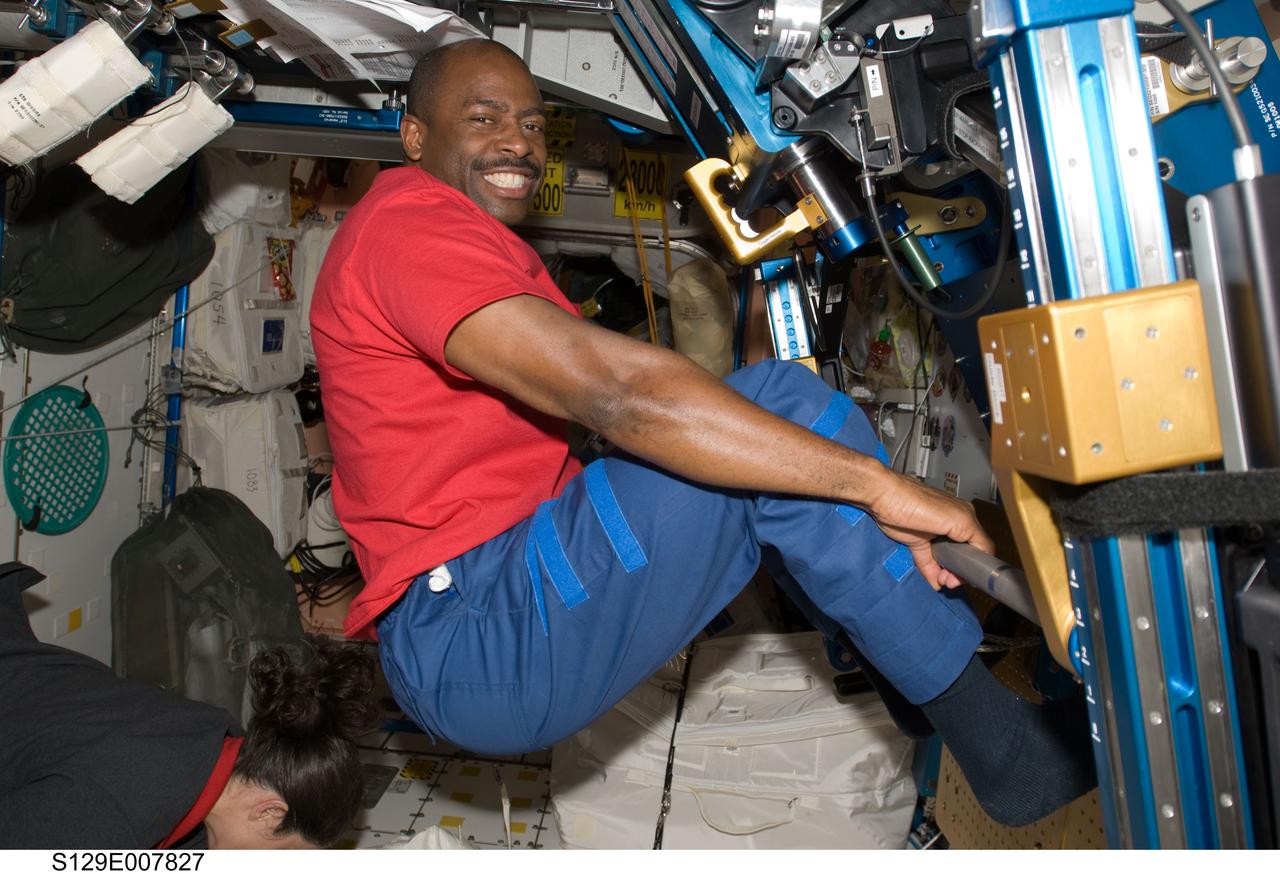
S129-E-007827 (22 Nov. 2009) --- Astronaut Leland Melvin, STS-129 mission specialist, exercises using the advanced Resistive Exercise Device (aRED) in the Unity node of the International Space Station while space shuttle Atlantis remains docked with the station.
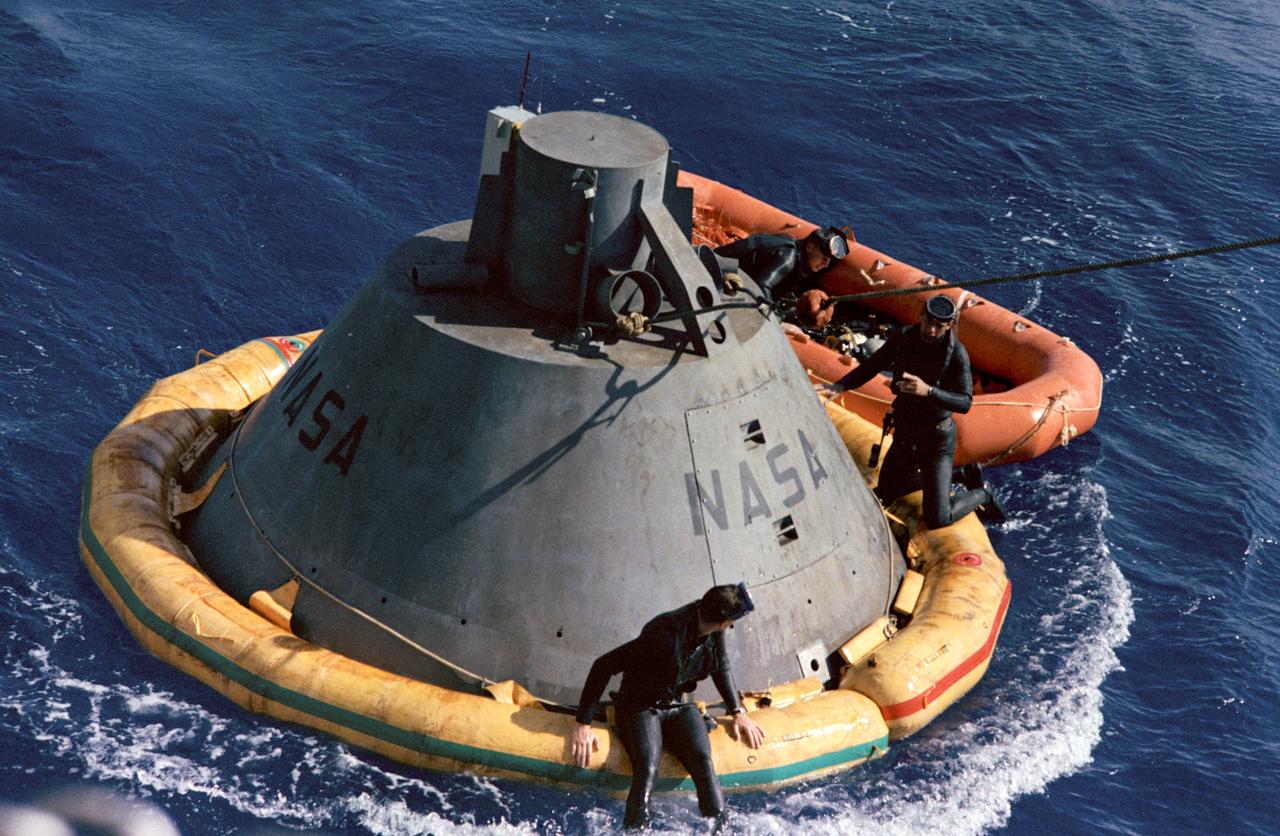
Apollo command module boilerplate floats in the Atlantic Ocean during a practice recovery exercise. Frogmen in a liferaft and on the flotation collar secure the command module boilerplate for hoisting onto a nearby recovery ship. The exercise was conducted in preparation for the forthcoming Apollo-Saturn 201 (AS-201) mission.
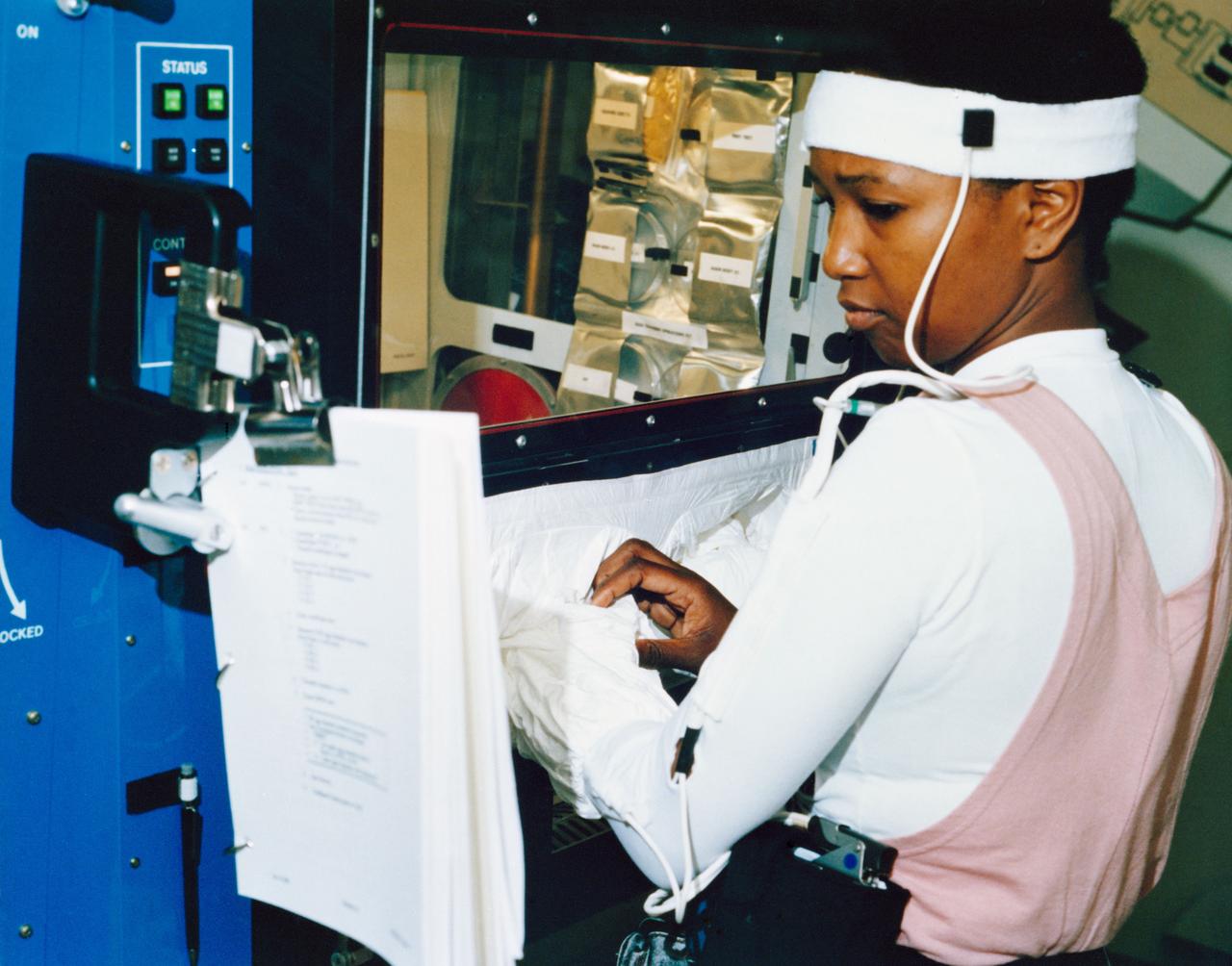
S92-45761 --- Astronaut Mae C. Jemison, mission specialist for the STS-47 mission, participates in a training exercise at the Johnson Space Center. Photo credit: NASA
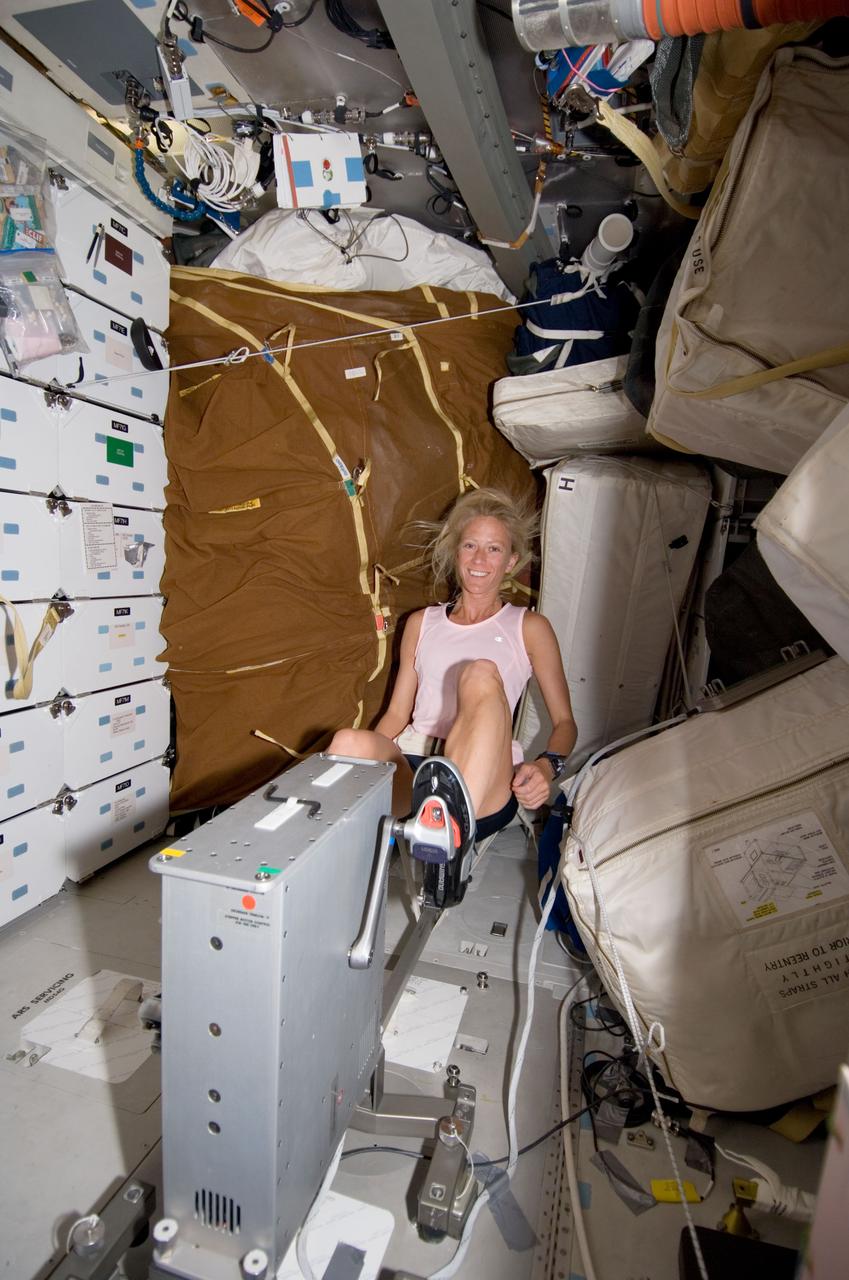
S124-E-005447 (1 June 2008) --- Astronaut Karen Nyberg, STS-124 mission specialist, exercises on the bicycle ergometer on the middeck of Space Shuttle Discovery.
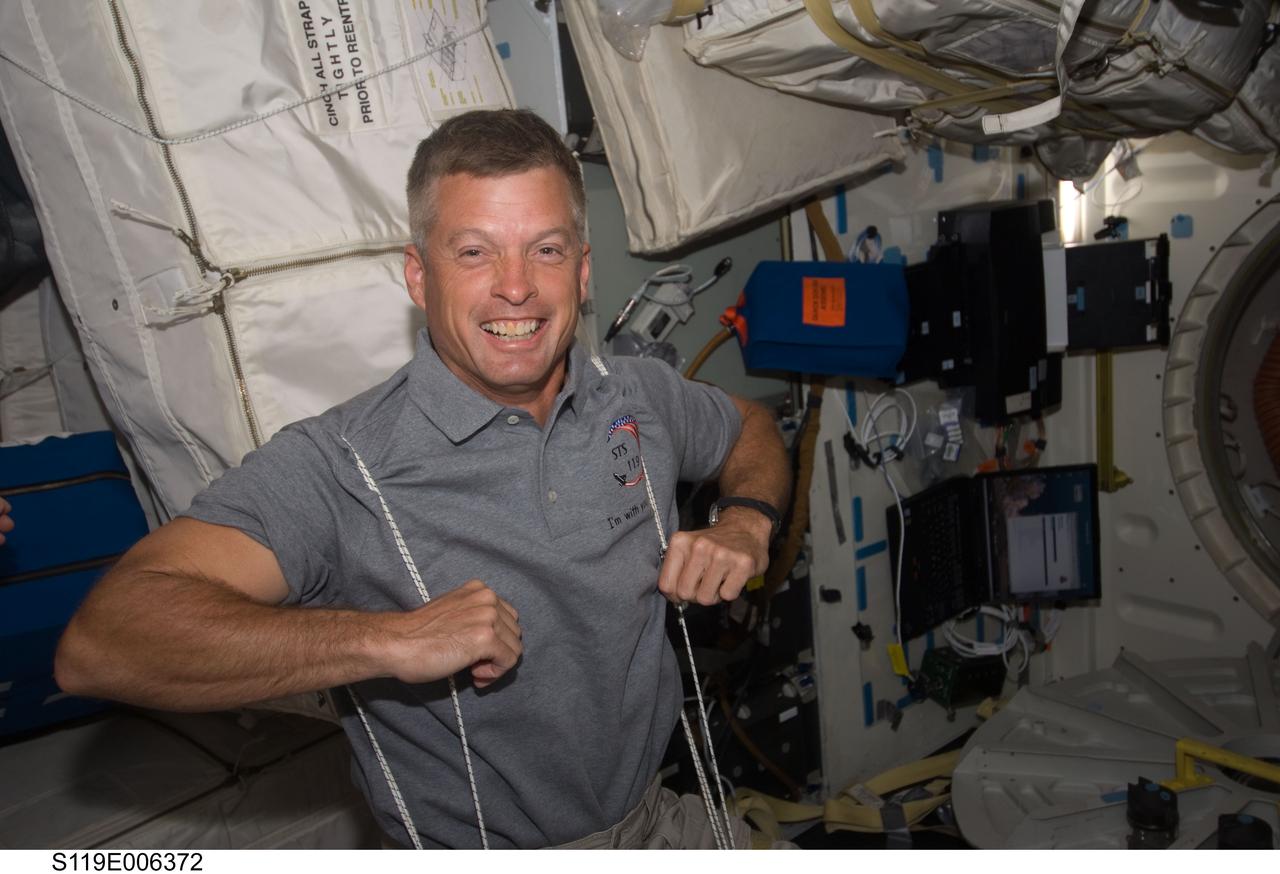
S119-E-006372 (17 March 2009) --- Astronaut Steve Swanson, STS-119 mission specialist, exercises on the middeck of Space Shuttle Discovery.
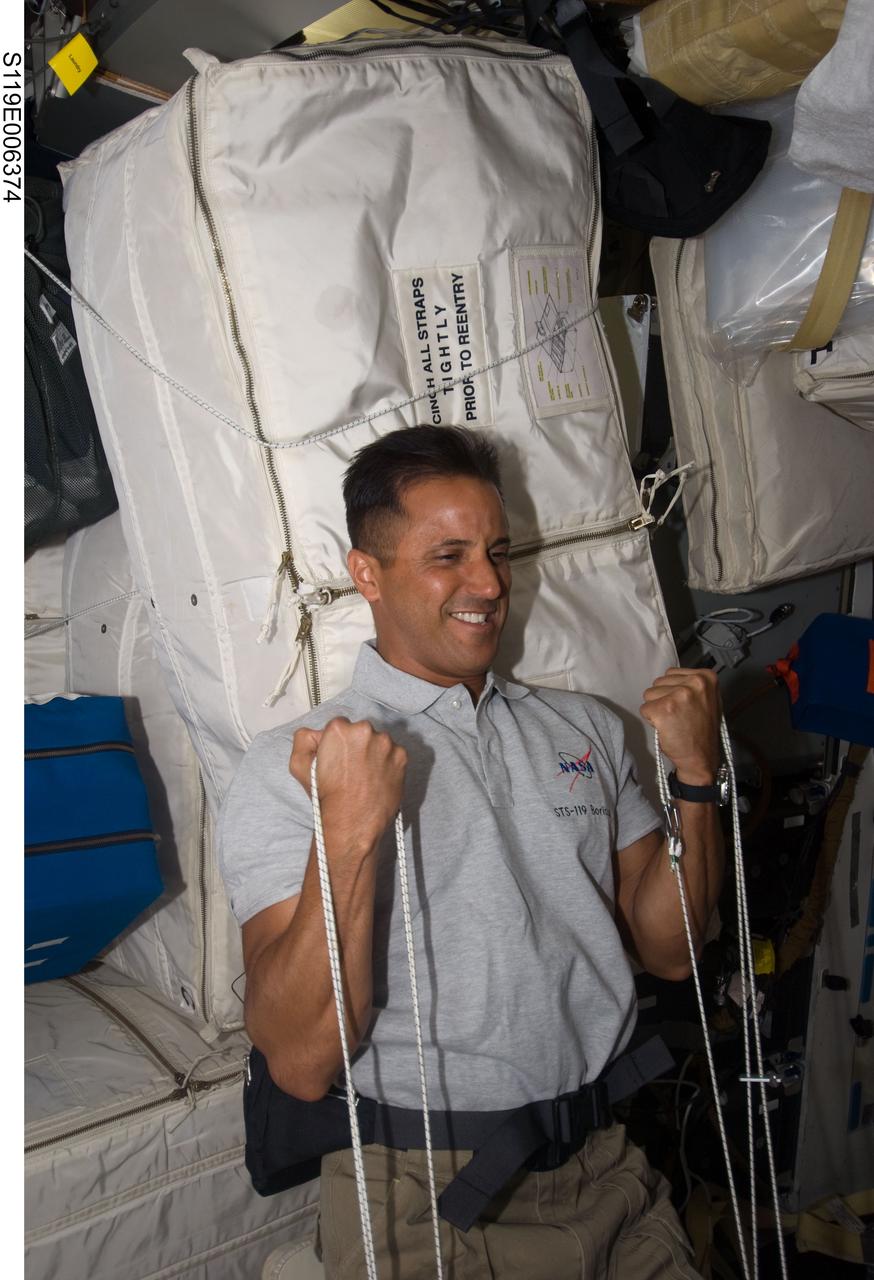
S119-E-006374 (17 March 2009) --- Astronaut Joseph Acaba, STS-119 mission specialist, exercises on the middeck of Space Shuttle Discovery.
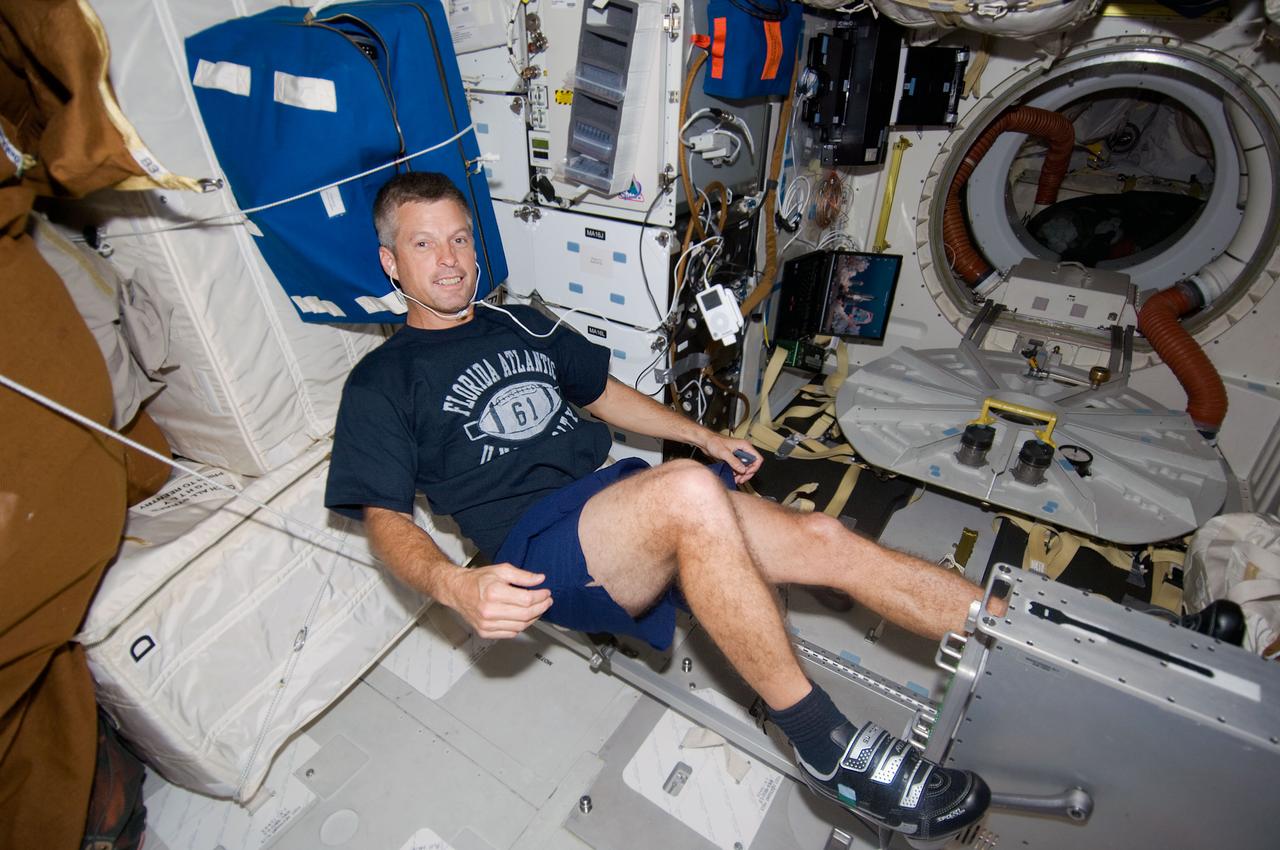
S119-E-010204 (26 March 2009) --- Astronaut Steve Swanson, STS-119 mission specialist, exercises on a bicycle ergometer on the middeck of Space Shuttle Discovery.
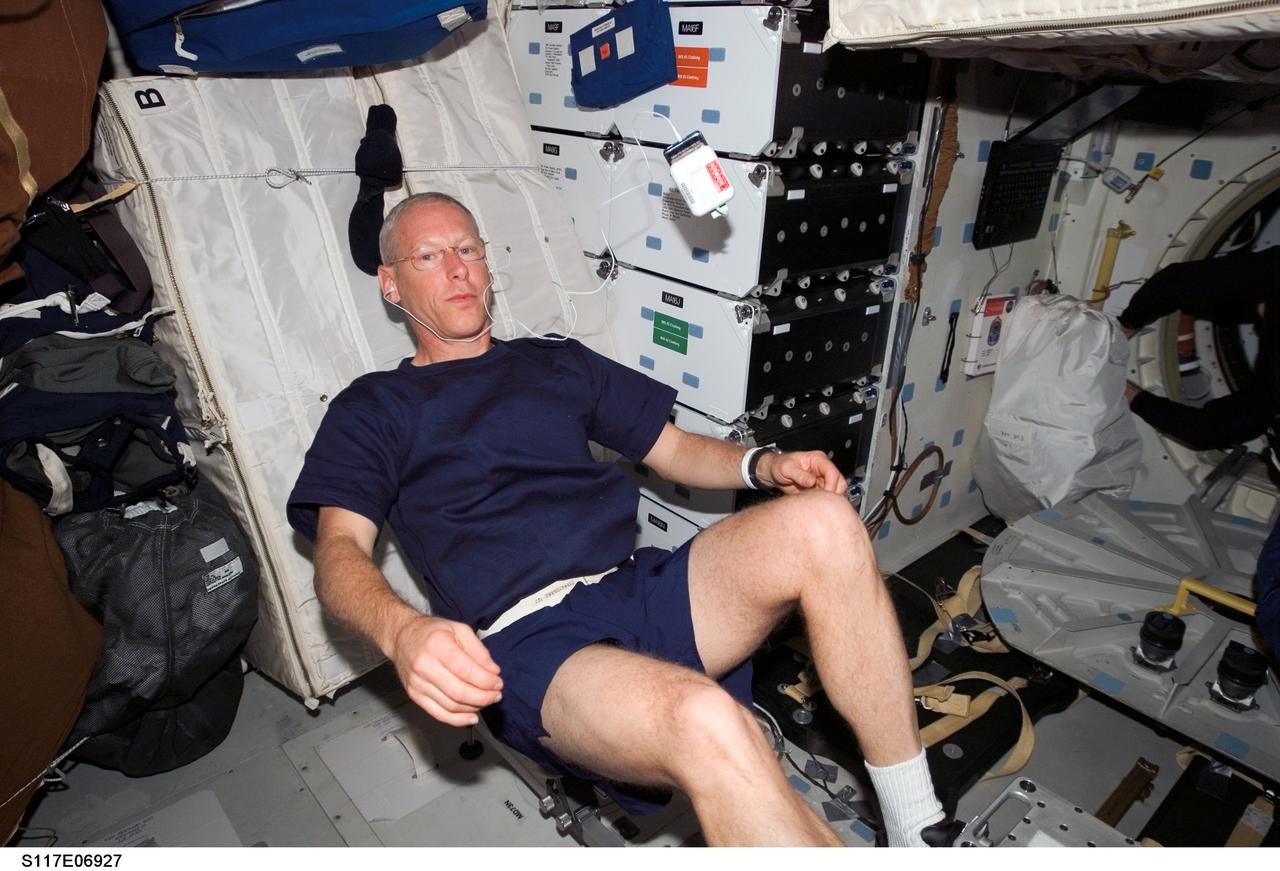
S117-E-06927 (10 June 2007) --- Astronaut Patrick Forrester, STS-117 mission specialist, exercises on a bicycle ergometer on the middeck of the Space Shuttle Atlantis.
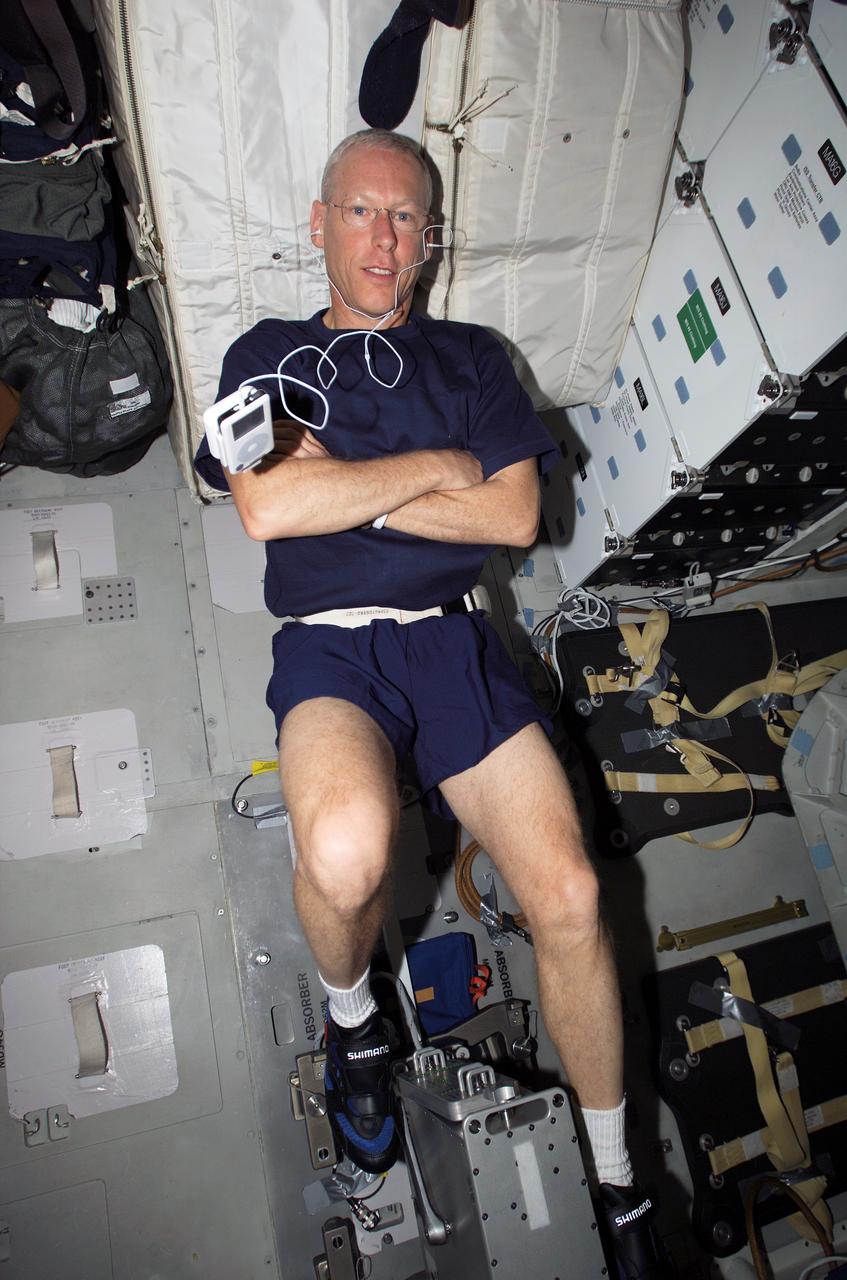
S117-E-06930 (10 June 2007) --- Astronaut Patrick Forrester, STS-117 mission specialist, exercises on a bicycle ergometer on the middeck of the Space Shuttle Atlantis.
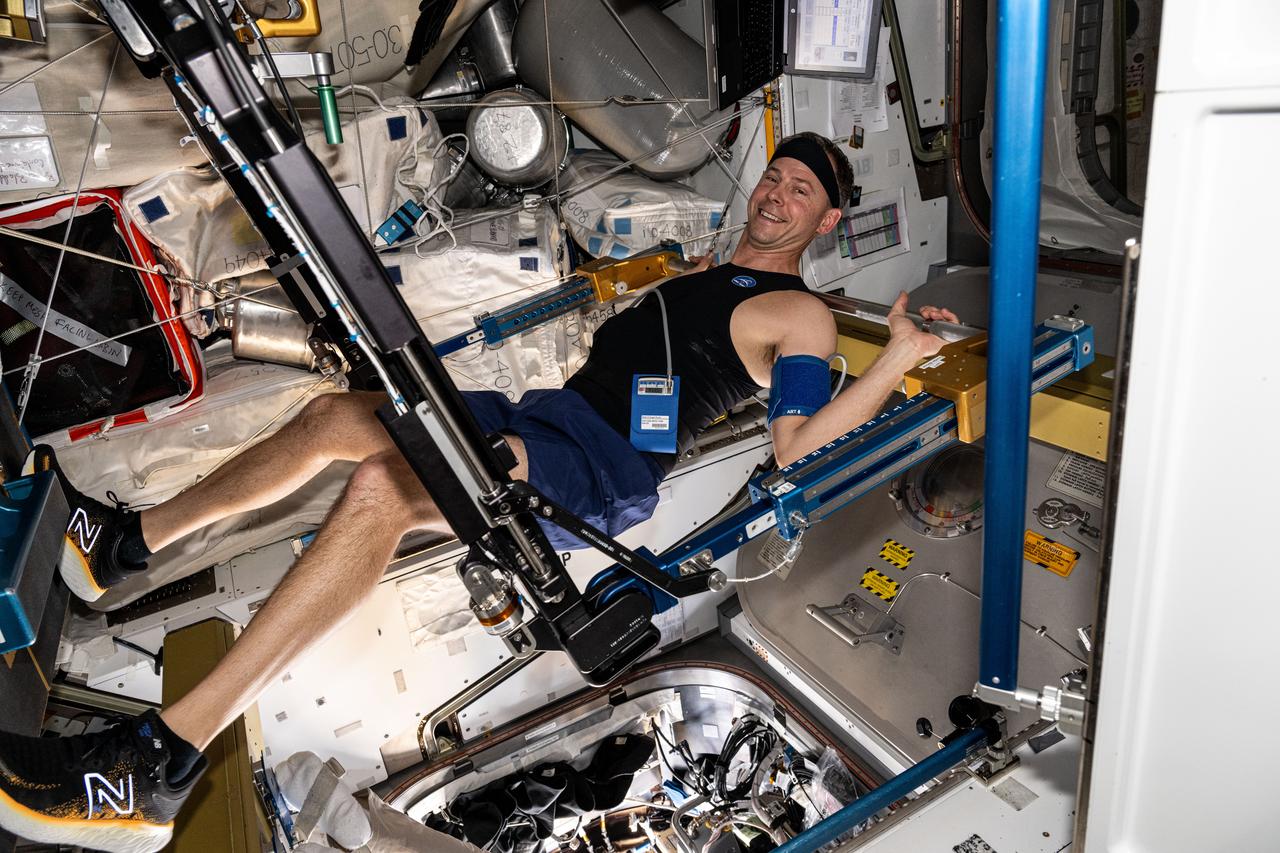
iss072e126509 (Oct. 29, 2024) --- NASA astronaut and Expedition 72 Flight Engineer Nick Hague exercises on the advanced resistive exercise device (ARED) aboard the International Space Station's Tranquility module. The ARED mimics the inertial forces of lifting free weights on Earth to maintain muscle health during long-term space missions. During his exercise session, Hague wore Bio-Monitor, a garment and headband set outfitted with sensors to collect physiological data and minimally interfere with space station life. Hague wore the garment 48 hours as part of Vascular Aging, a study that monitors an astronaut’s cardiovascular health in space.
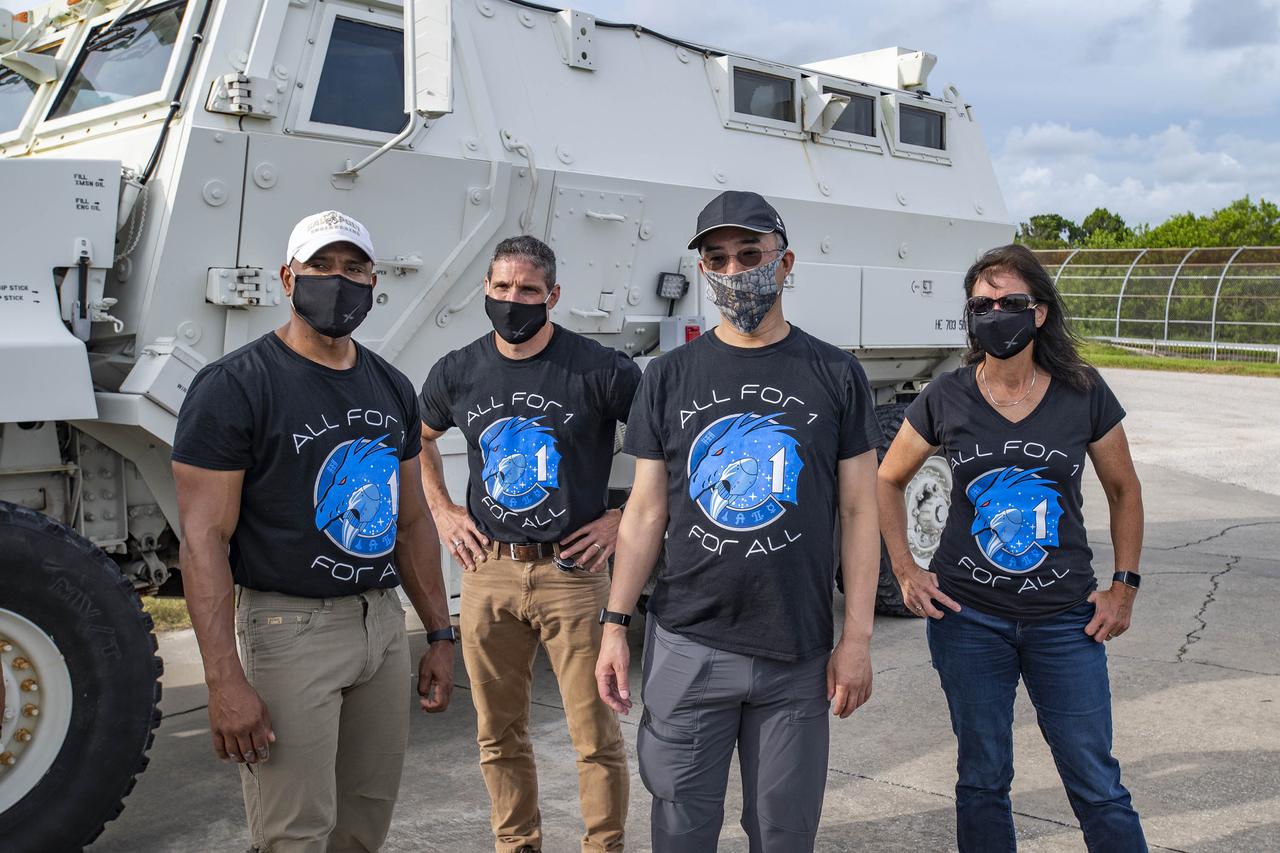
Pilot Victor Glover, spacecraft commander Michael Hopkins, mission specialist Soichi Noguchi, and mission specialist Shannon Walker participate in a SpaceX training exercise on July 22, 2020, at the agency’s Kennedy Space Center in Florida in preparation for NASA’s SpaceX Crew-1 mission. Glover, Hopkins, and Walker are all NASA astronauts; Noguchi is a Japan Aerospace Exploration Agency (JAXA) astronaut. The exercise involved simulating an emergency situation prior to liftoff at Kennedy’s Launch Complex 39A. Crew-1 will be the first operational mission to the International Space Station under NASA’s Commercial Crew Program, following the agency’s certification of SpaceX’s crew transportation system.
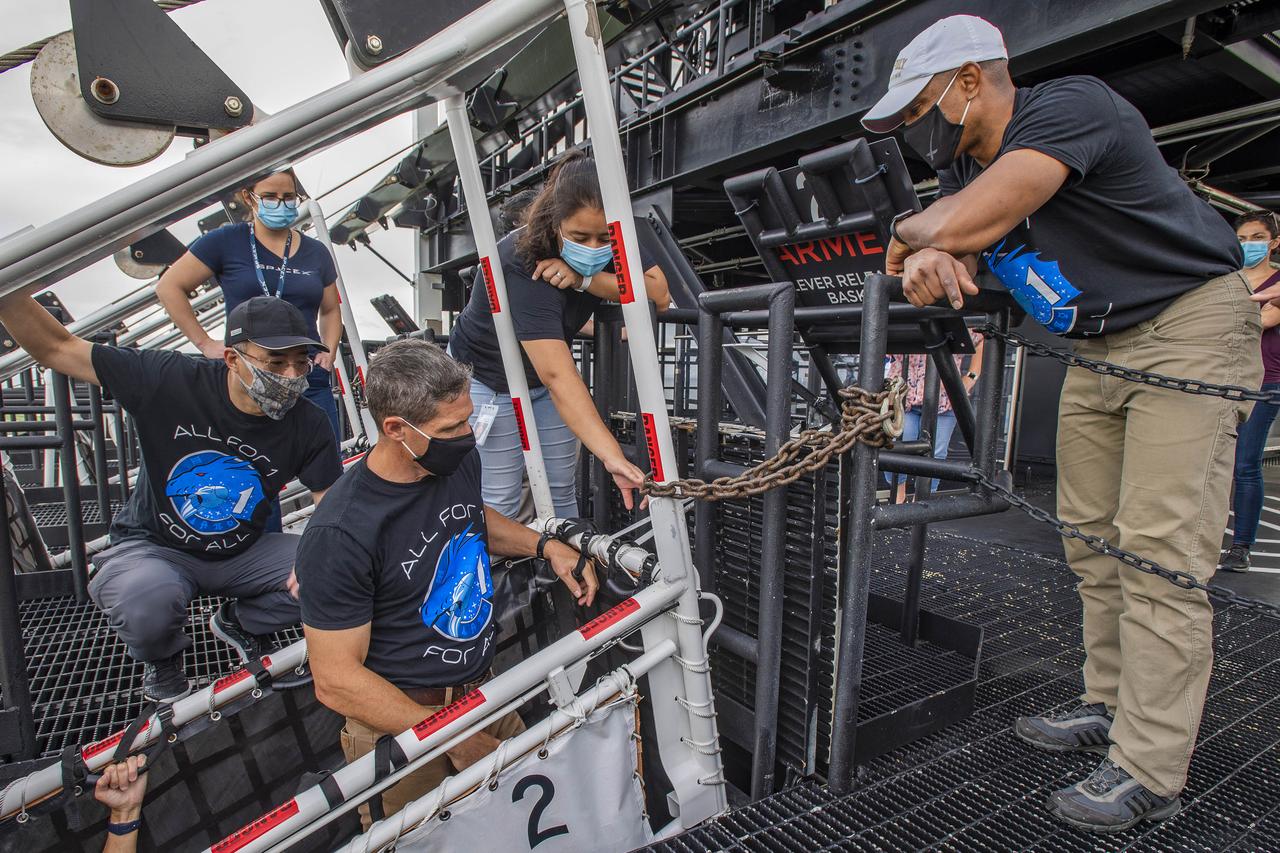
From left, Japan Aerospace Exploration Agency (JAXA) astronaut and mission specialist Soichi Noguchi, and NASA astronauts Michael Hopkins, spacecraft commander, and Victor Glover, pilot, participate in a SpaceX training exercise on July 22, 2020, at the agency’s Kennedy Space Center in Florida in preparation for NASA’s SpaceX Crew-1 mission. Also participating in the training but not pictured was NASA astronaut and mission specialist Shannon Walker. The exercise involved simulating an emergency situation prior to liftoff at Kennedy’s Launch Complex 39A. Crew-1 will be the first operational mission to the International Space Station under NASA’s Commercial Crew Program, following the agency’s certification of SpaceX’s crew transportation system.
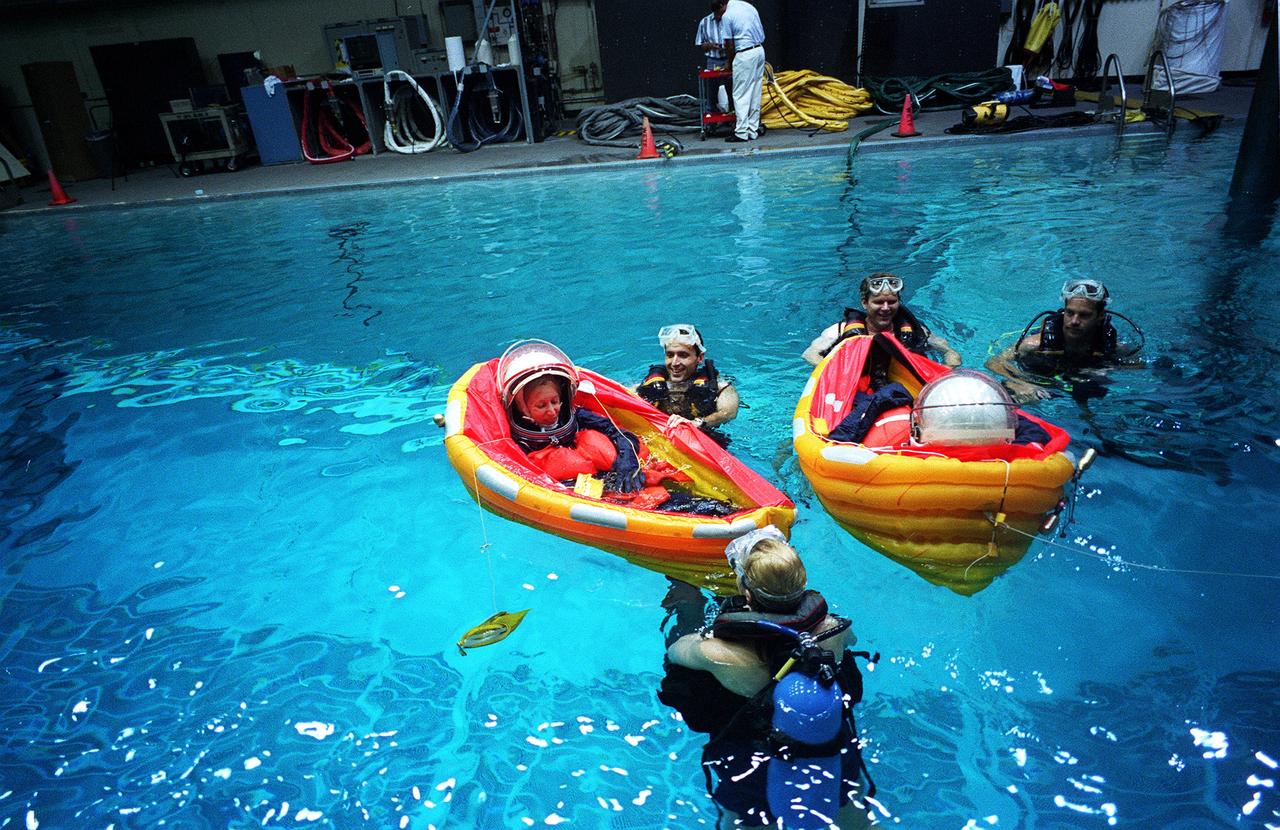
S96-15405 (26 Sept. 1996) --- In the Johnson Space Center's weightless environment training facility, astronaut Marsha S. Ivins, STS-81 mission specialist, bails water from her life raft during water bailout survival training. Astronaut Peter J.K. (Jeff) Wisoff (pictured in right raft) and four other STS-81 crewmates (out of frame) joined Ivins for the bailout training exercises. Several SCUBA-equipped divers assist in the training exercise.
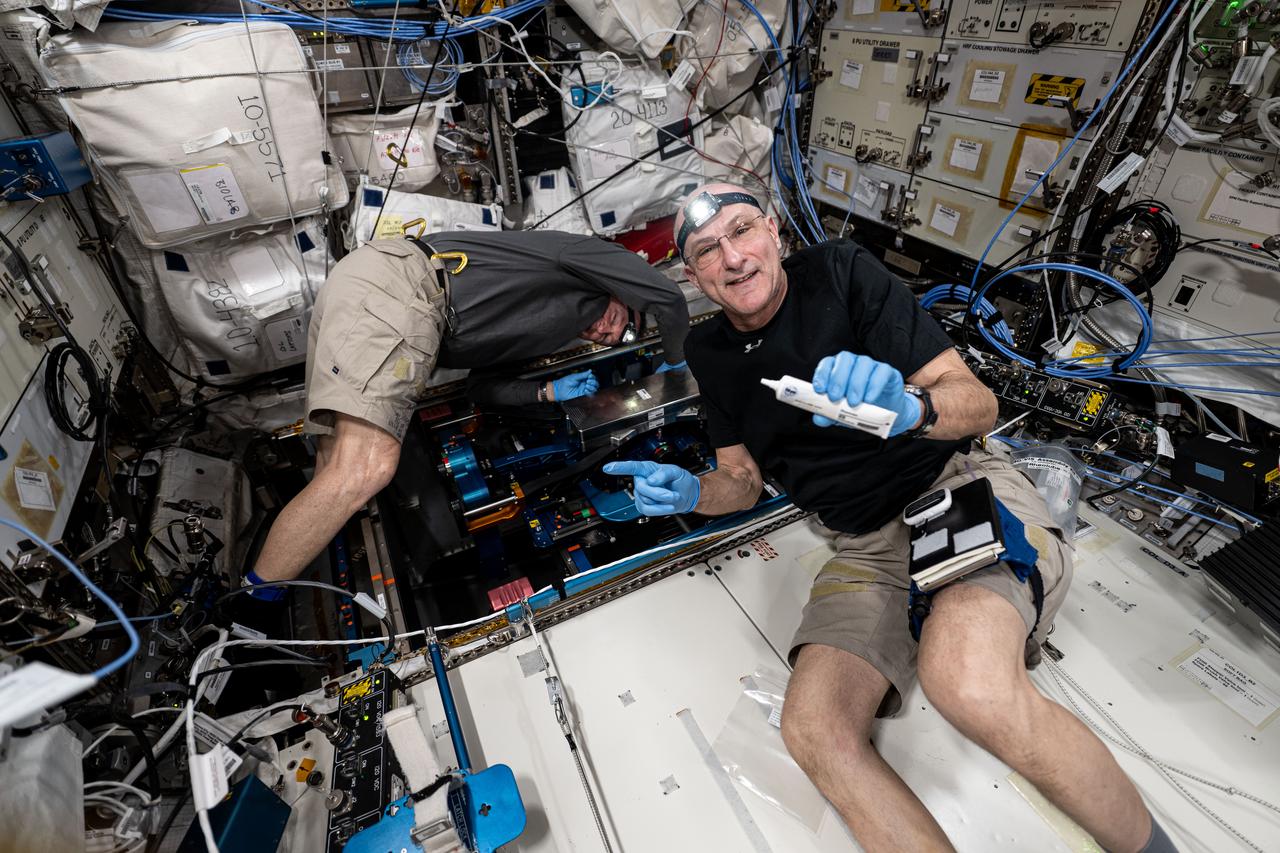
iss072e397047 (Dec. 19, 2024) --- NASA astronauts (from left) Butch Wilmore and Don Pettit, both Expedition 72 flight engineers, install the European Enhanced Exploration Exercise Device inside the International Space Station's Columbus laboratory module. The futuristic exercise gear will be tested by the station crew using its advanced bicycling, rowing, and resistive capabilities. The small and compact workout gear will be evaluated in the orbital outpost’s microgravity environment before being used on longer term missions to the Moon, Mars, and beyond.
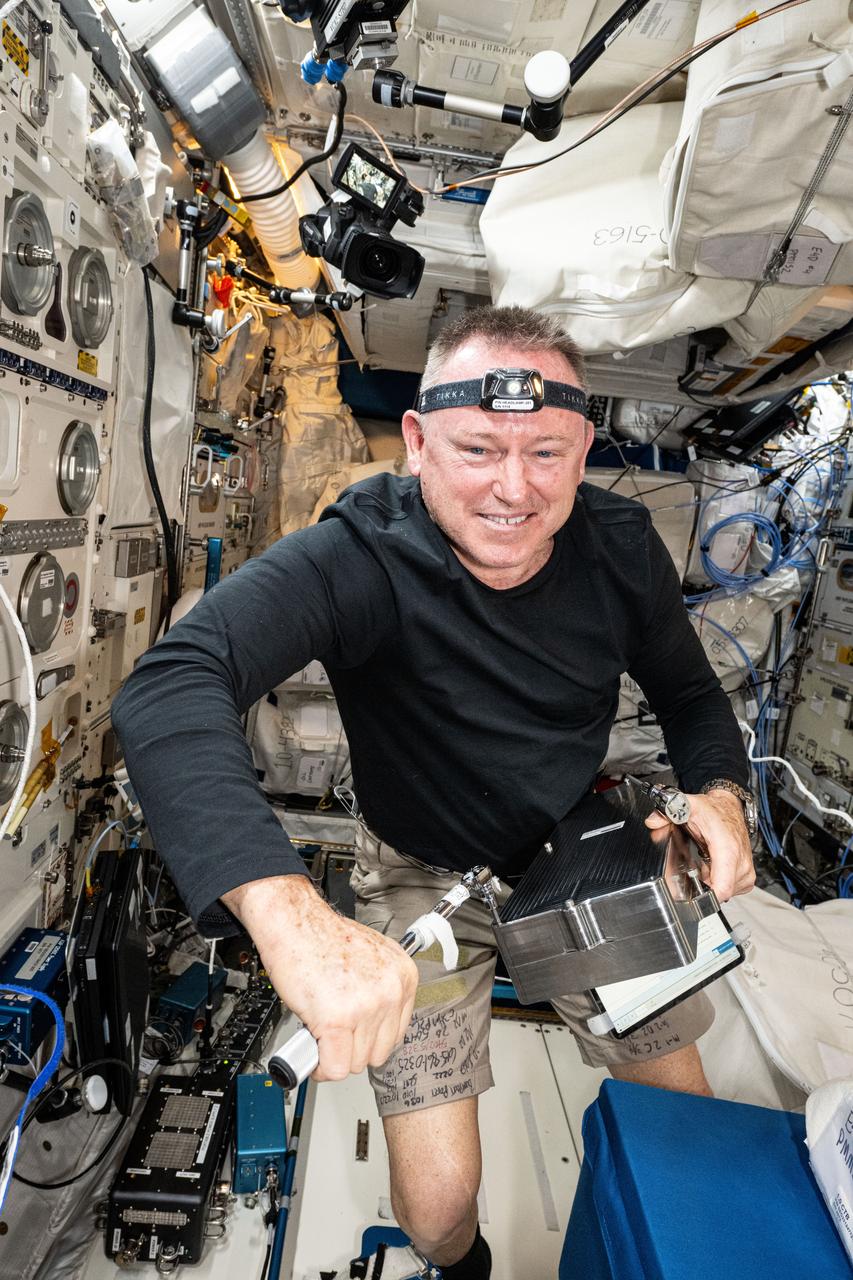
iss072e391444 (Dec. 18, 2024) --- NASA astronaut and Expedition 72 Flight Engineer Butch Wilmore works inside the International Space Station's Columbus laboratory module to begin installing the European Enhanced Exploration Exercise Device. The futuristic exercise gear will be tested by the station crew using its advanced bicycling, rowing, and resistive capabilities. The small and compact workout gear will be evaluated in the orbital outpost’s microgravity environment before being used on longer term missions to the Moon, Mars, and beyond.
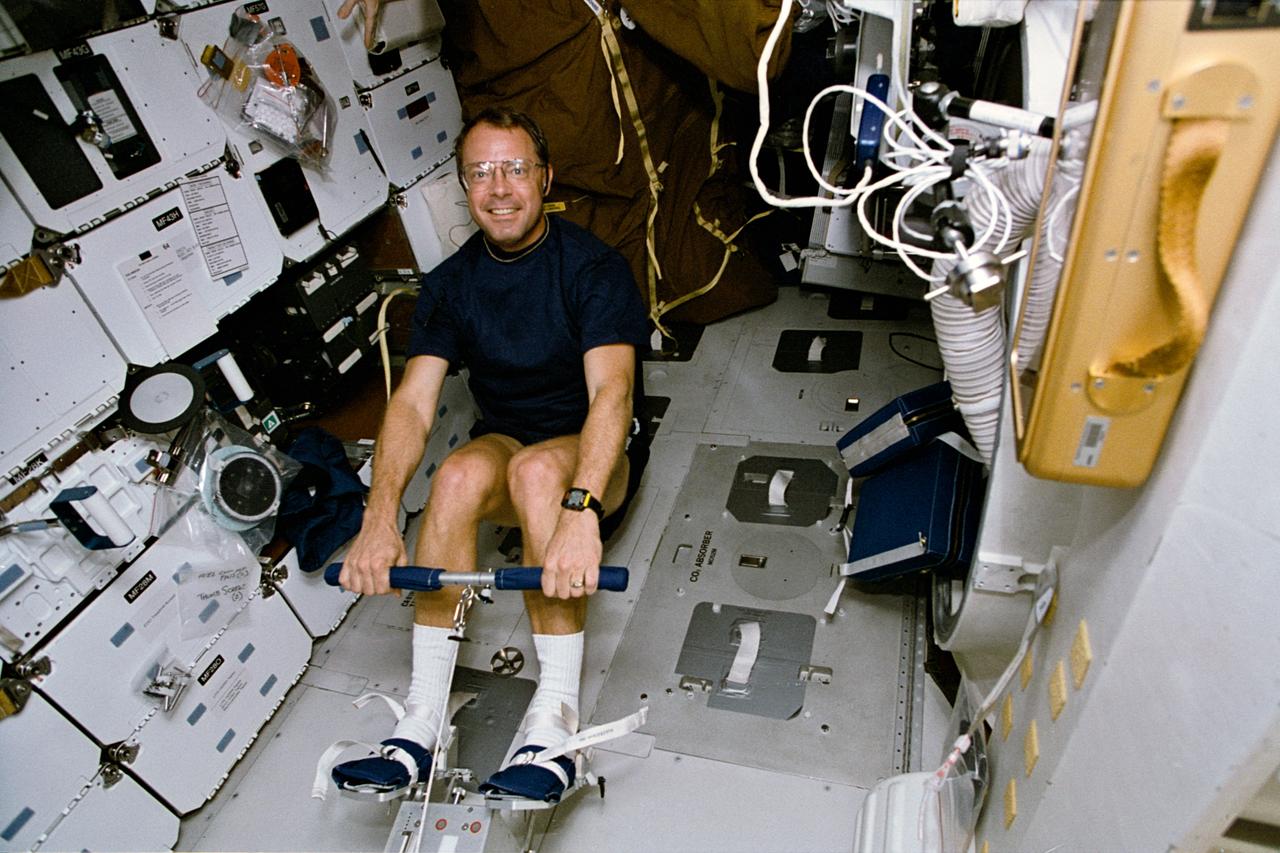
STS064-09-026 (9-20 Sept. 1994) --- Astronaut L. Blaine Hammond, STS-64 pilot, gets microgravity exercise on the rowing machine. This area of the space shuttle Discovery's middeck was also used for the treadmill exercising device. Blaine and five other NASA astronauts spent almost 11 days in Earth orbit in support of the mission. Photo credit: NASA or National Aeronautics and Space Administration
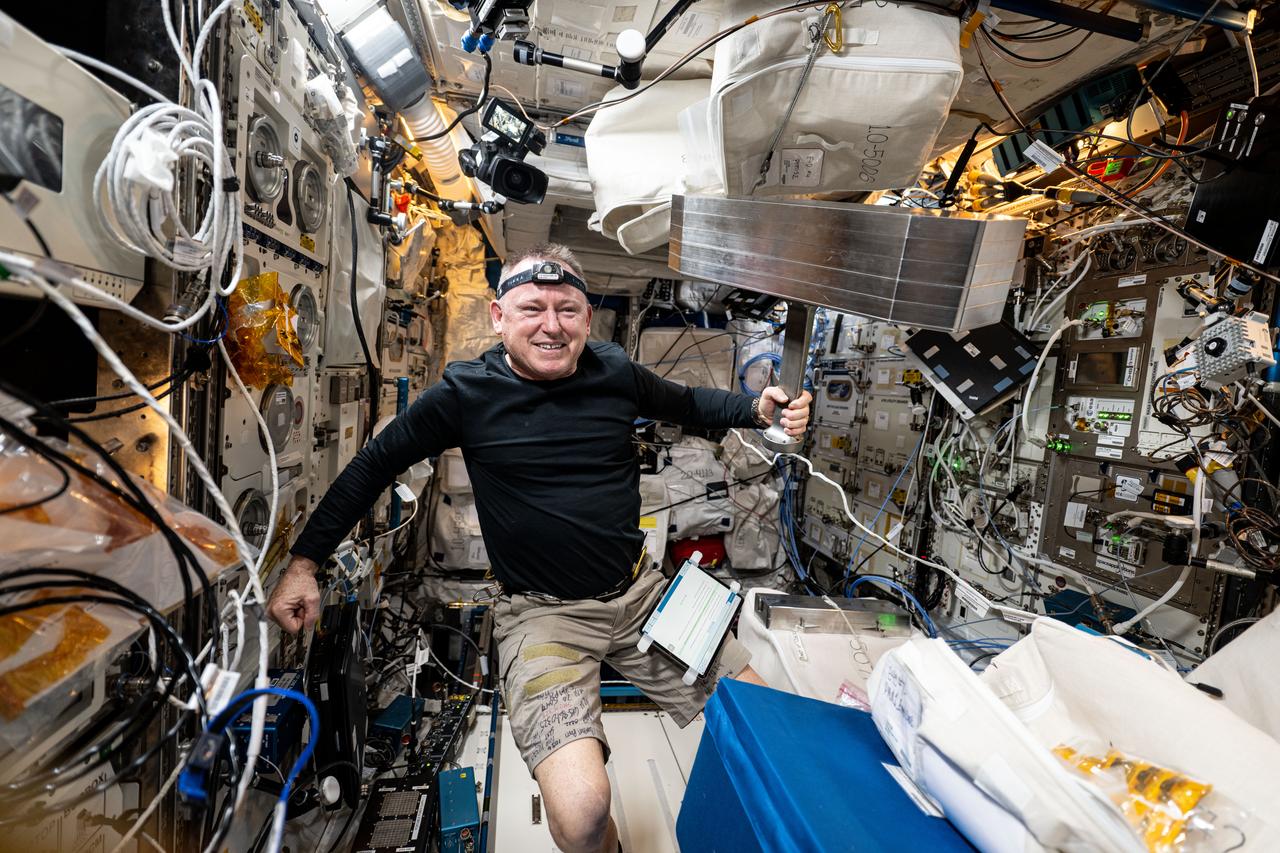
iss072e391382 (Dec. 18, 2024) --- NASA astronaut and Expedition 72 Flight Engineer Butch Wilmore works inside the International Space Station's Columbus laboratory module to begin installing the European Enhanced Exploration Exercise Device. The futuristic exercise gear will be tested by the station crew using its advanced bicycling, rowing, and resistive capabilities. The small and compact workout gear will be evaluated in the orbital outpost’s microgravity environment before being used on longer term missions to the Moon, Mars, and beyond.
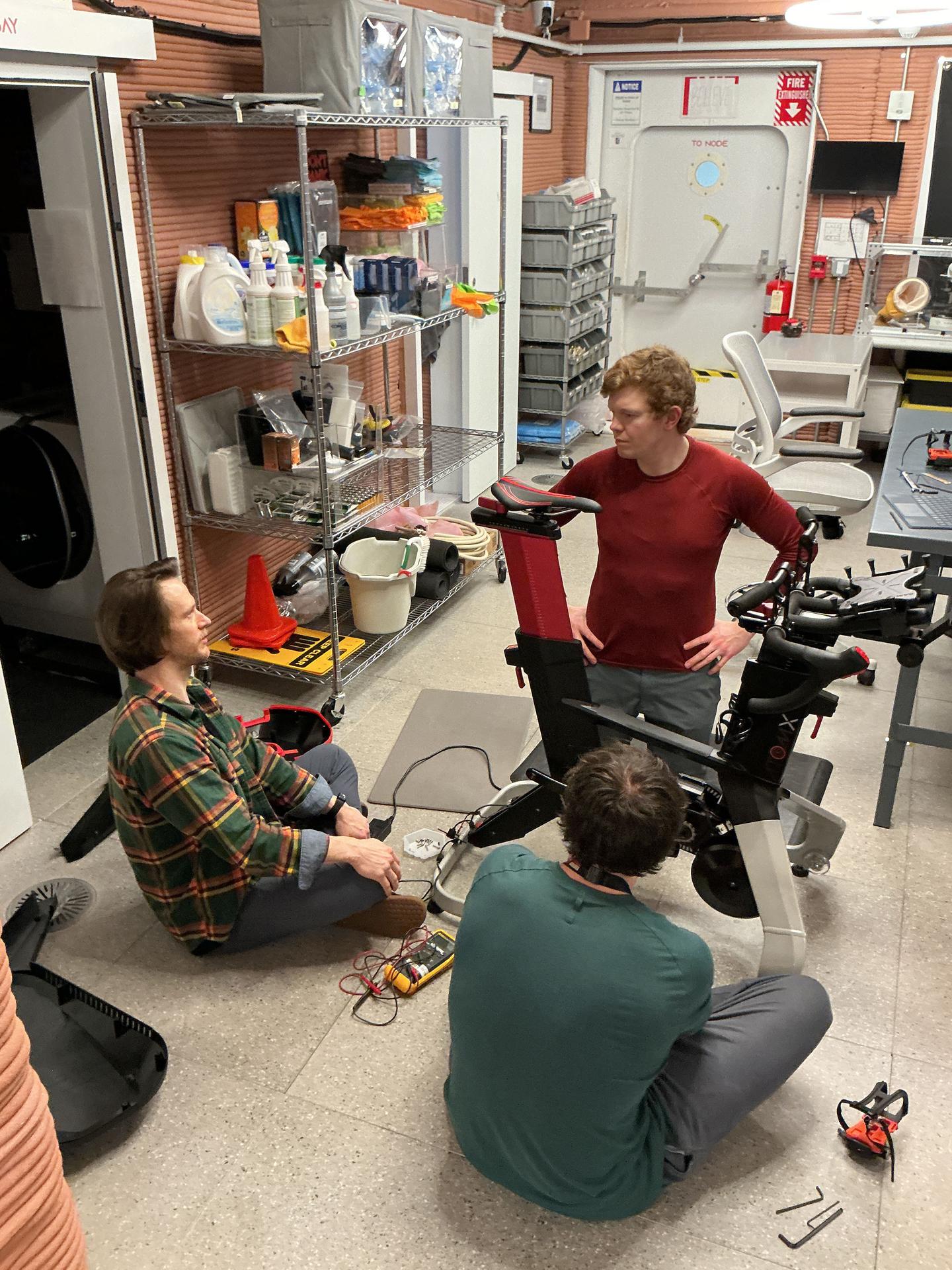
jsc2026e403173 (Feb. 25, 2026) -- CHAPEA mission 2 crew members perform a maintenance task on their stationary bike (clockwise from the left: Matthew Montgomery, James Spicer, Ross Elder). Credit: NASA

STS073-355-003 (20 October - 5 November 1995) --- Doing her version of "Look, Ma, no hands" is astronaut Catherine G. Coleman. The STS-73 mission specialist works out on the bicycle ergometer on the flight deck of the Earth-orbiting Space Shuttle Columbia. Coleman was one of five NASA astronauts who were joined by two guest researchers for 16 days of in-space research in support of the United States Microgravity Laboratory (USML-2) mission.
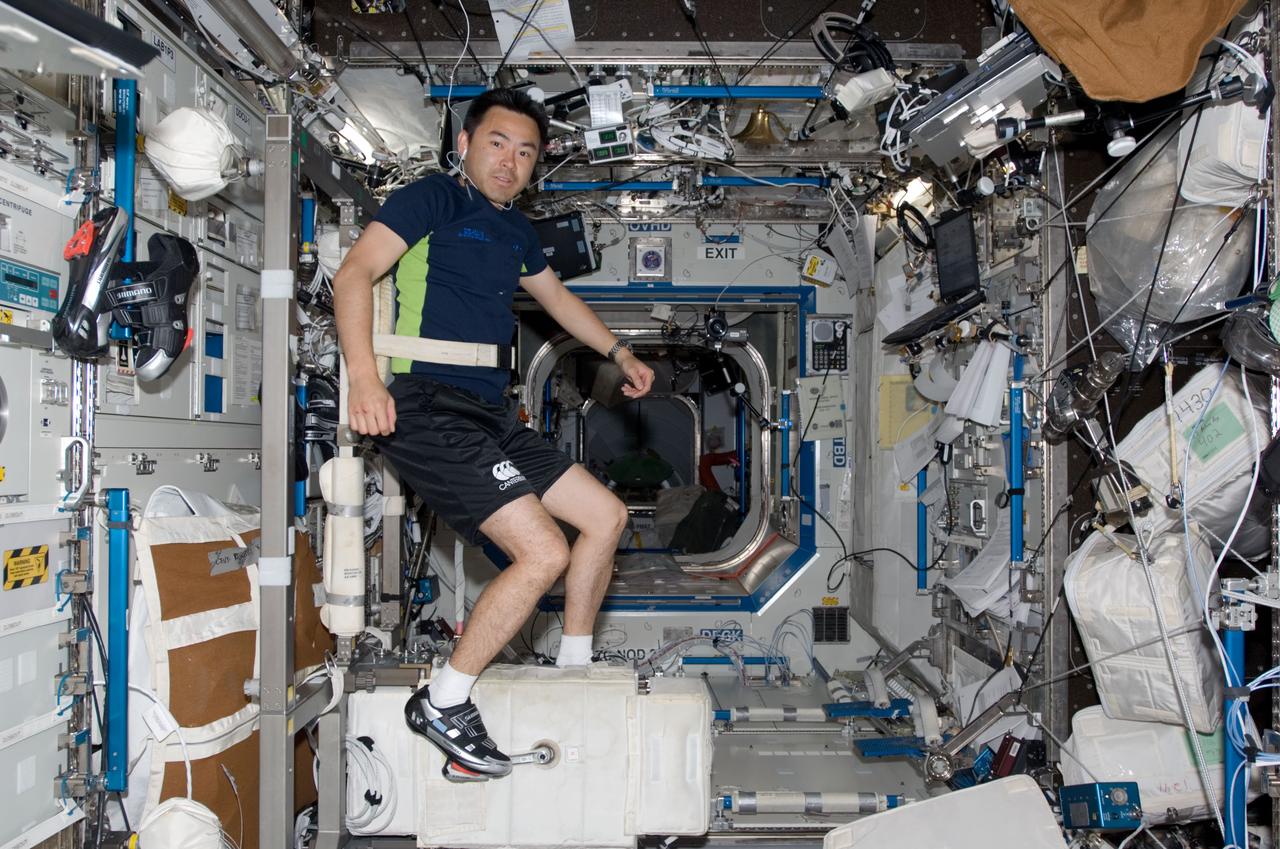
S124-E-007613 (7 June 2008) --- JAXA astronaut Akihiko Hoshide, STS-124 mission specialist, exercises on the Cycle Ergometer in the Destiny laboratory of the International Space Station.
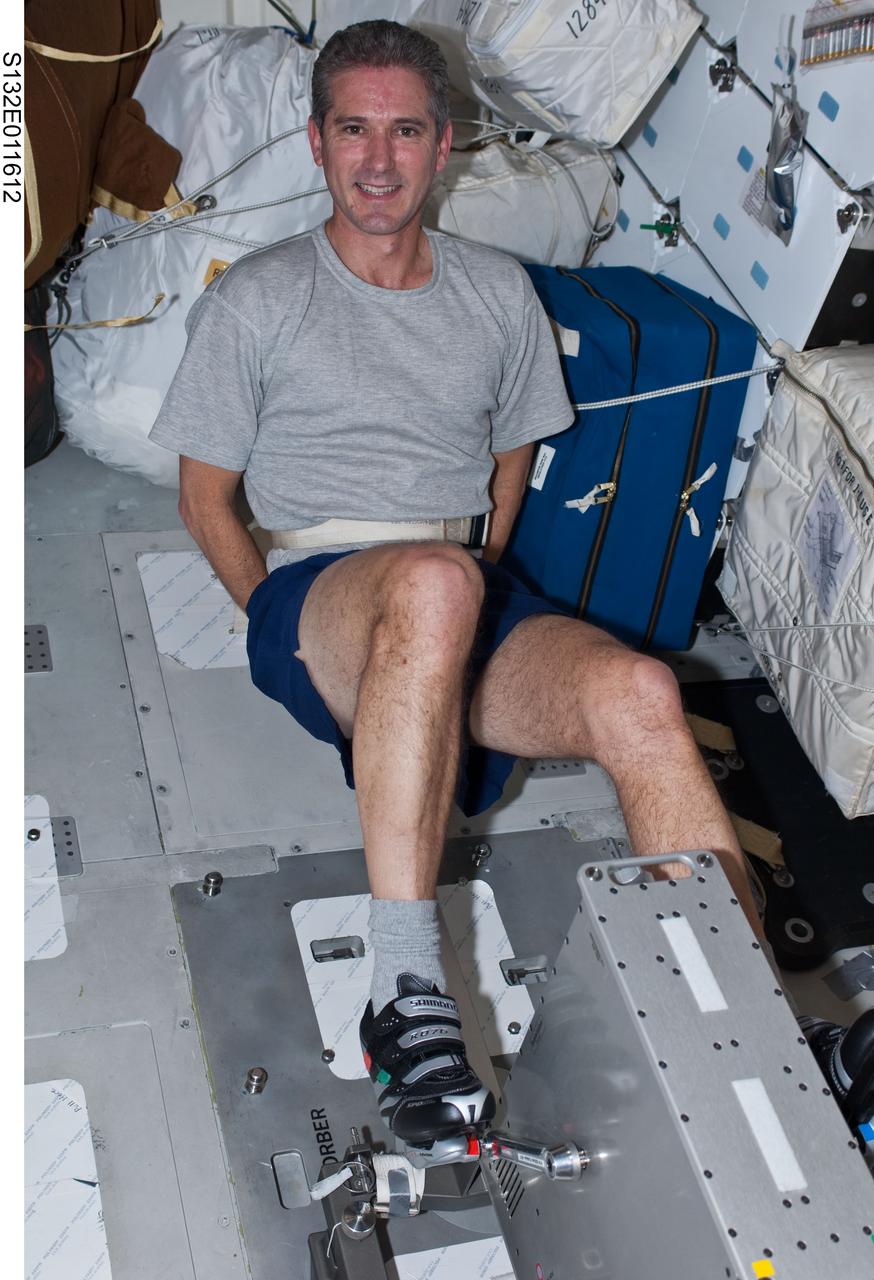
S132-E-011612 (24 May 2010) --- NASA astronaut Michael Good, STS-132 mission specialist, exercises on a bicycle ergometer on the middeck of space shuttle Atlantis during flight day 11 activities.
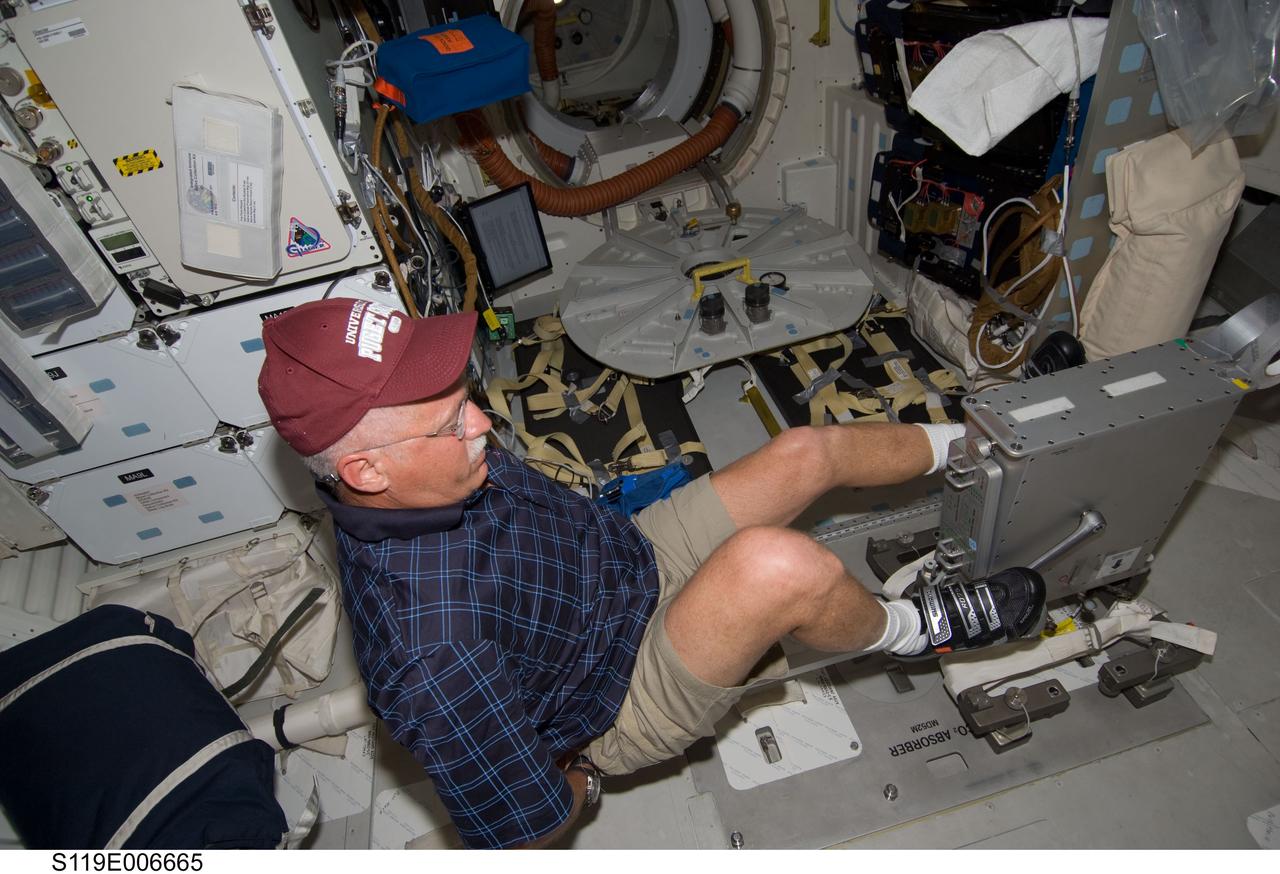
S119-E-006665 (19 March 2009) --- Astronaut John Phillips, STS-119 mission specialist, exercises on a bicycle ergometer on the middeck of Space Shuttle Discovery while docked with the International Space Station.
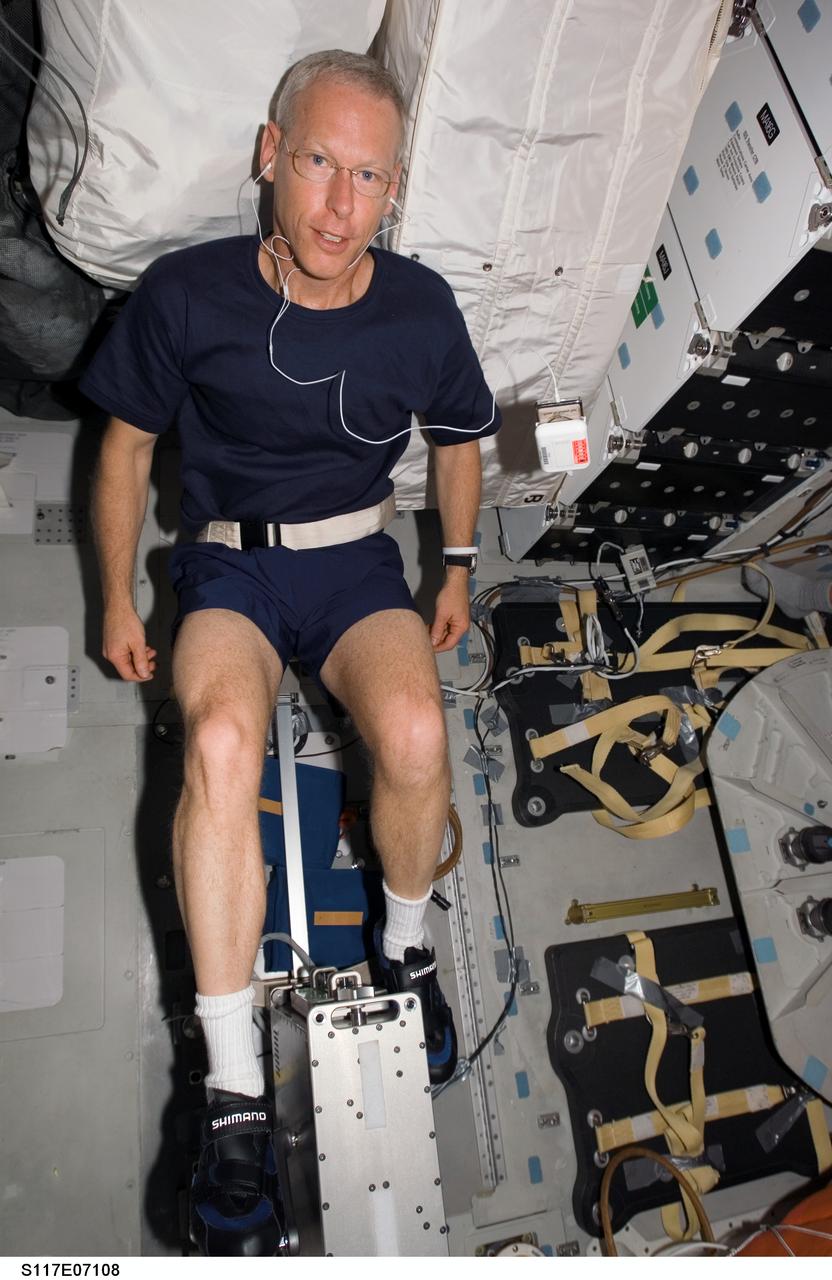
S117-E-07108 (12 June 2007) --- Astronaut Patrick Forrester, STS-117 mission specialist, exercises on a bicycle ergometer on the middeck of the Space Shuttle Atlantis while docked with the International Space Station.
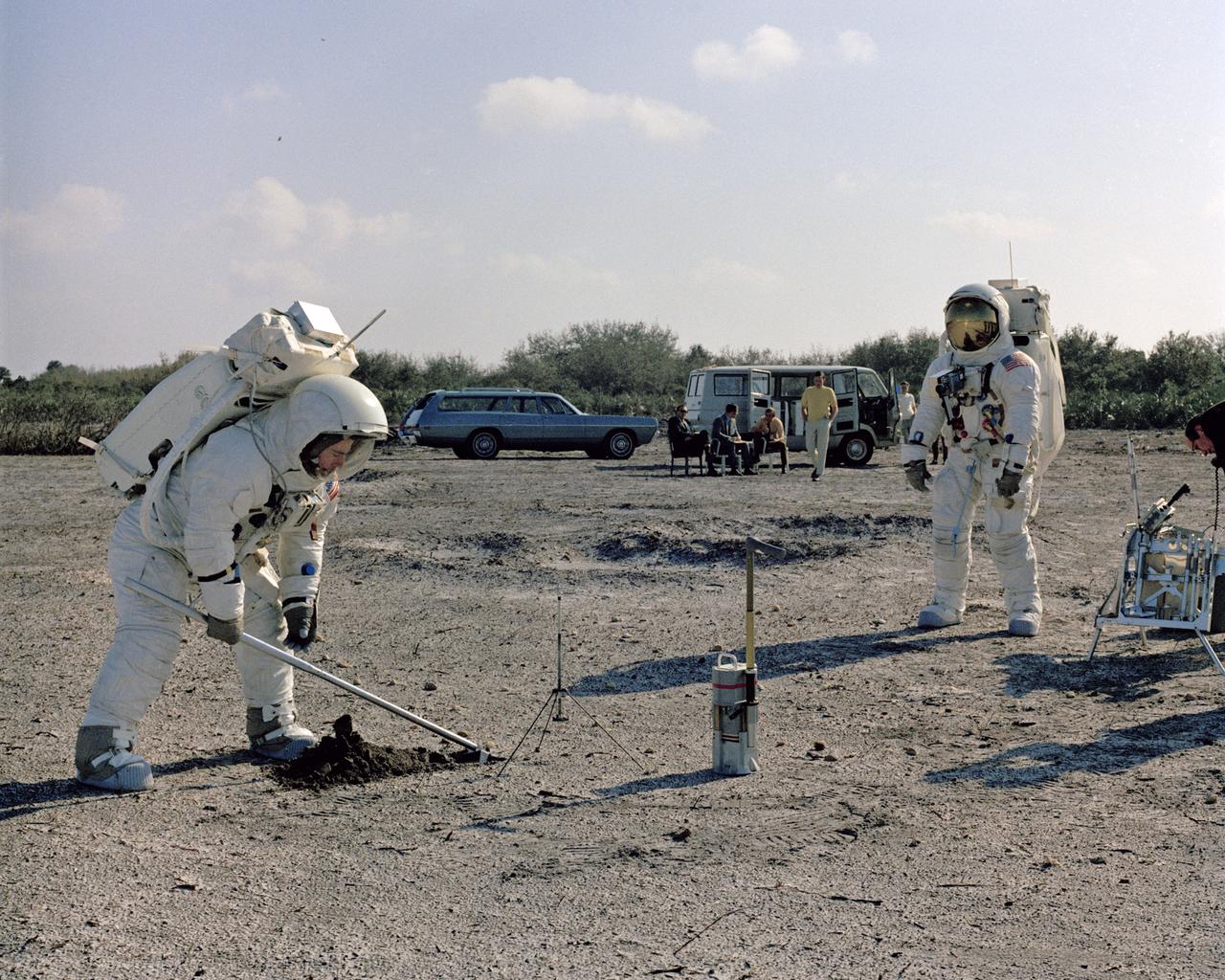
CAPE CANAVERAL, Fla. -- Backup Commander John Young, left, and Lunar Module Pilot Charlie Duke are going through a practice exercise for the Apollo 13 mission at a field site at the Kennedy Space Center. Photo credit: NASA
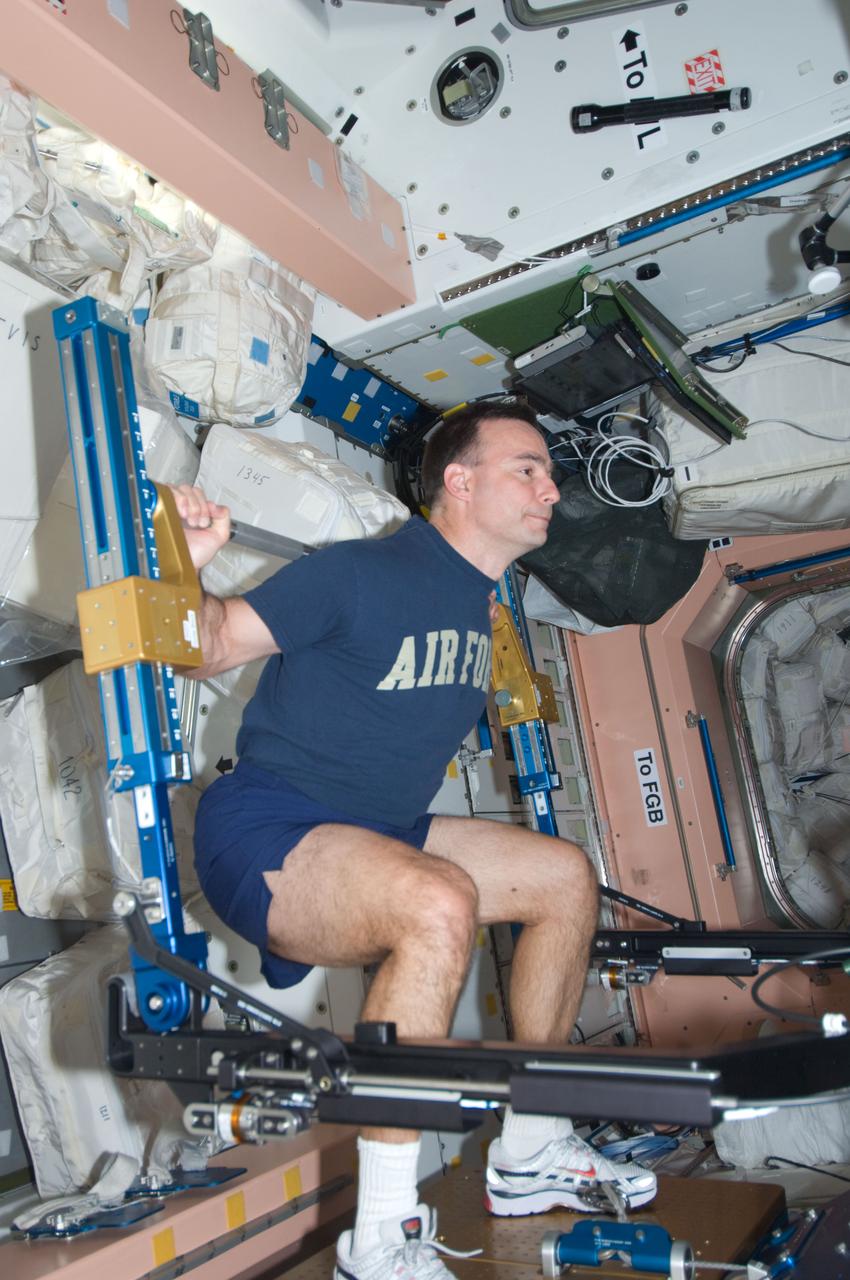
S119-E-006807 (20 March 2009) --- Astronaut Lee Archambault, commander of the STS-119 mission, conducts an Advanced Resistive Exercise Device (aRED) workout in the Unity node aboard the International Space Station.
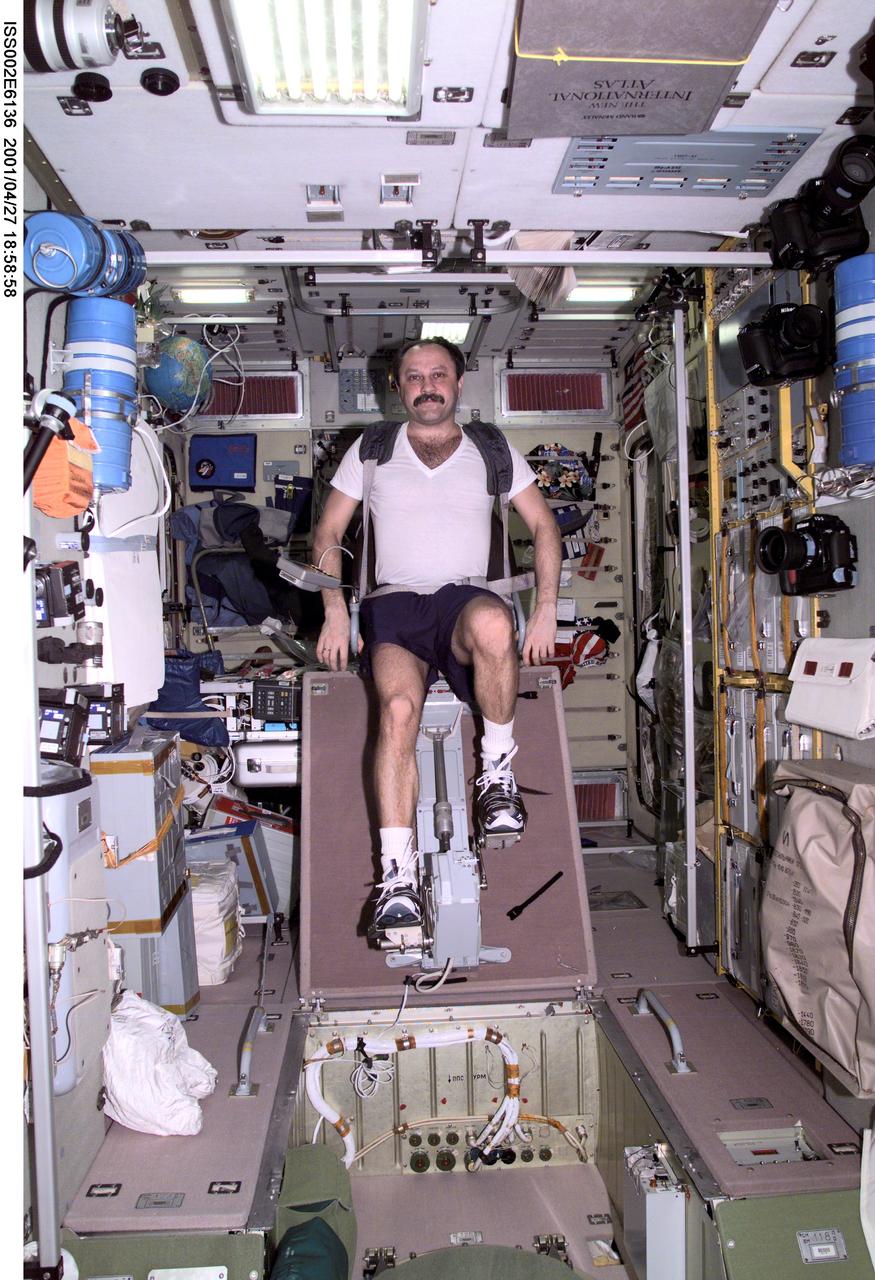
ISS002-E-6136 (27 April 2001) --- Yury V. Usachev of Rosaviakosmos, Expedition Two mission commander, exercises on the cycle ergometer in the Zvezda Service Module. The image was taken with a digital still camera.
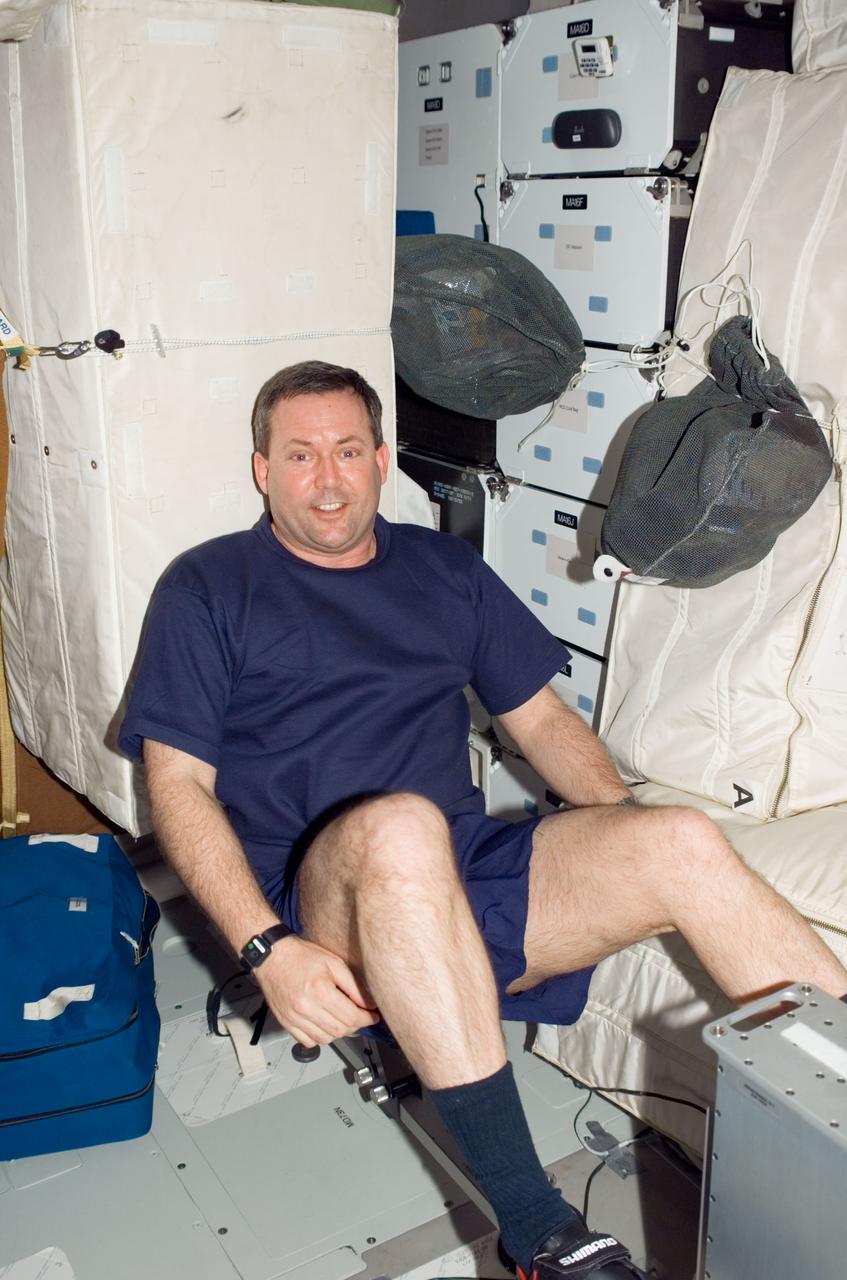
S123-E-006485 (12 March 2008) --- Astronaut Mike Foreman, STS-123 mission specialist, exercises on a bicycle ergometer on the middeck of the Space Shuttle Endeavour while docked with the International Space Station.
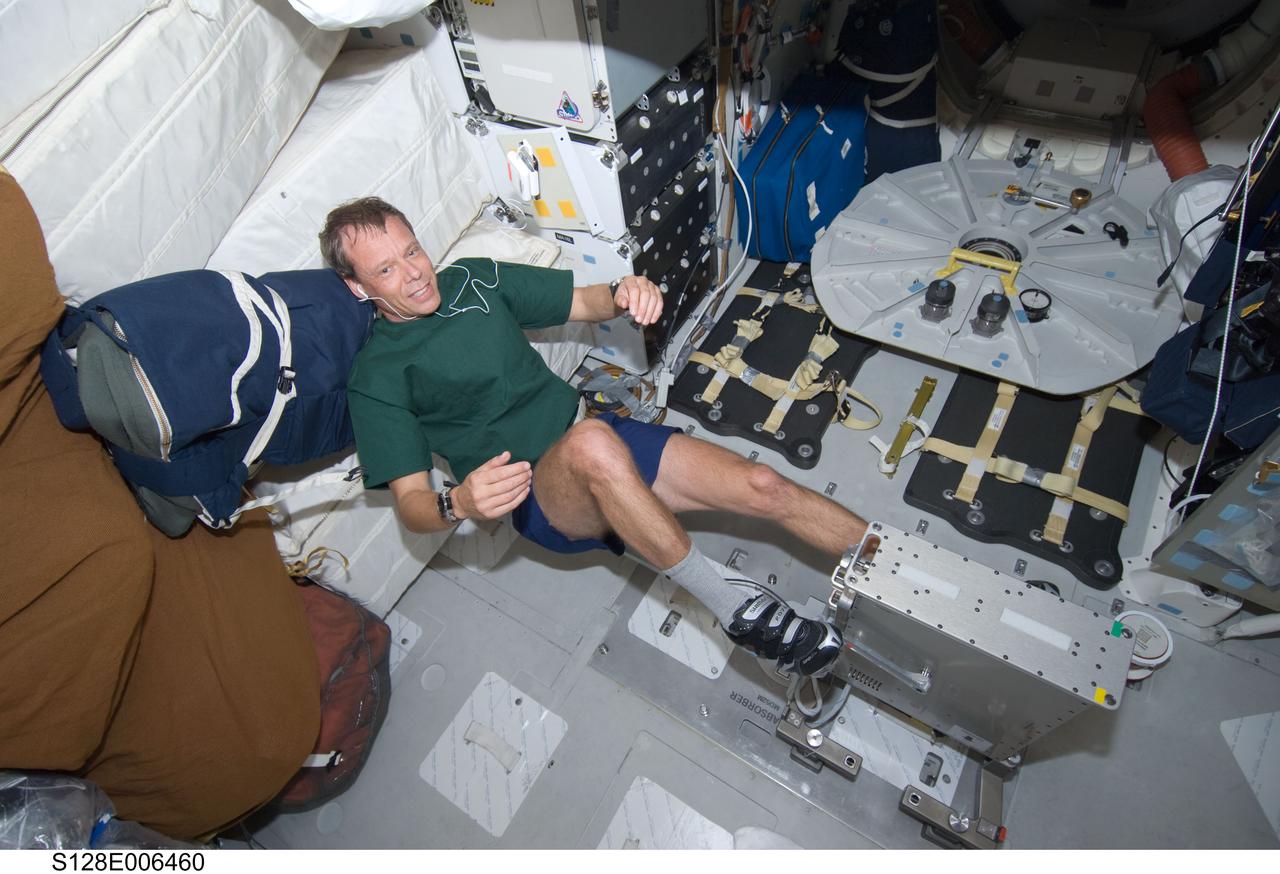
S128-E-006460 (29 Aug. 2009) --- European Space Agency astronaut Christer Fuglesang, STS-128 mission specialist, exercises on a bicycle ergometer on the middeck of the Earth-orbiting Space Shuttle Discovery.
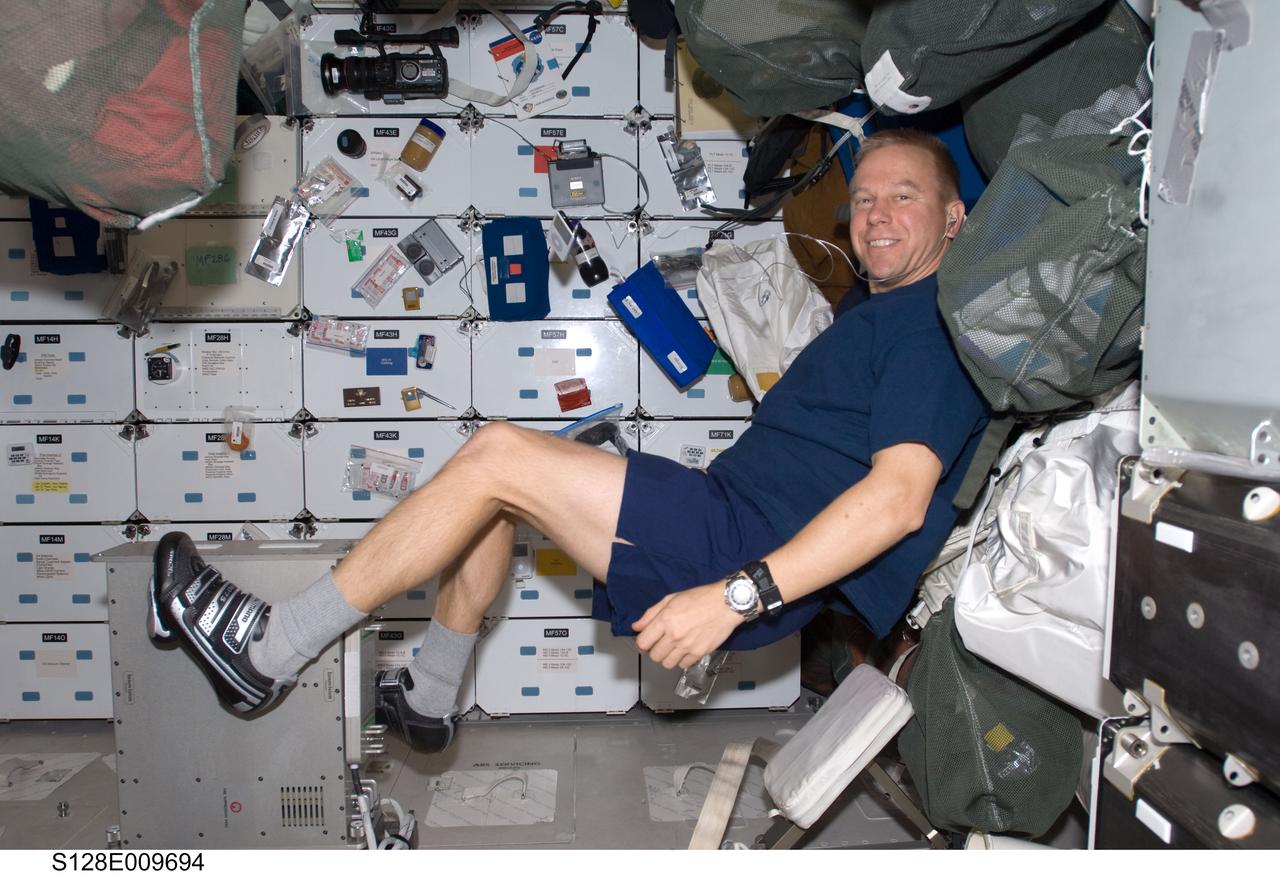
S128-E-009694 (8 Sept. 2009) --- NASA astronaut Tim Kopra, STS-128 mission specialist, exercises on a bicycle ergometer on the middeck of Space Shuttle Discovery during flight day 12 activities.
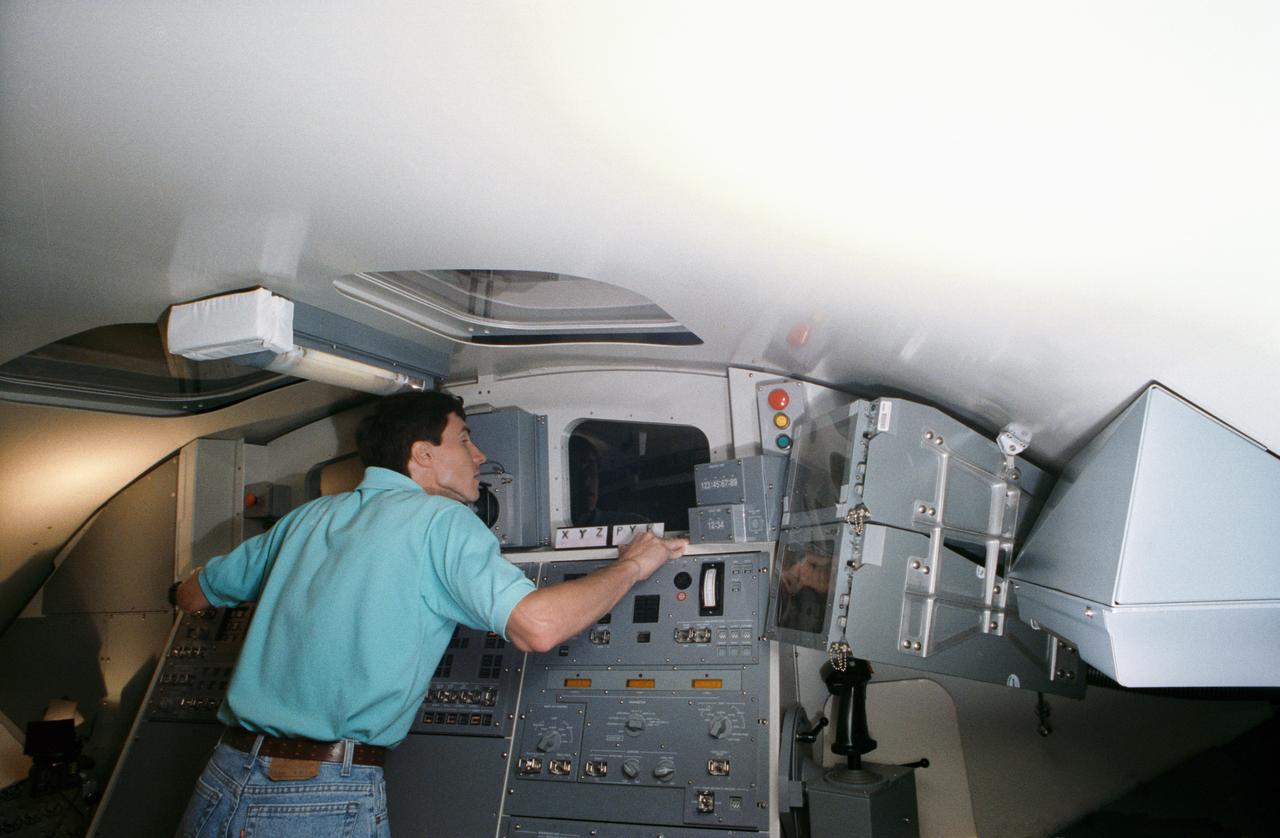
Cosmonaut Sergei Krikalev, STS-60 mission specialist, practices operating the Shuttle's Remote Manipulator System (RMS) during a training exercise at JSC's Shuttle mockup and integration laboratory.
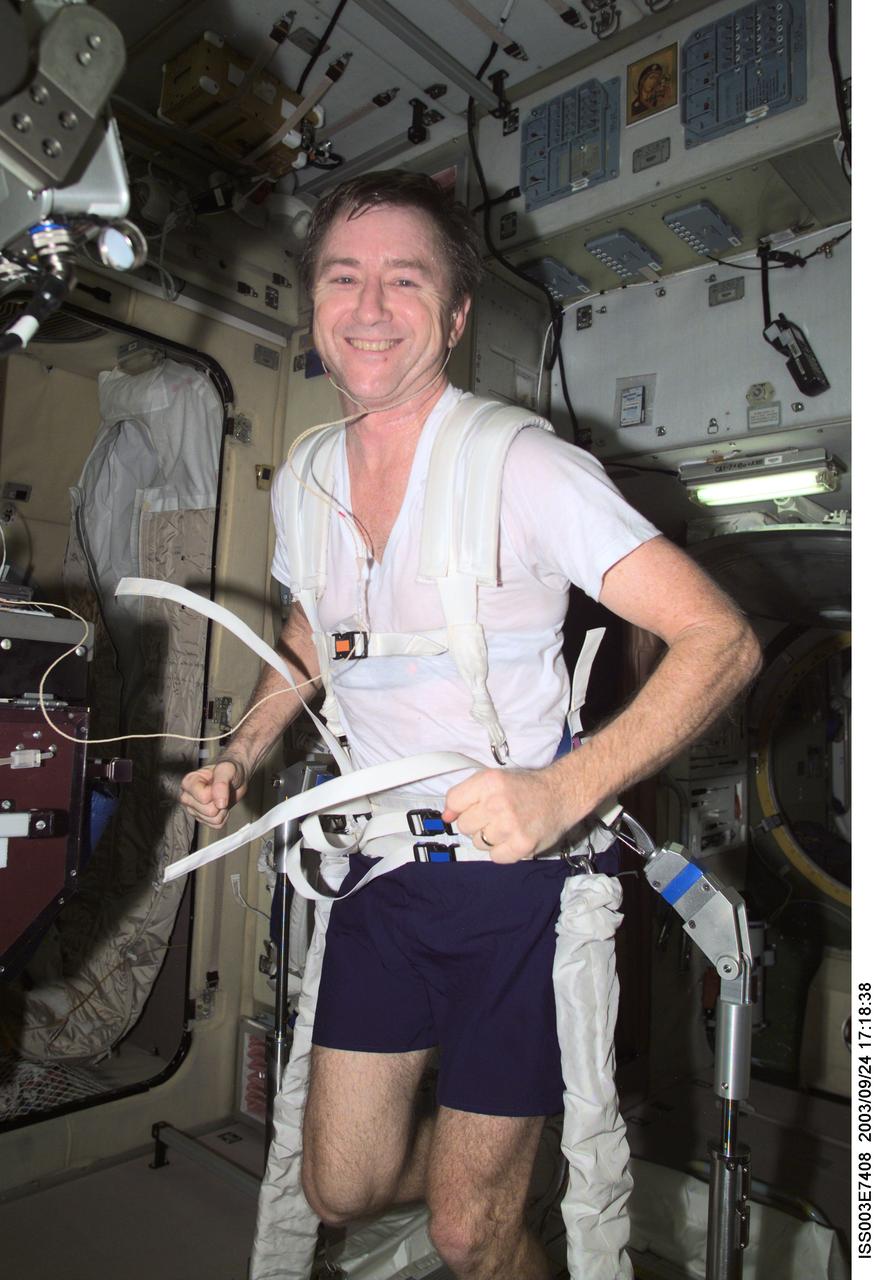
ISS003-E-7408 (October 2001) --- Astronaut Frank L. Culbertson, Jr., Expedition Three mission commander, exercises on a treadmill in the Zvezda Service Module on the International Space Station (ISS). This image was taken with a digital still camera.
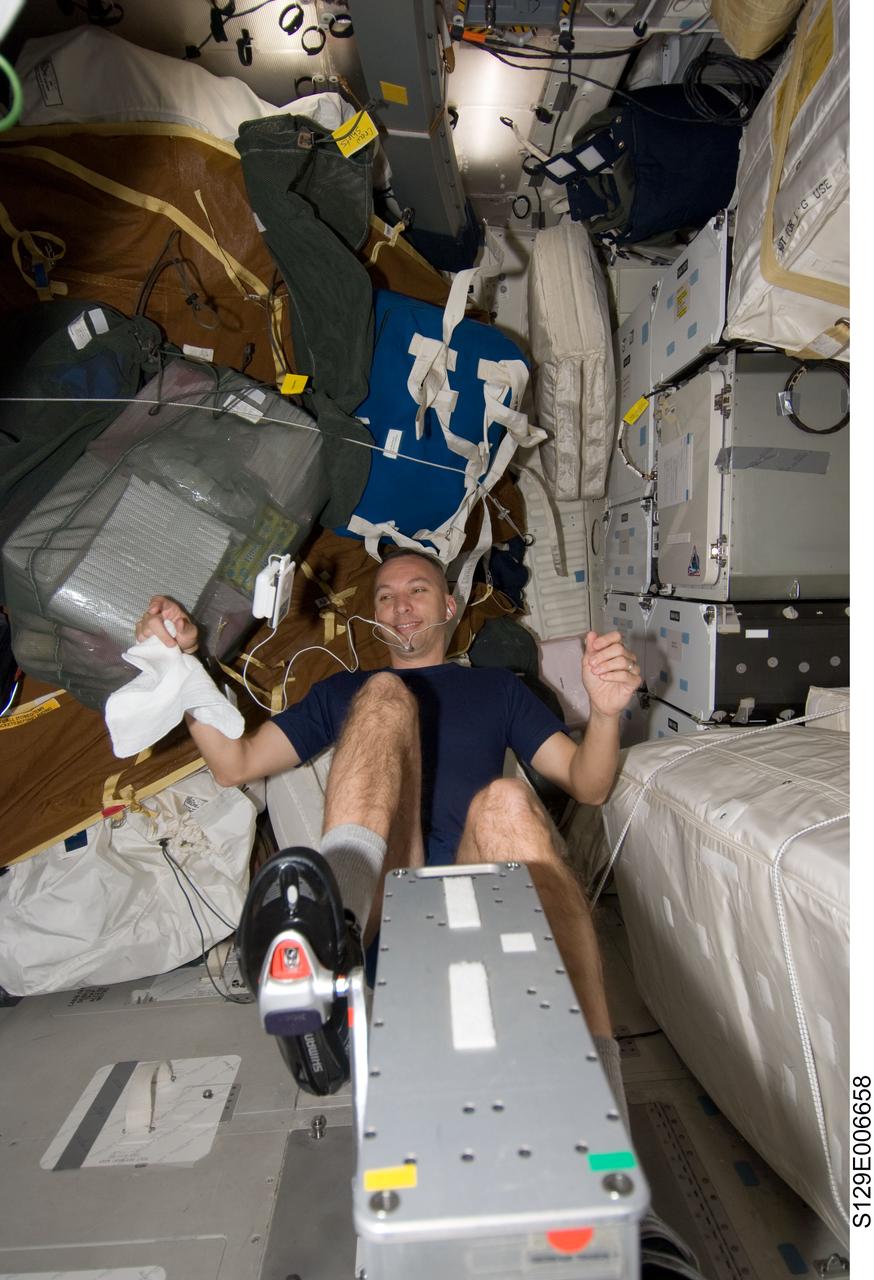
S129-E-006658 (18 Nov. 2009) --- Astronaut Randy Bresnik, STS-129 mission specialist, exercises on a bicycle ergometer on the middeck of Space Shuttle Atlantis during flight day three activities.
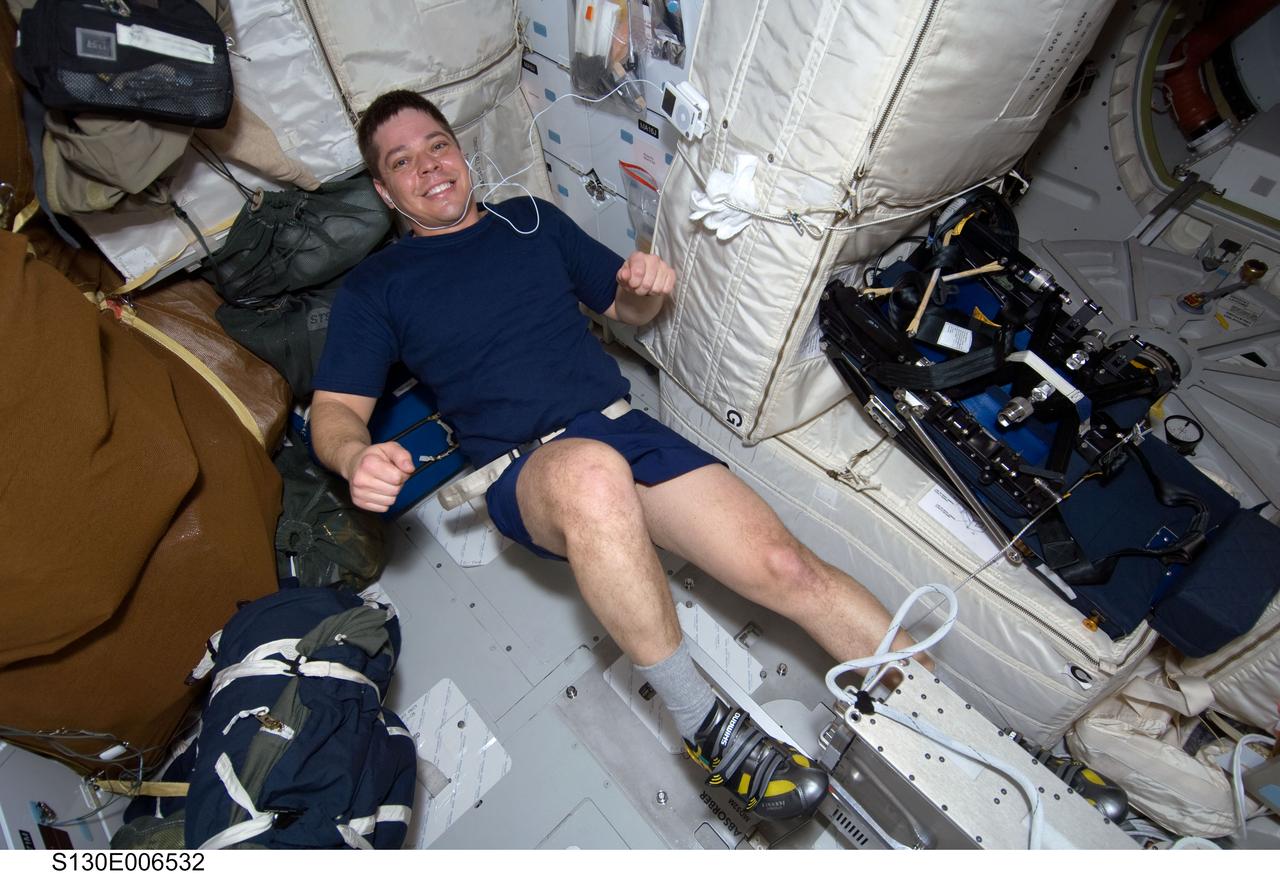
S130-E-006532 (9 Feb. 2010) --- NASA astronaut Robert Behnken, STS-130 mission specialist, exercises on a bicycle ergometer on the middeck of space shuttle Endeavour during flight day two activities.
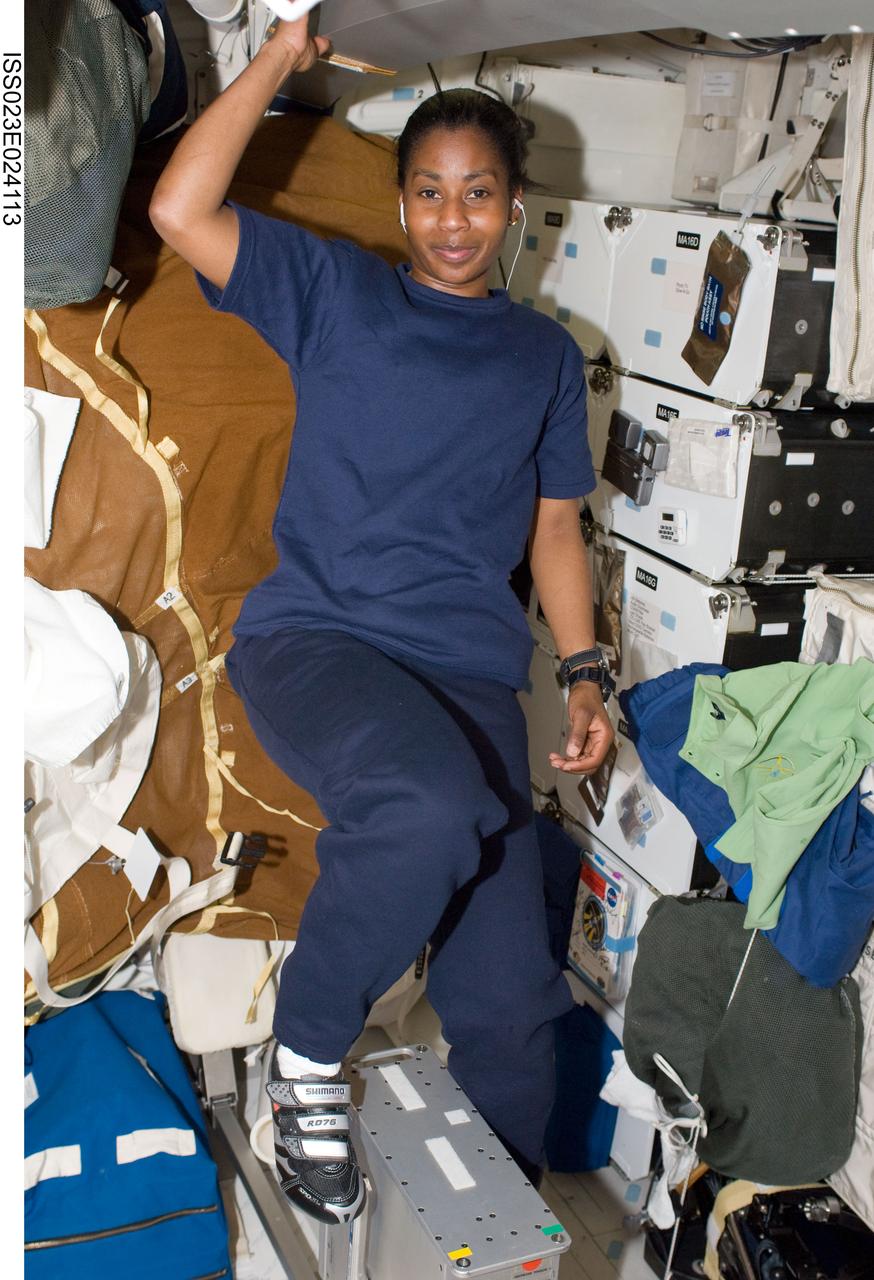
ISS023-E-024113 (16 April 2010) --- NASA astronaut Stephanie Wilson, STS-131 mission specialist, prepares to exercise using a bicycle ergometer on the middeck of space shuttle Discovery while docked with the International Space Station.
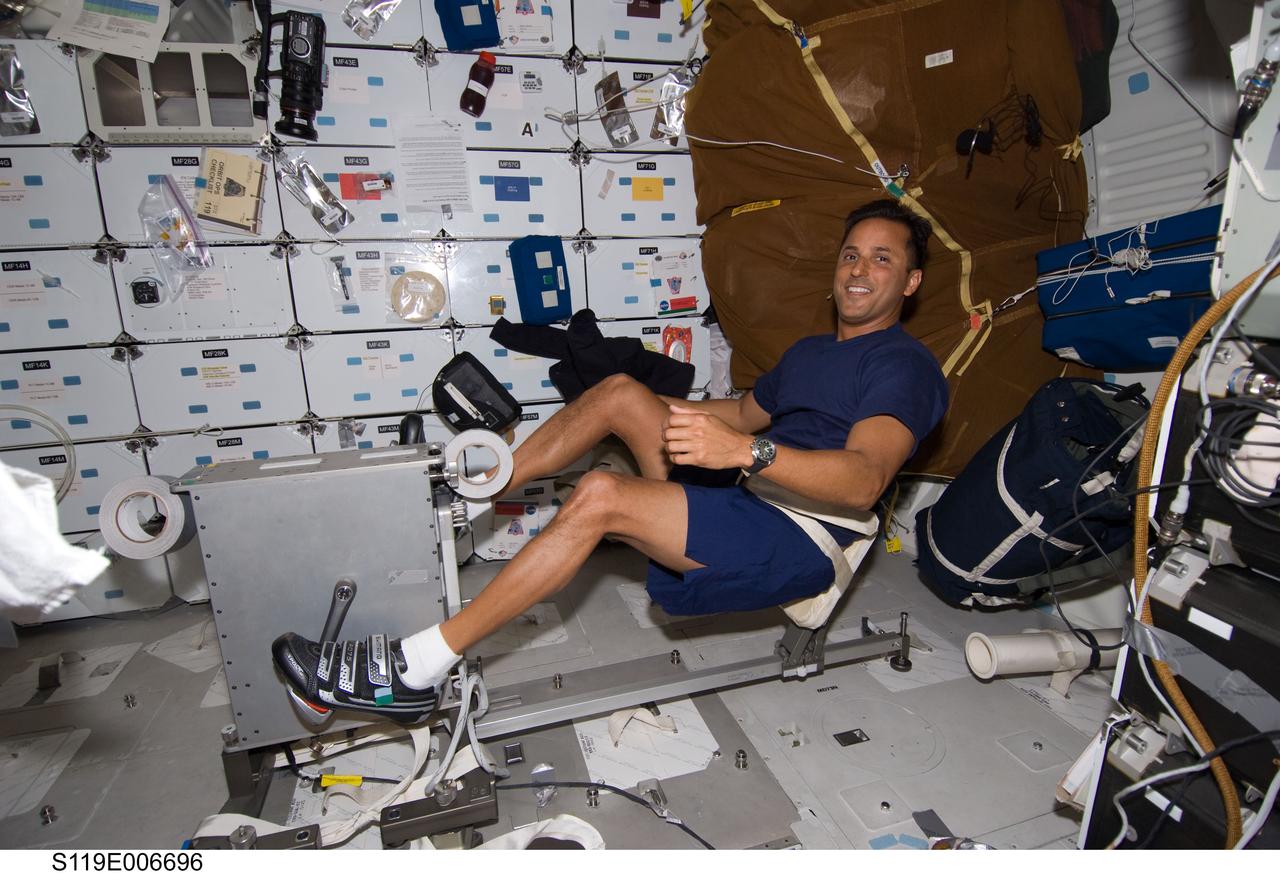
S119-E-006696 (20 March 2009) --- Astronaut Joseph Acaba, STS-119 mission specialist, uses the bicycle ergometer on Discovery's mid deck to get some exercise.

Four STS 51-G crewmembers huddle in a corner of the Discovery's middeck area. Daniel C. Brandenstein, mission commander, assists Steven R. Nagel with the treadmill device while John O. Creighton and Shannon W. Lucid look on.
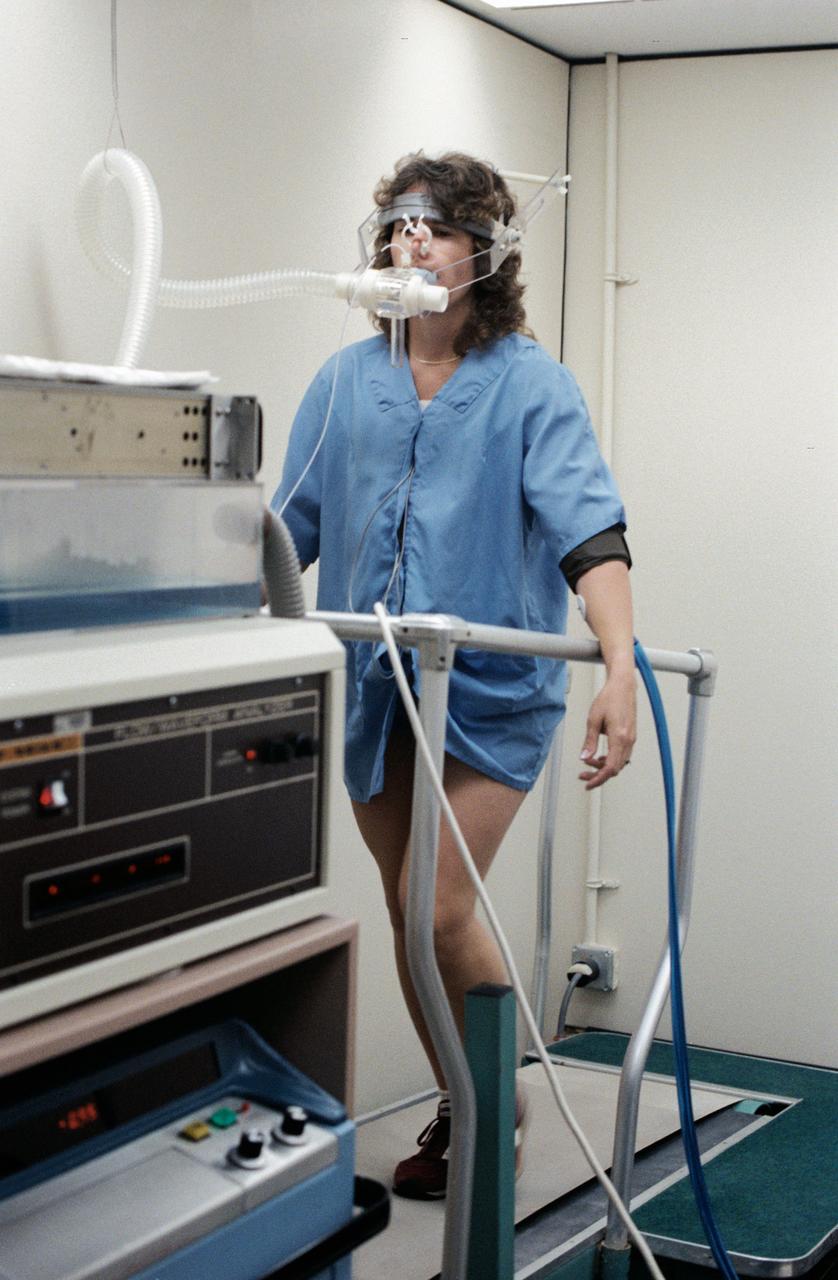
S85-37165 (8-12 July 1985) -- Sharon C. (Christa) McAuliffe of Concord High, Concord, New Hampshire, runs in place on treadmill to test physiological responses at Johnson Space Center. Christa McAuliffe was eventually chosen as the first Teacher in Space and was a member of the seven-member Challenger shuttle crew which died tragically in the explosion of the spacecraft during the launch of STS-51L from the Kennedy Space Center about 11:40 a.m., EST, on Jan. 28, 1986. The explosion occurred 73 seconds into the flight as a result of a leak in one of two Solid Rocket Boosters that ignited the main liquid fuel tank. The crew members of the Challenger represented a cross-section of the American population in terms of race, gender, geography, background, and religion. The explosion became one of the most significant events of the 1980s, as billions around the world saw the accident on television and empathized with any one of the several crew members killed. Photo credit: NASA
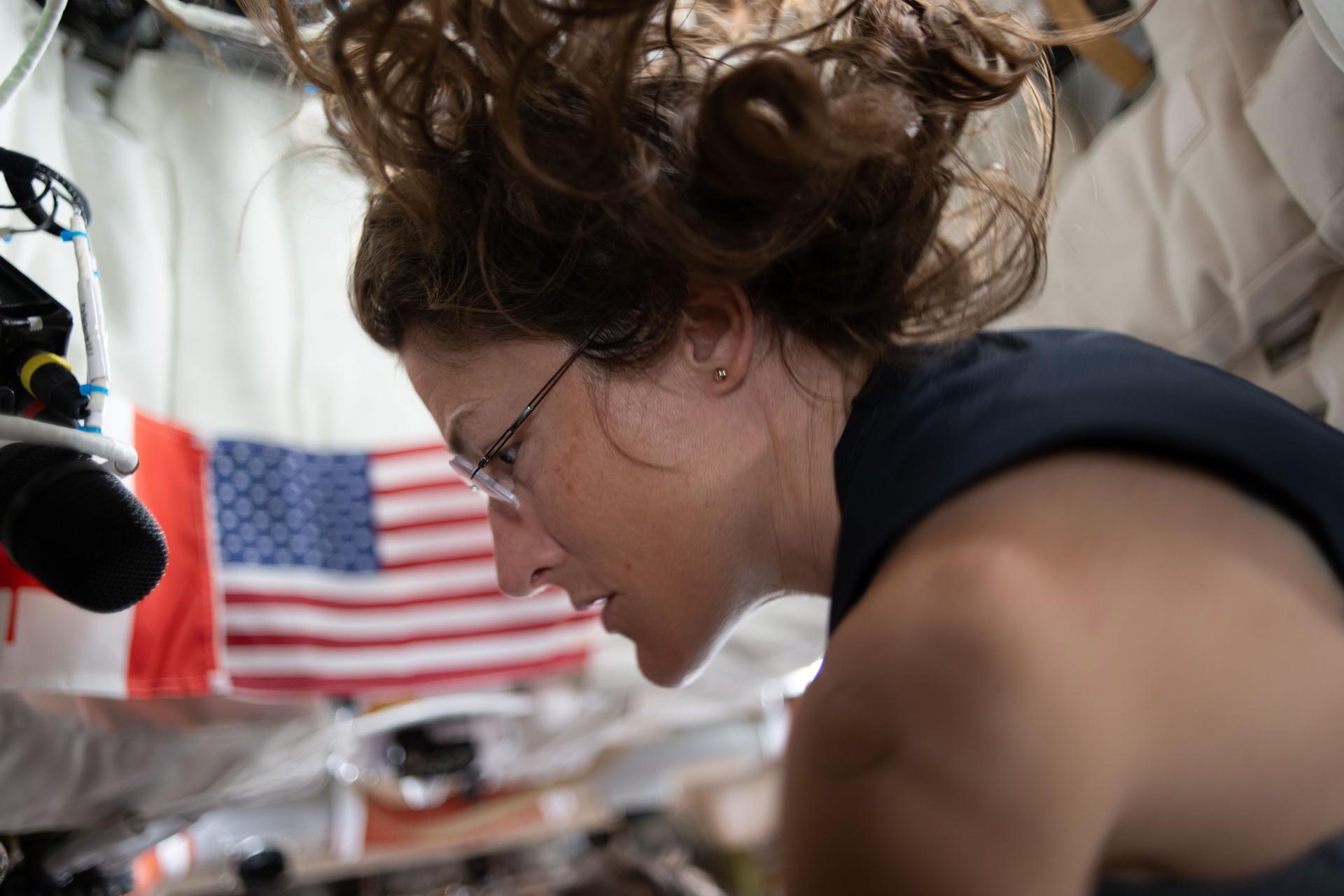
art002e009206 (April 4, 2026) - NASA astronaut and Artemis II mission specialist Christina Koch, seen here on the fourth day of the mission, prepping for lunar flyby activities after completing aerobic exercise on the flywheel device. Credit: NASA
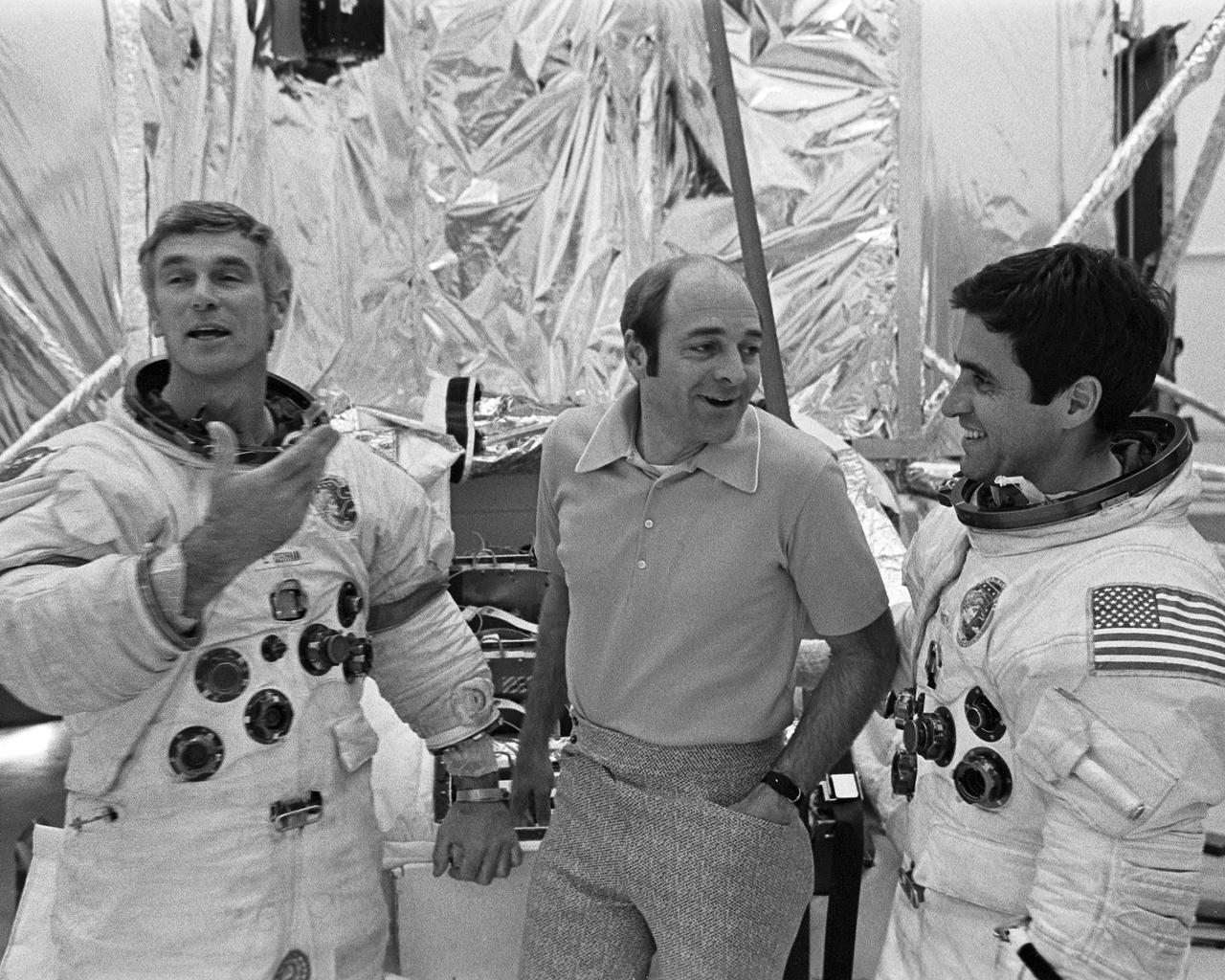
Apollo 17 Mission Commander Eugene A. Cernan, left, jokes with crewmates Ronald E. Evans, center, and Harrison H. Schmitt following training exercises today at the Florida Spaceport. Cernan and Schmitt practiced aspects of their upcoming mission in the full-scale Lunar Module Spacecraft mockup, shown in rear.
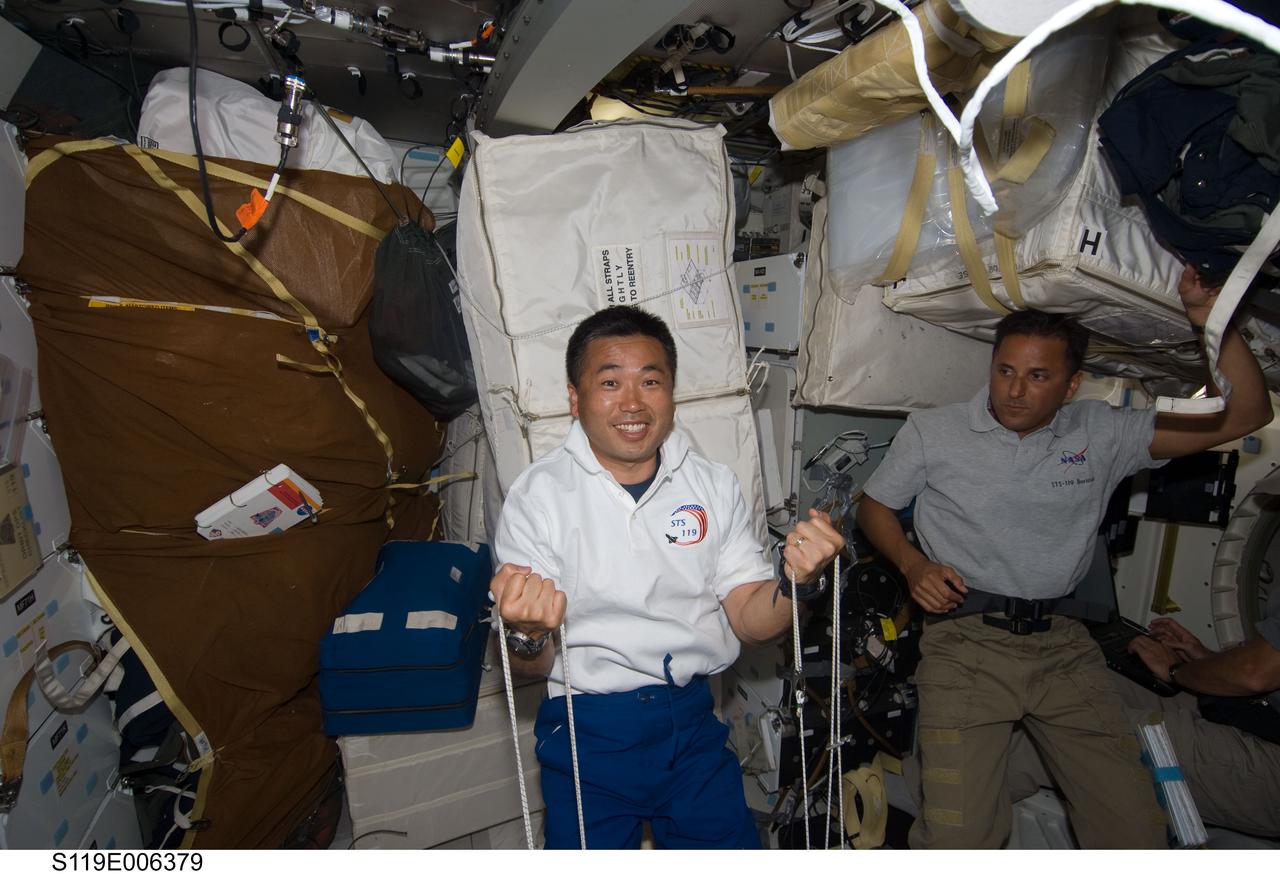
S119-E-006379 (17 March 2009) --- Japan Aerospace Exploration Agency (JAXA) astronaut Koichi Wakata, STS-119 mission specialist, exercises on the middeck of Space Shuttle Discovery during flight day three activities. Astronaut Joseph Acaba, mission specialist, is at right.
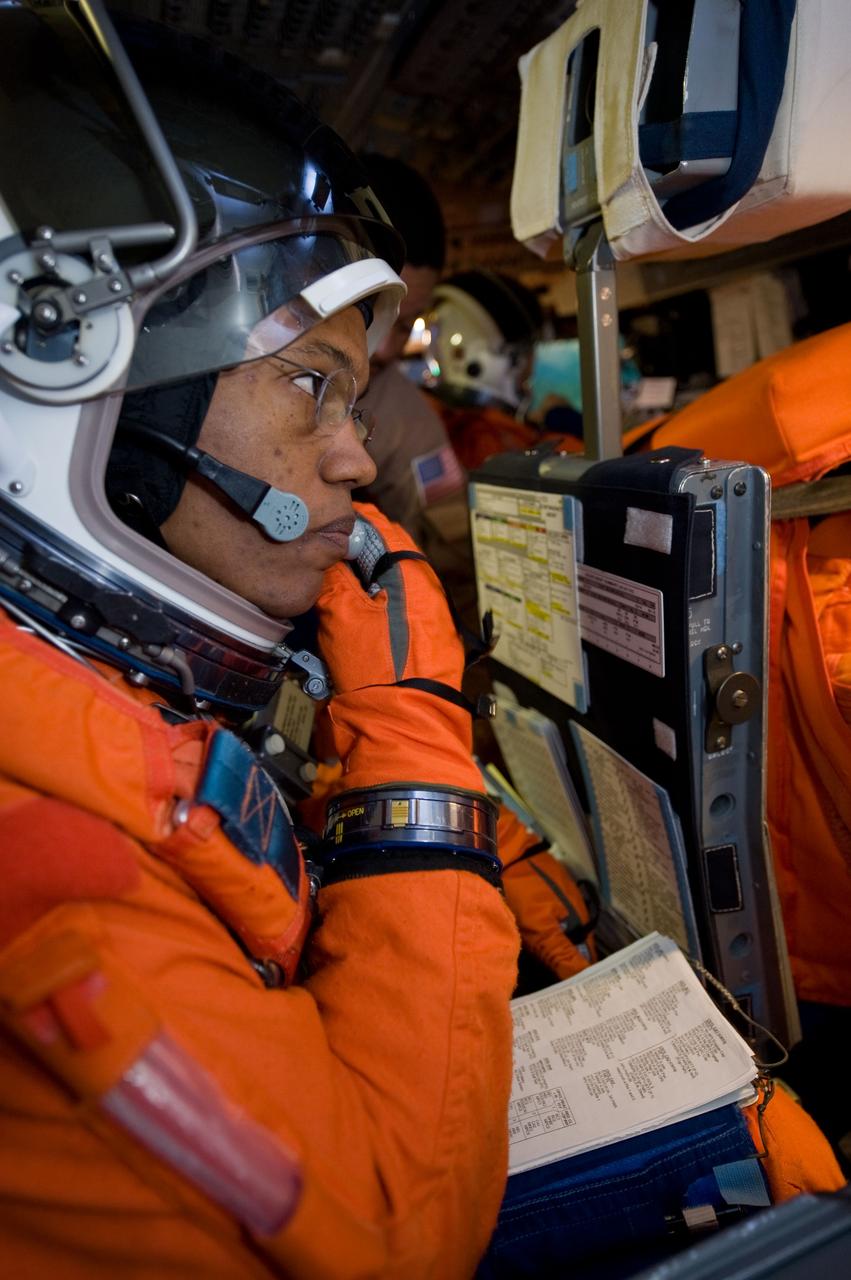
JSC2010-E-014042 (25 Jan. 2010) --- Attired in a training version of his shuttle launch and entry suit, NASA astronaut Alvin Drew, STS-133 mission specialist, participates in a simulation exercise in the motion-base shuttle mission simulator in the Jake Garn Simulation and Training Facility at NASA?s Johnson Space Center.
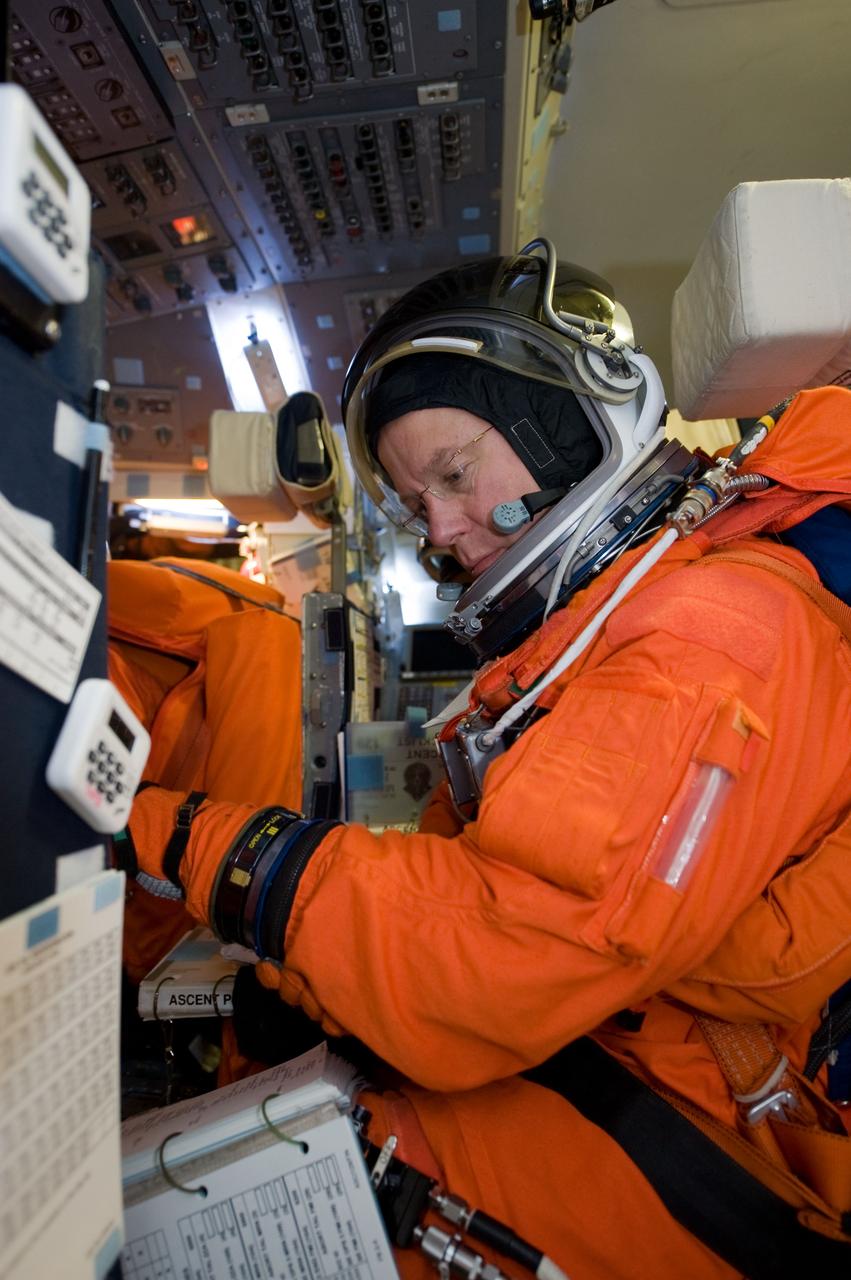
JSC2010-E-014043 (25 Jan. 2010) --- Attired in a training version of his shuttle launch and entry suit, NASA astronaut Tim Kopra, STS-133 mission specialist, participates in a simulation exercise in the motion-base shuttle mission simulator in the Jake Garn Simulation and Training Facility at NASA?s Johnson Space Center.

JSC2010-E-014041 (25 Jan. 2010) --- Attired in a training version of his shuttle launch and entry suit, NASA astronaut Alvin Drew, STS-133 mission specialist, participates in a simulation exercise in the motion-base shuttle mission simulator in the Jake Garn Simulation and Training Facility at NASA?s Johnson Space Center.
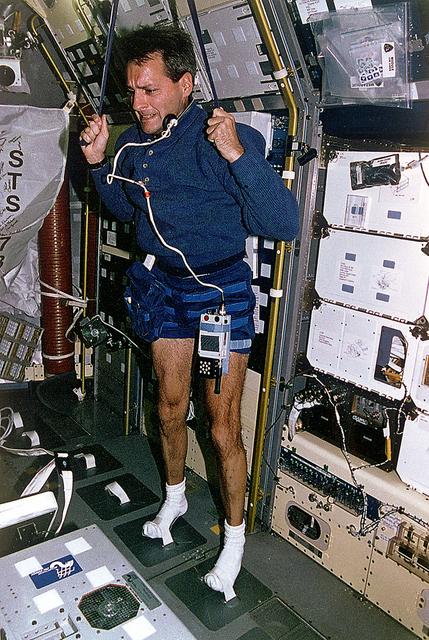
Onboard Space Shuttle Columbia (STS-78) Mission Specialist Richard M. Lirnehan works out in the Life and Microgravity Spacelab (LMS-1) Science Module. With an almost 17-day mission away from Earth's gravity, crew members maintained an exercise regimen above and beyond their assigned LMS-1 duty assignments.
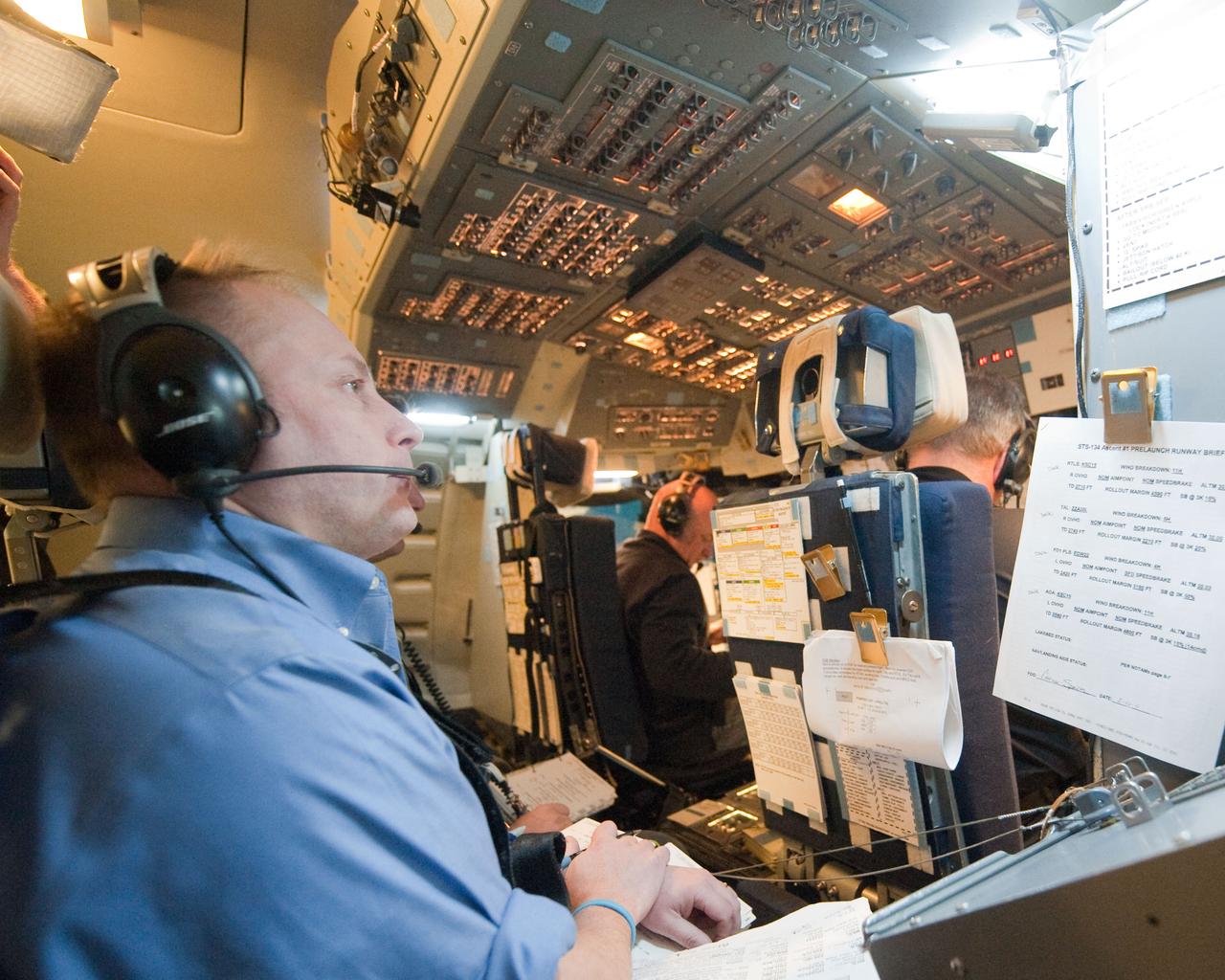
JSC2011-E-016860 (11 Feb. 2011) --- NASA astronaut Michael Fincke, STS-134 mission specialist, participates in a simulation exercise in the motion-base shuttle mission simulator in the Jake Garn Simulation and Training Facility at NASA's Johnson Space Center. Photo credit: NASA or National Aeronautics and Space Administration
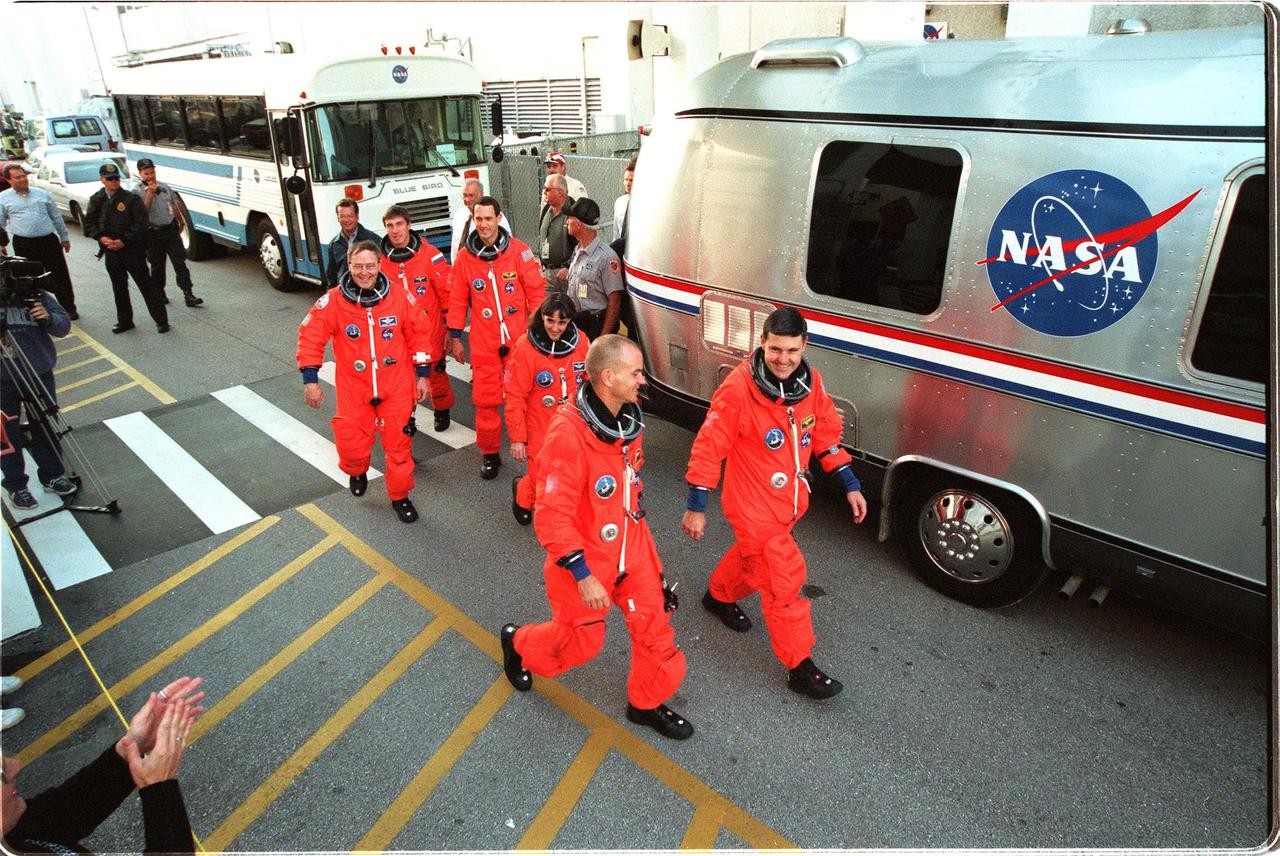
After suiting up for their practice countdown exercise, STS-88 crew members head for the bus outside the Operations and Checkout Building for the trip to Launch Pad 39A. From left they are Mission Specialist Jerry L. Ross, Mission Specialist Sergei Krikalev, who is a Russian cosmonaut, Mission Specialists James H. Newman and Nancy J. Currie, Pilot Frederick W. "Rick" Sturckow, and Mission Commander Robert D. Cabana. The crew are at KSC to participate in the Terminal Countdown Demonstration Test (TCDT) which includes mission familiarization activities, emergency egress training, and the simulated main engine cut-off exercise. Mission STS-88 is targeted for launch on Dec. 3, 1998. It is the first U.S. flight for the assembly of the International Space Station and will carry the Unity connecting module
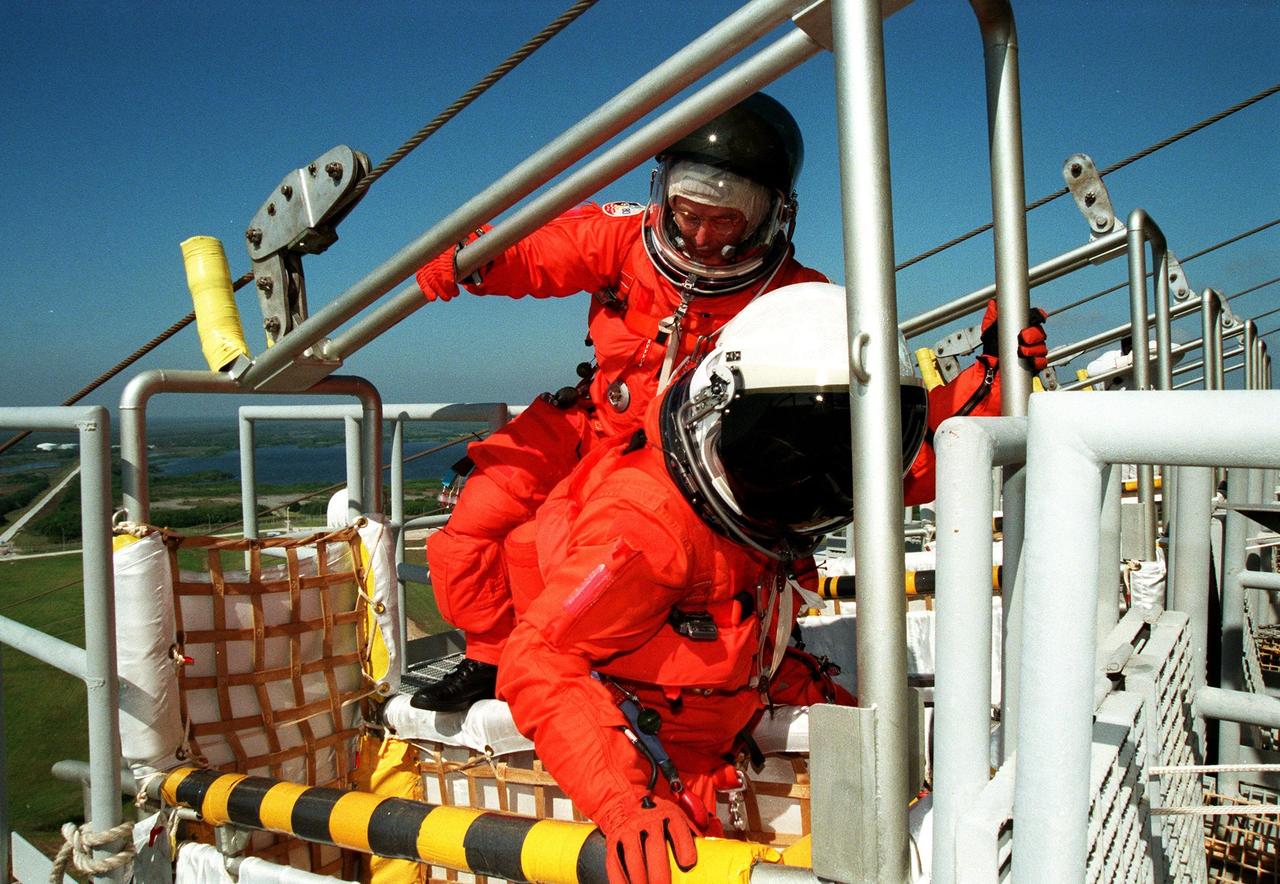
KENNEDY SPACE CENTER, Fla. -- STS-88 Mission Specialist Jerry L. Ross (left) climbs into slideware basket behind Mission Specialist Nancy Jane Currie, Ph.D., (right) at Launch Pad 39A as part of an emergency egress exercise. The crew are at KSC to participate in the Terminal Countdown Demonstration Test (TCDT) which includes mission familiarization activities, emergency egress training, and the simulated main engine cut-off exercise. Mission STS-88 is targeted for launch on Dec. 3, 1998. It is the first U.S. flight for the assembly of the International Space Station and will carry the Unity connecting module. Unity will be mated with the already orbiting Russian-built Zarya control module. The 12-day mission includes three planned spacewalks to connect power, data and utility lines and install exterior equipment
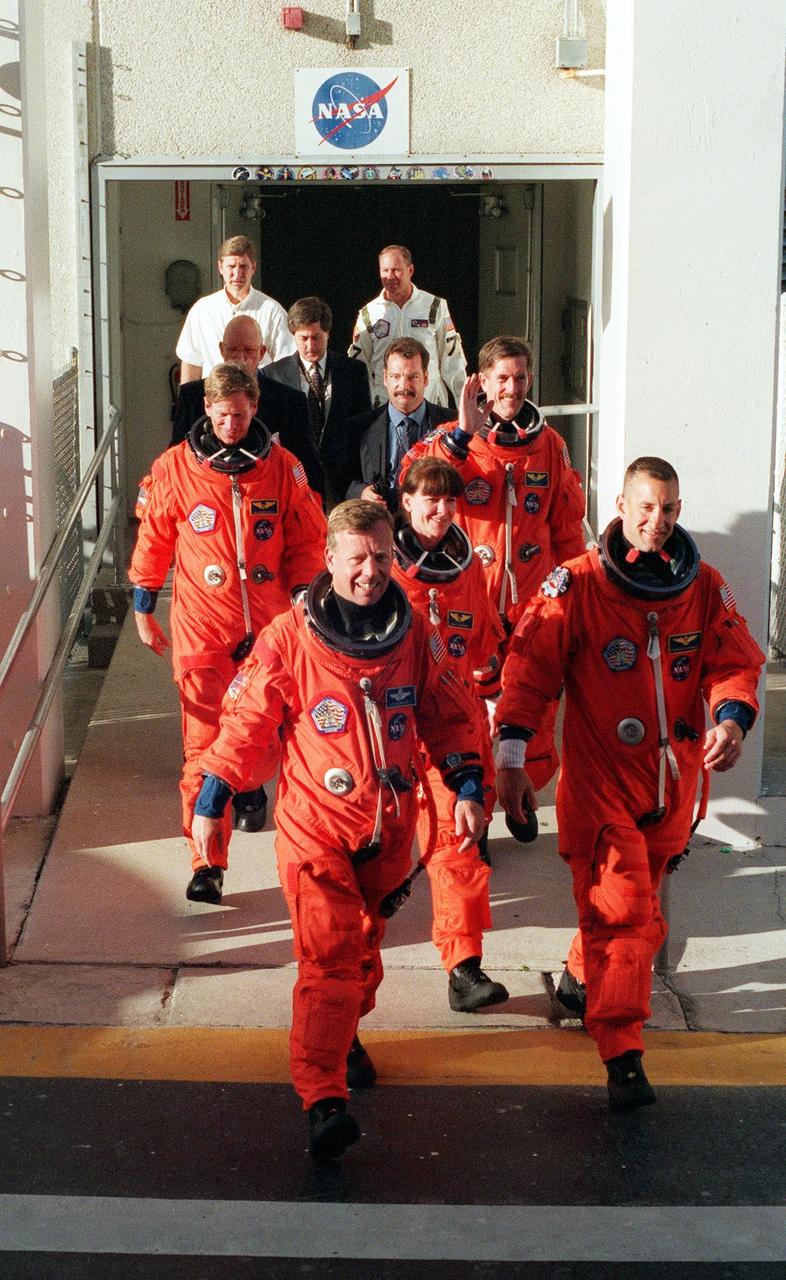
KENNEDY SPACE CENTER, Fla. -- The STS-104 crew walks out of the Operations and Checkout Building, on their way to Launch Pad 39B and a simulated countdown exercise. From back to front are Mission Specialists Michael L. Gernhardt (left) and James F. Reilly (right); middle, Mission Specialist Janet Lynn Kavandi; front, Commander Steven W. Lindsey (left) and Pilot Charles O. Hobaugh (right). The crew is taking part in Terminal Countdown Demonstration Test activities, which include emergency exit training from the orbiter, opportunities to inspect their mission payloads in the orbiter’s payload bay and simulated countdown exercises. The launch of Atlantis on mission STS-104 is scheduled July 12 from Launch Pad 39B. The mission is the 10th flight to the International Space Station and carries the Joint Airlock Module
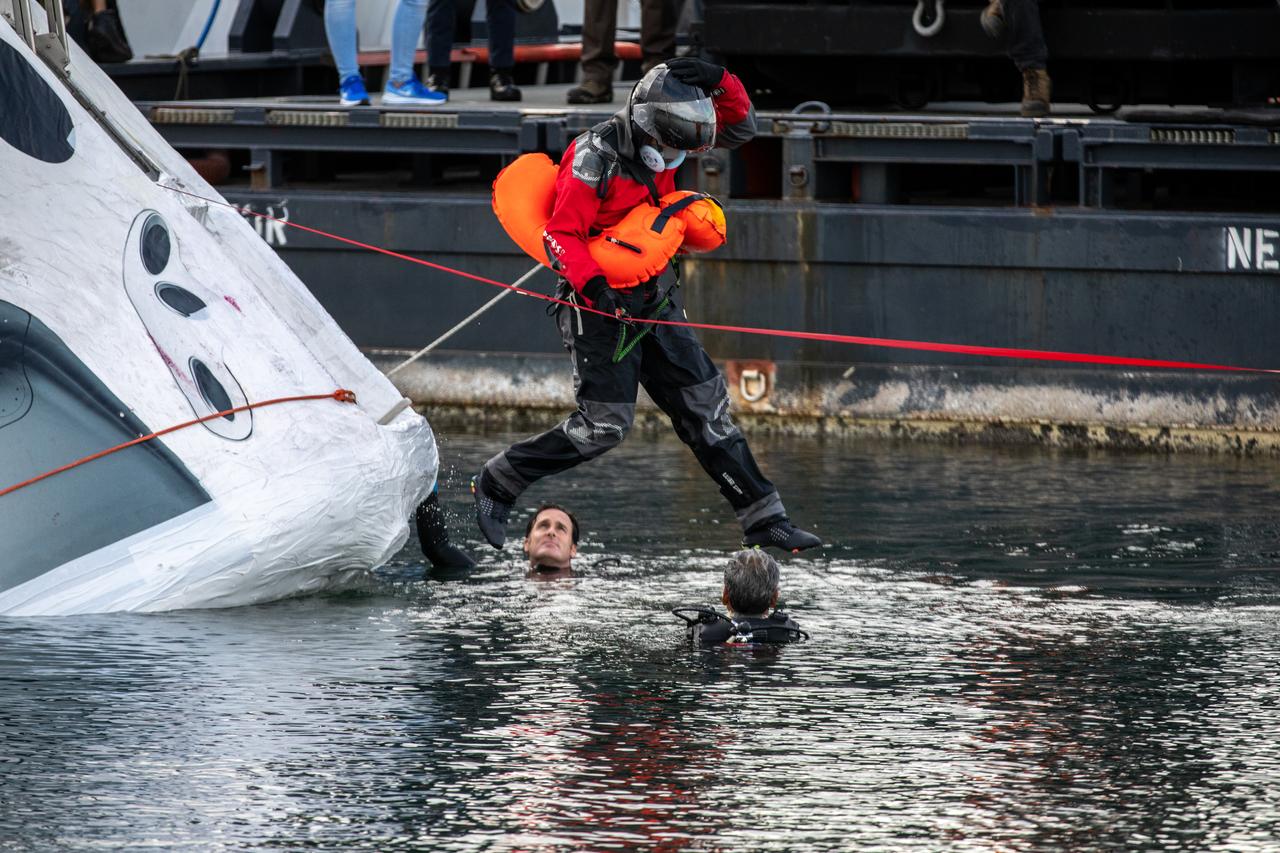
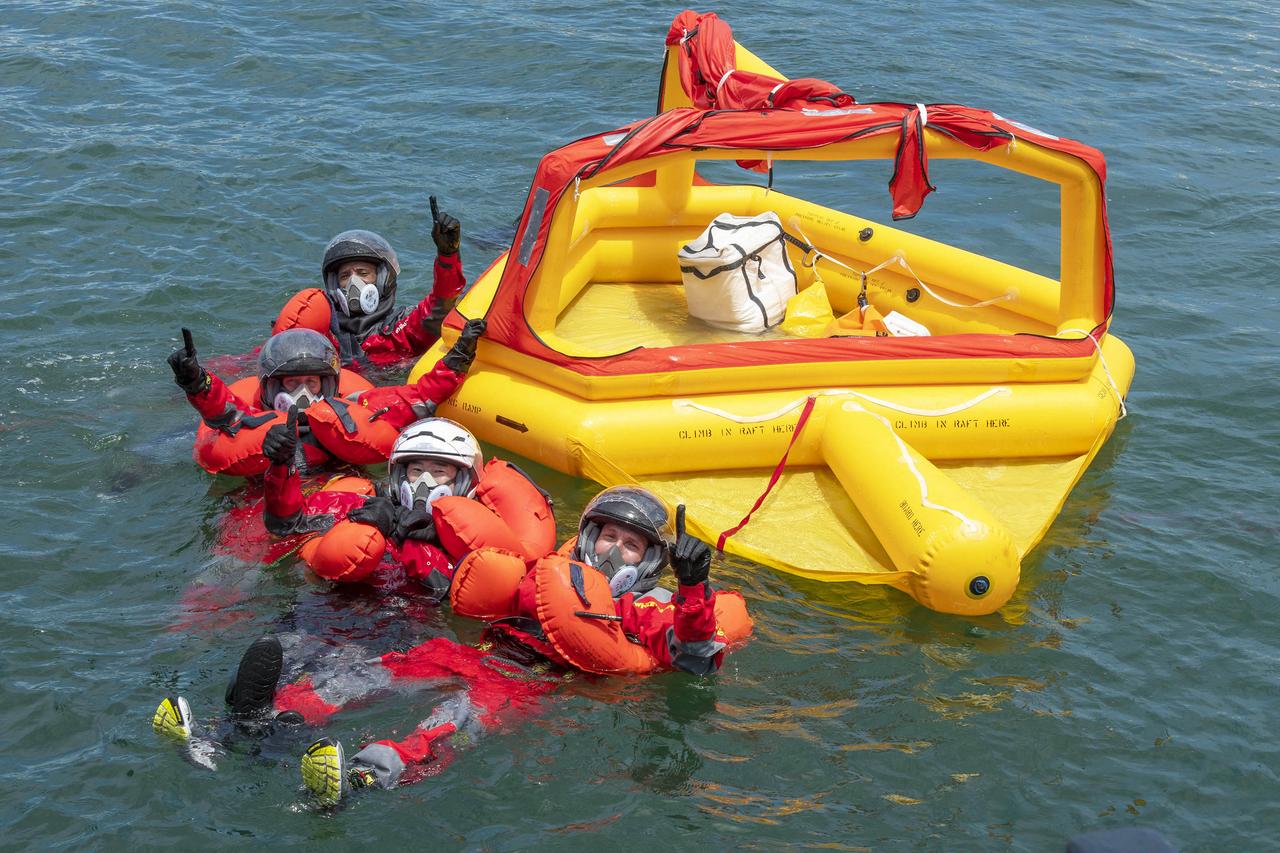
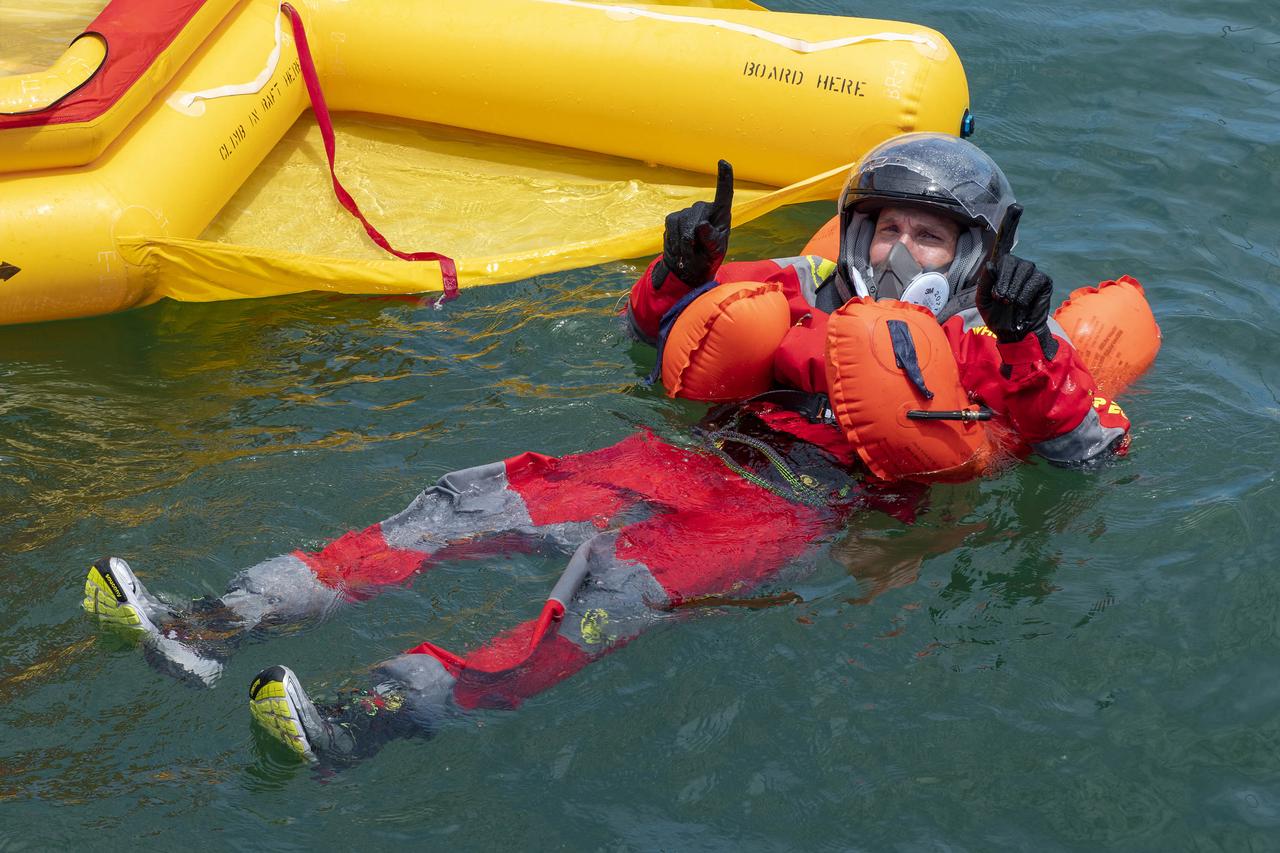
NASA astronauts Shane Kimbrough and Megan McArthur, Japan Aerospace Exploration Agency astronaut Akihiko Hoshide, and European Space Agency astronaut Thomas Pesquet participate in an egress training exercise in Port Canaveral, Florida, on Oct. 1, 2020, in preparation for NASA’s SpaceX Crew-2 mission as part of the agency’s Commercial Crew Program. The exercise involved simulating an emergency situation after splashdown of the Crew Dragon spacecraft. Using a mock-up of the Crew Dragon, the crew practiced exiting the capsule and jumping into the water. Crew-2 is targeted to launch from Kennedy Space Center’s Launch Complex 39A in spring 2021.
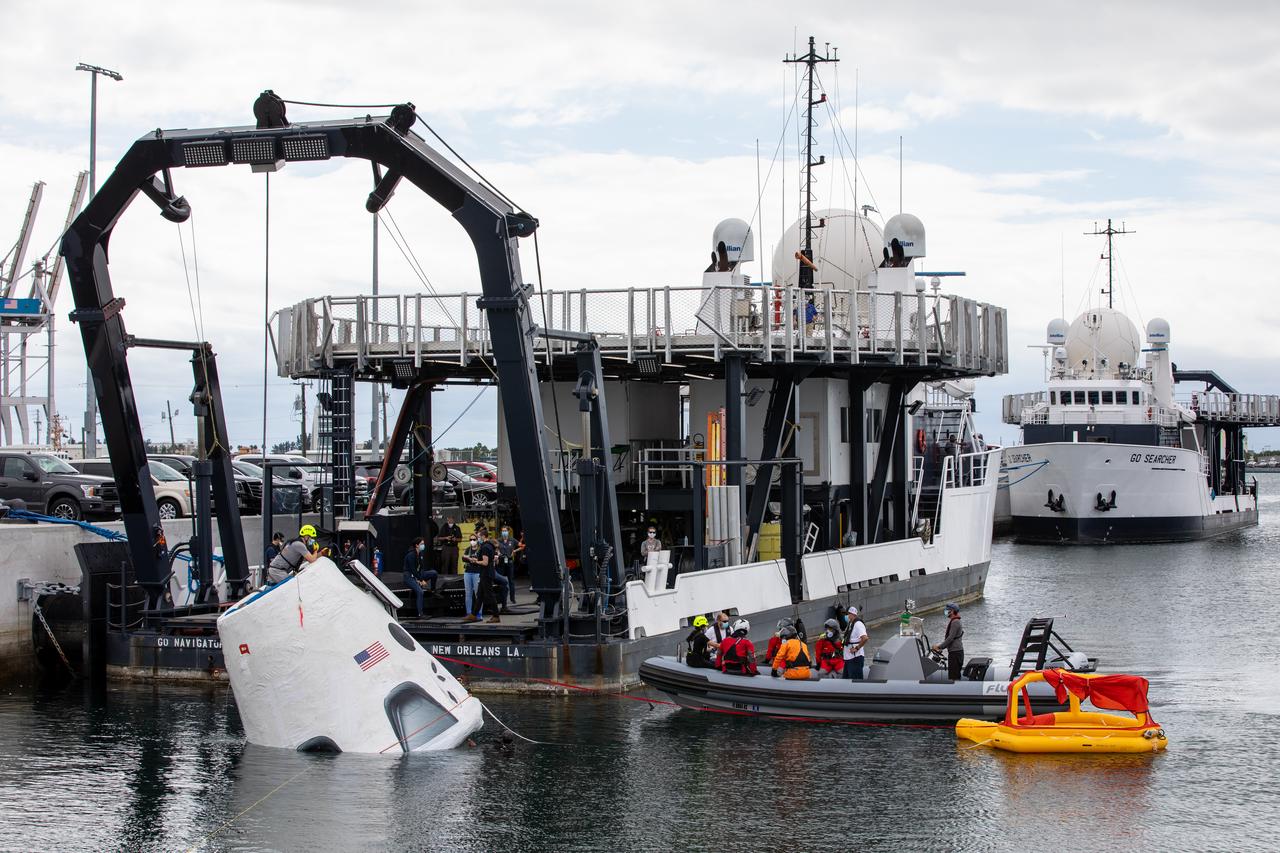
NASA astronauts Shane Kimbrough and Megan McArthur, Japan Aerospace Exploration Agency astronaut Akihiko Hoshide, and European Space Agency astronaut Thomas Pesquet participate in an egress training exercise in Port Canaveral, Florida, on Oct. 1, 2020, in preparation for NASA’s SpaceX Crew-2 mission as part of the agency’s Commercial Crew Program. The exercise involved simulating an emergency situation after splashdown of the Crew Dragon spacecraft. Using a mock-up of the Crew Dragon, the crew practiced exiting the capsule and jumping into the water. Crew-2 is targeted to launch from Kennedy Space Center’s Launch Complex 39A in spring 2021.
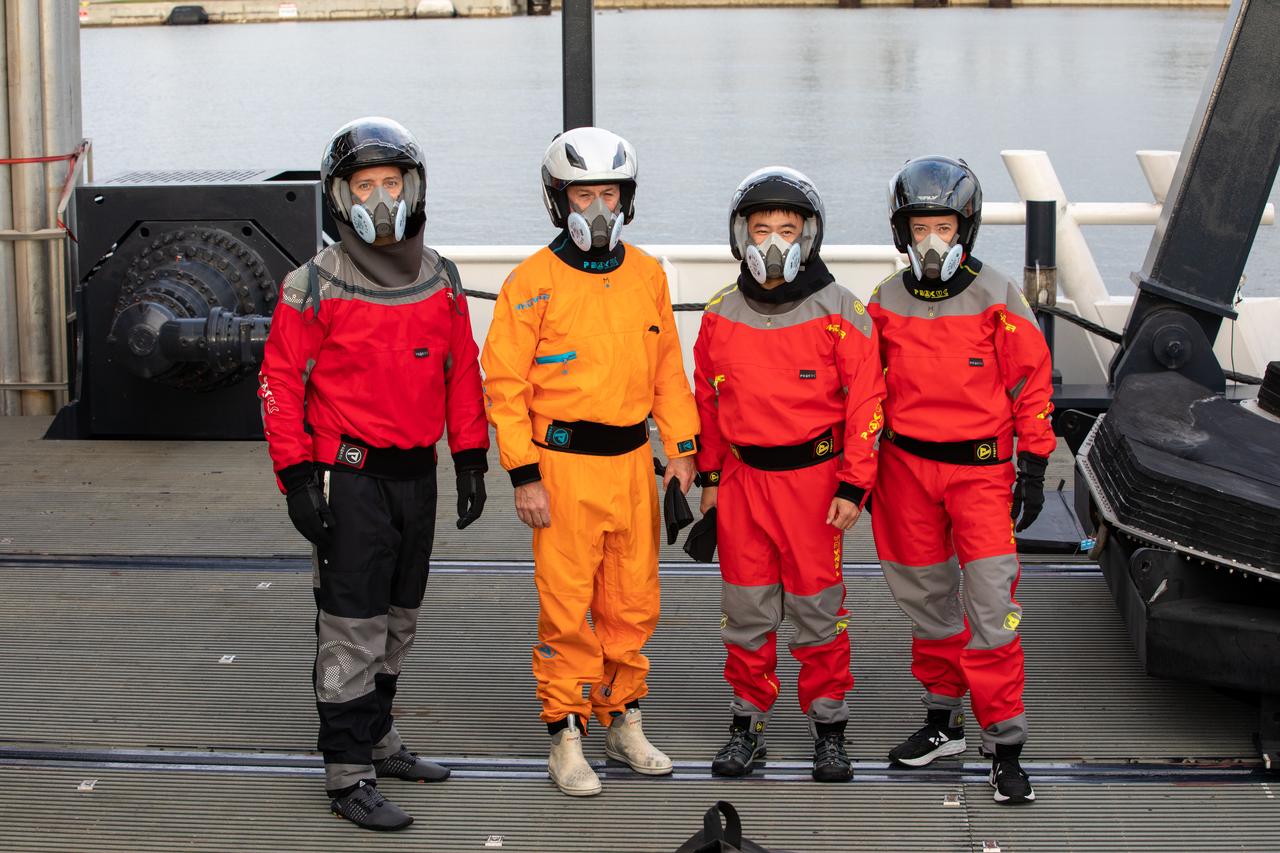
NASA astronauts Shane Kimbrough and Megan McArthur, Japan Aerospace Exploration Agency astronaut Akihiko Hoshide, and European Space Agency astronaut Thomas Pesquet participate in an egress training exercise in Port Canaveral, Florida, on Oct. 1, 2020, in preparation for NASA’s SpaceX Crew-2 mission as part of the agency’s Commercial Crew Program. The exercise involved simulating an emergency situation after splashdown of the Crew Dragon spacecraft. Using a mock-up of the Crew Dragon, the crew practiced exiting the capsule and jumping into the water. Crew-2 is targeted to launch from Kennedy Space Center’s Launch Complex 39A in spring 2021.
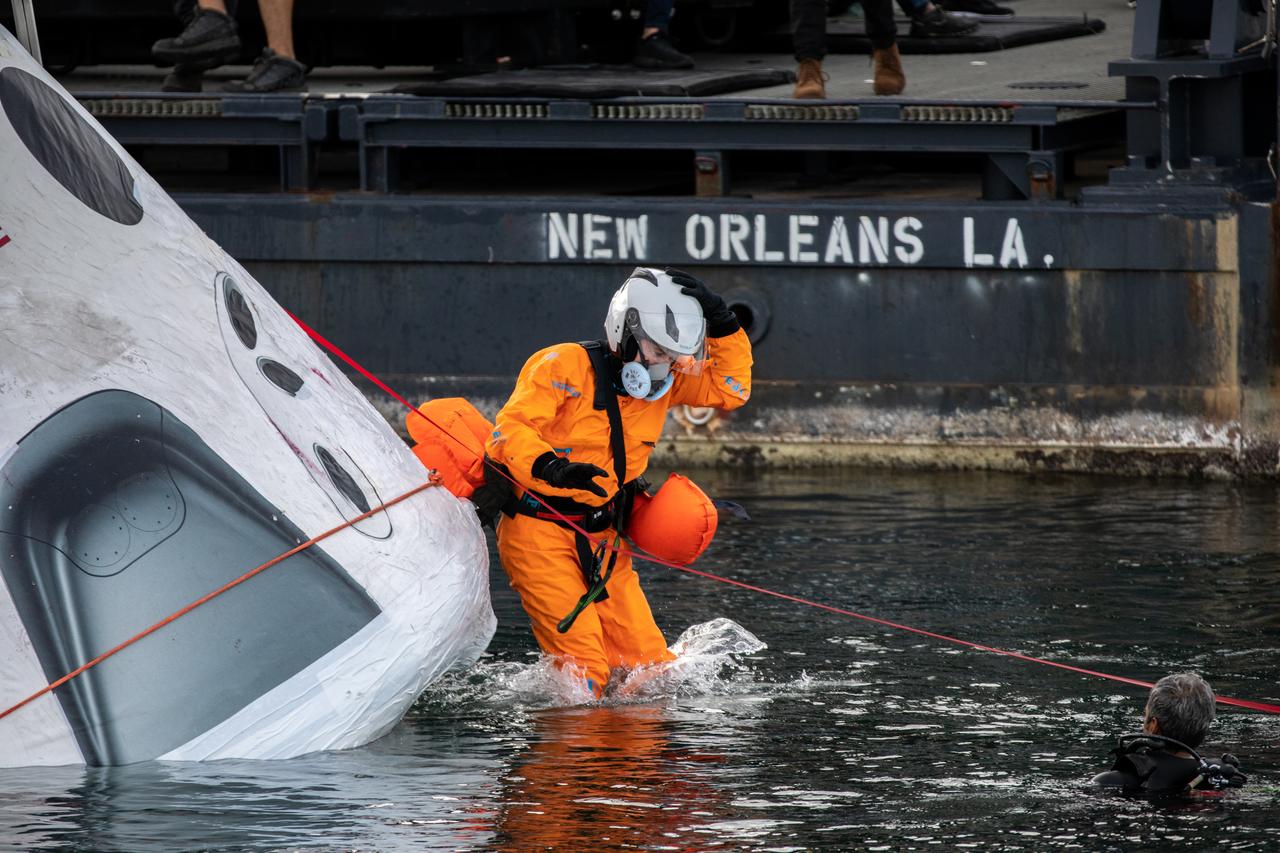
NASA astronauts Shane Kimbrough and Megan McArthur, Japan Aerospace Exploration Agency astronaut Akihiko Hoshide, and European Space Agency astronaut Thomas Pesquet participate in an egress training exercise in Port Canaveral, Florida, on Oct. 1, 2020, in preparation for NASA’s SpaceX Crew-2 mission as part of the agency’s Commercial Crew Program. The exercise involved simulating an emergency situation after splashdown of the Crew Dragon spacecraft. Using a mock-up of the Crew Dragon, the crew practiced exiting the capsule and jumping into the water. Crew-2 is targeted to launch from Kennedy Space Center’s Launch Complex 39A in spring 2021.
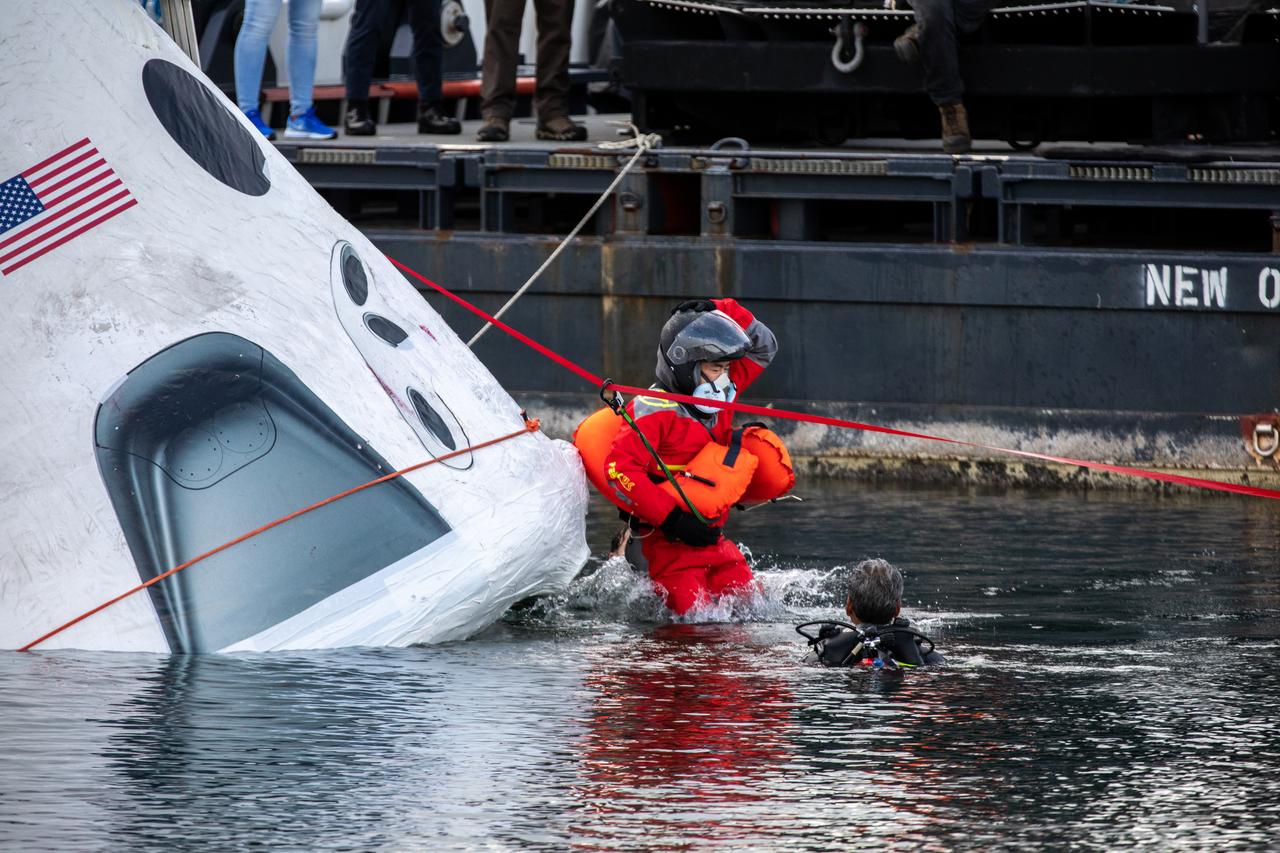
NASA astronauts Shane Kimbrough and Megan McArthur, Japan Aerospace Exploration Agency astronaut Akihiko Hoshide, and European Space Agency astronaut Thomas Pesquet participate in an egress training exercise in Port Canaveral, Florida, on Oct. 1, 2020, in preparation for NASA’s SpaceX Crew-2 mission as part of the agency’s Commercial Crew Program. The exercise involved simulating an emergency situation after splashdown of the Crew Dragon spacecraft. Using a mock-up of the Crew Dragon, the crew practiced exiting the capsule and jumping into the water. Crew-2 is targeted to launch from Kennedy Space Center’s Launch Complex 39A in spring 2021.
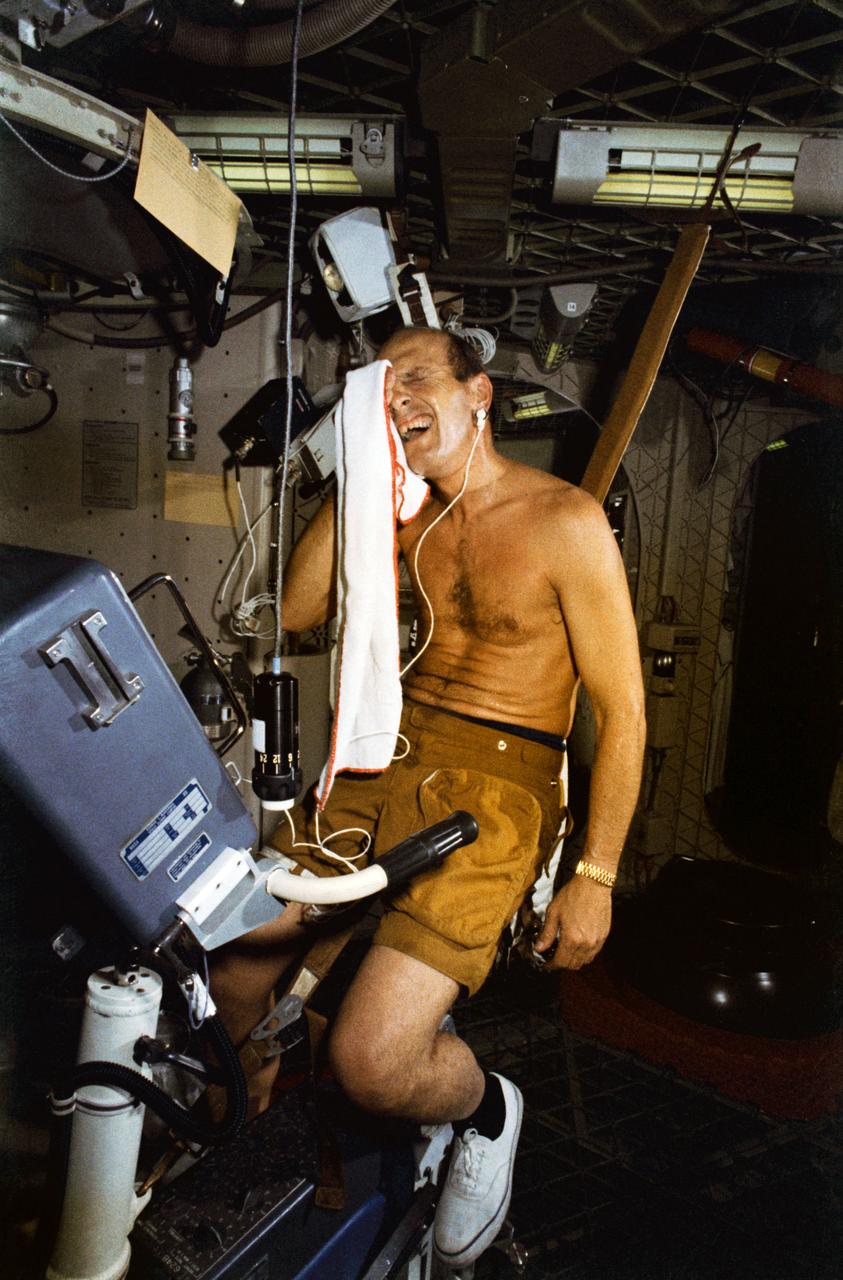
S73-20713 (1 March 1973) --- Astronaut Charles Conrad Jr., commander of the first manned Skylab mission, wipes perspiration from his face following an exercise session on the bicycle ergometer during Skylab training at Johnson Space Center. Conrad is in the work and experiments compartment of the crew quarters of the Skylab Orbital Workshop (OWS) trainer at JSC. In addition to being the prime exercise for the crewmen, the ergometer is also used for the vector-cardiogram test and the metabolic activity experiment. The bicycle ergometer produces measured workloads for use in determining man's metabolic effectiveness. Photo credit: NASA
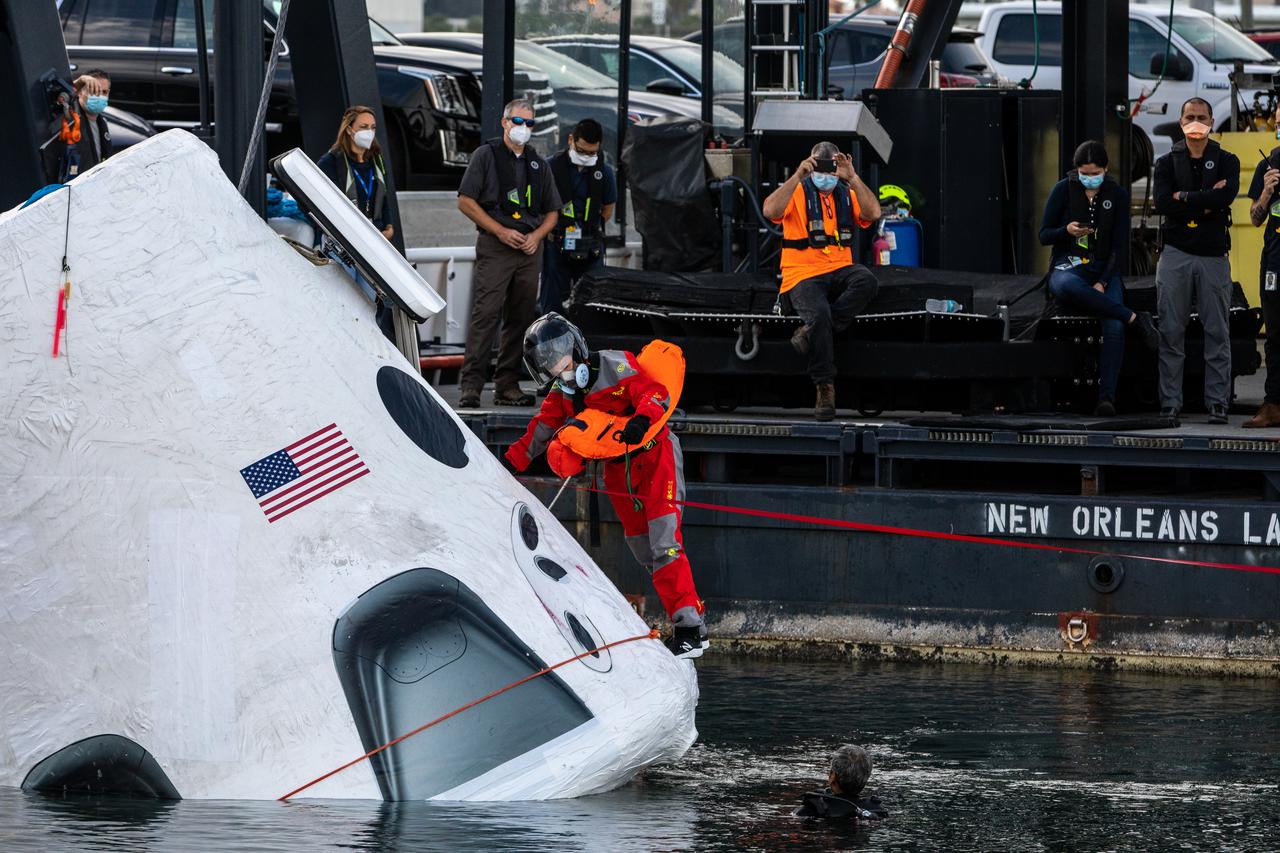
NASA astronauts Shane Kimbrough and Megan McArthur, Japan Aerospace Exploration Agency astronaut Akihiko Hoshide, and European Space Agency astronaut Thomas Pesquet participate in an egress training exercise in Port Canaveral, Florida, on Oct. 1, 2020, in preparation for NASA’s SpaceX Crew-2 mission as part of the agency’s Commercial Crew Program. The exercise involved simulating an emergency situation after splashdown of the Crew Dragon spacecraft. Using a mock-up of the Crew Dragon, the crew practiced exiting the capsule and jumping into the water. Crew-2 is targeted to launch from Kennedy Space Center’s Launch Complex 39A in spring 2021.
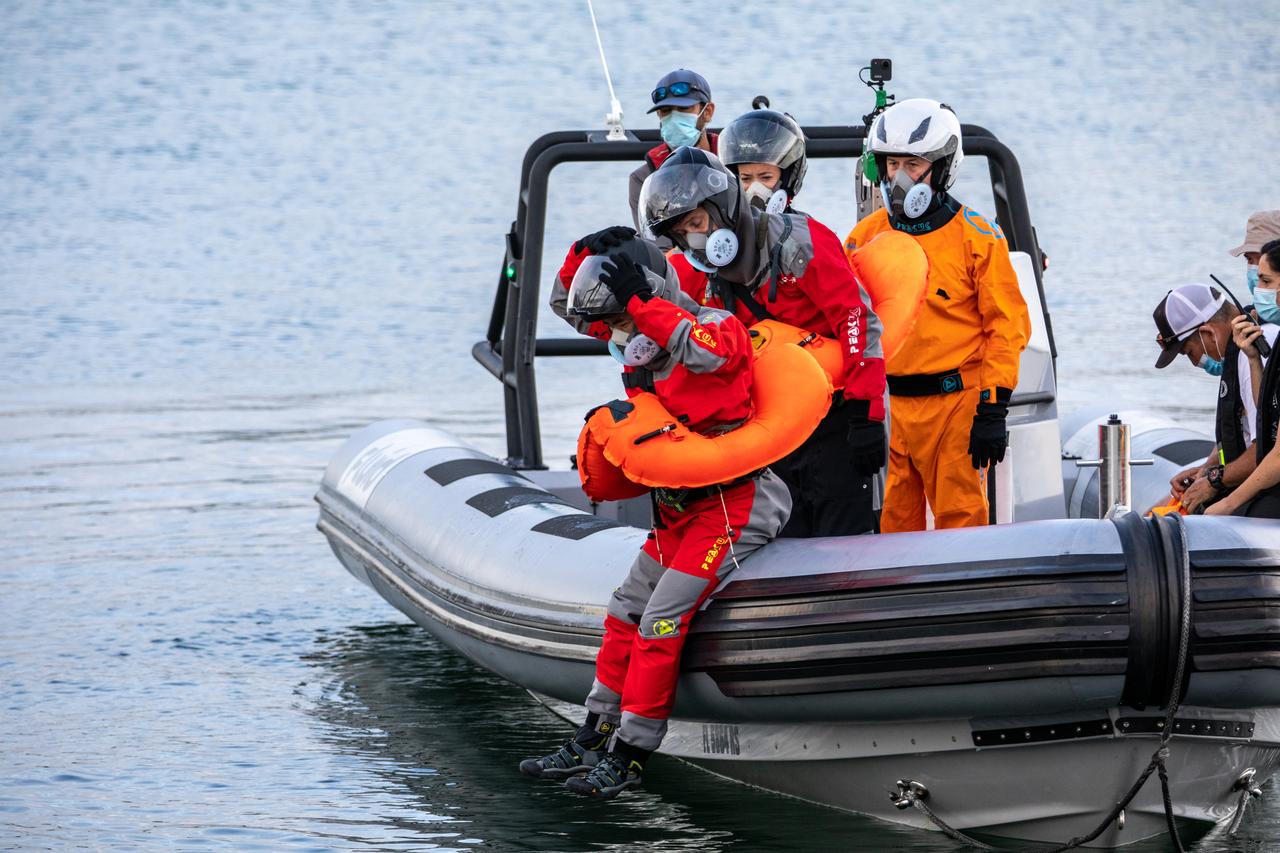
NASA astronauts Shane Kimbrough and Megan McArthur, Japan Aerospace Exploration Agency astronaut Akihiko Hoshide, and European Space Agency astronaut Thomas Pesquet participate in an egress training exercise in Port Canaveral, Florida, on Oct. 1, 2020, in preparation for NASA’s SpaceX Crew-2 mission as part of the agency’s Commercial Crew Program. The exercise involved simulating an emergency situation after splashdown of the Crew Dragon spacecraft. Using a mock-up of the Crew Dragon, the crew practiced exiting the capsule and jumping into the water. Crew-2 is targeted to launch from Kennedy Space Center’s Launch Complex 39A in spring 2021.
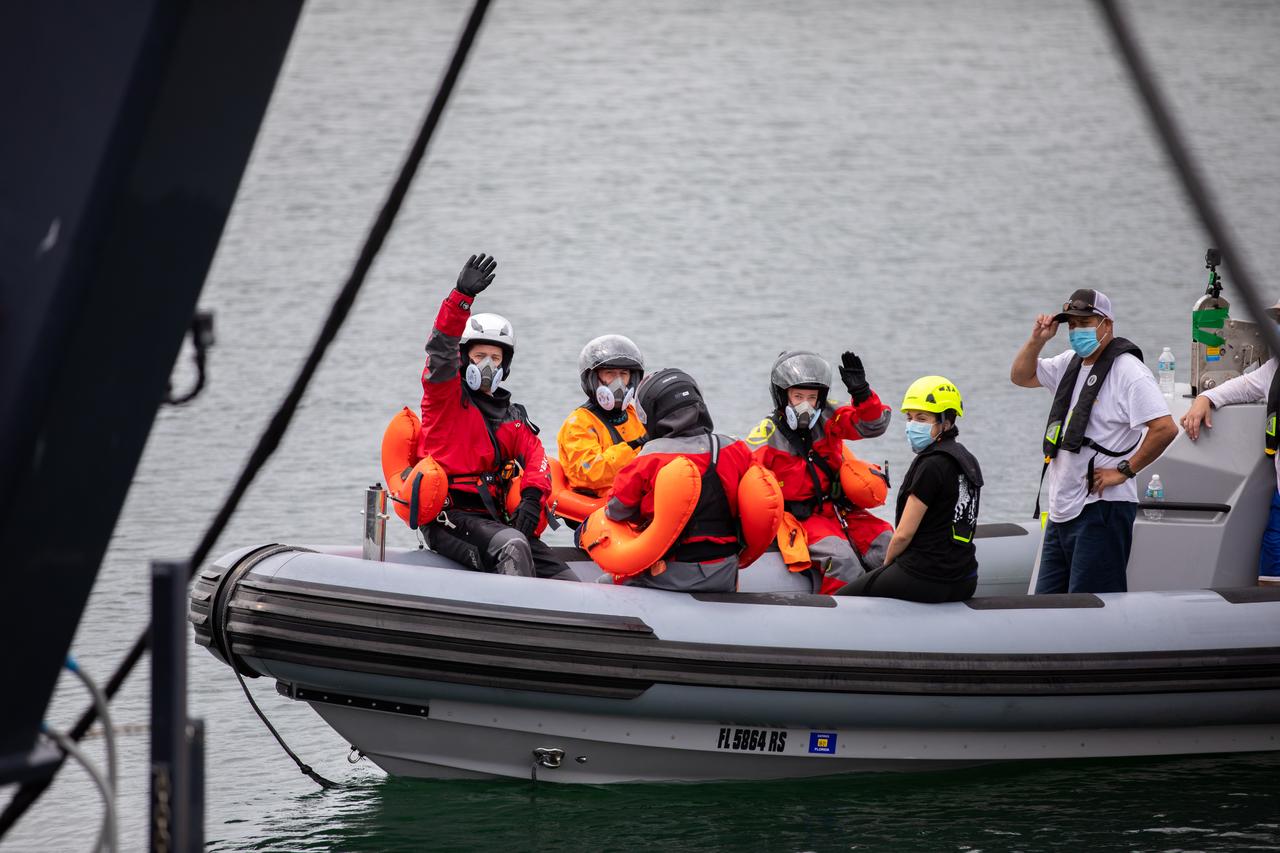
NASA astronauts Shane Kimbrough and Megan McArthur, Japan Aerospace Exploration Agency astronaut Akihiko Hoshide, and European Space Agency astronaut Thomas Pesquet participate in an egress training exercise in Port Canaveral, Florida, on Oct. 1, 2020, in preparation for NASA’s SpaceX Crew-2 mission as part of the agency’s Commercial Crew Program. The exercise involved simulating an emergency situation after splashdown of the Crew Dragon spacecraft. Using a mock-up of the Crew Dragon, the crew practiced exiting the capsule and jumping into the water. Crew-2 is targeted to launch from Kennedy Space Center’s Launch Complex 39A in spring 2021.
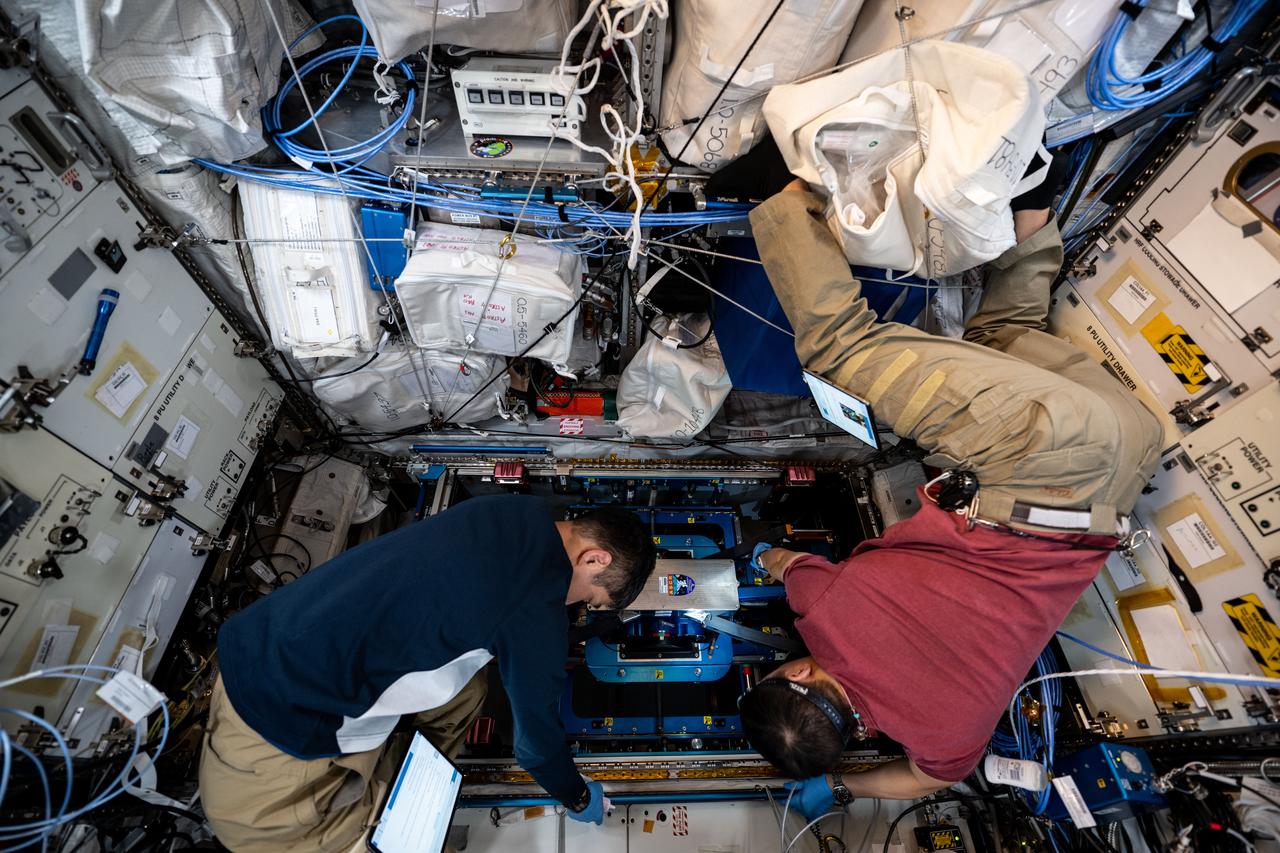
iss073e0177115 (6/9/2025) --- NASA astronaut Jonny Kim and JAXA (Japan Aerospace Exploration Agency) astronaut Takuya Onishi work on a vibration isolation system for the new European Enhanced Exploration Exercise Device (E4D) on the International Space Station. The E4D combines resistive and aerobic capabilities in a small footprint, important for future long-term exploration missions. Once the device is operating, researchers plan to acquire and evaluate data on its function and feedback from multiple crew members. The system adds new exercises to the current portfolio, such as targeting muscle groups essential for activities like leaving a spacecraft after landing.
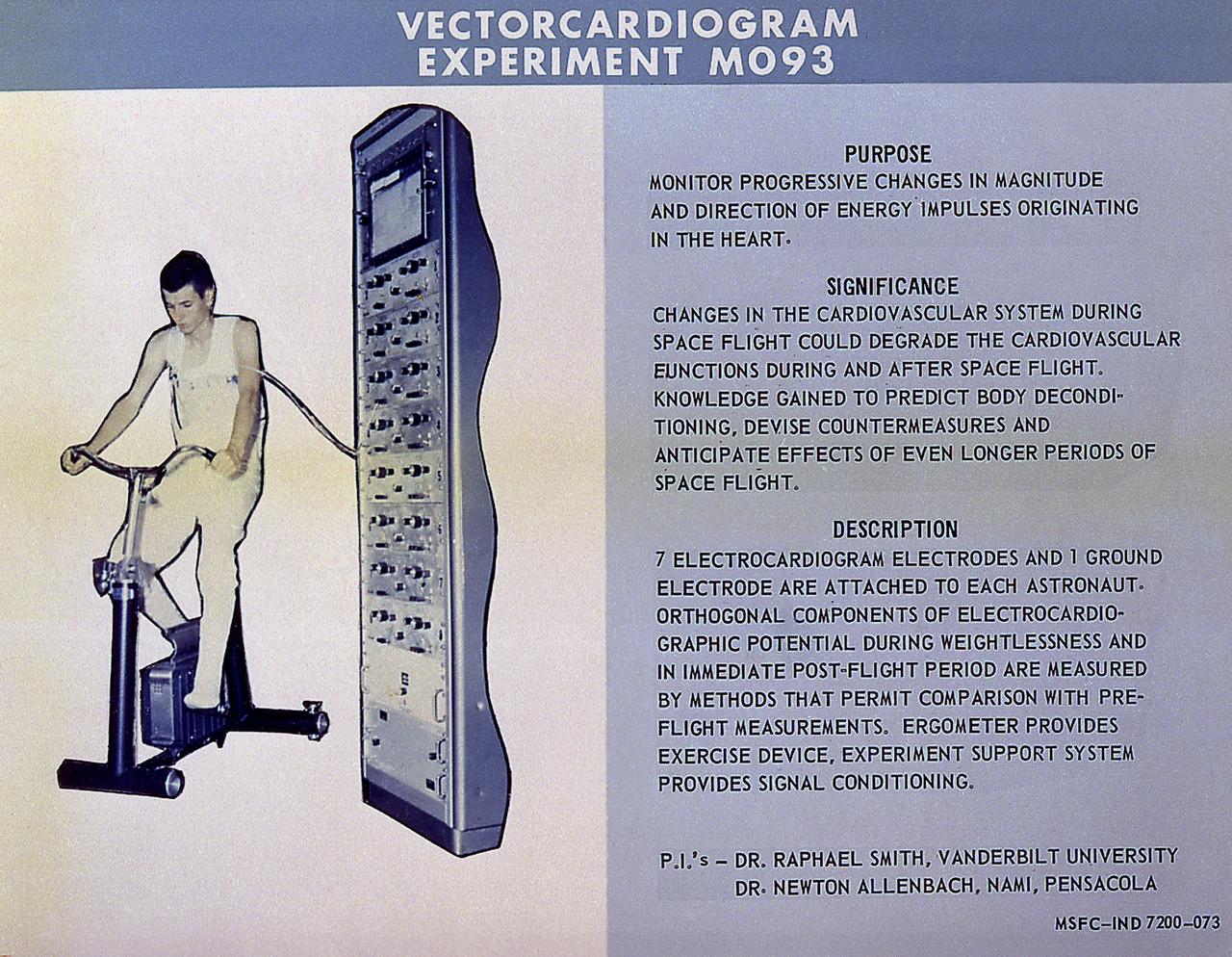
This chart details Skylab's Vectorcardiogram experiment and facility, a medical study to measure the activity of the heart by recording electric signals (vectorcardiographic potentials) of each astronaut during preflight, inflight, and post-flight periods and obtain information on changes in heart functions induced by flight conditions. Vectorcardiograms were taken with a bicycle ergometer (part of Experiment M171) at regular intervals throughout the mission while the crewmen were at rest, and before, during, and after specific exercise periods. This instrument enabled an astronaut to exercise at selected levels of energy consumption. The Marshall Space Flight Center had program management responsibility for the development of Skylab hardware and experiments.
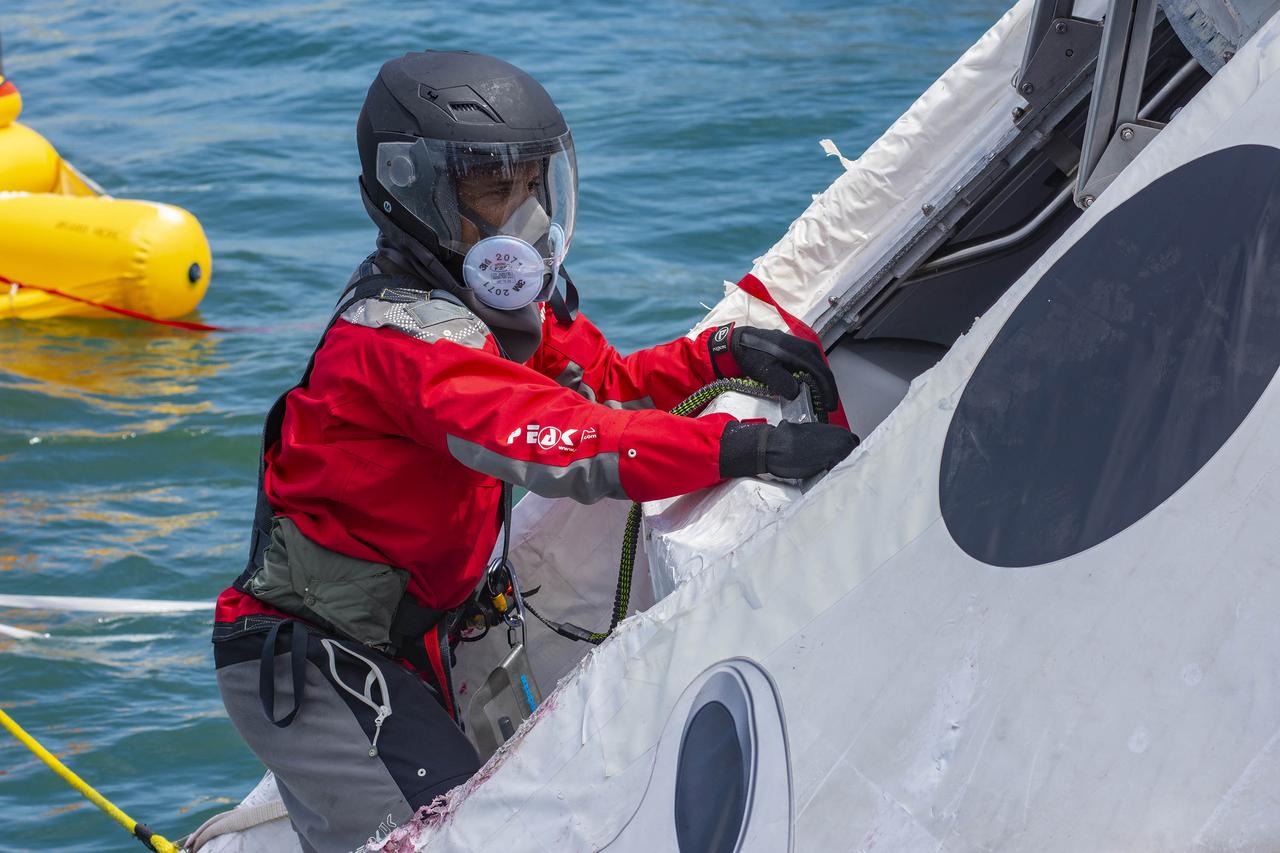
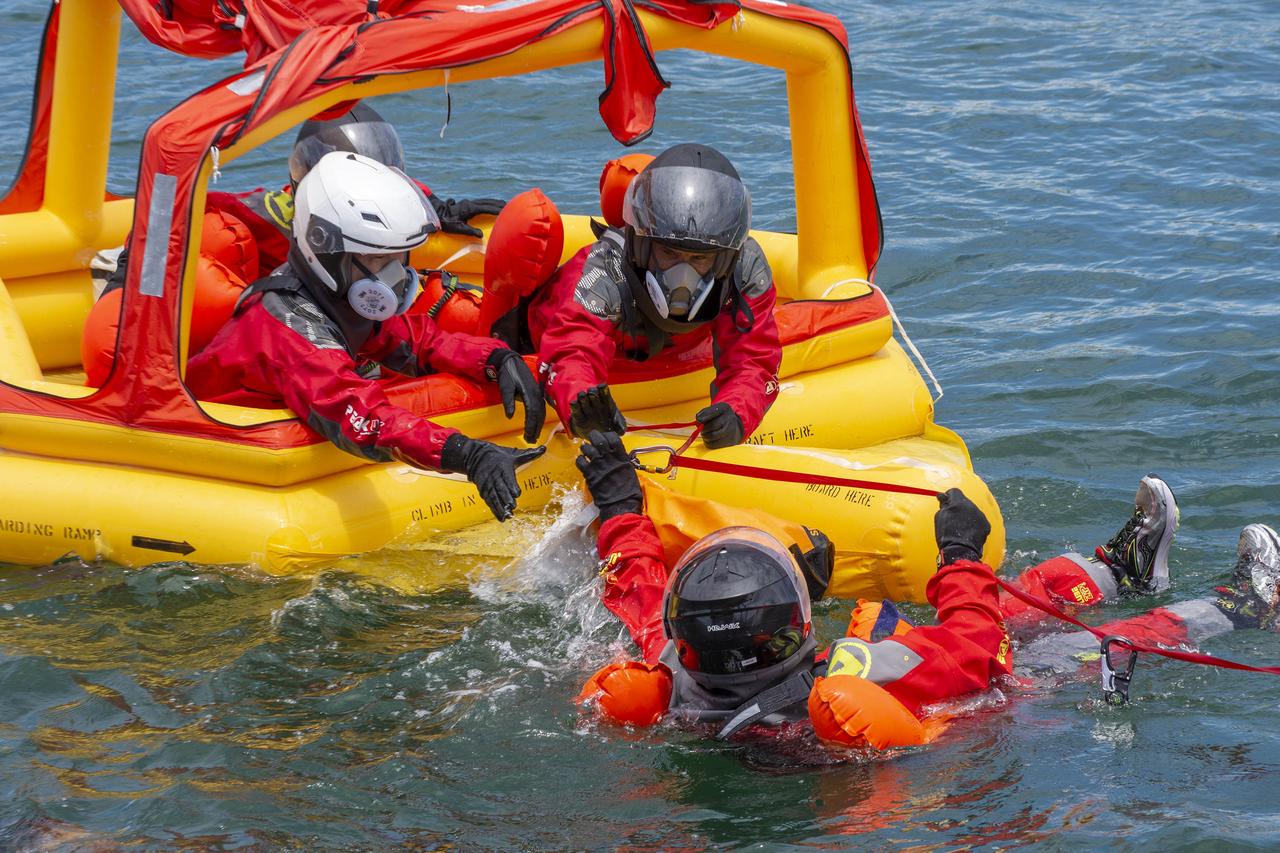
NASA astronaut Victor Glover, and pilot for the agency’s SpaceX Crew-1 mission, participates in an egress training exercise on July 21, 2020, in Florida. The exercise involved simulating an emergency situation after splashdown of the Crew Dragon spacecraft. Mission specialist Shannon Walker and spacecraft commander Michael Hopkins – both NASA astronauts – also participated in the training, along with Soichi Noguchi, mission specialist and Japan Aerospace Exploration Agency (JAXA) astronaut. Glover, Walker, Hopkins, and Noguchi will launch to the International Space Station from Launch Complex 39A at the agency’s Kennedy Space Center in Florida. Crew-1 will be the first operational mission to the orbiting laboratory under NASA’s Commercial Crew Program, following the agency’s certification of SpaceX’s crew transportation system.
Crew Dragon commander Michael Hopkins, pilot Victor Glover, mission specialist Shannon Walker – all NASA astronauts – and Japan Aerospace Exploration Agency (JAXA) astronaut and mission specialist Soichi Noguchi participate in an egress training exercise on July 21, 2020, in preparation for NASA’s SpaceX Crew-1 mission. The exercise involved simulating an emergency situation after splashdown of the Crew Dragon spacecraft. Hopkins, Glover, Walker, and Noguchi will launch to the International Space Station from Launch Complex 39A at the agency’s Kennedy Space Center in Florida. Crew-1 will be the first operational mission to the orbiting laboratory under NASA’s Commercial Crew Program, following the agency’s certification of SpaceX’s crew transportation system.
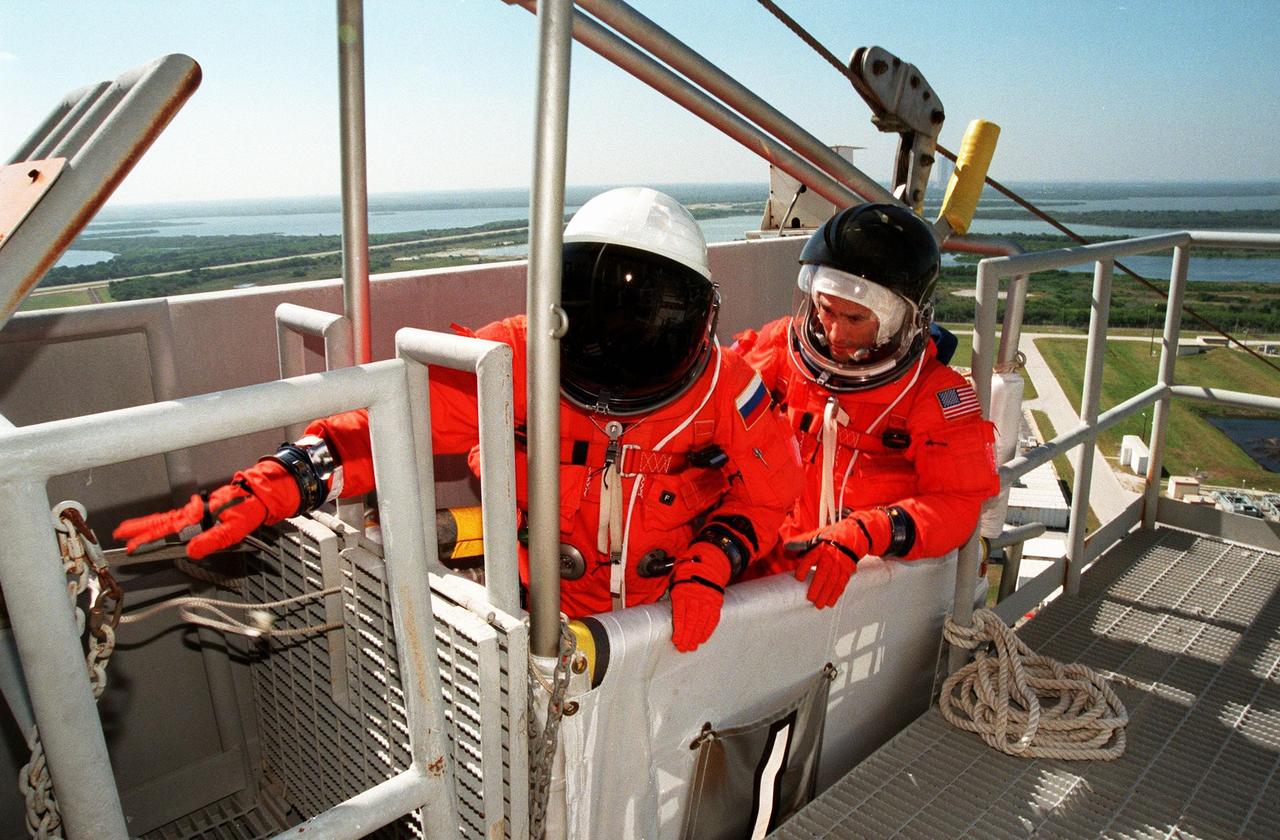
KENNEDY SPACE CENTER, Fla. -- STS-88 Mission Specialists Sergei Konstantinovich Krikalev (left) and James H. Newman (right) are ready to leave Launch Pad 39A in the slidewire basket during an emergency egress exercise. The crew are at KSC to participate in the Terminal Countdown Demonstration Test (TCDT) which includes mission familiarization activities, emergency egress training, and the simulated main engine cut-off exercise. Mission STS-88 is targeted for launch on Dec. 3, 1998. It is the first U.S. flight for the assembly of the International Space Station and will carry the Unity connecting module. Unity will be mated with the already orbiting Russian-built Zarya control module. The 12-day mission includes three planned spacewalks to connect power, data and utility lines and install exterior equipment
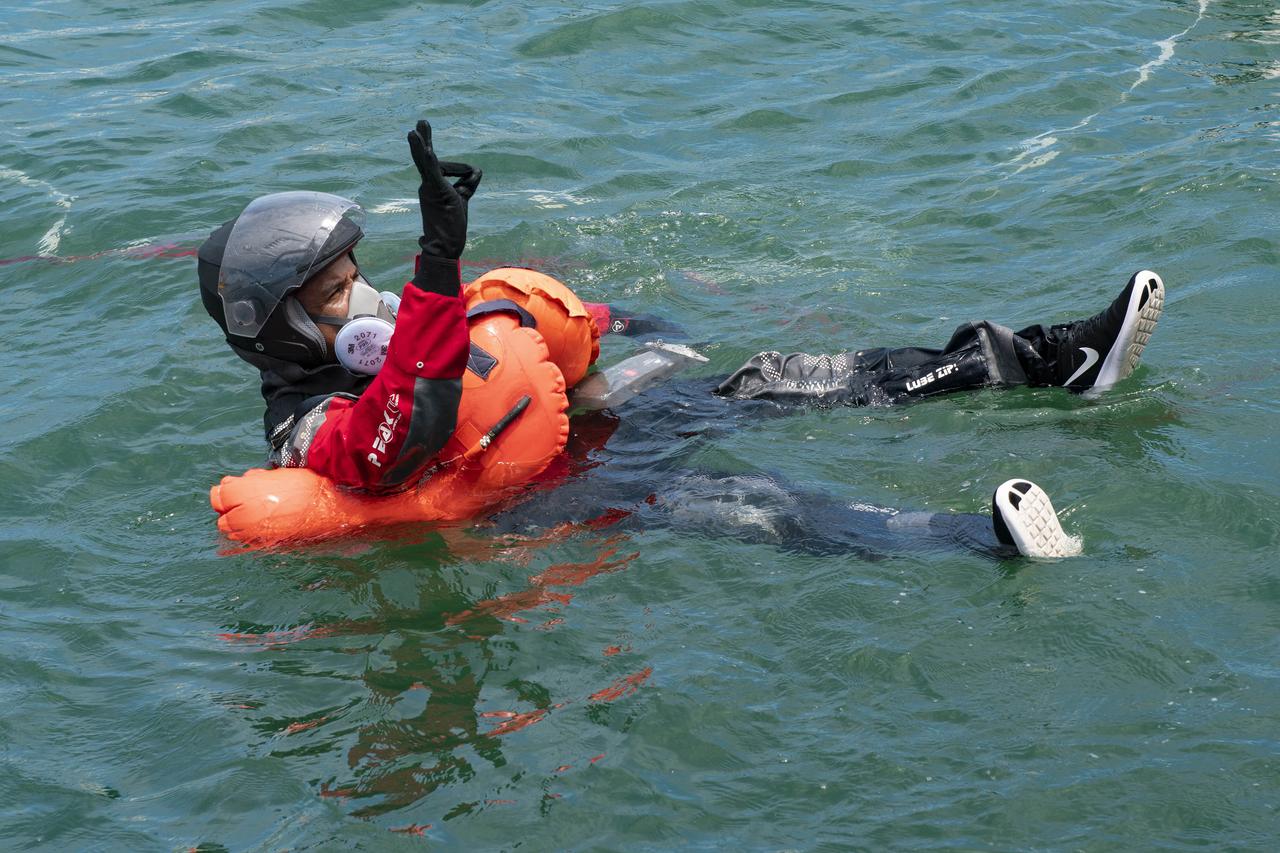
NASA astronaut Victor Glover, and pilot for the agency’s SpaceX Crew-1 mission, participates in an egress training exercise on July 21, 2020, in Florida. The exercise involved simulating an emergency situation after splashdown of the Crew Dragon spacecraft. Mission specialist Shannon Walker and spacecraft commander Michael Hopkins – both NASA astronauts – also participated in the training, along with Soichi Noguchi, mission specialist and Japan Aerospace Exploration Agency (JAXA) astronaut. Glover, Walker, Hopkins, and Noguchi will launch to the International Space Station from Launch Complex 39A at the agency’s Kennedy Space Center in Florida. Crew-1 will be the first operational mission to the orbiting laboratory under NASA’s Commercial Crew Program, following the agency’s certification of SpaceX’s crew transportation system.

KENNEDY SPACE CENTER, Fla. -- STS-88 Mission Specialists Sergei Konstantinovich Krikalev (left) and James H. Newman (right) are ready to leave Launch Pad 39A in the slidewire basket during an emergency egress exercise. The crew are at KSC to participate in the Terminal Countdown Demonstration Test (TCDT) which includes mission familiarization activities, emergency egress training, and the simulated main engine cut-off exercise. Mission STS-88 is targeted for launch on Dec. 3, 1998. It is the first U.S. flight for the assembly of the International Space Station and will carry the Unity connecting module. Unity will be mated with the already orbiting Russian-built Zarya control module. The 12-day mission includes three planned spacewalks to connect power, data and utility lines and install exterior equipment
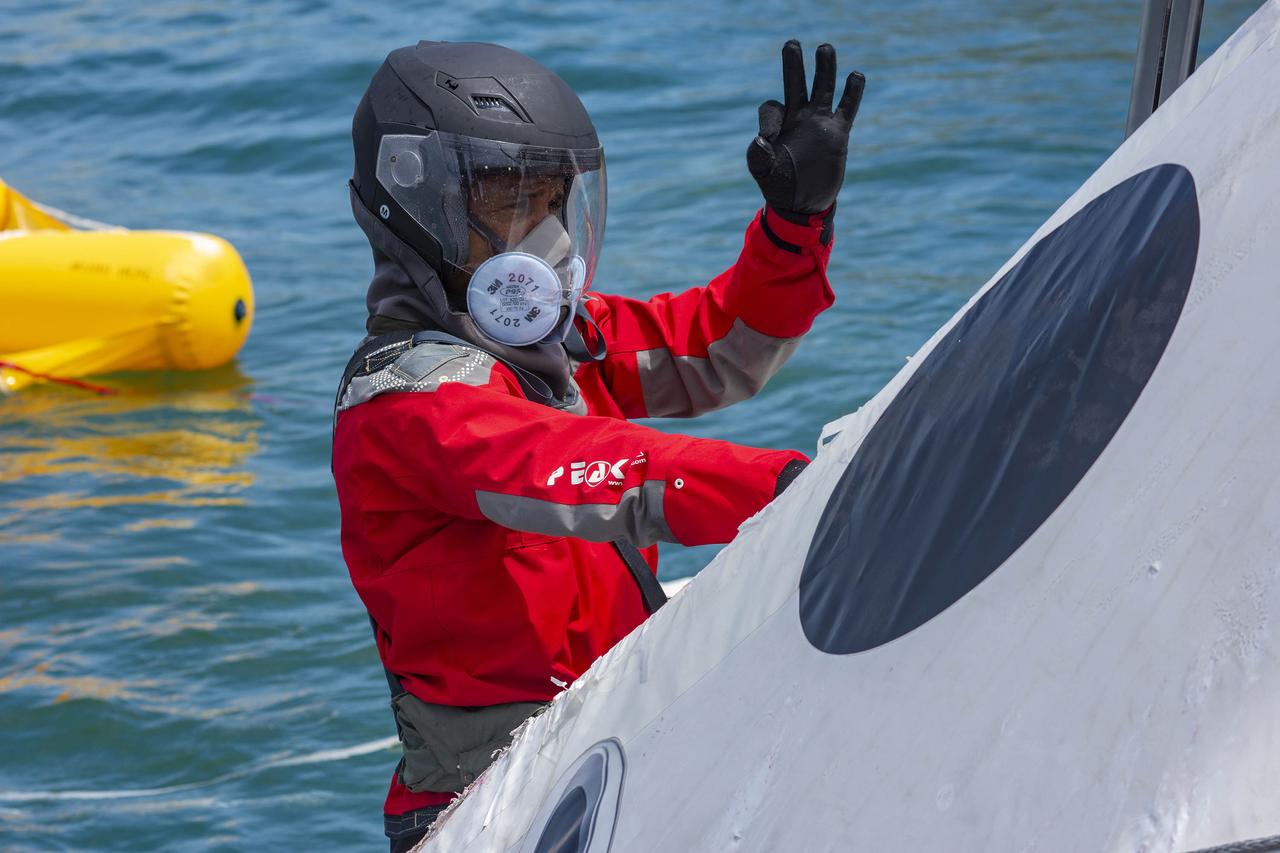
NASA astronaut Victor Glover, and pilot for the agency’s SpaceX Crew-1 mission, participates in an egress training exercise on July 21, 2020, in Florida. The exercise involved simulating an emergency situation after splashdown of the Crew Dragon spacecraft. Mission specialist Shannon Walker and spacecraft commander Michael Hopkins – both NASA astronauts – also participated in the training, along with Soichi Noguchi, mission specialist and Japan Aerospace Exploration Agency (JAXA) astronaut. Glover, Walker, Hopkins, and Noguchi will launch to the International Space Station from Launch Complex 39A at the agency’s Kennedy Space Center in Florida. Crew-1 will be the first operational mission to the orbiting laboratory under NASA’s Commercial Crew Program, following the agency’s certification of SpaceX’s crew transportation system.
From back to front, pilot Victor Glover, mission specialist Shannon Walker, mission specialist Soichi Noguchi, and spacecraft commander Michael Hopkins participate in an egress training exercise on July 21, 2020, in preparation for NASA’s SpaceX Crew-1 mission. Glover, Walker, and Hopkins are all NASA astronauts; Noguchi is a Japan Aerospace Exploration Agency (JAXA) astronaut. The exercise involved simulating an emergency situation after splashdown of the Crew Dragon spacecraft. Hopkins, Glover, Walker, and Noguchi will launch to the International Space Station from Launch Complex 39A at the agency’s Kennedy Space Center in Florida. Crew-1 will be the first operational mission to the orbiting laboratory under NASA’s Commercial Crew Program, following the agency’s certification of SpaceX’s crew transportation system.
NASA astronaut Michael Hopkins, and spacecraft commander for the agency’s SpaceX Crew-1 mission, participates in an egress training exercise on July 21, 2020, in Florida. The exercise involved simulating an emergency situation after splashdown of the Crew Dragon spacecraft. Mission specialist Shannon Walker and pilot Victor Glover – both NASA astronauts – also participated in the training, along with Soichi Noguchi, mission specialist and Japan Aerospace Exploration Agency (JAXA) astronaut. Hopkins, Walker, Glover, and Noguchi will launch to the International Space Station from Launch Complex 39A at the agency’s Kennedy Space Center in Florida. Crew-1 will be the first operational mission to the orbiting laboratory under NASA’s Commercial Crew Program, following the agency’s certification of SpaceX’s crew transportation system.
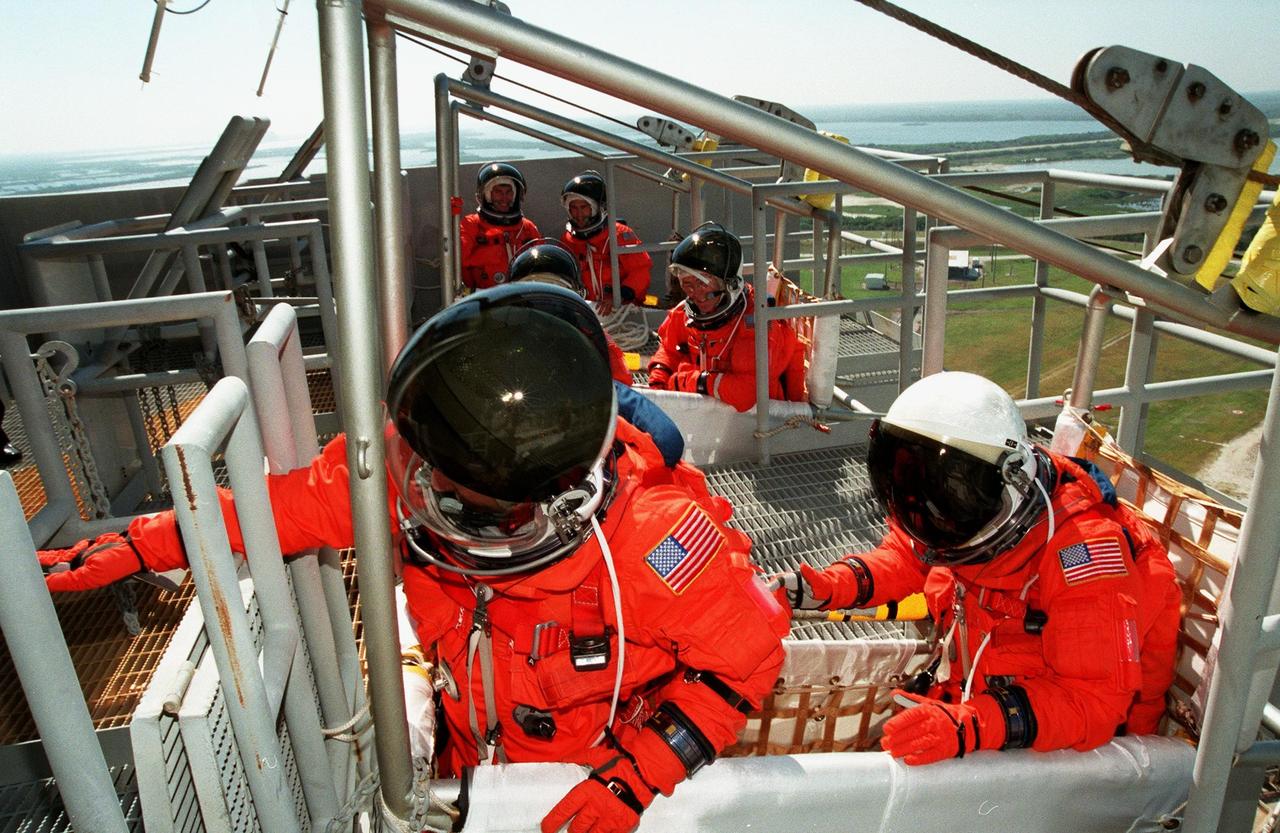
KENNEDY SPACE CENTER, Fla. -- STS-88 Mission Commander Robert D. Cabana (left) and Pilot Frederick W. "Rick" Sturckow (right) are ready to leave Launch Pad 39A in the slidewire basket during an emergency egress exercise. Other crew members watch from behind. The crew are at KSC to participate in the Terminal Countdown Demonstration Test (TCDT) which includes mission familiarization activities, emergency egress training, and the simulated main engine cut-off exercise. Mission STS-88 is targeted for launch on Dec. 3, 1998. It is the first U.S. flight for the assembly of the International Space Station and will carry the Unity connecting module. Unity will be mated with the already orbiting Russian-built Zarya control module. The 12-day mission includes three planned spacewalks to connect power, data and utility lines and install exterior equipment
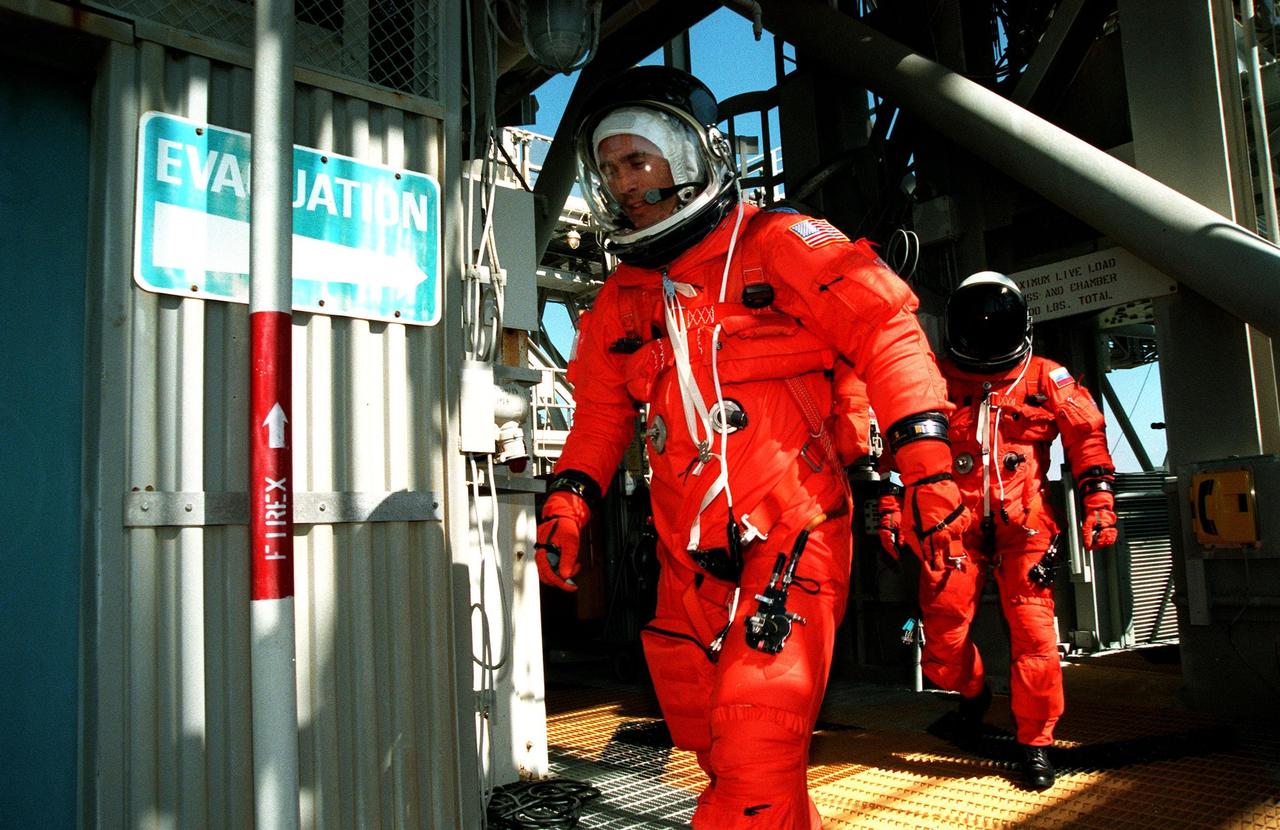
KENNEDY SPACE CENTER, Fla. -- STS-88 Mission Specialists James H. Newman (left) and Sergei Konstantinovich Krikalev (right) hurry toward the slidewire basket at the 195-foot level of Launch Pad 39A during an emergency egress exercise. The crew are at KSC to participate in the Terminal Countdown Demonstration Test (TCDT) which includes mission familiarization activities, emergency egress training, and the simulated main engine cut-off exercise. Mission STS-88 is targeted for launch on Dec. 3, 1998. It is the first U.S. flight for the assembly of the International Space Station and will carry the Unity connecting module. Unity will be mated with the already orbiting Russian-built Zarya control module. The 12-day mission includes three planned spacewalks to connect power, data and utility lines and install exterior equipment
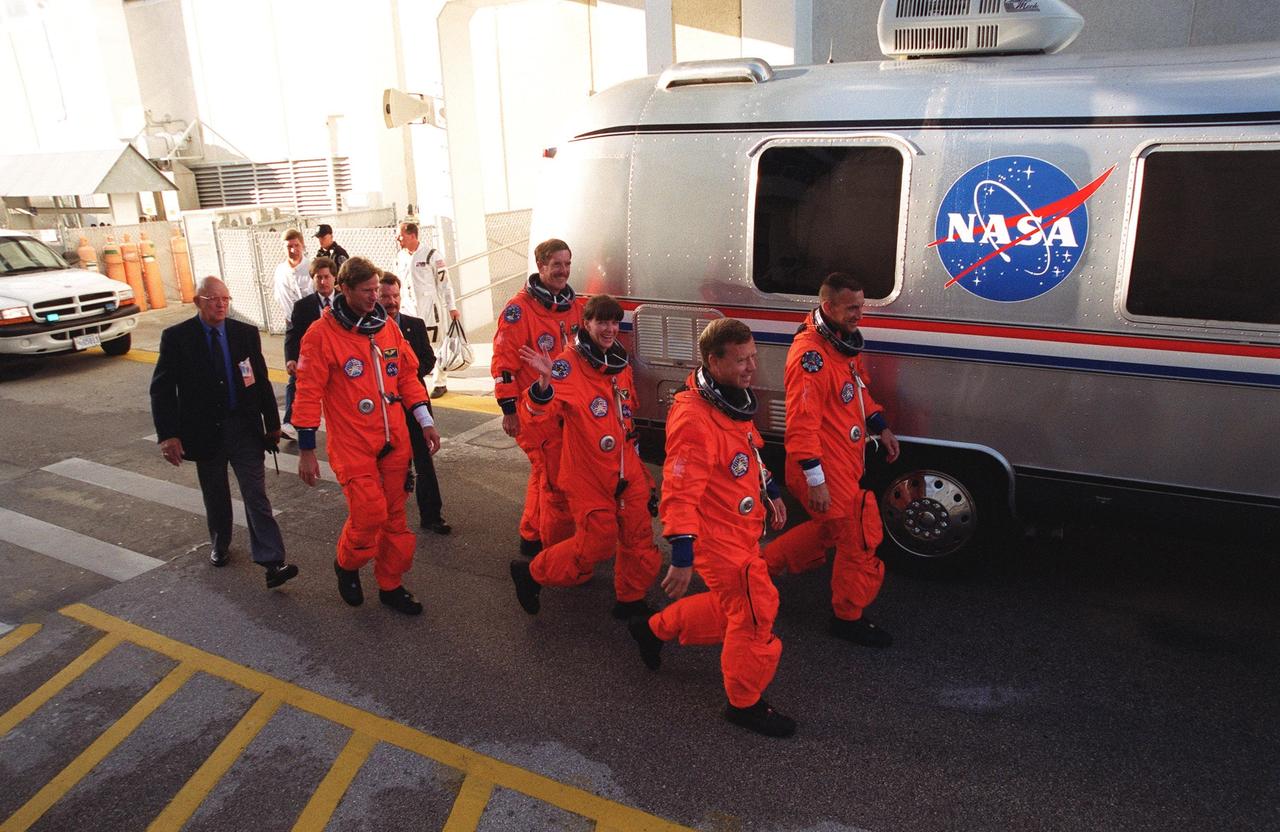
KENNEDY SPACE CENTER, Fla. -- Dressed in their orange launch and entry suits, the STS-104 crew eagerly walk to the Astrovan that will take them to Launch Pad 39B and a simulated countdown exercise. From left are Mission Specialists Michael L. Gernhardt, James F. Reilly and Janet Lynn Kavandi; Commander Steven W. Lindsey and Pilot Charles O. Hobaugh. The crew is taking part in Terminal Countdown Demonstration Test activities, which include emergency exit training from the orbiter, opportunities to inspect their mission payloads in the orbiter’s payload bay and simulated countdown exercises. The launch of Atlantis on mission STS-104 is scheduled July 12 from Launch Pad 39B. The mission is the 10th flight to the International Space Station and carries the Joint Airlock Module
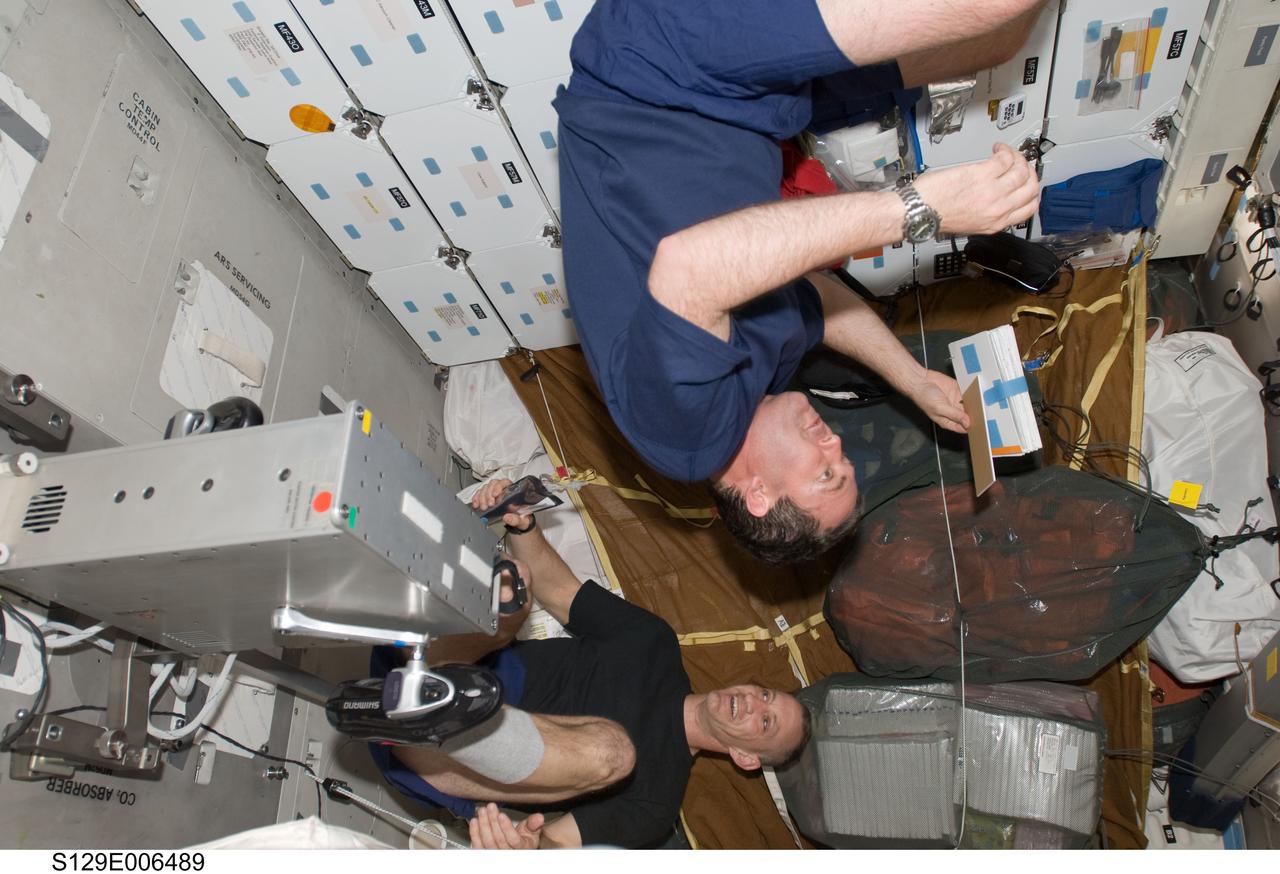
S129-E-006489 (17 Nov. 2009) --- Astronauts Charles O. Hobaugh (bottom), STS-129 commander; and Mike Foreman, mission specialist, are pictured on the middeck of Space Shuttle Atlantis during flight day two activities. Hobaugh is exercising on a bicycle ergometer.
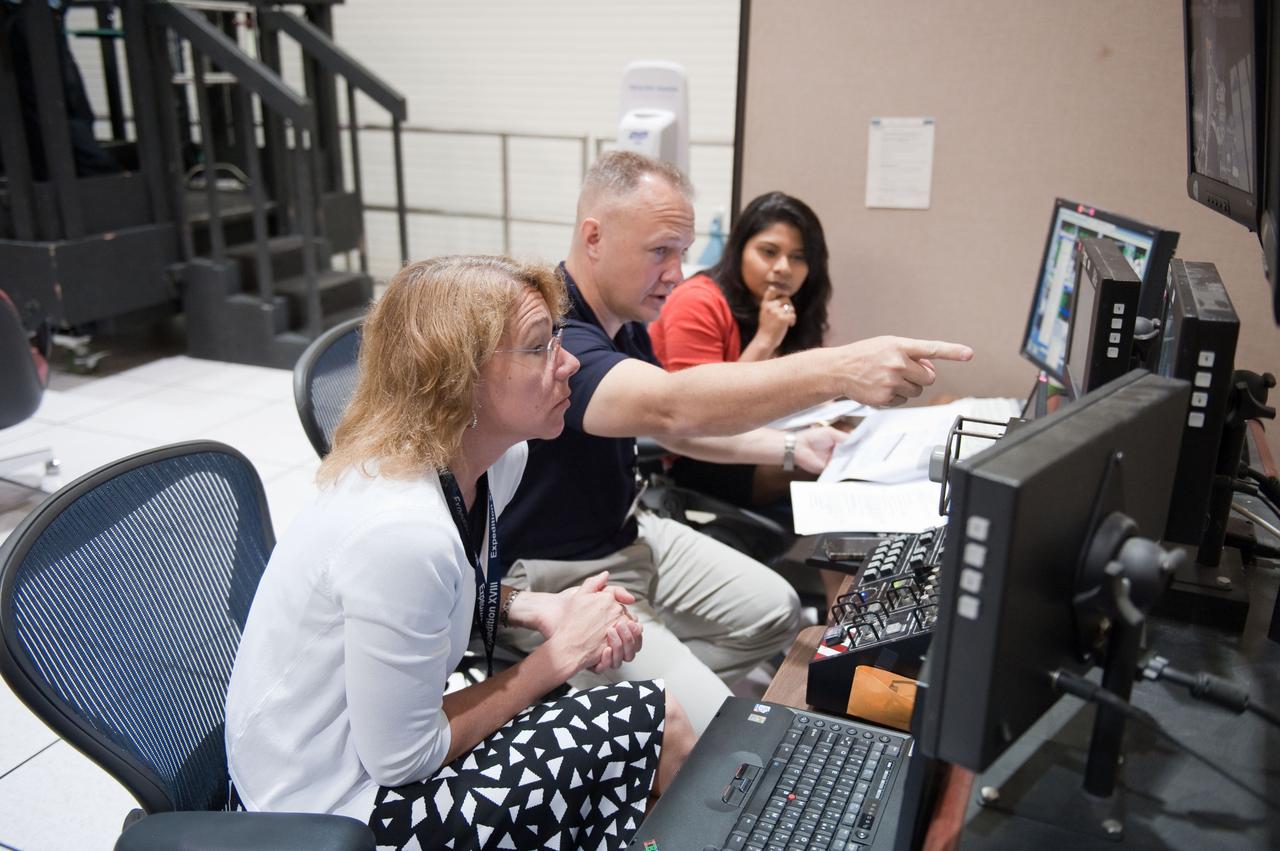
JSC2011-E-028122 (23 March 2011) --- NASA astronauts Doug Hurley, STS-135 pilot; and Sandy Magnus (foreground), mission specialist, participate in an exercise in the systems engineering simulator in the Avionics Systems Laboratory at NASA's Johnson Space Center. Photo credit: NASA or National Aeronautics and Space Administration
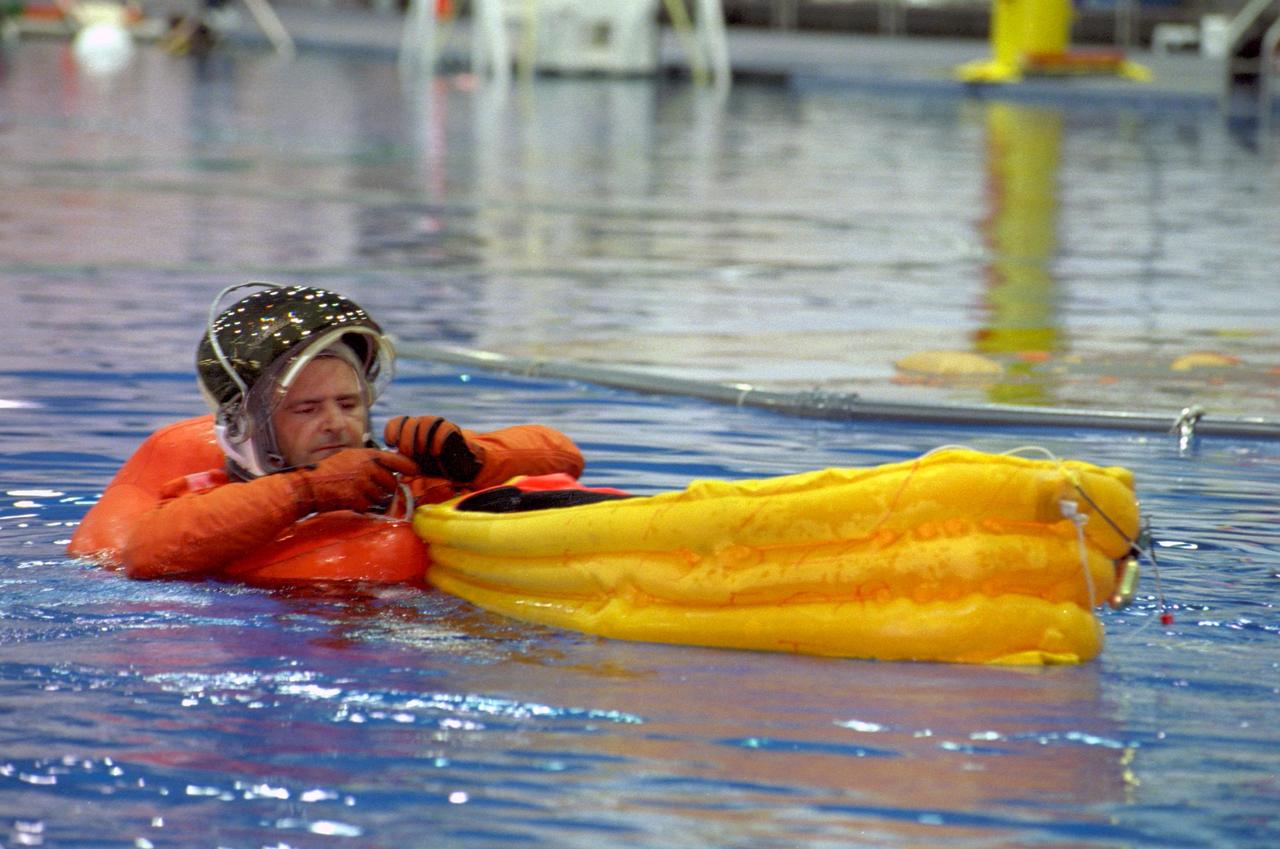
S99-07008 (9 July 1999) --- Astronaut Marc Garneau, mission specialist representing the Canadian Space Agency, puts the final touches on the life raft he's just deployed during a simulated emergency bailout exercise in the Neutral Buoyancy Laboratory at the Sonny Carter Training Center.
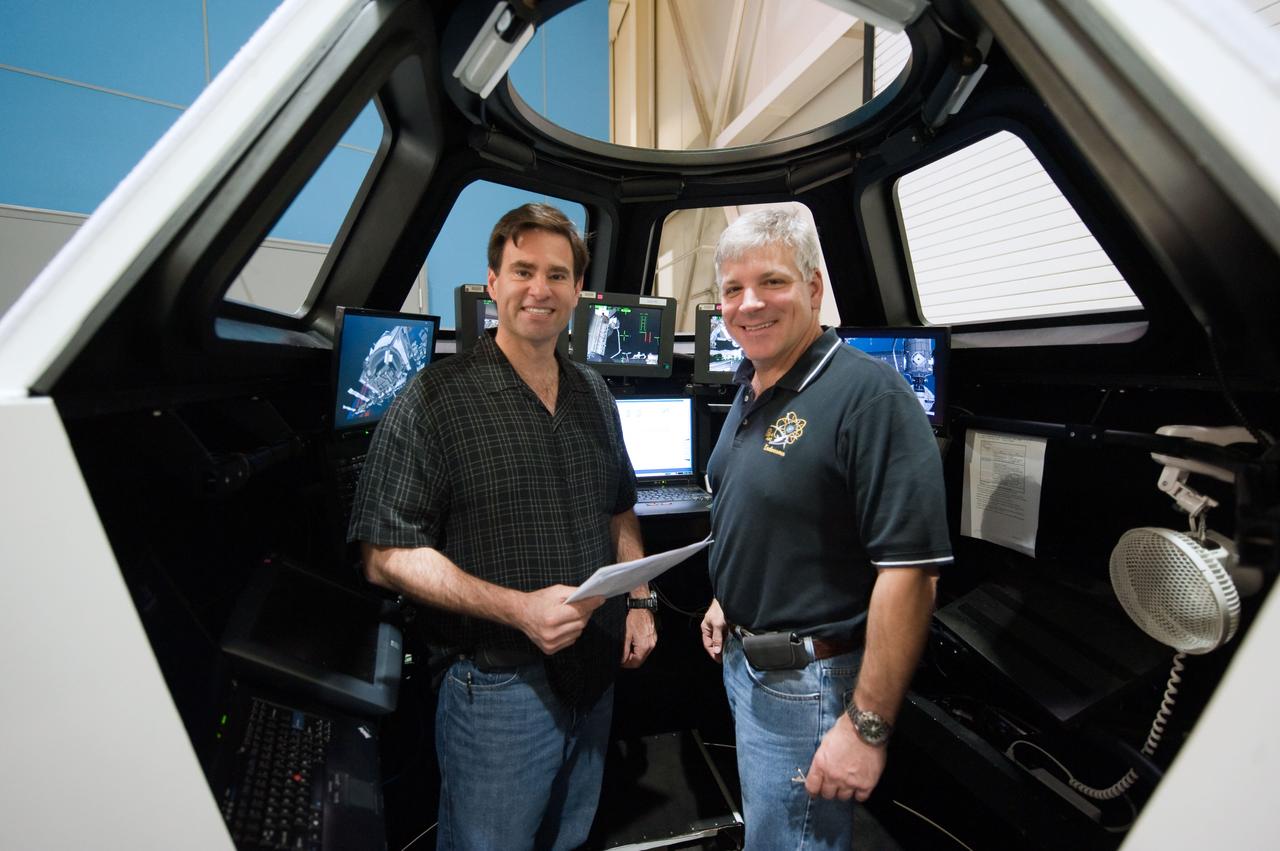
JSC2011-E-028160 (23 March 2011) --- NASA astronauts Greg H. Johnson (right), STS-134 pilot; and Greg Chamitoff, mission specialist, are pictured during an exercise in the systems engineering simulator in the Avionics Systems Laboratory at NASA's Johnson Space Center. Photo credit: NASA or National Aeronautics and Space Administration

JSC2000-02225 (March 2000) --- Astronaut Daniel C. Burbank, mission specialist, fastens the communications carrier assembly (CCA) on his launch and entry suit (LES). Burbank was about to join his six STS-106 crewmates for a simulation exercise in the Systems Integration Facility at the Johnson Space Center (JSC).
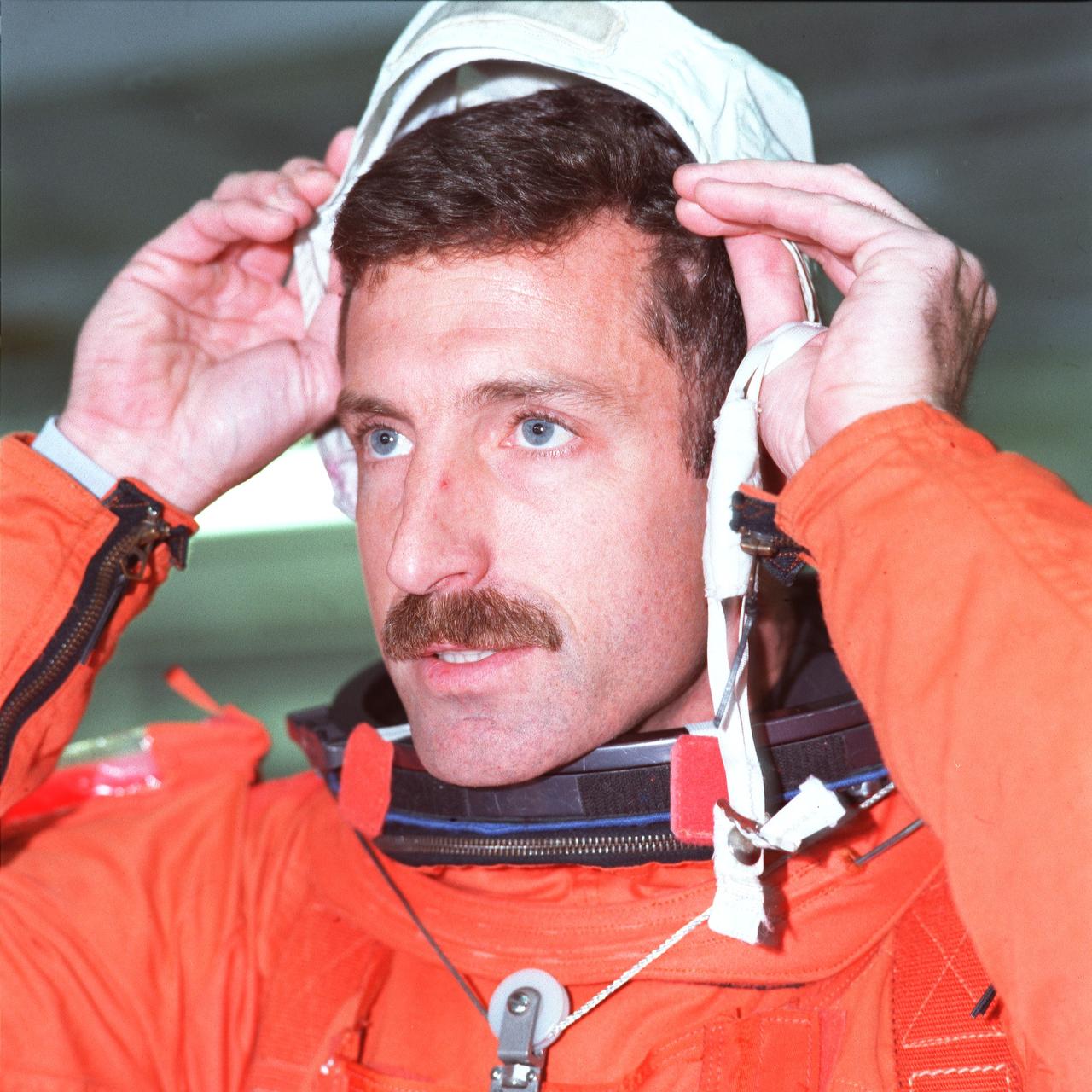
JSC2000-02539 (21 March 2000) --- Astronaut Daniel C. Burbank, STS-106 mission specialist, dons headgear that contains communications equipment, prior to participating in an emergency bailout training exercise in the Neutral Buoyancy Laboratory (NBL) at the Sonny Carter Training Center near the Johnson Space Center (JSC).

S89-E-5246 (26 Jan 1998) --- This Electronic Still Camera (ESC) image shows astronaut Michael P. Anderson, mission specialist, exercising on the modified bicycle ergometer onboard the Space Shuttle Endeavour. This ESC view was taken on January 26, 1998, at 18:31:30 MET.
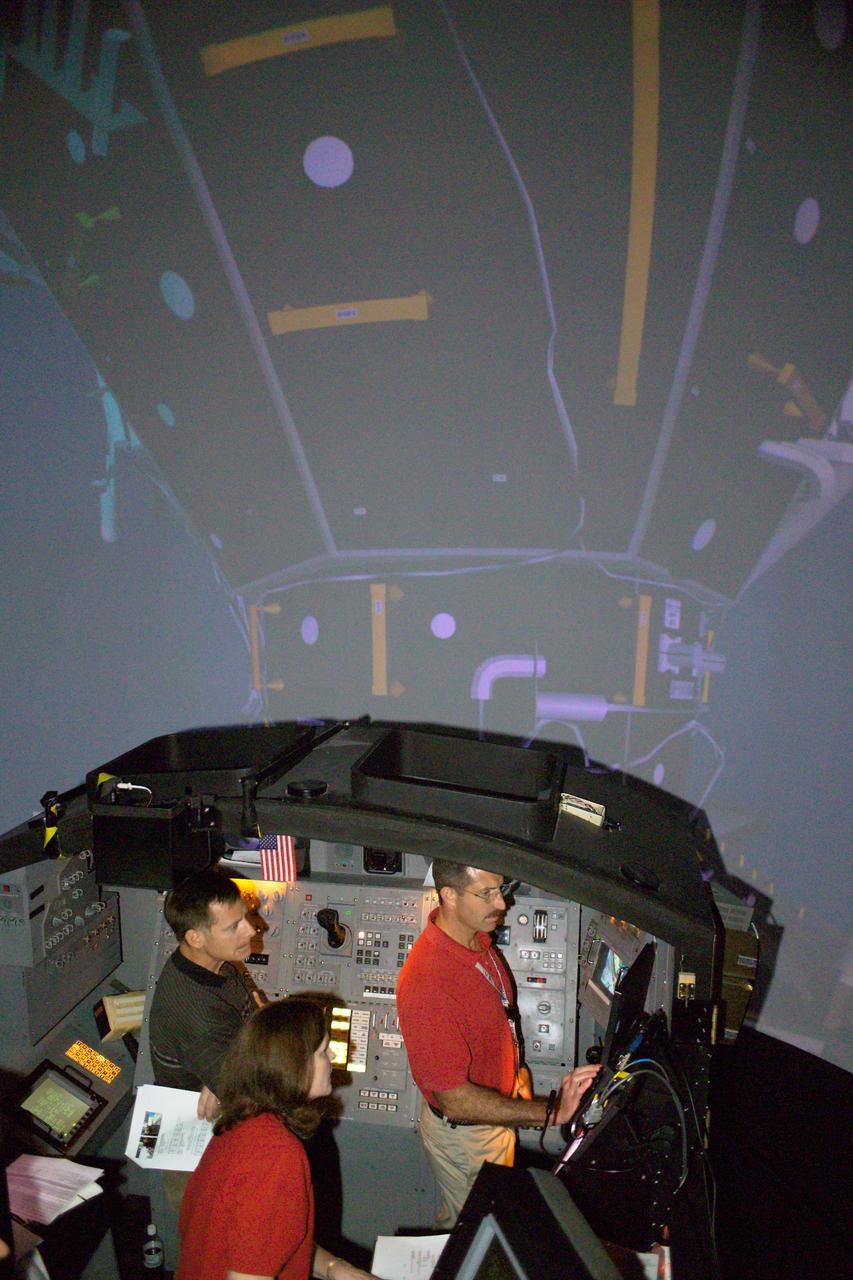
JSC2005-E-17977 (4 May 2005) --- Astronauts Christopher J. Ferguson (left), STS-115 pilot, and Daniel C. Burbank, mission specialist, participate in an exercise in the systems engineering simulator at Johnson Space Center. The facility includes moving scenes of full-sized international space station components over a simulated Earth.
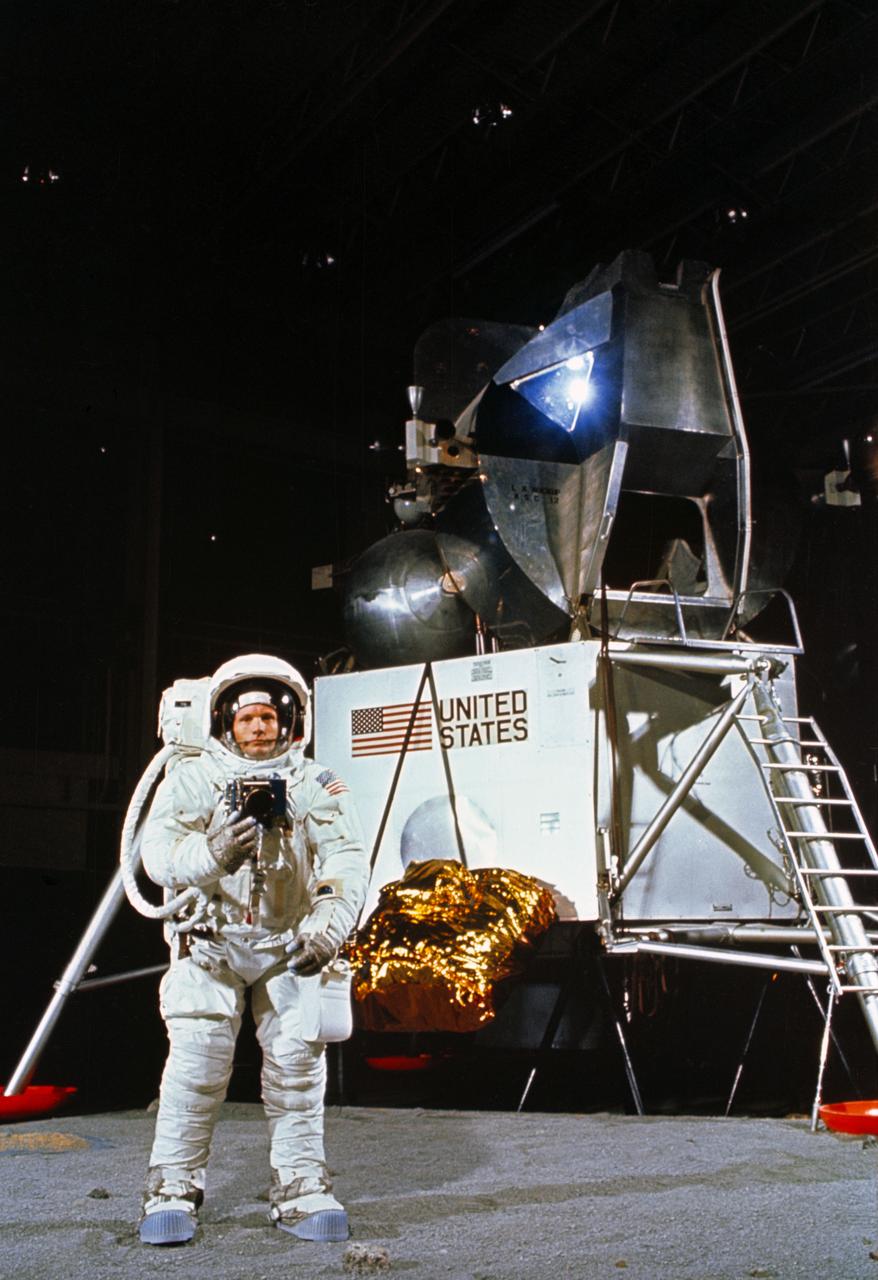
S69-32240 (22 April 1969) --- Astronaut Neil A. Armstrong, wearing an Extravehicular Mobility Unit, participates in a simulation of deploying and using lunar tools on the surface of the moon during a training exercise in Building 9 on April 22, 1969. Armstrong is the commander of the Apollo 11 lunar landing mission. In the background is a Lunar Module mock-up.
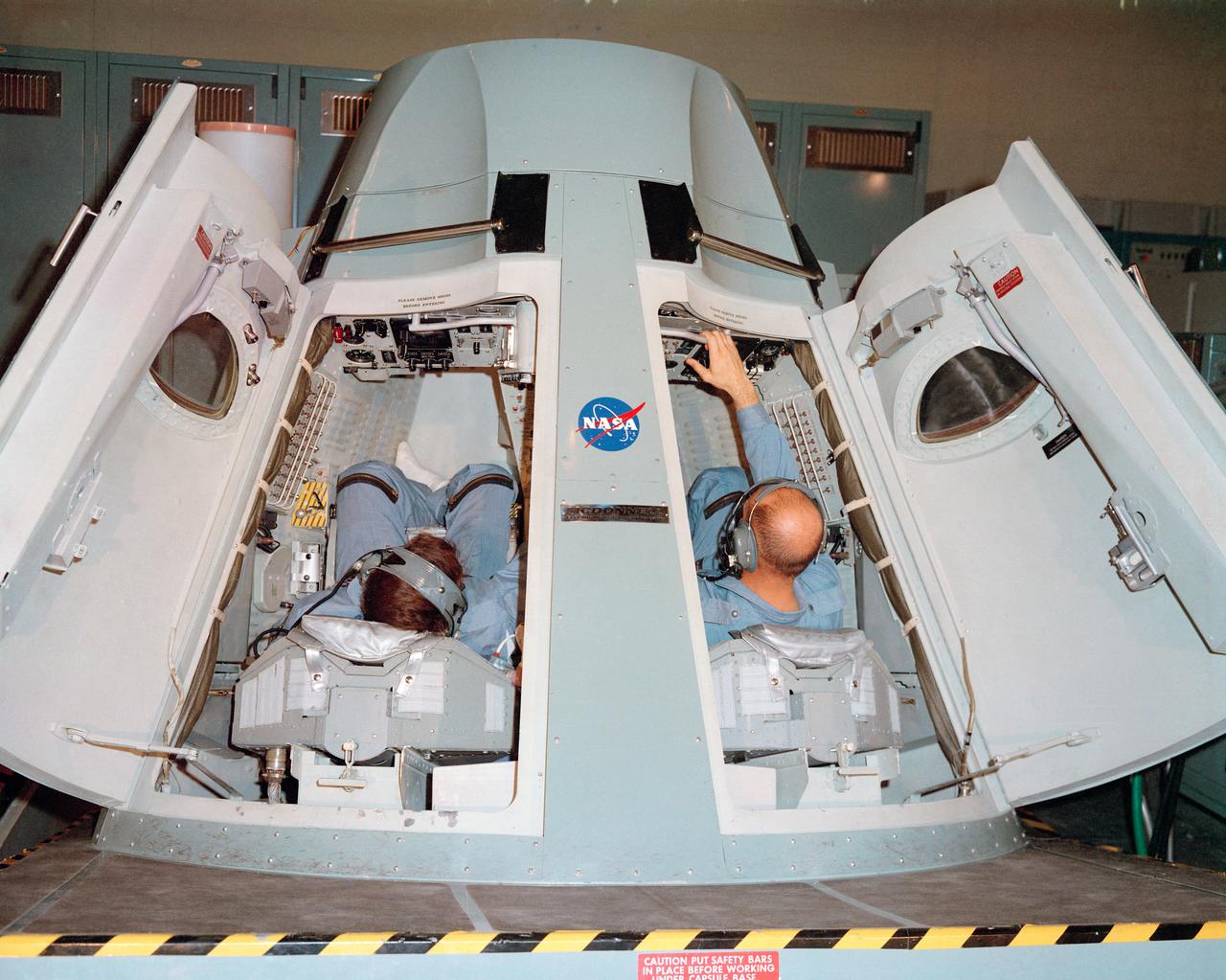
S65-13920 (15 Jan. 1965) --- The Gemini-6 prime crew, astronauts Walter M. Schirra Jr. (left), command pilot, and Thomas P. Stafford, pilot, are pictured in the Gemini simulator during training exercises at the Mission Control Center at Cape Kennedy, Florida. Photo credit: NASA or National Aeronautics and Space Administration
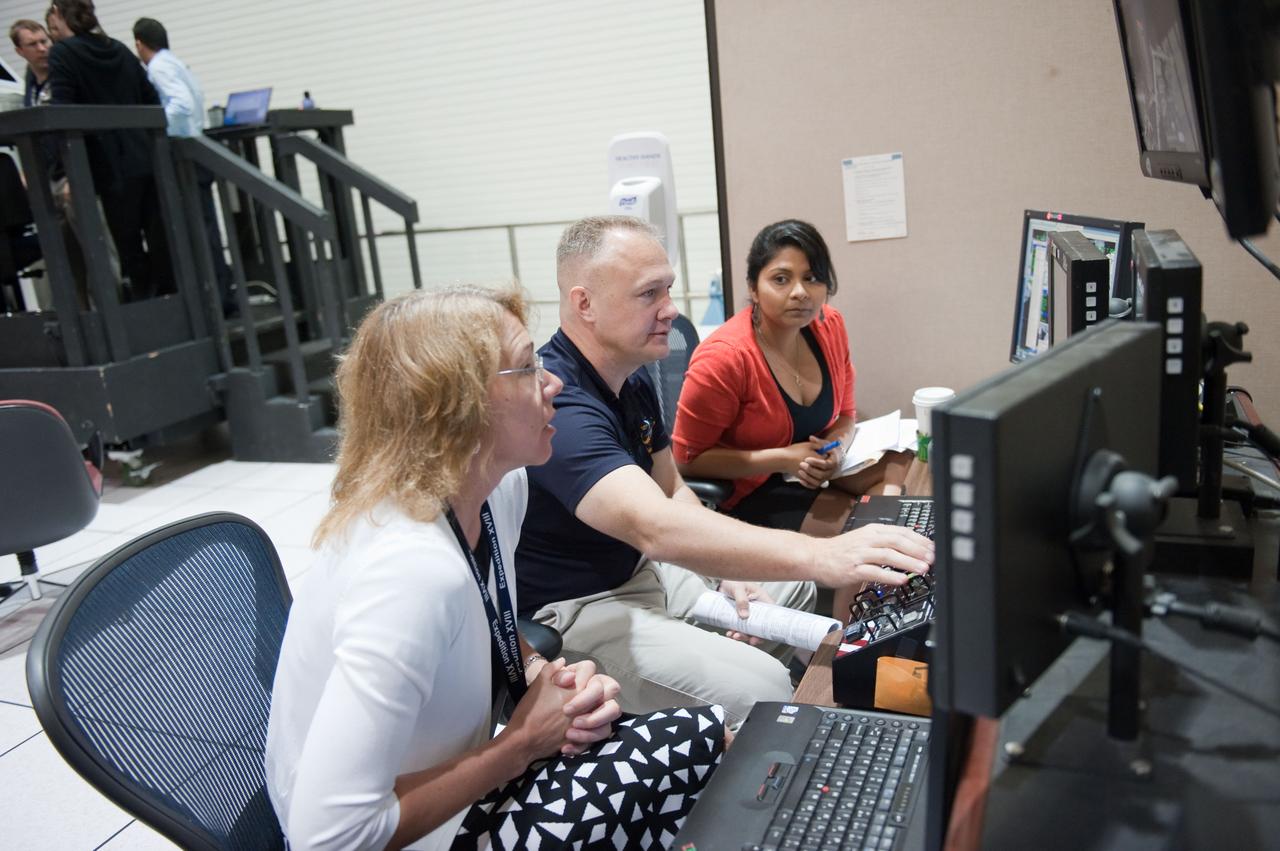
JSC2011-E-028150 (23 March 2011) --- NASA astronauts Doug Hurley, STS-135 pilot; and Sandy Magnus (foreground), mission specialist, participate in an exercise in the systems engineering simulator in the Avionics Systems Laboratory at NASA's Johnson Space Center. Photo credit: NASA or National Aeronautics and Space Administration
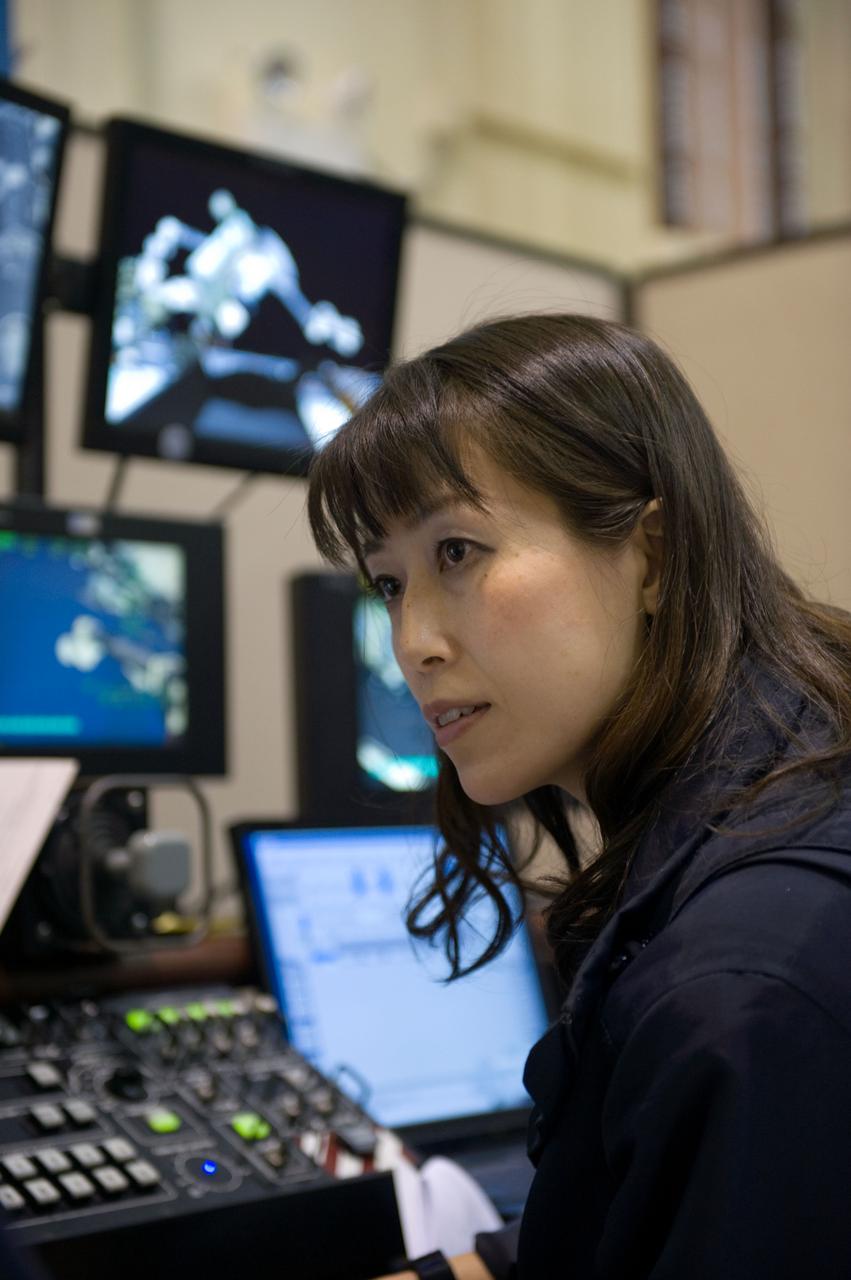
JSC2010-E-009784 (15 Jan. 2010) --- Japan Aerospace Exploration Agency (JAXA) astronaut Naoko Yamazaki, STS-131 mission specialist, participates in a simulation exercise using the Space Station Remote Manipulator System (SSRMS) simulator in the Avionics Systems Laboratory at NASA?s Johnson Space Center.
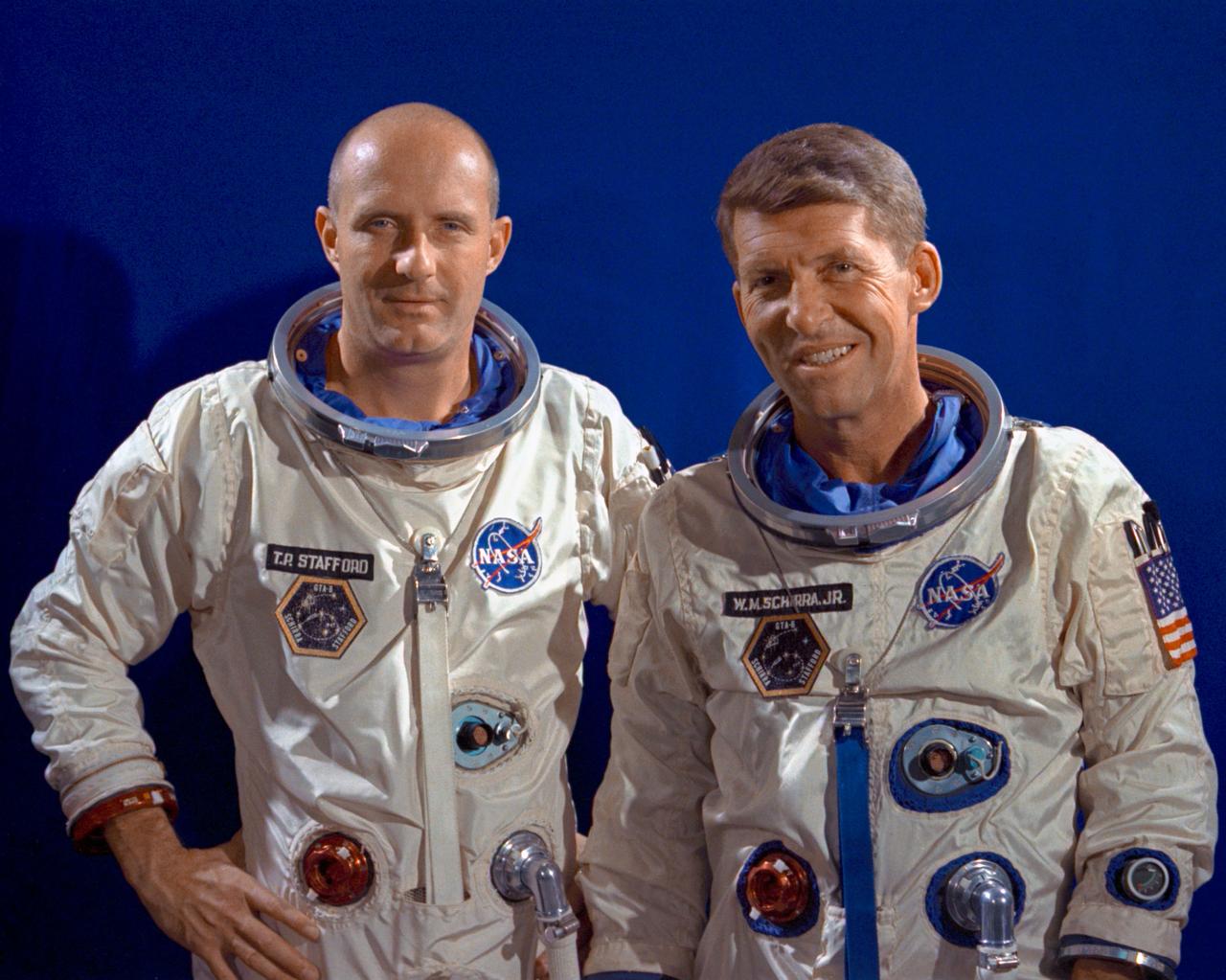
S65-56188 (20 Oct. 1965) --- Astronauts Thomas P. Stafford (left), pilot, and Walter M. Schirra Jr., command pilot, pose during a suiting up exercise in preparation for the National Aeronautics and Space Administration's Gemini-6 two-day mission. Photo credit: NASA
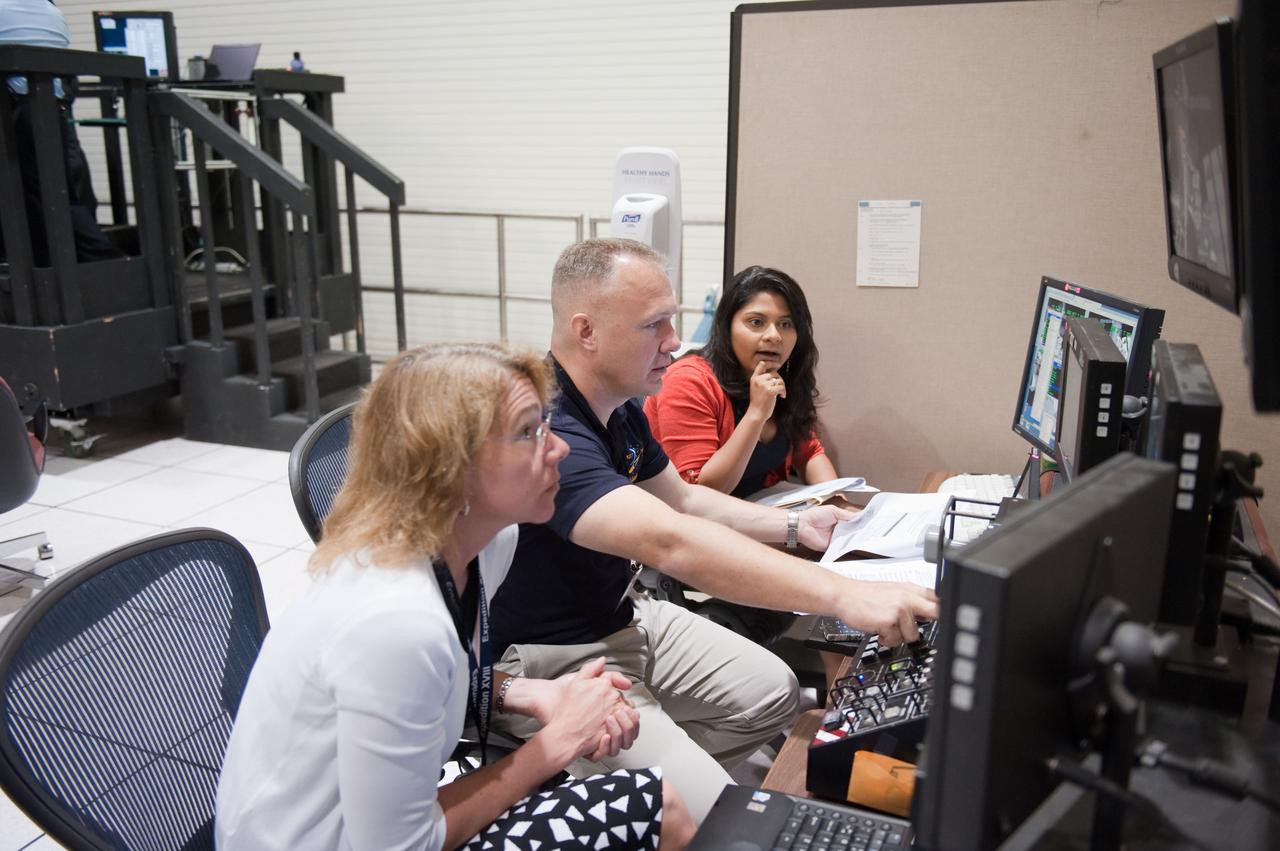
JSC2011-E-028153 (23 March 2011) --- NASA astronauts Doug Hurley, STS-135 pilot; and Sandy Magnus (foreground), mission specialist, participate in an exercise in the systems engineering simulator in the Avionics Systems Laboratory at NASA's Johnson Space Center. Photo credit: NASA or National Aeronautics and Space Administration
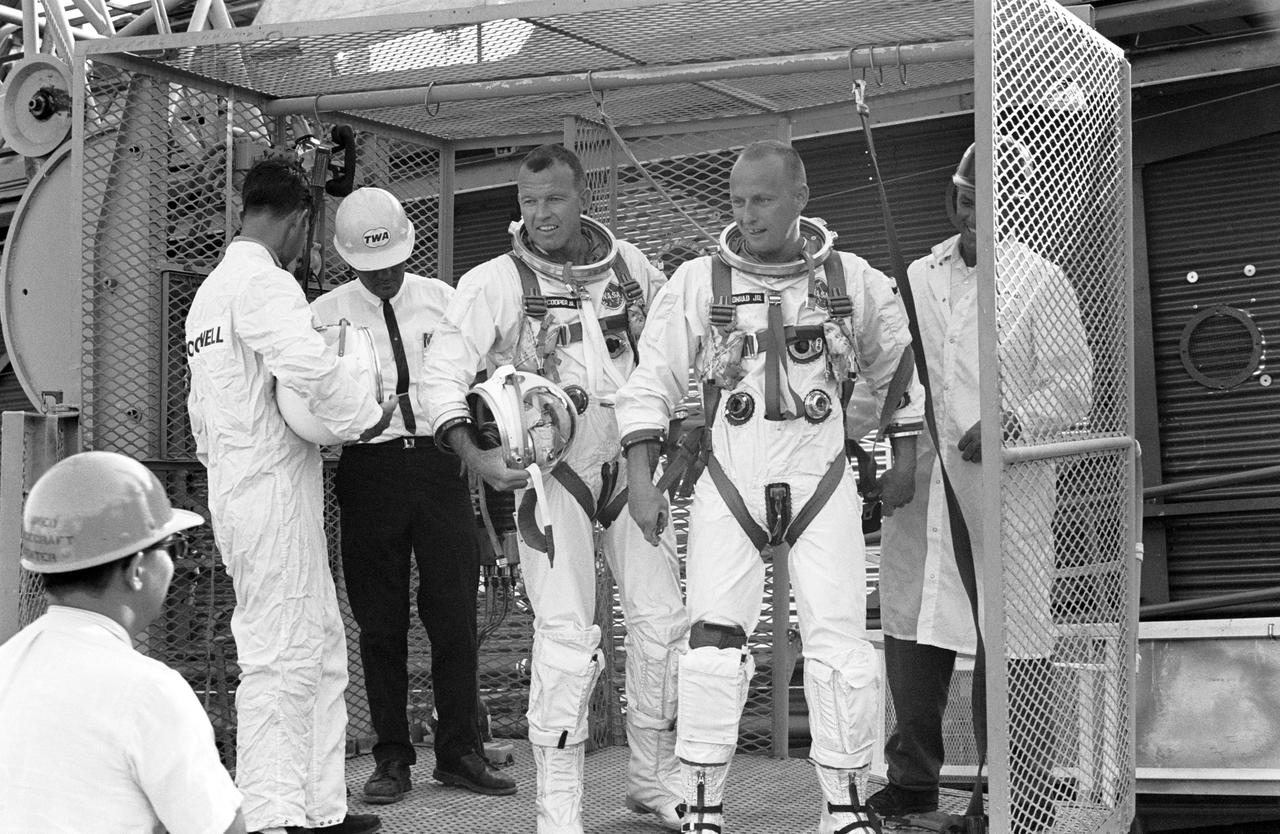
S65-41890 (6 Aug. 1965) --- Astronauts L. Gordon Cooper Jr. (left) and Charles Conrad Jr., prime crew for the Gemini-5 spaceflight, prepare to be hoisted to the white room atop gantry at Pad 19 at Cape Kennedy, Florida, during a simulation exercise for the mission.
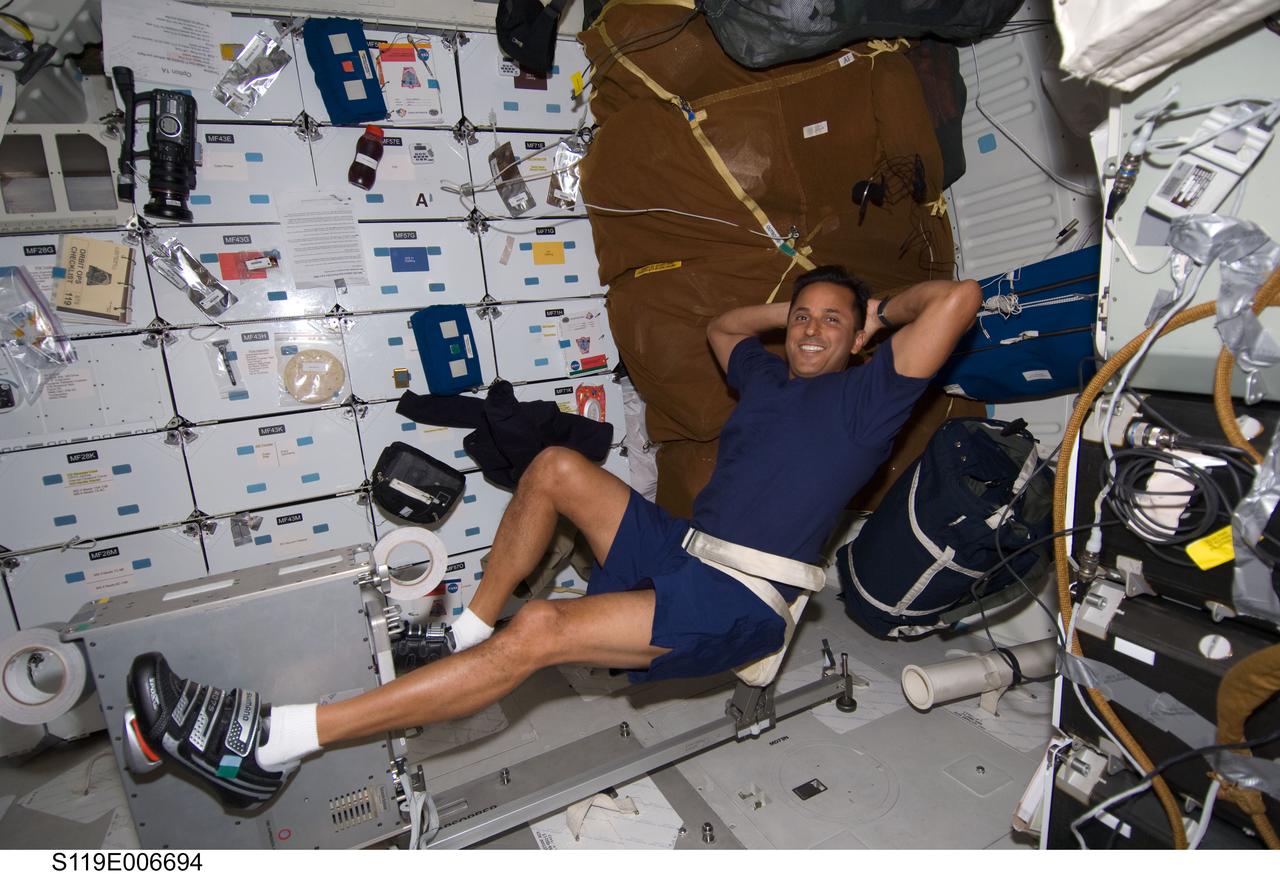
S119-E-006694 (20 March 2009) --- Performing his own in-space version of "look, Ma, no hands" is astronaut Joseph Acaba, STS-119 mission specialist. The shuttle version of the bike, deployed here on Discovery's mid deck, is called the ergometer and is one device that provides astronauts a chance to exercise while in space.
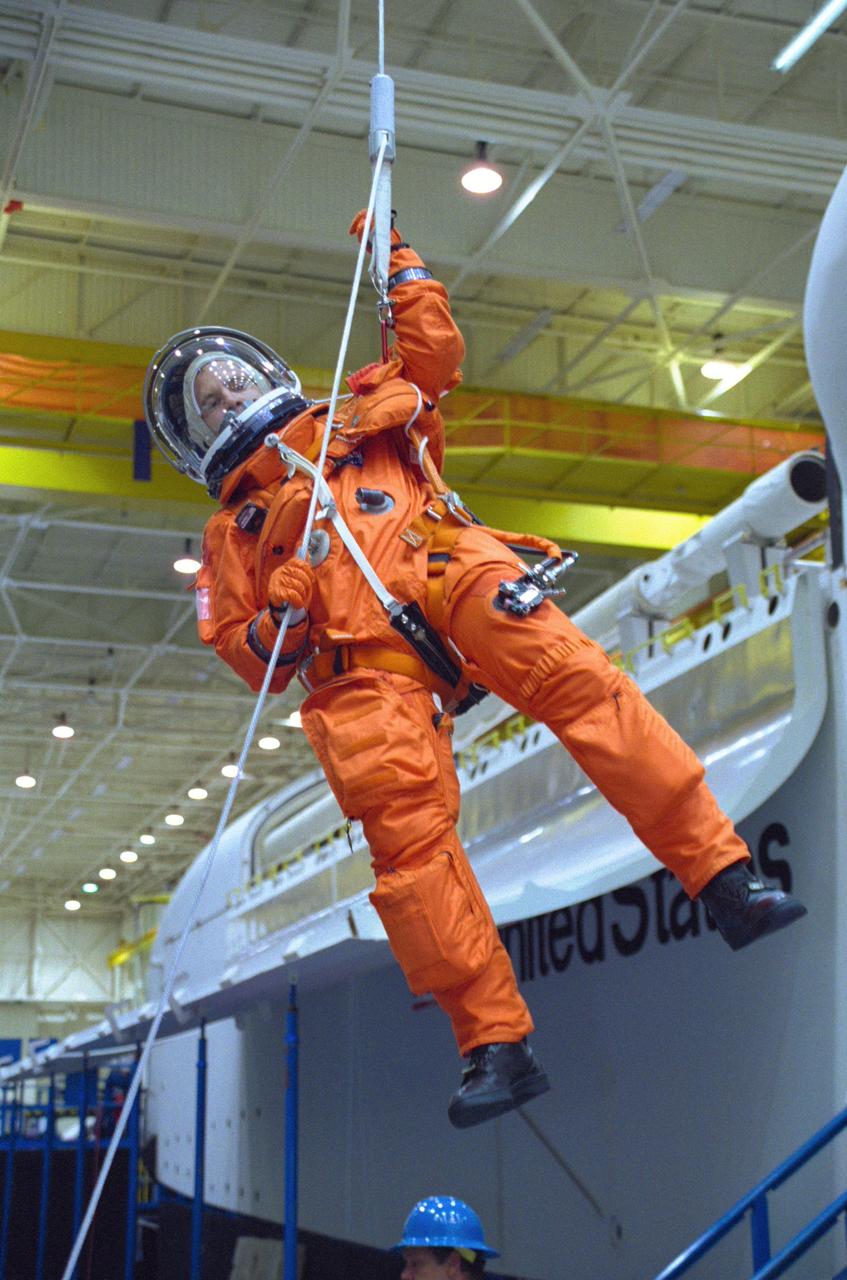
JSC2000-05554 (3 August 2000) --- Astronaut Paul W. Richards, STS-102 mission specialist, rappels from the top of the shuttle full fuselage trainer (FFT) during an emergency egress training exercise at the Johnson Space Center's Systems Integration Facility.
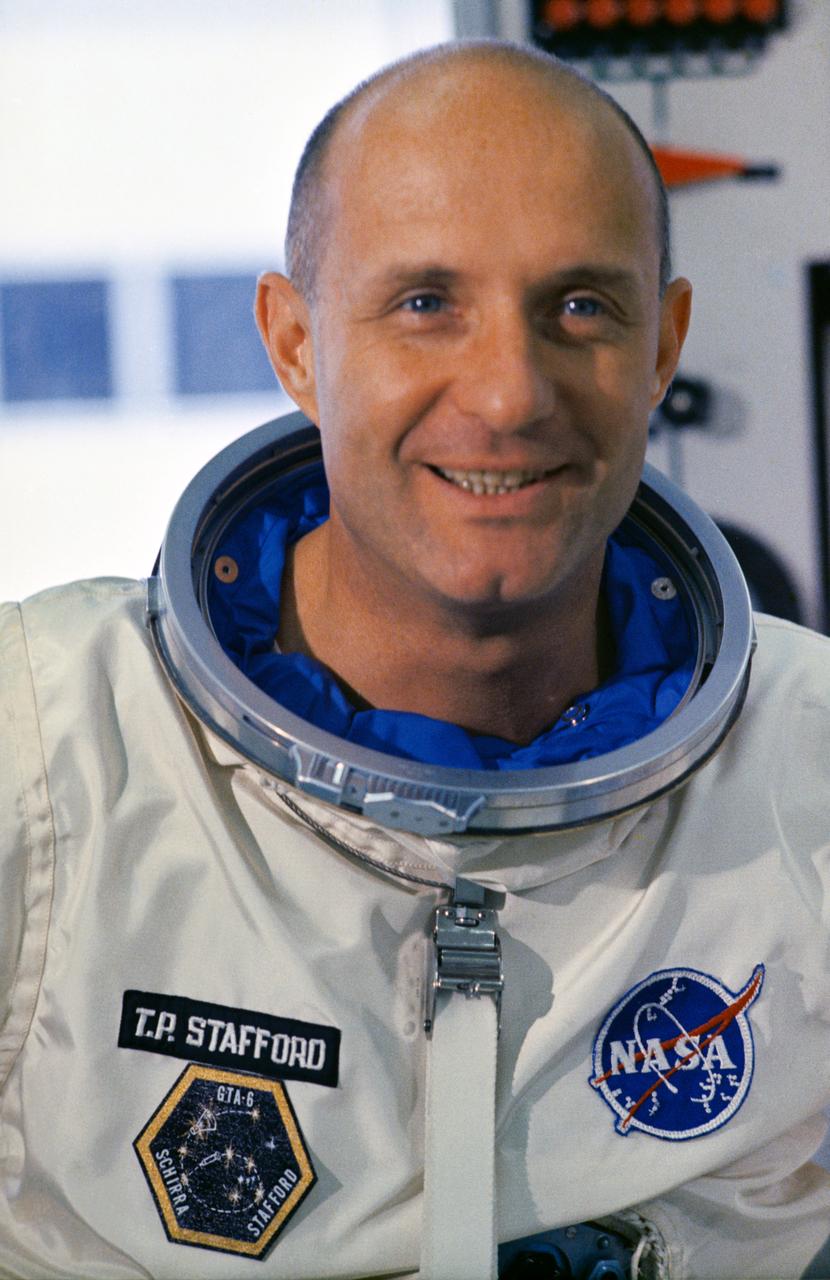
S65-56187 (20 Oct. 1965) --- Astronaut Thomas P. Stafford, pilot of the Gemini-Titan-Agena 6 space mission, undergoes suiting up exercises at the Kennedy Space Center, Florida. Photo credit: NASA or National Aeronautics and Space Administration
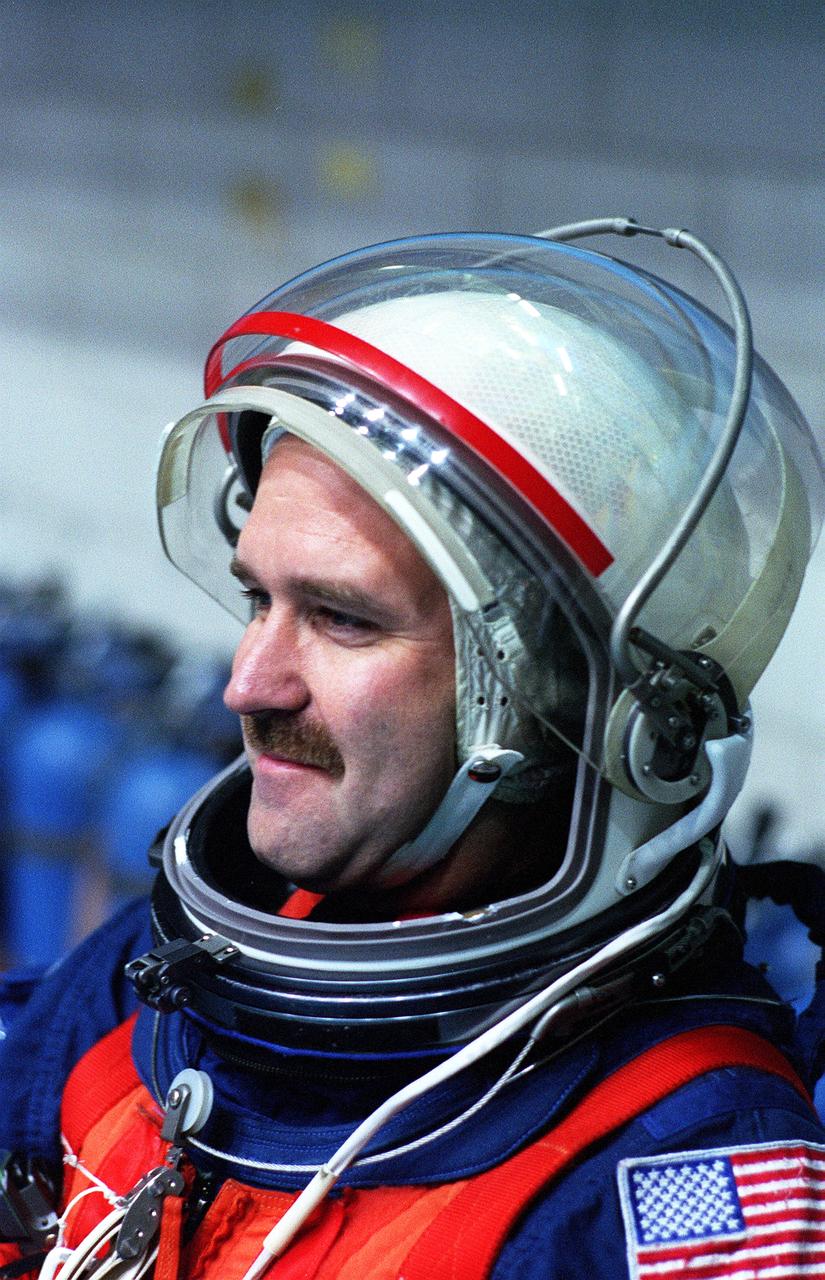
S96-15402 (26 Sept. 1996) --- In the Johnson Space Center's weightless environment training facility, astronaut John M. Grunsfeld, STS-81 mission specialist, prepares to simulate a parachute drop into water. Five STS-81 crewmates, out of frame, joined him for the bailout training exercises.
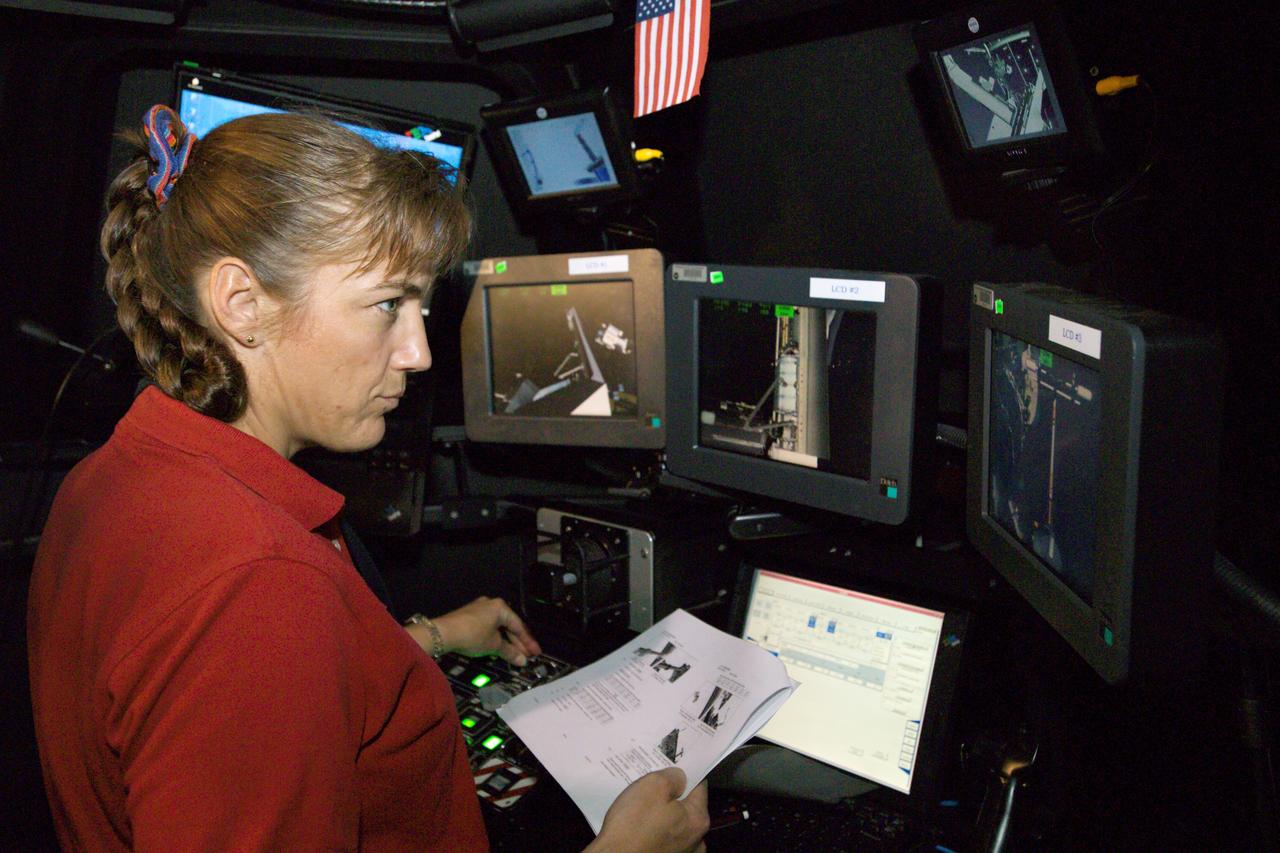
JSC2005-E-17974 (4 May 2005) --- Astronaut Heidemarie M. Stefanyshyn-Piper, STS-115 mission specialist, participates in an exercise in the systems engineering simulator at Johnson Space Center. The facility includes moving scenes of full-sized international space station components over a simulated Earth.
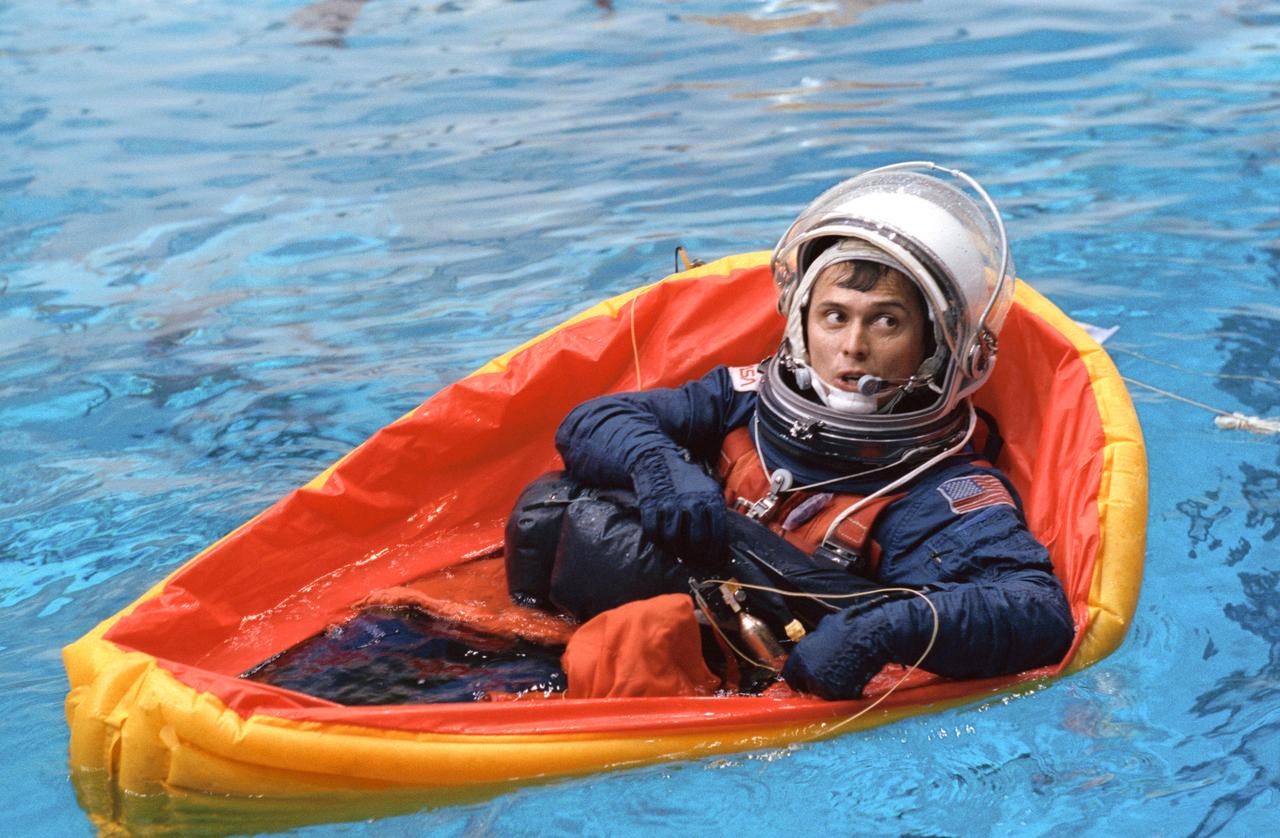
S92-33478 (12 March 1992) --- Astronaut Franklin R. Chang-Diaz, mission specialist, relies on a one-person life raft to get him to "safety" during a STS-46 bailout simulation exercise. The training took place in the Johnson Space Center's weightless environment training facility.
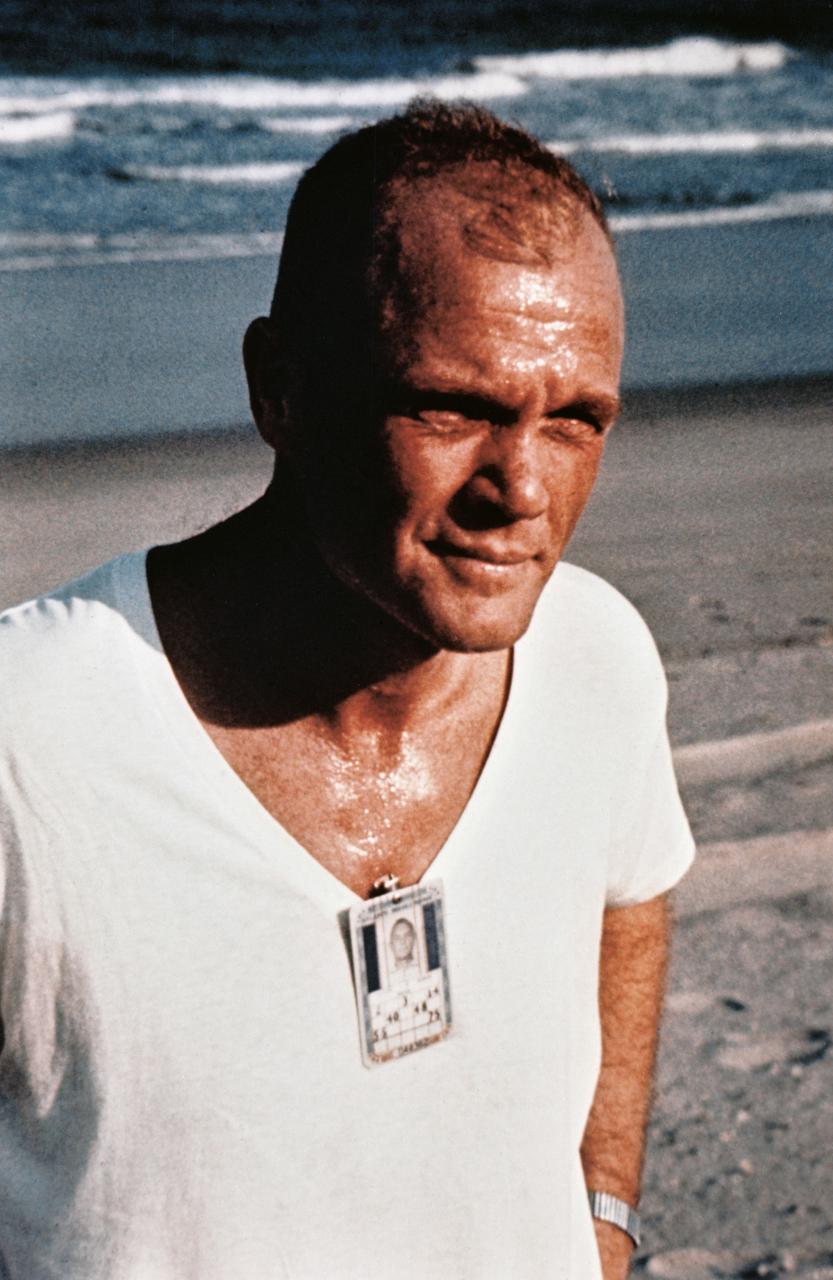
S64-14883 (1962) --- Astronaut John H. Glenn Jr., pilot of the Mercury-Atlas 6 mission, participates in a strict physical training program, as he exemplifies by frequent running. Here he pauses during an exercise period on the beach near Cape Canaveral, Florida. Photo credit: NASA
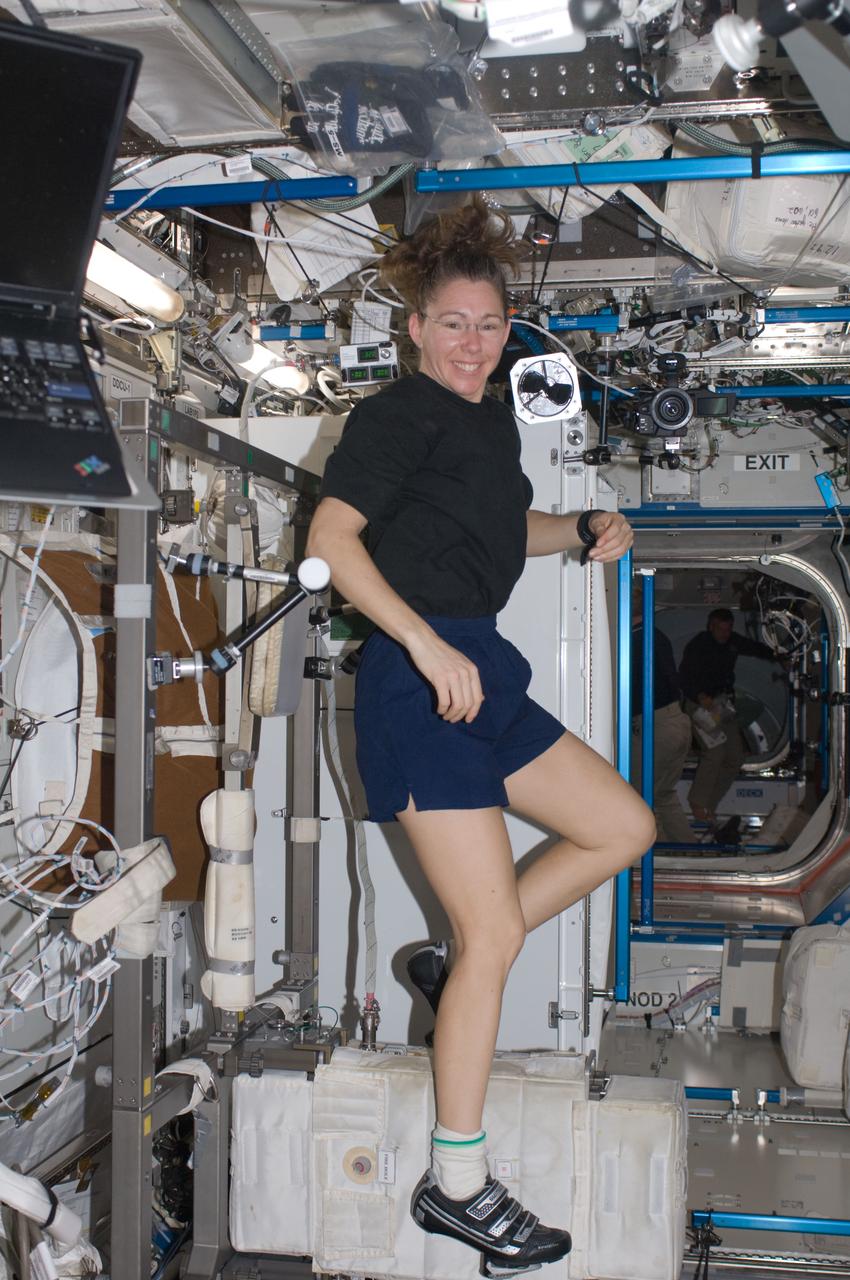
ISS018-E-042649 (22 March 2009) --- Astronaut Sandra Magnus, STS-119 mission specialist, exercises on the Cycle Ergometer with Vibration Isolation System (CEVIS) in the Destiny laboratory of the International Space Station while Space Shuttle Discovery remains docked with the station.