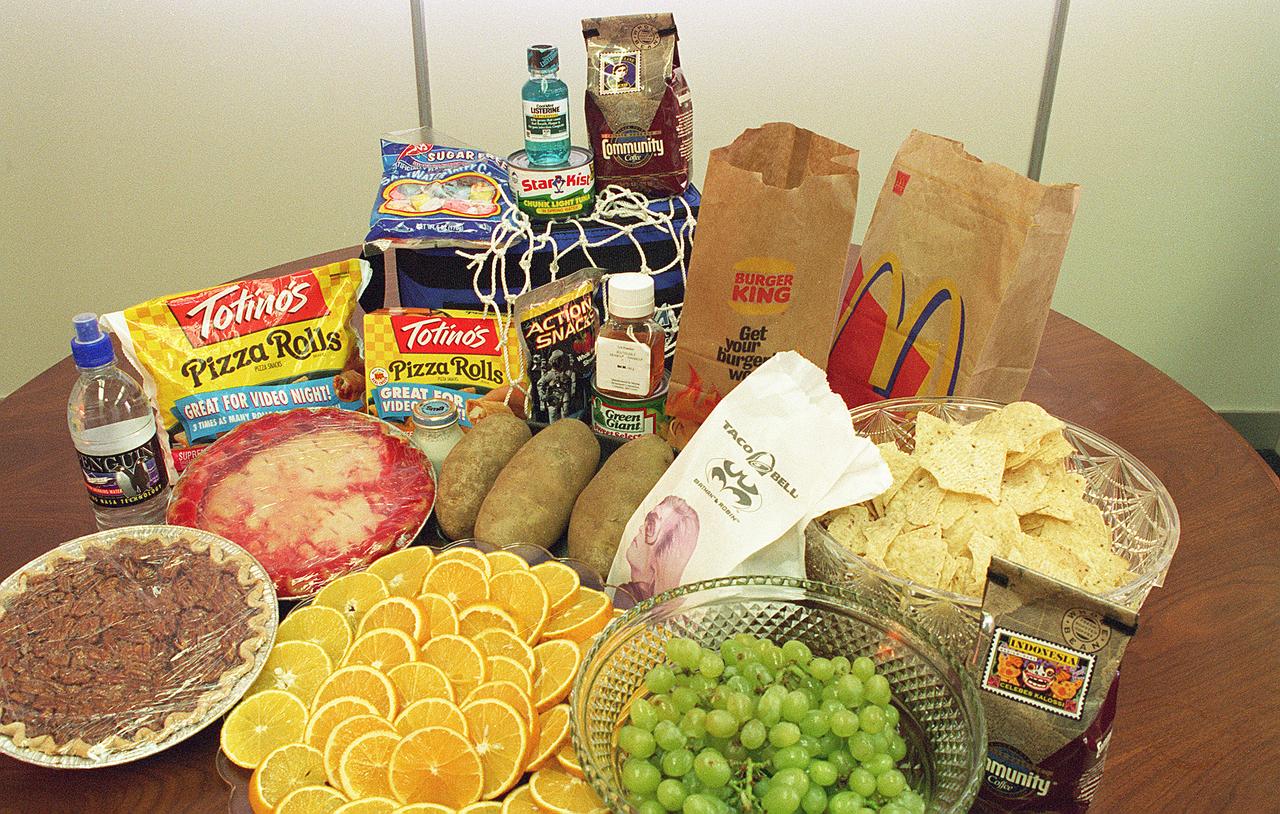
When NASA started plarning for manned space travel in 1959, the myriad challenges of sustaining life in space included a seemingly mundane but vitally important problem: How and what do you feed an astronaut? There were two main concerns: preventing food crumbs from contaminating the spacecraft's atmosphere or floating into sensitive instruments, and ensuring complete freedom from potentially catastrophic disease-producing bacteria, viruses, and toxins. To solve these concerns, NASA enlisted the help of the Pillsbury Company. Pillsbury quickly solved the first problem by coating bite-size foods to prevent crumbling. They developed the hazard analysis and critical control point (HACCP) concept to ensure against bacterial contamination. Hazard analysis is a systematic study of product, its ingredients, processing conditions, handling, storage, packing, distribution, and directions for consumer use to identify sensitive areas that might prove hazardous. Hazard analysis provides a basis for blueprinting the Critical Control Points (CCPs) to be monitored. CCPs are points in the chain from raw materials to the finished product where loss of control could result in unacceptable food safety risks. In early 1970, Pillsbury plants were following HACCP in production of food for Earthbound consumers. Pillsbury's subsequent training courses for Food and Drug Administration (FDA) personnel led to the incorporation of HACCP in the FDA's Low Acid Canned Foods Regulations, set down in the mid-1970s to ensure the safety of all canned food products in the U.S.

iss067e000137 (April 1, 2022) --- NASA astronaut and Expedition 67 Flight Engineer Raja Chari conducts operations for the Food Physiology space nutrition experiment inside the portable glovebag.
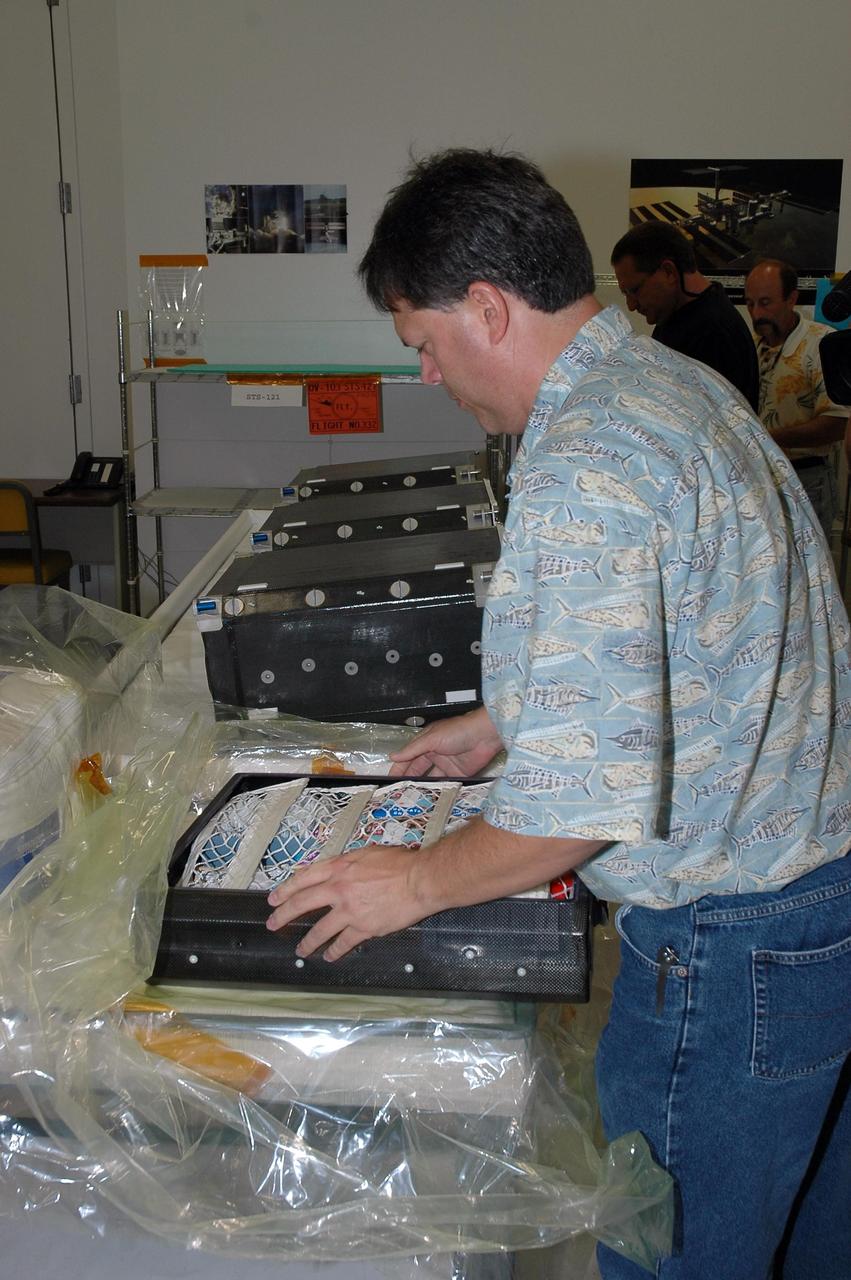
KENNEDY SPACE CENTER, FLA. - In the Space Station Processing Facility at NASA's Kennedy Space Center, John Hoog packs up food containers with the meals prepared for the crew of mission STS-121. Hoog is a USA-FCE/EVA representative from Johnson Space Center. Astronauts select their own menus from a large array of food items. Astronauts are supplied with three balanced meals, plus snacks. Foods flown on space missions are researched and developed at the Space Food Systems Laboratory at the Johnson Space Center (JSC) in Houston, which is staffed by food scientists, dietitians and engineers. Foods are analyzed through nutritional analysis, sensory evaluation, storage studies, packaging evaluations and many other methods. Each astronaut’s food is stored aboard the space shuttle and is identified by a colored dot affixed to each package. Launch of Space Shuttle Discovery on mission STS-121 is scheduled for July 1. Photo credit: NASA/Jack Pfaller
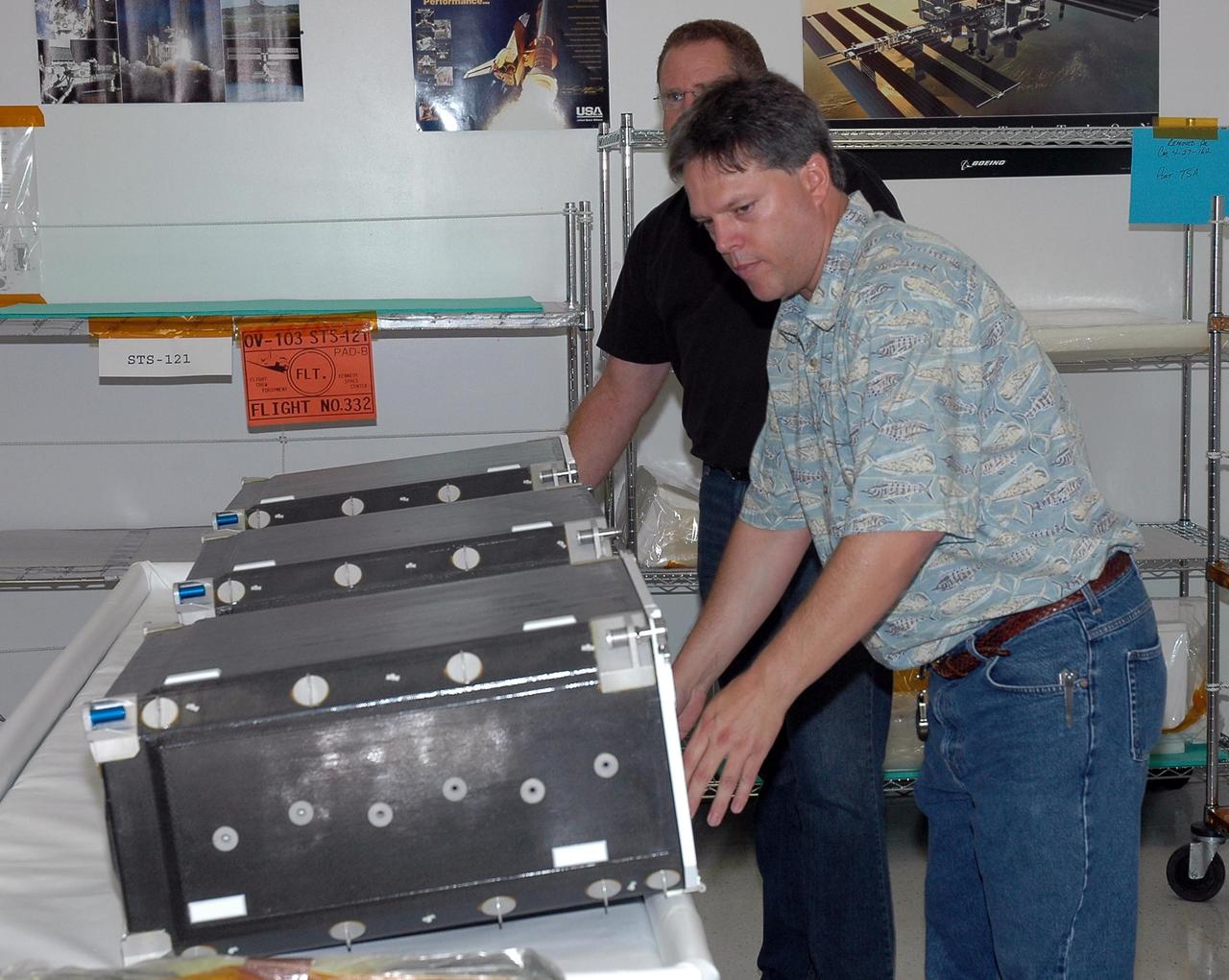
KENNEDY SPACE CENTER, FLA. - In the Space Station Processing Facility at NASA's Kennedy Space Center, John Hoog gets ready to pack the food containers with the meals prepared for the crew of mission STS-121. Hoog is a USA-FCE/EVA representative from Johnson Space Center.Astronauts select their own menus from a large array of food items. Astronauts are supplied with three balanced meals, plus snacks. Foods flown on space missions are researched and developed at the Space Food Systems Laboratory at the Johnson Space Center (JSC) in Houston, which is staffed by food scientists, dietitians and engineers. Foods are analyzed through nutritional analysis, sensory evaluation, storage studies, packaging evaluations and many other methods. Each astronaut’s food is stored aboard the space shuttle and is identified by a colored dot affixed to each package. Launch of Space Shuttle Discovery on mission STS-121 is scheduled for July 1. Photo credit: NASA/Jack Pfaller
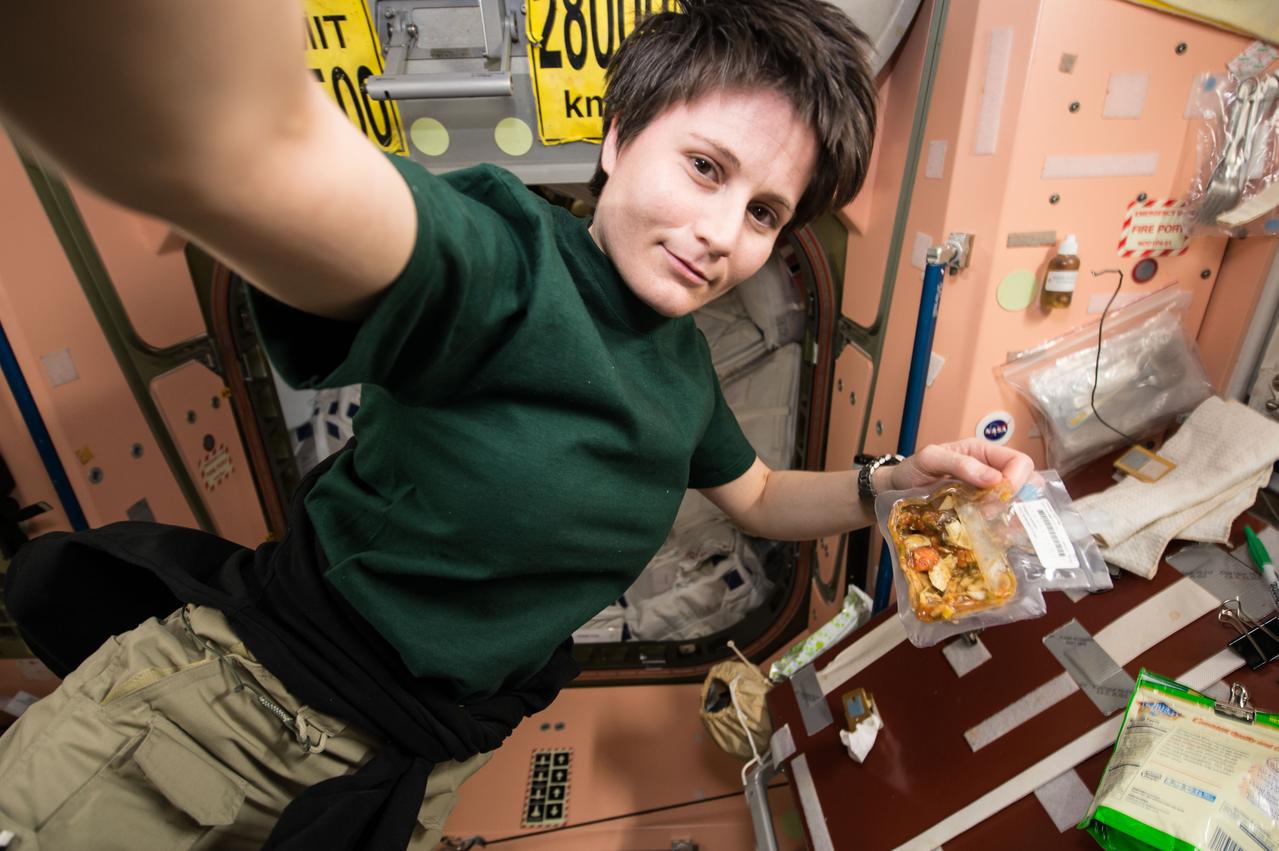
iss042e034821 (12/08/2014) --- Its dinner time on board the International Space Station (ISS) for Expedition 42 Flight Engineer Samantha Cristoforetti of the European Space Agency (ESA) on 8 December 2014. She is in the process of preparing a tasty specially designed food packet. The food on board the ISS is developed by food scientists at the Johnson Space Center in Houston Texas.
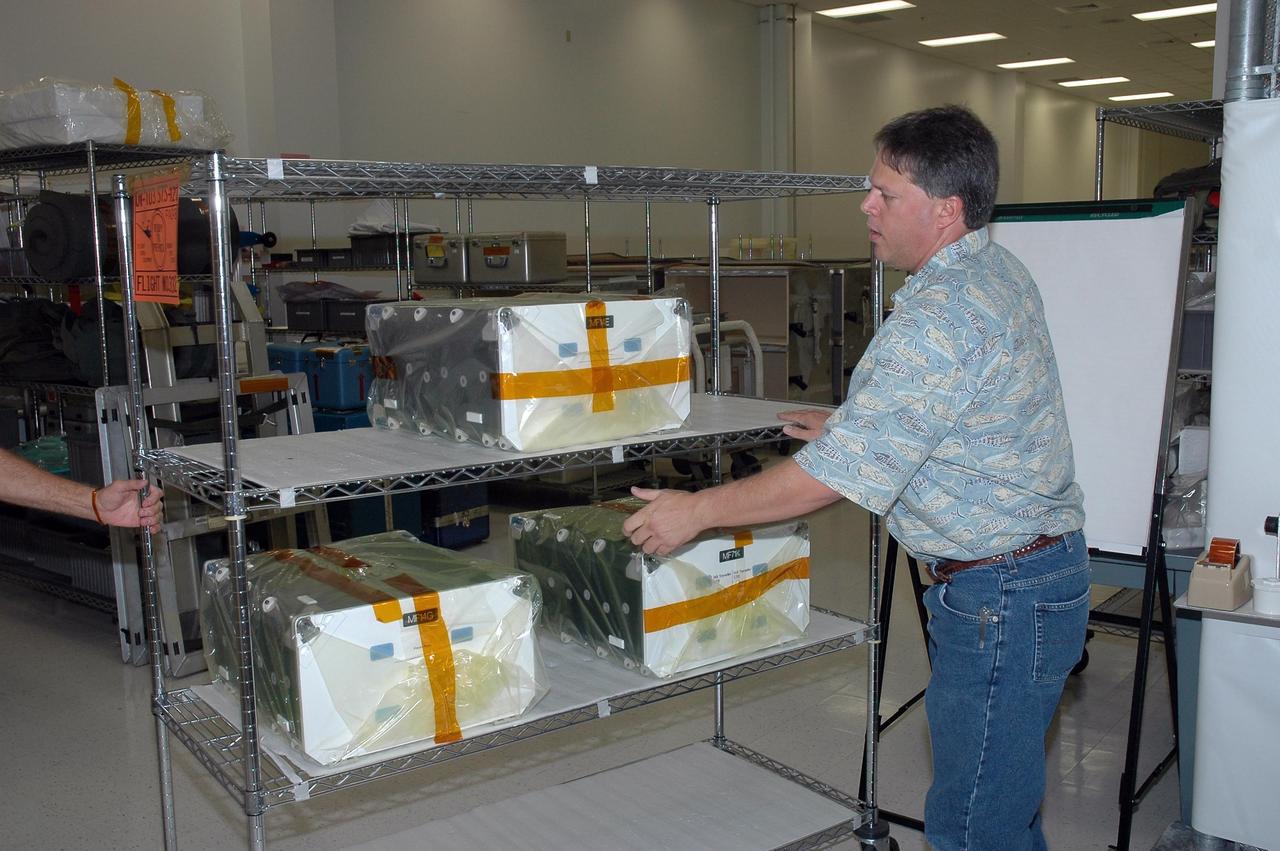
KENNEDY SPACE CENTER, FLA. - In the Space Station Processing Facility at NASA's Kennedy Space Center, John Hoog reaches for a container filled with prepared meals for the crew of mission STS-121 to secure it for flight. Hoog is a USA-FCE/EVA representative from Johnson Space Center. Astronauts select their own menus from a large array of food items. Astronauts are supplied with three balanced meals, plus snacks. Foods flown on space missions are researched and developed at the Space Food Systems Laboratory at the Johnson Space Center (JSC) in Houston, which is staffed by food scientists, dietitians and engineers. Foods are analyzed through nutritional analysis, sensory evaluation, storage studies, packaging evaluations and many other methods. Each astronaut’s food is stored aboard the space shuttle and is identified by a colored dot affixed to each package. Launch of Space Shuttle Discovery on mission STS-121 is scheduled for July 1. Photo credit: NASA/Jack Pfaller
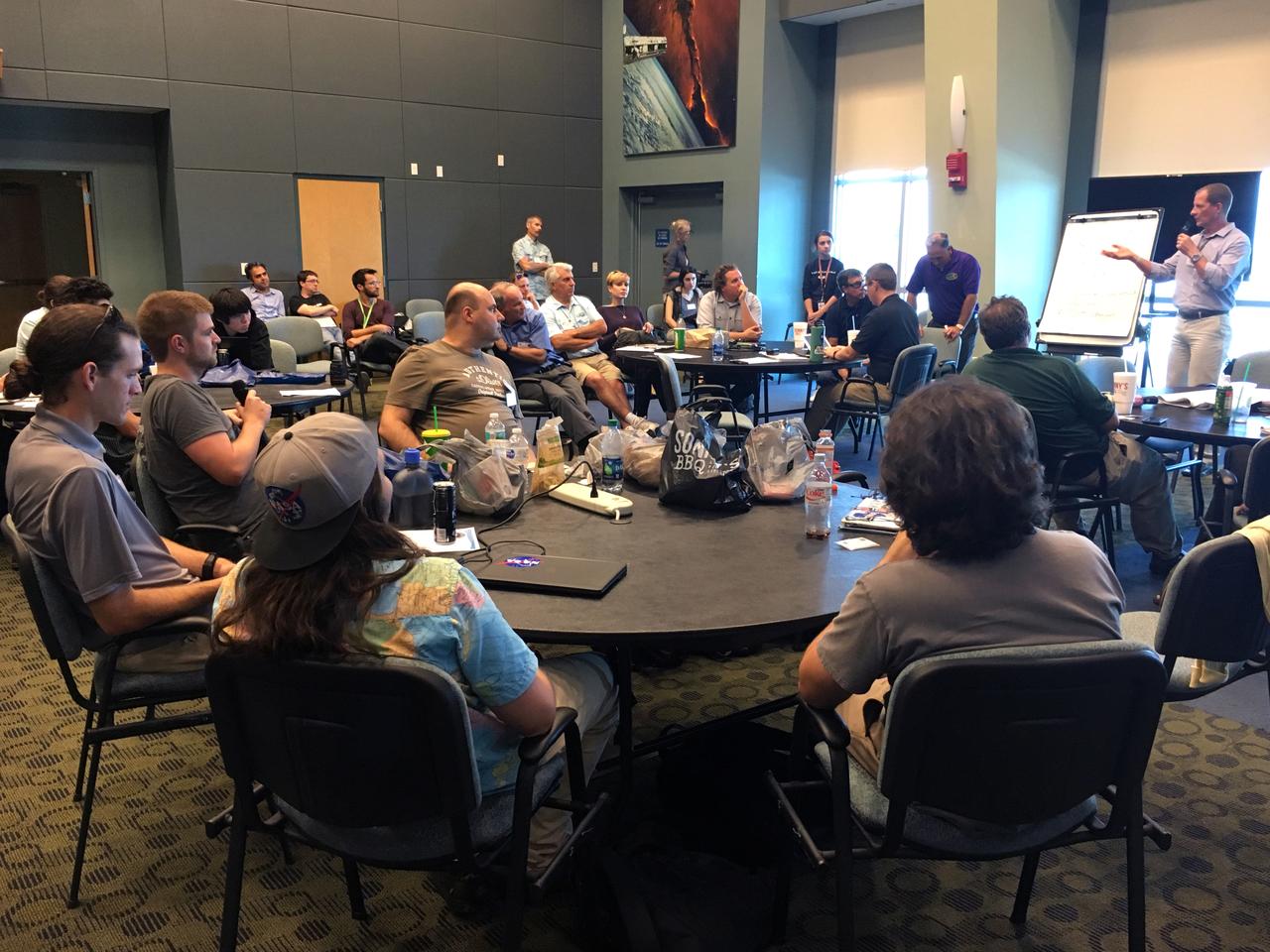
Scientists in the Exploration Research and Technology Directorate brainstorm innovative approaches to food production with industry representatives at the Space Station Processing Facility at NASA's Kennedy Space Center in Florida.
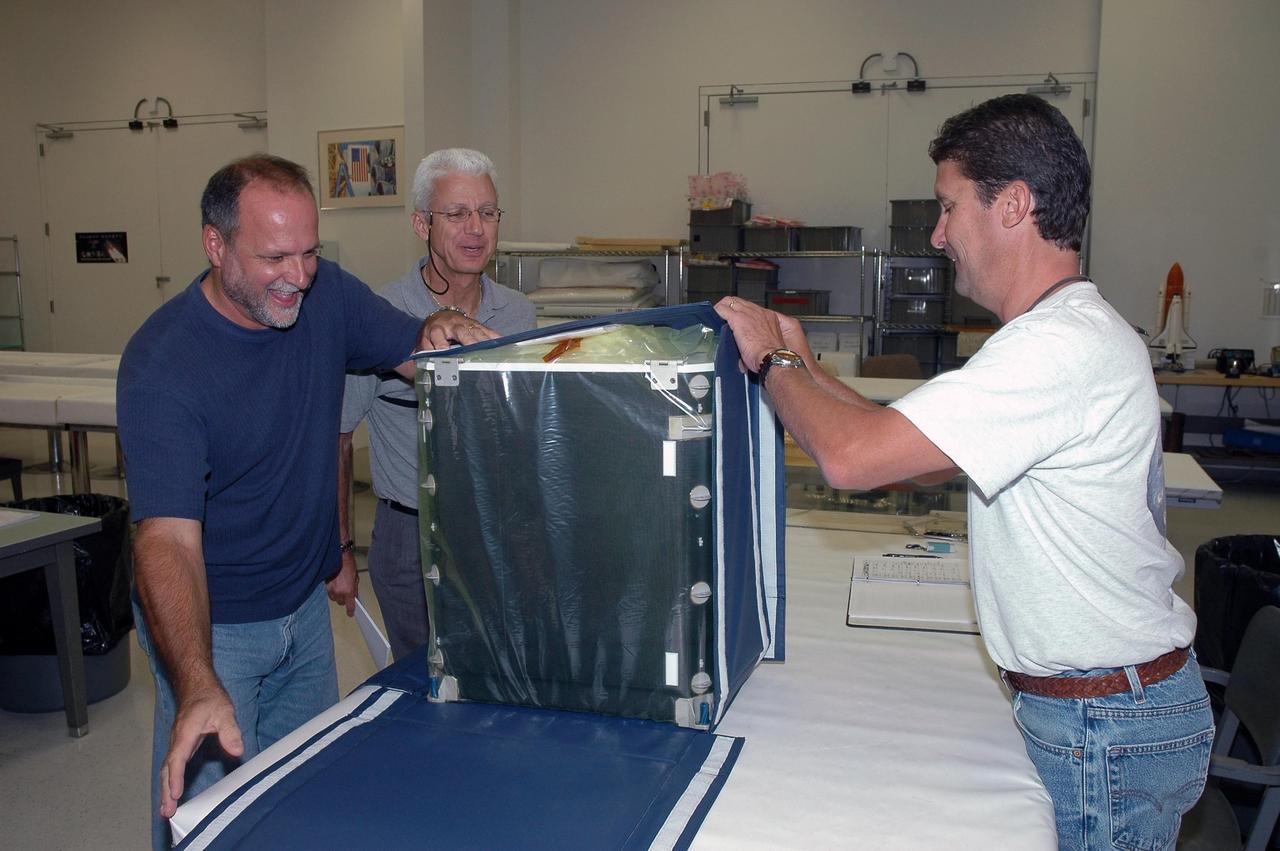
KENNEDY SPACE CENTER, FLA. - In the Space Station Processing Facility at NASA's Kennedy Space Center, Jim Blake, Dennis Huefner and Troy Mann wrap food containers that will be stowed on Space Shuttle Discovery for the flight of mission STS-121. The containers hold meals prepared for the mission crew. The men are with United Space Alliance ground operations. Astronauts select their own menus from a large array of food items. Astronauts are supplied with three balanced meals, plus snacks. Foods flown on space missions are researched and developed at the Space Food Systems Laboratory at the Johnson Space Center (JSC) in Houston, which is staffed by food scientists, dietitians and engineers. Foods are analyzed through nutritional analysis, sensory evaluation, storage studies, packaging evaluations and many other methods. Each astronaut’s food is stored aboard the space shuttle and is identified by a colored dot affixed to each package. Launch of Space Shuttle Discovery on mission STS-121 is scheduled for July 1. Photo credit: NASA/Jack Pfaller

KENNEDY SPACE CENTER, FLA. - In the Space Station Processing Facility at NASA's Kennedy Space Center, flight crew systems technician Troy Mann and flight crew systems manager Jim Blake store the food containers that will be stowed on Space Shuttle Discovery for the flight of mission STS-121. The containers hold meals prepared for the mission crew. Mann and Blake are with United Space Alliance ground operations. Astronauts select their own menus from a large array of food items. Astronauts are supplied with three balanced meals, plus snacks. Foods flown on space missions are researched and developed at the Space Food Systems Laboratory at the Johnson Space Center (JSC) in Houston, which is staffed by food scientists, dietitians and engineers. Foods are analyzed through nutritional analysis, sensory evaluation, storage studies, packaging evaluations and many other methods. Each astronaut’s food is stored aboard the space shuttle and is identified by a colored dot affixed to each package. Launch of Space Shuttle Discovery on mission STS-121 is scheduled for July 1. Photo credit: NASA/Jack Pfaller
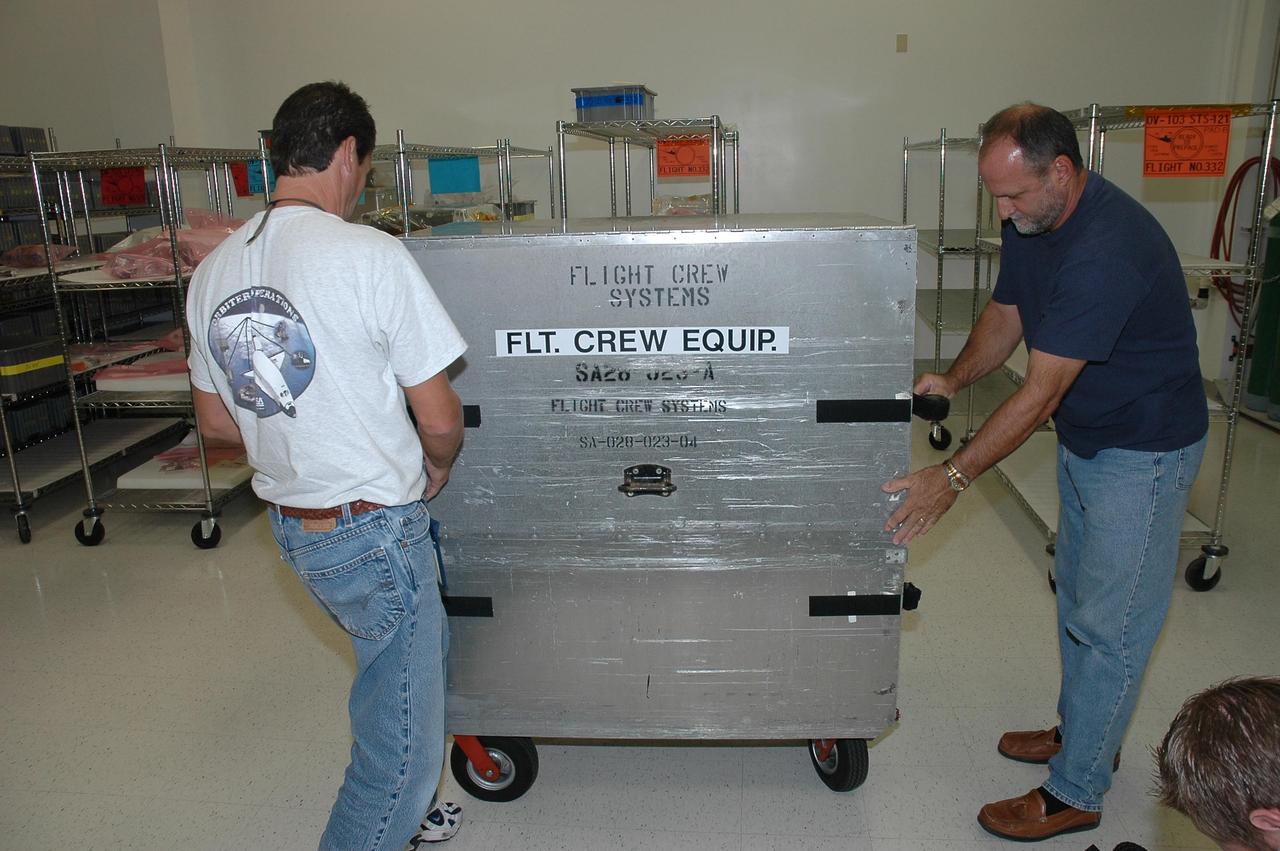
KENNEDY SPACE CENTER, FLA. - In the Space Station Processing Facility at NASA's Kennedy Space Center, flight crew systems technician Troy Mann and flight crew systems manager Jim Blake secure the storage boxes holding the food containers that will be stowed on Space Shuttle Discovery for the flight of mission STS-121. The containers hold meals prepared for the mission crew. Astronauts select their own menus from a large array of food items. Astronauts are supplied with three balanced meals, plus snacks. Foods flown on space missions are researched and developed at the Space Food Systems Laboratory at the Johnson Space Center (JSC) in Houston, which is staffed by food scientists, dietitians and engineers. Foods are analyzed through nutritional analysis, sensory evaluation, storage studies, packaging evaluations and many other methods. Each astronaut’s food is stored aboard the space shuttle and is identified by a colored dot affixed to each package. Launch of Space Shuttle Discovery on mission STS-121 is scheduled for July 1. Photo credit: NASA/Jack Pfaller
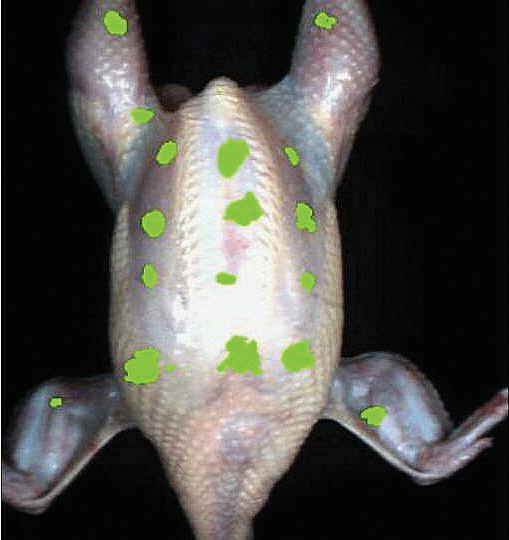
ProVision Technologies, a NASA research partnership center at Sternis Space Center in Mississippi, has developed a new hyperspectral imaging (HSI) system that is much smaller than the original large units used aboard remote sensing aircraft and satellites. The new apparatus is about the size of a breadbox. Health-related applications of HSI include scanning chickens during processing to help prevent contaminated food from getting to the table. ProVision is working with Sanderson Farms of Mississippi and the U.S. Department of Agriculture. ProVision has a record in its spectral library of the unique spectral signature of fecal contamination, so chickens can be scanned and those with a positive reading can be separated. HSI sensors can also determine the quantity of surface contamination. Research in this application is quite advanced, and ProVision is working on a licensing agreement for the technology. The potential for future use of this equipment in food processing and food safety is enormous.
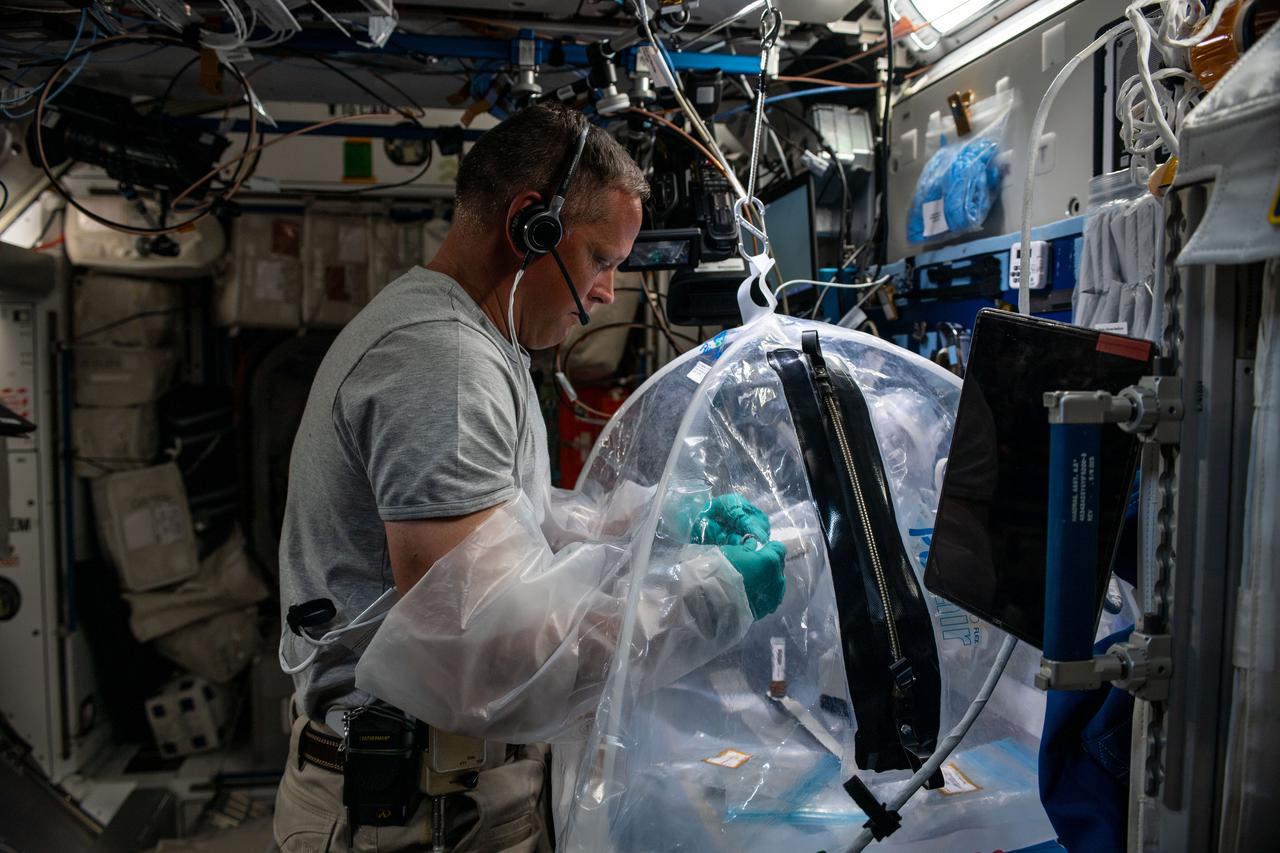
iss067e034722 (May 4, 2022) --- NASA astronaut and Expedition 67 Flight Engineer Bob Hines works inside the portable glovebag processing biological samples for the Food Physiology study. The human research experiment aims to define targeted, more efficient dietary interventions to maintain crew health and performance as well as the food system requirements to support these interventions.
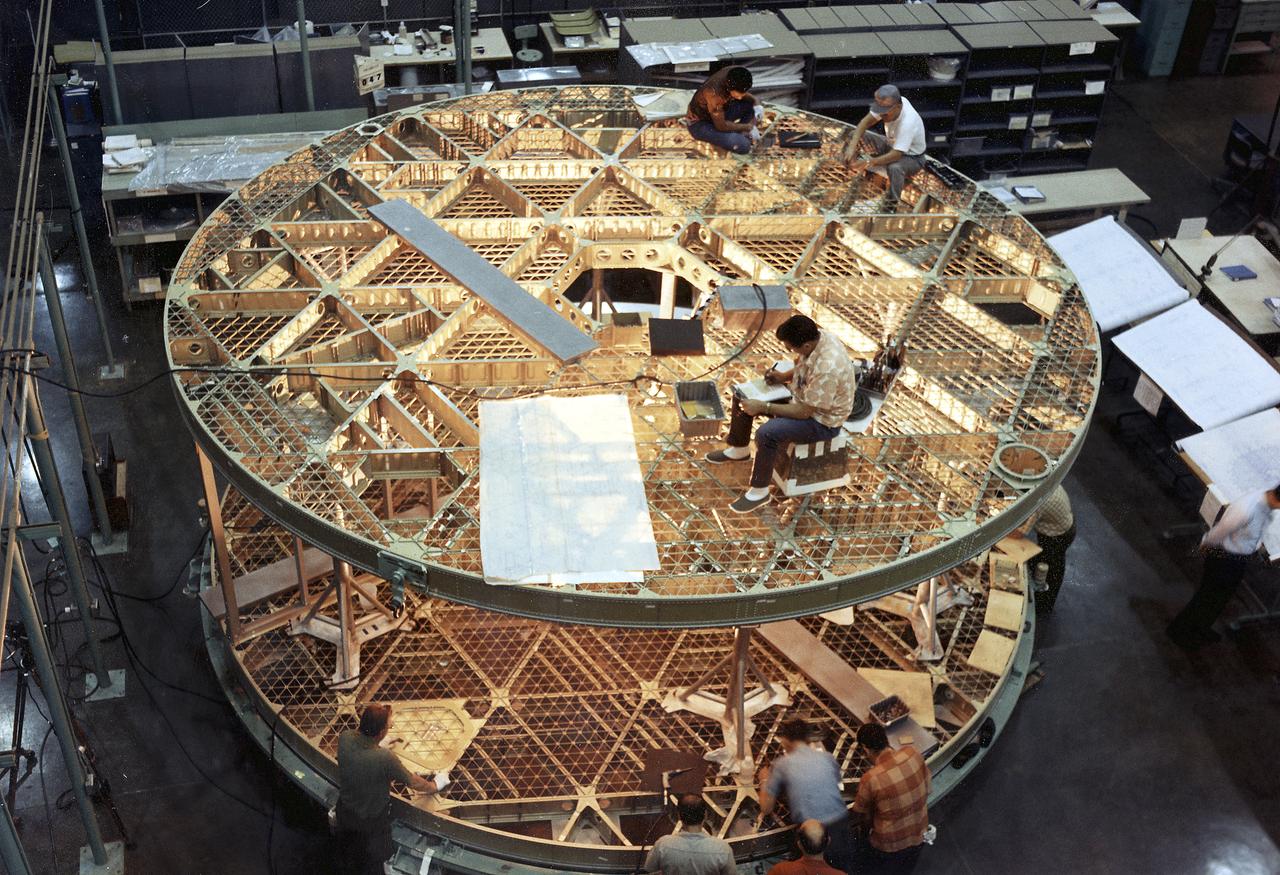
This photograph was taken during assembly of the bottom and upper floors of the Skylab Orbital Workshop (OWS). The OWS was divided into two major compartments. The lower level provided crew accommodations for sleeping, food preparation and consumption, hygiene, waste processing and disposal, and performance of certain experiments. The upper level consisted of a large work area and housed water storage tanks, a food freezer, storage vaults for film, scientific airlocks, mobility and stability experiment equipment, and other experimental equipment.
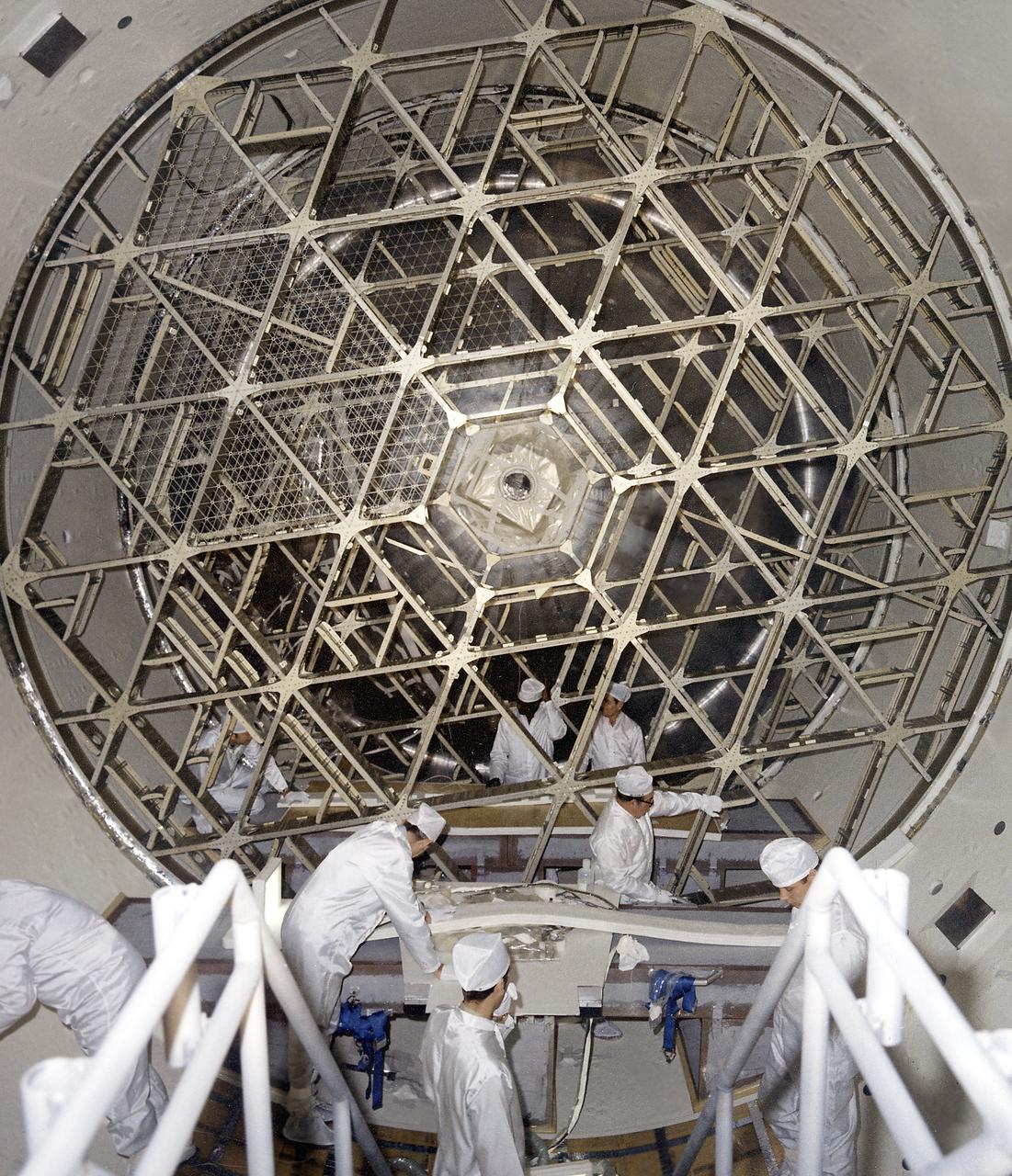
This photograph was taken during installation of floor grids on the upper and lower floors inside the Skylab Orbital Workshop at the McDornell Douglas plant at Huntington Beach, California. The OWS was divided into two major compartments. The lower level provided crew accommodations for sleeping, food preparation and consumption, hygiene, waste processing and disposal, and performance of certain experiments. The upper level consisted of a large work area and housed water storage tanks, a food freezer, storage vaults for film, scientific airlocks, mobility and stability experiment equipment, and other experimental equipment.
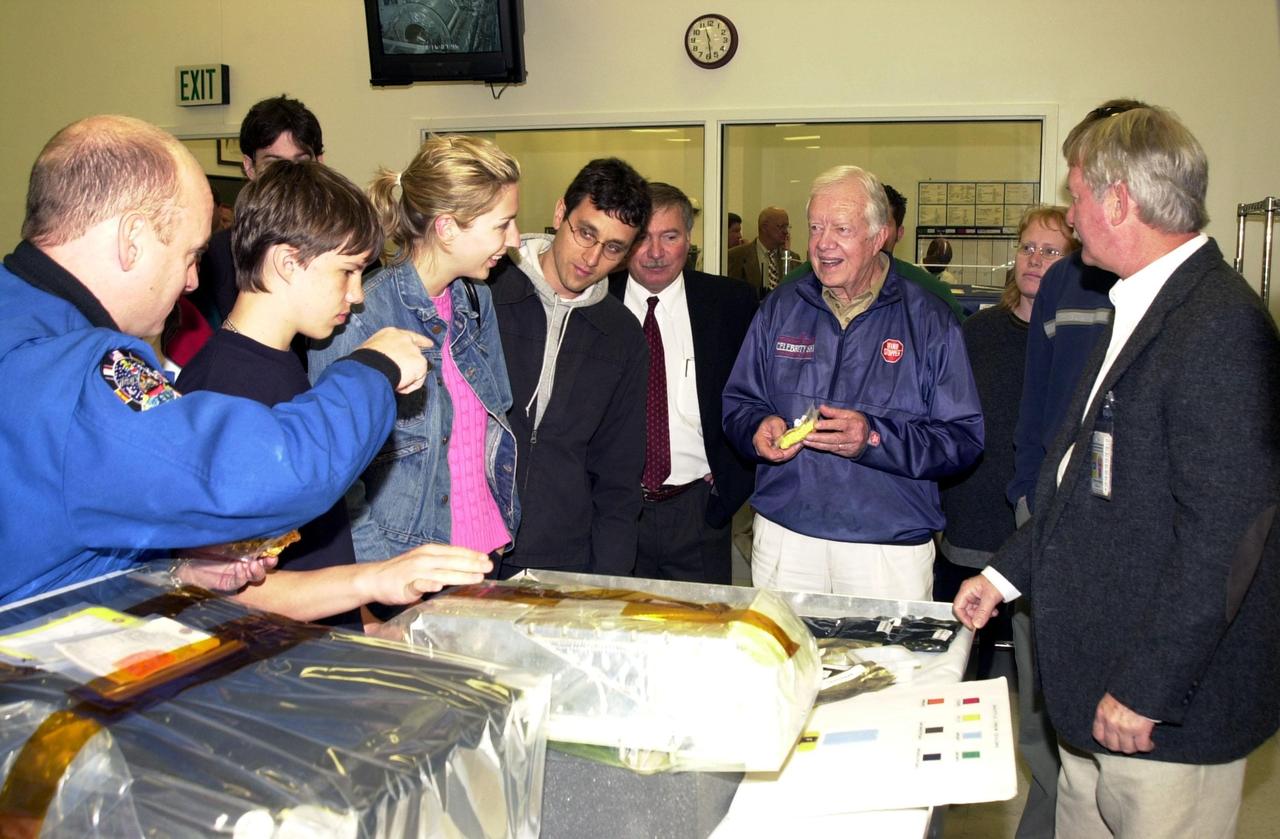
KENNEDY SPACE CENTER, FLA. -- During a tour of KSC, former President Jimmy Carter is shown packages of food that are used on the International Space Station. Astronaut Scott Kelly (far left) relates how the food is prepared and how it tastes. Behind and to the left of Carter is Tip Talone, director of Payload Processing, International Space Station. At the far right is Ron Woods, a technician in the Flight Crew Equipment Facility

KENNEDY SPACE CENTER, FLA. - In the Space Station Processing Facility at NASA's Kennedy Space Center, John Hoog secures a bag filled with prepared meals for the crew of mission STS-121 before packing into containers for the flight. At left is Dennis Huefner, with United Space Alliance (USA) ground operations. Hoog is a USA-FCE/EVA representative from Johnson Space Center. Astronauts select their own menus from a large array of food items. Astronauts are supplied with three balanced meals, plus snacks. Foods flown on space missions are researched and developed at the Space Food Systems Laboratory at the Johnson Space Center (JSC) in Houston, which is staffed by food scientists, dietitians and engineers. Foods are analyzed through nutritional analysis, sensory evaluation, storage studies, packaging evaluations and many other methods. Each astronaut’s food is stored aboard the space shuttle and is identified by a colored dot affixed to each package. Launch of Space Shuttle Discovery on mission STS-121 is scheduled for July 1. Photo credit: NASA/Jack Pfaller
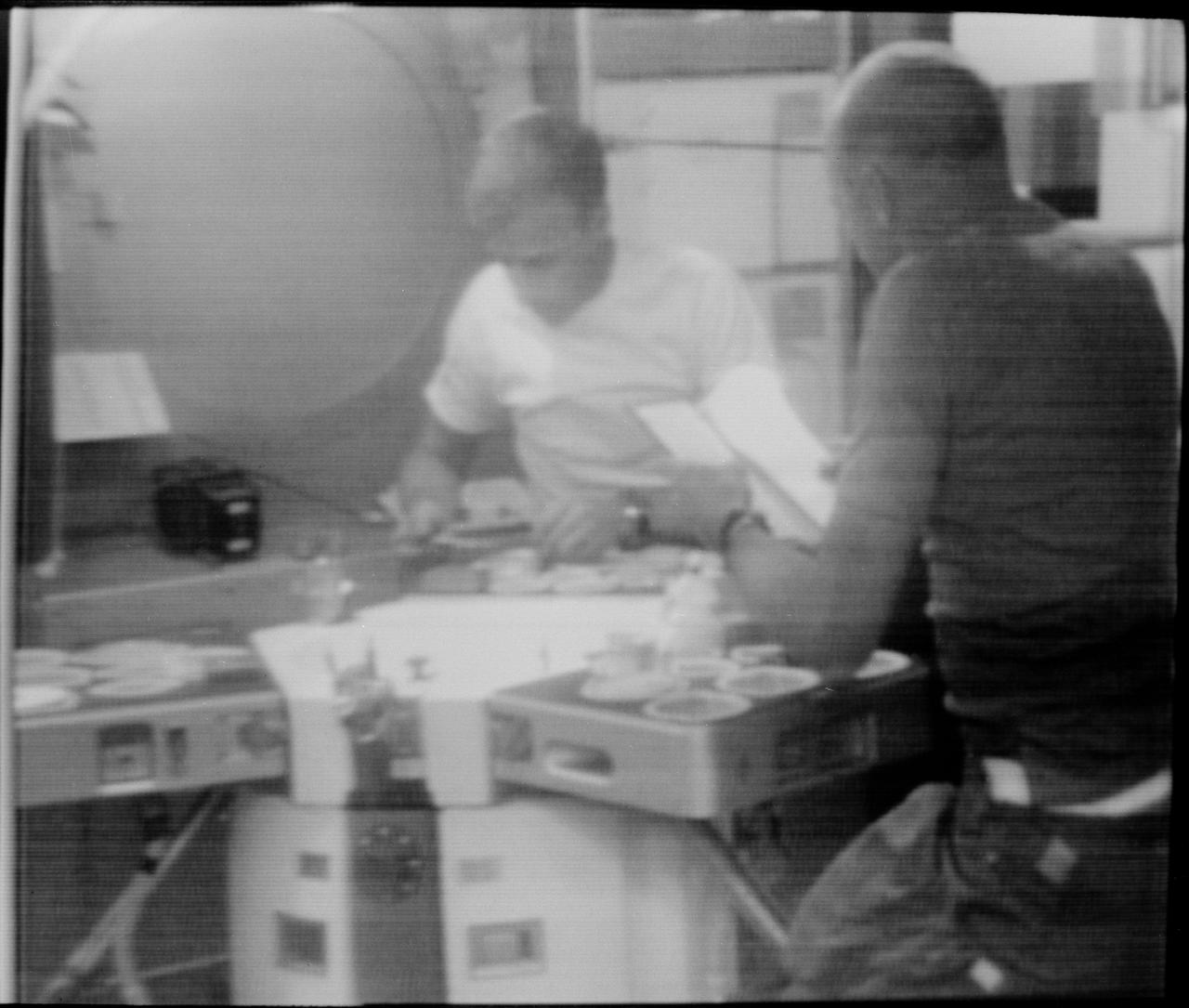
S73-27081 (30 May 1973) --- Two of the three Skylab 2 astronauts are seen in the wardroom of the crew quarters of the Orbital Workshop of the Skylab 1 space station cluster in Earth orbit in this reproduction taken from a television transmission made by a TV camera aboard the space station. They are preparing to eat a meal. Astronaut Charles Conrad Jr., commander, is in the right foreground. In the background is astronaut Paul J. Weitz, pilot. Photo credit: NASA
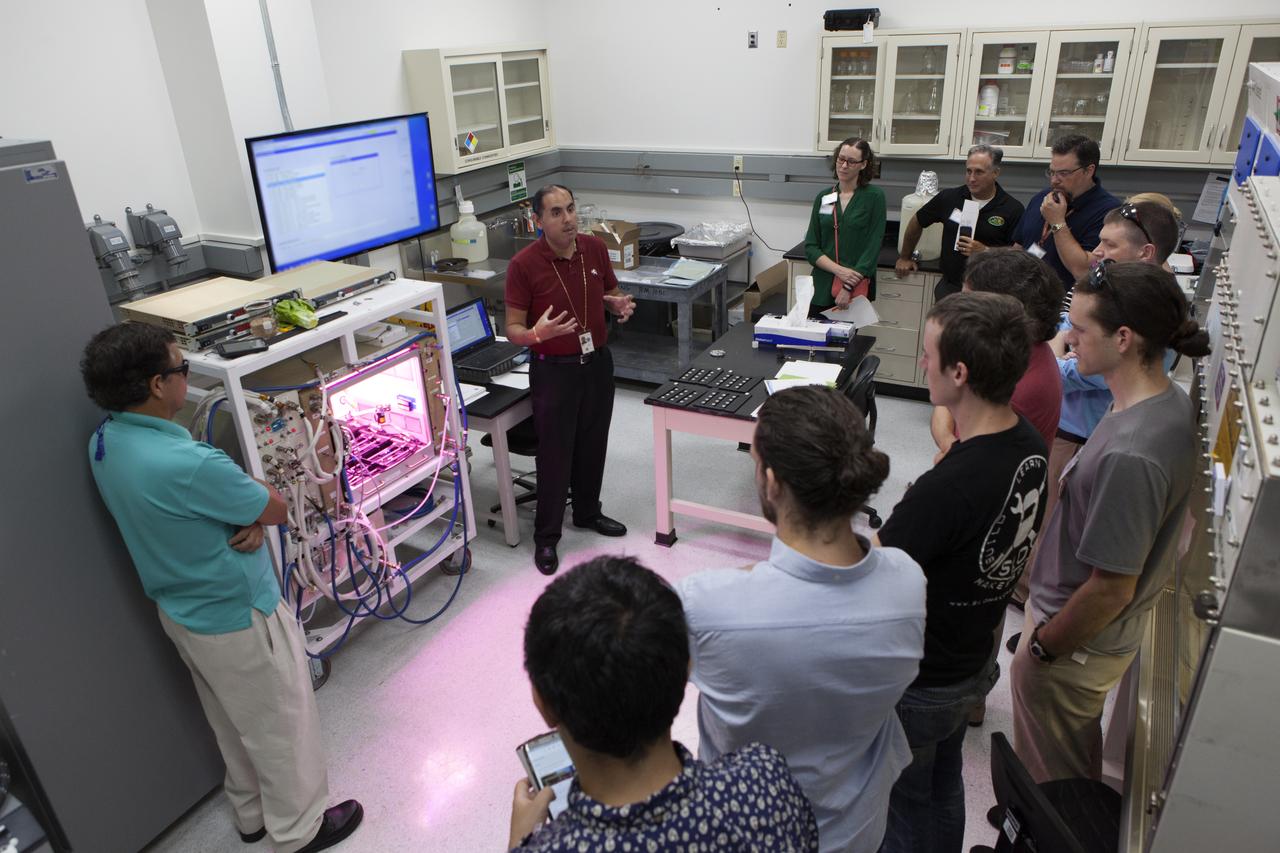
Bryan Onate, Advanced Plant Habitat project manager, with the Exploration Research and Technology Directorate, brainstorms innovative approaches to food production with industry representatives inside a laboratory at the Space Station Processing Facility at NASA's Kennedy Space Center in Florida.
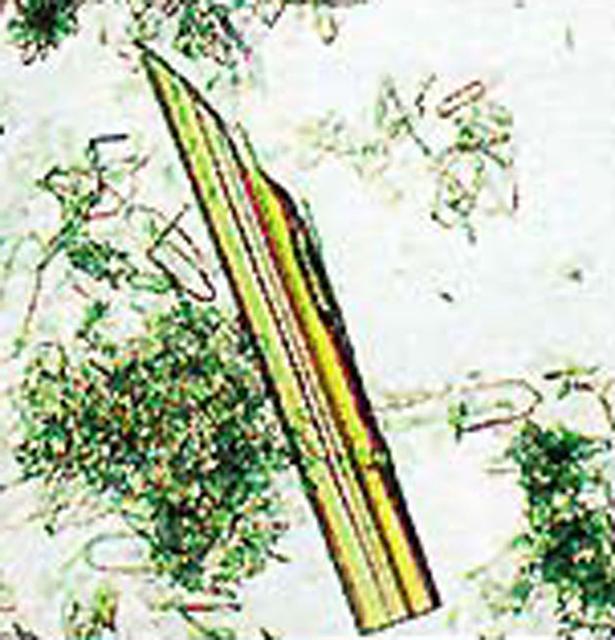
Both (Porcine and bacterial) starch degrading enzymes highly valued by the biotechnology industry. (Porcine) A major target for protein engineering and the study of diabetes, obesity and dental care. (Bacterial) Major industrial and biotechnology interest used in brewing, baking, and food processing. World's number one industrial protein.
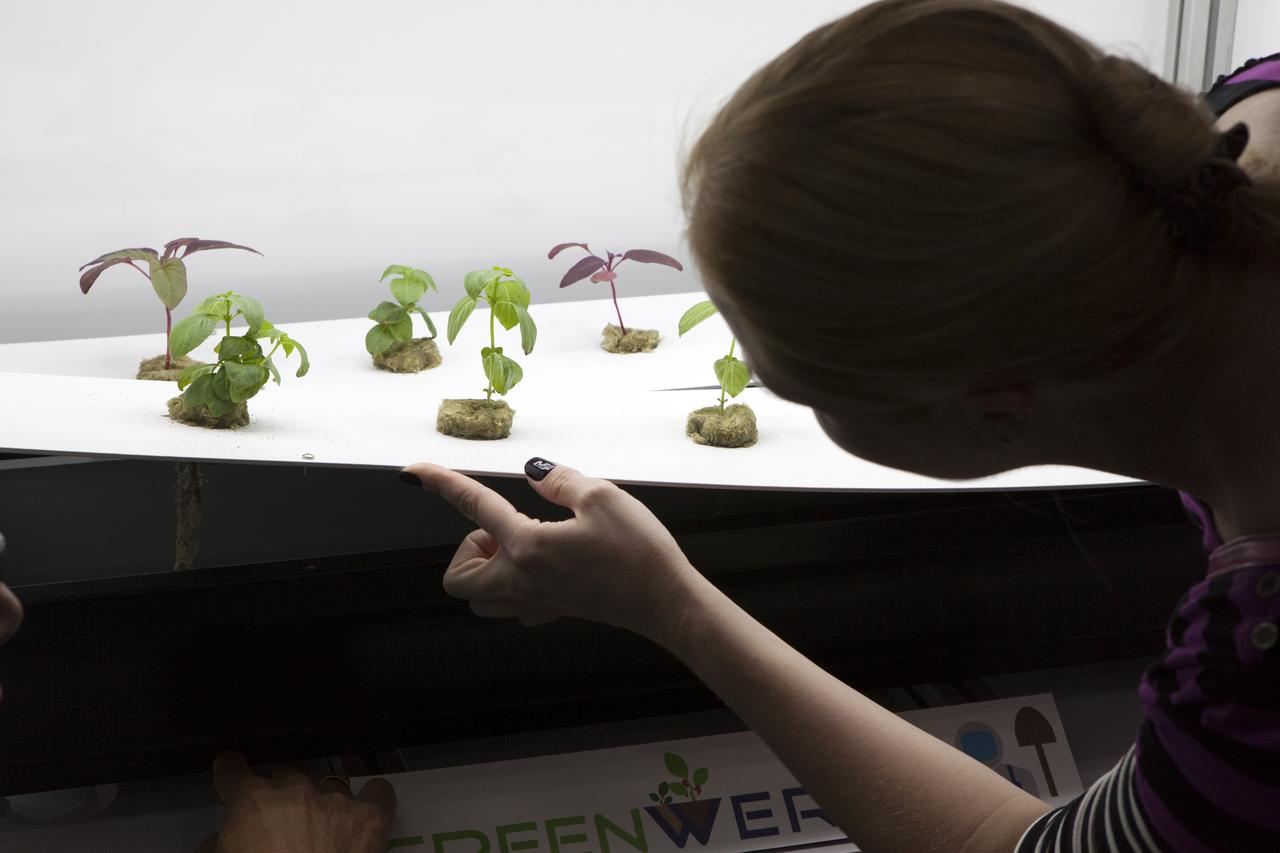
During a brainstorming session on innovative approaches to food production, an industry participant looks at plants growing inside a laboratory in the Space Station Processing Facility at NASA's Kennedy Space Center in Florida. The workshop was hosted by the Exploration Research and Technology Directorate.
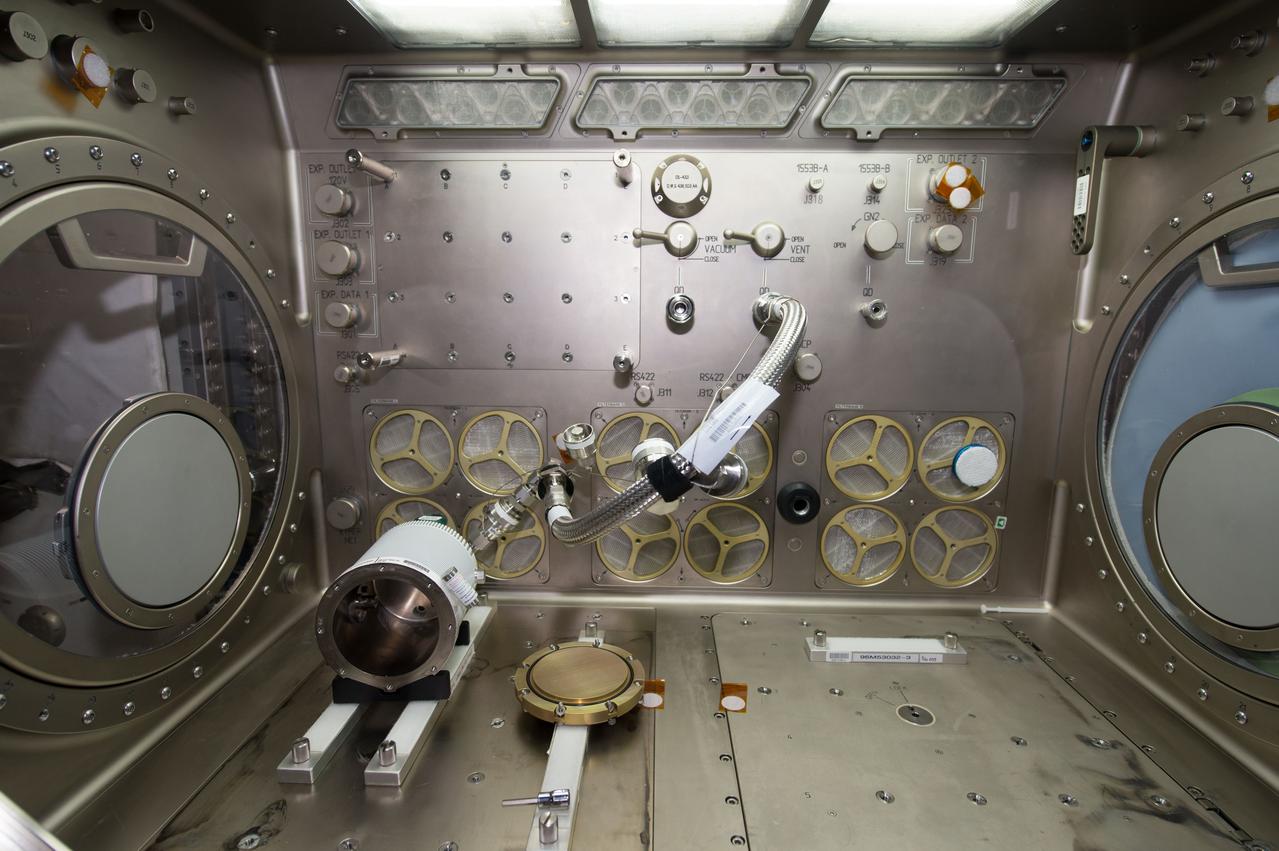
iss052e075807 (Aug. 30, 2017) --- Eli Lily-Lyophilization hardware setup in the Migrogravity Science Glovebox (MSG) work volume. Eli Lily-Lyophilization examines freeze-drying processes in the microgravity environment aboard the International Space Station (ISS) to improve the understanding of how food, drugs and other compounds are preserved in space.
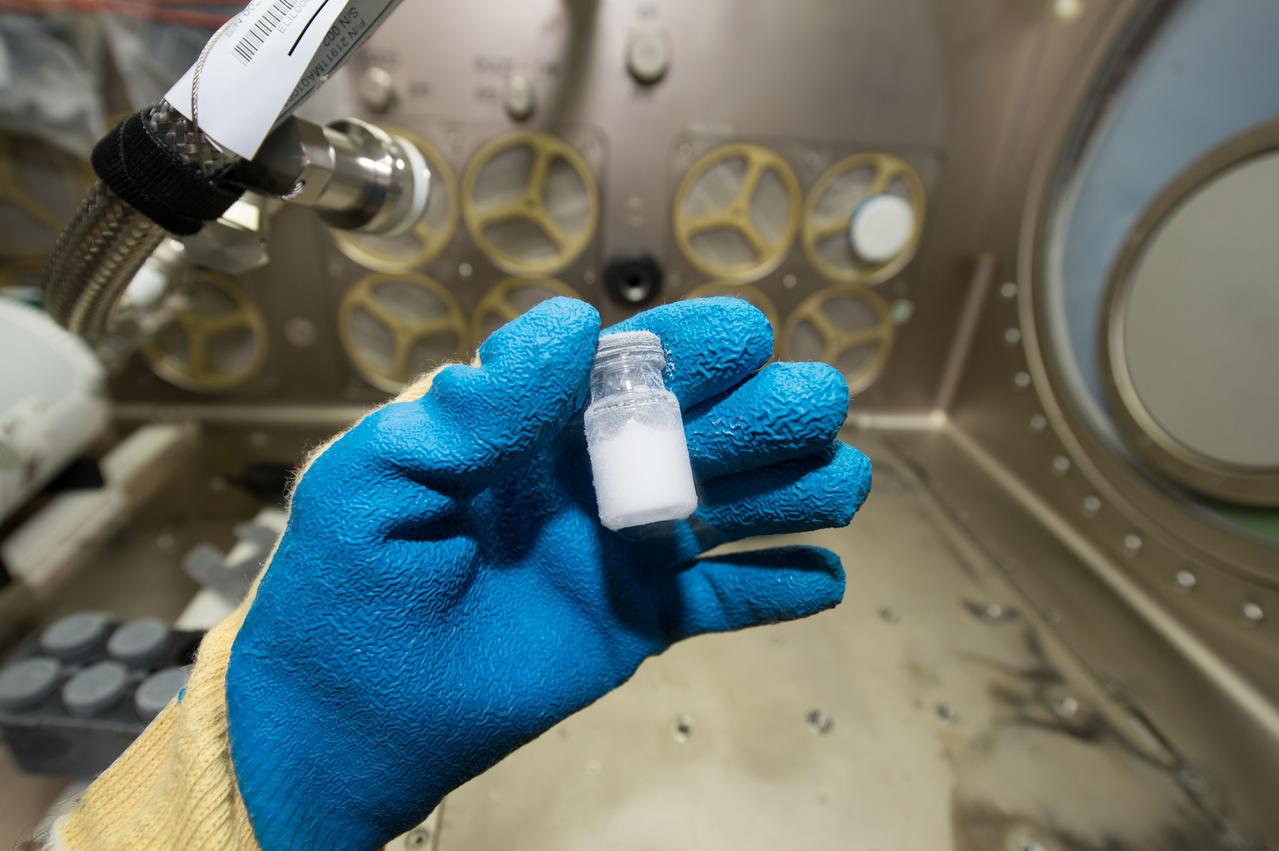
iss052e075812 (Aug. 30, 2017) --- Eli Lily-Lyophilization hardware setup in the Migrogravity Science Glovebox (MSG) work volume. Eli Lily-Lyophilization examines freeze-drying processes in the microgravity environment aboard the International Space Station (ISS) to improve the understanding of how food, drugs and other compounds are preserved in space.
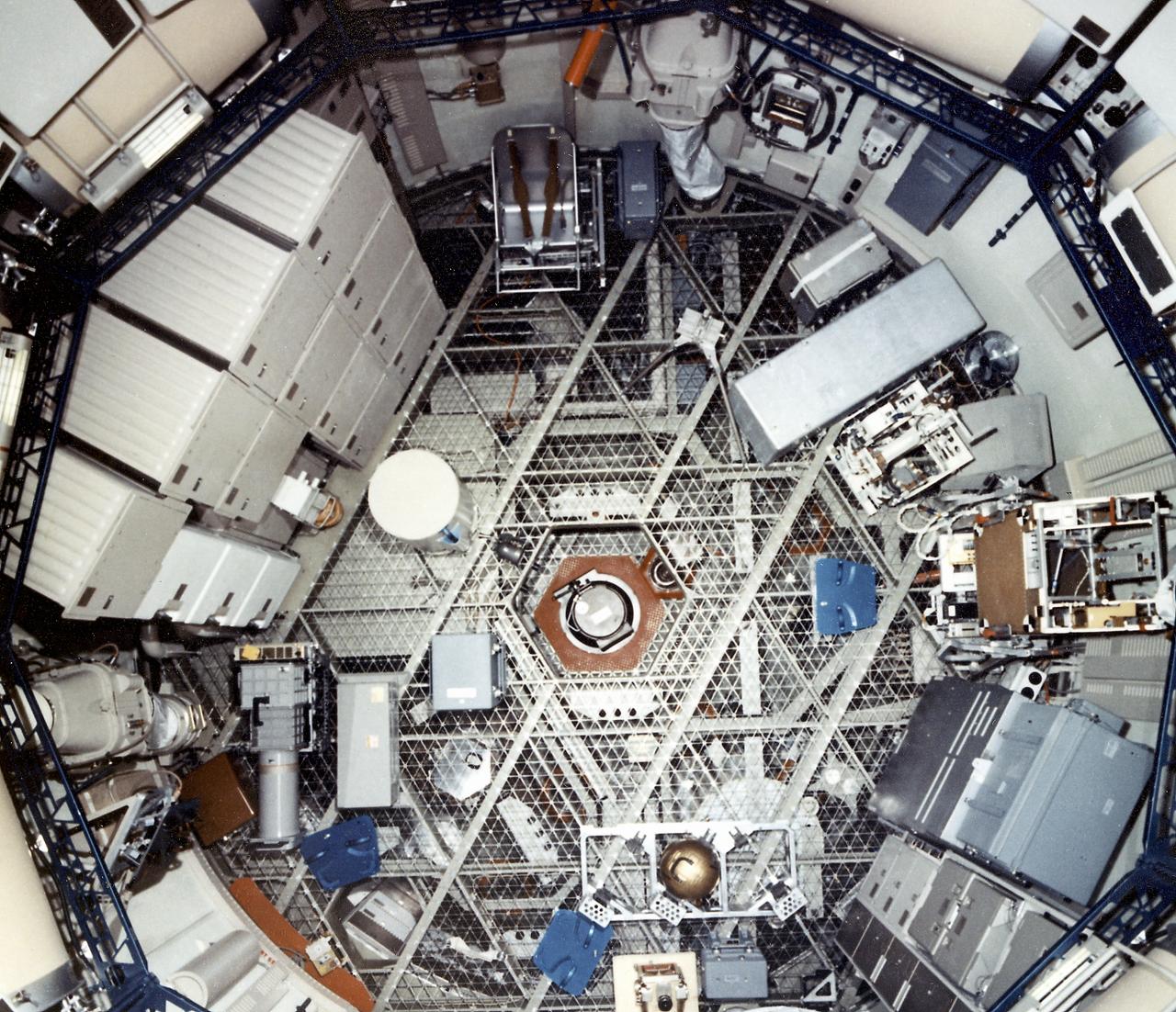
This photograph is an interior view of the Orbital Workshop (OWS) upper level looking from the airlock hatch, showing the octagonal opening that separated the workshop's two levels. The trash airlock can be seen at center. The lower level of the OWS provided crew accommodations for sleeping, food preparation and consumption, hygiene, waste processing and disposal, and performance of certain experiments. The upper level consisted of a large work area and housed water storage tanks, a food freezer, storage vaults for film, scientific airlocks, mobility and stability experiment equipment, and other experimental equipment.
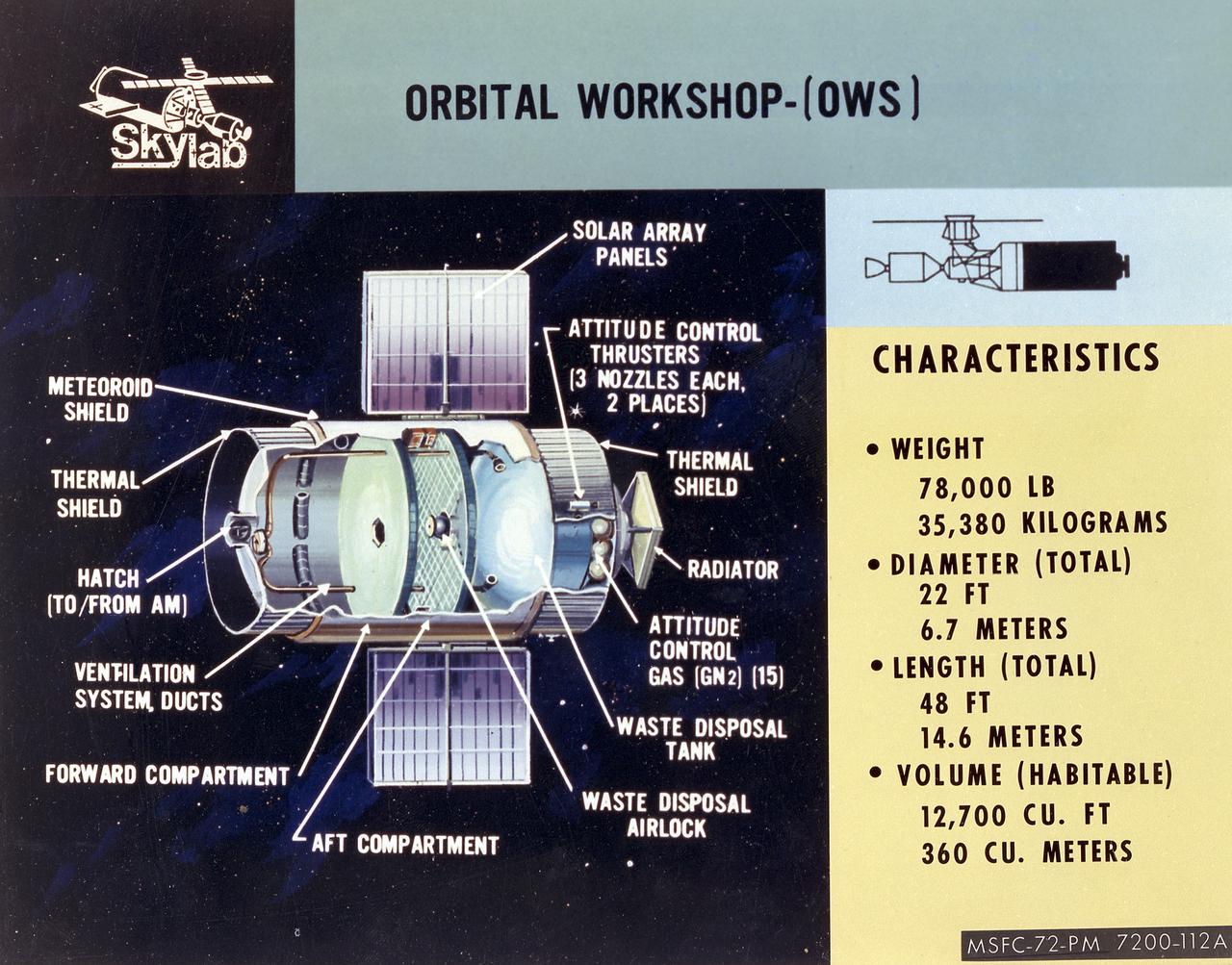
This cutaway illustration shows the characteristics and basic elements of the Skylab Orbiter Workshop (OWS). The OWS was divided into two major compartments. The lower level provided crew accommodations for sleeping, food preparation and consumption, hygiene, waste processing and disposal, and performance of certain experiments. The upper level consisted of a large work area and housed water storage tanks, a food freezer, storage vaults for film, scientific airlocks, mobility and stability experiment equipment, and other experimental equipment. The compartment below the crew quarters was a container for liquid and solid waste and trash accumulated throughout the mission. A solar array, consisting of two wings covered on one side with solar cells, was mounted outside the workshop to generate electrical power to augment the power generated by another solar array mounted on the solar observatory. Thrusters were provided at one end of the workshop for short-term control of the attitude of the space station.
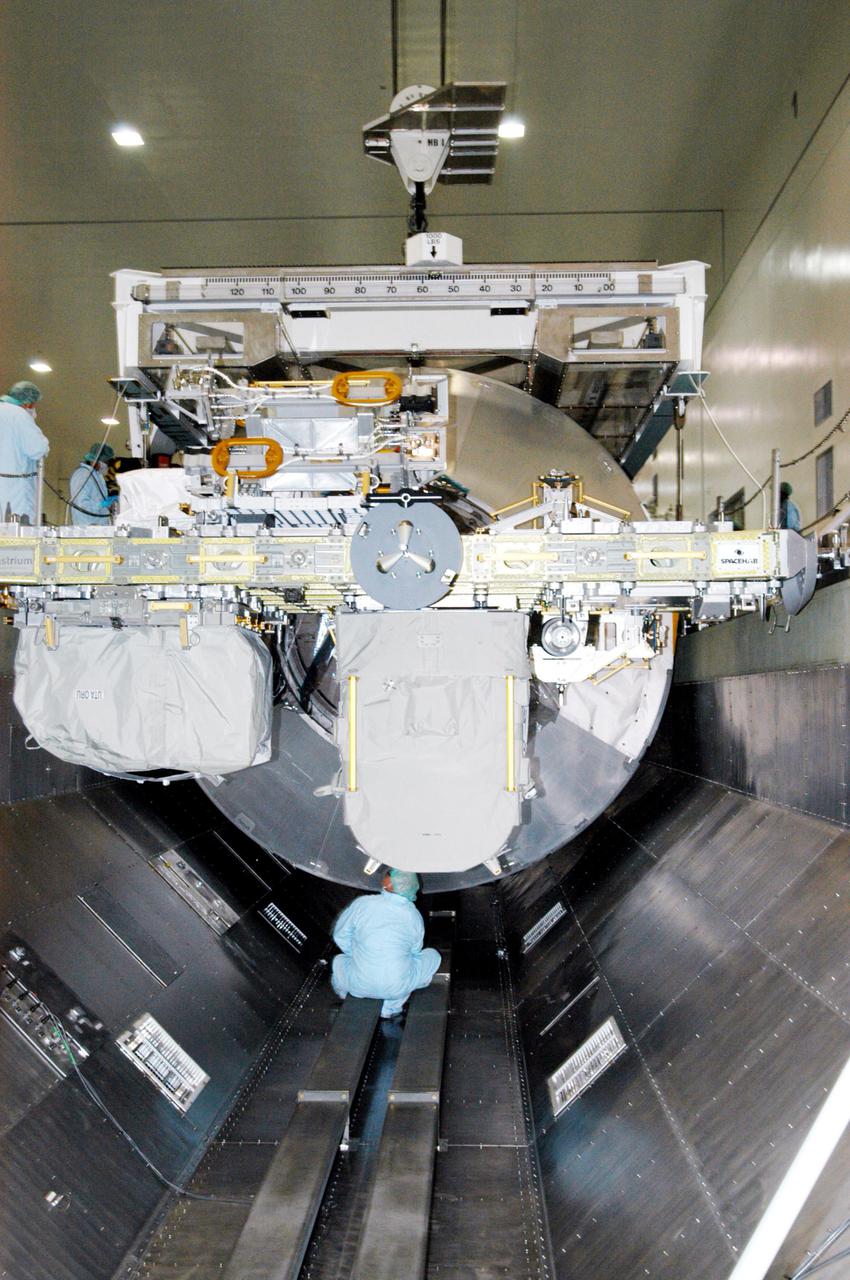
KENNEDY SPACE CENTER, FLA. - In the Space Station Processing Facility, engineers install the Multi-Purpose Logistics Module Raffaello in the Payload Transportation Canister. It rests behind the External Stowage Platform-2. The canister will transfer the payloads to Launch Pad 39-B. Raffaello will travel aboard Space Shuttle Discovery on Return to Flight Mission STS-114 to the International Space Station. Raffaello will carry 12 racks of cargo to the Station, including food, clothing, spare parts and research equipment. The Boeing Company, a KSC and NASA prime contractor for ISS element processing, prepared Raffaello for flight. The module was built by the Italian Space Agency for NASA under a cooperative space agreement.
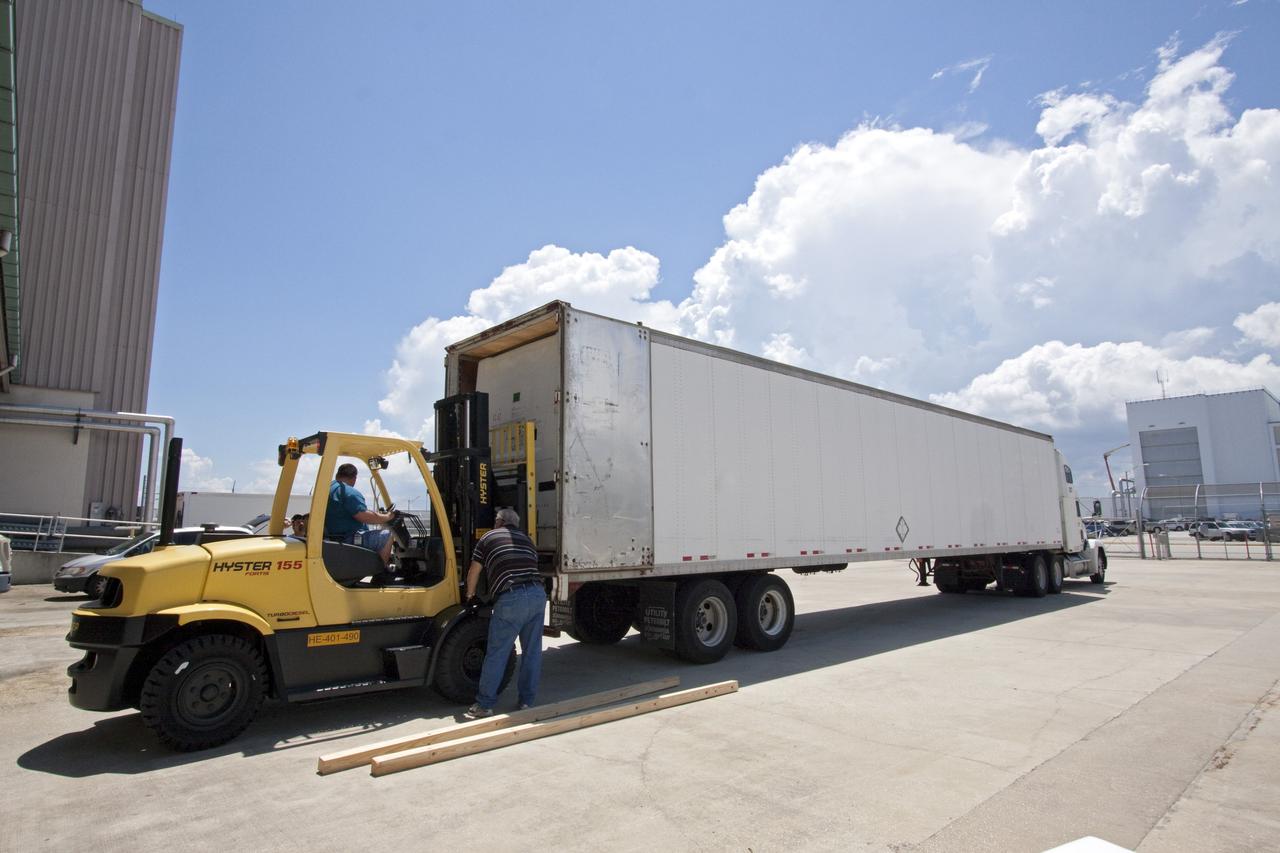
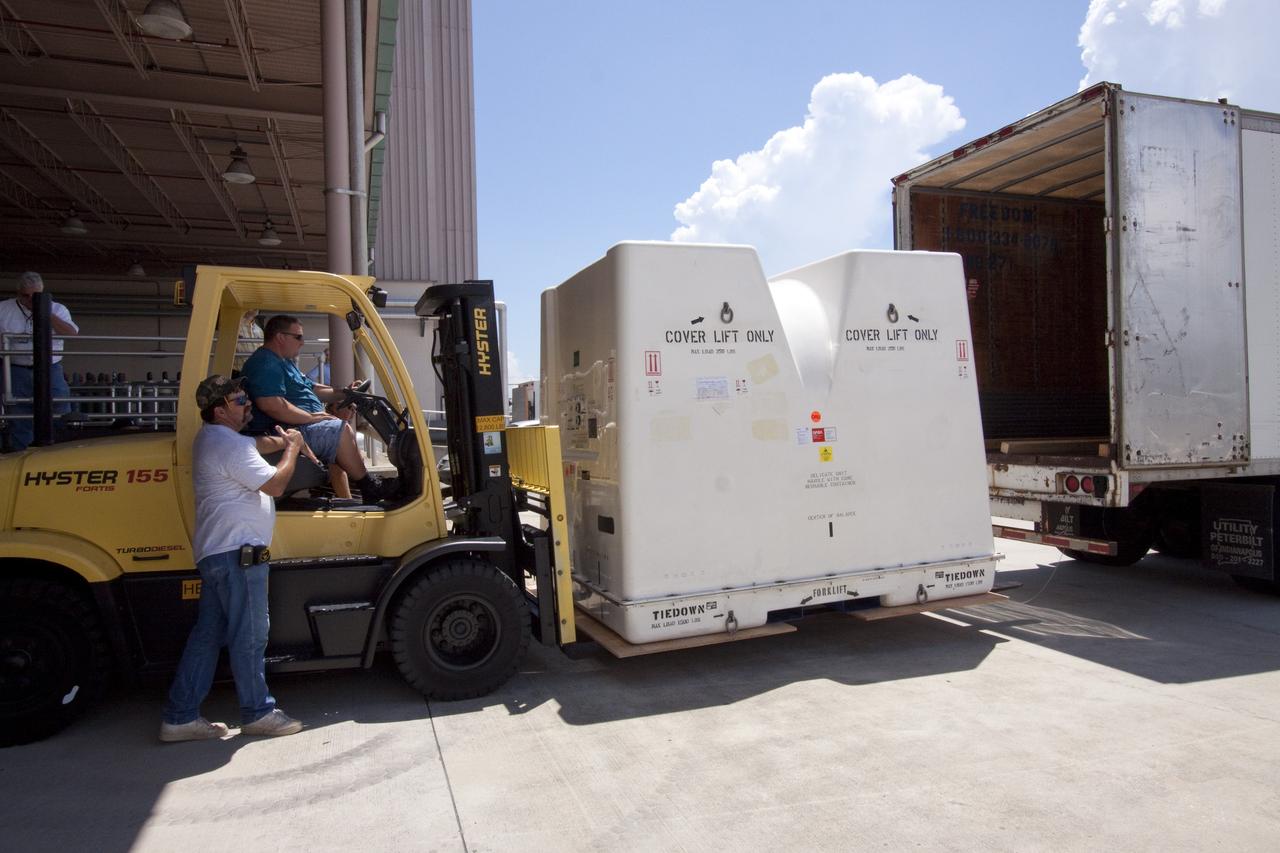
CAPE CANAVERAL, Fla. -- In the Space Station Processing Facility at NASA's Kennedy Space Center in Florida, a forklift moves shipping containers packed with tools and flight support equipment for orbital replacement units into a tractor-trailer for their trip to the Japanese Aerospace Exploration Agency's Tanegashima Space Center. There, the six units, including the flex hose rotary coupler, will be processed for launch to the International Space Station aboard HTV-2, scheduled for Jan. 20, 2011. HTV-2 is an uncrewed cargo transporter that will be launched by the H-IIB launch vehicle. It is designed to deliver up to 6 tons of supplies, including food, clothes and experiment devices to the space station. Photo credit: NASA/Jack Pfaller
CAPE CANAVERAL, Fla. -- In the Space Station Processing Facility at NASA's Kennedy Space Center in Florida, a forklift moves shipping containers packed with tools and flight support equipment for orbital replacement units into a tractor-trailer for their trip to the Japanese Aerospace Exploration Agency's Tanegashima Space Center. There, the six units, including the flex hose rotary coupler, will be processed for launch to the International Space Station aboard HTV-2, scheduled for Jan. 20, 2011. HTV-2 is an uncrewed cargo transporter that will be launched by the H-IIB launch vehicle. It is designed to deliver up to 6 tons of supplies, including food, clothes and experiment devices to the space station. Photo credit: NASA/Jack Pfaller
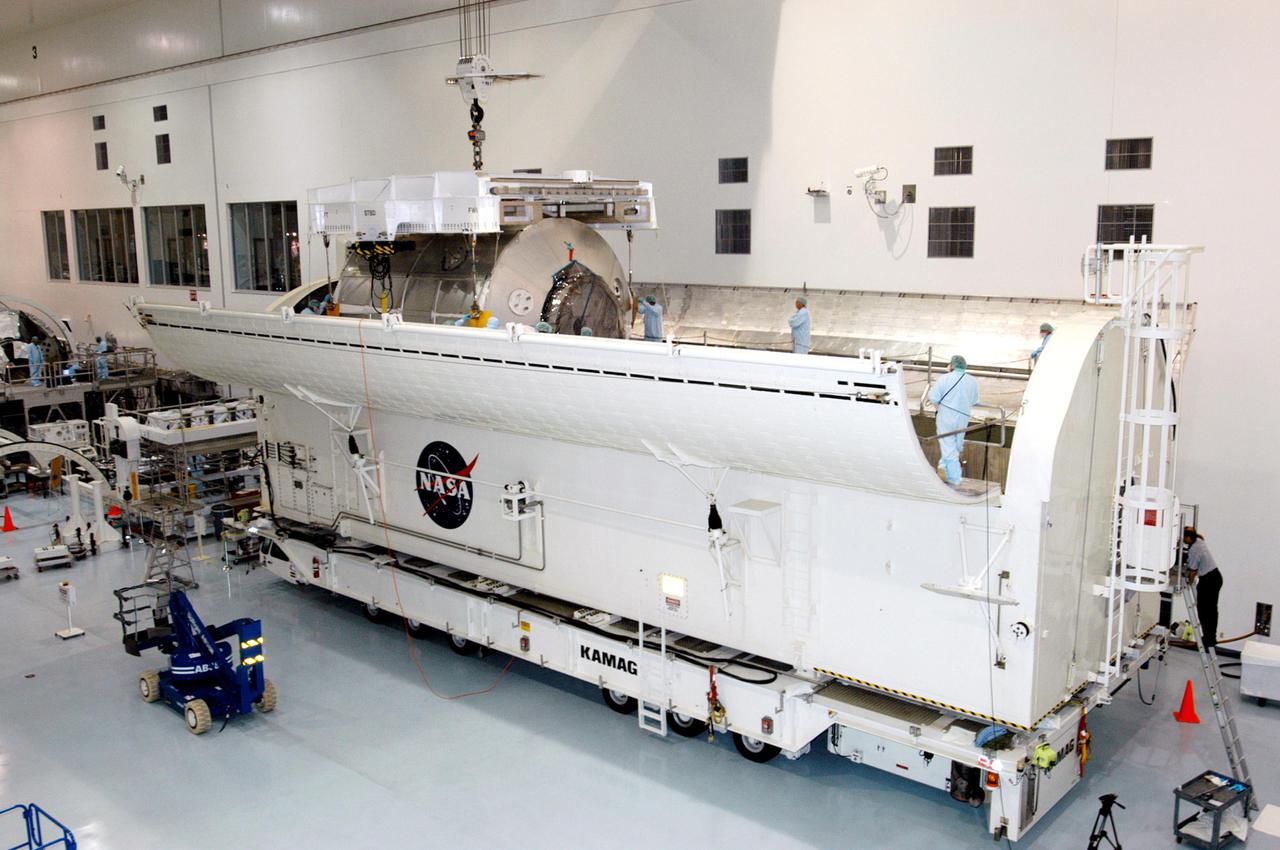
KENNEDY SPACE CENTER, FLA. - In the Space Station Processing Facility, the Multi-Purpose Logistics Module Raffaello is lowered into the Payload Transportation Canister for installation and transfer to Launch Pad 39-B. Raffaello will travel aboard Space Shuttle Discovery on Return to Flight Mission STS-114 to the International Space Station. Raffaello will carry 12 racks of cargo to the Station, including food, clothing, spare parts and research equipment. The Boeing Company, a KSC and NASA prime contractor for ISS element processing, prepared Raffaello for flight. The module was built by the Italian Space Agency for NASA under a cooperative space agreement.
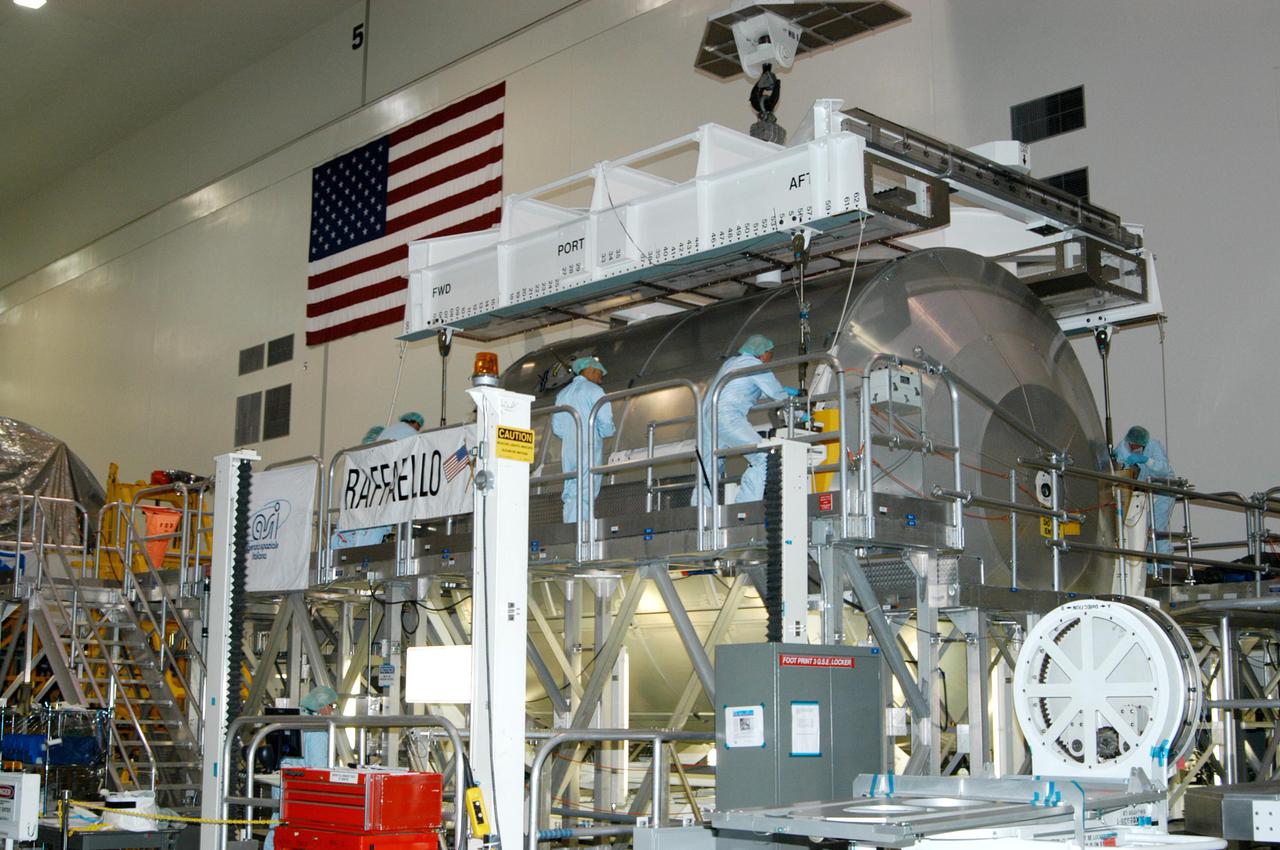
KENNEDY SPACE CENTER, FLA. - In the Space Station Processing Facility, workers attach an overhead crane to the Multi-Purpose Logistics Module Raffaello, which is being moved to the Payload Transportation Canister for installation and transfer to Launch Pad 39-B. Raffaello will travel aboard Space Shuttle Discovery on Return to Flight Mission STS-114 to the International Space Station. Raffaello will carry 12 racks of cargo to the Station, including food, clothing, spare parts and research equipment. The Boeing Company, a KSC and NASA prime contractor for ISS element processing, prepared Raffaello for flight. The module was built by the Italian Space Agency for NASA under a cooperative space agreement.
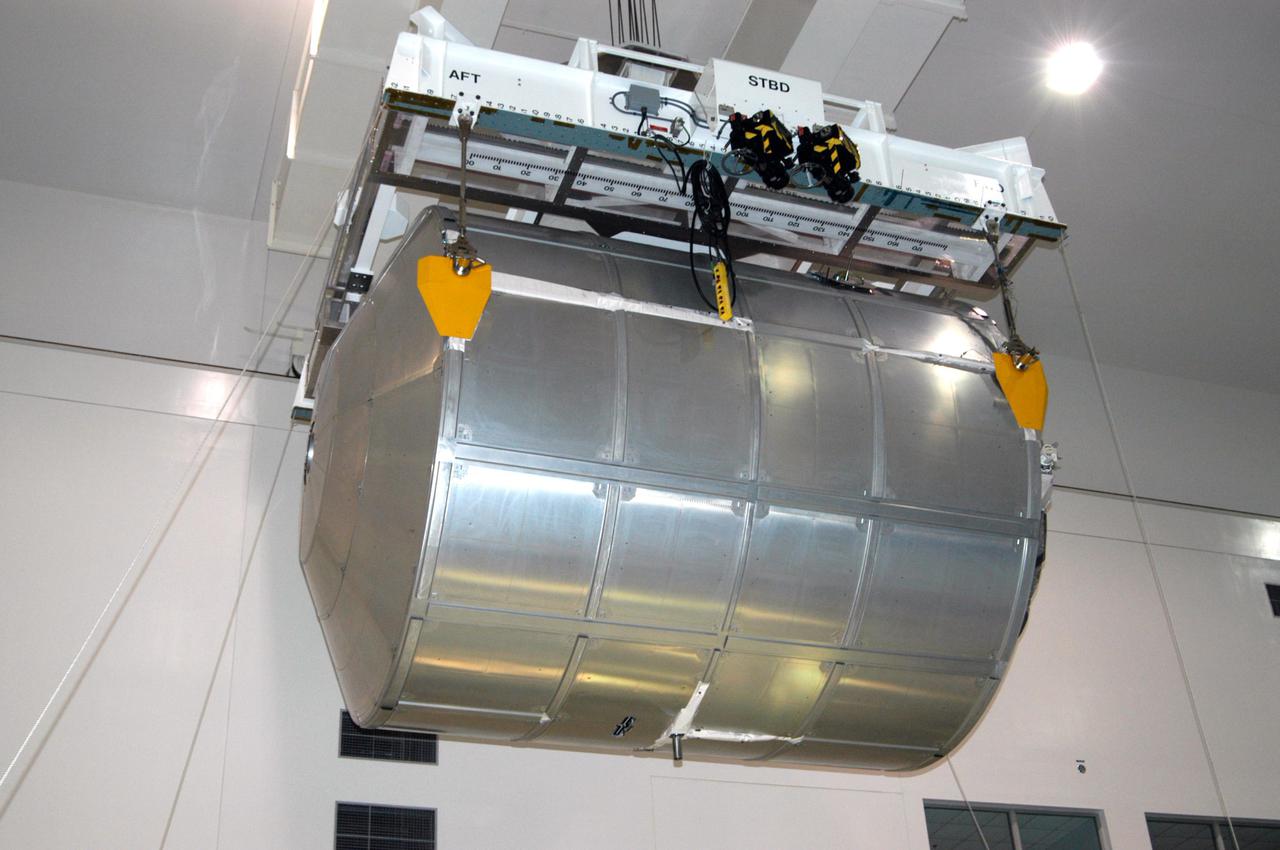
KENNEDY SPACE CENTER, FLA. - In the Space Station Processing Facility, the Multi-Purpose Logistics Module Raffaello moves across the floor to the Payload Transportation Canister for installation and transfer to Launch Pad 39-B. Raffaello will travel aboard Space Shuttle Discovery on Return to Flight Mission STS-114 to the International Space Station. Raffaello will carry 12 racks of cargo to the Station, including food, clothing, spare parts and research equipment. The Boeing Company, a KSC and NASA prime contractor for ISS element processing, prepared Raffaello for flight. The module was built by the Italian Space Agency for NASA under a cooperative space agreement.
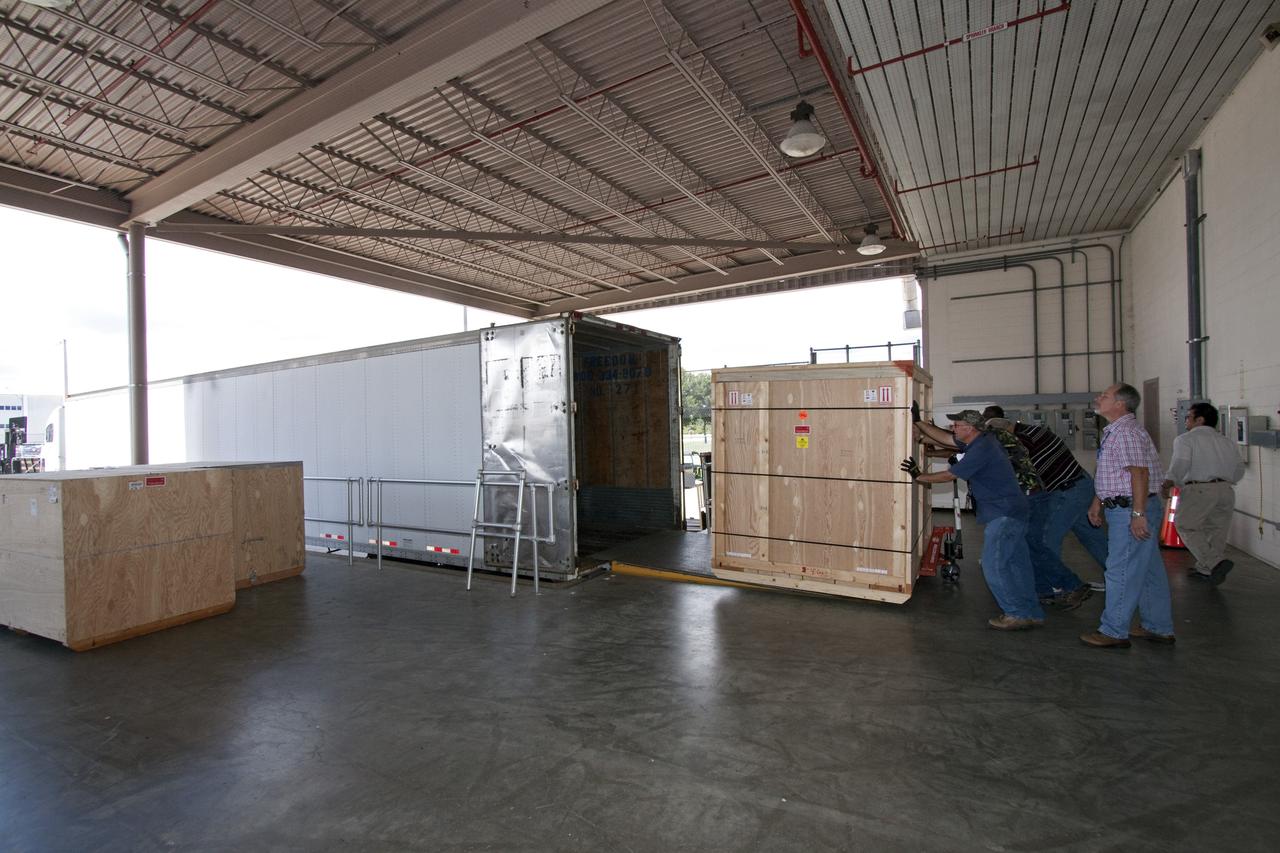
CAPE CANAVERAL, Fla. -- In the Space Station Processing Facility at NASA's Kennedy Space Center in Florida, shipping containers packed with tools and flight support equipment for orbital replacement units are loaded into a tractor-trailer for their trip to the Japanese Aerospace Exploration Agency's Tanegashima Space Center. There, the six units, including the flex hose rotary coupler, will be processed for launch to the International Space Station aboard HTV-2, scheduled for Jan. 20, 2011. HTV-2 is an uncrewed cargo transporter that will be launched by the H-IIB launch vehicle. It is designed to deliver up to 6 tons of supplies, including food, clothes and experiment devices to the space station. Photo credit: NASA/Jack Pfaller
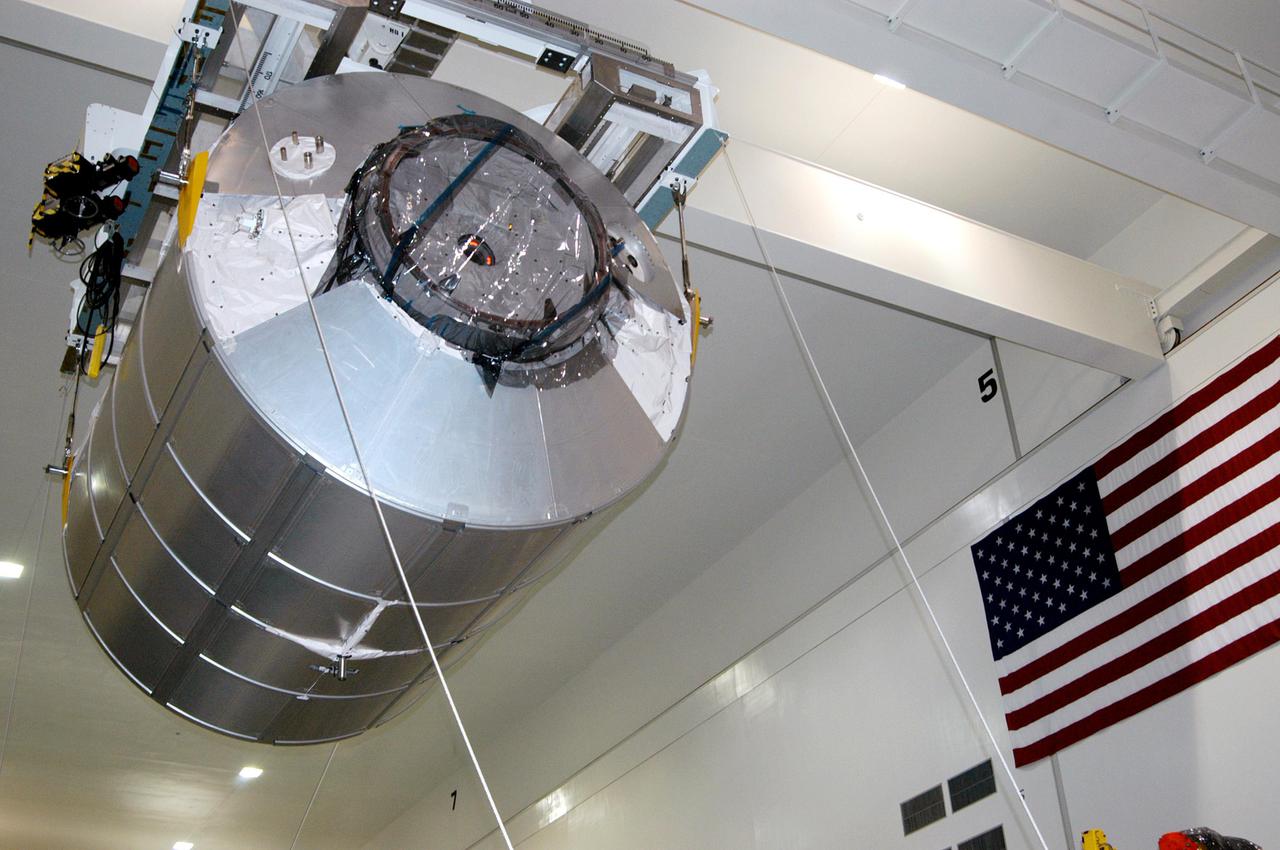
KENNEDY SPACE CENTER, FLA. - In the Space Station Processing Facility, the Multi-Purpose Logistics Module Raffaello moves across the floor to the Payload Transportation Canister for installation and transfer to Launch Pad 39-B. Raffaello will travel aboard Space Shuttle Discovery on Return to Flight Mission STS-114 to the International Space Station. Raffaello will carry 12 racks of cargo to the Station, including food, clothing, spare parts and research equipment. The Boeing Company, a KSC and NASA prime contractor for ISS element processing, prepared Raffaello for flight. The module was built by the Italian Space Agency for NASA under a cooperative space agreement.
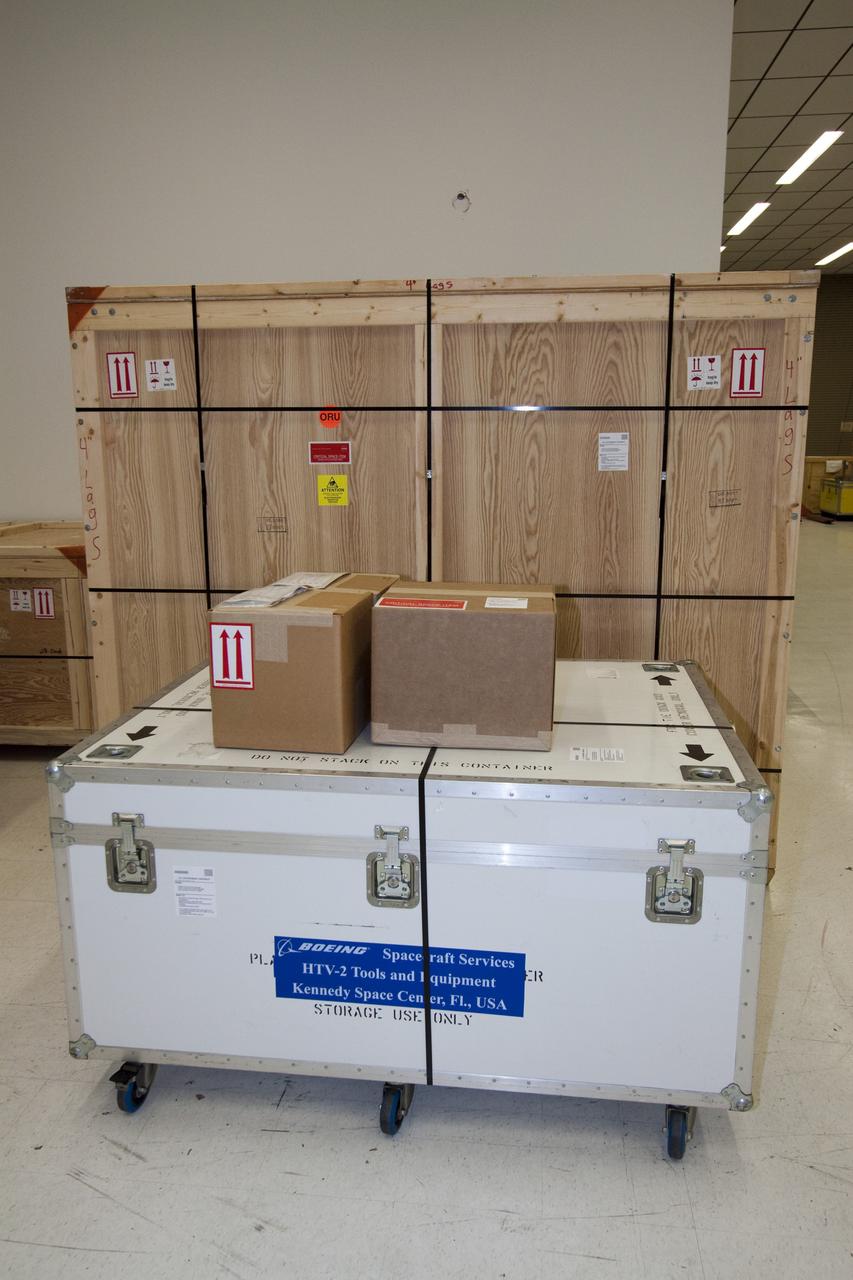
CAPE CANAVERAL, Fla. -- In the Space Station Processing Facility at NASA's Kennedy Space Center in Florida, shipping containers packed with tools and flight support equipment for orbital replacement units are ready for their trip to the Japanese Aerospace Exploration Agency's Tanegashima Space Center. There, the six units, including the flex hose rotary coupler, will be processed for launch to the International Space Station aboard HTV-2, scheduled for Jan. 20, 2011. HTV-2 is an uncrewed cargo transporter that will be launched by the H-IIB launch vehicle. It is designed to deliver up to 6 tons of supplies, including food, clothes and experiment devices to the space station. Photo credit: NASA/Jack Pfaller
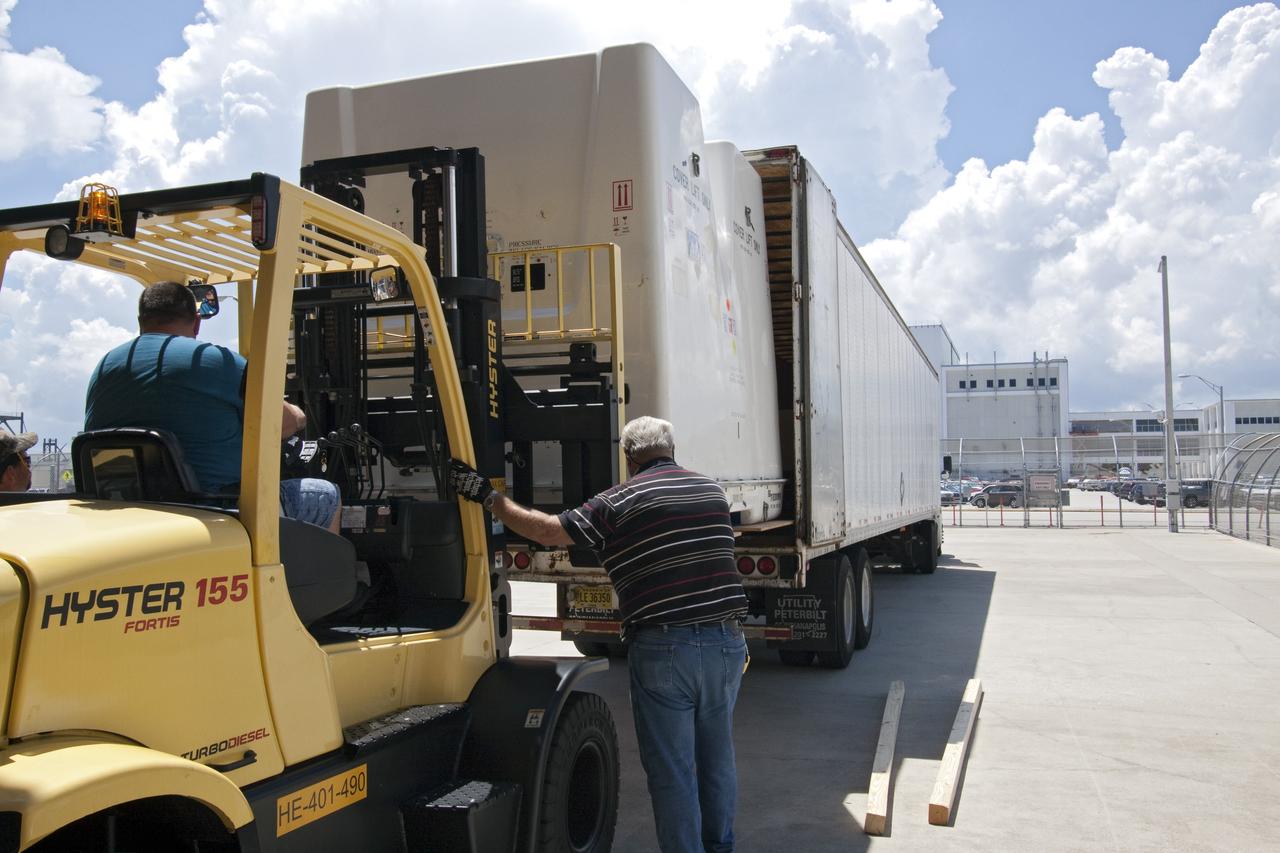
CAPE CANAVERAL, Fla. -- In the Space Station Processing Facility at NASA's Kennedy Space Center in Florida, a forklift moves shipping containers packed with tools and flight support equipment for orbital replacement units into a tractor-trailer for their trip to the Japanese Aerospace Exploration Agency's Tanegashima Space Center. There, the six units, including the flex hose rotary coupler, will be processed for launch to the International Space Station aboard HTV-2, scheduled for Jan. 20, 2011. HTV-2 is an uncrewed cargo transporter that will be launched by the H-IIB launch vehicle. It is designed to deliver up to 6 tons of supplies, including food, clothes and experiment devices to the space station. Photo credit: NASA/Jack Pfaller
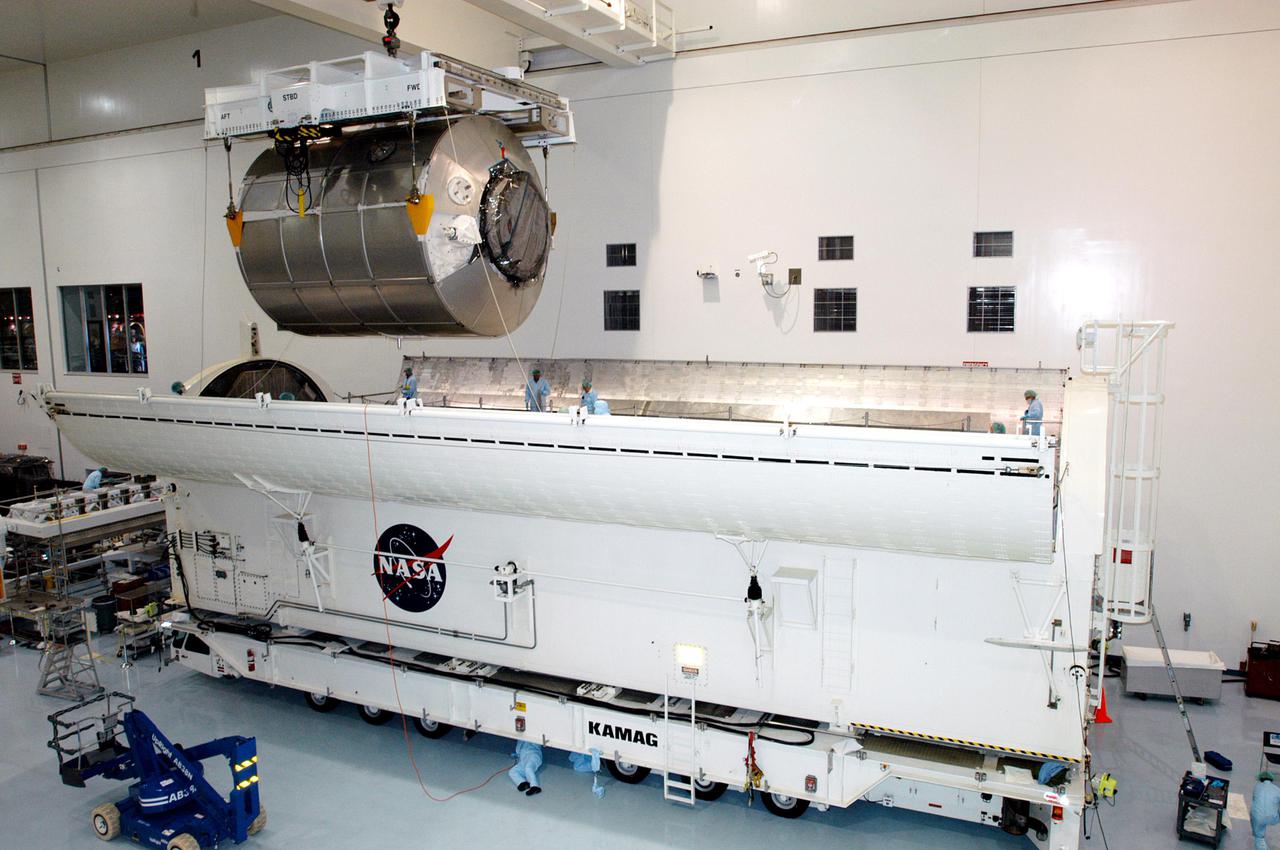
KENNEDY SPACE CENTER, FLA. - In the Space Station Processing Facility, the Multi-Purpose Logistics Module Raffaello is lowered into the Payload Transportation Canister for installation and transfer to Launch Pad 39-B. Raffaello will travel aboard Space Shuttle Discovery on Return to Flight Mission STS-114 to the International Space Station. Raffaello will carry 12 racks of cargo to the Station, including food, clothing, spare parts and research equipment. The Boeing Company, a KSC and NASA prime contractor for ISS element processing, prepared Raffaello for flight. The module was built by the Italian Space Agency for NASA under a cooperative space agreement.
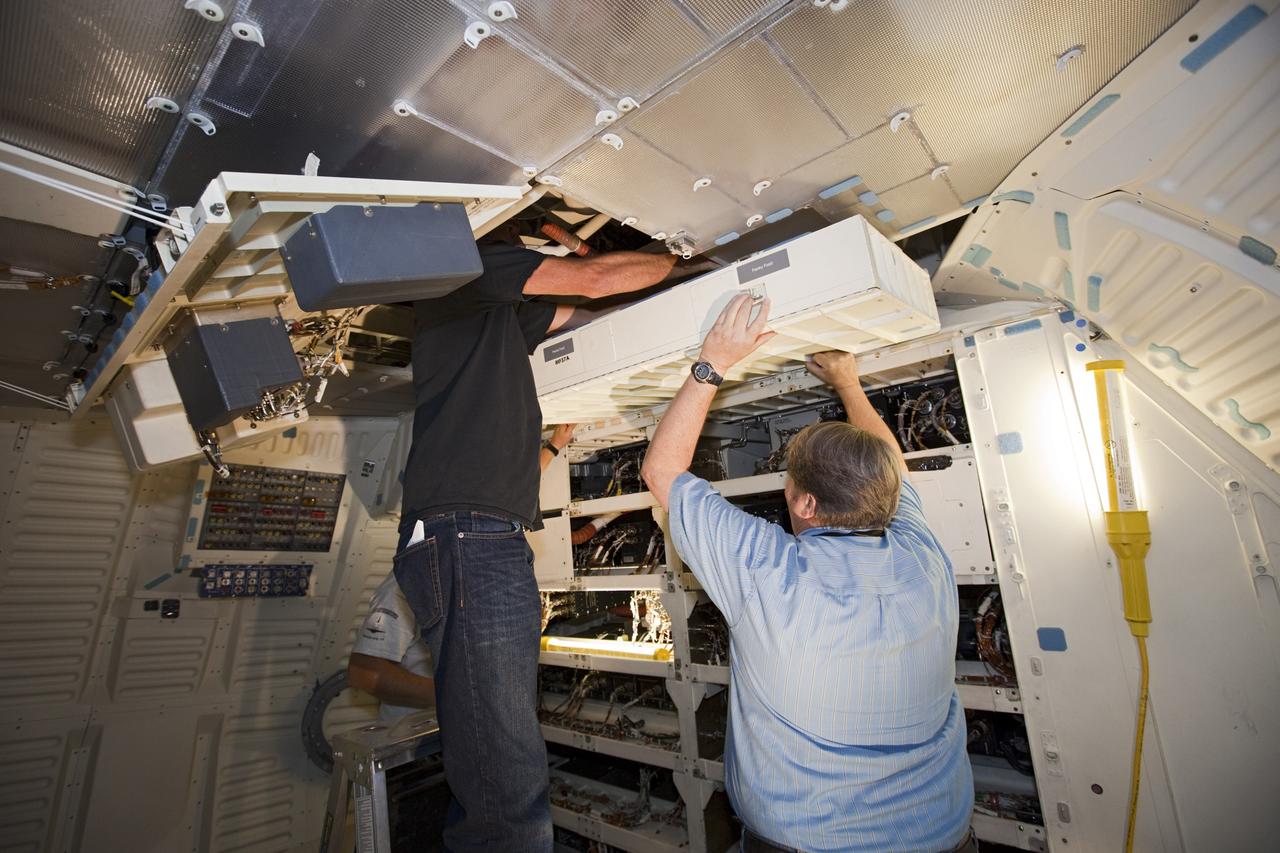
CAPE CANAVERAL, Fla. – In Orbiter Processing Facility-2 at NASA’s Kennedy Space Center in Florida, United Space Alliance technicians reinstall the food pantry locker in space shuttle Endeavour’s middeck during processing for the shuttle’s retirement. Endeavour is being prepared for public display at the California Science Center in Los Angeles. Its ferry flight to California is targeted for mid-September. Endeavour, designated OV-105, was the last space shuttle added to NASA’s orbiter fleet. Over the course of its 19-year career, Endeavour spent 299 days in space during 25 missions. For more information, visit http://www.nasa.gov/transition. Photo credit: NASA/Dimitri Gerondidakis
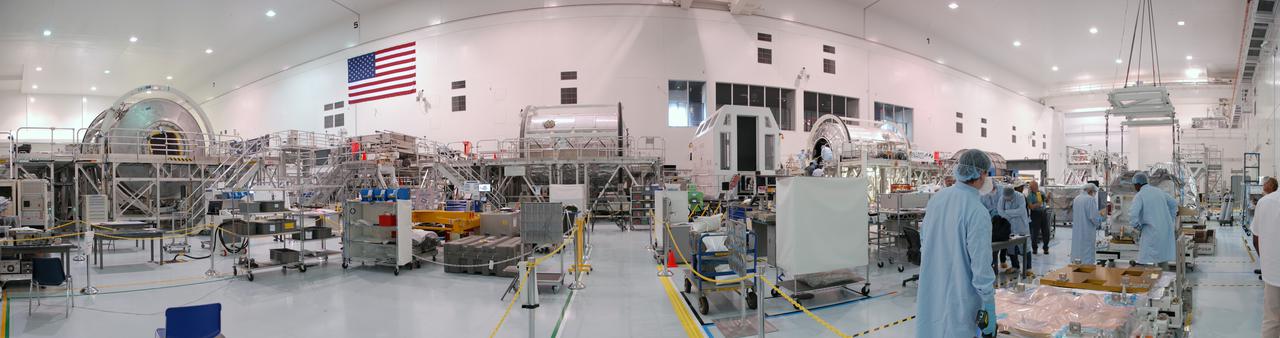
CAPE CANAVERAL, Fla. -- In the Space Station Processing Facility at NASA's Kennedy Space Center in Florida, technicians prepare to lift the cargo transportation container, or CTC, for installation into a shipping container. The container will be transported to the Japanese Aerospace Exploration Agency's Tanegashima Space Center to begin processing for launch to the International Space Station aboard HTV-2, scheduled for Jan. 20, 2011. HTV-2 is an uncrewed cargo transporter that will be launched by the H-IIB launch vehicle. It is designed to deliver up to 6 tons of supplies, including food, clothes and experiment devices to the space station. Photo credit: NASA_Frankie Martin
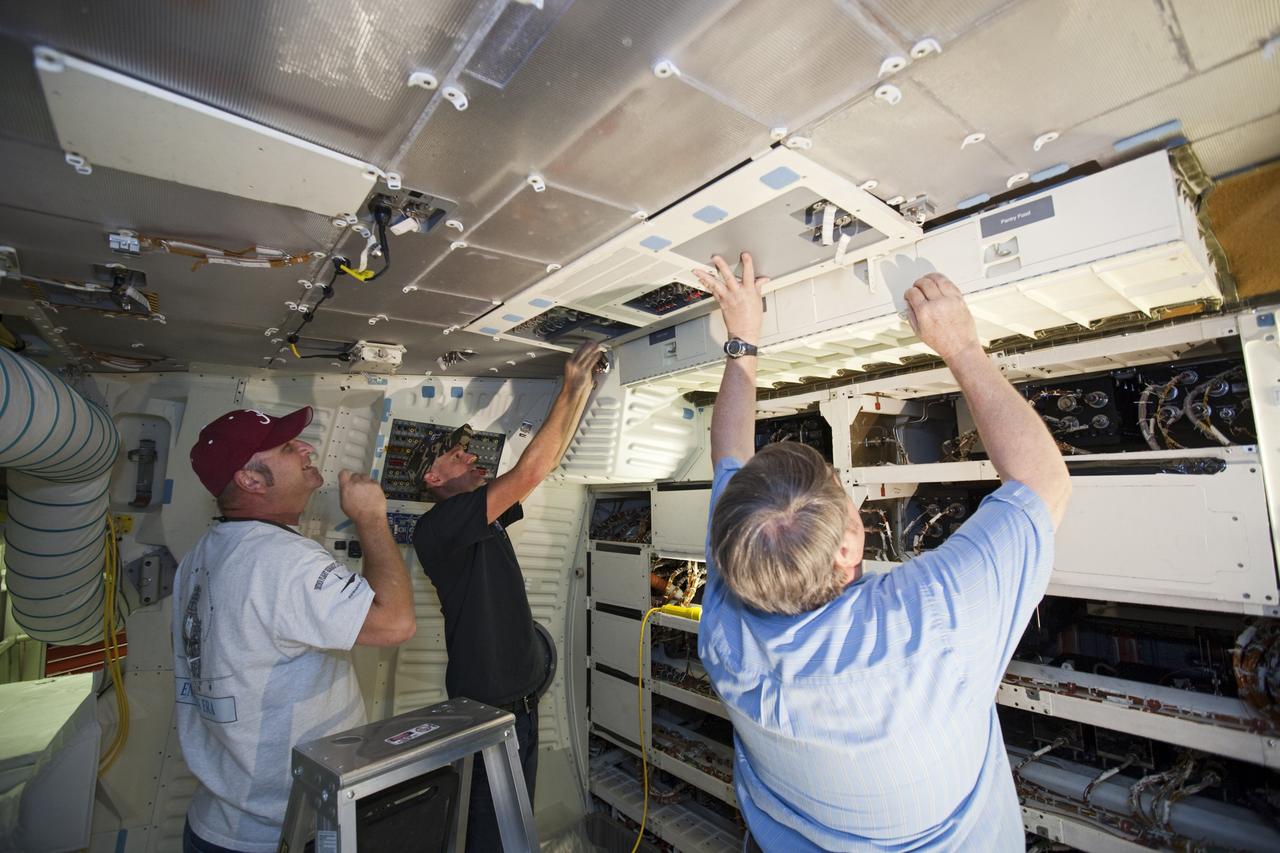
CAPE CANAVERAL, Fla. – In Orbiter Processing Facility-2 at NASA’s Kennedy Space Center in Florida, United Space Alliance technicians reinstall the food pantry locker in space shuttle Endeavour’s middeck during processing for the shuttle’s retirement. Endeavour is being prepared for public display at the California Science Center in Los Angeles. Its ferry flight to California is targeted for mid-September. Endeavour, designated OV-105, was the last space shuttle added to NASA’s orbiter fleet. Over the course of its 19-year career, Endeavour spent 299 days in space during 25 missions. For more information, visit http://www.nasa.gov/transition. Photo credit: NASA/Dimitri Gerondidakis
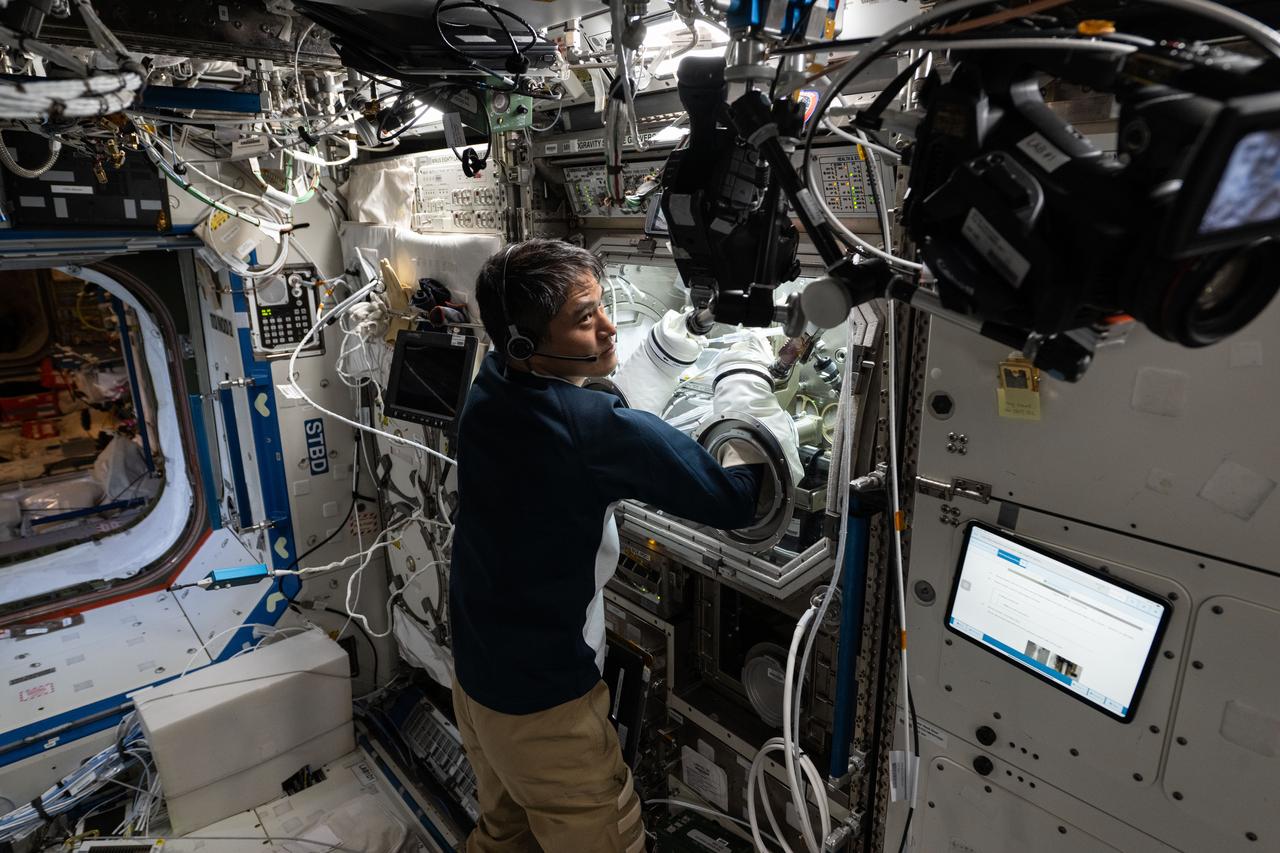
iss073e0177064 (6/11/2025) --- Scientists can study protein solutions without interference from container walls and gravity driven forces present on Earth using the space station’s Ring Sheared Drop module. The device pins a drop of liquid between two rings and holds it in place with surface tension. JAXA astronaut Takuya Onishi sets up for Ring Sheared Drop-IBP-2, a study of the behavior of protein fluids in microgravity. The investigation uses the module to test computer models to predict fluid behavior that could lead to improved processes for manufacturing pharmaceuticals, 3D printing, food processing, and microelectronics.
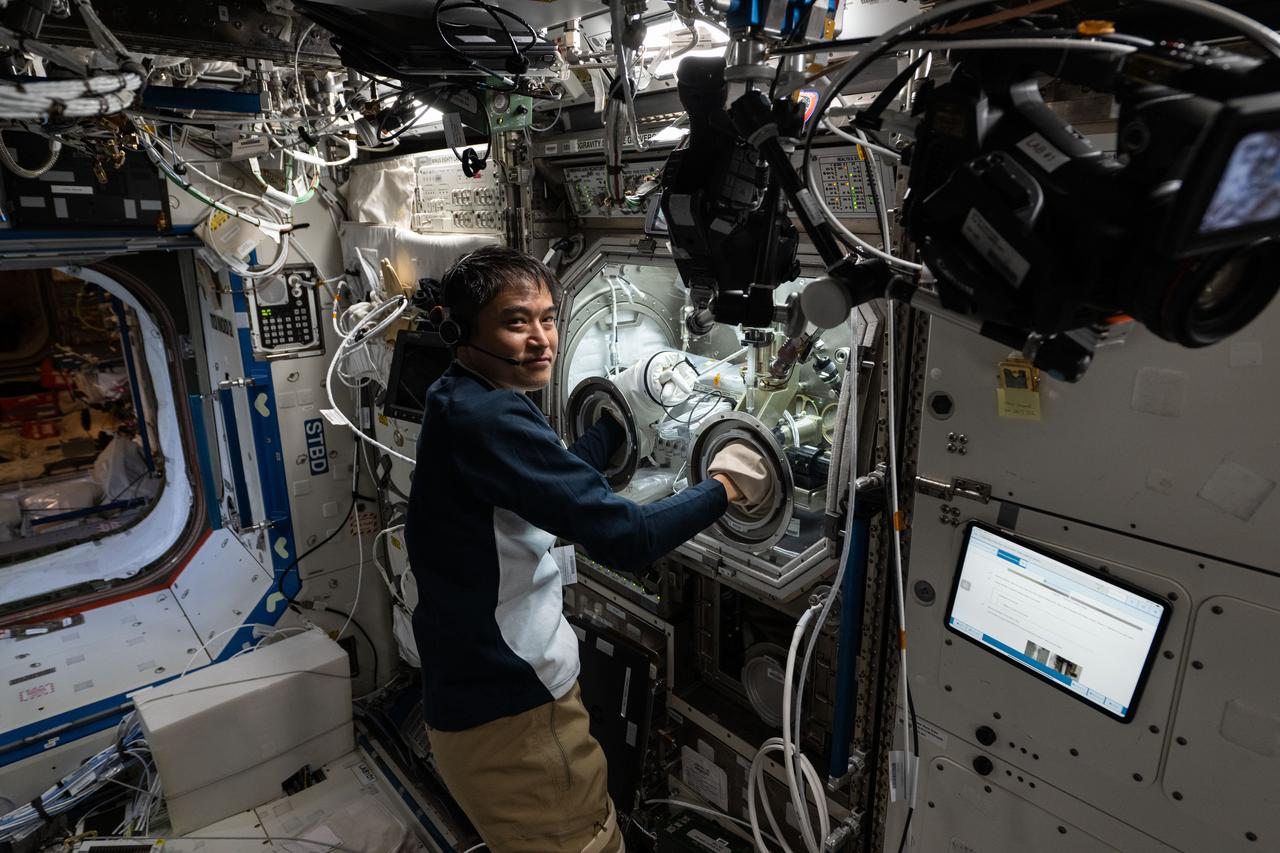
iss073e0177065 (6/11/2025) --- Scientists can study protein solutions without interference from container walls and gravity driven forces present on Earth using the space station’s Ring Sheared Drop module. The device pins a drop of liquid between two rings and holds it in place with surface tension. JAXA (Japan Aerospace Exploration Agency) astronaut and Expedition 73 Commander Takuya Onishi sets up for Ring Sheared Drop-IBP-2, a study of the behavior of protein fluids in microgravity. The investigation uses the module to test computer models to predict fluid behavior that could lead to improved processes for manufacturing pharmaceuticals, 3D printing, food processing, and microelectronics.
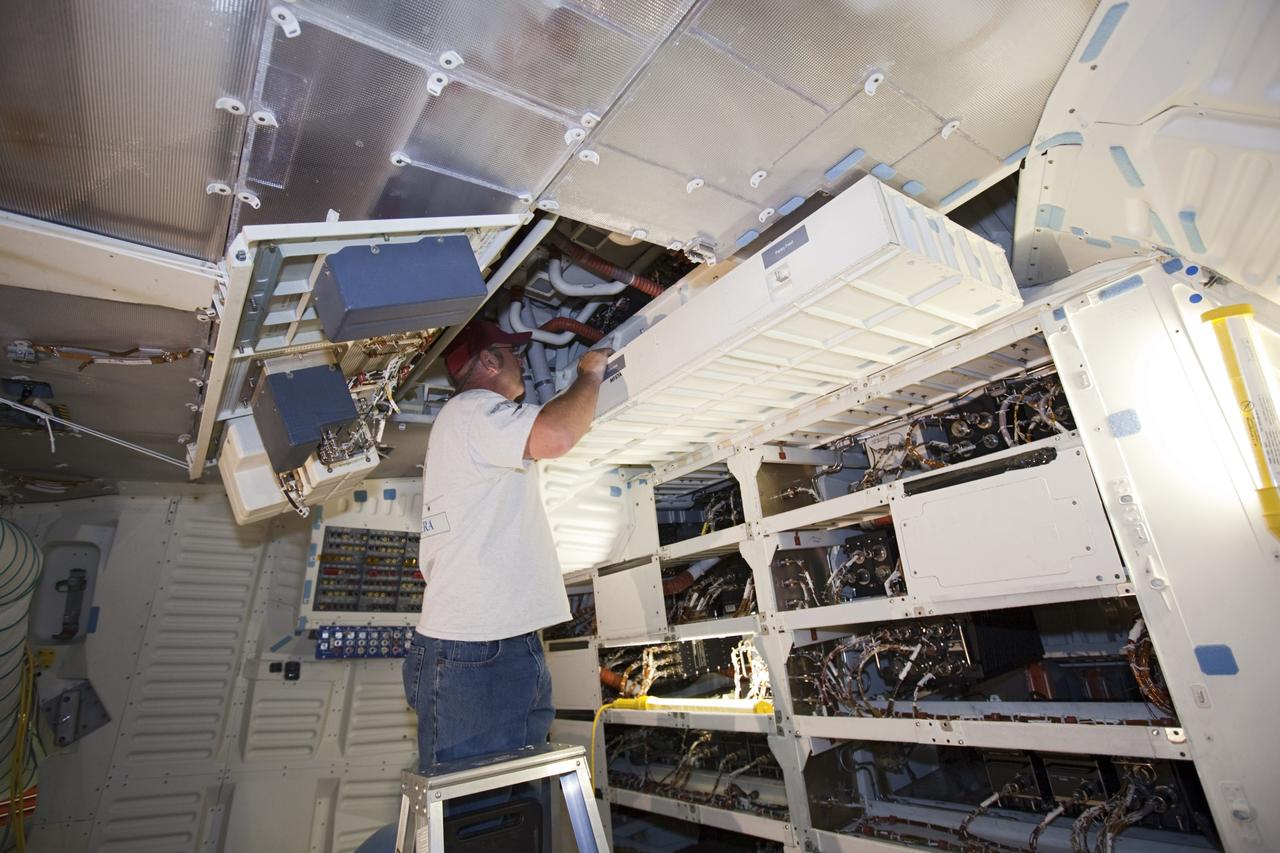
CAPE CANAVERAL, Fla. – In Orbiter Processing Facility-2 at NASA’s Kennedy Space Center in Florida, United Space Alliance technicians reinstall the food pantry locker in space shuttle Endeavour’s middeck during processing for the shuttle’s retirement. Endeavour is being prepared for public display at the California Science Center in Los Angeles. Its ferry flight to California is targeted for mid-September. Endeavour, designated OV-105, was the last space shuttle added to NASA’s orbiter fleet. Over the course of its 19-year career, Endeavour spent 299 days in space during 25 missions. For more information, visit http://www.nasa.gov/transition. Photo credit: NASA/Dimitri Gerondidakis
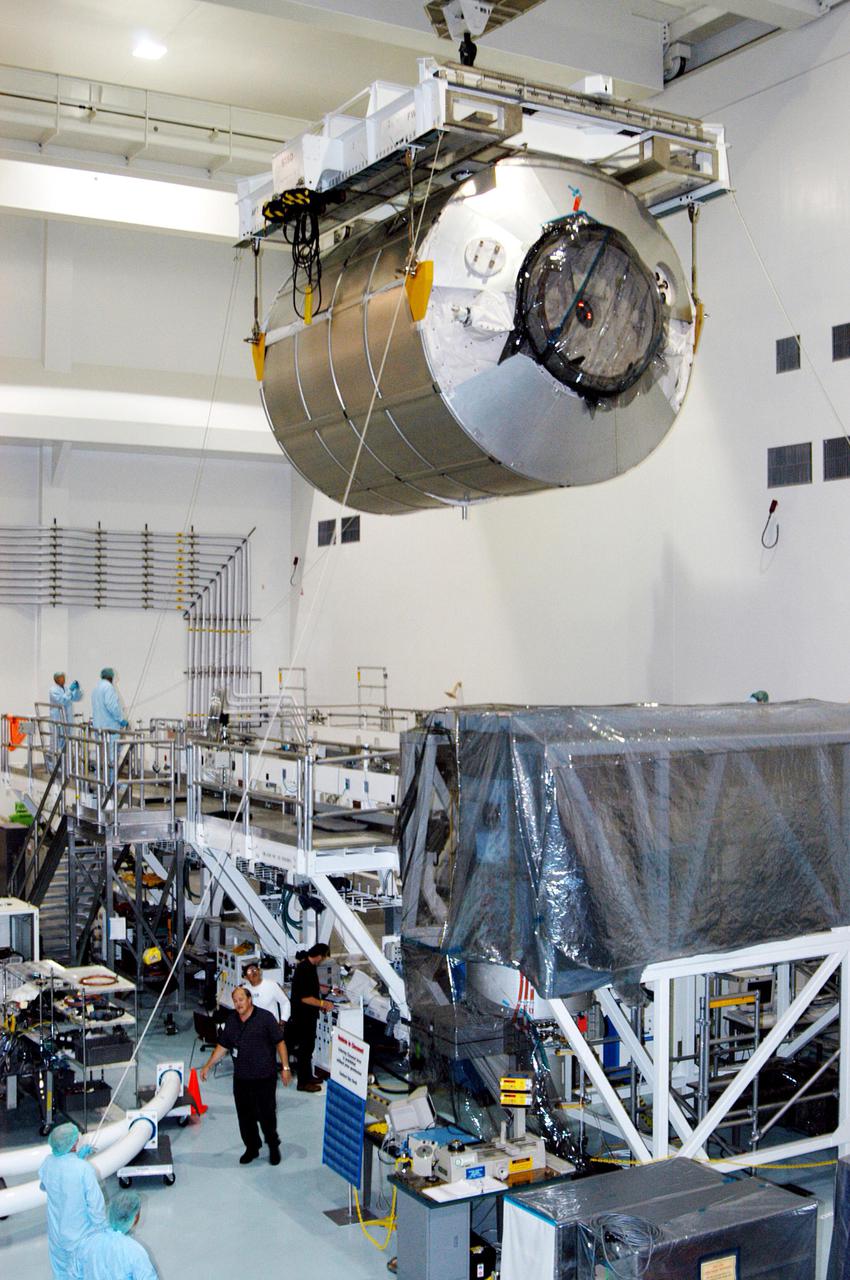
KENNEDY SPACE CENTER, FLA. - In the Space Station Processing Facility, the Multi-Purpose Logistics Module Raffaello moves across the floor to the Payload Transportation Canister for installation and transfer to Launch Pad 39-B. Raffaello will travel aboard Space Shuttle Discovery on Return to Flight Mission STS-114 to the International Space Station. Raffaello will carry 12 racks of cargo to the Station, including food, clothing, spare parts and research equipment. The Boeing Company, a KSC and NASA prime contractor for ISS element processing, prepared Raffaello for flight. The module was built by the Italian Space Agency for NASA under a cooperative space agreement.
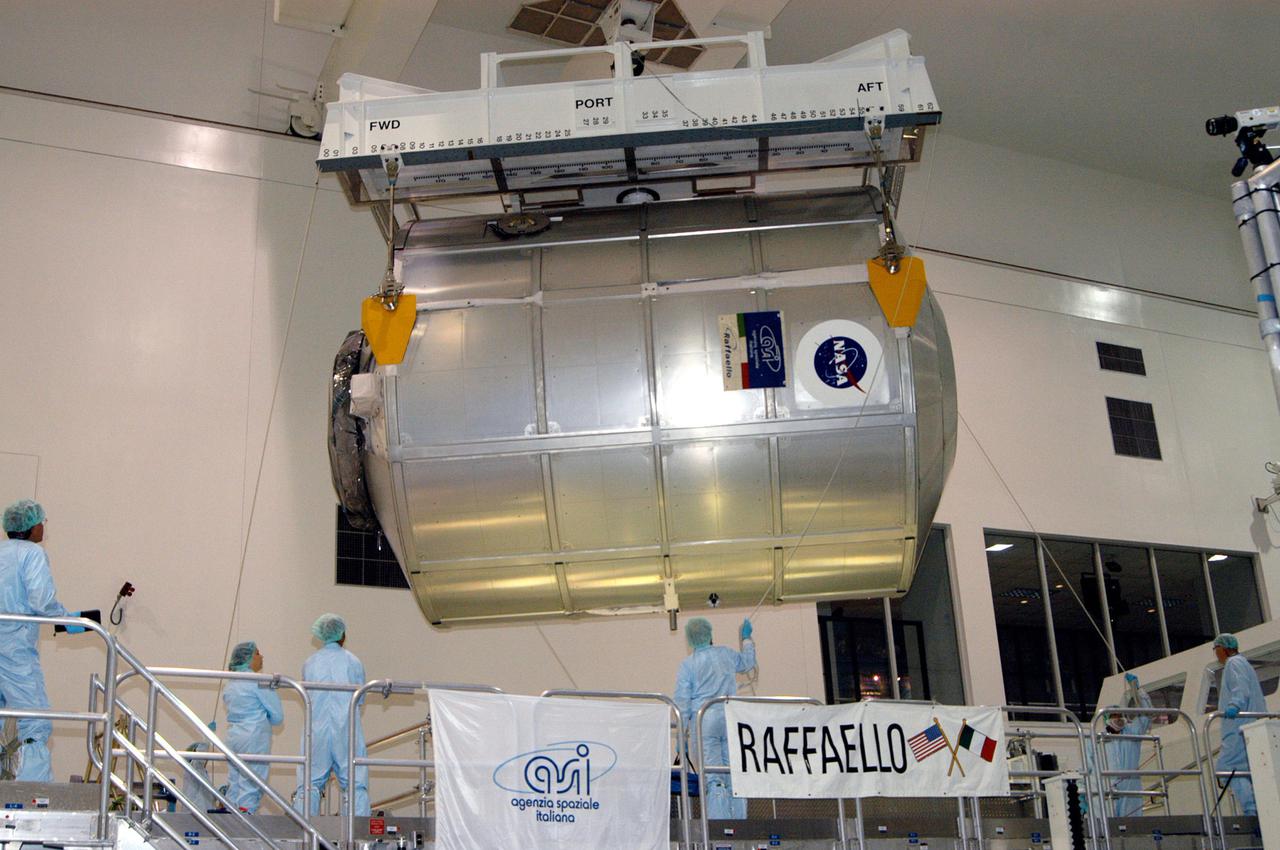
KENNEDY SPACE CENTER, FLA. - In the Space Station Processing Facility, workers stand by as the Multi-Purpose Logistics Module Raffaello is lifted off its stand. Raffaello is being moved to the Payload Transportation Canister for installation and transfer to Launch Pad 39-B. Raffaello will travel aboard Space Shuttle Discovery on Return to Flight Mission STS-114 to the International Space Station. Raffaello will carry 12 racks of cargo to the Station, including food, clothing, spare parts and research equipment. The Boeing Company, a KSC and NASA prime contractor for ISS element processing, prepared Raffaello for flight. The module was built by the Italian Space Agency for NASA under a cooperative space agreement.
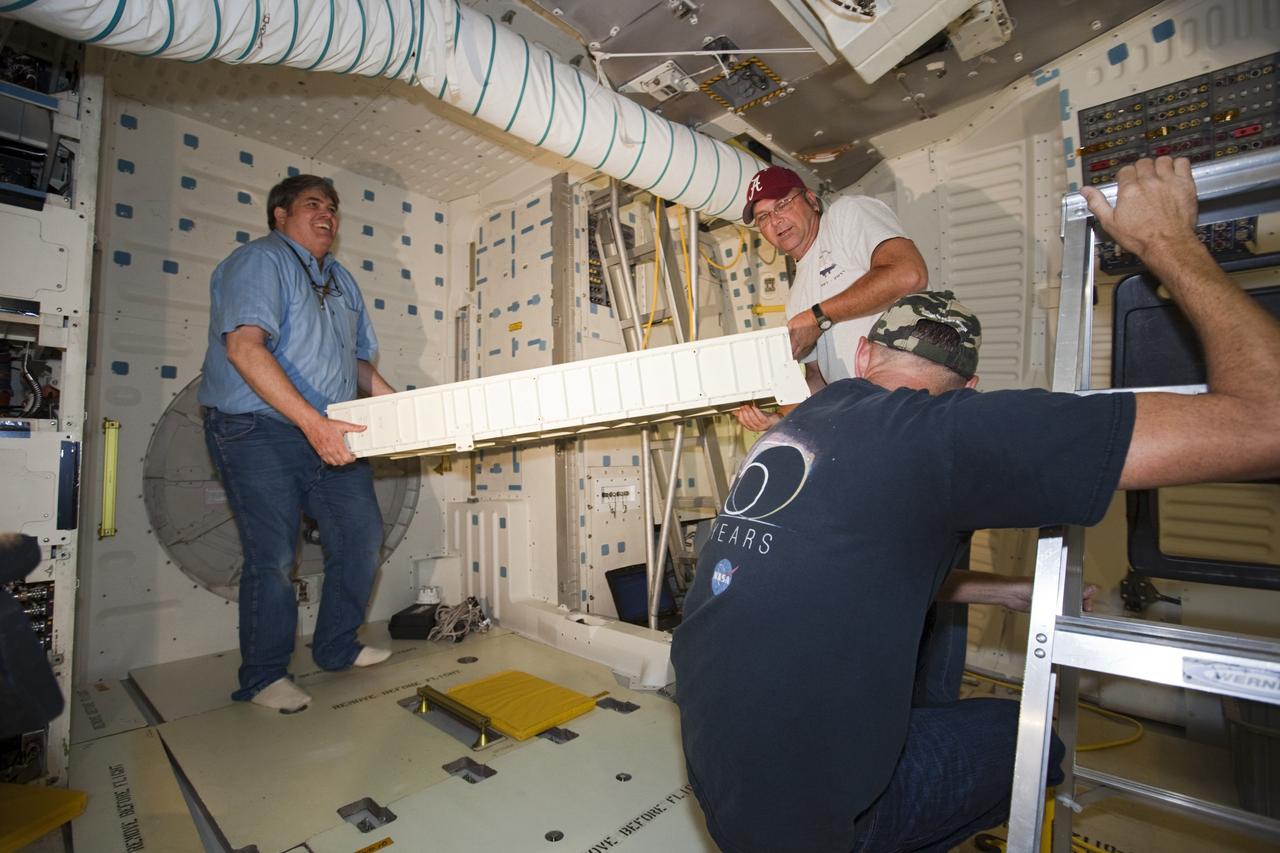
CAPE CANAVERAL, Fla. – In Orbiter Processing Facility-2 at NASA’s Kennedy Space Center in Florida, United Space Alliance technicians reinstall the food pantry locker in space shuttle Endeavour’s middeck during processing for the shuttle’s retirement. Endeavour is being prepared for public display at the California Science Center in Los Angeles. Its ferry flight to California is targeted for mid-September. Endeavour, designated OV-105, was the last space shuttle added to NASA’s orbiter fleet. Over the course of its 19-year career, Endeavour spent 299 days in space during 25 missions. For more information, visit http://www.nasa.gov/transition. Photo credit: NASA/Dimitri Gerondidakis
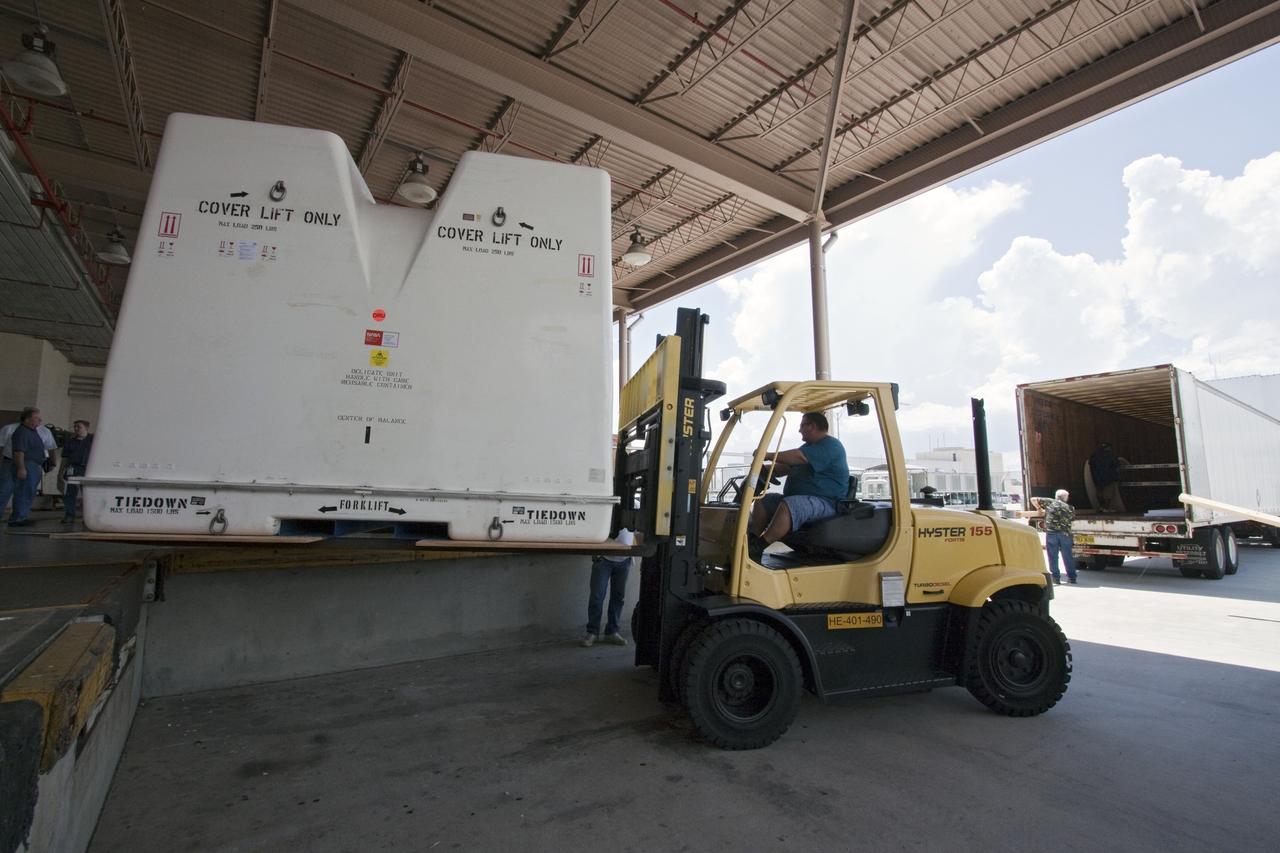
CAPE CANAVERAL, Fla. -- In the Space Station Processing Facility at NASA's Kennedy Space Center in Florida, a forklift moves shipping containers packed with tools and flight support equipment for orbital replacement units into a tractor-trailer for their trip to the Japanese Aerospace Exploration Agency's Tanegashima Space Center. There, the six units, including the flex hose rotary coupler, will be processed for launch to the International Space Station aboard HTV-2, scheduled for Jan. 20, 2011. HTV-2 is an uncrewed cargo transporter that will be launched by the H-IIB launch vehicle. It is designed to deliver up to 6 tons of supplies, including food, clothes and experiment devices to the space station. Photo credit: NASA/Jack Pfaller
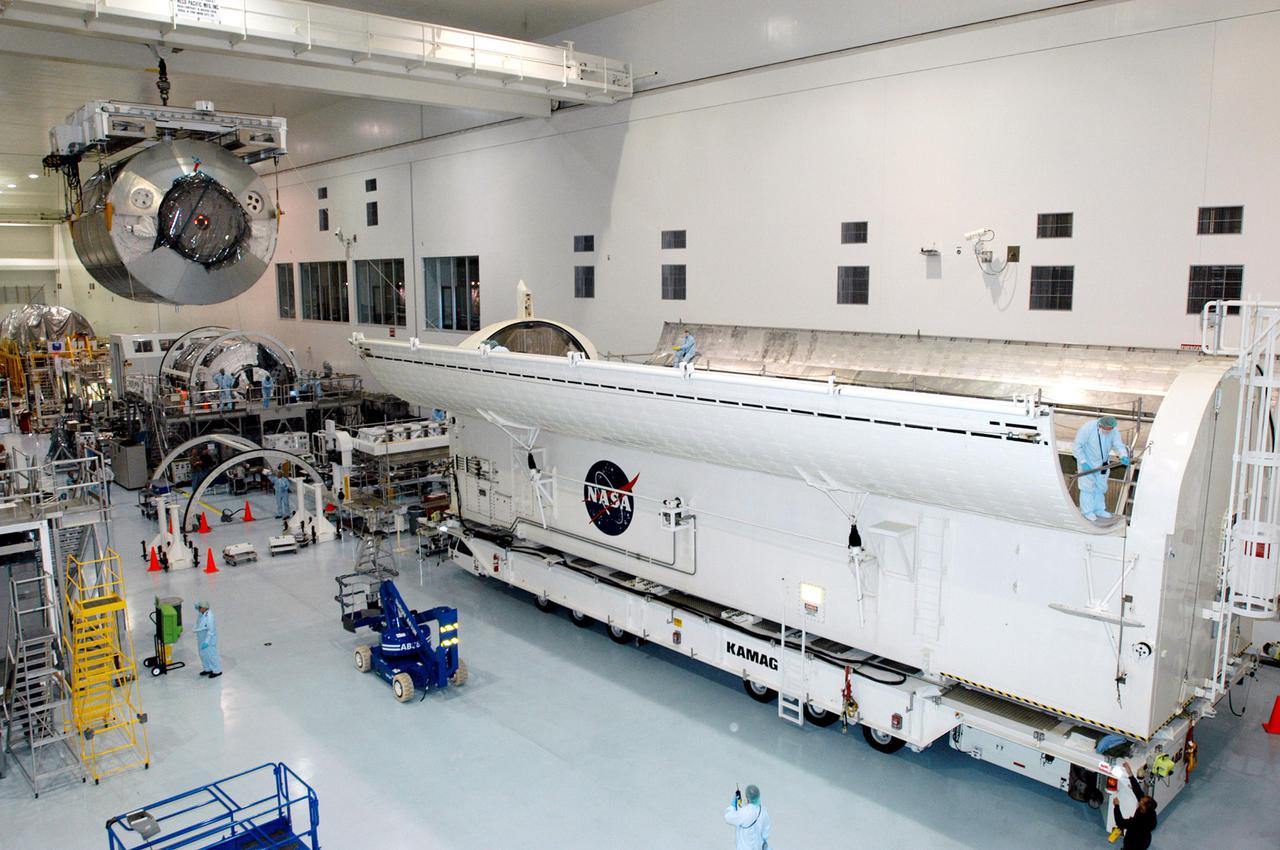
KENNEDY SPACE CENTER, FLA. - In the Space Station Processing Facility, the Multi-Purpose Logistics Module Raffaello moves near the Payload Transportation Canister for installation and transfer to Launch Pad 39-B. Raffaello will travel aboard Space Shuttle Discovery on Return to Flight Mission STS-114 to the International Space Station. Raffaello will carry 12 racks of cargo to the Station, including food, clothing, spare parts and research equipment. The Boeing Company, a KSC and NASA prime contractor for ISS element processing, prepared Raffaello for flight. The module was built by the Italian Space Agency for NASA under a cooperative space agreement.

CAPE CANAVERAL, Fla. – In Orbiter Processing Facility-2 at NASA’s Kennedy Space Center in Florida, United Space Alliance technicians reinstall the food pantry locker in space shuttle Endeavour’s middeck during processing for the shuttle’s retirement. Endeavour is being prepared for public display at the California Science Center in Los Angeles. Its ferry flight to California is targeted for mid-September. Endeavour, designated OV-105, was the last space shuttle added to NASA’s orbiter fleet. Over the course of its 19-year career, Endeavour spent 299 days in space during 25 missions. For more information, visit http://www.nasa.gov/transition. Photo credit: NASA/Dimitri Gerondidakis
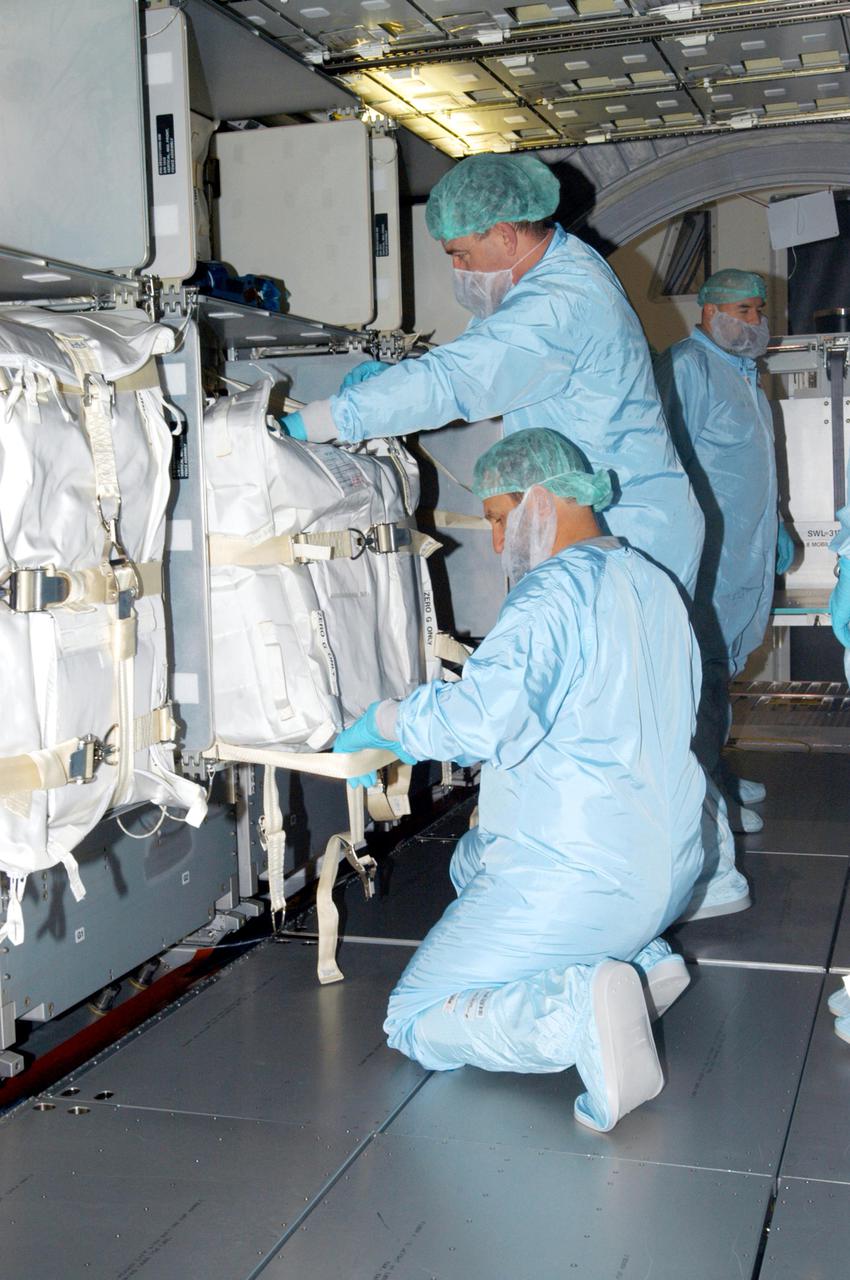
KENNEDY SPACE CENTER, FLA. - Technicians in the Space Station Processing Facility at NASA’s Kennedy Space Center place resupply stowage bags into containers known as resupply stowage racks inside the Italian-built Multi-Purpose Logistics Module Raffaello. The module will deliver a variety of supplies including food, clothing and spare parts to the International Space Station. Raffaello will launch on Space Shuttle Discovery’s Return to Flight mission, STS-114. The launch window is May 15 to June 3.
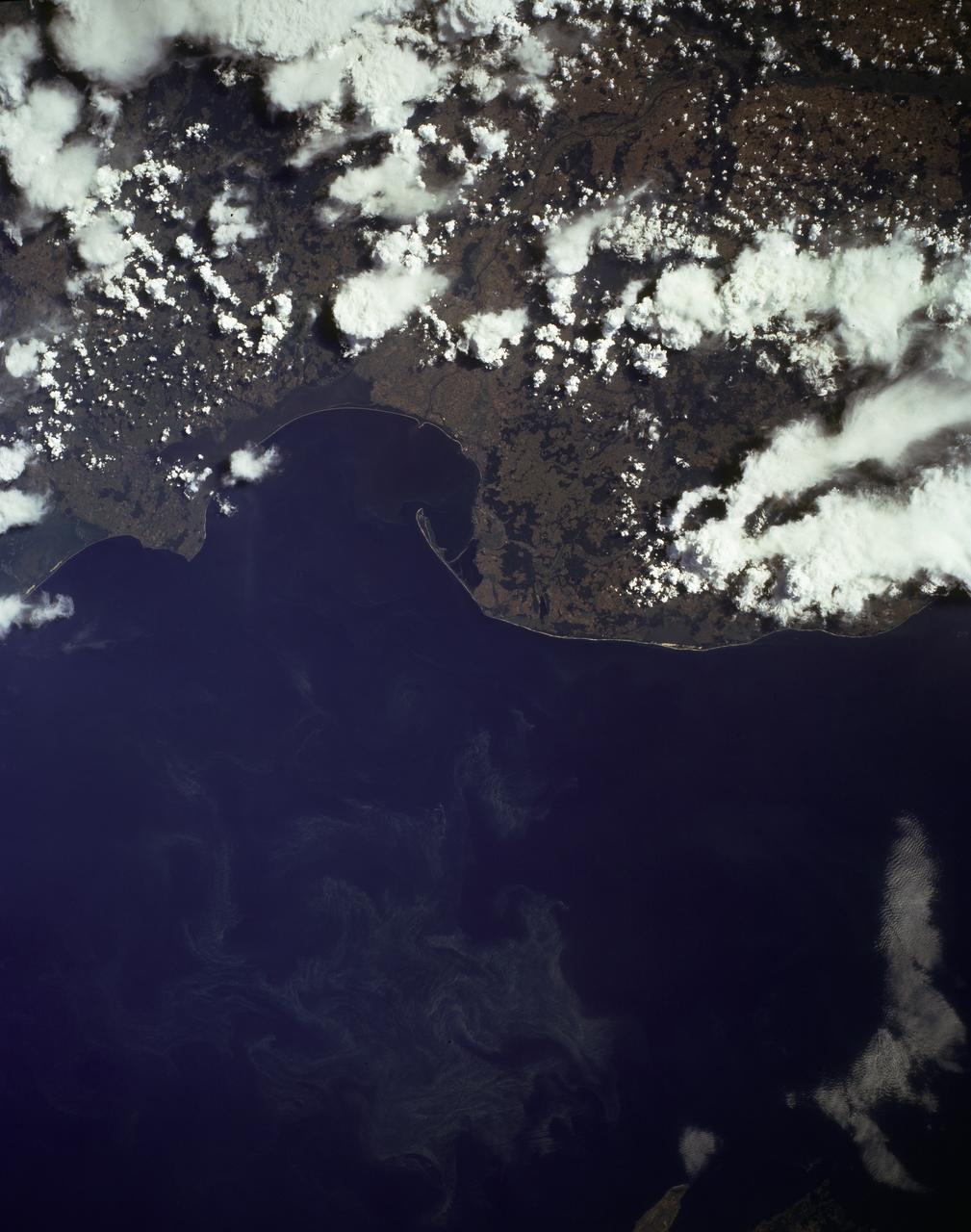
STS085-502-104 (7 - 19 August 1997) --- The abundant plankton, microscopic organisms, are taking the shape of the currents in the Baltic Sea offshore from Gdansk, Poland. Plankton blooms occur when there is enough nutrient in the water to support rapid growth and reproduction of the microorganisms. Gdansk is situated at the mouth of the Vistula River on the north coast of Poland. It is a major industrial center for shipyards, metallurgical and chemical plants, timber mills, food-processing facilities and more recently (since 1975) for coal exports and petroleum imports.
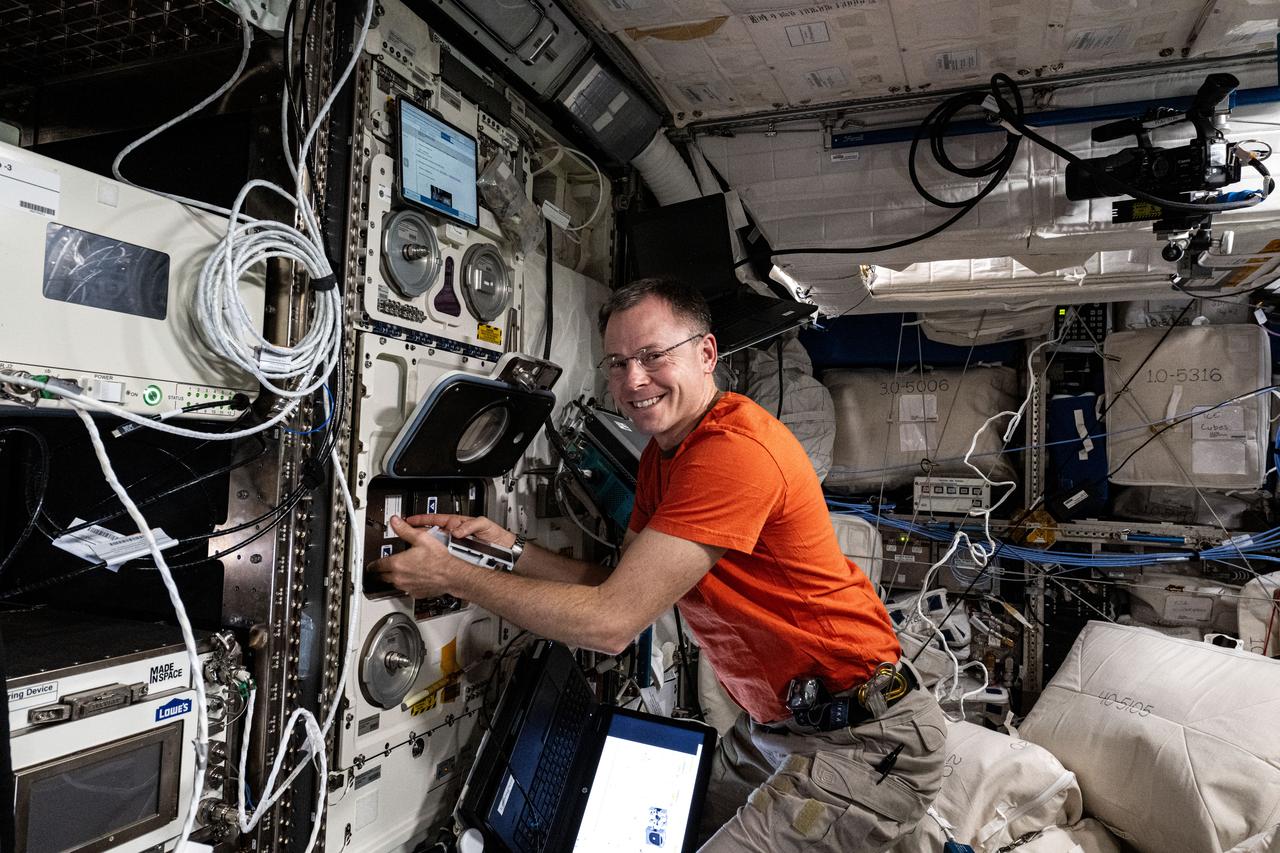
iss072e280746 (Nov. 26, 2024) --- NASA astronaut and Expedition 72 Flight Engineer Nick Hague processes radiation-resistant samples of Arthrospira C micro-algae and stows them in an incubator for analysis inside the International Space Station's Columbus laboratory module. The samples will be exposed to different light intensities to observe how they affect the micro-algae’s cell growth and oxygen production. Results may advance the development of spacecraft life support systems and fresh food production in space.
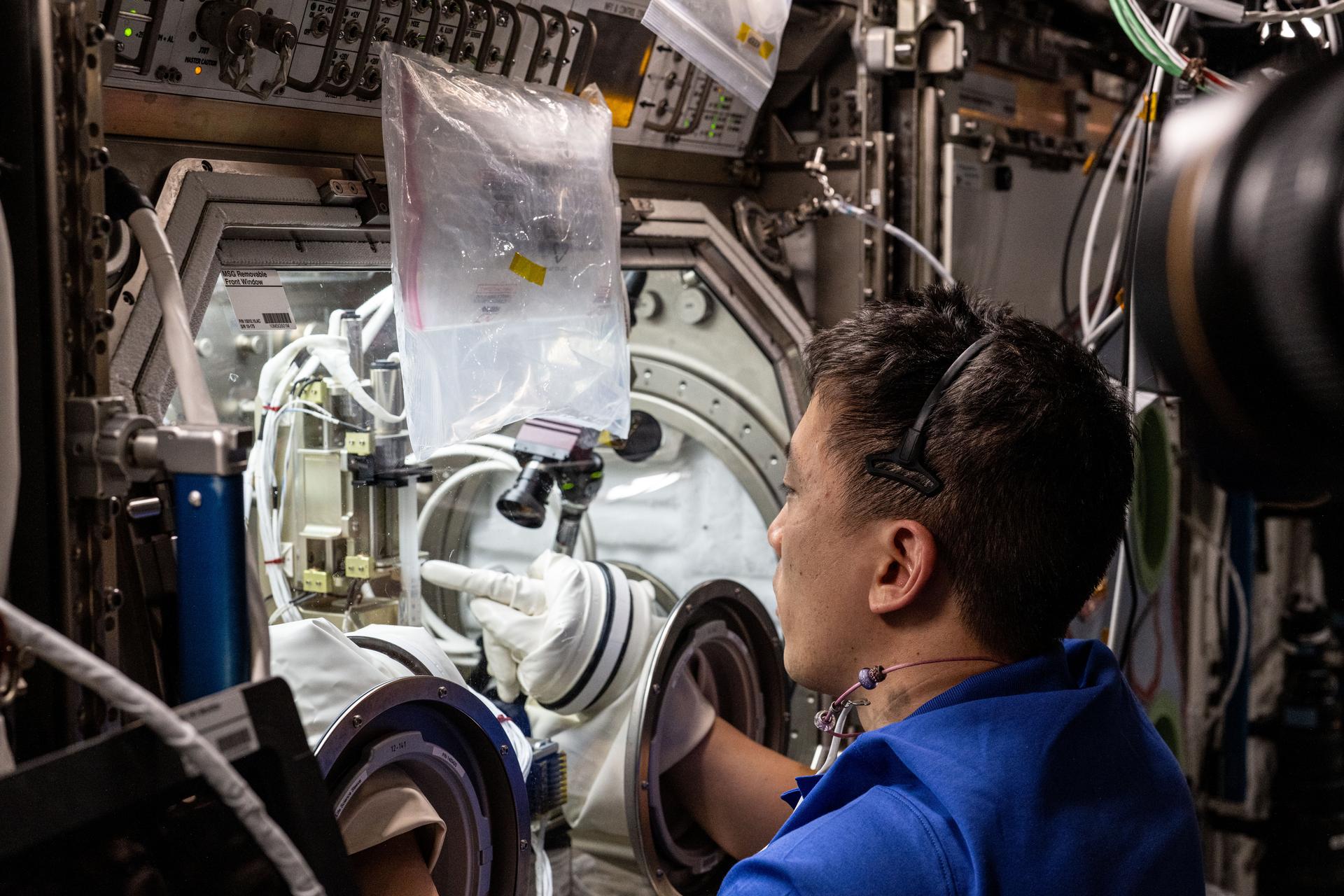
iss073e0177558 (June 12, 2025) -- NASA astronaut Jonny Kim works in the International Space Station’s Microgravity Science Glovebox on Ring Sheared Drop-IBP-2. This investigation studies the behavior of high-concentration protein fluids in microgravity using a special device that holds liquid protein solutions without containers, eliminating interference from interactions with container walls. Results could help advance manufacturing processes and 3D printing in space and for production of medicines, microelectronics, foods, and medical devices on Earth.
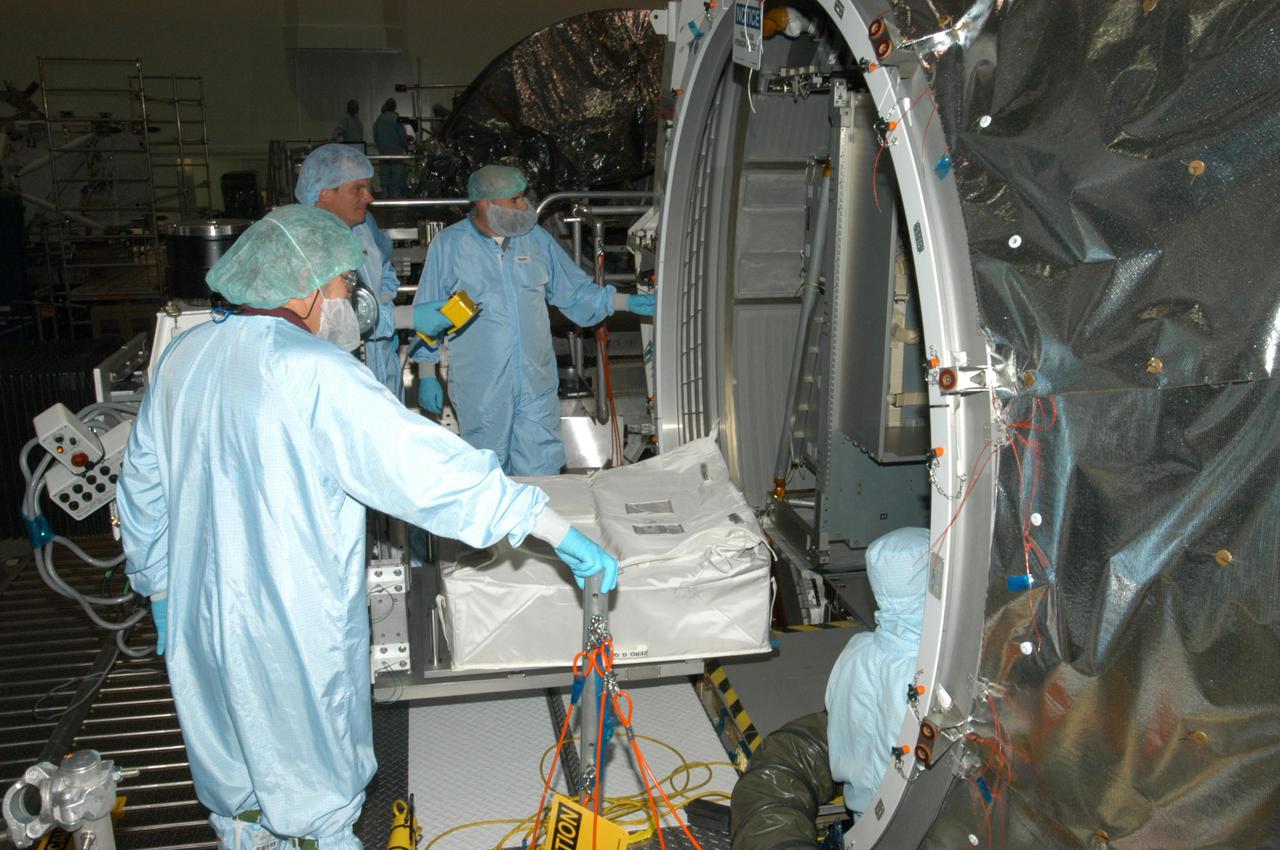
KENNEDY SPACE CENTER, FLA. - Technicians in the Space Station Processing Facility at NASA’s Kennedy Space Center begin moving resupply stowage bags into the Italian-built Multi-Purpose Logistics Module Raffaello. The bags will be placed in containers known as resupply stowage. The module will deliver a variety of supplies including food, clothing and spare parts to the International Space Station. Raffaello will launch on Space Shuttle Discovery’s Return to Flight mission, STS-114. The launch window is May 15 to June 3.
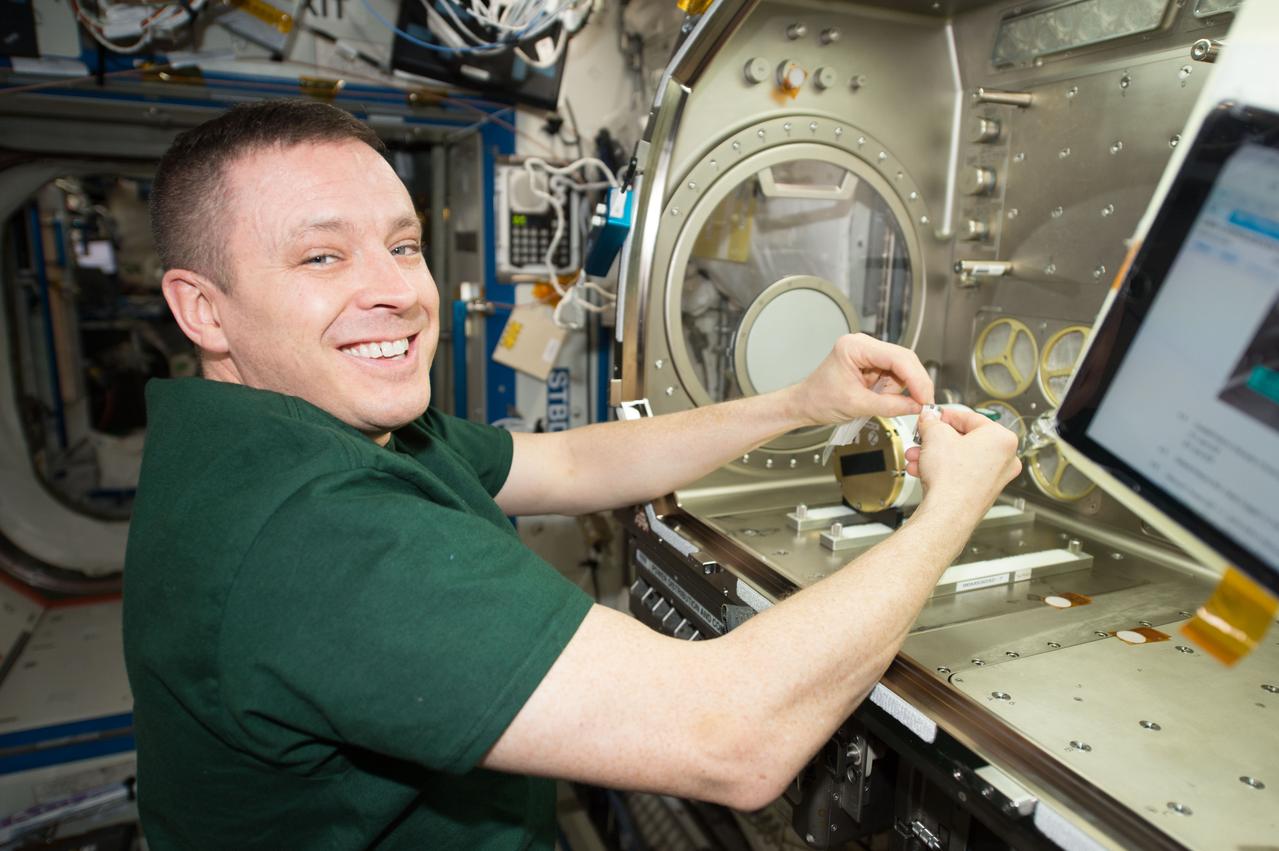
iss052e075804 (Aug. 30, 2017) --- NASA astronaut Jack Fischer working in the Microgravity Sciences Glovebox (MSG) work volume to set up the Eli Lily-Lyophilization experiment. Eli Lily-Lyophilization examines freeze-drying processes in the microgravity environment aboard the International Space Station (ISS) to improve the understanding of how food, drugs and other compounds are preserved in space.

Technicians conduct prelaunch operations on Northrop Grumman Cygnus XL spacecraft’s pressurized cargo module on Monday, Feb. 23, 2026, inside the Space Systems Processing Facility at NASA’s Kennedy Space Center in Florida. The Cygnus capsule will carry supplies, food, and scientific experiments for crew members at the International Space Station as part of the company’s 24th cargo resupply mission for NASA. The mission is targeting launch no earlier than Wednesday, April 8, from Space Launch Complex 40 at Cape Canaveral Space Force Station in Florida.
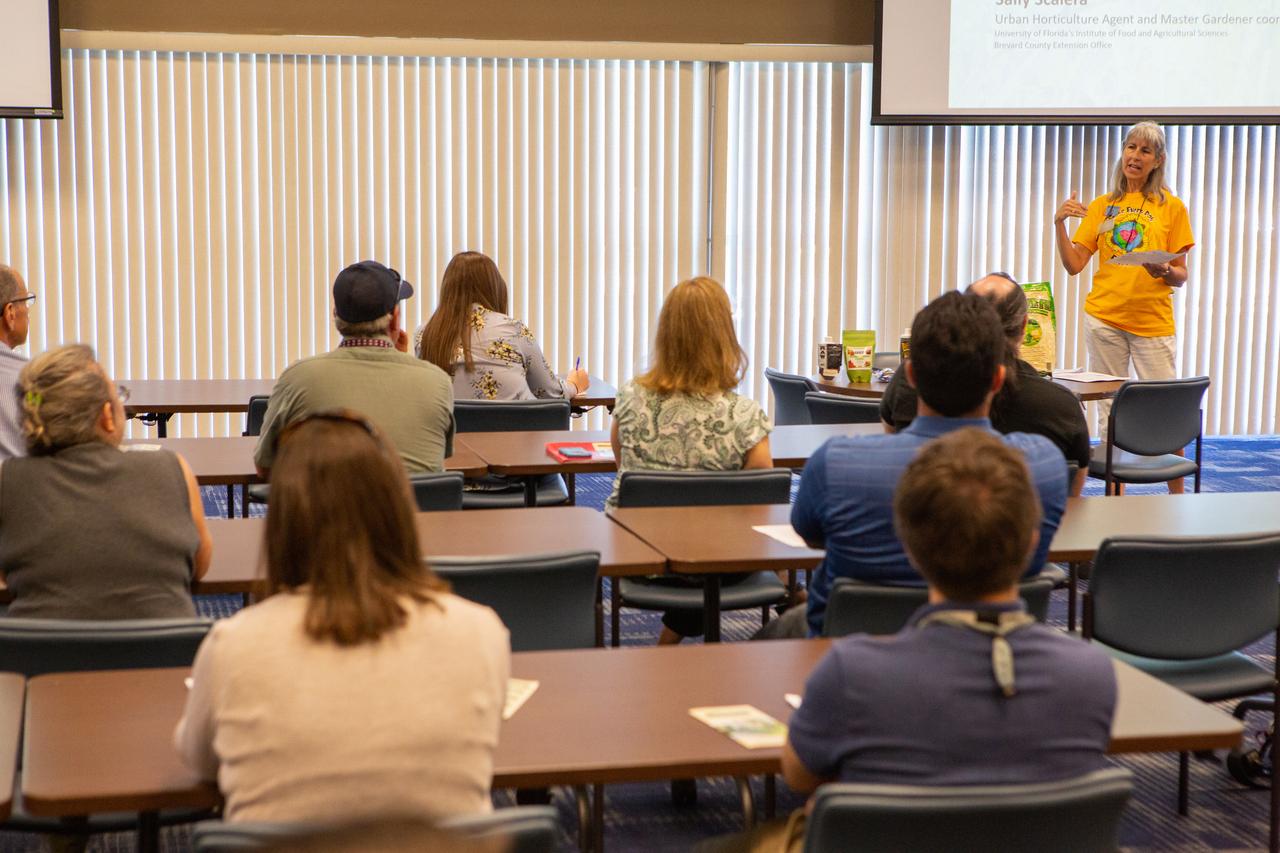
Sally Scalera, urban horticulture agent and master gardener coordinator from the University of Florida’s Institute of Food and Agricultural Sciences Brevard Extension Office, presents some sustainable tips and tricks for a healthy yard and garden to Kennedy Space Center employees on April 24, 2019. Held inside the Florida spaceport’s Space Station Processing Facility Conference Center, Scalera also provided information on Florida-friendly landscaping practices. The lunch and learn was available for employees to attend as part of Kennedy’s Earth Day events.
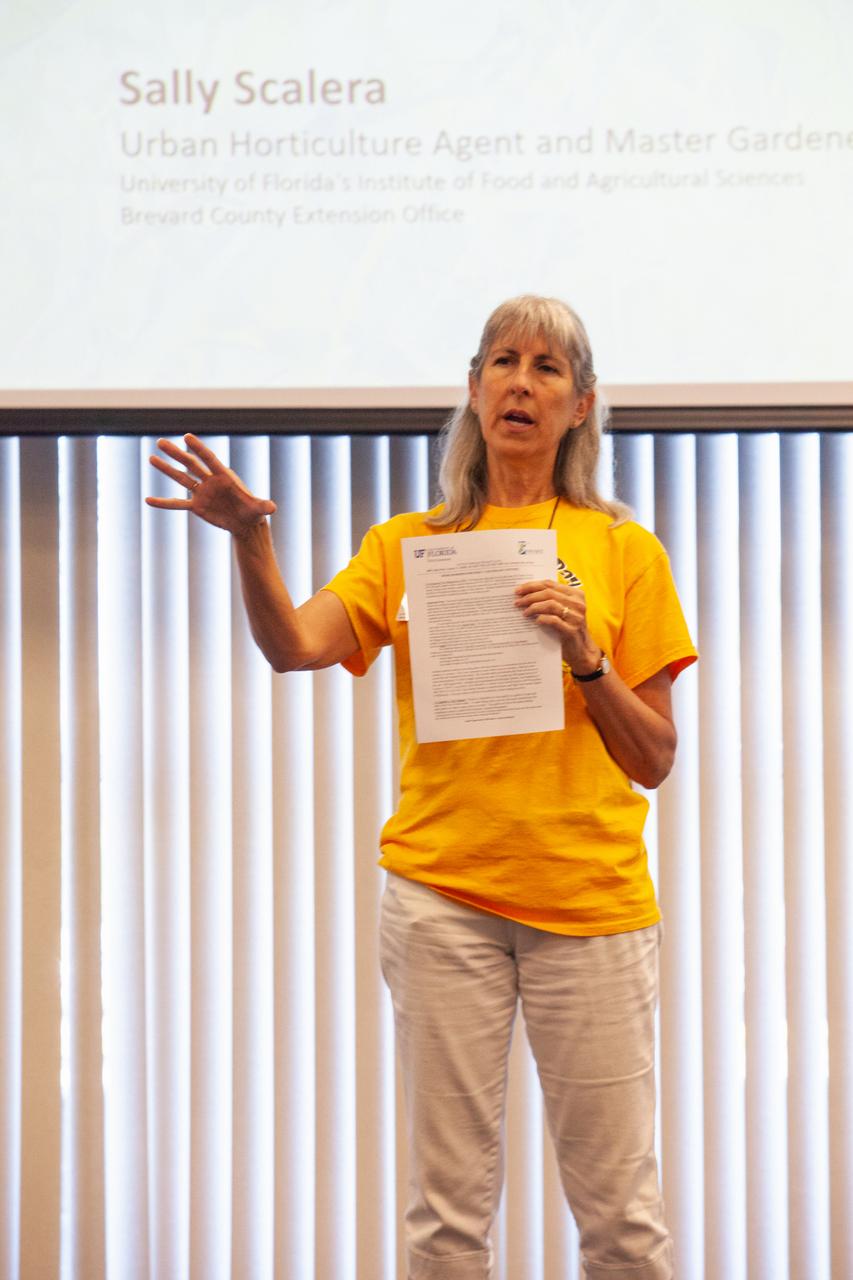
Sally Scalera, urban horticulture agent and master gardener coordinator from the University of Florida’s Institute of Food and Agricultural Sciences Brevard Extension Office, presents some sustainable tips and tricks for a healthy yard and garden to Kennedy Space Center employees on April 24, 2019. Held inside the Florida spaceport’s Space Station Processing Facility Conference Center, Scalera also provided information on Florida-friendly landscaping practices. The lunch and learn was available for employees to attend as part of Kennedy’s Earth Day events.
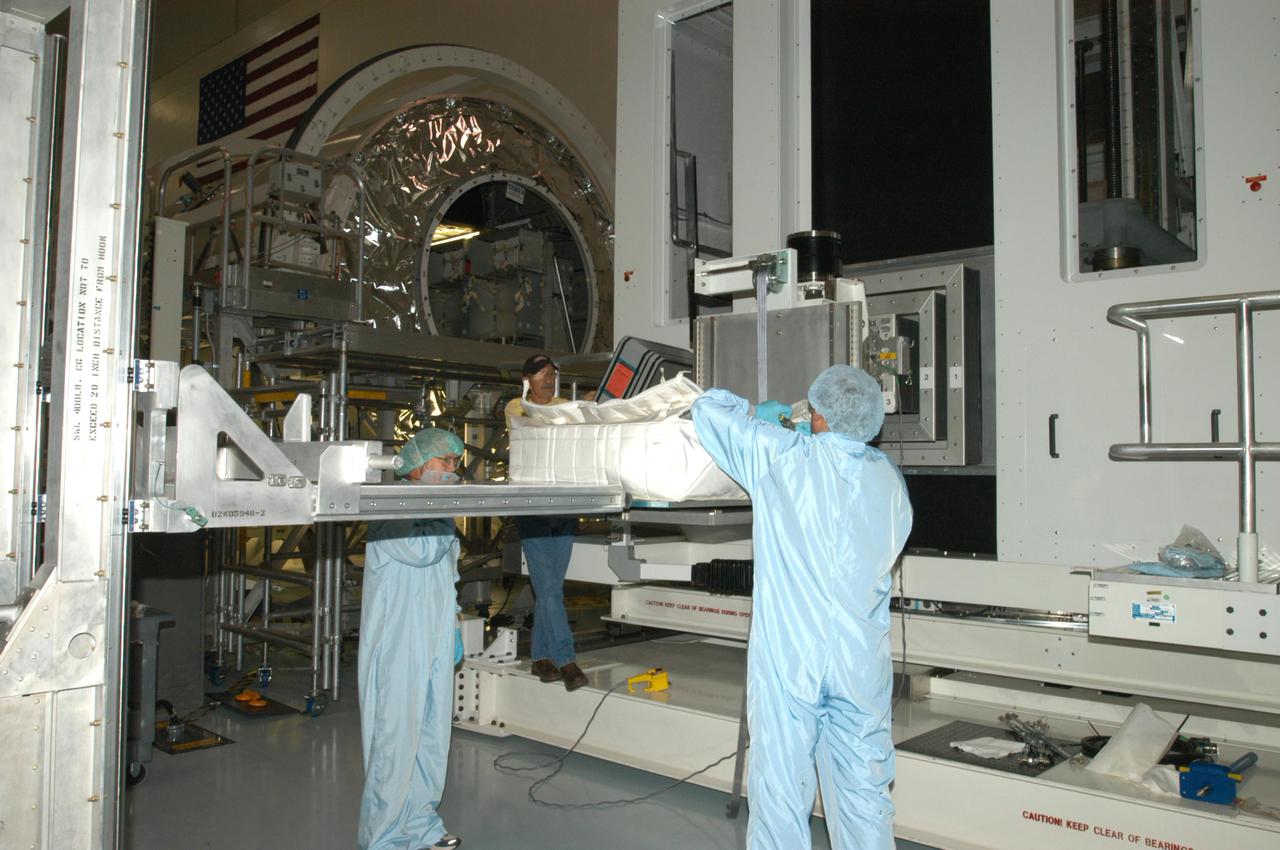
KENNEDY SPACE CENTER, FLA. - Technicians in the Space Station Processing Facility at NASA’s Kennedy Space Center finish loading resupply stowage bags to be placed in containers known as resupply stowage racks inside the Italian-built Multi-Purpose Logistics Module Raffaello. The module will deliver a variety of supplies including food, clothing and spare parts to the International Space Station. Raffaello will launch on Space Shuttle Discovery’s Return to Flight mission, STS-114. The launch window is May 15 to June 3.

Technicians conduct prelaunch operations on Northrop Grumman Cygnus XL spacecraft’s pressurized cargo module on Monday, Feb. 23, 2026, inside the Space Systems Processing Facility at NASA’s Kennedy Space Center in Florida. The Cygnus capsule will carry supplies, food, and scientific experiments for crew members at the International Space Station as part of the company’s 24th cargo resupply mission for NASA. The mission is targeting launch no earlier than Wednesday, April 8, from Space Launch Complex 40 at Cape Canaveral Space Force Station in Florida.
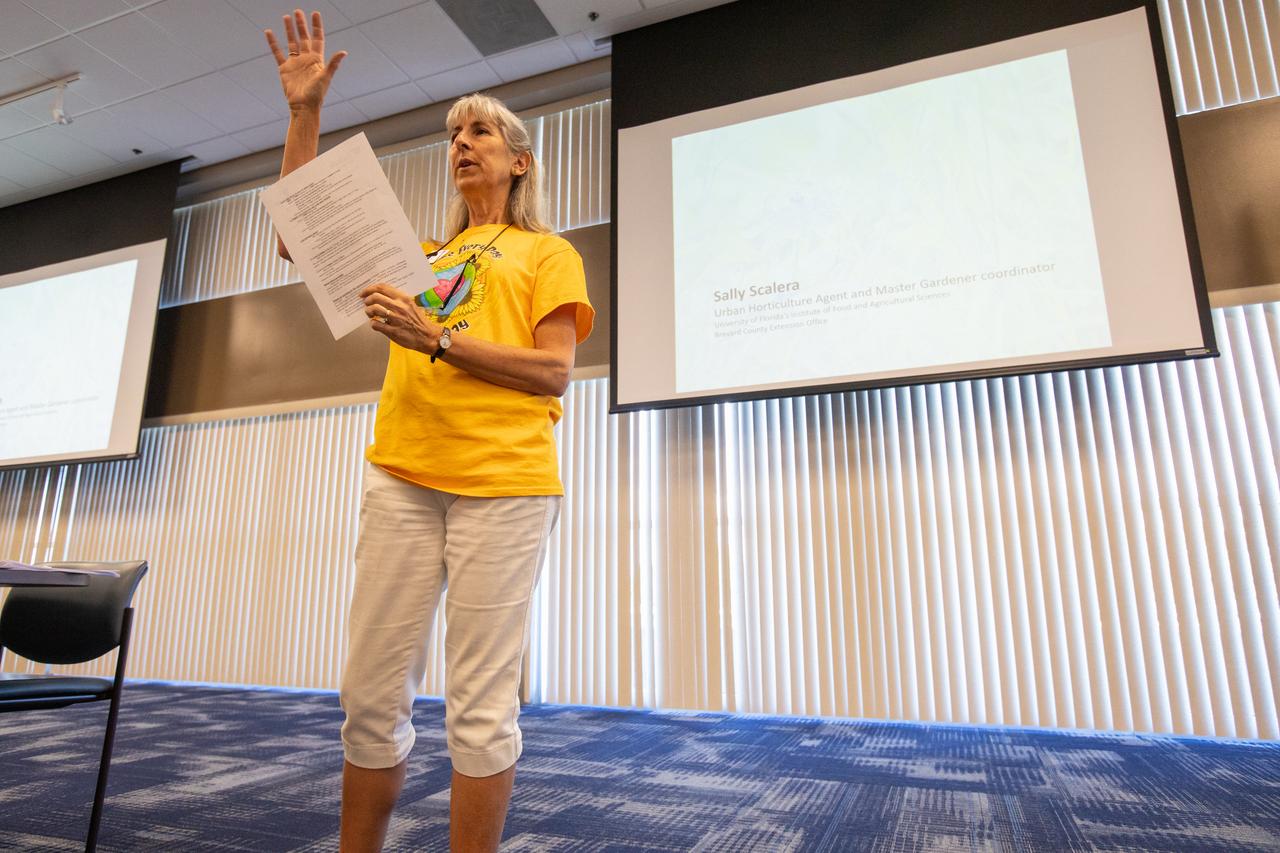
Sally Scalera, urban horticulture agent and master gardener coordinator from the University of Florida’s Institute of Food and Agricultural Sciences Brevard Extension Office, presents some sustainable tips and tricks for a healthy yard and garden to Kennedy Space Center employees on April 24, 2019. Held inside the Florida spaceport’s Space Station Processing Facility Conference Center, Scalera also provided information on Florida-friendly landscaping practices. The lunch and learn was available for employees to attend as part of Kennedy’s Earth Day events.
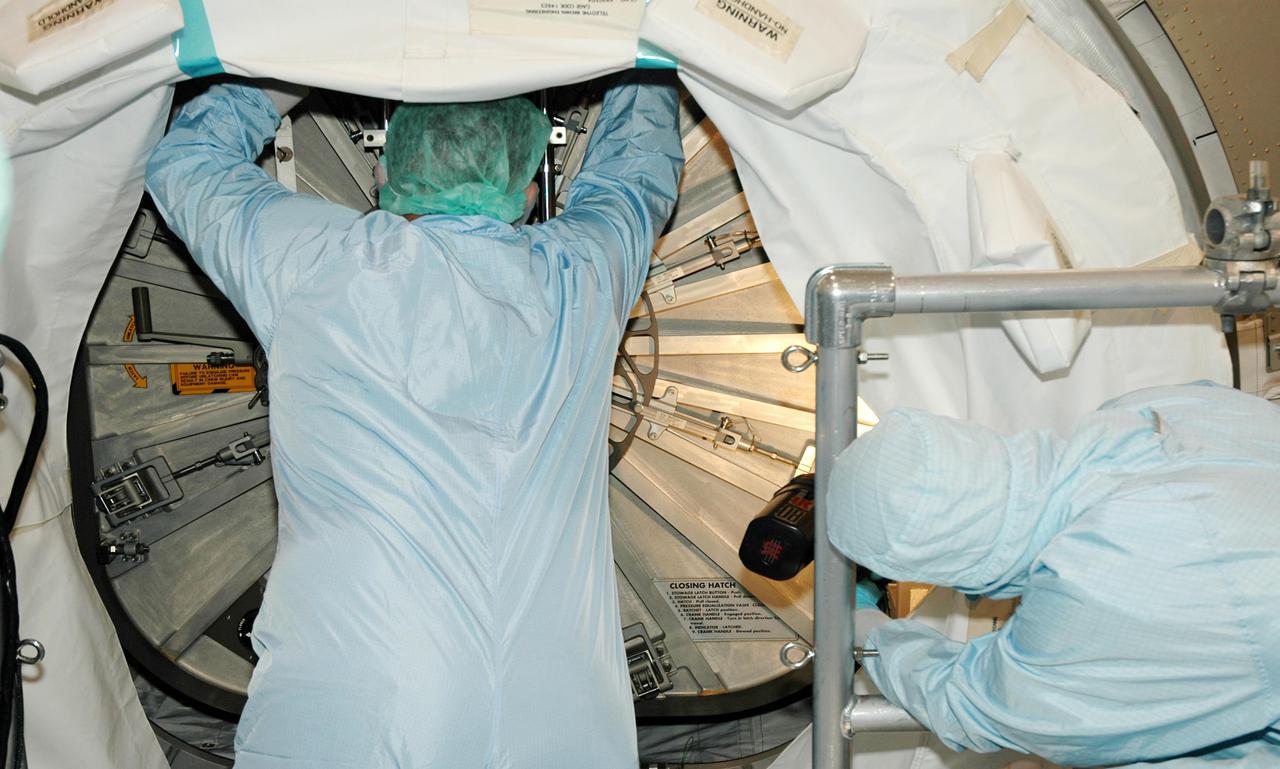
KENNEDY SPACE CENTER, FLA. -- Workers in the Space Station Processing Facility close the hatch for flight on Italian-built Multi-Purpose Logistics Module Raffaello, a significant milestone on the road to Return to Flight. The module will travel to the International Space Station aboard Space Shuttle Discovery’s Return to Flight mission STS-114. Raffaello carries 12 racks of cargo, including food, clothing, spare parts and research equipment, to the Station. Shuttle Discovery is targeted for launch in a window extending May 15 through June 3.
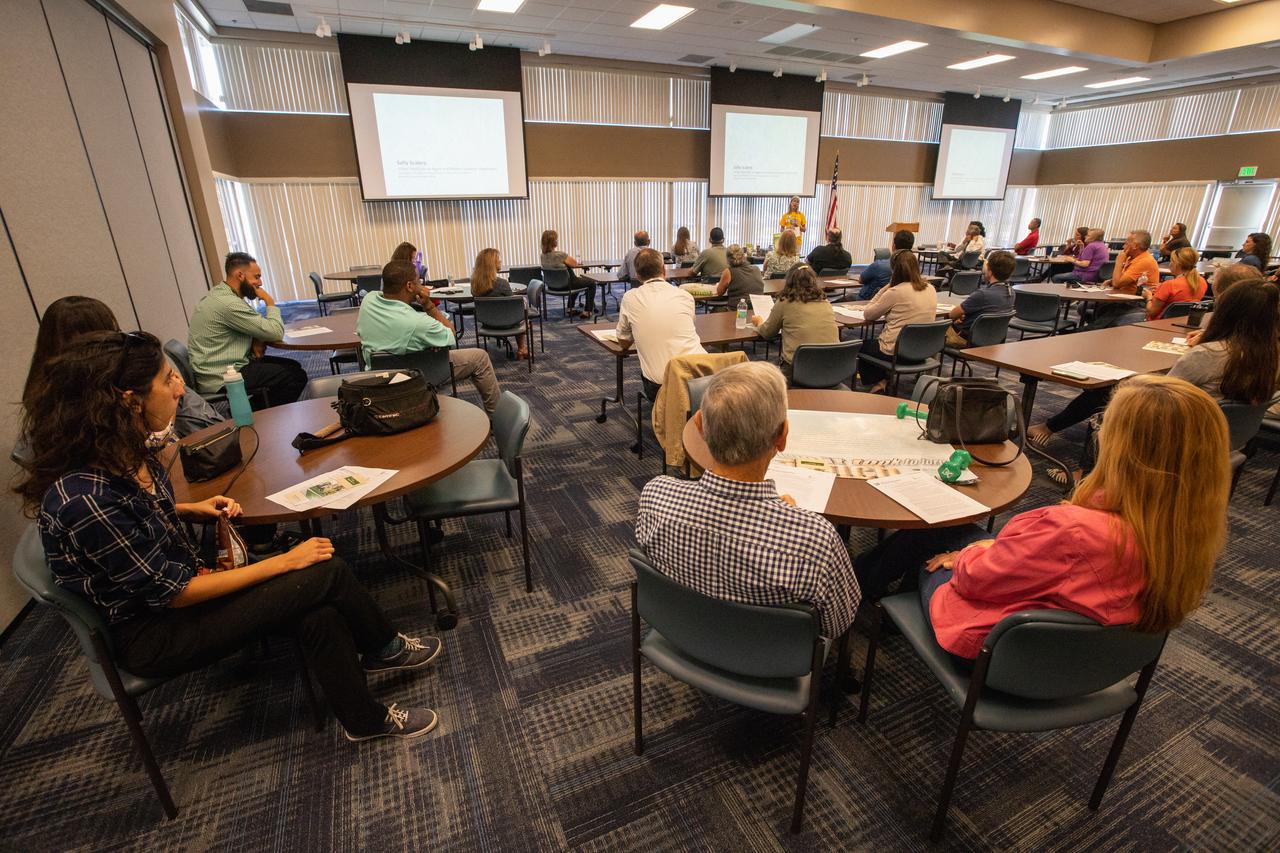
Kennedy Space Center employees attend a lunch and learn focused on Florida-friendly landscaping practices in the Florida spaceport’s Space Station Processing Facility Conference Center on April 24, 2019. Sally Scalera, urban horticulture agent and master gardener coordinator from the University of Florida’s Institute of Food and Agricultural Sciences Brevard Extension Office, presented information on sustainable tips and tricks for a healthy yard and garden. The lunch and learn was available for employees to attend as part of Kennedy’s Earth Day events.
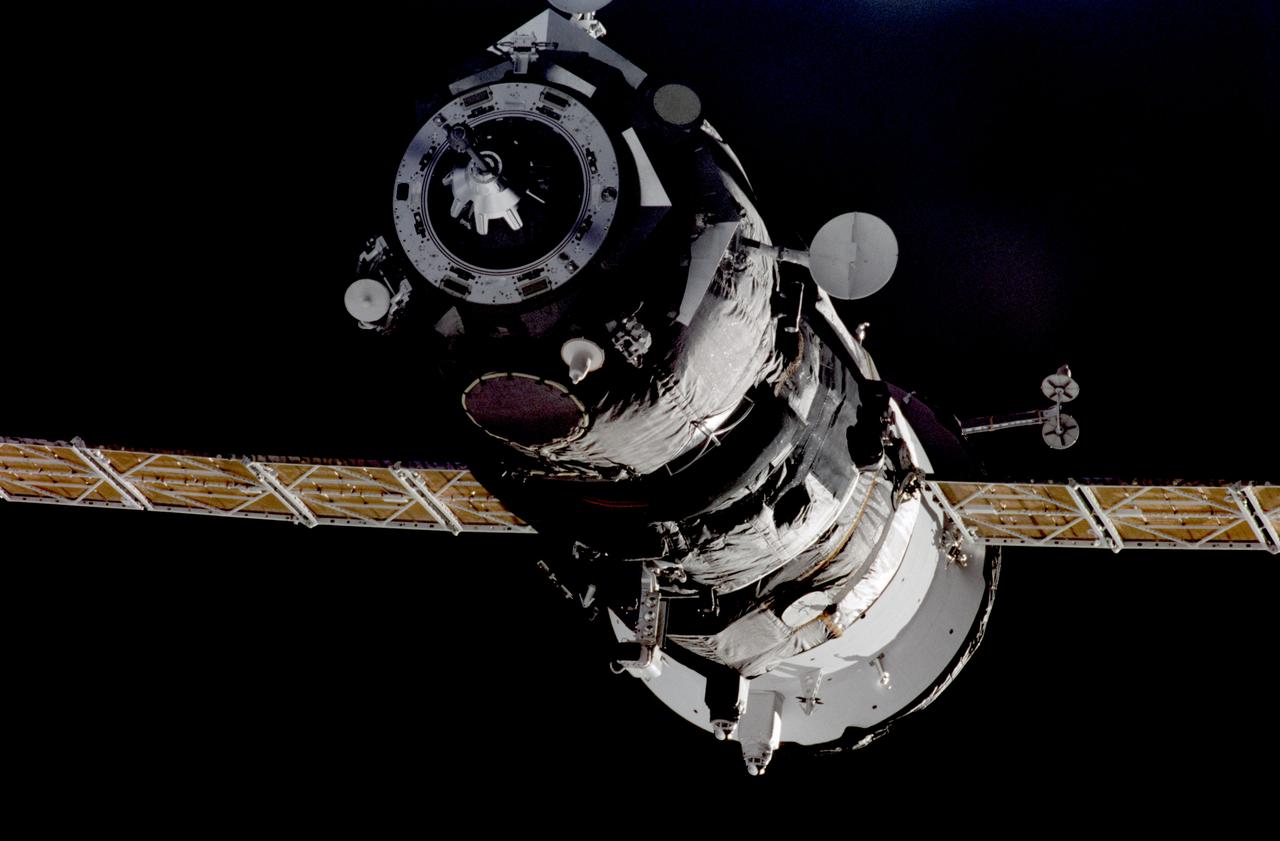
ISS01-324-002 (18 November 2000) --- A Progress supply ship linked up to the orbiting International Space Station (ISS) at 3:48 GMT, November 18, bringing Expedition 1 commander William M. Shepherd, pilot Yuri P. Gidzenko and flight engineer Sergei K. Krikalev two tons of food, clothing, hardware and holiday gifts from their families. The photograph was taken with a 35mm camera and the film was later handed over to the STS-97 crew members for return to Earth and subsequent processing.
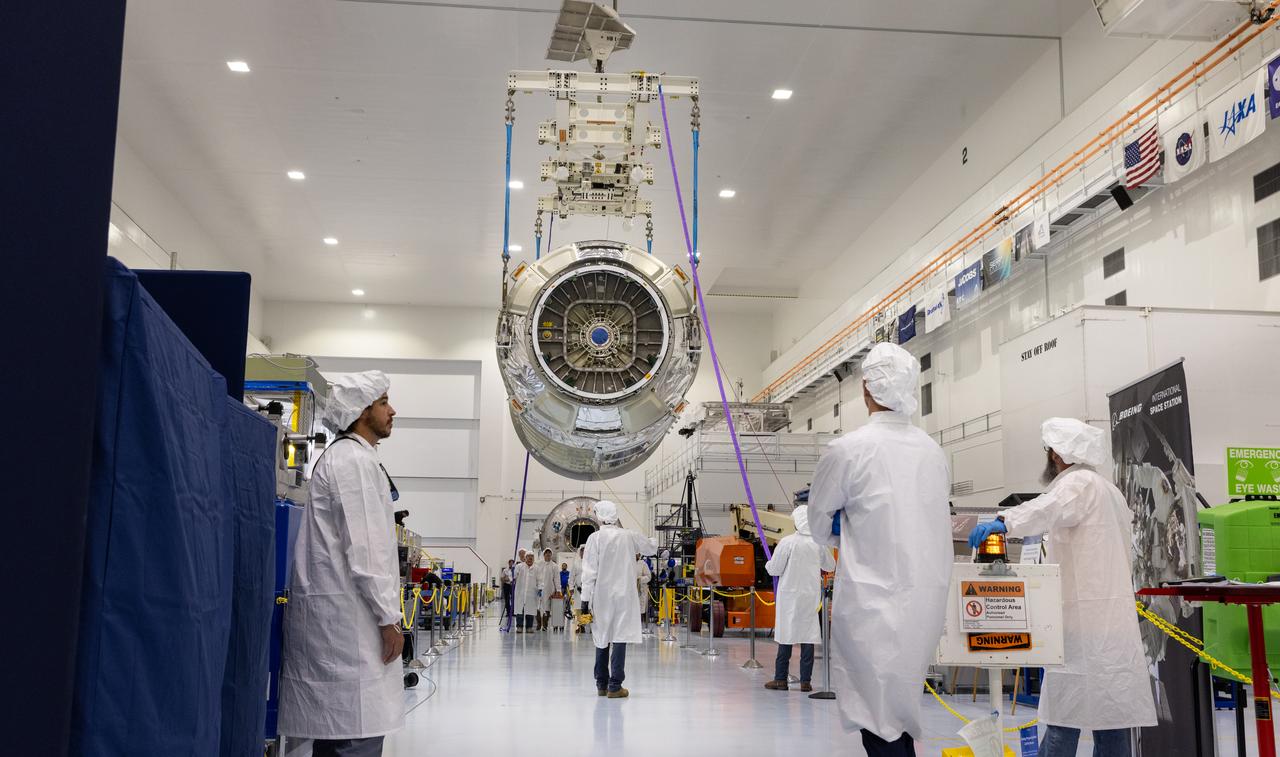
Technicians use a crane to lift Northrop Grumman Cygnus spacecraft’s pressurized cargo module out of the shipping container on Thursday, July 10, 2025, inside the Space Systems Processing Facility at NASA’s Kennedy Space Center in Florida. The new extended Cygnus capsule, scheduled to launch no earlier than fall 2025, will carry supplies, food, and scientific experiments for crew members at the International Space Station as part of the company’s 23rd cargo resupply mission.
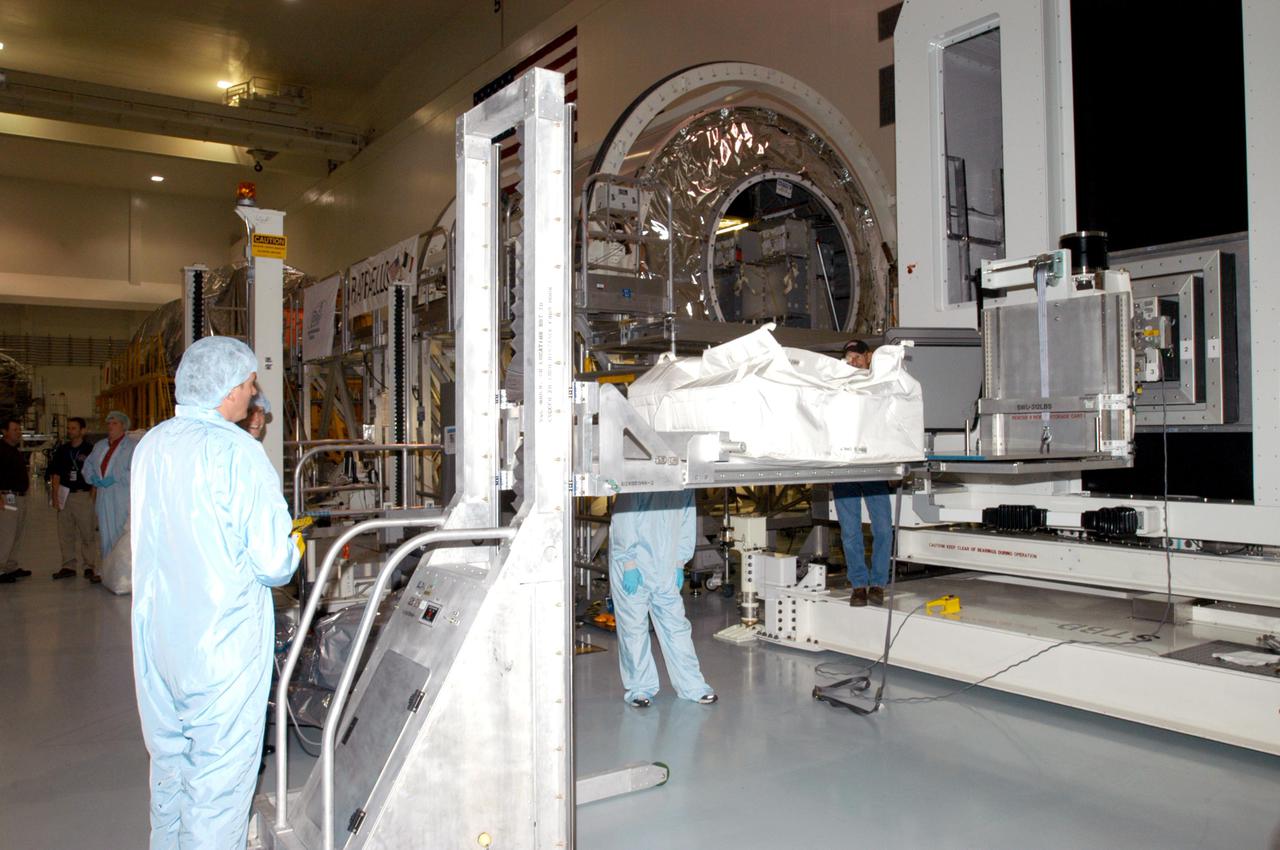
KENNEDY SPACE CENTER, FLA. - Technicians in the Space Station Processing Facility at NASA’s Kennedy Space Center get ready to move more resupply stowage bags into containers known as resupply stowage racks inside the Italian-built Multi-Purpose Logistics Module Raffaello. The module will deliver a variety of supplies including food, clothing and spare parts to the International Space Station. Raffaello will launch on Space Shuttle Discovery’s Return to Flight mission, STS-114. The launch window is May 15 to June 3.

Technicians conduct prelaunch operations on Northrop Grumman Cygnus XL spacecraft’s pressurized cargo module on Monday, Feb. 23, 2026, inside the Space Systems Processing Facility at NASA’s Kennedy Space Center in Florida. The Cygnus capsule will carry supplies, food, and scientific experiments for crew members at the International Space Station as part of the company’s 24th cargo resupply mission for NASA. The mission is targeting launch no earlier than Wednesday, April 8, from Space Launch Complex 40 at Cape Canaveral Space Force Station in Florida.
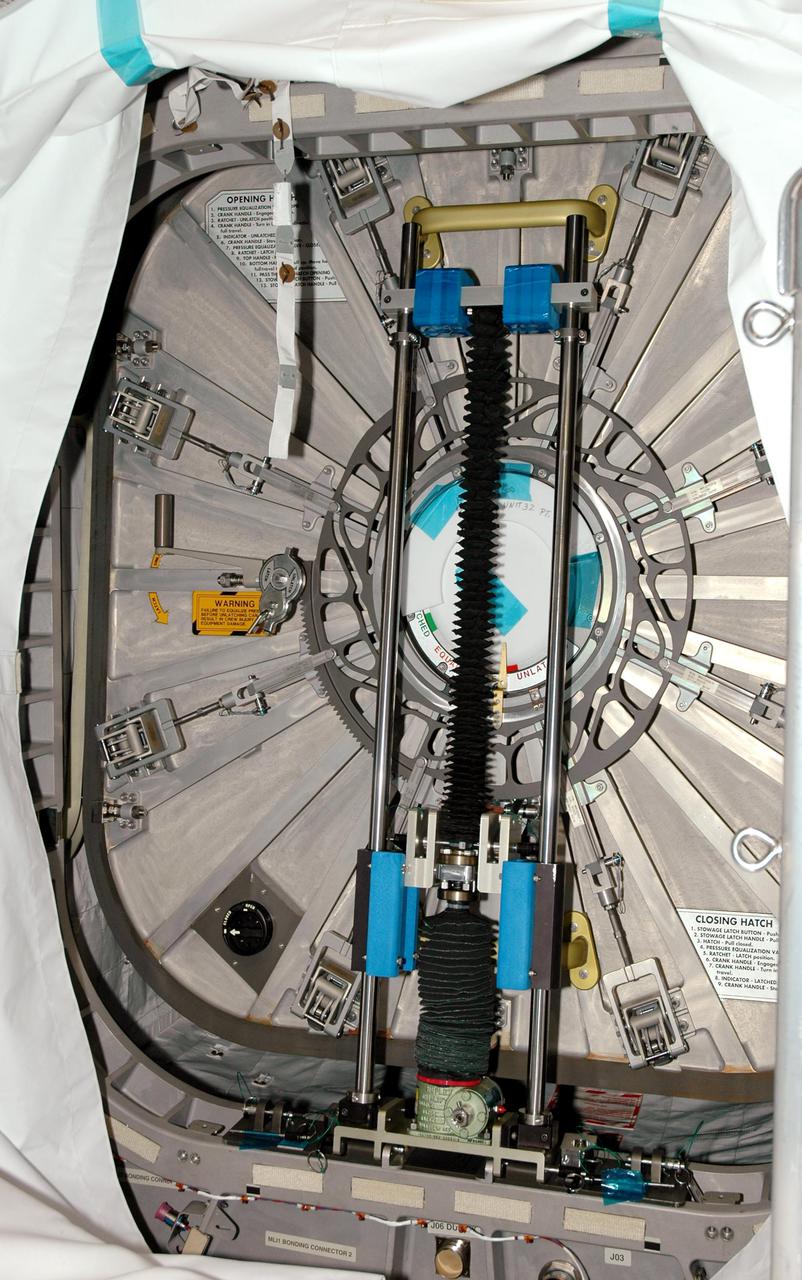
KENNEDY SPACE CENTER, FLA. -- In the Space Station Processing Facility, the hatch door on Italian-built Multi-Purpose Logistics Module Raffaello is closed, a significant milestone on the road to Return to Flight. The module will travel to the International Space Station aboard Space Shuttle Discovery’s Return to Flight mission STS-114. Raffaello carries 12 racks of cargo, including food, clothing, spare parts and research equipment, to the Station. Shuttle Discovery is targeted for launch in a window extending May 15 through June 3.

Technicians use a crane to lift Northrop Grumman Cygnus spacecraft’s pressurized cargo module out of the shipping container on Thursday, July 10, 2025, inside the Space Systems Processing Facility at NASA’s Kennedy Space Center in Florida. The new extended Cygnus capsule, scheduled to launch no earlier than fall 2025, will carry supplies, food, and scientific experiments for crew members at the International Space Station as part of the company’s 23rd cargo resupply mission.
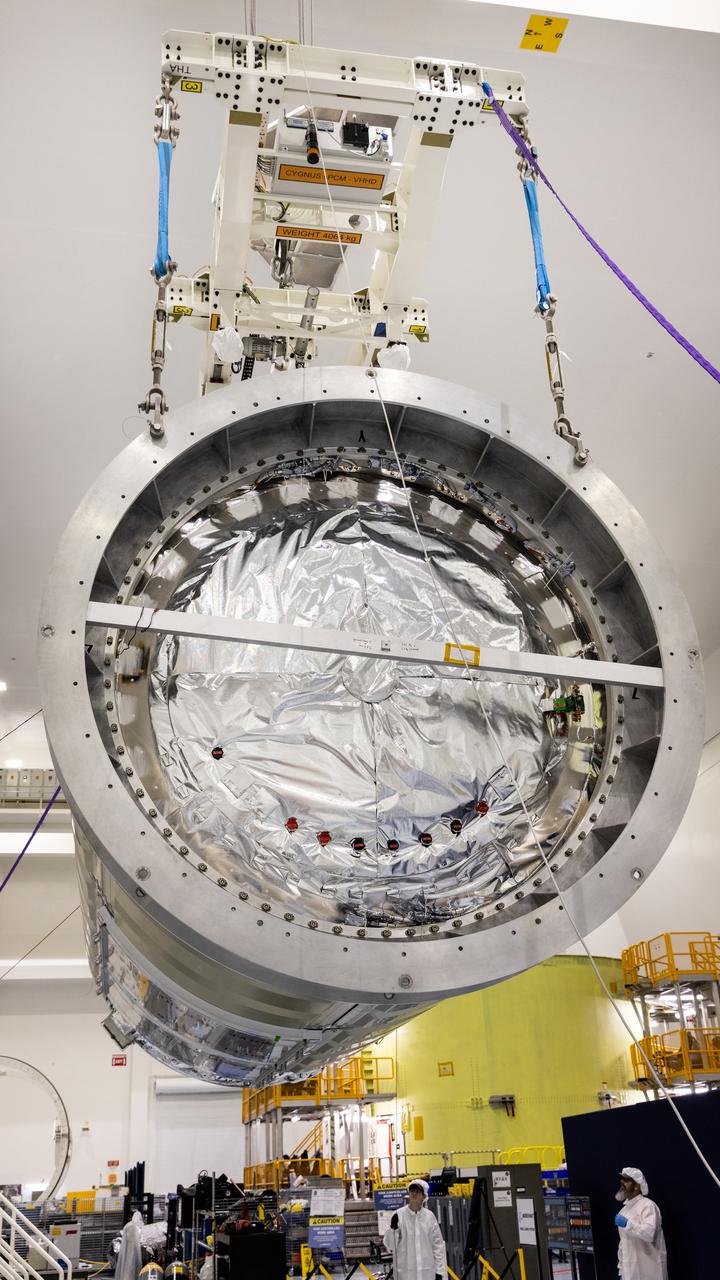
Technicians use a crane to lift Northrop Grumman Cygnus spacecraft’s pressurized cargo module out of the shipping container on Thursday, July 10, 2025, inside the Space Systems Processing Facility at NASA’s Kennedy Space Center in Florida. The new extended Cygnus capsule, scheduled to launch no earlier than fall 2025, will carry supplies, food, and scientific experiments for crew members at the International Space Station as part of the company’s 23rd cargo resupply mission.

Technicians conduct prelaunch operations on Northrop Grumman Cygnus XL spacecraft’s pressurized cargo module on Monday, Feb. 23, 2026, inside the Space Systems Processing Facility at NASA’s Kennedy Space Center in Florida. The Cygnus capsule will carry supplies, food, and scientific experiments for crew members at the International Space Station as part of the company’s 24th cargo resupply mission for NASA. The mission is targeting launch no earlier than Wednesday, April 8, from Space Launch Complex 40 at Cape Canaveral Space Force Station in Florida.
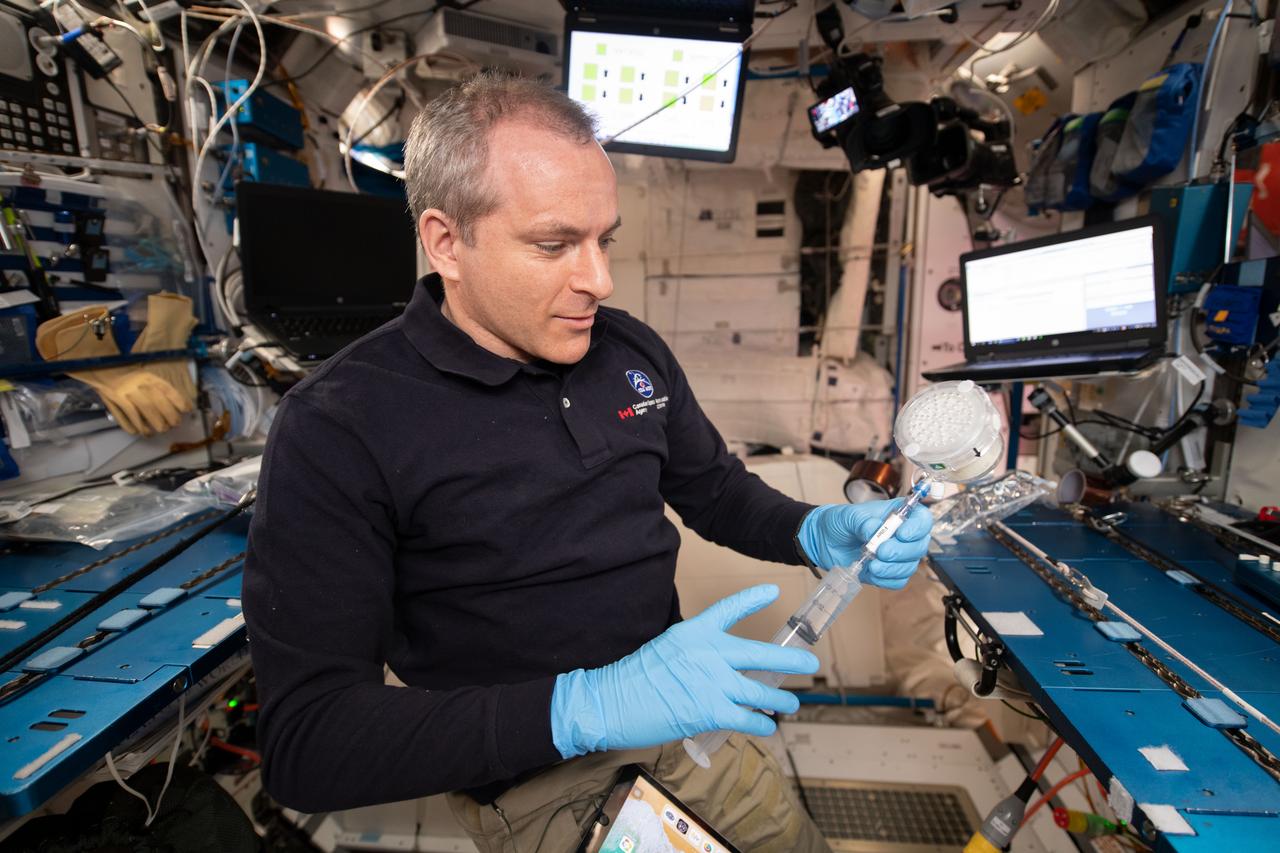
iss059e092719 (6/10/2019) --- Canadian Space Agency astronaut David Saint-Jacques is shown initializing the BioNutirents investigation by hydrating the growth packets onboard the International Space Station (ISS). The BioNutrients investigation demonstrates a technology that enables on-demand production of human nutrients during long-duration space missions. The process uses engineered microbes, like yeast, to generate carotenoids from an edible media to supplement potential vitamin losses from food that is stored for very long periods.
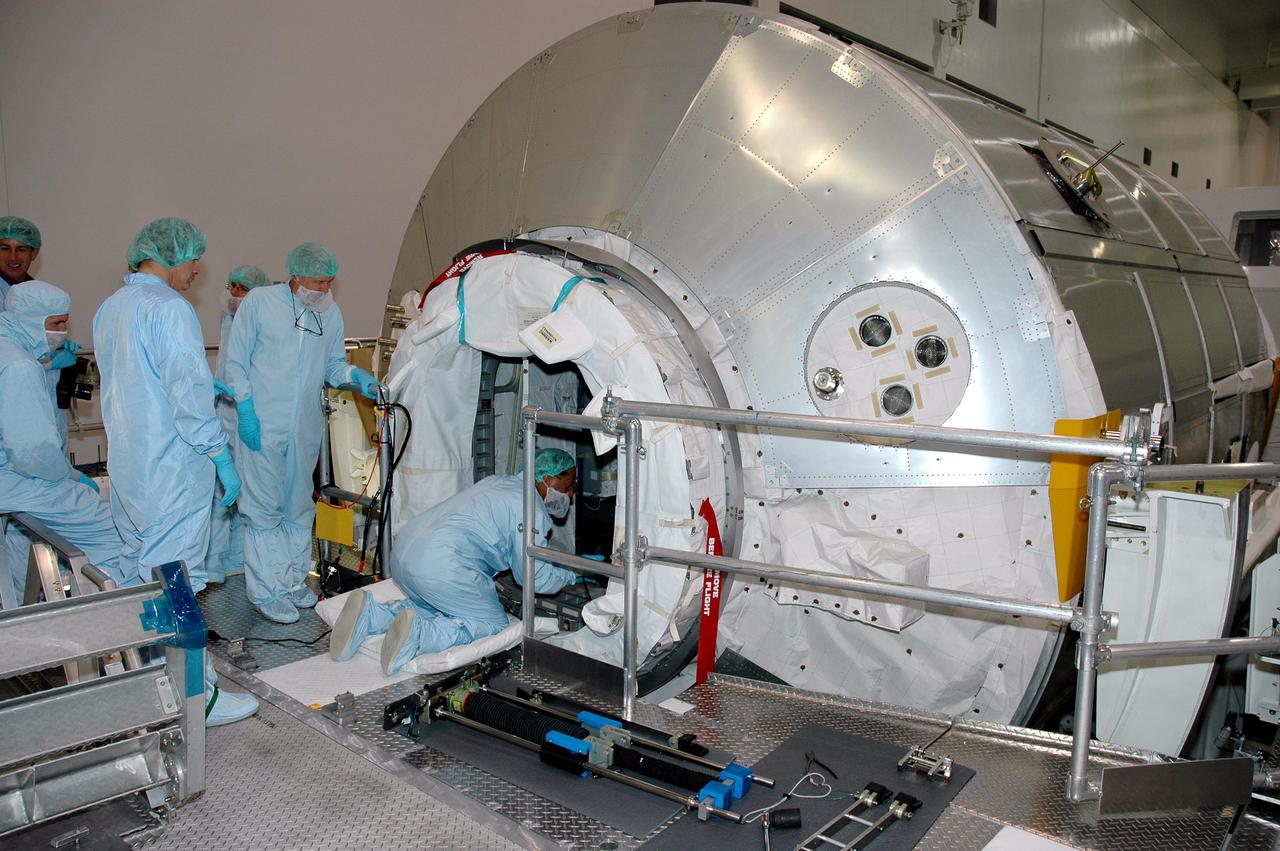
KENNEDY SPACE CENTER, FLA. -- Workers in the Space Station Processing Facility prepare to close the hatch for flight on Italian-built Multi-Purpose Logistics Module Raffaello, a significant milestone on the road to Return to Flight. The module will travel to the International Space Station aboard Space Shuttle Discovery’s Return to Flight mission STS-114. Raffaello carries 12 racks of cargo, including food, clothing, spare parts and research equipment, to the Station. Shuttle Discovery is targeted for launch in a window extending May 15 through June 3.

Technicians conduct prelaunch operations on Northrop Grumman Cygnus XL spacecraft’s pressurized cargo module on Monday, Feb. 23, 2026, inside the Space Systems Processing Facility at NASA’s Kennedy Space Center in Florida. The Cygnus capsule will carry supplies, food, and scientific experiments for crew members at the International Space Station as part of the company’s 24th cargo resupply mission for NASA. The mission is targeting launch no earlier than Wednesday, April 8, from Space Launch Complex 40 at Cape Canaveral Space Force Station in Florida.

Technicians conduct prelaunch operations on Northrop Grumman Cygnus XL spacecraft’s pressurized cargo module on Monday, Feb. 23, 2026, inside the Space Systems Processing Facility at NASA’s Kennedy Space Center in Florida. The Cygnus capsule will carry supplies, food, and scientific experiments for crew members at the International Space Station as part of the company’s 24th cargo resupply mission for NASA. The mission is targeting launch no earlier than Wednesday, April 8, from Space Launch Complex 40 at Cape Canaveral Space Force Station in Florida.
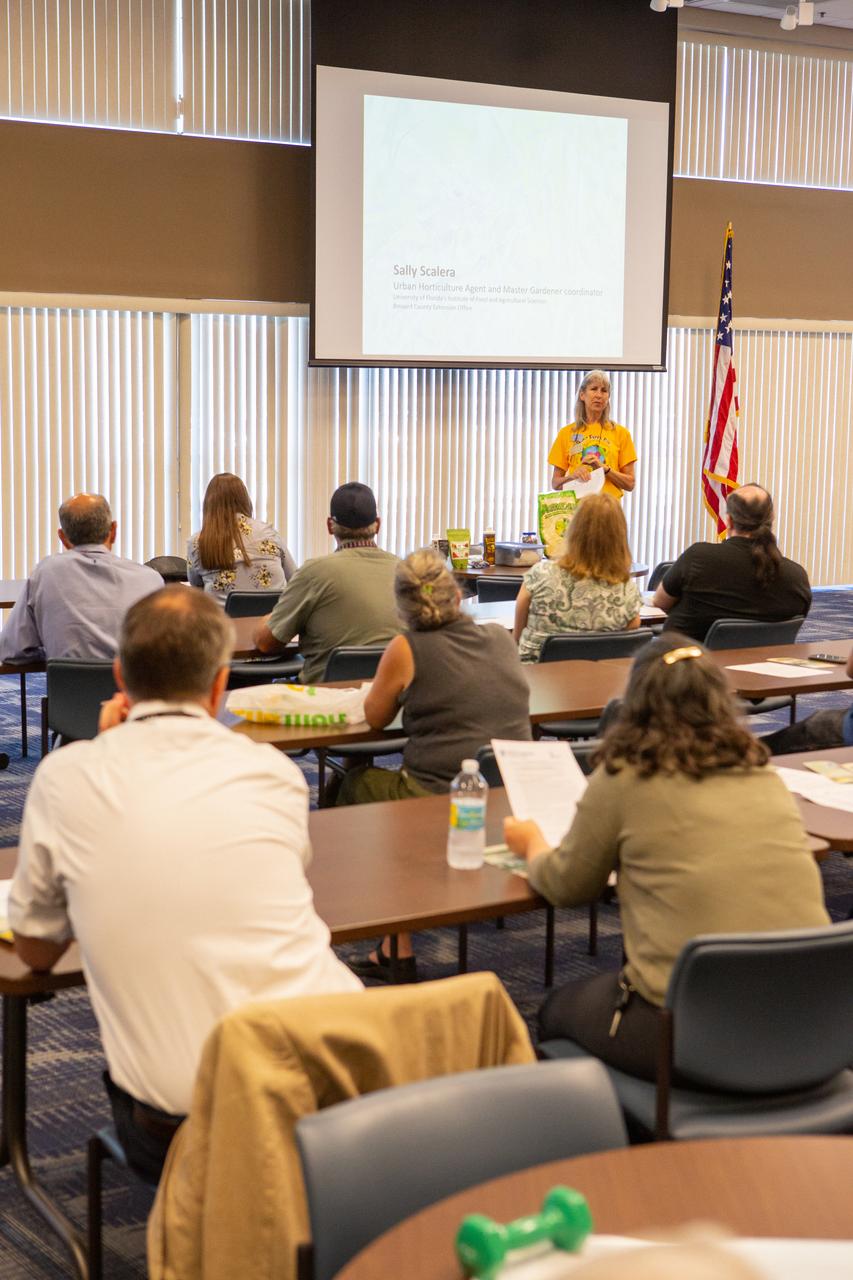
Sally Scalera, urban horticulture agent and master gardener coordinator from the University of Florida’s Institute of Food and Agricultural Sciences Brevard Extension Office, presents some sustainable tips and tricks for a healthy yard and garden to Kennedy Space Center employees on April 24, 2019. Held inside the Florida spaceport’s Space Station Processing Facility Conference Center, Scalera also provided information on Florida-friendly landscaping practices. The lunch and learn was available for employees to attend as part of Kennedy’s Earth Day events.
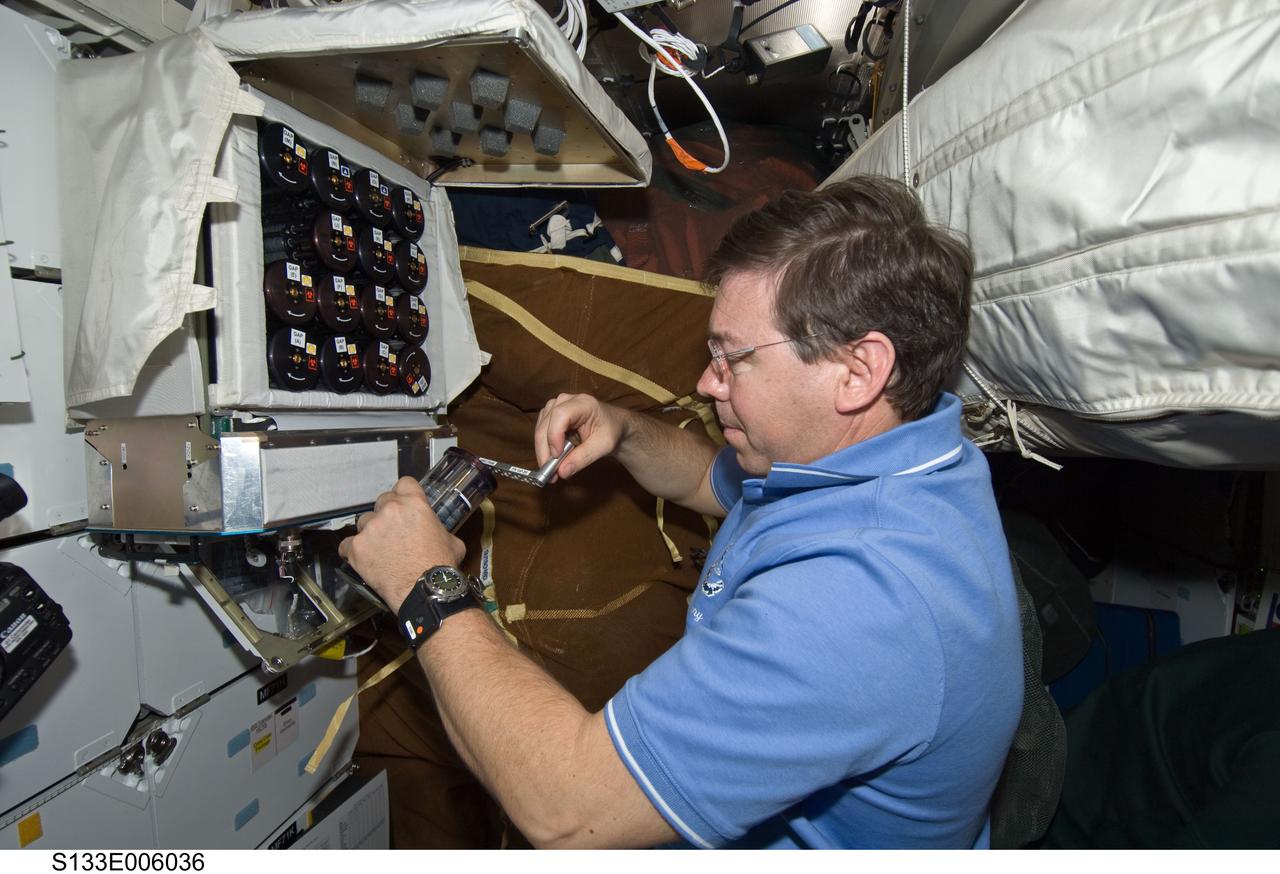
S133-E-006036 (25 Feb. 2011) --- Astronaut Michael Barratt, STS-133 mission specialist, works with the Microbe Group Activation Pack containing eight Fluid Processing Apparatuses on the middeck of space shuttle Discovery while en route to a rendezvous with the International Space Station. A previous set of similar tests made a key discovery about the mechanism that makes salmonella more infectious, aiding the fight against food poisoning on Earth. Photo credit: NASA or National Aeronautics and Space Administration
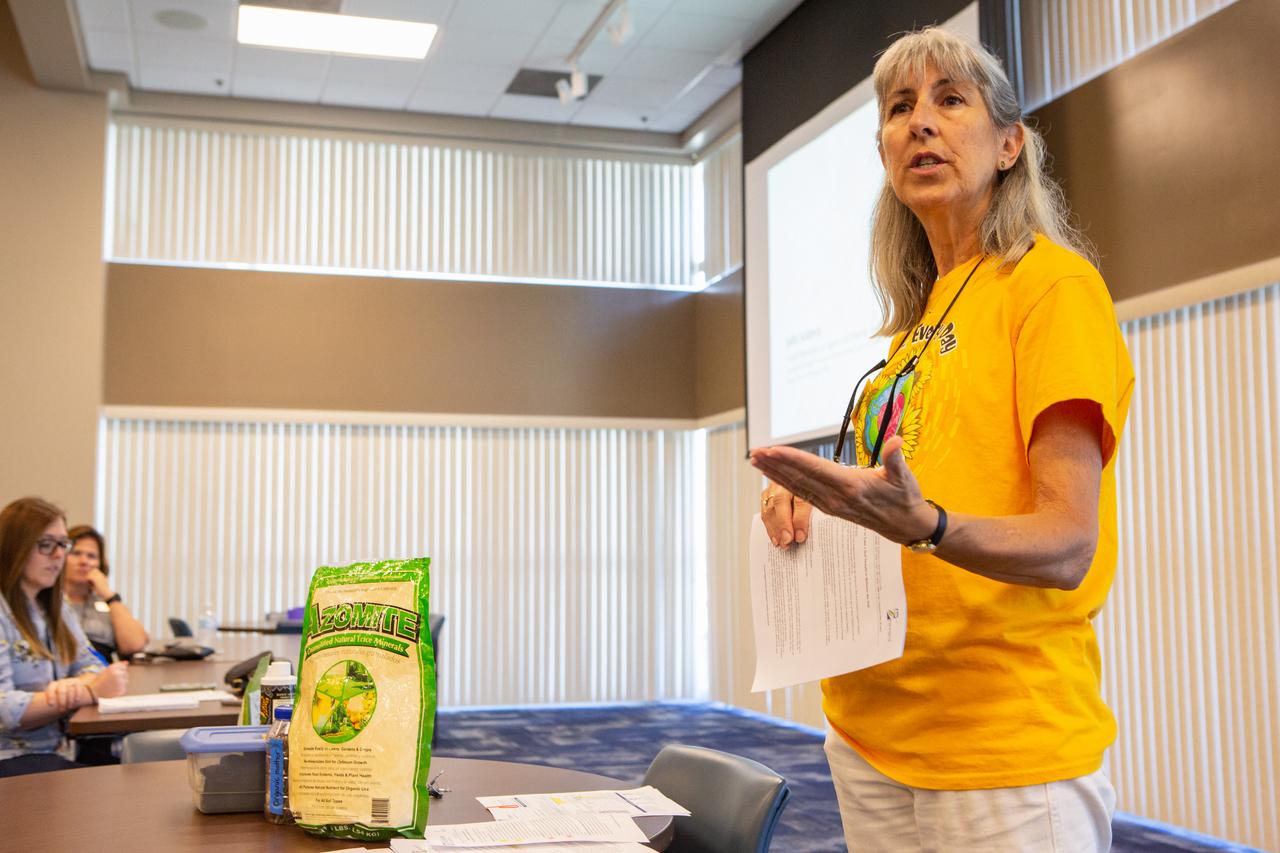
Sally Scalera, urban horticulture agent and master gardener coordinator from the University of Florida’s Institute of Food and Agricultural Sciences Brevard Extension Office, presents some sustainable tips and tricks for a healthy yard and garden to Kennedy Space Center employees on April 24, 2019. Held inside the Florida spaceport’s Space Station Processing Facility Conference Center, Scalera also provided information on Florida-friendly landscaping practices. The lunch and learn was available for employees to attend as part of Kennedy’s Earth Day events.
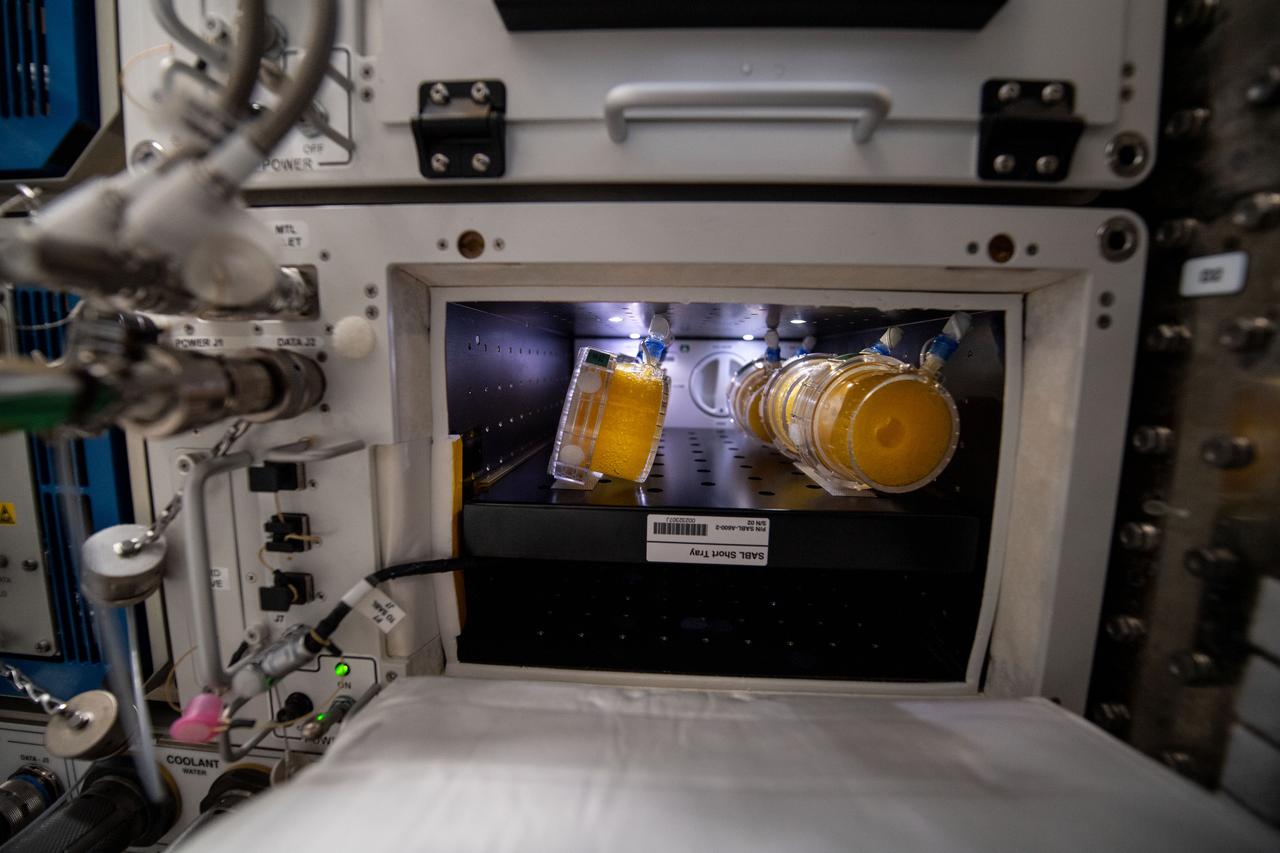
iss059e099184 (6/10/2019) --- Photo documentation of the BioNutirents packets in the Space Automated Bioproduct Laboratory (SABL) incubator onboard the International Space Station (ISS). The BioNutrients investigation demonstrates a technology that enables on-demand production of human nutrients during long-duration space missions. The process uses engineered microbes, like yeast, to generate carotenoids from an edible media to supplement potential vitamin losses from food that is stored for very long periods.
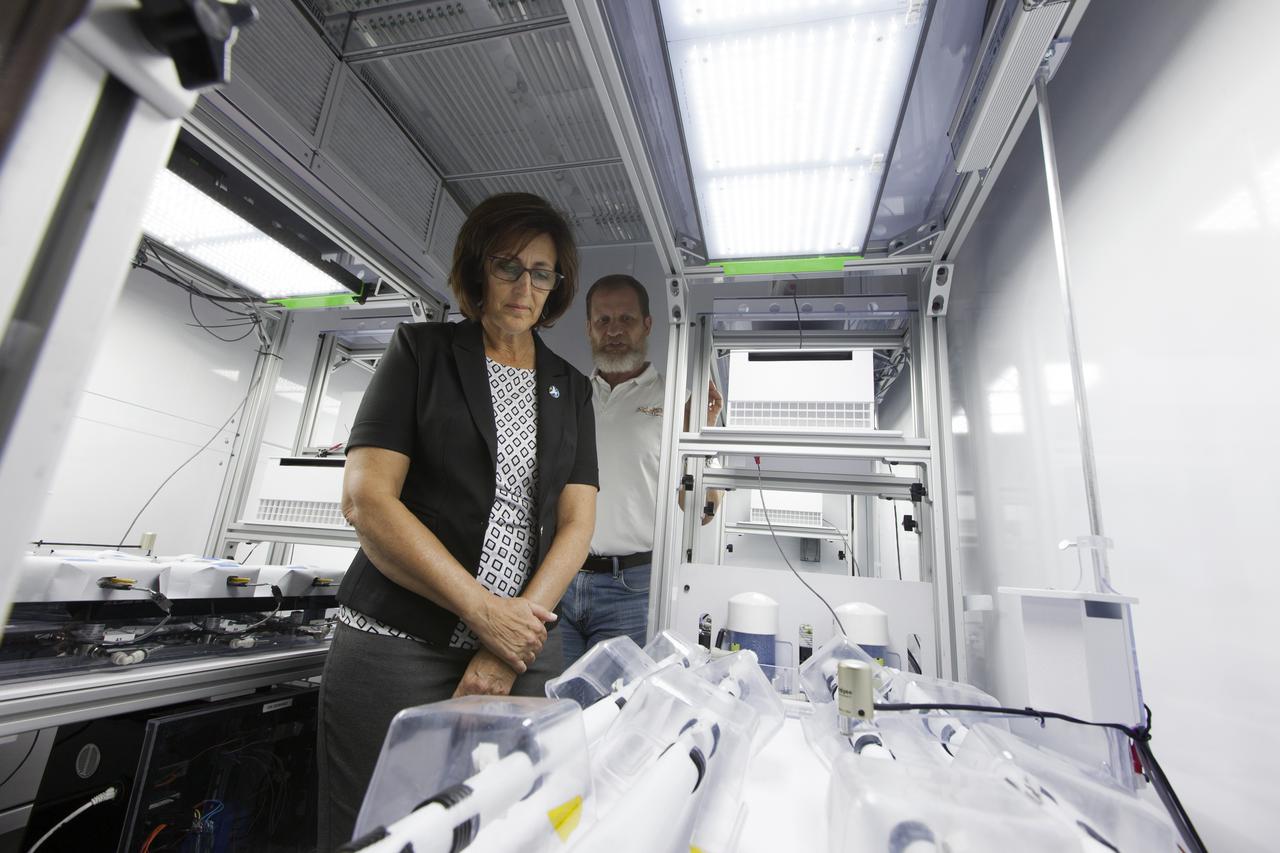
Robyn Gatens, left, deputy director, ISS Division and system capability leader for Environmental Control and Life Support Systems (ECLSS) at NASA Headquarters in Washington, tours laboratories in the Space Station Processing Facility at the agency's Kennedy Space Center in Florida, on June 13, 2018. Standing behind her is Ralph Fritsche, long-duration food production project manager at Kennedy. Gatens is viewing plant growth chambers and seeing firsthand some of the capabilities in the center's Exploration Research and Technology Programs.
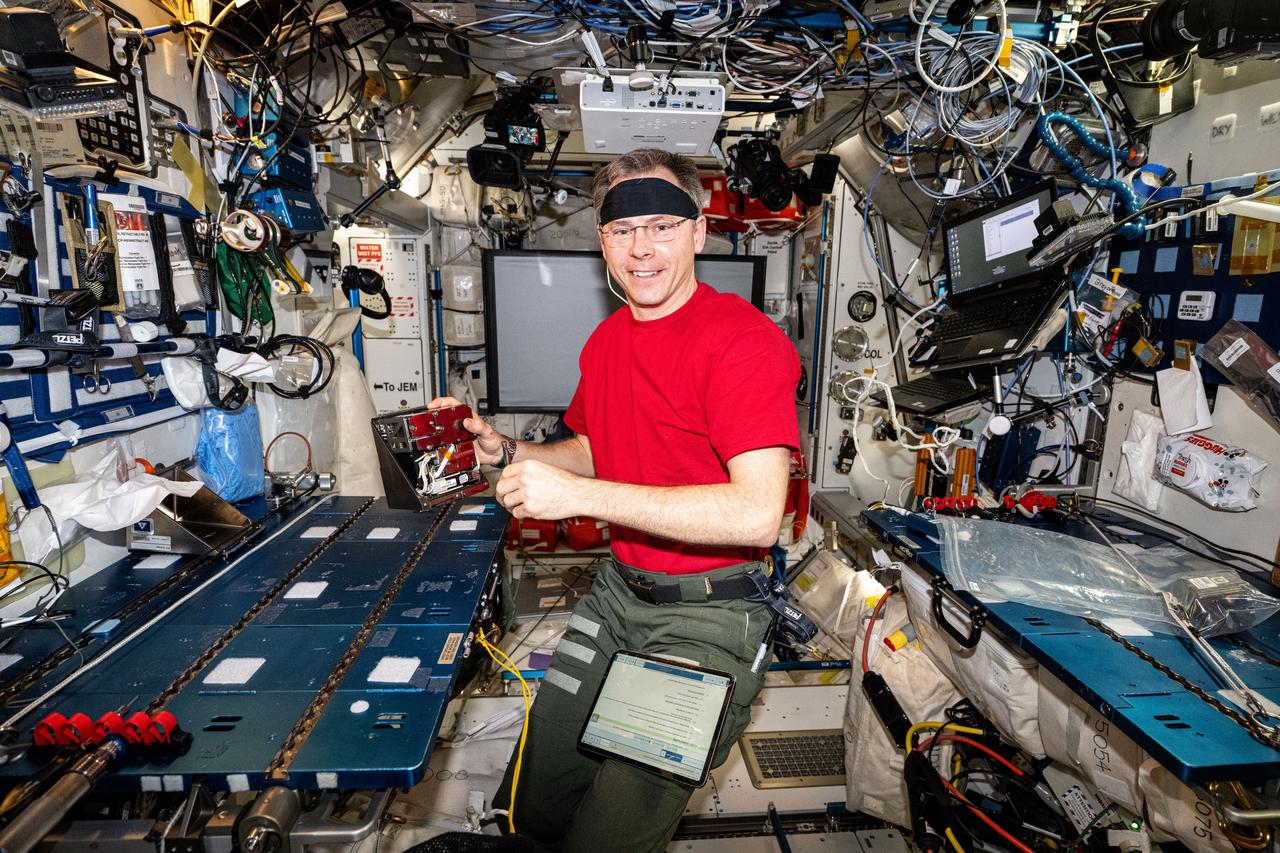
iss072e452598 (Jan. 10, 2025) --- NASA astronaut and Expedition 72 Flight Engineer Nick Hague processes samples of micro-algae at the Harmony module's maintenance work area aboard the International Space Station. The Arthrospira C biotechnology investigation exposes micro-algae to cosmic radiation and microgravity to learn how to revitalize the spacecraft environment using photosynthesis and produce fresh food on long-term space missions.

iss061e131007 (1/7/2020) --- Photo documentation of the BioNutirents packets aboard the International Space Station (ISS). The BioNutrients investigation demonstrates a technology that enables on-demand production of human nutrients during long-duration space missions. The process uses engineered microbes, like yeast, to generate carotenoids from an edible media to supplement potential vitamin losses from food that is stored for very long periods.
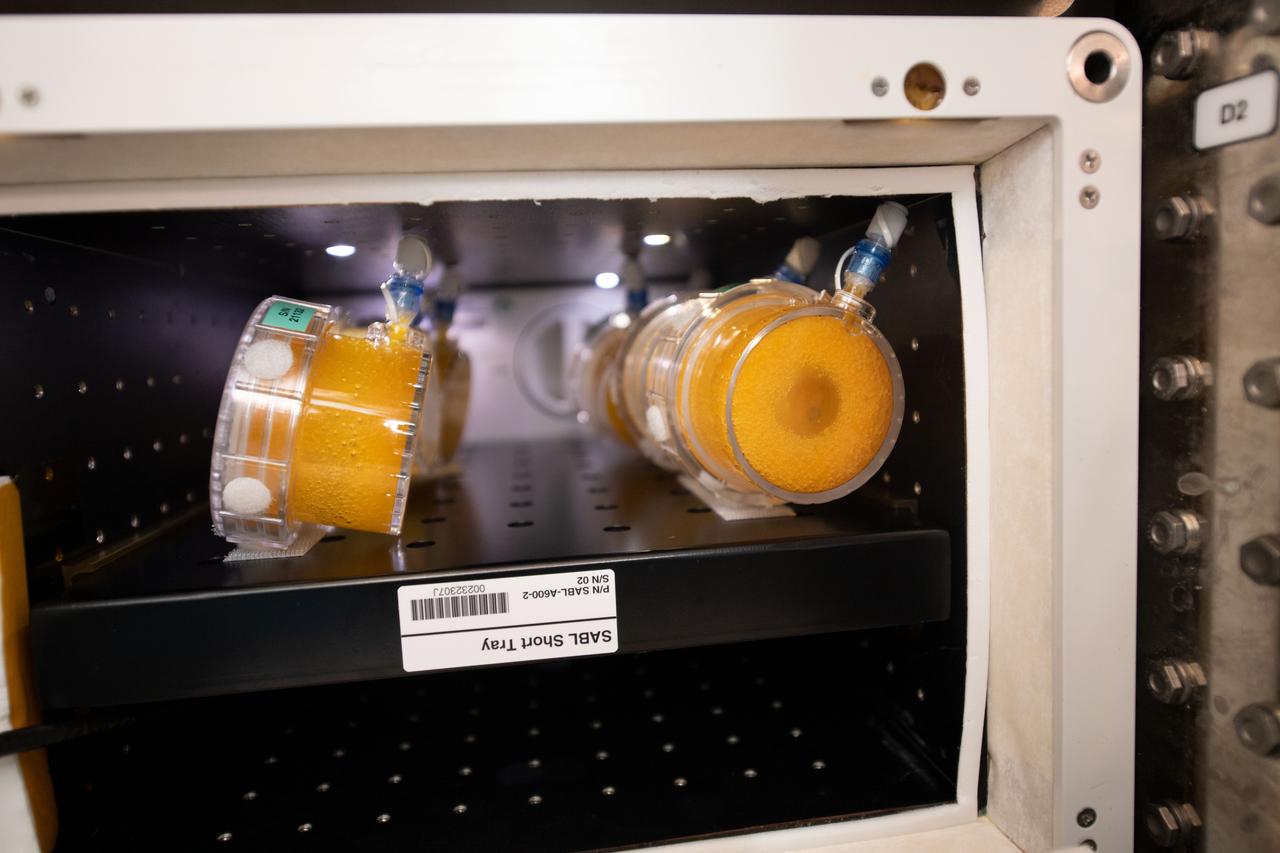
iss059e092729 (6/10/2019) --- Photo documentation of the BioNutirents packets in the Space Automated Bioproduct Laboratory (SABL) incubator onboard the International Space Station (ISS). The BioNutrients investigation demonstrates a technology that enables on-demand production of human nutrients during long-duration space missions. The process uses engineered microbes, like yeast, to generate carotenoids from an edible media to supplement potential vitamin losses from food that is stored for very long periods.

Technicians conduct prelaunch operations on Northrop Grumman Cygnus XL spacecraft’s pressurized cargo module on Monday, Feb. 23, 2026, inside the Space Systems Processing Facility at NASA’s Kennedy Space Center in Florida. The Cygnus capsule will carry supplies, food, and scientific experiments for crew members at the International Space Station as part of the company’s 24th cargo resupply mission for NASA. The mission is targeting launch no earlier than Wednesday, April 8, from Space Launch Complex 40 at Cape Canaveral Space Force Station in Florida.
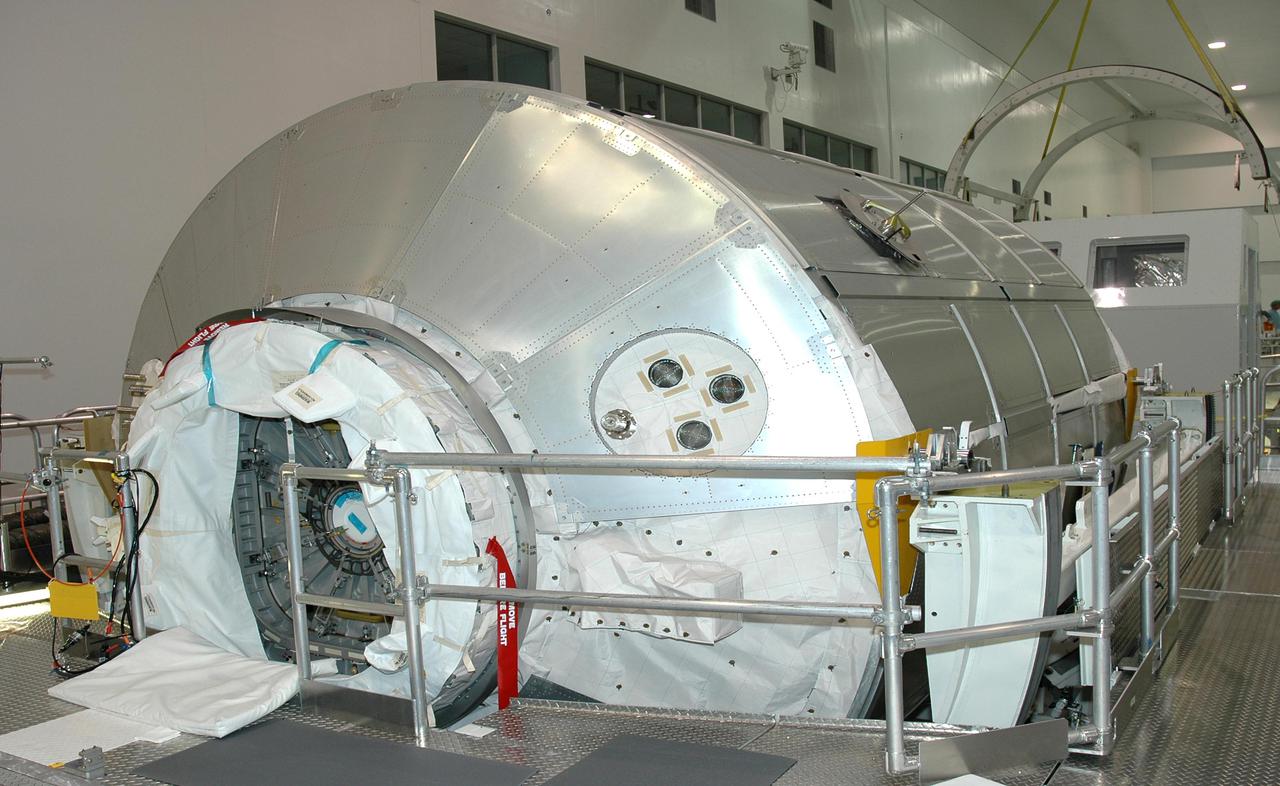
KENNEDY SPACE CENTER, FLA. -- In the Space Station Processing Facility, Italian-built Multi-Purpose Logistics Module Raffaello is closed and ready for transfer to a payload canister and trip to Launch Complex 39B for transfer to Space Shuttle Discovery. The module will travel to the International Space Station aboard Space Shuttle Discovery’s Return to Flight mission STS-114. Raffaello carries 12 racks of cargo, including food, clothing, spare parts and research equipment, to the Station. Shuttle Discovery is targeted for launch in a window extending May 15 through June 3.
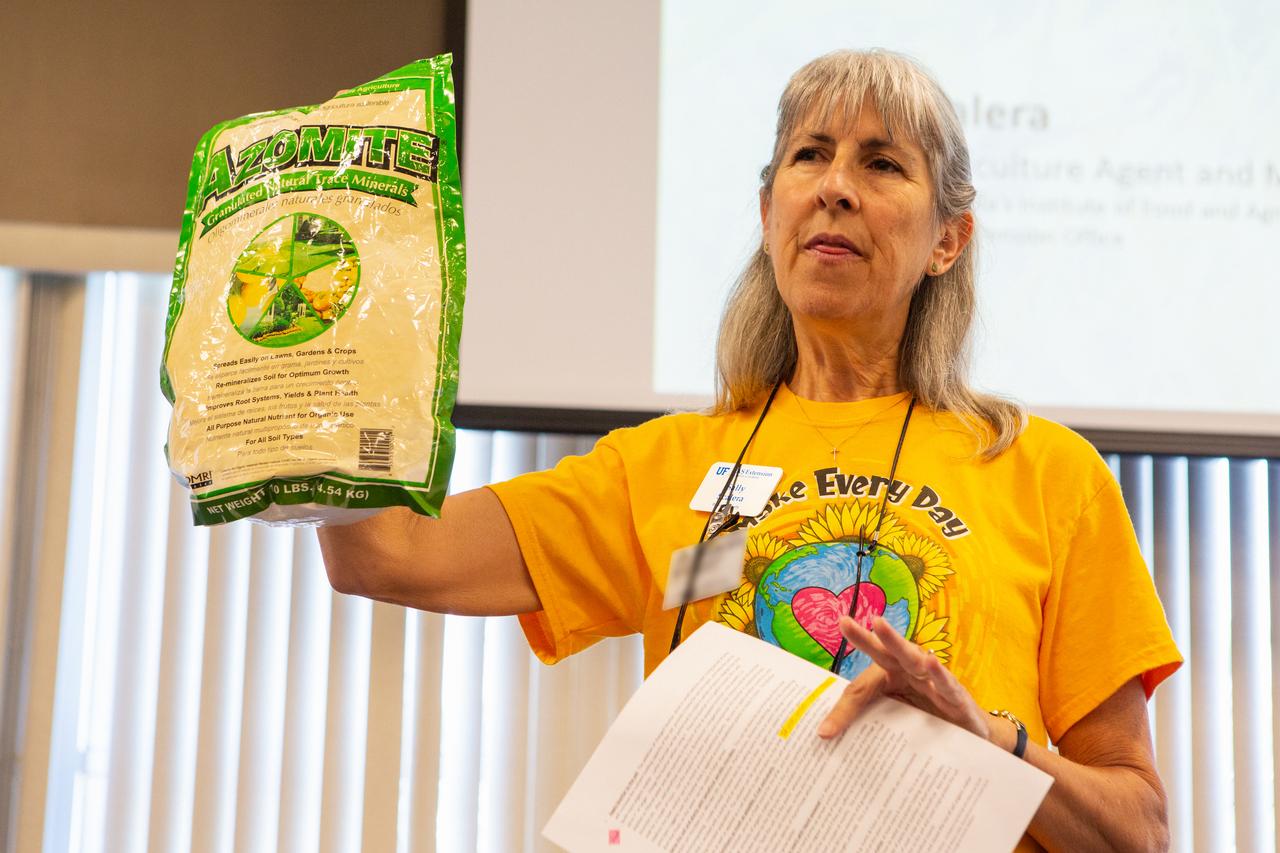
Sally Scalera, urban horticulture agent and master gardener coordinator from the University of Florida’s Institute of Food and Agricultural Sciences Brevard Extension Office, shows Kennedy Space Center employees some sustainable yard products available during her presentation on tips and tricks for a healthy yard and garden on April 24, 2019. Held inside the Florida spaceport’s Space Station Processing Facility Conference Center, Scalera also provided information on Florida-friendly landscaping practices. The lunch and learn was available for employees to attend as part of Kennedy’s Earth Day events.
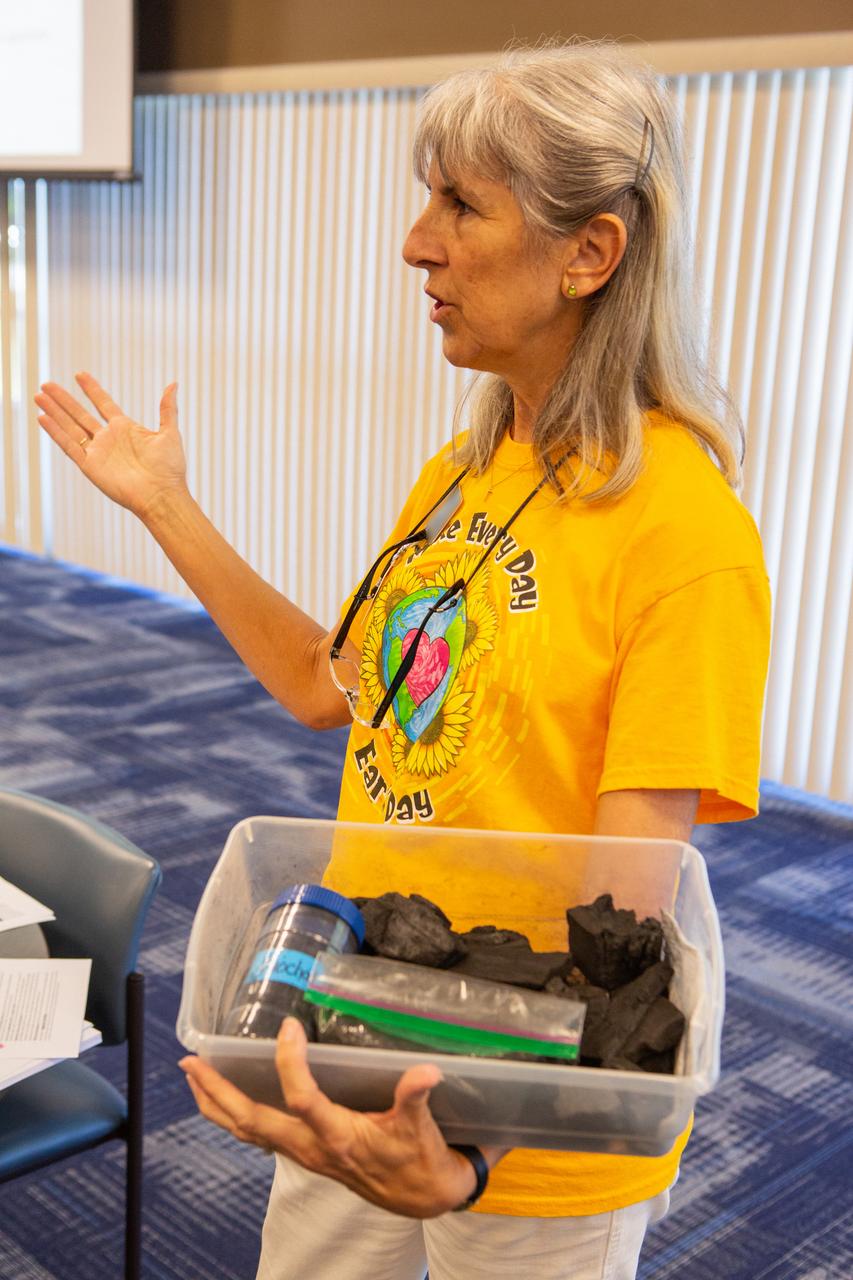
Sally Scalera, urban horticulture agent and master gardener coordinator from the University of Florida’s Institute of Food and Agricultural Sciences Brevard Extension Office, shows Kennedy Space Center employees some sustainable yard products available during her presentation on tips and tricks for a healthy yard and garden on April 24, 2019. Held inside the Florida spaceport’s Space Station Processing Facility Conference Center, Scalera also provided information on Florida-friendly landscaping practices. The lunch and learn was available for employees to attend as part of Kennedy’s Earth Day events.
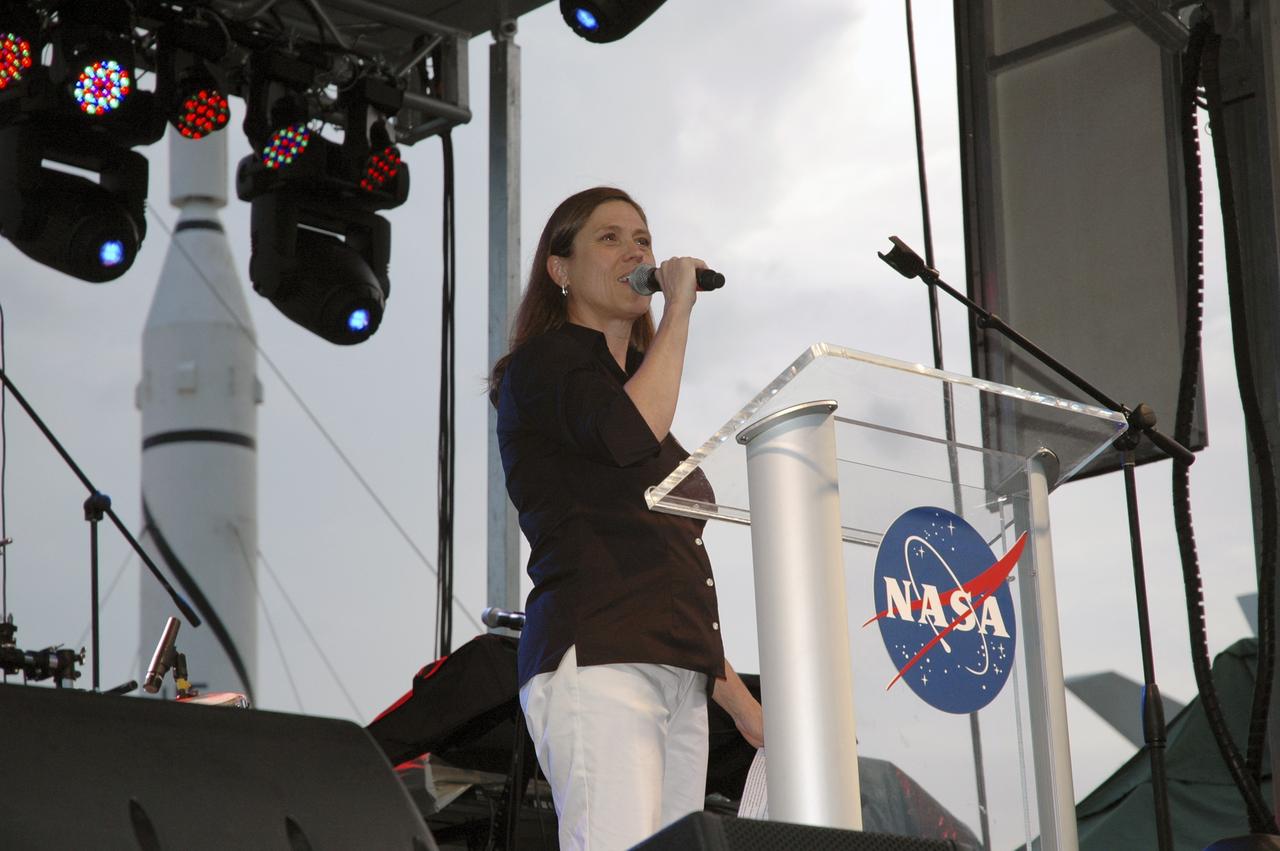
CAPE CANAVERAL, Fla. -- Kennedy Space Center’s Launch Vehicle Processing Director Rita Willcoxon speaks to current and former space shuttle workers and their families during the “We Made History! Shuttle Program Celebration,” Aug. 13, at the Kennedy Space Center Visitor Complex, Fla. The event was held to honor shuttle workers’ dedication to NASA’s Space Shuttle Program and to celebrate 30 years of space shuttle achievements. The event featured food, music, entertainment, astronaut appearances, educational activities, giveaways, and Starfire Night Skyshow. Photo credit: Gianni Woods

VANDENBERG AIR FORCE BASE, Calif. --- Loaded on a transporter, the payload faring containing the Landsat Data Continuity Mission LDCM spacecraft departs the Astrotech processing facility at Vandenberg Air Force Base in California and heads toward the launch pad at Space Launch Complex-3E. There it will be hoisted atop a United Launch Alliance Atlas V for launch. LDCM is the eighth satellite in the Landsat Program series of Earth-observing missions jointly managed by NASA and the U.S. Geological Survey. LDCM will continue the program’s critical role in monitoring, understanding and managing the resources needed for human sustainment such as food, water and forests. Photo credit: NASA/VAFB
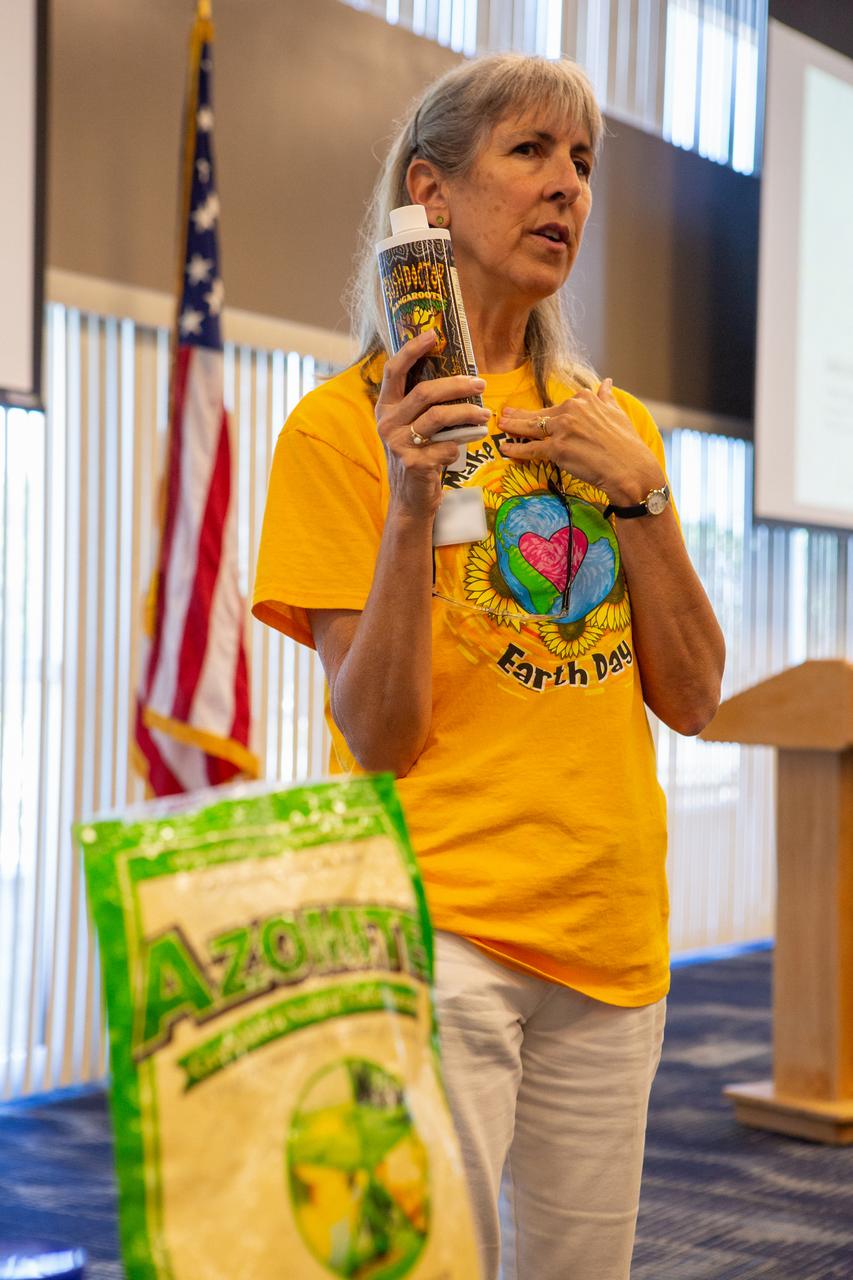
Sally Scalera, urban horticulture agent and master gardener coordinator from the University of Florida’s Institute of Food and Agricultural Sciences Brevard Extension Office, shows Kennedy Space Center employees some sustainable yard products available during her presentation on tips and tricks for a healthy yard and garden on April 24, 2019. Held inside the Florida spaceport’s Space Station Processing Facility Conference Center, Scalera also provided information on Florida-friendly landscaping practices. The lunch and learn was available for employees to attend as part of Kennedy’s Earth Day events.
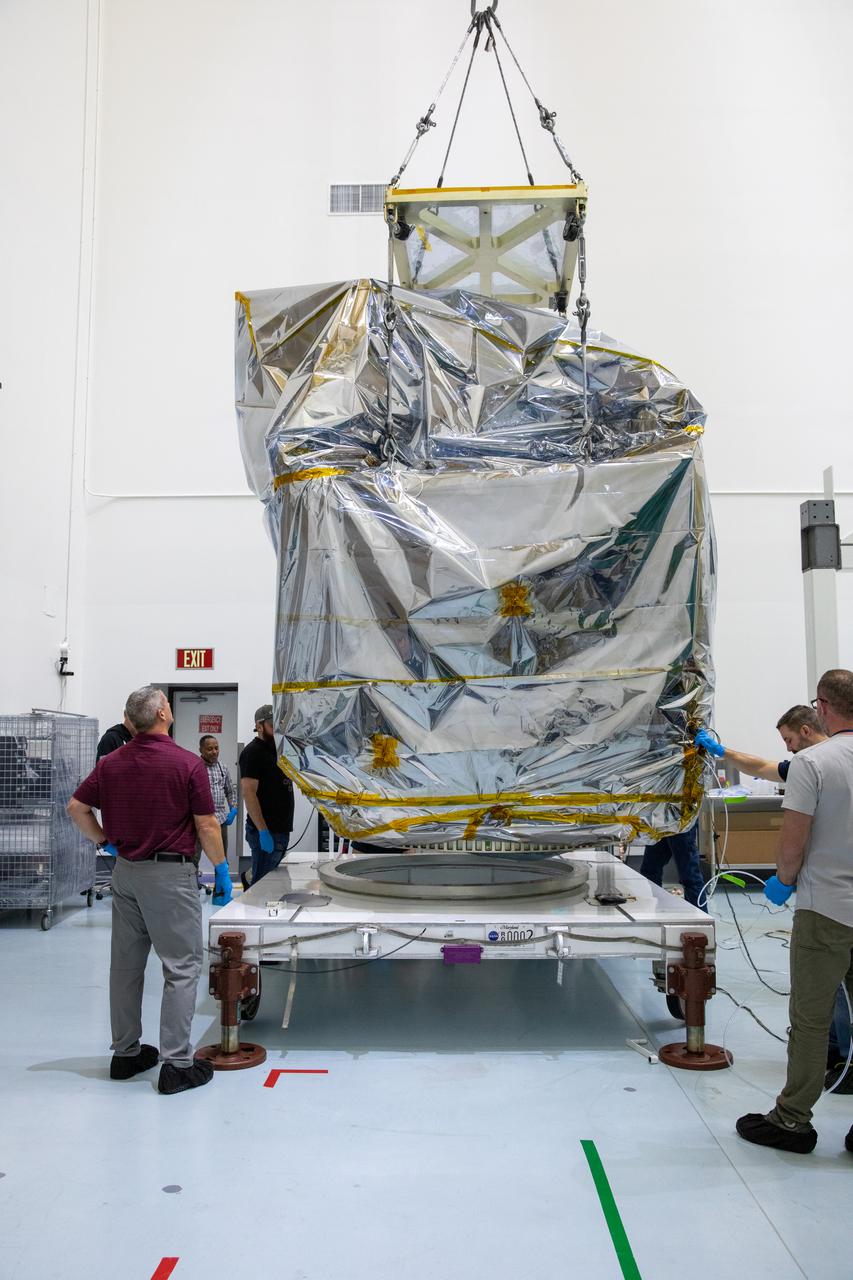
NASA’s Plankton, Aerosol, Cloud, ocean Ecosystem (PACE) observatory spacecraft is uncrated for prelaunch processing at the Astrotech Space Operations Facility near the agency’s Kennedy Space Center in Florida on Wednesday, Nov. 15, 2023. The PACE observatory will help us better understand how the ocean and atmosphere exchange carbon dioxide, measure key atmospheric variables associated with air quality and Earth's climate, and monitor ocean health, in part by studying phytoplankton, tiny plants and algae that sustain the marine food web. PACE will be encapsulated for launch aboard a SpaceX Falcon 9 rocket from Space Launch Complex 40 at Cape Canaveral Space Force Station in Florida.
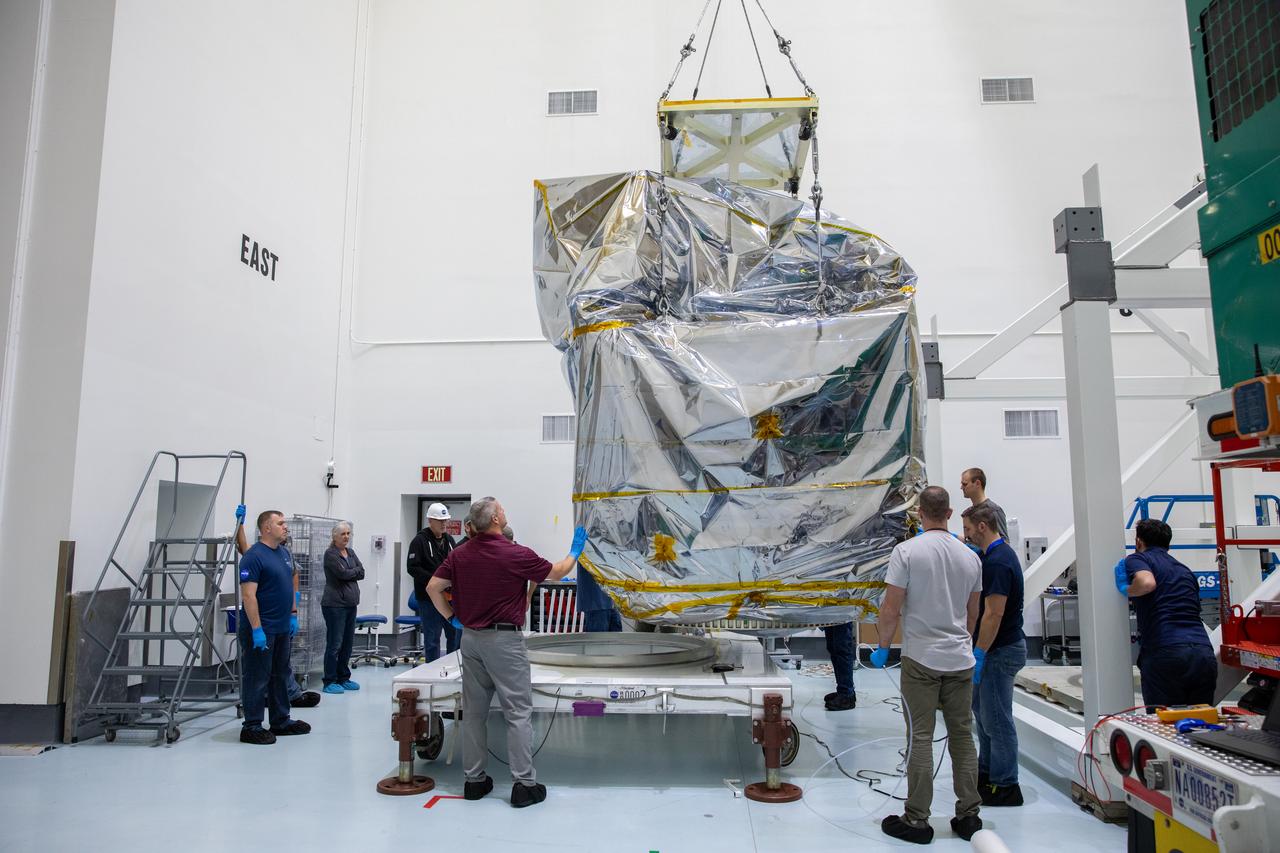
NASA’s Plankton, Aerosol, Cloud, ocean Ecosystem (PACE) observatory spacecraft is uncrated for prelaunch processing at the Astrotech Space Operations Facility near the agency’s Kennedy Space Center in Florida on Wednesday, Nov. 15, 2023. The PACE observatory will help us better understand how the ocean and atmosphere exchange carbon dioxide, measure key atmospheric variables associated with air quality and Earth's climate, and monitor ocean health, in part by studying phytoplankton, tiny plants and algae that sustain the marine food web. PACE will be encapsulated for launch aboard a SpaceX Falcon 9 rocket from Space Launch Complex 40 at Cape Canaveral Space Force Station in Florida.
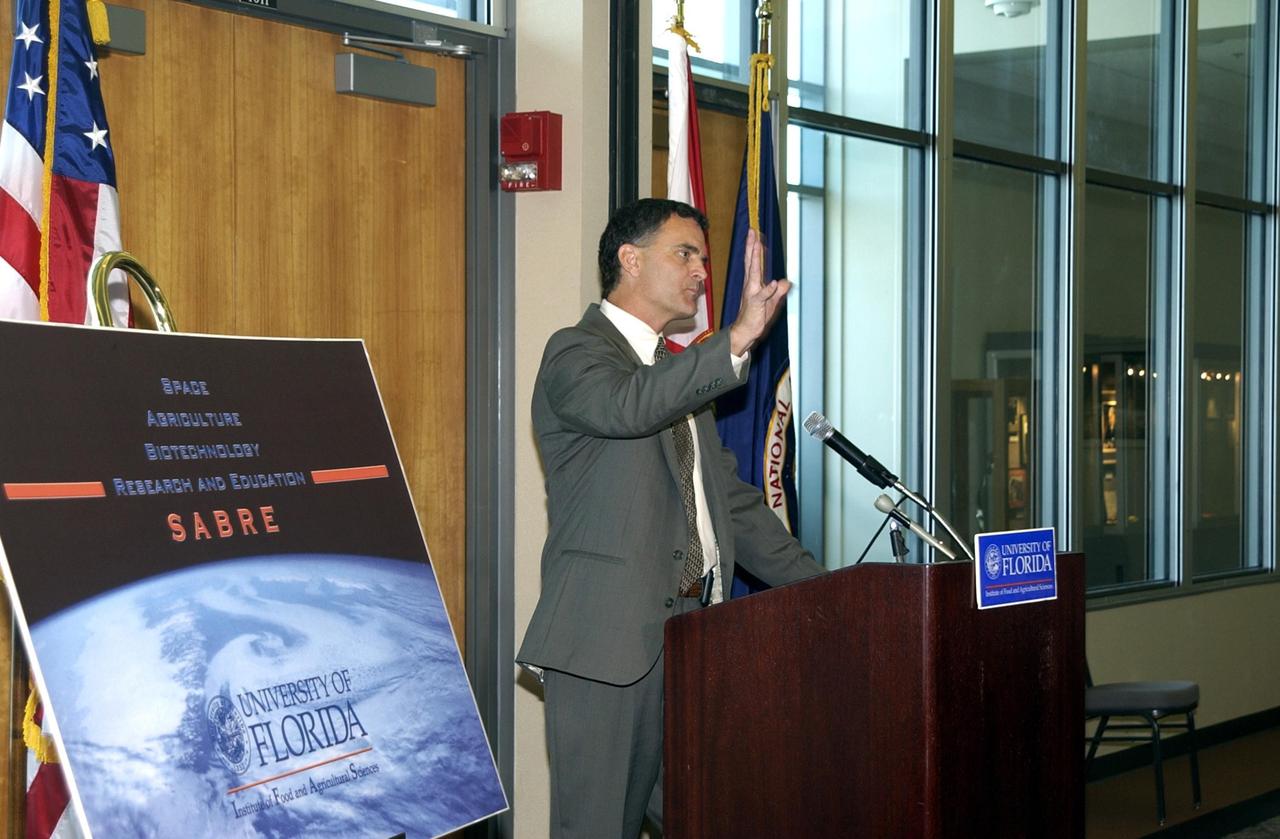
KENNEDY SPACE CENTER, FLA. -- Robert Ferl, professor in the horticultural sciences department and assistant director of the University of Florida Biotechnology Program, speaks during the opening ceremony to launch a new program called SABRE, Space Agricultural Biotechnology Research and Education, that involves UF and NASA. SABRE will focus on the discovery, development and application of the biological aspects of advanced life support strategies. The program will include faculty from UF's Institute of Food and Agricultural Sciences, who will be located at both KSC - in the state-owned Space Experiment Research and Processing Laboratory (SERPL) being built there - and UF in Gainesville. Ferl will direct and be responsible for coordinating the research and education efforts of UF and NASA.
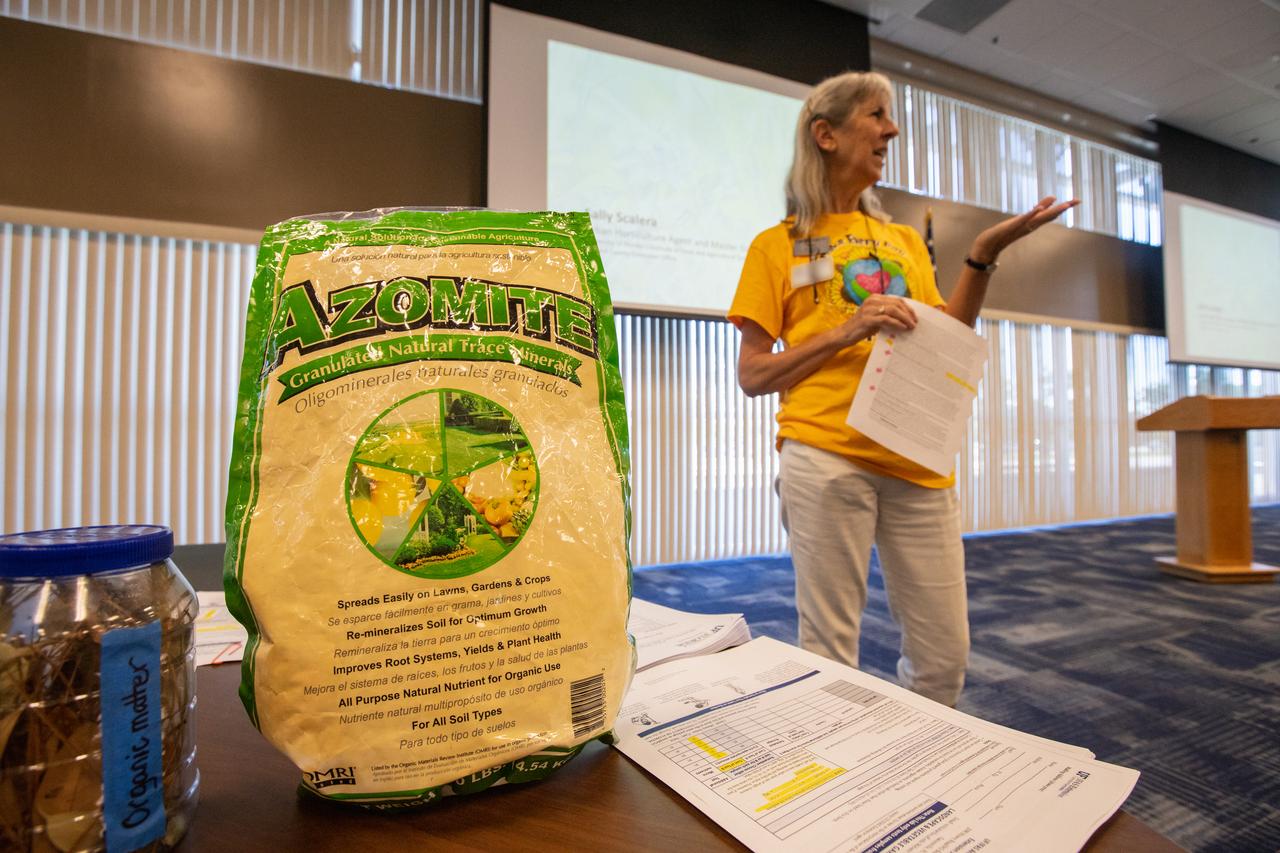
Sally Scalera, urban horticulture agent and master gardener coordinator from the University of Florida’s Institute of Food and Agricultural Sciences Brevard Extension Office, shows Kennedy Space Center employees some sustainable yard products available during her presentation on tips and tricks for a healthy yard and garden on April 24, 2019. Held inside the Florida spaceport’s Space Station Processing Facility Conference Center, Scalera also provided information on Florida-friendly landscaping practices. The lunch and learn was available for employees to attend as part of Kennedy’s Earth Day events.
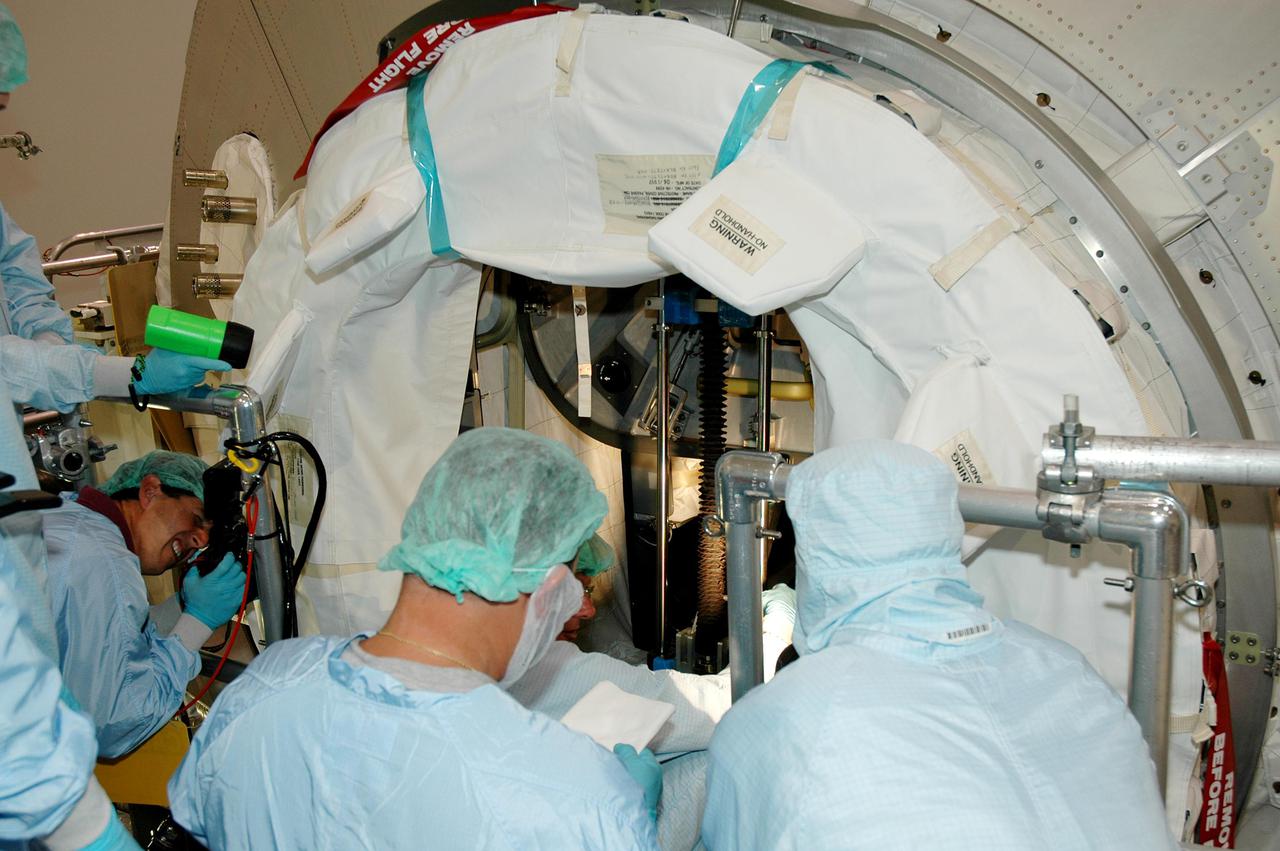
KENNEDY SPACE CENTER, FLA. -- Workers in the Space Station Processing Facility take final measurements flight on Italian-built Multi-Purpose Logistics Module Raffaello as they prepare to close the hatch for flight, a significant milestone on the road to Return to Flight. The module will travel to the International Space Station aboard Space Shuttle Discovery’s Return to Flight mission STS-114. Raffaello carries 12 racks of cargo, including food, clothing, spare parts and research equipment, to the Station. Shuttle Discovery is targeted for launch in a window extending May 15 through June 3.
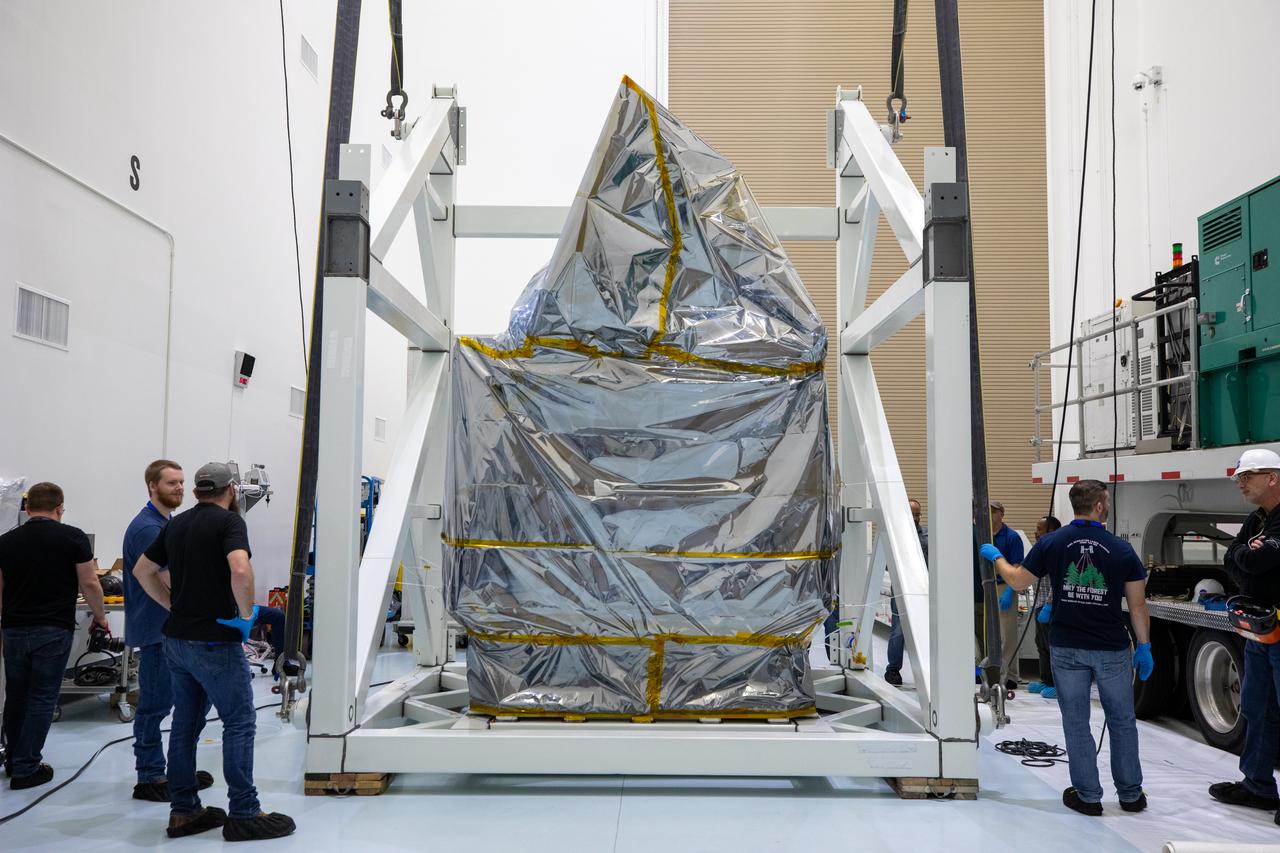
NASA’s Plankton, Aerosol, Cloud, ocean Ecosystem (PACE) observatory spacecraft is uncrated for prelaunch processing at the Astrotech Space Operations Facility near the agency’s Kennedy Space Center in Florida on Wednesday, Nov. 15, 2023. The PACE observatory will help us better understand how the ocean and atmosphere exchange carbon dioxide, measure key atmospheric variables associated with air quality and Earth's climate, and monitor ocean health, in part by studying phytoplankton, tiny plants and algae that sustain the marine food web. PACE will be encapsulated for launch aboard a SpaceX Falcon 9 rocket from Space Launch Complex 40 at Cape Canaveral Space Force Station in Florida.
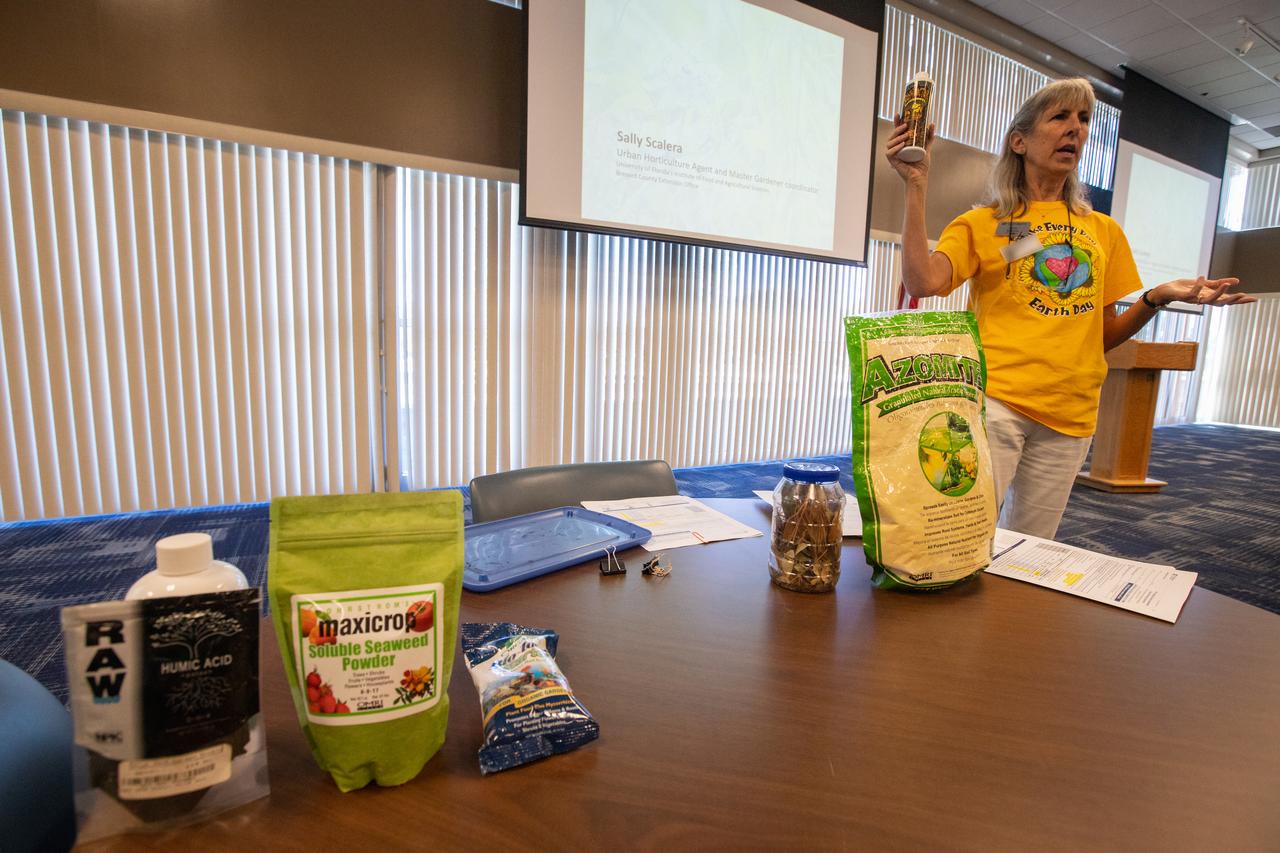
Sally Scalera, urban horticulture agent and master gardener coordinator from the University of Florida’s Institute of Food and Agricultural Sciences Brevard Extension Office, shows Kennedy Space Center employees some sustainable yard products available during her presentation on tips and tricks for a healthy yard and garden on April 24, 2019. Held inside the Florida spaceport’s Space Station Processing Facility Conference Center, Scalera also provided information on Florida-friendly landscaping practices. The lunch and learn was available for employees to attend as part of Kennedy’s Earth Day events.
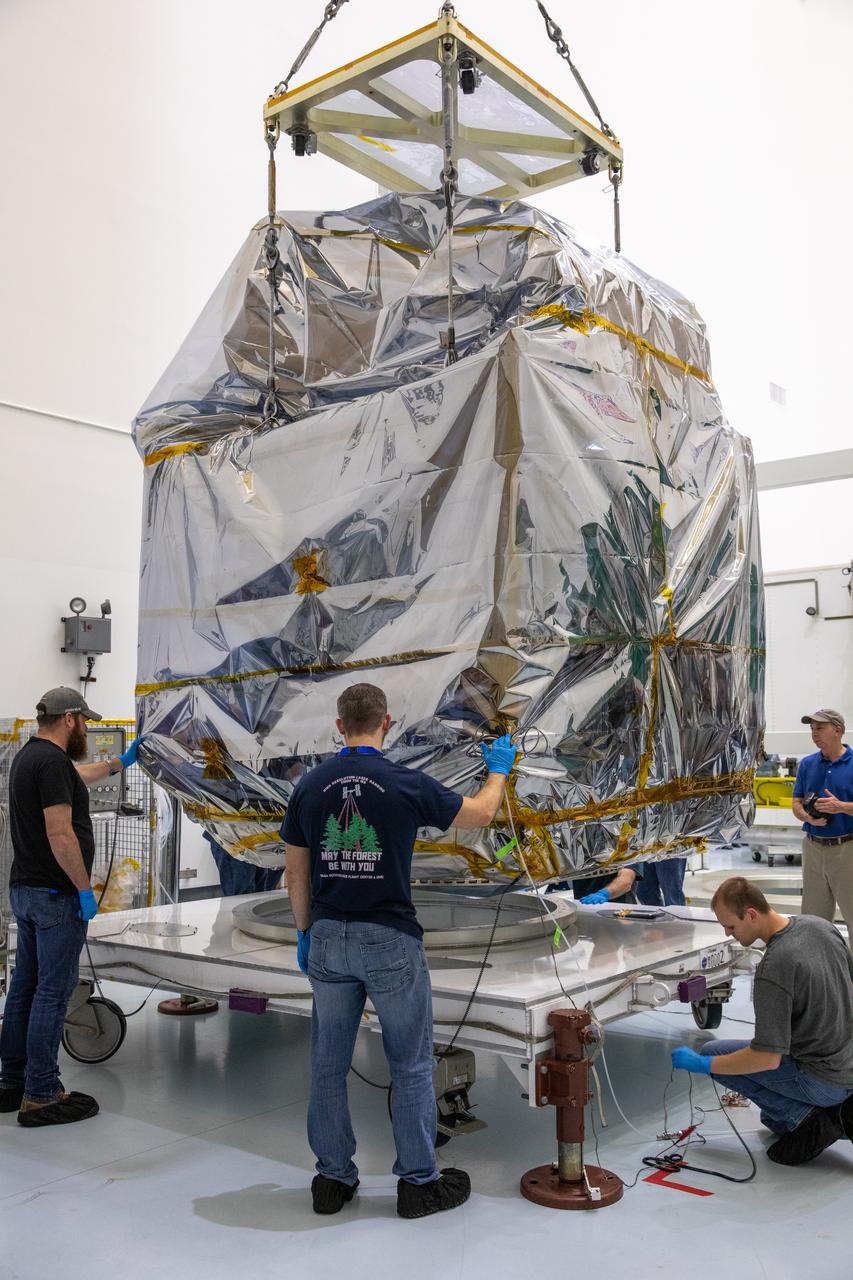
NASA’s Plankton, Aerosol, Cloud, ocean Ecosystem (PACE) observatory spacecraft is uncrated for prelaunch processing at the Astrotech Space Operations Facility near the agency’s Kennedy Space Center in Florida on Wednesday, Nov. 15, 2023. The PACE observatory will help us better understand how the ocean and atmosphere exchange carbon dioxide, measure key atmospheric variables associated with air quality and Earth's climate, and monitor ocean health, in part by studying phytoplankton, tiny plants and algae that sustain the marine food web. PACE will be encapsulated for launch aboard a SpaceX Falcon 9 rocket from Space Launch Complex 40 at Cape Canaveral Space Force Station in Florida.
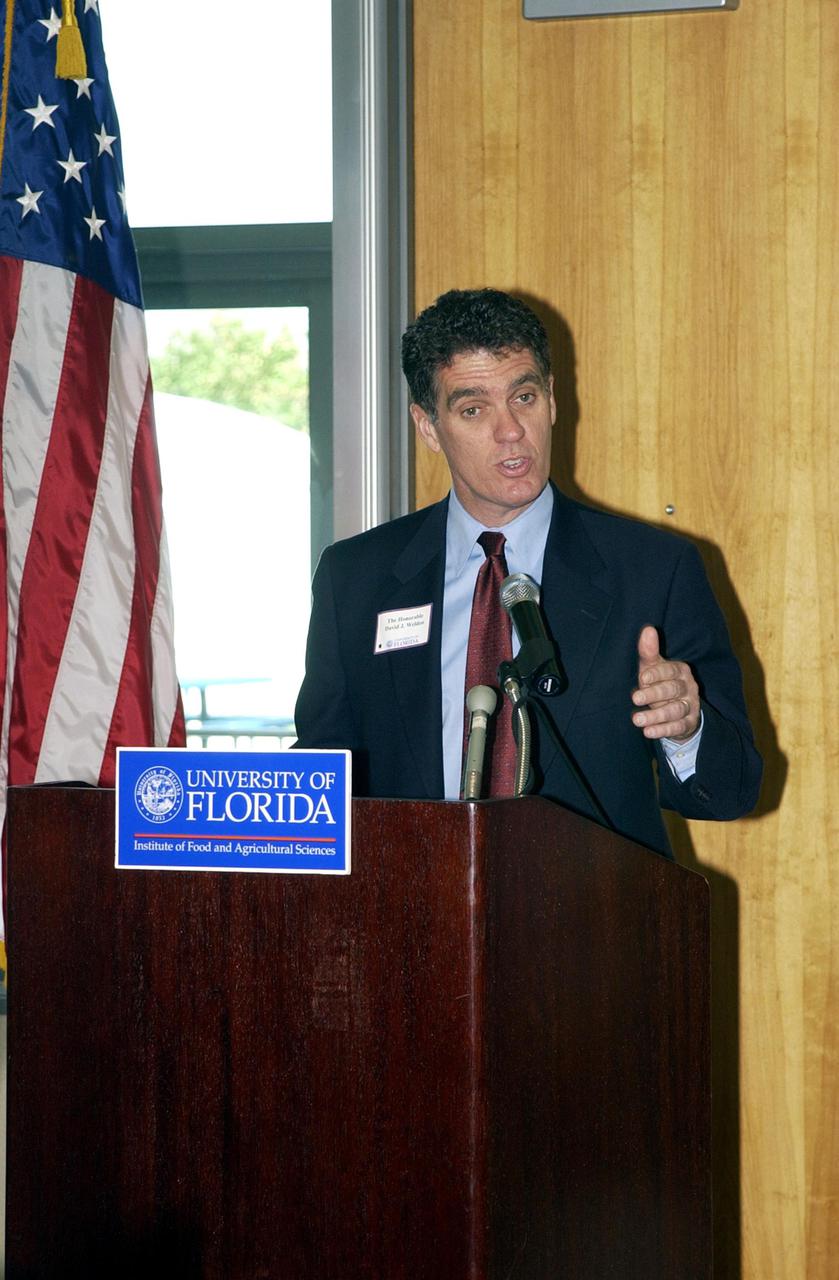
KENNEDY SPACE CENTER, FLA. -- U.S. Representative Dave Weldon addresses a large group attending the opening of a new program known as SABRE, Space Agricultural Biotechnology Research and Education, that involves the University of Florida and NASA. SABRE will focus on the discovery, development and application of the biological aspects of advanced life support strategies. The program will include faculty from UF's Institute of Food and Agricultural Sciences, who will be located at both KSC - in the state-owned Space Experiment Research and Processing Laboratory (SERPL) being built there - and UF in Gainesville. SABRE will be directed by Robert Ferl, professor in the horticultural sciences department and assistant director of UF's Biotechnology Program. He will be responsible for coordinating the research and education efforts of UF and NASA
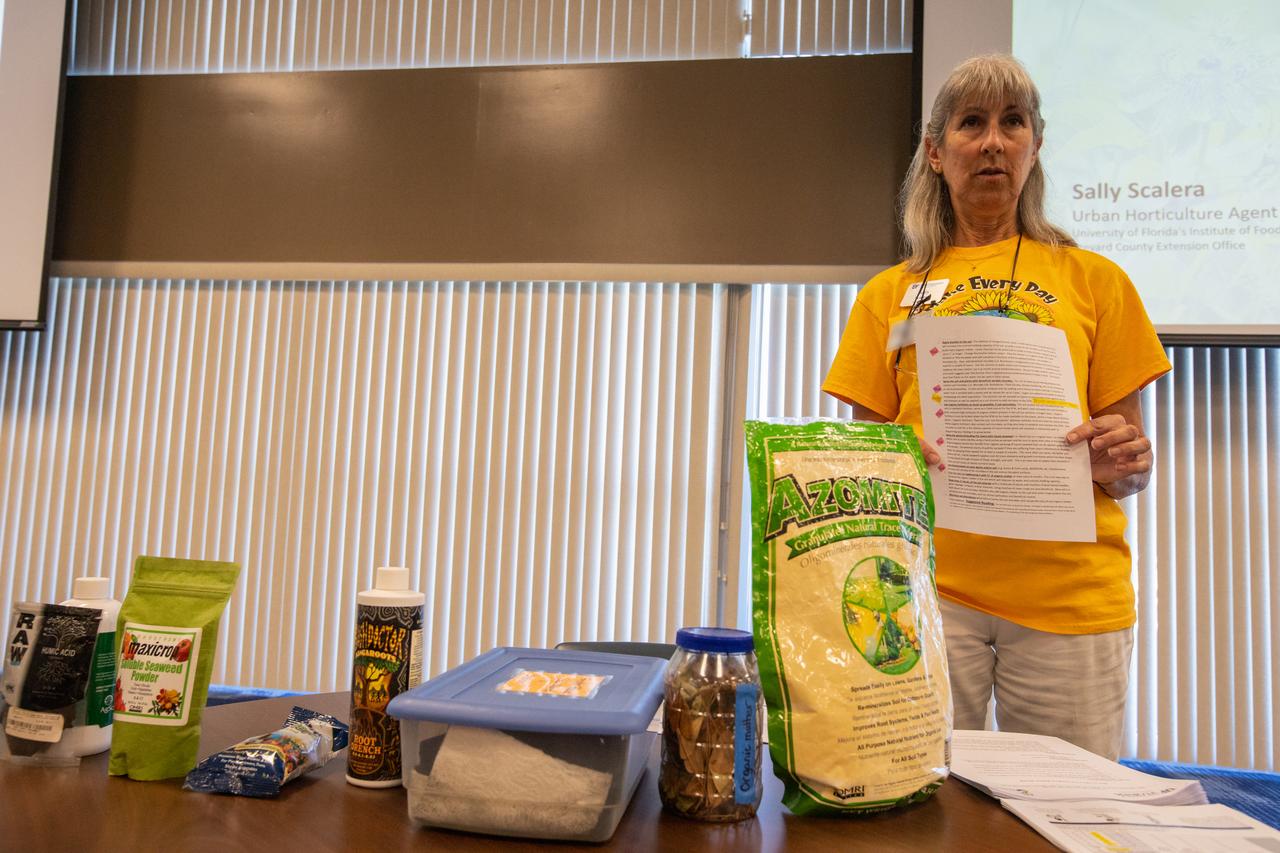
Sally Scalera, urban horticulture agent and master gardener coordinator from the University of Florida’s Institute of Food and Agricultural Sciences Brevard Extension Office, shows Kennedy Space Center employees some sustainable yard products available during her presentation on tips and tricks for a healthy yard and garden on April 24, 2019. Held inside the Florida spaceport’s Space Station Processing Facility Conference Center, Scalera also provided information on Florida-friendly landscaping practices. The lunch and learn was available for employees to attend as part of Kennedy’s Earth Day events.
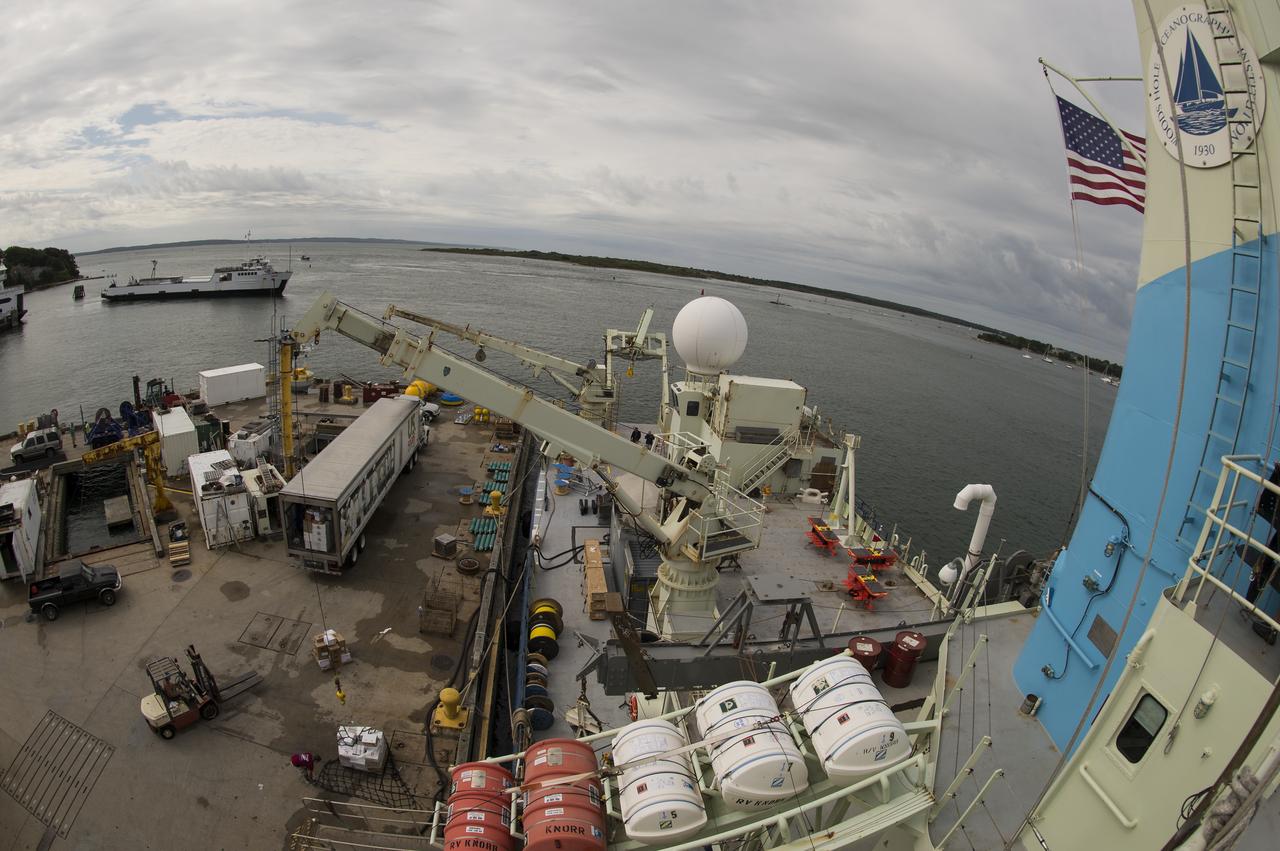
Food and supplies are loaded onboard the Woods Hole Oceanographic Institution's research vessel Knorr on Tuesday, Sept. 4, 2012, in Woods Hole, Mass. Knorr is scheduled to depart on Sept. 6 to take part in the Salinity Processes in the Upper Ocean Regional Study (SPURS). The NASA-sponsored expedition will sail to the North Atlantic's saltiest spot to get a detailed, 3-D picture of how salt content fluctuates in the ocean's upper layers and how these variations are related to shifts in rainfall patterns around the planet. Photo Credit: (NASA/Bill Ingalls)

VANDENBERG AIR FORCE BASE, Calif. -- Loaded on a transporter, the payload faring containing the Landsat Data Continuity Mission LDCM spacecraft leaves the Astrotech processing facility at Vandenberg Air Force Base in California and heads toward the launch pad at Space Launch Complex-3E. There it will be hoisted atop a United Launch Alliance Atlas V for launch. LDCM is the eighth satellite in the Landsat Program series of Earth-observing missions jointly managed by NASA and the U.S. Geological Survey. LDCM will continue the program’s critical role in monitoring, understanding and managing the resources needed for human sustainment such as food, water and forests. Photo credit: NASA_VAFB