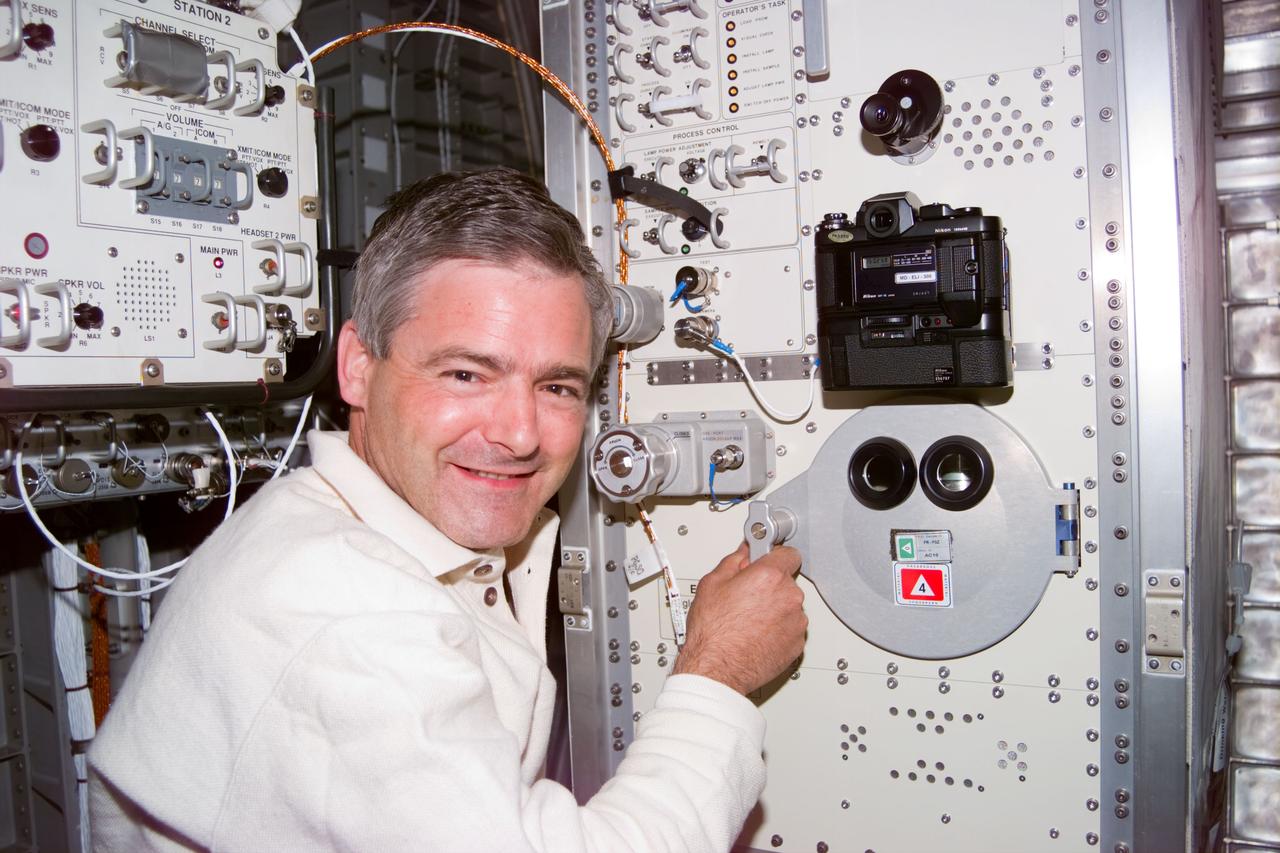
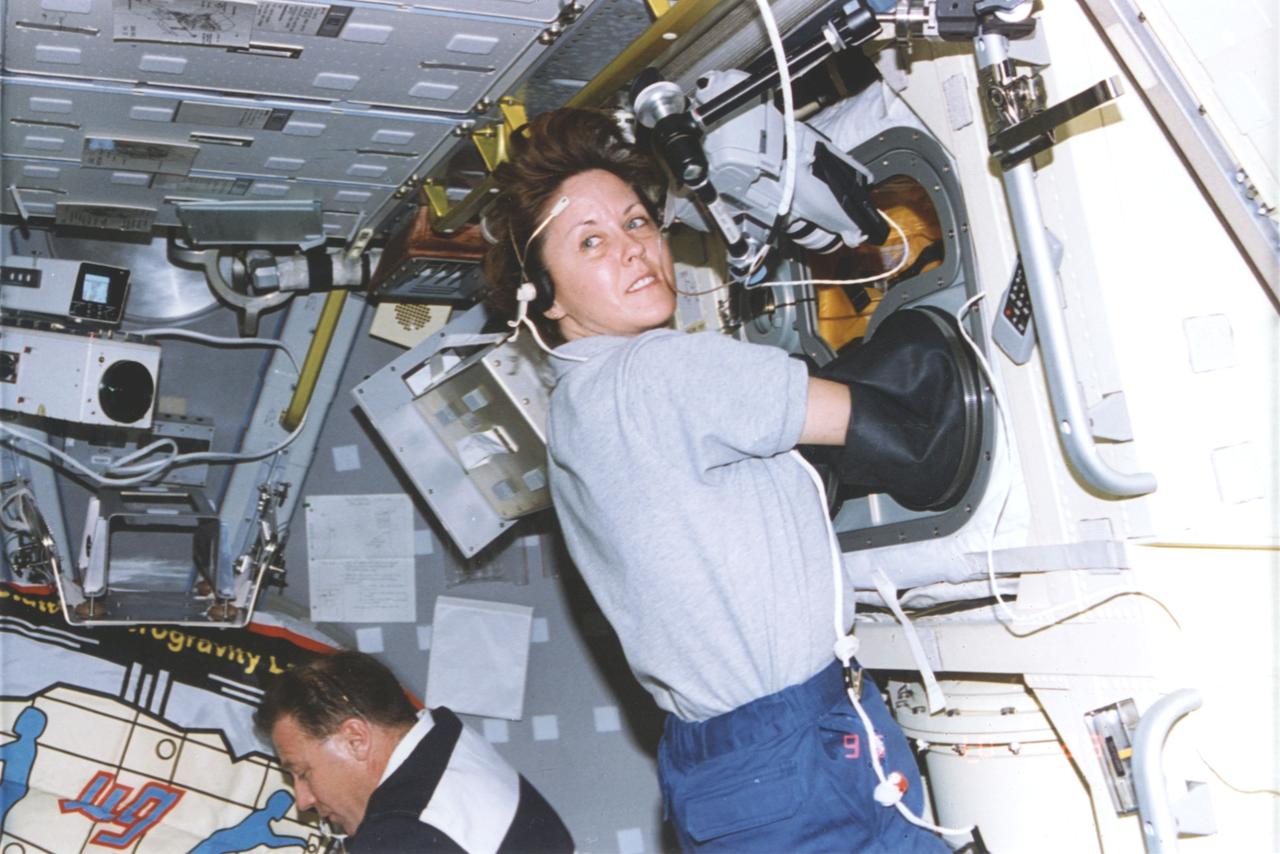
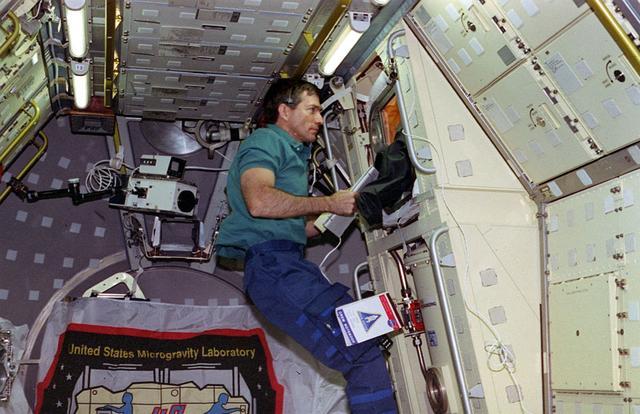
S77-E-5094 (25 May 1996) --- Astronaut Marc Garneau, mission specialist representing the Canadian Space Agency (CSA), stands at the Commercial Float Zone Furnace (CFZF) in the Spacehab Module onboard the Earth-orbiting Space Shuttle Endeavour.
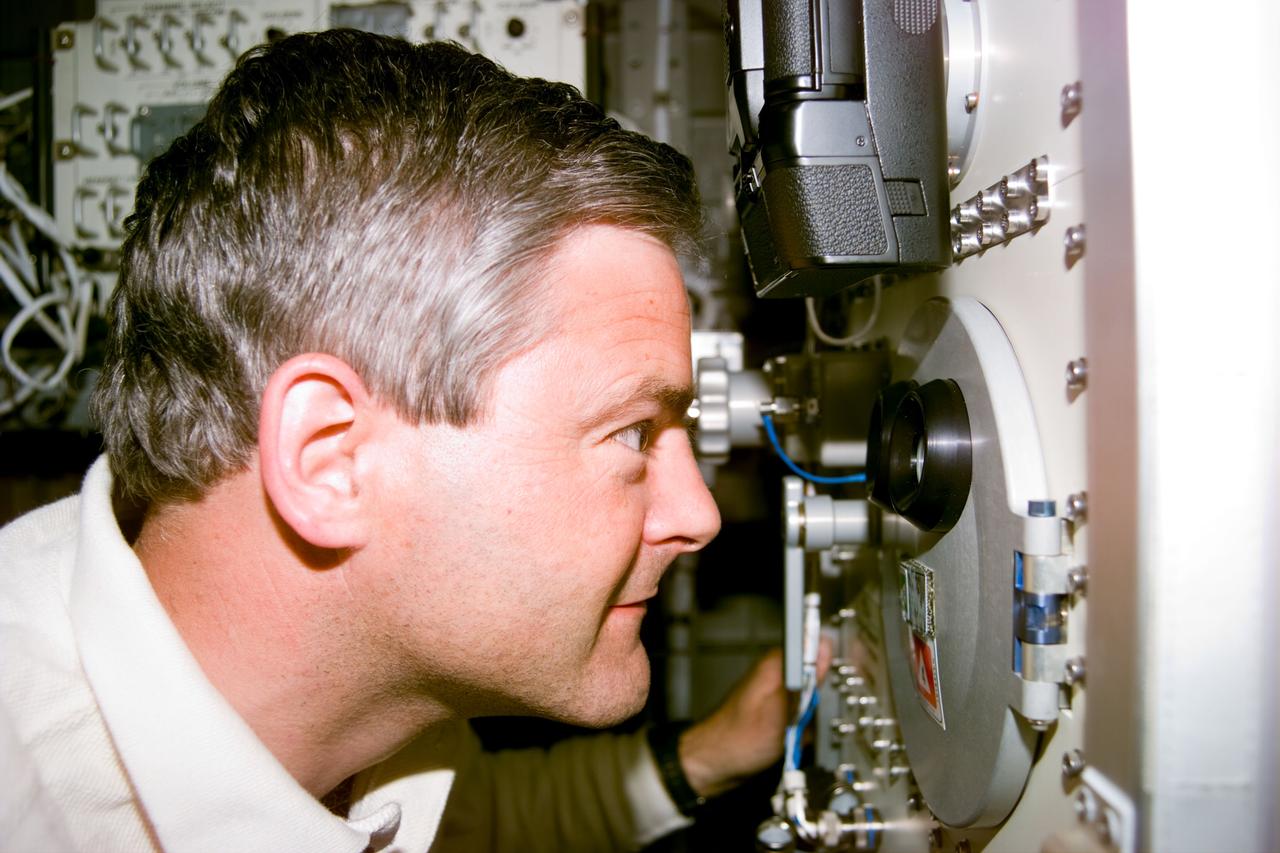
S77-E-5093 (25 May 1996) --- Astronaut Marc Garneau, mission specialist representing the Canadian Space Agency (CSA), makes a visual check of the Commercial Float Zone Furnace (CFZF), a single-rack-mounted facility in the Spacehab Module onboard the Earth-orbiting Space Shuttle Endeavour. The scene was recorded with an Electronic Still Camera (ESC).
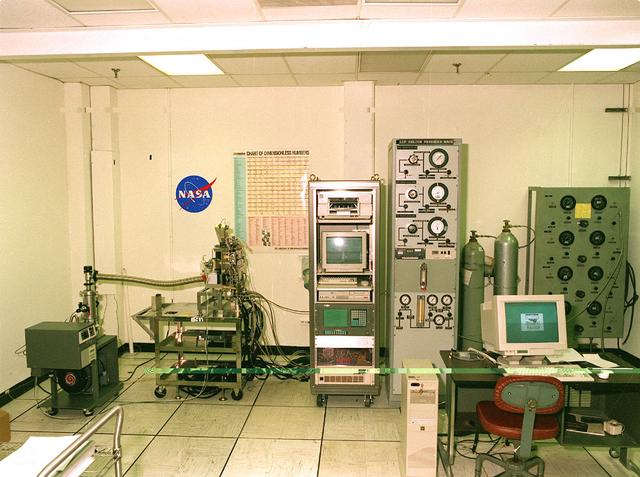
Large Isothermal Furnace (LIF) was flown on a mission in cooperation with the National Space Development Agency (NASDA) of Japan. LIF is a vacuum-heating furnace designed to heat large samples uniformly. The furnace consists of a sample container and heating element surrounded by a vacuum chamber. A crewmemeber will insert a sample cartridge into the furnace. The furnace will be activated and operations will be controlled automatically by a computer in response to an experiment number entered on the control panel. At the end of operations, helium will be discharged into the furnace, allowing cooling to start. Cooling will occur through the use of a water jacket while rapid cooling of samples can be accomplished through a controlled flow of helium. Data from experiments will help scientists better understand this important process which is vital to the production of high-quality semiconductor crystals.

Bill Davis performing checkout at the Materials Experiment Assembly (MEA) Isothermal Furnace.
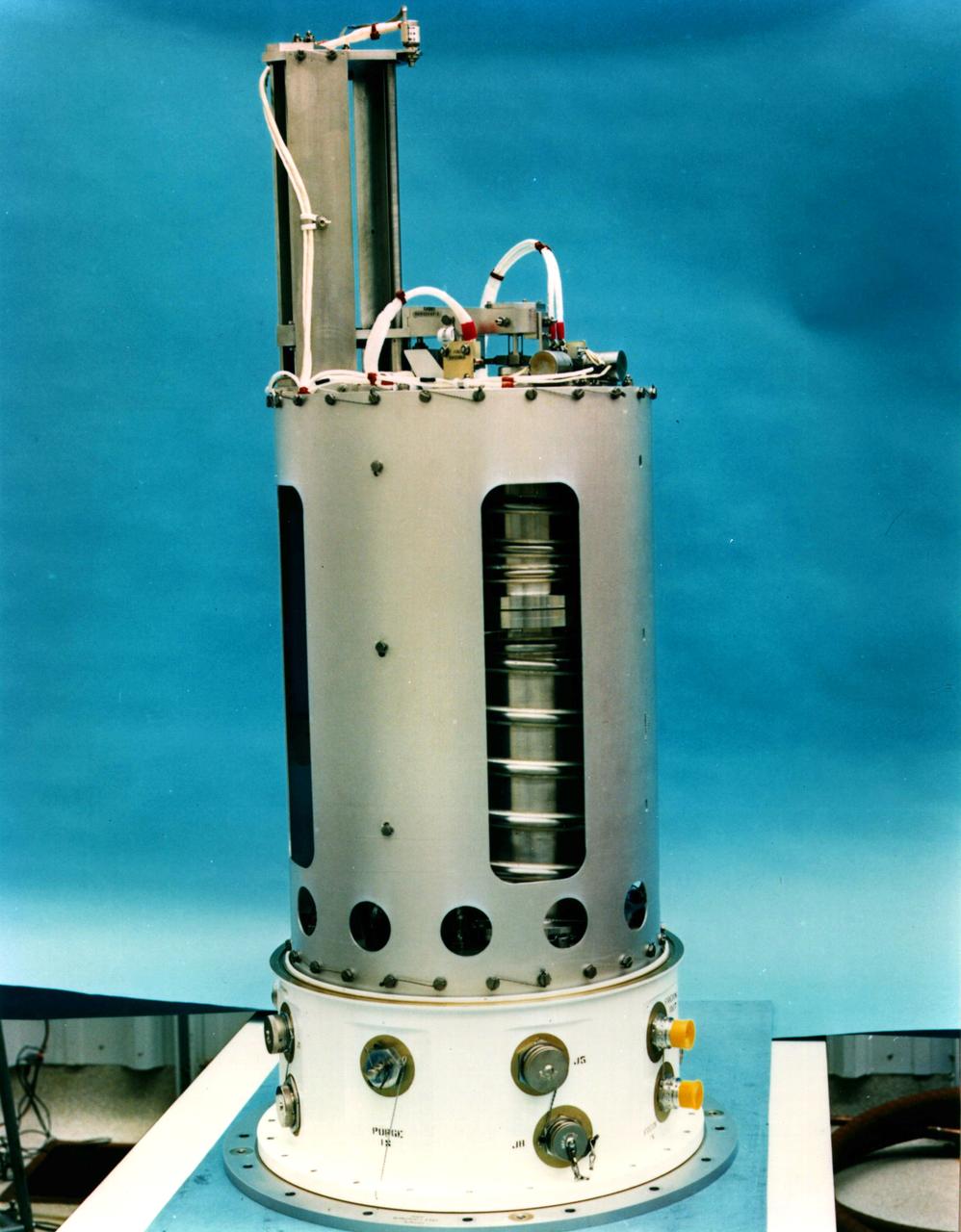
The Advanced Automated Directional Solidification Furnace (AADSF) with the Experimental Apparatus Container (EAC) removed flew during the USMP-2 mission. During USMP-2, the AADSF was used to study the growth of mercury cadmium telluride crystals in microgravity by directional solidification, a process commonly used on earth to process metals and grow crystals. The furnace is tubular and has three independently controlled temperature zones . The sample travels from the hot zone of the furnace (1600 degrees F) where the material solidifies as it cools. The solidification region, known as the solid/liquid interface, moves from one end of the sample to the other at a controlled rate, thus the term directional solidification.
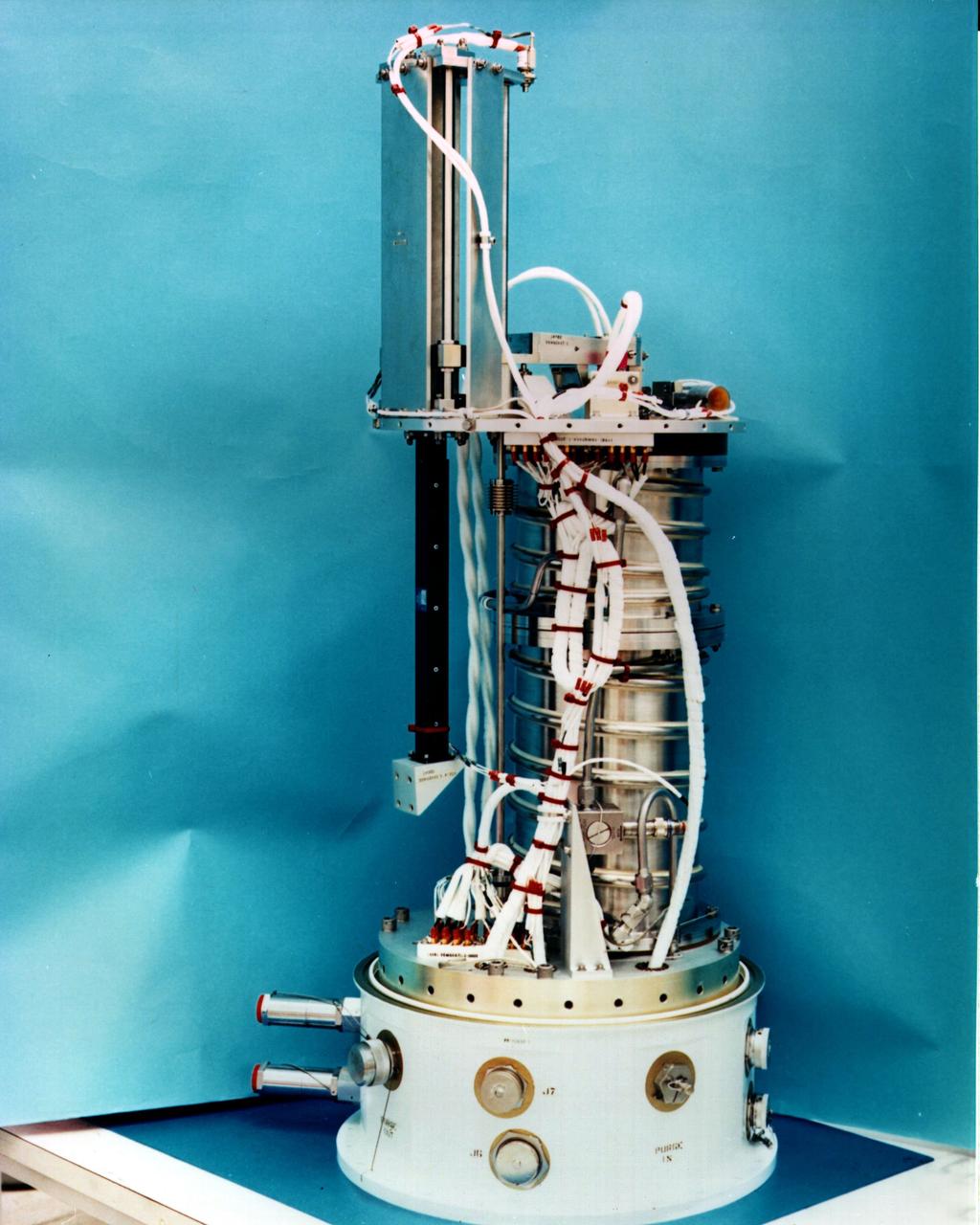
The Advanced Automated Directional Solidification Furnace (AADSF) flew during the USMP-2 mission. During USMP-2, the AADSF was used to study the growth of mercury cadmium telluride crystals in microgravity by directional solidification, a process commonly used on earth to process metals and grow crystals. The furnace is tubular and has three independently controlled temperature zones. The sample travels from the hot zone of the furnace (1600 degrees F) where the material solidifies as it cools. The solidification region, known as the solid/liquid interface, moves from one end of the sample to the other at a controlled rate, thus the term directional solidification.
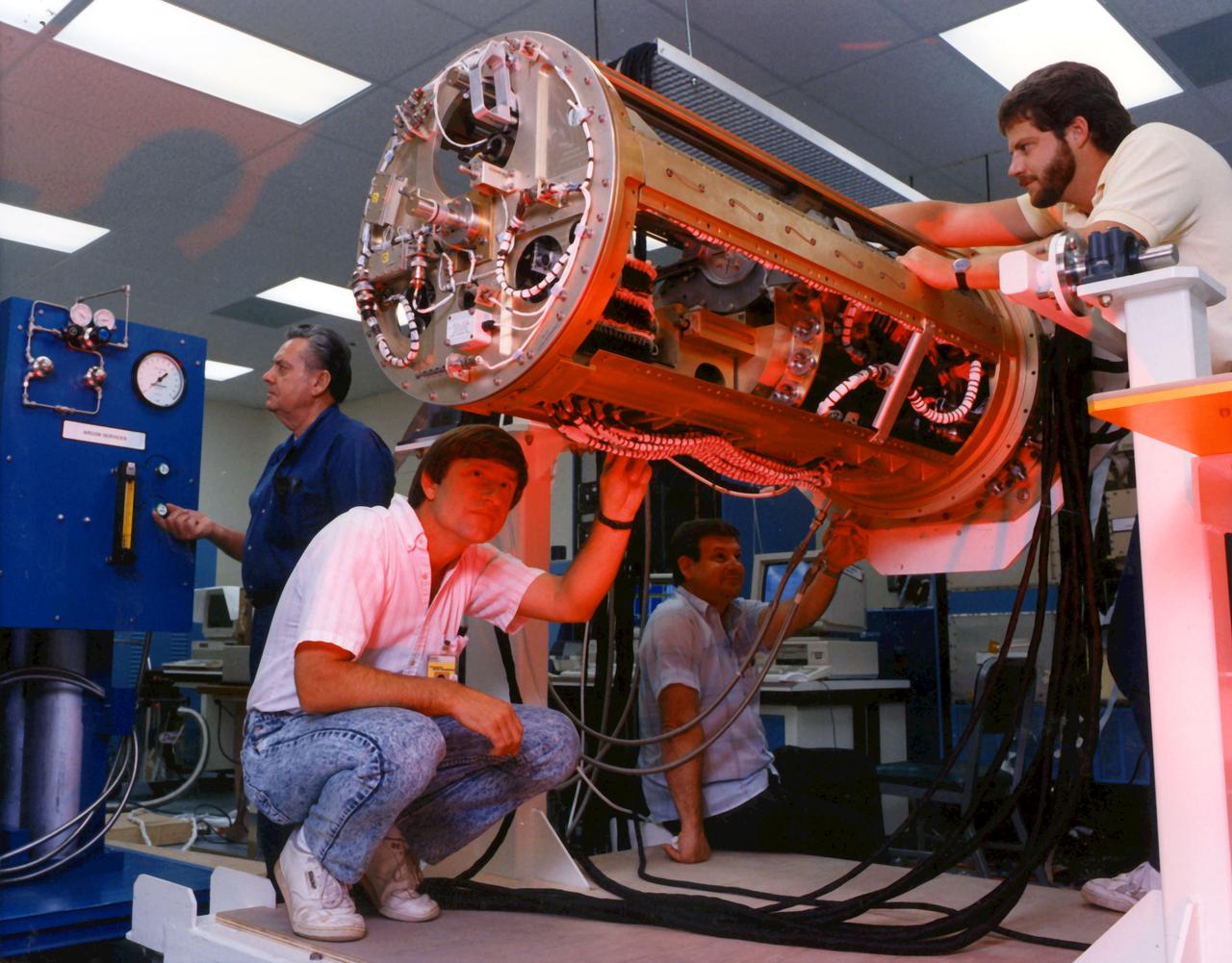
Crystal Growth Furnace (CGF) Being Tested at Manufacturing Facilty
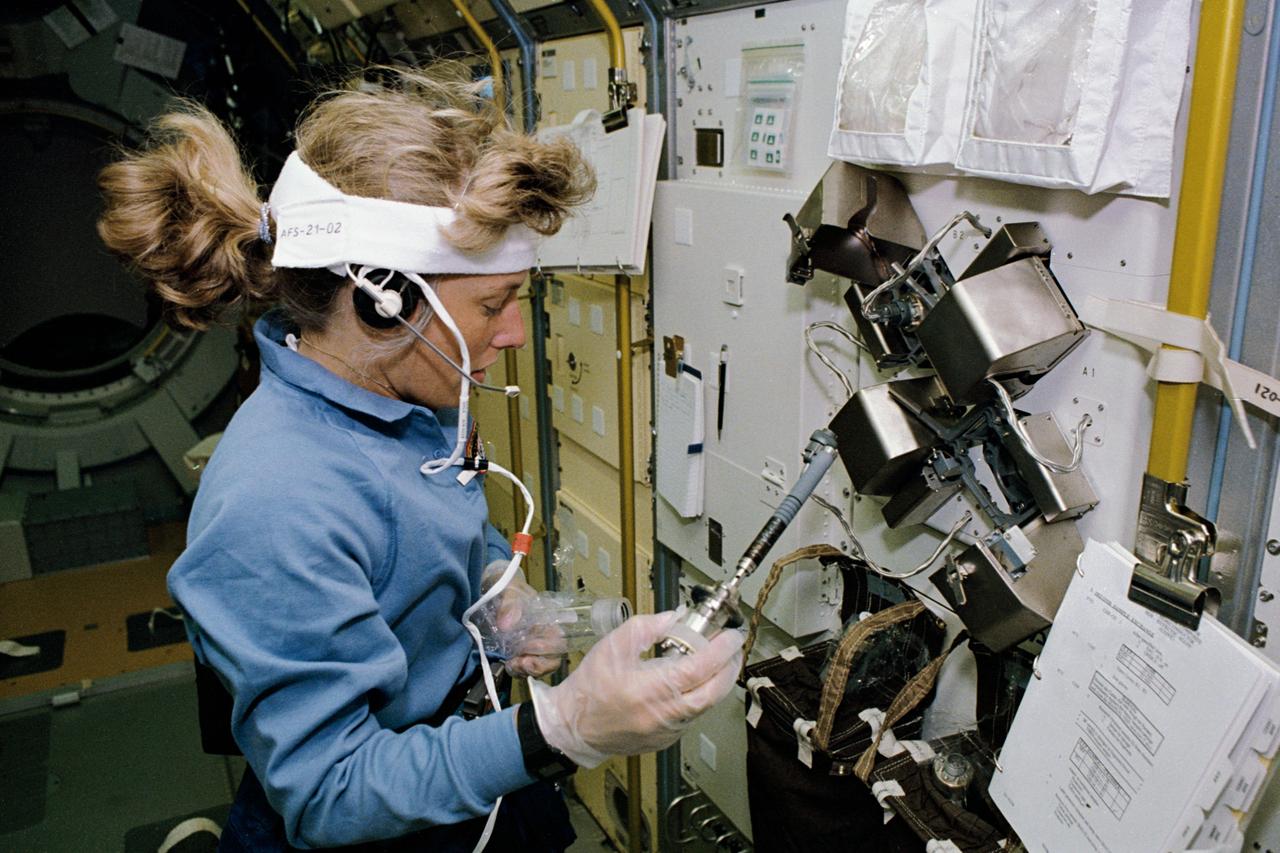
STS047-02-003 (12 - 20 Sept 1992) --- Astronaut N. Jan Davis, mission specialist, works at the Continuous Heating Furnace (CHF) in the Spacelab-J Science Module. This furnace provided temperatures up to 1,300 degrees Celsius and rapid cooling to two sets of samples concurrently. The furnace accommodated in-space experiments in the Fabrication of Si-As-Te:Ni Ternary Amorphous Semiconductor and the Crystal Growth of Compound Semiconductors. These were two of the many experiments designed and monitored by Japan's National Space Development Agency (NASDA).
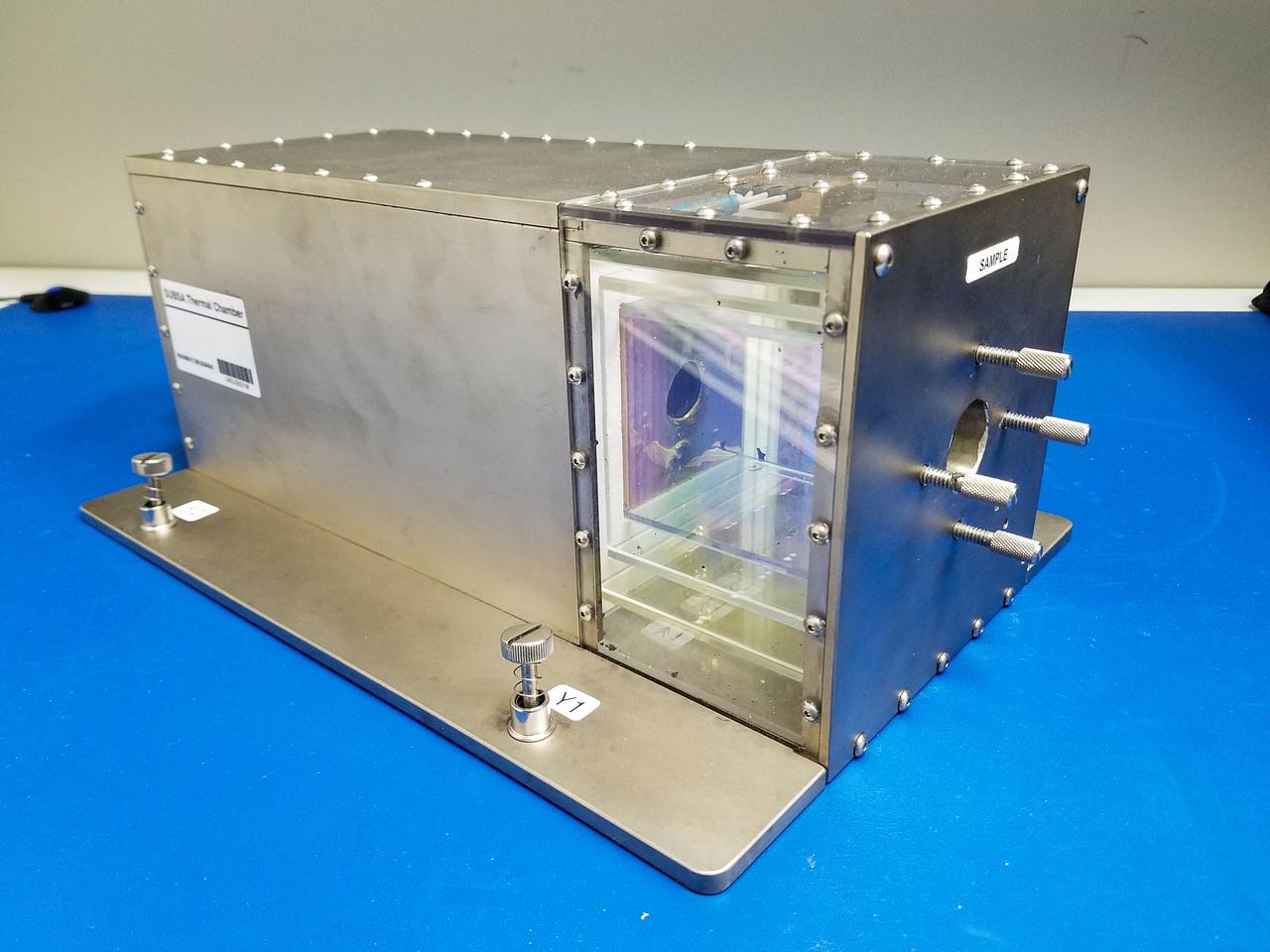
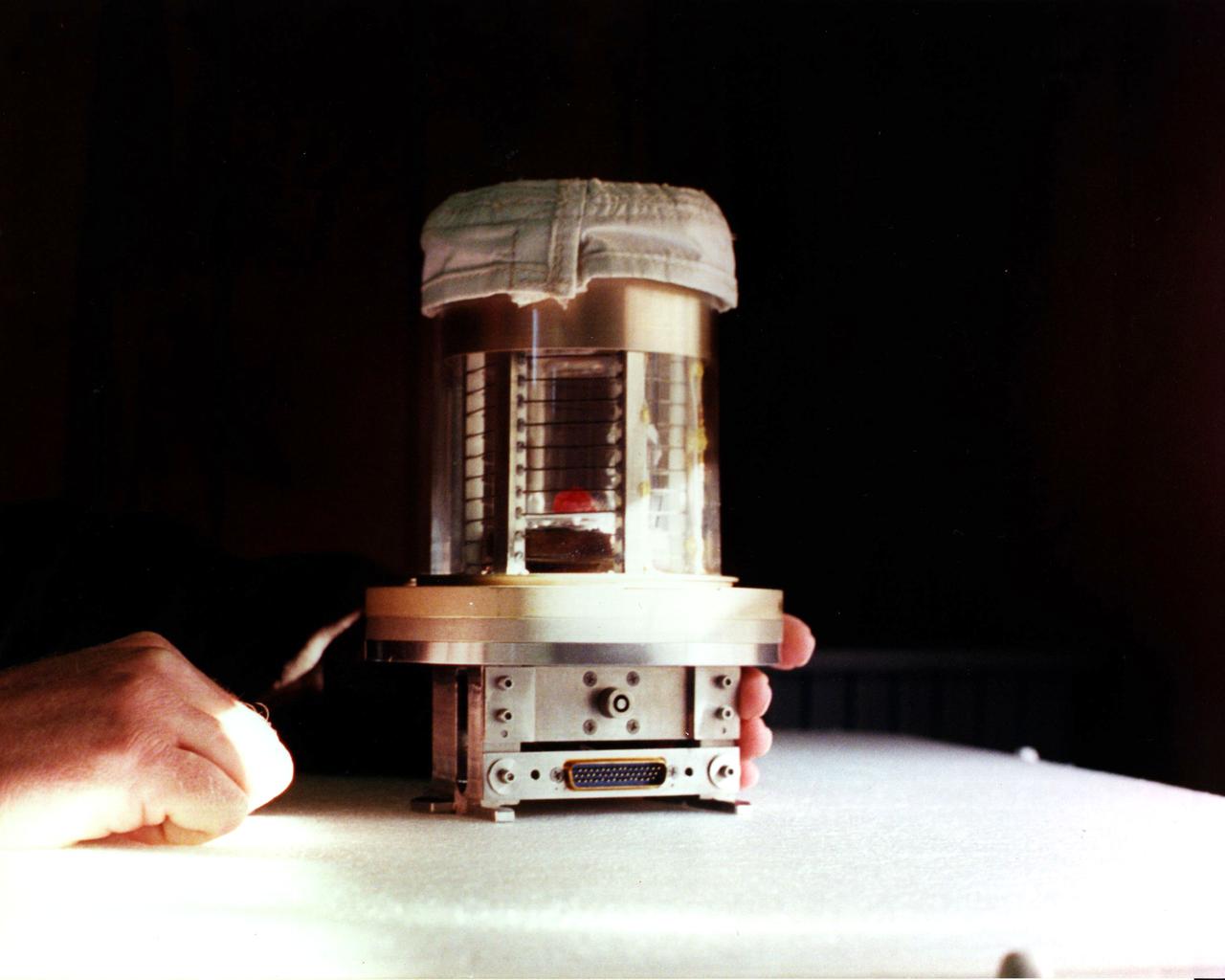
jsc2020e016982 (7/24/2019) --- A preflight view of the SUBSA Thermal Chamber. SUBSA is a high-temperature furnace that can be used to study how microgravity affects the synthesis of semiconductor and scintillator crystals. Image courtesy of: Kenneth Barton, Techshot, Inc.
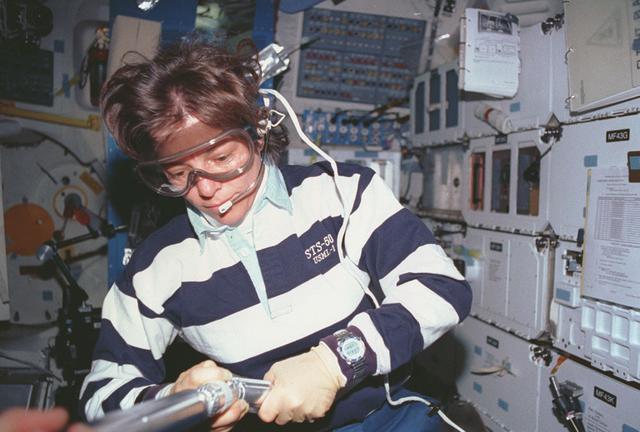
Space Shuttle Columbia (STS-50) astronaut Bornie Dunbar wears protective goggles to assemble a zeolite sample cartridge for the Crystal Growth Furnace (CGF) in the United States Microgravity Laboratory-1 (USML-1) science module.
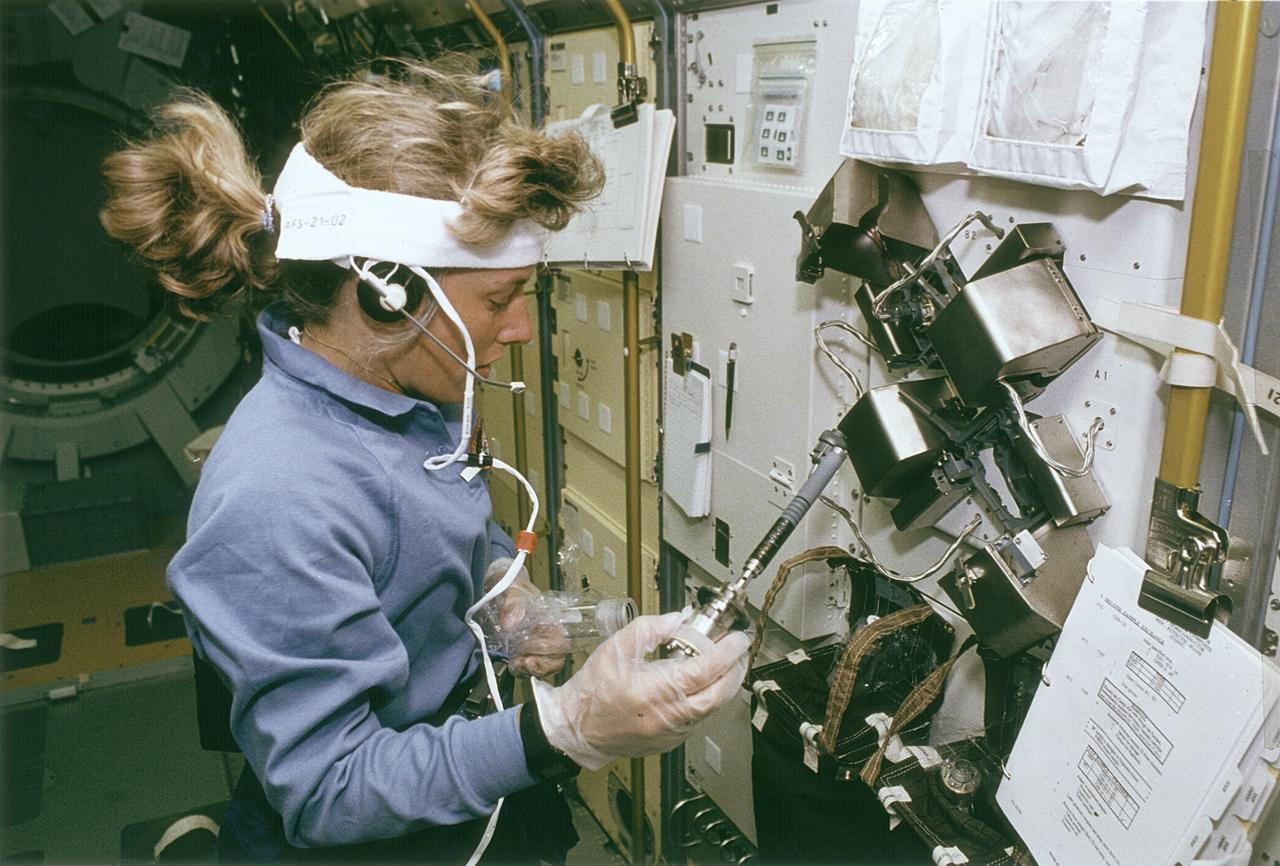
Space Shuttle Endeavour (STS-47) onboard photo of Astronaut N. Jan Davis at work at the Continuous Heating Furnace (CHF) in the Spacelab-J Science Module. Spacelab-J is a combined National Space Development Agency of Japan (NASDA) and NASA mission. The objectives included life sciences, microgravity and technology research.
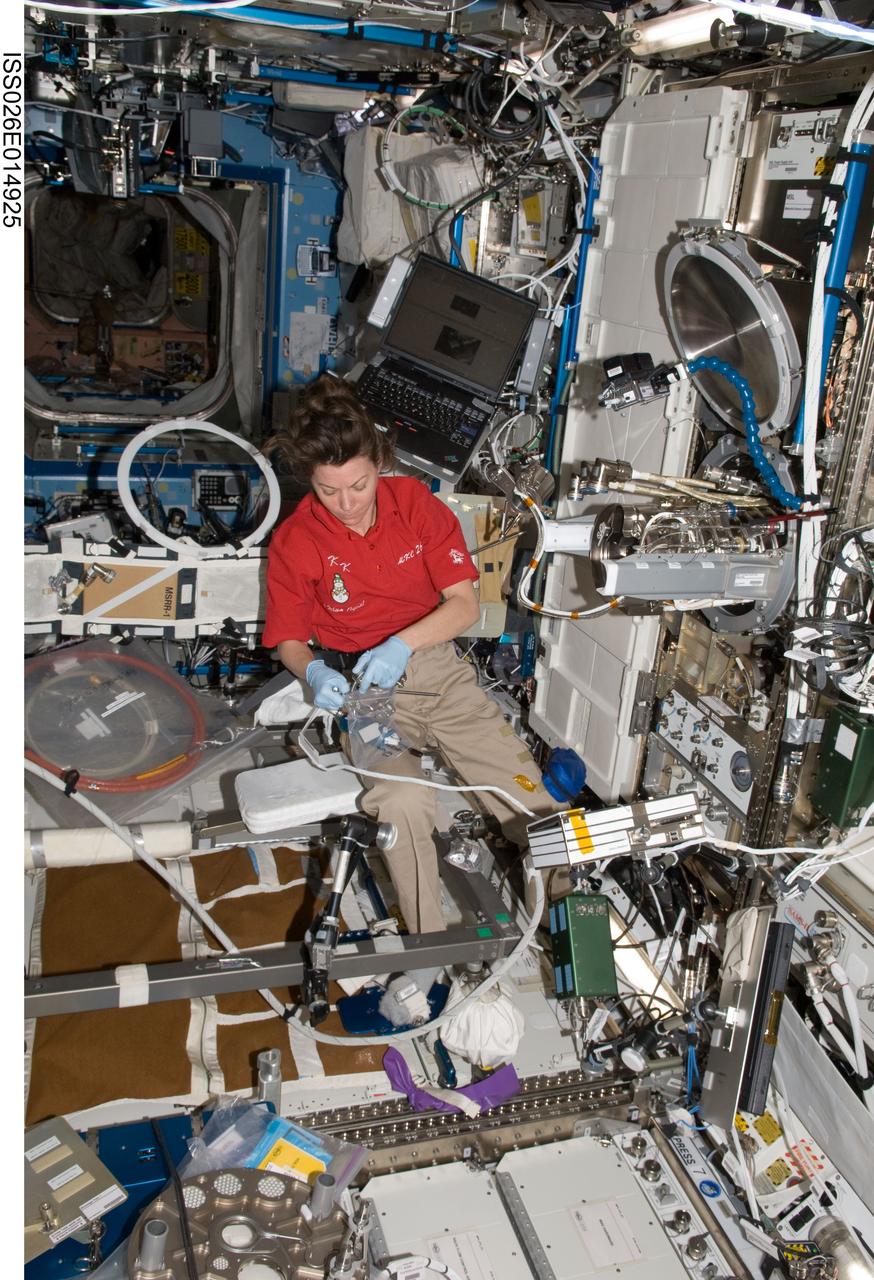
ISS026-E-014925 (4 Jan. 2011) --- NASA astronaut Catherine (Cady) Coleman, Expedition 26 flight engineer, removes the Low Gradient Furnace (LGF) and installs the Solidification and Quench Furnace (SQF) in the Material Science Laboratory (MSL) in the Destiny laboratory of the International Space Station.
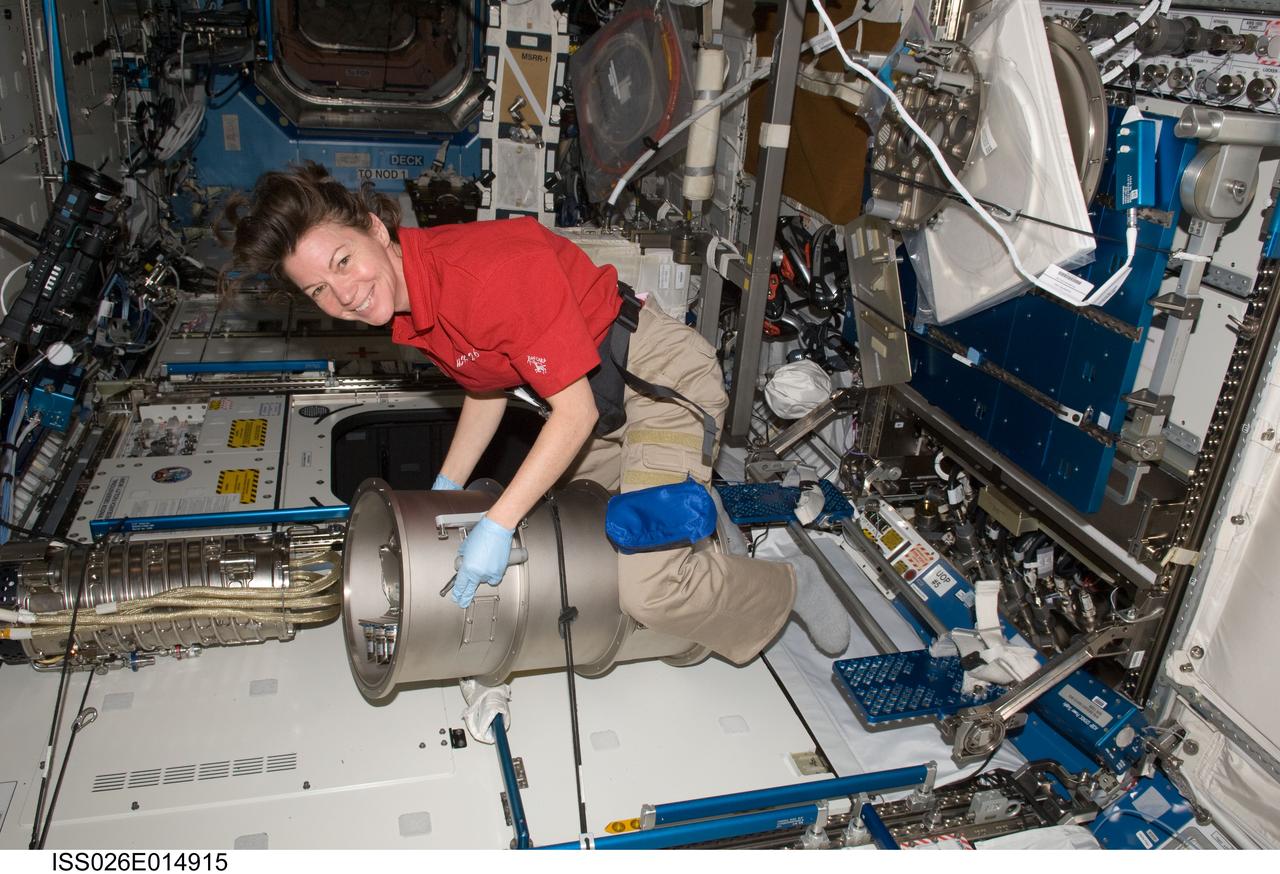
ISS026-E-014915 (4 Jan. 2011) --- NASA astronaut Catherine (Cady) Coleman, Expedition 26 flight engineer, removes the Low Gradient Furnace (LGF) and installs the Solidification and Quench Furnace (SQF) in the Material Science Laboratory (MSL) in the Destiny laboratory of the International Space Station.
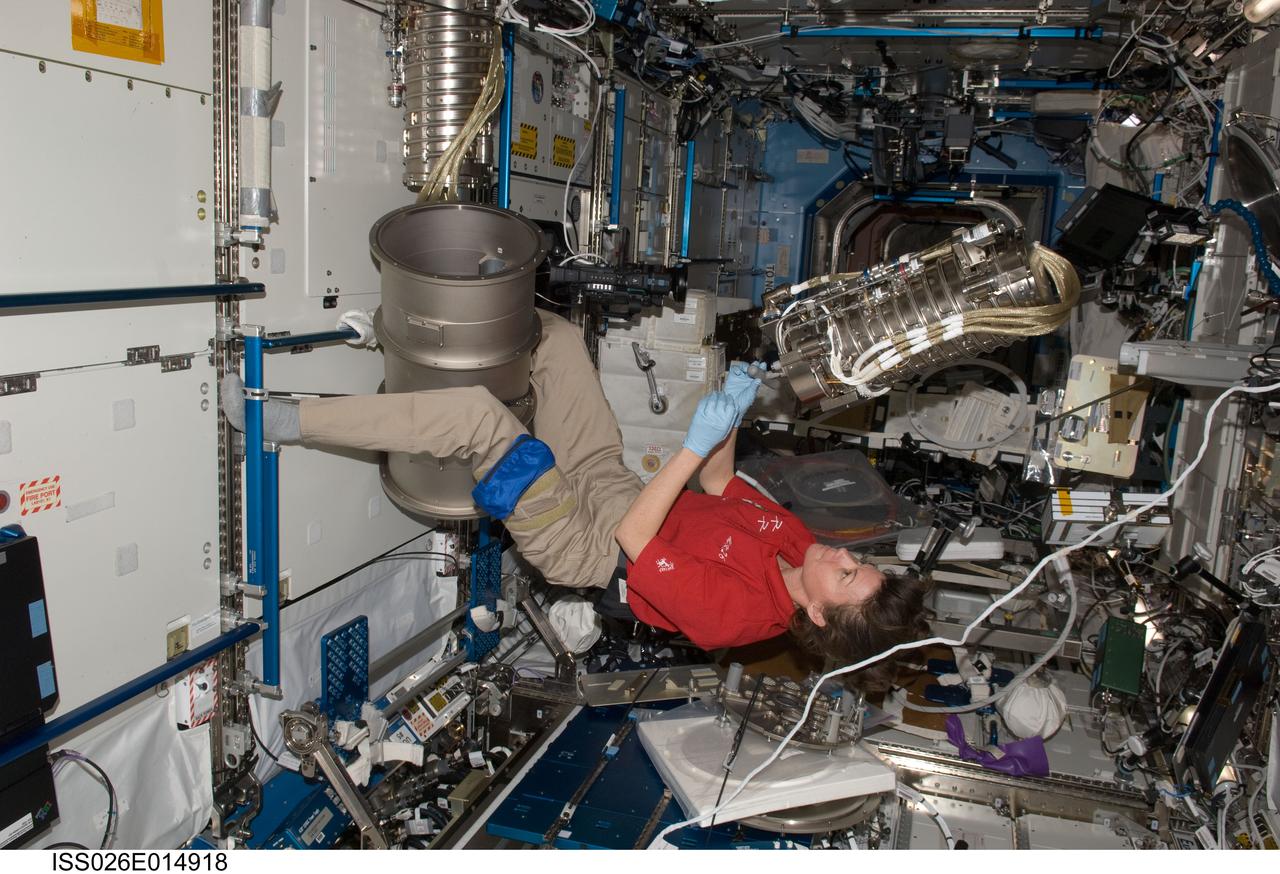
ISS026-E-014918 (4 Jan. 2011) --- NASA astronaut Catherine (Cady) Coleman, Expedition 26 flight engineer, removes the Low Gradient Furnace (LGF) and installs the Solidification and Quench Furnace (SQF) in the Material Science Laboratory (MSL) in the Destiny laboratory of the International Space Station.
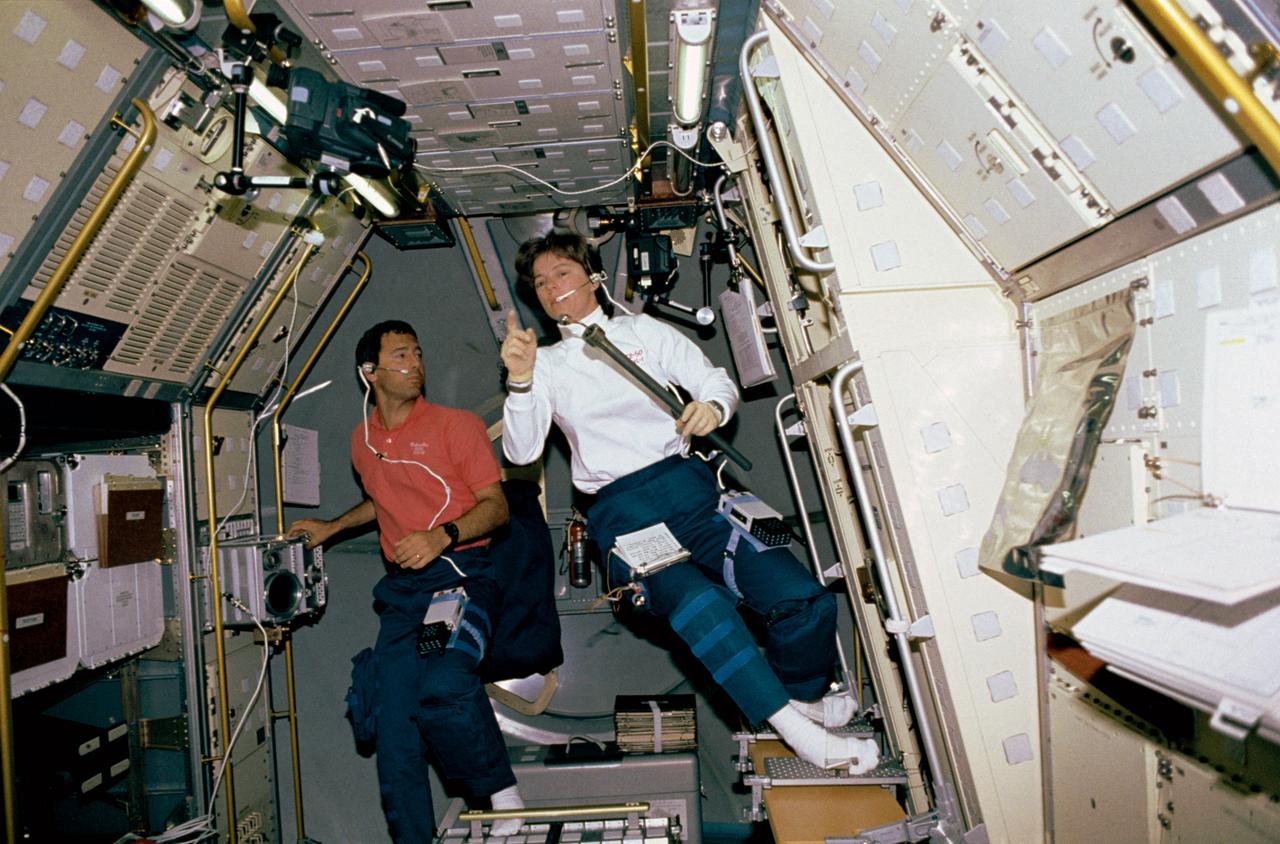
View showing Payload Specialists Bonnie Dunbar and Larry DeLucas in the aft section of the U. S. Microgravity Laboratory-1. Dunbar prepares to load a sample in the Crystal Growth Furnace (CGF) Integrated Furnace Experiment Assembly (IFEA) in rack 9 of the Microgravity Laboratory, while DeLucas checks out the multi-purpose Glovebox Facility.
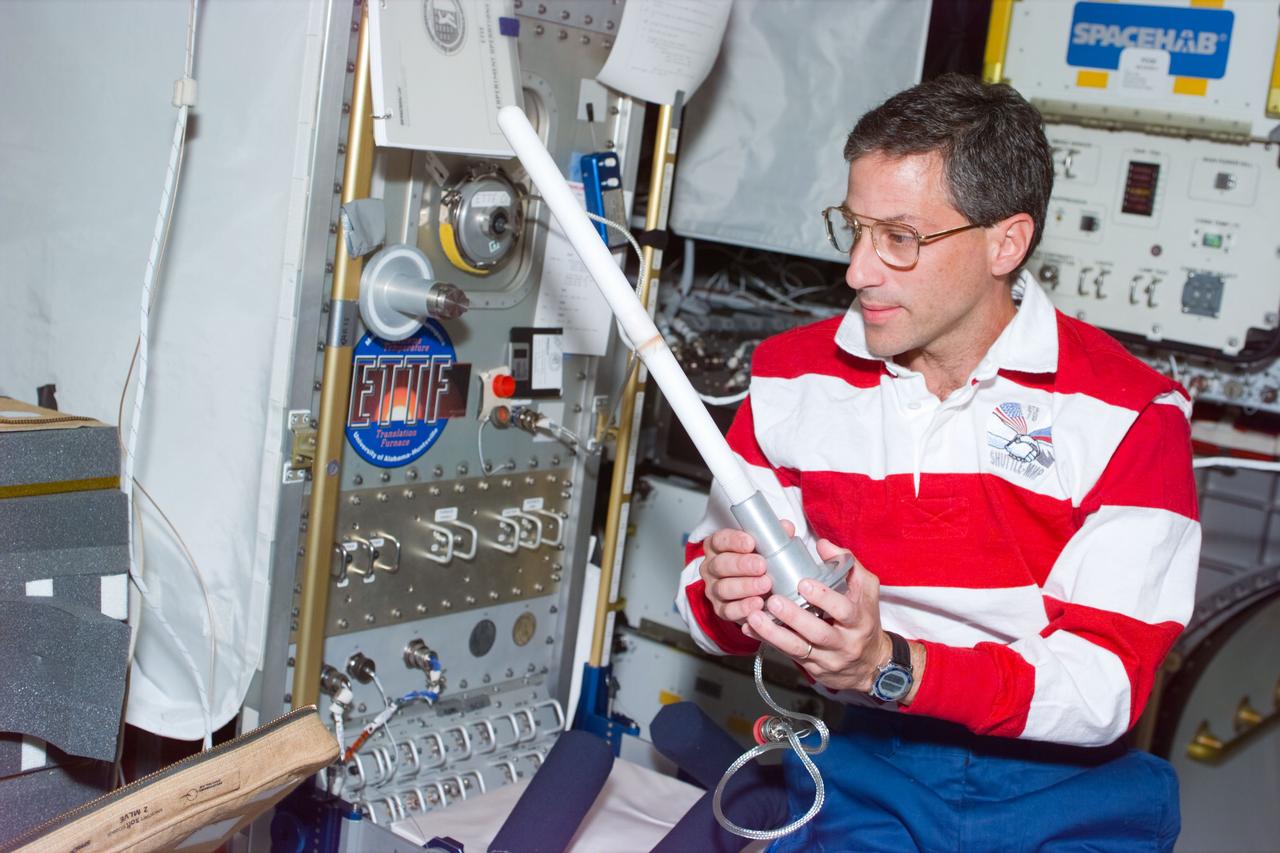
STS79-E-5275 (16 - 26 September 1996) --- Aboard the Spacehab double module in the Space Shuttle Atlantis' cargo bay, astronaut Jerome (Jay) Apt, mission specialist, checks a sample from the Extreme Temperature Translation Furnace (ETTF) experiment. The photograph was taken with the Electronic Still Camera (ESC).
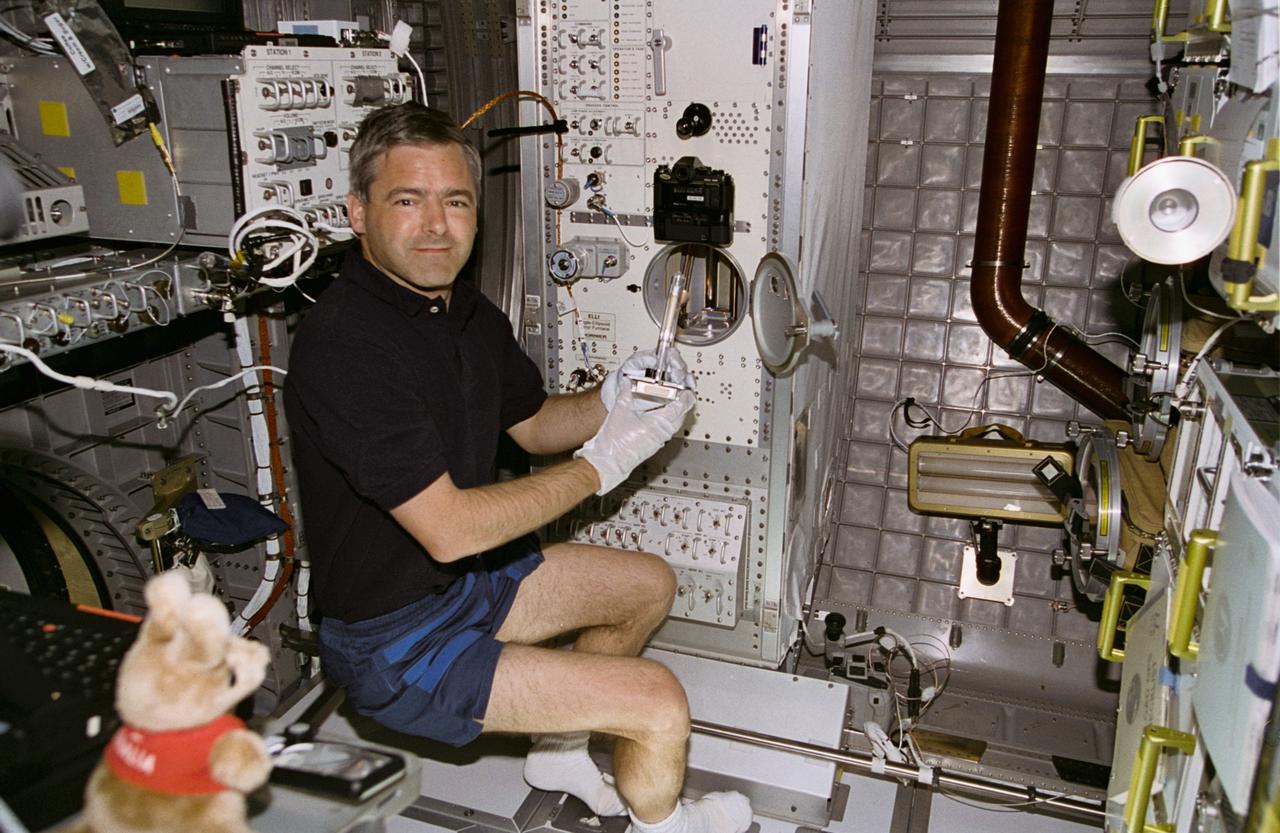
STS077-392-033 (19-29 May 1996) --- Astronaut Marc Garneau, mission specialist, works at the Commercial Float Zone Furnace (CFZF) in the Spacehab Module onboard the Space Shuttle Endeavour. Garneau, representing the Canadian Space Agency (CSA), and five other astronauts went on to spend almost ten-days aboard Endeavour in support of the Spacehab 4 mission and a number of other payloads.
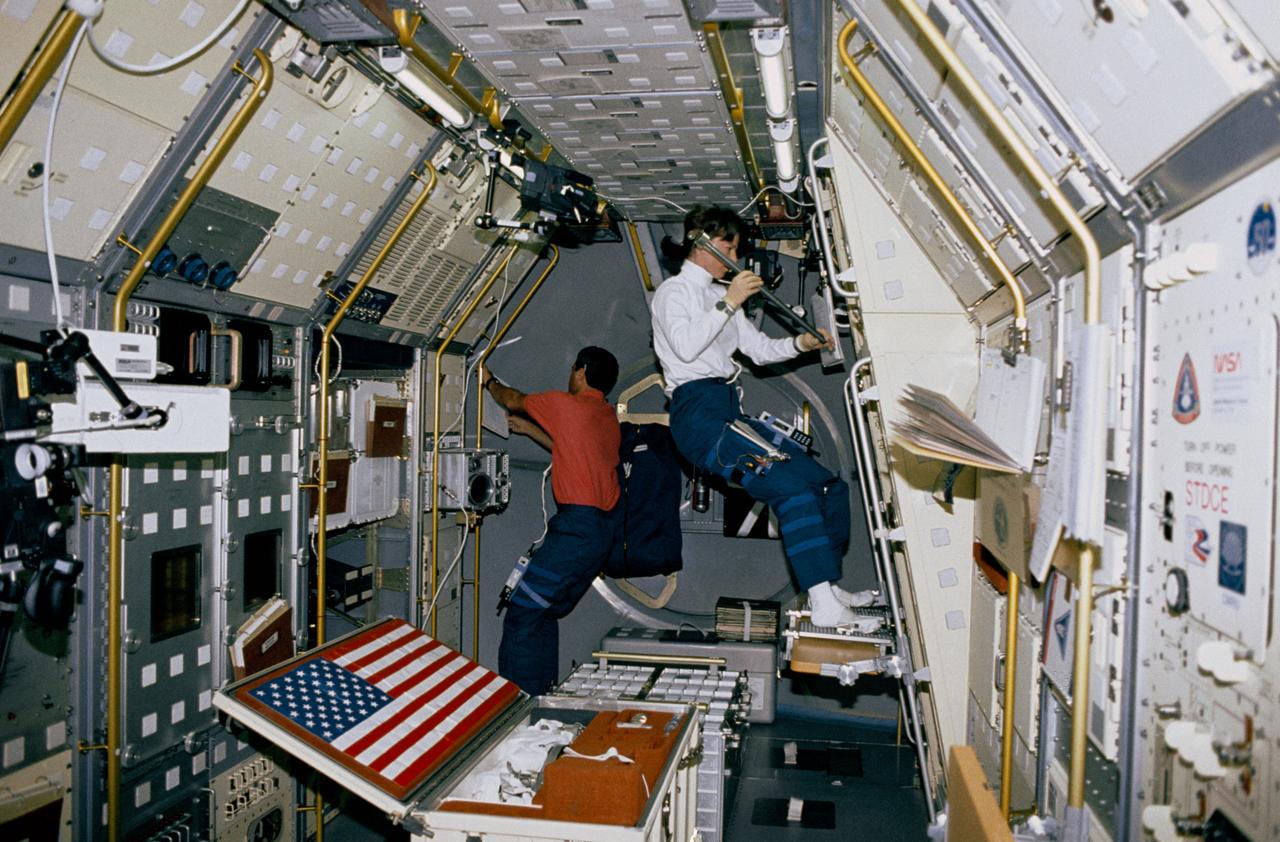
STS050-02-001 (9 July 1992) --- View showing Payload Specialists Bonnie Dunbar and Larry DeLucas in the aft section of the U. S. Microgravity Laboratory-1. Dunbar is preparing to load a sample in the Crystal Growth Furnace (CGF) Integrated Furnace Experiment Assembly (IFEA) in rack 9 of the Microgravity Laboratory. DeLucas is checking out the multipurpose Glovebox Facility.
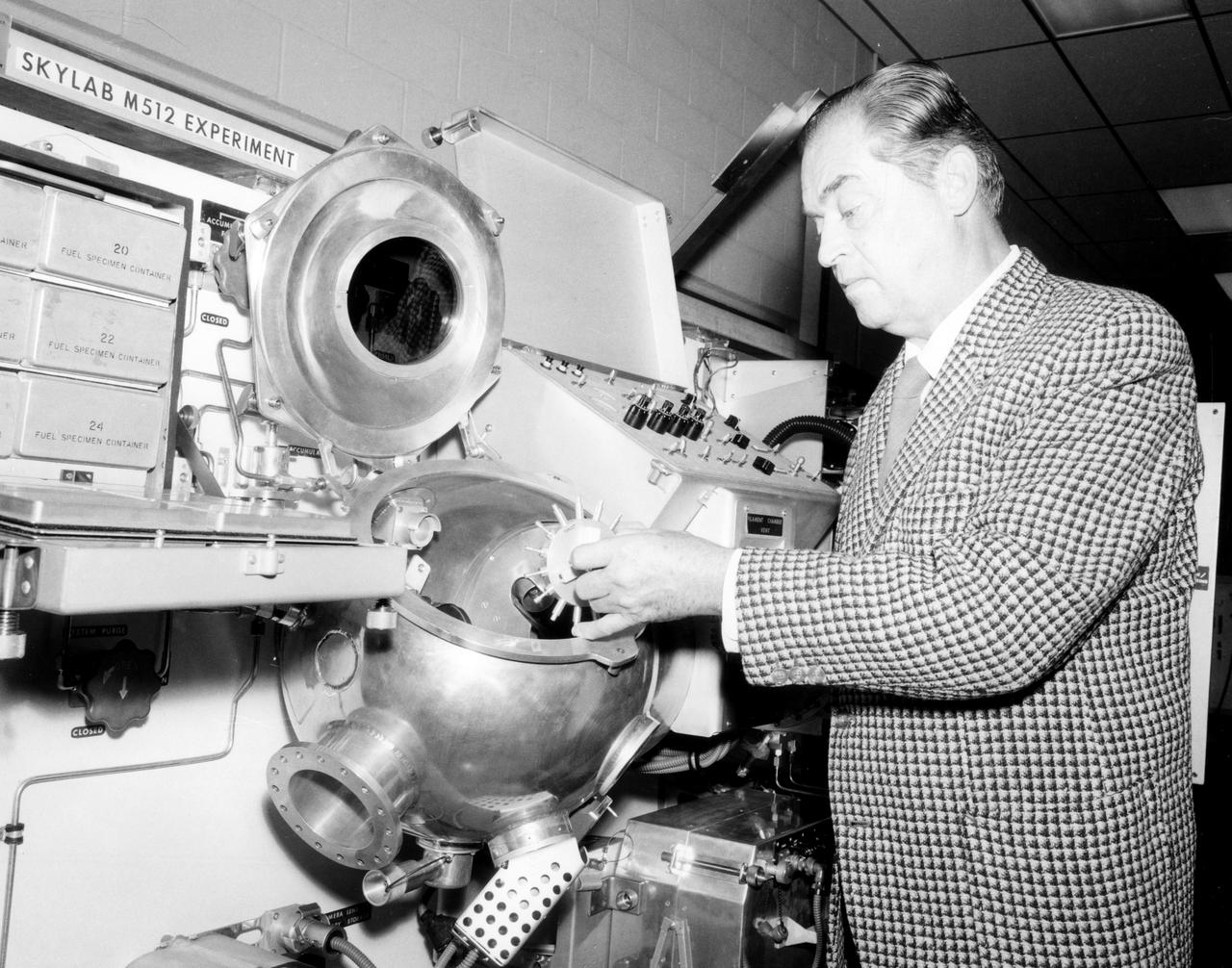
Hans F. Wuenscher, assistant director for Advanced Space Projects Engineering Laboratory at Marshall Space Flight Center (MSFC), examined the facility to be used by Skylab astronauts in performing a number of experiments in material science and manufacturing in space. The equipment shown here is a duplicate of the M512 Experiment hardware flown in the Multiple Docking Adapter section of the Sky lab. This equipment, itself an experiment, was be used for conducting 5 other experiments in the round vacuum chamber. Inside was a cavity which held the M518 Multipurpose Electric Furnace, a facility which was used for conducting other experiments. In all, a total of 17 experiments were conducted using this facility and furnace.
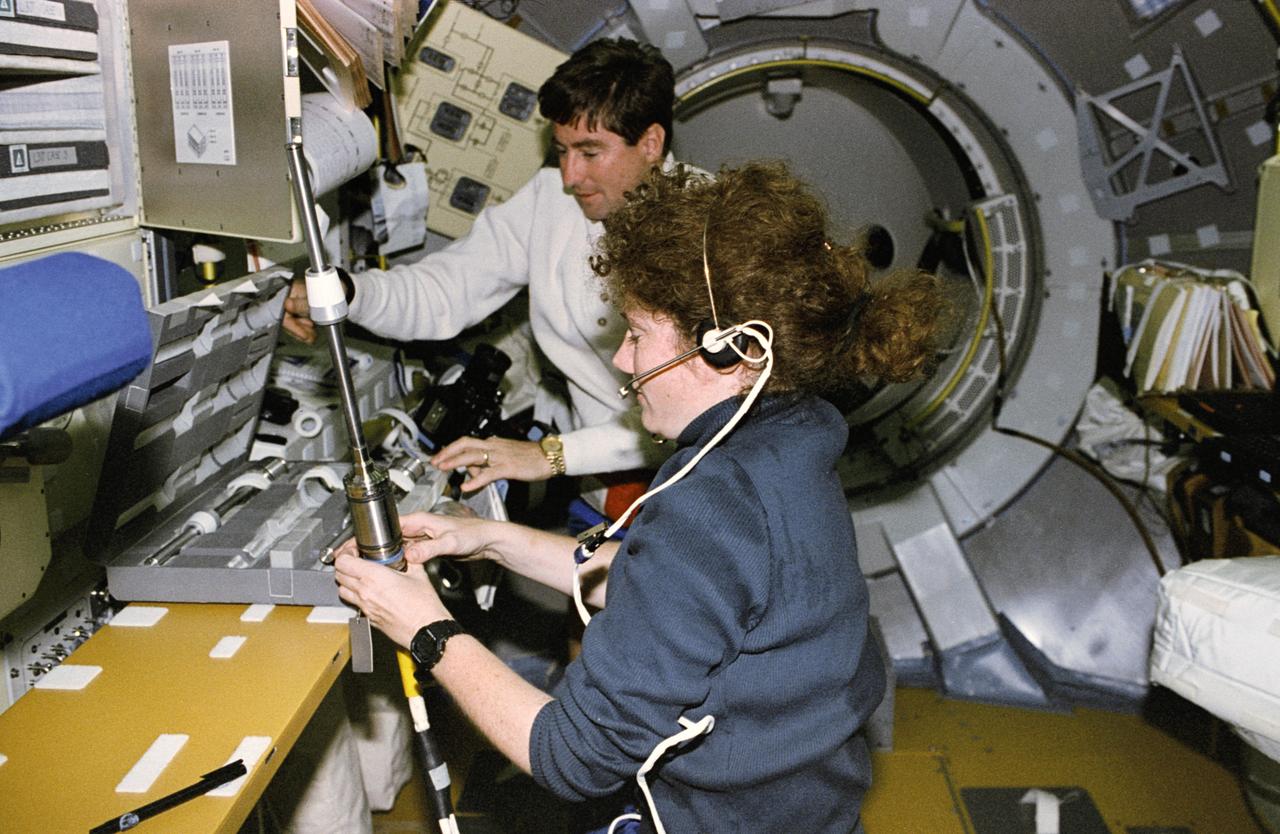
STS078-368-022 (20 June - 7 July 1996) --- Astronauts Susan J. Helms, payload commander, and Terence T. (Tom) Henricks, mission commander, prepare a sample cartridge containing semiconductor crystals for Spacelab research. The crystals were later placed in the Advanced Gradient Heating Furnace (AGHF) in the Life and Microgravity Spacelab (LMS-1) Science Module. The AGHF is designed for directional solidification of the crystals in the sample cartridges. The microgravity of space allows the crystals to grow in a perfect state that can not be accomplished in Earth's gravity.
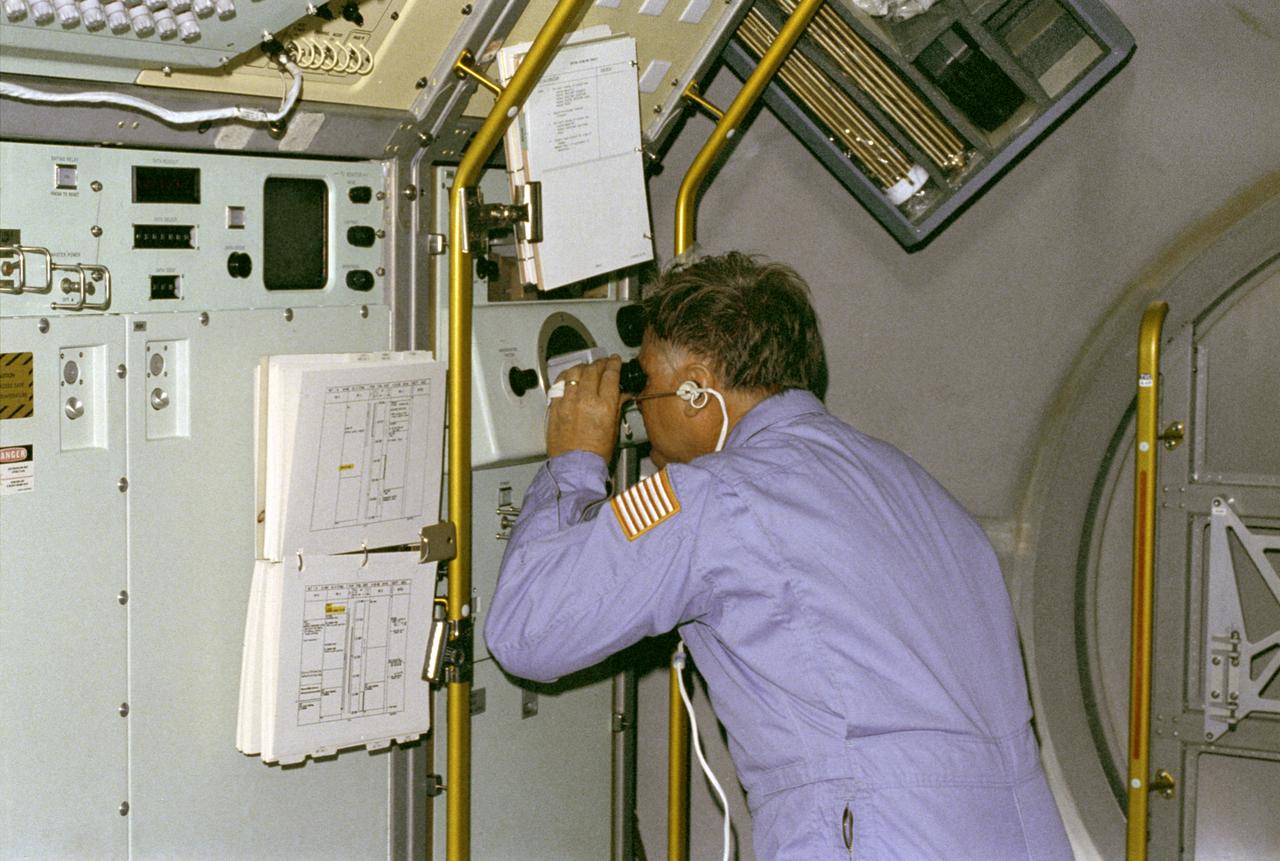
The primary purpose of the Spacelab-3 mission was to conduct materials science experiments in a stable low-gravity environment. In addition, the crew performed research in life sciences, fluid mechanics, atmospheric science, and astronomy. Spacelab-3 was equipped with several new minilabs, special facilities that would be used repeatedly on future flights. Two elaborate crystal growth furnaces, a life support and housing facility for small animals, and two types of apparatus for the study of fluids were evaluated on their inaugural flight. In this photograph, astronaut Don Lind observes the mercuric iodide growth experiment through a microscope at the vapor crystal growth furnace. The goals of this investigation were to grow near-perfect single crystals of mercuric iodide and to gain improved understanding of crystal growth by a vapor process. Mercuric iodide crystals have practical use as sensitive x-ray and gamma-ray detectors, and in portable detector devices for nuclear power plant monitoring, natural resource prospecting, biomedical applications in diagnosis and therapy, and in astronomical instruments. Managed by the Marshall Space Flight Center, Spacelab-3 (STS-51B) was launched aboard the Space Shuttle Orbiter Challenger on April 29, 1985.
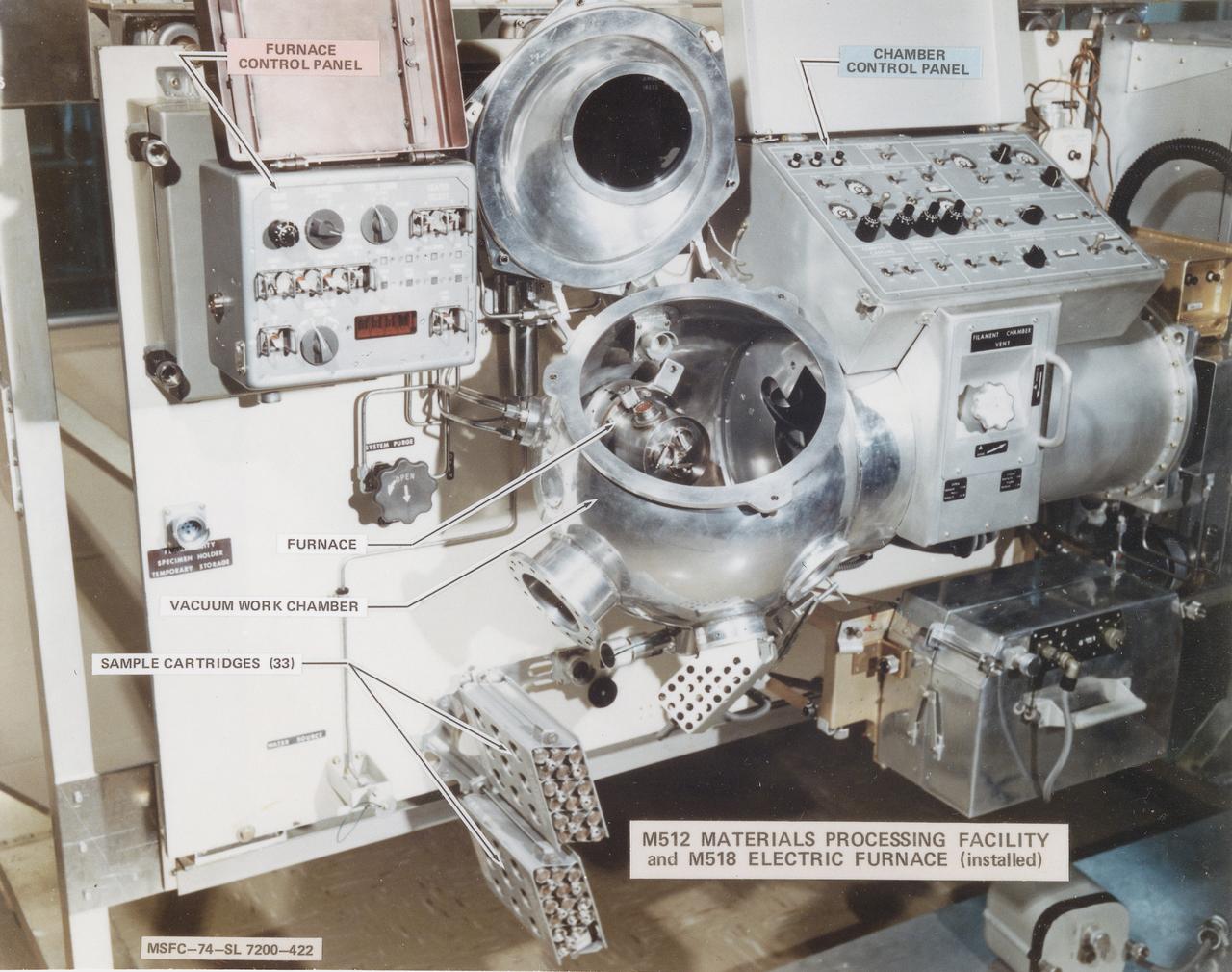
This photograph shows the Skylab Materials Processing Facility (M512) and the Multipurpose Furnace System (M518). This facility, located in the Multiple Docking Adapter, was developed for Skylab,and accommodated 14 different experiments that were carried out during the three marned missions. The abilities to melt and mix without the contaminating effects of containers, to suppress thermal convection and buoyancy in fluids, and to take advantage of electrostatic and magnetic forces and otherwise masked by gravitation opened the way to new knowledge of material properties and processes. This beginning would ultimately lead to the production of valuable new materials for use on Earth.
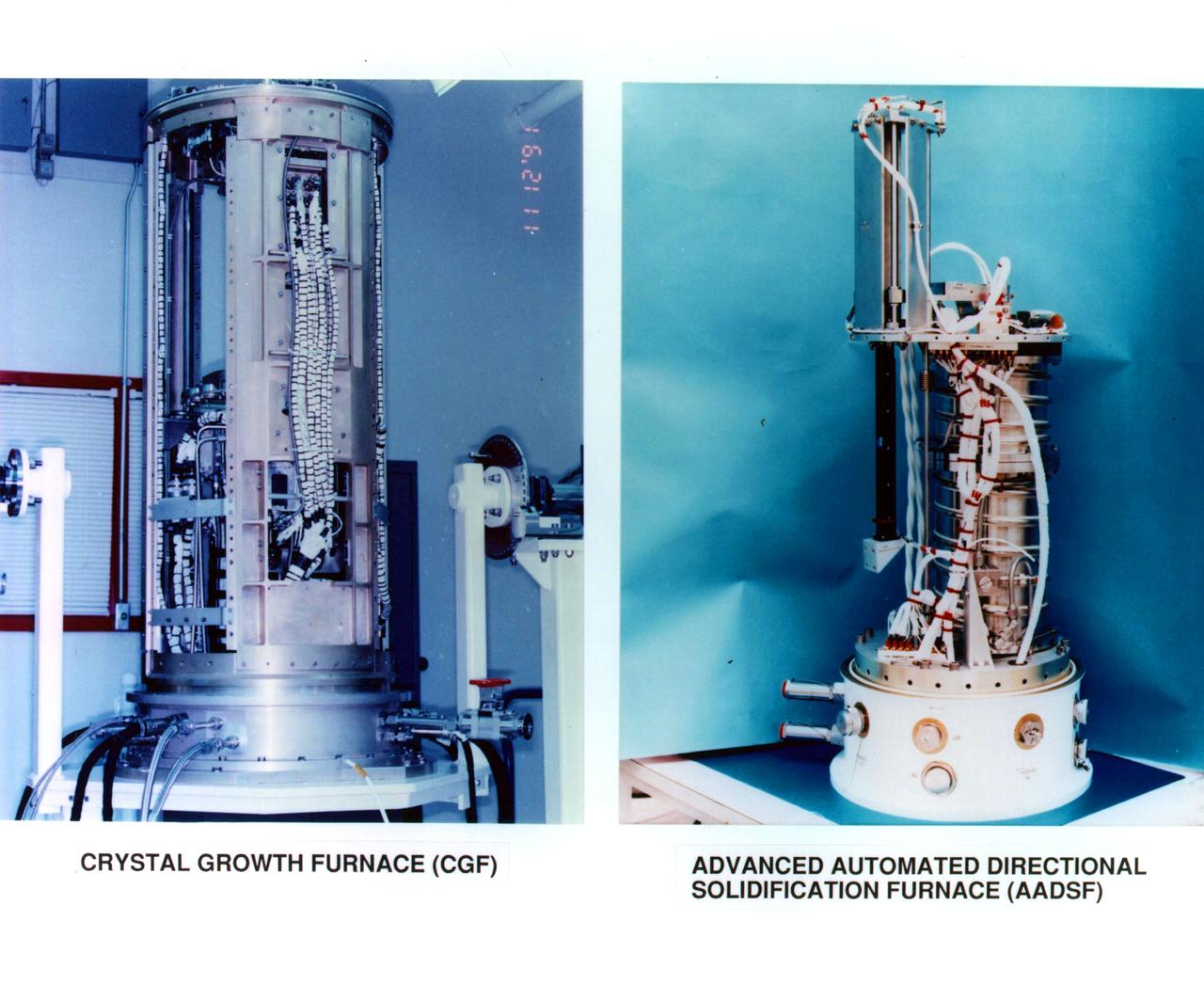
Evolution of Furnaces for Crystal Growth. Left view: Crystal Growth Furnace (CGF) Right view: Advanced Automated Directional Solidification Furnace (AADSF)
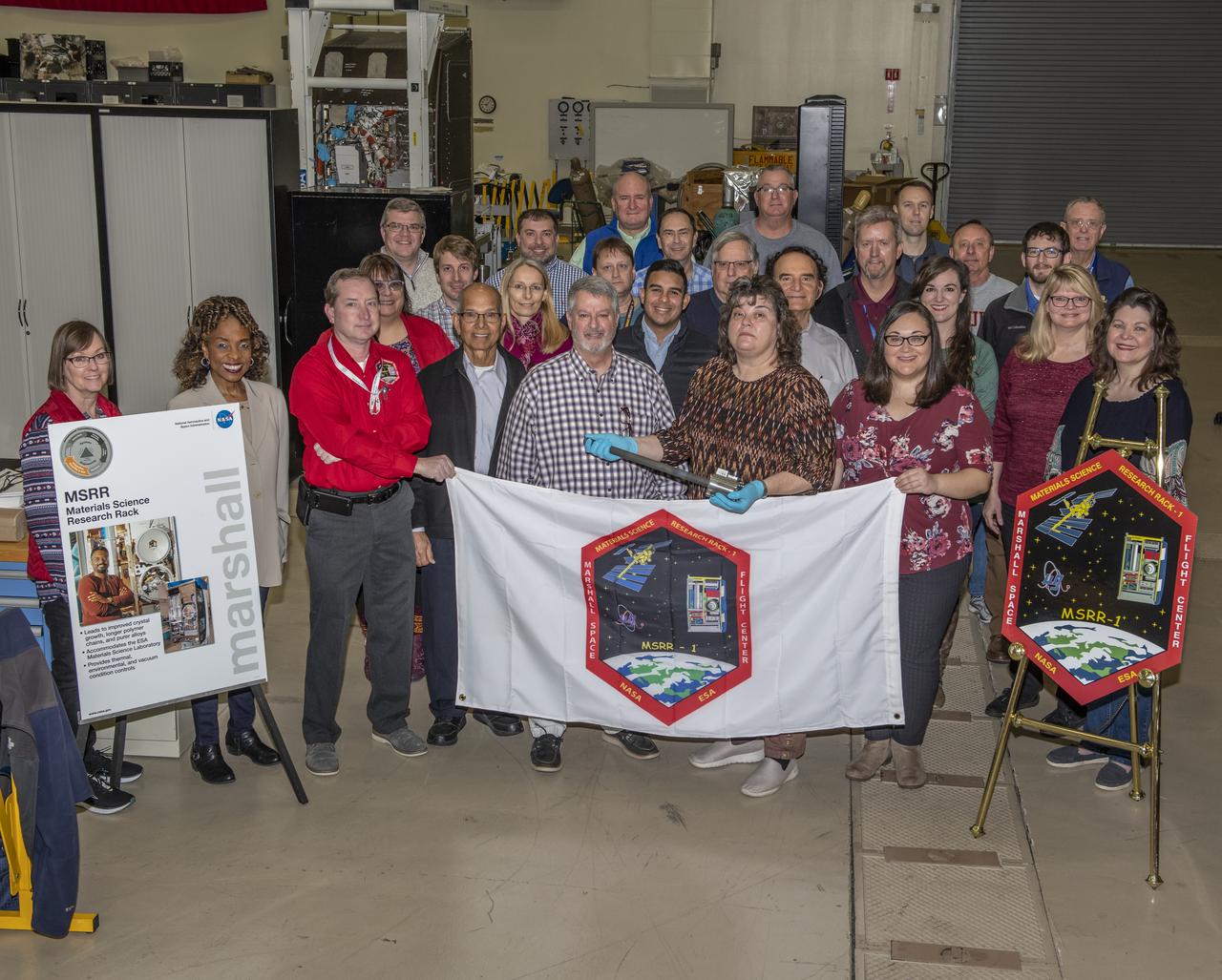
NASA's first Sample Cartridge Assembly (SCA) project designed and validated a payload containing a materials research sample in a sealed environment. The SCA was heated in the European Space Agency's (ESA) Low Gradient Furnace (LGF) that is housed inside the Material Science Research Rack (MSRR) located on the International Space Station (ISS). Sintered metals and crystal growth experiments in microgravity are examples of some of the types of materials research that may be performed with a SCA.
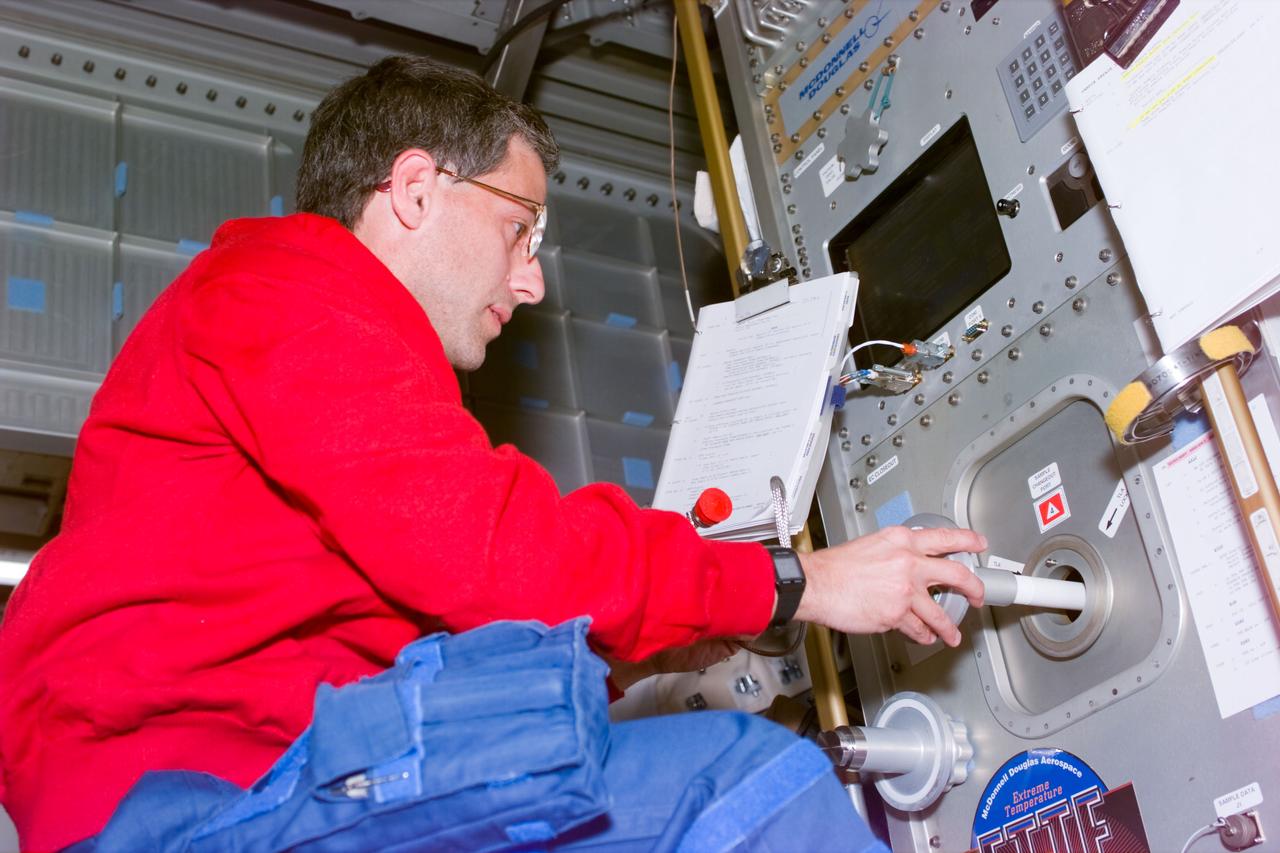
STS79-E-5019 (17 September 1996) --- Astronaut Jerome (Jay) Apt inserts experiment into Extreme Temperature Translation Furnace (ETTF) furnace, onboard the Space Shuttle Atlantis, on Flight Day 2.
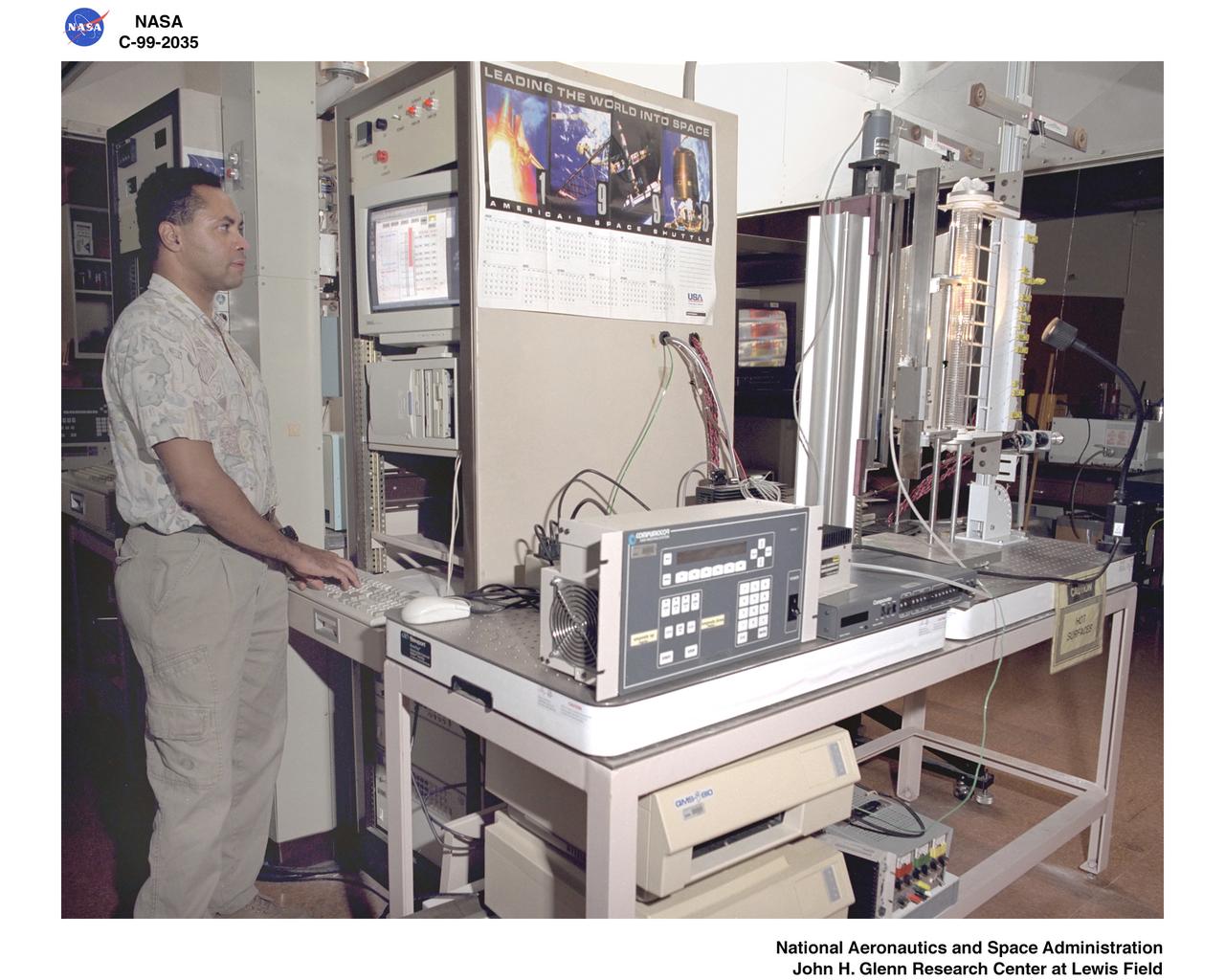
CRYSTAL GROWTH EXPERIMENTS MULTI ZONE TRANSPARENT FURNACE
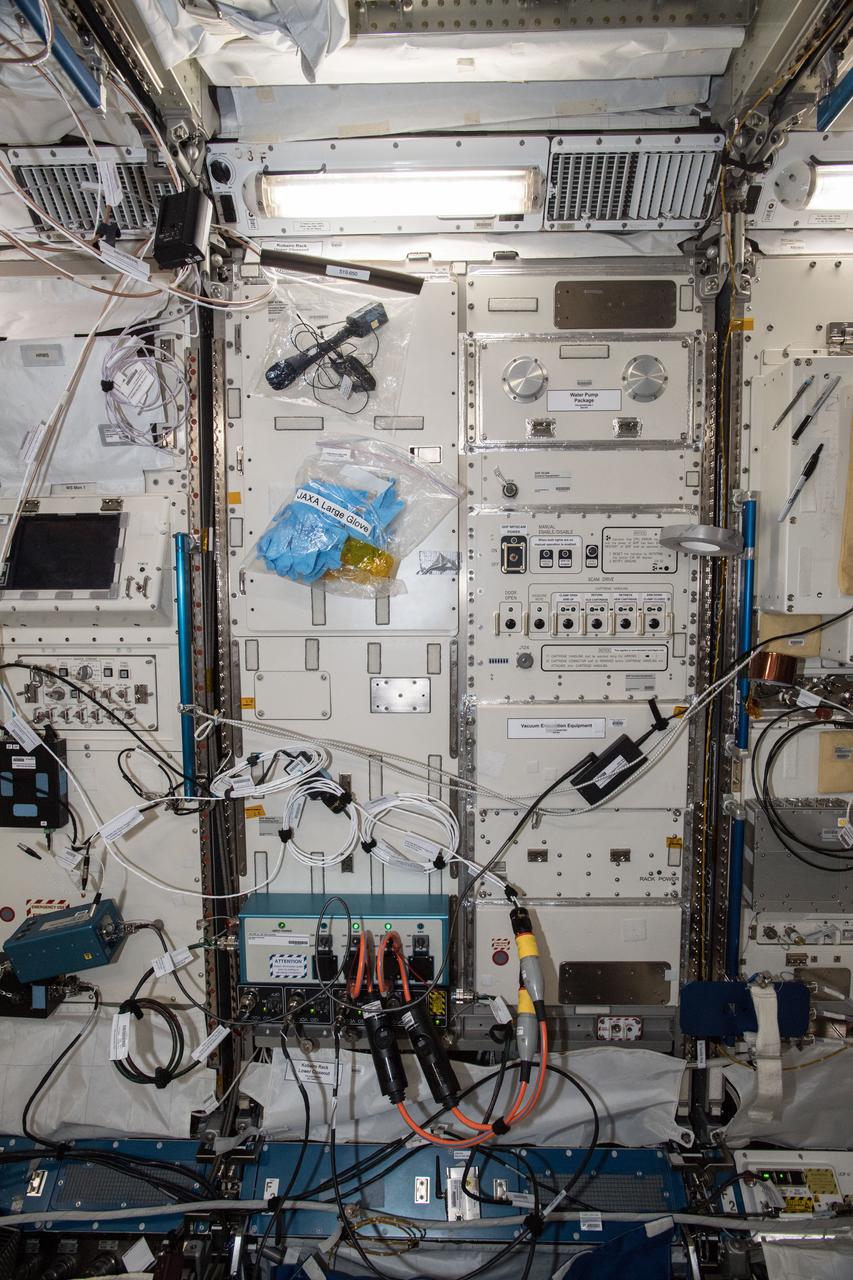
iss057e092614 (11/14/2018) --- Photo documentation of the Kobairo Rack front, JPM1F3 in the Kibo Japanese Experiment Module (JEM) aboard the International Space Staion (ISS). The KOBAIRO Rack houses the Gradient Heating Furnace (GHF), an experiment facility for investigating crystal growth of semiconductors. This furnace has the capability of directional solidification of samples.
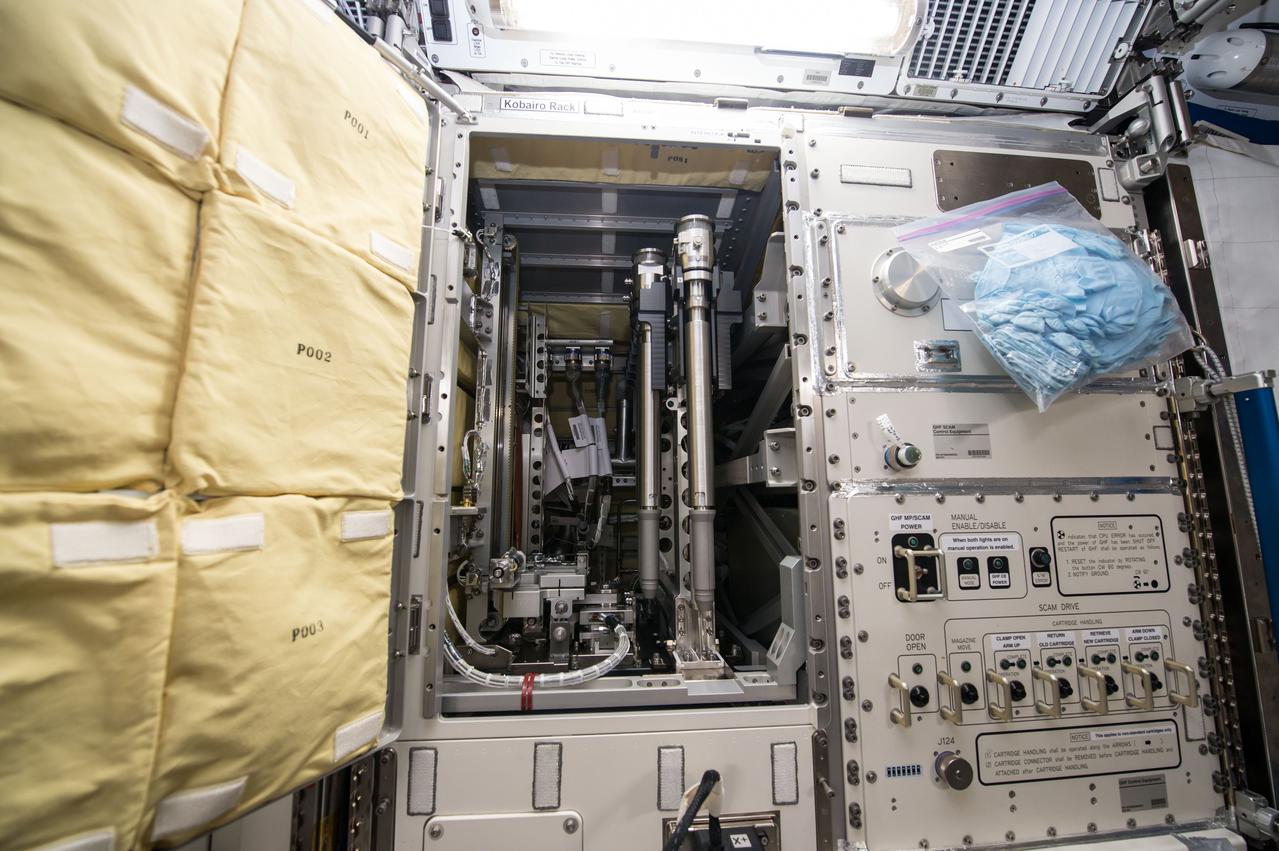
iss042e049014 (12/18/2014) --- A view of the interior of the Kobairo rack of the Japanese Experiment Module (JEM) aboard the International Space station (ISS).The KOBAIRO Rack houses the Gradient Heating Furnace (GHF), an experiment facility for investigating crystal growth of semiconductors. This furnace has the capability of directional solidification of samples.
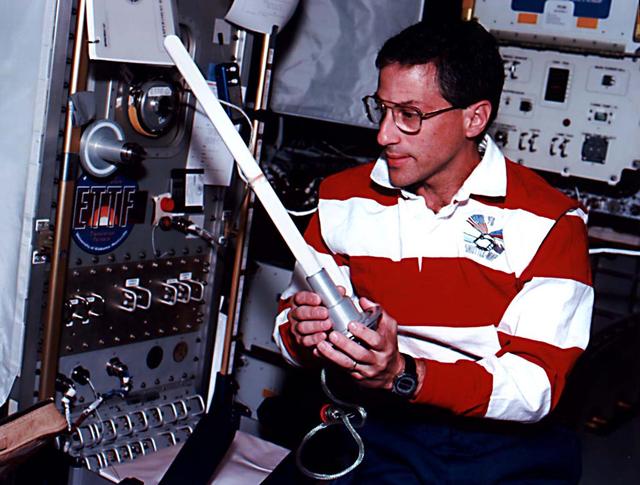
Astronaut Jerome Apt works at the Extreme Temperature Translation Furnace.
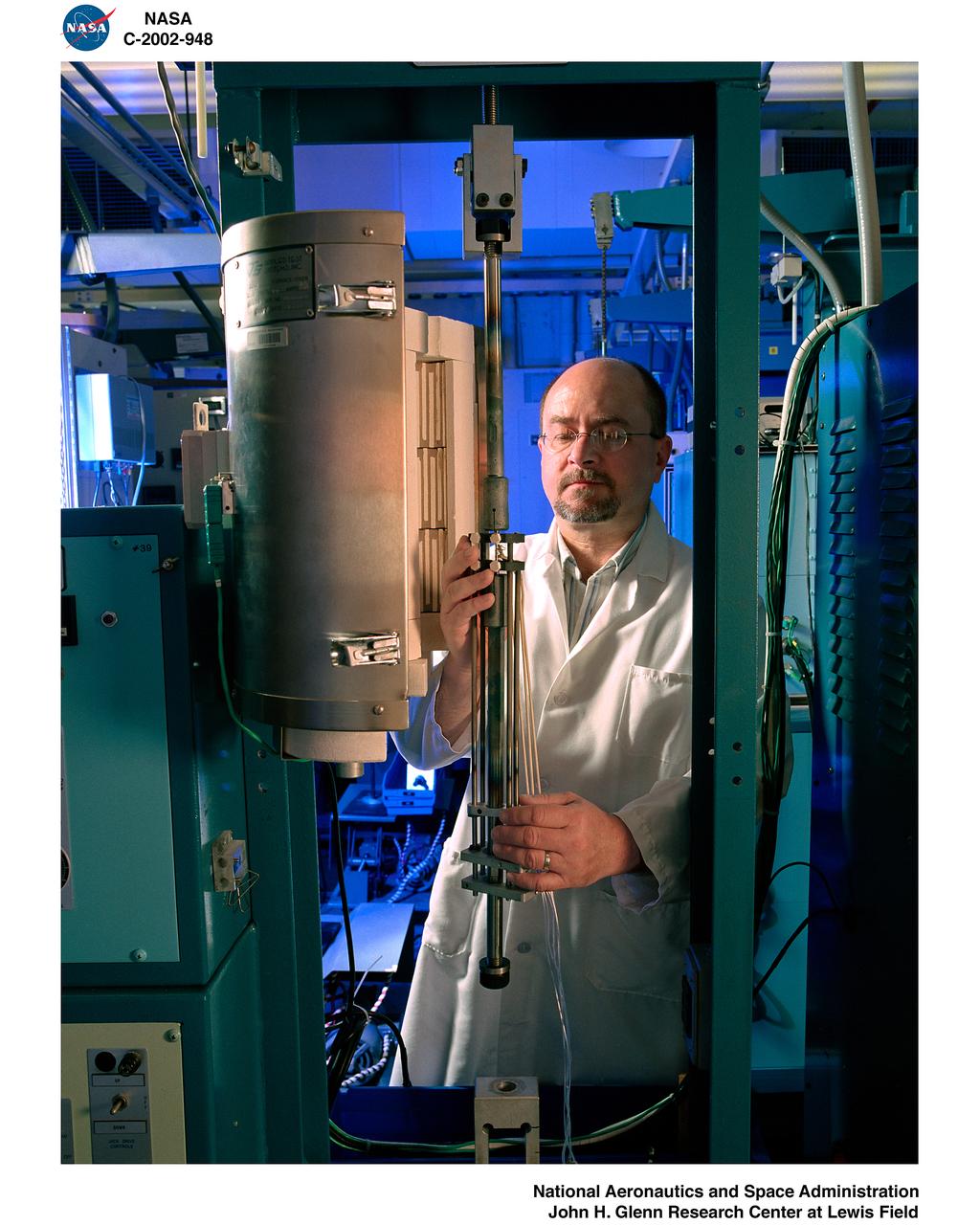
CREEP TEST FRAME / THREE ZONE SPLIT FURNACE WITH EXTENSOMETER
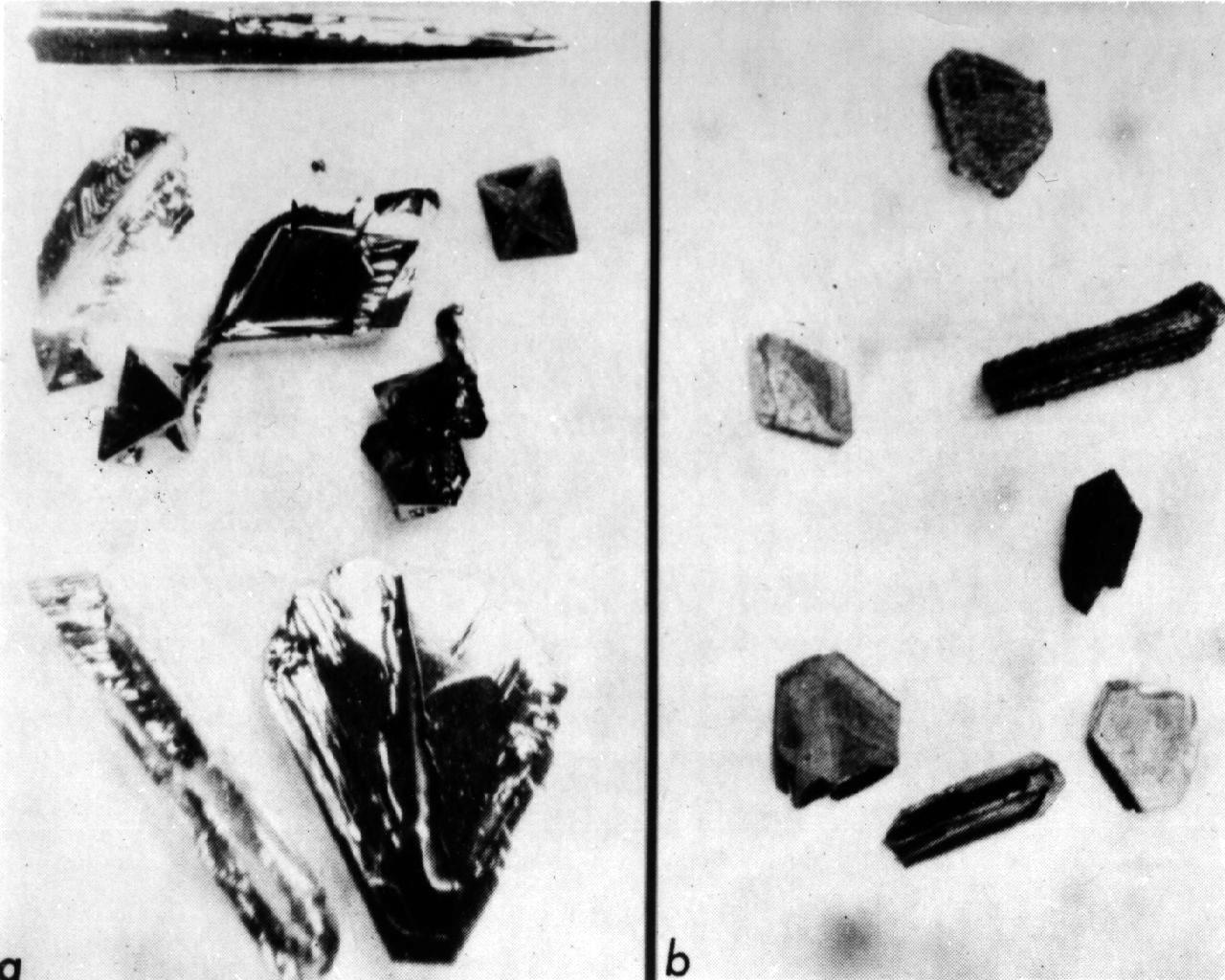
Comparison of Germanium Telluride (GeTe) Crystals grown on Earth (left) and in space (right) during the Skylab SL-3 mission. These crystals were grown using a vapor transport crystal growth method in the Multipurpose Electric Furnace System (MEFS). Crystals grown on earth are needles and platelettes with distorted surfaces and hollow growth habits. The length of the ground-based needle is approximately 2 mm and the average lenth of the platelets is 1 mm. The dull appearance of the Skylab crystals resulted from condensation of the transport agent during the long cooling period dictated by the Skylab furnace. In a dedicated process, this would be prevented by removing the ampoule from the furnace and quenching the vapor source.
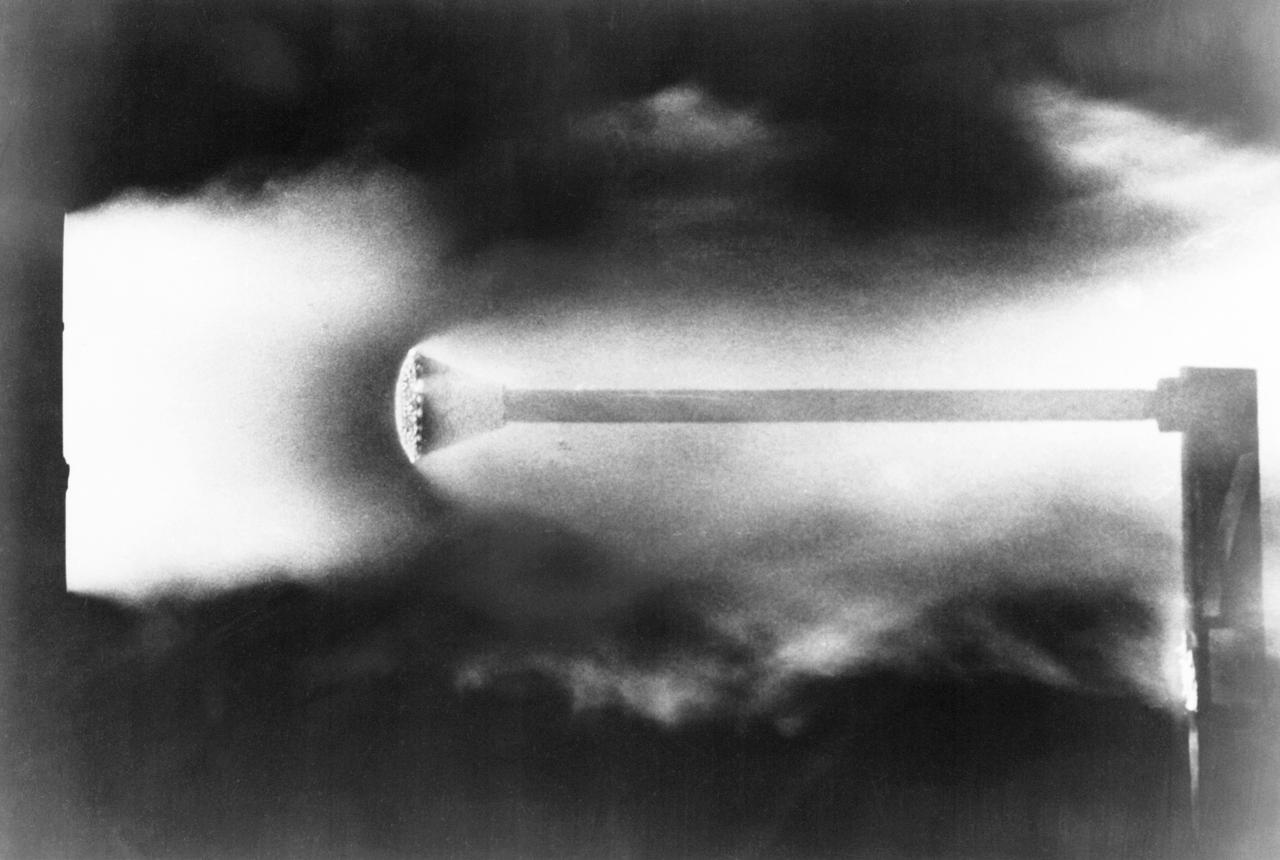
A hot jet research facility, used extensively in the design and development of the reentry heat shield on the Project Mercury spacecraft. The electrically-heated arc jet simulates the friction heating encountered by a space vehicle as it returns to the earth's atmosphere at high velocities. The arc jet was located in Langley's Structures Research Laboratory. It was capable of heating the air stream to about 9,000 degrees F. -- Published in Taken from an October 5, 1961 press release entitled: Hot Jet Research Facility used in Reentry Studies will be demonstrated at NASA Open House, October 7.
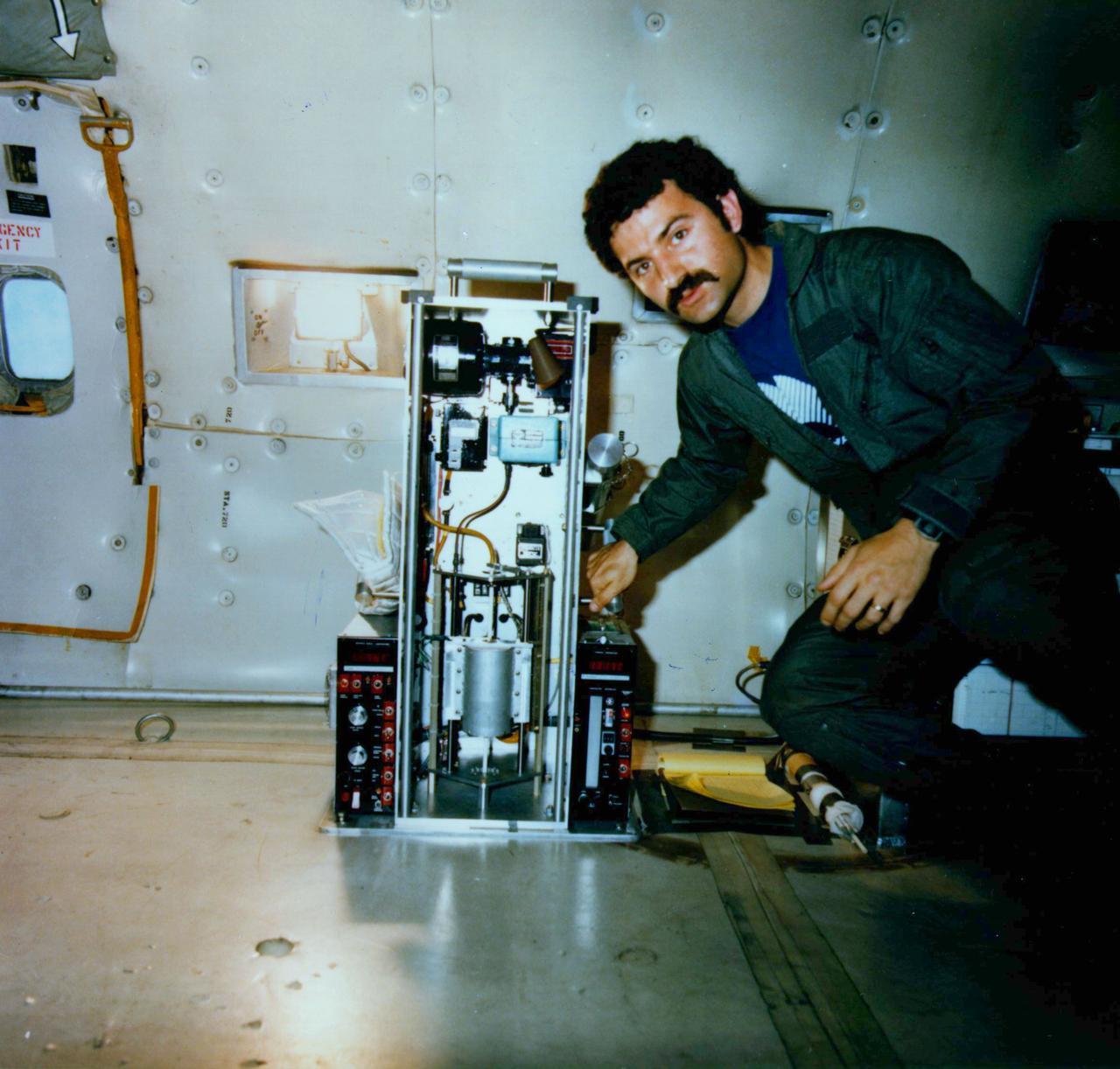
Peter Curerri with KC-135 experiment hardware, a prototype aircraft version of Advanced Automated Directional Solidification Furnace (AADSF).
Onboard STS-73, USML-2: Mission Specialist, Payload Commander, Kathryn Thorton with (CGF) Crystal Growth Furnace
Payload Specialist, Fred Leslie changing samples in (CGF) Crystal Growth Furnace onboard STS-73, USML-2.

Test Engineer, Ron Cantrell loads the sample in the (AADSF) Advanced Automated Directional Solidification Furnace.
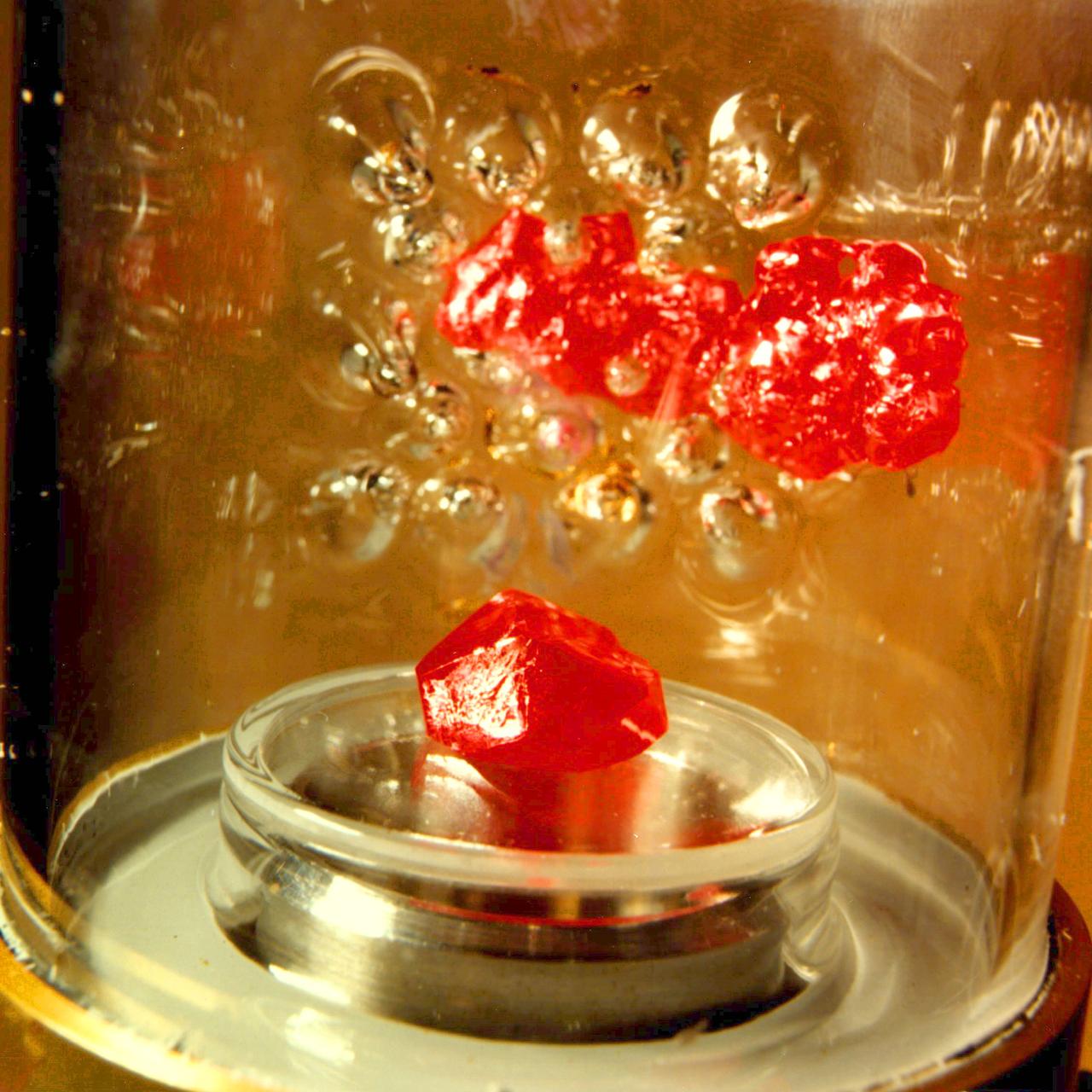
Vapor Crystal Growth System (VCGS), Flown on IML-1, Spacelab 3, Principal Investigator: Lodewijk van den Berg
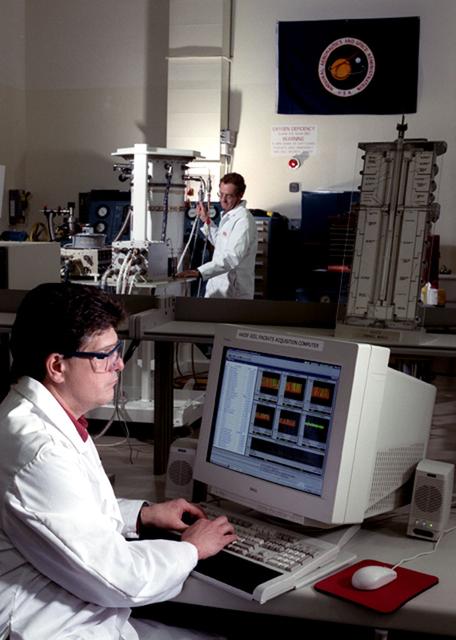
Advanced Automated Directional Solidification Furnace (AADSF) G-Cel with Fred Flack and Wayne Gandy in the Microgravity Development Laboratory clean room.
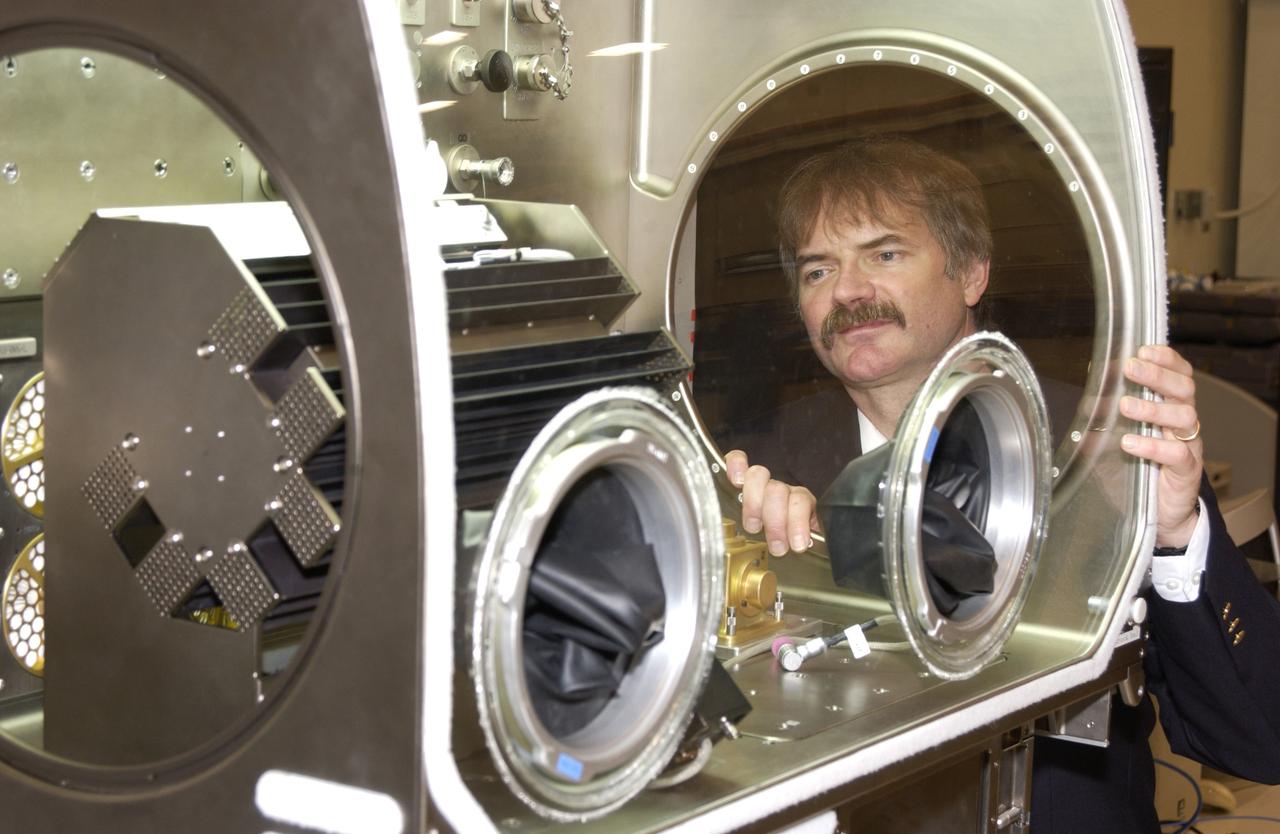
Dr. Richard Grugel, a materials scientist at NASA's Marshall Space Flight in Huntsville, Ala., examines the furnace used to conduct his Pore Formation and Mobility Investigation -- one of the first two materials science experiments to be conducted on the International Space Station. This experiment studies materials processes similar to those used to make components used in jet engines. Grugel's furnace was installed in the Microgravity Science Glovebox through the circular port on the side. In space, crewmembers are able to change out samples using the gloves on the front of the facility's work area.
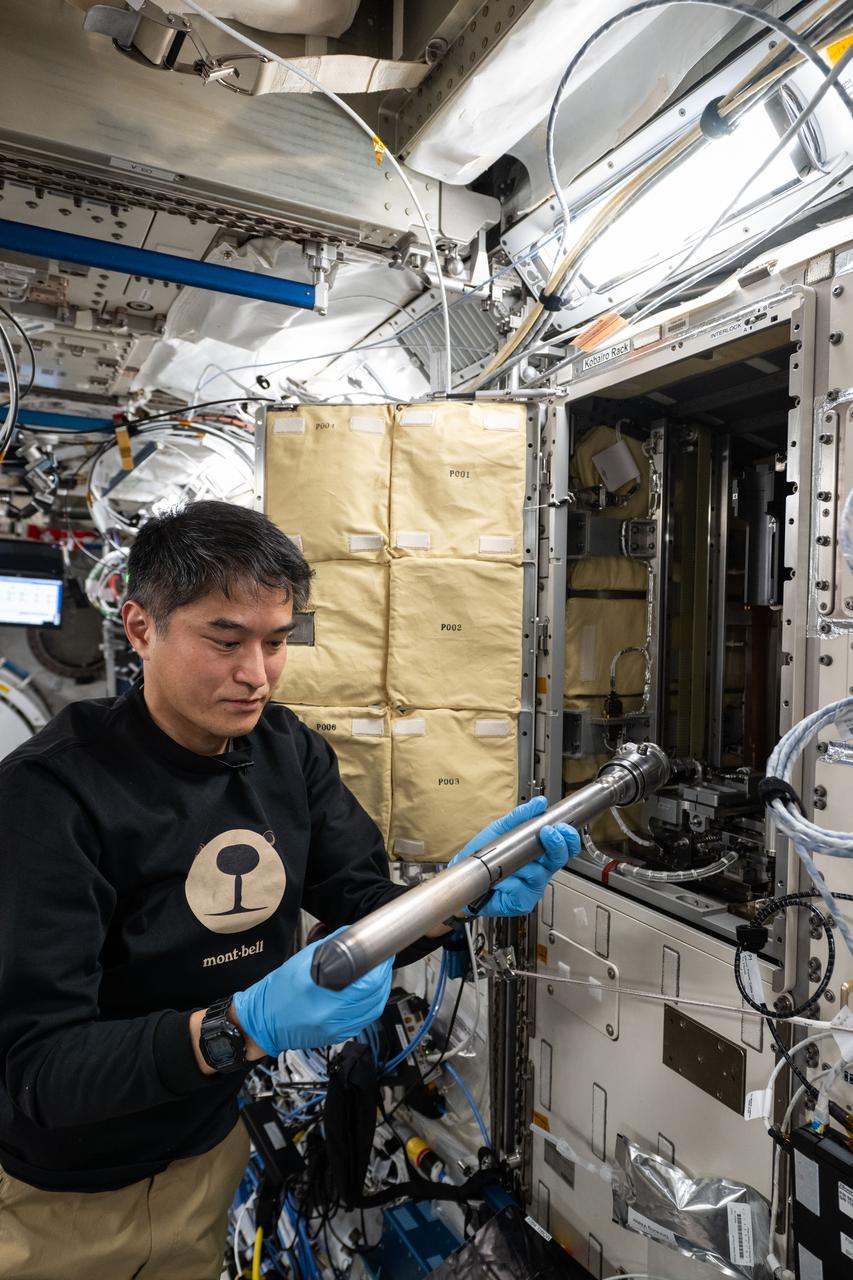
iss073e0383926 (July 4, 2025) --- JAXA (Japan Aerospace Exploration Agency) astronaut and Expedition 73 Commander Takuya Onishi removes experiment hardware and sample cartridges from inside the Kibo laboratory module's Gradient Heating Furnace (GHF). The GHF is a research facility and a vacuum furnace that can safely heat samples up to a maximum temperature of 1,600 degrees Celsius and is used for the production of high quality crystals in new semiconductor materials.
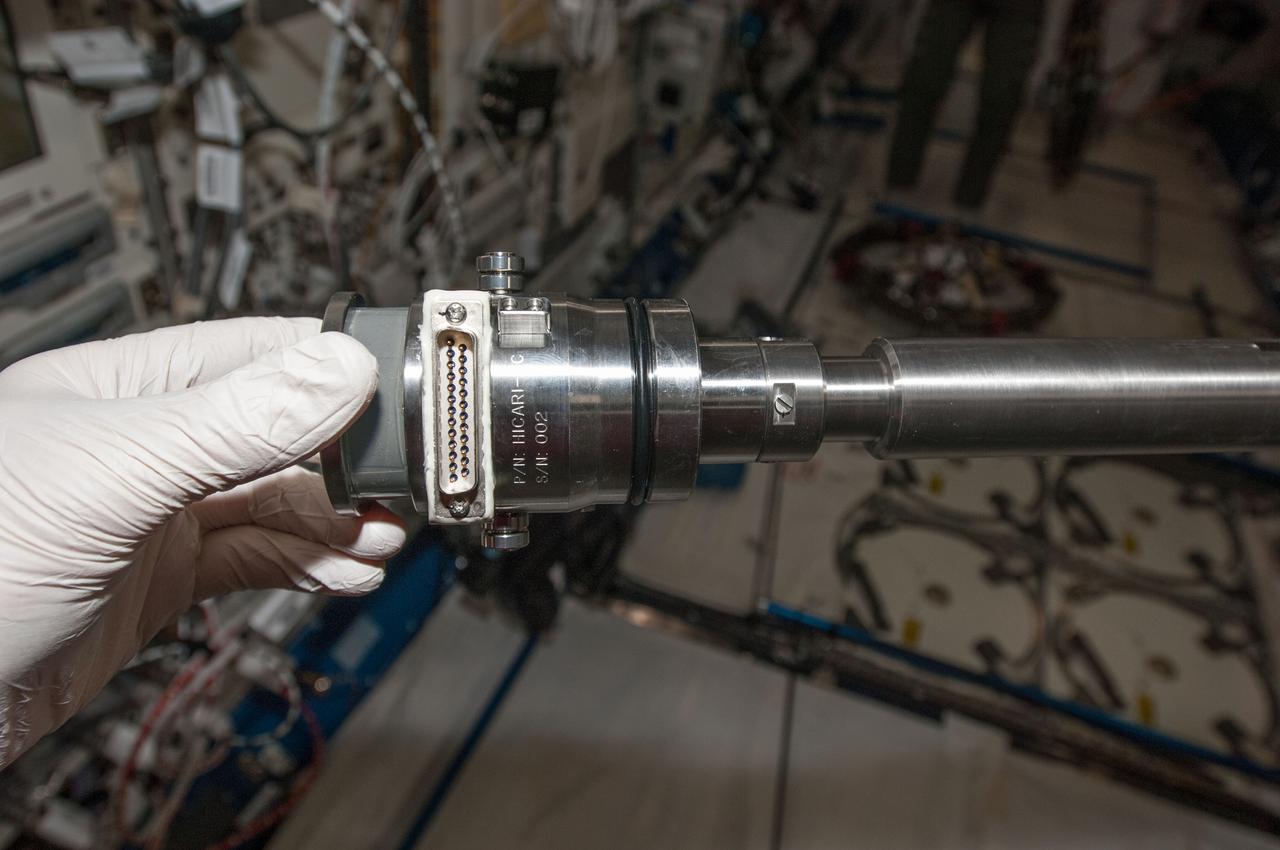
iss040e054521 (7/10/2014) --- A photo of Hicari sample cartridge 2 from the Gradient Heating Furnace (GHF) removed in preparation for return on SpaceX-4. The materials science investigation Growth of Homogeneous SiGe Crystals in Microgravity by the TLZ Method (Hicari) aims to verify the crystal-growth by Travelling Liquidous Zone method, and to produce high-quality crystals of Silicon-Germanium (SiGe) semiconductor using the Japanese Experiment Module-Gradient Heating Furnace (JEM-GHF).
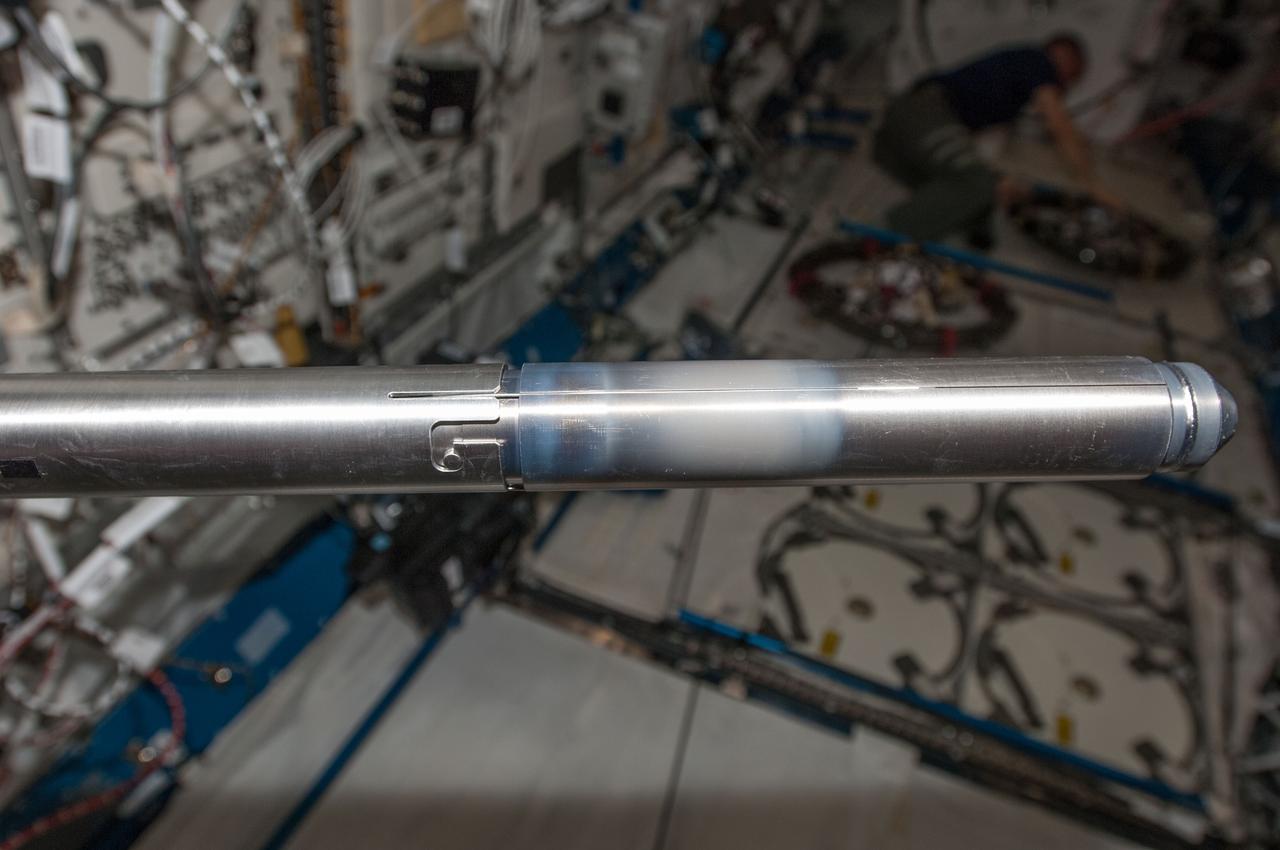
iss040e054526 (7/10/2014) --- A photo of Hicari sample cartridge 2 from the Gradient Heating Furnace (GHF) removed in preparation for return on SpaceX-4. The materials science investigation Growth of Homogeneous SiGe Crystals in Microgravity by the TLZ Method (Hicari) aims to verify the crystal-growth by Travelling Liquidous Zone method, and to produce high-quality crystals of Silicon-Germanium (SiGe) semiconductor using the Japanese Experiment Module-Gradient Heating Furnace (JEM-GHF).
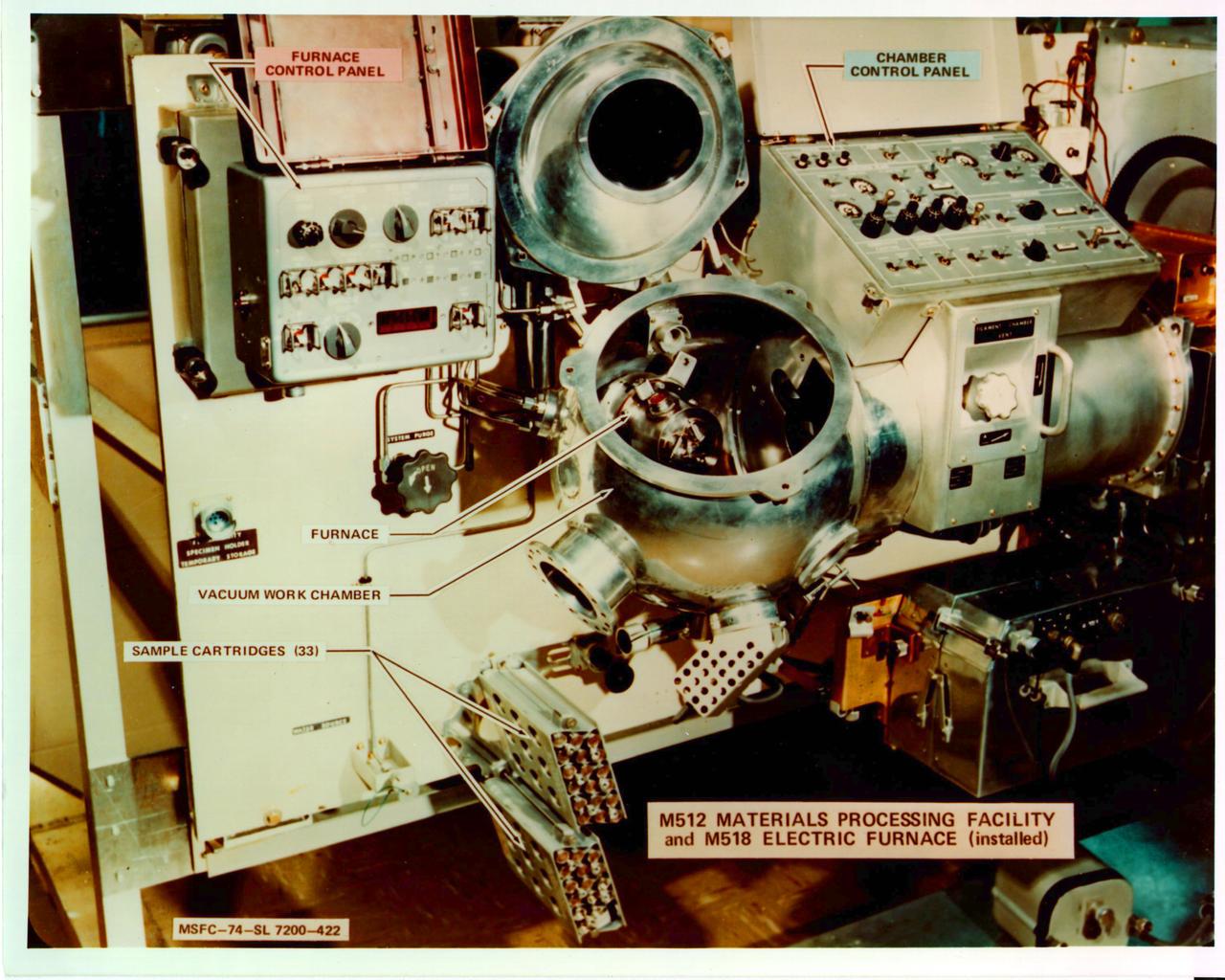
The M512 Materials Processing Facility (MPF) with the M518 Multipurpose Electric Facility (MEF) tested and demonstrated a facility approach for materials process experimentation in space. It also provided a basic apparatus and a common interface for a group of metallic and nonmetallic materials experiments. The MPF consisted of a vacuum work chamber and associated mechanical and electrical controls. The M518 Multipurpose Electric Furnace (MEF) was an electric furnace system in which solidification, crystal growth, and other experiments involving phase changes were performed.
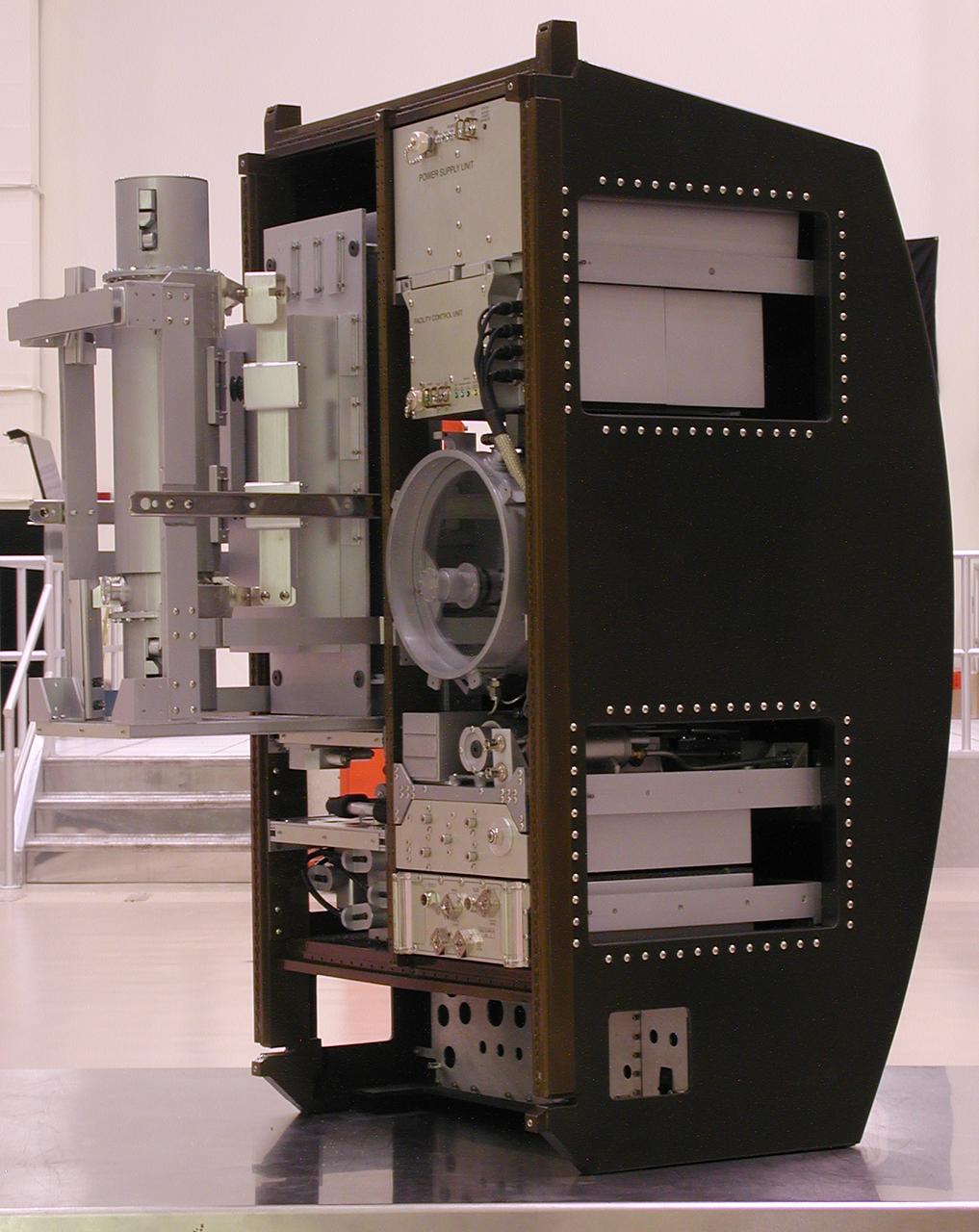
This scale model depicts the Materials Science Research Rack-1 (MSRR-1) being developed by NASA's Marshall Space Flight Center and the European Space Agency (ESA) for placement in the Destiny laboratory module aboard the International Space Station. The rack is part of the plarned Materials Science Research Facility (MSRF) and is expected to include two furnace module inserts, a Quench Module Insert (being developed by NASA's Marshall Space Flight Center) to study directional solidification in rapidly cooled alloys and a Diffusion Module Insert (being developed by the European Space Agency) to study crystal growth, and a transparent furnace (being developed by NASA's Space Product Development program). Multi-user equipment in the rack is being developed under the auspices of NASA's Office of Biological and Physical Research (OBPR) and ESA. Here the transparent furnace is extracted for servicing. Key elements are labeled in other images (0101754, 0101829, 0101830, and TBD).
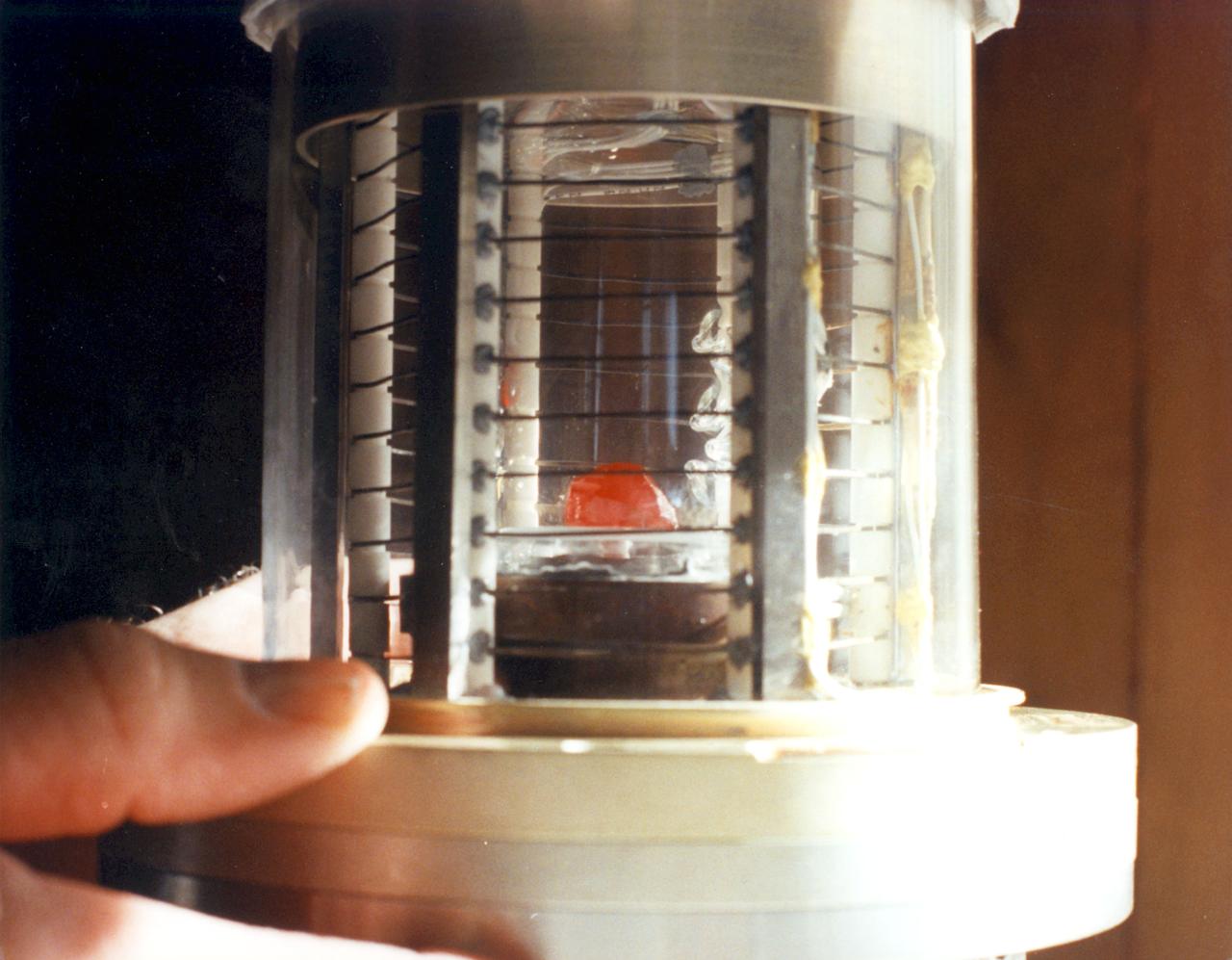
Ampoule view of the Vapor Crystal Growth System (VCGS) Furnace. Used on IML-1 International Microgravity Laboratory Spacelab 3. Prinicipal Investigator and Payload Specialist was Lodewijk van den Berg.
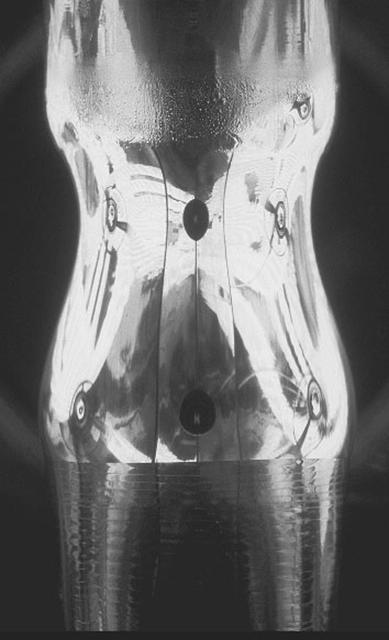
Crystal Growth in magnetic fields, a float-zone sample, the surface tension of the melt keeps the sample suspended between the sample rods in the furnace forming an actual liquid bridge. Principal Investigator: Dr. Frank Szofran
Overall view of the Vapor Crystal Growth System (VCGS) Furnace. Used on IML-1 International Microgravity Laboratory Spacelab 3. Principal Investigator and Payload Specialist was Lodewijk van den Berg.

jsc2025e000004 (2024) --- View of ESA astronaut Alexander Gerst activating the Electromagnetic Levitator (EML), a microgravity furnace for metals, inside Europe's Columbus module of the International Space Station during his 2014 Blue Dot mission.
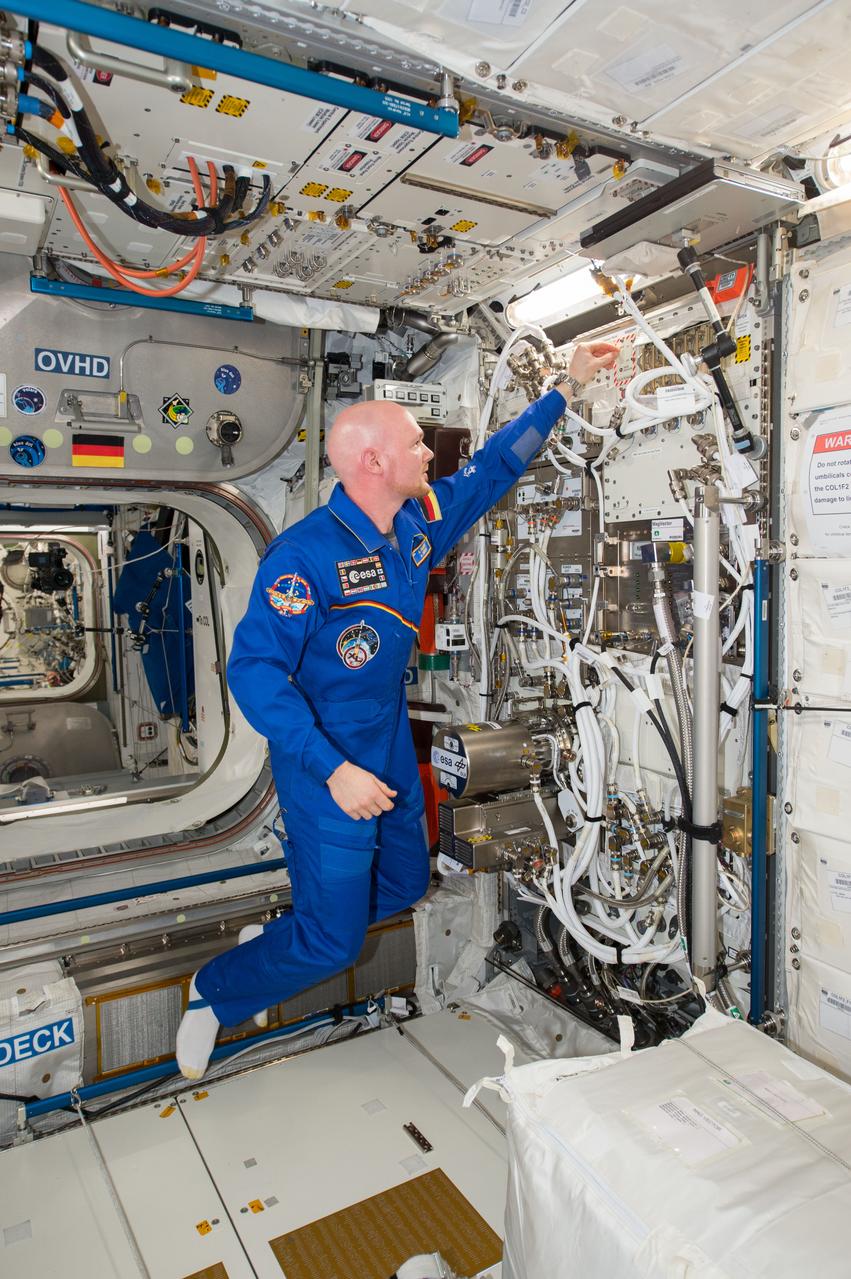
iss041e107733 (11/4/2014) --- ESA astronaut Alexander Gerst activates the Electromagnetic Levitator (EML), a microgravity furnace for metals, inside Europe's Columbus module of the International Space Station during his 2014 Blue Dot mission.
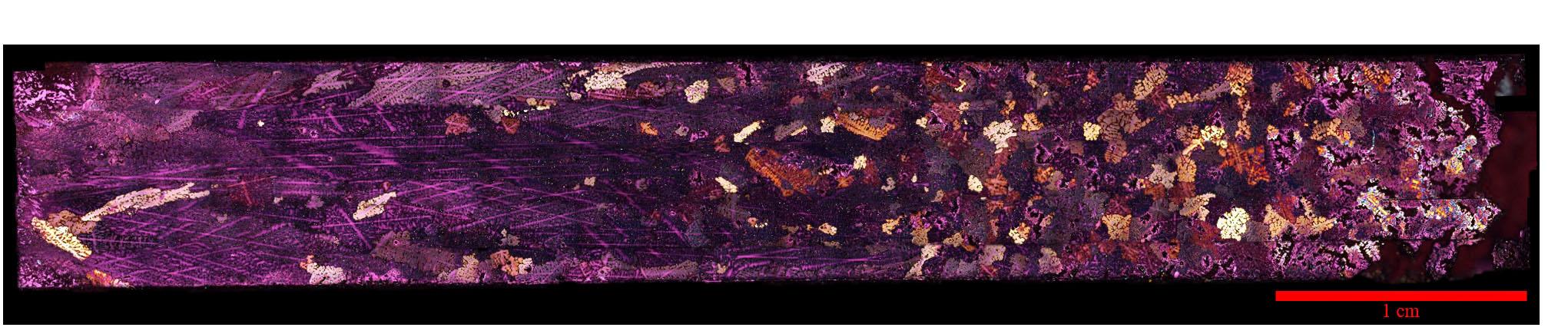
jsc2020e017721 (3/30/2020) --- A preflight view of a Polarized light micrograph of an Al-4%Cu alloy sample solidified in the SUBSA furnace showing a columnar-to-equiaxed transition in the grain structure. The sample has been electrolytically etched to show grains of differing orientation in color contrast under polarized light.
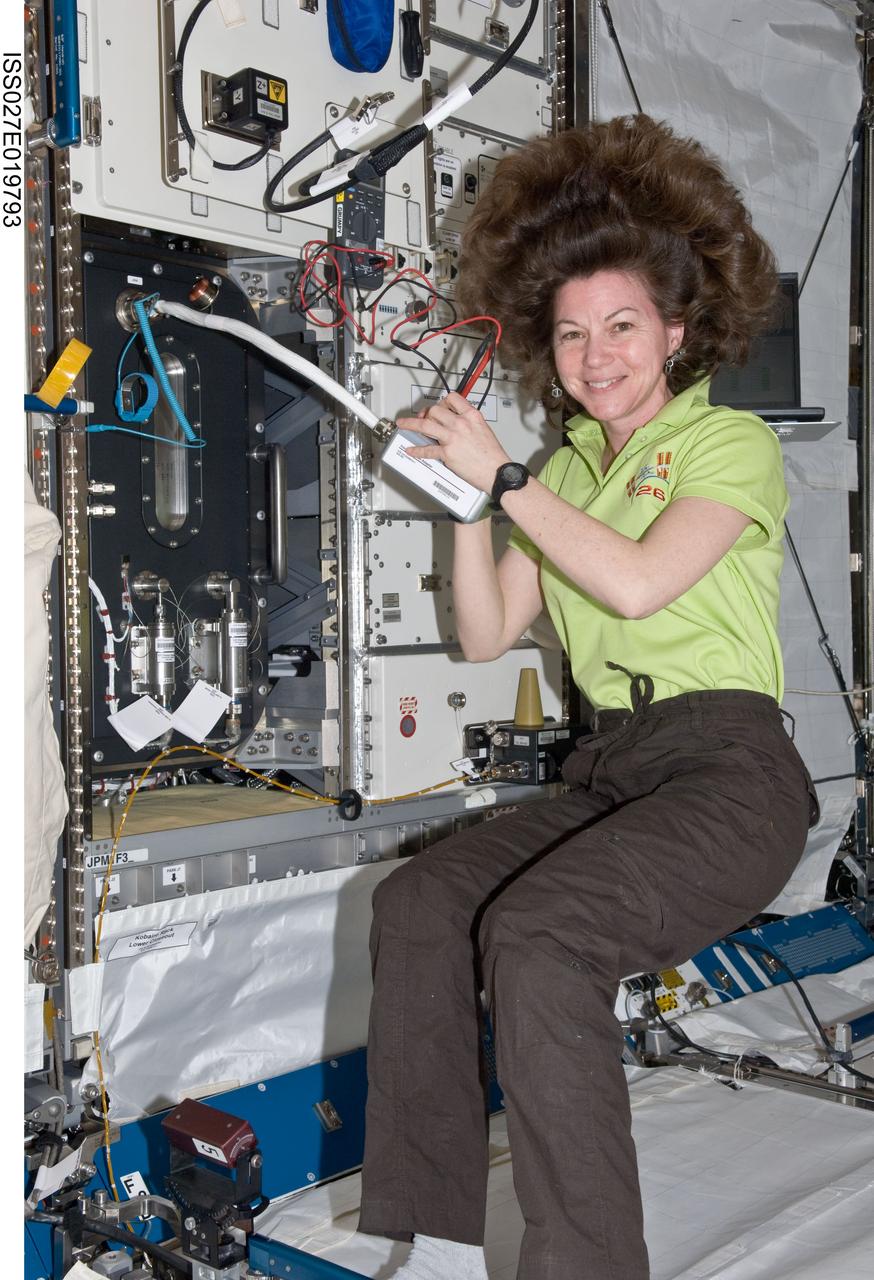
ISS027-E-019793 (2 May 2011) --- NASA astronaut Cady Coleman, Expedition 27 flight engineer, performs in-flight maintenance (IFM) on the Gradient Heating Furnace (GHF) on the Kobairo Rack in the Kibo laboratory of the International Space Station.
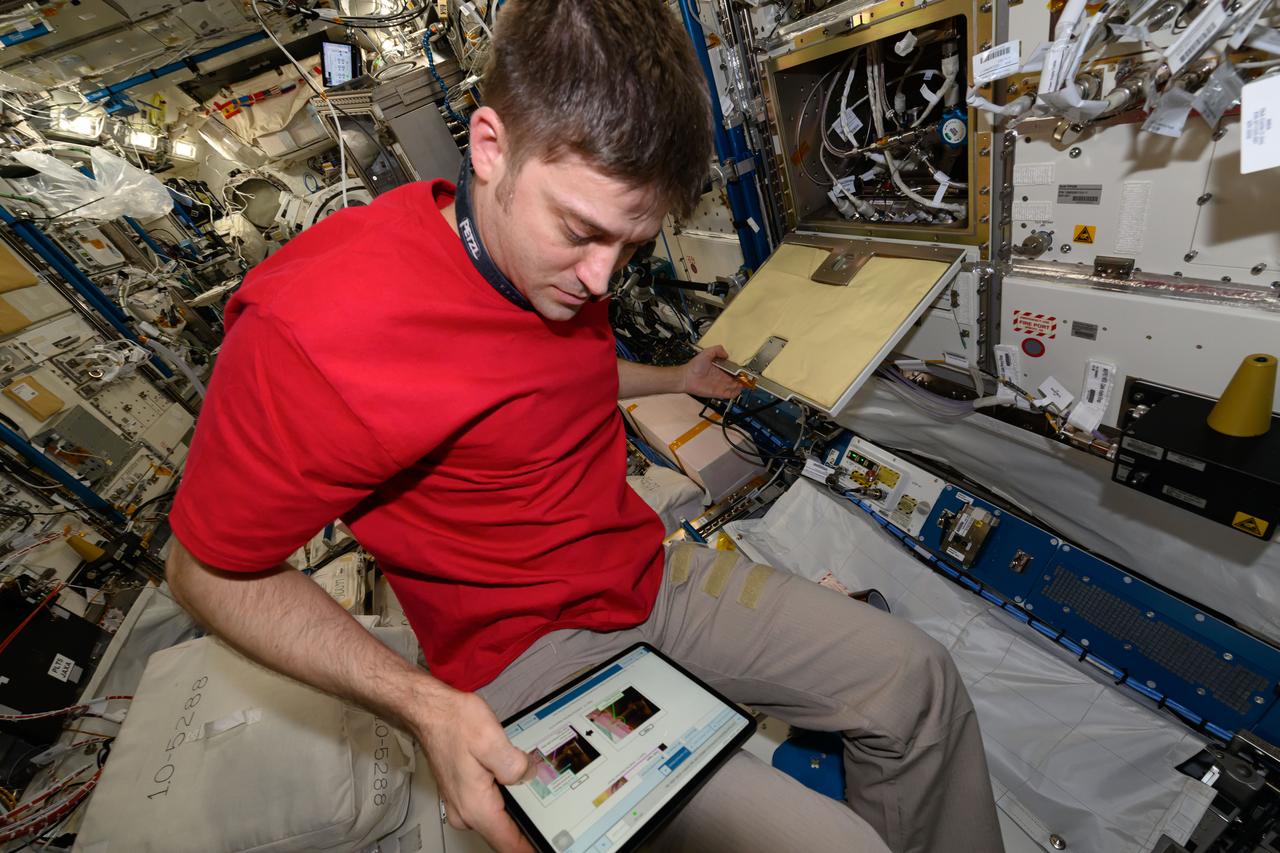
iss071e462464 (Aug. 9, 2024) --- NASA astronaut and Expedition 71 Flight Engineer Matthew Dominick replaces research components inside the Electrostatic Levitation Furnace (ELF) located inside the International Space Station's Kibo laboratory module. The ELF supports safe observations of microgravity’s effect on materials exposed to high temperatures.
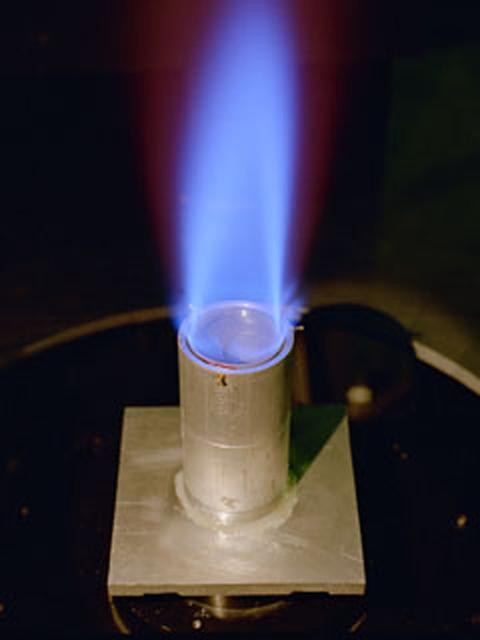
The Ring Flame Stabilizer has been developed in conjunction with Lewis Research Center. This device can lower pollutant emissions (which contribute to smog and air pollution) from natural-gas appliances such as furnaces and water heaters by 90 percent while improving energy efficiency by 2 percent.
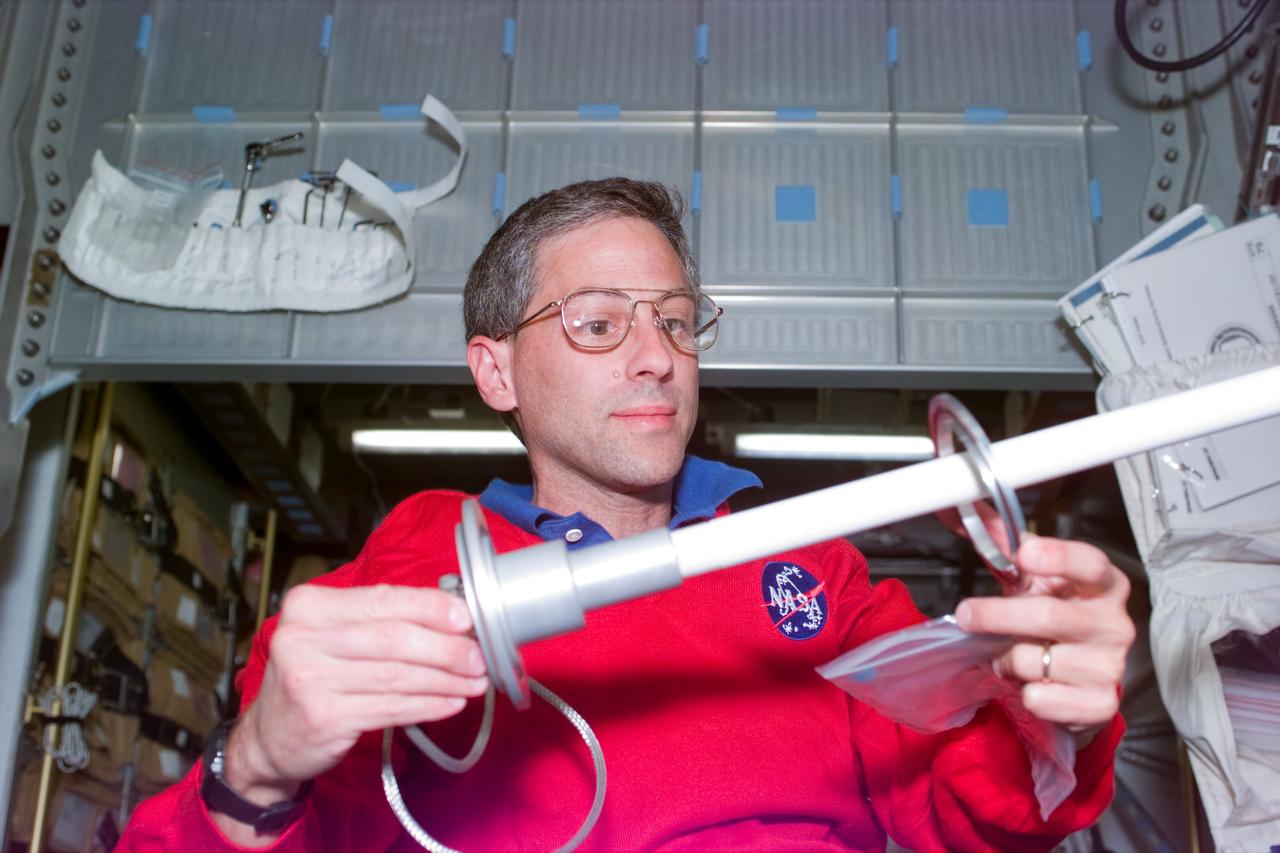
STS79-E-5018 (17 September 1996) --- Astronaut Jerome (Jay) Apt prepares experiment, a rod-like device for insertion into Extreme Temperature Translation Furnace (ETTF) in STS-79-E-5019, during early mission chores aboard Spacehab in the Space Shuttle Atlantis cargo bay, on Flight Day 2.
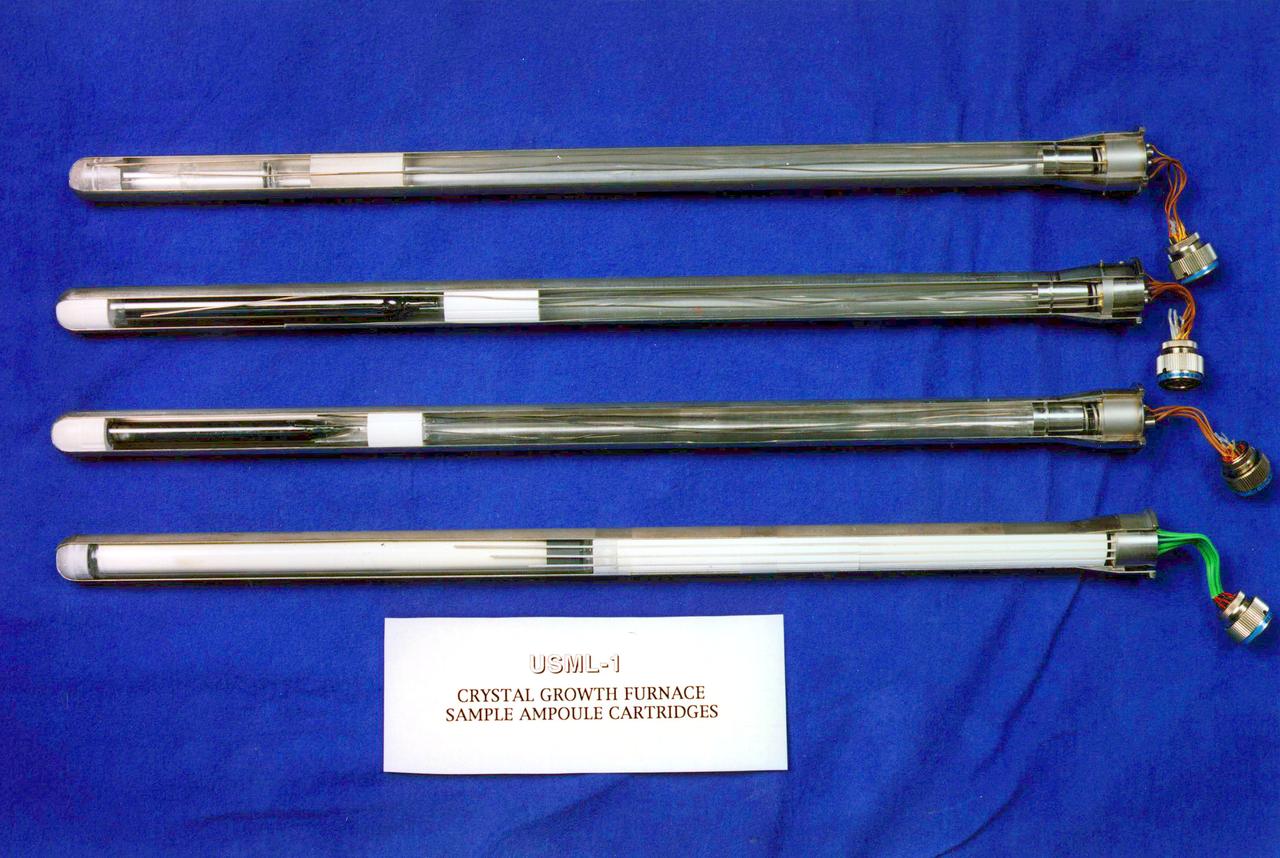
Crystal Growth Furnace (CGF) without the EAC internal support structure. Flown on USML-1 and USML-2. The Principal Investigators on these flights were: Larson, Lehoczky, Matthiesen, Wiedemeier. Processed 6 samples on USML-1 and 7 samples on USML-2.
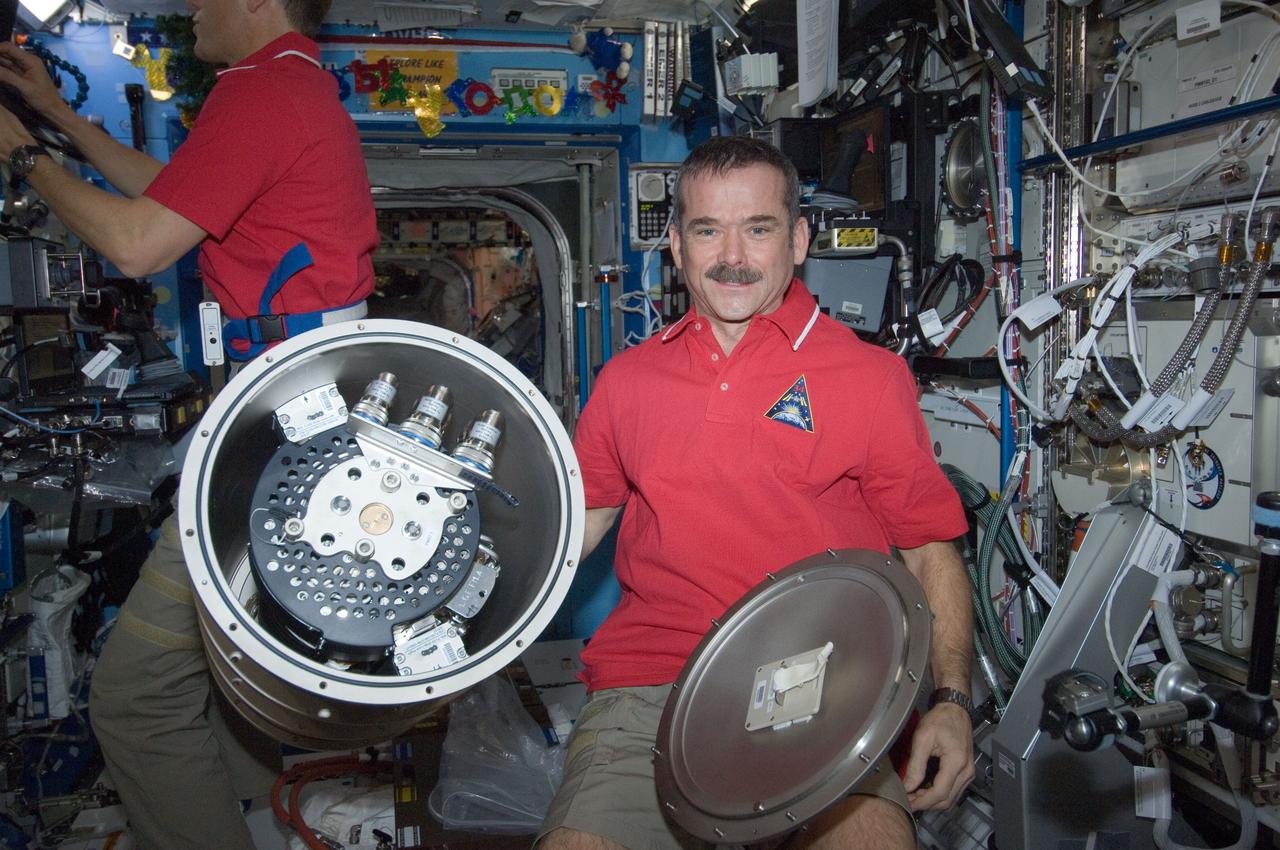
View of Canada Space Agency (CSA) Chris Hadfield, Expedition 34 Flight Engineer (FE), poses with a Materials Science Laboratory (MSL) Furnace Launch Support Structure (FLSS) in the U.S. Laboratory. Tom Marshburn (background), Expedition 34 FE uses laptop computer. Photo was taken during Expedition 34.
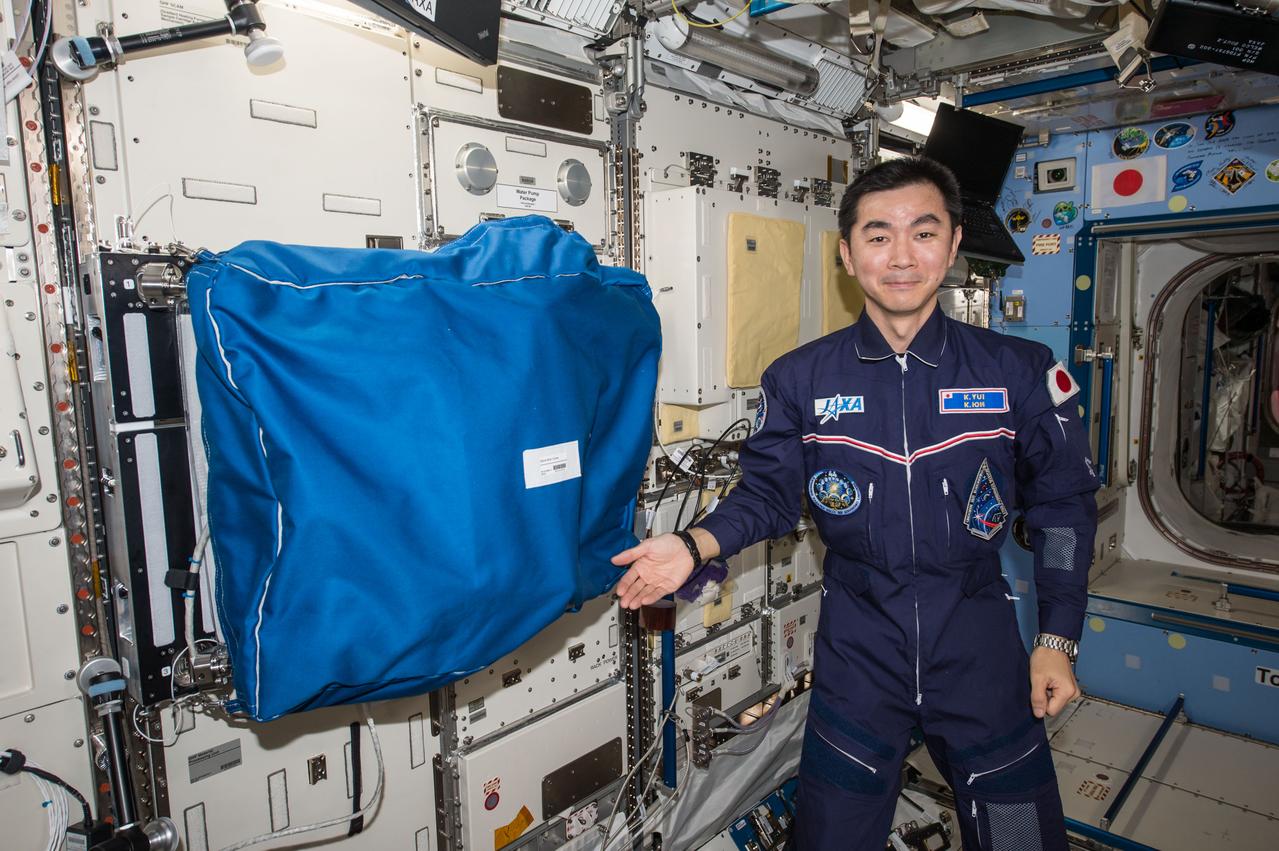
iss045e152163 (12/1/2015) --- A view of Japan Aerospace Exploration Agency (JAXA) astronaut Kimiya Yui photographed next to the Kobairo rack, JPM1F3 in the Kibo Japanese Experiment Pressurized Module (JPM) aboard the International Space Station (ISS). The rack contains the Gradient Heating Furnace (GHF) and has a Glovebox attached to the rack front.
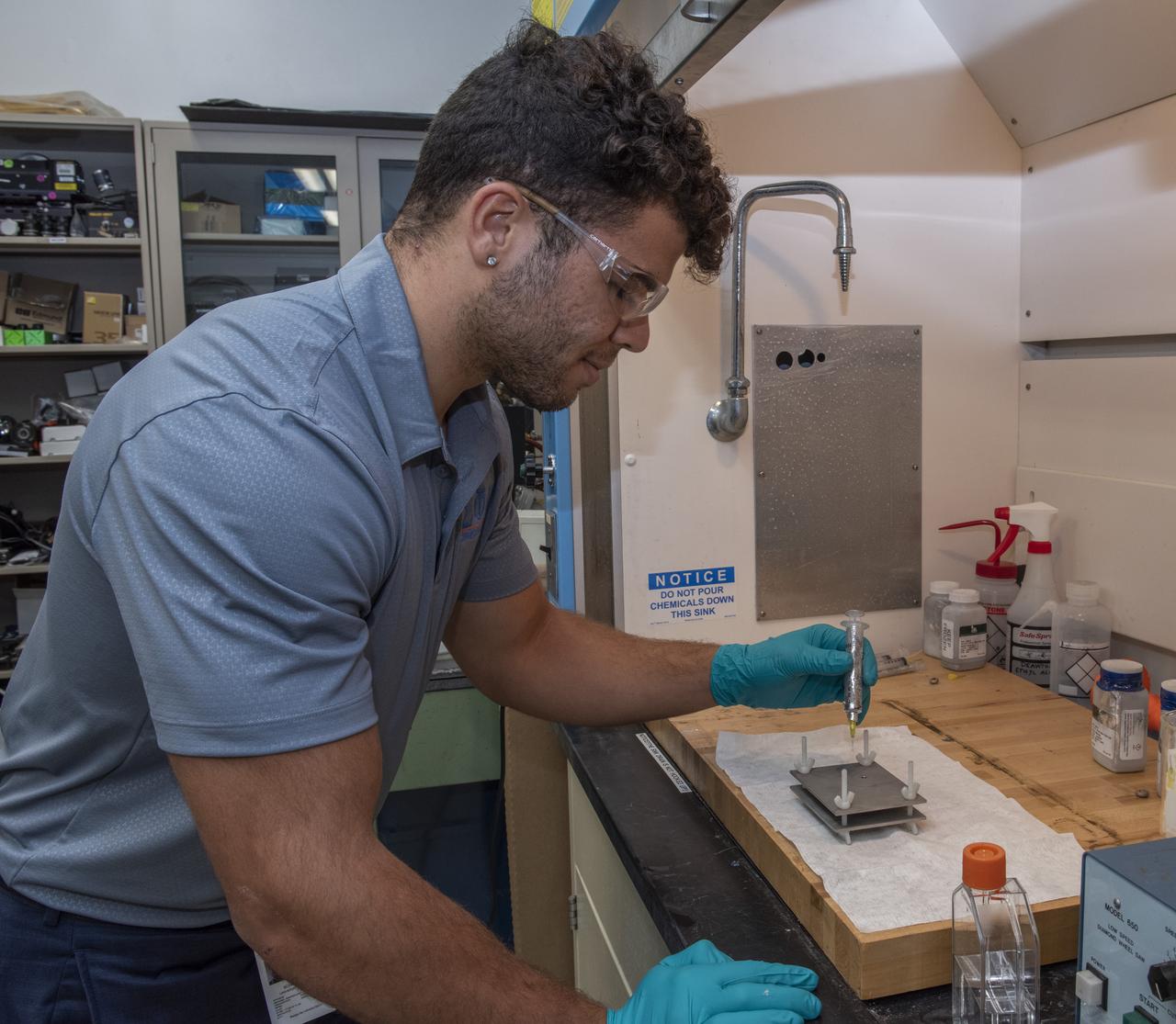
Allan Bonet (undergraduate student, University of Florida) prepares a test cell for ground-based testing in support of Dr. Ranga Narayanan’s (University of Florida) NASA grant “A Novel Way to Measure Interfacial Tension Using the Electrostatic Levitation Furnace (ELF)†(NNX17AL27G).
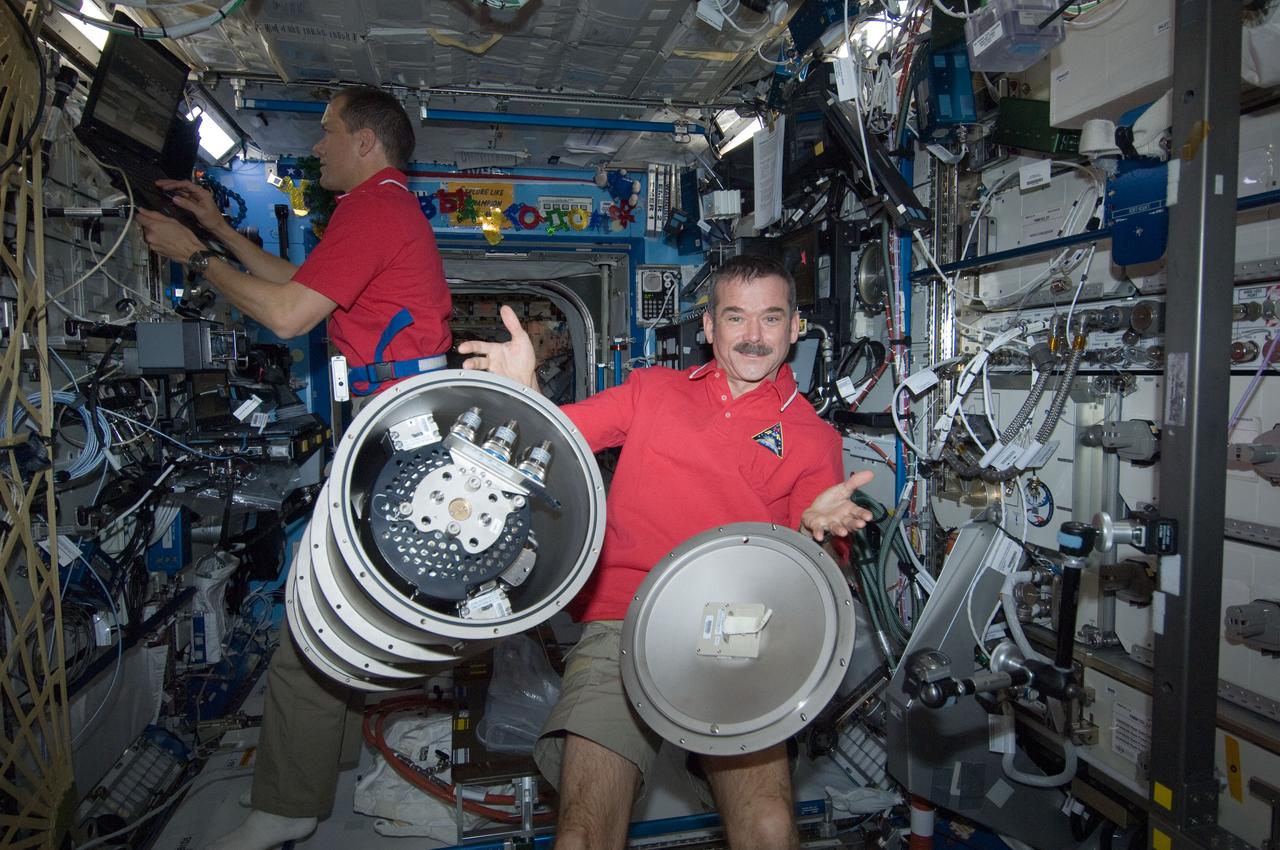
ISS034-E-010603 (28 Dec. 2012) --- Canadian Space Agency astronaut Chris Hadfield, Expedition 34 flight engineer, poses with a Materials Science Laboratory (MSL) Furnace Launch Support Structure (FLSS) in the Destiny laboratory of the International Space Station. NASA astronaut Tom Marshburn, flight engineer, uses a computer in the background.
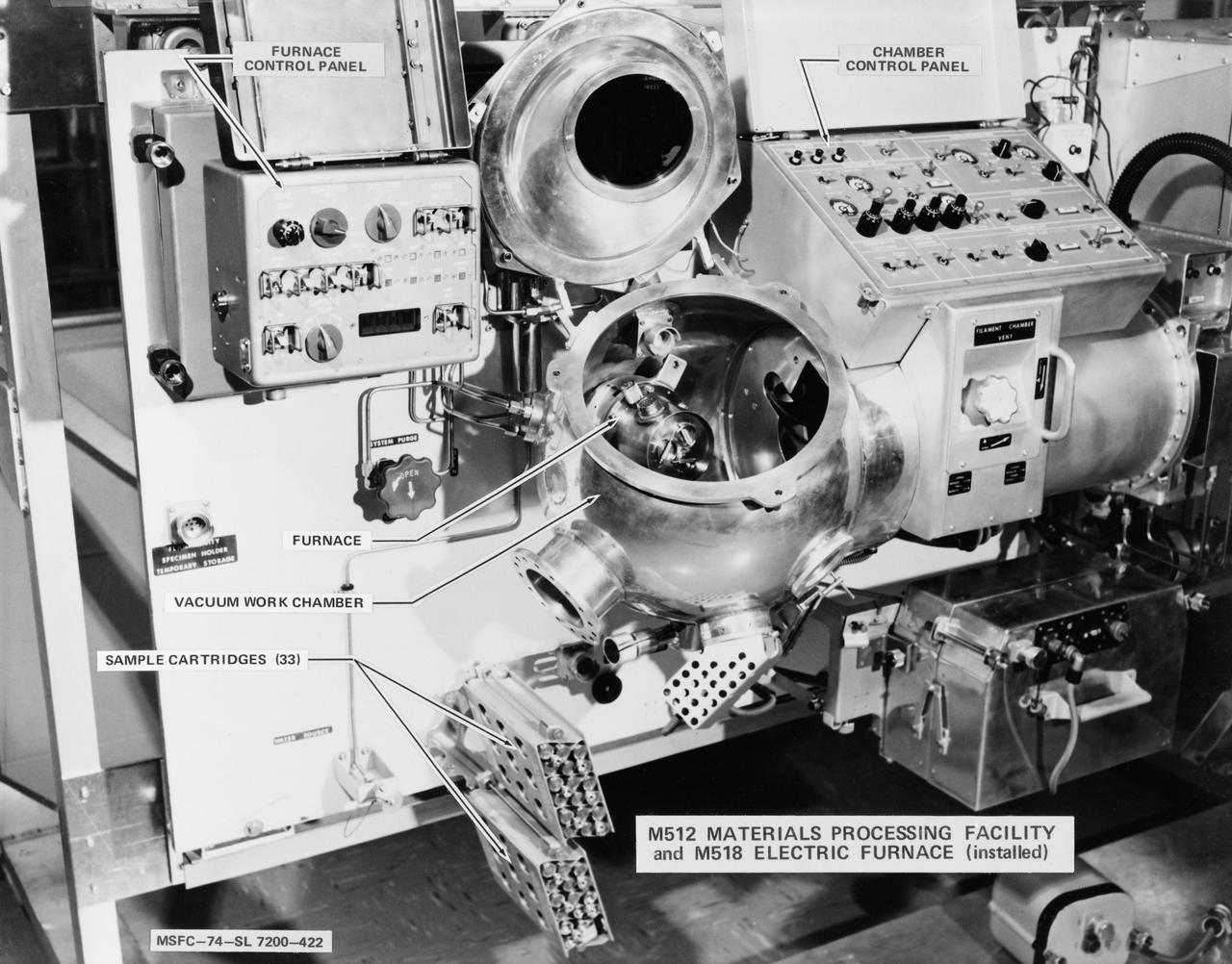
S74-19675 (1974) --- Medium close-up view of the M512 materials processing equipment storage assembly and the M518 electric furnace in the Multiple Docking Adapter (MDA), one of the primary elements of the Skylab space station. The assembly holds equipment designed to explore space manufacturing capability in a weightless state. Photo credit: NASA
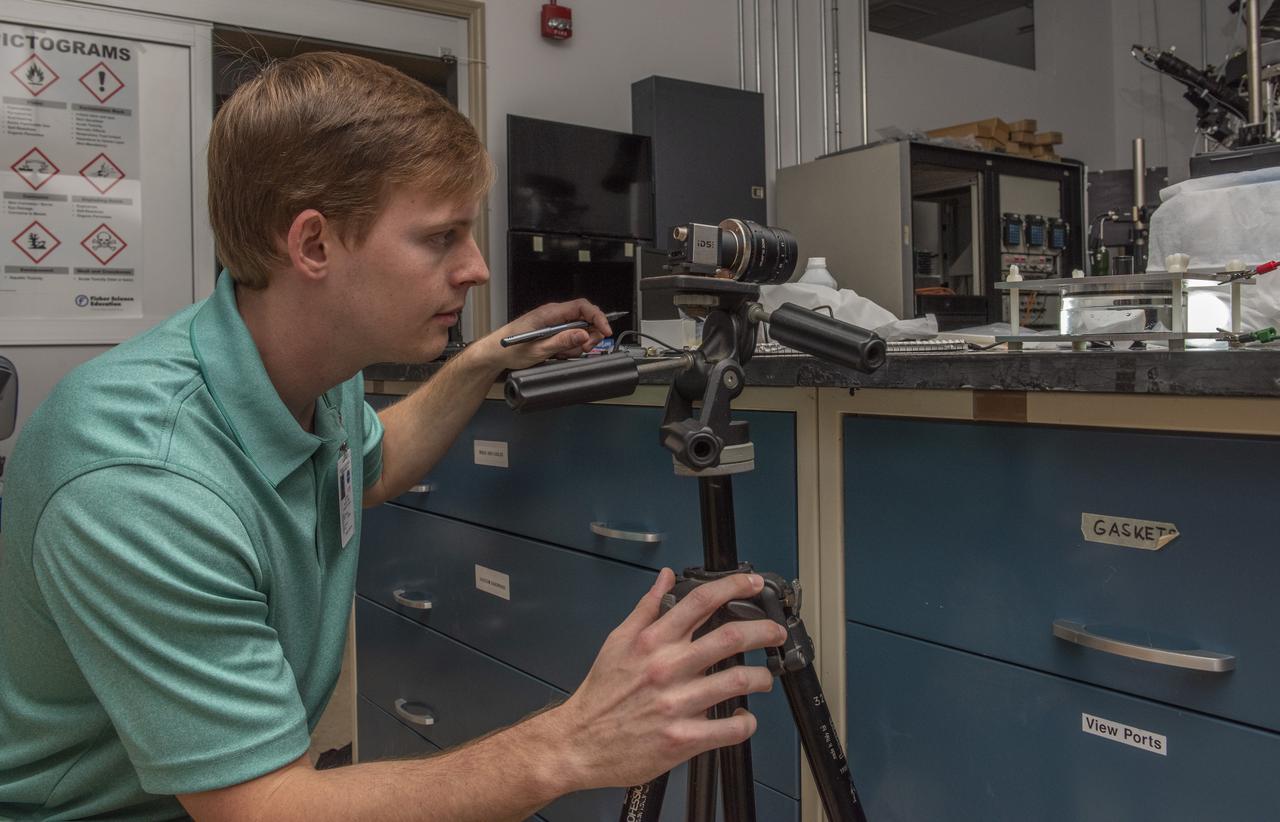
Evan Wilson (undergraduate student, University of Florida) observes a test apparatus to measure interfacial tension in support of Dr. Ranga Narayanan’s (University of Florida) NASA grant “A Novel Way to Measure Interfacial Tension Using the Electrostatic Levitation Furnace (ELF)†(NNX17AL27G).
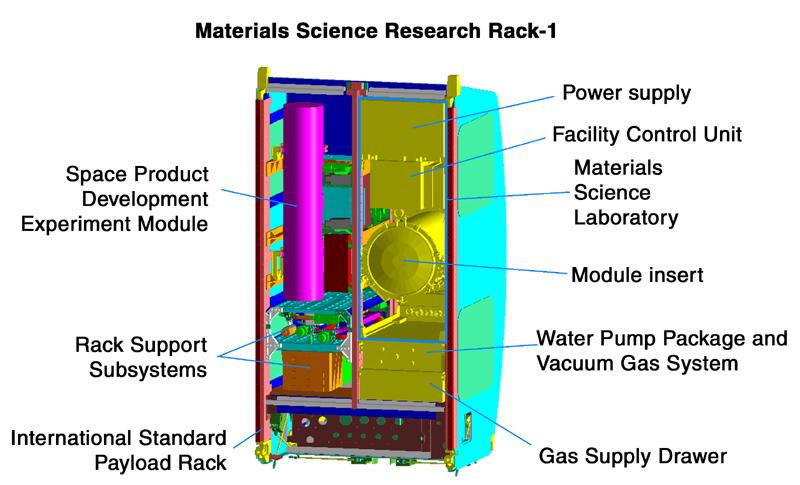
This computer-generated image depicts the Materials Science Research Rack-1 (MSRR-1) being developed by NASA's Marshall Space Flight Center and the European Space Agency (ESA) for placement in the Destiny laboratory module aboard the International Space Station. The rack is part of the plarned Materials Science Research Facility (MSRF) and is expected to include two furnace module inserts, a Quench Module Insert (being developed by NASA's Marshall Space Flight Center) to study directional solidification in rapidly cooled alloys and a Diffusion Module Insert (being developed by the European Space Agency) to study crystal growth, and a transparent furnace (being developed by NASA's Space Product Development program). Multi-user equipment in the rack is being developed under the auspices of NASA's Office of Biological and Physical Research (OBPR) and ESA. A larger image is available without labels (No. 0101755).
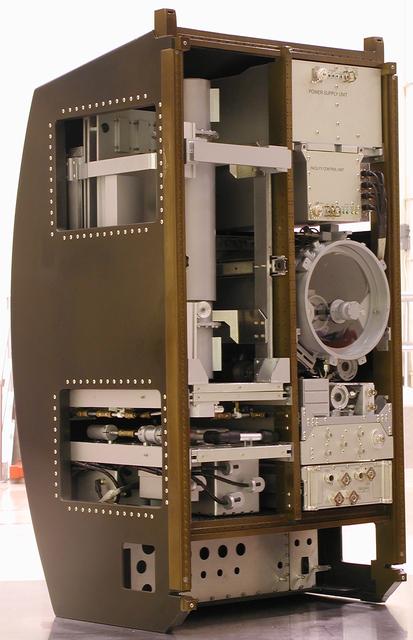
This scale model depicts the Materials Science Research Rack-1 (MSRR-1) being developed by NASA's Marshall Space Flight Center and the European Space Agency (ESA) for placement in the Destiny laboratory module aboard the International Space Station. The rack is part of the plarned Materials Science Research Facility (MSRF) and is expected to include two furnace module inserts, a Quench Module Insert (being developed by NASA's Marshall Space Flight Center) to study directional solidification in rapidly cooled alloys and a Diffusion Module Insert (being developed by the European Space Agency) to study crystal growth, and a transparent furnace (being developed by NASA's Space Product Development program). Multi-user equipment in the rack is being developed under the auspices of NASA's Office of Biological and Physical Research (OBPR) and ESA. Key elements are labeled in other images (0101754, 0101829, 0101830, and TBD). This image is from a digital still camera; higher resolution is not available.
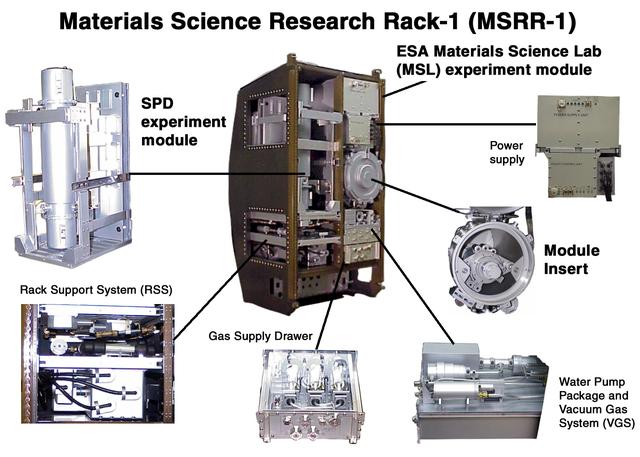
This scale model depicts the Materials Science Research Rack-1 (MSRR-1) being developed by NASA's Marshall Space Flight Center and the European Space Agency (ESA) for placement in the Destiny laboratory module aboard the International Space Station. The rack is part of the plarned Materials Science Research Facility (MSRF) and is expected to include two furnace module inserts, a Quench Module Insert (being developed by NASA's Marshall Space Flight Center) to study directional solidification in rapidly cooled alloys and a Diffusion Module Insert (being developed by the European Space Agency) to study crystal growth, and a transparent furnace (being developed by NASA's Space Product Development program). Multi-user equipment in the rack is being developed under the auspices of NASA's Office of Biological and Physical Research (OBPR) and ESA. Key elements are labeled in other images (0101754, 0101829, and TBD). This composite is from a digital still camera; higher resolution is not available.
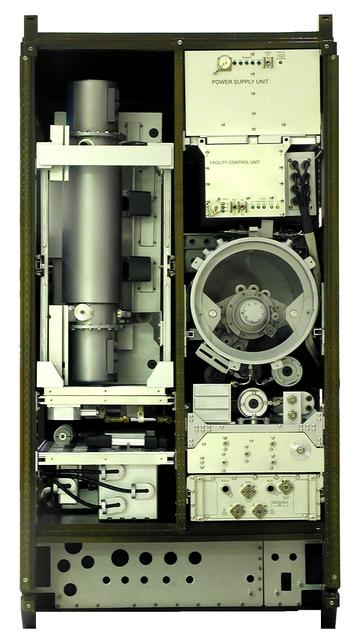
This scale model depicts the Materials Science Research Rack-1 (MSRR-1) being developed by NASA's Marshall Space Flight Center and the European Space Agency (ESA) for placement in the Destiny laboratory module aboard the International Space Station. The rack is part of the plarned Materials Science Research Facility (MSRF) and is expected to include two furnace module inserts, a Quench Module Insert (being developed by NASA's Marshall Space Flight Center) to study directional solidification in rapidly cooled alloys and a Diffusion Module Insert (being developed by the European Space Agency) to study crystal growth, and a transparent furnace (being developed by NASA's Space Product Development program). Multi-user equipment in the rack is being developed under the auspices of NASA's Office of Biological and Physical Research (OBPR) and ESA. Key elements are labeled in other images (0101754, 0101829, 0101830, and TBD).
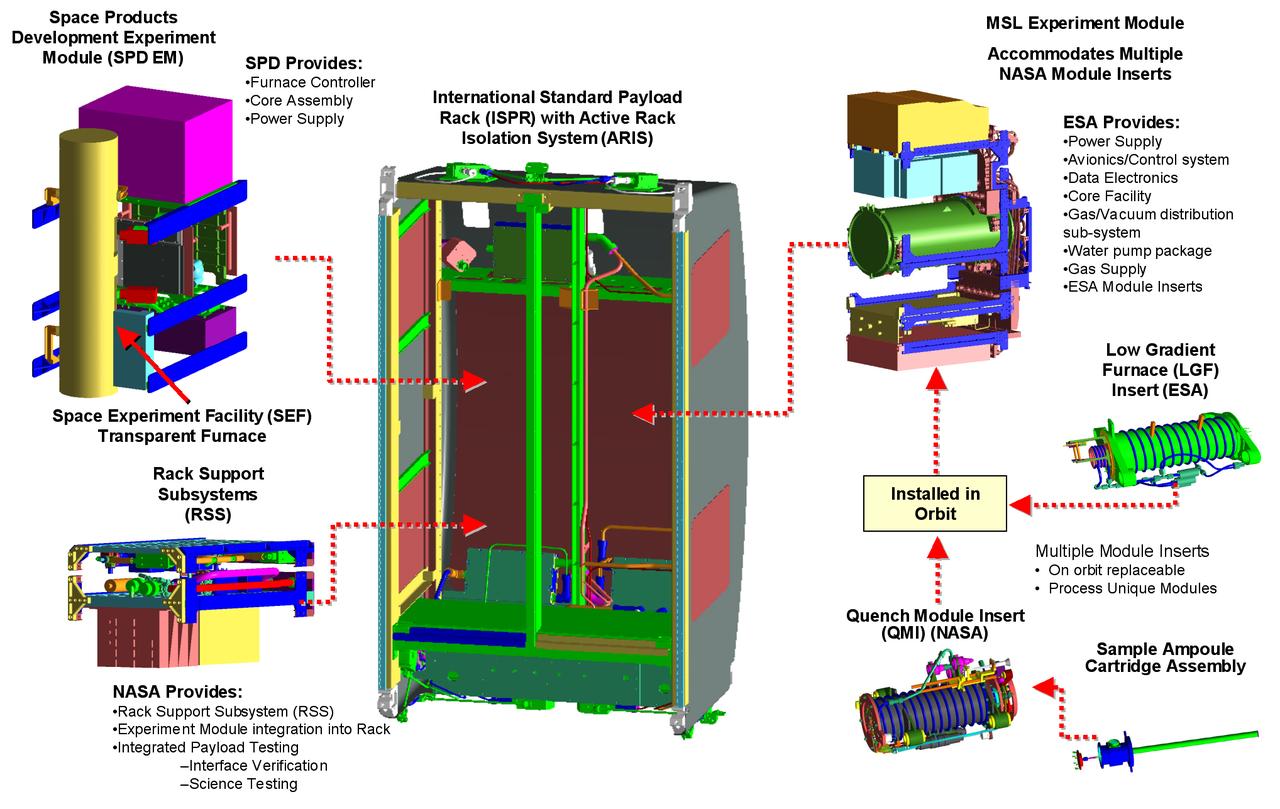
This computer-generated image depicts the Materials Science Research Rack-1 (MSRR-1) being developed by NASA's Marshall Space Flight Center and the European Space Agency (ESA) for placement in the Destiny laboratory module aboard the International Space Station. The rack is part of the plarned Materials Science Research Facility (MSRF) and is expected to include two furnace module inserts, a Quench Module Insert (being developed by NASA's Marshall Space Flight Center) to study directional solidification in rapidly cooled alloys and a Diffusion Module Insert (being developed by the European Space Agency) to study crystal growth, and a transparent furnace (being developed by NASA's Space Product Development program). Multi-user equipment in the rack is being developed under the auspices of NASA's Office of Biological and Physical Research (OBPR) and ESA. Key elements are labeled in other images (0101754, 0101830, and TBD).
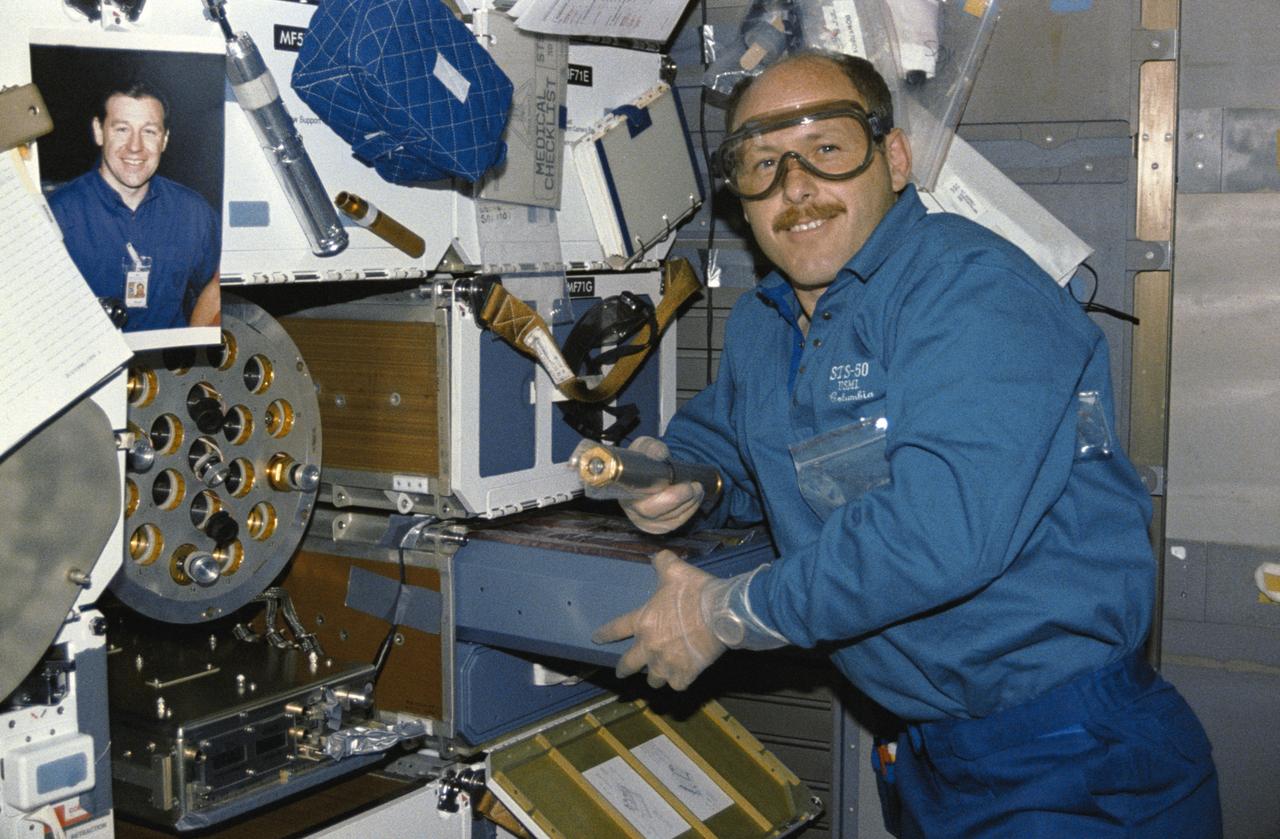
STS50-262-004 (25 June-9 July 1992) --- Astronaut Kenneth D. Bowersox, STS-50 pilot, holds an autoclave used in the growing of zeolite crystals on the middeck of the Earth-orbiting Space Shuttle Columbia. He is standing near the Zeolite Crystal Growth (ZCG) furnace, which is housed in the space of two stowage lockers. On the 14-day U.S. Microgravity Laboratory mission, zeolite crystals were grown in 38 individual autoclaves, which were joined in pairs to be inserted into the 19 furnace orifices. While the autoclaves appear the same externally, there are several types of internal arrangements that were tested to determine which one provides the best mixing of the component solutions. The portrait of alternate payload specialist Albert Sacco, Jr. is mounted nearby. Sacco, serving as a ground controller at Marshall Space Flight Center in Alabama, worked in conjunction with the red shift crew in the science module.
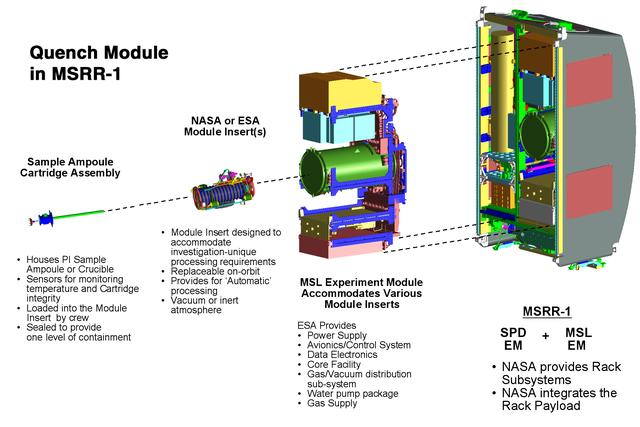
This computer-generated image depicts the Materials Science Research Rack-1 (MSRR-1) being developed by NASA's Marshall Space Flight Center and the European Space Agency (ESA) for placement in the Destiny laboratory module aboard the International Space Station. The rack is part of the plarned Materials Science Research Facility (MSRF) and is expected to include two furnace module inserts, a Quench Module Insert (being developed by NASA's Marshall Space Flight Center) to study directional solidification in rapidly cooled alloys and a Diffusion Module Insert (being developed by the European Space Agency) to study crystal growth, and a transparent furnace (being developed by NASA's Space Product Development program). Multi-user equipment in the rack is being developed under the auspices of NASA's Office of Biological and Physical Research (OBPR) and ESA. Key elements are labeled in other images (0101754, 0101829, 0101830).
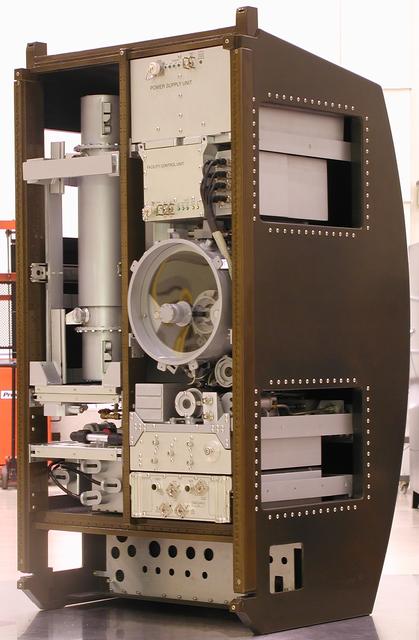
This scale model depicts the Materials Science Research Rack-1 (MSRR-1) being developed by NASA's Marshall Space Flight Center and the European Space Agency (ESA) for placement in the Destiny laboratory module aboard the International Space Station. The rack is part of the plarned Materials Science Research Facility (MSRF) and is expected to include two furnace module inserts, a Quench Module Insert (being developed by NASA's Marshall Space Flight Center) to study directional solidification in rapidly cooled alloys and a Diffusion Module Insert (being developed by the European Space Agency) to study crystal growth, and a transparent furnace (being developed by NASA's Space Product Development program). Multi-user equipment in the rack is being developed under the auspices of NASA's Office of Biological and Physical Research (OBPR) and ESA. Key elements are labeled in other images (0101754, 0101829, 0101830, and TBD). This image is from a digital still camera; higher resolution is not available.
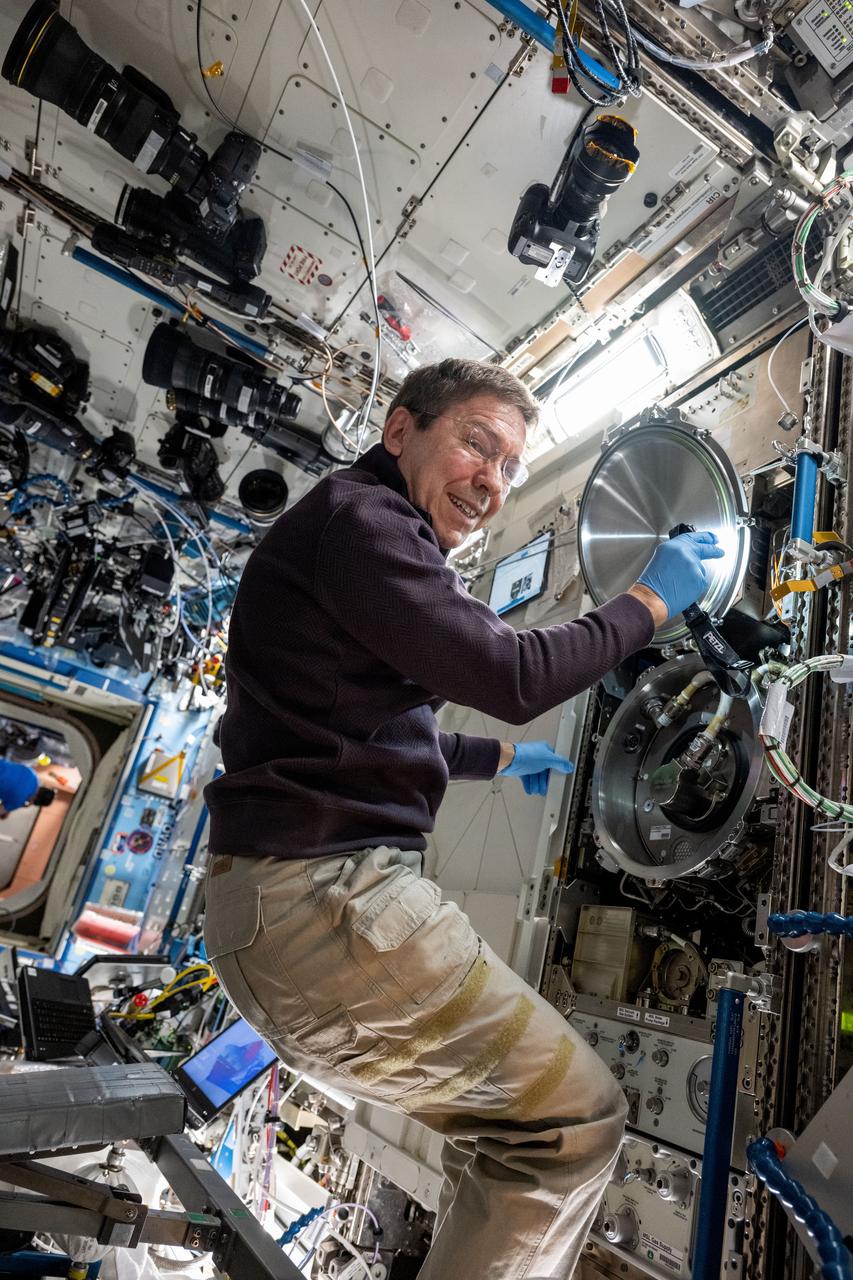
iss071e522745 (Aug. 19, 2024) --- NASA astronaut and Expedition 71 Flight Engineer Mike Barratt swaps sample cartridges inside the Materials Science Laboratory (MSL), a research furnace facilitating discoveries of new and improved materials as well as new uses for existing materials such as metals, alloys, polymers, and more. The MSL is located inside the International Space Station's Destiny laboratory module.
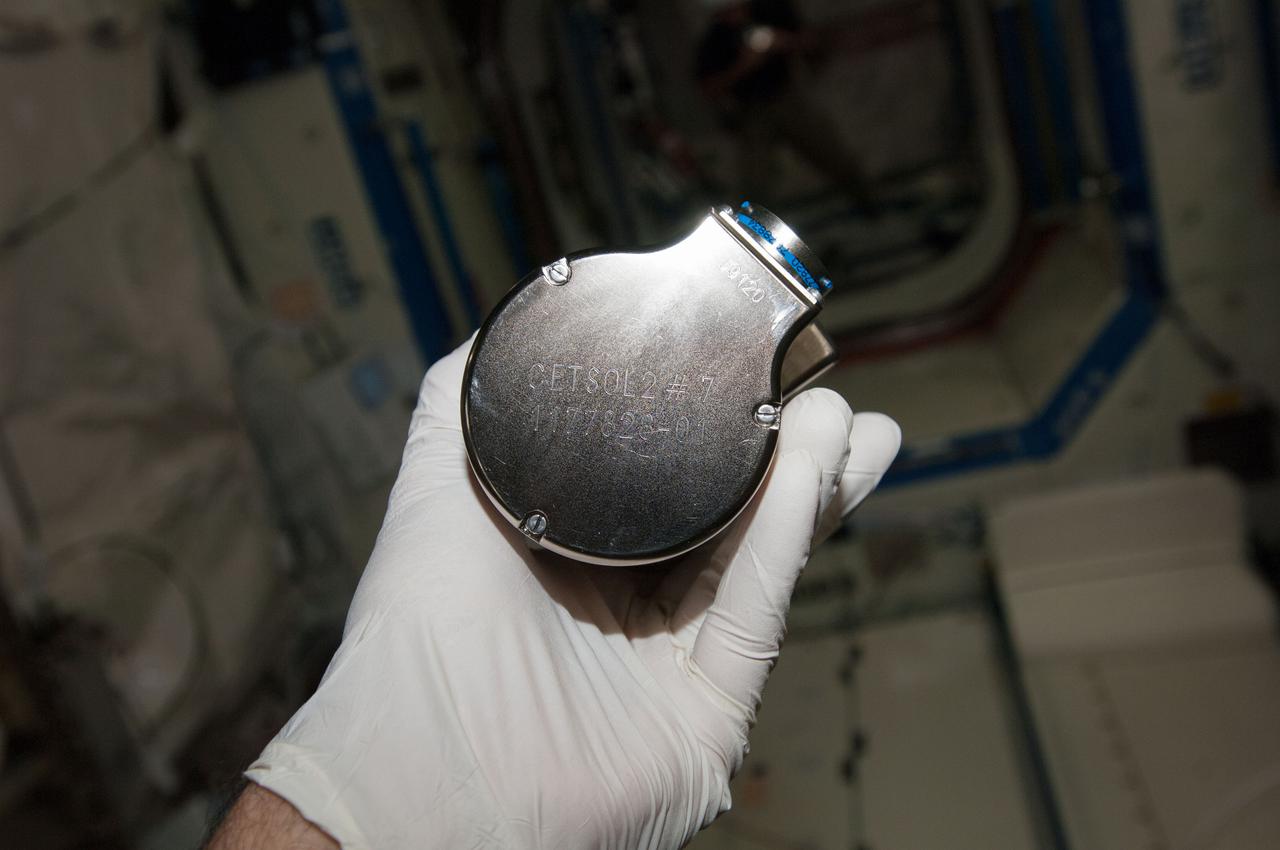
iss038e045758 (2/12/2014) --- A view of Columnar-to-Equiaxed Transition in Solidification Processing-2 (CETSOL-2) test sample 7 which is to be installed into the Material Science Laboratory (MSL) Solidification and Quench Furnace (SQF). This investigation aims to deepen the understanding of the physical principles that govern solidification processes in metal alloys. The patterns of the crystals resulting from transitions of liquids to solids is important for processes used to produce materials such as solar cells, thermoelectrics, and metal alloys.
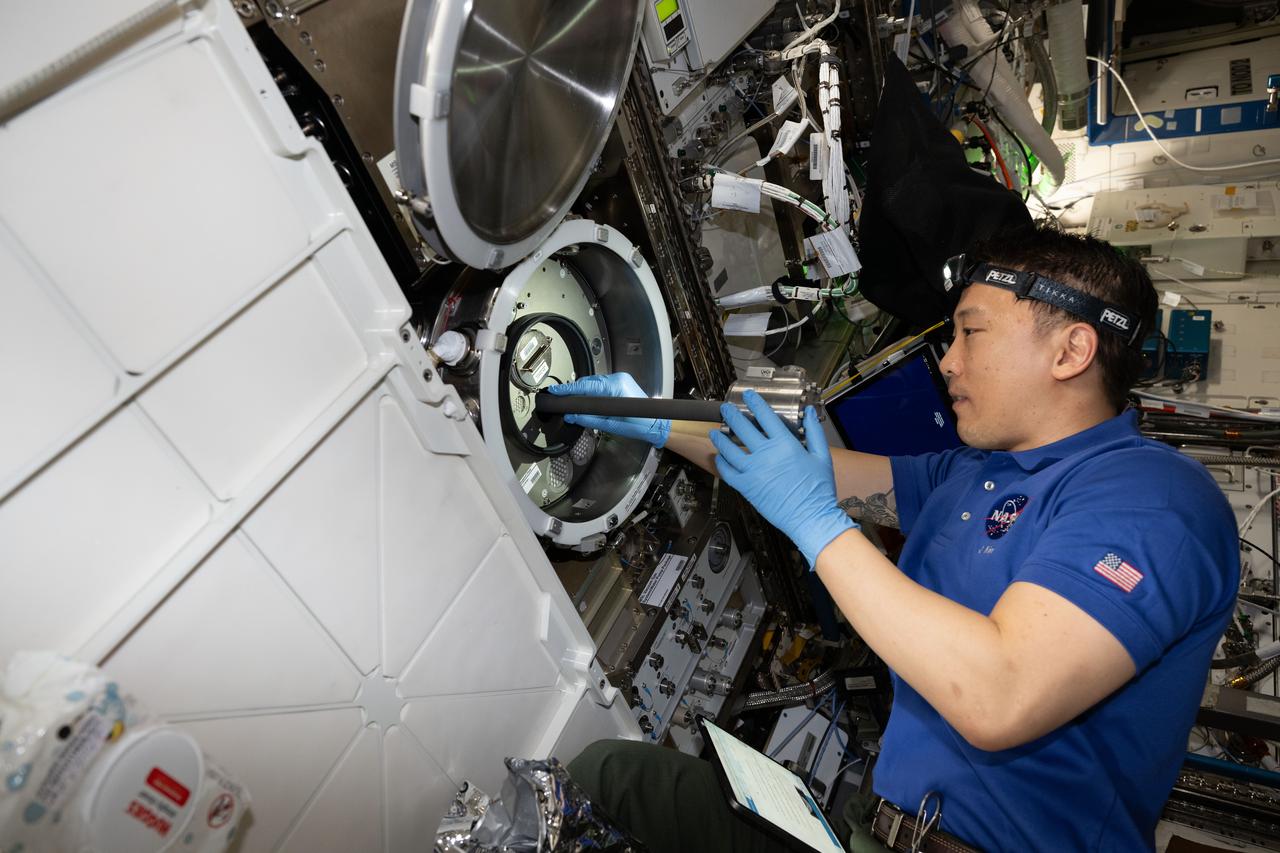
iss073e0222456 (June 27, 2025) --- NASA astronaut and Expedition 73 Flight Engineer Jonny Kim removes research hardware from inside the Materials Science Laboratory (MSL) located inside the International Space Station's Destiny laboratory module. The MSL uses two different furnaces that operate one at a time to discover new applications for existing materials, such as metals, alloys, polymers, and new or improved materials.

ISS034-E-040265 (5 Feb. 2013) --- Canadian Space Agency astronaut Chris Hadfield, Expedition 34 flight engineer, holds two Material Science Laboratory Solidification and Quench Furnace (MSL SQF) Sample Cartridge Mechanical Protection Containers (MPCs), during MSL Sample Cartridge Exchange, in the Destiny laboratory of the International Space Station.
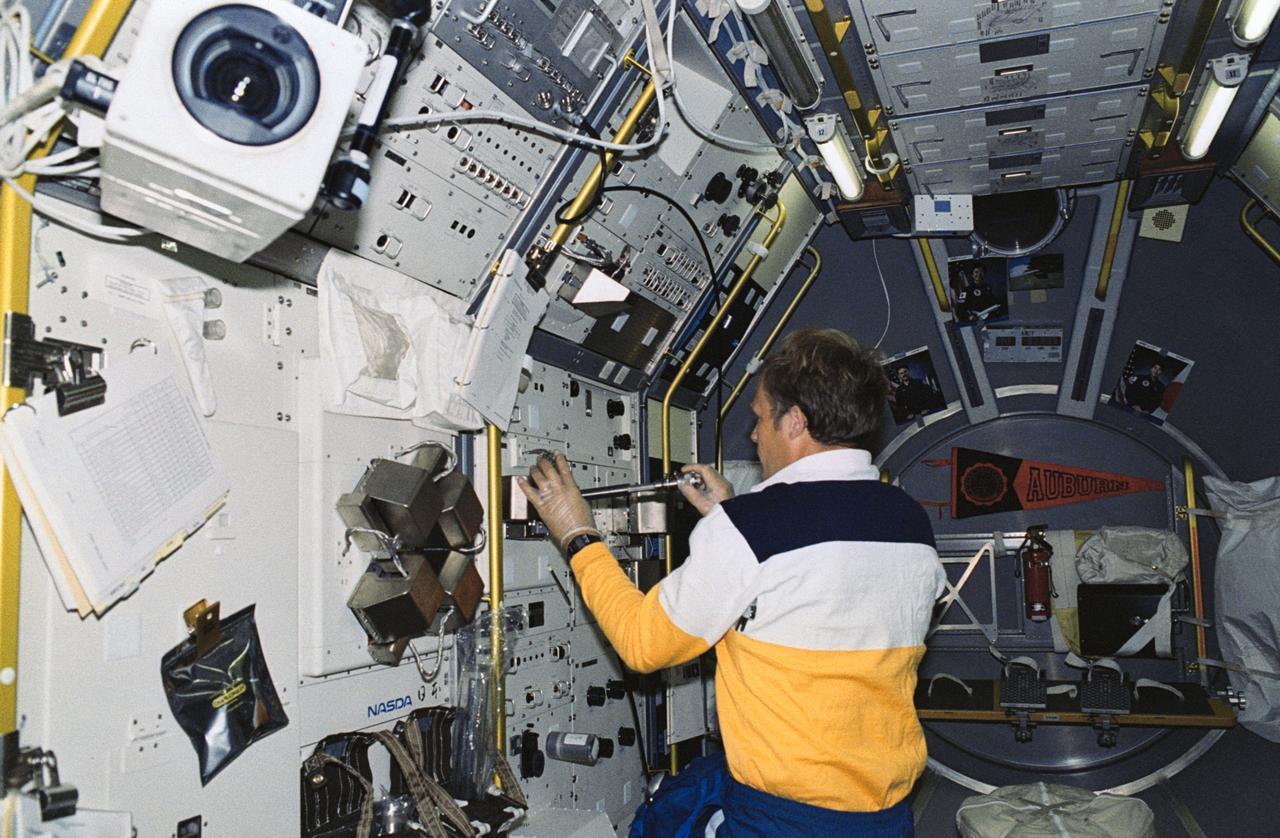
STS047-203-009 (12-20 Sept 1992) --- Astronaut Mark C. Lee, payload commander, inserts a sample into the Gradient Heating Furnace (GHF) in the Spacelab-J Science Module aboard the Earth-orbiting Space Shuttle Endeavour. Lee, along with five other NASA astronauts and a Japanese payload specialist, conducted eight days of research in support of Spacelab-J.
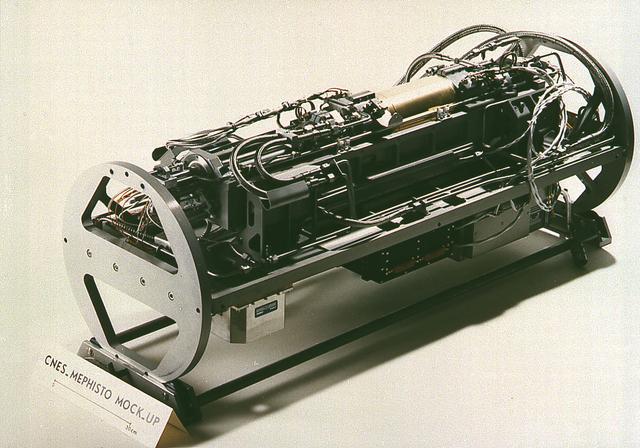
The MEPHISTO experiment is a cooperative American and French investigation of the fundamentals of crystal growth. MEPHISTO is a French-designed and built materials processing furnace. MEPHISTO experiments study solidation (also called freezing) during the growth cycle of liquid materials used for semiconductor crystals. Solidification is the process where materials change from liquid (melt) to solid. An example of the solidification process is water changing into ice.
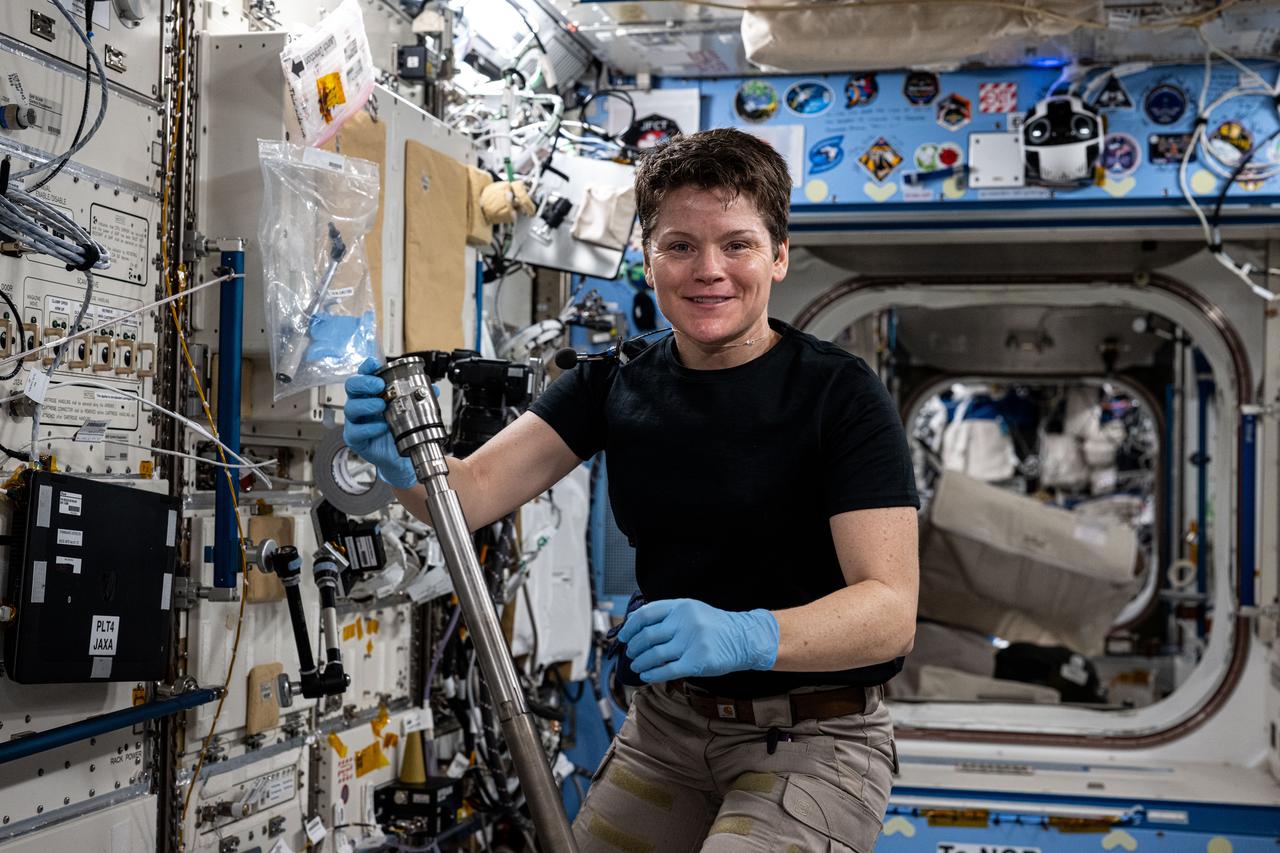
iss073e0118391 (May 20, 2025) --- NASA astronaut and Expedition 73 Flight Engineer Anne McClain assembles research hardware inside the International Space Station's Kibo laboratory. The experimental gear is for the Hicari-II investigation taking place in Kibo's Gradient Heating Furnace to explore the physical properties of silicon-germanium crystals that grow faster in space potentially improving the production of infrared optical lenses and electrical devices.
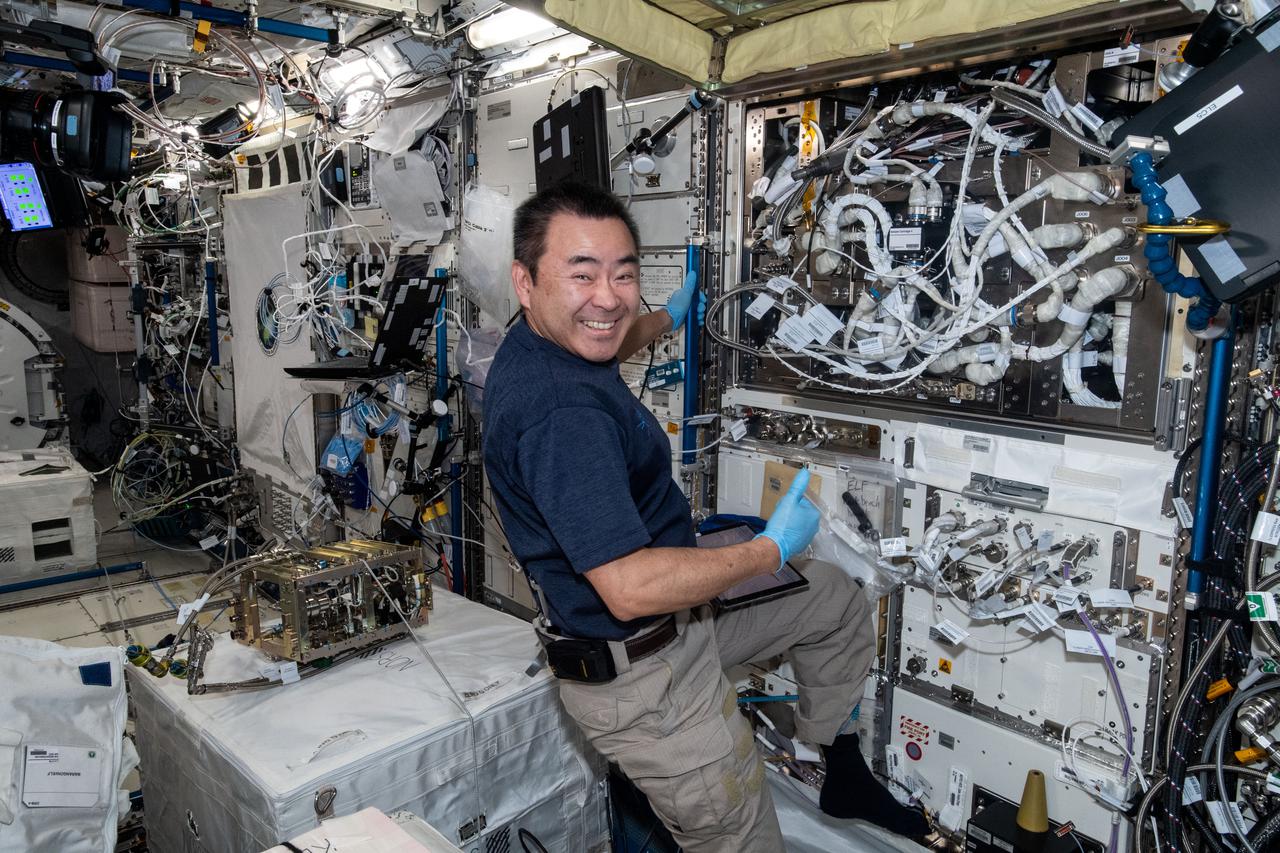
iss065e212128 (July 28, 2021) --- Expedition 65 Commander Akihiko Hoshide of the Japan Aerospace Exploration Agency (JAXA) changes out a sample holder in the Electrostatic Levitation Furnace (ELF) located inside JAXA's Kibo laboratory module. The ELF can heat samples above 2000 degrees Celsius, using a semiconductor laser from four different directions, and can also measure the thermophysical properties (density, surface tension, and viscosity) of high temperature materials, which are very difficult to measure on the Earth.
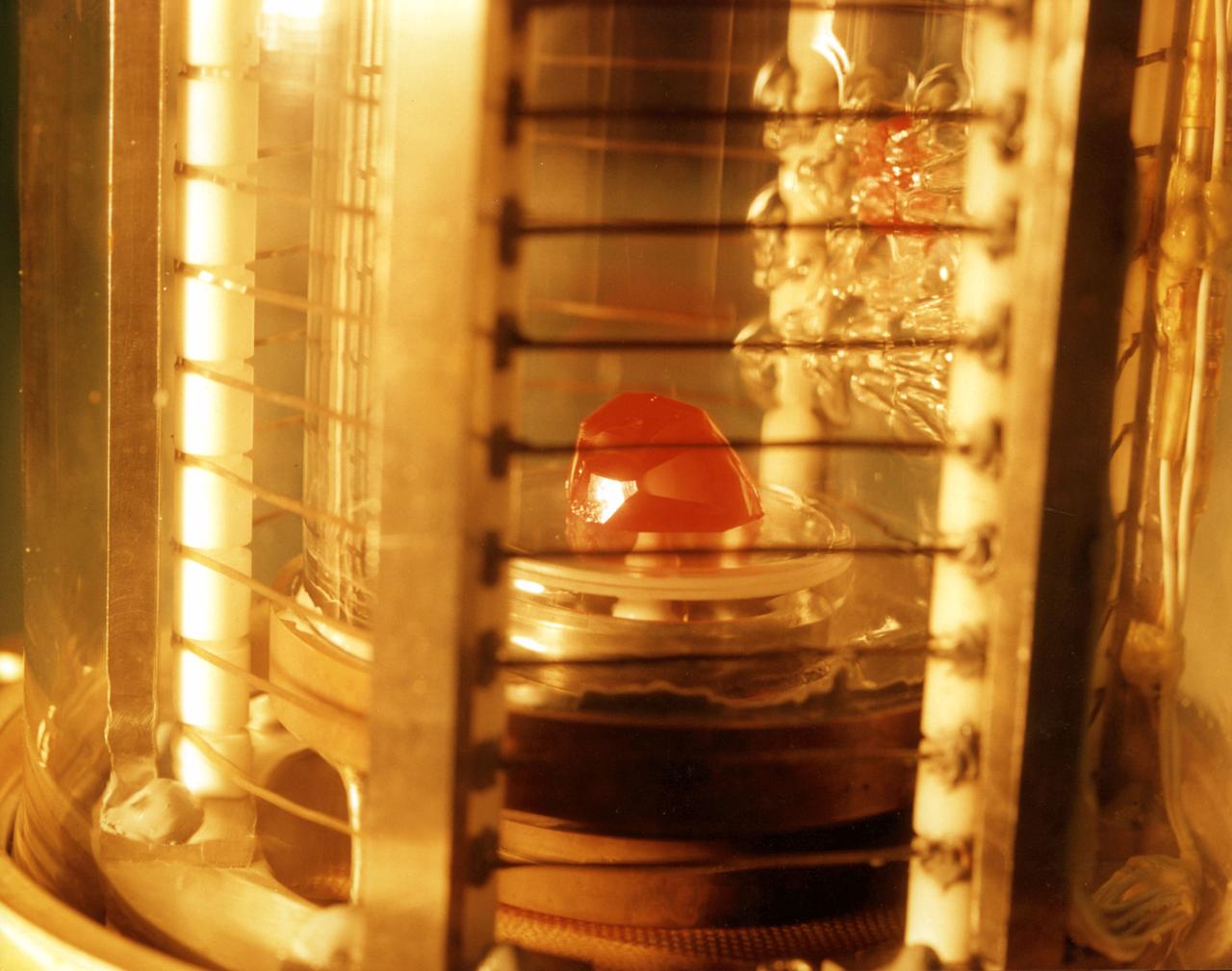
The image shows a test cell of Crystal Growth experiment inside the Vapor Crystal Growth System (VCGS) furnace aboard the STS-42, International Microgravity Laboratory-1 (IML-1), mission. The goal of IML-1, a pressurized marned Spacelab module, was to explore in depth the complex effects of weightlessness of living organisms and materials processing. More than 200 scientists from 16 countires participated in the investigations.
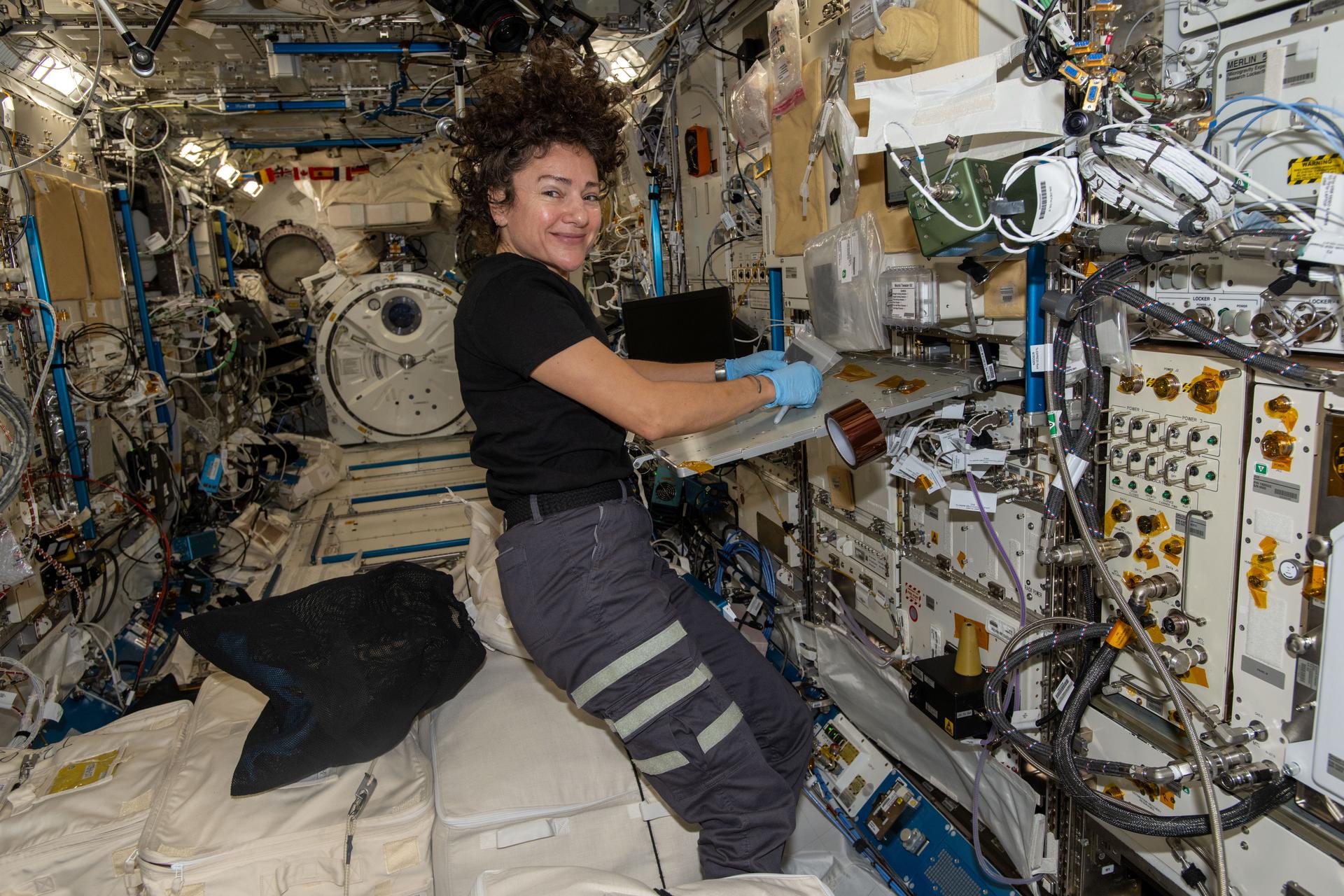
iss074e0364909 (March 6, 2026) --- NASA astronaut and Expedition 74 flight engineer Jessica Meir works inside the International Space Station’s Kibo laboratory, processing samples for the StarSteel materials research experiment. Meir investigated stainless‑steel spheres produced in Kibo’s Electrostatic Levitation Furnace to observe and understand metallic solidification behavior in microgravity, potentially benefiting Earth‑based and space‑based metallurgy and manufacturing techniques. Credit: NASA/Jessica Meir
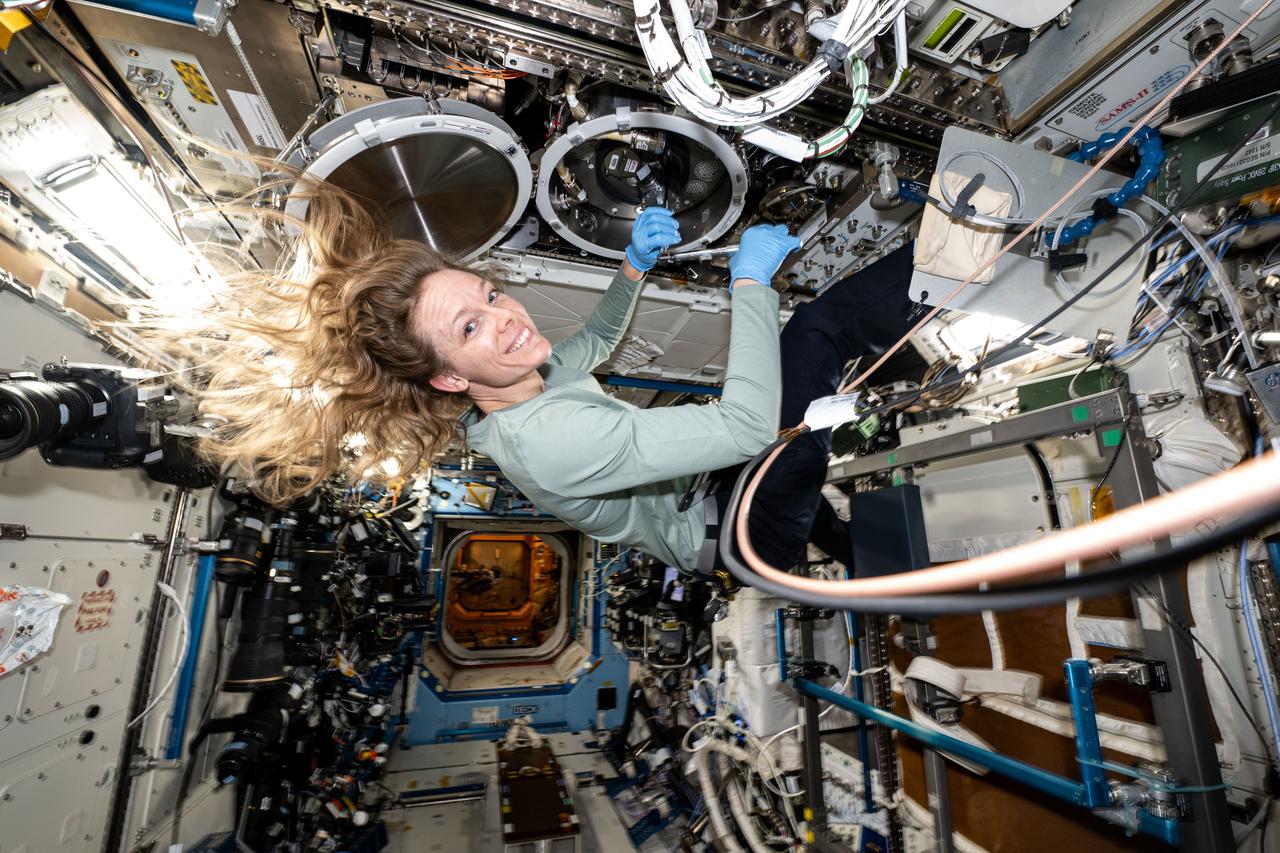
iss073e0071487 (May 15, 2025) --- NASA astronaut and Expedition 73 Flight Engineer Nichole Ayers swaps sample cartridges inside the Material Science Laboratory (MSL) that supports high temperature space physics research using furnaces aboard the International Space Station's Destiny laboratory module. The properties of many types of materials such as metals, alloys, polymers, semiconductors, ceramics, crystals, and glasses, can be studied in the MSL to discover new applications for existing materials and new or improved materials.
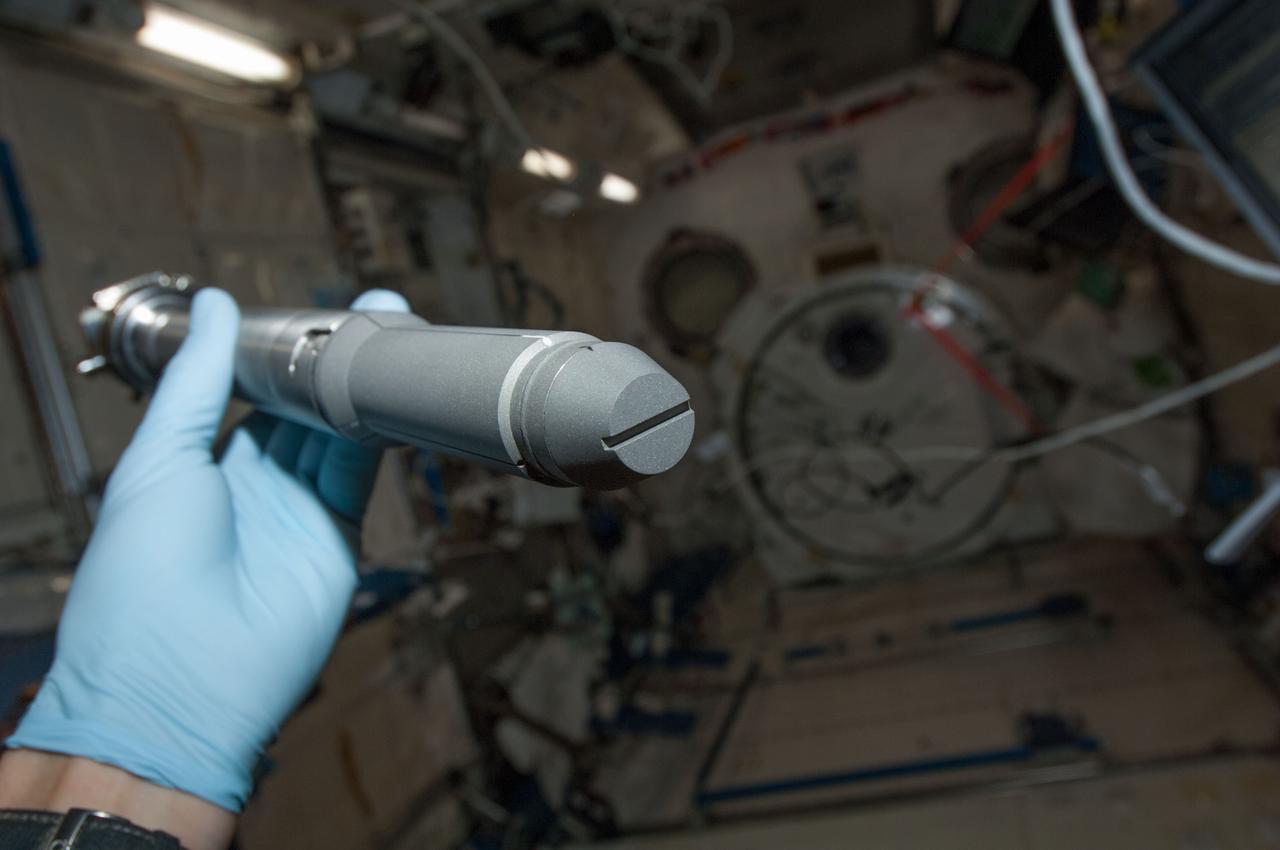
iss035e007095 (3/22/2013) --- A close-up view of an alloy cartridge to be installed in the Gradient Heating Furnace (GHF) of the Kobairo rack for the Alloy Semiconductor experiment. Image was taken in the Kibo Japanese Experiment Pressurized Module (JPM) aboard the International Space Station (ISS). The Alloy Semiconductor investigation aims to develop a clear understanding of how semiconductor materials grow and crystallize in microgravity. The materials studied are also known to be useful as devices which convert heat into electricity (thermoelectrics).
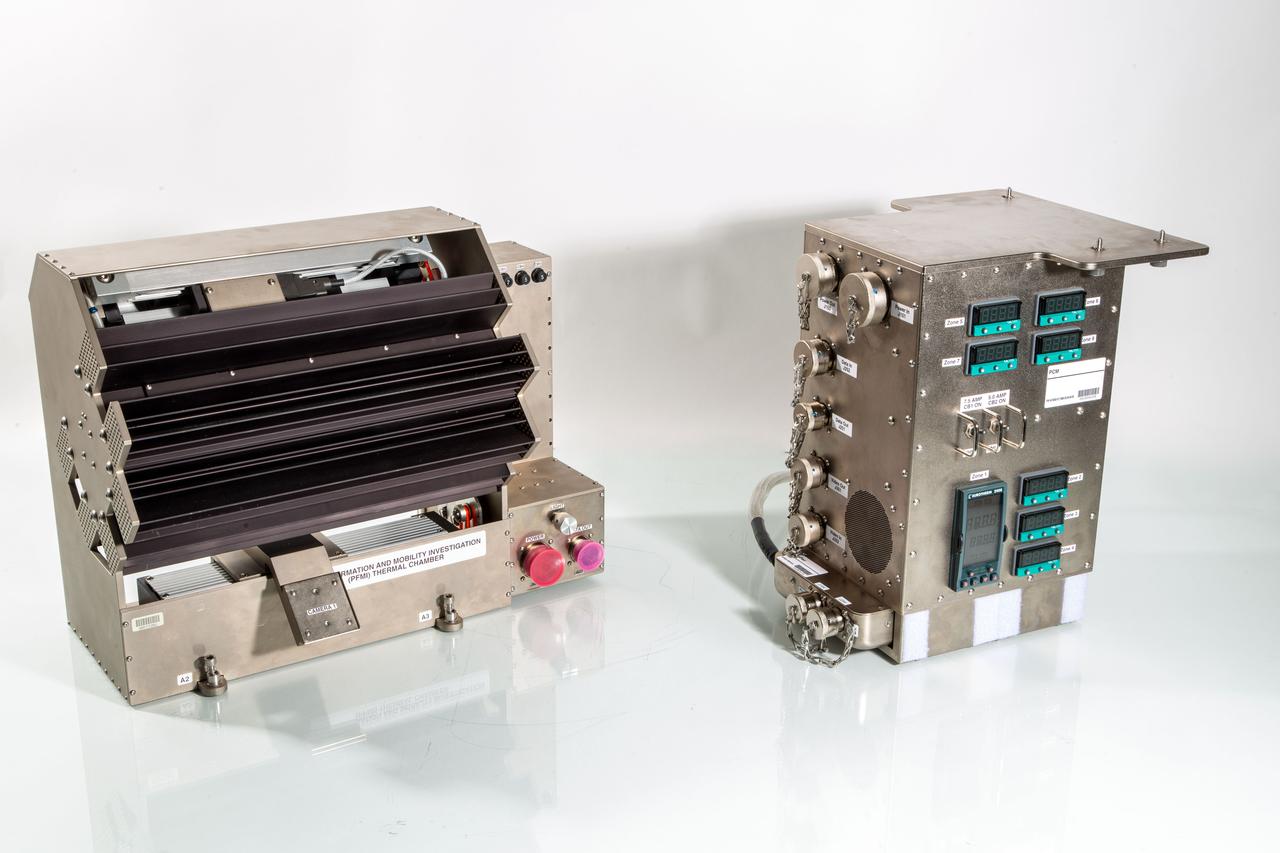
jsc2020e030482 (4/24/2020) --- A preflight view of the PFMI Furnace. The Pore Formation and Mobility Investigation (PFMI) facility objective is to study the fundamental phenomena responsible for the formation of certain classes of defects in different materials. Investigators examine the physical principles which control the occurrence of defects in manufacturing on Earth in order to develop methods to reduce flaws, defects or wasted material. (Image courtesy of: Techshot, Inc.)
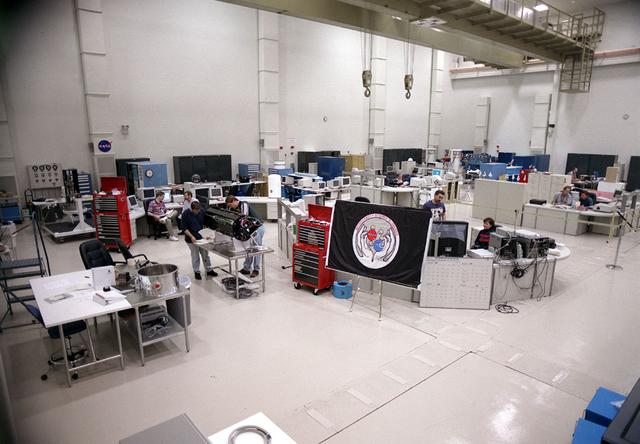
The Magnetically Damped Furnace (MDF) breadboard is being developed in response to NASA's mission and goals to advance the scientific knowledge of microgravity research, materials science, and related technologies. The objective of the MDF is to dampen the fluid flows due to density gradients and surface tension gradients in conductive melts by introducing a magnetic field during the sample processing. The MDF breadboard will serve as a proof of concept that the MDF performance requirements can be attained within the International Space Station resource constraints.
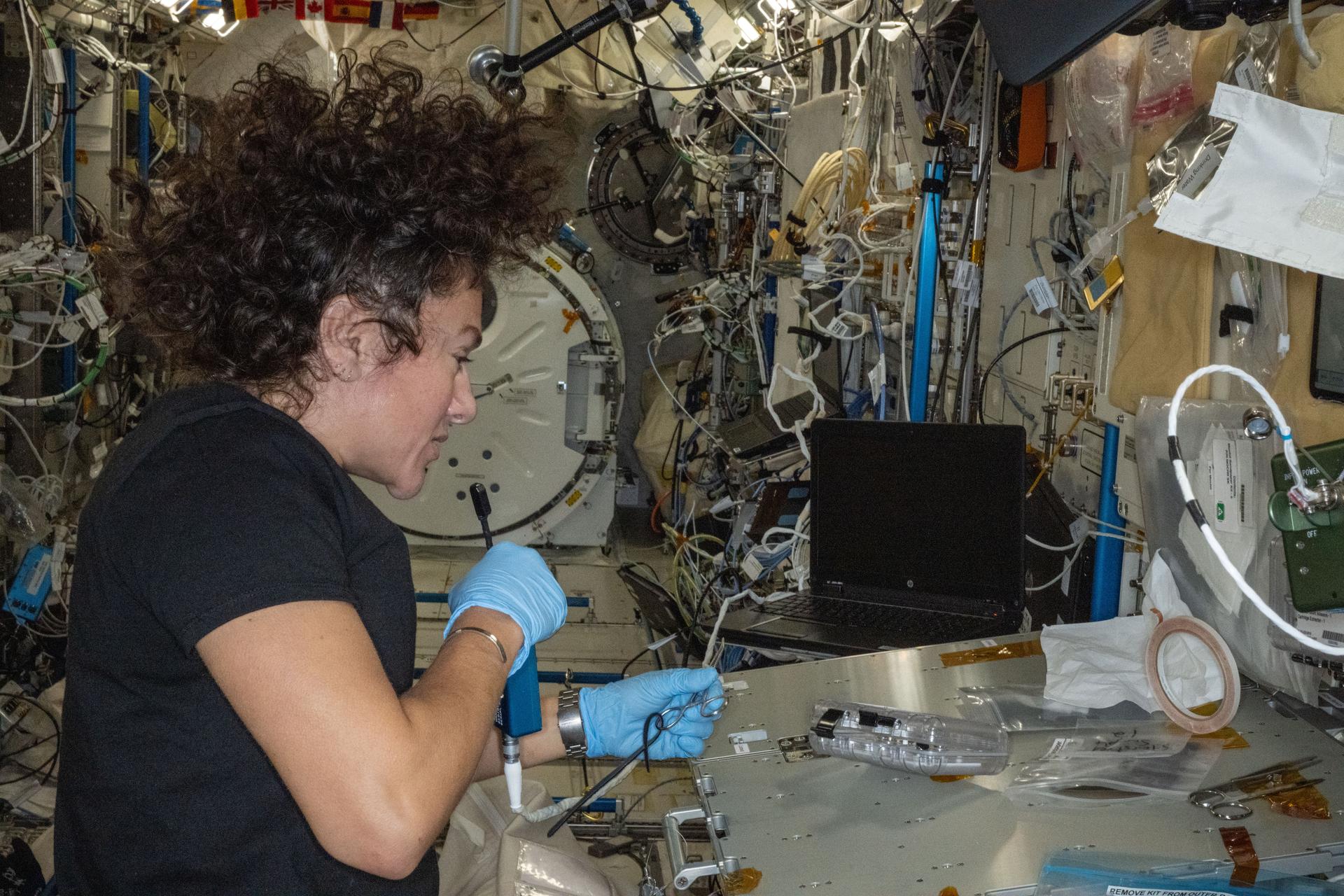
iss074e0364965 (March 6, 2026) --- NASA astronaut and Expedition 74 flight engineer Jessica Meir works inside the International Space Station’s Kibo laboratory, configuring hardware for the StarSteel materials research experiment. Meir was preparing to investigate stainless‑steel spheres produced inside Kibo’s Electrostatic Levitation Furnace to observe and understand metallic solidification behavior in microgravity, potentially benefiting both Earth-based and space-based metallurgy and manufacturing techniques. Credit: NASA/Jessica Meir
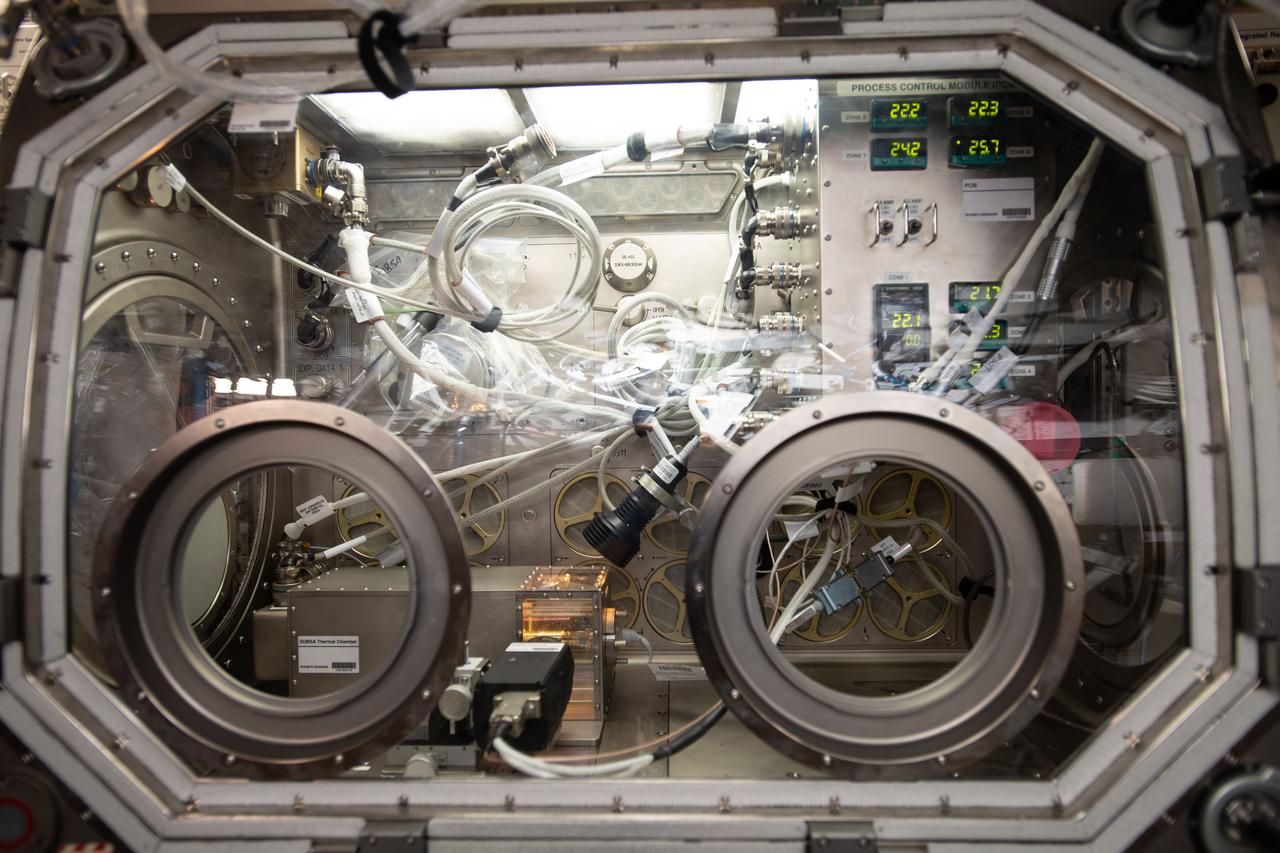
iss058e028142 (3/7/2019) --- View of the Microgravity Sciences Glovebox (MSG) during configuration of the SUBSA (Solidification Using Baffles in Sealed Ampoules) hardware in the MSG Work Volume in the Destiny Laboratory aboard the International Space Staion(ISS). SUBSA is a high-temperature furnace that can be used to study how microgravity affects the synthesis of semiconductor and scintillator crystals.
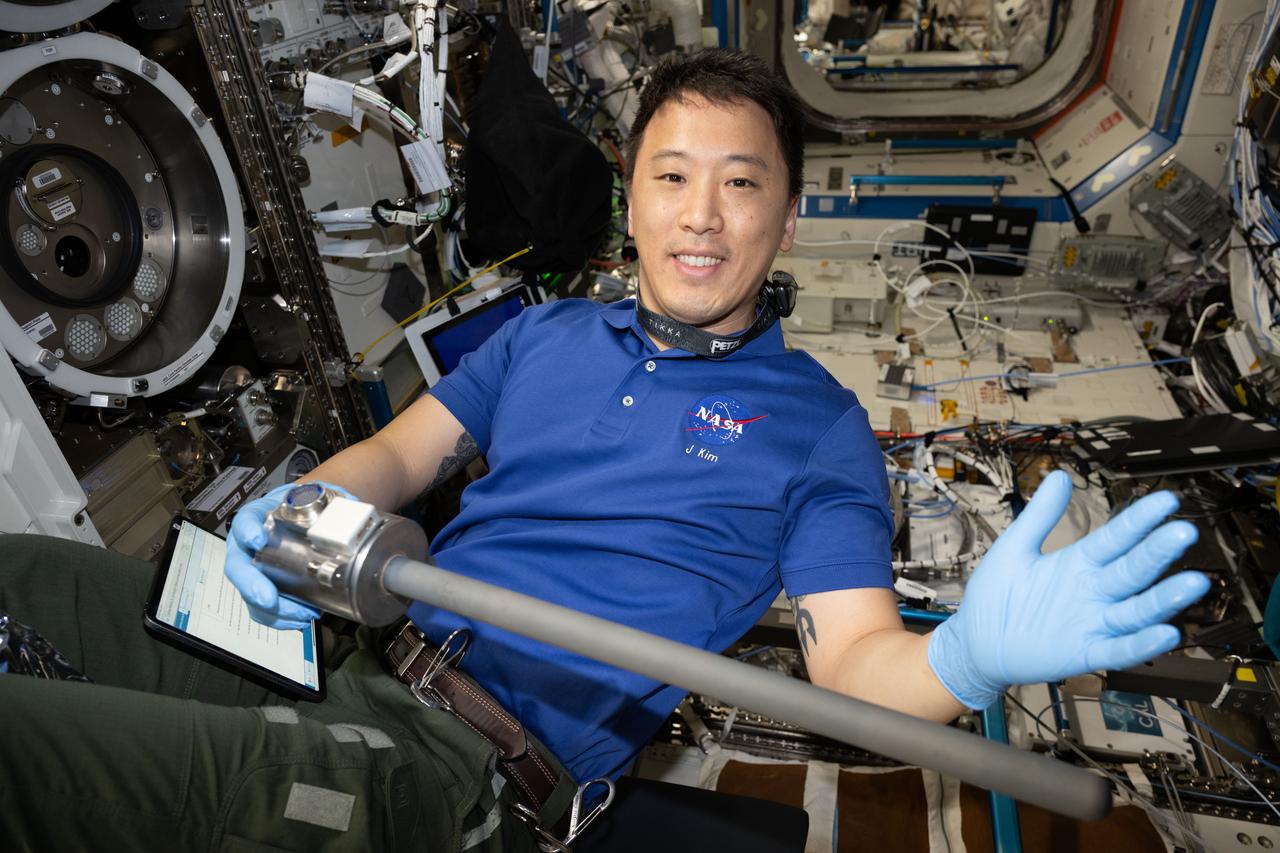
iss073e0222463 (June 16, 2025) --- NASA astronaut and Expedition 73 Flight Engineer Jonny Kim waves for a portrait while removing research hardware from inside the Materials Science Laboratory (MSL) located inside the International Space Station's Destiny laboratory module. The MSL uses two different furnaces that operate one at a time to discover new applications for existing materials, such as metals, alloys, polymers, and new or improved materials.
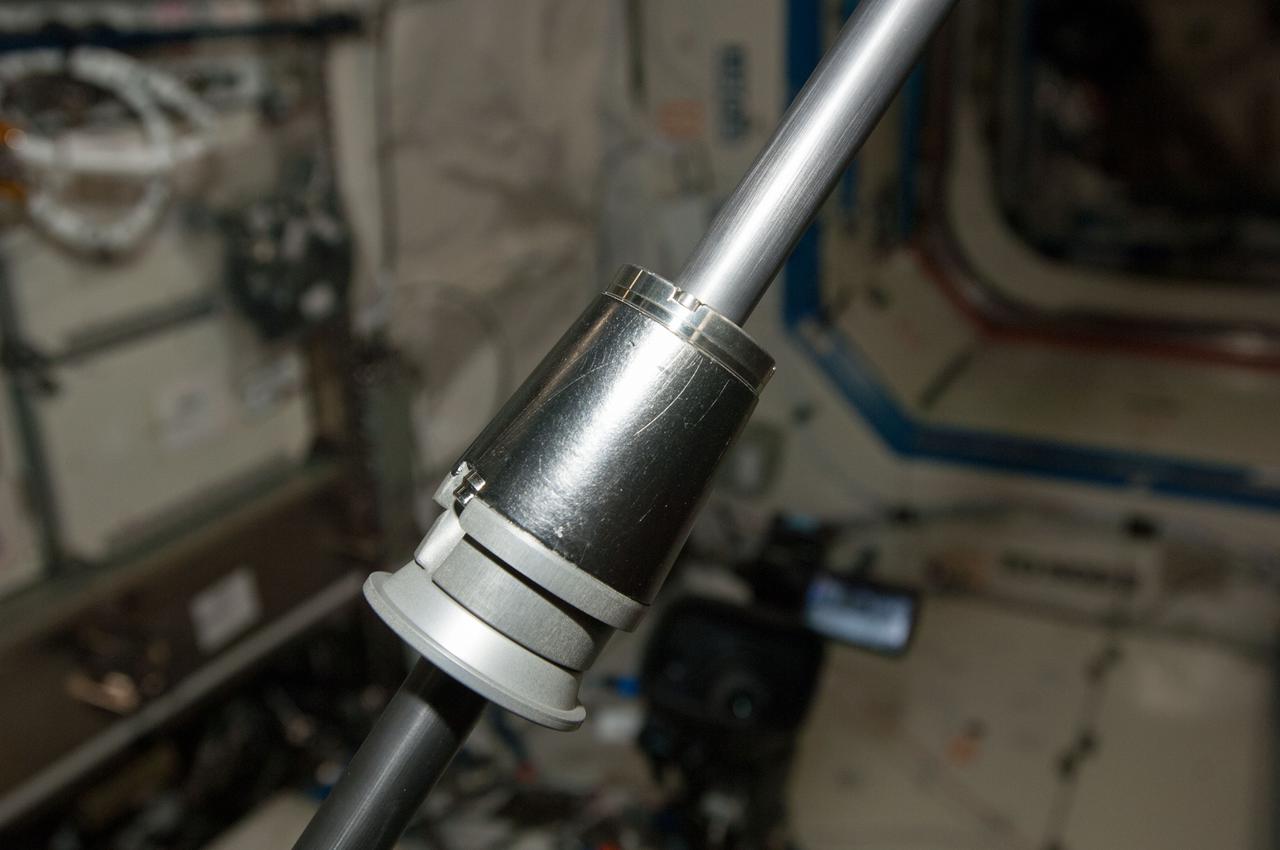
iss038e045760 92/12/2014) --- A view of Columnar-to-Equiaxed Transition in Solidification Processing-2 (CETSOL-2) test sample 7 which is to be installed into the Material Science Laboratory (MSL) Solidification and Quench Furnace (SQF). This investigation aims to deepen the understanding of the physical principles that govern solidification processes in metal alloys. The patterns of the crystals resulting from transitions of liquids to solids is important for processes used to produce materials such as solar cells, thermoelectrics, and metal alloys.
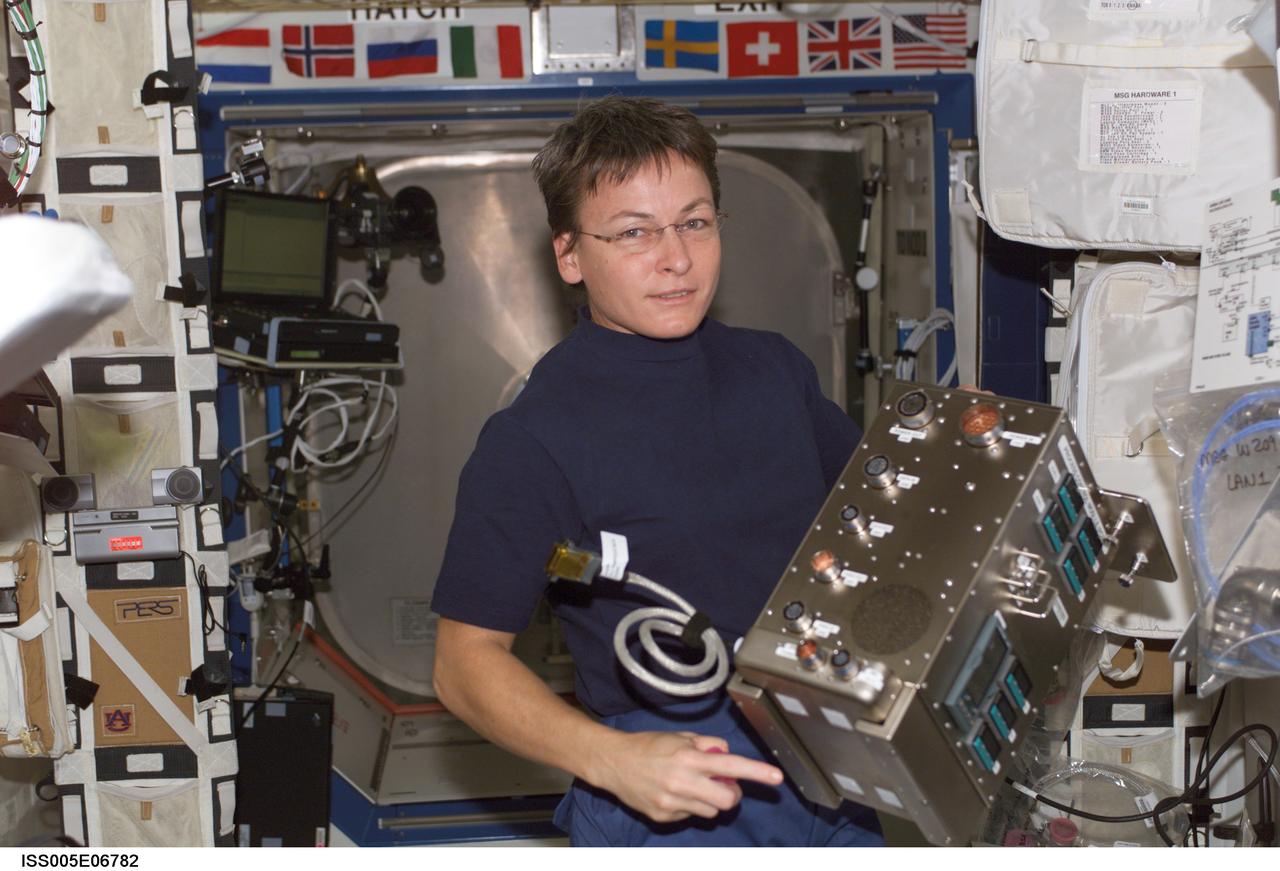
iss005e06782 (7/5/2002) --- NASA astronaut Peggy Whitson installs a Solidification Using a Baffle in Sealed Ampoules (SUBSA) Process Control Module in the Microgravity Science Glovebox (MSG). The SUBSA objective is to advance our understanding of the processes involved in semiconductor crystal growth. It offers a gradient freeze furnace for materials science investigations that can reach 850°C. Samples are contained in transparent quartz or ceramic ampoules with high definition video imaging available in real-time along with remote commanding of thermal control parameters.
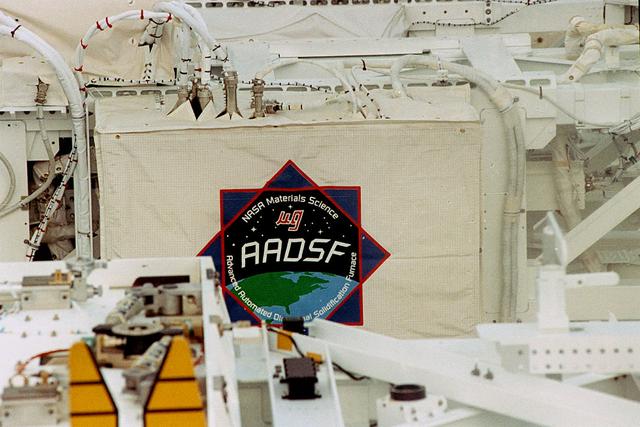
The purpose of the experiments for the Advanced Automated Directional Solidification Furnace (AADSF) is to determine how gravity-driven convection affects the composition and properties of alloys (mixtures of two or more materials, usually metal). During the USMP-4 mission, the AADSF will solidify crystals of lead tin telluride and mercury cadmium telluride, alloys of compound semiconductor materials used to make infrared detectors and lasers, as experiment samples. Although these materials are used for the same type application their properties and compositional uniformity are affected differently during the solidification process.
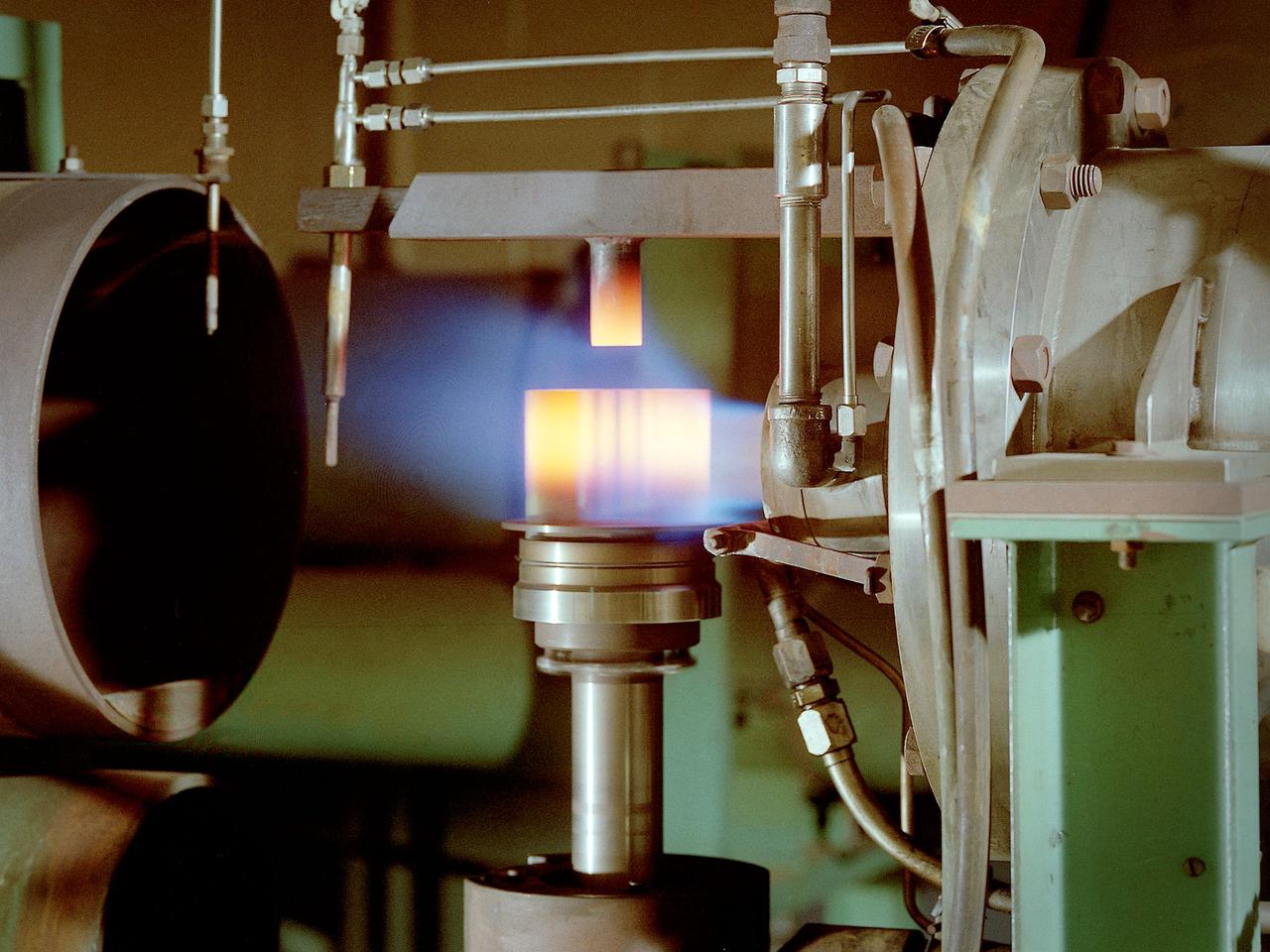
A burner rig heats up a material sample in the Materials and Stresses Building at the National Aeronautics and Space Administration (NASA) Lewis Research Center. Materials technology is an important element in the successful development of advanced airbreathing and rocket propulsion systems. Different types of engines operate in different environments so an array of dependable materials is needed. NASA Lewis began investigating the characteristics of different materials shortly after World War II. In 1949 the materials group was expanded into its own division. The Lewis researchers sought to study and test materials in environments that simulate the environment in which they would operate. The Materials and Stresses Building, built in 1949, contained a number of laboratories to analyze the materials. They are subjected to high temperatures, high stresses, corrosion, irradiation, and hot gasses. The Physics of Solids Laboratory included a cyclotron, cloud chamber, helium cryostat, and metallurgy cave. The Metallographic Laboratory possessed six x-ray diffraction machines, two metalloscopes, and other equipment. The Furnace Room had two large induction machines, a 4500⁰ F graphite furnace, and heat treating equipment. The Powder Laboratory included 60-ton and 3000-ton presses. The Stresses Laboratory included stress rupture machines, fatigue machines, and tensile strength machines.
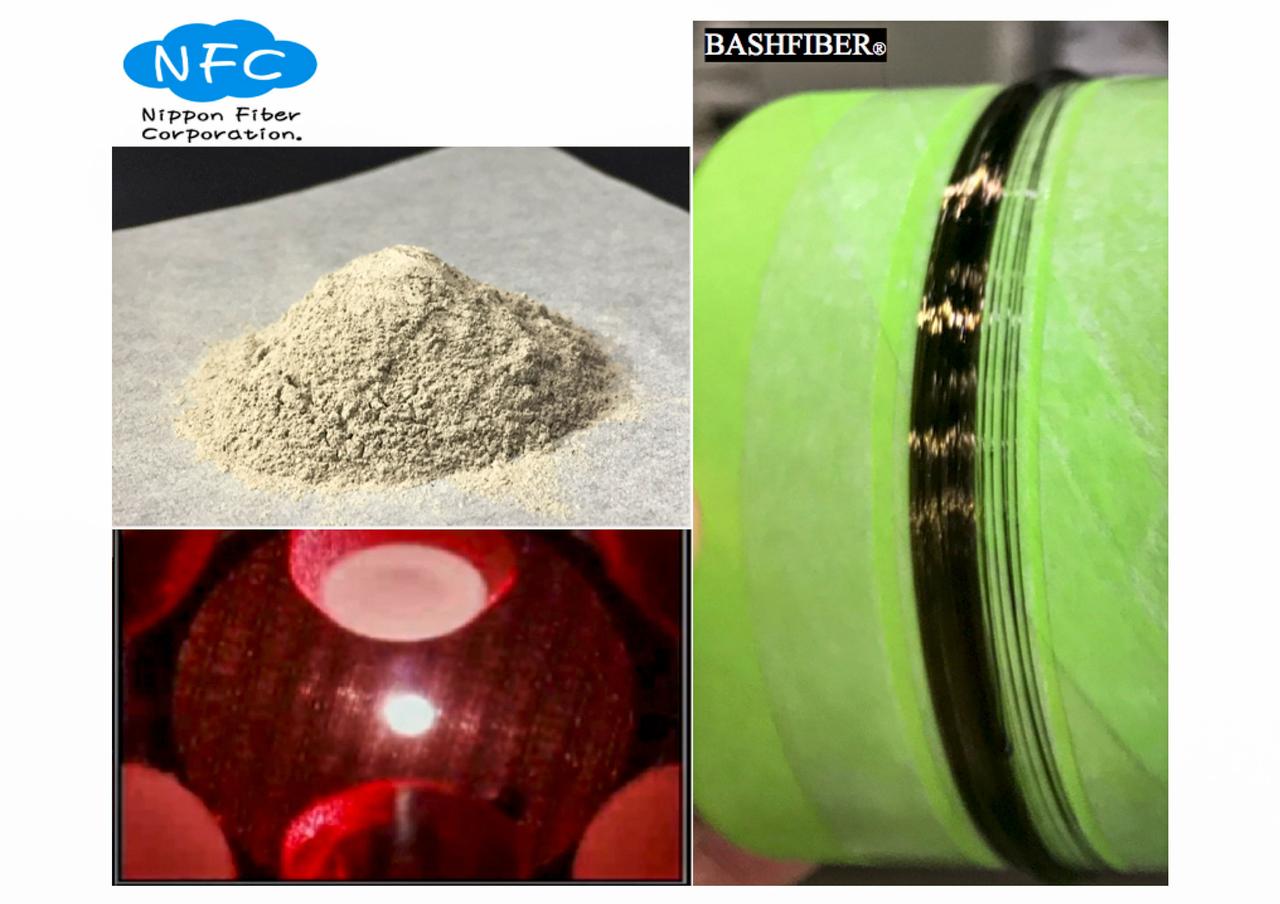
jsc2020e040946 (9/10/2020) --- A picture of roving fiber (right), which is made from fly ash (upper left) in a Japanese thermal power station. A mass production project for this fiber is in progress. Detailed properties are being investigated on the ISS. One of the tests was conducted at the Electrostatic Levitation Furnace (ELF) aboard the ISS from April to May 2020 (lower left). The Exposure test of of BASHFIBER® (ExHAM-Nippon Fiber-2) tests the resistance of a thread-like fiber to cosmic rays on the exterior of the International Space Station (ISS). BASHFIBER is a mixture of basalt rock and fly ash, with high resistance to acid and salt. The fiber has the potential for a variety of applications making use of an abundant byproduct.
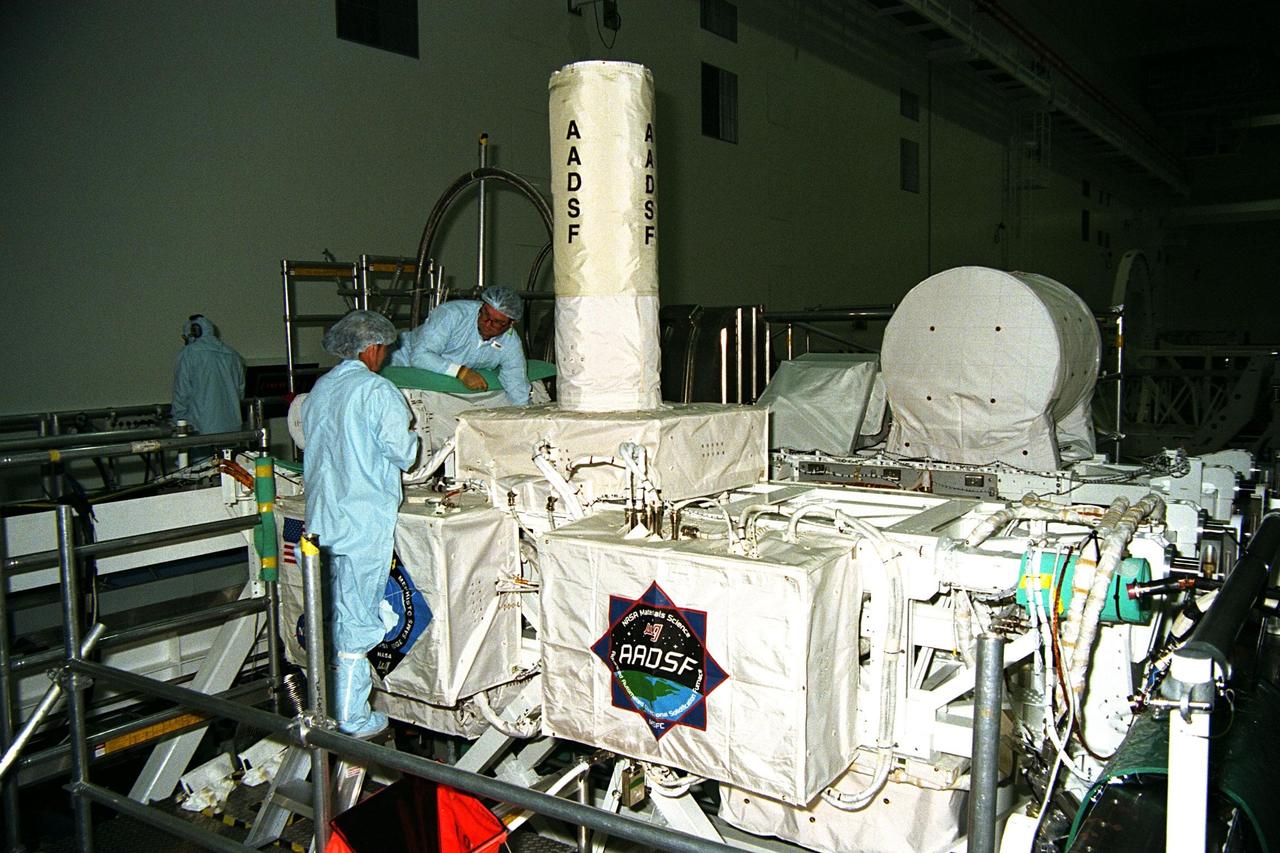
Technicians are monitoring experiments on the United States Microgravity Payload-4 (USMP-4) in preparation for its scheduled launch aboard STS-87 on Nov. 19 from Kennedy Space Center (KSC). USMP-4 experiments are prepared in the Space Station Processing Facility at KSC. The large white vertical cylinder in the center of the photo is the Advanced Automated Directional Solidification Furnace (AADSF), which is a sophisticated materials science facility used for studying a common method of processing semiconductor crystals called directional solidification. The white horizontal tube to the right is the Isothermal Dendritic Growth Experiment (IDGE), which will be used to study the dendritic solidification of molten materials in the microgravity environment
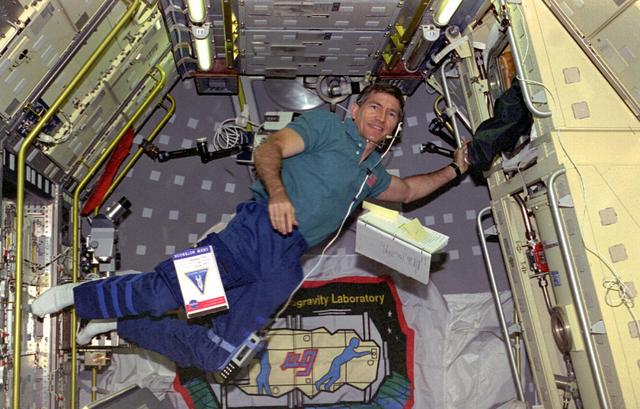
STS073-101-018 (20 October-5 November 1995) --- Payload specialist Fred W. Leslie maneuvers his body to a position conducive to research at the Crystal Growth Furnace (CGF) aboard the science module in the cargo bay of the Earth-orbiting Space Shuttle Columbia. Crystallization has been discovered to be more effectively studied in the weightless environment of space than on Earth, because the gravity-induced phenomena that obscure or change the process or change the process are greatly reduced or eliminated. Leslie was joined by a second guest researcher and five NASA astronauts for 16 full days of in-space research in support of the United States Microgravity Laboratory (USML-2) mission.
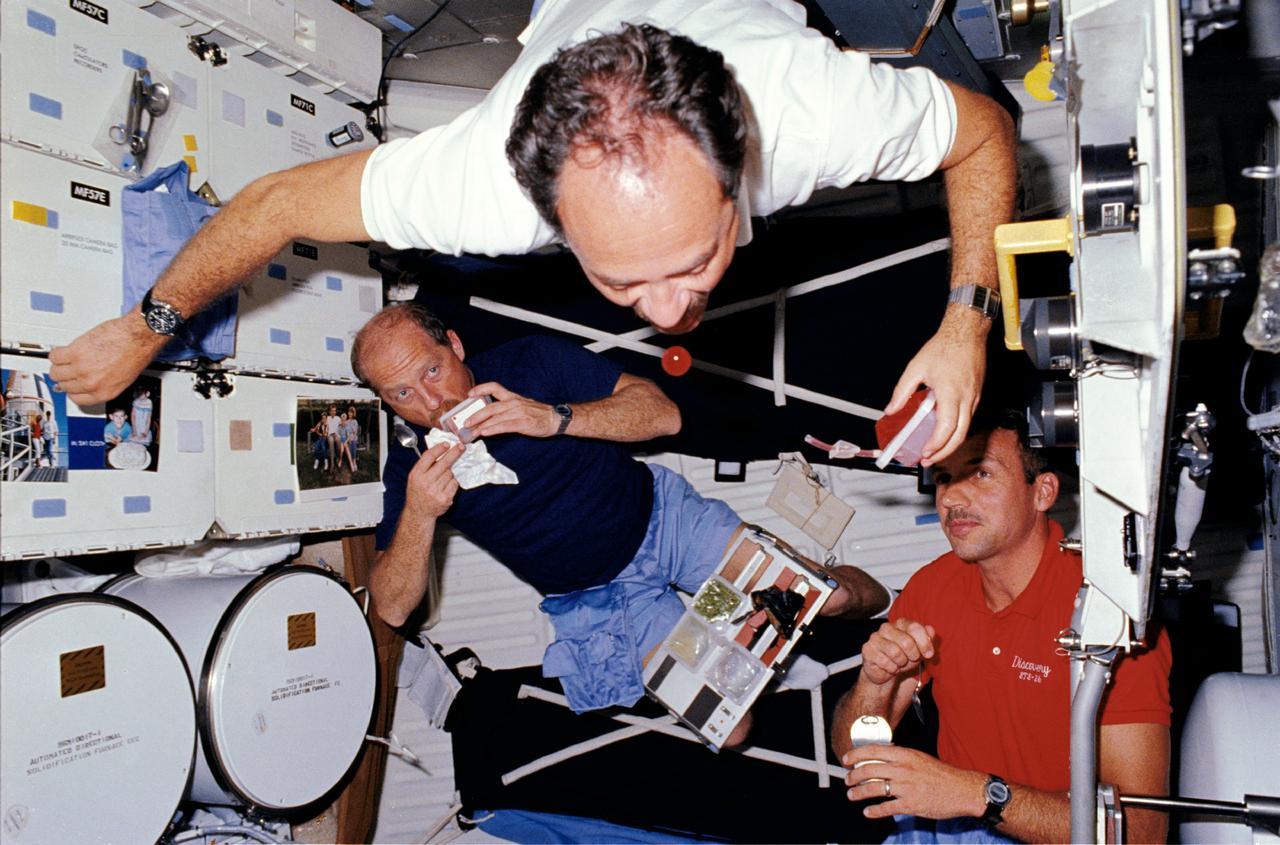
STS026-06-018 (29 Sept. - 3 Oct. 1988) --- Astronaut John M. Lounge, STS-26 mission specialist (MS), using a beverage container, experiments with microgravity as Commander Frederick H. Hauck (left) and MS David C. Hilmers (right) look on. Lounge freefloats as he closes in on a sphere of the red liquid drifting in front of his mouth. Hauck holds a spoon while sipping from a beverage container as he balances a meal tray assembly on his thighs. Hilmers, partially blocked by the open airlock hatch and holding a spoon and a can of food, pauses to watch the experiment. Automated Directional Solidification Furnace (ADSF) and forward middeck lockers appear on Lounge's right.
![iss035e006283 (3/18/2013) --- Photo documentation of the Hicari (Growth of Homogeneous Silicon-Germanium [SiGe] Crystals in Microgravity by the Traveling Liquidous Zone [TLZ] Method) Experiment Sample Cartridge (SC) following its removal from the Kobairo Rack during Expedition 35. The materials science investigation Growth of Homogeneous SiGe Crystals in Microgravity by the TLZ Method (Hicari) aims to verify the crystal-growth by Travelling Liquidous Zone method, and to produce high-quality crystals of Silicon-Germanium (SiGe) semiconductor using the Japanese Experiment Module-Gradient Heating Furnace (JEM-GHF).](https://images-assets.nasa.gov/image/iss035e006283/iss035e006283~medium.jpg)
iss035e006283 (3/18/2013) --- Photo documentation of the Hicari (Growth of Homogeneous Silicon-Germanium [SiGe] Crystals in Microgravity by the Traveling Liquidous Zone [TLZ] Method) Experiment Sample Cartridge (SC) following its removal from the Kobairo Rack during Expedition 35. The materials science investigation Growth of Homogeneous SiGe Crystals in Microgravity by the TLZ Method (Hicari) aims to verify the crystal-growth by Travelling Liquidous Zone method, and to produce high-quality crystals of Silicon-Germanium (SiGe) semiconductor using the Japanese Experiment Module-Gradient Heating Furnace (JEM-GHF).
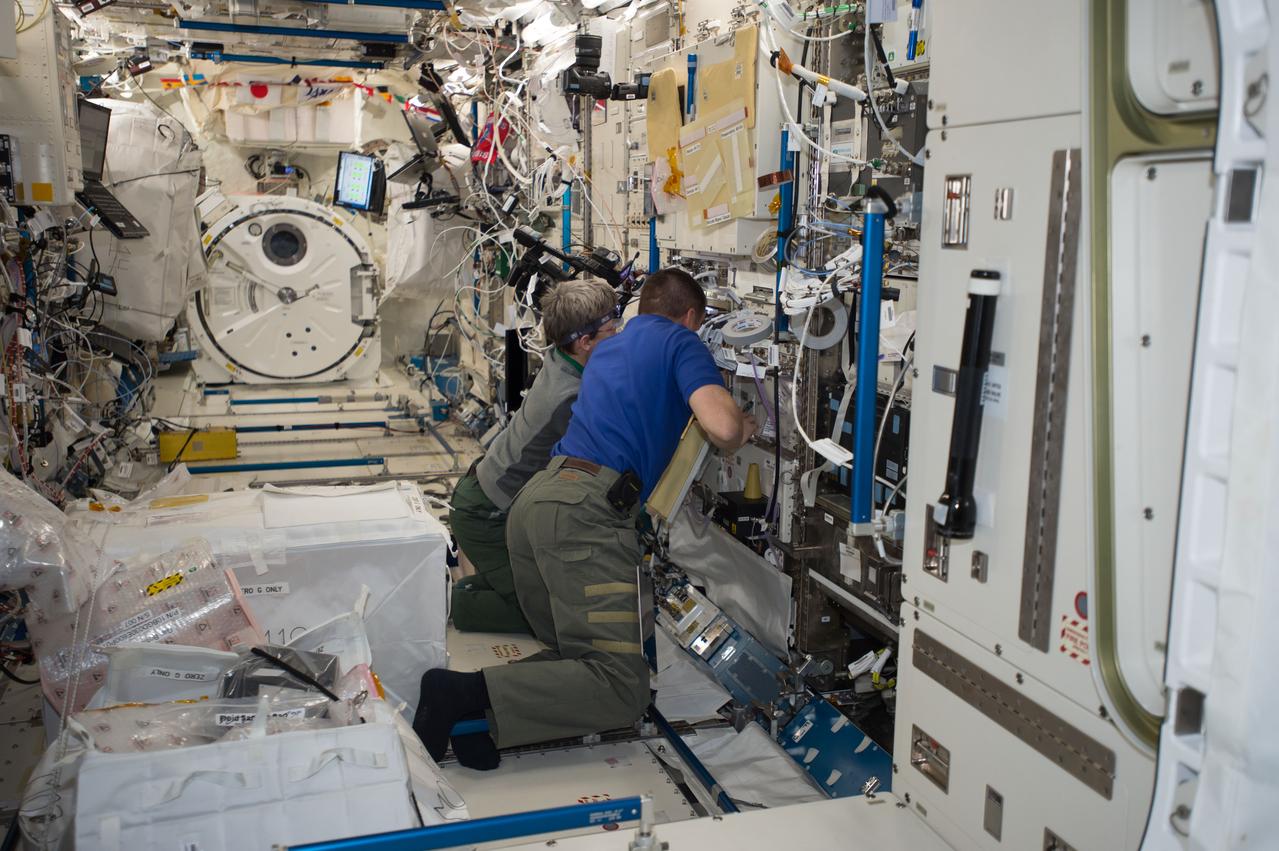
iss051e050849 (5/26/2017) --- NASA astronaut Peggy Whitson and Jack Fischer work to install a Gas Supply Hose Assembly and Gas Bottle Unit Air in the Electrostatic Levitation Furnace (ELF) in the Kibo Japanese Experiment Pressurized Module (JPM) aboard the International Space Station (ISS) in supprt of the Passive Thermal Flight Experiment.The Advanced Passive Thermal eXperiment (APTx) tests three advanced thermal management technologies. It demonstrates the in-space performance of each, an important step toward improving these technologies for use on future space exploration missions.
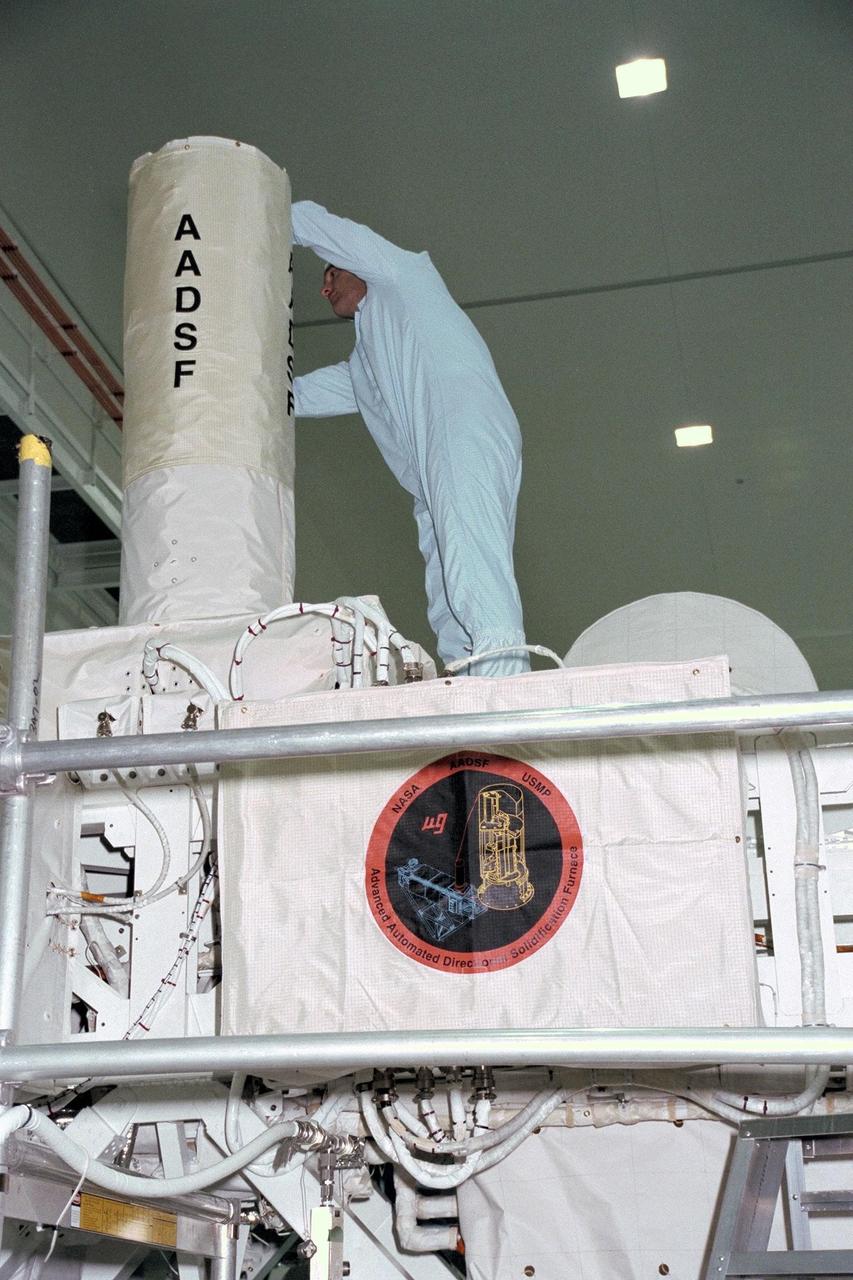
United States Microgravity Payload-4 (USMP-4) experiments are prepared to be flown on Space Shuttle mission STS-87 in the Space Station Processing Facility at Kennedy Space Center (KSC). A technician is working on the Advanced Automated Directional Solidification Furnace (AADSF), which will be used by researchers to study the solidification of semiconductor materials in microgravity. Scientists will be able to better understand how microgravity influences the solidification process of these materials and develop better methods for controlling that process during future Space flights and Earth-based production. All STS-87 experiments are scheduled for launch on Nov. 19 from KSC
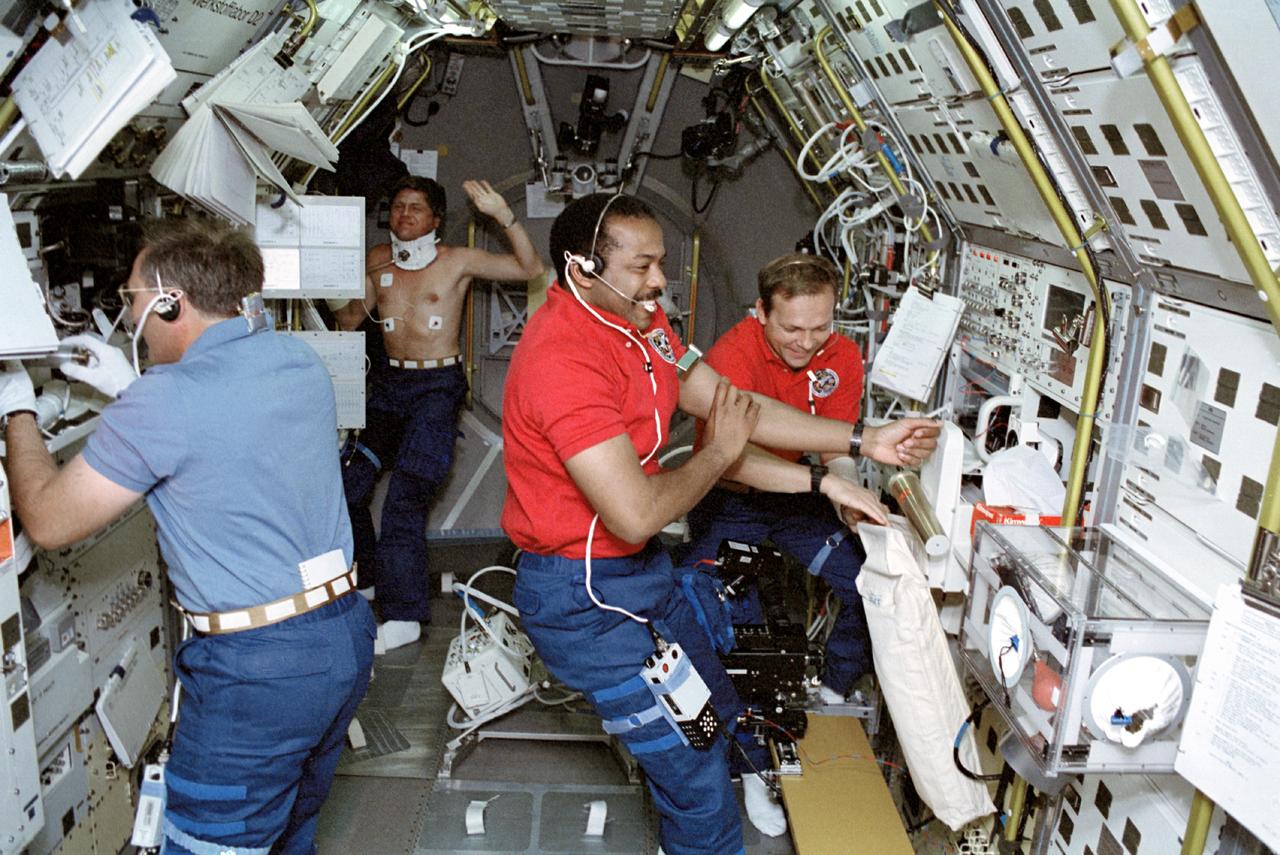
STS055-22-004 (26 April-6 May 1993) --- Four of the seven crew members who spent 10 days aboard the Space Shuttle Columbia are pictured during a brief shift overlap period in the Spacelab D-2 Science Module. Left to right are Jerry L. Ross, Ulrich Walter, Bernard A. Harris, Jr. and Hans Schlegel. Ross, STS-55 payload commander, is changing a sample in a materials processing furnace; Walter, a German payload specialist is in the midst of a baroreflex test and fellow payload specialist Schlegel assists mission specialist and physician Harris with a physiological test at the "Anthrorack".
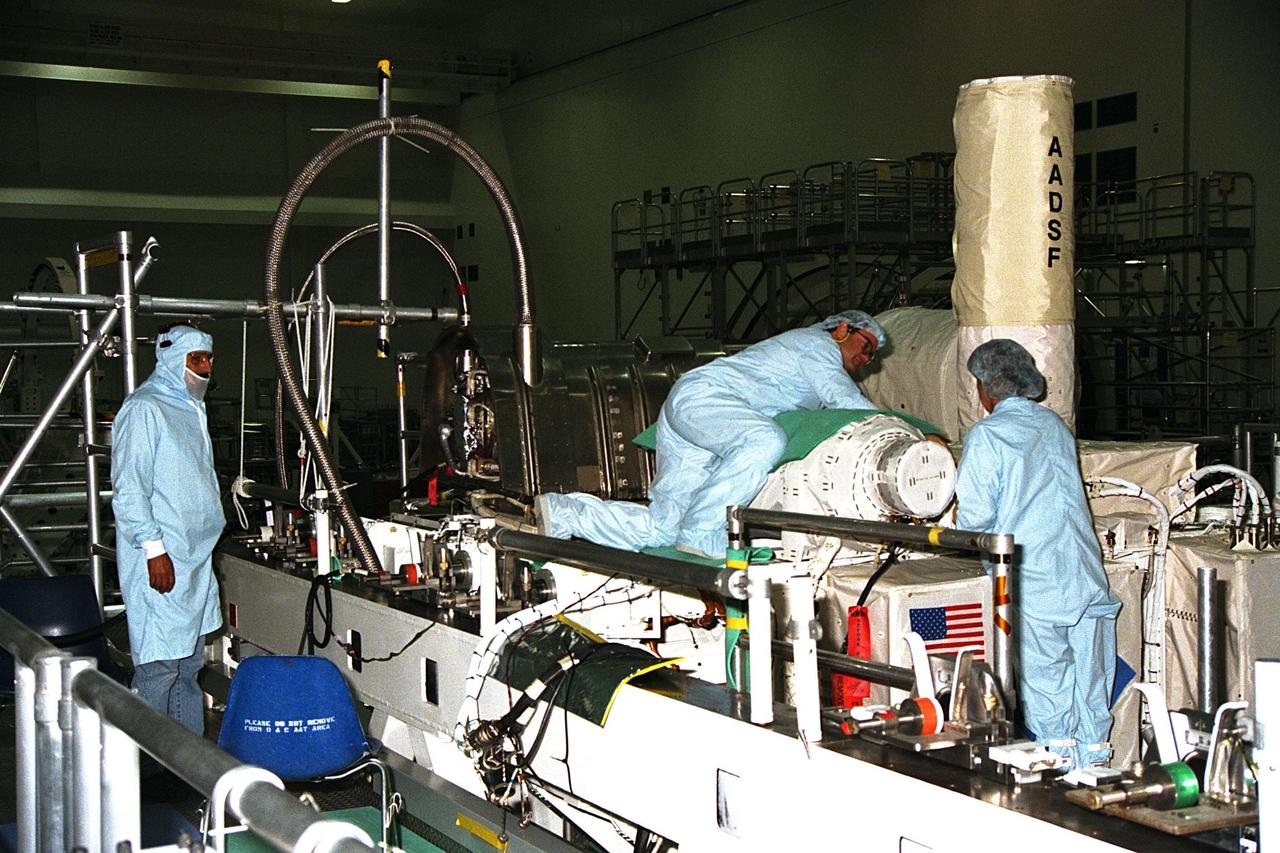
Technicians are monitoring experiments on the United States Microgravity Payload-4 (USMP-4) in preparation for its scheduled launch aboard STS-87 on Nov. 19 from Kennedy Space Center (KSC). USMP-4 experiments are prepared in the Space Station Processing Facility at KSC. The large white vertical cylinder at the right of the photo is the Advanced Automated Directional Solidification Furnace (AADSF ), which is a sophisticated materials science facility used for studying a common method of processing semiconductor crystals called directional solidification. The technician in the middle of the photo is leaning over MEPHISTO, a cooperative American-French investigation of the fundamentals of crystal growth
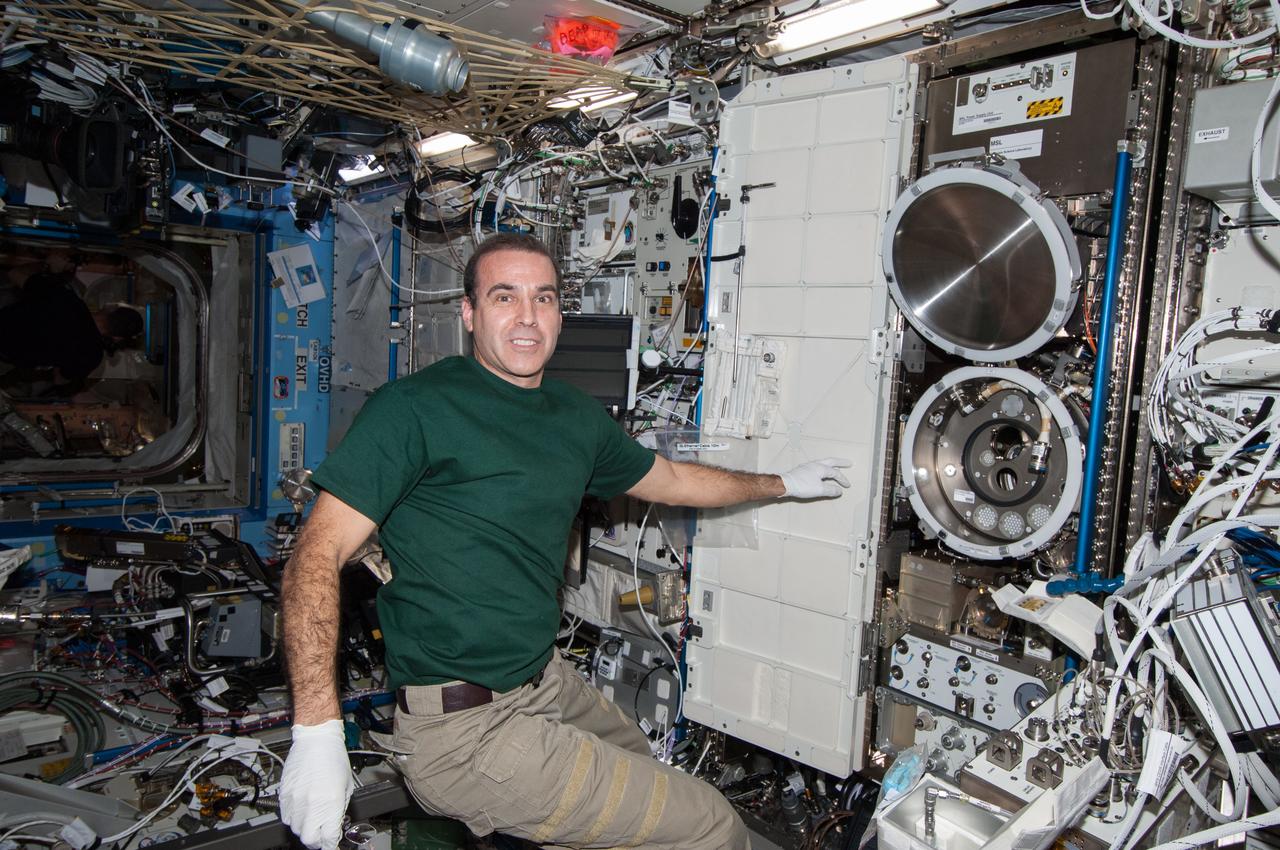
ss038e008298 (11/26/2013) --- A view of NASA astronaut Rick Mastracchio, during the Material Science Laboratory (MSL) Solidification and Quench Furnace (SQF) Sample Cartridge Exchange aboard the International Space Station (ISS). The Materials Science Laboratory (MSL) is used for basic materials research in the microgravity environment of the ISS. The MSL can accommodate and support diverse Experiment Modules. In this way many material types, such as metals, alloys, polymers, semiconductors, ceramics, crystals, and glasses, can be studied to discover new applications for existing materials and new or improved materials.