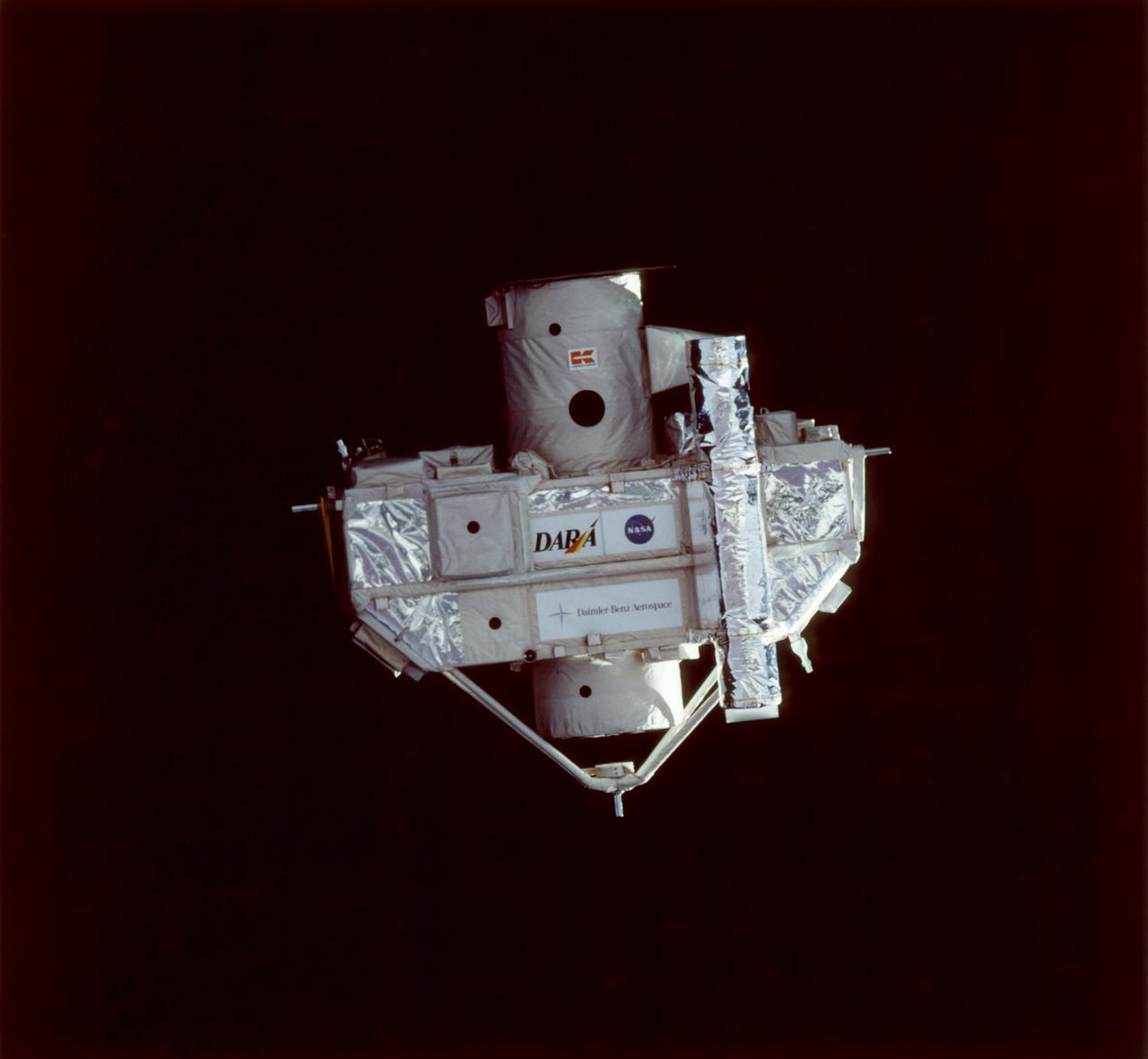
This STS-80 onboard photograph shows the Orbiting Retrievable Far and Extreme Ultraviolet Spectrometer-Shuttle Pallet Satellite II (ORFEUS-SPAS II), photographed during approach by the Space Shuttle Orbiter Columbia for retrieval. Built by the German Space Agency, DARA, the ORFEUS-SPAS II, a free-flying satellite, was dedicated to astronomical observations at very short wavelengths to: investigate the nature of hot stellar atmospheres, investigate the cooling mechanisms of white dwarf stars, determine the nature of accretion disks around collapsed stars, investigate supernova remnants, and investigate the interstellar medium and potential star-forming regions. Some 422 observations of almost 150 astronomical objects were completed, including the Moon, nearby stars, distant Milky Way stars, stars in other galaxies, active galaxies, and quasar 3C273. The STS-80 mission was launched November 19, 1996.
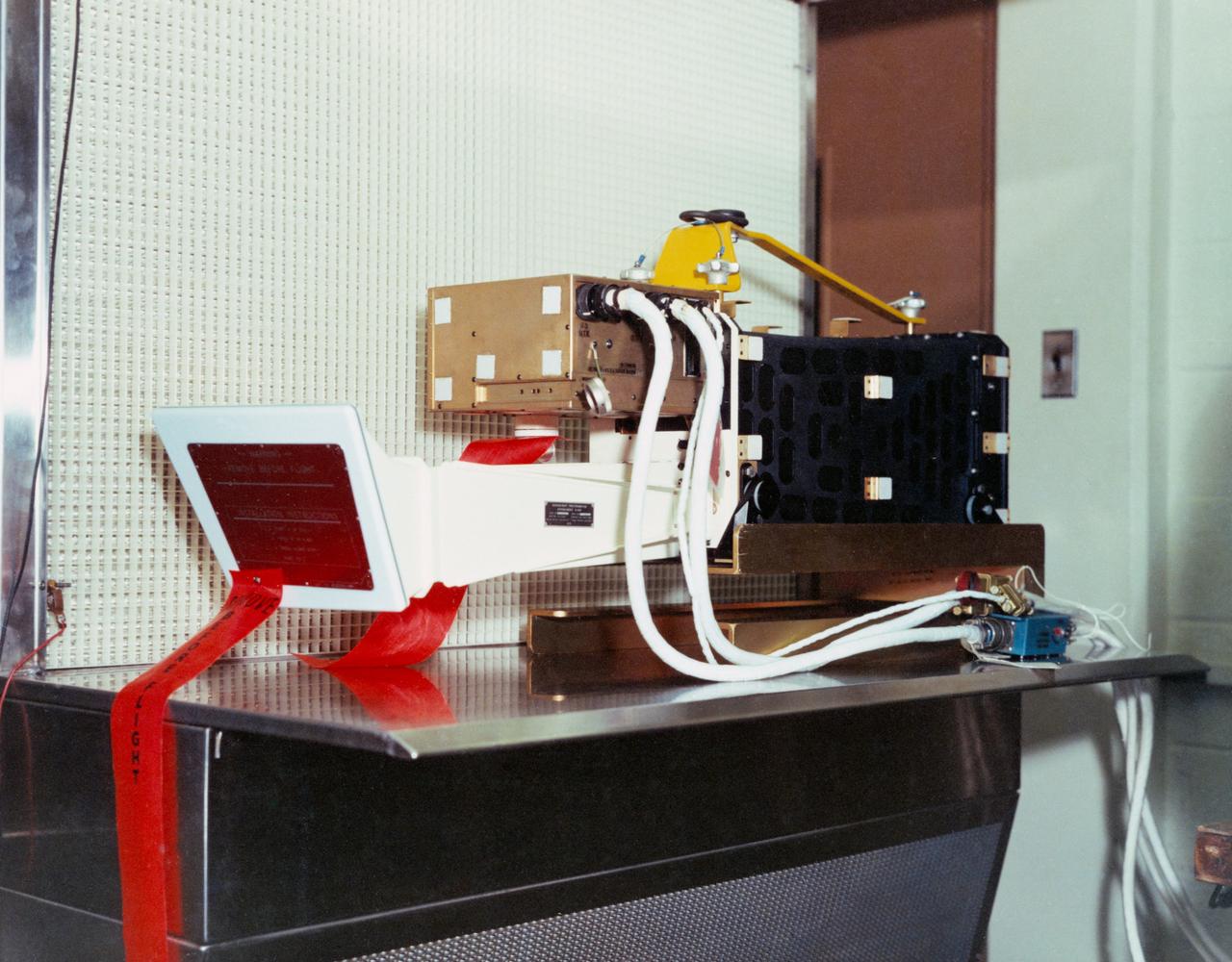
S72-53470 (November 1972) --- The Far-Ultraviolet Spectrometer, Experiment S-169, one of the lunar orbital science experiments which will be mounted in the SIM bay of the Apollo 17 Service Module. Controls for activating and deactivating the experiment and for opening and closing a protective cover are located in the Command Module. Atomic composition, density and scale height for several constituents of the lunar atmosphere will be measured by the far-ultraviolet spectrometer. Solar far-UV radiation reflected from the lunar surface as well as UV radiation emitted by galactic sources also will be detected by the instrument.
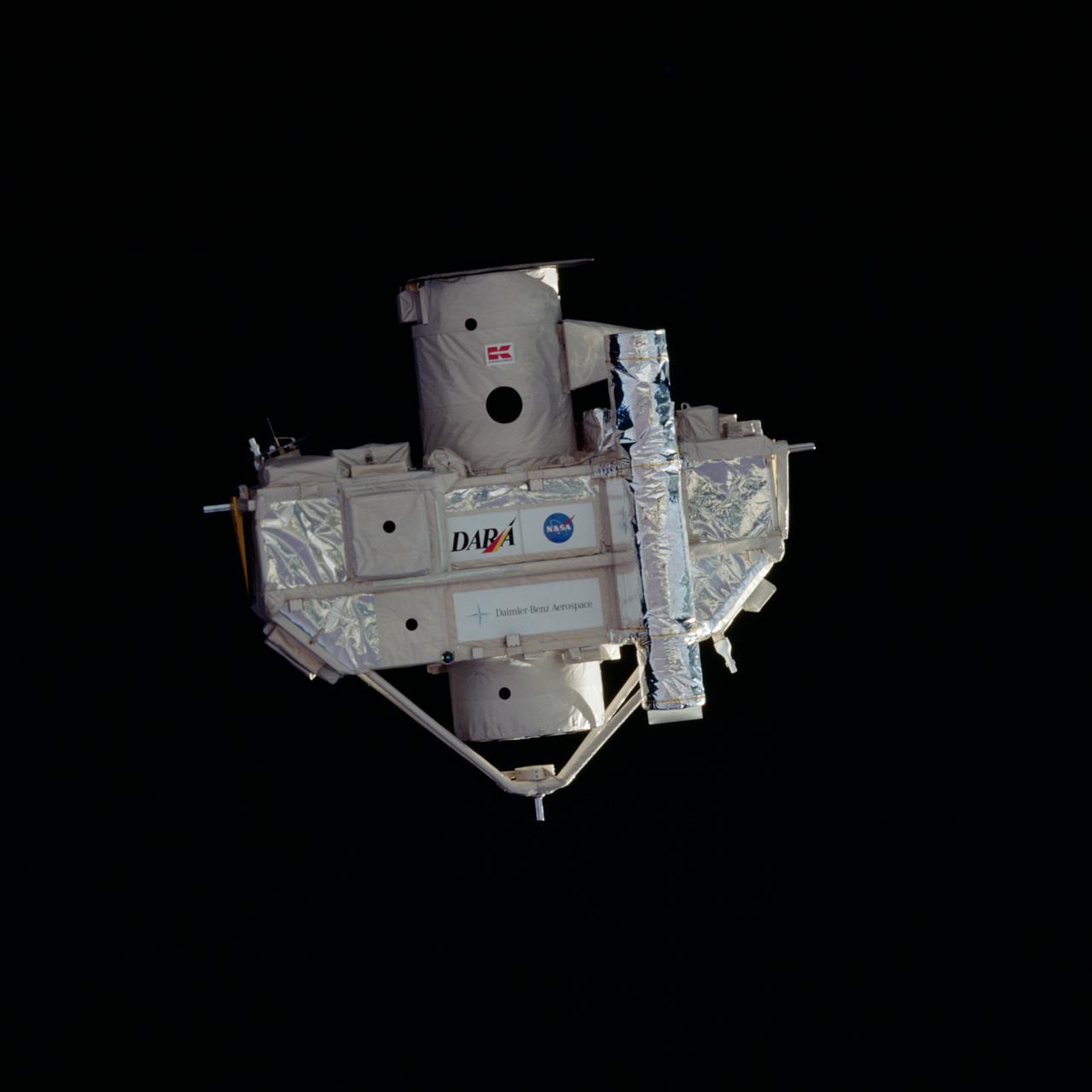
STS080-719-005 (19 Nov.-7 Dec. 1996) --- The Orbiting Retrievable Far and Extreme Ultraviolet Spectrometer-Shuttle Pallet Satellite (ORFEUS-SPAS) appears suspended in space during approach by the space shuttle Columbia.
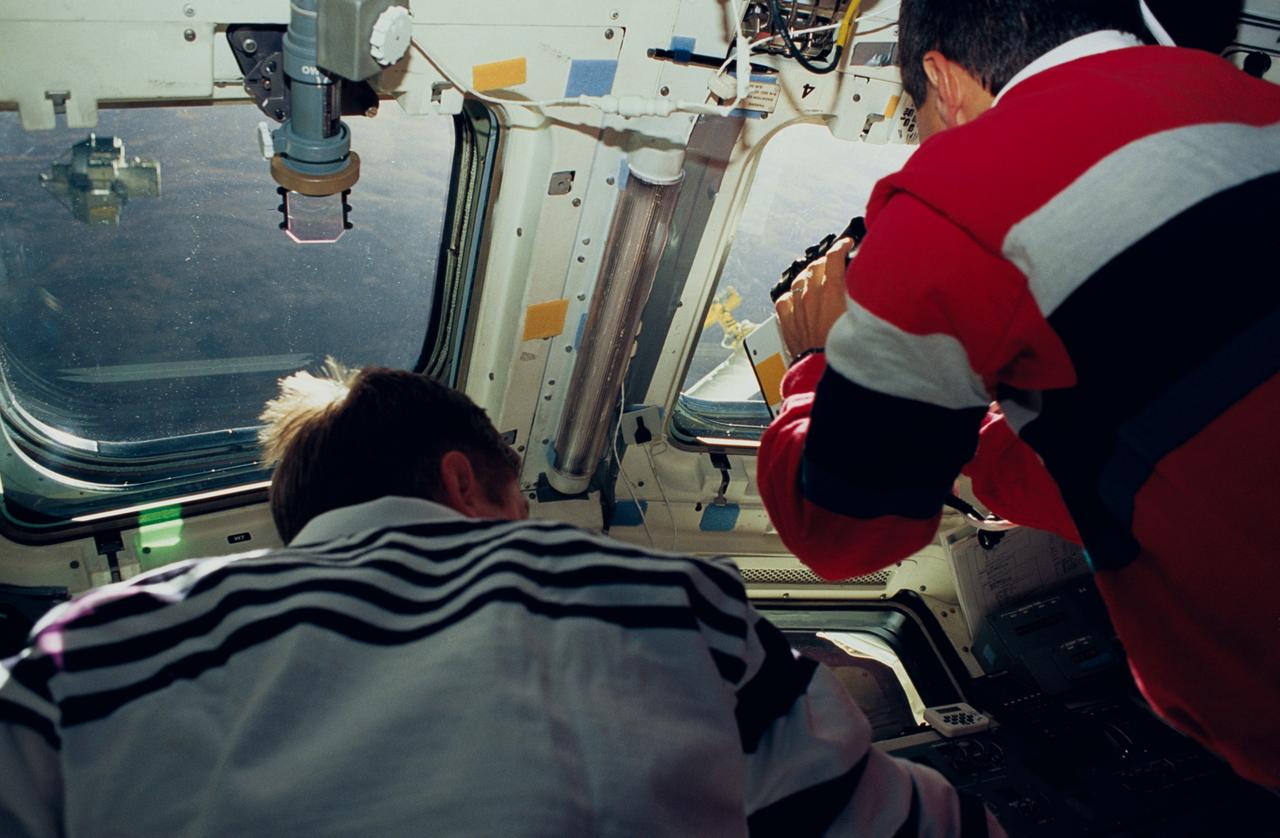
Astronauts Frank L. Culbertson Jr., STS-51 mission commander, and Daniel W. Bursch, mission specialist, are seen on Discovery's flight deck. The two were supporting operations free-flying Orbiting and Retrievable Far and Extreme Ultraviolet Spectrometer (ORFEUS) and its Shuttle Pallet Satellite (SPAS), pictured through the left window.
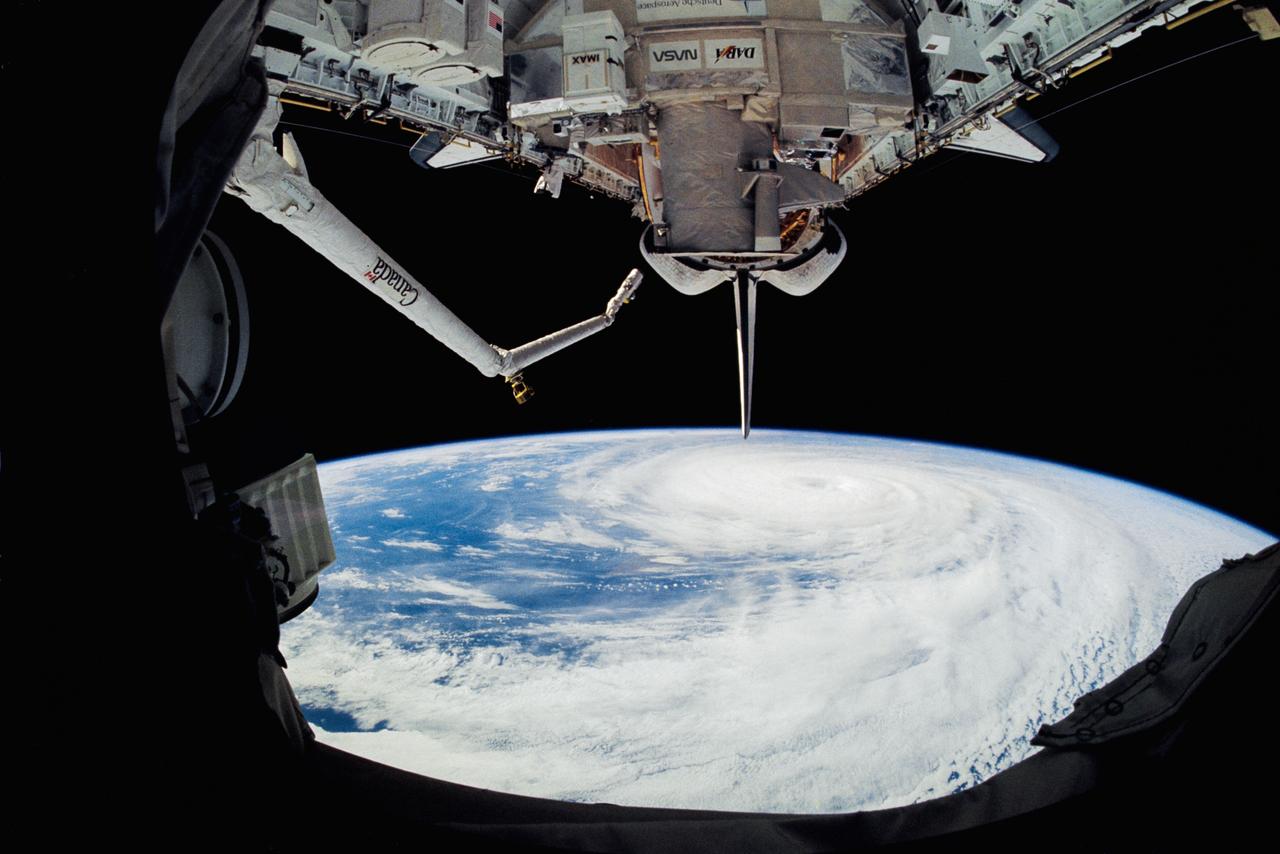
One of the STS-51 astronauts used a "fish-eye" lens on a 35mm cmaera to photograph this view of Hurricane Kenneth in the Pacific Ocean. The Orbiting Retrievable Far and Extreme Ultraviolet Spectrometer/Shuttle Pallet Satellite (ORFEUS/SPAS) is still in the cargo bay. The Remote Manipulator System (RMS) is extended towards the open payload bay.
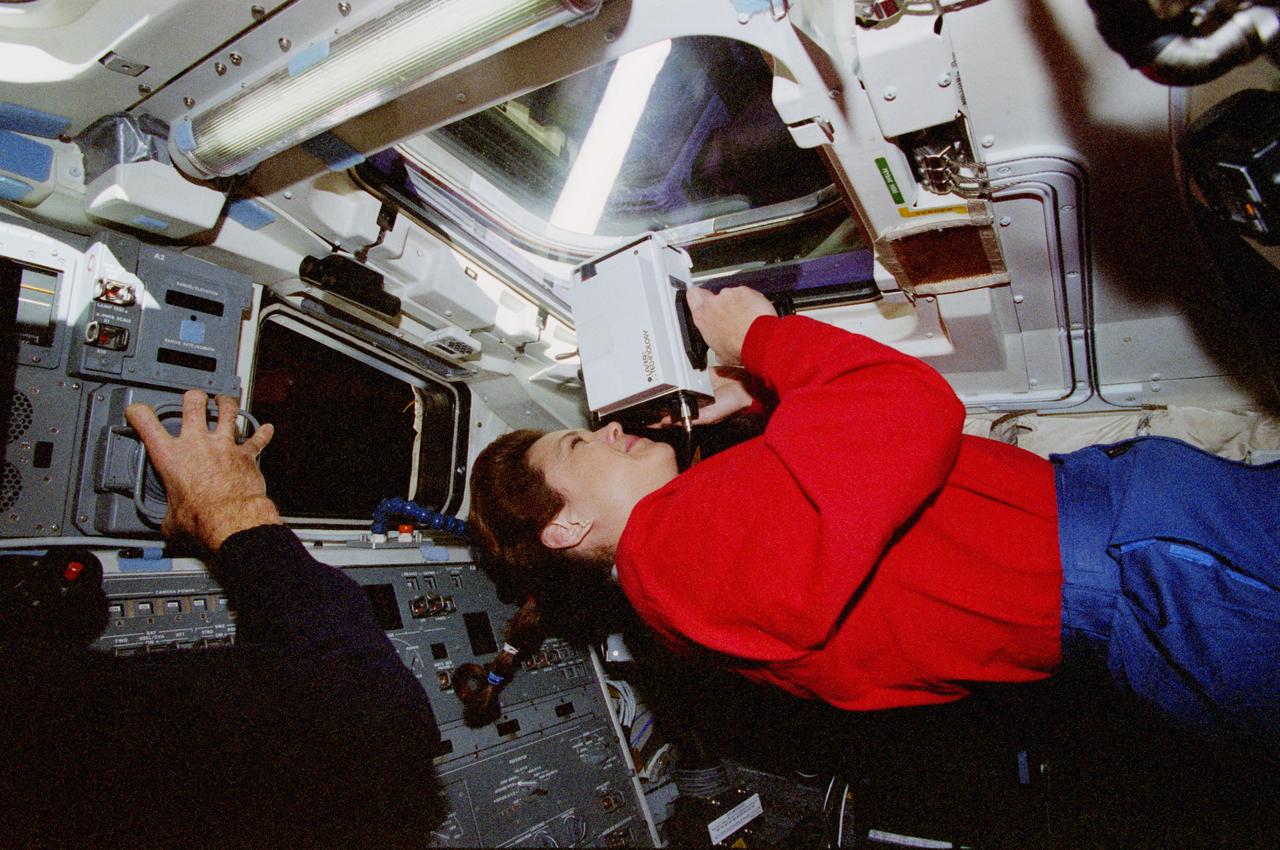
STS080-370-022 (19 Nov.-7 Dec. 1996) --- Astronaut Tamara E. Jernigan, STS-80 mission specialist, uses a laser ranging device during the space shuttle Columbia's rendezvous operations with the Orbiting Retrievable Far and Extreme Ultraviolet Spectrometer - Shuttle Pallet Satellite (ORFEUS-SPAS).
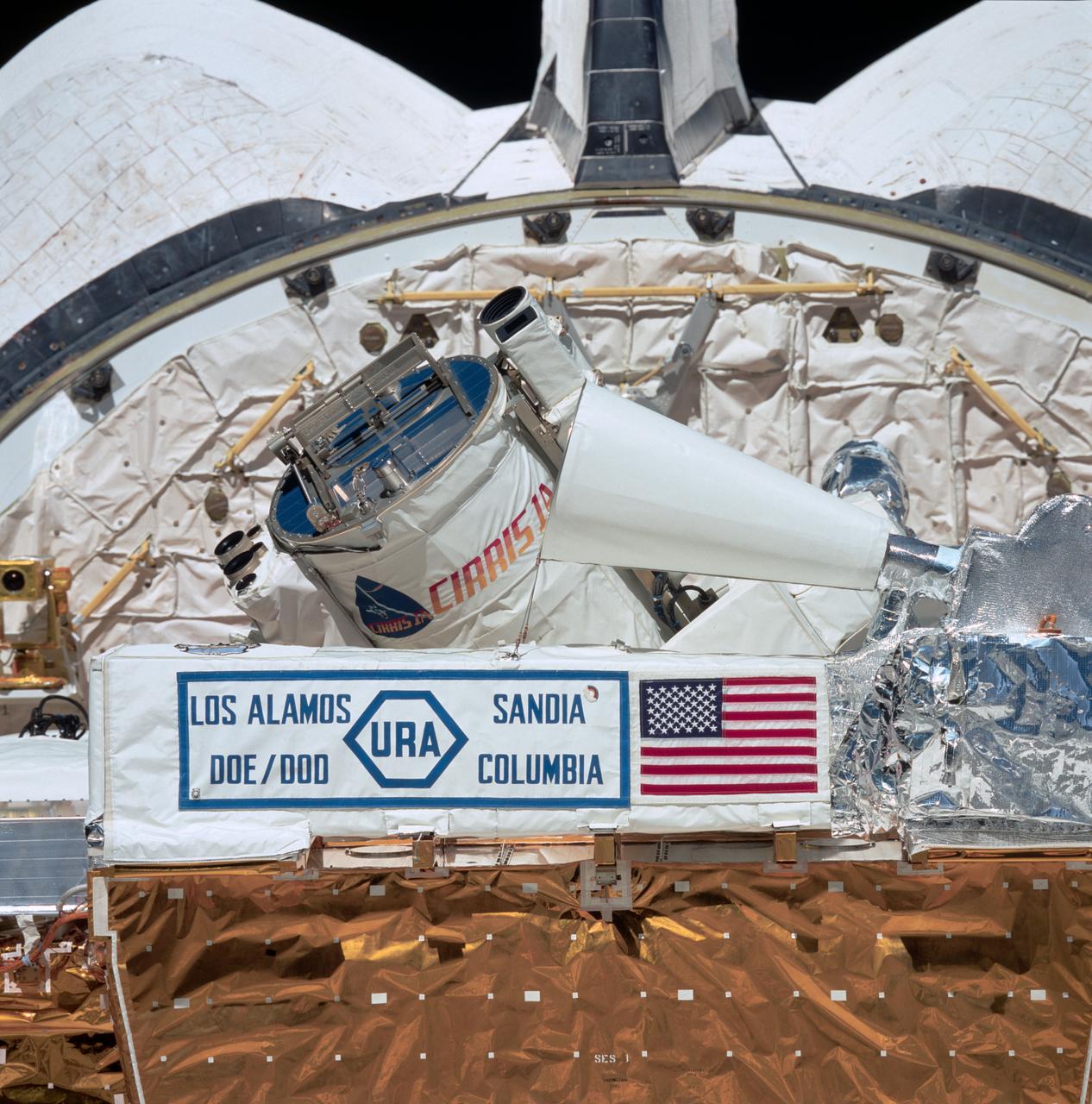
STS039-85-073 (28 April- 6 May 1991) --- This 70mm frame, taken from inside the crew cabin, shows a close-up view of the Air Force Program (AFP) 675 package. AFP-675 consists of the Cryogenic Infrared Radiance Instrumentation for Shuttle (CIRRIS)-1A; Far Ultraviolet Camera (FAR-UV) Experiment; Horizon Ultraviolet Program (HUP); Quadruple Ion Neutral Mass Spectrometer (QINMS); and the Uniformly Redundant Array (URA). Much of that hardware is backdropped here against the aft cargo bay bulkhead of Discovery.
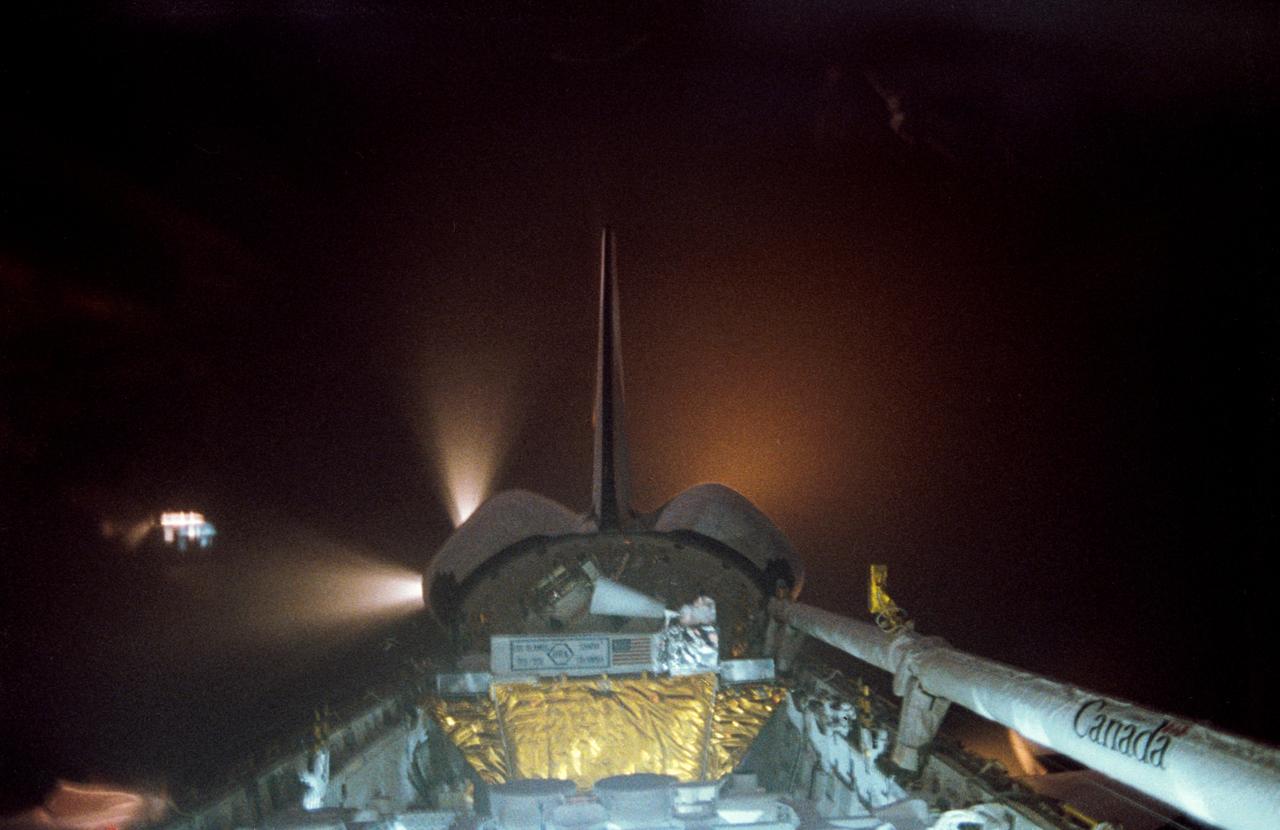
STS039-27-016 (28 April-6 May 1991) --- The Space Shuttle Discovery fires reaction control subsystem (RCS) thrusters in this 35mm frame, taken from inside the crew cabin. Seen in Discovery's payload bay are the tops of cannisters on the STP-1 payload, configured on the STS 39 Hitchhiker carrier; and the Air Force Program (AFP) 675 package. AFP-675 consists of the Cryogenic Infrared Radiance Instrumentation for Shuttle (CIRRIS)-1A; Far Ultraviolet Camera (FAR-UV) Experiment; Horizon Ultraviolet Program (HUP); Quadruple Ion Neutral Mass Spectrometer (QINMS); and the Uniformly Redundant Array (URA).
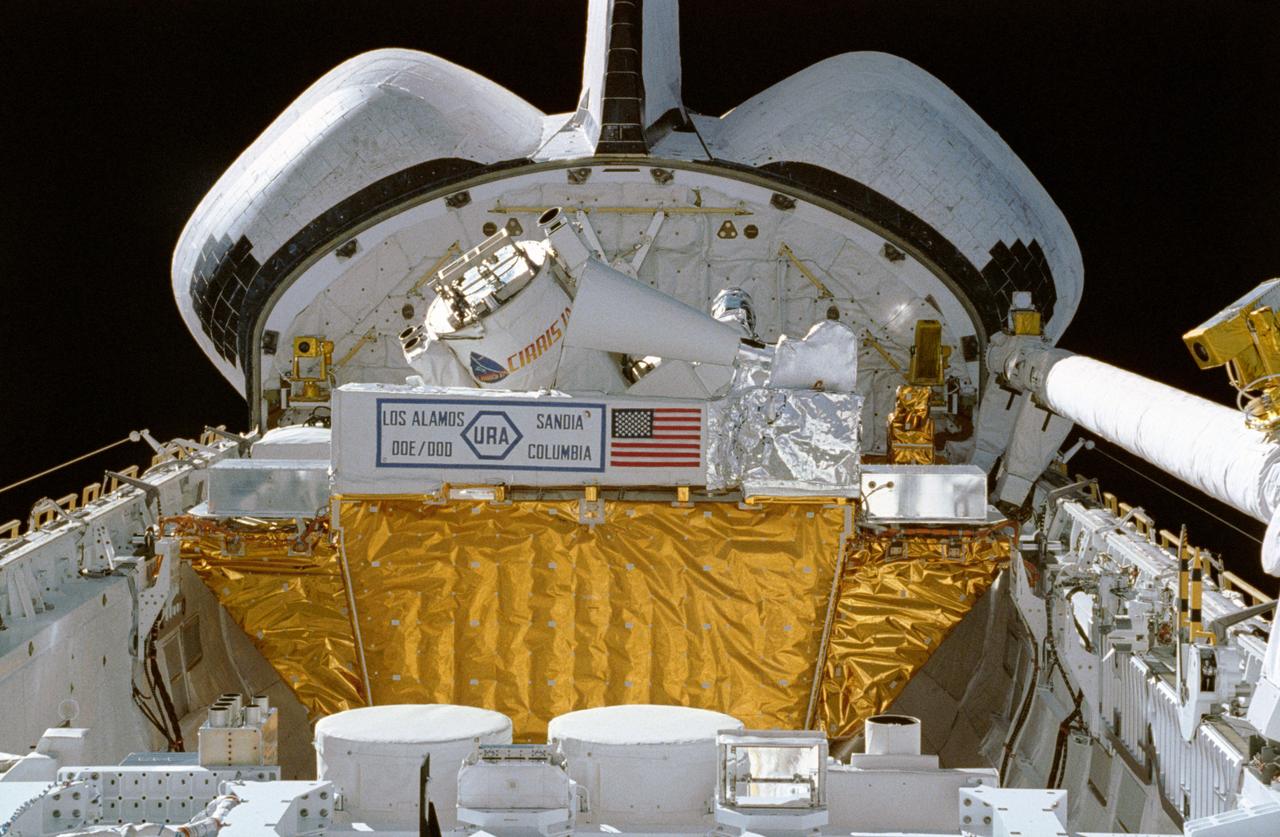
STS039-10-019 (28 April-6 May 1991) --- This 35mm frame, taken from inside the crew cabin, shows some of the cargo in Discovery's payload bay. Seen are the tops of canisters on the STP-1 payload, configured on the STS 39 Hitchhiker carrier; and the Air Force Program (AFP) 675 package. AFP-675 consists of the Cryogenic Infrared Radiance Instrumentation for Shuttle (CIRRIS)-1A; Far Ultraviolet Camera (FAR-UV) Experiment; Horizon Ultraviolet Program (HUP); Quadruple Ion Neutral Mass Spectrometer (QINMS); and the Uniformly Redundant Array (URA).
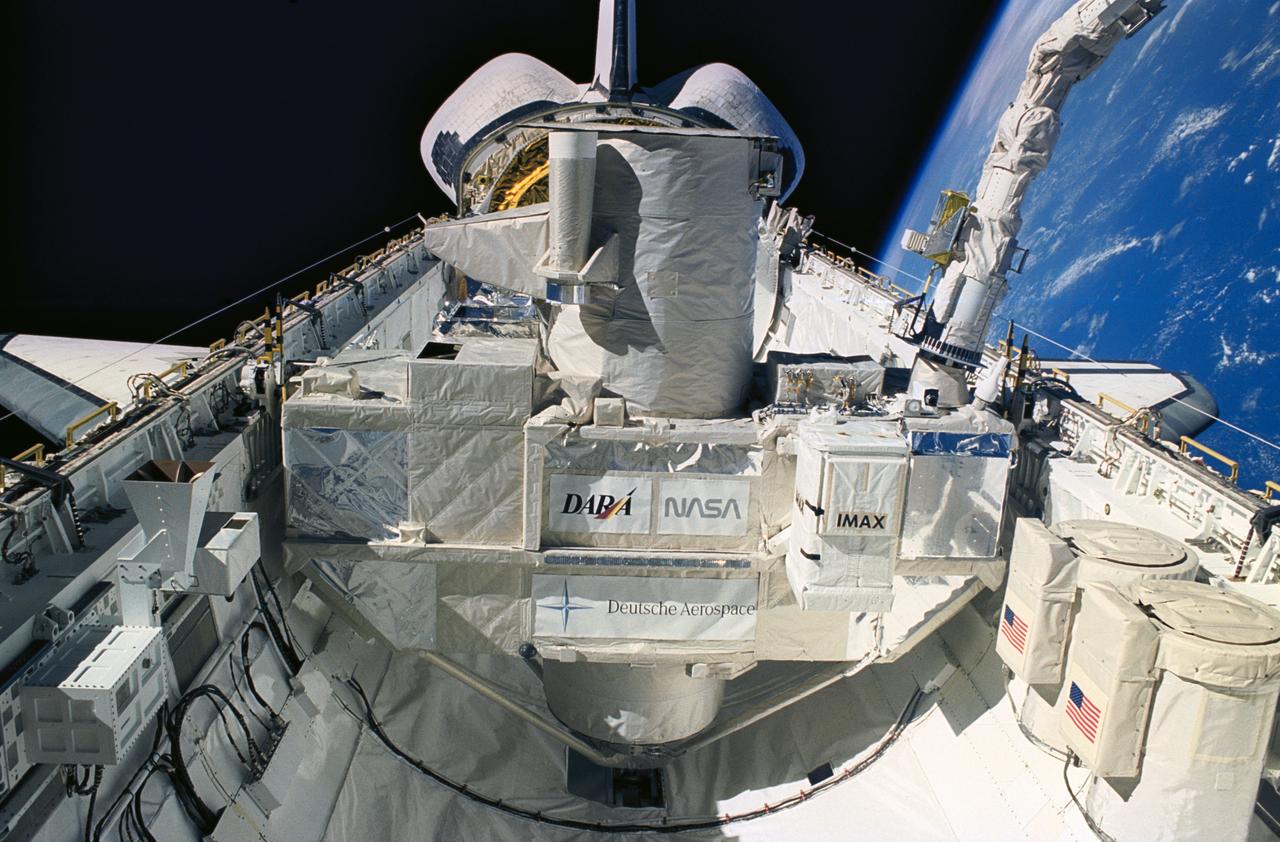
STS051-15-035 (19 Sept 1993) --- Backdropped against black space and the blue and white Earth, the Orbiting Retrievable Far and Extreme Ultraviolet Spectrometer (ORFEUS) and its Shuttle Pallet Satellite (SPAS) are pictured during berthing in Discovery's cargo bay. The free-flying craft had spent several days orbiting at a distance from Discovery with several experiments in operation. Here, the satellite is still in the grasp of the Canadian-built Remote Manipulator System (RMS), which was used also for the earlier deployment.
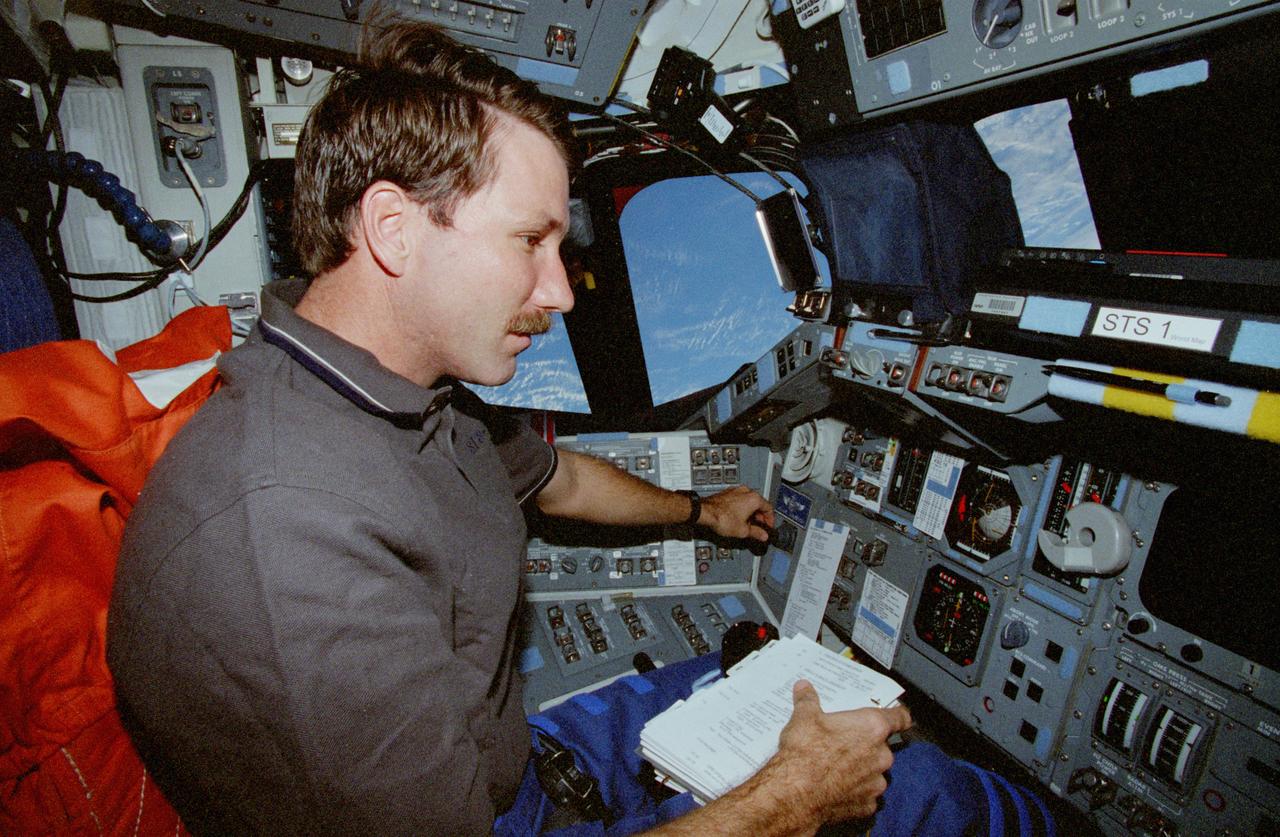
STS080-341-032 (19 Nov.-7 Dec. 1996) --- Astronaut Kent V. Rominger, STS-80 pilot, occupies the commander's station aboard the space shuttle Columbia during station keeping operations with the Orbiting Retrievable Far and Extreme Ultraviolet Spectrometer-Shuttle Pallet Satellite (ORFEUS-SPAS). Earth, actually some 190 nautical miles away, appears to be just beyond arm's length on Columbia's port side.
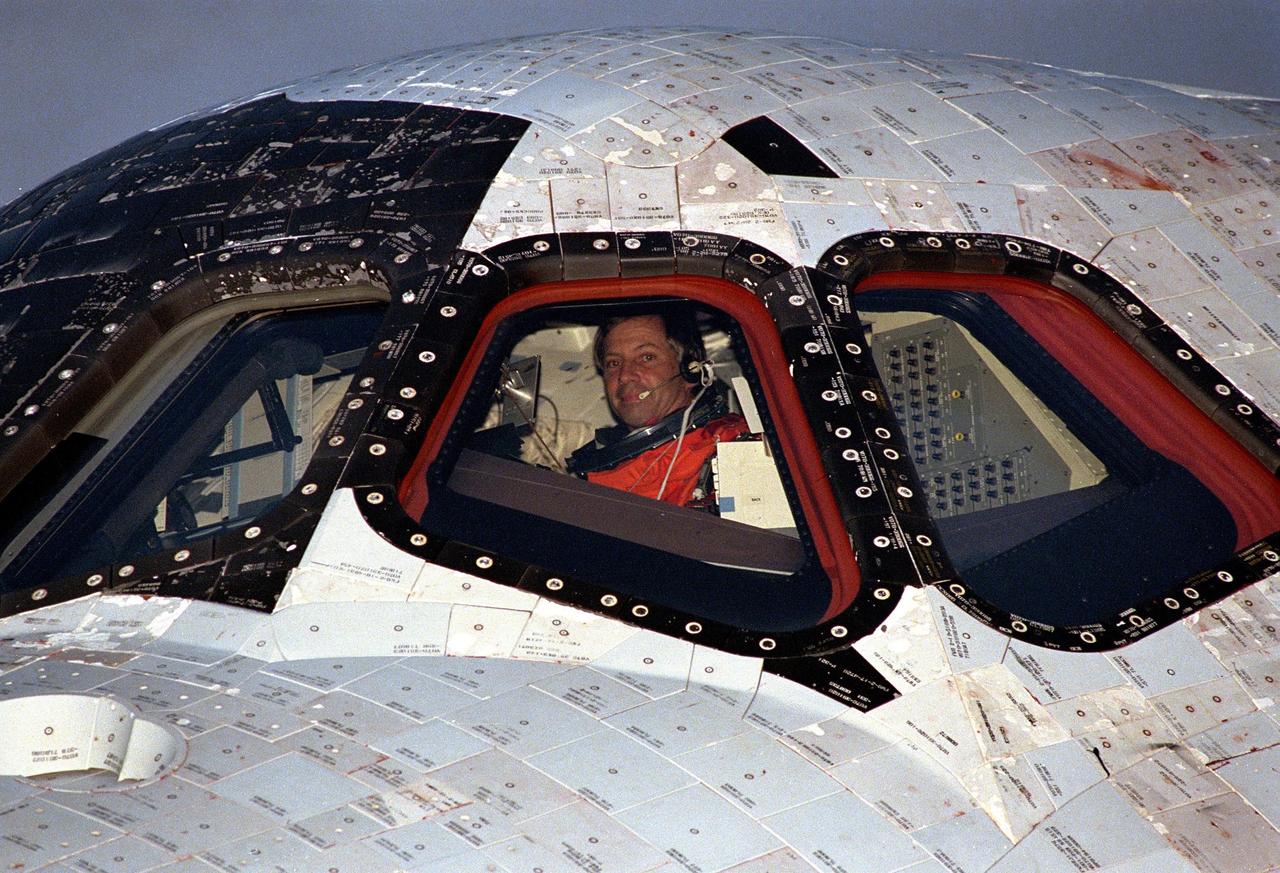
KENNEDY SPACE CENTER, FLA. -- STS-80 Commander Kenneth D. Cockrell peers out the window of the orbiter Columbia minutes after guiding the spacecraft to a successful landing on KSC’s Runway 33. Main gear touchdown occurred at 6:49:04 a.m. EST, Dec. 7. On board with Cockrell are four fellow crew members, Pilot Kent V. Rominger, and Mission Specialists Story Musgrave, Thomas D. Jones, and Tamara E. Jernigan, and the two primary payloads of the mission, the Wake Shield Facility-3 (WSF-3) and the Orbiting and Retrievable Far and Extreme Ultraviolet Spectrometer-Shuttle Pallet Satellite II (ORFEUS-SPAS II).
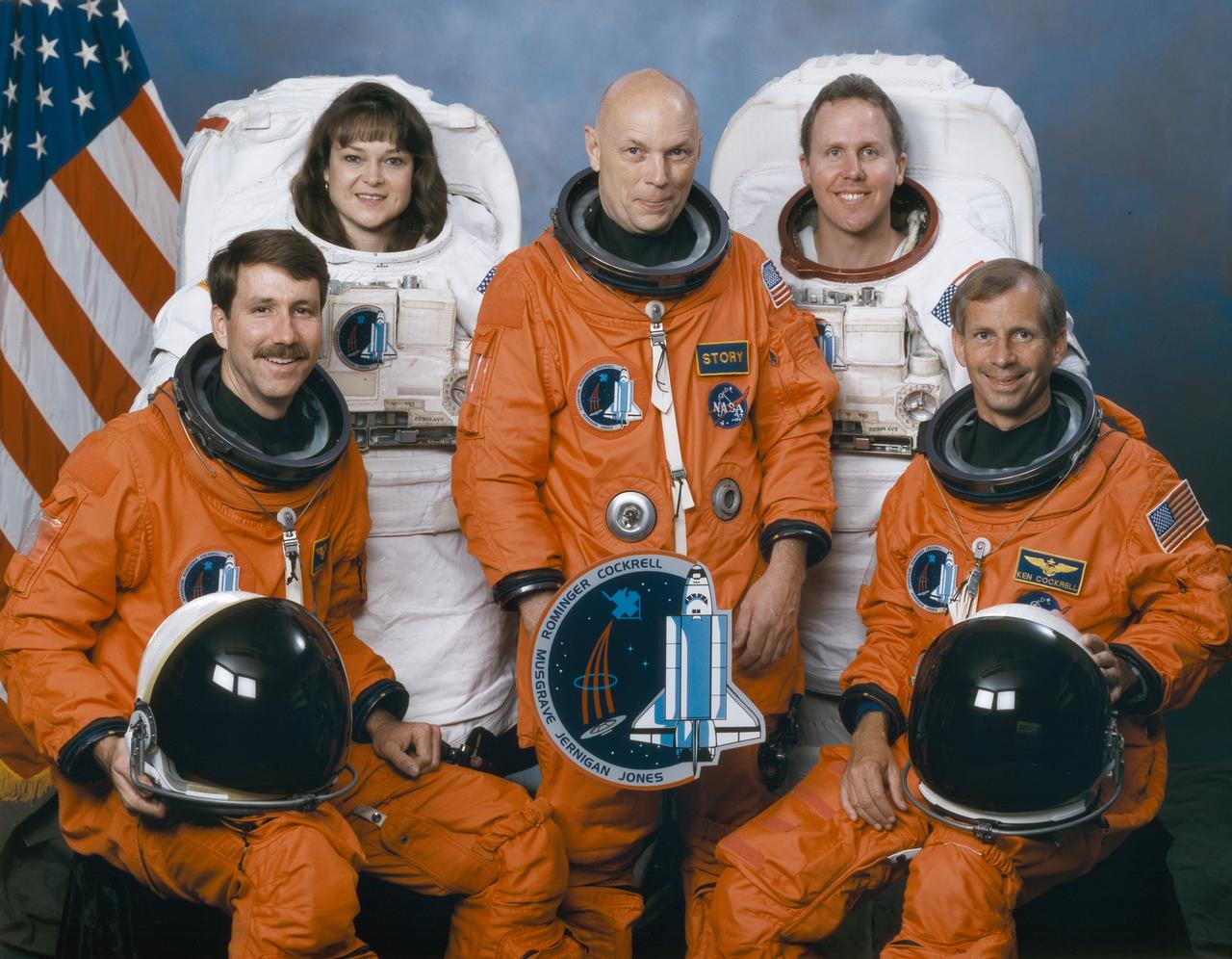
The crew assigned to the STS-79 mission included (seated left to right) Kent V. Rominger, pilot; and Kenneth D. Cockrell, commander. Standing (left to right) are mission specialists Tamara E. Jernigan, F. Story Musgrave, and Thomas D. Jones. Launched aboard the Space Shuttle Columbia on November 19, 1996 at 2:55:47 pm (EST), the STS-80 mission marked the final flight of 1996. The crew successfully deployed and operated the Orbiting and Retrievable Far and Extreme Ultraviolet Spectrometer-Shuttle Pallet Satellite II (ORFEUS-SPAS II), and deployed and retrieved the Wake Shield Facility-3 (WSF-3).
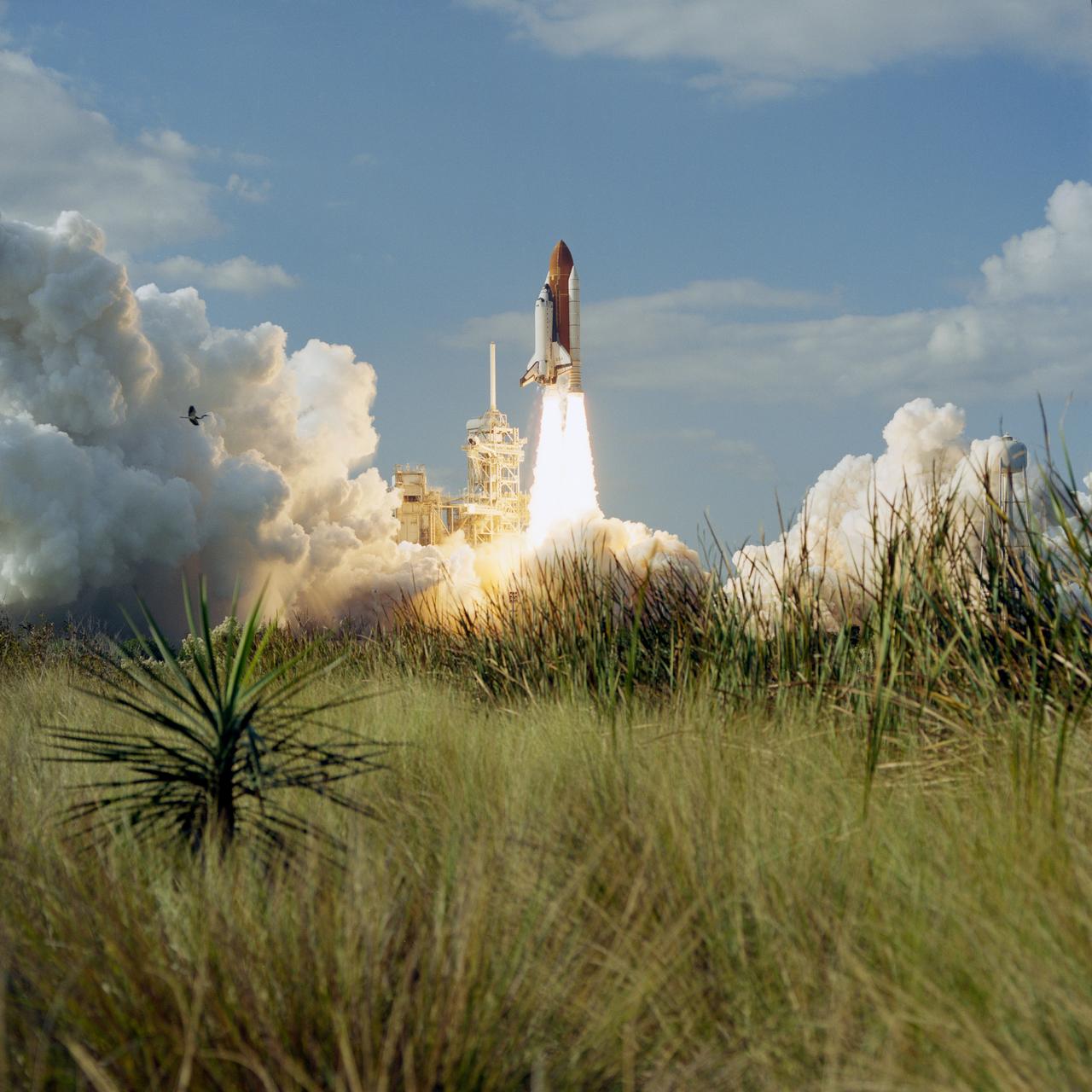
STS080-S-005 (19 Nov. 1996) --- The space shuttle Columbia lifts off from the Kennedy Space Center's (KSC) Launch Pad 39B at 2:55:47 p.m. (EST), Nov. 19, 1996. Onboard are astronauts Kenneth D. Cockrell, mission commander; Kent V. Rominger, pilot; along with Story Musgrave, Tamara E. Jernigan and Thomas D. Jones, all mission specialists. The two primary payloads for STS-80 stowed in Columbia's cargo bay for later deployment and testing are the Wake Shield Facility (WSF-3) and the Orbiting and Retrievable Far and Extreme Ultraviolet Spectrometer (ORFEUS) with its associated Shuttle Pallet Satellite (SPAS).
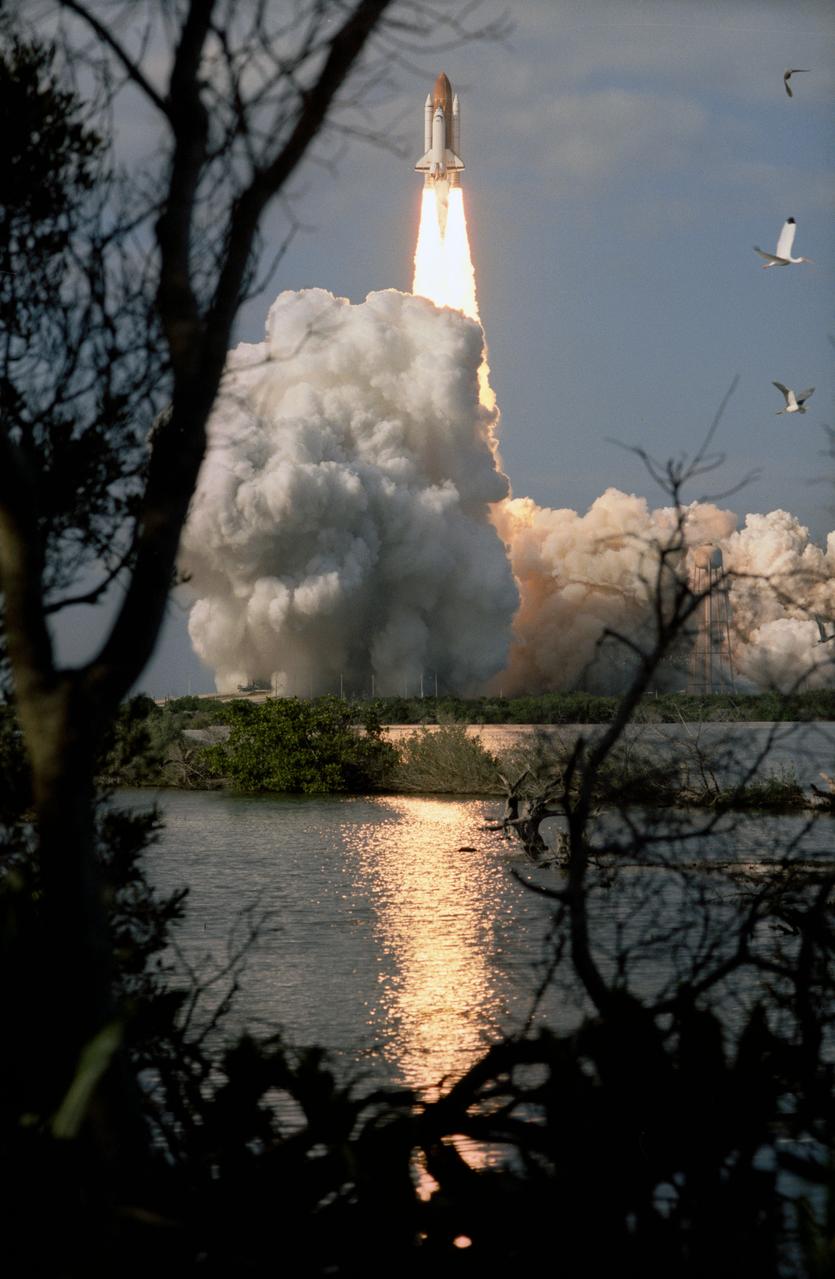
STS080-S-003 (19 Nov. 1996) --- The space shuttle Columbia lifts off from the Kennedy Space Center's (KSC) Launch Pad 39B at 2:55:47 p.m. (EST), November 19, 1996. Onboard are astronauts Kenneth D. Cockrell, mission commander; Kent V. Rominger, pilot; along with Story Musgrave, Tamara E. Jernigan and Thomas D. Jones, all mission specialists. The two primary payloads for STS-80 stowed in Columbia's cargo bay for later deployment and testing are the Wake Shield Facility (WSF-3) and the Orbiting and Retrievable Far and Extreme Ultraviolet Spectrometer (ORFEUS) with its associated Shuttle Pallet Satellite (SPAS).
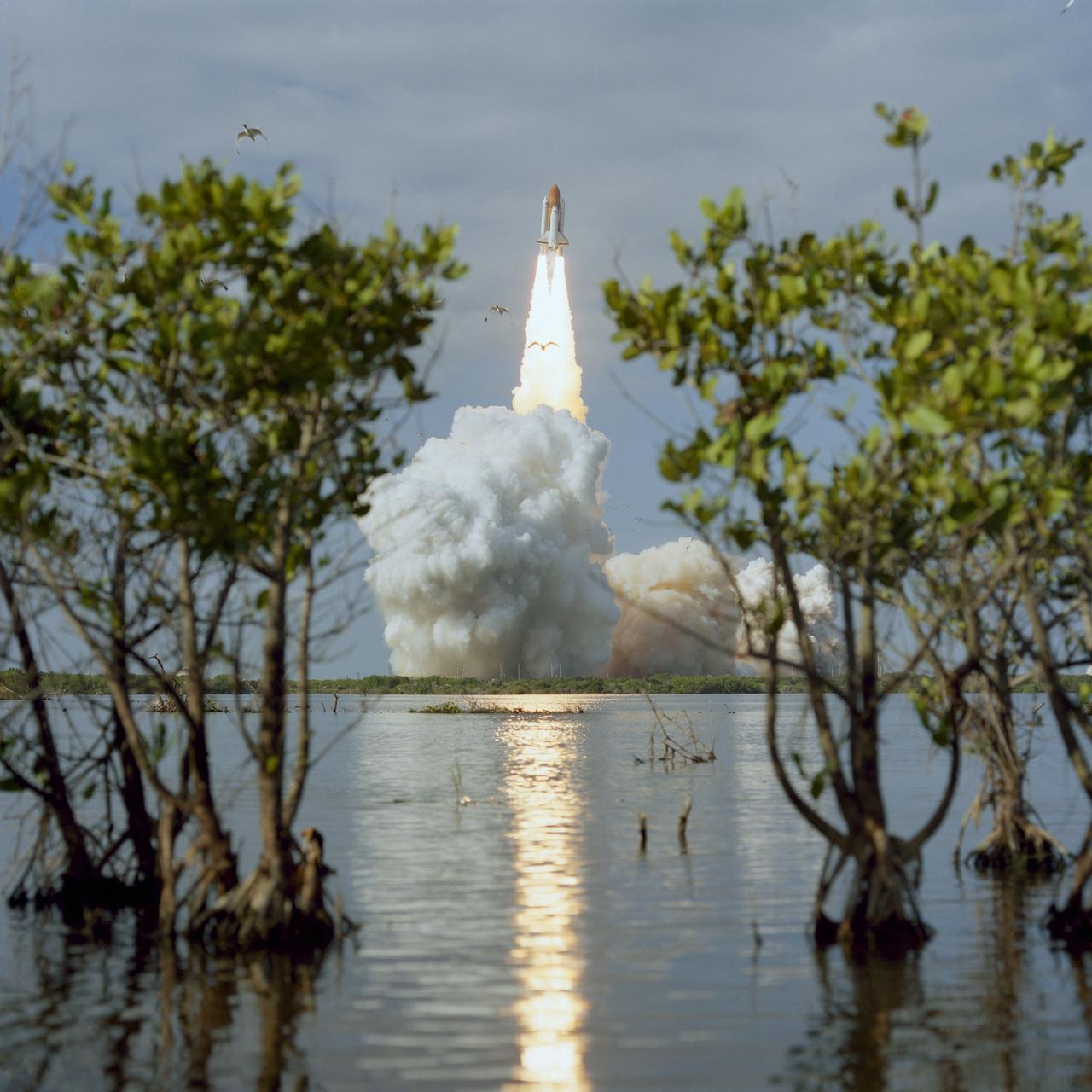
STS080-S-006 (19 Nov. 1996) --- The space shuttle Columbia lifts off from the Kennedy Space Center's (KSC) Launch Pad 39B at 2:55:47 p.m. (EST), Nov. 19, 1996. Onboard are astronauts Kenneth D. Cockrell, mission commander; Kent V. Rominger, pilot; along with Story Musgrave, Tamara E. Jernigan and Thomas D. Jones, all mission specialists. The two primary payloads for STS-80 stowed in Columbia's cargo bay for later deployment and testing are the Wake Shield Facility (WSF-3) and the Orbiting and Retrievable Far and Extreme Ultraviolet Spectrometer (ORFEUS) with its associated Shuttle Pallet Satellite (SPAS).
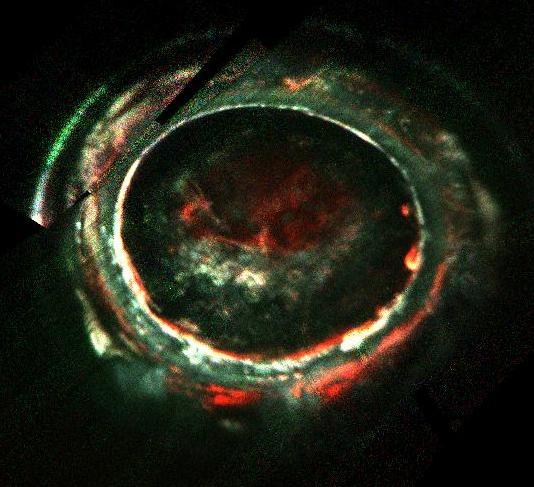
This image, created with data from Juno's Ultraviolet Imaging Spectrometer (UVS), marks the path of Juno's readings of Jupiter's auroras, highlighting the electron measurements that show the discovery of the so-called discrete auroral acceleration processes indicated by the "inverted Vs" in the lower panel (Figure 1). This signature points to powerful magnetic-field-aligned electric potentials that accelerate electrons toward the atmosphere to energies that are far greater than what drive the most intense aurora at Earth. Scientists are looking into why the same processes are not the main factor in Jupiter's most powerful auroras. https://photojournal.jpl.nasa.gov/catalog/PIA21937
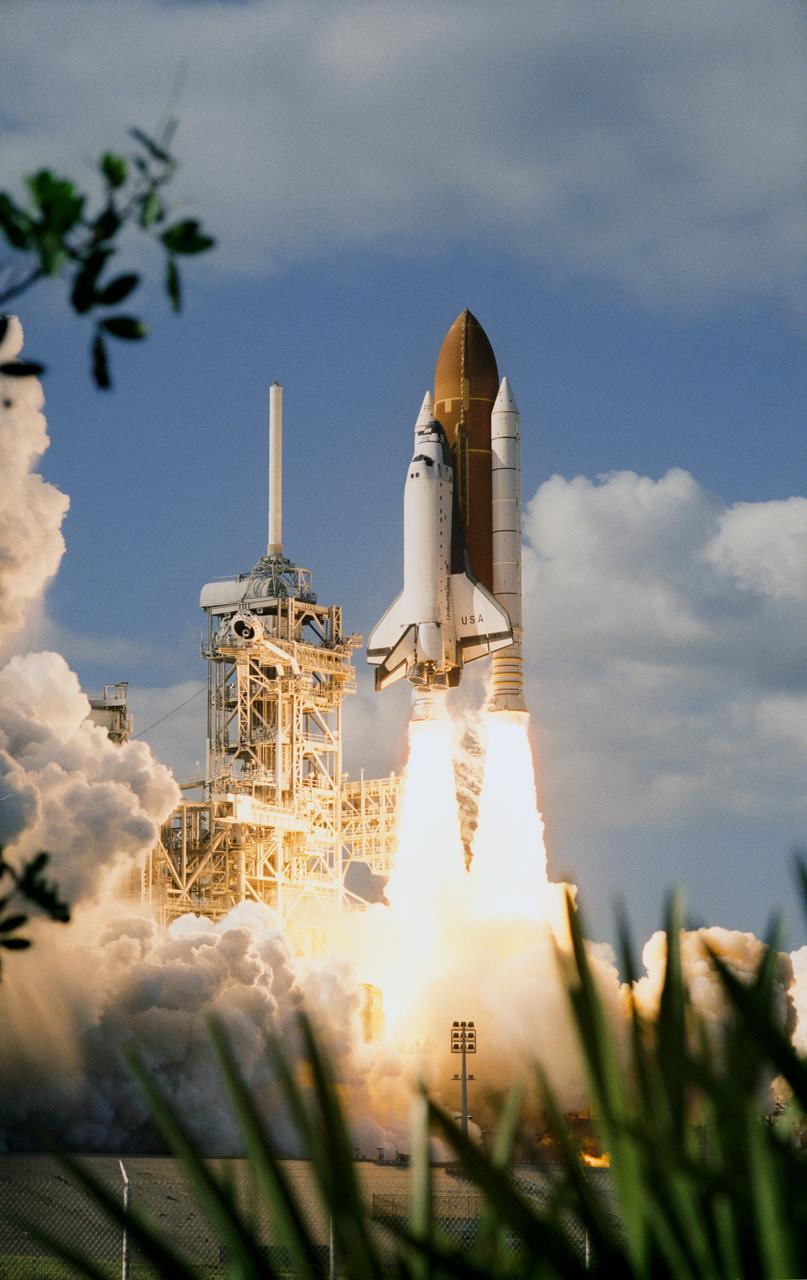
STS080-S-004 (19 Nov. 1996) --- The space shuttle Columbia lifts off from the Kennedy Space Center's (KSC) Launch Pad 39B at 2:55:47 p.m. (EST), Nov. 19, 1996. Onboard are astronauts Kenneth D. Cockrell, STS-80 mission commander; Kent V. Rominger, pilot; along with Story Musgrave, Tamara E. Jernigan and Thomas D. Jones, all mission specialists. The two primary payloads for STS-80 stowed in Columbia's cargo bay for later deployment and testing are the Wake Shield Facility (WSF-3) and the Orbiting and Retrievable Far and Extreme Ultraviolet Spectrometer (ORFEUS) with its associated Shuttle Pallet Satellite (SPAS).
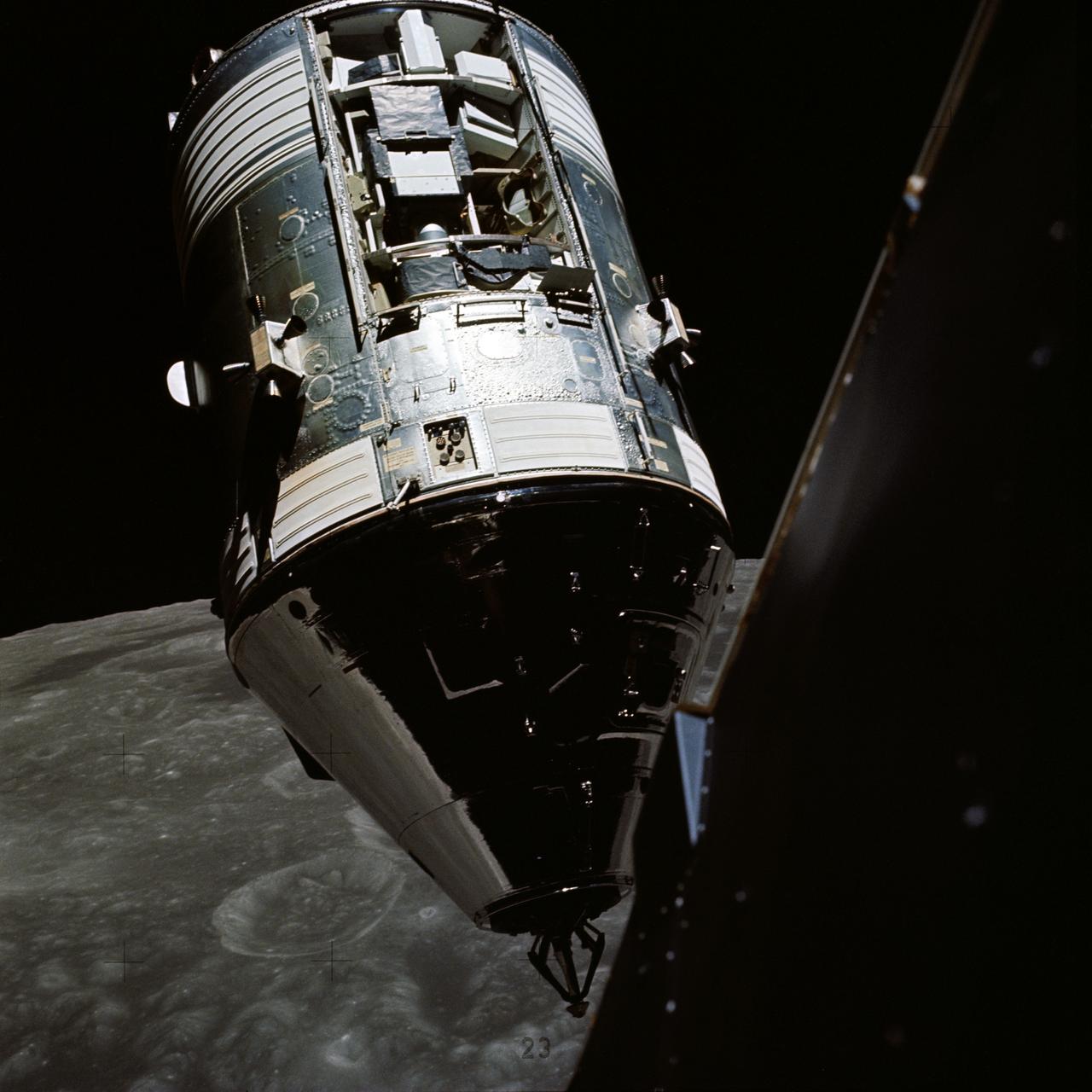
AS17-145-22254 (14 Dec. 1972) --- An excellent view of the Apollo 17 Command and Service Modules (CSM) photographed from the Lunar Module (LM) "Challenger" during rendezvous and docking maneuvers in lunar orbit. The LM ascent stage, with astronauts Eugene A. Cernan and Harrison H. Schmitt aboard, had just returned from the Taurus-Littrow landing site on the lunar surface. Astronaut Ronald E. Evans remained with the CSM in lunar orbit. Note the exposed Scientific Instrument Module (SIM) Bay in Sector 1 of the Service Module (SM). Three experiments are carried in the SIM bay: S-209 lunar sounder, S-171 infrared scanning spectrometer, and the S-169 far-ultraviolet spectrometer. Also mounted in the SIM bay are the panoramic camera, mapping camera and laser altimeter used in service module photographic tasks. A portion of the LM is on the right.
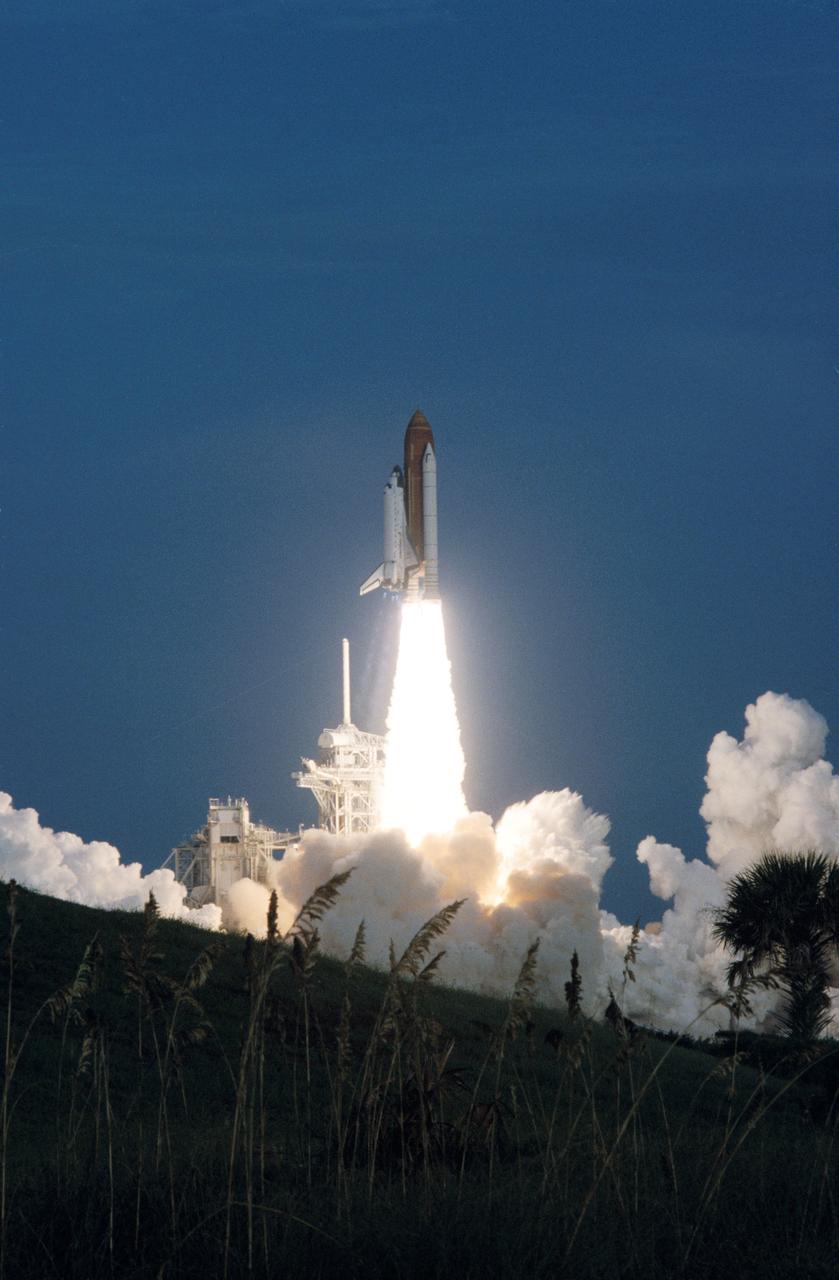
STS051-S-108 (12 Sept. 1993) --- The Space Shuttle Discovery soars toward a nine-day stay in Earth-orbit to support the mission. Launch occurred at 7:45 a.m. (EDT) September 12, 1993. Note the diamond shock effect coming from the thrust of the three main engines. Onboard the shuttle were astronauts Frank L. Culbertson, Jr., William F. Readdy, Daniel W. Bursch, James H. Newman and Carl E. Walz, along with a number of payloads. The payloads included the Advanced Communications Technology Satellite (ACTS) with its Transfer Orbit Stage (TOS), the Orbiting Retrievable Far and Extreme Ultraviolet Spectrometer (ORFEUS) and its Shuttle Pallet Satellite (SPAS) carrier. This photograph was taken with a 35mm camera.
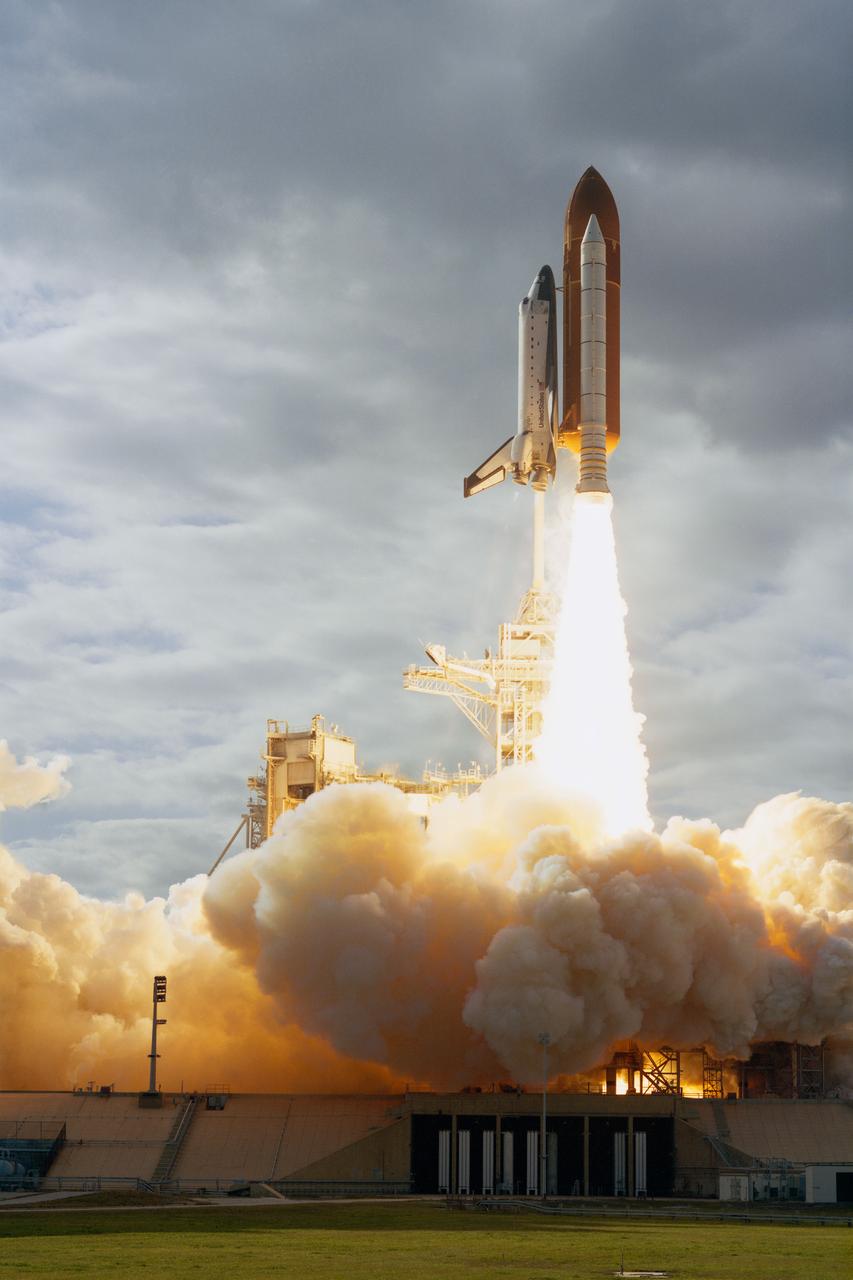
STS080-S-007 (19 Nov. 1996) --- One of the nearest remote camera stations to Launch Pad B captured this profile image of space shuttle Columbia's liftoff from the Kennedy Space Center's (KSC) Launch Complex 39 at 2:55:47 p.m. (EST), November 19, 1996. Onboard are astronauts Kenneth D. Cockrell, mission commander; Kent V. Rominger, pilot; along with Story Musgrave, Tamara E. Jernigan and Thomas D. Jones, all mission specialists. The two primary payloads for STS-80 stowed in Columbia?s cargo bay for later deployment and testing are the Wake Shield Facility (WSF-3) and the Orbiting and Retrievable Far and Extreme Ultraviolet Spectrometer (ORFEUS) with its associated Shuttle Pallet Satellite (SPAS).
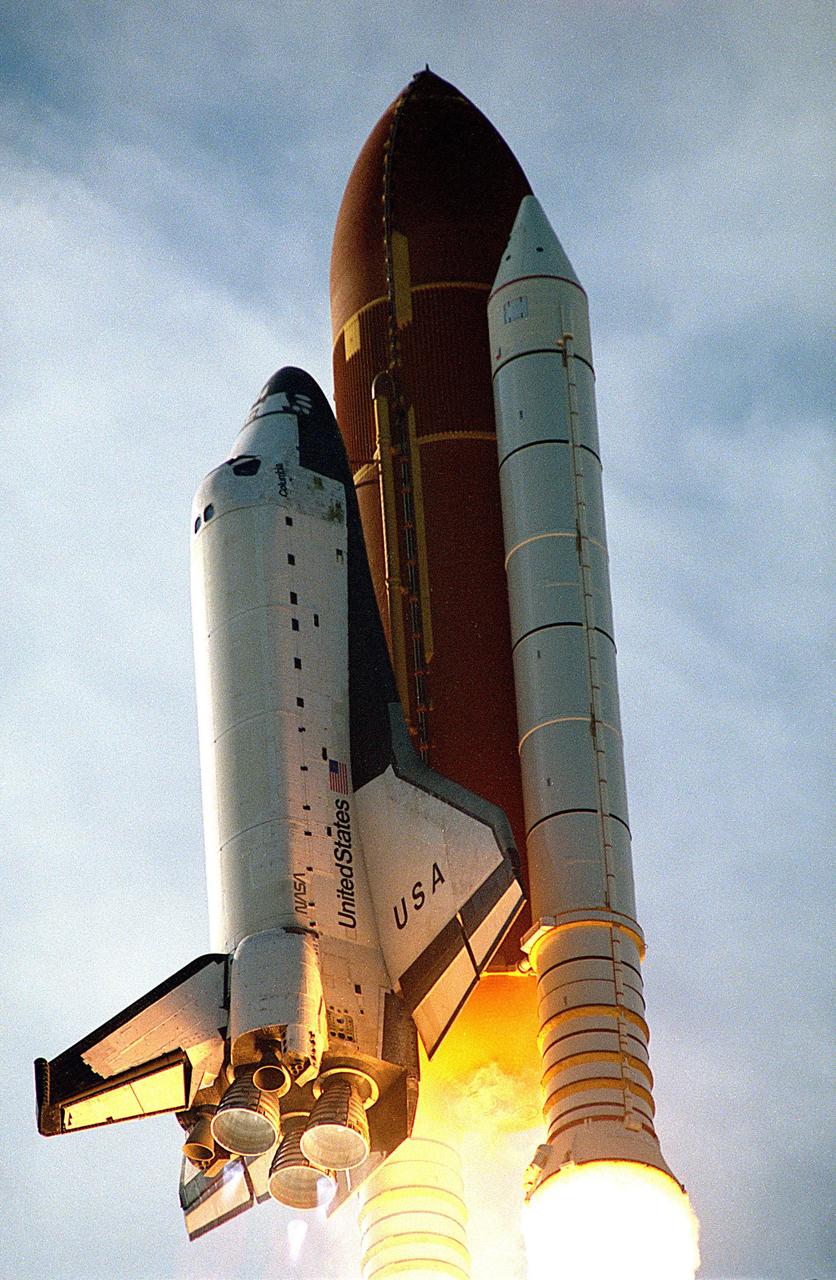
KENNEDY SPACE CENTER, FLA. -- A diversified mission of astronomy, commercial space research and International Space Station preparation gets under way as the Space Shuttle Columbia climbs skyward from Launch Pad 39B at 2:55:47 p.m. EST, Nov. 19, 1996. Leading the veteran crew of Mission STS-80 is Commander Kenneth D. Cockrell; Kent V. Rominger is the pilot and the three mission specialists are Tamara E. Jernigan, Story Musgrave and Thomas D. Jones. At age 61, Musgrave becomes the oldest person ever to fly in space; he also ties astronaut John Young’s record for most number of spaceflights by a human being, and in embarking on his sixth Shuttle flight Musgrave has logged the most flights ever aboard NASA’s reusable space vehicle. The two primary payloads for STS-80 are the Wake Shield Facility-3 (WSF-3) and the Orbiting and Retrievable Far and Extreme Ultraviolet Spectrometer-Shuttle Pallet Satellite II (ORFEUS-SPAS II). Two spacewalks also will be performed during the nearly 16-day mission. Mission STS-80 closes out the Shuttle flight schedule for 1996; it marks the 21st flight for Columbia and the 80th in Shuttle program history.
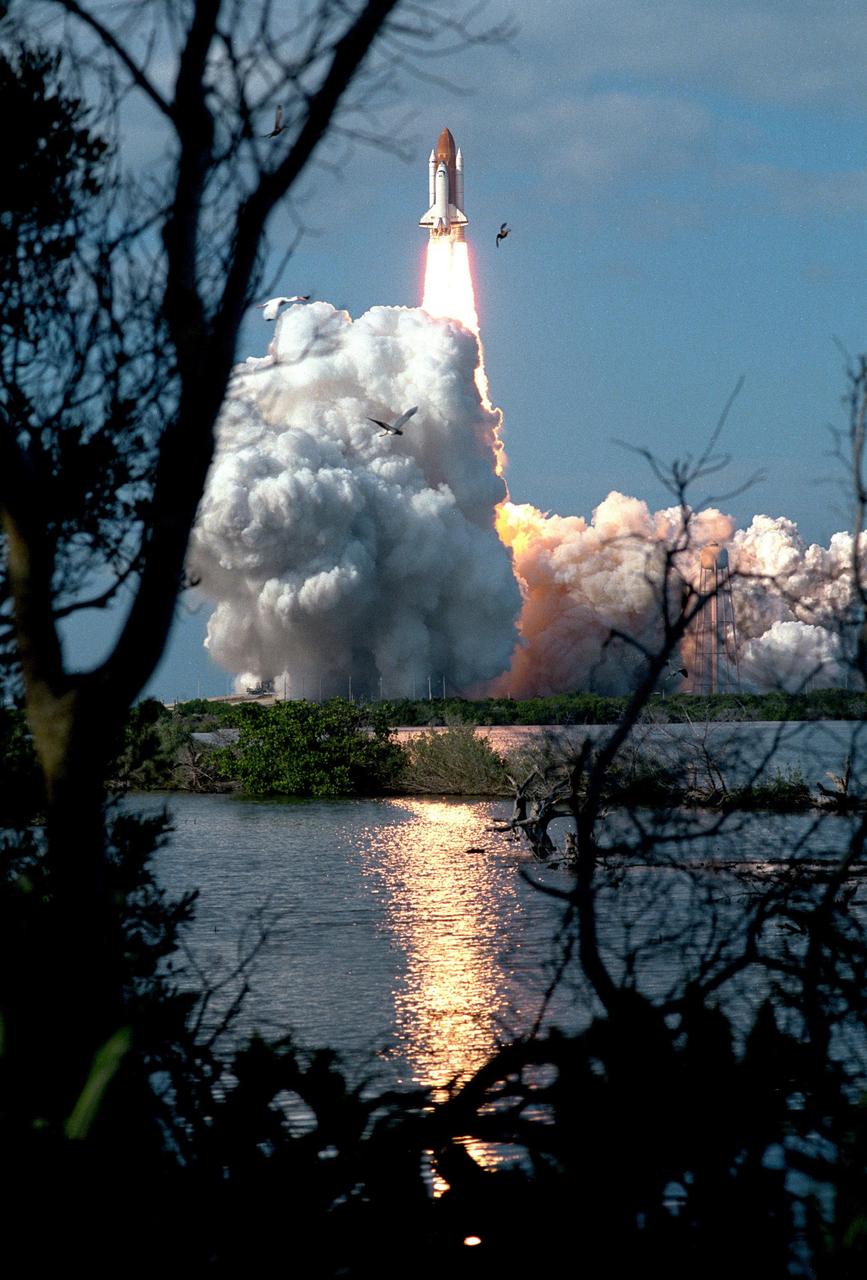
KENNEDY SPACE CENTER, FLA. -- A diversified mission of astronomy, commercial space research and International Space Station preparation gets under way as the Space Shuttle Columbia climbs skyward from Launch Pad 39B at 2:55:47 p.m. EST, Nov. 19, 1996. Leading the veteran crew of Mission STS-80 is Commander Kenneth D. Cockrell; Kent V. Rominger is the pilot and the three mission specialists are Tamara E. Jernigan, Story Musgrave and Thomas D. Jones. At age 61, Musgrave becomes the oldest person ever to fly in space; he also ties astronaut John Young’s record for most number of spaceflights by a human being, and in embarking on his sixth Shuttle flight Musgrave has logged the most flights ever aboard NASA’s reusable space vehicle. The two primary payloads for STS-80 are the Wake Shield Facility-3 (WSF-3) and the Orbiting and Retrievable Far and Extreme Ultraviolet Spectrometer-Shuttle Pallet Satellite II (ORFEUS-SPAS II). Two spacewalks also will be performed during the nearly 16-day mission. Mission STS-80 closes out the Shuttle flight schedule for 1996; it marks the 21st flight for Columbia and the 80th in Shuttle program history.
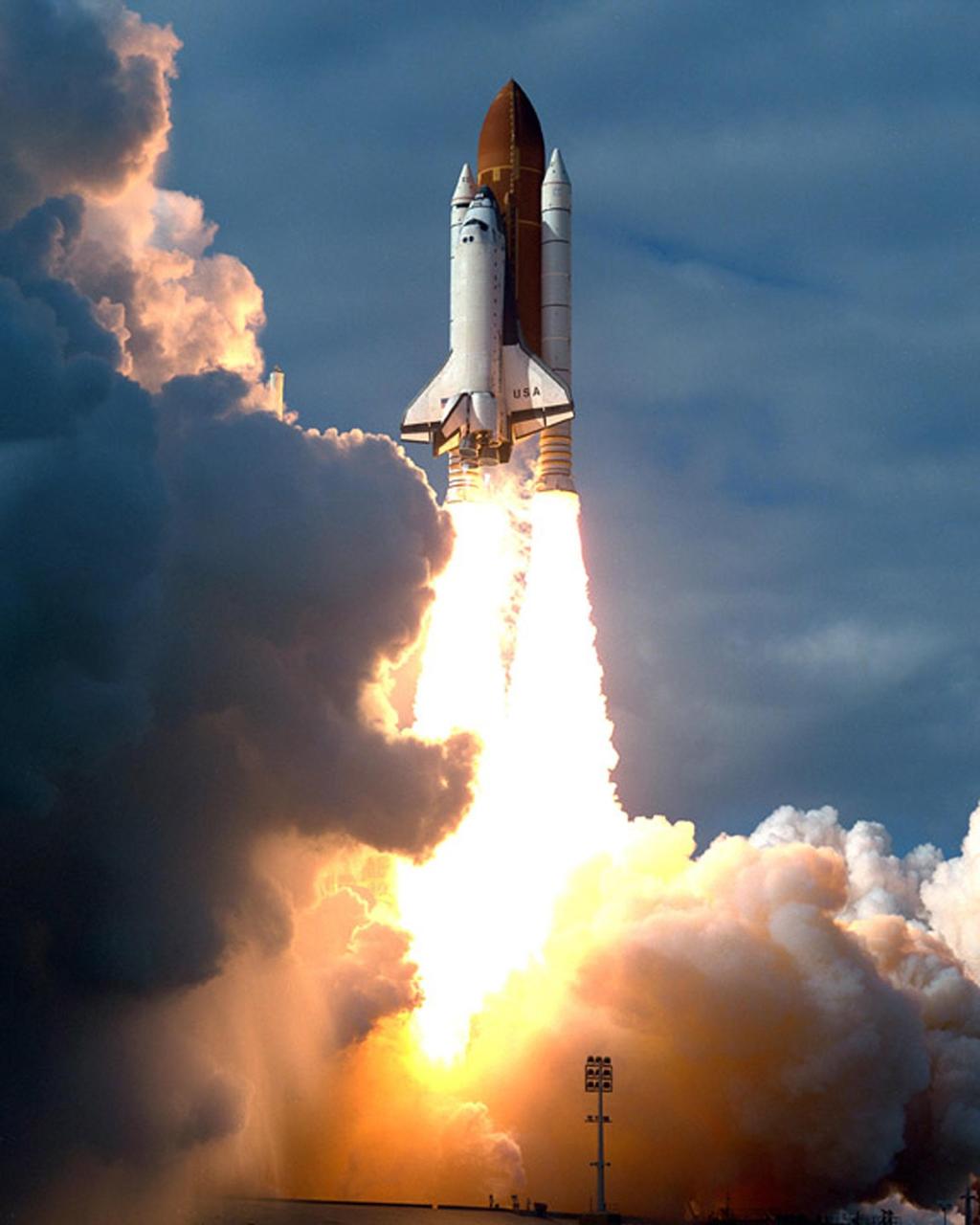
KENNEDY SPACE CENTER, FLA. -- A diversified mission of astronomy, commercial space research and International Space Station preparation gets under way as the Space Shuttle Columbia climbs into orbit from Launch Pad 39B at 2:55:47 p.m. EST, Nov. 19, 1996. During Mission STS- 80, Columbia’s five-person crew will deploy and retrieve two free-flying spacecraft, conduct two spacewalks and perform a variety of microgravity research experiments in the Shuttle’s middeck area. The veteran crew is led by Commander Kenneth D. Cockrell; Kent V. Rominger is the pilot and the three mission specialists are Tamara E. Jernigan, Story Musgrave and Thomas D. Jones. At age 61, Musgrave becomes the oldest person ever to fly in space; he also ties astronaut John Young’s record for most number of spaceflights by a human being, and in embarking on his sixth Shuttle flight Musgrave has logged the most flights ever aboard NASA’s reusable space vehicle. The two primary payloads for STS-80 are the Wake Shield Facility-3 (WSF-3) and the Orbiting and Retrievable Far and Extreme Ultraviolet Spectrometer-Shuttle Pallet Satellite II (ORFEUS-SPAS II).
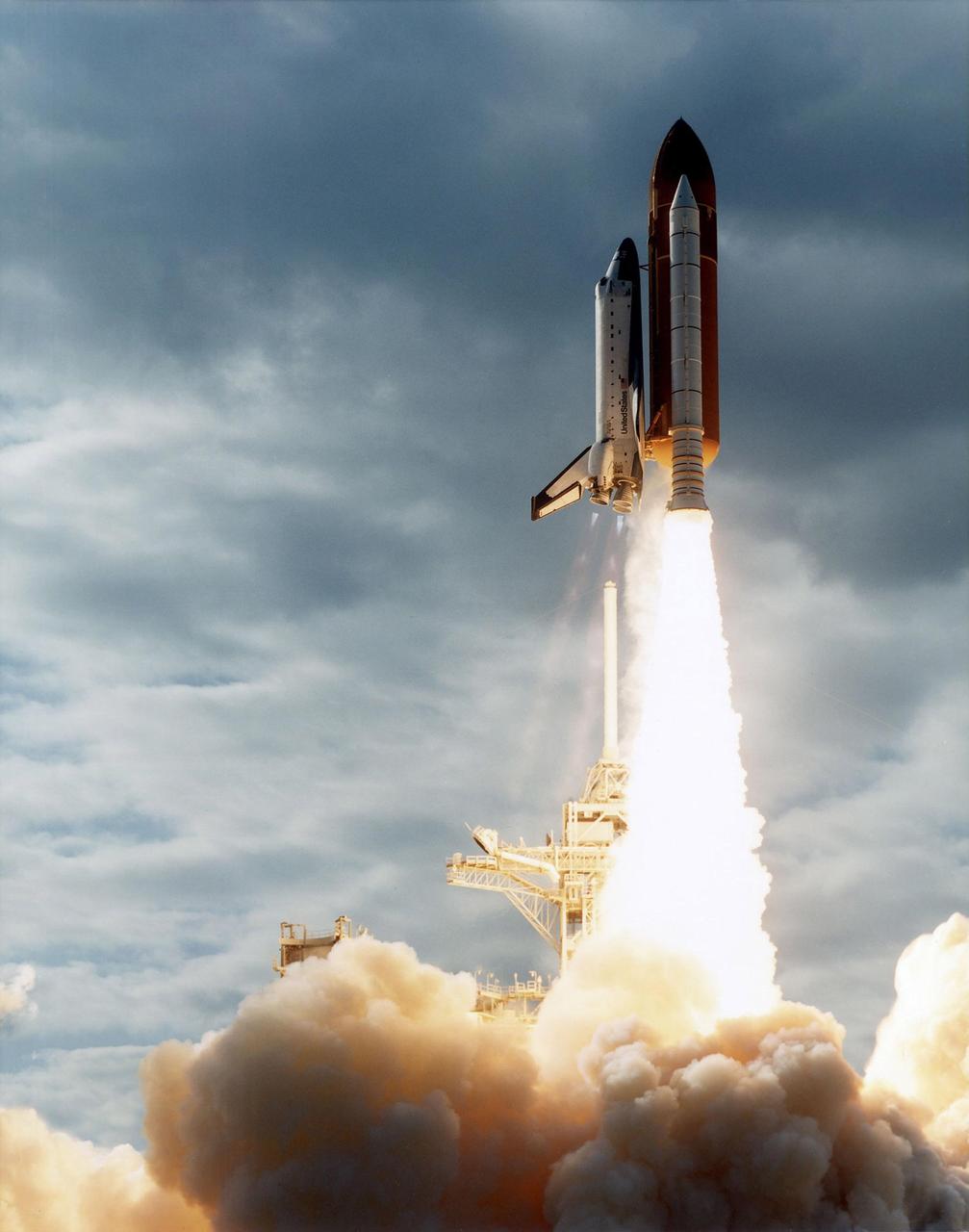
KENNEDY SPACE CENTER, FLA. -- A diversified mission of astronomy, commercial space research and International Space Station preparation gets under way as the Space Shuttle Columbia climbs into orbit from Launch Pad 39B at 2:55:47 p.m. EST, Nov. 19, 1996. During Mission STS- 80, Columbia’s five-person crew will deploy and retrieve two free-flying spacecraft, conduct two spacewalks and perform a variety of microgravity research experiments in the Shuttle’s middeck area. The veteran crew is led by Commander Kenneth D. Cockrell; Kent V. Rominger is the pilot and the three mission specialists are Tamara E. Jernigan, Story Musgrave and Thomas D. Jones. At age 61, Musgrave becomes the oldest person ever to fly in space; he also ties astronaut John Young’s record for most number of spaceflights by a human being, and in embarking on his sixth Shuttle flight Musgrave has logged the most flights ever aboard NASA’s reusable space vehicle. The two primary payloads for STS-80 are the Wake Shield Facility-3 (WSF-3) and the Orbiting and Retrievable Far and Extreme Ultraviolet Spectrometer-Shuttle Pallet Satellite II (ORFEUS-SPAS II).
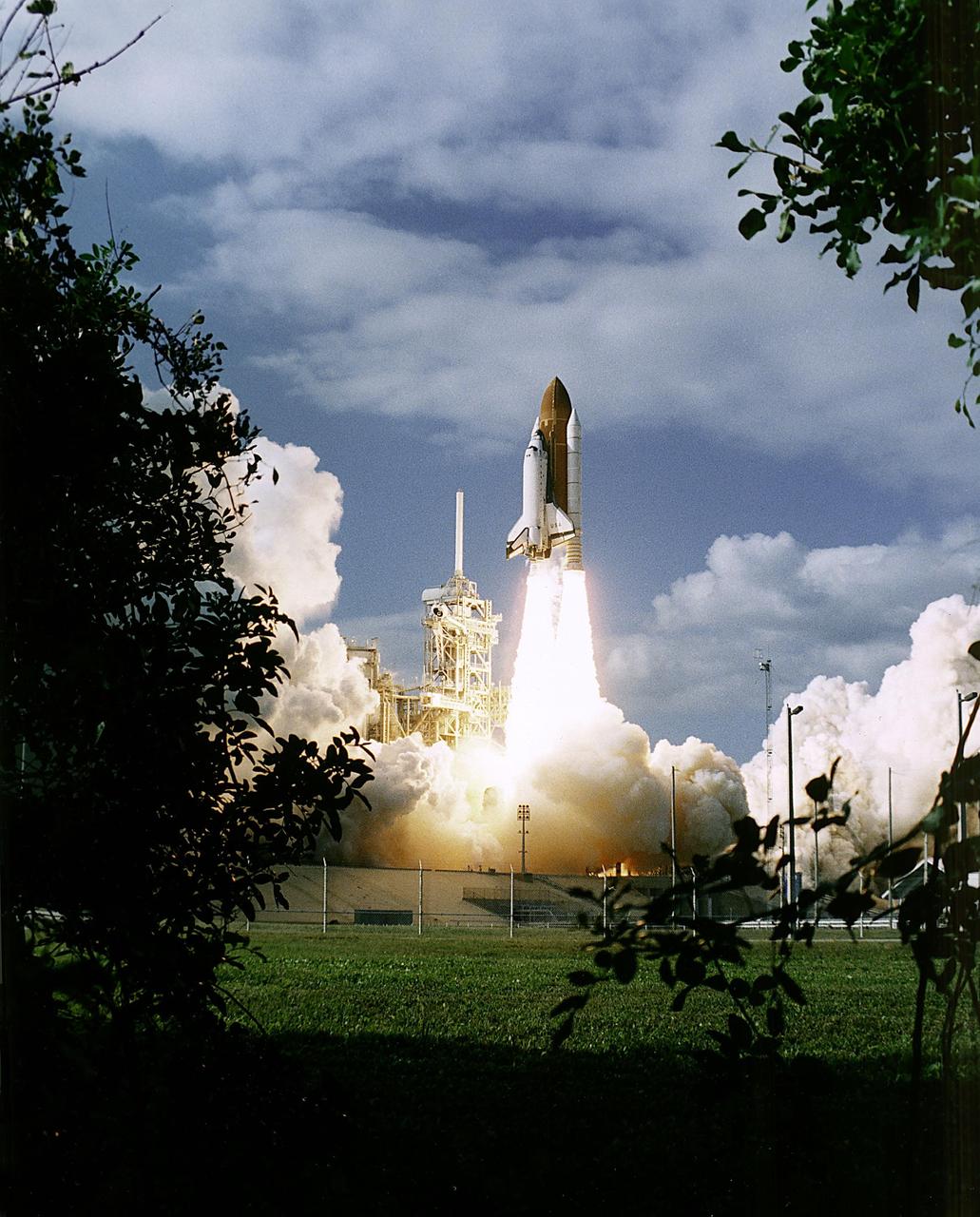
KENNEDY SPACE CENTER, FLA. -- A diversified mission of astronomy, commercial space research and International Space Station preparation gets under way as the Space Shuttle Columbia climbs into orbit from Launch Pad 39B at 2:55:47 p.m. EST, November 19, 1996. During Mission STS-80, Columbia's five-person crew will deploy and retrieve two free-flying spacecraft, conduct two spacewalks and perform a variety of microgravity research experiments in the Shuttle's middeck area. The veteran crew is led by Commander Kenneth D. Cockrell; Kent V. Rominger is the pilot and the three mission specialists are Tamara E. Jernigan, Story Musgrave and Thomas D. Jones. At age 61, Musgrave becomes the oldest person ever to fly in space; he also ties astronaut John Young's record for most number of spaceflights by a human being, and in embarking on his sixth Shuttle flight Musgrave has logged the most flights ever aboard NASA's reusable space vehicle. The two primary payloads for STS-80 are the Wake Shield Facility-3 (WSF-3) and the Orbiting and Retrievable Far and Extreme Ultraviolet Spectrometer-Shuttle Pallet Satellite II (ORFEUS-SPAS II).
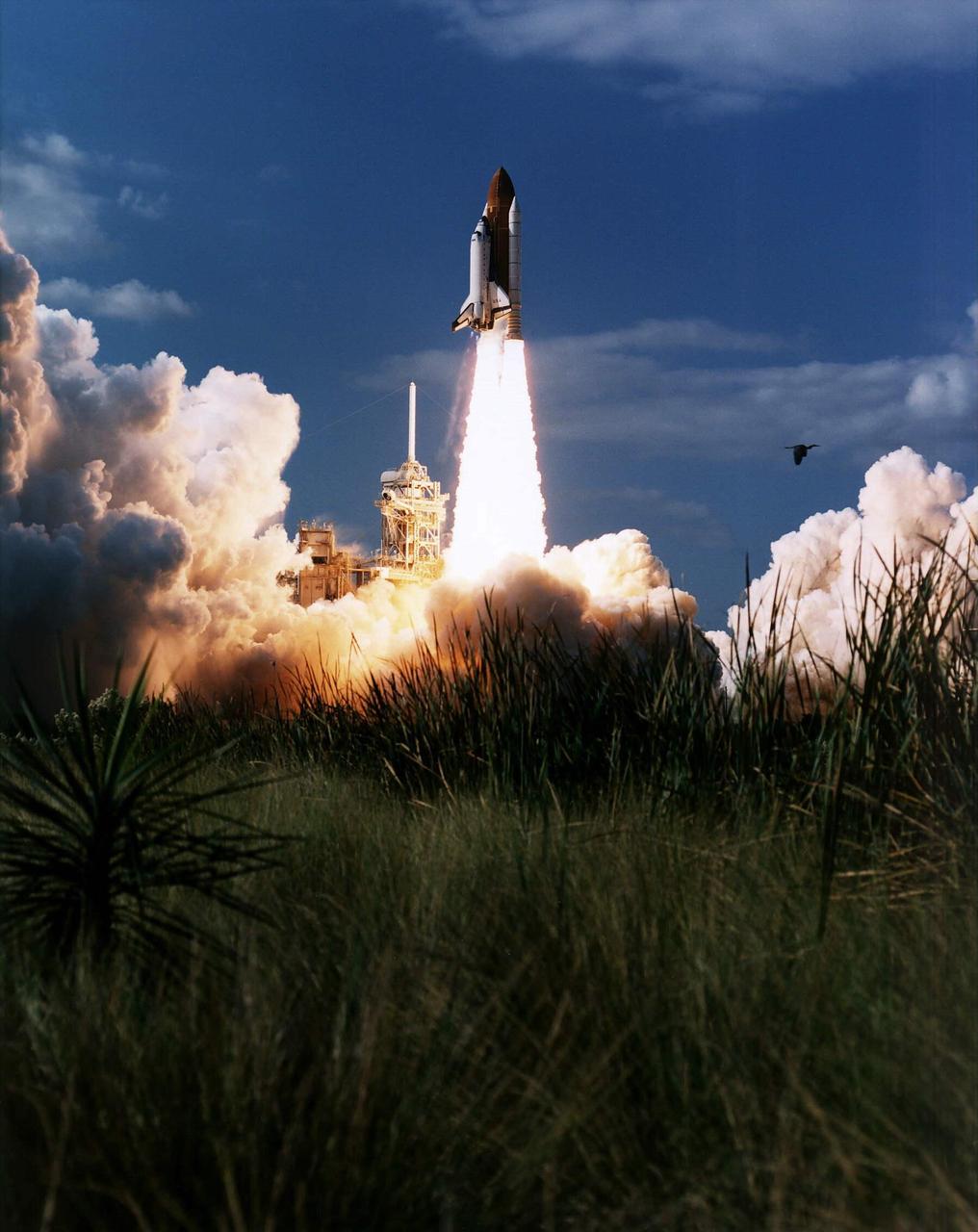
KENNEDY SPACE CENTER, FLA. -- Vividly framed by a tranquil Florida landscape, the Space Shuttle Columbia lifts off from Launch Pad 39B at 2:55:47 p.m. EST, Nov. 19, 1996. Leading the veteran crew of Mission STS-80 is Commander Kenneth D. Cockrell; Kent V. Rominger is the pilot and the three mission specialists are Tamara E. Jernigan, Story Musgrave and Thomas D. Jones. At age 61, Musgrave becomes the oldest person ever to fly in space; he also ties astronaut John Young’s record for most number of spaceflights by a human being, and in embarking on his sixth Shuttle flight Musgrave has logged the most flights ever aboard NASA’s reusable space vehicle. The two primary payloads for STS-80 are the Wake Shield Facility-3 (WSF-3) and the Orbiting and Retrievable Far and Extreme Ultraviolet Spectrometer-Shuttle Pallet Satellite II (ORFEUS-SPAS II). Two spacewalks also will be performed during the nearly 16-day mission. Mission STS-80 closes out the Shuttle flight schedule for 1996; it marks the 21st flight for Columbia and the 80th in Shuttle program history.
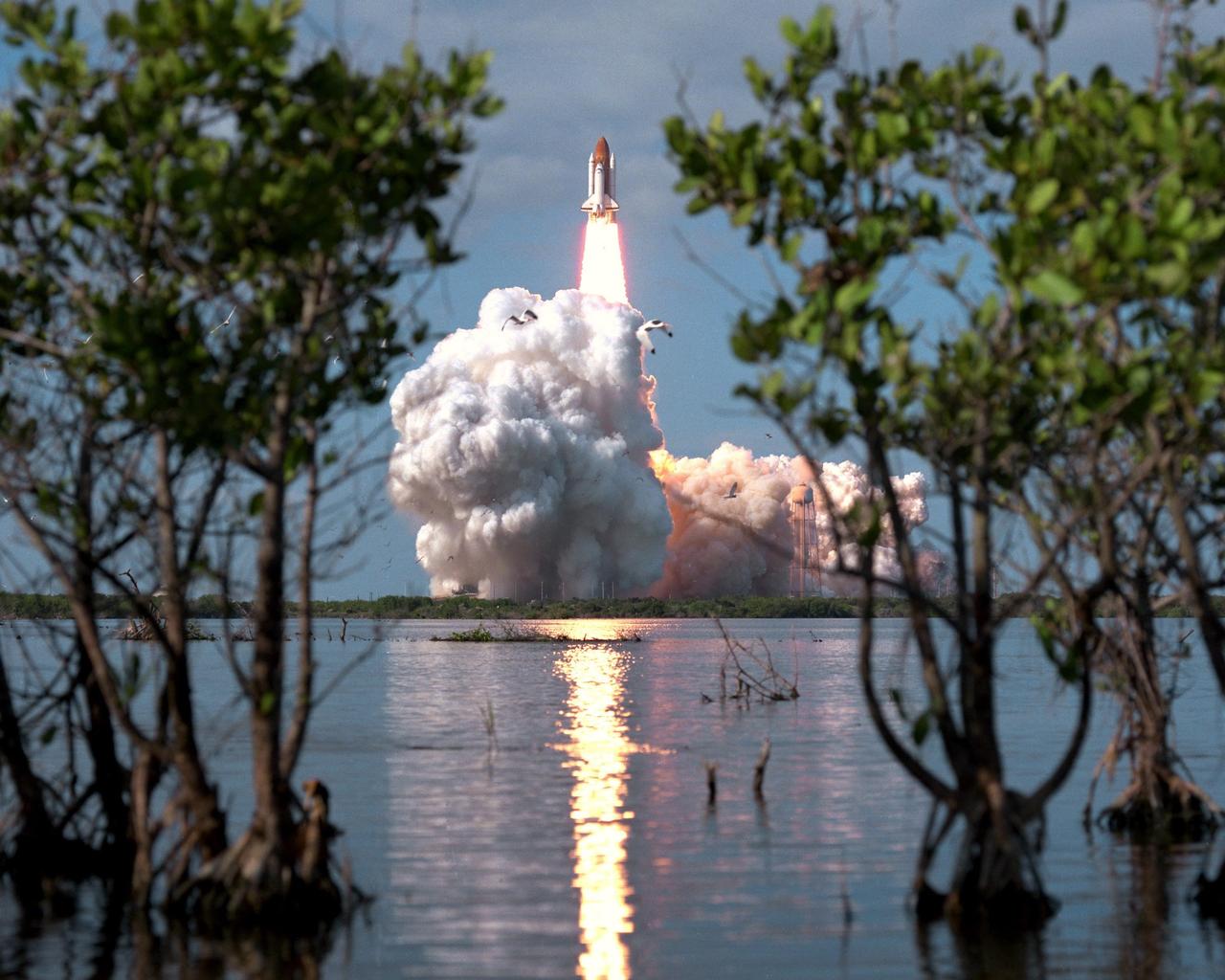
KENNEDY SPACE CENTER, FLA. -- A diversified mission of astronomy, commercial space research and International Space Station preparation gets under way as the Space Shuttle Columbia climbs into orbit from Launch Pad 39B at 2:55:47 p.m. EST, Nov. 19, 1996. During Mission STS- 80, Columbia’s five-person crew will deploy and retrieve two free-flying spacecraft, conduct two spacewalks and perform a variety of microgravity research experiments in the Shuttle’s middeck area. The veteran crew is led by Commander Kenneth D. Cockrell; Kent V. Rominger is the pilot and the three mission specialists are Tamara E. Jernigan, Story Musgrave and Thomas D. Jones. At age 61, Musgrave becomes the oldest person ever to fly in space; he also ties astronaut John Young’s record for most number of spaceflights by a human being, and in embarking on his sixth Shuttle flight Musgrave has logged the most flights ever aboard NASA’s reusable space vehicle. The two primary payloads for STS-80 are the Wake Shield Facility-3 (WSF-3) and the Orbiting and Retrievable Far and Extreme Ultraviolet Spectrometer-Shuttle Pallet Satellite II (ORFEUS-SPAS II).
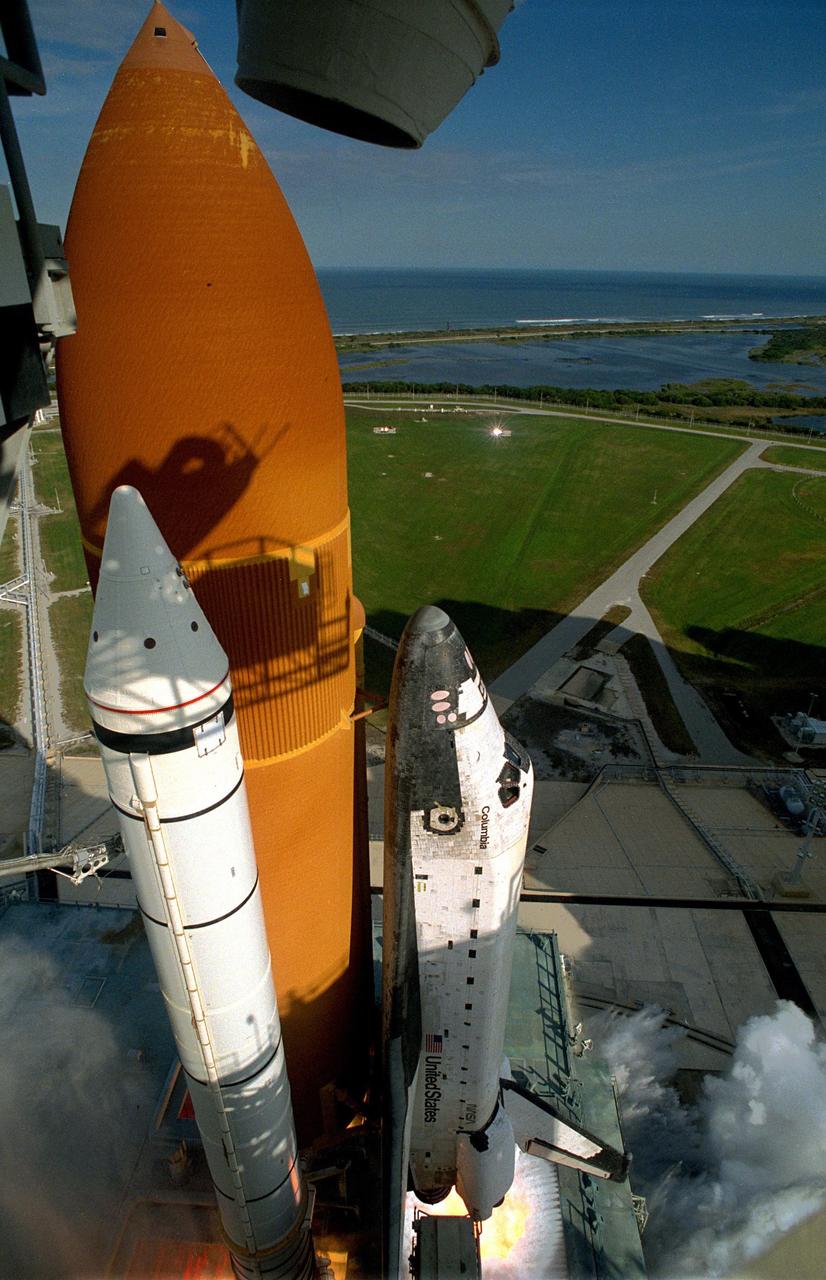
KENNEDY SPACE CENTER, FLA. -- A diversified mission of astronomy, commercial space research and International Space Station preparation gets under way as the Space Shuttle Columbia climbs into orbit from Launch Pad 39B at 2:55:47 p.m. EST, Nov. 19, 1996. During Mission STS- 80, Columbia’s five-person crew will deploy and retrieve two free-flying spacecraft, conduct two spacewalks and perform a variety of microgravity research experiments in the Shuttle’s middeck area. The veteran crew is led by Commander Kenneth D. Cockrell; Kent V. Rominger is the pilot and the three mission specialists are Tamara E. Jernigan, Story Musgrave and Thomas D. Jones. At age 61, Musgrave becomes the oldest person ever to fly in space; he also ties astronaut John Young’s record for most number of spaceflights by a human being, and in embarking on his sixth Shuttle flight Musgrave has logged the most flights ever aboard NASA’s reusable space vehicle. The two primary payloads for STS-80 are the Wake Shield Facility-3 (WSF-3) and the Orbiting and Retrievable Far and Extreme Ultraviolet Spectrometer-Shuttle Pallet Satellite II (ORFEUS-SPAS II).
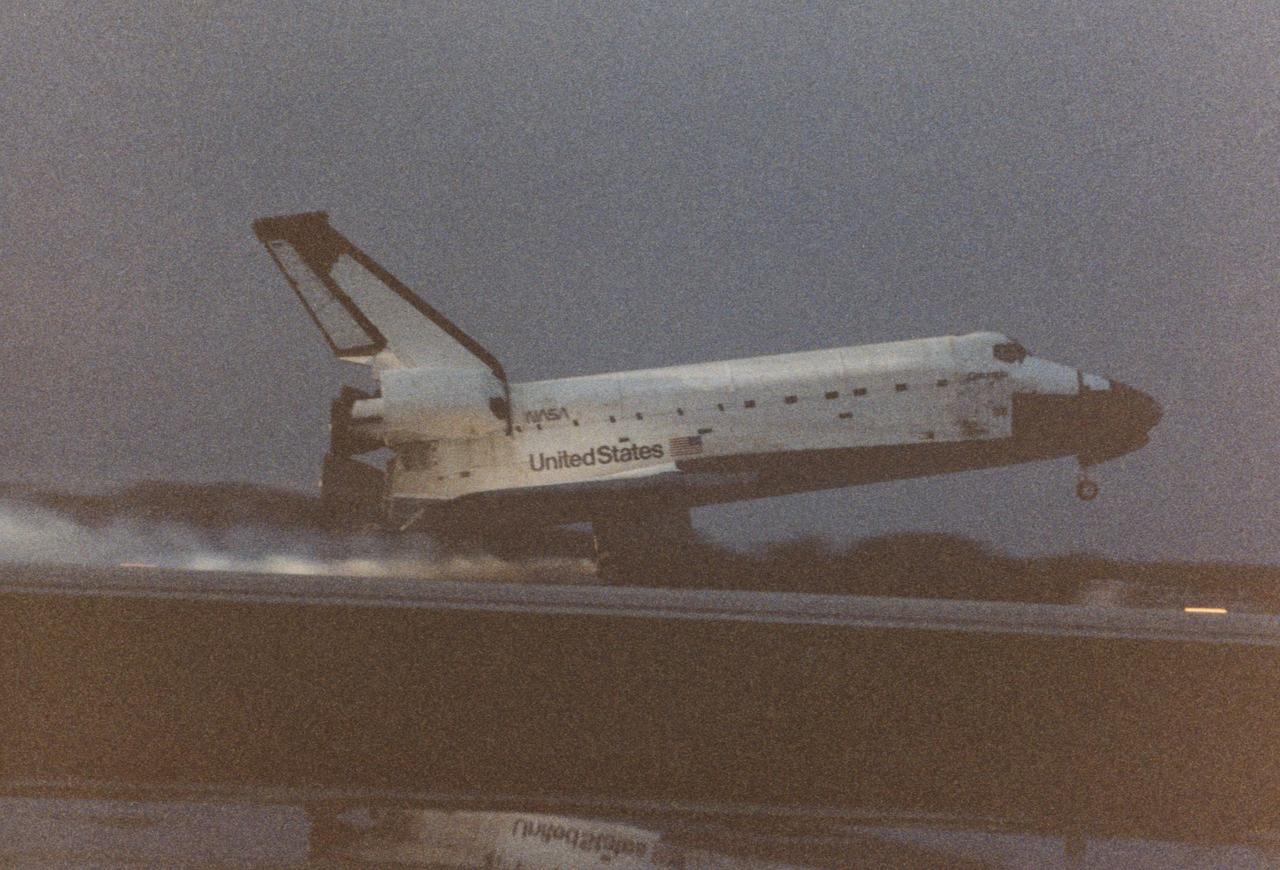
KENNEDY SPACE CENTER, FLA. -- The final Space Shuttle flight of 1996 comes to a successful close as the orbiter Columbia touches down on Runway 33 of KSC’s Shuttle Landing Facility. Main gear touchdown occurred at 6:49:05 a.m. EST, Dec. 7. The mission duration of 17 days, 15 hours and 53 minutes establishes a new record for extended Shuttle flight. The five- member STS-80 crew is led by Commander Kenneth D. Cockrell and Pilot Kent V. Rominger. The three mission specialists on board are Tamara E. Jernigan, Thomas D. Jones and Story Musgrave. At age 61, Musgrave is the oldest person ever to fly in space; he also becomes the first person to fly six times on the Shuttle. The two primary payloads of the 80th Shuttle flight are the Orbiting and Retrievable Far and Extreme Ultraviolet Spectrometer-Shuttle Pallet Satellite II (ORFEUS-SPAS II) and the Wake Shield Facility-3 (WSF-3).
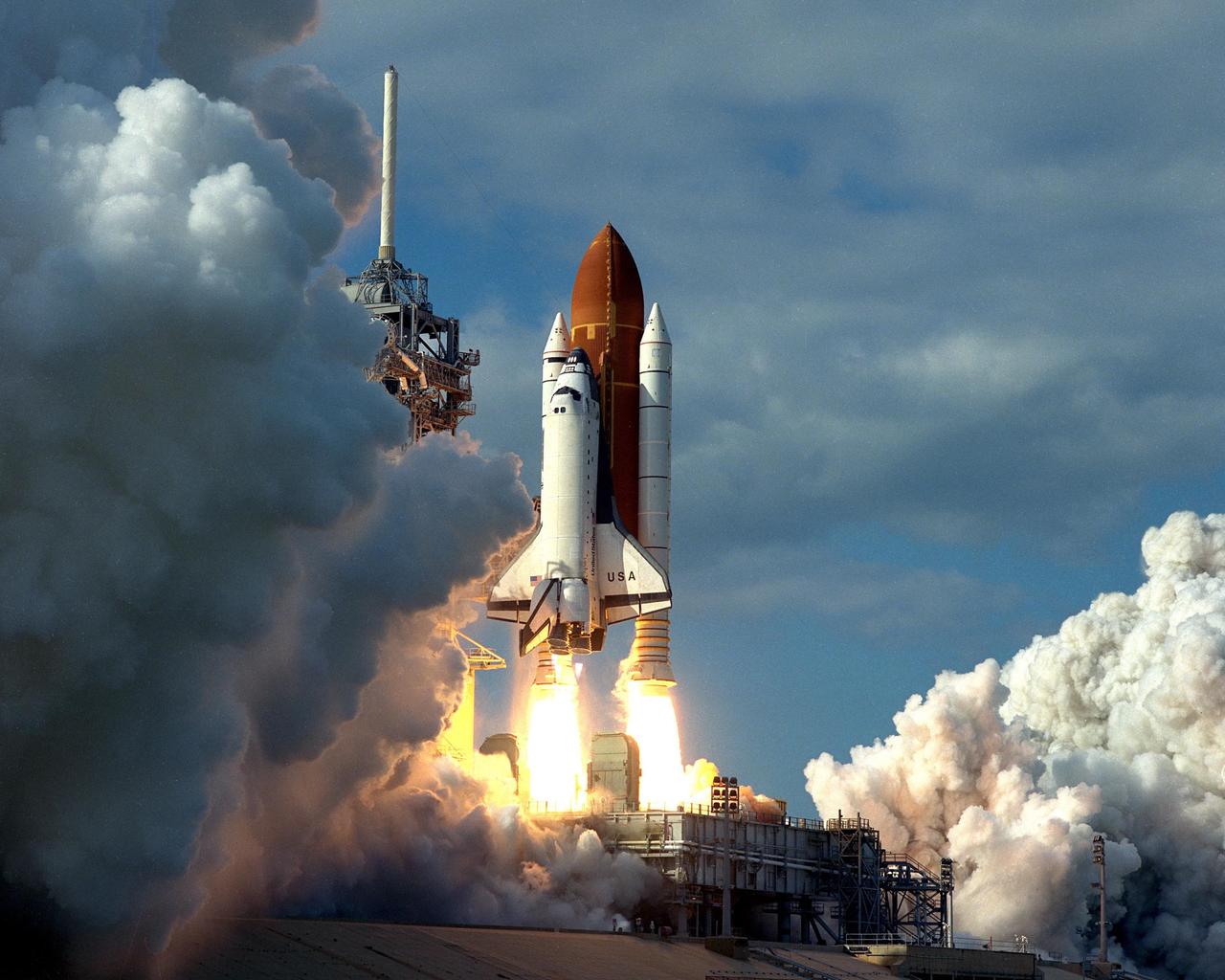
KENNEDY SPACE CENTER, FLA. -- A diversified mission of astronomy, commercial space research and International Space Station preparation gets under way as the Space Shuttle Columbia climbs into orbit from Launch Pad 39B at 2:55:47 p.m. EST, Nov. 19, 1996. During Mission STS- 80, Columbia’s five-person crew will deploy and retrieve two free-flying spacecraft, conduct two spacewalks and perform a variety of microgravity research experiments in the Shuttle’s middeck area. The veteran crew is led by Commander Kenneth D. Cockrell; Kent V. Rominger is the pilot and the three mission specialists are Tamara E. Jernigan, Story Musgrave and Thomas D. Jones. At age 61, Musgrave becomes the oldest person ever to fly in space; he also ties astronaut John Young’s record for most number of spaceflights by a human being, and in embarking on his sixth Shuttle flight Musgrave has logged the most flights ever aboard NASA’s reusable space vehicle. The two primary payloads for STS-80 are the Wake Shield Facility-3 (WSF-3) and the Orbiting and Retrievable Far and Extreme Ultraviolet Spectrometer-Shuttle Pallet Satellite II (ORFEUS-SPAS II).
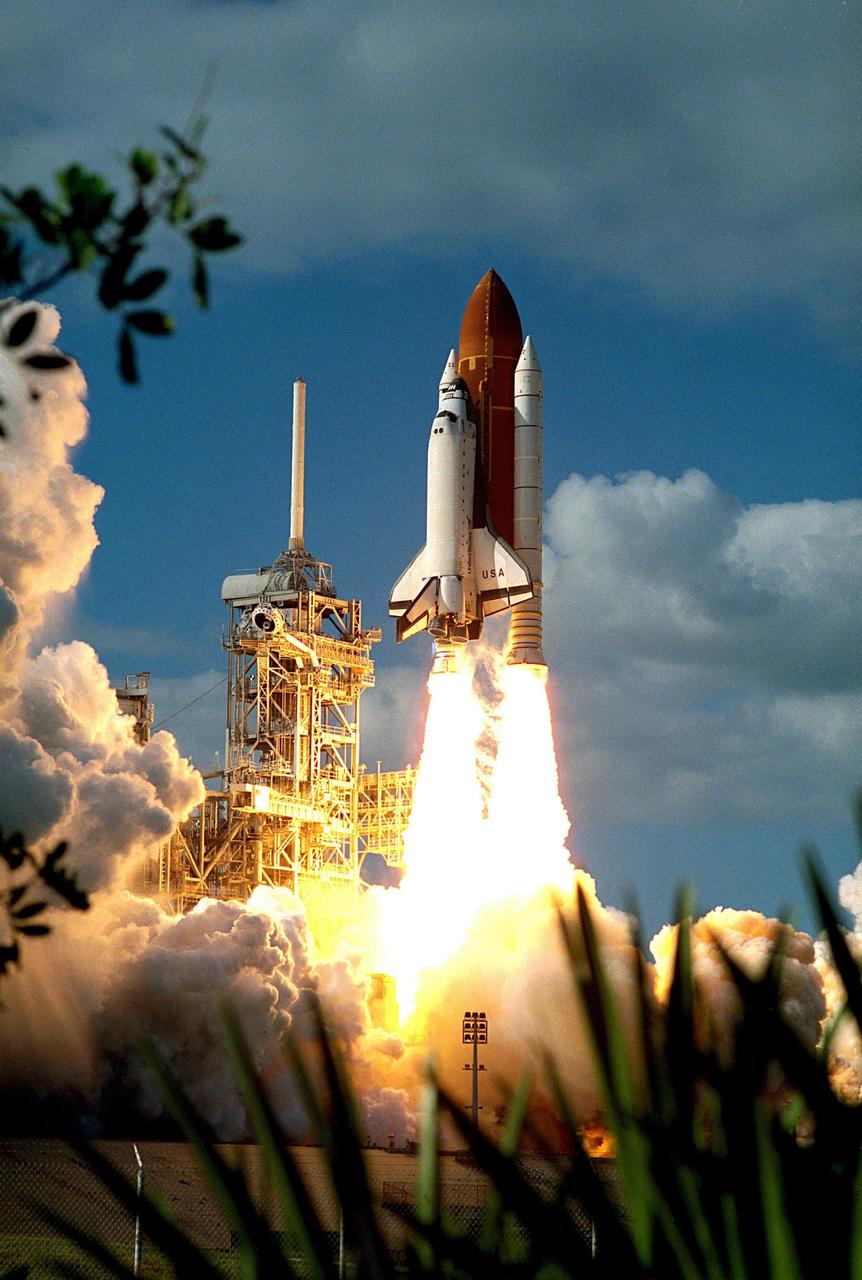
KENNEDY SPACE CENTER, FLA. -- A diversified mission of astronomy, commercial space research and International Space Station preparation gets under way as the Space Shuttle Columbia climbs into orbit from Launch Pad 39B at 2:55:47 p.m. EST, November 19, 1996. During Mission STS-80, Columbia's five-person crew will deploy and retrieve two free-flying spacecraft, conduct two spacewalks and perform a variety of microgravity research experiments in the Shuttleþs middeck area. The veteran crew is led by Commander Kenneth D. Cockrell; Kent V. Rominger is the pilot and the three mission specialists are Tamara E. Jernigan, Story Musgrave and Thomas D. Jones. At age 61, Musgrave becomes the oldest person ever to fly in space; he also ties astronaut John Young's record for most number of spaceflights by a human being, and in embarking on his sixth Shuttle flight Musgrave has logged the most flights ever aboard NASA's reusable space vehicle. The two primary payloads for STS-80 are the Wake Shield Facility-3 (WSF-3) and the Orbiting and Retrievable Far and Extreme Ultraviolet Spectrometer-Shuttle Pallet Satellite II (ORFEUS-SPAS II).
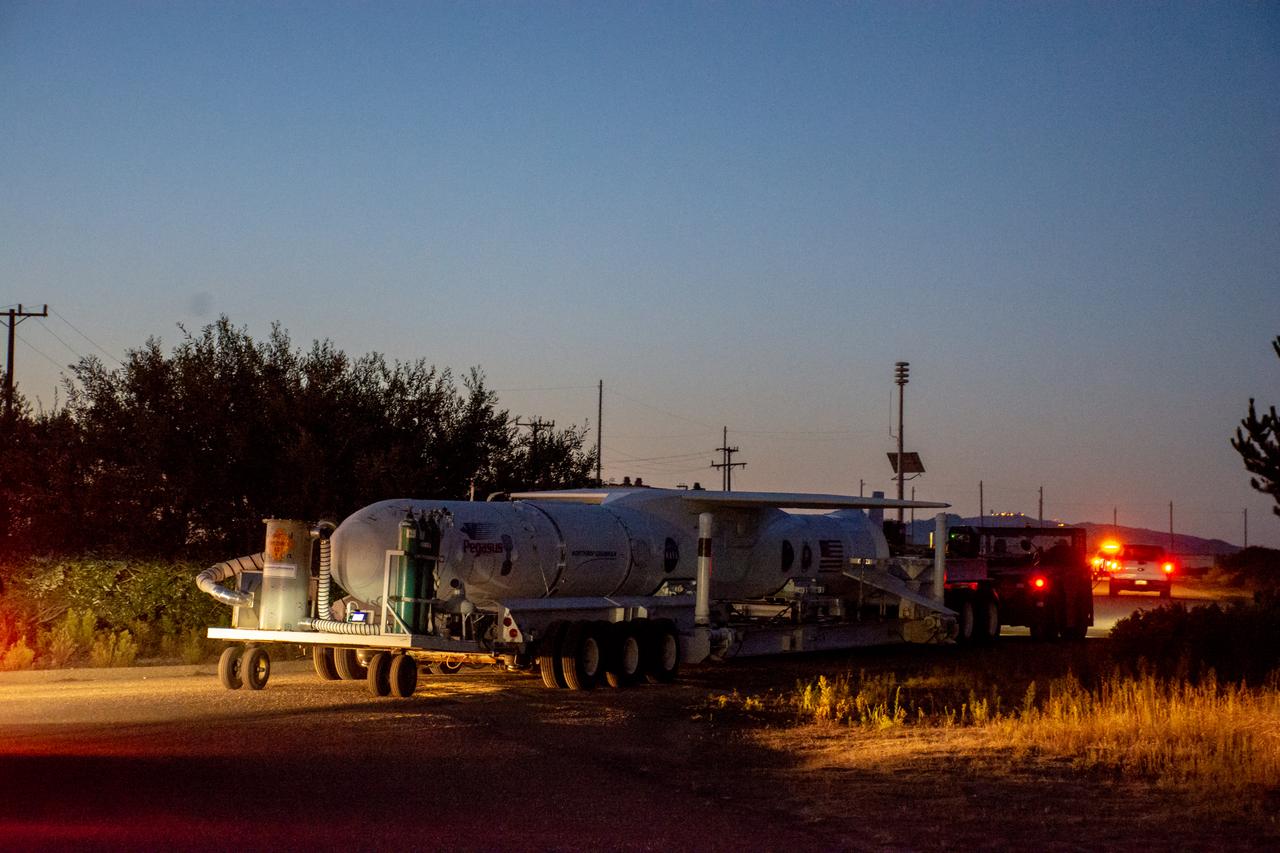
The Northrop Grumman Pegasus XL rocket, with NASA's Ionospheric Connection Explorer (ICON) secured in its payload fairing, rolls out to the runway at Vandenberg Air Force Base in California on Sept. 25, 2019. The Pegasus XL rocket will be attached beneath the company's L-1011 Stargazer aircraft for the flight to Cape Canaveral Air Force Station (CCAFS) in Florida. ICON will launch from the Skid Strip at CCAFS. Launch is scheduled for Oct. 10, 2019. ICON will study the frontier of space - the dynamic zone high in Earth's atmosphere where terrestrial weather from below meets space weather above. The explorer will help determine the physics of Earth's space environment and pave the way for mitigating its effects on our technology and communications systems.
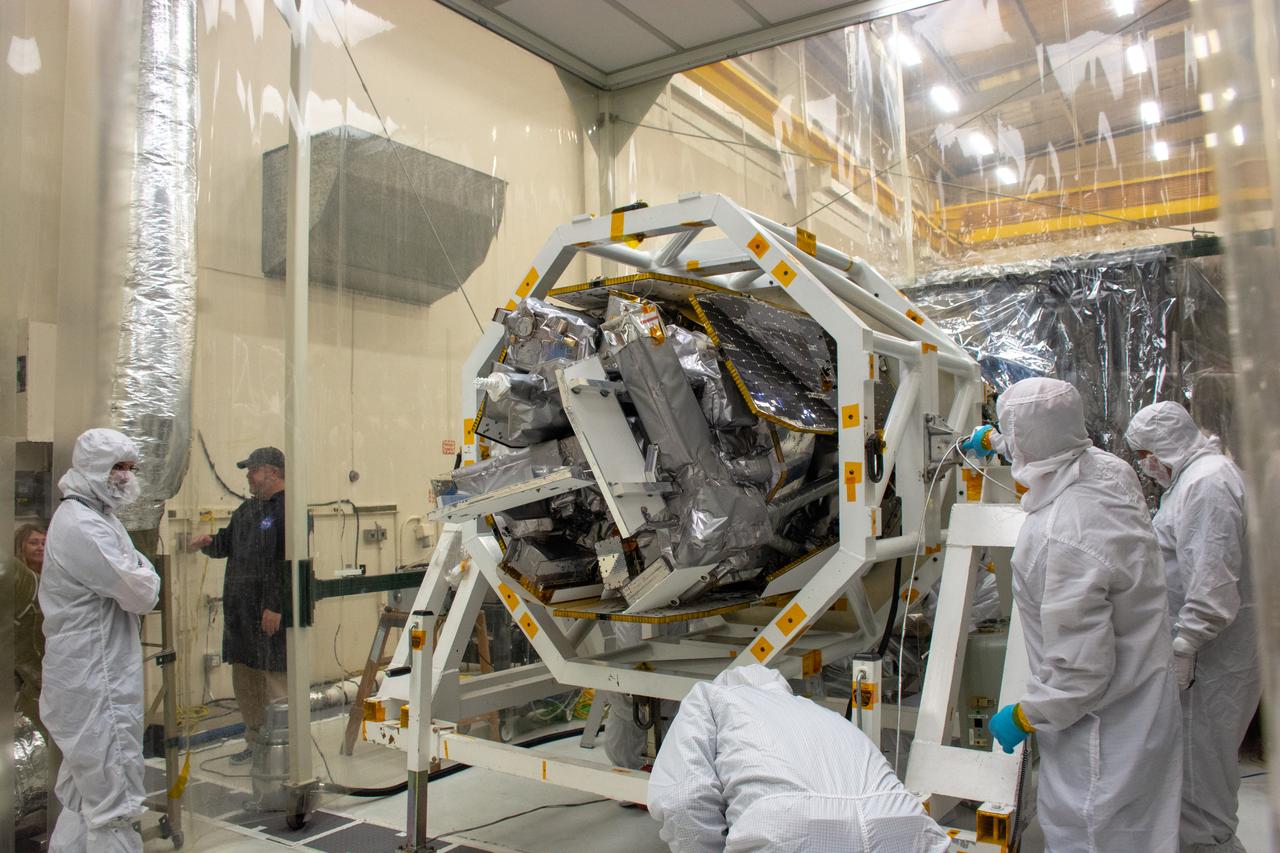
Technicians attach NASA's Ionospheric Connection Explorer (ICON) to the Northrop Grumman Pegasus XL rocket inside Building 1555 at Vandenberg Air Force Base in California on Sept. 10, 2019. Preparations are underway to perform a black light test on Pegasus before the port and starboard payload fairings are installed around ICON. The Pegasus XL rocket, attached beneath the company's L-1011 Stargazer aircraft, will launch ICON from the Skid Strip at Cape Canaveral Air Force Station in Florida. Launch is scheduled for Oct. 9, 2019. ICON will study the frontier of space - the dynamic zone high in Earth's atmosphere where terrestrial weather from below meets space weather above. The explorer will help determine the physics of Earth's space environment and pave the way for mitigating its effects on our technology and communications systems.
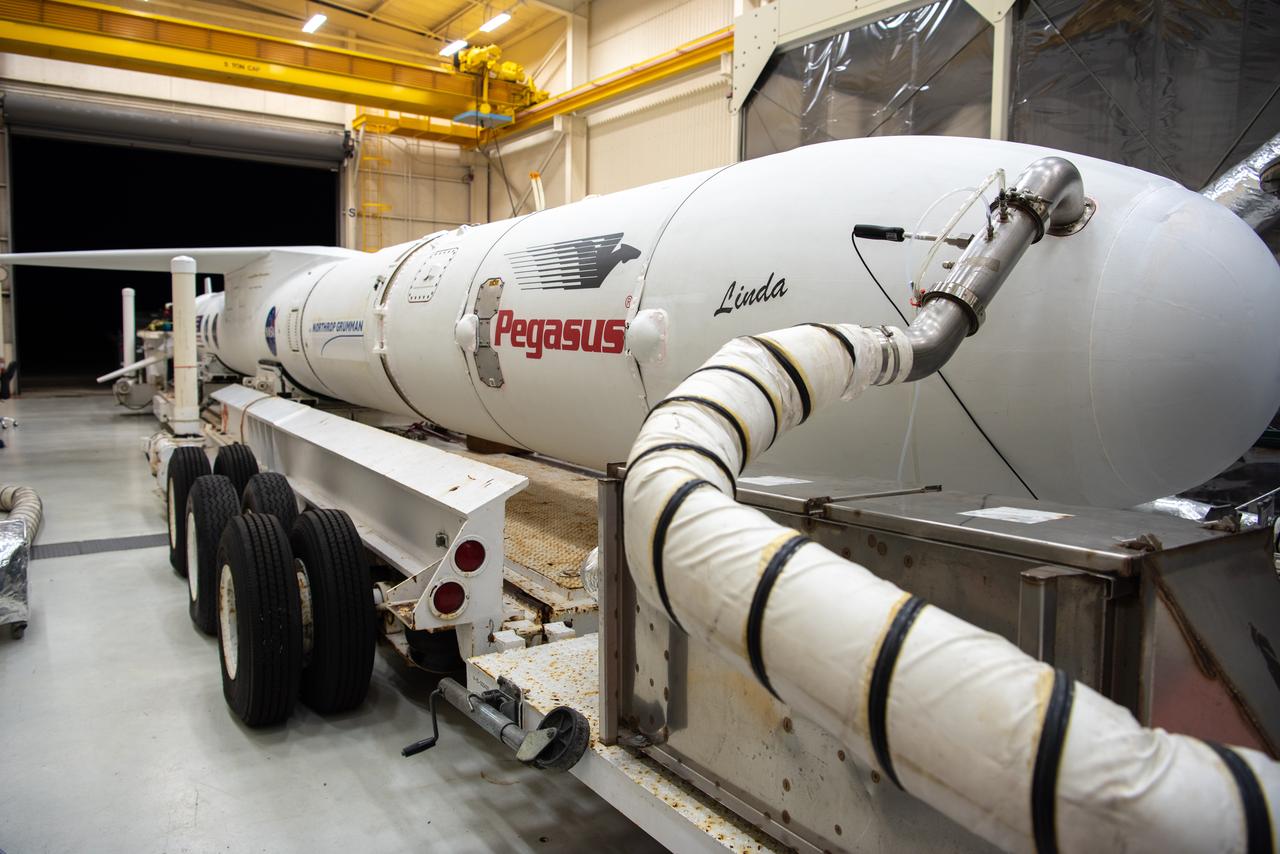
The Northrop Grumman Pegasus XL rocket, with NASA's Ionospheric Connection Explorer (ICON) secured in its payload fairing, begins rollout from Building 1555 at Vandenberg Air Force Base in California on Sept. 25, 2019. The Pegasus XL rocket will be attached beneath the company's L-1011 Stargazer aircraft for the flight to Cape Canaveral Air Force Station (CCAFS) in Florida. ICON will launch from the Skid Strip at CCAFS. Launch is scheduled for Oct. 10, 2019. ICON will study the frontier of space - the dynamic zone high in Earth's atmosphere where terrestrial weather from below meets space weather above. The explorer will help determine the physics of Earth's space environment and pave the way for mitigating its effects on our technology and communications systems.
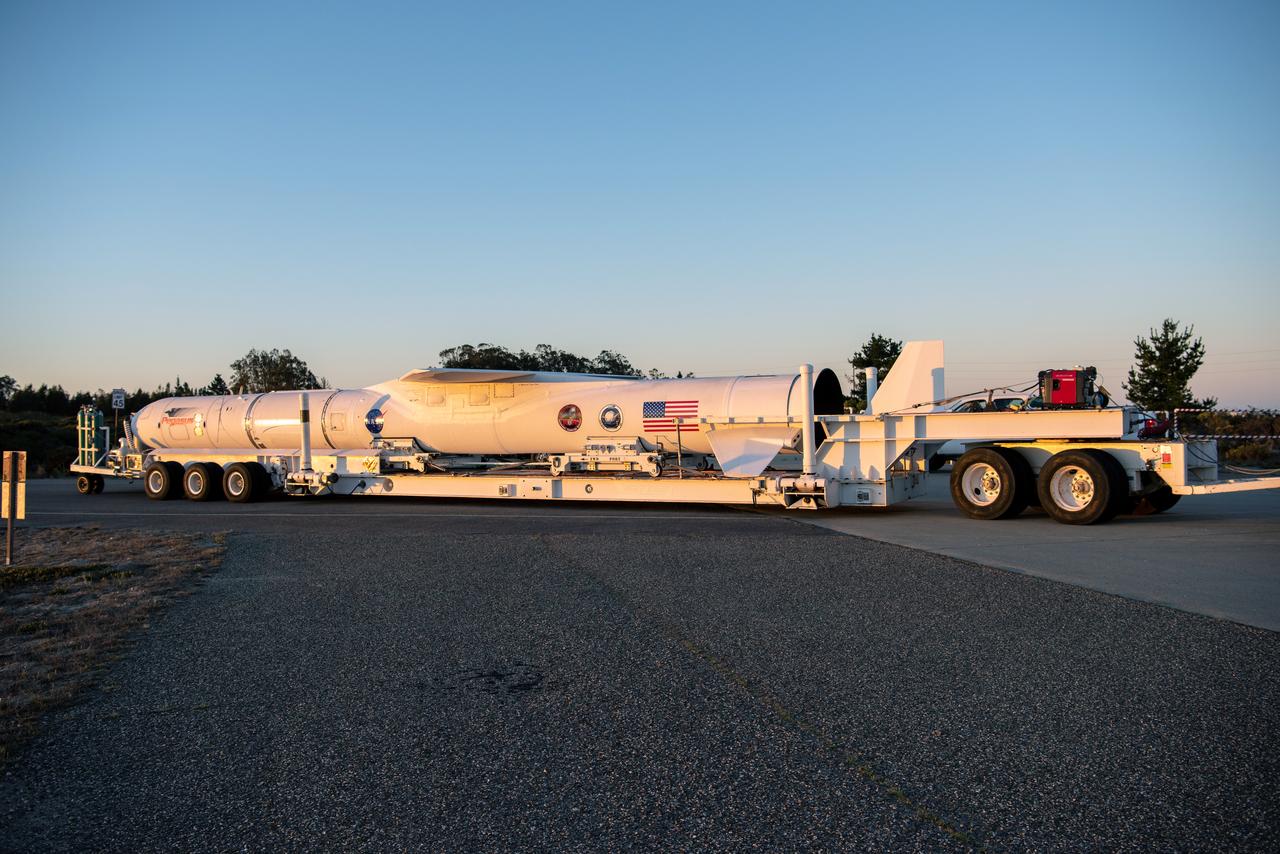
The Northrop Grumman Pegasus XL rocket, with NASA's Ionospheric Connection Explorer (ICON) secured in its payload fairing, rolls out from Building 1555 to the runway at Vandenberg Air Force Base in California on Sept. 25, 2019. The Pegasus XL rocket will be attached beneath the company's L-1011 Stargazer aircraft for the flight to Cape Canaveral Air Force Station (CCAFS) in Florida. ICON will launch from the Skid Strip at CCAFS in Florida. Launch is scheduled for Oct. 10, 2019. ICON will study the frontier of space - the dynamic zone high in Earth's atmosphere where terrestrial weather from below meets space weather above. The explorer will help determine the physics of Earth's space environment and pave the way for mitigating its effects on our technology and communications systems.
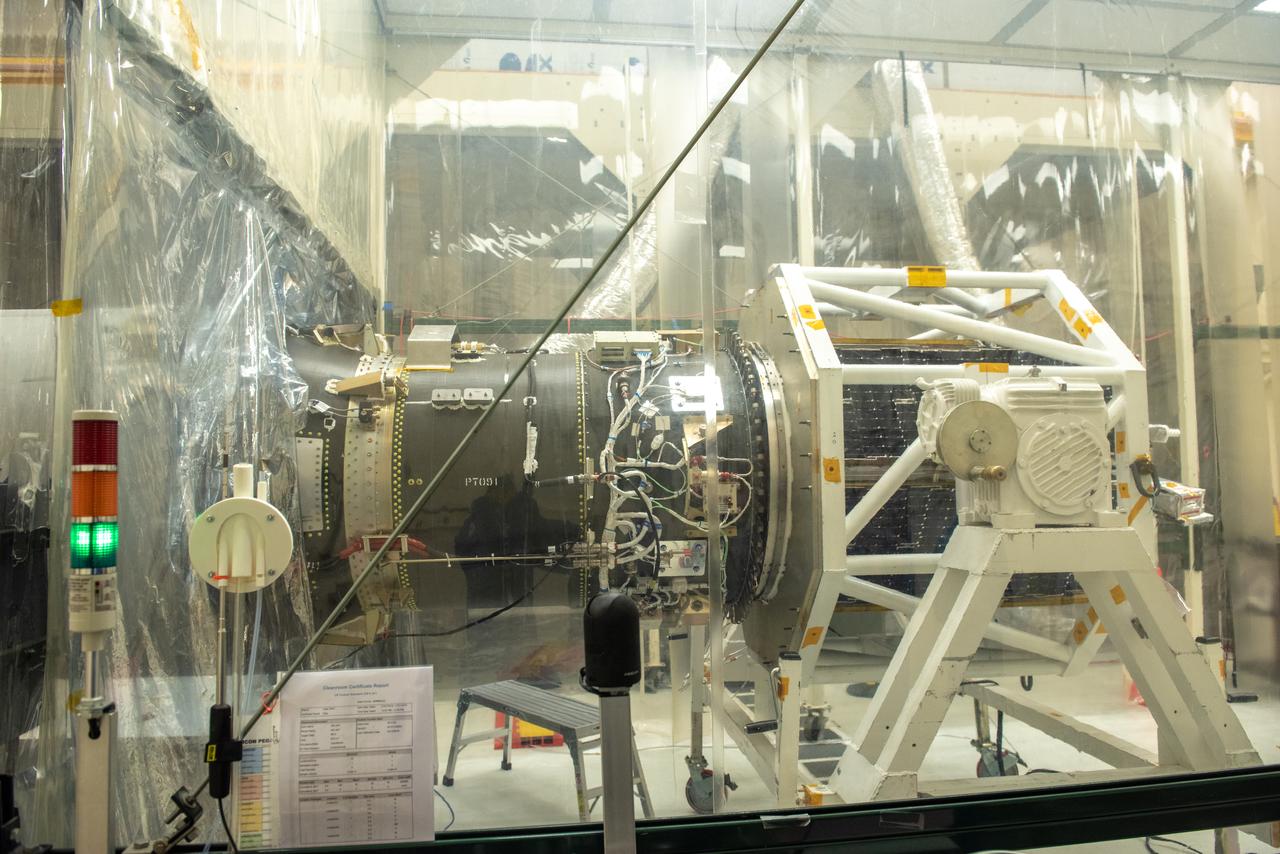
NASA's Ionospheric Connection Explorer (ICON) is attached to the Northrop Grumman Pegasus XL rocket inside Building 1555 at Vandenberg Air Force Base in California on Sept. 10, 2019. The Pegasus XL rocket, attached beneath the company's L-1011 Stargazer aircraft, will launch ICON from the Skid Strip at Cape Canaveral Air Force Station in Florida. Launch is scheduled for Oct. 9, 2019. ICON will study the frontier of space - the dynamic zone high in Earth's atmosphere where terrestrial weather from below meets space weather above. The explorer will help determine the physics of Earth's space environment and pave the way for mitigating its effects on our technology and communications systems.
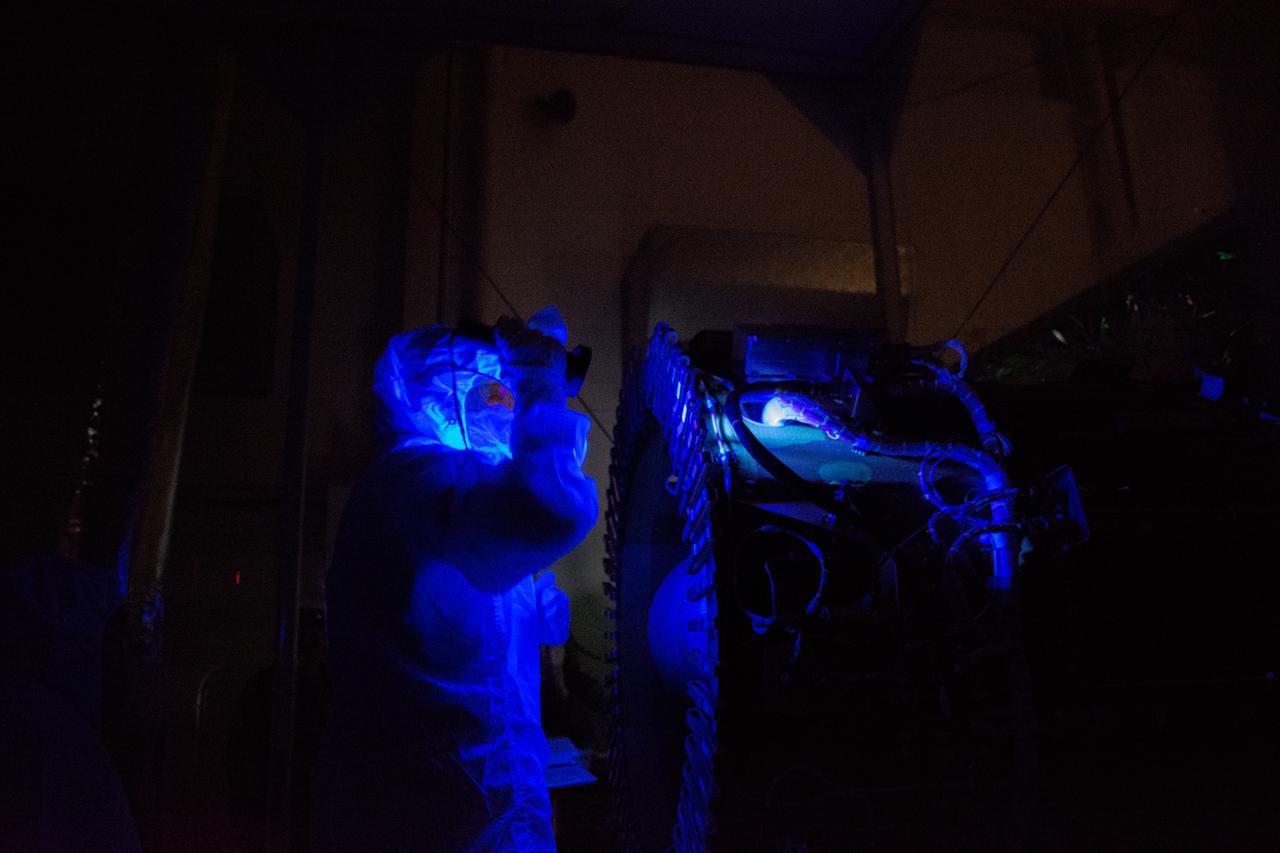
Technicians perform a black light inspection of the Northrop Grumman Pegasus XL rocket inside Building 1555 at Vandenberg Air Force Base in California, on Sept. 10, 2019, after NASA’s Ionospheric Connection Explorer (ICON) was attached to the rocket. The Pegasus port and starboard payload fairings will be installed around ICON. The Pegasus XL rocket, attached beneath the company's L-1011 Stargazer aircraft, will launch ICON from the Skid Strip at Cape Canaveral Air Force Station in Florida. Launch is scheduled for Oct. 9, 2019. ICON will study the frontier of space - the dynamic zone high in Earth's atmosphere where terrestrial weather from below meets space weather above. The explorer will help determine the physics of Earth's space environment and pave the way for mitigating its effects on our technology and communications systems.
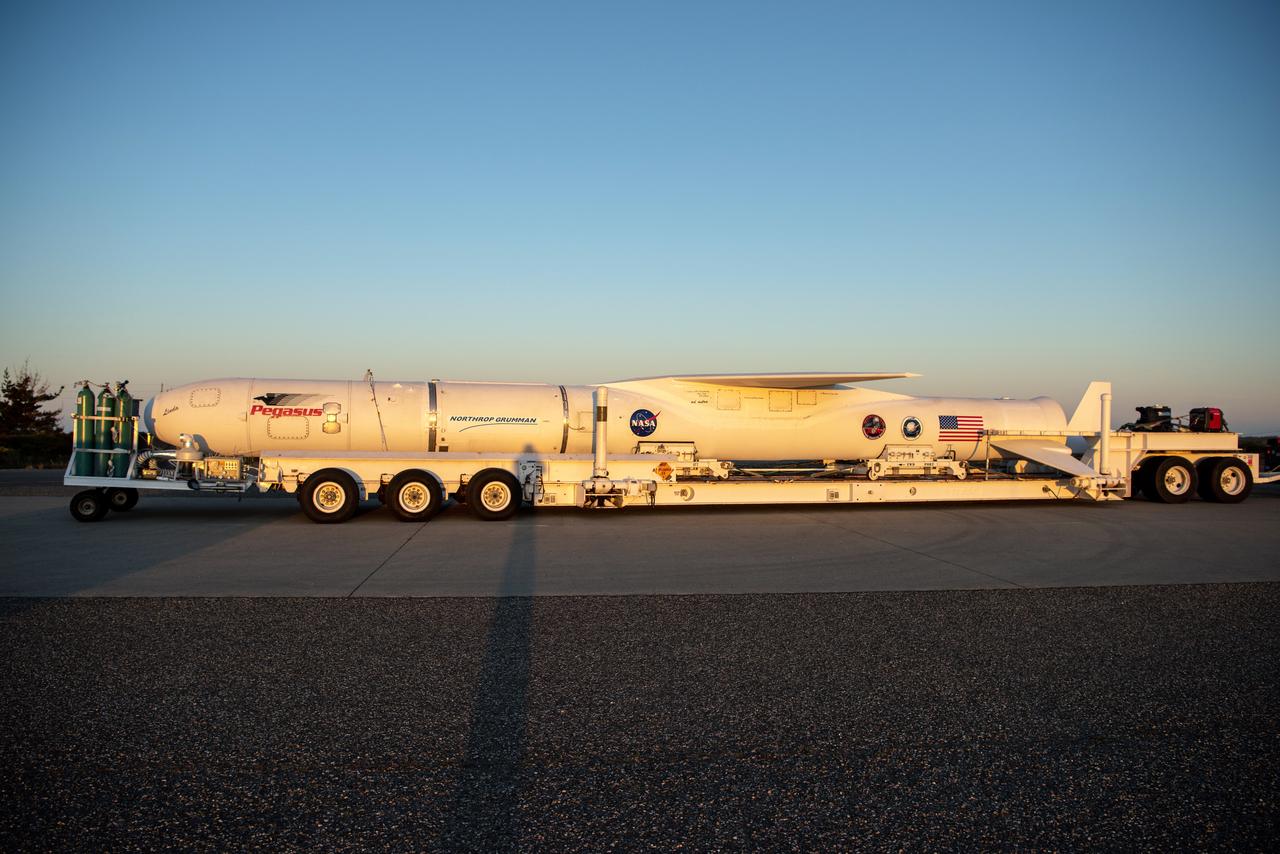
The Northrop Grumman Pegasus XL rocket, with NASA's Ionospheric Connection Explorer (ICON) secured in its payload fairing, rolls out to the runway at Vandenberg Air Force Base in California on Sept. 25, 2019. The Pegasus XL rocket will be attached beneath the company's L-1011 Stargazer aircraft for the flight to Cape Canaveral Air Force Station (CCAFS) in Florida. ICON will launch from the Skid Strip at CCAFS. Launch is scheduled for Oct. 10, 2019. ICON will study the frontier of space - the dynamic zone high in Earth's atmosphere where terrestrial weather from below meets space weather above. The explorer will help determine the physics of Earth's space environment and pave the way for mitigating its effects on our technology and communications systems.
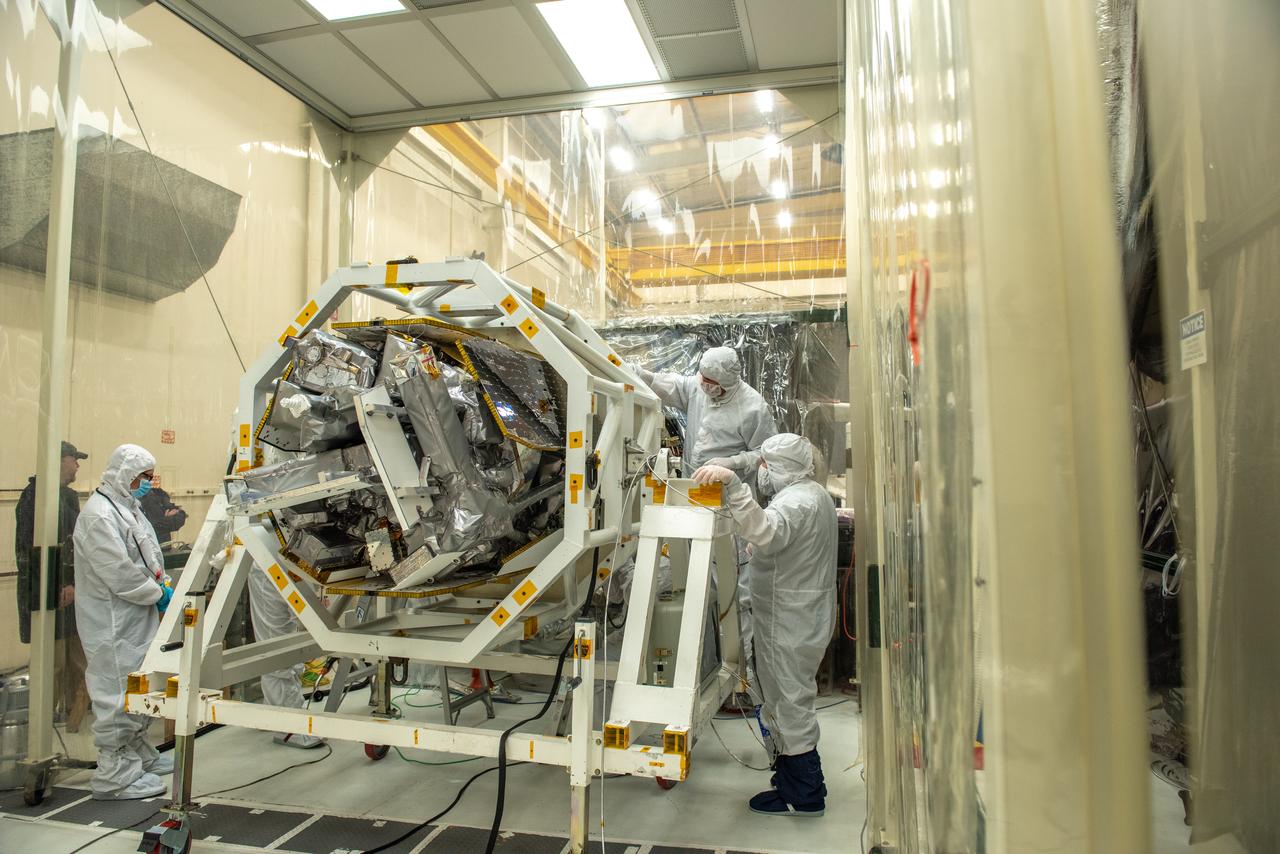
Technicians attach NASA’s Ionospheric Connection Explorer (ICON) to the Northrop Grumman Pegasus XL rocket inside Building 1555 at Vandenberg Air Force Base in California, on Sept. 10, 2019. The Pegasus XL rocket, attached beneath the company's L-1011 Stargazer aircraft, will launch ICON from the Skid Strip at Cape Canaveral Air Force Station in Florida. Launch is scheduled for Oct. 9, 2019. ICON will study the frontier of space - the dynamic zone high in Earth's atmosphere where terrestrial weather from below meets space weather above. The explorer will help determine the physics of Earth's space environment and pave the way for mitigating its effects on our technology and communications systems.
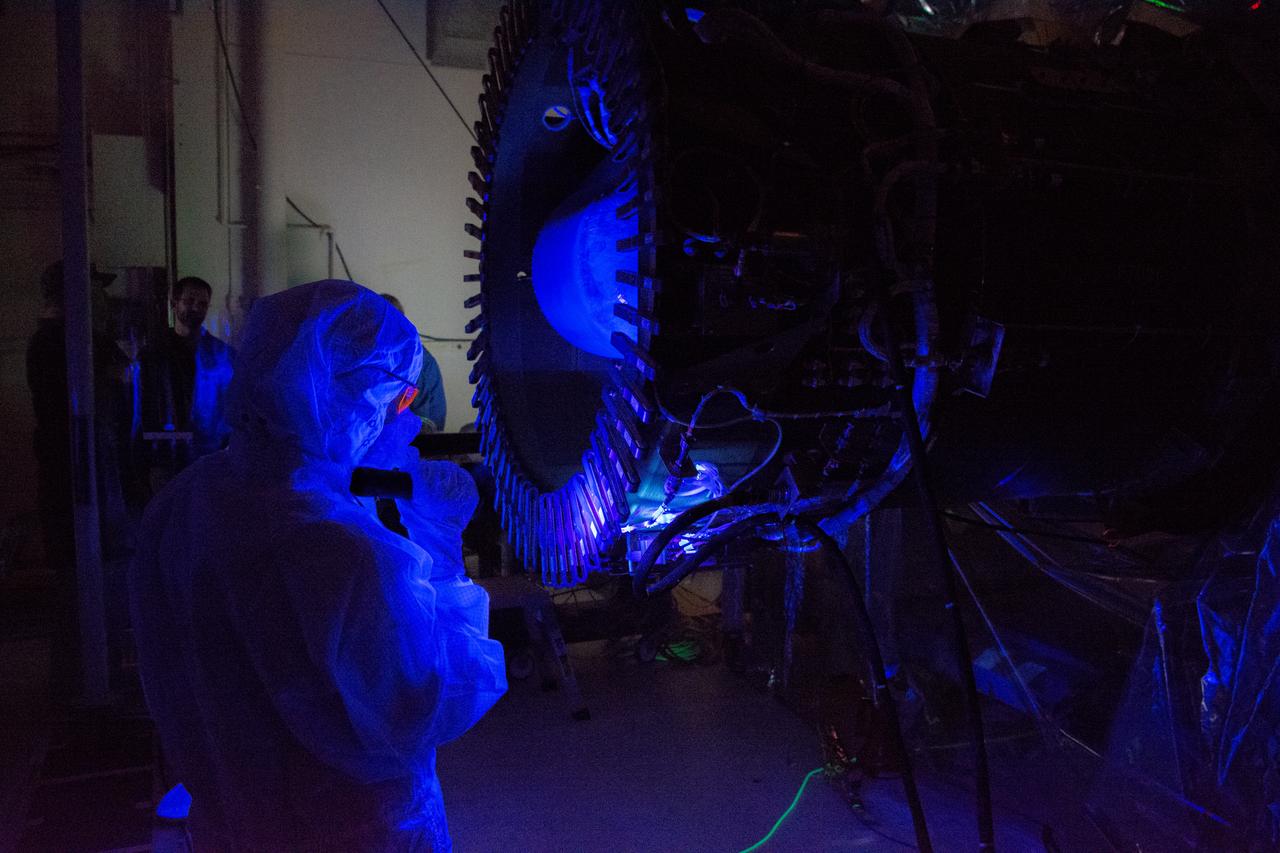
Technicians perform a black light inspection of the Northrop Grumman Pegasus XL rocket inside Building 1555 at Vandenberg Air Force Base in California, on Sept. 10, 2019, after NASA’s Ionospheric Connection Explorer (ICON) was attached to the rocket. The Pegasus port and starboard payload fairings will be installed around ICON. The Pegasus XL rocket, attached beneath the company's L-1011 Stargazer aircraft, will launch ICON from the Skid Strip at Cape Canaveral Air Force Station in Florida. Launch is scheduled for Oct. 9, 2019. ICON will study the frontier of space - the dynamic zone high in Earth's atmosphere where terrestrial weather from below meets space weather above. The explorer will help determine the physics of Earth's space environment and pave the way for mitigating its effects on our technology and communications systems.
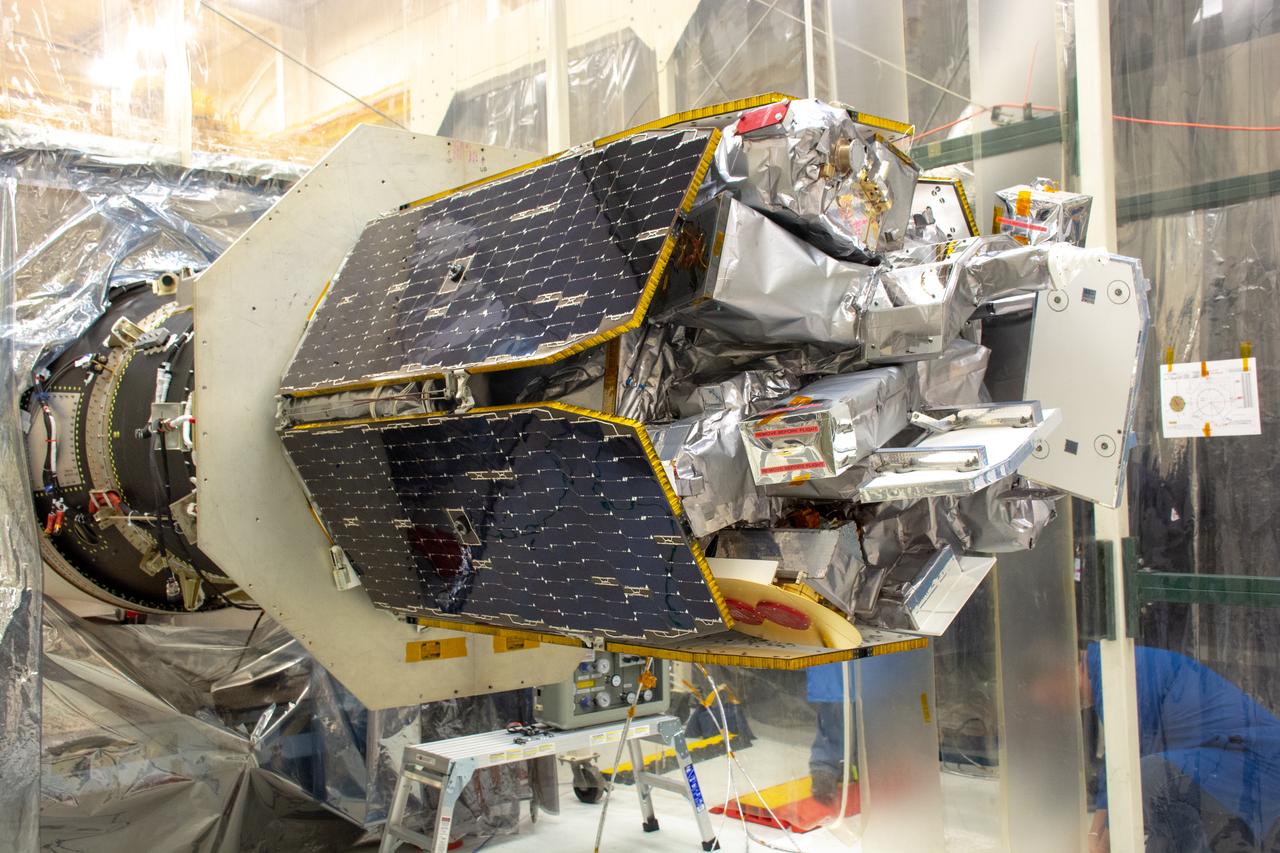
NASA's Ionospheric Connection Explorer (ICON) is attached to the Northrop Grumman Pegasus XL rocket inside Building 1555 at Vandenberg Air Force Base in California on Sept. 10, 2019. Preparations are underway to perform a black light test on Pegasus before the port and starboard payload fairings are installed around ICON. The Pegasus XL rocket, attached beneath the company's L-1011 Stargazer aircraft, will launch ICON from the Skid Strip at Cape Canaveral Air Force Station in Florida. Launch is scheduled for Oct. 9, 2019. ICON will study the frontier of space - the dynamic zone high in Earth's atmosphere where terrestrial weather from below meets space weather above. The explorer will help determine the physics of Earth's space environment and pave the way for mitigating its effects on our technology and communications systems.
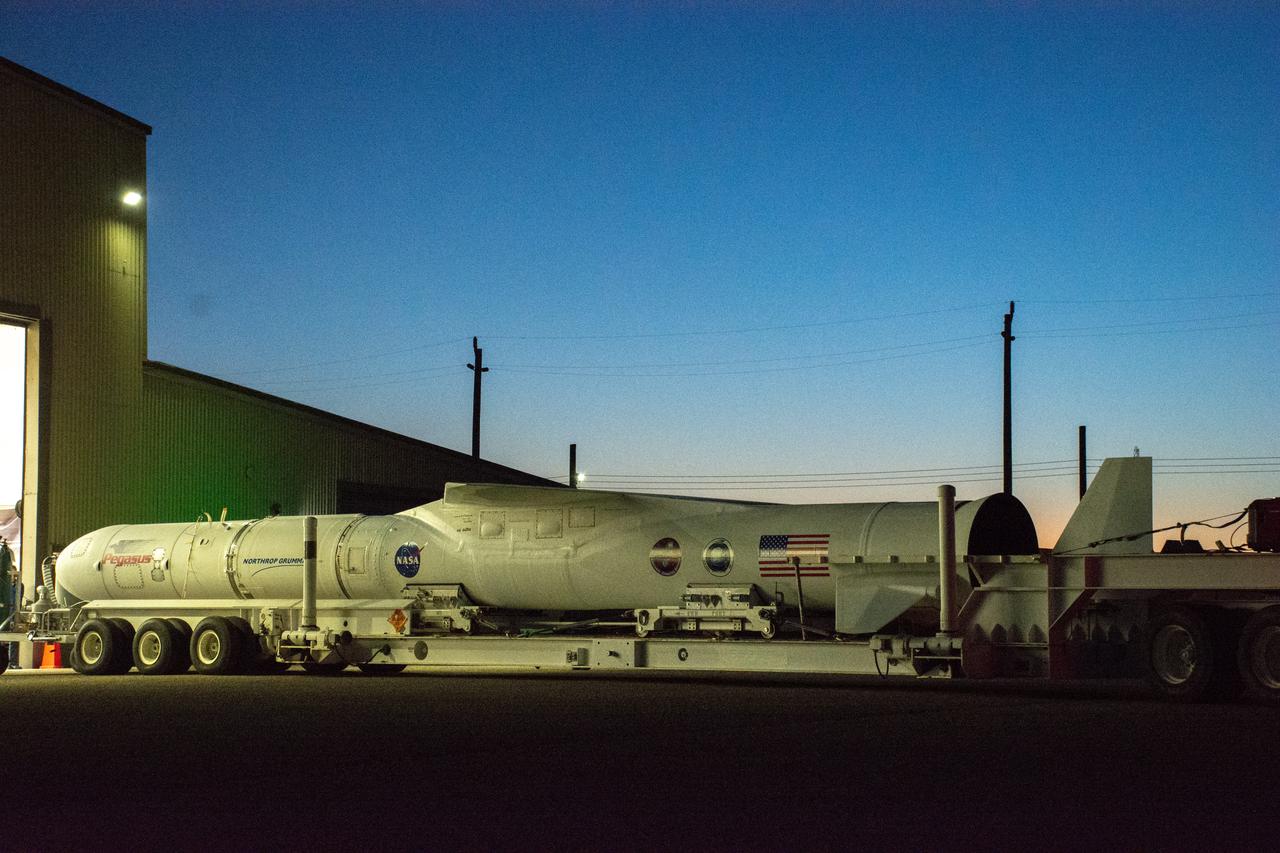
The Northrop Grumman Pegasus XL rocket, with NASA's Ionospheric Connection Explorer (ICON) secured in its payload fairing, begins rollout from Building 1555 at Vandenberg Air Force Base in California on Sept. 25, 2019. The Pegasus XL rocket will be attached beneath the company's L-1011 Stargazer aircraft for the flight to Cape Canaveral Air Force Station (CCAFS) in Florida. ICON will launch from the Skid Strip at CCAFS. Launch is scheduled for Oct. 10, 2019. ICON will study the frontier of space - the dynamic zone high in Earth's atmosphere where terrestrial weather from below meets space weather above. The explorer will help determine the physics of Earth's space environment and pave the way for mitigating its effects on our technology and communications systems.
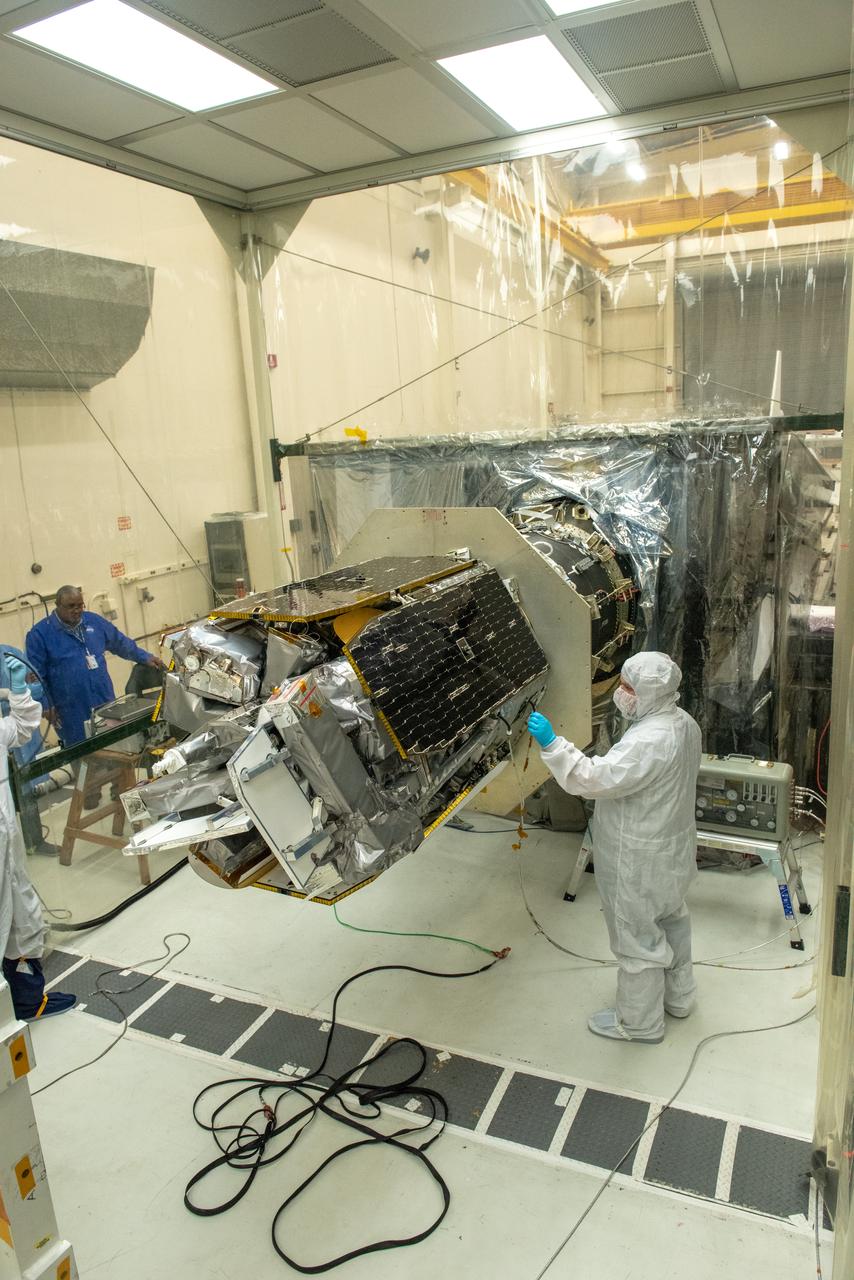
Technicians attach NASA’s Ionospheric Connection Explorer (ICON) to the Northrop Grumman Pegasus XL rocket inside Building 1555 at Vandenberg Air Force Base in California, on Sept. 10, 2019. The Pegasus XL rocket, attached beneath the company's L-1011 Stargazer aircraft, will launch ICON from the Skid Strip at Cape Canaveral Air Force Station in Florida. Launch is scheduled for Oct. 9, 2019. ICON will study the frontier of space - the dynamic zone high in Earth's atmosphere where terrestrial weather from below meets space weather above. The explorer will help determine the physics of Earth's space environment and pave the way for mitigating its effects on our technology and communications systems.

Technicians extend the solar array on NASA's Ionospheric Connection Explorer (ICON) during a deployment test inside Building 1555 at Vandenberg Air Force Base in California on Aug. 10, 2019. ICON will launch on a Pegasus XL rocket, attached beneath the company's L-1011 Stargazer aircraft, from the Skid Strip at Cape Canaveral Air Force Station in Florida. Launch is scheduled for Oct. 10. ICON will study the frontier of space - the dynamic zone high in Earth's atmosphere where terrestrial weather from below meets space weather above. The explorer will help determine the physics of Earth's space environment and pave the way for mitigating its effects on our technology and communications systems.
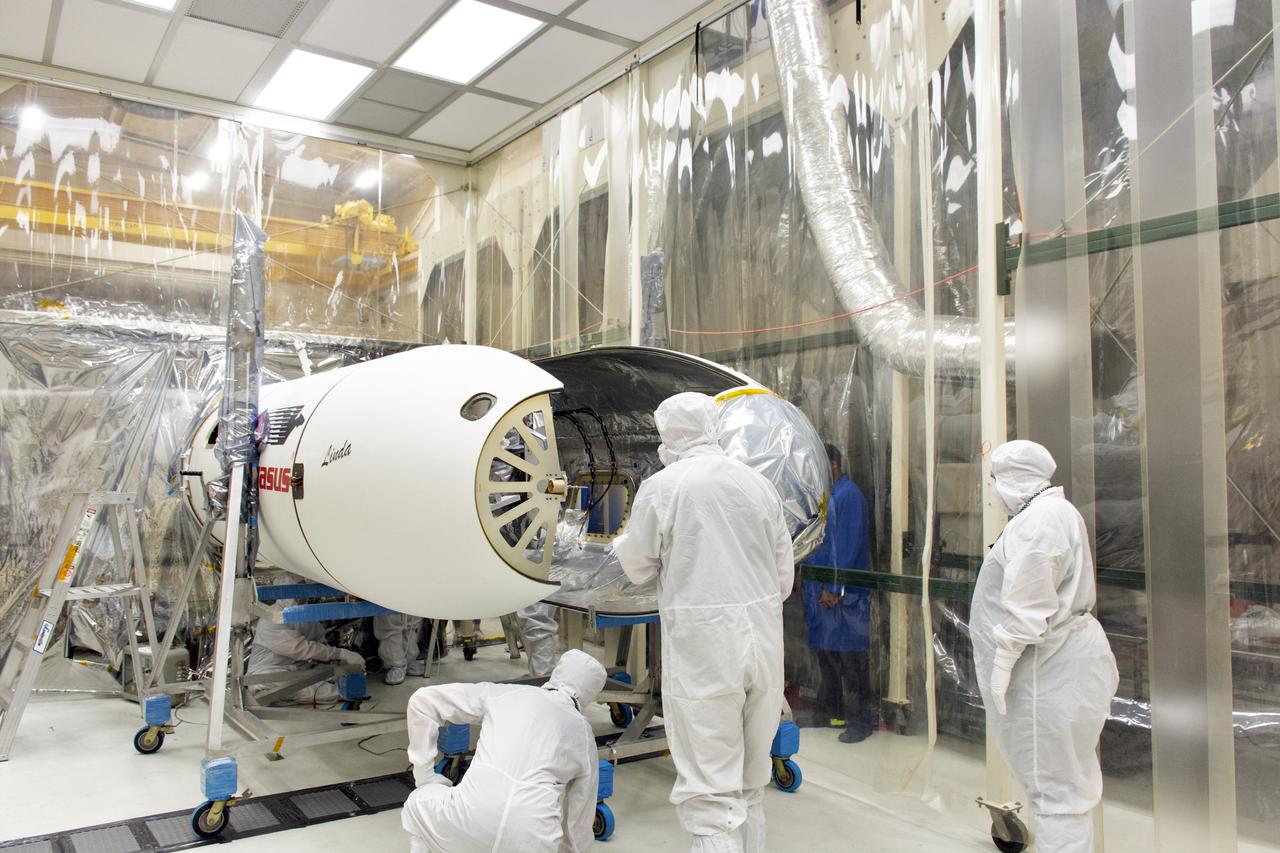
Technicians install the Northrop Grumman Pegasus XL payload fairings around NASA's Ionospheric Connection Explorer (ICON) inside Building 1555 at Vandenberg Air Force Base in California, on Aug. 22, 2018. The Pegasus XL rocket, attached beneath the company's L-1011 Stargazer aircraft, will launch ICON from the Skid Strip at Cape Canaveral Air Force Station in Florida. Launch is scheduled for Oct. 26. ICON will study the frontier of space - the dynamic zone high in Earth's atmosphere where terrestrial weather from below meets space weather above. The explorer will help determine the physics of Earth's space environment and pave the way for mitigating its effects on our technology and communications systems.
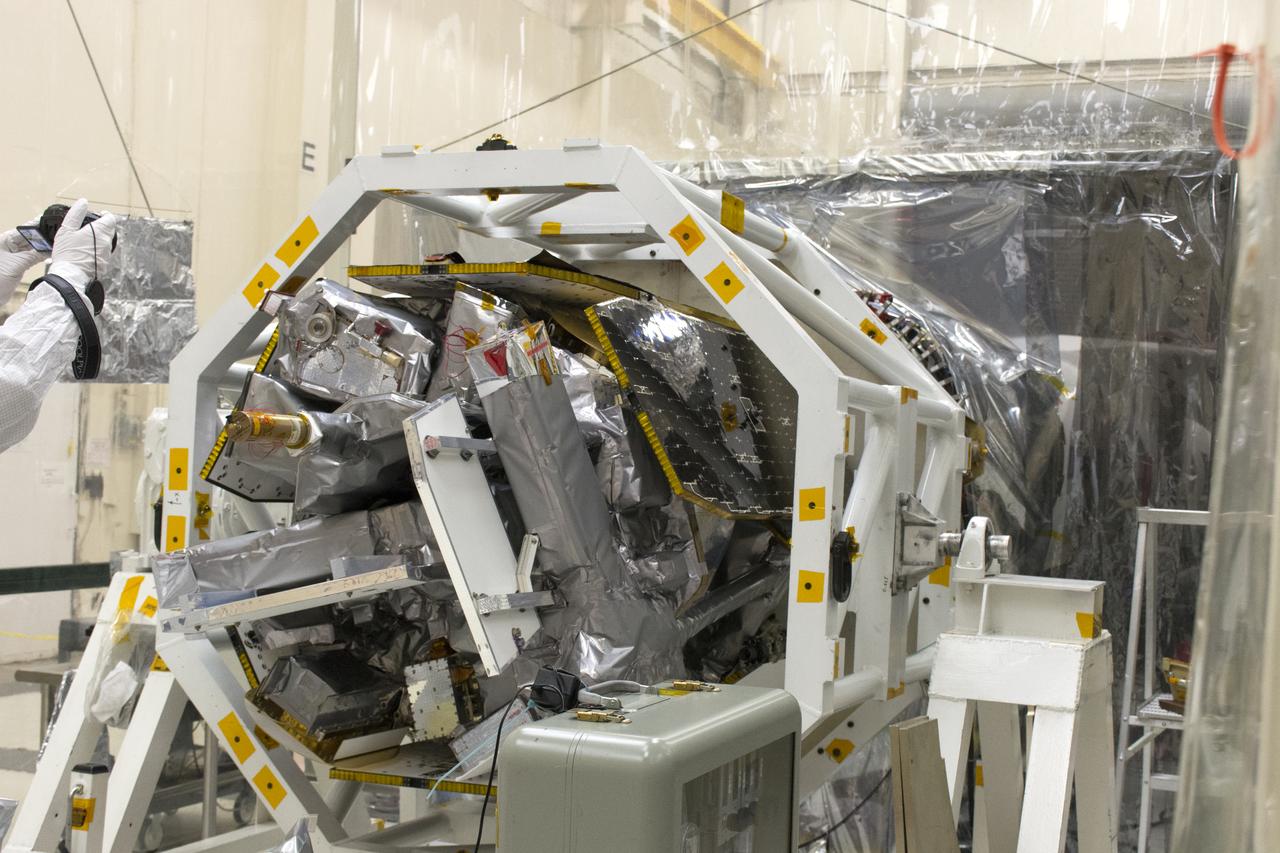
NASA's Ionospheric Connection Explorer (ICON) is in the horizontal position May 11, 2018, inside a clean room in Building 1555 at Vandenberg Air Force Base in California. ICON is being prepared to be attached to the Orbital ATK Pegasus XL rocket. The explorer will launch on June 15, 2018, from Kwajalein Atoll in the Marshall Islands (June 14 in the continental United States) on the Pegasus XL rocket, which is attached to the company's L-1011 Stargazer aircraft. ICON will study the frontier of space - the dynamic zone high in Earth's atmosphere where terrestrial weather from below meets space weather above. The explorer will help determine the physics of Earth's space environment and pave the way for mitigating its effects on our technology, communications systems and society.
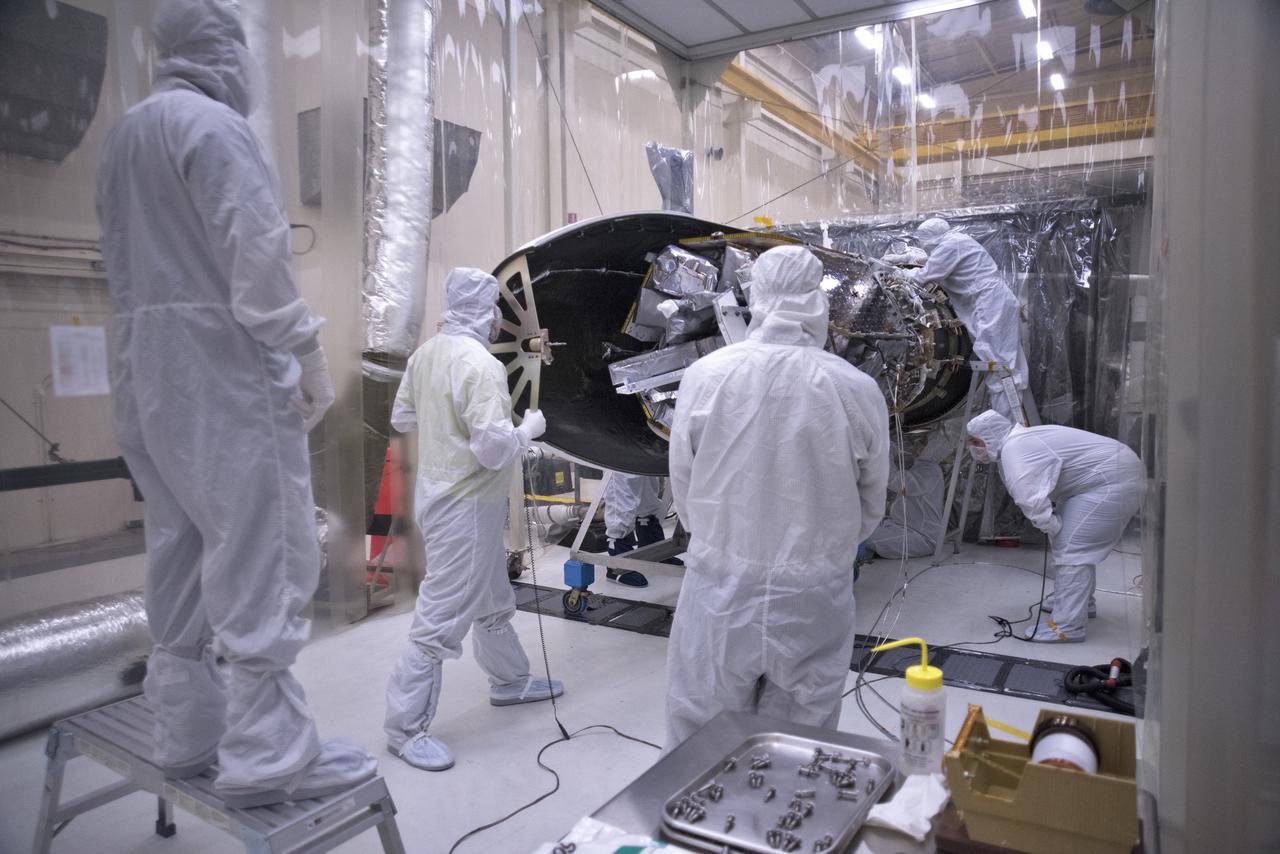
Inside a clean room in Building 1555 at Vandenberg Air Force Base in California, technicians install the first half of the Northrop Grumman Pegasus XL payload fairing around NASA's Ionospheric Connection Explorer (ICON) on Oct. 4, 2018. ICON is being prepared for its launch on the Pegasus XL, which is attached to the company's L-1011 Stargazer aircraft, from the Skid Strip at Cape Canaveral Air Force Station in Florida. Launch is scheduled for Oct. 26. ICON will study the frontier of space - the dynamic zone high in Earth's atmosphere where terrestrial weather from below meets space weather above. The explorer will help determine the physics of Earth's space environment and pave the way for mitigating its effects on our technology, communications systems and society.
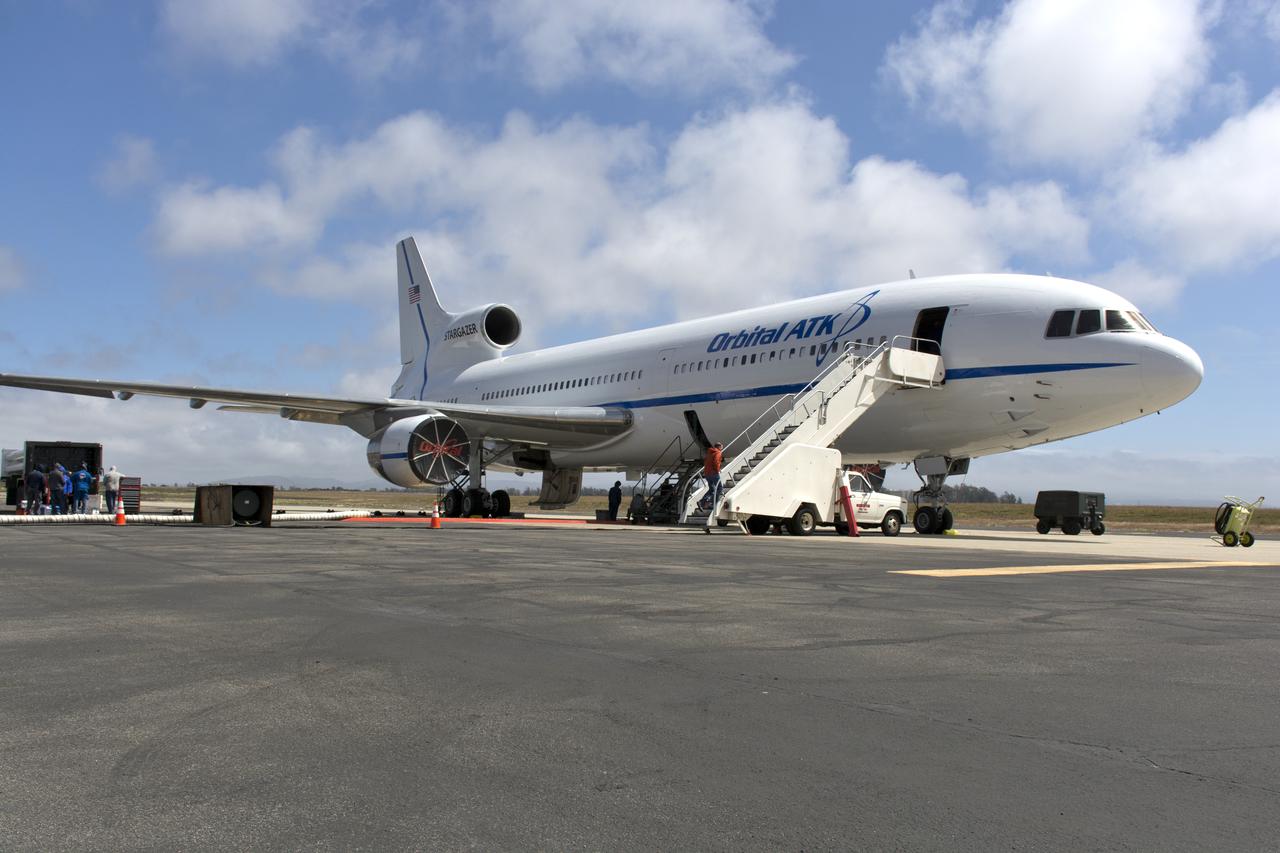
Northrop Grumman's L-1011 Stargazer aircraft is at the hot pad at Vandenberg Air Force Base in California on May 26, 2018. Preparations are underway to attach the company's Pegasus XL rocket, containing NASA's Ionospheric Connection Explorer (ICON), beneath the aircraft. The explorer will launch on June 15, 2018, from Kwajalein Atoll in the Marshall Islands (June 14 in the continental United States). ICON will study the frontier of space - the dynamic zone high in Earth's atmosphere where terrestrial weather from below meets space weather above. The explorer will help determine the physics of Earth's space environment and pave the way for mitigating its effects on our technology, communications systems and society.
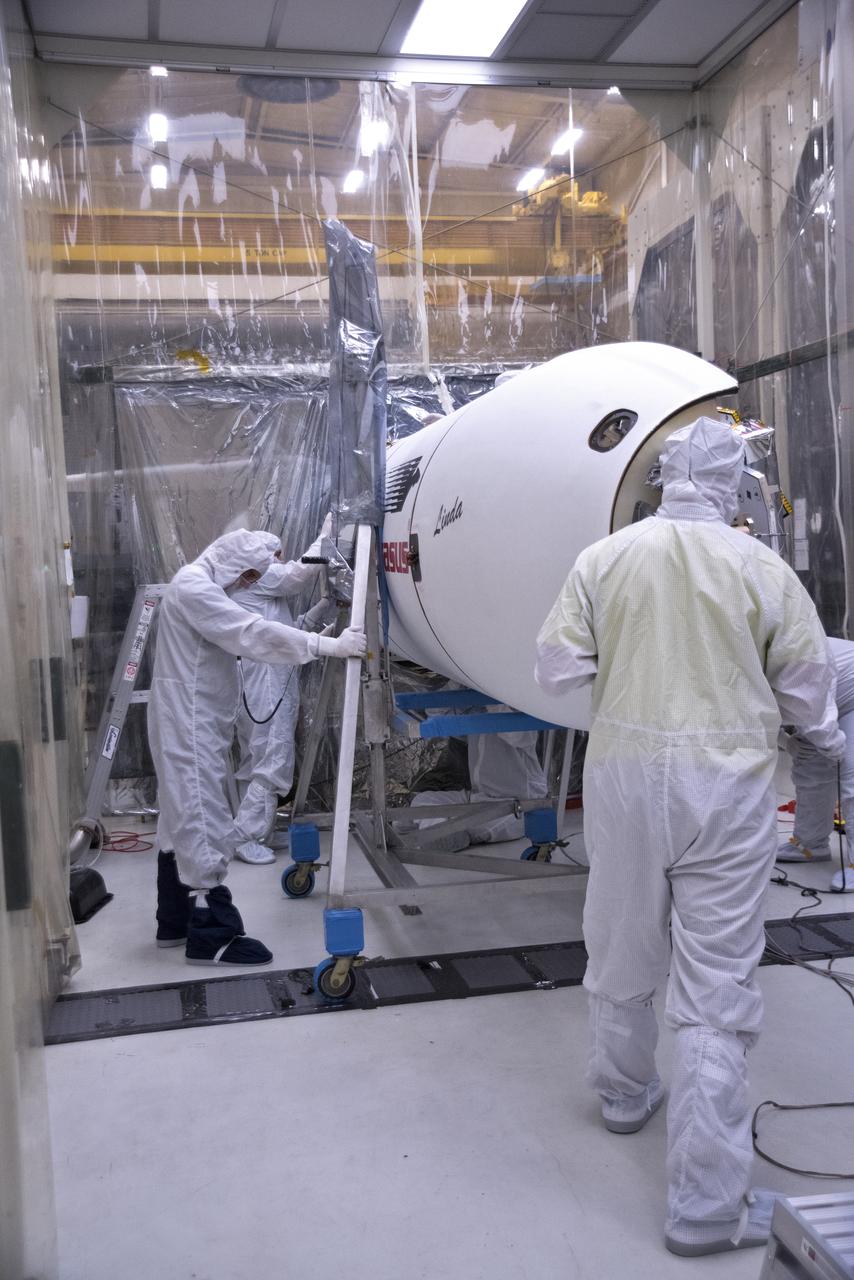
Inside a clean room in Building 1555 at Vandenberg Air Force Base in California, technicians install the first half of the Northrop Grumman Pegasus XL payload fairing around NASA's Ionospheric Connection Explorer (ICON) on Oct. 4, 2018. ICON is being prepared for its launch on the Pegasus XL, which is attached to the company's L-1011 Stargazer aircraft, from the Skid Strip at Cape Canaveral Air Force Station in Florida. Launch is scheduled for Oct. 26. ICON will study the frontier of space - the dynamic zone high in Earth's atmosphere where terrestrial weather from below meets space weather above. The explorer will help determine the physics of Earth's space environment and pave the way for mitigating its effects on our technology, communications systems and society.

A technician assists with connections as NASA's Ionospheric Connection Explorer (ICON) is attached to the Orbital ATK Pegasus XL rocket May 14, 2018, inside a clean room in Building 1555 at Vandenberg Air Force Base in California. The explorer will launch on June 15, 2018, from Kwajalein Atoll in the Marshall Islands (June 14 in the continental United States) on the Pegasus XL rocket, which is attached to the company's L-1011 Stargazer aircraft. ICON will study the frontier of space - the dynamic zone high in Earth's atmosphere where terrestrial weather from below meets space weather above. The explorer will help determine the physics of Earth's space environment and pave the way for mitigating its effects on our technology, communications systems and society.
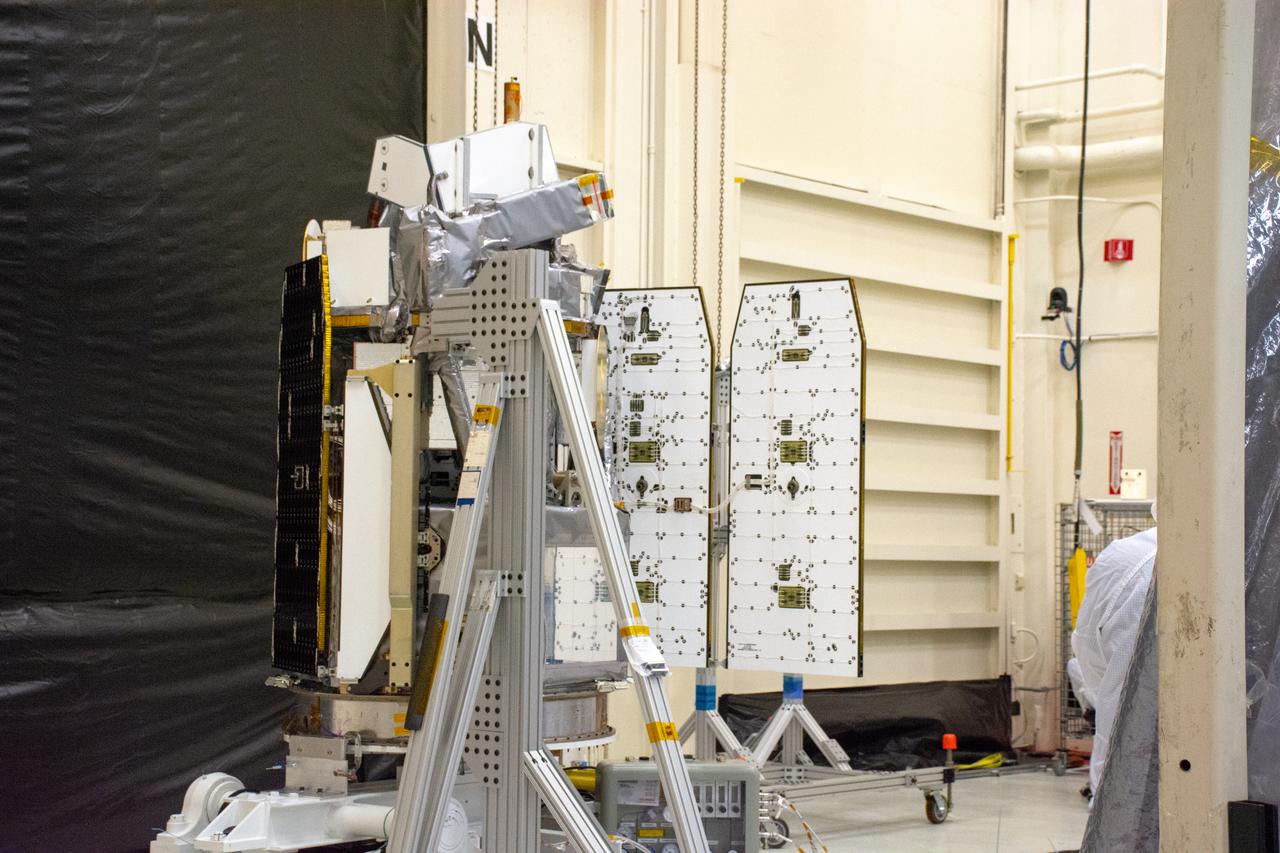
The solar panels on NASA's Ionospheric Connection Explorer (ICON) are being deployed to test them inside Building 1555 at Vandenberg Air Force Base in California on Aug. 10, 2019. ICON will launch on a Pegasus XL rocket, attached beneath the company's L-1011 Stargazer aircraft, from the Skid Strip at Cape Canaveral Air Force Station in Florida. Launch is scheduled for Oct. 10. ICON will study the frontier of space - the dynamic zone high in Earth's atmosphere where terrestrial weather from below meets space weather above. The explorer will help determine the physics of Earth's space environment and pave the way for mitigating its effects on our technology and communications systems.
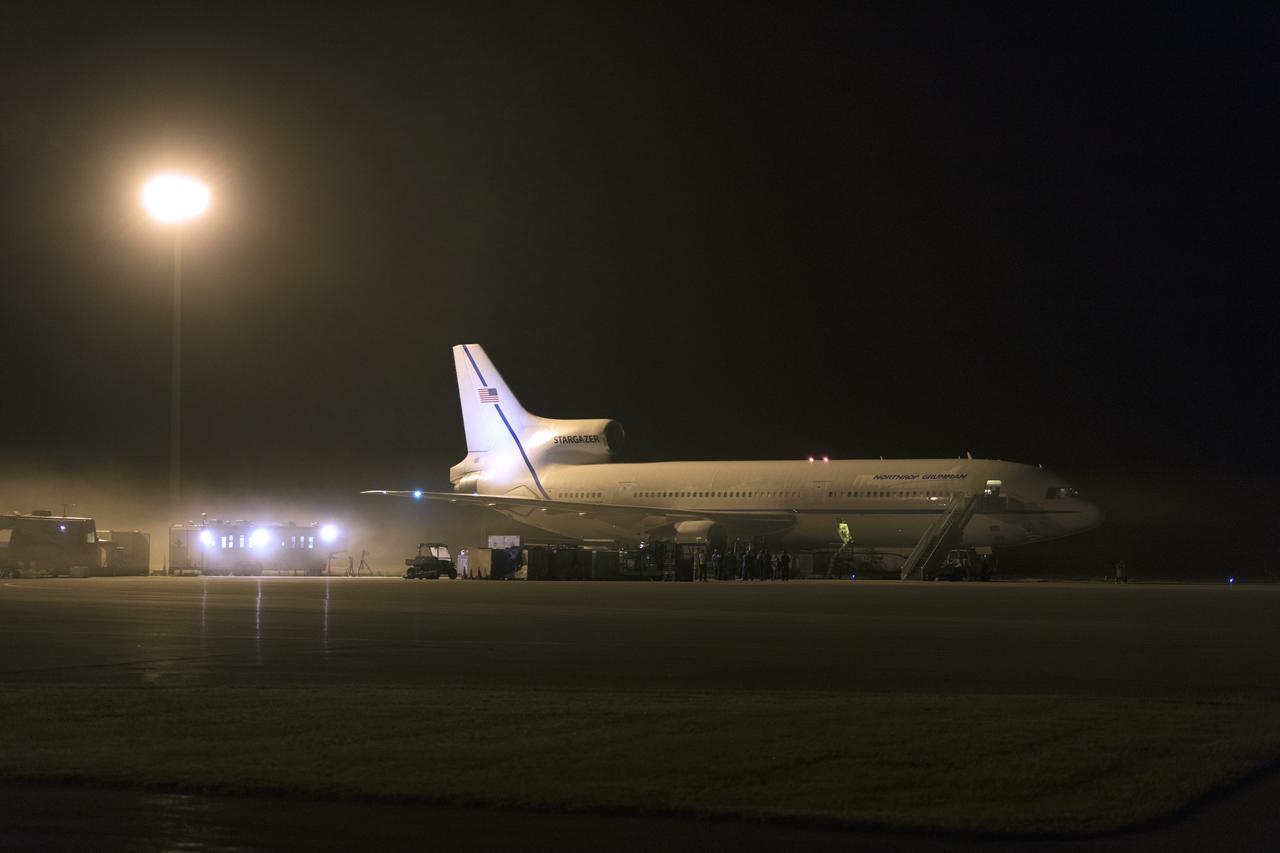
The Northrop Grumman L-1011 Stargazer aircraft, with the Pegasus XL rocket attached beneath, is being prepared for takeoff from the runway at the Skid Strip at Cape Canaveral Air Force Station in Florida on Nov. 7, 2018. NASA's Ionospheric Connection Explorer (ICON) satellite is secured inside the rocket's payload fairing. The Pegasus XL rocket will be carried aloft by the Stargazer. ICON will study the frontier of space - the dynamic zone high in Earth's atmosphere where terrestrial weather from below meets space weather above. The explorer will help determine the physics of Earth's space environment and pave the way for mitigating its effects on our technology, communications systems and society.
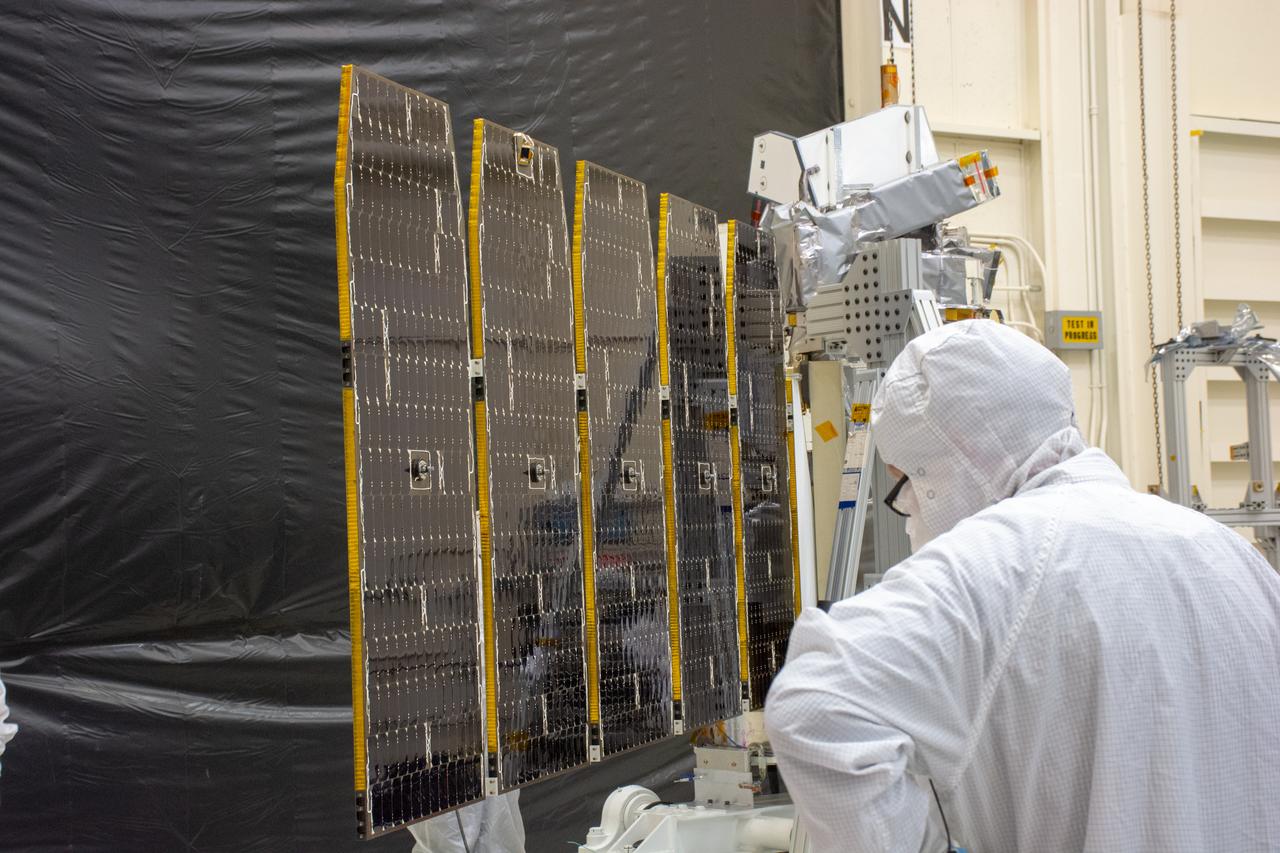
Technicians extend the solar array on NASA's Ionospheric Connection Explorer (ICON) during a deployment test inside Building 1555 at Vandenberg Air Force Base in California on Aug. 10, 2019. ICON will launch on a Pegasus XL rocket, attached beneath the company's L-1011 Stargazer aircraft, from the Skid Strip at Cape Canaveral Air Force Station in Florida. Launch is scheduled for Oct. 10. ICON will study the frontier of space - the dynamic zone high in Earth's atmosphere where terrestrial weather from below meets space weather above. The explorer will help determine the physics of Earth's space environment and pave the way for mitigating its effects on our technology and communications systems.

Inside a clean room in Building 1555 at Vandenberg Air Force Base in California, technicians begin to install the first half of the Northrop Grumman Pegasus XL payload fairing around NASA's Ionospheric Connection Explorer (ICON) on Aug. 22, 2018. ICON is being prepared for its launch on the Pegasus XL rocket, which is attached beneath the company's L-1011 Stargazer aircraft. Launch is scheduled for Oct. 26, from the Skid Strip at Cape Canaveral Air Force Station in Florida. ICON will study the frontier of space - the dynamic zone high in Earth's atmosphere where terrestrial weather from below meets space weather above. The explorer will help determine the physics of Earth's space environment and pave the way for mitigating its effects on our technology, communications systems and society.
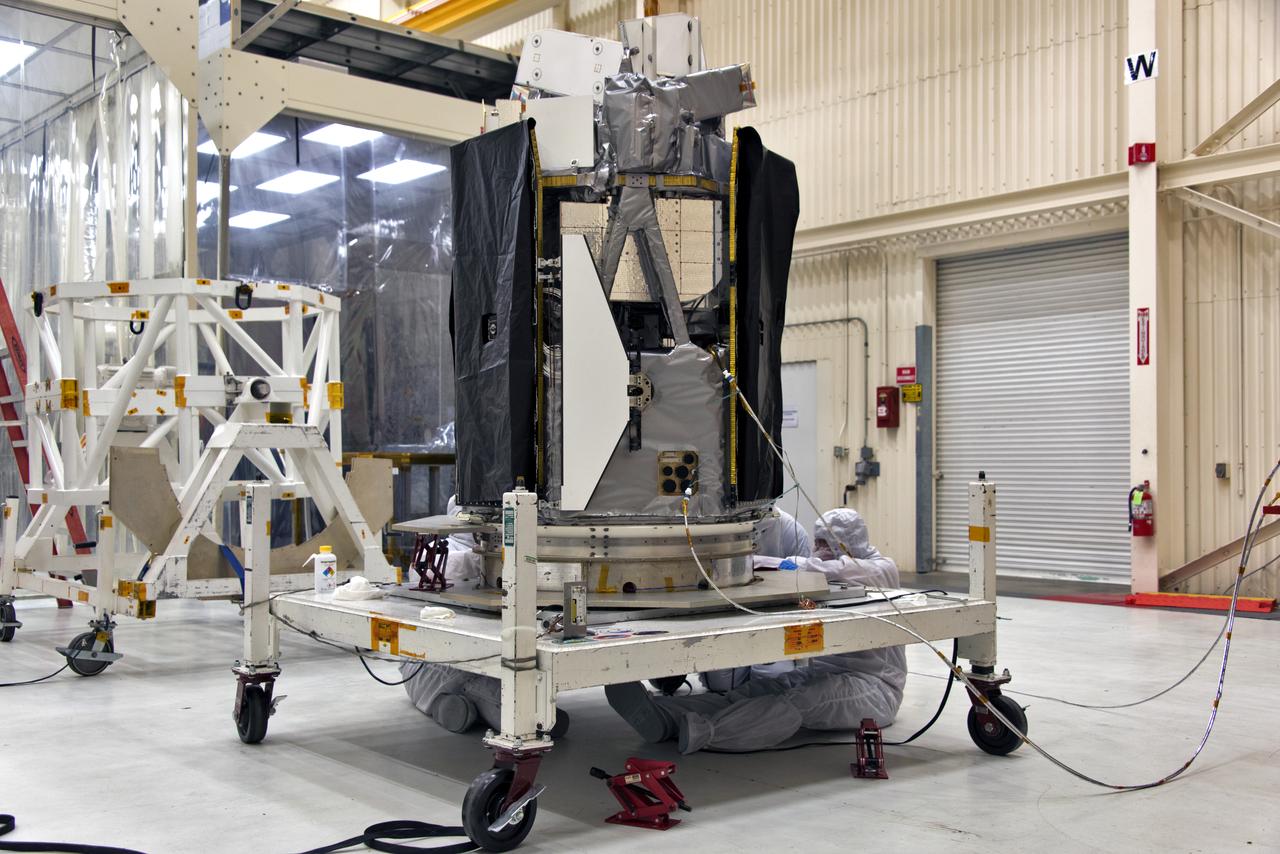
Technicians secure NASA's Ionospheric Connection Explorer (ICON) on the spacecraft separation system May 9, 2018, in a clean room inside Building 1555 at Vandenberg Air Force Base in California. The explorer will launch on June 15, 2018, from Kwajalein Atoll in the Marshall Islands (June 14 in the continental United States) on Orbital ATK's Pegasus XL rocket, which is attached to the company's L-1011 Stargazer aircraft. ICON will study the frontier of space - the dynamic zone high in Earth's atmosphere where terrestrial weather from below meets space weather above. The explorer will help determine the physics of Earth's space environment and pave the way for mitigating its effects on our technology, communications systems and society.
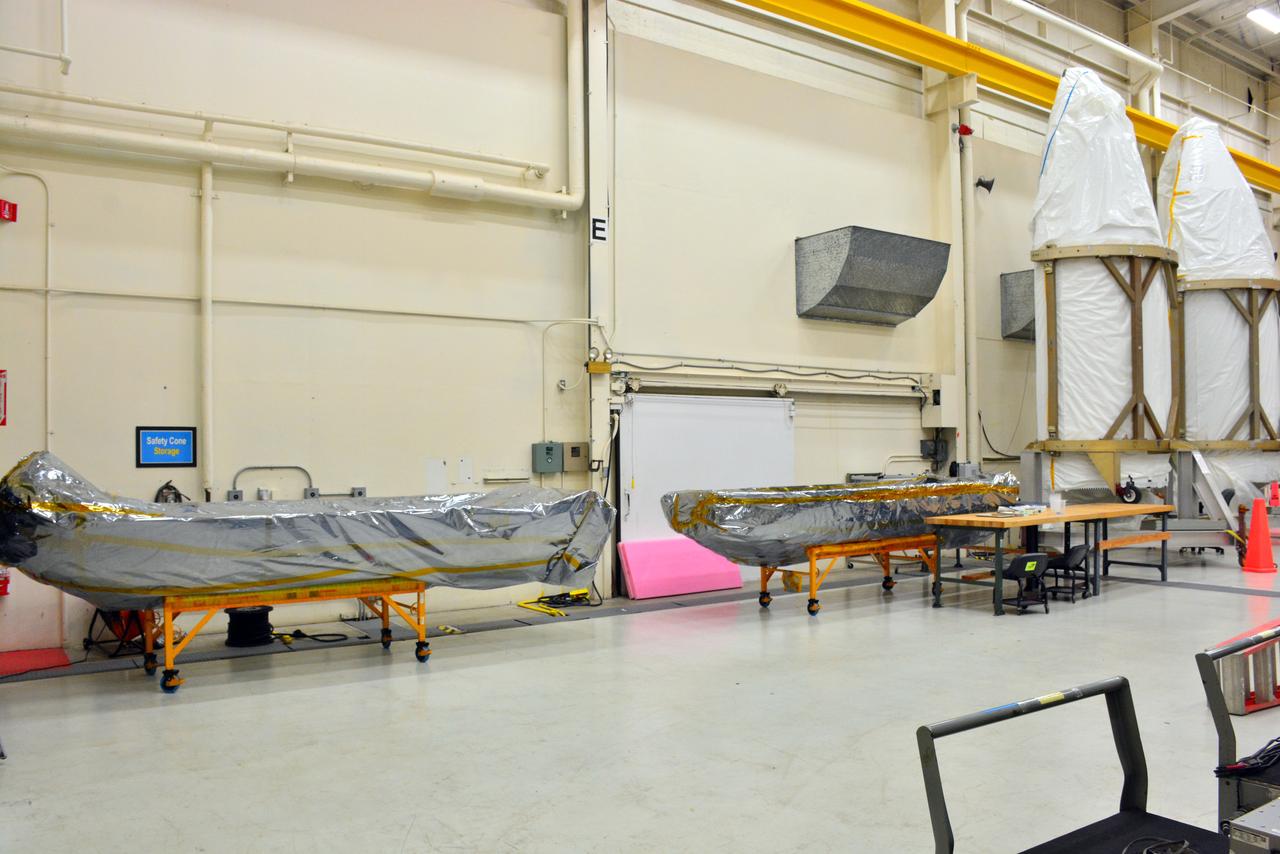
The payload fairing halves for Orbital ATK's Pegasus XL rocket are staged inside Building 1555 at Vandenberg Air Force Base in California on Aug. 23, 2017. The Pegasus rocket is being prepared for NASA's Ionospheric Connection Explorer (ICON) mission. The explorer will launch on June 15, 2018, from Kwajalein Atoll in the Marshall Islands (June 14 in the continental United States) on the Pegasus XL, which is attached to the company's L-1011 Stargazer aircraft. ICON will study the frontier of space - the dynamic zone high in Earth's atmosphere where terrestrial weather from below meets space weather above. The explorer will help determine the physics of Earth's space environment and pave the way for mitigating its effects on our technology, communications systems and society.
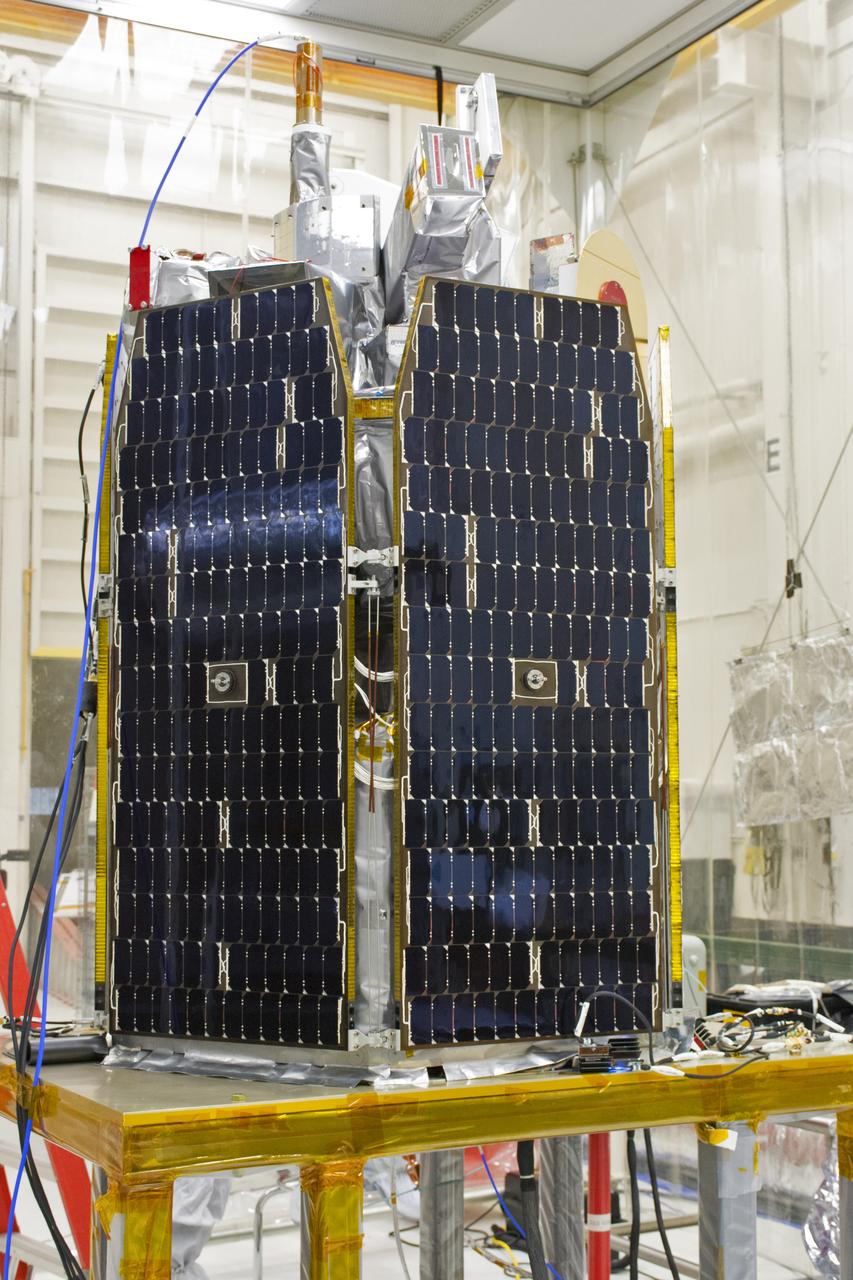
NASA's Ionospheric Connection Explorer (ICON) is prepared for a solar array illumination test in a clean room inside Building 1555 at Vandenberg Air Force Base in California on May 4, 2018. The test checks for any imperfections and confirms that the solar arrays are functioning properly. The explorer will launch on June 15, 2018, from Kwajalein Atoll in the Marshall Islands (June 14 in the continental United States) on Orbital ATK's Pegasus XL rocket, which is attached to the company's L-1011 Stargazer aircraft. ICON will study the frontier of space - the dynamic zone high in Earth's atmosphere where terrestrial weather from below meets space weather above. The explorer will help determine the physics of Earth's space environment and pave the way for mitigating its effects on our technology, communications systems and society.
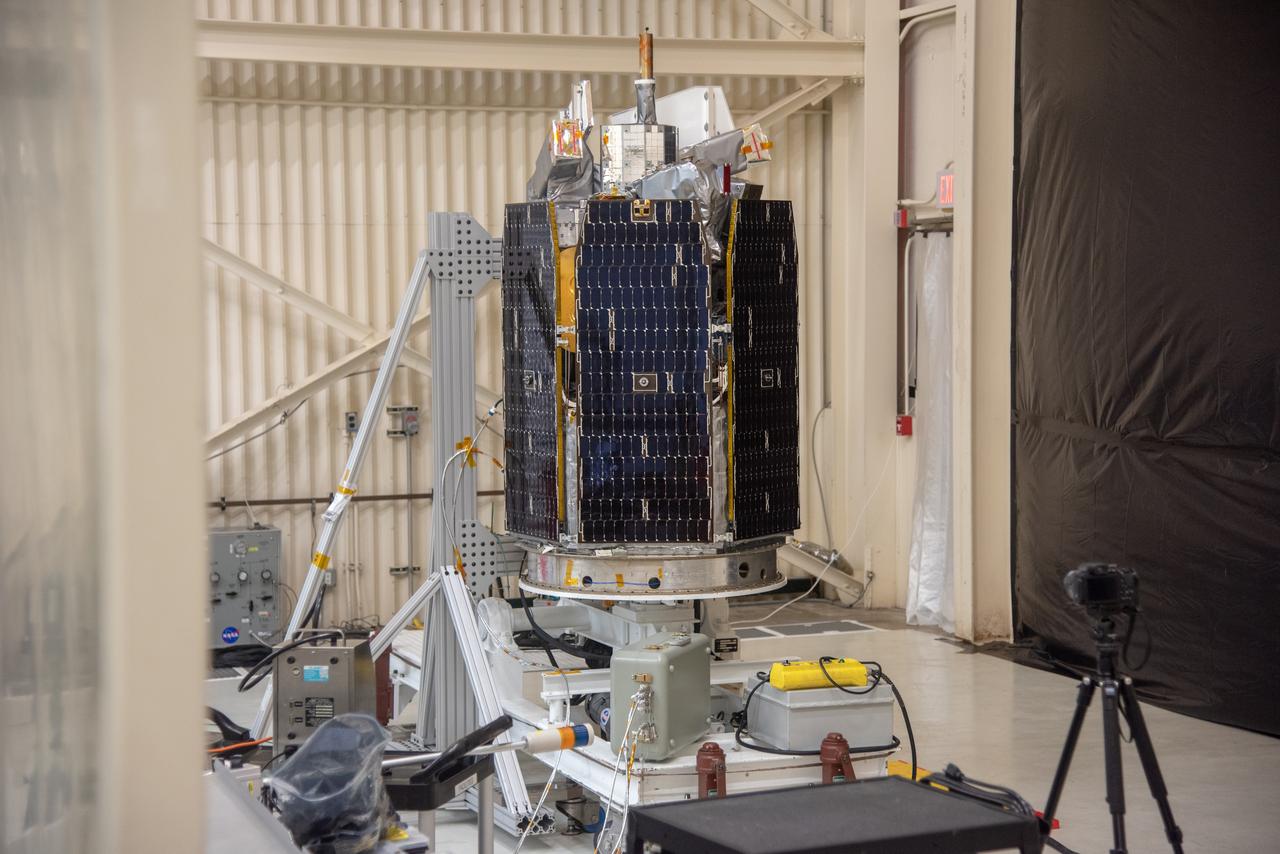
A solar array deployment test will begin on NASA's Ionospheric Connection Explorer (ICON) inside Building 1555 at Vandenberg Air Force Base in California on Aug. 10, 2019. ICON will launch on a Pegasus XL rocket, attached beneath the company's L-1011 Stargazer aircraft, from the Skid Strip at Cape Canaveral Air Force Station in Florida. Launch is scheduled for Oct. 10. ICON will study the frontier of space - the dynamic zone high in Earth's atmosphere where terrestrial weather from below meets space weather above. The explorer will help determine the physics of Earth's space environment and pave the way for mitigating its effects on our technology and communications systems.
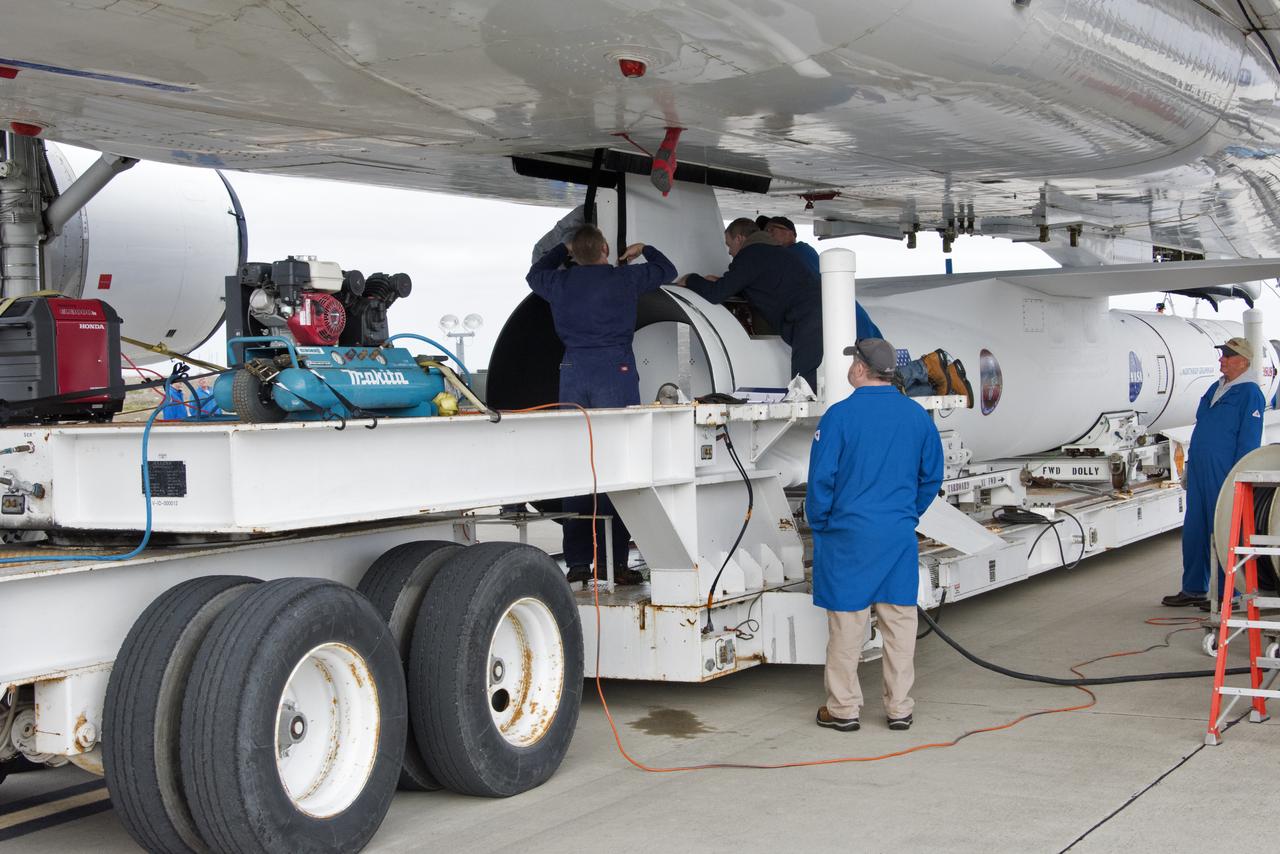
Technicians secure Northrop Grumman's Pegasus XL rocket, containing NASA's Ionospheric Connection Explorer (ICON), beneath the company's L-1011 Stargazer aircraft at the hot pad at Vandenberg Air Force Base in California, on Oct. 14, 2018. The Stargazer will take off from the hot pad and travel to Cape Canaveral Air Force Station in Florida. The Pegasus XL rocket will launch ICON from the Skid Strip at the Cape. ICON will study the frontier of space - the dynamic zone high in Earth's atmosphere where terrestrial weather from below meets space weather above. The explorer will help determine the physics of Earth's space environment and pave the way for mitigating its effects on our technology and communications systems.
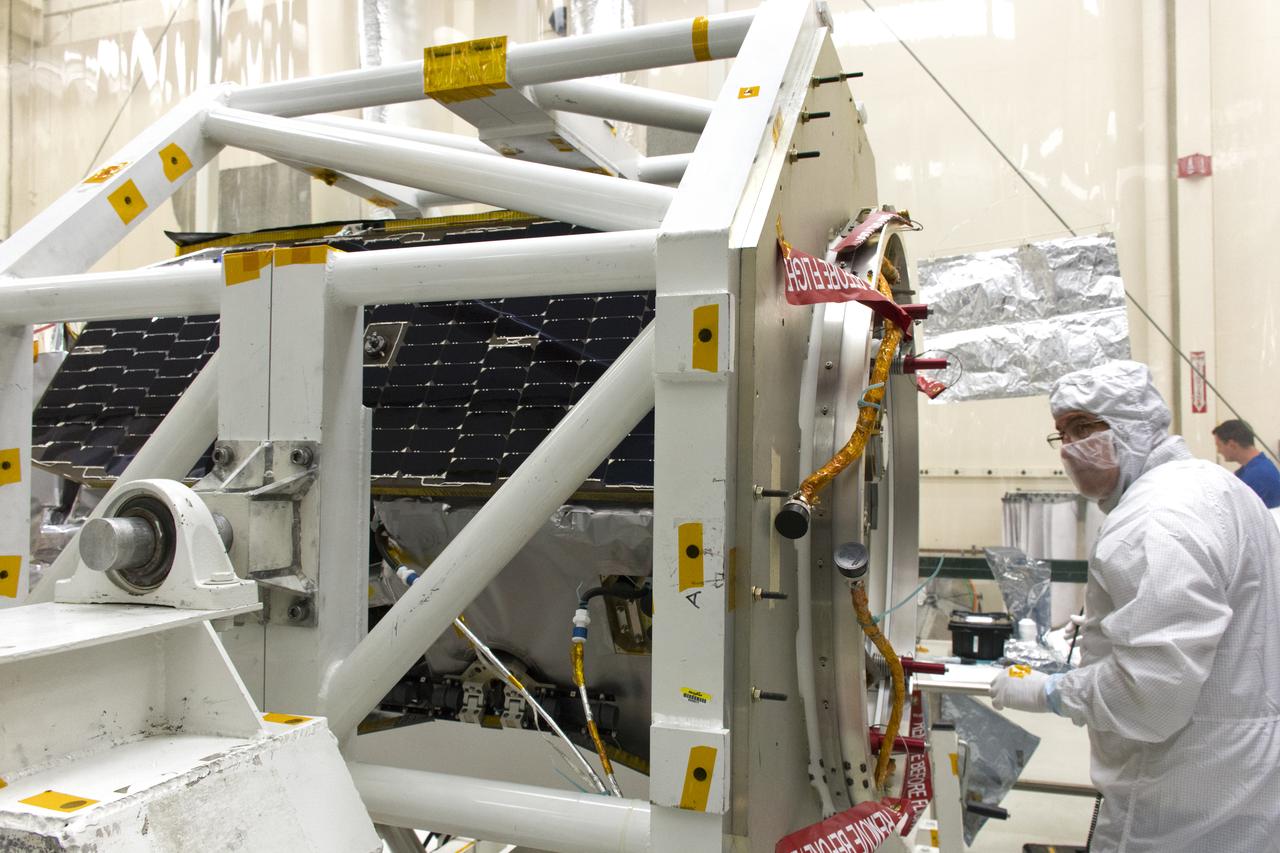
NASA's Ionospheric Connection Explorer (ICON) is in the horizontal position May 11, 2018, inside a clean room in Building 1555 at Vandenberg Air Force Base in California. ICON is being prepared to be attached to the Orbital ATK Pegasus XL rocket. The explorer will launch on June 15, 2018, from Kwajalein Atoll in the Marshall Islands (June 14 in the continental United States) on the Pegasus XL rocket, which is attached to the company's L-1011 Stargazer aircraft. ICON will study the frontier of space - the dynamic zone high in Earth's atmosphere where terrestrial weather from below meets space weather above. The explorer will help determine the physics of Earth's space environment and pave the way for mitigating its effects on our technology, communications systems and society.
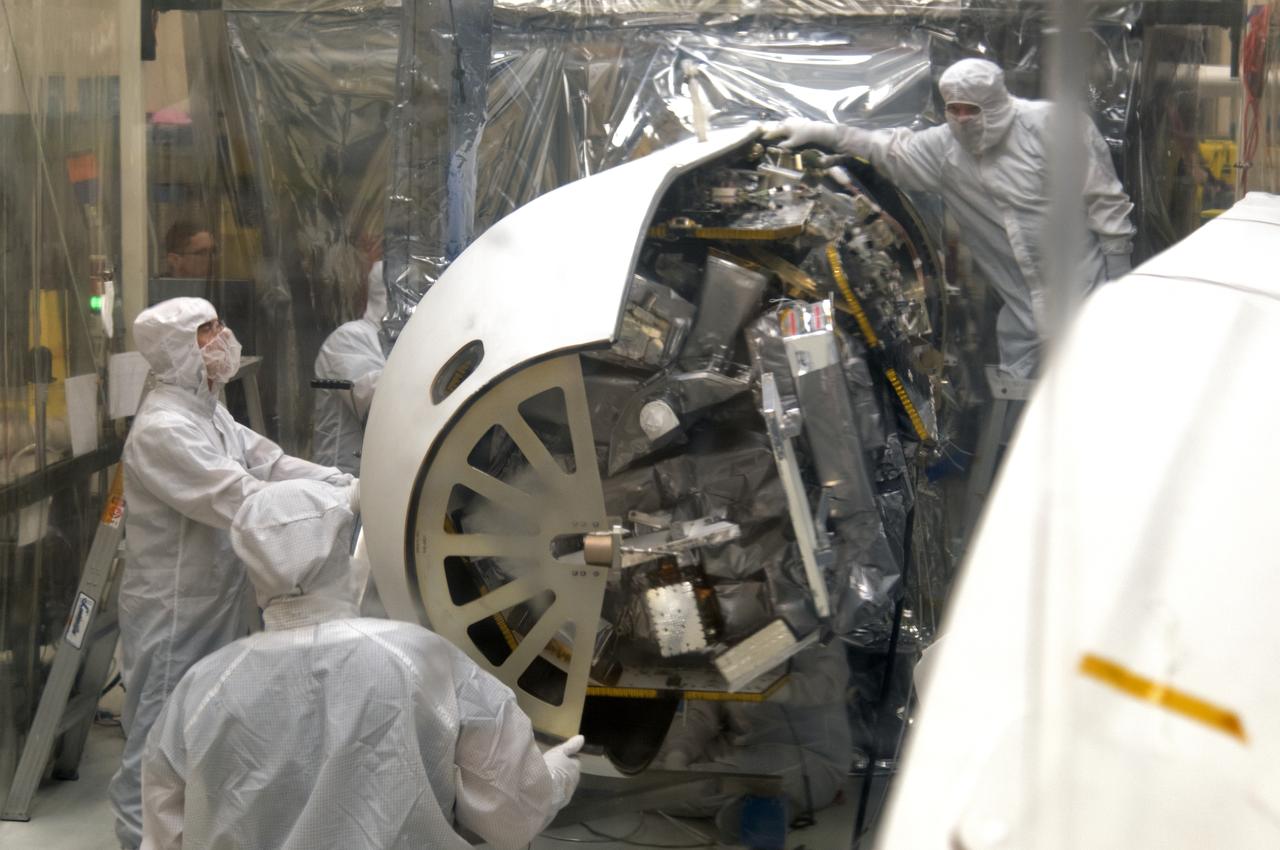
Inside a clean room in Building 1555 at Vandenberg Air Force Base in California, technicians install the first half of the Northrop Grumman Pegasus XL payload fairing around NASA's Ionospheric Connection Explorer (ICON) on Aug. 22, 2018. ICON is being prepared for its launch on the Pegasus XL rocket, which is attached beneath the company's L-1011 Stargazer aircraft. Launch is scheduled for Oct. 26, from the Skid Strip at Cape Canaveral Air Force Station in Florida. ICON will study the frontier of space - the dynamic zone high in Earth's atmosphere where terrestrial weather from below meets space weather above. The explorer will help determine the physics of Earth's space environment and pave the way for mitigating its effects on our technology, communications systems and society.

The Northrop Grumman L-1011 Stargazer aircraft, with the Pegasus XL rocket attached beneath, starts down the runway at the Skid Strip at Cape Canaveral Air Force Station in Florida on Nov. 7, 2018. NASA's Ionospheric Connection Explorer (ICON) is secured inside the rocket's payload fairing. The Pegasus XL rocket will be carried aloft by the Stargazer. ICON will study the frontier of space - the dynamic zone high in Earth's atmosphere where terrestrial weather from below meets space weather above. The explorer will help determine the physics of Earth's space environment and pave the way for mitigating its effects on our technology, communications systems and society.
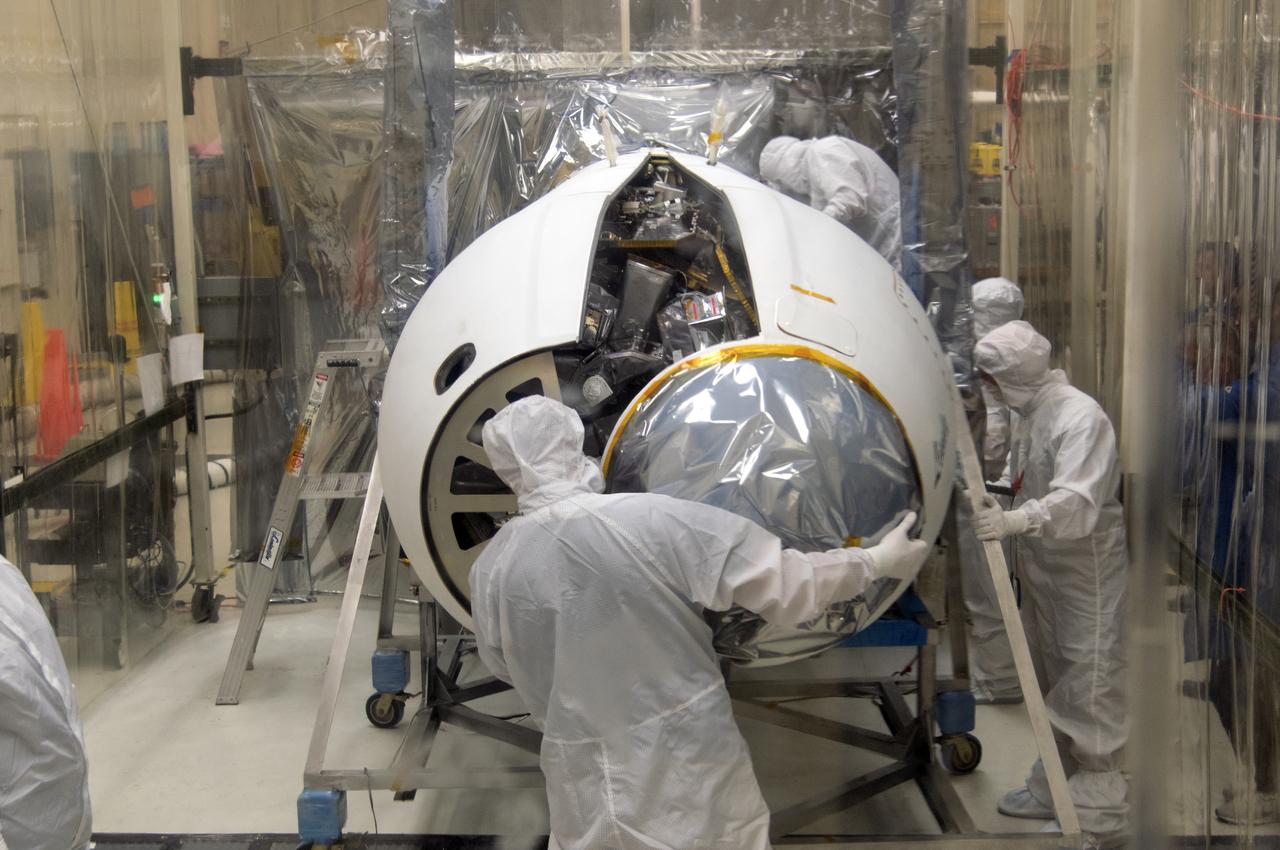
Inside a clean room in Building 1555 at Vandenberg Air Force Base in California, technicians install the second half of the Northrop Grumman Pegasus XL payload fairing around NASA's Ionospheric Connection Explorer (ICON) on Aug. 22, 2018. ICON is being prepared for its launch on the Pegasus XL rocket, which is attached beneath the company's L-1011 Stargazer aircraft. Launch is scheduled for Oct 26, from the Skid Strip at Cape Canaveral Air Force Station in Florida. ICON will study the frontier of space - the dynamic zone high in Earth's atmosphere where terrestrial weather from below meets space weather above. The explorer will help determine the physics of Earth's space environment and pave the way for mitigating its effects on our technology, communications systems and society.
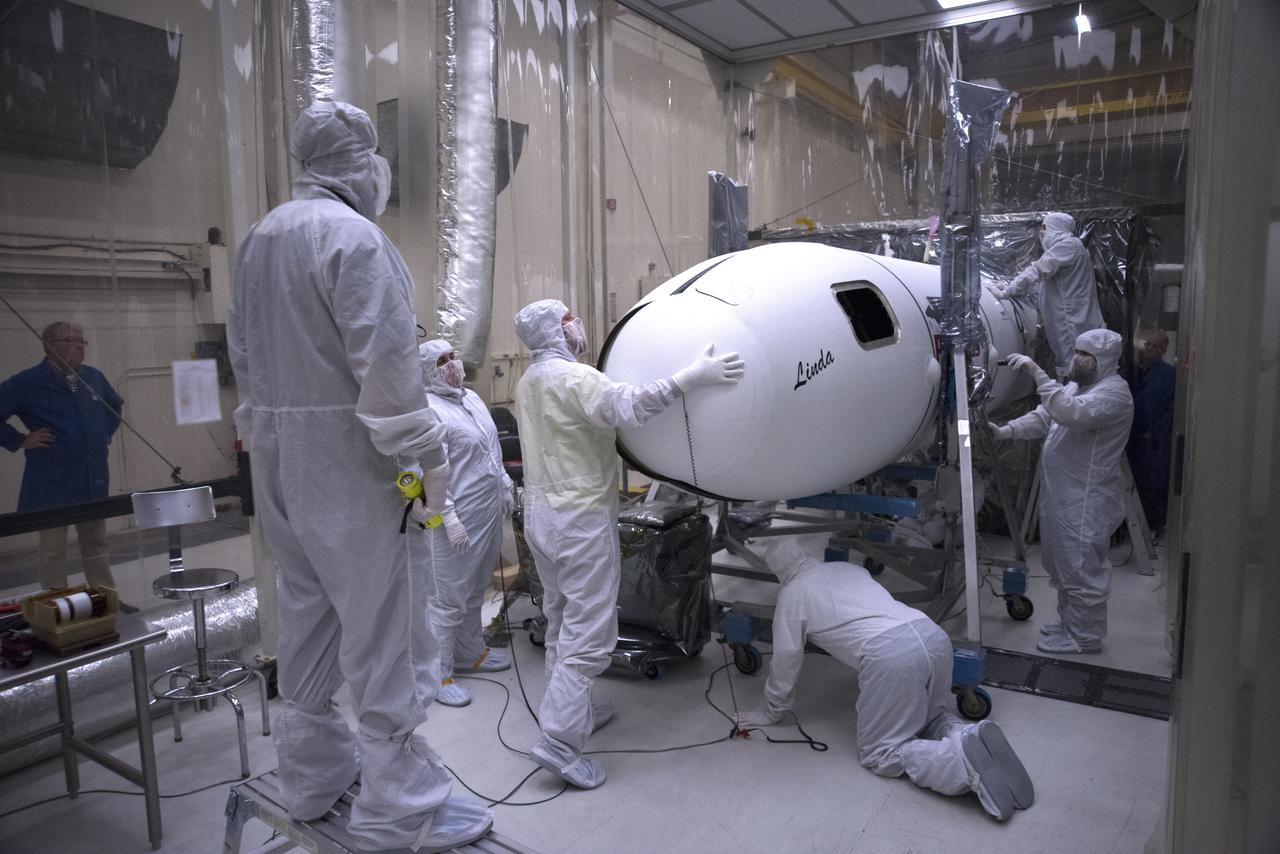
Inside a clean room in Building 1555 at Vandenberg Air Force Base in California, technicians install the second half of the Northrop Grumman Pegasus XL payload fairing around NASA's Ionospheric Connection Explorer (ICON) on Oct. 4, 2018. ICON is being prepared for its launch on the Pegasus XL, which is attached to the company's L-1011 Stargazer aircraft, from the Skid Strip at Cape Canaveral Air Force Station in Florida. Launch is scheduled for Oct. 26. ICON will study the frontier of space - the dynamic zone high in Earth's atmosphere where terrestrial weather from below meets space weather above. The explorer will help determine the physics of Earth's space environment and pave the way for mitigating its effects on our technology, communications systems and society.
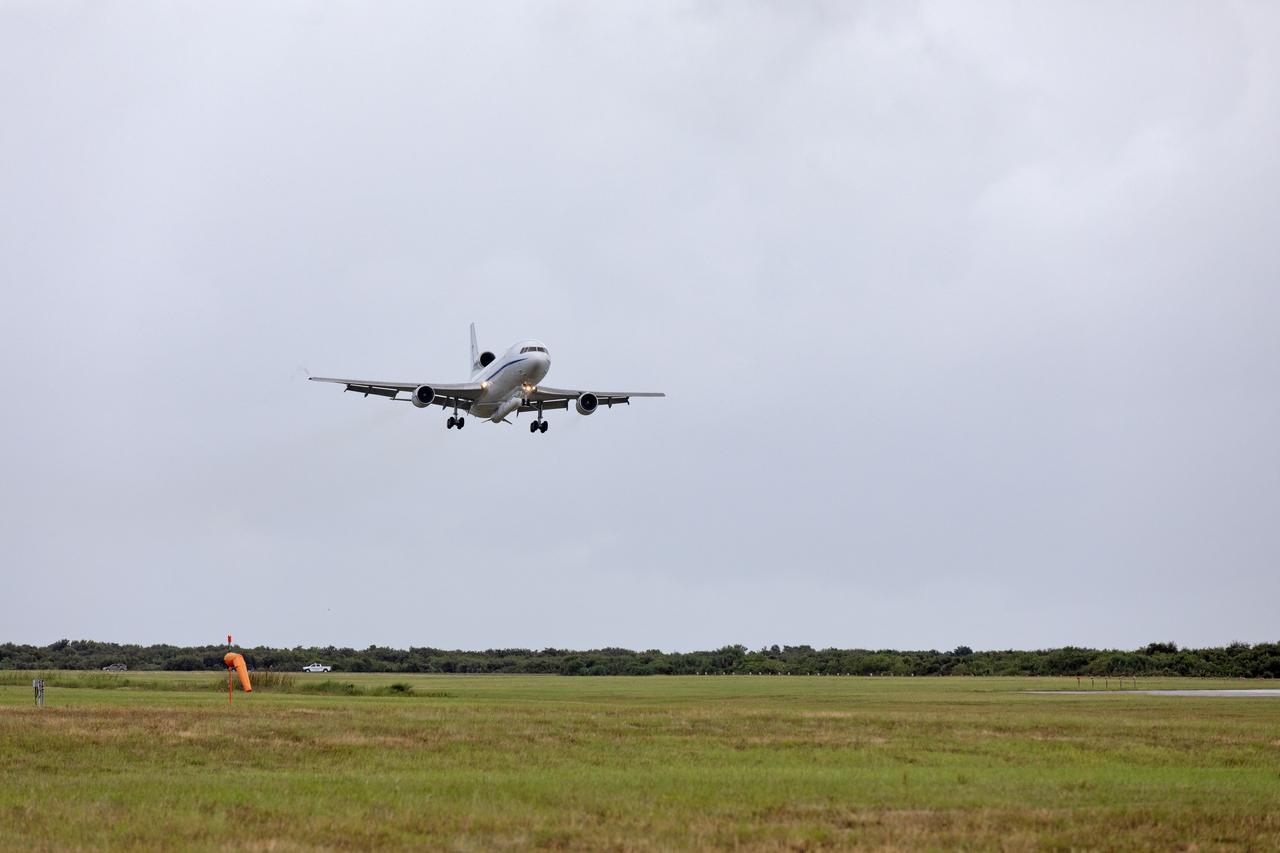
Northrop Grumman's L-1011 Stargazer descends toward the Skid Strip at Cape Canaveral Air Force Station in Florida, on Oct. 19, 2018. The company's Pegasus XL rocket, containing NASA's Ionospheric Connection Explorer (ICON), is attached beneath the aircraft. The Pegasus XL rocket will launch from the Skid Strip. ICON will study the frontier of space - the dynamic zone high in Earth's atmosphere where terrestrial weather from below meets space weather above. The explorer will help determine the physics of Earth's space environment and pave the way for mitigating its effects on our technology and communications systems.

A technician performs a ultraviolet light inspection of the Orbital ATK Pegasus starboard on May 22, 2018, prior to fully mating NASA's Ionospheric Connection Explorer (ICON) to Pegasus inside Building 1555 at Vandenberg Air Force Base in California. The explorer will launch on June 15, 2018, from Kwajalein Atoll in the Marshall Islands (June 14 in the continental United States) on the Pegasus XL, which is attached to the company's L-1011 Stargazer aircraft. ICON will study the frontier of space - the dynamic zone high in Earth's atmosphere where terrestrial weather from below meets space weather above. The explorer will help determine the physics of Earth's space environment and pave the way for mitigating its effects on our technology and communications systems.
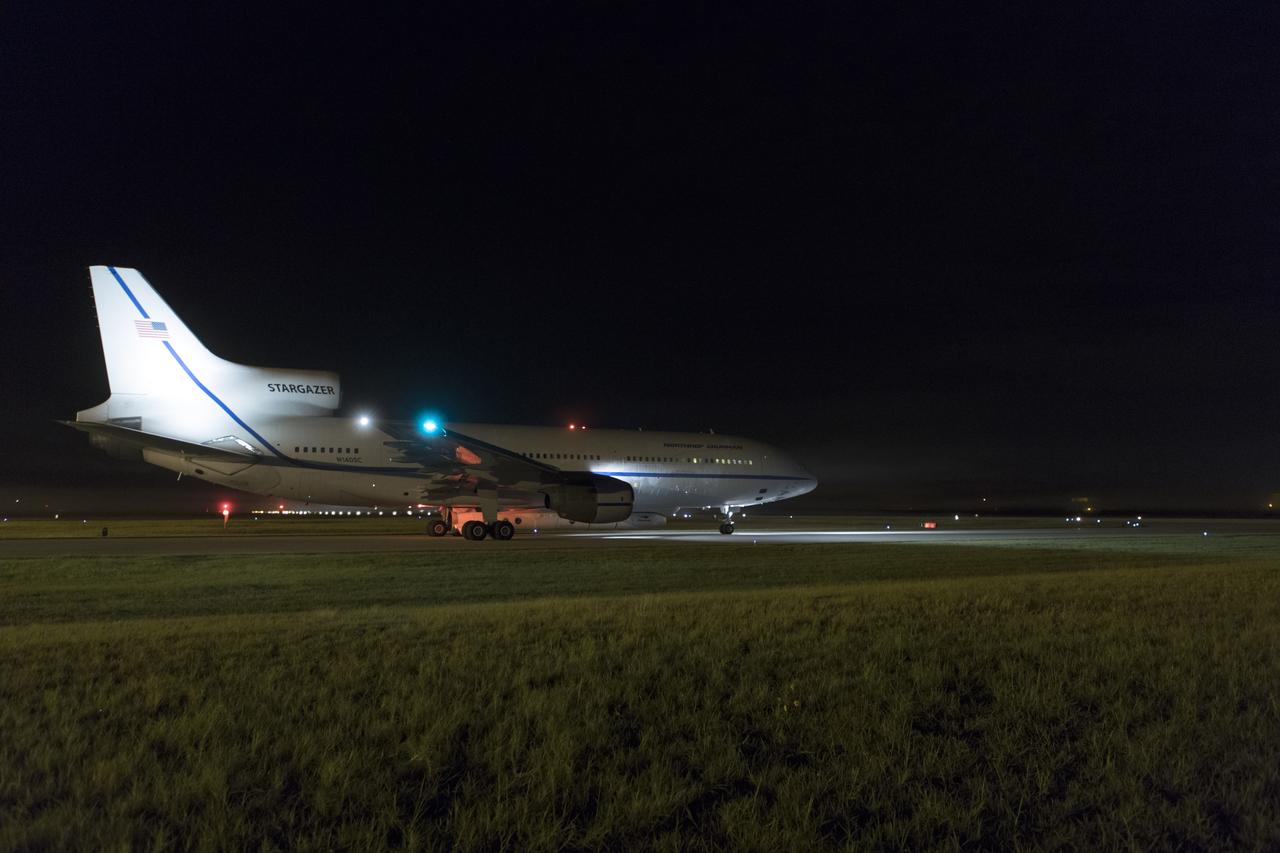
The Northrop Grumman L-1011 Stargazer aircraft, with the Pegasus XL rocket attached beneath, starts down the runway at the Skid Strip at Cape Canaveral Air Force Station in Florida on Nov. 7, 2018. NASA's Ionospheric Connection Explorer (ICON) is secured inside the rocket's payload fairing. The Pegasus XL rocket will be carried aloft by the Stargazer. ICON will study the frontier of space - the dynamic zone high in Earth's atmosphere where terrestrial weather from below meets space weather above. The explorer will help determine the physics of Earth's space environment and pave the way for mitigating its effects on our technology, communications systems and society.
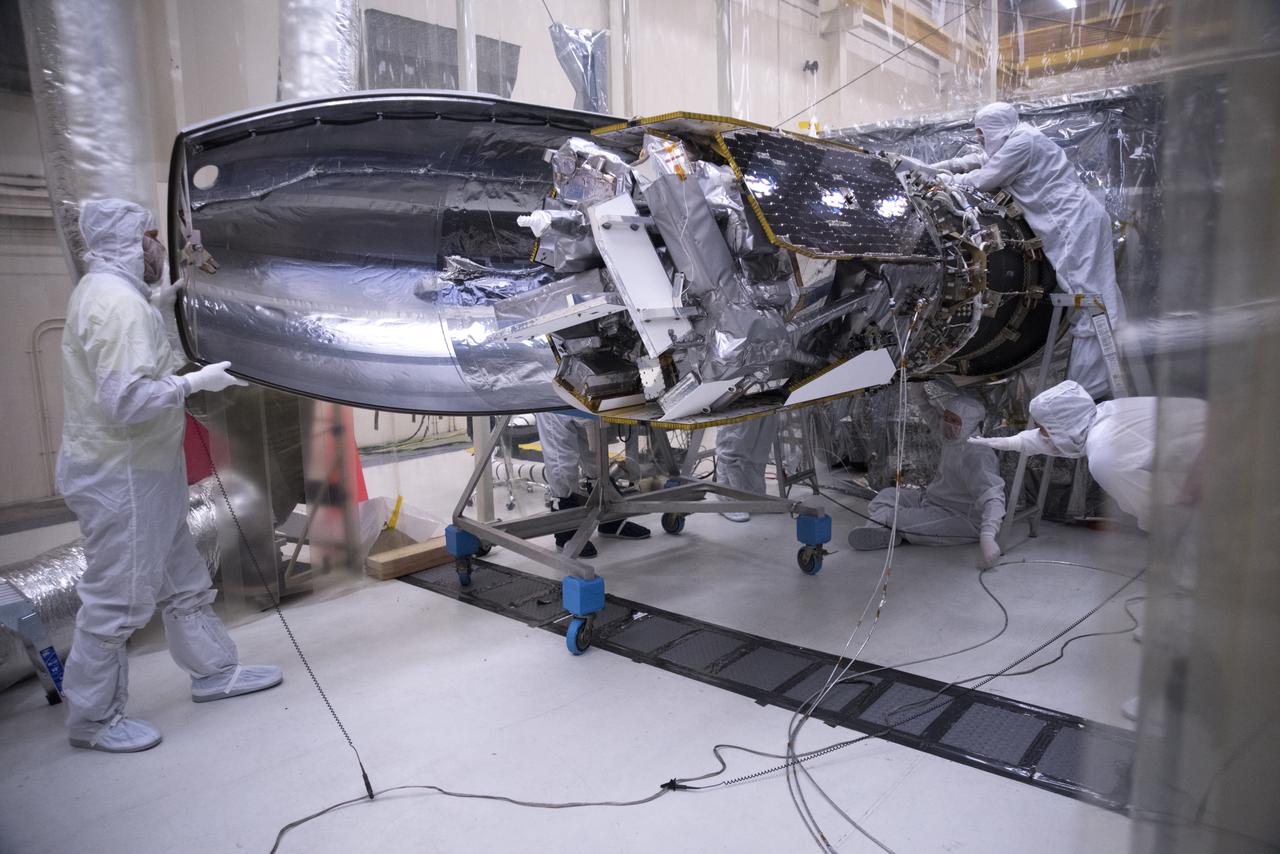
Inside a clean room in Building 1555 at Vandenberg Air Force Base in California, technicians install the first half of the Northrop Grumman Pegasus XL payload fairing around NASA's Ionospheric Connection Explorer (ICON) on Oct. 4, 2018. ICON is being prepared for its launch on the Pegasus XL, which is attached to the company's L-1011 Stargazer aircraft, from the Skid Strip at Cape Canaveral Air Force Station in Florida. Launch is scheduled for Oct. 26. ICON will study the frontier of space - the dynamic zone high in Earth's atmosphere where terrestrial weather from below meets space weather above. The explorer will help determine the physics of Earth's space environment and pave the way for mitigating its effects on our technology, communications systems and society.
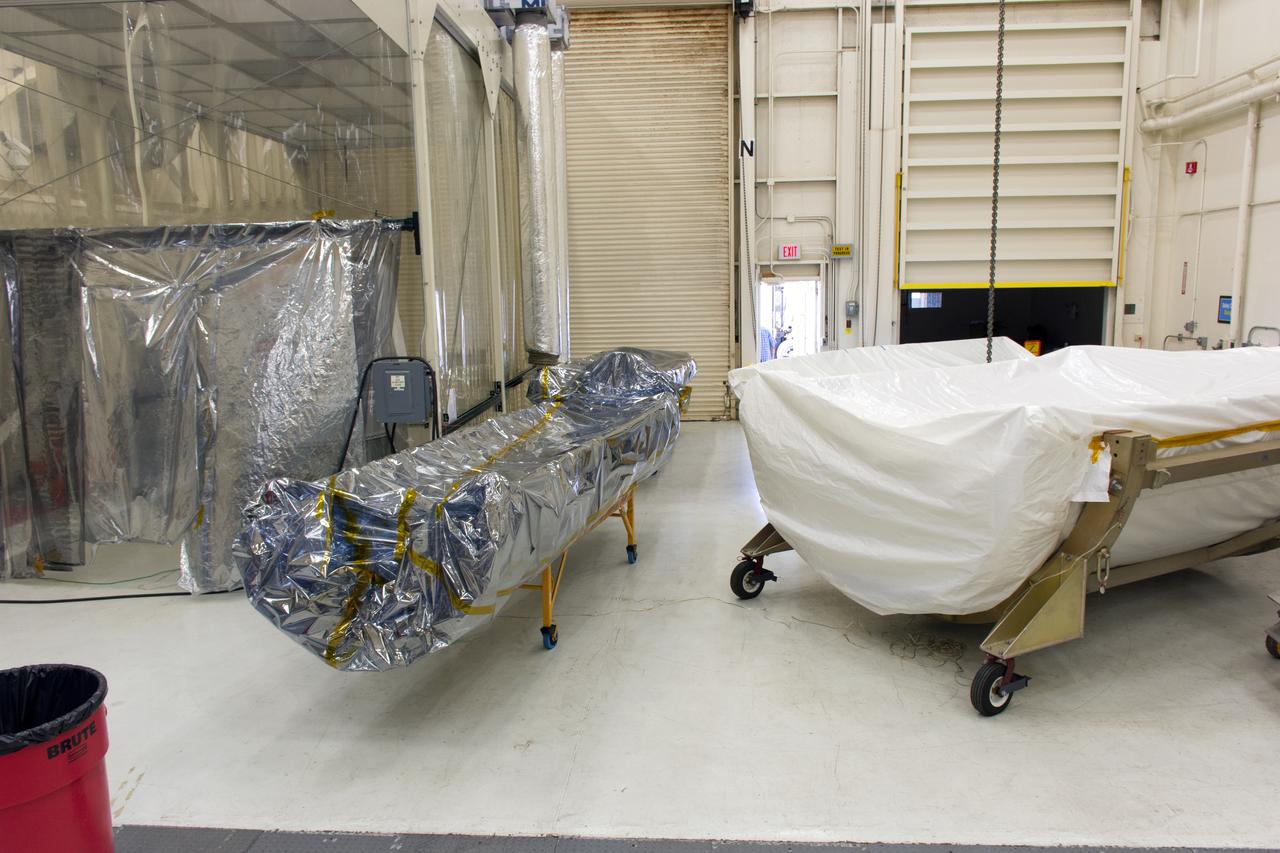
The first half of the payload fairing for the Orbital ATK Pegasus XL rocket is inside Building 1555 at Vandenberg Air Force Base in California on Aug. 4, 2018. The Pegasus rocket is being prepared for NASA's Ionospheric Connection Explorer, or ICON, mission. The explorer will launch on June 15, 2018, from Kwajalein Atoll in the Marshall Islands (June 14 in the continental United States) on Orbital ATK's Pegasus XL rocket, which is attached to the company's L-1011 Stargazer aircraft. ICON will study the frontier of space - the dynamic zone high in Earth's atmosphere where terrestrial weather from below meets space weather above. The explorer will help determine the physics of Earth's space environment and pave the way for mitigating its effects on our technology, communications systems and society.
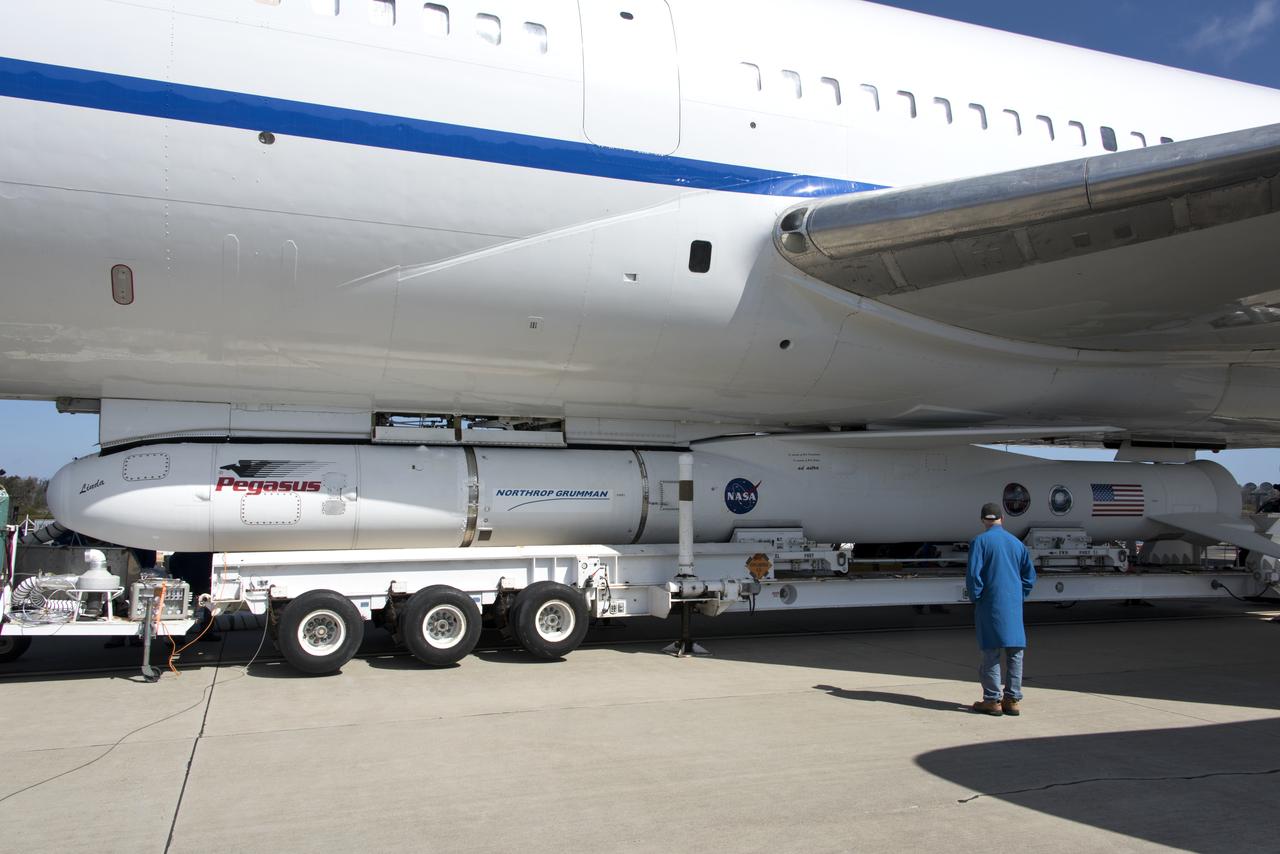
Northrop Grumman's Pegasus XL rocket, containing NASA's Ionospheric Connection Explorer (ICON), is attached beneath the company's L-1011 Stargazer aircraft at the hot pad at Vandenberg Air Force Base in California, on Oct. 14, 2018. The Stargazer will take off from the hot pad and travel to Cape Canaveral Air Force Station in Florida. The Pegasus XL rocket will launch ICON from the Skid Strip at the Cape. ICON will study the frontier of space - the dynamic zone high in Earth's atmosphere where terrestrial weather from below meets space weather above. The explorer will help determine the physics of Earth's space environment and pave the way for mitigating its effects on our technology and communications systems.
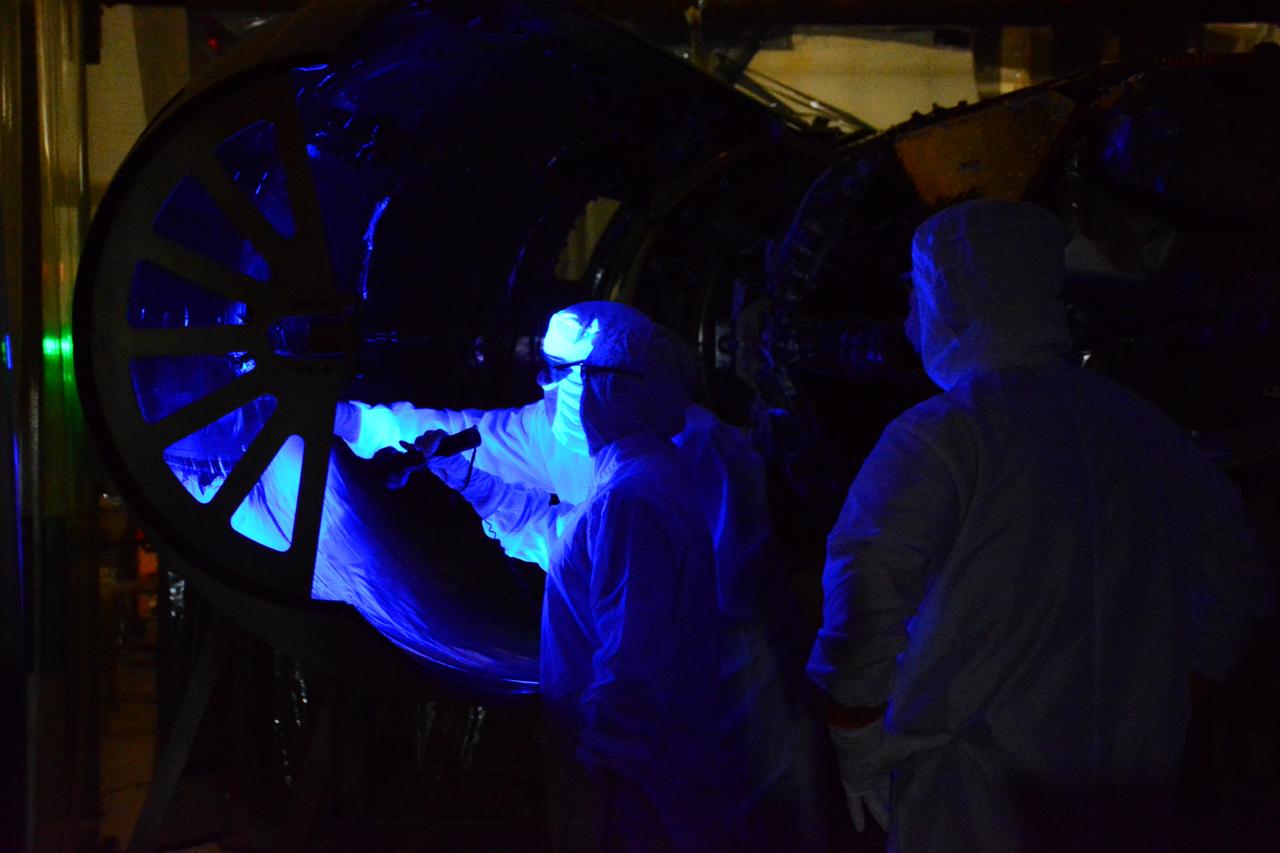
Technicians perform a black light inspection of the Northrop Grumman Pegasus XL rocket inside Building 1555 at Vandenberg Air Force Base in California, on Aug. 22, 2018. The Pegasus port and starboard payload fairings will be installed around NASA's Ionospheric Connection Explorer (ICON). The Pegasus XL rocket, attached beneath the company's L-1011 Stargazer aircraft, will launch ICON from the Skid Strip at Cape Canaveral Air Force Station in Florida. Launch is scheduled for Oct. 26. ICON will study the frontier of space - the dynamic zone high in Earth's atmosphere where terrestrial weather from below meets space weather above. The explorer will help determine the physics of Earth's space environment and pave the way for mitigating its effects on our technology and communications systems.
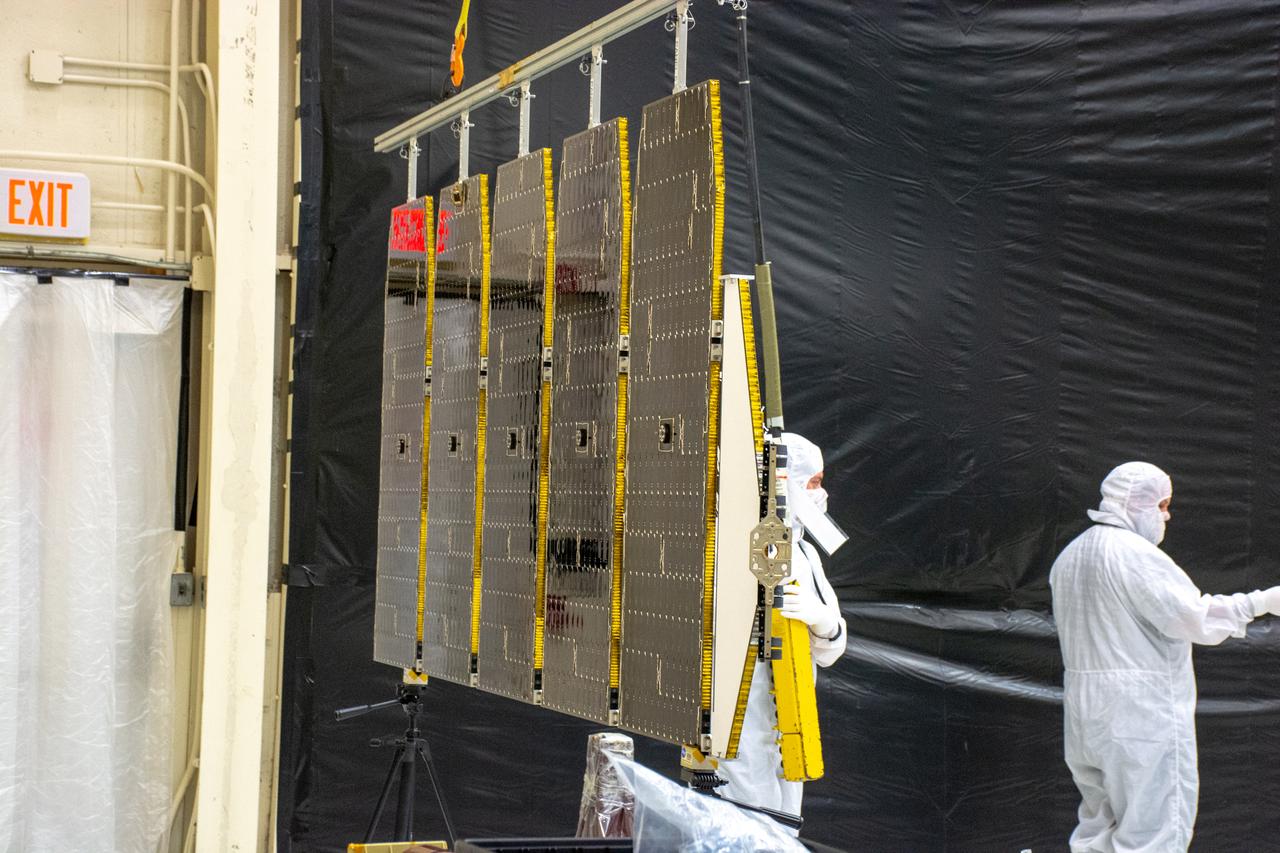
Technicians remove the solar array from NASA's Ionospheric Connection Explorer (ICON) inside Building 1555 at Vandenberg Air Force Base in California on Aug. 10, 2019. ICON is being prepared for its launch on a Pegasus XL rocket, attached beneath the company's L-1011 Stargazer aircraft. Launch is scheduled for Oct. 10, 2019, from the Skid Strip at Cape Canaveral Air Force Station in Florida. ICON will study the frontier of space - the dynamic zone high in Earth's atmosphere where terrestrial weather from below meets space weather above. The explorer will help determine the physics of Earth's space environment and pave the way for mitigating its effects on our technology and communications systems.
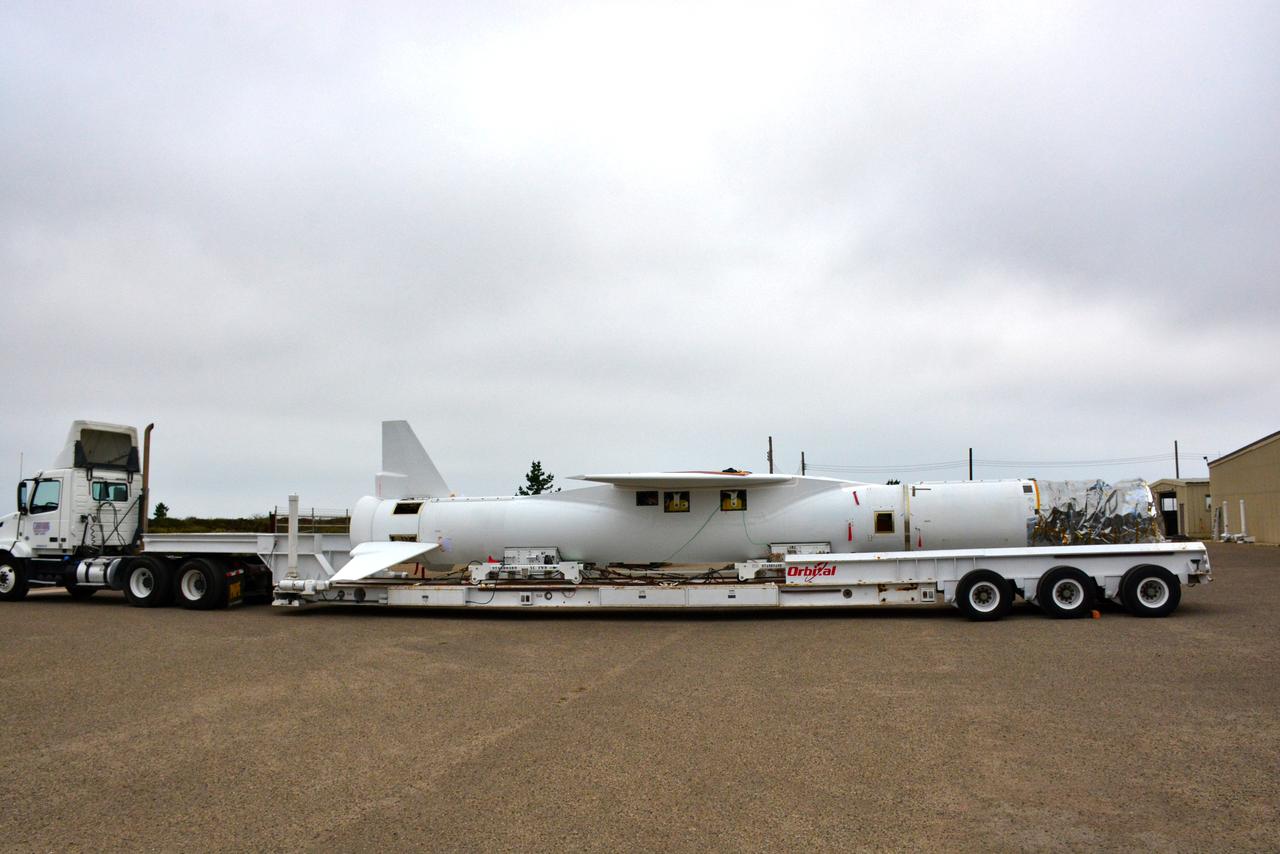
The Orbital ATK Pegasus XL rocket, with NASA's Ionospheric Connection Explorer (ICON) spacecraft attached, is moved on an assembly integration trailer from one high bay to another Aug. 23, 2017, at Building 1555 at Vandenberg Air Force Base in California. The Pegasus rocket is being prepared for the ICON mission. The explorer will launch on June 15, 2018, from Kwajalein Atoll in the Marshall Islands (June 14 in the continental United States) on the Pegasus XL, which is attached to the company's L-1011 Stargazer aircraft. ICON will study the frontier of space - the dynamic zone high in Earth's atmosphere where terrestrial weather from below meets space weather above. The explorer will help determine the physics of Earth's space environment and pave the way for mitigating its effects on our technology and communications systems.
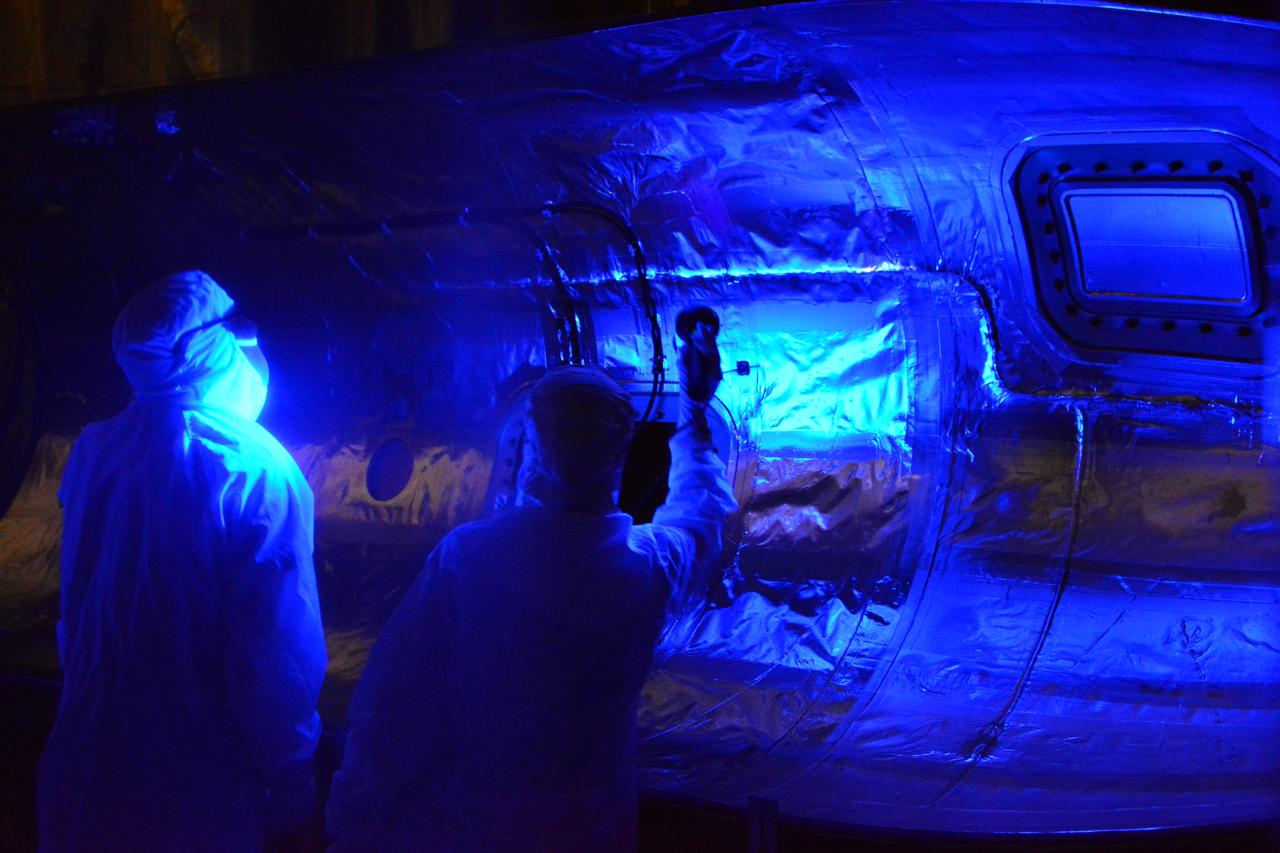
Technicians begin a black light inspection of the Northrop Grumman Pegasus XL rocket inside Building 1555 at Vandenberg Air Force Base in California, on Aug. 22, 2018. The Pegasus port and starboard payload fairings will be installed around NASA's Ionospheric Connection Explorer (ICON). The Pegasus XL rocket, attached beneath the company's L-1011 Stargazer aircraft, will launch ICON from the Skid Strip at Cape Canaveral Air Force Station in Florida. Launch is scheduled for Oct. 26. ICON will study the frontier of space - the dynamic zone high in Earth's atmosphere where terrestrial weather from below meets space weather above. The explorer will help determine the physics of Earth's space environment and pave the way for mitigating its effects on our technology and communications systems.
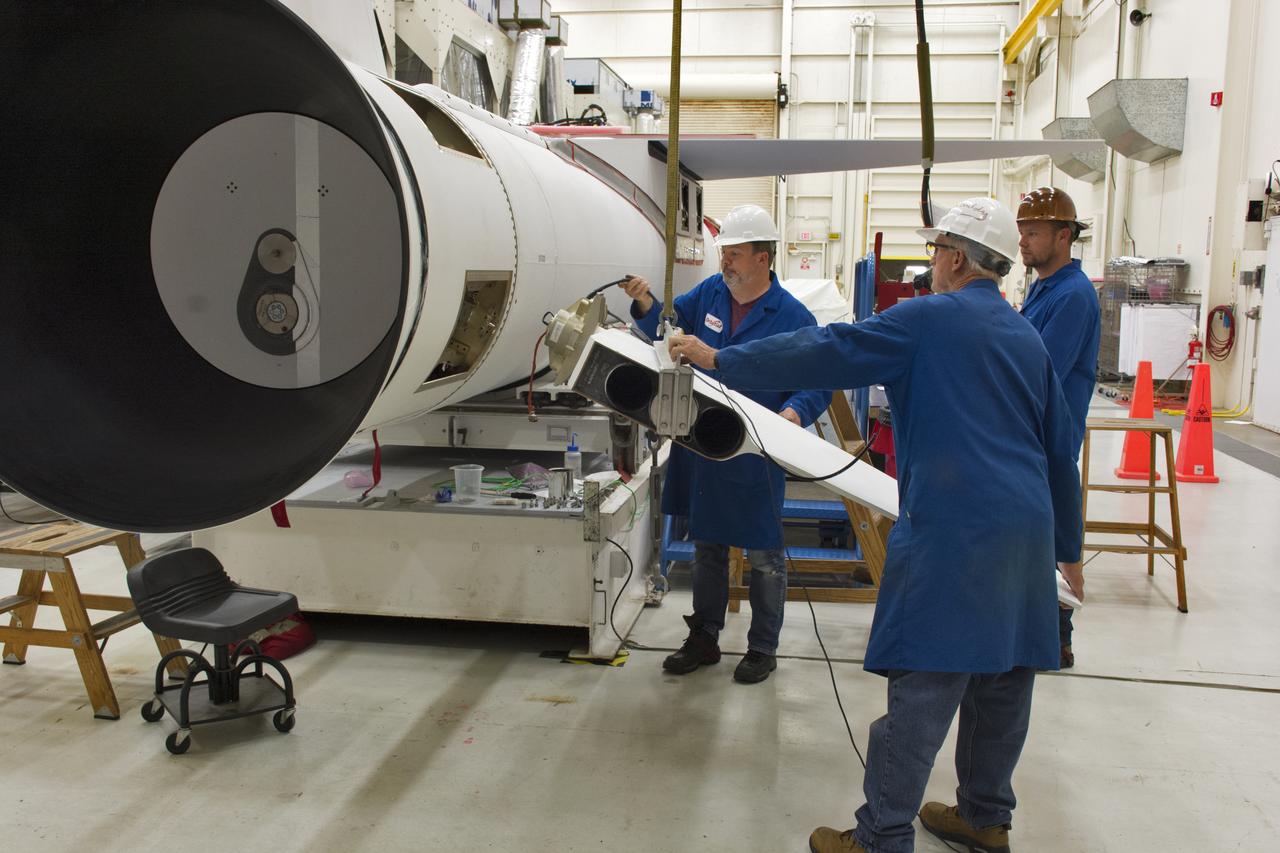
Technicians install the starboard fin on the Orbital ATK Pegasus XL rocket July 8, 2017, inside Building 1555 at Vandenberg Air Force Base in California. The Pegasus rocket is being prepared for NASA's Ionospheric Connection Explorer, or ICON, mission. ICON will launch on June 15 from Kwajalein Atoll in the Marshall Islands (June 14 in the continental United States) on Orbital ATK's Pegasus XL rocket, which is attached to the company's L-1011 Stargazer aircraft. ICON will study the frontier of space - the dynamic zone high in Earth's atmosphere where terrestrial weather from below meets space weather above. The explorer will help determine the physics of Earth's space environment and pave the way for mitigating its effects on our technology, communications systems and society.
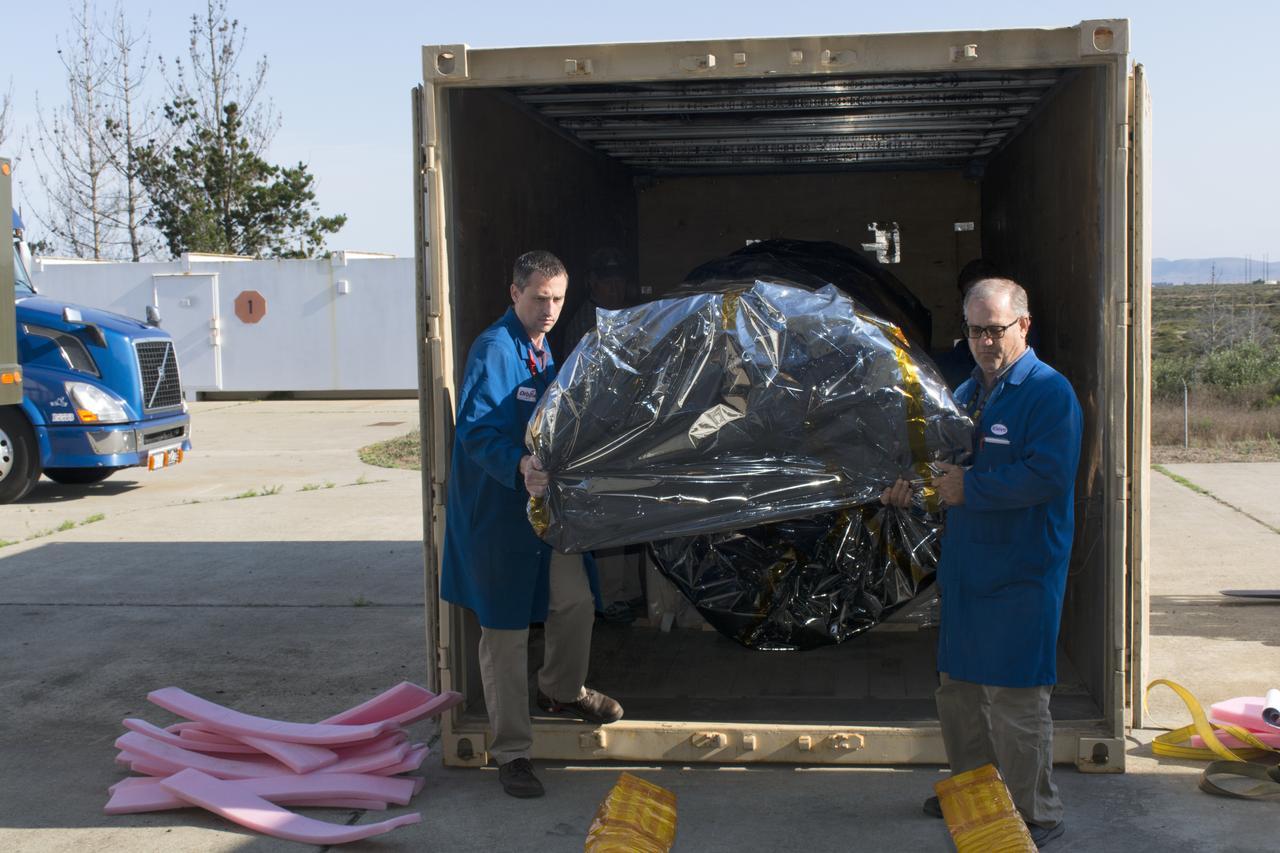
Orbital ATK technicians remove the first half of the payload fairing for the Orbital ATK Pegasus XL rocket from its shipping container Aug. 4, 2017, at Vandenberg Air Force Base in California. The Pegasus rocket is being prepared for NASA's Ionospheric Connection Explorer, or ICON, mission. The explorer will launch on June 15, 2018, from Kwajalein Atoll in the Marshall Islands (June 14 in the continental United States) on Orbital ATK's Pegasus XL rocket, which is attached to the company's L-1011 Stargazer aircraft. ICON will study the frontier of space - the dynamic zone high in Earth's atmosphere where terrestrial weather from below meets space weather above. The explorer will help determine the physics of Earth's space environment and pave the way for mitigating its effects on our technology, communications systems and society.
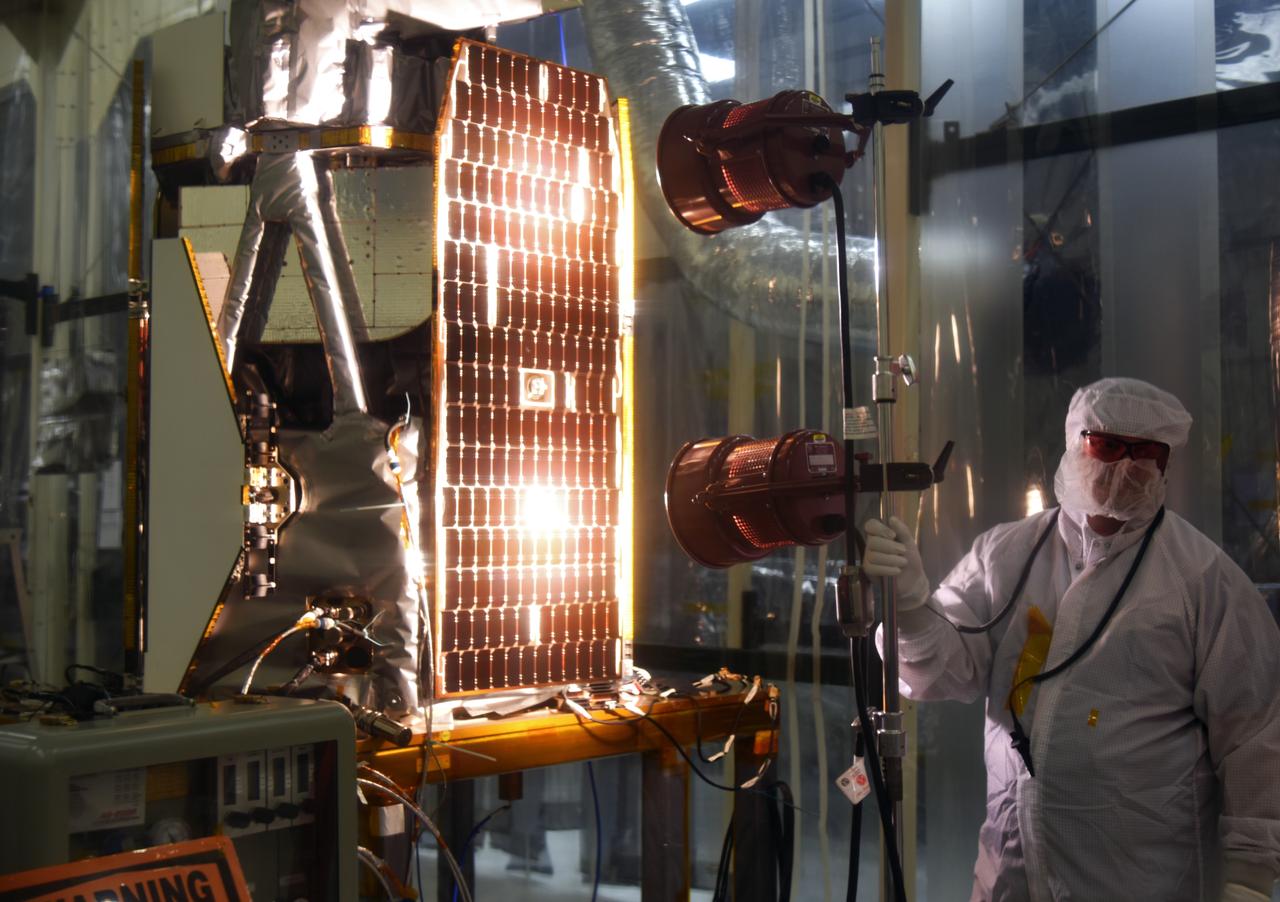
A solar array illumination test is performed on NASA's Ionospheric Connection Explorer (ICON) in a clean room on May 4, 2018, inside Building 1555 at Vandenberg Air Force Base in California. The test checks for any imperfections and confirms that the solar arrays are functioning properly. The explorer will launch on June 15, 2018, from Kwajalein Atoll in the Marshall Islands (June 14 in the continental United States) on Orbital ATK's Pegasus XL rocket, which is attached to the company's L-1011 Stargazer aircraft. ICON will study the frontier of space - the dynamic zone high in Earth's atmosphere where terrestrial weather from below meets space weather above. The explorer will help determine the physics of Earth's space environment and pave the way for mitigating its effects on our technology, communications systems and society.
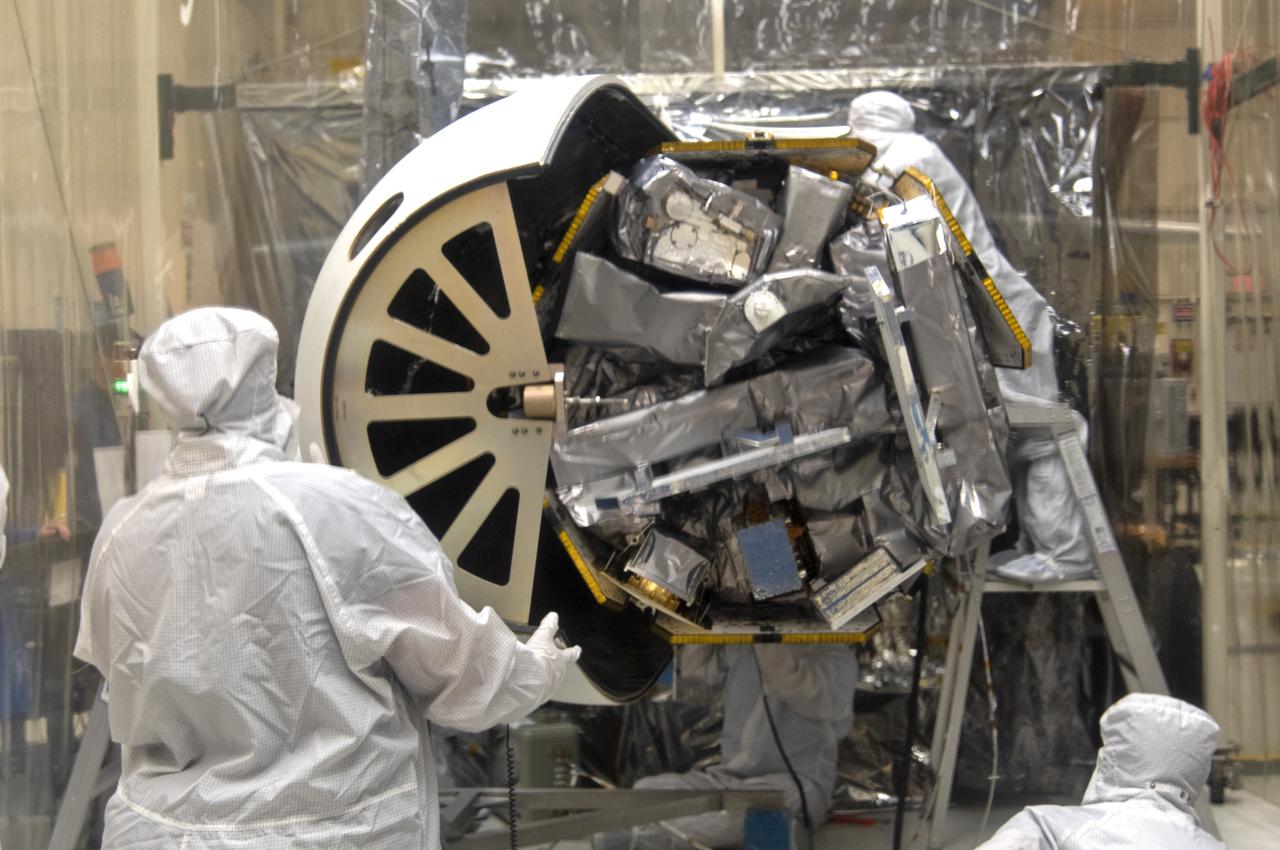
Inside a clean room in Building 1555 at Vandenberg Air Force Base in California, technicians begin to install the first half of the Northrop Grumman Pegasus XL payload fairing around NASA's Ionospheric Connection Explorer (ICON) on Aug. 22, 2018. ICON is being prepared for its launch on the Pegasus XL rocket, which is attached beneath the company's L-1011 Stargazer aircraft. Launch is scheduled for Oct. 26, from the Skid Strip at Cape Canaveral Air Force Station in Florida. ICON will study the frontier of space - the dynamic zone high in Earth's atmosphere where terrestrial weather from below meets space weather above. The explorer will help determine the physics of Earth's space environment and pave the way for mitigating its effects on our technology, communications systems and society.
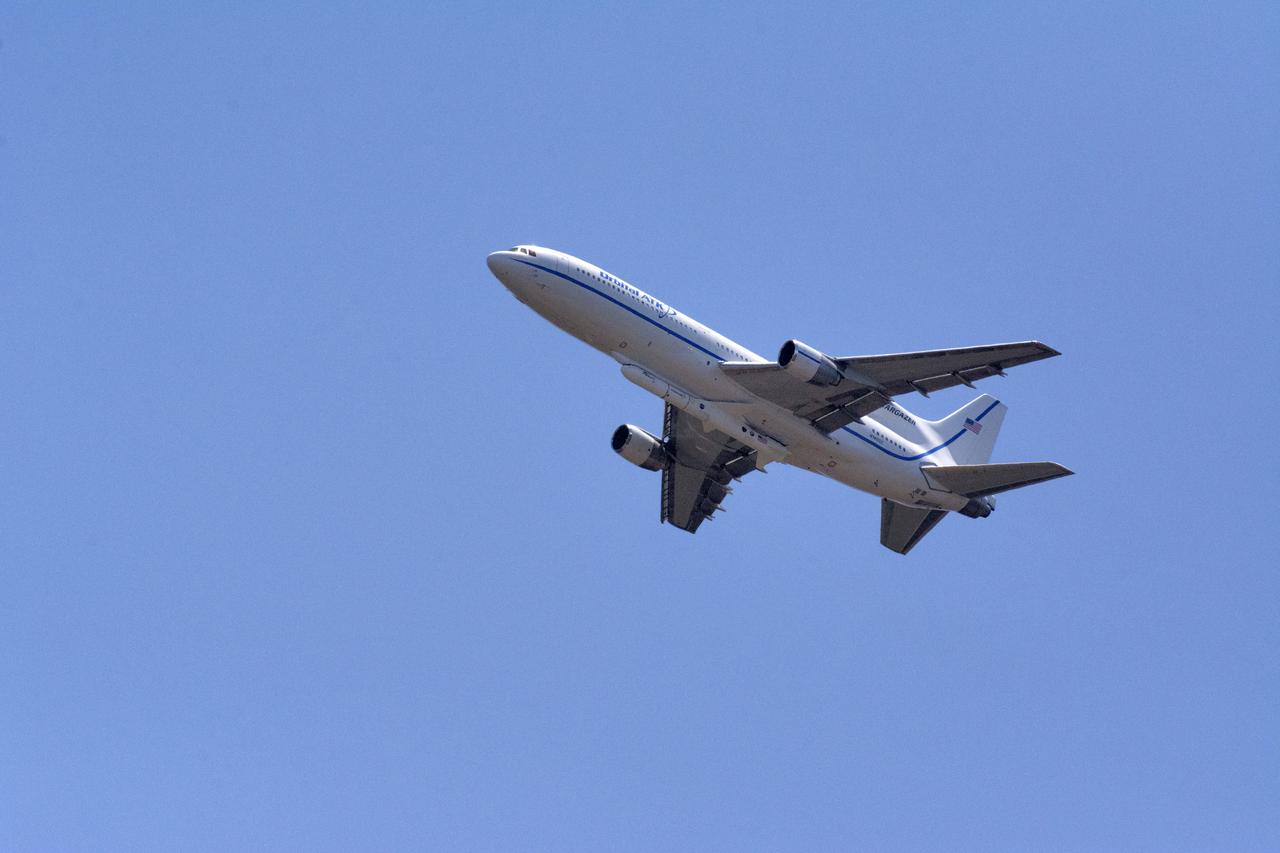
Northrop Grumman's L-1011 Stargazer takes off from the hot pad at Vandenberg Air Force Base in California on June 6, 2018. The company's Pegasus XL rocket, containing NASA's Ionospheric Connection Explorer (ICON), is attached beneath the aircraft. The explorer will launch on June 15, 2018, from Kwajalein Atoll in the Marshall Islands (June 14 in the continental United States). ICON will study the frontier of space - the dynamic zone high in Earth's atmosphere where terrestrial weather from below meets space weather above. The explorer will help determine the physics of Earth's space environment and pave the way for mitigating its effects on our technology, communications systems and society.
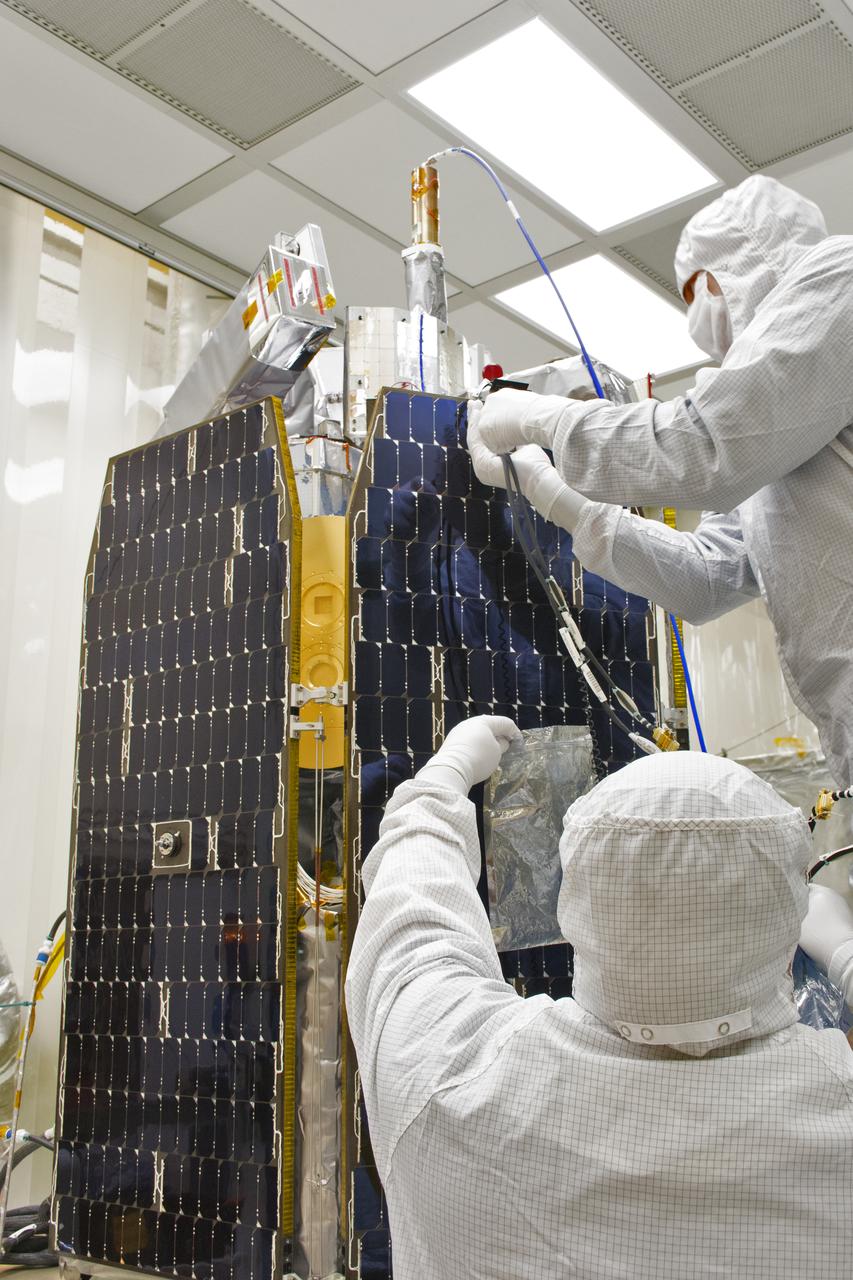
Technicians prepare NASA's Ionospheric Connection Explorer (ICON) for a solar array illumination test in a clean room inside Building 1555 at Vandenberg Air Force Base in California on May 4, 2018. The test checks for any imperfections and confirms that the solar arrays are functioning properly. The explorer will launch on June 15, 2018, from Kwajalein Atoll in the Marshall Islands (June 14 in the continental United States) on Orbital ATK's Pegasus XL rocket, which is attached to the company's L-1011 Stargazer aircraft. ICON will study the frontier of space - the dynamic zone high in Earth's atmosphere where terrestrial weather from below meets space weather above. The explorer will help determine the physics of Earth's space environment and pave the way for mitigating its effects on our technology, communications systems and society.
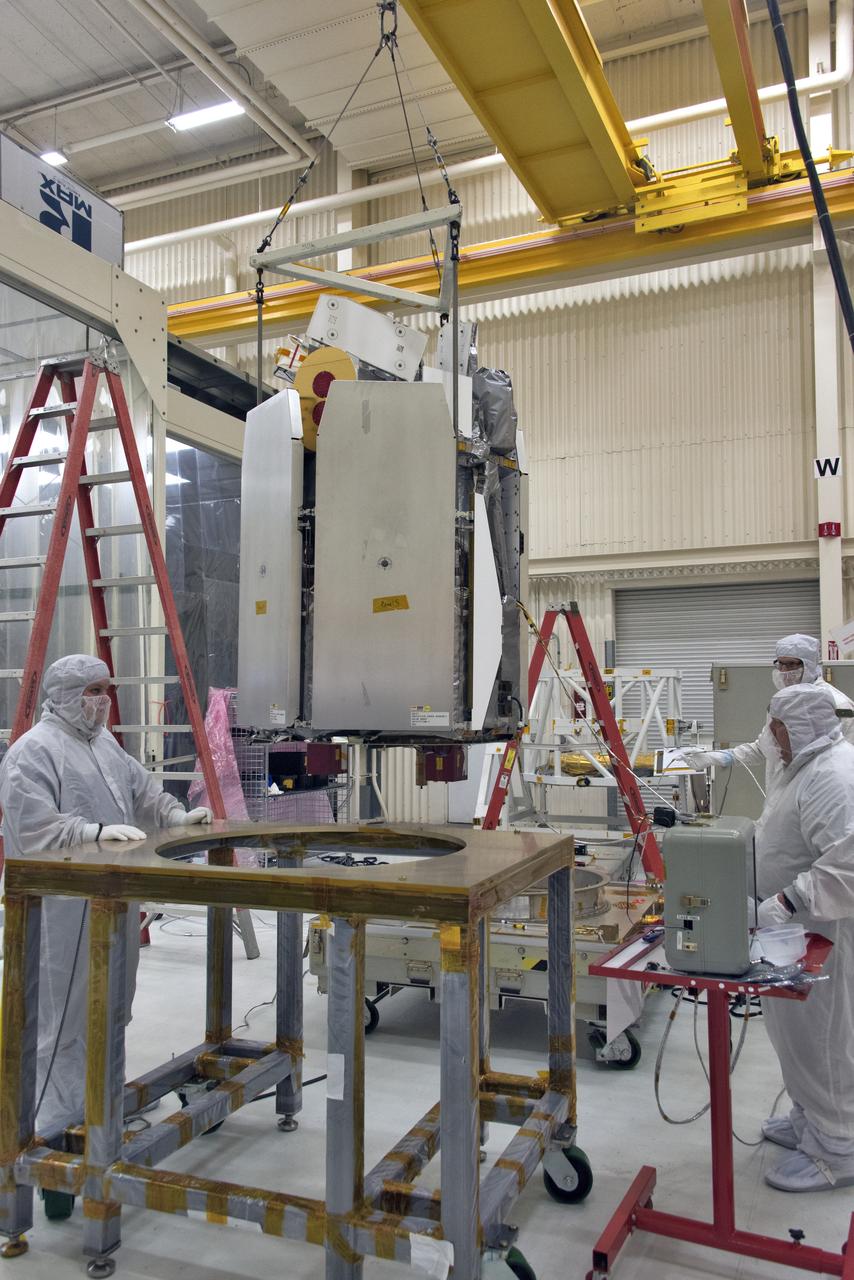
A crane lifts and moves NASA's Ionospheric Connection Explorer (ICON) to a work stand on May 1, 2018, inside Building 1555 at Vandenberg Air Force Base in California. The explorer will launch on June 15, 2018, from Kwajalein Atoll in the Marshall Islands (June 14 in the continental United States) on Orbital ATK's Pegasus XL rocket, which is attached to the company's L-1011 Stargazer aircraft. ICON will study the frontier of space - the dynamic zone high in Earth's atmosphere where terrestrial weather from below meets space weather above. The explorer will help determine the physics of Earth's space environment and pave the way for mitigating its effects on our technology, communications systems and society.
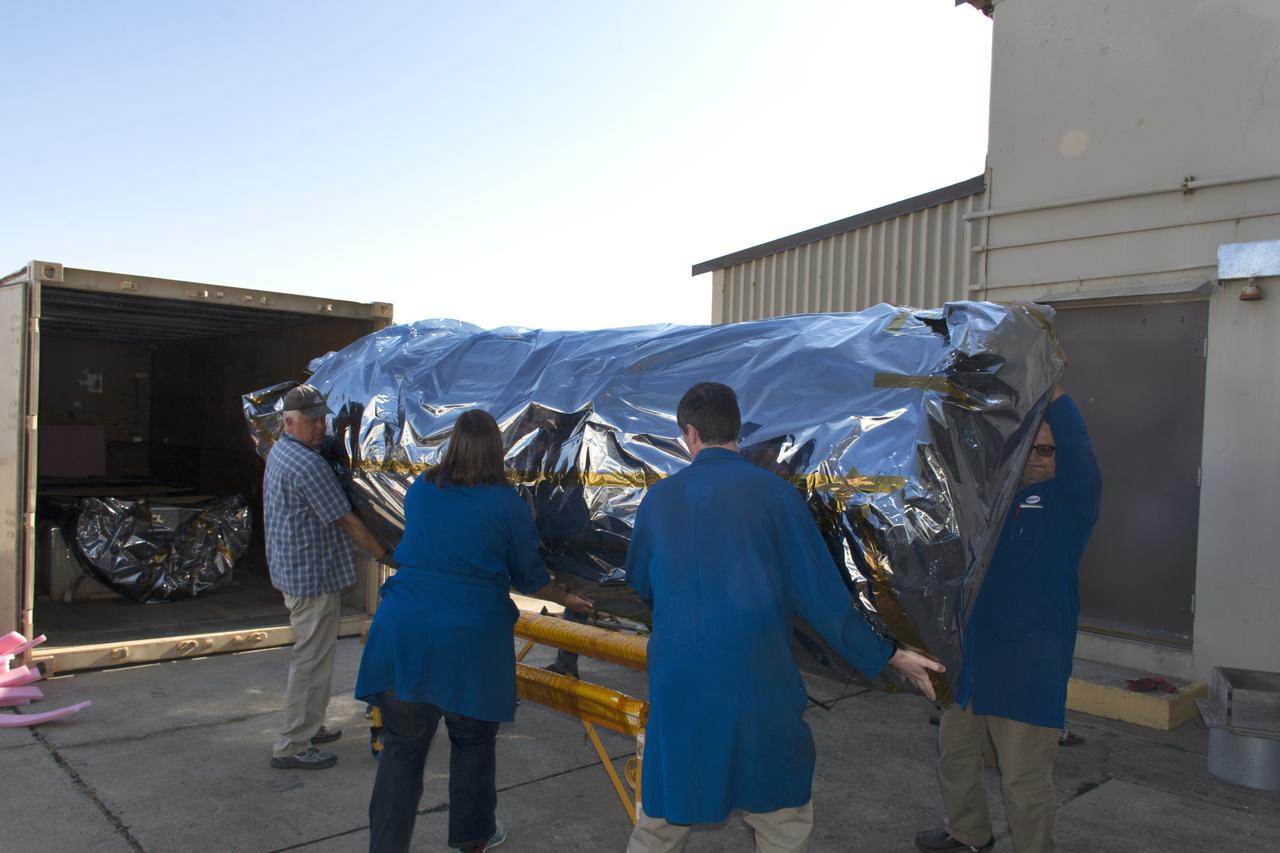
Orbital ATK technicians remove the first half of the payload fairing for the Orbital ATK Pegasus XL rocket from its shipping container Aug. 4, 2017, at Vandenberg Air Force Base in California. The Pegasus rocket is being prepared for NASA's Ionospheric Connection Explorer, or ICON, mission. The explorer will launch on June 15, 2018, from Kwajalein Atoll in the Marshall Islands (June 14 in the continental United States) on Orbital ATK's Pegasus XL rocket, which is attached to the company's L-1011 Stargazer aircraft. ICON will study the frontier of space - the dynamic zone high in Earth's atmosphere where terrestrial weather from below meets space weather above. The explorer will help determine the physics of Earth's space environment and pave the way for mitigating its effects on our technology, communications systems and society.
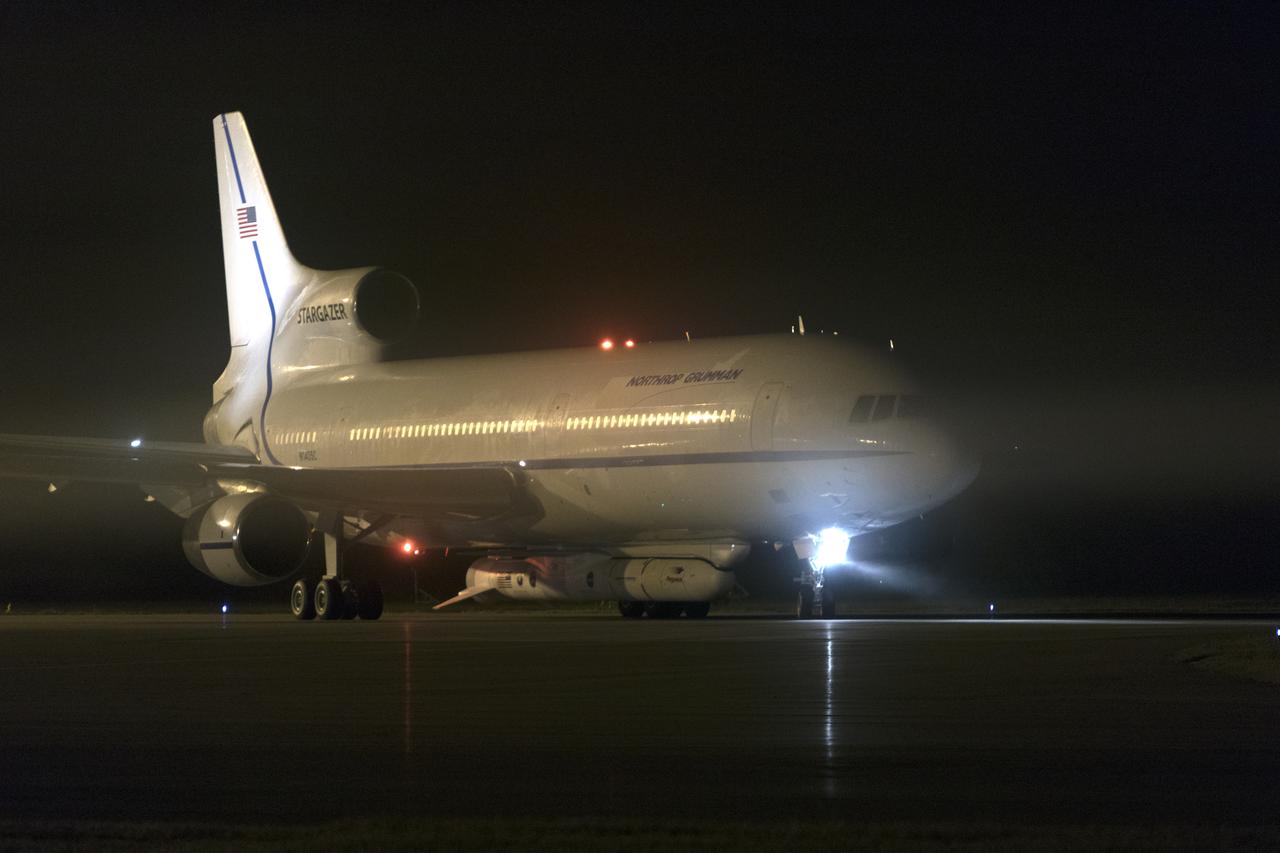
The Northrop Grumman L-1011 Stargazer aircraft, with the Pegasus XL rocket attached beneath, starts down the runway at the Skid Strip at Cape Canaveral Air Force Station in Florida on Nov. 7, 2018. NASA's Ionospheric Connection Explorer (ICON) is secured inside the rocket's payload fairing. The Pegasus XL rocket will be carried aloft by the Stargazer. ICON will study the frontier of space - the dynamic zone high in Earth's atmosphere where terrestrial weather from below meets space weather above. The explorer will help determine the physics of Earth's space environment and pave the way for mitigating its effects on our technology, communications systems and society.
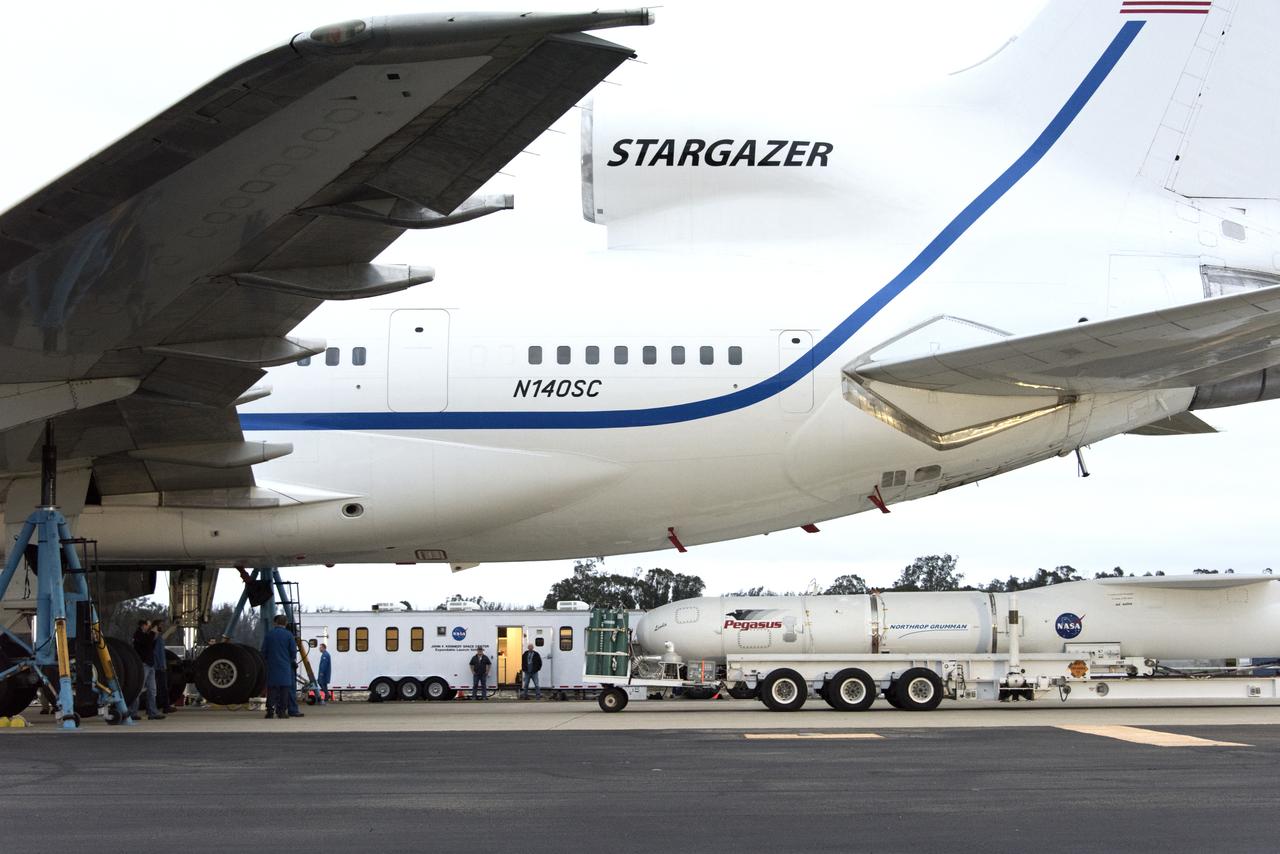
Preparations are underway to attach Northrop Grumman's Pegasus XL rocket, containing NASA's Ionospheric Connection Explorer (ICON), beneath the company's L-1011 Stargazer aircraft at the hot pad at Vandenberg Air Force Base in California, on Oct. 14, 2018. The Stargazer will take off from the hot pad and travel to Cape Canaveral Air Force Station in Florida. The Pegasus XL rocket will launch ICON from the Skid Strip at the Cape. ICON will study the frontier of space - the dynamic zone high in Earth's atmosphere where terrestrial weather from below meets space weather above. The explorer will help determine the physics of Earth's space environment and pave the way for mitigating its effects on our technology and communications systems.
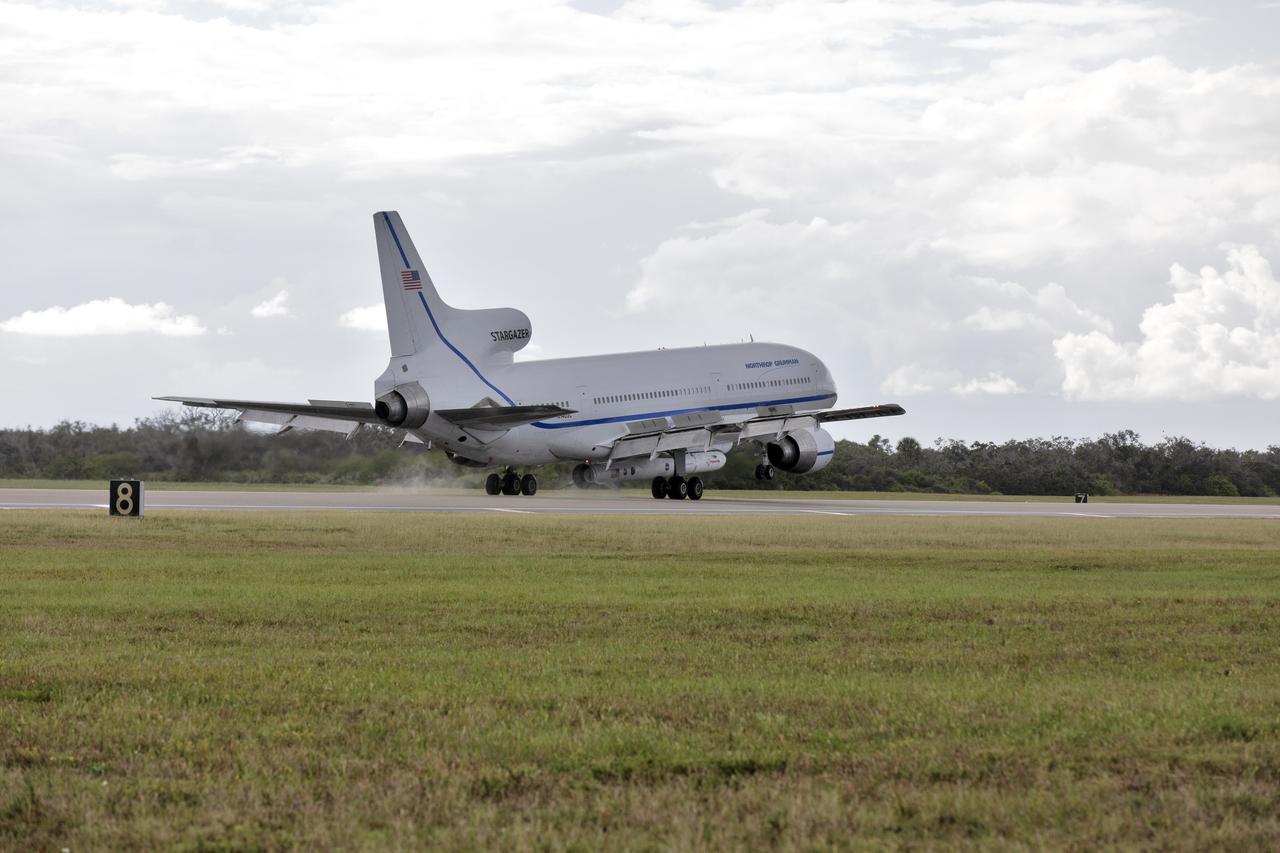
Northrop Grumman's L-1011 Stargazer touches down at the Skid Strip at Cape Canaveral Air Force Station in Florida, on Oct. 19, 2018. The company's Pegasus XL rocket, containing NASA's Ionospheric Connection Explorer (ICON), is attached beneath the aircraft. The Pegasus XL rocket will launch from the Skid Strip. ICON will study the frontier of space - the dynamic zone high in Earth's atmosphere where terrestrial weather from below meets space weather above. The explorer will help determine the physics of Earth's space environment and pave the way for mitigating its effects on our technology and communications systems.
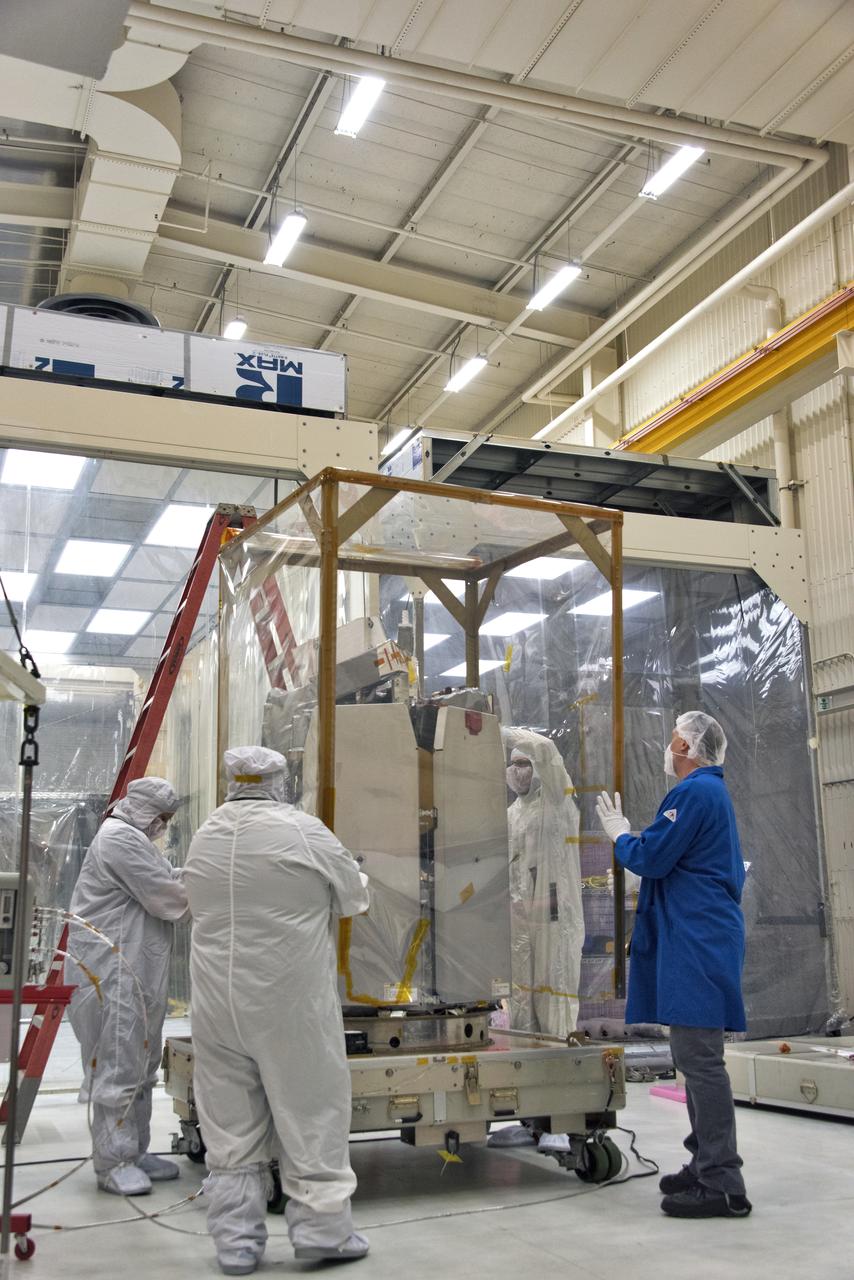
Technicians prepare NASA's Ionospheric Connection Explorer (ICON) for lift and transfer to a work stand on May 1, 2018, inside Building 1555 at Vandenberg Air Force Base in California. The explorer will launch on June 15, 2018, from Kwajalein Atoll in the Marshall Islands (June 14 in the continental United States) on Orbital ATK's Pegasus XL rocket, which is attached to the company's L-1011 Stargazer aircraft. ICON will study the frontier of space - the dynamic zone high in Earth's atmosphere where terrestrial weather from below meets space weather above. The explorer will help determine the physics of Earth's space environment and pave the way for mitigating its effects on our technology, communications systems and society.
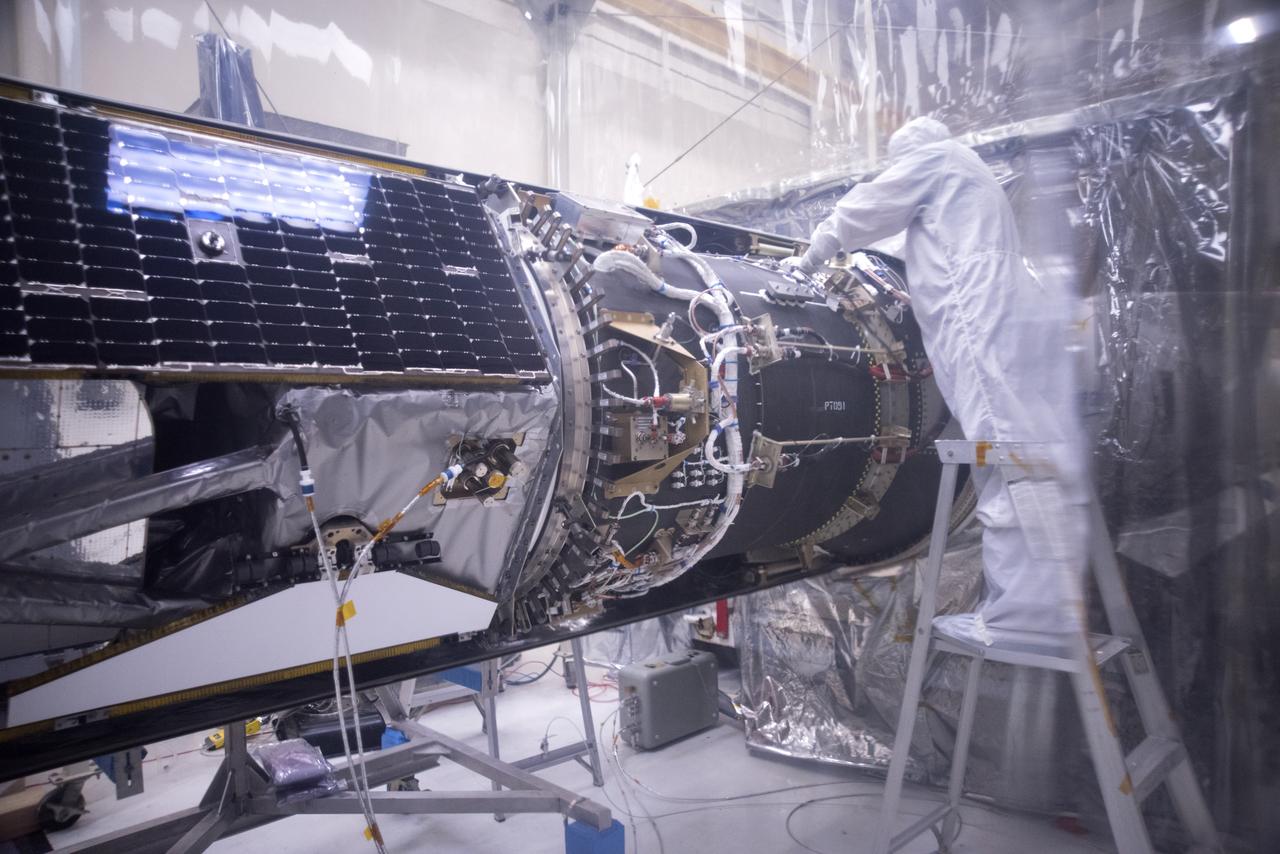
Inside a clean room in Building 1555 at Vandenberg Air Force Base in California, technicians install the first half of the Northrop Grumman Pegasus XL payload fairing around NASA's Ionospheric Connection Explorer (ICON) on Oct. 4, 2018. ICON is being prepared for its launch on the Pegasus XL, which is attached to the company's L-1011 Stargazer aircraft, from the Skid Strip at Cape Canaveral Air Force Station in Florida. Launch is scheduled for Oct. 26. ICON will study the frontier of space - the dynamic zone high in Earth's atmosphere where terrestrial weather from below meets space weather above. The explorer will help determine the physics of Earth's space environment and pave the way for mitigating its effects on our technology, communications systems and society.
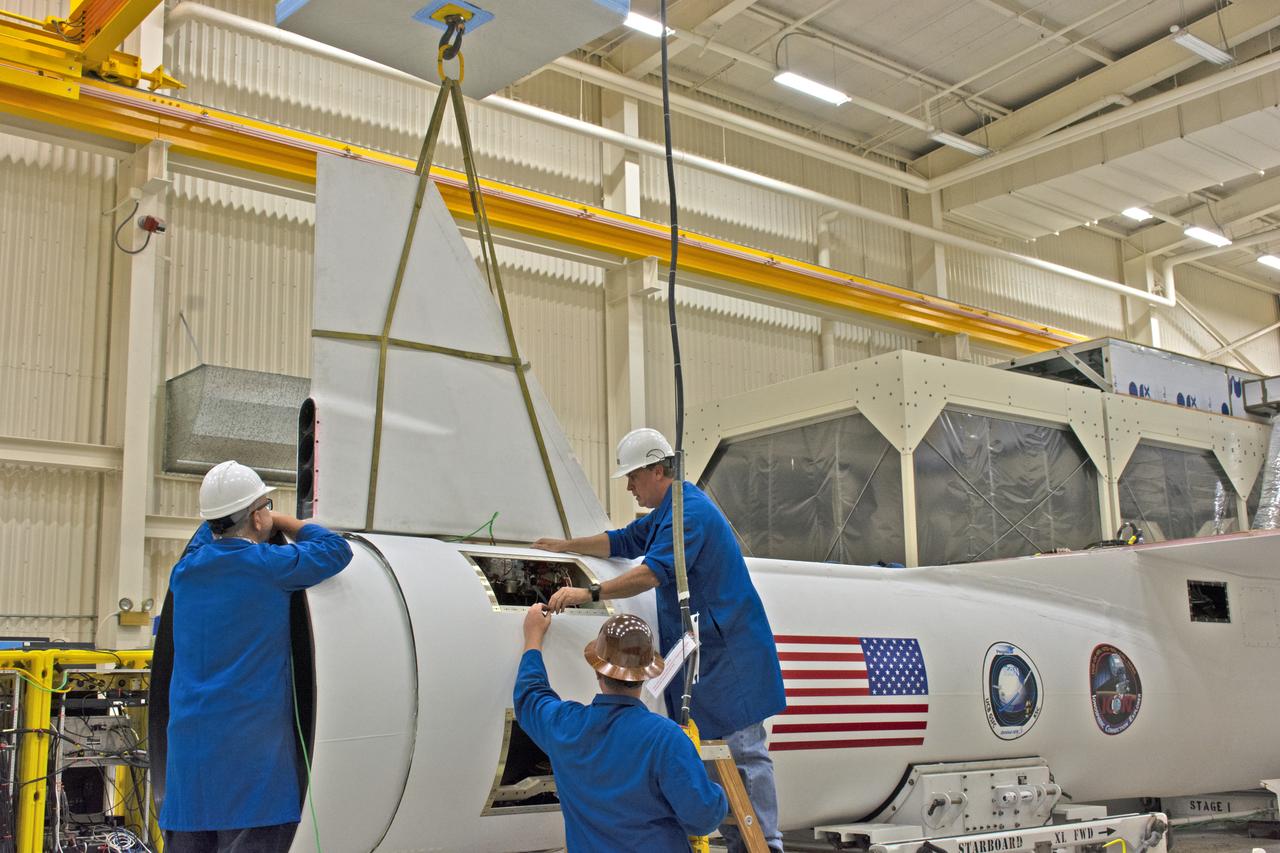
Inside Building 1555 at Vandenberg Air Force Base in California, technicians install the first of two fins on Northrop Grumman's Pegasus XL rocket on July 30, 2018. The Pegasus XL rocket, attached beneath the company's L-1011 Stargazer aircraft, will launch NASA's Ionospheric Connection Explorer (ICON) from the Skid Strip at Cape Canaveral Air Force Station in Florida. Launch is scheduled for Oct. 26. ICON will study the frontier of space - the dynamic zone high in Earth's atmosphere where terrestrial weather from below meets space weather above. The explorer will help determine the physics of Earth's space environment and pave the way for mitigating its effects on our technology, communications systems and society.
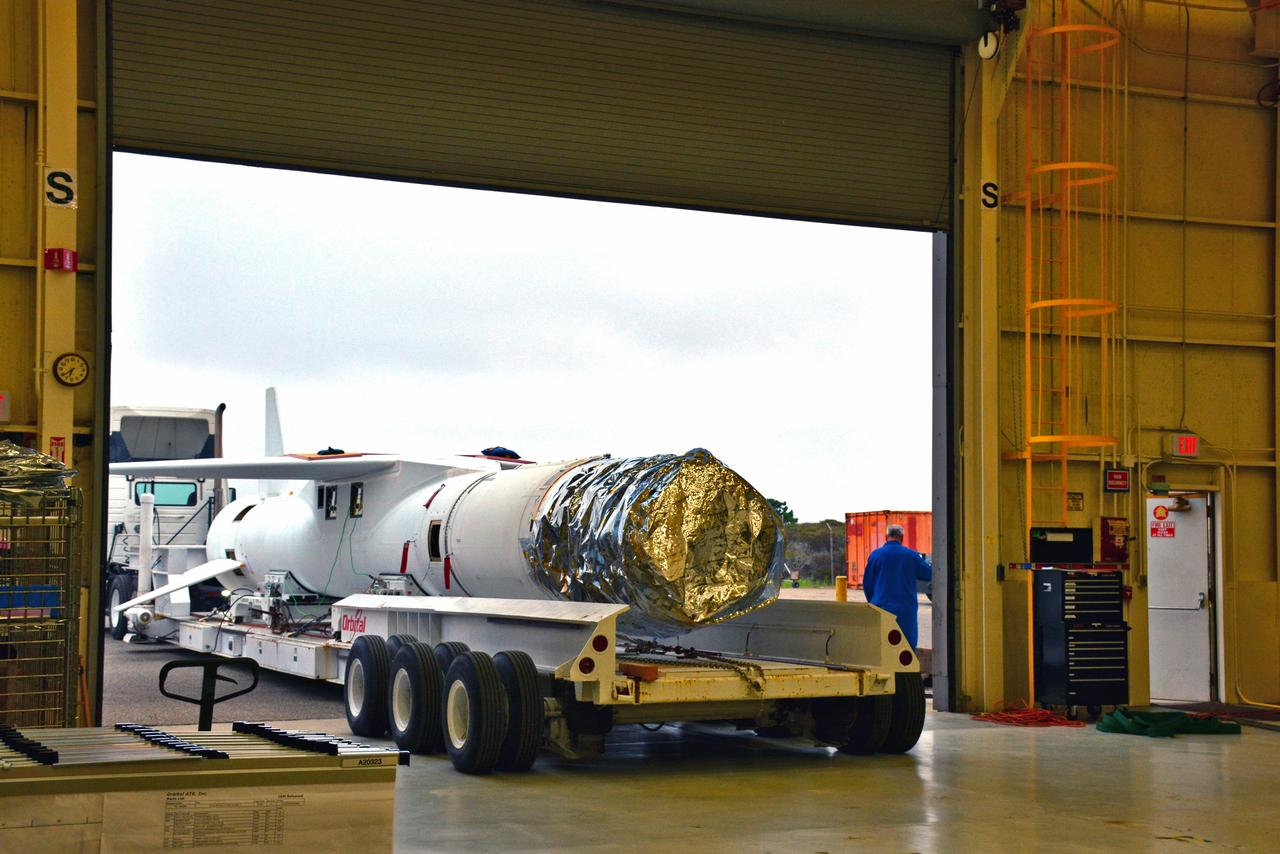
The Orbital ATK Pegasus XL rocket, with NASA's Ionospheric Connection Explorer (ICON) spacecraft attached, is moved on an assembly integration trailer into another high bay Aug. 23, 2017, at Building 1555 at Vandenberg Air Force Base in California. The Pegasus rocket is being prepared for the ICON mission. The explorer will launch on June 15, 2018, from Kwajalein Atoll in the Marshall Islands (June 14 in the continental United States) on the Pegasus XL, which is attached to the company's L-1011 Stargazer aircraft. ICON will study the frontier of space - the dynamic zone high in Earth's atmosphere where terrestrial weather from below meets space weather above. The explorer will help determine the physics of Earth's space environment and pave the way for mitigating its effects on our technology and communications systems.
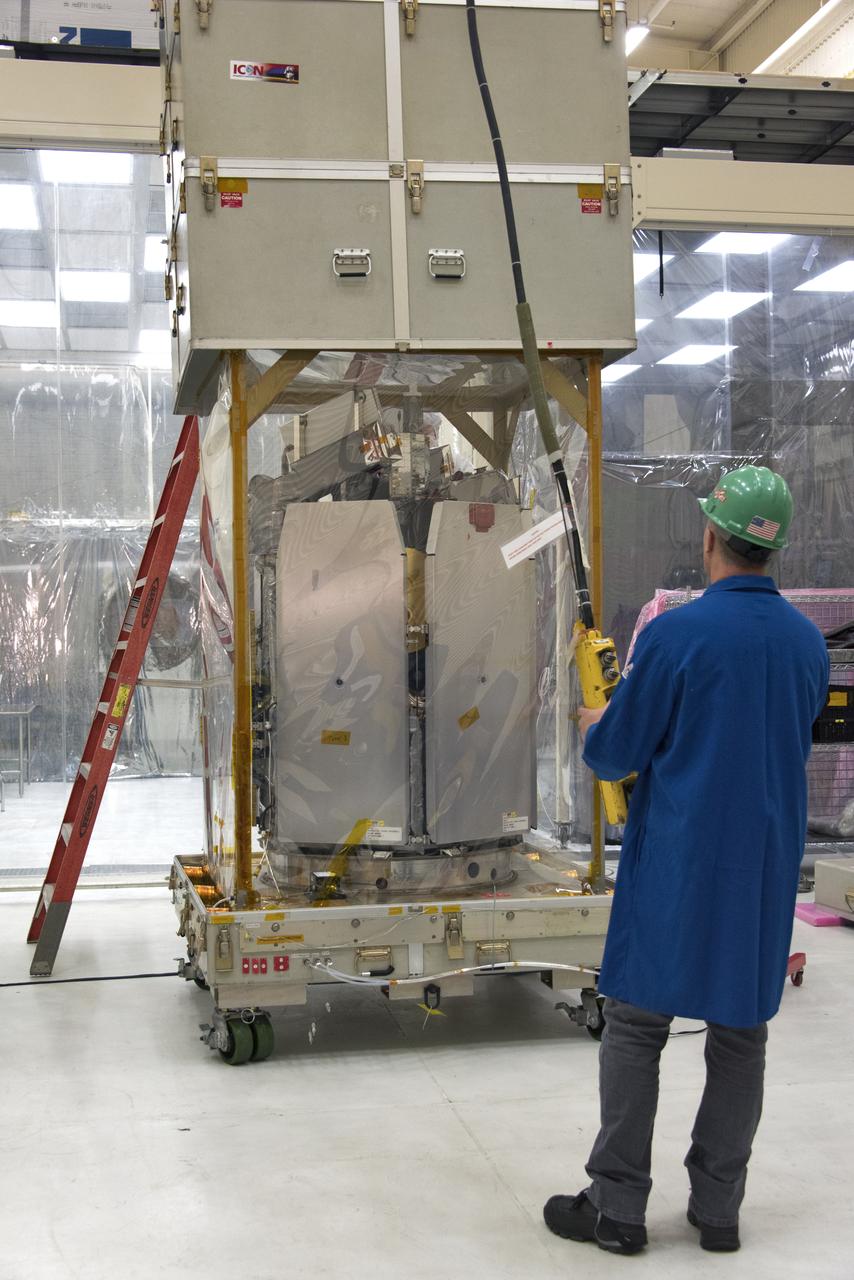
A technician operates a crane that lifts the shipping container up from NASA's Ionospheric Connection Explorer (ICON) on May 1, 2018, inside Building 1555 at Vandenberg Air Force Base in California. The explorer will launch on June 15, 2018, from Kwajalein Atoll in the Marshall Islands (June 14 in the continental United States) on Orbital ATK's Pegasus XL rocket, which is attached to the company's L-1011 Stargazer aircraft. ICON will study the frontier of space - the dynamic zone high in Earth's atmosphere where terrestrial weather from below meets space weather above. The explorer will help determine the physics of Earth's space environment and pave the way for mitigating its effects on our technology, communications systems and society.
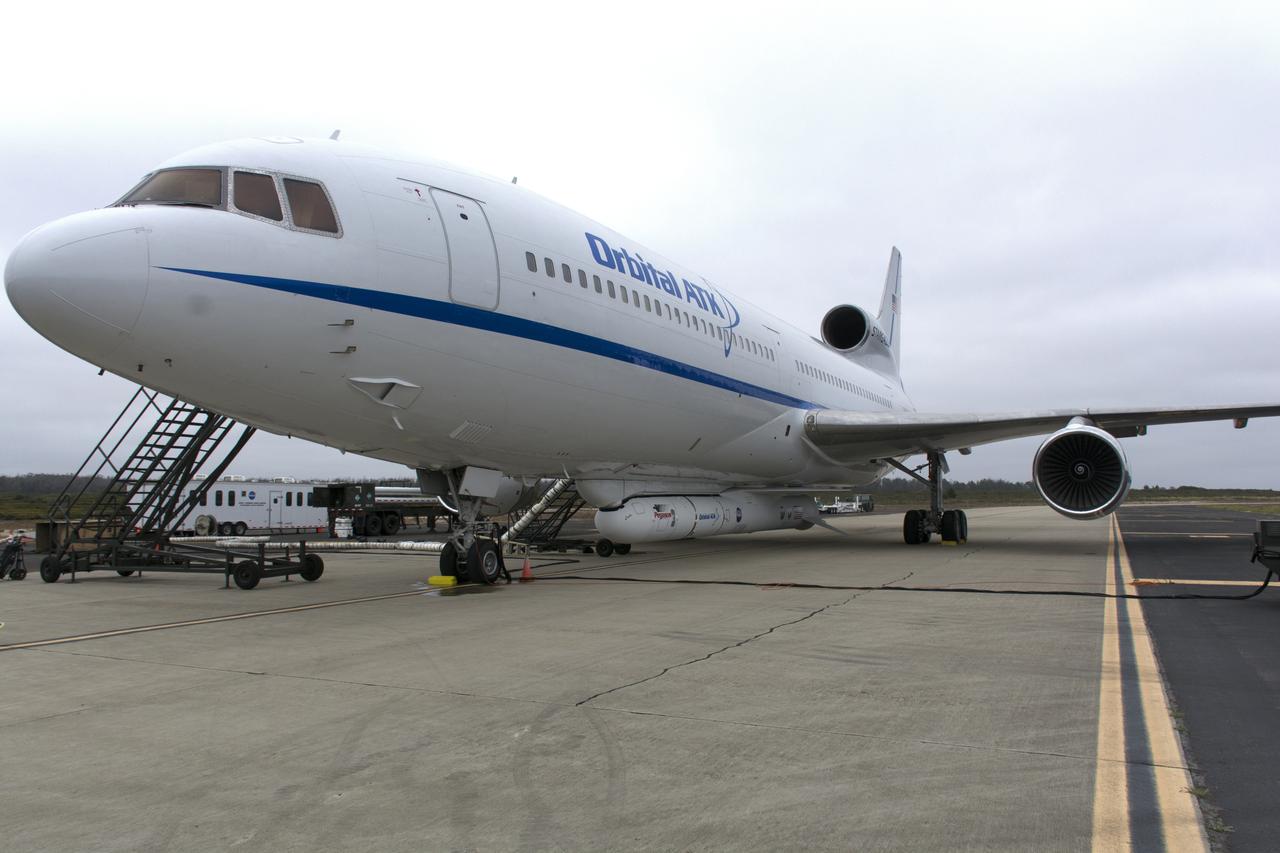
Northrop Grumman's L-1011 Stargazer is being readied for takeoff June 6, 2018, from the hot pad at Vandenberg Air Force Base in California. The company's Pegasus XL rocket, containing NASA's Ionospheric Connection Explorer (ICON), is attached beneath the aircraft. The explorer will launch on June 15, 2018, from Kwajalein Atoll in the Marshall Islands (June 14 in the continental United States). ICON will study the frontier of space - the dynamic zone high in Earth's atmosphere where terrestrial weather from below meets space weather above. The explorer will help determine the physics of Earth's space environment and pave the way for mitigating its effects on our technology, communications systems and society.
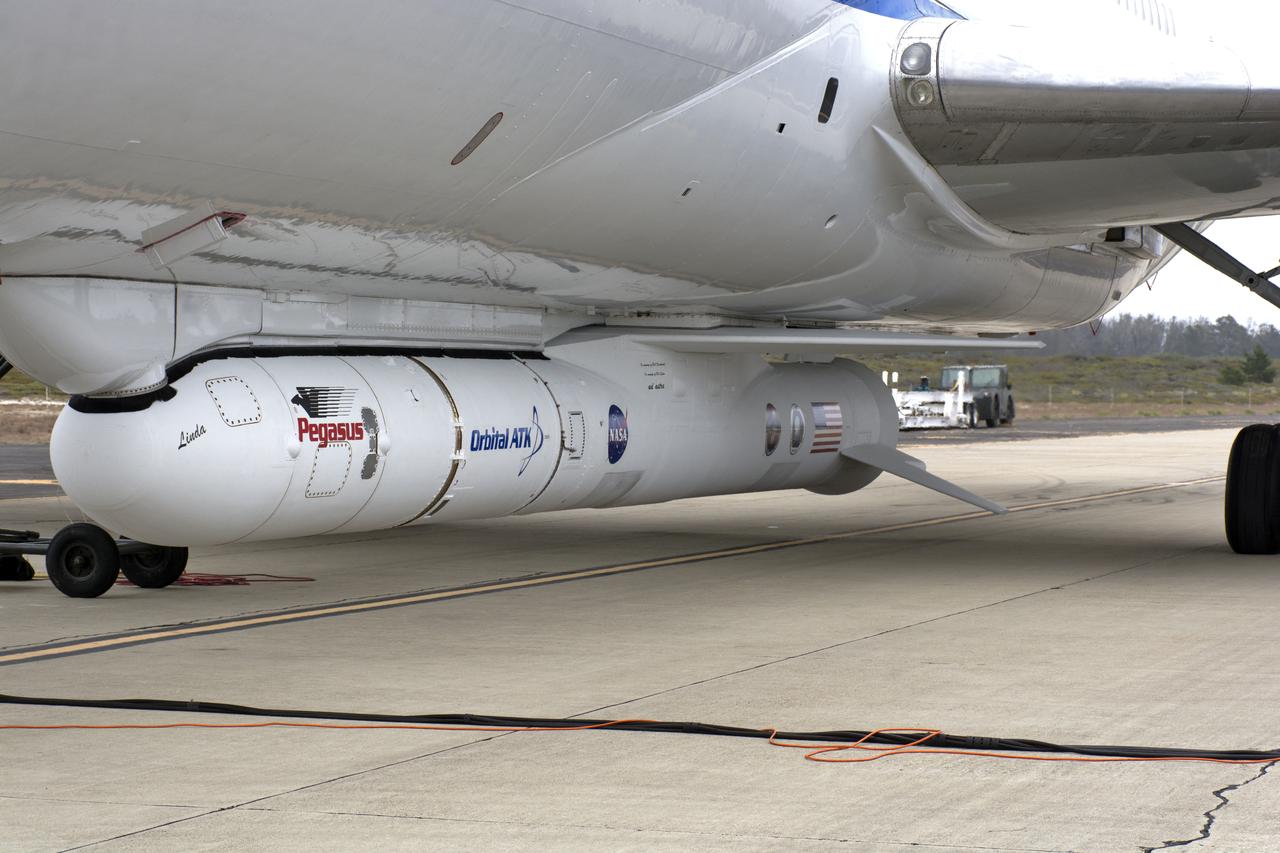
Northrop Grumman's L-1011 Stargazer is being readied for takeoff June 6, 2018, from the hot pad at Vandenberg Air Force Base in California. The company's Pegasus XL rocket, containing NASA's Ionospheric Connection Explorer (ICON), is attached beneath the aircraft. The explorer will launch on June 15, 2018, from Kwajalein Atoll in the Marshall Islands (June 14 in the continental United States). ICON will study the frontier of space - the dynamic zone high in Earth's atmosphere where terrestrial weather from below meets space weather above. The explorer will help determine the physics of Earth's space environment and pave the way for mitigating its effects on our technology, communications systems and society.
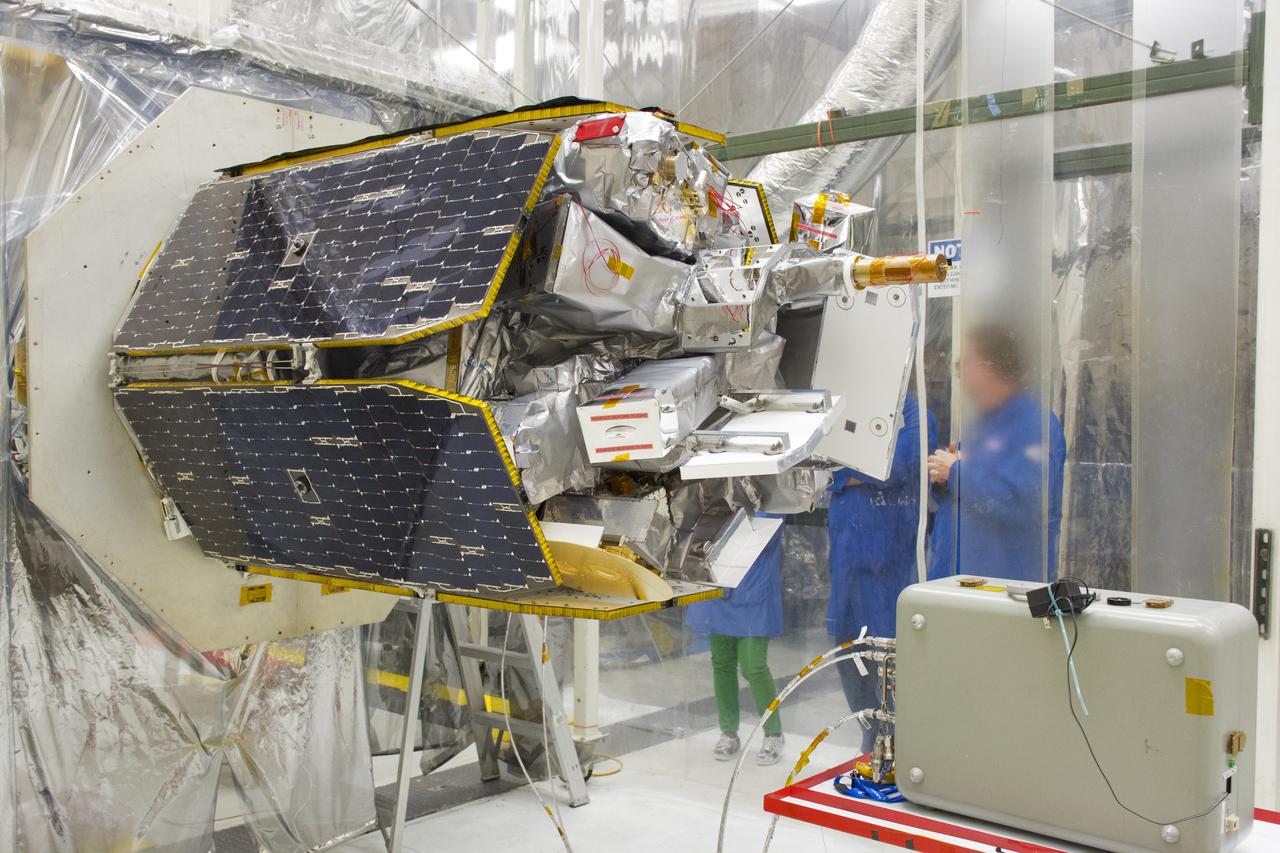
NASA's Ionospheric Connection Explorer (ICON) is attached to the Orbital ATK Pegasus XL rocket May 14, 2018, inside a clean room in Building 1555 at Vandenberg Air Force Base in California. The explorer will launch on June 15, 2018, from Kwajalein Atoll in the Marshall Islands (June 14 in the continental United States) on the Pegasus XL rocket, which is attached to the company's L-1011 Stargazer aircraft. ICON will study the frontier of space - the dynamic zone high in Earth's atmosphere where terrestrial weather from below meets space weather above. The explorer will help determine the physics of Earth's space environment and pave the way for mitigating its effects on our technology, communications systems and society.
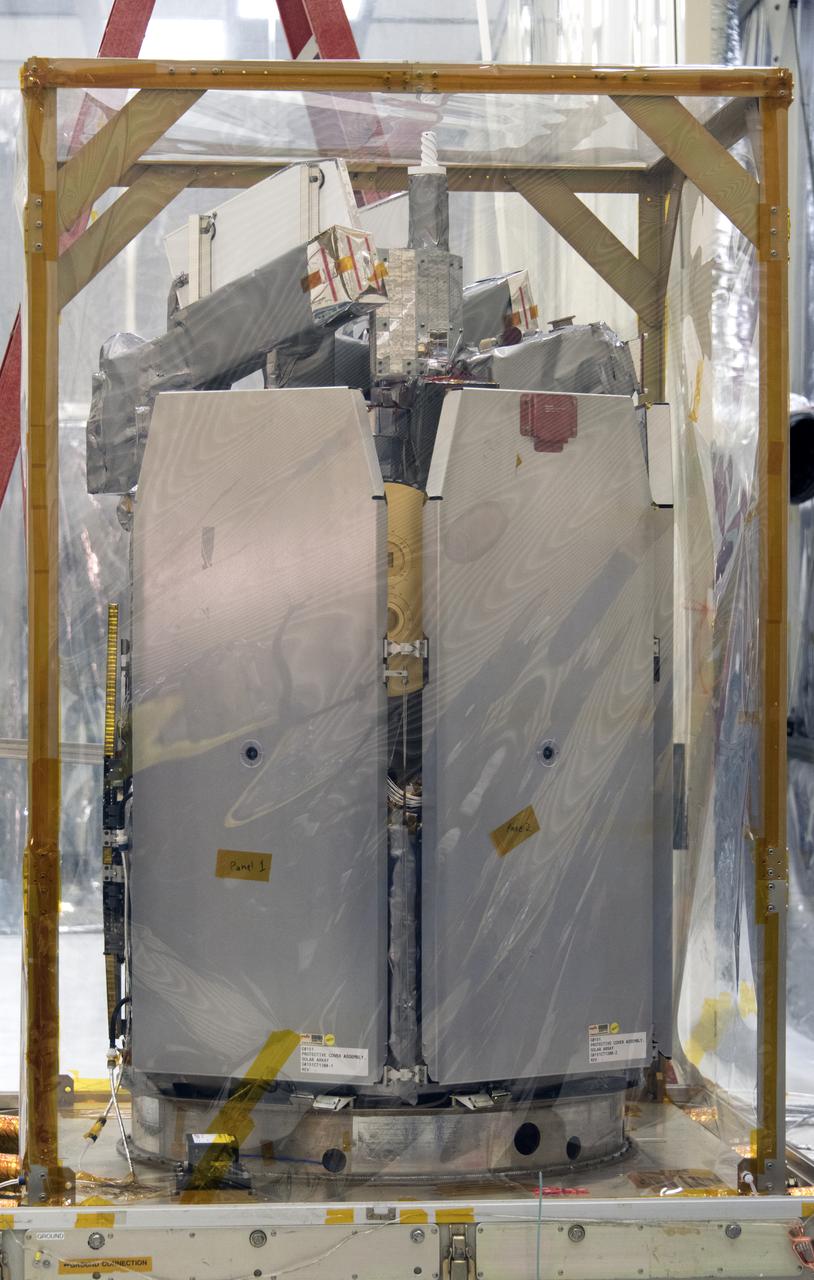
NASA's Ionospheric Connection Explorer (ICON) is uncrated from its shipping container on May 1, 2018, inside Building 1555 at Vandenberg Air Force Base in California. The explorer will launch on June 15, 2018, from Kwajalein Atoll in the Marshall Islands (June 14 in the continental United States) on Orbital ATK's Pegasus XL rocket, which is attached to the company's L-1011 Stargazer aircraft. ICON will study the frontier of space - the dynamic zone high in Earth's atmosphere where terrestrial weather from below meets space weather above. The explorer will help determine the physics of Earth's space environment and pave the way for mitigating its effects on our technology, communications systems and society.
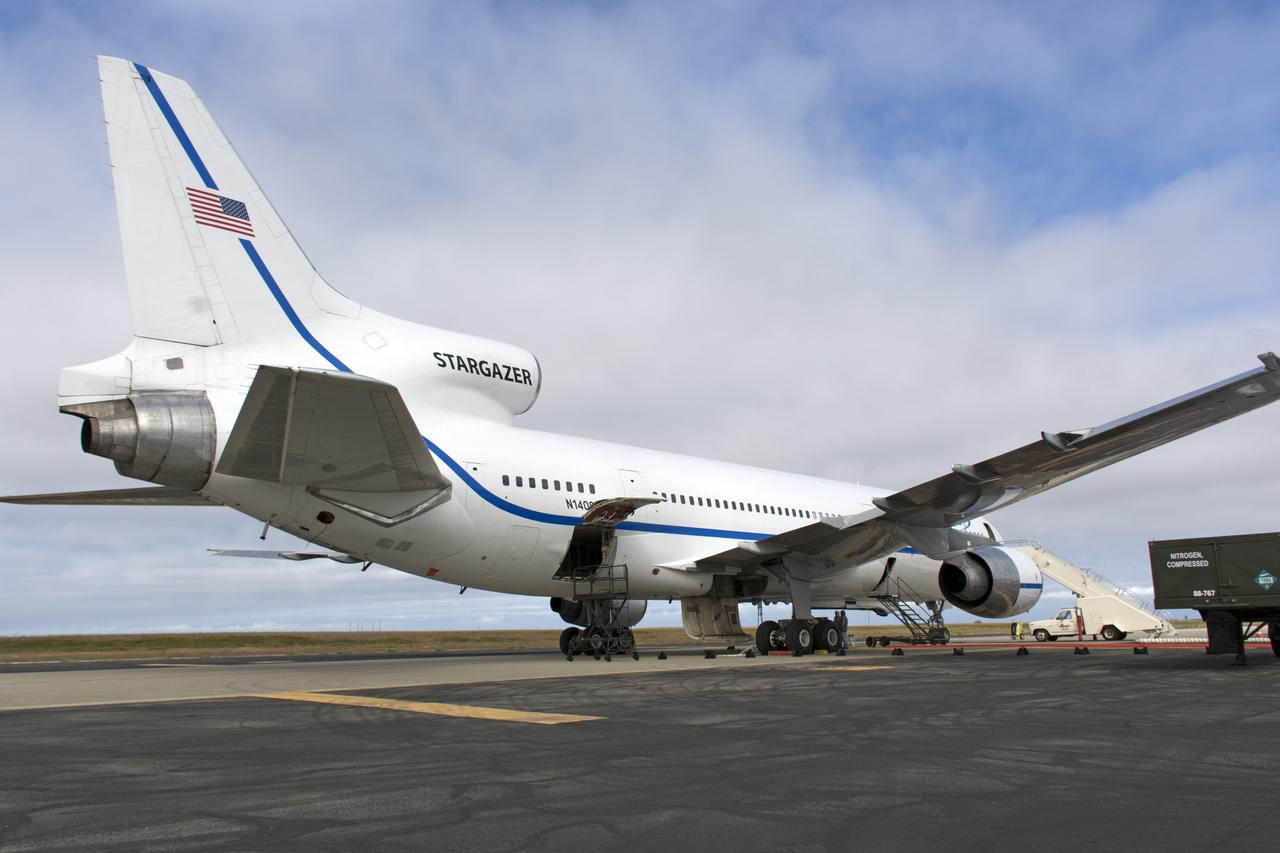
Northrop Grumman's L-1011 Stargazer aircraft is at the hot pad at Vandenberg Air Force Base in California on May 26, 2018. Preparations are underway to attach the company's Pegasus XL rocket, containing NASA's Ionospheric Connection Explorer (ICON), beneath the aircraft. The explorer will launch on June 15, 2018, from Kwajalein Atoll in the Marshall Islands (June 14 in the continental United States). ICON will study the frontier of space - the dynamic zone high in Earth's atmosphere where terrestrial weather from below meets space weather above. The explorer will help determine the physics of Earth's space environment and pave the way for mitigating its effects on our technology, communications systems and society.
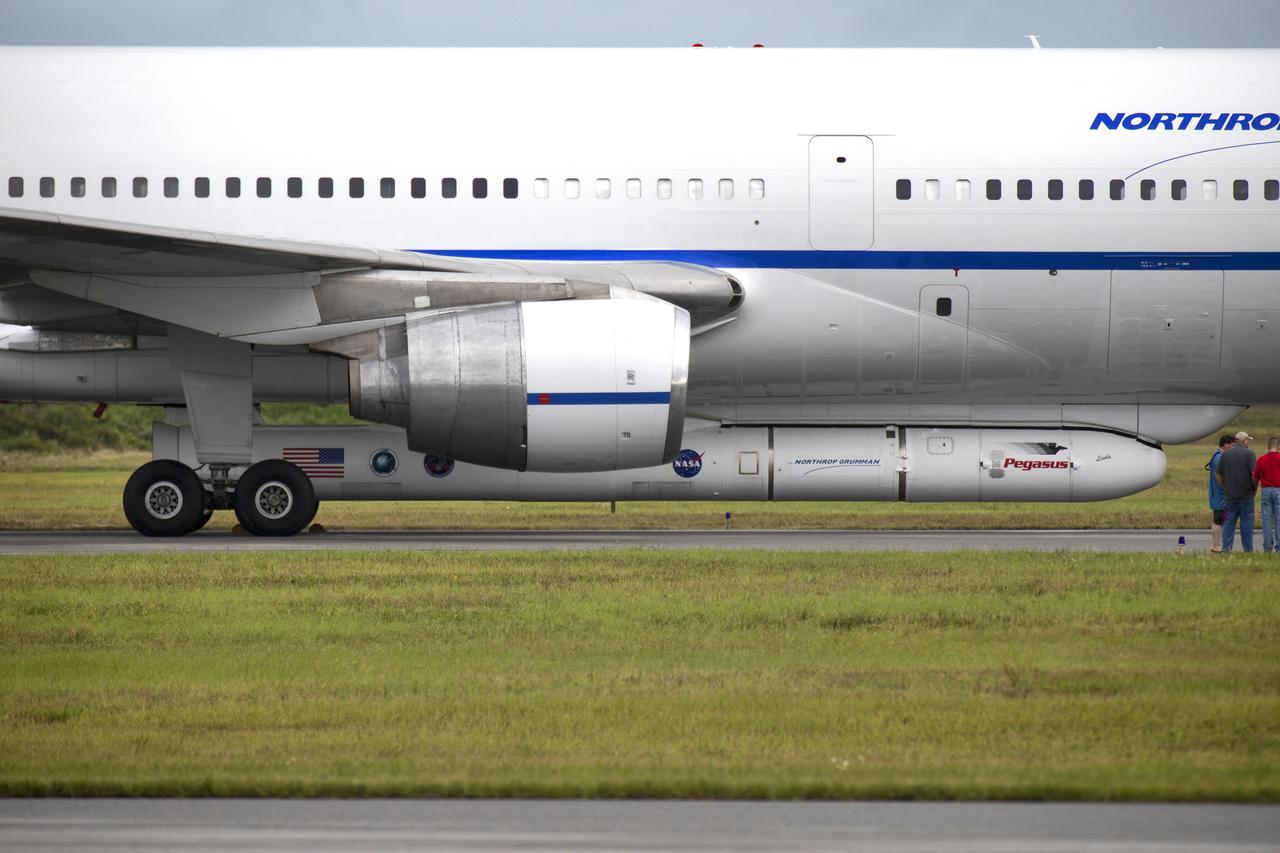
Northrop Grumman's L-1011 is on the tarmac after touching down at the Skid Strip at Cape Canaveral Air Force Station in Florida, on Oct. 19, 2018. The company's Pegasus XL rocket, containing NASA's Ionospheric Connection Explorer (ICON), is in view attached beneath the aircraft. The Pegasus XL rocket will launch from the Skid Strip. ICON will study the frontier of space - the dynamic zone high in Earth's atmosphere where terrestrial weather from below meets space weather above. The explorer will help determine the physics of Earth's space environment and pave the way for mitigating its effects on our technology and communications systems.
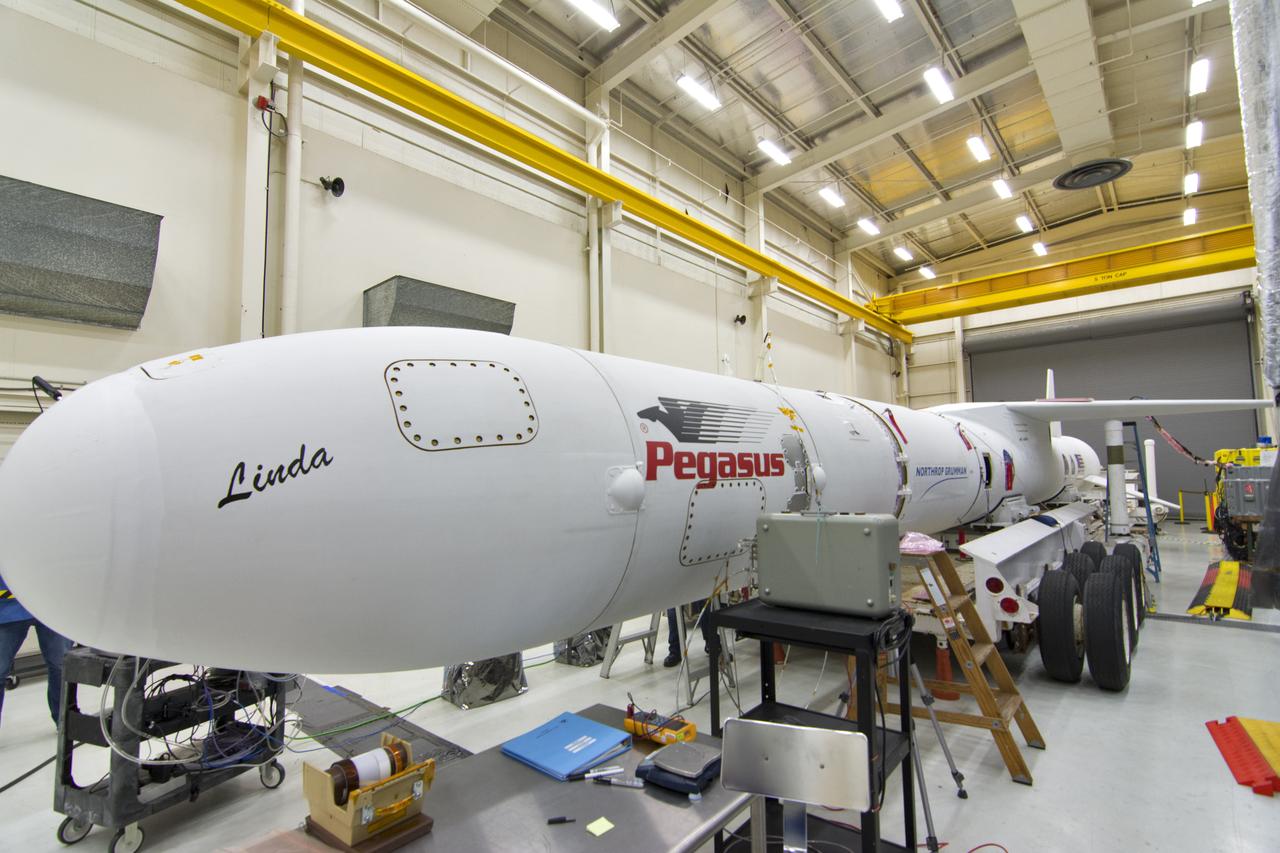
The Northrop Grumman Pegasus XL vehicle is inside Building 1555 at Vandenberg Air Force Base in California, on Oct. 8, 2018. The payload fairing is installed around NASA's Ionospheric Connection Explorer (ICON). The Pegasus XL, attached to the company's L-1011 Stargazer aircraft, will launch from the Skid Strip at Cape Canaveral Air Force Station in Florida. Launch is scheduled for Oct. 26. ICON will study the frontier of space - the dynamic zone high in Earth's atmosphere where terrestrial weather from below meets space weather above. The explorer will help determine the physics of Earth's space environment and pave the way for mitigating its effects on our technology, communications systems and society.

A technician begins a ultraviolet light inspection of the Orbital ATK Pegasus starboard on May 22, 2018, prior to mating NASA's Ionospheric Connection Explorer (ICON) to Pegasus inside Building 1555 at Vandenberg Air Force Base in California. The explorer will launch on June 15, 2018, from Kwajalein Atoll in the Marshall Islands (June 14 in the continental United States) on the Pegasus XL, which is attached to the company's L-1011 Stargazer aircraft. ICON will study the frontier of space - the dynamic zone high in Earth's atmosphere where terrestrial weather from below meets space weather above. The explorer will help determine the physics of Earth's space environment and pave the way for mitigating its effects on our technology and communications systems.
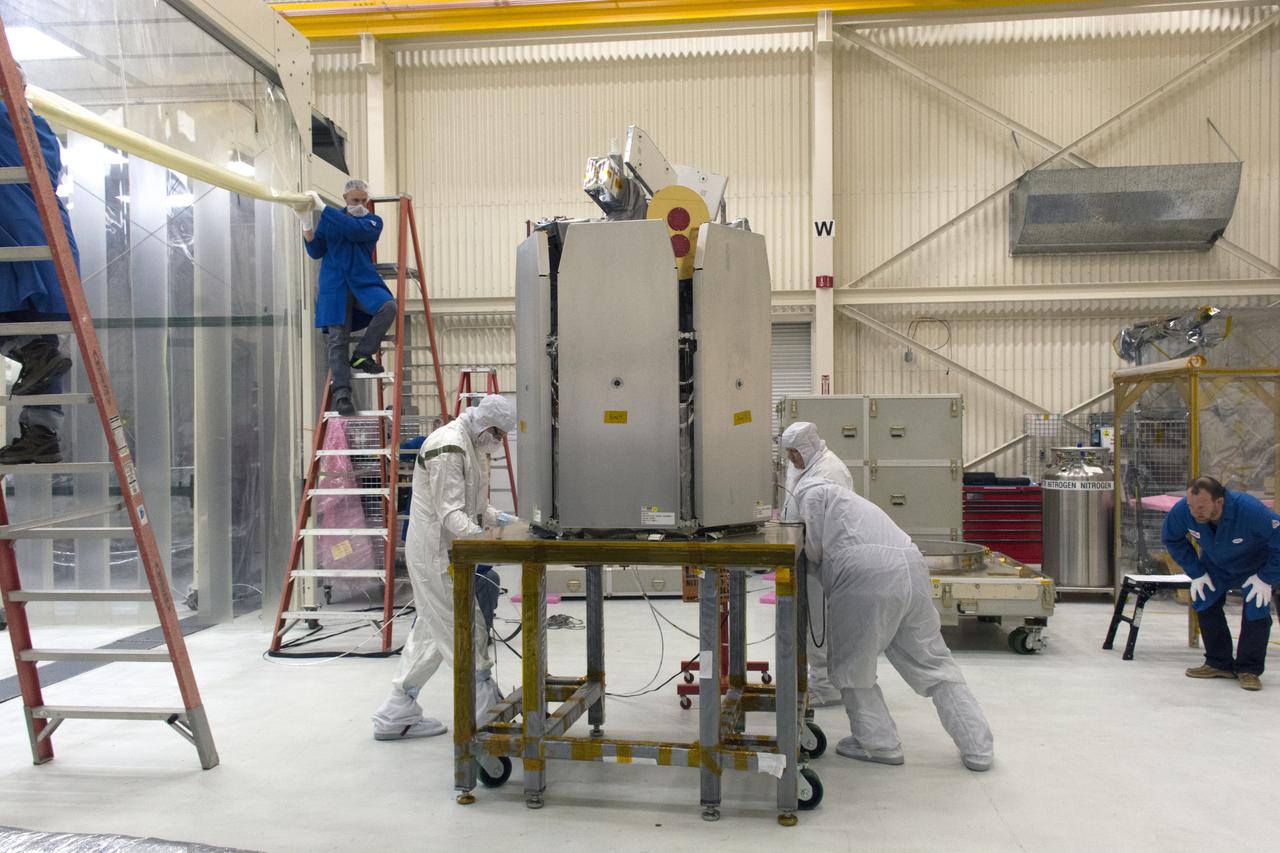
Technicians prepare NASA's Ionospheric Connection Explorer (ICON) for its move to a clean room on May 4, 2018, inside Building 1555 at Vandenberg Air Force Base in California. The explorer will launch on June 15, 2018, from Kwajalein Atoll in the Marshall Islands (June 14 in the continental United States) on Orbital ATK's Pegasus XL rocket, which is attached to the company's L-1011 Stargazer aircraft. ICON will study the frontier of space - the dynamic zone high in Earth's atmosphere where terrestrial weather from below meets space weather above. The explorer will help determine the physics of Earth's space environment and pave the way for mitigating its effects on our technology, communications systems and society.