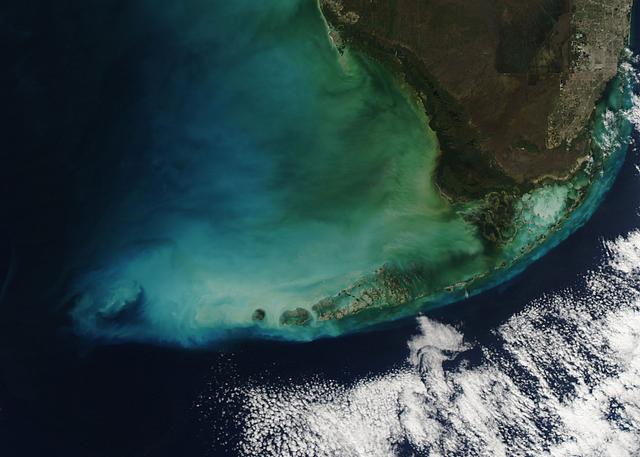
NASA image acquired January 4, 2012 The Florida Keys many colors were captured when the Moderate Resolution Imaging Spectroradiometer (MODIS) aboard the Aqua satellite captured this true-color image. NASA/GSFC/Jeff Schmaltz/MODIS Land Rapid Response Team <b><a href="http://www.nasa.gov/audience/formedia/features/MP_Photo_Guidelines.html" rel="nofollow">NASA image use policy.</a></b> <b><a href="http://www.nasa.gov/centers/goddard/home/index.html" rel="nofollow">NASA Goddard Space Flight Center</a></b> enables NASA’s mission through four scientific endeavors: Earth Science, Heliophysics, Solar System Exploration, and Astrophysics. Goddard plays a leading role in NASA’s accomplishments by contributing compelling scientific knowledge to advance the Agency’s mission. <b>Follow us on <a href="http://twitter.com/NASA_GoddardPix" rel="nofollow">Twitter</a></b> <b>Like us on <a href="http://www.facebook.com/pages/Greenbelt-MD/NASA-Goddard/395013845897?ref=tsd" rel="nofollow">Facebook</a></b> <b>Find us on <a href="http://instagrid.me/nasagoddard/?vm=grid" rel="nofollow">Instagram</a></b>
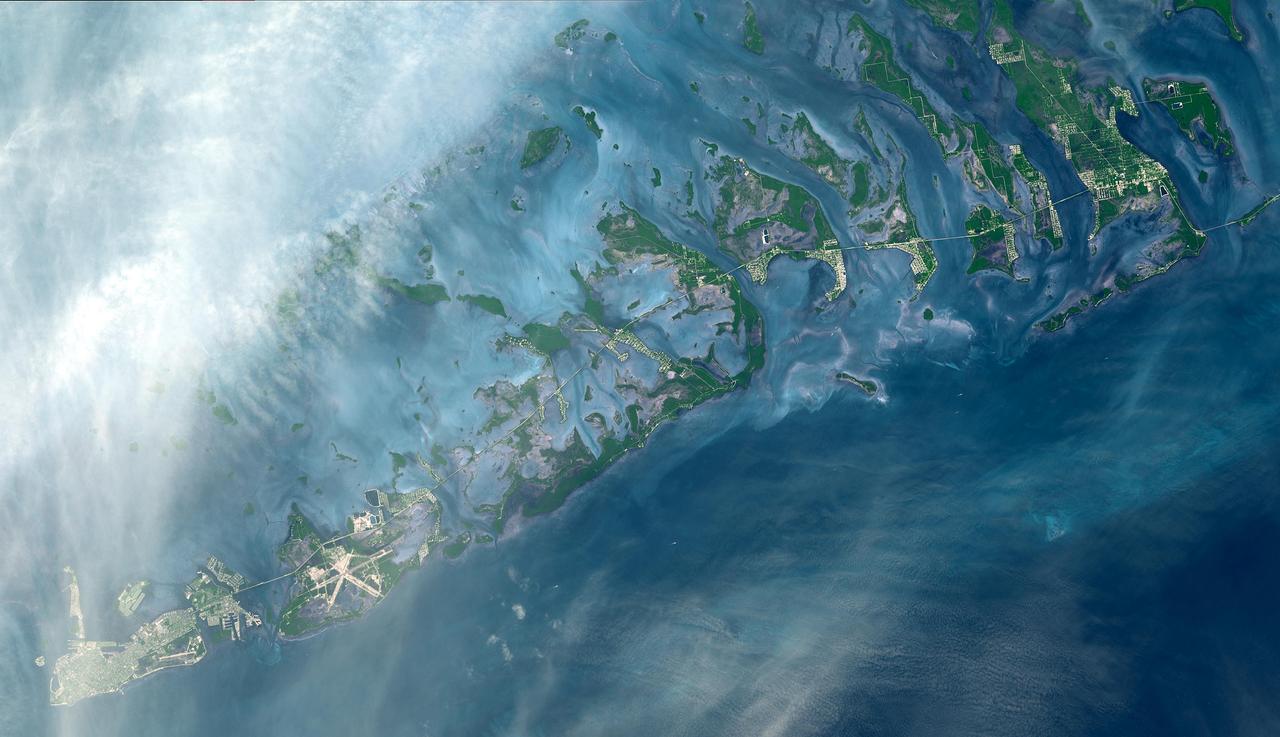
The Florida Keys are a chain of islands, islets and reefs extending from Virginia Key to the Dry Tortugas for about 309 kilometers (192 miles). The keys are chiefly limestone and coral formations. The larger islands of the group are Key West (with its airport), Key Largo, Sugarloaf Key, and Boca Chica Key. A causeway extends from the mainland to Key West. This image was acquired on October 28, 2001, by the Advanced Spaceborne Thermal Emission and Reflection Radiometer (ASTER) on NASA's Terra satellite. With its 14 spectral bands from the visible to the thermal infrared wavelength region, and its high spatial resolution of 15 to 90 meters (about 50 to 300 feet), ASTER images Earth to map and monitor the changing surface of our planet. http://photojournal.jpl.nasa.gov/catalog/PIA03890
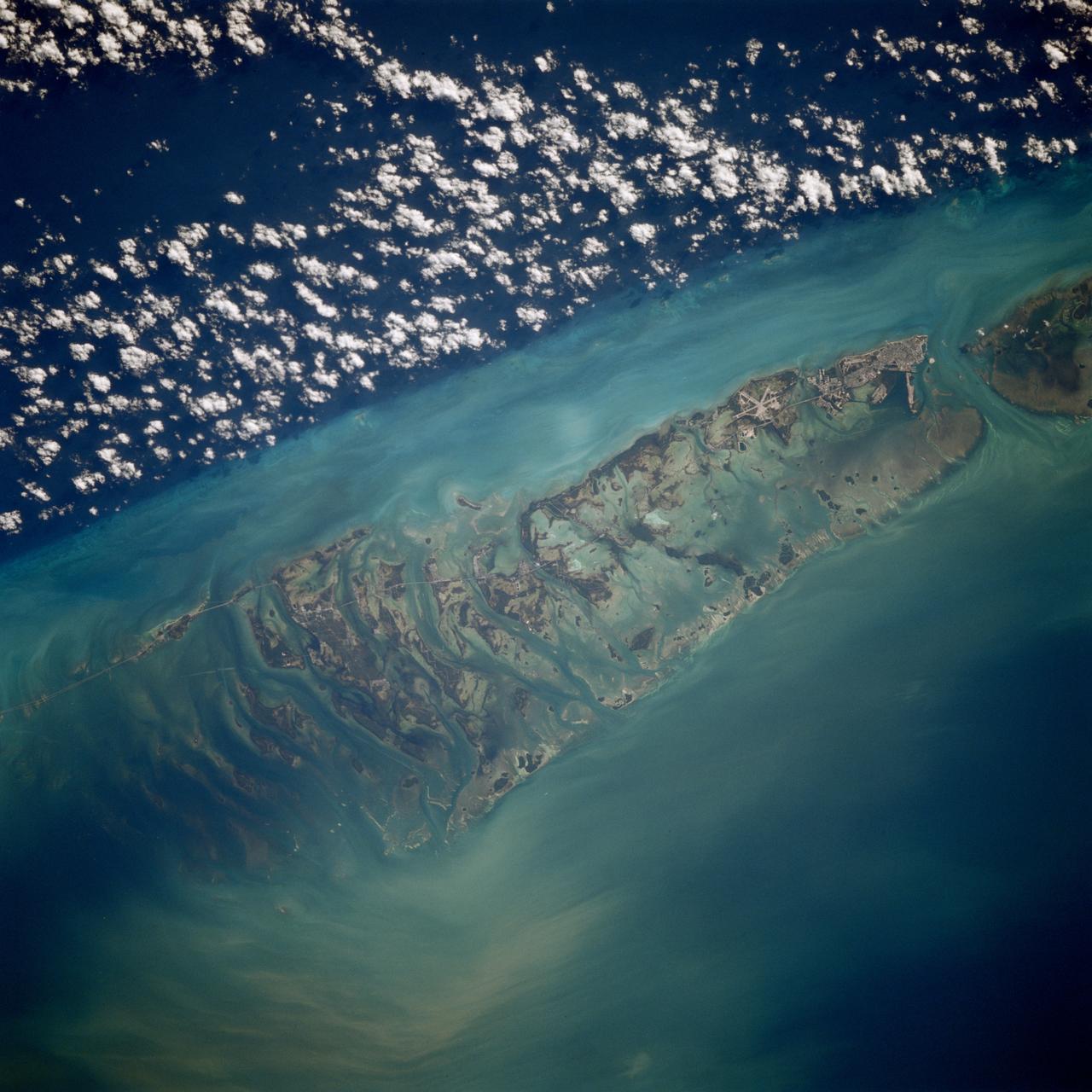
STS080-709-094 (19 Nov.-7 Dec. 1996) --- This is a view of the western portion of the Florida Keys. The view shows the city of Key West, bottom mid-right, with Marathon Key, near top middle left, and the edge of the Straits of Florida, the dark water on the right edge. Clouds form over the cooler waters of the strait. The runways at Boca Chica Key Naval Air Station are seen near Key West. The bottom can be seen clearly in the shallow water, the deeper water has depths of over a half a mile. The thin line of the Overseas Highway can be traced east from Key West. Prior to a hurricane in 1935, this route was a railway line.
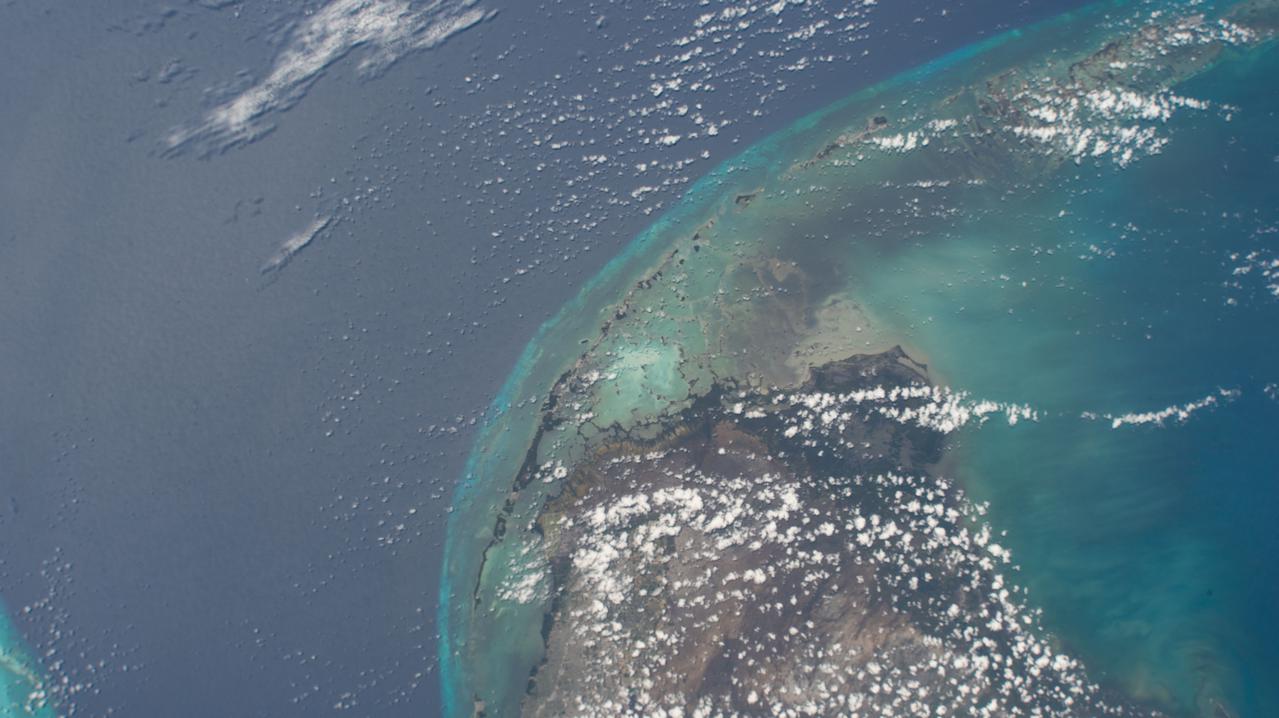
iss065e008077 (April 28, 2021) --- The Florida Keys and the Everglades National Park are pictured from the International Space Station as it orbited 262 miles above the Sunshine State of Florida.
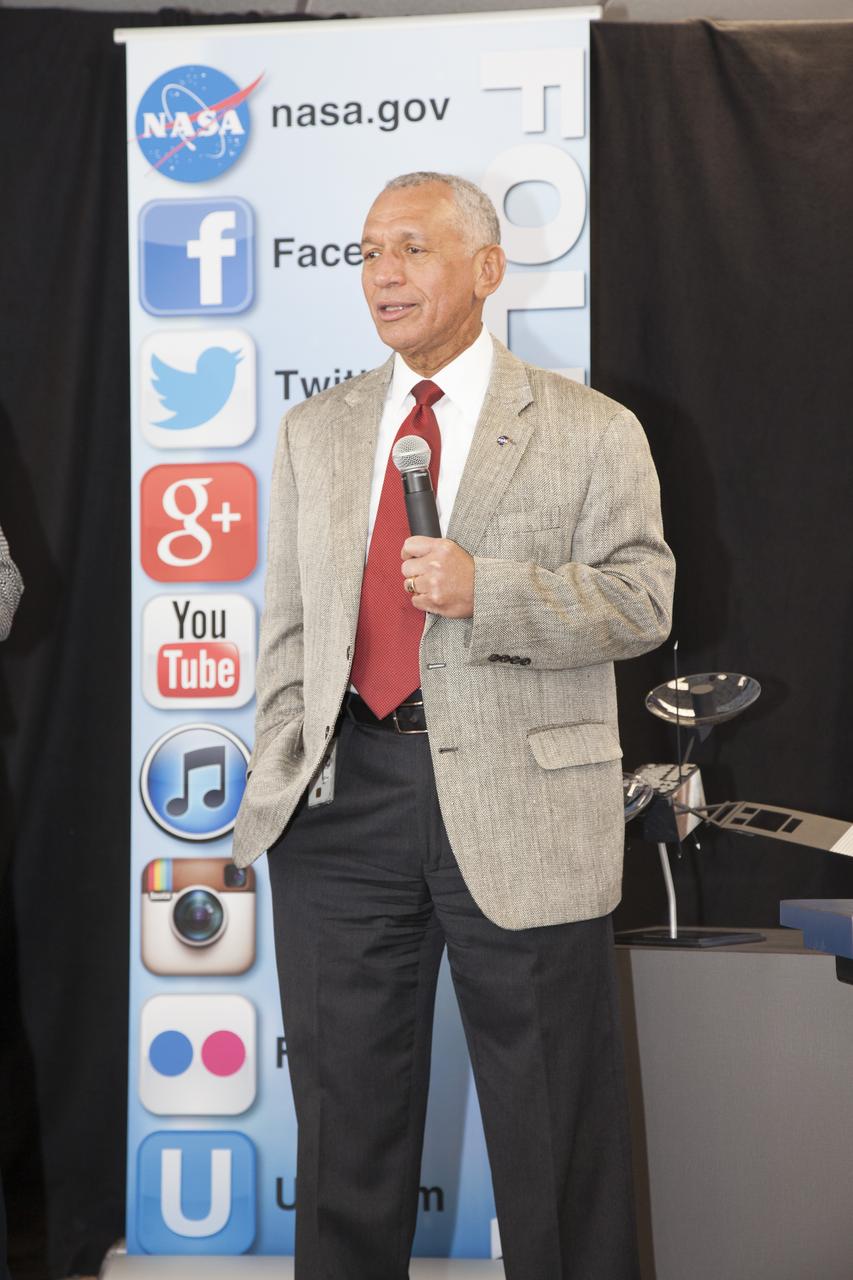
CAPE CANAVERAL, Fla. -- In the NASA News Center annex at NASA's Kennedy Space Center in Florida, social media participants listen to a briefing by NASA Administrator Charles Bolden. The social media participants gathered at the Florida spaceport for the launch of the Tracking and Data Relay Satellite, or TDRS-L spacecraft. Their visit included tours of key facilities and participating in presentations by key NASA leaders who updated the space agency's current efforts. Photo credit: NASA/Dan Casper
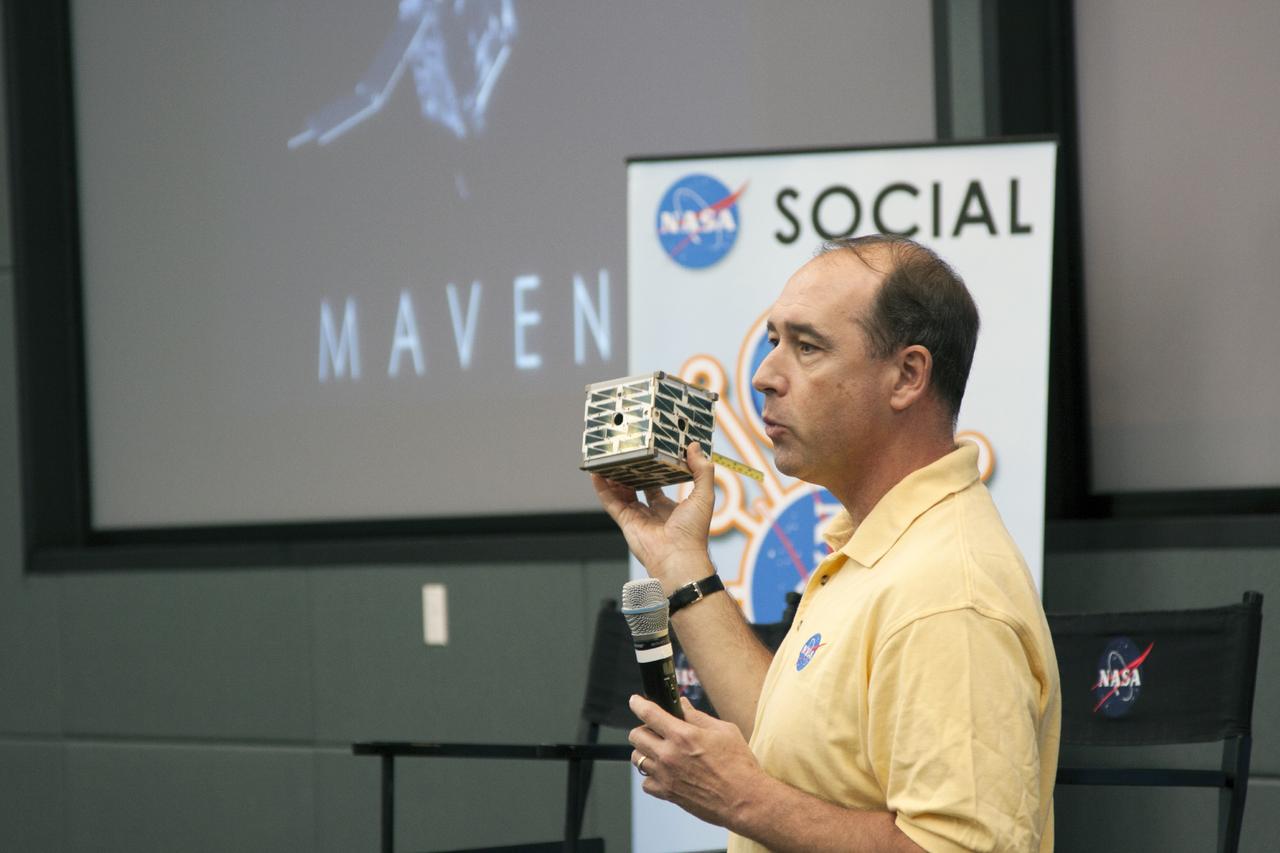
CAPE CANAVERAL, Fla. -- In the conference room of Operations Support Building II at NASA's Kennedy Space Center in Florida, social media participants listen to a briefing on the agency's CubeSat Program by Andrew Petro, small satellites program manager. The social media participants gathered at the Florida spaceport for the launch of the Mars Atmosphere and Volatile Evolution, or MAVEN, spacecraft. Their visit included tours of key facilities and participating in presentations by key NASA leaders who updated the space agency's current efforts. Photo credit: NASA/Jim Grossman
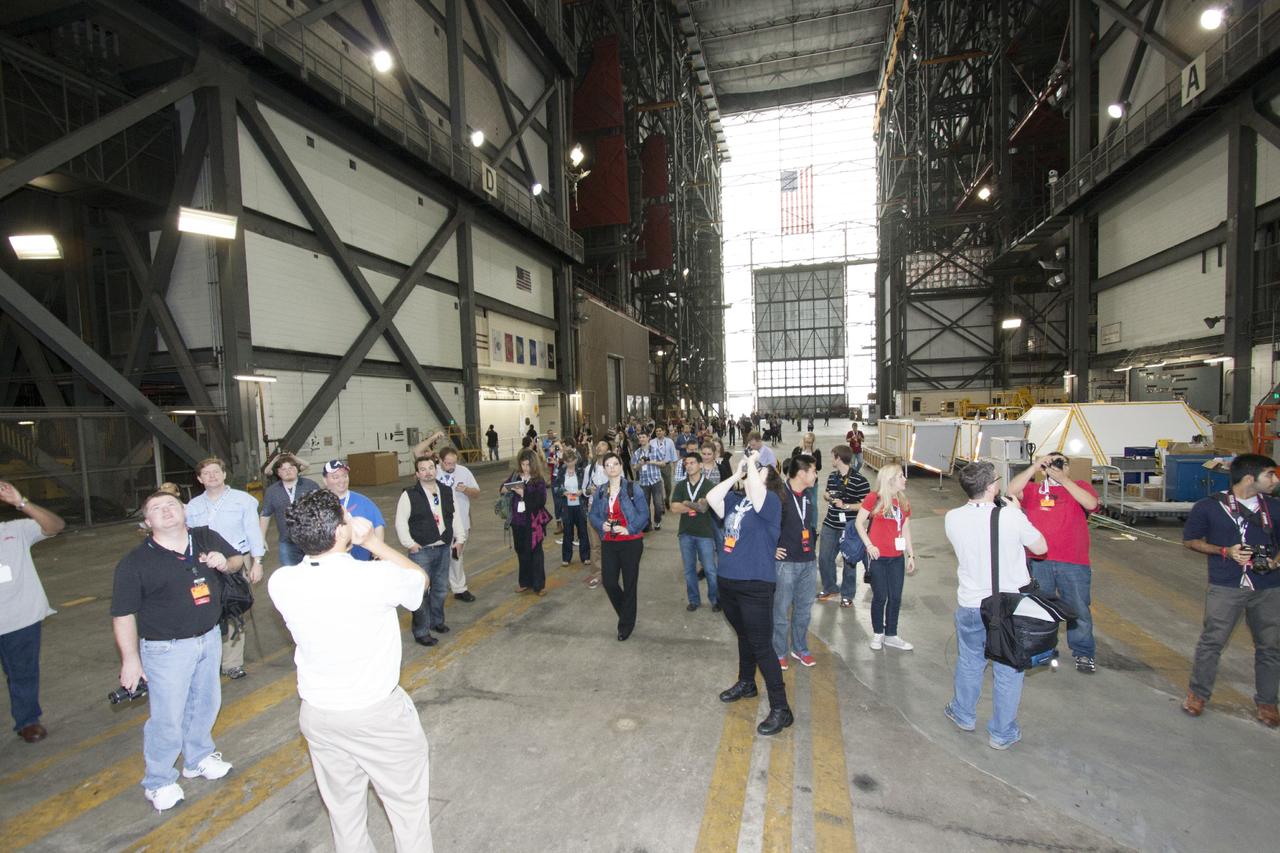
CAPE CANAVERAL, Fla. -- Social media participants are given a tour of the transfer aisle of the Vehicle Assembly Building at NASA's Kennedy Space Center in Florida. They were on hand for the upcoming launch of the Mars Atmosphere and Volatile Evolution, or MAVEN, mission. Their visit included tours of key facilities at the Florida Spaceport and participating in presentations by key NASA leaders who updated the space agency's current efforts. Photo credit: NASA/Jim Grossman
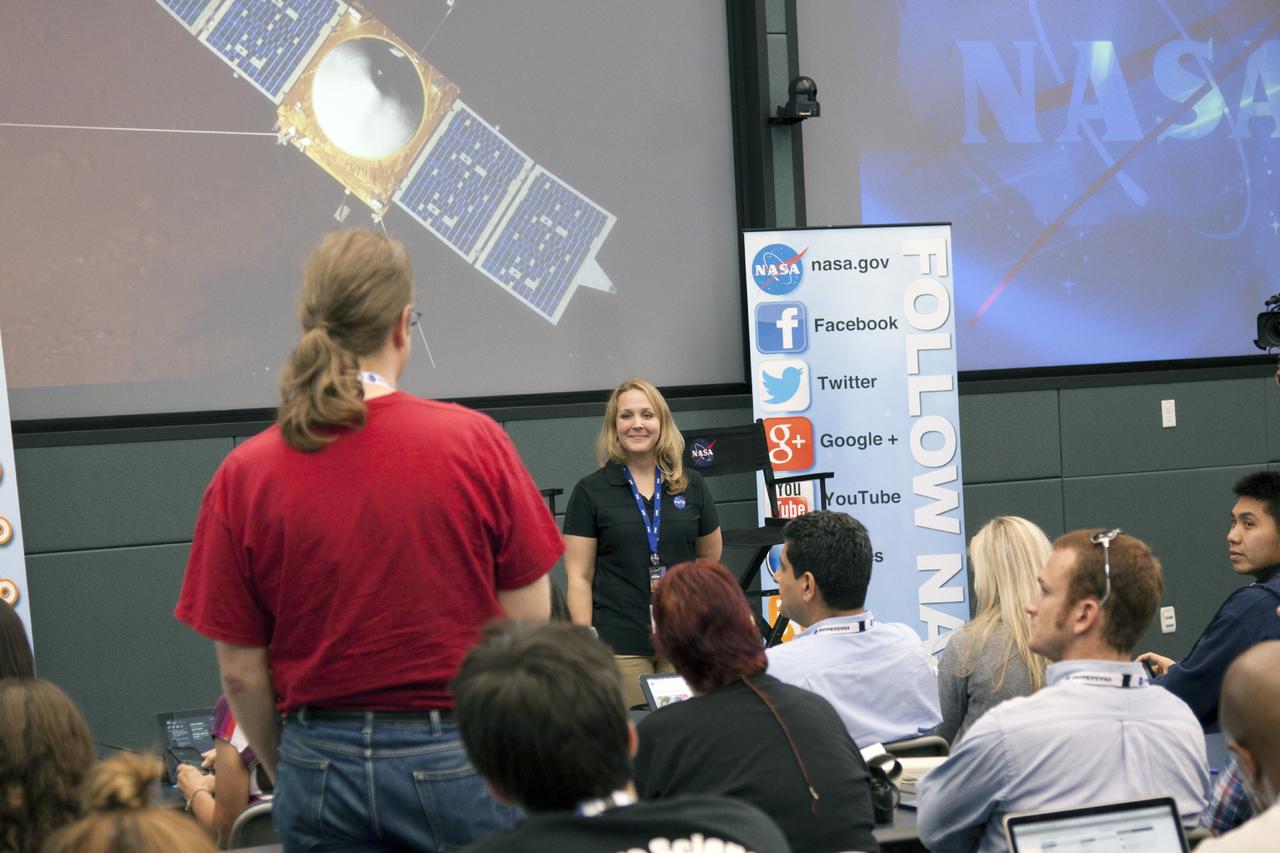
CAPE CANAVERAL, Fla. -- In the conference room of Operations Support Building II at NASA's Kennedy Space Center in Florida, social media participants listen to a briefing on agency programs by Lindsay Hays, an astrobiologist at NASA Headquarters. The social media participants gathered at the Florida spaceport for the launch of the Mars Atmosphere and Volatile Evolution, or MAVEN, spacecraft. Their visit included tours of key facilities and participating in presentations by key NASA leaders who updated the space agency's current efforts. Photo credit: NASA/Jim Grossman
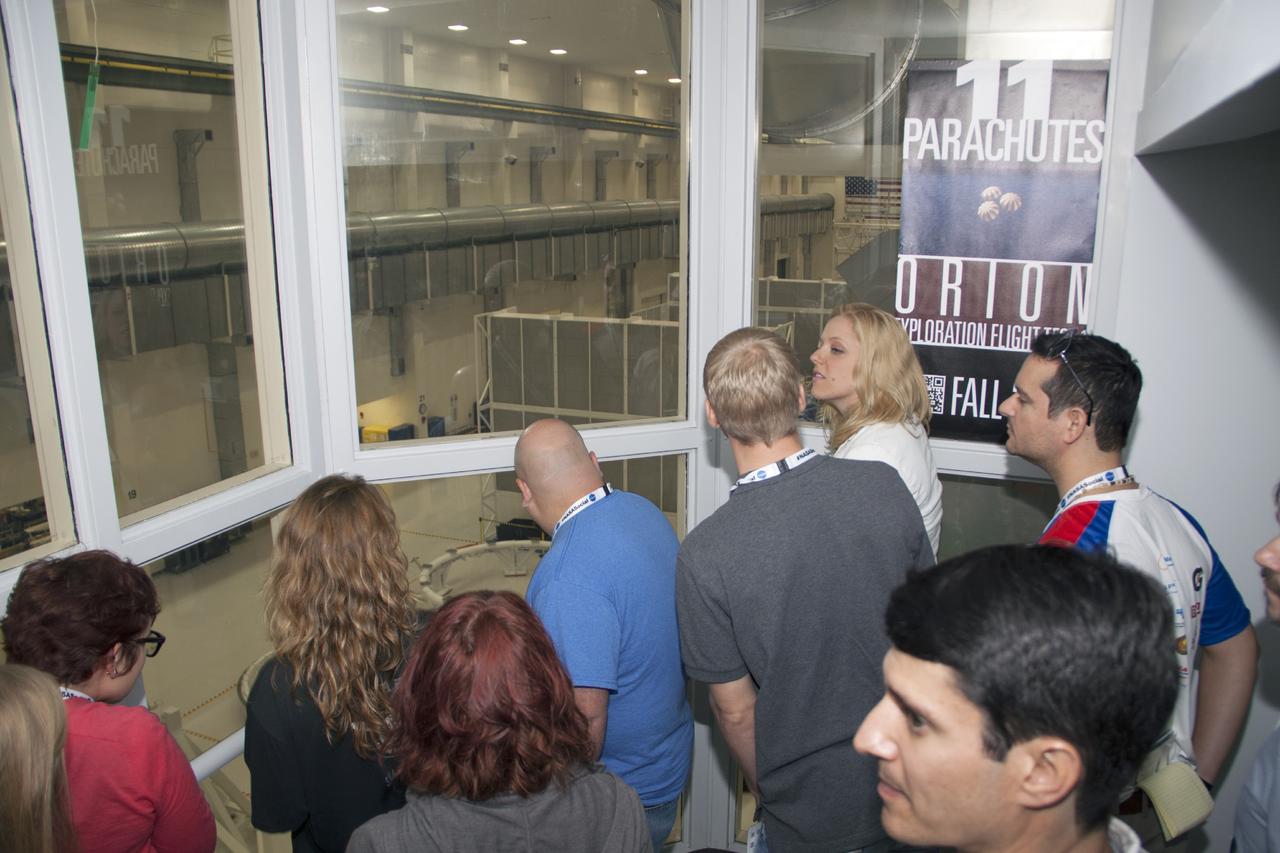
CAPE CANAVERAL, Fla. -- Social media participants are given an opportunity to look into the high bay of the Operations and Checkout Building at NASA's Kennedy Space Center in Florida where the Orion spacecraft is being prepared for its first unpiloted flight during 2014. The participants were on hand for the upcoming launch of the Mars Atmosphere and Volatile Evolution, or MAVEN, mission. Their visit included tours of key facilities at the Florida Spaceport and participating in presentations by key NASA leaders who updated the space agency's current efforts. Photo credit: NASA/Jim Grossman
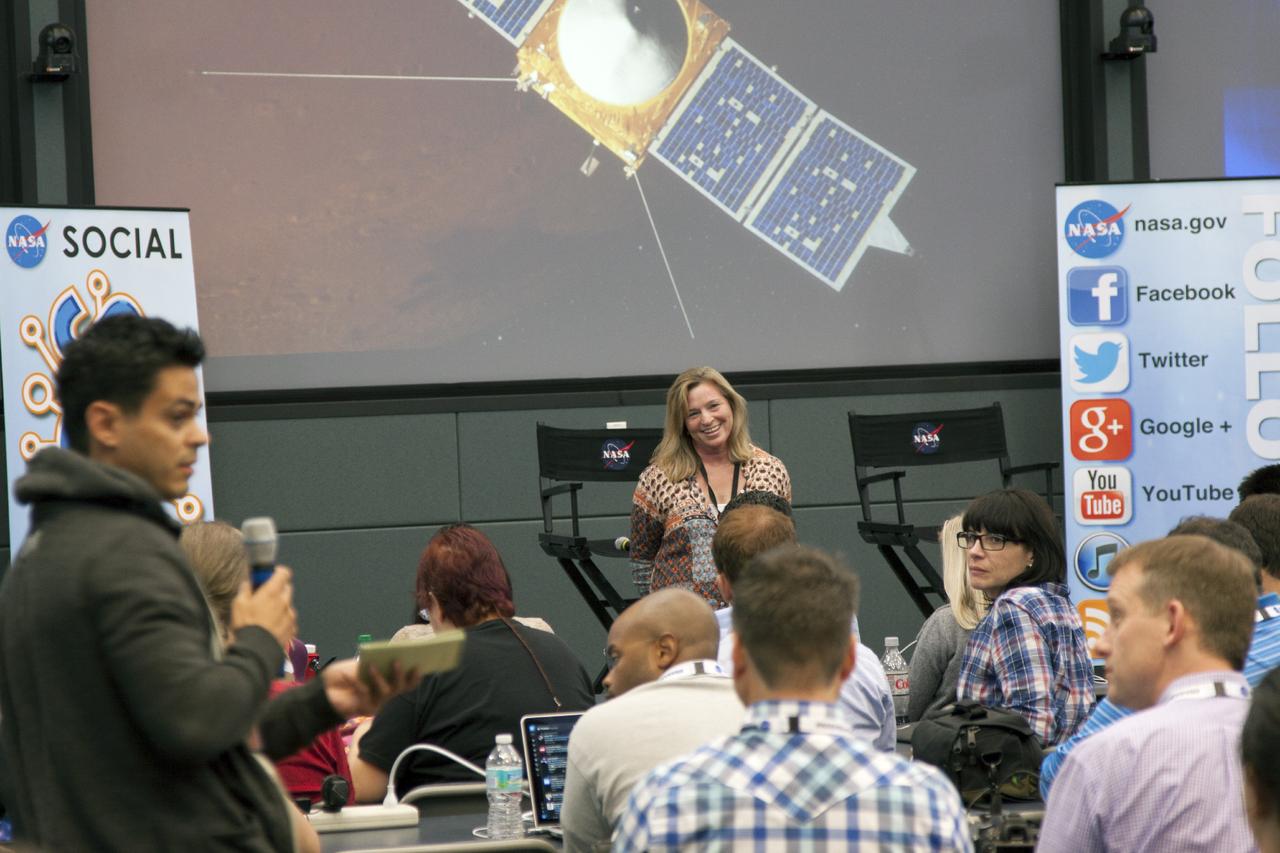
CAPE CANAVERAL, Fla. -- In the conference room of Operations Support Building II at NASA's Kennedy Space Center in Florida, social media participants listen to a briefing on the Mars Atmosphere and Volatile Evolution, or MAVEN, mission by, Ellen Stofan, the agency's chief scientist. The social media participants gathered at the Florida spaceport for the launch of the Mars Atmosphere and Volatile Evolution, or MAVEN, spacecraft. Their visit included tours of key facilities and participating in presentations by key NASA leaders who updated the space agency's current efforts. Photo credit: NASA/Jim Grossman
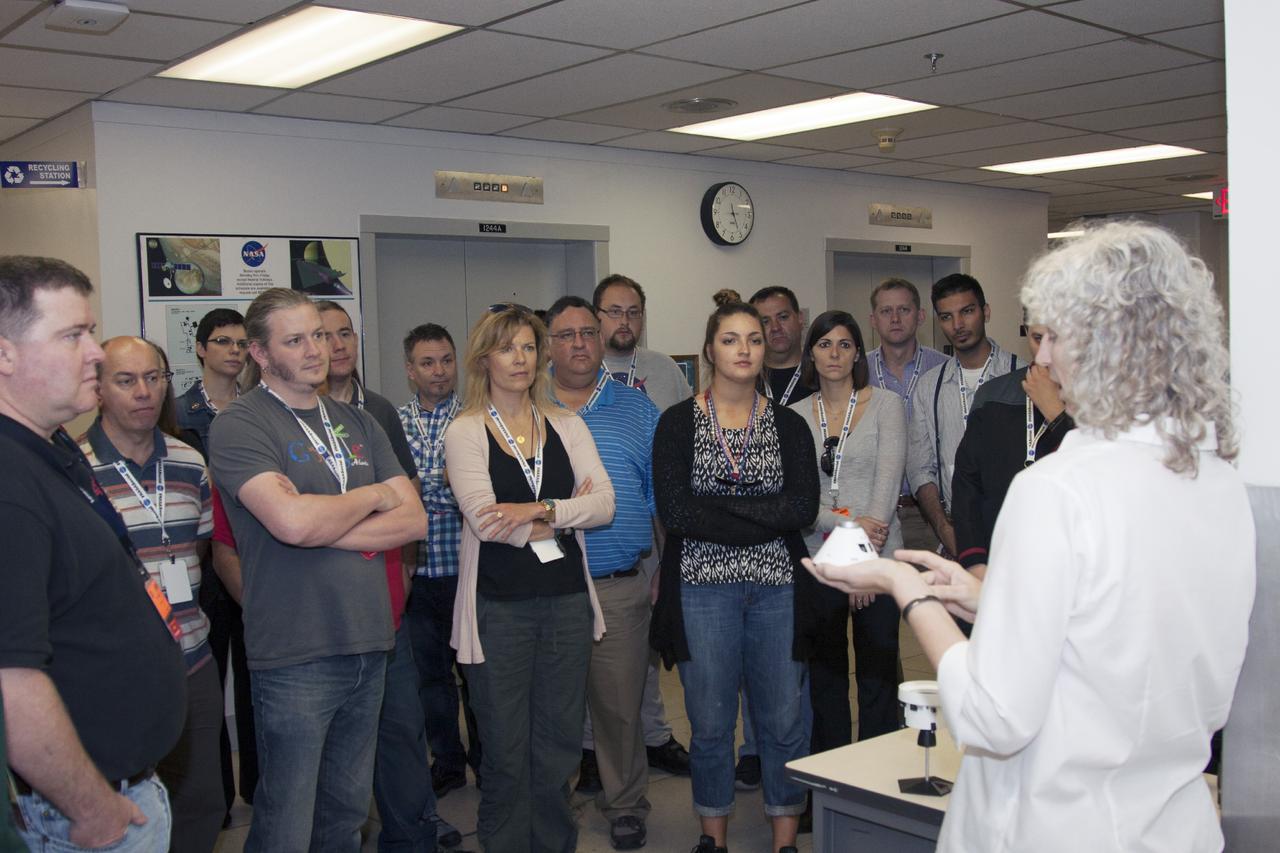
CAPE CANAVERAL, Fla. -- Social media participants are briefed on the Orion spacecraft by Sharolee Huet of NASA Operational Processing in Safety and Mission Assurance at NASA's Kennedy Space Center in Florida. The participants were on hand for the upcoming launch of the Mars Atmosphere and Volatile Evolution, or MAVEN, mission. Their visit included tours of key facilities at the Florida Spaceport and participating in presentations by key NASA leaders who updated the space agency's current efforts. Photo credit: NASA/Jim Grossman
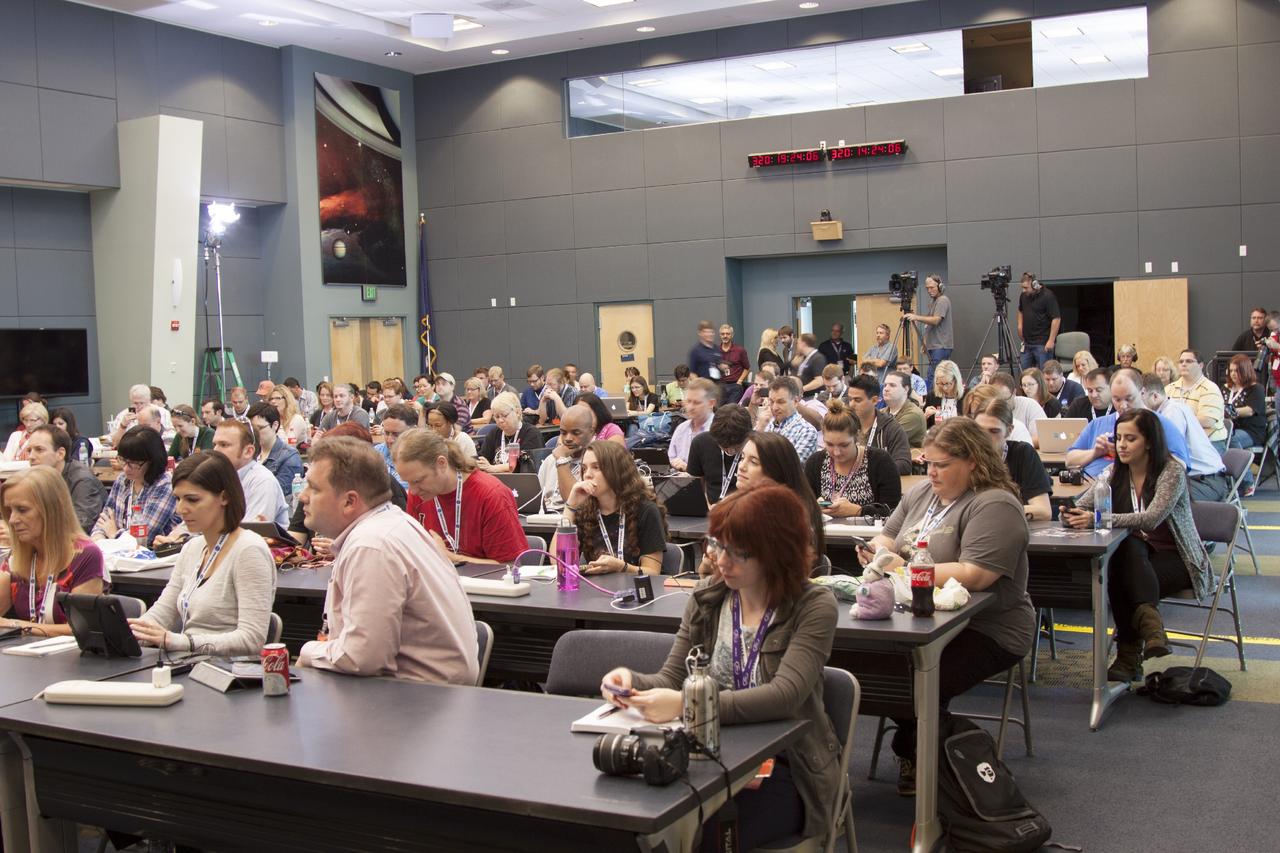
CAPE CANAVERAL, Fla. -- In the conference room of Operations Support Building II at NASA's Kennedy Space Center in Florida, social media participants listen to a briefing on the Mars Atmosphere and Volatile Evolution, or MAVEN, mission. The social media participants gathered at the Florida spaceport for the launch of the Mars Atmosphere and Volatile Evolution, or MAVEN, spacecraft. Their visit included tours of key facilities and participating in presentations by key NASA leaders who updated the space agency's current efforts. Photo credit: NASA/Jim Grossman
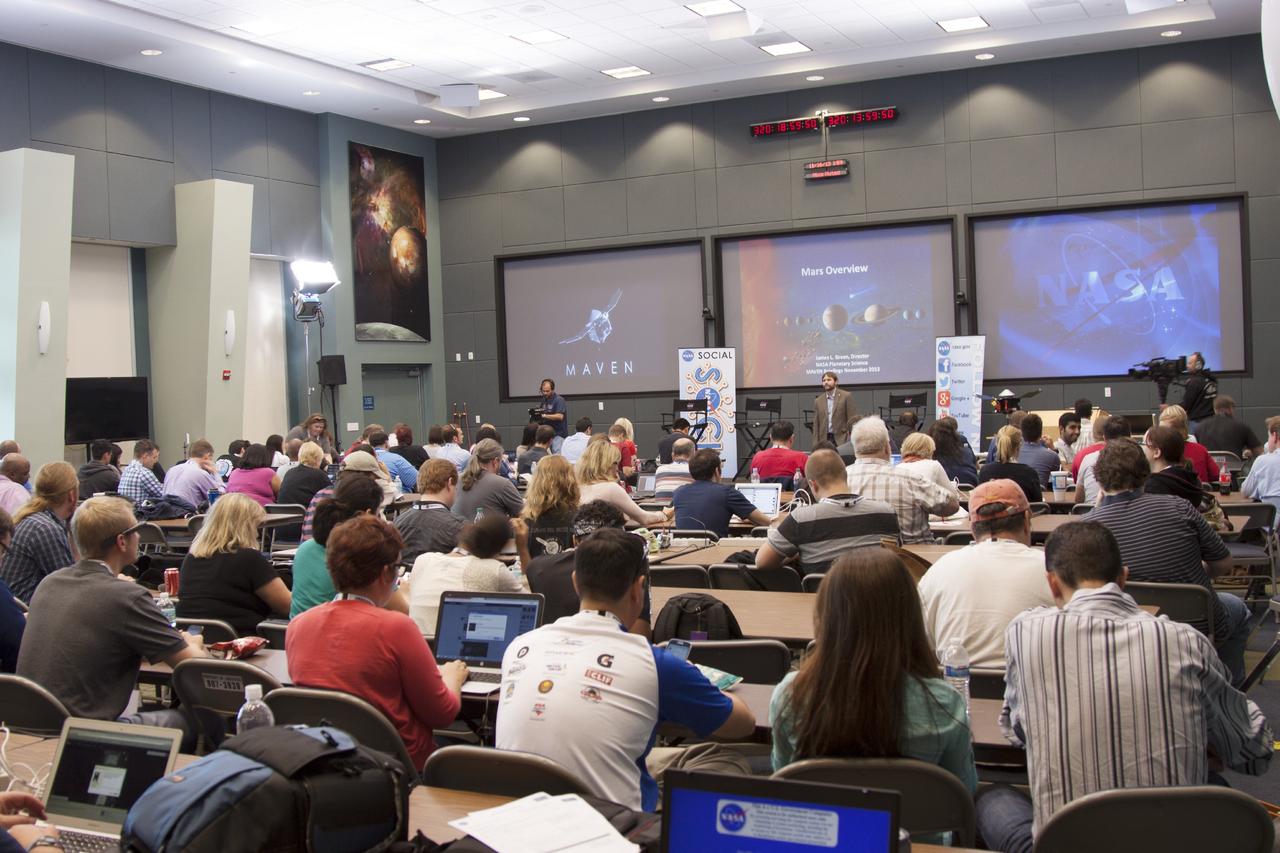
CAPE CANAVERAL, Fla. -- In the conference room of Operations Support Building II at NASA's Kennedy Space Center in Florida, social media participants listen to a briefing on the Mars Atmosphere and Volatile Evolution, or MAVEN, mission. The social media participants gathered at the Florida spaceport for the launch of the Mars Atmosphere and Volatile Evolution, or MAVEN, spacecraft. Their visit included tours of key facilities and participating in presentations by key NASA leaders who updated the space agency's current efforts. Photo credit: NASA/Jim Grossman
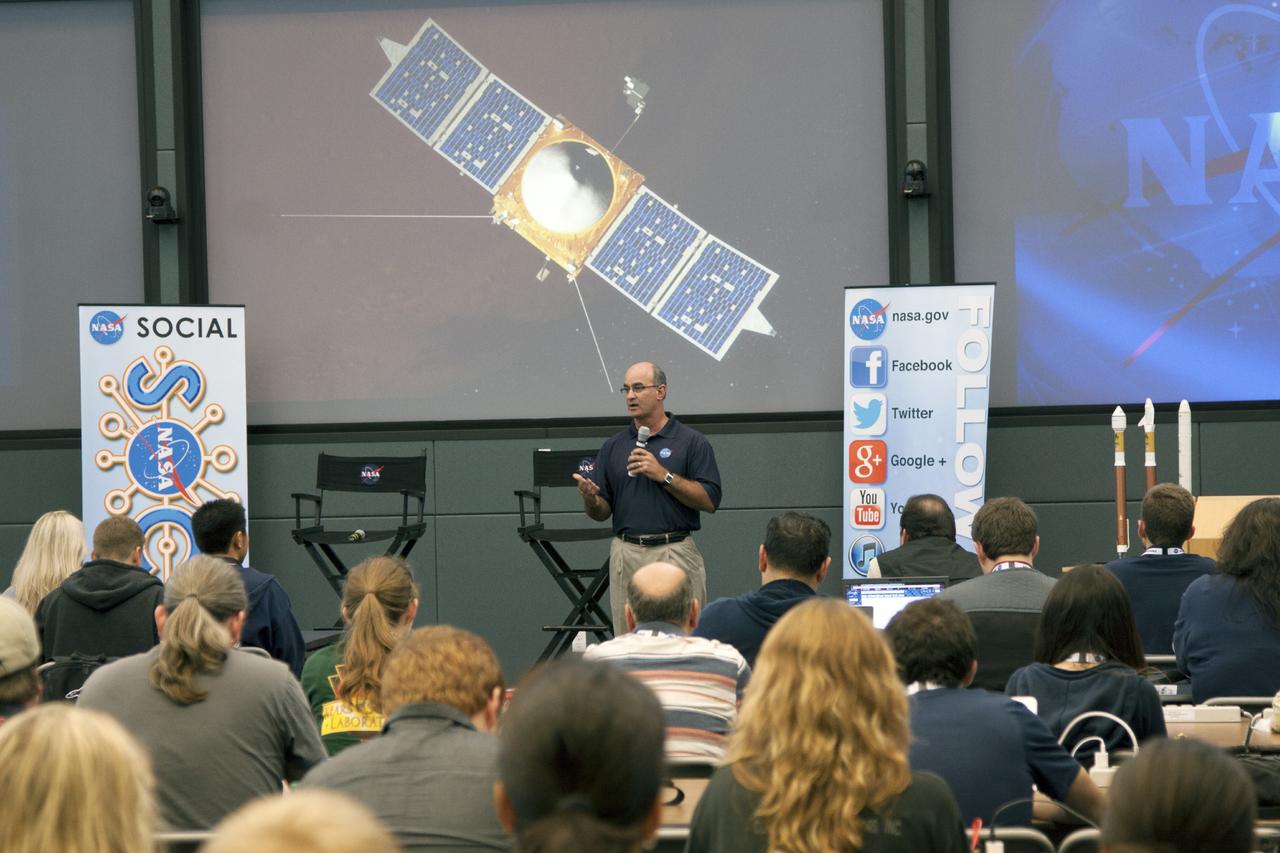
CAPE CANAVERAL, Fla. -- In the conference room of Operations Support Building II at NASA's Kennedy Space Center in Florida, social media participants listen to a briefing on future agency programs by Billy Stover, a NASA Commercial Crew Program Safety engineer. The social media participants gathered at the Florida spaceport for the launch of the Mars Atmosphere and Volatile Evolution, or MAVEN, spacecraft. Their visit included tours of key facilities and participating in presentations by key NASA leaders who updated the space agency's current efforts. Photo credit: NASA/Jim Grossman
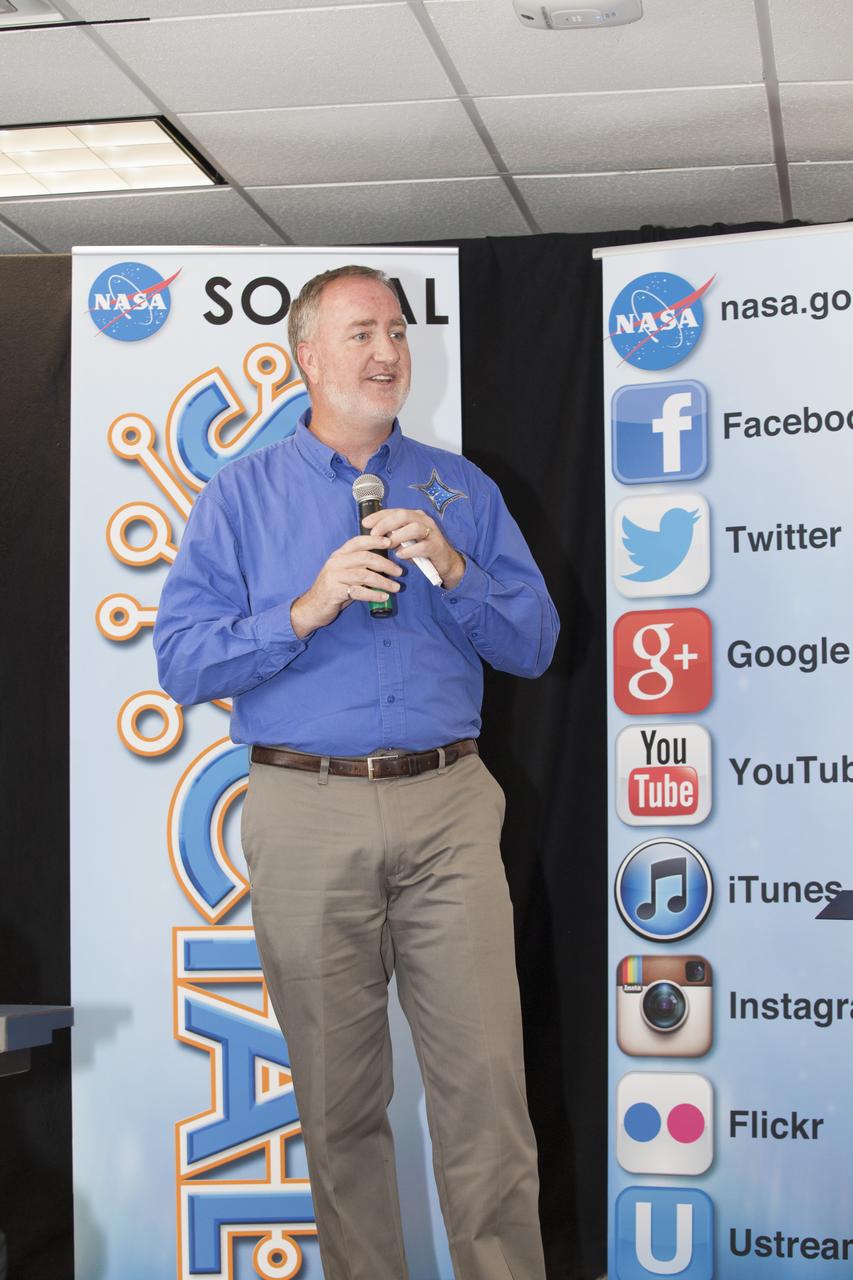
CAPE CANAVERAL, Fla. -- In the NASA News Center annex at NASA's Kennedy Space Center in Florida, social media participants listen to a briefing by Michael Woltman of Kennedy's Launch Services Program. The social media participants gathered at the Florida spaceport for the launch of the Tracking and Data Relay Satellite, or TDRS-L spacecraft. Their visit included tours of key facilities and participating in presentations by key NASA leaders who updated the space agency's current efforts. Photo credit: NASA/Dan Casper
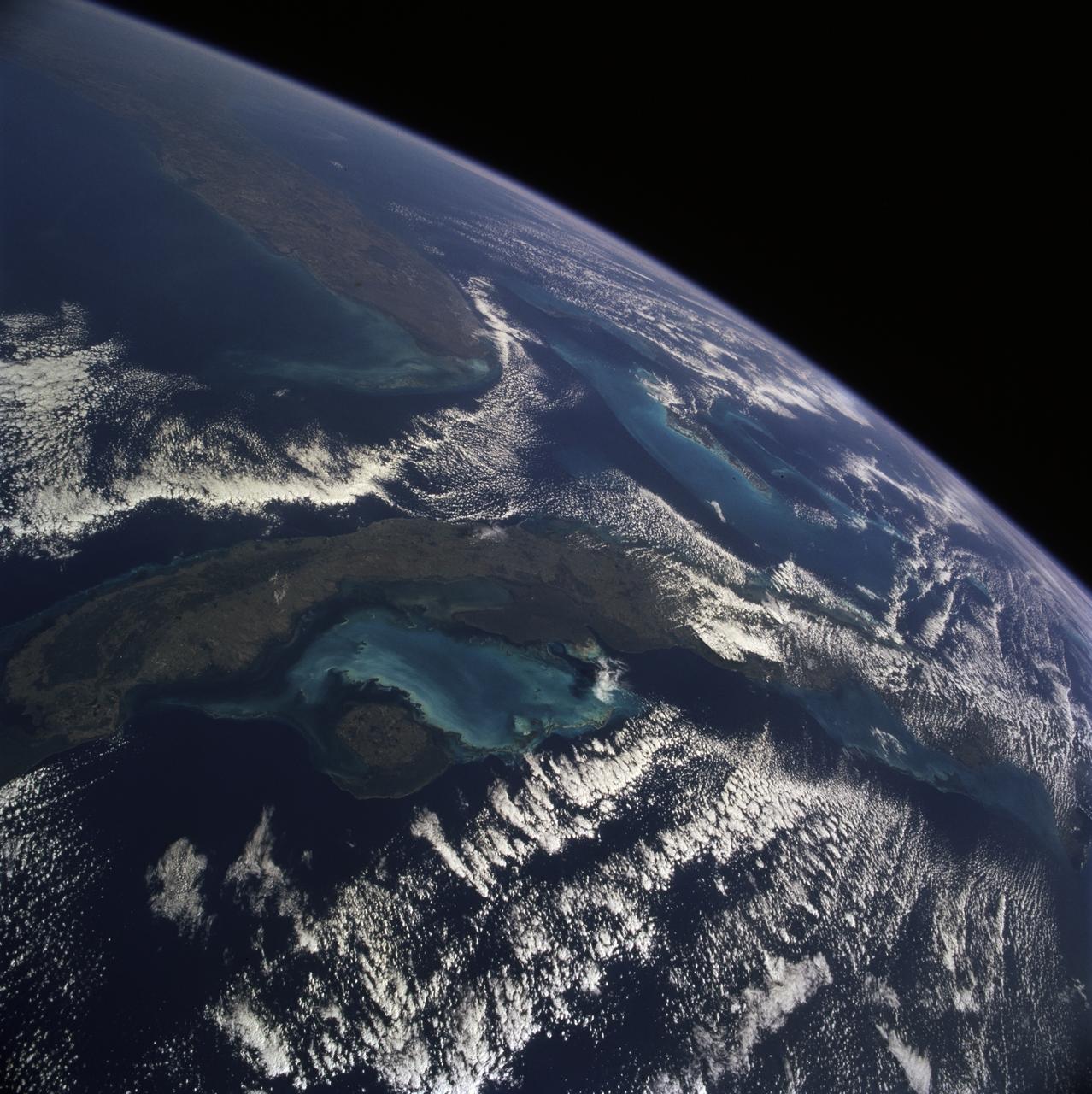
STS081-711-009 (12-22 Jan. 1997) --- As photographed with a 70mm handheld camera from the Earth-orbiting Space Shuttle Atlantis, this image provides a northeastward panorama of the Florida peninsula, the northern Bahamas and Cuba as well as a synoptic view of the northern Caribbean region. Lake Okeechobee and the urban region around Miami are the two key visual points in Florida. The turquoise shallow water platforms around the Florida Keys, the Bahamas, and south of Cuba contrast with the deep blue color of the deeper channels which separate Florida from Cuba and the Bahamas. Offshore breezes keep the coastal areas clear of clouds.
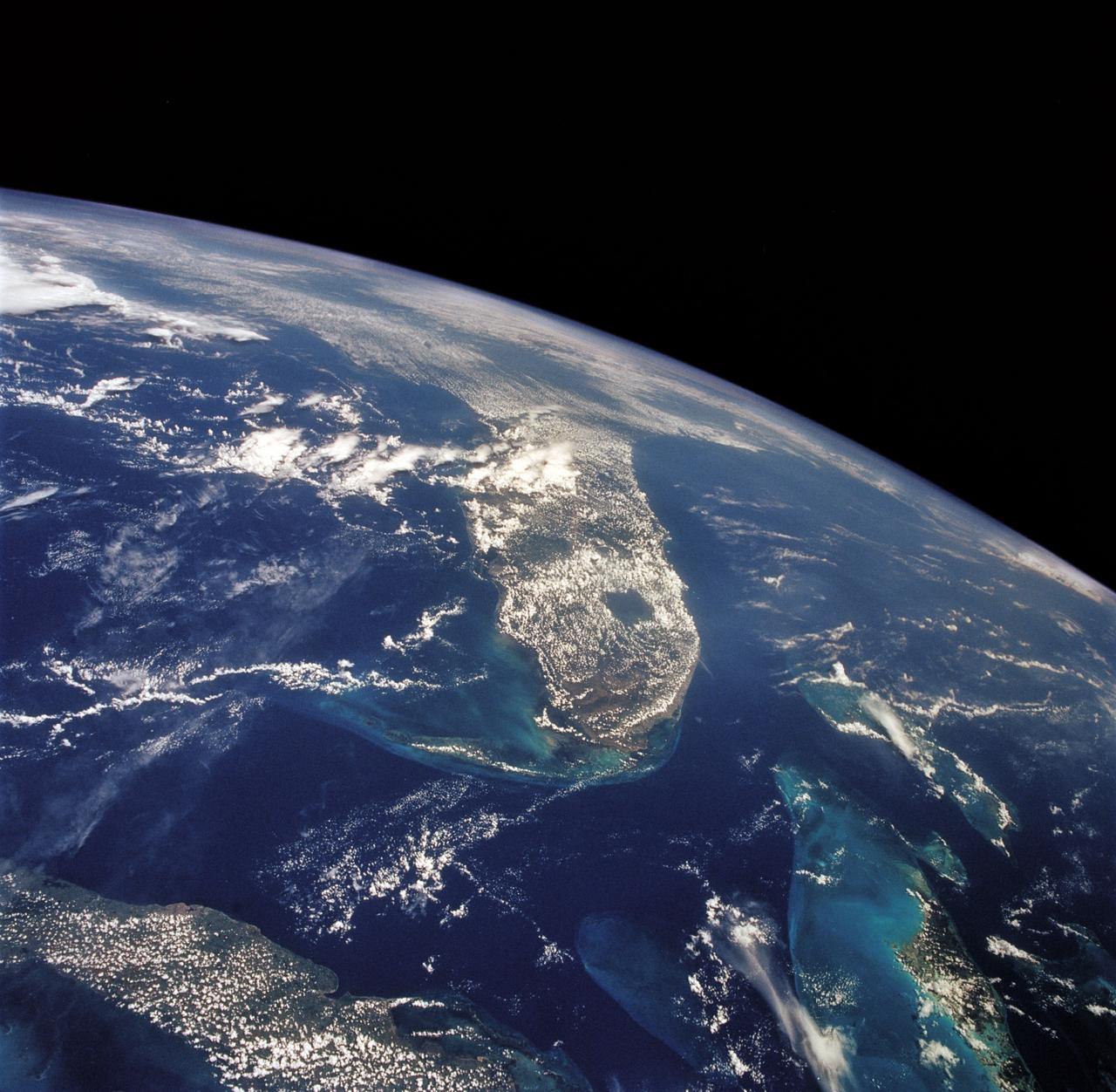
This unique photo offers a view of the Florida peninsula, western Bahamas, north central Cuba and the deep blue waters of the Gulf Stream, that hugs the east coast of Florida (27.0N, 82.0W). In addition to being an excellent photograph for showing the geographical relationships between the variety of landforms in this scene, the typical effect of the land-sea breeze is very much in evidence as few clouds over water, cumulus build up over landmass.
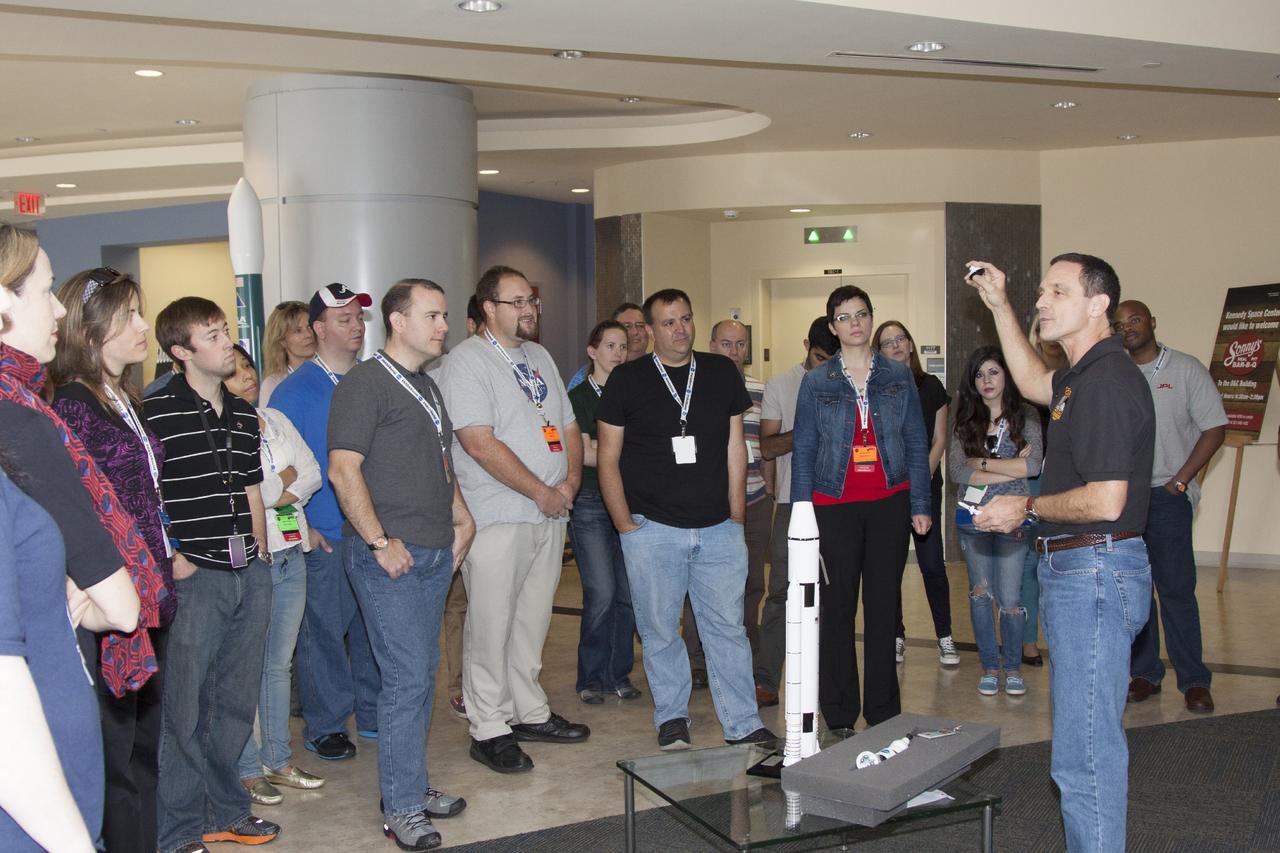
CAPE CANAVERAL, Fla. -- Social media participants are briefed on the Space Launch System rocket by Stu McClung, NASA's deputy manager of the Orion Production Office. They were on hand for the upcoming launch of the Mars Atmosphere and Volatile Evolution, or MAVEN, mission. Their visit included tours of key facilities at the Florida Spaceport and participating in presentations by key NASA leaders who updated the space agency's current efforts. Photo credit: NASA/Jim Grossman
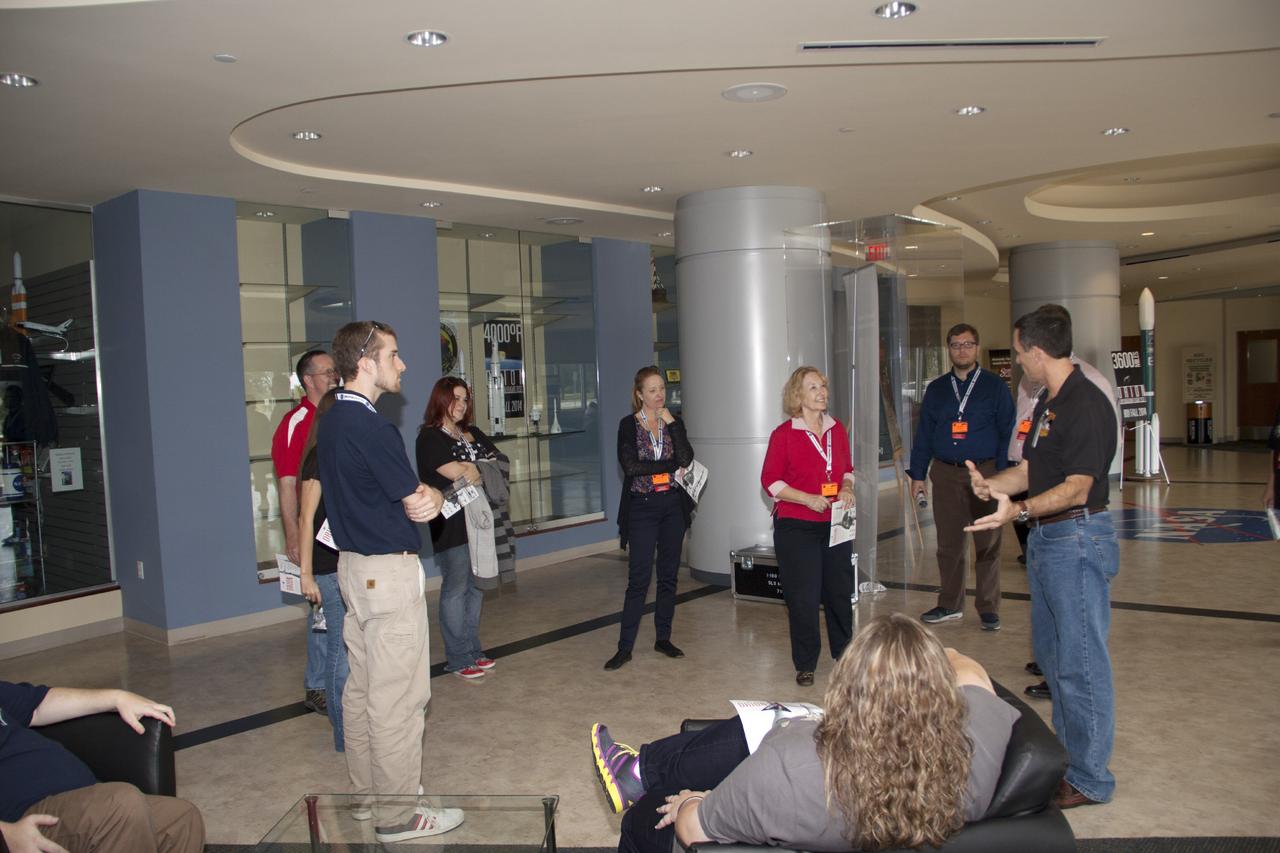
CAPE CANAVERAL, Fla. -- Social media participants are briefed on the Space Launch System rocket by Stu McClung, NASA's deputy manager of the Orion Production Office. They were on hand for the upcoming launch of the Mars Atmosphere and Volatile Evolution, or MAVEN, mission. Their visit included tours of key facilities at the Florida Spaceport and participating in presentations by key NASA leaders who updated the space agency's current efforts. Photo credit: NASA/Jim Grossman
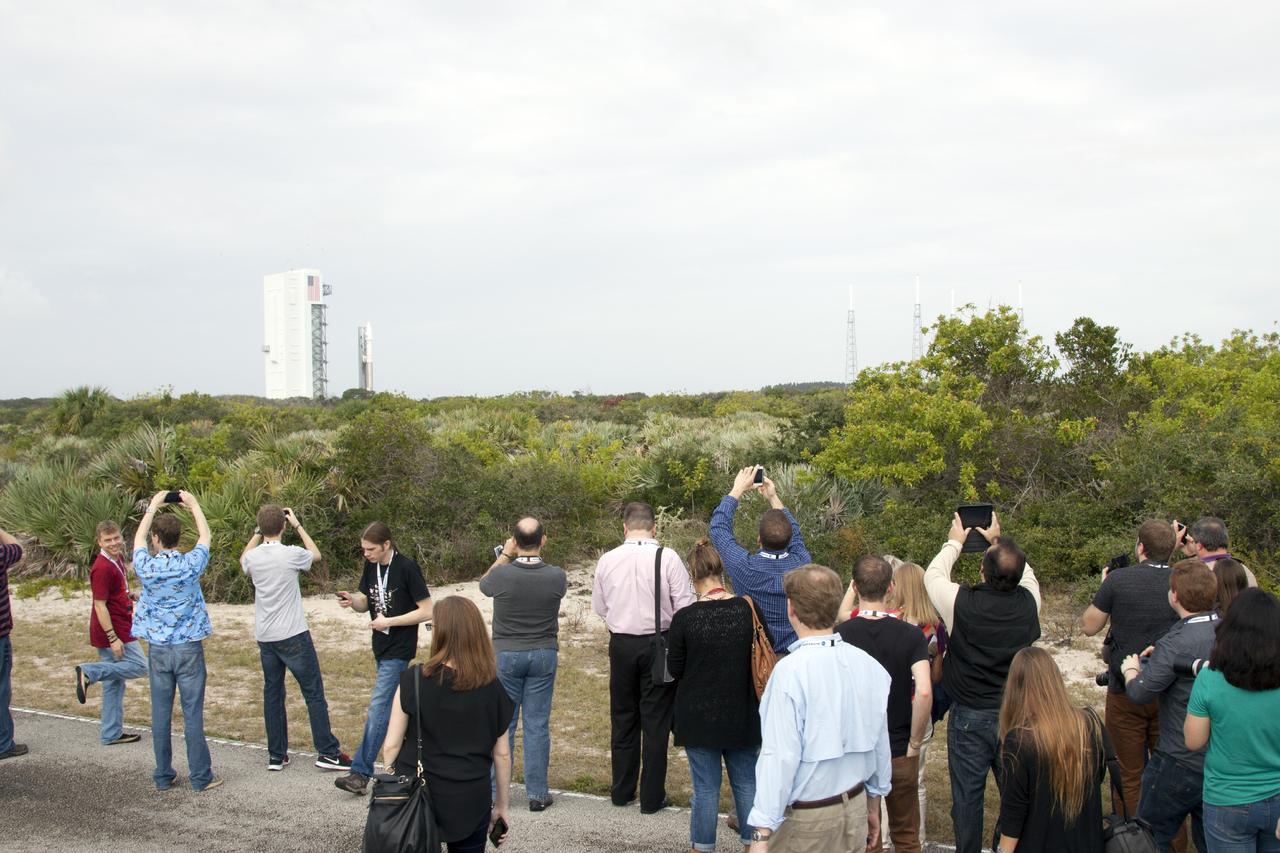
CAPE CANAVERAL, Fla. -- Social media participants are given an opportunity to photograph the Atlas V vehicle poised at Cape Canaveral's Space Launch Complex-41 that will boost the Mars Atmosphere and Volatile Evolution, or MAVEN, spacecraft on a 10-month trip to the Red Planet. They were on hand for the upcoming launch of the MAVEN mission. Their visit included tours of key facilities at the Florida Spaceport and participating in presentations by key NASA leaders who updated the space agency's current efforts. Photo credit: NASA/Jim Grossman
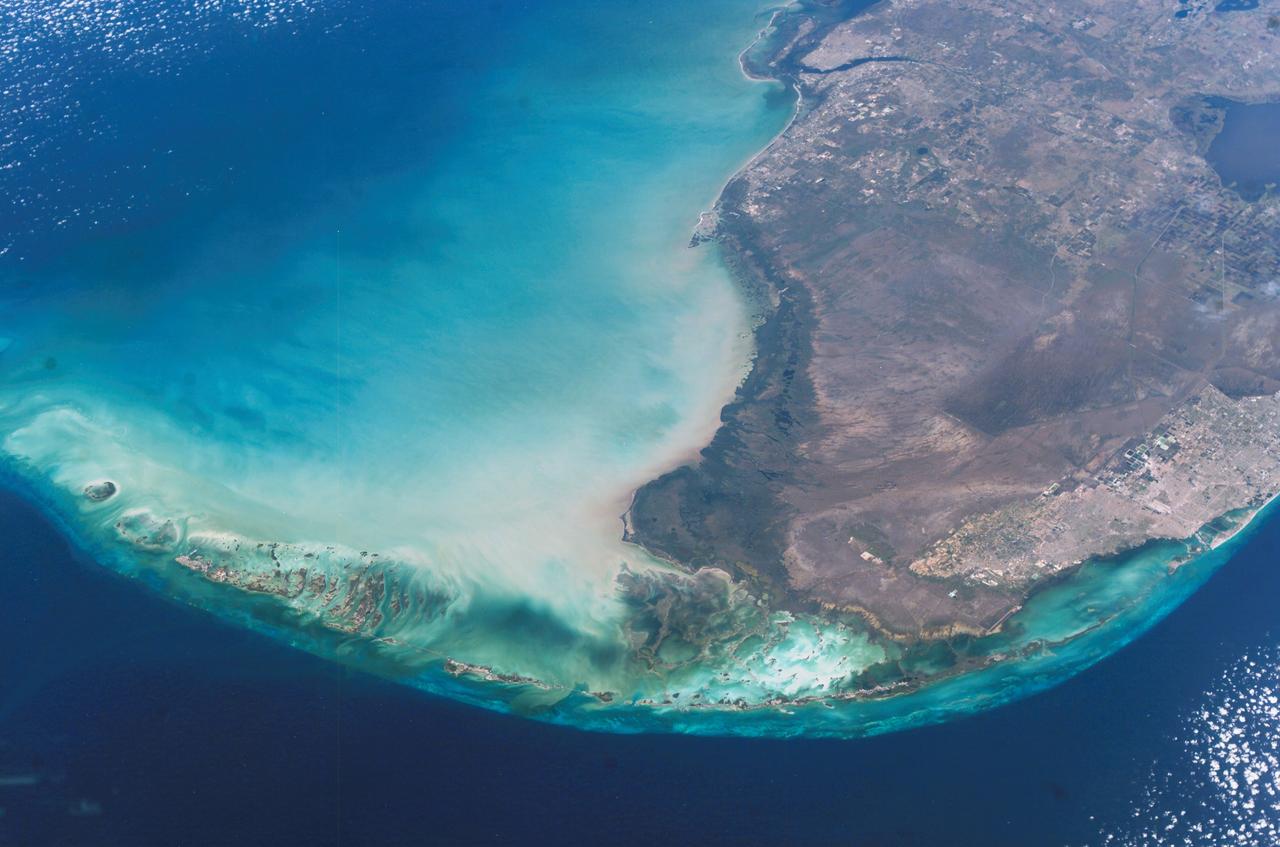
ISS010-E-17590 (11 February 2005) --- Southern Florida and the Florida Keys are featured in this image photographed by an Expedition 10 crewmember on the International Space Station. Miami and Fort Lauderdale are visible on the Atlantic side. Everglades National Park and Fort Myers (Gulf of Mexico side) can also be seen, as can most of Lake Okeechobee.
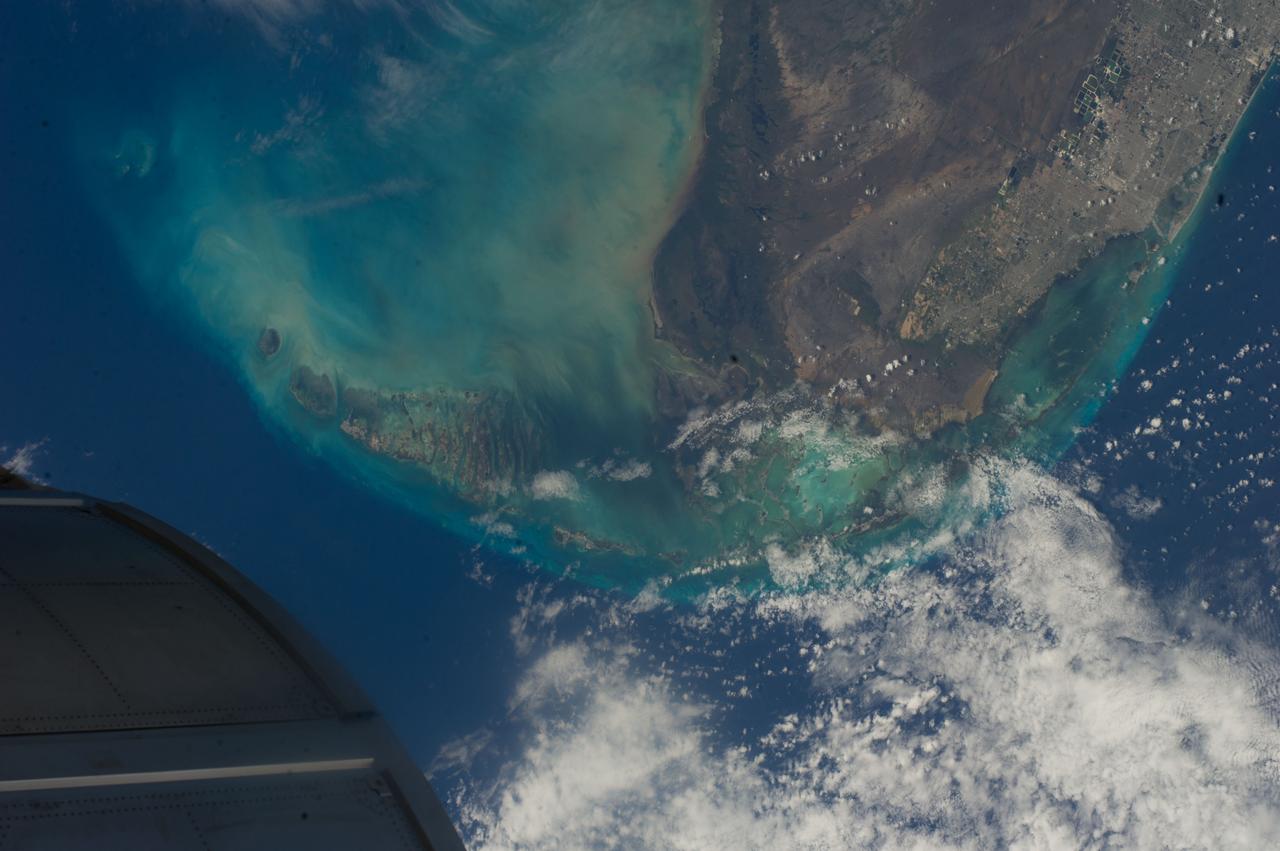
ISS040-E-000467 (17 May 2014) --- One of the Expedition 40 crew members aboard the International Space Station photographed this image of southern Florida, featuring Miami, the Everglades and the Florida Keys, on May 17, 2014. The object in lower left is part of one of the modules on the orbital outpost.
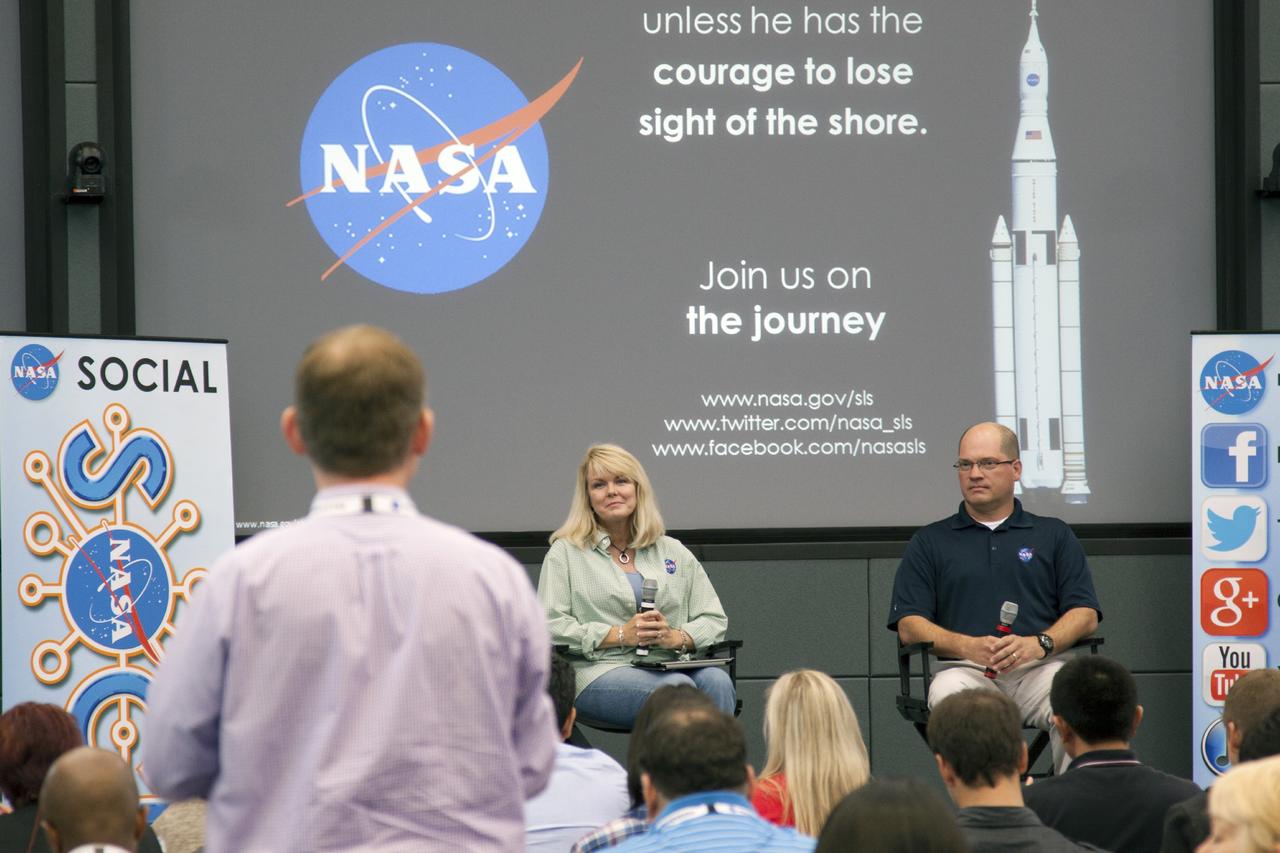
CAPE CANAVERAL, Fla. -- In the conference room of Operations Support Building II at NASA's Kennedy Space Center in Florida, social media participants listen to a briefing on future agency programs by, Kimberly Robinson, Space Launch System engineer, left, and Chad Brown of Ground System Development and Operations. The social media participants gathered at the Florida spaceport for the launch of the Mars Atmosphere and Volatile Evolution, or MAVEN, spacecraft. Their visit included tours of key facilities and participating in presentations by key NASA leaders who updated the space agency's current efforts. Photo credit: NASA/Jim Grossman
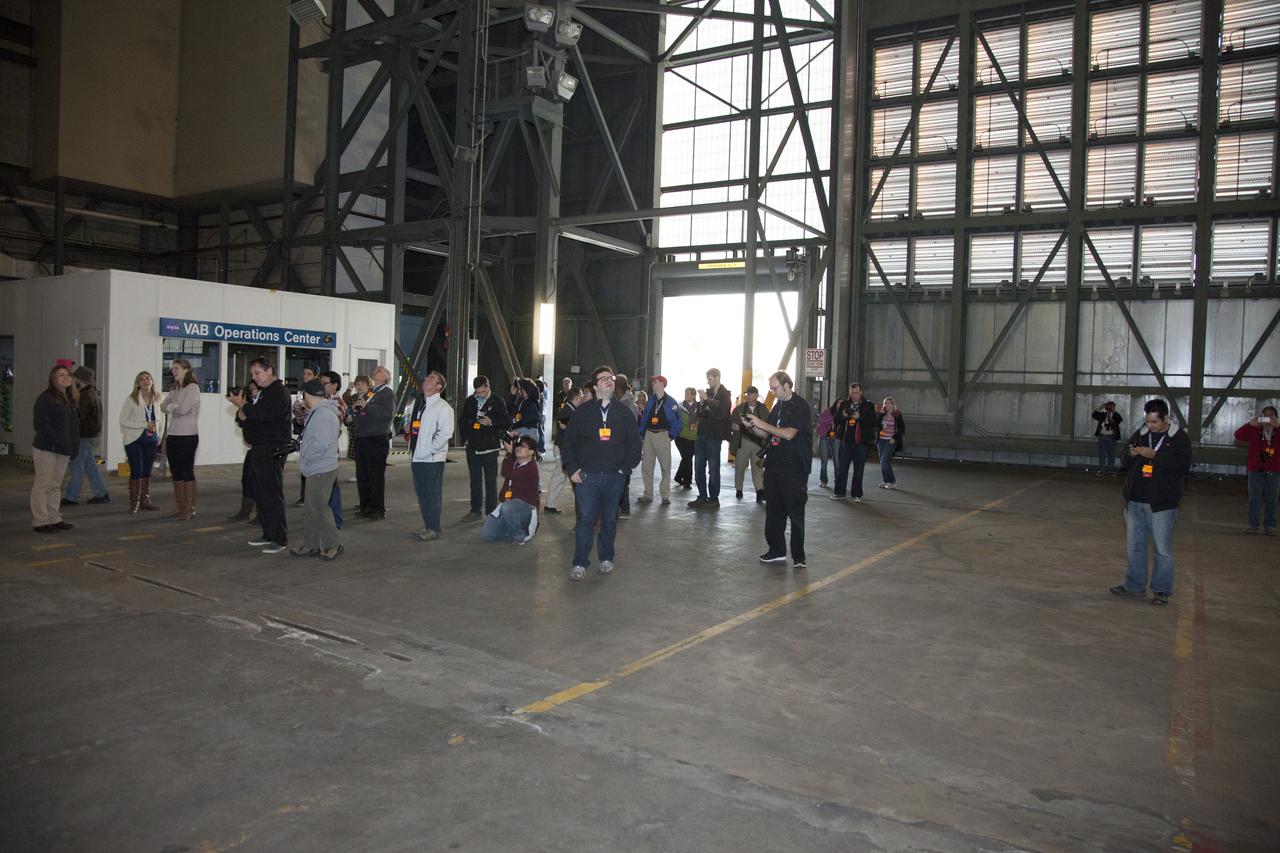
CAPE CANAVERAL, Fla. -- At NASA's Kennedy Space Center in Florida, social media participants were given an opportunity to go inside the spaceport's Vehicle Assembly Building. After serving through the Apollo and Space Shuttle Programs, the structure now is undergoing renovations to accommodate future launch vehicles and to continue as a major part of America's efforts to explore space. The social media participants gathered at the Florida spaceport for the launch of the Tracking and Data Relay Satellite, or TDRS-L spacecraft. Their visit included tours of key facilities and participating in presentations by key NASA leaders who updated the space agency's current efforts. Photo credit: NASA/Dan Casper
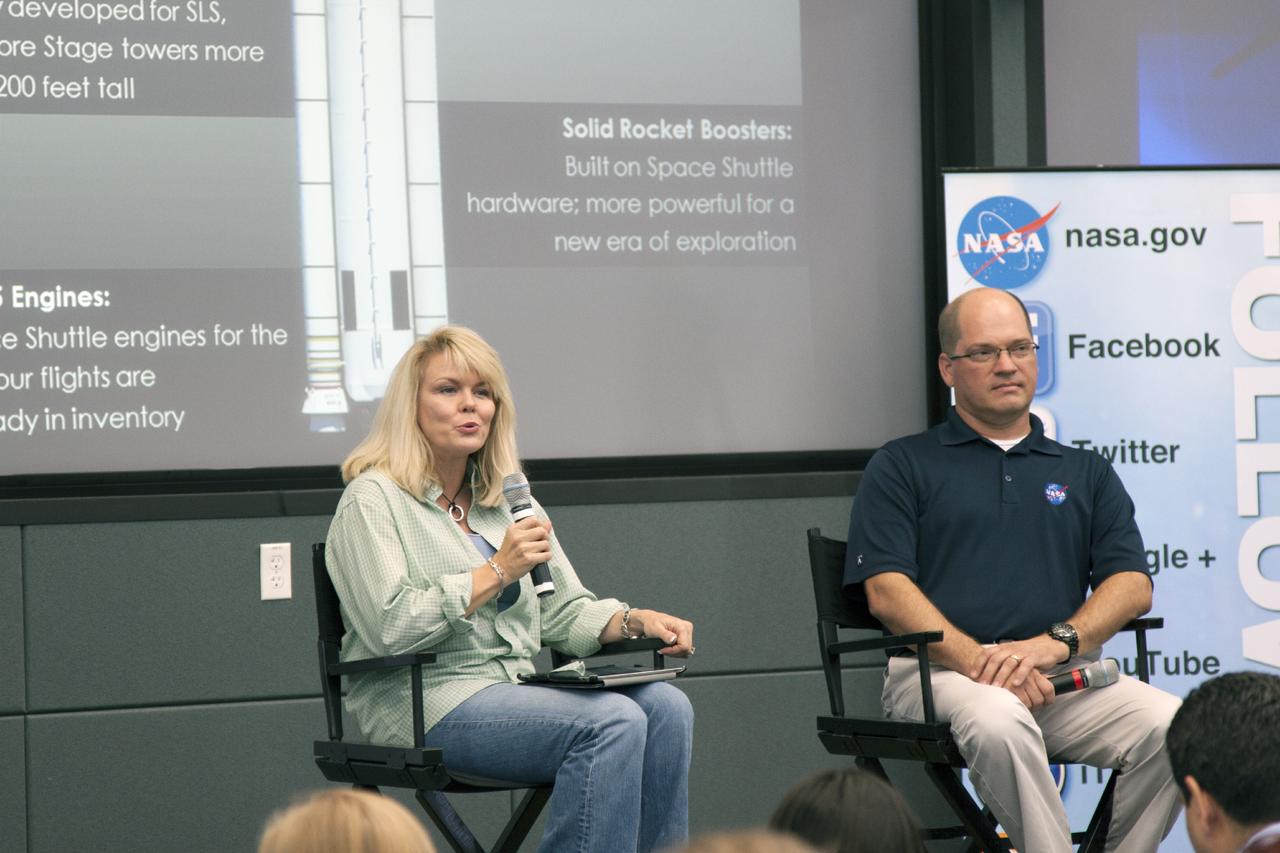
CAPE CANAVERAL, Fla. -- In the conference room of Operations Support Building II at NASA's Kennedy Space Center in Florida, social media participants listen to a briefing on future agency programs by, Kimberly Robinson, Space Launch System engineer, left, and Chad Brown of Ground System Development and Operations. The social media participants gathered at the Florida spaceport for the launch of the Mars Atmosphere and Volatile Evolution, or MAVEN, spacecraft. Their visit included tours of key facilities and participating in presentations by key NASA leaders who updated the space agency's current efforts. Photo credit: NASA/Jim Grossman
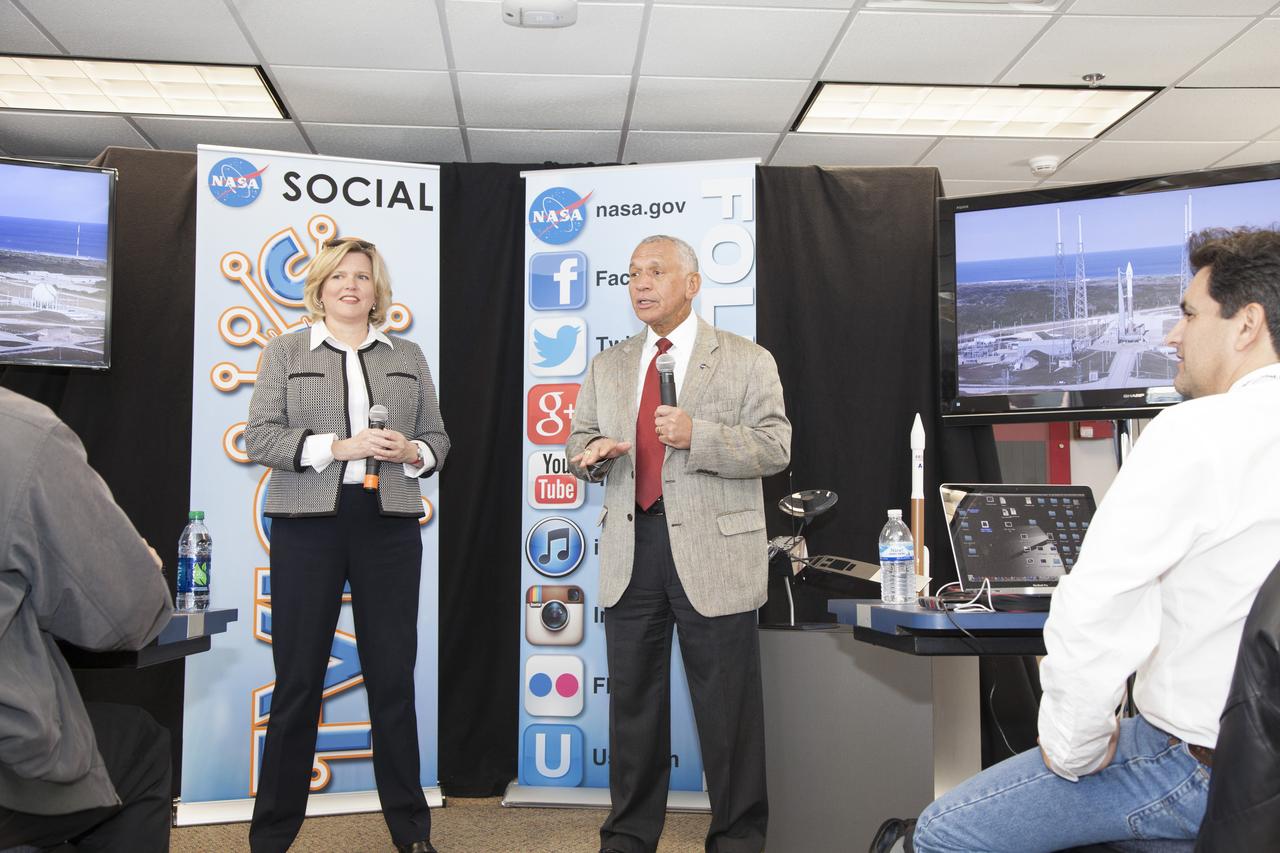
CAPE CANAVERAL, Fla. -- In the NASA News Center annex at NASA's Kennedy Space Center in Florida, social media participants listen to a briefing by Acting Administrator of the U.S. Small Business Administration Jeanne Holit, left, and NASA Administrator Charles Bolden. The social media participants gathered at the Florida spaceport for the launch of the Tracking and Data Relay Satellite, or TDRS-L spacecraft. Their visit included tours of key facilities and participating in presentations by key NASA leaders who updated the space agency's current efforts. Photo credit: NASA/Dan Casper
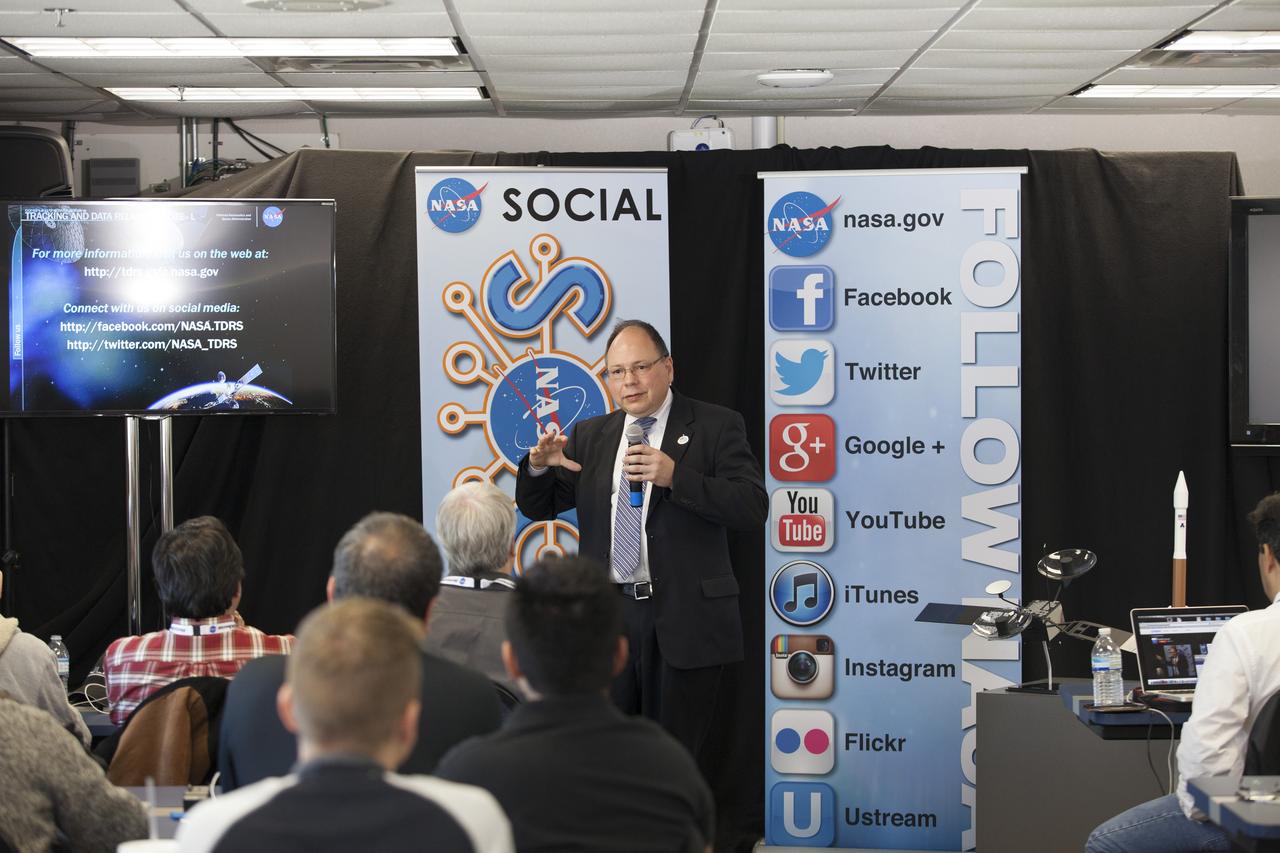
CAPE CANAVERAL, Fla. -- In the NASA News Center annex at NASA's Kennedy Space Center in Florida, social media participants listen to a briefing by Marco Toral, deputy program manager for the Tracking and Data Relay Satellite Program at the agency's Goddard Space Flight Center in Maryland. The social media participants gathered at the Florida spaceport for the launch of the Tracking and Data Relay Satellite, or TDRS-L spacecraft. Their visit included tours of key facilities and participating in presentations by key NASA leaders who updated the space agency's current efforts. Photo credit: NASA/Dan Casper
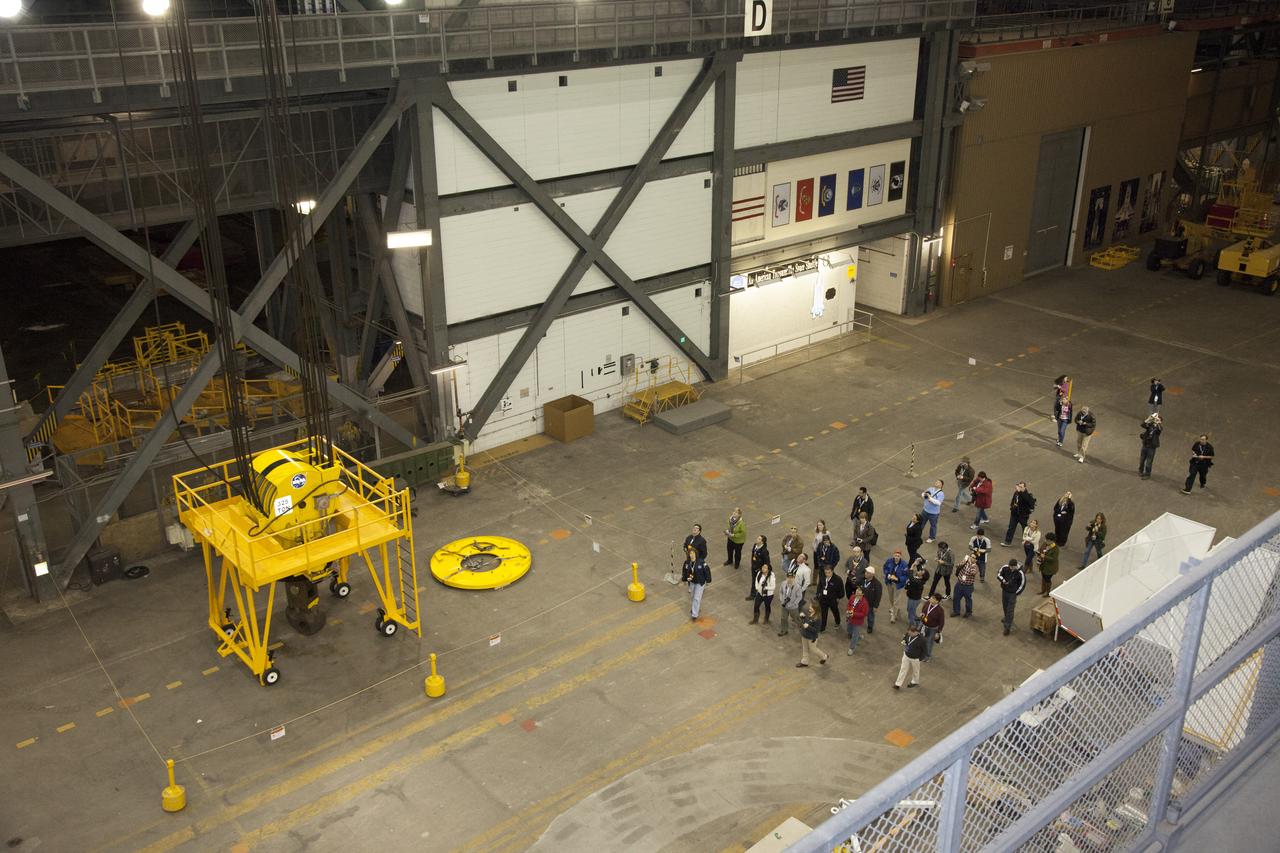
CAPE CANAVERAL, Fla. -- At NASA's Kennedy Space Center in Florida, social media participants were given an opportunity to go inside the spaceport's Vehicle Assembly Building. After serving through the Apollo and Space Shuttle Programs, the structure now is undergoing renovations to accommodate future launch vehicles and to continue as a major part of America's efforts to explore space. The social media participants gathered at the Florida spaceport for the launch of the Tracking and Data Relay Satellite, or TDRS-L spacecraft. Their visit included tours of key facilities and participating in presentations by key NASA leaders who updated the space agency's current efforts. Photo credit: NASA/Dan Casper
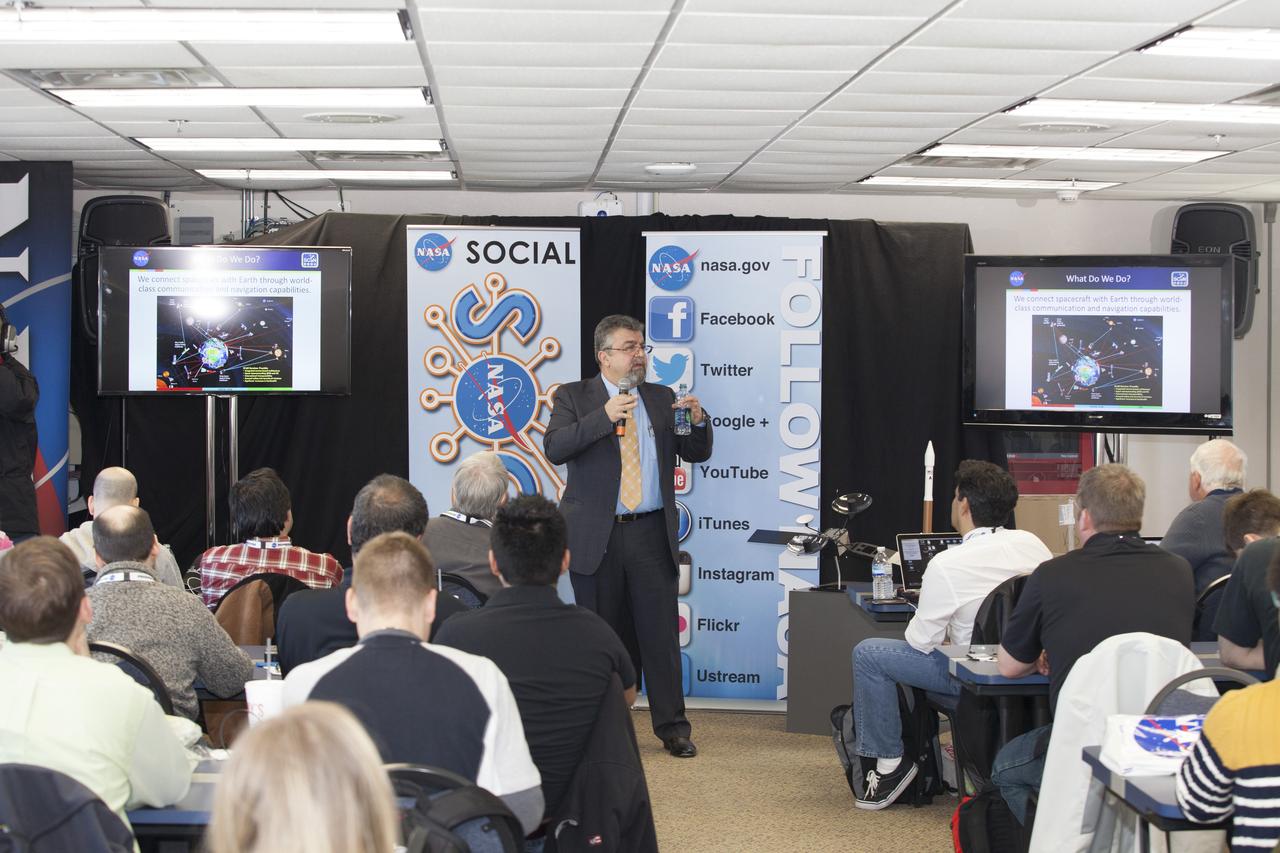
CAPE CANAVERAL, Fla. -- In the NASA News Center annex at NASA's Kennedy Space Center in Florida, social media participants listen to a briefing by Badri Younes, deputy associate administrator, Space Communications and Navigation SCaN NASA Human Exploration and Operations Mission Directorate at NASA Headquarters in Washington D.C. The social media participants gathered at the Florida spaceport for the launch of the Tracking and Data Relay Satellite, or TDRS-L spacecraft. Their visit included tours of key facilities and participating in presentations by key NASA leaders who updated the space agency's current efforts. Photo credit: NASA/Dan Casper
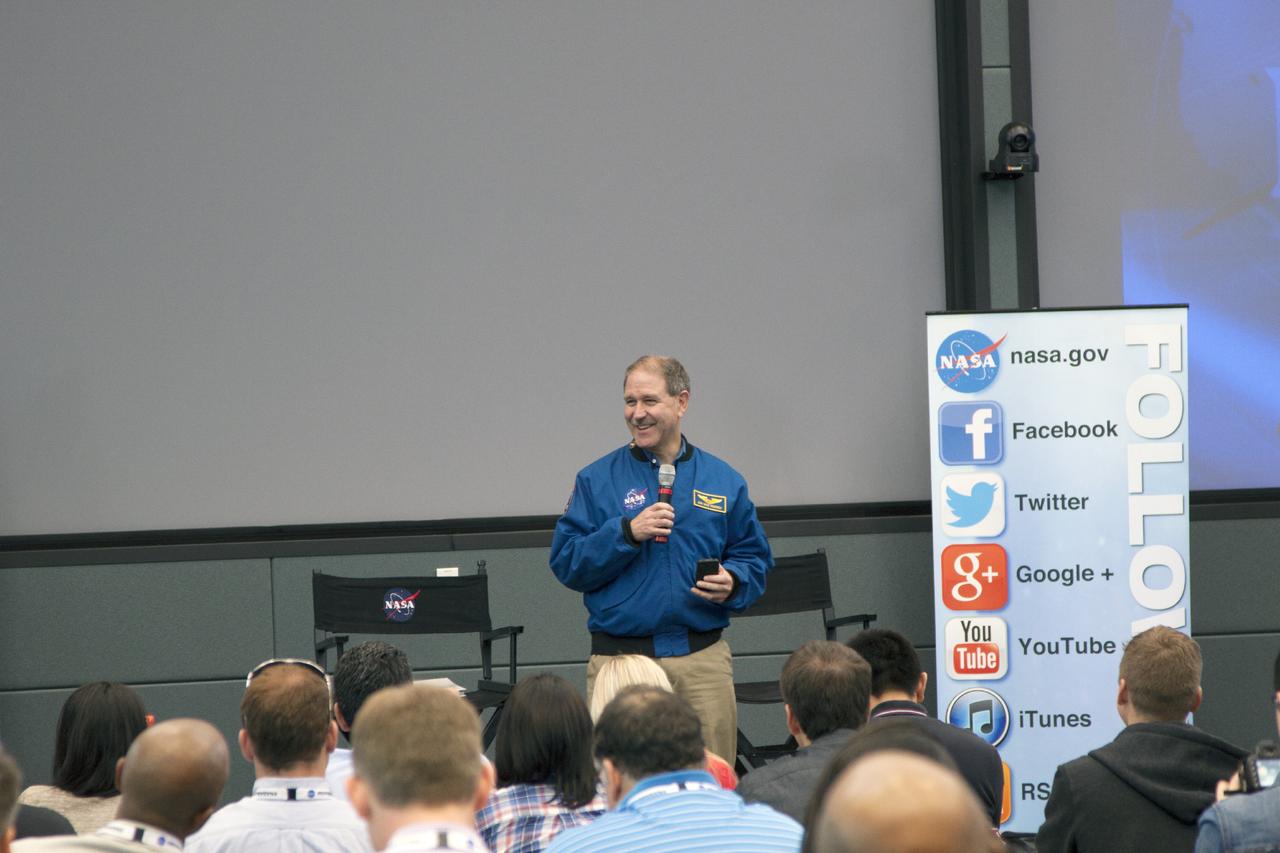
CAPE CANAVERAL, Fla. -- In the conference room of Operations Support Building II at NASA's Kennedy Space Center in Florida, social media participants listen to a briefing on the Mars Atmosphere and Volatile Evolution, or MAVEN, mission by, John Grunsfeld, the agency's associate administrator for the Science Mission Directorate. The social media participants gathered at the Florida spaceport for the launch of the Mars Atmosphere and Volatile Evolution, or MAVEN, spacecraft. Their visit included tours of key facilities and participating in presentations by key NASA leaders who updated the space agency's current efforts. Photo credit: NASA/Jim Grossman
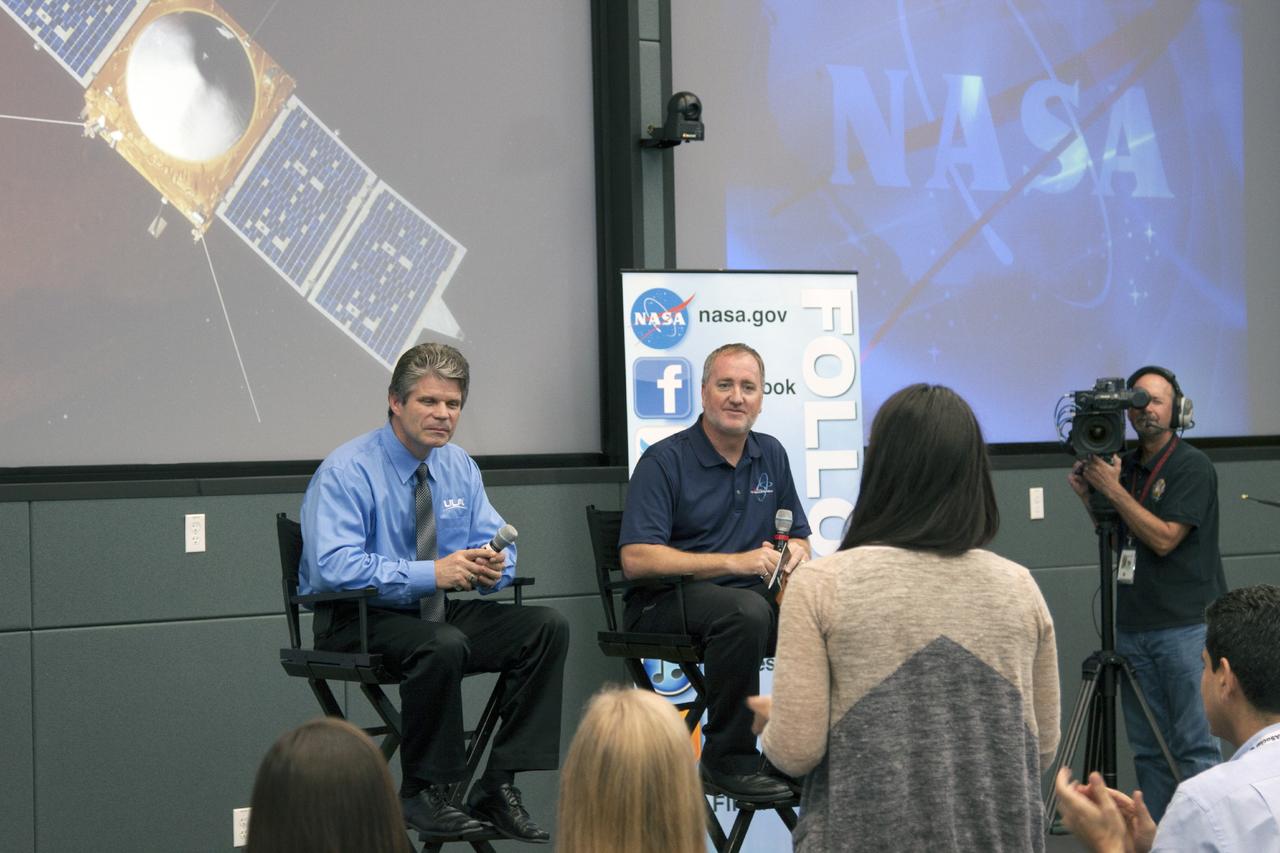
CAPE CANAVERAL, Fla. -- In the conference room of Operations Support Building II at NASA's Kennedy Space Center in Florida, social media participants listen to a briefing on the Mars Atmosphere and Volatile Evolution, or MAVEN, mission by, Joseph Fust, an engineer with United Launch Alliance, left, and Michael Wolfman, agency Vehicle System engineer. The social media participants gathered at the Florida spaceport for the launch of the Mars Atmosphere and Volatile Evolution, or MAVEN, spacecraft. Their visit included tours of key facilities and participating in presentations by key NASA leaders who updated the space agency's current efforts. Photo credit: NASA/Jim Grossman
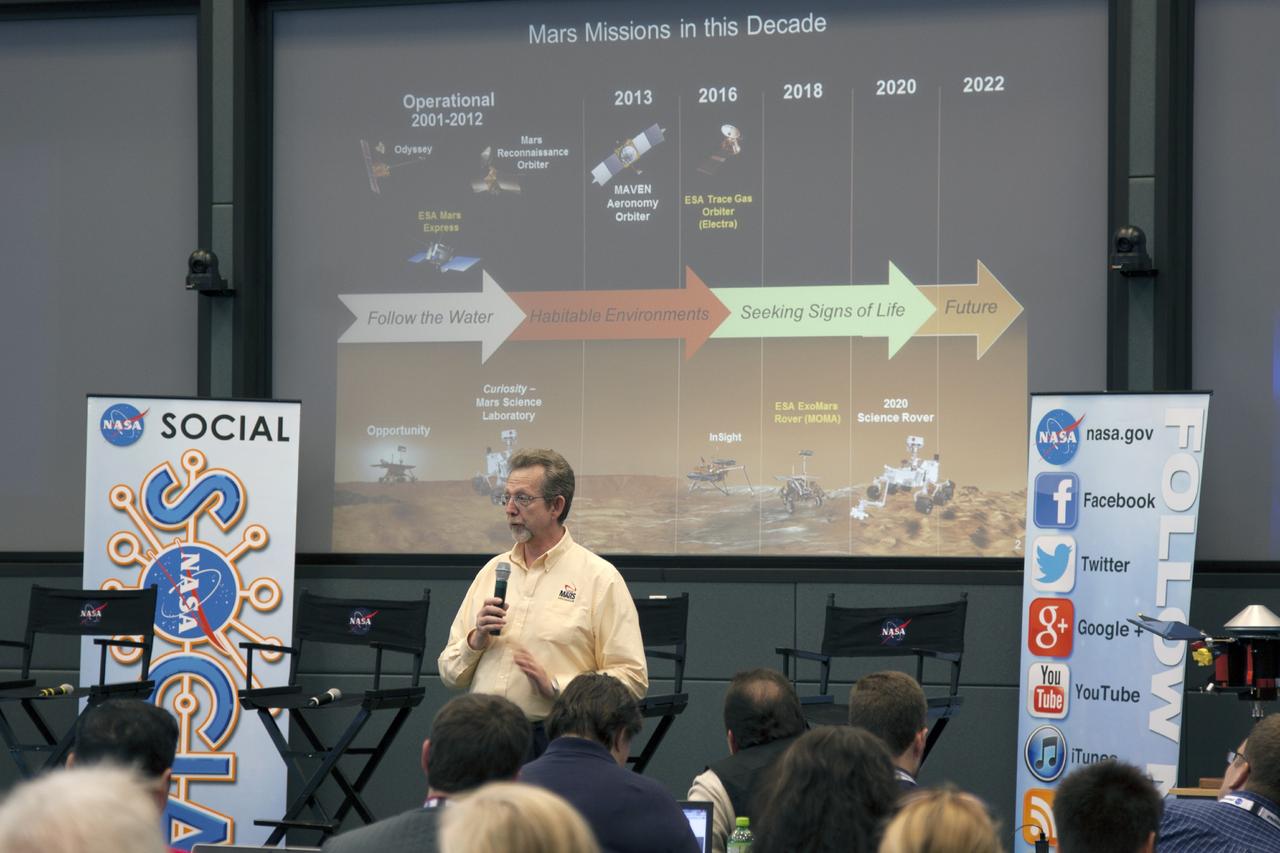
CAPE CANAVERAL, Fla. -- In the conference room of Operations Support Building II at NASA's Kennedy Space Center in Florida, social media participants listen to a briefing on the Mars Atmosphere and Volatile Evolution, or MAVEN, mission by Dr. Jim Green, the agency's Planetary Science director. The social media participants gathered at the Florida spaceport for the launch of the Mars Atmosphere and Volatile Evolution, or MAVEN, spacecraft. Their visit included tours of key facilities and participating in presentations by key NASA leaders who updated the space agency's current efforts. Photo credit: NASA/Jim Grossman
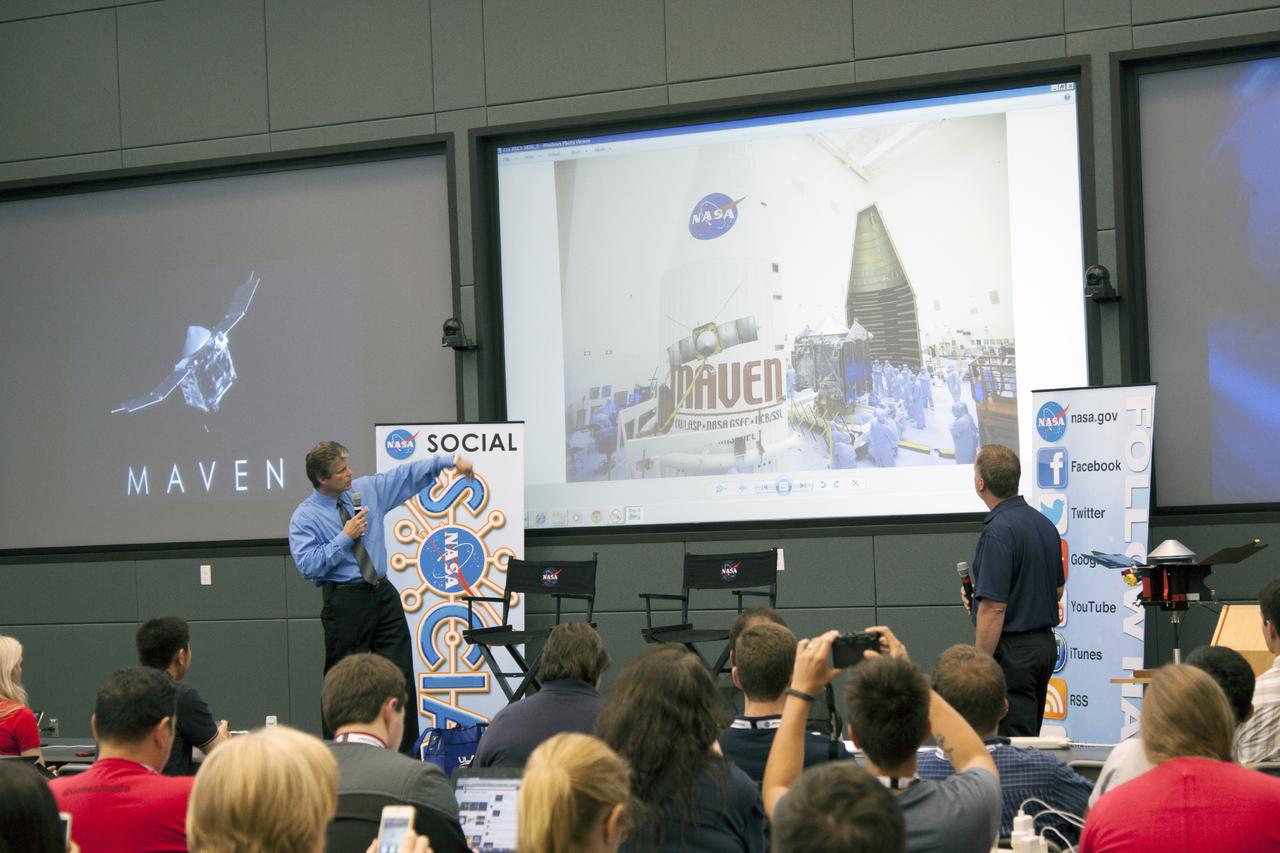
CAPE CANAVERAL, Fla. -- In the conference room of Operations Support Building II at NASA's Kennedy Space Center in Florida, social media participants listen to a briefing on the Mars Atmosphere and Volatile Evolution, or MAVEN, mission by, Joseph Fust, an engineer with United Launch Alliance, left, and Michael Wolfman, agency Vehicle System engineer. The social media participants gathered at the Florida spaceport for the launch of the Mars Atmosphere and Volatile Evolution, or MAVEN, spacecraft. Their visit included tours of key facilities and participating in presentations by key NASA leaders who updated the space agency's current efforts. Photo credit: NASA/Jim Grossman
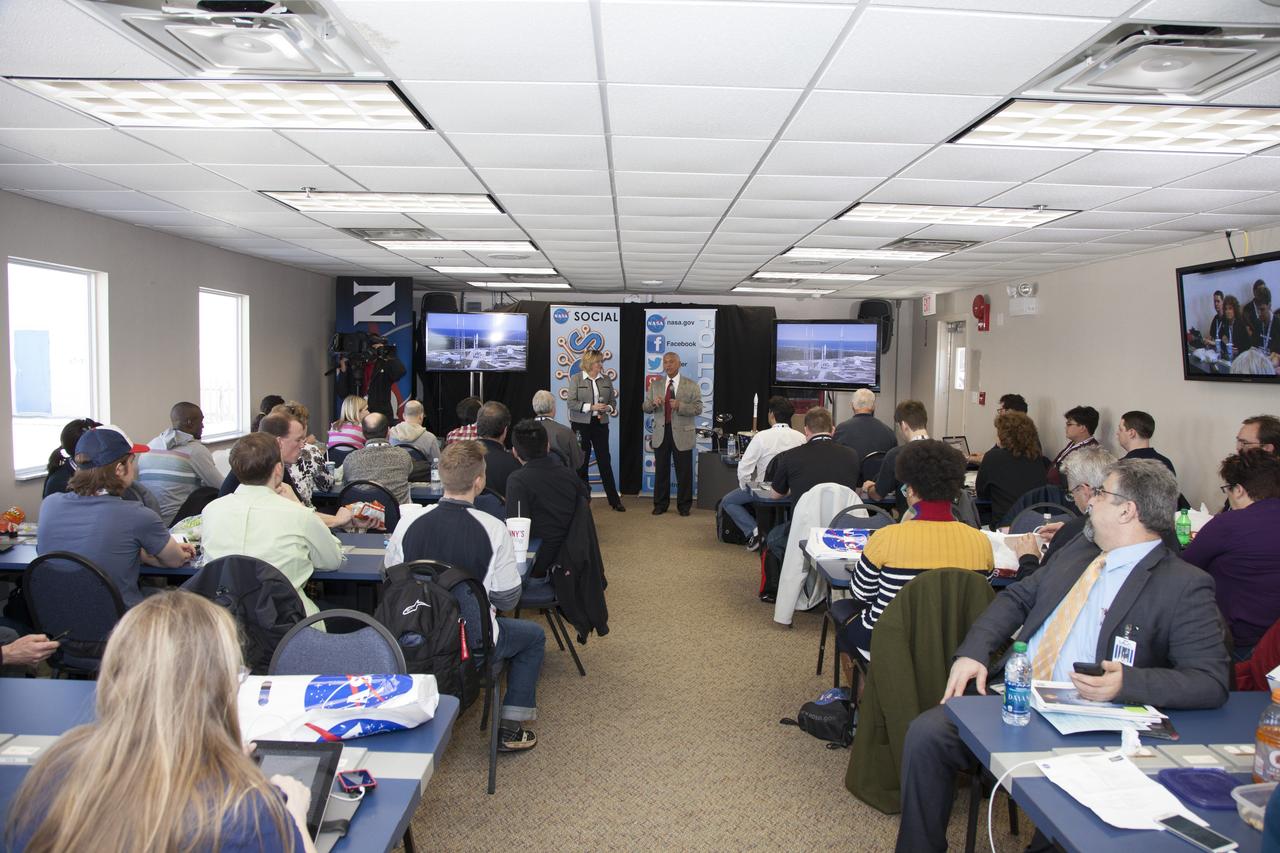
CAPE CANAVERAL, Fla. -- In the NASA News Center annex at NASA's Kennedy Space Center in Florida, social media participants listen to a briefing by Acting Administrator of the U.S. Small Business Administration Jeanne Holit, left, and NASA Administrator Charles Bolden. The social media participants gathered at the Florida spaceport for the launch of the Tracking and Data Relay Satellite, or TDRS-L spacecraft. Their visit included tours of key facilities and participating in presentations by key NASA leaders who updated the space agency's current efforts. Photo credit: NASA/Dan Casper
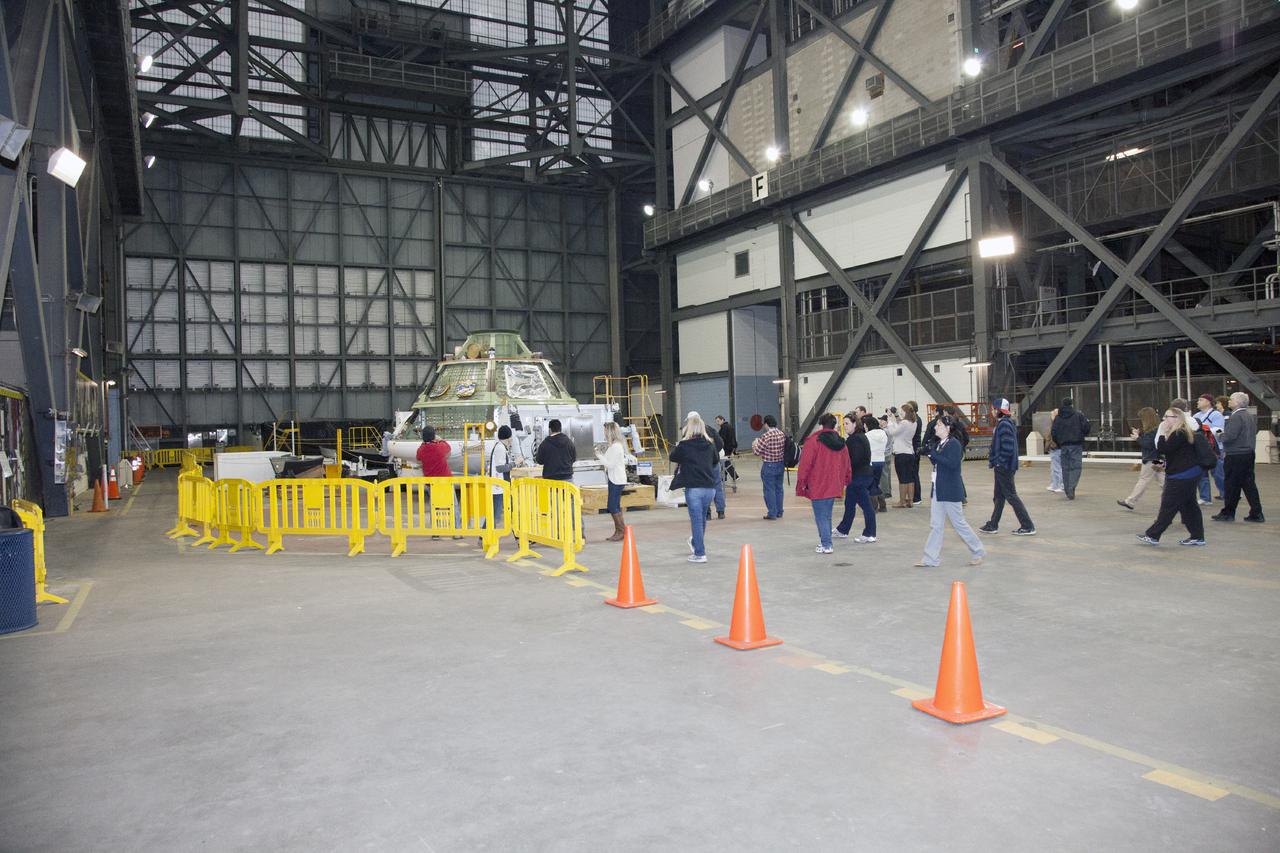
CAPE CANAVERAL, Fla. -- At NASA's Kennedy Space Center in Florida, social media participants were given an opportunity to go inside the spaceport's Vehicle Assembly Building. They were given an opportunity to see the Orion spacecraft currently being prepared for its first flight test, Exploration Flight Test EFT-1. The social media participants gathered at the Florida spaceport for the launch of the Tracking and Data Relay Satellite, or TDRS-L spacecraft. Their visit included tours of key facilities and participating in presentations by key NASA leaders who updated the space agency's current efforts. Photo credit: NASA_Dan Casper
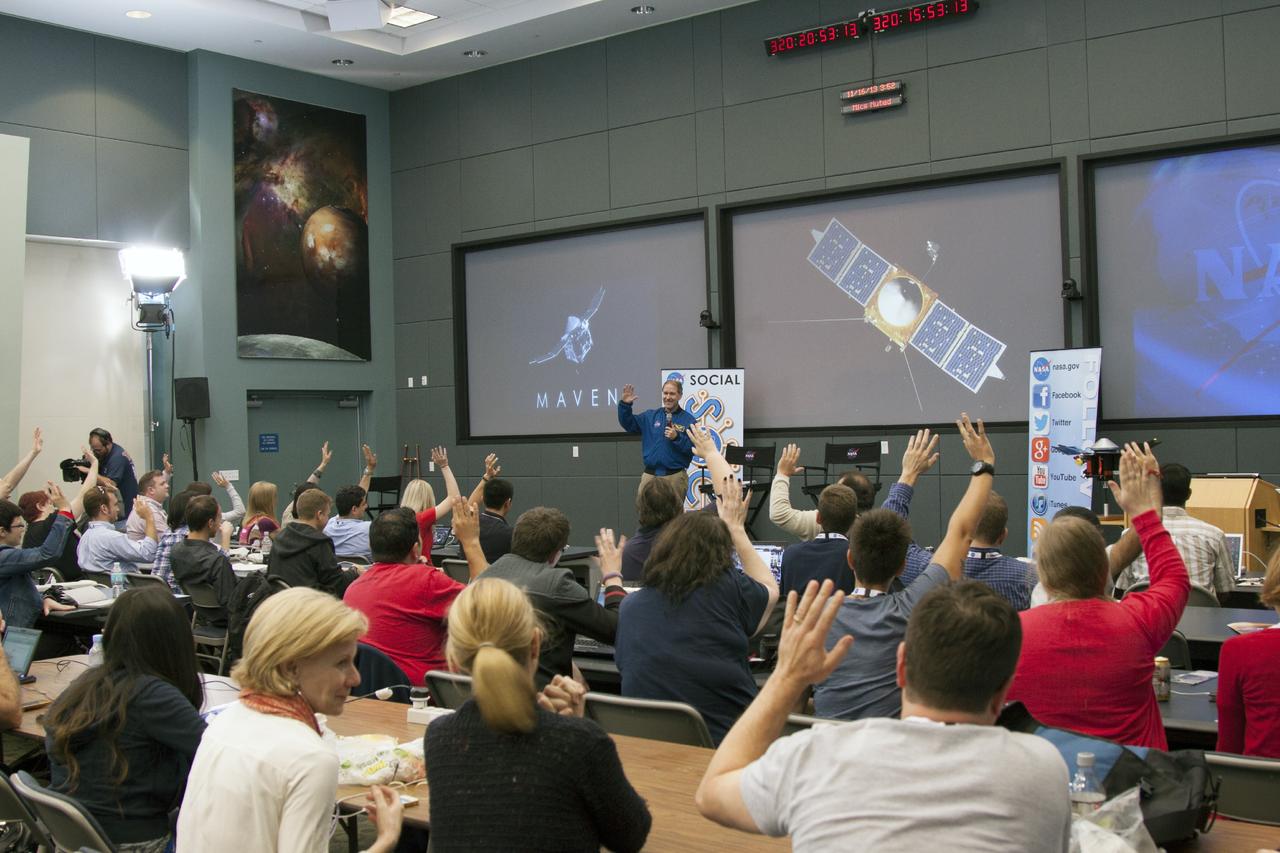
CAPE CANAVERAL, Fla. -- In the conference room of Operations Support Building II at NASA's Kennedy Space Center in Florida, social media participants listen to a briefing on the Mars Atmosphere and Volatile Evolution, or MAVEN, mission by, John Grunsfeld, the agency's associate administrator for the Science Mission Directorate. The social media participants gathered at the Florida spaceport for the launch of the Mars Atmosphere and Volatile Evolution, or MAVEN, spacecraft. Their visit included tours of key facilities and participating in presentations by key NASA leaders who updated the space agency's current efforts. Photo credit: NASA/Jim Grossman
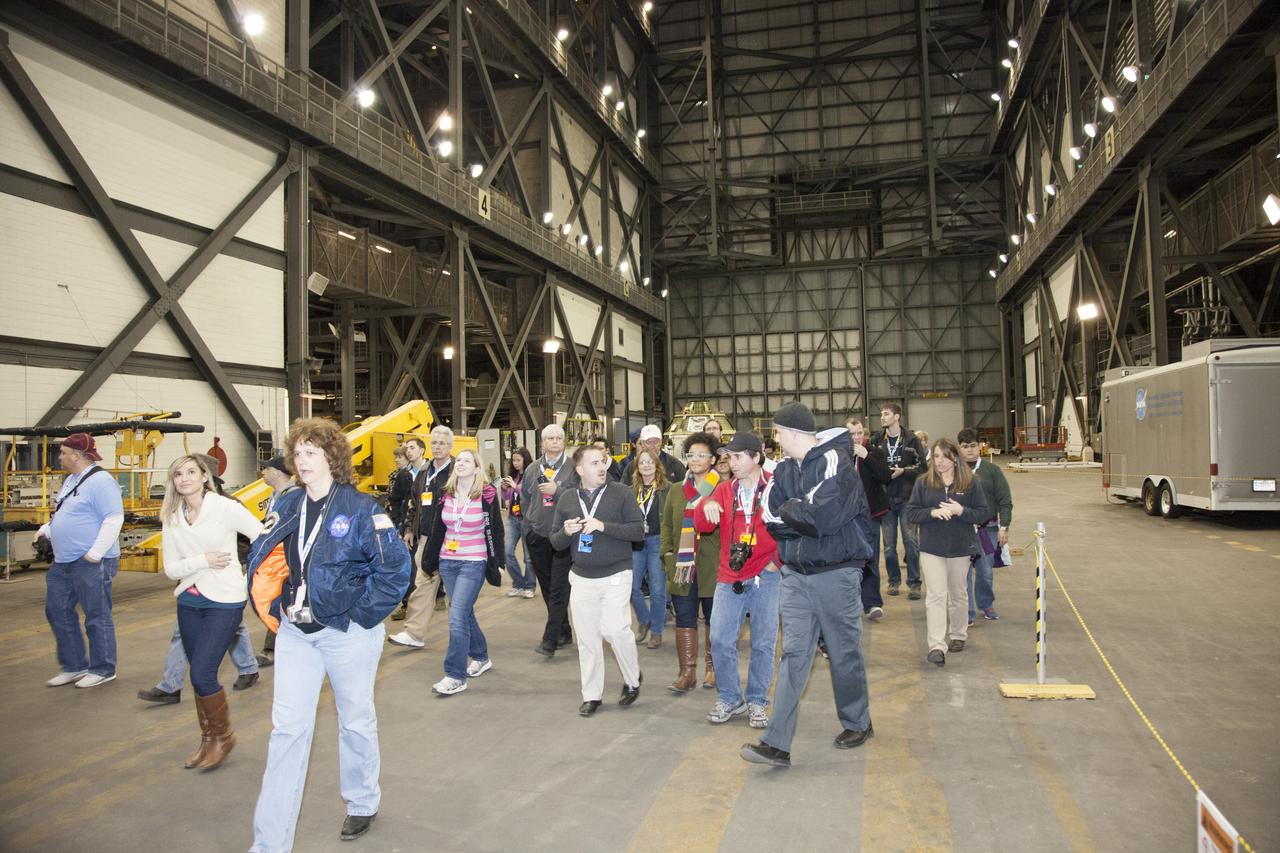
CAPE CANAVERAL, Fla. -- At NASA's Kennedy Space Center in Florida, social media participants were given an opportunity to go inside the spaceport's Vehicle Assembly Building. After serving through the Apollo and Space Shuttle Programs, the structure now is undergoing renovations to accommodate future launch vehicles and to continue as a major part of America's efforts to explore space. The social media participants gathered at the Florida spaceport for the launch of the Tracking and Data Relay Satellite, or TDRS-L spacecraft. Their visit included tours of key facilities and participating in presentations by key NASA leaders who updated the space agency's current efforts. Photo credit: NASA/Dan Casper
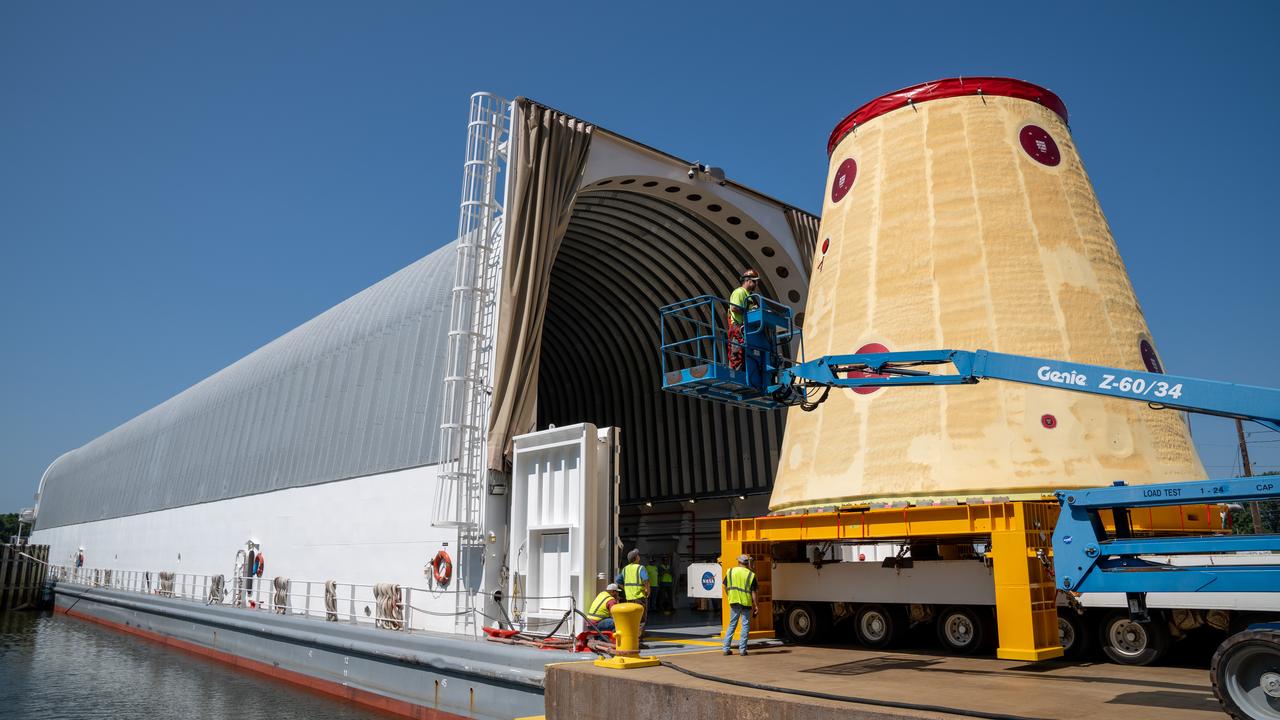
NASA rolled out a key piece of space flight hardware for the SLS (Space Launch System) rocket for the first crewed mission of NASA’s Artemis campaign from Marshall Space Flight Center in Huntsville, Alabama, on Wednesday, Aug. 21 to board the Pegasus barge for shipment to the agency’s spaceport in Florida. The cone-shaped launch vehicle stage adapter connects the rocket’s core stage to the upper stage and helps protect the upper stage’s engine that will help propel the Artemis II test flight around the Moon, slated for 2026.

ISS017-E-008188 (29 May 2008) --- Dry Tortugas islands near Florida are featured in this image photographed by an Expedition 17 crewmember on the International Space Station. The Dry Tortugas are a group of islands located approximately 75 miles west of Key West, Florida; they form the western end of the Florida Keys in the Gulf of Mexico. Like the Keys, the Dry Tortugas are formed primarily of coral reefs over older limestone formations. The islands were named "Dry Tortugas" upon discovery by Ponce de Leon in 1513 -- "tortugas" means turtles in Spanish, and the islands are "dry" as no fresh water is found on them. From the air, the islands present an atoll-like arrangement, however no central volcanic structure is present. The islands are only accessible by boat or seaplane; nevertheless they have been designated the Dry Tortugas National Park, and are visited by hundreds every year. This view highlights three islands in the group; Bush Key, Hospital Key, and Garden Key -- the site of Fort Jefferson. Fort Jefferson is a Civil War era fort, perhaps most notable for being the prison of Dr. Samuel Mudd, who set the broken leg of John Wilkes Booth following Booth's assassination of President Lincoln. The fort itself is currently undergoing extensive restoration to prevent collapse of the hexagonal outer walls (center). The islands stand out due to brown and light tan carbonate sands visible above the Gulf of Mexico water surface. Light blue-green irregular masses in the image surrounding the islands are coral reef tops visible below the water surface.
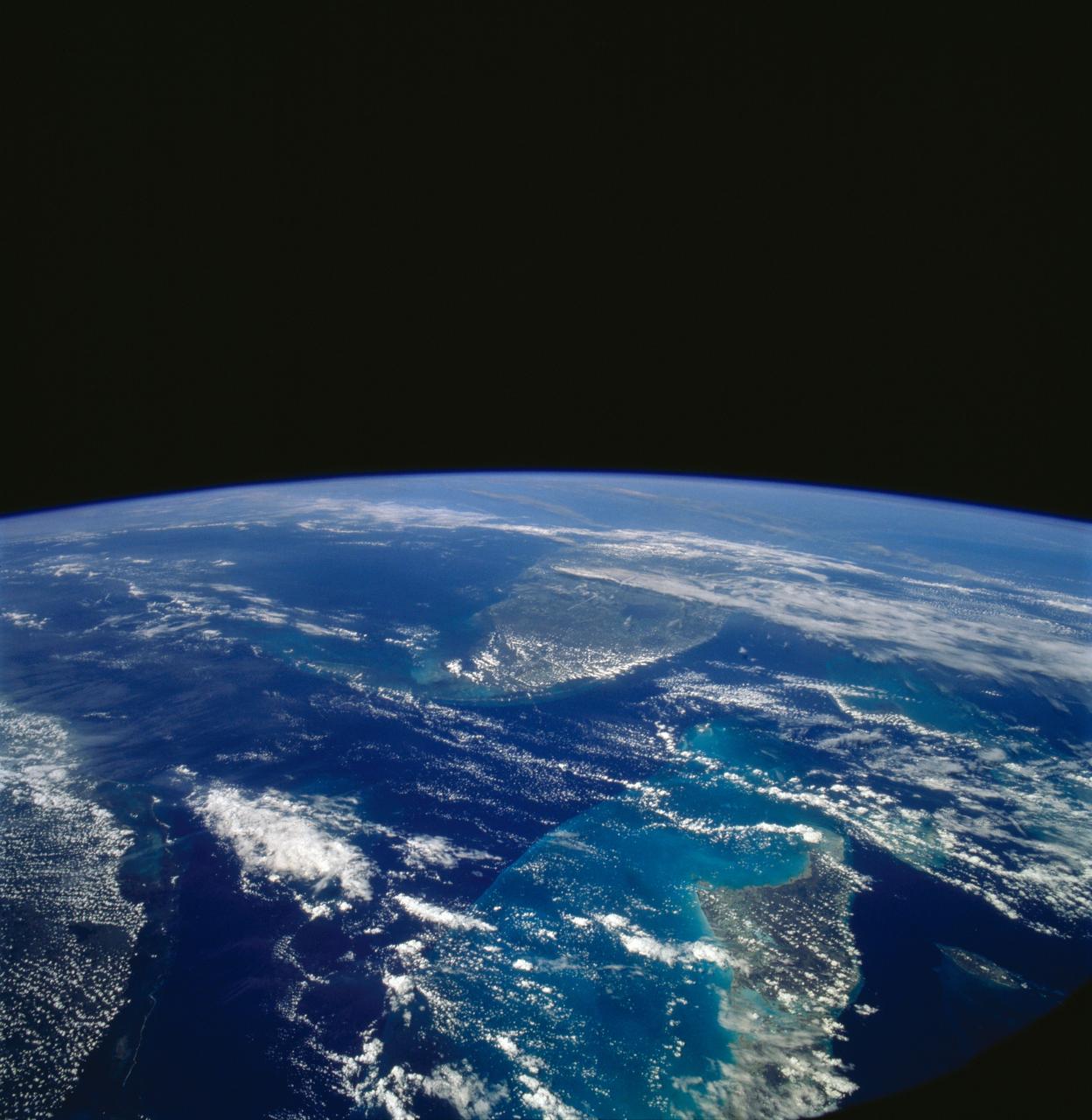
STS058-107-046 (18 Oct-1 Nov 1993) --- Clouds streak across central Florida in this striking photograph which includes the Florida Peninsula, Andros Island of the northern Bahamas and Cuba (lower left). The light blue, shallow bank of the Bahamas contrast with the deeper blue waters of the Florida strait. The city of Miami is obscured by clouds, but one can see the Florida Keys stretching off to the left. Much of the rest of the southeast coast is barely visible under haze.
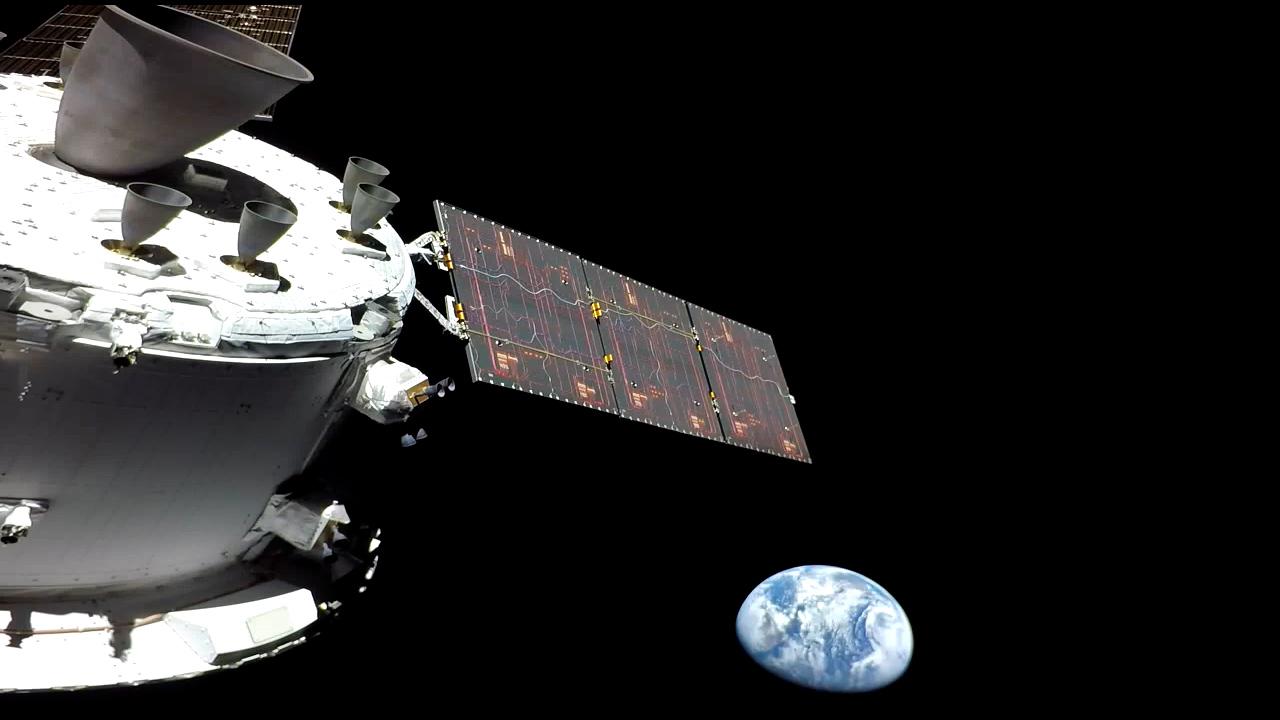
Coverage of the imagery and views received from the Orion spacecraft on Nov. 16 following liftoff of Orion atop the Space Launch System from the Kennedy Space Center in Florida just hours before. Orion is completing a 25-day test flight of all key systems as part of Artemis I mission.
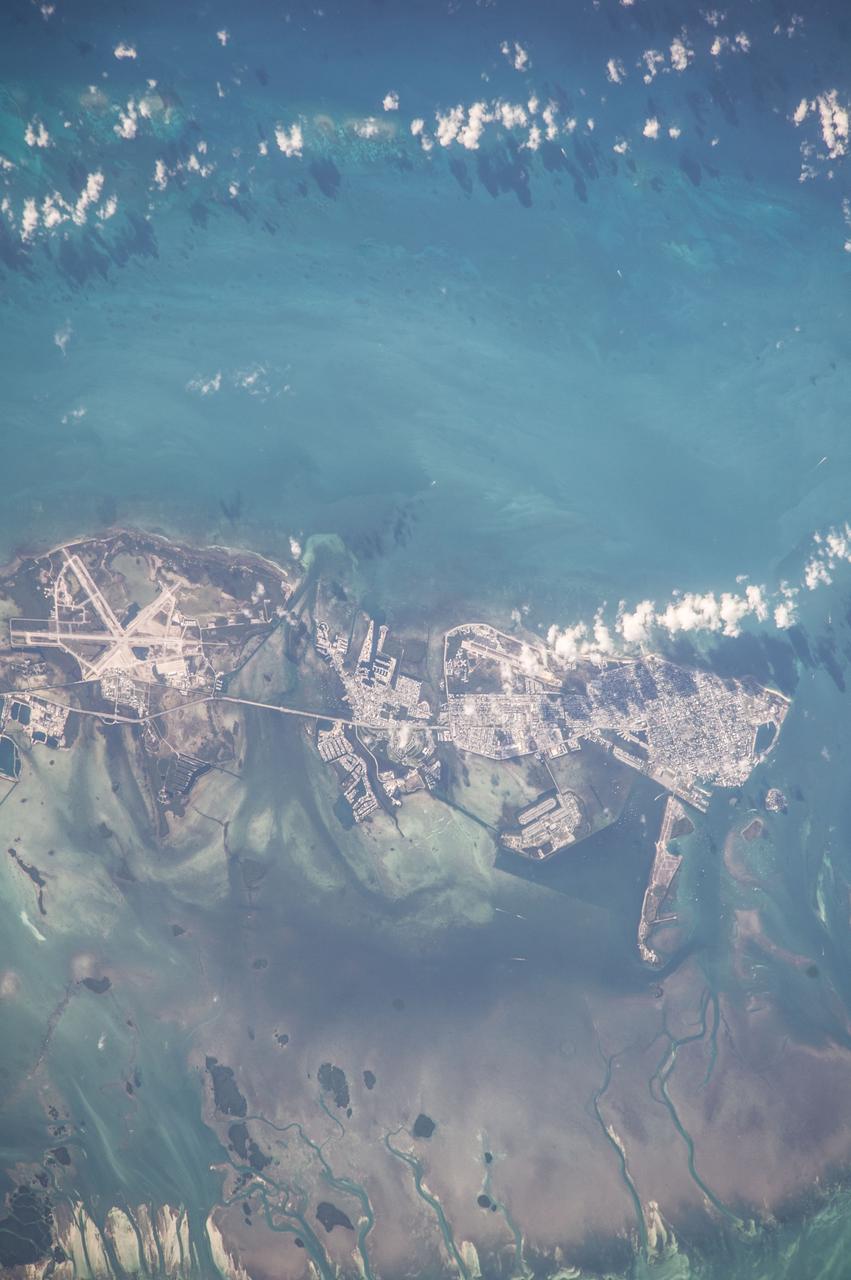
ISS038-E-007756 (24 Nov. 2013) --- One of the Expedition 38 crew members aboard the Earth-orbiting International Space Station used an 800mm lens to record this nadir image of Key West, Florida on Nov. 24, 2013.
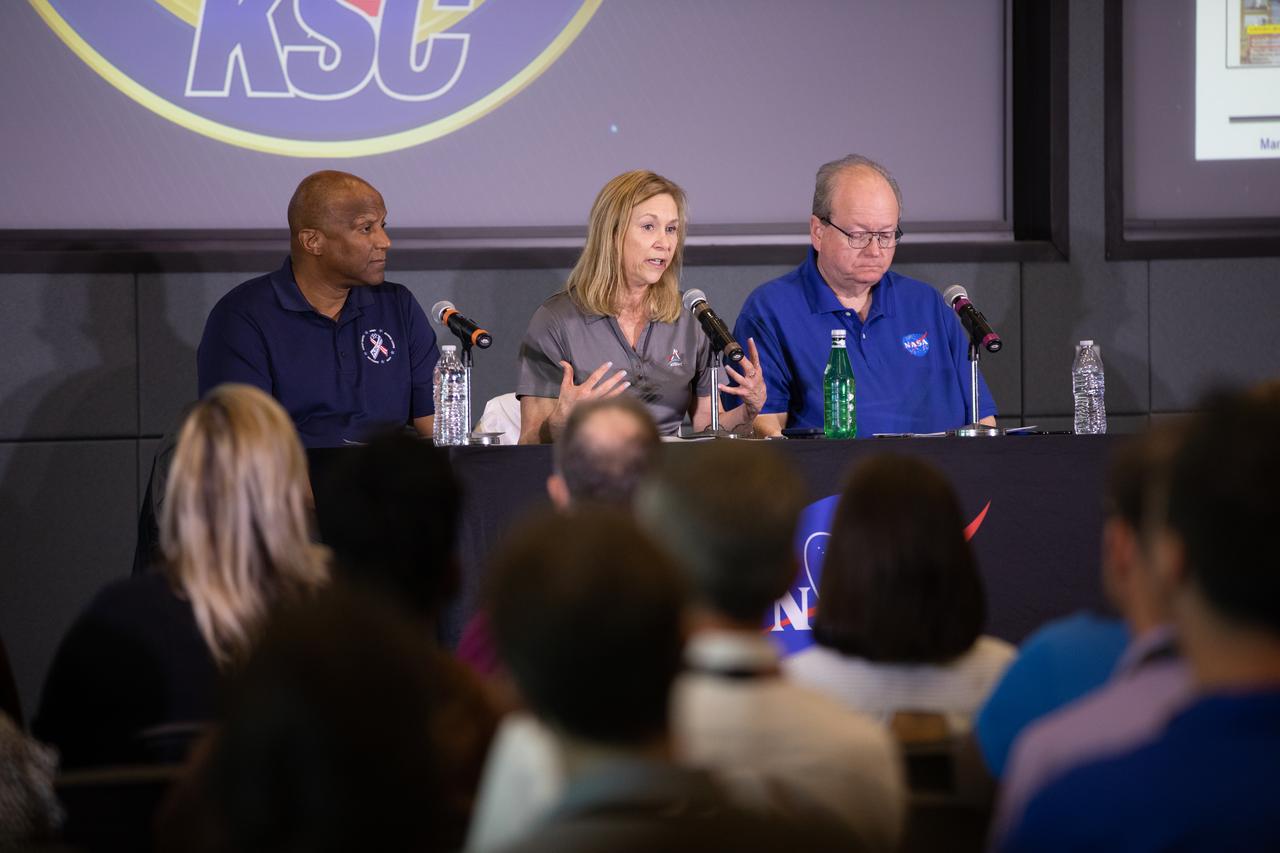
From left, NASA’s Kennedy Space Center Deputy Director Kelvin Manning, Director Janet Petro, and Associate Director, Management Burt Summerfield participate in an employee Town Hall at the Florida spaceport on March 13, 2023. The senior leaders discussed key accomplishments and goals of the center, as well as answered questions from the Kennedy workforce.
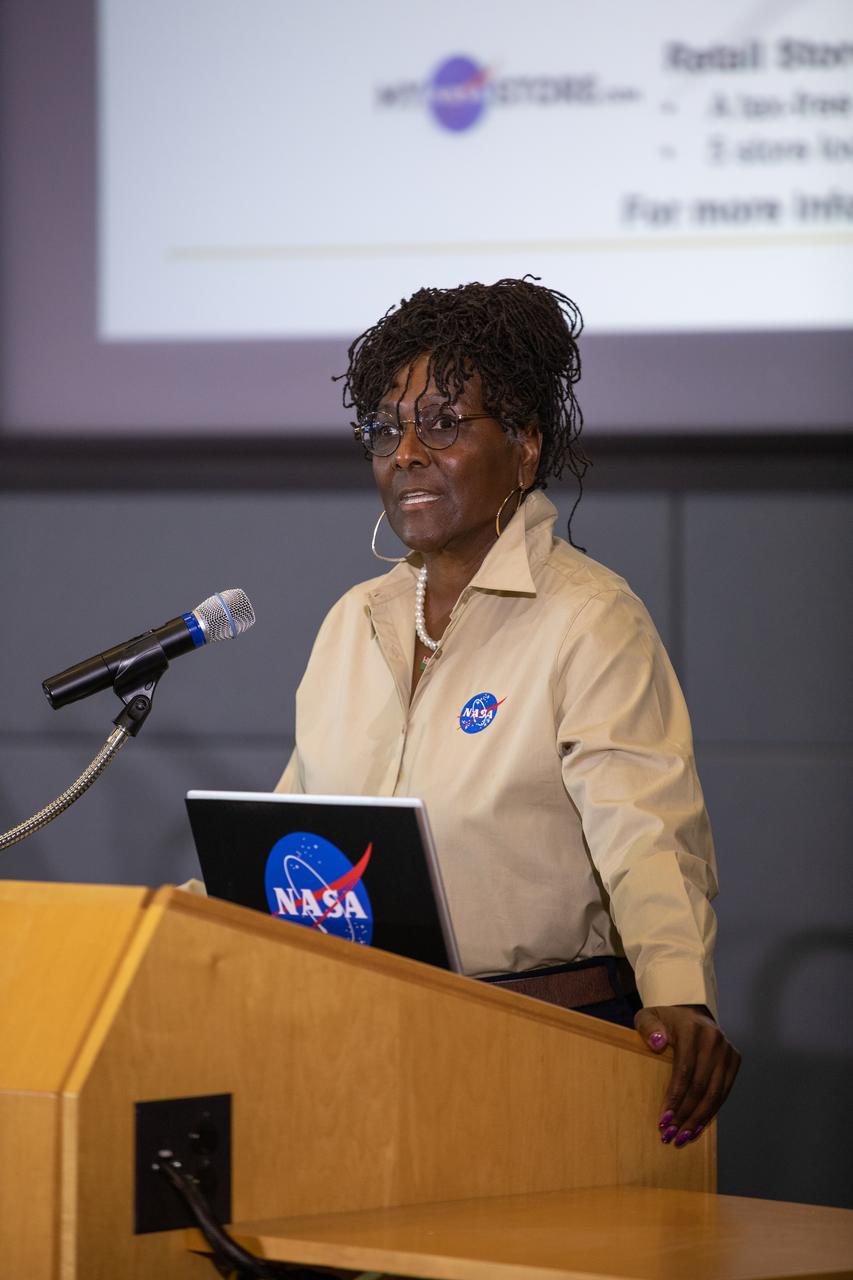
Hortense Blackwell, Office of Communication and Public Engagement director at NASA’s Kennedy Space Center, participates in an employee Town Hall at the Florida spaceport on March 13, 2023. During the event, senior leaders discussed key accomplishments and goals of the center, as well as answered questions from the Kennedy workforce.
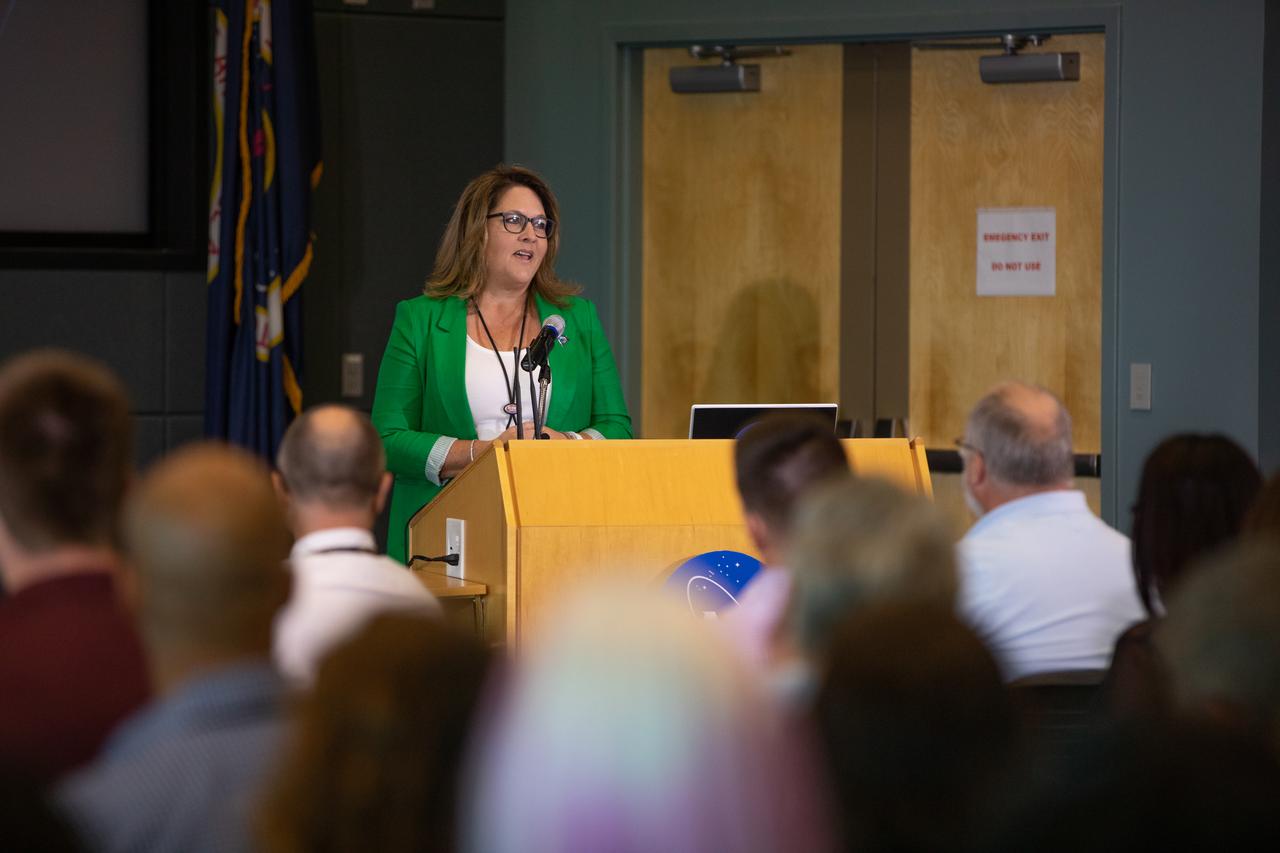
Becky Murray, associate director of Engineering at NASA’s Kennedy Space Center, participates in an employee Town Hall at the Florida spaceport on March 13, 2023. During the event, senior leaders discussed key accomplishments and goals of the center, as well as answered questions from the Kennedy workforce.
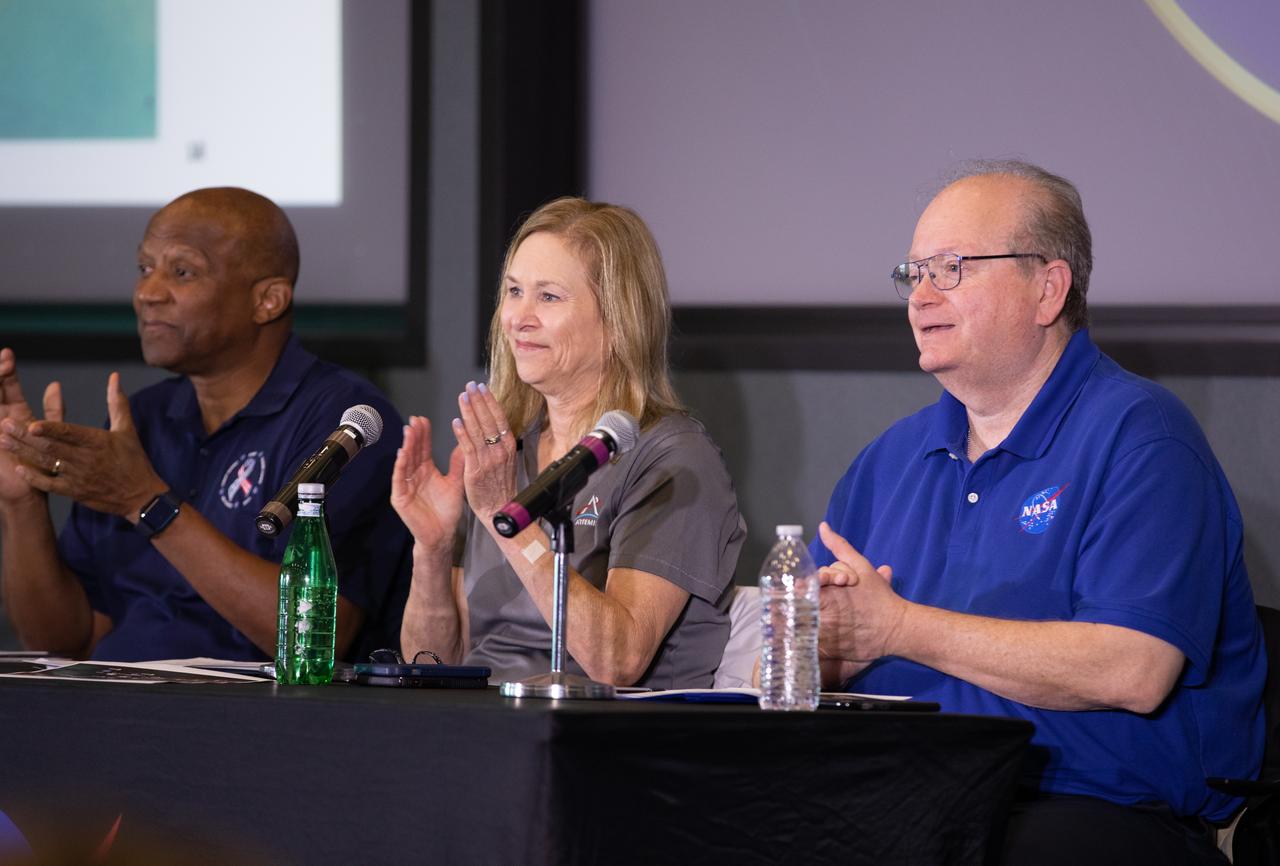
From left, NASA’s Kennedy Space Center Deputy Director Kelvin Manning, Director Janet Petro, and Associate Director, Management Burt Summerfield participate in an employee Town Hall at the Florida spaceport on March 13, 2023. The senior leaders discussed key accomplishments and goals of the center, as well as answered questions from the Kennedy workforce.

KENNEDY SPACE CENTER, FLA. -- Astronaut Dave Williams dons his wet suit before heading for the National Oceanic and Atmospheric Administration (NOAA) Aquarius Underwater Laboratory. Williams is leading a 17-day undersea mission as part of the NASA Extreme Environment Mission Operations (NEEMO) project. Other members of the mission are astronauts Nicole Stott and Ron Garan, plus Dr. Tim Broderick of the University of Cincinnati. The undersea laboratory is situated three miles off Key Largo in the Florida Keys National Marine Sanctuary, anchored 62 feet below the surface. The astronauts are testing space medicine concepts and moon-walking techniques.

KENNEDY SPACE CENTER, FLA. -- Dr. Tim Broderick of the University of Cincinnati dons his wet suit before heading for the National Oceanic and Atmospheric Administration (NOAA) Aquarius Underwater Laboratory. Broderick is part of the team, which includes astronauts Dave Williams, Nicole Stott (at right) and Ron Garan, working on a 17-day undersea mission as part of the NASA Extreme Environment Mission Operations (NEEMO) project. Williams is team lead. The astronauts are testing space medicine concepts and moon-walking techniques. The undersea laboratory is situated three miles off Key Largo in the Florida Keys National Marine Sanctuary, anchored 62 feet below the surface.

KENNEDY SPACE CENTER, FLA. -- Marc Reagan (left) and Bill Todd, NASA Extreme Environment Mission Operations (NEEMO) project leads, have left the current NEEMO team in the National Oceanic and Atmospheric Administration (NOAA) Aquarius Underwater Laboratory to start their 17-day mission. The team comprises astronauts Dave Williams (team leader), Nicole Stott and Ron Garan, plus Dr. Tim Broderick of the University of Cincinnati. The astronauts are testing space medicine concepts and moon-walking techniques. The undersea laboratory is situated three miles off Key Largo in the Florida Keys National Marine Sanctuary, anchored 62 feet below the surface.
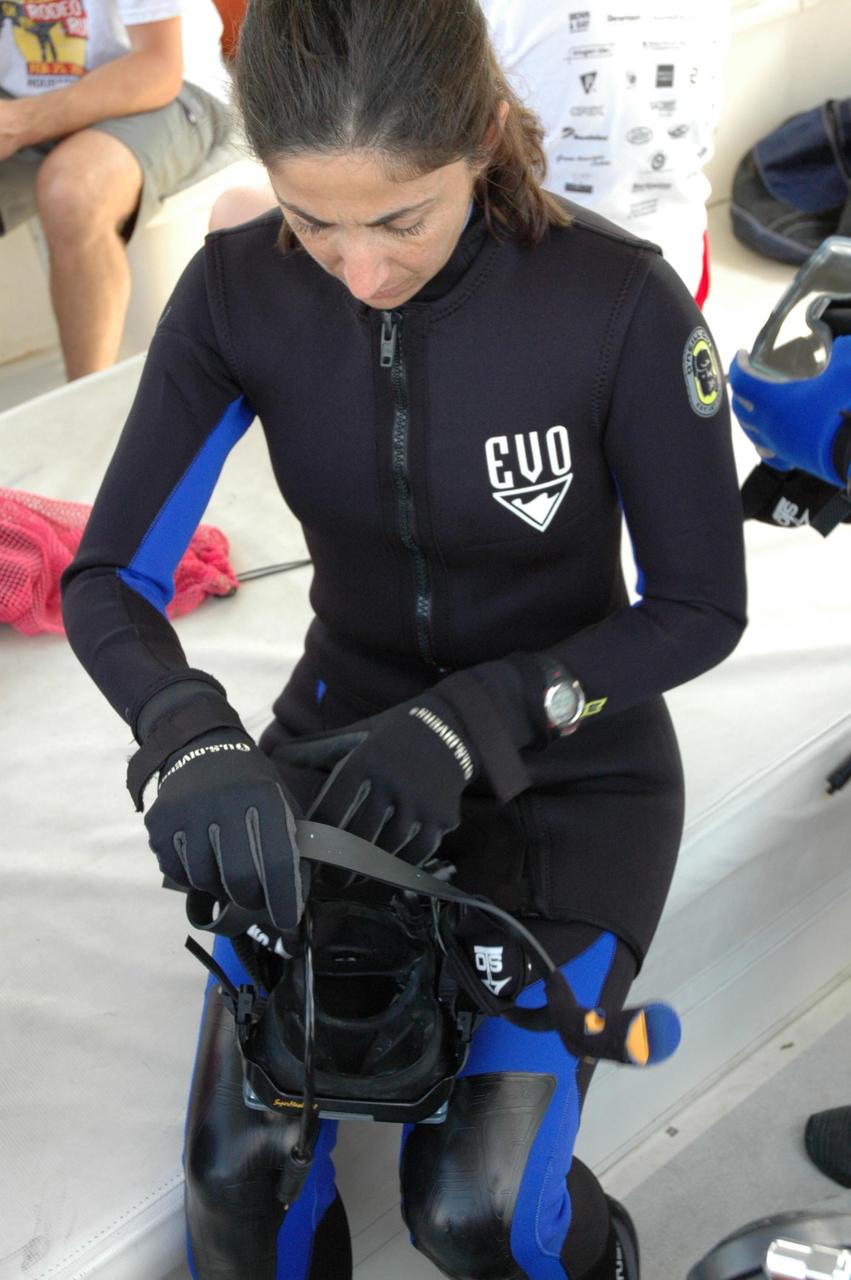
KENNEDY SPACE CENTER, FLA. -- Astronaut Nicole Stott checks her gear before heading for the National Oceanic and Atmospheric Administration (NOAA) Aquarius Underwater Laboratory. She is part of the team, which includes astronauts Dave Williams and Ron Garan, plus Dr. Tim Broderick of the University of Cincinnati, working on a 17-day undersea mission as part of the NASA Extreme Environment Mission Operations (NEEMO) project. Williams is team lead. The astronauts are testing space medicine concepts and moon-walking techniques. The undersea laboratory is situated three miles off Key Largo in the Florida Keys National Marine Sanctuary, anchored 62 feet below the surface.
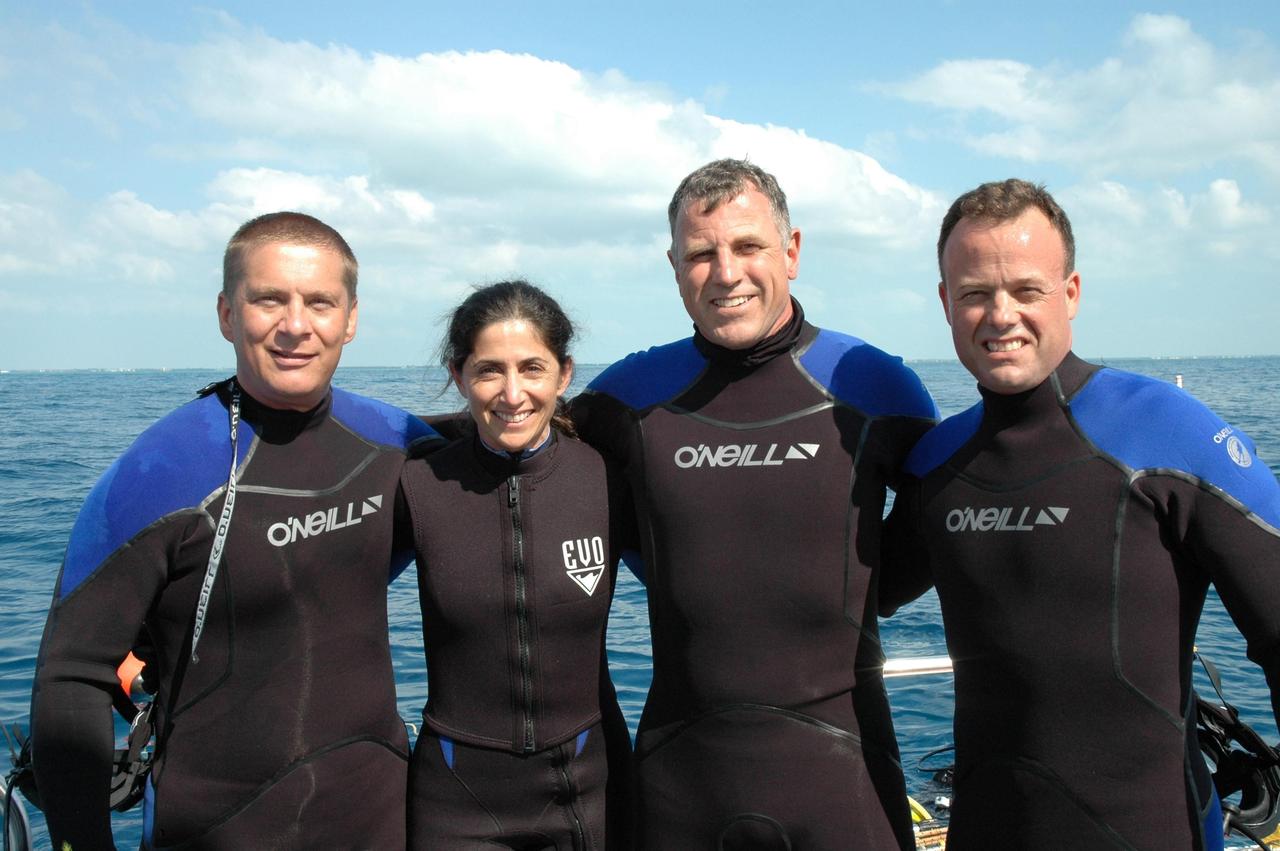
KENNEDY SPACE CENTER, FLA. -- The NASA Extreme Environment Mission Operations (NEEMO) team is ready to begin their 17-day undersea mission in the National Oceanic and Atmospheric Administration (NOAA) Aquarius Underwater Laboratory. From left are Dr. Tim Broderick of the University of Cincinnati and astronauts Nicole Stott, Dave Williams (team lead) and Ron Garan. The astronauts are testing space medicine concepts and moon-walking techniques. The undersea laboratory is situated three miles off Key Largo in the Florida Keys National Marine Sanctuary, anchored 62 feet below the surface.
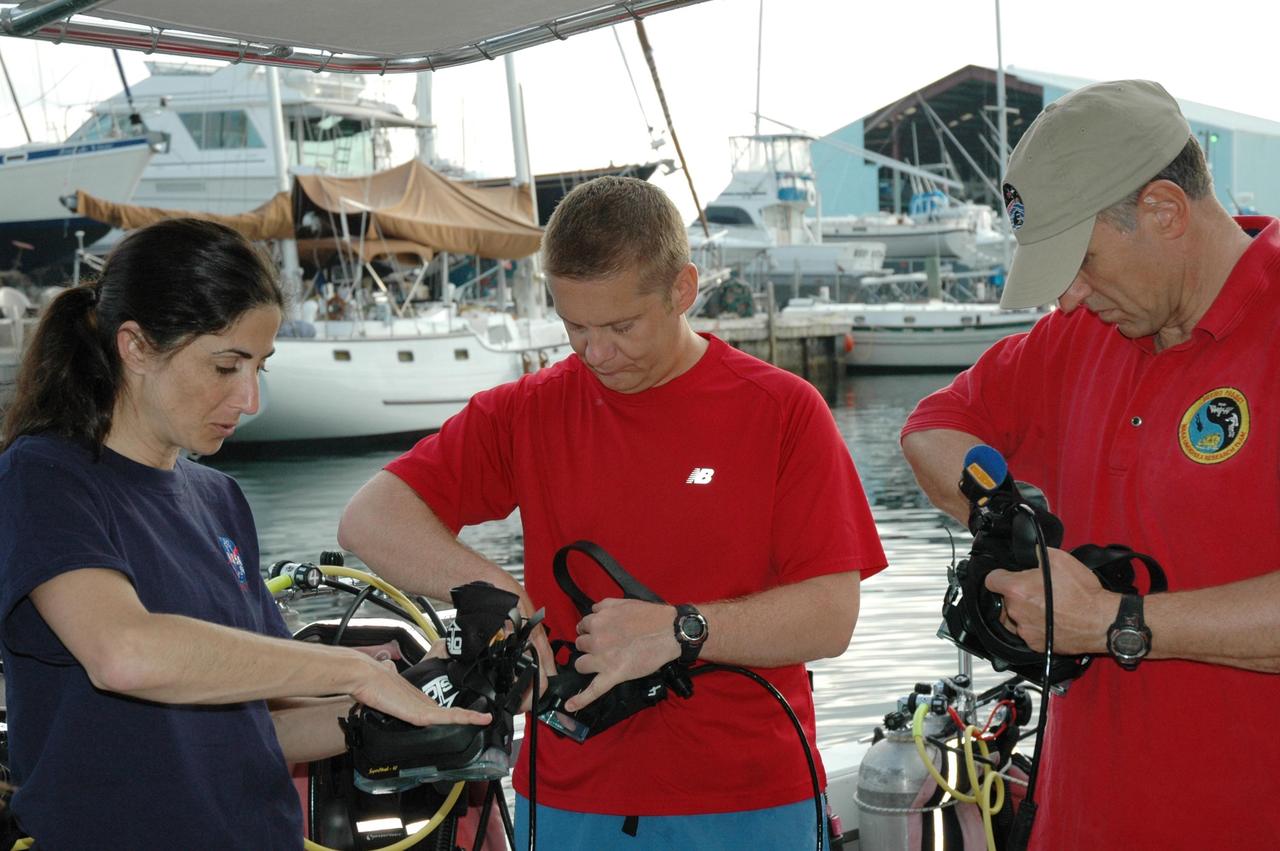
KENNEDY SPACE CENTER, FLA. -- Astronaut Nicole Stott, Dr. Tim Broderick of the University of Cincinnati, and astronaut Dave Williams are preparing for their 17-day mission on the NASA Extreme Environment Mission Operations (NEEMO) project. The mission will take place onboard the National Oceanic and Atmospheric Administration (NOAA) Aquarius Underwater Laboratory situated three miles off Key Largo in the Florida Keys National Marine Sanctuary, anchored 62 feet below the surface. Williams is leading the undersea mission, which also includes astronaut Ron Garan. The astronauts are testing space medicine concepts and moon-walking techniques.
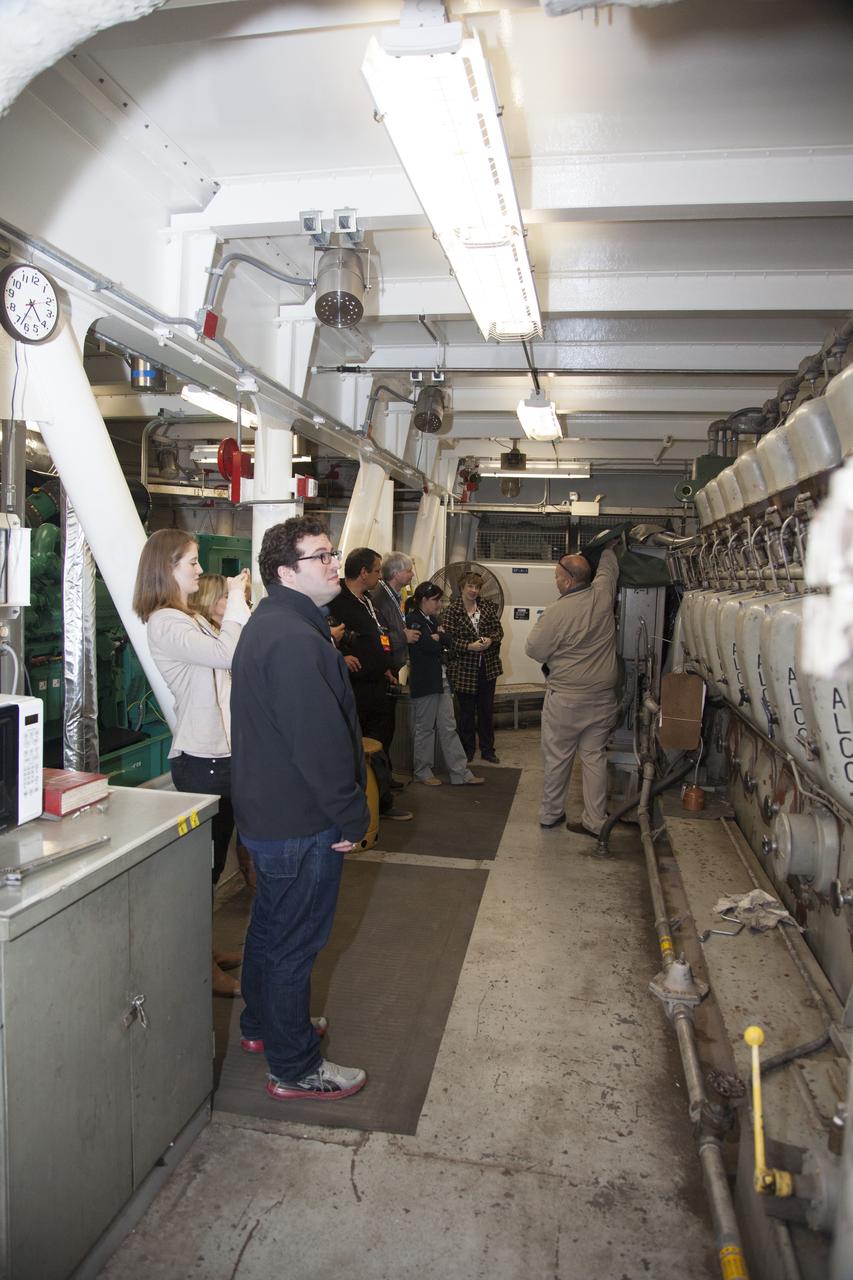
CAPE CANAVERAL, Fla. -- At NASA's Kennedy Space Center in Florida, social media participants were given an up-close look at the interior of one of the spaceport's mammoth crawler-transporters. Recent work has included preparations to install upgraded components that will enable the crawler to carry the greater loads anticipated with the agency's new rocket designed to take astronauts beyond low-Earth orbit for the first time since the early 1970s. The social media participants gathered at the Florida spaceport for the launch of the Tracking and Data Relay Satellite, or TDRS-L spacecraft. Their visit included tours of key facilities and participating in presentations by key NASA leaders who updated the space agency's current efforts. Photo credit: NASA/Dan Casper
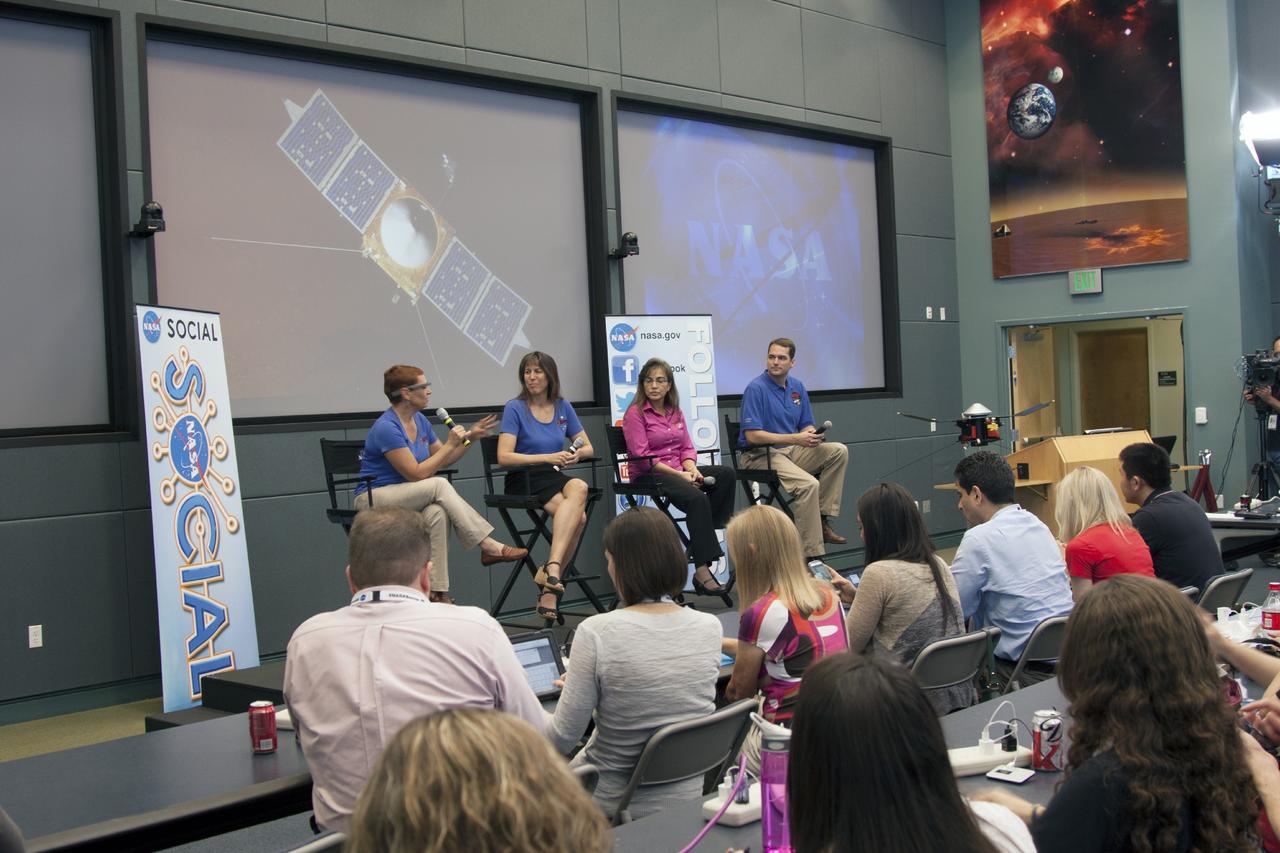
CAPE CANAVERAL, Fla. -- In the conference room of Operations Support Building II at NASA's Kennedy Space Center in Florida, social media participants listen to a briefing on the Mars Atmosphere and Volatile Evolution, or MAVEN, mission by, from the left, Lisa May, MAVEN Program executive, Kelly Fast, Mars Program scientist, Sandra Cauffman, deputy project manager at the agency's Goddard Spaceflight Center, in Greenbelt, Md., and Chris Waters, systems design team lead at Lockheed Martin. The social media participants gathered at the Florida spaceport for the launch of the Mars Atmosphere and Volatile Evolution, or MAVEN, spacecraft. Their visit included tours of key facilities and participating in presentations by key NASA leaders who updated the space agency's current efforts. Photo credit: NASA/Jim Grossman
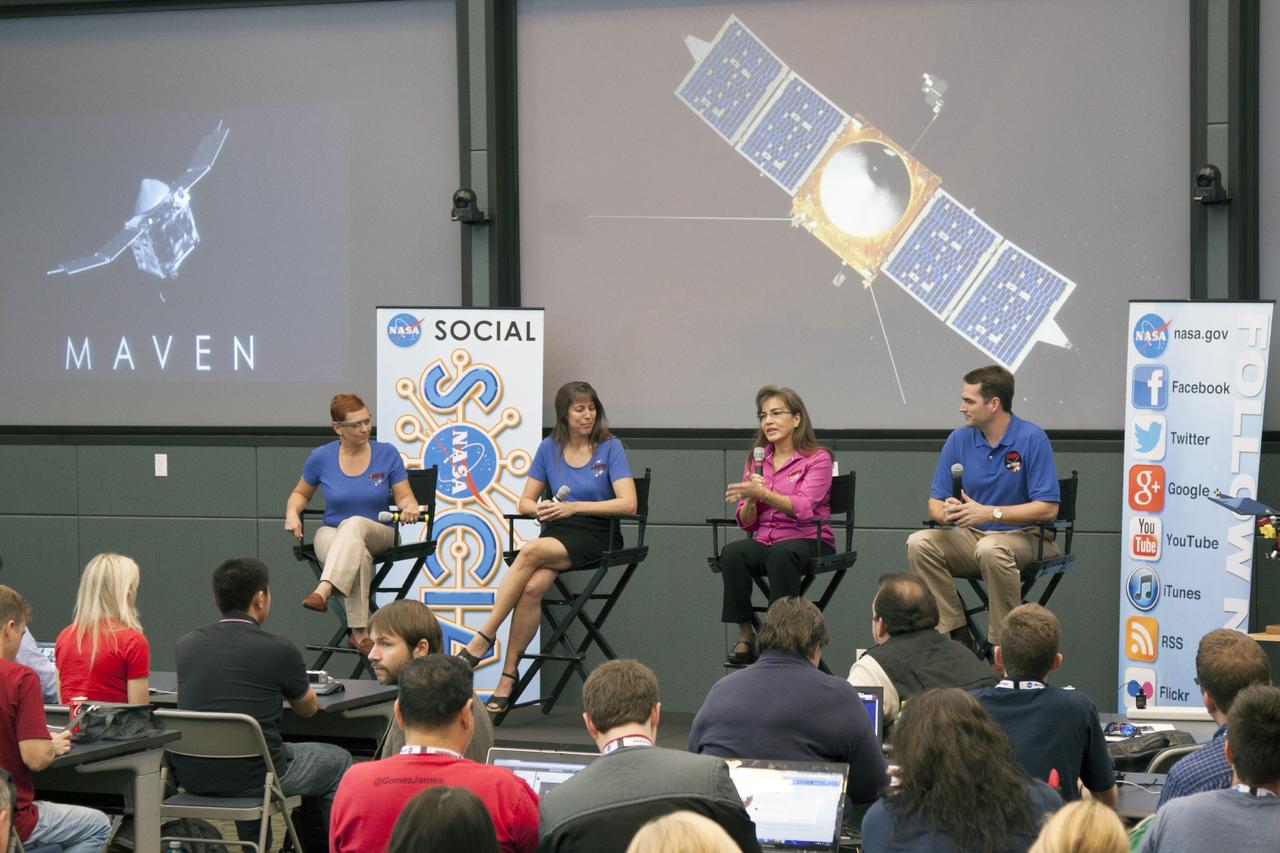
CAPE CANAVERAL, Fla. -- In the conference room of Operations Support Building II at NASA's Kennedy Space Center in Florida, social media participants listen to a briefing on the Mars Atmosphere and Volatile Evolution, or MAVEN, mission by, from the left, Lisa May, MAVEN Program executive, Kelly Fast, Mars Program scientist, Sandra Cauffman, deputy project manager at the agency's Goddard Spaceflight Center, in Greenbelt, Md., and Chris Waters, systems design team lead at Lockheed Martin. The social media participants gathered at the Florida spaceport for the launch of the Mars Atmosphere and Volatile Evolution, or MAVEN, spacecraft. Their visit included tours of key facilities and participating in presentations by key NASA leaders who updated the space agency's current efforts. Photo credit: NASA/Jim Grossman
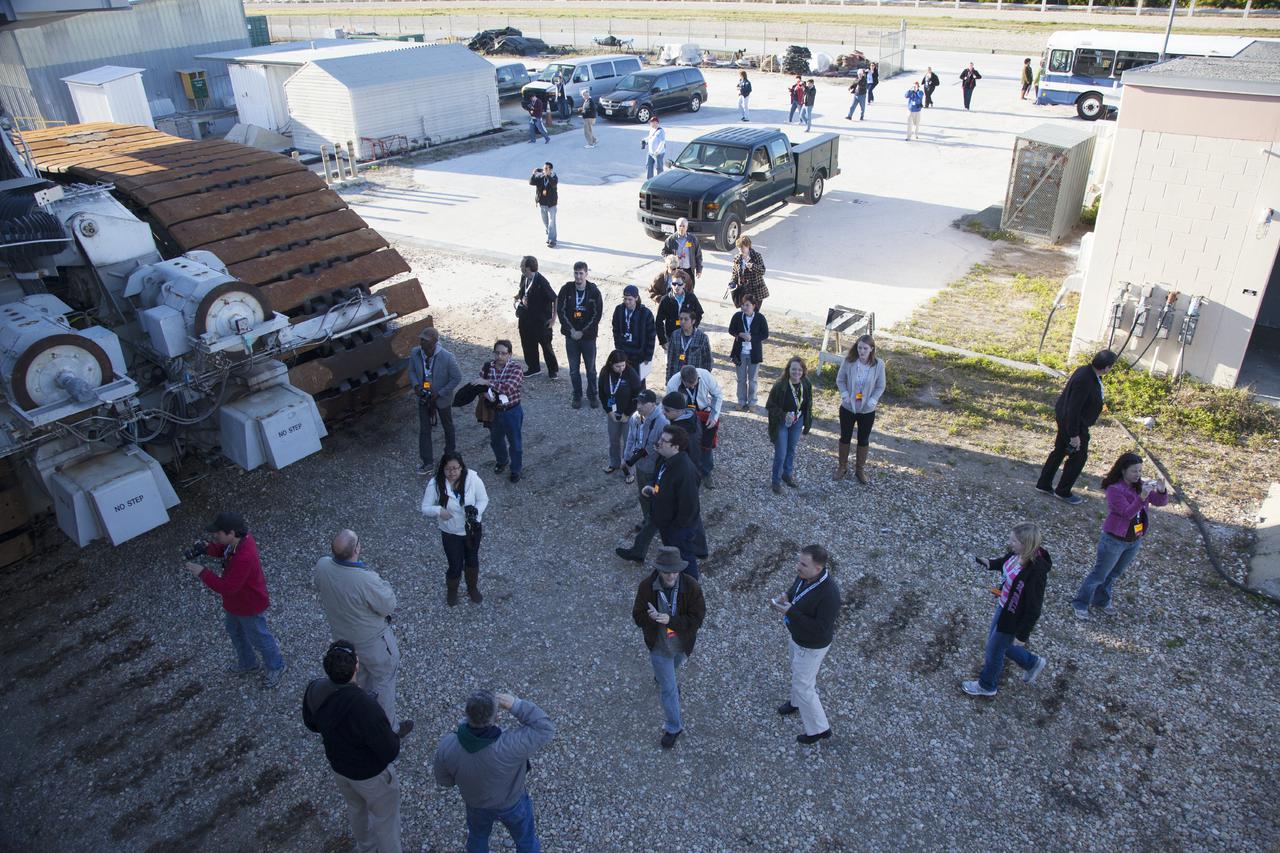
CAPE CANAVERAL, Fla. -- At NASA's Kennedy Space Center in Florida, social media participants were given an up-close look at one of the spaceport's mammoth crawler-transporters. Recent work has included preparations to install upgraded components that will enable the crawler to carry the greater loads anticipated with the agency's new rocket designed to take astronauts beyond low-Earth orbit for the first time since the early 1970s. The social media participants gathered at the Florida spaceport for the launch of the Tracking and Data Relay Satellite, or TDRS-L spacecraft. Their visit included tours of key facilities and participating in presentations by key NASA leaders who updated the space agency's current efforts. Photo credit: NASA_Dan Casper
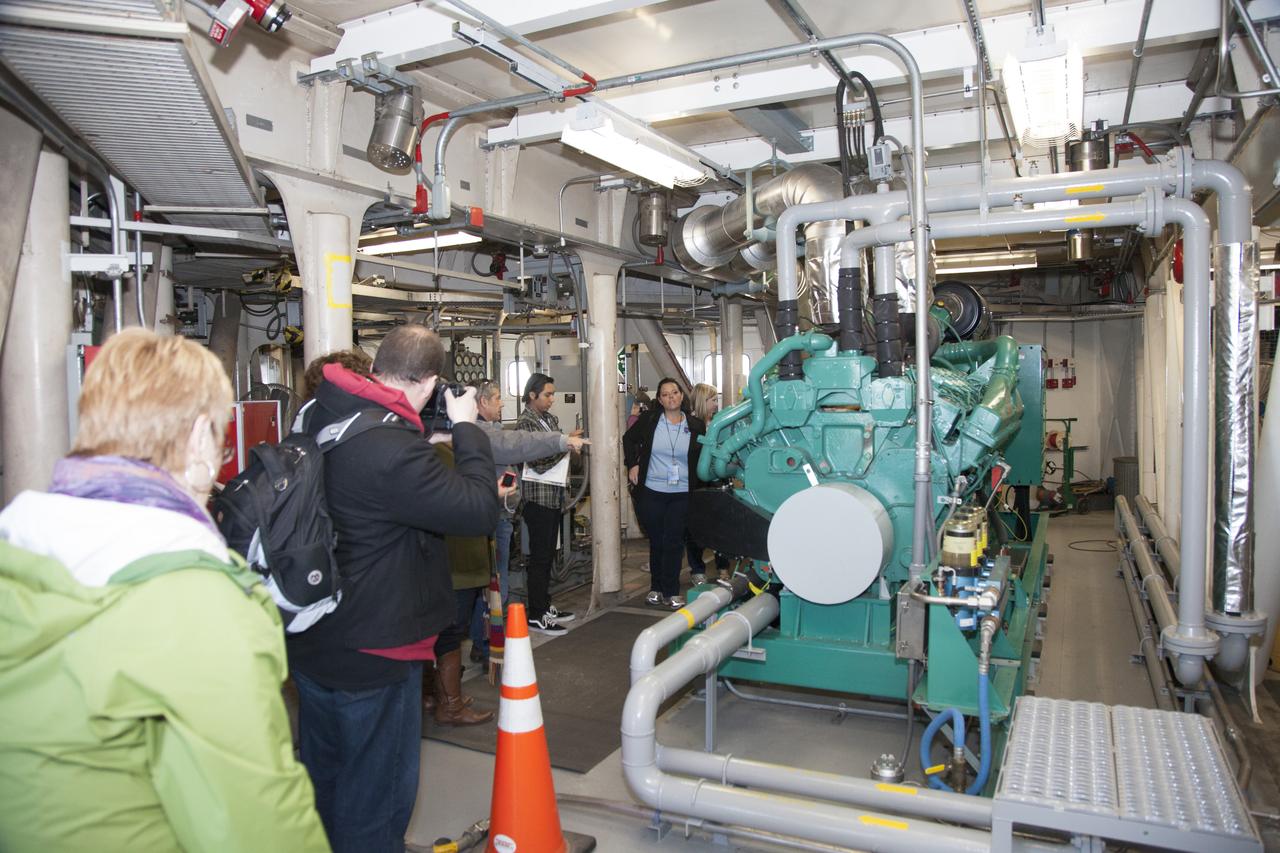
CAPE CANAVERAL, Fla. -- At NASA's Kennedy Space Center in Florida, social media participants were given an up-close look at the interior of one of the spaceport's mammoth crawler-transporters. Recent work has included preparations to install upgraded components that will enable the crawler to carry the greater loads anticipated with the agency's new rocket designed to take astronauts beyond low-Earth orbit for the first time since the early 1970s. The social media participants gathered at the Florida spaceport for the launch of the Tracking and Data Relay Satellite, or TDRS-L spacecraft. Their visit included tours of key facilities and participating in presentations by key NASA leaders who updated the space agency's current efforts. Photo credit: NASA/Dan Casper
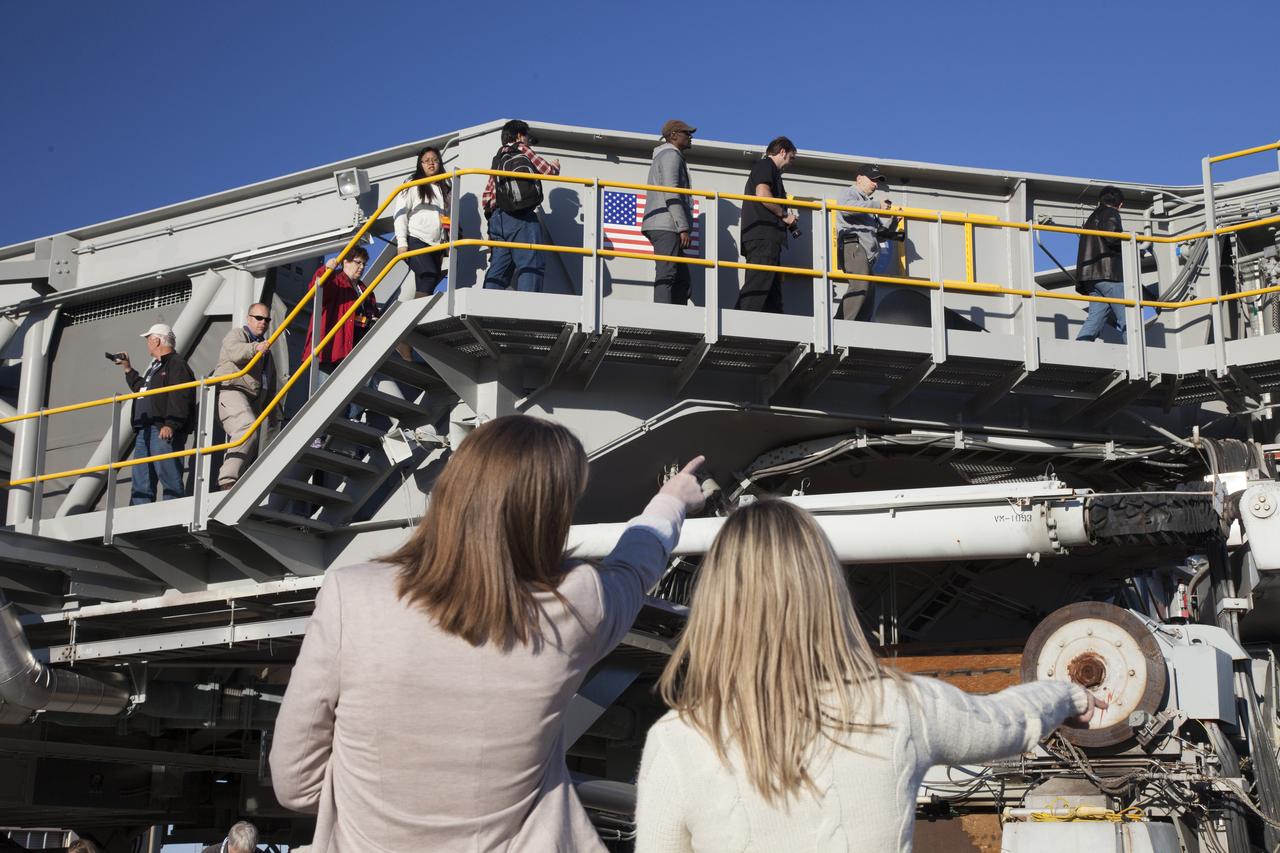
CAPE CANAVERAL, Fla. -- At NASA's Kennedy Space Center in Florida, social media participants were given an up-close look at one of the spaceport's mammoth crawler-transporters. Recent work has included preparations to install upgraded components that will enable the crawler to carry the greater loads anticipated with the agency's new rocket designed to take astronauts beyond low-Earth orbit for the first time since the early 1970s. The social media participants gathered at the Florida spaceport for the launch of the Tracking and Data Relay Satellite, or TDRS-L spacecraft. Their visit included tours of key facilities and participating in presentations by key NASA leaders who updated the space agency's current efforts. Photo credit: NASA/Dan Casper
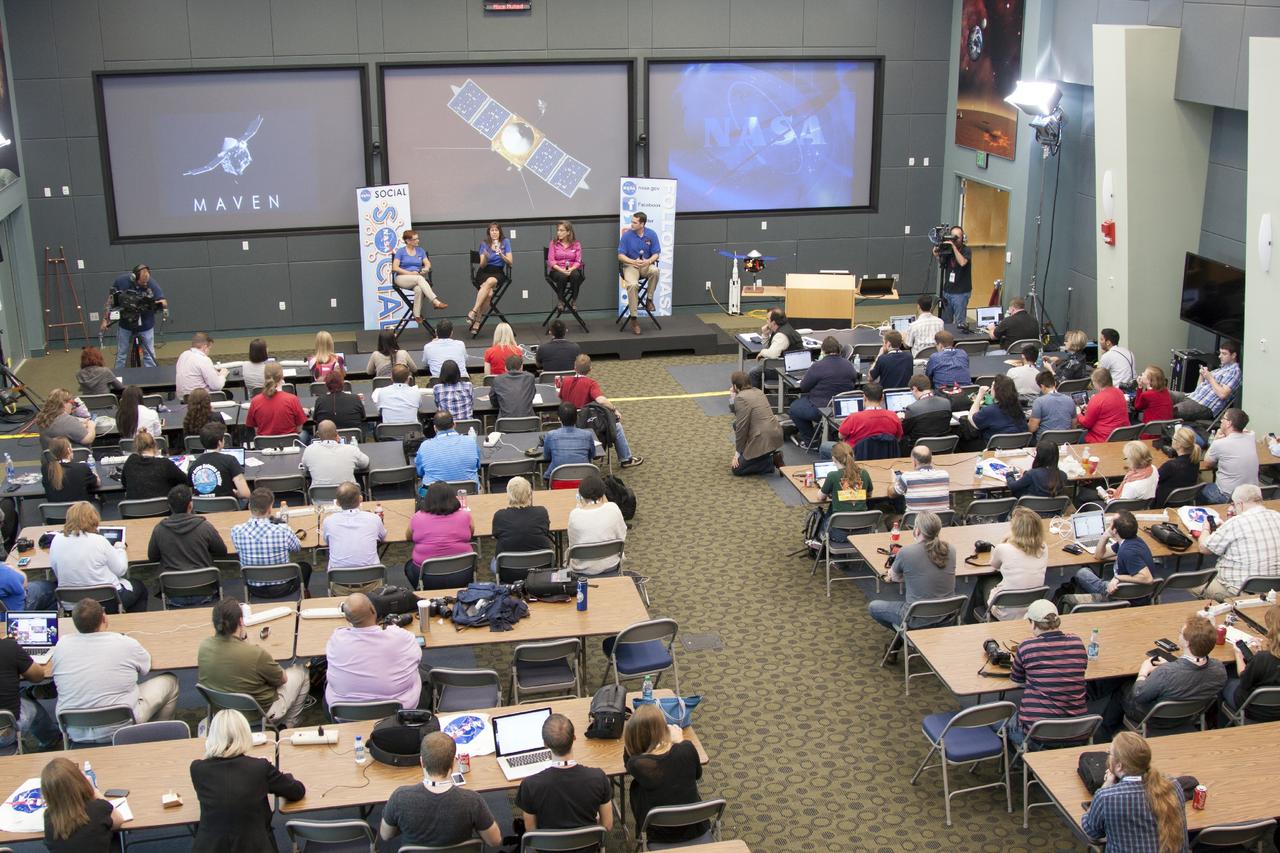
CAPE CANAVERAL, Fla. -- In the conference room of Operations Support Building II at NASA's Kennedy Space Center in Florida, social media participants listen to a briefing on the Mars Atmosphere and Volatile Evolution, or MAVEN, mission by, from the left, Lisa May, MAVEN Program executive, Kelly Fast, Mars Program scientist, Sandra Cauffman, deputy project manager at the agency's Goddard Spaceflight Center, in Greenbelt, Md., and Chris Waters, systems design team lead at Lockheed Martin. The social media participants gathered at the Florida spaceport for the launch of the Mars Atmosphere and Volatile Evolution, or MAVEN, spacecraft. Their visit included tours of key facilities and participating in presentations by key NASA leaders who updated the space agency's current efforts. Photo credit: NASA/Jim Grossman
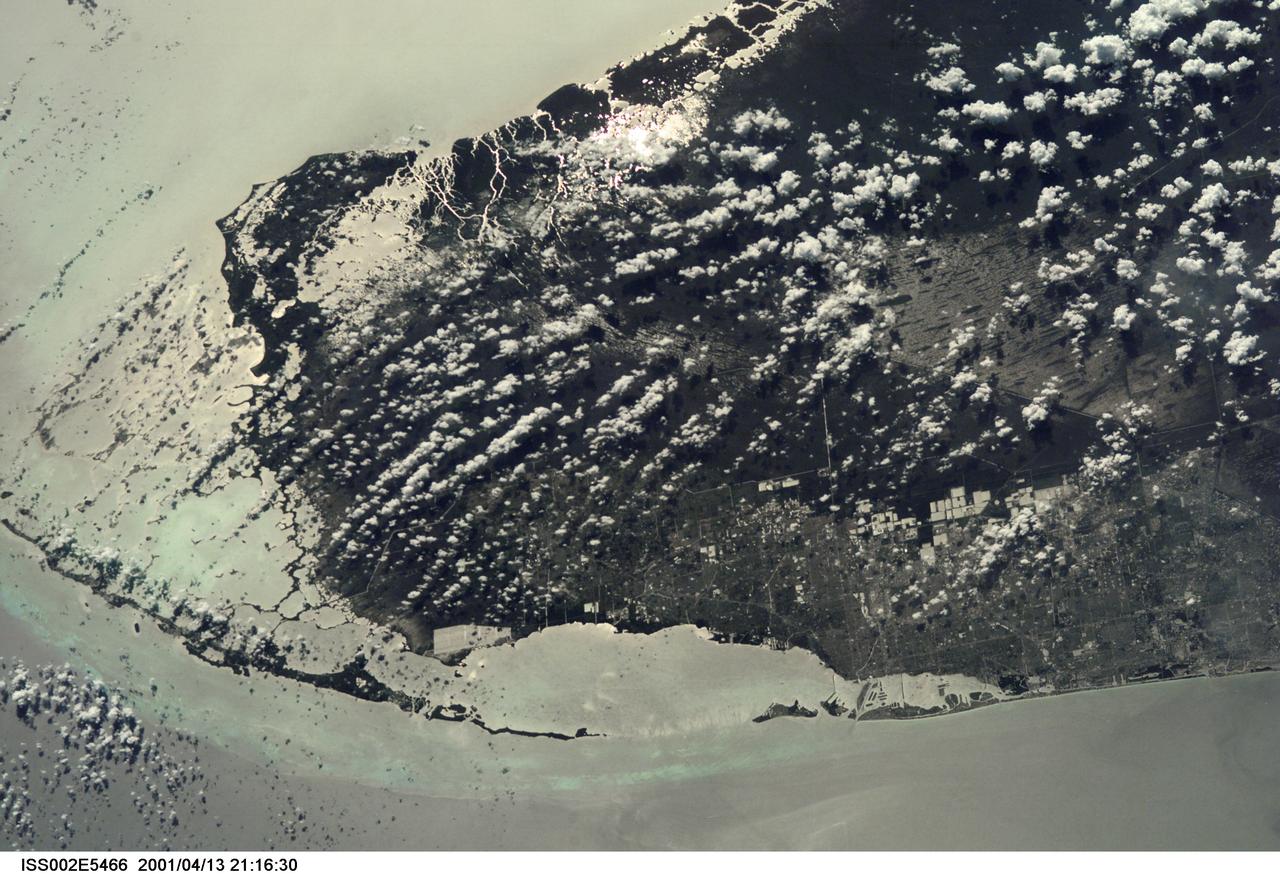
ISS002-E-5466 (13 April 2001) --- From the International Space Station (ISS), an Expedition Two crew member photographed southern Florida, including Dade County with Miami and Miami Beach; Everglades National Park; Big Cypress National Reserve; and the Florida Keys and many other recognizable areas. The crew member, using a digital still camera on this same pass, also recorded imagery of the Lake Okeechobee area, just north of the area represented in this frame.
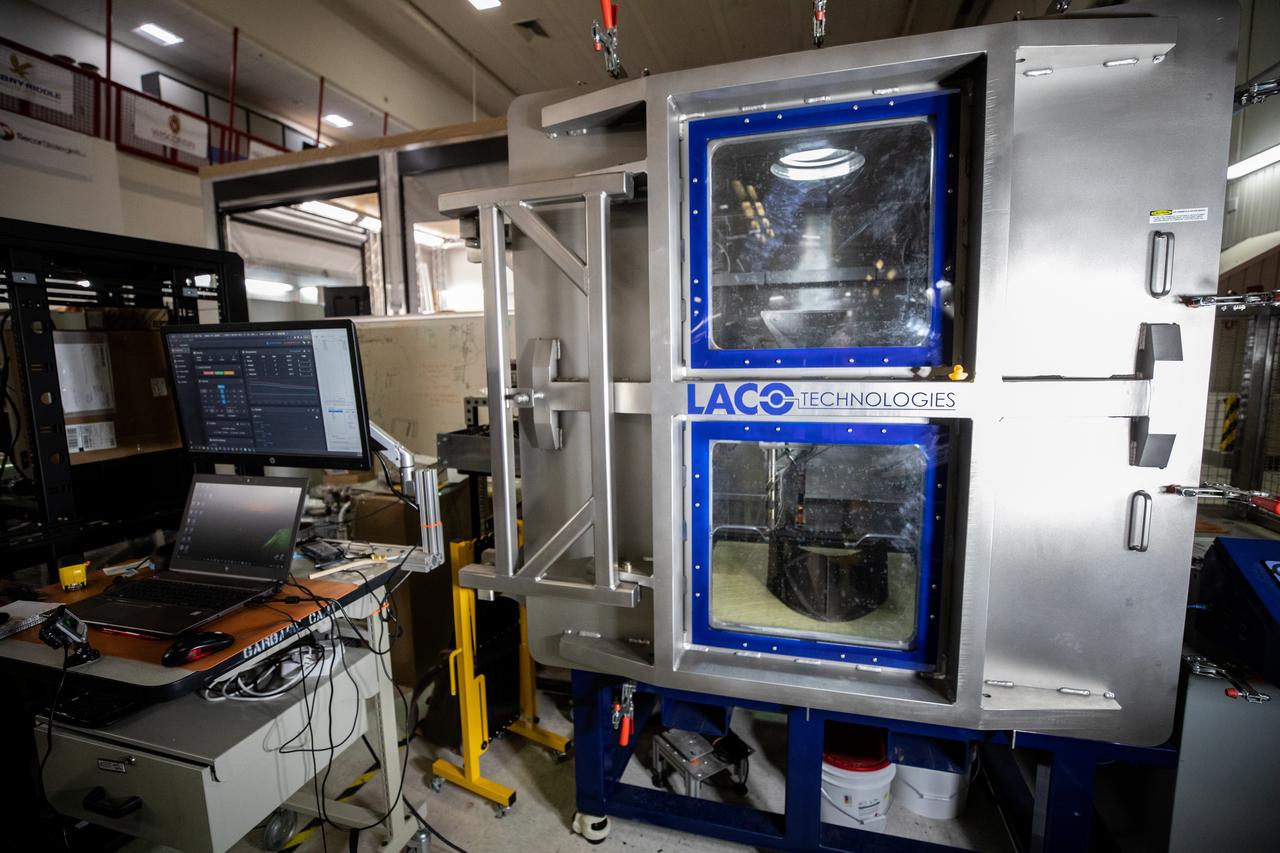
A team at NASA’s Kennedy Space Center in Florida tests a 3D printer on July 28, 2022, at the Florida spaceport’s Swamp Works, as part of the Relevant Environment Additive Construction Technology (REACT) project. Among the key objectives of the project is developing an architectural and structural design for a shelter that provides protection to habitable assets on the lunar surface. Testing REACT derives from NASA’s 2020 Announcement of Collaboration Opportunity with AI SpaceFactory – an architectural and construction technology company and winner of NASA’s 3D Printed Habitat Challenge.
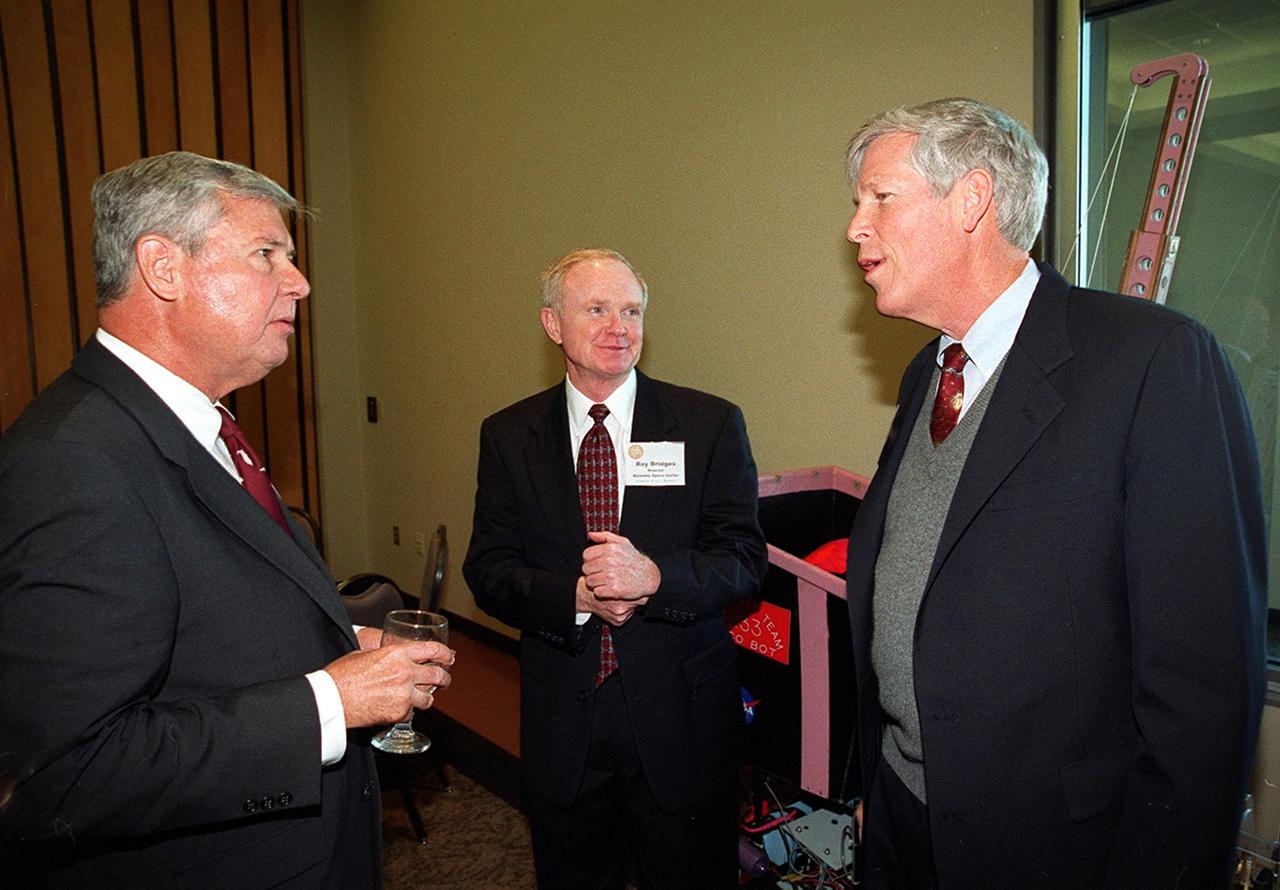
Senator Bob Graham (left), Center Director Roy Bridges (center) and Senator Connie Mack (right) take a break during the First Florida Space Summit, held at the Kennedy Space Center Visitor Complex. The summit featured key state officials and aerospace companies discussing the future of space as it relates to the State of Florida. Moderated by Bridges, the event also included State Senator Patsy Kurth, Representative Dave Weldon, and 45th Space Wing Commander Brig. Gen. Donald Pettit
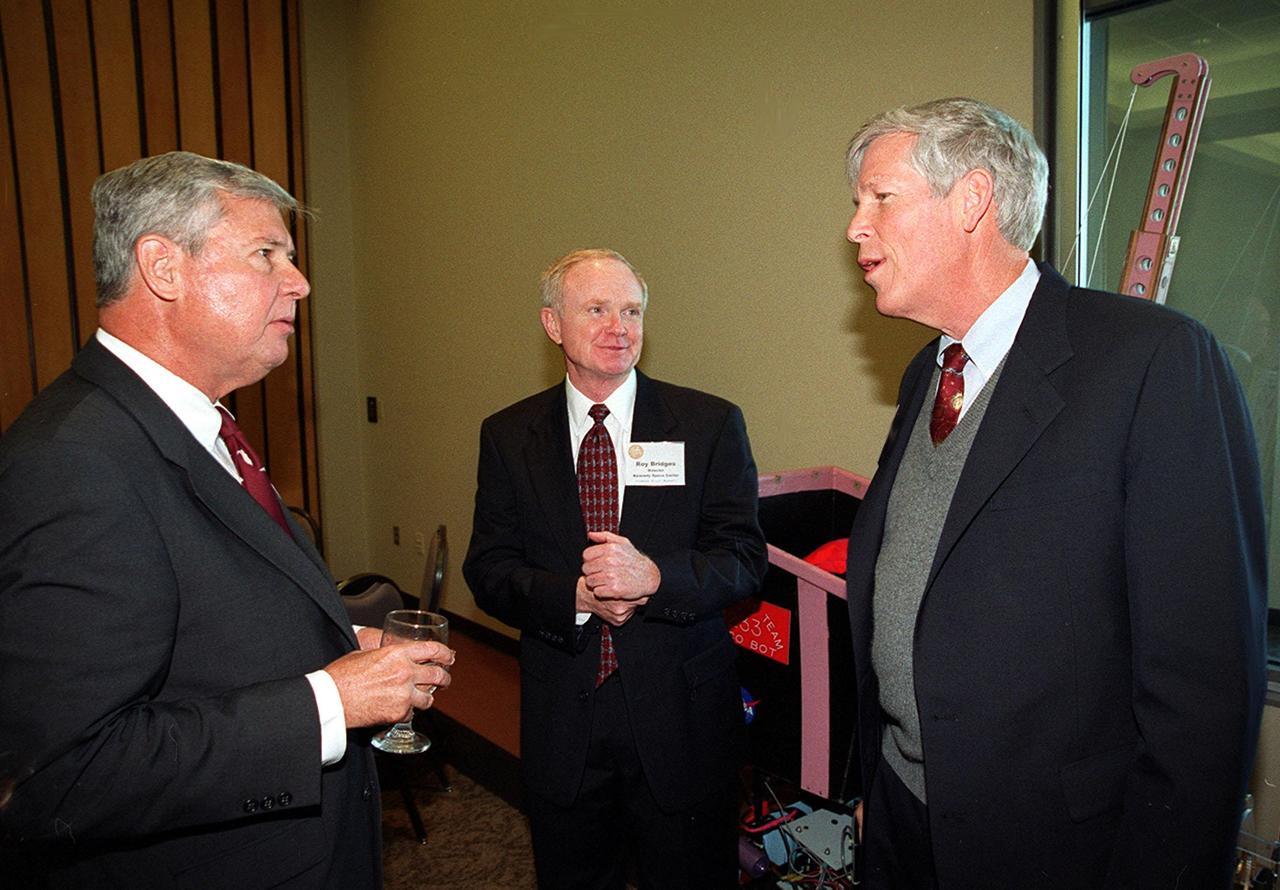
Senator Bob Graham (left), Center Director Roy Bridges (center) and Senator Connie Mack (right) take a break during the First Florida Space Summit, held at the Kennedy Space Center Visitor Complex. The summit featured key state officials and aerospace companies discussing the future of space as it relates to the State of Florida. Moderated by Bridges, the event also included State Senator Patsy Kurth, Representative Dave Weldon, and 45th Space Wing Commander Brig. Gen. Donald Pettit

S120-E-008224 (2 Nov. 2007) --- The Atlantic Coast of Florida, showing heavy clouds from the influence of Hurricane Noel, which earlier skirted the coast on its way northward, was photographed by one of the STS-120 crewmembers while the Space Shuttle Discovery was docked with the International Space Station. Lake Okeechobee and the Florida Keys are readily visible at frame center and left, respectively.
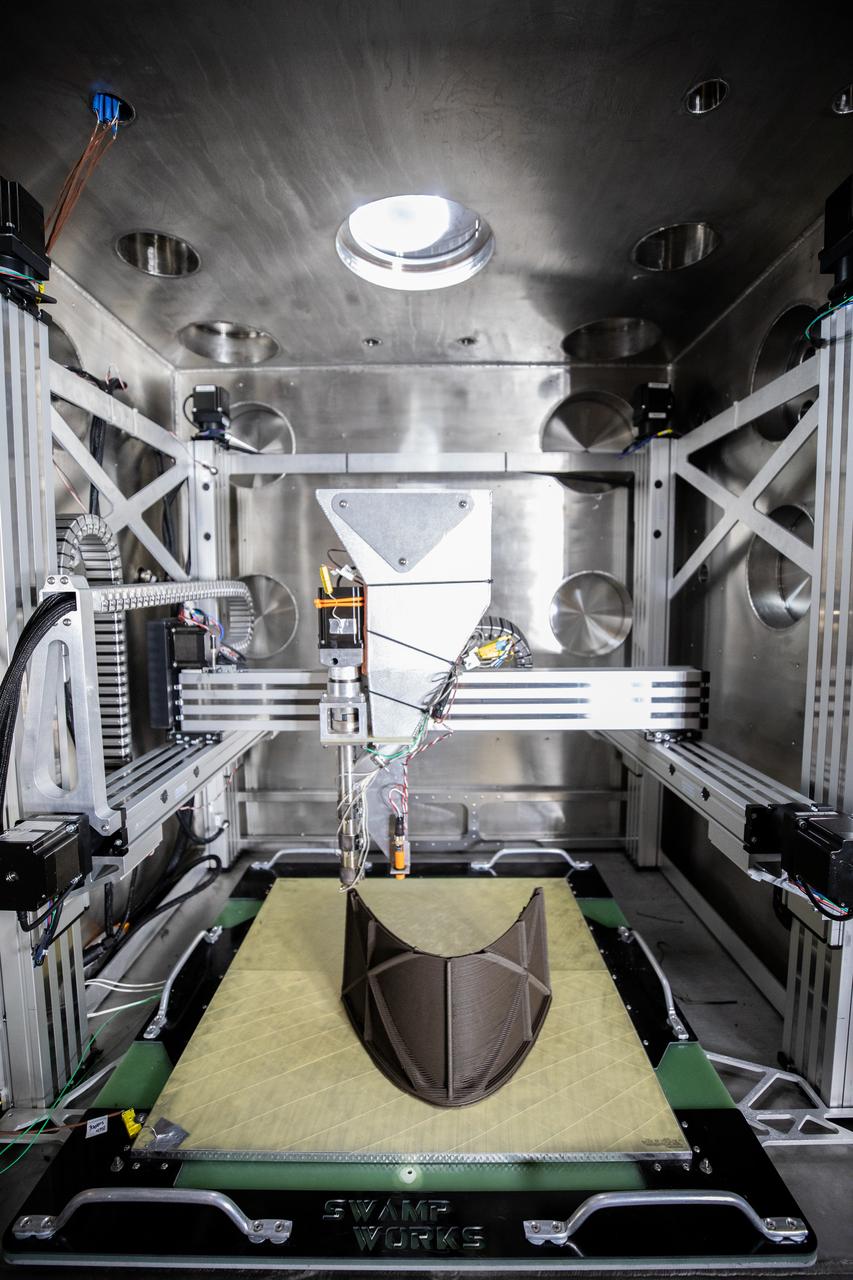
A team at NASA’s Kennedy Space Center in Florida tests a 3D printer on July 28, 2022, at the Florida spaceport’s Swamp Works, as part of the Relevant Environment Additive Construction Technology (REACT) project. Among the key objectives of the project is developing an architectural and structural design for a shelter that provides protection to habitable assets on the lunar surface. Testing REACT derives from NASA’s 2020 Announcement of Collaboration Opportunity with AI SpaceFactory – an architectural and construction technology company and winner of NASA’s 3D Printed Habitat Challenge.
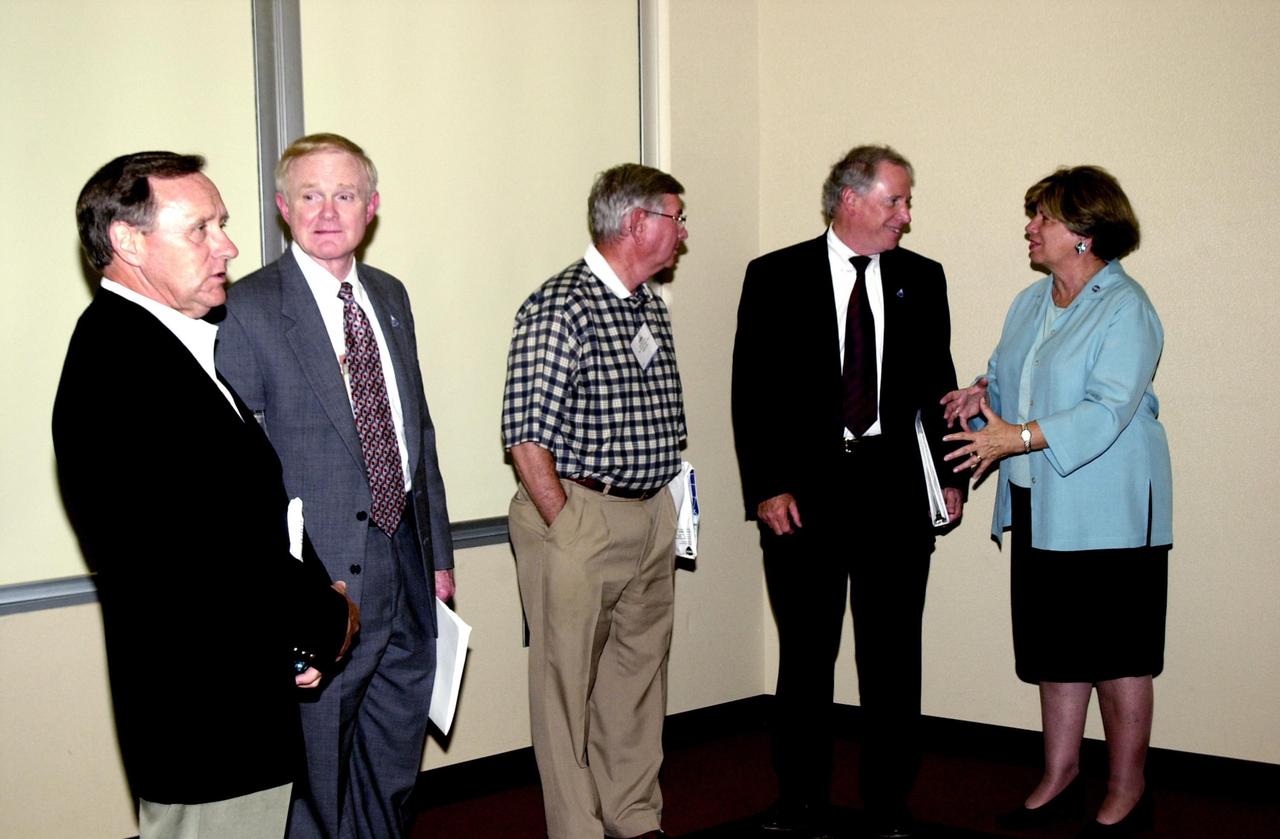
KENNEDY SPACE CENTER, FLA. -- During the 2002 Florida Press Association and Florida Society of Newspaper Editors Convention, held at the Debus Center, KSC Visitors Complex, key speakers gather. From left are Michael Coleman, publisher, Florida Today; Roy D. Bridges Jr., Kennedy Space Center Director; Carl Cannon, publisher, Florida Times-Union and FPA president; Dr. Daniel R. Mulville, NASA associate deputy administrator; and JoAnn Morgan, director, KSC External Relations and Business Development. Mulville was the keynote speaker.
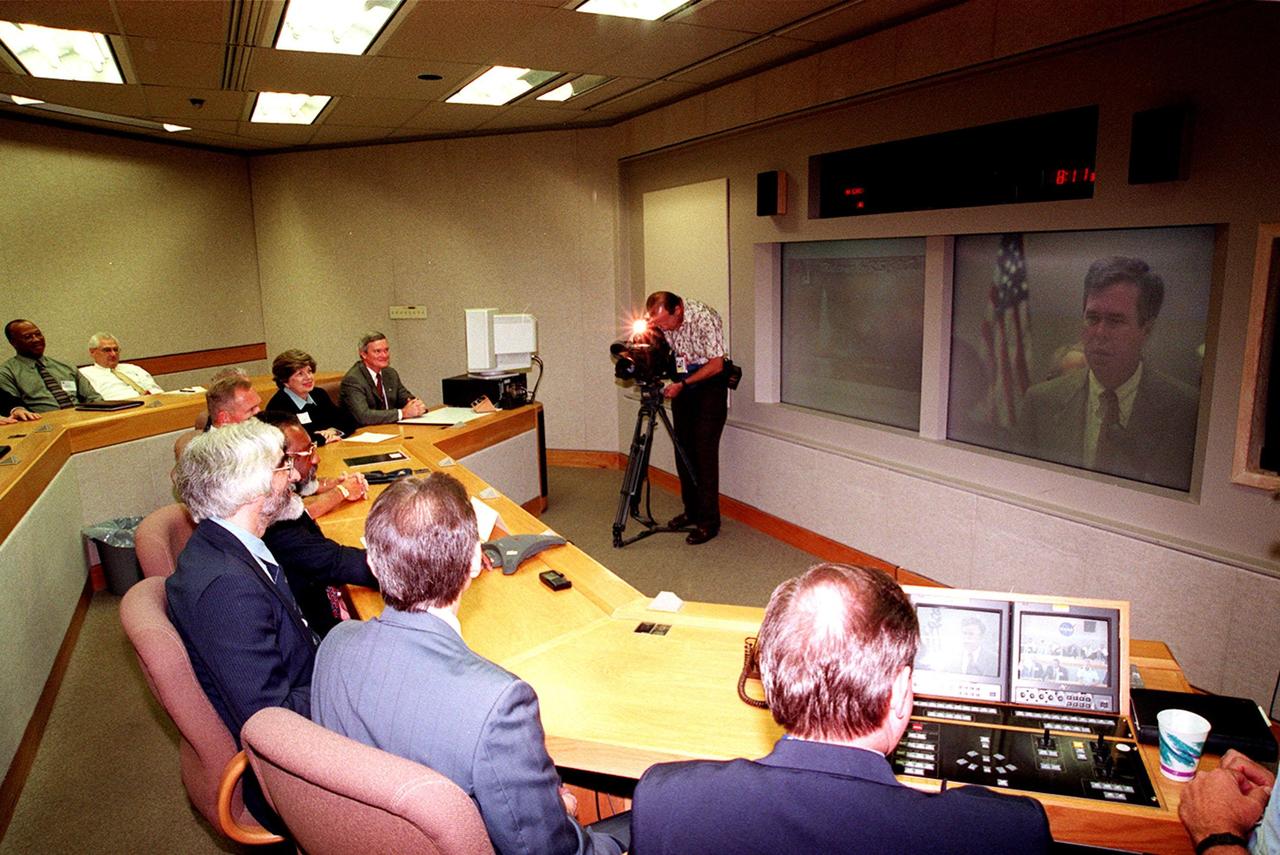
In the videoconference room at Headquarters, key representatives of KSC contractors, along with KSC directorates, fill the room during an early morning phone call from Florida Governor Jeb Bush (seen on the video screen) in Tallahassee, Fla. The call is to inaugurate the change of KSC's area code from 407 to 321, effective today. Deputy Director for Business Operations Jim Jennings (fourth from right) received the call. Next to Jennings (at his right) is seated Robert Osband, Florida Space Institute, who suggested the 3-2-1 sequence to reflect the importance of the space industry to Florida's space coast
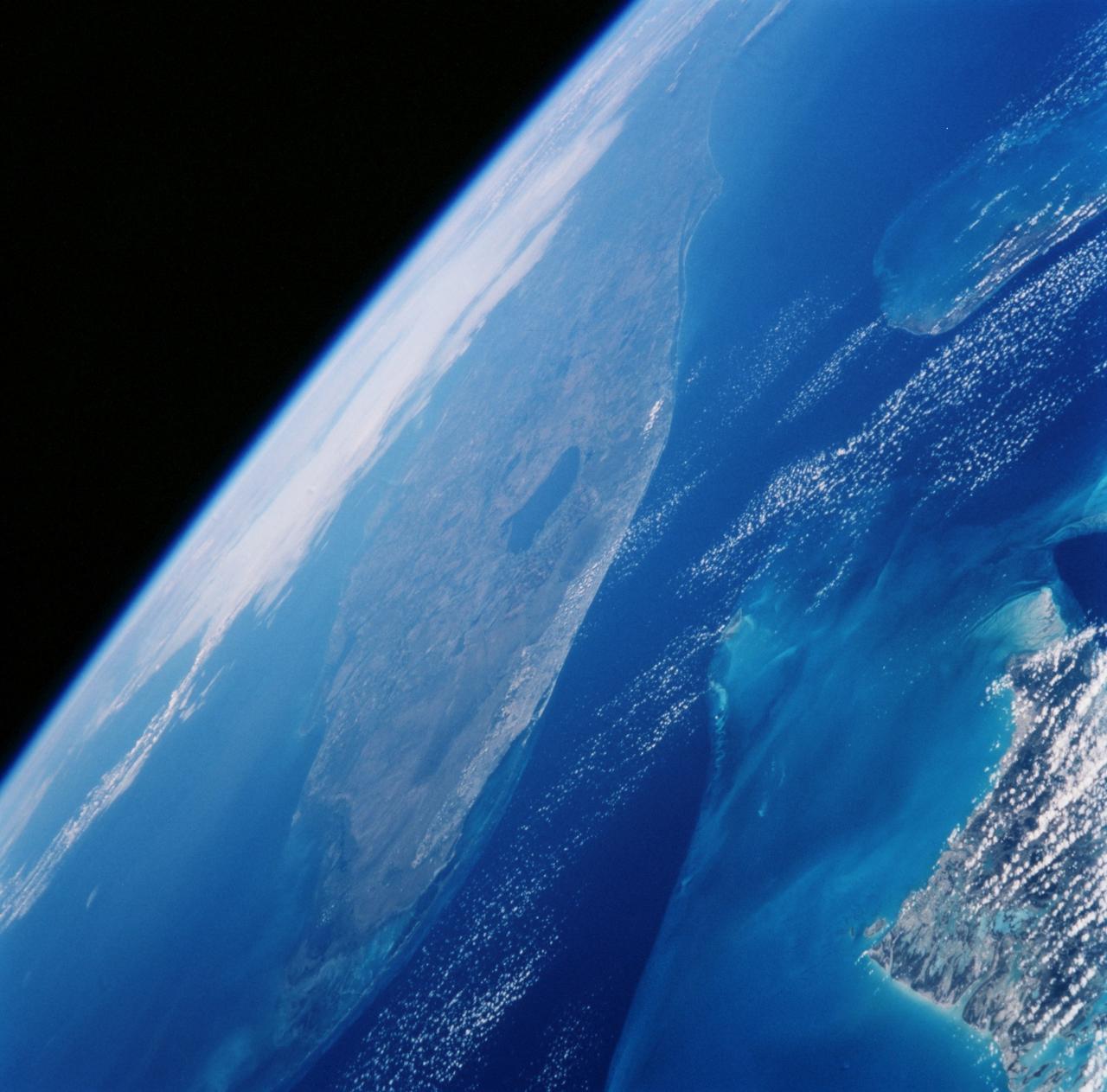
STS099-729-086 (11-22 February 2000) ---In this 70mm frame photographed by one of the STS-99 crew members, the city of Miami encroaches the eastern edge of the Everglades in Florida. The Everglades is an International Biosphere Reserve World Heritage Site. This subtropical wilderness encompasses a relatively flat (does not exceed 2.4 meters above sea level) saw-grass marsh region of 10,000 square kilometers (4,000 square miles). The only source of water in the Everglades is from rainfall. The flow of water is detectable in this image, slowly moving from Lake Okeechobee to Florida Bay; the light blue, shallow area (less than 3 meters) between the mainland and the Keys; and the southwestern Florida coast.
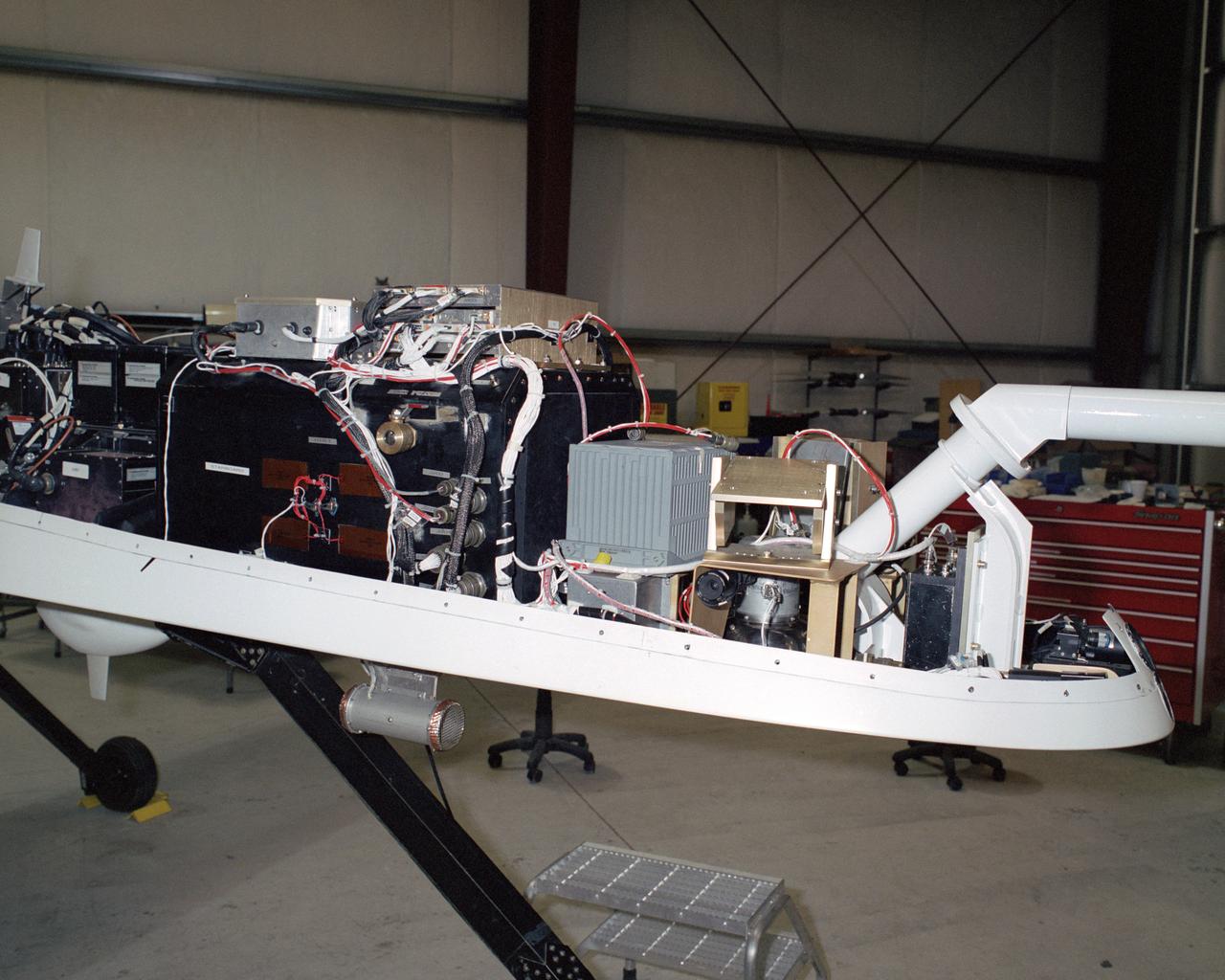
A NASA team studying the causes of electrical storms and their effects on our home planet achieved a milestone on August 21, 2002, completing the study's longest-duration research flight and monitoring four thunderstorms in succession. Based at the Naval Air Station Key West, Florida, researchers with the Altus Cumulus Electrification Study (ACES) used the Altus II remotely-piloted aircraft to study thunderstorms in the Atlantic Ocean off Key West and the west of the Everglades. Using special equipment aboard the Altus II, scientists in ACES will gather electric, magnetic, and optical measurements of the thunderstorms, gauging elements such as lightning activity and the electrical environment in and around the storms. With dual goals of gathering weather data safely and testing the adaptability of the uninhabited aircraft, the ACES study is a collaboration among the Marshall Space Flight Center, the University of Alabama in Huntsville, NASA's Goddard Space Flight Center in Greenbelt, Maryland, Pernsylvania State University in University Park, and General Atomics Aeronautical Systems, Inc.

KENNEDY SPACE CENTER, FLA. -- Astronaut Nicole Stott is one of three astronauts taking part in the 17-day NASA Extreme Environment Mission Operations (NEEMO) project from the National Oceanic and Atmospheric Administration (NOAA) Aquarius Underwater Laboratory. At left is NEEMO instructor "Otter" Mark Rutten. The astronauts are testing space medicine concepts and moon-walking techniques. The 45-foot-long, 13-foot-diameter complex is three miles off Key Largo in the Florida Keys National Marine Sanctuary and anchored 62 feet below the surface. Canadian astronaut Dave Williams is leading the undersea mission, along with Stott and astronaut Ron Garan. Dr. Tim Broderick of the University of Cincinnati rounds out the crew.
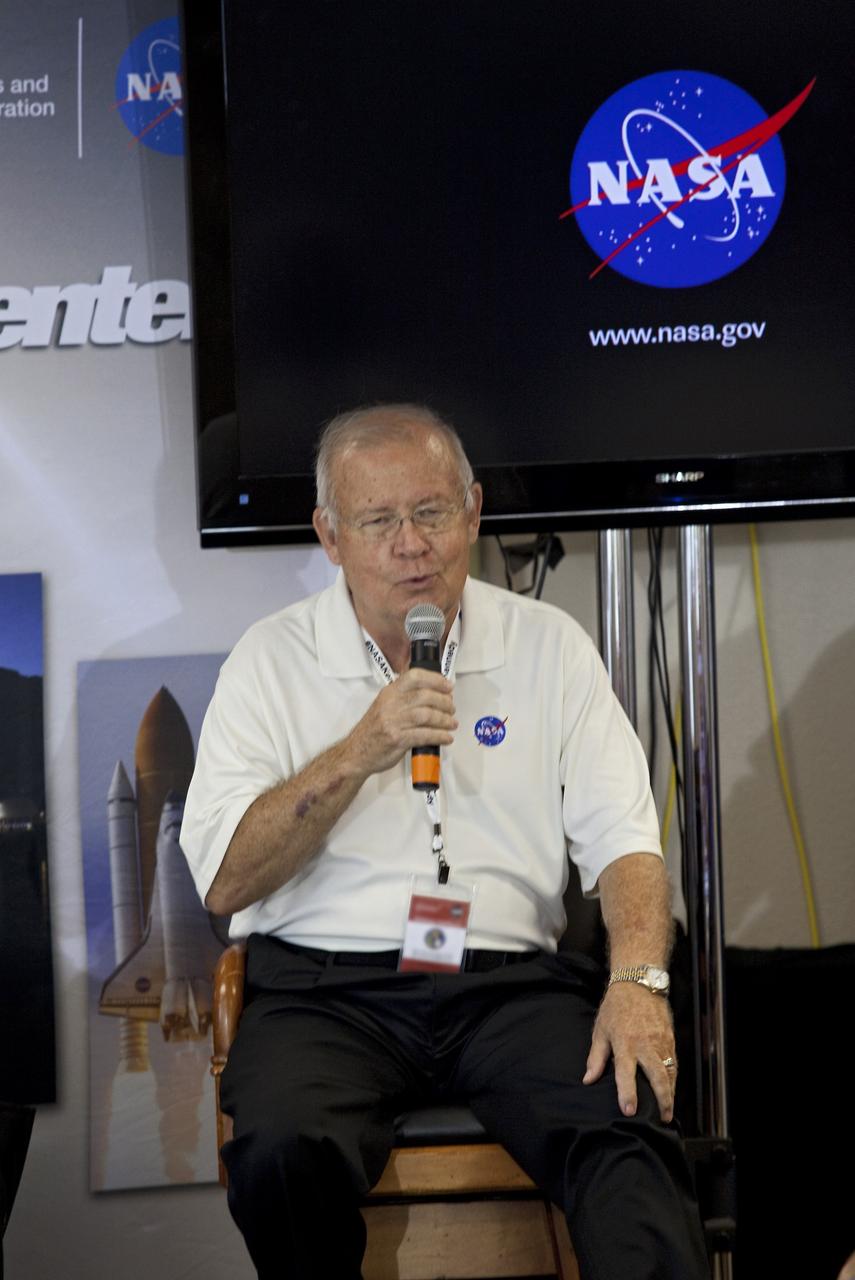
CAPE CANAVERAL, Fla. -- Former Kennedy Space Center Director Jay Honeycutt speaks to about 45 of NASA’s social media followers for two days of presentations on the Kennedy Space Center's past, present and future. The social media participants gathered at the Florida spaceport on Aug. 2 and 3, 2012 to hear from key former and current leaders who related stories of the space agency's efforts to explore the unknown. It was the first social media event totally run by Kennedy. Photo credit: NASA/ Gianni Woods
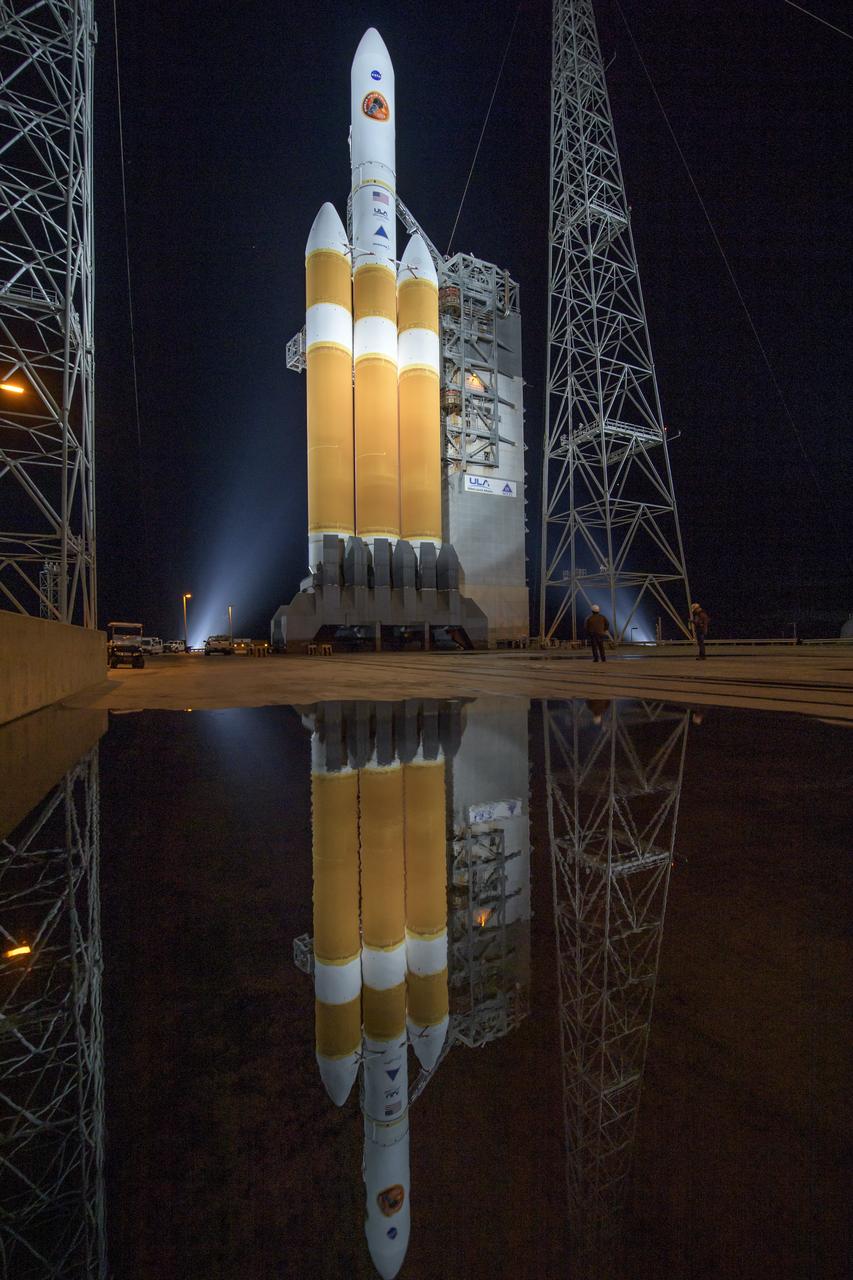
The United Launch Alliance Delta IV Heavy rocket with the Parker Solar Probe is illuminated ahead of launch, Saturday, Aug. 11, 2018, Launch Complex 37 at Cape Canaveral Air Force Station in Florida. Parker Solar Probe is humanity’s first-ever mission into a part of the Sun’s atmosphere called the corona. Here it will directly explore solar processes that are key to understanding and forecasting space weather events that can impact life on Earth. Photo Credit: (NASA/Bill Ingalls)
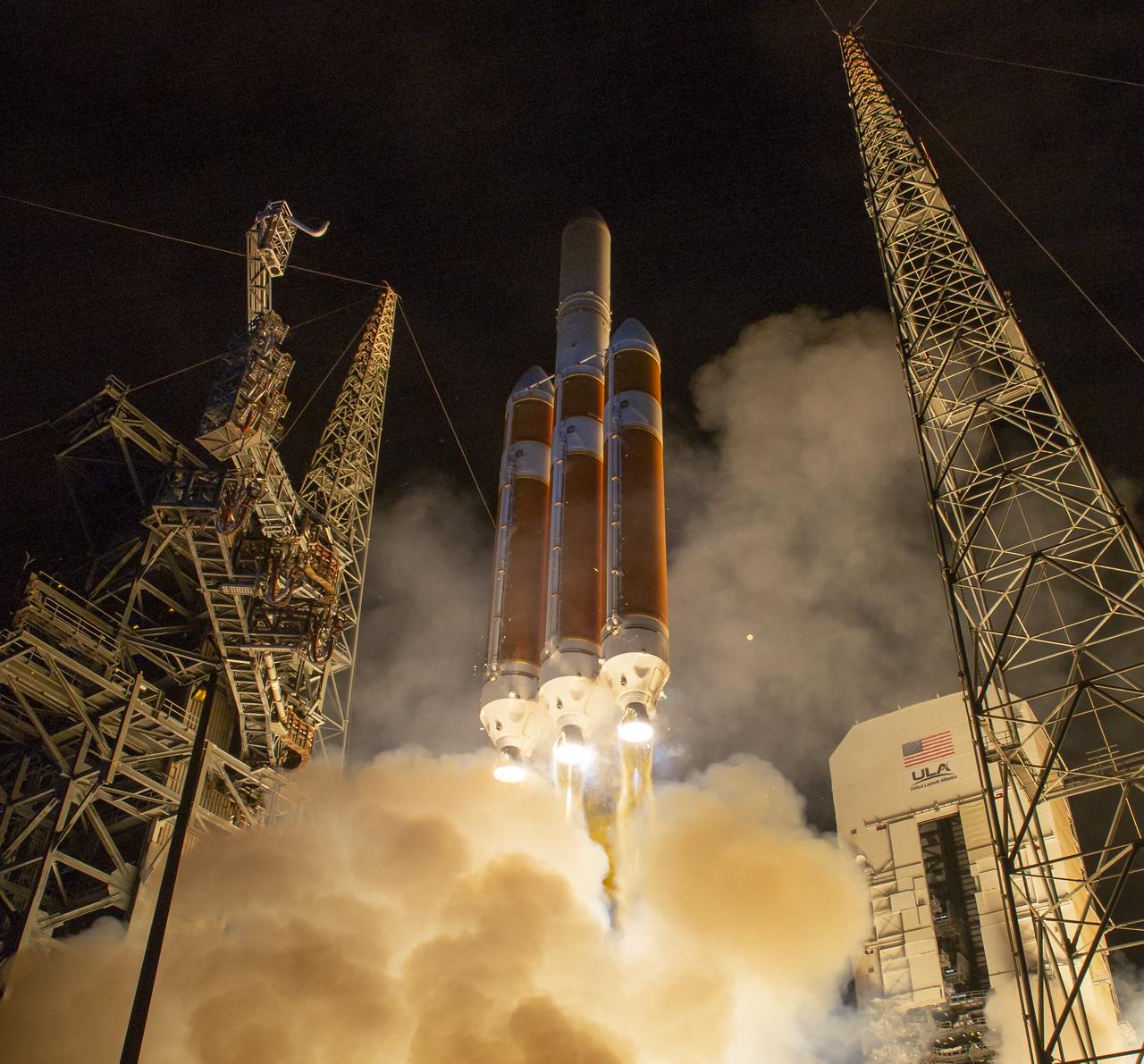
The United Launch Alliance Delta IV Heavy rocket launches NASA's Parker Solar Probe to touch the Sun, Sunday, Aug. 12, 2018 from Launch Complex 37 at Cape Canaveral Air Force Station, Florida. Parker Solar Probe is humanity’s first-ever mission into a part of the Sun’s atmosphere called the corona. Here it will directly explore solar processes that are key to understanding and forecasting space weather events that can impact life on Earth. Photo Credit: (NASA/Bill Ingalls)
The Mobile Service Tower is rolled back to reveal the United Launch Alliance Delta IV Heavy rocket with the Parker Solar Probe onboard, Saturday, Aug. 11, 2018, Launch Complex 37 at Cape Canaveral Air Force Station in Florida. Parker Solar Probe is humanity’s first-ever mission into a part of the Sun’s atmosphere called the corona. Here it will directly explore solar processes that are key to understanding and forecasting space weather events that can impact life on Earth. Photo Credit: (NASA/Bill Ingalls)
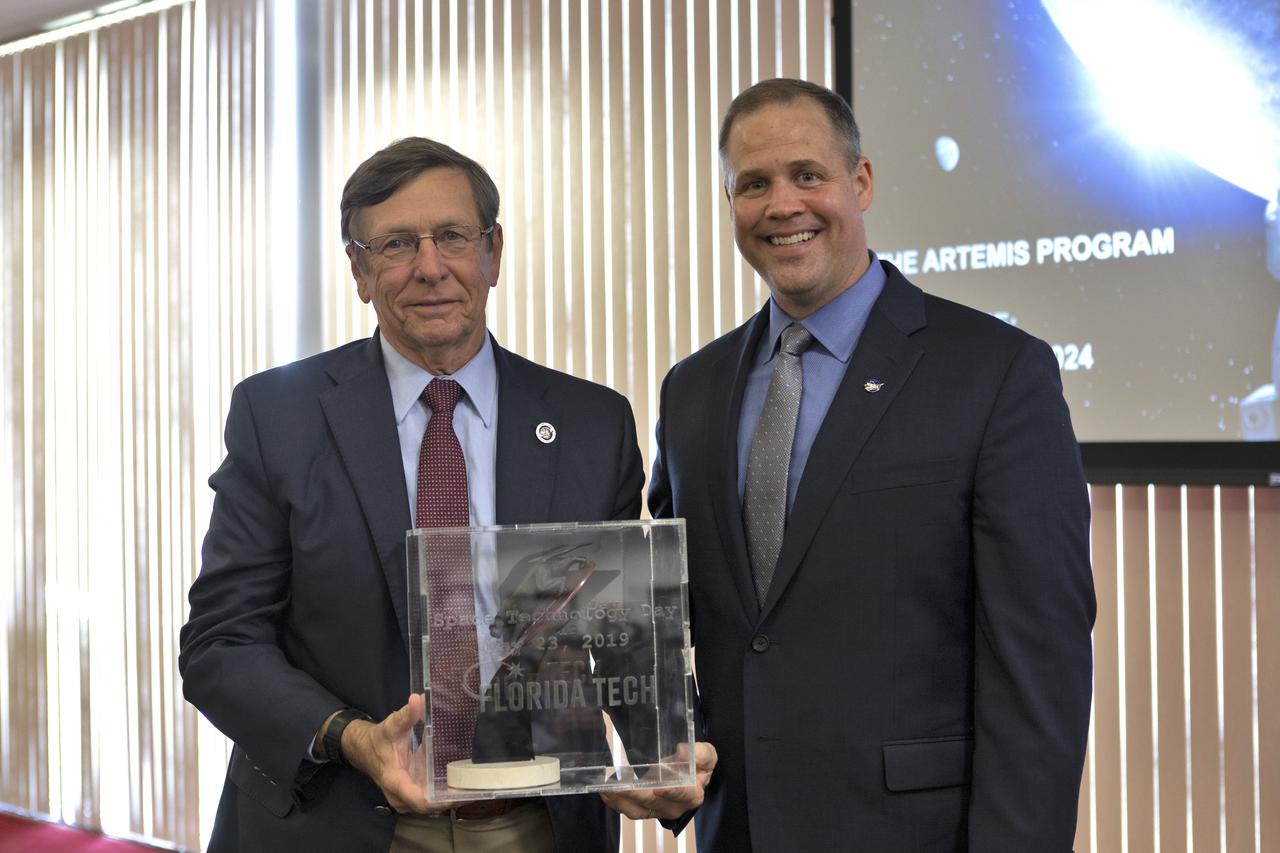
NASA Administrator Jim Bridenstine, right, poses with Florida Institute of Technology President T. Dwayne McCay on Thursday, May 23, 2019 at the Melbourne, FL campus. Bridenstine delivered the keynote address during the university’s Space Technology Day. Among the key topics Bridenstine discussed was NASA’s Artemis missions to the Moon, including the lunar Gateway, which will serve as an orbiting outpost for astronauts.
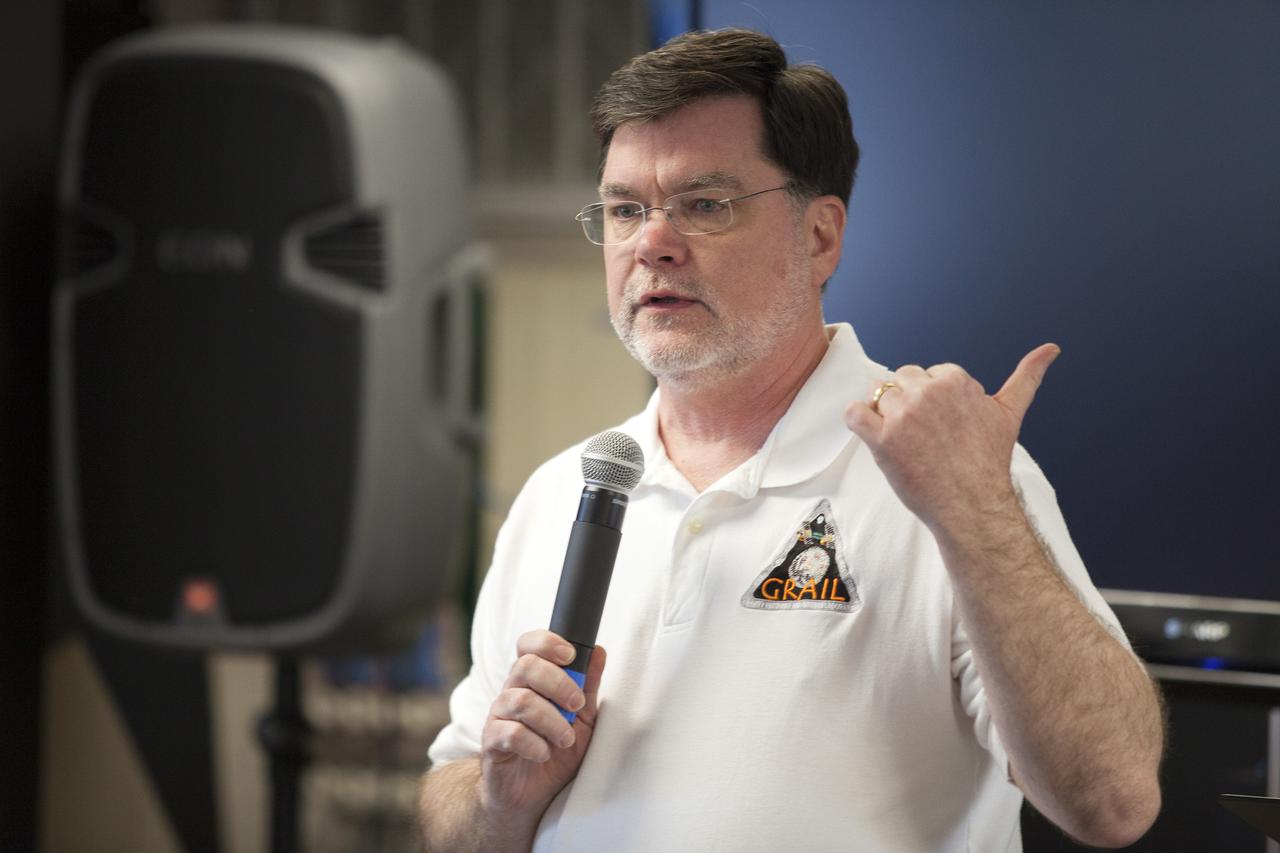
CAPE CANAVERAL, Fla. -- NASA Deputy Chief Technologist James Adams speaks to some of the agency's social media followers during two days of presentations on the launch of SpaceX-2. The social media participants gathered at the Florida spaceport on Feb. 28 and March 1, to hear from key leaders who updated the space agency's current efforts. Photo credit: NASA_Frankie Martin
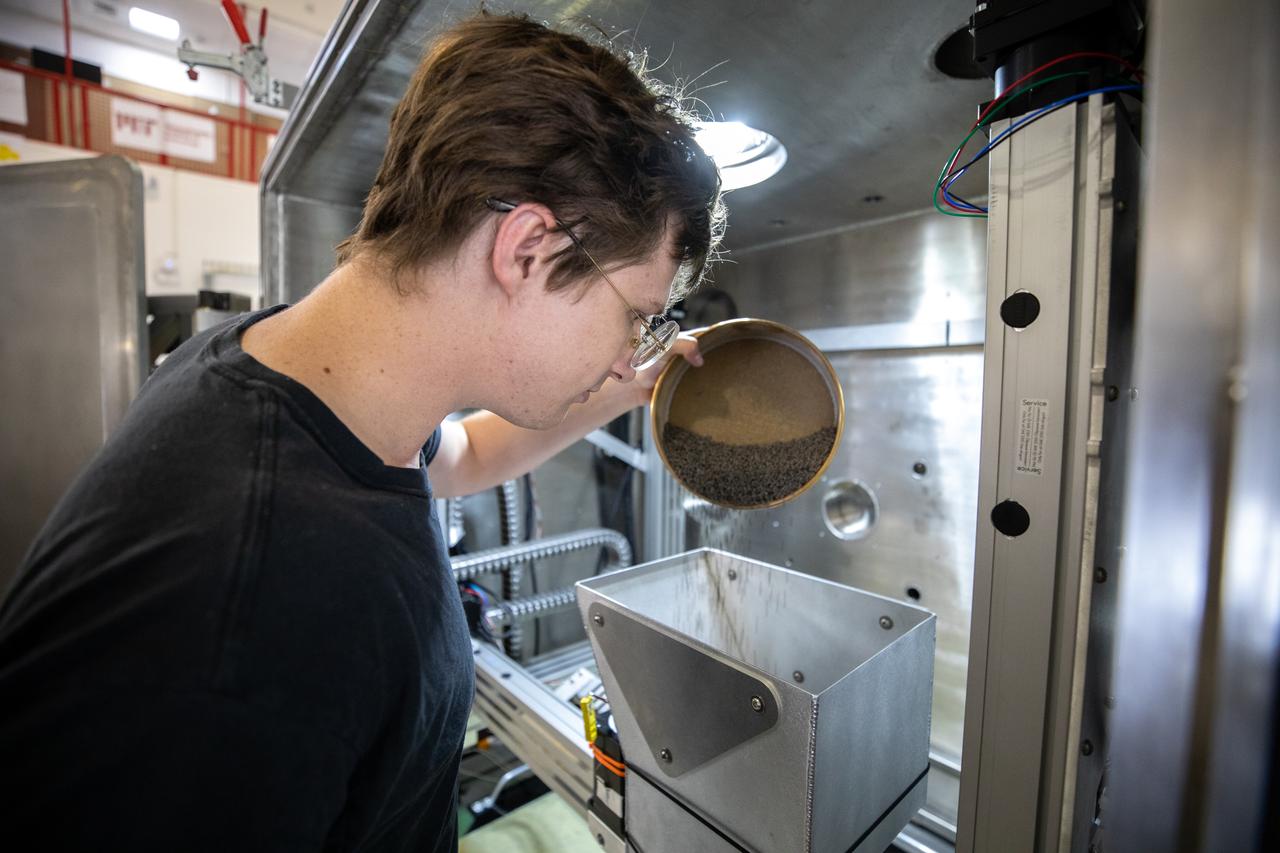
Materials engineer Thomas Lipscomb tests a 3D printer on July 28, 2022, at Swamp Works at NASA’s Kennedy Space Center in Florida, as part of the Relevant Environment Additive Construction Technology (REACT) project. Among the key objectives of the project is developing an architectural and structural design for a shelter that provides protection to habitable assets on the lunar surface. Testing REACT derives from NASA’s 2020 Announcement of Collaboration Opportunity with AI SpaceFactory – an architectural and construction technology company and winner of NASA’s 3D Printed Habitat Challenge.
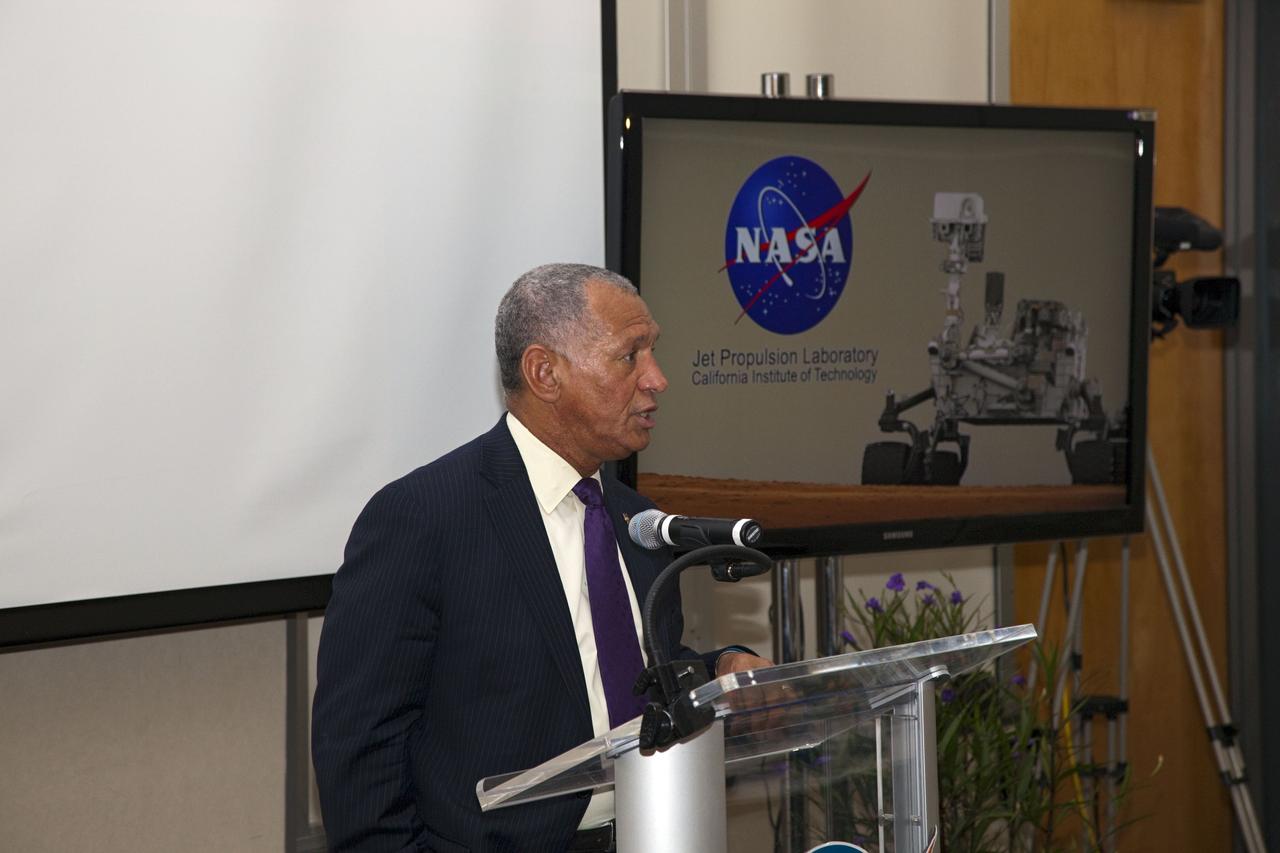
CAPE CANAVERAL, Fla. -- NASA Administrator Charles Bolden speaks to about 45 of NASA’s social media followers during two days of presentations on the Kennedy's past, present and future. The social media participants gathered at the Florida spaceport on Aug. 2 and 3, 2012 to hear from key former and current leaders who related stories of the space agency's efforts to explore the unknown. It was the first social media event totally run by Kennedy. Photo credit: NASA/ Gianni Woods
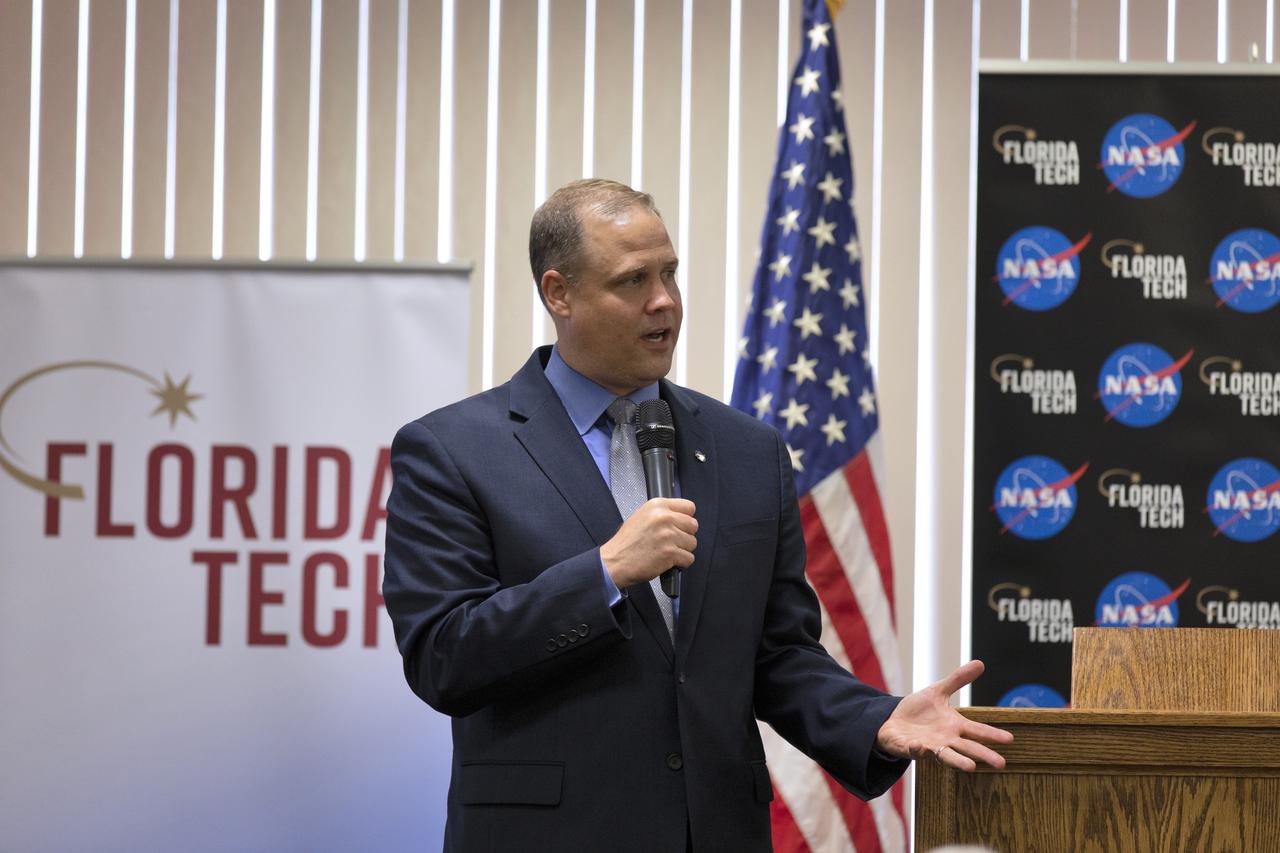
NASA Administrator Jim Bridenstine speaks to students, faculty, engineers and area business leaders at Florida Institute of Technology on Thursday, May 23, 2019. Bridenstine delivered the keynote address at the Melbourne, FL campus during the university’s Space Technology Day. Among the key topics Bridenstine discussed was NASA’s Artemis missions to the Moon, including the lunar Gateway, which will serve as an orbiting outpost for astronauts.
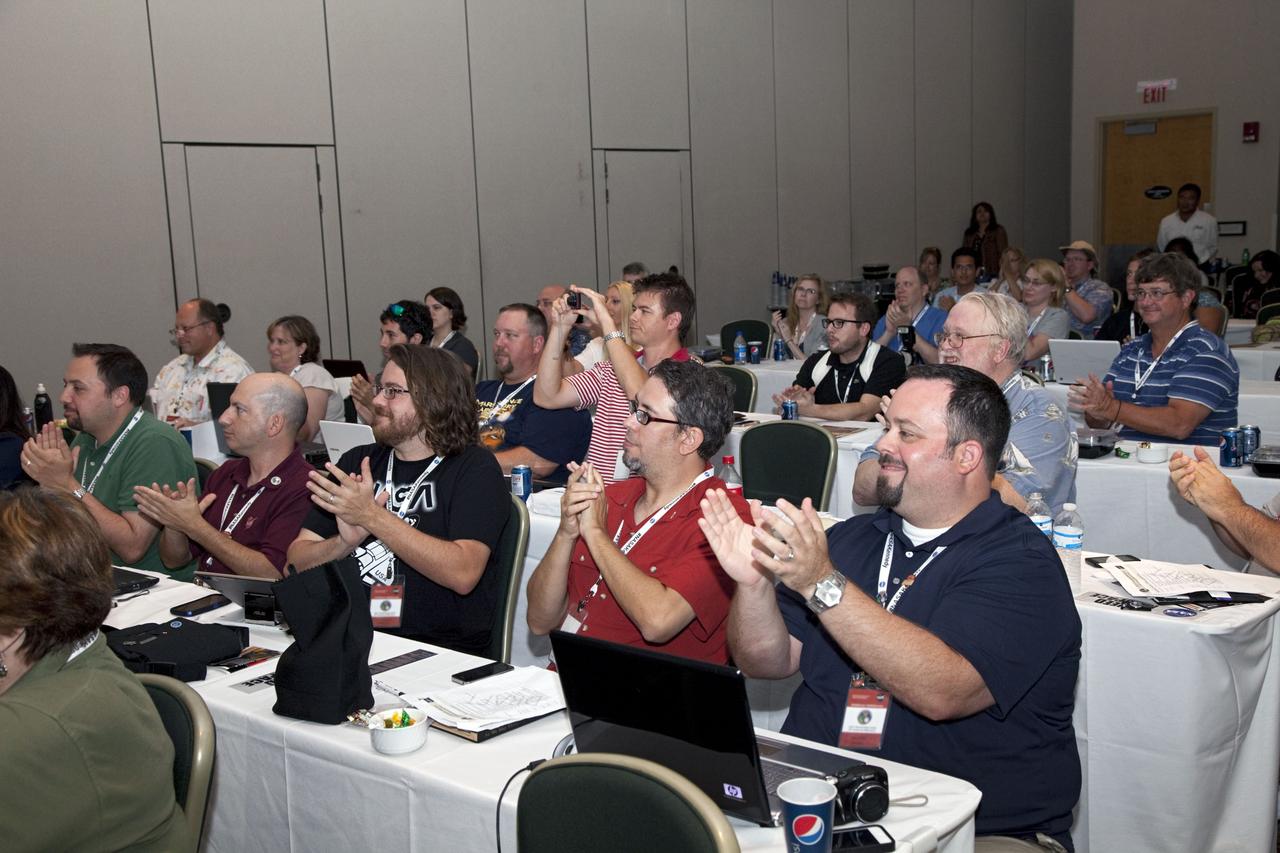
CAPE CANAVERAL, Fla. -- About 45 of NASA’s social media followers respond to remarks by NASA Administrator Charles Bolden during two days of presentations on the Kennedy's past, present and future. The social media participants gathered at the Florida spaceport on Aug. 2 and 3, 2012 to hear from key former and current leaders who related stories of the space agency's efforts to explore the unknown. It was the first social media event totally run by Kennedy. Photo credit: NASA/ Gianni Woods
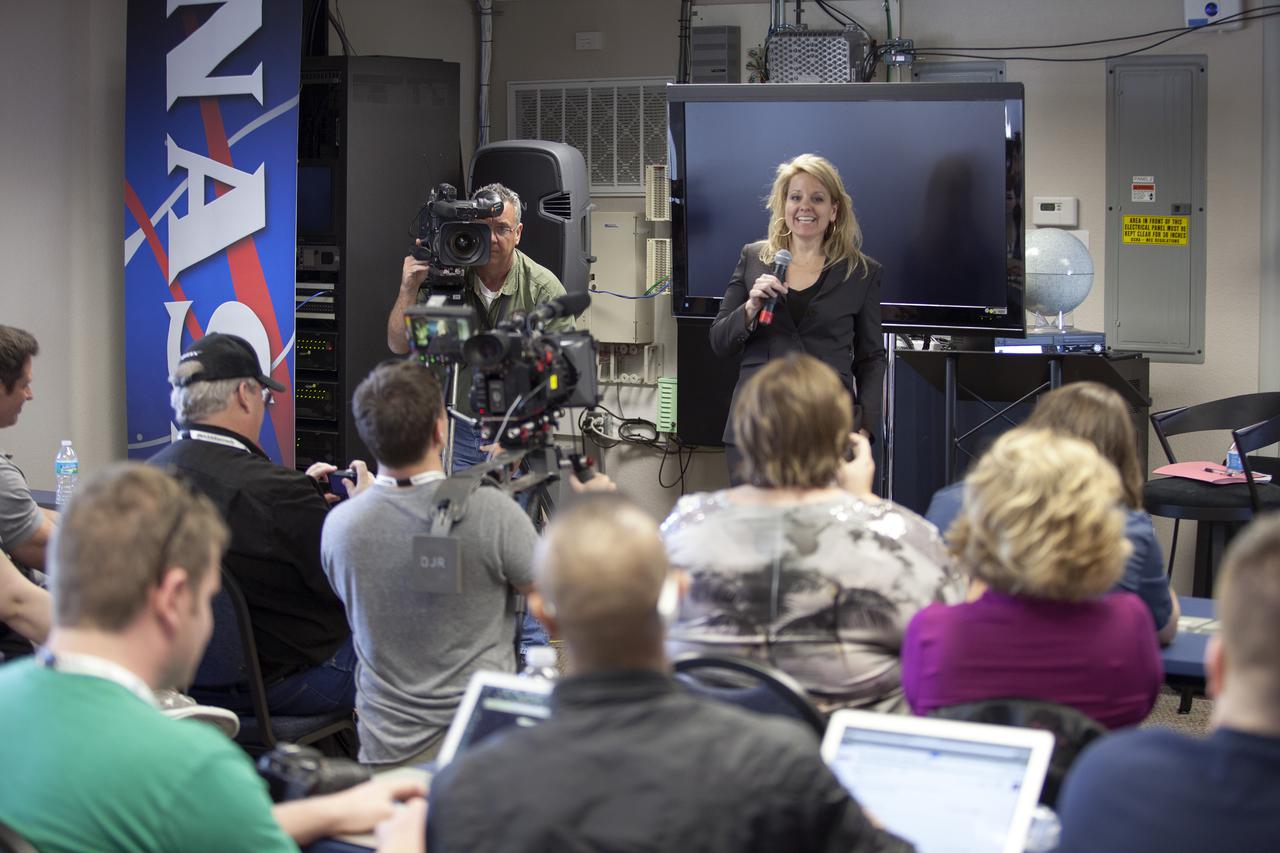
CAPE CANAVERAL, Fla. -- SpaceX President Gwynne Shotwell speaks to NASA’s social media followers during two days of presentations on the launch of SpaceX-2. The social media participants gathered at the Florida spaceport on Feb. 28 and March 1, to hear from key leaders who updated the space agency's current efforts. Photo credit: NASA_Frankie Martin
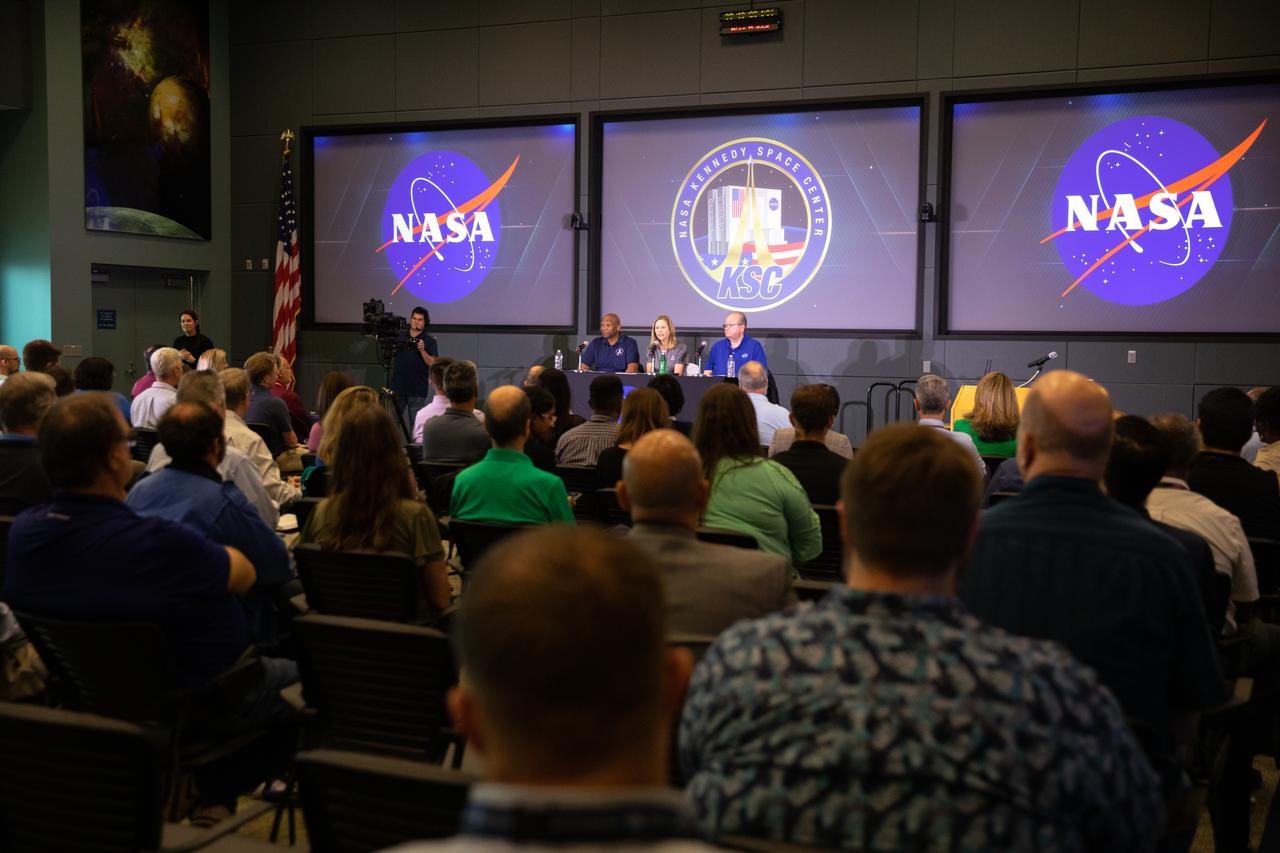
From left, NASA’s Kennedy Space Center Deputy Director Kelvin Manning, Director Janet Petro, and Associate Director, Management Burt Summerfield participate in an employee Town Hall event at the Florida spaceport on March 13, 2023. The senior leaders discussed key accomplishments and goals of the center, as well as answered questions from the Kennedy workforce.
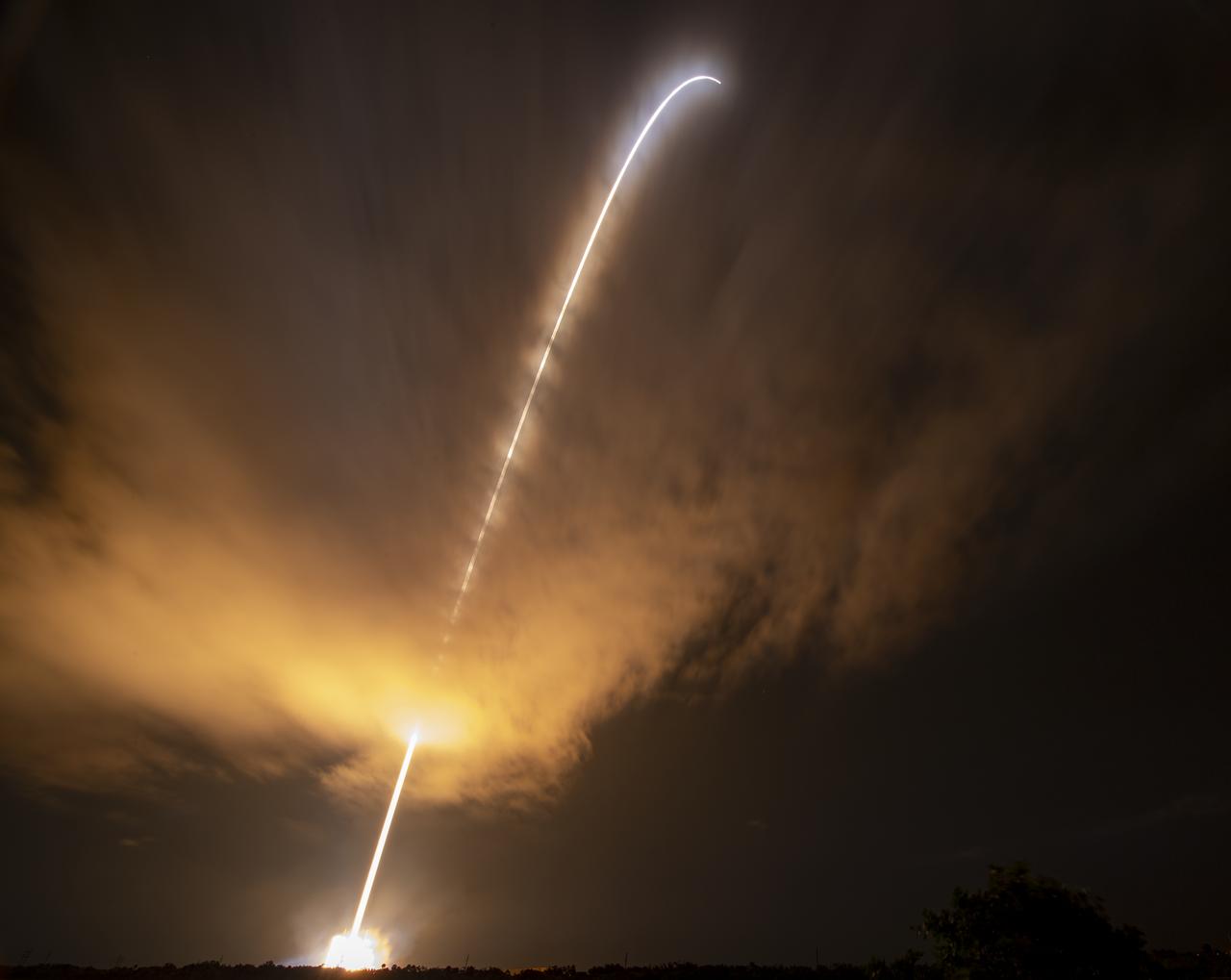
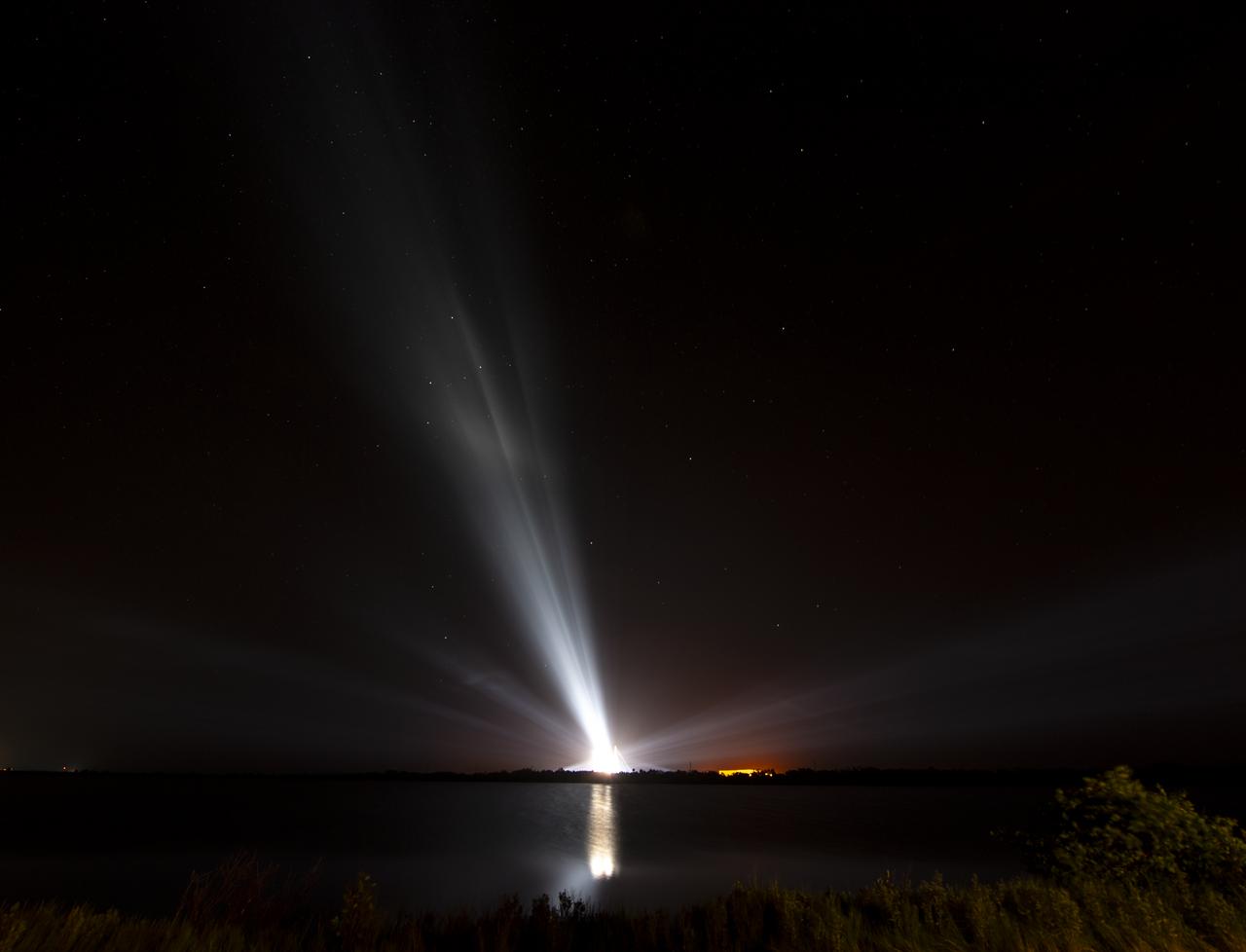
The United Launch Alliance Delta IV Heavy rocket is seen in this long exposure photograph as it launches NASA's Parker Solar Probe to touch the Sun, Sunday, Aug. 12, 2018 from Launch Complex 37 at Cape Canaveral Air Force Station, Florida. Parker Solar Probe is humanity’s first-ever mission into a part of the Sun’s atmosphere called the corona. Here it will directly explore solar processes that are key to understanding and forecasting space weather events that can impact life on Earth. Photo Credit: (NASA/Bill Ingalls)
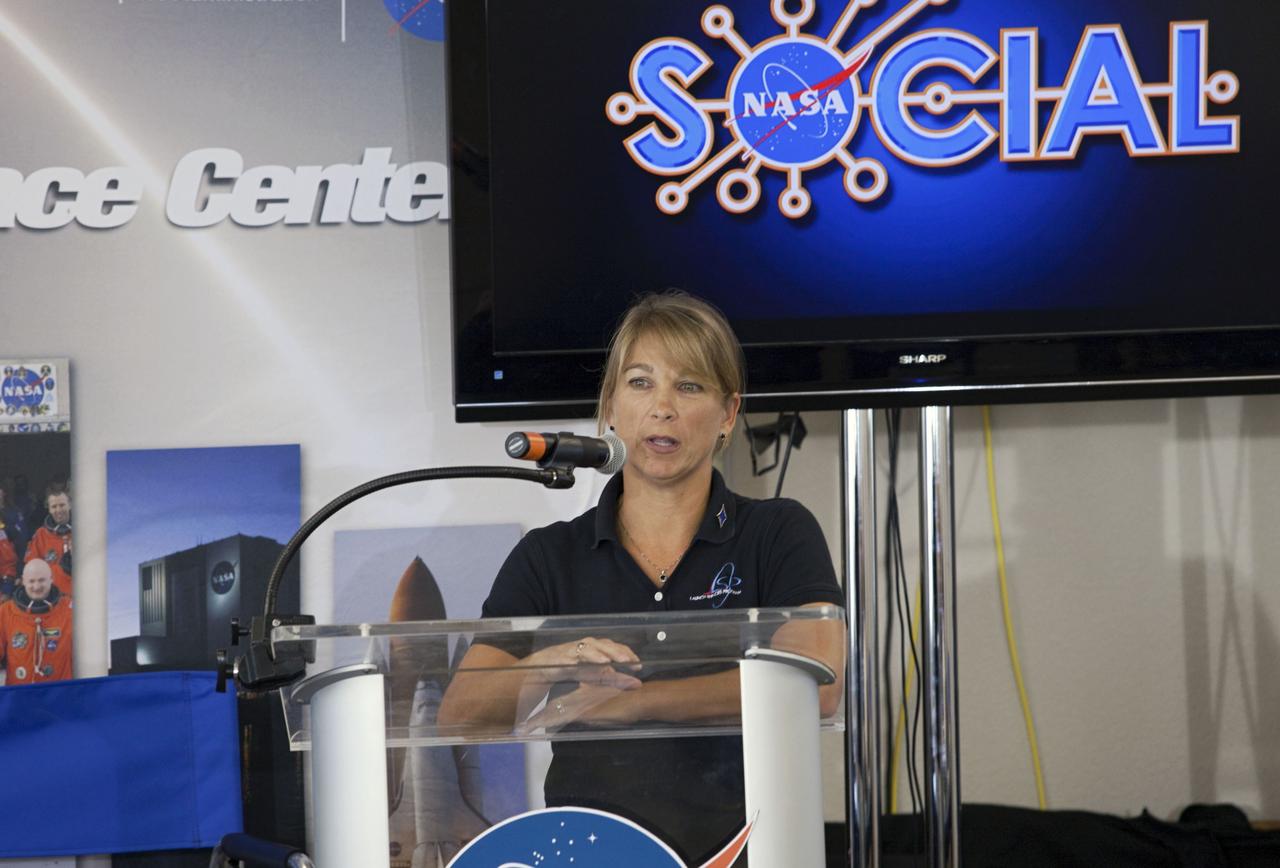
CAPE CANAVERAL, Fla. -- Amanda Mitskevich, program manager for NASA's Launch Services Program, speaks to about 45 of NASA’s social media followers during two days of presentations on the Kennedy's past, present and future. The social media participants gathered at the Florida spaceport on Aug. 2 and 3, 2012 to hear from key former and current leaders who related stories of the space agency's efforts to explore the unknown. It was the first social media event totally run by Kennedy. Photo credit: NASA/ Gianni Woods
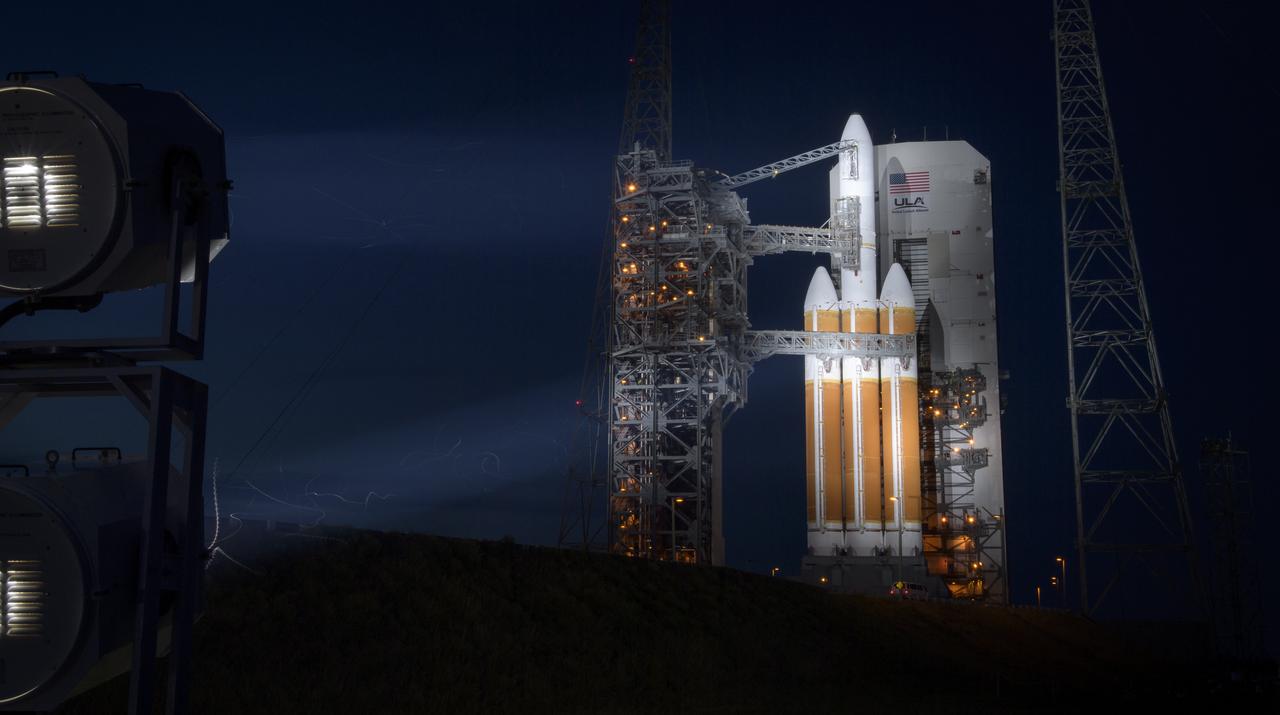
The United Launch Alliance Delta IV Heavy rocket with the Parker Solar Probe onboard is seen shortly after the Mobile Service Tower was rolled back, Friday, Aug. 10, 2018, Launch Complex 37 at Cape Canaveral Air Force Station in Florida. Parker Solar Probe is humanity’s first-ever mission into a part of the Sun’s atmosphere called the corona. Here it will directly explore solar processes that are key to understanding and forecasting space weather events that can impact life on Earth. Photo Credit: (NASA/Bill Ingalls)
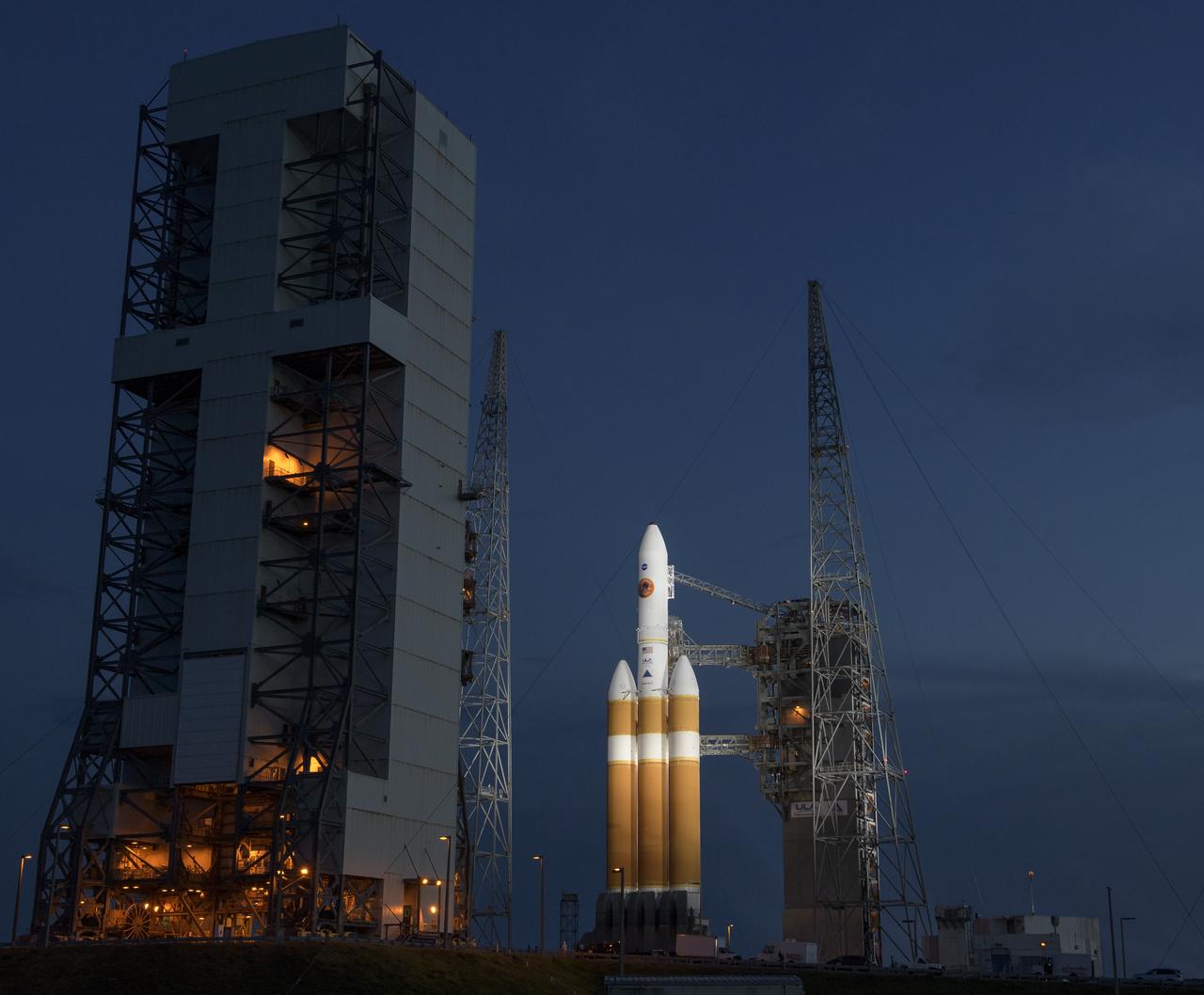
The United Launch Alliance Delta IV Heavy rocket with the Parker Solar Probe onboard is seen shortly after the Mobile Service Tower was rolled back, Friday, Aug. 10, 2018, Launch Complex 37 at Cape Canaveral Air Force Station in Florida. Parker Solar Probe is humanity’s first-ever mission into a part of the Sun’s atmosphere called the corona. Here it will directly explore solar processes that are key to understanding and forecasting space weather events that can impact life on Earth. Photo Credit: (NASA/Bill Ingalls)
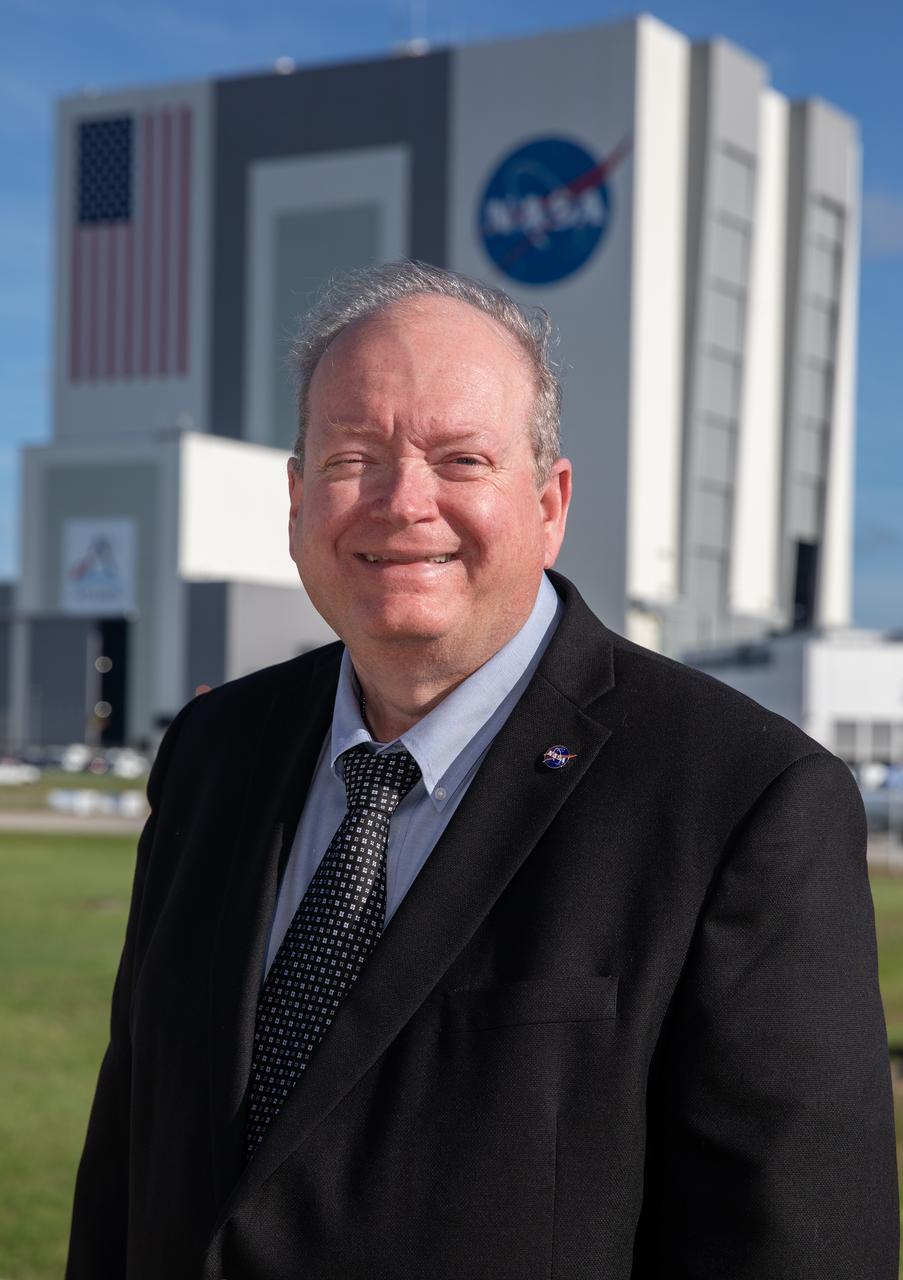
NASA Kennedy Space Center’s Associate Director of Management Burt Summerfield is shown with the Florida spaceport’s Vehicle Assembly Building in the background on June 29, 2022. Summerfield, who began his career at the center in 1982, is responsible for management of Kennedy’s Center Management and Operations (CMO) budget. His duties include executing the center’s strategic analysis, planning, business development, and communications capability that guide key center decisions and relationships.
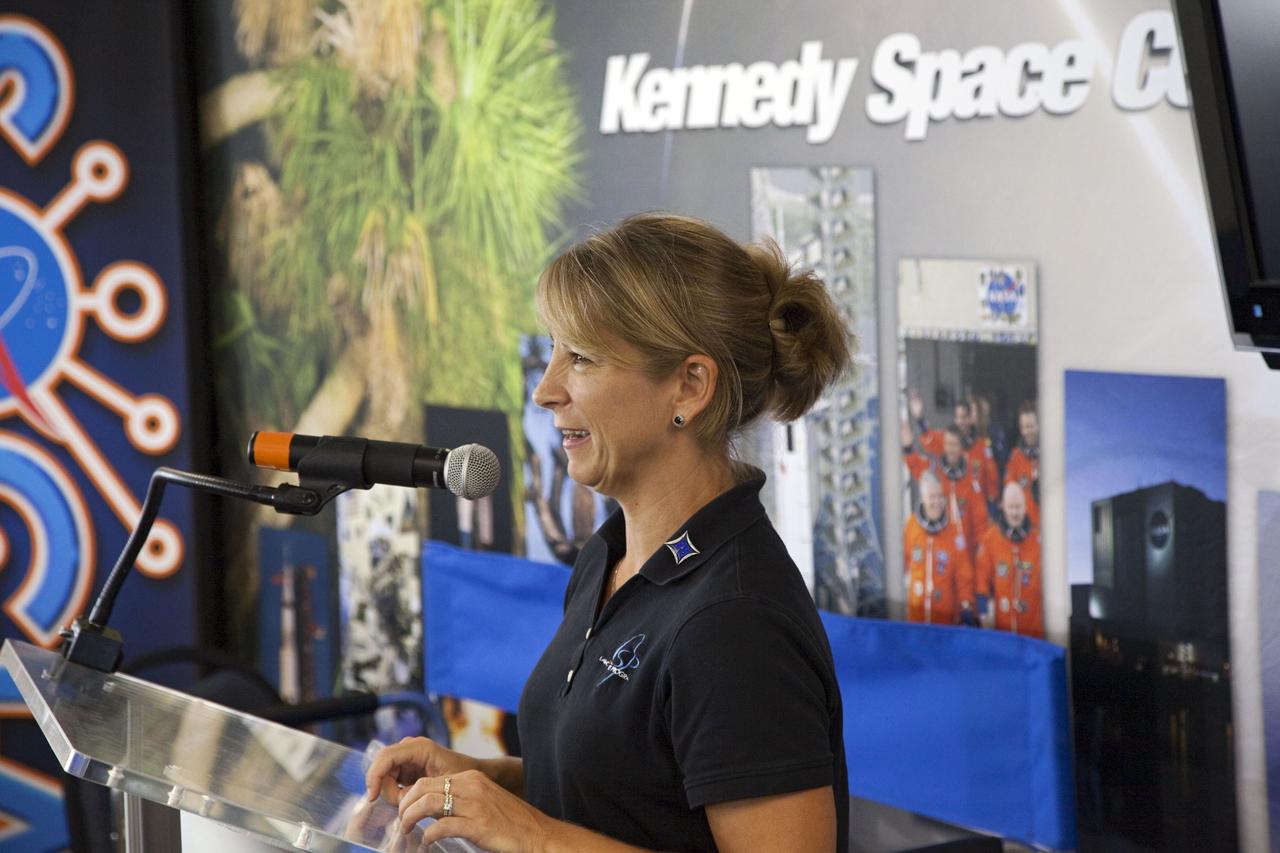
CAPE CANAVERAL, Fla. -- Amanda Mitskevich, program manager for NASA's Launch Services Program, speaks to about 45 of NASA’s social media followers during two days of presentations on the Kennedy's past, present and future. The social media participants gathered at the Florida spaceport on Aug. 2 and 3, 2012 to hear from key former and current leaders who related stories of the space agency's efforts to explore the unknown. It was the first social media event totally run by Kennedy. Photo credit: NASA/ Gianni Woods
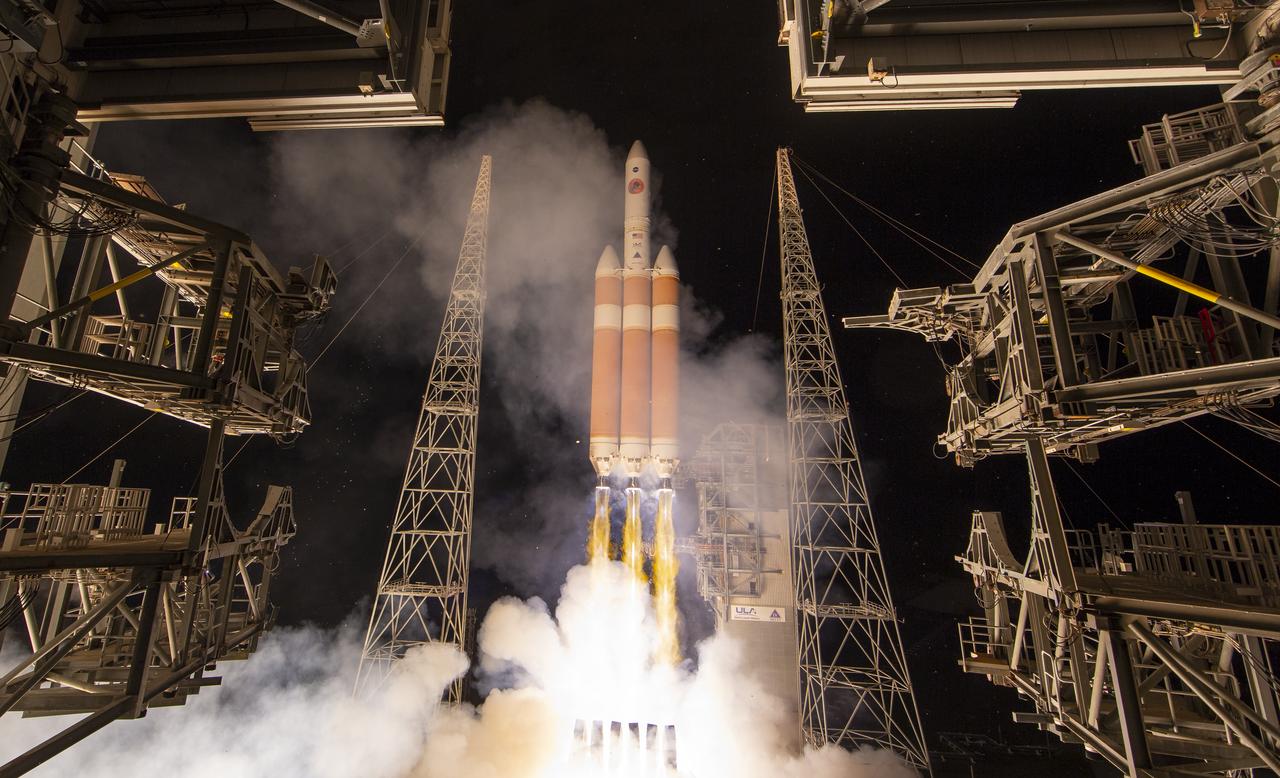
The United Launch Alliance Delta IV Heavy rocket launches NASA's Parker Solar Probe to touch the Sun, Sunday, Aug. 12, 2018 from Launch Complex 37 at Cape Canaveral Air Force Station, Florida. Parker Solar Probe is humanity’s first-ever mission into a part of the Sun’s atmosphere called the corona. Here it will directly explore solar processes that are key to understanding and forecasting space weather events that can impact life on Earth. Photo Credit: (NASA/Bill Ingalls)
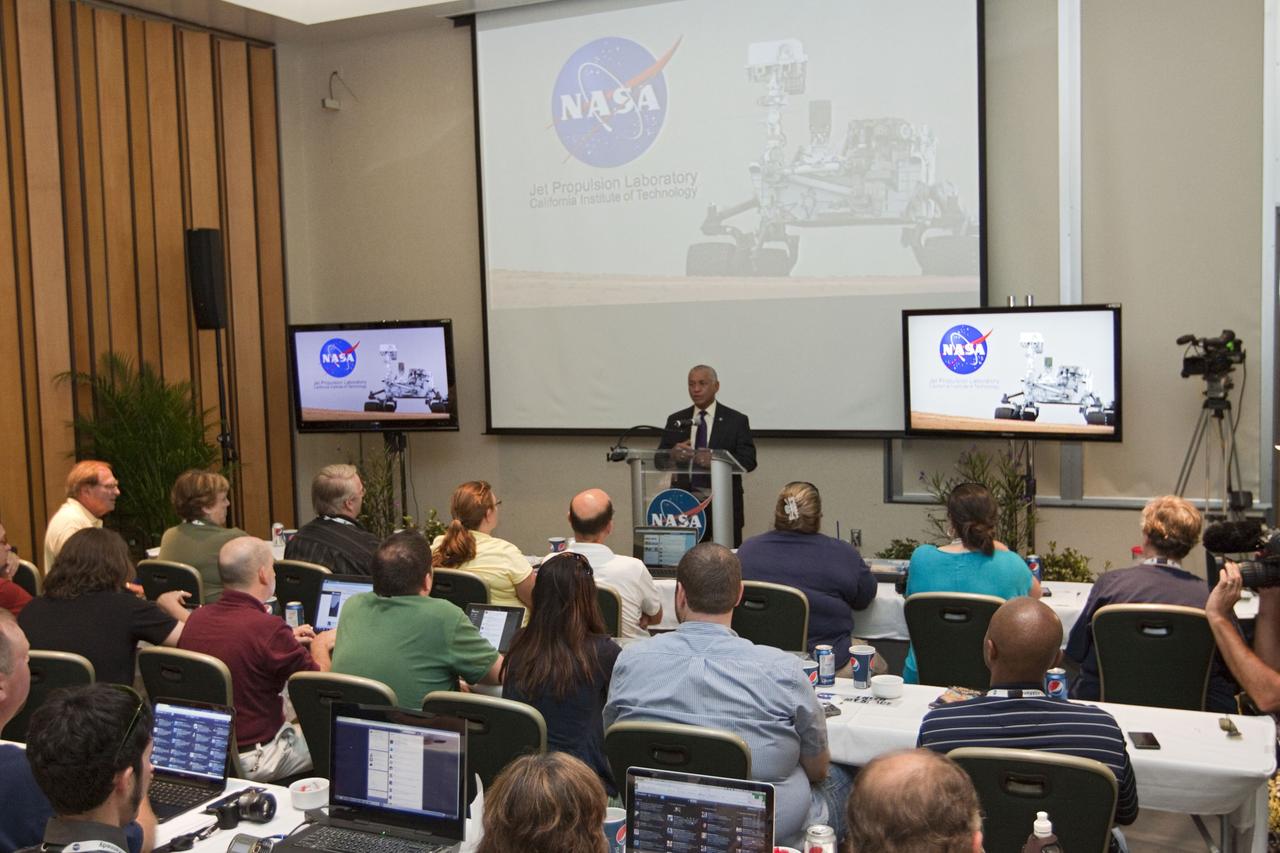
CAPE CANAVERAL, Fla. -- NASA Administrator Charles Bolden speaks to about 45 of NASA’s social media followers during two days of presentations on the Kennedy's past, present and future. The social media participants gathered at the Florida spaceport on Aug. 2 and 3, 2012 to hear from key former and current leaders who related stories of the space agency's efforts to explore the unknown. It was the first social media event totally run by Kennedy. Photo credit: NASA/ Kim Shiflett
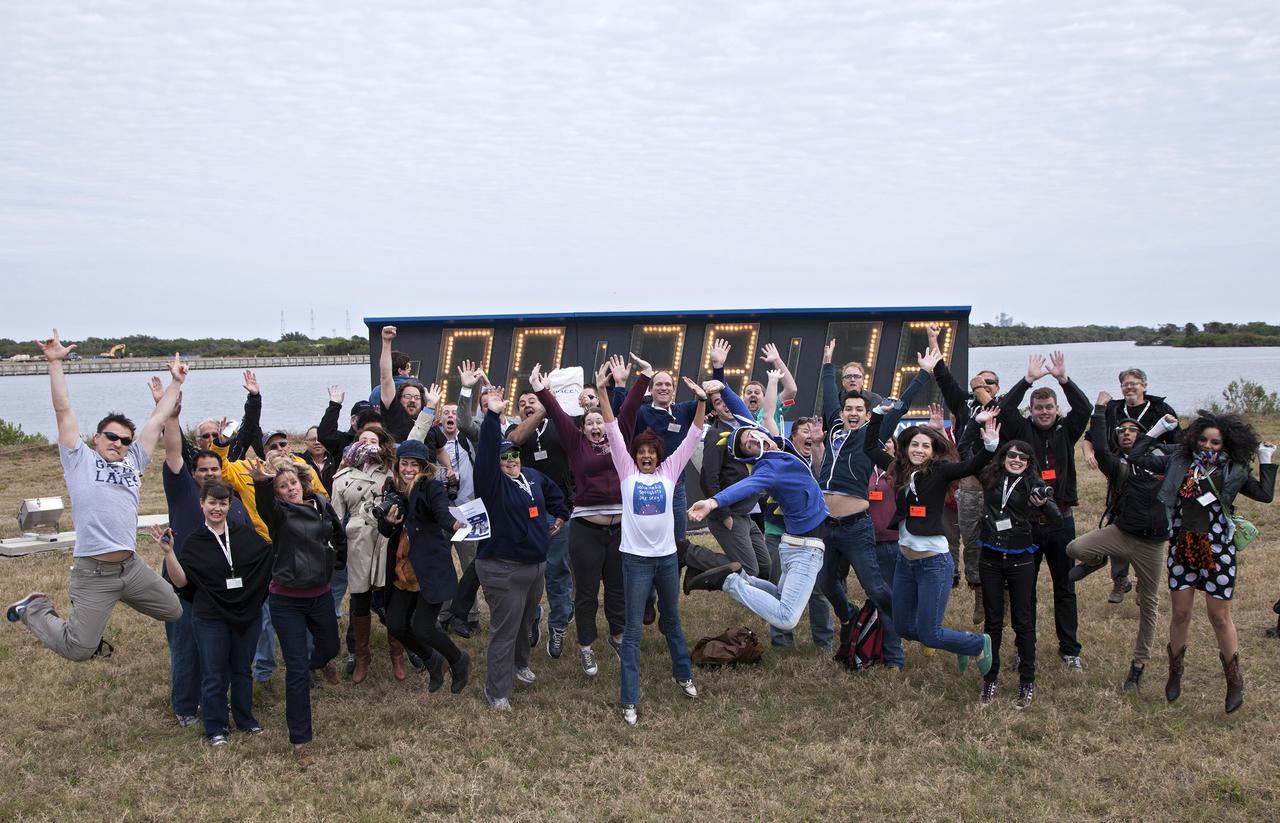
CAPE CANAVERAL, Fla. -- NASA social media followers pose for a group photo during two days of presentations on the launch of SpaceX-2. The social media participants gathered at the Florida spaceport on Feb. 28 and March 1, to hear from key leaders who updated the space agency's current efforts. Photo credit: NASA_Kim Shiflett
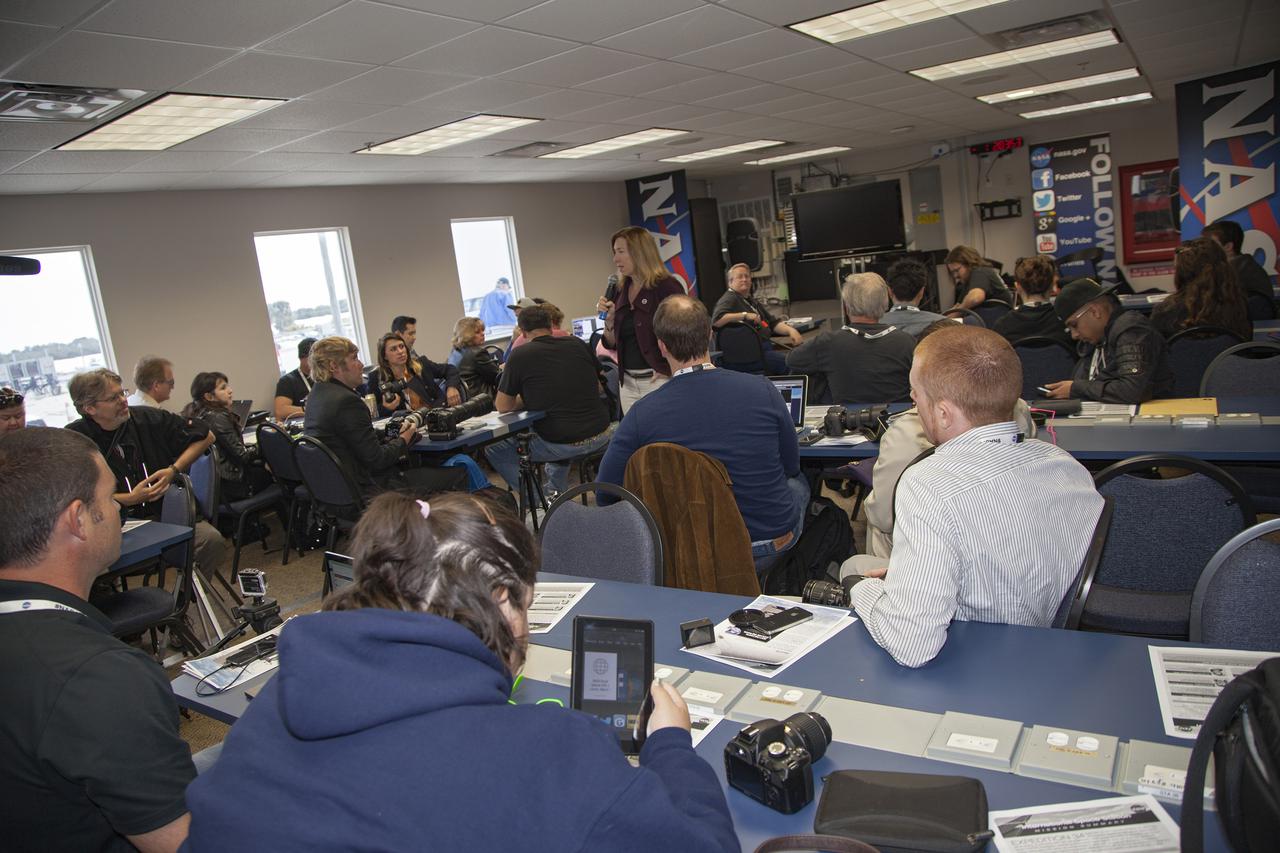
CAPE CANAVERAL, Fla. -- NASA Deputy Administrator Lori Garver speaks to some of the agency's social media followers during two days of presentations on the launch of SpaceX 2. The social media participants gathered at the Florida spaceport on Feb. 28 and March 1, to hear from key leaders who updated the space agency's current efforts. Photo credit: NASA_Lorne Mathre
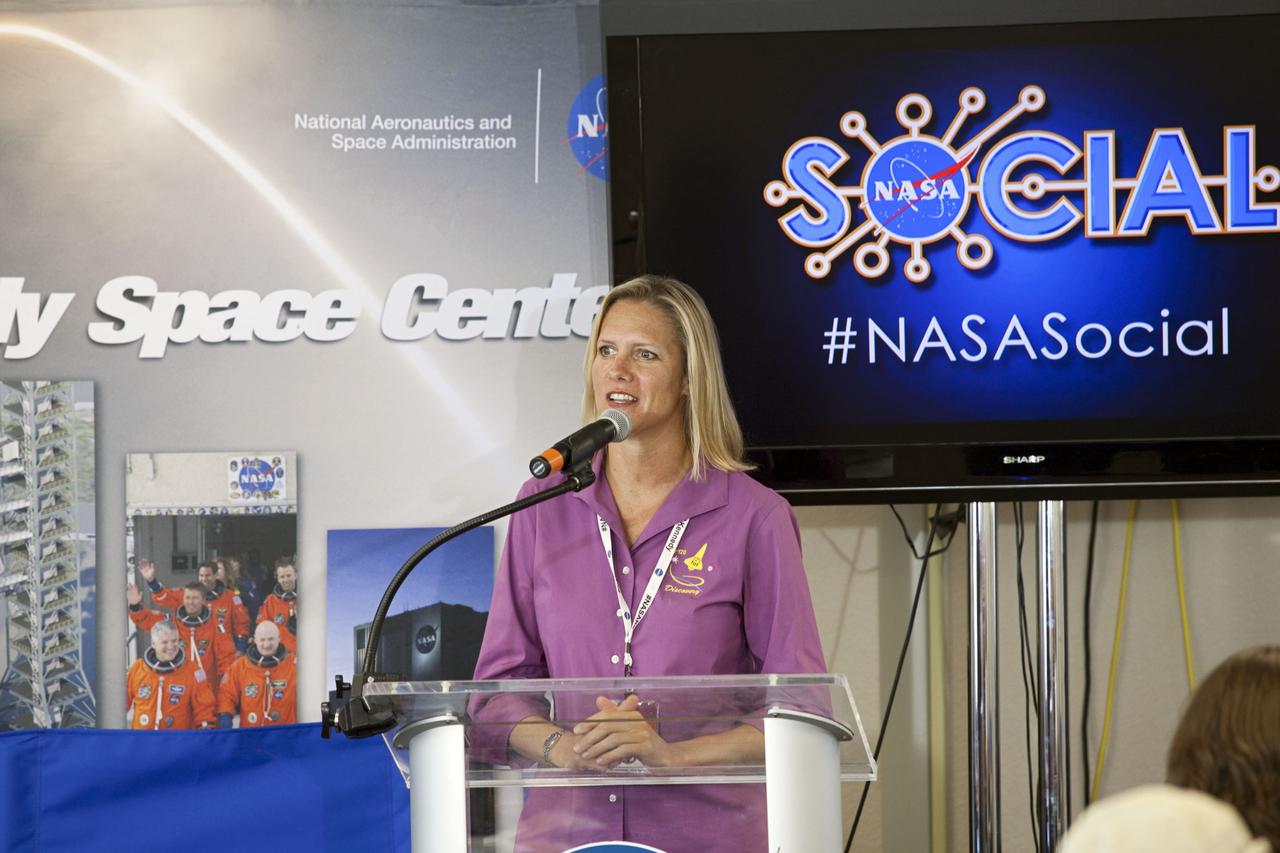
CAPE CANAVERAL, Fla. -- Stephanie Stilson, NASA flow director for Orbiter Transition and Retirement, speaks to about 45 of NASA’s social media followers during two days of presentations on the Kennedy Space Center's past, present and future. The social media participants gathered at the Florida spaceport on Aug. 2 and 3, 2012 to hear from key former and current leaders who related stories of the space agency's efforts to explore the unknown. It was the first social media event totally run by Kennedy. Photo credit: NASA/ Gianni Woods
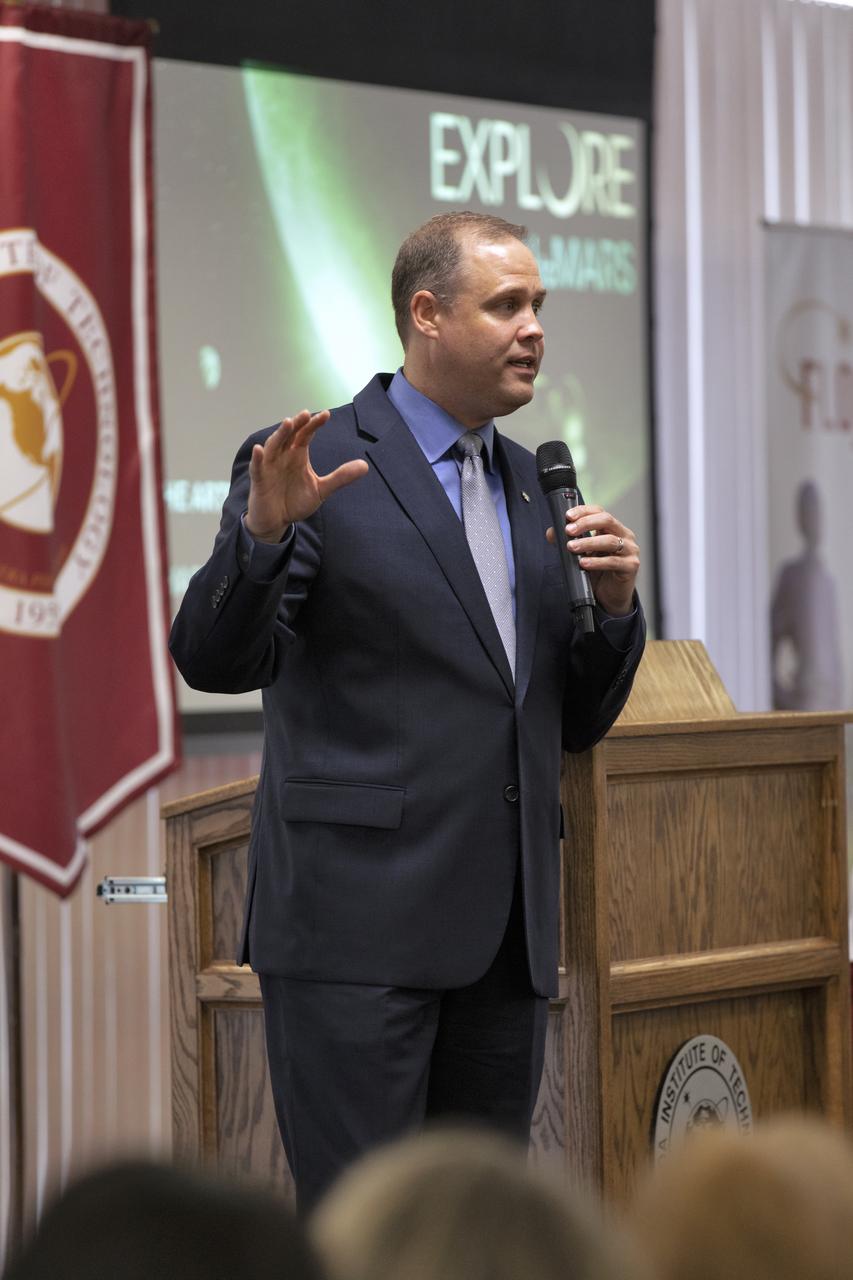
NASA Administrator Jim Bridenstine speaks to students, faculty, engineers and area business leaders at Florida Institute of Technology on Thursday, May 23, 2019. Bridenstine delivered the keynote address at the Melbourne, FL campus during the university’s Space Technology Day. Among the key topics Bridenstine discussed was NASA’s Artemis missions to the Moon, including the lunar Gateway, which will serve as an orbiting outpost for astronauts.
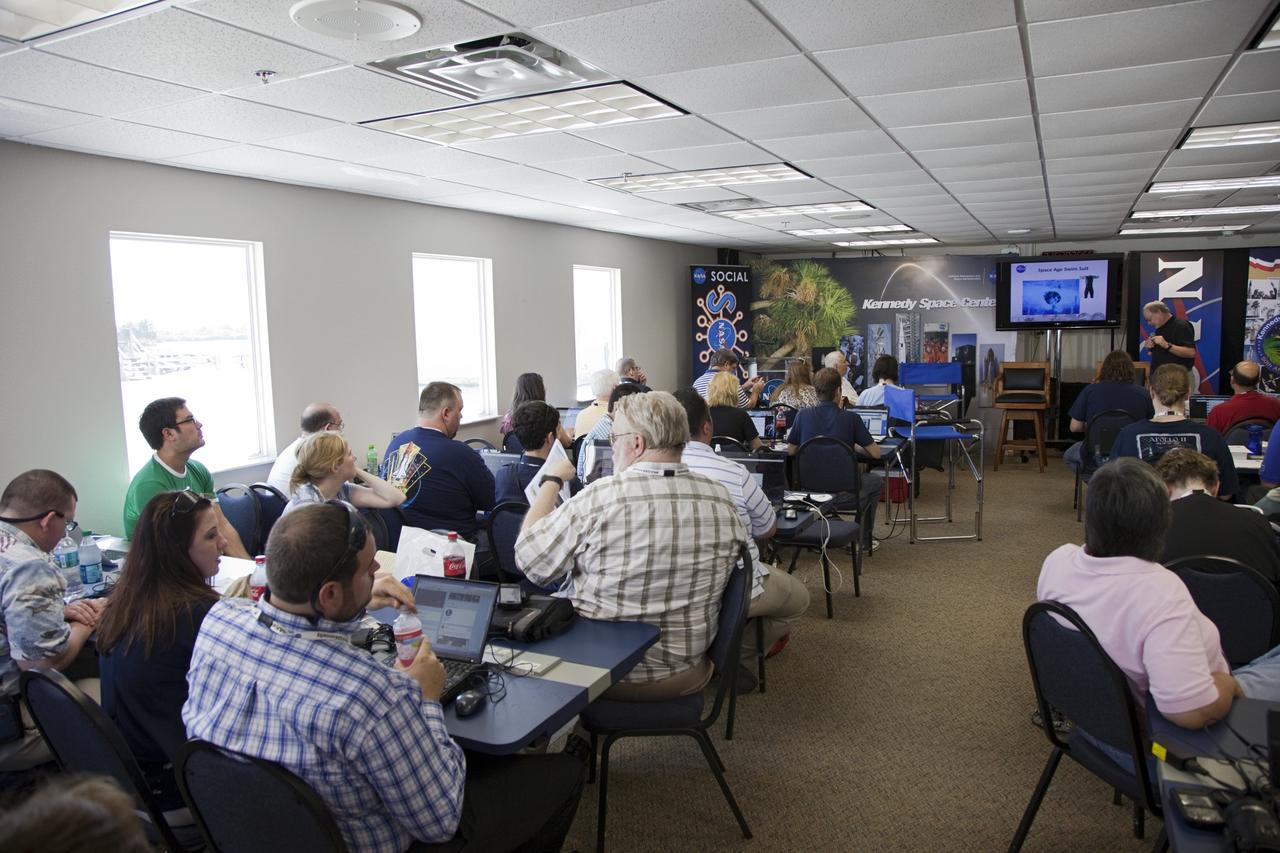
CAPE CANAVERAL, Fla. -- About 45 of NASA’s social media followers listen to a speaker during two days of presentations on the Kennedy Space Center's past, present and future. The social media participants gathered at the Florida spaceport on Aug. 2 and 3, 2012 to hear from key former and current leaders who related stories of the space agency's efforts to explore the unknown. It was the first social media event totally run by Kennedy. Photo credit: NASA/ Gianni Woods
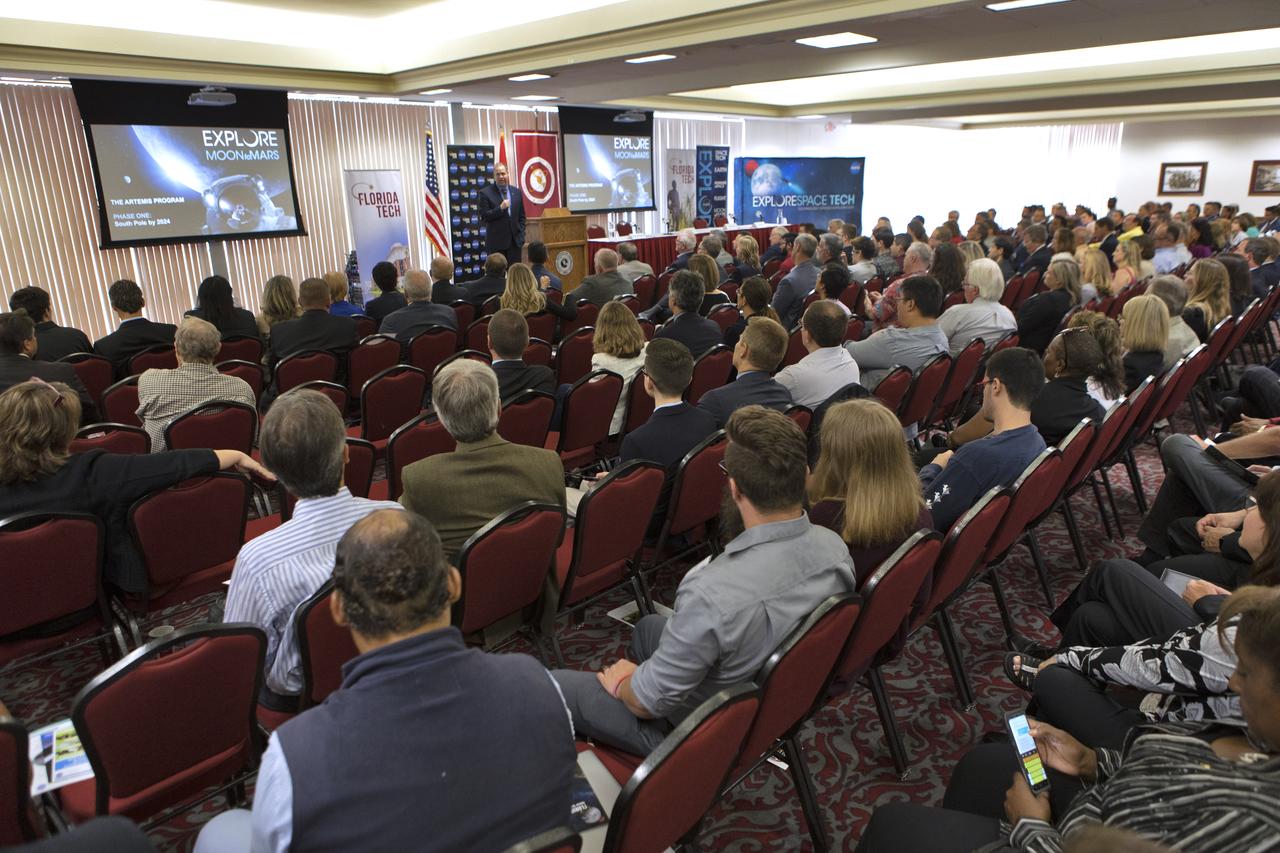
NASA Administrator Jim Bridenstine speaks to students, faculty, engineers and area business leaders at Florida Institute of Technology on Thursday, May 23, 2019. Bridenstine delivered the keynote address at the Melbourne, FL campus during the university’s Space Technology Day. Among the key topics Bridenstine discussed was NASA’s Artemis missions to the Moon, including the lunar Gateway, which will serve as an orbiting outpost for astronauts.
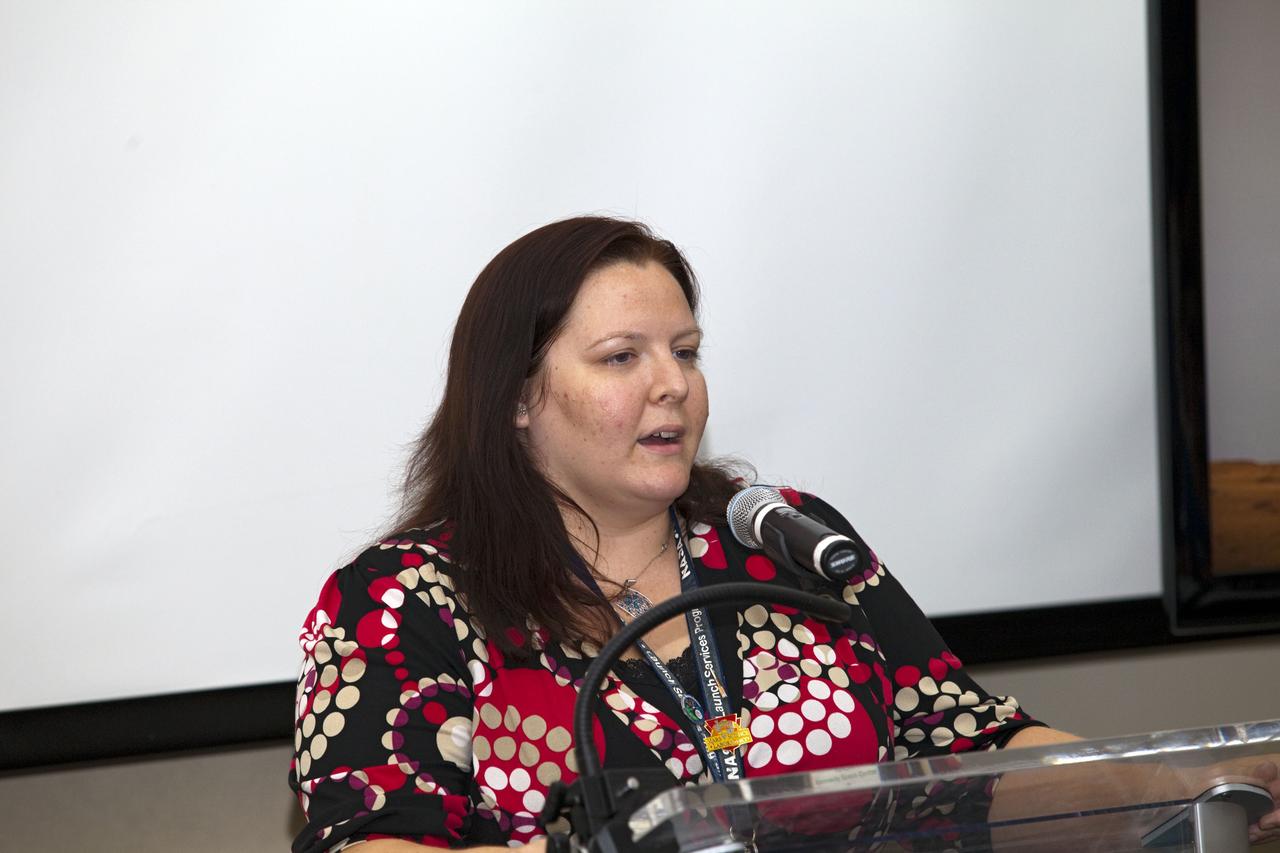
CAPE CANAVERAL, Fla. -- Caley Burke, NASA Flight Design and Flight Controls engineer, speaks to about 45 of NASA’s social media followers for two days of presentations on the Kennedy Space Center's past, present and future. The social media participants gathered at the Florida spaceport on Aug. 2 and 3, 2012 to hear from key former and current leaders who related stories of the space agency's efforts to explore the unknown. It was the first social media event totally run by Kennedy. Photo credit: NASA/ Gianni Woods
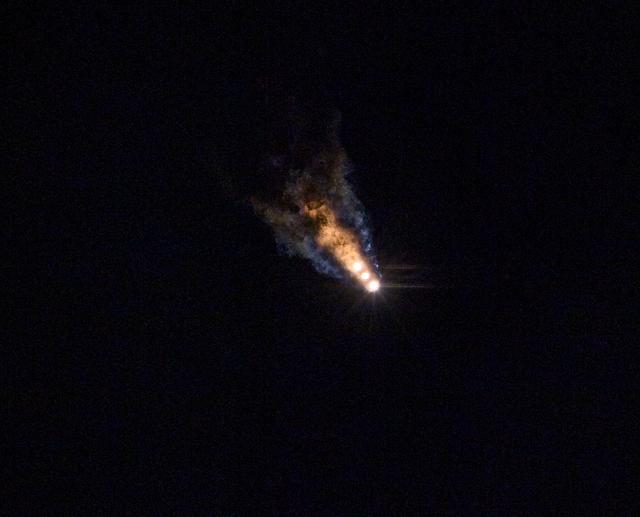
The United Launch Alliance Delta IV Heavy rocket launches NASA's Parker Solar Probe to touch the Sun, Sunday, Aug. 12, 2018 from Launch Complex 37 at Cape Canaveral Air Force Station, Florida. Parker Solar Probe is humanity’s first-ever mission into a part of the Sun’s atmosphere called the corona. Here it will directly explore solar processes that are key to understanding and forecasting space weather events that can impact life on Earth. Photo Credit: (NASA/Bill Ingalls)
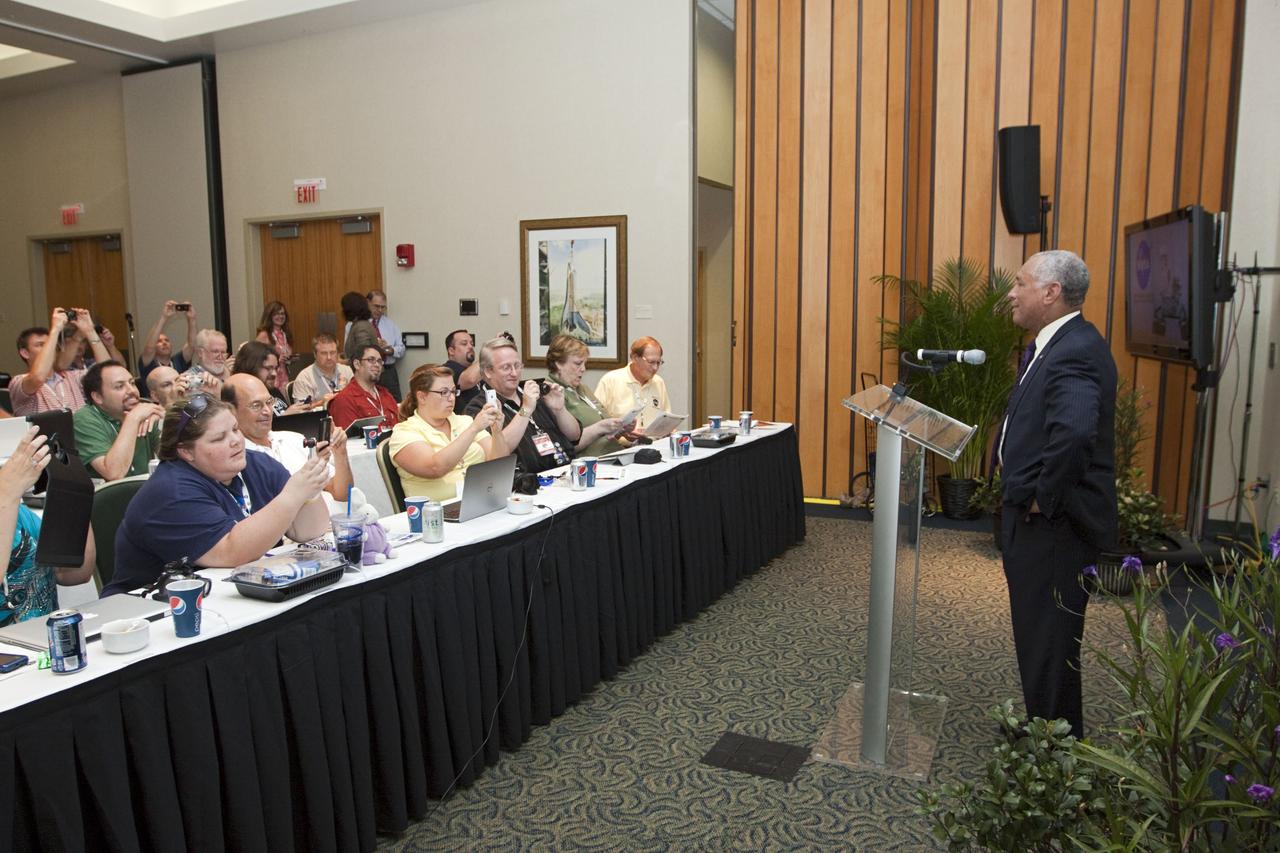
CAPE CANAVERAL, Fla. -- NASA Administrator Charles Bolden speaks to about 45 of NASA’s social media followers during two days of presentations on the Kennedy's past, present and future. The social media participants gathered at the Florida spaceport on Aug. 2 and 3, 2012 to hear from key former and current leaders who related stories of the space agency's efforts to explore the unknown. It was the first social media event totally run by Kennedy. Photo credit: NASA/ Kim Shiflett
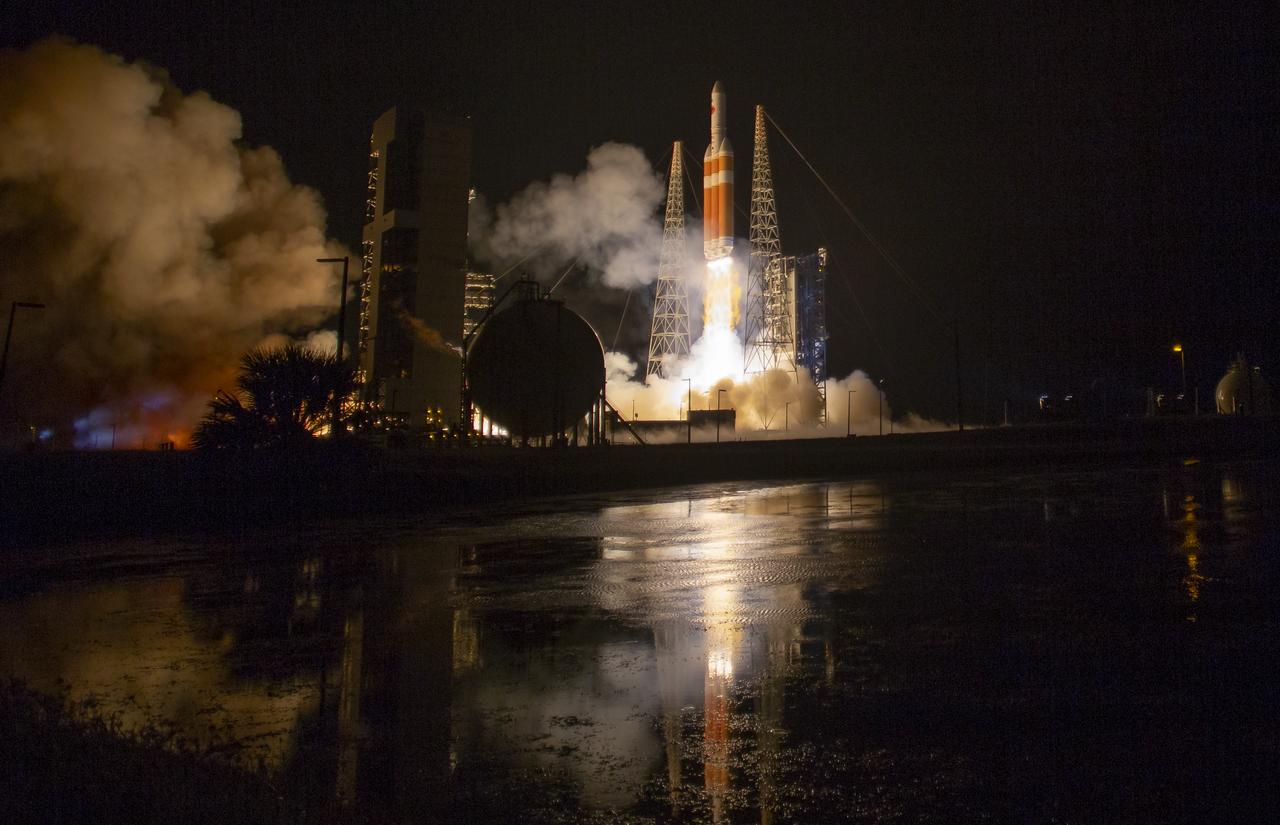
The United Launch Alliance Delta IV Heavy rocket launches NASA's Parker Solar Probe to touch the Sun, Sunday, Aug. 12, 2018 from Launch Complex 37 at Cape Canaveral Air Force Station, Florida. Parker Solar Probe is humanity’s first-ever mission into a part of the Sun’s atmosphere called the corona. Here it will directly explore solar processes that are key to understanding and forecasting space weather events that can impact life on Earth. Photo Credit: (NASA/Bill Ingalls)