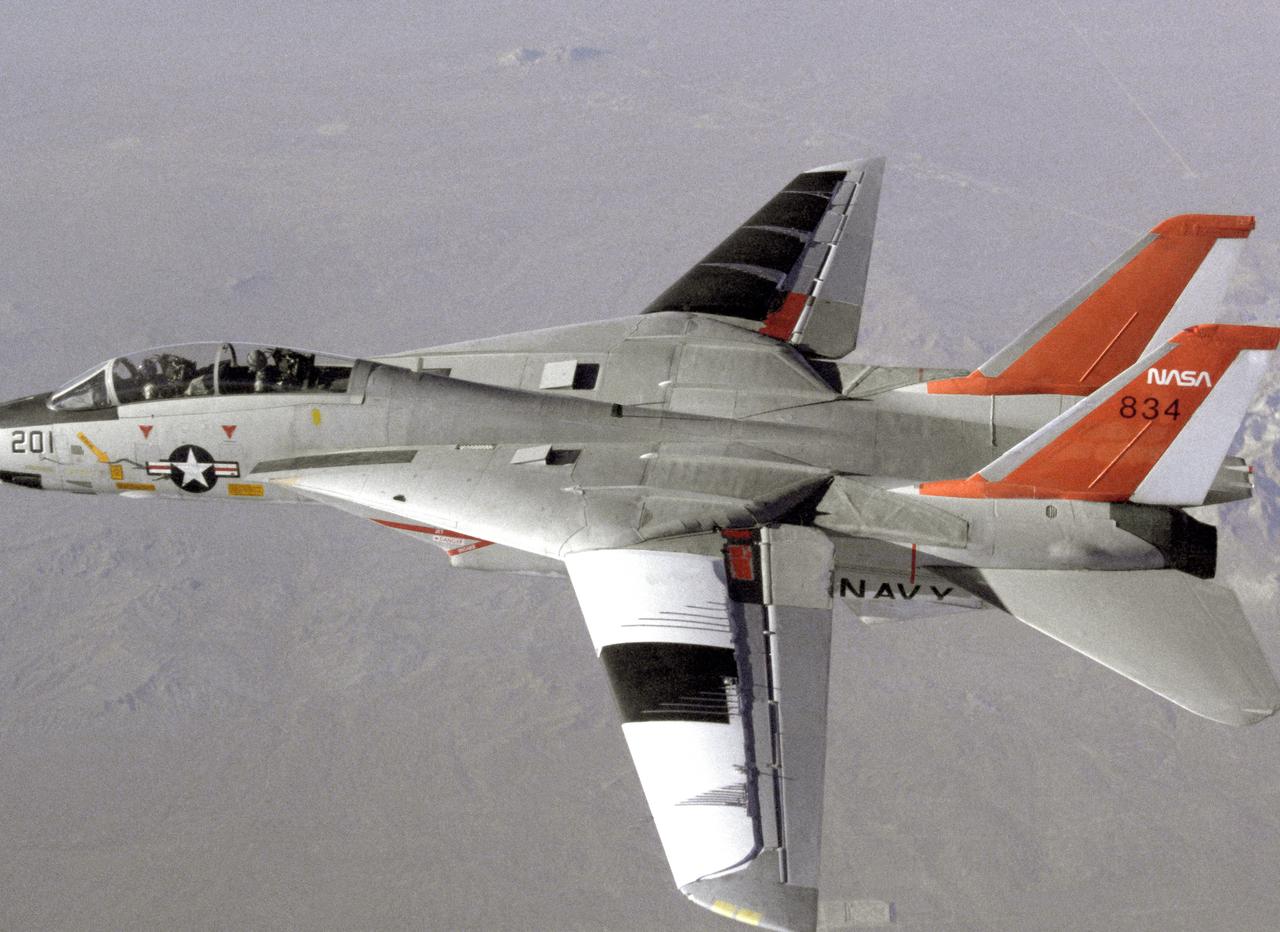
NASA 834, an F-14 Navy Tomcat, seen here in flight, was used at Dryden in 1986 and 1987 in a program known as the Variable-Sweep Transition Flight Experiment (VSTFE). This program explored laminar flow on variable sweep aircraft at high subsonic speeds. An F-14 aircraft was chosen as the carrier vehicle for the VSTFE program primarily because of its variable-sweep capability, Mach and Reynolds number capability, availability, and favorable wing pressure distribution. The variable sweep outer-panels of the F-14 aircraft were modified with natural laminar flow gloves to provide not only smooth surfaces but also airfoils that can produce a wide range of pressure distributions for which transition location can be determined at various flight conditions and sweep angles. Glove I, seen here installed on the upper surface of the left wing, was a "cleanup" or smoothing of the basic F-14 wing, while Glove II was designed to provide specific pressure distributions at Mach 0.7. Laminar flow research continued at Dryden with a research program on the NASA 848 F-16XL, a laminar flow experiment involving a wing-mounted panel with millions of tiny laser cut holes drawing off turbulent boundary layer air with a suction pump.
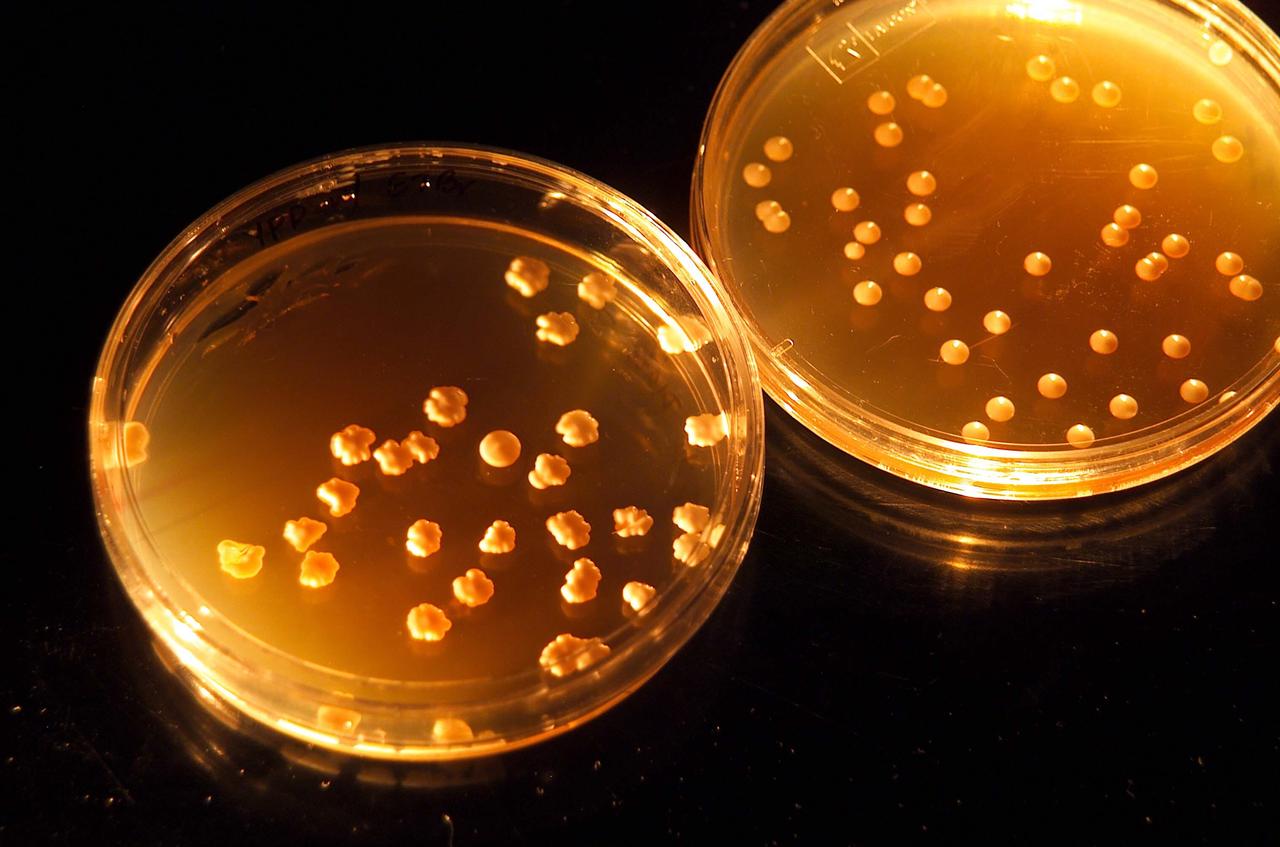
SSBRP Incubator/Small Payloads Development (N-261 Lab 1) with petrie dish speciems, led (red) lights and purple gloved hand
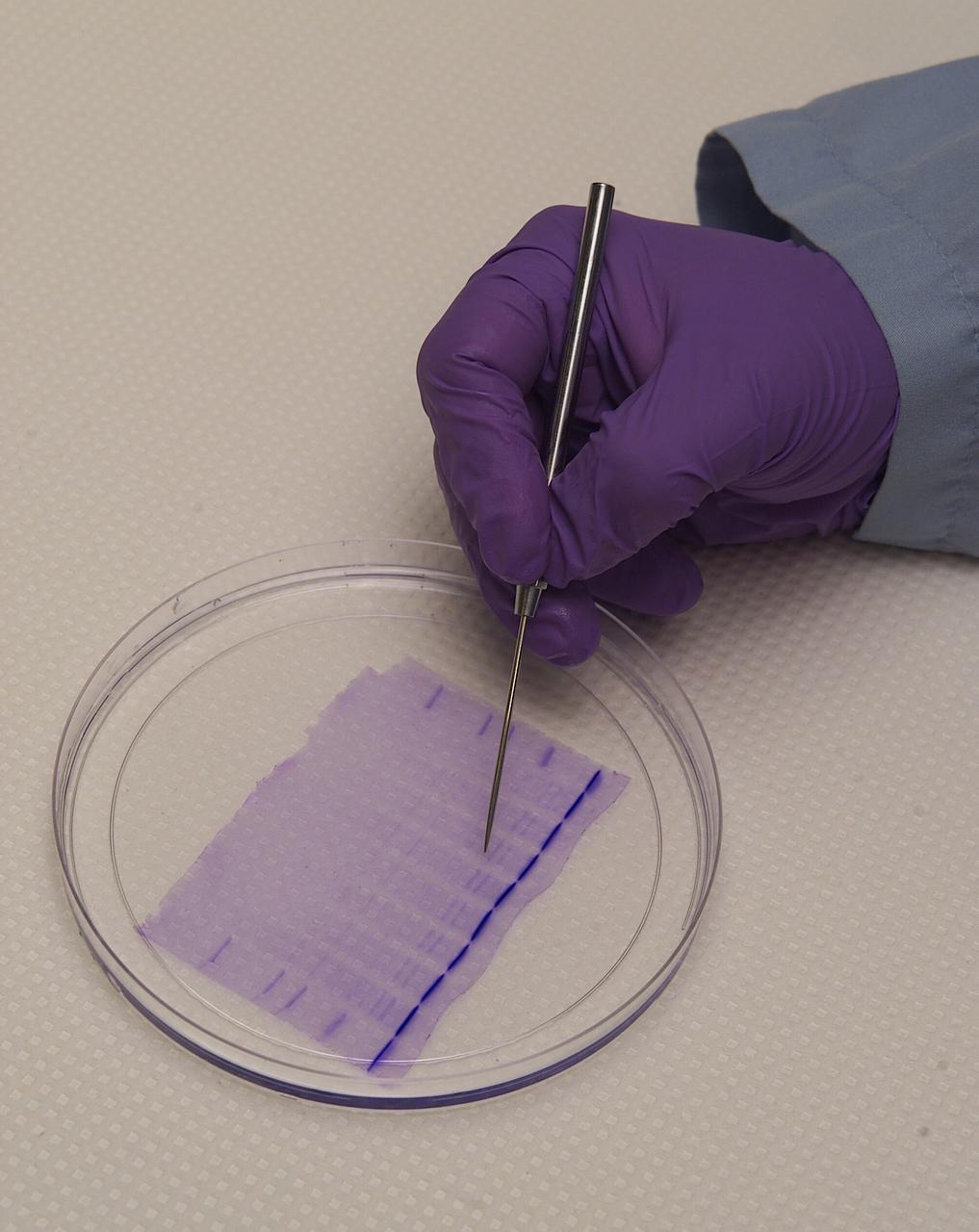
SSBRP Incubator/Small Payloads Development (N-261 Lab 1) with petrie dish speciems, led (red) lights and purple gloved hand
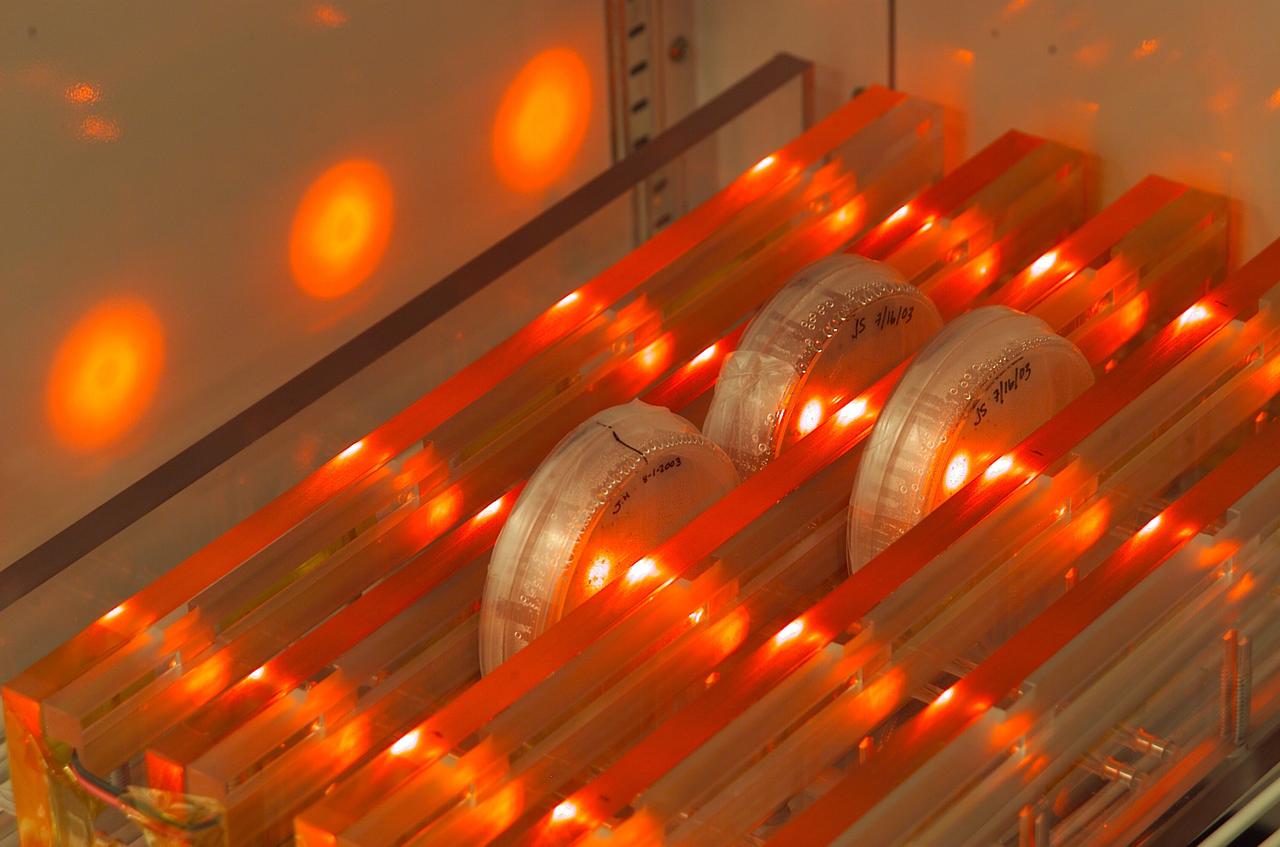
SSBRP Incubator/Small Payloads Development (N-261 Lab 1) with petrie dish speciems, led (red) lights and purple gloved hand
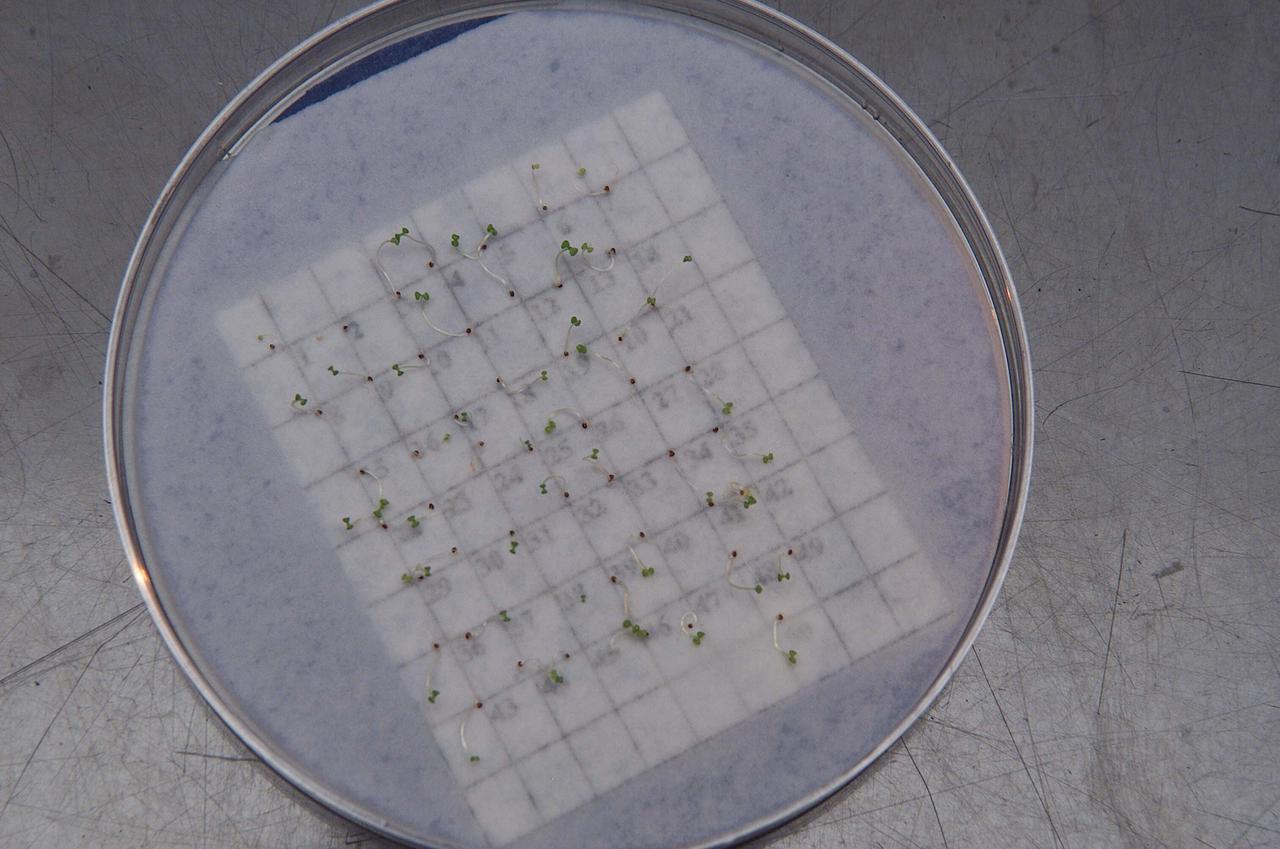
SSBRP Incubator/Small Payloads Development (N-261 Lab 1) with petrie dish speciems, led (red) lights and purple gloved hand
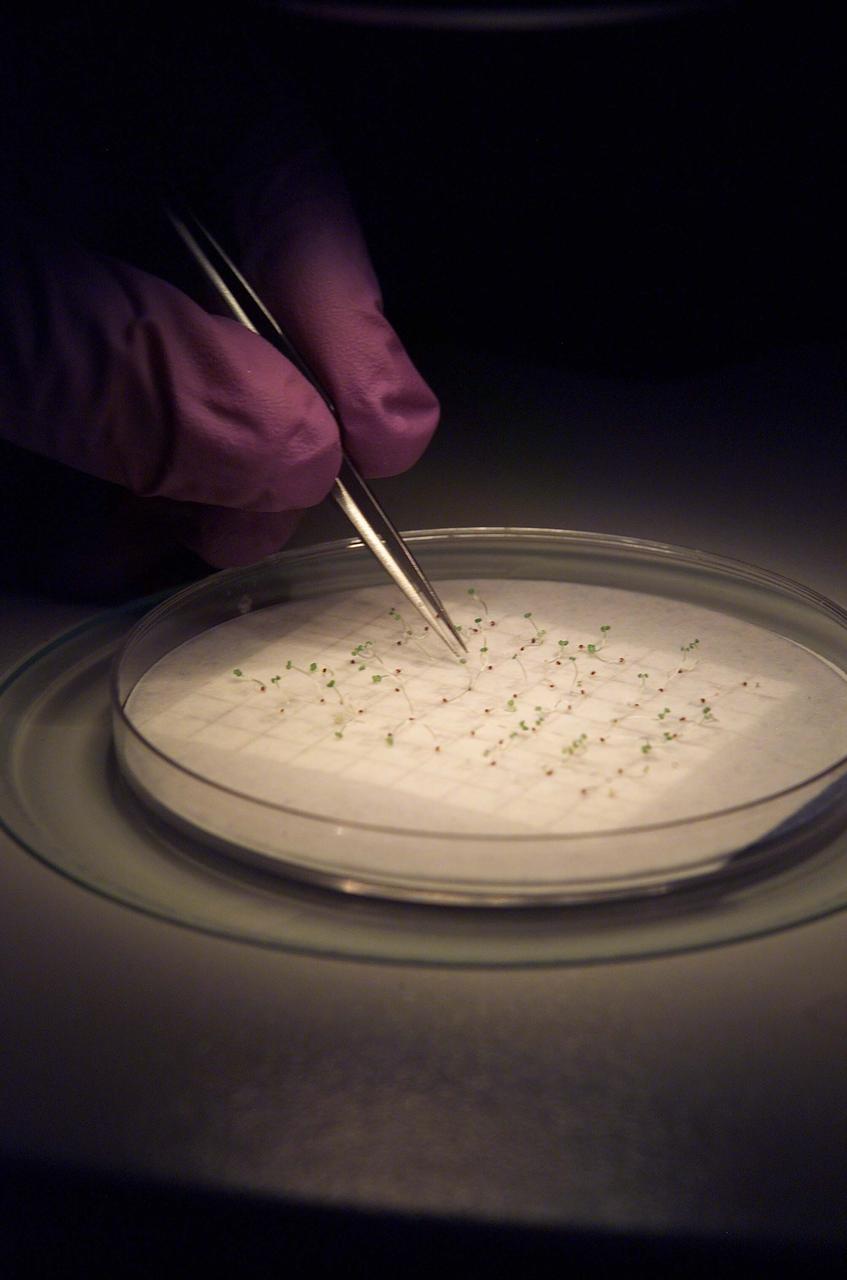
SSBRP Incubator/Small Payloads Development (N-261 Lab 1) with petrie dish speciems, led (red) lights and purple gloved hand
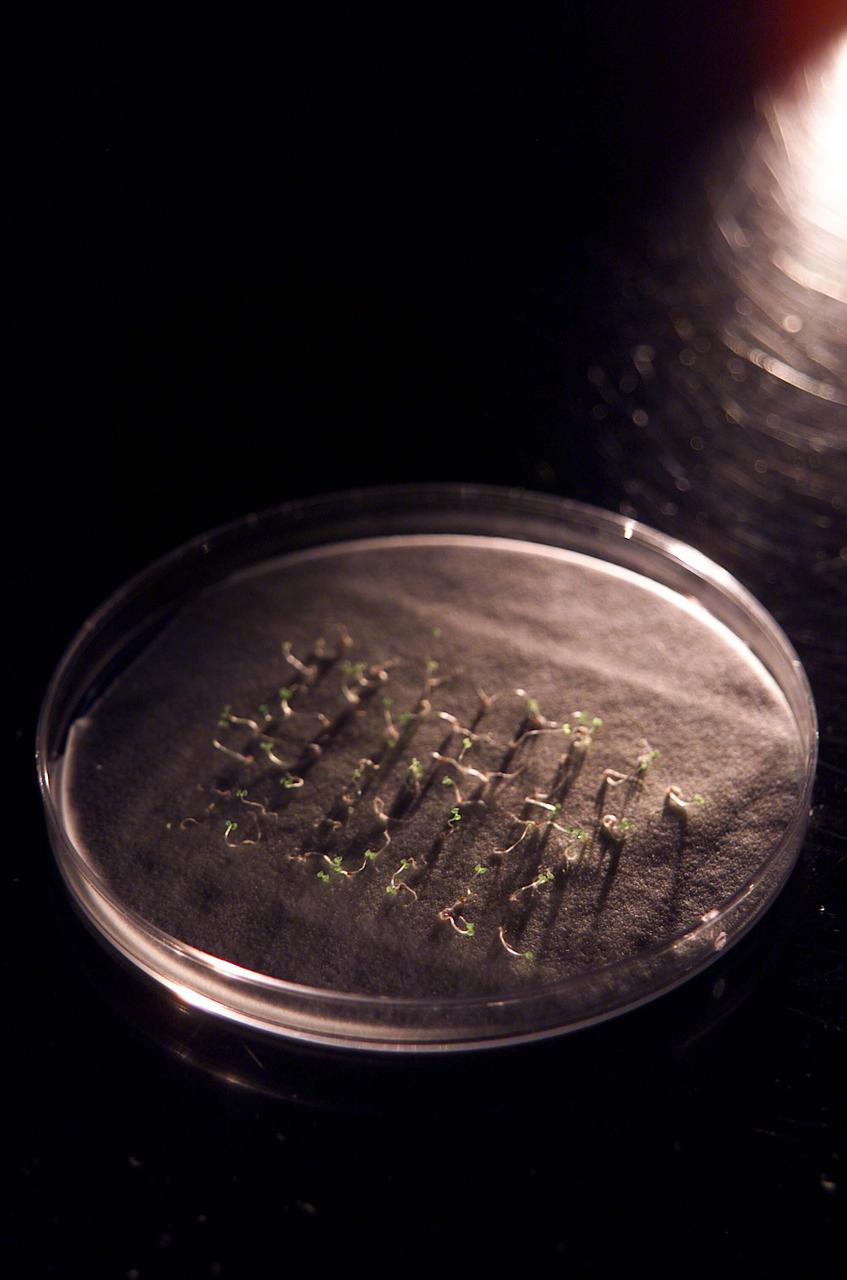
SSBRP Incubator/Small Payloads Development (N-261 Lab 1) with petrie dish speciems, led (red) lights and purple gloved hand
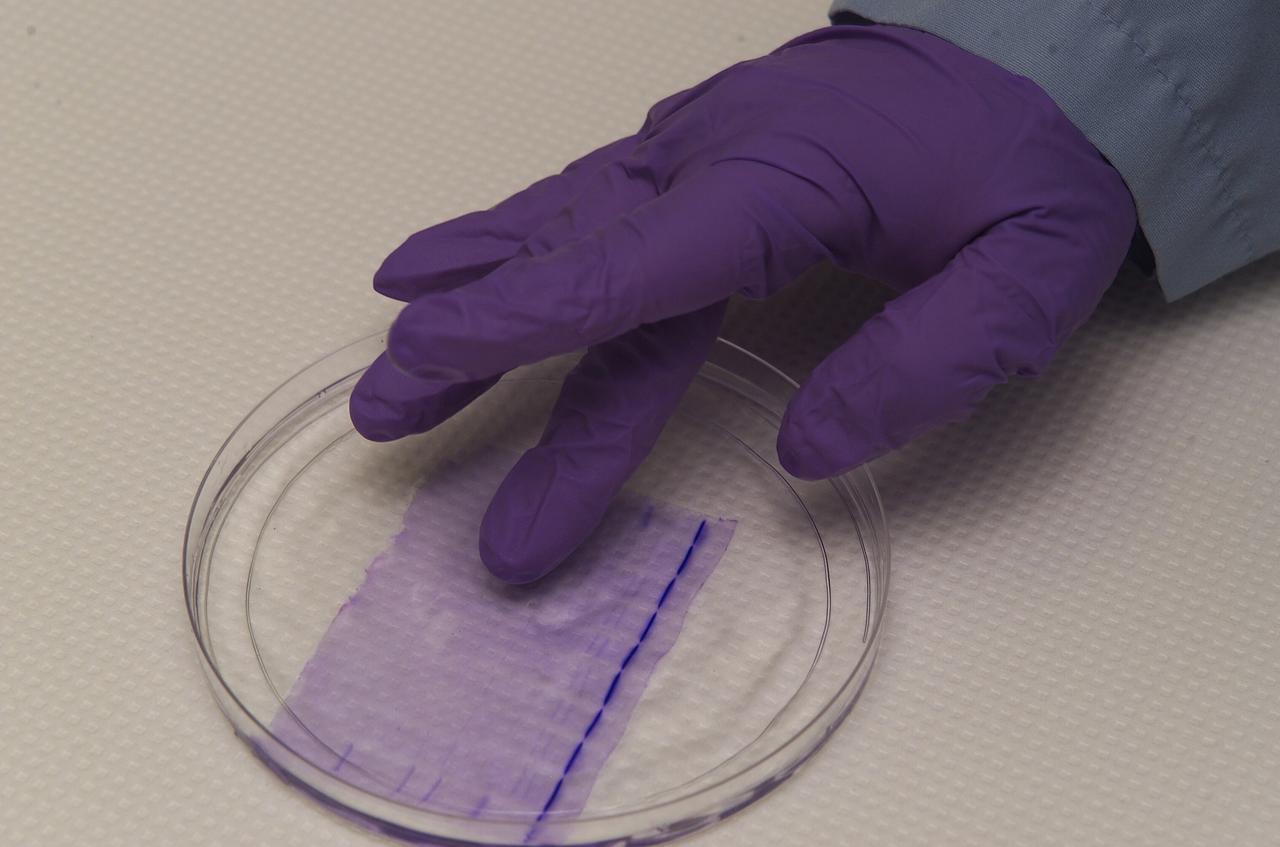
SSBRP Incubator/Small Payloads Development (N-261 Lab 1) with petrie dish speciems, led (red) lights and purple gloved hand
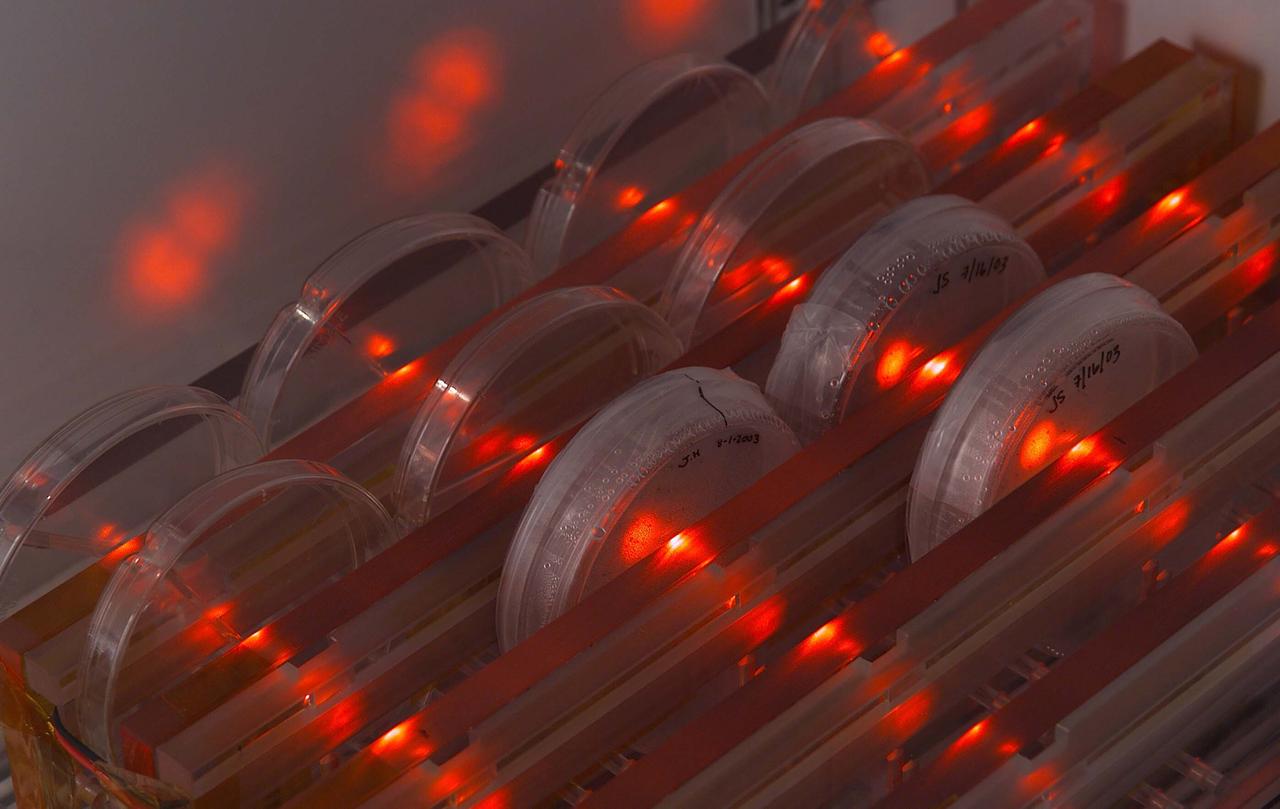
SSBRP Incubator/Small Payloads Development (N-261 Lab 1) with petrie dish speciems, led (red) lights and purple gloved hand

SSBRP Incubator/Small Payloads Development (N-261 Lab 1) with petrie dish speciems, led (red) lights and purple gloved hand
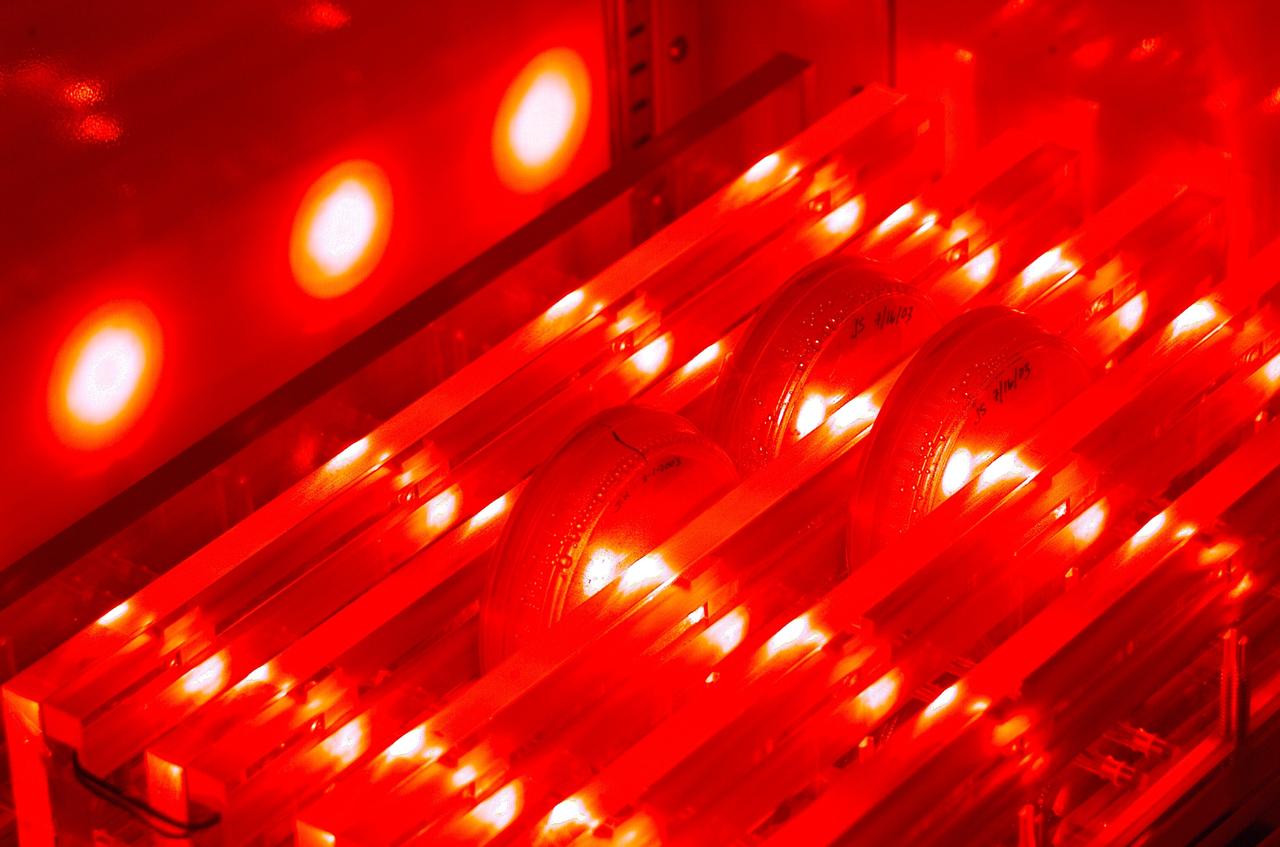
SSBRP Incubator/Small Payloads Development (N-261 Lab 1) with petrie dish speciems, led (red) lights and purple gloved hand
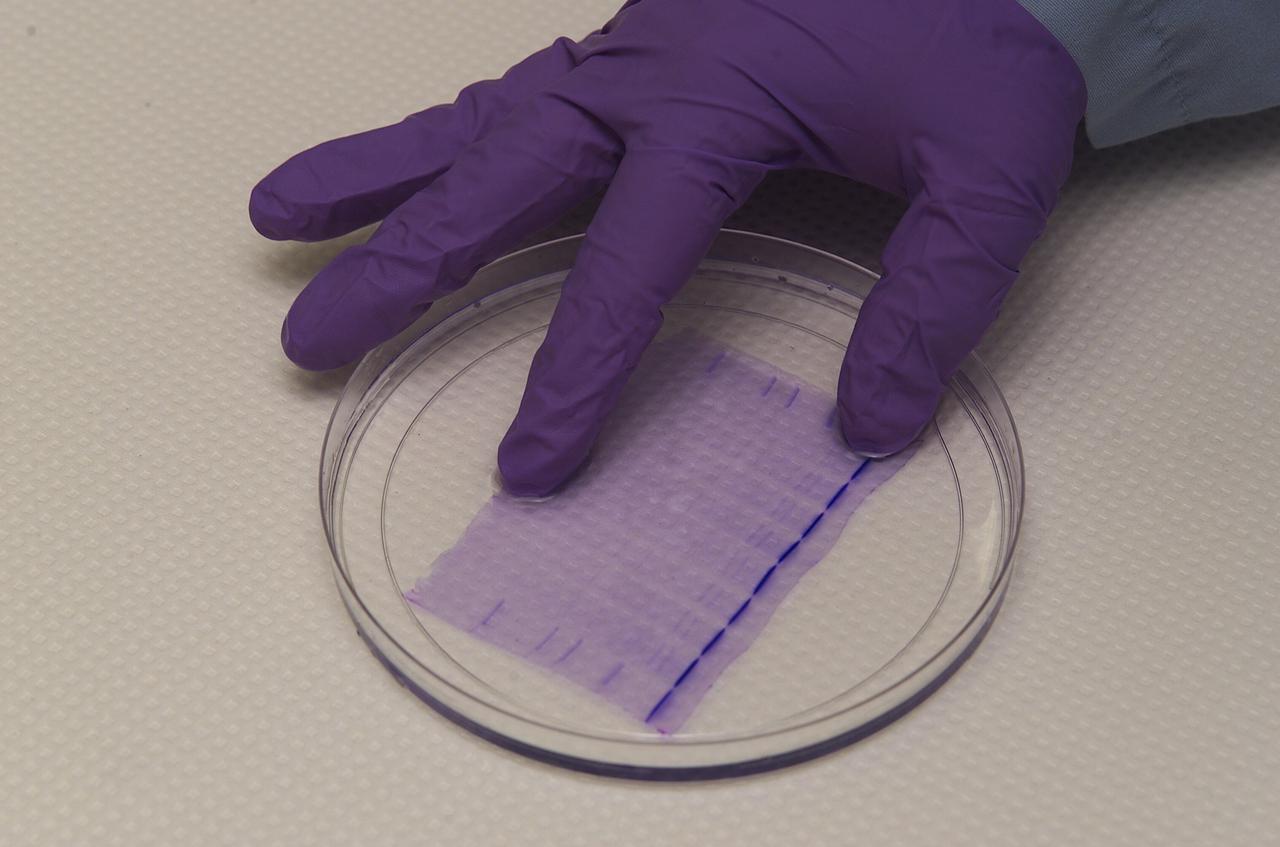
SSBRP Incubator/Small Payloads Development (N-261 Lab 1) with petrie dish speciems, led (red) lights and purple gloved hand
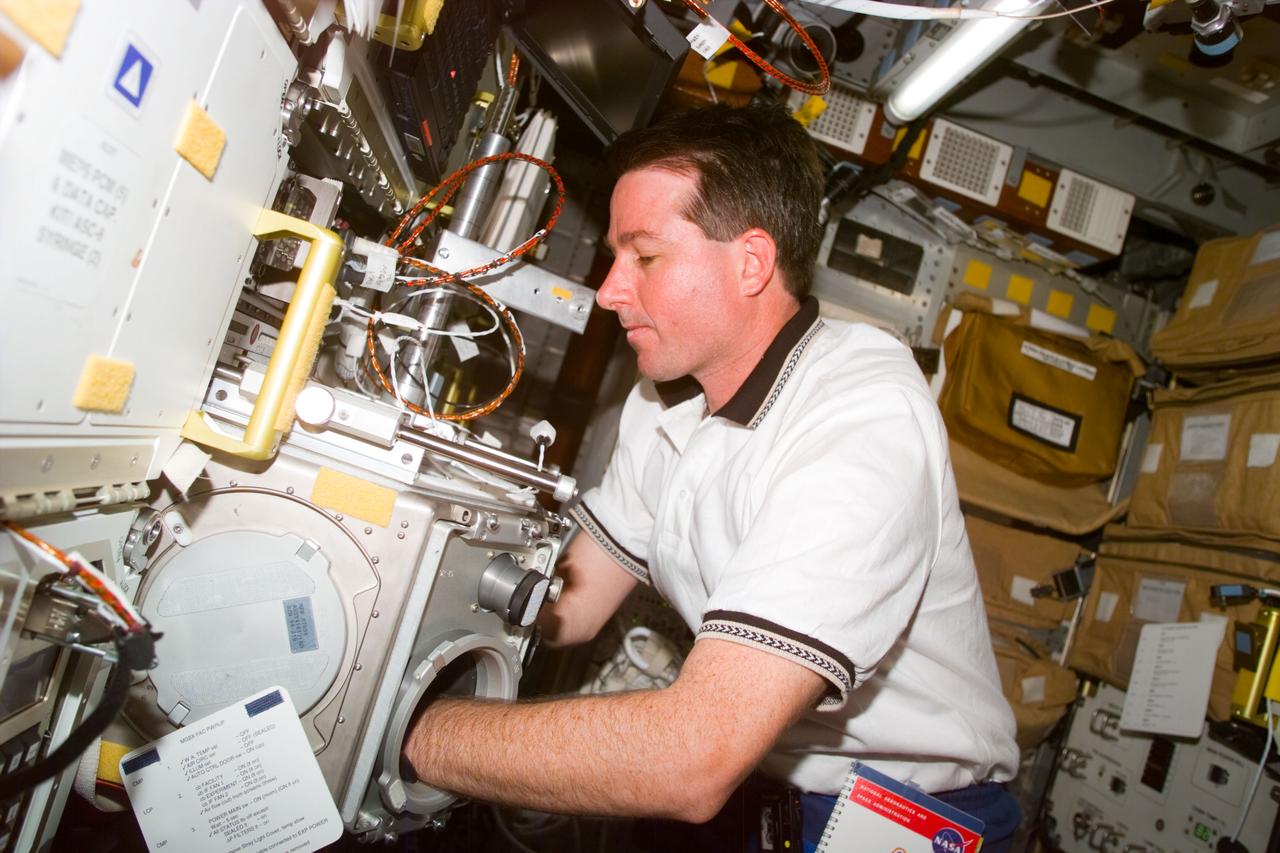
STS095-E-5163 (1 Nov. 1998) --- Astronaut Stephen K. Robinson, mission specialist, works with an experiment in the glove box located in the Spacehab facility onboard Discovery. The photo was taken with an electronic still camera (ESC) at 01:53:47 GMT, Nov. 1.
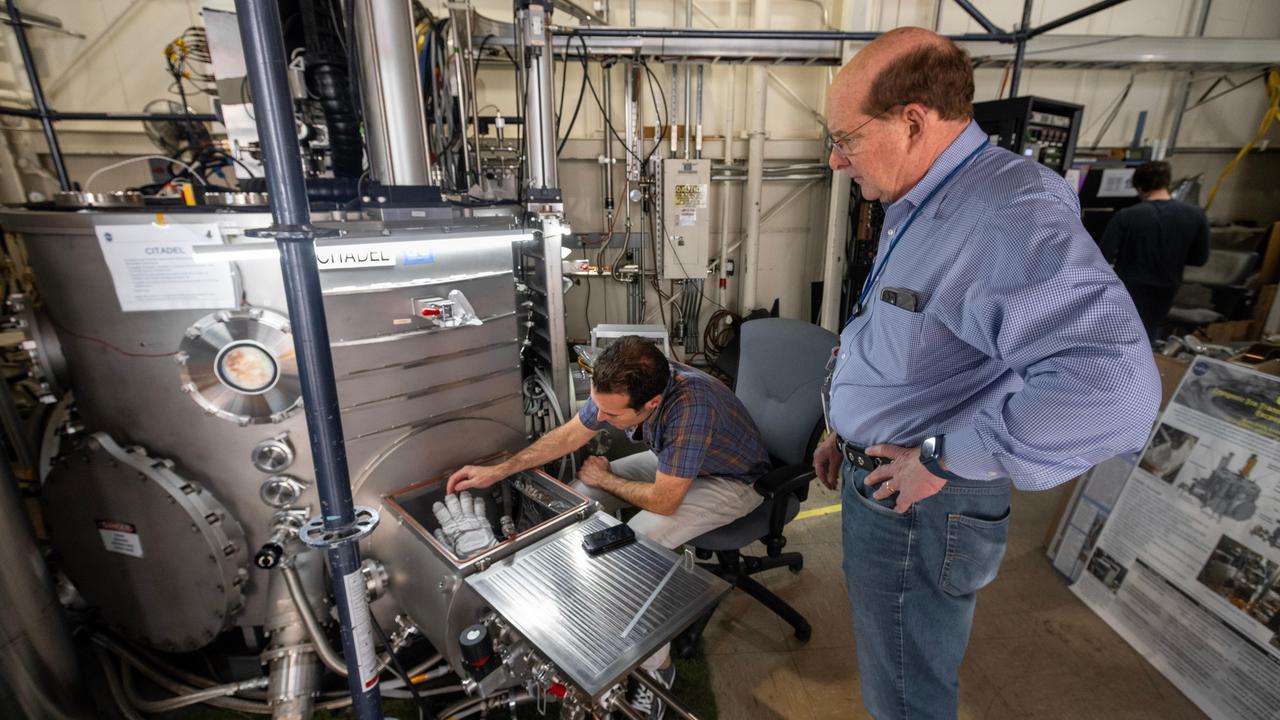
Spacesuit engineer Shane McFarland, left, of the Advanced Suit Team at NASA's Johnson Space Center prepares an astronaut glove for thermal vacuum testing inside a chamber at the agency's Jet Propulsion Laboratory in Southern California on Nov. 1, 2023. Tim Brady of the NASA Engineering and Safety Center (NESC), which spearheaded the glove testing campaign, looks on as McFarland positions the glove in a load lock – one of four small drawer-like chambers through which test materials are inserted into the larger main chamber of a facility called CITADEL (Cryogenic Ice Testing, Acquisition Development, and Excavation Laboratory). The glove was tested at vacuum and temperatures as low as minus 352 degrees Fahrenheit (minus 213 degrees Celsius) – temperatures as frigid as those Artemis III astronauts could experience on the Moon's South Pole. Built to prepare potential future robotic spacecraft for the frosty, low-pressure conditions on ocean worlds like Jupiter's frozen moon Europa, CITADEL has also proven key to evaluating how astronaut gloves and boots hold up in extraordinary cold. The NASA Engineering and Safety Center spearheaded a glove testing campaign in CITADEL from October 2023 to March 2024. Part of a spacesuit design called the Extravehicular Mobility Unit, the gloves tested in the chamber are the sixth version of a glove NASA began using in the 1980s. The testing in CITADEL showed that the legacy glove would not meet thermal requirements in the more challenging lunar South Pole environment. In addition to spotting vulnerabilities with existing suits, the CITADEL experiments will help NASA develop this unique test capability and prepare criteria for standardized, repeatable, and inexpensive test methods for the next-generation lunar suit being built by Axiom Space. https://photojournal.jpl.nasa.gov/catalog/PIA26591
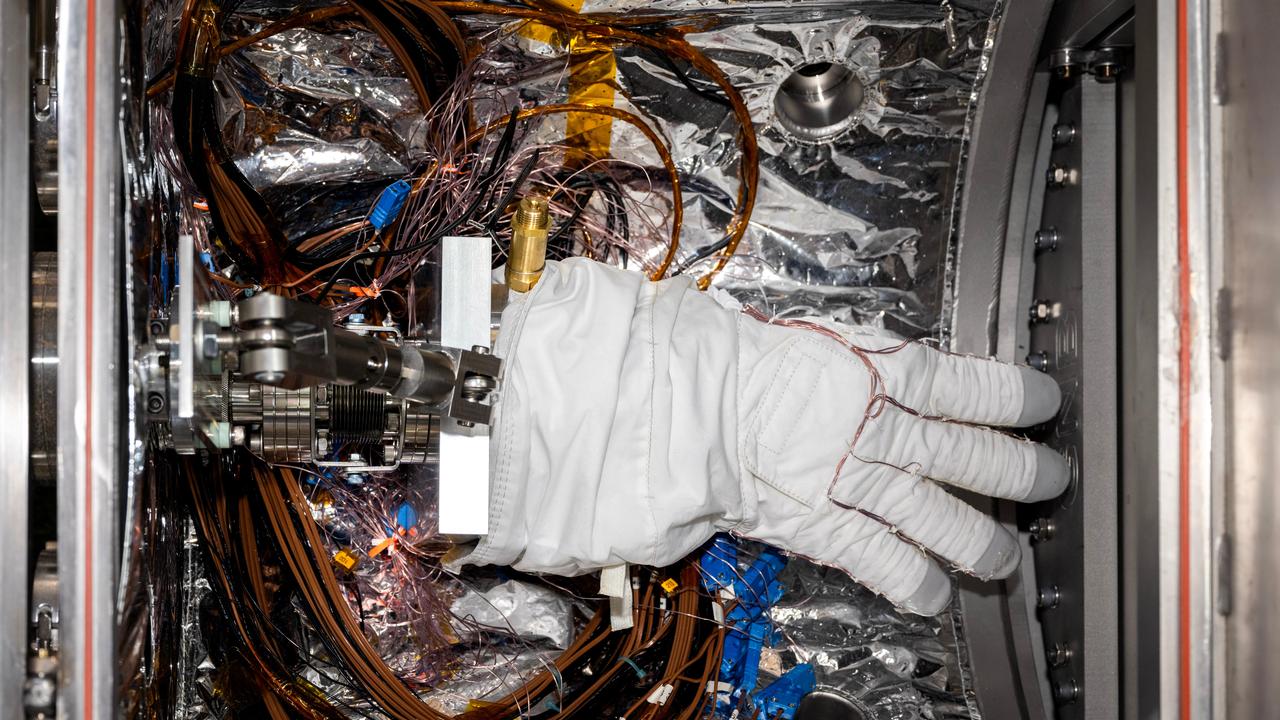
An astronaut glove designed for use during spacewalks on the International Space Station is prepared for thermal vacuum testing inside a chamber at NASA's Jet Propulsion Laboratory in Southern California on Nov. 1, 2023. The glove lies in a load lock, one of four small drawer-like chambers through which test materials are inserted into the larger main chamber of a facility called CITADEL (Cryogenic Ice Testing, Acquisition Development, and Excavation Laboratory). The glove was tested at vacuum and temperatures as low as minus 352 degrees Fahrenheit (minus 213 degrees Celsius) – temperatures as frigid as those Artemis III astronauts could experience on the Moon's South Pole. Built to prepare potential future robotic spacecraft for the frosty, low-pressure conditions on ocean worlds like Jupiter's frozen moon Europa, CITADEL has also proven key to evaluating how astronaut gloves and boots hold up in extraordinary cold. The NASA Engineering and Safety Center spearheaded a glove testing campaign in CITADEL from October 2023 to March 2024. Part of a spacesuit design called the Extravehicular Mobility Unit, the gloves tested in the chamber are the sixth version of a glove NASA began using in the 1980s. The testing in CITADEL showed that the legacy glove would not meet thermal requirements in the more challenging lunar South Pole environment. In addition to spotting vulnerabilities with existing suits, the CITADEL experiments will help NASA develop this unique test capability and prepare criteria for standardized, repeatable, and inexpensive test methods for the next-generation lunar suit being built by Axiom Space. https://photojournal.jpl.nasa.gov/catalog/PIA26430
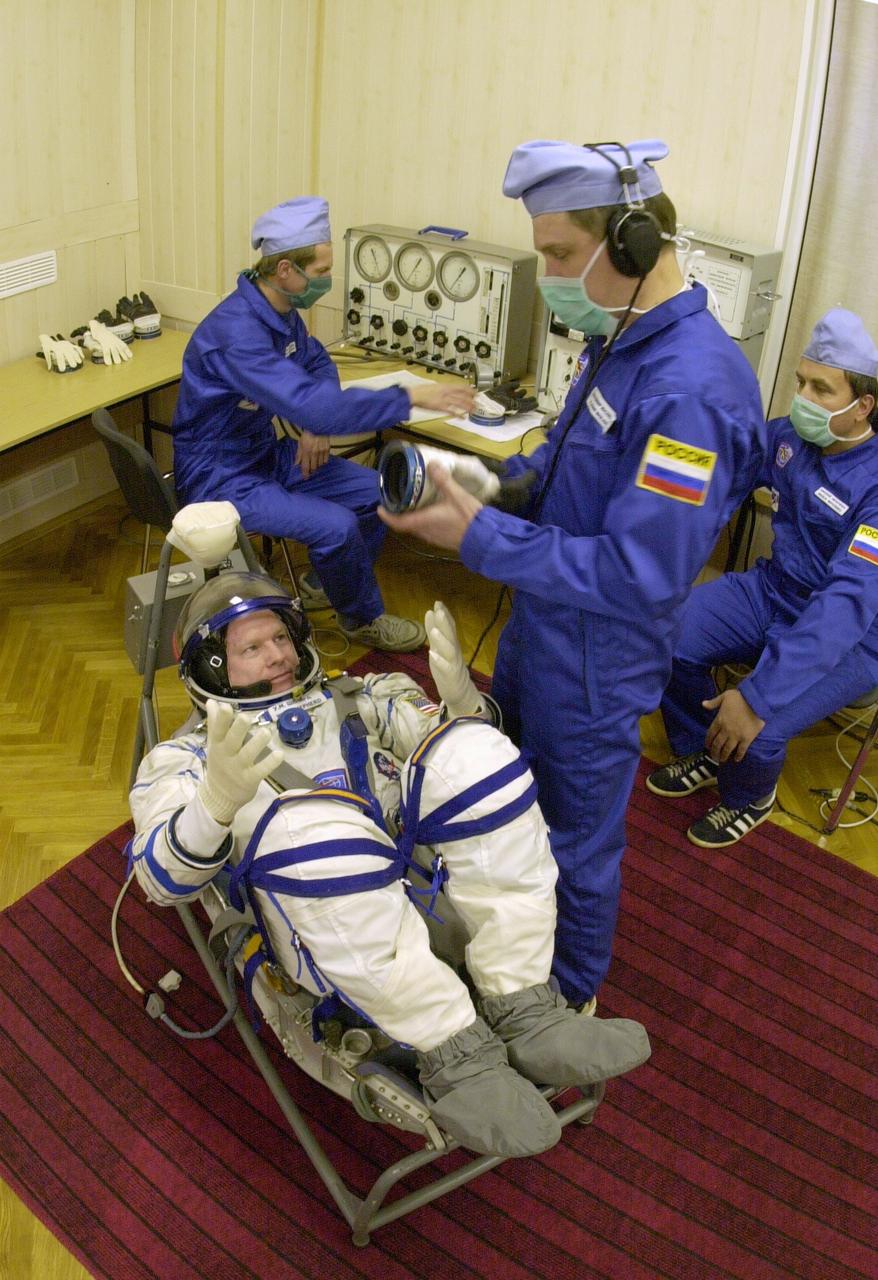
JSC2000-E-27087 (20 October 2000) --- Expedition 1 commander William M. (Bill) Shepherd, wearing a Sokol suit, gets help with his glove before entering the Soyuz spacecraft at Baikonur. Out of frame are Soyuz pilot Yuri P. Gidzenko and flight engineer Sergei K. Krikalev.

STS050-02-023 (25 June-9 July 1992) --- Astronaut Bonnie J. Dunbar, payload commander, unstows United States Microgravity Laboratory 1 (USML-1) experiment paraphernalia in early stages of the mission. The Multipurpose Glove Box (MPGB) is at upper left. And, at right center, is the Space Station design foot restraint, making its first flight aboard a Space Shuttle on the record-setting 14-day mission.
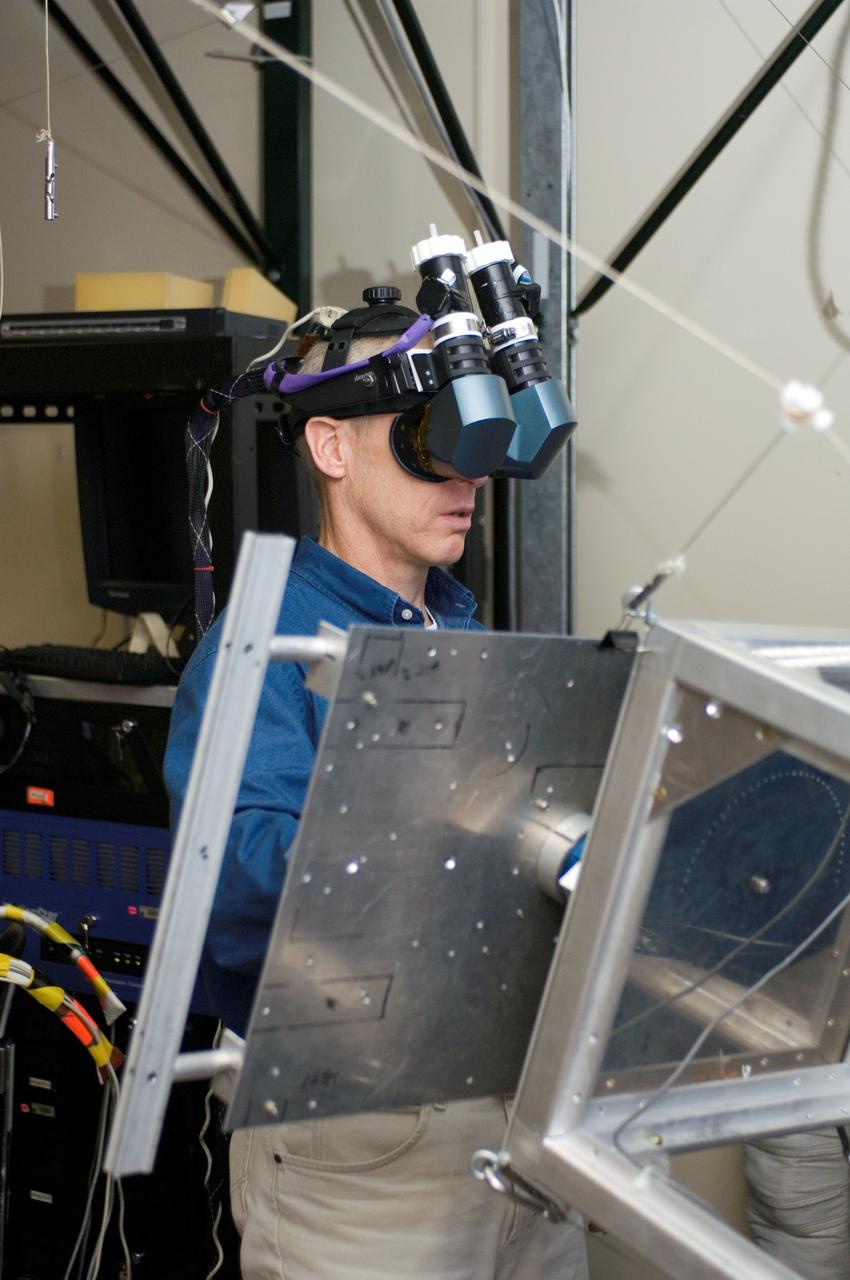
JSC2006-E-47421 (1 Nov. 2006) --- Astronaut Patrick G. Forrester, STS-117 mission specialist, uses virtual reality hardware in the Space Vehicle Mockup Facility at Johnson Space Center to rehearse some of his duties on the upcoming mission to the International Space Station. This type of virtual reality training allows the astronauts to wear a helmet and special gloves while looking at computer displays simulating actual movements around the various locations on the station hardware with which they will be working.
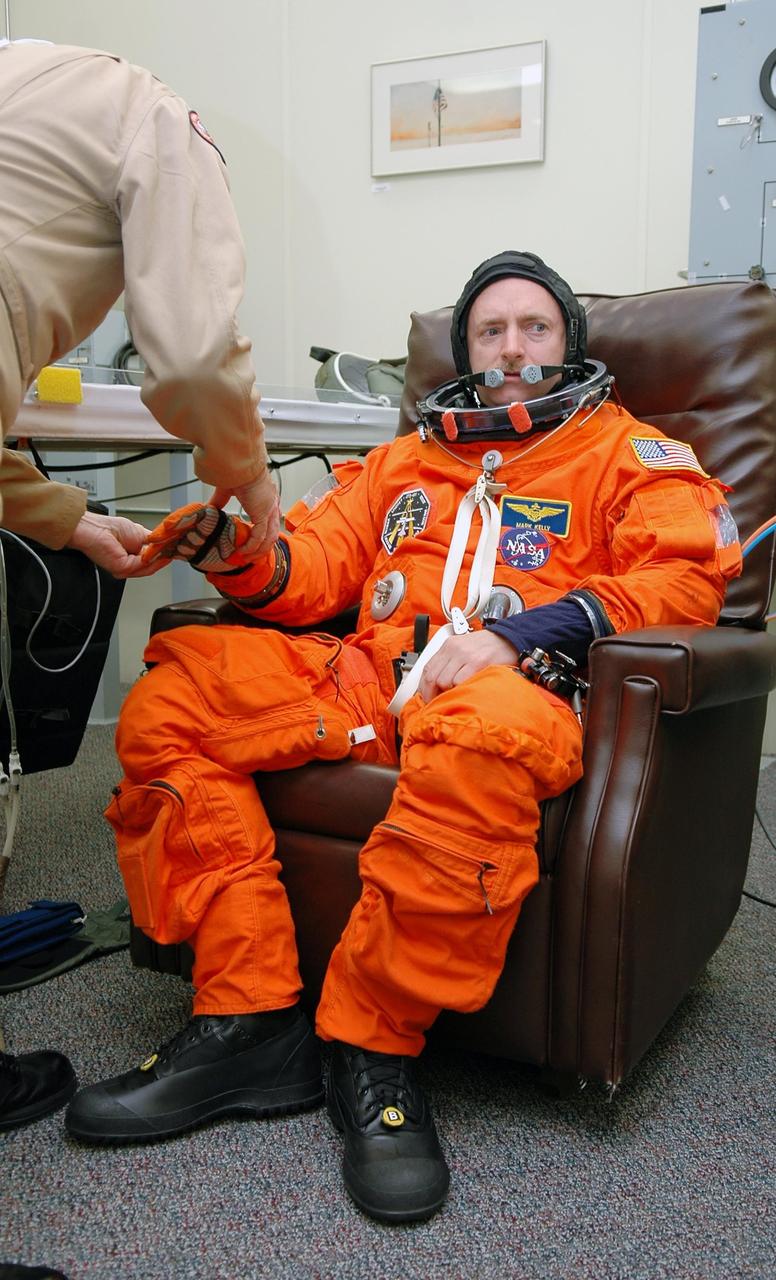
KENNEDY SPACE CENTER, FLA. - STS-121 Pilot Mark Kelly is helped with his glove after donning his launch and entry suit in preparation for the simulated countdown he and other crew members will undertake. The crew is taking part in Terminal Countdown Demonstration Test activities, including the dress rehearsal for launch. Mission STS-121 is scheduled to be launched July 1. Photo credit: NASA/Kim Shiflett
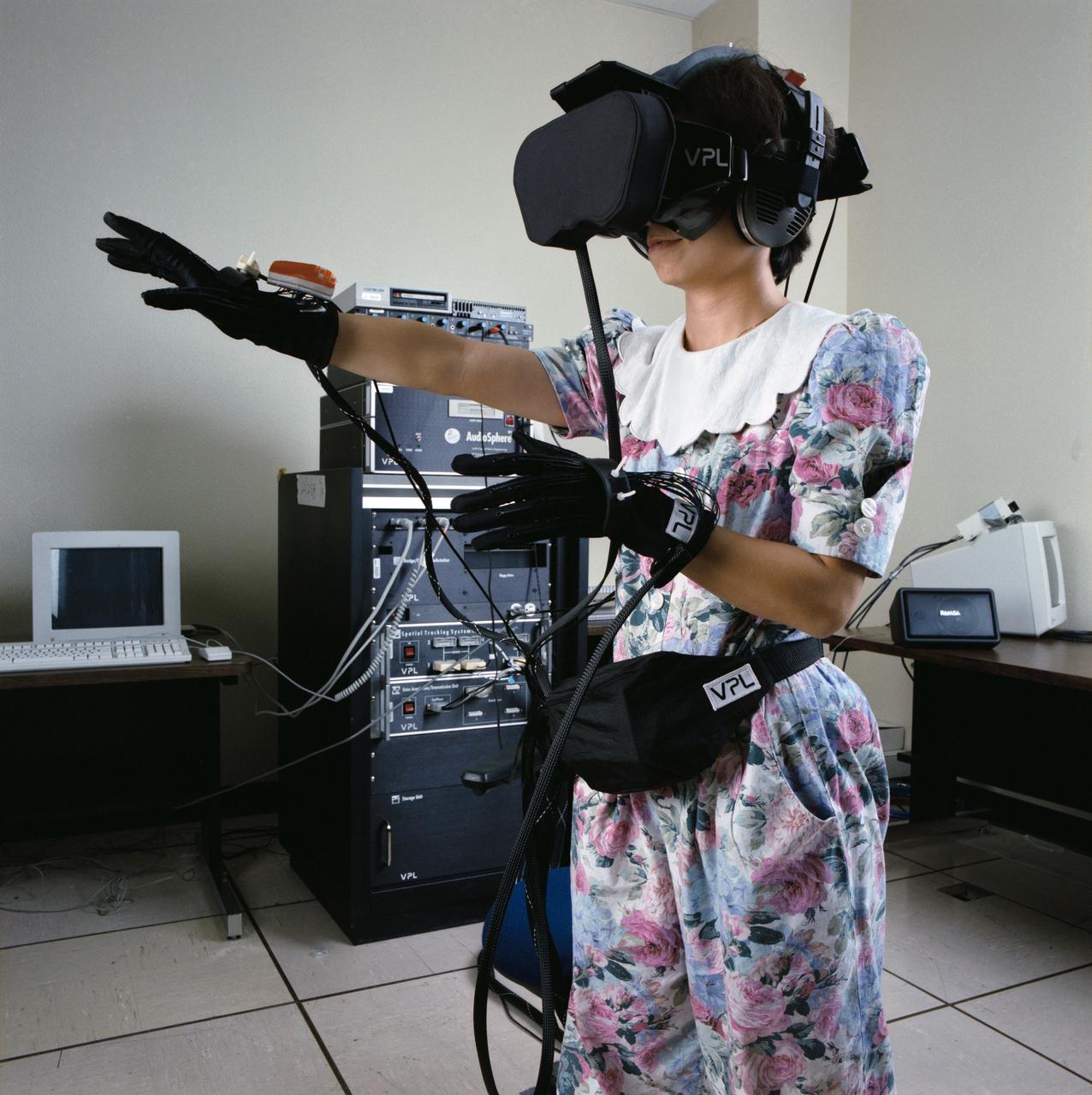
S91-50404 (1 Nov 1991) --- Bebe Ly of the Information Systems Directorate's (ISD) Software Technology Branch at the Johnson Space Center (JSC) gives virtual reality a try. The stereo video goggles and head[phones allow her to see and hear in a computer-generated world and the gloves allow her to move around and grasp objects. Ly is a member of the team that developed the C Language Integrated production System (CLIPS) which has been instrumental in developing several of the systems to be demonstrated in an upcoming Software Technology Exposition at JSC.
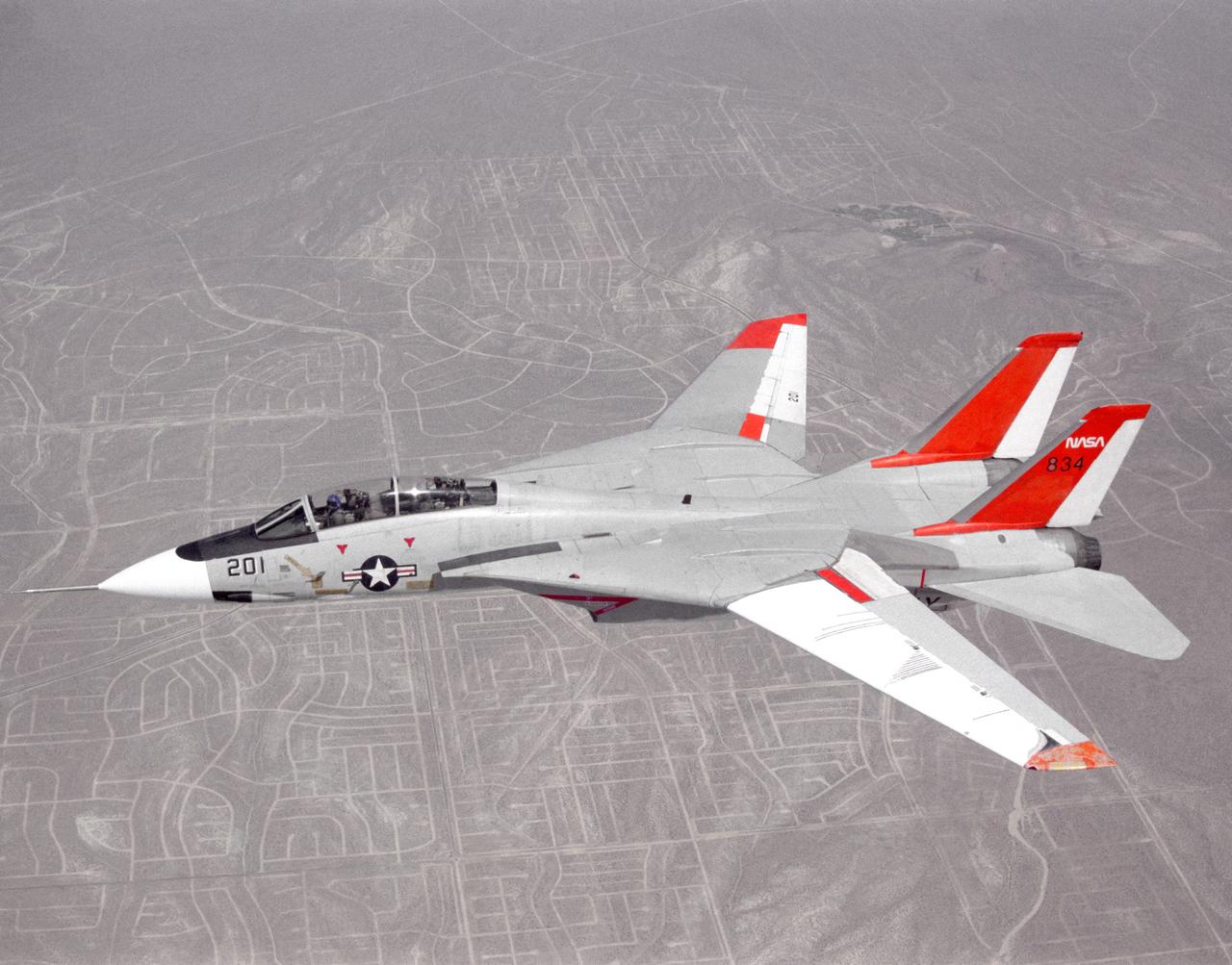
NASA 834, an F-14 Navy Tomcat, seen here in flight, was used at Dryden in 1986 and 1987 in a program known as the Variable-Sweep Transition Flight Experiment (VSTFE). This program explored laminar flow on variable sweep aircraft at high subsonic speeds. An F-14 aircraft was chosen as the carrier vehicle for the VSTFE program primarily because of its variable-sweep capability, Mach and Reynolds number capability, availability, and favorable wing pressure distribution. The variable sweep outer-panels of the F-14 aircraft were modified with natural laminar flow gloves to provide not only smooth surfaces but also airfoils that can produce a wide range of pressure distributions for which transition location can be determined at various flight conditions and sweep angles. Glove I, seen here installed on the upper surface of the left wing, was a "cleanup" or smoothing of the basic F-14 wing, while Glove II was designed to provide specific pressure distributions at Mach 0.7. Laminar flow research continued at Dryden with a research program on the NASA 848 F-16XL, a laminar flow experiment involving a wing-mounted panel with millions of tiny laser cut holes drawing off turbulent boundary layer air with a suction pump.
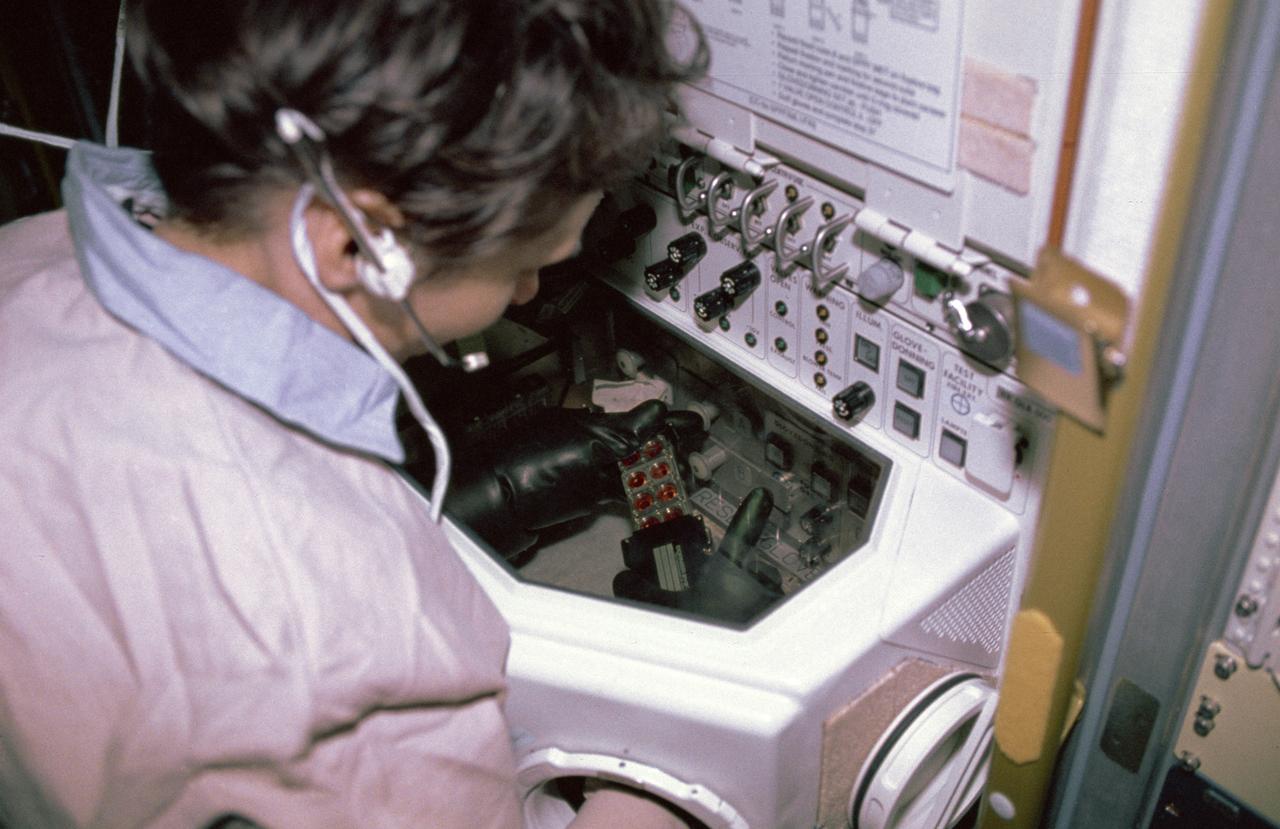
In this photograph, astronaut Roberta Bondar conducts a life science experiment by using the Biorack Glovebox (GBX) during the International Microgravity Laboratory-1 (IML-1) mission. The Biorack was a large multipurpose facility designed for studying the effects of microgravity and cosmic radiation on numerous small life forms such as cells, tissues, small organisms, and plants. Located at the Biorack, the GBX was an enclosed environment that protected samples from contamination and prevented liquid from escaping. Crewmembers handled the specimens with their hands inside gloves that extended into the sealed work area. A microscope and video camera mounted on the GBX door were used to observe and document experiments. Managed by the Marshall Space Flight Center, the IML-1 mission was the first in a series of Shuttle flights dedicated to fundamental materials and life sciences research and was launched aboard the Shuttle Orbiter Discovery (STS-42) on January 22, 1992.
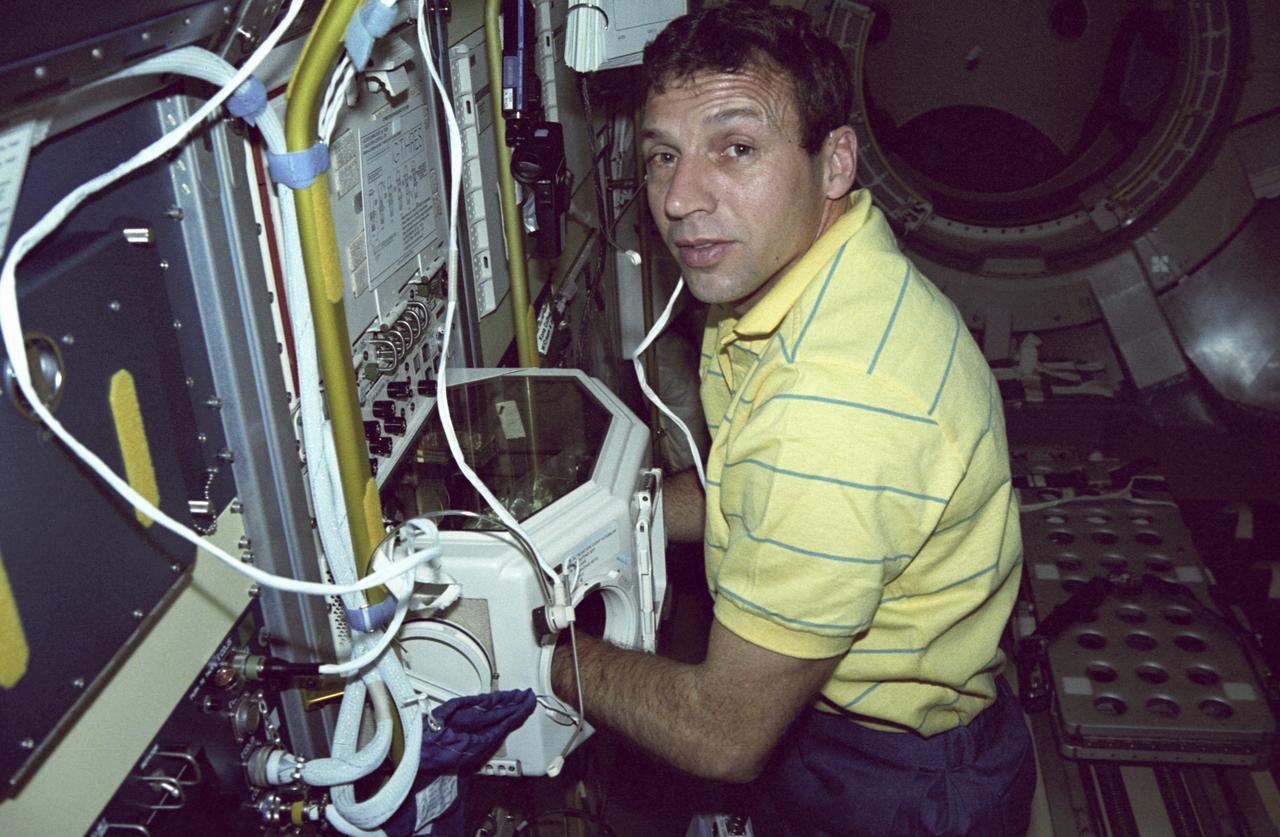
In this photograph, astronaut David Hilmers conducts a life science experiment by using the Biorack Glovebox (GBX) during the International Microgravity Laboratory-1 (IML-1) mission. The Biorack was a large multipurpose facility designed for studying the effects of microgravity and cosmic radiation on numerous small life forms such as cells, tissues, small organisms, and plants. Located at the Biorack, the GBX was an enclosed environment that protected samples from contamination and prevented liquid from escaping. Crewmembers handled the specimens with their hands inside gloves that extended into the sealed work area. A microscope and video camera mounted on the GBX door were used to observe and document experiments. Managed by the Marshall Space Flight Center, the IML-1 mission was the first in a series of Shuttle flights dedicated to fundamental materials and life sciences research and was launched aboard the Shuttle Orbiter Discovery (STS-42) on January 22, 1992.
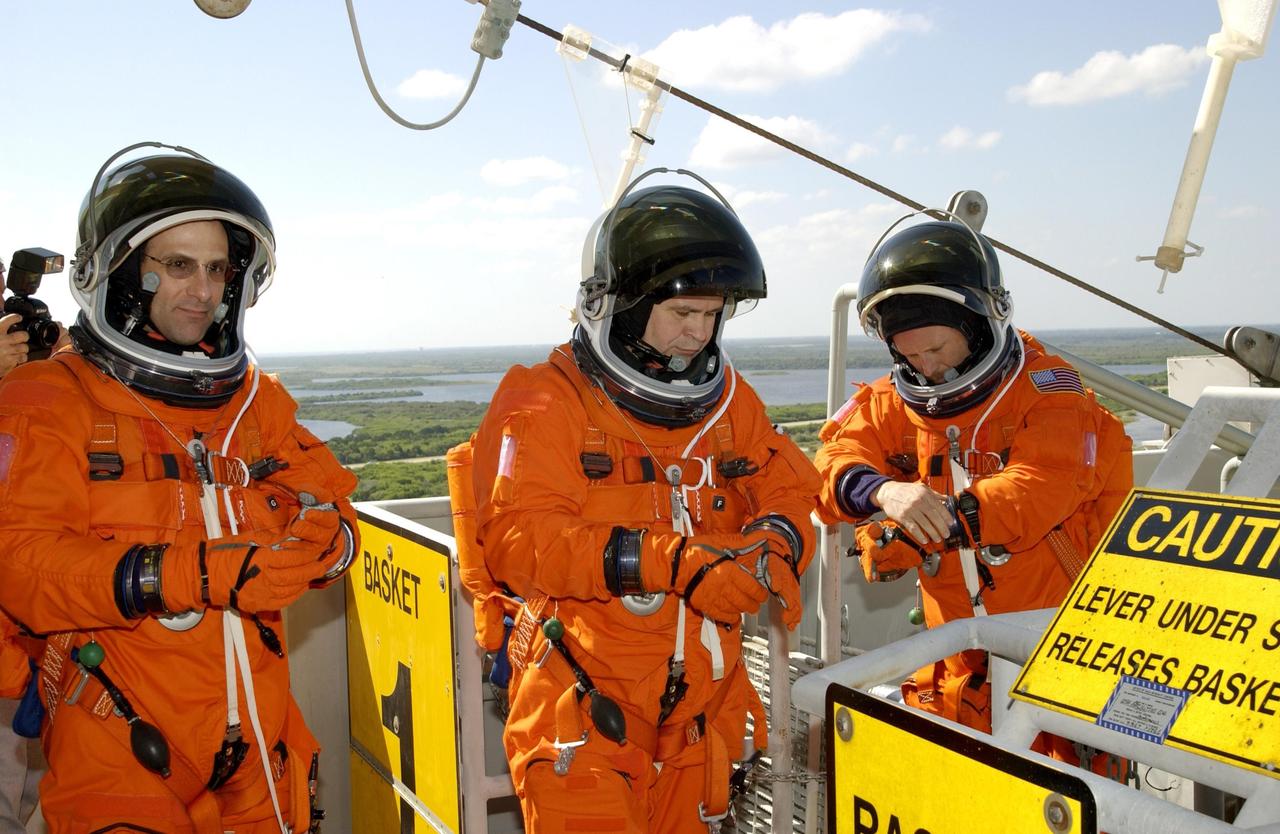
KENNEDY SPACE CENTER, FLA. - The Expedition 6 crew adjust their gloves during emergency egress practice from the 195-foot level of the Fixed Service Structure on Launch Pad 39A. From left are astronaut Donald Pettit, cosmonaut Nikolai Budarin and Commander Ken Bowersox. The crew, travelers on Mission STS-113, will be replacing Expedition 5 on the International Space Station. Along with Expedition 6, STS-113 will carry the Port 1 (P1) truss aboard Space Shuttle Endeavour. Mission STS-113 is scheduled to launch Nov. 10, 2002.
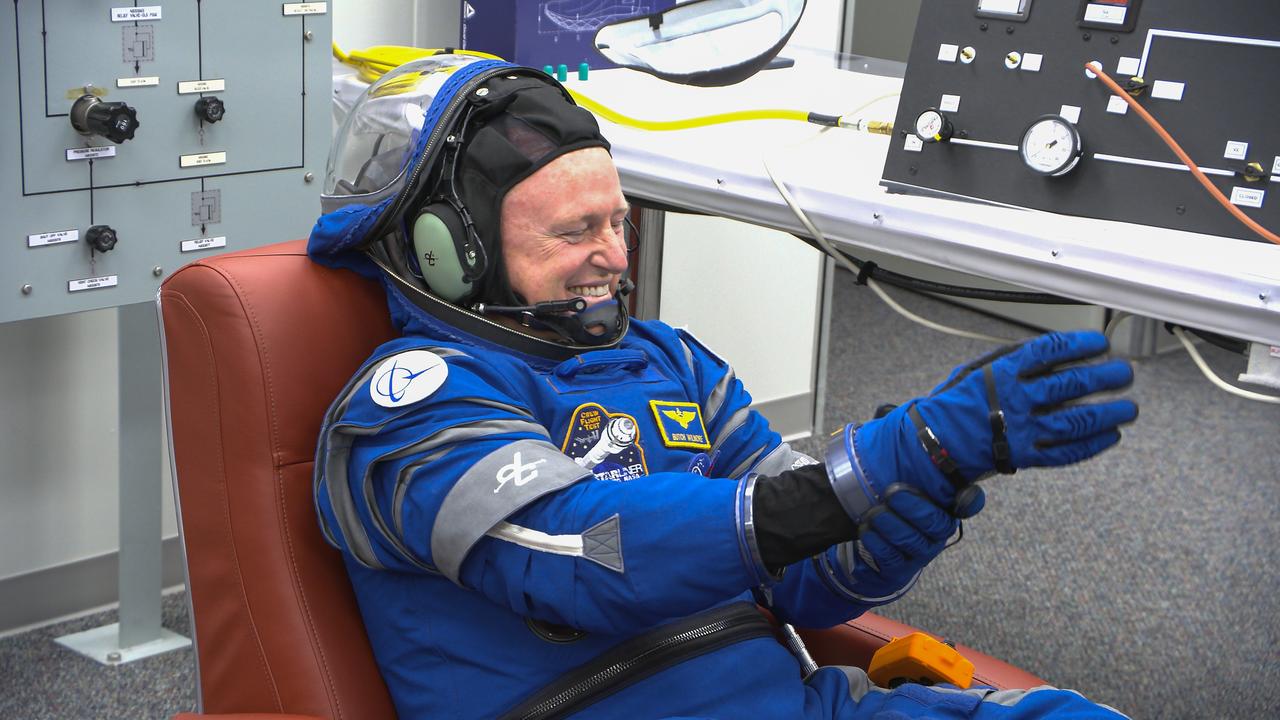
NASA’s Boeing Crew Flight Test astronaut Butch Wilmore checks the gloves of his Boeing spacesuit in the crew suit-up room inside the Neil A. Armstrong Operations and Checkout Building at NASA’s Kennedy Space Center in Florida during a launch attempt on Saturday, June 1, 2024. As part of NASA’s Commercial Crew Program, Wilmore, joined by NASA astronaut Suni Williams, is preparing for the first crewed launch to the International Space Station aboard Boeing’s Starliner spacecraft atop a United Launch Alliance Atlas V rocket from Space Launch Complex-41 at nearby Cape Canaveral Space Force Station. Liftoff was targeted for 12:25 p.m. EDT but scrubbed for the day.
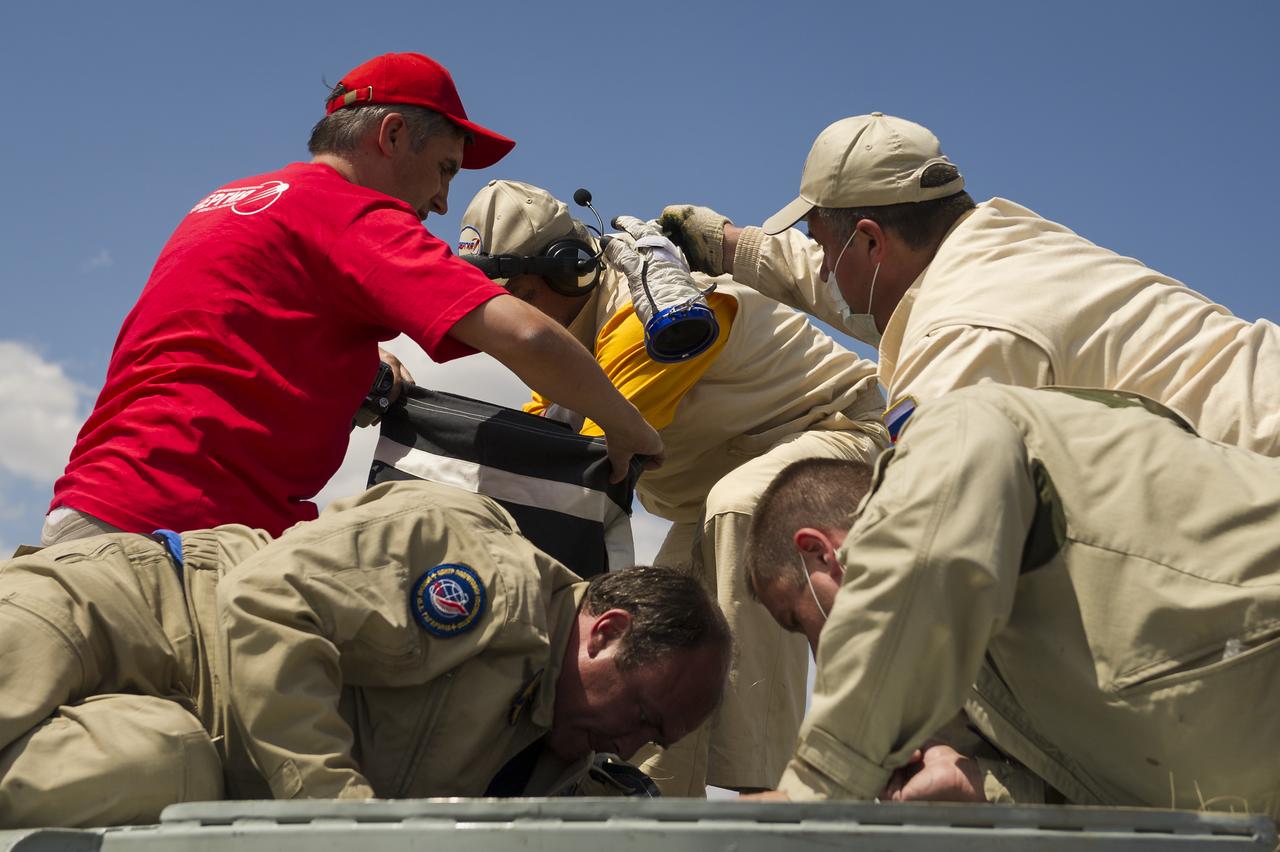
Russian support personnel are handed sokol suit gloves from the crew inside the Soyuz TMA-03M capsule after it landed with Expedition 31 Commander Oleg Kononenko of Russia and Flight Engineers Don Pettit of NASA and Andre Kuipers of the European Space Agency in a remote area near the town of Zhezkazgan, Kazakhstan, on Sunday, July 1, 2012. Pettit, Kononenko and Kuipers returned from more than six months onboard the International Space Station where they served as members of the Expedition 30 and 31 crews. Photo Credit: (NASA/Bill Ingalls)
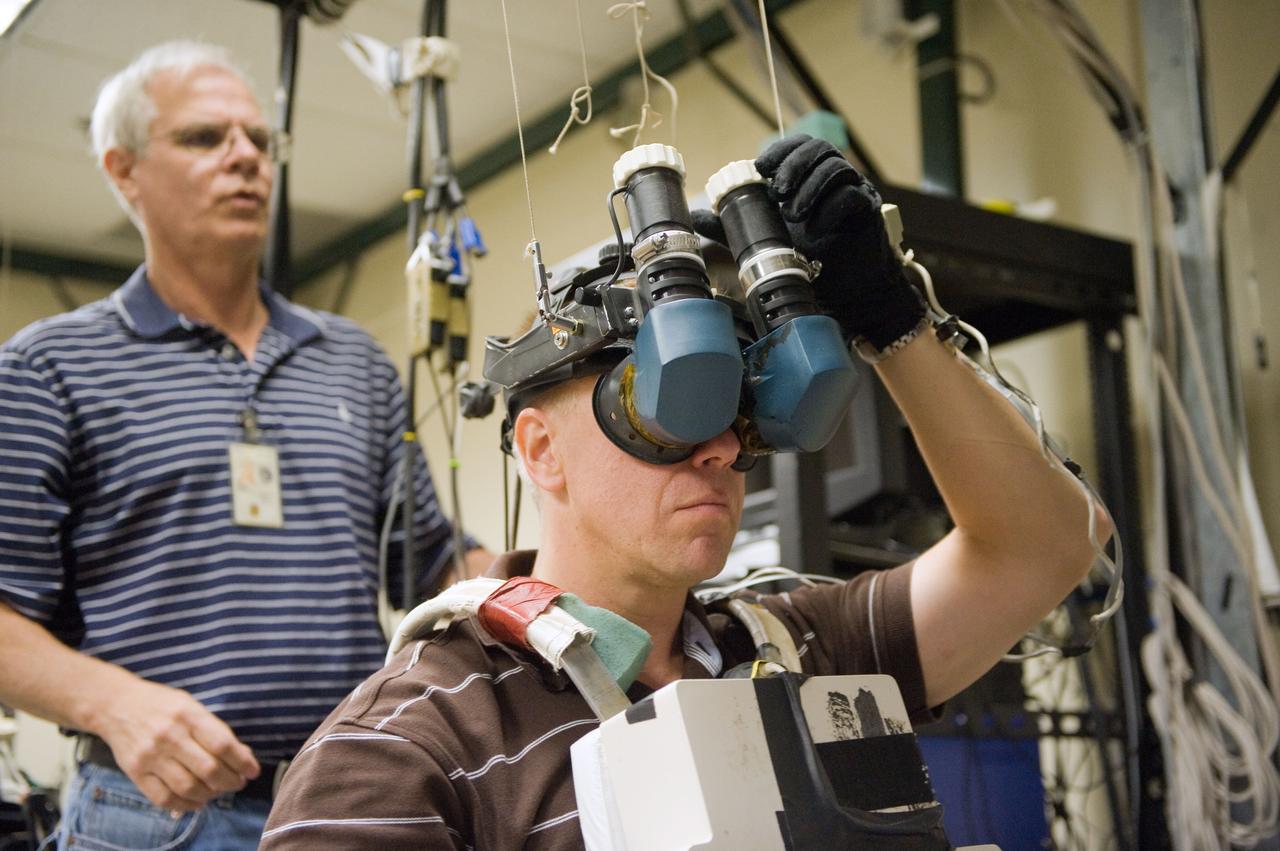
JSC2010-E-170871 (1 Oct. 2010) --- NASA astronaut Tim Kopra, STS-133 mission specialist, uses virtual reality hardware in the Space Vehicle Mock-up Facility at NASA's Johnson Space Center to rehearse some of his duties on the upcoming mission to the International Space Station. This type of virtual reality training allows the astronauts to wear a helmet and special gloves while looking at computer displays simulating actual movements around the various locations on the station hardware with which they will be working. Crew trainer David Homan assisted Kopra. Photo credit: NASA or National Aeronautics and Space Administration
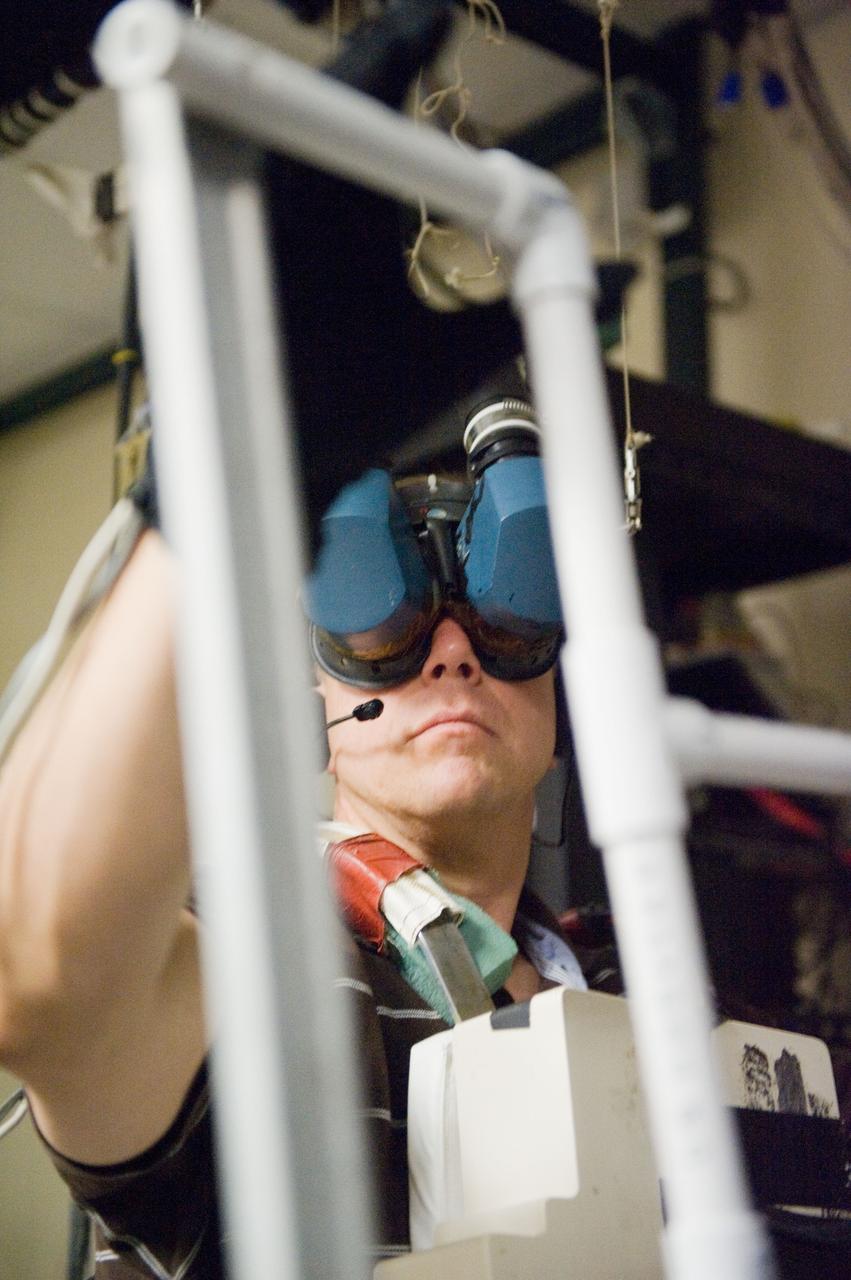
JSC2010-E-170897 (1 Oct. 2010) --- NASA astronaut Tim Kopra, STS-133 mission specialist, uses virtual reality hardware in the Space Vehicle Mock-up Facility at NASA's Johnson Space Center to rehearse some of his duties on the upcoming mission to the International Space Station. This type of virtual reality training allows the astronauts to wear a helmet and special gloves while looking at computer displays simulating actual movements around the various locations on the station hardware with which they will be working. Photo credit: NASA or National Aeronautics and Space Administration

JSC2010-E-170892 (1 Oct. 2010) --- NASA astronaut Alvin Drew, STS-133 mission specialist, uses virtual reality hardware in the Space Vehicle Mock-up Facility at NASA's Johnson Space Center to rehearse some of his duties on the upcoming mission to the International Space Station. This type of virtual reality training allows the astronauts to wear a helmet and special gloves while looking at computer displays simulating actual movements around the various locations on the station hardware with which they will be working. Photo credit: NASA or National Aeronautics and Space Administration
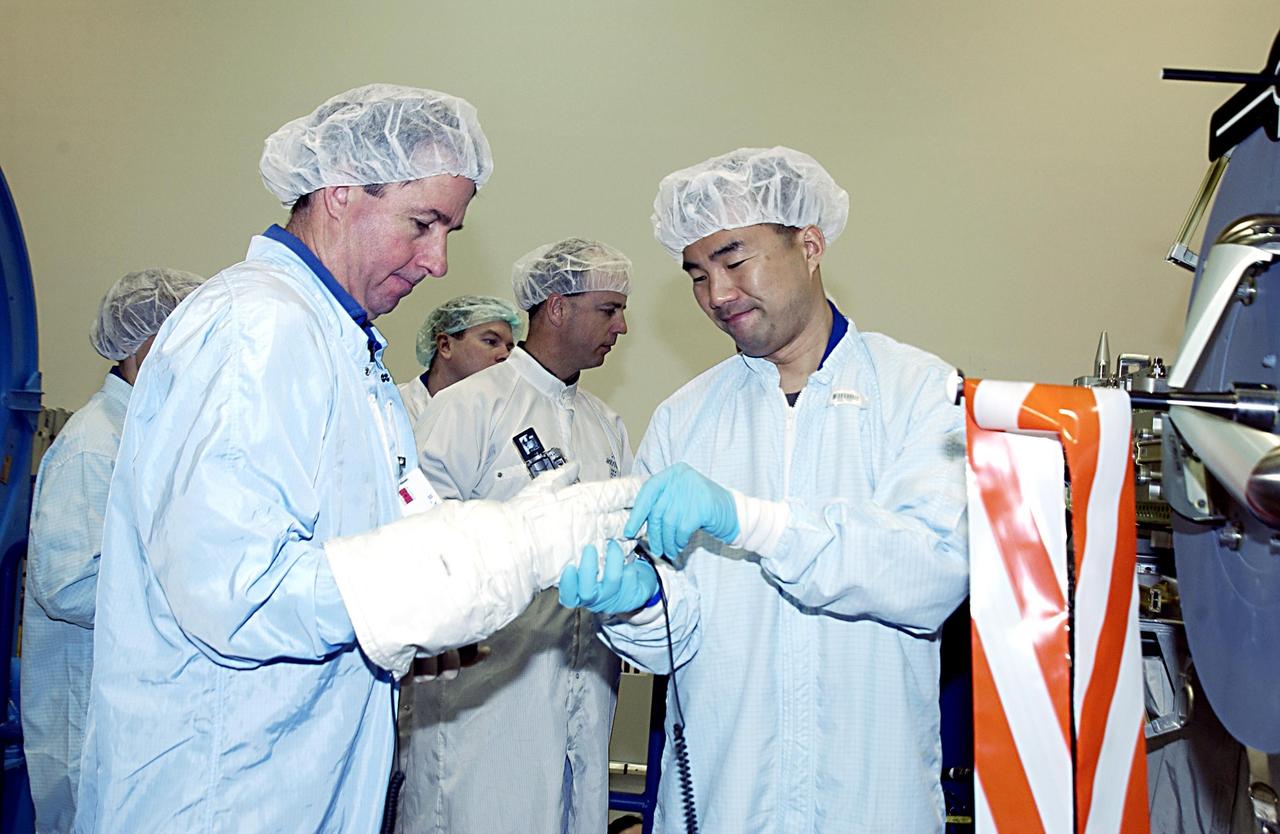
KENNEDY SPACE CENTER, FLA. - At the SPACEHAB facility in Cape Canaveral, STS-114 Mission Specialist Stephen K. Robinson, Ph.D., (left foreground) gets help with a glove from Mission Specialist Soichi Noguchi (right), of the National Space Development Agency of Japan (NASDA). They are participating in familiarization activities with the hardware that will fly on the STS-114 mission. STS-114 is a utilization and logistics flight that will carry Multi-Purpose Logistics Module Raffaello and the External Stowage Platform (ESP-2), as well as the Expedition 7 crew, to the International Space Station. Launch is targeted for March 1, 2003.
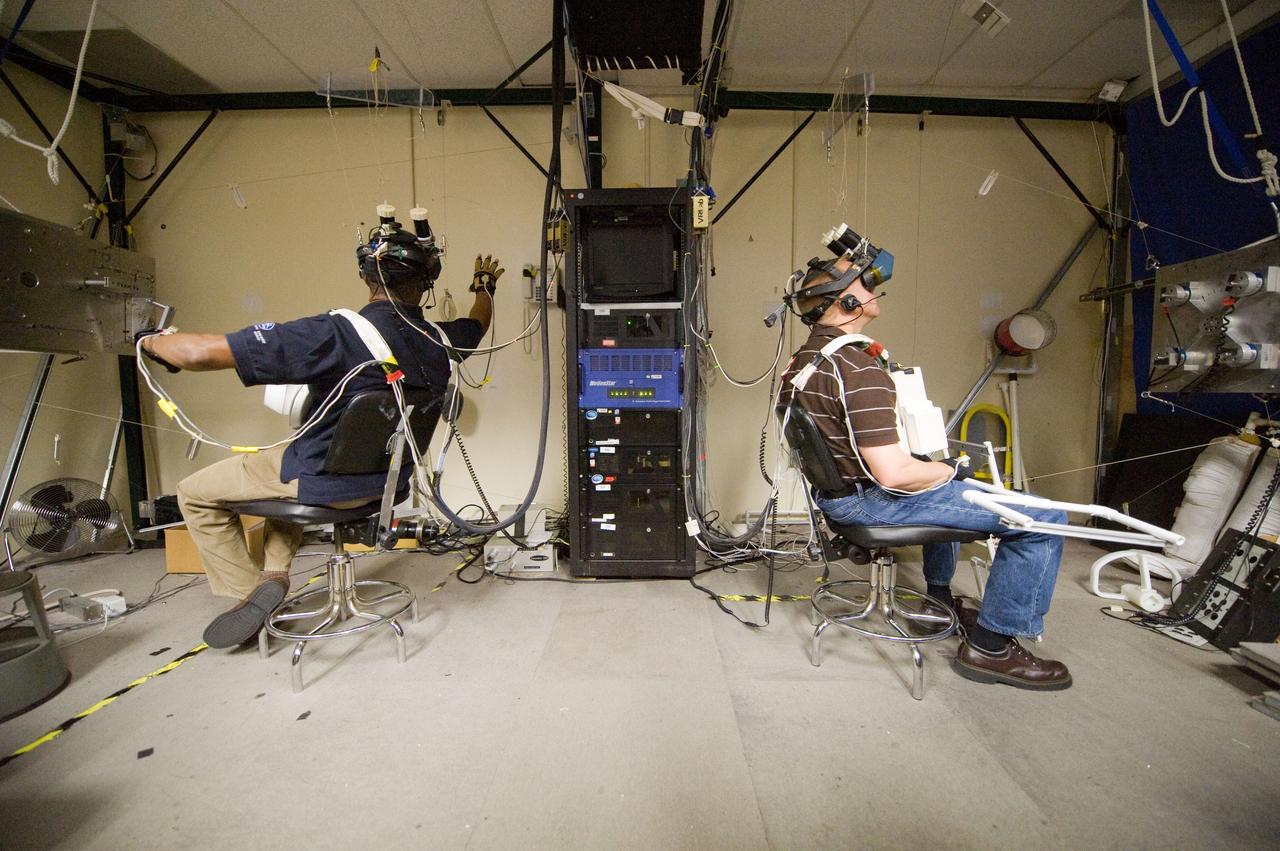
JSC2010-E-170885 (1 Oct. 2010) --- NASA astronauts Alvin Drew (left) and Tim Kopra, both STS-133 mission specialists, use virtual reality hardware in the Space Vehicle Mock-up Facility at NASA's Johnson Space Center to rehearse some of their duties on the upcoming mission to the International Space Station. This type of virtual reality training allows the astronauts to wear a helmet and special gloves while looking at computer displays simulating actual movements around the various locations on the station hardware with which they will be working. Photo credit: NASA or National Aeronautics and Space Administration
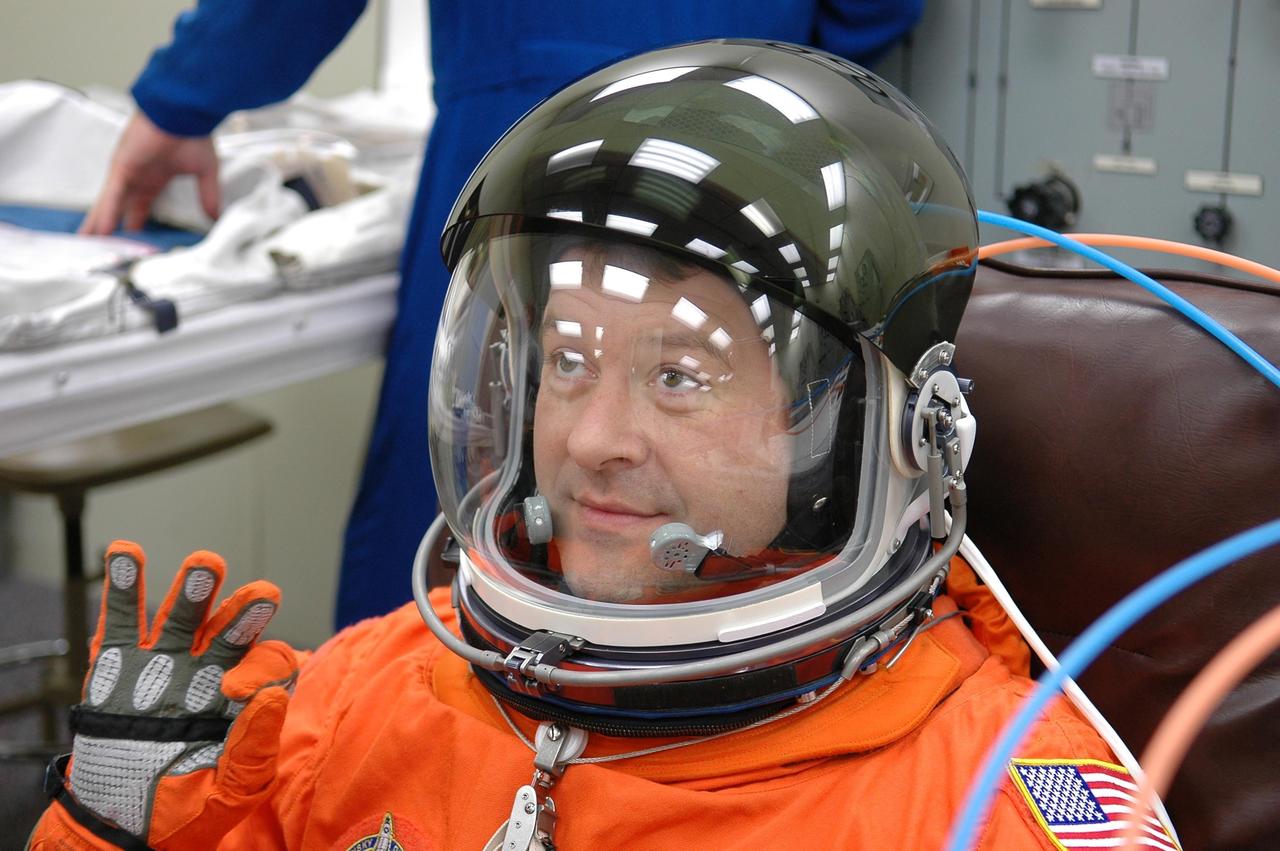
KENNEDY SPACE CENTER, FLA. -- STS-116 Mission Specialist Nicholas Patrick checks the fit of his gloves during suit fit-check, part of the prelaunch preparations during terminal countdown demonstration test (TCDT) activities. The mission crew is at KSC for the TCDT, which includes a simulated launch countdown. The STS-116 mission is No. 20 to the International Space Station and construction flight 12A.1. The mission payload is the SPACEHAB module, the P5 integrated truss structure and other key components. Launch is scheduled for no earlier than Dec. 7. Photo credit: NASA/Kim Shiflett
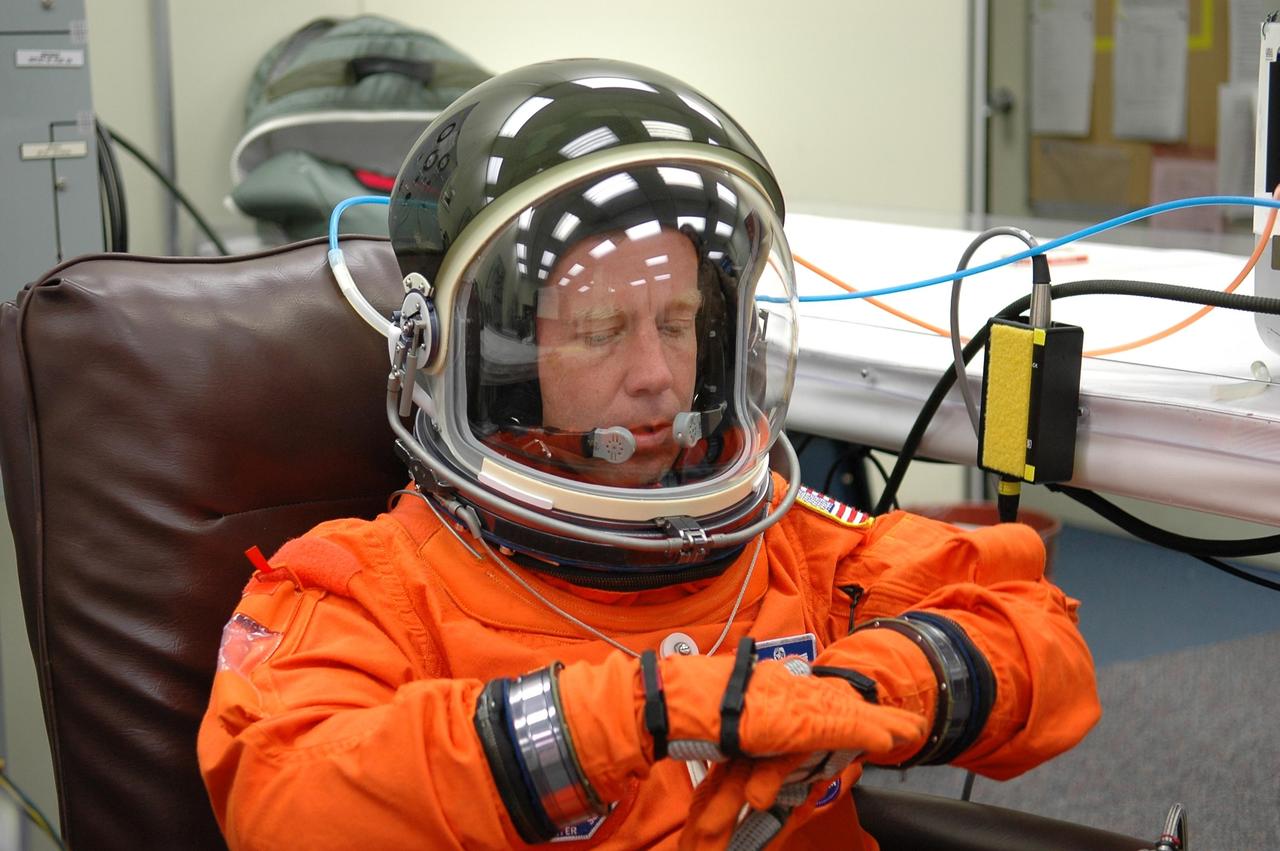
KENNEDY SPACE CENTER, FLA. - STS-121 Commander Steven Lindsey adjusts a glove during suitup for a second launch attempt on Space Shuttle Discovery. The first launch attempt July 1 was scrubbed due to weather concerns and postponed 24 hours. The launch is the 115th shuttle flight and the 18th U.S. flight to the International Space Station. During the 12-day mission, the STS-121 crew will test new equipment and procedures to improve shuttle safety, as well as deliver supplies and make repairs to the International Space Station. Photo credit: NASA/Kim Shiflett

JSC2010-E-170873 (1 Oct. 2010) --- NASA astronaut Tim Kopra, STS-133 mission specialist, uses virtual reality hardware in the Space Vehicle Mock-up Facility at NASA's Johnson Space Center to rehearse some of his duties on the upcoming mission to the International Space Station. This type of virtual reality training allows the astronauts to wear a helmet and special gloves while looking at computer displays simulating actual movements around the various locations on the station hardware with which they will be working. Crew trainer David Homan assisted Kopra. Photo credit: NASA or National Aeronautics and Space Administration
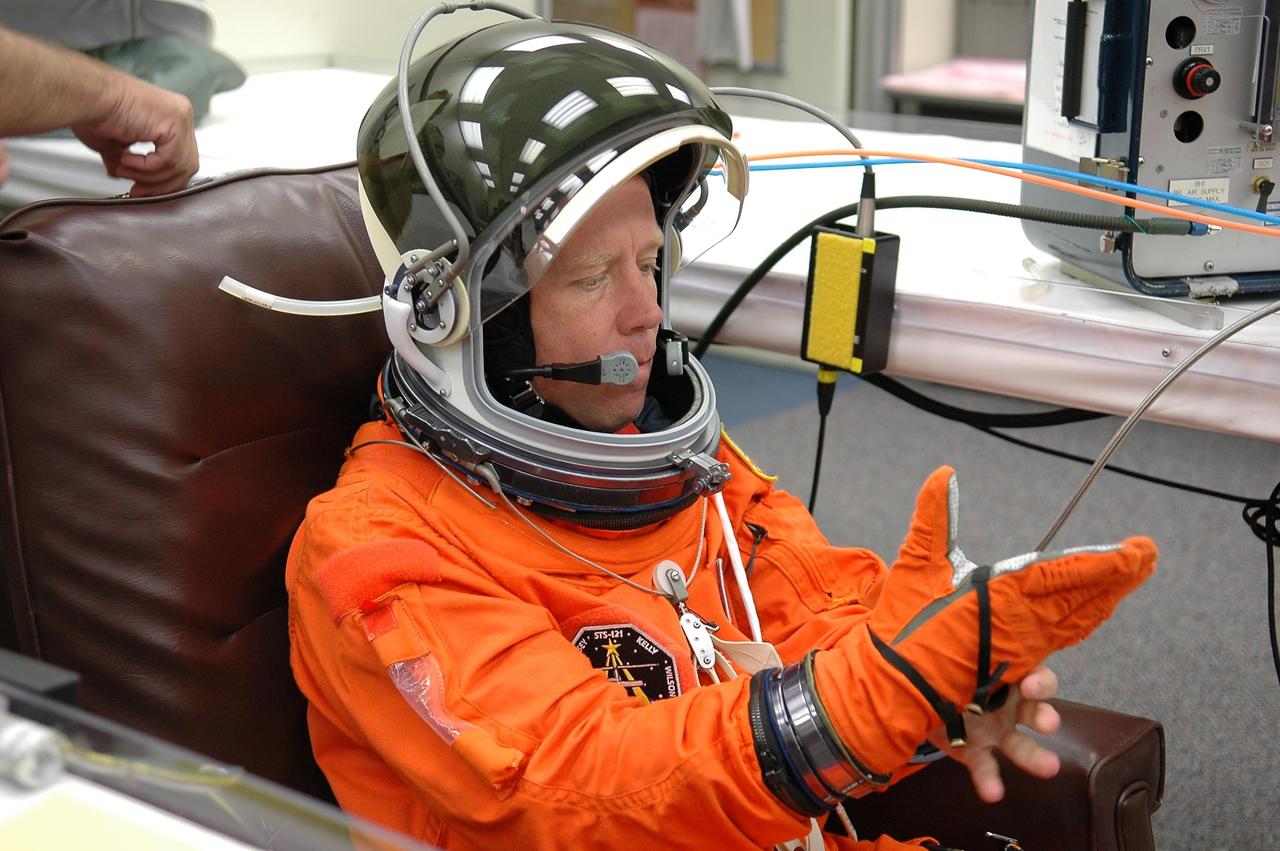
KENNEDY SPACE CENTER, FLA. - STS-121 Commander Steven Lindsey pulls on his glove during suitup for a second launch attempt on Space Shuttle Discovery. The first launch attempt July 1 was scrubbed due to weather concerns and postponed 24 hours. The launch is the 115th shuttle flight and the 18th U.S. flight to the International Space Station. During the 12-day mission, the STS-121 crew will test new equipment and procedures to improve shuttle safety, as well as deliver supplies and make repairs to the International Space Station. Photo credit: NASA/Kim Shiflett
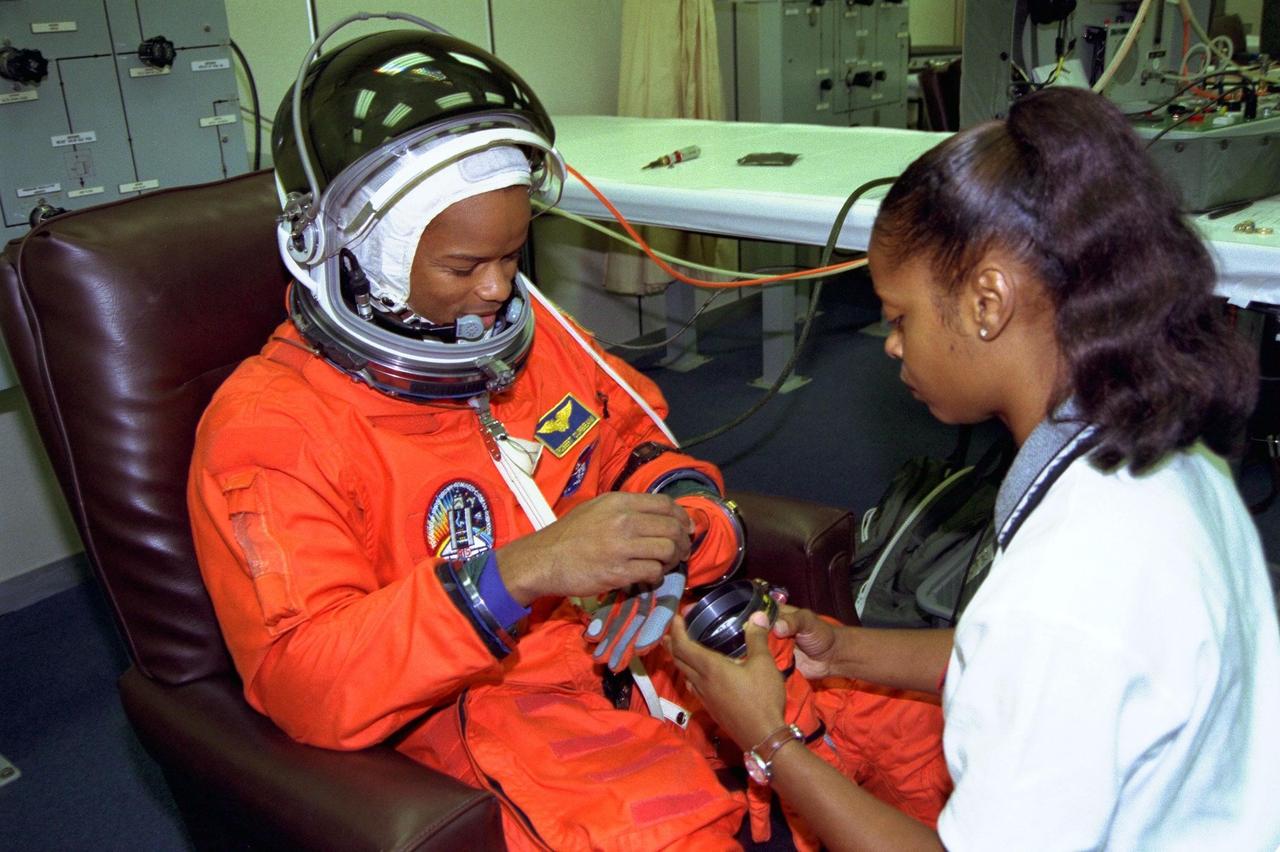
STS-85 Mission Specialist Robert L. Curbeam, Jr. looks down at his glove as a suit technician helps him with the other as he undergoes suitup in the Operations and Checkout (O&C) Building. He is a lieutenant commander in the Navy and is a former radar intercept officer. Curbeam holds a master’s degree in aeronautical engineering and was selected as an astronaut in 1994. On TS-85, Curbeam will serve as the expert for the operation of the Cryogenic Infrared Spectrometers and Telescopes for the Atmosphere-Shuttle Pallet Satellite-2 (CRISTA-SPAS-2) free-flyer, Technology Applications and Science-1 (TAS-1) and science, and International Extreme Ultraviolet Hitchhiker-2 payloads. He will also serve as the flight engineer during ascent and reentry operations

Inside the Multi-Operations Support Building near the Multi-Payload Processing Facility (MPPF) at NASA’s Kennedy Space Center in Florida on Aug. 16, 2019, rows of gloves that are part of Self-Contained Atmospheric Protective Ensemble (SCAPE) suits are in view inside a changing room. SCAPE technicians will practice putting on SCAPE suits for a test simulation of loading propellants into a replicated test tank for Orion. Exploration Ground Systems is preparing for Artemis 1 with a series of hazardous hyper test events at the MPPF. After donning their suits, the technicians will complete a tanking to test the system before Orion arrives for processing. During preparations for launch, these teams will be responsible for loading the Orion vehicle with propellants prior to transportation to the Vehicle Assembly Building, where it will be secured atop the Space Launch System rocket. SCAPE suits are used in operations involving toxic propellants and are supplied with air either through a hardline or through a self-contained environmental control unit.
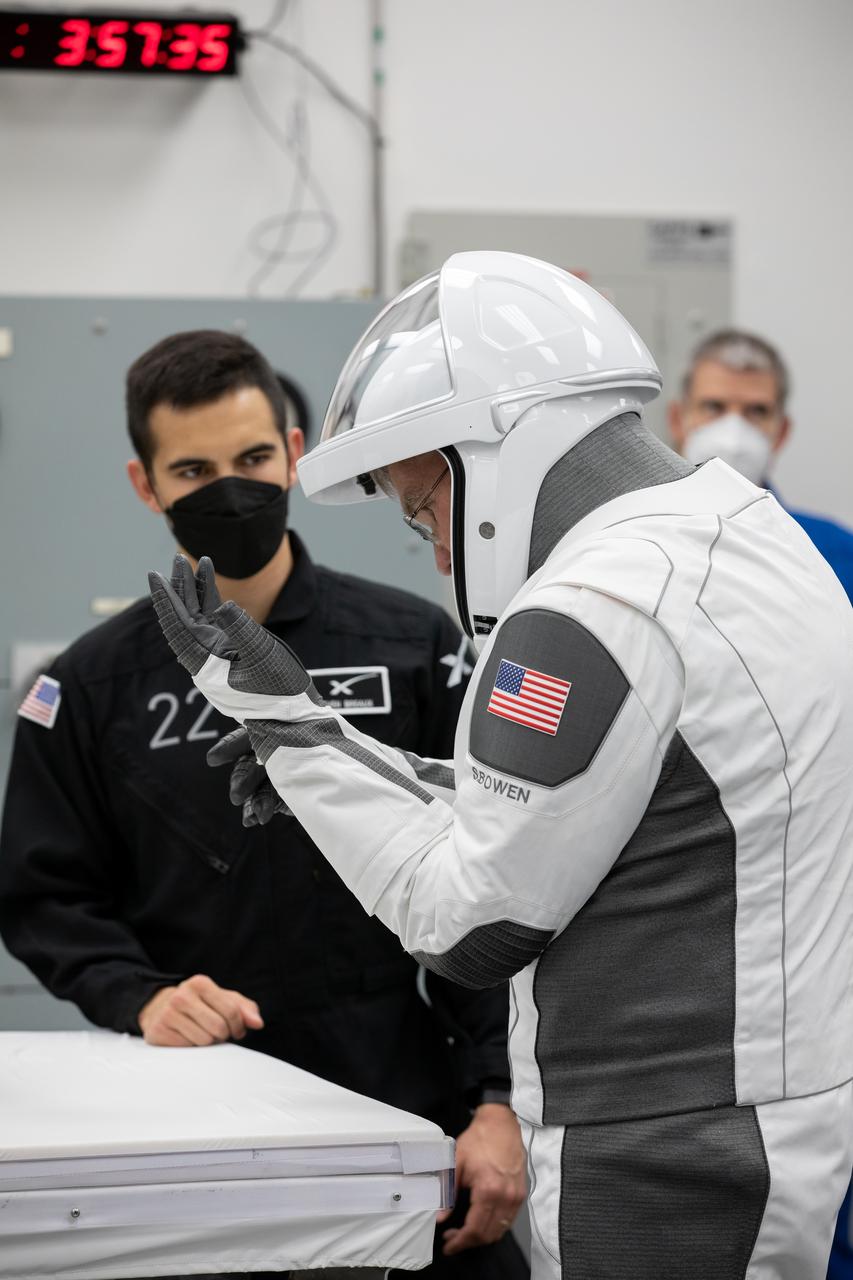
NASA astronaut and SpaceX Crew-6 commander Stephen Bowen checks his gloves inside the crew suit-up room in the Neil Armstrong Operations and Checkout Building at NASA’s Kennedy Space Center in Florida during a countdown dress rehearsal on Feb. 23, 2023. Bowen, along with NASA astronaut Warren “Woody” Hoburg, pilot; Andrei Fedyaev, Roscosmos cosmonaut and mission specialist; and Sultan Alneyadi, UAE (United Arab Emirates) astronaut and mission specialist will launch to the International Space Station aboard the Crew Dragon Endeavour on a SpaceX Falcon 9. Launch is targeted for 1:45 a.m. EST on Feb. 27 from Launch Complex 39A. Crew-6 is the sixth crew rotation mission with SpaceX to the station, and the seventh flight of Dragon with people as part of the agency’s Commercial Crew Program.
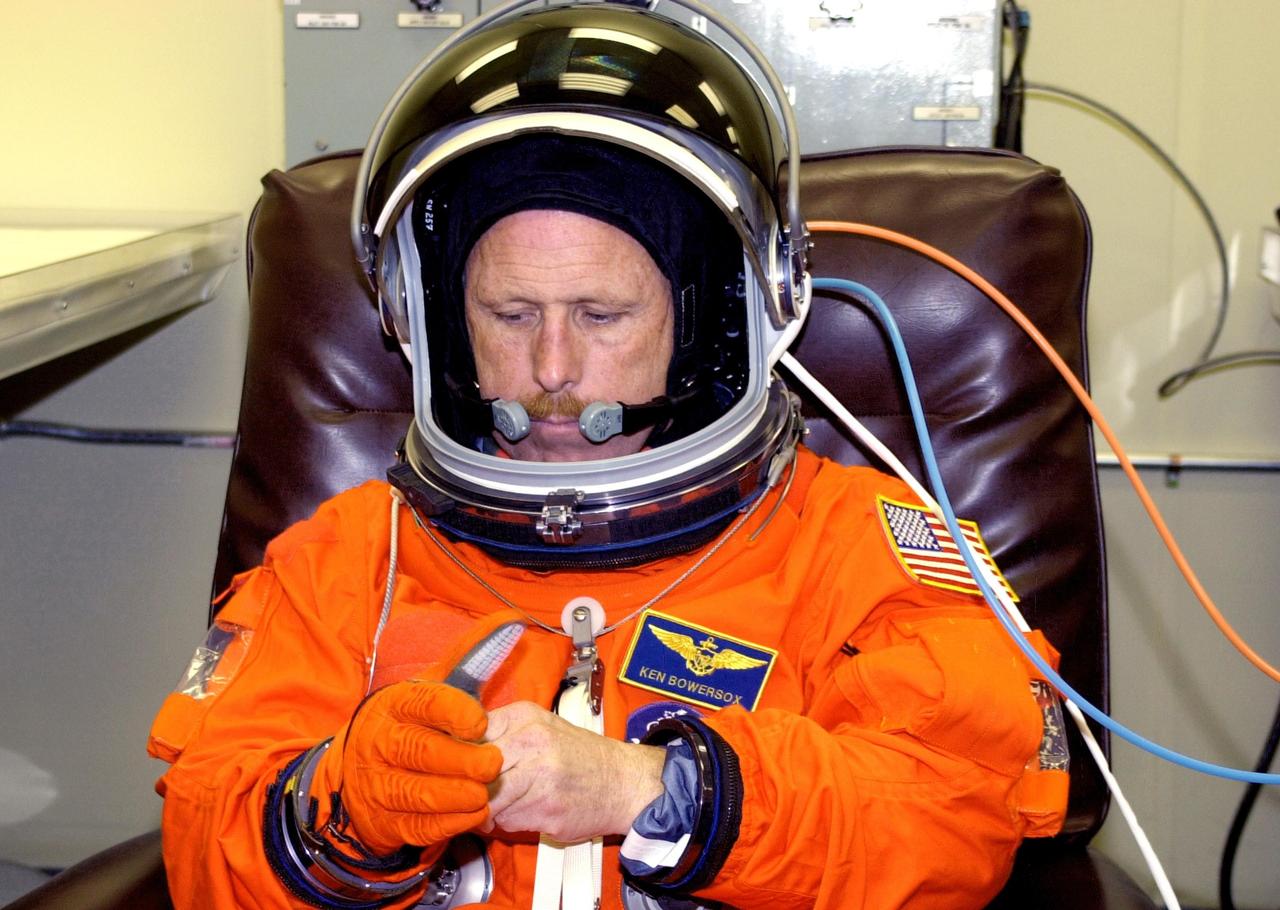
KENNEDY SPACE CENTER, FLA. -- Expedition 6 Commander Ken Bowersox adjusts his gloves during fit check of his launch and entry suit, part of Terminal Countdown Demonstration Test activities. He and the rest of the crew are preparing for the mission aboard Space Shuttle Endeavour, which is scheduled to launch Nov. 10. The TCDT includes emergency egress training and a launch countdown. The Expedition 6 crew will travel on Space Shuttle Endeavour to the International Space Station to replace Expedition 5, returning to Earth after 4 months. The primary payloads on mission STS-113 are the first port truss segment, P1, and the Crew and Equipment Translation Aid (CETA) Cart B. Once delivered, the P1 truss will remain stowed until flight 12A.1 in 2003 when it will be attached to the central truss segment, S0, on the Space Station. Launch is scheduled for Nov. 10, 2002.
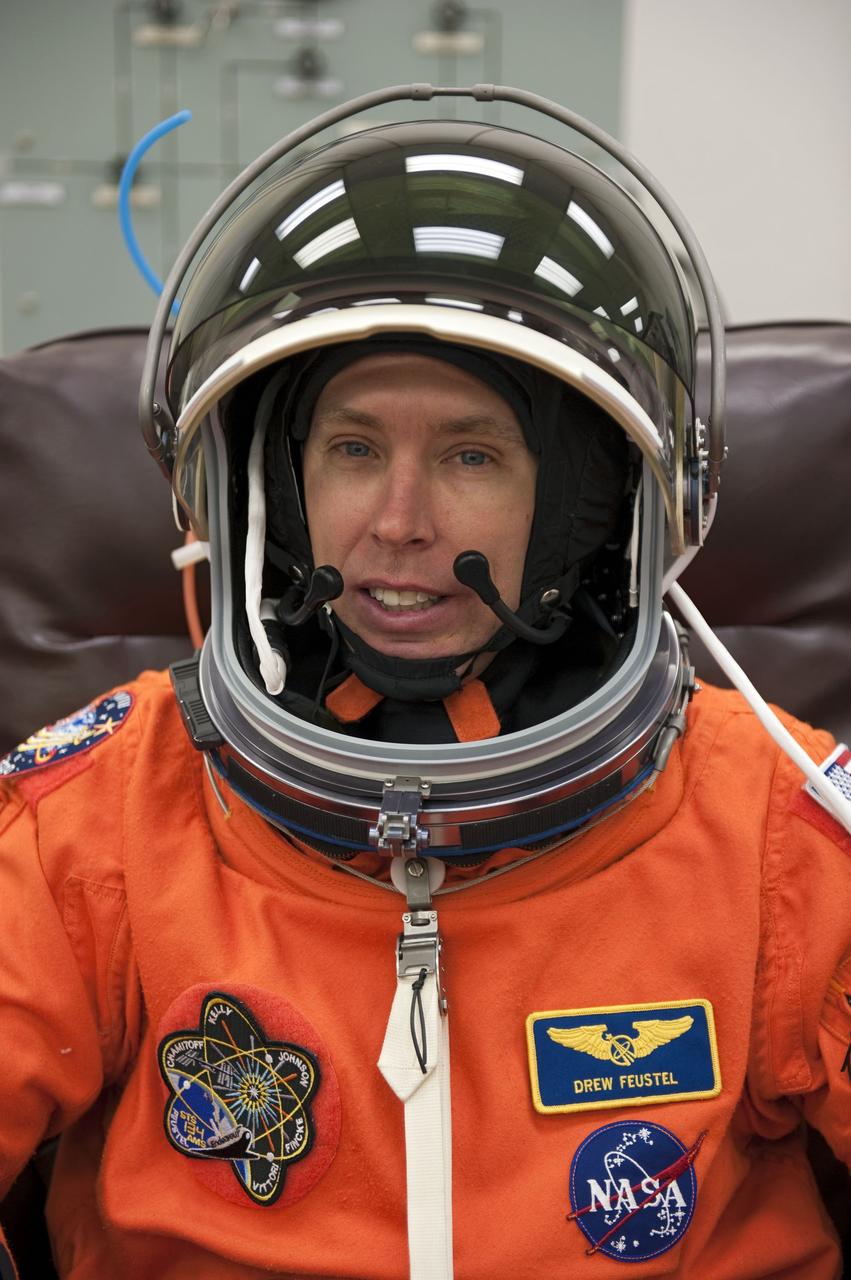
CAPE CANAVERAL, Fla. -- In the Operations and Checkout Building (O&C) at NASA's Kennedy Space Center in Florida, space shuttle Endeavour's STS-134 astronauts put on their launch-and-entry suits and check the fit of their helmets and gloves before heading to the Astrovan for the ride to Launch Pad 39A. Mission Specialist Andrew Feustel, seen here, last flew to NASA's Hubble Space Telescope in 2009. STS-134 will deliver the Express Logistics Carrier-3, Alpha Magnetic Spectrometer-2 (AMS), a high-pressure gas tank and additional spare parts for the Dextre robotic helper to the space station. Endeavour was scheduled to launch at 3:47 p.m. on April 29, but that attempt was scrubbed for at least 72 hours while engineers assess an issue associated with the shuttle's Auxiliary Power Unit 1. STS-134 will be the final spaceflight for Endeavour. For more information visit, www.nasa.gov/mission_pages/shuttle/shuttlemissions/sts134/index.html. Photo credit: NASA/Kim Shiflett
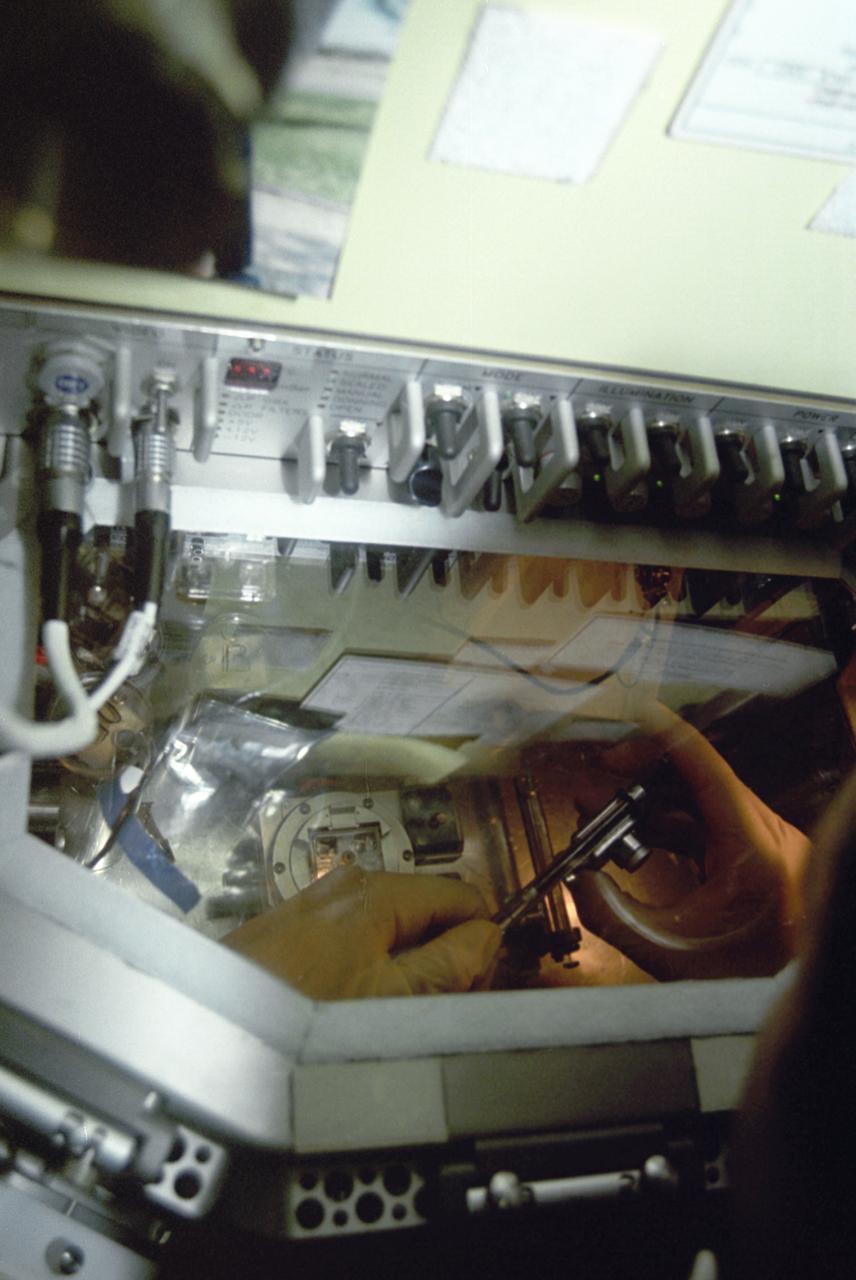
The first United States Microgravity Laboratory (USML-1) provided scientific research in materials science, fluid dynamics, biotechnology, and combustion science in a weightless environment inside the Spacelab module. This photograph is a close-up view of the Glovebox in operation during the mission. The Spacelab Glovebox, provided by the European Space Agency, offers experimenters new capabilities to test and develop science procedures and technologies in microgravity. It enables crewmembers to handle, transfer, and otherwise manipulate materials in ways that are impractical in the open Spacelab. The facility is equipped with three doors: a central port through which experiments are placed in the Glovebox and two glovedoors on both sides with an attachment for gloves or adjustable cuffs and adapters for cameras. The Glovebox has an enclosed compartment that offers a clean working space and minimizes the contamination risks to both Spacelab and experiment samples. Although fluid containment and ease of cleanup are major benefits provided by the facility, it can also contain powders and bioparticles; toxic, irritating, or potentially infectious materials; and other debris produced during experiment operations. The facility is equipped with photographic/video capabilities and permits mounting a microscope. For the USML-1 mission, the Glovebox experiments fell into four basic categories: fluid dynamics, combustion science, crystal growth, and technology demonstration. The USML-1 flew aboard the STS-50 mission in June 1992.
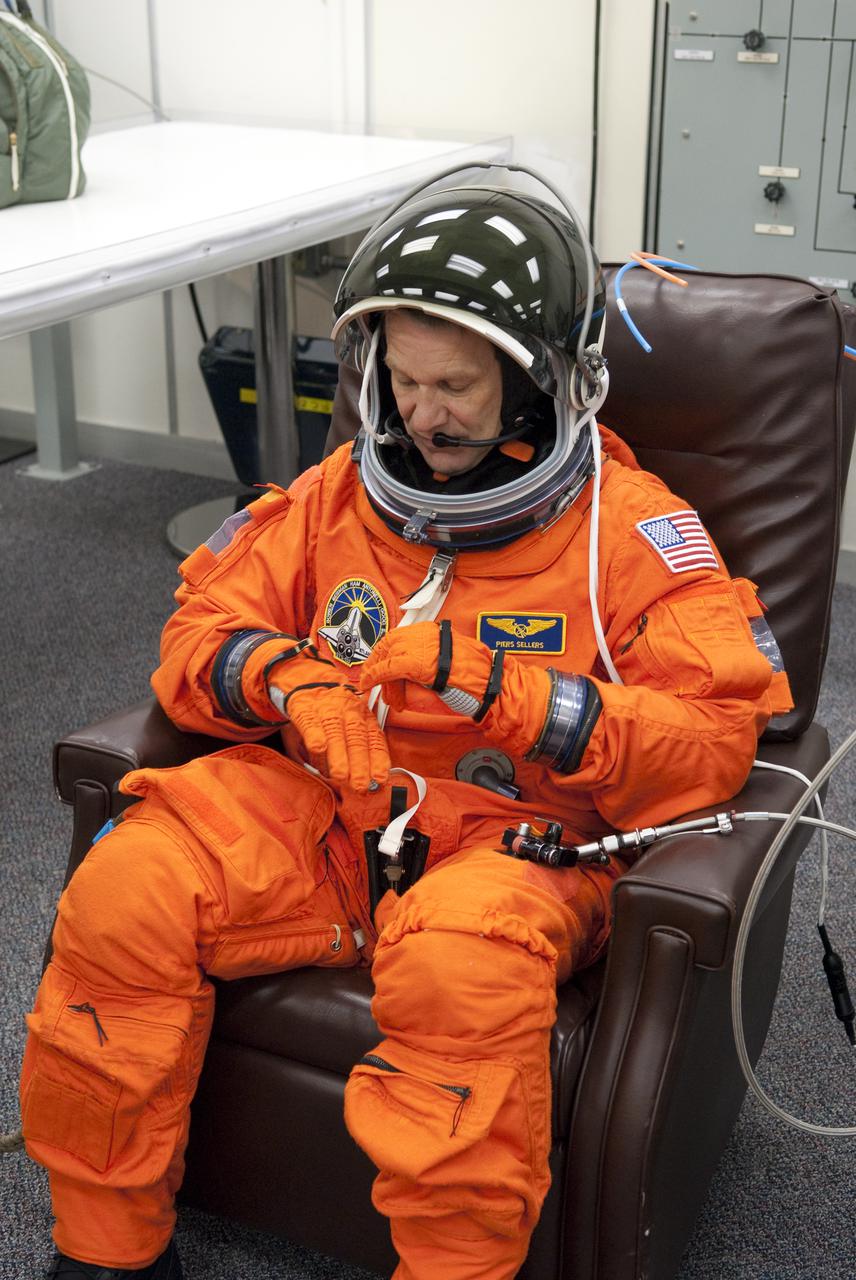
CAPE CANAVERAL, Fla. - In the Operations and Checkout Building at NASA's Kennedy Space Center in Florida, STS-132 Mission Specialist Piers Sellers puts on his space suit's gloves. STS-132 is Sellers third spaceflight. The six-member STS-132 crew is at Kennedy for their Terminal Countdown Demonstration Test, or TCDT, a dress rehearsal for launch. Following this practice 'suit-up,' the astronauts will ride in the Astrovan to Launch Pad 39A where they will participate in a simulated launch countdown from their seats inside space shuttle Atlantis. Launch is targeted for 2:19 p.m. EDT on May 14. On the STS-132 mission, the crew will deliver an Integrated Cargo Carrier, or ICC, and the Russian-built Mini-Research Module-1, or MRM-1, to the International Space Station. The ICC is an unpressurized flat bed pallet and keel yoke assembly used to support the transfer of exterior cargo from the shuttle to the space station. The MRM-1, known as Rassvet, is the second in a series of new pressurized components for Russia and will be permanently attached to the Earth-facing port of the Zarya control module. Rassvet, which translates to 'dawn,' will be used for cargo storage and provide an additional docking port to the station. STS-132 is the 34th mission to the station and the 132nd shuttle mission overall. For information on the STS-132 mission, visit http:__www.nasa.gov_mission_pages_shuttle_shuttlemissions_sts132_index.html. Photo credit: NASA_Cory Huston
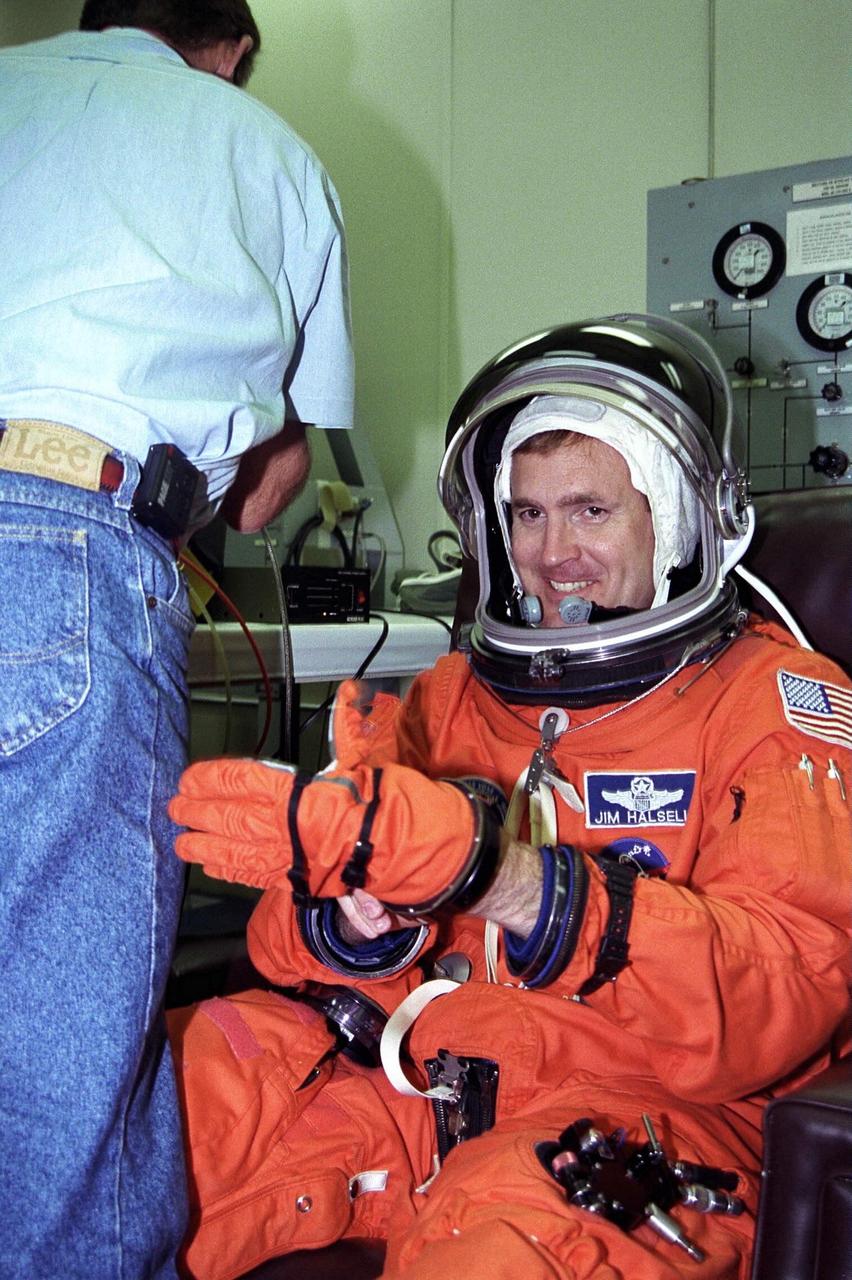
STS-94 Mission Commander James D. Halsell, Jr., puts his left glove on while he is assisted into his launch/entry suit in the Operations and Checkout (O&C) Building. Halsell is on his fourth space flight, having served as commander of STS-83 and pilot of both STS-74 and STS-65. He is a lieutenant colonel in the Air Force and a former SR-71 Blackbird test pilot and holds master’s degrees in management and space operations. Halsell will have responsibility for the success of the mission and will operate and maintain Columbia during the Red, or second shift. He will also assist with a materials science experiment and a protein crystal growth payload during the 16-day mission. Halsell and six fellow crew members will shortly depart the O&C and head for Launch Pad 39A, where the Space Shuttle Columbia will lift off during a launch window that opens at 1:50 p.m. EDT, July 1. The launch window was opened 47 minutes early to improve the opportunity to lift off before Florida summer rain showers reached the space center
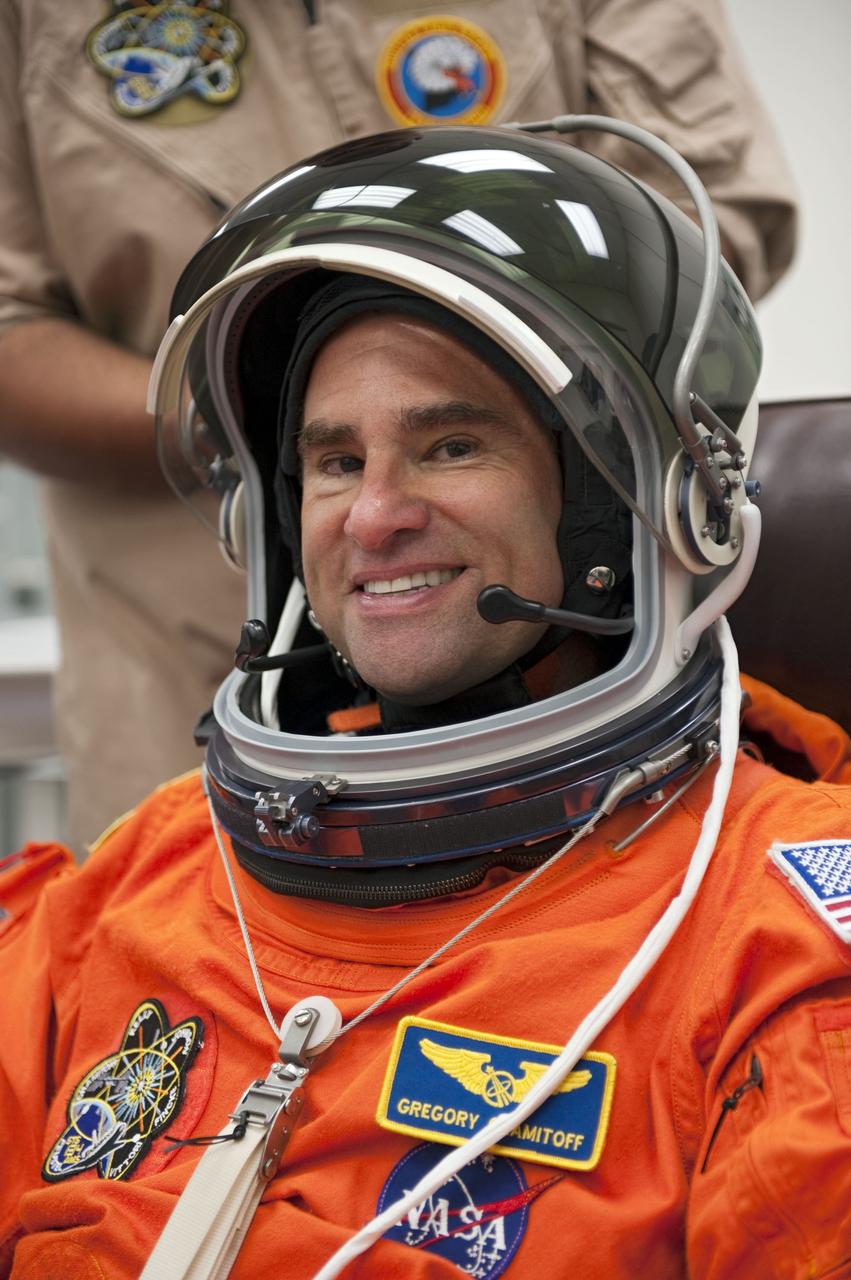
CAPE CANAVERAL, Fla. -- In the Operations and Checkout Building (O&C) at NASA's Kennedy Space Center in Florida, space shuttle Endeavour's STS-134 astronauts put on their launch-and-entry suits and check the fit of their helmets and gloves before heading to the Astrovan for the ride to Launch Pad 39A. Mission Specialist Greg Chamitoff, seen here, last served as flight engineer and science officer aboard the International Space Station in 2008. STS-134 will deliver the Express Logistics Carrier-3, Alpha Magnetic Spectrometer-2 (AMS), a high-pressure gas tank and additional spare parts for the Dextre robotic helper to the space station. Endeavour was scheduled to launch at 3:47 p.m. on April 29, but that attempt was scrubbed for at least 72 hours while engineers assess an issue associated with the shuttle's Auxiliary Power Unit 1. STS-134 will be the final spaceflight for Endeavour. For more information visit, www.nasa.gov/mission_pages/shuttle/shuttlemissions/sts134/index.html. Photo credit: NASA/Kim Shiflett
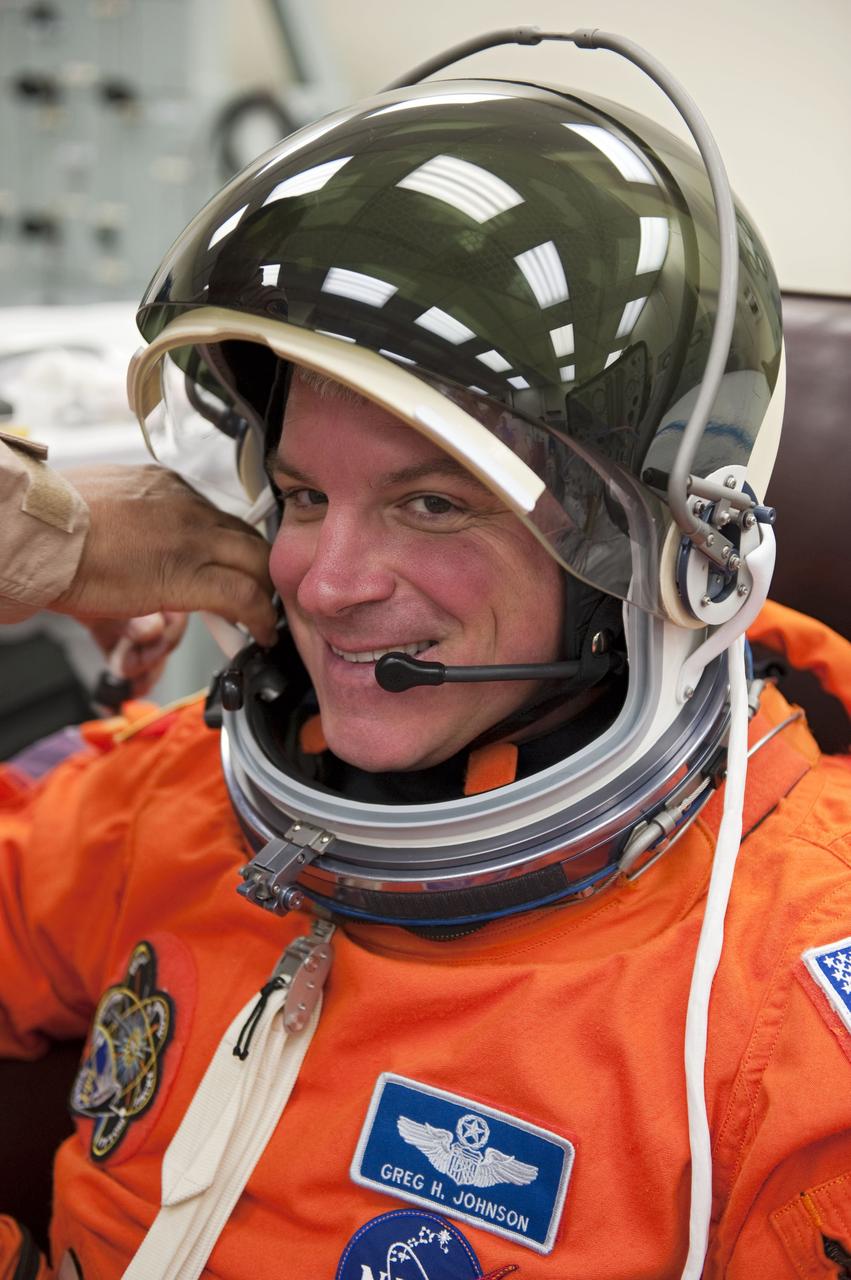
CAPE CANAVERAL, Fla. -- In the Operations and Checkout Building (O&C) at NASA's Kennedy Space Center in Florida, space shuttle Endeavour's STS-134 astronauts put on their launch-and-entry suits and check the fit of their helmets and gloves before heading to the Astrovan for the ride to Launch Pad 39A. Pilot Greg H. Johnson, seen here, last piloted space shuttle Endeavour during its STS-123 mission in 2008. STS-134 will deliver the Express Logistics Carrier-3, Alpha Magnetic Spectrometer-2 (AMS), a high-pressure gas tank and additional spare parts for the Dextre robotic helper to the space station. Endeavour was scheduled to launch at 3:47 p.m. on April 29, but that attempt was scrubbed for at least 72 hours while engineers assess an issue associated with the shuttle's Auxiliary Power Unit 1. STS-134 will be the final spaceflight for Endeavour. For more information visit, www.nasa.gov/mission_pages/shuttle/shuttlemissions/sts134/index.html. Photo credit: NASA/Kim Shiflett
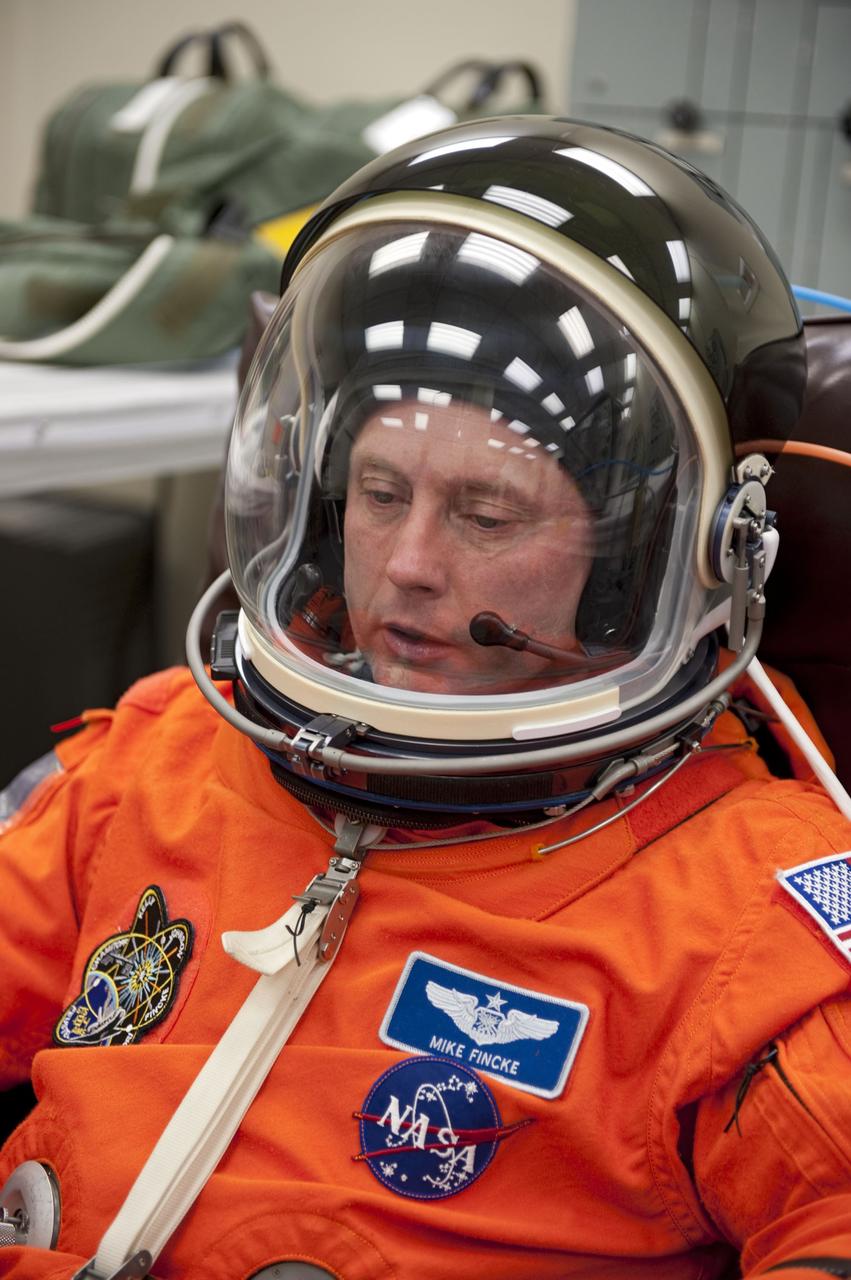
CAPE CANAVERAL, Fla. -- In the Operations and Checkout Building (O&C) at NASA's Kennedy Space Center in Florida, space shuttle Endeavour's STS-134 astronauts put on their launch-and-entry suits and check the fit of their helmets and gloves before heading to the Astrovan for the ride to Launch Pad 39A. Mission Specialist Michael Fincke, seen here, last served as a member of the Expedition 18 crew of the International Space Station in 2009. This will be Fincke's first flight aboard a space shuttle. STS-134 will deliver the Express Logistics Carrier-3, Alpha Magnetic Spectrometer-2 (AMS), a high-pressure gas tank and additional spare parts for the Dextre robotic helper to the space station. Endeavour was scheduled to launch at 3:47 p.m. on April 29, but that attempt was scrubbed for at least 72 hours while engineers assess an issue associated with the shuttle's Auxiliary Power Unit 1. STS-134 will be the final spaceflight for Endeavour. For more information visit, www.nasa.gov/mission_pages/shuttle/shuttlemissions/sts134/index.html. Photo credit: NASA/Kim Shiflett

CAPE CANAVERAL, Fla. -- In the Operations and Checkout Building (O&C) at NASA's Kennedy Space Center in Florida, space shuttle Endeavour's STS-134 astronauts put on their launch-and-entry suits and check the fit of their helmets and gloves before heading to the Astrovan for the ride to Launch Pad 39A. Mission Specialist Roberto Vittori with the European Space Agency, seen here, will be making his third trip to the International Space Station. His first mission was in 2002 and second in 2005, both of which were launched aboard a Russian Soyuz spacecraft. STS-134 will deliver the Express Logistics Carrier-3, Alpha Magnetic Spectrometer-2 (AMS), a high-pressure gas tank and additional spare parts for the Dextre robotic helper to the space station. Endeavour was scheduled to launch at 3:47 p.m. on April 29, but that attempt was scrubbed for at least 72 hours while engineers assess an issue associated with the shuttle's Auxiliary Power Unit 1. STS-134 will be the final spaceflight for Endeavour. For more information visit, www.nasa.gov/mission_pages/shuttle/shuttlemissions/sts134/index.html. Photo credit: NASA/Kim Shiflett
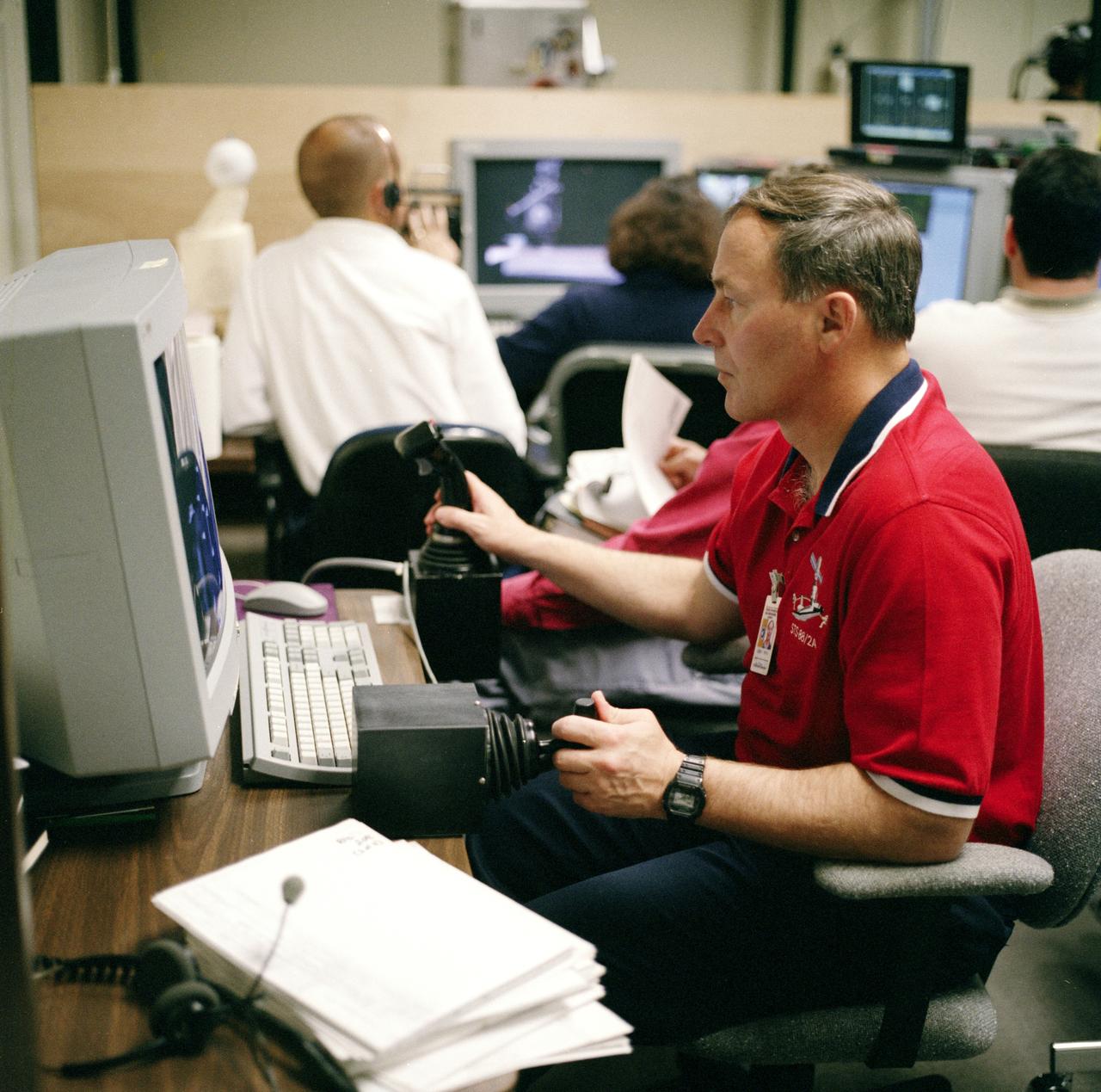
S98-05074 (8 Apr. 1998) --- Astronaut Jerry L. Ross, assigned as a mission specialist for the mission, uses special gear and software to train for his duties aboard the Space Shuttle Endeavour. This type virtual reality training supplements practice for each of the assigned space-walking astronauts -- Ross and James H. Newman -- during which they wear a helmet and special gloves to look at computer displays simulating actual movements around the various locations on the early International Space Station (ISS) hardware with which they'll be working. One of those elements will be the Functional Cargo Block (FGB), which will have been launched a couple of weeks prior to STS-88. Once the FGB is captured using the Remote Manipulator System (RMS) of the Endeavour, astronaut Nancy J. Currie will maneuver the robot arm to dock the FGB to the conical mating adapter at the top of Node 1, to be carried in the Shuttle's cargo bay. In ensuing days, three space walks by Ross and Newman will be performed to make power, data and utility connections between the two modules. Currie also uses this same lab to train for her RMS controlling duties.

CAPE CANAVERAL, Fla. -- In the Operations and Checkout Building (O&C) at NASA's Kennedy Space Center in Florida, space shuttle Endeavour's STS-134 astronauts put on their launch-and-entry suits and check the fit of their helmets and gloves before heading to the Astrovan for the ride to Launch Pad 39A. Commander Mark Kelly, seen here, last commanded space shuttle Discovery during its STS-124 mission in 2008. STS-134 will deliver the Express Logistics Carrier-3, Alpha Magnetic Spectrometer-2 (AMS), a high-pressure gas tank and additional spare parts for the Dextre robotic helper to the space station. Endeavour was scheduled to launch at 3:47 p.m. on April 29, but that attempt was scrubbed for at least 72 hours while engineers assess an issue associated with the shuttle's Auxiliary Power Unit 1. STS-134 will be the final spaceflight for Endeavour. For more information visit, www.nasa.gov/mission_pages/shuttle/shuttlemissions/sts134/index.html. Photo credit: NASA/Kim Shiflett
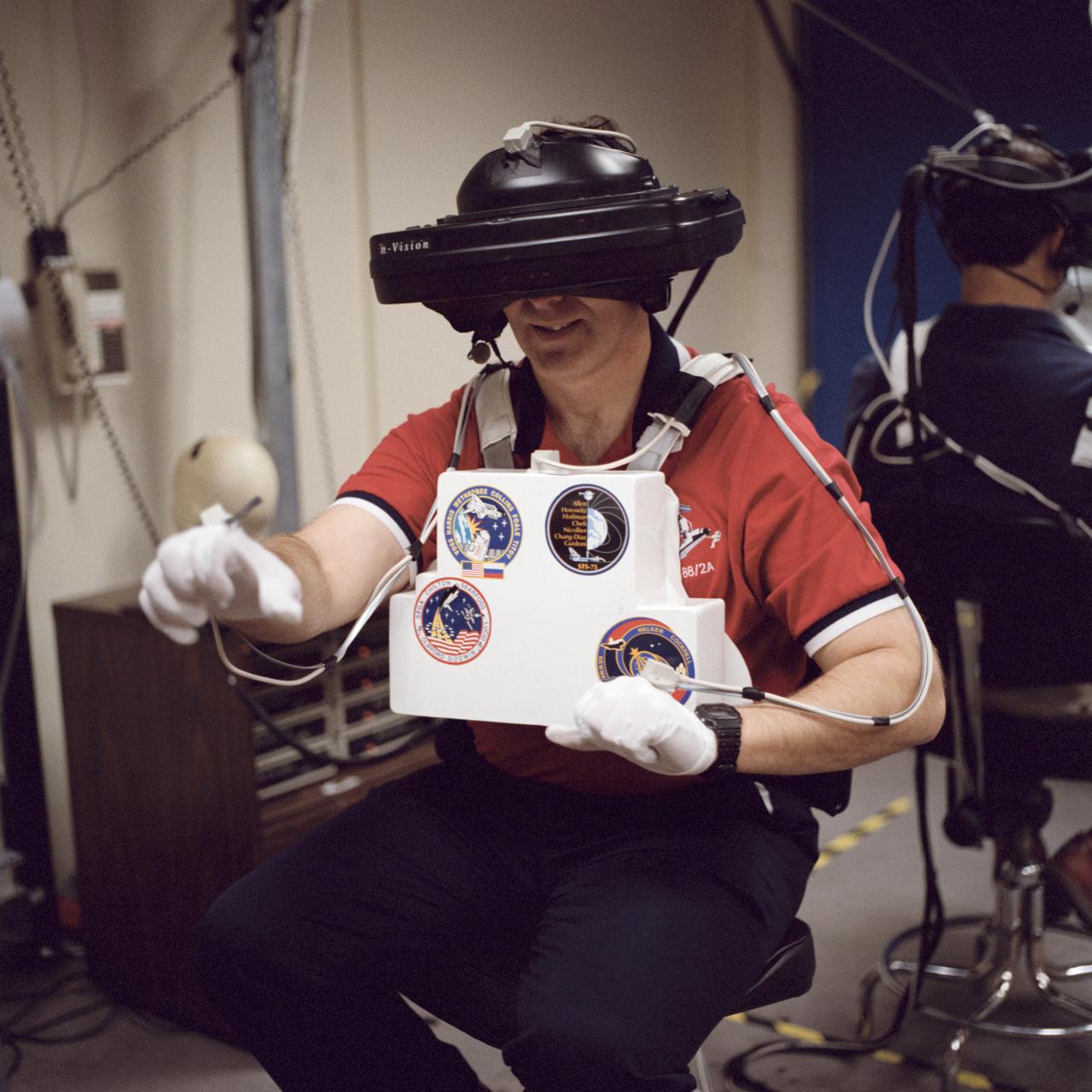
S98-05079 (8 Apr. 1998) --- Astronaut Jerry L. Ross, assigned as a mission specialist for the mission, uses specialized gear to train for his duties aboard the Space Shuttle Endeavour. This type virtual reality training allows each of the assigned Extravehicular Activity (EVA) astronauts -- Ross and James H. Newman -- to wear a helmet and special gloves to look at computer displays simulating actual movements around the various locations on the International Space Station (ISS) hardware with which they'll be working. One of those elements will be the Functional Cargo Block (FGB), which will have been launched a couple of weeks prior to STS-88. Once the FGB is captured using the Remote Manipulator System (RMS) of the Endeavour, astronaut Nancy J. Currie will maneuver the robot arm to dock the FGB to the conical mating adapter at the top of Node 1, to be carried in the Shuttle's cargo bay. In ensuing days, three EVA space walks by Ross and Newman will be performed to make power, data and utility connections between the two modules. Currie also uses this same lab to train for her RMS controlling duties.
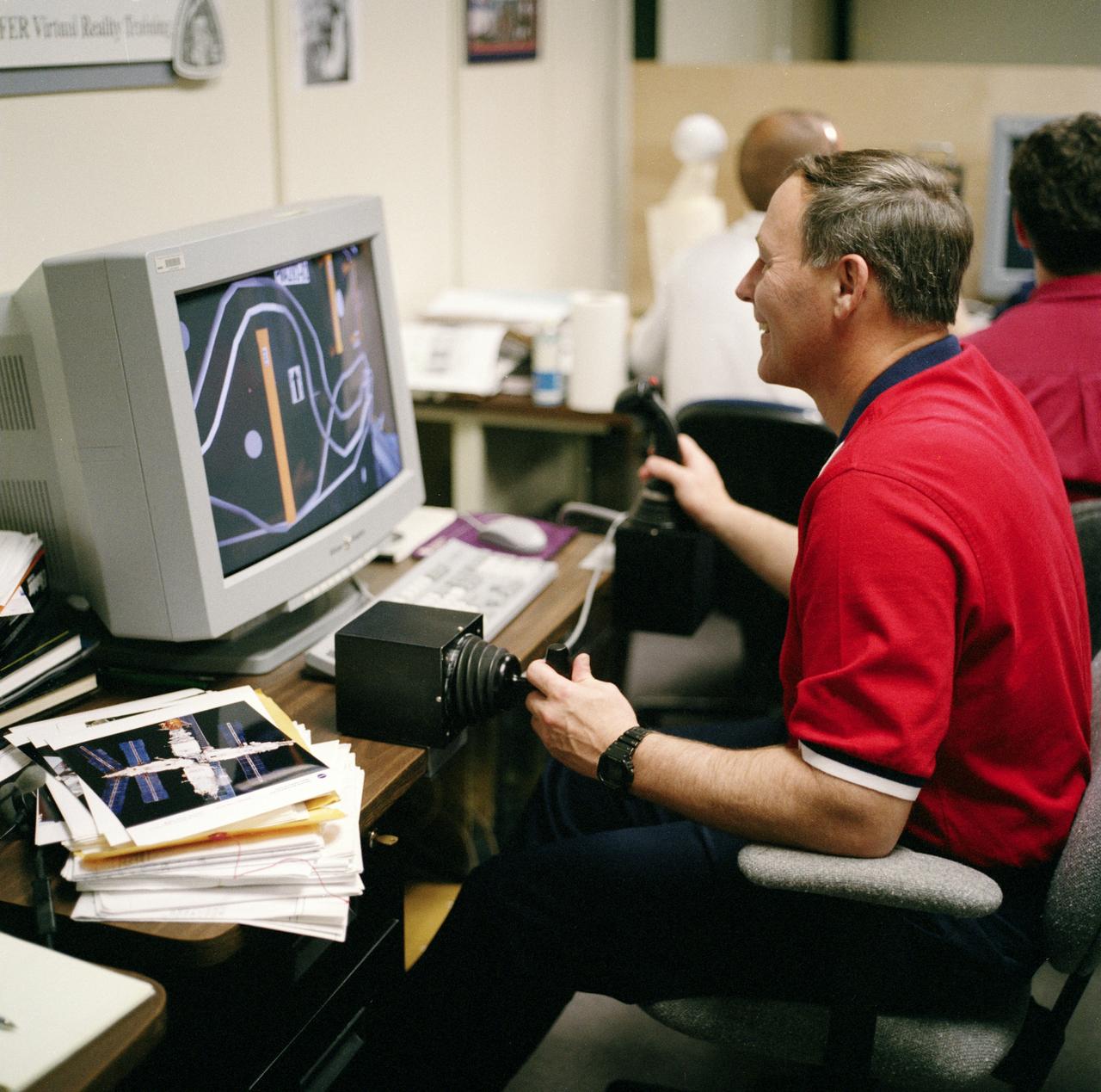
S98-05076 (8 Apr. 1998) --- Astronaut Jerry L. Ross, assigned as a mission specialist for the mission, uses special gear and software to train for his duties aboard the Space Shuttle Endeavour. This type virtual reality training supplements practice for each of the assigned space-walking astronauts -- Ross and James H. Newman -- during which they wear a helmet and special gloves to look at computer displays simulating actual movements around the various locations on the early International Space Station (ISS) hardware with which they'll be working. One of those elements will be the Functional Cargo Block (FGB), which will have been launched a couple of weeks prior to STS-88. Once the FGB is captured using the Remote Manipulator System (RMS) of the Endeavour, astronaut Nancy J. Currie will maneuver the robot arm to dock the FGB to the conical mating adapter at the top of Node 1, to be carried in the Shuttle's cargo bay. In ensuing days, three space walks by Ross and Newman will be performed to make power, data and utility connections between the two modules. Currie also uses this same lab to train for her RMS controlling duties.
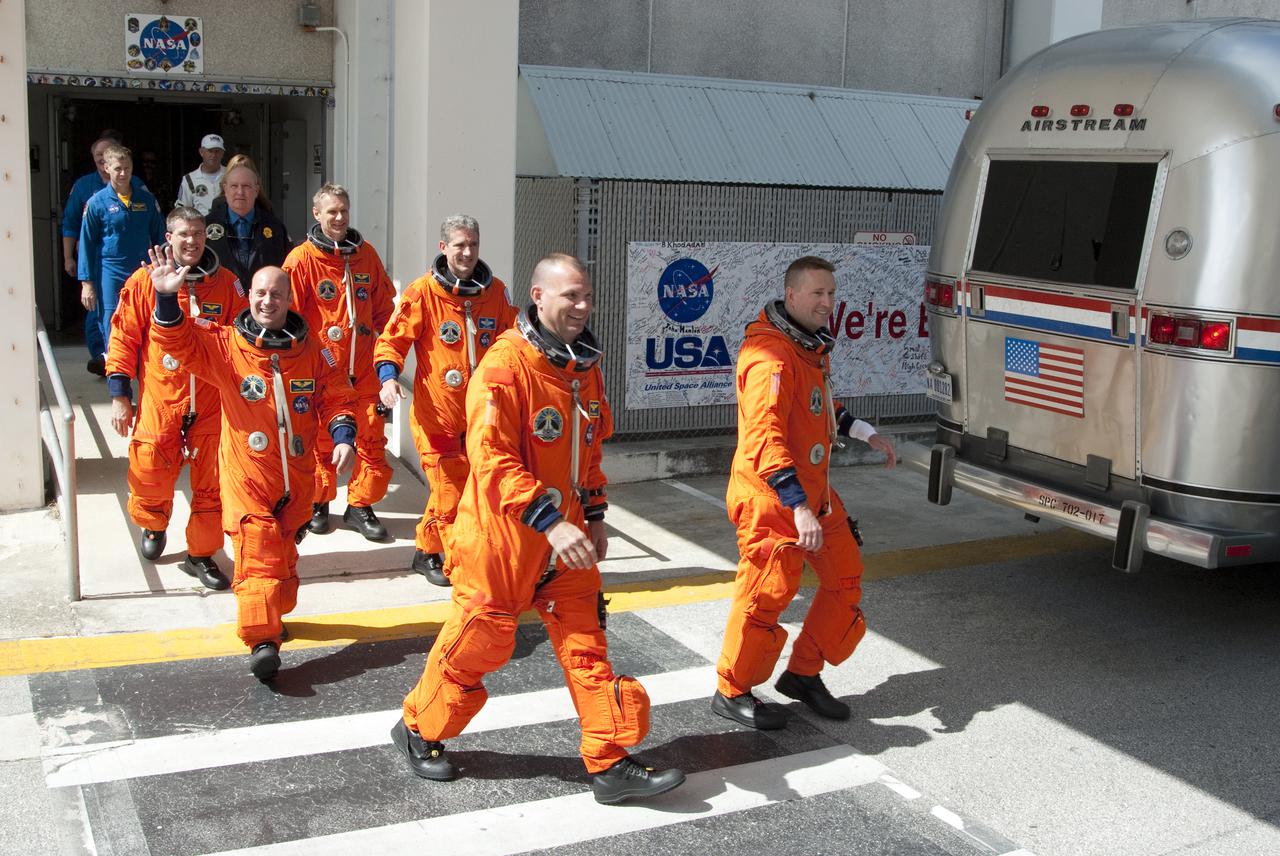
CAPE CANAVERAL, Fla. - At NASA's Kennedy Space Center in Florida, the astronauts on space shuttle Atlantis' STS-132 crew, dressed in their orange launch-and-entry suits, wave to news media representatives and other spectators as they walk out of the Operations and Checkout Building for the ride in the Astrovan to Launch Pad 39A. In the left row, from front, are Pilot Tony Antonelli and Mission Specialists Garrett Reisman and Steve Bowen. In the right row, from front, are Commander Ken Ham and Mission Specialists Michael Good and Piers Sellers. The white band on Ham's left wrist is a watch protector, which will make putting on his suit's gloves easier. Liftoff of the STS-132 mission is set for 2:20 p.m. EDT on May 14. The six-member STS-132 crew will deliver the Russian-built Mini Research Module-1 to the International Space Station. Named Rassvet, Russian for 'dawn,' the module is the second in a series of new pressurized components for Russia and will be permanently attached to the Earth-facing port of the Zarya control module. Rassvet will be used for cargo storage and will provide an additional docking port to the station. Also aboard Atlantis is an Integrated Cargo Carrier, or ICC, an unpressurized flat bed pallet and keel yoke assembly used to support the transfer of exterior cargo from the shuttle to the station. STS-132 is the 34th mission to the station and the last scheduled flight for Atlantis. For more information on the STS-132 mission objectives, payload and crew, visit http:__www.nasa.gov_mission_pages_shuttle_shuttlemissions_sts132_index.html. Photo Credit: NASA_Kim Shiflett

CAPE CANAVERAL, Fla. - At the Operations and Checkout Building at NASA's Kennedy Space Center in Florida, the astronauts on space shuttle Atlantis' STS-132 crew, dressed in their orange launch-and-entry suits, line up for a group portrait in front of the Astrovan which will transport them to Launch Pad 39A. From left are Mission Specialists Steve Bowen, Garrett Reisman, Piers Sellers and Michael Good; Pilot Tony Antonelli; and Commander Ken Ham. The white band on Ham's left wrist is a watch protector, which will make putting on his suit's gloves easier. Liftoff of the STS-132 mission is set for 2:20 p.m. EDT on May 14. The six-member STS-132 crew will deliver the Russian-built Mini Research Module-1 to the International Space Station. Named Rassvet, Russian for 'dawn,' the module is the second in a series of new pressurized components for Russia and will be permanently attached to the Earth-facing port of the Zarya control module. Rassvet will be used for cargo storage and will provide an additional docking port to the station. Also aboard Atlantis is an Integrated Cargo Carrier, or ICC, an unpressurized flat bed pallet and keel yoke assembly used to support the transfer of exterior cargo from the shuttle to the station. STS-132 is the 34th mission to the station and the last scheduled flight for Atlantis. For more information on the STS-132 mission objectives, payload and crew, visit http:__www.nasa.gov_mission_pages_shuttle_shuttlemissions_sts132_index.html. Photo Credit: NASA_Kim Shiflett
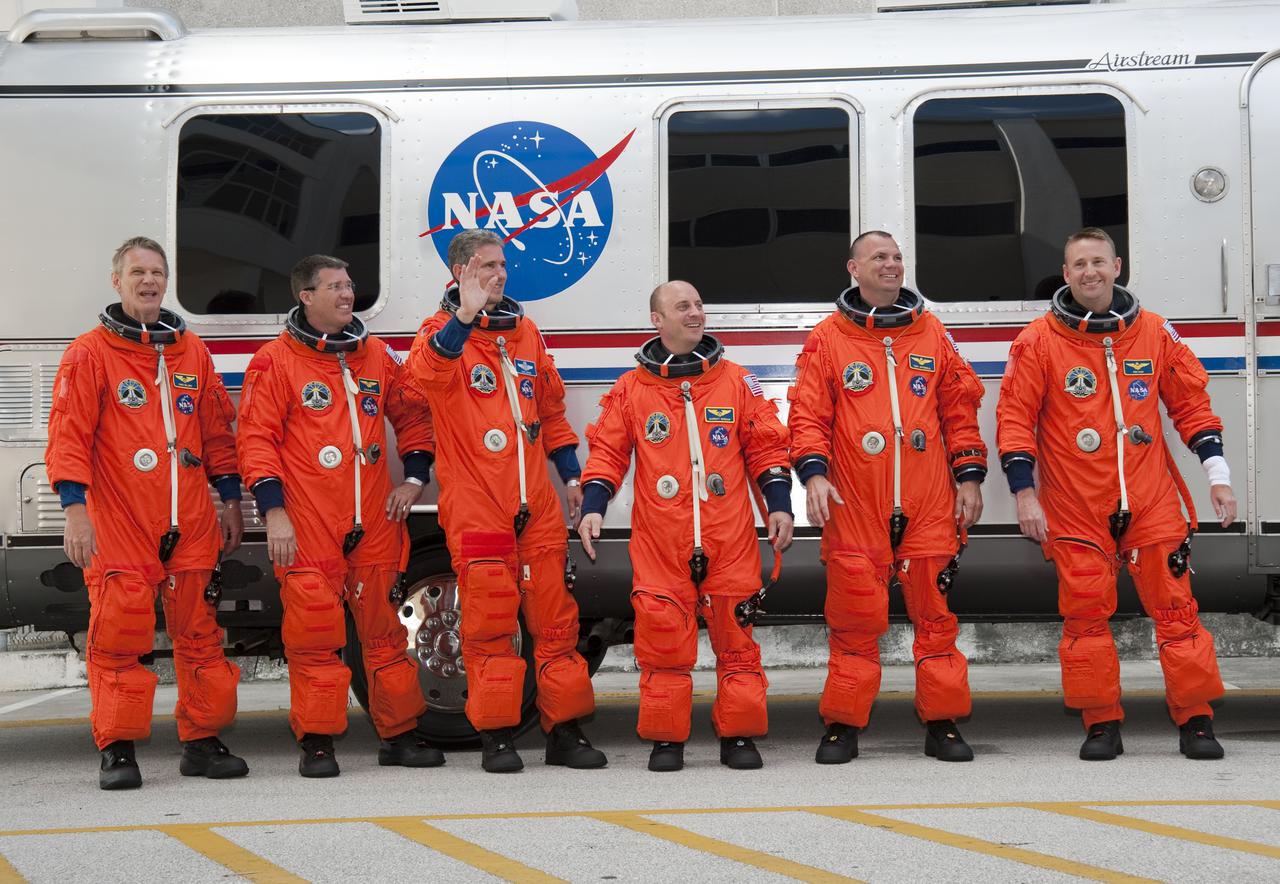
CAPE CANAVERAL, Fla. - At the Operations and Checkout Building at NASA's Kennedy Space Center in Florida, the astronauts on space shuttle Atlantis' STS-132 crew, dressed in their orange launch-and-entry suits, pause for a group portrait in front of the Astrovan which will transport them to Launch Pad 39A. From left are Mission Specialists Piers Sellers, Steve Bowen, Michael Good and Garrett Reisman; Pilot Tony Antonelli; and Commander Ken Ham. The white band on Ham's left wrist is a watch protector, which will make putting on his suit's gloves easier. Liftoff of the STS-132 mission is set for 2:20 p.m. EDT on May 14. The six-member STS-132 crew will deliver the Russian-built Mini Research Module-1 to the International Space Station. Named Rassvet, Russian for 'dawn,' the module is the second in a series of new pressurized components for Russia and will be permanently attached to the Earth-facing port of the Zarya control module. Rassvet will be used for cargo storage and will provide an additional docking port to the station. Also aboard Atlantis is an Integrated Cargo Carrier, or ICC, an unpressurized flat bed pallet and keel yoke assembly used to support the transfer of exterior cargo from the shuttle to the station. STS-132 is the 34th mission to the station and the last scheduled flight for Atlantis. For more information on the STS-132 mission objectives, payload and crew, visit http:__www.nasa.gov_mission_pages_shuttle_shuttlemissions_sts132_index.html. Photo Credit: NASA_Kim Shiflett