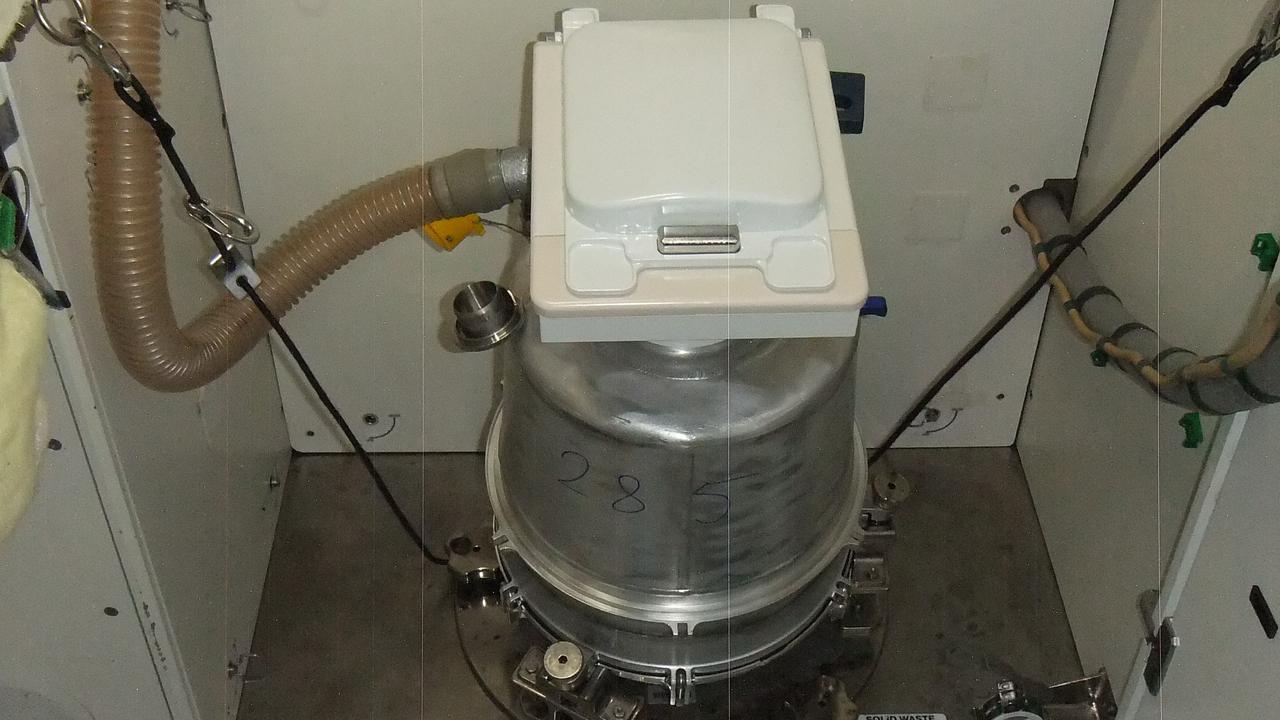
iss041e080672 (Oct. 19, 2014) --- The Waste and Hygiene Compartment, or toilet, located in the International Space Station's Tranquility module.
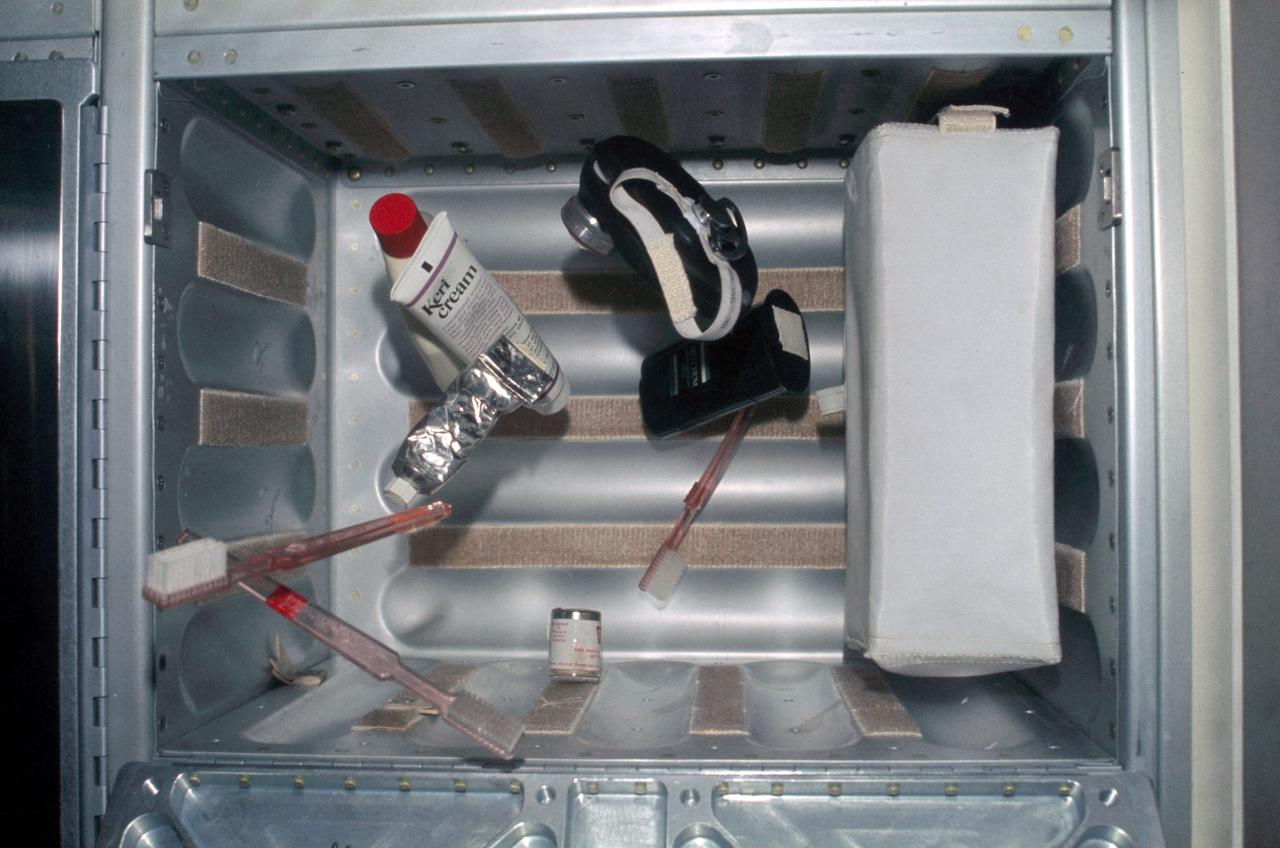
SL3-110-1430 (August 1973) --- View inside the personal hygiene locker of a Skylab 3 astronaut, which contains his toothbrush, battery operated razor, toothpaste and hand cream. Photo credit: NASA
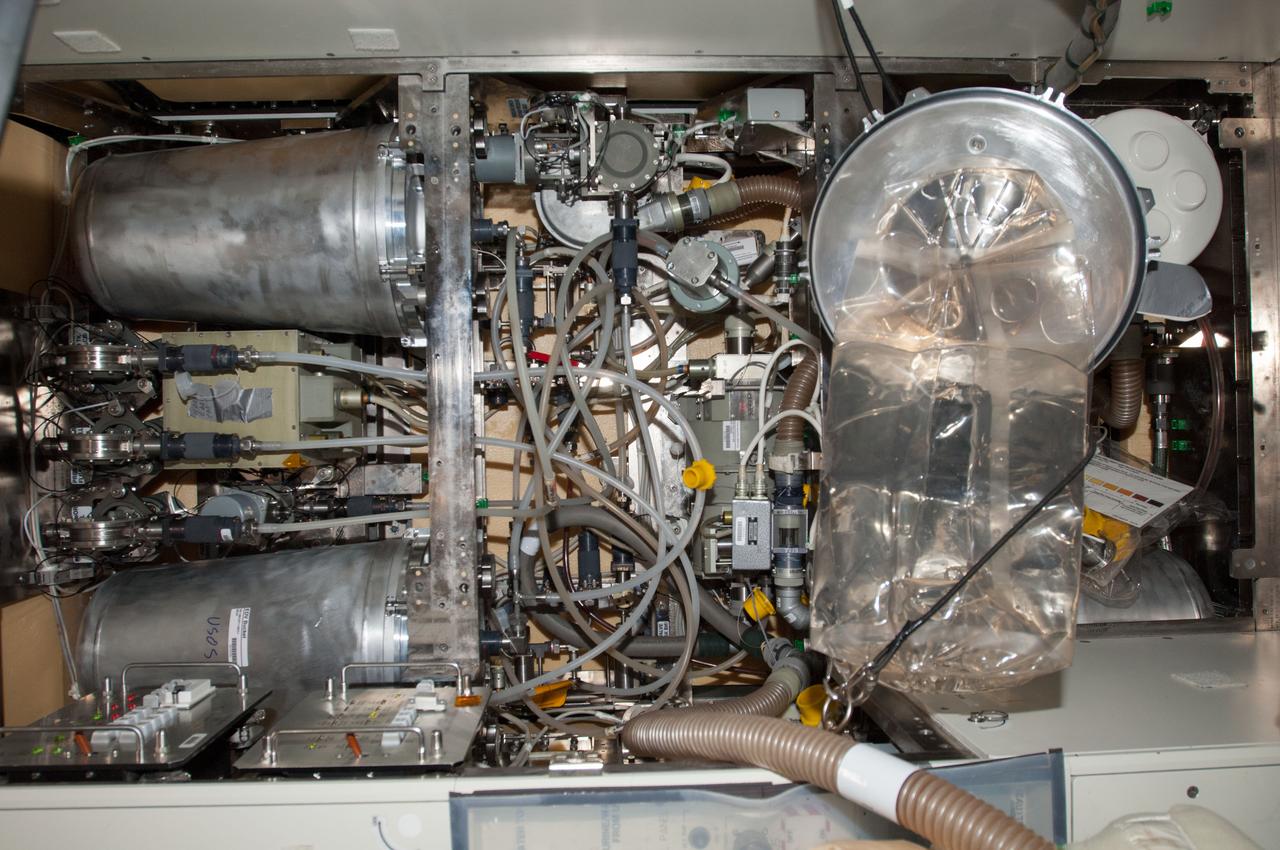
Internal view of Waste and Hygiene Compartment (WHC) taken during maintenance by the Expedition 40 crew.
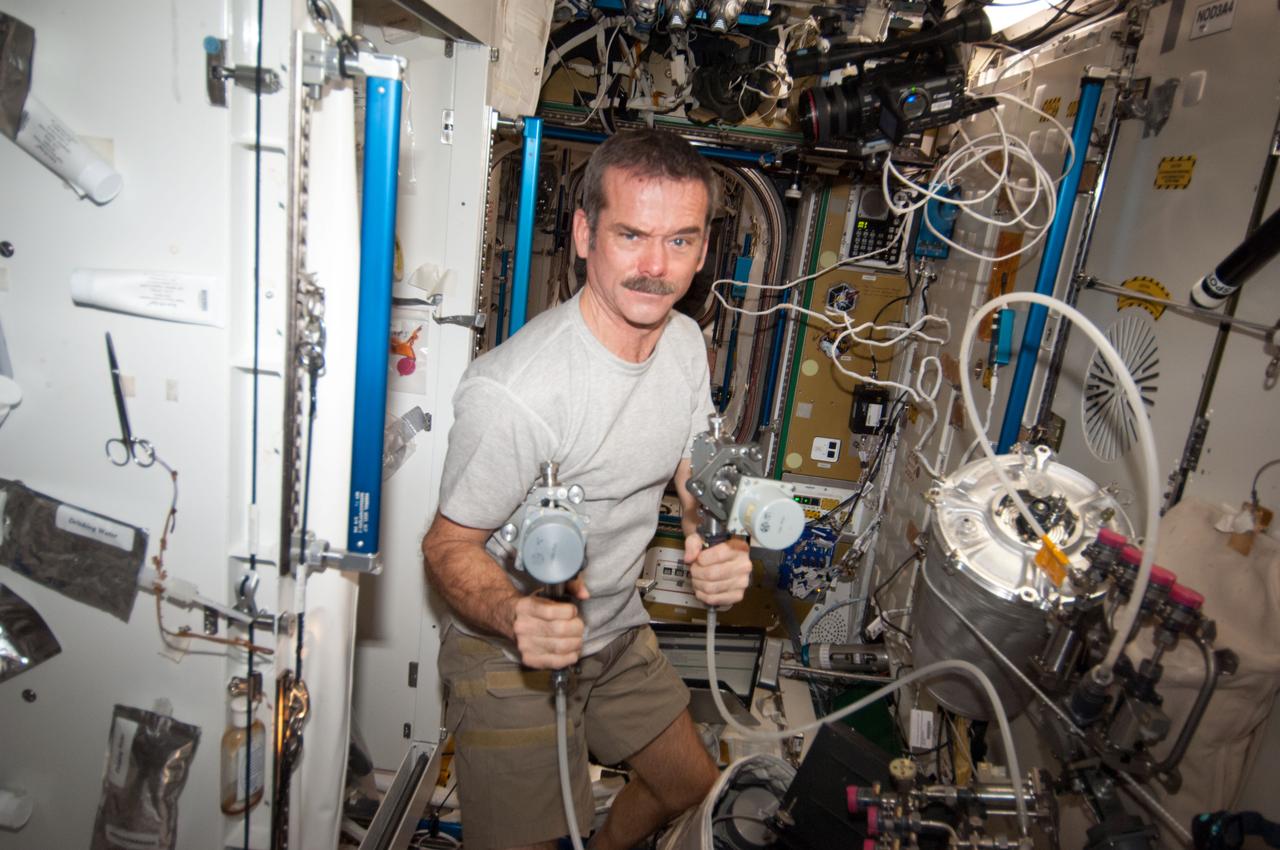
View of Canadian Space Agency (CSA) Chris Hadfield, Expedition 34 Flight Engineer (FE), during Waste and Hygiene Compartment (WHC) routine annual maintenance, in the Node 3. Photo was taken during Expedition 34.
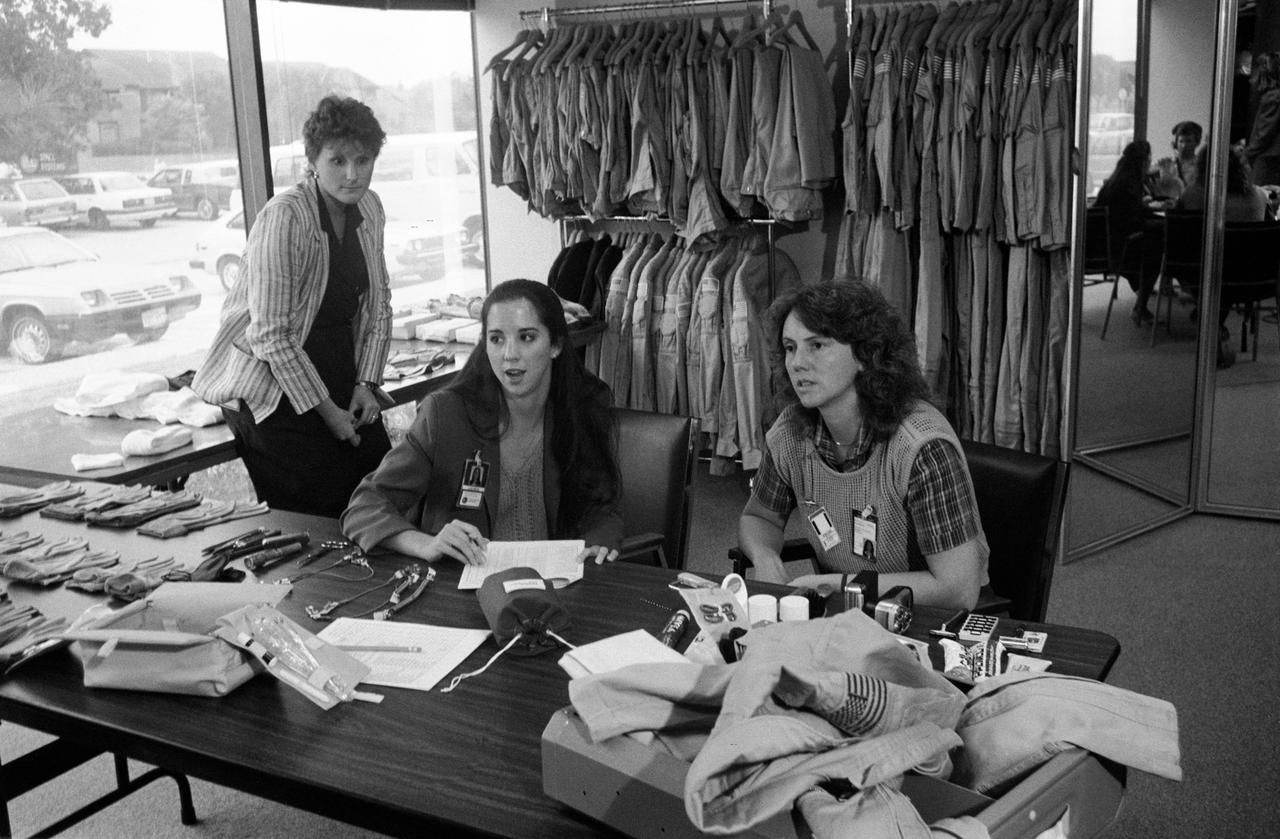
Teacherin-Space participant Christa McAuliffe (right) is briefed on her suit and on personal hygiene equipment to be used on the STS 51L Mission. The briefing was conducted by Laura Louviere (center).
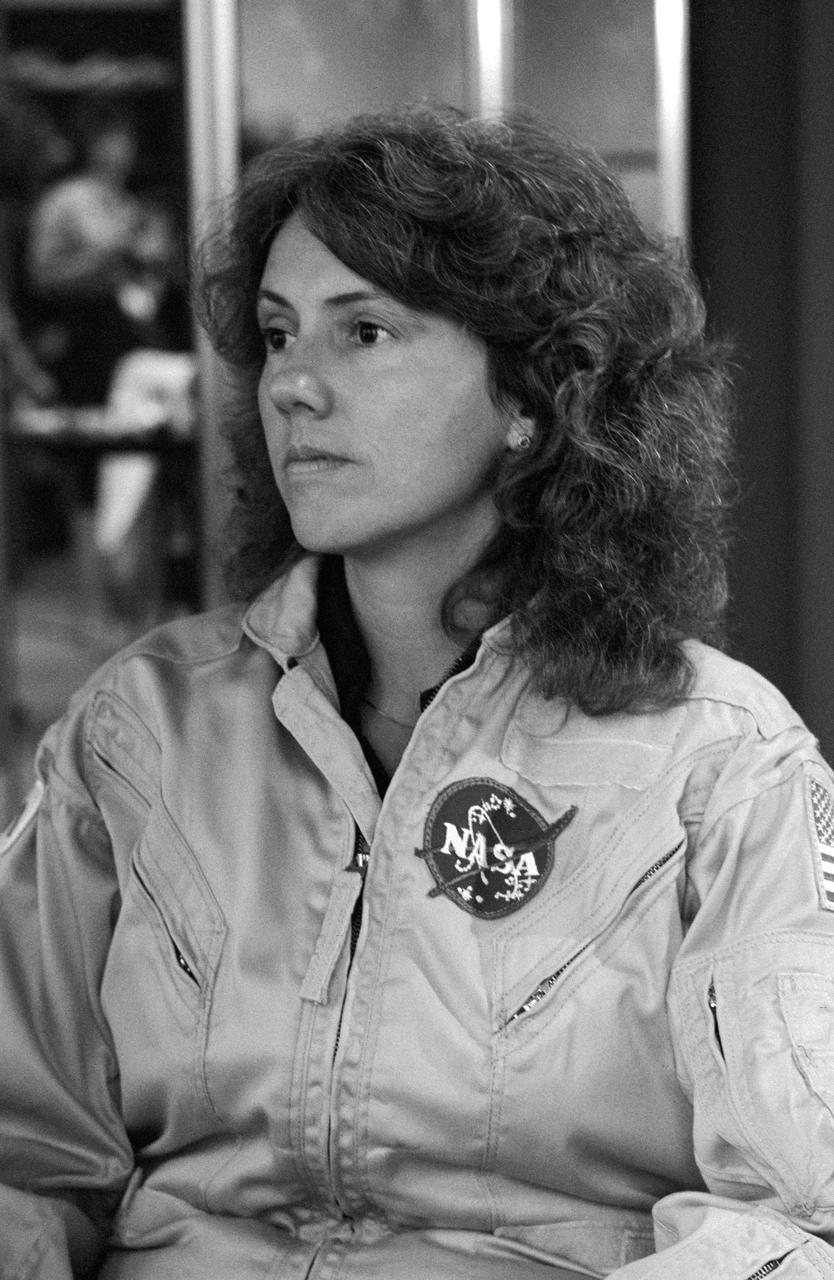
S85-40075 (12 Sept. 1985) --- Teacher-in-Space participant Christa McAuliffe is pictured during her briefing on suit and personal hygiene equipment to be used on the STS-51L mission. Photo credit: NASA
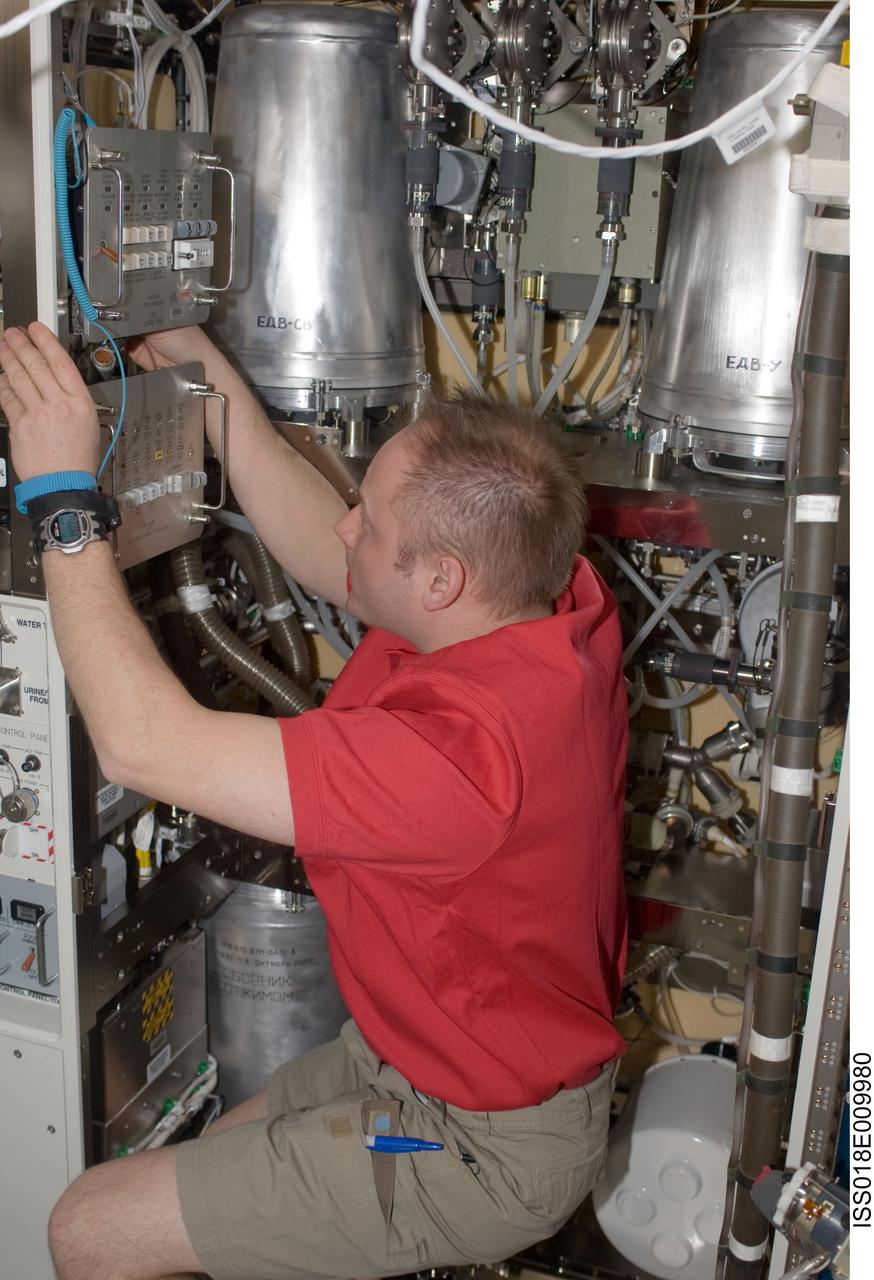
ISS018-E-009980 (2 Dec. 2008) --- Astronaut Michael Fincke, Expedition 18 commander, works with the ACY control panel on the Hygiene Maintenance System in the Zvezda Service Module of the International Space Station.
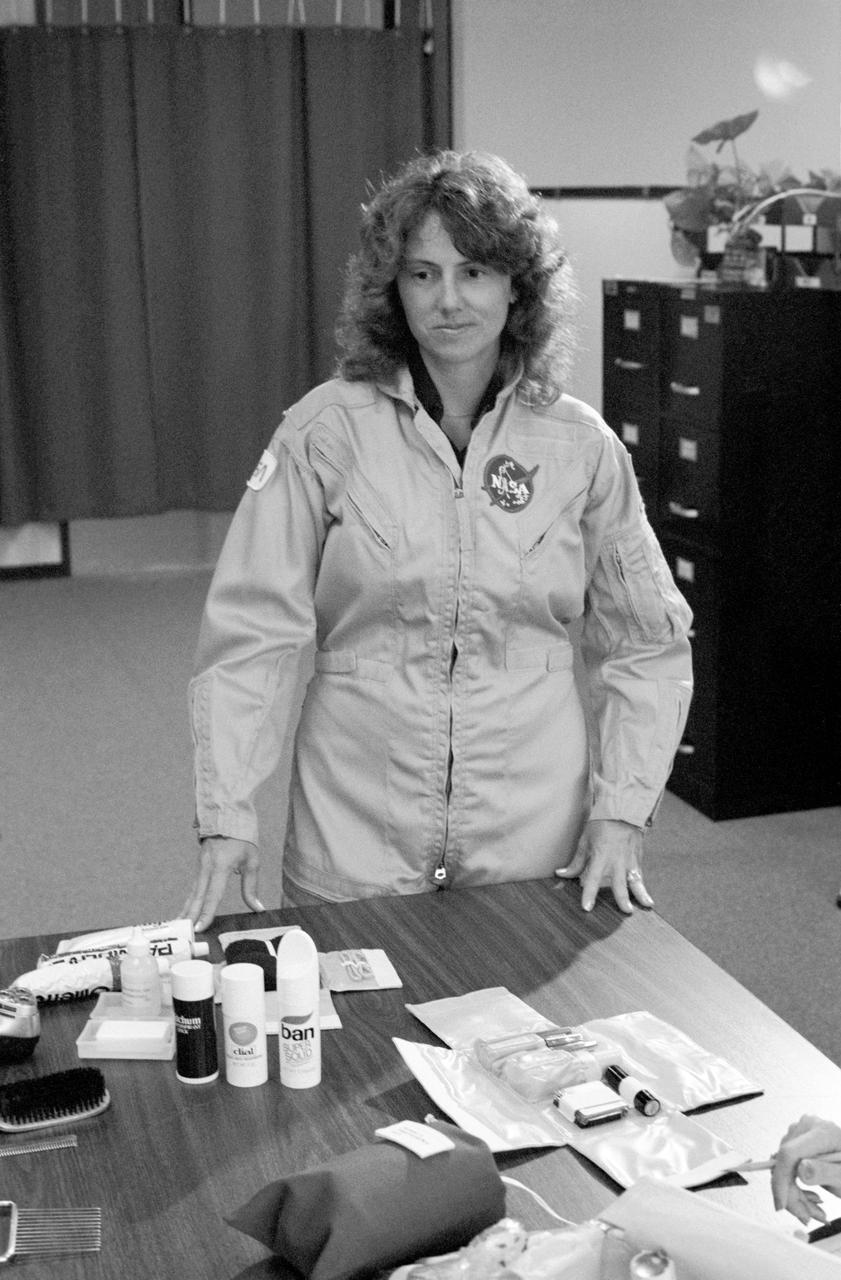
Teacher-in-Space Participant Christa McAuliffe is briefed on her suit and on personal hygiene equipment to be used on the STS 51L Mission. She is standing in front of a table with several of the items to be used on the flight, including one can labeled DIAL and one can labeled BAN.
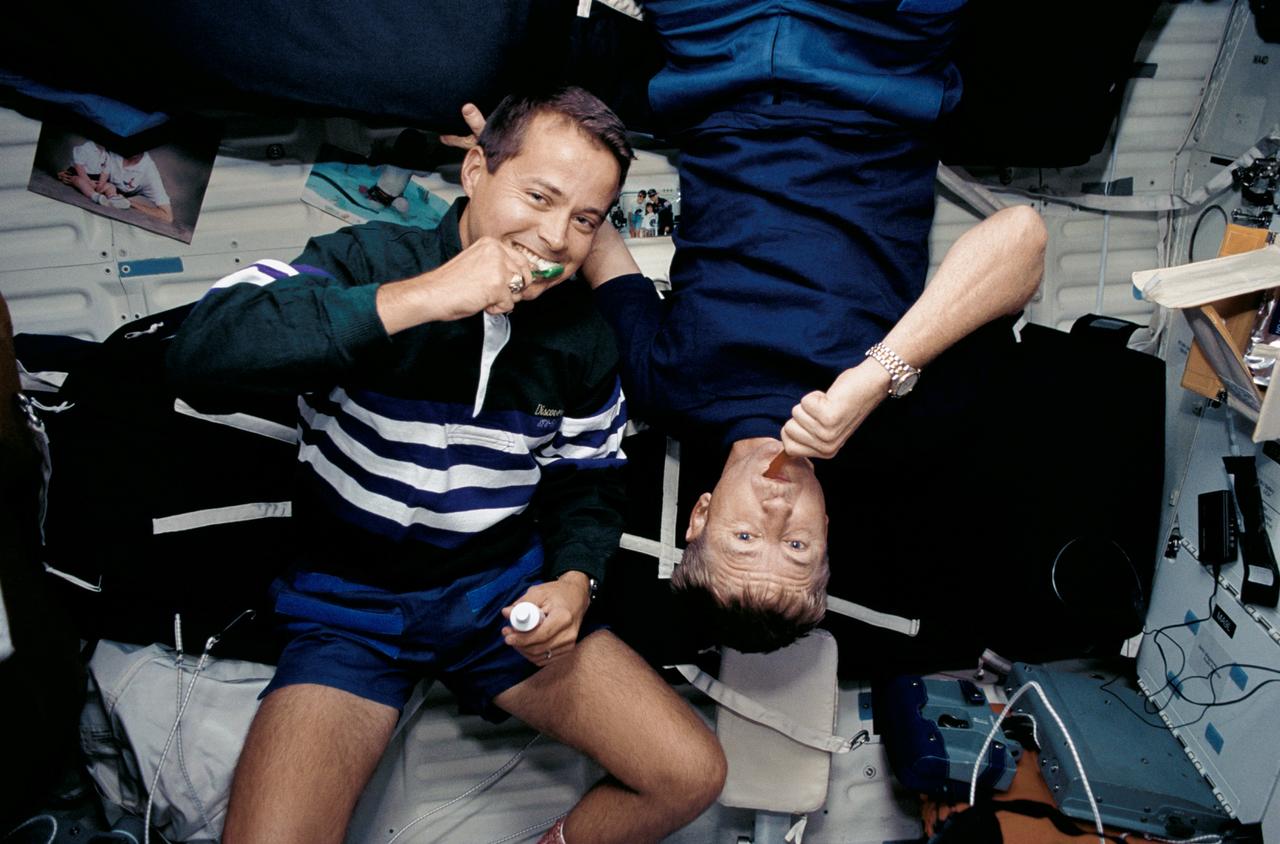
STS051-10-025 (12-22 Sept. 1993) --- (Orient Photo With Hygiene Kit At Right Center). Astronauts Frank L. Culbertson (right), mission commander, and Daniel W. Bursch, mission specialist, brush their teeth on Space Shuttle Discovery's middeck. Two sleep restraints form part of the backdrop for the photograph. The two were joined by three other NASA astronauts for almost ten full days in space for the STS-51 mission.
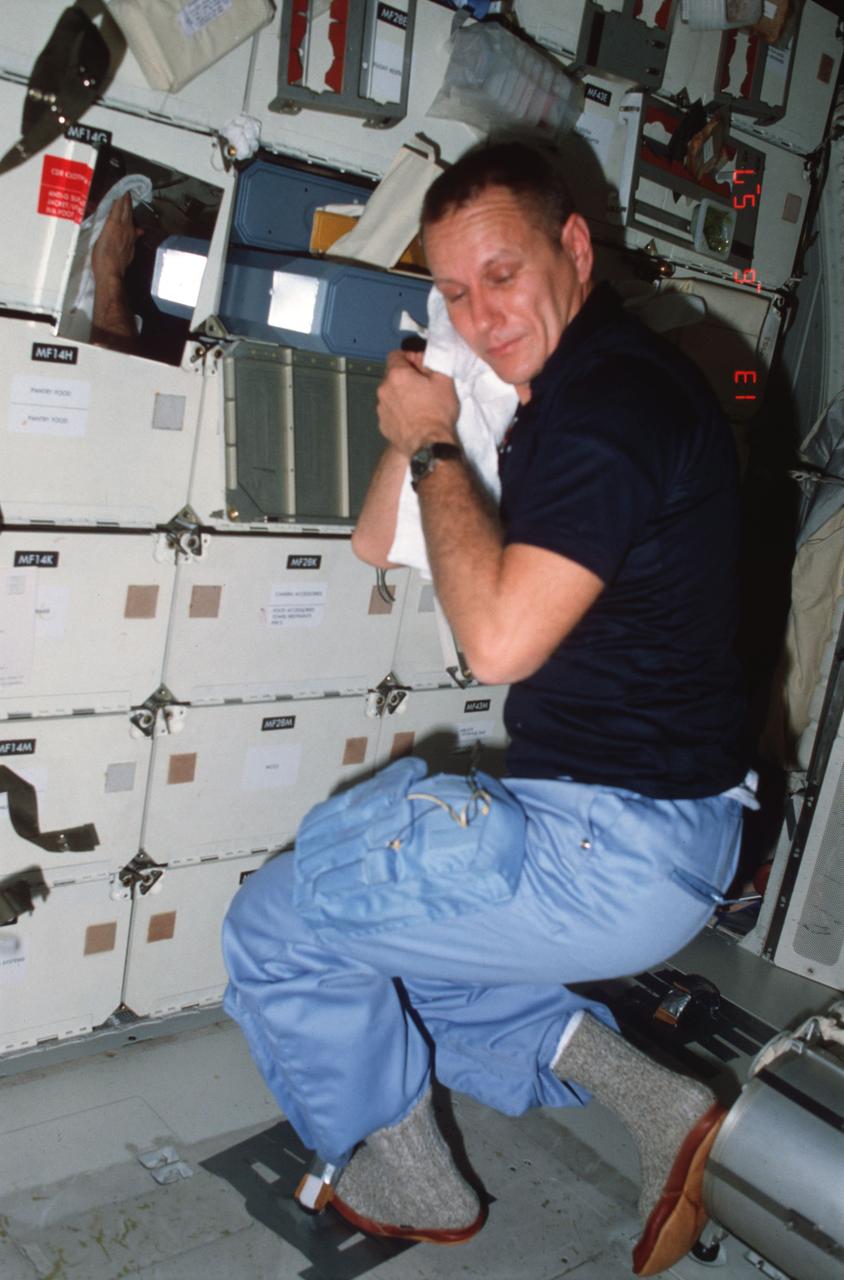
STS005-06-230 (11-16 Nov. 1982) --- On middeck, astronaut Robert F. Overmyer, STS-5 pilot, drying his face with a towel from forward single tray personal item stowage locker, completes personal hygiene activities (shaving) and demonstrates use of intravehicular activity (IVA) foot restraint on floor. Photo credit: NASA
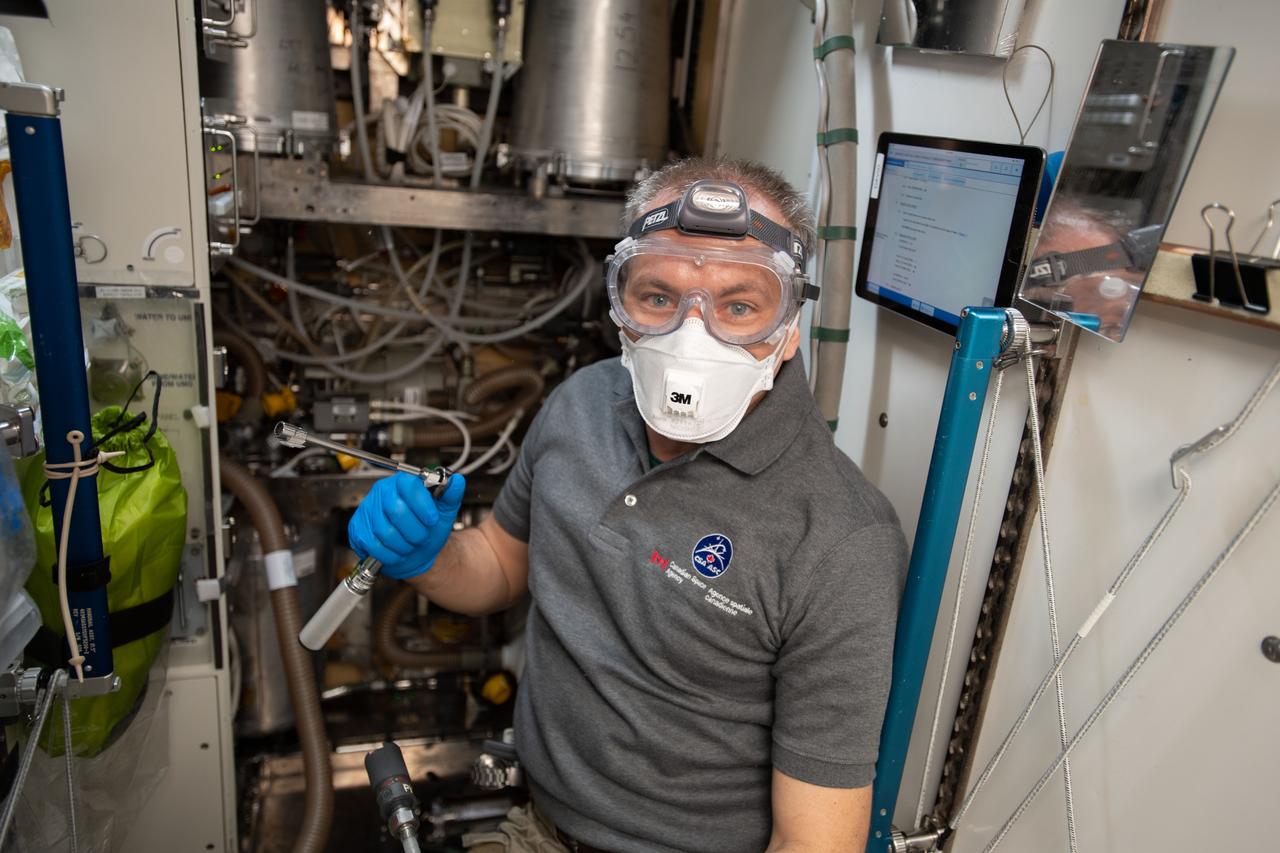
iss058e004176 (Jan. 16, 2019) --- Astronaut David Saint-Jacques of the Canadian Space Agency performs orbital plumbing work as he removes and replaces hydraulic components in the Waste and Hygiene Compartment, also known as the International Space Station's toilet located in the Tranquility module.
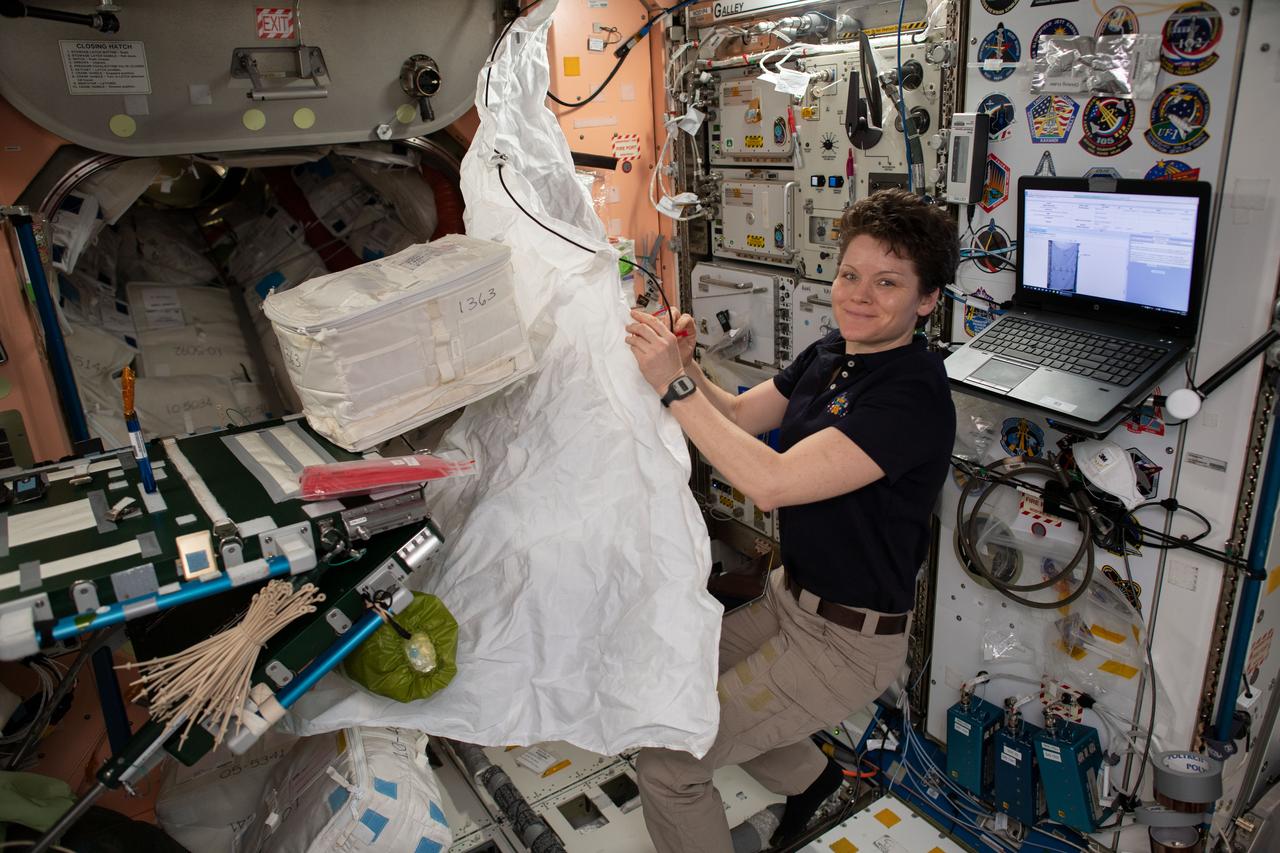
iss059e092264 (June 5, 2019) --- NASA astronaut Anne McClain assembles a hygiene cover that will cover a rack bay inside the Permanent Multipurpose Module.
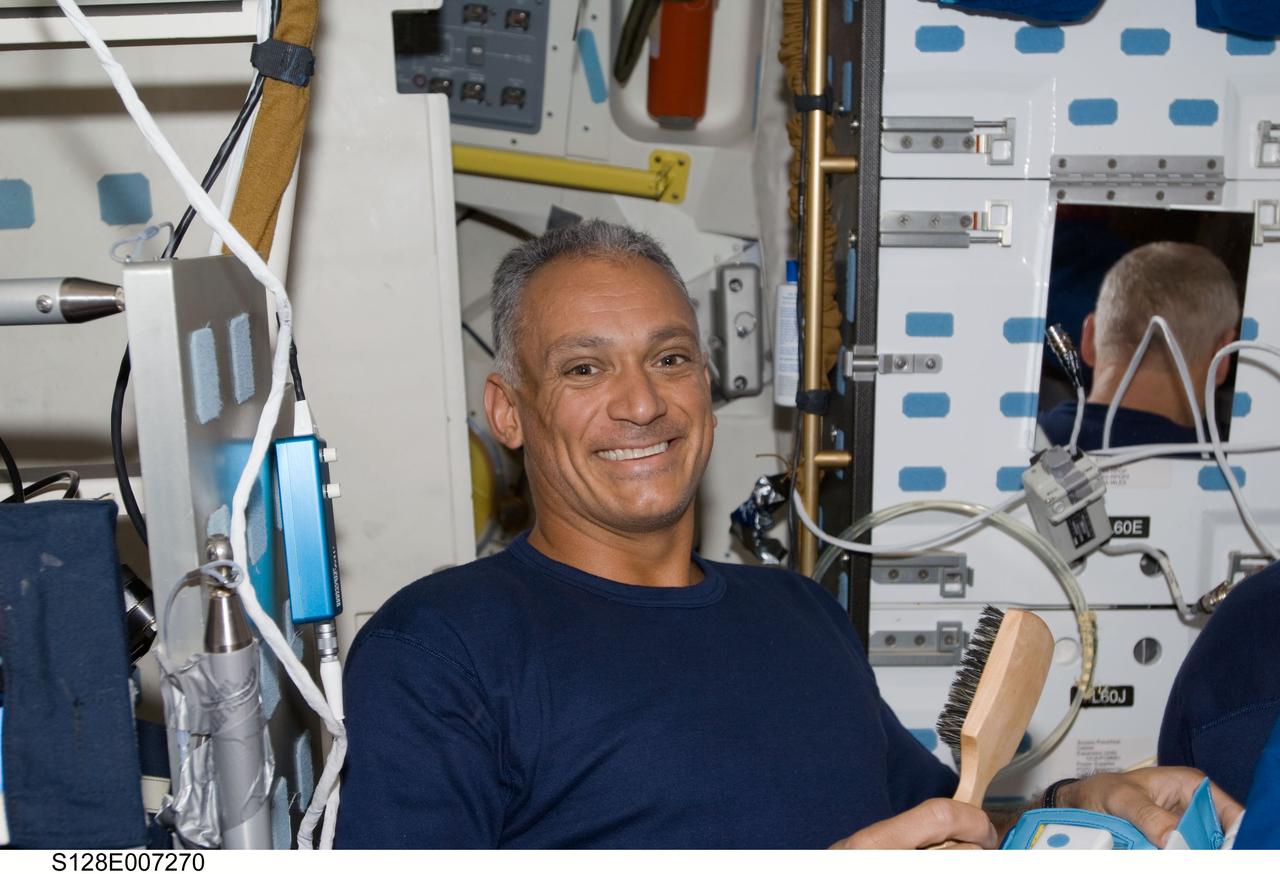
S128-E-007270 (4 Sept. 2009) --- During some off duty time on the middeck of the Space Shuttle Discovery, astronaut John "Danny" Olivas, STS-128 mission specialist, uses a mirror as he brushes his hair. The crew has passed its mid point in the scheduled 13-day mission and Olivas has participated in two sessions of extravehicular activity and eyes the final of three spacewalks on Sept. 5 to continue exterior work on the International Space Station.
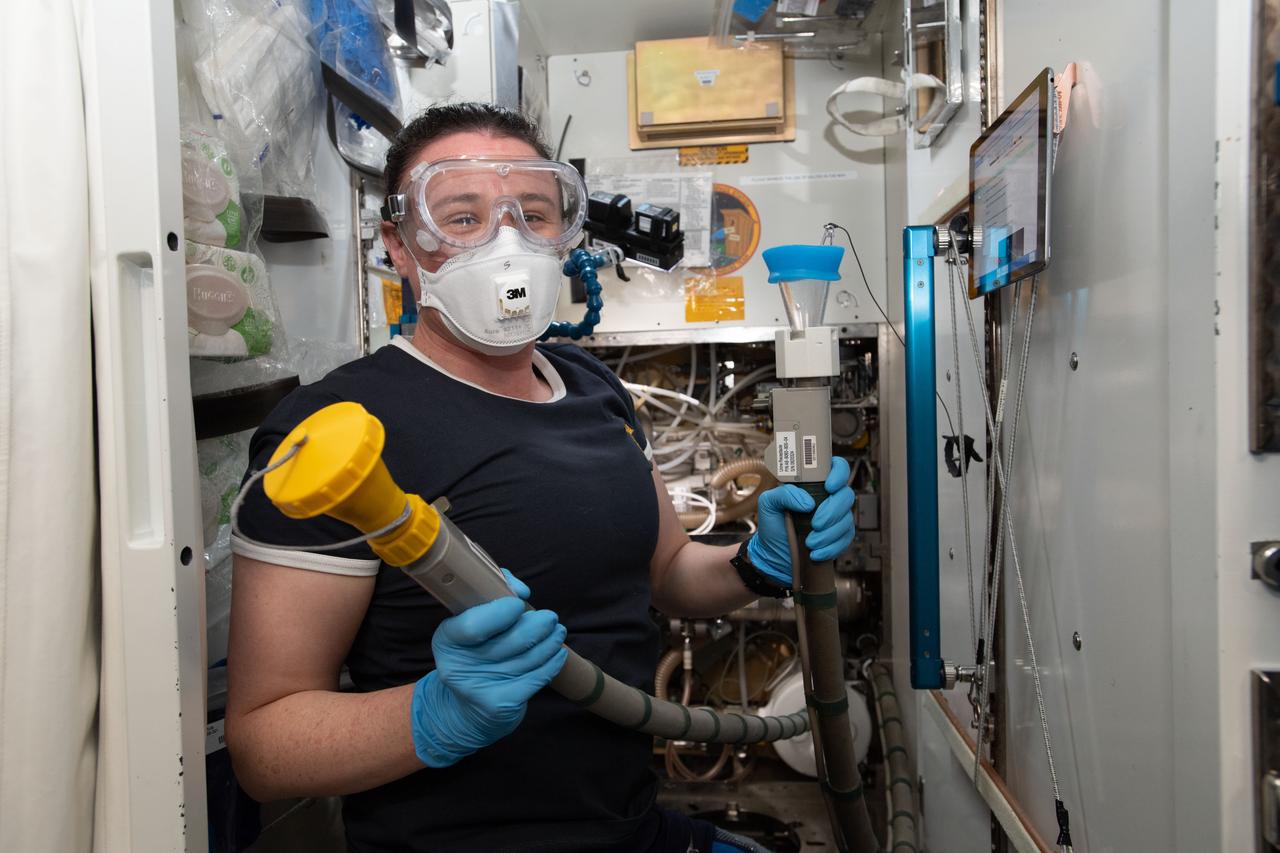
iss057e088317 (Nov. 13, 2018) --- NASA astronaut Serena Auñón-Chancellor performs plumbing duties inside the International Space Station's toilet, also known as the Waste and Hygiene Compartment, located in the U.S. Tranquility module.
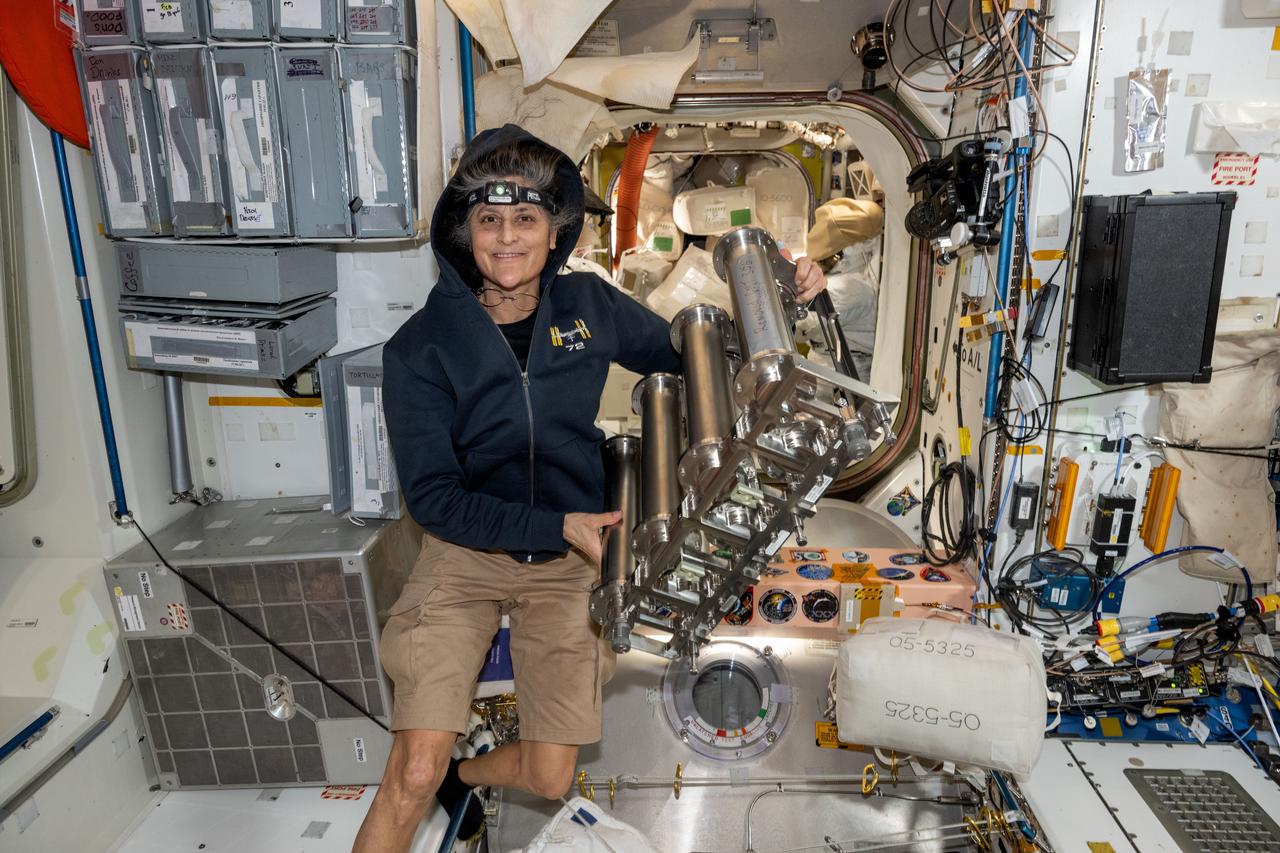
iss072e143163 (Nov. 1, 2024) --- NASA astronaut and Expedition 72 Commander Suni Williams replaces particulate filters on the water recovery system, a component of the Tranquility module's waste and hygiene compartment, the International Space Station's bathroom.
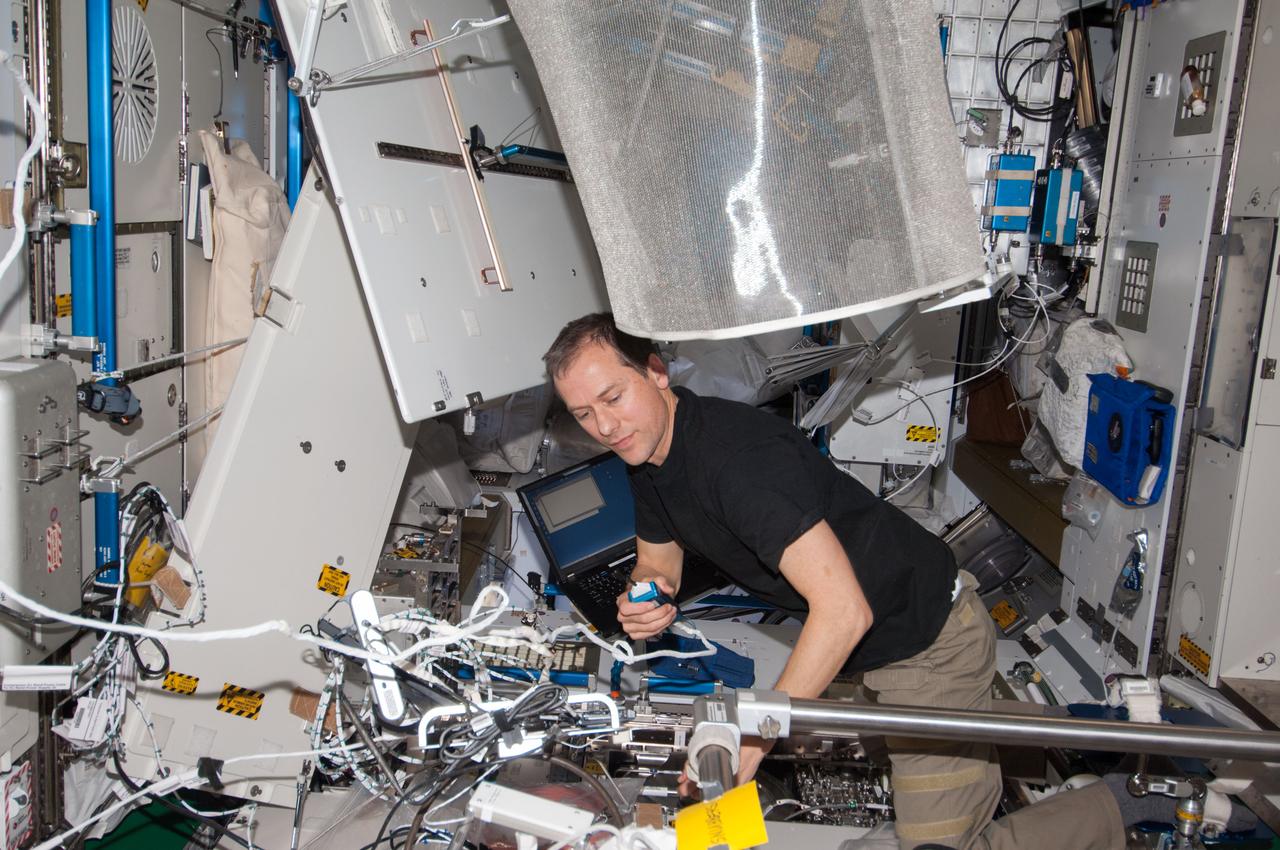
ISS034-E-031130 (17 Jan. 2013) --- NASA astronaut Tom Marshburn, Expedition 34 flight engineer, updates software on the Waste and Hygiene Compartment?s Urine Processor Assembly in the Tranquility node of the International Space Station.
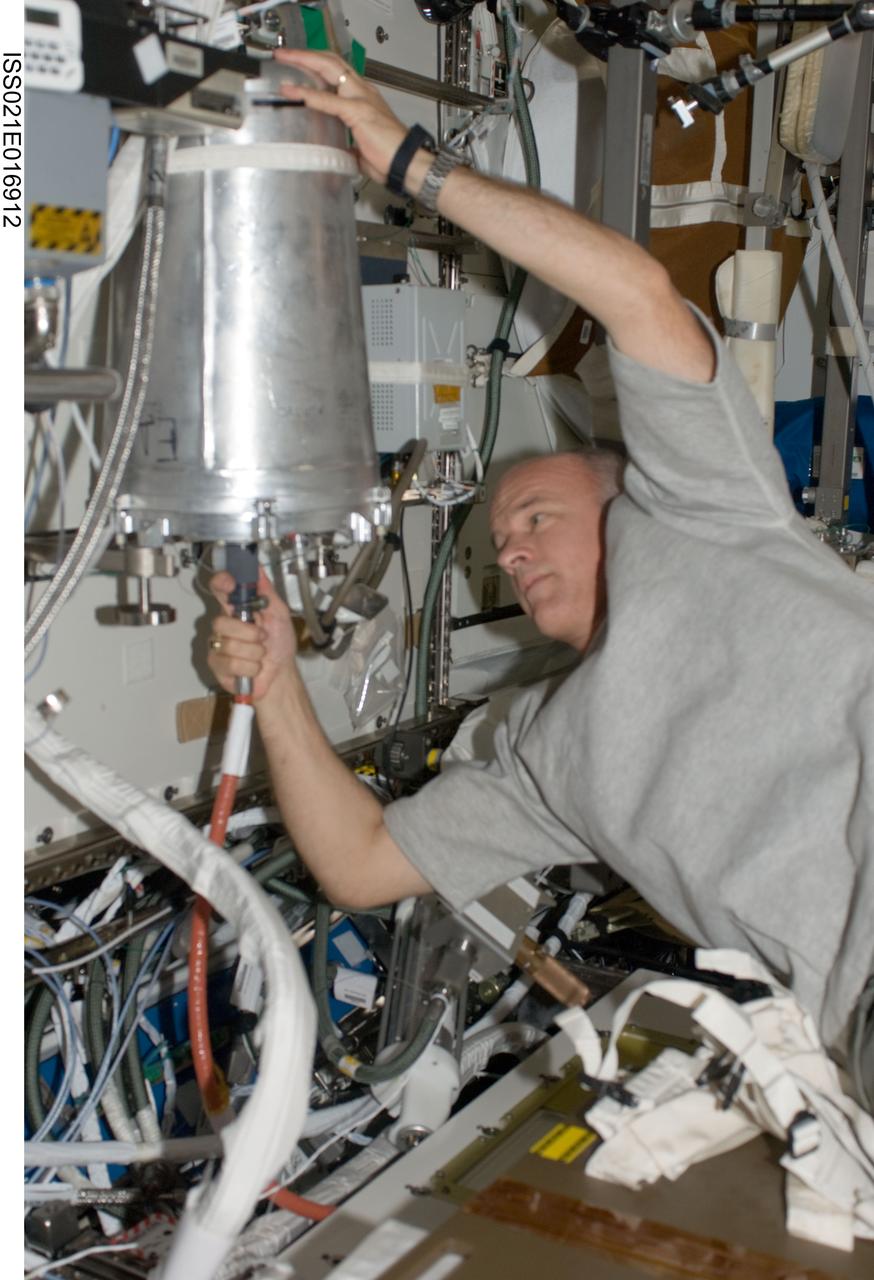
ISS021-E-016912 (30 Oct. 2009) --- NASA astronaut Jeffrey Williams, Expedition 21 flight engineer, works with the waste and hygiene compartment in the Destiny laboratory of the International Space Station.
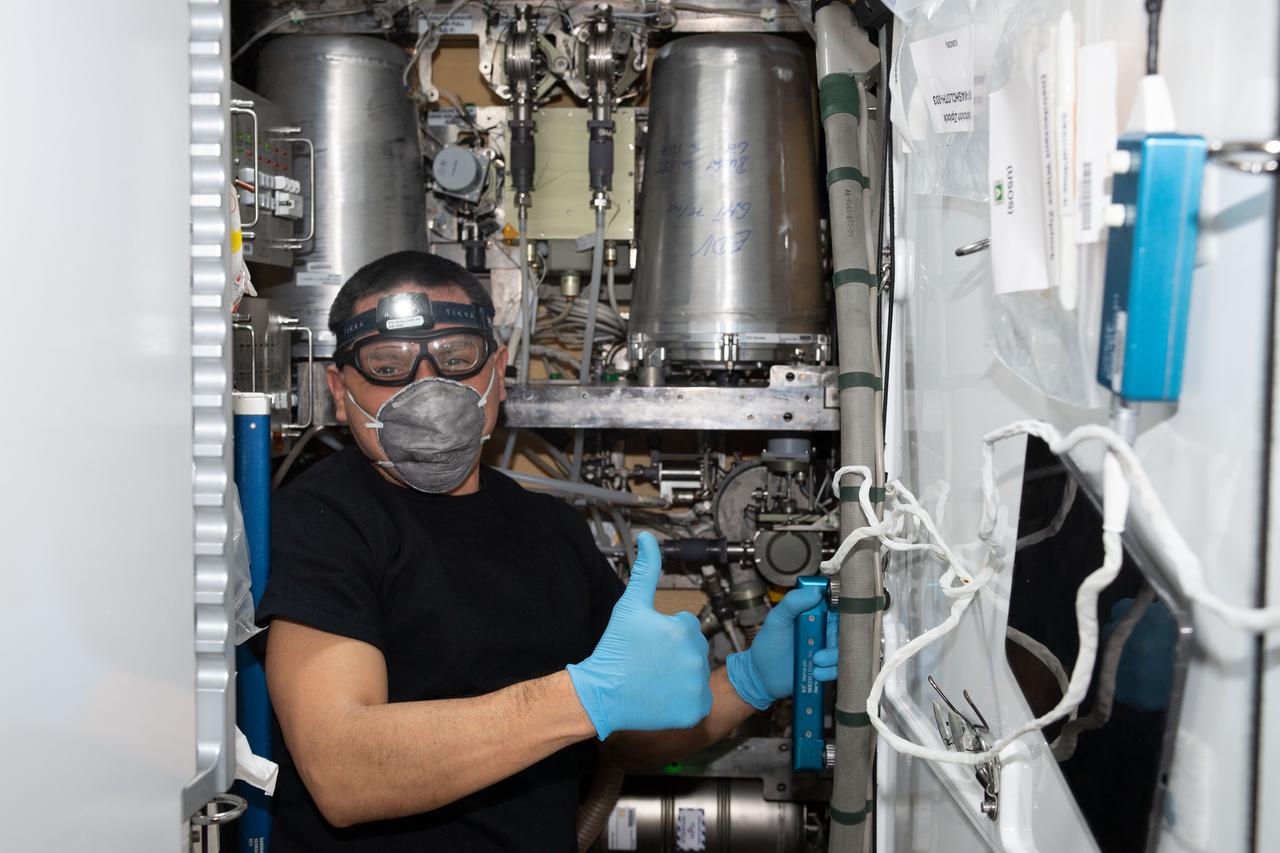
iss068e050628 (Feb. 9, 2023) --- NASA astronaut and Expedition 68 Flight Engineer Frank Rubio swaps orbital plumbing components inside the Waste and Hygiene Compartment, the International Space Station's bathroom located in the Tranquility module.
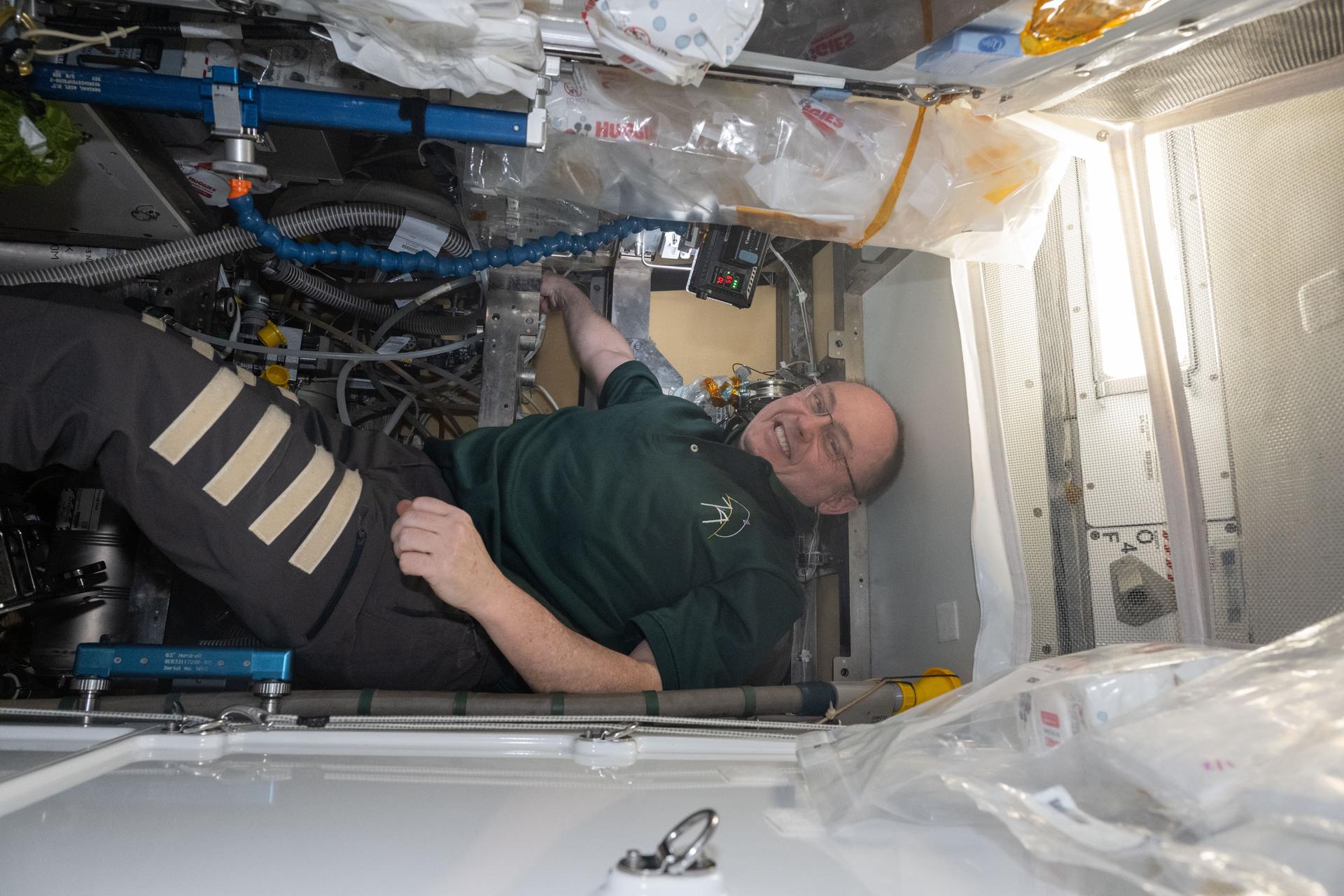
iss074e0000030 (Dec. 10, 2025) --- NASA astronaut and Expedition 74 Commander Mike Fincke works inside the Tranquility module replacing orbital plumbing components on the waste and hygiene compartment, the International Space Station’s restroom.
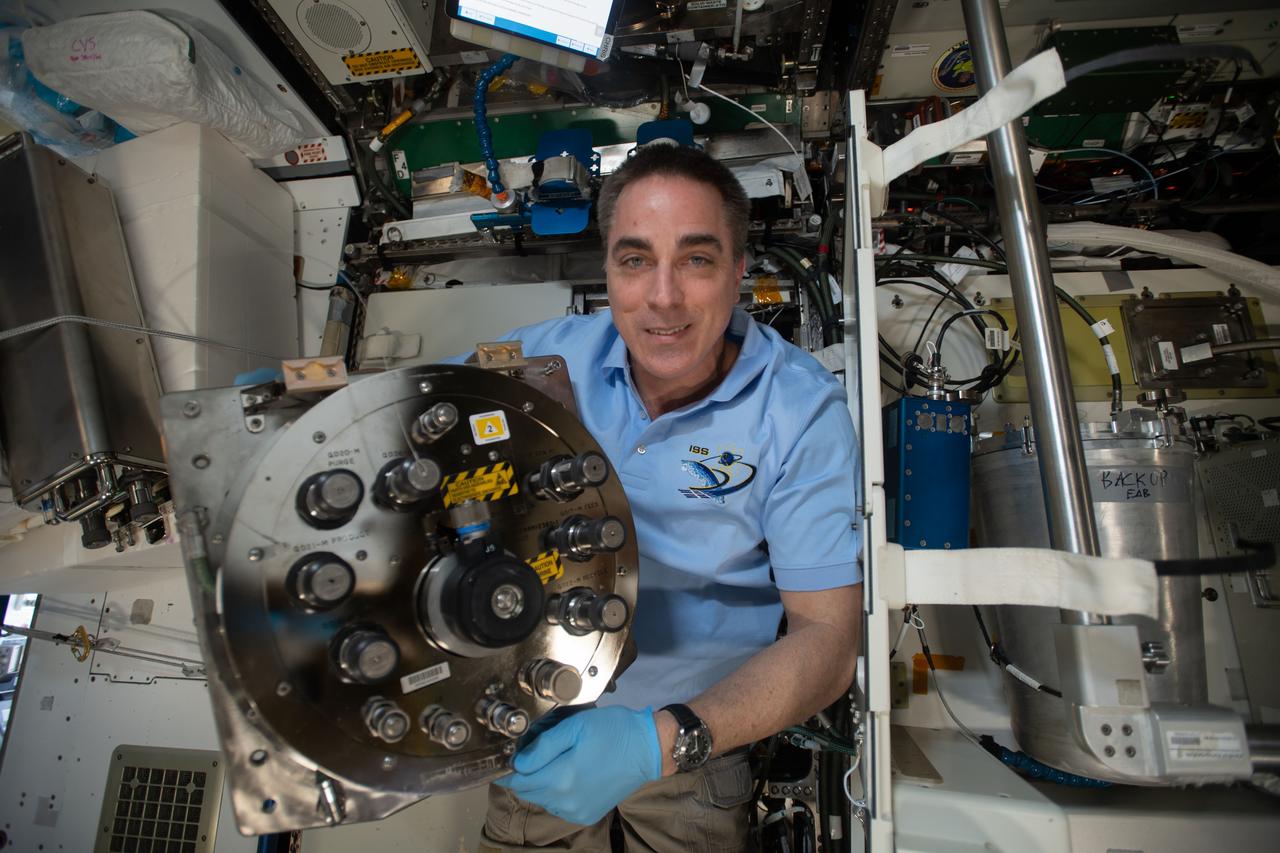
iss063e087568 (Sept. 10, 2020) --- NASA astronaut and Expedition 63 Commander Chris Cassidy replaces components inside the Waste and Hygiene Compartment, the International Space Station's bathroom located inside the Tranquility module.
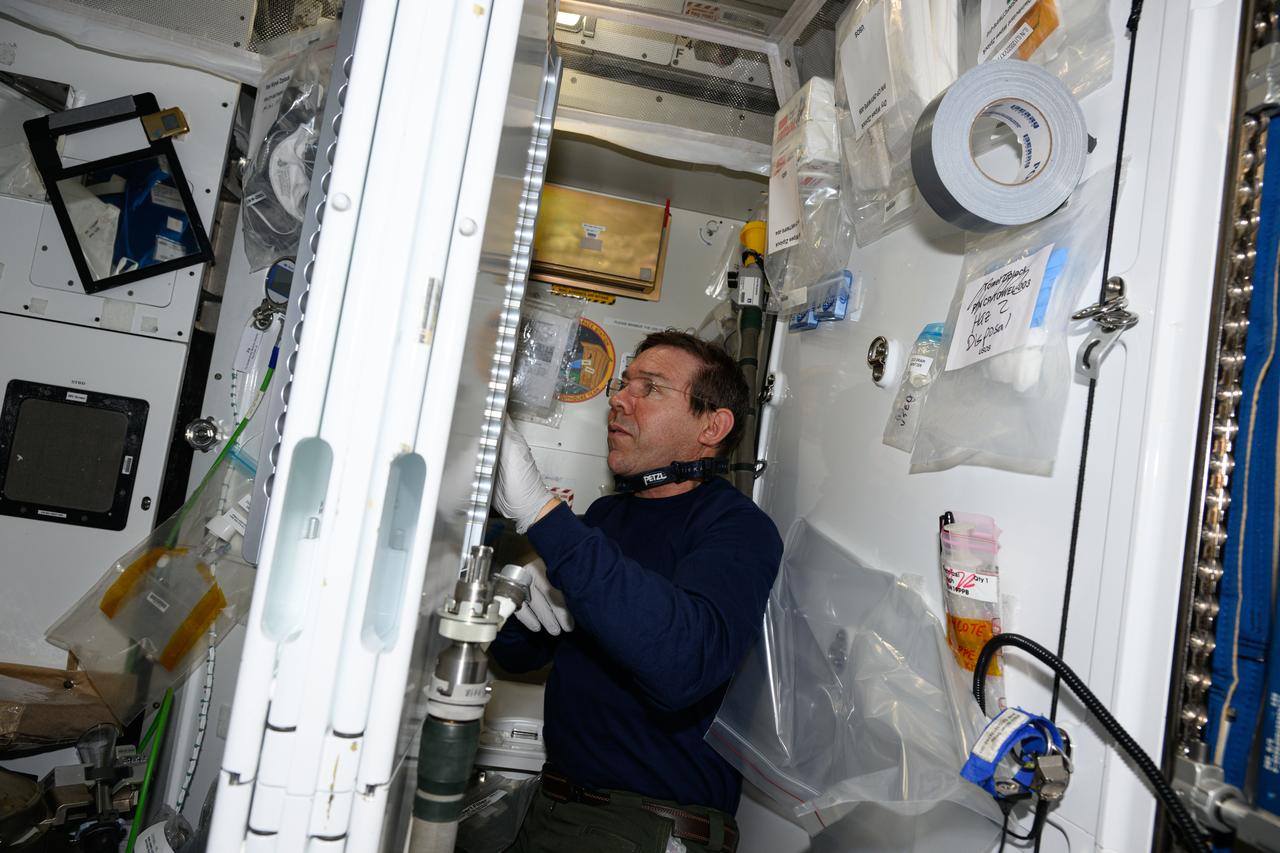
iss071e000964 (April 6, 2024) --- Expedition 71 Flight Engineer and NASA astronaut Mike Barratt works on orbital plumbing duties inside the Waste and Hygiene Compartment, the International Space Station's bathroom located aboard the Tranquility module.
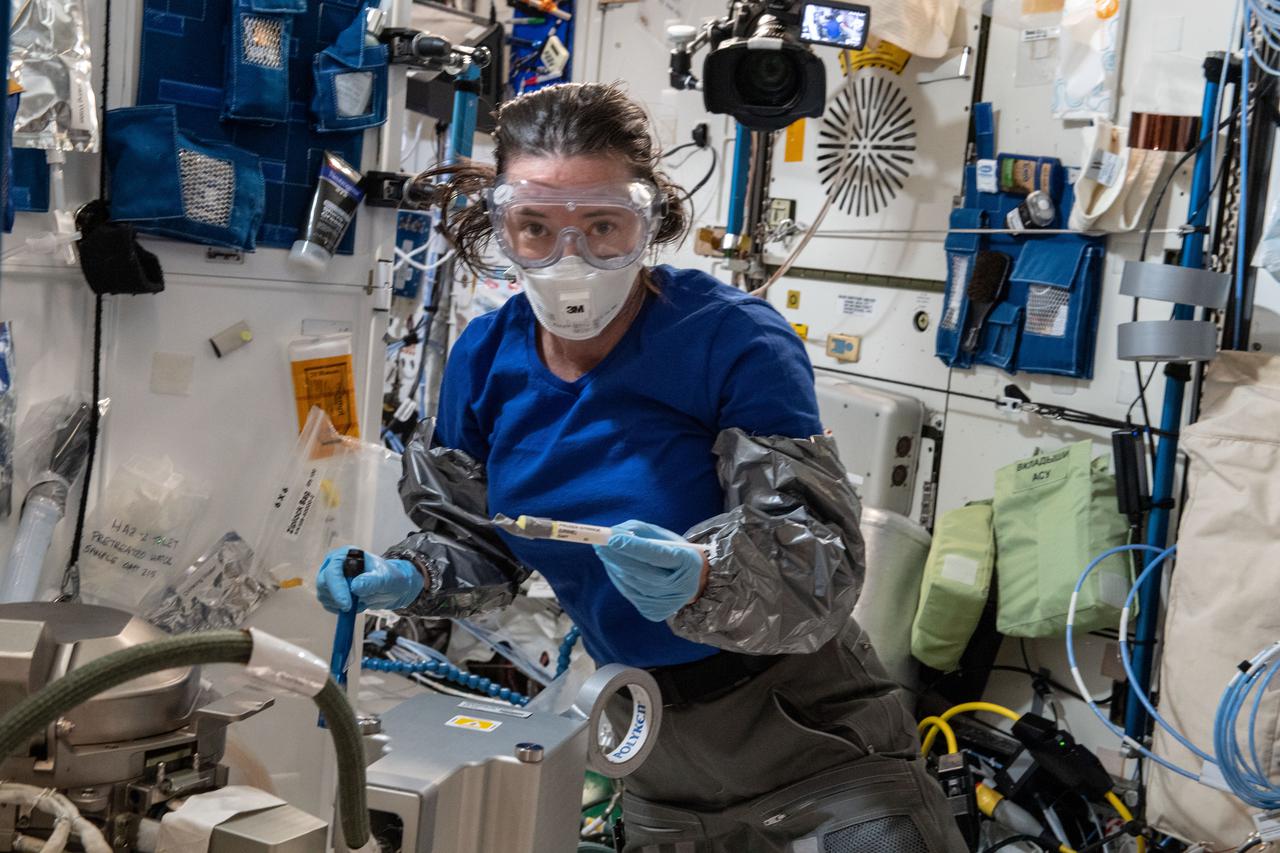
iss065e216084 (Aug. 3, 2021) --- NASA astronaut and Expedition 65 Flight Engineer Megan McArthur works on orbital plumbing tasks inside the Tranquility module on the Waste and Hygiene and Compartment, or the International Space Station's bathroom.
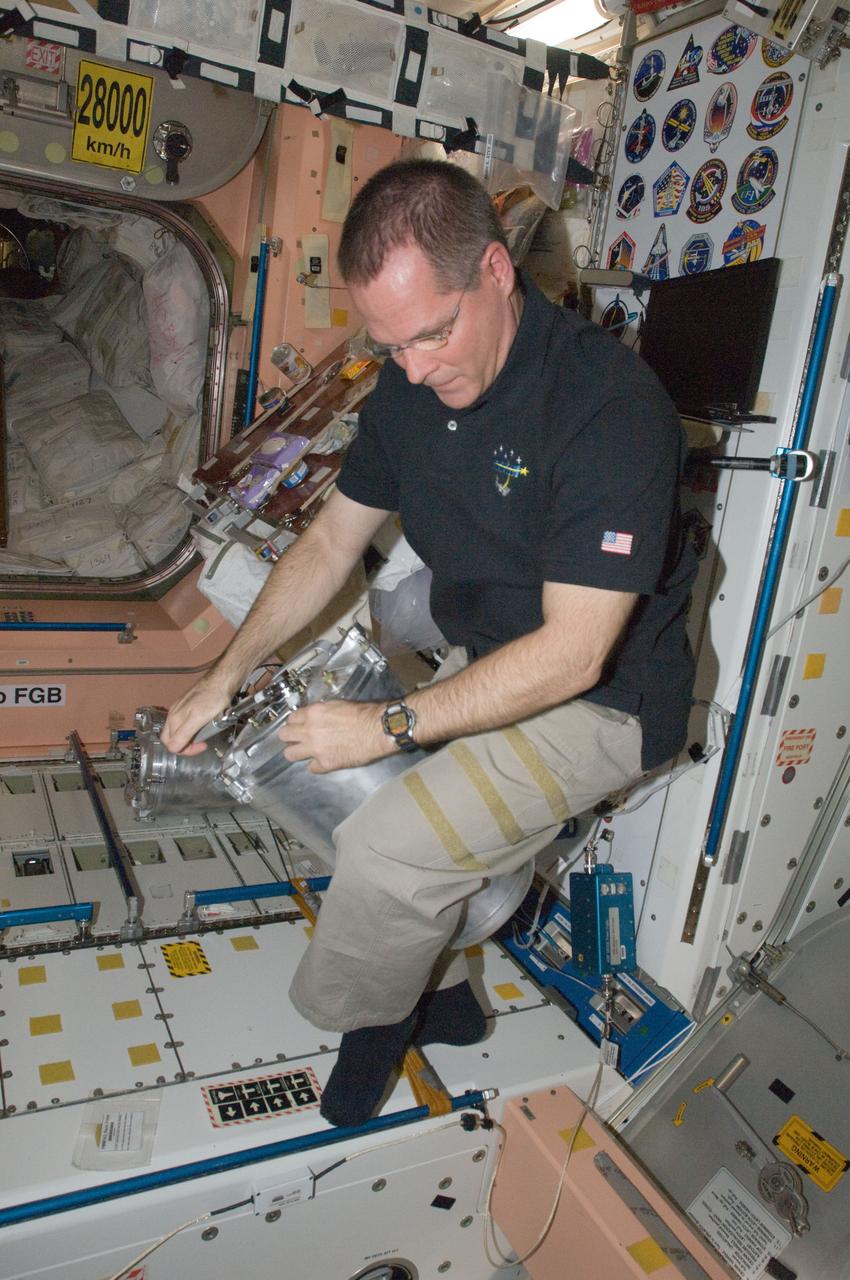
ISS033-E-018790 (6 Nov. 2012) --- NASA astronaut Kevin Ford, Expedition 33 flight engineer, performs in-flight maintenance on the Waste and Hygiene Compartment (WHC) toilet facilities in the Unity node of the International Space Station.
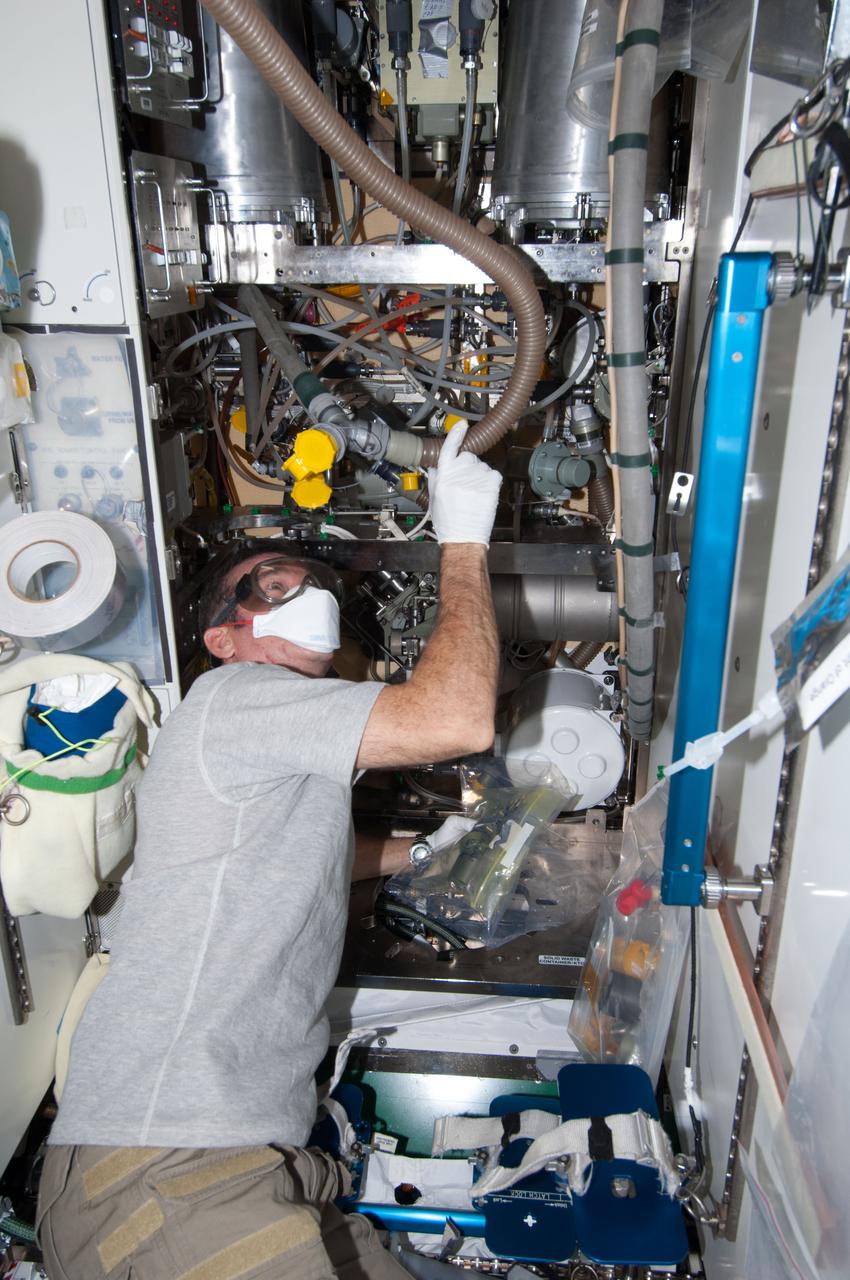
View of Canadian Space Agency (CSA) Chris Hadfield,Expedition 34 Flight Engineer (FE),performing Waste and Hygiene Compartment (WHC) overhaul,in the Node 3. Photo was taken during Expedition 34.
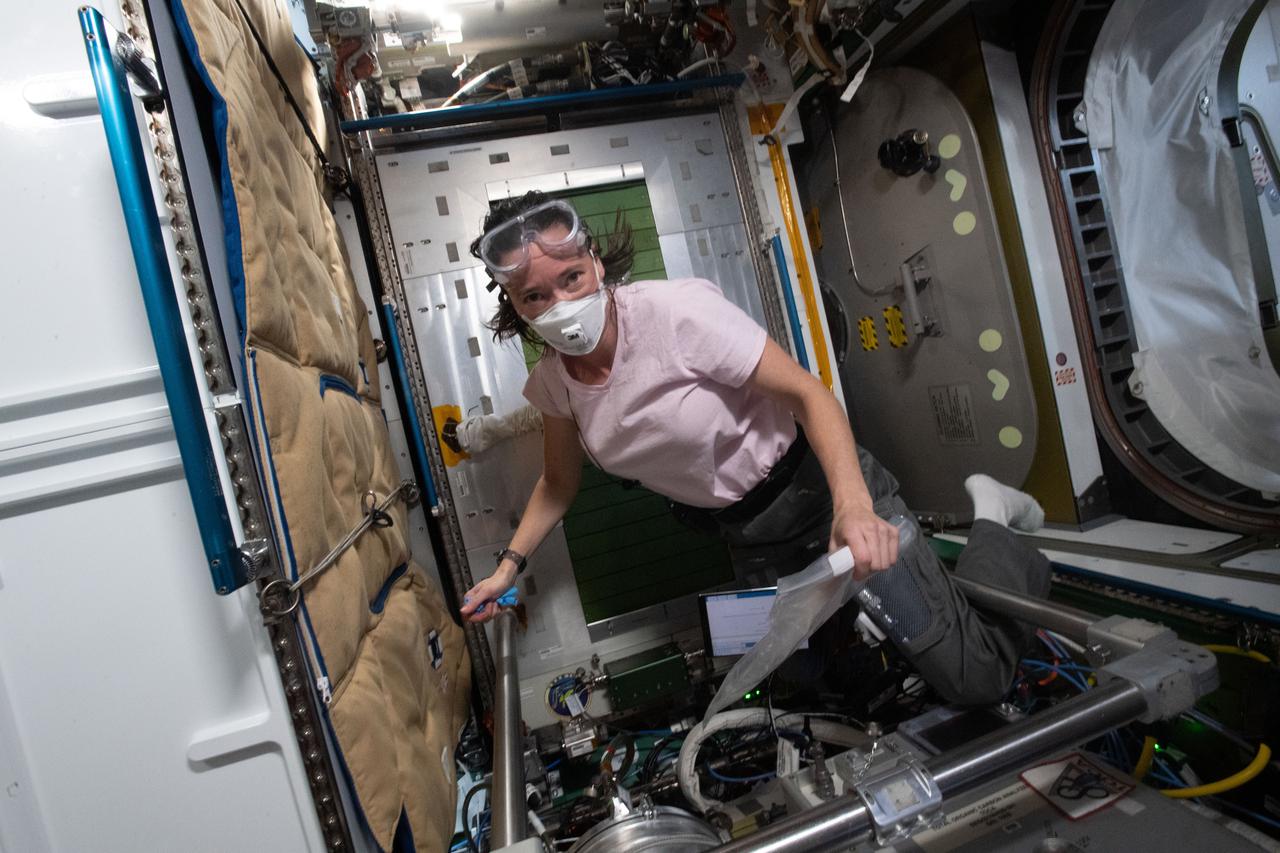
iss065e209025 (June 26, 2021) --- NASA astronaut and Expedition 65 Flight Engineer Megan McArthur reconfigures fluid connections inside the Tranquility module's Waste and Hygiene Compartment aboard the International Space Station.

ISS034-E-031133 (17 Jan. 2013) --- NASA astronaut Tom Marshburn, Expedition 34 flight engineer, updates software on the Waste and Hygiene Compartment?s Urine Processor Assembly in the Tranquility node of the International Space Station.
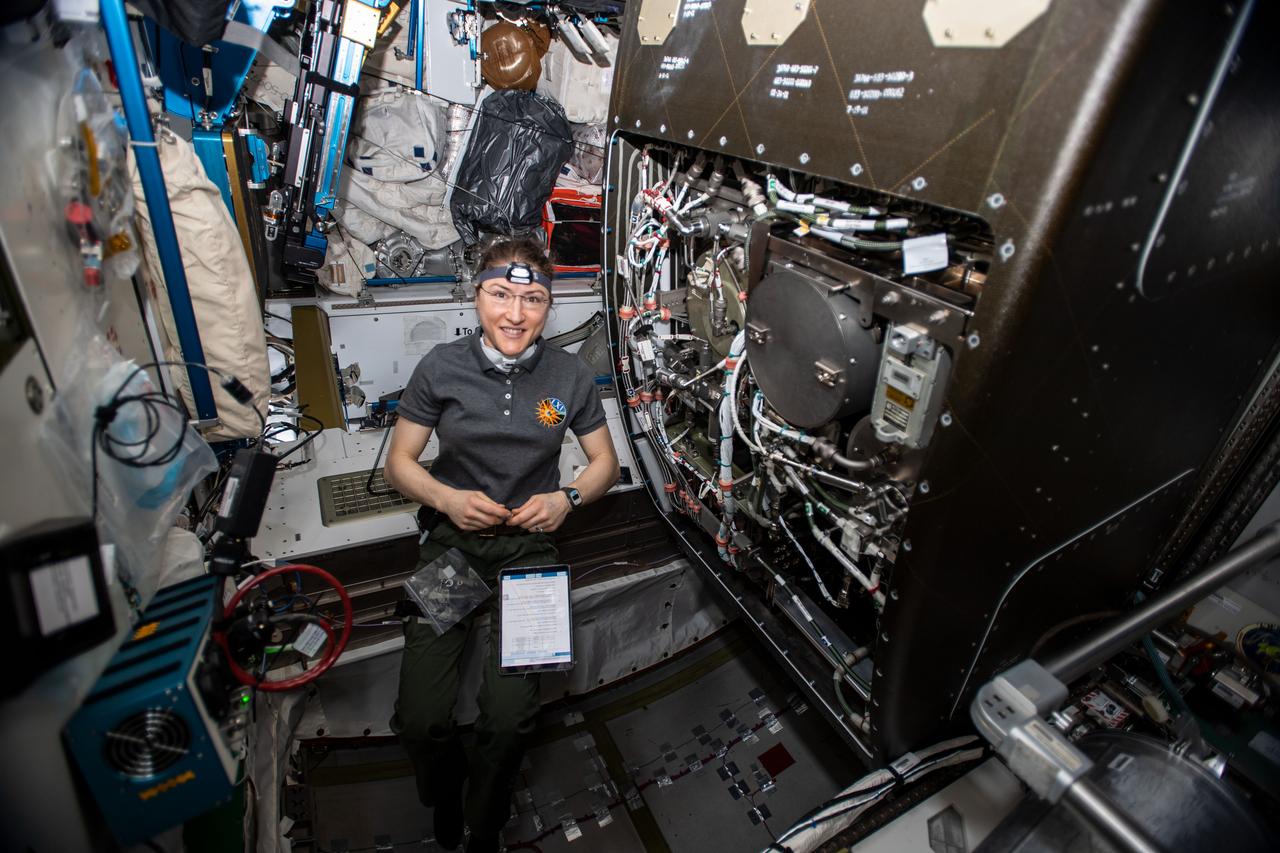
iss061e020169 (Oct. 29, 2019) --- NASA astronaut Christina Koch works on orbital plumbing tasks as she replaces components inside the International Space Station's bathroom, the Waste and Hygiene Compartment, located in the Tranquility module.
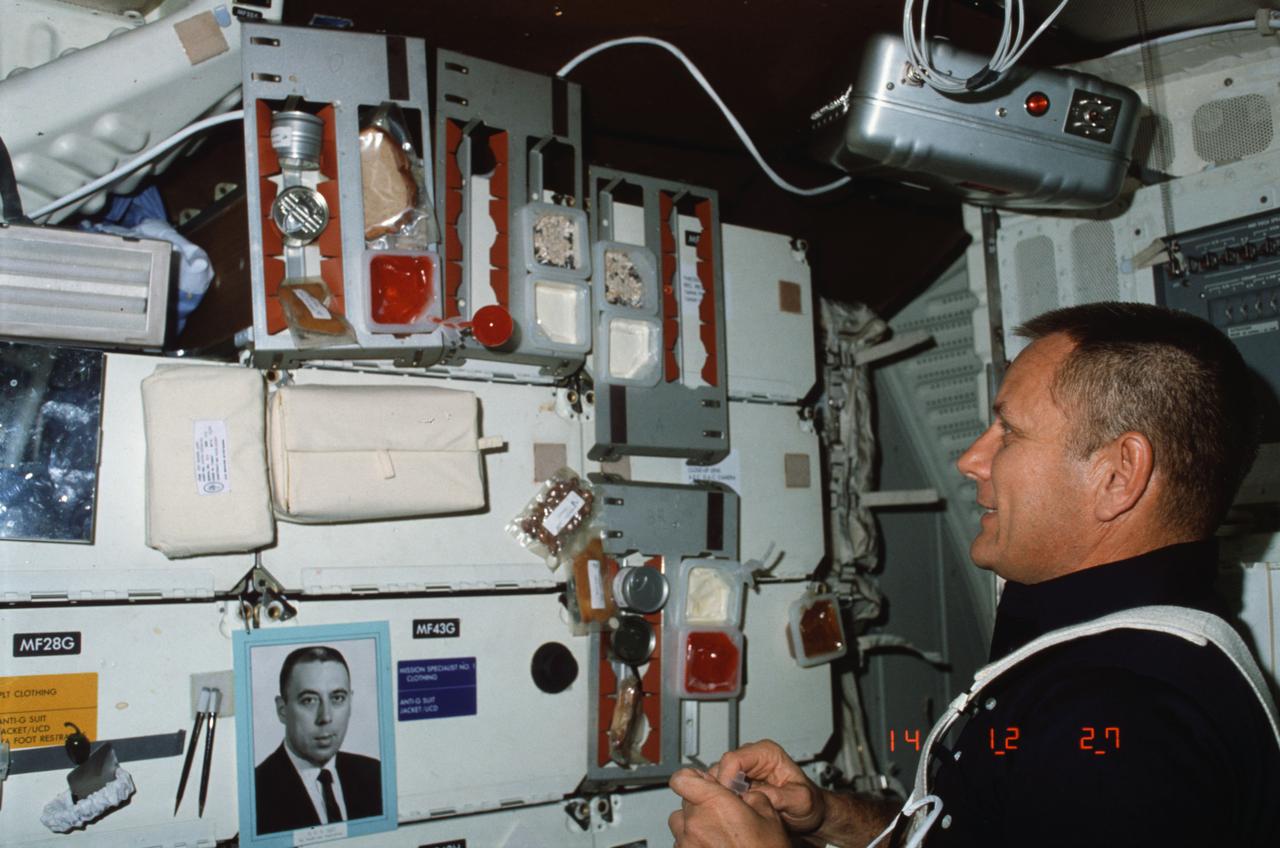
STS005-07-255 (19 Nov. 1982) --- Astronaut Robert F. Overmyer, STS-5 pilot, using beverage container and drinking straw secured in meal tray assembly (ASSY), experiments with microgravity characteristics of liquid on middeck in front of forward lockers. Overmyer also looks over packages of food attached to middeck lockers in meal tray assemblies. Carry-on food warmer appears overhead and other meal tray assemblies, personal hygiene mirror assembly, personal hygiene kit, and portrait of G.W.S. Abbey, Johnson Space Center's (JSC) Director of Flight Operations, appear on lockers. Photo credit: NASA
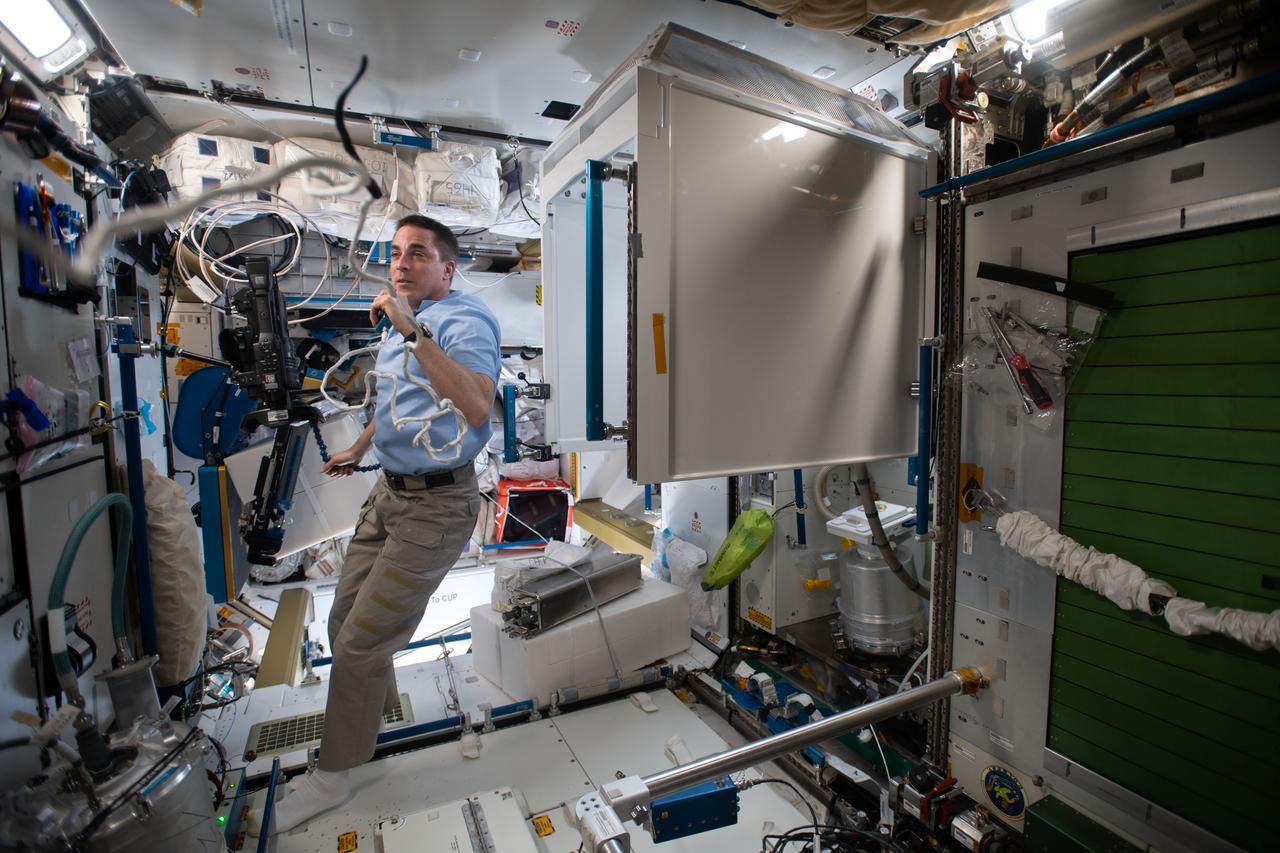
iss063e087493 (Sept. 10, 2020) --- NASA astronaut and Expedition 63 Commander Chris Cassidy calls down to Mission Control and gets ready for high-flying, orbital plumbing work inside the Waste and Hygiene Compartment, the International Space Station's bathroom located inside the Tranquility module.
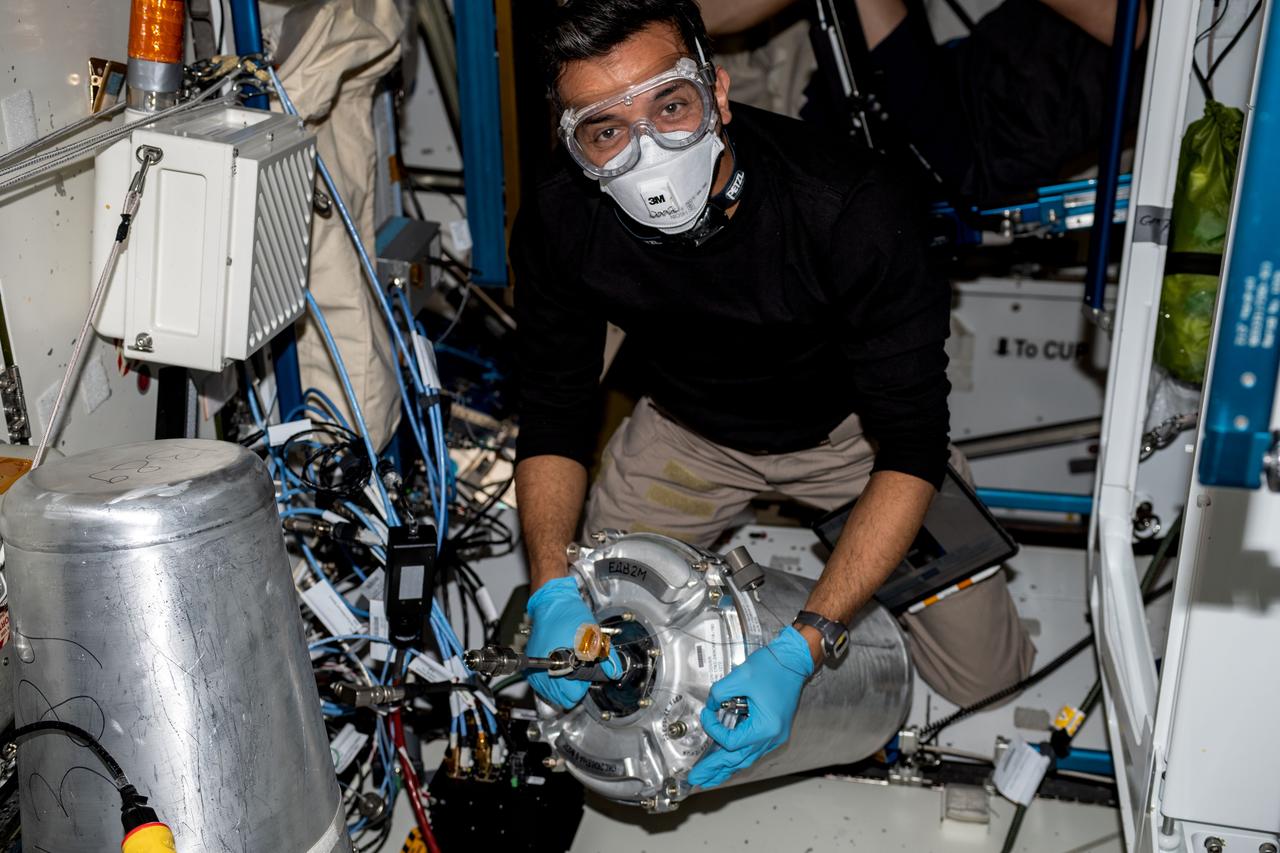
iss068e076277 (March 24, 2023) --- UAE (United Arab Emirates) astronaut and Expedition 68 Flight Engineer Sultan Alneyadi works on orbital plumbing tasks aboard the International Space Station's Tranquility module, where the bathroom, or Waste and Hygiene Compartment, is located.
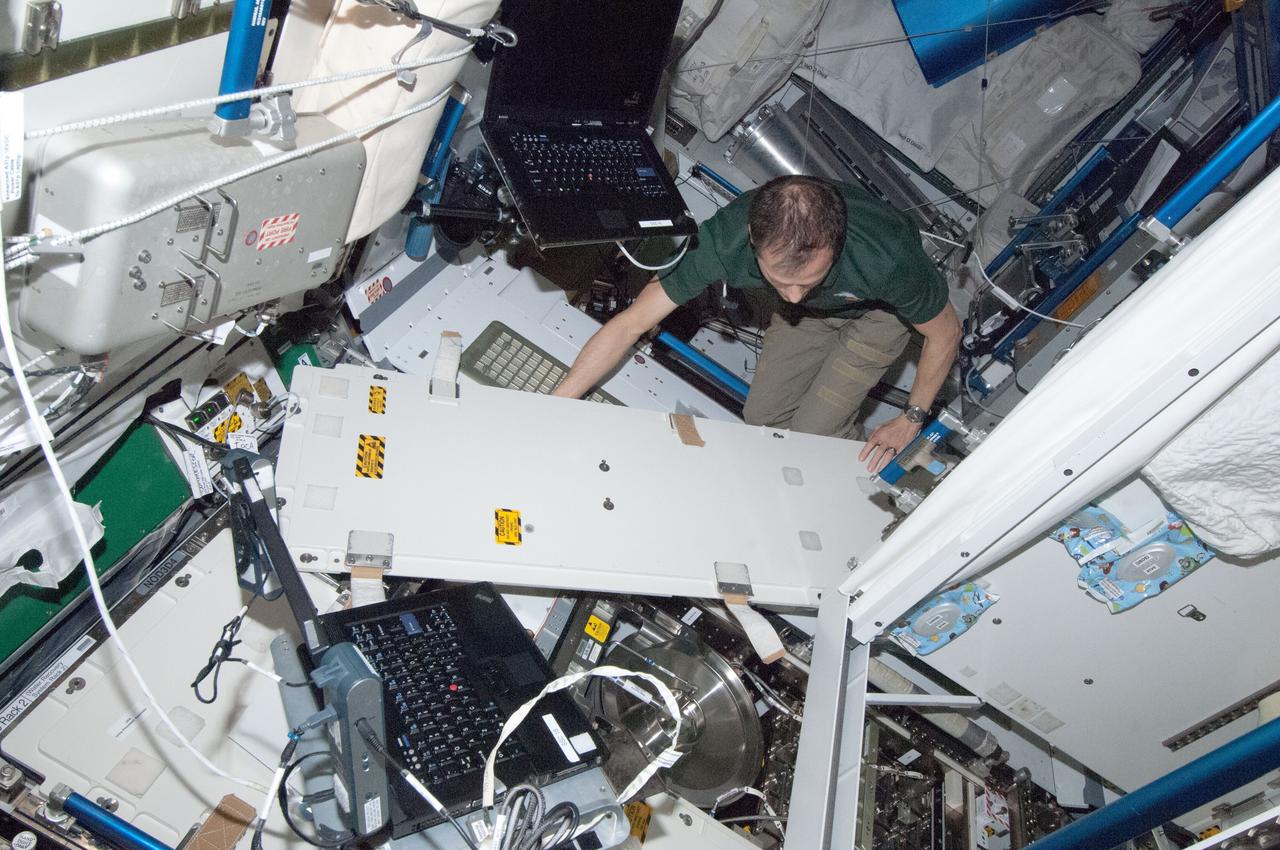
ISS034-E-045742 (11 Feb. 2013) --- NASA astronaut Tom Marshburn, Expedition 34 flight engineer, removes and replaces the Waste and Hygiene Compartment (WHC) pretreat tank as part of routine in-flight maintenance in the Tranquility node of the International Space Station.
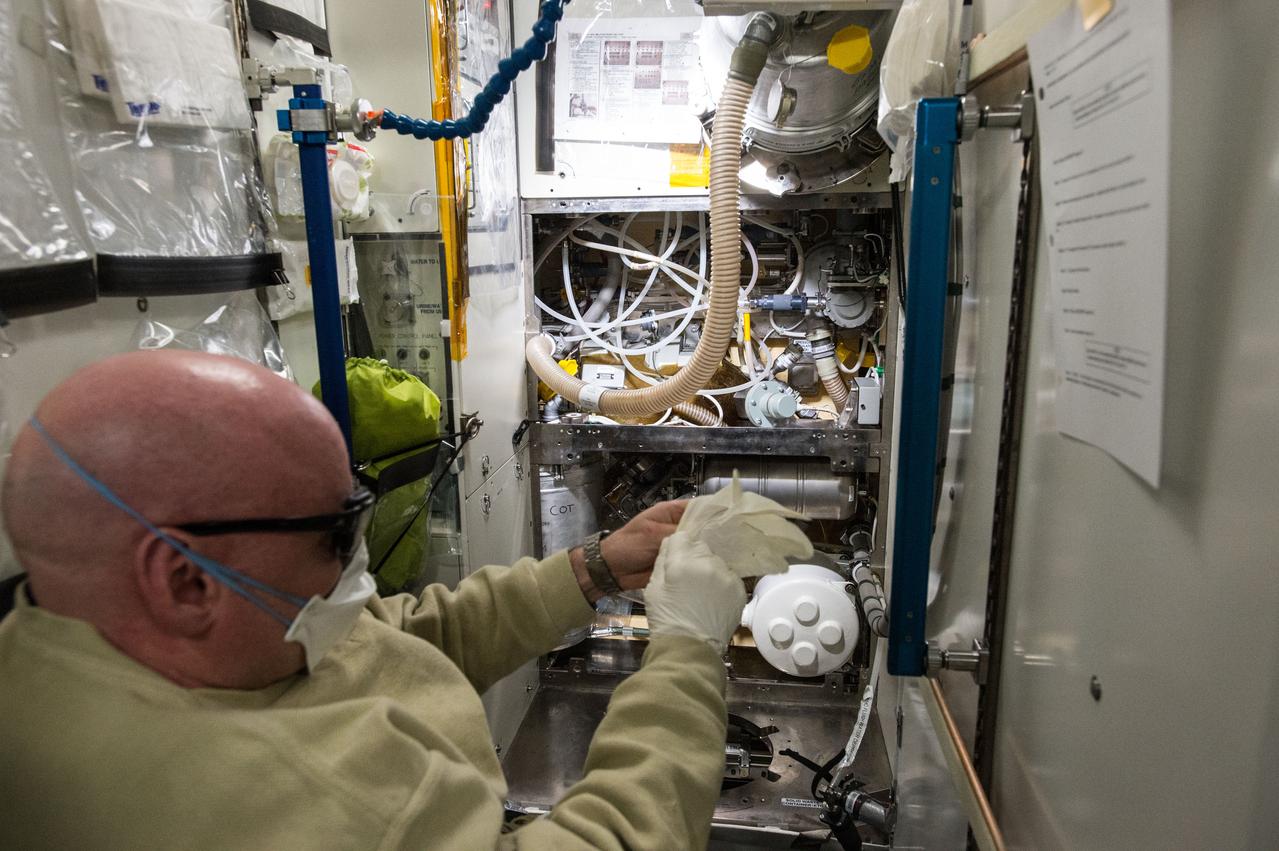
ISS046e005831 (01/07/2016) --- Expedition 46 Commander and NASA astronaut Scott Kelly works to clean up a leak in the Waste and Hygiene Compartment aboard the International Space Station. Crew members are routinely called on for maintenance efforts across the orbiting laboratory as they work to keep their various life support systems in working order.
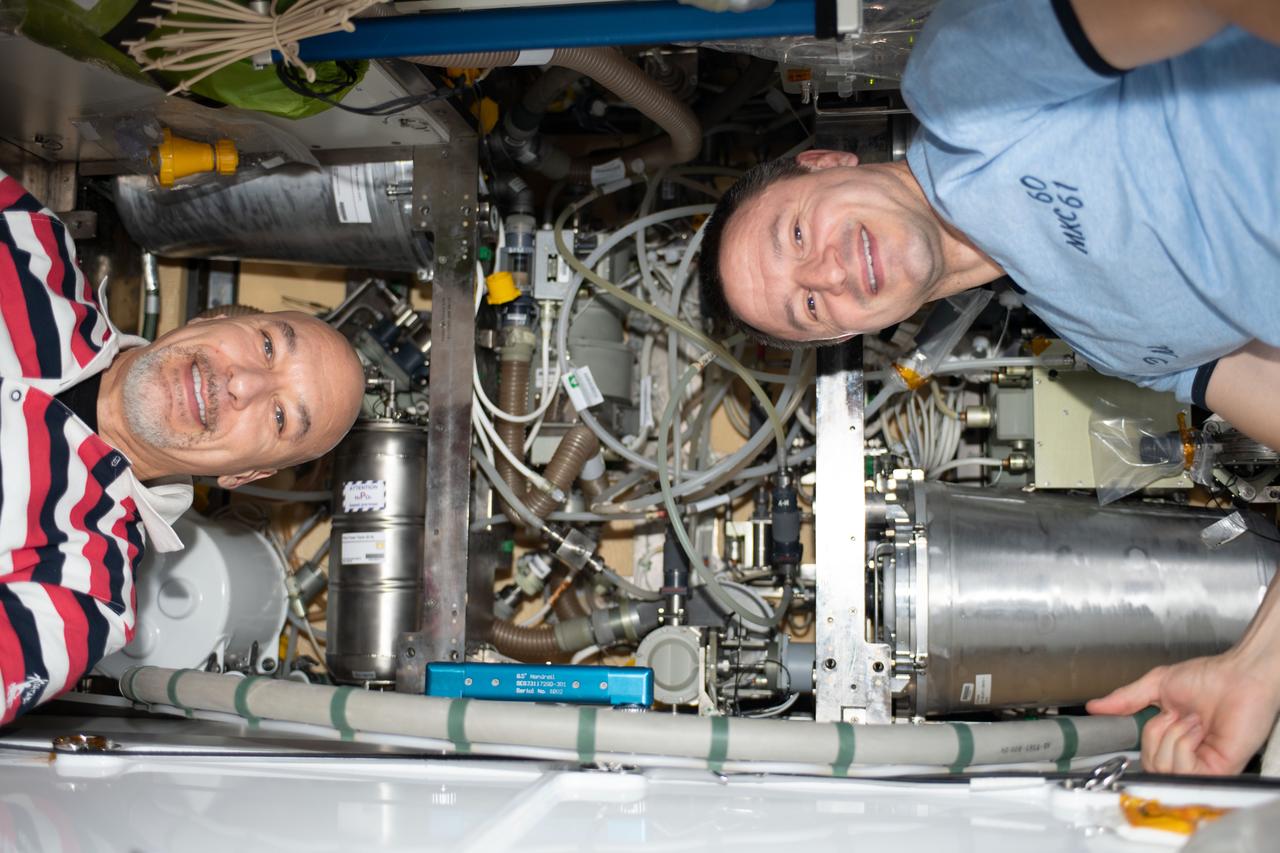
iss061e014102 (Oct. 25, 2019) --- From left, Expedition 61 Commander Luca Parmitano of ESA (European Space Agency) and NASA Flight Engineer Andrew Morgan are pictured replacing components inside the International Space Station's bathroom, the Waste and Hygiene Compartment.
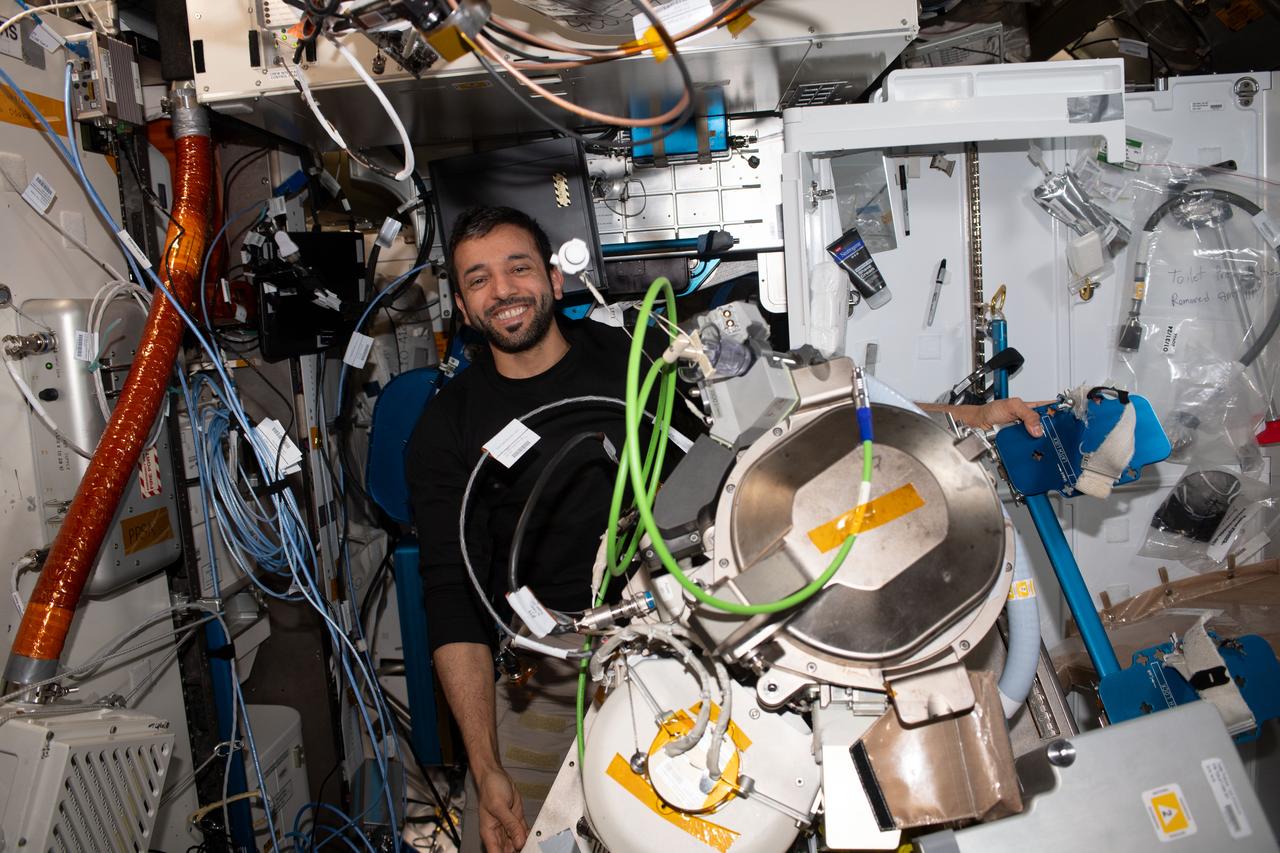
iss069e056737 (Aug. 11, 2023) --- UAE (United Arab Emirates) astronaut and Expedition 69 Flight Engineer Sultan Alneyadi replaces orbital plumbing components in the International Space Station's bathroom, or Waste and Hygiene Compartment, located in the Tranquility module.
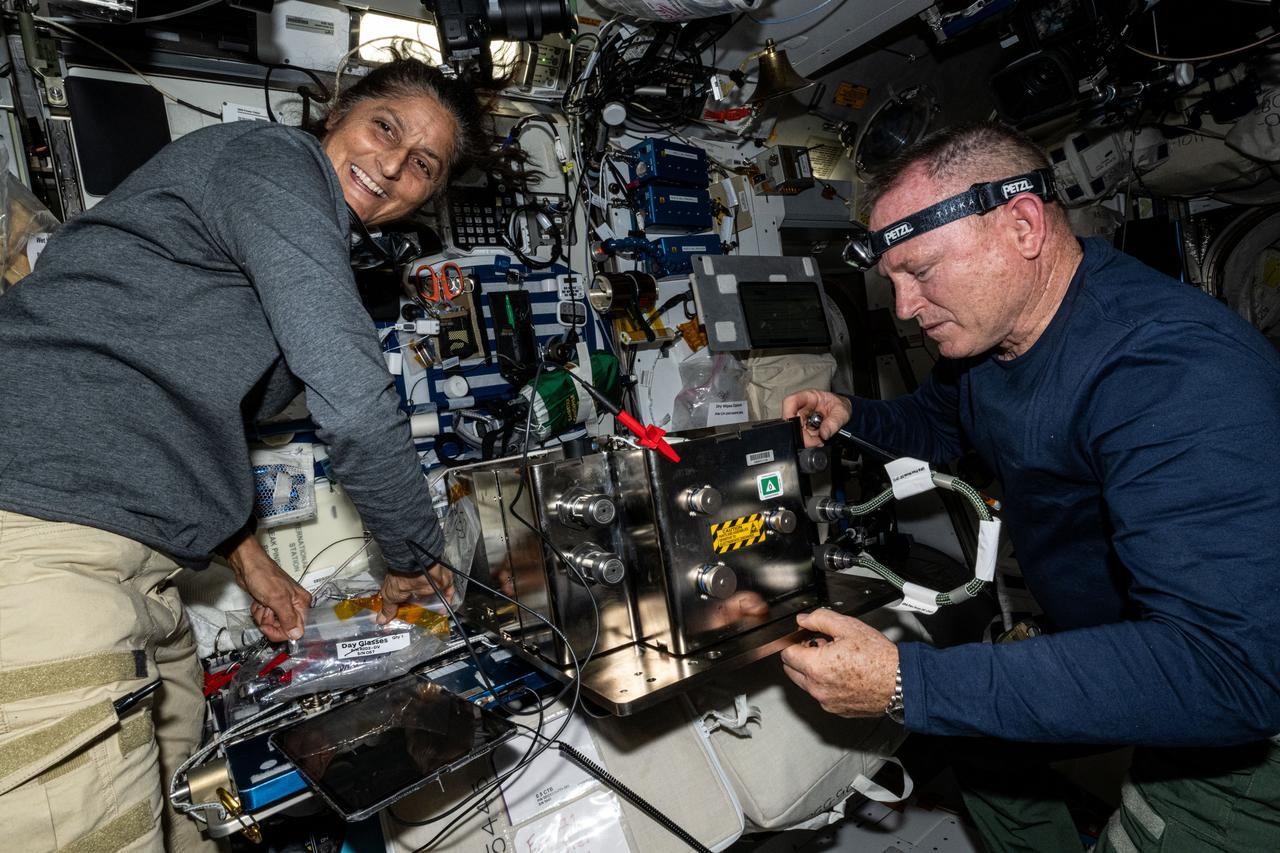
iss071e230838 (June 27, 2024) --- NASA's Boeing Crew Flight Test astronauts Suni Williams and Butch Wilmore prepare orbital plumbing hardware for installation inside the International Space Station’s bathroom, also known as the waste and hygiene compartment, located in the Tranquility module.
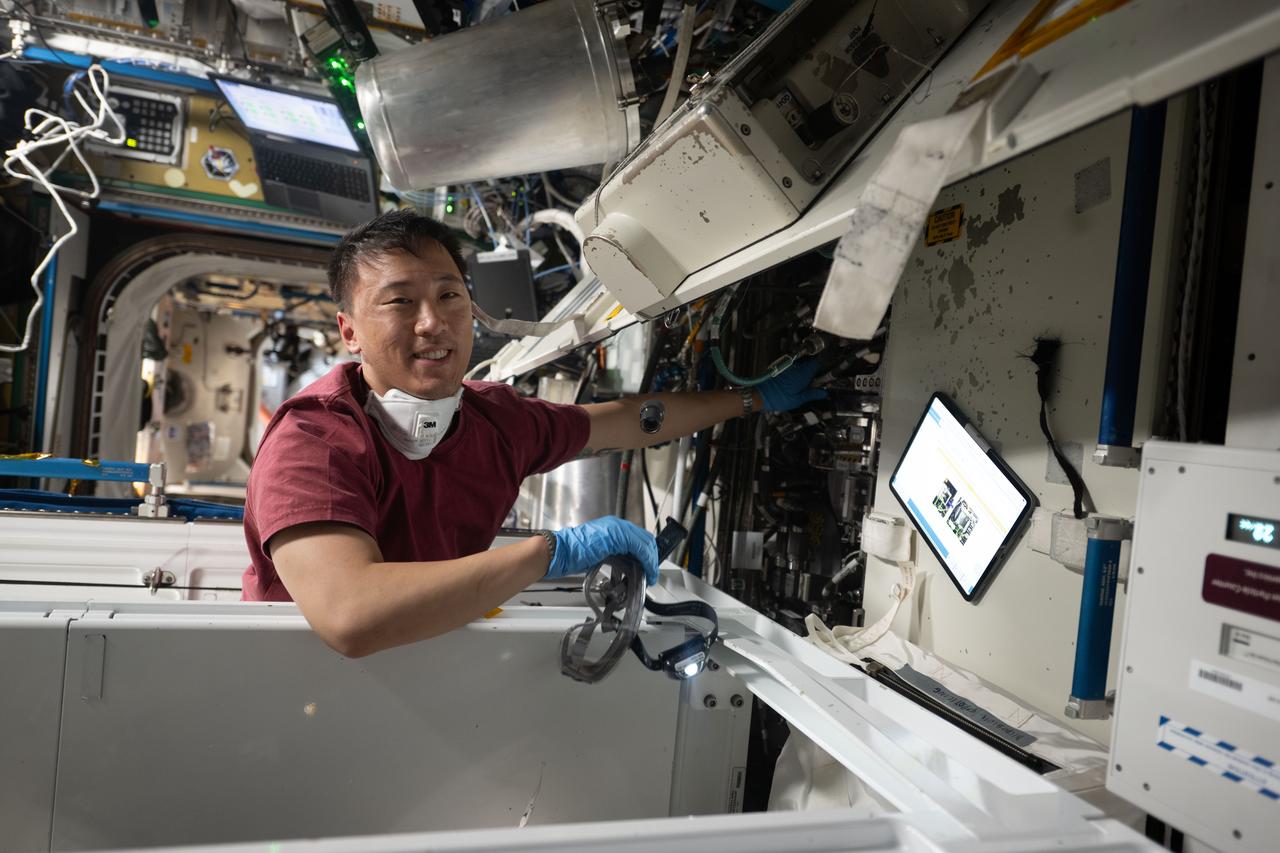
iss073e0257680 (July 8, 2025) --- NASA astronaut and Expedition 73 Flight Engineer Jonny Kim works on orbital plumbing tasks inside the International Space Station's Tranquility module where the orbital outpost's restroom, or Waste and Hygiene Compartment, is located.
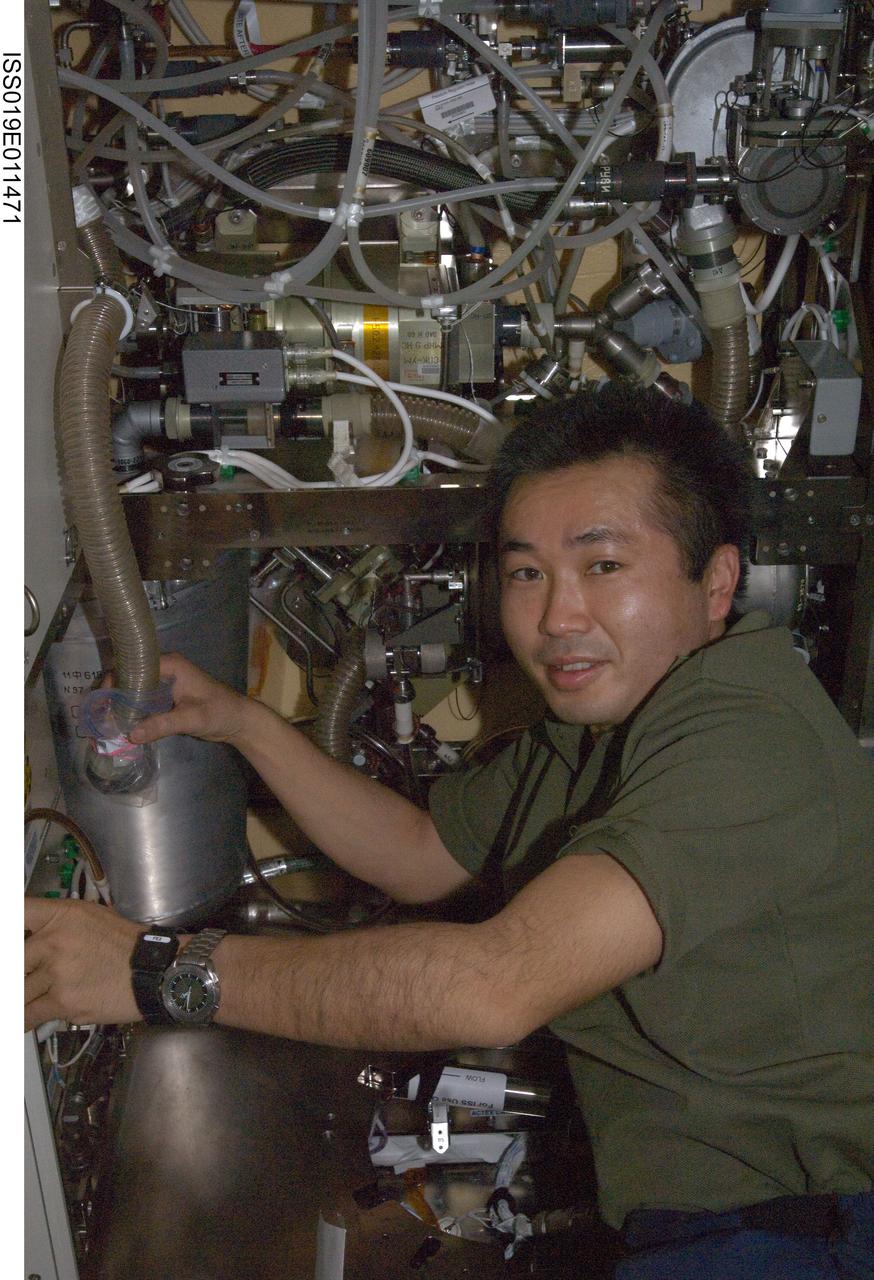
ISS019-E-011471 (28 April 2009) --- Japan Aerospace Exploration Agency (JAXA) astronaut Koichi Wakata, Expedition 19/20 flight engineer, performs in-flight maintenance on the waste and hygiene compartment located in the Destiny laboratory of the International Space Station.
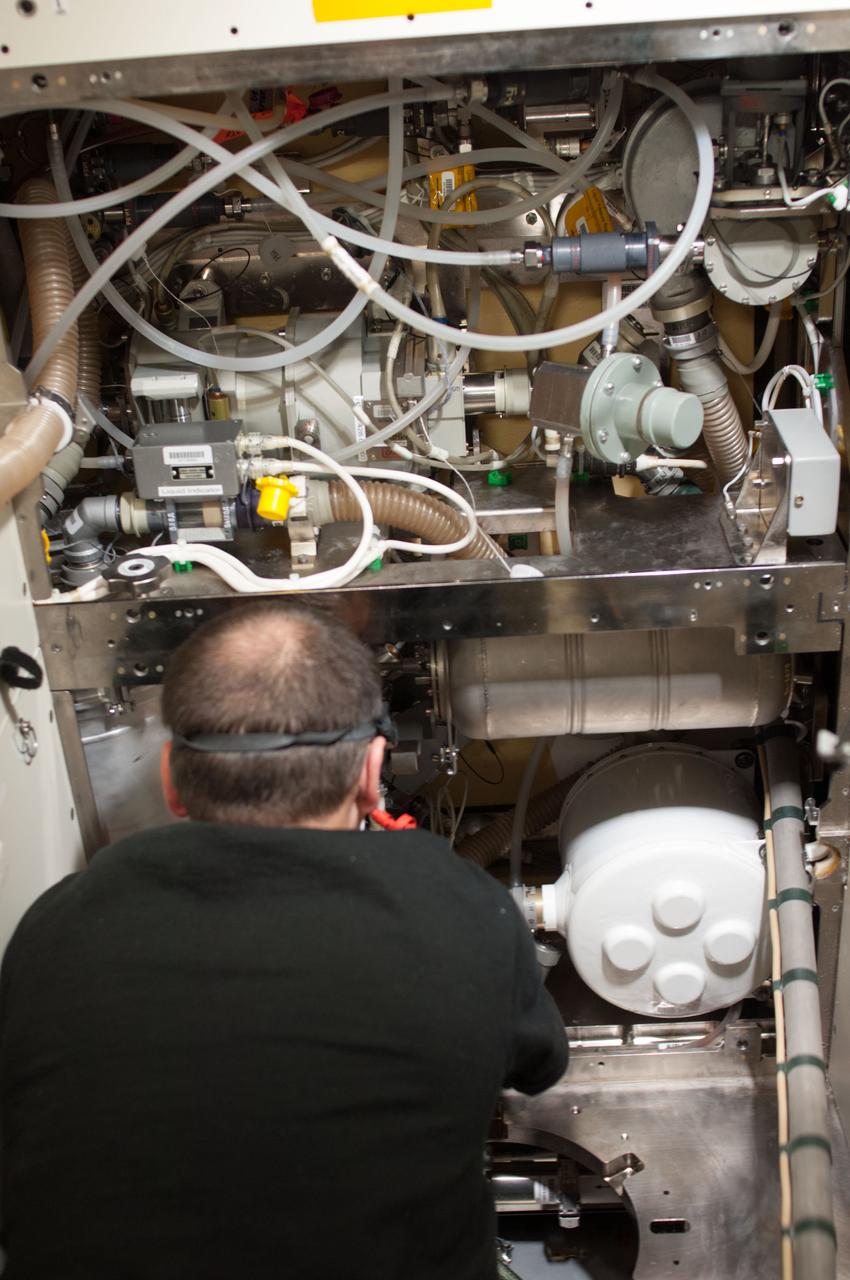
ISS034-E-031142 (3 Jan. 2013) --- NASA astronaut Tom Marshburn, Expedition 34 flight engineer, removes and replaces the Waste and Hygiene Compartment (WHC) piping during routine in-flight maintenance in the Tranquility node of the International Space Station.
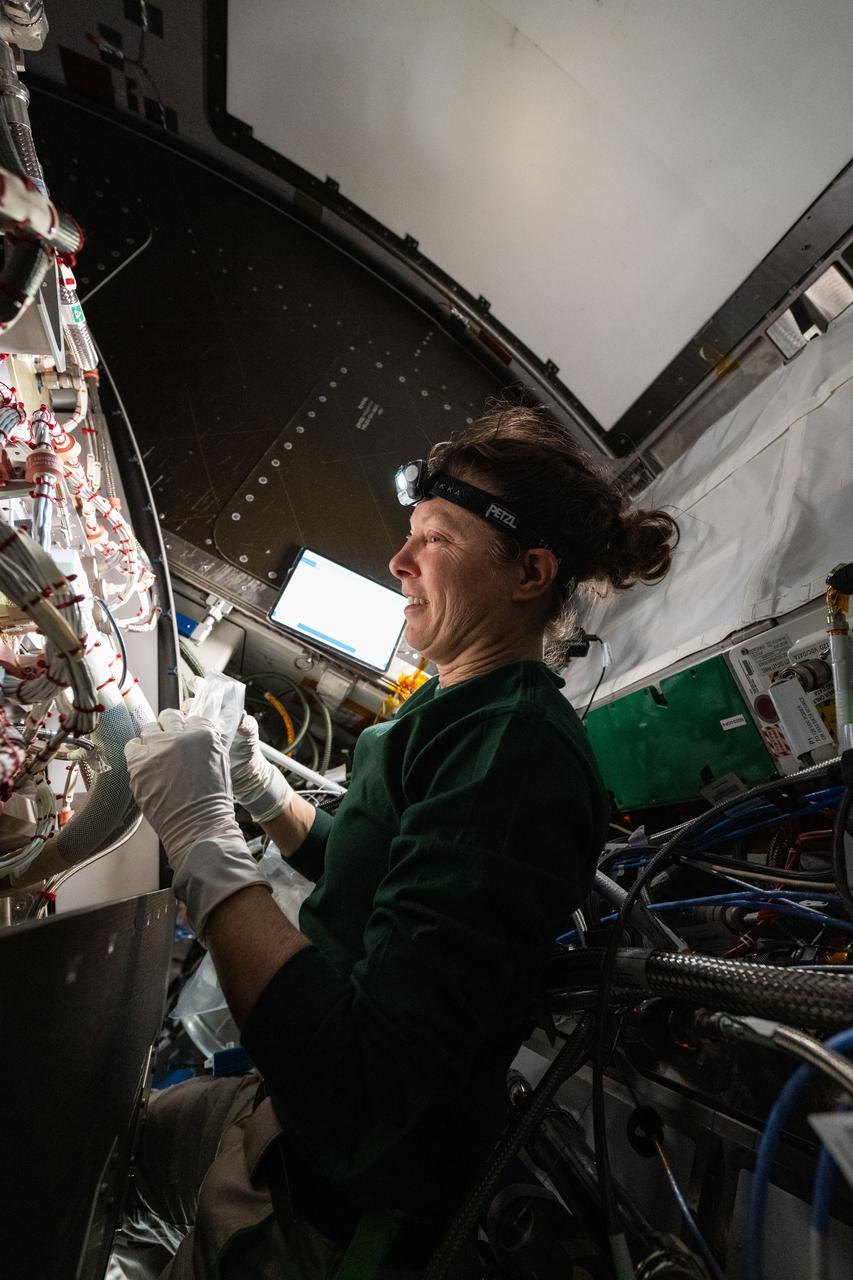
iss071e077443 (May 10, 2024) --- NASA astronaut and Expedition 71 Flight Engineer Tracy C. Dyson works in the Tranquility module replacing hardware that supports the water recovery system which is part of the International Space Station’s Waste and Hygiene compartment, or bathroom.
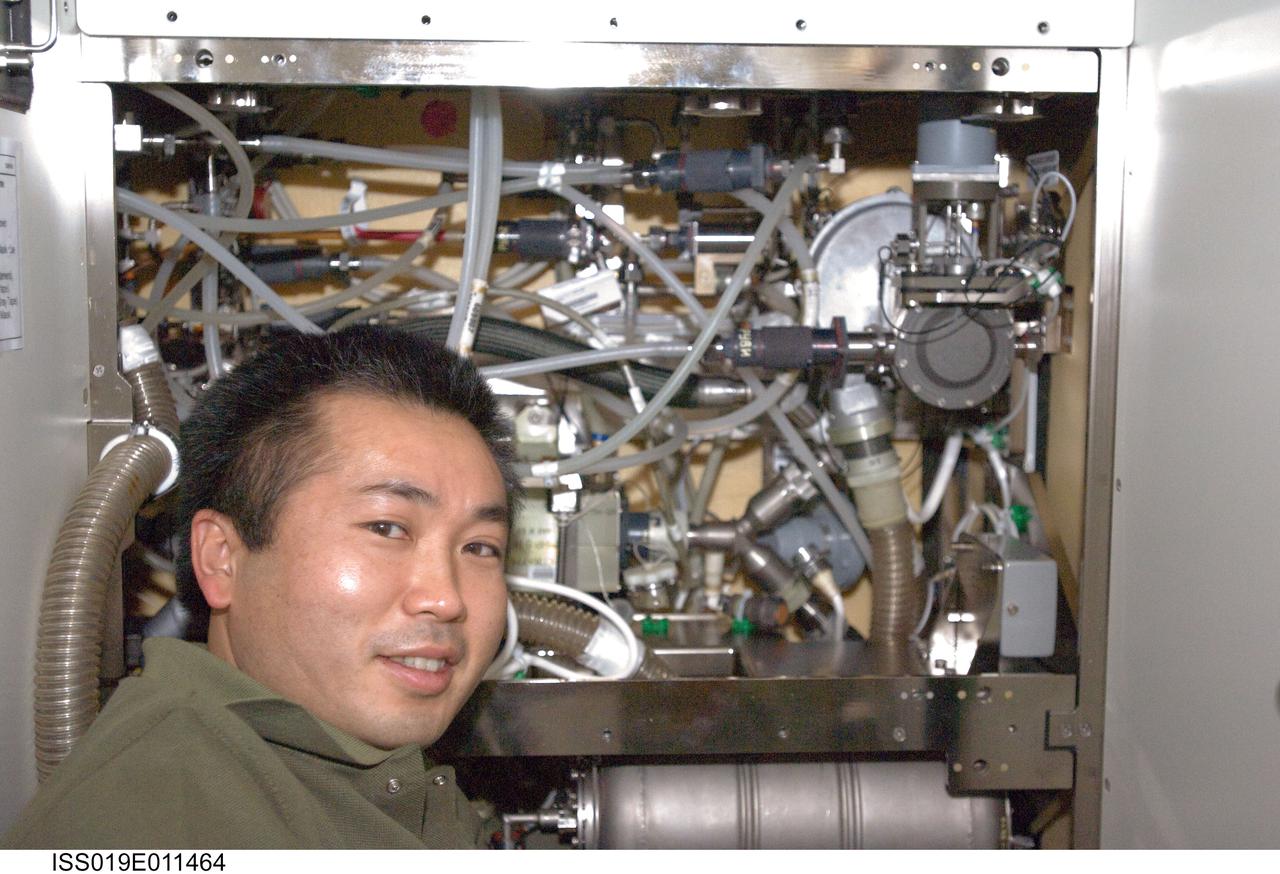
ISS019-E-011464 (28 April 2009) --- Japan Aerospace Exploration Agency (JAXA) astronaut Koichi Wakata, Expedition 19/20 flight engineer, performs in-flight maintenance on the waste and hygiene compartment located in the Destiny laboratory of the International Space Station.
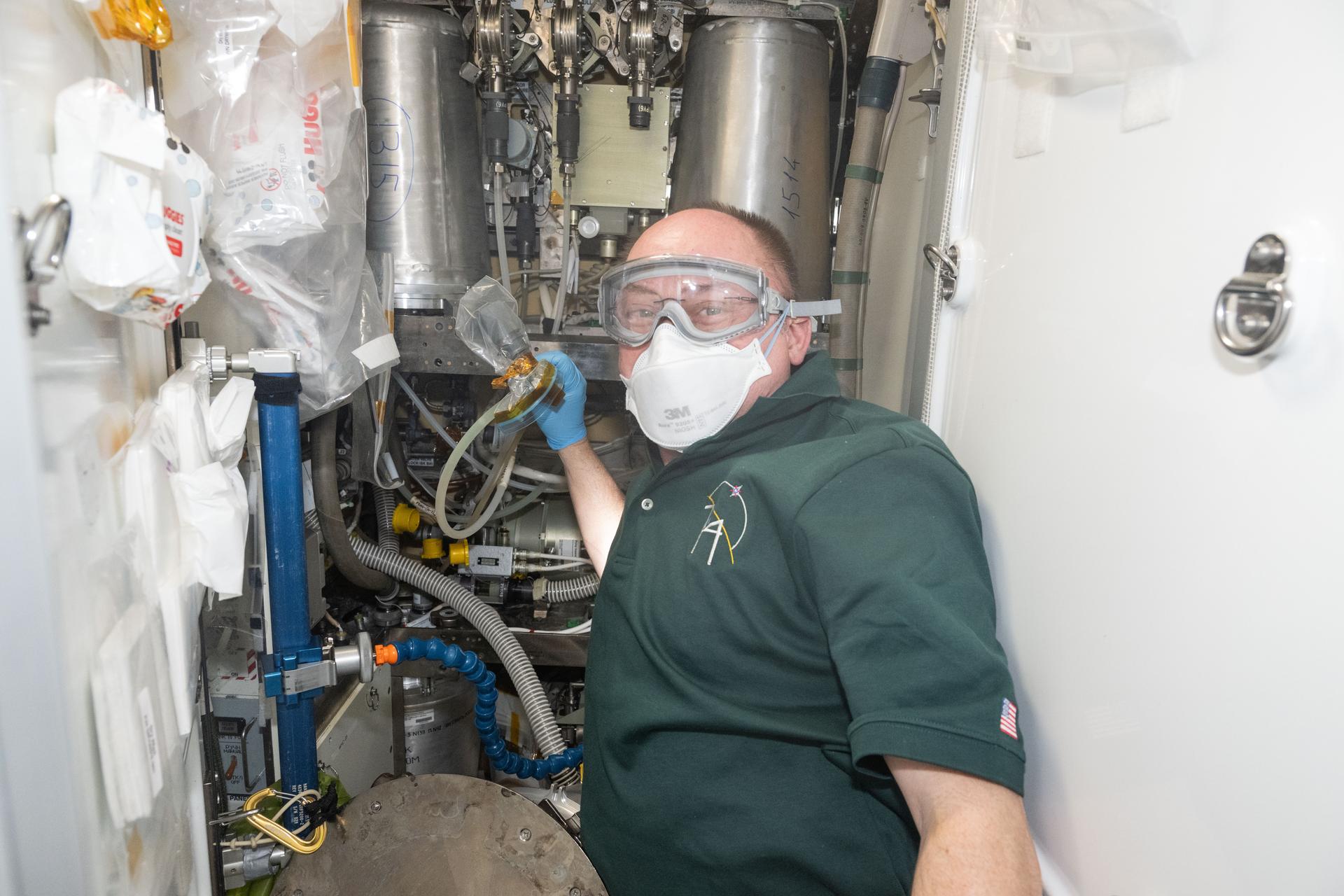
iss074e0000027 (Dec. 10, 2025) --- NASA astronaut and Expedition 74 Commander Mike Fincke wears personal protective equipment while working inside the Tranquility module replacing orbital plumbing components on the waste and hygiene compartment, the International Space Station’s restroom.
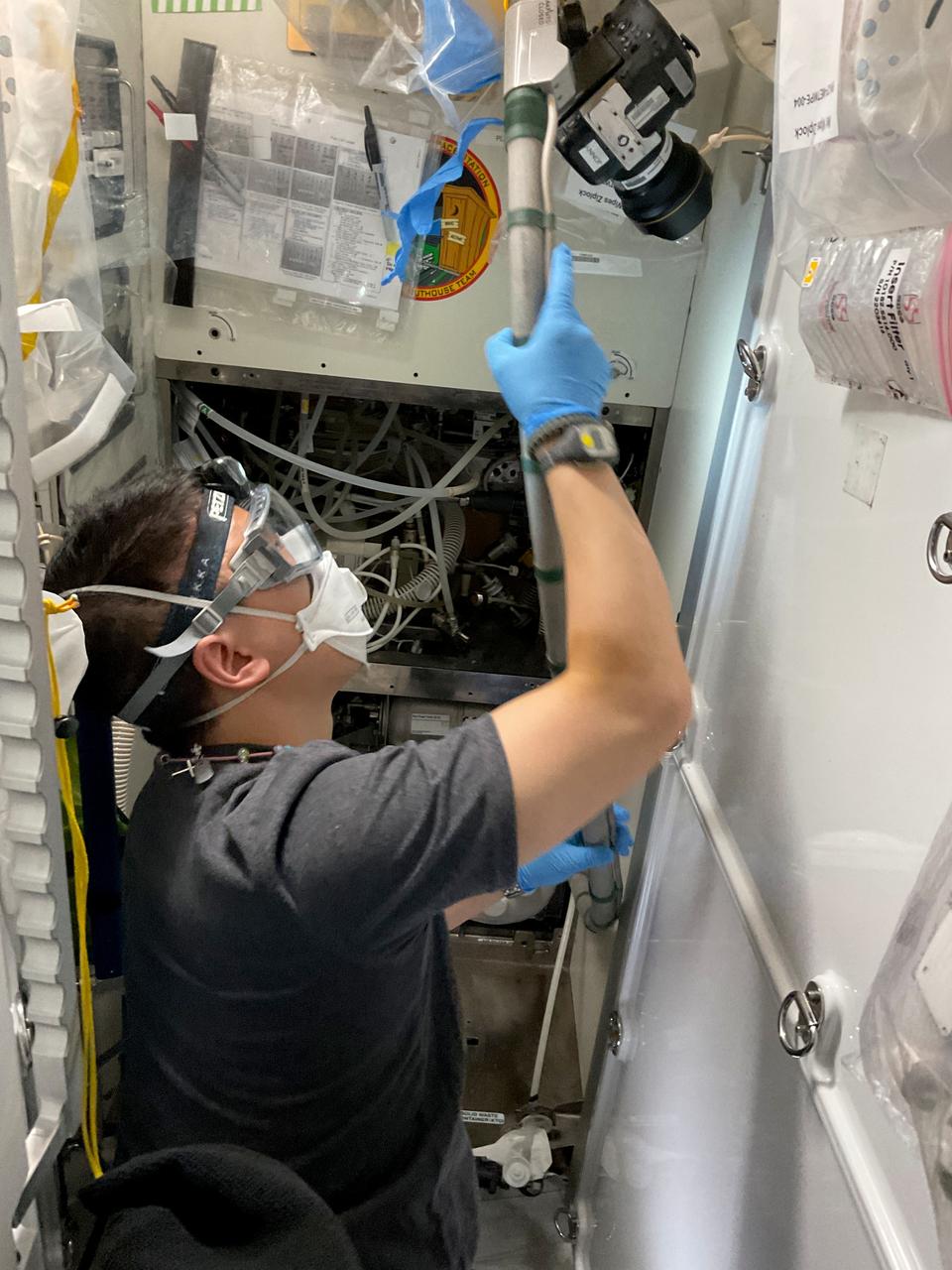
iss073e0136234 (June 9, 2025) --- NASA astronaut and Expedition 73 Flight Engineer Jonny Kim replaces orbital plumbing components inside the International Space Station's restroom, also called the waste and hygiene compartment, located in the Tranquility module.
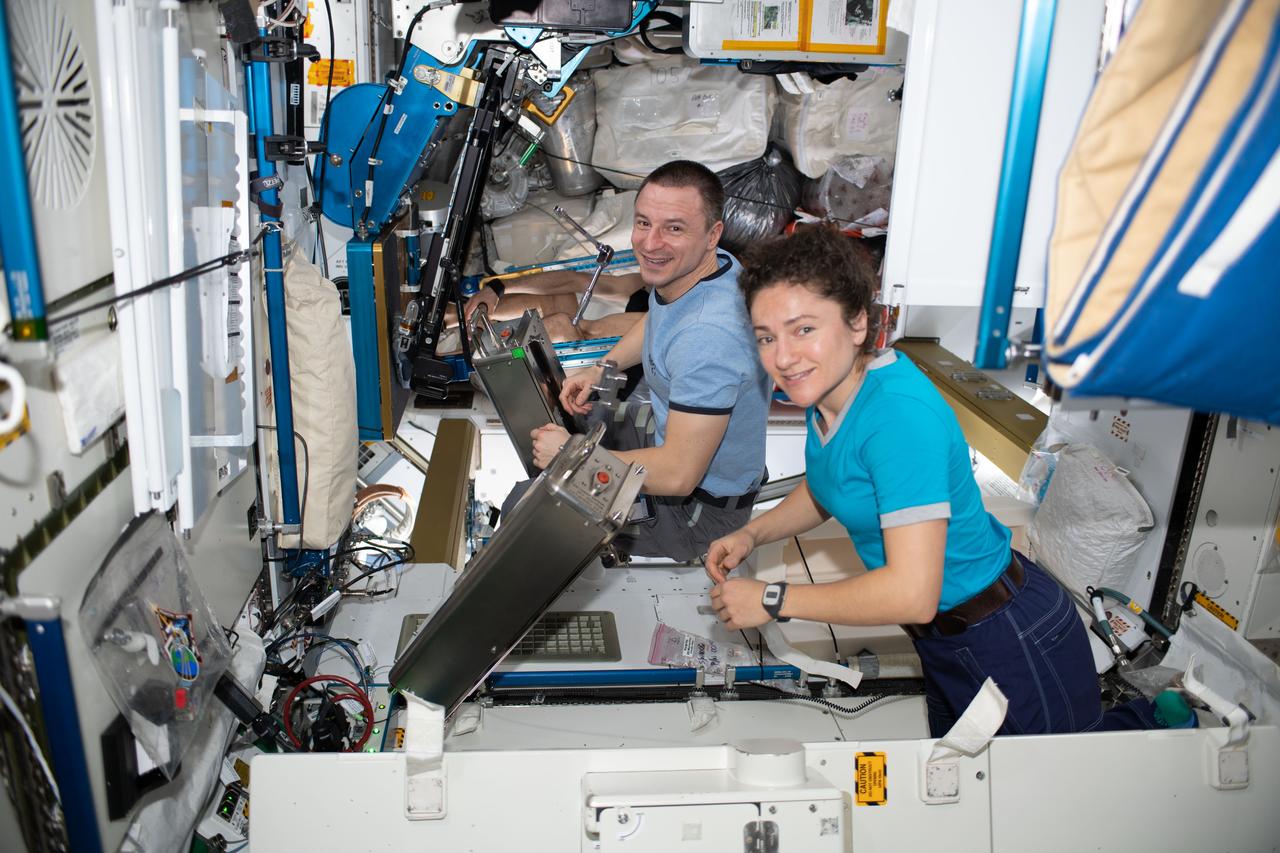
iss061e144870 (Jan. 26, 2020) --- NASA astronauts Jessica Meir and Andrew Morgan, both Expedition 61 Flight Engineers, work on orbital plumbing tasks inside the Waste and Hygiene Compartment aboard the International Space Station's Tranquility module.
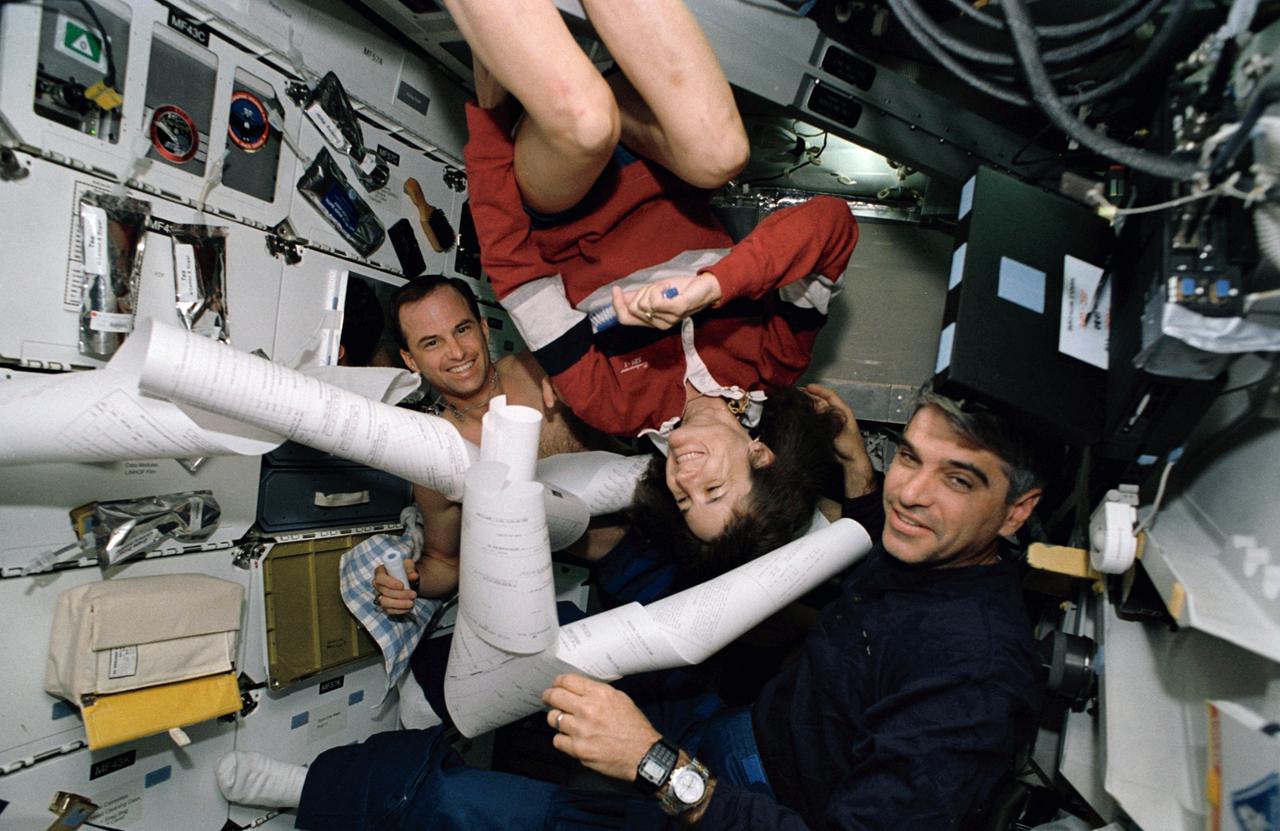
STS059-05-007 (9-20 April 1994) --- On Endeavour's middeck, the three STS-59 red shift crew members begin to organize what was believed to be among the longest mail messages in recent Shuttle history. With the picture held vertically, astronaut Sidney M. Gutierrez, mission commander, is in upper right. Also seen are astronauts Linda M. Godwin, payload commander, and Kevin P. Chilton, pilot. Though early Shuttle flights could brag of longer teleprinted messages, this Thermal Imaging Printing System's (TIPS) message from the ground competes with those of recent Shuttle flights.
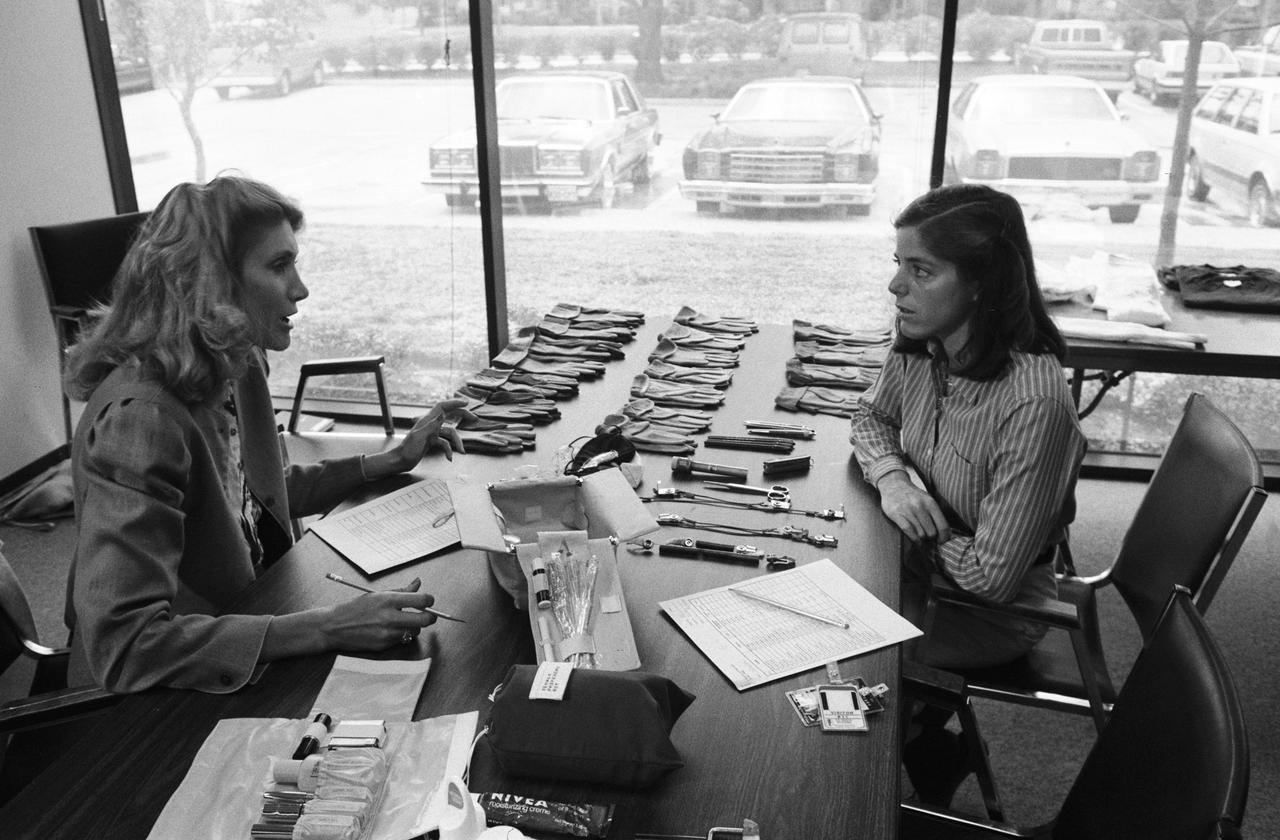
Views of STS-33/51L crew personnel Prime McAuliffe and Backup Morgan at the ILC Facility during clothing selection and Building #37 during food sampling, and with the rest of the STS-33/51L crew. 40074: "Teacher-in-Space" Participant Barbara Morgan (right) is briefed on her suit and on personal hygiene equipment to be used on the STS-51L Mission. 1. JSC - Education Program (Teacher in Space) 2. Barbara Morgan 3. Christa McAuliffe 4. STS-33/51L - Crew Training (Uniforms/Food/Crew)
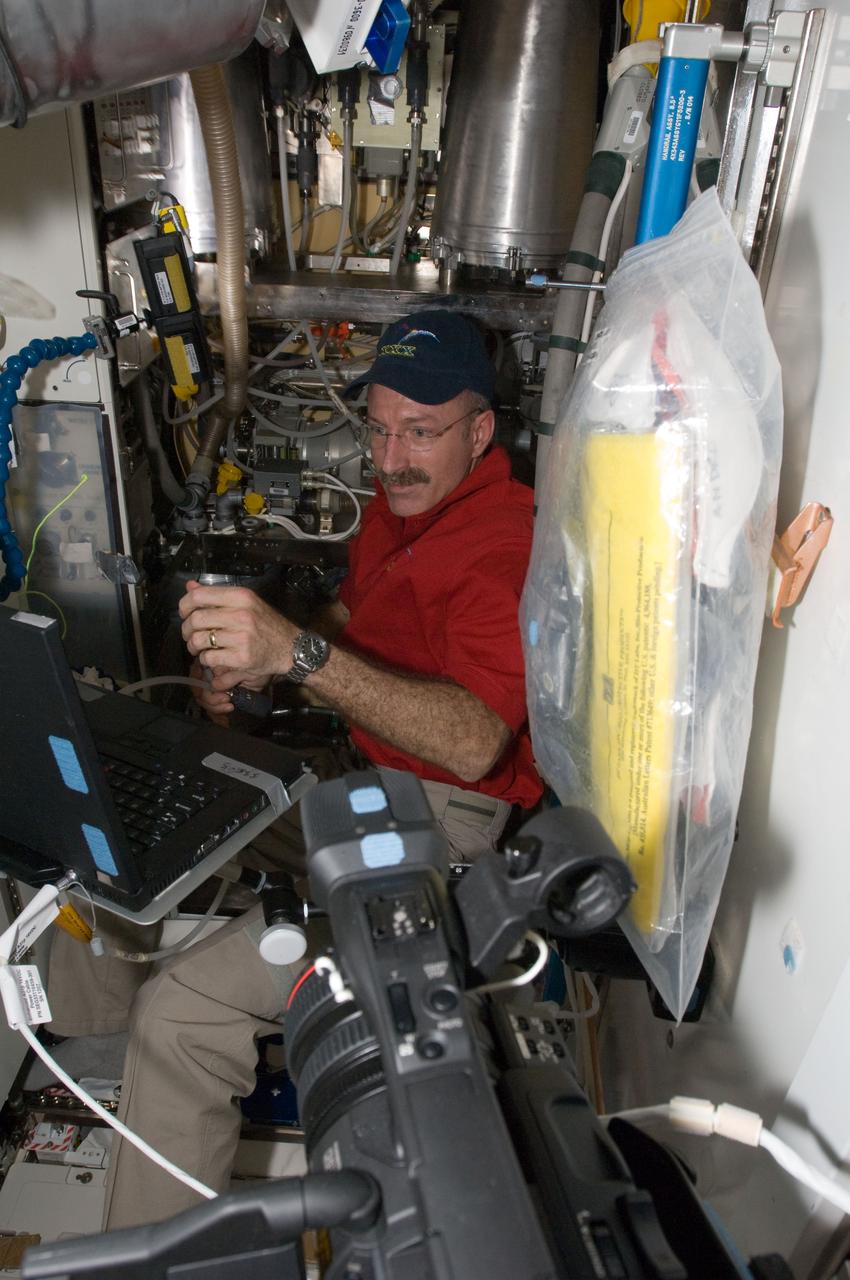
ISS030-E-032750 (11 Jan. 2012) --- NASA astronaut Dan Burbank, Expedition 30 flight commander, performs the Waste and Hygiene Compartment (WHC) yearly maintenance in the Tranquility node of the International Space Station. The maintenance included removing and replacing the urine hydraulic components which include urine lines, urine valve block and urine pressure sensors, and removing and replacing the Flush Water Tank Pressure Sensor.
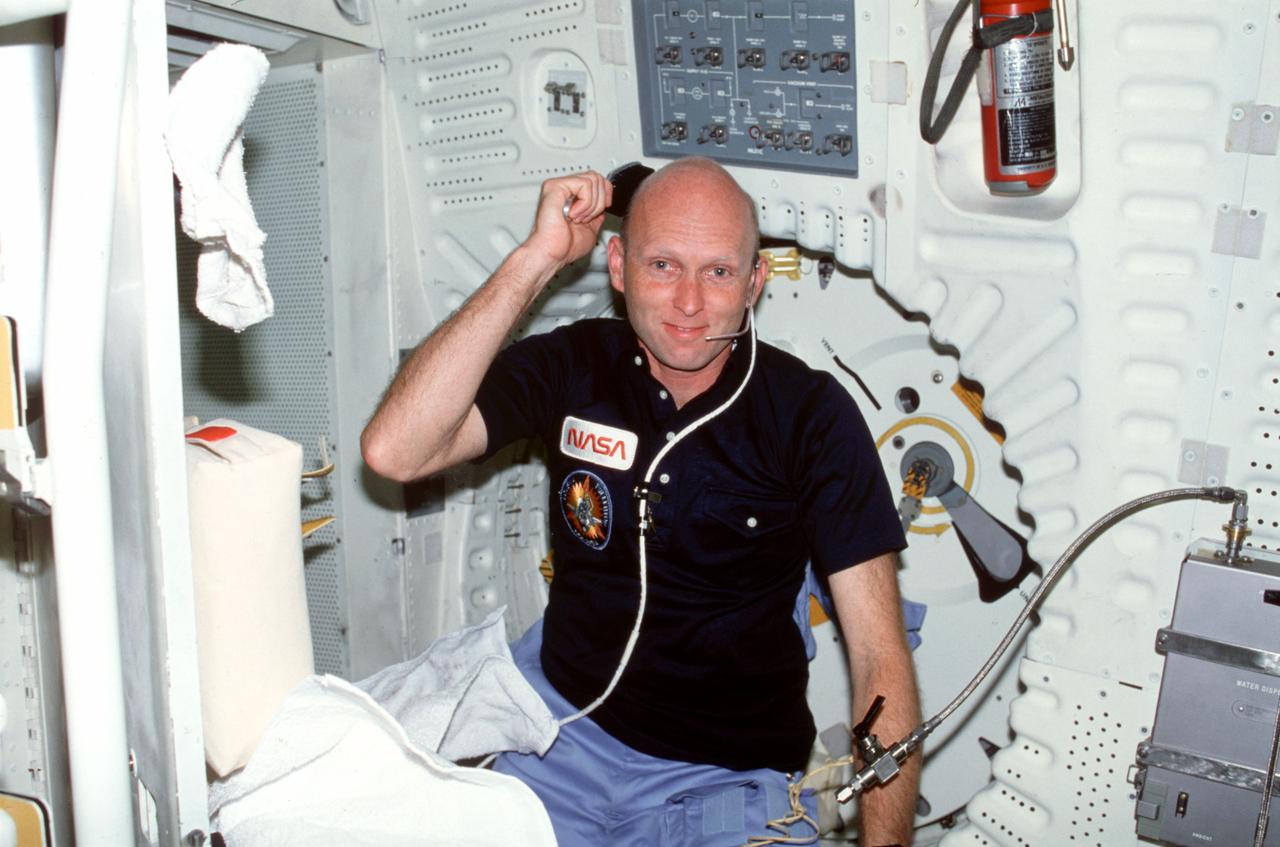
STS003-22-119 (30 March 1982) --- Astronaut Gordon Fullerton, STS-3 pilot, wearing communications kit assembly (ASSY) mini-headset (HDST), uses hygiene kit hair brush on aft middeck. He makes light of his lack of hair during a freshening up session. He makes a token effort with a hair brush. Side hatch and panel ML31C appear behind him. Photo credit: NASA
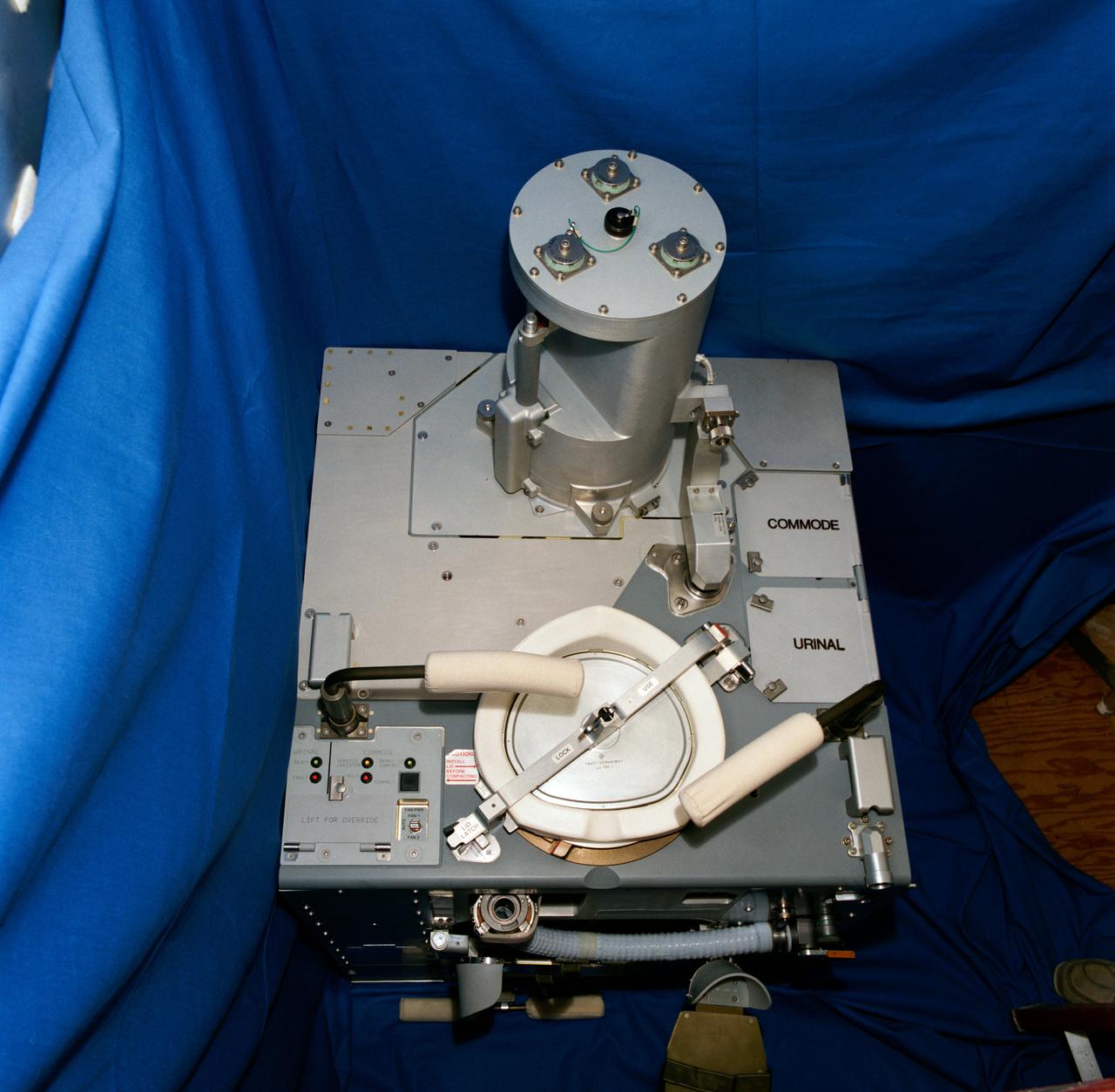
S92-46726 (November 1992) --- A high angle view of the Improved Waste Collection System (IWCS) scheduled to fly aboard NASA's Space Shuttle Endeavour for the STS-54 mission. Among the advantages the new IWCS is hoped to have over the current WCS are greater dependability, better hygiene, virtually unlimited capacity and more efficient preparation between Shuttle missions. Unlike the previous WCS, the improved version will not have to be removed from the spacecraft to be readied for the next flight.
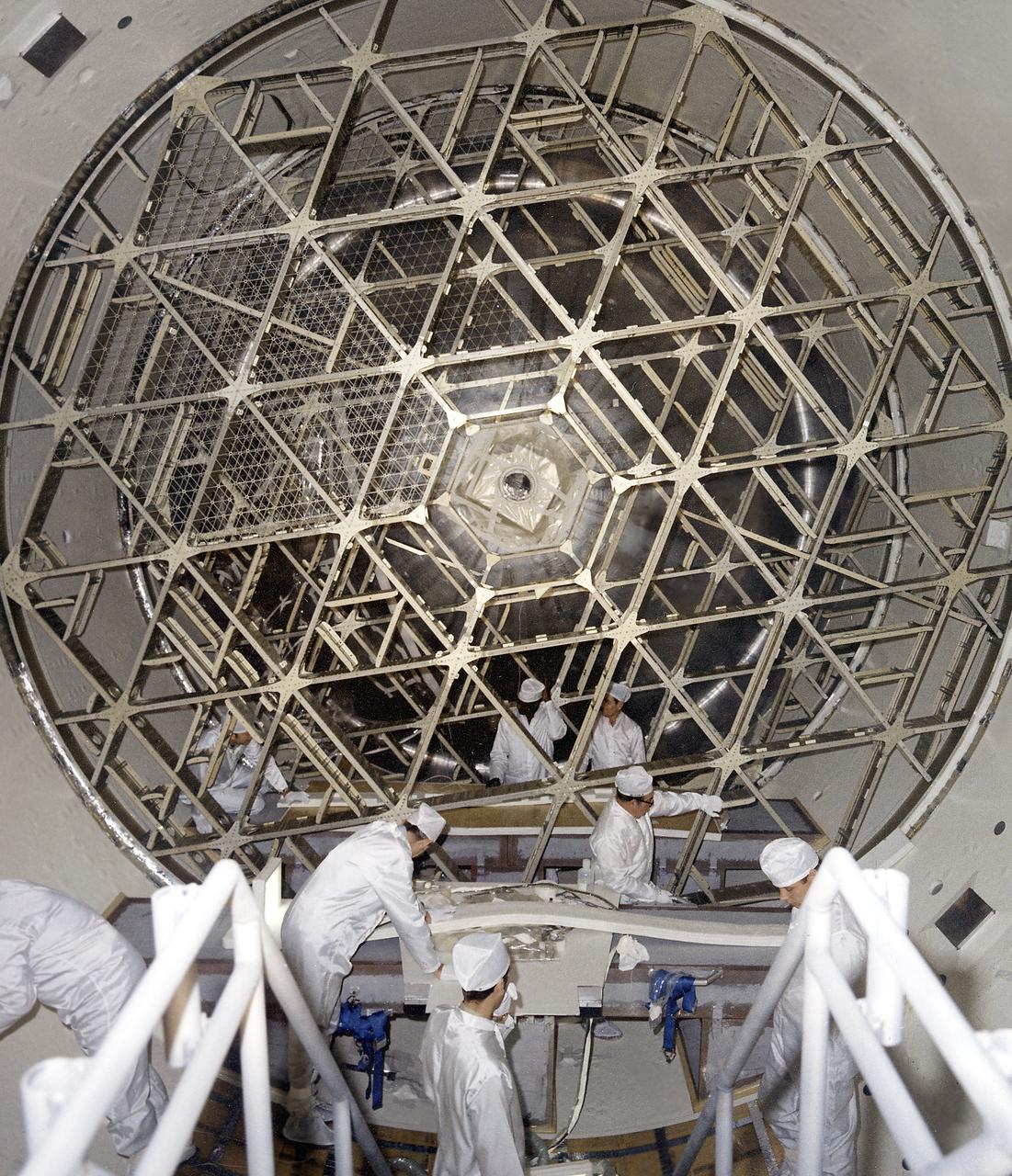
This photograph was taken during installation of floor grids on the upper and lower floors inside the Skylab Orbital Workshop at the McDornell Douglas plant at Huntington Beach, California. The OWS was divided into two major compartments. The lower level provided crew accommodations for sleeping, food preparation and consumption, hygiene, waste processing and disposal, and performance of certain experiments. The upper level consisted of a large work area and housed water storage tanks, a food freezer, storage vaults for film, scientific airlocks, mobility and stability experiment equipment, and other experimental equipment.
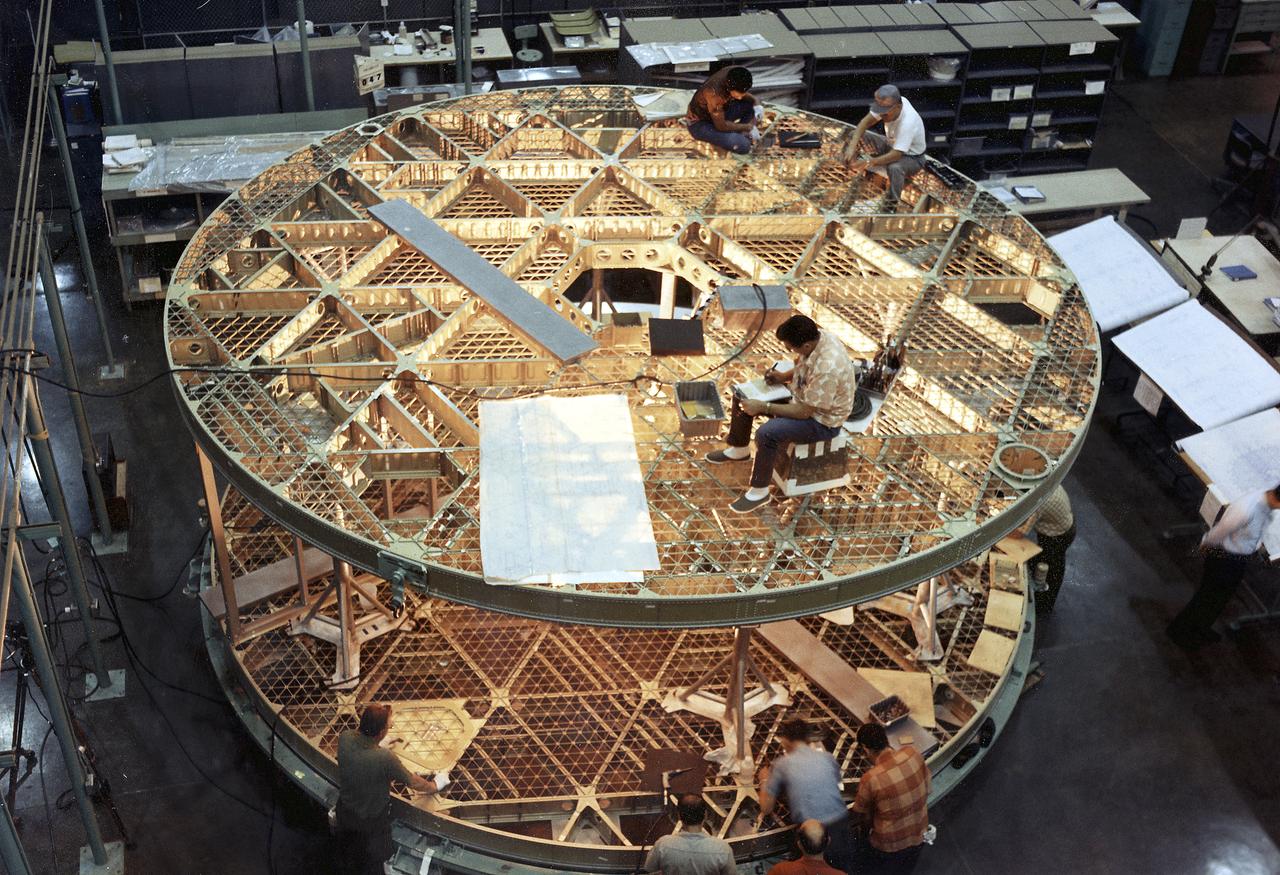
This photograph was taken during assembly of the bottom and upper floors of the Skylab Orbital Workshop (OWS). The OWS was divided into two major compartments. The lower level provided crew accommodations for sleeping, food preparation and consumption, hygiene, waste processing and disposal, and performance of certain experiments. The upper level consisted of a large work area and housed water storage tanks, a food freezer, storage vaults for film, scientific airlocks, mobility and stability experiment equipment, and other experimental equipment.

NASA Associate Administrator for Education and former astronaut Leland Melvin teaches the ABC's of living and working in space to Sesame Street's Elmo at NASA's Kennedy Space Center, Wednesday, July 6, 2011 in Cape Canaveral, FL. The pair discussed nutrition, exercise, hygiene in orbit. They also chatted about the features of the space shuttle and the various suits that astronauts wear. Photo Credit: (NASA/Carla Cioffi)

NASA Associate Administrator for Education and former astronaut Leland Melvin teaches the ABC's of living and working in space to Sesame Street's Elmo at NASA's Kennedy Space Center, Wednesday, July 6, 2011 in Cape Canaveral, FL. The pair discussed nutrition, exercise, hygiene in orbit. They also chatted about the features of the space shuttle and the various suits that astronauts wear. Photo Credit: (NASA/Carla Cioffi)
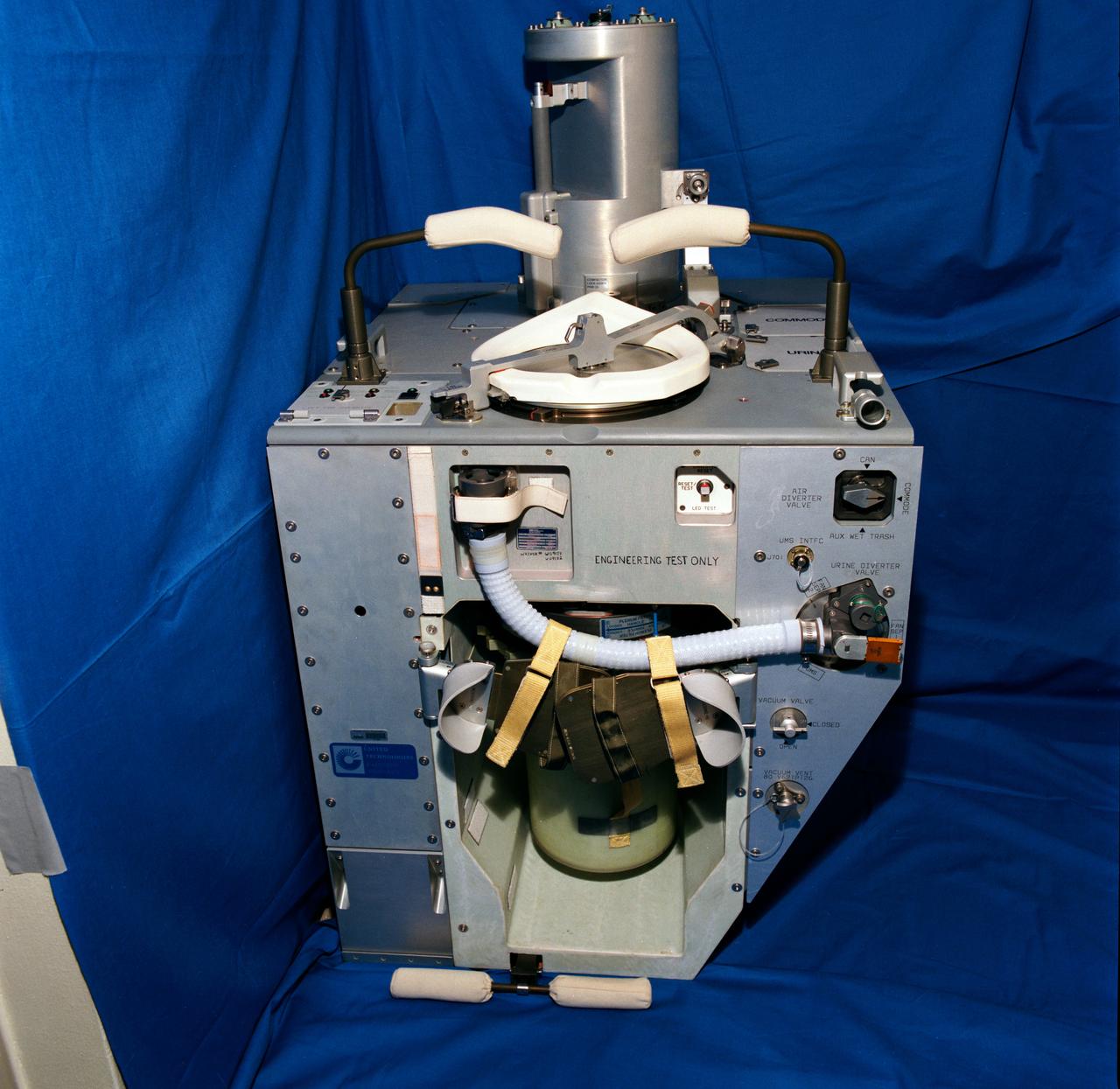
S92-46717 (November 1992) --- A front view of the improved waste collection system (IWCS) scheduled to fly aboard NASA's Space Shuttle Endeavour for the STS-54 mission. Among the advantages the new IWCS is hoped to have over the current WCS are greater dependability, better hygiene, virtually unlimited capacity and more efficient preparation between Shuttle missions. Unlike the previous WCS, the improved version will not have to be removed from the spacecraft to be readied for the next flight.
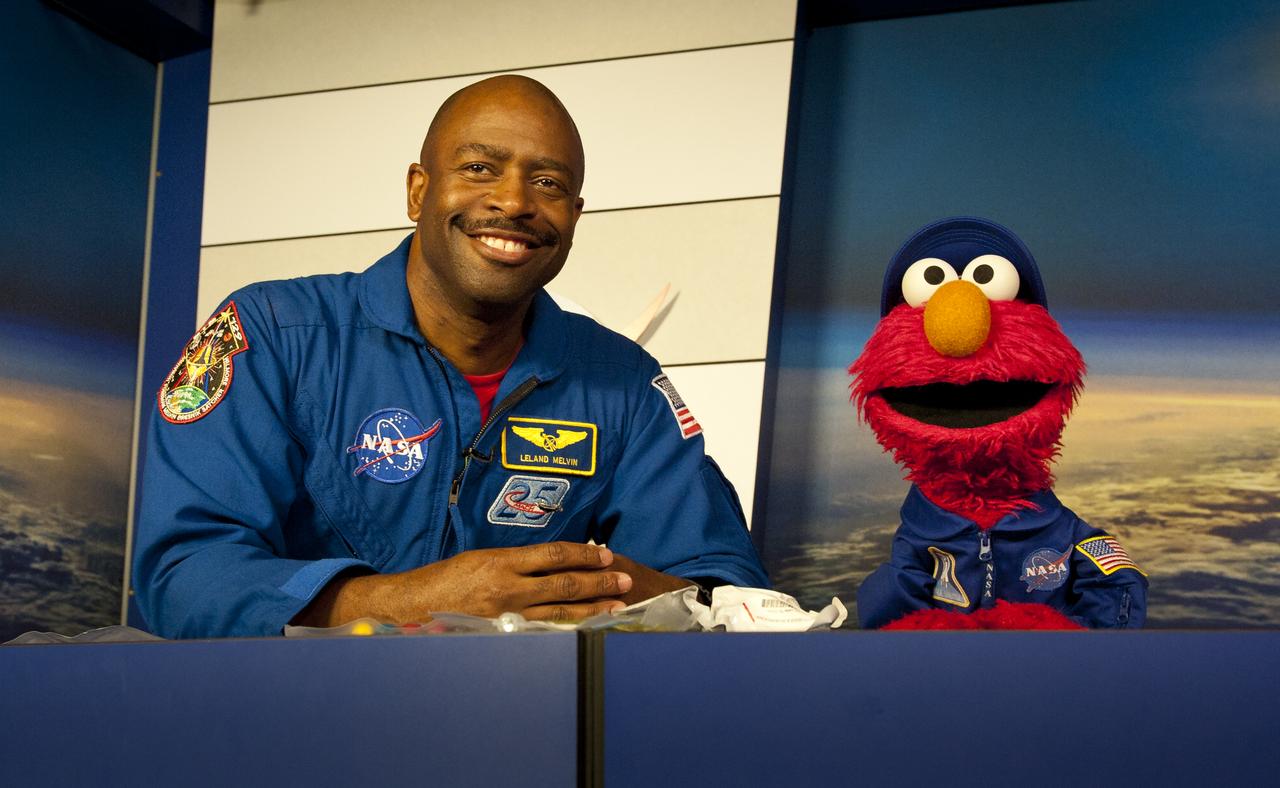
NASA Associate Administrator for Education and former astronaut Leland Melvin teaches the ABC's of living and working in space to Sesame Street's Elmo at NASA's Kennedy Space Center, Wednesday, July 6, 2011 in Cape Canaveral, FL. The pair discussed nutrition, exercise, hygiene in orbit. They also chatted about the features of the space shuttle and the various suits that astronauts wear. Photo Credit: (NASA/Carla Cioffi)
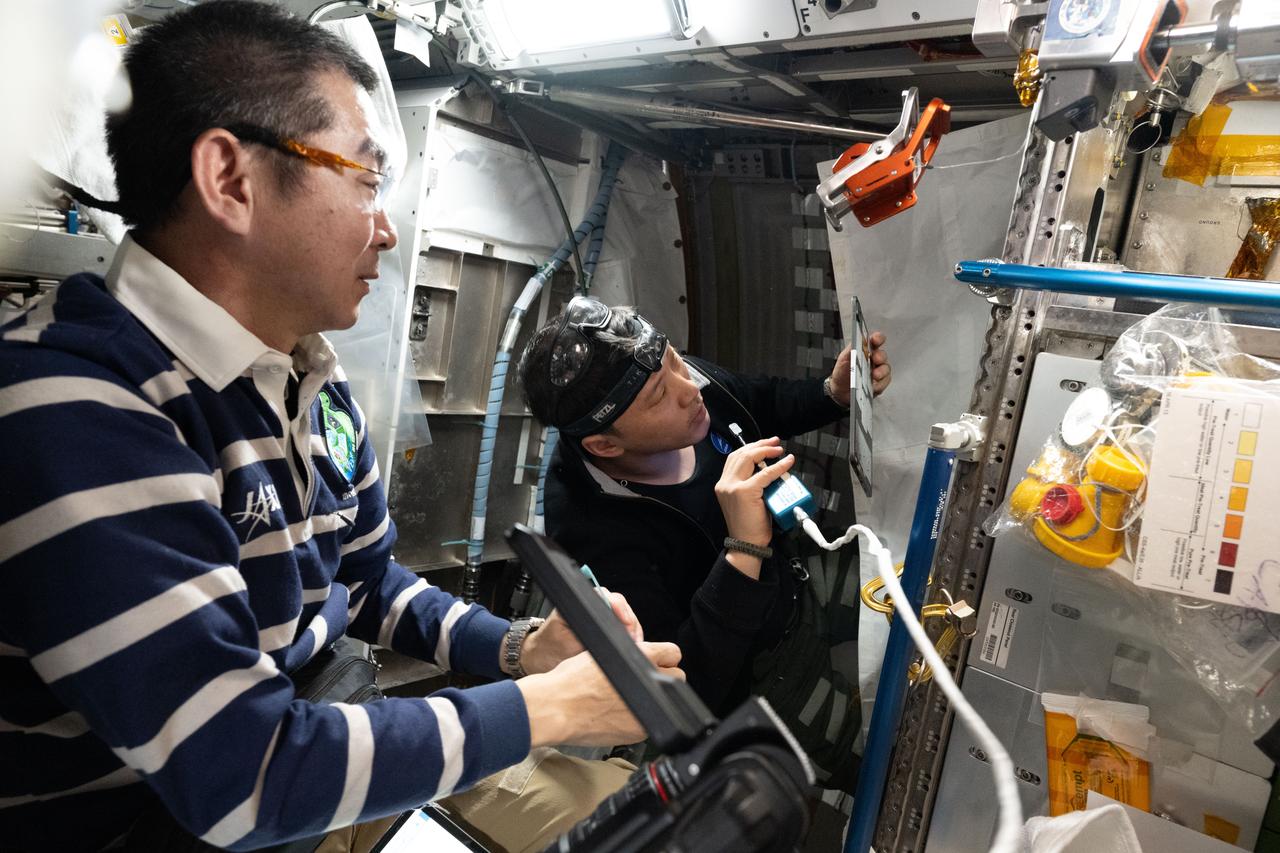
iss073e1199016 (Nov. 20, 2025) --- Expedition 73 Flight Engineers (from left) Kimiya Yui of JAXA (Japan Aerospace Exploration Agency) and Jonny Kim of NASA work together swapping thermal control system hoses on the COLBERT treadmill located inside the Tranquility module. The pair temporarily uninstalled the station’s bathroom, or waste and hygiene compartment, to access the life support hoses.
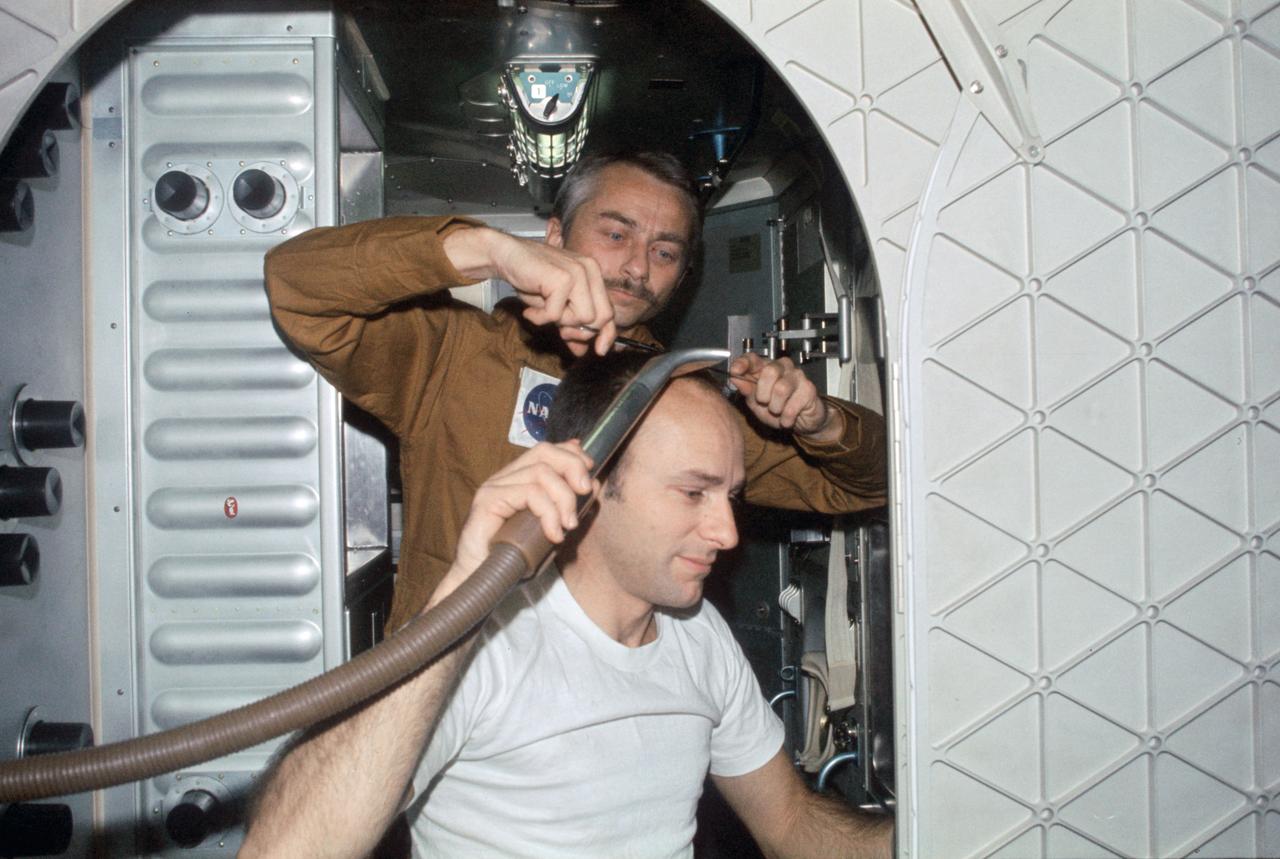
SL3-108-1292 (19 Aug. 1973) --- Scientist-astronaut Owen K. Garriott, Skylab 3 science pilot, trims the hair of astronaut Alan L. Bean, commander, in this onboard photograph from the Skylab Orbital Workshop (OWS) in Earth orbit. Astronaut Jack R. Lousma, pilot, took this picture with a 35mm Nikon camera. Bean holds a vacuum hose to gather in loose hair. The crew of the second manned Skylab flight went on to successfully complete 59 days aboard the Skylab space station cluster in Earth orbit. Photo credit: NASA
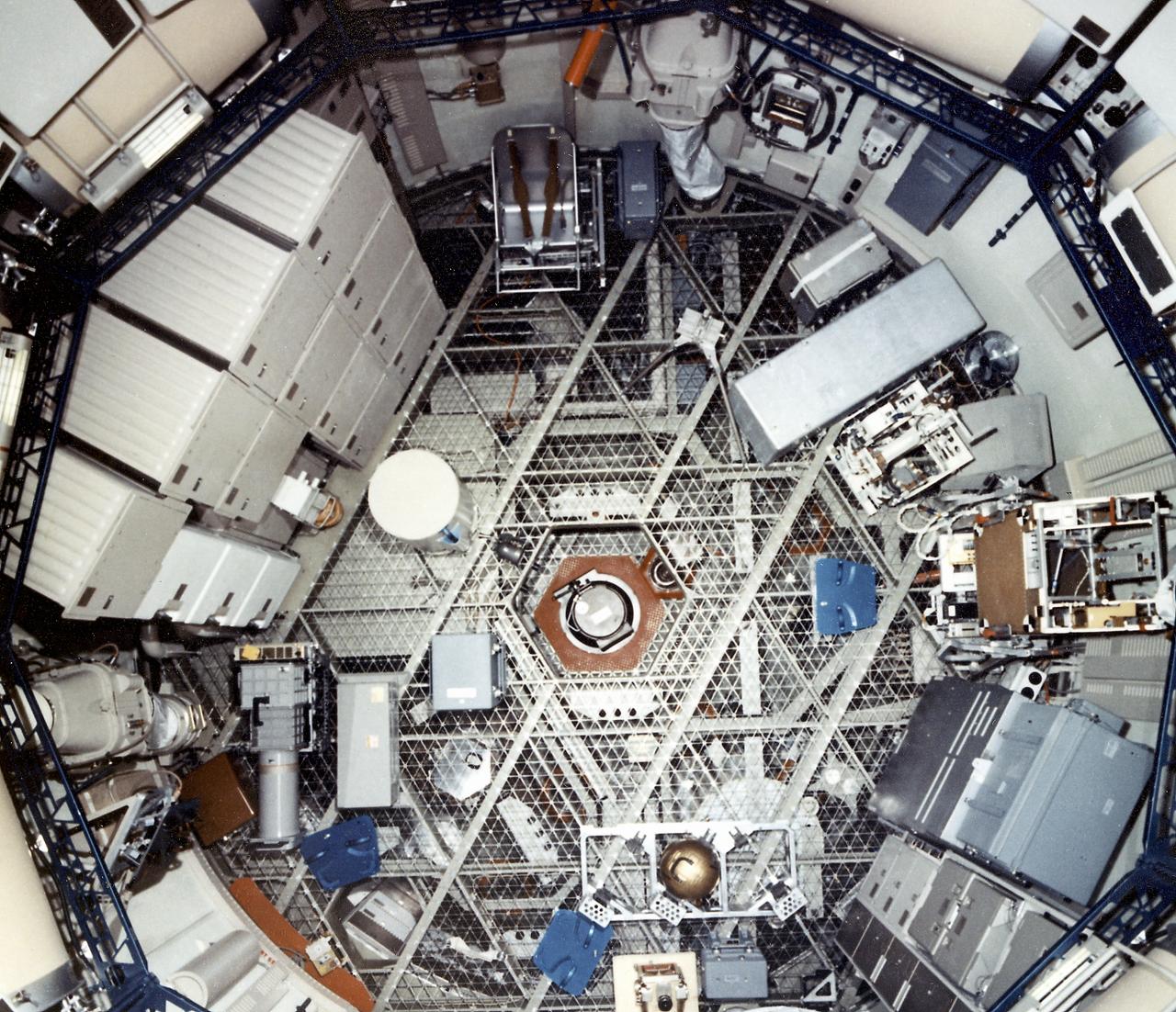
This photograph is an interior view of the Orbital Workshop (OWS) upper level looking from the airlock hatch, showing the octagonal opening that separated the workshop's two levels. The trash airlock can be seen at center. The lower level of the OWS provided crew accommodations for sleeping, food preparation and consumption, hygiene, waste processing and disposal, and performance of certain experiments. The upper level consisted of a large work area and housed water storage tanks, a food freezer, storage vaults for film, scientific airlocks, mobility and stability experiment equipment, and other experimental equipment.
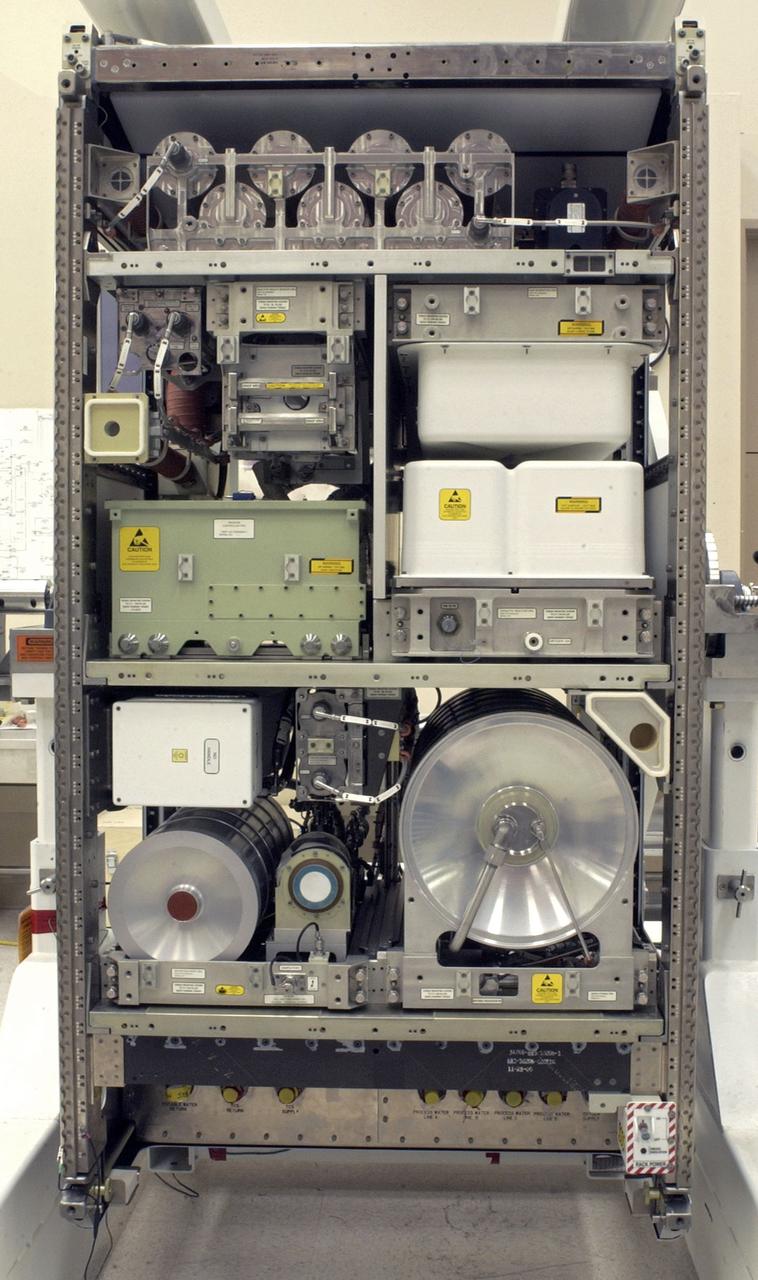
CAPE CANAVERAL, Fla. – This photo shows the Water Recovery System's rack 1 that will be delivered to the International Space Station aboard space shuttle Endeavour on the STS-126 mission. The two units of the Water Recovery System are designed to provide drinking-quality water through the reclamation of wastewater, including urine and hygiene wastes. The water that’s produced will be used to support the crew and work aboard the station. Endeavour and its crew of seven are scheduled to lift off at 7:55 p.m. Nov. 14 for the 15-day STS-126 mission. Photo credit: NASA
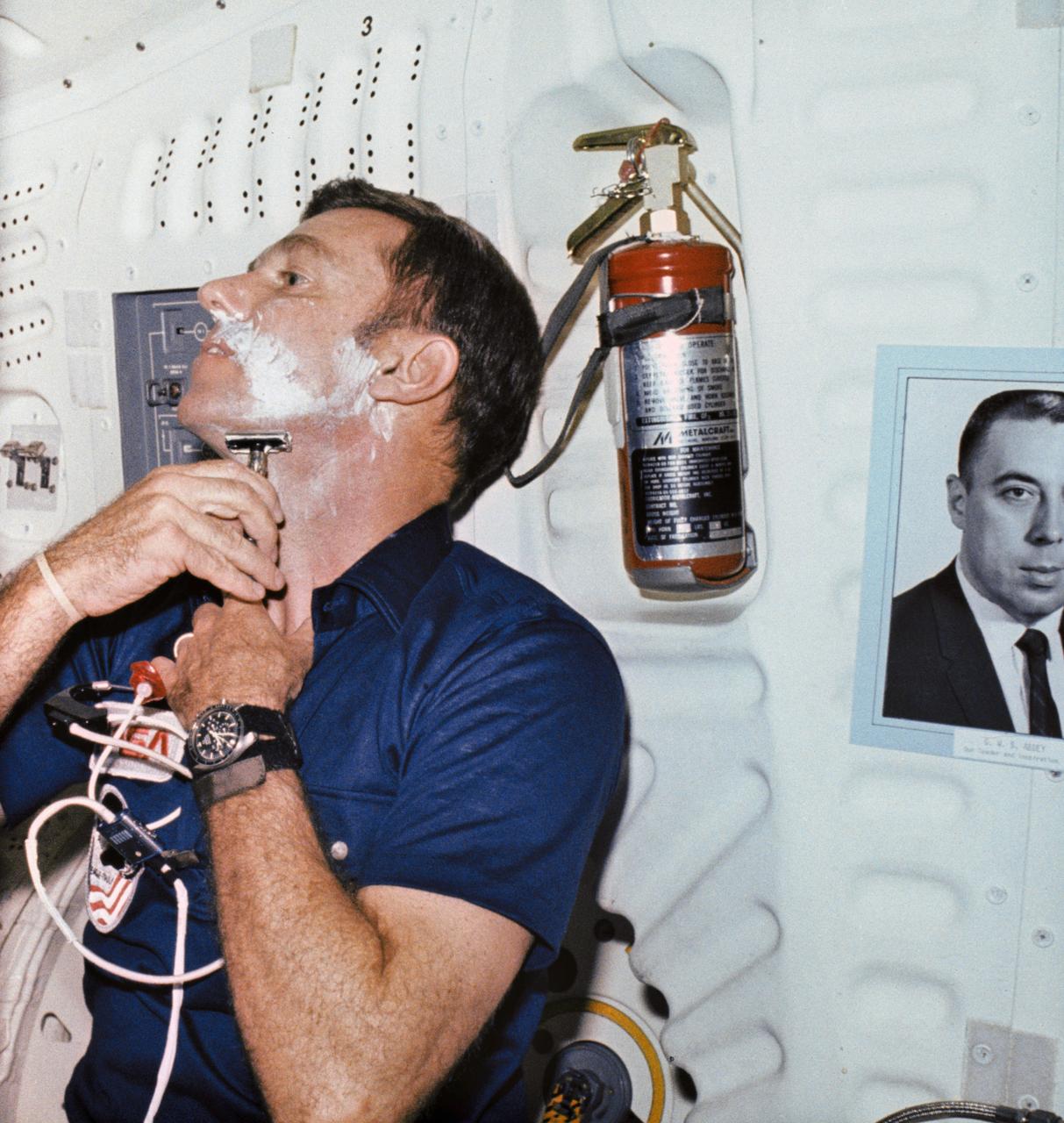
S81-39573 (12-14 Nov. 1981) --- This photograph was taken during a two-and a fourth-day stay in Earth orbit by astronauts Joe H. Engle, here shaving, and Richard H. Truly, photographer for this frame. A portion of that time was spent in the living area of middeck portion of the 122-ft-long (37 meters) vehicle as the astronauts ate, slept and took care of hygiene matters here. An onboard fire extinguisher is in upper right corner. Partially out of the frame at right edge is a photograph of George W. S. Abbey, Director of Flight Operations at Johnson Space Center. Engle is attired in an onboard constant wear type garment. Photo credit: NASA
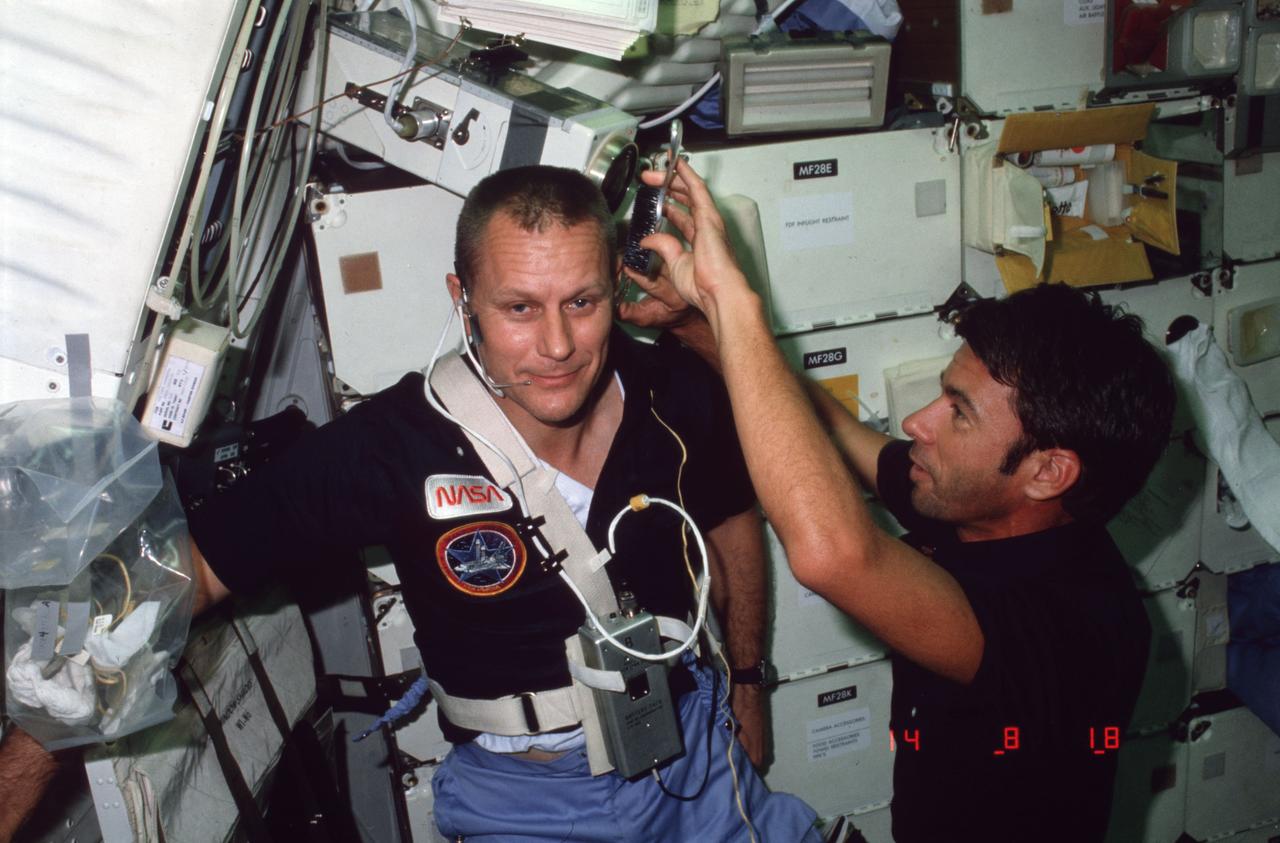
STS005-07-235 (11-16 Nov. 1982) --- Astronaut William B. Lenoir, mission specialist for STS-5, uses scissors and a brush to trim the sideburns of astronaut Robert F. Overmyer, pilot, in the middeck area of the Earth-orbiting space shuttle Columbia. An opened kit with hygiene supplies inside can be seen attached to one of the stowage locker doors at upper right. Other crew member are astronauts Vance D. Brand, commander, and Joseph P. Allen IV, the flight?s other mission specialist. Photo credit: NASA
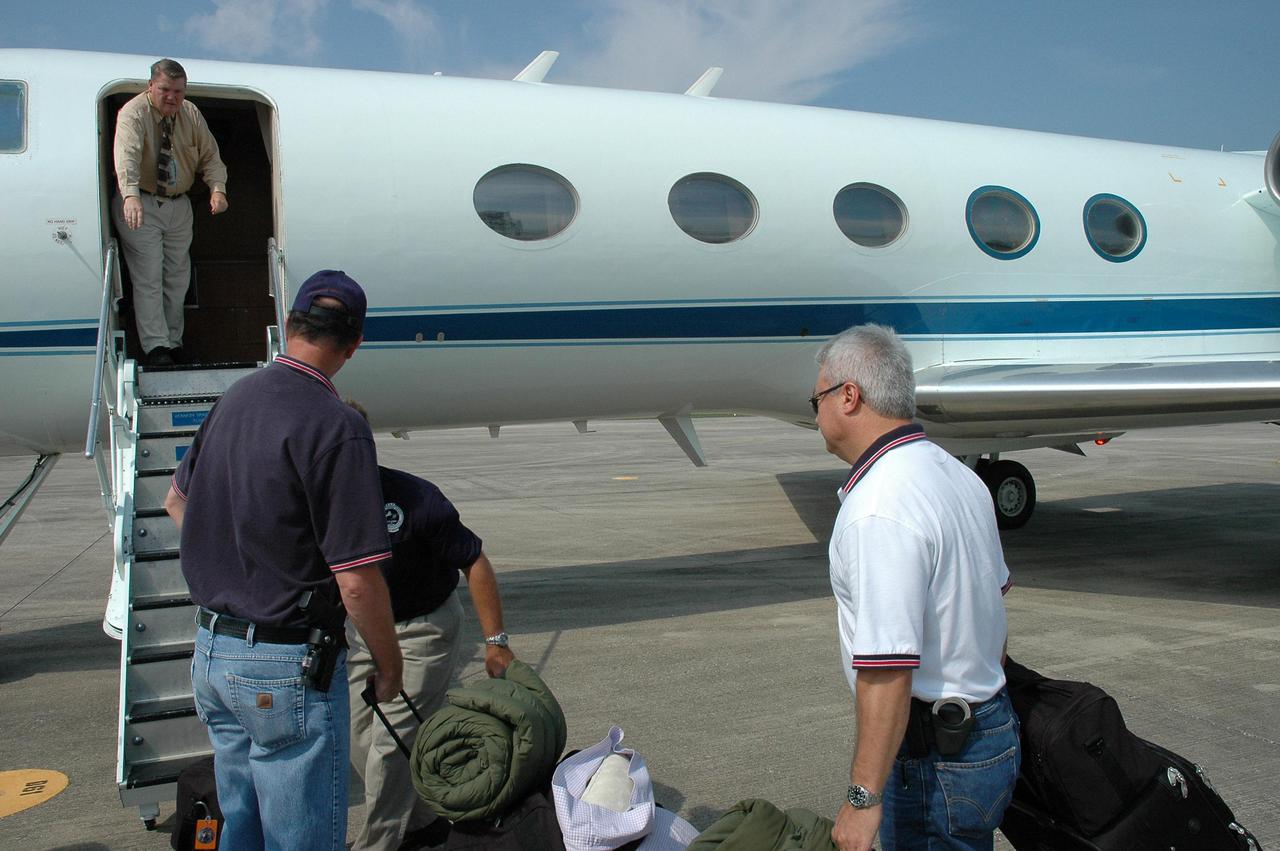
KENNEDY SPACE CENTER, FLA. - At the NASA Kennedy Space Center Shuttle Landing Facility, employees load hurricane relief supplies onto a NASA aircraft bound for Stennis Space Center in Mississippi, which suffered damage from Hurricane Katrina. The two men with backs to the camera are Security personnel going to Stennis to relieve others who have been helping at the center. The supplies included 10 boxes of load bus disconnects going to Michoud Assesmbly Facility near New Orleans and 17 boxes of personal hygiene items, along with boxes of clothing and water. Many Stennis and Michoud employees were rendered homeless by the hurricane. NASA centers have been generous with relief supplies and personnel. Stennis is in limited operations mode. Daily convoys have been moving between Stennis and Michould, transporting personnel and supplies as Michoud prepares to resume limited operations.

KENNEDY SPACE CENTER, FLA. - At the NASA Kennedy Space Center Shuttle Landing Facility, the NASA aircraft filled with hurricane relief supplies is ready for takeoff. The plane is bound for Stennis Space Center in Mississippi, which suffered damage from Hurricane Katrina. The supplies included 10 boxes of load bus disconnects going to Michoud Assesmbly Facility near New Orleans and 17 boxes of personal hygiene items, along with boxes of clothing and water. Many Stennis and Michoud employees were rendered homeless by the hurricane. NASA centers have been generous with relief supplies and personnel. Stennis is in limited operations mode. Daily convoys have been moving between Stennis and Michould, transporting personnel and supplies as Michoud prepares to resume limited operations.
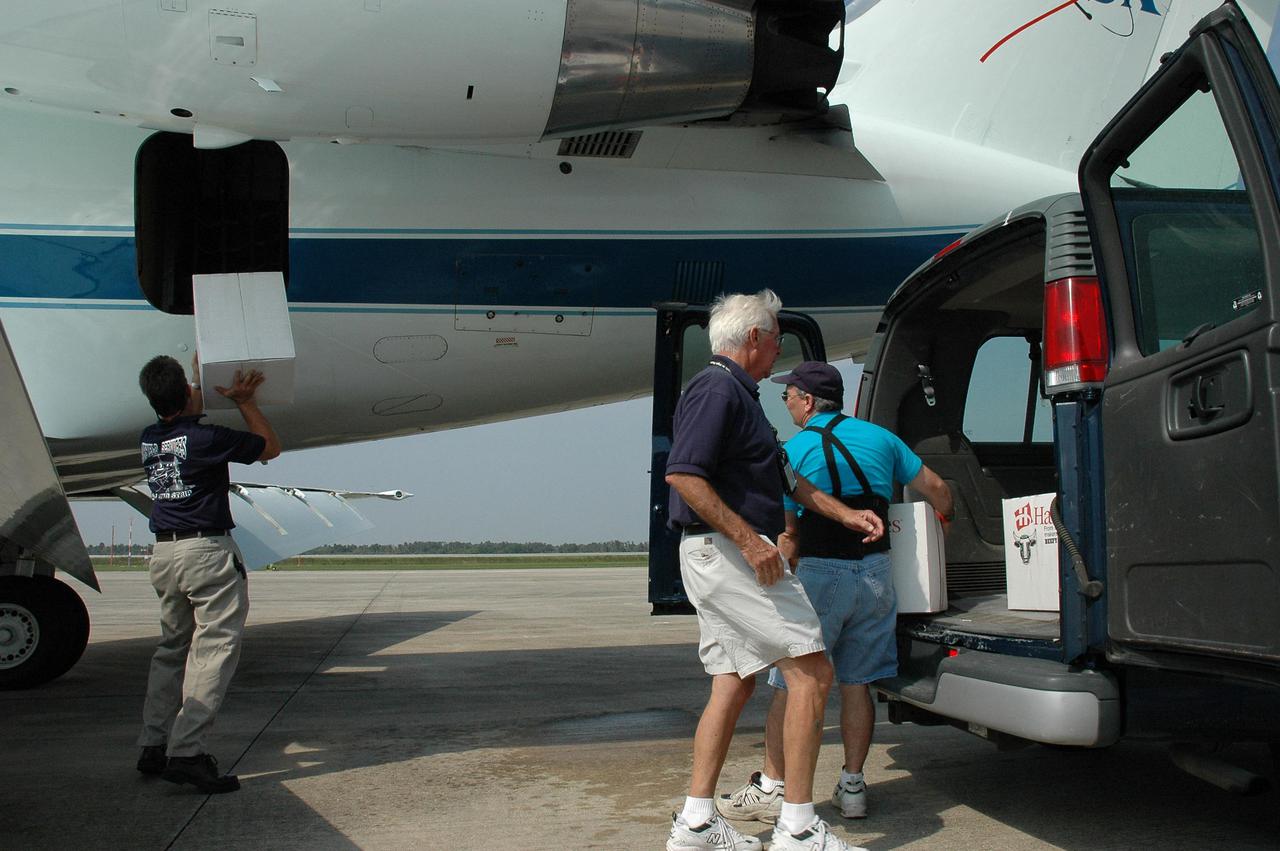
KENNEDY SPACE CENTER, FLA. - At the NASA Kennedy Space Center Shuttle Landing Facility, employees load hurricane relief supplies onto a NASA aircraft bound for Stennis Space Center in Mississippi, which suffered damage from Hurricane Katrina. The supplies included 10 boxes of load bus disconnects going to Michoud Assesmbly Facility near New Orleans and 17 boxes of personal hygiene items, along with boxes of clothing and water. Many Stennis and Michoud employees were rendered homeless by the hurricane. NASA centers have been generous with relief supplies and personnel. Stennis is in limited operations mode. Daily convoys have been moving between Stennis and Michould, transporting personnel and supplies as Michoud prepares to resume limited operations.
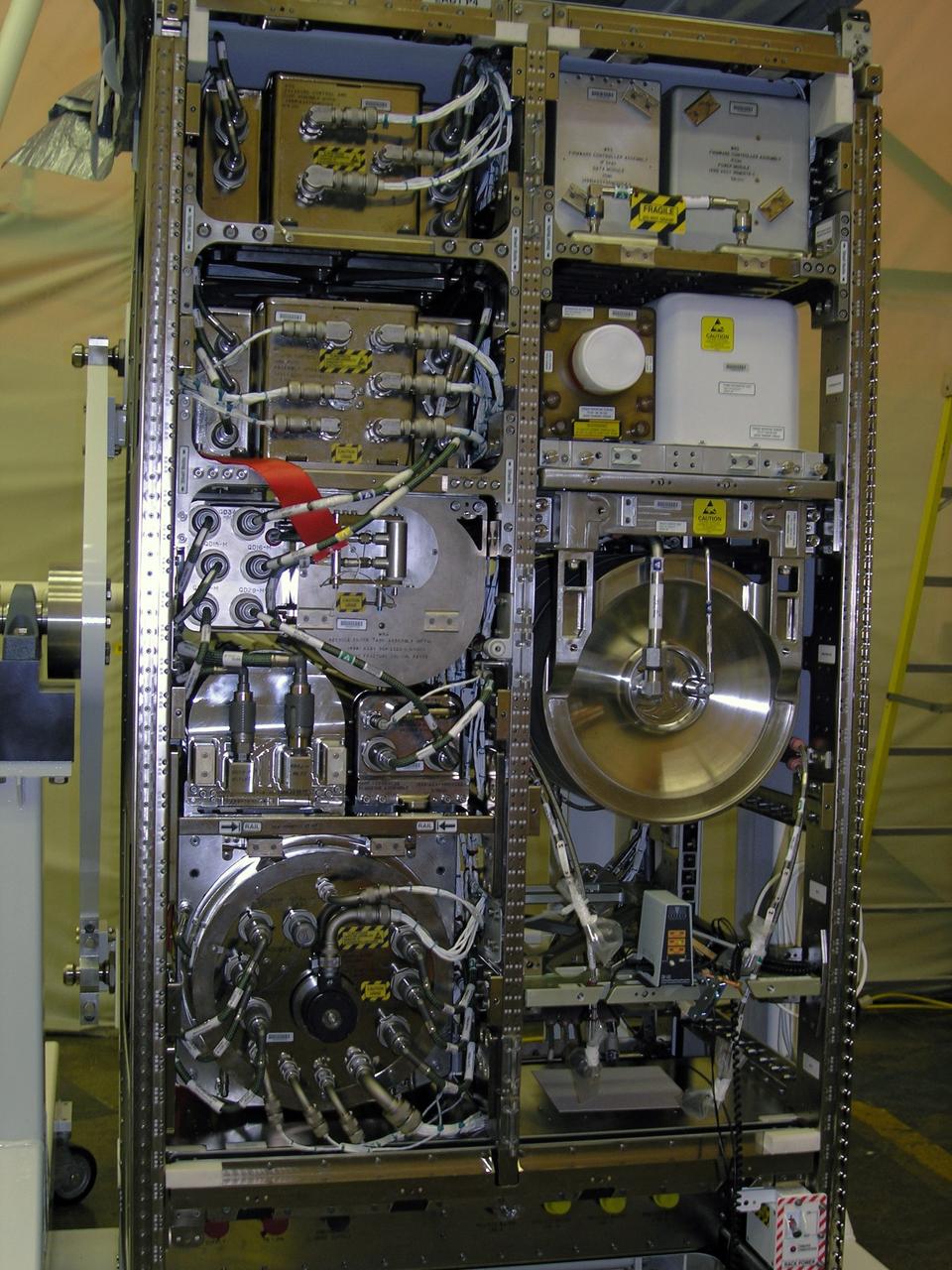
CAPE CANAVERAL, Fla. – This photo shows the Water Recovery System's rack 2, that will be delivered to the International Space Station aboard space shuttle Endeavour on the STS-126 mission. Its primary purpose is to process urine and waster water so that Waste Recovery System's rack 1 can perform the final cleanup. The two units of the Water Recovery System are designed to provide drinking-quality water through the reclamation of wastewater, including urine and hygiene wastes. The water that’s produced will be used to support the crew and work aboard the station. Endeavour and its crew of seven are scheduled to lift off at 7:55 p.m. Nov. 14 for the 15-day STS-126 mission. Photo credit: NASA
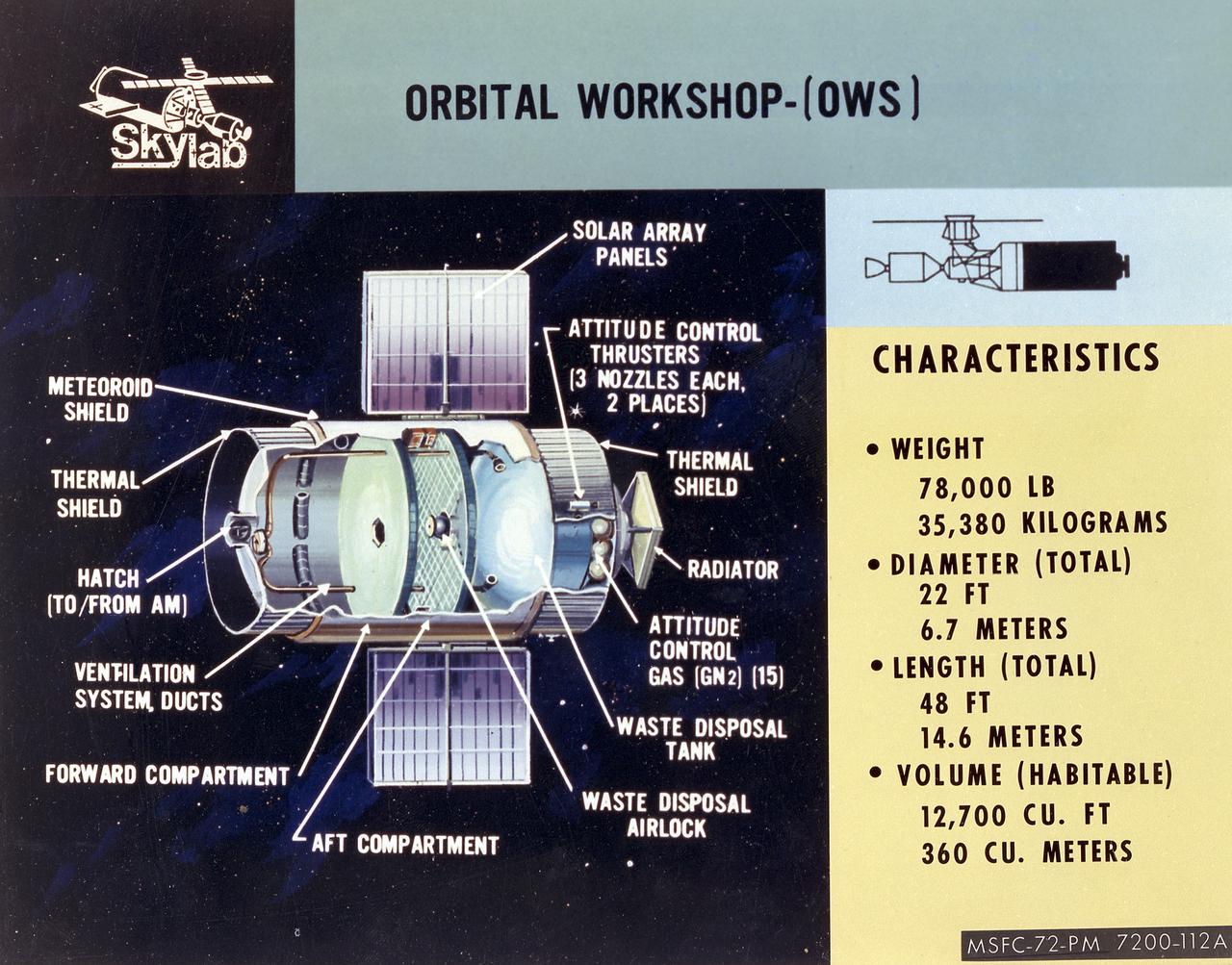
This cutaway illustration shows the characteristics and basic elements of the Skylab Orbiter Workshop (OWS). The OWS was divided into two major compartments. The lower level provided crew accommodations for sleeping, food preparation and consumption, hygiene, waste processing and disposal, and performance of certain experiments. The upper level consisted of a large work area and housed water storage tanks, a food freezer, storage vaults for film, scientific airlocks, mobility and stability experiment equipment, and other experimental equipment. The compartment below the crew quarters was a container for liquid and solid waste and trash accumulated throughout the mission. A solar array, consisting of two wings covered on one side with solar cells, was mounted outside the workshop to generate electrical power to augment the power generated by another solar array mounted on the solar observatory. Thrusters were provided at one end of the workshop for short-term control of the attitude of the space station.
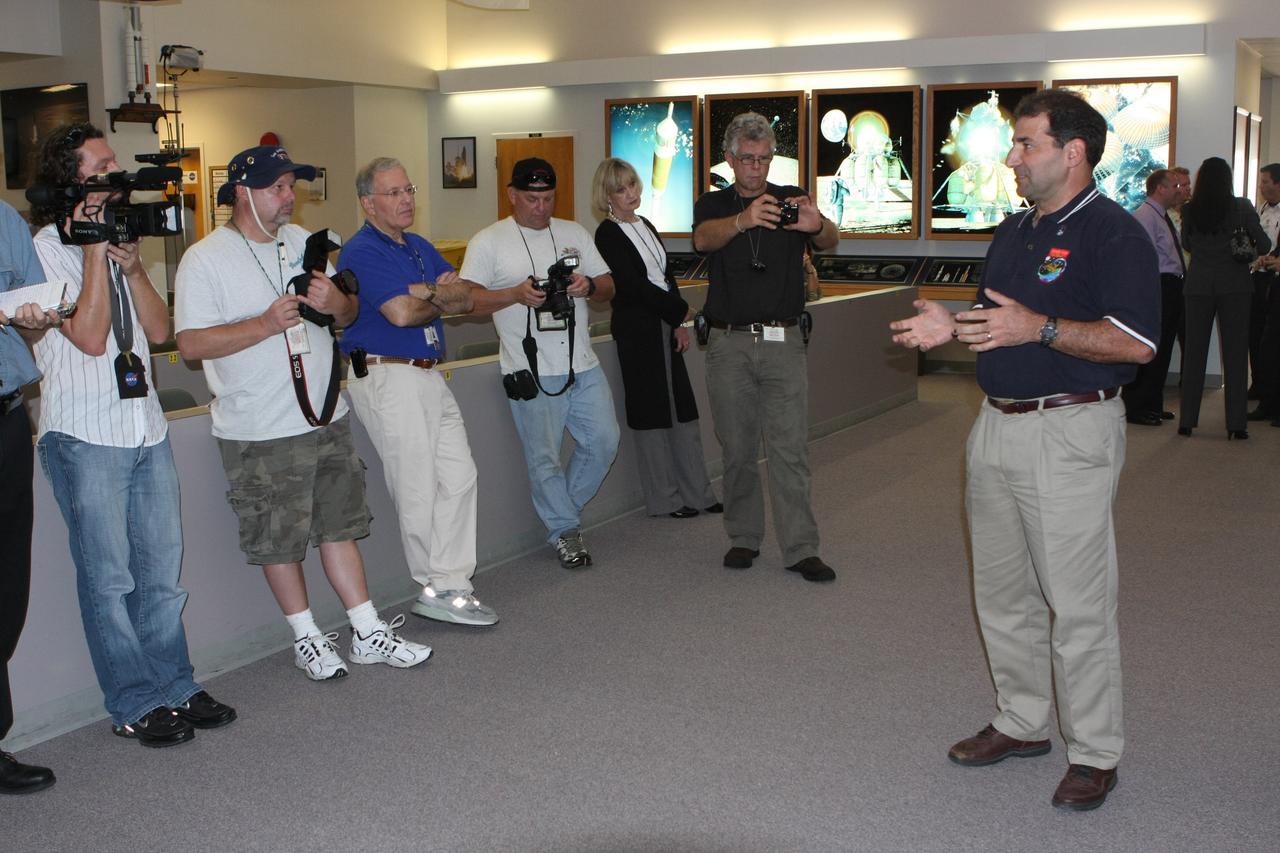
CAPE CANAVERAL, Fla. – In the News Center at NASA's Kennedy Space Center in Florida, Bob Bagdigian (right) talks to the media about the Water Recovery System being delivered to the International Space Station on space shuttle Endeavour's STS-126 mission. The two units of the Water Recovery System are designed to provide drinking-quality water through the reclamation of wastewater, including urine and hygiene wastes. The water that’s produced will be used to support the crew and work aboard the station. STS-126 is the 124th space shuttle flight and the 27th flight to the International Space Station. The mission will feature four spacewalks and work that will prepare the space station to house six crew members for long- duration missions. Liftoff is scheduled for 7:55 p.m. EST Nov. 14. Photo credit: NASA/Dimitri Gerondidakis
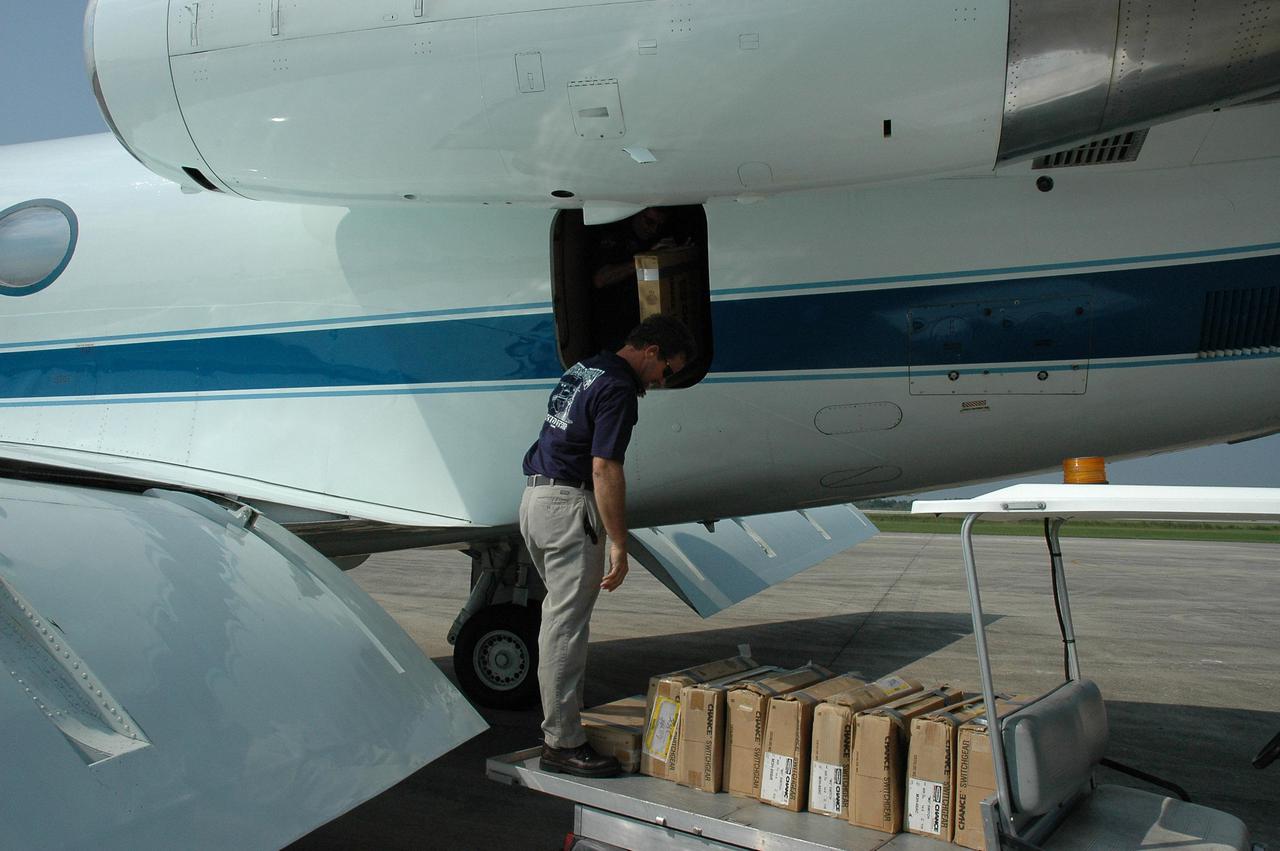
KENNEDY SPACE CENTER, FLA. - At the NASA Kennedy Space Center Shuttle Landing Facility, hurricane relief supplies are being loaded onto a NASA aircraft bound for Stennis Space Center in Mississippi, which suffered damage from Hurricane Katrina. The supplies included 10 boxes of load bus disconnects going to Michoud Assesmbly Facility near New Orleans and 17 boxes of personal hygiene items, along with boxes of clothing and water. Many Stennis and Michoud employees were rendered homeless by the hurricane. NASA centers have been generous with relief supplies and personnel. Stennis is in limited operations mode. Daily convoys have been moving between Stennis and Michould, transporting personnel and supplies as Michoud prepares to resume limited operations.
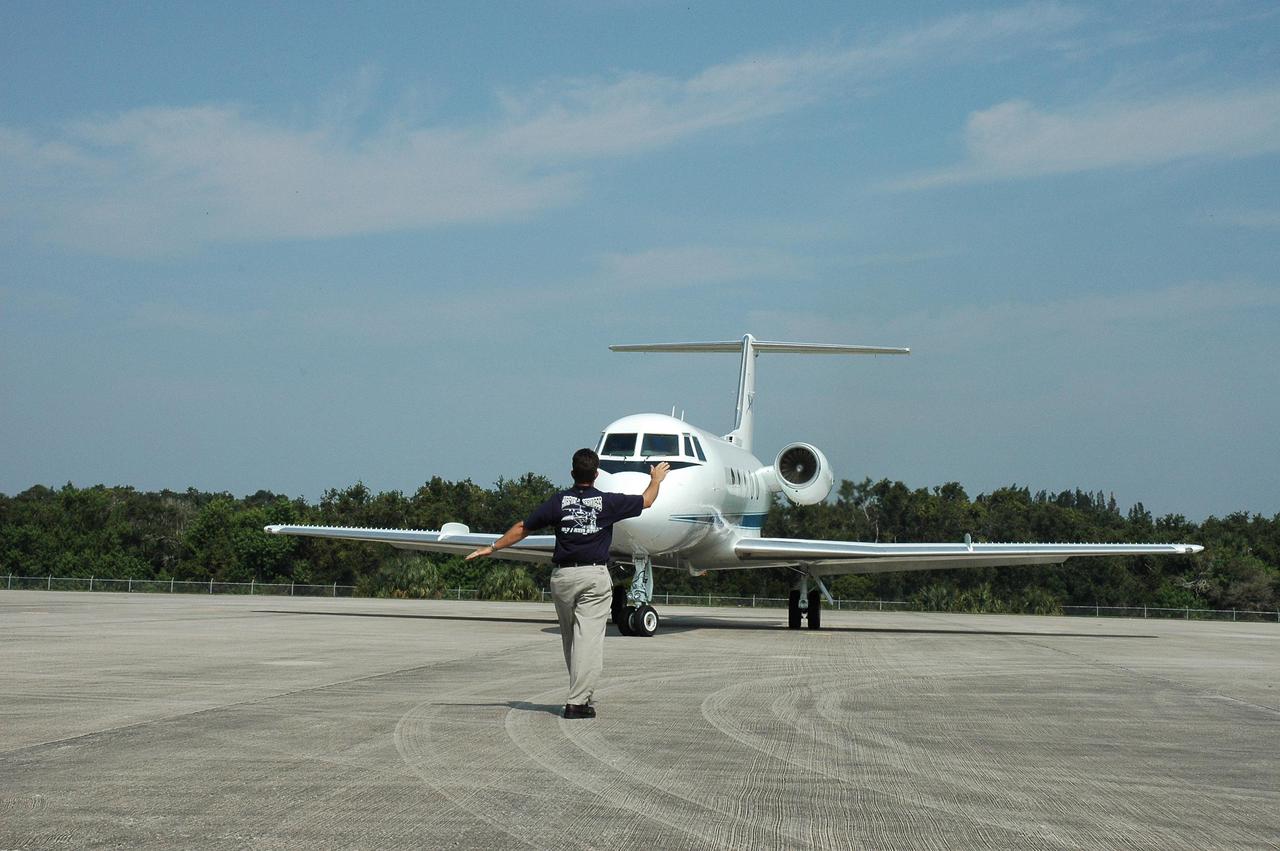
KENNEDY SPACE CENTER, FLA. - At the NASA Kennedy Space Center Shuttle Landing Facility, the NASA aircraft filled with hurricane relief supplies taxis into position for takeoff. The plane is bound for Stennis Space Center in Mississippi, which suffered damage from Hurricane Katrina. The two men with backs to the camera are Security personnel going to Stennis to relieve others who have been helping at the center. The supplies included 10 boxes of load bus disconnects going to Michoud Assesmbly Facility near New Orleans and 17 boxes of personal hygiene items, along with boxes of clothing and water. Many Stennis and Michoud employees were rendered homeless by the hurricane. NASA centers have been generous with relief supplies and personnel. Stennis is in limited operations mode. Daily convoys have been moving between Stennis and Michould, transporting personnel and supplies as Michoud prepares to resume limited operations.

CAPE CANAVERAL, Fla. – This photo shows the waste and hygiene compartment that will be delivered to the International Space Station aboard space shuttle Endeavour on the STS-126 mission. The Russian-built toilet system provides the crew with a second facility on the station, located in the Destiny lab. The unit separately channels liquid and solid waste. While the solid waste goes to a holding tank, a new pair of processing units that Endeavour also will deliver on this mission are set to begin a unique recycling program -- turning crew members’ urine into potable water. Space shuttle Endeavour and its crew of seven are scheduled to lift off at 7:55 p.m. Nov. 14 for the 15-day STS-126 mission. Photo credit: NASA
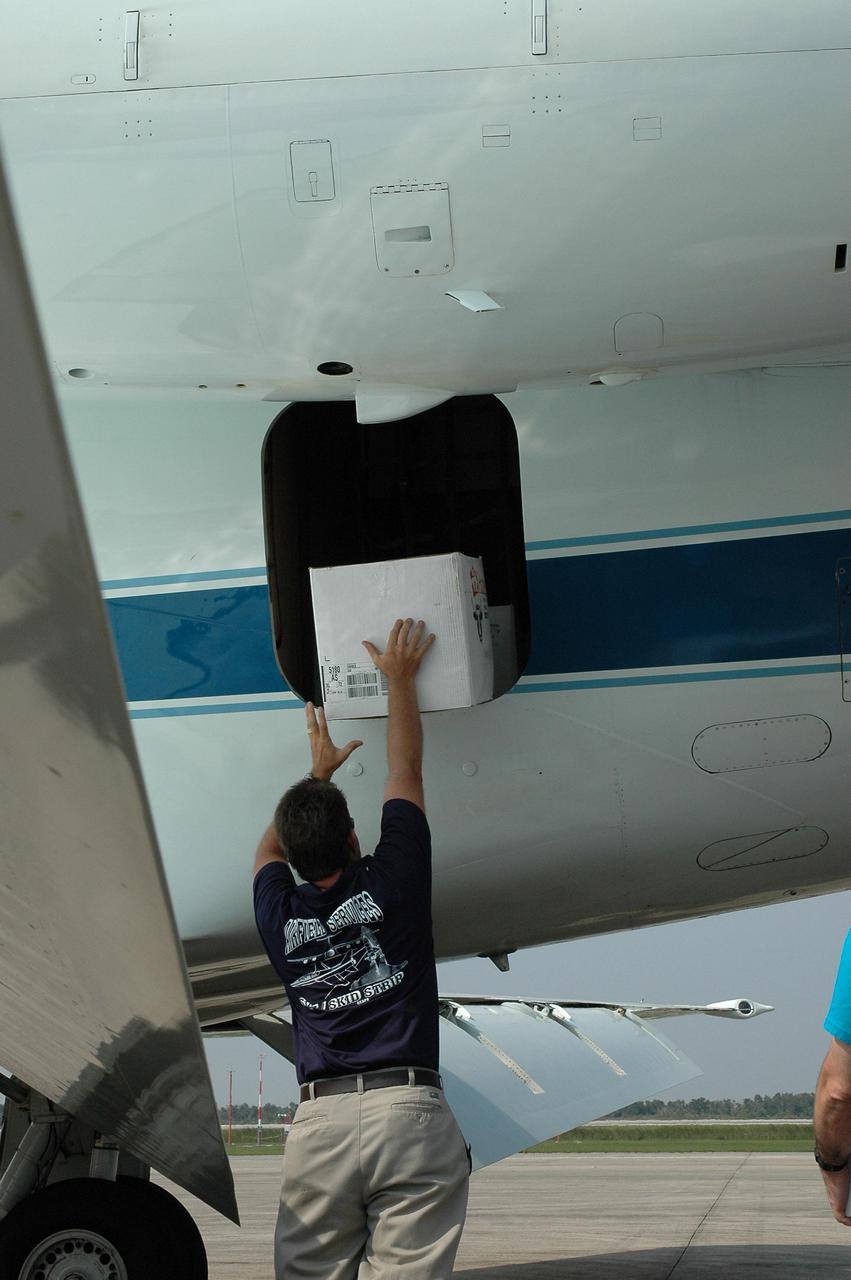
KENNEDY SPACE CENTER, FLA. - At the NASA Kennedy Space Center Shuttle Landing Facility, an employee lifts a box of hurricane relief supplies onto a NASA aircraft bound for Stennis Space Center in Mississippi, which suffered damage from Hurricane Katrina. The supplies included 10 boxes of load bus disconnects going to Michoud Assesmbly Facility near New Orleans and 17 boxes of personal hygiene items, along with boxes of clothing and water. Many Stennis and Michoud employees were rendered homeless by the hurricane. NASA centers have been generous with relief supplies and personnel. Stennis is in limited operations mode. Daily convoys have been moving between Stennis and Michould, transporting personnel and supplies as Michoud prepares to resume limited operations.
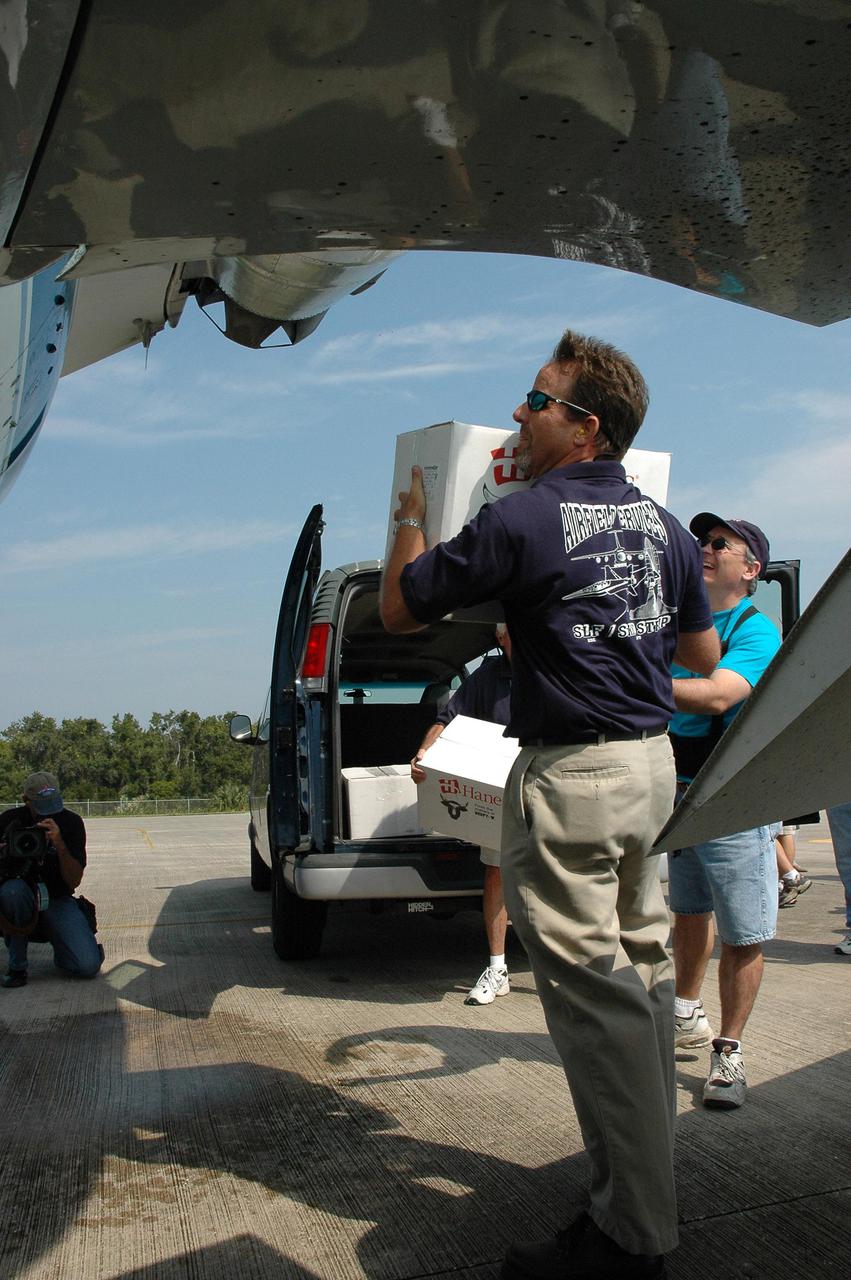
KENNEDY SPACE CENTER, FLA. - At the NASA Kennedy Space Center Shuttle Landing Facility, employees load hurricane relief supplies onto a NASA aircraft bound for Stennis Space Center in Mississippi, which suffered damage from Hurricane Katrina. The supplies included 10 boxes of load bus disconnects going to Michoud Assesmbly Facility near New Orleans and 17 boxes of personal hygiene items, along with boxes of clothing and water. Many Stennis and Michoud employees were rendered homeless by the hurricane. NASA centers have been generous with relief supplies and personnel. Stennis is in limited operations mode. Daily convoys have been moving between Stennis and Michould, transporting personnel and supplies as Michoud prepares to resume limited operations.
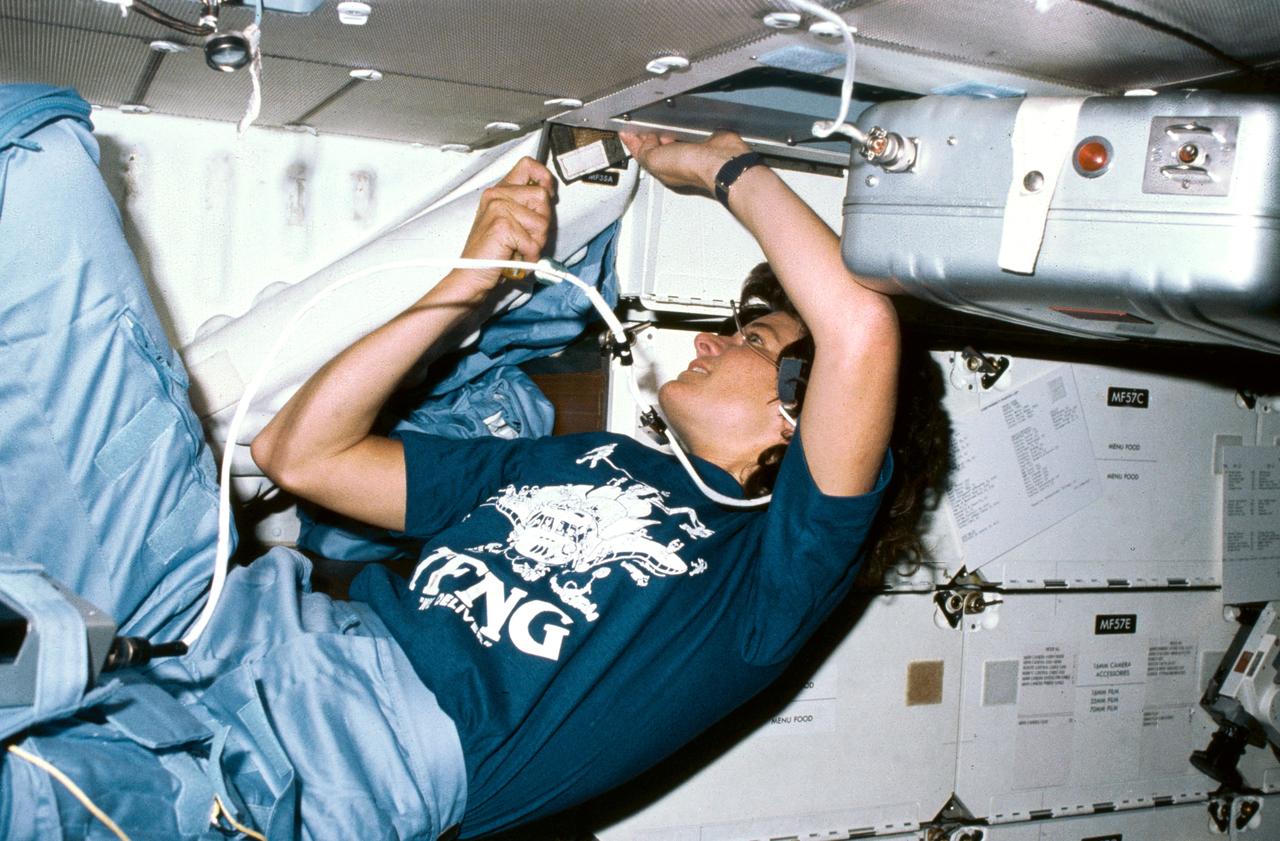
S83-35768 (18-24 June 1983) --- Astronaut Sally K. Ride, mission specialist for STS-7, uses a screw driver in order to clean out an air filtering system in the mid-deck of the Earth-orbiting Space Shuttle Challenger. Dr. Ride's constant wear garment bears some extras -- a cartoon of 35 busy astronauts around a Space Shuttle and the acronym TFNG, below which is written, "We deliver!" TFNG stands for thirty-five new guys, referring to the 1978 class of astronaut candidates (ASCAN) from which Dr. Ride and three of her crew members hail. The tiny two-word declarative in white lettering refers to the successful deployment of two communications satellites. This photograph was made with a 35mm camera.
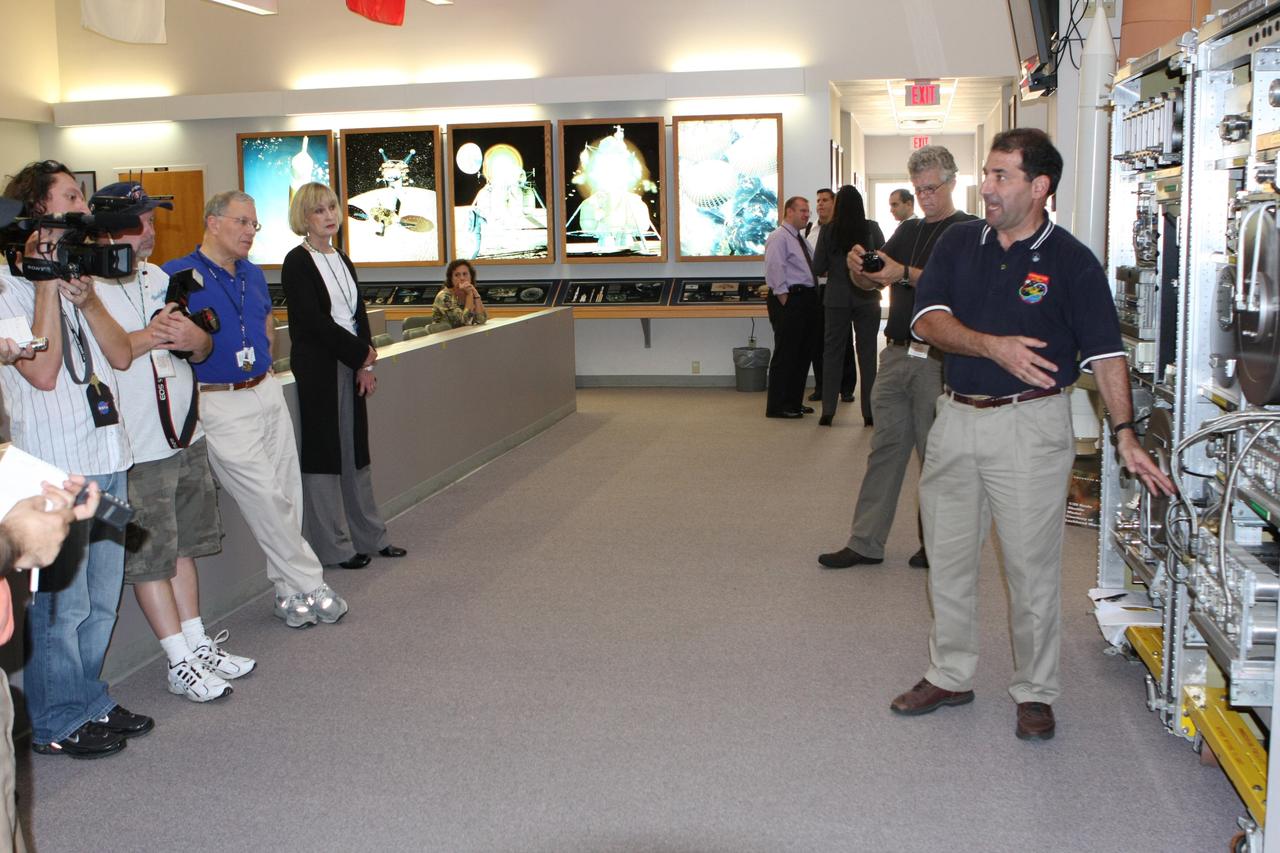
CAPE CANAVERAL, Fla. – In In the News Center at NASA's Kennedy Space Center in Florida, Bob Bagdigian (right) talks to the media about the Water Recovery System being delivered to the International Space Station on space shuttle Endeavour's STS-126 mission. Bagdigian is a project manager with NASA's Regenerative Environmental Control and Life Support System at Marshall Space Flight Center in Huntsville, Ala. Behind Bagdigian is a mockup of the two racks that will be used. The two units of the Water Recovery System are designed to provide drinking-quality water through the reclamation of wastewater, including urine and hygiene wastes. The water that’s produced will be used to support the crew and work aboard the station. STS-126 is the 124th space shuttle flight and the 27th flight to the International Space Station. The mission will feature four spacewalks and work that will prepare the space station to house six crew members for long- duration missions. Liftoff is scheduled for 7:55 p.m. EST Nov. 14. Photo credit: NASA/Dimitri Gerondidakis
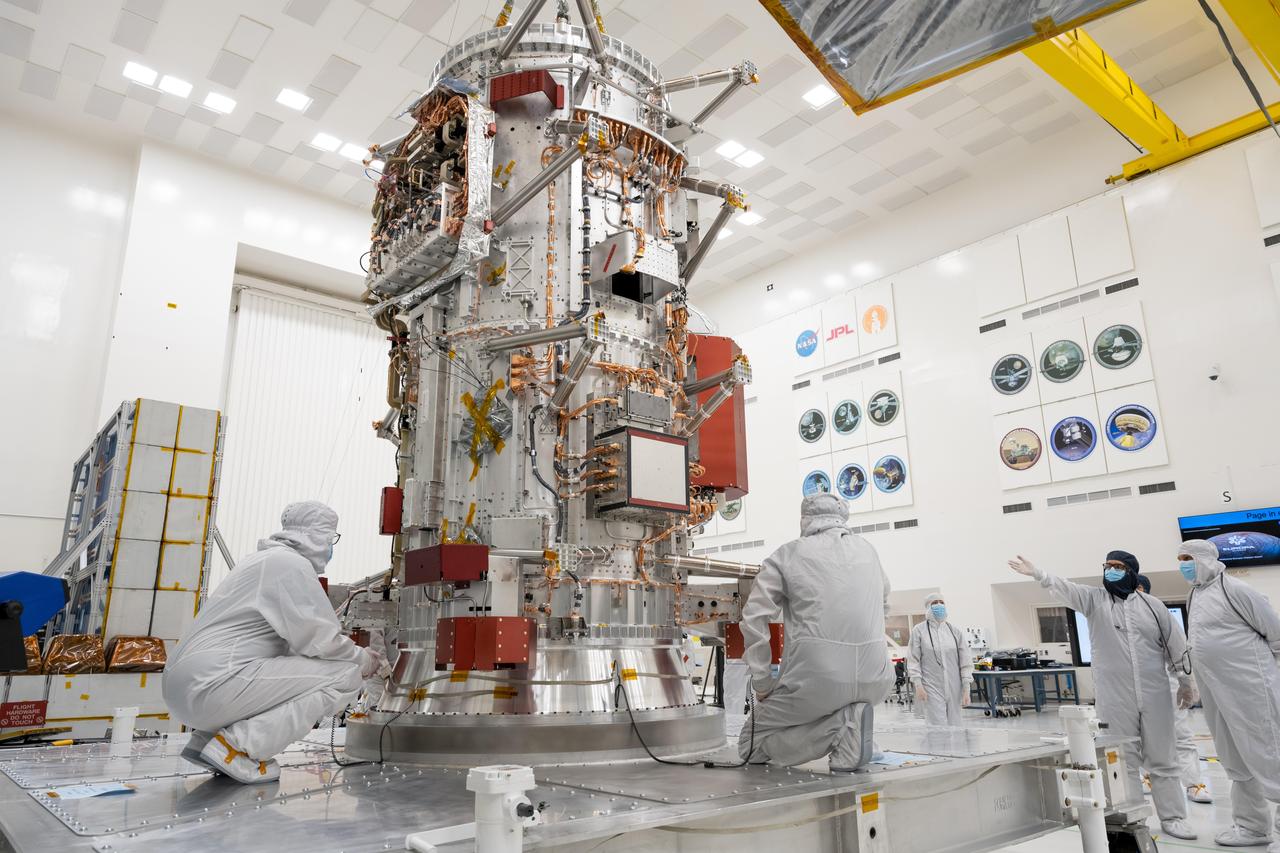
Engineers and technicians work on the towering main body of NASA's Europa Clipper spacecraft in the storied Spacecraft Assembly Facility at the agency's Jet Propulsion Laboratory in Southern California. Standing 10 feet (3 meters) high and 5 feet (1.5 meters) wide, the craft's core will be the focus of attention in the facility's ultra-hygienic High Bay 1 as the spacecraft is assembled for its launch to Jupiter's moon Europa in October 2024. Europa Clipper will conduct nearly 50 flybys of the icy Jovian moon Europa, which scientists are confident harbors an internal ocean containing twice as much water as Earth's oceans combined. The moon may currently have conditions suitable for supporting life. The spacecraft's nine science instruments, plus a gravity science investigation, will gather data on the moon's atmosphere, surface, and interior – information that scientists will use to gauge the depth and salinity of the ocean, the thickness of the ice crust, and potential plumes that may be venting subsurface water into space. https://photojournal.jpl.nasa.gov/catalog/PIA25240
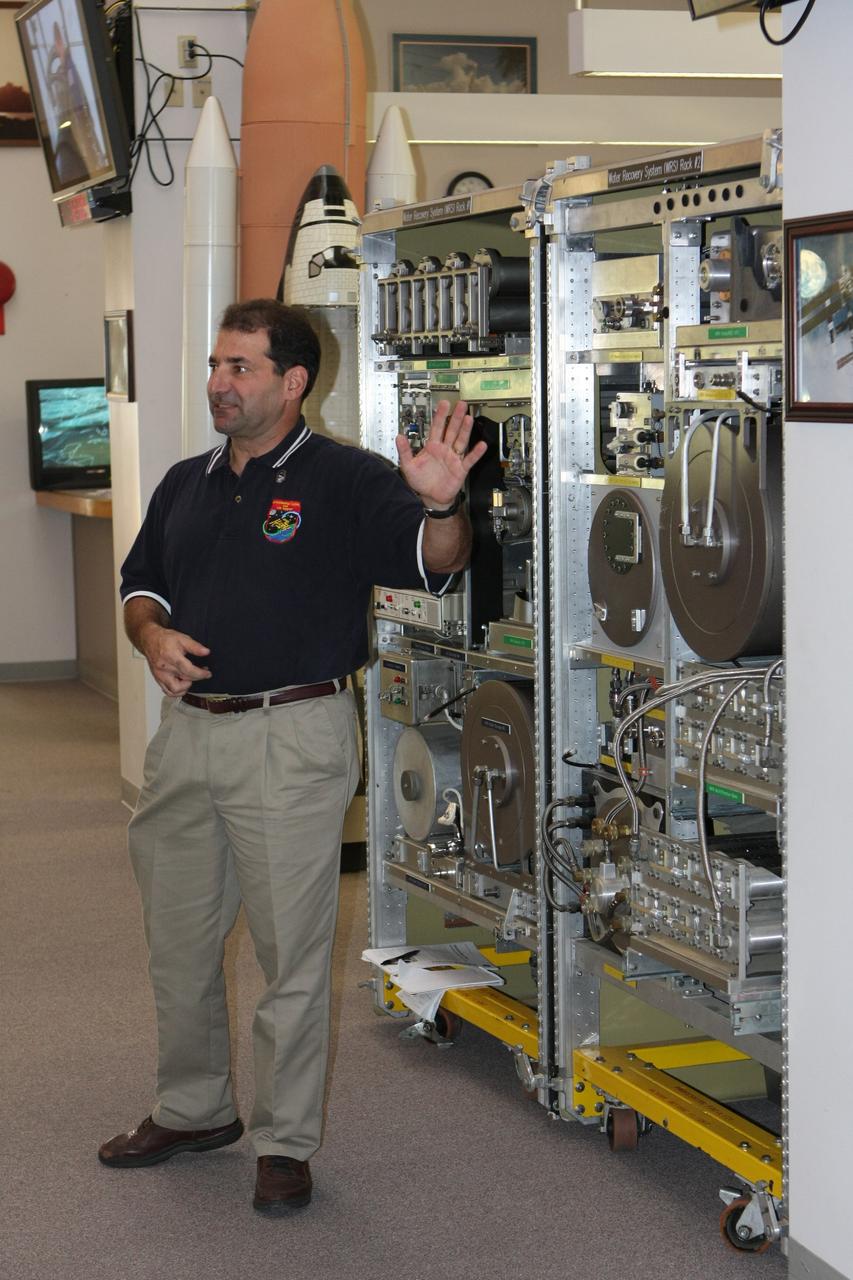
CAPE CANAVERAL, Fla. – In the News Center at NASA's Kennedy Space Center in Florida, Bob Bagdigian talks to the media about the Water Recovery System being delivered to the International Space Station on space shuttle Endeavour's STS-126 mission. Bagdigian is a project manager with NASA's Regenerative Environmental Control and Life Support System at Marshall Space Flight Center in Huntsville, Ala. Behind Bagdigian is a mockup of the two racks that will be used. The two units of the Water Recovery System are designed to provide drinking-quality water through the reclamation of wastewater, including urine and hygiene wastes. The water that’s produced will be used to support the crew and work aboard the station. STS-126 is the 124th space shuttle flight and the 27th flight to the International Space Station. The mission will feature four spacewalks and work that will prepare the space station to house six crew members for long- duration missions. Liftoff is scheduled for 7:55 p.m. EST Nov. 14. Photo credit: NASA/Dimitri Gerondidakis

CAPE CANAVERAL, Fla. – In the News Center at NASA's Kennedy Space Center in Florida, Bob Bagdigian talks to the media about the Water Recovery System being delivered to the International Space Station on space shuttle Endeavour's STS-126 mission. Bagdigian is a project manager with NASA's Regenerative Environmental Control and Life Support System at Marshall Space Flight Center in Huntsville, Ala. Behind Bagdigian is a mockup of the two racks that will be used. The two units of the Water Recovery System are designed to provide drinking-quality water through the reclamation of wastewater, including urine and hygiene wastes. The water that’s produced will be used to support the crew and work aboard the station. STS-126 is the 124th space shuttle flight and the 27th flight to the International Space Station. The mission will feature four spacewalks and work that will prepare the space station to house six crew members for long- duration missions. Liftoff is scheduled for 7:55 p.m. EST Nov. 14. Photo credit: NASA/Dimitri Gerondidakis
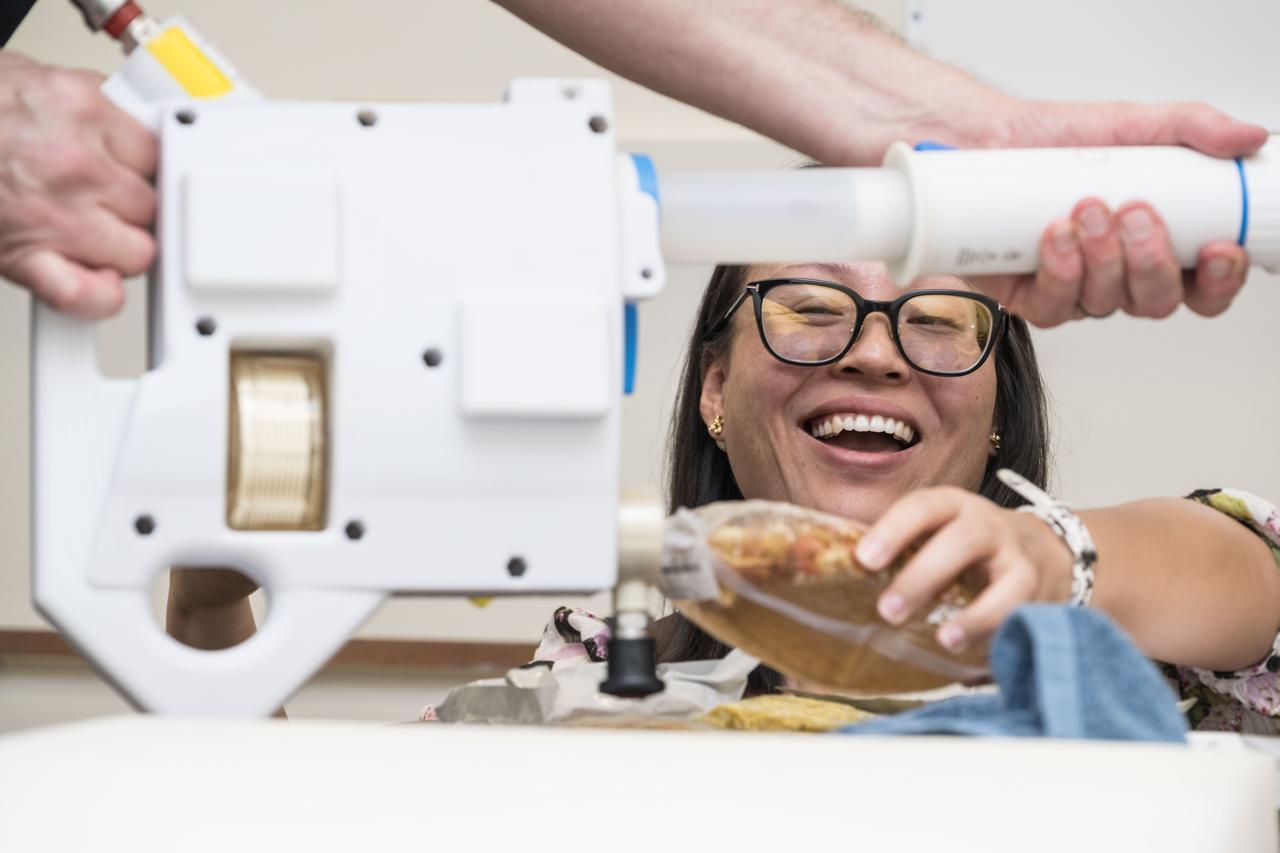
jsc2024e040737 -- NASA food scientists rehydrate a food pouch during a test of the Mini Potable Water Dispenser at Johnson Space Center on June 6, 2024. Photo Credit: NASA/David DeHoyos