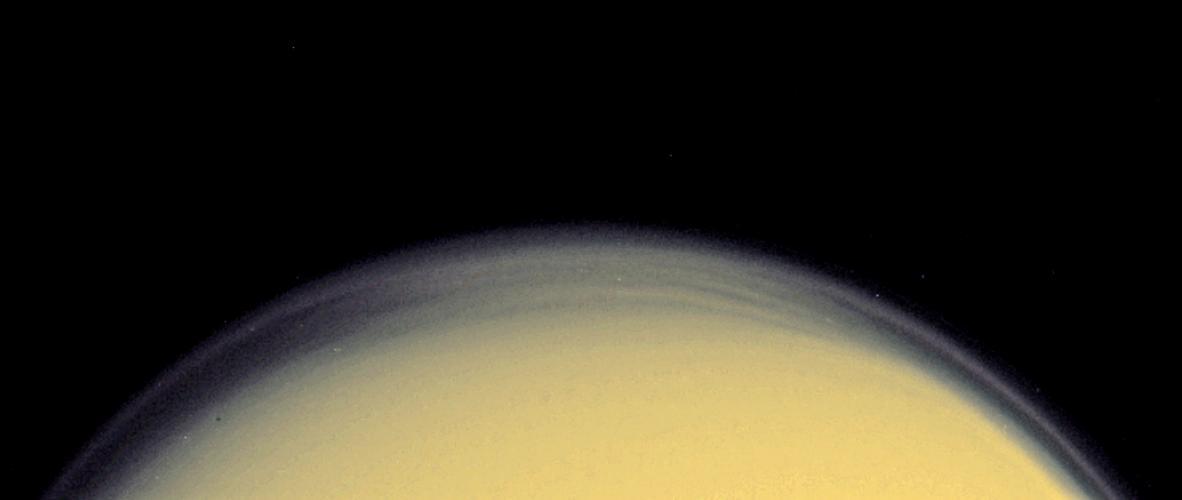
High Haze in Color Close-up
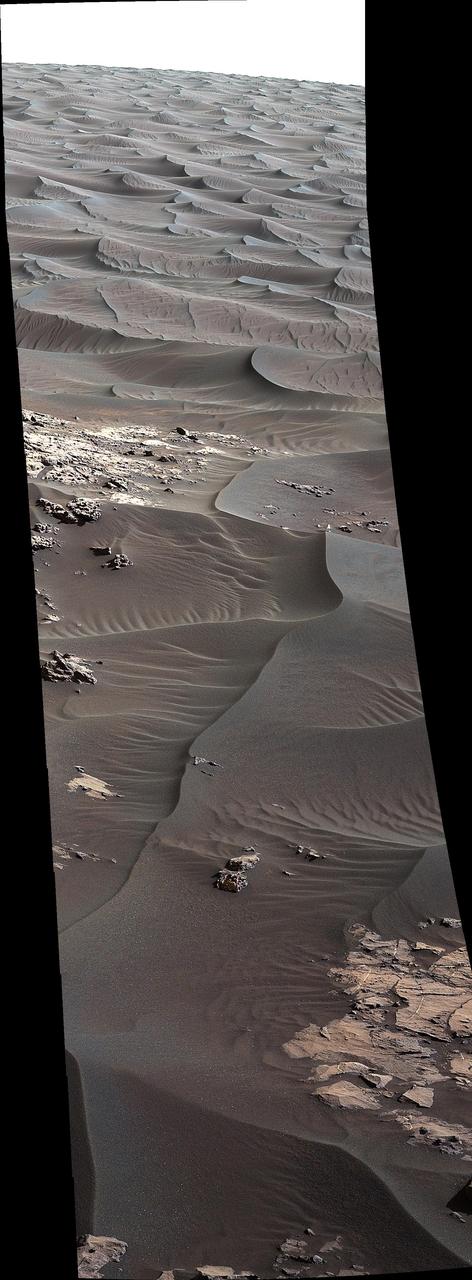
The rippled surface of the first Martian sand dune ever studied up close fills this view of "High Dune" from the Mast Camera (Mastcam) on NASA's Curiosity rover. This site is part of the "Bagnold Dunes" field along the northwestern flank of Mount Sharp. The dunes are active, migrating up to about one yard or meter per year. The component images of this mosaic view were taken on Nov. 27, 2015, during the 1,176th Martian day, or sol, of Curiosity's work on Mars. The scene is presented with a color adjustment that approximates white balancing, to resemble how the sand would appear under daytime lighting conditions on Earth. The annotated version includes superimposed scale bars of 30 centimeters (1 foot) in the foreground and 100 centimeters (3.3 feet) in the middle distance. Malin Space Science Systems, San Diego, built and operates Curiosity's Mastcam. NASA's Jet Propulsion Laboratory, a division of the California Institute of Technology, Pasadena, built the rover and manages the project for NASA's Science Mission Directorate, Washington. http://photojournal.jpl.nasa.gov/catalog/PIA20168
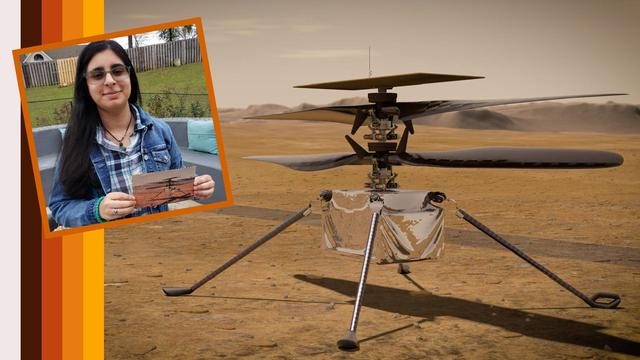
Vaneeza Rupani (inset), a junior at Tuscaloosa County High School in Northport, Alabama, came up with the name Ingenuity for NASA's Mars Helicopter (an artist's impression of which is seen here) and the motivation behind it for NASA's "Name the Rover" essay contest. https://photojournal.jpl.nasa.gov/catalog/PIA23883

Assembly began April 1, 2010, for NASA Juno spacecraft in the high-bay cleanroom at Lockheed Martin in Denver, Colo. Workers are moving the radiation vault above a mock-up of the upper part of the spacecraft main body.
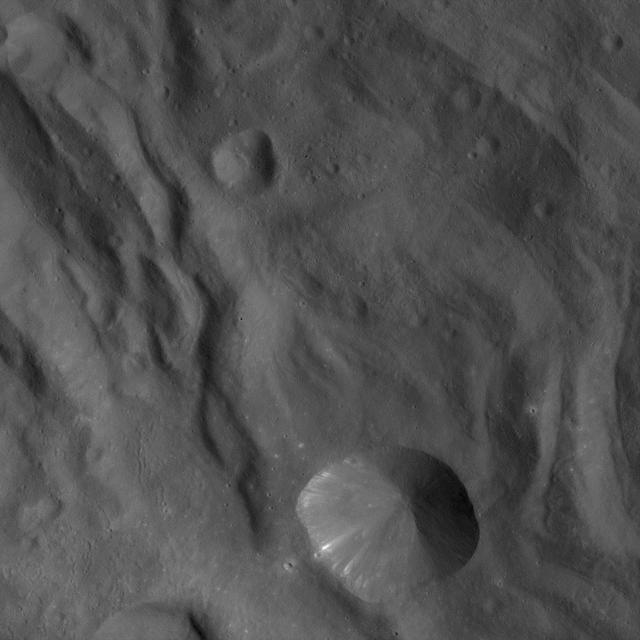
In this image of the asteroid Vesta, taken by NASA Dawn spacecraft just shortly before the beginning of high altitude mapping orbit, north is up and the upper right corner is to the northeast.
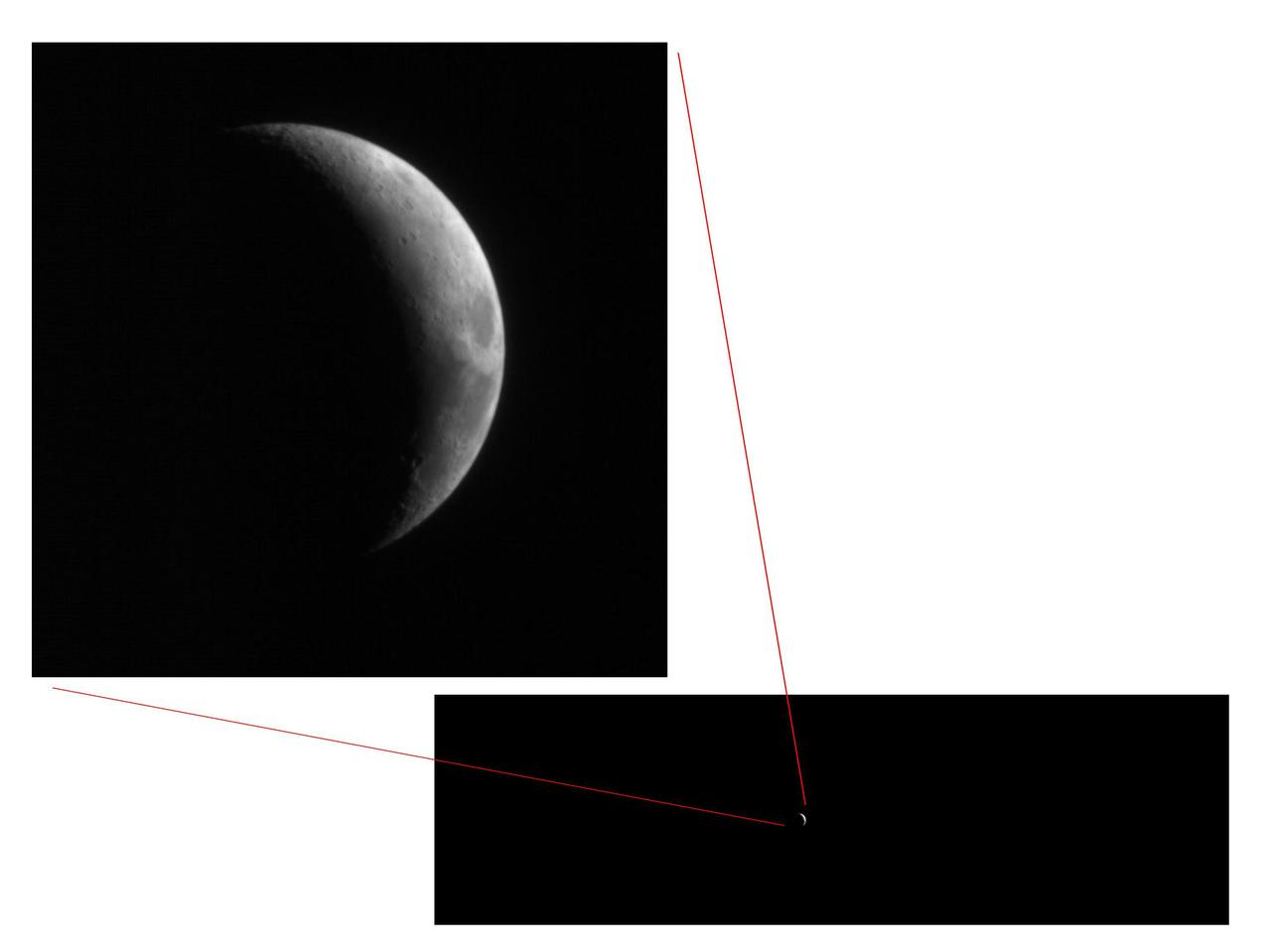
This pair of views shows how little of the full image frame was taken up by the Moon in test images taken Sept. 8, 2005, by the High Resolution Imaging Science Experiment HiRISE camera on NASA Mars Reconnaissance Orbiter.
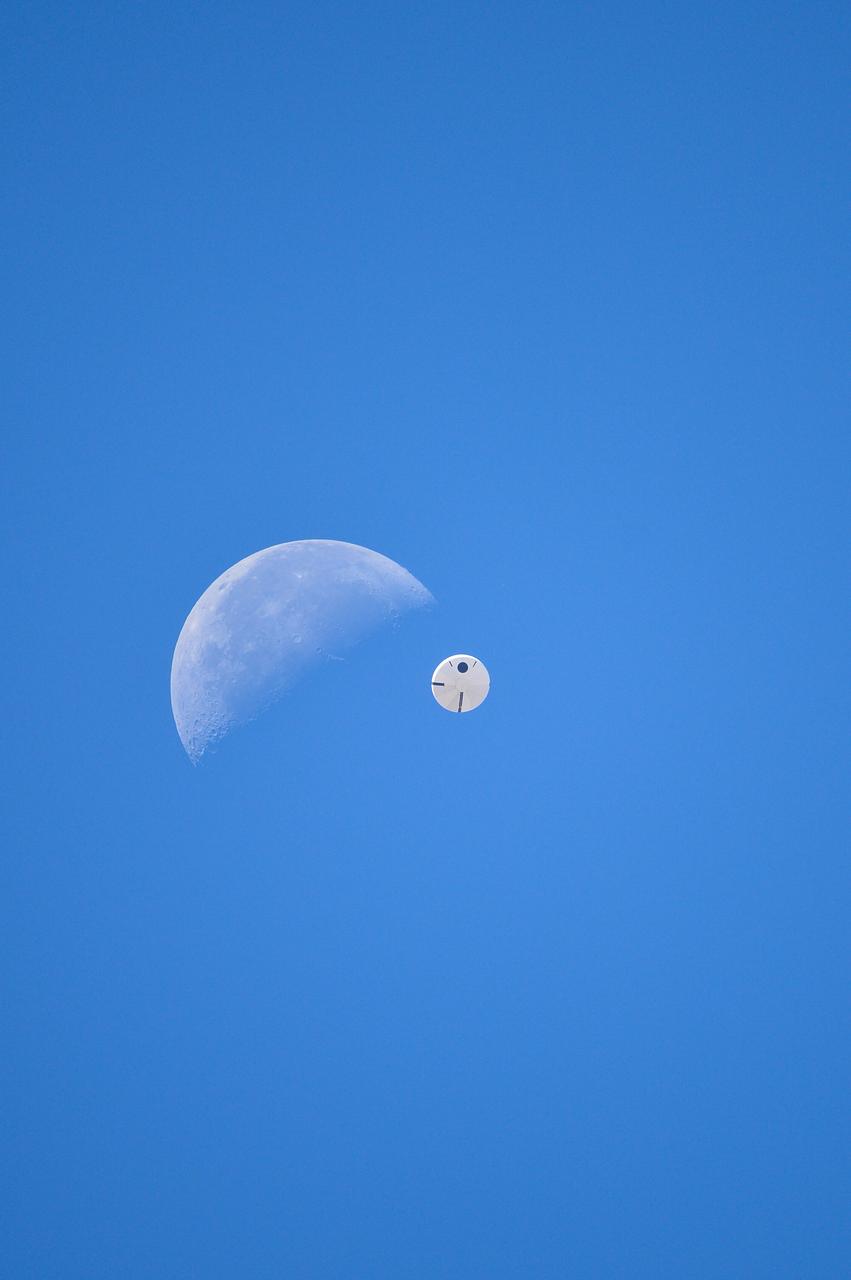
Orion’s three main orange and white parachutes help a representative model of the spacecraft descend through sky above Arizona, where NASA engineers tested the parachute system on Sept. 13, 2017 at the U.S. Army Proving Ground in Yuma. NASA is qualifying Orion’s parachutes for missions with astronauts.. .During this test, engineers replicated a situation in which Orion must abort off the Space Launch System rocket and bypasses part of its normal parachute deployment sequence that typically helps the spacecraft slow down during its descent to Earth after deep space missions. The capsule was dropped out of a C-17 aircraft at more than 4.7 miles in altitude and allowed to free fall for 20 seconds, longer than ever before, to produce high aerodynamic pressure before only its pilot and main parachutes were deployed, testing whether they could perform as expected under extreme loads. Orion’s full parachute system includes 11 total parachutes -- three forward bay cover parachutes and two drogue parachutes, along with three pilot parachutes that help pull out the spacecraft’s three mains.
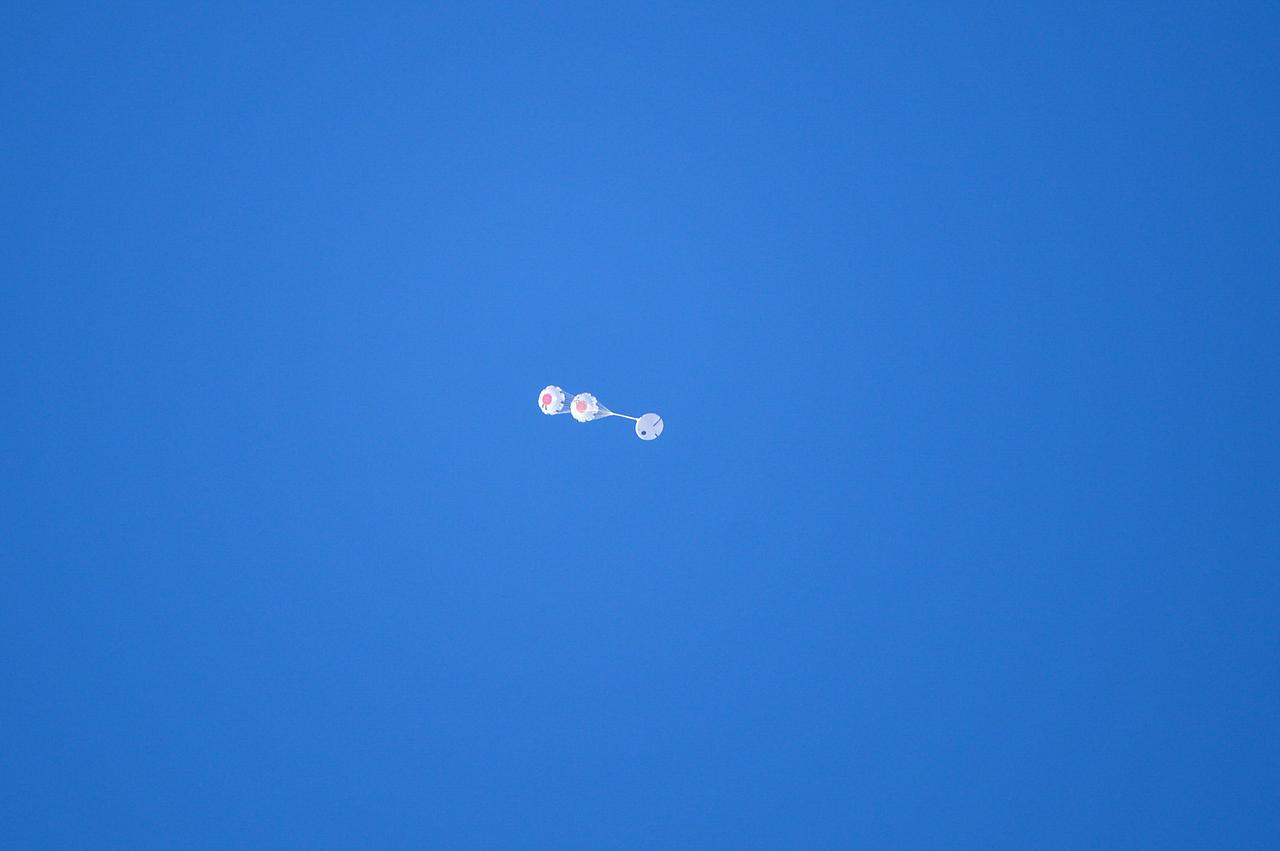
Orion’s three main orange and white parachutes help a representative model of the spacecraft descend through sky above Arizona, where NASA engineers tested the parachute system on Sept. 13, 2017 at the U.S. Army Proving Ground in Yuma. NASA is qualifying Orion’s parachutes for missions with astronauts.. .During this test, engineers replicated a situation in which Orion must abort off the Space Launch System rocket and bypasses part of its normal parachute deployment sequence that typically helps the spacecraft slow down during its descent to Earth after deep space missions. The capsule was dropped out of a C-17 aircraft at more than 4.7 miles in altitude and allowed to free fall for 20 seconds, longer than ever before, to produce high aerodynamic pressure before only its pilot and main parachutes were deployed, testing whether they could perform as expected under extreme loads. Orion’s full parachute system includes 11 total parachutes -- three forward bay cover parachutes and two drogue parachutes, along with three pilot parachutes that help pull out the spacecraft’s three mains.

Orion’s three main orange and white parachutes help a representative model of the spacecraft descend through sky above Arizona, where NASA engineers tested the parachute system on Sept. 13, 2017 at the U.S. Army Proving Ground in Yuma. NASA is qualifying Orion’s parachutes for missions with astronauts.. .During this test, engineers replicated a situation in which Orion must abort off the Space Launch System rocket and bypasses part of its normal parachute deployment sequence that typically helps the spacecraft slow down during its descent to Earth after deep space missions. The capsule was dropped out of a C-17 aircraft at more than 4.7 miles in altitude and allowed to free fall for 20 seconds, longer than ever before, to produce high aerodynamic pressure before only its pilot and main parachutes were deployed, testing whether they could perform as expected under extreme loads. Orion’s full parachute system includes 11 total parachutes -- three forward bay cover parachutes and two drogue parachutes, along with three pilot parachutes that help pull out the spacecraft’s three mains.
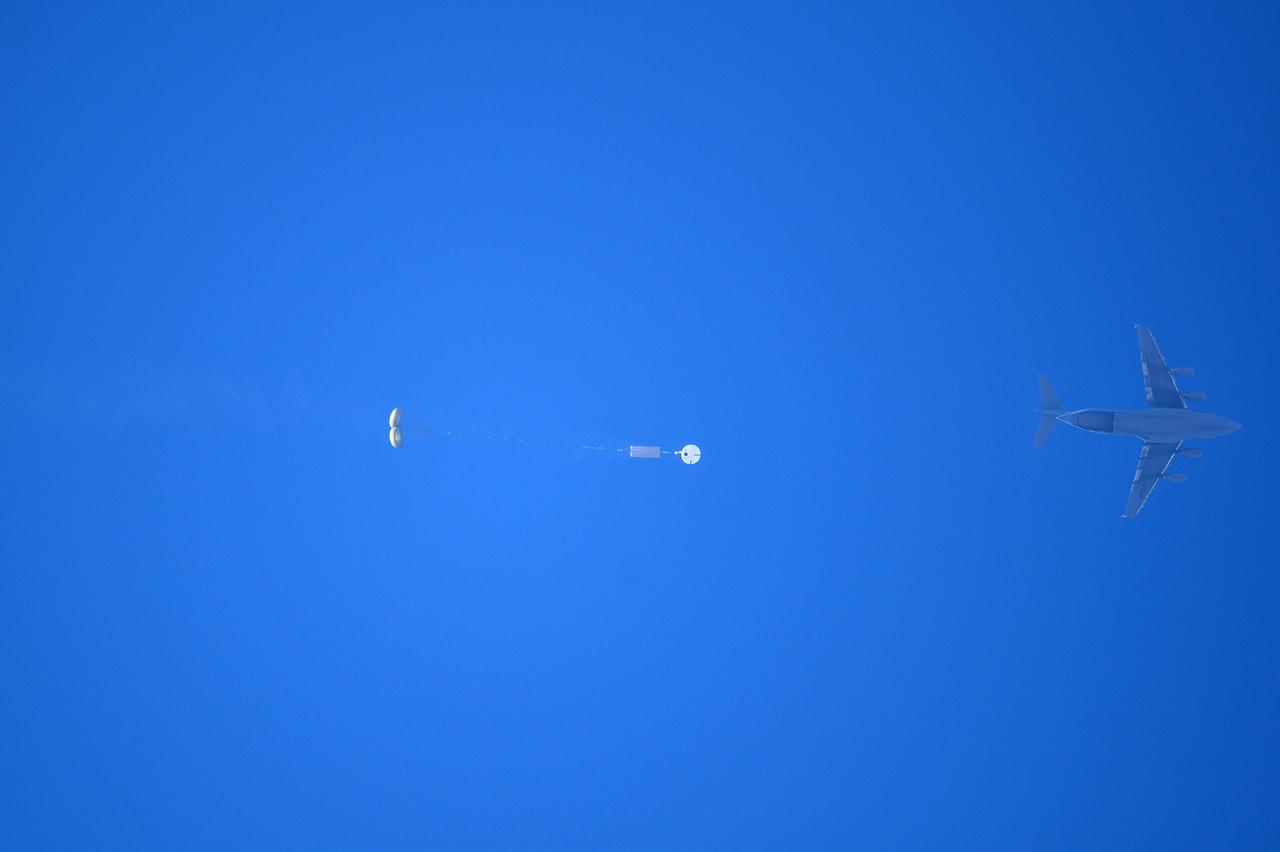
Orion’s three main orange and white parachutes help a representative model of the spacecraft descend through sky above Arizona, where NASA engineers tested the parachute system on Sept. 13, 2017 at the U.S. Army Proving Ground in Yuma. NASA is qualifying Orion’s parachutes for missions with astronauts.. .During this test, engineers replicated a situation in which Orion must abort off the Space Launch System rocket and bypasses part of its normal parachute deployment sequence that typically helps the spacecraft slow down during its descent to Earth after deep space missions. The capsule was dropped out of a C-17 aircraft at more than 4.7 miles in altitude and allowed to free fall for 20 seconds, longer than ever before, to produce high aerodynamic pressure before only its pilot and main parachutes were deployed, testing whether they could perform as expected under extreme loads. Orion’s full parachute system includes 11 total parachutes -- three forward bay cover parachutes and two drogue parachutes, along with three pilot parachutes that help pull out the spacecraft’s three mains.
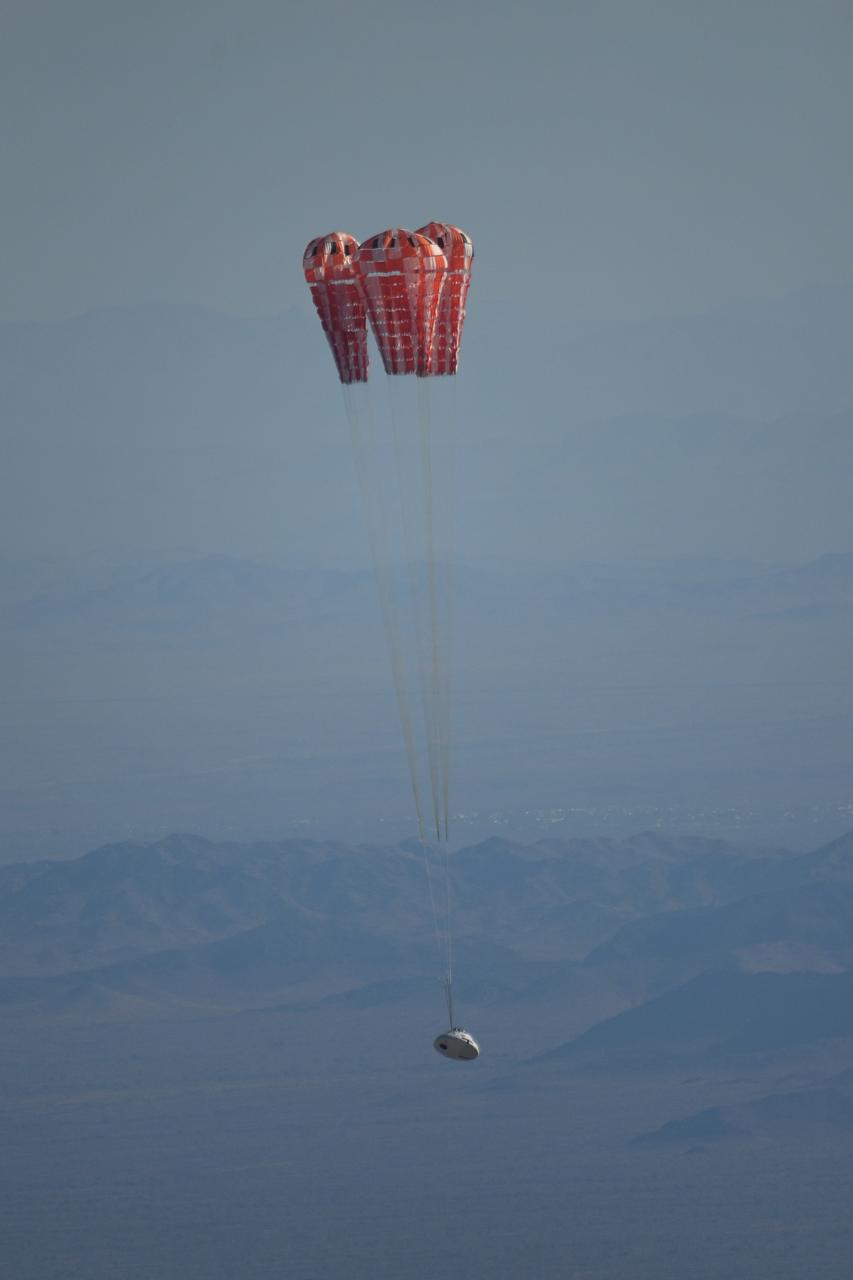
Orion’s three main orange and white parachutes help a representative model of the spacecraft descend through sky above Arizona, where NASA engineers tested the parachute system on Sept. 13, 2017 at the U.S. Army Proving Ground in Yuma. NASA is qualifying Orion’s parachutes for missions with astronauts.. .During this test, engineers replicated a situation in which Orion must abort off the Space Launch System rocket and bypasses part of its normal parachute deployment sequence that typically helps the spacecraft slow down during its descent to Earth after deep space missions. The capsule was dropped out of a C-17 aircraft at more than 4.7 miles in altitude and allowed to free fall for 20 seconds, longer than ever before, to produce high aerodynamic pressure before only its pilot and main parachutes were deployed, testing whether they could perform as expected under extreme loads. Orion’s full parachute system includes 11 total parachutes -- three forward bay cover parachutes and two drogue parachutes, along with three pilot parachutes that help pull out the spacecraft’s three mains.
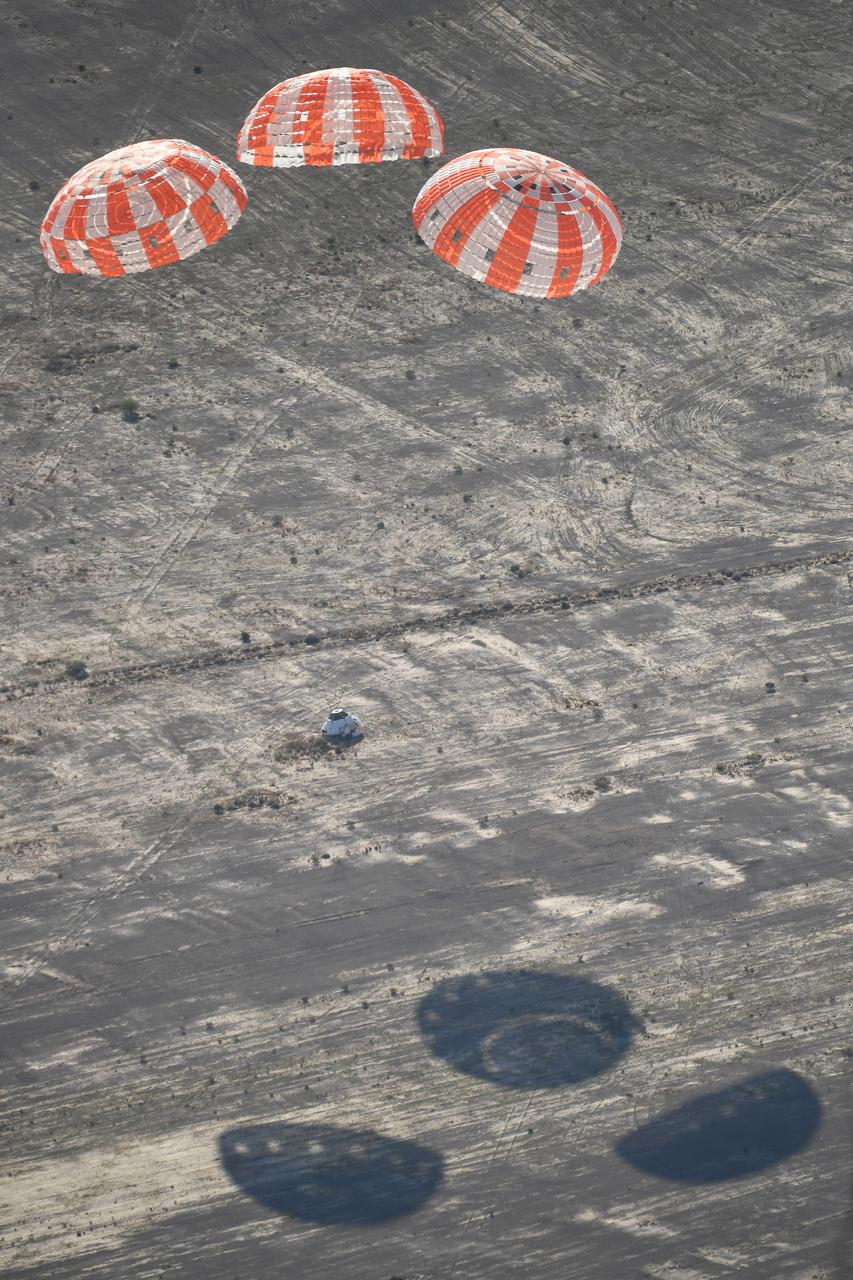
Orion’s three main orange and white parachutes help a representative model of the spacecraft descend through sky above Arizona, where NASA engineers tested the parachute system on Sept. 13, 2017 at the U.S. Army Proving Ground in Yuma. NASA is qualifying Orion’s parachutes for missions with astronauts.. .During this test, engineers replicated a situation in which Orion must abort off the Space Launch System rocket and bypasses part of its normal parachute deployment sequence that typically helps the spacecraft slow down during its descent to Earth after deep space missions. The capsule was dropped out of a C-17 aircraft at more than 4.7 miles in altitude and allowed to free fall for 20 seconds, longer than ever before, to produce high aerodynamic pressure before only its pilot and main parachutes were deployed, testing whether they could perform as expected under extreme loads. Orion’s full parachute system includes 11 total parachutes -- three forward bay cover parachutes and two drogue parachutes, along with three pilot parachutes that help pull out the spacecraft’s three mains.
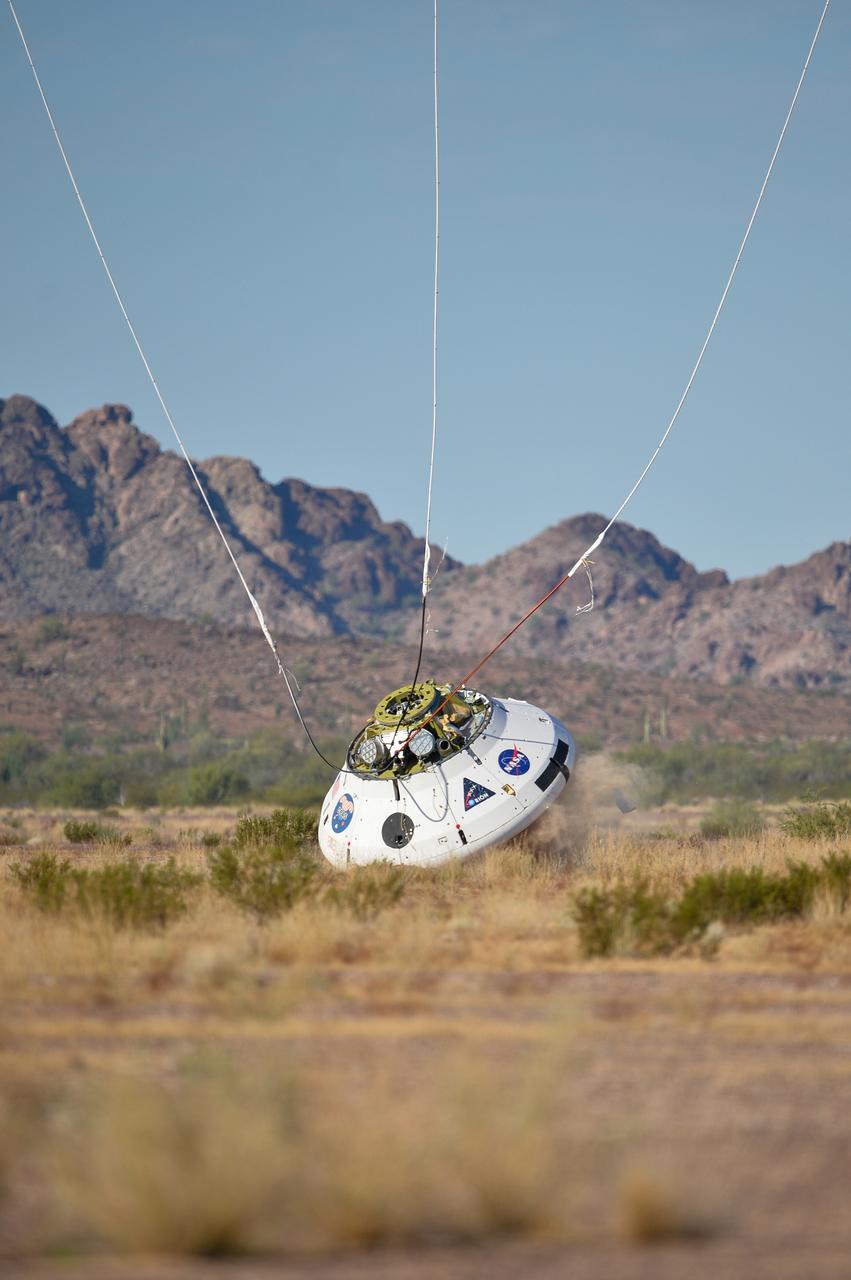
Engineers testing the parachute system for Orion during a Sept. 13, 2017 evaluation at the U.S. Army Proving Ground in Yuma.. .During this test, engineers replicated a situation in which Orion must abort off the Space Launch System rocket and bypasses part of its normal parachute deployment sequence that typically helps the spacecraft slow down during its descent to Earth after deep space missions. The capsule was dropped out of a C-17 aircraft at more than 4.7 miles in altitude and allowed to free fall for 20 seconds, longer than ever before, to produce high aerodynamic pressure before only its pilot and main parachutes were deployed, testing whether they could perform as expected under extreme loads. Orion’s full parachute system includes 11 total parachutes -- three forward bay cover parachutes and two drogue parachutes, along with three pilot parachutes that help pull out the spacecraft’s three mains.
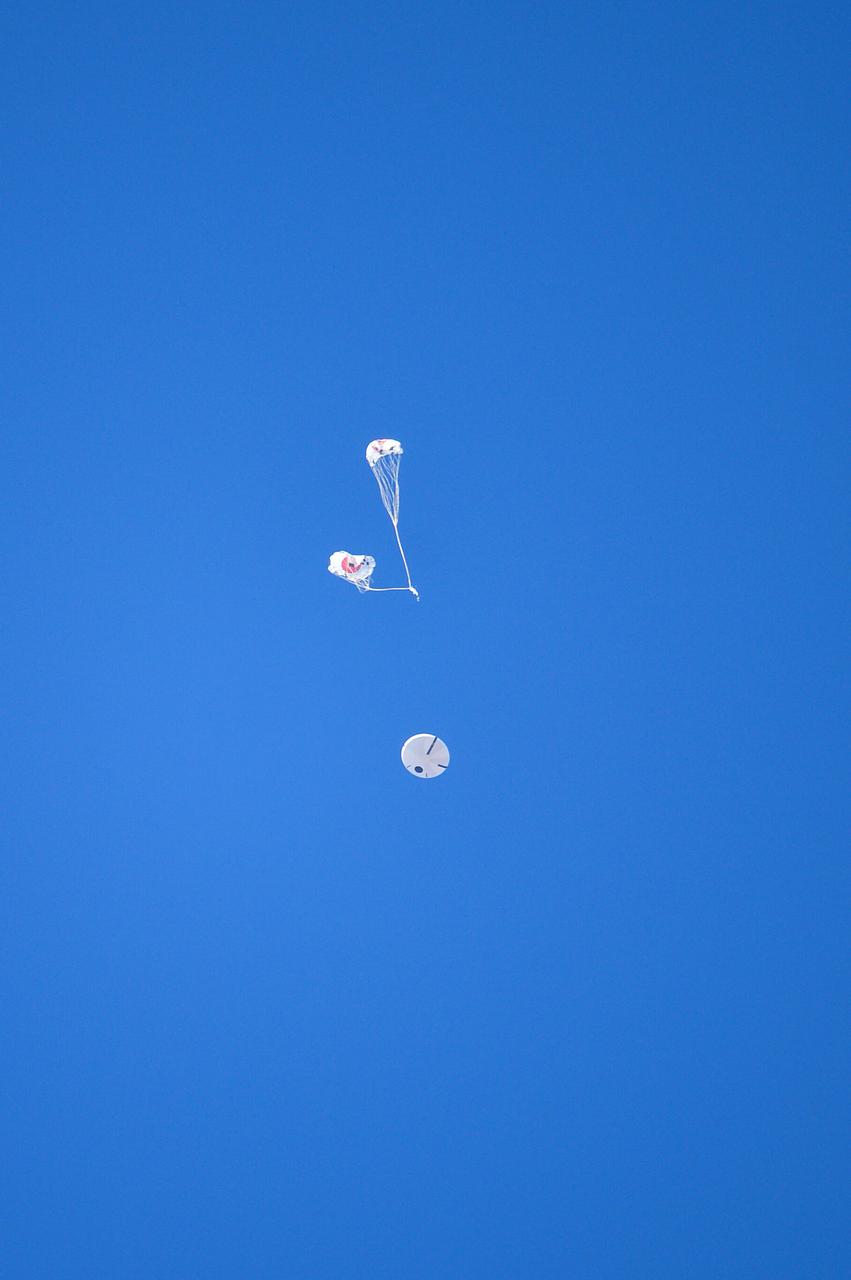
Orion’s three main orange and white parachutes help a representative model of the spacecraft descend through sky above Arizona, where NASA engineers tested the parachute system on Sept. 13, 2017 at the U.S. Army Proving Ground in Yuma. NASA is qualifying Orion’s parachutes for missions with astronauts.. .During this test, engineers replicated a situation in which Orion must abort off the Space Launch System rocket and bypasses part of its normal parachute deployment sequence that typically helps the spacecraft slow down during its descent to Earth after deep space missions. The capsule was dropped out of a C-17 aircraft at more than 4.7 miles in altitude and allowed to free fall for 20 seconds, longer than ever before, to produce high aerodynamic pressure before only its pilot and main parachutes were deployed, testing whether they could perform as expected under extreme loads. Orion’s full parachute system includes 11 total parachutes -- three forward bay cover parachutes and two drogue parachutes, along with three pilot parachutes that help pull out the spacecraft’s three mains.
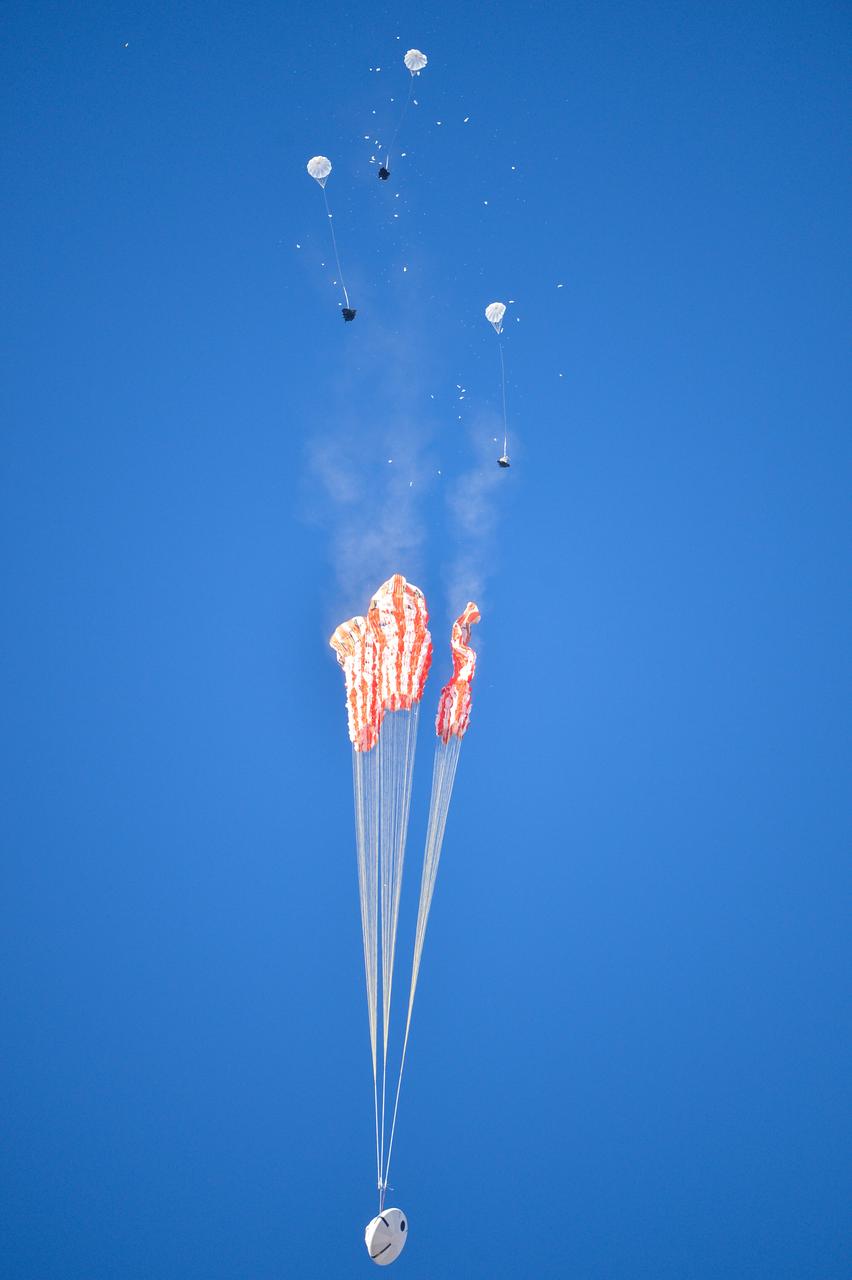
Orion’s three main orange and white parachutes help a representative model of the spacecraft descend through sky above Arizona, where NASA engineers tested the parachute system on Sept. 13, 2017 at the U.S. Army Proving Ground in Yuma. NASA is qualifying Orion’s parachutes for missions with astronauts.. .During this test, engineers replicated a situation in which Orion must abort off the Space Launch System rocket and bypasses part of its normal parachute deployment sequence that typically helps the spacecraft slow down during its descent to Earth after deep space missions. The capsule was dropped out of a C-17 aircraft at more than 4.7 miles in altitude and allowed to free fall for 20 seconds, longer than ever before, to produce high aerodynamic pressure before only its pilot and main parachutes were deployed, testing whether they could perform as expected under extreme loads. Orion’s full parachute system includes 11 total parachutes -- three forward bay cover parachutes and two drogue parachutes, along with three pilot parachutes that help pull out the spacecraft’s three mains.
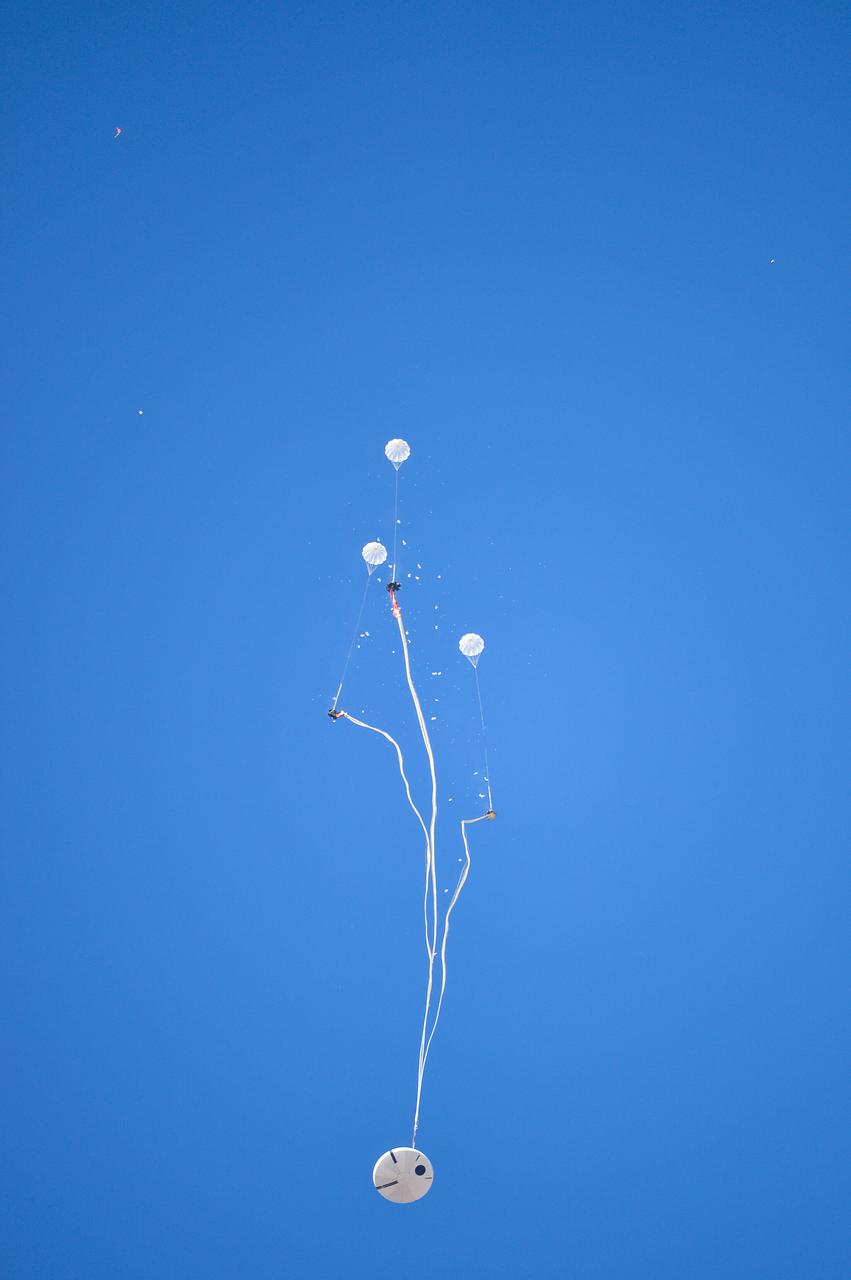
Orion’s three main orange and white parachutes help a representative model of the spacecraft descend through sky above Arizona, where NASA engineers tested the parachute system on Sept. 13, 2017 at the U.S. Army Proving Ground in Yuma. NASA is qualifying Orion’s parachutes for missions with astronauts.. .During this test, engineers replicated a situation in which Orion must abort off the Space Launch System rocket and bypasses part of its normal parachute deployment sequence that typically helps the spacecraft slow down during its descent to Earth after deep space missions. The capsule was dropped out of a C-17 aircraft at more than 4.7 miles in altitude and allowed to free fall for 20 seconds, longer than ever before, to produce high aerodynamic pressure before only its pilot and main parachutes were deployed, testing whether they could perform as expected under extreme loads. Orion’s full parachute system includes 11 total parachutes -- three forward bay cover parachutes and two drogue parachutes, along with three pilot parachutes that help pull out the spacecraft’s three mains.
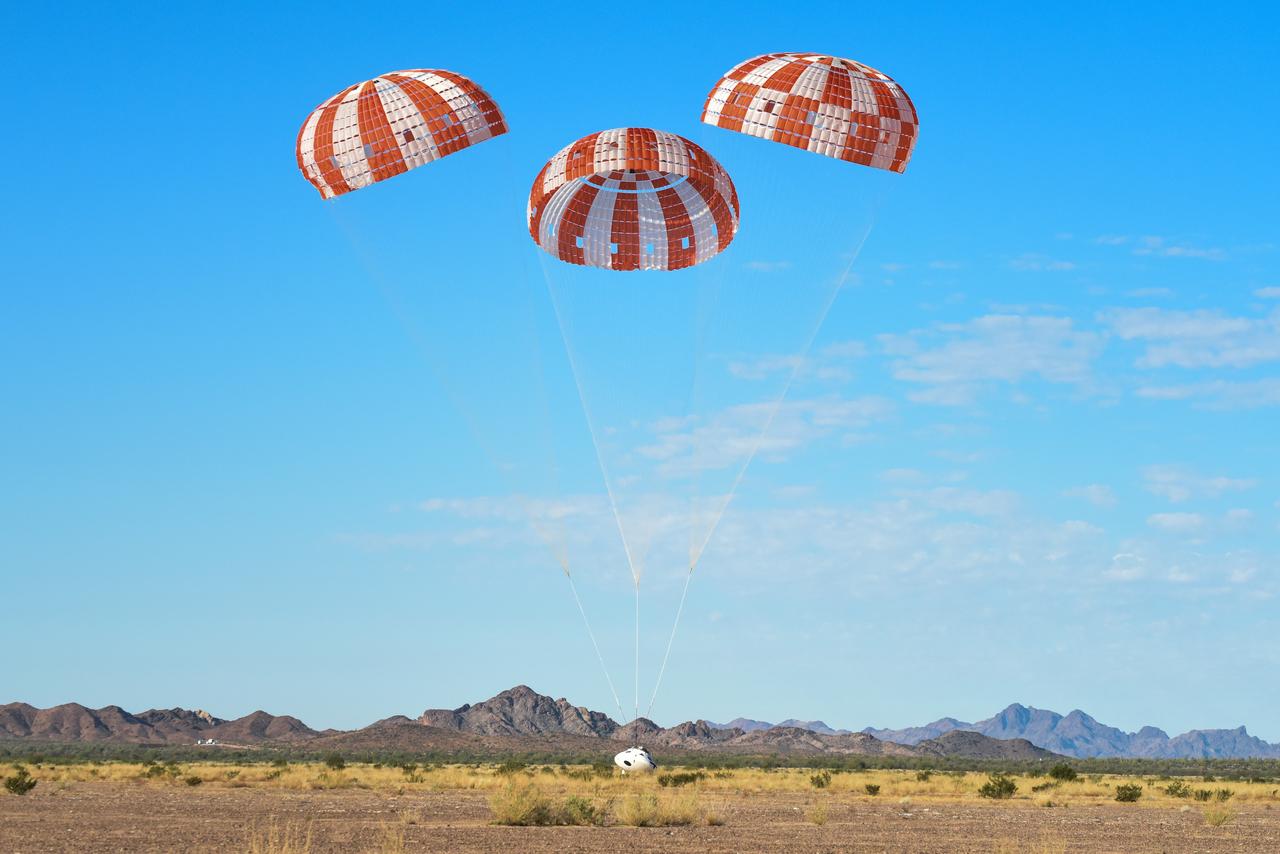
Orion’s three main orange and white parachutes help a representative model of the spacecraft descend through sky above Arizona, where NASA engineers tested the parachute system on Sept. 13, 2017 at the U.S. Army Proving Ground in Yuma. NASA is qualifying Orion’s parachutes for missions with astronauts.. .During this test, engineers replicated a situation in which Orion must abort off the Space Launch System rocket and bypasses part of its normal parachute deployment sequence that typically helps the spacecraft slow down during its descent to Earth after deep space missions. The capsule was dropped out of a C-17 aircraft at more than 4.7 miles in altitude and allowed to free fall for 20 seconds, longer than ever before, to produce high aerodynamic pressure before only its pilot and main parachutes were deployed, testing whether they could perform as expected under extreme loads. Orion’s full parachute system includes 11 total parachutes -- three forward bay cover parachutes and two drogue parachutes, along with three pilot parachutes that help pull out the spacecraft’s three mains.
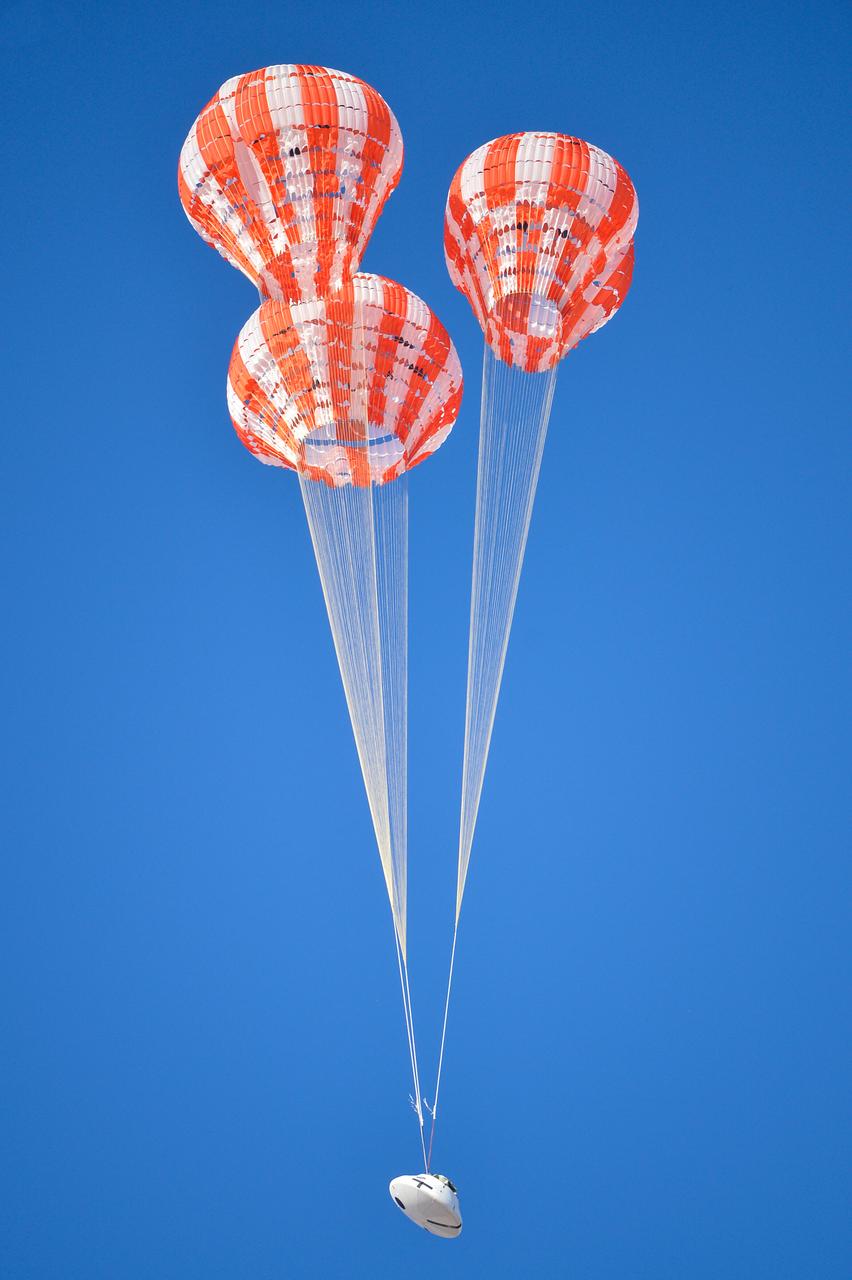
Orion’s three main orange and white parachutes help a representative model of the spacecraft descend through sky above Arizona, where NASA engineers tested the parachute system on Sept. 13, 2017 at the U.S. Army Proving Ground in Yuma. NASA is qualifying Orion’s parachutes for missions with astronauts.. .During this test, engineers replicated a situation in which Orion must abort off the Space Launch System rocket and bypasses part of its normal parachute deployment sequence that typically helps the spacecraft slow down during its descent to Earth after deep space missions. The capsule was dropped out of a C-17 aircraft at more than 4.7 miles in altitude and allowed to free fall for 20 seconds, longer than ever before, to produce high aerodynamic pressure before only its pilot and main parachutes were deployed, testing whether they could perform as expected under extreme loads. Orion’s full parachute system includes 11 total parachutes -- three forward bay cover parachutes and two drogue parachutes, along with three pilot parachutes that help pull out the spacecraft’s three mains.
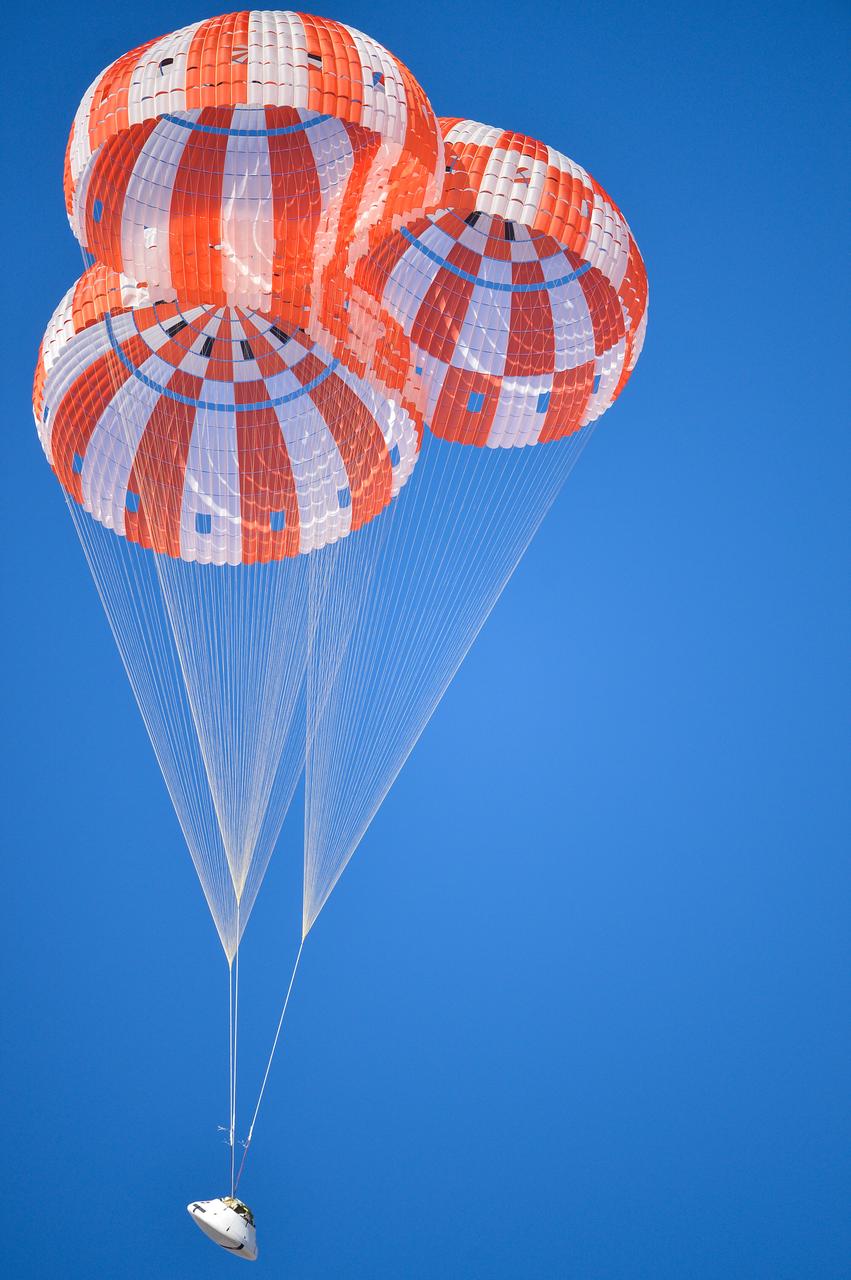
Orion’s three main orange and white parachutes help a representative model of the spacecraft descend through sky above Arizona, where NASA engineers tested the parachute system on Sept. 13, 2017 at the U.S. Army Proving Ground in Yuma. NASA is qualifying Orion’s parachutes for missions with astronauts.. .During this test, engineers replicated a situation in which Orion must abort off the Space Launch System rocket and bypasses part of its normal parachute deployment sequence that typically helps the spacecraft slow down during its descent to Earth after deep space missions. The capsule was dropped out of a C-17 aircraft at more than 4.7 miles in altitude and allowed to free fall for 20 seconds, longer than ever before, to produce high aerodynamic pressure before only its pilot and main parachutes were deployed, testing whether they could perform as expected under extreme loads. Orion’s full parachute system includes 11 total parachutes -- three forward bay cover parachutes and two drogue parachutes, along with three pilot parachutes that help pull out the spacecraft’s three mains.
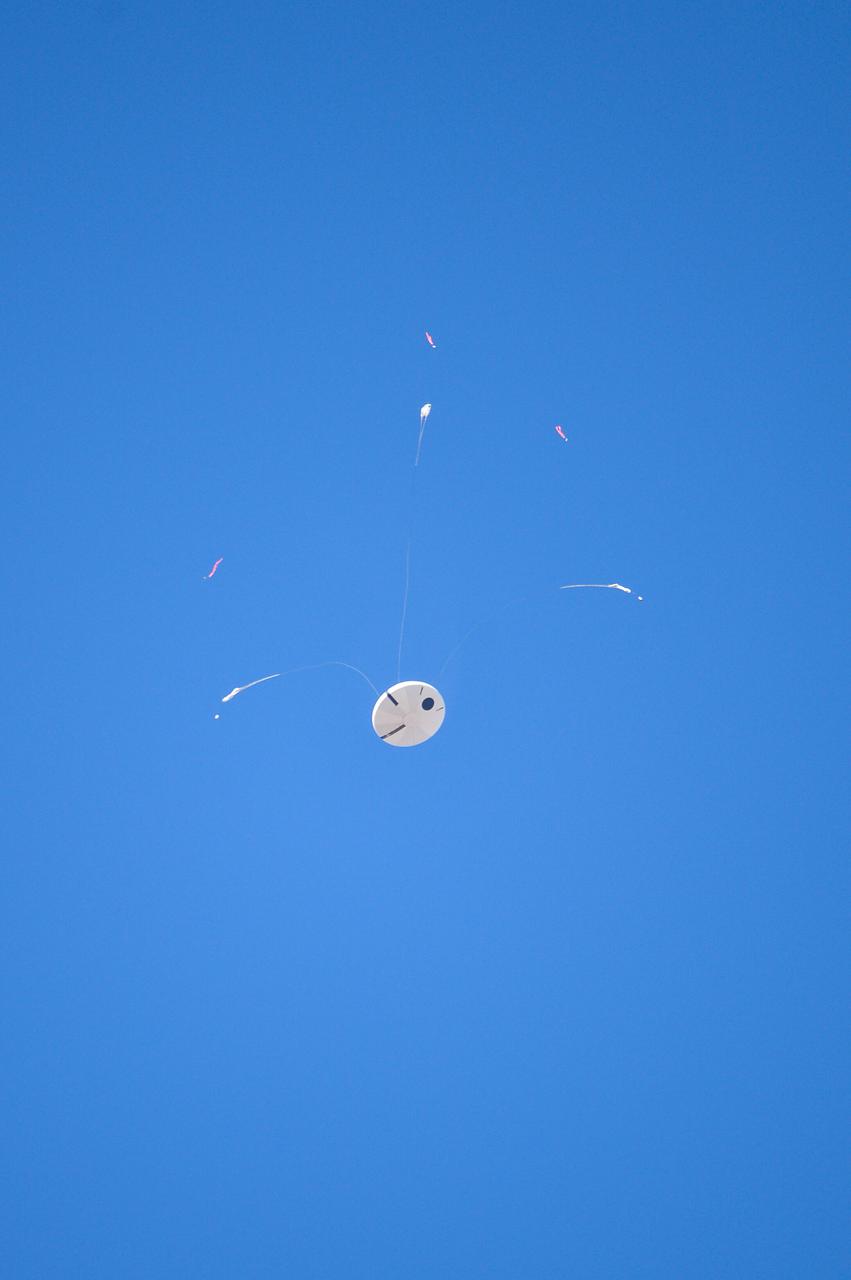
Orion’s three main orange and white parachutes help a representative model of the spacecraft descend through sky above Arizona, where NASA engineers tested the parachute system on Sept. 13, 2017 at the U.S. Army Proving Ground in Yuma. NASA is qualifying Orion’s parachutes for missions with astronauts.. .During this test, engineers replicated a situation in which Orion must abort off the Space Launch System rocket and bypasses part of its normal parachute deployment sequence that typically helps the spacecraft slow down during its descent to Earth after deep space missions. The capsule was dropped out of a C-17 aircraft at more than 4.7 miles in altitude and allowed to free fall for 20 seconds, longer than ever before, to produce high aerodynamic pressure before only its pilot and main parachutes were deployed, testing whether they could perform as expected under extreme loads. Orion’s full parachute system includes 11 total parachutes -- three forward bay cover parachutes and two drogue parachutes, along with three pilot parachutes that help pull out the spacecraft’s three mains.
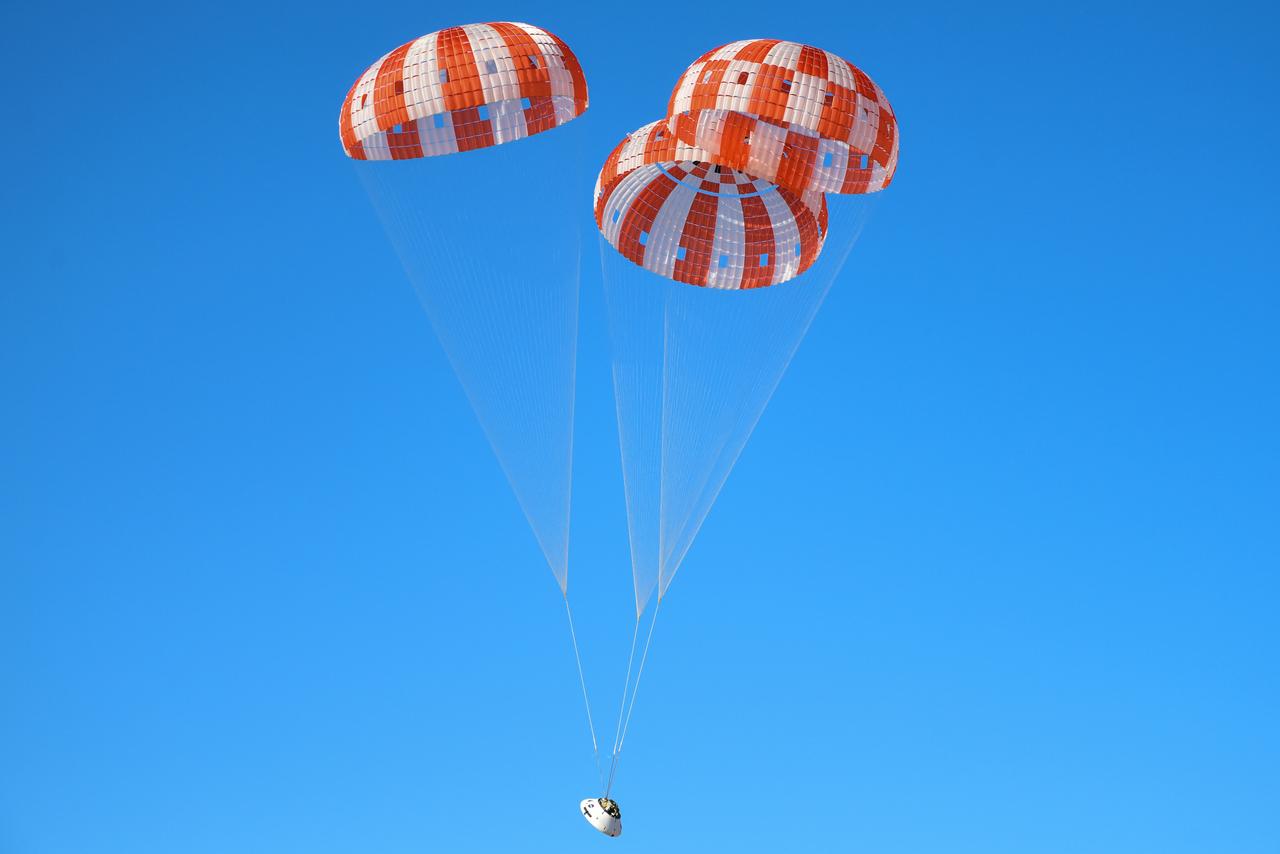
Orion’s three main orange and white parachutes help a representative model of the spacecraft descend through sky above Arizona, where NASA engineers tested the parachute system on Sept. 13, 2017 at the U.S. Army Proving Ground in Yuma. NASA is qualifying Orion’s parachutes for missions with astronauts.. .During this test, engineers replicated a situation in which Orion must abort off the Space Launch System rocket and bypasses part of its normal parachute deployment sequence that typically helps the spacecraft slow down during its descent to Earth after deep space missions. The capsule was dropped out of a C-17 aircraft at more than 4.7 miles in altitude and allowed to free fall for 20 seconds, longer than ever before, to produce high aerodynamic pressure before only its pilot and main parachutes were deployed, testing whether they could perform as expected under extreme loads. Orion’s full parachute system includes 11 total parachutes -- three forward bay cover parachutes and two drogue parachutes, along with three pilot parachutes that help pull out the spacecraft’s three mains.

Orion’s three main orange and white parachutes help a representative model of the spacecraft descend through sky above Arizona, where NASA engineers tested the parachute system on Sept. 13, 2017 at the U.S. Army Proving Ground in Yuma. NASA is qualifying Orion’s parachutes for missions with astronauts.. .During this test, engineers replicated a situation in which Orion must abort off the Space Launch System rocket and bypasses part of its normal parachute deployment sequence that typically helps the spacecraft slow down during its descent to Earth after deep space missions. The capsule was dropped out of a C-17 aircraft at more than 4.7 miles in altitude and allowed to free fall for 20 seconds, longer than ever before, to produce high aerodynamic pressure before only its pilot and main parachutes were deployed, testing whether they could perform as expected under extreme loads. Orion’s full parachute system includes 11 total parachutes -- three forward bay cover parachutes and two drogue parachutes, along with three pilot parachutes that help pull out the spacecraft’s three mains.
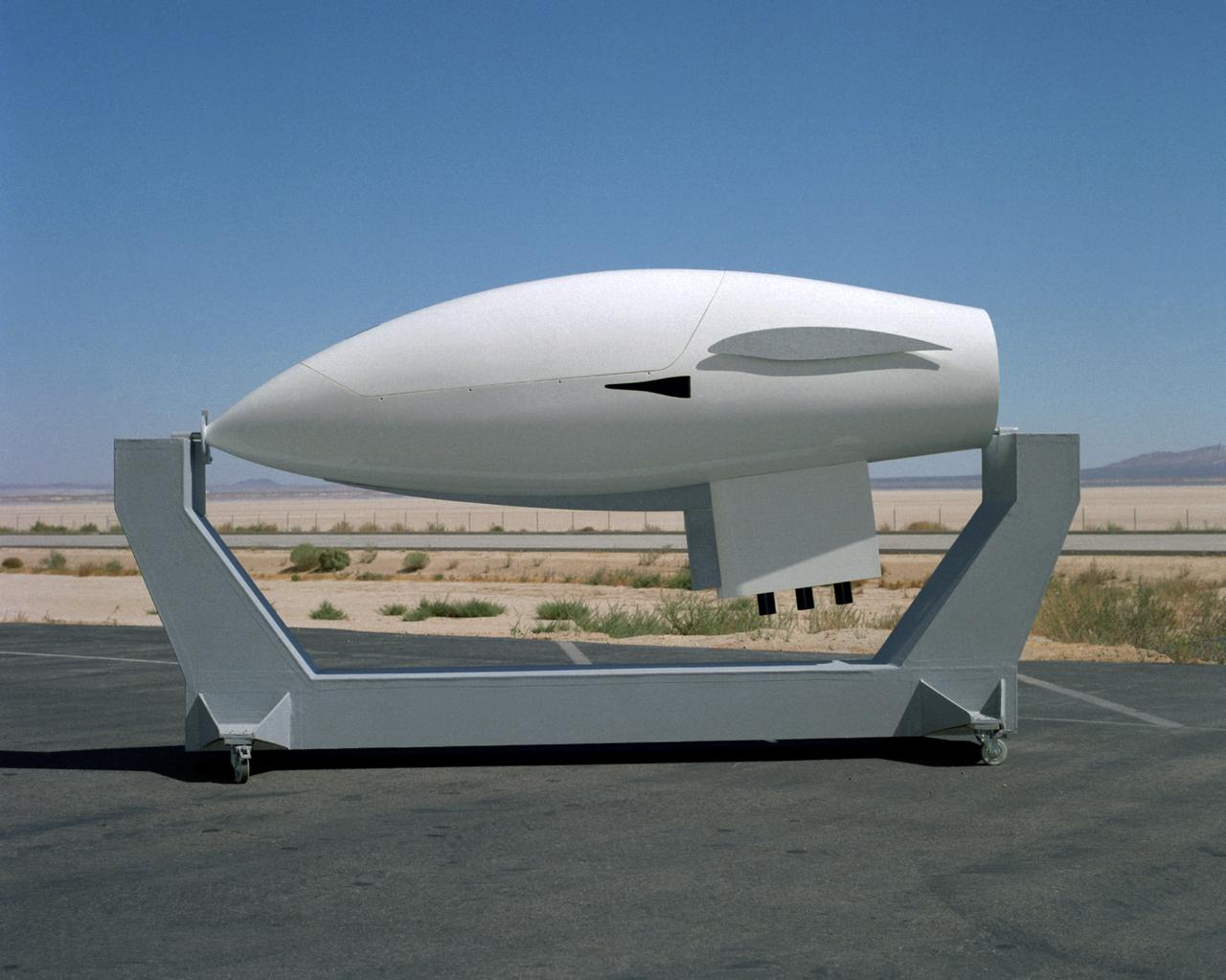
Apex high-altitude research sailplane mock-up
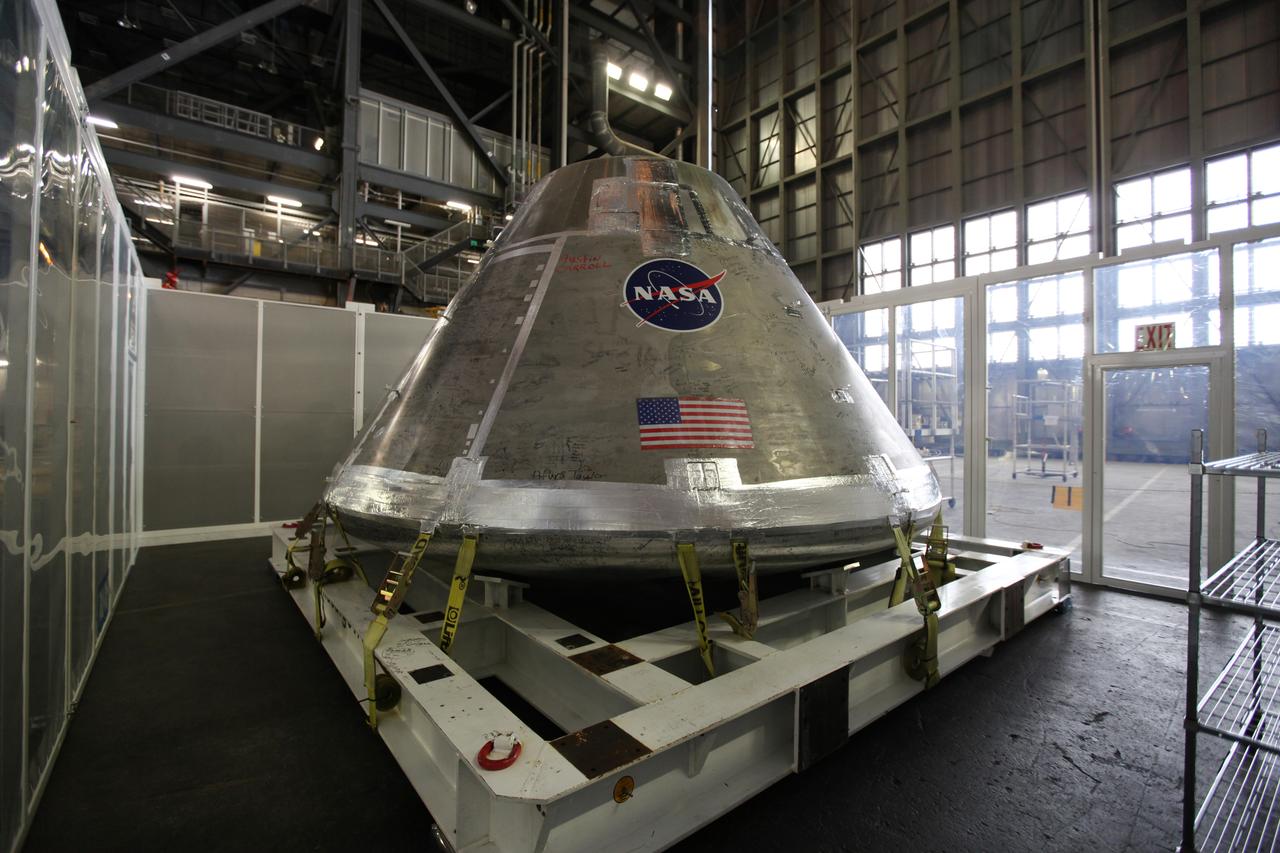
ORION Mock-up, Testing of Clean Room in High Bay 3
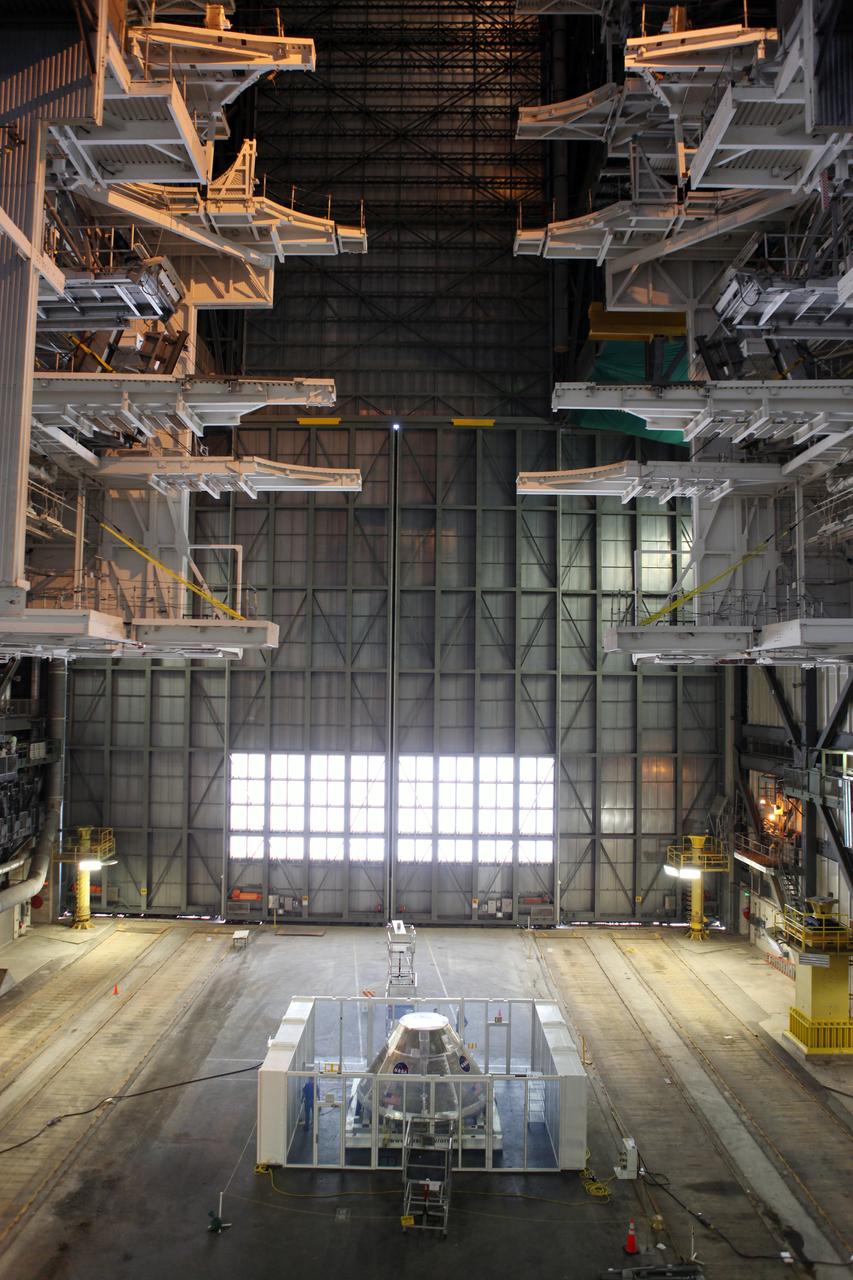
ORION Mock-up, Testing of Clean Room in High Bay 3
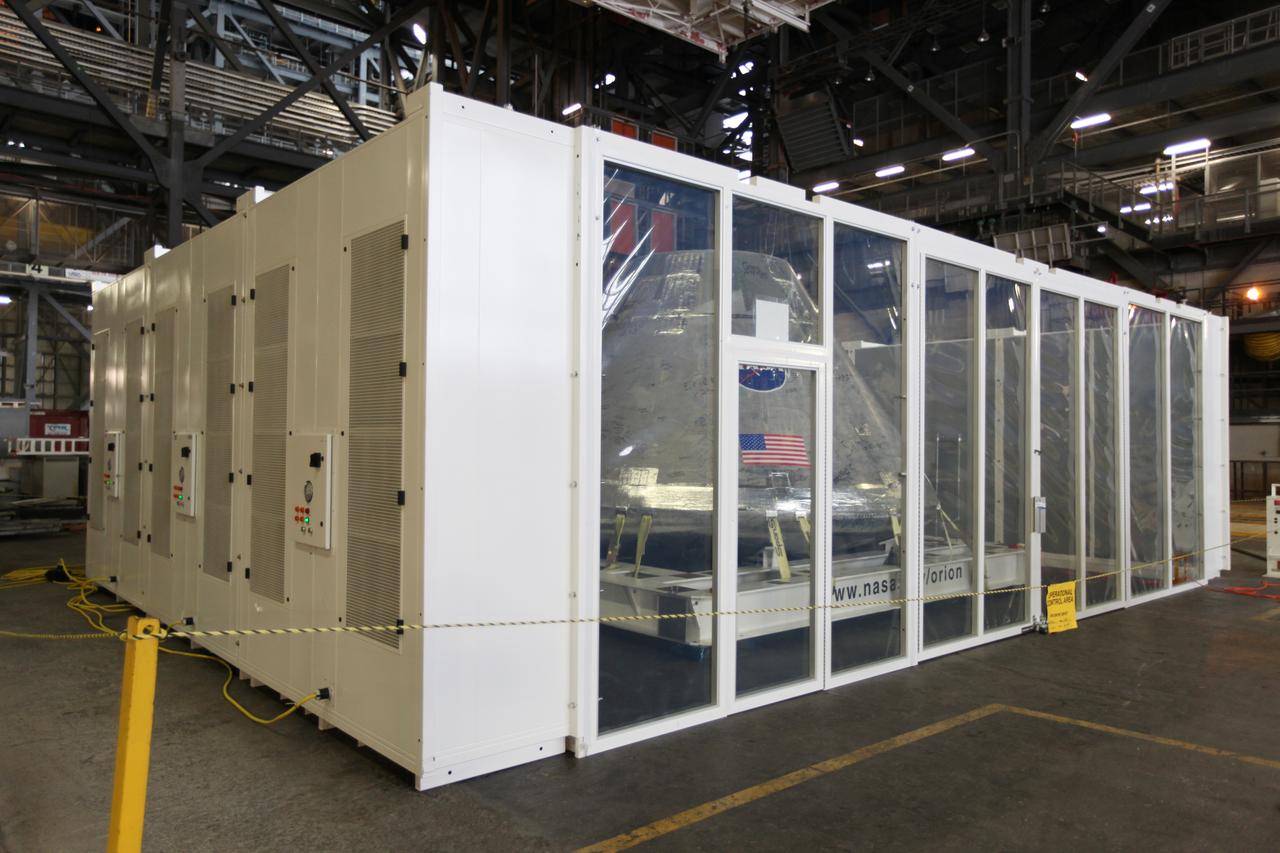
ORION Mock-up, Testing of Clean Room in High Bay 3
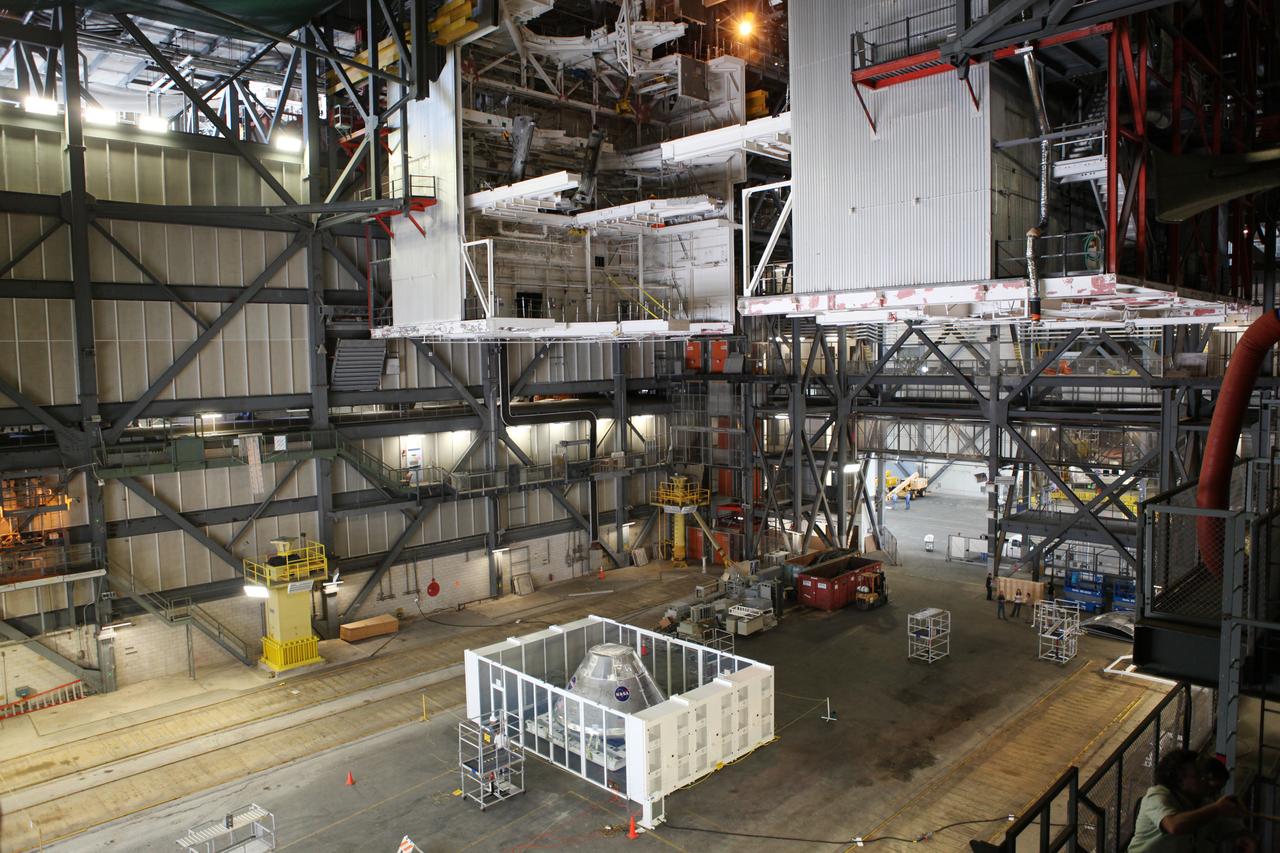
ORION Mock-up, Testing of Clean Room in High Bay 3
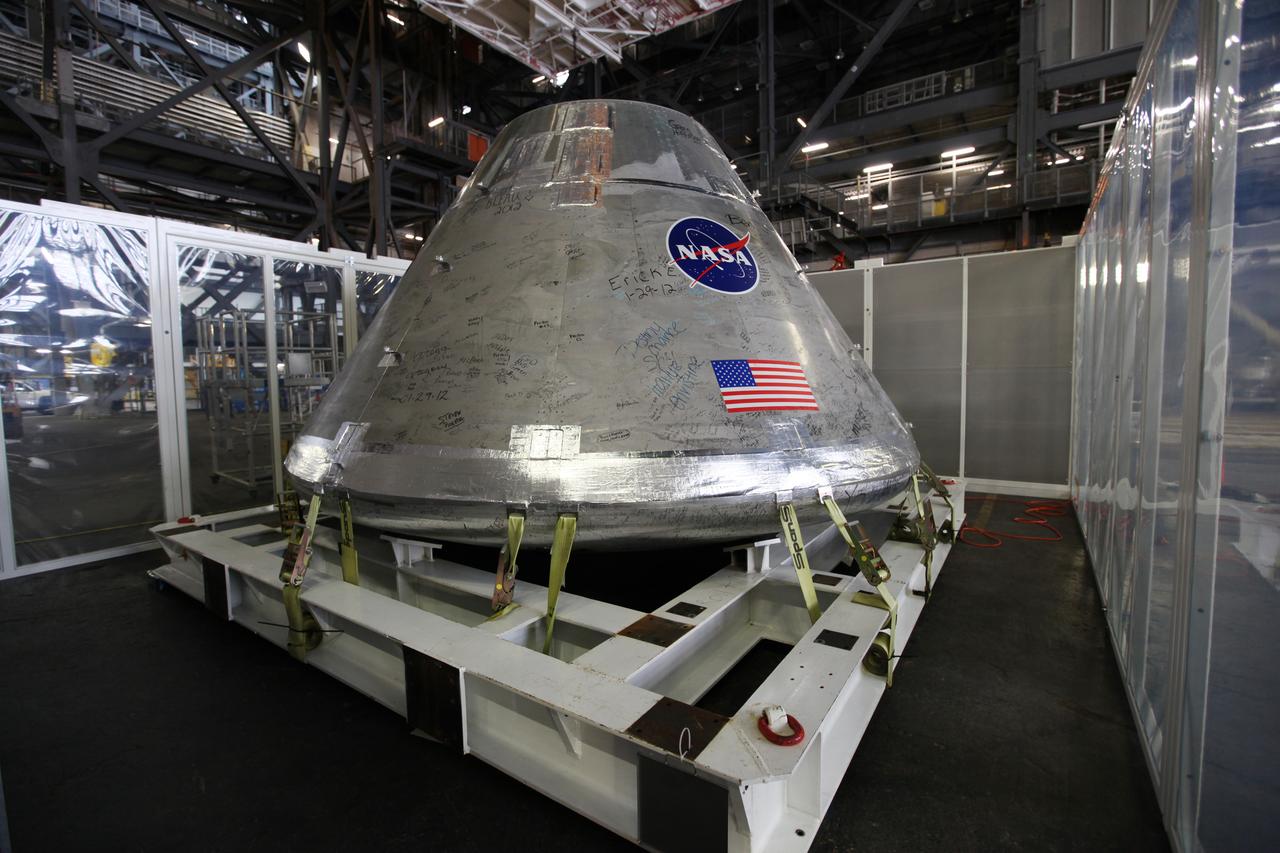
ORION Mock-up, Testing of Clean Room in High Bay 3
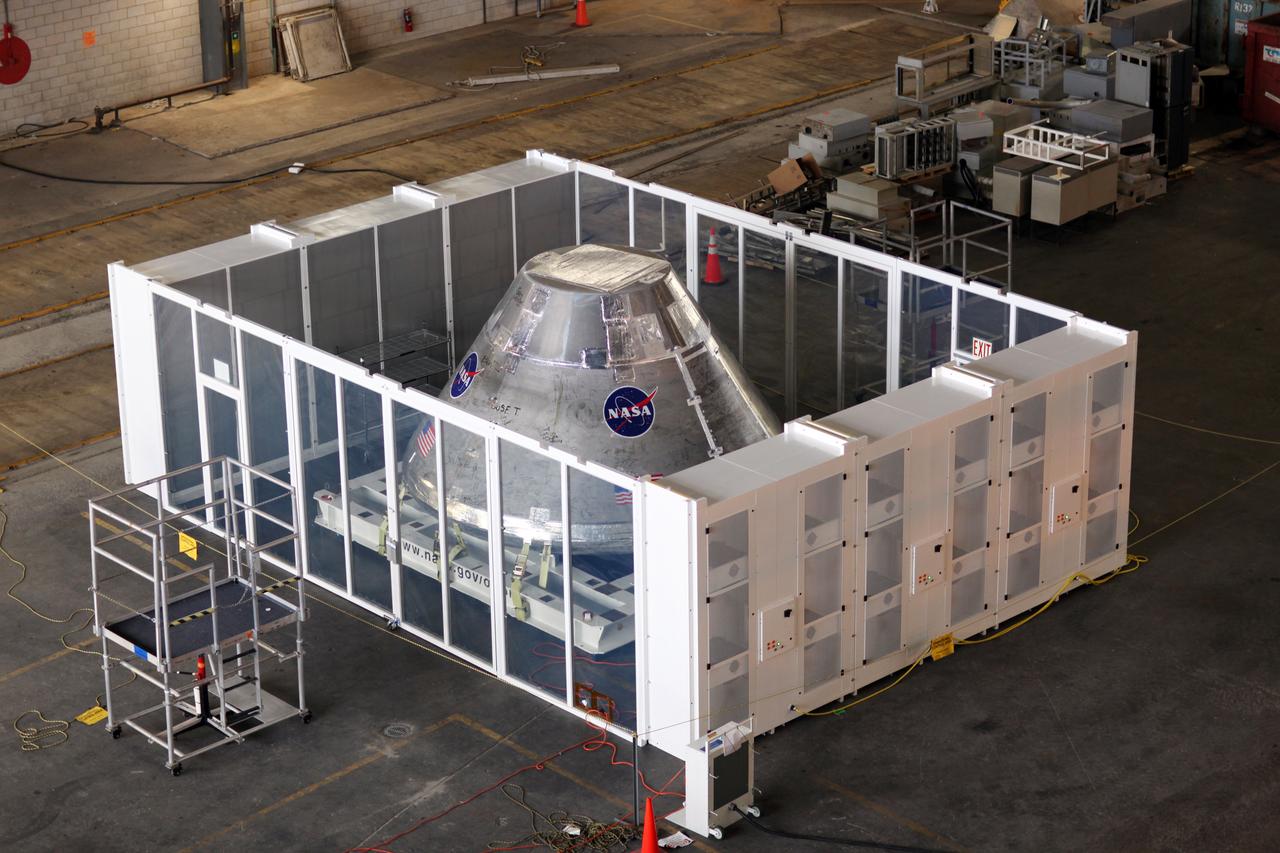
ORION Mock-up, Testing of Clean Room in High Bay 3
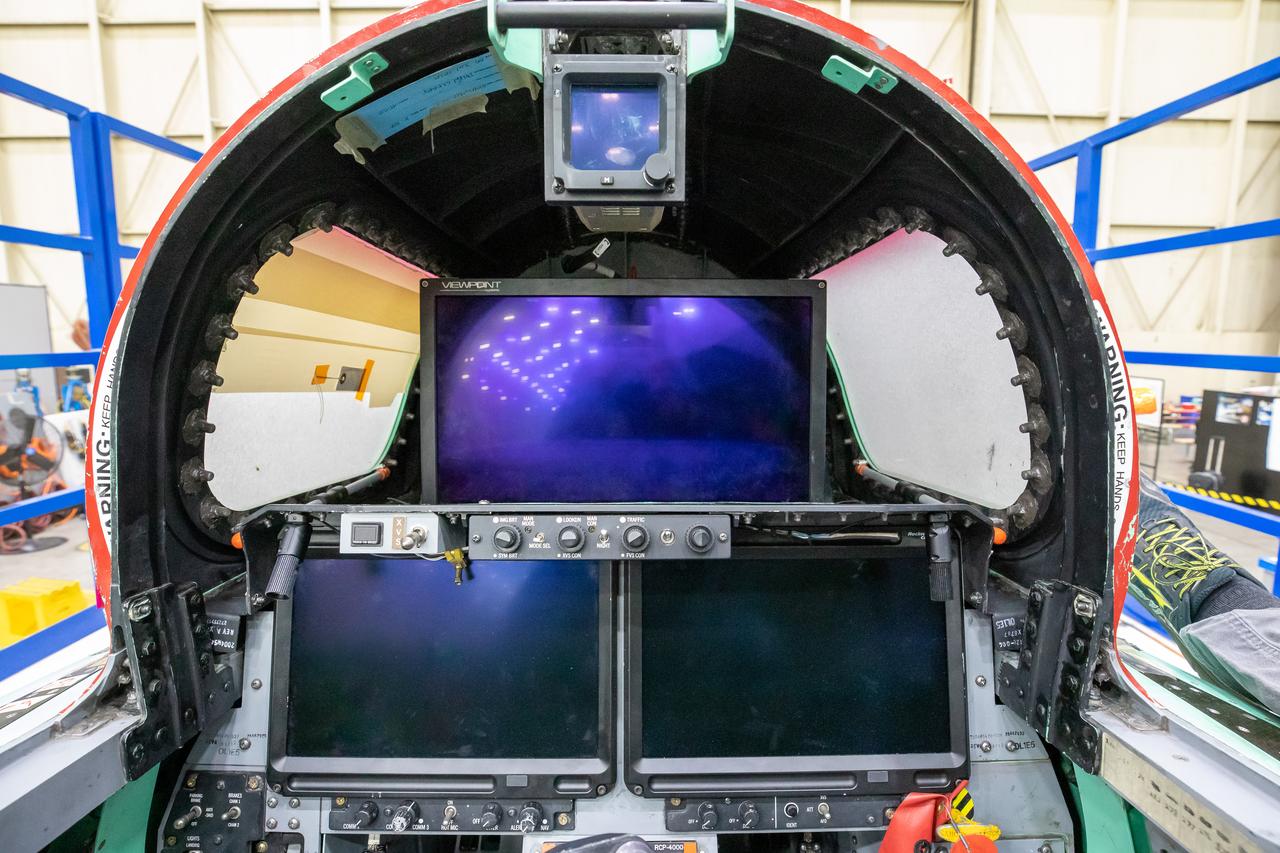
This image shows the forward view of the X-59’s cockpit with the canopy open. The aircraft will not have a forward-facing window and will use an eXternal Vision System (XVS) made up of a high definition 4K monitor (located in the center) and two monitors below to help the pilots safely fly through the skies.

This image from NASA Mars Reconnaissance Orbiter shows erosional features formed by seasonal frost near the south pole of Mars. During the winter, high latitudes on Mars build up deposits of carbon dioxide frost that can be several feet thick.
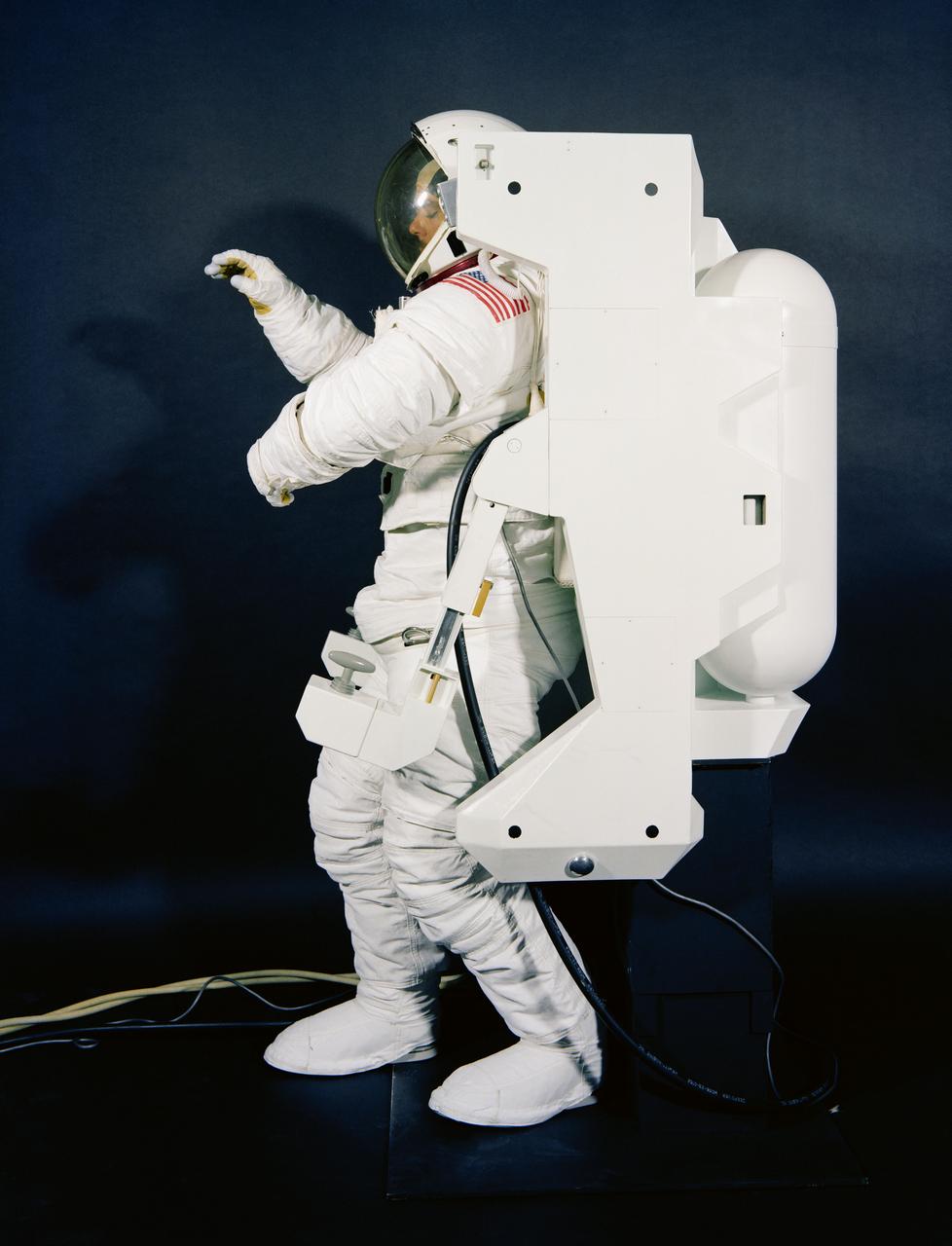
Side close-up view of crewman in high-fidelity Extravehicular Mobility Unit (EMU) / Manned Maneuvering Unit (MMU) mockup.
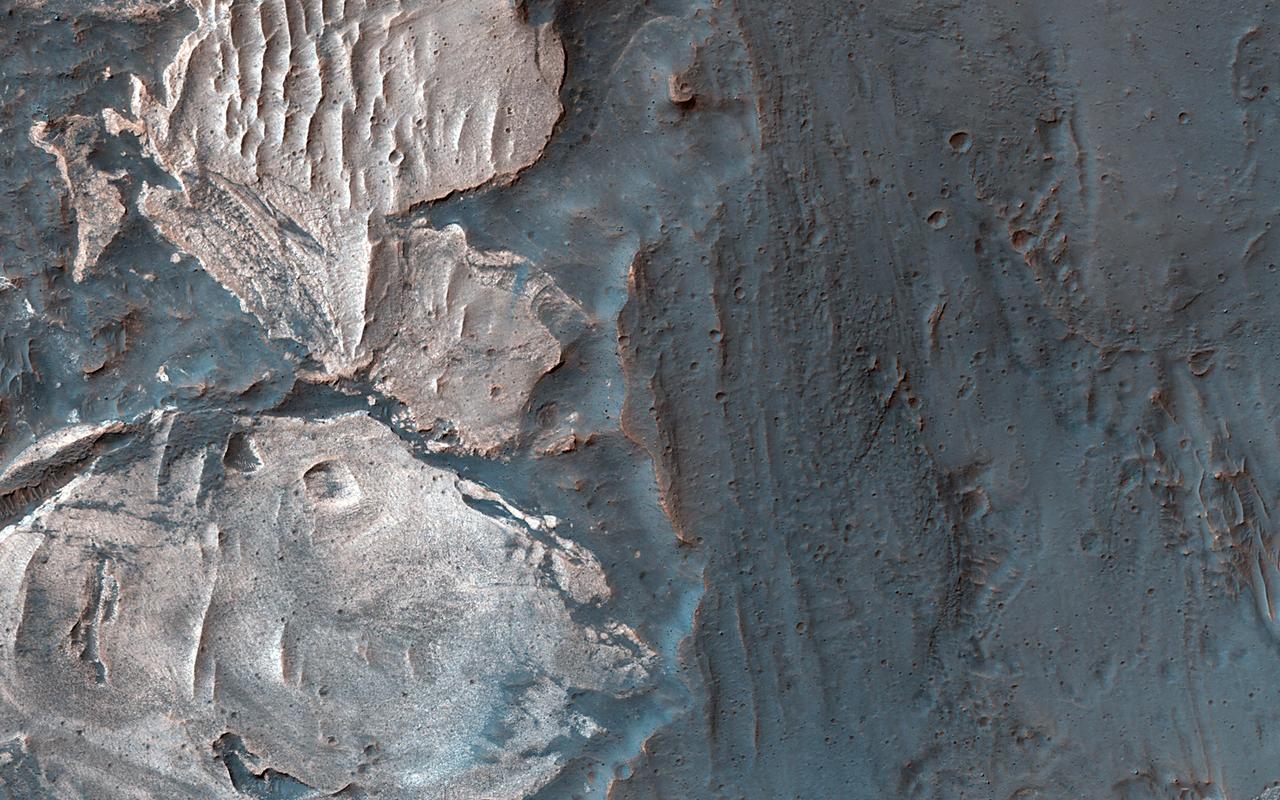
Many of the Valles Marineris canyons, called chasmata, have kilometer-high, light-toned layered mounds made up of sulfate materials. Ius Chasma, near the western end of Valles Marineris, is an exception. The light-toned deposits here are thinner and occur along both the floor and walls, as we see in this HiRISE image. Additionally, the sulfates are mixed with other minerals like clays and hydrated silica. Scientists are trying to use the combination of mineralogy, morphology, and stratigraphy to understand how the deposits formed in Ius Chasma and why they differ from those found elsewhere in Valles Marineris. https://photojournal.jpl.nasa.gov/catalog/PIA25982

In the high plains of the Andes in Bolivia, Lake Poopo has virtually vanished, as shown in this image from NASA Terra spacecraft. Once covering over 3,000 square kilometers, the lake essentially dried up in 2015. What led to Lake Poopo's demise? Water diversions upstream, weather extremes and recurrent droughts are thought to blame. The images cover an area of 48.9 by 55.1 km, were acquired February 14, 2001 and November 6, 2016, and are located near 18.7 degrees south, 67.1 degrees west. https://photojournal.jpl.nasa.gov/catalog/PIA21546
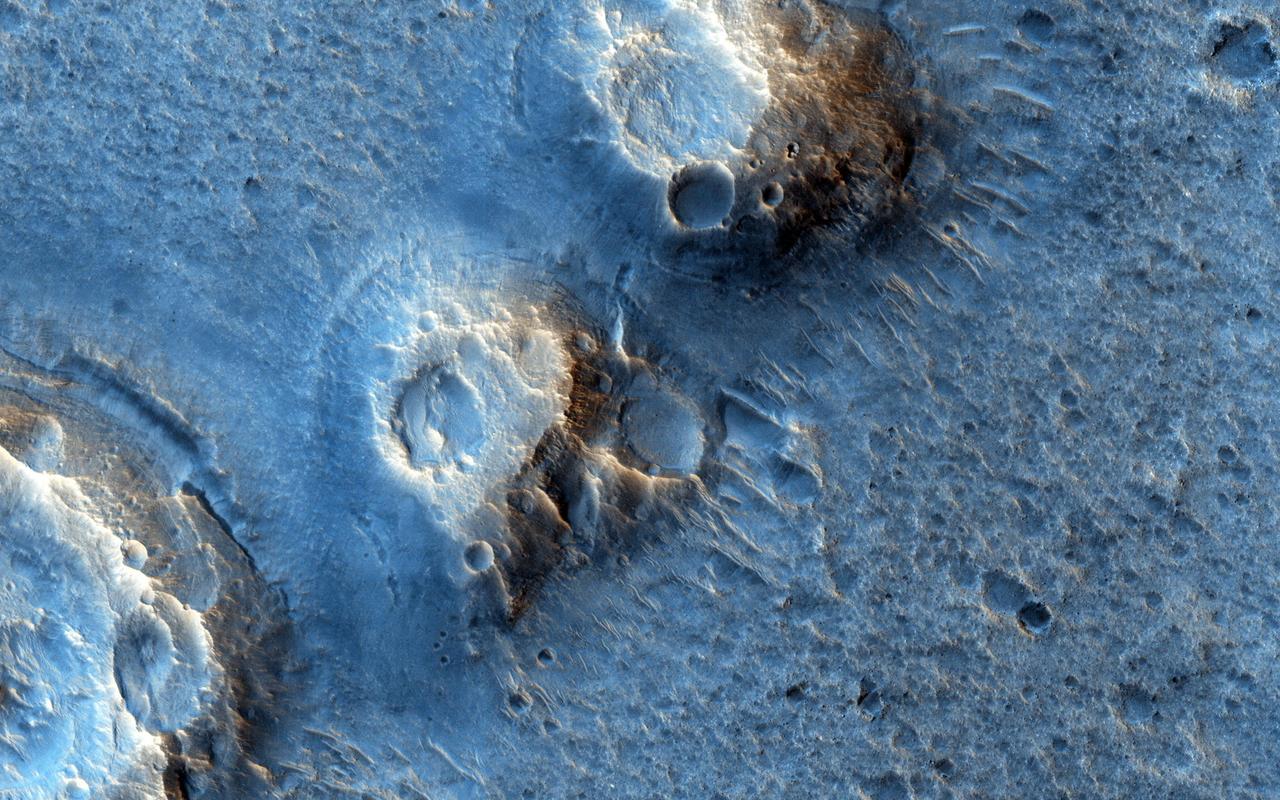
This image from NASA Mars Reconnaissance Orbiter shows a region of Acidalia Planitia which is covered by dense fields of boulders up to several meters high. In "The Martian" by Andy Weir (watch for the movie in late 2015), stranded astronaut Mark Watney spends most of his time at the "Ares 3" site in southern Acidalia Planitia. The book describes Acidalia as flat and easy to drive over; he even drives to the Pathfinder landing site and back. This region of Mars is actually far more diverse, interesting, and hazardous to drive over than depicted in the novel. These two images (this observation and ESP_019783_2115) are close to the Ares 3 landing site as shown in a map at the front of the novel, and shows many mounds, perhaps ancient volcanoes resulting from lava-water interaction or eruption of muddy sediments. Much of Acidalia Planitia is covered by dense fields of boulders up to several meters high that would be difficult to drive around. There are also fissures associated with giant polygons, with steep rocky slopes that would be impassable. There are elongated fields of dense secondary craters where the surface is extremely rough at scales near the size of the rover. When our hero travels into Arabia Terra it is described as much rockier than Acidalia, but the the opposite is generally true: much of Arabia is dust mantled and smooth at the scale of a rover. People commonly assume that smooth at large scales (kilometers) means smooth at small scales ( meters to tens of meters). Often on Mars, the exact opposite is seen: large flat low areas are more wind-scoured, removing fine materials and leaving rocks and eroded bedrock. http://photojournal.jpl.nasa.gov/catalog/PIA19306
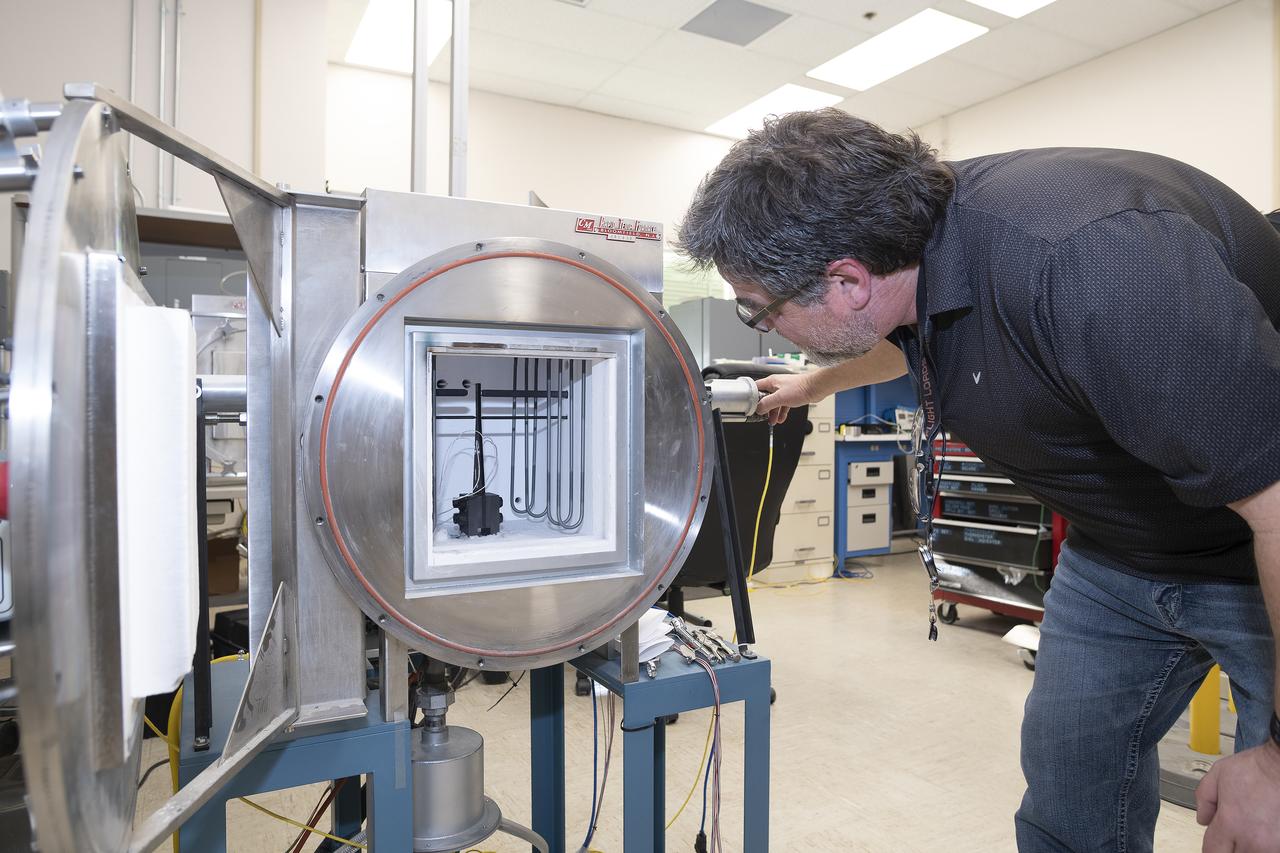
Anthony piazza, a researcher at NASA’s Armstrong Flight Research center in Edwards, California, works with high-temperature strain sensors. This test article is a bending load bar, which enables high-temperature optical strain sensor research up to 1,800 degrees Fahrenheit.
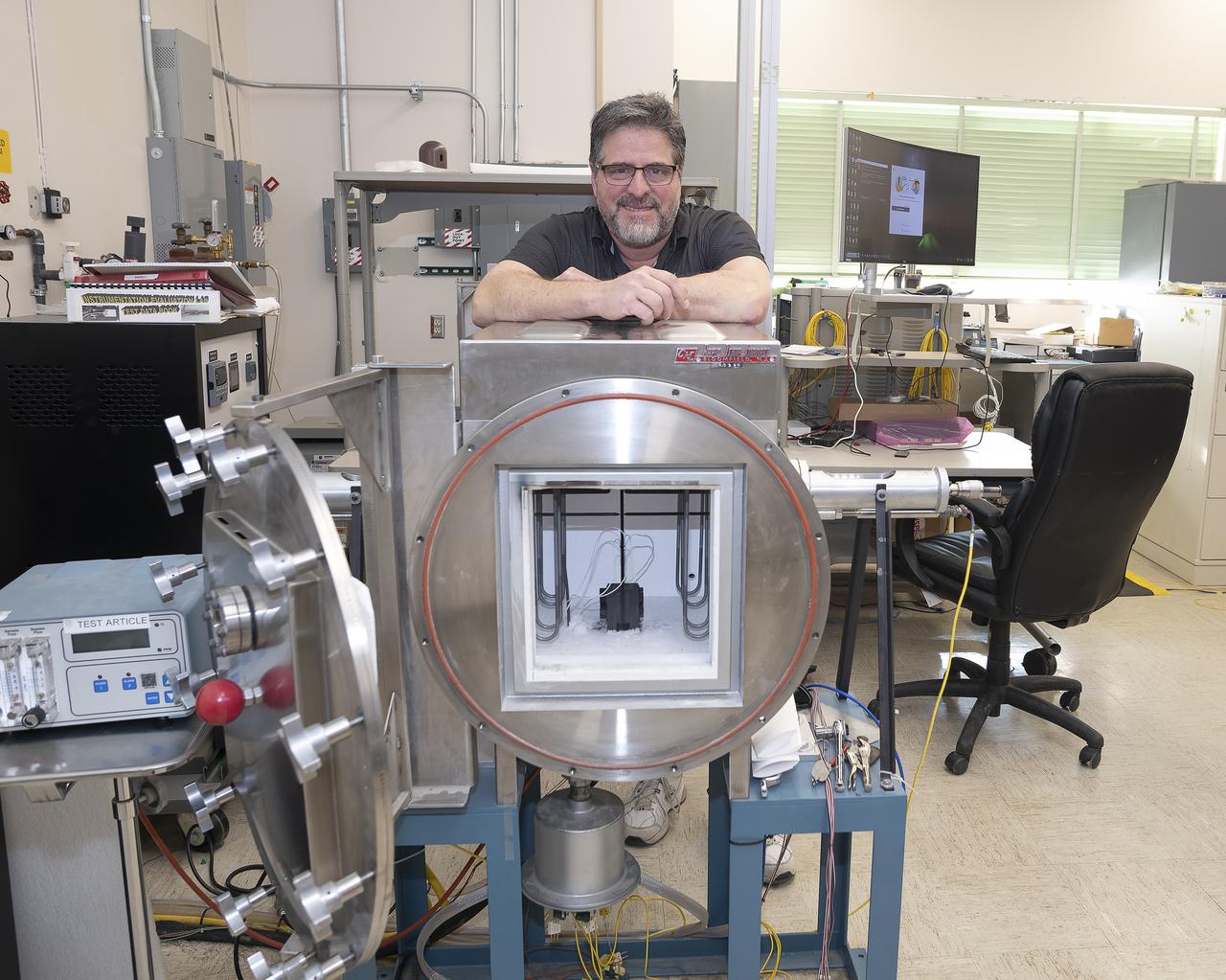
Anthony piazza, a researcher at NASA’s Armstrong Flight Research center in Edwards, California, works with high-temperature strain sensors. This test article is a bending load bar, which enables high-temperature optical strain sensor research up to 1,800 degrees Fahrenheit.
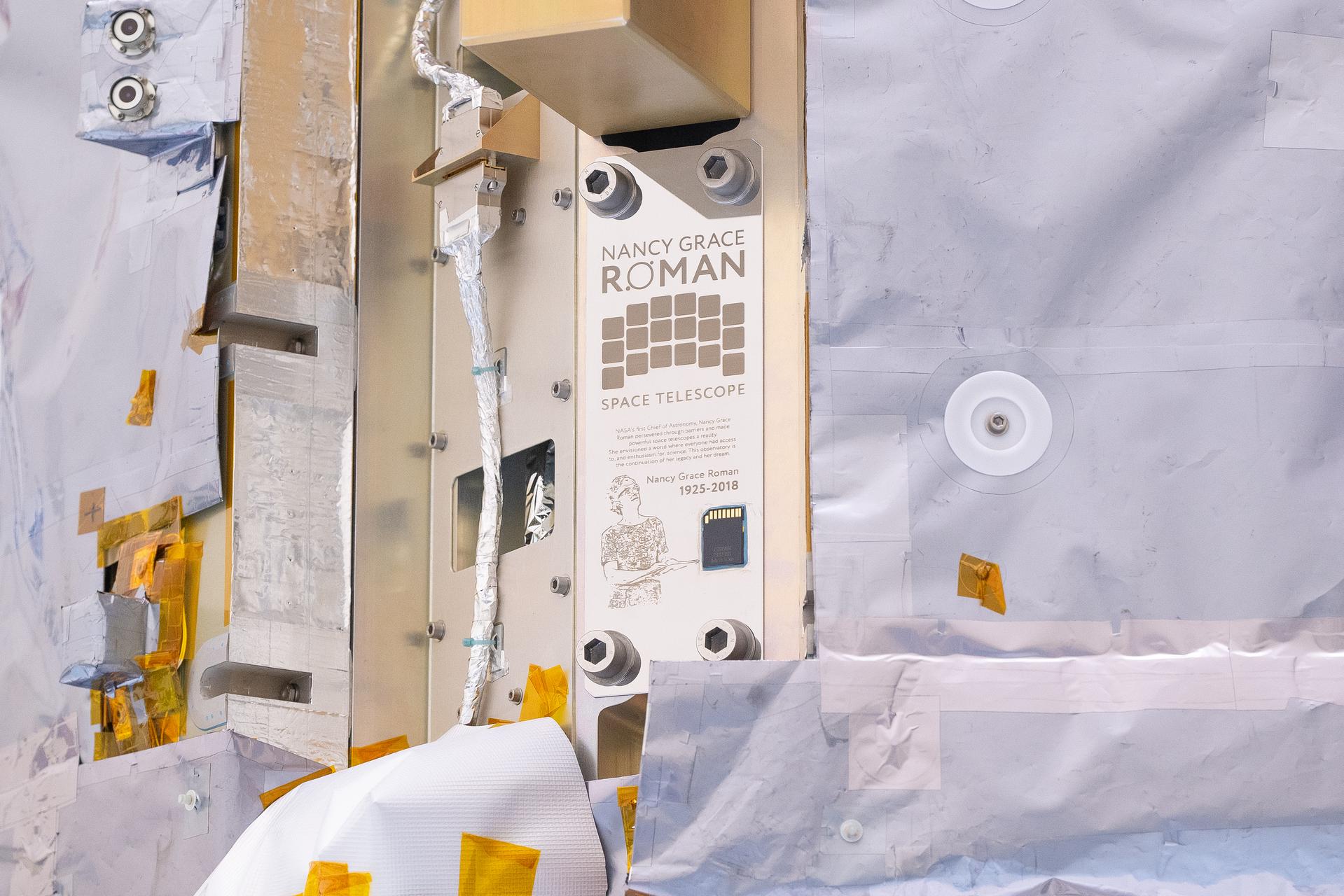
Technicians inside the Payload Hazardous Servicing Facility at NASA’s Kennedy Space Center complete installation of a commemorative plaque on the agency’s Nancy Grace Roman Space Telescope, as photographed on Tuesday, July 28, 2026. In addition to honoring the legacy of Dr. Nancy Grace Roman, NASA’s first chief astronomer and one of the architects of the agency’s modern science program, the plaque features a memory card containing a total of 1,350,144 names submitted by people from across the globe, including astronauts from NASA’s Artemis II and Artemis III missions. The Roman observatory will travel to the Sun-Earth Lagrange point 2, or L2, about one million miles from Earth, where the Sun’s and Earth’s gravity balance out, to complete a statistical census of planetary systems in our galaxy and settle essential questions in the areas of dark energy, exoplanets, and infrared astrophysics.
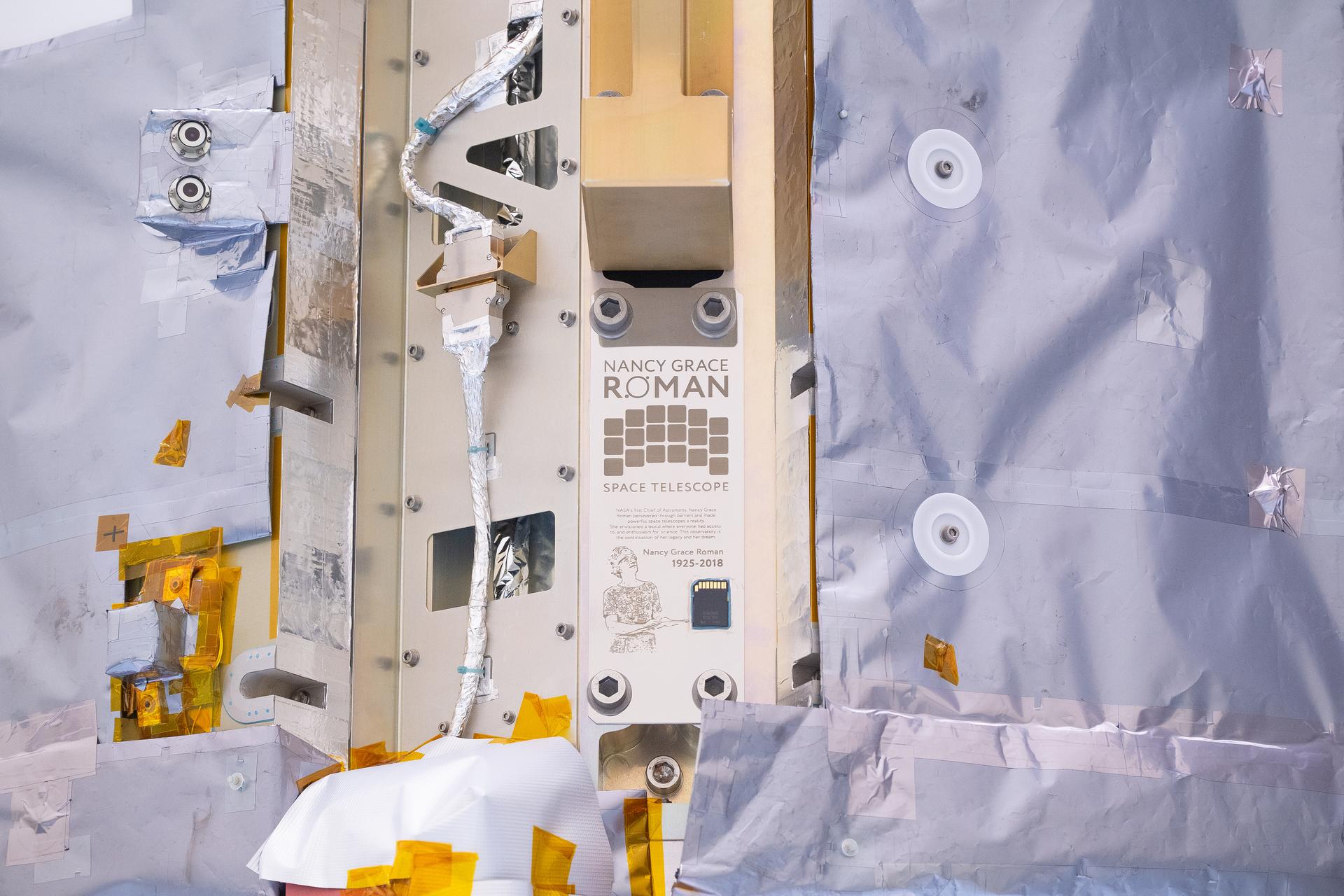
Technicians inside the Payload Hazardous Servicing Facility at NASA’s Kennedy Space Center complete installation of a commemorative plaque on the agency’s Nancy Grace Roman Space Telescope, as photographed on Tuesday, July 28, 2026. In addition to honoring the legacy of Dr. Nancy Grace Roman, NASA’s first chief astronomer and one of the architects of the agency’s modern science program, the plaque features a memory card containing a total of 1,350,144 names submitted by people from across the globe, including astronauts from NASA’s Artemis II and Artemis III missions. The Roman observatory will travel to the Sun-Earth Lagrange point 2, or L2, about one million miles from Earth, where the Sun’s and Earth’s gravity balance out, to complete a statistical census of planetary systems in our galaxy and settle essential questions in the areas of dark energy, exoplanets, and infrared astrophysics.
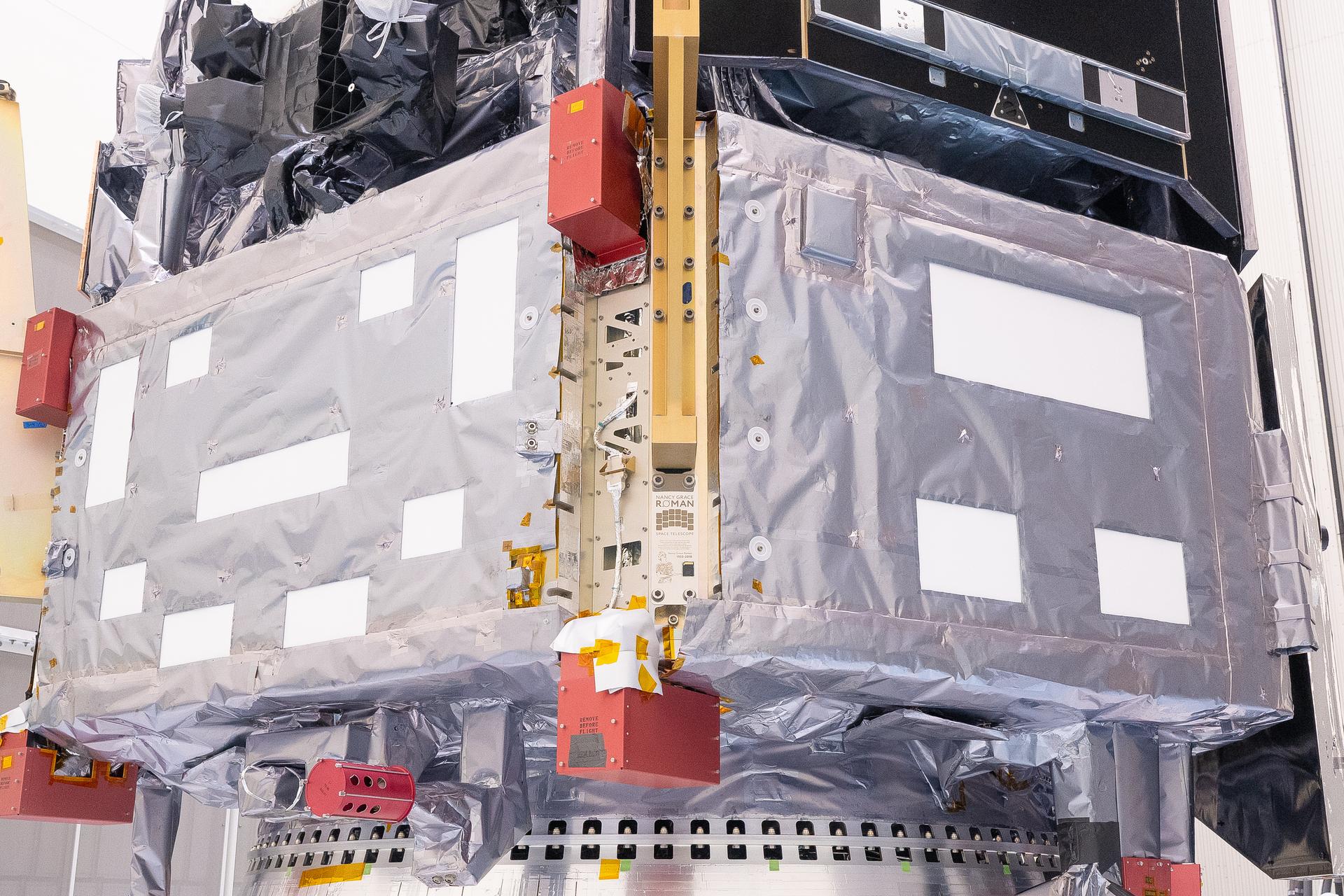
Technicians inside the Payload Hazardous Servicing Facility at NASA’s Kennedy Space Center complete installation of a commemorative plaque on the agency’s Nancy Grace Roman Space Telescope, as photographed on Tuesday, July 28, 2026. In addition to honoring the legacy of Dr. Nancy Grace Roman, NASA’s first chief astronomer and one of the architects of the agency’s modern science program, the plaque features a memory card containing a total of 1,350,144 names submitted by people from across the globe, including astronauts from NASA’s Artemis II and Artemis III missions. The Roman observatory will travel to the Sun-Earth Lagrange point 2, or L2, about one million miles from Earth, where the Sun’s and Earth’s gravity balance out, to complete a statistical census of planetary systems in our galaxy and settle essential questions in the areas of dark energy, exoplanets, and infrared astrophysics.
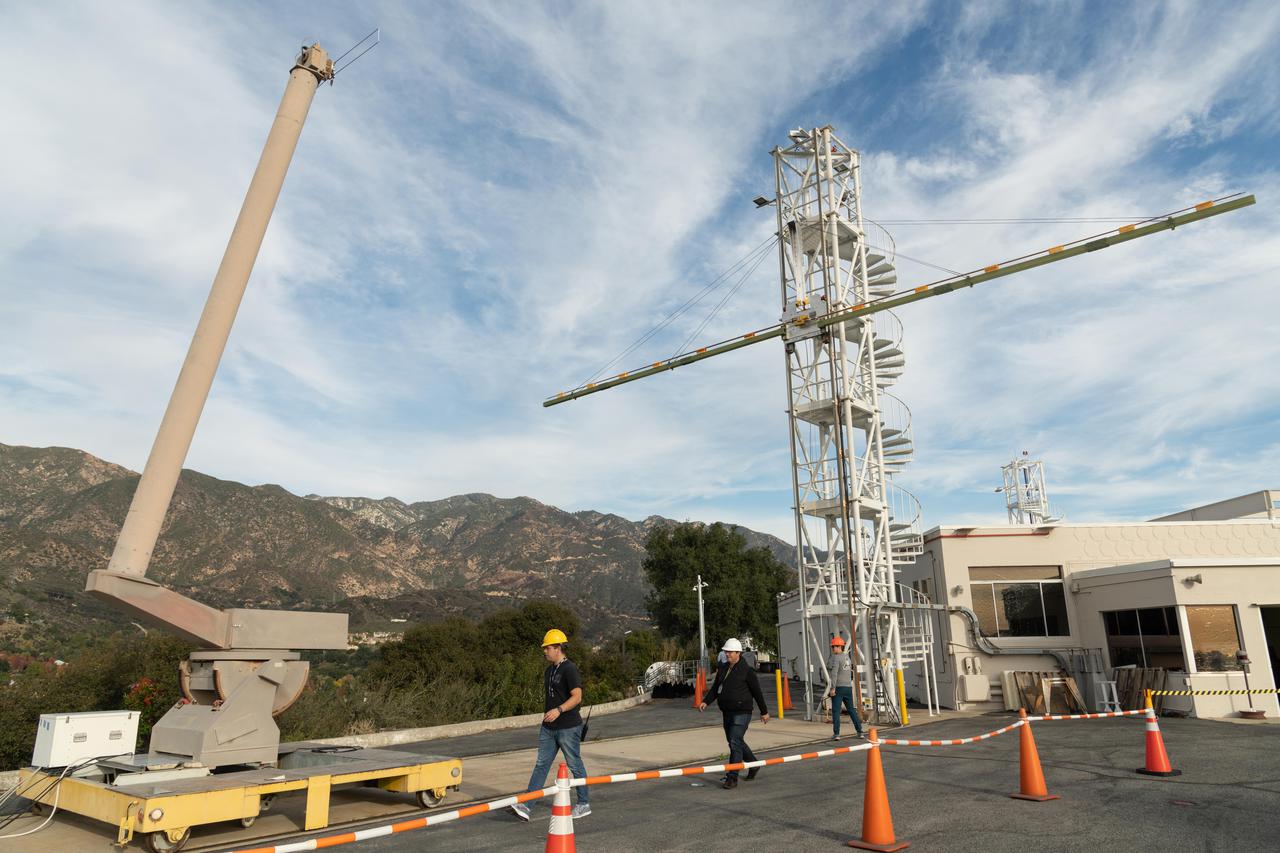
Engineers at NASA's Jet Propulsion Laboratory in Southern California test an engineering model of a high-frequency (HF) radar antenna that makes up part of NASA's Europa Clipper radar instrument on Dec. 17, 2019. The antenna is a 59-foot-long (18-meter-long) narrow copper tube held straight by several cables and a cross bar on the tower at right. In space, the copper tube will stick out straight on its own, but in Earth's gravity, the antenna requires supports to keep it straight for testing. The mobile tower at left holds a model of the VHF (very high-frequency) antenna so that engineers could measure the amount of energy coupled from one antenna to the other. Europa Clipper's radar instrument is called Radar for Europa Assessment and Sounding: Ocean to Near-surface, or REASON. As the spacecraft orbits Jupiter and surveys its icy moon Europa, REASON will use HF and VHF radio signals to penetrate up to 18 miles (30 kilometers) into the icy shell that covers Europa. The radio waves will bounce off subsurface features and return to the spacecraft to create images of the ice layers' internal structure. REASON will help scientists look for the moon's suspected ocean, measure ice thickness, and better understand the icy shell's interior. The instrument will also study the elevation, properties, and roughness of Europa's surface, and will prowl Europa's upper atmosphere for signs of plume activity. The antennae were built for NASA by Heliospace Corporation in Berkeley, California, and the University of Texas at Austin is the lead institution for REASON. The testing was conducted at JPL's Mesa Antenna Measurement Facility, which sits on a high plateau. With an internal global ocean twice the size of Earth's oceans combined, Europa may have the potential to harbor life. The Europa Clipper orbiter will swoop around Jupiter on an elliptical path, dipping close to the moon on each flyby to collect data. Understanding Europa's habitability will help scientists better understand how life developed on Earth and the potential for finding life beyond our planet. Europa Clipper is aiming for a launch readiness date of 2024. https://photojournal.jpl.nasa.gov/catalog/PIA24323
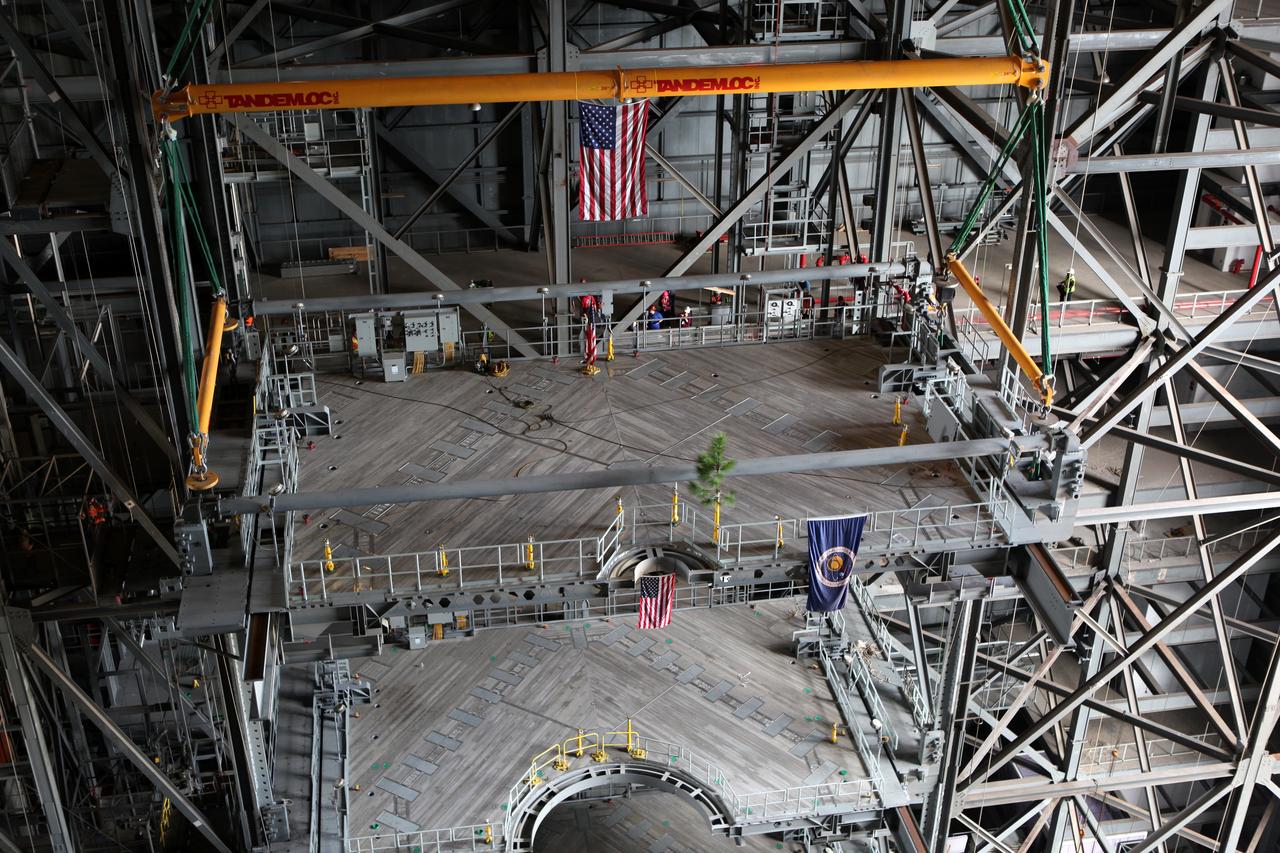
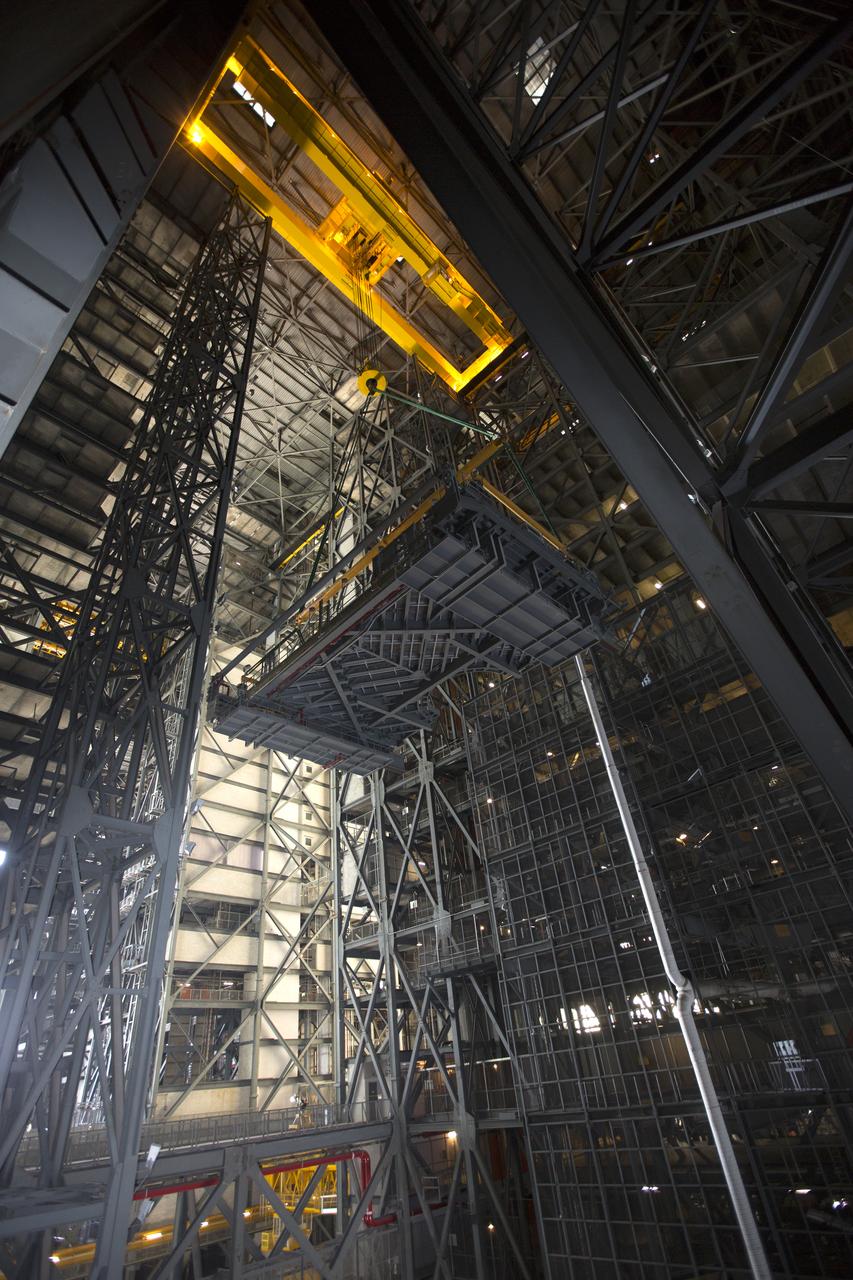
High up in the Vehicle Assembly Building (VAB) at NASA's Kennedy Space Center in Florida, a crane lowers the final work platform, A north, for installation in High Bay 3. The platform will be installed and secured on its rail beam high up on the north wall of the high bay. In view on the platform are the American flag and a small tree. The installation of the final topmost level completes the 10 levels of work platforms, 20 platform halves altogether, that will surround NASA's Space Launch System rocket and the Orion spacecraft and allow access during processing for missions, including the first uncrewed flight test of Orion atop the SLS rocket in 2018. The A-level platforms will provide access to the Orion spacecraft's Launch Abort System for Orion lifting sling removal and installation of the closeout panels. The Ground Systems Development and Operations Program, with support from the center's Engineering Directorate, is overseeing upgrades and modifications to the VAB, including installation of the new work platforms.
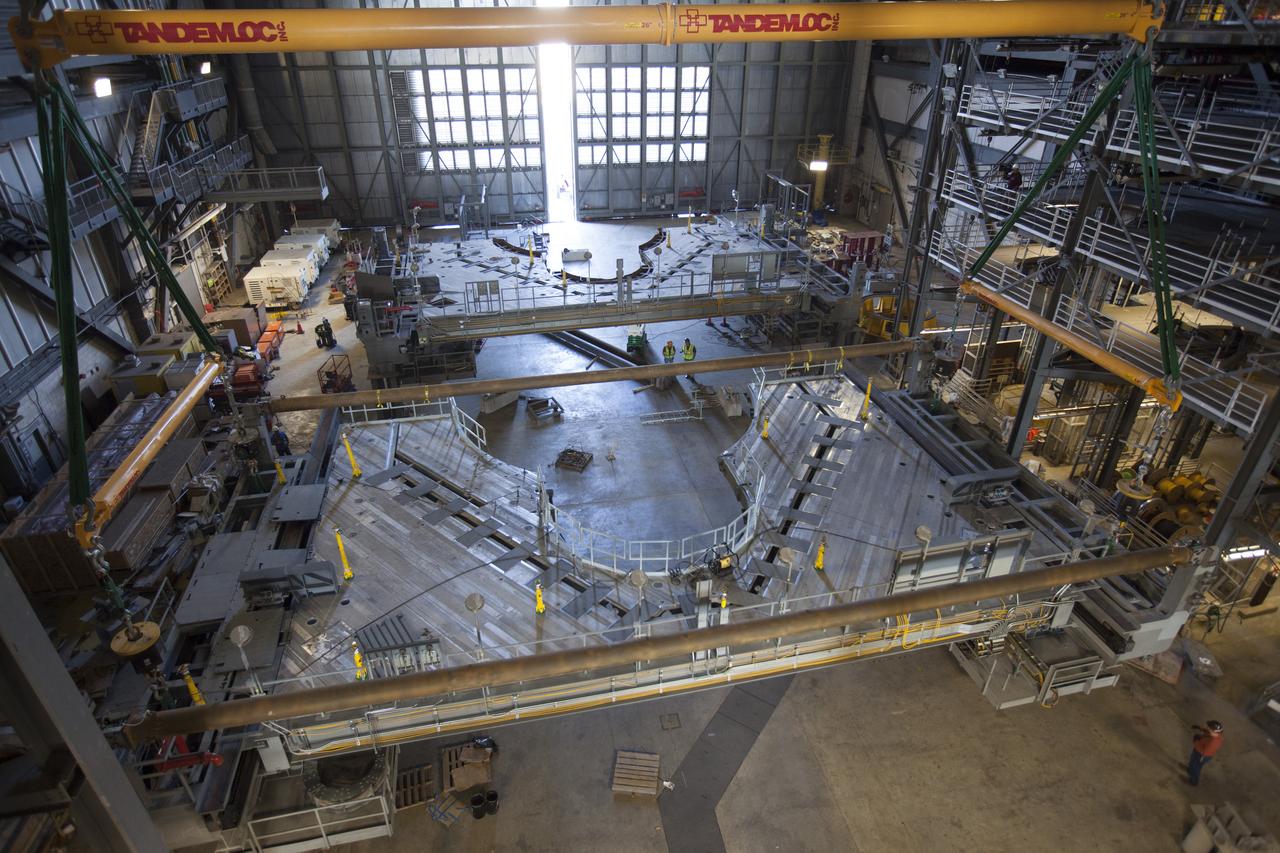
Preparations are underway to lift the second half of the K-level work platforms for NASA’s Space Launch System (SLS) rocket up from High Bay 4 inside the Vehicle Assembly Building at NASA's Kennedy Space Center in Florida. The platform will be lifted up and over the transfer aisle and then lowered into High Bay 3 for installation. It will be secured about 86 feet above the VAB floor, on tower E of the high bay. The K work platforms will provide access to the SLS core stage and solid rocket boosters during processing and stacking operations on the mobile launcher. The Ground Systems Development and Operations Program is overseeing upgrades and modifications to High Bay 3 to support processing of the SLS and Orion spacecraft. A total of 10 levels of new platforms, 20 platform halves altogether, will surround the SLS rocket and Orion spacecraft.
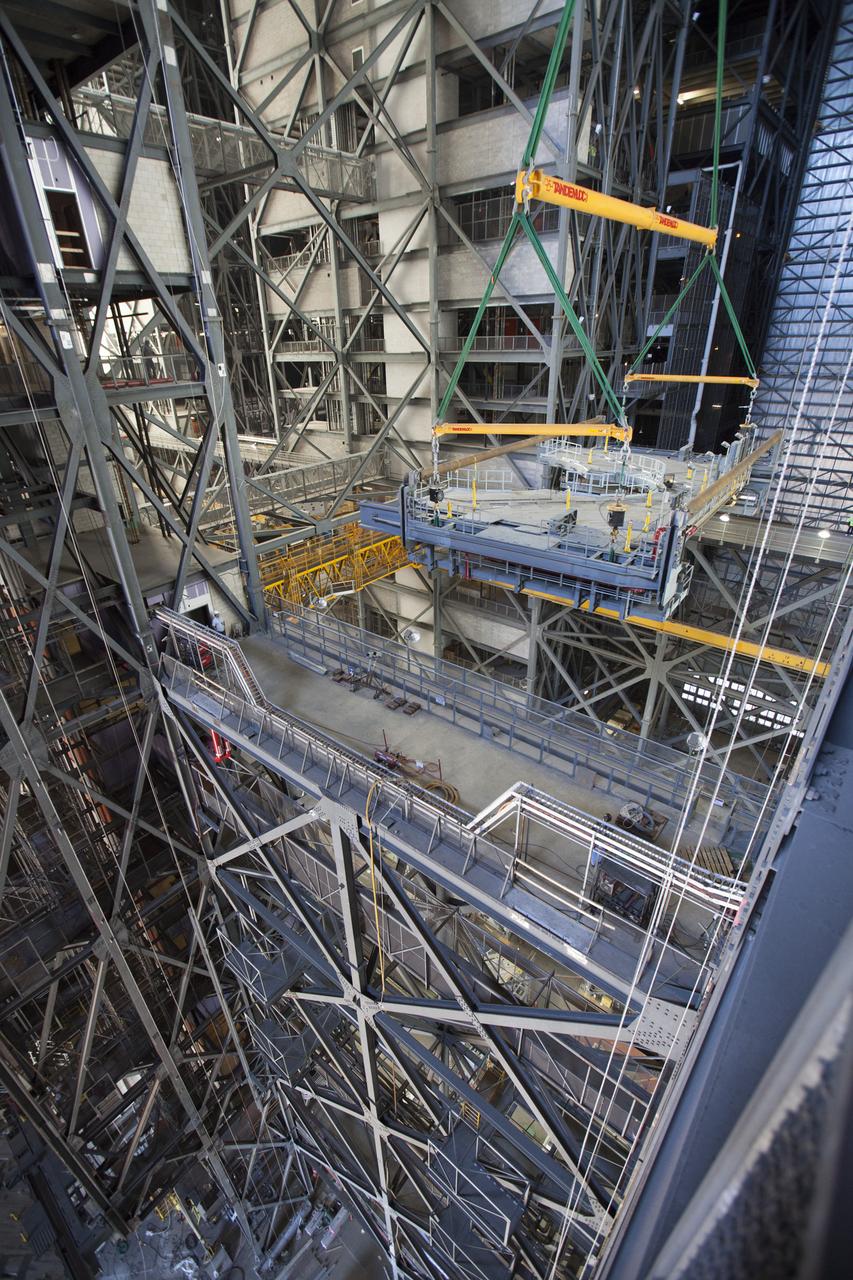
A 250-ton crane is used to lift the second half of the K-level work platforms for NASA’s Space Launch System (SLS) rocket up from High Bay 4 inside the Vehicle Assembly Building at NASA's Kennedy Space Center in Florida. The platform is being lifted up and over the transfer aisle and will be lowered into High Bay 3 for installation. It will be secured about 86 feet above the VAB floor, on tower E of the high bay. The K work platforms will provide access to the SLS core stage and solid rocket boosters during processing and stacking operations on the mobile launcher. The Ground Systems Development and Operations Program is overseeing upgrades and modifications to High Bay 3 to support processing of the SLS and Orion spacecraft. A total of 10 levels of new platforms, 20 platform halves altogether, will surround the SLS rocket and Orion spacecraft.
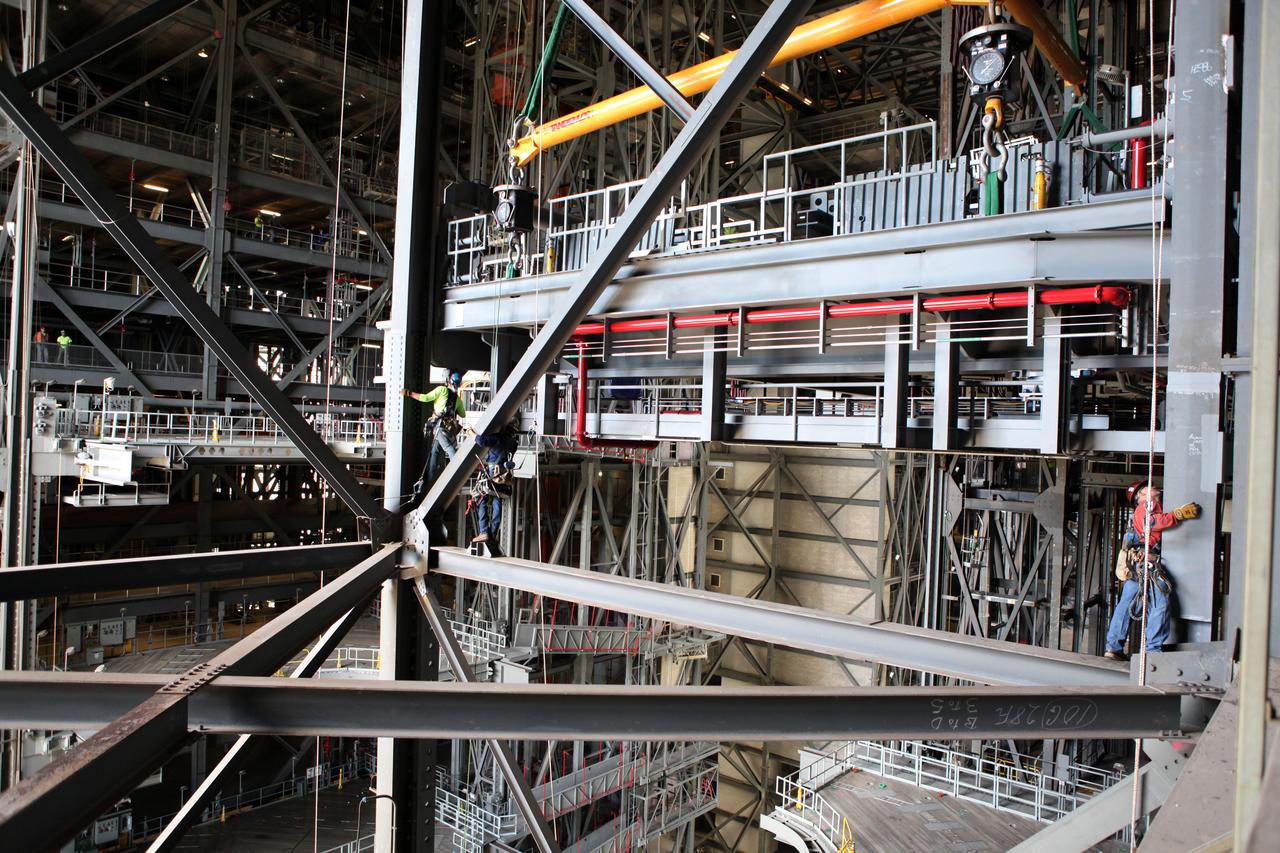
High up in the Vehicle Assembly Building (VAB) at NASA's Kennedy Space Center in Florida, construction workers assist with the installation of the final work platform, A north, in High Bay 3, as a crane lowers the platform into place. The platform will be installed and secured on its rail beam high up on the north wall of the high bay. The installation of the final topmost level completes the 10 levels of work platforms, 20 platform halves altogether, that will surround NASA's Space Launch System rocket and the Orion spacecraft and allow access during processing for missions, including the first uncrewed flight test of Orion atop the SLS rocket in 2018. The A-level platforms will provide access to the Orion spacecraft's Launch Abort System for Orion lifting sling removal and installation of the closeout panels. The Ground Systems Development and Operations Program, with support from the center's Engineering Directorate, is overseeing upgrades and modifications to the VAB, including installation of the new work platforms.
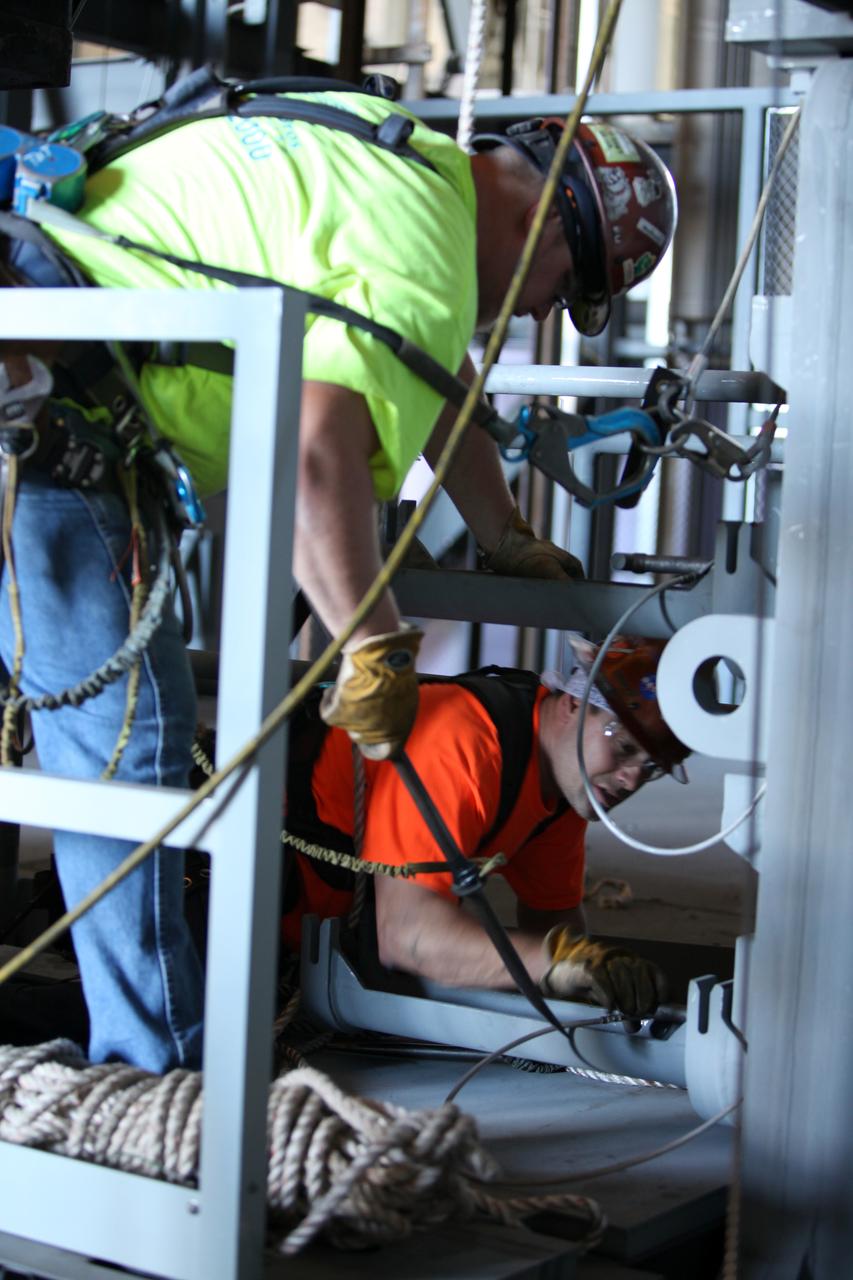
High up in the Vehicle Assembly Building (VAB) at NASA's Kennedy Space Center in Florida, construction workers assist with the installation of the final work platform, A north, in High Bay 3, as a crane lowers the platform into place. The platform will be installed and secured on its rail beam high up on the north wall of the high bay. The installation of the final topmost level completes the 10 levels of work platforms, 20 platform halves altogether, that will surround NASA's Space Launch System rocket and the Orion spacecraft and allow access during processing for missions, including the first uncrewed flight test of Orion atop the SLS rocket in 2018. The A-level platforms will provide access to the Orion spacecraft's Launch Abort System for Orion lifting sling removal and installation of the closeout panels. The Ground Systems Development and Operations Program, with support from the center's Engineering Directorate, is overseeing upgrades and modifications to the VAB, including installation of the new work platforms.

High up in the transfer aisle of the Vehicle Assembly Building (VAB) at NASA's Kennedy Space Center in Florida, a crane turns the final work platform, A north, for transfer into High Bay 3. The platform will be installed and secured on its rail beam high up on the north wall of the high bay. The installation of the final topmost level completes the 10 levels of work platforms, 20 platform halves altogether, that will surround NASA's Space Launch System rocket and the Orion spacecraft and allow access during processing for missions, including the first uncrewed flight test of Orion atop the SLS rocket in 2018. The A-level platforms will provide access to the Orion spacecraft's Launch Abort System for Orion lifting sling removal and installation of the closeout panels. The Ground Systems Development and Operations Program, with support from the center's Engineering Directorate, is overseeing upgrades and modifications to the VAB, including installation of the new work platforms.
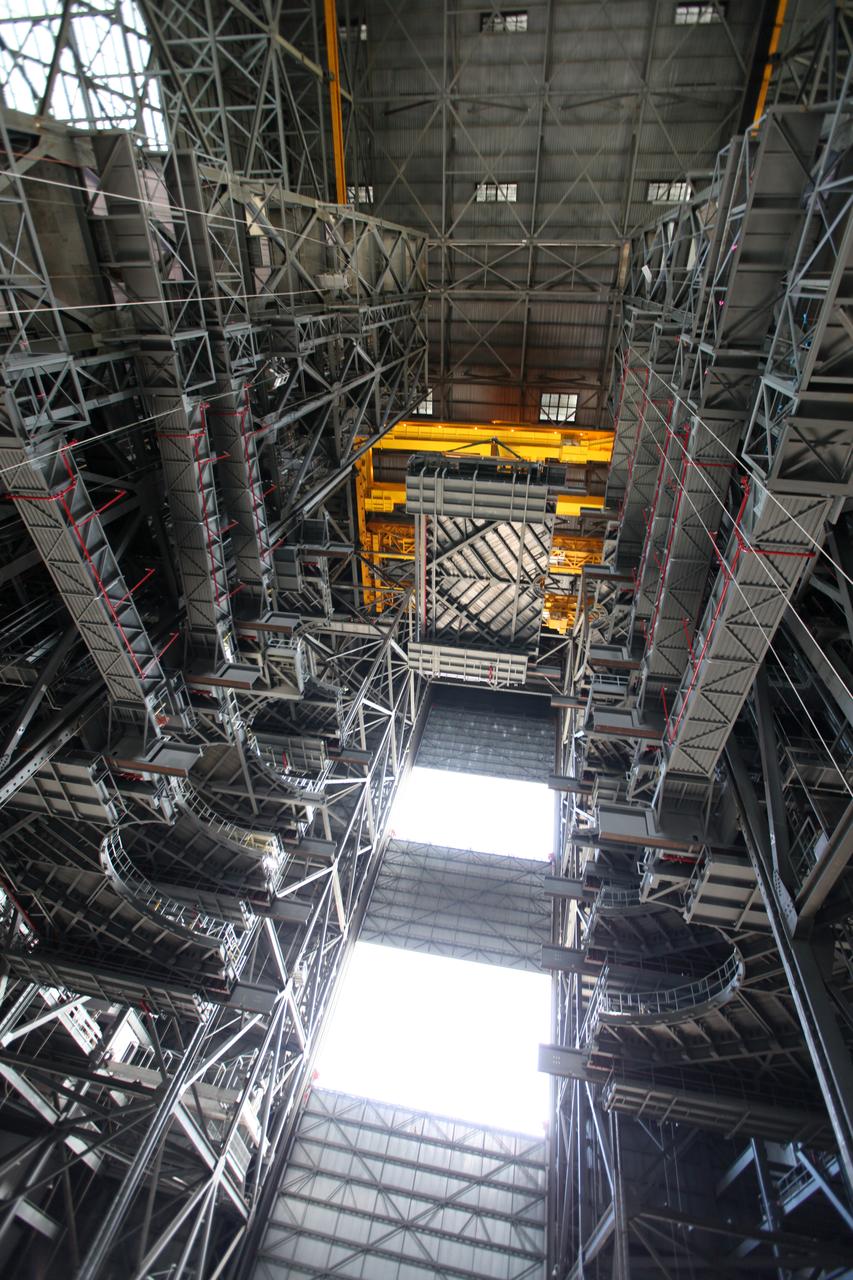
A 250-ton crane is used to lift the second half of the K-level work platforms for NASA’s Space Launch System (SLS) rocket up from High Bay 4 inside the Vehicle Assembly Building at NASA's Kennedy Space Center in Florida. The platform will be lifted up and over the transfer aisle and then lowered into High Bay 3 for installation. It will be secured about 86 feet above the VAB floor, on tower E of the high bay. The K work platforms will provide access to the SLS core stage and solid rocket boosters during processing and stacking operations on the mobile launcher. The Ground Systems Development and Operations Program is overseeing upgrades and modifications to High Bay 3 to support processing of the SLS and Orion spacecraft. A total of 10 levels of new platforms, 20 platform halves altogether, will surround the SLS rocket and Orion spacecraft.
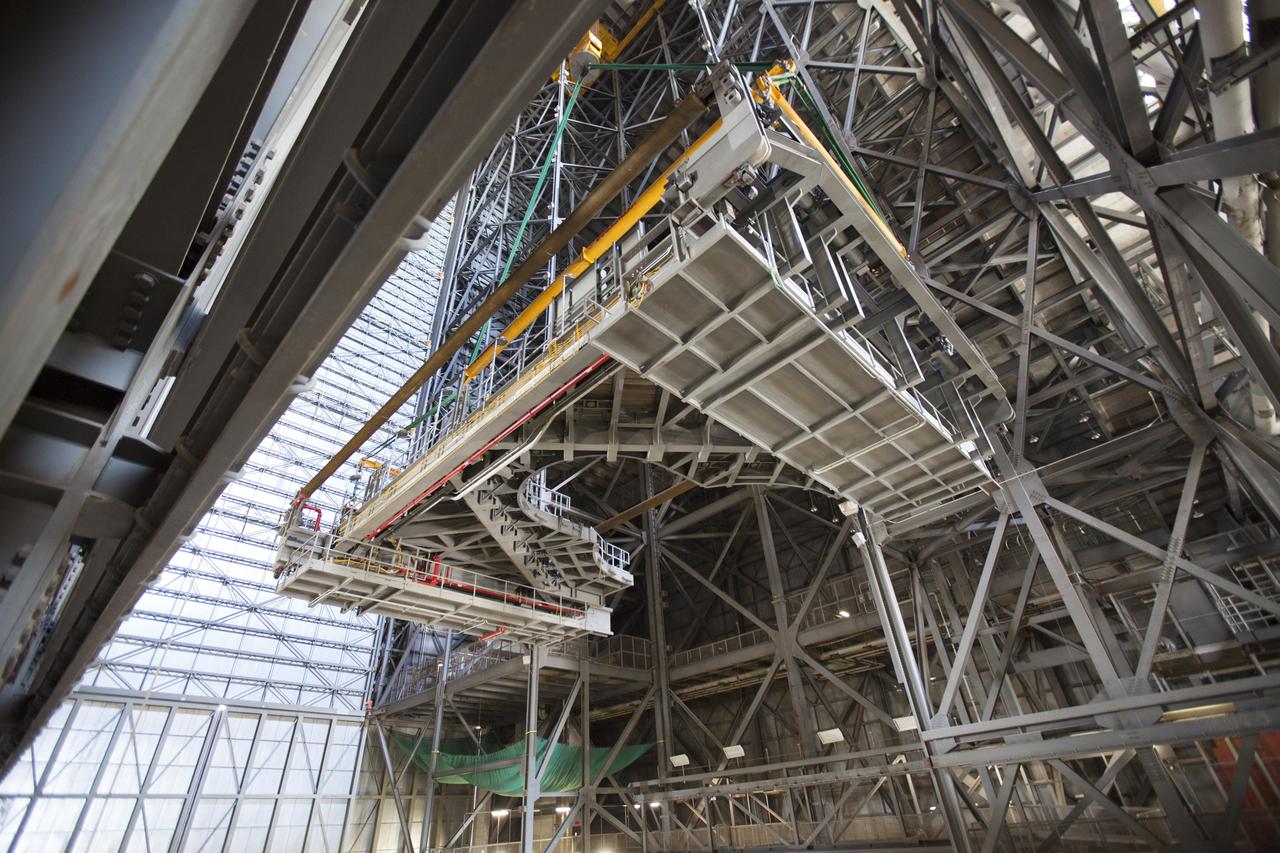
High up in the Vehicle Assembly Building (VAB) at NASA's Kennedy Space Center in Florida, a crane lowers the final work platform, A north, for installation in High Bay 3. The platform will be installed and secured on its rail beam high up on the north wall of the high bay. The installation of the final topmost level completes the 10 levels of work platforms, 20 platform halves altogether, that will surround NASA's Space Launch System rocket and the Orion spacecraft and allow access during processing for missions, including the first uncrewed flight test of Orion atop the SLS rocket in 2018. The A-level platforms will provide access to the Orion spacecraft's Launch Abort System for Orion lifting sling removal and installation of the closeout panels. The Ground Systems Development and Operations Program, with support from the center's Engineering Directorate, is overseeing upgrades and modifications to the VAB, including installation of the new work platforms.
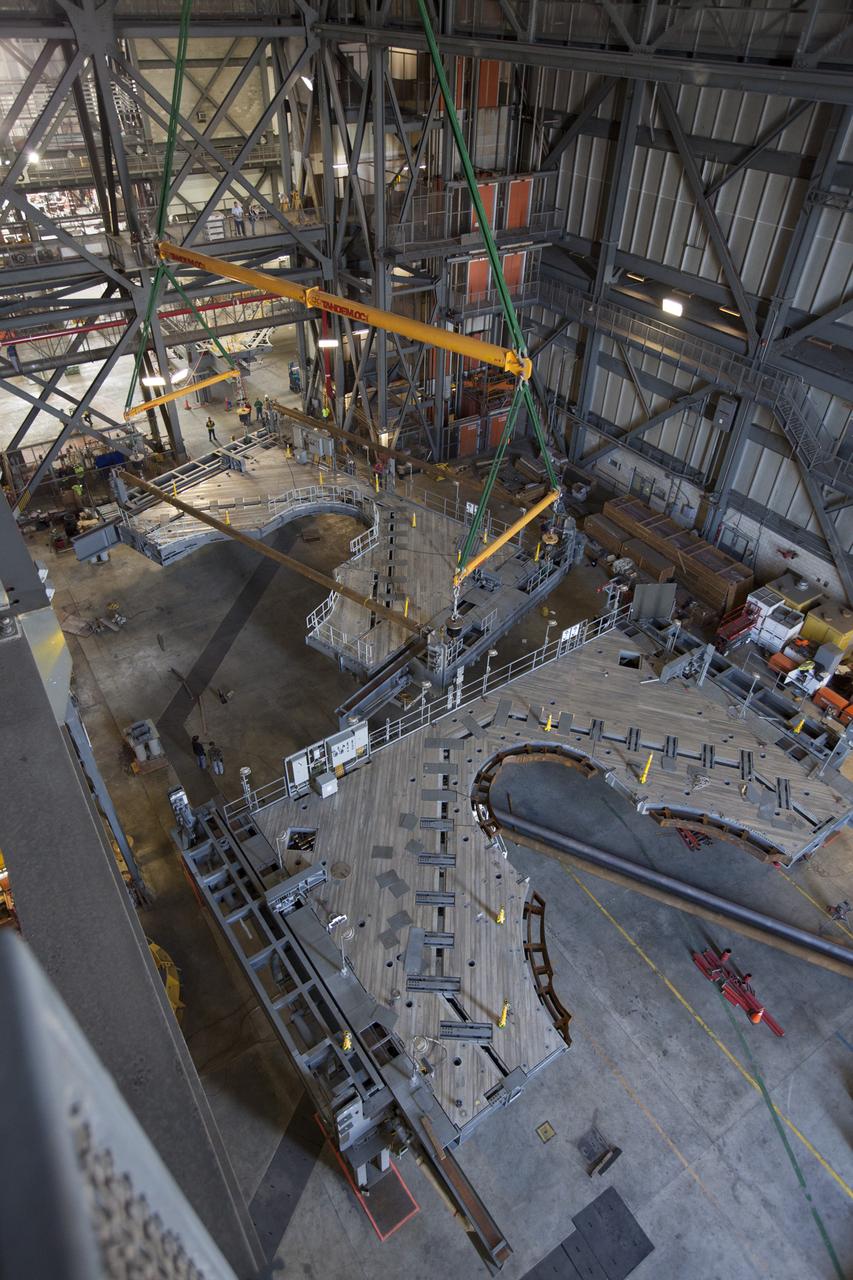
Preparations are underway to lift the second half of the K-level work platforms for NASA’s Space Launch System (SLS) rocket up from High Bay 4 inside the Vehicle Assembly Building at NASA's Kennedy Space Center in Florida. The platform will be lifted up and over the transfer aisle and then lowered into High Bay 3 for installation. It will be secured about 86 feet above the VAB floor, on tower E of the high bay. The K work platforms will provide access to the SLS core stage and solid rocket boosters during processing and stacking operations on the mobile launcher. The Ground Systems Development and Operations Program is overseeing upgrades and modifications to High Bay 3 to support processing of the SLS and Orion spacecraft. A total of 10 levels of new platforms, 20 platform halves altogether, will surround the SLS rocket and Orion spacecraft.
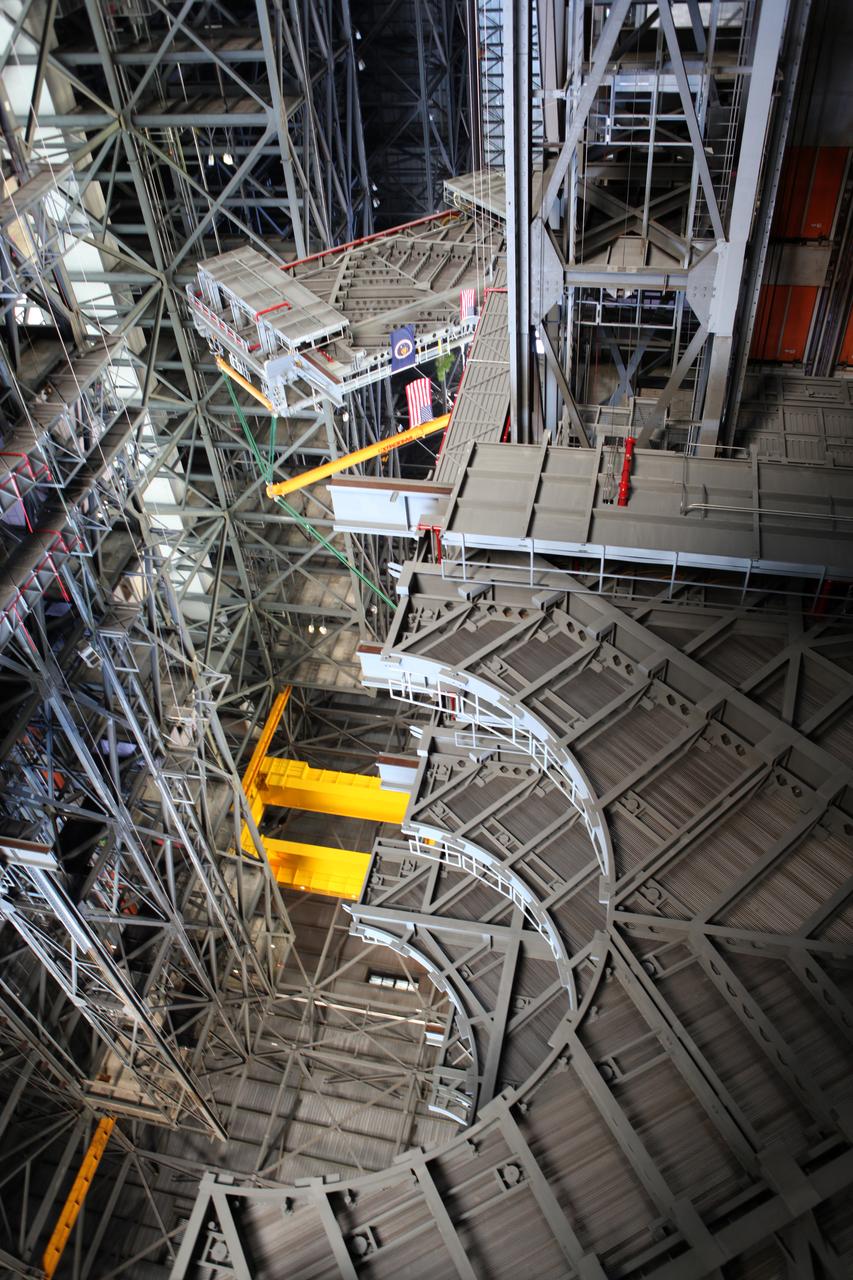
High up in the Vehicle Assembly Building (VAB) at NASA's Kennedy Space Center in Florida, a crane lowers the final work platform, A north, for installation in High Bay 3. The platform will be installed and secured on its rail beam high up on the north wall of the high bay. The installation of the final topmost level completes the 10 levels of work platforms, 20 platform halves altogether, that will surround NASA's Space Launch System rocket and the Orion spacecraft and allow access during processing for missions, including the first uncrewed flight test of Orion atop the SLS rocket in 2018. The A-level platforms will provide access to the Orion spacecraft's Launch Abort System for Orion lifting sling removal and installation of the closeout panels. The Ground Systems Development and Operations Program, with support from the center's Engineering Directorate, is overseeing upgrades and modifications to the VAB, including installation of the new work platforms.
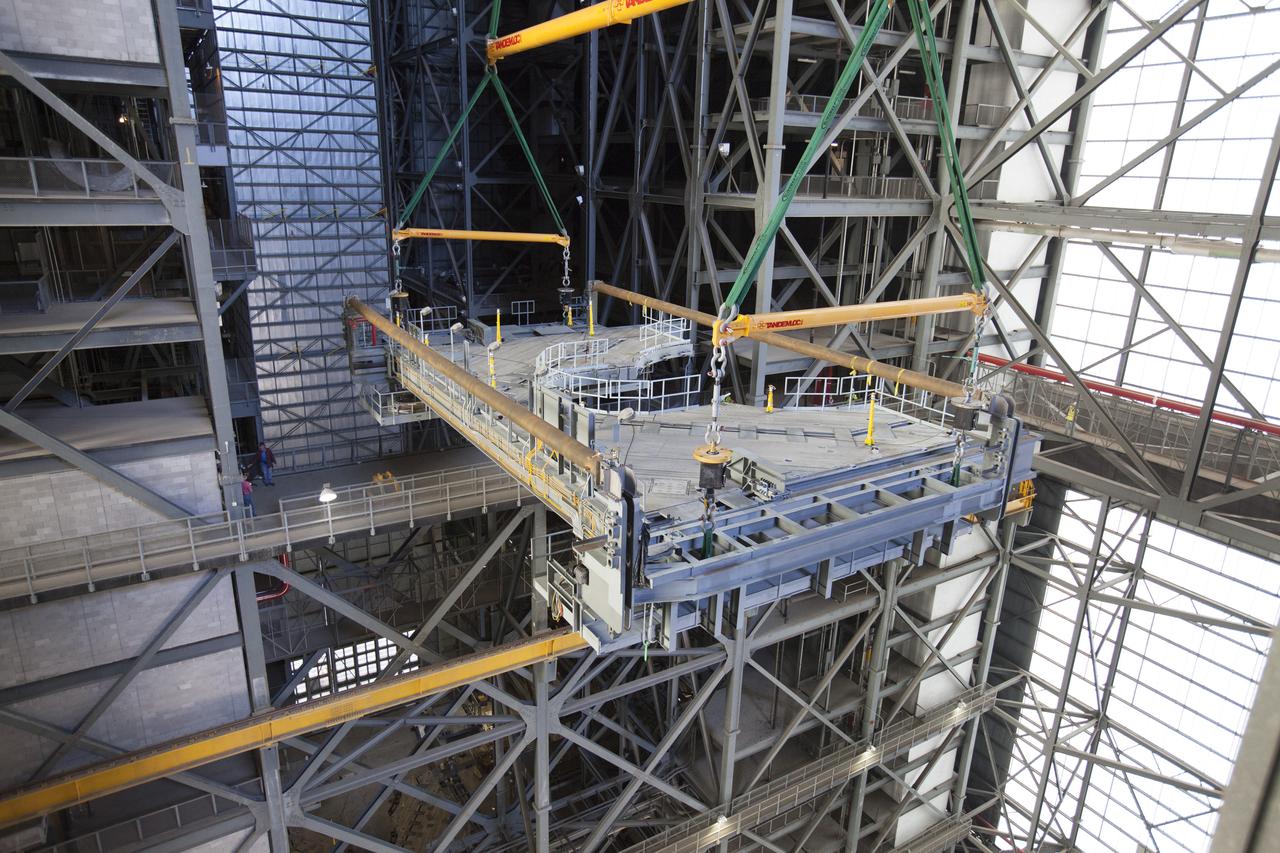
A 250-ton crane is used to lift the second half of the K-level work platforms for NASA’s Space Launch System (SLS) rocket up from High Bay 4 inside the Vehicle Assembly Building at NASA's Kennedy Space Center in Florida. The platform is being lifted up and over the transfer aisle and will be lowered into High Bay 3 for installation. It will be secured about 86 feet above the VAB floor, on tower E of the high bay. The K work platforms will provide access to the SLS core stage and solid rocket boosters during processing and stacking operations on the mobile launcher. The Ground Systems Development and Operations Program is overseeing upgrades and modifications to High Bay 3 to support processing of the SLS and Orion spacecraft. A total of 10 levels of new platforms, 20 platform halves altogether, will surround the SLS rocket and Orion spacecraft.
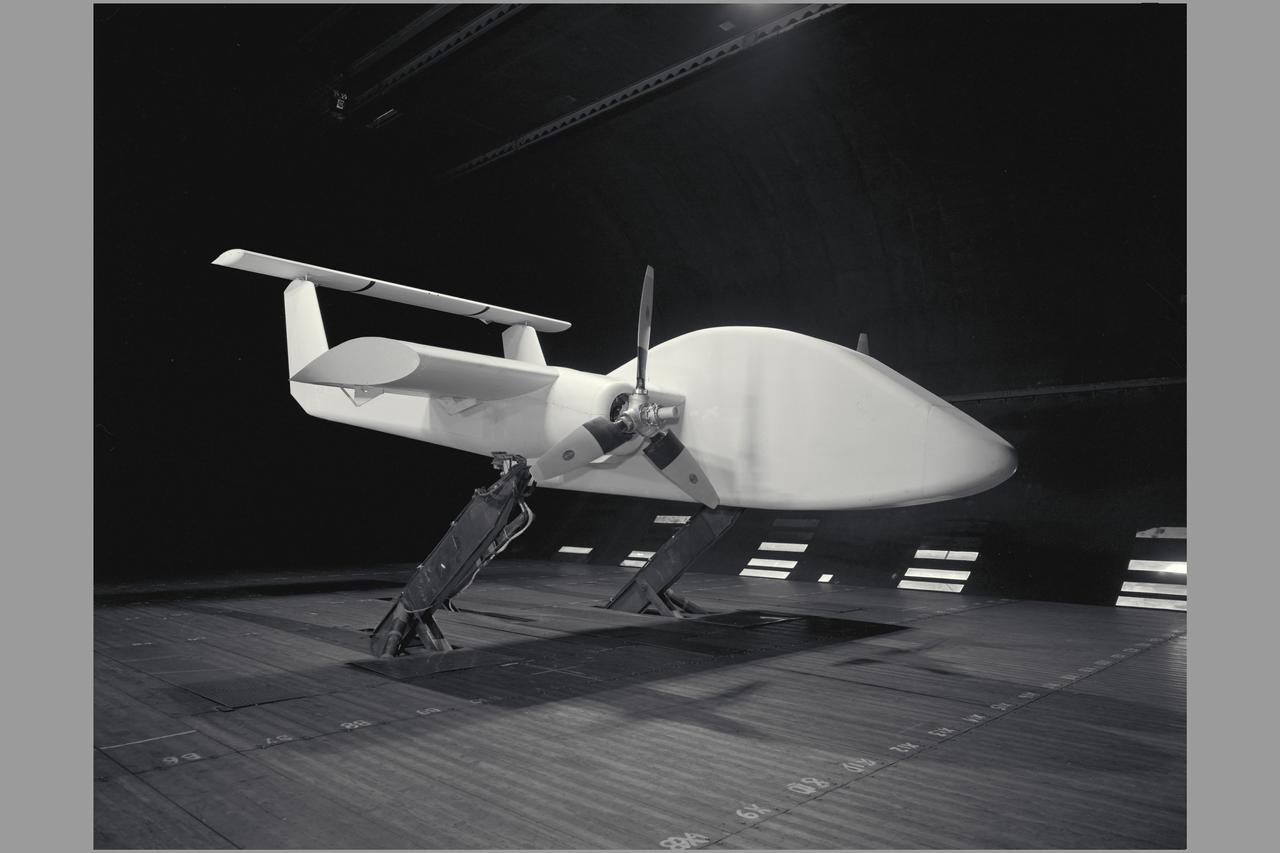
3/4 front view of model with flaps up. V/STOL Aircraft: Wind tunnel investigation of rotating cylinder applied to training edge flaps for high lift & low-speed control.
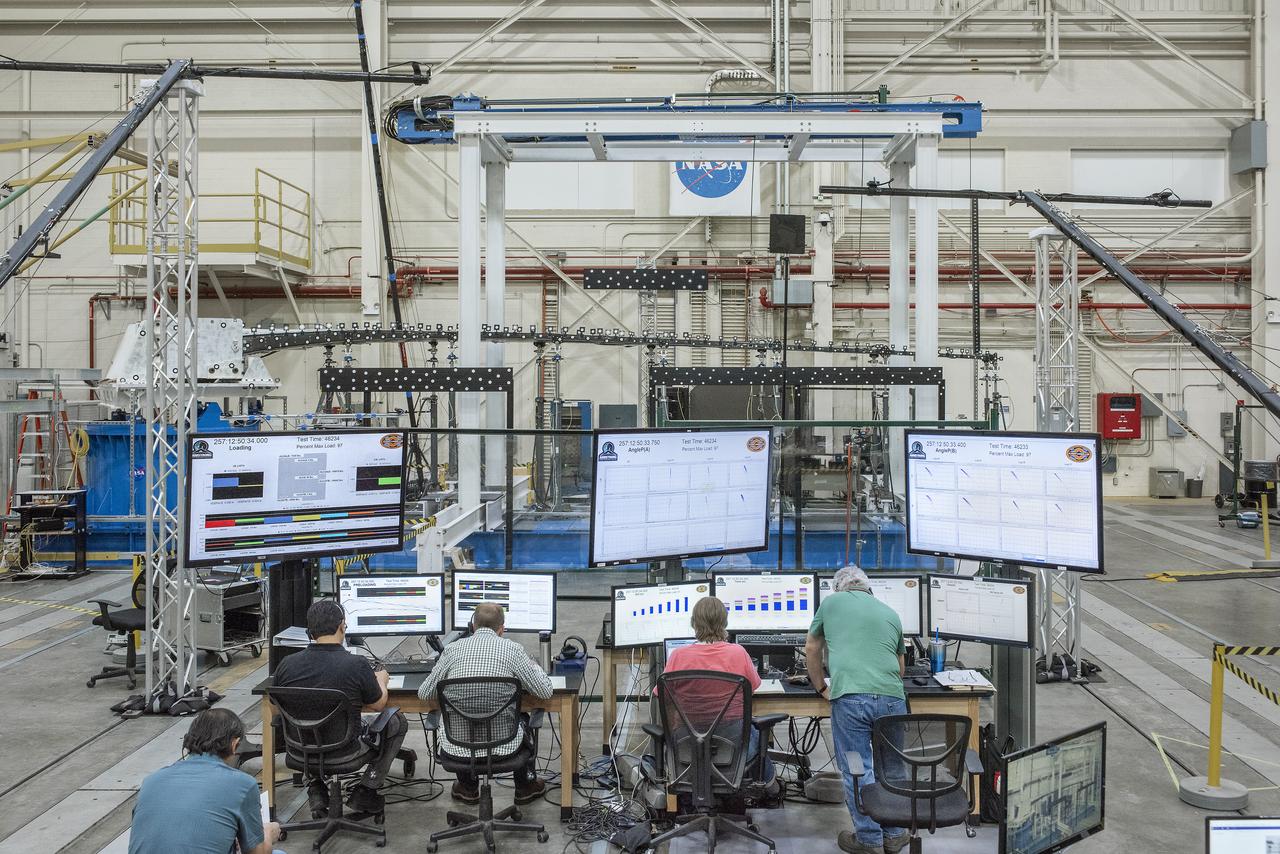
This broad view of the Flight Loads Laboratory at NASA’s Armstrong Flight Research Center in California shows the test set up for the high-aspect ratio Passive Aeroelastic Tailored wing.
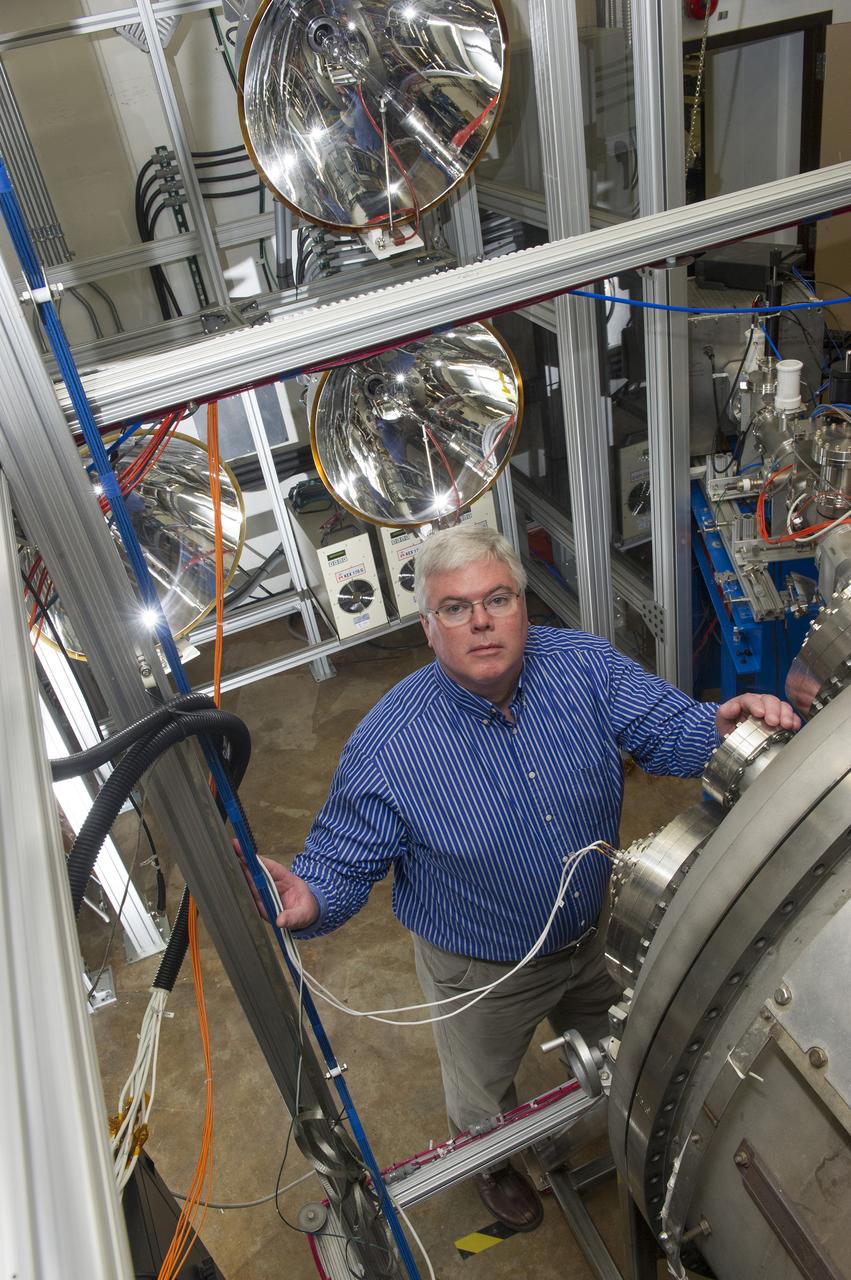
TODD SCHNEIDER LOOKS UP FROM WORK AT THE DOOR OF T HE HIGH INTENSITY SOLAR ENVIRONMENT TEST SYSTEM IN BUILDING 4605. SCHNEIDER IS A PHYSICIST IN THE MATERIALS AND PROCESSES DEPARTMENT AT MSFC AND IS PRINCIPAL INVESTIGATOR FOR HISET.

Photo Date: 8-4-2010 Location: Bldg. 9NW – High Bay – SEV Area Subject: Robonaut (R2) media day before the R2 unit is packed up for KSC. Photographer: Lauren Harnett
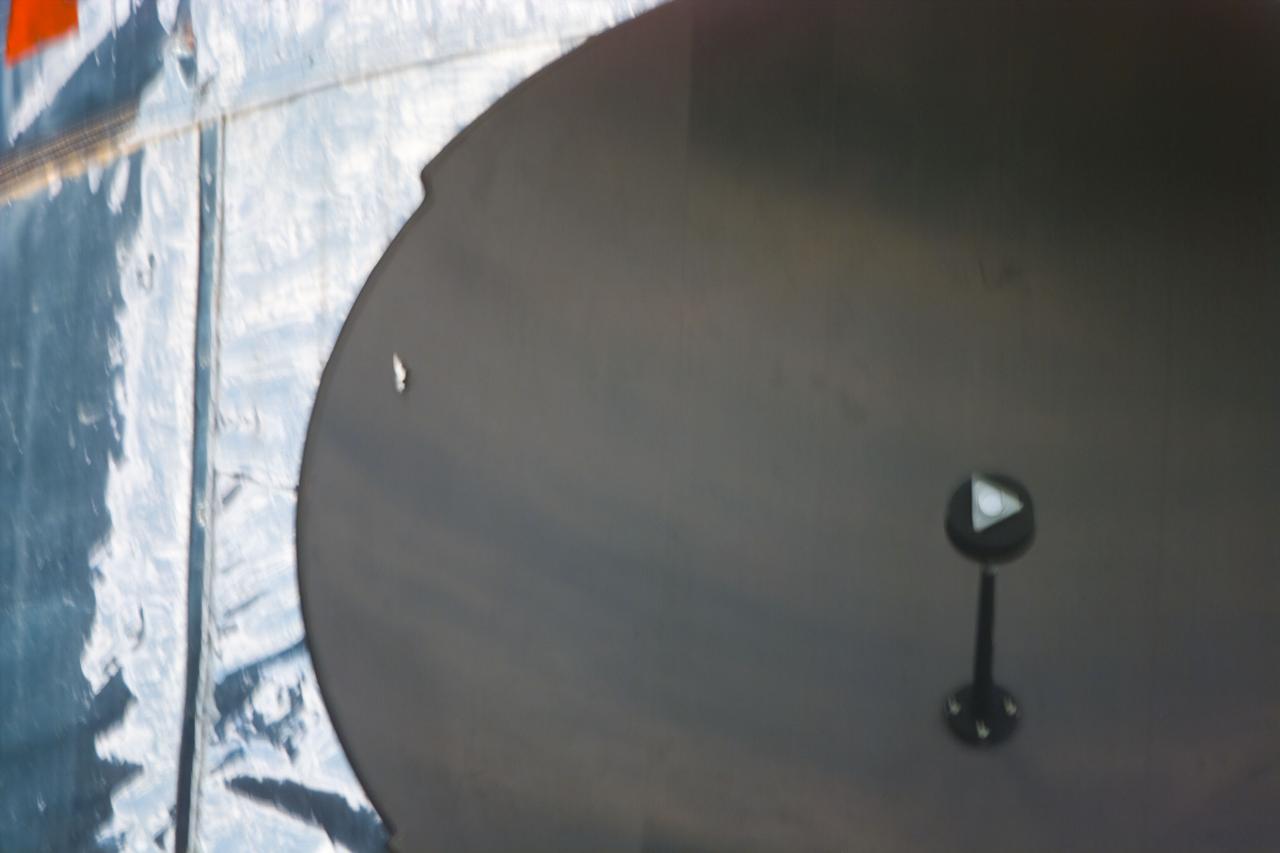
S82-E-5109 (13 Feb. 1997) --- A close-up survey view of Hubble Space Telescope (HST) recorded with the Electronic Still Camera (ESC) shows the high gain antenna.
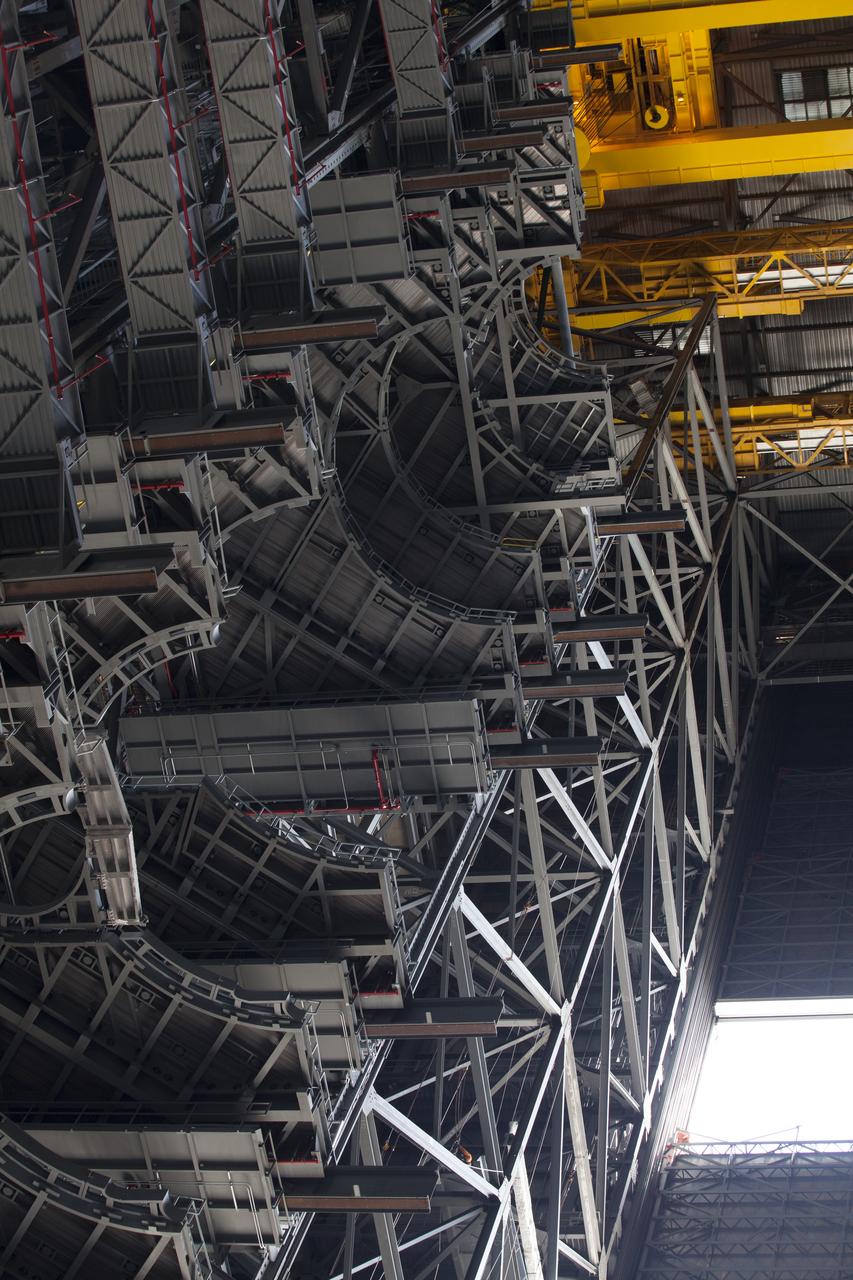
High up in the Vehicle Assembly Building (VAB) at NASA's Kennedy Space Center in Florida, a crane lowers the second half of the B-level work platforms, B north, for NASA's Space Launch System (SLS) rocket, for installation in High Bay 3. The B platform will be installed on the north side of high bay. In view below are several levels of previously installed platforms. The B platforms are the ninth of 10 levels of work platforms that will surround and provide access to the SLS rocket and Orion spacecraft for Exploration Mission 1. The Ground Systems Development and Operations Program is overseeing upgrades and modifications to VAB High Bay 3, including installation of the new work platforms, to prepare for NASA’s Journey to Mars.
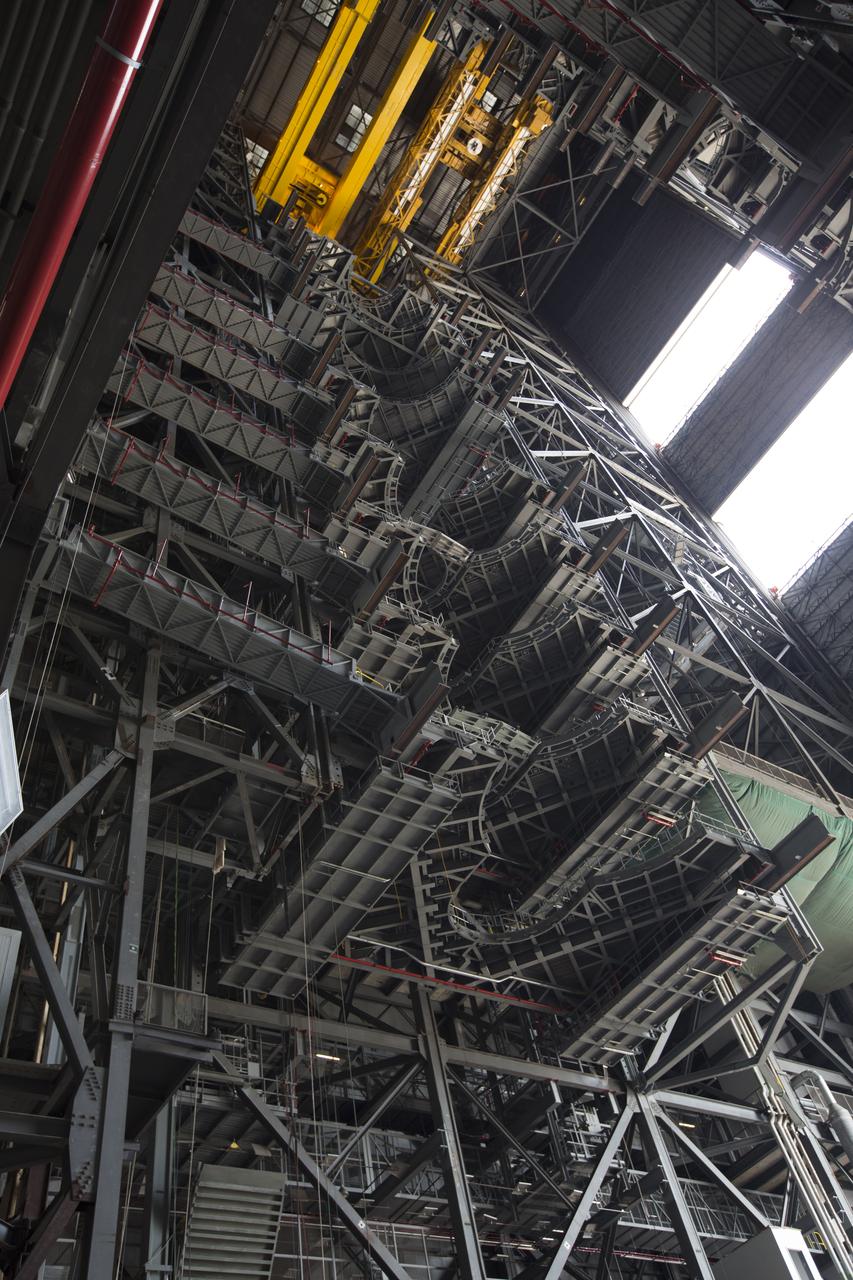
High up in the Vehicle Assembly Building (VAB) at NASA's Kennedy Space Center in Florida, a crane lowers the second half of the B-level work platforms, B north, for NASA's Space Launch System (SLS) rocket, for installation in High Bay 3. The B platform will be installed on the north side of high bay. In view below are eight levels of previously installed platforms. The B platforms are the ninth of 10 levels of work platforms that will surround and provide access to the SLS rocket and Orion spacecraft for Exploration Mission 1. The Ground Systems Development and Operations Program is overseeing upgrades and modifications to VAB High Bay 3, including installation of the new work platforms, to prepare for NASA’s Journey to Mars.
A crane lifts the second half of the B-level work platforms, B north, for NASA's Space Launch System (SLS) rocket, high up in the transfer aisle of the Vehicle Assembly Building (VAB) at NASA’s Kennedy Space Center in Florida. The B north platform will lowered into High Bay 3 for installation on the north side of the high bay. The B platforms are the ninth of 10 levels of work platforms that will surround and provide access to the SLS rocket and Orion spacecraft for Exploration Mission 1. The Ground Systems Development and Operations Program is overseeing upgrades and modifications to VAB High Bay 3, including installation of the new work platforms, to prepare for NASA’s Journey to Mars.
A heavy-lift crane lifts the second half of the C-level work platforms, C north, for NASA’s Space Launch System (SLS) rocket, high up from the transfer aisle of the Vehicle Assembly Building (VAB) at NASA's Kennedy Space Center in Florida. The C platform will be moved into High Bay 3 for installation on the north side of High Bay 3. The C platforms are the eighth of 10 levels of work platforms that will surround and provide access to the SLS rocket and Orion spacecraft for Exploration Mission 1. The Ground Systems Development and Operations Program is overseeing upgrades and modifications to VAB High Bay 3, including installation of the new work platforms, to prepare for NASA’s Journey to Mars.
High up in the Vehicle Assembly Building (VAB) at NASA's Kennedy Space Center in Florida, a crane lowers the second half of the B-level work platforms, B north, for NASA's Space Launch System (SLS) rocket, for installation in High Bay 3. The B platform will be installed on the north side of high bay. In view below are eight levels of previously installed platforms. The B platforms are the ninth of 10 levels of work platforms that will surround and provide access to the SLS rocket and Orion spacecraft for Exploration Mission 1. The Ground Systems Development and Operations Program is overseeing upgrades and modifications to VAB High Bay 3, including installation of the new work platforms, to prepare for NASA’s Journey to Mars.
High up in the Vehicle Assembly Building (VAB) at NASA's Kennedy Space Center in Florida, a crane lowers the second half of the B-level work platforms, B north, for NASA's Space Launch System (SLS) rocket, for installation in High Bay 3. The B platform will be installed on the north side of high bay. The B platforms are the ninth of 10 levels of work platforms that will surround and provide access to the SLS rocket and Orion spacecraft for Exploration Mission 1. The Ground Systems Development and Operations Program is overseeing upgrades and modifications to VAB High Bay 3, including installation of the new work platforms, to prepare for NASA’s Journey to Mars.
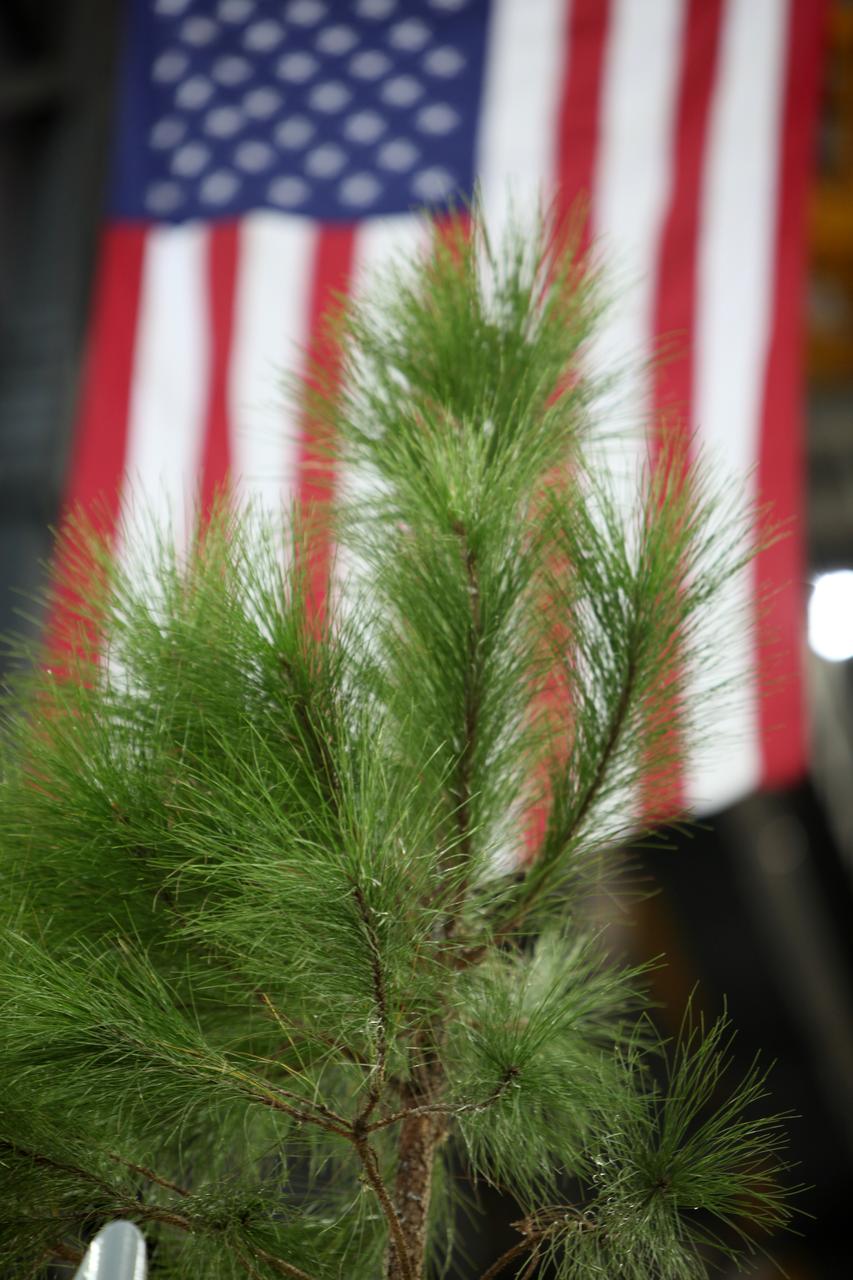
A close-up view of an American flag and a small tree on the final work platform, A north, as the platform is lifted up by crane from the transfer aisle in the Vehicle Assembly Building (VAB) at NASA's Kennedy Space Center in Florida. The platform will be installed and secured on its rail beam high up on the north wall of High Bay 3. The installation of the final topmost level completes the 10 levels of work platforms, 20 platform halves altogether, that will surround NASA's Space Launch System rocket and the Orion spacecraft and allow access during processing for missions, including the first uncrewed flight test of Orion atop the SLS rocket in 2018. The A-level platforms will provide access to the Orion spacecraft's Launch Abort System for Orion lifting sling removal and installation of the closeout panels. The Ground Systems Development and Operations Program, with support from the center's Engineering Directorate, is overseeing upgrades and modifications to the VAB, including installation of the new work platforms.
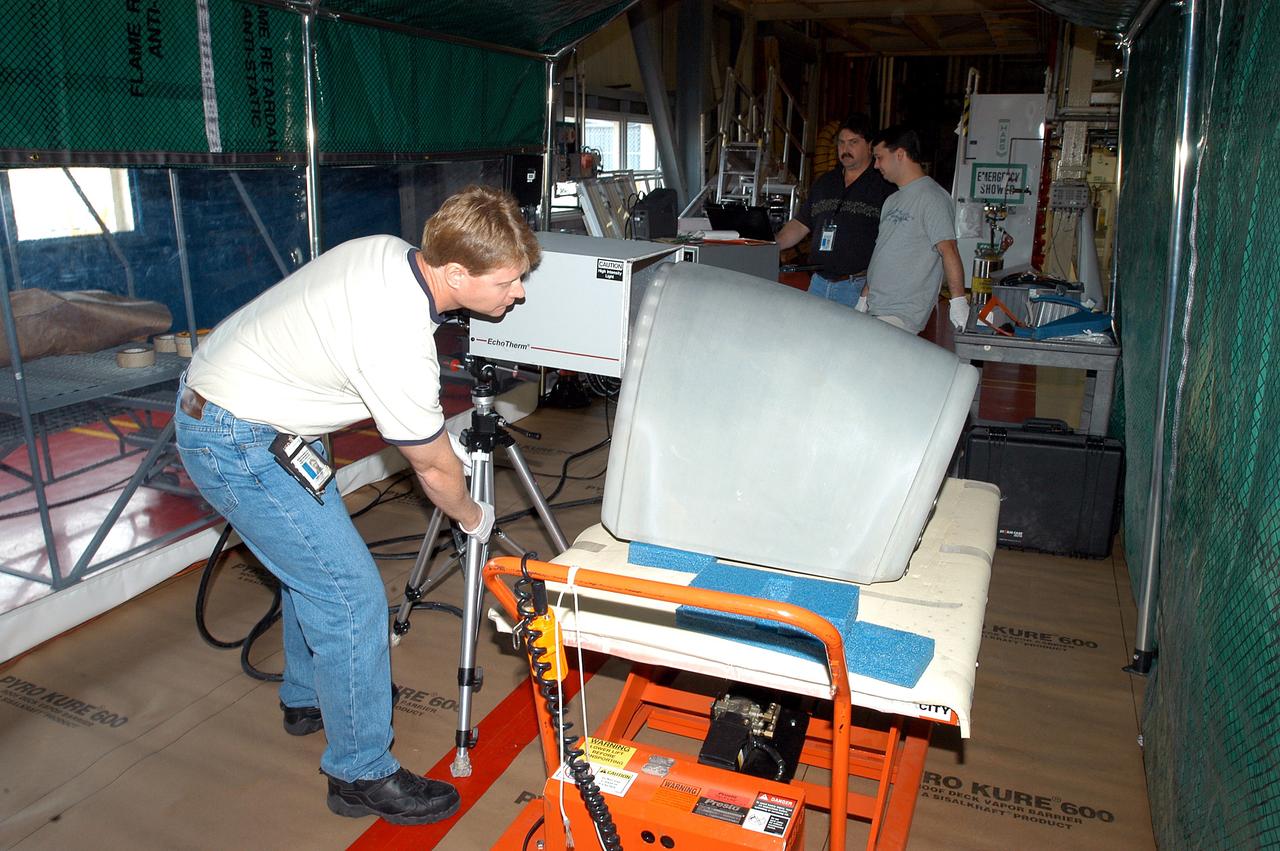
KENNEDY SPACE CENTER, FLA. - Jim Landy, NDE specialist with United Space Alliance, sets up equipment to examine a Reinforced Carbon Carbon panel using flash thermography. A relatively new procedure at KSC, thermography uses high intensity light to heat areas of the panels. The panels are then immediately scanned with an infrared camera. As the panels cool, any internal flaws are revealed. The gray carbon composite RCC panels are attached to the leading edge of the wing of the orbiters. They have sufficient strength to withstand the aerodynamic forces experienced during launch and reentry, which can reach as high as 800 pounds per square foot. The operating range of RCC is from minus 250º F to about 3,000º F, the temperature produced by friction with the atmosphere during reentry. The panels will be installed on the orbiter Discovery, designated for the first Return to Flight mission, STS-114.
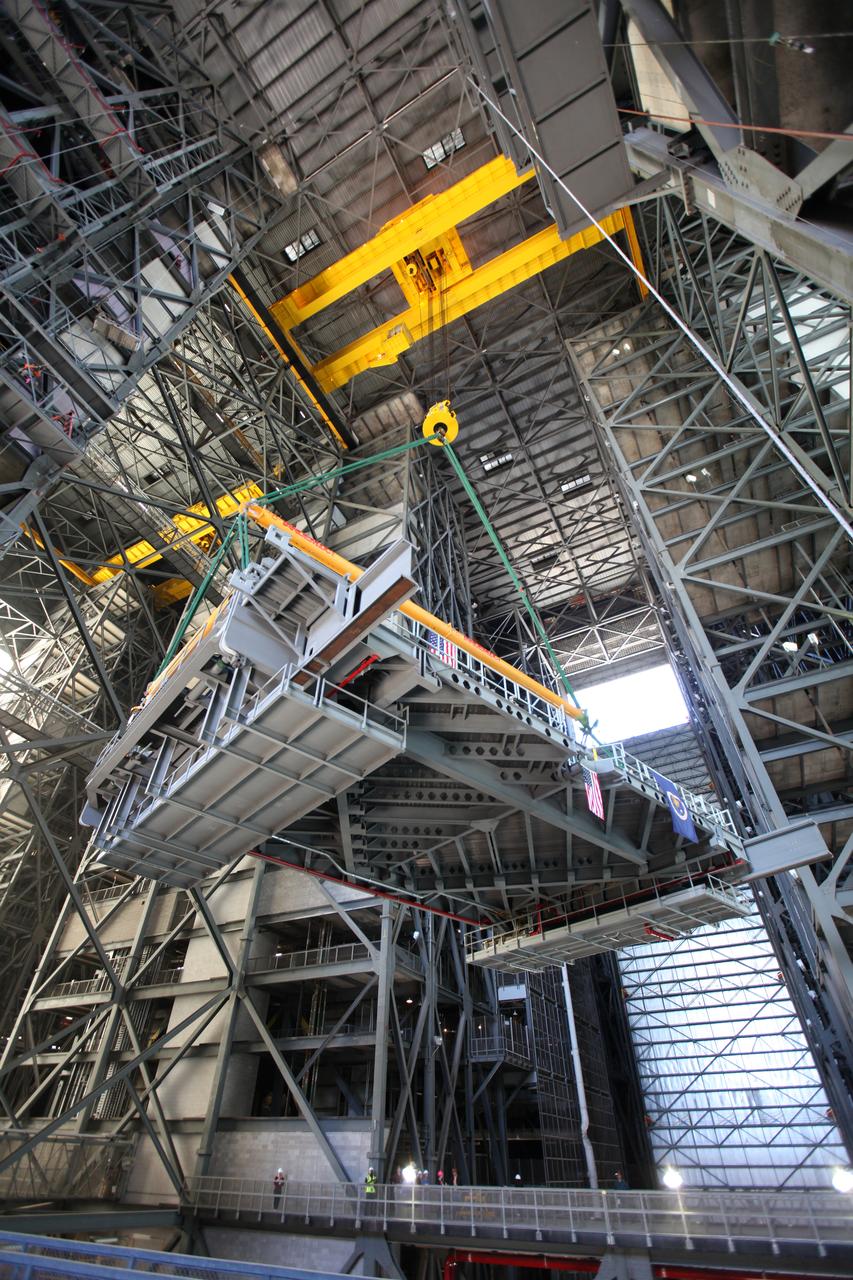
A crane lifts the final work platform, A north, high up in the transfer aisle of the Vehicle Assembly Building (VAB) at NASA's Kennedy Space Center in Florida. The platform will be installed and secured on its rail beam high up on the north wall of High Bay 3. The installation of the final topmost level completes the 10 levels of work platforms, 20 platform halves altogether, that will surround NASA's Space Launch System rocket and the Orion spacecraft and allow access during processing for missions, including the first uncrewed flight test of Orion atop the SLS rocket in 2018. The A-level platforms will provide access to the Orion spacecraft's Launch Abort System for Orion lifting sling removal and installation of the closeout panels. The Ground Systems Development and Operations Program, with support from the center's Engineering Directorate, is overseeing upgrades and modifications to the VAB, including installation of the new work platforms.
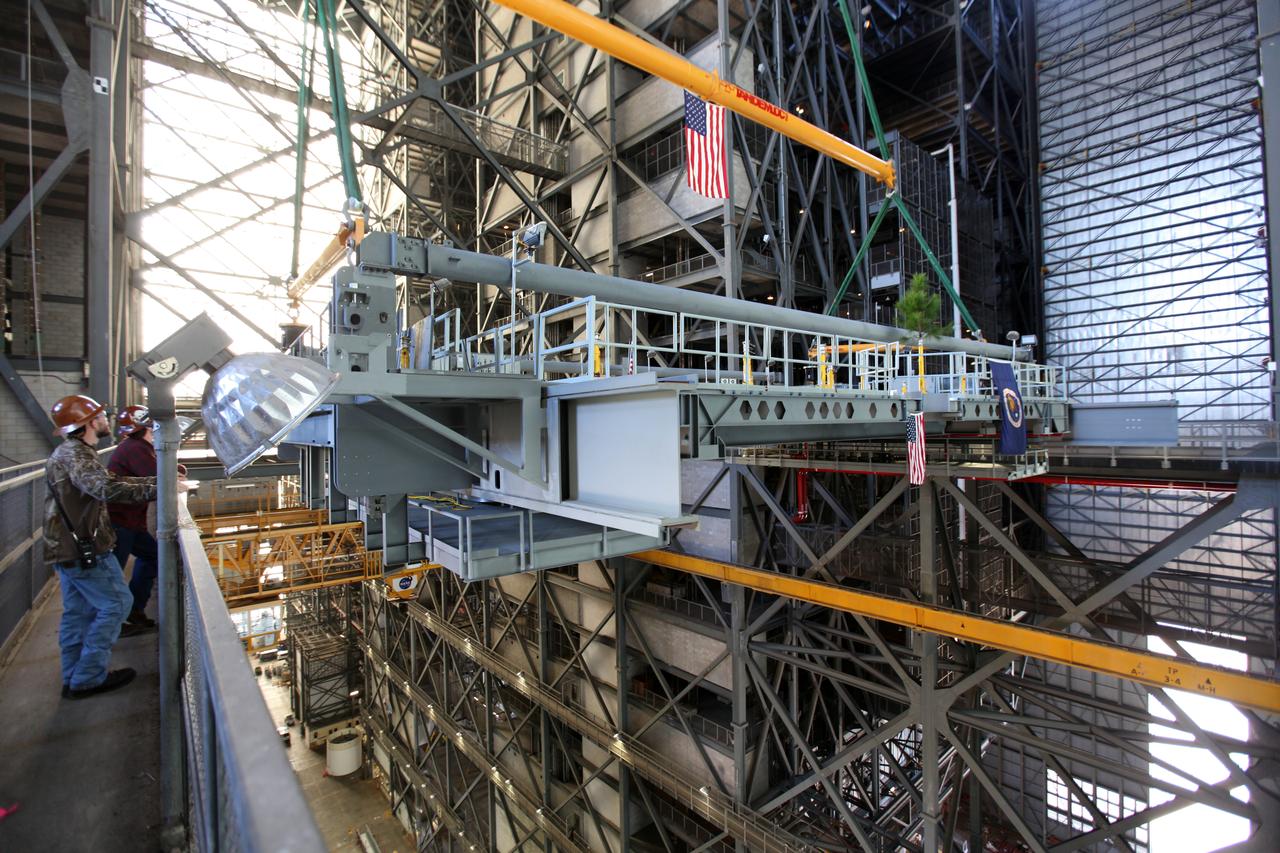
Construction workers watch as a crane lifts the final work platform, A north, high up from the transfer aisle in the Vehicle Assembly Building (VAB) at NASA's Kennedy Space Center in Florida. The platform will be installed and secured on its rail beam high up on the north wall of High Bay 3. The installation of the final topmost level completes the 10 levels of work platforms, 20 platform halves altogether, that will surround NASA's Space Launch System rocket and the Orion spacecraft and allow access during processing for missions, including the first uncrewed flight test of Orion atop the SLS rocket in 2018. The A-level platforms will provide access to the Orion spacecraft's Launch Abort System for Orion lifting sling removal and installation of the closeout panels. The Ground Systems Development and Operations Program, with support from the center's Engineering Directorate, is overseeing upgrades and modifications to the VAB, including installation of the new work platforms.
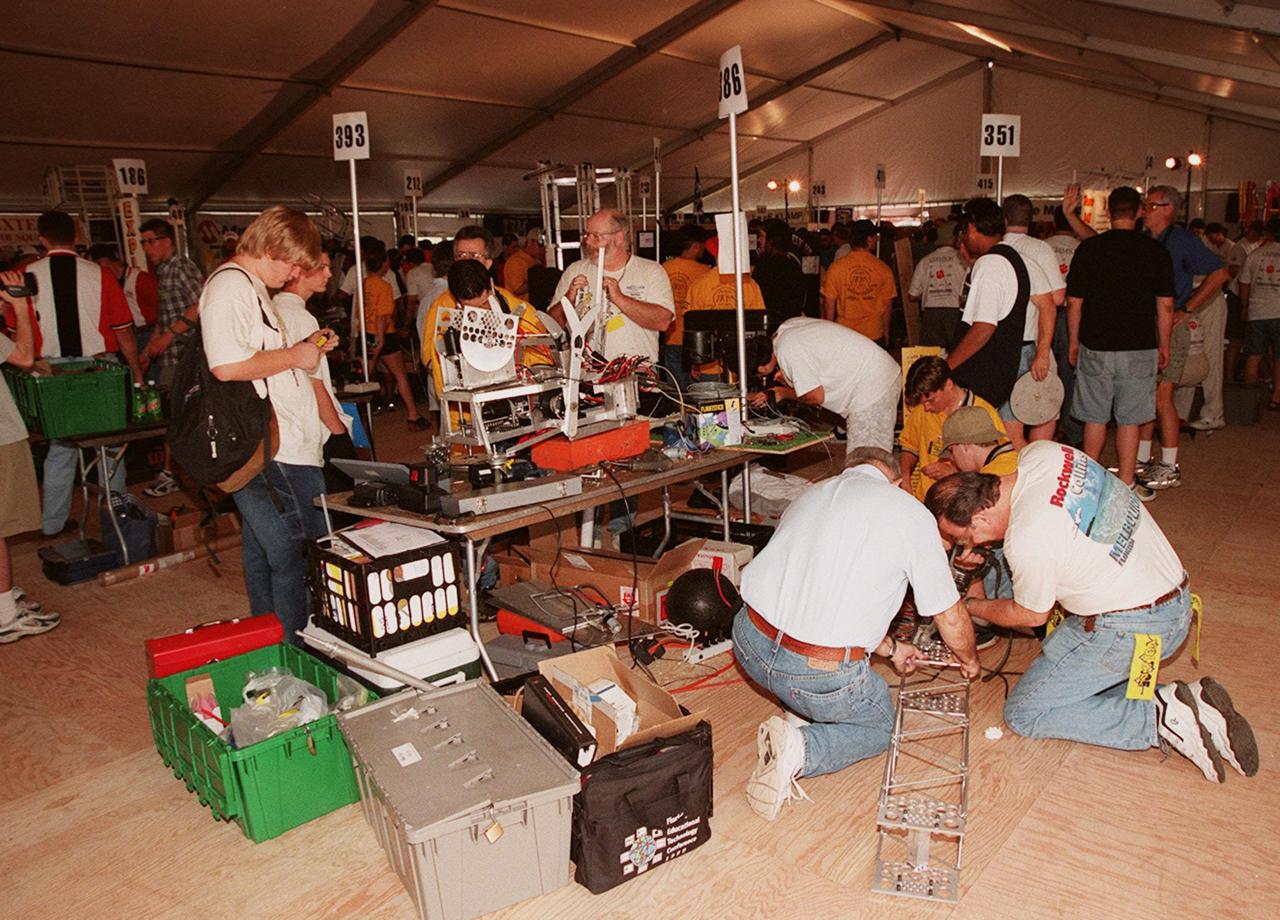
Team 393 from Morristown, Ind., sets up its robot on a table to prepare it for the FIRST (For Inspiration and Recognition of Science and Technology) Southeast Regional competition March 9-11 at the KSC Visitor Complex. KSC is co-sponsoring the team, The Bee Bots, from Morristown Junior and Senior High Schools. On the floor at right is team 386, known as Voltage: The South Brevard First Team. This team is made up of students from Eau Gallie, Satellite, Palm Bay, Melbourne, Bayside and Melbourne Central Catholic High Schools. They are sponsored by KSC as well as Harris Corp., Intersil Corp., Interface & Control Systems. Inc. and Rockwell Collins. Teams of high school students are testing the limits of their imagination using robots they have designed, with the support of business and engineering professionals and corporate sponsors, to compete in a technological battle against other schools' robots. Of the 30 high school teams competing at KSC, 16 are Florida teams co-sponsored by NASA and KSC contractors. Local high schools participating are Astronaut, Bayside, Cocoa Beach, Eau Gallie, Melbourne, Melbourne Central Catholic, Palm Bay, Rockledge, Satellite, and Titusville
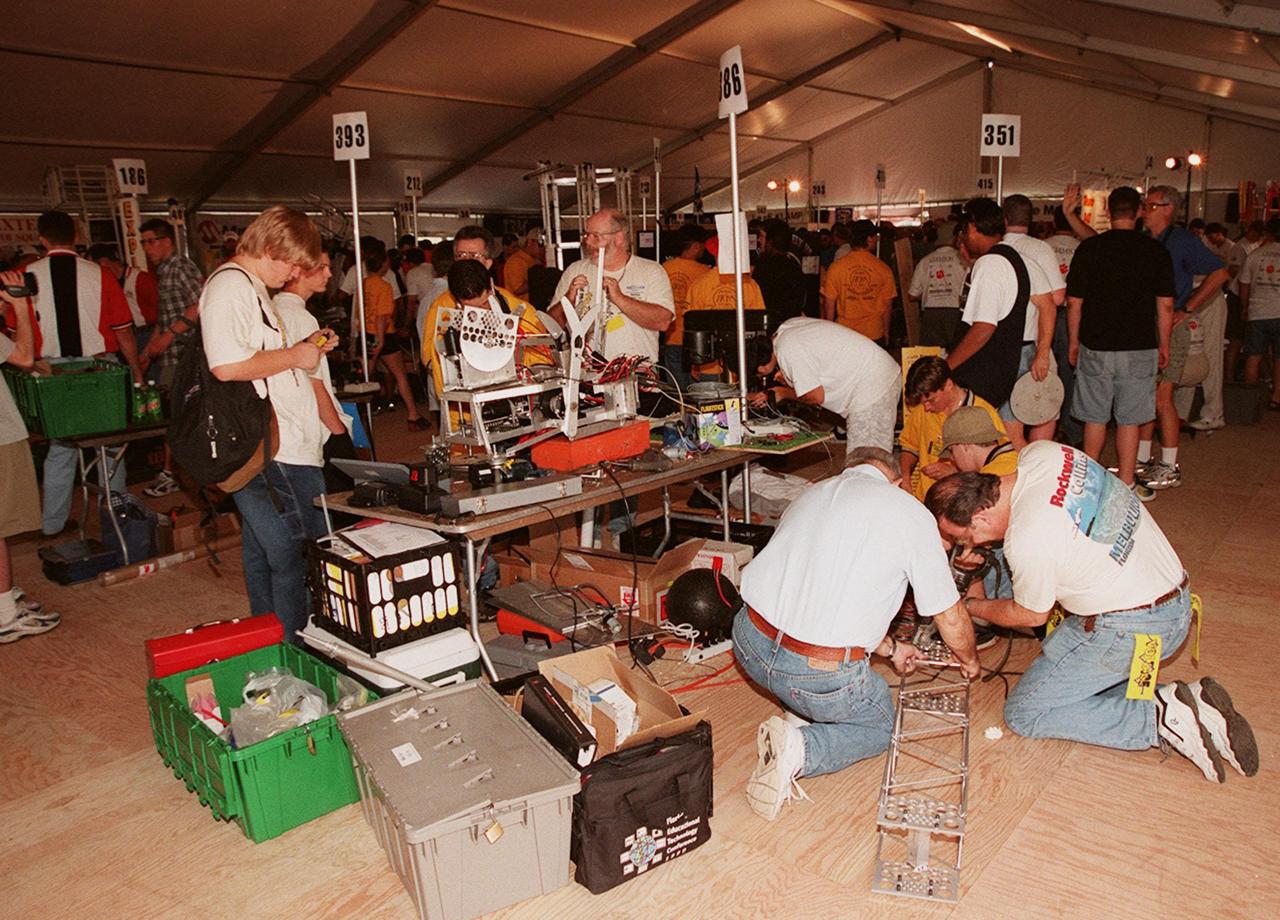
Team 393 from Morristown, Ind., sets up its robot on a table to prepare it for the FIRST (For Inspiration and Recognition of Science and Technology) Southeast Regional competition March 9-11 at the KSC Visitor Complex. KSC is co-sponsoring the team, The Bee Bots, from Morristown Junior and Senior High Schools. On the floor at right is team 386, known as Voltage: The South Brevard First Team. This team is made up of students from Eau Gallie, Satellite, Palm Bay, Melbourne, Bayside and Melbourne Central Catholic High Schools. They are sponsored by KSC as well as Harris Corp., Intersil Corp., Interface & Control Systems. Inc. and Rockwell Collins. Teams of high school students are testing the limits of their imagination using robots they have designed, with the support of business and engineering professionals and corporate sponsors, to compete in a technological battle against other schools' robots. Of the 30 high school teams competing at KSC, 16 are Florida teams co-sponsored by NASA and KSC contractors. Local high schools participating are Astronaut, Bayside, Cocoa Beach, Eau Gallie, Melbourne, Melbourne Central Catholic, Palm Bay, Rockledge, Satellite, and Titusville
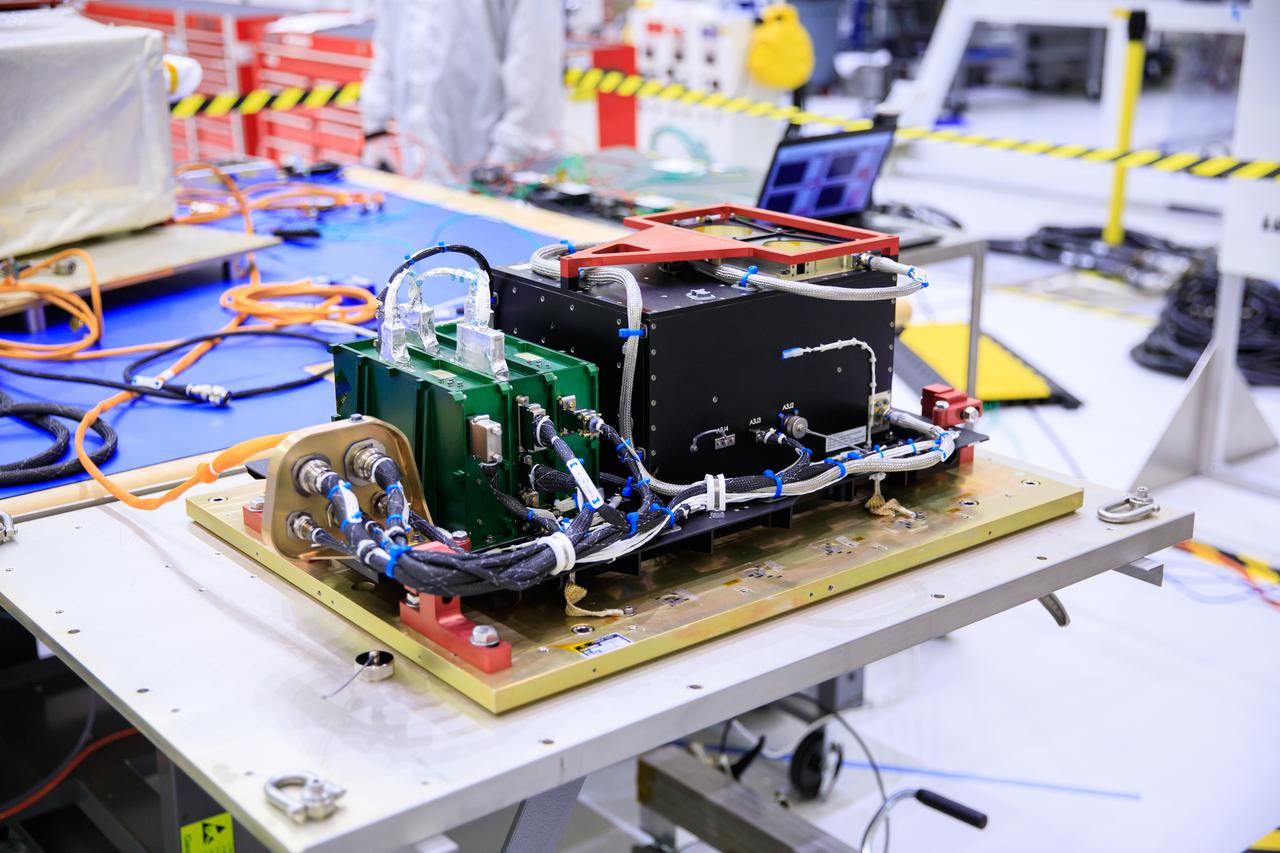
A close-up view of one of the parts of the Optical Communications System for the Artemis II mission inside the Neil Armstrong Operations and Checkout Building high bay on June 2, 2023. Optical communications is the latest space communications technology that is able to provide data rates as much as a hundred times higher than current systems. This will allow astronauts to send and receive ultra-high-definition video from the surface of the Moon or other planets such as Mars. Artemis II will be the first Artemis mission flying crew aboard Orion.
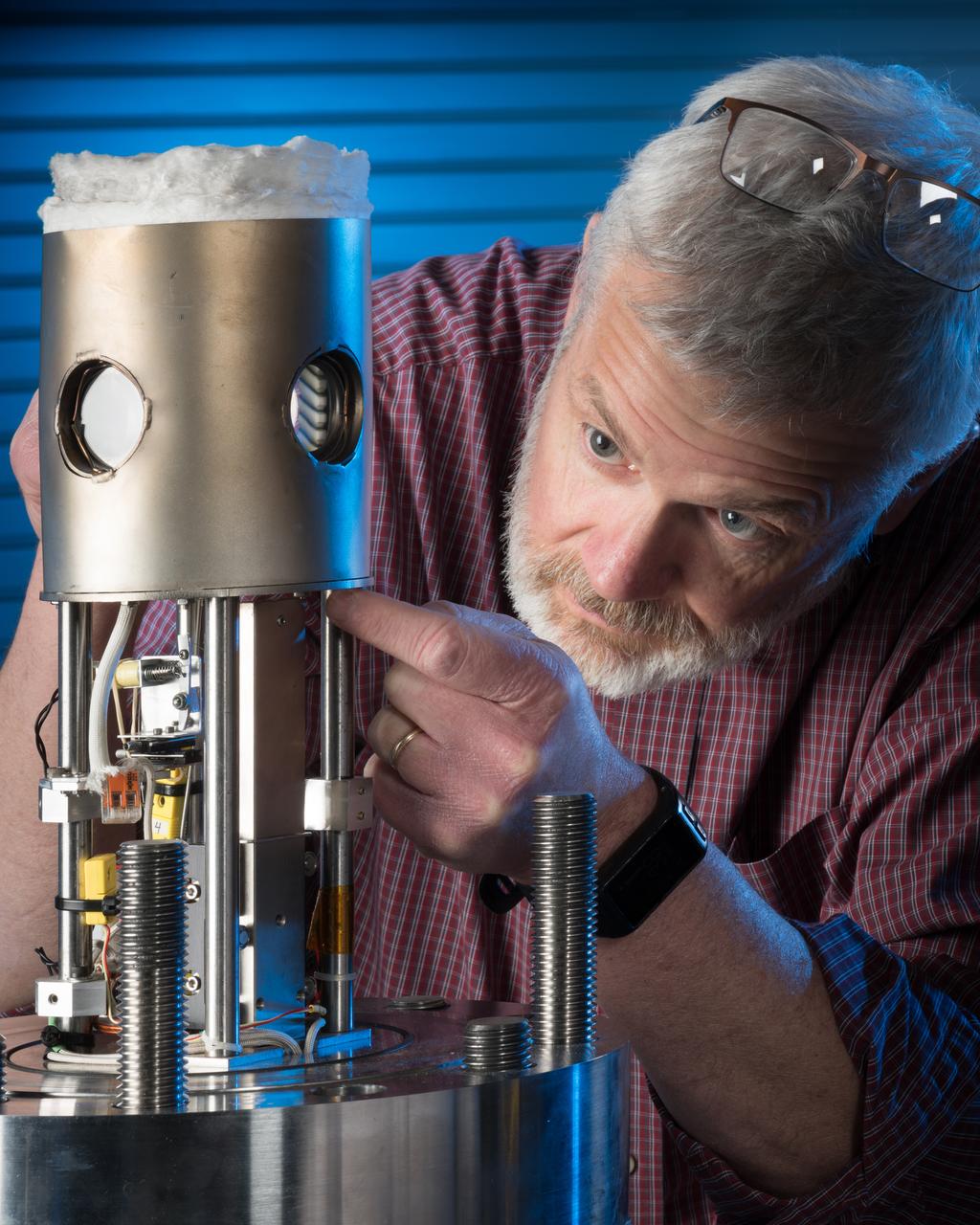
High Pressure Microgravity Combustion Experiment, HPMC, subjects liquid fuel droplets to high pressures and temperatures to study the ignition process in engine conditions, with a goal of improving fuel efficiency. In this configuration, the experiment is capable of testing droplet combustion at up to 100 atm of pressure, testing the droplet deployment system, which inserts the fuel droplet into the experiment.

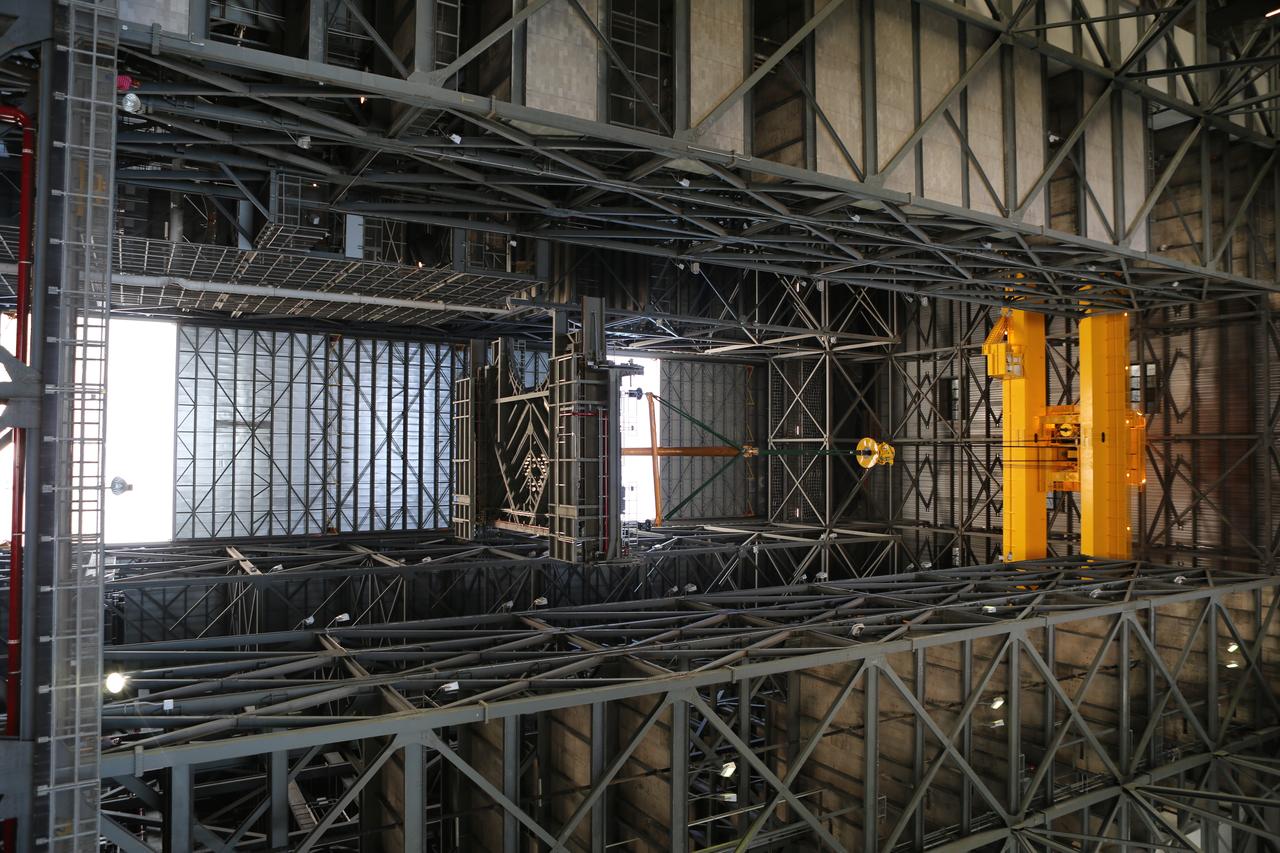
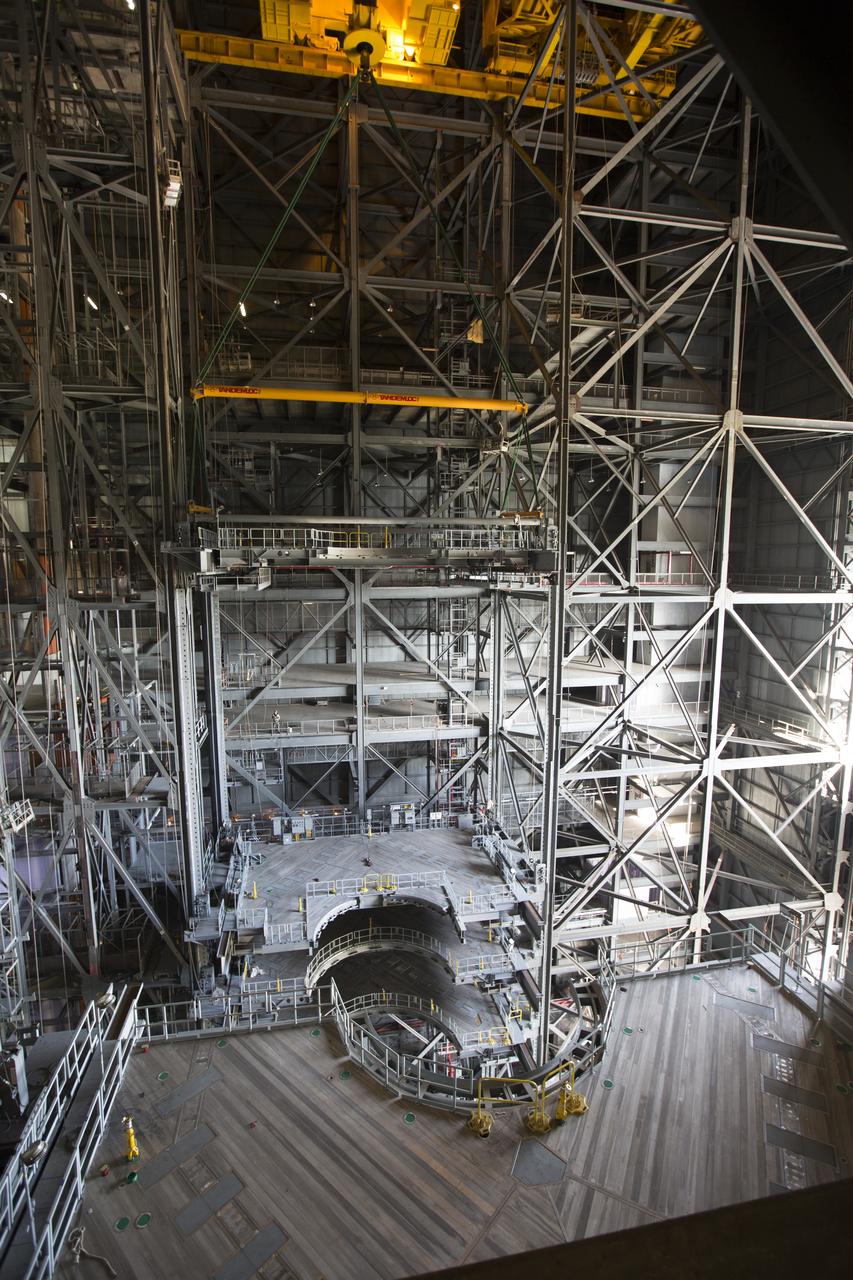
The view members of NASA’s Engineering Management Board had in looking up the Vehicle Assembly Building’s High Bay 3 at Kennedy Space Center in Florida. The platforms in High Bay 3, including the one on which the board members are standing, were designed to surround and provide access to NASA’s Space Launch System and Orion spacecraft. The Engineering Management Board toured integral areas of Kennedy to help the agencywide group reach its goal of unifying engineering work across NASA.
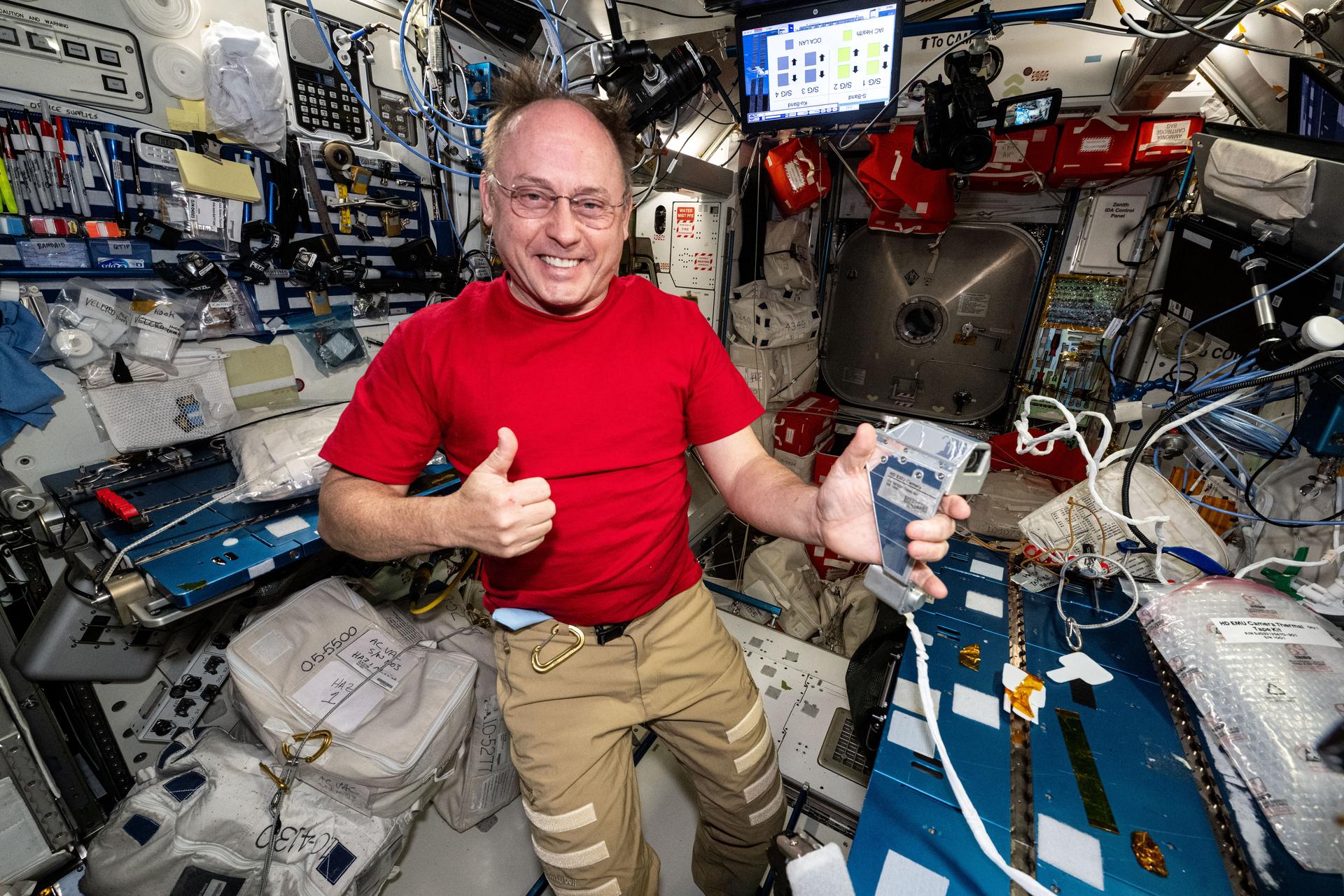
iss073e0510684 (Aug. 18, 2025) --- NASA astronaut and Expedition 73 Flight Engineer Mike Fincke gives a “thumbs up” while holding a High Definition Extravehicular Mobility Unit Camera, or HECA. The spacesuit helmet-mounted camera streams real-time, high-definition video of spacewalk activities to mission controllers on the ground. Earlier, Fincke replaced the thermal tape that shields the HECA from the harsh environment of space.
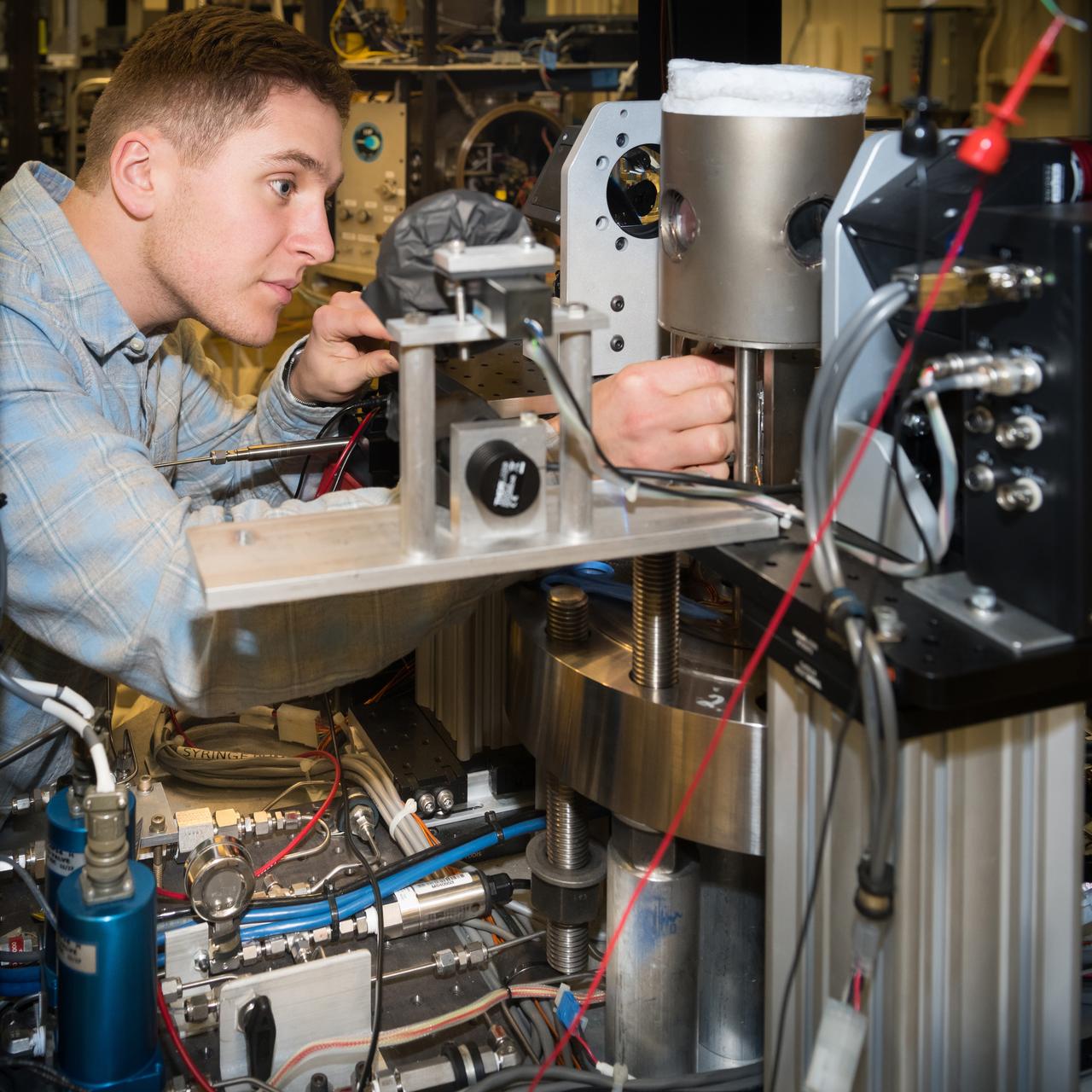
High Pressure Microgravity Combustion Experiment, HPMC, subjects liquid fuel droplets to high pressures and temperatures to study the ignition process in engine conditions, with a goal of improving fuel efficiency. In this configuration, the experiment is capable of testing droplet combustion at up to 100 atm of pressure, testing the droplet deployment system, which inserts the fuel droplet into the experiment.
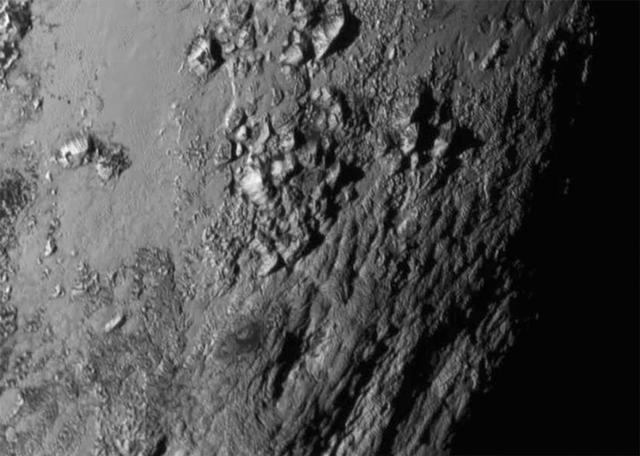
New close-up images of a region near Pluto's equator reveal a giant surprise: a range of youthful mountains rising as high as 11,000 feet (3,500 meters) above the surface of the icy body. The mountains likely formed no more than 100 million years ago -- mere youngsters relative to the 4.56-billion-year age of the solar system -- and may still be in the process of building. That suggests the close-up region, which covers less than one percent of Pluto's surface, may still be geologically active today. The youthful age estimate is based on the lack of craters in this scene. Like the rest of Pluto, this region would presumably have been pummeled by space debris for billions of years and would have once been heavily cratered -- unless recent activity had given the region a facelift, erasing those pockmarks. Unlike the icy moons of giant planets, Pluto cannot be heated by gravitational interactions with a much larger planetary body. Some other process must be generating the mountainous landscape. The mountains are probably composed of Pluto's water-ice "bedrock." Although methane and nitrogen ice covers much of the surface of Pluto, these materials are not strong enough to build the mountains. Instead, a stiffer material, most likely water-ice, created the peaks. The close-up image was taken about 1.5 hours before New Horizons closest approach to Pluto, when the craft was 47,800 miles (770,000 kilometers) from the surface of the planet. The image easily resolves structures smaller than a mile across. http://photojournal.jpl.nasa.gov/catalog/PIA19710
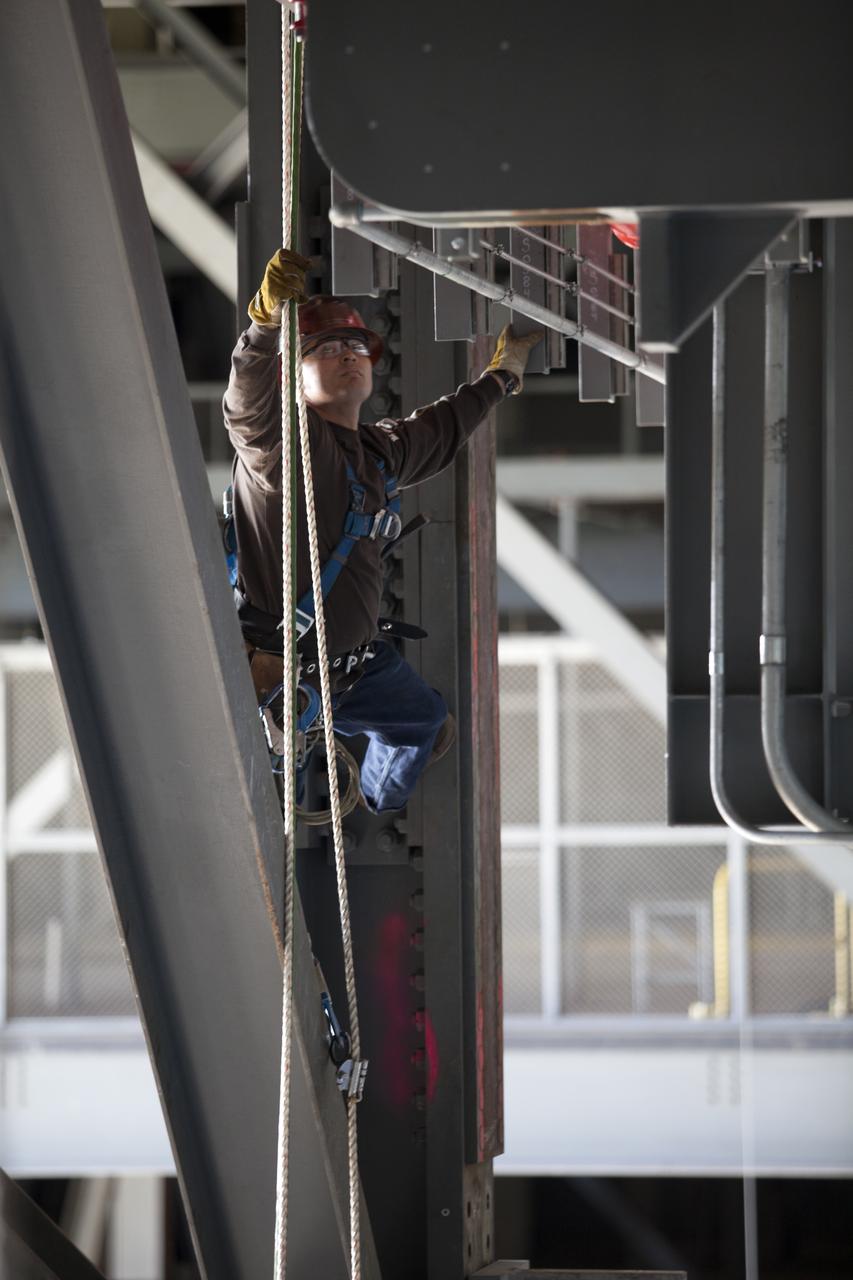
A construction worker wearing a safety harness and tethered lines prepares to assist with the installation of the second half of the B-level work platforms, B north, for NASA’s Space Launch System (SLS) rocket, high up in the Vehicle Assembly Building (VAB) at NASA’s Kennedy Space Center in Florida. The B platform will be installed on the north side of High Bay 3. The B platforms are the ninth of 10 levels of work platforms that will surround and provide access to the SLS rocket and Orion spacecraft for Exploration Mission 1. The Ground Systems Development and Operations Program is overseeing upgrades and modifications to VAB High Bay 3, including installation of the new work platforms, to prepare for NASA’s Journey to Mars.
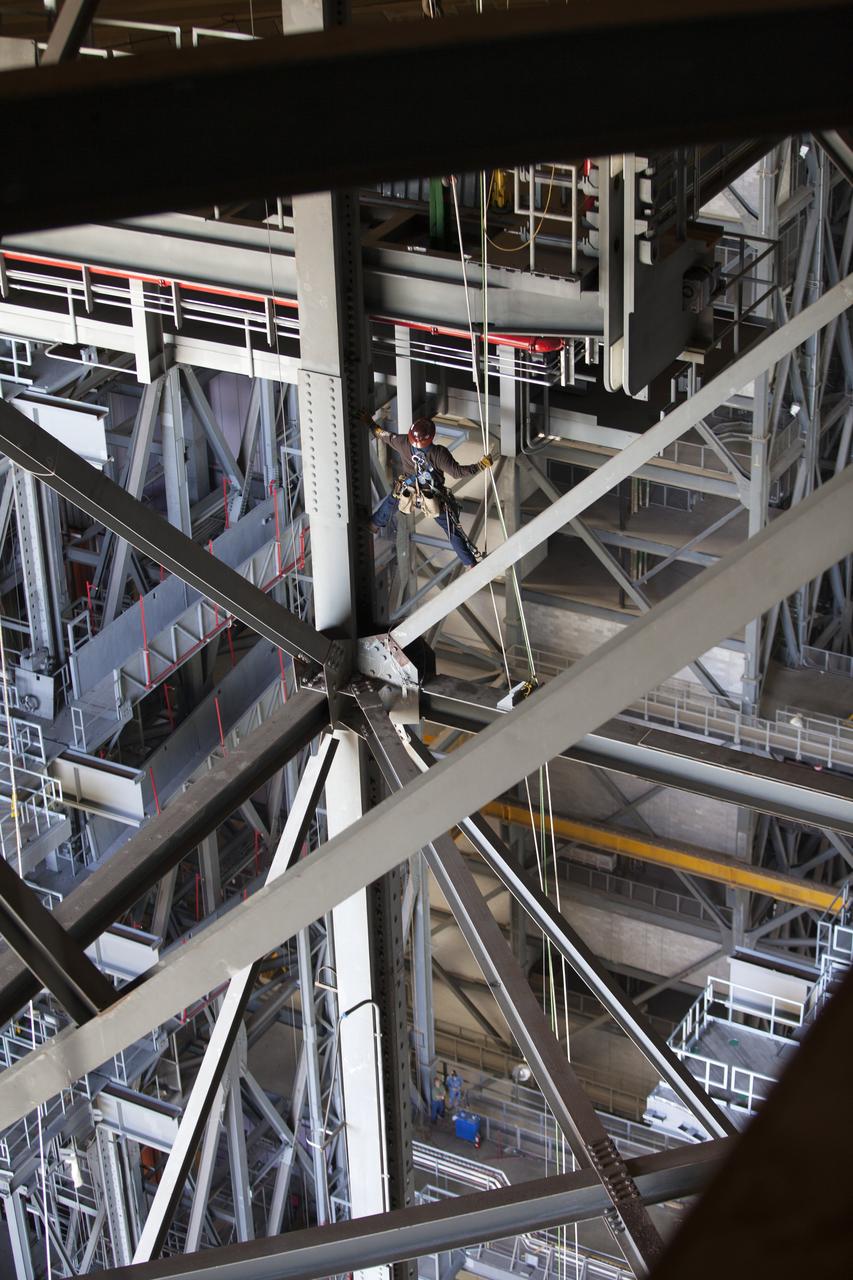
A construction worker wearing a safety harness and tethered lines prepares to assist with the installation of the second half of the B-level work platforms, B north, for NASA’s Space Launch System (SLS) rocket, high up in the Vehicle Assembly Building (VAB) at NASA’s Kennedy Space Center in Florida. The B platform will be installed on the north side of High Bay 3. The B platforms are the ninth of 10 levels of work platforms that will surround and provide access to the SLS rocket and Orion spacecraft for Exploration Mission 1. The Ground Systems Development and Operations Program is overseeing upgrades and modifications to VAB High Bay 3, including installation of the new work platforms, to prepare for NASA’s Journey to Mars.
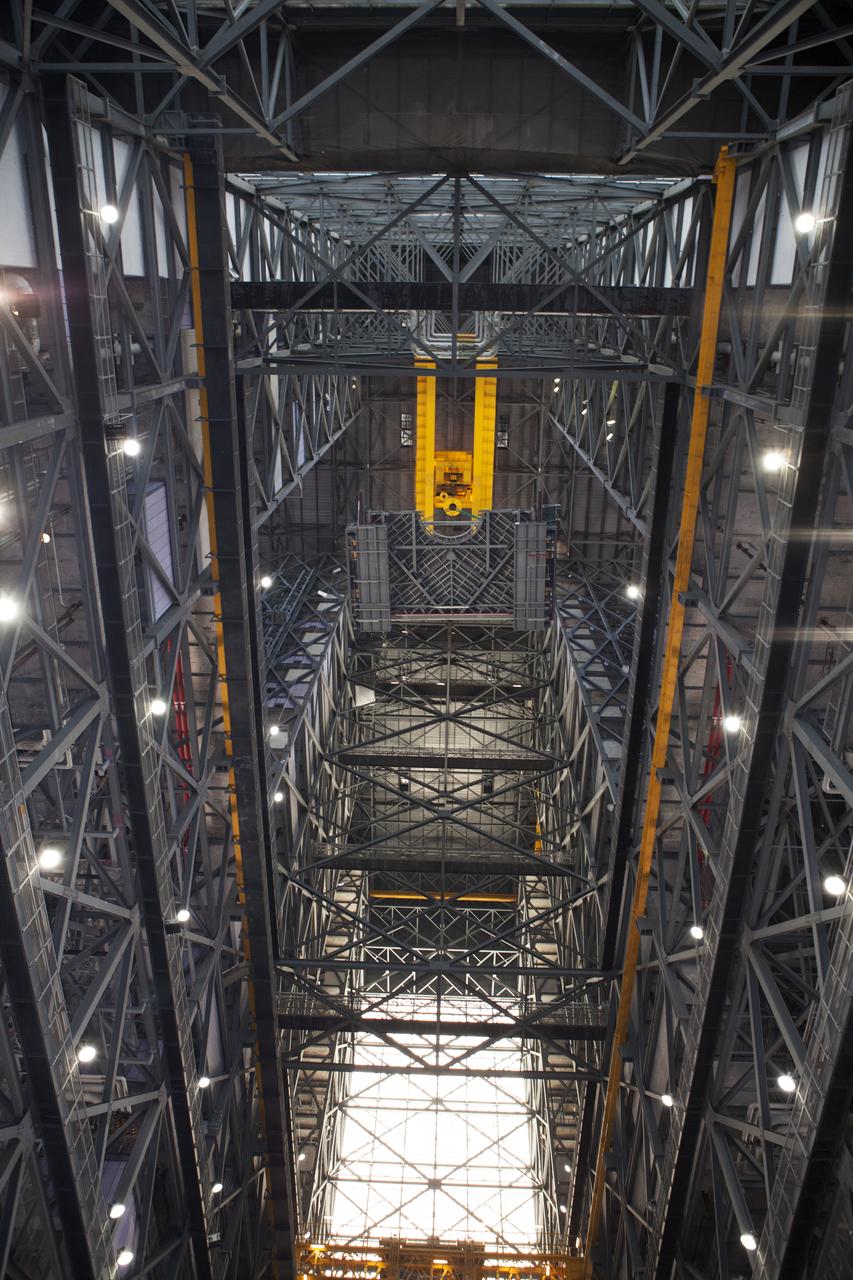
A heavy-lift crane lifts the first half of the B-level work platforms, B south, for NASA’s Space Launch System (SLS) rocket, high up from the transfer aisle floor of the Vehicle Assembly Building (VAB) at NASA’s Kennedy Space Center in Florida. The B platform will be installed on the south side of High Bay 3. The B platforms are the ninth of 10 levels of work platforms that will surround and provide access to the SLS rocket and Orion spacecraft for Exploration Mission 1. The Ground Systems Development and Operations Program is overseeing upgrades and modifications to VAB High Bay 3, including installation of the new work platforms, to prepare for NASA’s Journey to Mars.
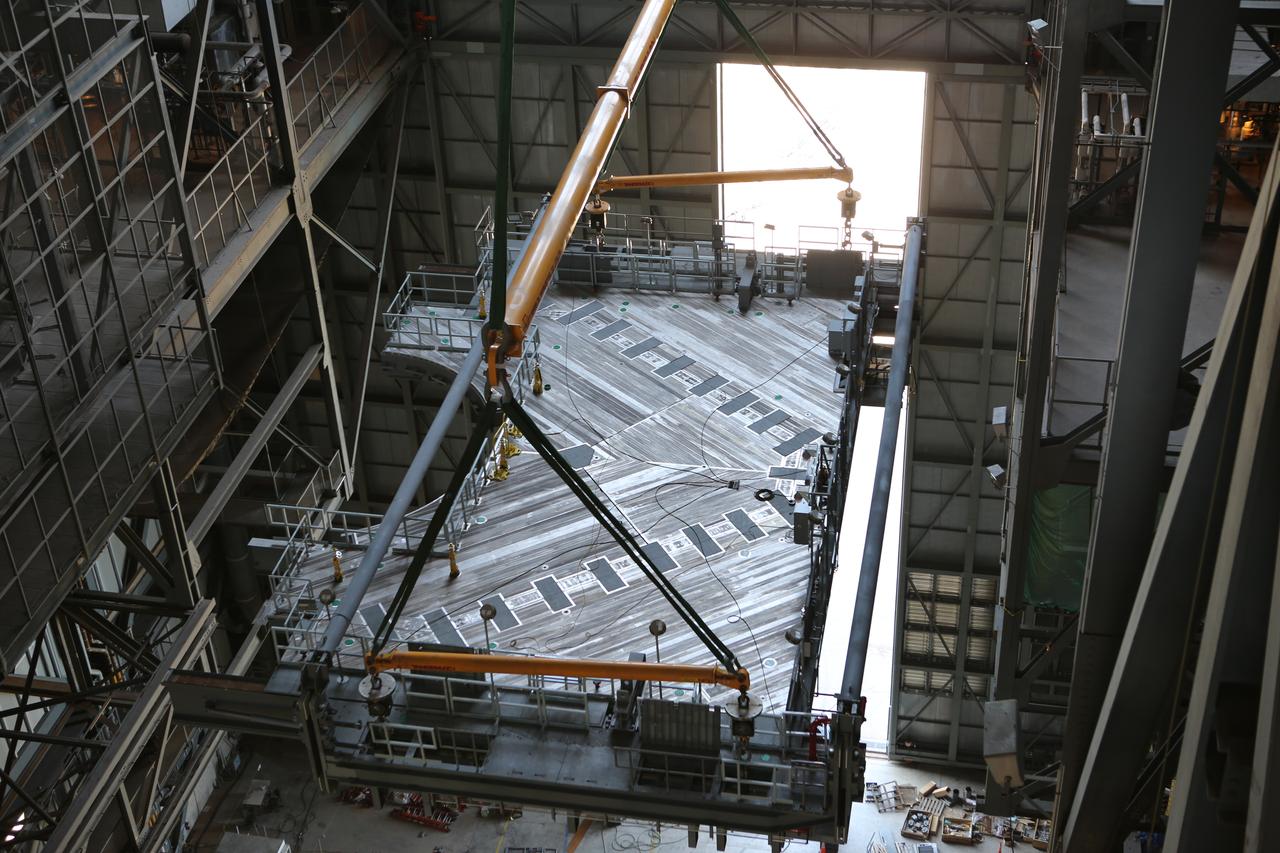
A heavy-lift crane lifts the second half of the C-level work platforms, C north, for NASA’s Space Launch System (SLS) rocket, high up from the transfer aisle floor of the Vehicle Assembly Building (VAB) at NASA’s Kennedy Space Center in Florida. The C platform will be installed on the north side of High Bay 3. The C platforms are the eighth of 10 levels of work platforms that will surround and provide access to the SLS rocket and Orion spacecraft for Exploration Mission 1. The Ground Systems Development and Operations Program is overseeing upgrades and modifications to VAB High Bay 3, including installation of the new work platforms, to prepare for NASA’s Journey to Mars.
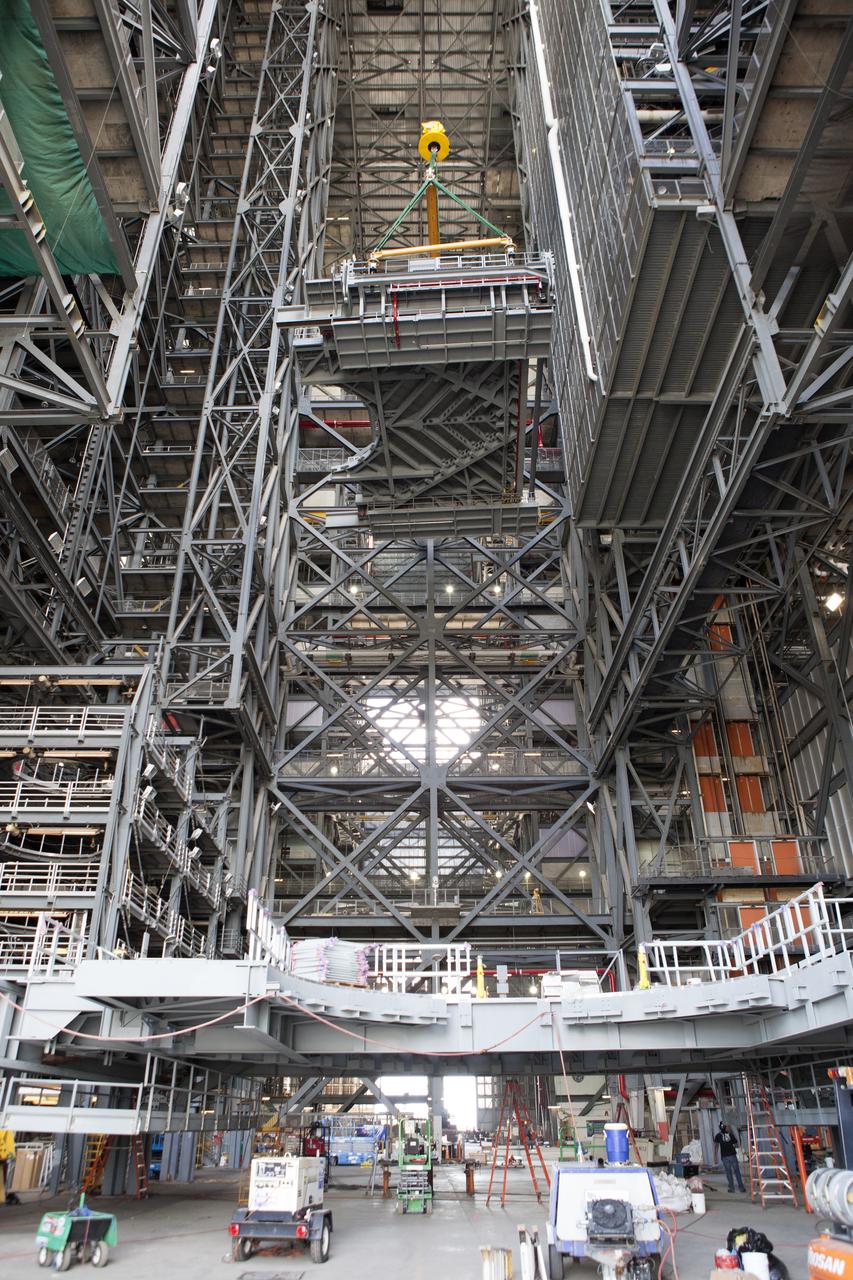
A heavy-lift crane lifts the first half of the C-level work platforms, C south, for NASA’s Space Launch System (SLS) rocket, high up from the transfer aisle floor of the Vehicle Assembly Building (VAB) at NASA’s Kennedy Space Center in Florida. The C platform will be installed on the south side of High Bay 3. The C platforms are the eighth of 10 levels of work platforms that will surround and provide access to the SLS rocket and Orion spacecraft for Exploration Mission 1. The Ground Systems Development and Operations Program is overseeing upgrades and modifications to VAB High Bay 3, including installation of the new work platforms, to prepare for NASA’s Journey to Mars.
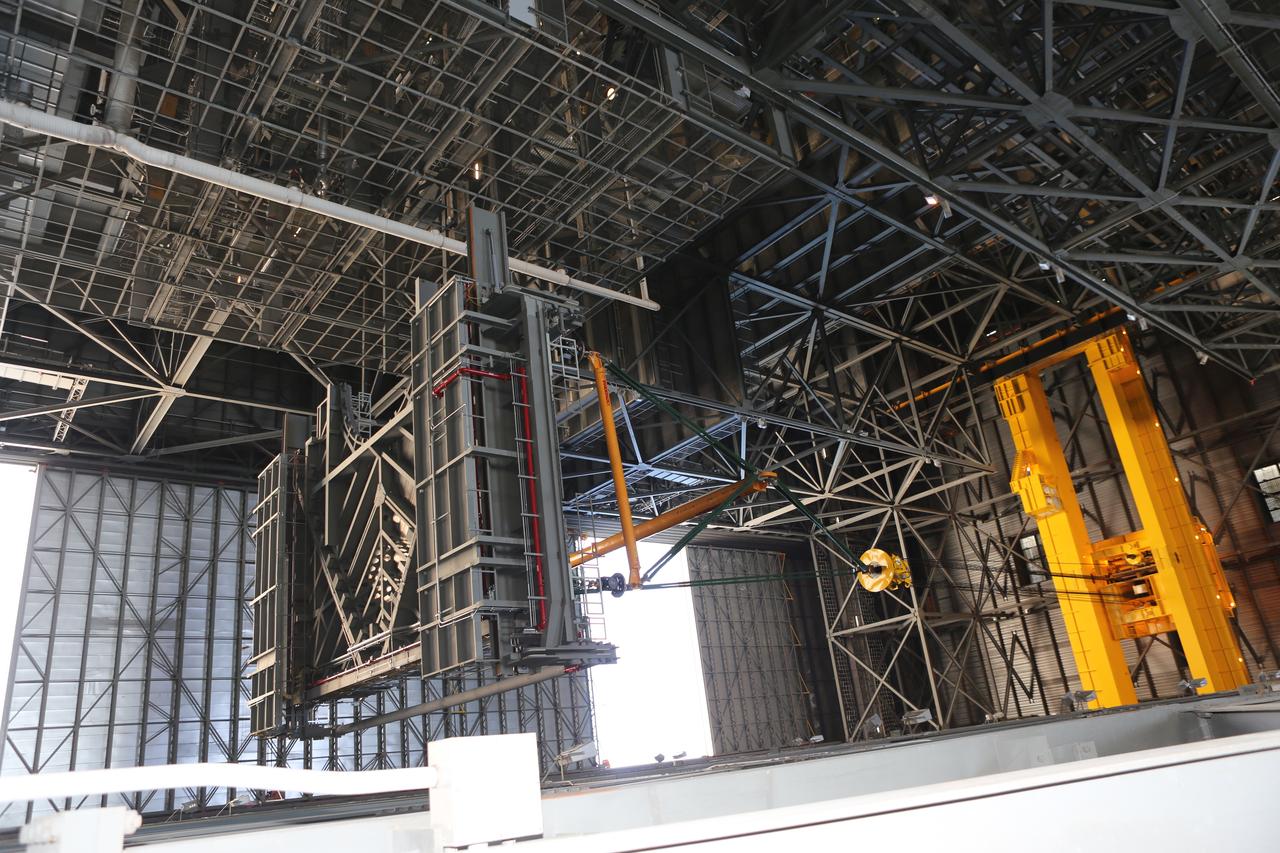
A heavy-lift crane lifts the second half of the C-level work platforms, C north, for NASA’s Space Launch System (SLS) rocket, high up from the transfer aisle floor of the Vehicle Assembly Building (VAB) at NASA’s Kennedy Space Center in Florida. The C platform will be moved into High Bay 3 for installation on the north wall. The C platforms are the eighth of 10 levels of work platforms that will surround and provide access to the SLS rocket and Orion spacecraft for Exploration Mission 1. The Ground Systems Development and Operations Program is overseeing upgrades and modifications to VAB High Bay 3, including installation of the new work platforms, to prepare for NASA’s Journey to Mars.
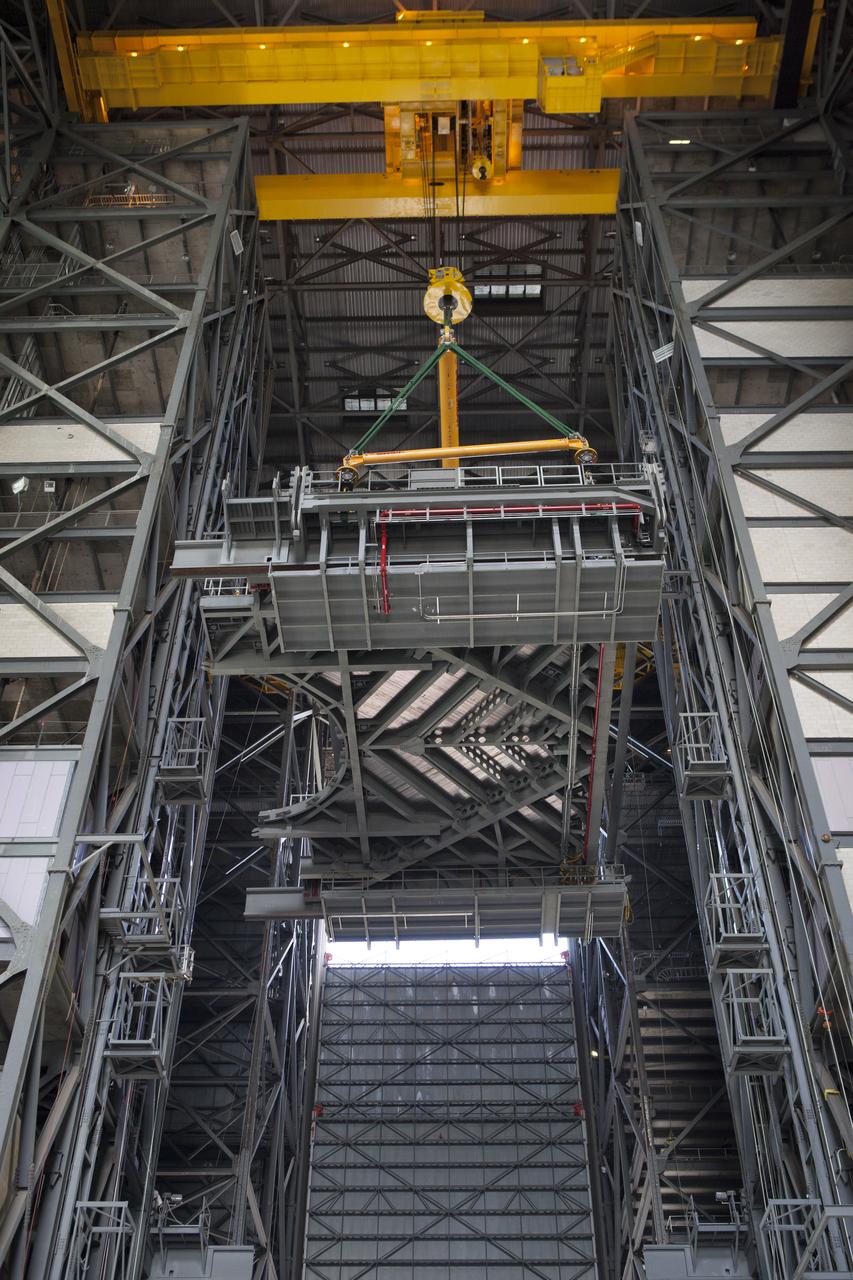
A heavy-lift crane lifts the first half of the C-level work platforms, C south, for NASA’s Space Launch System (SLS) rocket, high up from the transfer aisle floor of the Vehicle Assembly Building (VAB) at NASA’s Kennedy Space Center in Florida. The C platform will be moved into High Bay 3 for installation on the south wall. The C platforms are the eighth of 10 levels of work platforms that will surround and provide access to the SLS rocket and Orion spacecraft for Exploration Mission 1. The Ground Systems Development and Operations Program is overseeing upgrades and modifications to VAB High Bay 3, including installation of the new work platforms, to prepare for NASA’s Journey to Mars.
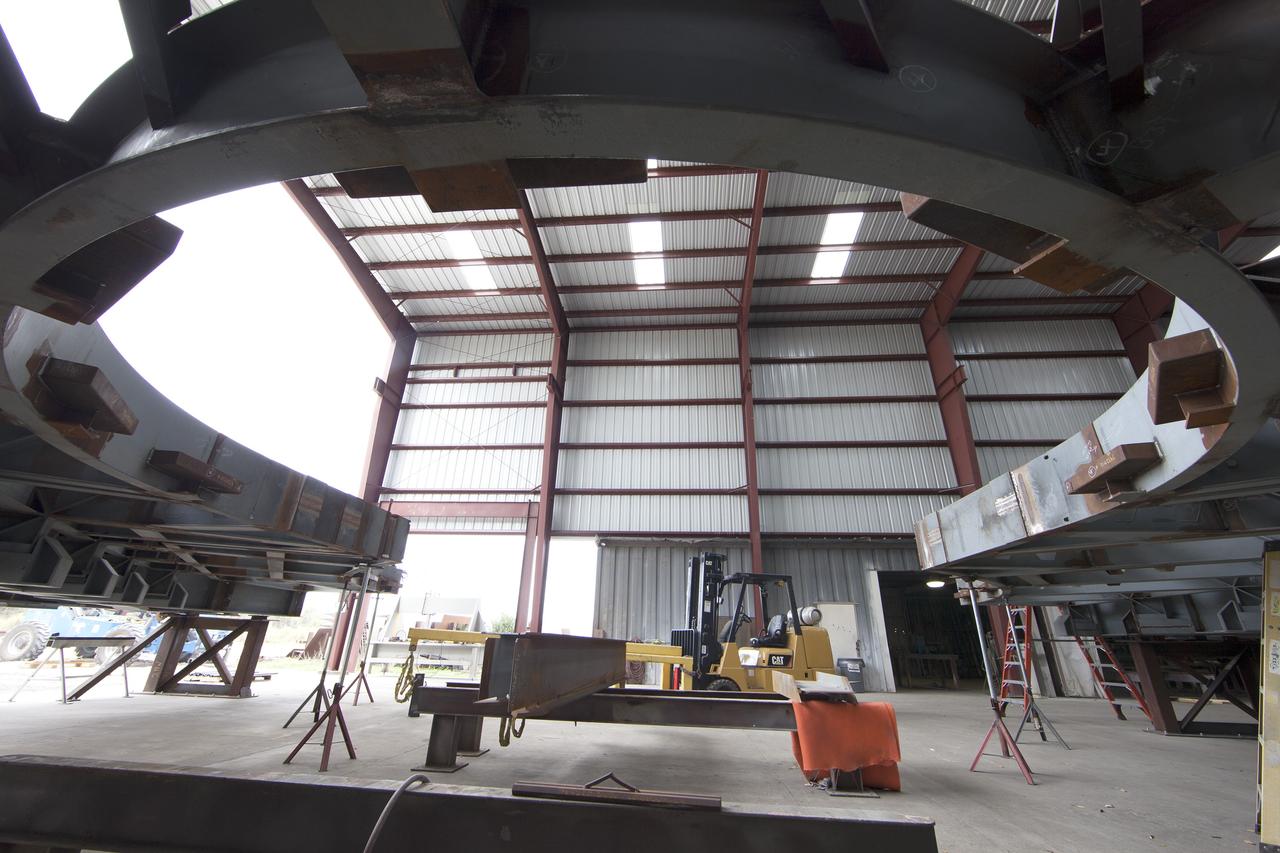
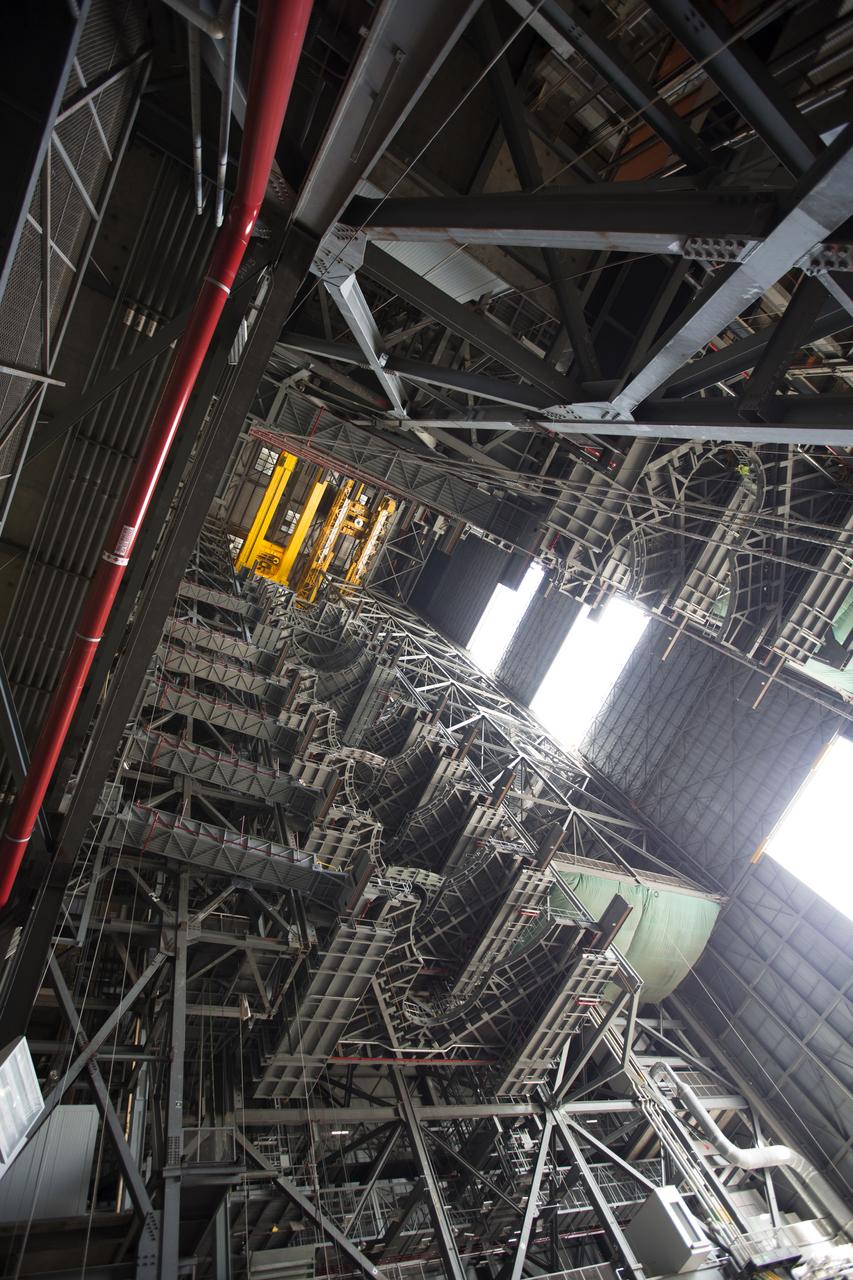
A view looking up reveals the buildup of the first of 10 new work platforms at Sauer Co. in Oak Hill, Florida. When completed, the first platform will be delivered for installation in high bay 3 of the Vehicle Assembly Building at NASA's Kennedy Space Center in Florida. A contract to modify high bay 3 was awarded by NASA to the Hensel Phelps Construction Co. of Orlando, Florida in March 2014. Sauer is a subcontractor to Hensel Phelps. The Ground Systems Development and Operations Program is overseeing upgrades and modifications to the high bay to support processing of NASA's Space Launch System and Orion spacecraft, and other exploration vehicles. Photo credit: NASA/Ben Smegelsky
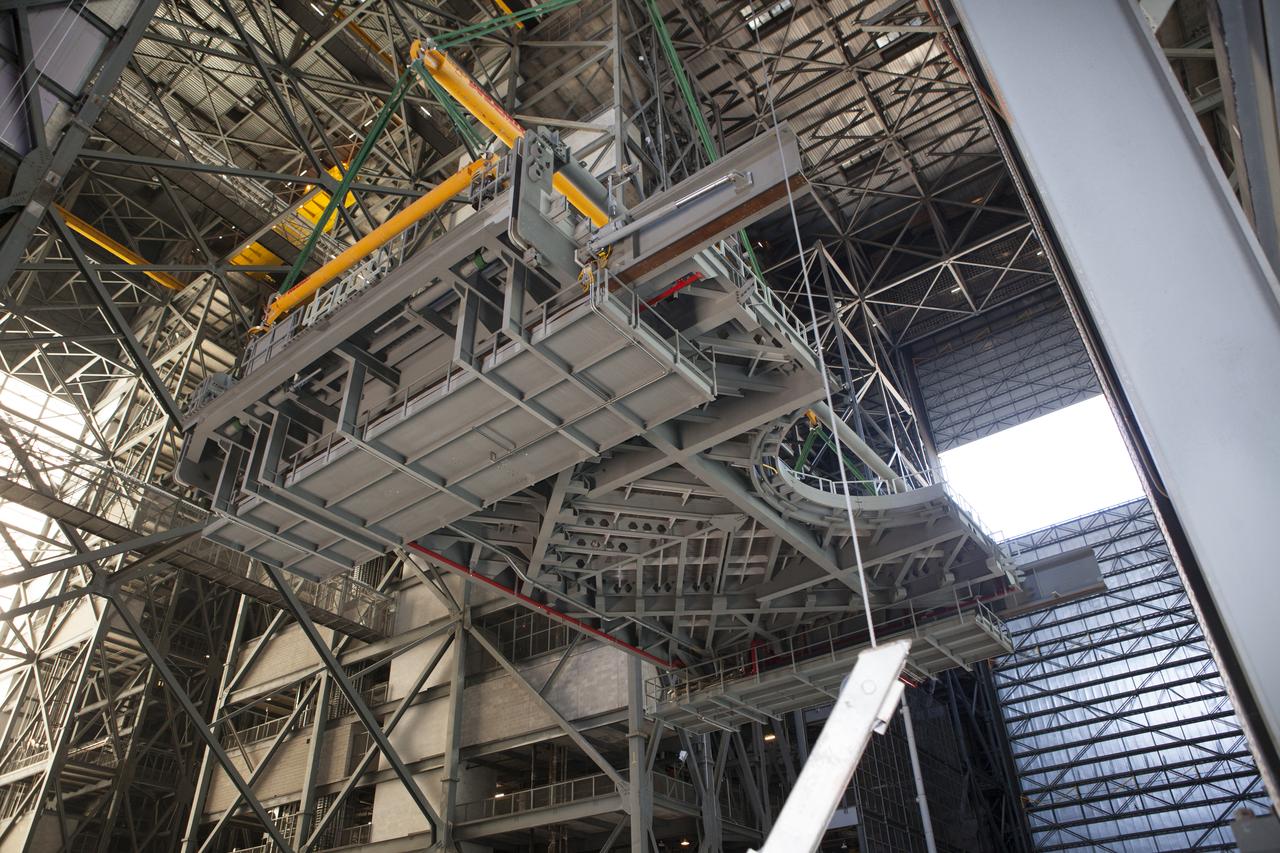
A heavy-lift crane lifts the first half of the B-level work platforms, B south, for NASA’s Space Launch System (SLS) rocket, high up from the transfer aisle floor of the Vehicle Assembly Building (VAB) at NASA’s Kennedy Space Center in Florida. The B platform will be installed on the south side of High Bay 3. The B platforms are the ninth of 10 levels of work platforms that will surround and provide access to the SLS rocket and Orion spacecraft for Exploration Mission 1. The Ground Systems Development and Operations Program is overseeing upgrades and modifications to VAB High Bay 3, including installation of the new work platforms, to prepare for NASA’s Journey to Mars.
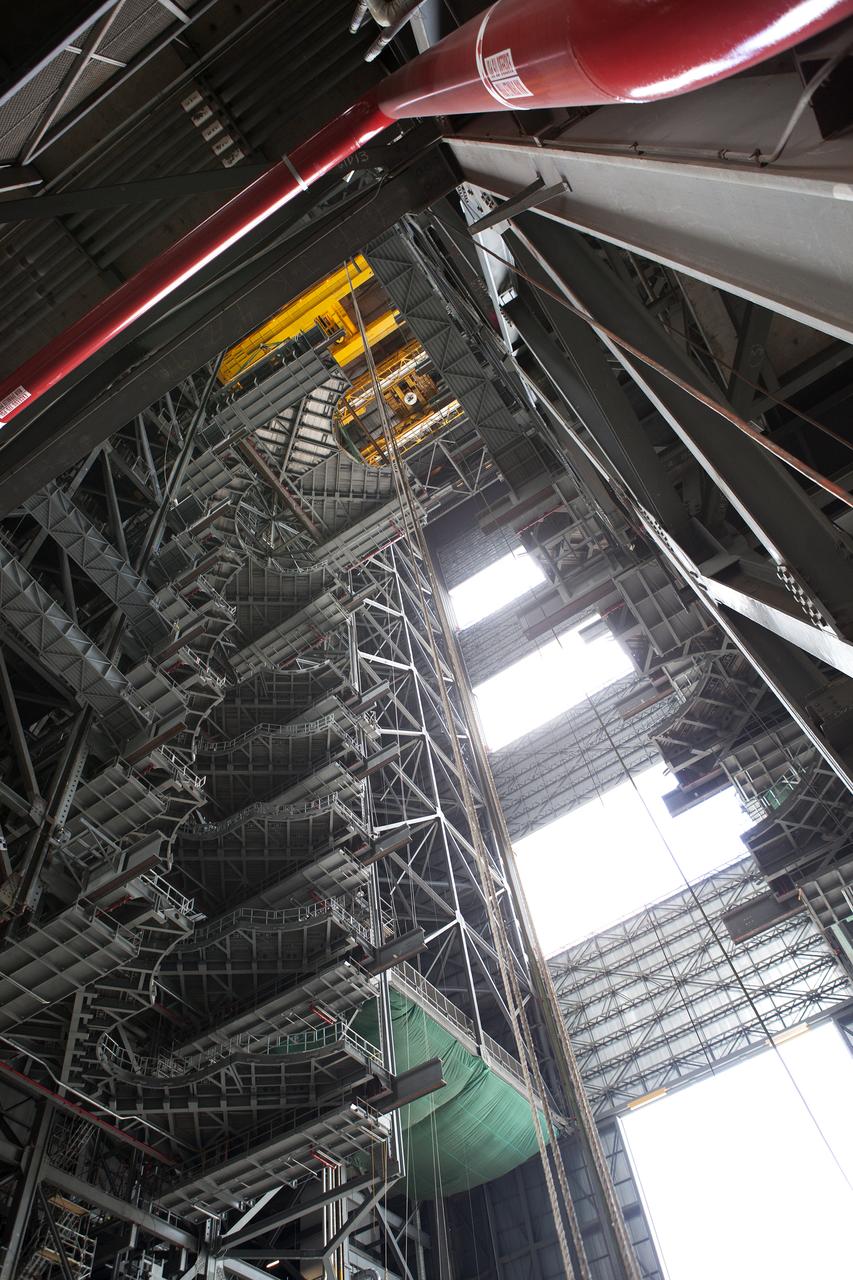
In this view looking up in the Vehicle Assembly Building at NASA’s Kennedy Space Center in Florida, a heavy-lift crane lowers the second half of the D-level work platforms, D north, for NASA’s Space Launch System (SLS) rocket, into position for installation in High Bay 3. The platform will be installed on the north side of the high bay. The D platforms are the seventh of 10 levels of work platforms that will surround and provide access to the SLS rocket and Orion spacecraft for Exploration Mission 1. The Ground Systems Development and Operations Program is overseeing upgrades and modifications to VAB High Bay 3, including installation of the new work platforms, to prepare for NASA’s journey to Mars.
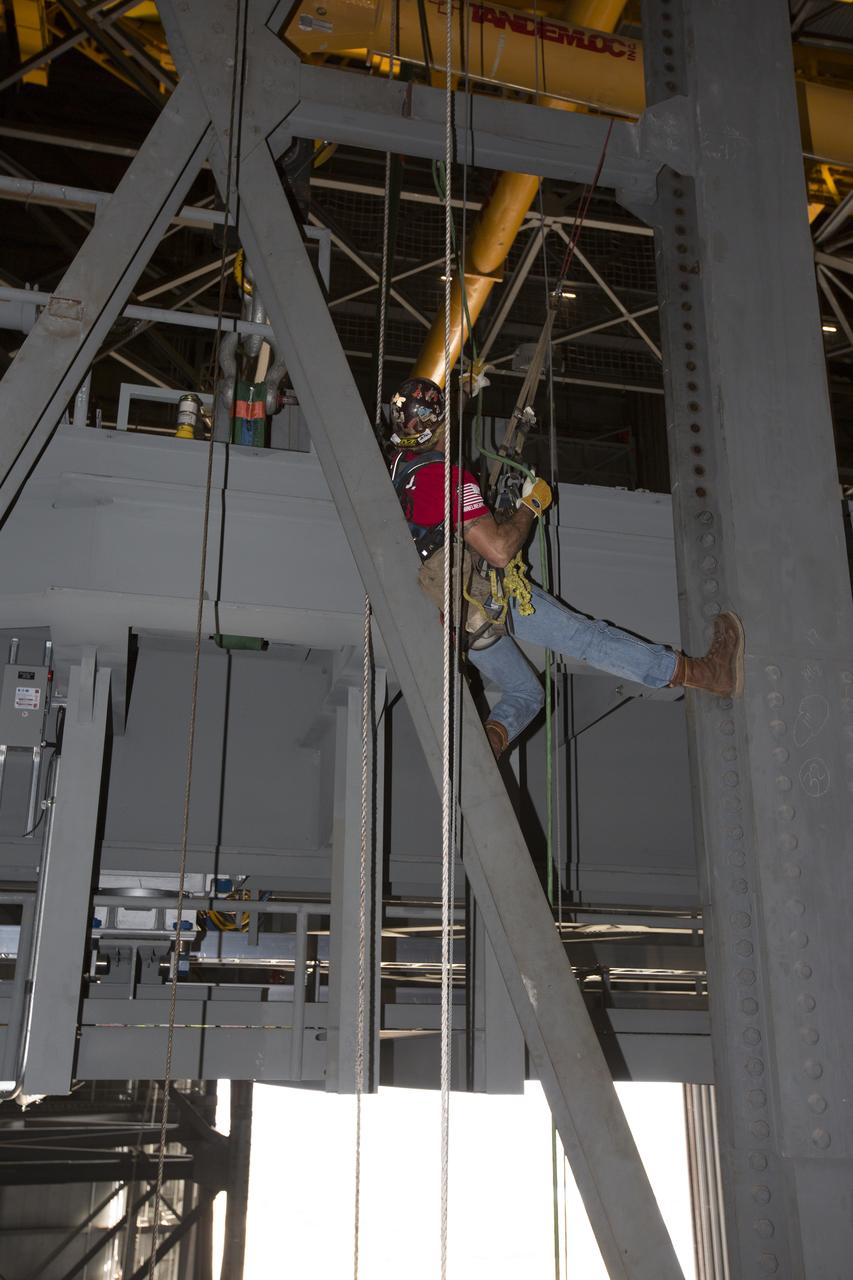
A construction worker wearing a safety harness and tethered lines assists with the installation of the second half of the B-level work platforms, B north, for NASA’s Space Launch System (SLS) rocket, high up in the Vehicle Assembly Building (VAB) at NASA’s Kennedy Space Center in Florida. The B platform will be installed on the north side of High Bay 3. The B platforms are the ninth of 10 levels of work platforms that will surround and provide access to the SLS rocket and Orion spacecraft for Exploration Mission 1. The Ground Systems Development and Operations Program is overseeing upgrades and modifications to VAB High Bay 3, including installation of the new work platforms, to prepare for NASA’s Journey to Mars.
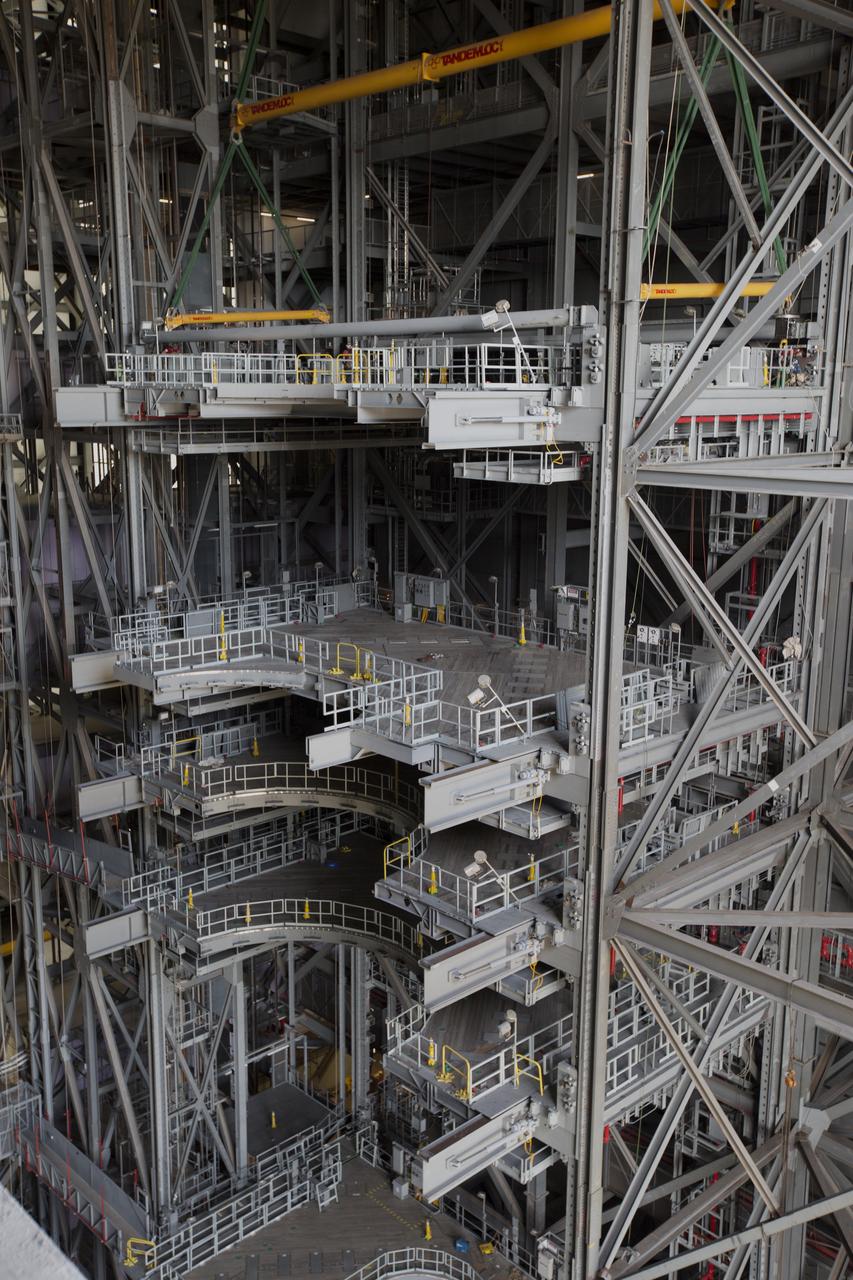
High up in the Vehicle Assembly Building (VAB) at NASA's Kennedy Space Center in Florida, the second half of the B-level work platforms, B north, for NASA's Space Launch System (SLS) rocket, has been lowered into place for installation on the north wall of High Bay 3. In view below are several levels of previously installed platforms. The B platforms are the ninth of 10 levels of work platforms that will surround and provide access to the SLS rocket and Orion spacecraft for Exploration Mission 1. The Ground Systems Development and Operations Program is overseeing upgrades and modifications to VAB High Bay 3, including installation of the new work platforms, to prepare for NASA’s Journey to Mars.
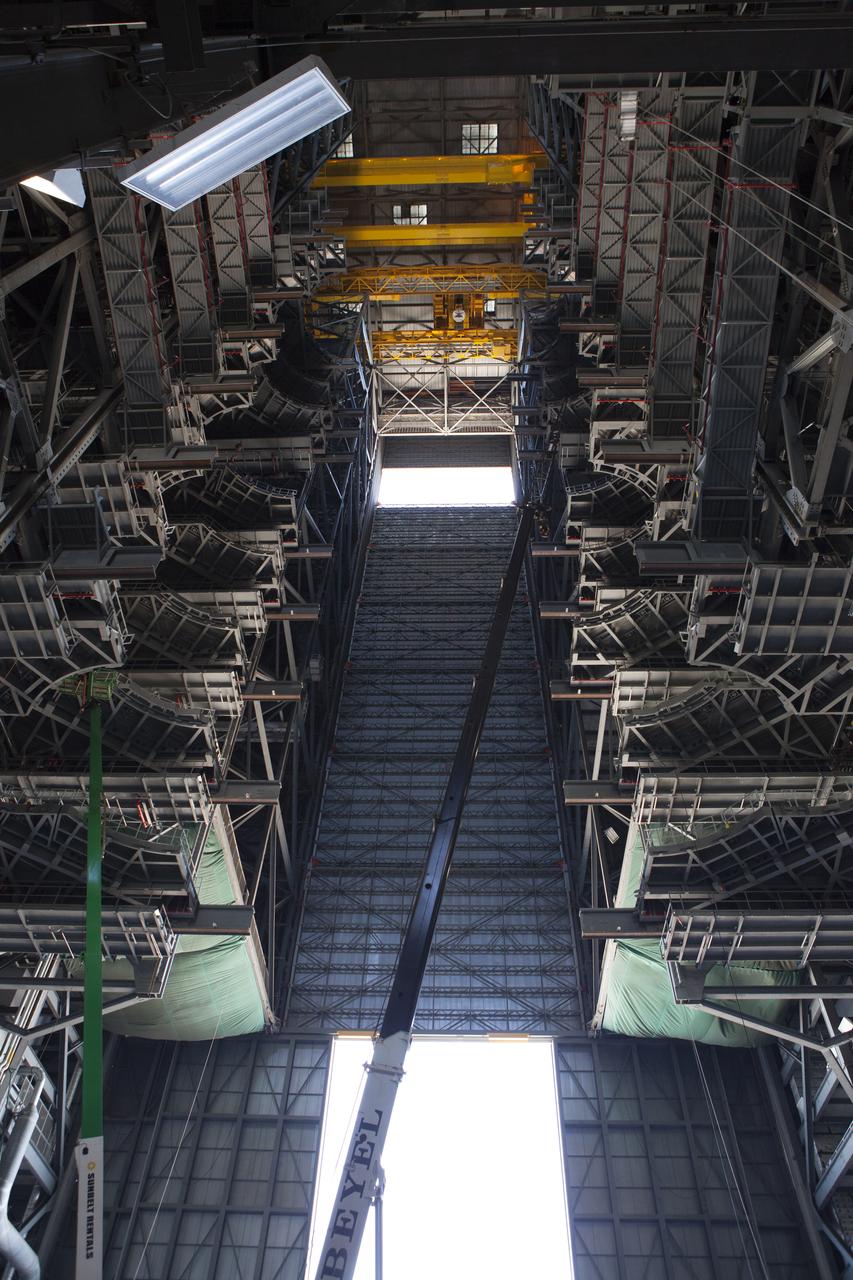
High up in High Bay 3 inside the Vehicle Assembly Building (VAB) at NASA’s Kennedy Space Center in Florida, the first half of the B-level work platforms, B south, for NASA’s Space Launch System (SLS) rocket, has been lowered into place. In view below are several levels of previously installed platforms. The B platforms are the ninth of 10 levels of work platforms that will surround and provide access to the SLS rocket and Orion spacecraft for Exploration Mission 1. The Ground Systems Development and Operations Program is overseeing upgrades and modifications to VAB High Bay 3, including installation of the new work platforms, to prepare for NASA’s Journey to Mars.
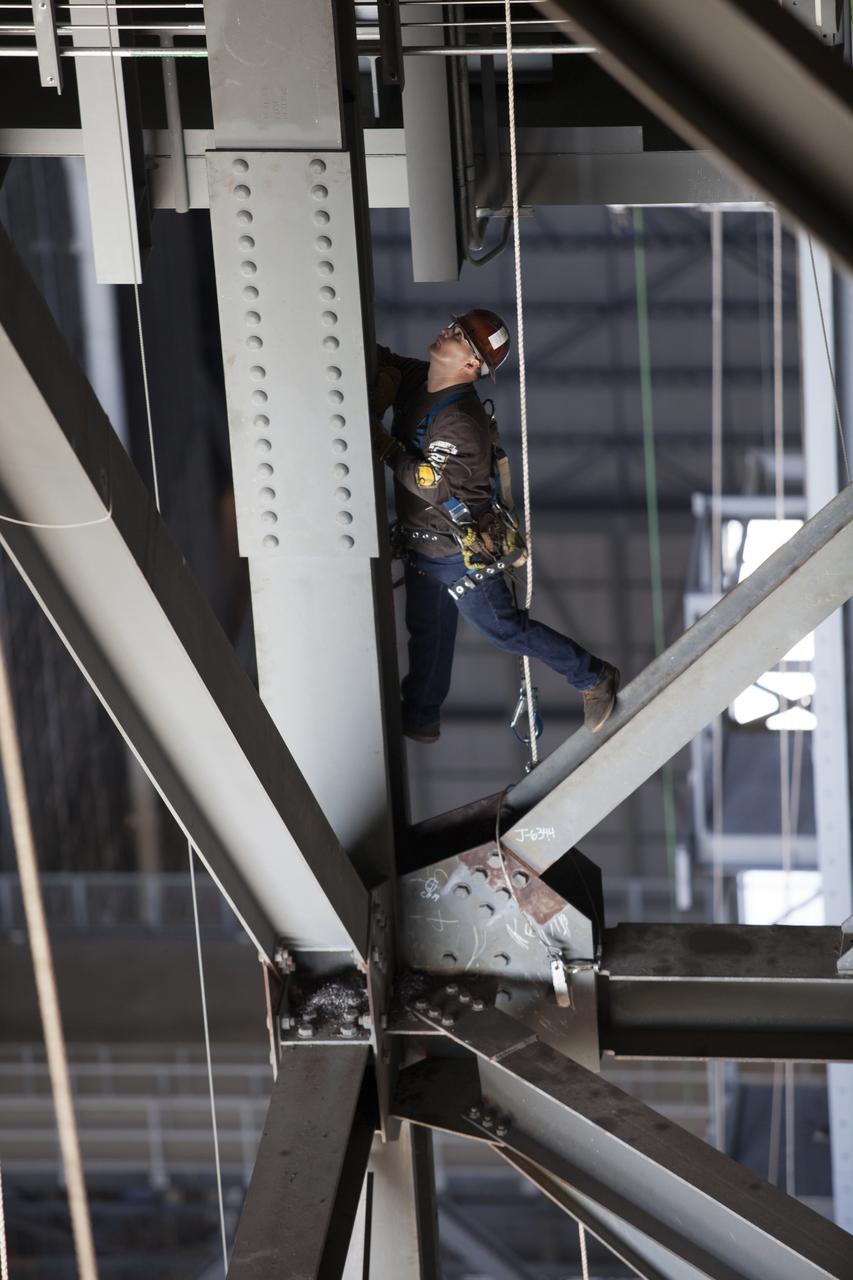
A construction worker wearing a safety harness and tethered lines prepares to assist with the installation of the second half of the B-level work platforms, B north, for NASA’s Space Launch System (SLS) rocket, high up in the Vehicle Assembly Building (VAB) at NASA’s Kennedy Space Center in Florida. The B platform will be installed on the north side of High Bay 3. The B platforms are the ninth of 10 levels of work platforms that will surround and provide access to the SLS rocket and Orion spacecraft for Exploration Mission 1. The Ground Systems Development and Operations Program is overseeing upgrades and modifications to VAB High Bay 3, including installation of the new work platforms, to prepare for NASA’s Journey to Mars.
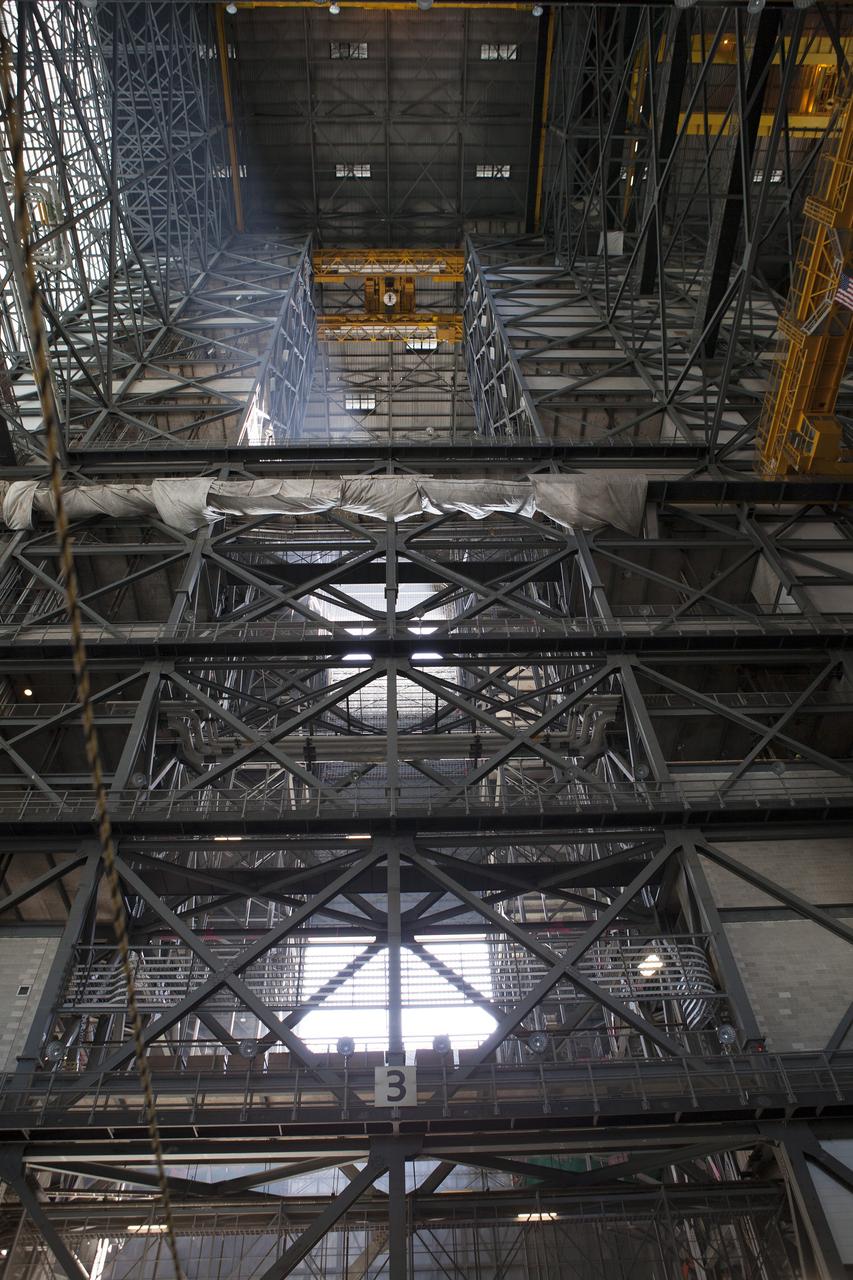
CAPE CANAVERAL, Fla. – A view looking up from the ground level inside the Vehicle Assembly Building, or VAB, at NASA’s Kennedy Space Center in Florida. High above is the 175-ton crane. Modifications are underway inside the VAB to prepare High Bay 3 for a new platform system. The modifications are part of a centerwide refurbishment initiative under the Ground Systems Development and Operations Program. High bay 3 is being refurbished to accommodate NASA’s Space Launch System and a variety of other spacecraft. For more information, visit http://www.nasa.gov/exploration/systems/ground/index.html. Photo credit: NASA/Dimitri Gerondidakis
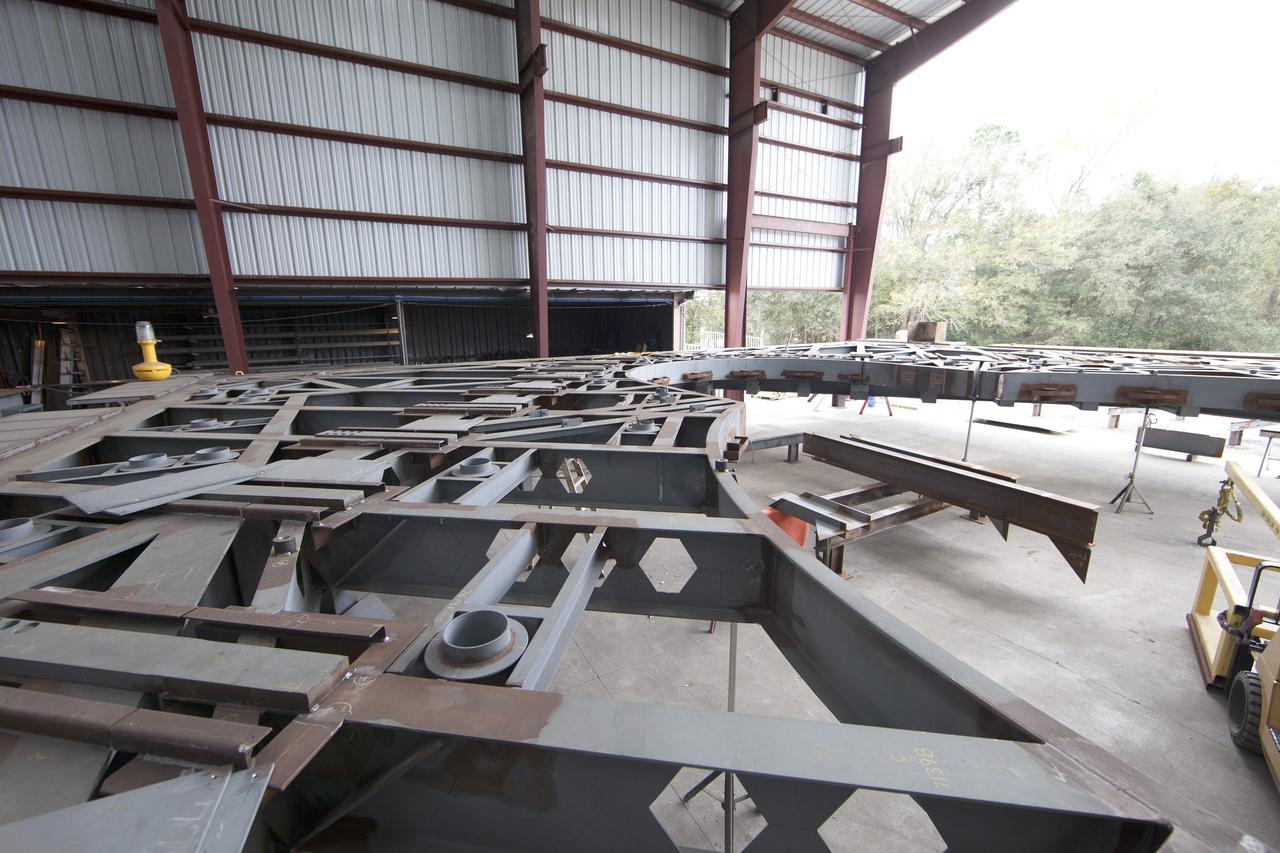
The first of 10 new work platforms is being built up at Sauer Co. in Oak Hill, Florida. When completed, the first platform will be delivered for installation in high bay 3 of the Vehicle Assembly Building at NASA's Kennedy Space Center in Florida. A contract to modify high bay 3 was awarded by NASA to the Hensel Phelps Construction Co. of Orlando, Florida in March 2014. Sauer is a subcontractor to Hensel Phelps. The Ground Systems Development and Operations Program is overseeing upgrades and modifications to the high bay to support processing of NASA's Space Launch System and Orion spacecraft, and other exploration vehicles. Photo credit: NASA/Ben Smegelsky
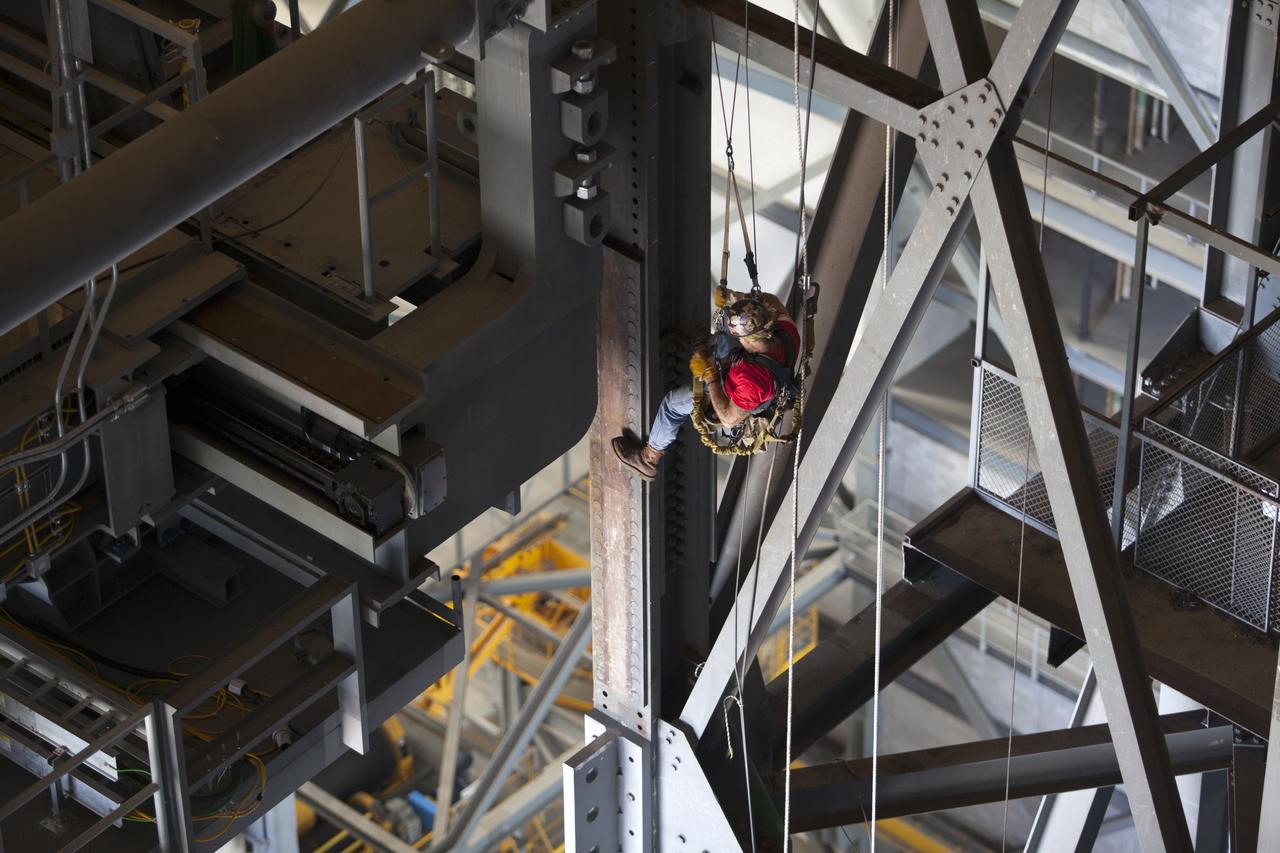
A construction worker wearing a safety harness and tethered lines monitors the progress during the installation of the second half of the B-level work platforms, B north, for NASA’s Space Launch System (SLS) rocket, high up in the Vehicle Assembly Building (VAB) at NASA’s Kennedy Space Center in Florida. The B platform will be installed on the north side of High Bay 3. The B platforms are the ninth of 10 levels of work platforms that will surround and provide access to the SLS rocket and Orion spacecraft for Exploration Mission 1. The Ground Systems Development and Operations Program is overseeing upgrades and modifications to VAB High Bay 3, including installation of the new work platforms, to prepare for NASA’s Journey to Mars.
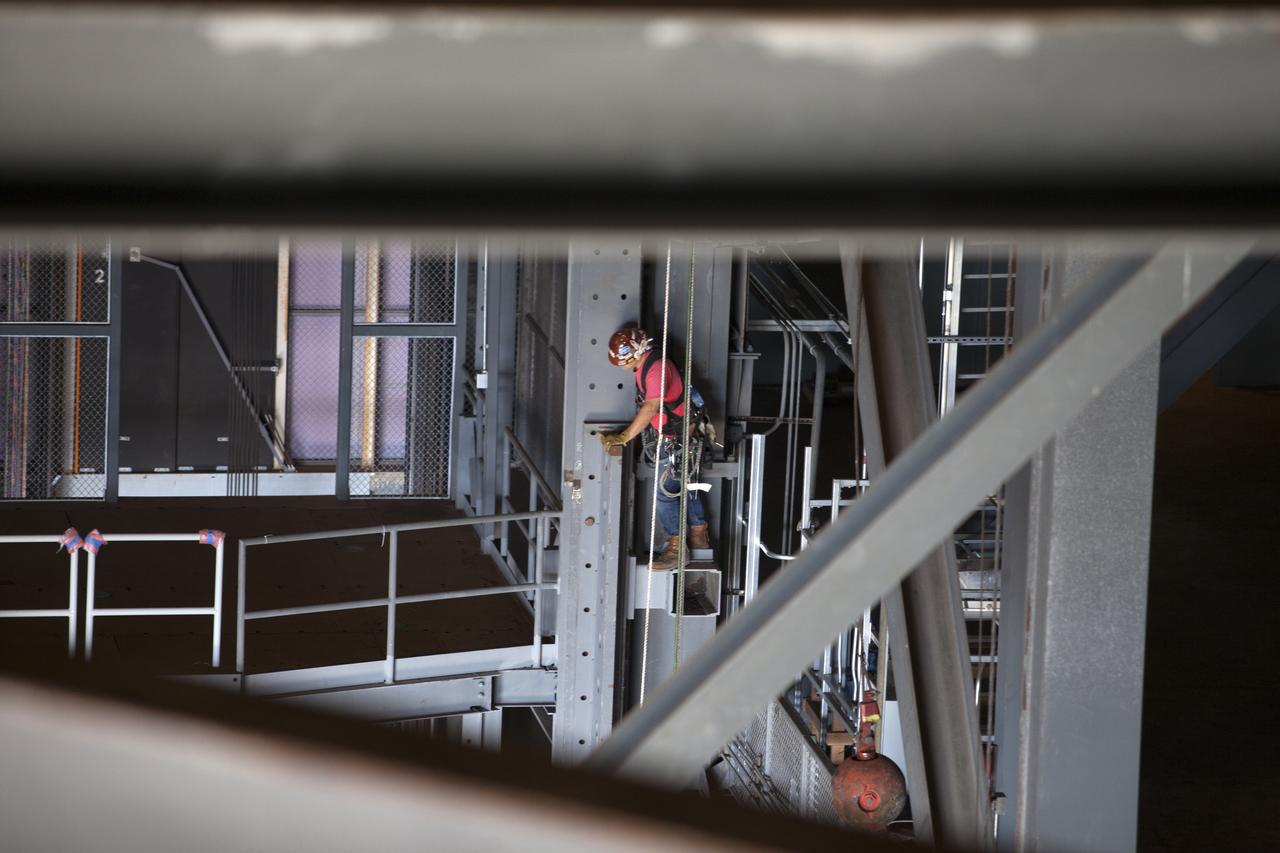
A construction worker wearing a safety harness and tethered lines monitors the progress during the installation of the second half of the B-level work platforms, B north, for NASA’s Space Launch System (SLS) rocket, high up in the Vehicle Assembly Building (VAB) at NASA’s Kennedy Space Center in Florida. The B platform will be installed on the north side of High Bay 3. The B platforms are the ninth of 10 levels of work platforms that will surround and provide access to the SLS rocket and Orion spacecraft for Exploration Mission 1. The Ground Systems Development and Operations Program is overseeing upgrades and modifications to VAB High Bay 3, including installation of the new work platforms, to prepare for NASA’s Journey to Mars.
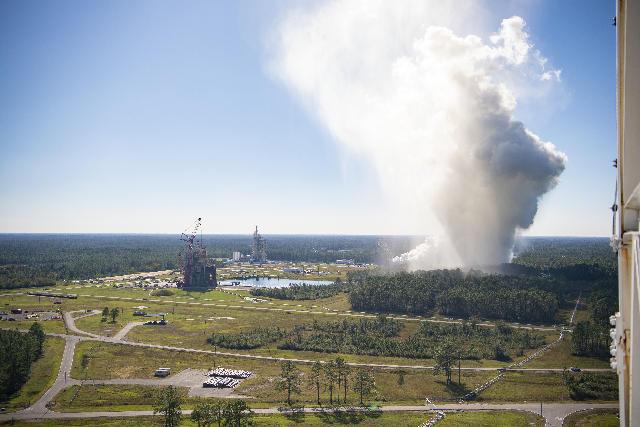
The RS-25 certification test series begins Oct. 17. When the liquid hydrogen and liquid oxygen propellants mix and ignite, an extremely high temperature exhaust, of up to 6,000-degrees Fahrenheit, mixes with water to form steam that exits the flame deflector and rises into the atmosphere, forming a cloud that subsequently cools.
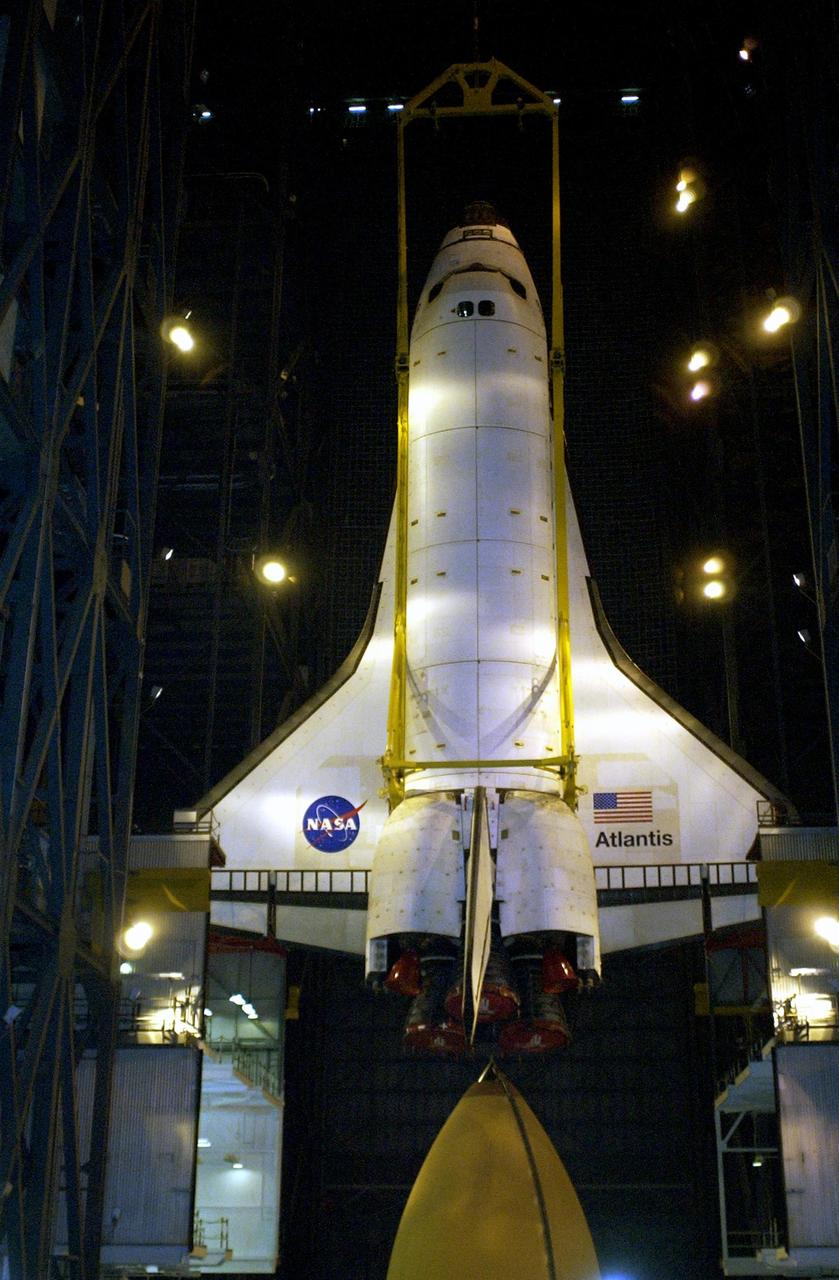
KENNEDY SPACE CENTER, FLA. - Atlantis is lifted up and away from the orange external tank after demating. The orbiter will be lifted out of the high bay in the Vehicle Assembly Building and lowered into the transfer aisle. Atlantis will then be moved to the Orbiter Processing Facility.
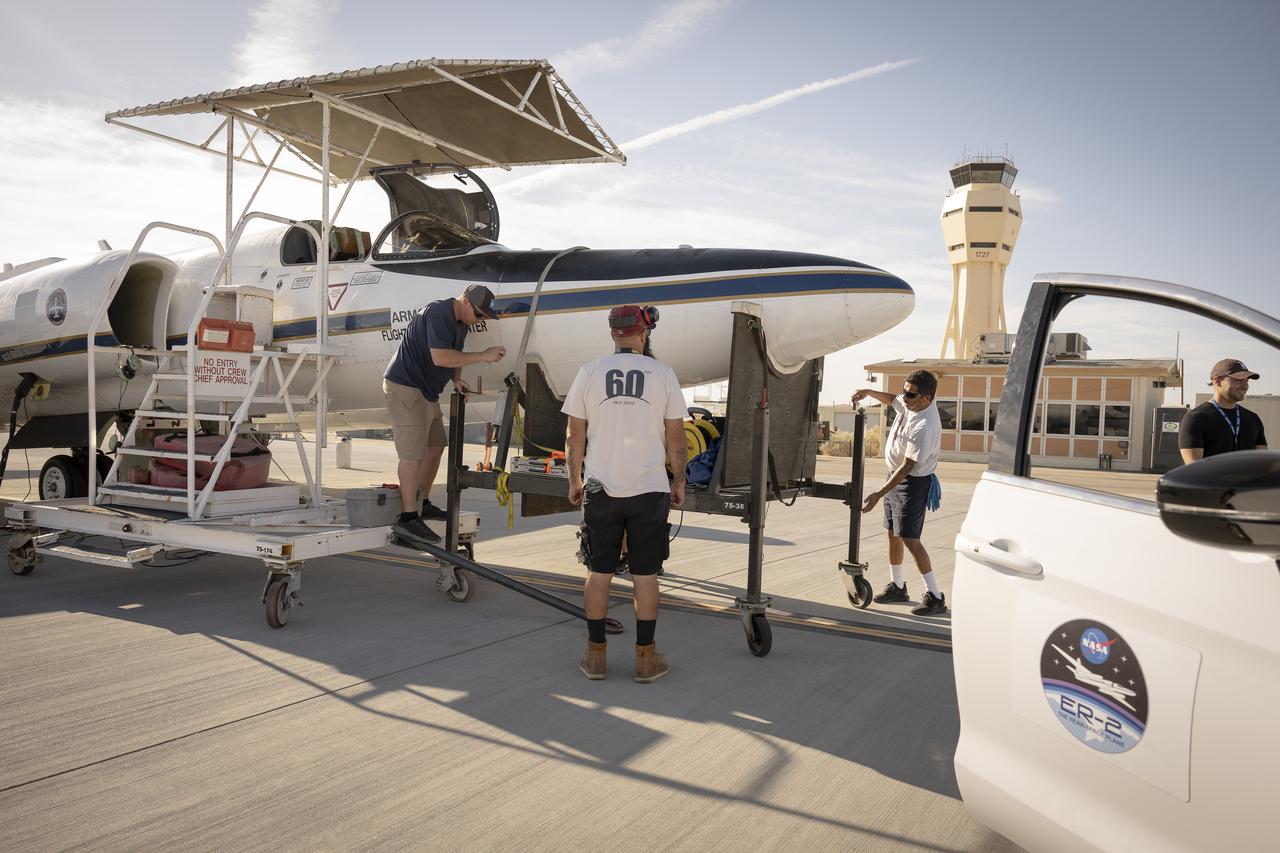
Ground crew members make final preparations on NASA Armstrong Flight Research Center’s ER-2 aircraft at Edwards, California, on Thursday, Aug. 21, 2025, ahead of a high-altitude mission for the Geological Earth Mapping Experiment (GEMx). The pilot will soon board the aircraft, which can fly at altitudes up to 70,000 feet.
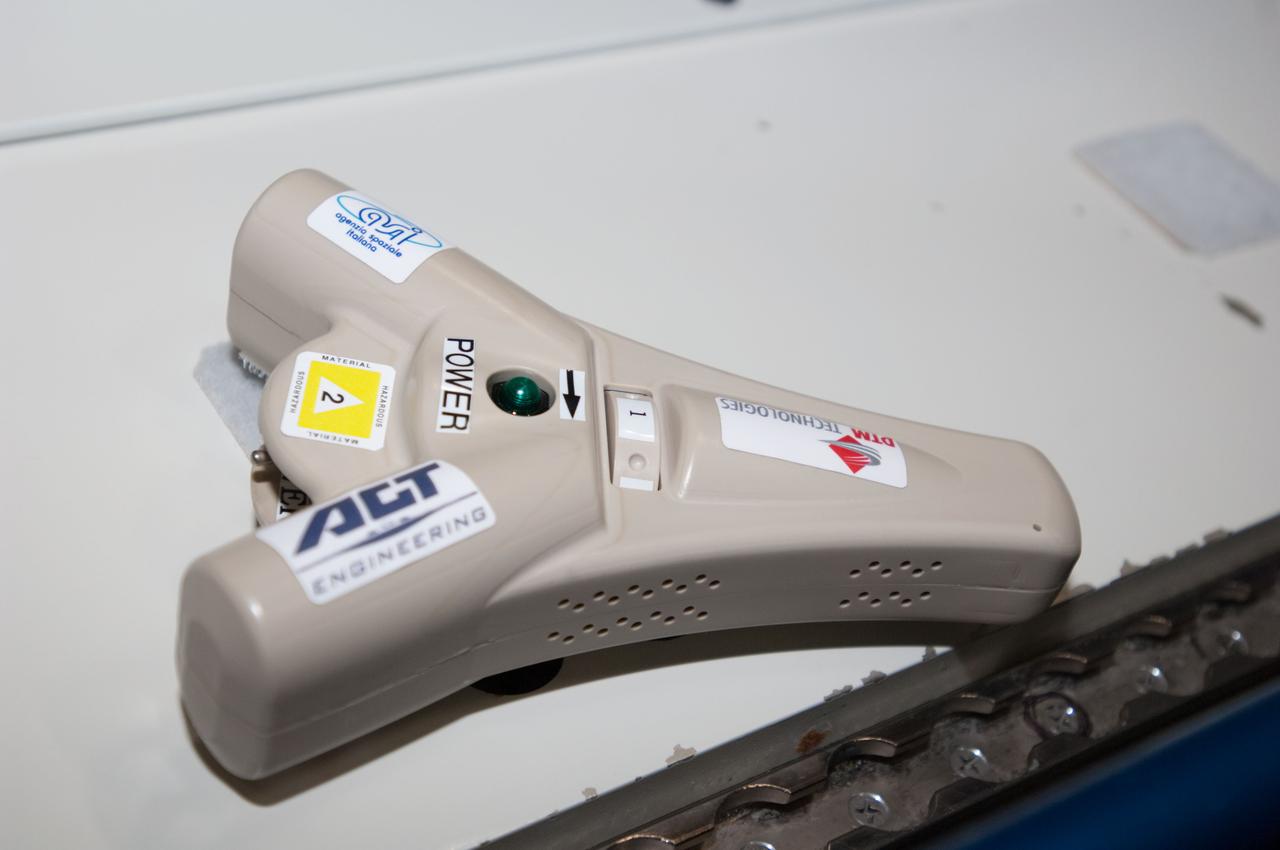
iss038e001785 (11/14/2013) --- Close-up view of DIAPASON in the U.S. Laboratory aboard the International Space Station (ISS). The DIAPASON conducts high-accuracy environmental control,pollution monitoring and particle recording with a simple instrument that captures nanoparticles.

KENNEDY SPACE CENTER, FLA. -- In the transfer aisle of the Vehicle Assembly Building, the orbiter Atlantis is suspended vertically via overhead cranes. The orbiter will be rotated and lifted up and over to a high bay and stacked with its external tank and solid rocket boosters. Space Shuttle Atlantis is scheduled to launch on mission STS-104 in early July
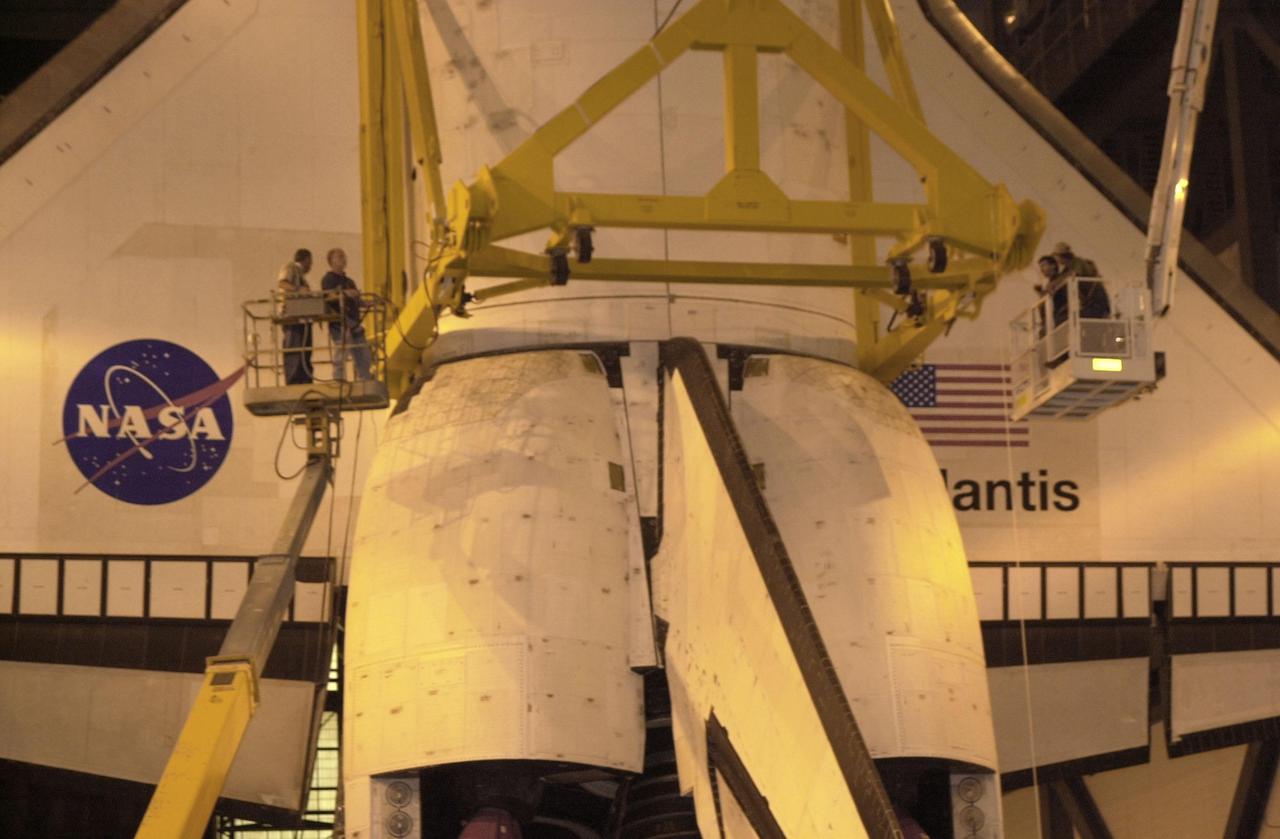
KENNEDY SPACE CENTER, FLA. -- This closeup shows the workers, standing on lifts, who are checking the bolts on the apparatus holding the orbiter Atlantis. The orbiter will be rotated and lifted up and over to a high bay and stacked with its external tank and solid rocket boosters. Space Shuttle Atlantis is scheduled to launch on mission STS-104 in early July

KENNEDY SPACE CENTER, FLA. -- In the Vehicle Assembly Building, overhead cranes raise the orbiter Atlantis to a vertical position in the transfer aisle. The orbiter will be rotated and lifted up and over to a high bay and stacked with its external tank and solid rocket boosters. Space Shuttle Atlantis is scheduled to launch on mission STS-104 in early July