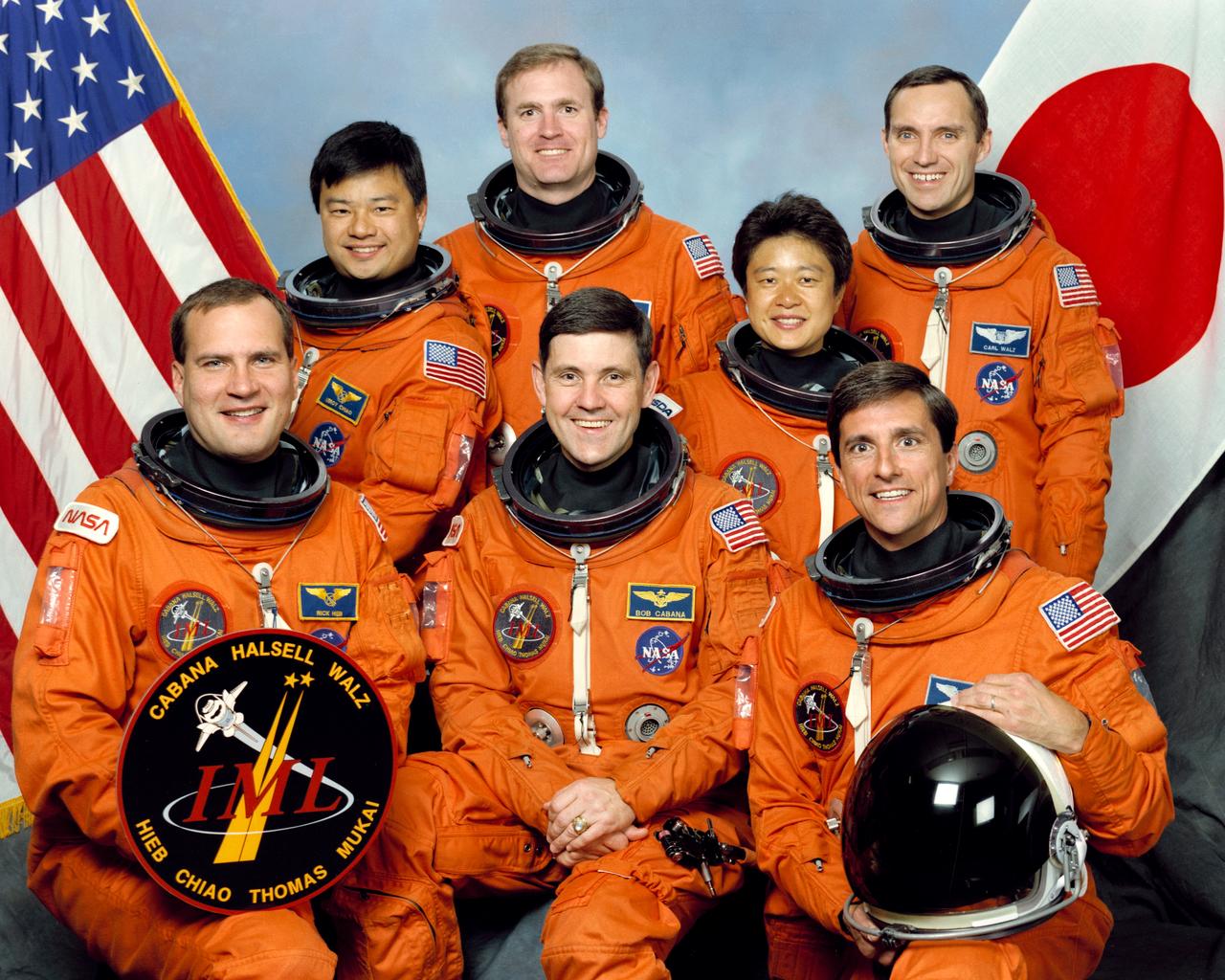
STS065-S-002 (April 1994) --- Six NASA astronauts and a Japanese payload specialist take a break from training to pose for their crew portrait. Left to right are Richard J. Hieb, Leroy Chiao, James D. Halsell Jr., Robert D. Cabana, Dr. Chiaki Mukai, Donald A. Thomas and Carl E. Walz. Cabana is mission commander, and Halsell has been assigned as pilot. Hieb is payload commander, with Walz, Thomas and Chiao serving as mission specialist. Dr. Mukai represents the National Space Development Agency (NASDA) of Japan as payload specialist on the International Microgravity Laboratory (IML) mission.
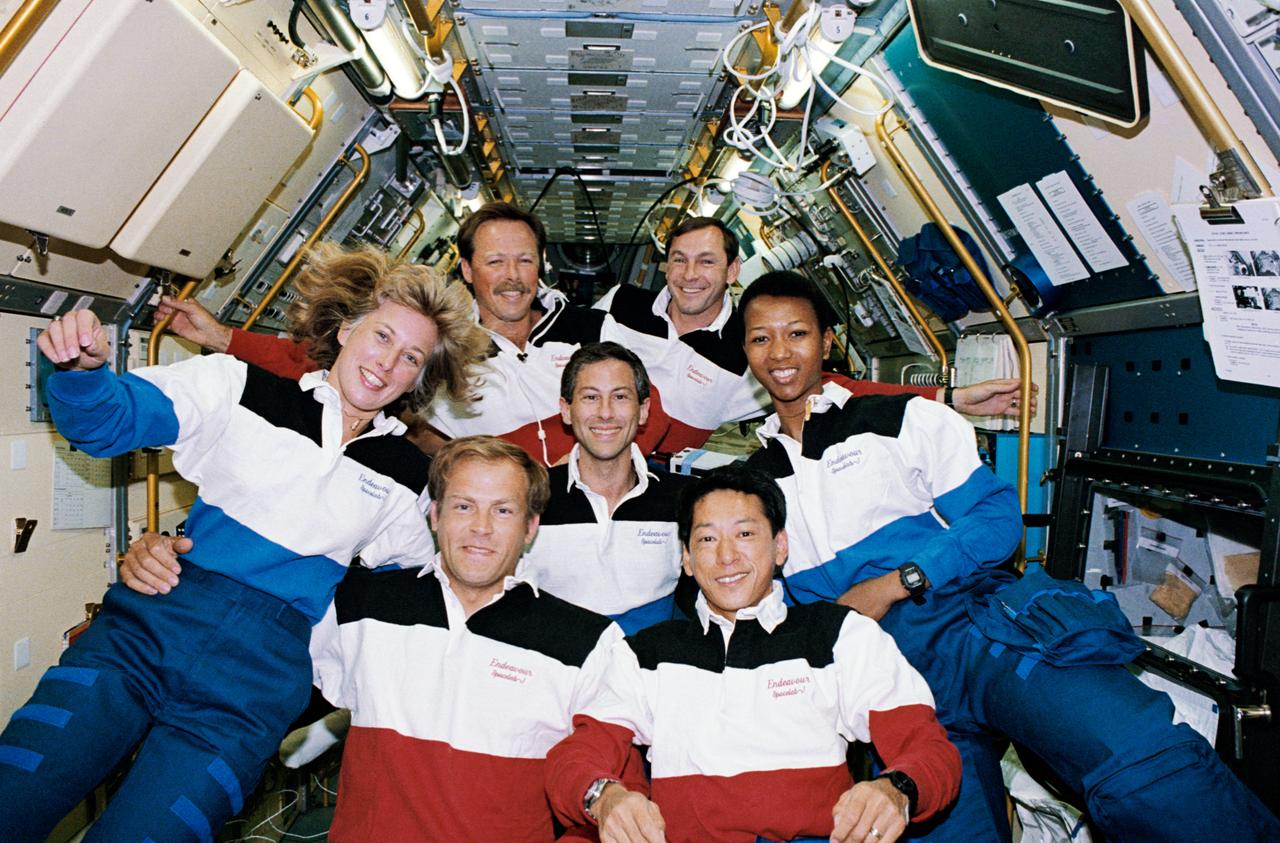
STS047-09-009 (12 - 20 Sept 1992) --- The seven crew members sharing eight days of research in support of Spacelab-J pose for the traditional inflight portrait in the Science Module. Pictured, left to right, back row, are Robert L. Gibson, mission commander; and Curtis L. Brown, Jr., pilot; middle row, N. Jan Davis, Jerome (Jay) Apt and Mae C. Jemison, all mission specialists; and front row, Mark C. Lee, payload commander, and Mamoru Mohri, payload specialist representing Japan's National Space Development Agency (NASDA).
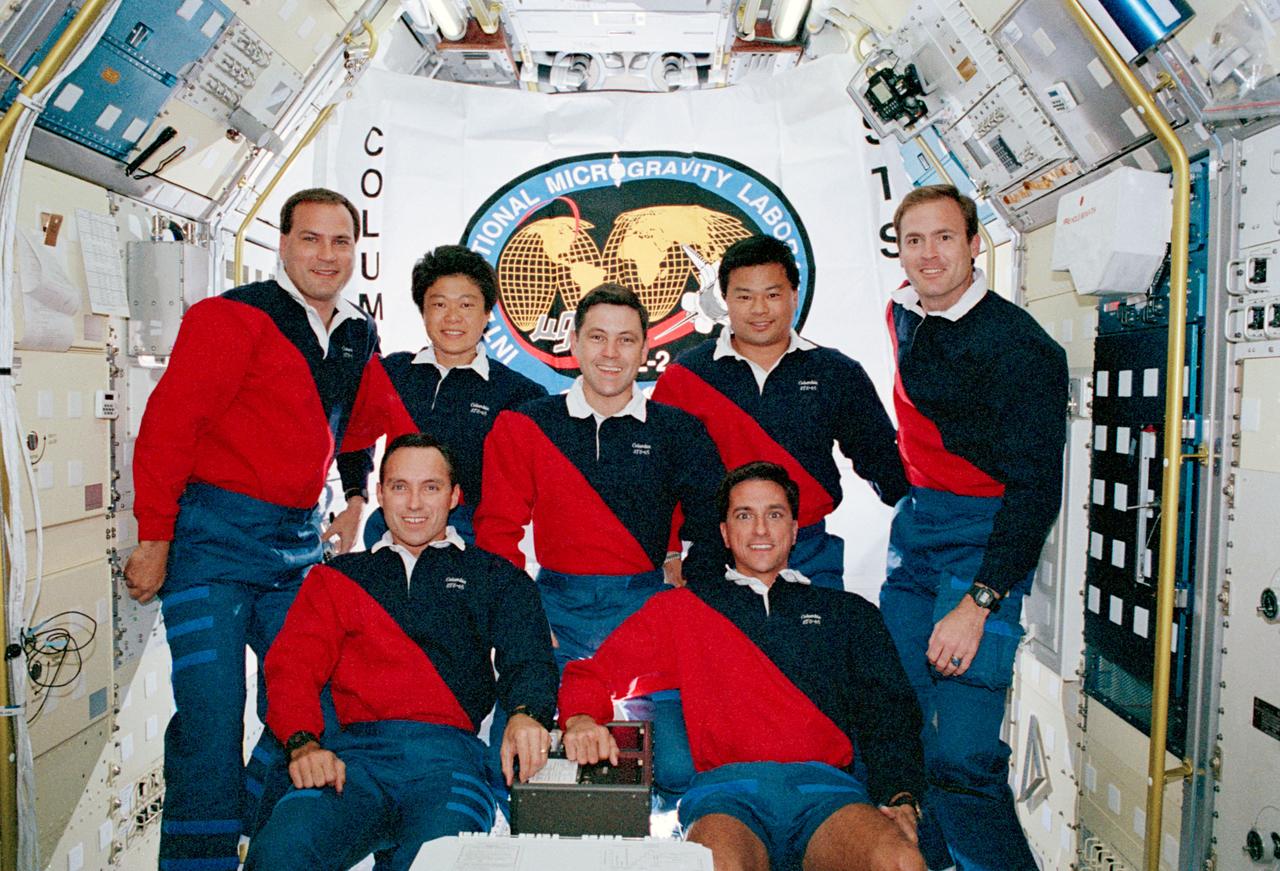
In the spacelab science module aboard the Space Shuttle Columbia, Orbiter Vehicle (OV) 102, the seven crewmembers pose for the traditional onboard (inflight) crew portrait. Displayed in the background is a flag with the International Microgravity Laboratory 2 (IML-2) insignia and Columbia inscribed along the edge. In the front row (left to right) are Mission Specialist (MS) Carl E. Walz and MS Donald A. Thomas. Behind them (left to right) are Payload Commander (PLC) Richard J. Hieb, Payload Specialist Chiaki Mukai, Commander Robert D. Cabana, MS Leroy Chiao, and Pilot James D. Halsell, Jr. Mukai represents the National Space Development Agency (NASDA) of Japan. Crewmembers are wearing their mission polo shirts for the portrait. Inside this module, the crew conducted experiments in support of the IML-2 mission.
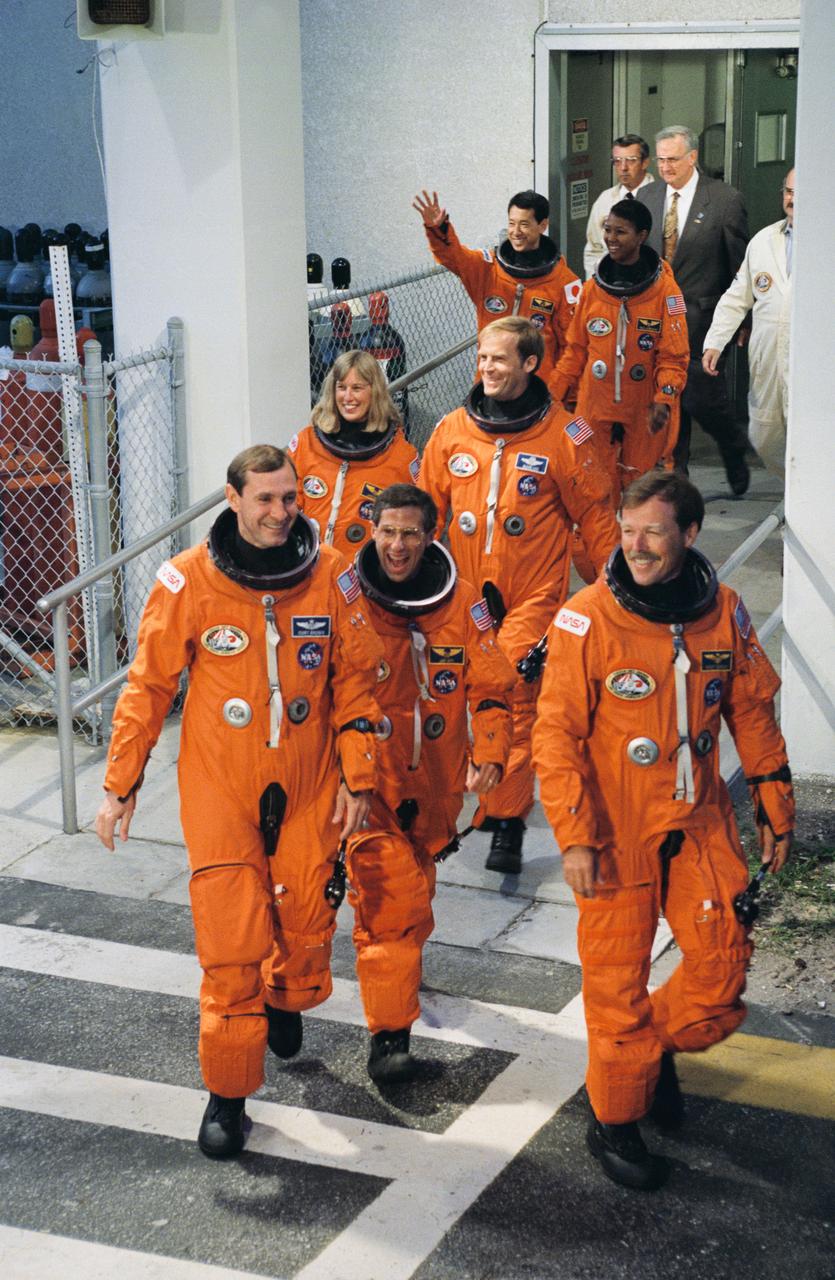
STS047-S-038 (12 Sept 1992) --- The seven crewmembers who will be aboard for Endeavour's second trip into space leave the Operations and Checkout Building to board a van headed for Launch Complex 39. This mission will be devoted to support of the Spacelab-J mission, a joint effort between Japan and the United States. Launch occurred at 10:23:00:0680 a.m. (EDT), September 12, 1992. Onboard were astronauts Robert L. Gibson, mission commander; Curtis L. Brown Jr., pilot; Mark C. Lee, payload commander; and Jerome (Jay) Apt, Mae C. Jemison and N. Jan Davis, mission specialists; along with payload specialist Mamoru Mohri, representing the National Space Development Agency (NASDA) of Japan.
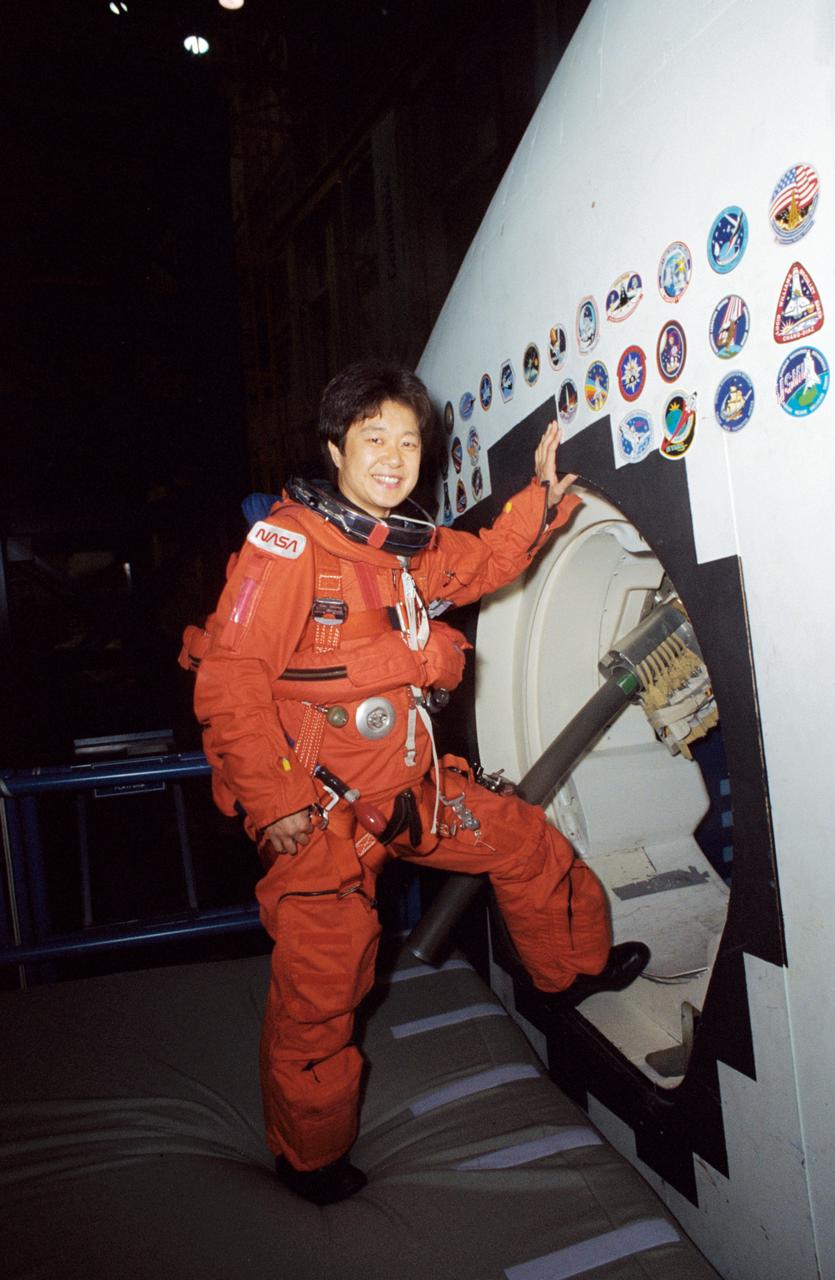
STS-65 Japanese Payload Specialist Chiaki Mukai takes a break from training at the Johnson Space Center (JSC). Wearing a training version of the orange launch and entry suit (LES), Mukai stands at the crew compartment trainer (CCT) side hatch in the Mockup and Integration Laboratory (MAIL) Bldg 9NE. Note the crew escape system (CES) pole device extending out the side hatch which would accommodate crewmembers in bailout from a troubled spacecraft. Mukai represents the National Space Development Agency (NASDA) of Japan and will serve as a payload specialist aboard Columbia, Orbiter Vehicle (OV) 102, during the STS-65 International Microgravity Laboratory 2 (IML-2) mission.
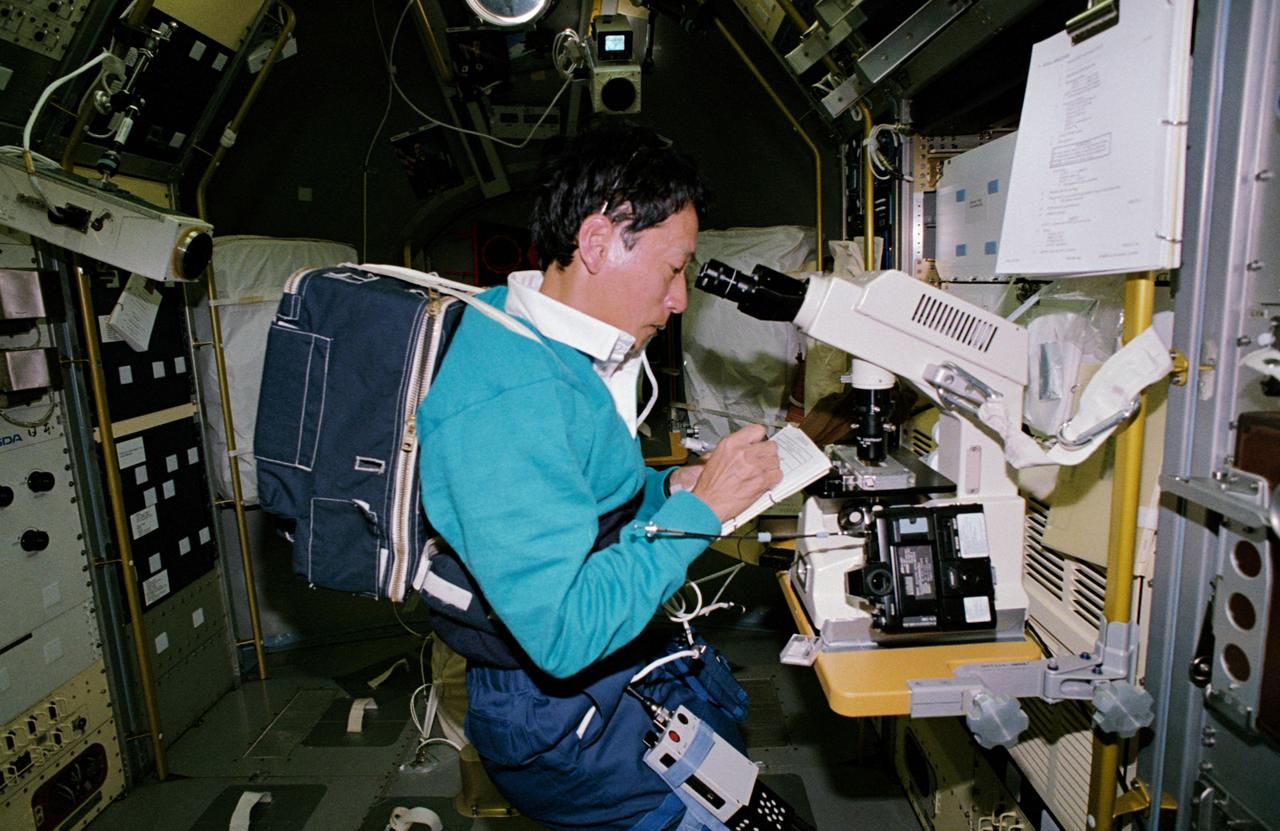
STS047-05-025 (12 - 20 Sept 1992) --- Payload specialist Mamoru Mohri, representing Japan's National Space Development Agency (NASDA), uses a microscope to produce photomicrographs of mammalian cells. The mammal cell structure experiment is one of a large number of tests that were performed during the eight-day Spacelab-J mission. On his back, Dr. Mohri totes a health monitoring experiment. The primary objective of the physiological monitoring system is to observe the health condition of the Japanese payload specialist so that good health can be maintained during and after the spaceflight.

STS065-214-037 (8-23 July 1994) --- Ready to begin one of her busy twelve hour shifts, payload specialist Dr. Chiaki Naito-Mukai enters the International Microgravity Laboratory (IML-2) science module in the cargo bay via the tunnel connecting it to the Space Shuttle Columbia's cabin. Dr. Mukai joined six NASA astronauts for more than two weeks of experimenting in Earth orbit. This photo was among the first released by NASA following IML-2. Also onboard were NASA astronauts Robert D. Cabana, James D. Halsell, Jr., Richard J. Hieb, Carl E. Walz, Donald A. Thomas and Leroy Chiao. Dr. Mukai represented the National Space Development Agency (NASDA) of Japan.
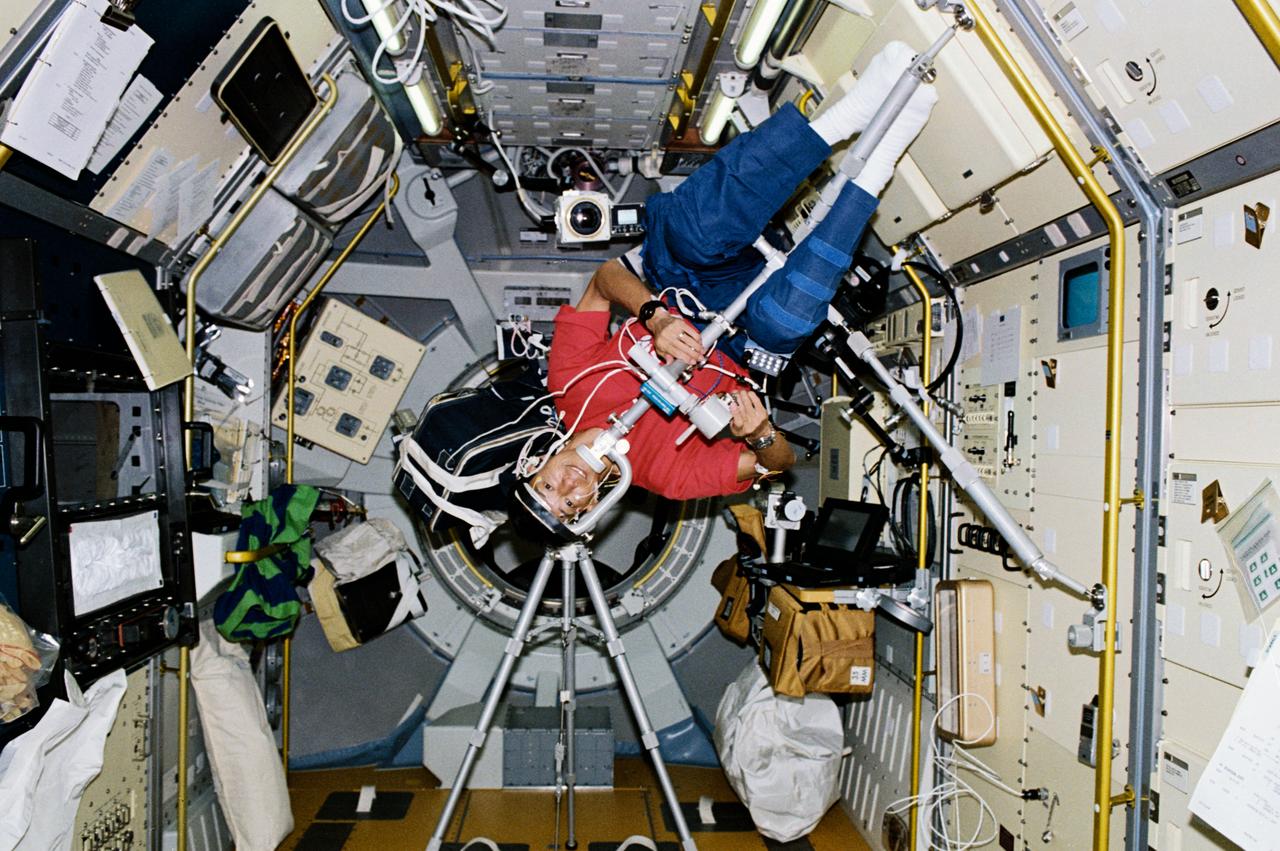
STS047-204-006 (12 - 20 Sept 1992) --- Dr. Mamoru Mohri, payload specialist representing Japan's National Space Development Agency (NASDA), participates in an experiment designed to learn more about Space Adaptation Syndrome (SAS). The experiment is titled, "Comparative Measurement of Visual Stability in Earth and Cosmic Space." During the experiment, Dr. Mohri tracked a flickering light target while eye movements and neck muscle tension were measured. This 45-degree angle position was one of four studied during the eight-day Spacelab-J mission.
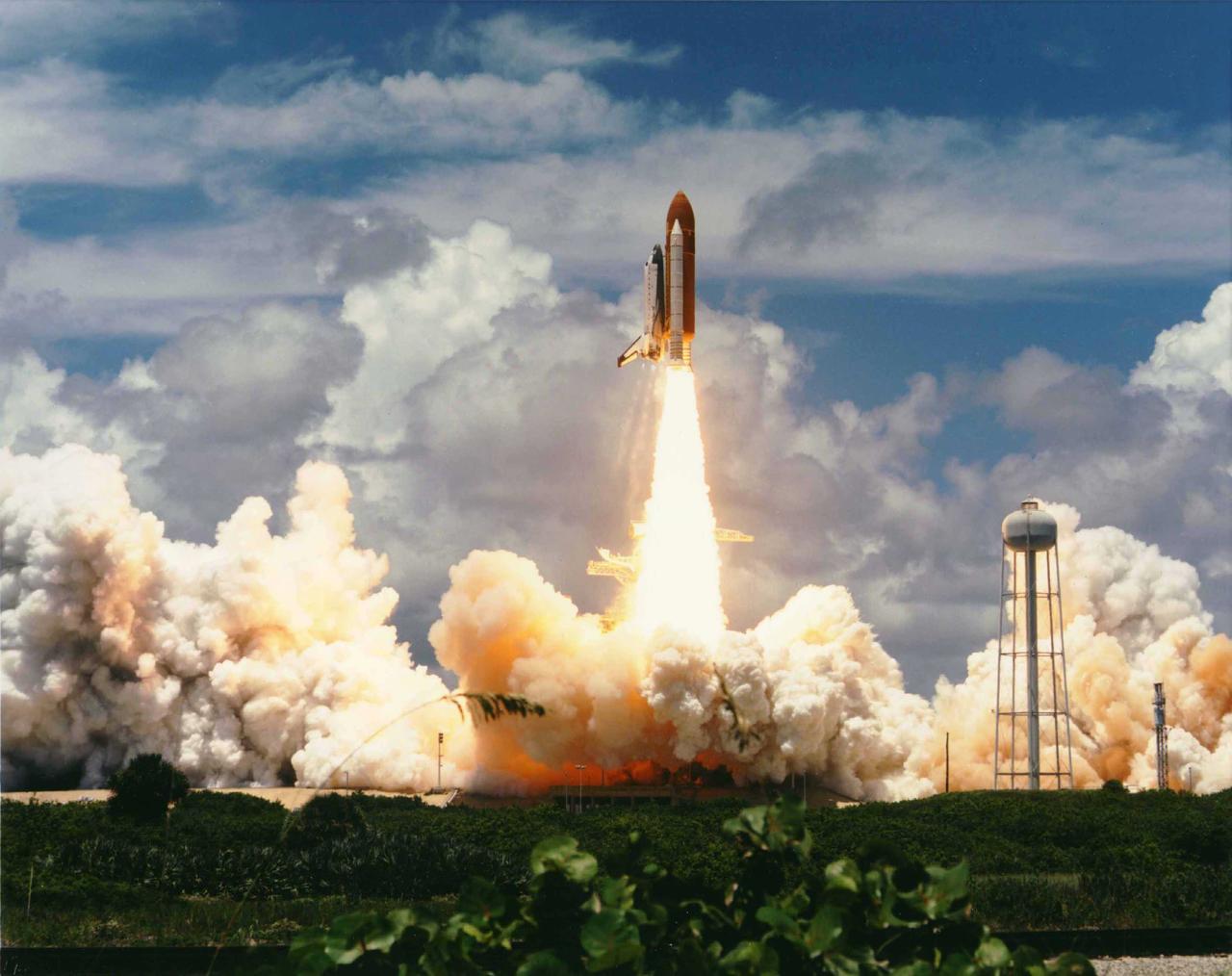
KENNEDY SPACE CENTER, FLA. - The second International Microgravity Laboratory-2 (IML-2) is off to an ontime start as the Space Shuttle Columbia lifts off from Launch Pad 39A at 12:43:00 p.m. EDT. On board are a crew of seven and more than 80 investigations developed by more than 200 scientists from 13 countries. The IML-2 complement includes materials science, bioprocessing, space and radiation biology, and human physiology experiments that will be carried out over the course of the 14-day flight. The commander of Space Shuttle Mission STS-65 is Robert D. Cabana. James D. Halsell Jr. is the pilot; the payload commander is Richard J. Hieb; the three mission specialists are Carl E. Walz, Leroy Chiao and Donald A. Thomas. Dr. Chiaki Mukai, representing NASDA, the National Space Development Agency of Japan, is the payload specialist. Mukai becomes the first Japanese woman to fly into space.
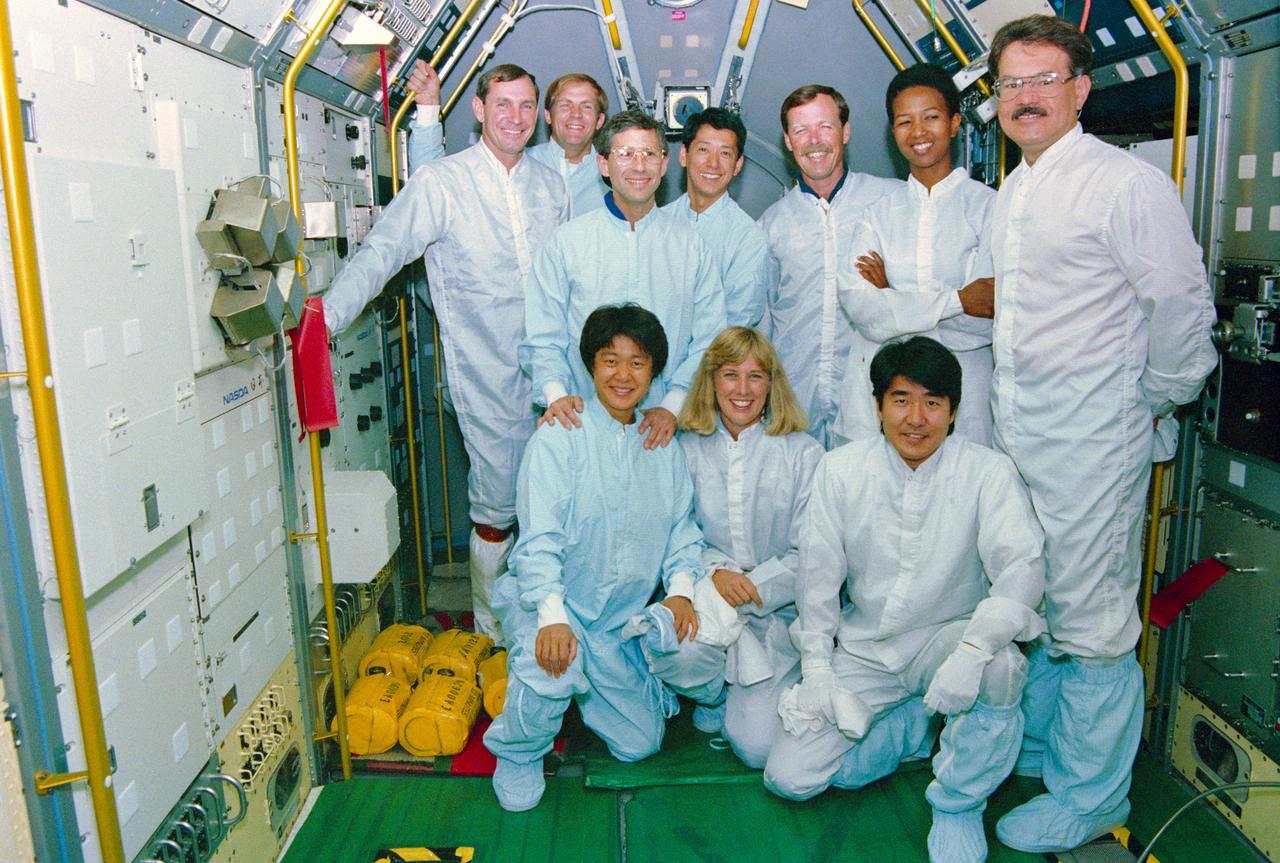
S92-44303 --- STS-47 Endeavour, Orbiter Vehicle (OV) 105, crew members and back-up payload specialists, wearing clean suits, pose for a group portrait in the Spacelab Japan (SLJ) module. The team is at the Kennedy Space Center's (KSC's) Orbiter Processing Facility (OPF) to inspect SLJ configuration and OV-105 preparations. Kneeling, from left, are back-up Payload Specialist Chiaki Naito-Mukai; Mission Specialist N. Jan Davis; and backup Payload Specialist Takao Doi. Standing, from the left, are Pilot Curtis L. Brown,Jr; Payload Commander Mark C. Lee; Jerome Apt; Payload Specialist Mamoru Mohri; Commander Robert L. Gibson; Mae C. Jemison; and back-up Payload Specialist Stanely L. Koszelak. Mohri, Mukai, and Doi represent the National Space Development Agency of Japan (NASDA). View provided by KSC with alternate KSC number KSC-92PC-1647. Photo credit: NASA
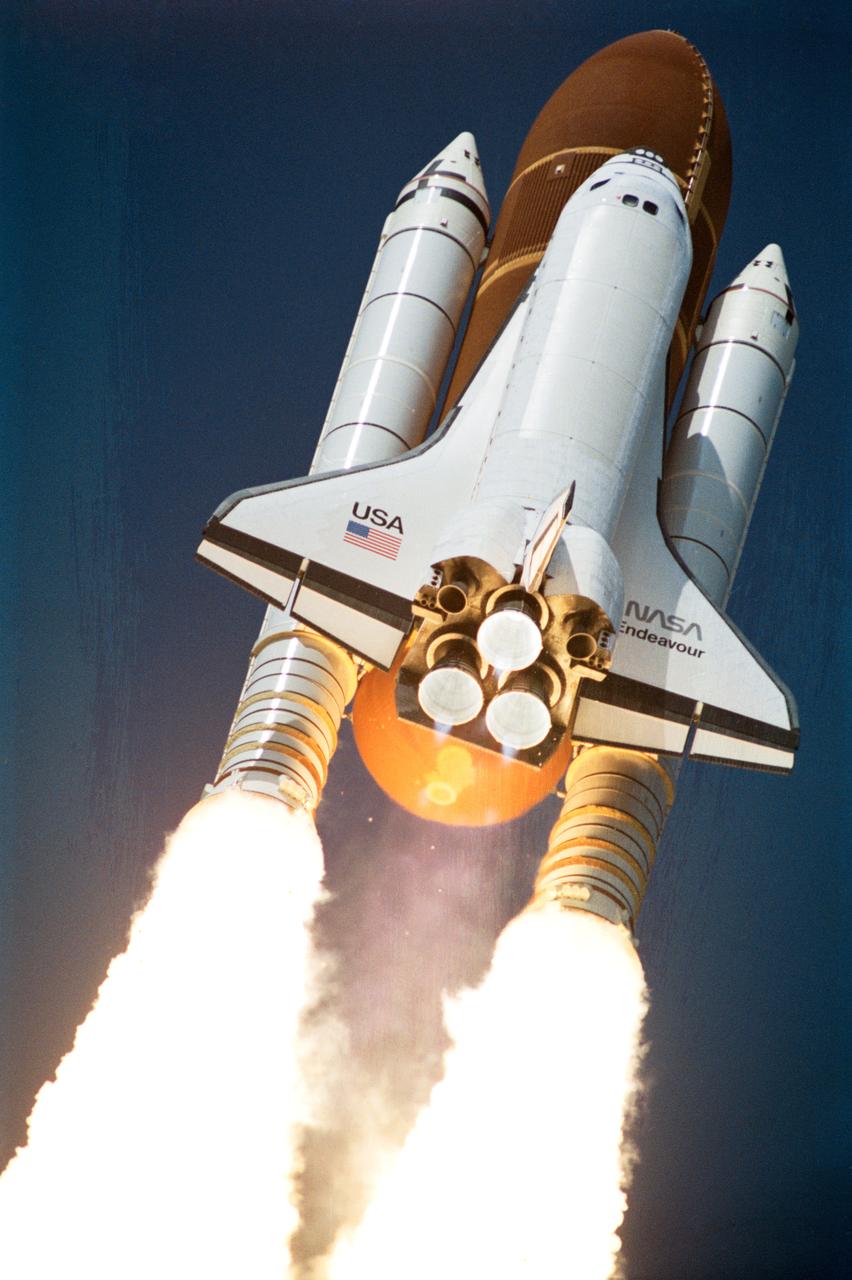
STS047-S-039 (12 Sept 1992) --- A 35mm camera was used to record this low-angle view of the STS-47 launch. With a crew of six NASA astronauts and a Japanese payload specialist onboard, the Space Shuttle Endeavour was heading for its second trip into space. This mission will be devoted to support of the Spacelab-J mission, a joint effort between Japan and the United States. Launch occurred at 10:23:00:0680 a.m. (EDT), September 12, 1992. Onboard were astronauts Robert L. Gibson, mission commander; Curtis L. Brown Jr., pilot; Mark C. Lee, payload commander; and Jerome (Jay) Apt, Mae C. Jemison and N. Jan Davis, mission specialists; along with payload specialist Mamoru Mohri, representing the National Space Development Agency (NASDA) of Japan.
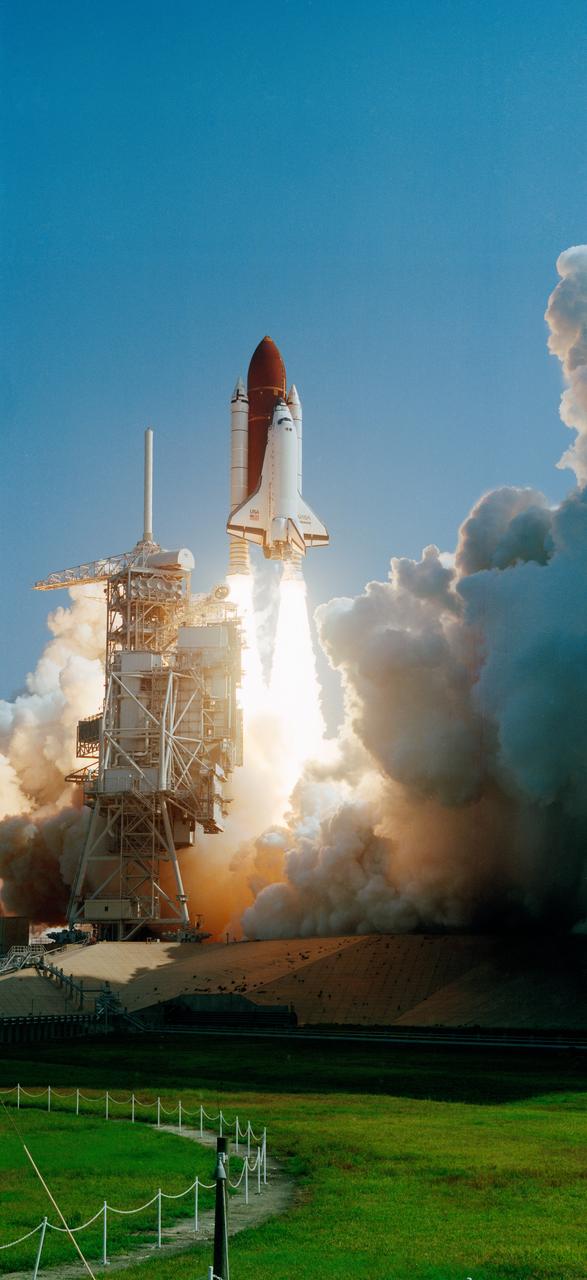
STS047-S-021 (12 Sept 1992) --- With a crew of six NASA astronauts and a Japanese payload specialist onboard, the Space Shuttle Endeavour heads for its second trip into space. This trip will be devoted to support of the Spacelab-J mission, a joint effort between Japan and the United States. Launch occurred at 10:23:00:0680 a.m. (EDT), September 12, 1992. Onboard were astronauts Robert L. Gibson, mission commander; Curtis L. Brown Jr., pilot; Mark C. Lee, payload commander; and Jerome (Jay) Apt, Mae C. Jemison and N. Jan Davis, mission specialists, along with payload specialist Mamoru Mohri, representing the National Space Development Agency of Japan.
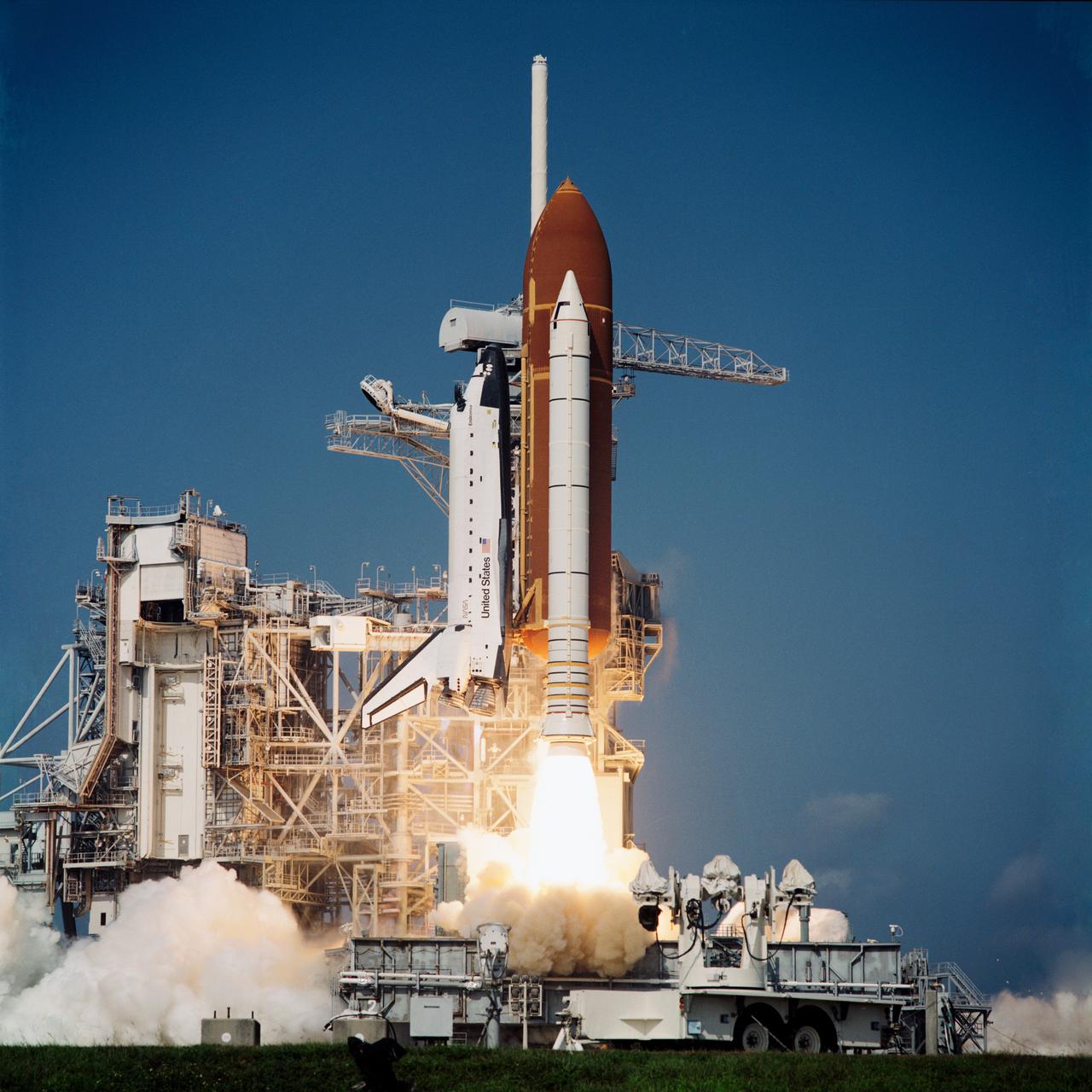
STS047-S-019 (12 Sept 1992) --- With a crew of six NASA astronauts and a Japanese payload specialist onboard, the Space Shuttle Endeavour heads for its second trip into space. This trip will be devoted to support of the Spacelab-J mission, a joint effort between Japan and the United States. Launch occurred at 10:23:00:0680 a.m. (EDT), September 12, 1992. Onboard were astronauts Robert L. Gibson, mission commander; Curtis L. Brown Jr., pilot; Mark C. Lee, payload commander; and Jerome (Jay) Apt, Mae C. Jemison and N. Jan Davis, mission specialists; along with payload specialist Mamoru Mohri, representing the National Space Development Agency of Japan.
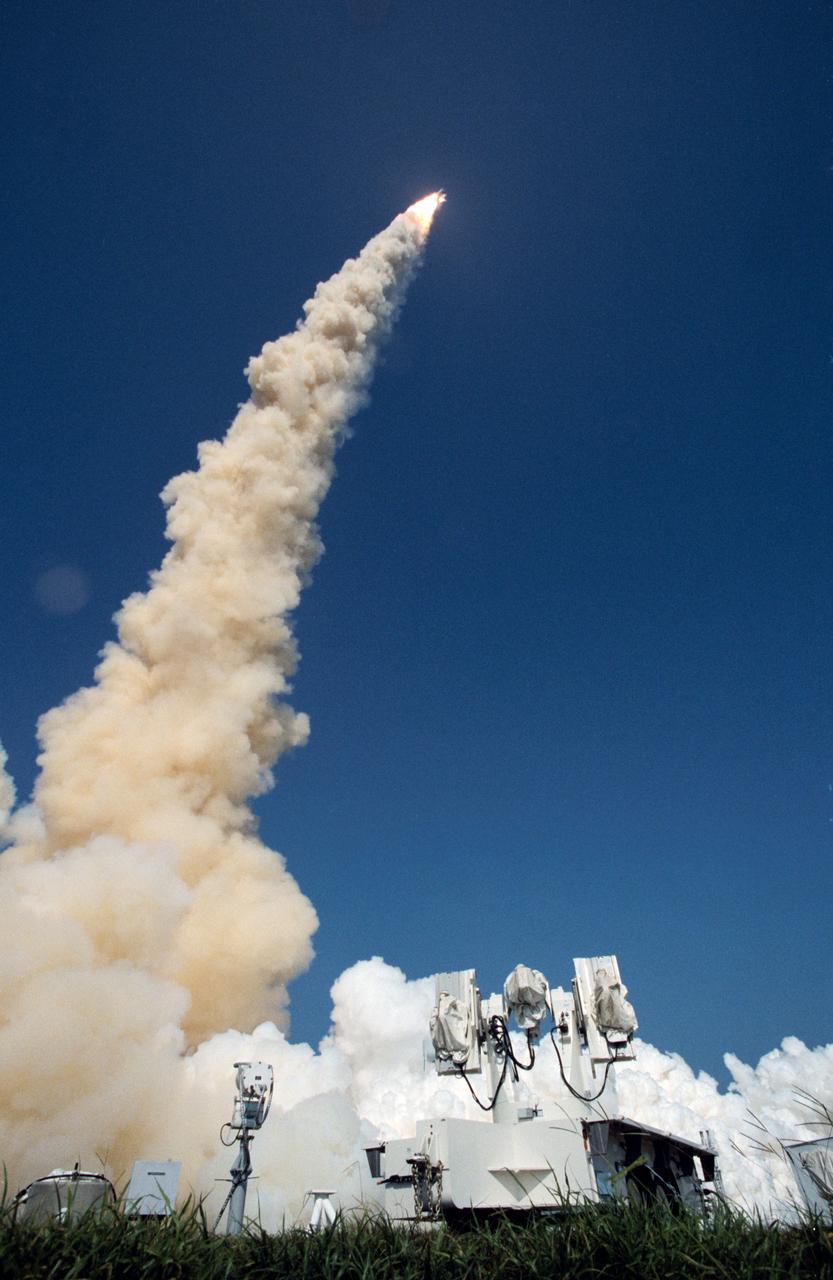
STS047-S-040 (12 Sept 1992) --- A 35mm camera was used to record this distant, low-angle view of the STS-47 launch. With a crew of six NASA astronauts and a Japanese payload specialist onboard, the Space Shuttle Endeavour was heading for its second trip into space. This mission is devoted to support of the Spacelab-J mission, a joint effort between Japan and the United States. Launch occurred at 10:23:00:0680 a.m. (EDT), September 12, 1992. Onboard were astronauts Robert L. Gibson, mission commander; Curtis L. Brown Jr., pilot; Mark C. Lee, payload commander; and Jerome (Jay) Apt, Mae C. Jemison and N. Jan Davis, mission specialists; along with payload specialist Mamoru Mohri, representing the National Space Development Agency (NASDA) of Japan.
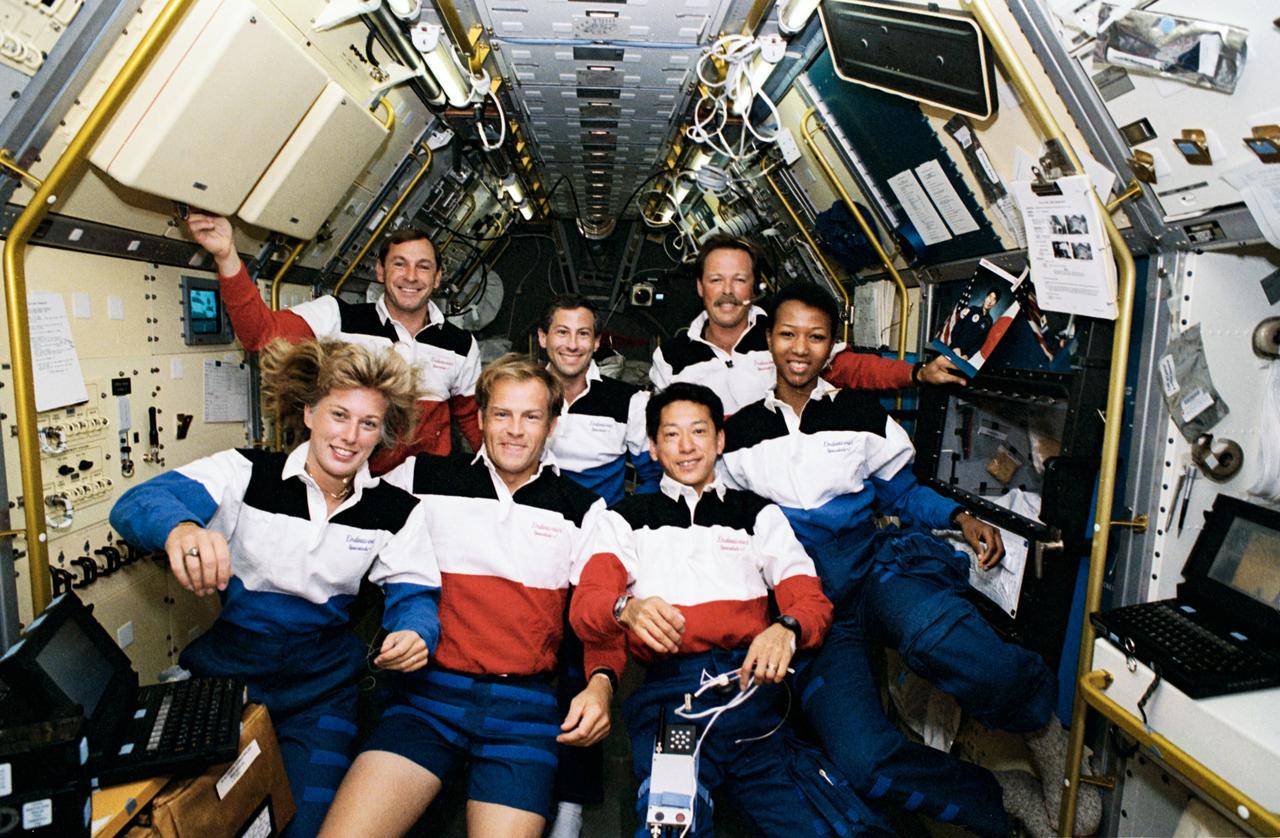
STS047-12-002 (12 - 20 Sept 1992) --- The crew members assemble for their traditional in-flight portrait in this 35mm frame photographed in the Science Module aboard the Earth-orbiting Space Shuttle Endeavour. Left to right (front) are N. Jan Davis, Mark C. Lee and Mamoru Mohri; and (rear) Curtis L. Brown, Jr., Jerome (Jay) Apt, Robert L. Gibson and Mae C. Jemison. The seven spent eight days in space in support of the Spacelab-J mission.
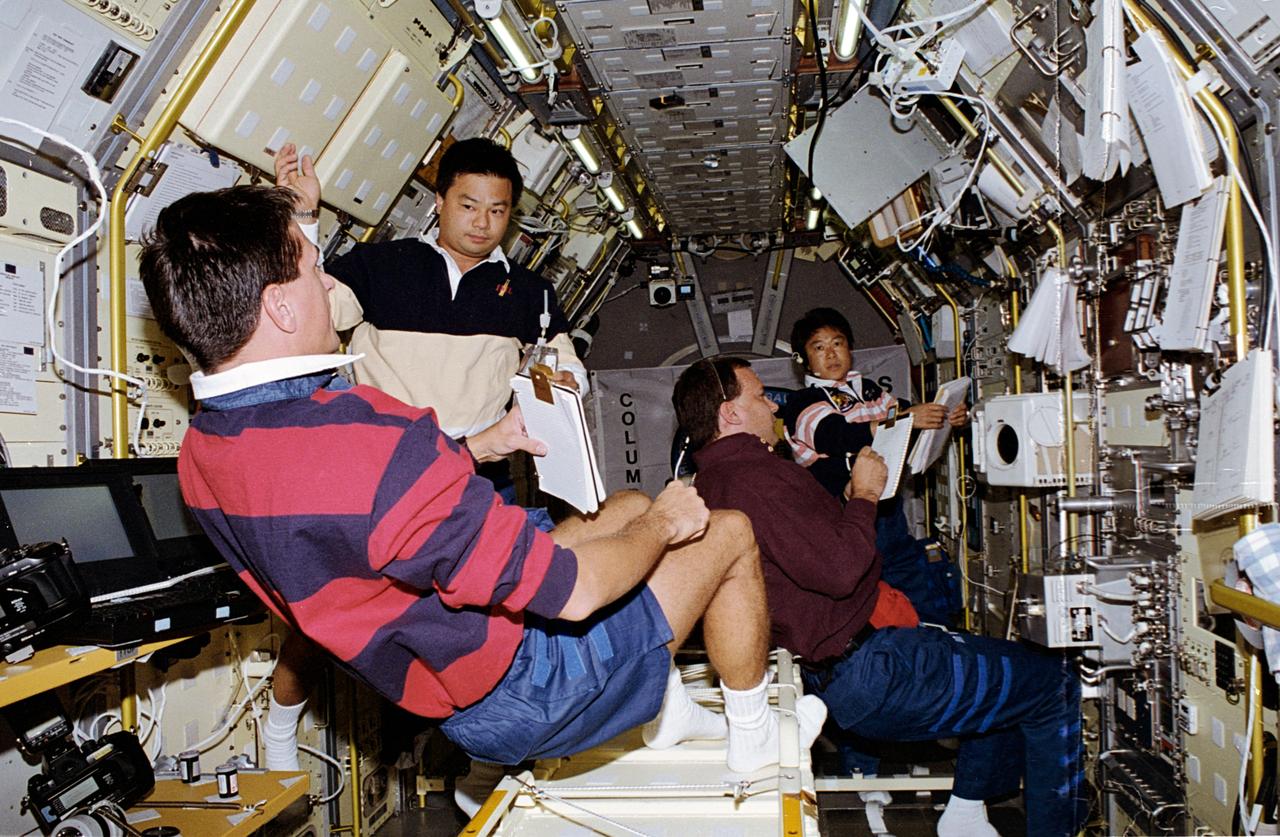
STS065-05-037 (8-23 July 1994) --- In the science module aboard the Space Shuttle Columbia, four members of the crew busy themselves with experiments in support of the second International Microgravity Laboratory (IML-2) mission. Left to right are Donald A. Thomas and Leroy Chiao, both mission specialists; Richard J. Hieb, payload commander, and Dr. Chiaki Mukai of NASDA, payload specialist.
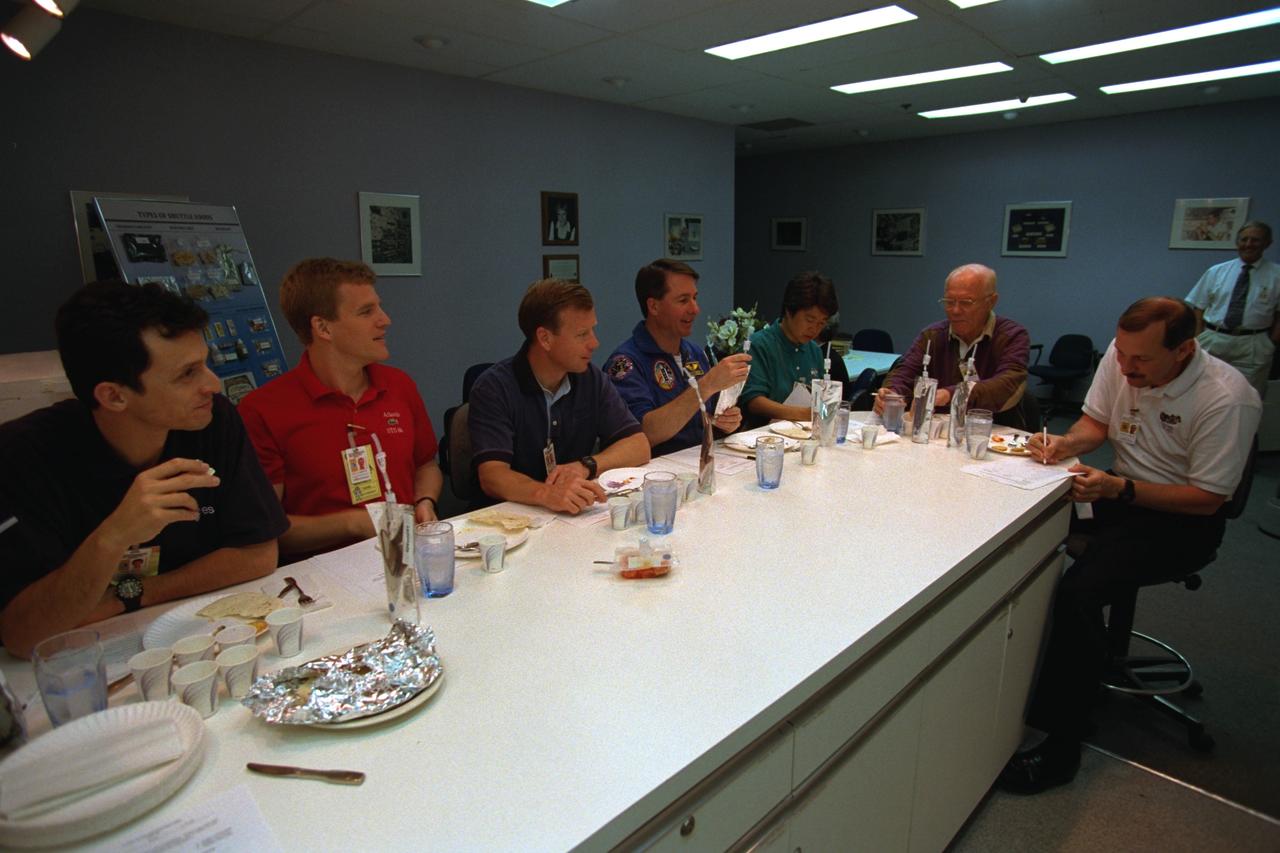
S98-08736 (9 April 1998) --- The STS-95 crew members sample space food as part of their training agenda for the scheduled late October/early November mission aboard the Space Shuttle Discovery. From the left are Pedro Duque, mission specialist representing the European Space Agency (ESA); Scott E. Parazynski, mission specialist; Steven W. Lindsey, pilot; Stephen K. Robinson, mission specialist; Chiaki Mukai, payload specialist representing Japan's National Space Development Agency (NASDA); U.S. Sen. John H. Glenn Jr., payload specialist; and Curtis L. Brown Jr., commander. The photo was taken by Joe McNally, National Geographic, for NASA.
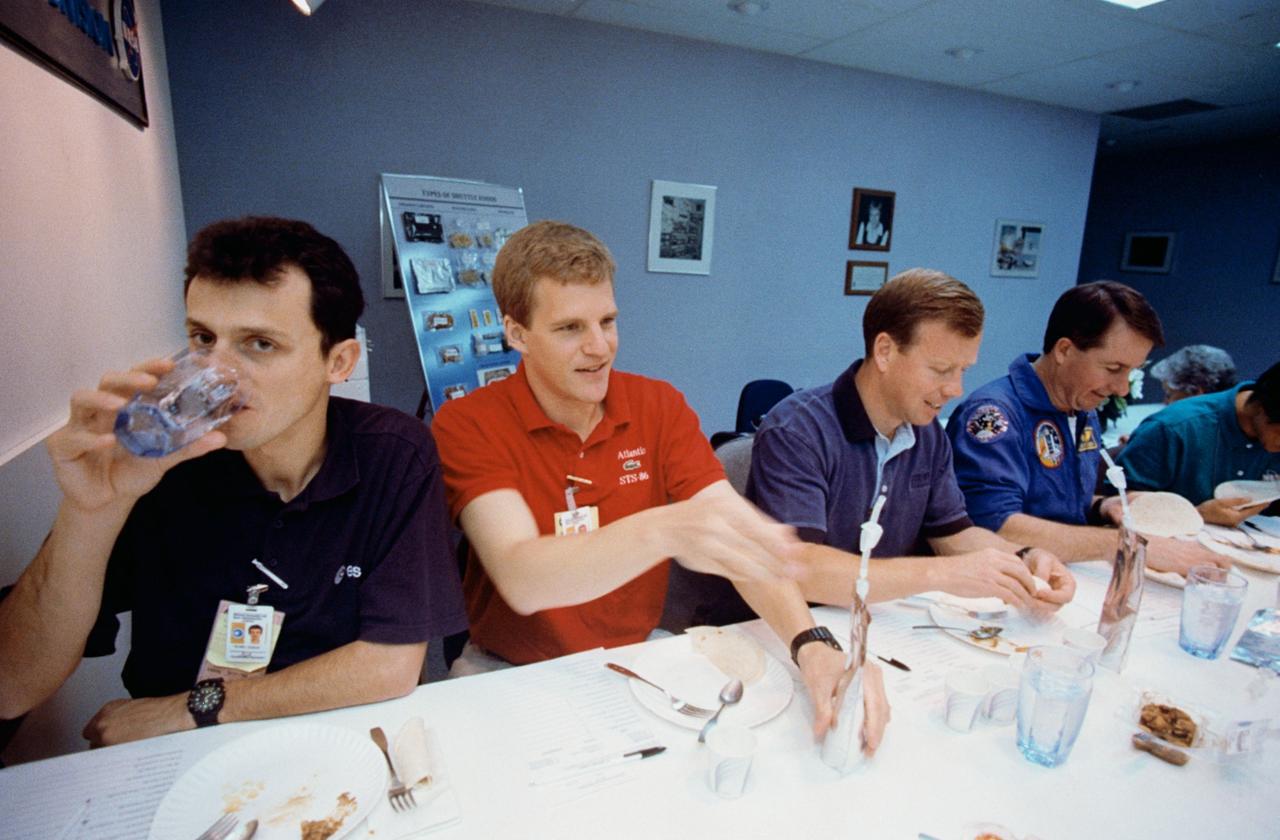
S98-08735 (9 April 1998) --- Five members of the STS-95 crew participate in a food tasting session at NASA's Johnson Space Center. From the left are Pedro Duque, a mission specialist representing the European Space Agency (ESA); Scott E. Parazynski, mission specialist; Steven W. Lindsey, pilot; Stephen K. Robinson, mission specialist; and payload specialist Chiaki Mukai of Japan's National Space Development Agency (NASDA). At the session but not pictured are U.S. Sen. John H. Glenn Jr., payload specialist; and Curtis L. Brown Jr., commander. The photo was taken by Joe McNally, National Geographic, for NASA.
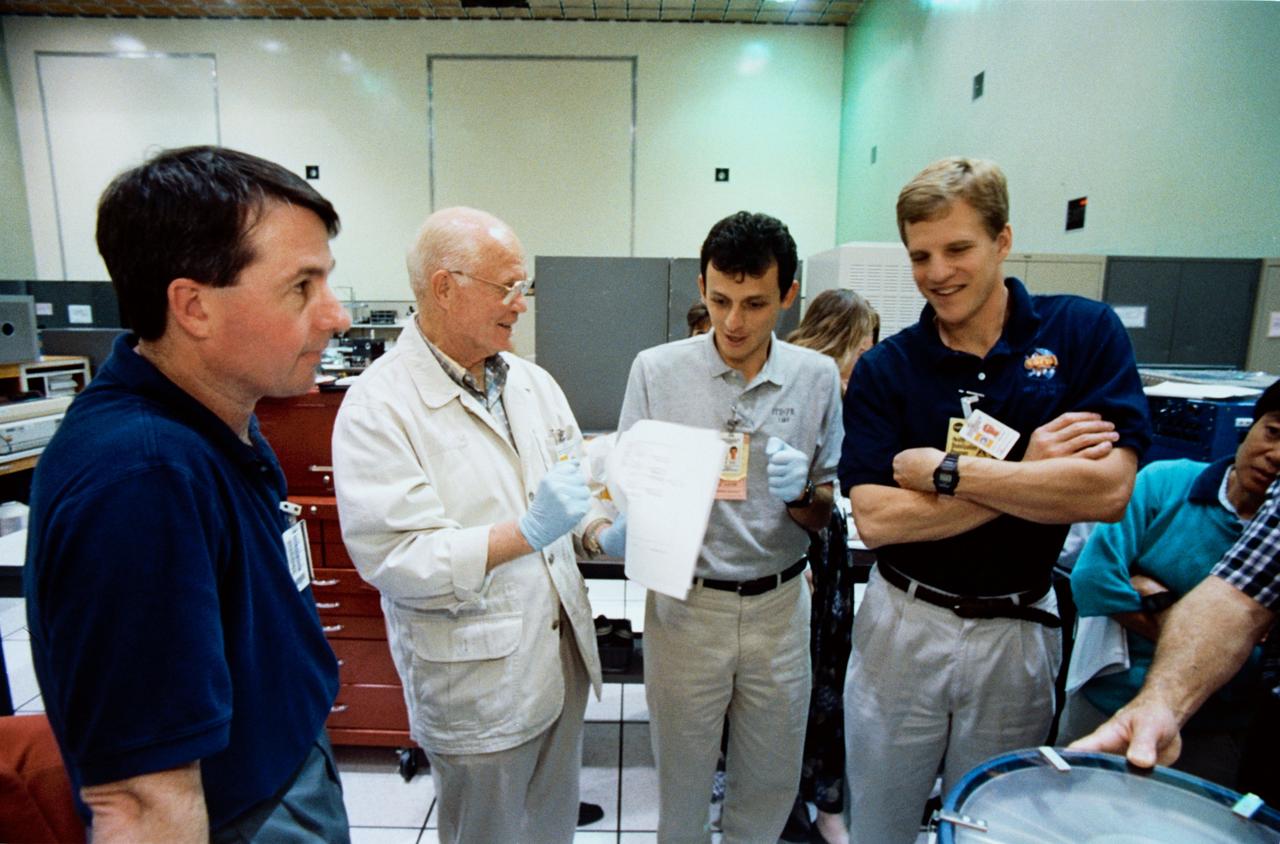
S98-08740 (9 April 1998) --- Five members of the STS-95 crew review supplies that may accompany them on the scheduled October launch of the Space Shuttle Discovery. From the left are Stephen K. Robinson, mission specialist; U.S. Sen. John H. Glenn Jr. (D.-Ohio), payload specialist; Pedro Duque, mission specialist representing the European Space Agency (ESA); Scott E. Parazynski, mission specialist; and Chiaki Mukai, payload specialist representing Japan's National Space Development Agency (NASDA). The photo was taken by Joe McNally, National Geographic, for NASA.
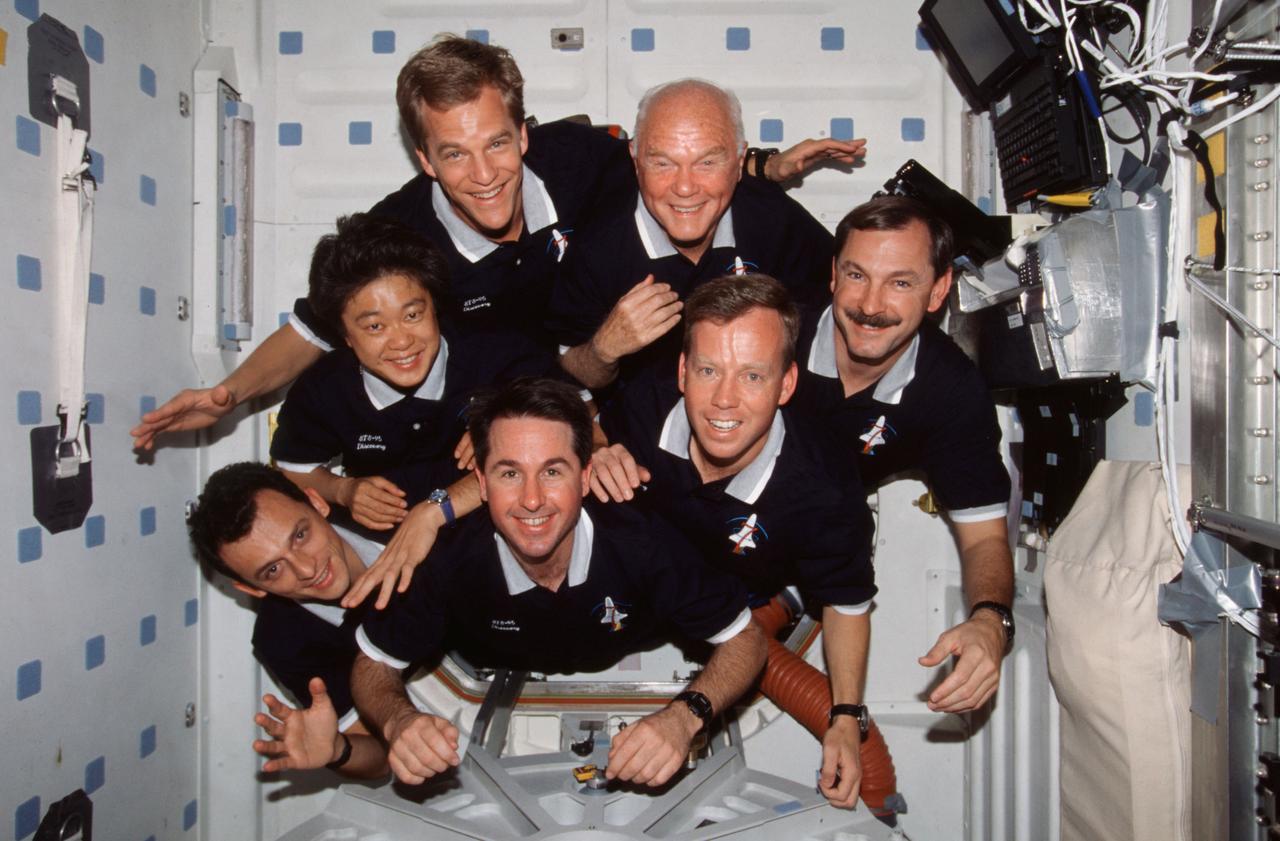
STS095-328-031 (29 Oct.-7 Nov. 1998) --- With their feet anchored in the hatchway, the seven STS-95 crew members pose for their traditional in-flight crew portrait. Astronaut Curtis L. Brown Jr., commander, appears at right center in the pyramid. Others, clockwise from there, are Steven W. Lindsey, pilot; Stephen K. Robinson, mission specialist; Pedro Duque, mission specialist representing the European Space Agency (ESA); payload specialist Chiaki Naito-Mukai, who represents Japan's National Space Development Agency (NASDA); Scott E. Parazynski, mission specialist; and United States Senator John H. Glenn Jr. (D.-Ohio), payload specialist.
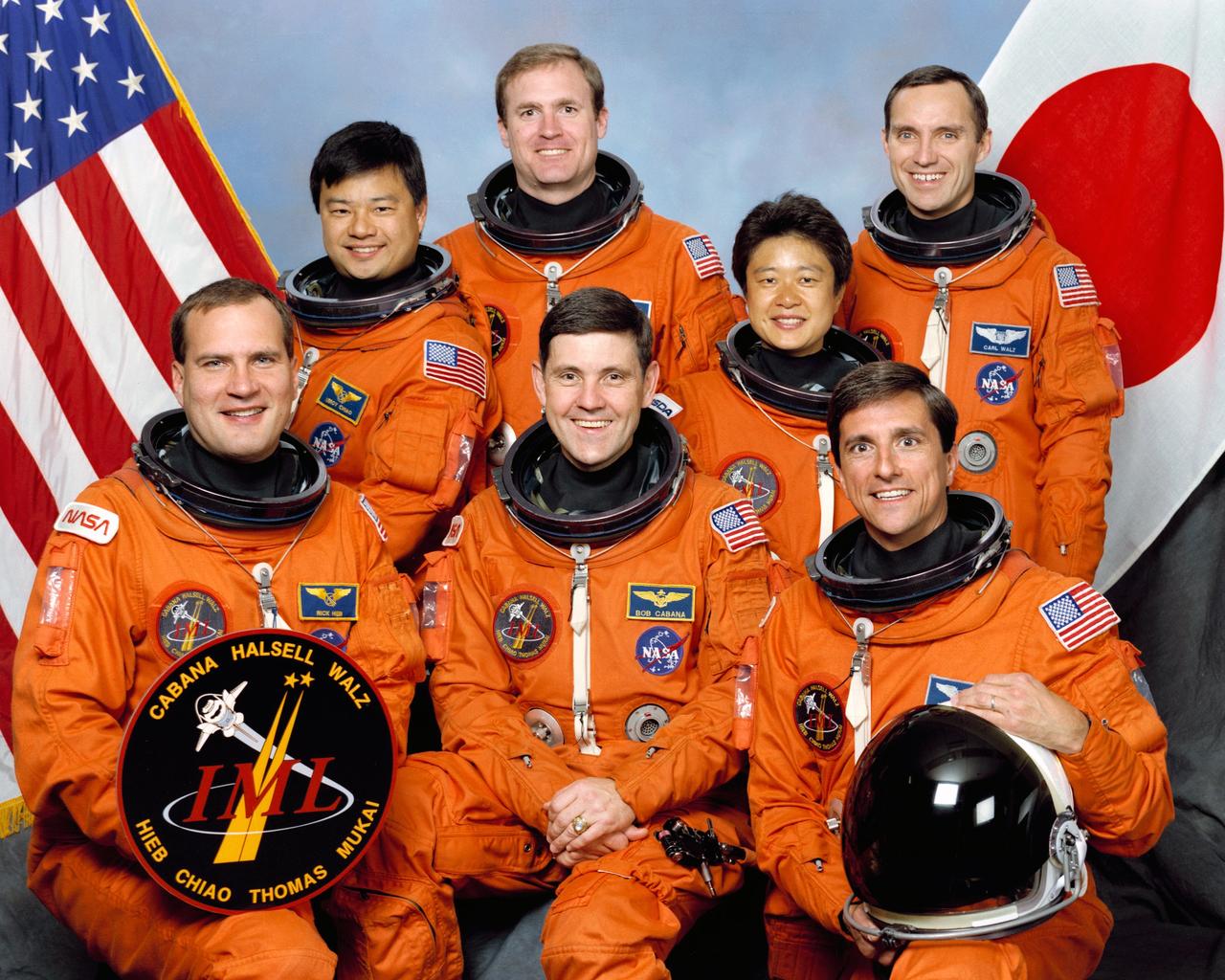
JOHNSON SPACE CENTER, Houston, Texas -- -- STS065(S)002 -- STS-65 Official Crew Portrait --- Six NASA astronauts and a Japanese payload specialist take a break from STS-65 training to pose for their crew portrait. Left to right are Richard J. Hieb, Leroy Chiao, James D. Halsell Jr., Robert D. Cabana, Dr. Chiaki Mukai, Donald A. Thomas and Carl E. Walz. Cabana is mission commander, and Halsell has been assigned as pilot. Hieb is payload commander, with Walz, Thomas and Chiao serving as mission specialists. Dr. Mukai represents the National Space Development Agency (NASDA) of Japan as payload specialist on the International Microgravity Laboratory (IML) mission.
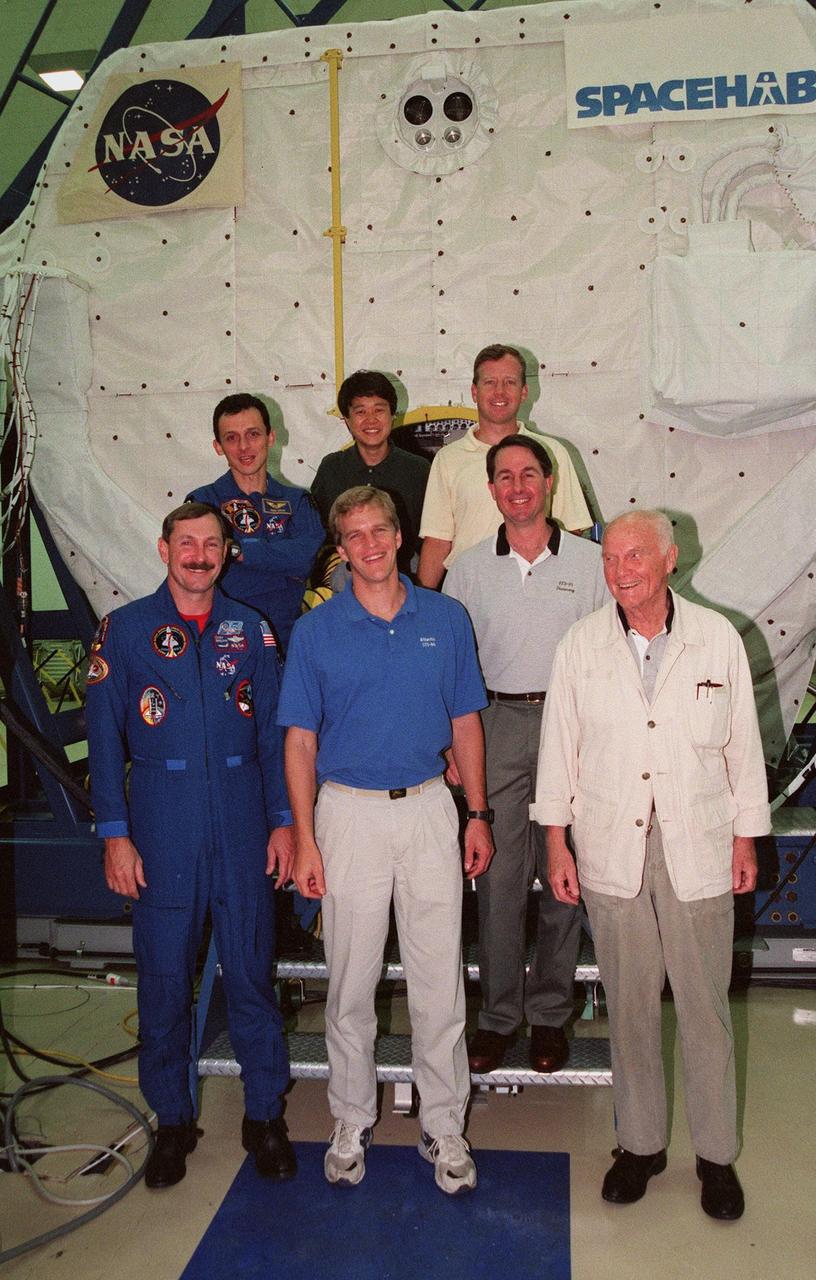
KENNEDY SPACE CENTER, FLA. -- The STS-95 crew takes time out from SPACEHAB familiarization activities at the SPACEHAB Payload Processing Facility, Cape Canaveral, to pose for a group portrait. Clockwise from the center front are Mission Specialist Scott E. Parazynski; Commander Curtis L. Brown Jr.; Mission Specialist Pedro Duque of Spain, representing the European Space Agency (ESA); Payload Specialist Chiaki Mukai, representing the National Space Development Agency of Japan (NASDA); Pilot Steven W. Lindsey; Mission Specialist Stephen K. Robinson; and Payload Specialist John H. Glenn Jr., who also is a senator from Ohio. The mission, scheduled to launch Oct. 29, includes research payloads such as the Spartan solar-observing deployable spacecraft, the Hubble Space Telescope Orbital Systems Test Platform, the International Extreme Ultraviolet Hitchhiker, as well as the SPACEHAB single module with experiments on space flight and the aging process
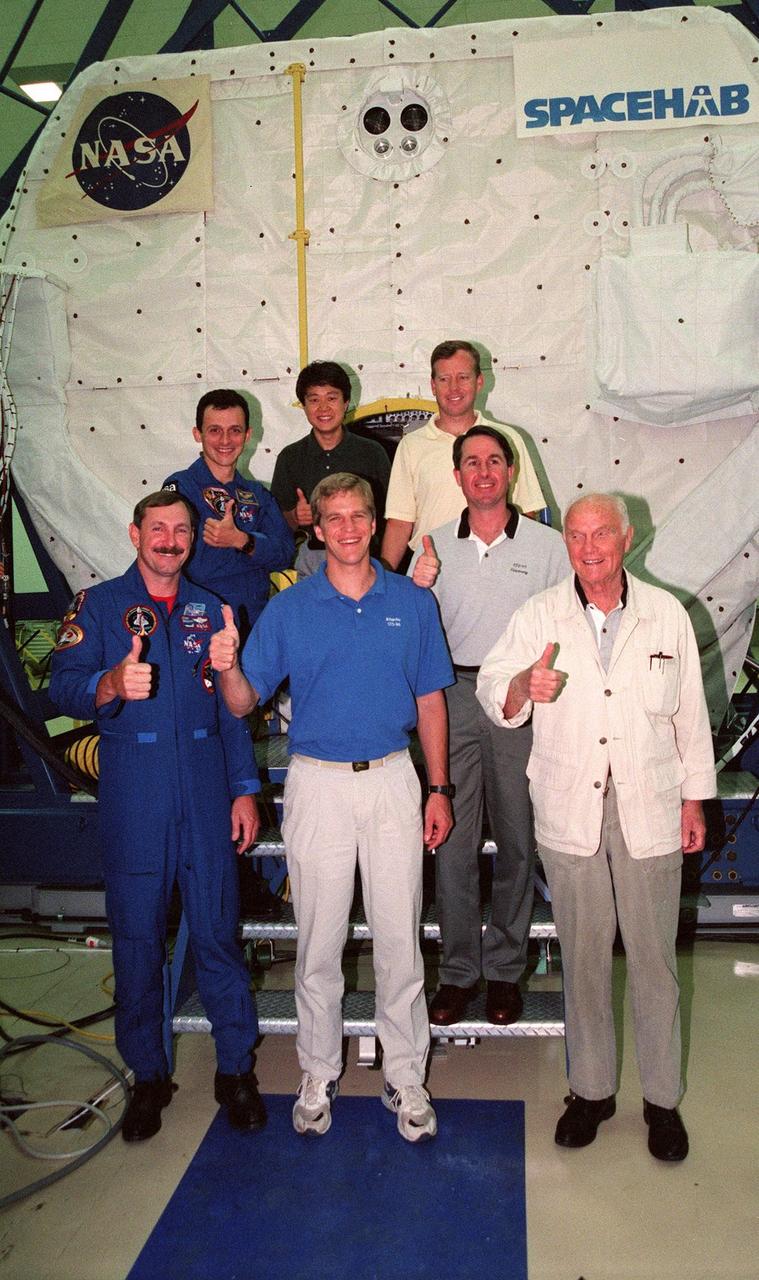
KENNEDY SPACE CENTER, FLA. -- The STS-95 crew takes time out from SPACEHAB familiarization activities at the SPACEHAB Payload Processing Facility, Cape Canaveral, to pose for a group portrait. Clockwise from the center front are Mission Specialist Scott E. Parazynski; Commander Curtis L. Brown Jr.; Mission Specialist Pedro Duque of Spain, representing the European Space Agency (ESA); Payload Specialist Chiaki Mukai, representing the National Space Development Agency of Japan (NASDA); Pilot Steven W. Lindsey; Mission Specialist Stephen K. Robinson; and Payload Specialist John H. Glenn Jr., who also is a senator from Ohio. The mission, scheduled to launch Oct. 29, includes research payloads such as the Spartan solar-observing deployable spacecraft, the Hubble Space Telescope Orbital Systems Test Platform, the International Extreme Ultraviolet Hitchhiker, as well as the SPACEHAB single module with experiments on space flight and the aging process
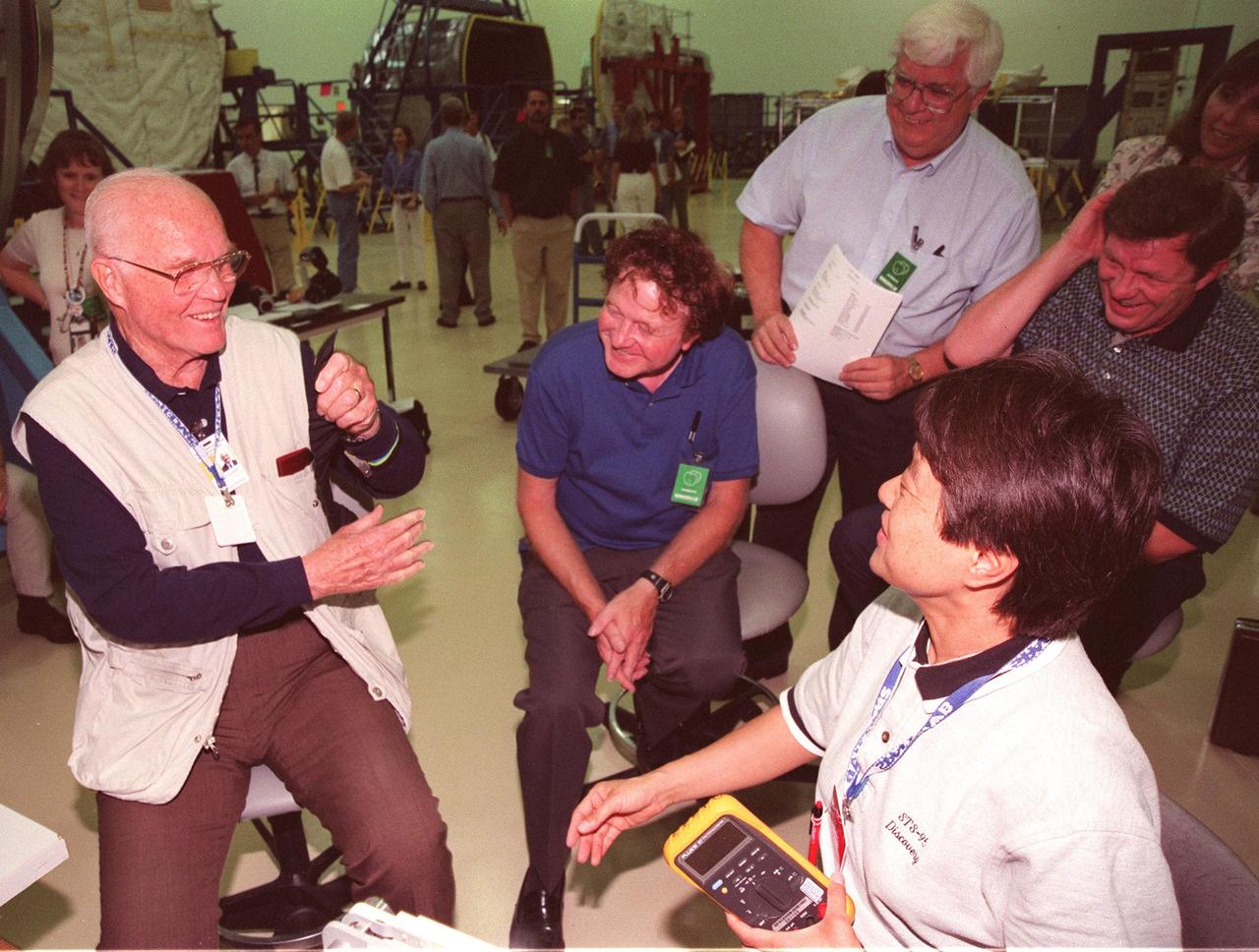
STS-95 Payload Specialist John Glenn (left), who is a senator from Ohio, shares an amusing moment with KSC workers in the background and Payload Specialist Chiaki Mukai (extreme right), who represents the National Space Development Agency of Japan (NASDA). Glenn and Mukai are participating in SPACEHAB familiarization at the SPACEHAB Payload Processing Facility, Cape Canaveral. The mission, scheduled to launch Oct. 29, includes research payloads such as the Spartan solar-observing deployable spacecraft, the Hubble Space Telescope Orbital Systems Test Platform, the International Extreme Ultraviolet Hitchhiker, as well as the SPACEHAB single module with experiments on space flight and the aging process
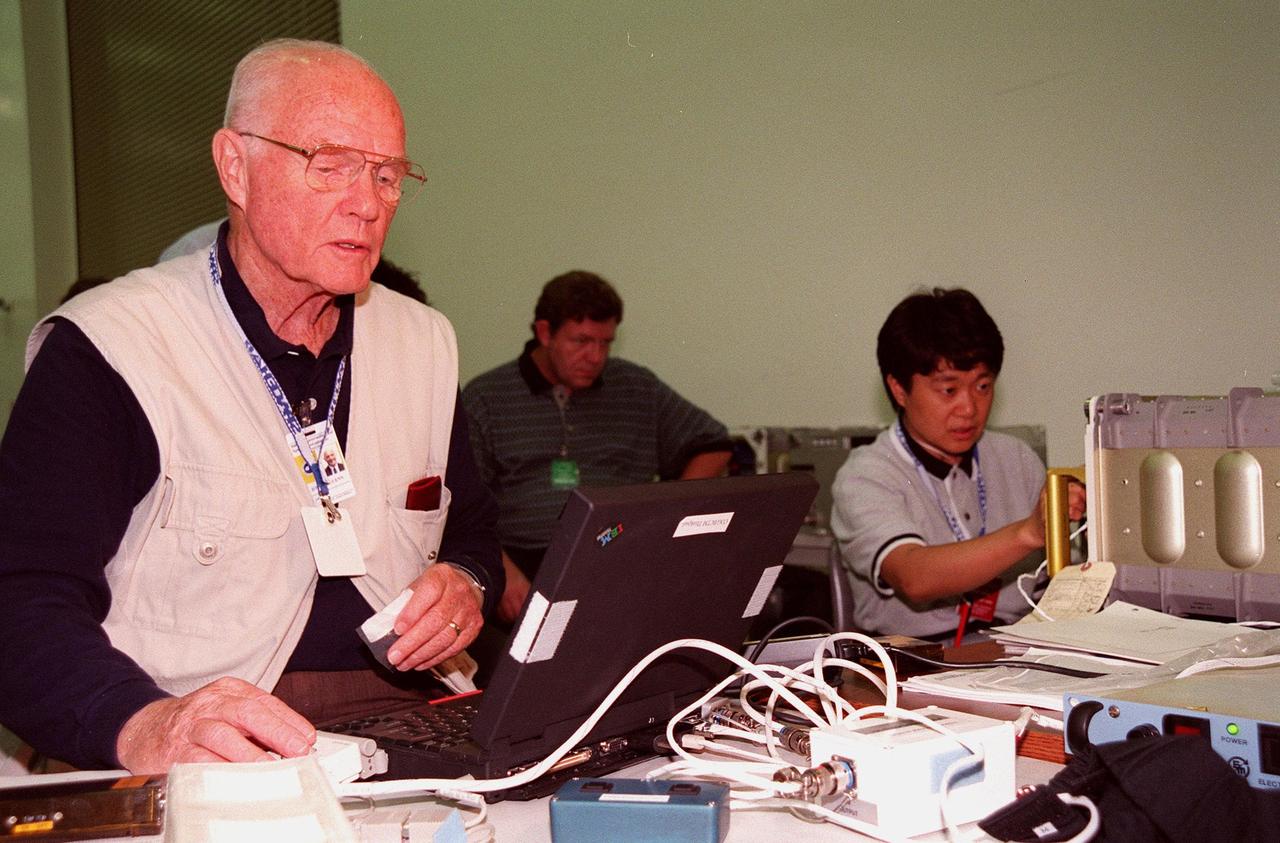
KENNEDY SPACE CENTER, FLA. -- STS-95 Payload Specialist John Glenn (left), who is a senator from Ohio, and Payload Specialist Chiaki Mukai (extreme right), who represents the National Space Development Agency of Japan (NASDA), check out equipment during SPACEHAB familiarization at the SPACEHAB Payload Processing Facility, Cape Canaveral. The mission, scheduled to launch Oct. 29, includes research payloads such as the Spartan solar-observing deployable spacecraft, the Hubble Space Telescope Orbital Systems Test Platform, the International Extreme Ultraviolet Hitchhiker, as well as the SPACEHAB single module with experiments on space flight and the aging proces
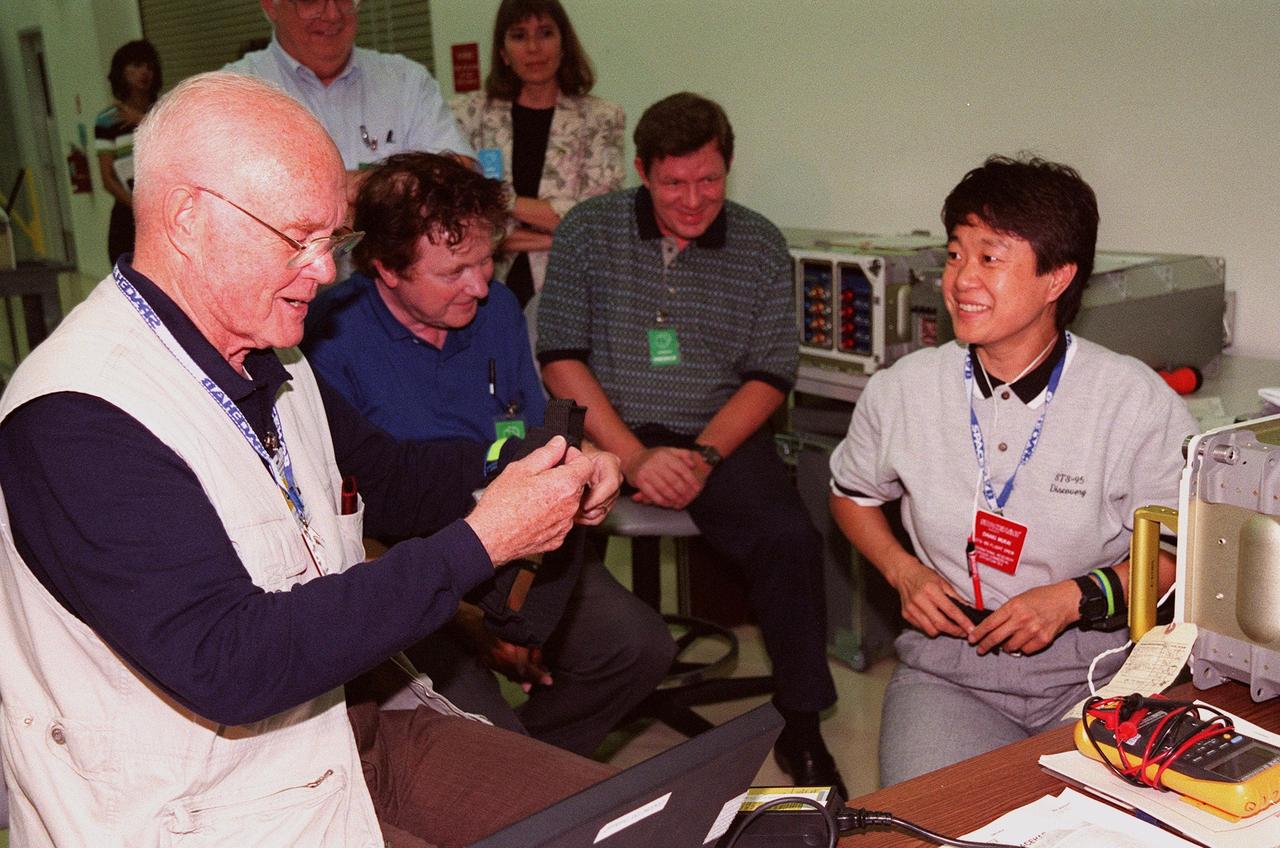
KENNEDY SPACE CENTER, FLA. -- STS-95 Payload Specialist John Glenn (left), who is a senator from Ohio, and Payload Specialist Chiaki Mukai (extreme right), who represents the National Space Development Agency of Japan (NASDA), check out equipment during SPACEHAB familiarization at the SPACEHAB Payload Processing Facility, Cape Canaveral. KSC workers in the background observe. The mission, scheduled to launch Oct. 29, includes research payloads such as the Spartan solar-observing deployable spacecraft, the Hubble Space Telescope Orbital Systems Test Platform, the International Extreme Ultraviolet Hitchhiker, as well as the SPACEHAB single module with experiments on space flight and the aging process
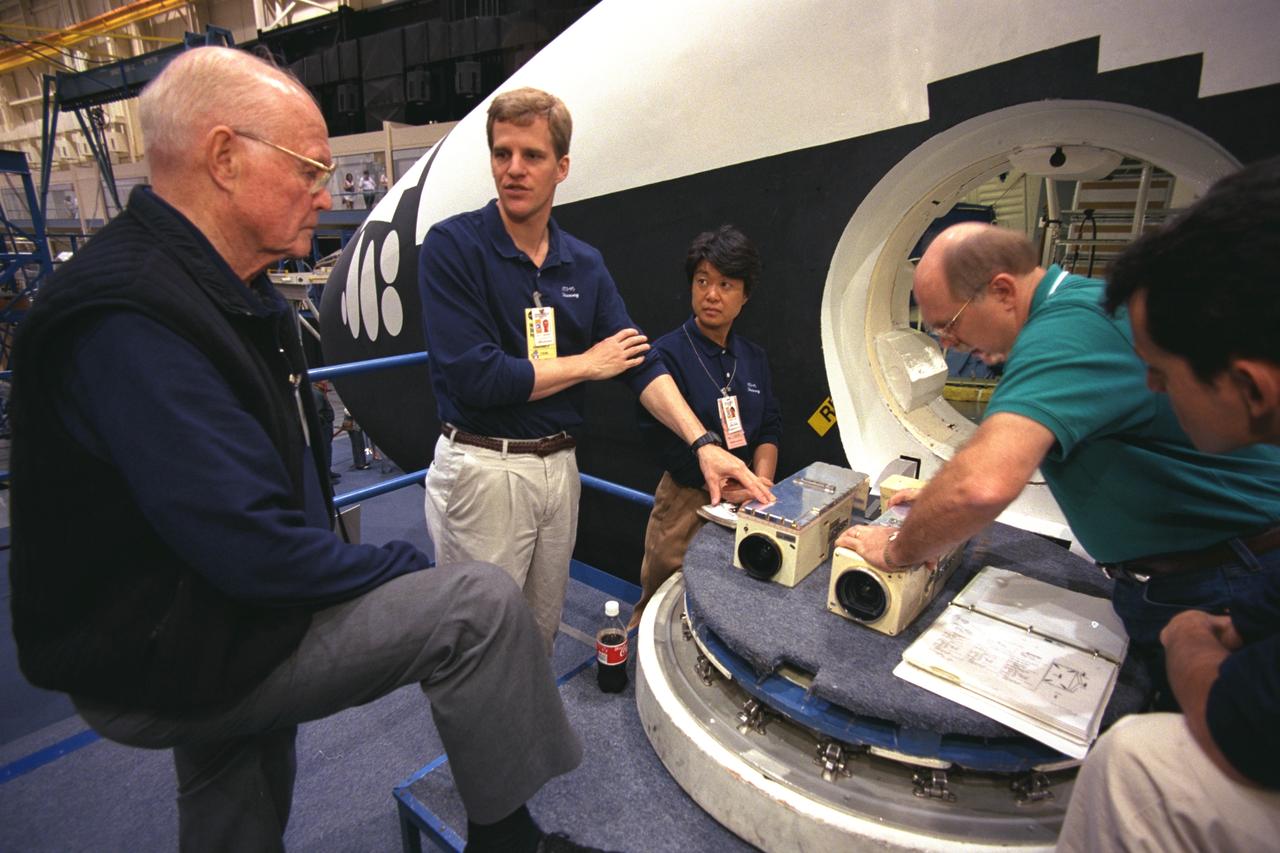
S98-08744 (28 April 1998) --- Four members of the STS-95 crew are briefed on video cameras by crew trainer Donald Carico during a training session in the systems integration facility at the Johnson Space Center (JSC). From the left are U.S. Sen. John H. Glenn Jr. (D.-Ohio), payload specialist; astronaut Scott E. Parazynski, mission specialist; Chiaki Mukai, payload specialist representing Japan's National Space Development Agency (NASDA); Carico and astronaut Pedro Duque, mission specialist representing the European Space Agency (ESA). The photo was taken by Joe McNally, National Geographic, for NASA.
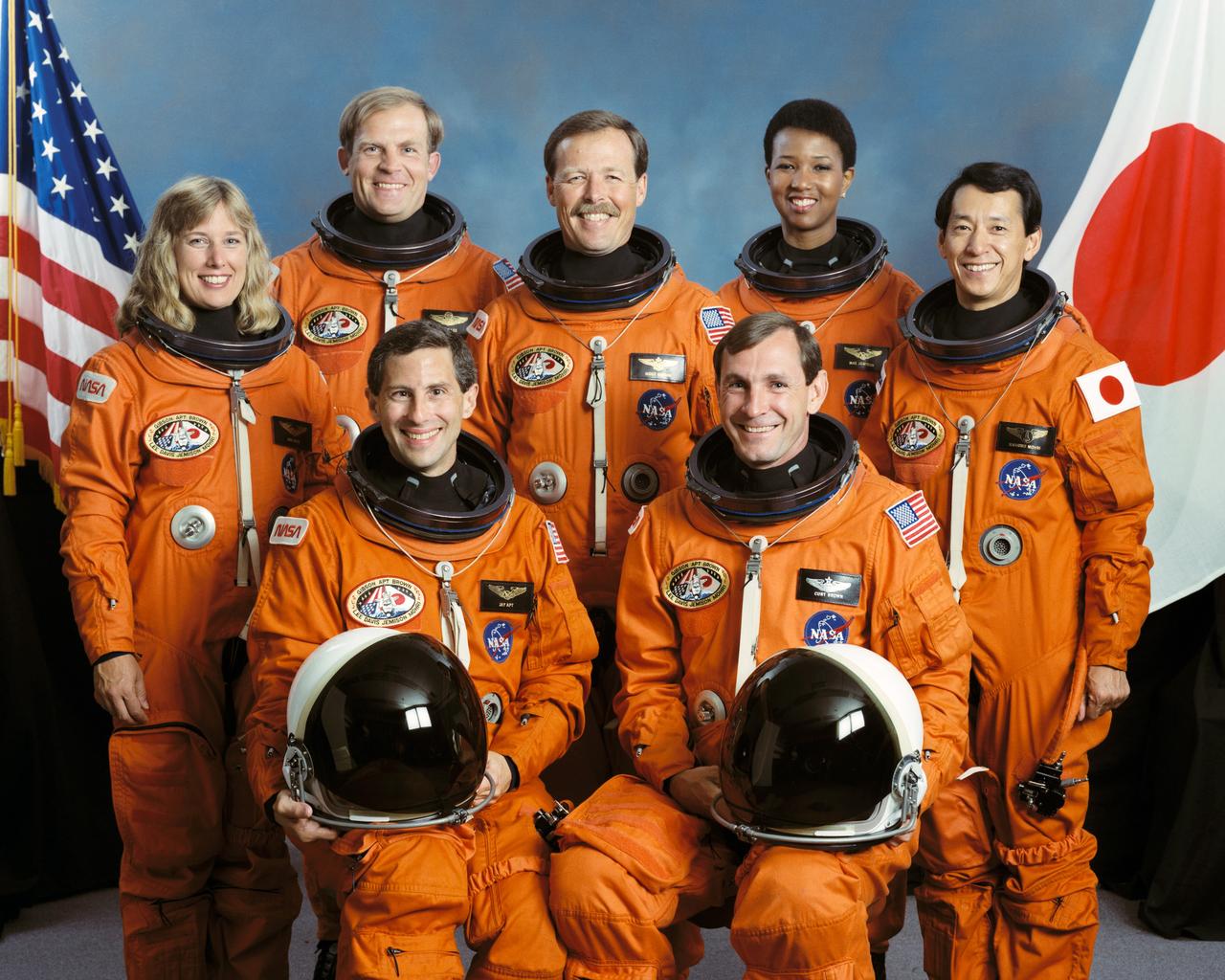
STS047-S-002 (June 1992) --- These seven crew members are currently in training for the STS-47/Spacelab J mission scheduled for later this year. Pictured are (left to right, front) Jerome (Jay) Apt, mission specialist; Curtis L. Brown, pilot; and (left to right, rear) N. Jan Davis, mission specialist; Mark C. Lee, payload commander; Robert L. Gibson, mission commander; Mae C. Jemison, mission specialist; and Mamoru Mohri, payload specialist, representing the National Space Development Agency of Japan (NASDA). This is the Space Shuttle Endeavour's second scheduled mission.
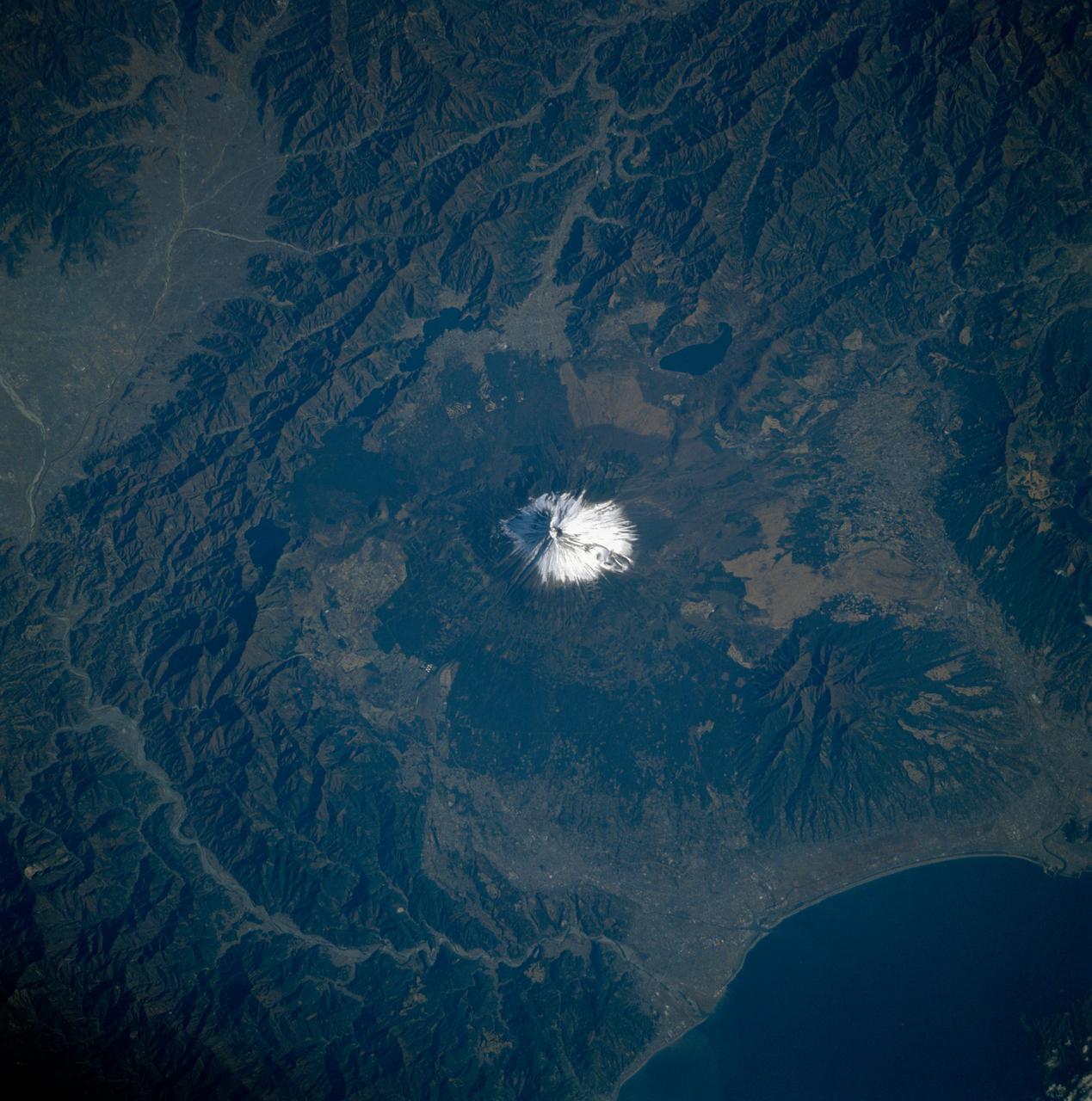
STS009-40-2575 (28 Nov-8 Dec 1983) --- This view of the Fuji volcano, Japan was taken on the 54th orbit of the Space Shuttle Columbia. The center coordinates are 35.5 degrees north latitude and 139.0 degrees east longitude. This was the first time a non-United States crew member was flown aboard the United States Space Shuttle, European Space Agency (ESA) payload specialist Ulf Merbold, Germany. The crew included NASA astronauts John W. Young, commander; Brewster H. Shaw Jr., pilot; Owen K. Garriott, mission specialist, Robert A. Parker, mission specialist; and Byron Lichtenberg, payload specialist.

STS087-307-002 (19 November - 5 December 1997) --- On the Space Shuttle Columbia's middeck, the crewmembers for the mission pose for the traditional in-flight portrait. In front, left to right, are astronauts Steven W. Lindsey, pilot; Takao Doi, mission specialist representing Japan's National Space Development Agency (NASDA); and Winston E. Scott, mission specialist. In back are, from the left, astronauts Kevin R. Kregel, commander; and Kalpana Chawla, mission specialist; along with payload specialist Leonid Kadenyuk.
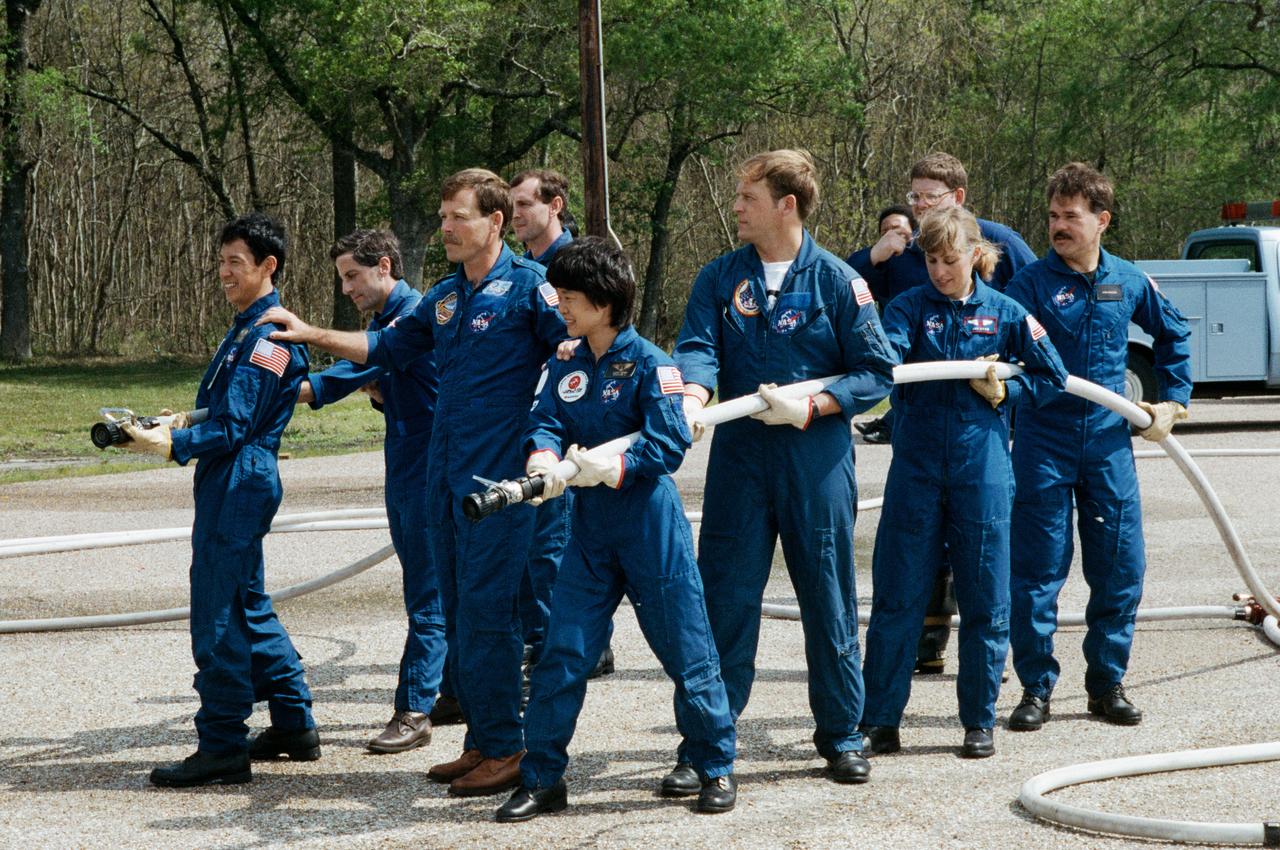
STS-47 Endeavour, Orbiter Vehicle (OV) 105, crewmembers led by Commander Robert L. Gibson (center) prepare to extinguish a blaze in JSC's Fire Training Pit. Lined up along the water hoses are: (on left) Payload Specialist Mamoru Mohri, holding the hose nozzle, followed by Mission Specialist (MS) Jerome Apt, and Pilot Curtis L. Brown, Jr; and (on right) backup Payload Specialist Chiaki Naito-Mukai, holding the hose nozzle, followed by MS and Payload Commander (PLC) Mark C. Lee, MS N. Jan Davis, and backup Payload Specialist Stan Koszelak. A veteran fire fighter and the instructor, positioned between the two hoses, looks on. Mohri and Mukai represent Japan's National Space Development Agency (NASDA). The Fire Training Pit is located across from the Gilruth Center Bldg 207.
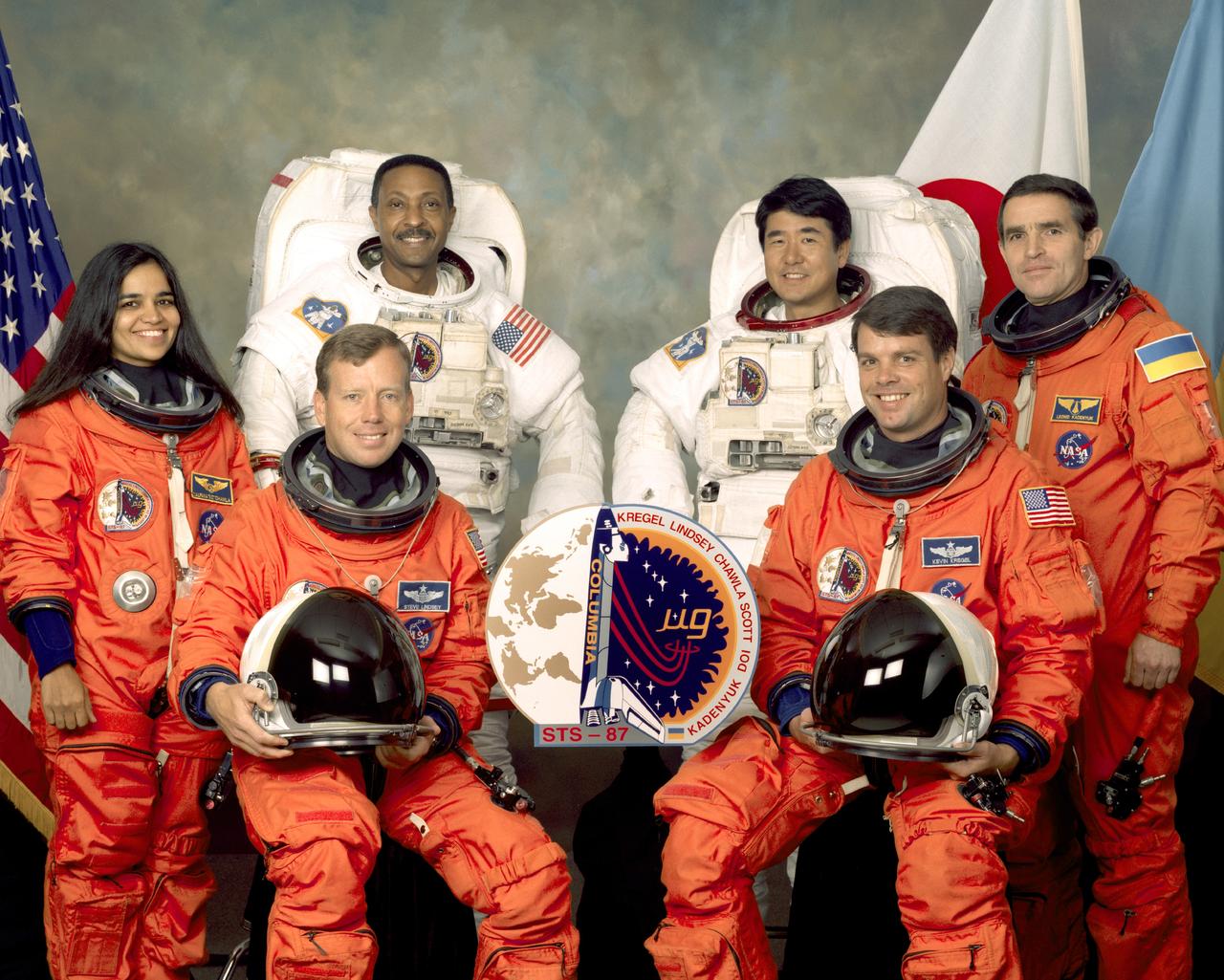
Five astronauts and a payload specialist take a break from training at the Johnson Space Center (JSC) to pose for the STS-87 crew portrait. Wearing the orange partial pressure launch and entry suits, from the left, are Kalpana Chawla, mission specialist; Steven W. Lindsey, pilot; Kevin R. Kregel, mission commander; and Leonid K. Kadenyuk, Ukrainian payload specialist. Wearing the white Extravehicular Mobility Unit (EMU) space suits are mission specialists Winston E. Scott (left) and Takao Doi (right). Doi represents Japan’s National Space Development Agency (NASDA). The STS-87 mission launched aboard the Space Shuttle Columbia on November 19, 1997. The primary payload for the mission was the U.S. Microgravity Payload-4 (USMP-4).
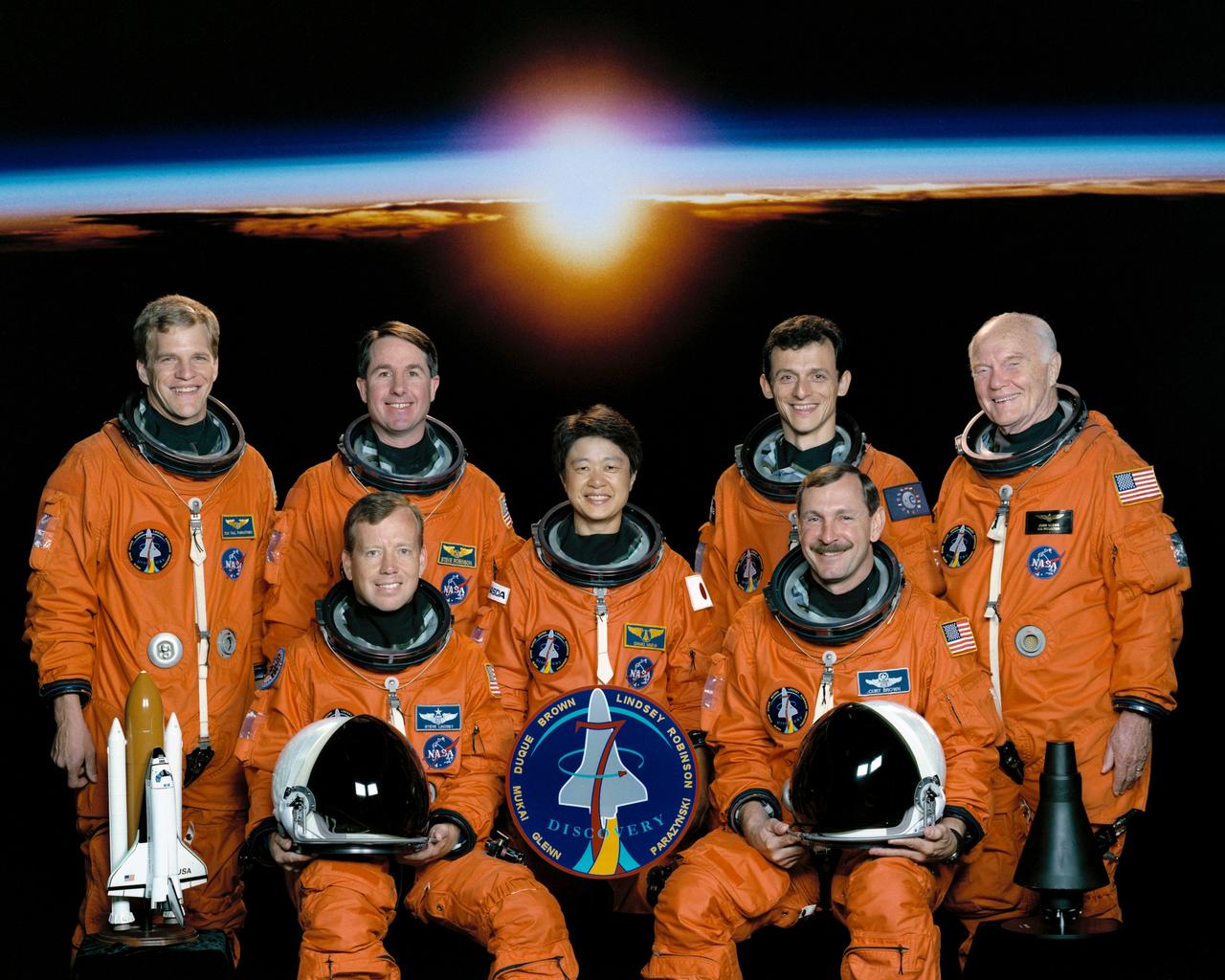
STS095-S-002 (June 1998) --- Five astronauts based at NASA's Johnson Space Center (JSC) and two payload specialists take a break from their training regimen to pose for the preflight portrait. Seated are astronauts Curtis L. Brown Jr. (right), commander; and Steven W. Lindsey, pilot. Standing, from the left, are Scott E. Parazynski and Stephen K. Robinson, both mission specialists; Chiaki Mukai, payload specialist representing Japan's National Space Development Agency (NASDA); Pedro Duque, mission specialist representing the European Space Agency (ESA); and United States Senator John H. Glenn Jr., payload specialist. The seven are scheduled to be launched into Earth orbit aboard the Space Shuttle Discovery in late October.
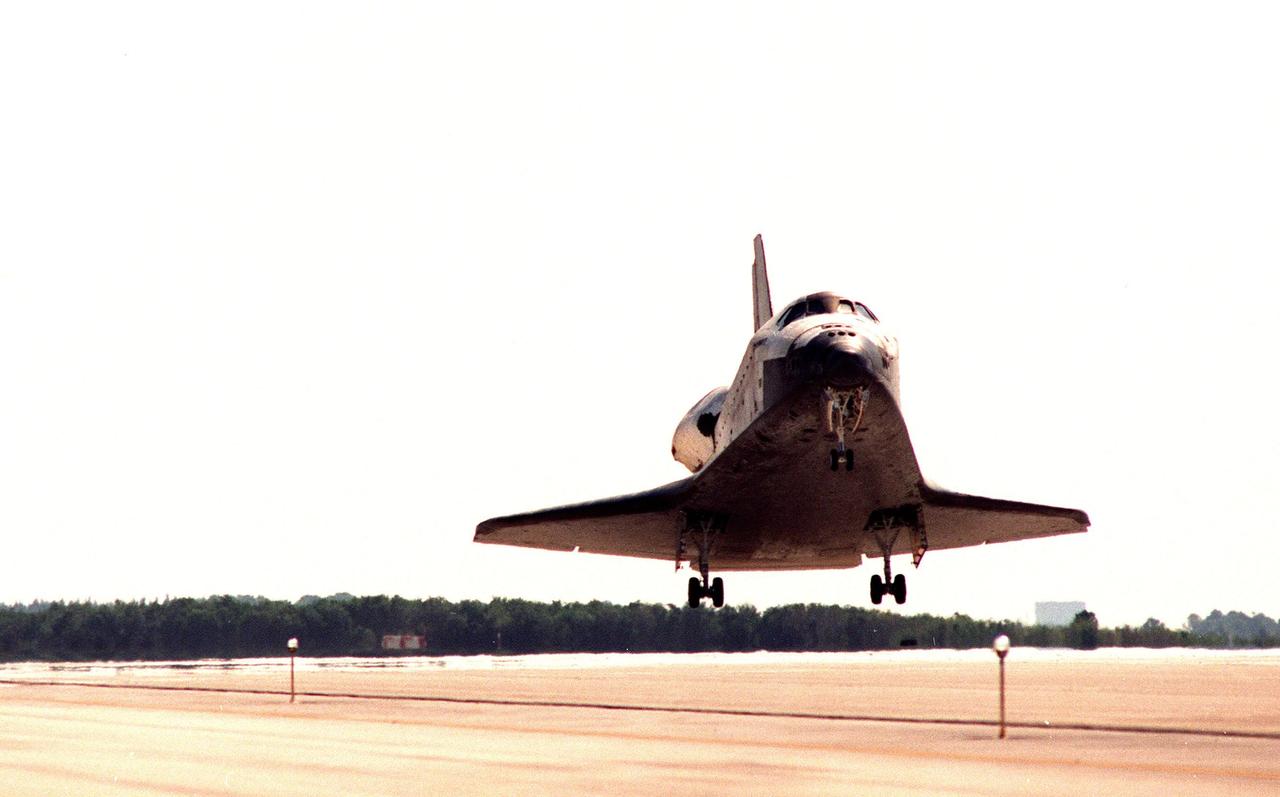
After nine days and 3.6 million miles in space, orbiter Discovery prepares to land on runway 33 at the Shuttle Landing Facility. Discovery returns to Earth with its crew of seven after successfully completing mission STS-95. The STS-95 crew members are Mission Commander Curtis L. Brown Jr.; Pilot Steven W. Lindsey; Mission Specialist Scott E. Parazynski; Mission Specialist Stephen K. Robinson; Payload Specialist John H. Glenn Jr., a senator from Ohio; Mission Specialist Pedro Duque of Spain, with the European Space Agency (ESA); and Payload Specialist Chiaki Mukai, with the National Space Development Agency of Japan (NASDA). The mission included research payloads such as the Spartan solar-observing deployable spacecraft, the Hubble Space Telescope Orbital Systems Test Platform, the International Extreme Ultraviolet Hitchhiker, as well as the SPACEHAB single module with experiments on space flight and the aging process
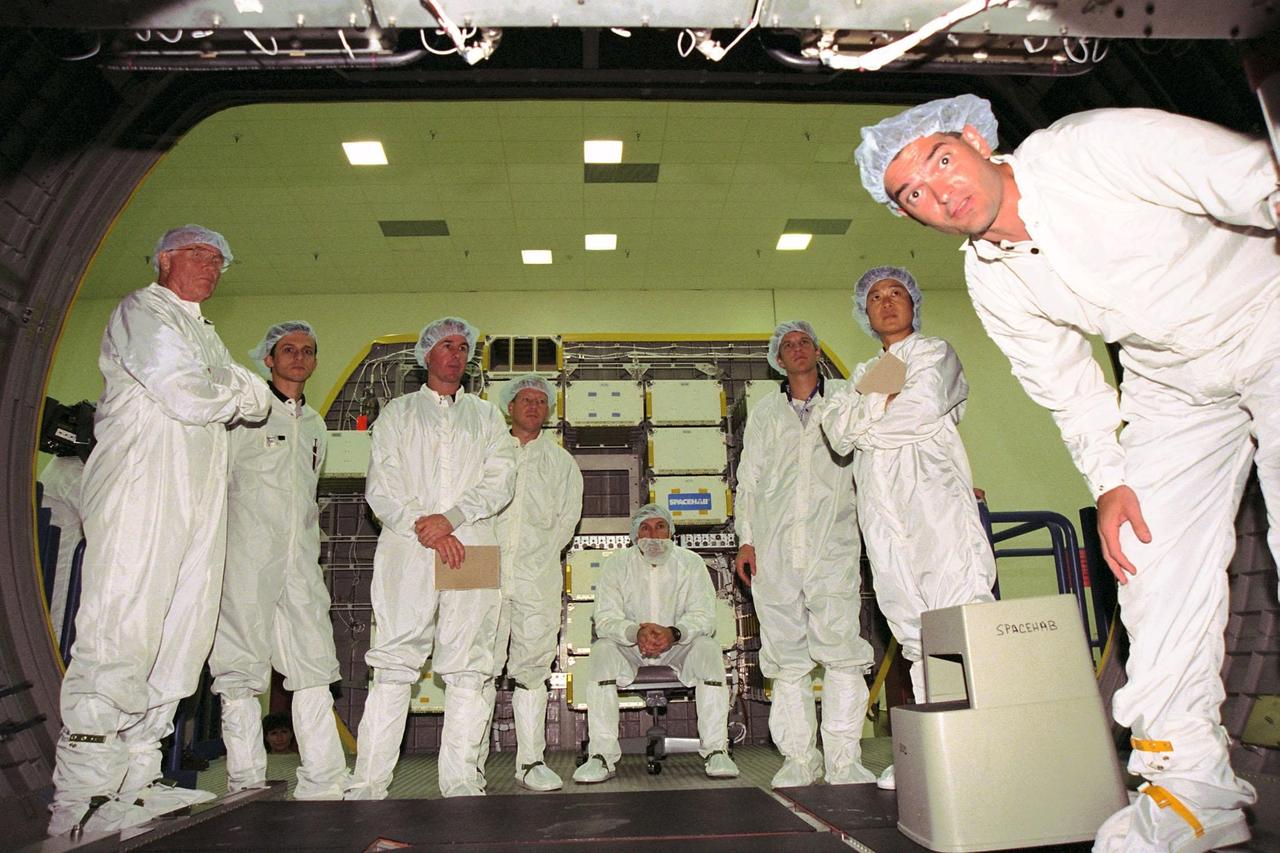
KENNEDY SPACE CENTER, FLA. -- STS-95 crew members get a briefing on the SPACEHAB module from Chris Jaskoika of Boeing, in foreground at far right. From left, are Payload Specialist John H. Glenn Jr., who also is a senator from Ohio; Mission Specialist Pedro Duque of Spain, representing the European Space Agency (ESA); Mission Specialist Stephen K. Robinson; Pilot Steven W. Lindsey; Commander Curtis L. Brown Jr. (seated); Mission Specialist Scott E. Parazynski; and Payload Specialist Chiaki Mukai, representing the National Space Development Agency of Japan (NASDA). STS-95 will feature a variety of research payloads, including the Spartan solar-observing deployable spacecraft, the Hubble Space Telescope Orbital Systems Platform, the International Extreme Ultraviolet Hitchhiker, and experiments on space flight and the aging process. STS-95 is targeted for an Oct. 29 launch aboard the Space Shuttle Discovery
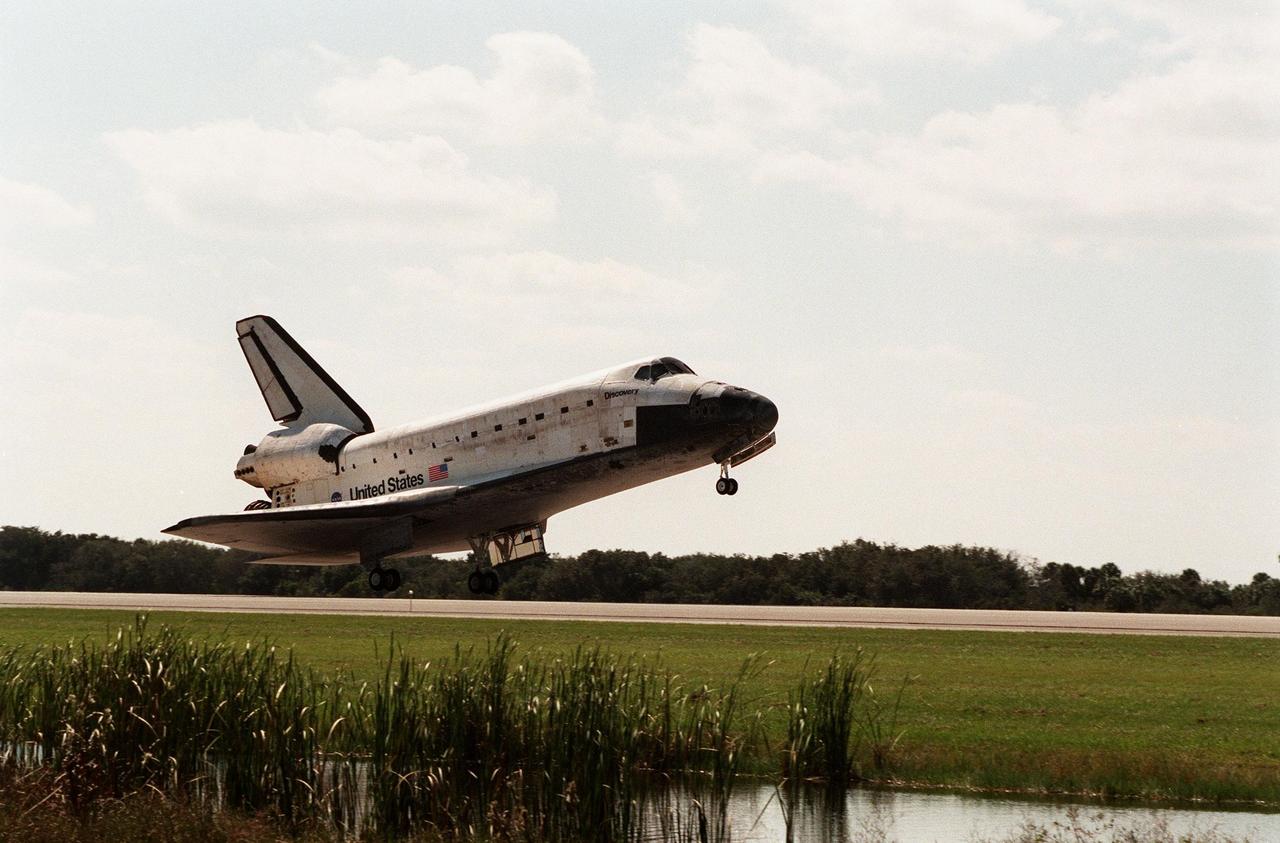
Orbiter Discovery touches down on runway 33 at the Shuttle Landing Facility after a successful mission of nearly nine days and 3.6 million miles. Main gear touchdown was at 12:04 p.m. EST, landing on orbit 135. The STS-95 crew consists of Mission Commander Curtis L. Brown Jr.; Pilot Steven W. Lindsey; Mission Specialist Scott E. Parazynski; Mission Specialist Stephen K. Robinson; Payload Specialist John H. Glenn Jr., a senator from Ohio; Mission Specialist Pedro Duque, with the European Space Agency (ESA); and Payload Specialist Chiaki Mukai, M.D., with the National Space Development Agency of Japan (NASDA). The mission included research payloads such as the Spartan solar-observing deployable spacecraft, the Hubble Space Telescope Orbital Systems Test Platform, the International Extreme Ultraviolet Hitchhiker, as well as the SPACEHAB single module with experiments on space flight and the aging process
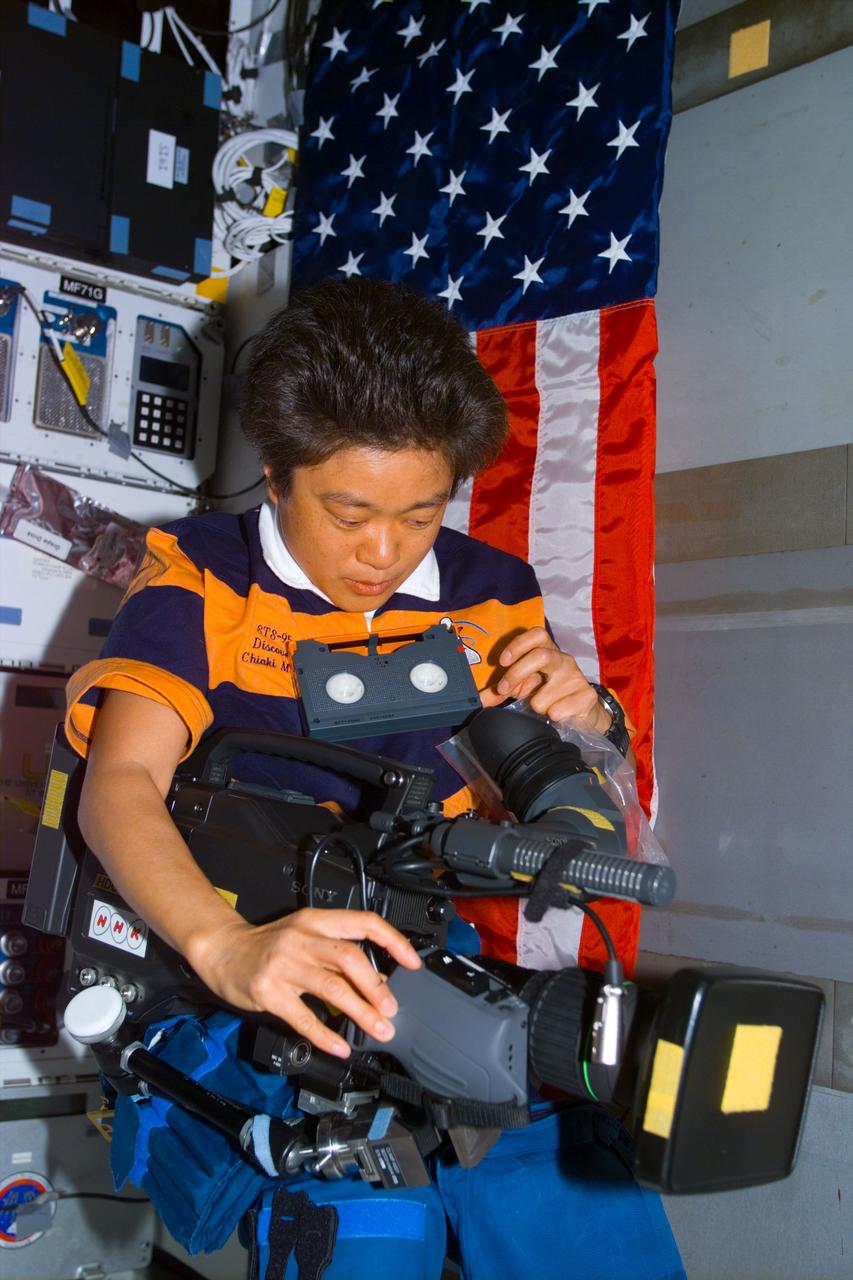
STS095-E-5229 (4 Nov. 1998)--- STS-95 payload specialist Chiaki Mukai, representing Japan's National Space Development Agency (NASDA), changes out cassette on camera. The scene was recorded with an electronic still camera (ESC) at 03:09:07 GMT, Nov. 4.
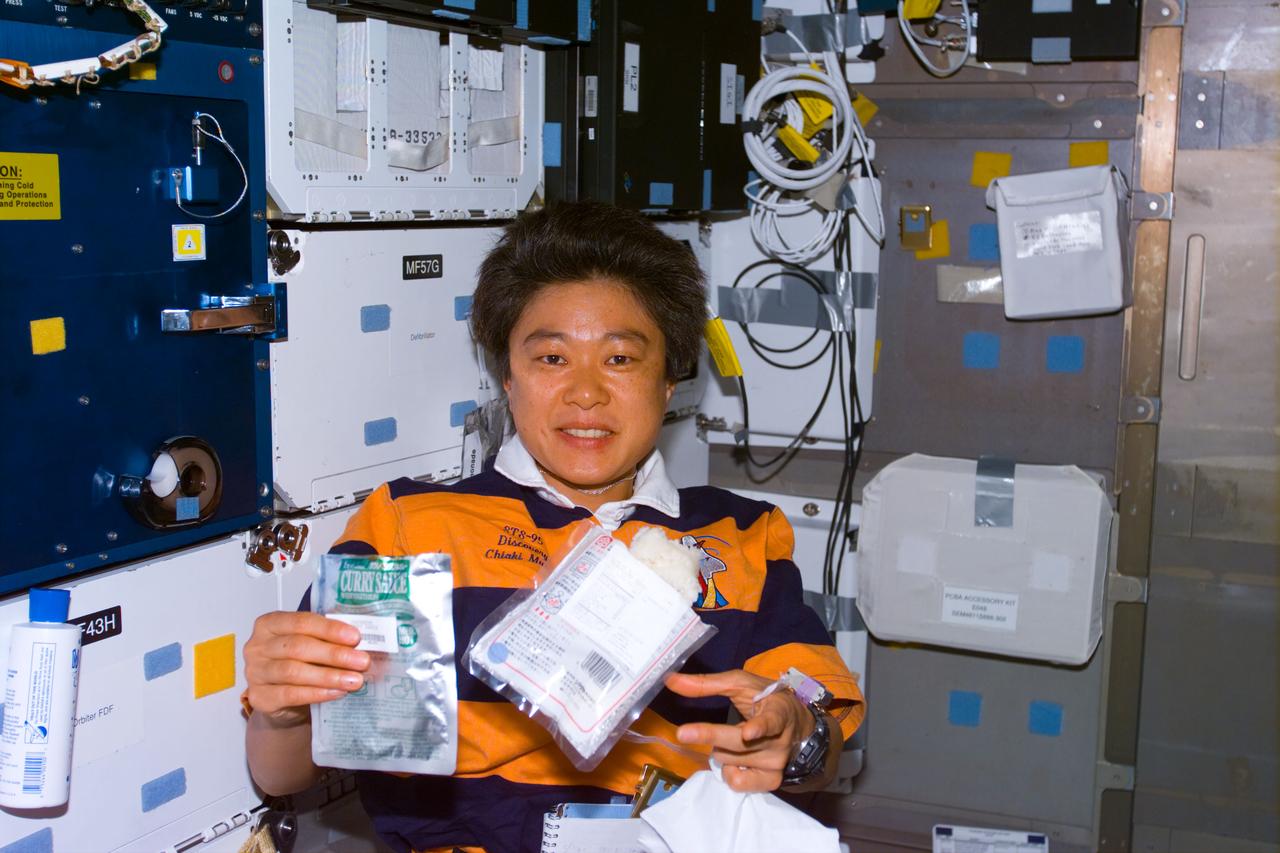
STS095-E-5211 (4 Nov. 1998) --- STS-95 payload specialist Chiaki Mukai, representing Japan's National Space Development Agency (NASDA), with paraphernalia supporting her agenda of experiments onboard Discovery. The photo was taken with an electronic still camera (ESC) at 01:17:27 GMT, Nov. 4.
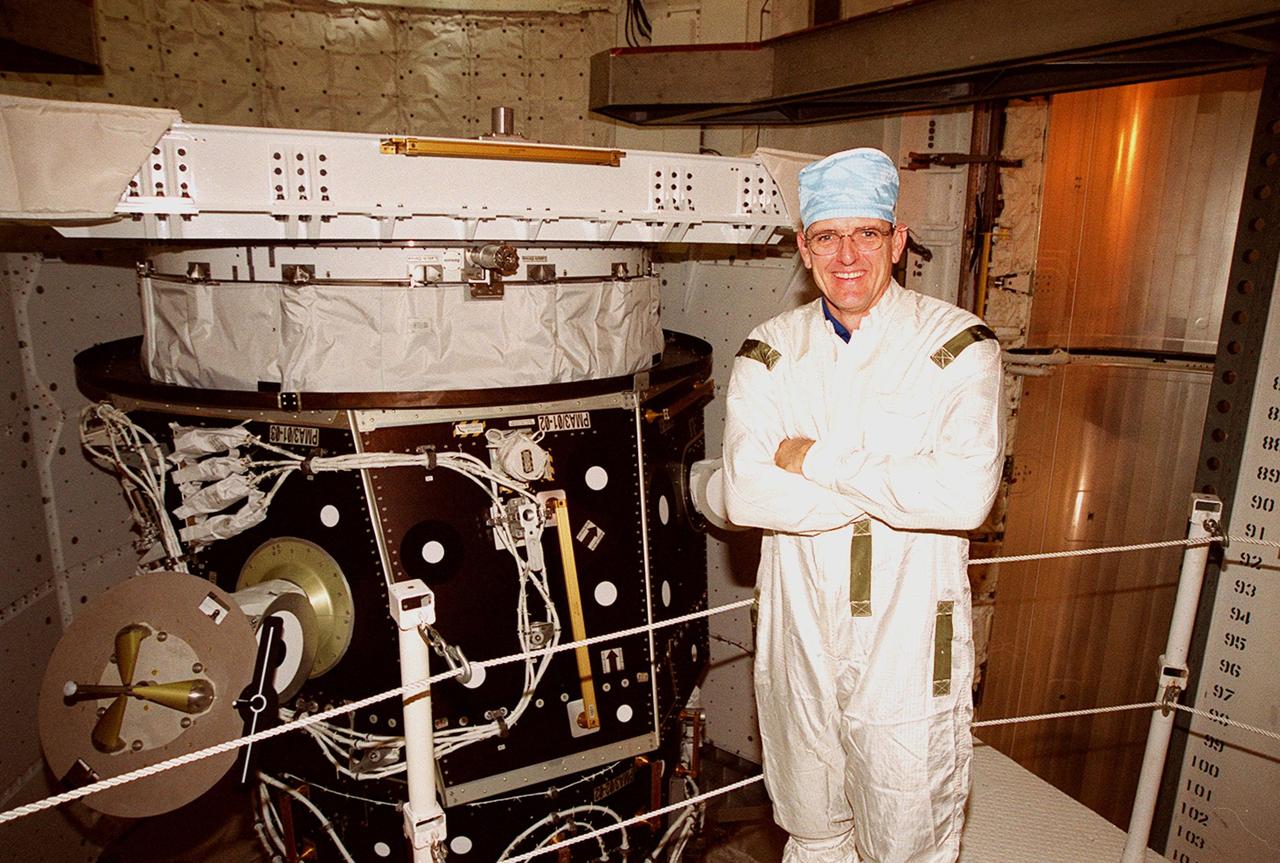
STS-92 Mission Specialist William S. McArthur Jr. smiles for the camera during inspection of the payload (left) in Space Shuttle Discovery’s payload bay. He and other crew members Commander Brian Duffy, Pilot Pamela Ann Melroy and Mission Specialists Koichi Wakata of Japan, Leroy Chiao, Peter J.K. “Jeff” Wisoff and Michael E. Lopez-Alegria are preparing for launch on Oct. 5, 2000. The mission is the fifth flight for the construction of the International Space Station. The payload includes the Integrated Truss Structure Z-1 and the third Pressurized Mating Adapter. During the 11-day mission, four extravehicular activities (EVAs), or space walks, are planned
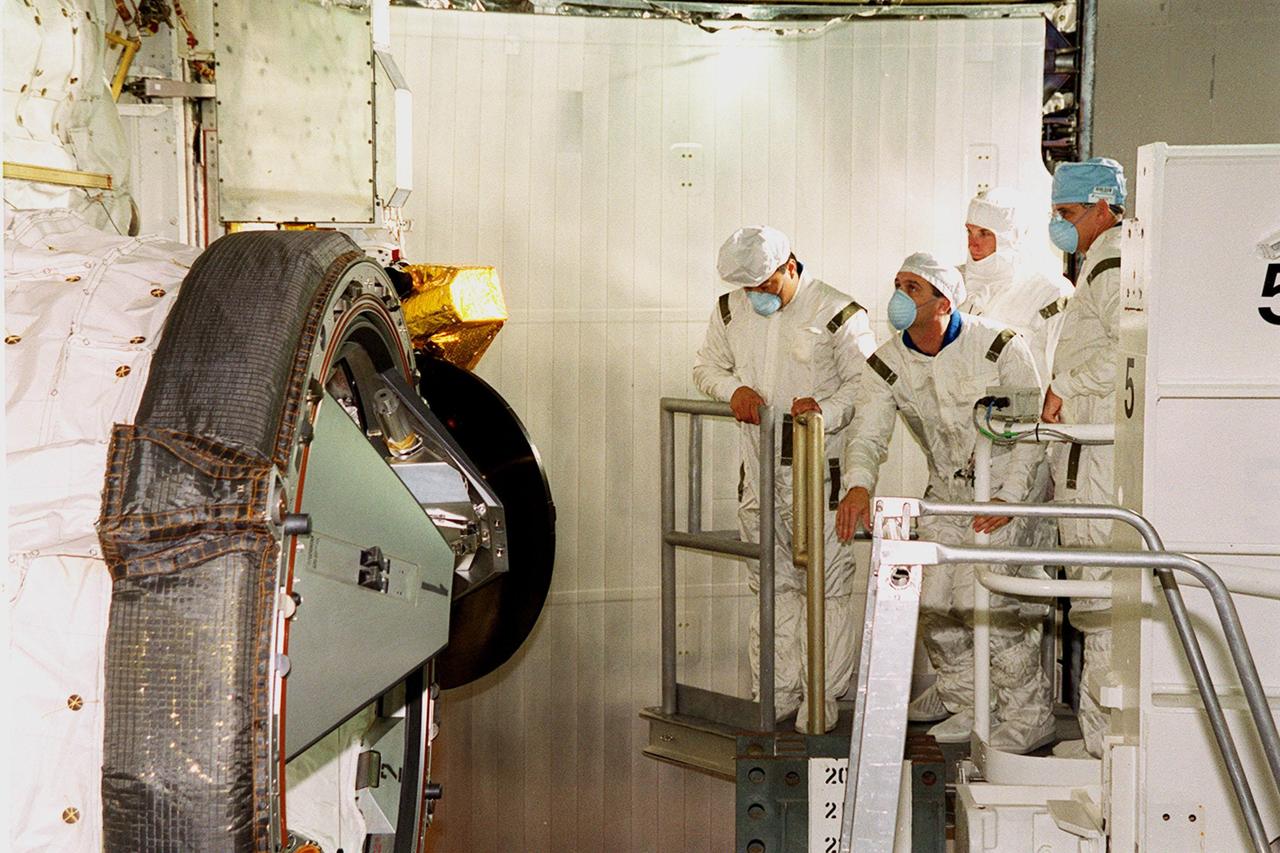
Members of the STS-92 crew look over the payload (left) in Space Shuttle Discovery’s payload bay. Left to right, in masks, are Mission Specialists Leroy Chiao, Peter J.K. “Jeff” Wisoff and William S. McArthur Jr. They and the other crew members Commander Brian Duffy, Pilot Pamela Ann Melroy and Mission Specialists Koichi Wakata of Japan, and Michael E. Lopez-Alegria are preparing for launch on Oct. 5, 2000. The mission is the fifth flight for the construction of the International Space Station. The payload includes the Integrated Truss Structure Z-1 and the third Pressurized Mating Adapter. During the 11-day mission, four extravehicular activities (EVAs), or space walks, are planned
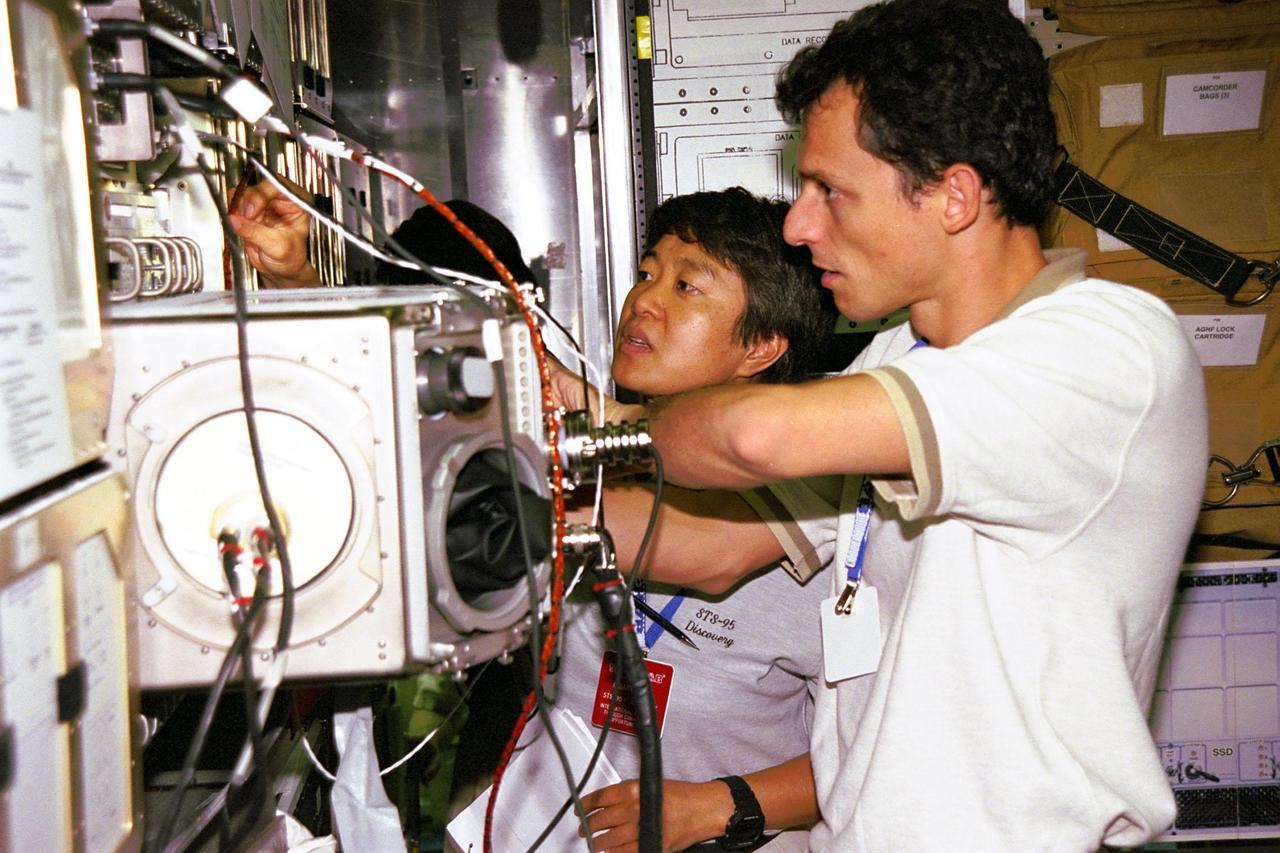
KENNEDY SPACE CENTER, F LA. -- STS-95 Payload Specialists Chiaki Mukai, at left, representing the National Space Development Agency of Japan (NASDA), and Mission Specialist Pedro Duque of Spain, representing the European Space Agency (ESA), practice using equipment in the SPACEHAB trainer at the SPACEHAB Payload Processing Facility in Cape Canaveral. STS-95 will feature a variety of research payloads, including the Spartan solar-observing deployable spacecraft, the Hubble Space Telescope Orbital Systems Platform, the International Extreme Ultraviolet Hitchhiker, and experiments on space flight and the aging process. STS-95 is targeted for an Oct. 29 launch aboard the Space Shuttle Discovery.
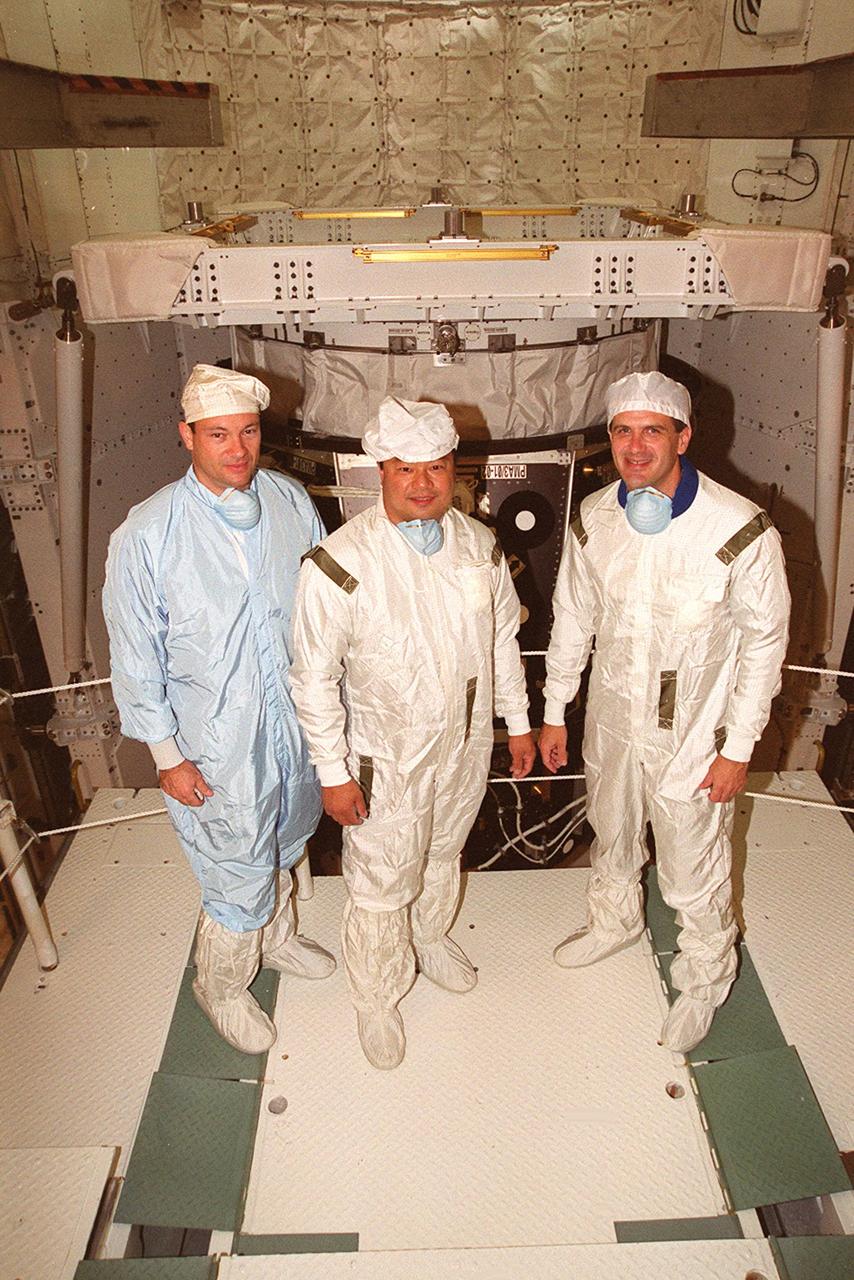
KENNEDY SPACE CENTER, FLA. -- During inspection of the payload in Space Shuttle Discovery’s payload bay (background), STS-92 Mission Specialists Michael E. Lopez-Alegria, Leroy Chiao and Peter J.K. “Jeff” Wisoff pause for a photo. They and other crew members Commander Brian Duffy, Pilot Pamela Ann Melroy and Mission Specialists Koichi Wakata of Japan and William S. McArthur Jr. are preparing for launch on Oct. 5, 2000. The mission is the fifth flight for the construction of the International Space Station. The payload includes the Integrated Truss Structure Z-1 and the third Pressurized Mating Adapter. During the 11-day mission, four extravehicular activities (EVAs), or space walks, are planned
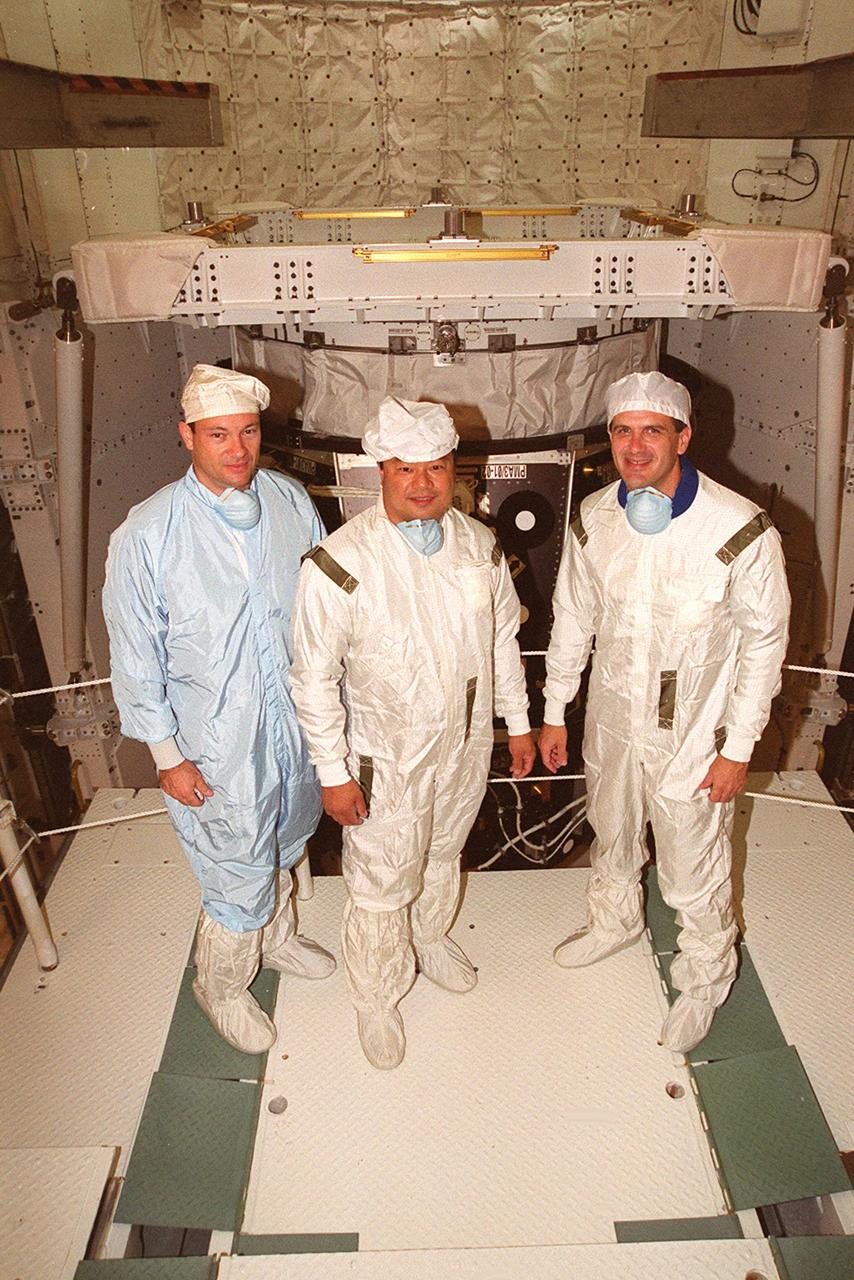
KENNEDY SPACE CENTER, FLA. -- During inspection of the payload in Space Shuttle Discovery’s payload bay (background), STS-92 Mission Specialists Michael E. Lopez-Alegria, Leroy Chiao and Peter J.K. “Jeff” Wisoff pause for a photo. They and other crew members Commander Brian Duffy, Pilot Pamela Ann Melroy and Mission Specialists Koichi Wakata of Japan and William S. McArthur Jr. are preparing for launch on Oct. 5, 2000. The mission is the fifth flight for the construction of the International Space Station. The payload includes the Integrated Truss Structure Z-1 and the third Pressurized Mating Adapter. During the 11-day mission, four extravehicular activities (EVAs), or space walks, are planned
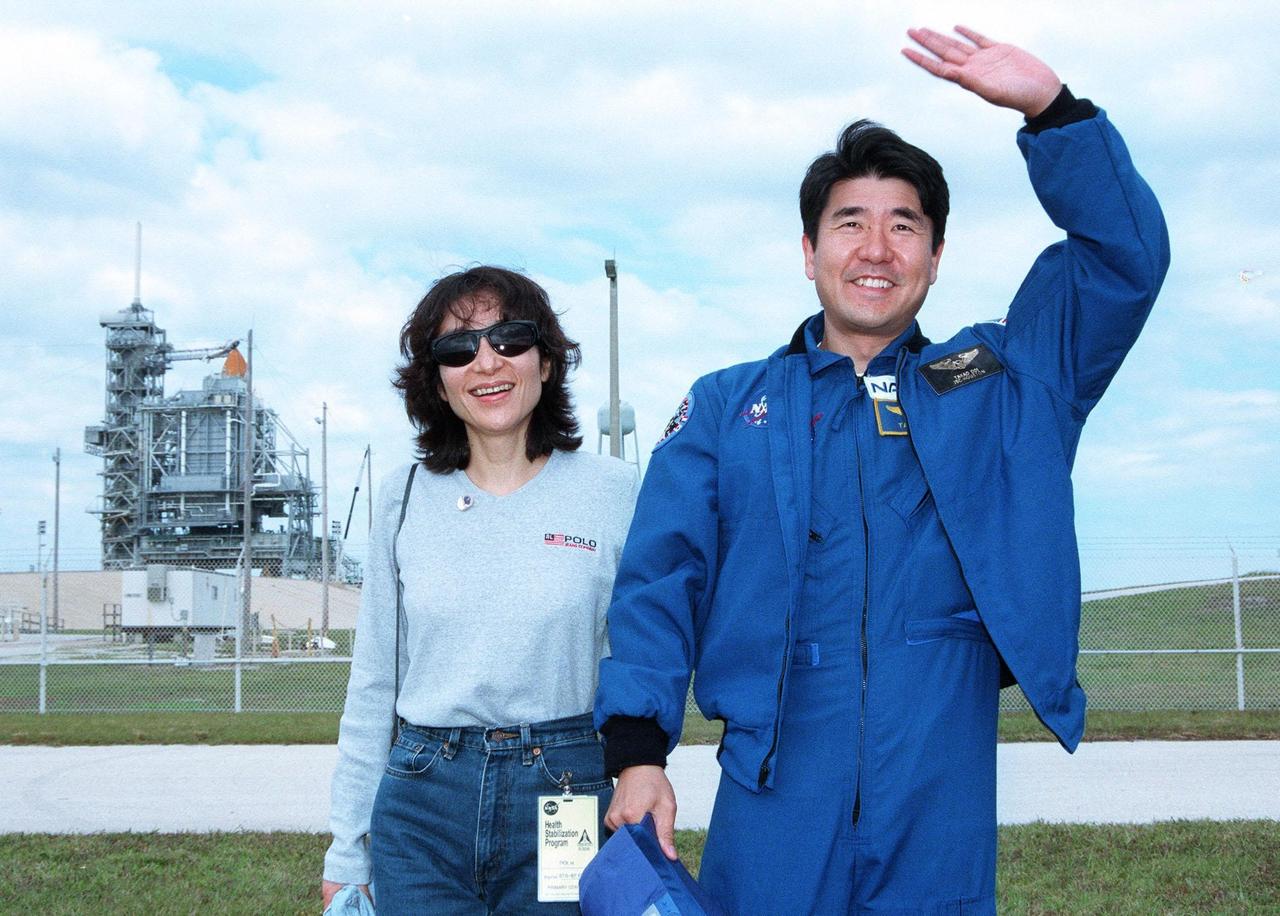
STS-87 Mission Specialist Takao Doi, Ph.D., of the National Space Development Agency of Japan poses with his wife, Hitomi Doi, in front of Kennedy Space Center's Launch Pad 39B during final prelaunch activities leading up to the scheduled Nov. 19 liftoff. The other STS-87 crew members are Commander Kevin Kregel; Pilot Steven Lindsey; Mission Specialists Kalpana Chawla, Ph.D., and Winston Scott; and Payload Specialist Leonid Kadenyuk of the National Space Agency of Ukraine. STS-87 will be the fourth flight of the United States Microgravity Payload and the Spartan-201 deployable satellite
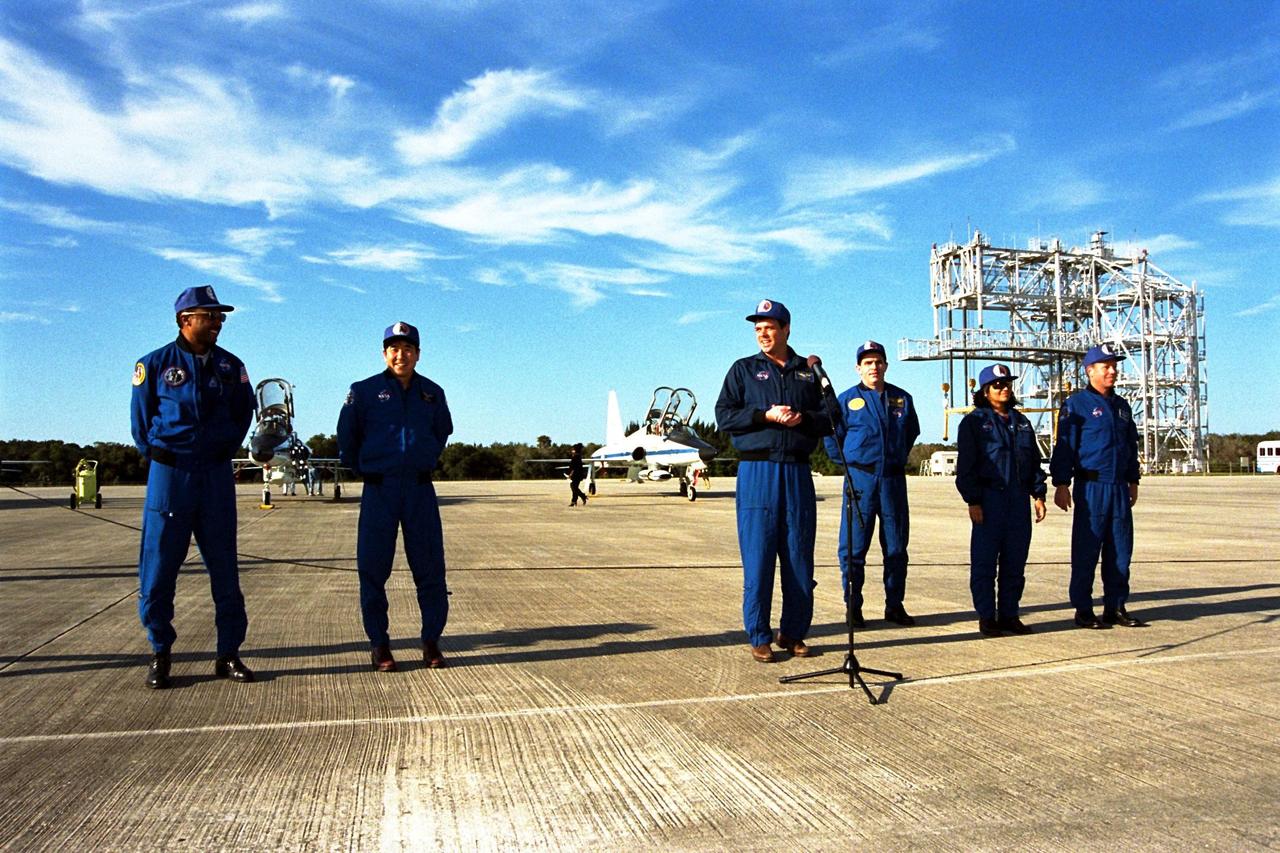
STS-87 Commander Kevin Kregel addresses members of the press and media at Kennedy Space Center's Shuttle Landing Facility after arriving for the final prelaunch activities leading up to the scheduled Nov. 19 liftoff. The STS-87 crew members are, from left to right, Mission Specialists Winston Scott and Takao Doi, Ph.D., of the National Space Development Agency of Japan; Commander Kevin Kregel; Payload Specialist Leonid Kadenyuk of the National Space Agency of Ukraine; Mission Specialist Kalpana Chawla, Ph.D.; and Pilot Steven Lindsey. STS-87 will be the fourth flight of the United States Microgravity Payload and the Spartan-201 deployable satellite
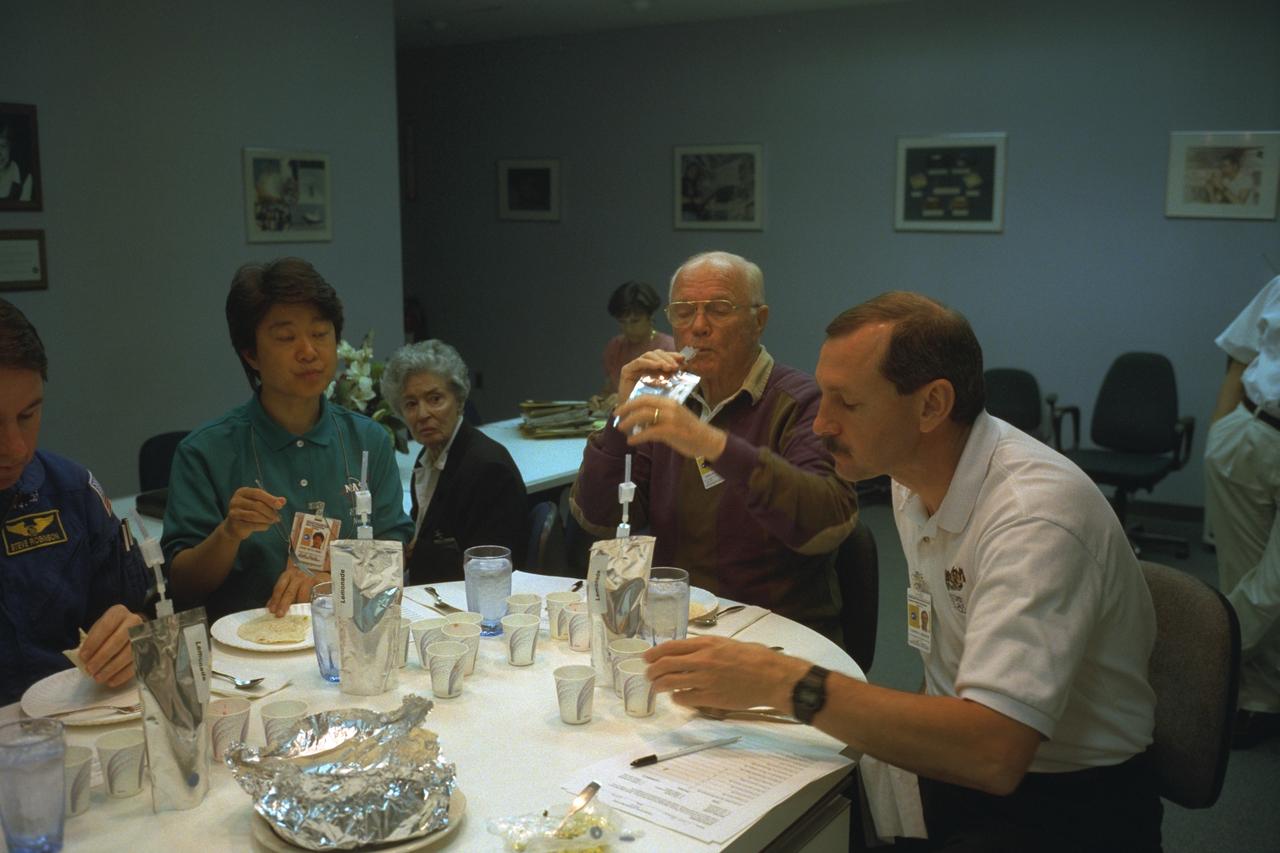
S98-08729 (9 April 1998) --- Four members of the STS-95 crew participate in a food tasting session at the Johnson Space Center (JSC). From the left are Stephen K. Robinson, mission specialist; payload specialist Chiaki Mukai of Japan's National Space Development Agency (NASDA); U.S. Sen. John H. Glenn Jr., payload specialist; and Curtis L. Brown Jr., mission commander. They will be joined by three other astronauts when Discovery lifts off in late October of this year for a scheduled nine-day mission. The photo was taken by Joe McNally, National Geographic, for NASA.
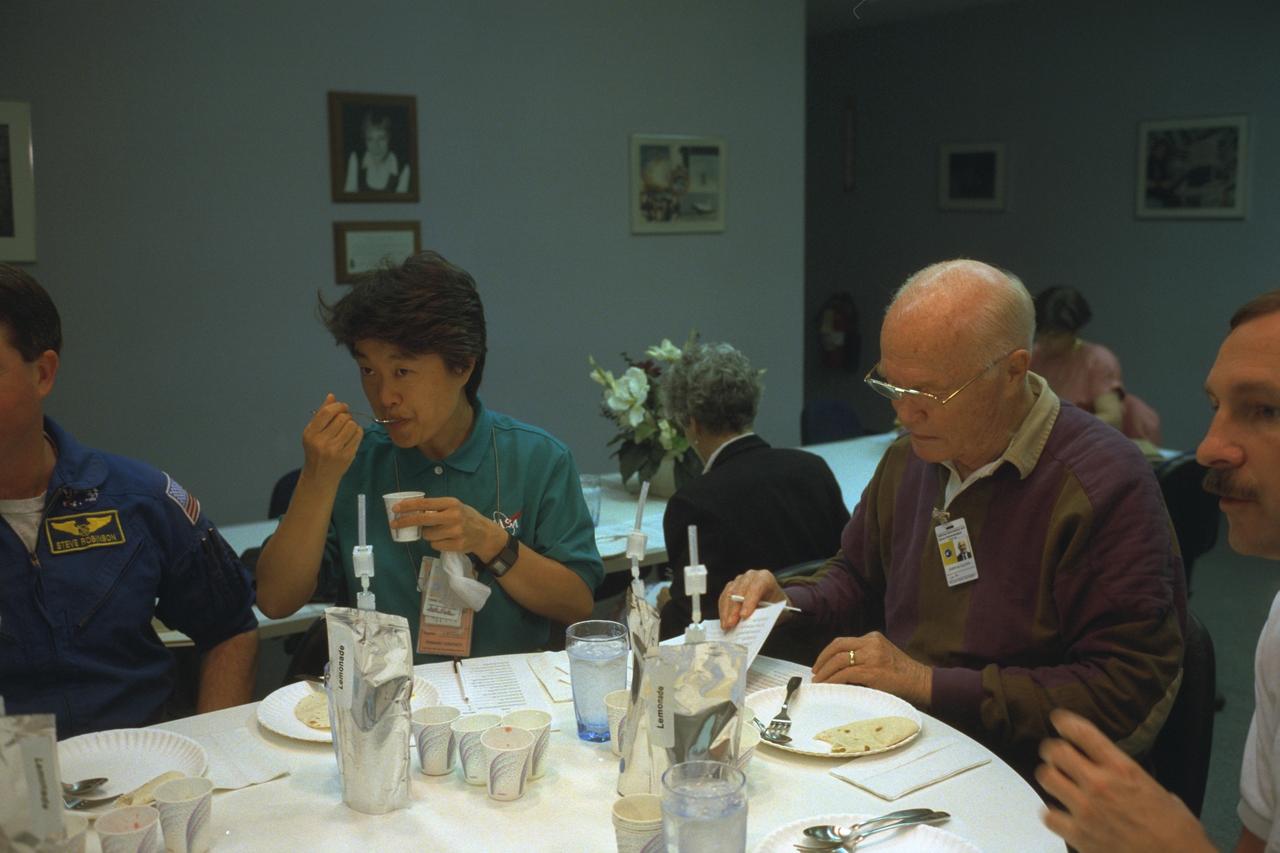
S98-08730 (9 April 1998) --- Four members of the STS-95 crew participate in a food tasting session at the Johnson Space Center (JSC). From the left are Stephen K. Robinson, mission specialist; payload specialist Chiaki Mukai of Japan's National Space Development Agency (NASDA); U.S. Sen. John H. Glenn Jr., payload specialist; and Curtis L. Brown Jr., mission commander. They will be joined by three other astronauts when Discovery lifts off in late October of this year for a scheduled nine-day mission. The photo was taken by Joe McNally, National Geographic, for NASA.
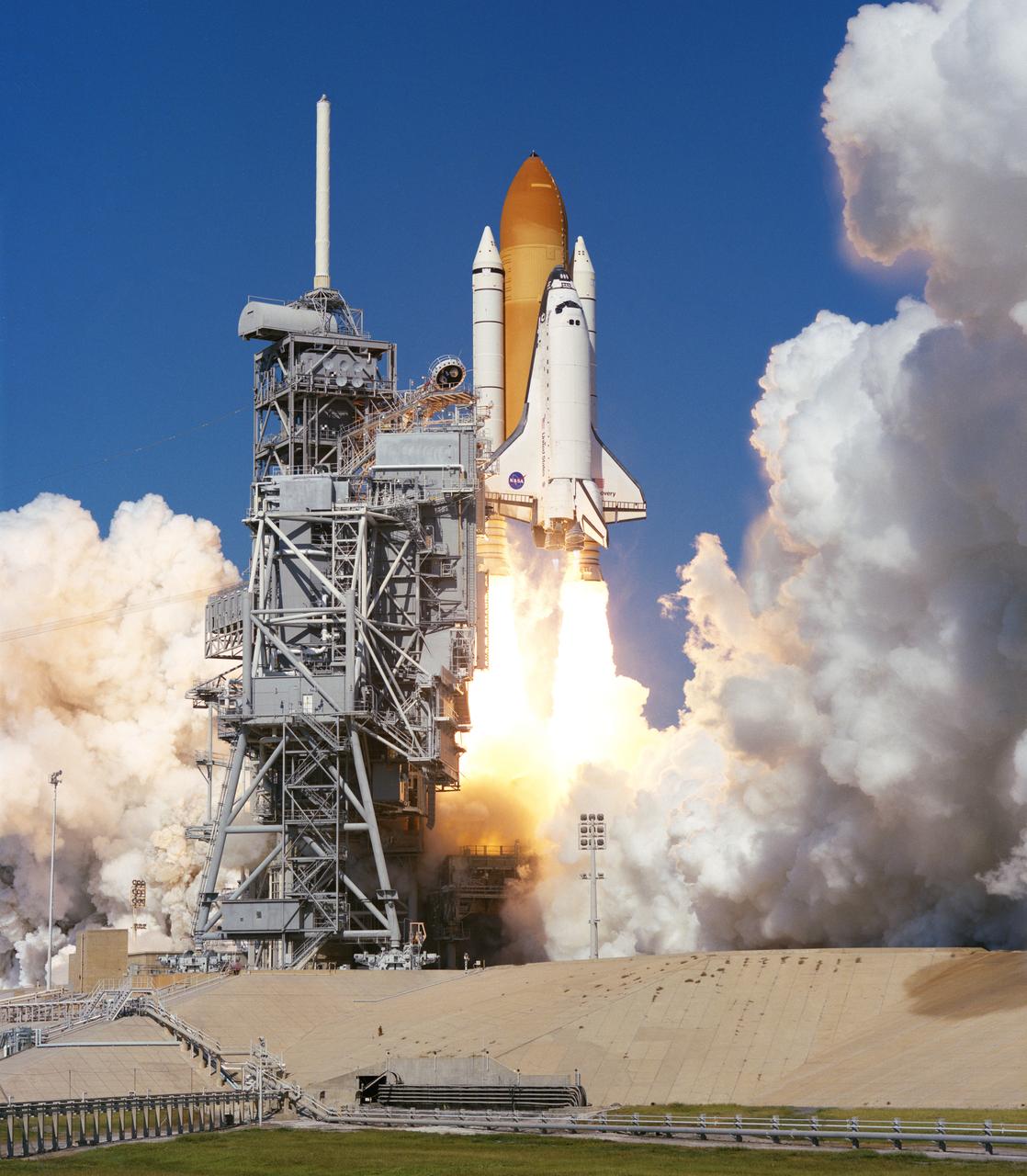
The space shuttle Discovery lifts off Launch Pad 39B to begin a nine-day mission in Earth-orbit. Launch was at 2:19 p.m. EST, Oct. 29, 1998. Onboard were Curtis L. Brown Jr., Steven W. Lindsey, Scott F. Parazynski, Steven K. Robinson, Pedro Duque, United States Senator John H. Glenn Jr. and Chiaki Naito-Mukai. Duque is a mission specialist representing the European Space Agency (ESA) and Mukai is a payload specialist representing Japan's National Space Development Agency (NASDA). Glenn, making his second spaceflight but his first in 36 years, joins Mukai as a payload specialist on the mission.
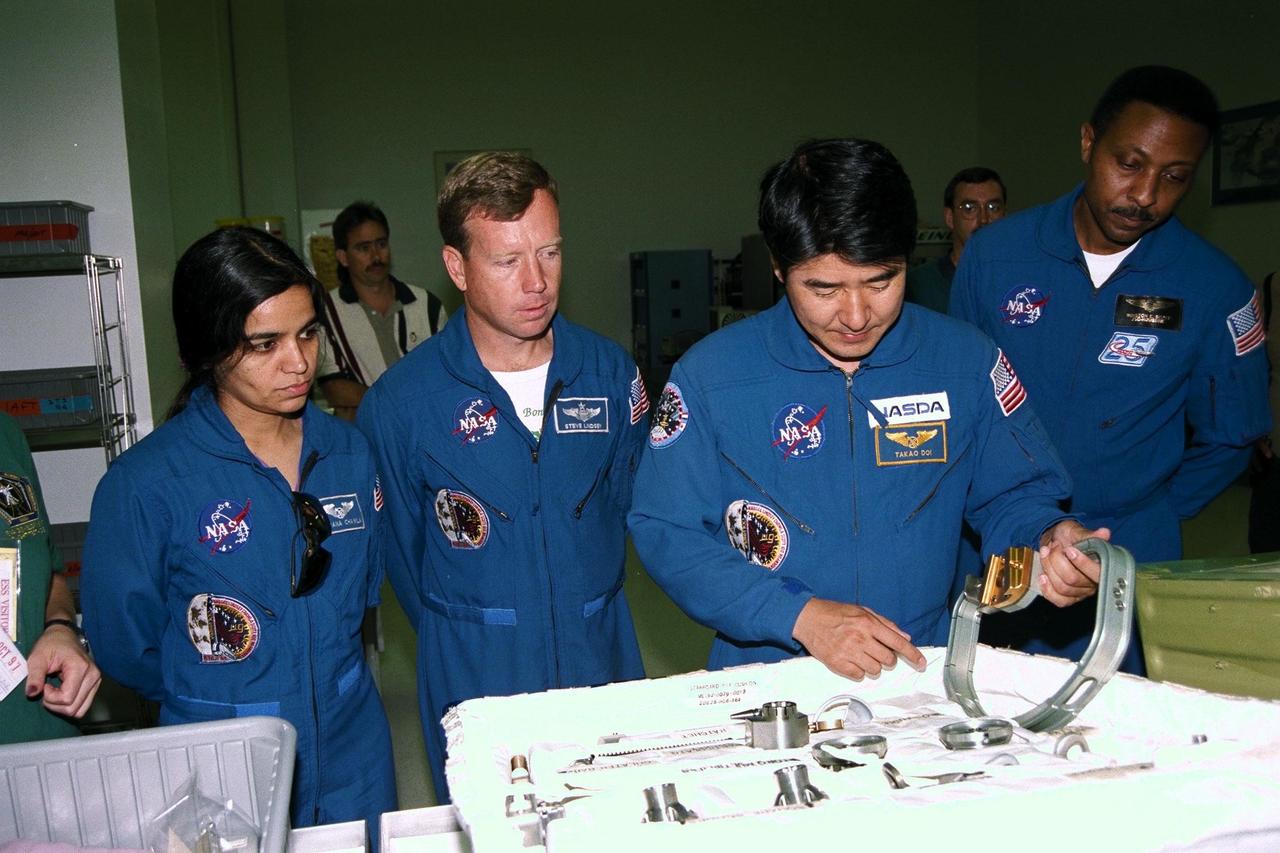
STS-87 astronaut crew members participate in the Crew Equipment Integration Test (CEIT) in Kennedy Space Center’s (KSC's) Vertical Processing Facility. From left are Mission Specialist Kalpana Chawla, Ph.D.; Pilot Steven Lindsey; Mission Specialist Takao Doi , Ph.D., of the National Space Development Agency of Japan; and Mission Specialist Winston Scott. The CEIT gives astronauts an opportunity to get a hands-on look at the payloads with which they will be working onorbit. STS-87 will be the fourth United States Microgravity Payload and flight of the Spartan-201 deployable satellite. During the STS-87 mission, scheduled for a Nov. 19 liftoff from KSC, Dr. Doi and Scott will both perform spacewalks
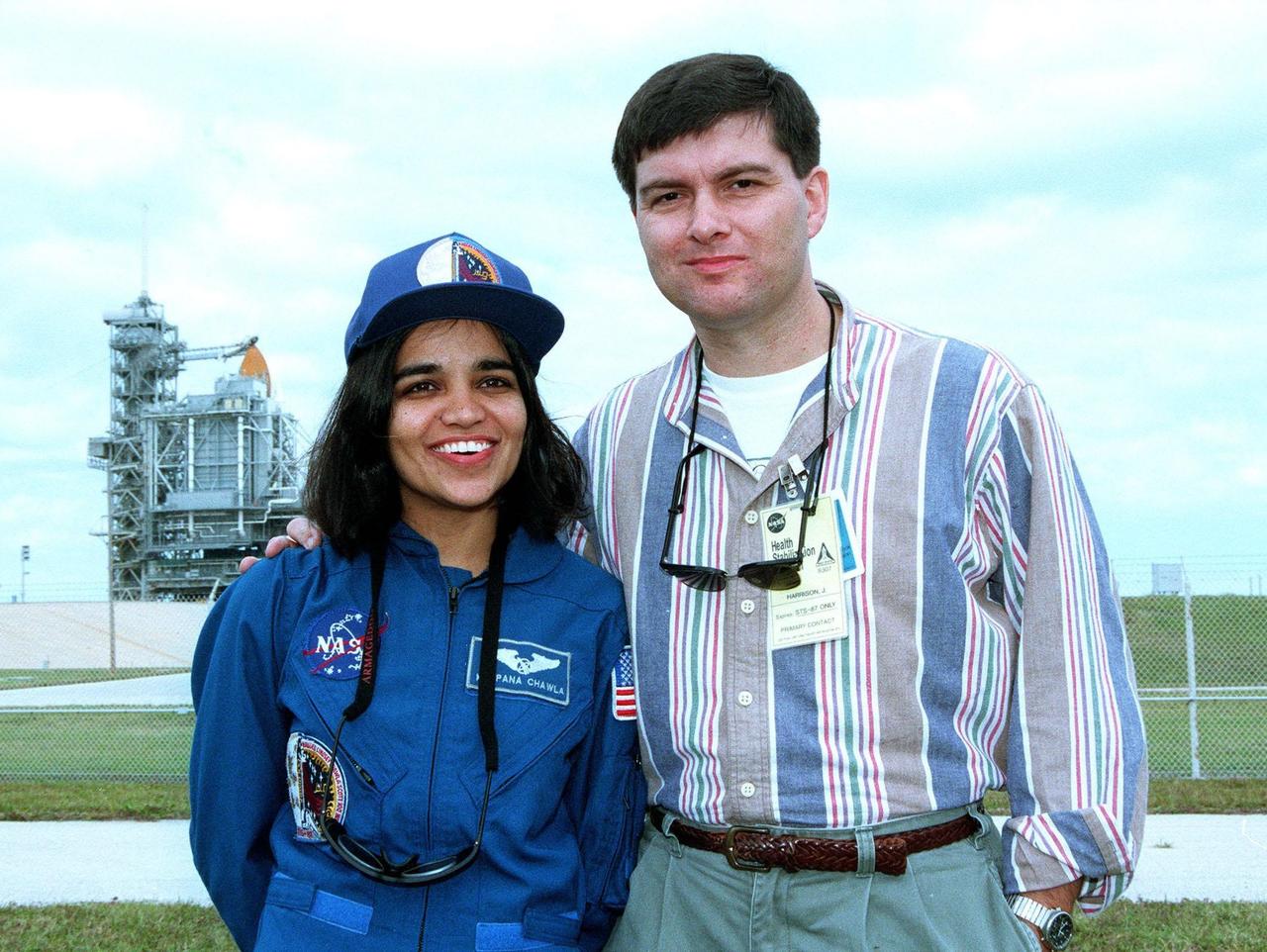
STS-87 Mission Specialist Kalpana Chawla, Ph.D., poses with her husband, Jean-Pierre Harrison, in front of Kennedy Space Center's Launch Pad 39B during final prelaunch activities leading up to the scheduled Nov. 19 liftoff. The other STS-87 crew members are Commander Kevin Kregel; Pilot Steven Lindsey; Mission Specialists Winston Scott and Takao Doi, Ph.D., of the National Space Development Agency of Japan; and Payload Specialist Leonid Kadenyuk of the National Space Agency of Ukraine. STS-87 will be the fourth flight of the United States Microgravity Payload and the Spartan-201 deployable satellite
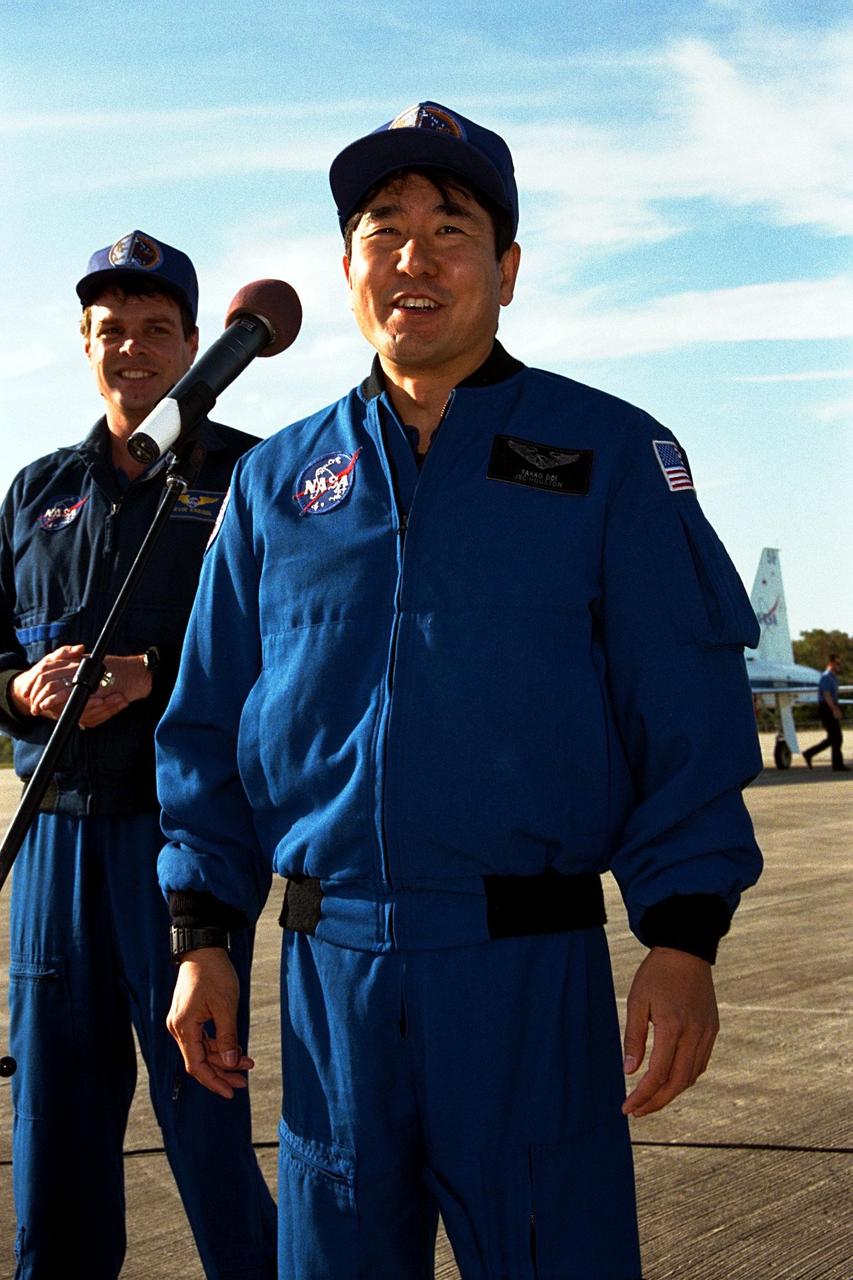
As STS-87 Commander Kevin Kregel looks on, Mission Specialist Takao Doi, Ph.D., of the National Space Development Agency of Japan addresses members of the press and media at Kennedy Space Center's Shuttle Landing Facility after arriving for the final prelaunch activities leading up to the scheduled Nov. 19 liftoff. Other STS-87 crew members not pictured are Pilot Steven Lindsey; Mission Specialists Kalpana Chawla, Ph.D., and Winston Scott; and Payload Specialist Leonid Kadenyuk of the National Space Agency of Ukraine. STS-87 will be the fourth flight of the United States Microgravity Payload and the Spartan-201 deployable satellite
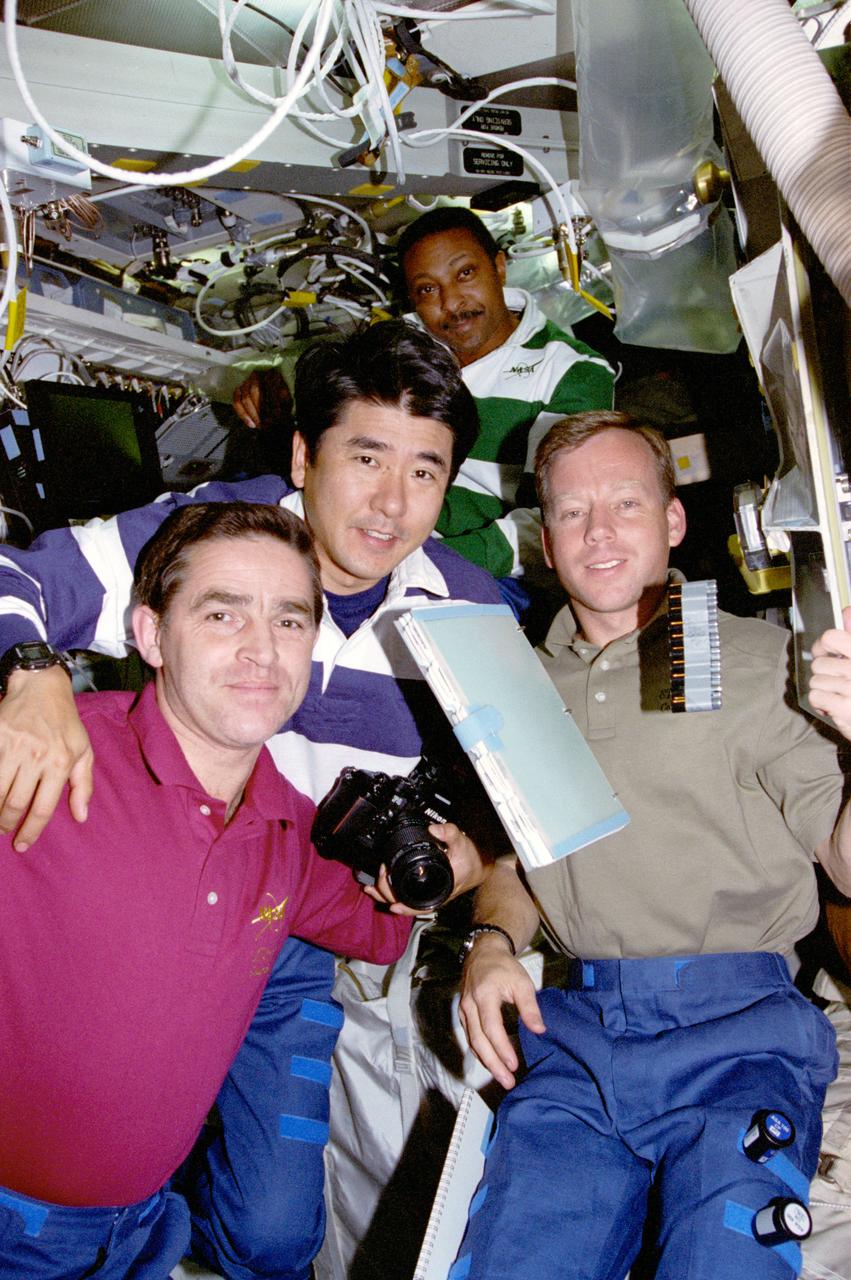
STS087-353-034 (19 November - 5 December 1997) --- Two-thirds of the crew members are pictured on the mid-deck of the Earth-orbiting Space Shuttle Columbia. From the left are Leonid Kadenyuk, payload specialist of the Ukraine; Takao Doi, international mission specialist representing Japan's National Space Development Agency (NASDA); Winston E. Scott, mission specialist; and Steven W. Lindsey, pilot. Doi was joined on two Extravehicular Activities (EVA) during the 16-day United States Microgravity Payload (USMP-4) mission by Scott.
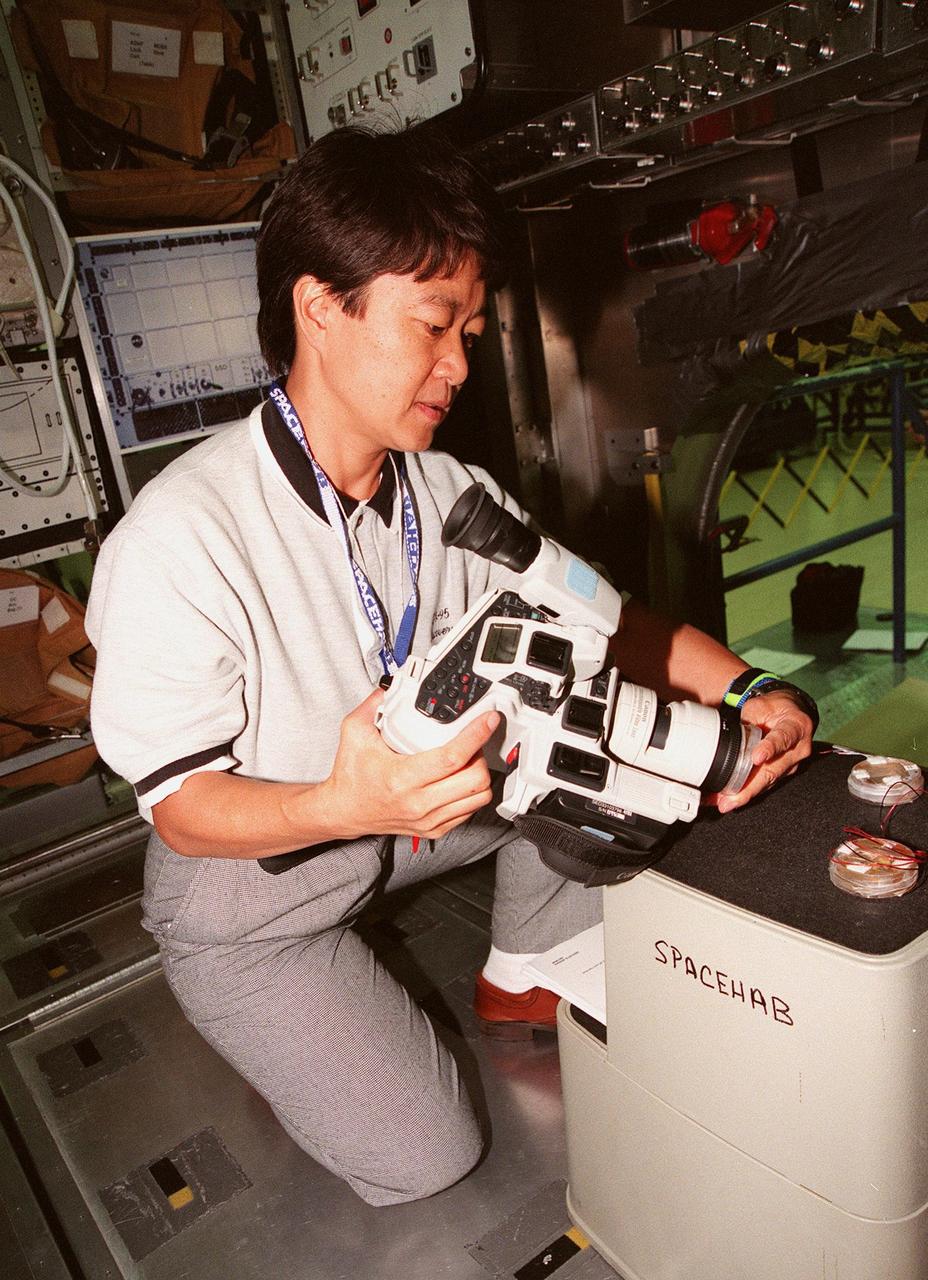
KENNEDY SPACE CENTER, FLA. -- STS-95 Payload Specialist Chiaki Mukai, representing the National Space Development Agency of Japan (NASDA), looks over part of the equipment for the SPACEHAB during familiarization at the SPACEHAB Payload Processing Facility, Cape Canaveral. The mission, scheduled to launch Oct. 29, includes research payloads such as the Spartan solar-observing deployable spacecraft, the Hubble Space Telescope Orbital Systems Test Platform, the International Extreme Ultraviolet Hitchhiker, as well as the SPACEHAB single module with experiments on space flight and the aging process

STS-87 Mission Specialist Winston Scott is assisted with his ascent and re-entry flight suit in the white room at Launch Pad 39B by Danny Wyatt, NASA quality assurance specialist. STS-87 is the fourth flight of the United States Microgravity Payload and Spartan-201. Scott is scheduled to perform an extravehicular activity spacewalk with Mission Specialist Takao Doi, Ph.D., of the National Space Development Agency of Japan, during STS-87. Scott also performed a spacewalk on the STS-72 mission
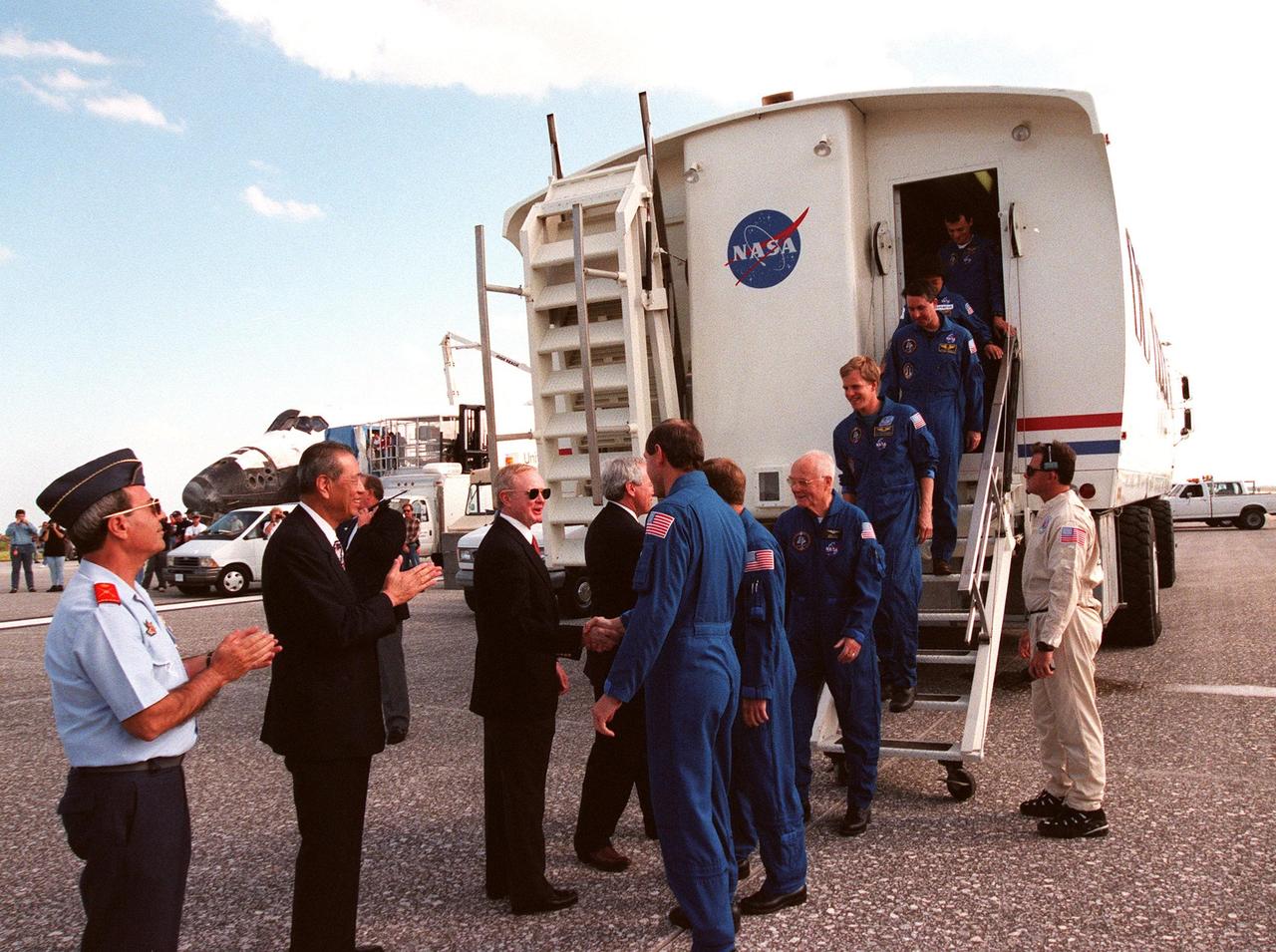
Following touchdown at 12:04 p.m. EST at the Shuttle Landing Facility, the STS-95 crew leave the Crew Transport Vehicle where they are met by (left to right) a Spanish dignitary; Isao Uchida, president of the National Space Development Agency of Japan (NASDA); Center Director Roy Bridges; and NASA Administrator Daniel Goldin. The crew, from left to right, are Mission Commander Curtis L. Brown Jr. (shaking hands with Bridges); Pilot Steven W. Lindsey; Payload Specialist John H. Glenn Jr., a senator from Ohio and one of the original Mercury 7 astronauts; Mission Specialist Scott E. Parazynski; Mission Specialist Stephen K. Robinson; Payload Specialist Chiaki Mukai, with the National Space Development Agency of Japan (NASDA); and Mission Specialist Pedro Duque of Spain, with the European Space Agency (ESA). The successful mission lasted nine days and included research payloads such as the Spartan solar-observing deployable spacecraft, the Hubble Space Telescope Orbital Systems Test Platform, the International Extreme Ultraviolet Hitchhiker, as well as the SPACEHAB single module with experiments on space flight and the aging process
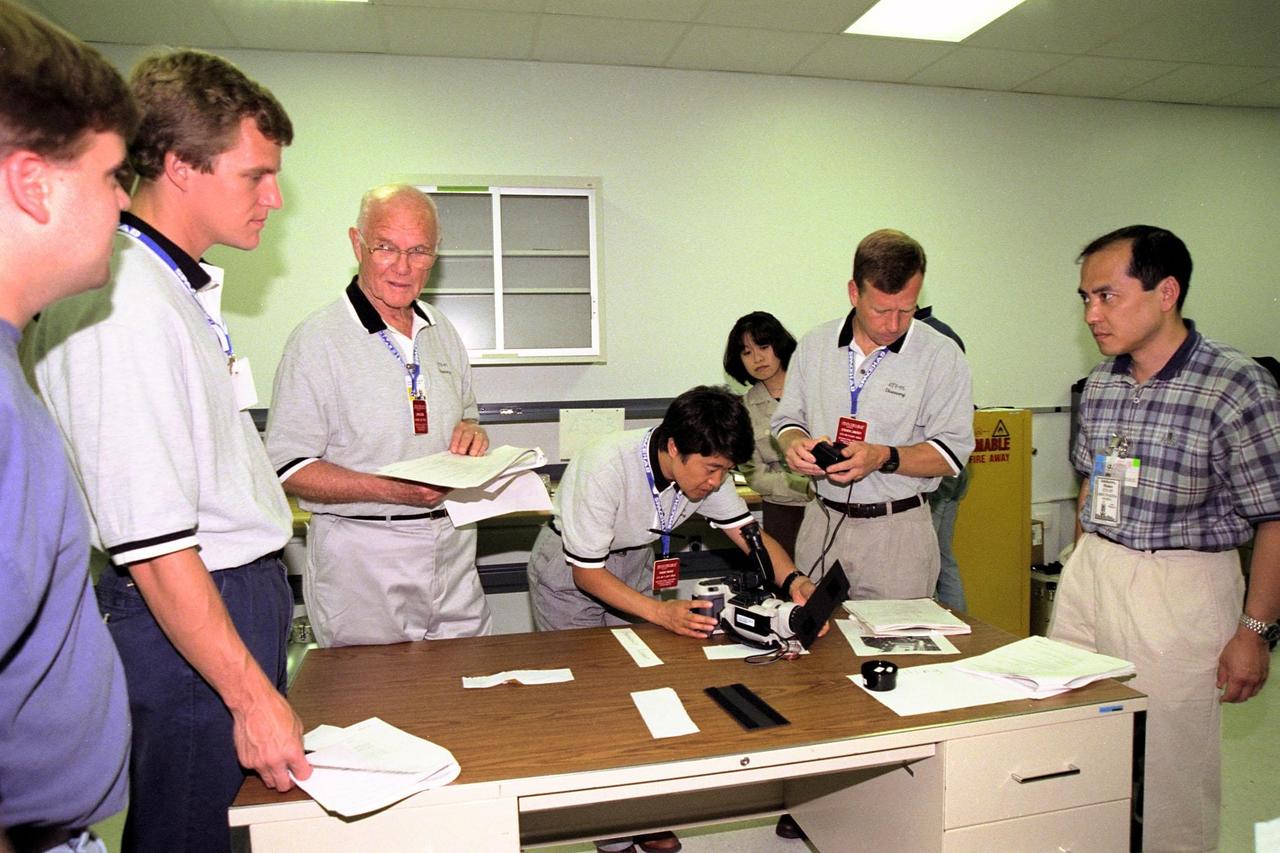
STS-95 crew members (from left) Mission Specialists Scott E. Parazynski, Payload Specialist John H. Glenn Jr., Payload Specialist Chiaki Mukai, representing the National Space Development Agency of Japan (NASDA), and Pilot Steven W. Lindsey look over equipment that Hideo Ishikawa of NASDA has presented at SPACEHAB Payload Processing Facility, Cape Canaveral, Fla. The STS-95 crew is at KSC to look at the SPACEHAB module and the equipment that will fly with them on the Space Shuttle Discovery, scheduled to launch Oct. 29, 1998. The mission includes research payloads such as the Spartan solar-observing deployable spacecraft, the Hubble Space Telescope Orbital Systems Test Platform, the International Extreme Ultraviolet Hitchhiker, as well as the SPACEHAB single module with experiments on space flight and the aging process
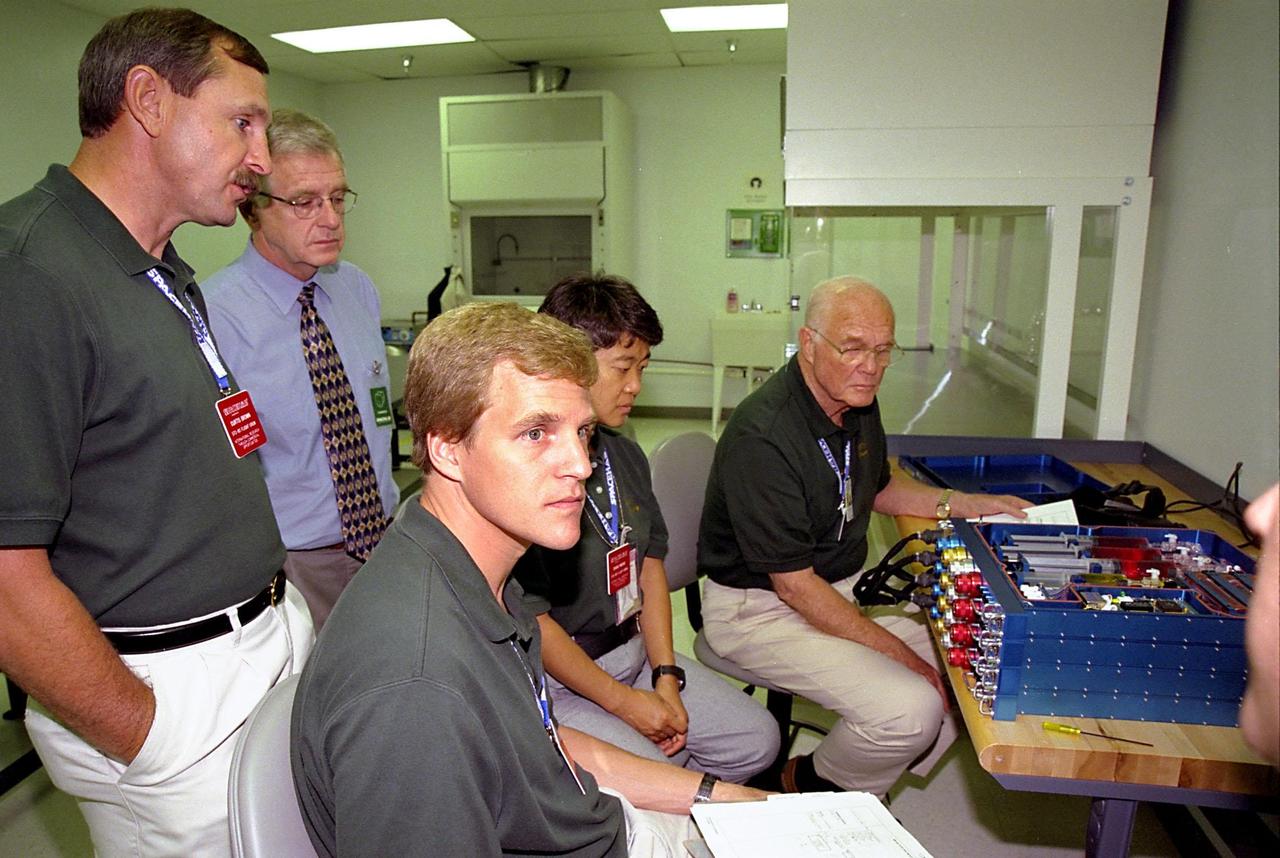
KENNEDY SPACE CENTER, FLA. -- STS-95 crew members look over the Osteoporosis Experiment in Orbit (OSTEO) during a SPACEHAB familiarization tour and briefing in the SPACEHAB Payload Processing Facility in Cape Canaveral. Seated from left are Mission Specialist Scott E. Parazynski, Payload Specialist Chiaki Mukai of the National Space Development Agency of Japan (NASDA), and Payload Specialist John H. Glenn Jr., who also is a senator from Ohio. Standing, from left, are STS-95 Commander Curtis L. Brown and Canadian Space Agency representative Duncan Burnside. STS-95 will feature a variety of research payloads, including the Spartan solar-observing deployable spacecraft, the Hubble Space Telescope Orbital Systems Platform, the International Extreme Ultraviolet Hitchhiker, and experiments on space flight and the aging process. STS-95 is targeted for an Oct. 29 launch aboard the Space Shuttle Discovery
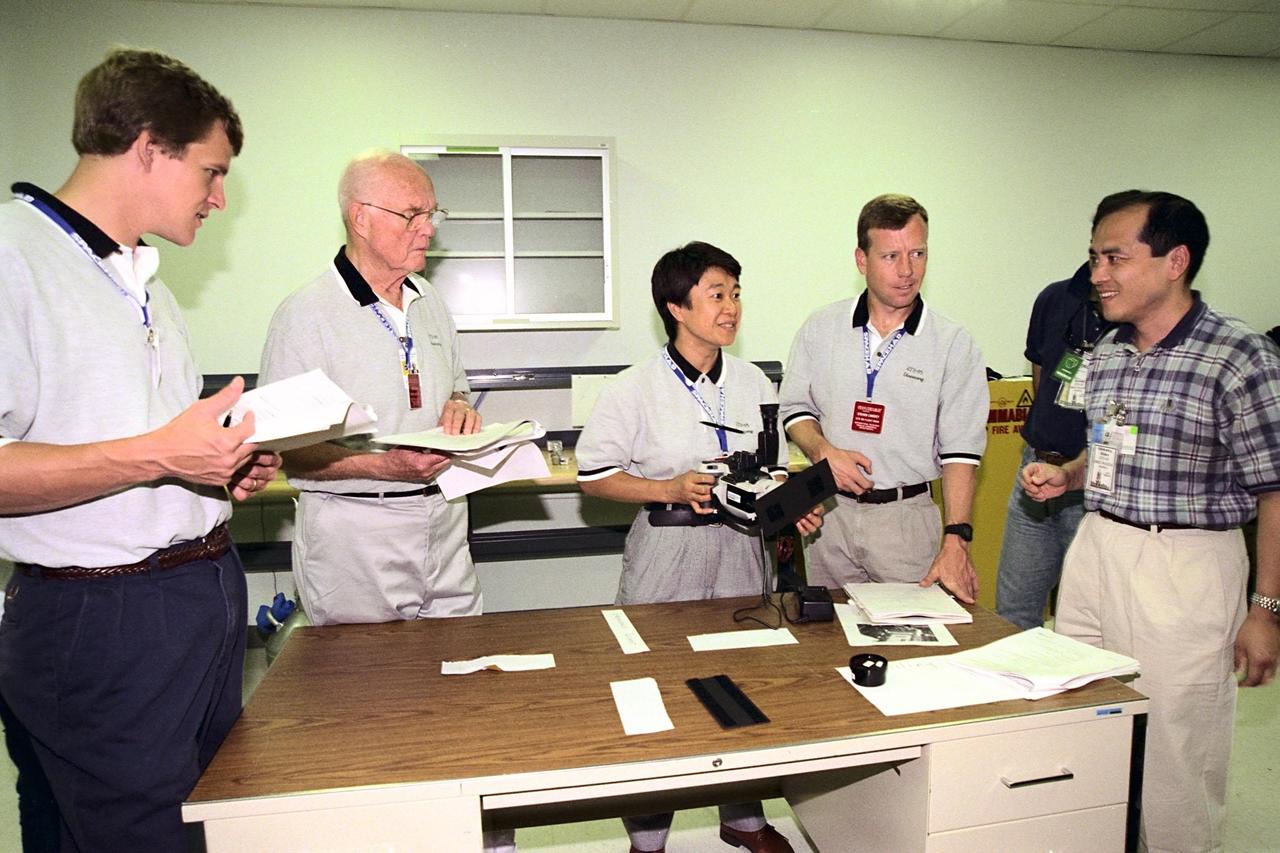
STS-95 crew members (from left) Mission Specialist Scott E. Parazynski, Payload Specialist John H. Glenn Jr., Payload Specialist Chiaki Mukai (with camera) representing the National Space Development Agency of Japan (NASDA), and Pilot Steven Lindsey listen to Hideo Ishikawa of NASDA, who explains some of the flight equipment at SPACEHAB Payload Processing Facility, Cape Canaveral, Fla. The STS-95 crew is at KSC to look at the SPACEHAB module and the equipment that will fly with them on the Space Shuttle Discovery, scheduled to launch Oct. 29, 1998. The mission includes research payloads such as the Spartan solar-observing deployable spacecraft, the Hubble Space Telescope Orbital Systems Test Platform, the International Extreme Ultraviolet Hitchhiker, as well as the SPACEHAB single module with experiments on space flight and the aging process
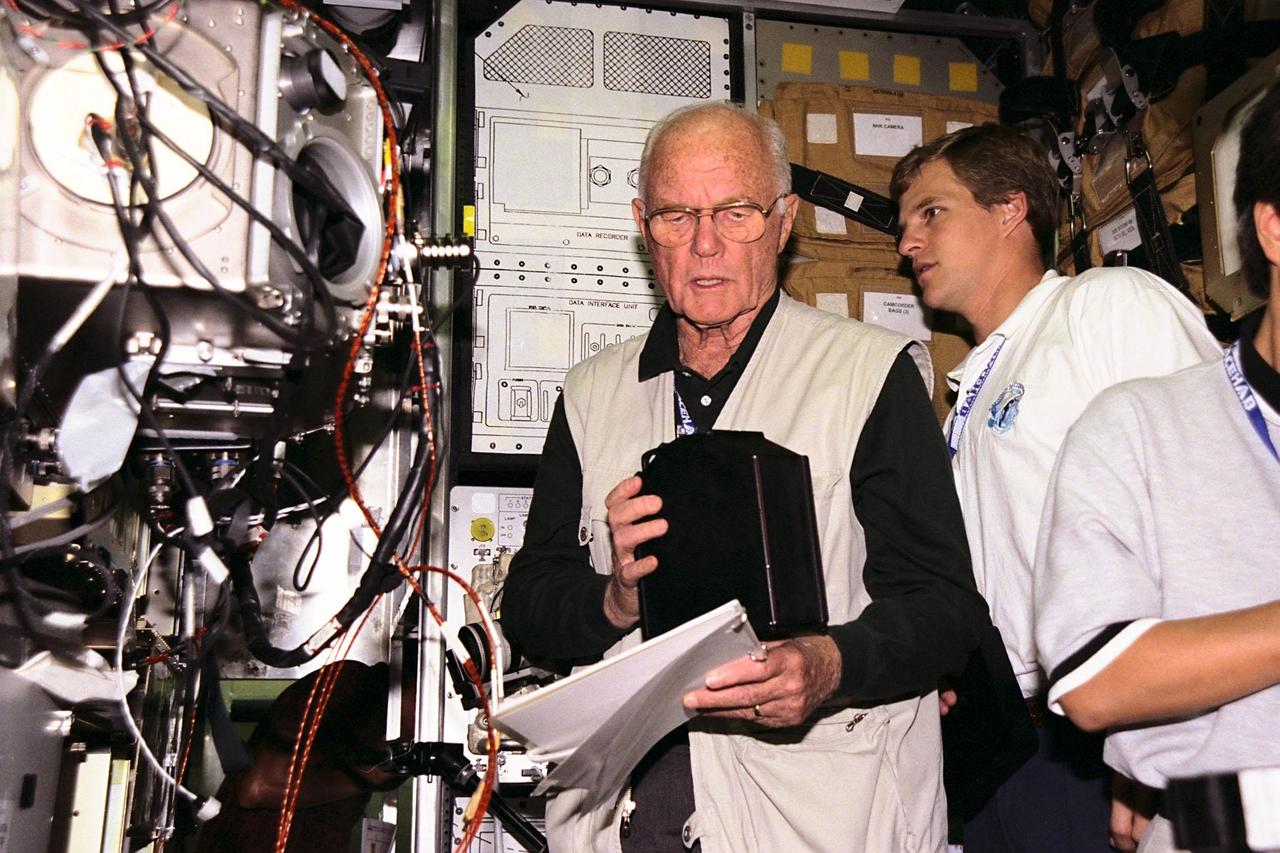
KENNEDY SPACE CENTER, FLA. -- STS-95 Mission Specialist Scott E. Parazynski, at center, takes some experiment equipment from Payload Specialist John H. Glenn Jr., while in the SPACEHAB trainer at the SPACEHAB Payload Processing Facility in Cape Canaveral. Payload Specialist Chiaki Mukai, representing the National Space Development Agency of Japan (NASDA), sets up a camera in the foreground. STS-95 will feature a variety of research payloads, including the Spartan solar-observing deployable spacecraft, the Hubble Space Telescope Orbital Systems Platform, the International Extreme Ultraviolet Hitchhiker, and experiments on space flight and the aging process. STS-95 is targeted for an Oct. 29 launch aboard the Space Shuttle Discovery
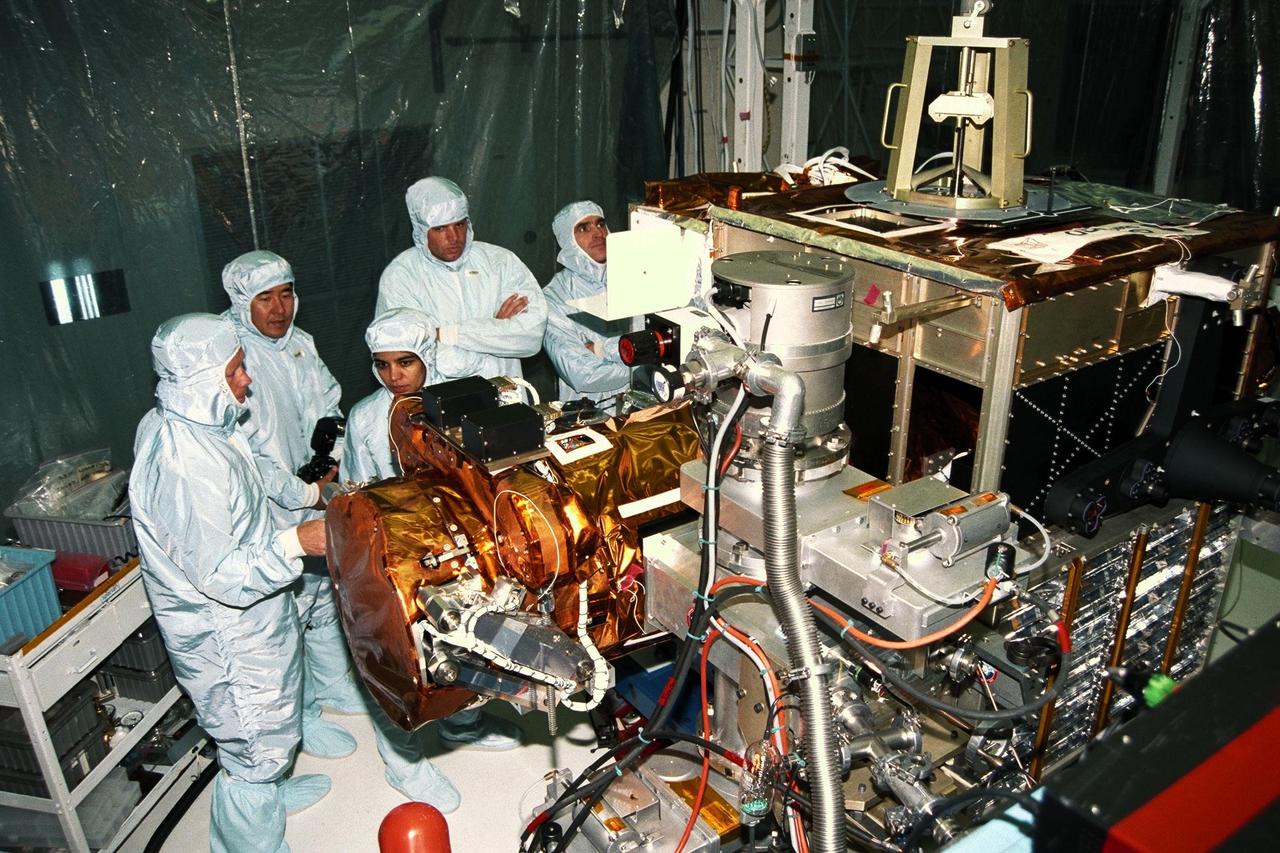
STS-87 astronaut crew members participate in the Crew Equipment Integration Test (CEIT) with the Spartan-201 payload in Kennedy Space Center’s (KSC's) Vertical Processing Facility. From left are Pilot Steven Lindsey; Mission Specialist Takao Doi, Ph.D., of the National Space Development Agency of Japan; Mission Specialist Kalpana Chawla, Ph.D.; Commander Kevin Kregel; and Payload Specialist Leonid Kadenyuk of the National Space Agency of Ukraine. The CEIT gives astronauts an opportunity to get a hands-on look at the payloads with which they will be working on-orbit. STS-87 will be the fourth United States Microgravity Payload and flight of the Spartan-201 deployable satellite. During the mission, Dr. Doi will be the first Japanese astronaut to perform a spacewalk. STS-87 is scheduled for a Nov. 19 liftoff from KSC
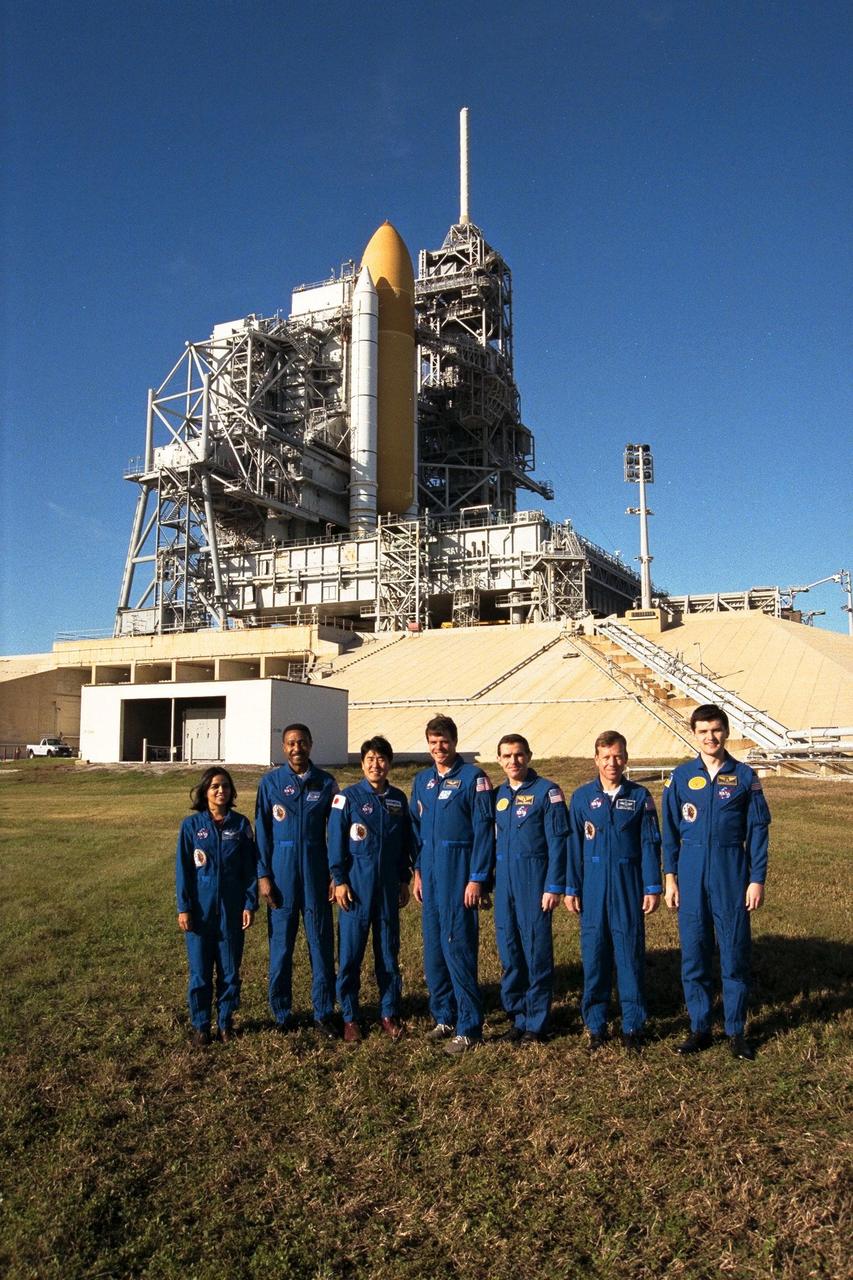
The crew of the STS-87 mission, scheduled for launch Nov. 19 aboard the Space Shuttle Columbia from Pad 39B at Kennedy Space Center (KSC), participate in the Terminal Countdown Demonstration Test (TCDT) at KSC. Posing for a group shot by Pad 39B are, from left to right, Mission Specialist Kalpana Chawla, Ph.D.; Mission Specialist Winston Scott; Mission Specialist Takao Doi, Ph.D., of the National Space Development Agency of Japan; Commander Kevin Kregel; Payload Specialist Leonid Kadenyuk of the National Space Agency of Ukraine (NSAU); Pilot Steven Lindsey; and Kadenyuk’s back-up, Yaroslav Pustovyi, Ph.D., also of NSAU. The TCDT is held at KSC prior to each Space Shuttle flight, providing the crew of each mission opportunities to participate in simulated countdown activities. The crew also spends time undergoing emergency egress training exercises at the pad and has an opportunity to view and inspect the payloads in the orbiter's payload bay
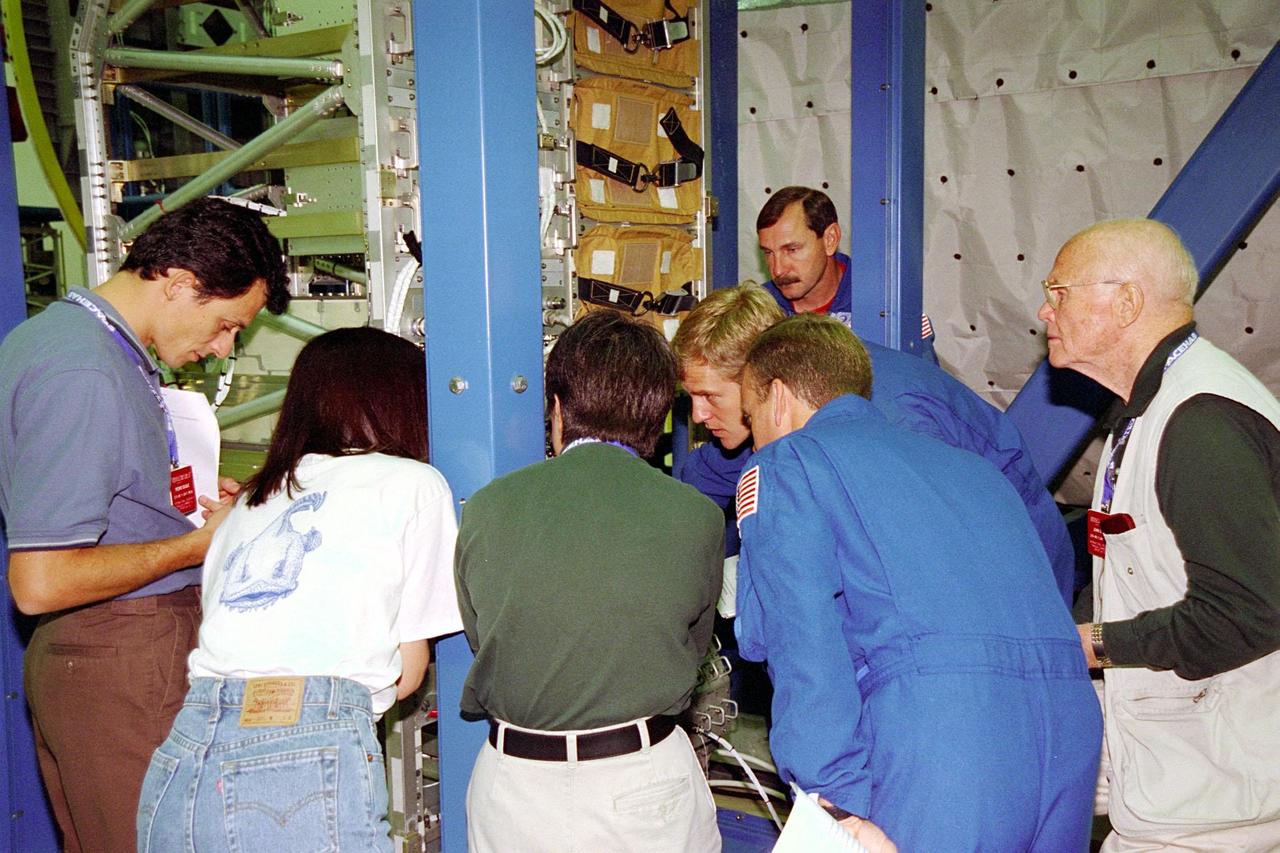
STS-95 crew members gather around the Vestibular Function Experiment Unit (VFEU) which includes marine fish called toadfish. In foreground, from left, are Mission Specialist Pedro Duque of the European Space Agency (ESA), a technician from the National Space Development Agency of Japan (NASDA), Payload Specialist Chiaki Mukai of NASDA, Pilot Steven W. Lindsey, and Payload Specialist John H. Glenn Jr., who also is a senator from Ohio. At center, facing the camera, are Mission Specialist Scott E. Parazynski and Commander Curtis L. Brown Jr., in back. STS-95 will feature a variety of research payloads, including the Spartan solar-observing deployable spacecraft, the Hubble Space Telescope Orbital Systems Platform, the International Extreme Ultraviolet Hitchhiker, and experiments on space flight and the aging process. STS-95 is targeted for an Oct. 29 launch aboard the Space Shuttle Discovery
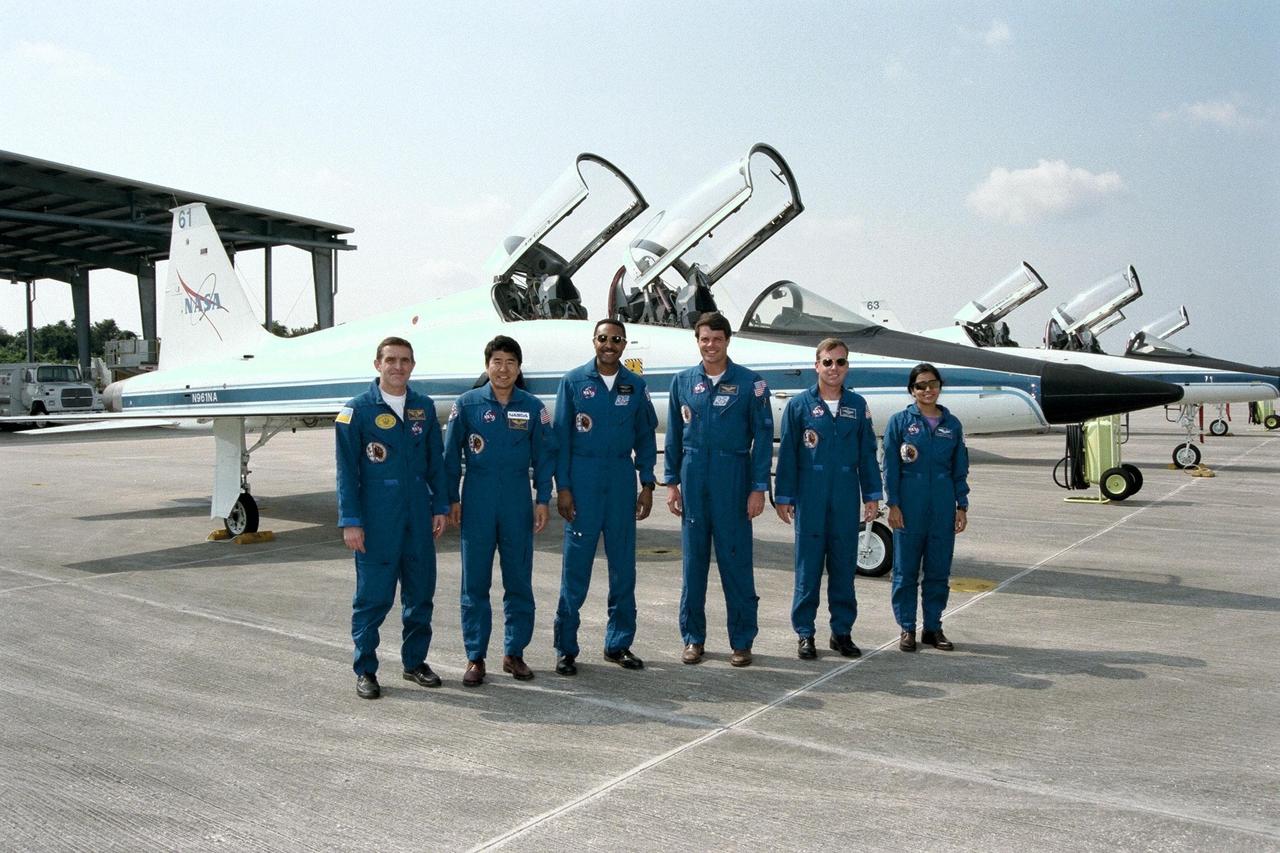
STS-87 astronaut crew members prepare to fly back to Johnson Space Center in Houston after participating in the Crew Equipment Integration Test (CEIT) at Kennedy Space Center (KSC) in early October. From left are Payload Specialist Leonid Kadenyuk of the National Space Agency of Ukraine; Mission Specialist Takao Doi, Ph.D., of the National Space Development Agency of Japan; Mission Specialist Winston Scott; Commander Kevin Kregel; Pilot Steven Lindsey; and Mission Specialist Kalpana Chawla, Ph.D. The CEIT gives astronauts an opportunity to get a hands-on look at the payloads with which they will be working on-orbit. STS-87 will be the fourth United States Microgravity Payload and flight of the Spartan-201 deployable satellite. During the STS-87 mission, scheduled for a Nov. 19 liftoff from KSC, Dr. Doi and Scott will both perform spacewalks
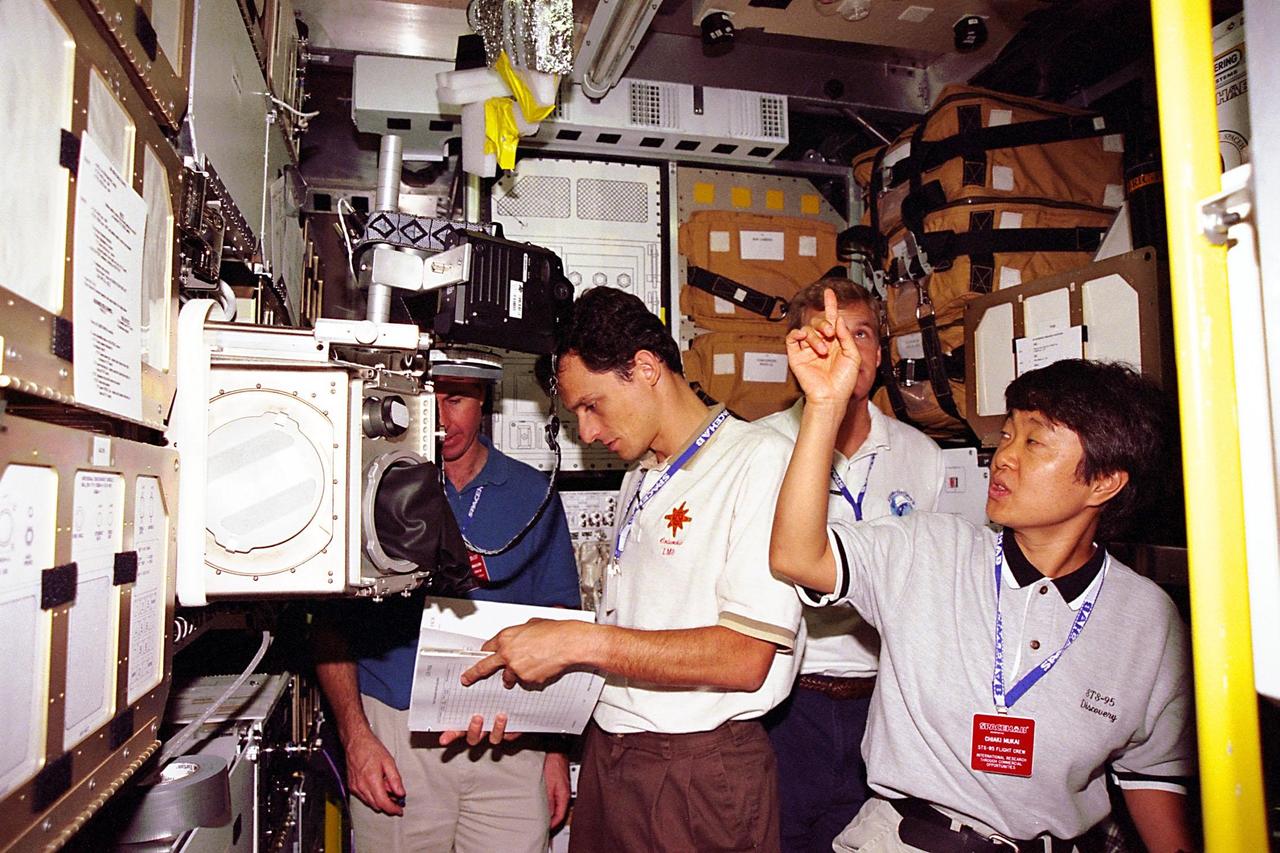
KENNEDY SPACE CENTER, FLA. -- STS-95 crew members inspect equipment in the SPACEHAB trainer at the SPACEHAB Payload Processing Facility in Cape Canaveral. From left, are Mission Specialist Stephen K. Robinson (partially obscured); Mission Specialist Pedro Duque of Spain, who represents the European Space Agency (ESA); and Payload Specialist Chiaki Mukai, who represents the National Space Development Agency of Japan (NASDA). Standing in back is Mission Specialist Scott E. Parazynski. STS-95 will feature a variety of research payloads, including the Spartan solar-observing deployable spacecraft, the Hubble Space Telescope Orbital Systems Platform, the International Extreme Ultraviolet Hitchhiker, and experiments on space flight and the aging process. STS-95 is targeted for an Oct. 29 launch aboard the Space Shuttle Discovery
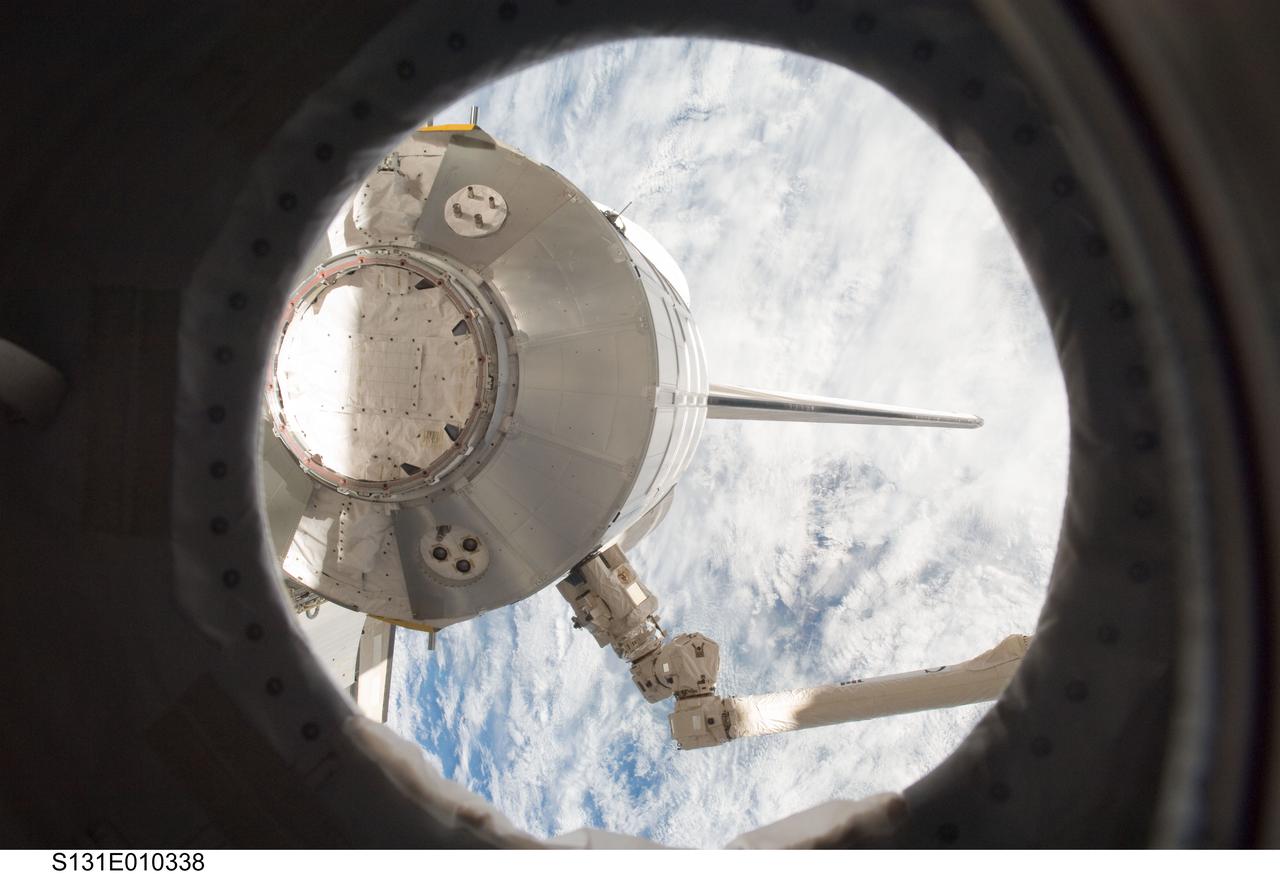
S131-E-010338 (16 April 2010) --- In the grasp of the International Space Station's Canadarm2 robotic arm, the Leonardo Multi-Purpose Logistics Module is placed back in space shuttle Discovery's payload bay. NASA astronaut Stephanie Wilson and Japan Aerospace Exploration Agency (JAXA) astronaut Naoko Yamazaki, both STS-131 mission specialists, were at the controls of the robotic arm in the Destiny laboratory. They grappled Leonardo and removed it from the Harmony node and placed it inside the shuttle's payload bay for the return home.
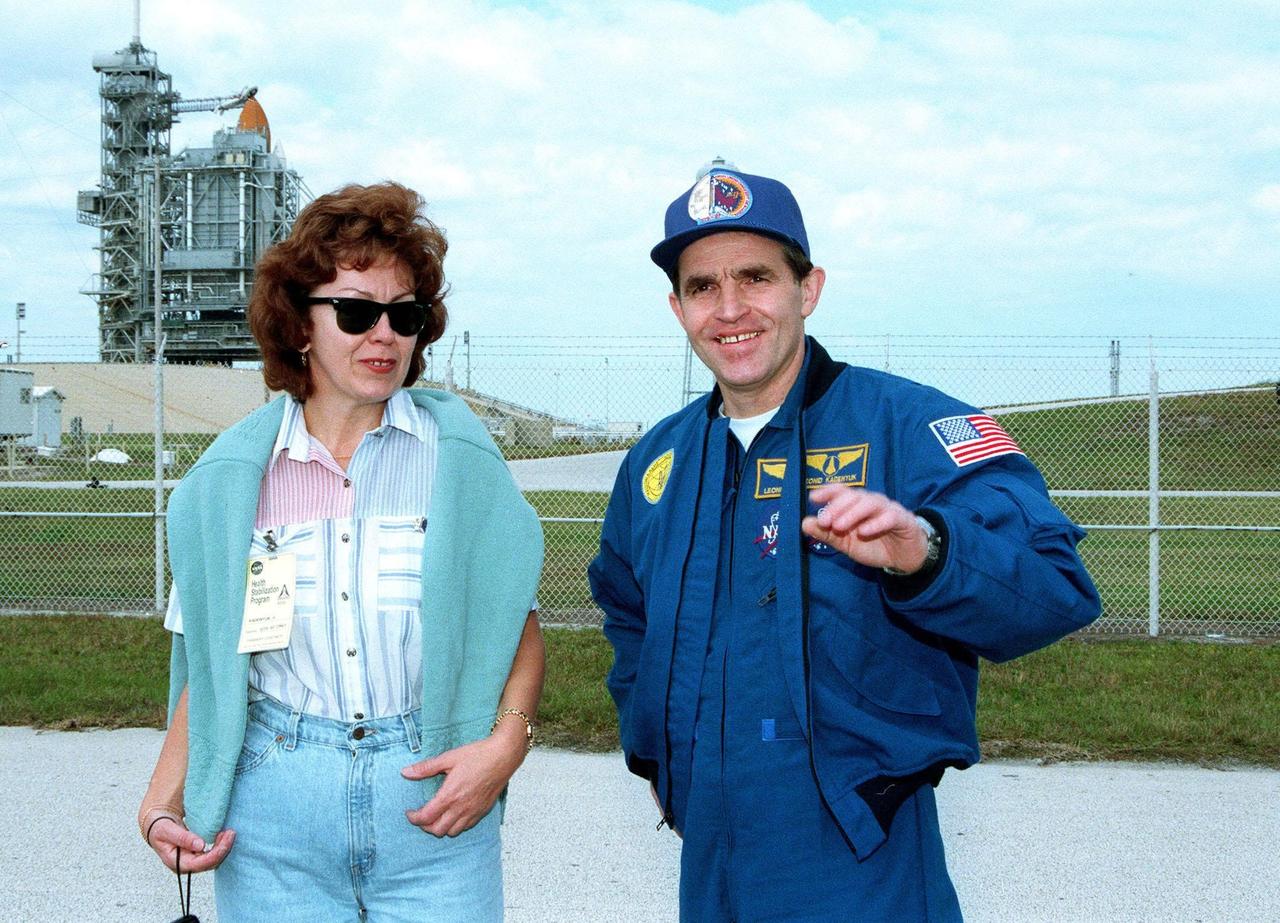
STS-87 Payload Specialist Leonid Kadenyuk of the National Space Agency of Ukraine poses with his wife, Vera Kadenyuk, in front of Kennedy Space Center's Launch Pad 39B during final prelaunch activities leading up to the scheduled Nov. 19 liftoff. The other STS-87 crew members are Commander Kevin Kregel; Pilot Steven Lindsey; and Mission Specialists Kalpana Chawla, Ph.D.; Winston Scott; and Takao Doi, Ph.D., National Space Development Agency of Japan. STS-87 will be the fourth flight of the United States Microgravity Payload and the Spartan-201 deployable satellite
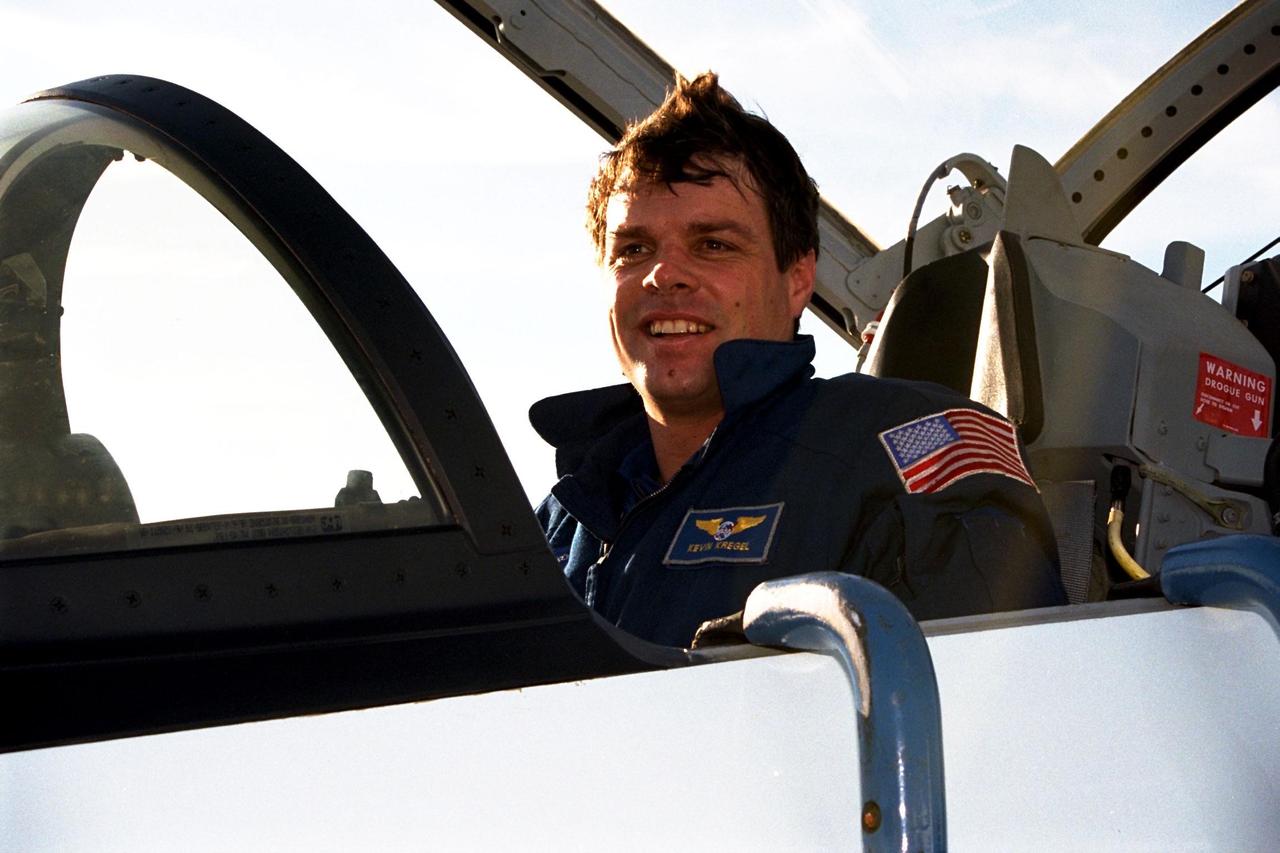
STS-87 Commander Kevin Kregel arrives at Kennedy Space Center's Shuttle Landing Facility aboard a T-38 jet for the final prelaunch activities leading up to the scheduled Nov. 19 liftoff. The other STS-87 crew members are Pilot Steven Lindsey; Mission Specialists Kalpana Chawla, Ph.D.; Takao Doi, Ph.D., of the National Space Development Agency of Japan; and Winston Scott; and Payload Specialist Leonid Kadenyuk of the National Space Agency of Ukraine. STS-87 will be the fourth flight of the United States Microgravity Payload and the Spartan-201 deployable satellite
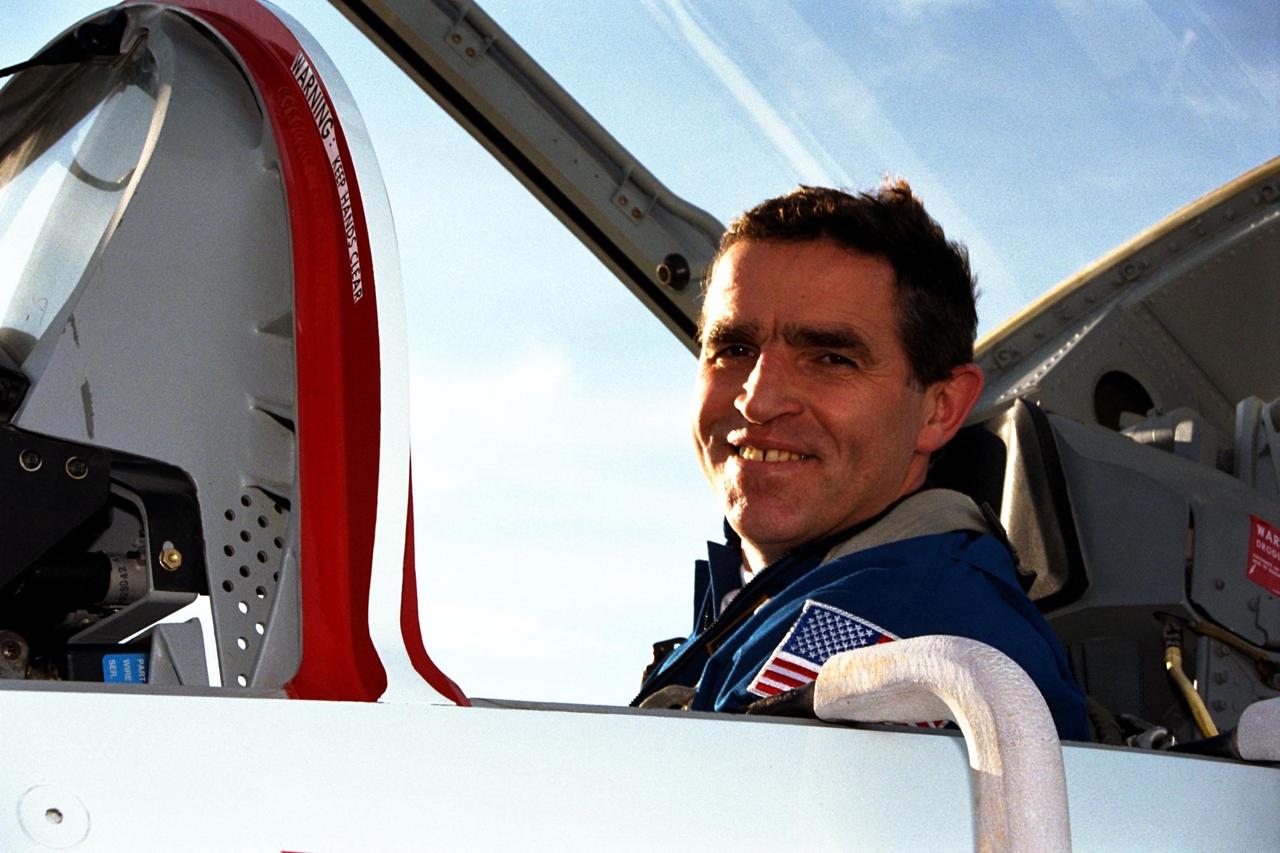
STS-87 Payload Specialist Leonid Kadenyuk of the National Space Agency of Ukraine arrives at Kennedy Space Center's Shuttle Landing Facility aboard a T-38 jet for the final prelaunch activities leading up to the scheduled Nov. 19 liftoff. The other STS-87 crew members are Commander Kevin Kregel; Pilot Steven Lindsey; and Mission Specialists Kalpana Chawla, Ph.D.; Takao Doi, Ph.D., of the National Space Development Agency of Japan; and Winston Scott. STS-87 will be the fourth flight of the United States Microgravity Payload and the Spartan-201 deployable satellite
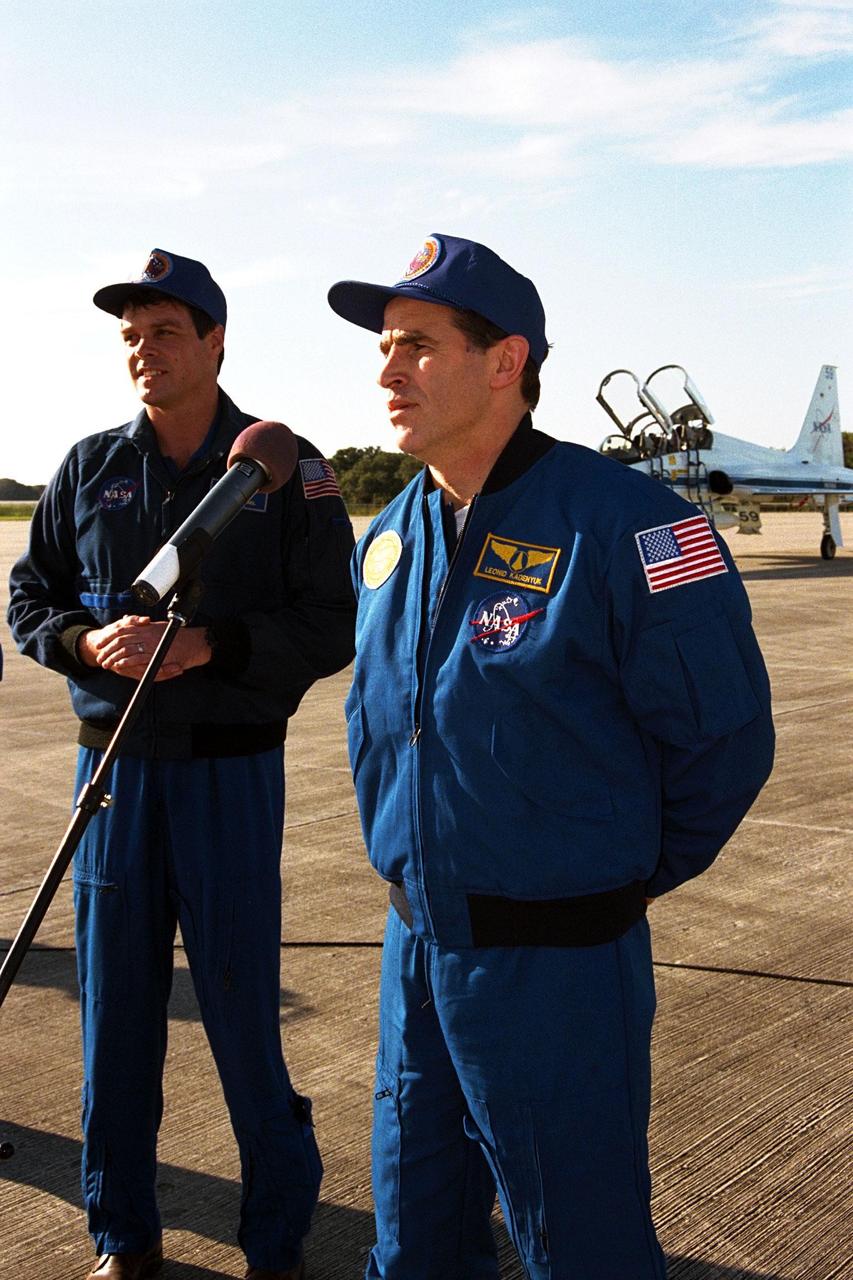
As STS-87 Commander Kevin Kregel looks on, Payload Specialist Leonid Kadenyuk of the National Space Agency of Ukraine addresses members of the press and media at Kennedy Space Center's Shuttle Landing Facility after arriving for the final prelaunch activities leading up to the scheduled Nov. 19 liftoff. Other STS-87 crew members not pictured are Pilot Steven Lindsey; and Mission Specialists Kalpana Chawla, Ph.D.; Takao Doi, Ph.D., of the National Space Development Agency of Japan; and Winston Scott. STS-87 will be the fourth flight of the United States Microgravity Payload and the Spartan-201 deployable satellite
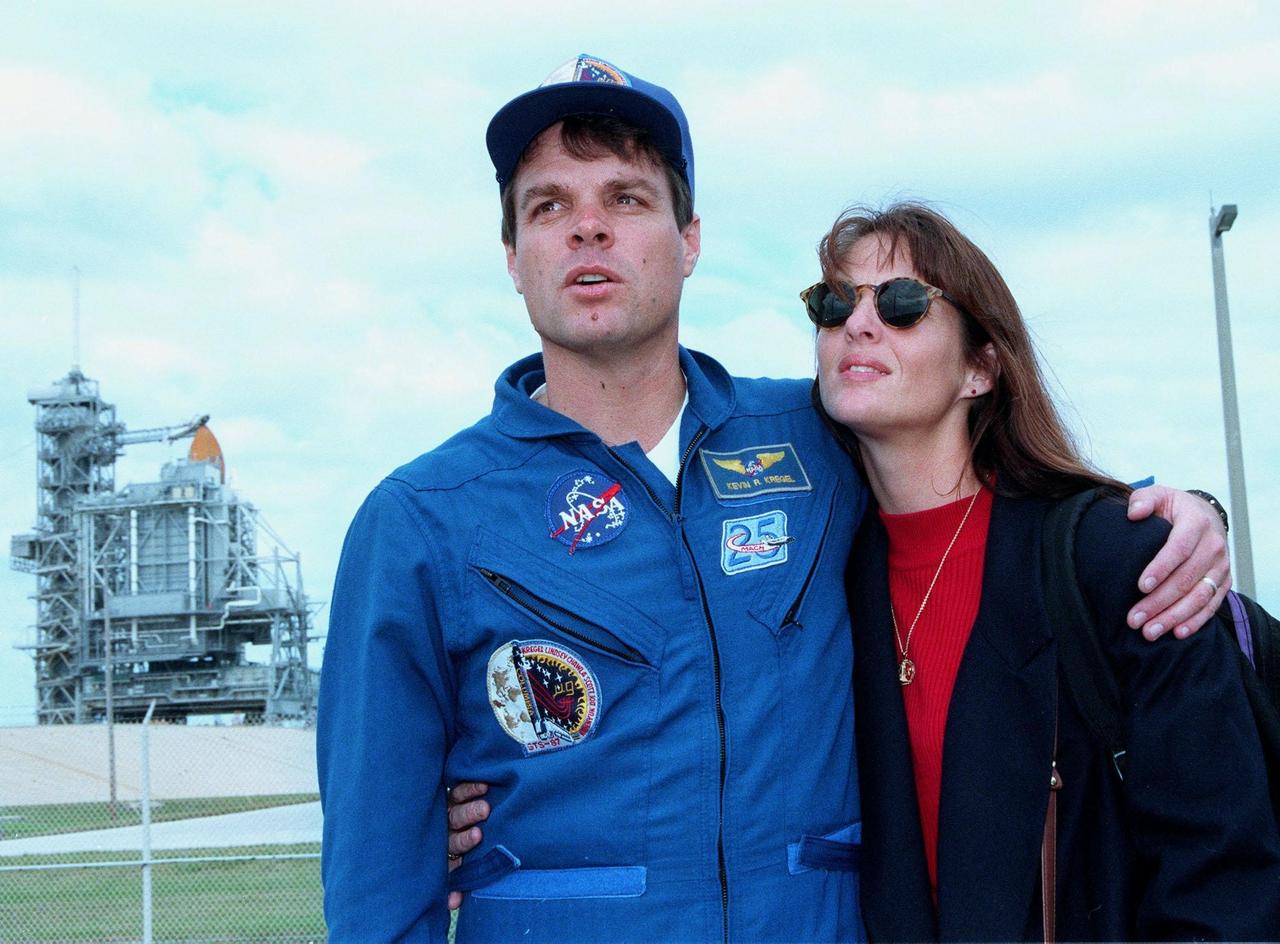
STS-87 Commander Kevin Kregel poses with his wife, Jeannie Kregel, in front of Kennedy Space Center's Launch Pad 39B during final prelaunch activities leading up to the scheduled Nov. 19 liftoff. The other STS-87 crew members are Pilot Steven Lindsey; Mission Specialists Kalpana Chawla, Ph.D., Winston Scott, and Takao Doi, Ph.D., of the National Space Development Agency of Japan; and Payload Specialist Leonid Kadenyuk of the National Space Agency of Ukraine. STS-87 will be the fourth flight of the United States Microgravity Payload and the Spartan-201 deployable satellite

STS047-31-009 (12-20 Sept 1992) --- Two NASA astronauts prepare to try their hand at a new method of eating an in-space meal as chopsticks are called upon by a third crew member. Pictured left to right, are Curtis L. Brown, Jr., pilot; payload specialist Mamoru Mohri representing Japan's National Space Development Agency (NASDA); and Robert L. Gibson, mission commander. Several months of training, as well as the eight-days of sharing research on the Spacelab-J mission, allowed the astronauts and payload specialist to learn a great deal about the two cultures.
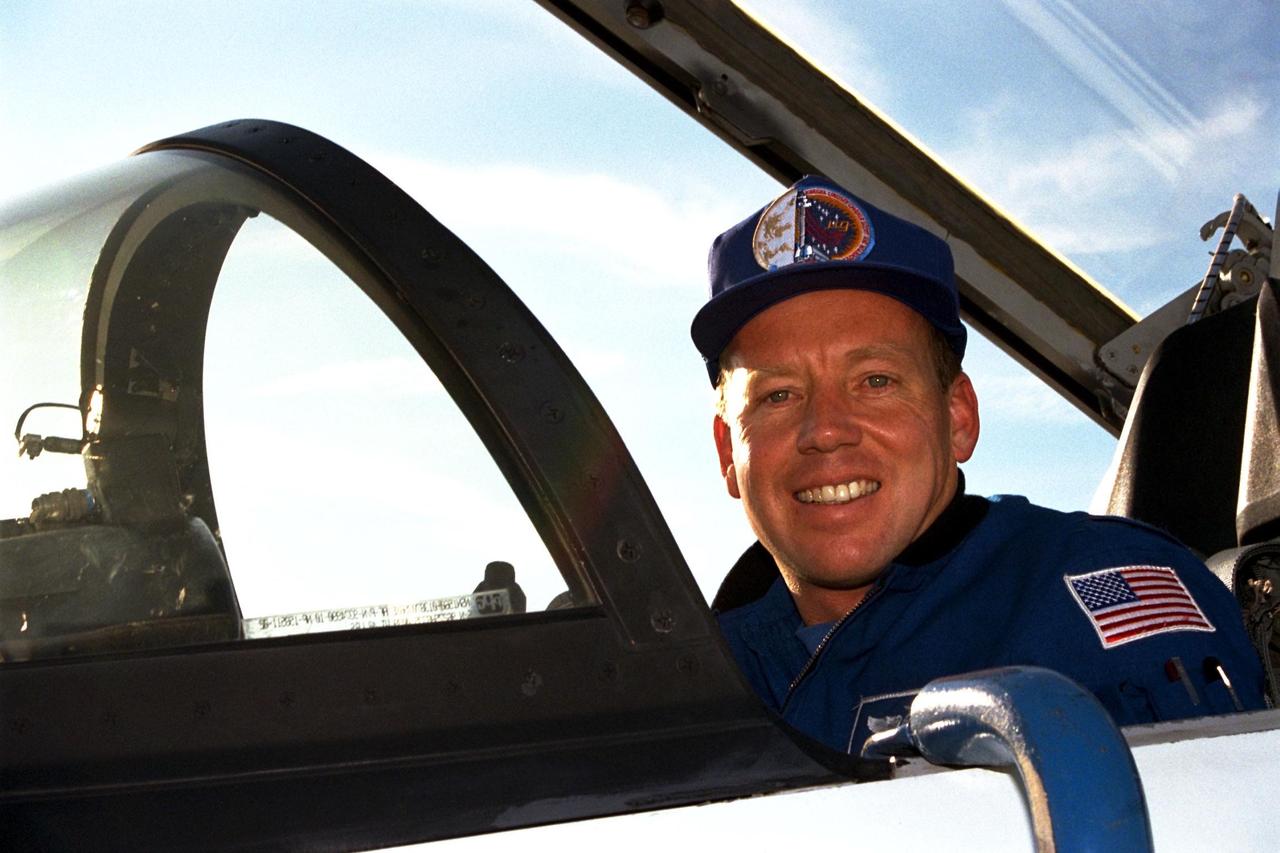
STS-87 Pilot Steven Lindsey arrives at Kennedy Space Center's Shuttle Landing Facility aboard a T-38 jet for the final prelaunch activities leading up to the scheduled Nov. 19 liftoff. The other STS-87 crew members are Commander Kevin Kregel; Mission Specialists Kalpana Chawla, Ph.D.; Takao Doi, Ph.D., of the National Space Development Agency of Japan; and Winston Scott; and Payload Specialist Leonid Kadenyuk of the National Space Agency of Ukraine. STS-87 will be the fourth flight of the United States Microgravity Payload and the Spartan-201 deployable satellite
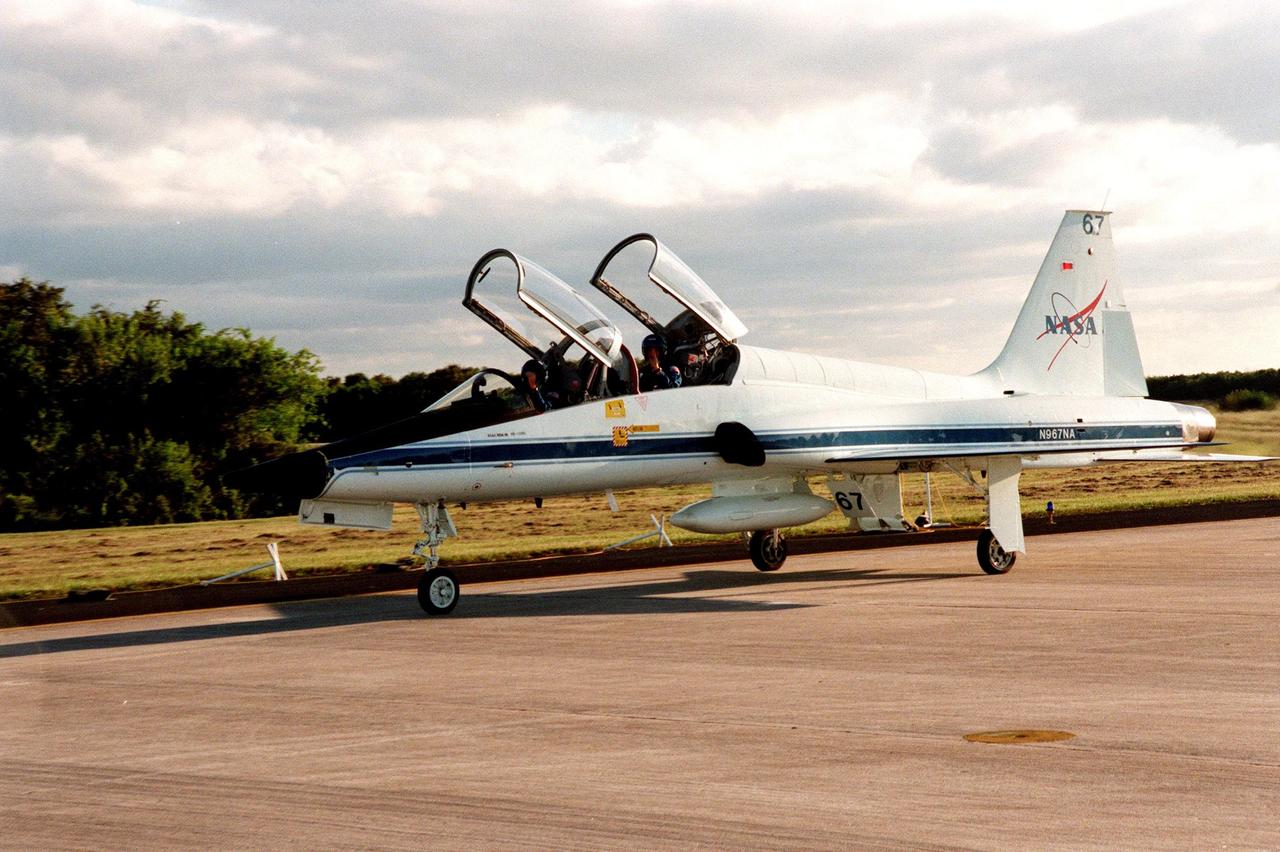
The T-38 jet aircraft arrives at the Shuttle Landing Facility carrying STS-95 Mission Specialist Scott E. Parazynski (second seat). The pilot is astronaut Kent Rominger. Parazynski's first plane experienced problems at the stop at Tyndall AFB and he had to wait for another jet and pilot to finish the flight to KSC. He joined other crewmembers Mission Commander Curtis L. Brown Jr., Pilot Steven W. Lindsey, Mission Specialist Stephen K. Robinson, Payload Specialist John H. Glenn Jr., senator from Ohio, Mission Specialist Pedro Duque, with the European Space Agency (ESA), and Payload Specialist Chiaki Mukai, with the National Space Development Agency of Japan (NASDA), for final pre-launch preparations. STS-95 is expected to launch at 2 p.m. EST on Oct. 29, last 8 days, 21 hours and 49 minutes, and land at 11:49 a.m. EST on Nov. 7
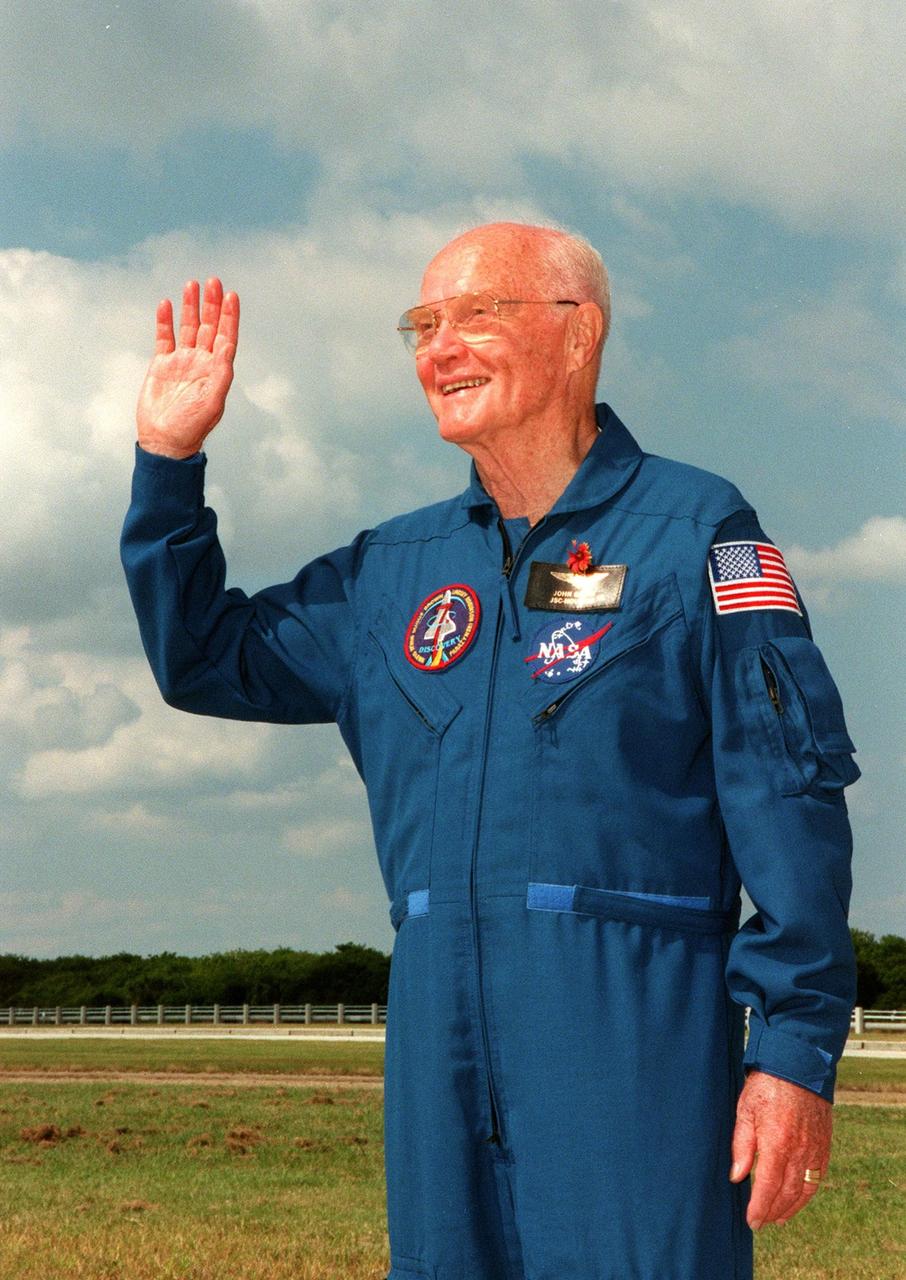
STS-95 Payload Specialist Payload Specialist John H. Glenn Jr., senator from Ohio, waves at family and well-wishers while at Launch Pad 39B. The crew were making final preparations for launch, targeted for liftoff at 2 p.m. on Oct. 29. Other crew members not shown are Mission Commander Curtis L. Brown Jr., Pilot Steven W. Lindsey, Mission Specialist Pedro Duque of Spain, with the European Space Agency (ESA), Mission Specialist Scott E. Parazynski, Mission Specialist Stephen K. Robinson, and Chiaki Mukai, with the National Space Development Agency of Japan (NASDA). The STS-95 mission is expected to last 8 days, 21 hours and 49 minutes, returning to KSC at 11:49 a.m. EST on Nov. 7
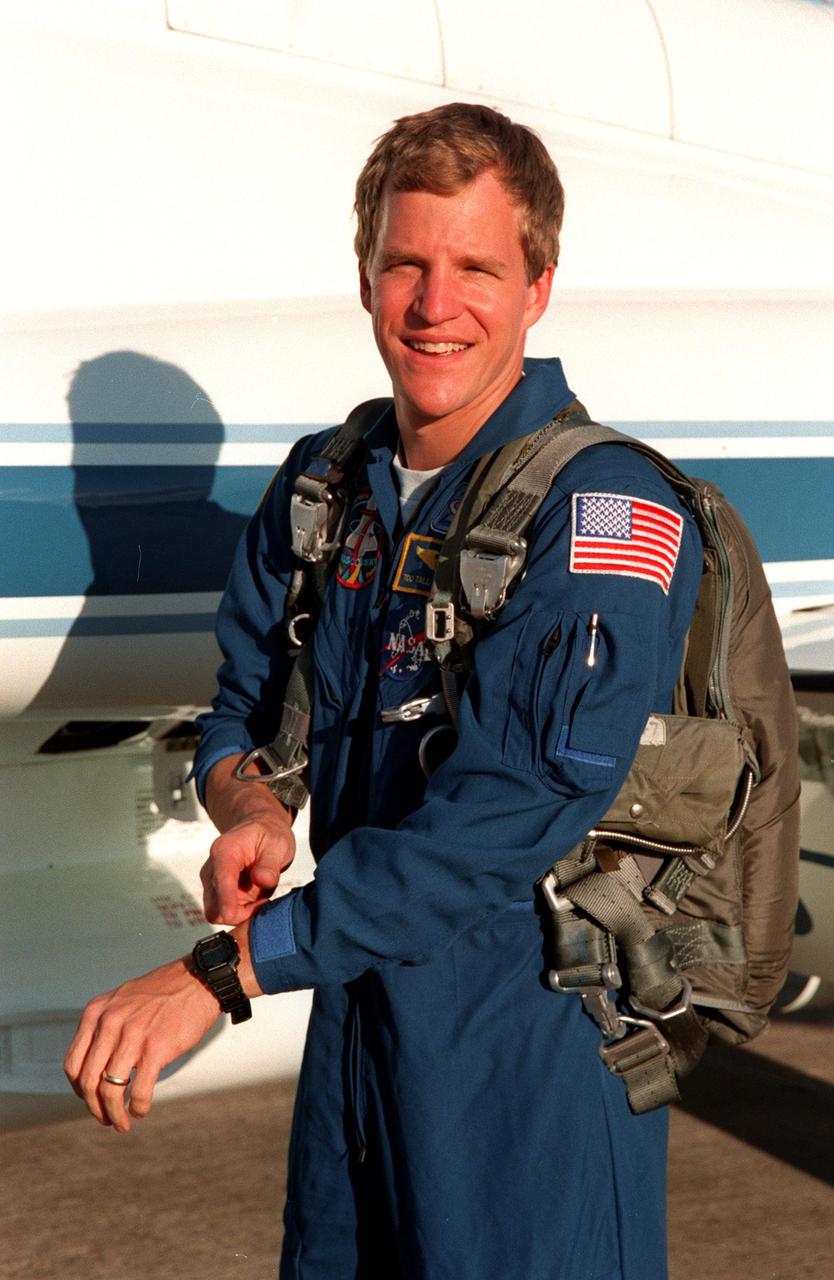
STS-95 Mission Specialist Scott E. Parazynski notes the time on his watch upon his late arrival aboard a T-38 jet at the Shuttle Landing Facility. Parazynski's first plane experienced problems at the stop at Tyndall AFB and he had to wait for another jet and pilot to finish the flight to KSC. He joined other crewmembers Mission Commander Curtis L. Brown Jr., Pilot Steven W. Lindsey, Mission Specialist Stephen K. Robinson, Payload Specialist John H. Glenn Jr., senator from Ohio, Mission Specialist Pedro Duque, with the European Space Agency (ESA), and Payload Specialist Chiaki Mukai, with the National Space Development Agency of Japan (NASDA), for final pre-launch preparations. STS-95 is expected to launch at 2 p.m. EST on Oct. 29, last 8 days, 21 hours and 49 minutes, and land at 11:49 a.m. EST on Nov. 7
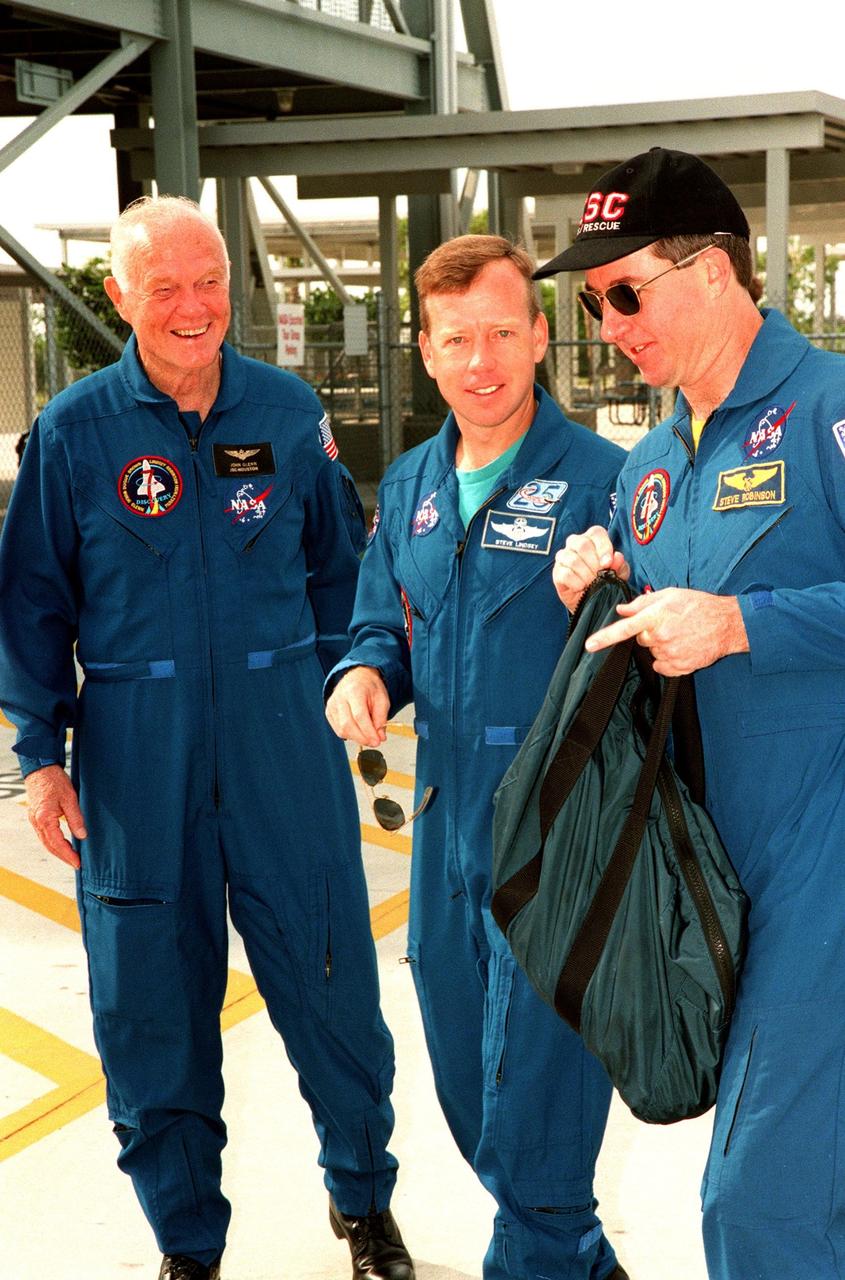
STS-95 Payload Specialist John H. Glenn Jr., senator from Ohio, smiles at his fellow crew members (middle) Pilot Steven W. Lindsey and (right) Mission Specialist Stephen K. Robinson while visiting Launch Pad 39B. The crew were making final preparations for launch, targeted for liftoff at 2 p.m. on Oct. 29. The other crew members (not shown) are Mission Specialist Scott E. Parazynski, Payload Specialist Chiaki Mukai, with the National Space Development Agency of Japan (NASDA), Mission Commander Curtis L. Brown Jr., and Mission Specialist Pedro Duque of Spain, with the European Space Agency (ESA). The STS-95 mission is expected to last 8 days, 21 hours and 49 minutes, returning to KSC at 11:49 a.m. EST on Nov. 7
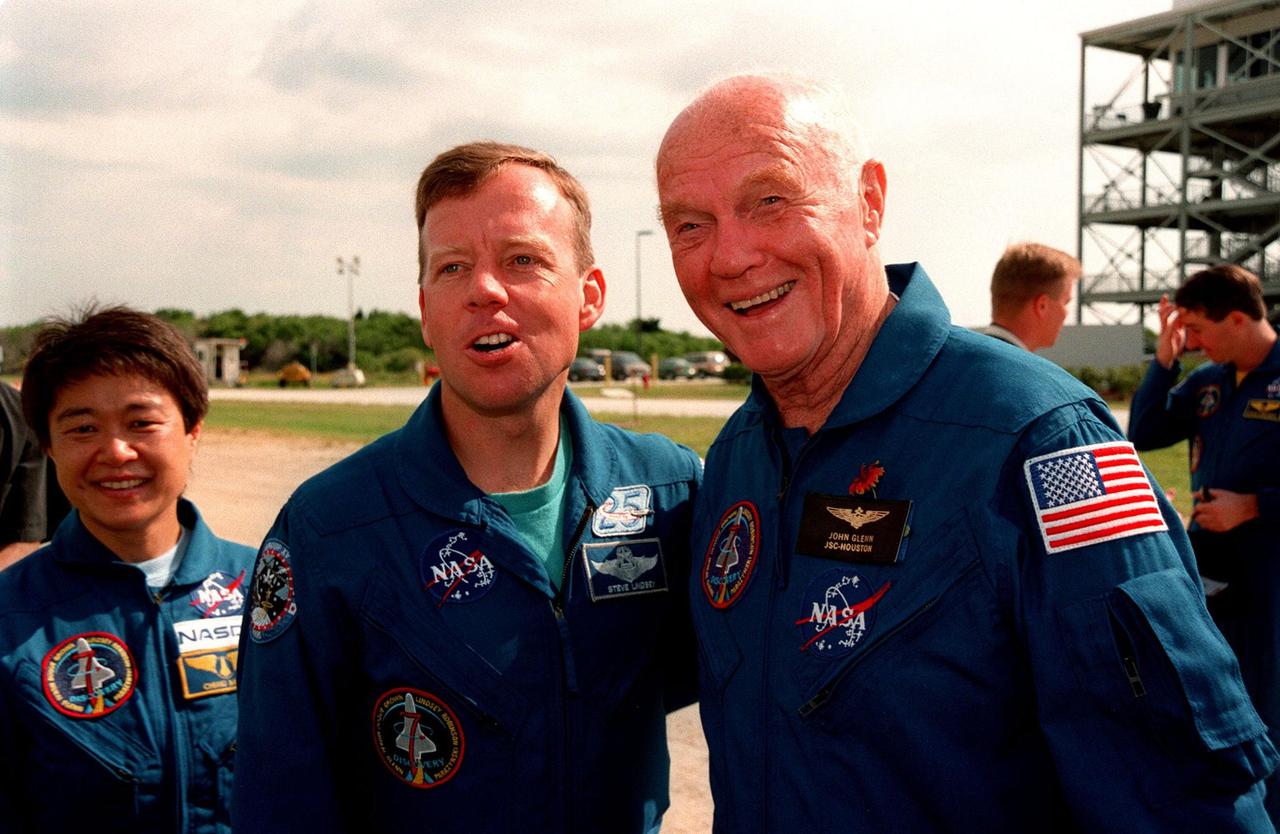
STS-95 Payload Specialist Chiaki Mukai, with the National Space Development Agency of Japan (NASDA), Pilot Steven W. Lindsey and Payload Specialist John H. Glenn Jr., senator from Ohio, share a light moment while visiting with their families on Launch Pad 39B. In the background, at right, is Mission Specialist Stephen K. Robinson. The crew were making final preparations for launch, targeted for liftoff at 2 p.m. on Oct. 29. Other crew members not shown are Mission Commander Curtis L. Brown Jr., Mission Specialist Pedro Duque of Spain, with the European Space Agency (ESA), and Mission Specialist Scott E. Parazynski. The STS-95 mission is expected to last 8 days, 21 hours and 49 minutes, returning to KSC at 11:49 a.m. EST on Nov. 7
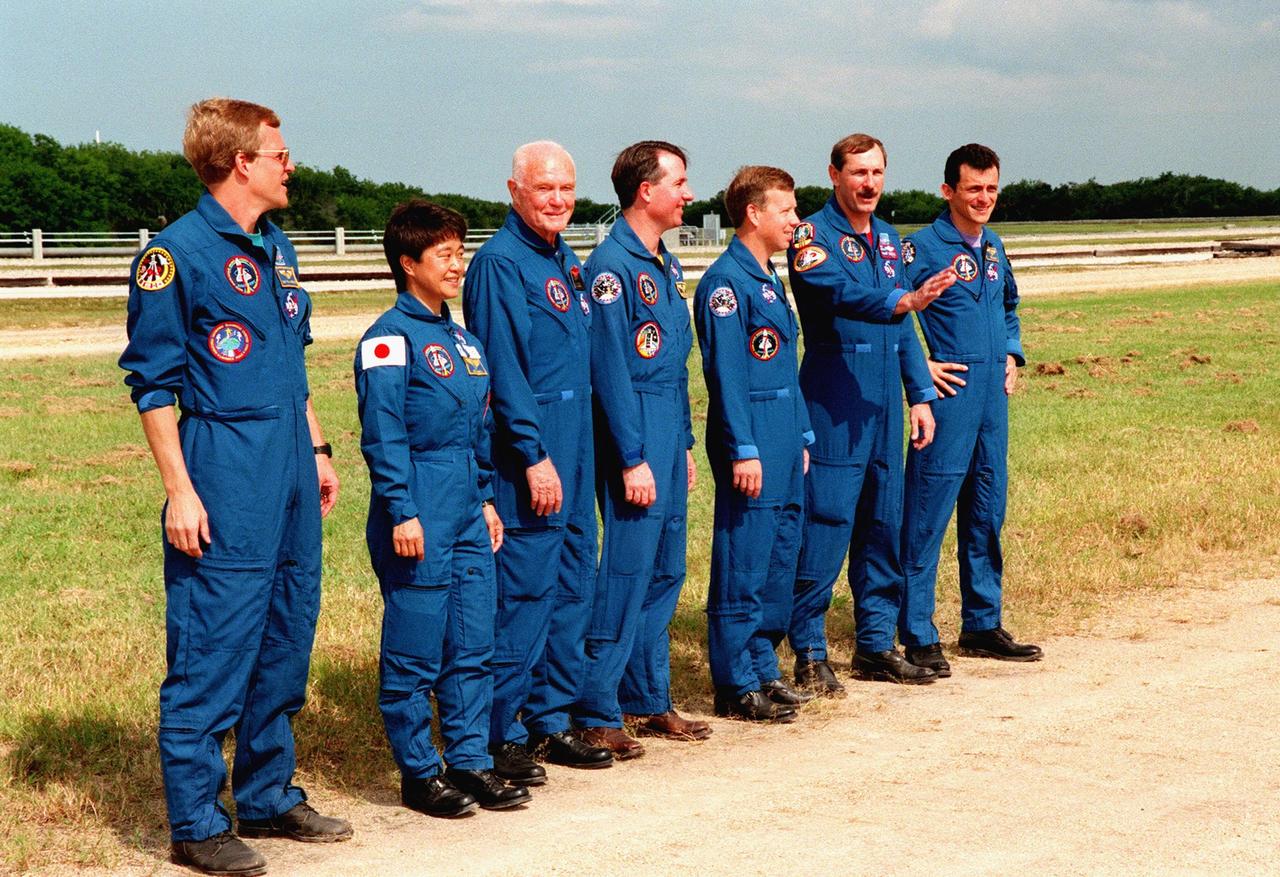
STS-95 crew members greet their families from Launch Pad 39B. From left, they are Mission Specialist Scott E. Parazynski, Payload Specialist Chiaki Mukai, with the National Space Development Agency of Japan (NASDA), Payload Specialist John H. Glenn Jr., senator from Ohio, Mission Specialist Stephen K. Robinson, Pilot Steven W. Lindsey, Mission Commander Curtis L. Brown Jr., and Mission Specialist Pedro Duque of Spain, with the European Space Agency (ESA). The crew were making final preparations for launch, targeted for liftoff at 2 p.m. on Oct. 29. The mission is expected to last 8 days, 21 hours and 49 minutes, returning to KSC at 11:49 a.m. EST on Nov. 7
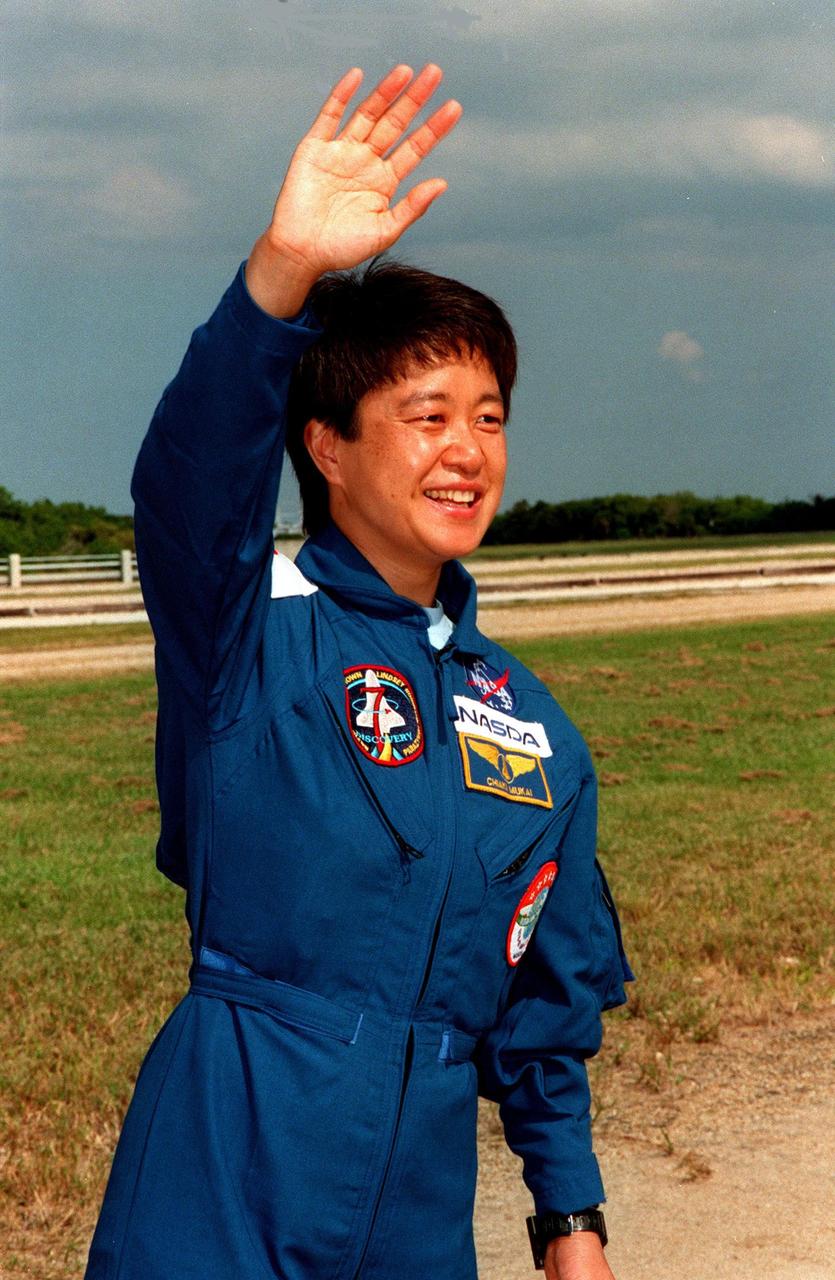
STS-95 Payload Specialist Chiaki Mukai, with the National Space Development Agency of Japan (NASDA), smiles at well-wishers while at Launch Pad 39B. The crew were making final preparations for launch, targeted for liftoff at 2 p.m. on Oct. 29. Other crew members not shown are Mission Commander Curtis L. Brown Jr., Pilot Steven W. Lindsey, Mission Specialist Pedro Duque of Spain, with the European Space Agency (ESA), Mission Specialist Scott E. Parazynski, Mission Specialist Stephen K. Robinson, and Payload Specialist John H. Glenn Jr., senator from Ohio. The STS-95 mission is expected to last 8 days, 21 hours and 49 minutes, returning to KSC at 11:49 a.m. EST on Nov. 7
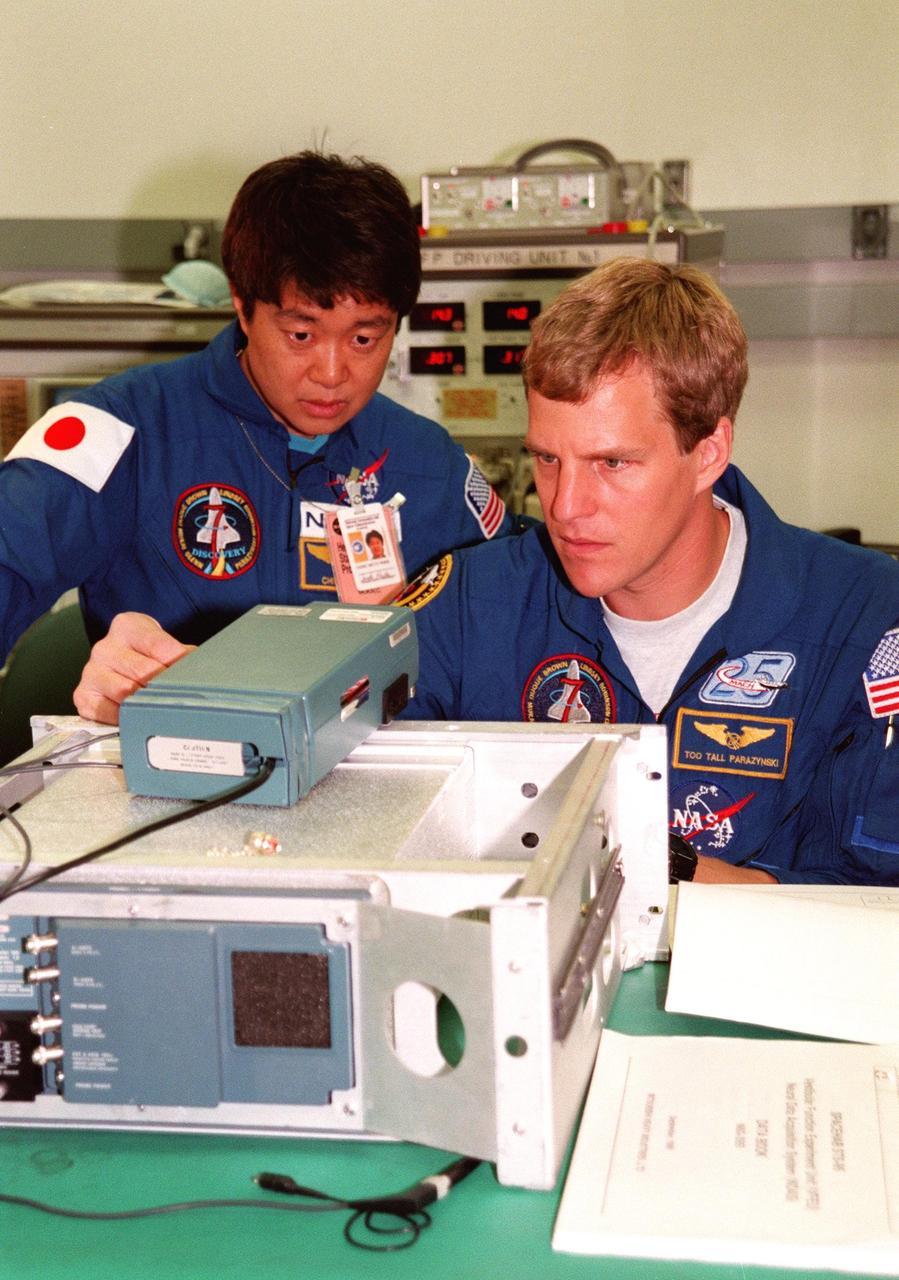
STS-95 Payload Specialist Chiaki Mukai (left), with the National Space Development Agency of Japan (NASDA) and Mission Specialist Scott E. Parazynski (right) look over equipment being used on an experiment with toadfish on mission STS-95. The fish will be electronically monitored to determine the effect of gravitational changes on the inner-ear system. Mukai and Parazynski and other crewmembers were making final preparations for launch, targeted for liftoff at 2 p.m. on Oct. 29. The STS-95 crew also includes Mission Commander Curtis L. Brown Jr., Pilot Steven W. Lindsey, Mission Specialist Stephen K. Robinson, Payload Specialist John H. Glenn Jr., senator from Ohio, and Mission Specialist Pedro Duque, with the European Space Agency (ESA). The mission is expected to last 8 days, 21 hours and 49 minutes, returning to KSC at 11:49 a.m. EST on Nov. 7
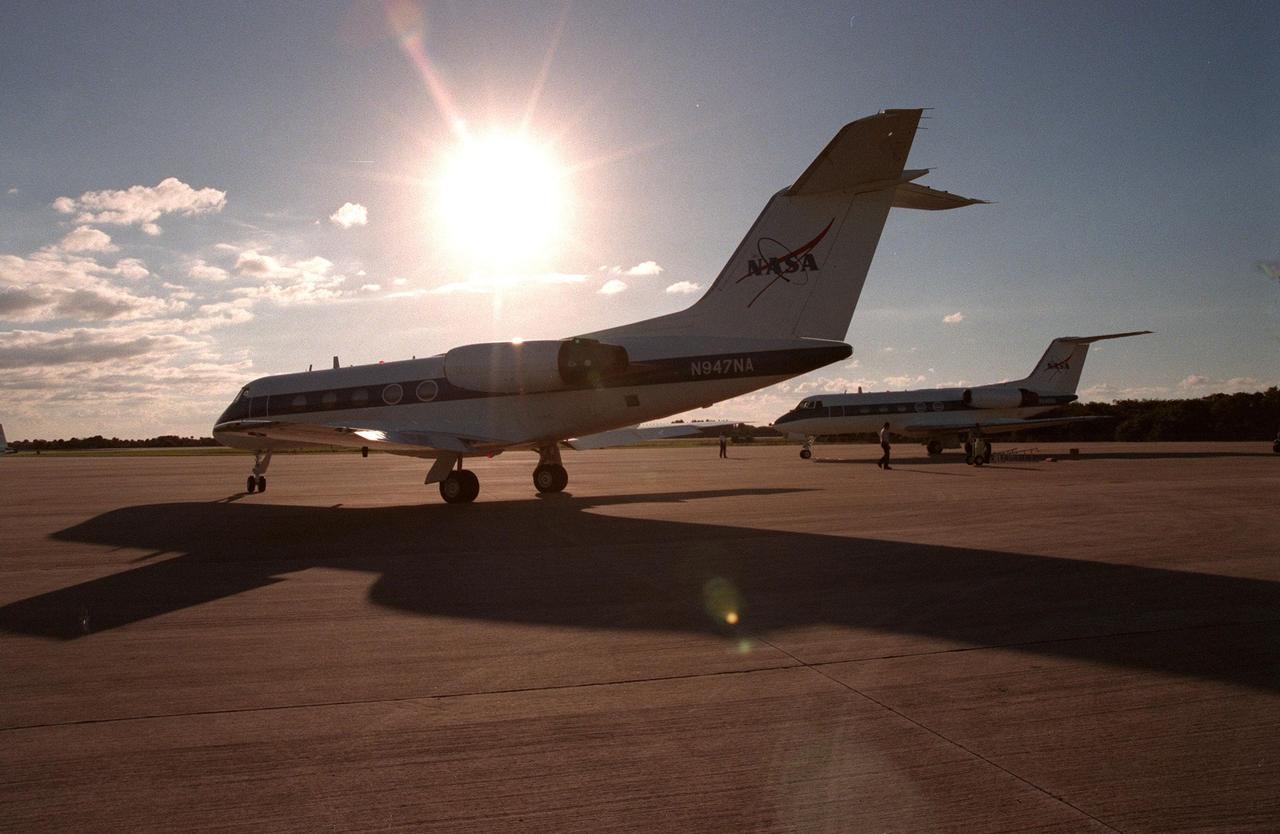
Practicing takeoffs and landings in the Shuttle Training Aircraft in the late afternoon sunlight, STS-95 Mission Commander Curtis L. Brown Jr. taxis across the Shuttle Landing Facility (at left) while Pilot Steven W. Lindsey waits his turn (at right). The STA is designed to fly like the Shuttle. Brown, Lindsey and the rest of the crew are at KSC for final launch preparations. STS-95 is expected to launch at 2 p.m. EST on Oct. 29, last 8 days, 21 hours and 49 minutes, and land at 11:49 a.m. EST on Nov. 7. Other crew members are Mission Specialist Scott E. Parazynski, Mission Specialist Stephen K. Robinson, Payload Specialist John H. Glenn Jr., senator from Ohio, Mission Specialist Pedro Duque, with the European Space Agency (ESA), and Payload Specialist Chiaki Mukai, with the National Space Development Agency of Japan (NASDA)
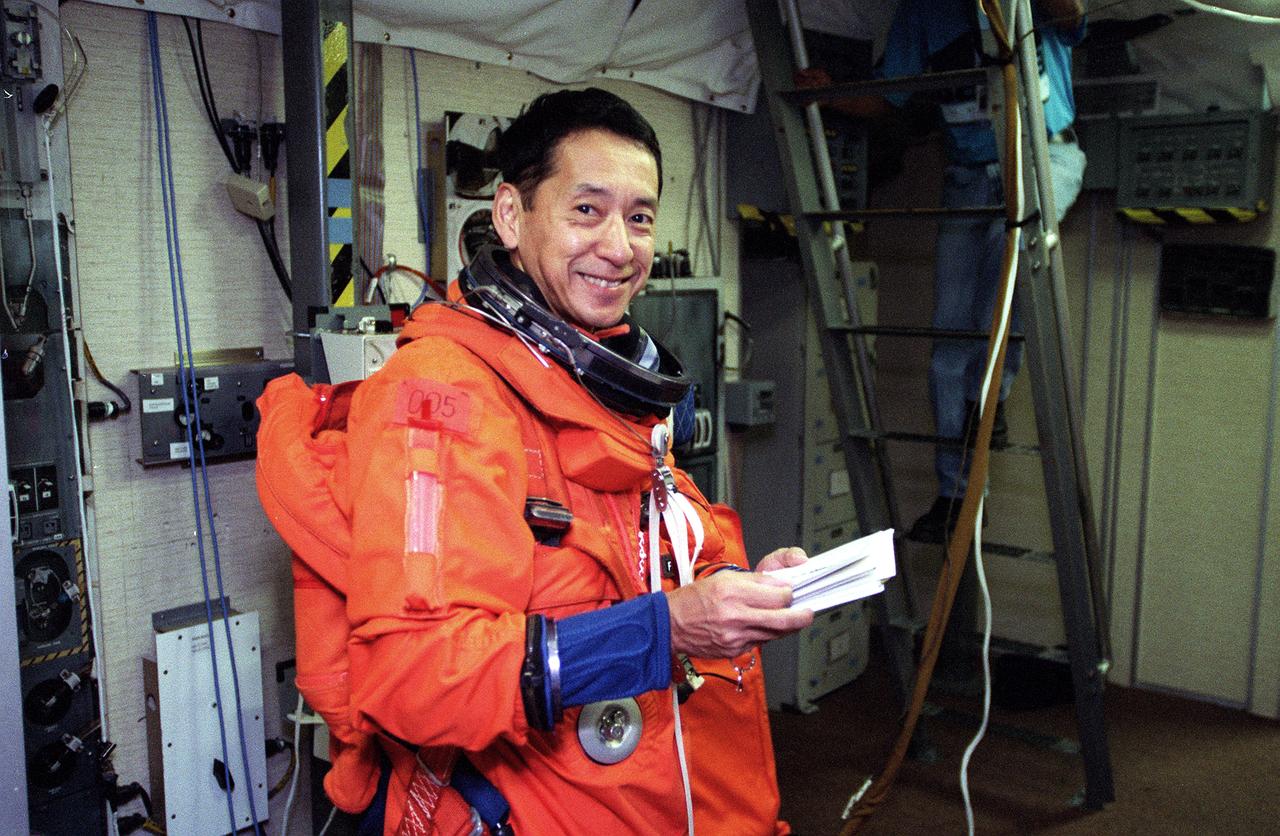
S99-10565 (24 August 1999) --- Astronaut Mamoru Mohri, STS-99 mission specialist, goes over a checklist on the mid deck of a shuttle trainer at the Johnson Space Center (JSC). Mohri represents Japan's National Space Development Agency (NASDA). He will be making his second flight in space and his second flight aboard the Space Shuttle Endeavour, having flown as a payload specialist on the STS-47 mission in 1992.
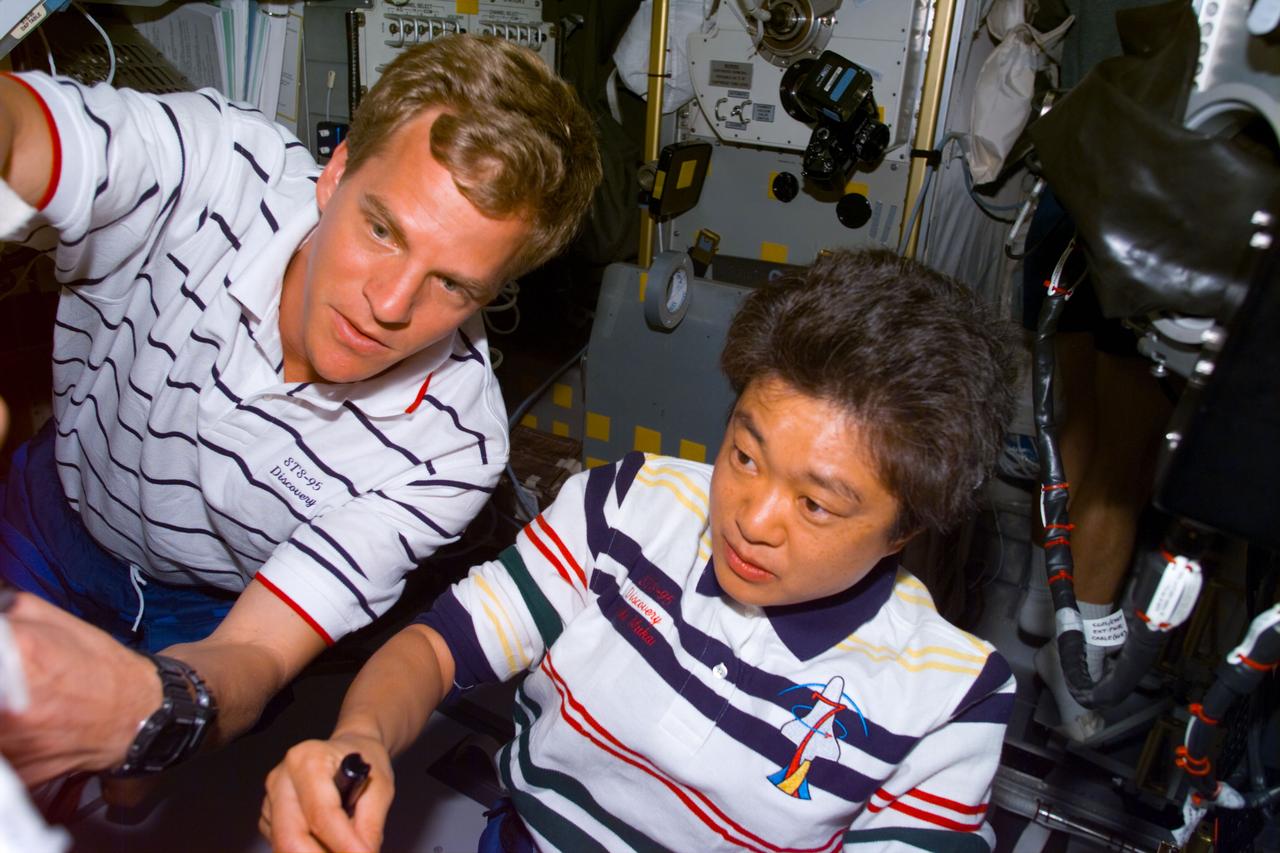
STS095-E-5119 (2 Nov. 1998) --- Astronaut Scott E. Parazynski (left), STS-95 mission specialist, and payload specialist Chiaki Mukai with Japan's National Space Development Agency (NASDA) check an experiment on Spacehab during flight day four activity. The photo was taken with an electronic still camera (ESC) at 05:17:18 GMT, Nov 2.
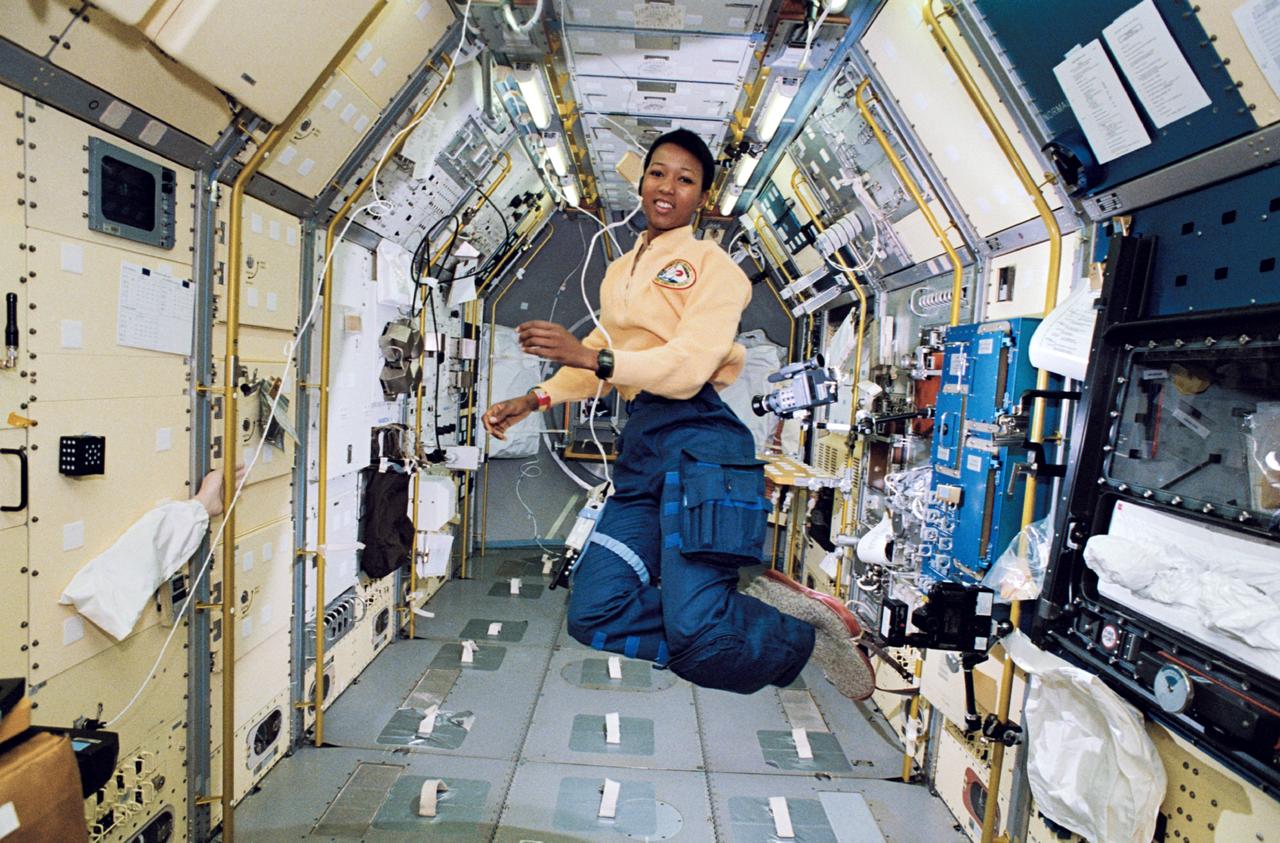
STS047-37-003 (12-20 Sept. 1992) --- Astronaut Mae C. Jemison, STS-47 mission specialist, appears to be clicking her heels in zero-gravity in this 35mm frame photographed in the Science Module aboard the Earth-orbiting Space Shuttle Endeavour. Making her first flight in space, Dr. Jemison was joined by five other NASA astronauts and a Japanese payload specialist for eight days of research in support of the Spacelab-J mission, a joint effort between Japan and the United States.
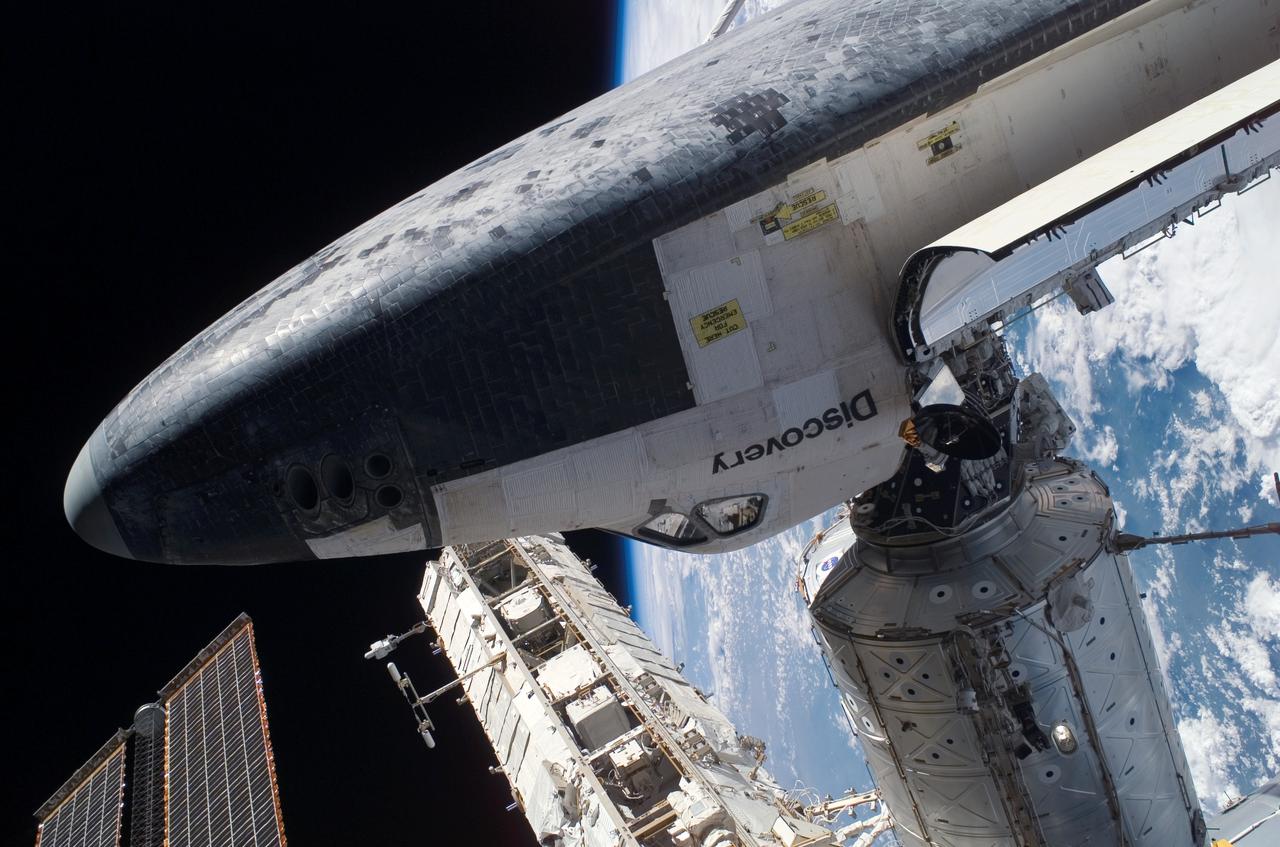
S114-E-6452 (3 August 2005) --- The Space Shuttle Discovery, docked to the Destiny laboratory of International Space Station, is featured in this image photographed by astronaut Stephen K. Robinson (out of frame), STS-114 mission specialist, during today;s spacewalk. Astronaut Soichi Noguchi, mission specialist representing Japan Aerospace Exploration Agency (JAXA), is partially visible between Discovery;s payload bay and Destiny. The blackness of space and Earth;s horizon formed the backdrop for the image.
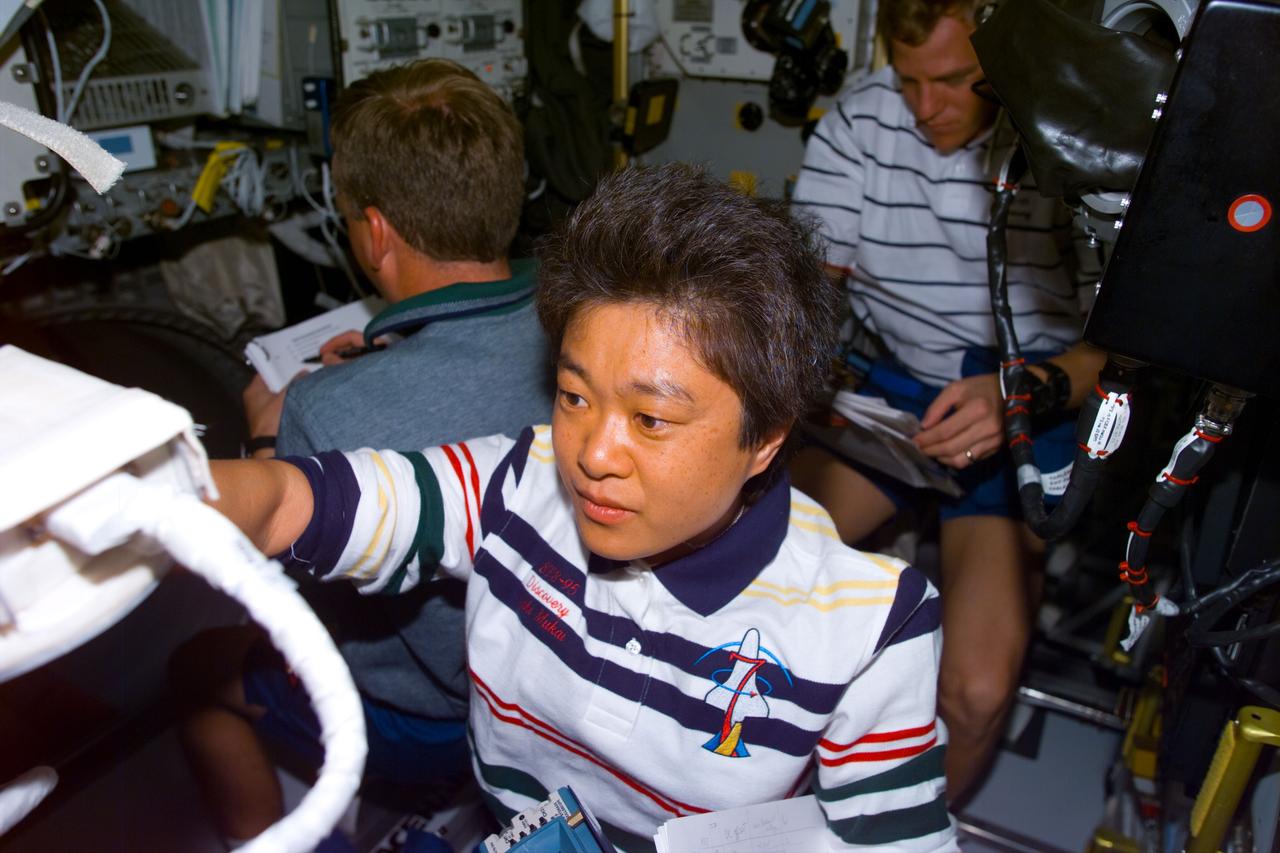
STS095-E-5115 (2 Nov. 1998) --- Payload specialist Chiaki Mukai, representing Japan's National Space Development Agency (NASDA), sets up an experiment on Spacehab during flight day four activity. In the background are astronauts Steven W. Lindsey, STS-95 pilot, and Scott E. Parazynski, mission specialist. The photo was taken with an electronic still camera (ESC) at 05:14:24 GMT, Nov. 2.
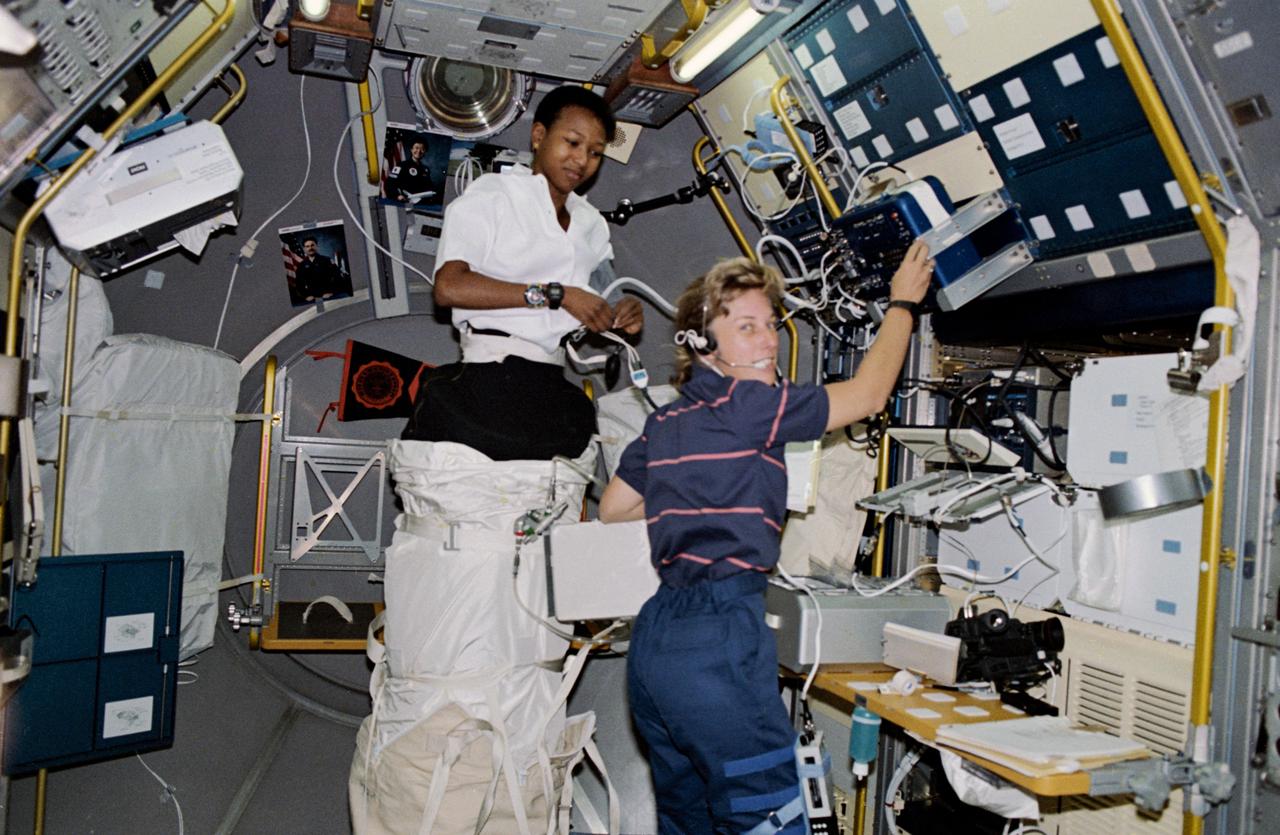
STS047-230-030 (12 - 20 Sept 1992) --- Astronauts Mae C. Jemison (left) and N. Jan Davis, mission specialists, are pictured in the Spacelab-J science module preparing to conduct a session with the Lower Body Negative Pressure (LBNP) experiment. The two joined four other NASA astronauts and a payload specialist representing Japan's National Space Development Agency (NASDA) aboard the Earth-orbiting Space Shuttle Endeavour for eight days of Spacelab-J research.
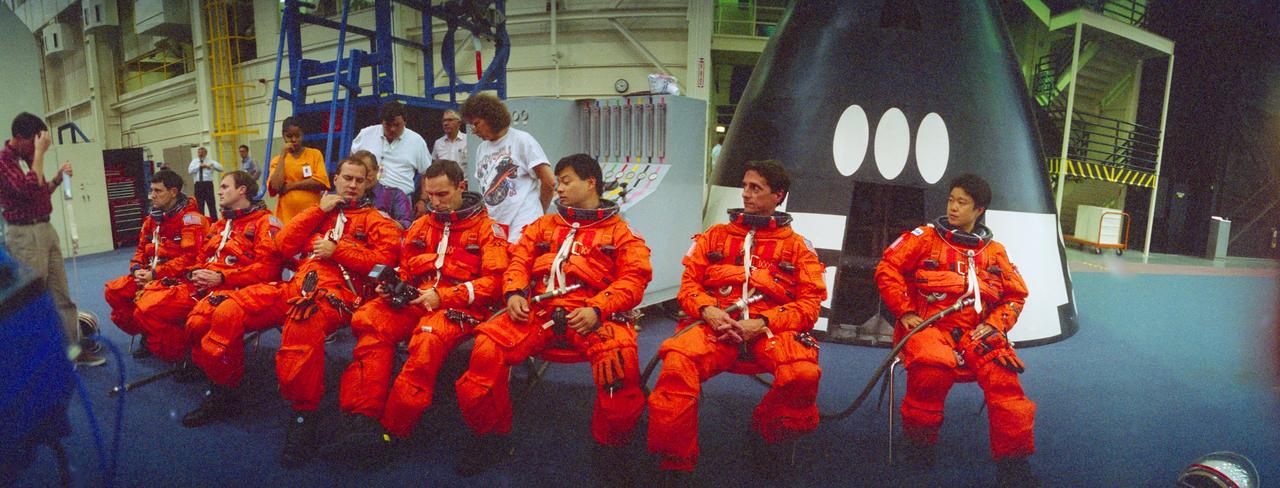
S94-31388 (25 Mar 1994) --- Six NASA astronauts and a Japanese payload specialist listen to a briefing by a crew training staffer. From the left are astronauts Robert D. Cabana, mission commander; James D. Halsell Jr., pilot; Richard J. Hieb, payload commander; and Carl E. Walz, Leroy Chiao and Donald A. Thomas, all mission specialists; along with Dr. Chiaki Mukai, payload specialist. Dr. Mukai represents the National Space Development Agency (NASDA) of Japan. The STS-65 crew was in the Johnson Space Center's (JSC) Shuttle mockup and integration laboratory for crew egress training. The full fuselage trainer, used for the rehearsals, is just out of frame. The seven-member crew will support the International Microgravity Laboratory (IML-2) mission aboard the Space Shuttle Columbia later this year.
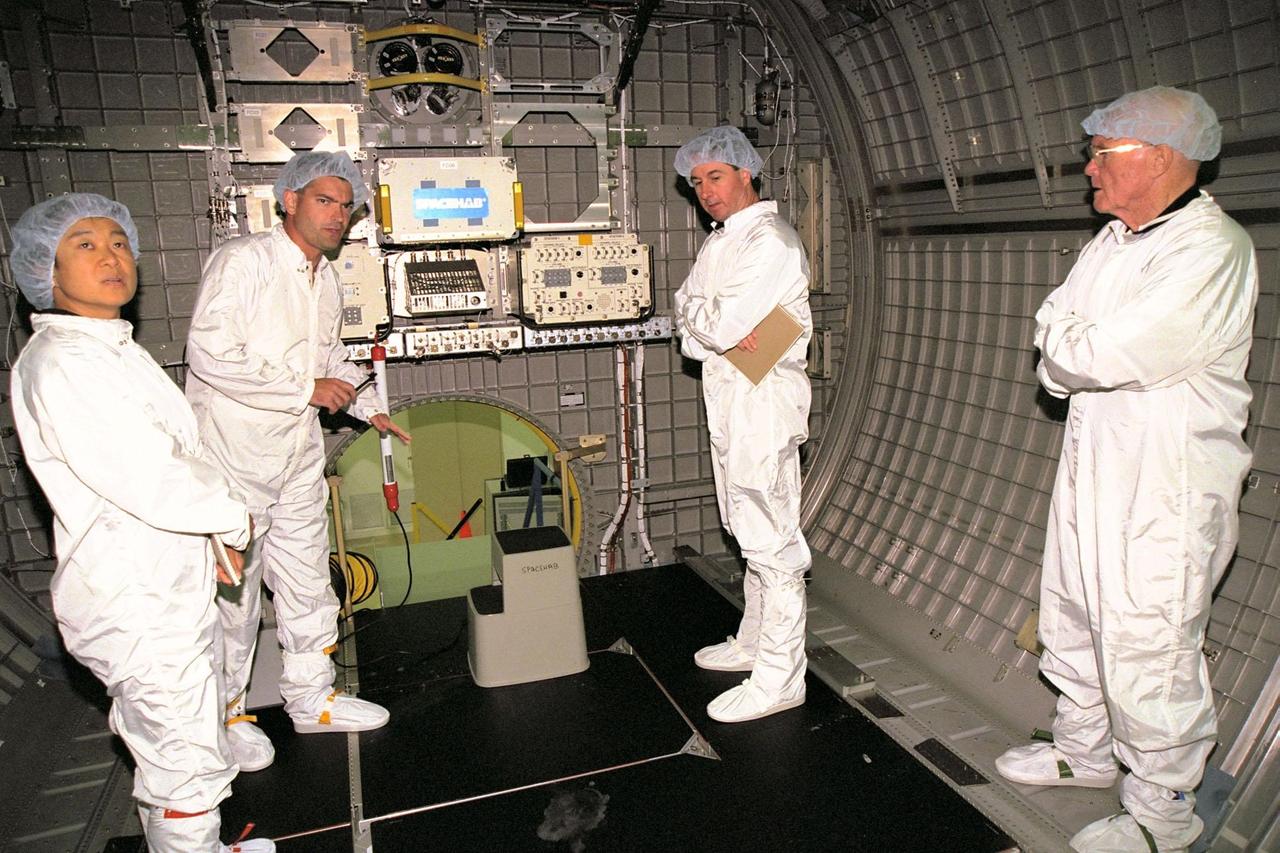
KENNEDY SPACE CENTER, FLA. -- STS-95 crew members get a briefing on equipment inside the SPACEHAB module from Chris Jaskolka of Boeing, second from left. Listening intently are crew members, from left, Payload Specialist Chiaki Mukai, representing the National Space Development Agency of Japan (NASDA); Mission Specialist Stephen K. Robinson; and Payload Specialist John H. Glenn Jr., who also is a senator from Ohio. STS-95 will feature a variety of research payloads, including the Spartan solar-observing deployable spacecraft, the Hubble Space Telescope Orbital Systems Platform, the International Extreme Ultraviolet Hitchhiker, and experiments on space flight and the aging process. STS-95 is targeted for an Oct. 29 launch aboard the Space Shuttle Discovery
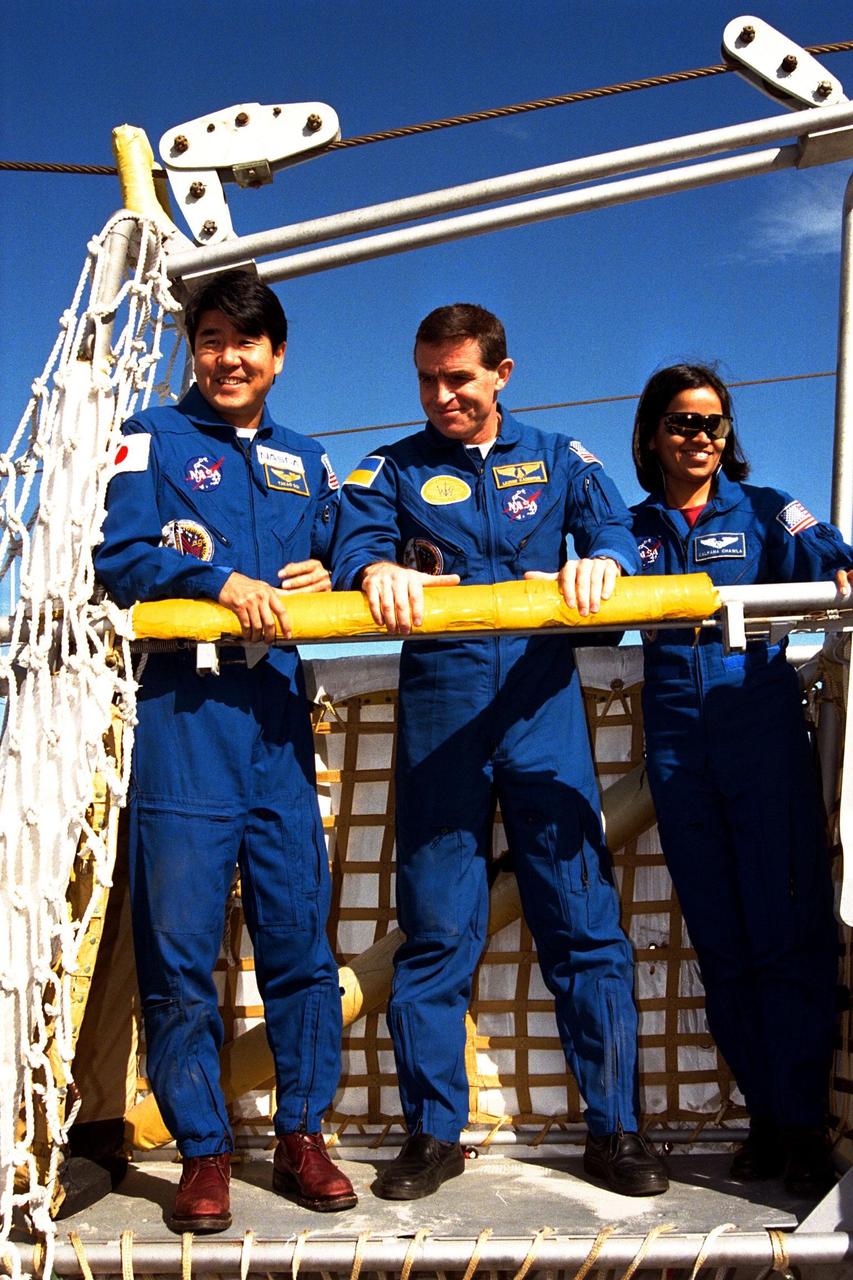
The crew of the STS-87 mission, scheduled for launch Nov. 19 aboard the Space Shuttle Columbia from pad 39B at Kennedy Space Center (KSC), participates in the Terminal Countdown Demonstration Test (TCDT) at KSC. Testing a slidewire basket that is part of the pad’s emergency egress system are, from left, Mission Specialist Takao Doi, Ph.D., of the National Space Development Agency of Japan; Payload Specialist Leonid Kadenyuk of the National Space Agency of Ukraine (NSAU); and Mission Specialist Kalpana Chawla, Ph.D. The TCDT is held at KSC prior to each Space Shuttle flight providing the crew of each mission opportunities to participate in simulated countdown activities. The TCDT ends with a mock launch countdown culminating in a simulated main engine cut-off. The crew also spends time undergoing emergency egress training exercises at the pad and has an opportunity to view and inspect the payloads in the orbiter's payload bay
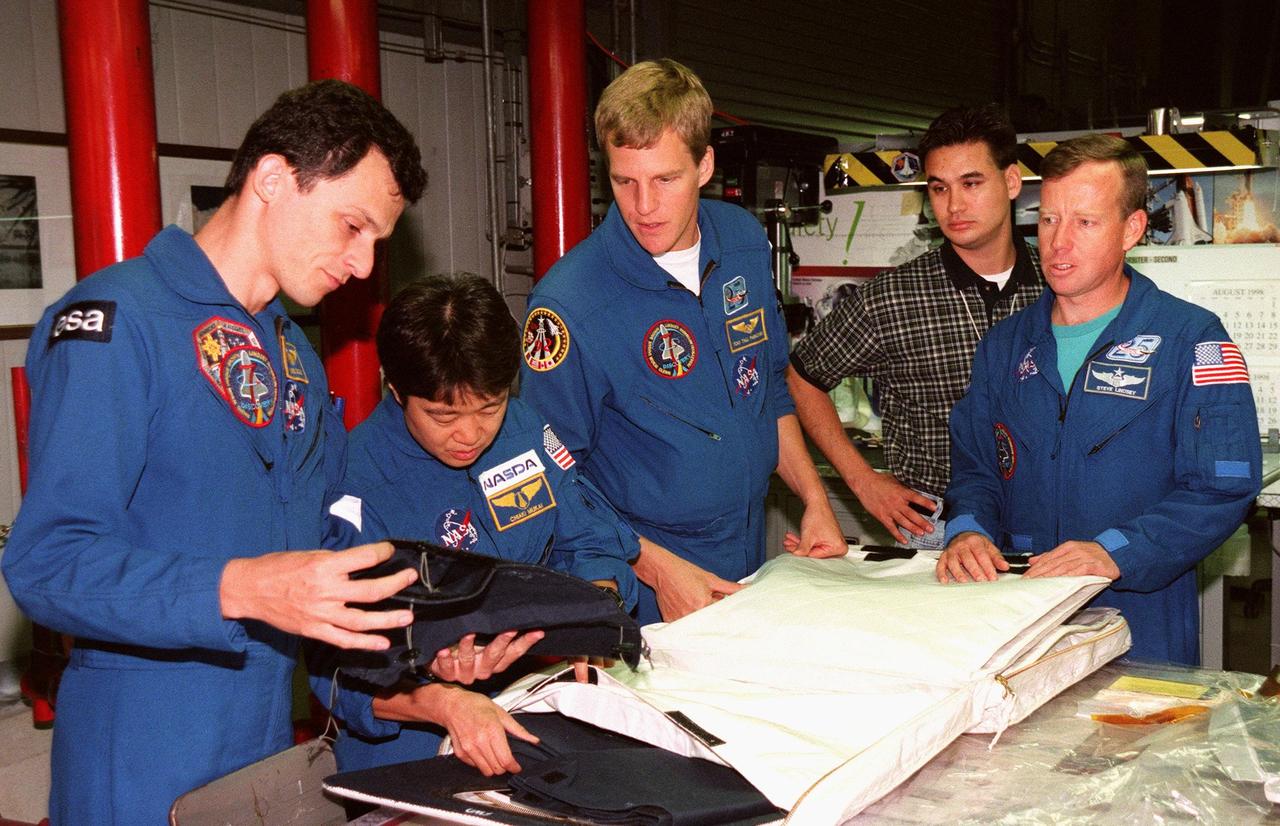
STS-95 crew members look over equipment in Orbiter Processing Facility Bay 2 during the Crew Equipment Interface Test (CEIT) for their mission. From left, they are Mission Specialist Pedro Duque, of the European Space Agency; Payload Specialist Chiaki Mukai, of the National Space Development Agency of Japan (NASDA); Mission Specialist Scott E. Parazynski; and Pilot Steven W. Lindsey. Behind them is Adam Flagan, United Space Alliance-Houston. The CEIT gives astronauts an opportunity for a hands-on look at the payloads and equipment with which they will be working on orbit. The launch of the STS-95 mission, aboard Space Shuttle Discovery, is scheduled for Oct. 29, 1998. The mission includes research payloads such as the Spartan solar-observing deployable spacecraft, the Hubble Space Telescope Orbital Systems Test Platform, the International Extreme Ultraviolet Hitchhiker, as well as the SPACEHAB single module with experiments on space flight and the aging process
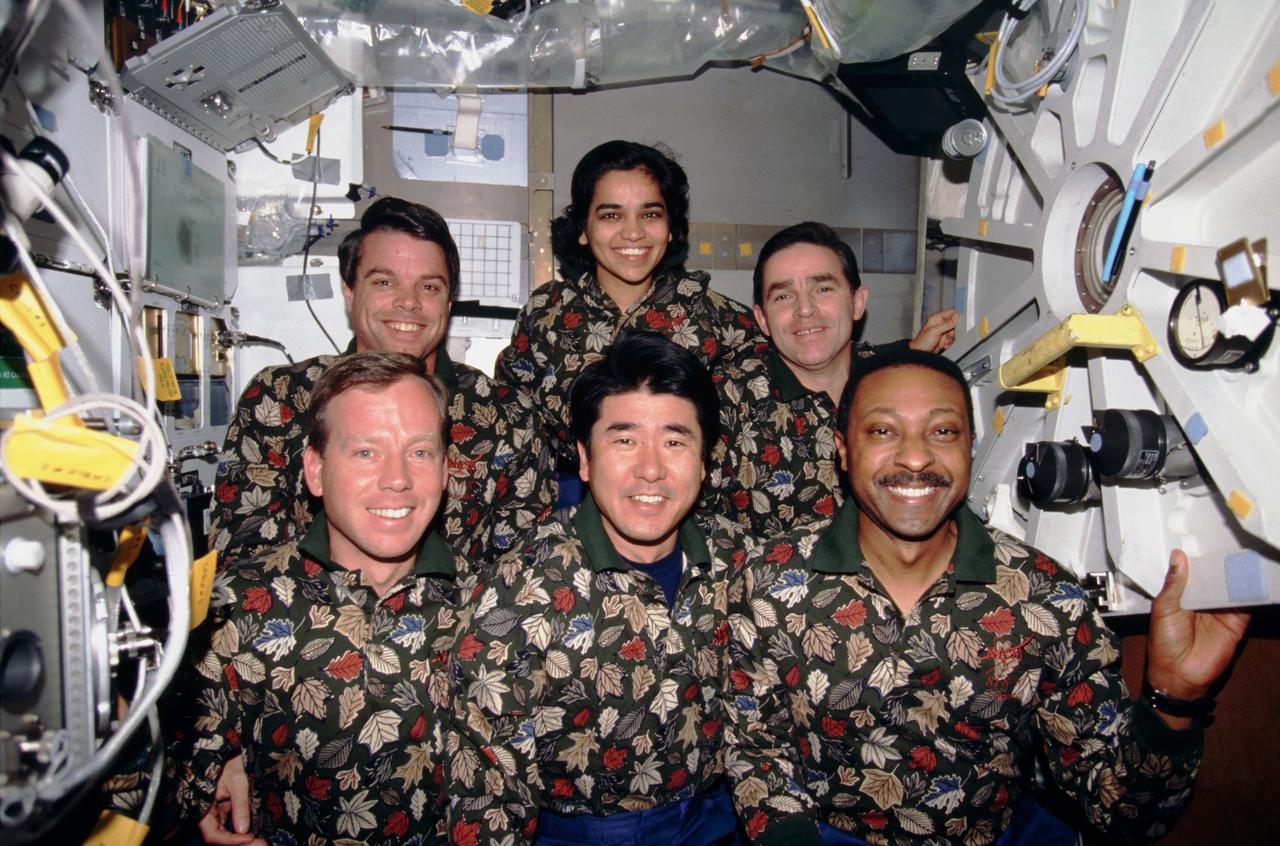
STS087-307-006 (19 November – 5 December 1997) --- One of the crew members' traditional in-flight crew portraits has them posed in other-than traditional attire on the Space Shuttle Columbia's mid-deck. On the front row, from the left, are astronauts Steven W. Lindsey, pilot; Takao Doi, an international mission specialist representing Japan's National Space Development Agency (NASDA); and Winston E. Scott, mission specialist. In the back are astronauts Kevin R. Kregel, mission commander; and Kalpana Chawla, mission specialist, along with Ukrainian payload specialist Leonid K. Kadenyuk.
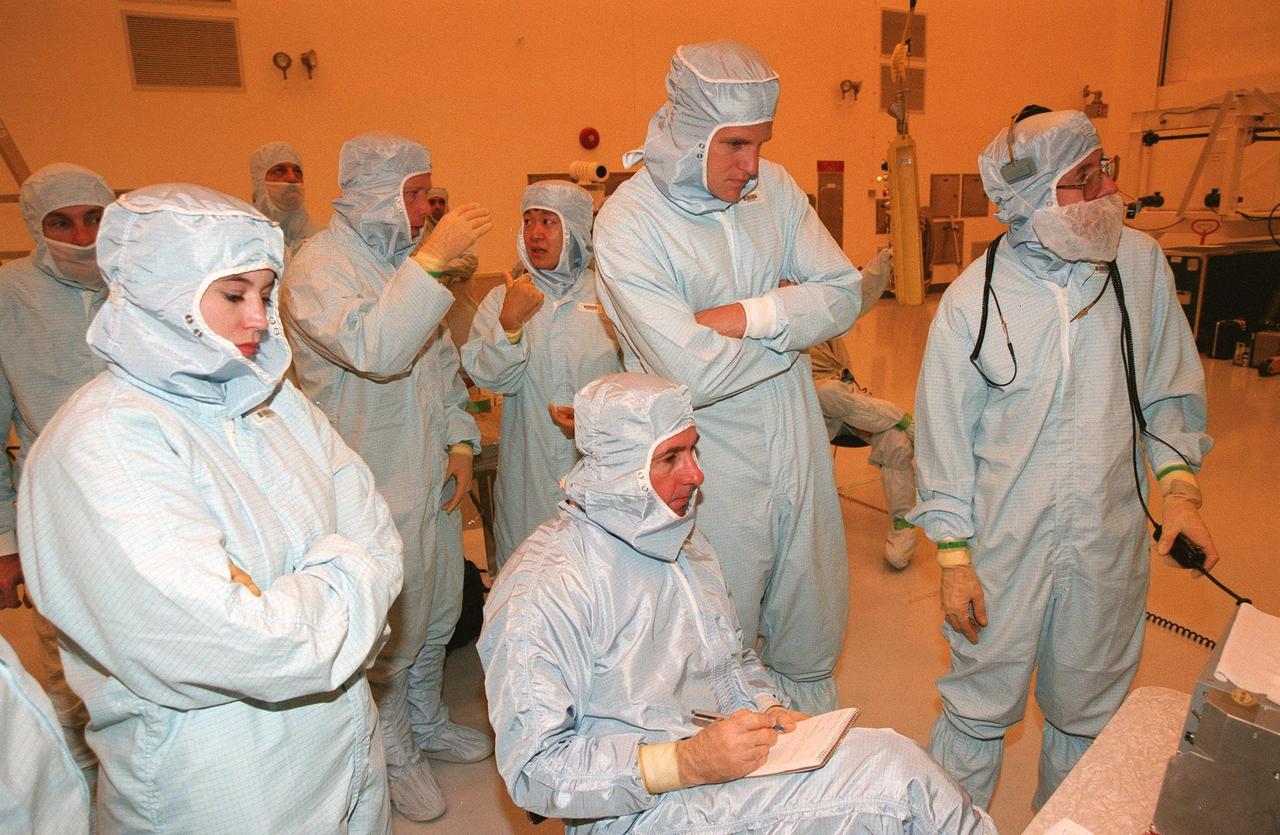
During Crew Equipment Interface Test (CEIT), STS-95 Mission Specialists Stephen K. Robinson (seated), and Scott E. Parazynski (standing behind him) look at a monitor displaying the Spartan payload that will be part of the mission. In the background (center) are Pilot Steven W. Lindsey and Payload Specialist Chiaki Mukai, with the National Space Development Agency of Japan (NASDA). Technicians are gathered around them. The CEIT gives astronauts an opportunity for a hands-on look at the payloads and equipment with which they will be working on orbit. The launch of the STS-95 mission is scheduled for Oct. 29, 1998. The mission includes research payloads such as the Spartan solar-observing deployable spacecraft, the Hubble Space Telescope Orbital Systems Test Platform, the International Extreme Ultraviolet Hitchhiker, as well as the SPACEHAB single module with experiments on space flight and the aging process

KENNEDY SPACE CENTER, FLA. -- STS-95 Payload Specialist Chiaki Mukai, representing the National Space Development Agency of Japan (NASDA), handles part of the Biological Research in Canisters (BRIC) experiment which will fly on the planned nine-day mission. She and other crew members, including Mission Specialist Scott E. Parazynski, at right, are at KSC and the adjacent SPACEHAB Payload Processing Facility in Cape Canaveral to familiarize themselves with the STS-95 payloads. Standing behind the two astronauts is Steve Pyle of Boeing in Huntsville, Ala. STS-95 will feature a variety of research payloads, including the Spartan solar-observing deployable spacecraft, the Hubble Space Telescope Orbital Systems Platform, the International Extreme Ultraviolet Hitchhiker, and experiments on space flight and the aging process. STS-95 is targeted for an Oct. 29 launch aboard the Space Shuttle Discovery.
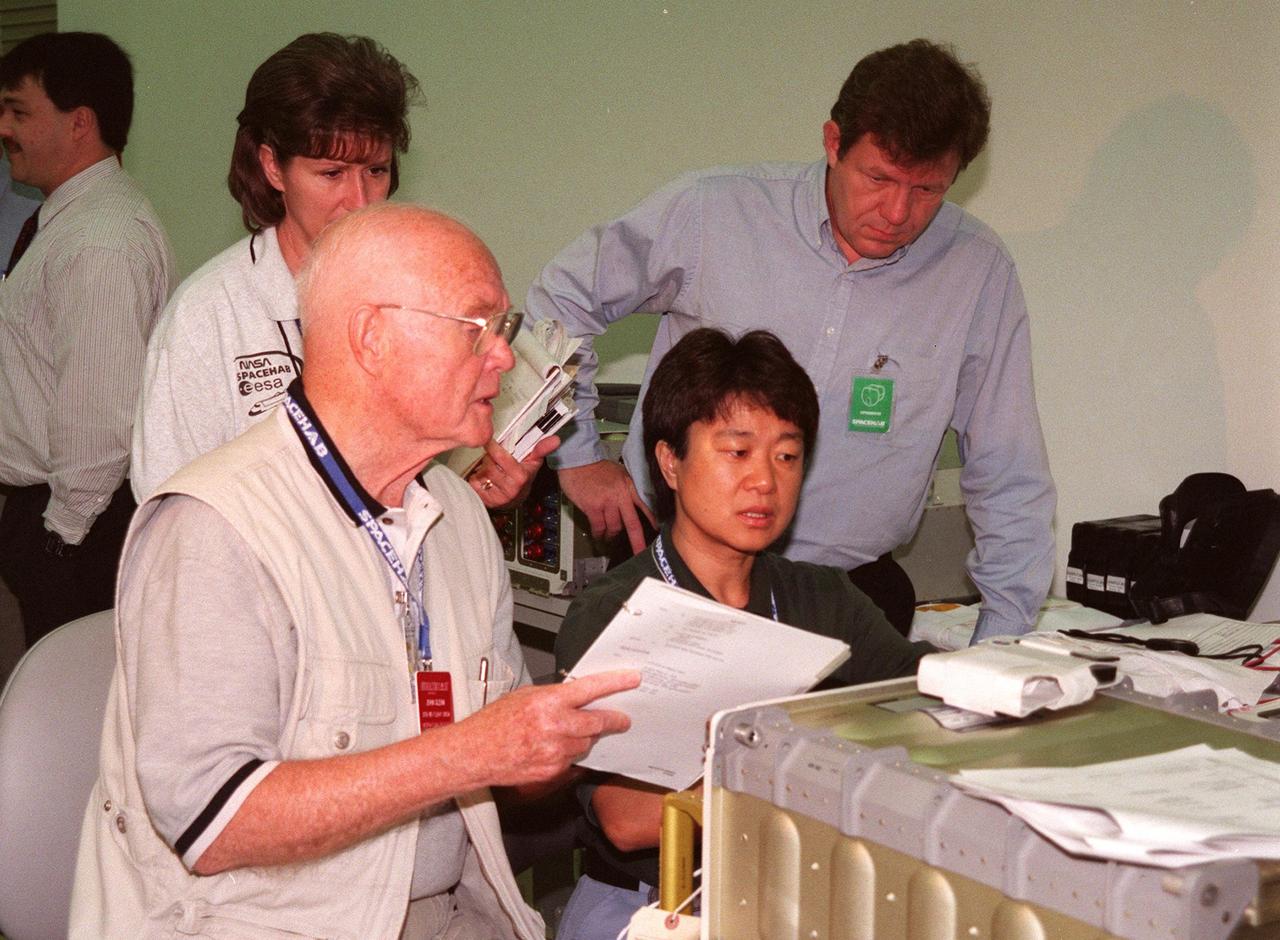
KENNEDY SPACE CENTER, FLA. -- In the SPACEHAB Payload Processing Facility (SPPF), Cape Canaveral, STS-95 Payload Specialist John Glenn (left), who is a senator from Ohio, checks out equipment with Payload Specialist Chiaki Mukai (right), M.D., Ph.D., who represents the National Space Development Agency of Japan (NASDA) while KSC workers watch. STS-95 crew members have been participating in SPACEHAB familiarization in the SPPF. Scheduled to launch Oct. 29, the mission includes research payloads such as the Spartan solar-observing deployable spacecraft, the Hubble Space Telescope Orbital Systems Test Platform, the International Extreme Ultraviolet Hitchhiker, as well as the SPACEHAB single module with experiments on space flight and the aging process
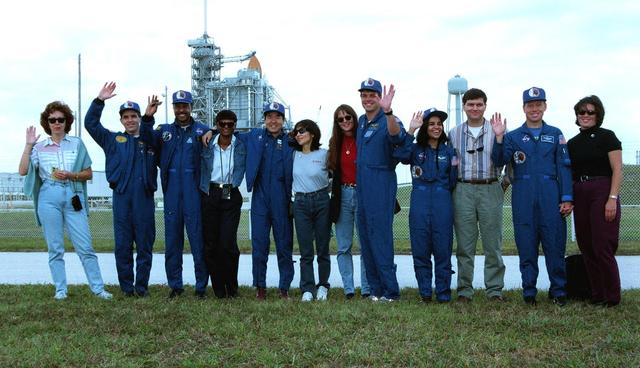
The crew of STS-87 pose with their spouses in front of Kennedy Space Center’s Launch Pad 39B during final prelaunch activities leading up to the scheduled Nov. 19 liftoff. From left to right are: Vera Kadenyuk, wife of Payload Specialist Leonid Kadenyuk of the National Space Agency of Ukraine who is next to Vera; Mission Specialist Winston Scott and his wife, Marilyn; Mission Specialist Takao Doi, Ph.D., of the National Space Development Agency of Japan, and his wife, Hitomi; Jeannie Kregel, who is married to Commander Kevin Kregel standing next to her; Mission Specialist Kalpana Chawla, Ph.D., and her husband, Jean-Pierre Harrison; and Pilot Steven Lindsey and his wife Diane. STS-87 will be the fourth flight of the United States Microgravity Payload and the Spartan-201 deployable satellite
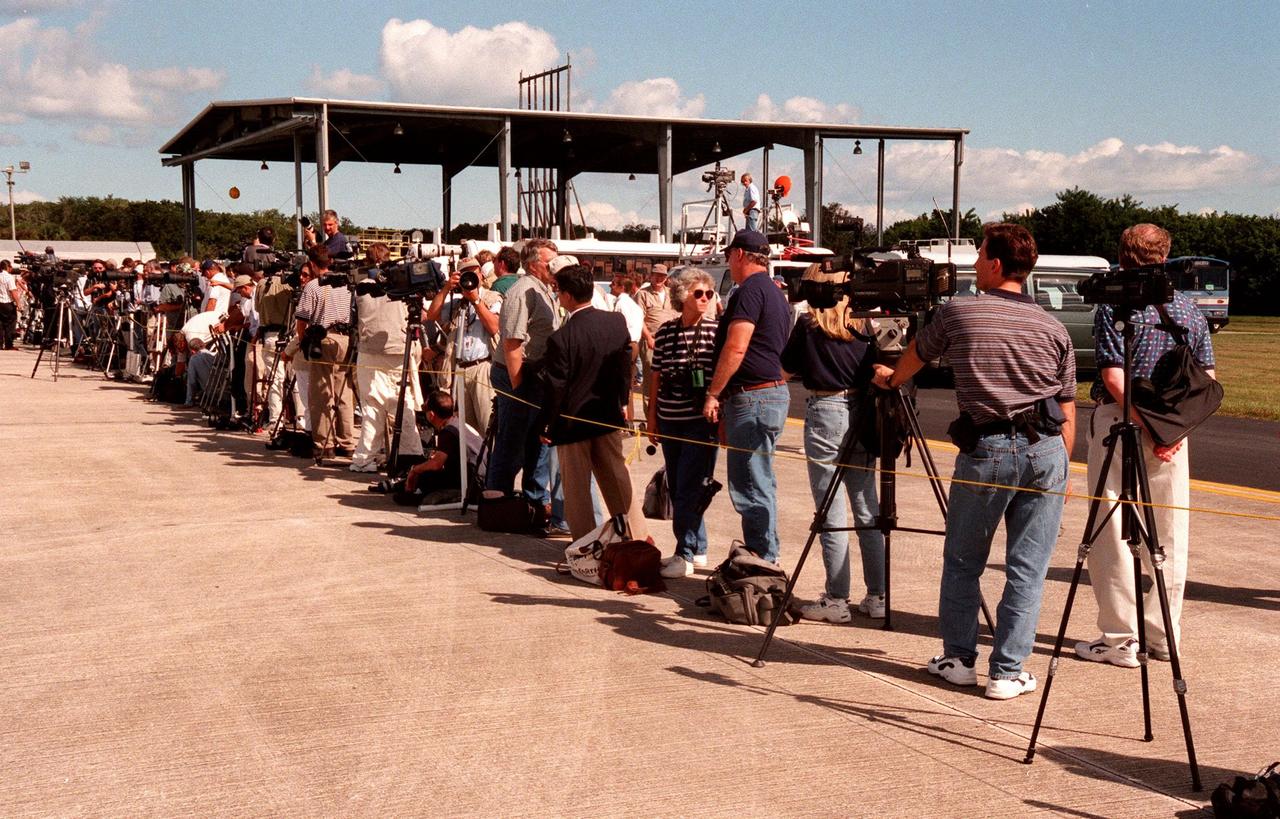
Waiting for the arrival of the STS-95 crewmembers at the Shuttle Landing Facility are 137 media representatives, a small sampling of more than 3,000 expected to attend the launch on Oct. 29. Flying into KSC to make final preparations for their launch were Mission Commander Curtis L. Brown Jr., Pilot Steven W. Lindsey, Mission Specialist Scott E. Parazynski, Mission Specialist Stephen K. Robinson, Mission Specialist Pedro Duque, with the European Space Agency (ESA), and Payload Specialist Chiaki Mukai, with the National Space Development Agency of Japan (NASDA). The STS-95 mission includes research payloads such as the Spartan solar-observing deployable spacecraft, the Hubble Space Telescope Orbital Systems Test Platform, the International Extreme Ultraviolet Hitchhiker, as well as the SPACEHAB single module with experiments on space flight and the aging process. The mission is expected to last 8 days, 21 hours and 49 minutes, and return to KSC on Nov. 7
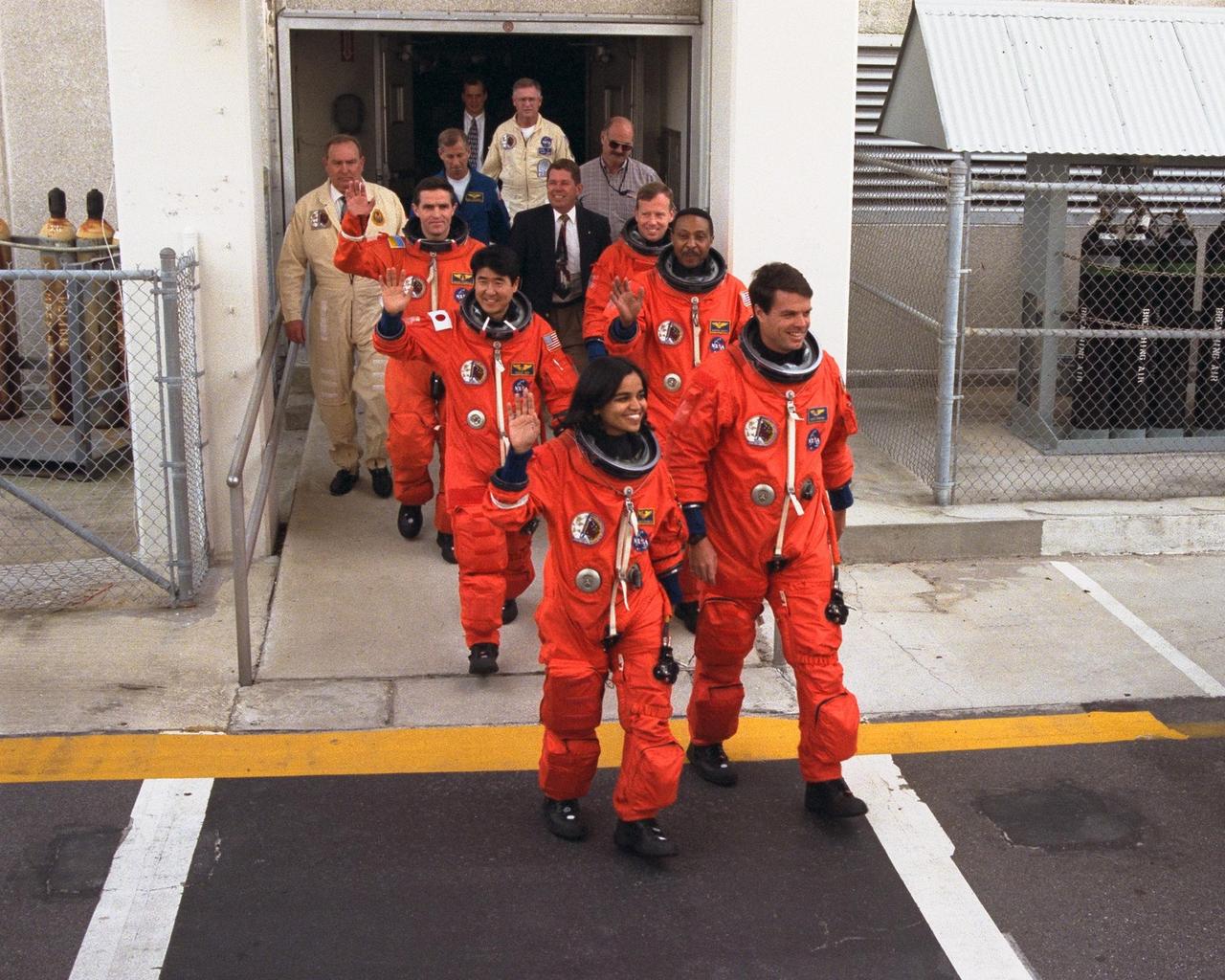
The crew of Mission STS-87 depart from the Operations and Checkout Building en route to Launch Pad 39B, where the Space Shuttle Columbia awaits liftoff on the fourth flight of the United States Microgravity Payload and the Spartan-201 deployable satellite. Leading the way are, from left to right, front to back: Mission Specialist Kalpana Chawla, Ph.D.; Commander Kevin Kregel; Mission Specialist Takao Doi, Ph.D., of the National Space Development Agency of Japan; Mission Specialist Winston Scott; Payload Specialist Leonid Kadenyuk of the National Space Agency of Ukraine; and Pilot Steven Lindsey. The Space Shuttle Columbia and its crew of six members are scheduled to lift off during a two-and-a-half hour launch window, which opens at 2:46 p.m

The crew of Mission STS-87 depart from the Operations and Checkout Building en route to Launch Pad 39B, where the Space Shuttle Columbia awaits liftoff on the fourth flight of the United States Microgravity Payload and the Spartan-201 deployable satellite. They are, from left to right, front to back: Mission Specialist Takao Doi, Ph.D., of the National Space Development Agency of Japan; Mission Specialist Winston Scott (near van); Payload Specialist Leonid Kadenyuk of the National Space Agency of Ukraine; and Pilot Steven Lindsey (near van). Missing from this photo are Commander Kevin Kregel and Mission Specialist Kalpana Chawla, Ph.D. The Space Shuttle Columbia and its crew of six members are scheduled to lift off during a two-and-a-half hour launch window, which opens at 2:46 p.m
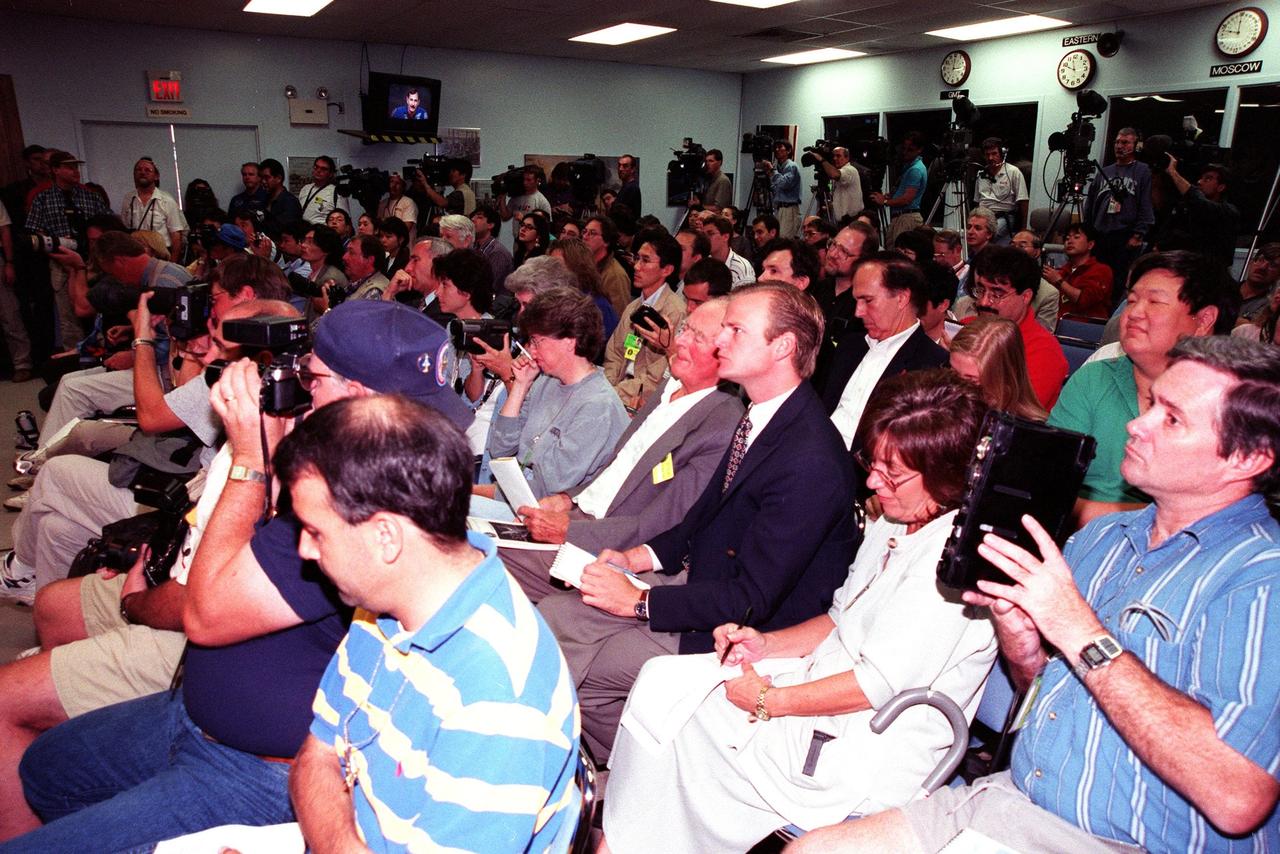
Media representatives from all over the world fill the Kennedy Space Center Press Site Auditorium for a press conference held by the STS-95 crew before their return to the Johnson Space Center in Houston, Texas. The STS-95 crew members are Mission Commander Curtis L. Brown Jr.; Pilot Steven W. Lindsey; Mission Specialist and Payload Commander Stephen K. Robinson; Mission Specialist Scott E. Parazynski; Mission Specialist Pedro Duque, with the European Space Agency (ESA); Payload Specialist Chiaki Mukai, with the National Space Development Agency of Japan (NASDA); and Payload Specialist John H. Glenn Jr., a senator from Ohio and one of the original seven Project Mercury astronauts. The STS-95 mission ended with landing at Kennedy Space Center's Shuttle Landing Facility at 12:04 p.m. EST on Nov. 7. The mission included research payloads such as the Spartan-201 solar-observing deployable spacecraft, the Hubble Space Telescope Orbital Systems Test Platform, the International Extreme Ultraviolet Hitchhiker, as well as a SPACEHAB single module with experiments on space flight and the aging process