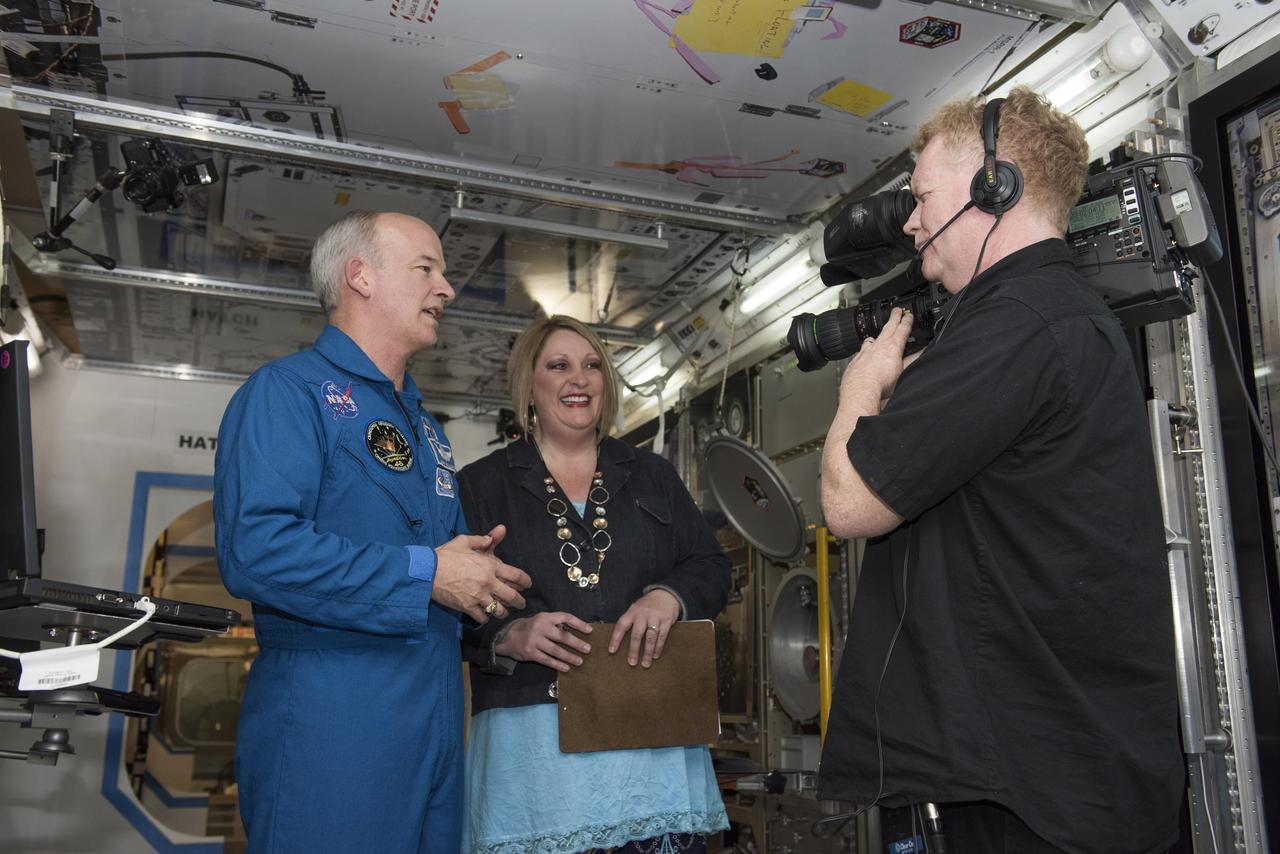
ASTRONAUT JEFF WILLIAMS IS INTERVIEWED BY MSFC COMMUNICATIONS STRATEGIST DURING WILLIAMS EXPEDITION 48/49 CREW VISIT TO MARSHALL SPACE FLIGHT CENTER

NASA ASTRONAUT JEFF WILLIAMS ADDRESSES THE MARSHALL COMMUNITY ALONG WITH STUDENTS FROM THE U.S. SPACE AND ROCKET CENTER AND DESCRIBES HIS EXPERIENCES WHILE SERVING ABOARD THE INTERNATIONAL SPACE AND ROCKET CENTER DURING EXPEDITIONS 47 AND 48.
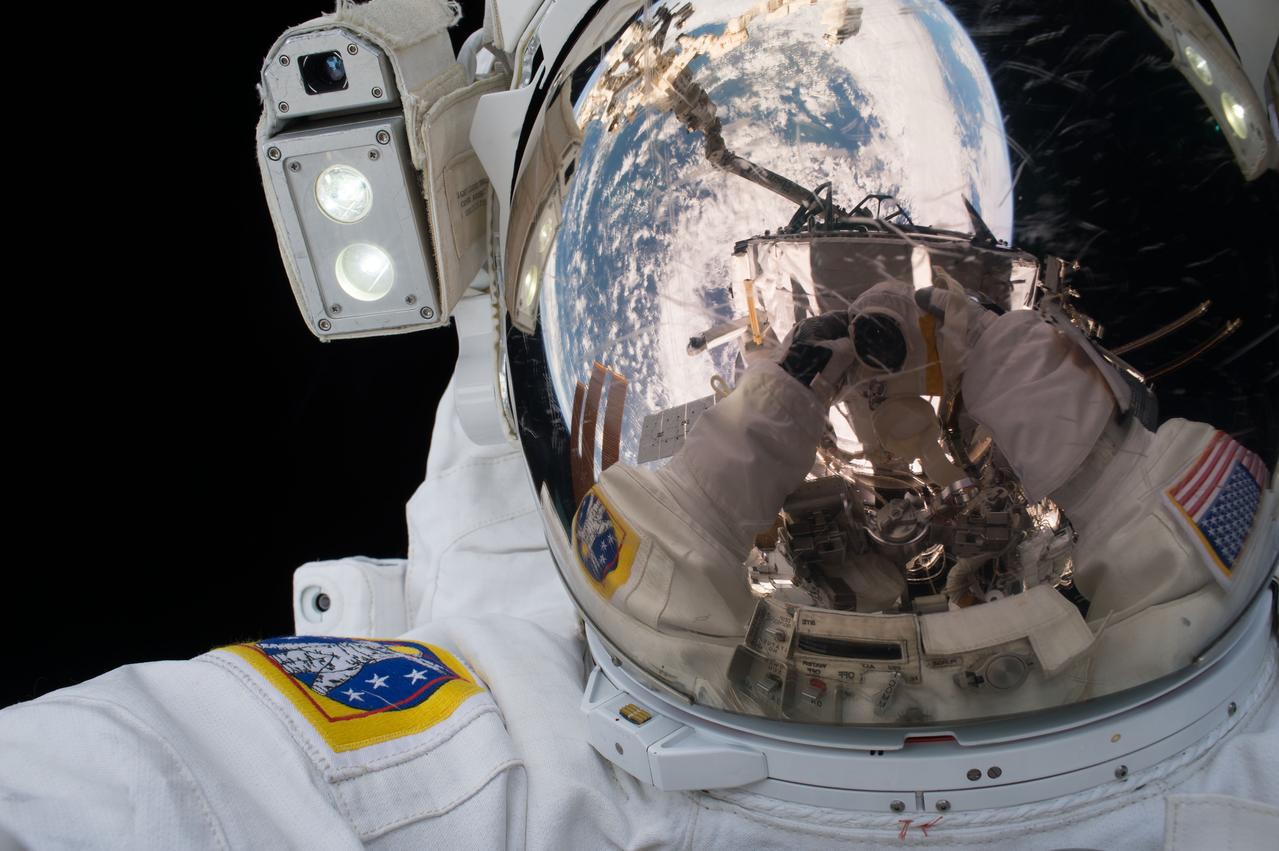
The camera is reflected in his helmet visor as Extravehicular crewmember 1 (EV1) Jeff Williams takes a self-portrait during Extravehicular Activity 36 (EVA 36).
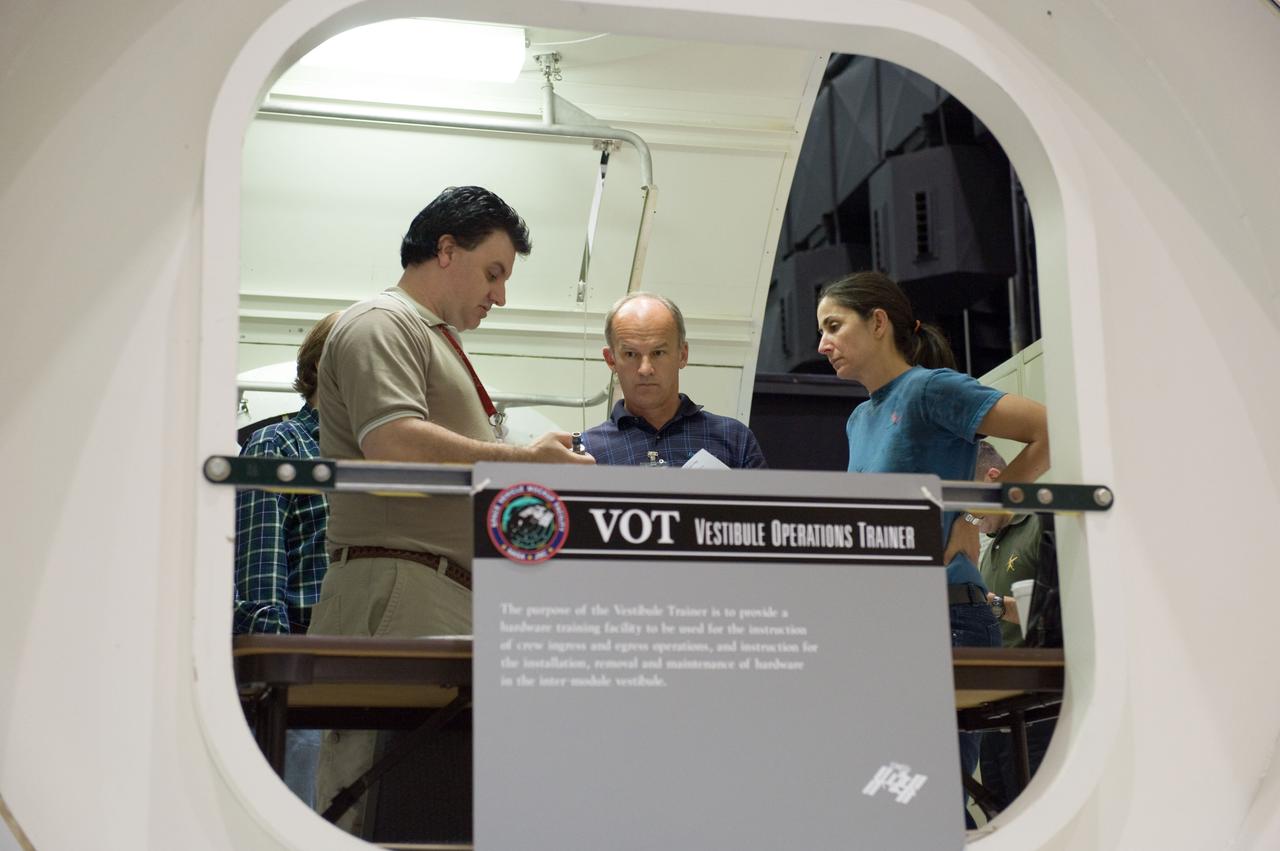
Date: 6-24-09 Location: Bldg 9NW - Node 1 Training Area Subject: Expedition 21 astronauts Jeff Williams and Nicole Scott during new Vestibule Procedures training with instructor Michael Steele. Photographer: Lauren Harnett
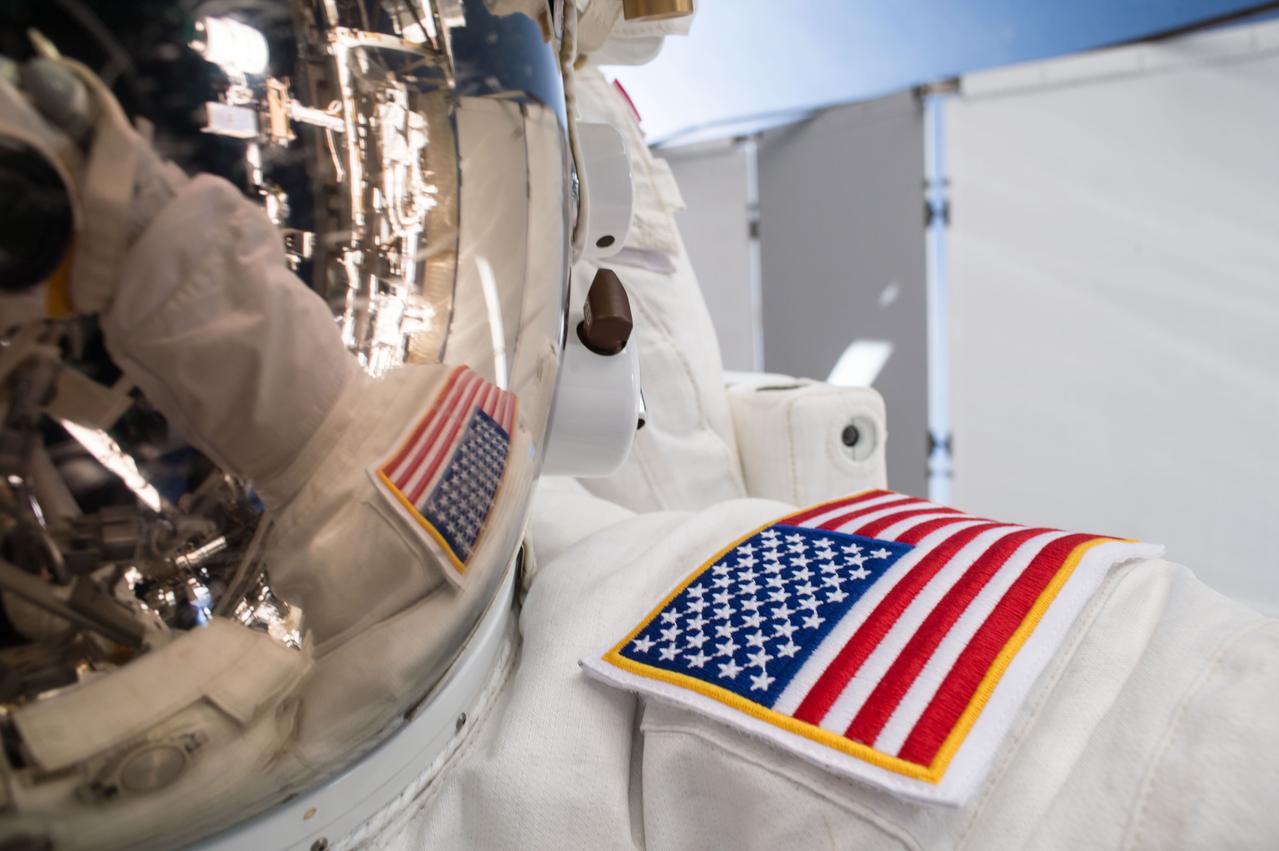
Extravehicular crewmember 1 (EV1) Jeff Williams' camera view of the American flag on his Extravehicular Mobility Unit (EMU). Image was taken during Extravehicular Activity 37 (EVA 37).
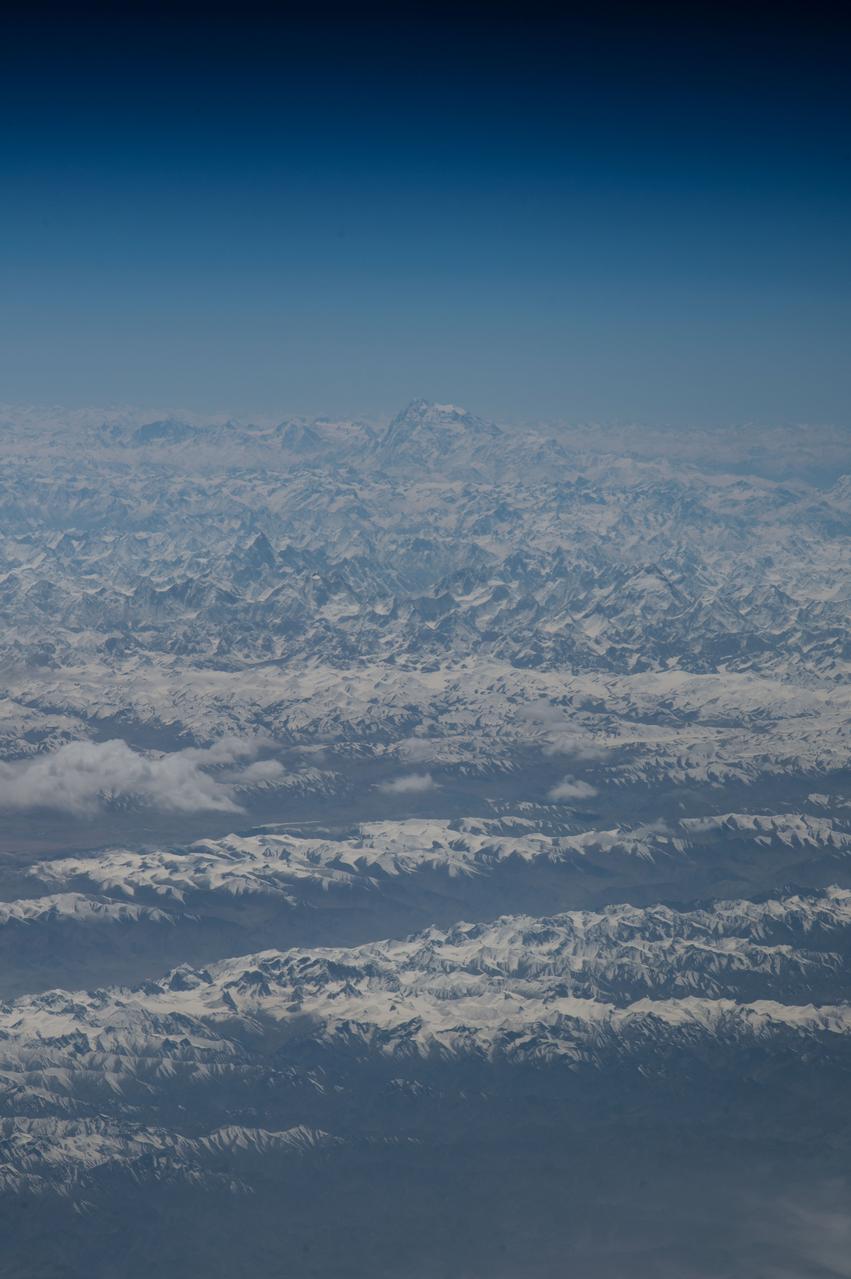
ISS047e087333 (04/30/2016) ---NASA Astronaut Jeff Williams captured this soaring mountain visa image and twitted "up to the amazing array of white peaks on the Himalaya Mountains".
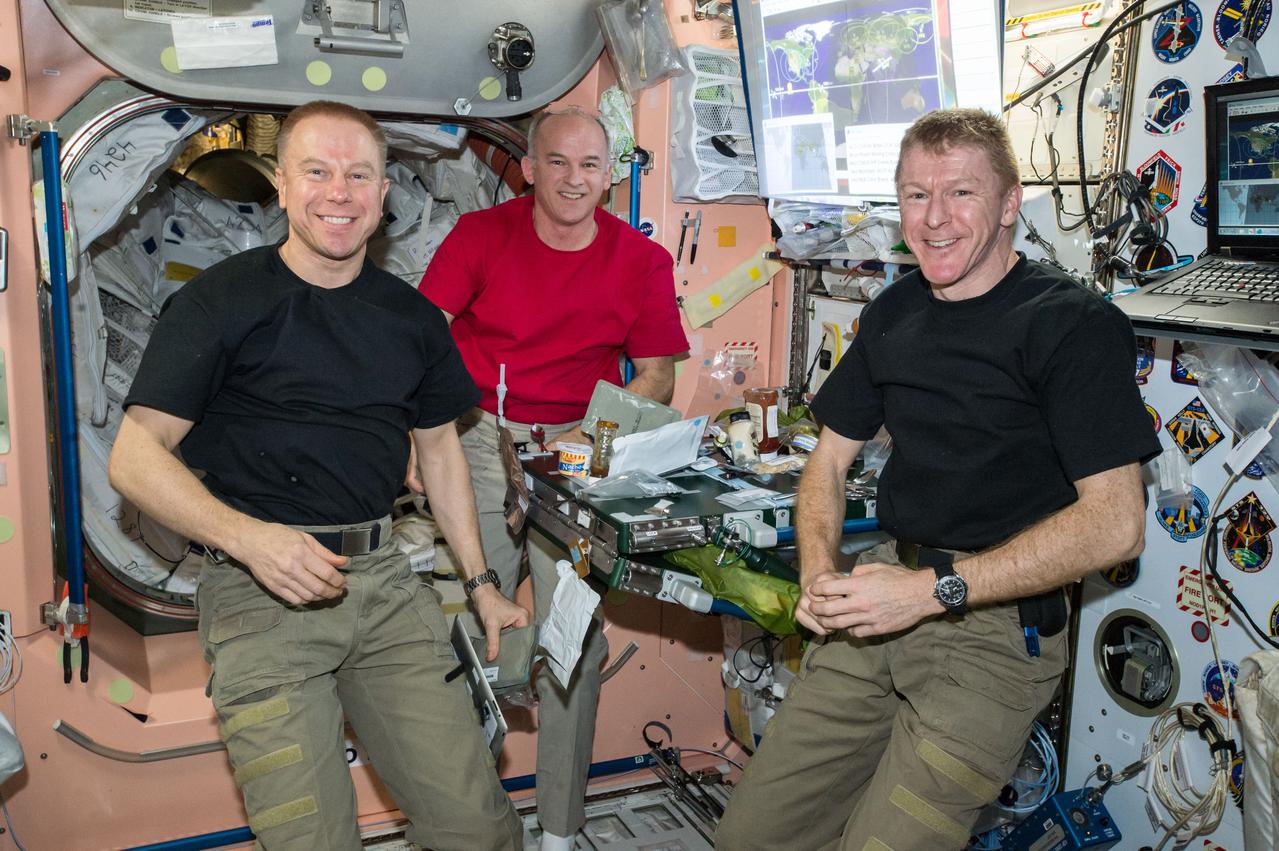
ISS047e044913 (04/05/2016) ---Expedition 47 crew members Tim Kopra (left), Jeff Williams (center) Tim Peake (right) are seen eating dinner inside the Unity module aboard the International Space Station.
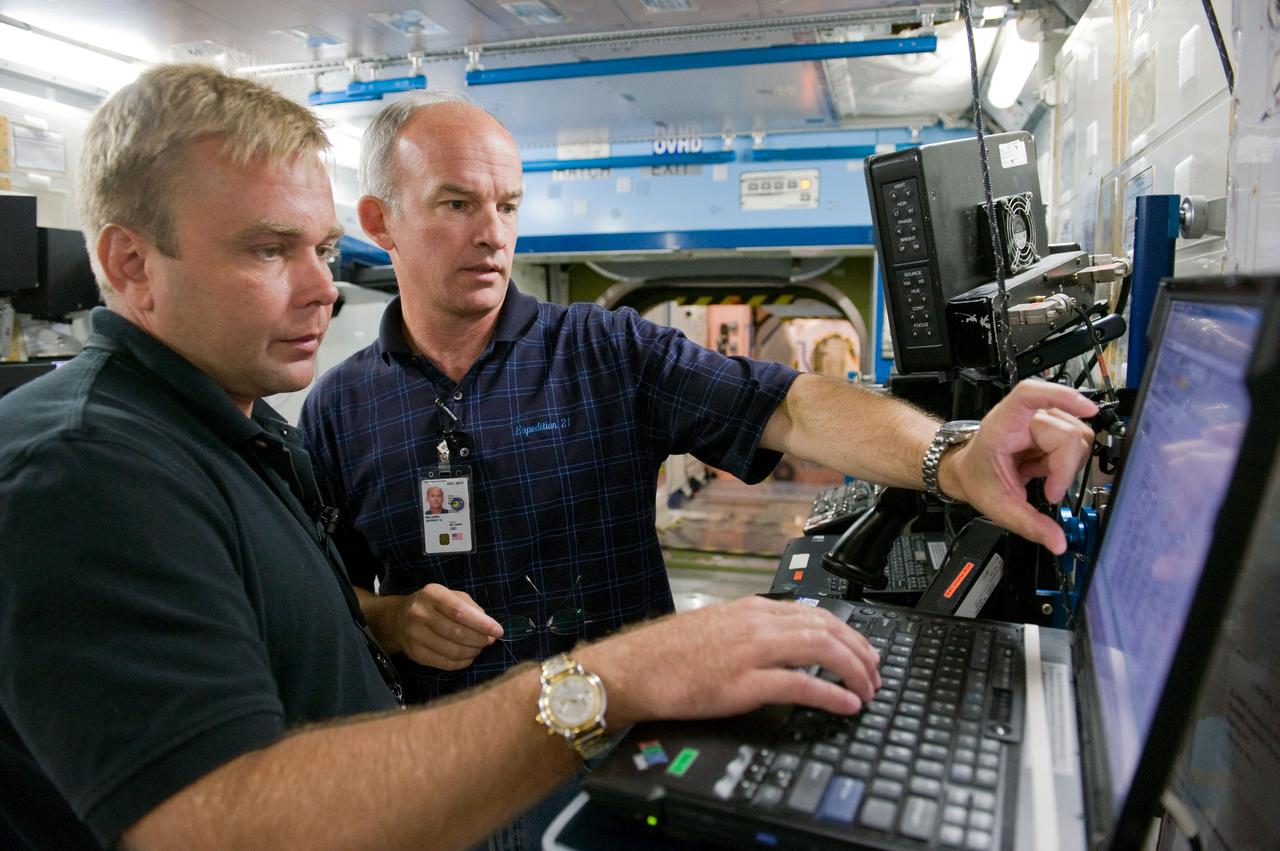
PHOTO DATE: 7-17-09 LOCATION: Bldg. 9NW - ISS Mockup SUBJECT: Expedition 21 crew members Jeff Williams and Max Suraev during ISS Routine Ops training. PHOTOGRAPHER: Lauren Harnett

ISS047e025377 (03/28/2016) --- "Islands in the Sky" . Members of the International Space Station Expedition 47 crew took in the beauty of our planet on Mar. 3, 2016 as dusk falls over the oceans. NASA astronaut Jeff Williams took this majestic image.
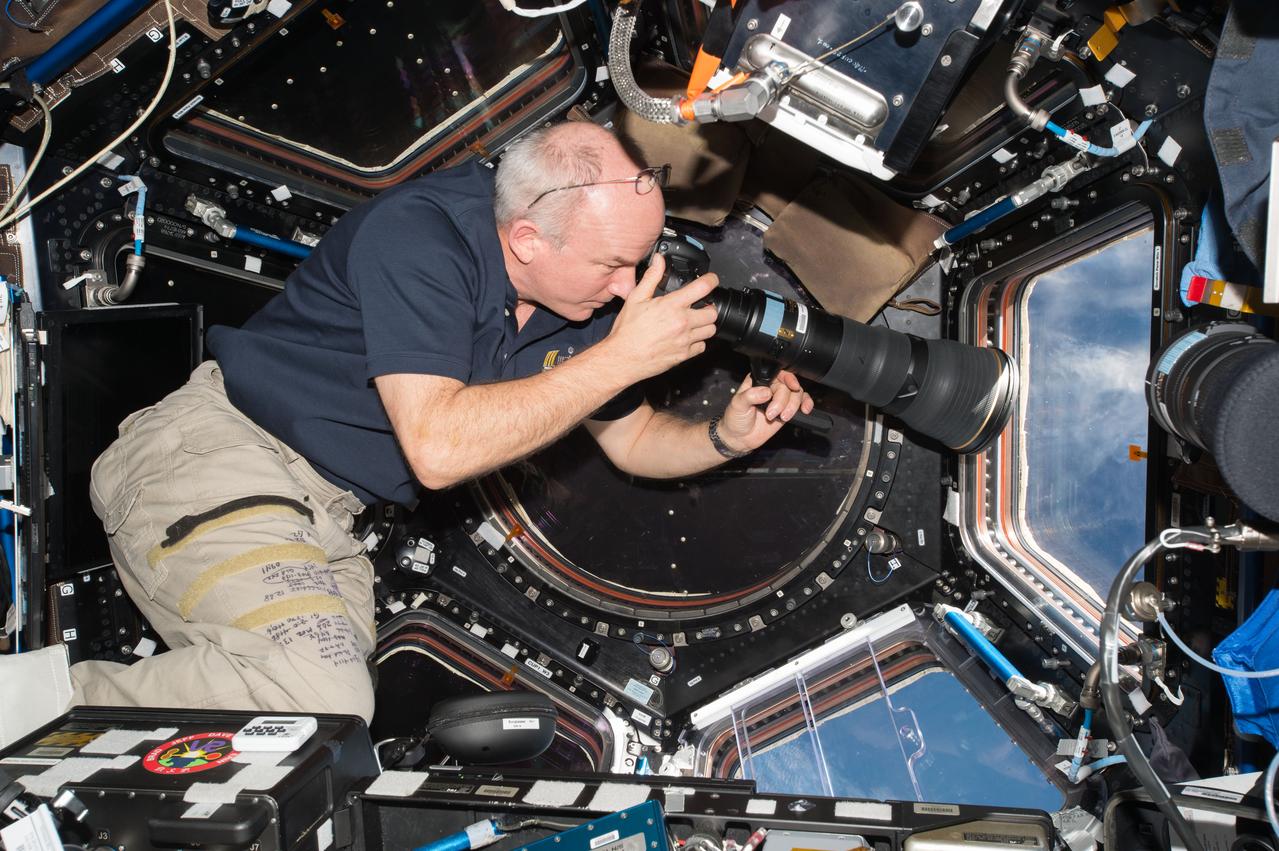
iss047e142181 (6/6/2020) --- NASA astronaut Jeff Williams taking photographs of the earth for the At Home in Space investigation. This photo was taken in the Cupola to capture the International Space Station (ISS) culture, which includes anything that makes the ISS your home.
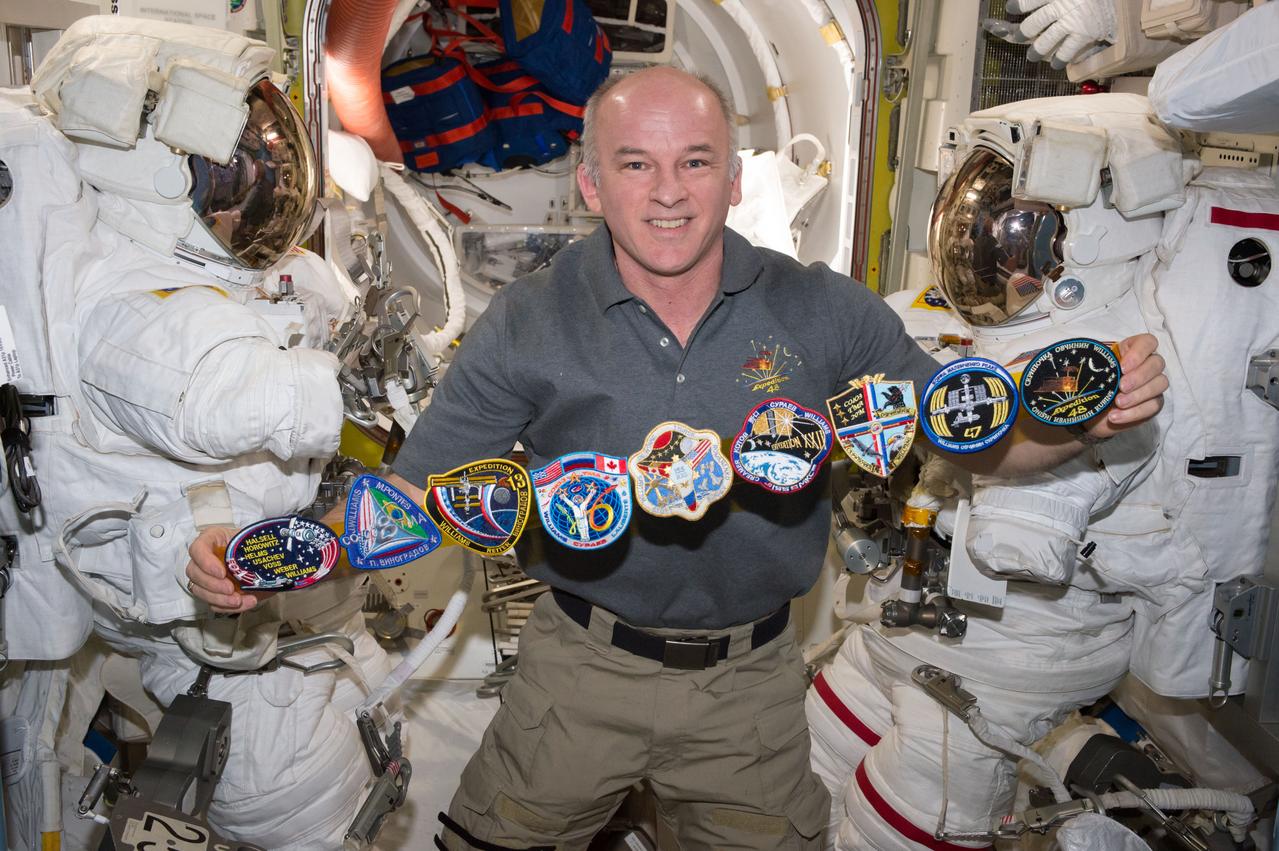
Commander Jeff Williams poses for a photo in the Quest Airlock (A/L) with all of his mission patches. The patches are, from left, STS-101, Soyuz TMA-8, Expedition 13, Soyuz TMA-16, Expedition 21, Expedition 22, Soyuz TMA-20M, Expedition 47, and Expedition 48.
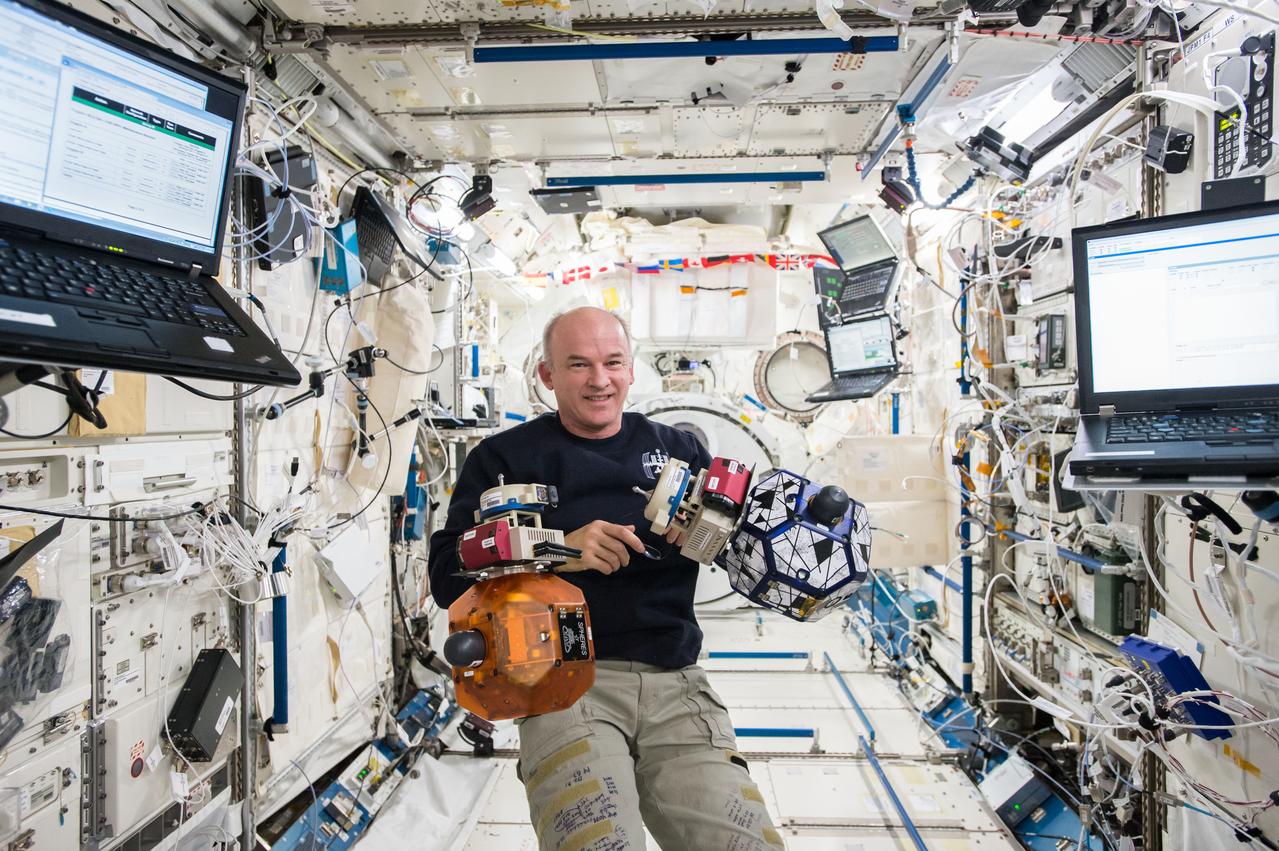
iss048e017435 (6/30/2016) --- Commander Jeff Williams monitors bowling ball-sized internal satellites known as SPHERES (Synchronized Position Hold, Engage, Reorient, Experimental Satellites) during a maintenance run in the Japanese Kibo Laboratory Module.
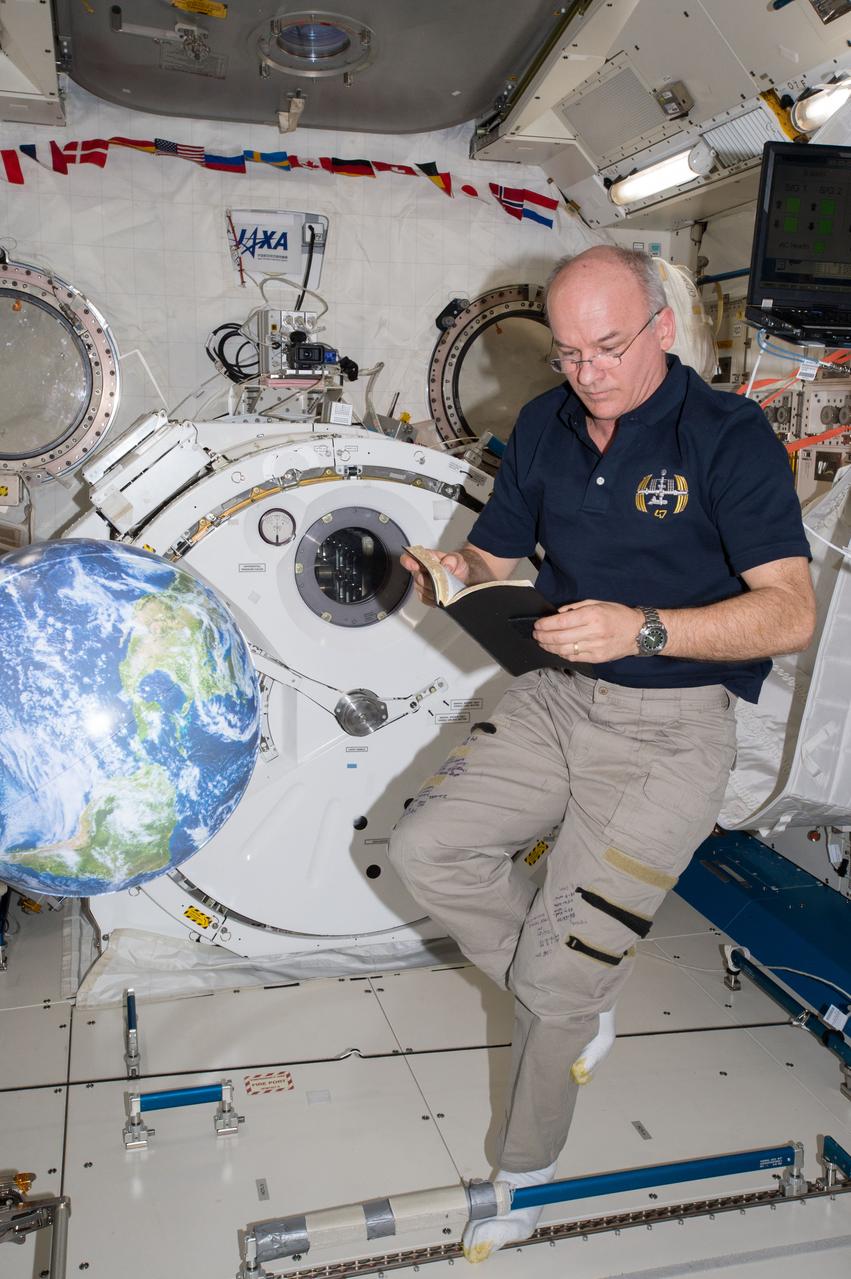
iss047e142189 (6/6/2016) --- NASA astronaut Jeff Williams reading a book in the Japanese Experiment Module (JEM) Pressurized Module (JPM) aboard the International Space Station (ISS) during At Home in Space. This photo was taken to capture the International Space Station (ISS) culture, which includes anything that makes the ISS your home.

iss048e049821 (8/5/2016) --- NASA astronaut Jeff Williams is photographed with two canisters for the Biological Research in Canisters - Natural Product under Microgravity (BRIC-NP) experiment. Image was taken in the Destiny U.S. Laboratory aboard the International space Station (ISS). In the BRIC-NP investigation, fungal strains isolated from the Chernobyl nuclear power plant (ChNPP) accident are screened for the secretion of natural products that could be beneficial for biomedical and agricultural applications.
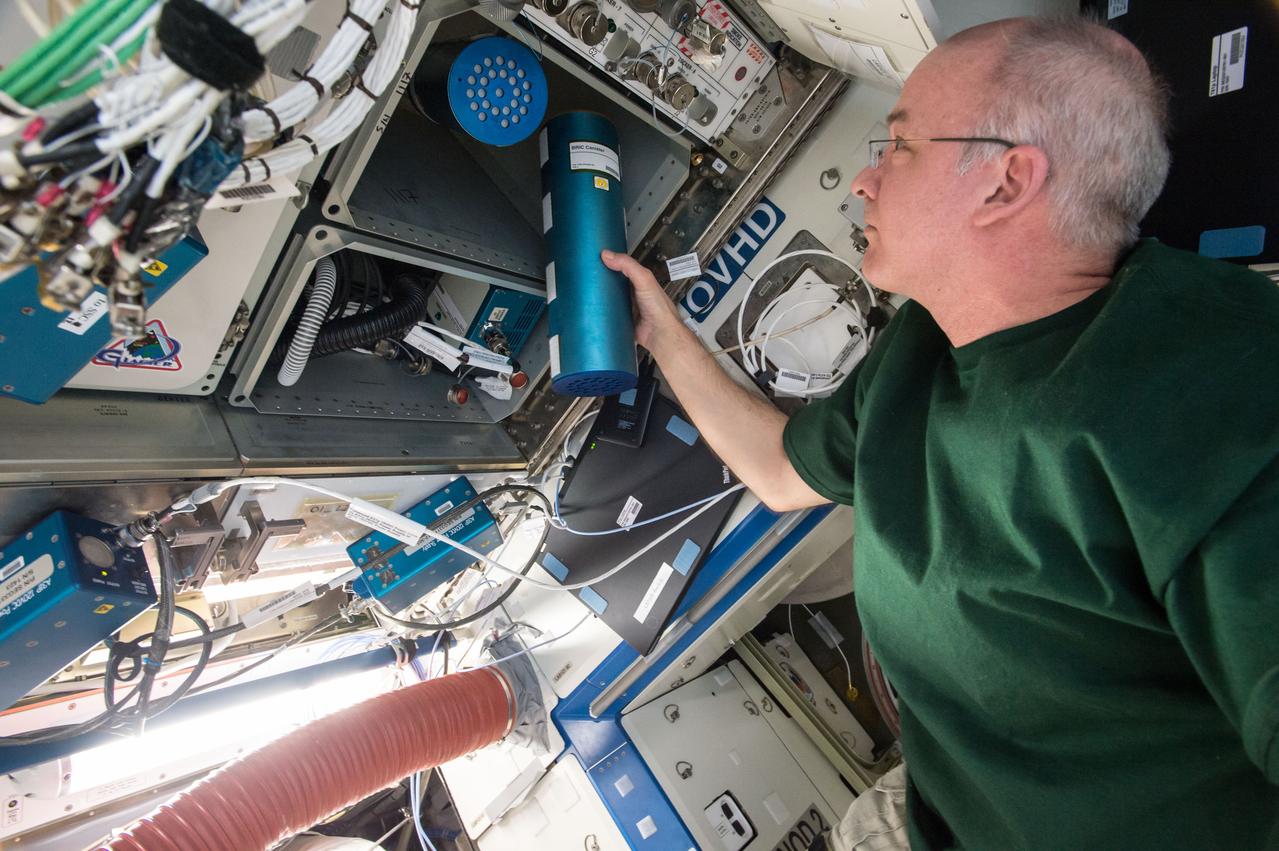
iss048e049824 (8/5/2016) --- NASA astronaut Jeff Williams transfers two canisters for the Biological Research in Canisters - Natural Product under Microgravity (BRIC-NP) experiment to ExPRESS (Expedite the Processing of Experiments to Space Station) Rack 2 Locker 6, LAB1O1-D2, in the Destiny U.S. Laboratory aboard the International Space Station (ISS). In the BRIC-NP investigation, fungal strains isolated from the Chernobyl nuclear power plant (ChNPP) accident are screened for the secretion of natural products that could be beneficial for biomedical and agricultural applications.
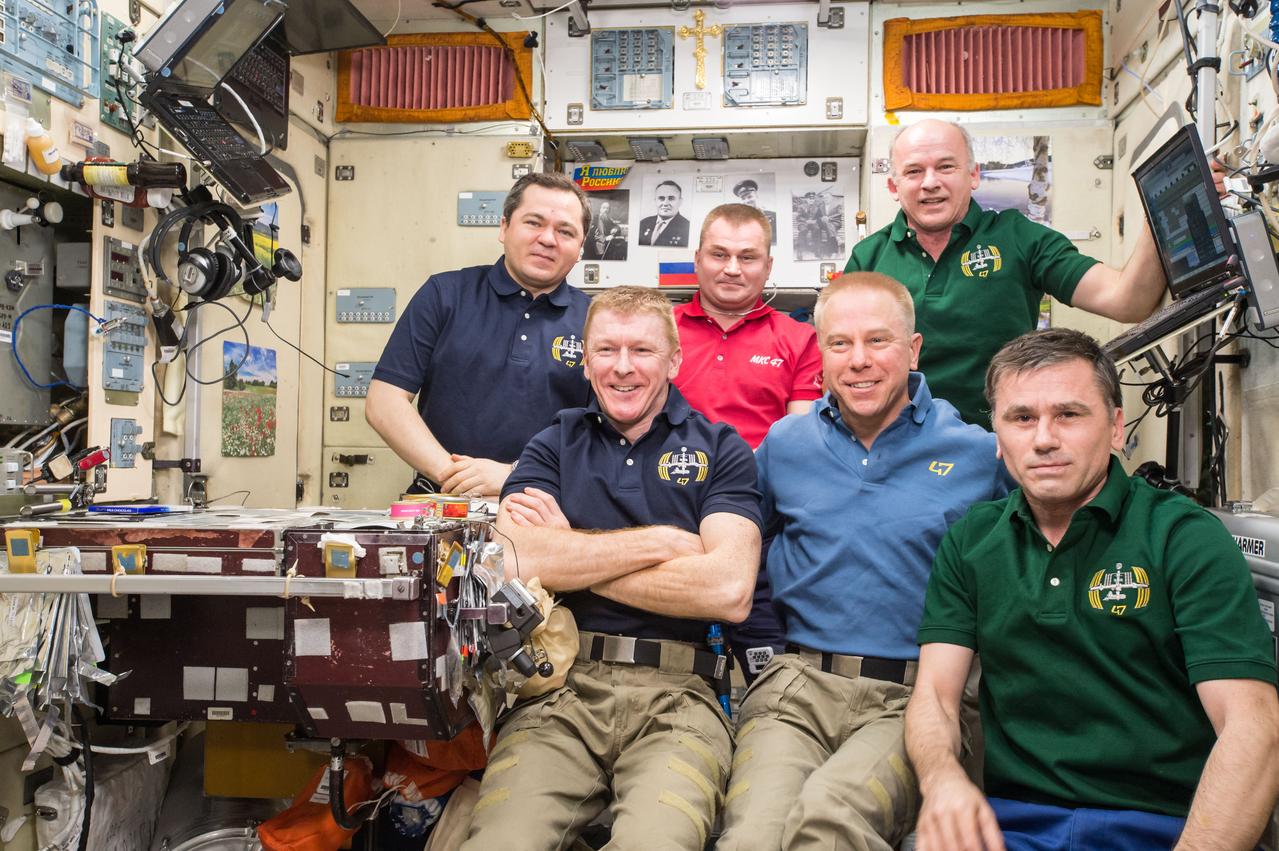
ISS047e085715 (04/30/2016) --- The Expedition 47 crew poses for the 3 millionth image taken aboard the International Space Station. For more than 15 years, station crews have been taking photographs of the earth and inside activities. In the photo: (front row from the left) ESA (European Space Agency) astronaut Timothy Peake, NASA astronaut Timothy Kopra and Roscosmos cosmonaut Yuri Malenchenko. (back row from left) Russian cosmonauts Oleg Skripochka and Alexey Ovchinin along with NASA astronaut Jeff Williams.
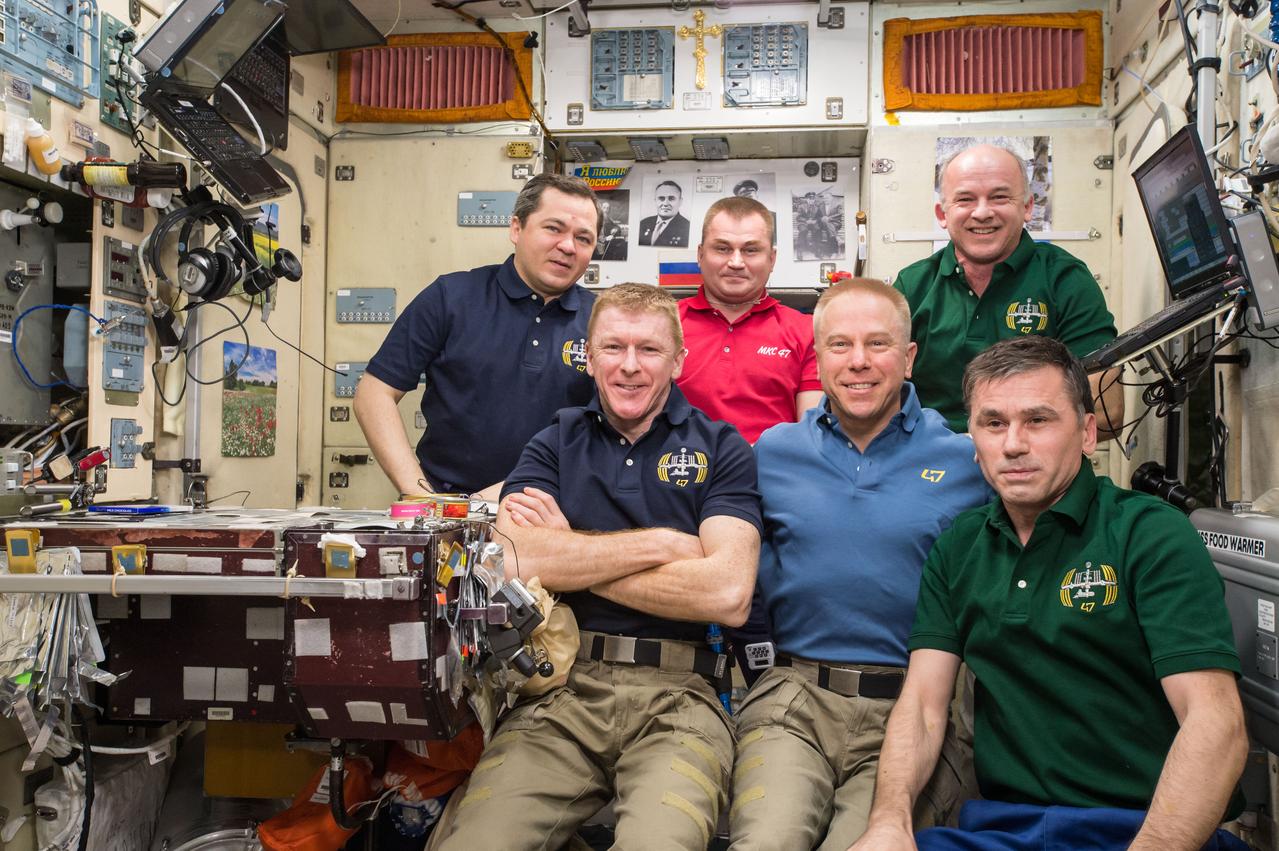
ISS047e085715 (04/30/2016) --- The Expedition 47 crew poses for the 3 millionth image taken aboard the International Space Station. For more than 15 years, station crews have been taking photographs of the earth and inside activities. In the photo: (front row from the left) ESA (European Space Agency) astronaut Timothy Peake, NASA astronaut Timothy Kopra and Roscosmos cosmonaut Yuri Malenchenko. (back row from left) Russian cosmonauts Oleg Skripochka and Alexey Ovchinin along with NASA astronaut Jeff Williams.
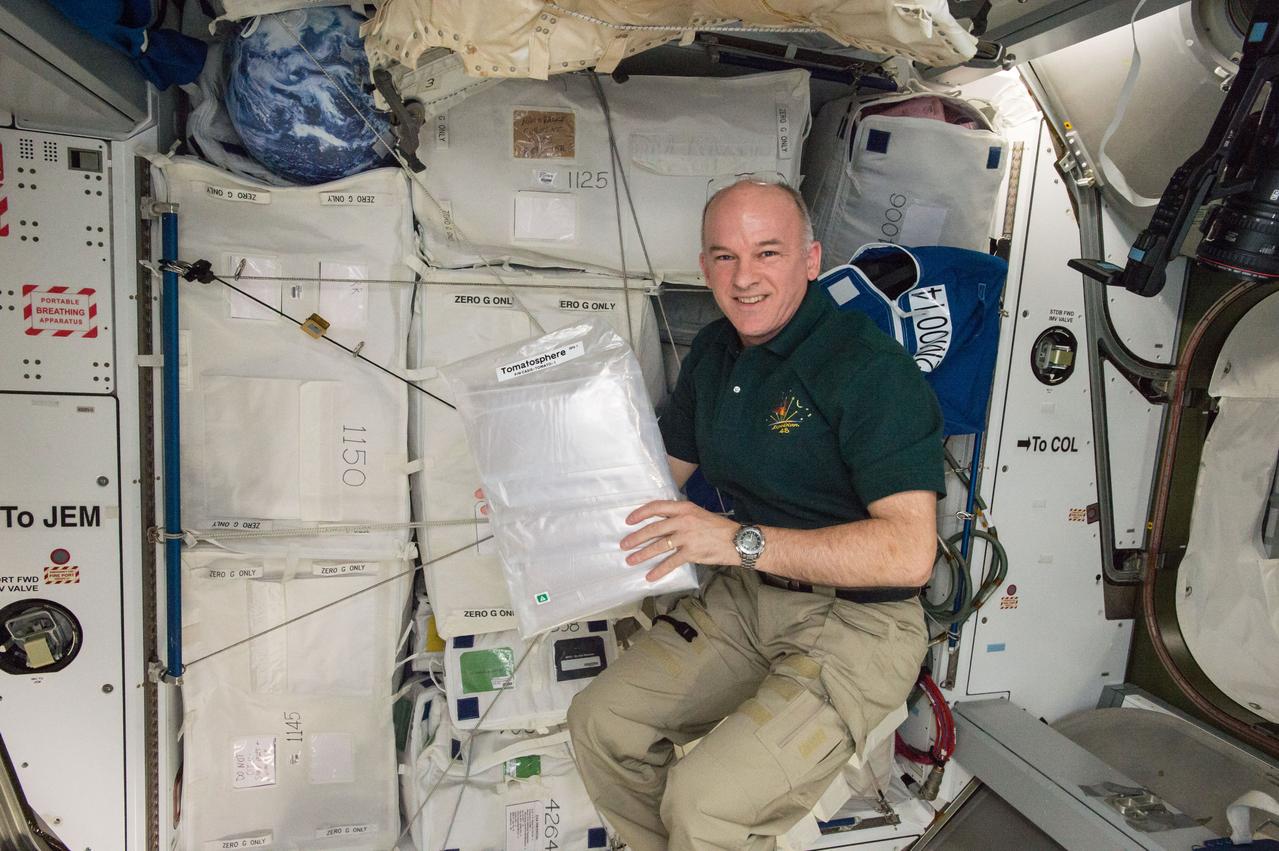
iss048e045799 (7/22/2016) --- NASA astronaut Jeff Williams poses for a photo with the Tomatosphere-US payload. Image was taken in the Harmony Node 2. Tomatosphere-US provides K-12 classrooms with tomato seeds from space to use in a blind germination study. Participating classes receive two sets of seeds, a control group from the ground and seeds flown in space or subjected to simulated space conditions. When teachers and students submit the results of their experiment, they learn the source of each set of seeds and can compare their data with other classroom experiments around the country.
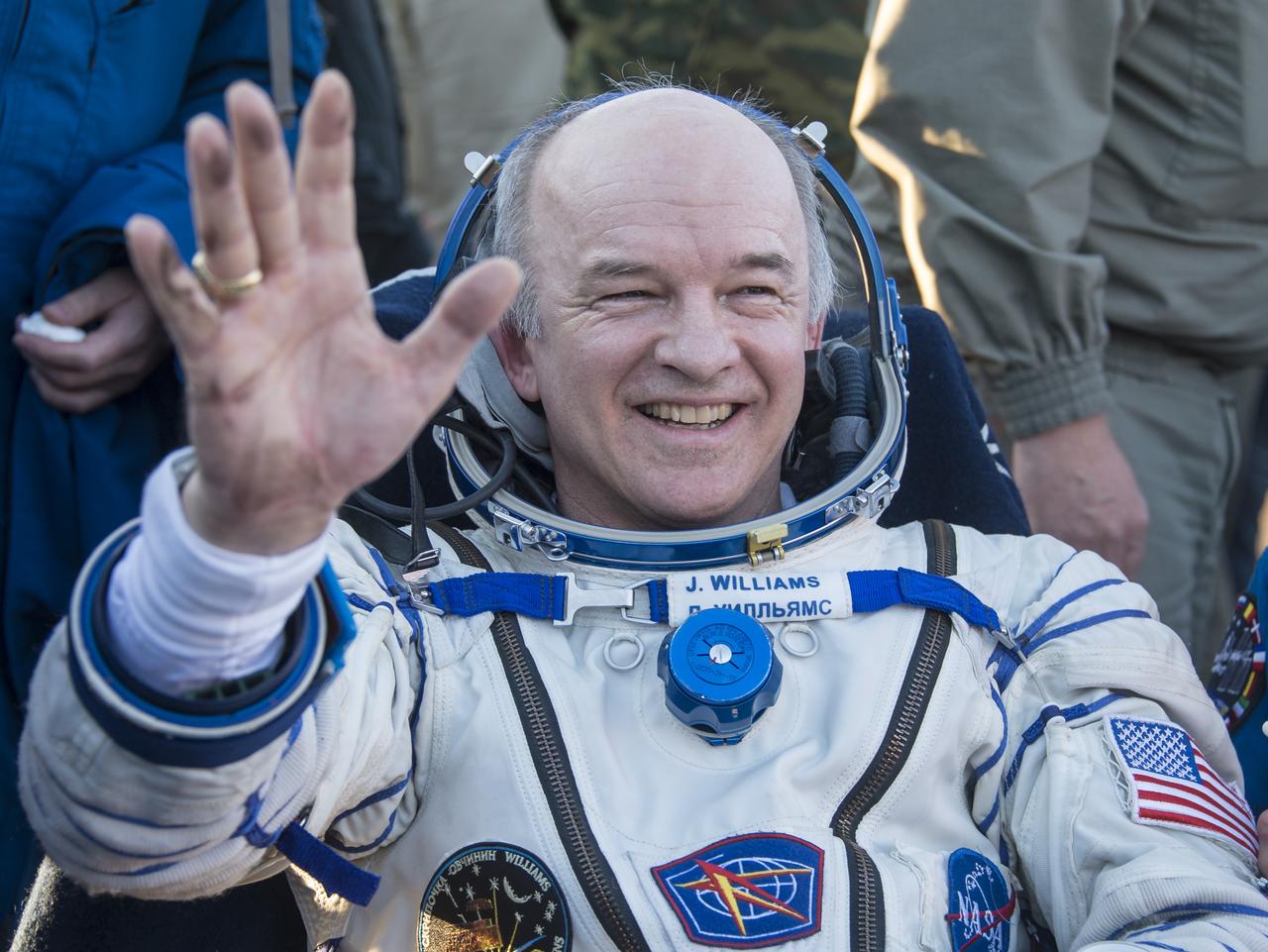
Expedition 48 NASA astronaut Jeff Williams rest in a chairs outside the Soyuz TMA-20M spacecraft a few moments after he and Russian cosmonauts Alexey Ovchinin and Oleg Skripochka of Roscosmos landed in a remote area near the town of Zhezkazgan, Kazakhstan on Wednesday, Sept. 7, 2016(Kazakh time). Williams, Ovchinin, and Skripochka are returning after 172 days in space where they served as members of the Expedition 47 and 48 crews onboard the International Space Station. Photo Credit: (NASA/Bill Ingalls)
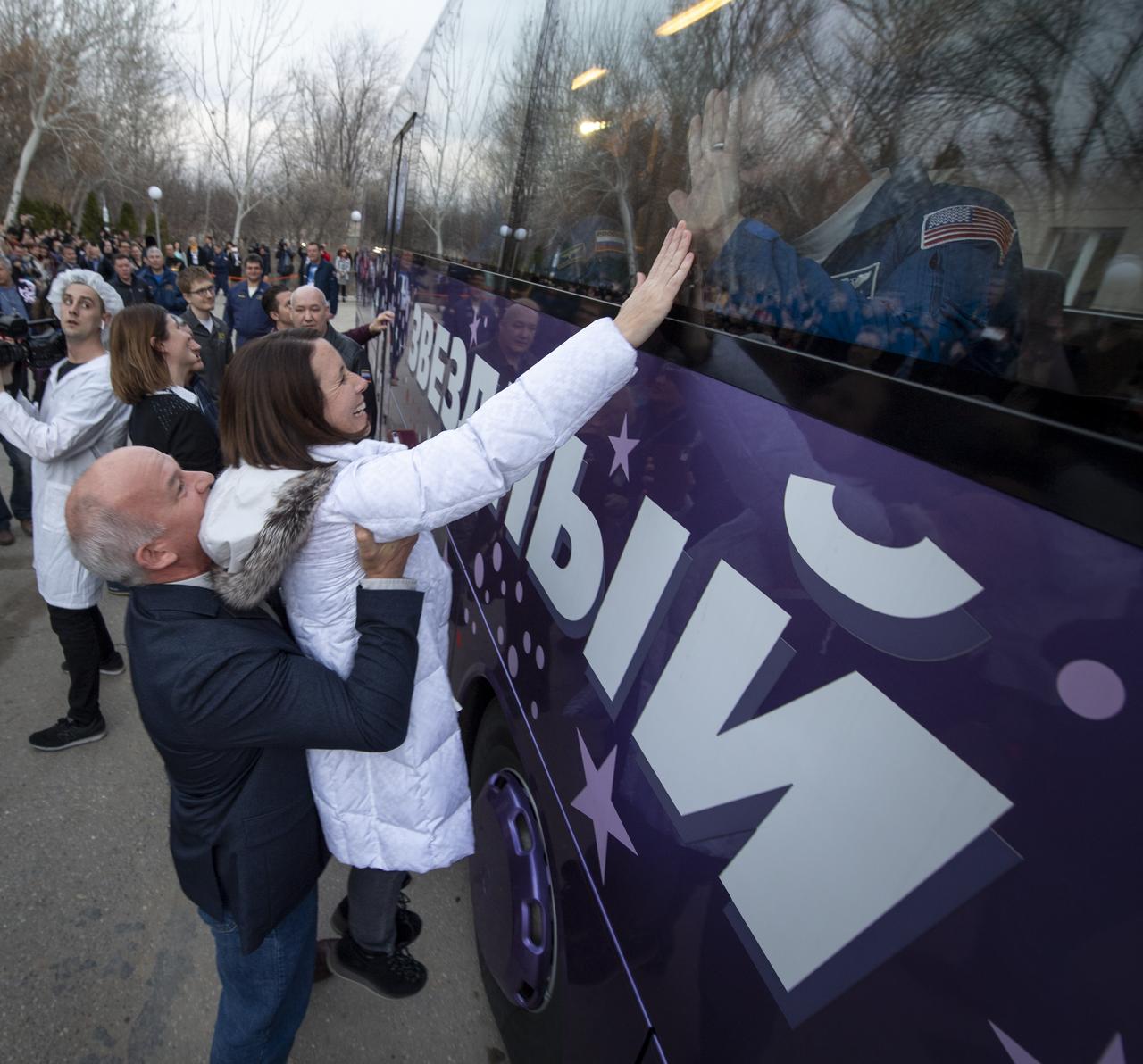
Expedition 59 astronaut Nick Hague's wife Catie Hague is lifted up by NASA astronaut Jeff Williams as she wishes farewell to husband as he and fellow crewmemebers Christina Koch and Alexey Ovchinin depart the Cosmonaut Hotel, Thursday, March 14, 2019 in Baikonur, Kazakhstan. Hague, Koch, and Ovchinin launched March 14, U.S. time, on the Soyuz MS-12 spacecraft from the Baikonur Cosmodrome for a six-and-a-half month mission on the International Space Station. Photo Credit: (NASA/Bill Ingalls)
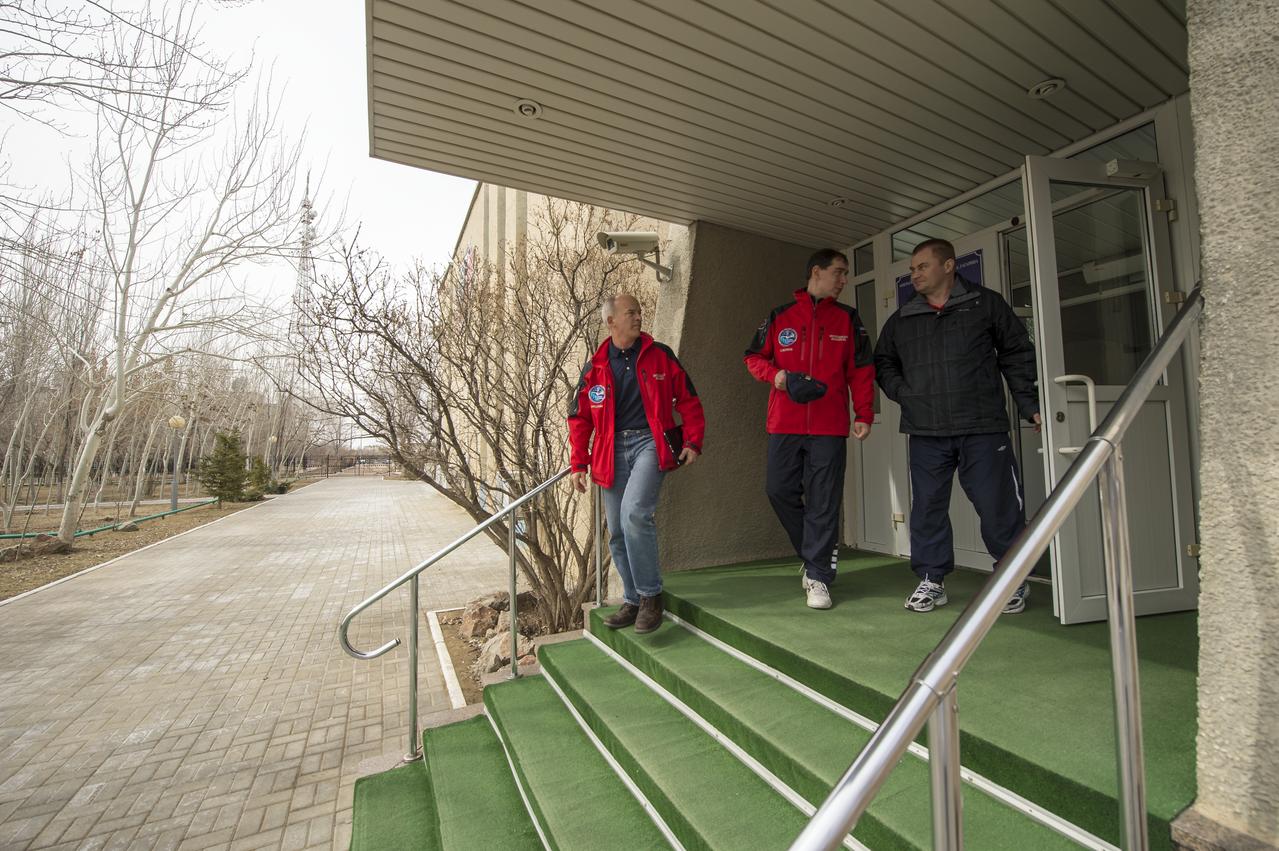
Expedition 43 backup crew members Jeff Williams of NASA, left, Sergei Volkov, center, and Alexey Ovchinin, of the Russian Federal Space Agency (Roscosmos) depart the Cosmonaut Hotel after morning classes, Thursday, March 19, 2015 in Baikonur, Kazakhstan. NASA Astronaut Scott Kelly, and Russian Cosmonauts Gennady Padalka, and Mikhail Kornienko of the Russian Federal Space Agency (Roscosmos) are preparing for launch to the International Space Station in their Soyuz TMA-16M spacecraft from the Baikonur Cosmodrome in Kazakhstan March 28, Kazakh time. As the one-year crew, Kelly and Kornienko will return to Earth on Soyuz TMA-18M in March 2016. Photo Credit: (NASA/Bill Ingalls)
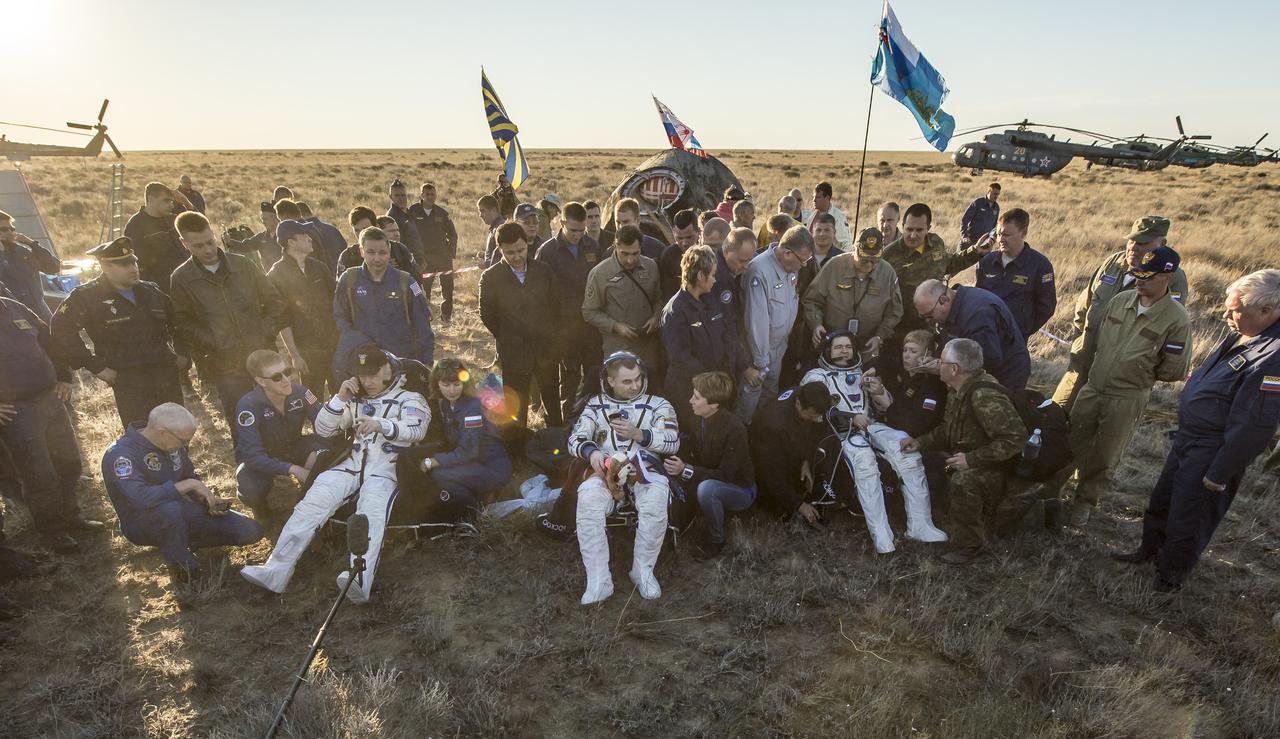
NASA astronaut Jeff Williams, left, Russian cosmonaut Alexey Ovchinin of Roscosmos, center, and Russian cosmonaut Oleg Skripochka of Roscosmos sit in chairs outside the Soyuz TMA-20M spacecraft a few moments after they landed in a remote area near the town of Zhezkazgan, Kazakhstan on Wednesday, Sept. 7, 2016(Kazakh time). Williams, Ovchinin, and Skripochka are returning after 172 days in space where they served as members of the Expedition 47 and 48 crews onboard the International Space Station. Photo Credit: (NASA/Bill Ingalls)
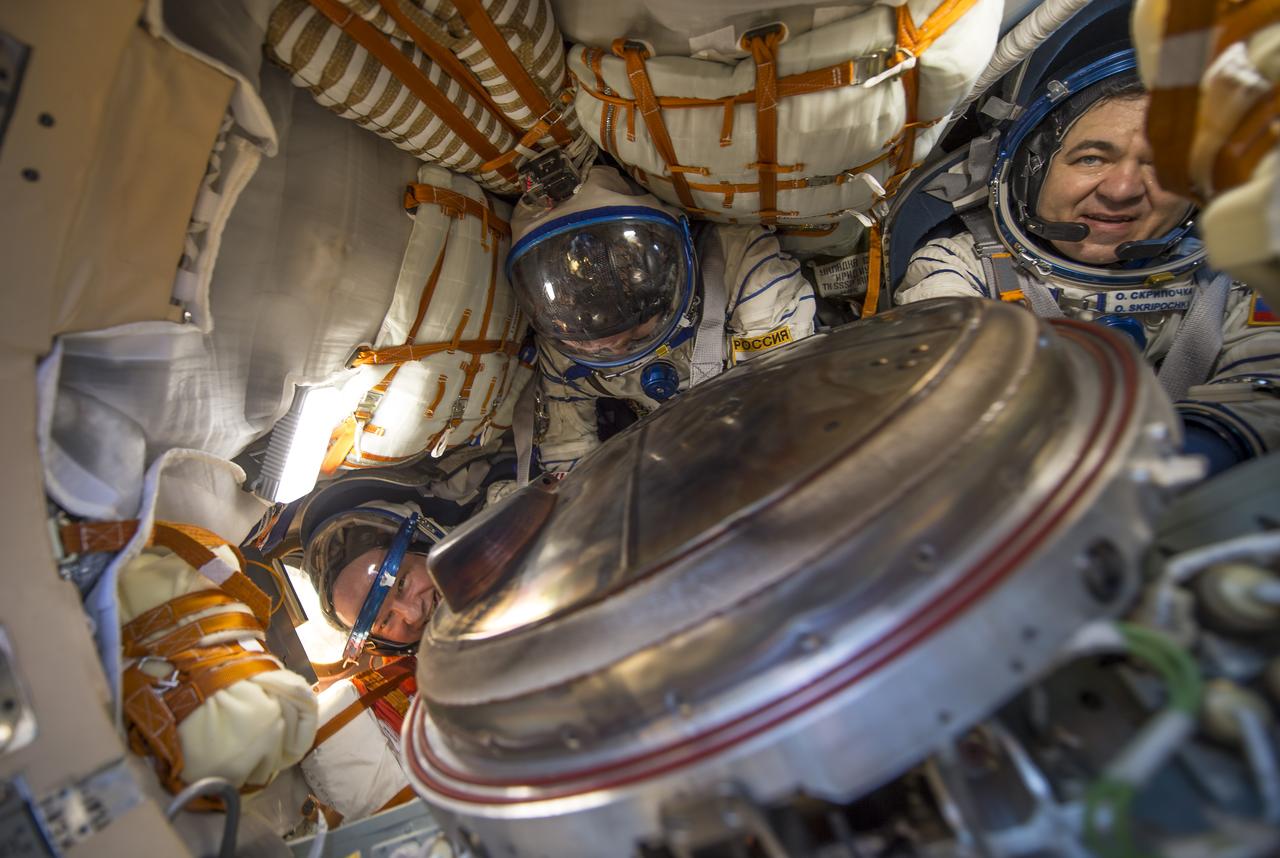
NASA astronaut Jeff Williams, left, Russian cosmonaut Alexey Ovchinin of Roscosmos, center, and Russian cosmonaut Oleg Skripochka of Roscosmos are seen inside the Soyuz TMA-20M spacecraft a few moments after they landed in a remote area near the town of Zhezkazgan, Kazakhstan on Wednesday, Sept. 7, 2016(Kazakh time). Williams, Ovchinin, and Skripochka are returning after 172 days in space where they served as members of the Expedition 47 and 48 crews onboard the International Space Station. Photo Credit: (NASA/Bill Ingalls)
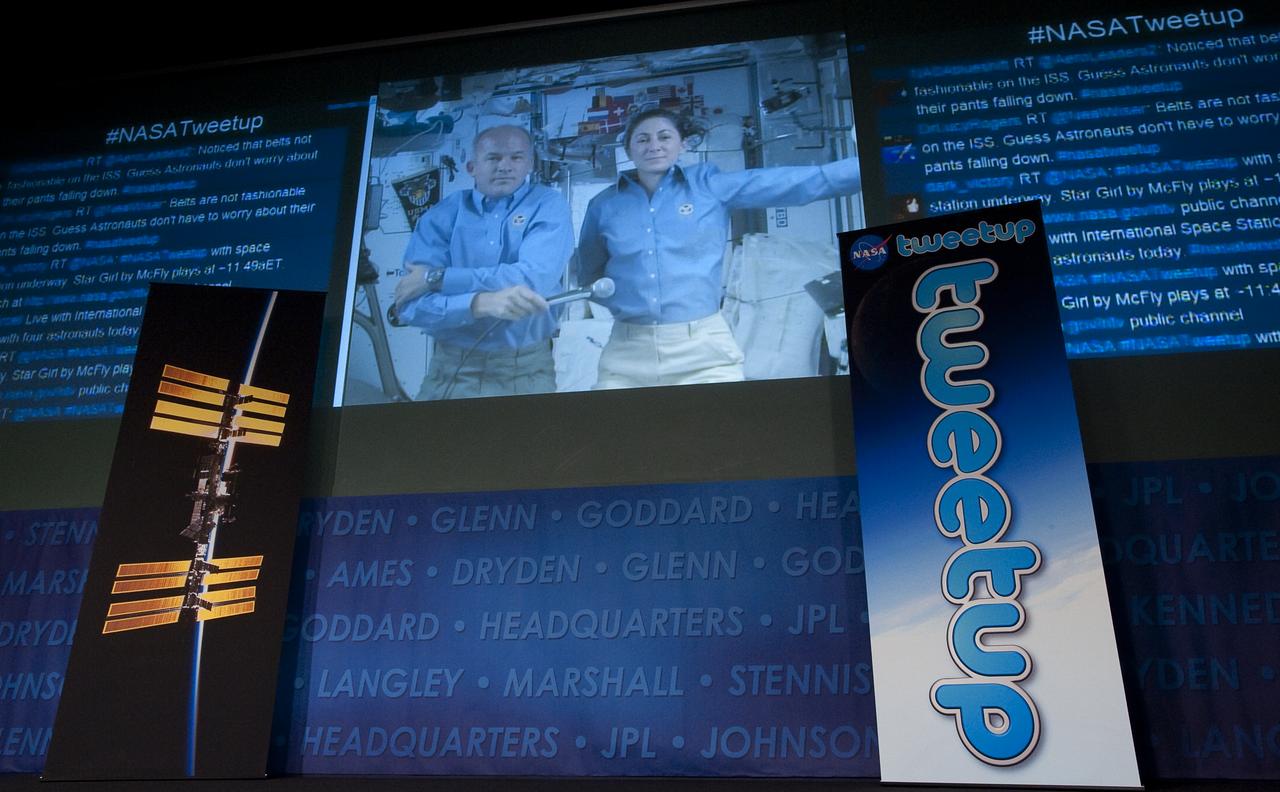
Expedition 20 Flight Engineers Jeff Williams, left, and Nicole Stott are seen during a live broadcast from the International Space Station (ISS) as they answer questions from NASA Twitter followers at NASA Headquarters in Washington, on what it is like to live and work in space, Wednesday, Oct. 21, 2009. Photo Credit: (NASA/Carla Cioffi)
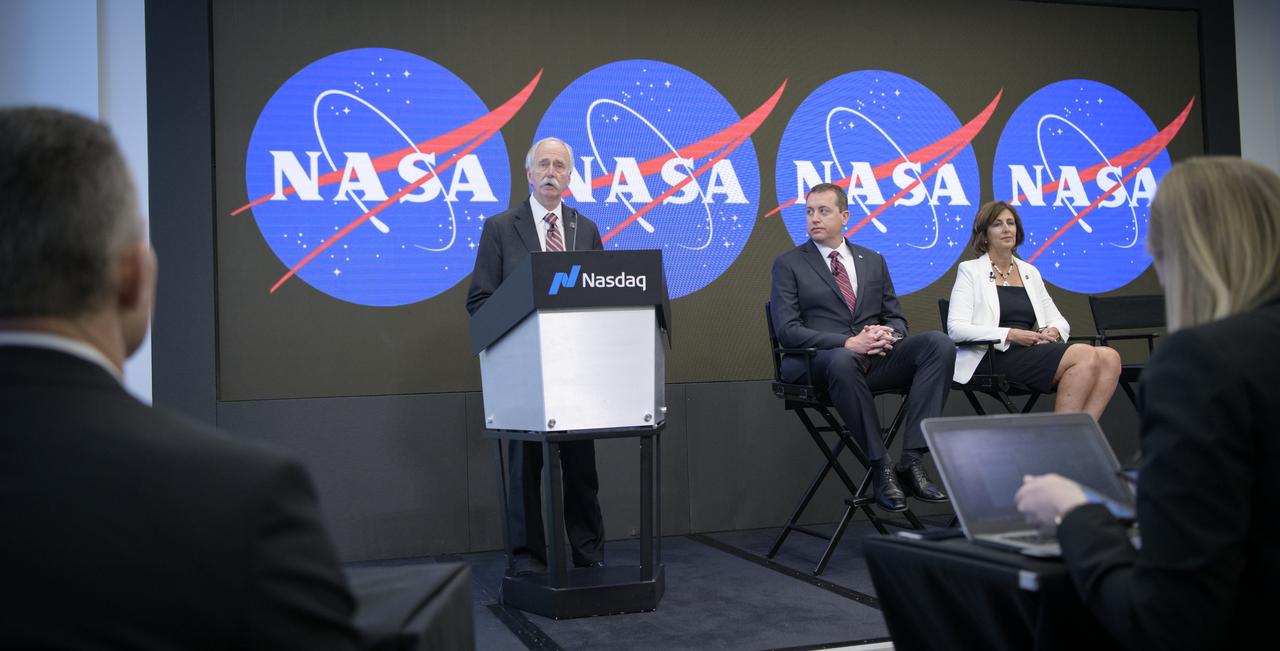
NASA Associate Administrator for the Human Exploration and Operations Directorate William Gerstenmaier, left, NASA Chief Financial Officer Jeff DeWit, center, and NASA International Space Station Deputy Director Robyn Gatens announce the agency’s five-part plan to open the International Space Station to expanded commercial and marketing activities and private astronaut missions to the station and enable additional commercial destinations in low-Earth orbit, Friday, June 7, 2019 at the Nasdaq MarketSite in New York City. NASA will continue to maintain human presence and research in low-Earth orbit, and the long-term goal is to achieve a robust economy from which NASA can purchase services at a lower cost. Photo Credit: (NASA/Bill Ingalls)
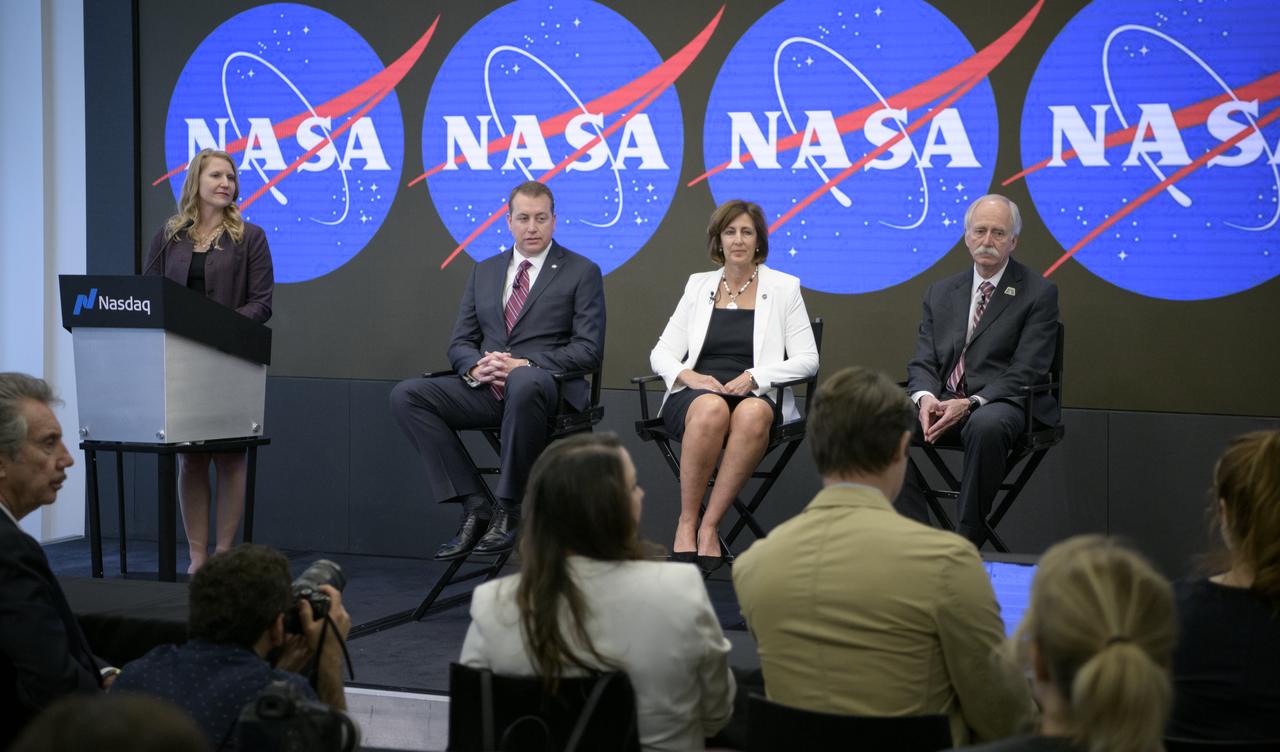
NASA Public Affairs Officer Stephanie Schierholz, standing left, moderates a media briefing with NASA Chief Financial Officer Jeff DeWit, left, NASA International Space Station Deputy Director Robyn Gatens, center, and NASA Associate Administrator for the Human Exploration and Operations Directorate William Gerstenmaier where they announced the agency’s five-part plan to open the International Space Station to expanded commercial and marketing activities and private astronaut missions to the station and enable additional commercial destinations in low-Earth orbit, Friday, June 7, 2019 at the Nasdaq MarketSite in New York City. NASA will continue to maintain human presence and research in low-Earth orbit, and the long-term goal is to achieve a robust economy from which NASA can purchase services at a lower cost. Photo Credit: (NASA/Bill Ingalls)
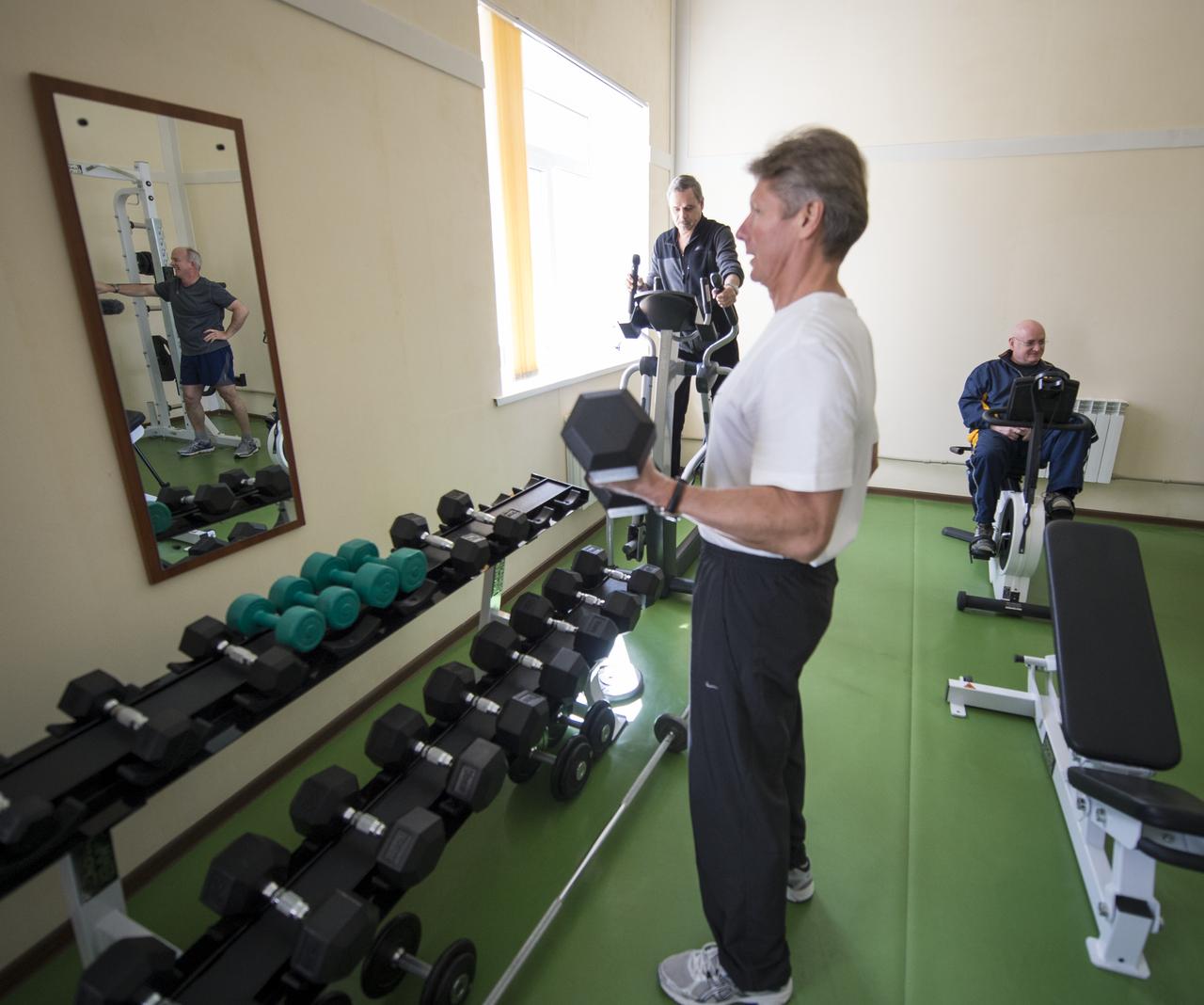
Expedition 43 backup crew member NASA Astronaut Jeff Williams, reflected in mirror, Russian Cosmonauts Mikhail Kornienko, on elliptical, Gennady Padalka of the Russian Federal Space Agency (Roscosmos), and NASA Astronaut Scott Kelly, right, are seen exercising during media day, Saturday, March 21, 2015, Baikonur, Kazakhstan. Padalka, Kornienko, and Kelly are scheduled to launch to the International Space Station in the Soyuz TMA-16M spacecraft from the Baikonur Cosmodrome in Kazakhstan March 28, Kazakh time (March 27 Eastern time.) As the one-year crew, Kelly and Kornienko will return to Earth on Soyuz TMA-18M in March 2016. Photo Credit: (NASA/Bill Ingalls)
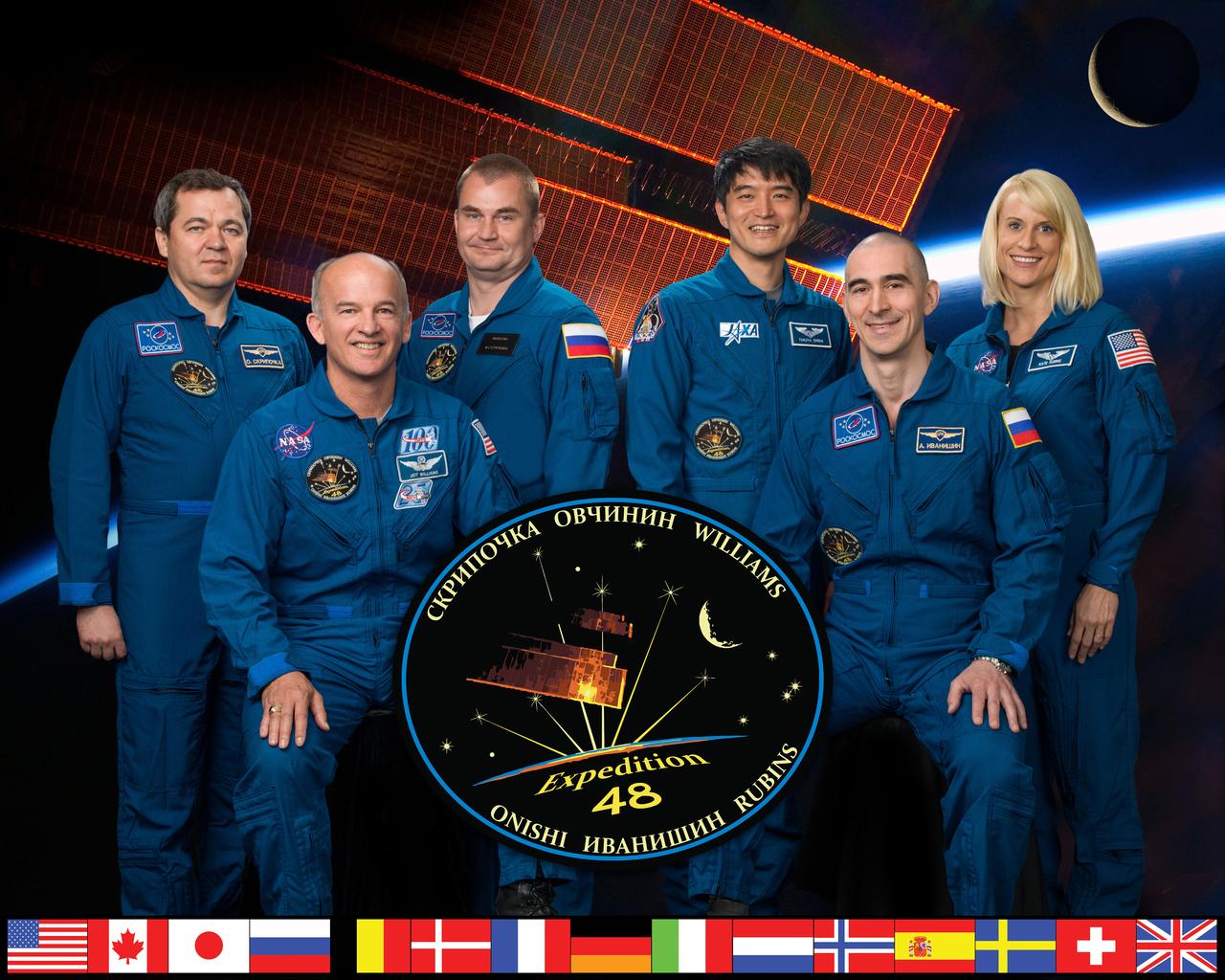
Expedition 48 crew portrait with 46S crew (Jeff Williams, Oleg Skripochka, Aleksei Ovchinin) and 47S crew (Anatoli Ivanishin, Kate Rubins, Takuya Onishi). Photo Date: June 26, 2015. Location: Building 8, Room 183 - Photo Studio. Photographer: Bill Stafford.
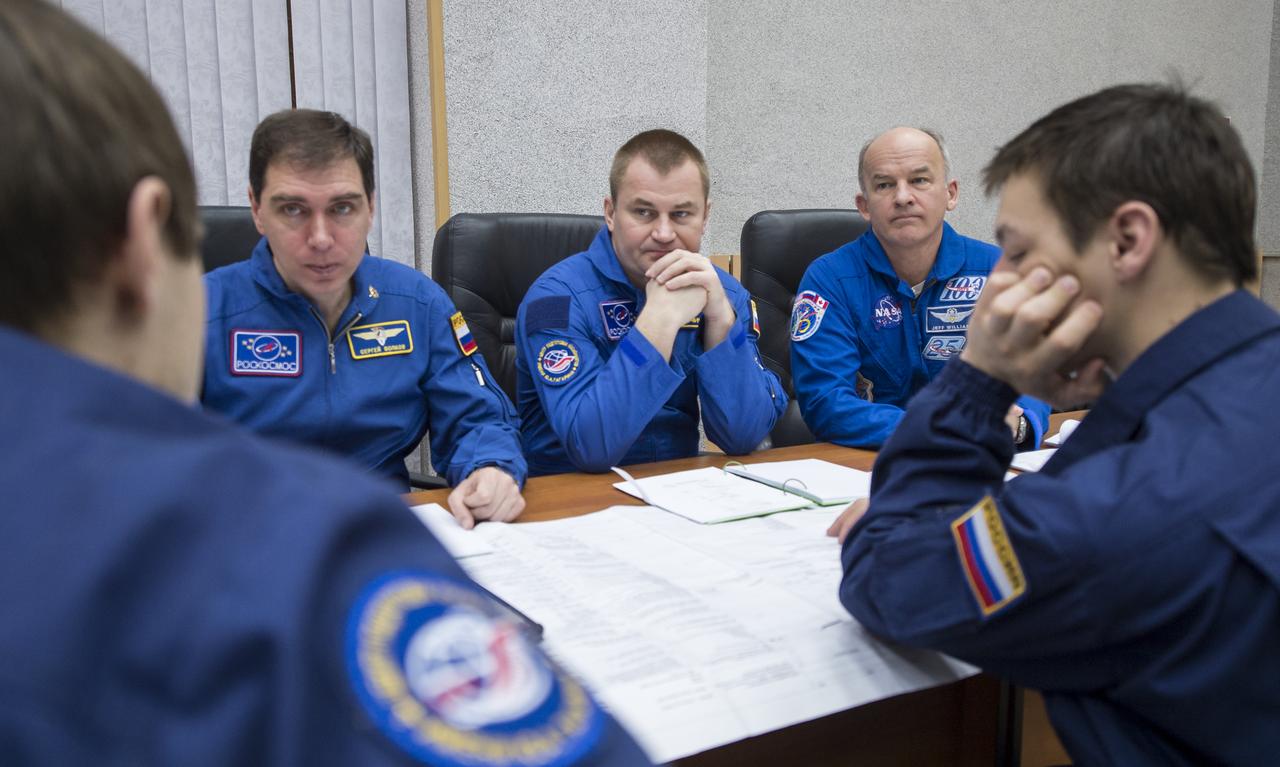
Expedition 43 backup crew members Sergei Volkov, left, and Alexey Ovchinin and of the Russian Federal Space Agency (Roscosmos), center, and NASA Astronaut Jeff Williams attend a training briefing, Saturday, March 21, 2015 at the Cosmonaut Hotel in Baikonur, Kazakhstan. Expedition 43 prime crew members: NASA Astronaut Scott Kelly, and Russian Cosmonauts Gennady Padalka, and Mikhail Kornienko of the Russian Federal Space Agency (Roscosmos) are scheduled to launch to the International Space Station in the Soyuz TMA-16M spacecraft from the Baikonur Cosmodrome in Kazakhstan March 28, Kazakh time (March 27 Eastern time.) As the one-year crew, Kelly and Kornienko will return to Earth on Soyuz TMA-18M in March 2016. Photo Credit: (NASA/Bill Ingalls)
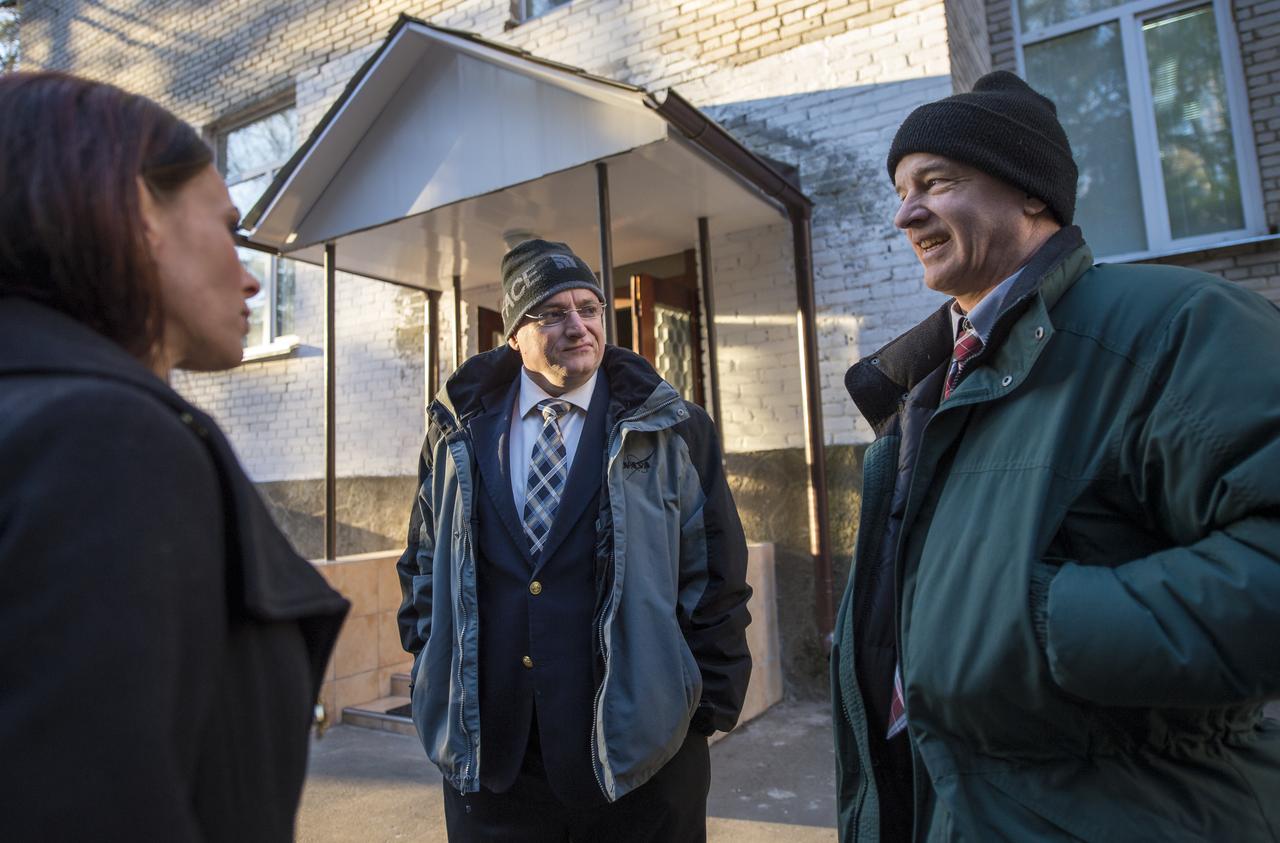
Expedition 43 NASA Astronaut Scott Kelly, center, and Expedition 43 backup crew member NASA Astronaut Jeff Williams talk as Kelly’s girlfriend, Amiko Kauderer, looks on at the Gagarin Cosmonaut Training Center (GCTC) in Star City, Russia, Saturday, March 14, 2015. Kelly and fellow Expedition 43 crew members, Russian Cosmonauts Mikhail Kornienko and Gennady Padalka of the Russian Federal Space Agency (Roscosmos) departed later in the morning for Baikonur, Kazakhstan. The trio is preparing for launch to the International Space Station in their Soyuz TMA-16M spacecraft from the Baikonur Cosmodrome in Kazakhstan March 28, Kazakh time. As the one-year crew, Kelly and Kornienko will return to Earth on Soyuz TMA-18M in March 2016. Photo Credit: (NASA/Bill Ingalls)
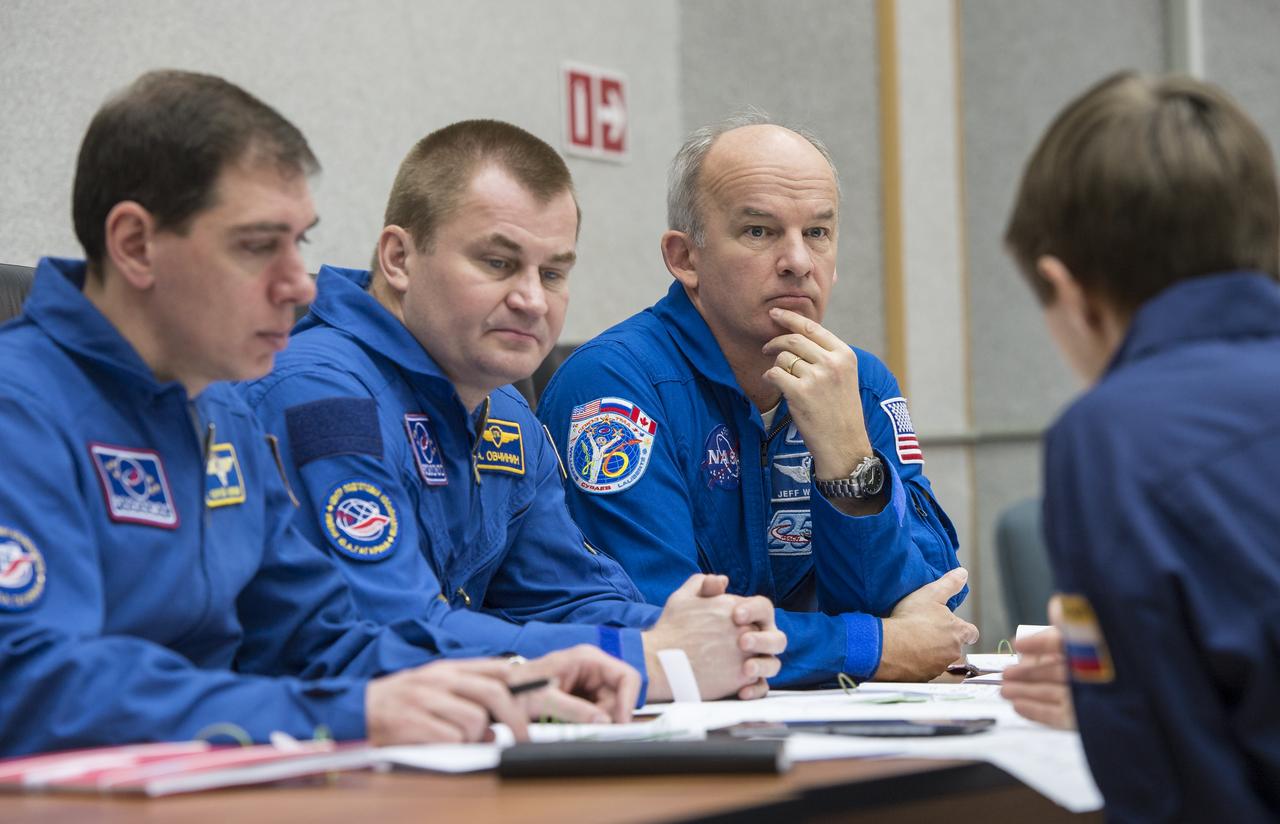
Expedition 43 backup crew members Sergei Volkov, left, and Alexey Ovchinin and of the Russian Federal Space Agency (Roscosmos), center, and NASA Astronaut Jeff Williams attend a training briefing, Saturday, March 21, 2015 at the Cosmonaut Hotel in Baikonur, Kazakhstan. Expedition 43 prime crew members: NASA Astronaut Scott Kelly, and Russian Cosmonauts Gennady Padalka, and Mikhail Kornienko of the Russian Federal Space Agency (Roscosmos) are scheduled to launch to the International Space Station in the Soyuz TMA-16M spacecraft from the Baikonur Cosmodrome in Kazakhstan March 28, Kazakh time (March 27 Eastern time.) As the one-year crew, Kelly and Kornienko will return to Earth on Soyuz TMA-18M in March 2016. Photo Credit: (NASA/Bill Ingalls)
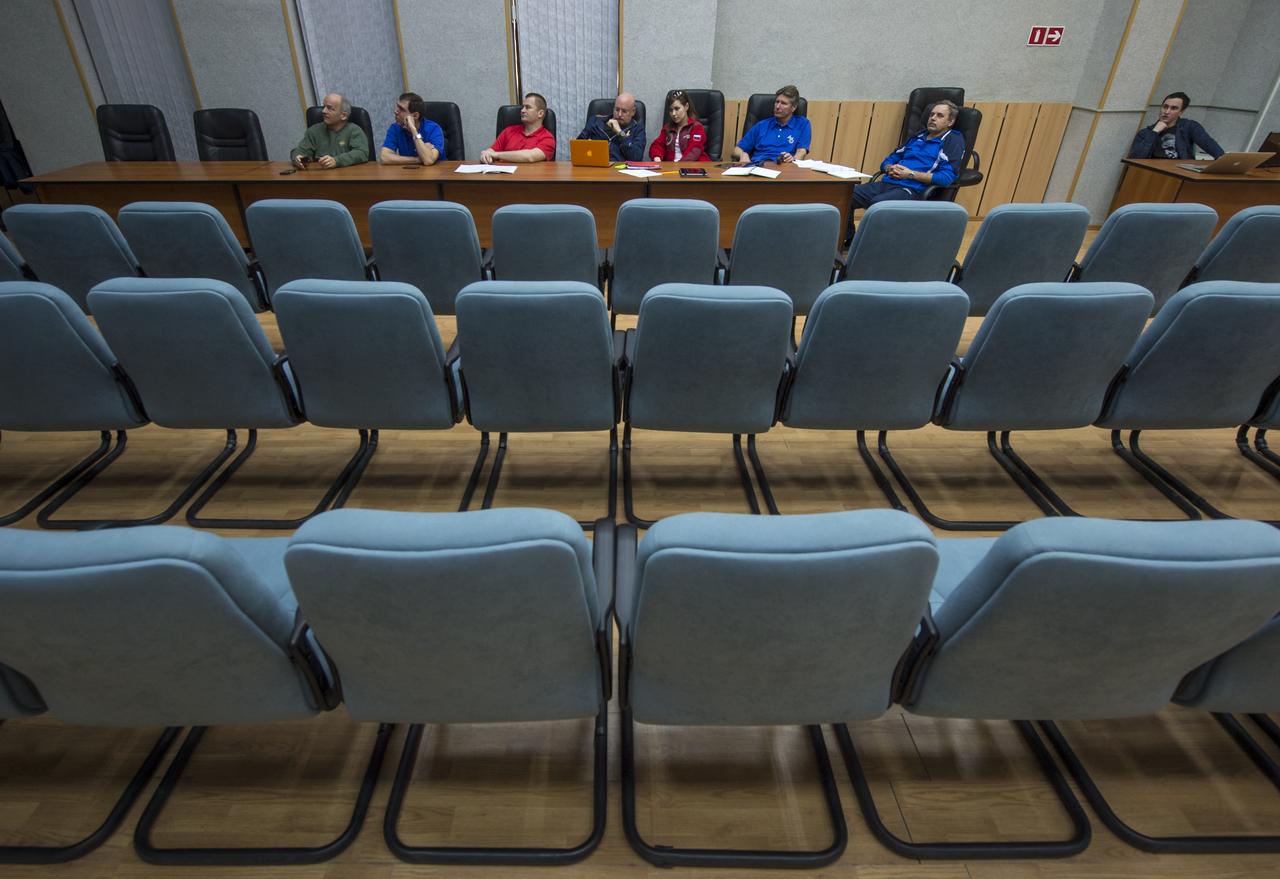
Expedition 43 backup crew members: Jeff Williams of NASA, left, Sergei Volkov, Alexey Ovchinin, of the Russian Federal Space Agency (Roscosmos), and prime crew members: NASA Astronaut Scott Kelly, Russian Cosmonauts Gennady Padalka, and Mikhail Kornienko of Roscosmos attend the ISS Russian Segment Safety briefing, Thursday, March 19, 2015 at Cosmonaut Hotel in Baikonur, Kazakhstan. Kelly, Padalka, and Kornienko are preparing for launch to the International Space Station in their Soyuz TMA-16M spacecraft from the Baikonur Cosmodrome in Kazakhstan March 28, Kazakh time. As the one-year crew, Kelly and Kornienko will return to Earth on Soyuz TMA-18M in March 2016. Photo Credit: (NASA/Bill Ingalls)
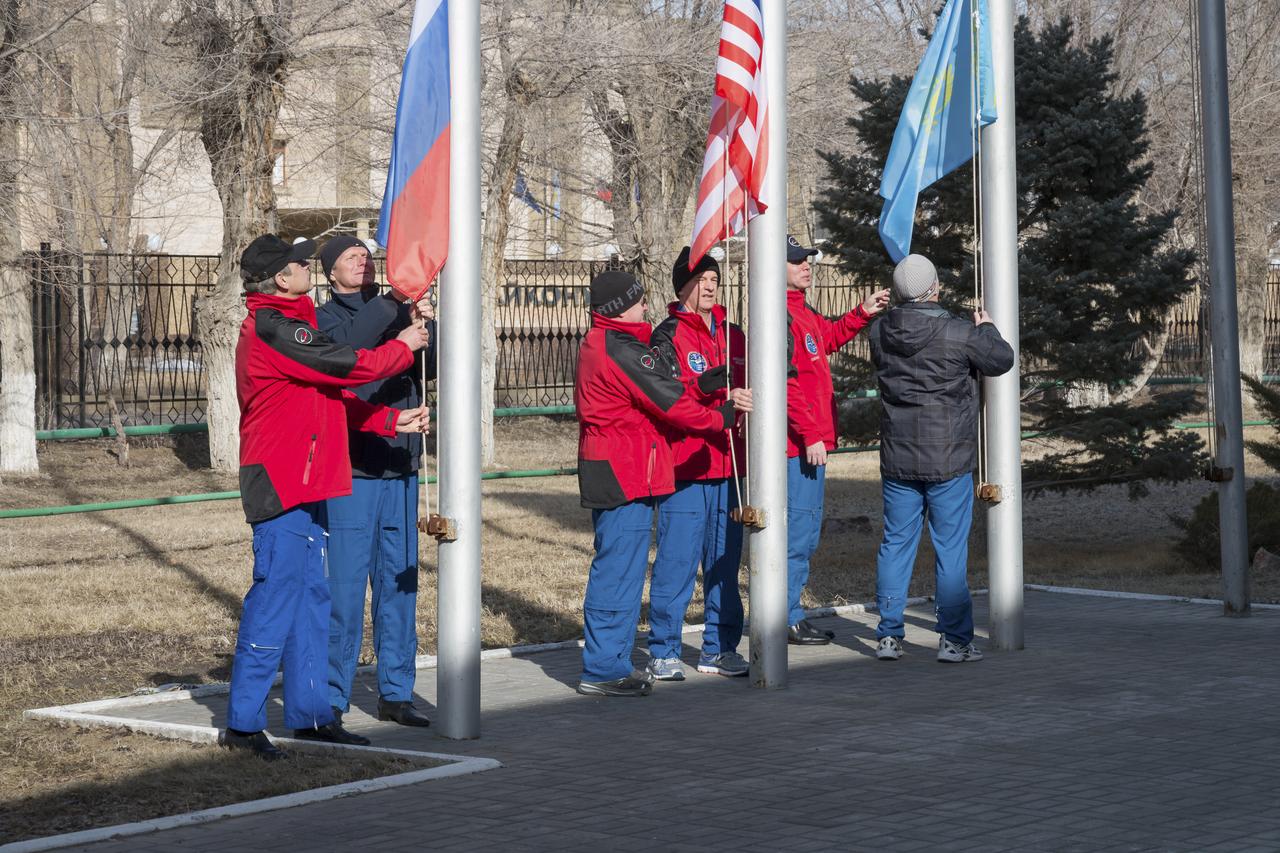
Expedition 43 prime and backup crew members: Russian Cosmonauts Mikhail Kornienko, left, Gennady Padalka, of the Russian Federal Space Agency (Roscosmos), NASA Astronauts Scott Kelly, and Jeff Williams, andRussian Cosmonauts, Alexei Ovchinin, and Sergei Volkov of Roscosmos participate in the traditional flag raising ceremony at the Cosmonaut Hotel, Monday, March 16, 2015 in Baikonur, Kazakhstan. Kelly, Padalka, and Kornienko are preparing for launch to the International Space Station in their Soyuz TMA-16M spacecraft from the Baikonur Cosmodrome in Kazakhstan March 28, Kazakh time. As the one-year crew, Kelly and Kornienko will return to Earth on Soyuz TMA-18M in March 2016. Photo Credit: (NASA/Victor Zelentsov)
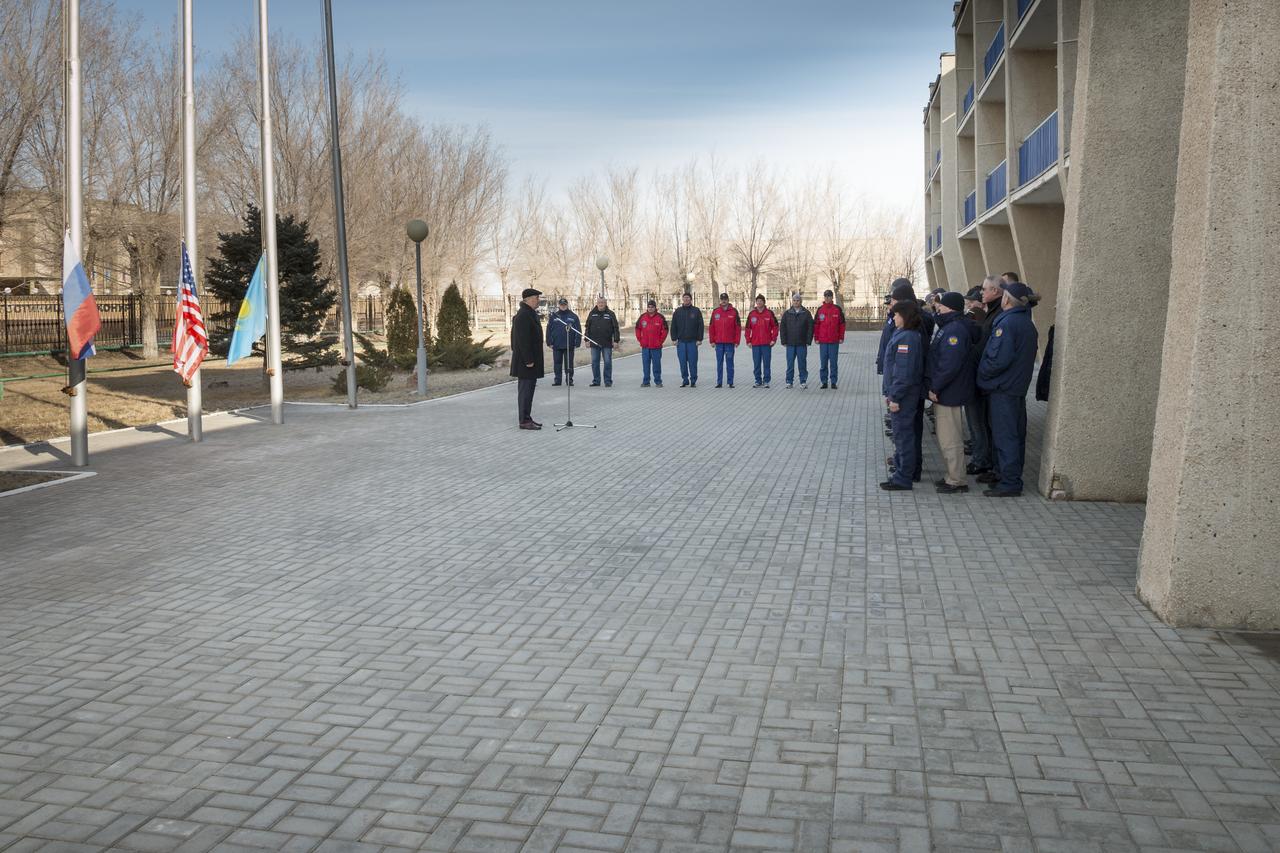
Expedition 43 prime crew: NASA Flight Engineer Scott Kelly, Russian Cosmonauts Gennady Padalka, and Mikhail Kornienko of the Russian Federal Space Agency (Roscosmos), along with their backup crew: Jeff Williams of NASA, Russian Cosmonauts Alexei Ovchinin, and Sergei Volkov of Roscosmos attend a traditional flag raising ceremony at the Cosmonaut Hotel, Monday, March 16, 2015 in Baikonur, Kazakhstan. Kelly, Padalka, and Kornienko are preparing for launch to the International Space Station in their Soyuz TMA-16M spacecraft from the Baikonur Cosmodrome in Kazakhstan March 28, Kazakh time. As the one-year crew, Kelly and Kornienko will return to Earth on Soyuz TMA-18M in March 2016. Photo Credit: (NASA/Victor Zelentsov)
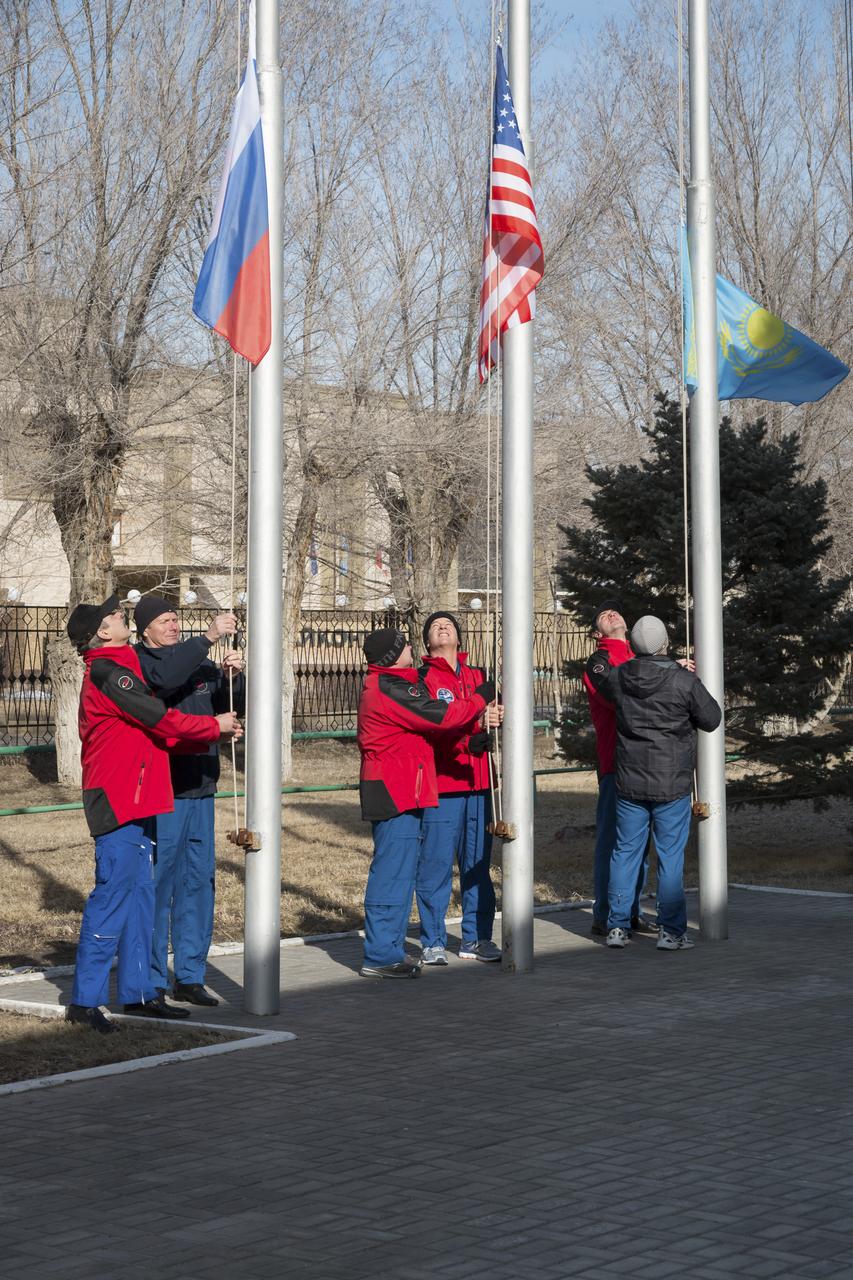
Expedition 43 prime and backup crew members: Russian Cosmonauts Mikhail Kornienko, left, Gennady Padalka, of the Russian Federal Space Agency (Roscosmos), NASA Astronauts Scott Kelly, and Jeff Williams, andRussian Cosmonauts, Alexei Ovchinin, and Sergei Volkov of Roscosmos participate in the traditional flag raising ceremony at the Cosmonaut Hotel, Monday, March 16, 2015 in Baikonur, Kazakhstan. Kelly, Padalka, and Kornienko are preparing for launch to the International Space Station in their Soyuz TMA-16M spacecraft from the Baikonur Cosmodrome in Kazakhstan March 28, Kazakh time. As the one-year crew, Kelly and Kornienko will return to Earth on Soyuz TMA-18M in March 2016. Photo Credit: (NASA/Victor Zelentsov)
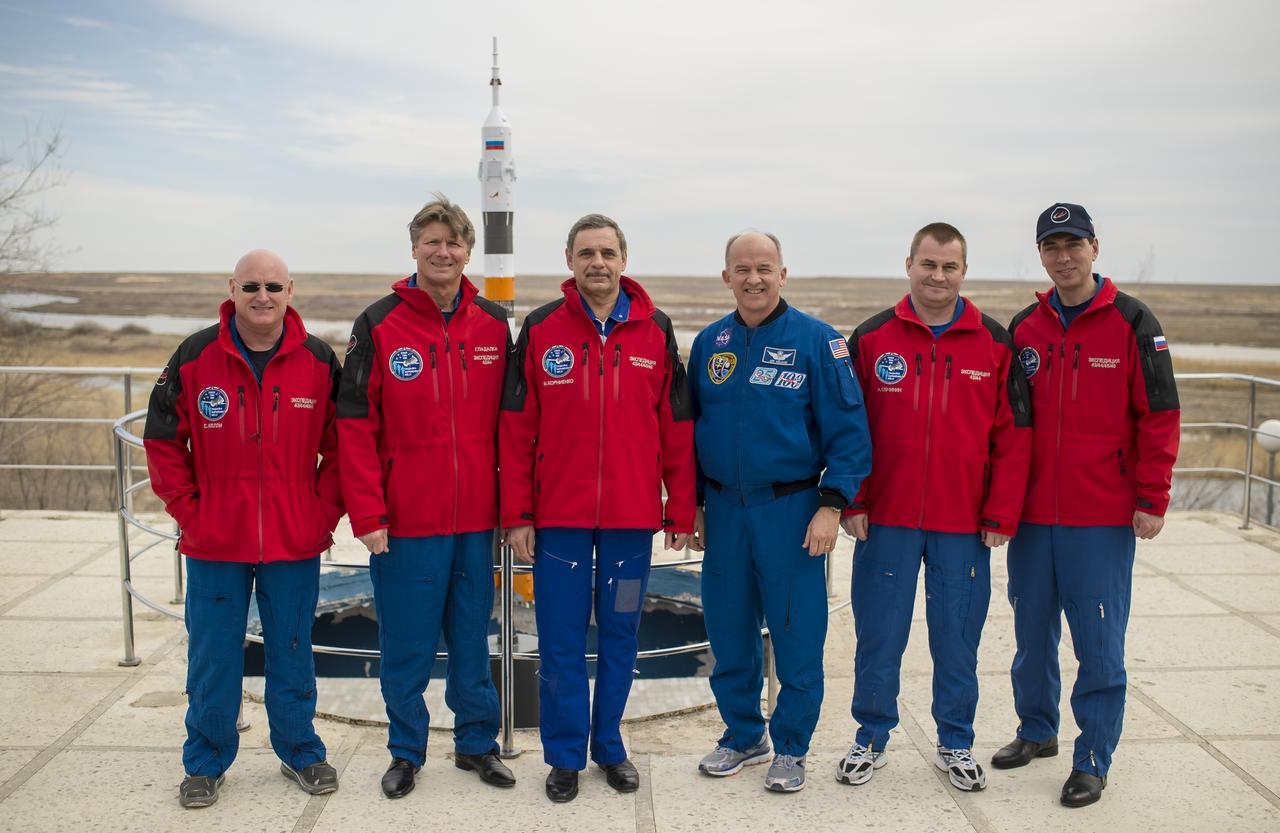
Expedition 43 NASA Astronaut Scott Kelly, left, Russian Cosmonauts Gennady Padalka, center, and Mikhail Kornienko of the Russian Federal Space Agency (Roscosmos) and backup crew members NASA Astronaut Jeff Williams, Alexey Ovchinin, and Sergei Volkov of Roscosmos pose for a group photo near a model of the Soyuz rocket during media day, Saturday, March 21, 2015 at the Cosmonaut Hotel in Baikonur, Kazakhstan. Kelly, Padalka, and Kornienko are preparing for launch to the International Space Station in their Soyuz TMA-16M spacecraft from the Baikonur Cosmodrome in Kazakhstan March 28, Kazakh time (March 27 Eastern time.) As the one-year crew, Kelly and Kornienko will return to Earth on Soyuz TMA-18M in March 2016. Photo Credit: (NASA/Bill Ingalls)
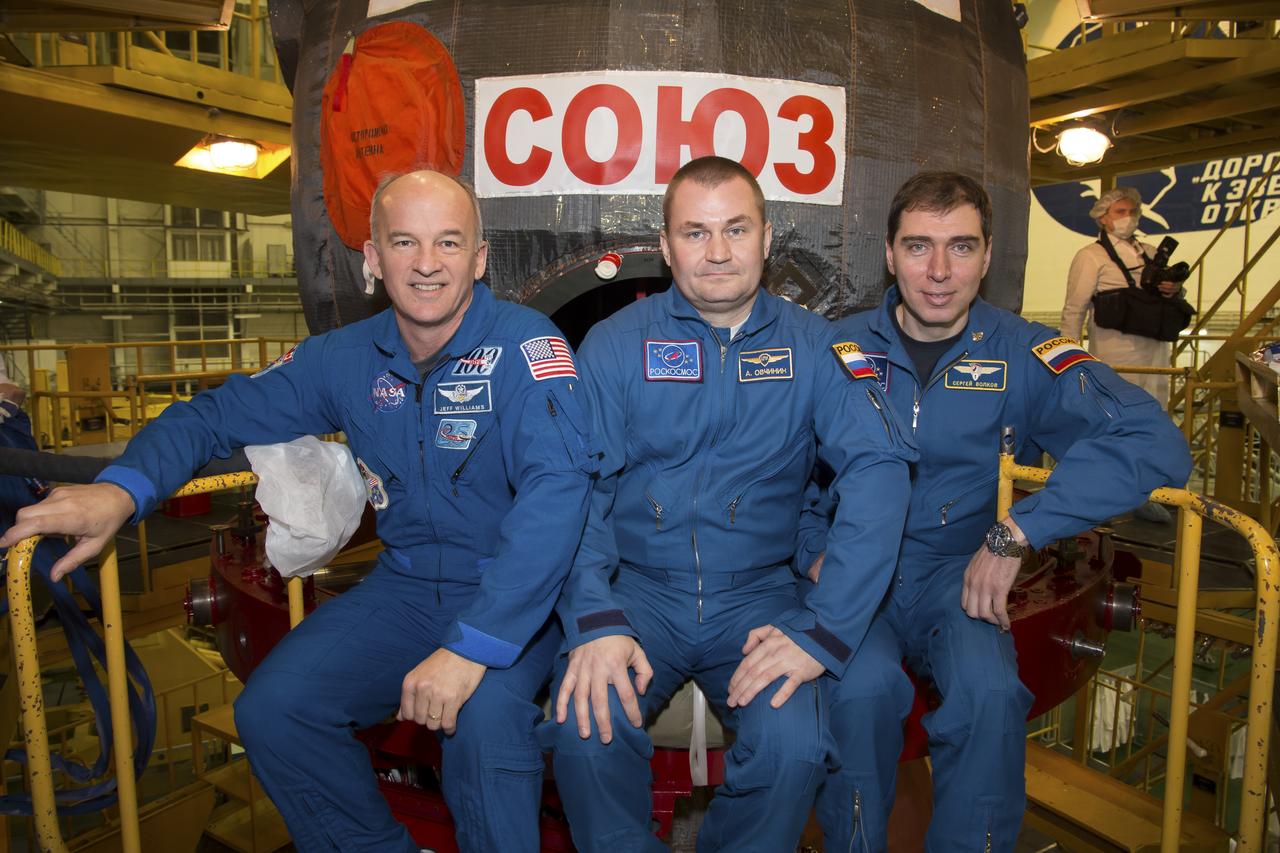
Expedition 43 backup crew members Jeff Williams of NASA, left, Alexey Ovchinin, center, and Sergei Volkov of Russia's Federal Space Agency (Roscosmos) take a moment during the Soyuz TMA-16M spacecraft fit check to pose for a photograph, Sunday, March 15, 2015 at the Baikonur Cosmodrome in Kazakhstan. The prime crew members Russian Cosmonauts Mikhail Kornienko, Gennady Padalka of the Russian Federal Space Agency (Roscosmos), and NASA Astronaut Scott Kelly are preparing for launch to the International Space Station in their Soyuz TMA-16M spacecraft from the Baikonur Cosmodrome in Kazakhstan March 28, Kazakh time. As the one-year crew, Kelly and Kornienko will return to Earth on Soyuz TMA-18M in March 2016. Photo Credit: (NASA/Victor Zelentsov)
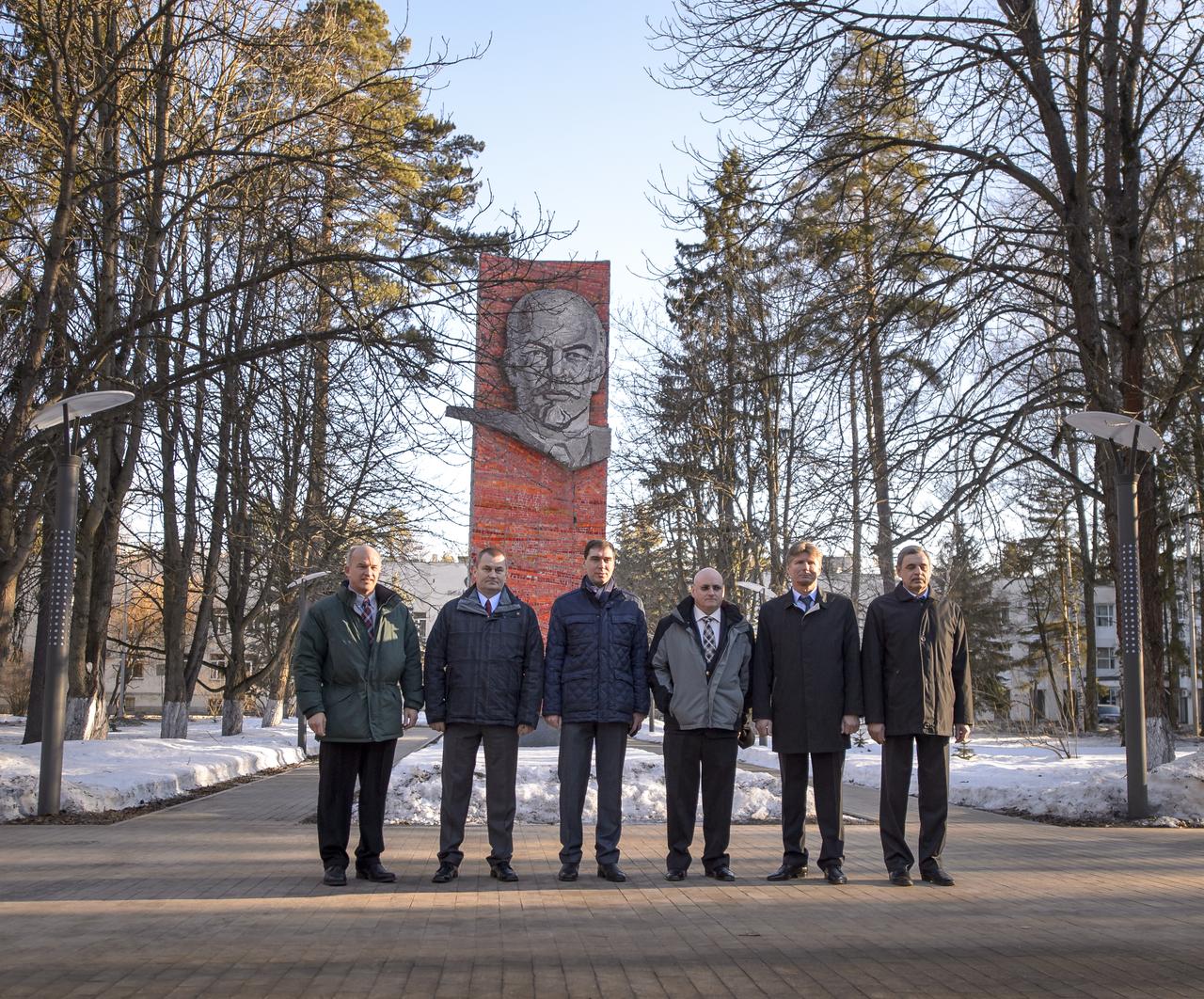
Expedition 43 backup crew members: Jeff Williams of NASA, left, Alexei Ovchinin and Sergei Volkov of of the Russian Federal Space Agency (Roscosmos), pose for a photograph with Expedition 43 prime crew members: NASA Astronaut Scott Kelly, and Russian Cosmonauts Gennady Padalka, and Mikhail Kornienko of Roscosmos prior to departing the Gagarin Cosmonaut Training Center (GCTC) in Star City, Russia, for Baikonur, Kazakhstan, Saturday, March 14, 2015. The Expedition 43 crew is preparing for their launch to the International Space Station in the Soyuz TMA-16M spacecraft from the Baikonur Cosmodrome in Kazakhstan March 28, Kazakh time. As the one-year crew, Kelly and Kornienko will return to Earth on Soyuz TMA-18M in March 2016. Photo Credit: (NASA/Bill Ingalls)
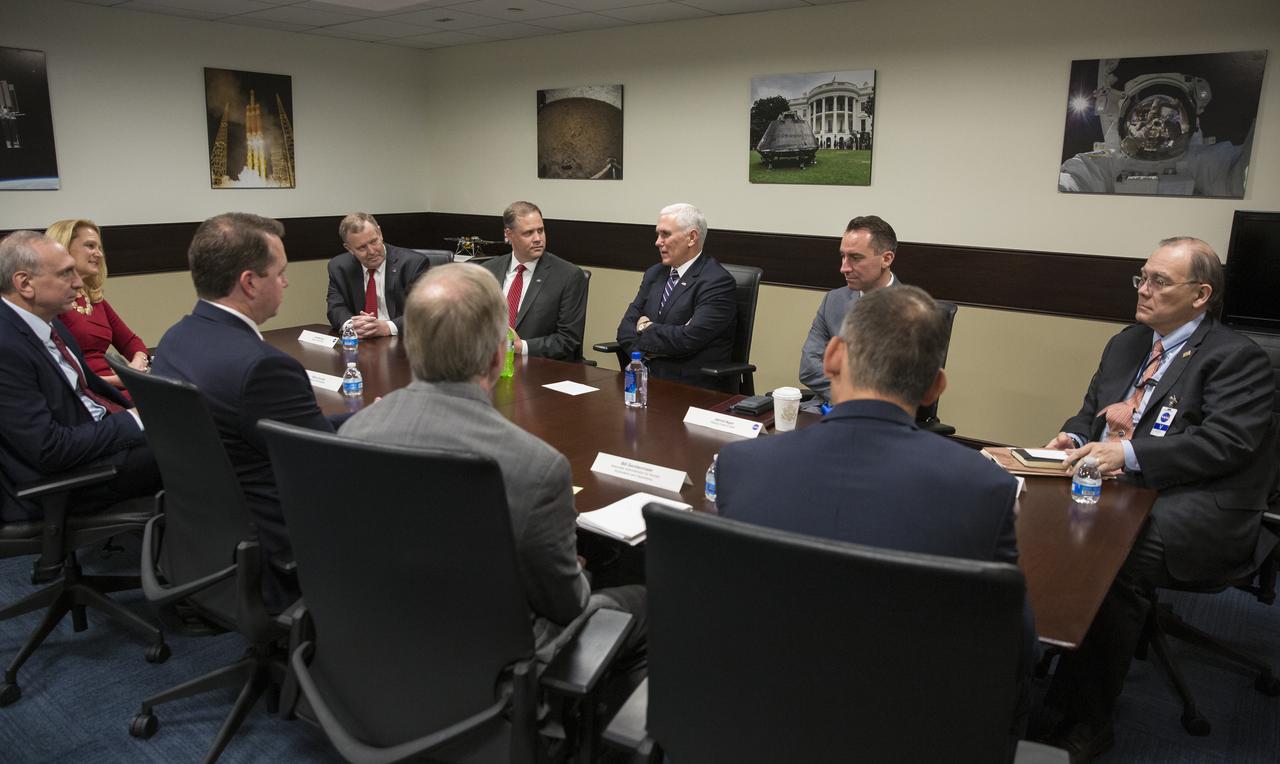
Vice President Mike Pence, center, meets with NASA Administrator Jim Bridenstine, second from left, and NASA Deputy Administrator Jim Morhard, left, to discuss the progress on Space Policy Directive 1 (SPD-1), Wednesday, Dec. 12, 2018 at NASA Headquarters in Washington. Also attending the meeting was NASA Chief of Staff Janet Karika, NASA Associate Administrator Steve Jurczyk, Chief Financial Officer Jeff DeWit, Associate Administrator for Human Exploration and Operations William Gerstenmaier, and Associate Administrator for the Science Mission Directorate Thomas Zurbuchen, along with acting Chief of Staff to the Vice President Jarrod Agen and Executive Director of the National Space Council Scott Pace. Photo Credit: (NASA/Joel Kowsky)
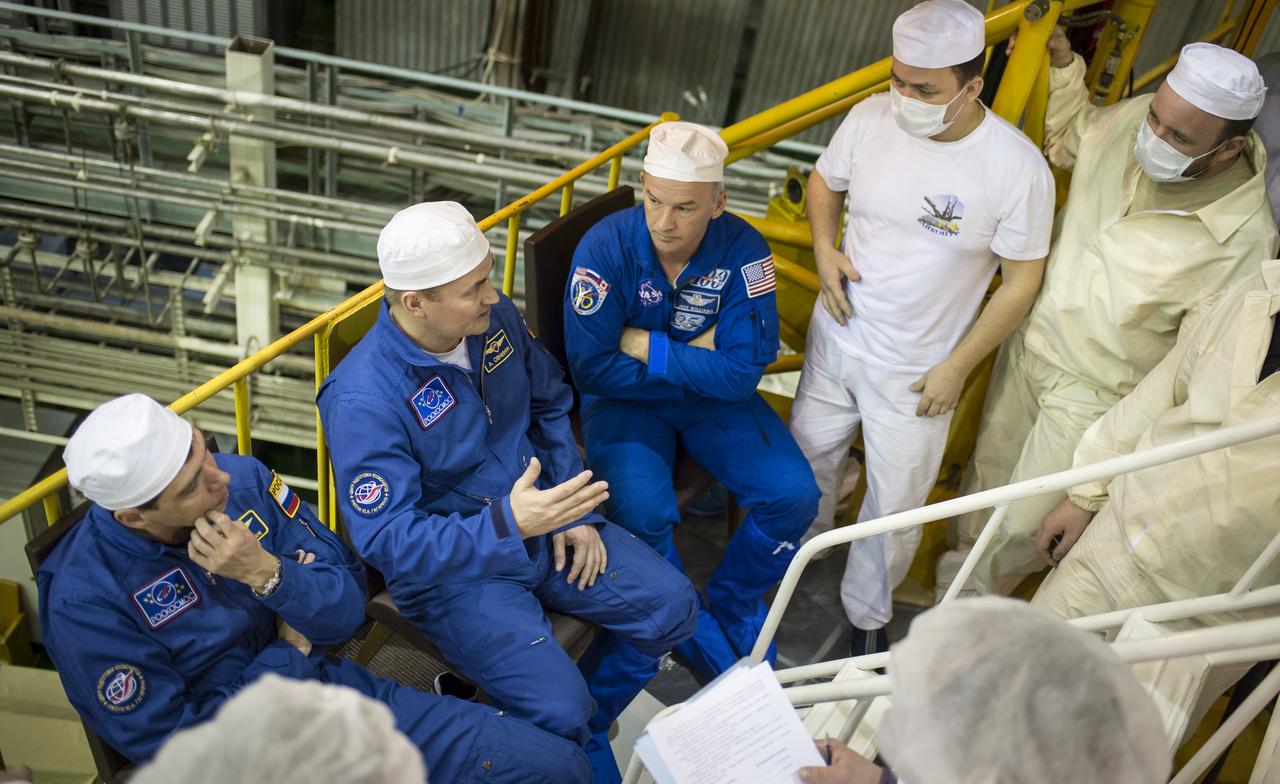
Expedition 43 backup crew members: Russian Cosmonauts Sergei Volkov, left, and Alexey Ovchinin of the Russian Federal Space Agency (Roscosmos), and NASA Astronaut Jeff Williams, right, talk during their final check of the Soyuz TMA-16M spacecraft, Monday, March 23, 2015 at the Baikonur Cosmodrome in Kazakhstan. NASA Astronaut Scott Kelly, and Russian Cosmonauts Mikhail Kornienko, and Gennady Padalka of the Russian Federal Space Agency (Roscosmos) are scheduled to launch to the International Space Station in the Soyuz TMA-16M spacecraft from the Baikonur Cosmodrome in Kazakhstan March 28, Kazakh time (March 27 Eastern time.) As the one-year crew, Kelly and Kornienko will return to Earth on Soyuz TMA-18M in March 2016. Photo Credit: (NASA/Bill Ingalls)
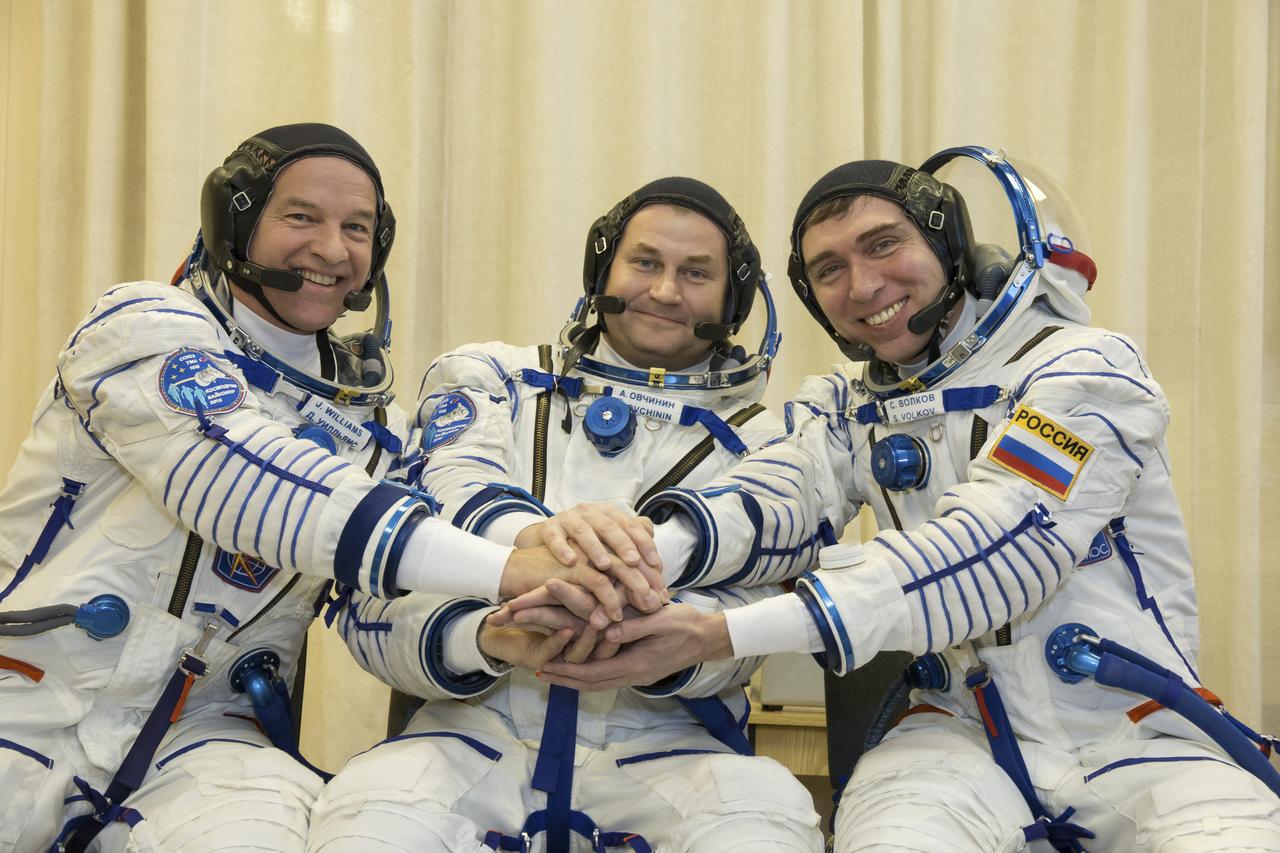
Expedition 43 backup crew members Jeff Williams of NASA, left, Alexey Ovchinin, center, and Sergei Volkov of Russia's Federal Space Agency (Roscosmos) take a moment during their Soyuz TMA-16M spacecraft fit check to pose for a photograph, Sunday, March 15, 2015 at the Baikonur Cosmodrome in Kazakhstan. The prime crew members Russian Cosmonauts Mikhail Kornienko, Gennady Padalka of the Russian Federal Space Agency (Roscosmos), and NASA Astronaut Scott Kelly are preparing for launch to the International Space Station in their Soyuz TMA-16M spacecraft from the Baikonur Cosmodrome in Kazakhstan March 28, Kazakh time. As the one-year crew, Kelly and Kornienko will return to Earth on Soyuz TMA-18M in March 2016. Photo Credit: (NASA/Victor Zelentsov)
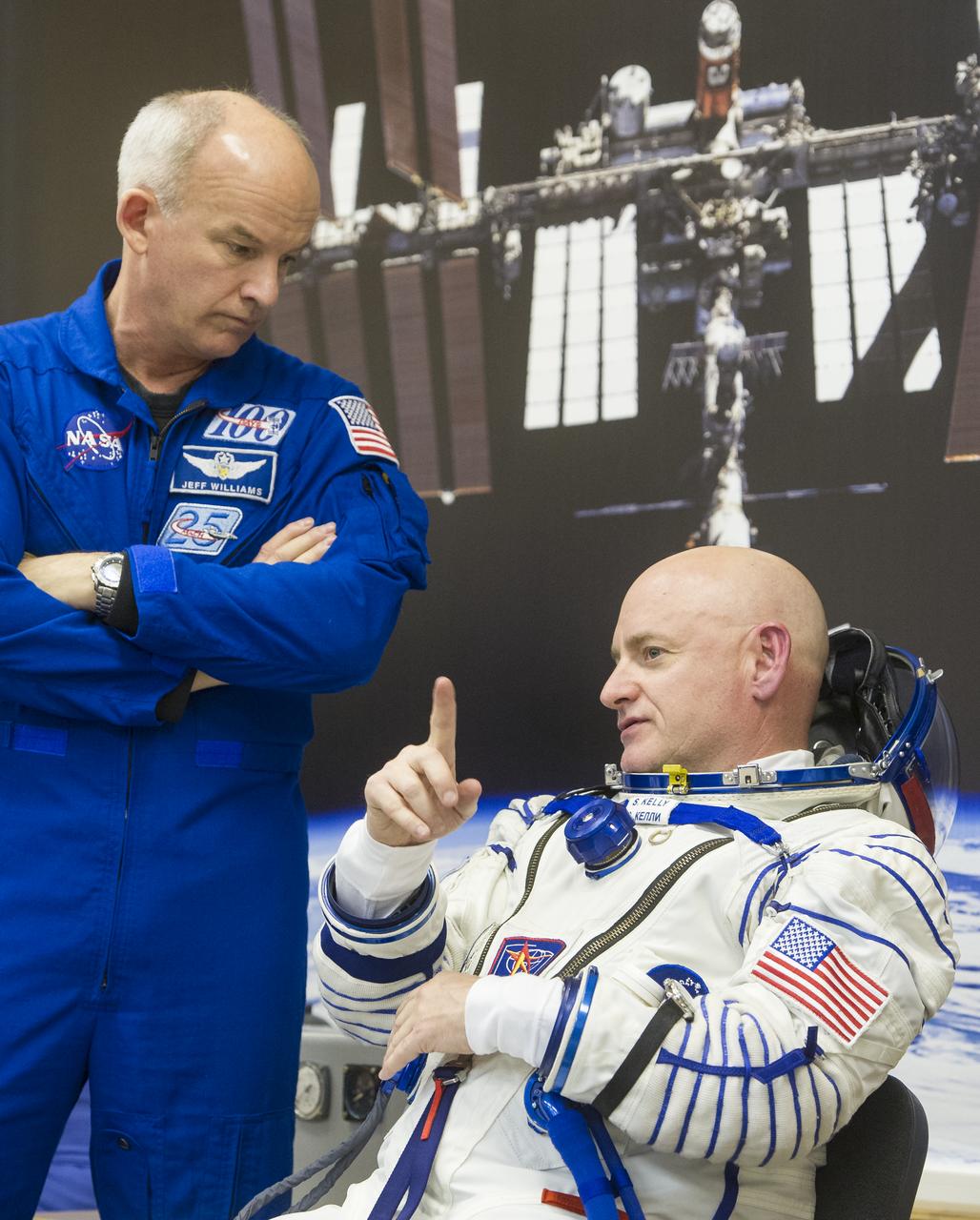
Expedition 43 backup crew member NASA Astronaut Jeff Williams, left, and NASA Astronaut Scott Kelly talk while Kelly’s fellow crew members, Russian Cosmonauts Gennady Padalka, and Mikhail Kornienko of the Russian Federal Space Agency (Roscosmos) have their Russian sokol suits pressure checked ahead of their launch onboard the Soyuz TMA-16M spacecraft to the International Space Station Friday, March 27, 2015 in Baikonor, Kazakhstan. Kelly, Padalka, and Kornienko launched to the ISS from the Baikonur Cosmodrome in Kazakhstan March 28, Kazakh time (March 27 Eastern time.) As the one-year crew, Kelly and Kornienko will return to Earth on Soyuz TMA-18M in March 2016. Photo Credit: (NASA/GCTC/Andrey Shelepin)
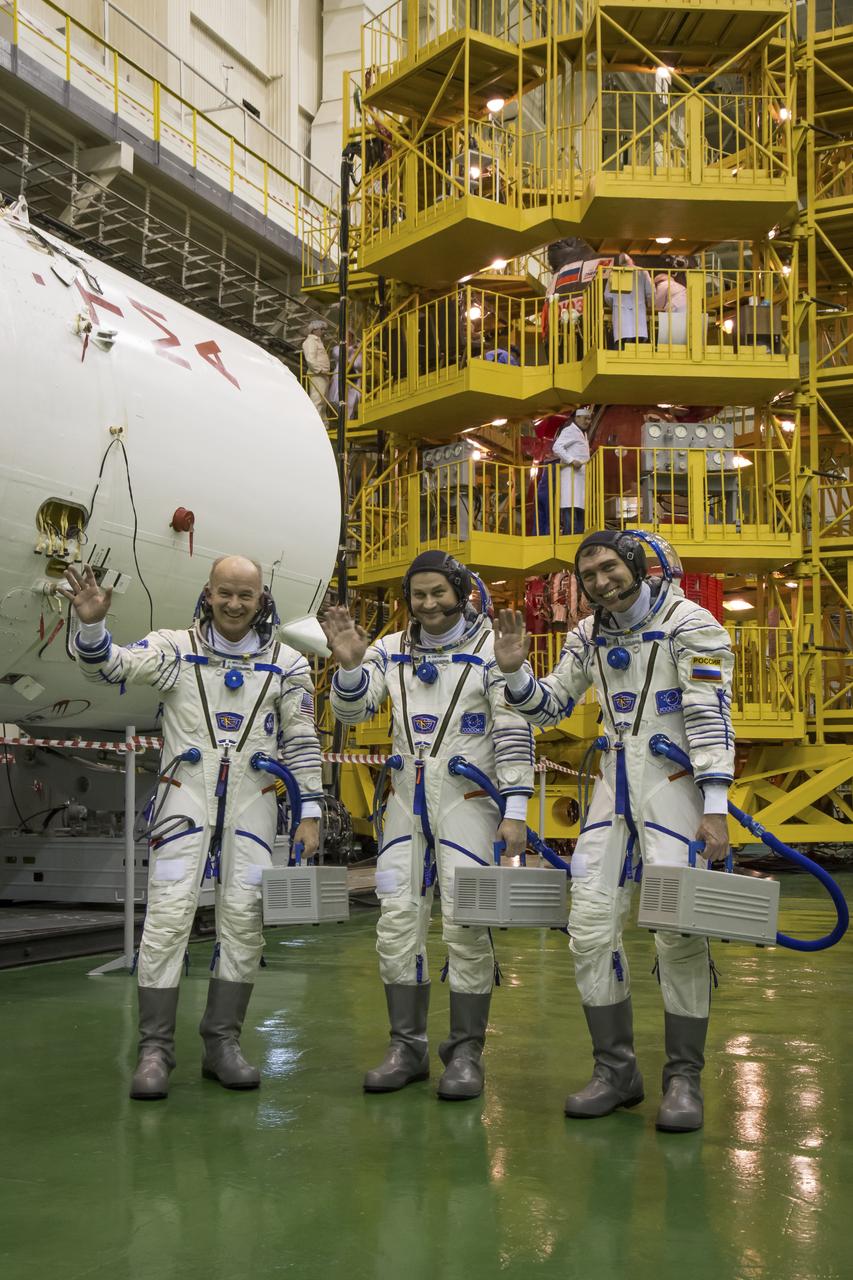
Expedition 43 backup crew members Jeff Williams of NASA, left, Alexey Ovchinin, center, and Sergei Volkov of Russia's Federal Space Agency (Roscosmos) stop to wave hello to photographers during their Soyuz TMA-16M spacecraft fit check, Sunday, March 15, 2015 at the Baikonur Cosmodrome in Kazakhstan. The prime crew members Russian Cosmonauts Mikhail Kornienko, Gennady Padalka of the Russian Federal Space Agency (Roscosmos), and NASA Astronaut Scott Kelly are preparing for launch to the International Space Station in their Soyuz TMA-16M spacecraft from the Baikonur Cosmodrome in Kazakhstan March 28, Kazakh time. As the one-year crew, Kelly and Kornienko will return to Earth on Soyuz TMA-18M in March 2016. Photo Credit: (NASA/Victor Zelentsov)
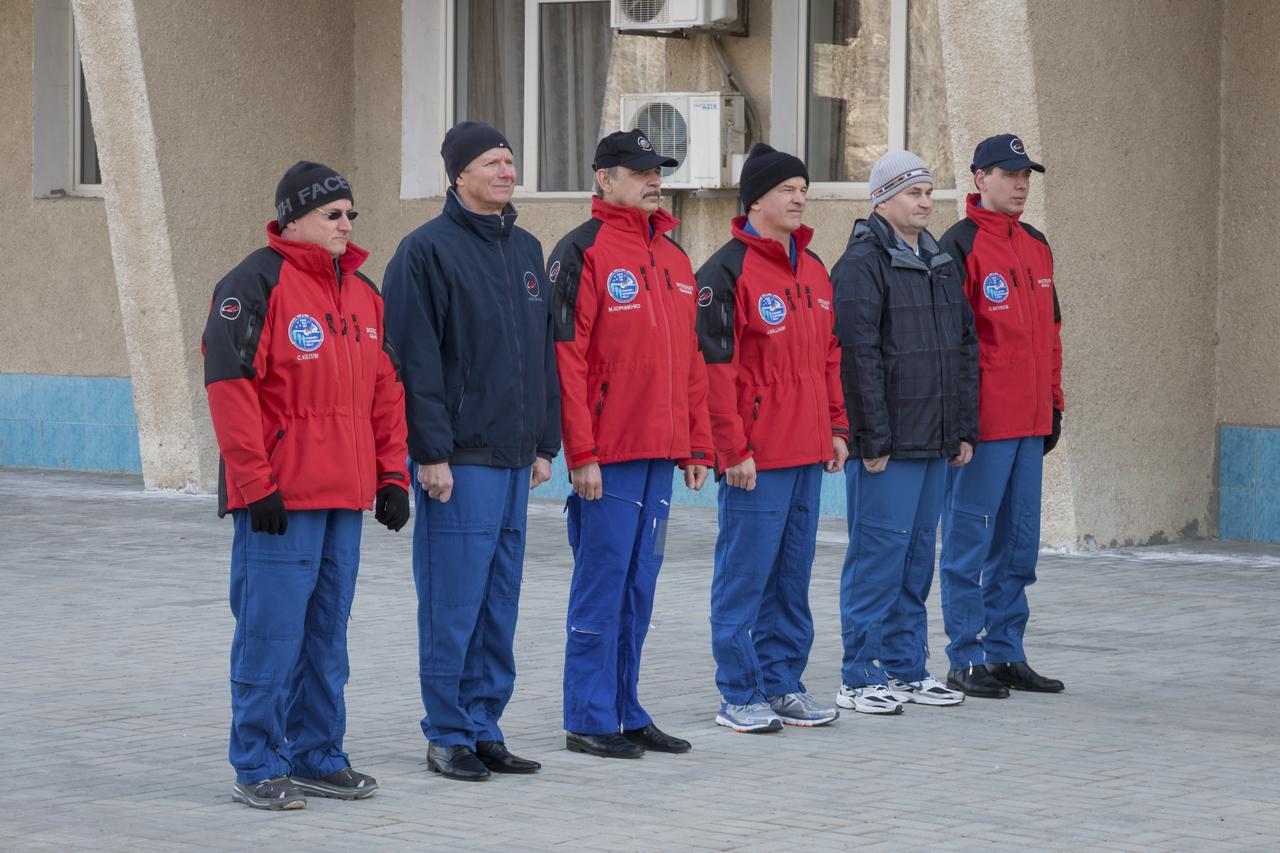
Expedition 43 prime crew: from left, NASA Flight Engineer Scott Kelly, Russian Cosmonauts Gennady Padalka, and Mikhail Kornienko of the Russian Federal Space Agency (Roscosmos), along with their backup crew: Jeff Williams of NASA, Russian Cosmonauts Alexei Ovchinin, and Sergei Volkov of Roscosmos attend a traditional flag raising ceremony at the Cosmonaut Hotel, Monday, March 16, 2015 in Baikonur, Kazakhstan. Kelly, Padalka, and Kornienko are preparing for launch to the International Space Station in their Soyuz TMA-16M spacecraft from the Baikonur Cosmodrome in Kazakhstan March 28, Kazakh time. As the one-year crew, Kelly and Kornienko will return to Earth on Soyuz TMA-18M in March 2016. Photo Credit: (NASA/Victor Zelentsov)
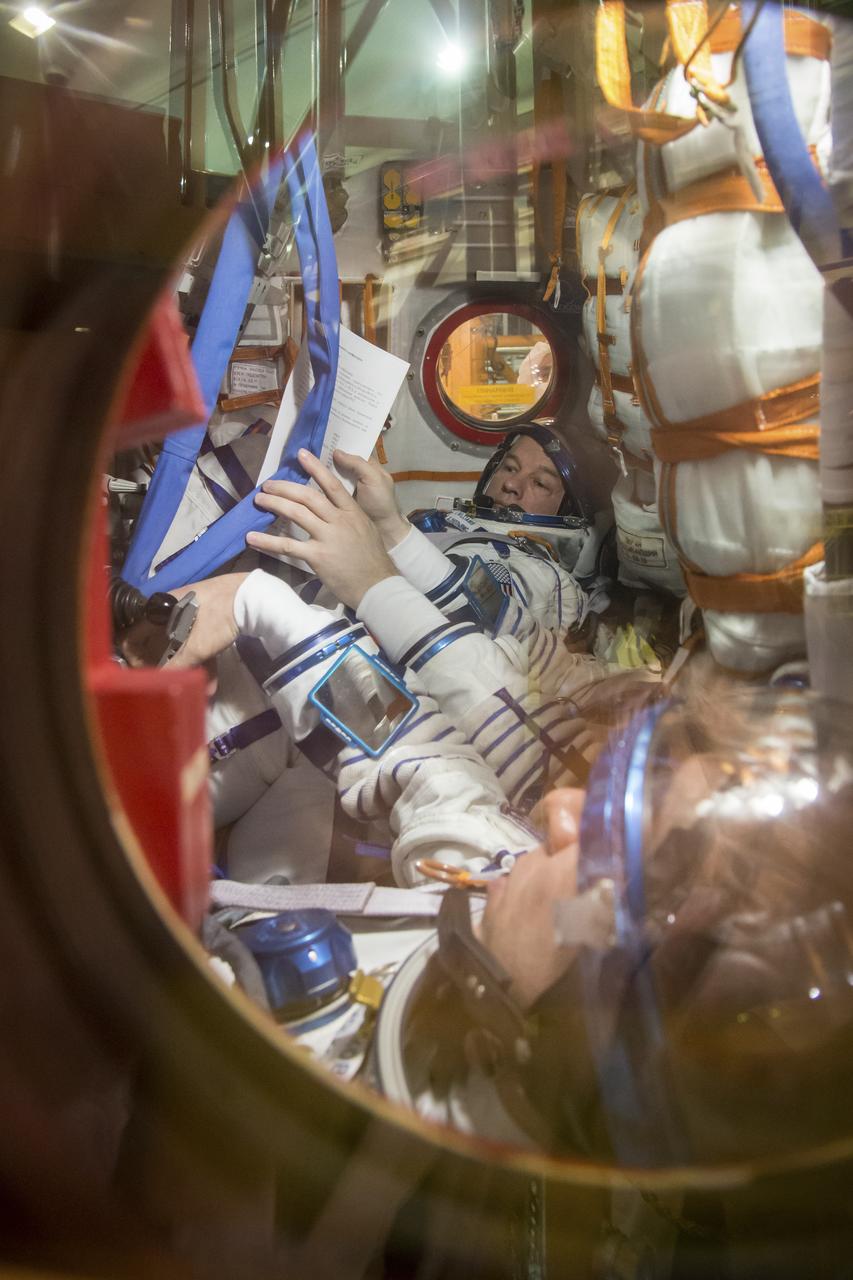
Expedition 43 backup crew member Jeff Williams of NASA is seen inside the Soyuz TMA-16M spacecraft during the fit check with fellow backup crew members Russian Cosmonauts Alexey Ovchinin, and Sergei Volkov of Russia's Federal Space Agency (Roscosmos), Sunday, March 15, 2015 at the Baikonur Cosmodrome in Kazakhstan. The prime crew members Russian Cosmonauts Mikhail Kornienko, Gennady Padalka of the Russian Federal Space Agency (Roscosmos), and NASA Astronaut Scott Kelly are preparing for launch to the International Space Station in their Soyuz TMA-16M spacecraft from the Baikonur Cosmodrome in Kazakhstan March 28, Kazakh time. As the one-year crew, Kelly and Kornienko will return to Earth on Soyuz TMA-18M in March 2016. Photo Credit: (NASA/Victor Zelentsov)
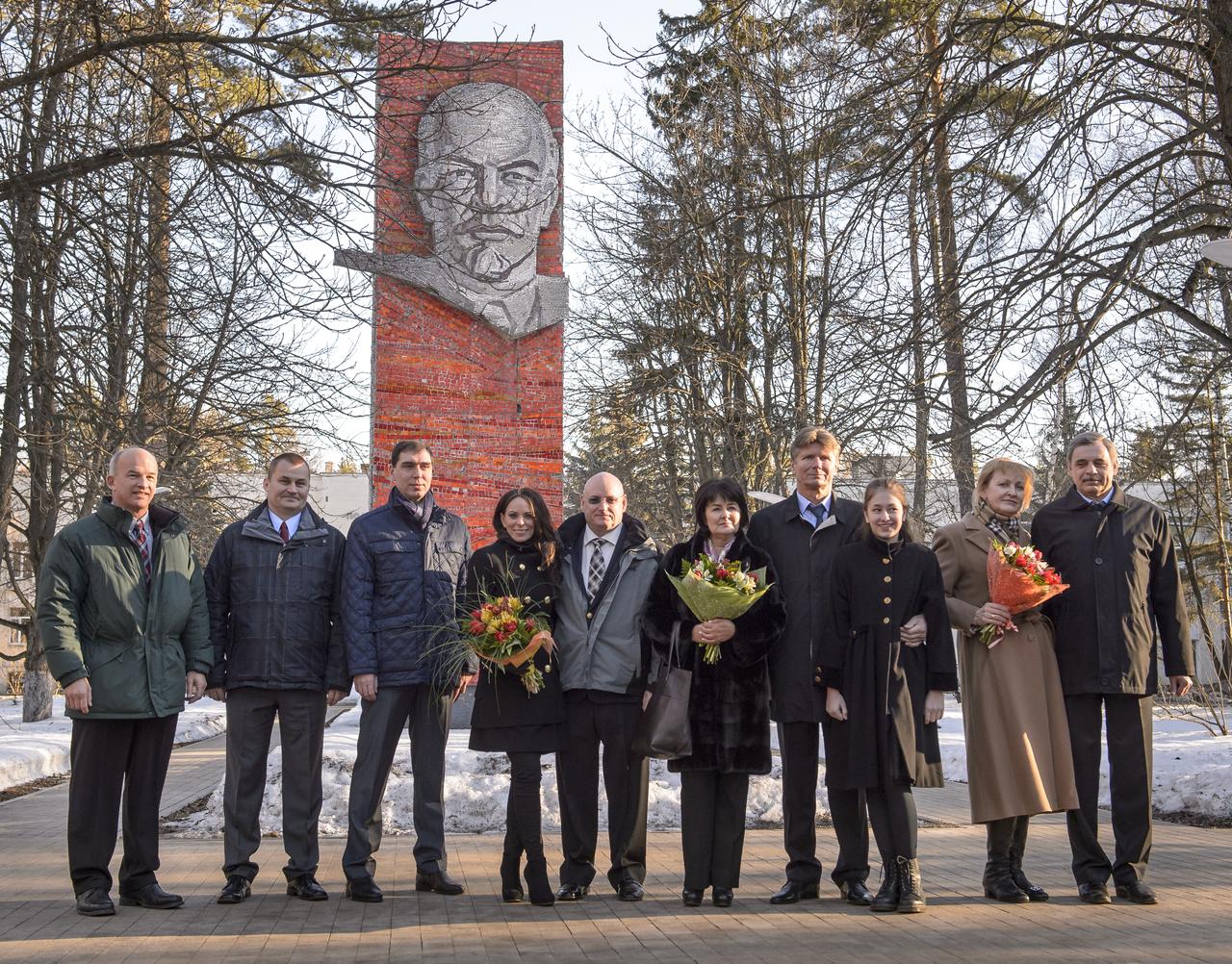
Expedition 43 backup crew members: Jeff Williams of NASA, left, Alexei Ovchinin and Sergei Volkov of of the Russian Federal Space Agency (Roscosmos), pose for a photograph with Expedition 43 prime crew members: NASA Astronaut Scott Kelly, and Russian Cosmonauts Gennady Padalka, and Mikhail Kornienko of Roscosmos, along with loved ones prior to departing the Gagarin Cosmonaut Training Center (GCTC) in Star City, Russia, for Baikonur, Kazakhstan, Saturday, March 14, 2015. The Expedition 43 crew is preparing for launch to the International Space Station in the Soyuz TMA-16M spacecraft from the Baikonur Cosmodrome in Kazakhstan March 28, Kazakh time. As the one-year crew, Kelly and Kornienko will return to Earth on Soyuz TMA-18M in March 2016. Photo Credit: (NASA/Bill Ingalls)
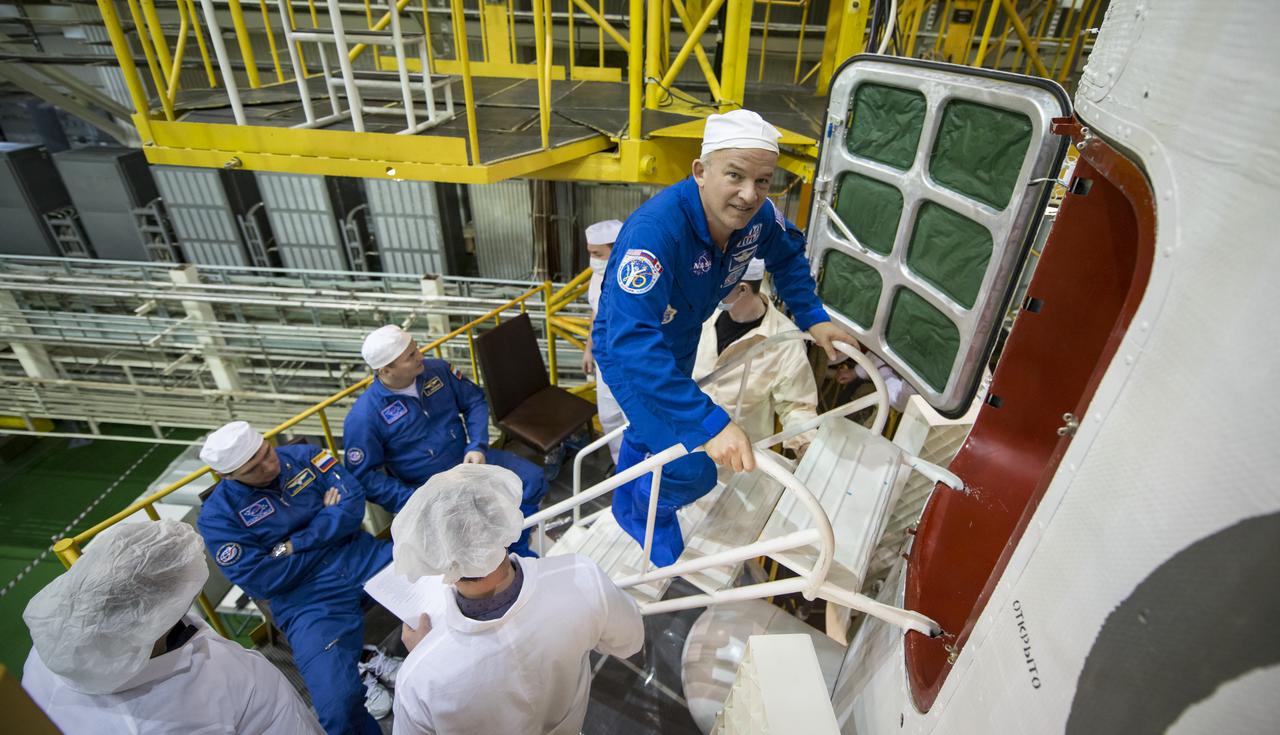
Expedition 43 backup crew member NASA Astronaut Jeff Williams enters the Soyuz TMA-16M spacecraft during a final check, Monday, March 23, 2015 at the Baikonur Cosmodrome in Kazakhstan. NASA Astronaut Scott Kelly, and Russian Cosmonauts Mikhail Kornienko, and Gennady Padalka of the Russian Federal Space Agency (Roscosmos) are scheduled to launch to the International Space Station in the Soyuz TMA-16M spacecraft from the Baikonur Cosmodrome in Kazakhstan March 28, Kazakh time (March 27 Eastern time.) As the one-year crew, Kelly and Kornienko will return to Earth on Soyuz TMA-18M in March 2016. Photo Credit: (NASA/Bill Ingalls)
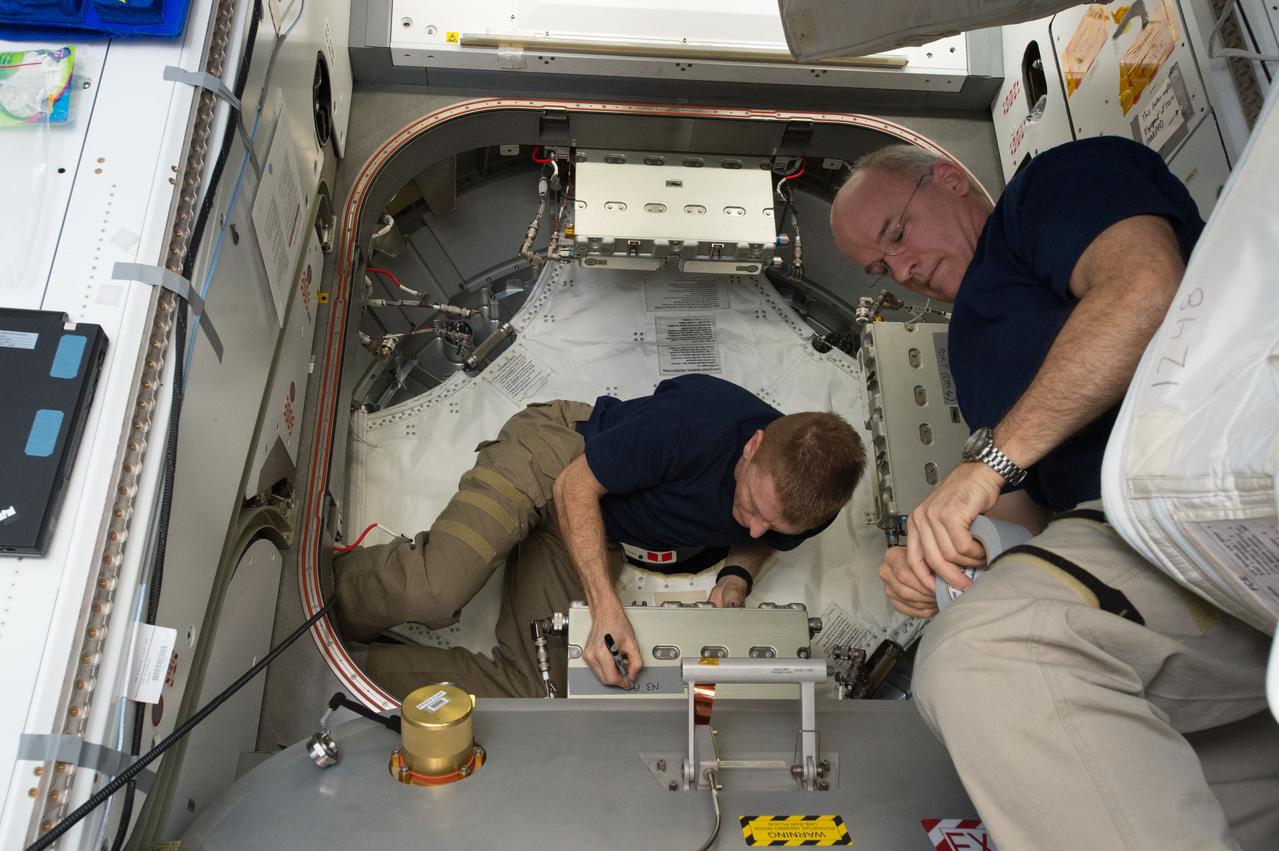
ISS047e133469 (05/25/2016) --- ESA (European Space Agency) astronaut Tim Peak (left) and NASA Astronaut Jeff Williams (right) prepare the Bigelow Expandable Activity Module (BEAM) for expansion. The pair were outfitting the area known as the vestibule, which is the space between the hatch on BEAM and hatch on Tranquility. NASA Astronaut Jeff Williams and the NASA and Bigelow Aerospace teams working at Mission Control Center at NASA’s Johnson Space Center spent more than seven hours on operations to fill the BEAM with air to cause it to expand.
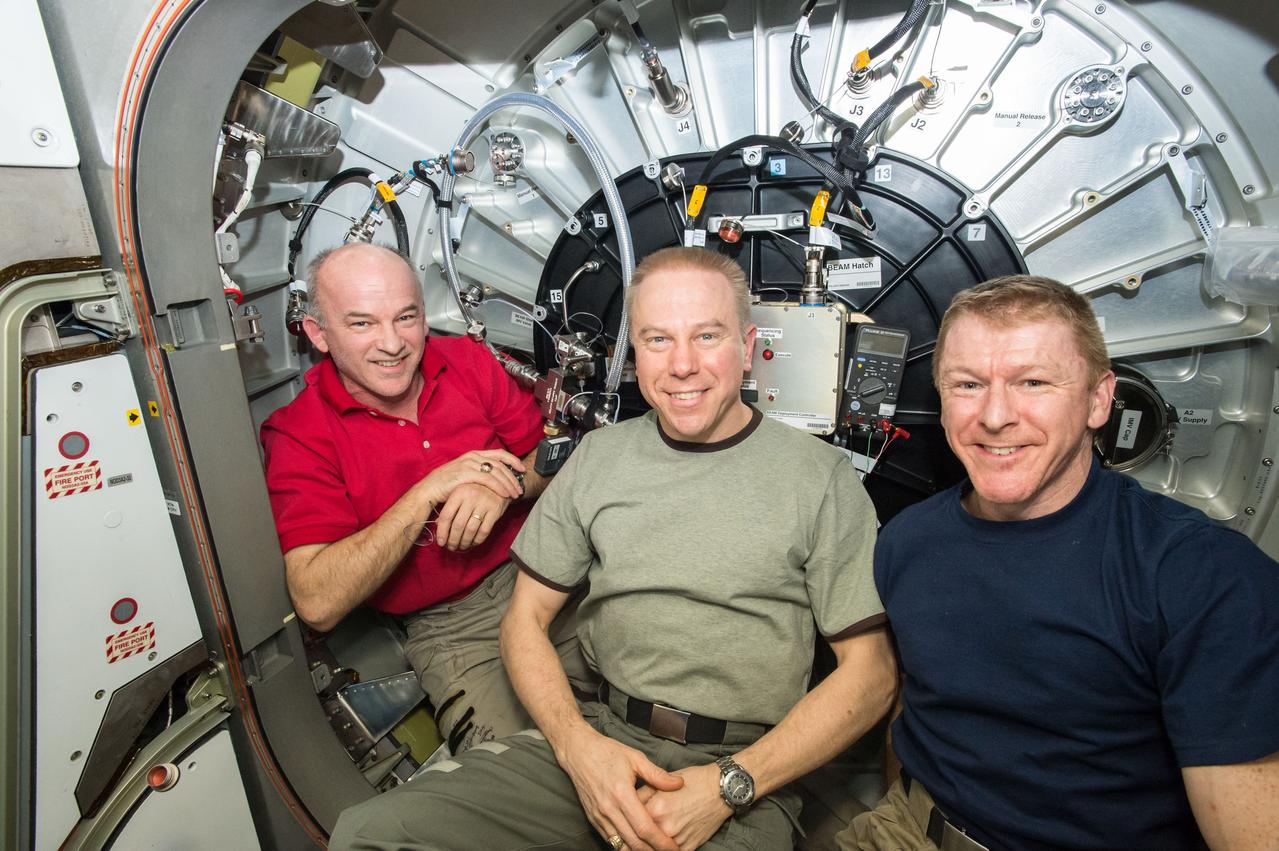
ISS047e135573 (05/28/2016) --- Expedition 47 astronauts Jeff Williams (left) and Timothy Kopra (middle) of NASA, along with ESA (European Space Agency) astronaut Timothy Peake (right) pose in front of the entrance to the Bigelow Expandable Activity Module (BEAM) after successful expansion. NASA Astronaut Jeff Williams and the NASA and Bigelow Aerospace teams working at Mission Control Center at NASA’s Johnson Space Center spent more than seven hours on operations to fill the BEAM with air to cause it to expand.
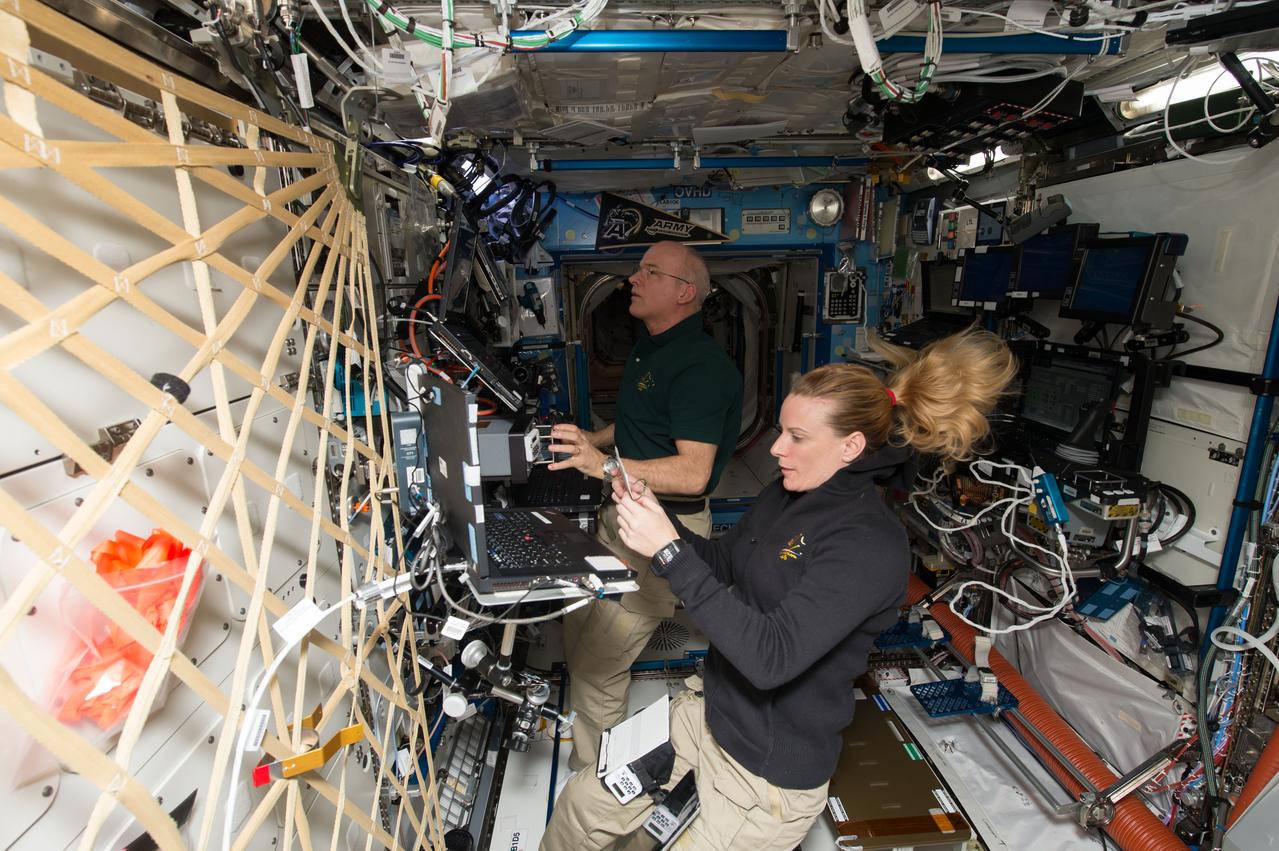
ISS048e028558 (07/18/2016) --- NASA astronauts Jeff Williams (left) and Kate Rubins (right) train inside the Destiny laboratory for the robotic capture of SpaceX’s Dragon spacecraft. Williams was the primary robotic arm operator and Rubins supported from a backup role.
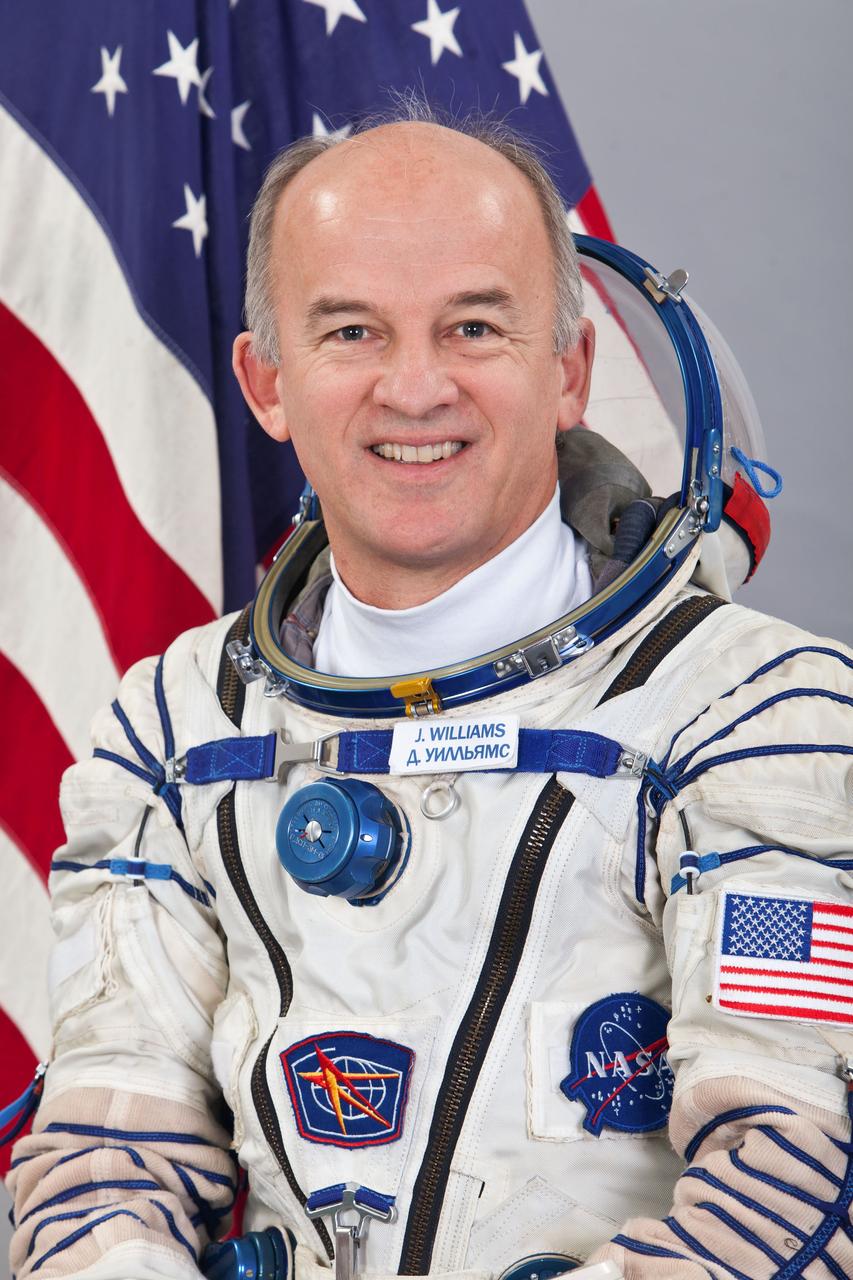
JSC2015E032664 (02/06/2015) --- Official crew photograph of NASA astronaut Jeff Williams (NASA), Flight Engineer with the International Space Station's Expedition 47. Williams is also the backup for NASA's Scott Kelly who will remain on board the International Space Station for a full year. Credit: (Roscosmos/GCTC)
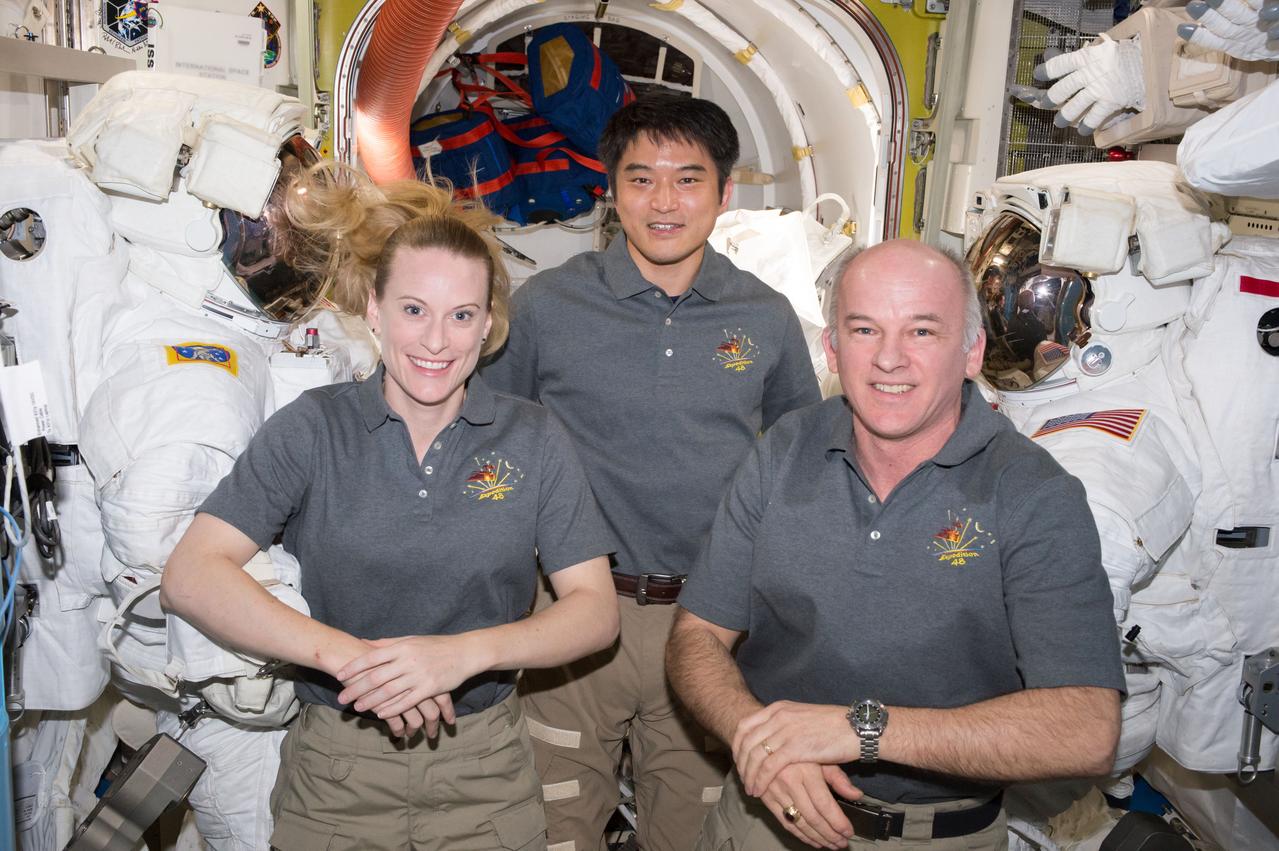
ISS048e057395 (08/14/2016) --- NASA astronauts Kate Rubins (left) and Jeff Williams (right) are joined by JAXA (Japan Aerospace Exploration Agency) astronaut Takuya Onishi inside the Quest airlock as they prepare spacesuits for upcoming spacewalks.
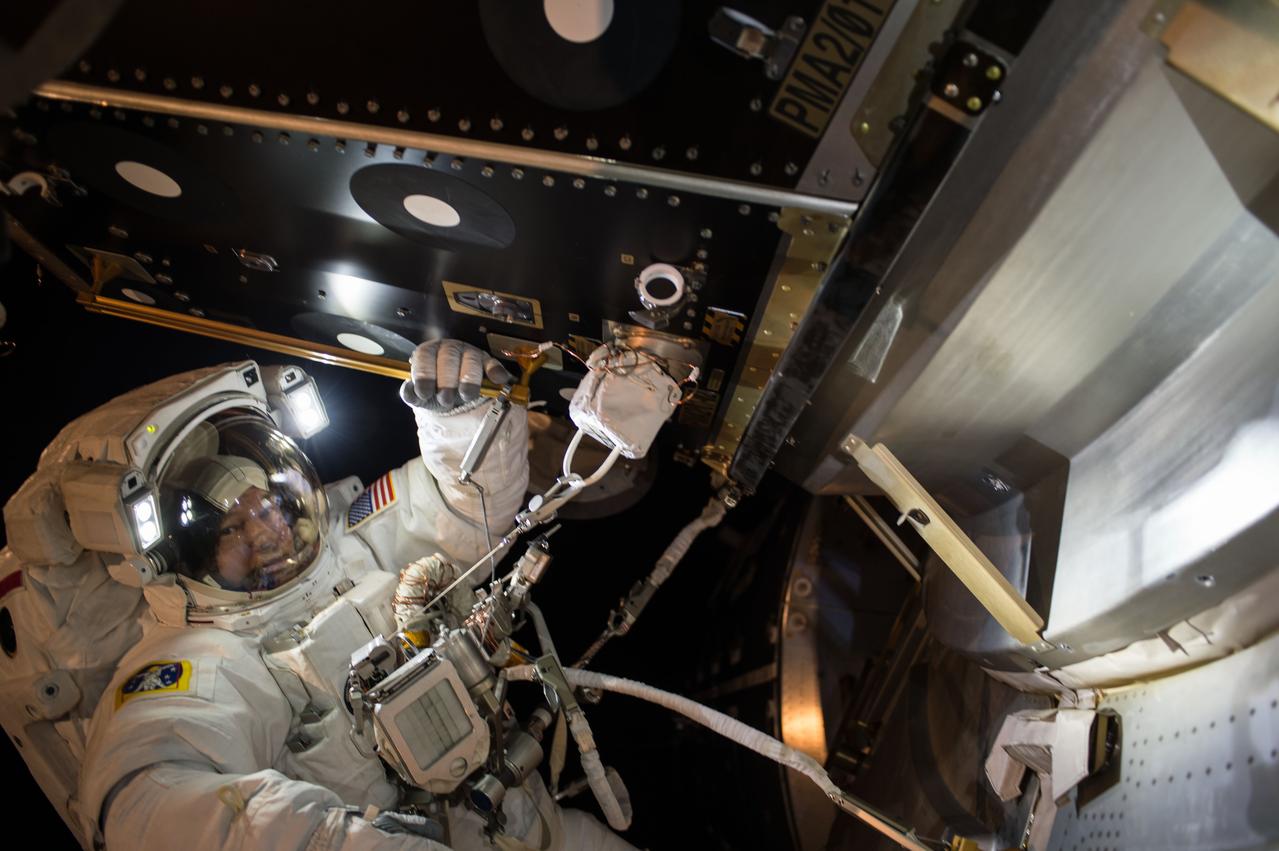
Extravehicular crewmember 1 (EV1) Jeff Williams pauses for a photo after installing a Hemispherical (Hemi) Reflector Cover on Pressurized Mating Adapter 2 (PMA-2) during Extravehicular Activity 36 (EVA 36).
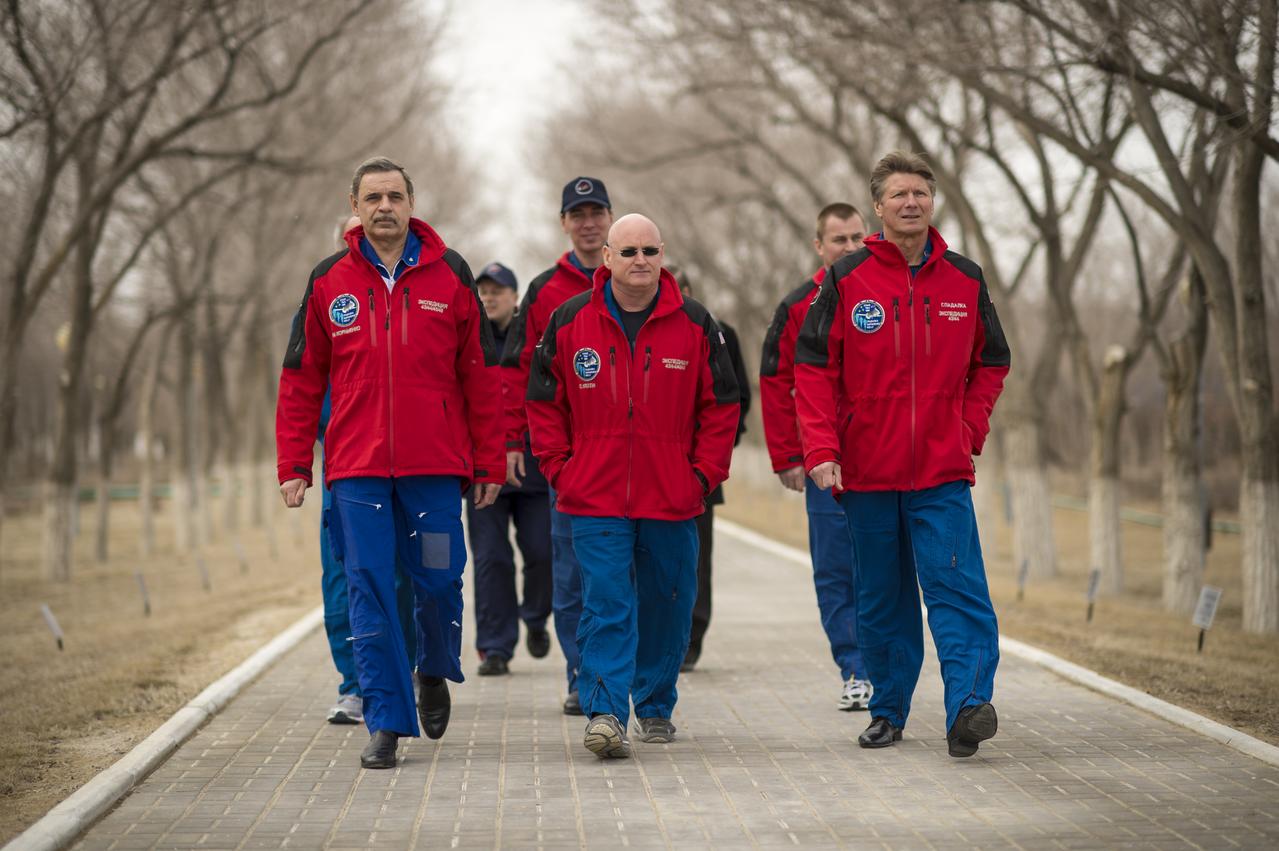
Expedition 43 prime crew members: NASA Astronaut Scott Kelly, and Russian Cosmonauts Gennady Padalka, and Mikhail Kornienko of the Russian Federal Space Agency (Roscosmos), and backup crew members Sergei Volkov, and Alexey Ovchinin and of Roscosmos, and NASA Astronaut Jeff Williams walk along the Avenue of the Cosmonauts where two long rows of trees are all marked with the name and year of the crew member who planted them starting from Yuri Gagarin's tree, Saturday, March 21, 2015, Baikonur, Kazakhstan. Expedition 43 NASA Astronaut Scott Kelly, and Russian Cosmonauts Gennady Padalka, and Mikhail Kornienko of the Russian Federal Space Agency (Roscosmos) are scheduled to launch to the International Space Station in the Soyuz TMA-16M spacecraft from the Baikonur Cosmodrome in Kazakhstan March 28, Kazakh time (March 27 Eastern time.) As the one-year crew, Kelly and Kornienko will return to Earth on Soyuz TMA-18M in March 2016. Photo Credit: (NASA/Bill Ingalls)
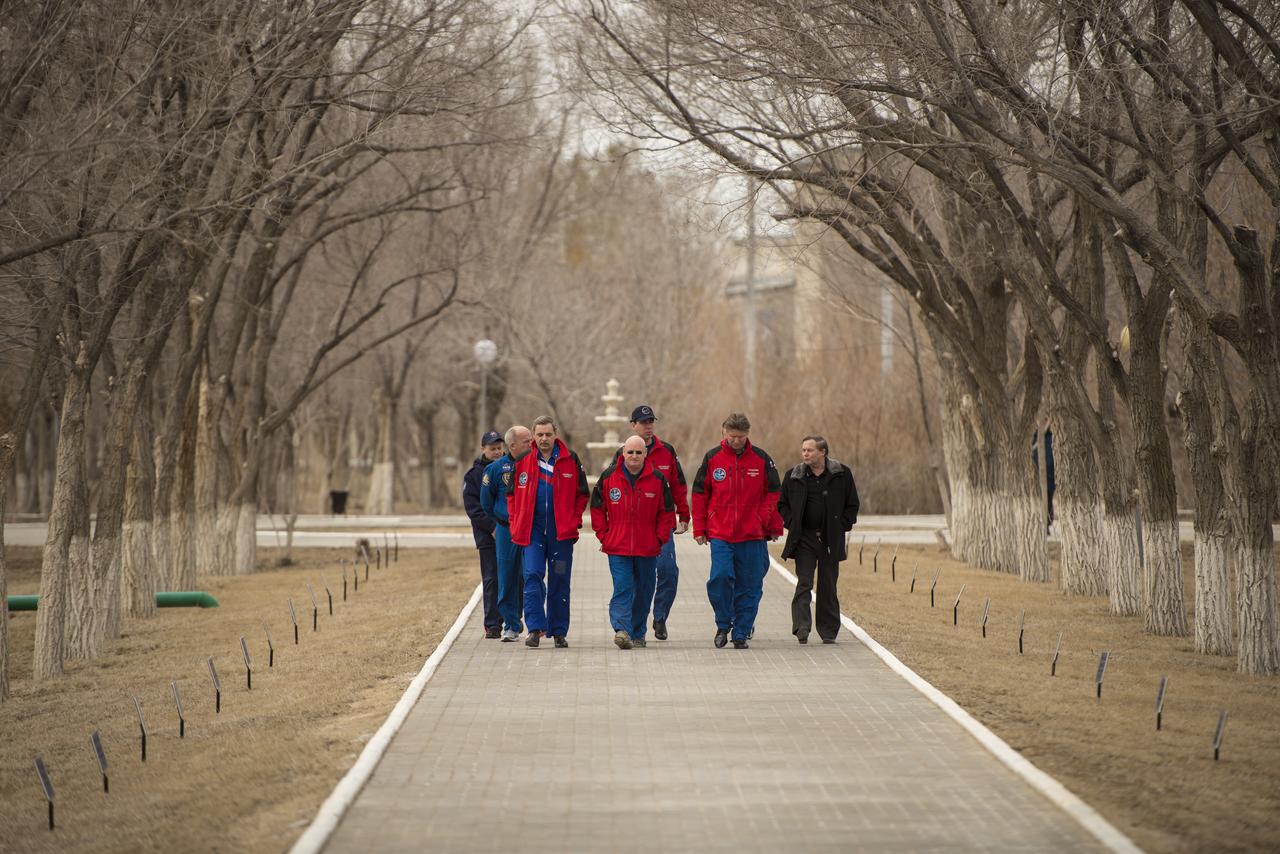
Expedition 43 prime crew members: NASA Astronaut Scott Kelly, and Russian Cosmonauts Gennady Padalka, and Mikhail Kornienko of the Russian Federal Space Agency (Roscosmos), and backup crew members Sergei Volkov, and Alexey Ovchinin and of Roscosmos, and NASA Astronaut Jeff Williams walk along the Avenue of the Cosmonauts where two long rows of trees are all marked with the name and year of the crew member who planted them starting from Yuri Gagarin's tree, Saturday, March 21, 2015, Baikonur, Kazakhstan. Expedition 43 NASA Astronaut Scott Kelly, and Russian Cosmonauts Gennady Padalka, and Mikhail Kornienko of the Russian Federal Space Agency (Roscosmos) are scheduled to launch to the International Space Station in the Soyuz TMA-16M spacecraft from the Baikonur Cosmodrome in Kazakhstan March 28, Kazakh time (March 27 Eastern time.) As the one-year crew, Kelly and Kornienko will return to Earth on Soyuz TMA-18M in March 2016. Photo Credit: (NASA/Bill Ingalls)
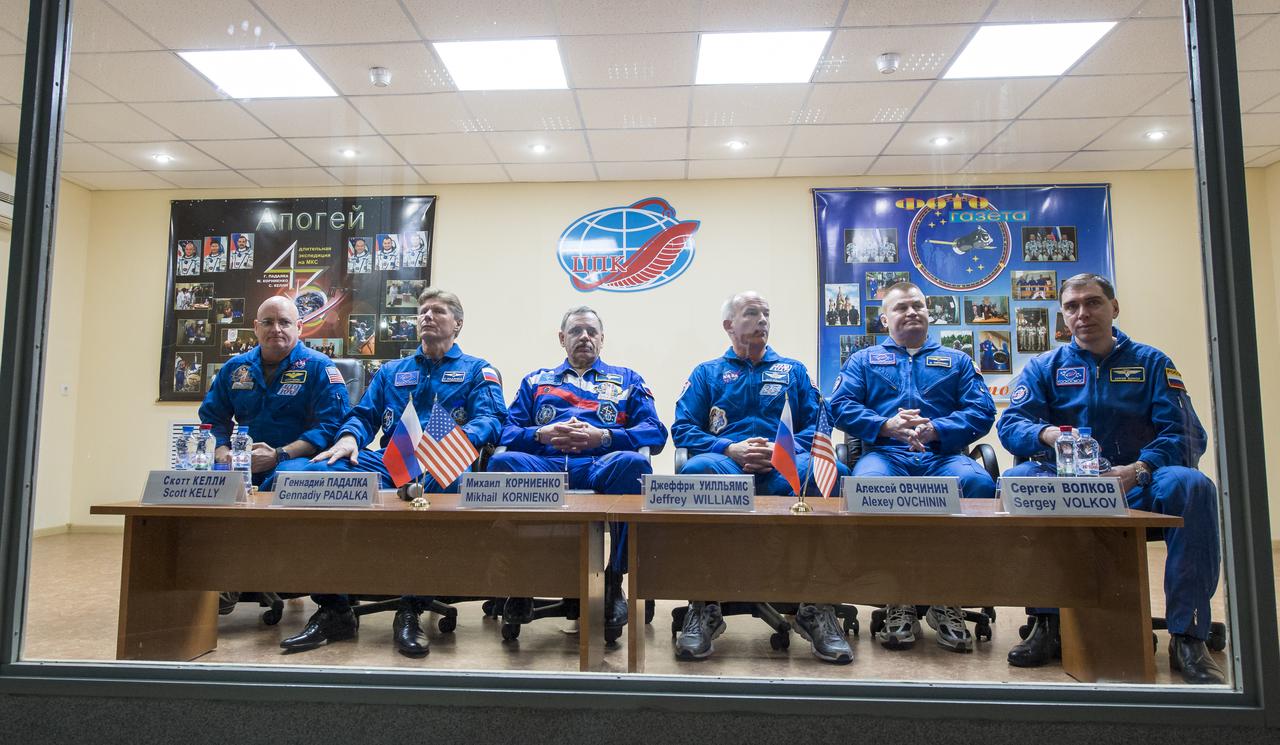
Expedition 43 prime and backup crews are seen in quarantine behind glass, from left, Expedition 43 prime crew members; NASA Astronaut Scott Kelly, Russian cosmonauts Gennady Padalka, and Mikhail Kornienko of the Russian Federal Space Agency (Roscosmos), Expedition 43 backup crew members; NASA Astronaut Jeff Williams, Russian cosmonauts Alexei Ovchinin, and Sergei Volkov during a crew press conference, Thursday, March 26, 2015, at the Cosmonaut Hotel in Baikonur, Kazakhstan. Kelly, Kornienko, and Padalka launched to the International Space Station in the Soyuz TMA-16M spacecraft from the Baikonur Cosmodrome in Kazakhstan March 28, Kazakh time (March 27 Eastern time.) As the one-year crew, Kelly and Kornienko will return to Earth on Soyuz TMA-18M in March 2016. Photo Credit (NASA/Bill Ingalls)
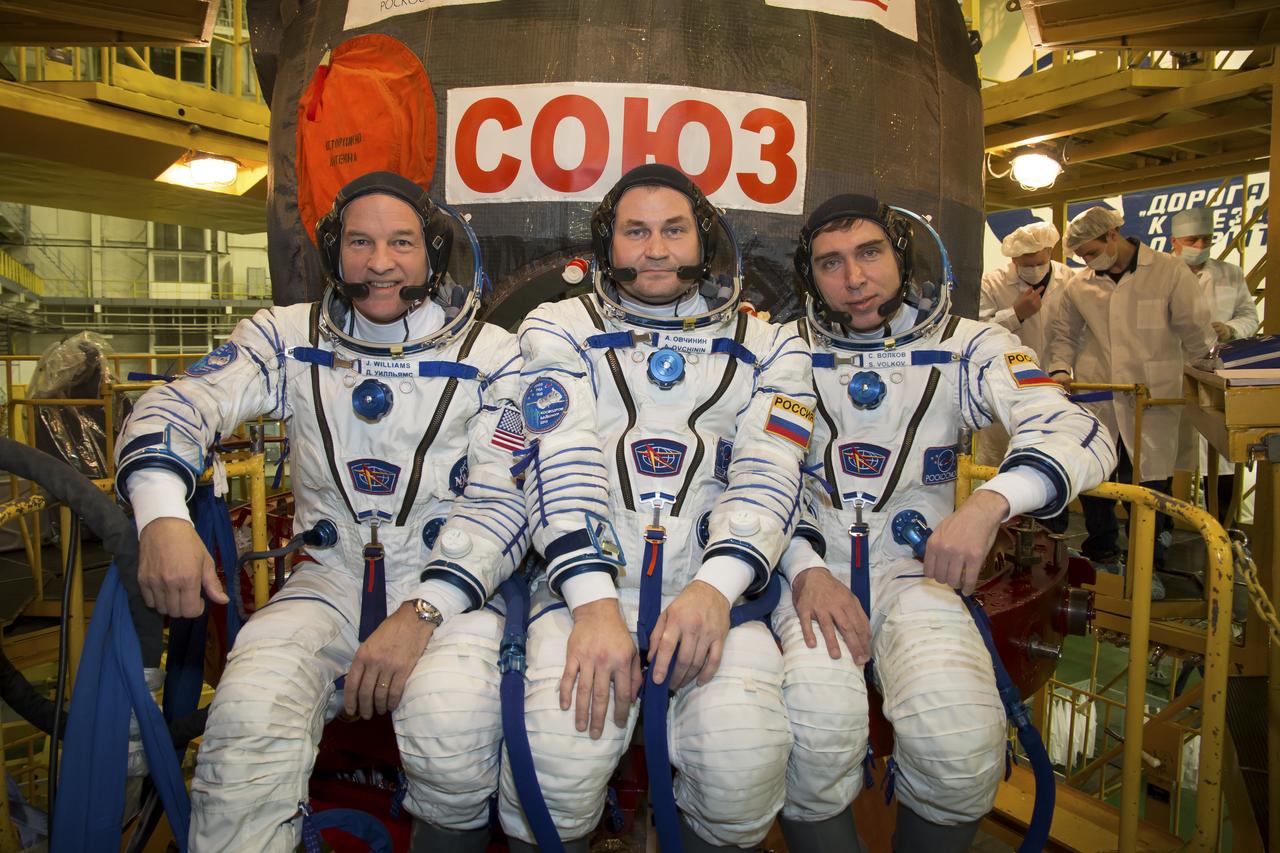
Expedition 43 backup crew members Jeff Williams of NASA, left, Alexey Ovchinin, center, and Sergei Volkov of Russia's Federal Space Agency (Roscosmos) take a moment during their Soyuz TMA-16M spacecraft fit check to pose for a photograph, Sunday, March 15, 2015 at the Baikonur Cosmodrome in Kazakhstan. The prime crew members Russian Cosmonauts Mikhail Kornienko, Gennady Padalka of the Russian Federal Space Agency (Roscosmos), and NASA Astronaut Scott Kelly are preparing for launch to the International Space Station in their Soyuz TMA-16M spacecraft from the Baikonur Cosmodrome in Kazakhstan March 28, Kazakh time. As the one-year crew, Kelly and Kornienko will return to Earth on Soyuz TMA-18M in March 2016. Photo Credit: (NASA/Victor Zelentsov)
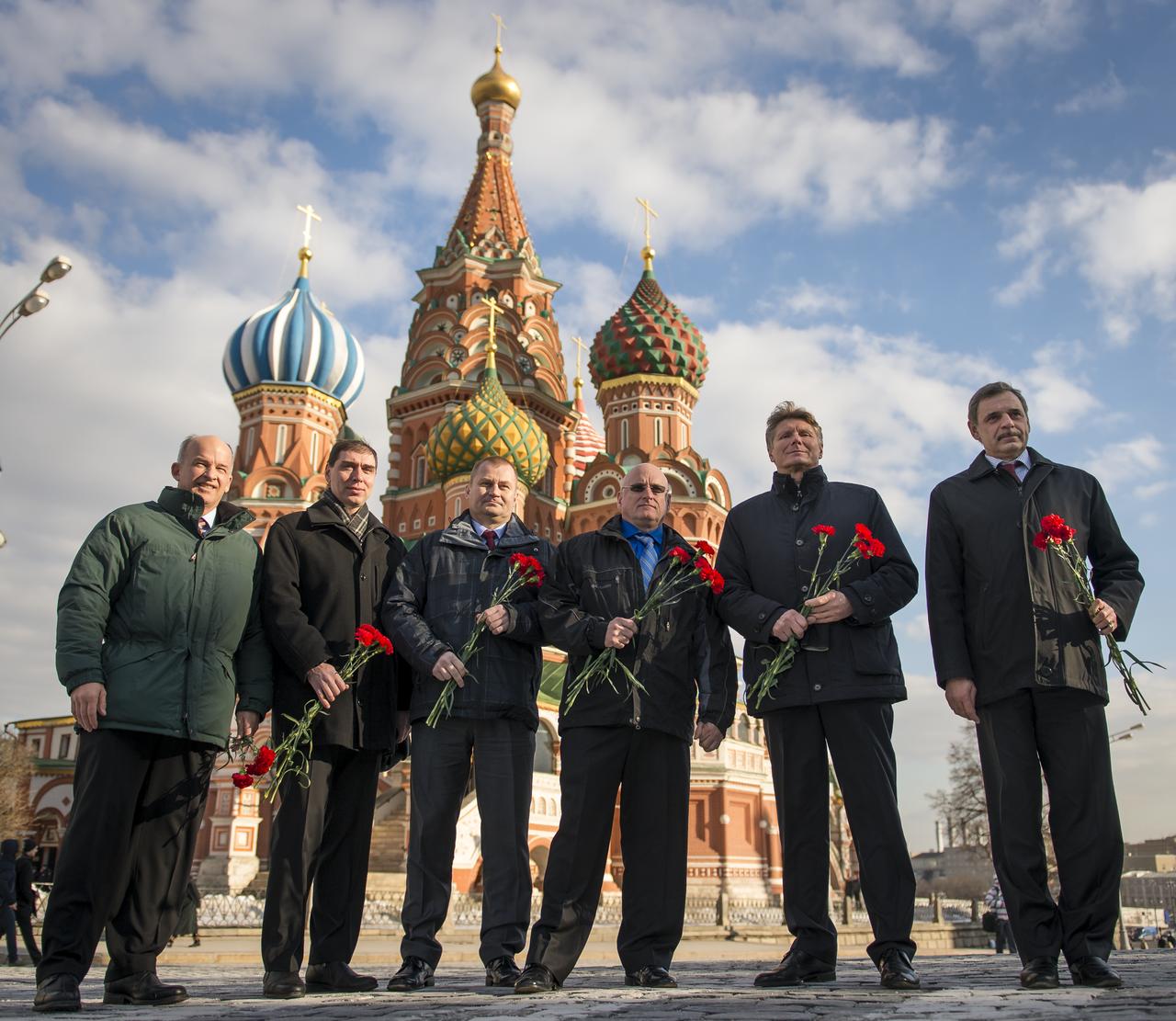
Expedition 43 prime and backup crews pose for a photograph together in front of St. Basil's Cathedral in Moscow as part of traditional pre-launch ceremonies, from left, Expedition 43 backup crew members; NASA Astronaut Jeff Williams, Russian cosmonaut Sergei Volkov of the Russian Federal Space Agency (Roscosmos), Russian cosmonaut Alexei Ovchinin of Roscosmos, Expedition 43 prime crew members; NASA Astronaut Scott Kelly, Russian cosmonaut Gennady Padalka of Roscosmos, and Russian cosmonaut Mikhail Kornienko of Roscosmos, Friday, March 6, 2015. Kelly, Padalka, and Kornienko are preparing for launch to the International Space Station in their Soyuz TMA-16M spacecraft from the Baikonur Cosmodrome in Kazakhstan March 28, Kazakh time. As the one-year crew, Kelly and Kornienko will return to Earth on Soyuz TMA-18M in March 2016. Photo Credit: (NASA/Bill Ingalls)
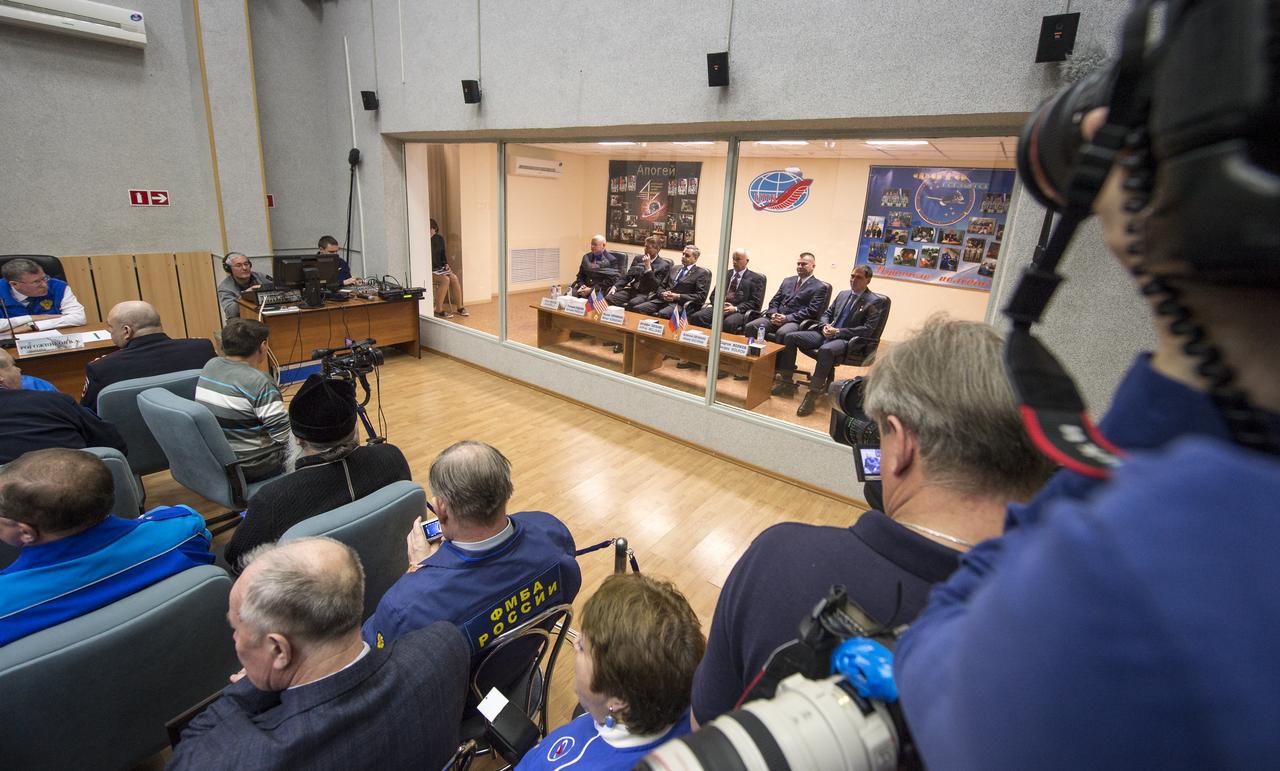
Expedition 43 prime and backup crews are seen in quarantine behind glass, from left, Expedition 43 prime crew members; NASA Astronaut Scott Kelly, Russian cosmonauts Gennady Padalka, and Mikhail Kornienko of Roscosmos, Expedition 43 backup crew members; NASA Astronaut Jeff Williams, Russian cosmonauts Alexei Ovchinin, and Sergei Volkov of Roscosmos during the State Commission meeting to approve the Soyuz launch to the International Space Station, Thursday, March 26, 2015, at the Cosmonaut Hotel in Baikonur, Kazakhstan. Kelly, Kornienko, and Padalka launched to the International Space Station in the Soyuz TMA-16M spacecraft from the Baikonur Cosmodrome in Kazakhstan March 28, Kazakh time (March 27 Eastern time.) As the one-year crew, Kelly and Kornienko will return to Earth on Soyuz TMA-18M in March 2016. Photo Credit (NASA/Bill Ingalls)
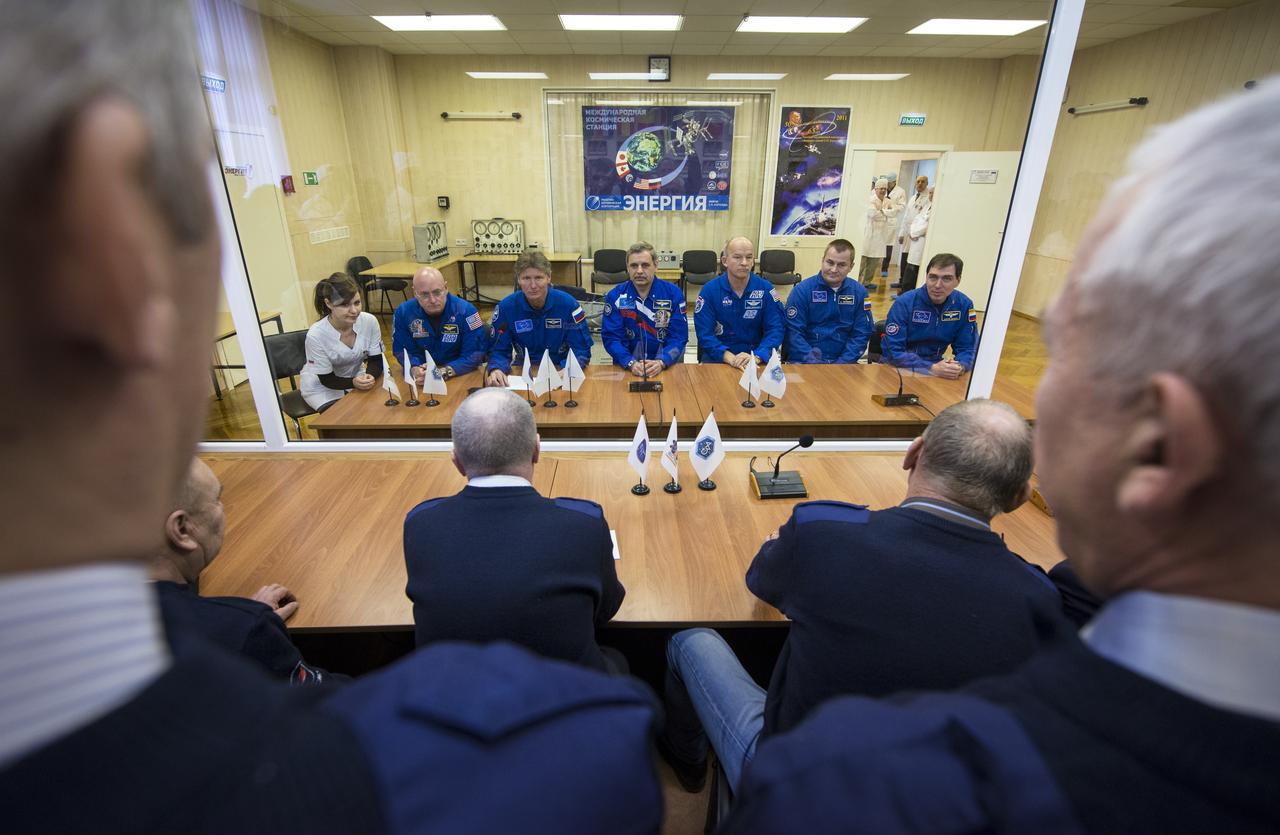
Expedition 43 prime crew: NASA Astronaut Scott Kelly, seated left, and Russian Cosmonauts Gennady Padalka, and Mikhail Kornienko of the Russian Federal Space Agency (Roscosmos), backup crew members: NASA Atronaut Jeff Williams, Alexey Ovchinin, and Sergei Volkov of Roscosmos, seated right, talk to space officials prior to doing their final check of the Soyuz TMA-16M spacecraft, Monday, March 23, 2015 at the Baikonur Cosmodrome in Kazakhstan. Kelly, Kornienko, and Padalka are scheduled to launch to the International Space Station in the Soyuz TMA-16M spacecraft from the Baikonur Cosmodrome in Kazakhstan March 28, Kazakh time (March 27 Eastern time.) As the one-year crew, Kelly and Kornienko will return to Earth on Soyuz TMA-18M in March 2016. Photo Credit: (NASA/Bill Ingalls)
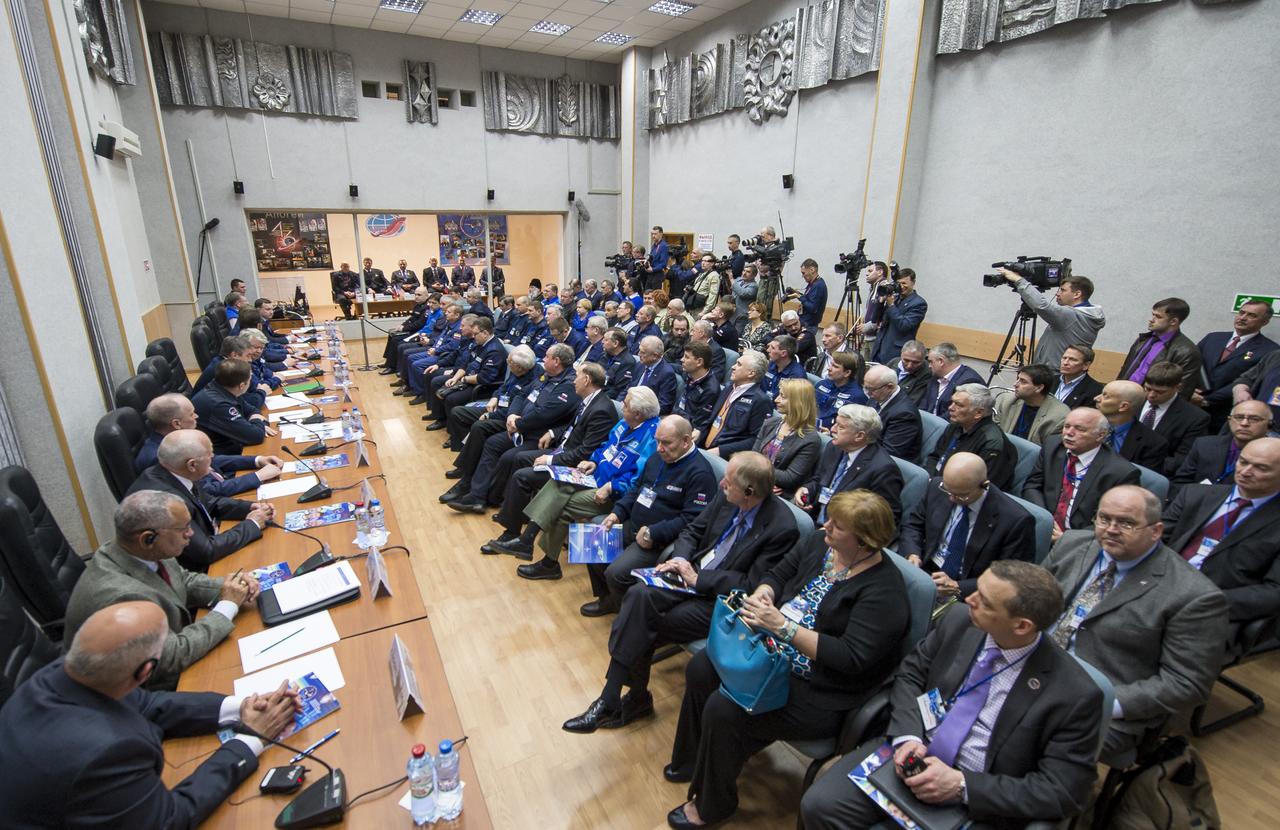
Expedition 43 prime and backup crews are seen in quarantine behind glass, from left, Expedition 43 prime crew members; NASA Astronaut Scott Kelly, Russian cosmonauts Gennady Padalka, and Mikhail Kornienko of Roscosmos, Expedition 43 backup crew members; NASA Astronaut Jeff Williams, Russian cosmonauts Alexei Ovchinin, and Sergei Volkov of Roscosmos during the State Commission meeting to approve the Soyuz launch to the International Space Station, Thursday, March 26, 2015, at the Cosmonaut Hotel in Baikonur, Kazakhstan. Kelly, Kornienko, and Padalka launched to the International Space Station in the Soyuz TMA-16M spacecraft from the Baikonur Cosmodrome in Kazakhstan March 28, Kazakh time (March 27 Eastern time.) As the one-year crew, Kelly and Kornienko will return to Earth on Soyuz TMA-18M in March 2016. Photo Credit (NASA/Bill Ingalls)
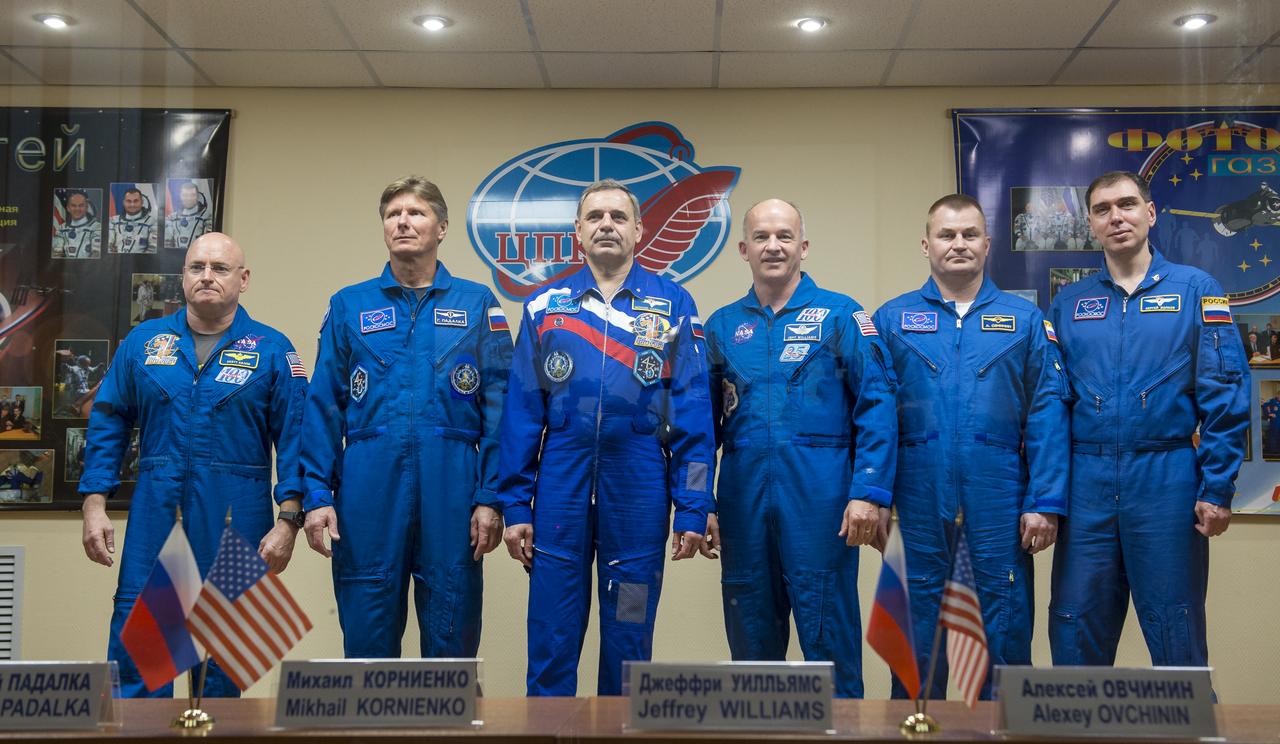
Expedition 43 prime and backup crews are seen in quarantine behind glass during a crew press conference, from left, Expedition 43 prime crew members; NASA Astronaut Scott Kelly, Russian cosmonauts Gennady Padalka, and Mikhail Kornienko of the Russian Federal Space Agency (Roscosmos), Expedition 43 backup crew members; NASA Astronaut Jeff Williams, Russian cosmonauts Alexei Ovchinin, and Sergei Volkov Thursday, March 26, 2015, at the Cosmonaut Hotel in Baikonur, Kazakhstan. Kelly, Kornienko, and Padalka launched to the International Space Station in the Soyuz TMA-16M spacecraft from the Baikonur Cosmodrome in Kazakhstan March 28, Kazakh time (March 27 Eastern time.) As the one-year crew, Kelly and Kornienko will return to Earth on Soyuz TMA-18M in March 2016. Photo Credit (NASA/Bill Ingalls)
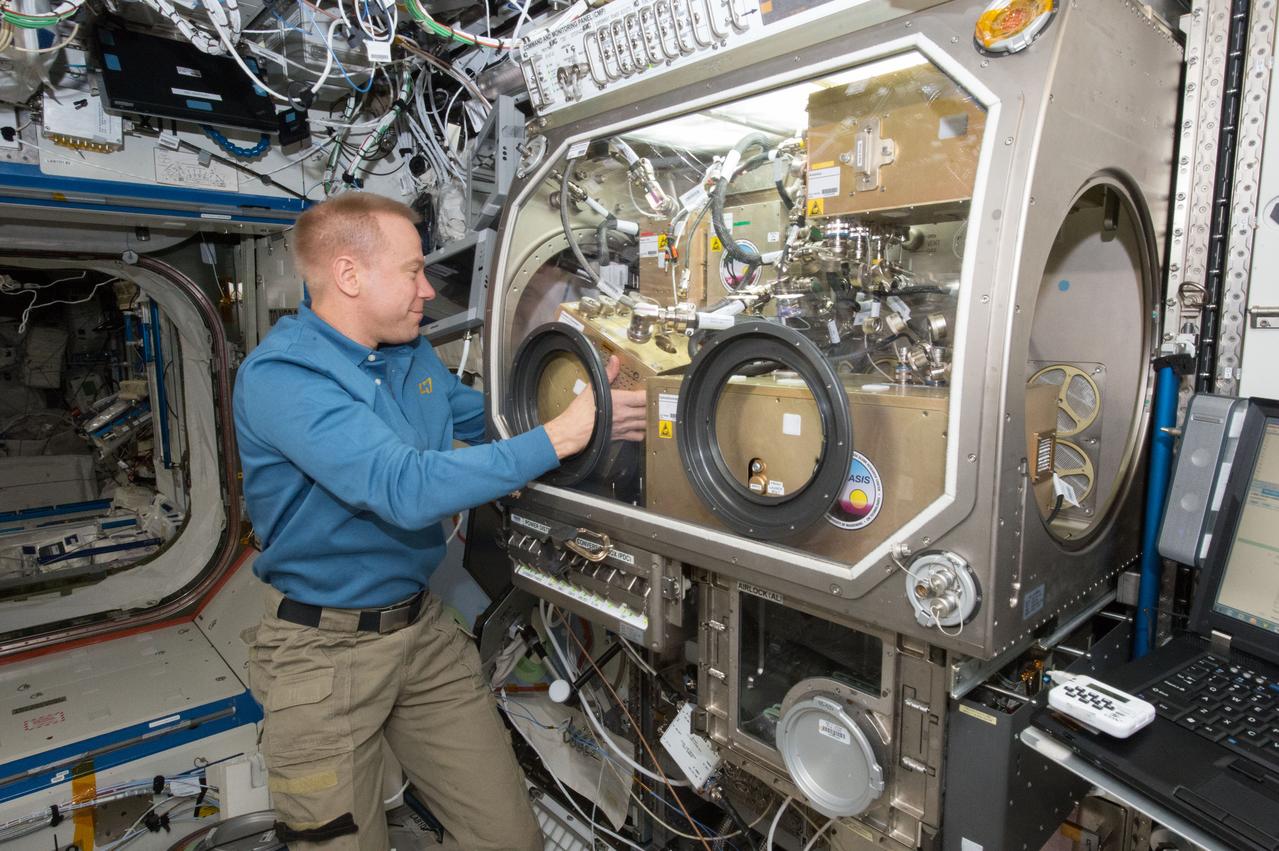
iss047e012491 (03/21/2016) --- NASA astronaut Tim Kopra stows hardware from the OASIS experiment aboard the International Space Station. OASIS, which stands for Observation and Analysis of Smectic Islands In Space, studies the unique behavior of liquid crystals in microgravity.
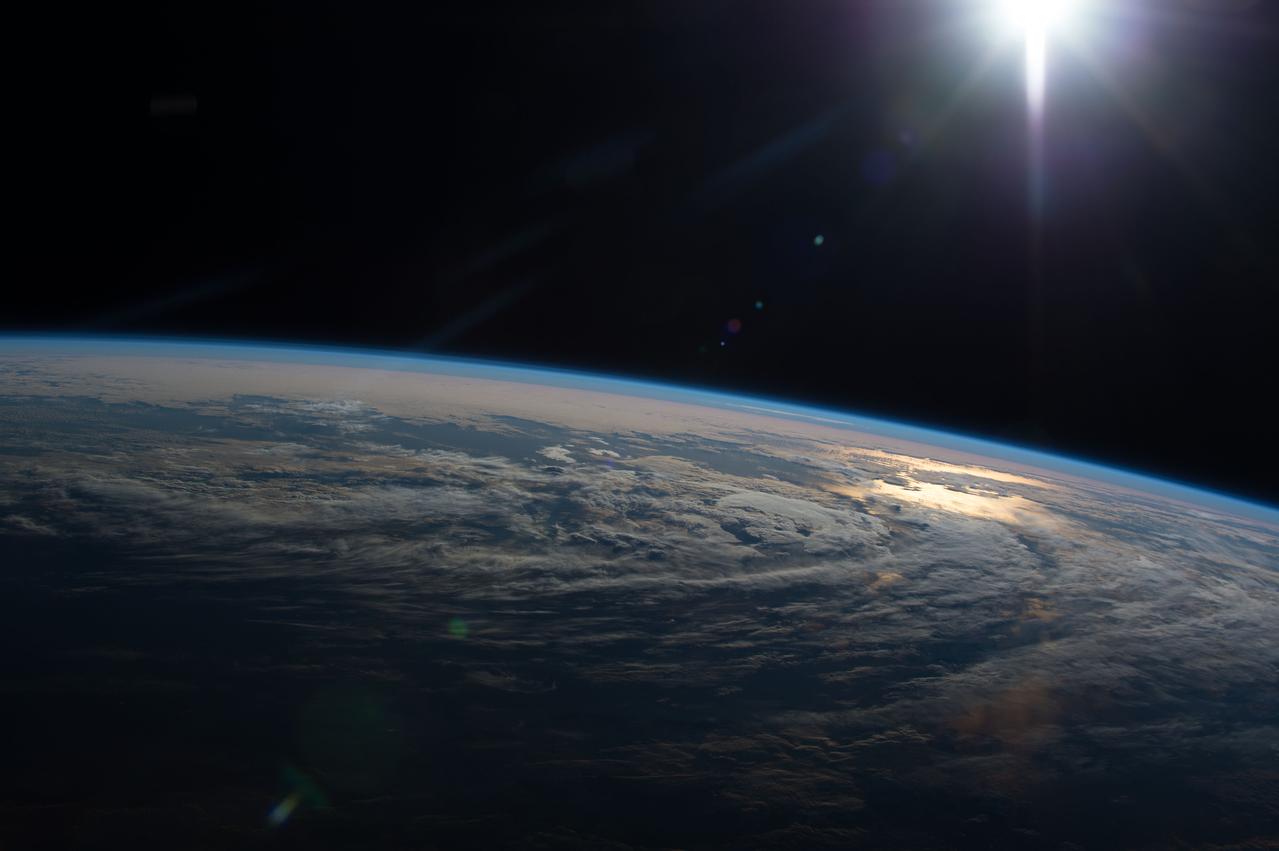
ISS048e002082 (06/19/2016) --- Crew members aboard the International Space Station take numerous images of the Earth, both day and night to record the images that provide NASA scientists with data to gain a deeper understanding of our Planet. Sometimes Science joins with Art when the images are so meaningful that the crew pauses to reflect on our Earths beauty.
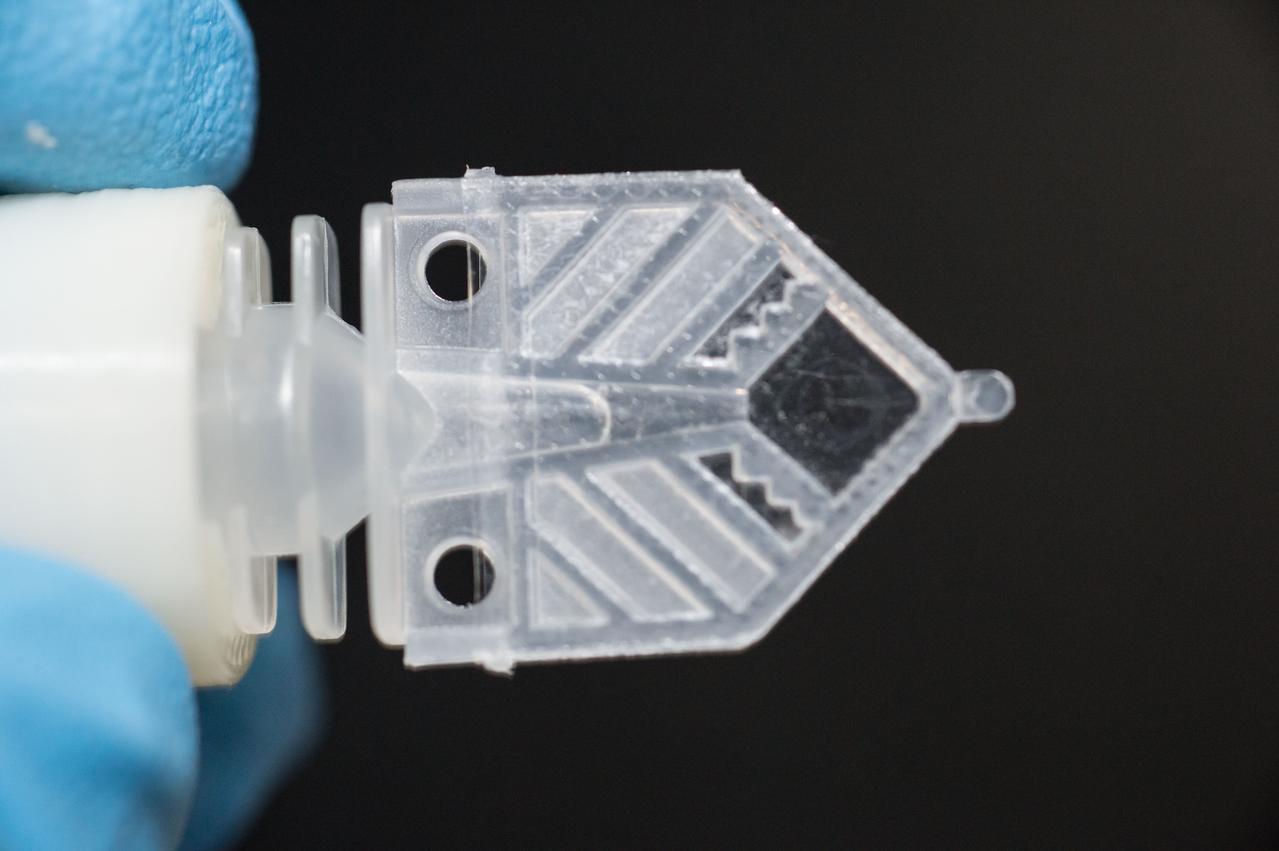
iss047e085695 (4/29/2016) --- A view of a Wet Lab RNA Sample to be placed into SmartCycler for data collection. Wetlab RNA SmartCycler is a research platform for conducting real-time quantitative gene expression analysis aboard the International Space Station (ISS). The system enables spaceflight genomic studies involving a wide variety of biospecimen types in the unique microgravity environment of space.
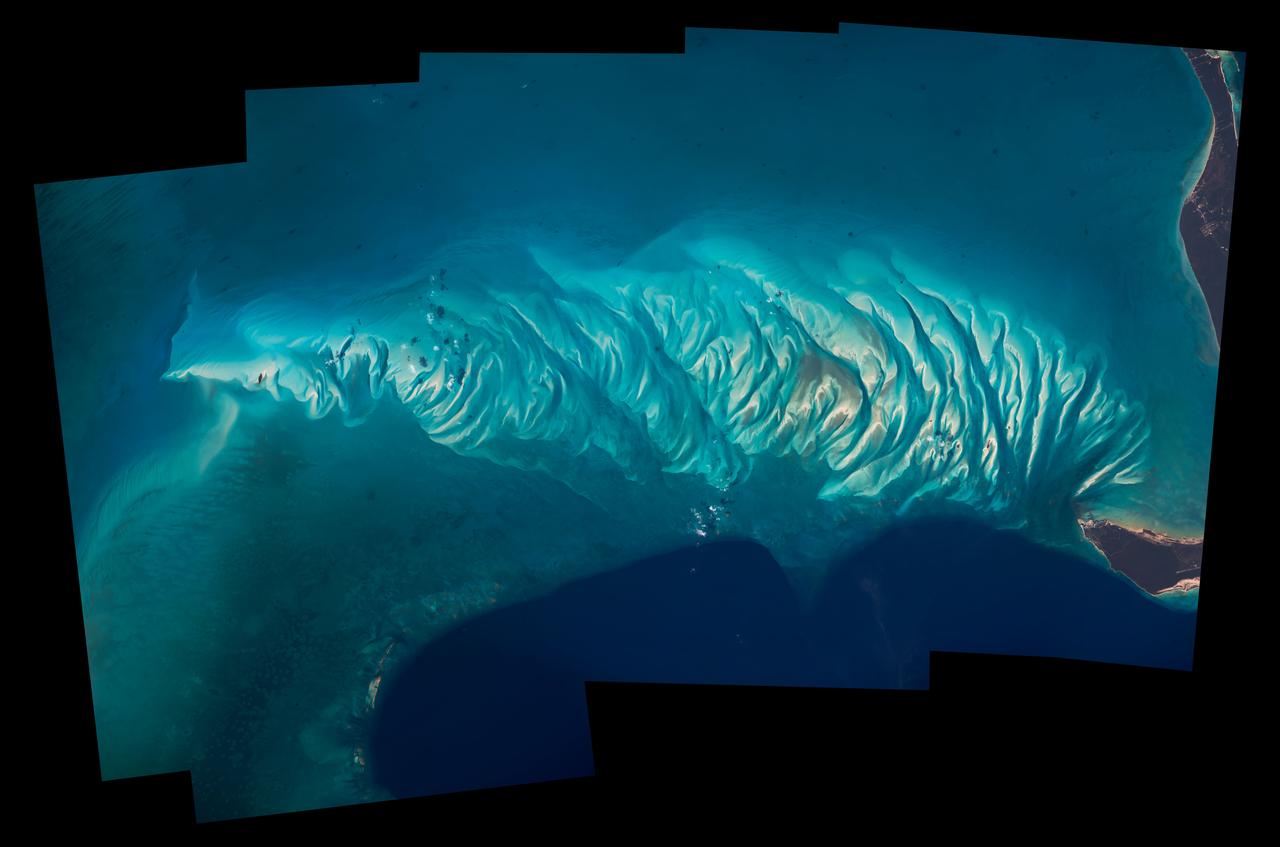
Expedition 47 Earth observation composite created with iss047e051337 - iss047e051343 135A8768 – 135A8774 Bahamas
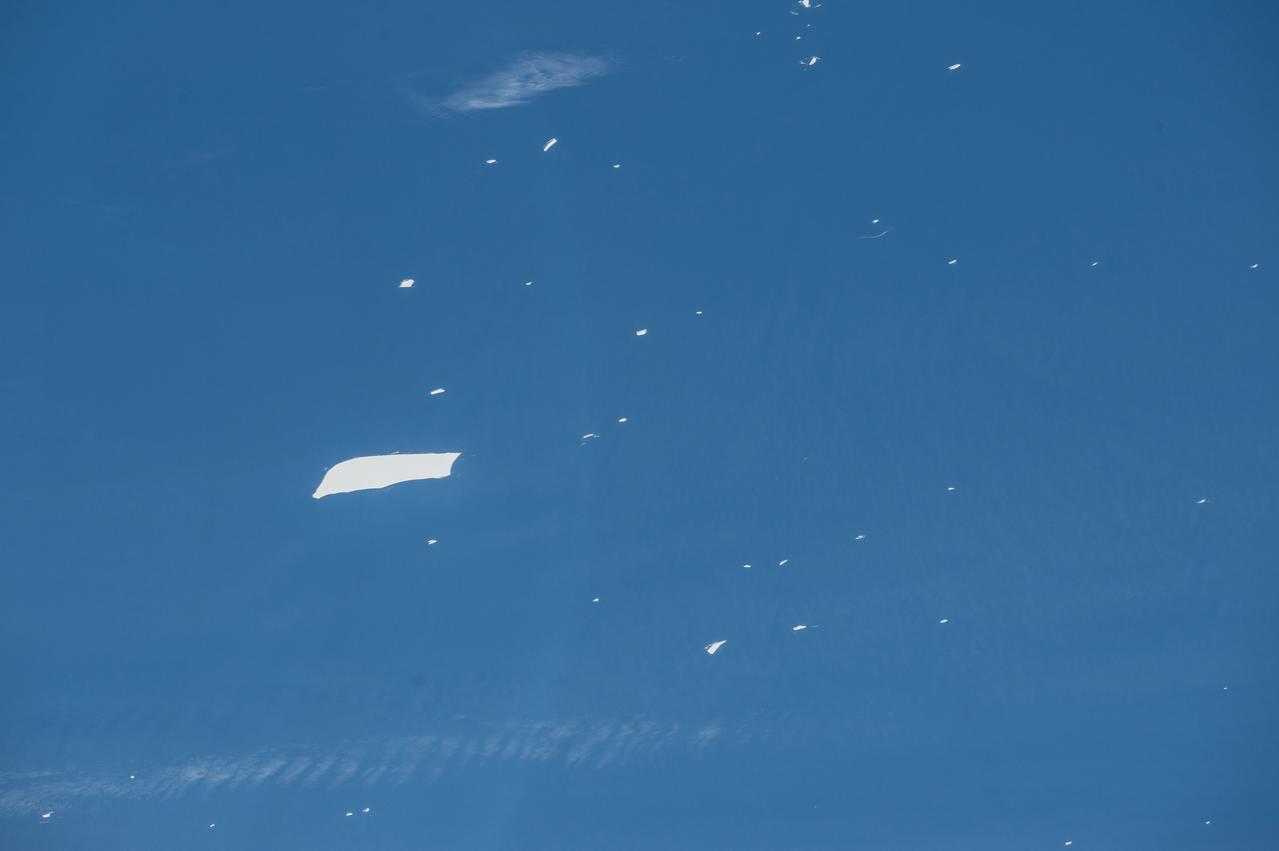
ISS047e22133 (03/27/2016) ---The crew of Expedition 47 aboard the International Space Station captured this image of a massive iceberg causing shipping to pay close attention. It is floating in the southern Atlantic Ocean, near the South Georgia and South Sandwich Islands. Smaller pieces cluster around the main iceberg. causing further shipping concern. The closest continent is the bottom tip of South America (Argentina) and the Falkland Islands.
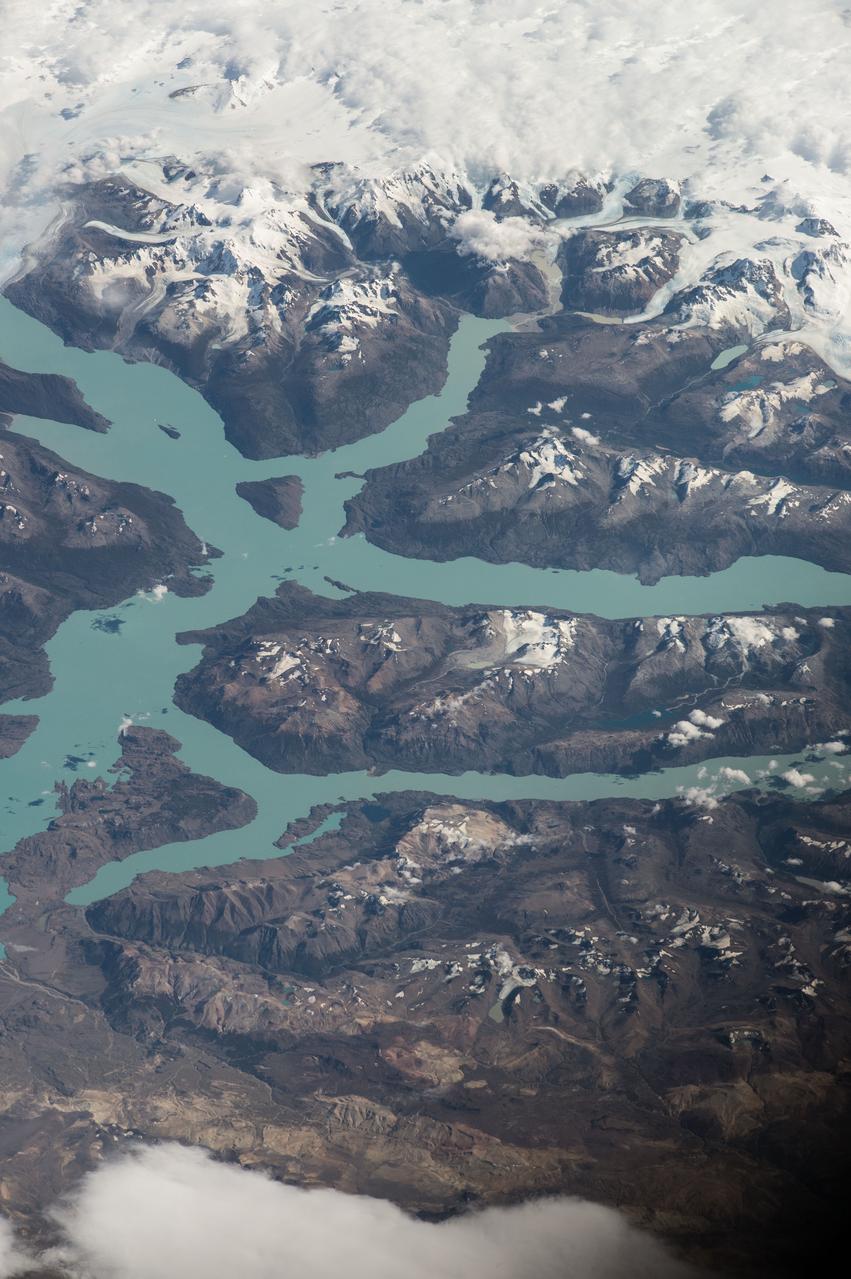
ISS047e014747 (03/22/2016) --- Crewmembers of the International Space Stations Expedition 47 captured this image of southern South America. Patagonia is a sparsely populated region located at the southern end of South America, shared by Argentina and Chile. The region comprises the southern section of the Andes mountains as well as the deserts, steppes and grasslands east of this southern portion of the Andes. The Colorado and Barrancas rivers, which run from the Andes to the Atlantic, are commonly considered the northern limit of Argentine Patagonia
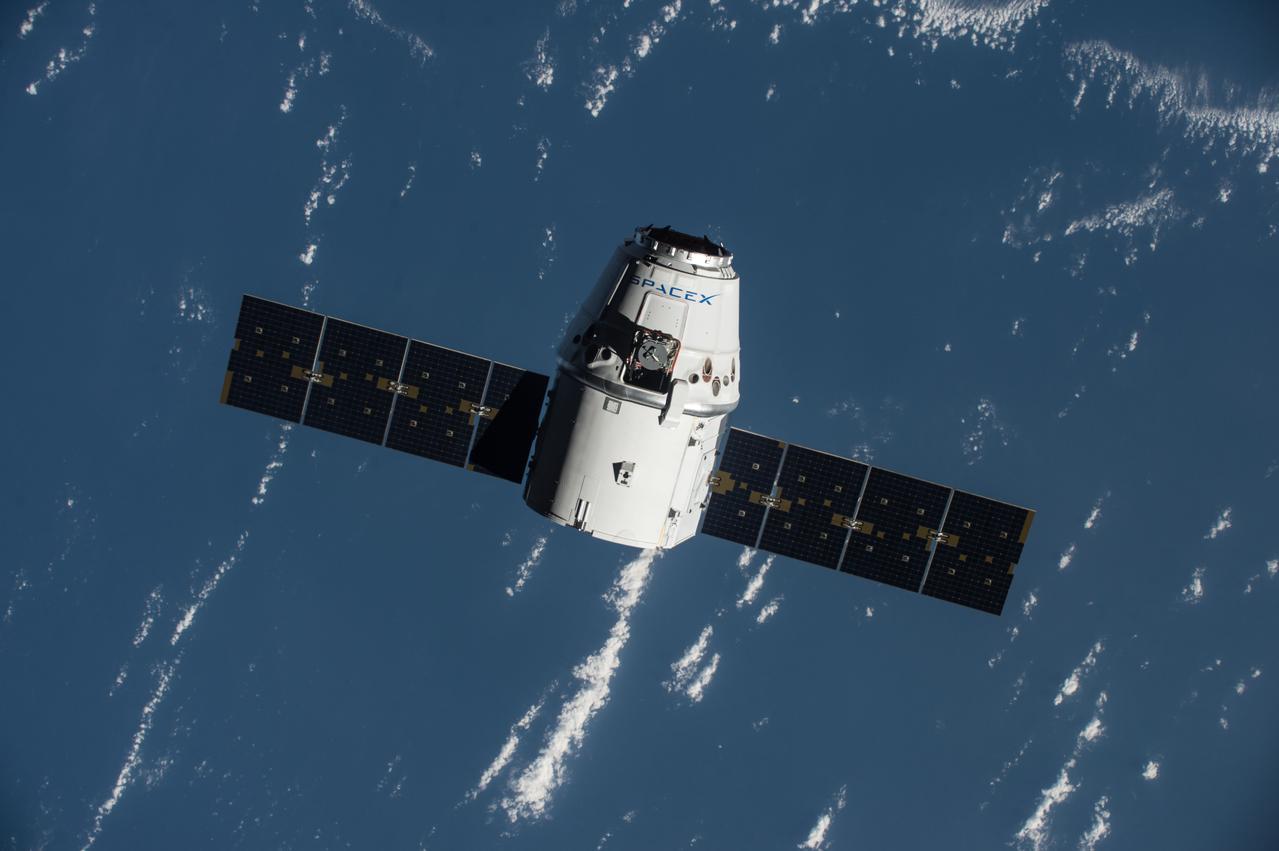
The SpaceX Dragon Commercial Resupply Services-9 (CRS-9) spacecraft approaches the ISS for rendezvous and grapple operations. Earth provides the backdrop for this image.

iss047e079342 (4/26/2016) --- A view during set up for the SmartCycler Session 2C Experiment, in the U.S. Laboratory. Wetlab RNA SmartCycler is a research platform for conducting real-time quantitative gene expression analysis aboard the International Space Station (ISS). The system enables spaceflight genomic studies involving a wide variety of biospecimen types in the unique microgravity environment of space.
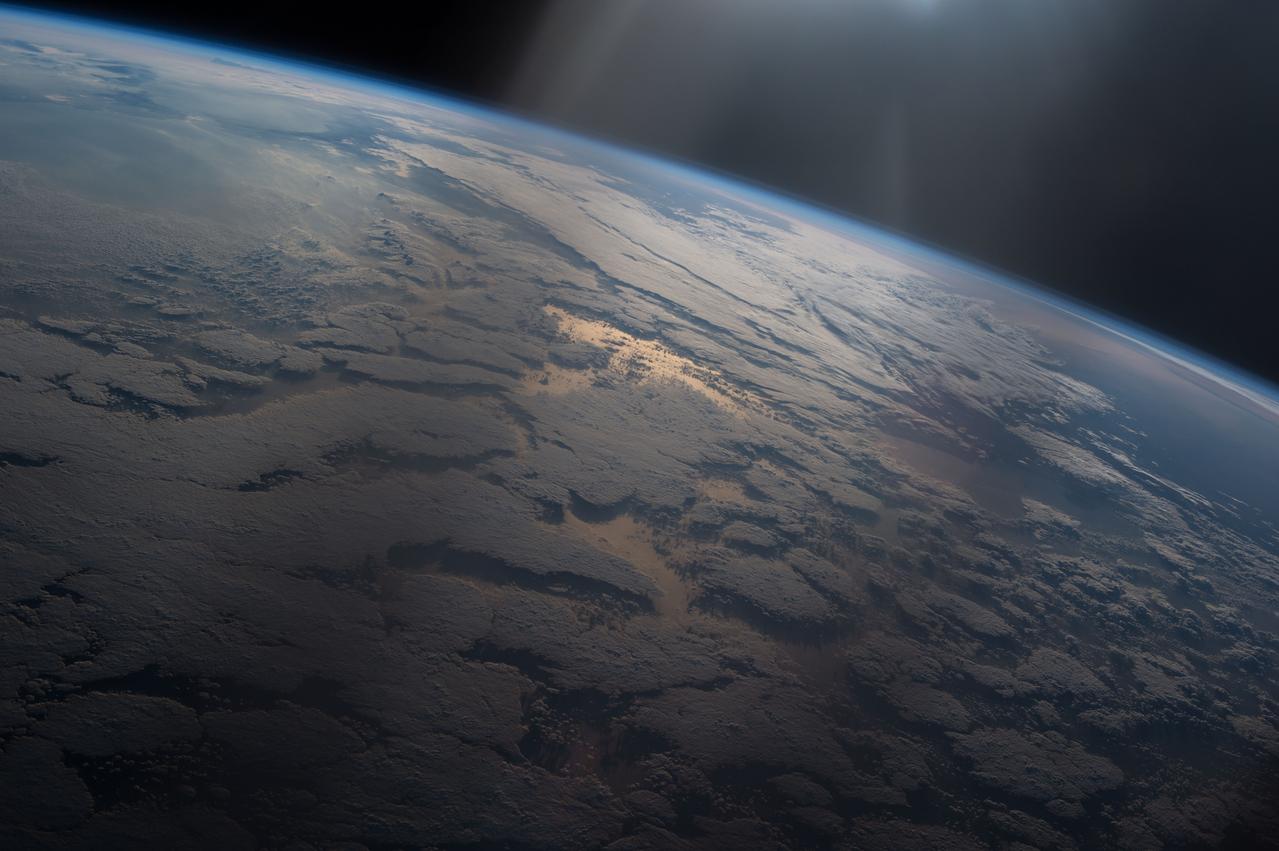
ISS047e016259 (03/24?2016) --- A beam of light shines down on the Earth creating a golden reflection off the water in this image captured by the crew of Expedition 47 on the International Space Station.
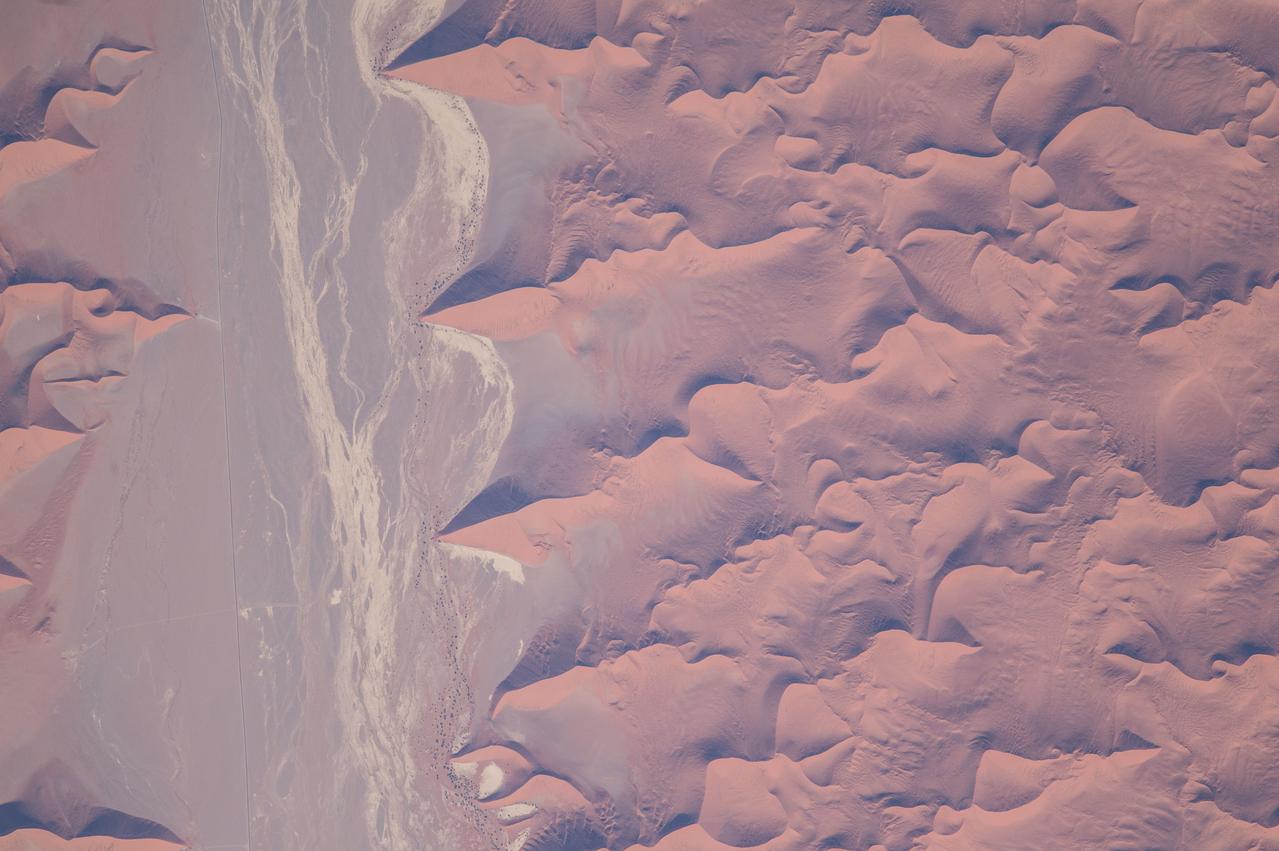
ISS047e022280 (03/26/2016) --- This interesting Earth observation image from the International Space Station seems an abstract painting but is really the outskirts of the Namib Desert in southwest Africa. One of the oldest and largest deserts in the world, the Namib stretches inland from the Atlantic Ocean, covering large swathes of Namibia and parts of Angola and South Africa. This arid hotspot surprisingly supports a diverse number of plants and animals, some of which are found nowhere else in the world.
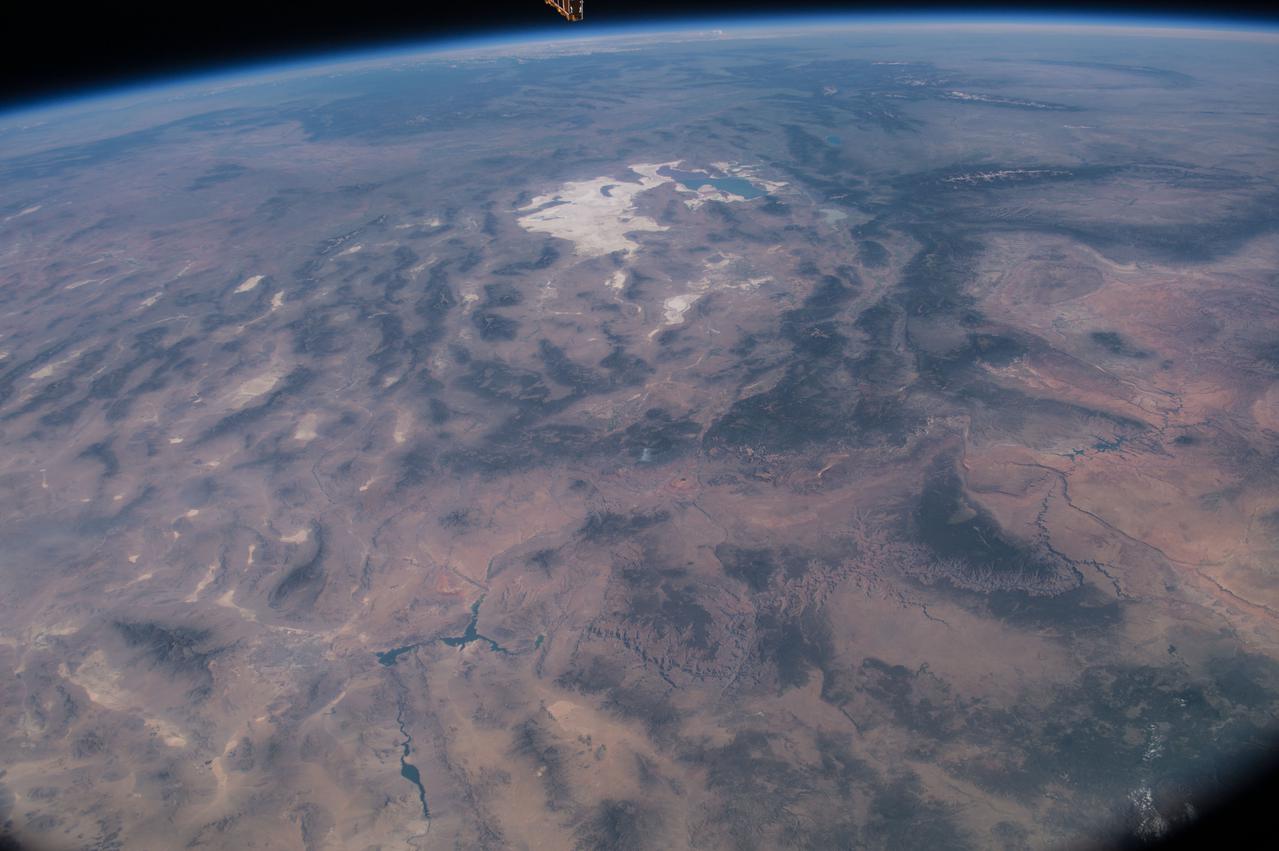
iss048e011242 (June 26, 2016) --- Grand Canyon National Park in Arizona is pictured from the International Space Station as it orbited 251 miles above.
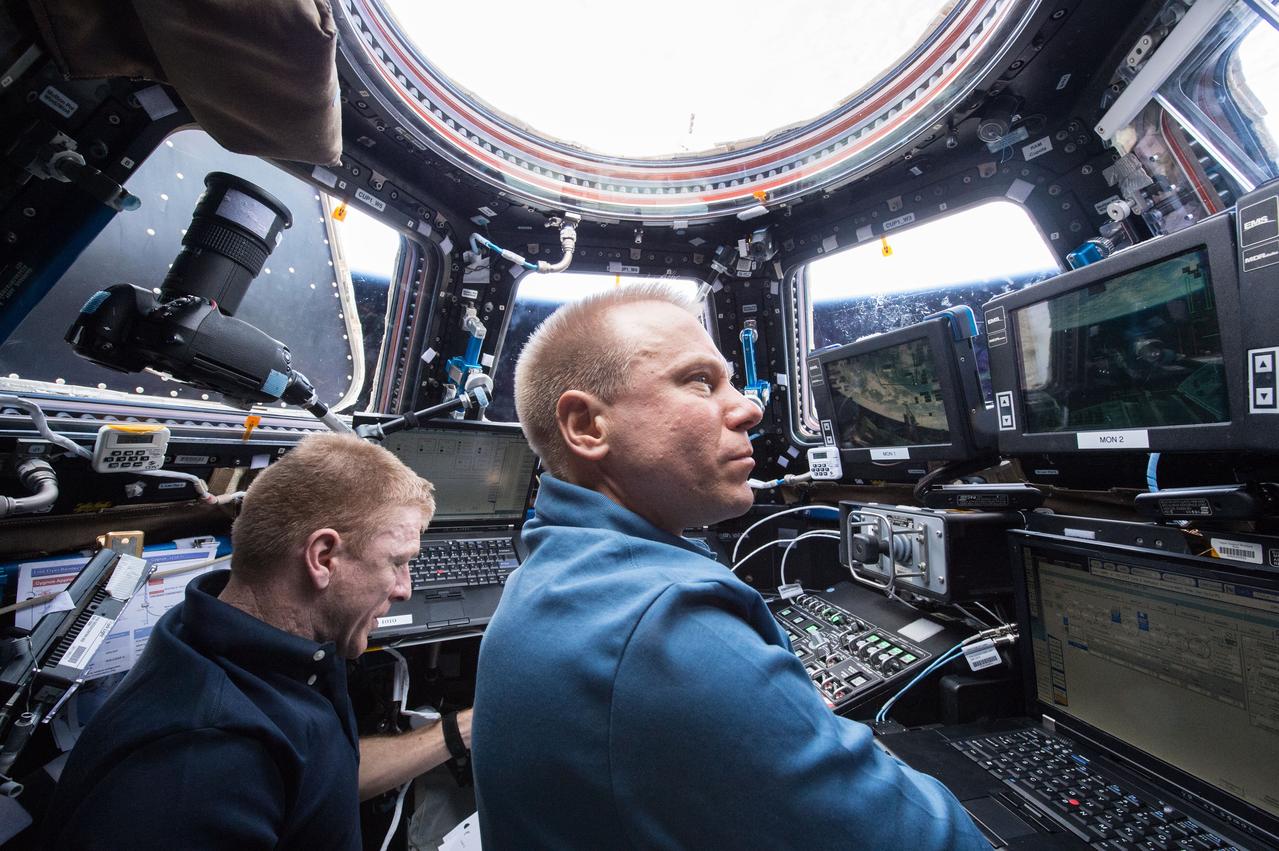
ISS047e021582 (03/26/2016) --- Cygnus capture on 26 March 2016. Expedition 47 robotic arm operator NASA astronaut Tim Kopra of NASA commanded the International Space Station’s Canadarm2 robotic arm to capture and dock the Cygnus spacecraft. He was assisted by ESA (European Space Agency) astronaut Tim Peake.
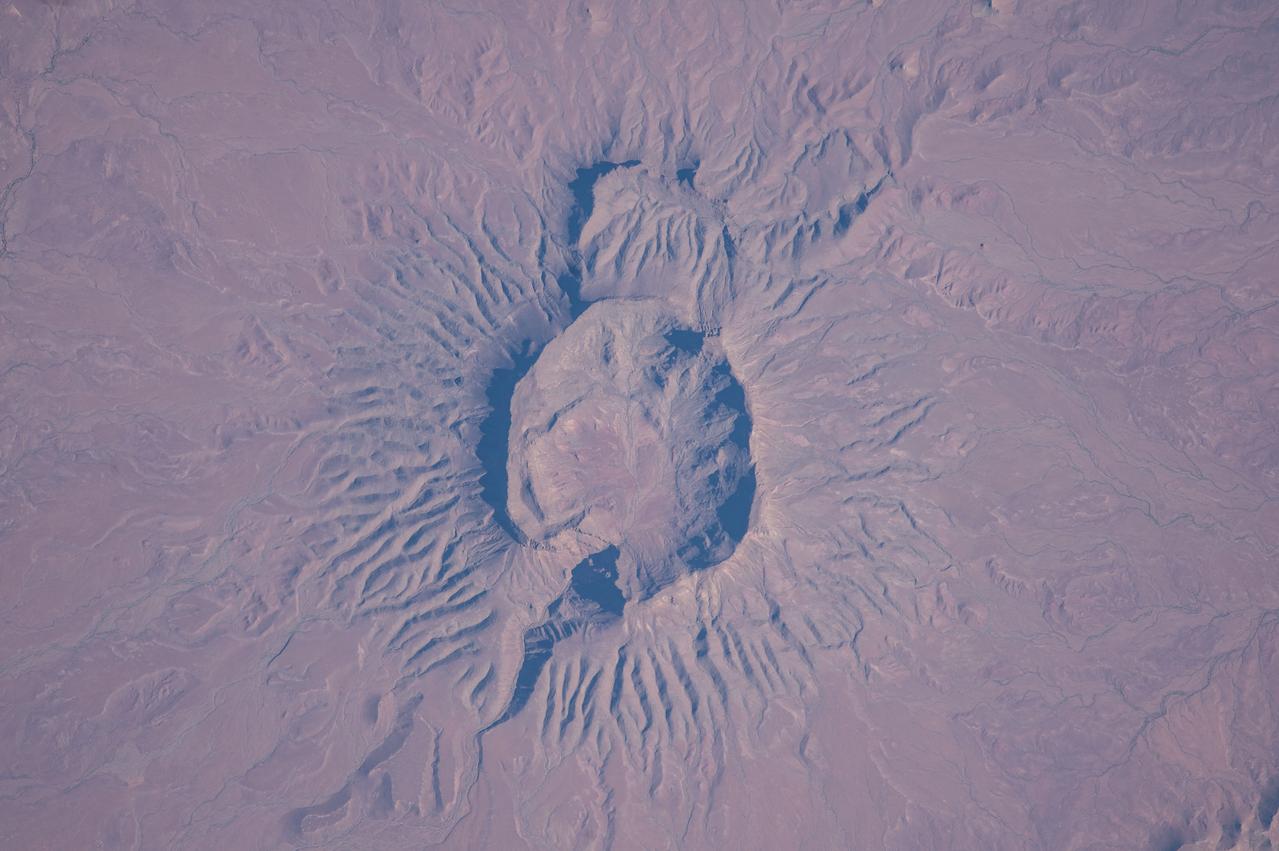
ISS047e022293 (03/26/2016) --- This Earth Observation image from the International Space Station is of a large extinct volcano in the lower southwest African Brukkaros Mountain in the country of Namibia.
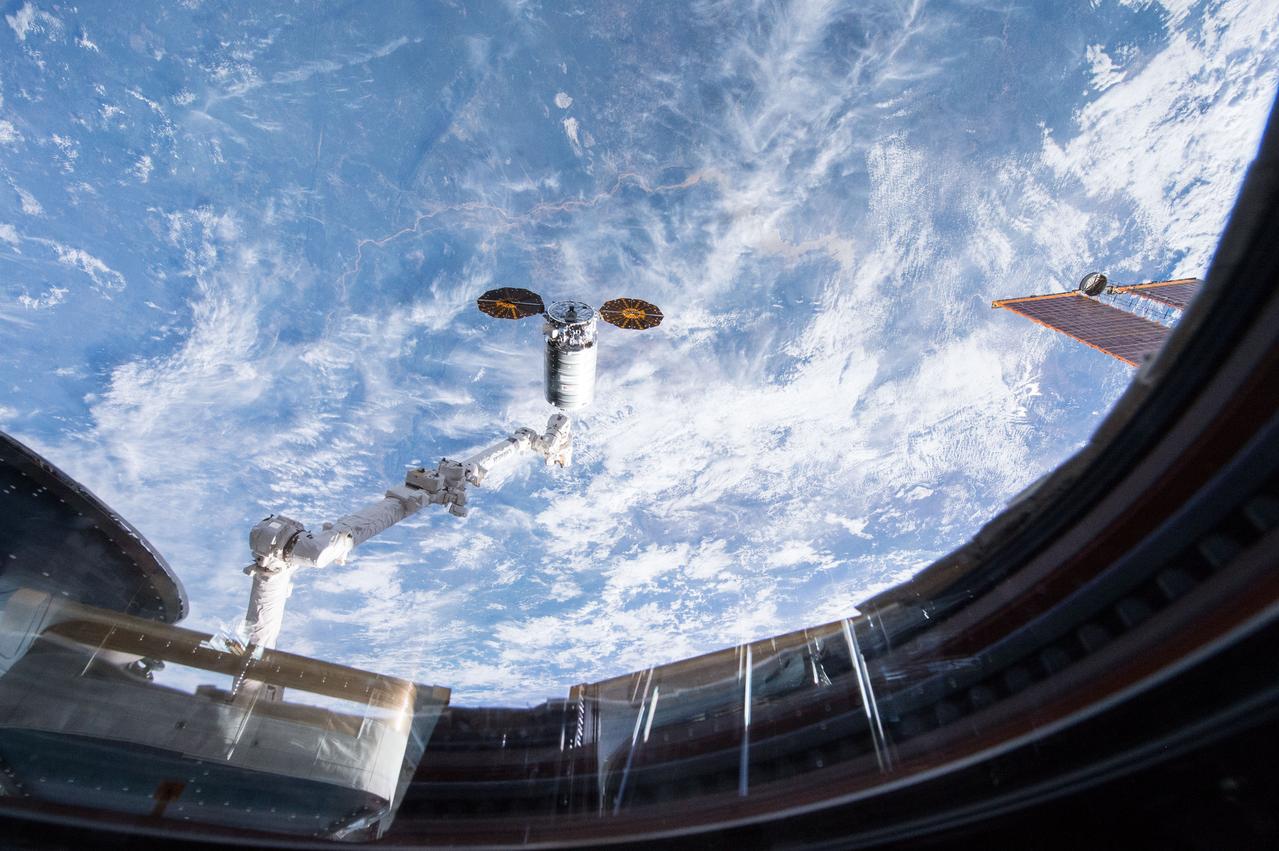
ISS047e021586 03/26/2016) --- Cygnus capture March 26, 2016. Expedition 47 robotic arm operator NASA astronaut Tim Kopra commanded the International Space Station’s Canadarm2 robotic arm to capture the Cygnus spacecraft .
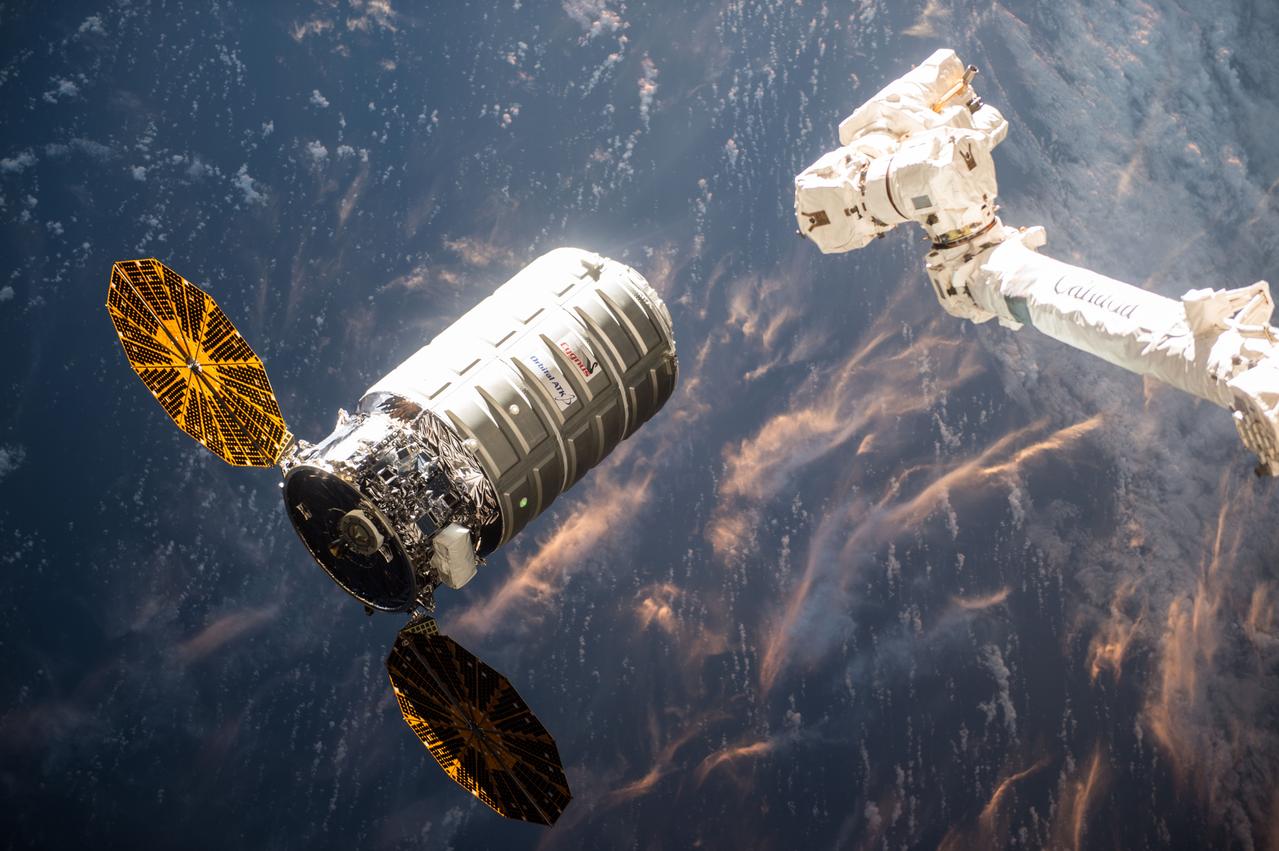
Expedition 47 robotic arm operator Tim Kopra of NASA commanded the International Space Station’s Canadarm2 robotic arm to release the Cygnus spacecraft at 9:30 a.m. EDT while the space station was flying above Paraguay. Earlier, ground controllers detached Cygnus from the station and maneuvered it into place for its departure. After Cygnus is a safe distance away, ground controllers at Glenn Research Center in Cleveland, Ohio will initiate the sequence for Saffire-1, and controllers at Orbital ATK in Dulles, Virginia, will activate the experiment. Cygnus will continue to orbit Earth for up to eight days as it transmits hi-resolution imagery and data from the Saffire experiment.
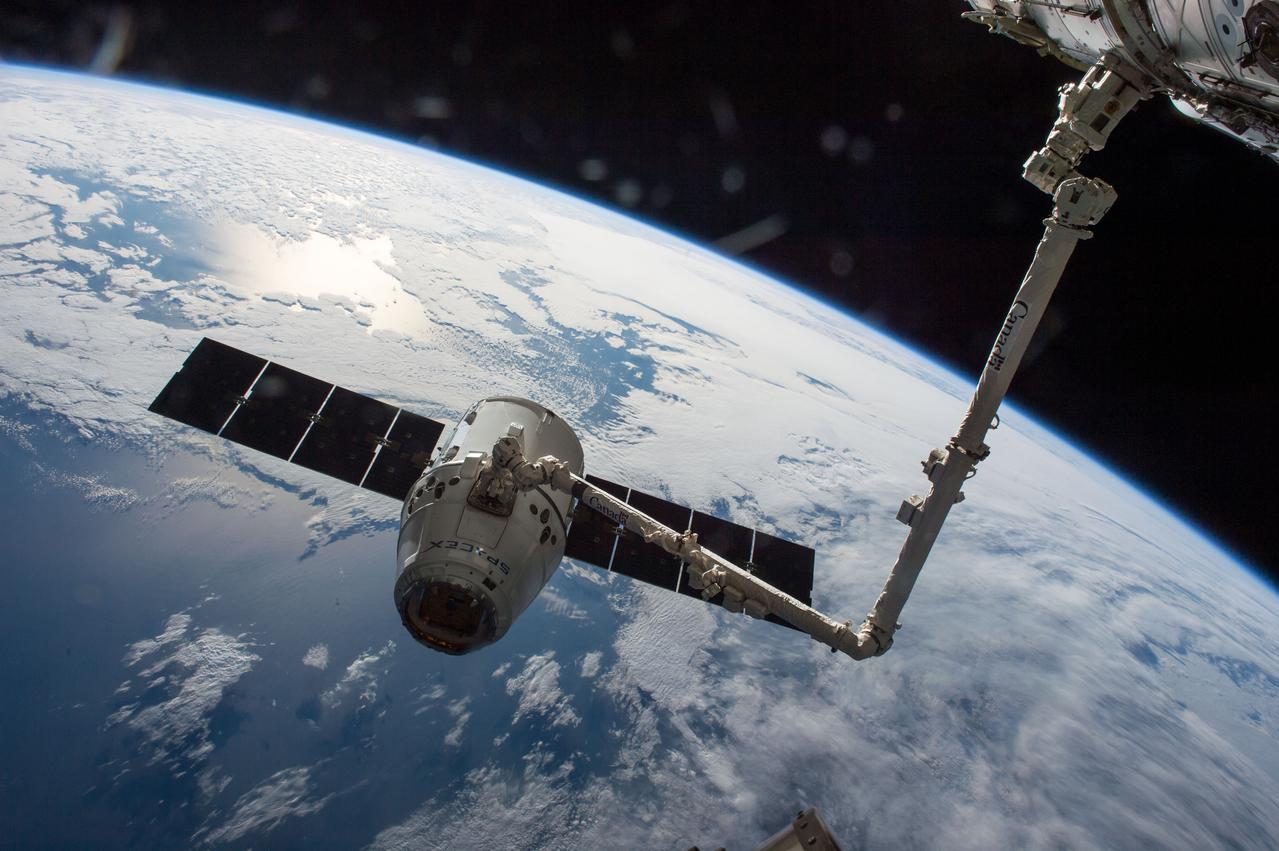
iss047e050978 (4/10/2016) --- The SpaceX Dragon cargo spaceship is grappled by the International Space Station’s Canadarm2. The spacecraft is delivering about 7,000 pounds of science and research investigations, including the Bigelow Expandable Activity Module, known as BEAM. Dragon’s arrival marked the first time two commercial cargo vehicles have been docked simultaneously at the space station. Orbital ATK’s Cygnus spacecraft arrived to the station just over two weeks ago. With the arrival of Dragon, the space station ties the record for most vehicles on station at one time – six.
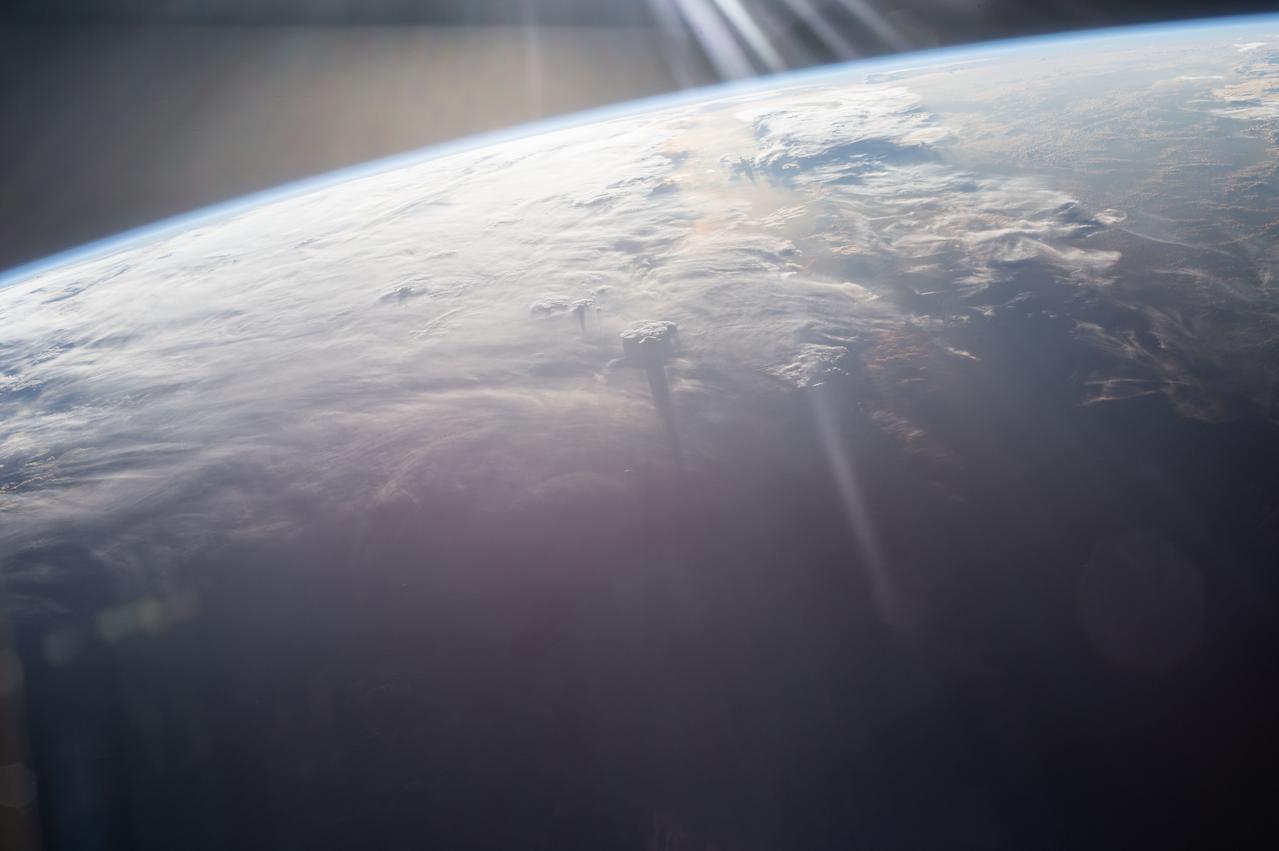
ISS047e021368 (03/27/2016) --- As morning comes the crew of the International Space Station are surrounded by the beauty of our blue planet while they pursue the science experiments that will will aid humankind.
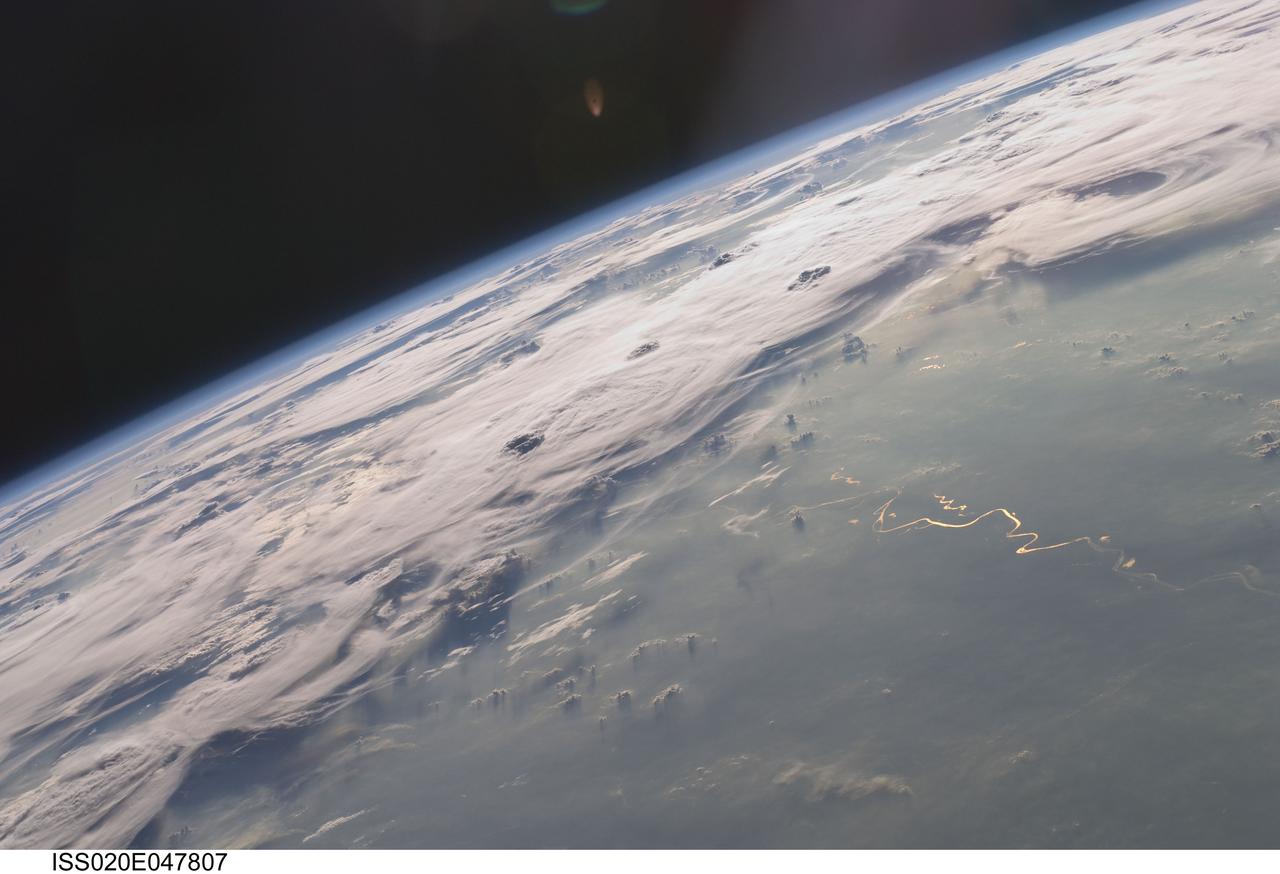
ISS020-E-047807 (6 Oct. 2009) --- Thunderstorms on the Brazilian horizon are featured in this image photographed by an Expedition 20 crew member on the International Space Station. A picturesque line of thunderstorms and numerous circular cloud patterns filled the view as the station crew members looked out at the limb and atmosphere (blue line on the horizon) of Earth. This region displayed in the photograph (top) includes an unstable, active atmosphere forming a large area of cumulonimbus clouds in various stages of development. The crew was looking west southwestward from the Amazon Basin, along the Rio Madeira, toward Bolivia when the image was taken. The distinctive circular patterns of the clouds in this view are likely caused by the aging of thunderstorms. Such ring structures often form during the final stages of a storm?s development as their centers collapse. Sunglint is visible on the waters of the Rio Madeira and Lago Acara in the Amazon Basin. Widespread haze over the basin gives the reflected light an orange hue. The Rio Madeira flows northward and joins the Amazon River on its path to the Atlantic Ocean. Scientists believe that a large smoke plume near the bottom center of the image may explain one source of the haze.

ISS047e021823 (03/26/2016) --- The Orbital ATK Cygnus cargo ship is seen on final approach to the International Space Station. The vehicle was captured at 6:51 a.m. EDT March 26 using the space station's Canadarm2 robotic arm by Expedition 47 Commander Tim Kopra. The unmanned cargo craft was then bolted to the Earth-facing port on the Unity module at 10:52 a.m. Orbital ATK’s fifth cargo delivery flight under its Commercial Resupply Services contract delivered over 7,700 pounds of cargo and included equipment to support some 250 experiments during Expeditions 47 and 48.
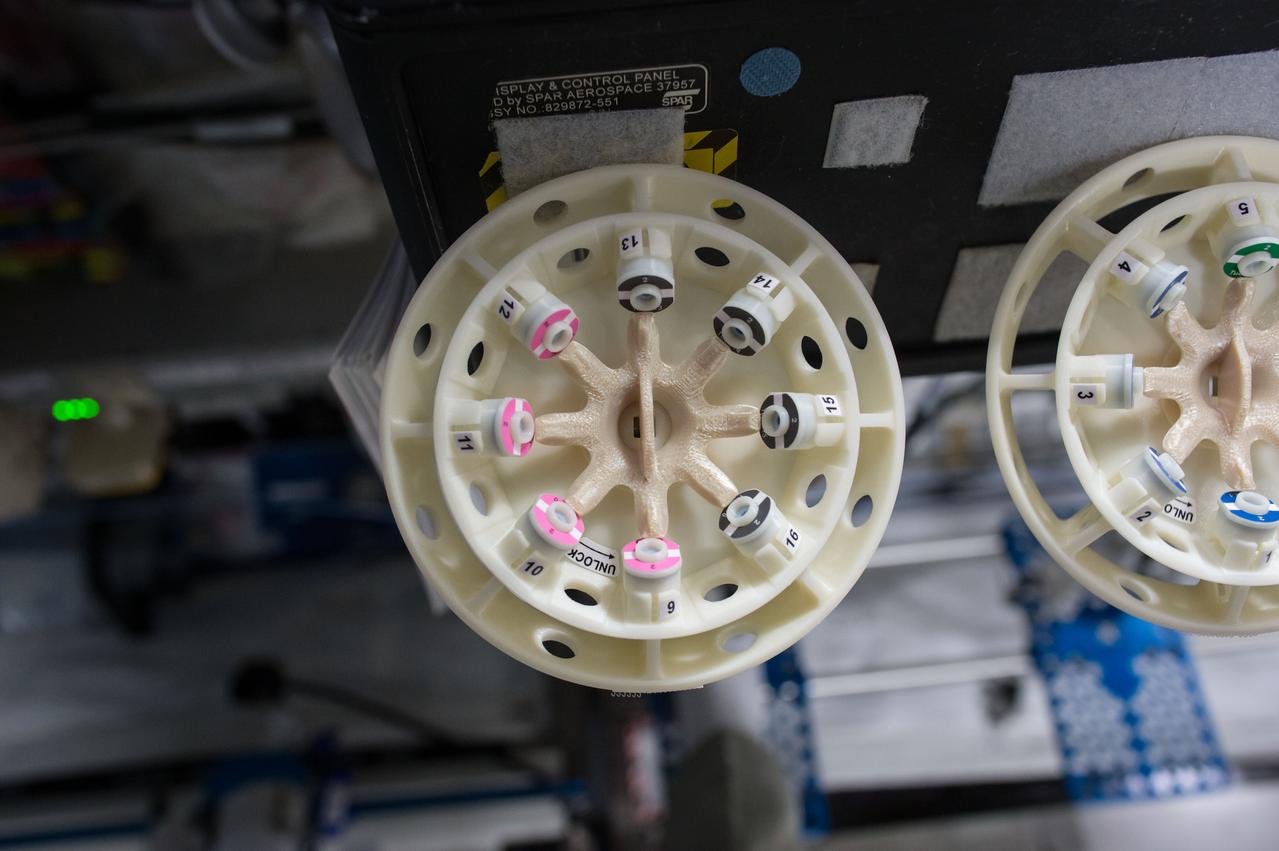
iss047e079333 (4/26/2016) --- A view during set up for the SmartCycler Session 2C Experiment, in the U.S. Laboratory. Wetlab RNA SmartCycler is a research platform for conducting real-time quantitative gene expression analysis aboard the International Space Station (ISS). The system enables spaceflight genomic studies involving a wide variety of biospecimen types in the unique microgravity environment of space.
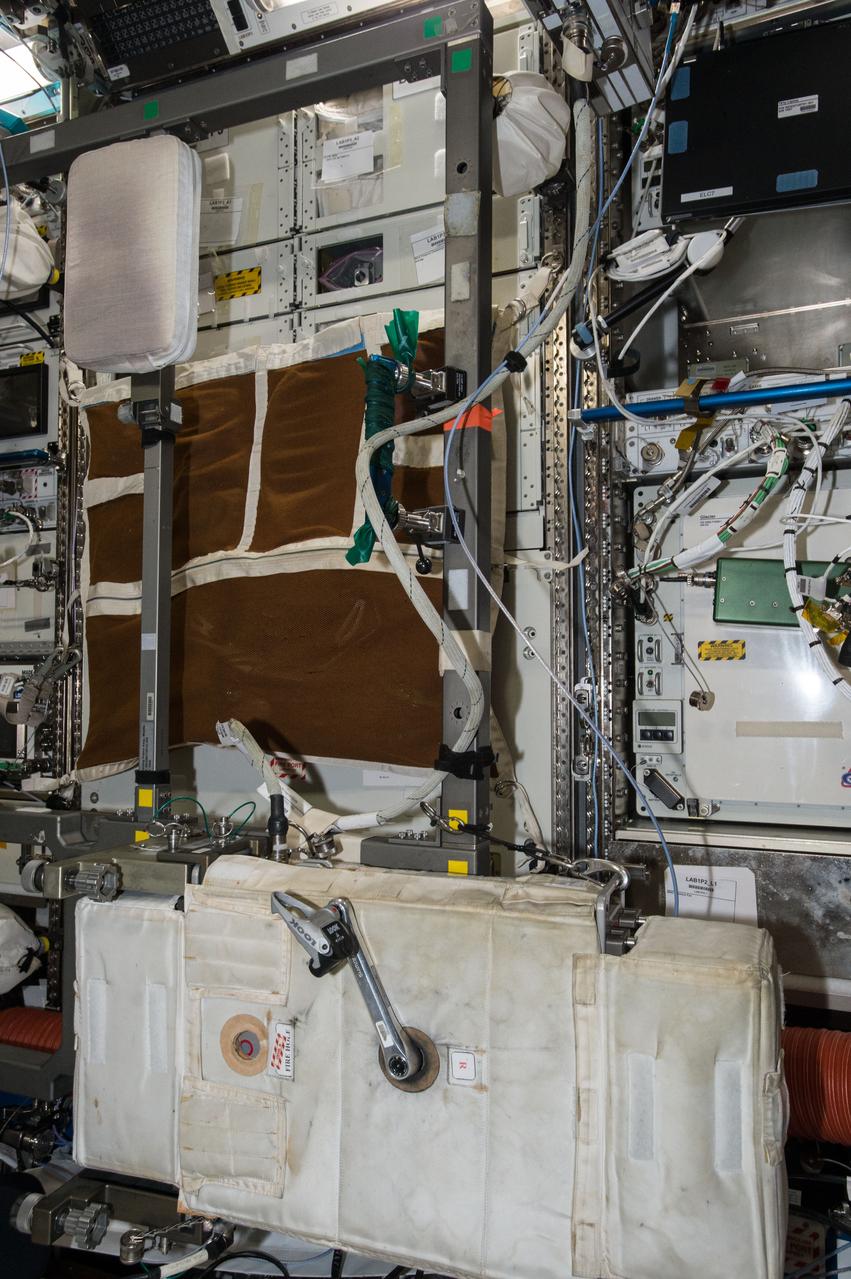
iss048e004552 (6/20/2016) --- Image taken to document re-installation of the Cycle Ergometer with Vibration Isolation and Stabilization (CEVIS) at LAB1P3 following inflight maintenance (IFM) on the Direct Current to Direct Current Converter Unit-1 (DDCU-1) Rack. Image was taken in the Destiny U.S. Laboratory.
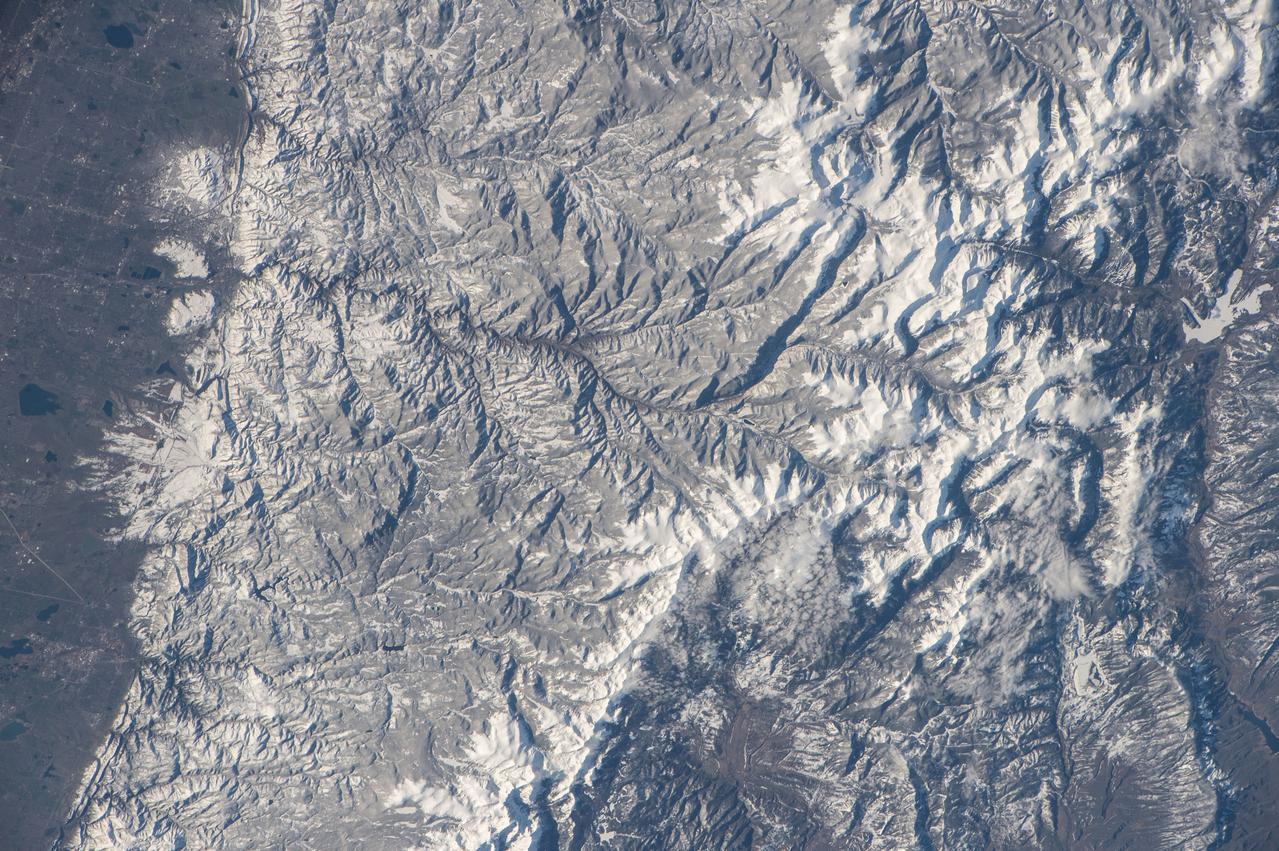
iss047e091789 (May 2, 2016) --- Rocky Mountain National Park in Colorado is pictured from the International Space Station as it orbited 252 miles above.
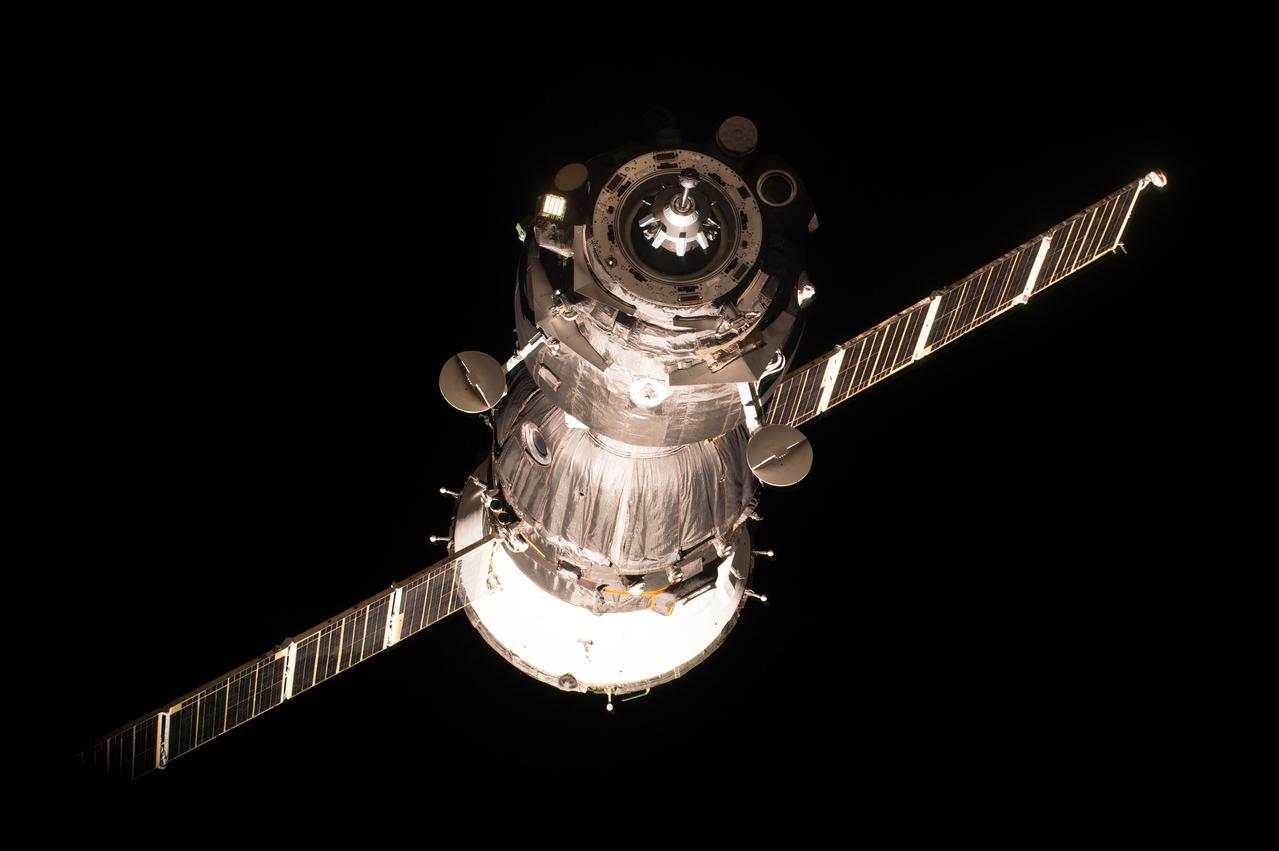
ISS048e024550 (07/09/2016) This image was acquired after the launch of the Expedition 48-Crew on the Soyuz MS-01 spacecraft from the Baikonur Cosmodrome in Kazakhstan. The Soyuz spacecraft is approaching the International Space Station with new crew members Kate Rubins of NASA, Anatoly Ivanishin of Roscosmos, and Takuya Onishi of the Japan Aerospace Exploration Agency (JAXA).
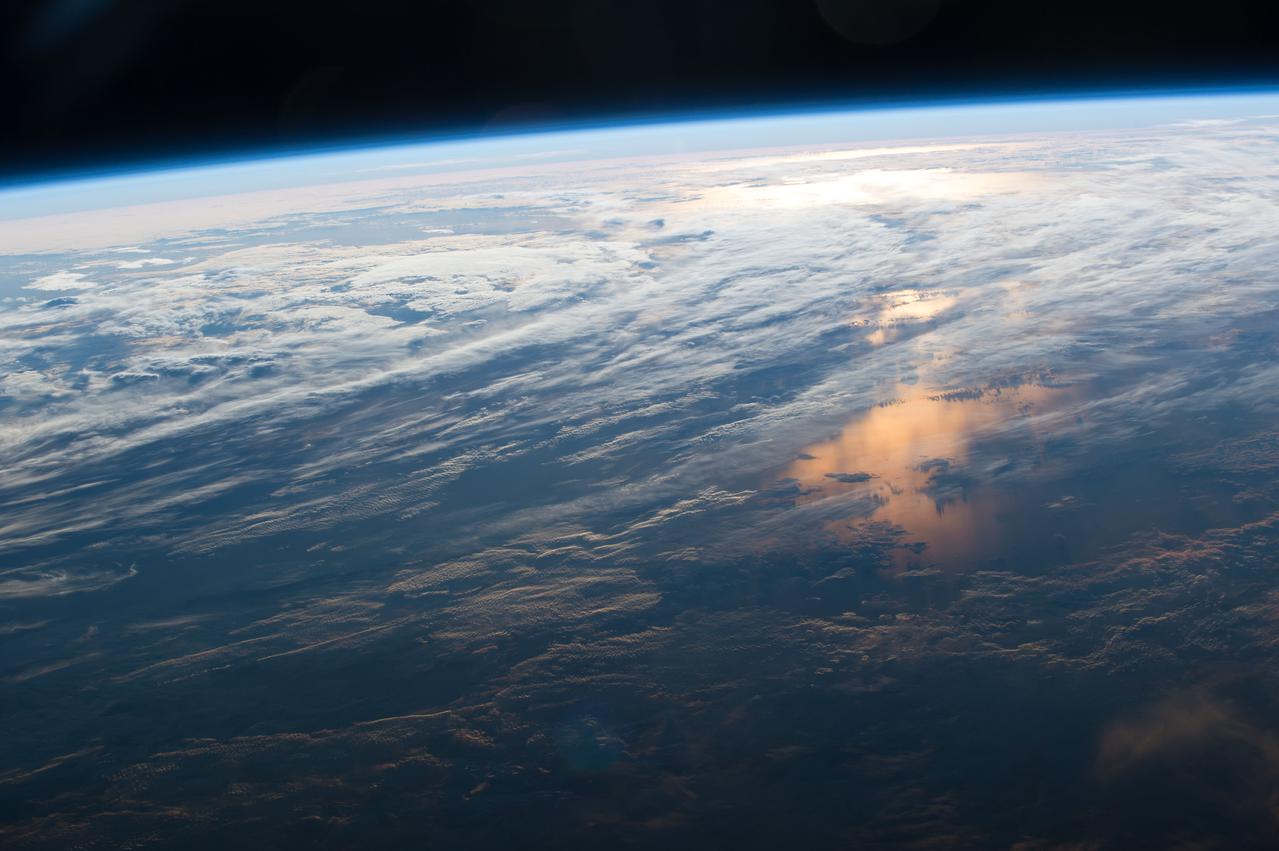
ISS048e002079 (06/19/2016) --- A new day dawns for the crew of Expedition 48 on board the International Space Station on June 19, 2016. This inspiring image shows the golden rays of the the Sun streaming through the multiple layers of clouds to touch the Earth giving it abundant life.

View of noctilucent clouds over Earth.
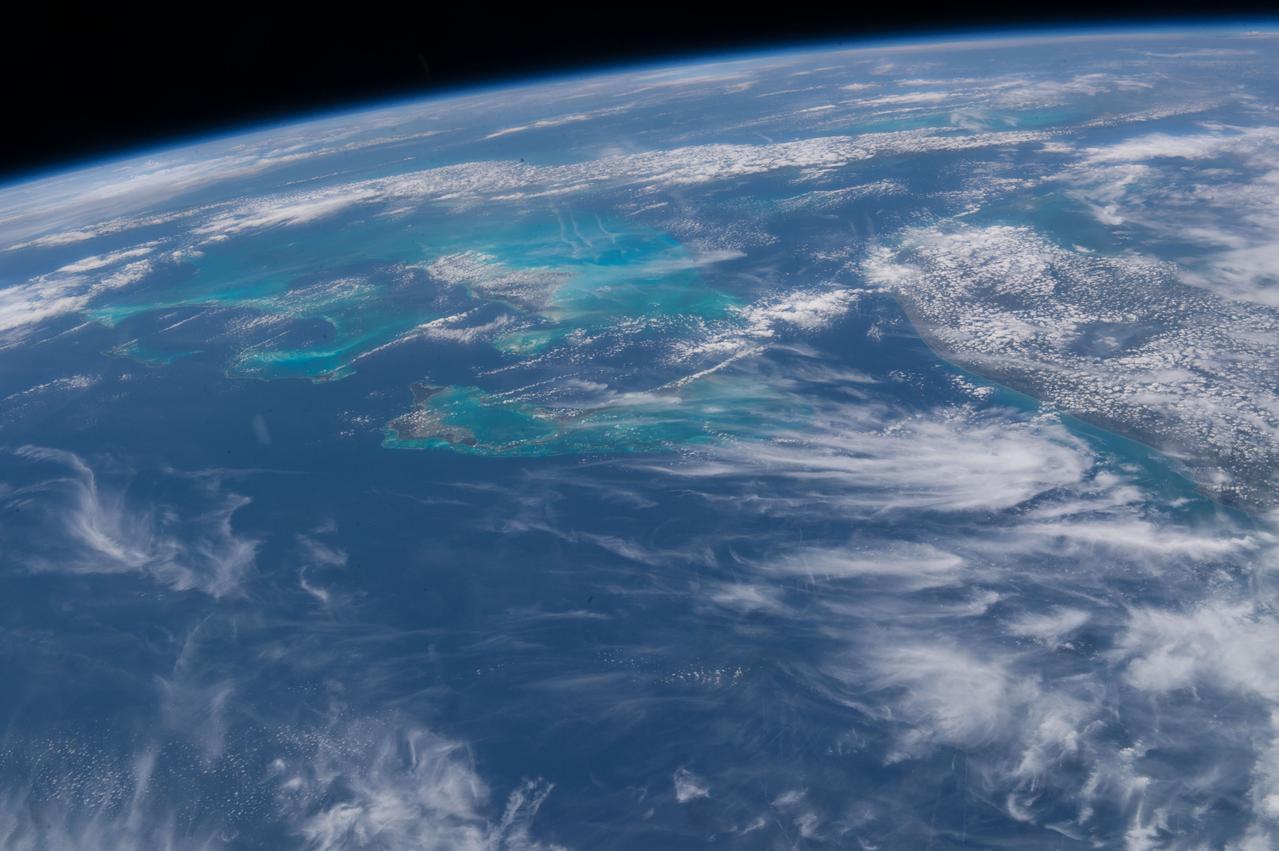
ISS047e069406 (04/20/2016) ---Earth observation image taken by the Expedition 47 crew aboard the International Space Station. This is an oblique south-looking view of the main Bahama island chain. Cuba is across the entire top of the image, the Florida Peninsula on the right margin. In the Bahamas, the main Andros island is just distinguishable under cloud upper left of center. Under less cloud is the Abaco Islands in the foreground (middle of pic nearest camera left of center.)
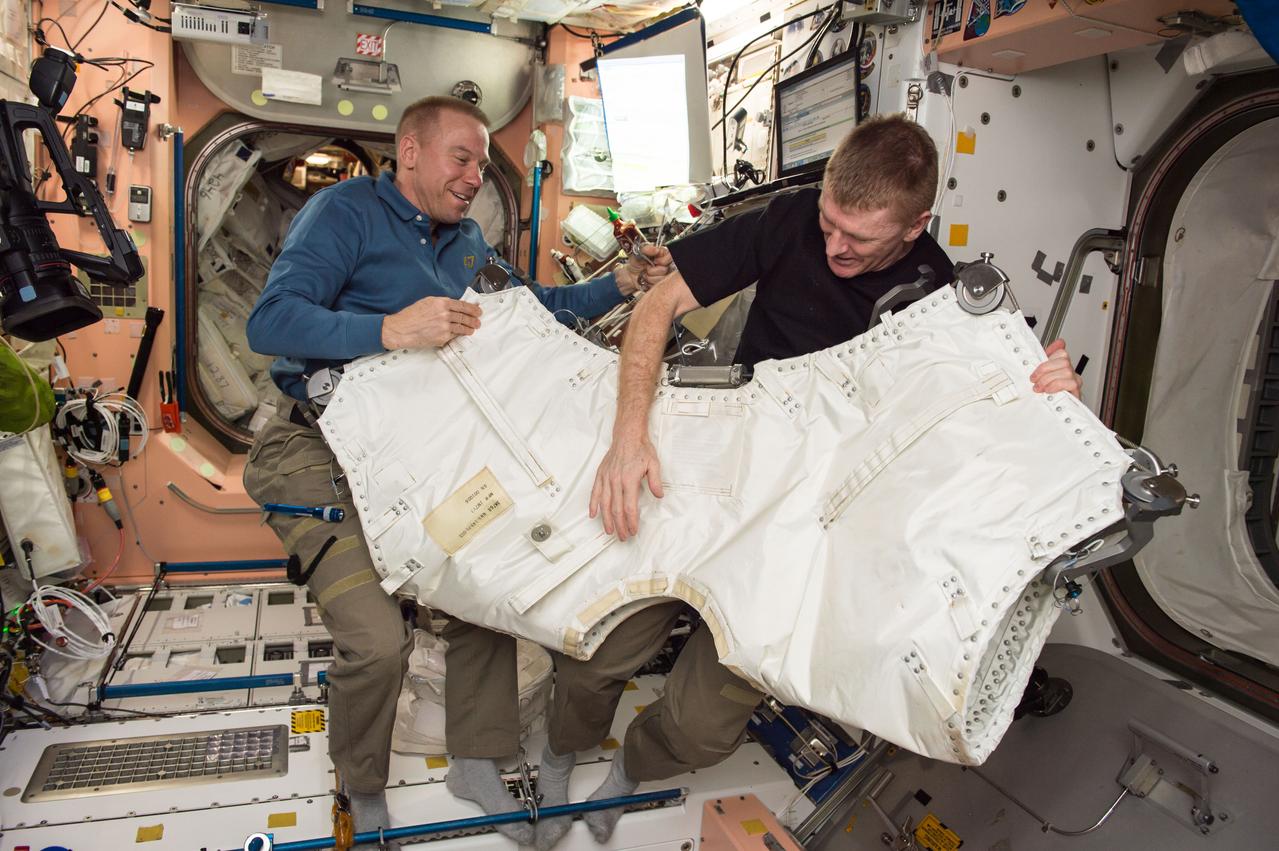
ISS047e028518 (03/26?2016) --- NASA astronaut Tim Kopra, Expedition 47 Commander, and ESA (European Space Agency) astronaut Tim Peake, Expedition 47 Flight Engineer gather hardware to outfit the area between Orbital ATK’s Cygnus cargo vehicle and the Unity Module.
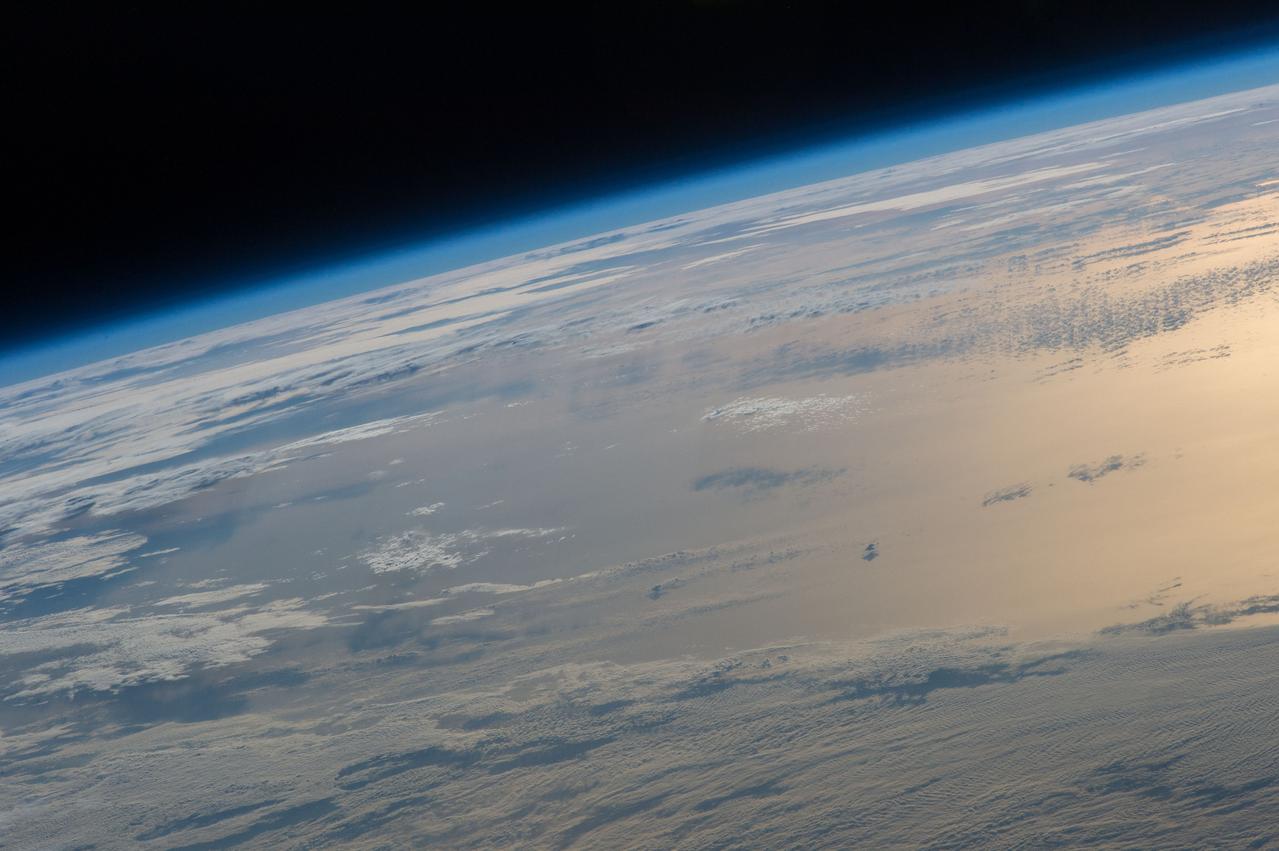
ISS047e020123 (03/25/2016) --- A golden reflection of the rising sun on the Earths oceans greets the crew of Expedition 47 on board the International Space station. Another day begins for the crew in their pursuit of science that will aid humankind.
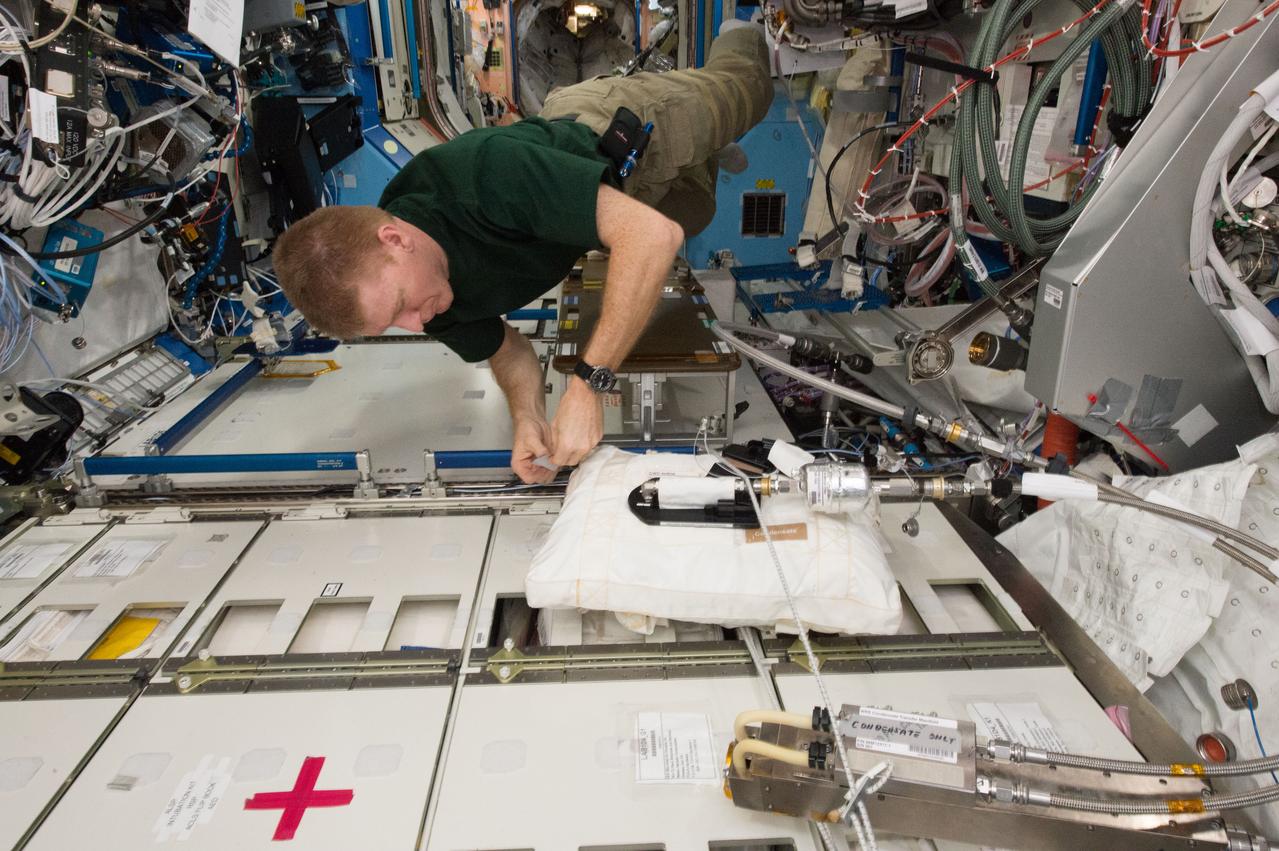
ISS047e013845 (03/22/2016) --- ESA (European Space Agency) astronaut Tim Peake works on the Water Processor Assembly (WPA) aboard the International Space Station. The WPA is is responsible for treating waste water aboard the station for recycling back into potable water.
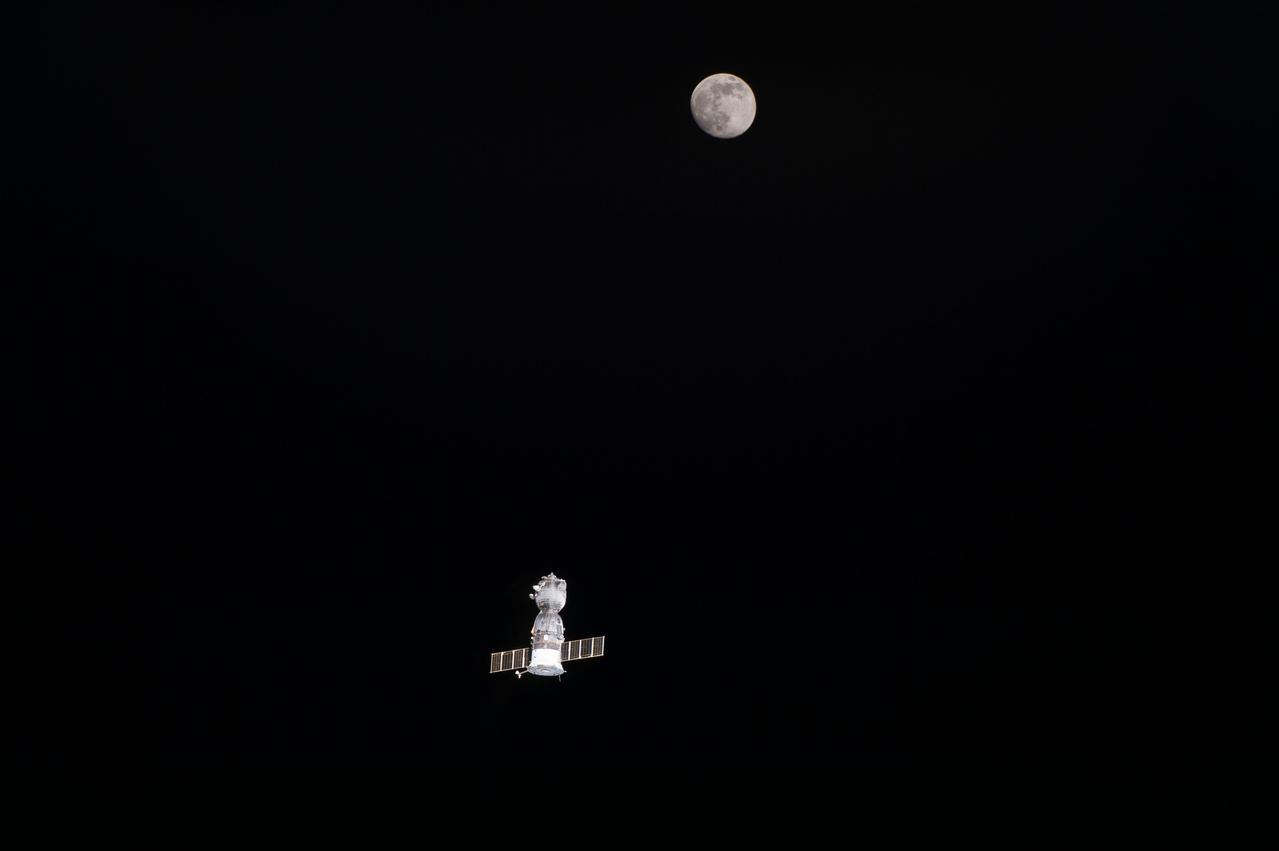
View of the departing Soyuz TMA-19M spacecraft and the nearly full Moon.
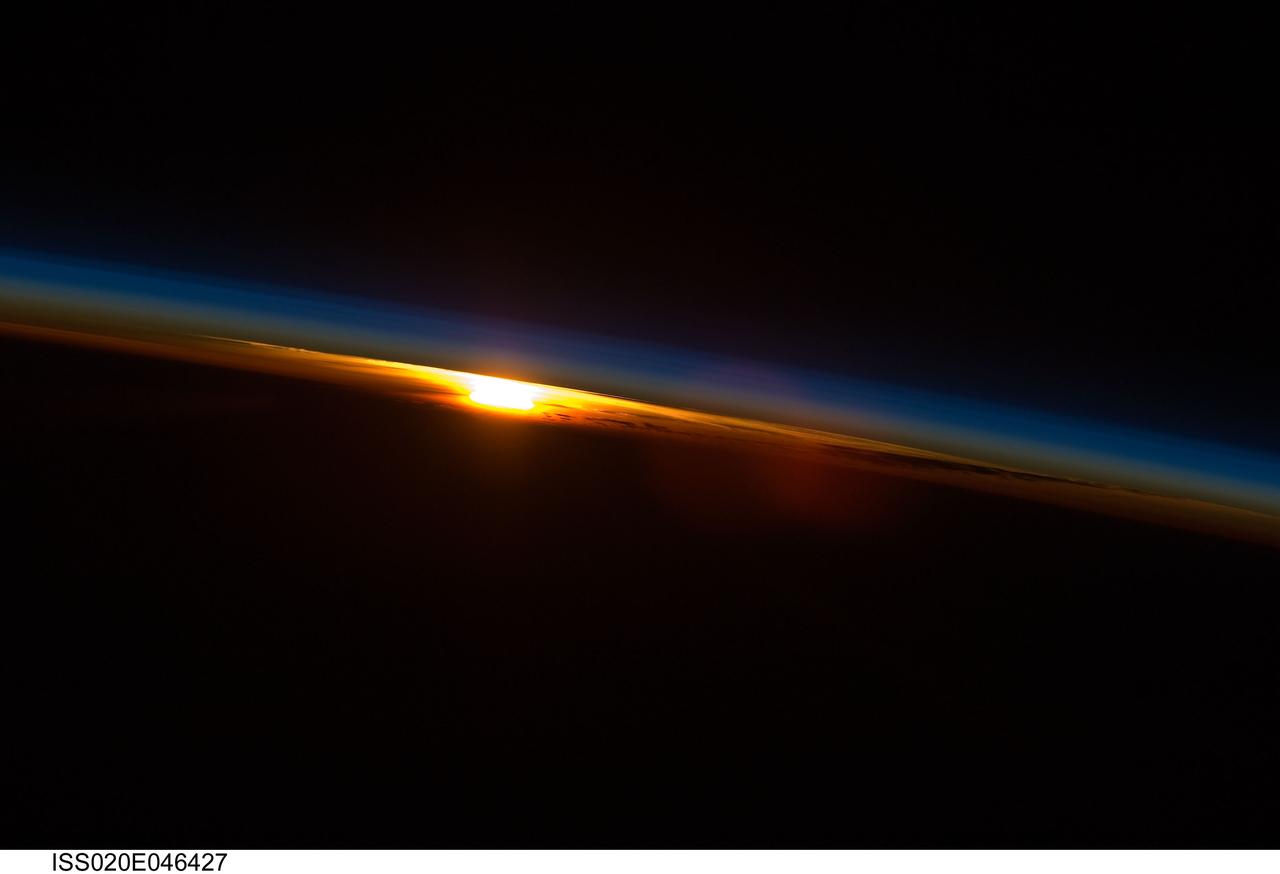
iss020e046427 (Oct. 4, 2009) --- The sun sets below Earth's horizon illuminating the atmosphere with its last rays in this photograph from the International Space Station as it orbited 216 miles above near the Indian Ocean coast of South Africa.
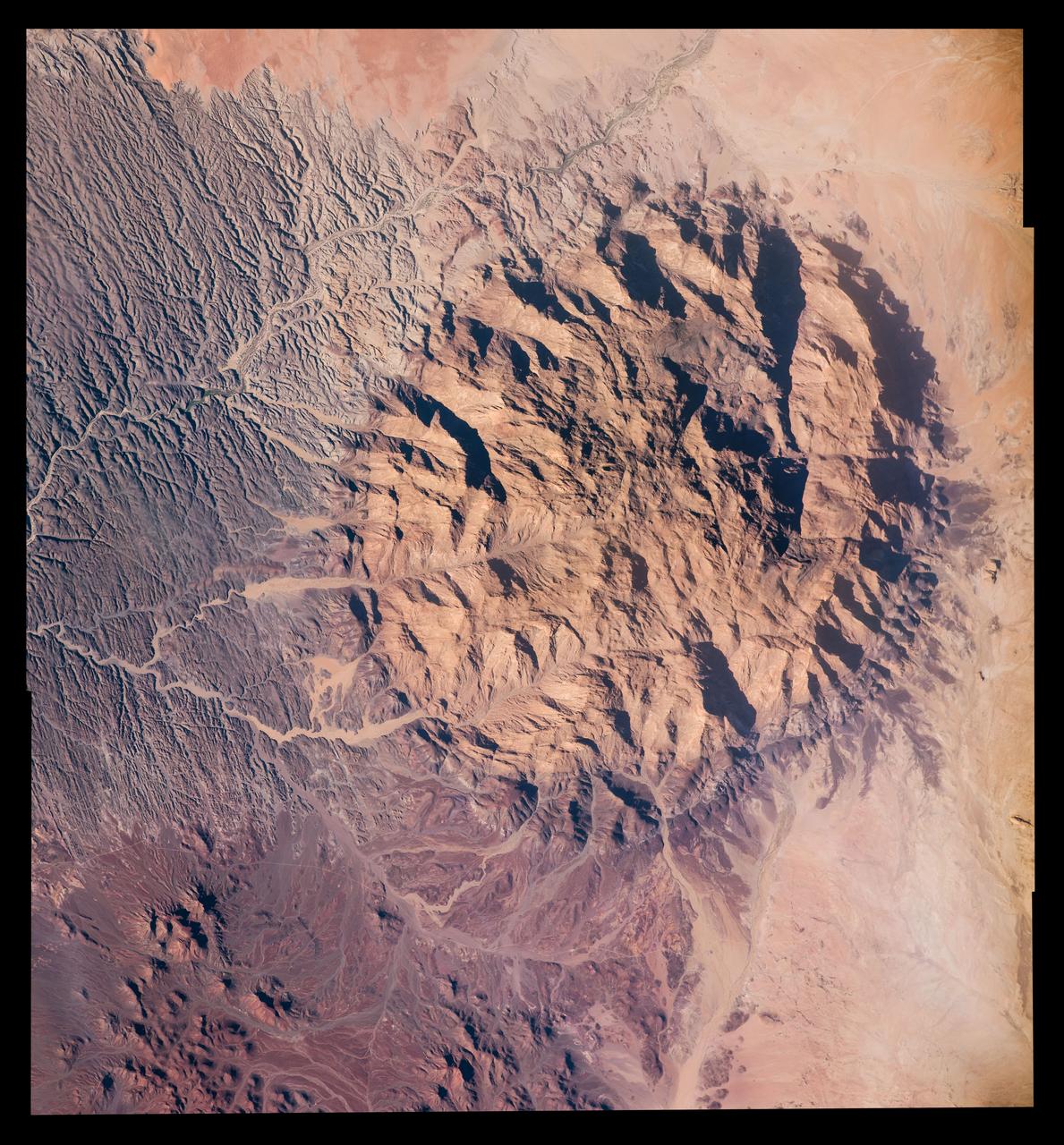
Expedition 47 Earth observation composite created with iss047e028742 - iss047e028744 135A2099 – 135A2101 Unique structure in Namibia Mt Brandberg Nature Reserve
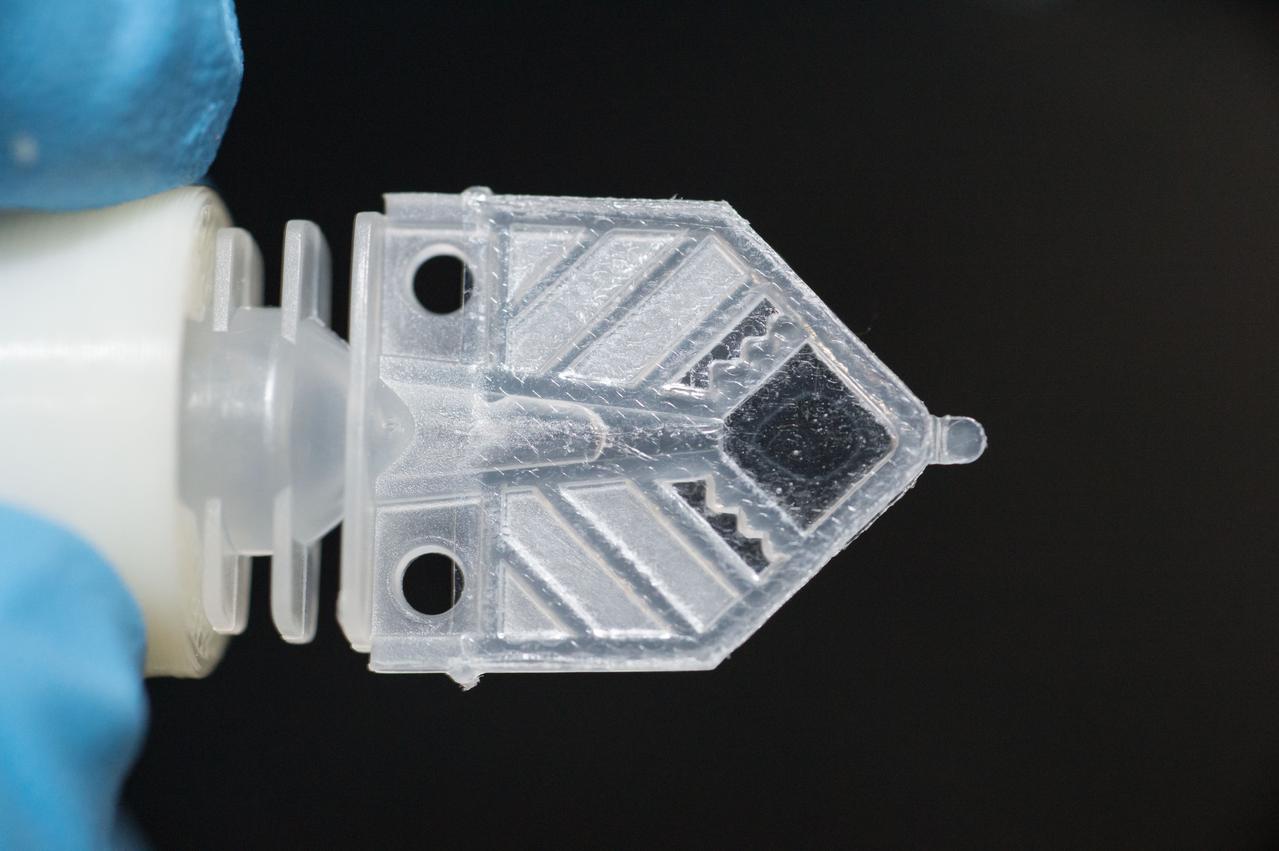
iss047e085693 (4/29/2016) --- Photographic documentation of Wet Lab RNA Sample to be placed into SmartCycler for data collection. Wetlab RNA SmartCycler is a research platform for conducting real-time quantitative gene expression analysis aboard the international Space Station (ISS). The system enables spaceflight genomic studies involving a wide variety of biospecimen types in the unique microgravity environment of space.
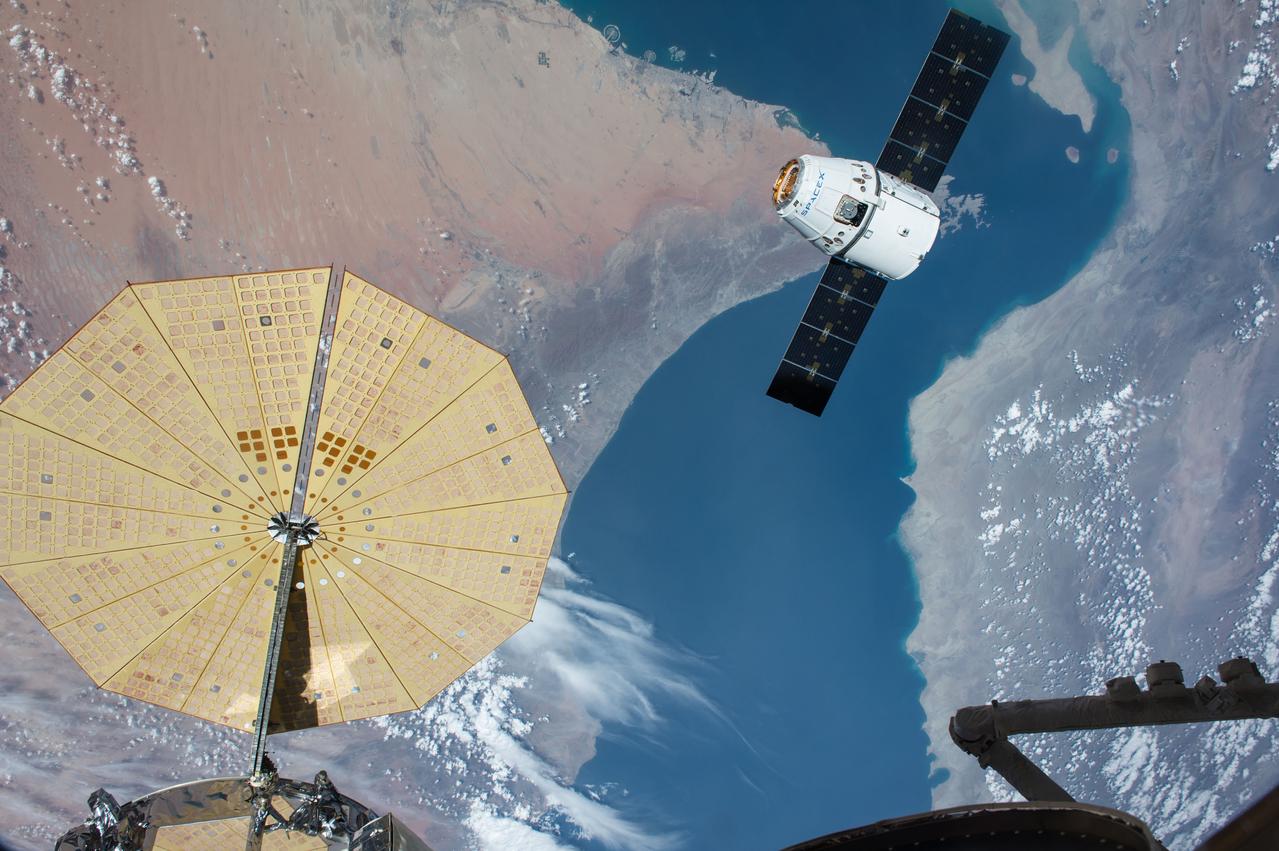
iss047e050943 (4/10/2016) --- The SpaceX Dragon cargo spaceship begins the final approach to the International Space Station. On the left, the solar arrays of Orbital ATK’s Cygnus cargo craft can be seen. Dragon’s arrival marked the first time two commercial cargo vehicles have been docked simultaneously at the space station. Orbital ATK’s Cygnus spacecraft arrived to the station just over two weeks ago. With the arrival of Dragon, the space station ties the record for most vehicles on station at one time – six. The spacecraft is delivering about 7,000 pounds of science and research investigations, including the Bigelow Expandable Activity Module, known as BEAM.
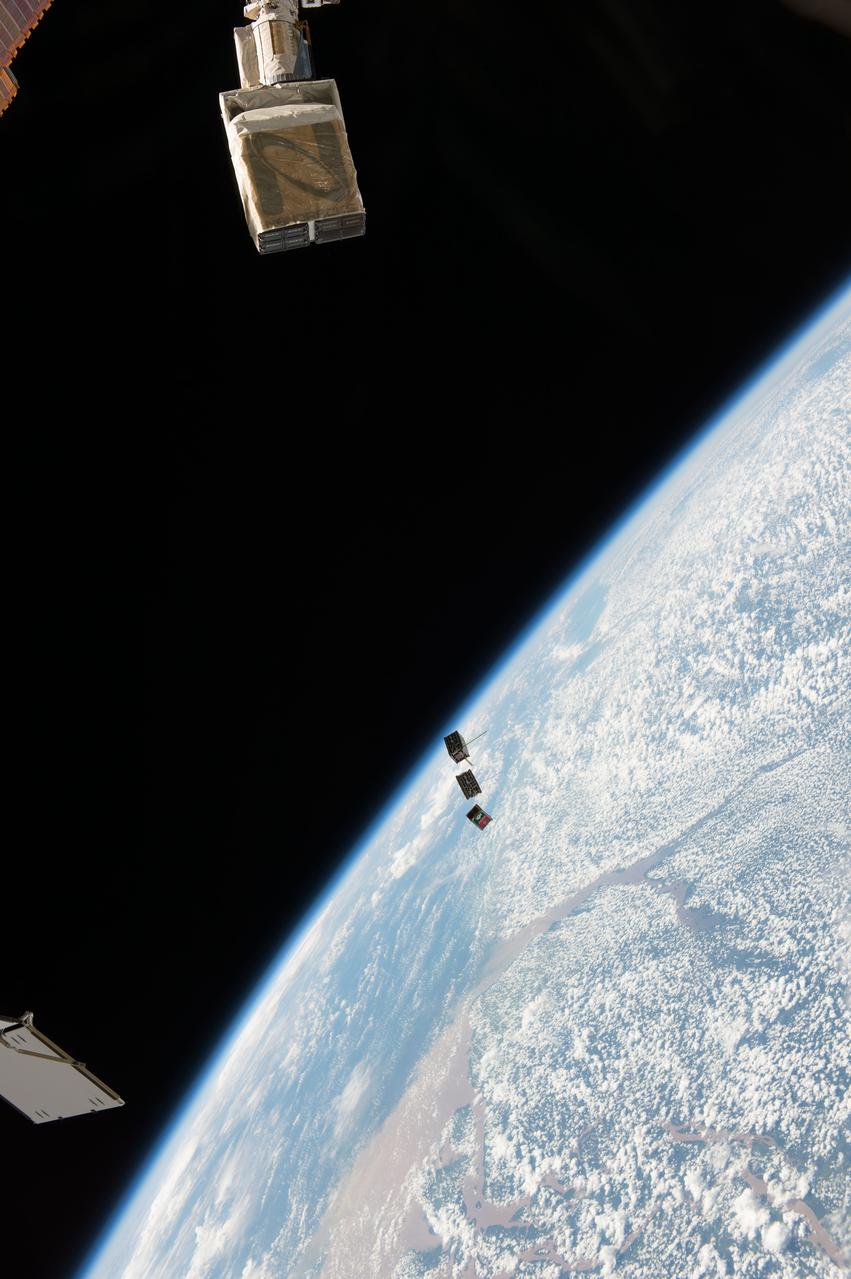
iss047e120450 (5/16/2016) --- Photographic documentation of NanoRacks CubeSat Deployer Number 8 Deployment Operations. The tiny four-inch and about three-pound cube satellite named St. Thomas More School Cathedral Satellite-1 (STMSat-1) is delivered by a resupply rocket to the International Space Station (ISS) where it is deployed by an ISS NanoRacks launcher into its own orbit to capture images and transmit them back to the schools around the world for research and teaching purposes in math and science.

iss047e126086 (5/20/2016) --- View during the meteor setup and installation, in the U.S. Laboratory - installed in Window Observational Research Facility (WORF). The Meteor investigation provides the first space-based measurement of meteor flux. It also allows for the monitoring of carbon-based compounds. Continuous measurement of meteor interactions with the Earth’s atmosphere could also spot previously unforeseen meteor showers.
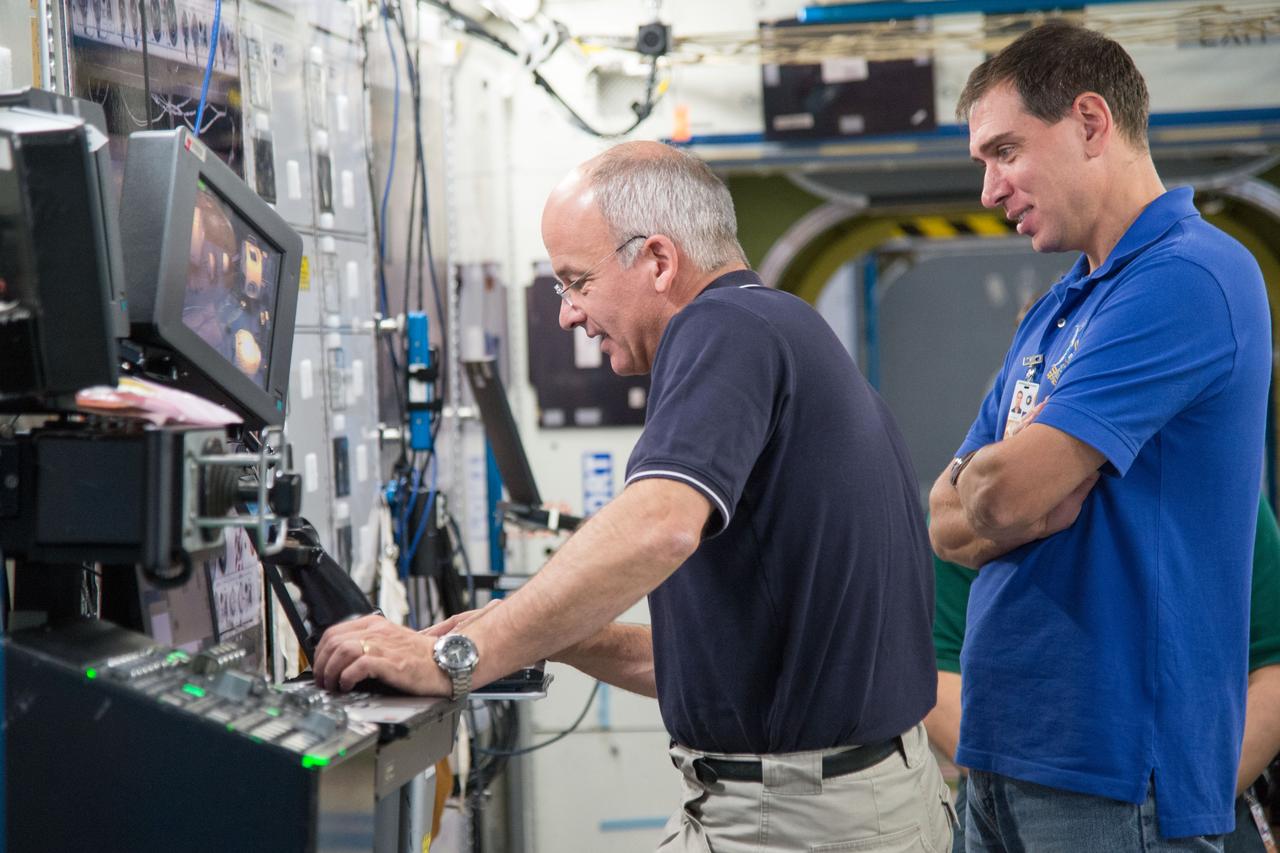
DATE: 9-24-14 LOCATION: Bldg. 9NW - ISS Mockups. SUBJECT: Expedition 48 crew members (Soyuz 46) Aleksey Ovchinin, Oleg Skripochka and Jeff Williams during Routine Ops training in Space Vehicle Mockup Training Facilities (SVMTF) ISS mockups with instructor John Ray. PHOTOGRAPHER: Lauren Harnett
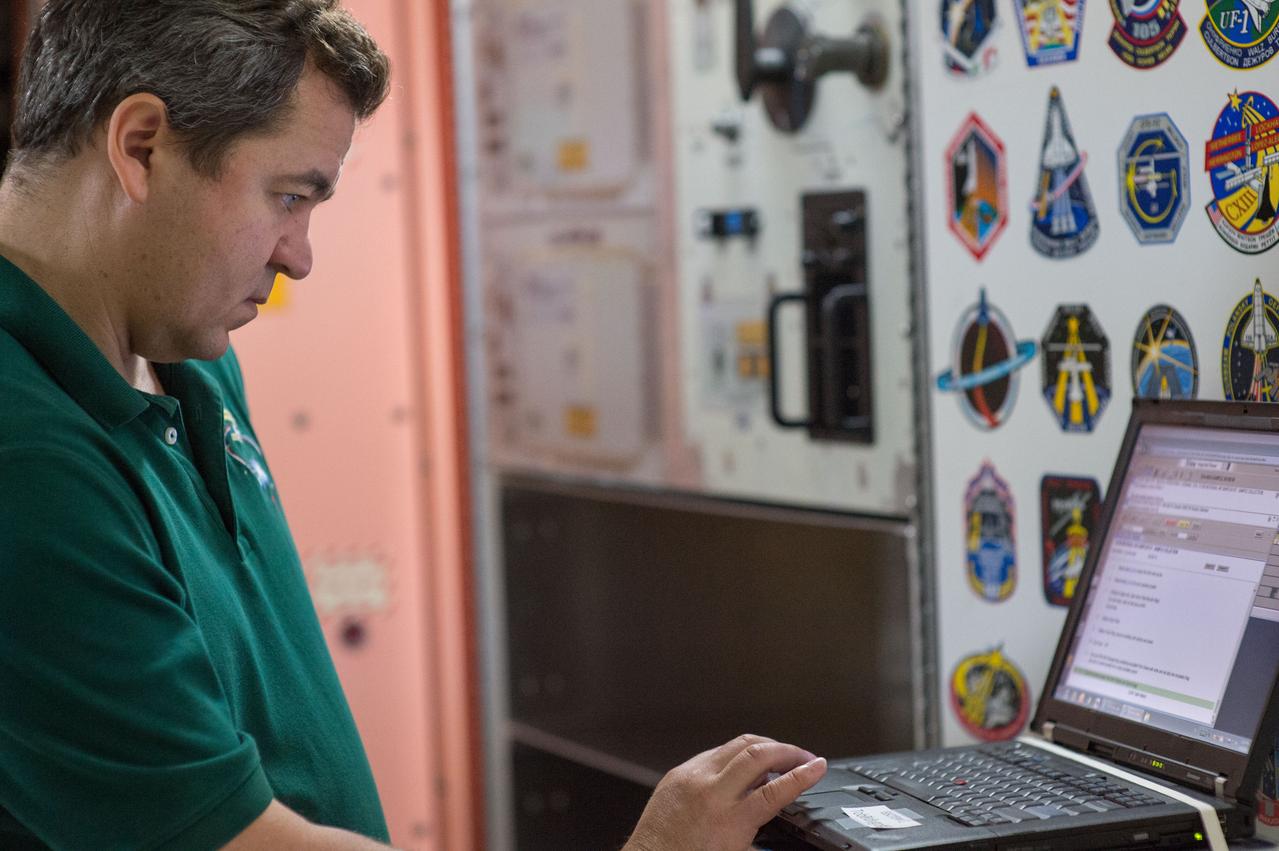
DATE: 9-24-14 LOCATION: Bldg. 9NW - ISS Mockups. SUBJECT: Expedition 48 crew members (Soyuz 46) Aleksey Ovchinin, Oleg Skripochka and Jeff Williams during Routine Ops training in Space Vehicle Mockup Training Facilities (SVMTF) ISS mockups with instructor John Ray. PHOTOGRAPHER: Lauren Harnett