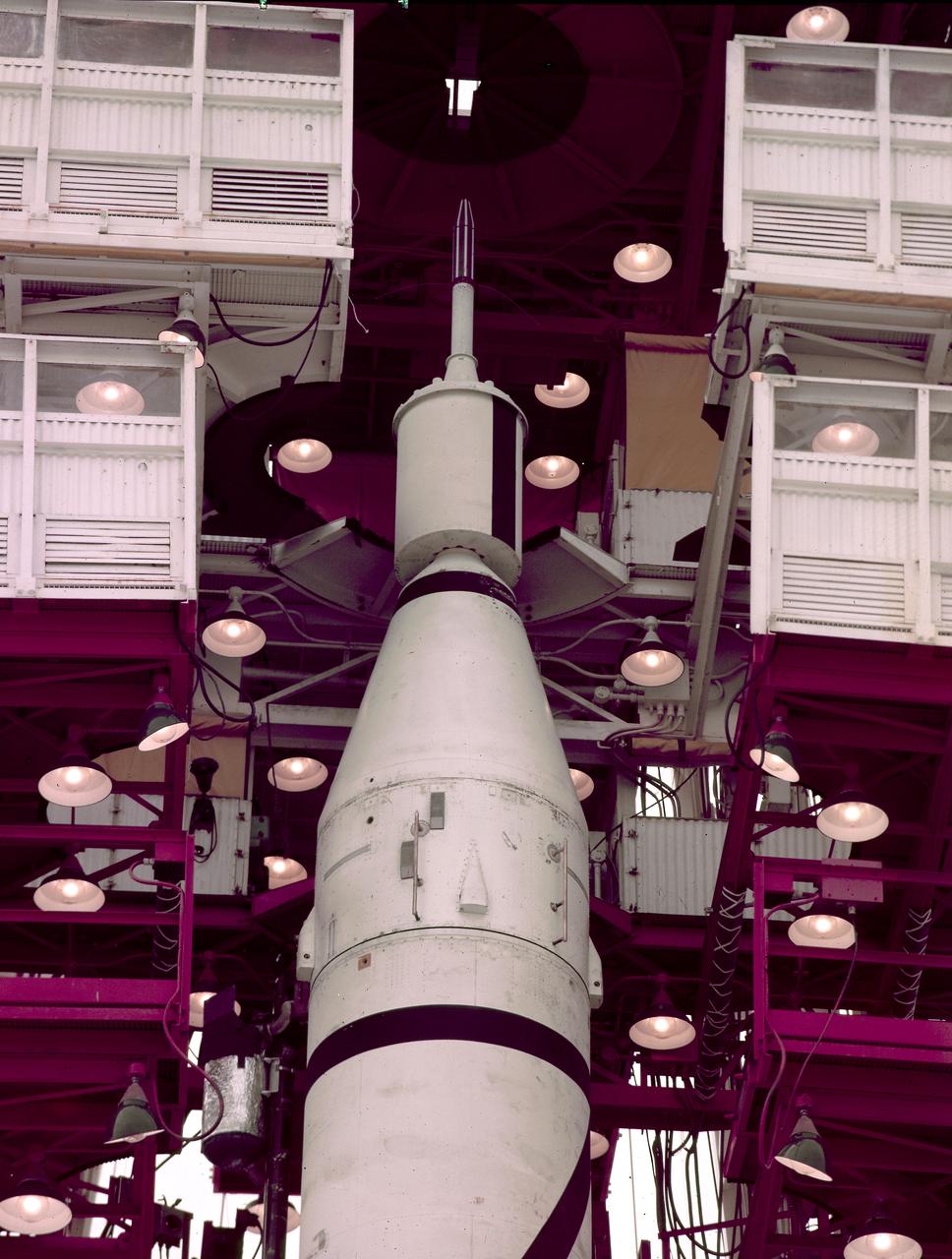
Explorer 1 atop a Jupiter-C in gantry. Jupiter-C carrying the first American satellite, Explorer 1, was successfully launched on January 31, 1958. The Jupiter-C launch vehicle consisted of a modified version of the Redstone rocket's first stage and two upper stages of clustered Baby Sergeant rockets developed by the Jet Propulsion Laboratory and later designated as Juno boosters for space launches
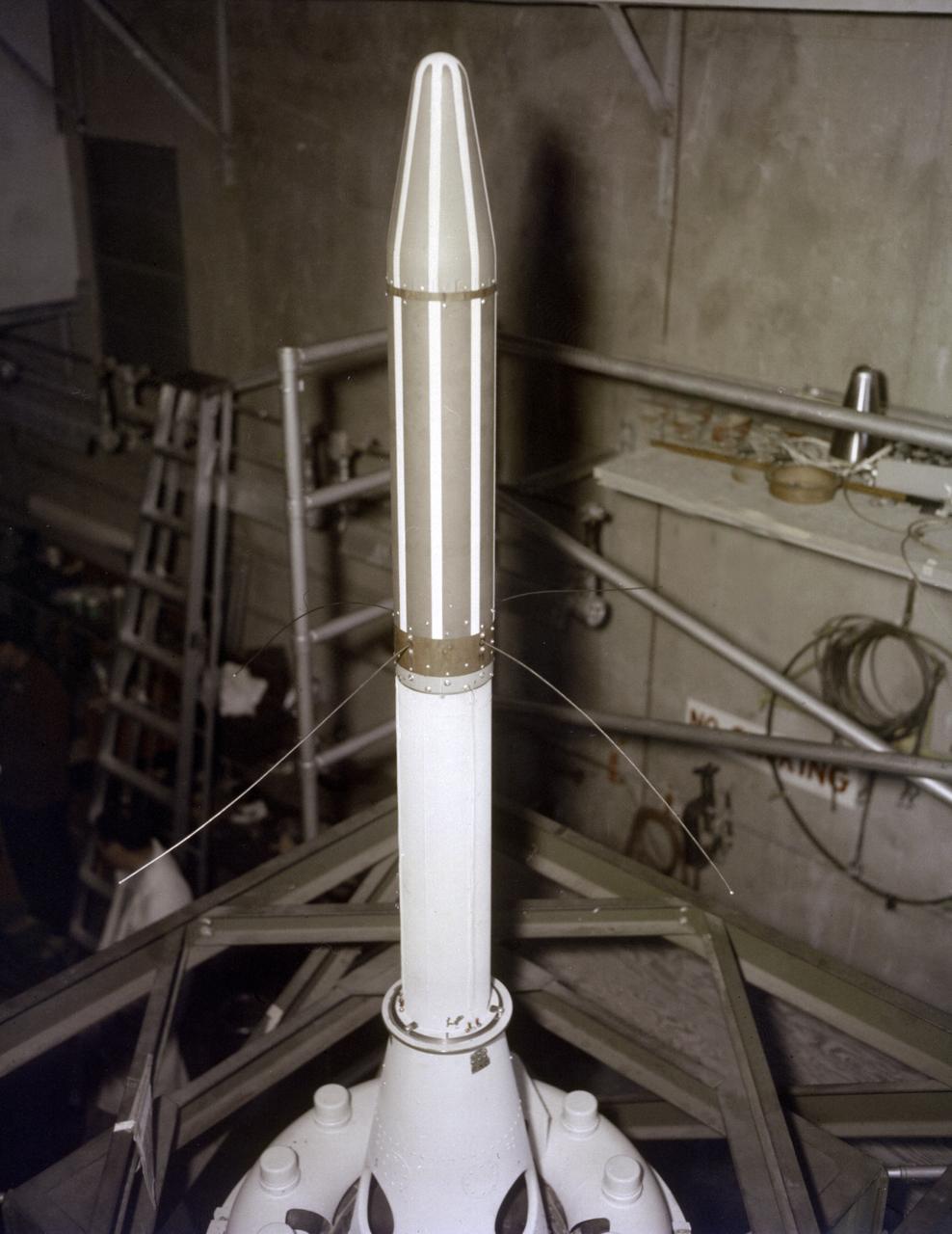
Explorer 1 satellite. This photo was taken during the installation of Explorer-1, the first United States' Earth-orbiting satellite, to its launch vehicle, Jupiter-C, in January 1958
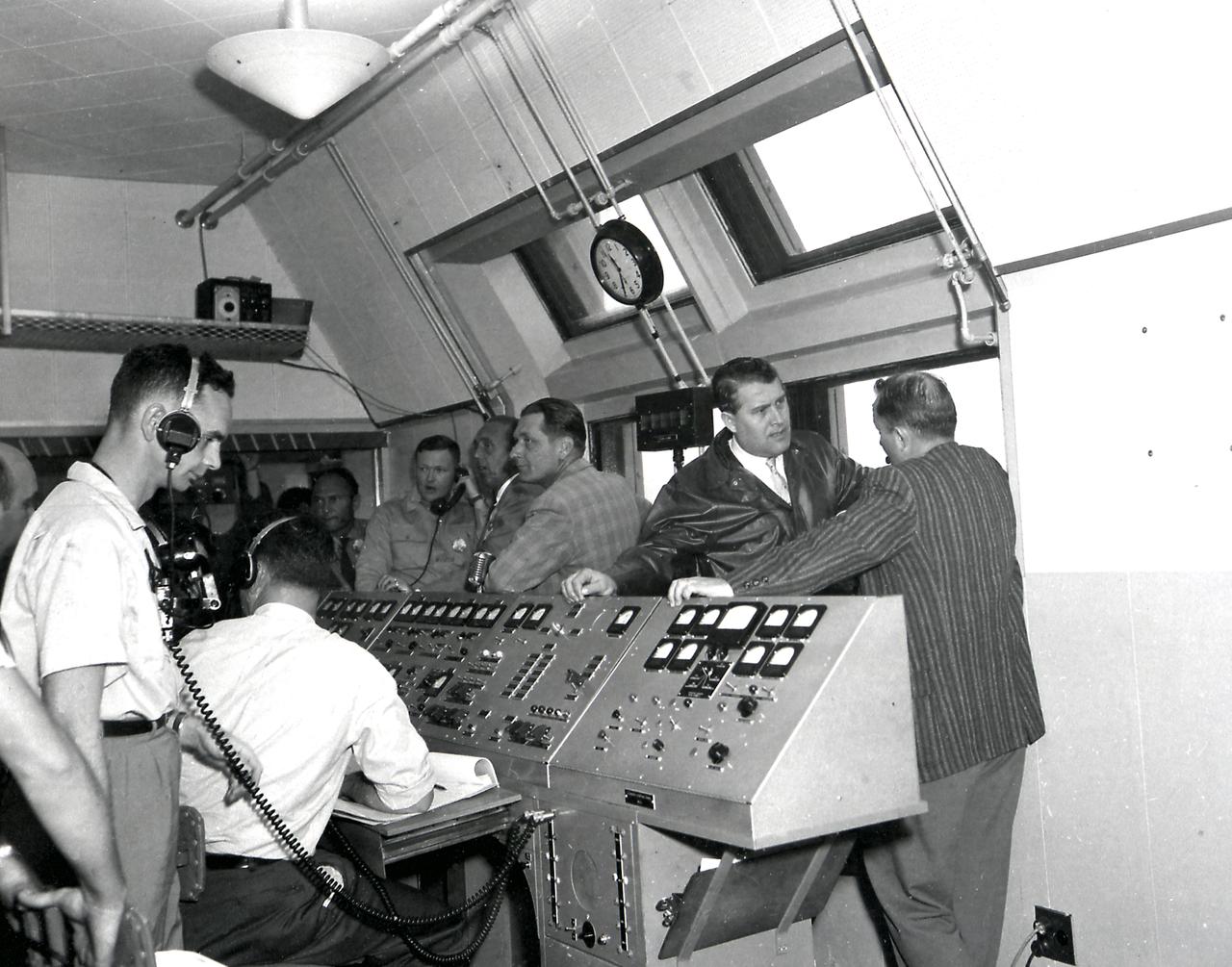
Dr. von Braun inside the blockhouse during the launch of the Jupiter C/Explorer III in March 1958.
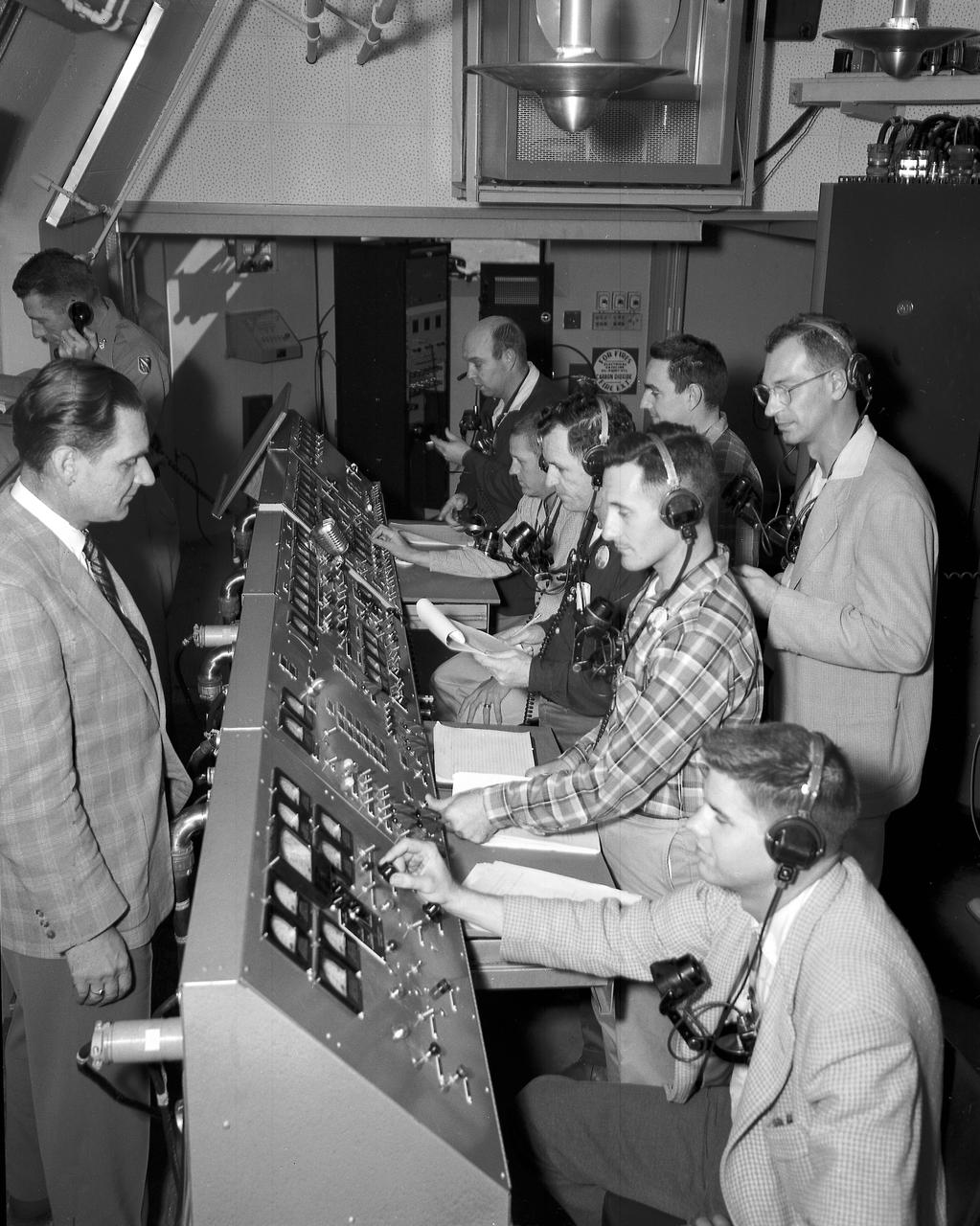
Activities in a blockhouse during the launch of Jupiter-C/Explorer 1 on January 31, 1958
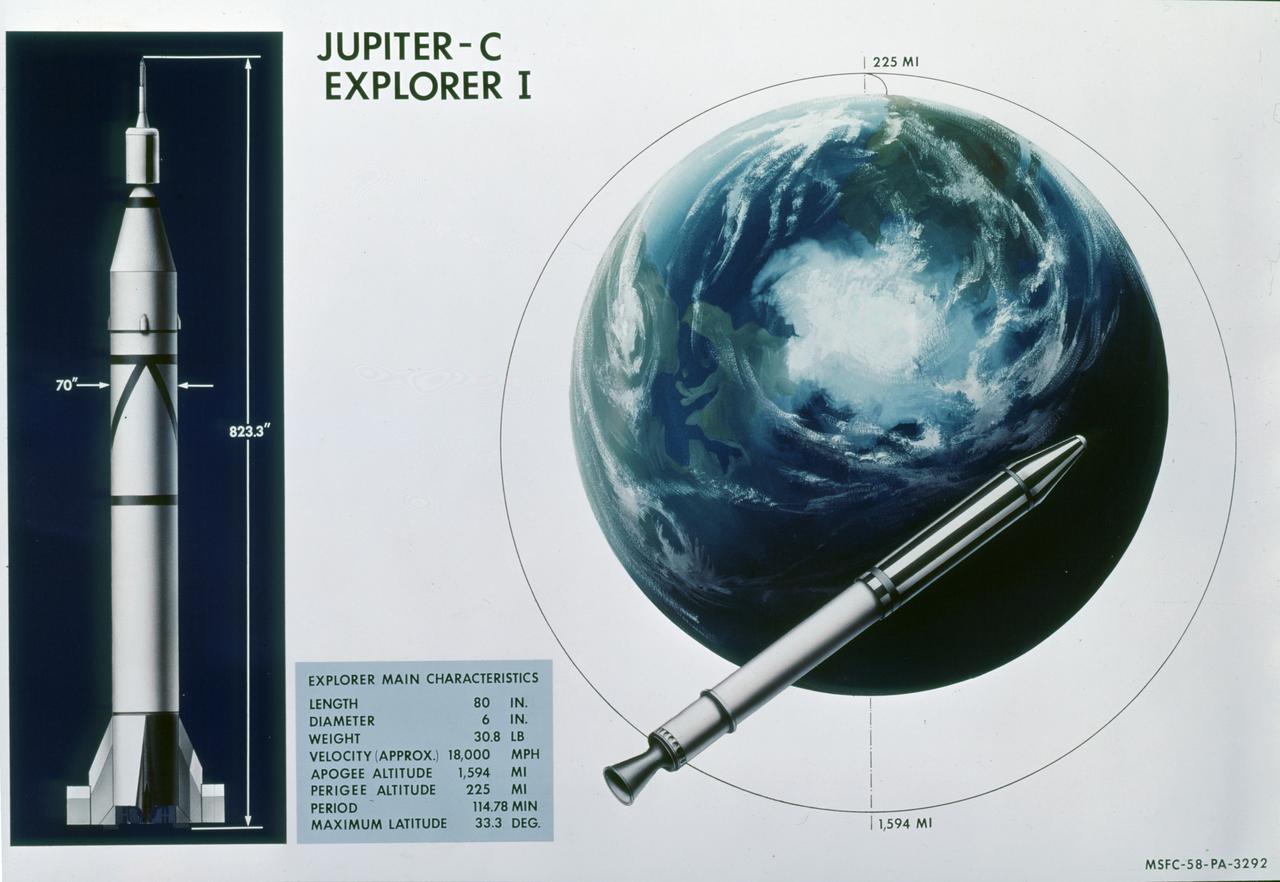
This illustration shows the main characteristics of the Jupiter C launch vehicle and its payload, the Explorer I satellite. The Jupiter C, America's first successful space vehicle, launched the free world's first scientific satellite, Explorer 1, on January 31, 1958. The four-stage Jupiter C measured almost 69 feet in length. The first stage was a modified liquid fueled Redstone missile. This main stage was about 57 feet in length and 70 inches in diameter. Fifteen scaled down SERGENT solid propellant motors were used in the upper stages. A "tub" configuration mounted on top of the modified Redstone held the second and third stages. The second stage consisted of 11 rockets placed in a ring formation within the tub. Inserted into the ring of second stage rockets was a cluster of 3 rockets making up the third stage. A fourth stage single rocket and the satellite were mounted atop the third stage. This "tub", all upper stages, and the satellite were set spirning prior to launching. The complete upper assembly measured 12.5 feet in length. The Explorer I carried the radiation detection experiment designed by Dr. James Van Allen and discovered the Van Allen Radiation Belt.
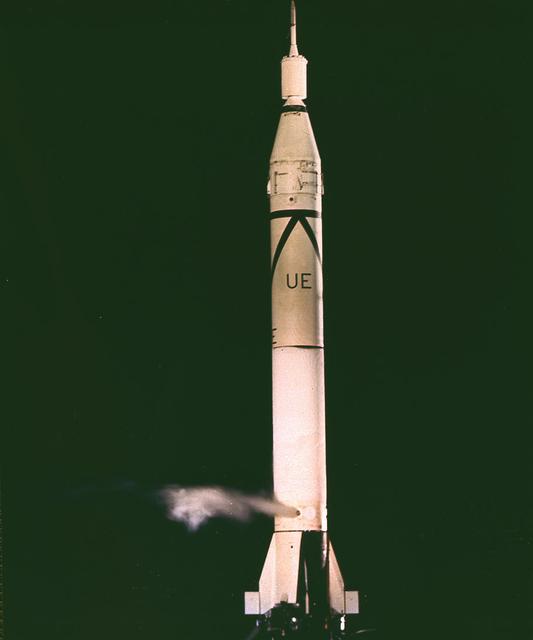
Juno I, a slightly modified Jupiter-C launch vehicle, shortly before the January 31, 1958 launch of America's first satellite, Explorer I. The Jupiter-C, developed by Dr. Wernher von Braun and the rocket team at Redstone Arsenal in Huntsville, Alabama, consisted of a modified version of the Redstone rocket's first stage and two upper stages of clustered Baby Sergeant rockets developed by the Jet Propulsion Laboratory.
In January 1958, a modified Redstone rocket lifted the first American satellite into orbit just 3 months after the the von Braun team received the go-ahead. This modified Redstone rocket was known as a Jupiter-C. Its satellite payload was called Explorer I.
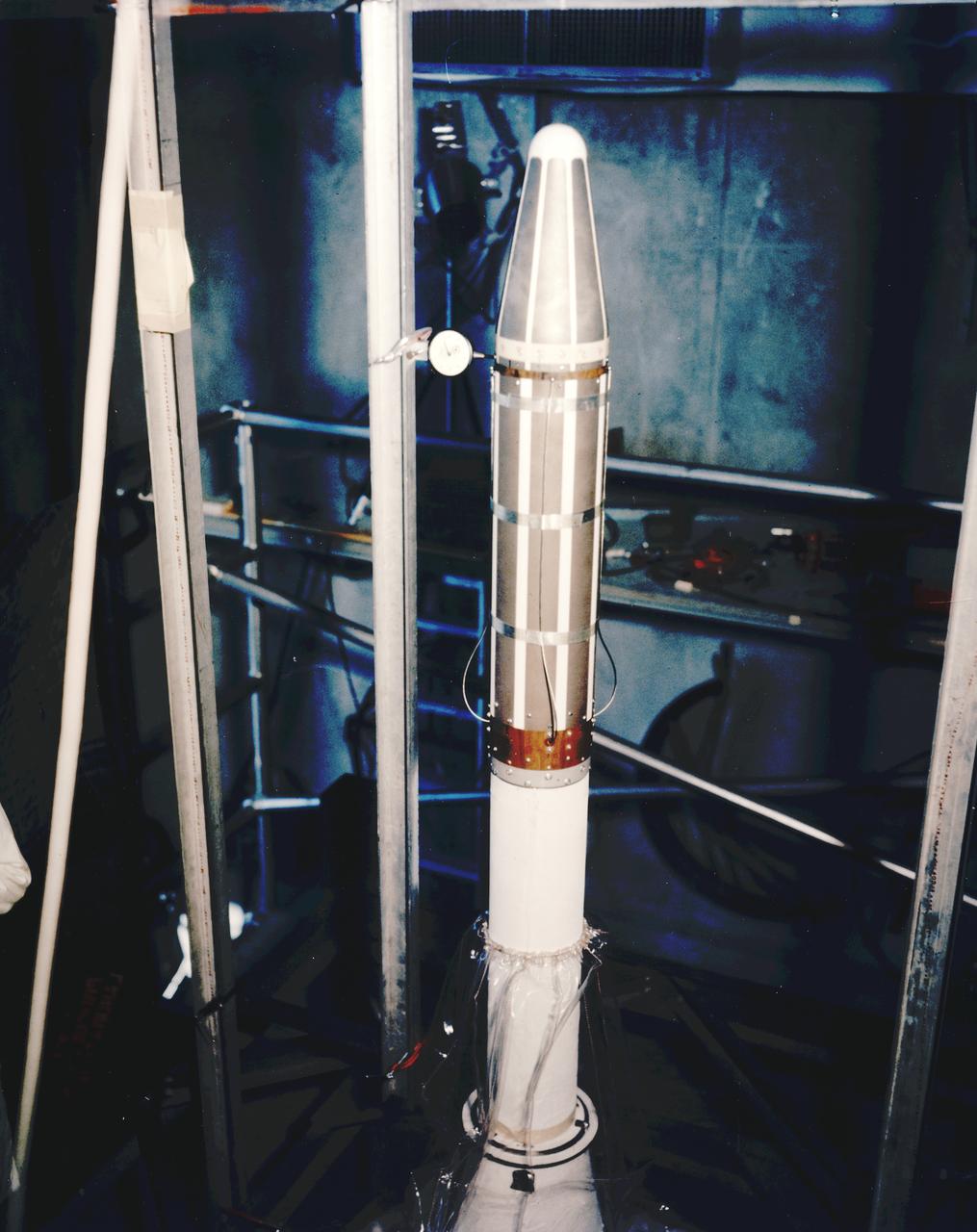
America’s first scientific satellite, the Explorer I, carried the radiation detection experiment designed by Dr. James Van Allen and discovered the Van Allen Radiation Belt. It was launched aboard a modified redstone rocket known as the Jupiter C, developed by Dr. von Braun’s rocket team at Redstone Arsenal in Huntsville, Alabama. The satellite launched on January 31, 1958, just 3 months after the the von Braun team received the go-ahead.
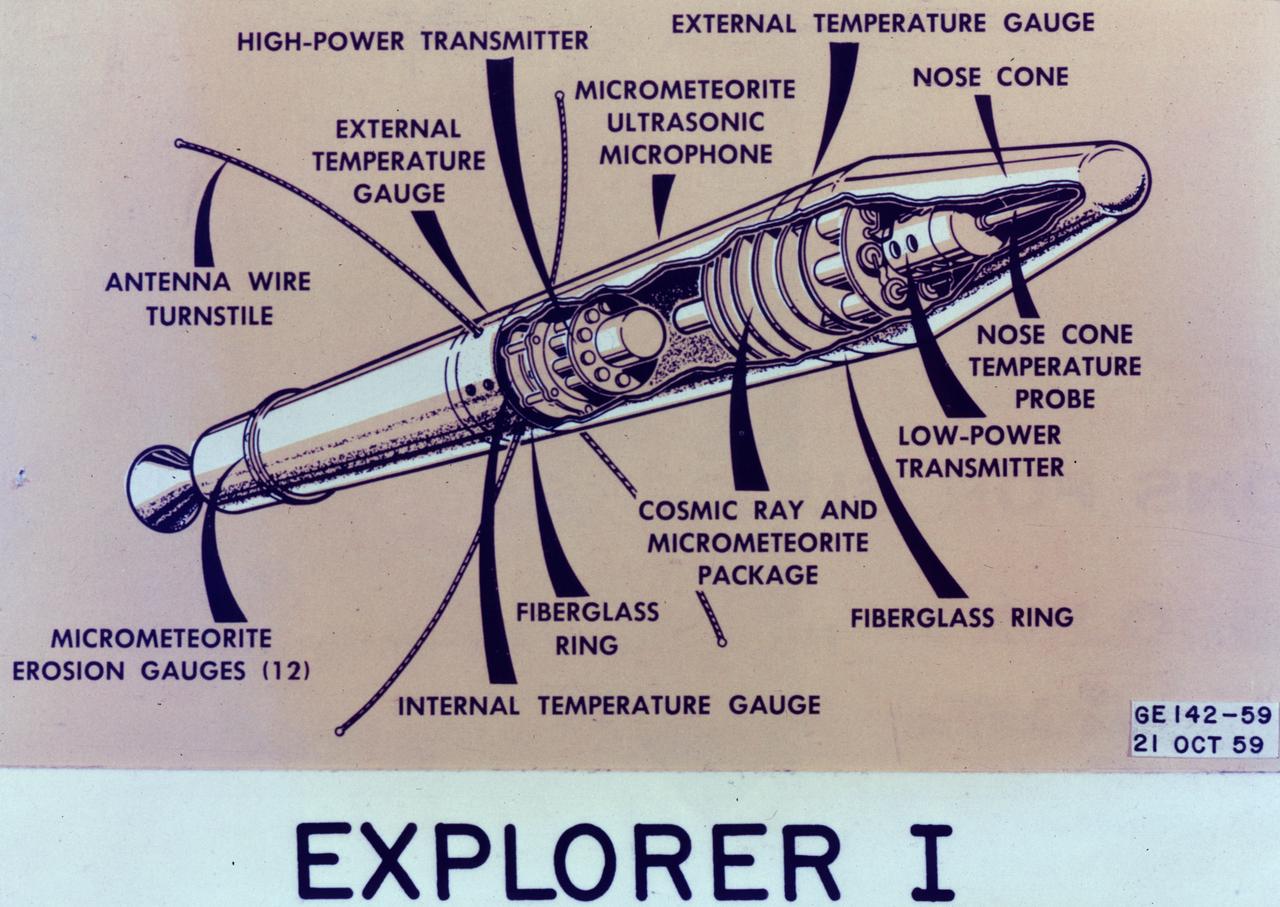
This image is a cutaway illustration of the Explorer I satellite with callouts. The Explorer I satellite was America's first scientific satellite launched aboard the Jupiter C launch vehicle on January 31, 1958. The Explorer I carried the radiation detection experiment designed by Dr. James Van Allen and discovered the Van Allen Radiation Belt.

Launch of Jupiter-C/Explorer 1 at Cape Canaveral, Florida on January 31, 1958. After the Russian Sputnik 1 was launched in October 1957, the launching of an American satellite assumed much greater importance. After the Vanguard rocket exploded on the pad in December 1957, the ability to orbit a satellite became a matter of national prestige. On January 31, 1958, slightly more than four weeks after the launch of Sputnik.The ABMA (Army Ballistic Missile Agency) in Redstone Arsenal, Huntsville, Alabama, in cooperation with the Jet Propulsion Laboratory, launched a Jupiter from Cape Canaveral, Florida. The rocket consisted of a modified version of the Redstone rocket's first stage and two upper stages of clustered Baby Sergeant rockets developed by the Jet Propulsion Laboratory and later designated as Juno boosters for space launches
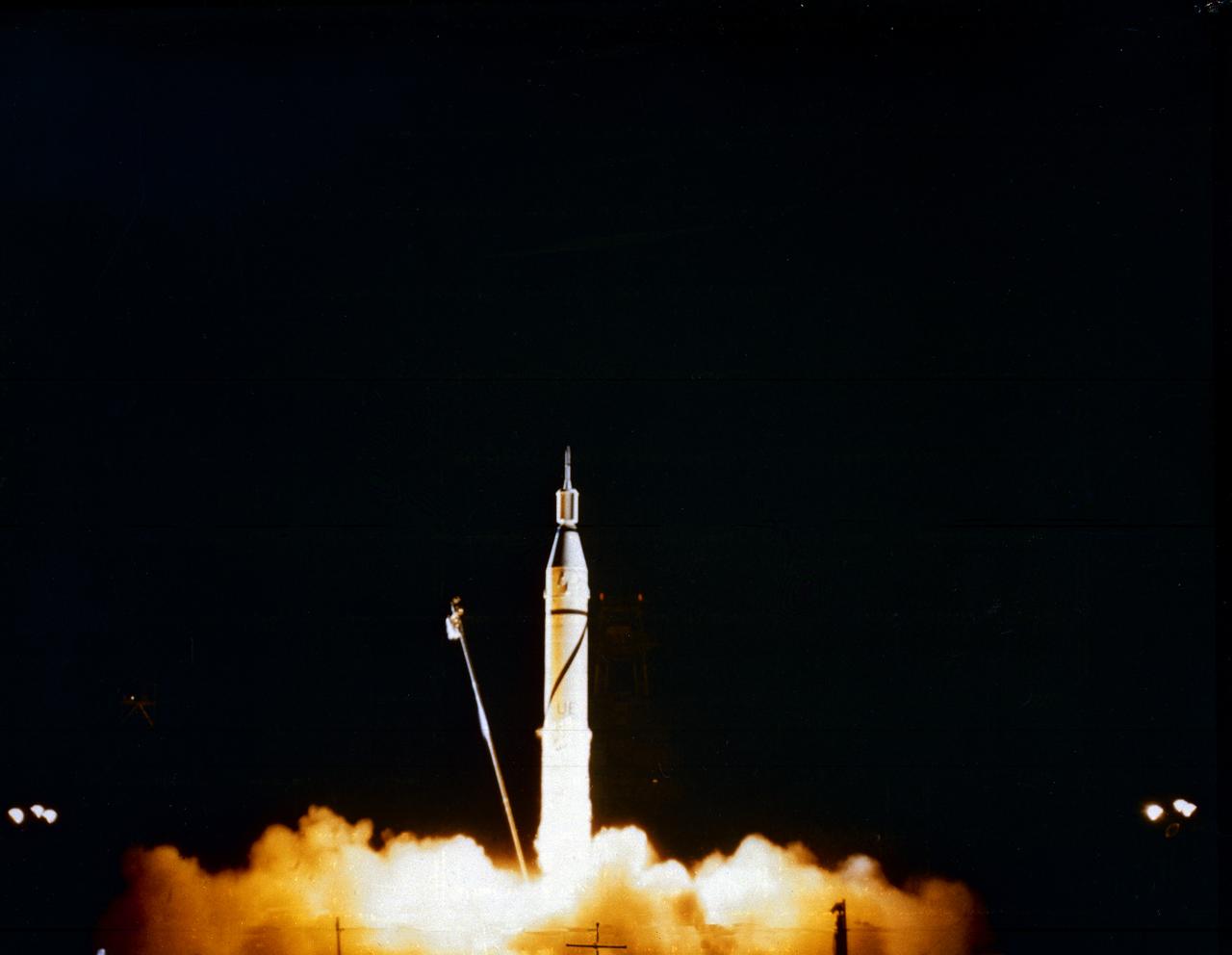
Launch of Jupiter-C/Explorer 1 at Cape Canaveral, Florida on January 31, 1958. After the Russian Sputnik 1 was launched in October 1957, the launching of an American satellite assumed much greater importance. After the Vanguard rocket exploded on the pad in December 1957, the ability to orbit a satellite became a matter of national prestige. On January 31, 1958, slightly more than four weeks after the launch of Sputnik.The ABMA (Army Ballistic Missile Agency) in Redstone Arsenal, Huntsville, Alabama, in cooperation with the Jet Propulsion Laboratory, launched a Jupiter from Cape Canaveral, Florida. The rocket consisted of a modified version of the Redstone rocket's first stage and two upper stages of clustered Baby Sergeant rockets developed by the Jet Propulsion Laboratory and later designated as Juno boosters for space launches
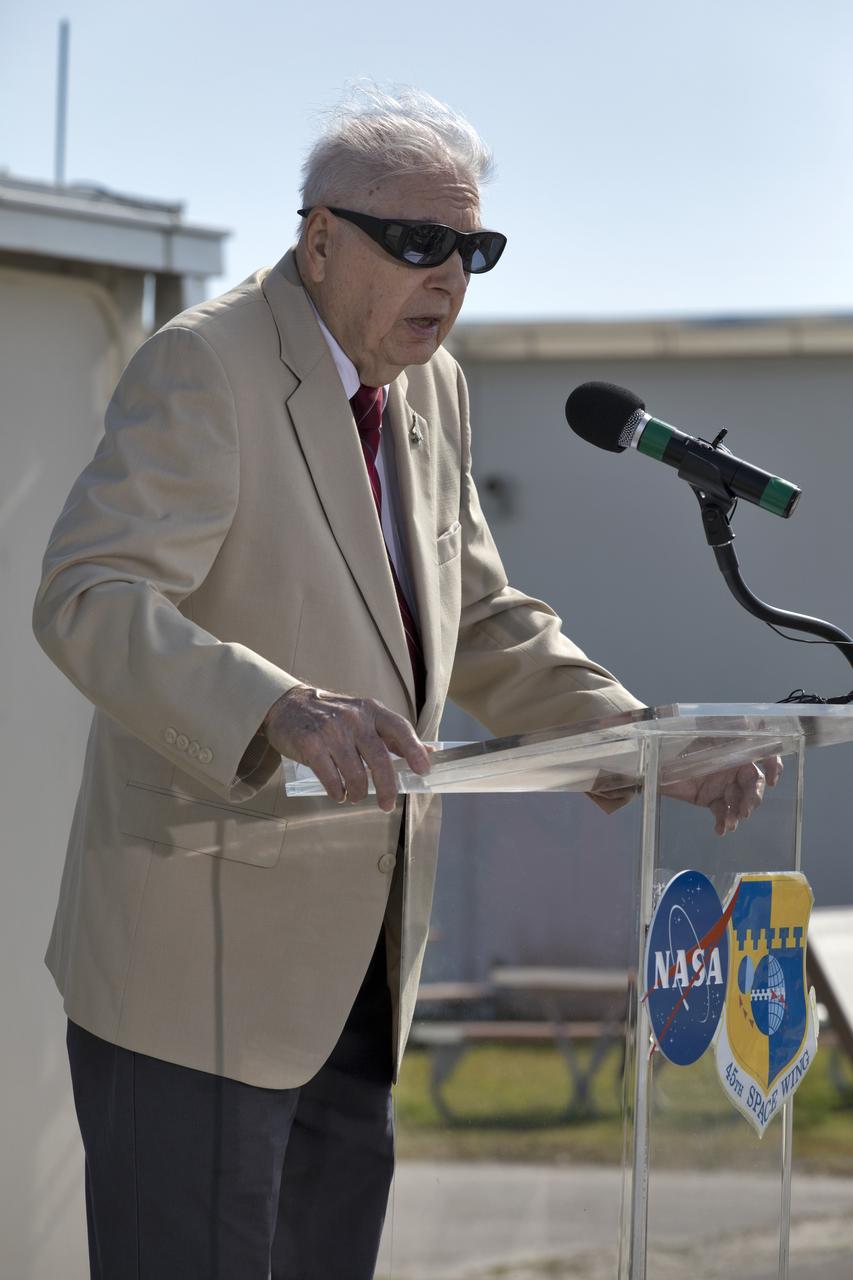
Dr. John Meisenheimer, launch weather officer for Explorer 1, speaks to guests at an event celebrating the 60th anniversary of America's first satellite. The ceremony took place in front of the Space Launch Complex 26 blockhouse at Cape Canaveral Air Force Station where the Explorer 1 satellite was launched atop a Jupiter C rocket on Jan. 31, 1958. During operation, the satellite's cosmic ray detector discovered radiation belts around Earth which were named for Dr. James Van Allen, principal investigator for the satellite.

Dr. John Meisenheimer, launch weather officer for Explorer 1, speaks to guests at an event celebrating the 60th anniversary of America's first satellite. The ceremony took place in front of the Space Launch Complex 26 blockhouse at Cape Canaveral Air Force Station where the Explorer 1 satellite was launched atop a Jupiter C rocket on Jan. 31, 1958. During operation, the satellite's cosmic ray detector discovered radiation belts around Earth which were named for Dr. James Van Allen, principal investigator for the satellite.
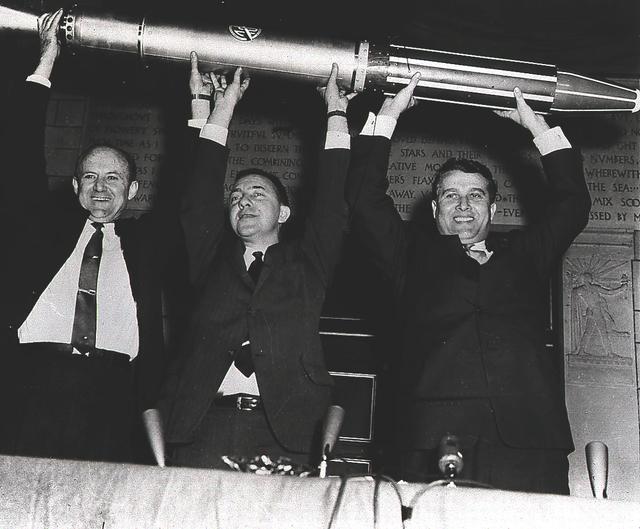
Jet Propulsion Laboratory Director Dr. William Pickering, Dr. James van Allen of the State University of Iowa, and Army Ballistic missionile Agency Technical Director Dr. Wernher von Braun triumphantly display a model of the Explorer I, America's first satellite, shortly after the satellite's launch on January 31, 1958. The Jet Propulsion Laboratory packed and tested the payload, a radiation detection experiment designed by Dr. van Allen. Dr. von Braun's rocket team at Redstone Arsenal in Huntsville, Alabama, developed the Juno I launch vehicle, a modified Jupiter-C.
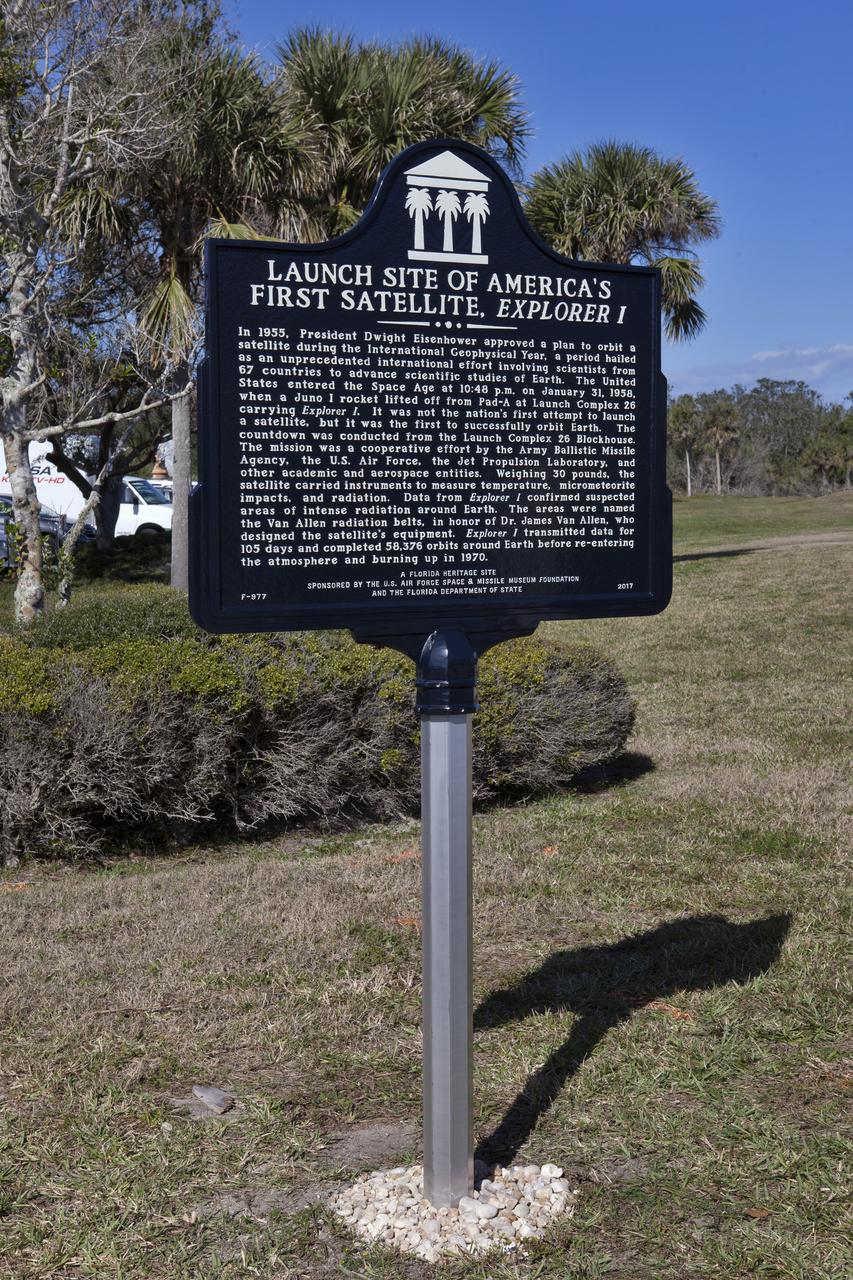
During a ceremony at Cape Canaveral Air Force Station's Space launch Complex 26 a historical marker has been unveiled noting the launch of America's first satellite, Explorer 1. The satellite was launched atop a Jupiter C rocket on Jan. 31, 1958. During operation, the satellite's cosmic ray detector discovered radiation belts around Earth which were named for Dr. James Van Allen, principal investigator for the satellite.
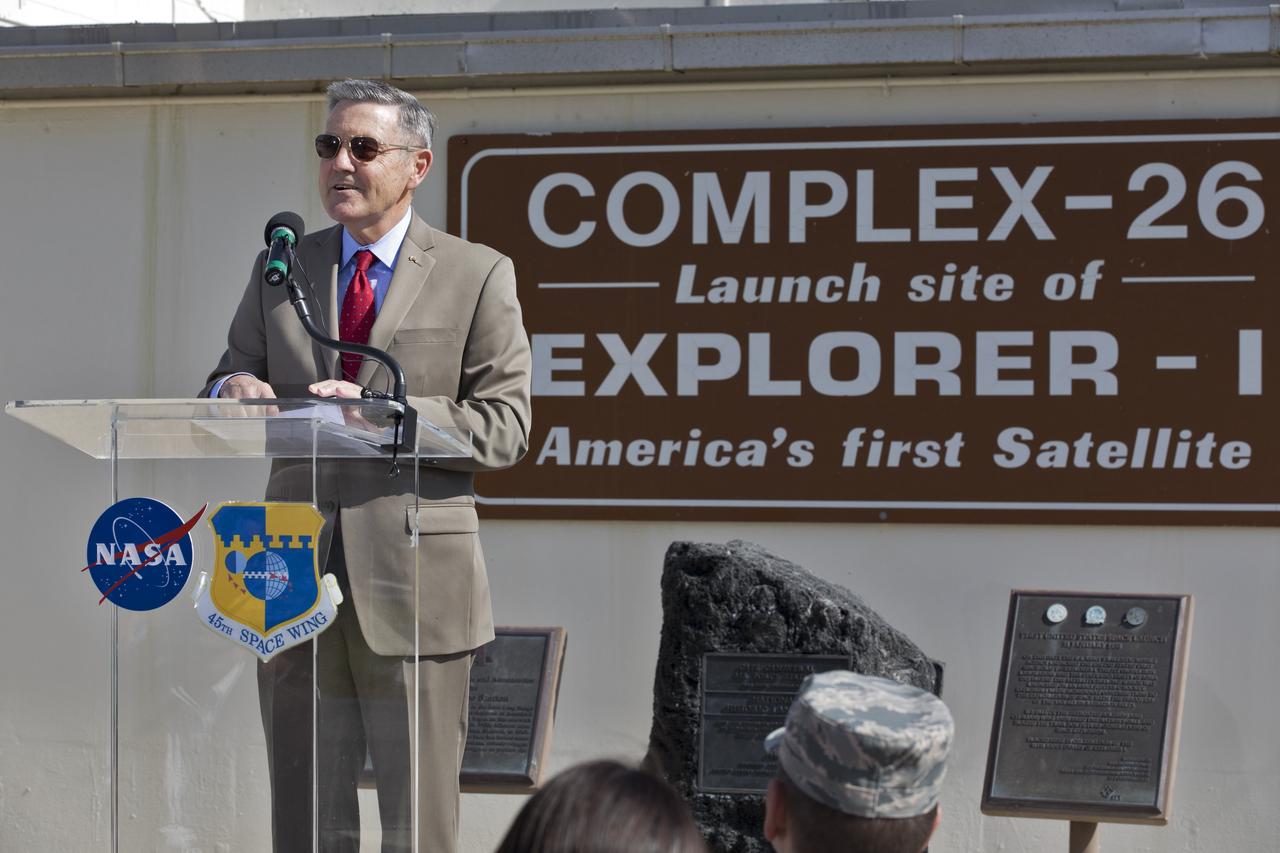
Kennedy Space Center Director Bob Cabana speaks to guests at an event celebrating the 60th anniversary of America's first satellite. The ceremony took place in front of the Space Launch Complex 26 blockhouse at Cape Canaveral Air Force Station where the Explorer 1 satellite was launched atop a Jupiter C rocket on Jan. 31, 1958. During operation, the satellite's cosmic ray detector discovered radiation belts around Earth which were named for Dr. James Van Allen, principal investigator for the satellite.
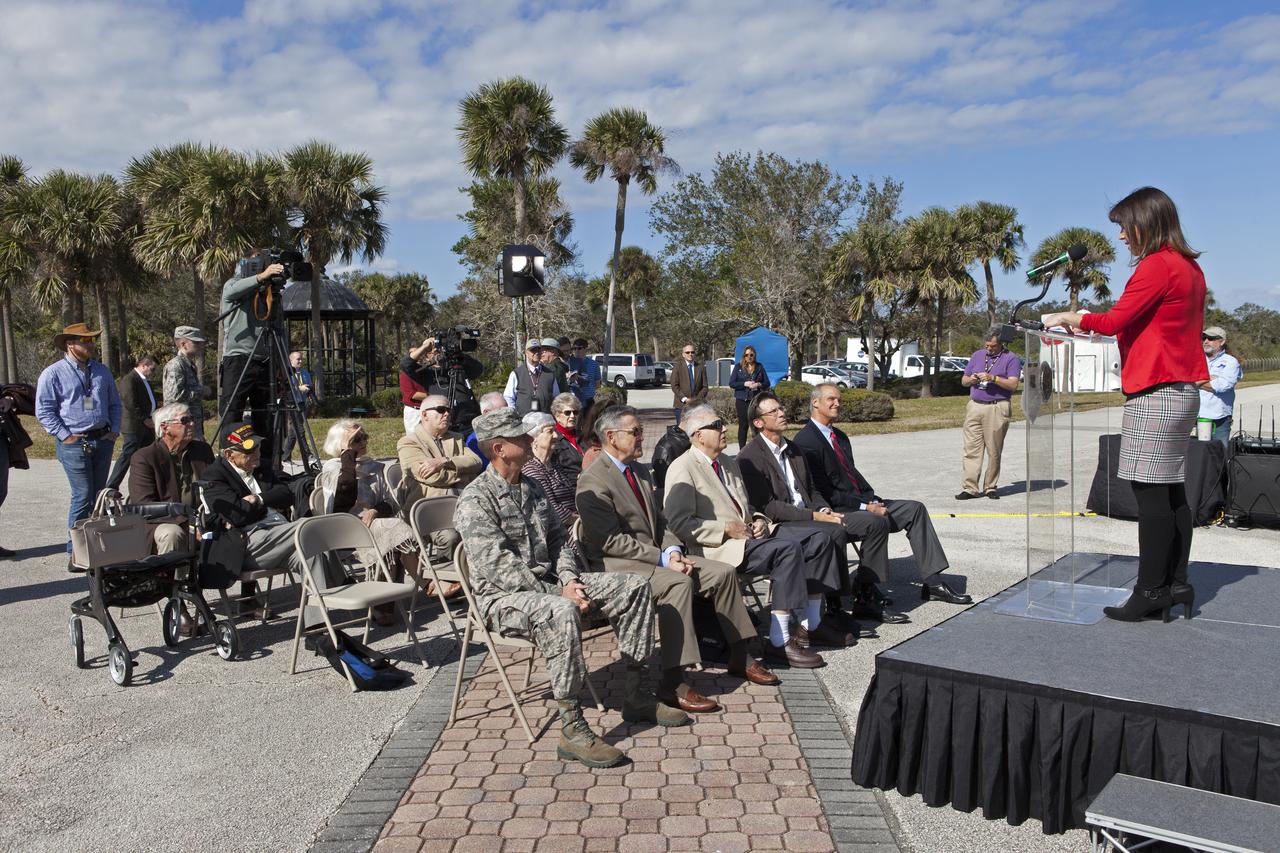
Tori McLendon of NASA Communications, speaks to guests at an event celebrating the 60th anniversary of America's first satellite. The ceremony took place in front of the Space Launch Complex 26 blockhouse at Cape Canaveral Air Force Station where the Explorer 1 satellite was launched atop a Jupiter C rocket on Jan. 31, 1958. During operation, the satellite's cosmic ray detector discovered radiation belts around Earth which were named for Dr. James Van Allen, principal investigator for the satellite.

Brig. Gen. Wayne Monteith, 45th Space Wing commander and director of the Eastern Range, right, speaks with Launch team members who supported the launch of America's first satellite, Explorer 1. They spoke following an event celebrating the 60th anniversary of America's first satellite. The ceremony took place in front of the Space Launch Complex 26 blockhouse at Cape Canaveral Air Force Station where the Explorer 1 satellite was launched atop a Jupiter C rocket on Jan. 31, 1958. During operation, the satellite's cosmic ray detector discovered radiation belts around Earth which were named for Dr. James Van Allen, principal investigator for the satellite.
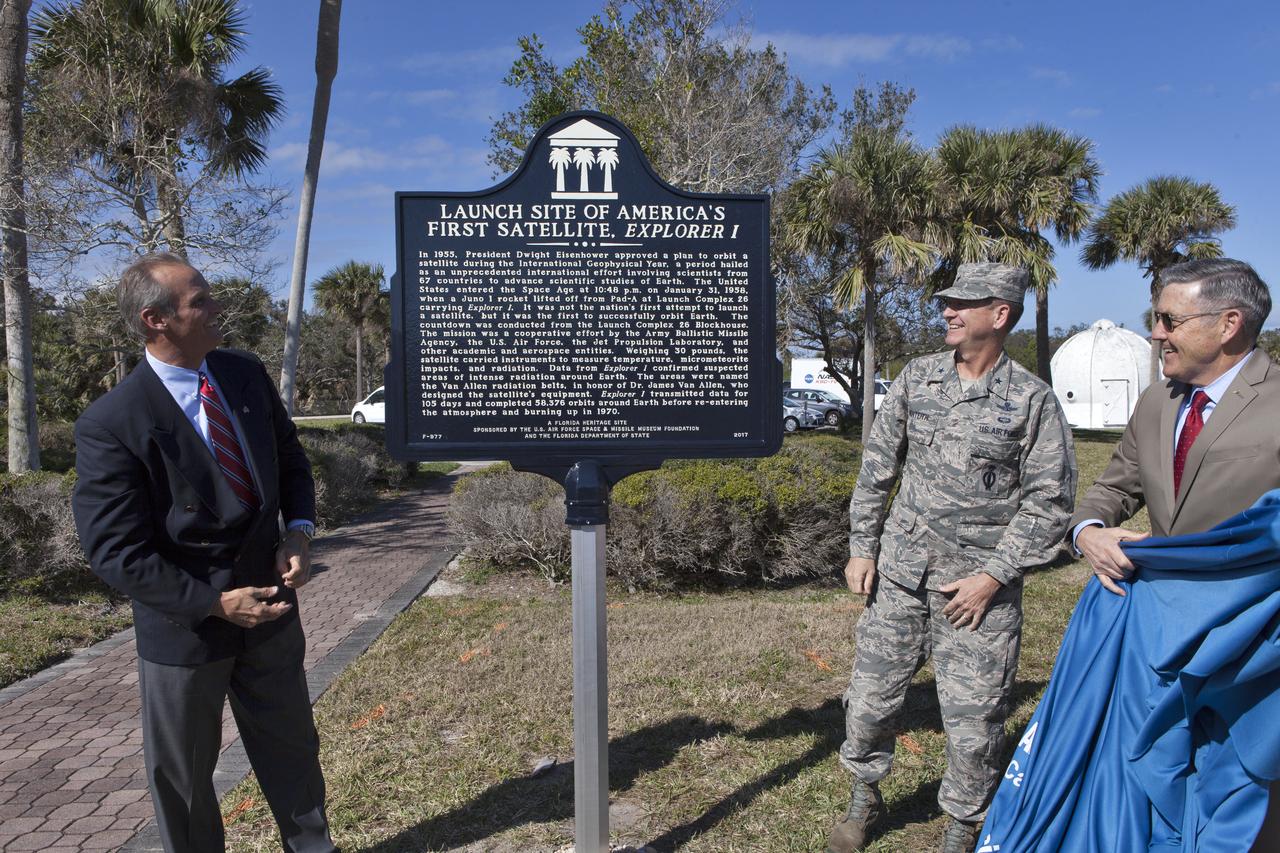
During a ceremony at Cape Canaveral Air Force Station's Space Launch Complex 26 a historical marker is unveiled noting the launch of America's first satellite, Explorer 1. From the left, Ray Sands, chairman of the Air Force Space and Missile Foundation -- sponsor of the marker, Brig. Gen. Wayne Monteith, 45th Space Wing commander and director of the Eastern Range and Kennedy Space Center Director Bob Cabana. The Explorer 1 satellite was launched atop a Jupiter C rocket on Jan. 31, 1958. During operation, the satellite's cosmic ray detector discovered radiation belts around Earth which were named for Dr. James Van Allen, principal investigator for the satellite.
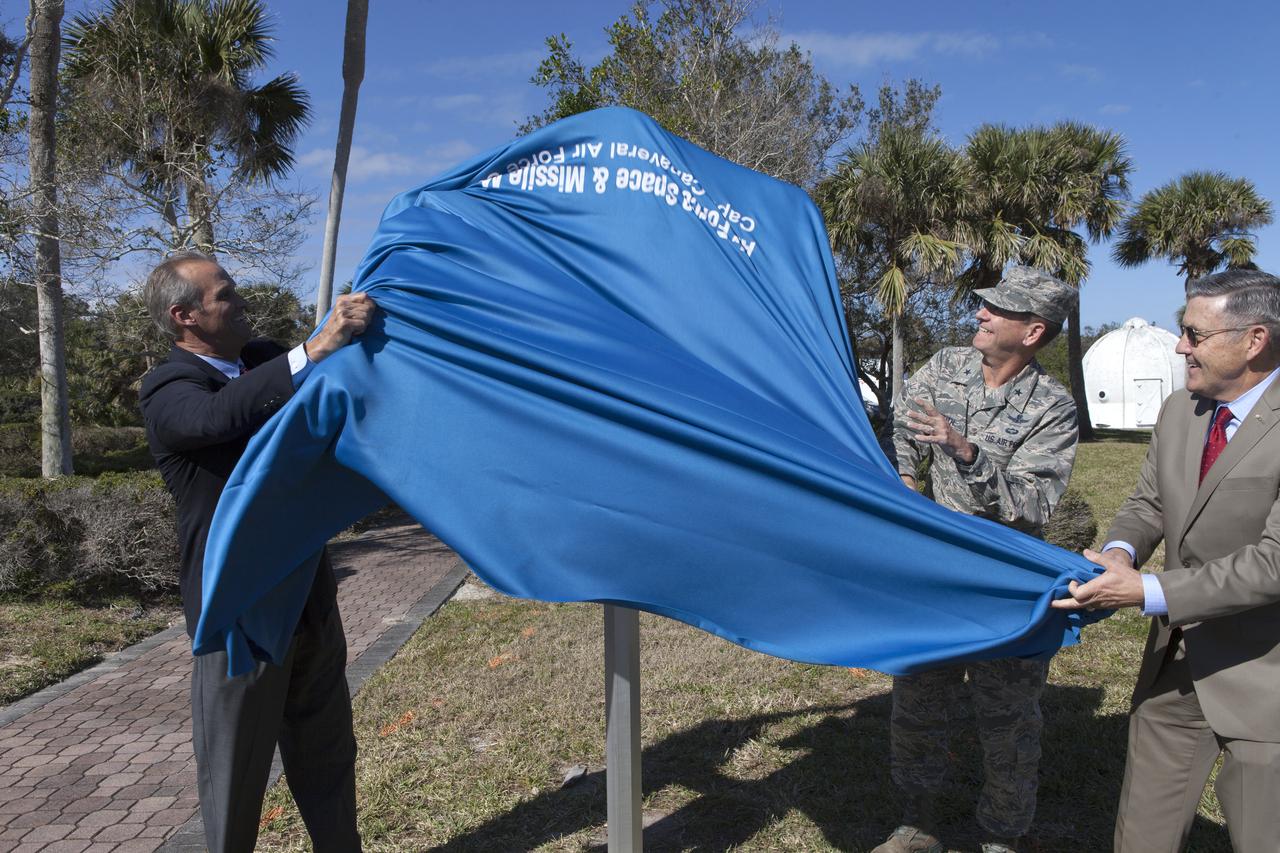
During a ceremony at Cape Canaveral Air Force Station's Space Launch Complex 26 a historical marker is unveiled noting the launch of America's first satellite, Explorer 1. From the left, Ray Sands, chairman of the Air Force Space and Missile Foundation -- sponsor of the marker, Brig. Gen. Wayne Monteith, 45th Space Wing commander and director of the Eastern Range and Kennedy Space Center Director Bob Cabana. The Explorer 1 satellite was launched atop a Jupiter C rocket on Jan. 31, 1958. During operation, the satellite's cosmic ray detector discovered radiation belts around Earth which were named for Dr. James Van Allen, principal investigator for the satellite.
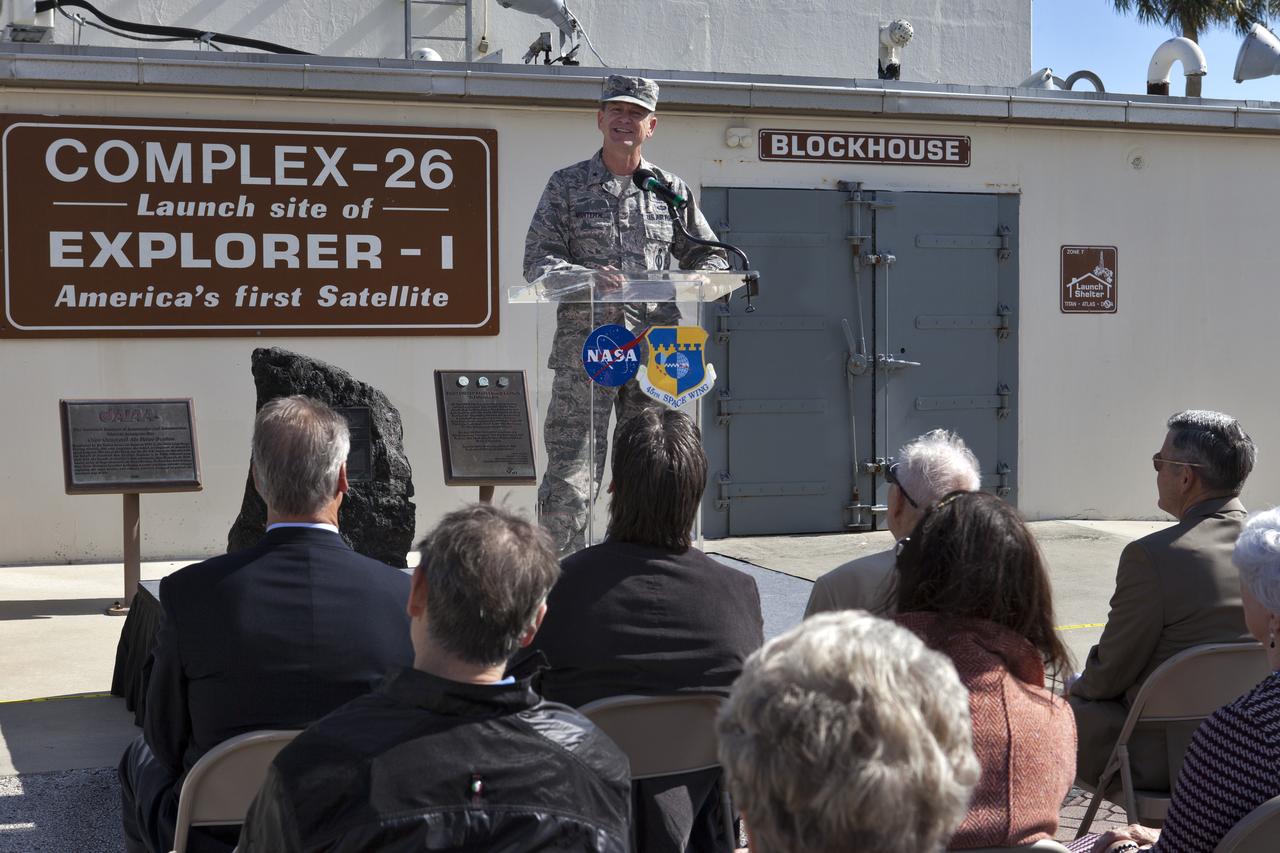
Brig. Gen. Wayne Monteith, 45th Space Wing commander and director of the Eastern Range, speaks to guests at an event celebrating the 60th anniversary of America's first satellite. The ceremony took place in front of the Space Launch Complex 26 blockhouse at Cape Canaveral Air Force Station where the Explorer 1 satellite was launched atop a Jupiter C rocket on Jan. 31, 1958. During operation, the satellite's cosmic ray detector discovered radiation belts around Earth which were named for Dr. James Van Allen, principal investigator for the satellite.
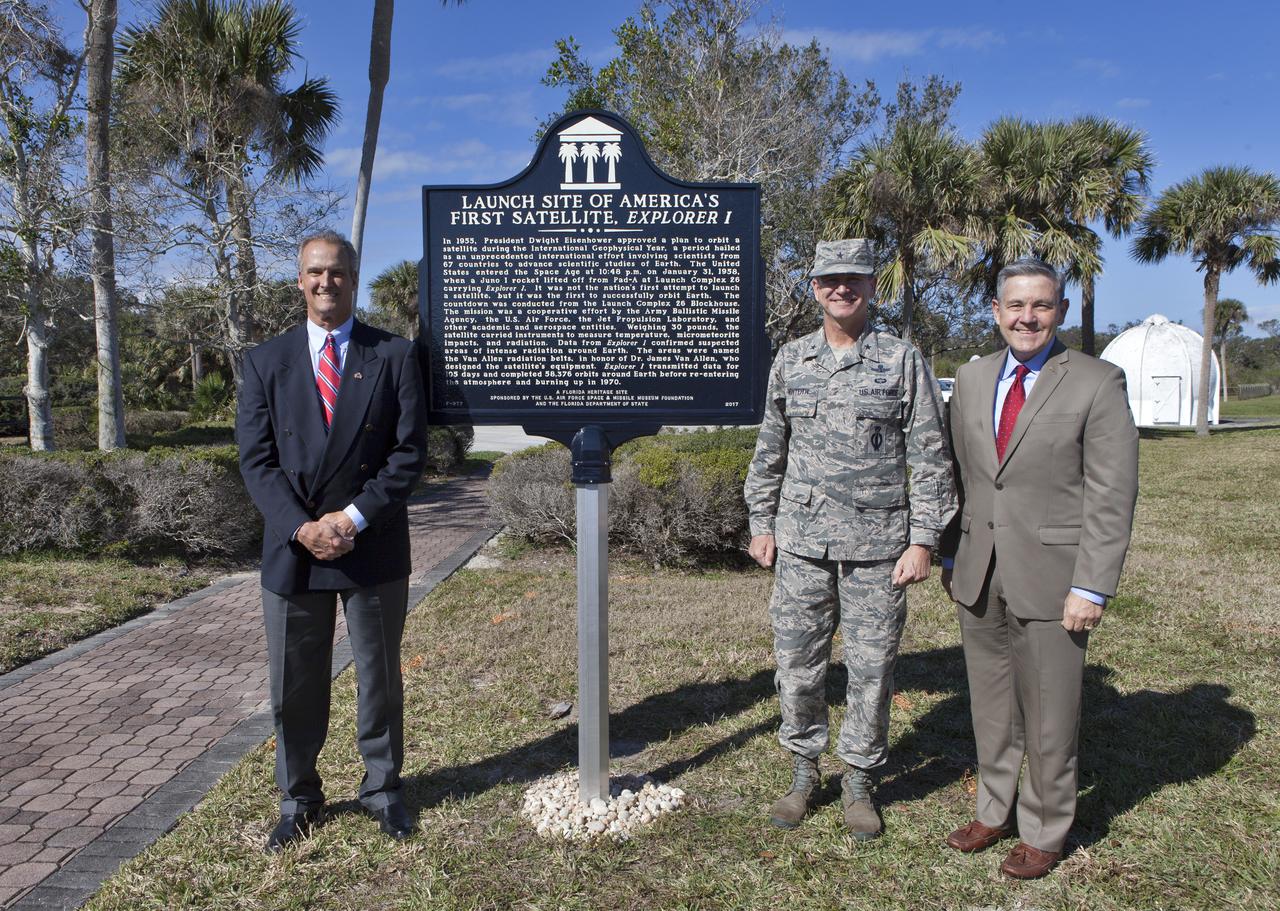
During a ceremony at Cape Canaveral Air Force Station's Space Launch Complex 26 a historical marker has been unveiled noting the launch of America's first satellite, Explorer 1. From the left, Ray Sands, chairman of the Air Force Space and Missile Foundation -- sponsor of the marker, Brig. Gen. Wayne Monteith, 45th Space Wing commander and director of the Eastern Range and Kennedy Space Center Director Bob Cabana. The Explorer 1 satellite was launched atop a Jupiter C rocket on Jan. 31, 1958. During operation, the satellite's cosmic ray detector discovered radiation belts around Earth which were named for Dr. James Van Allen, principal investigator for the satellite.
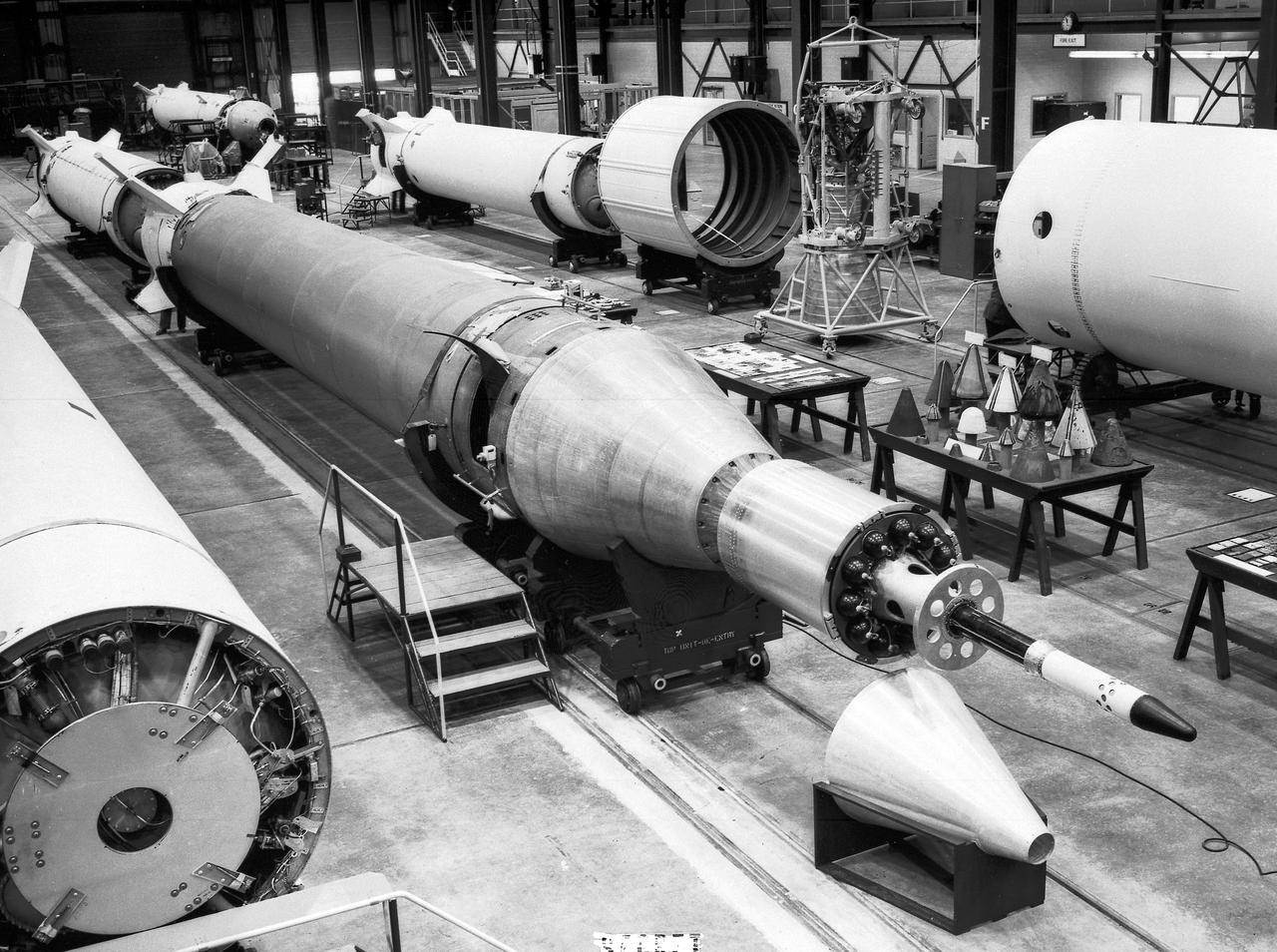
Jupiter-C Missile No. 27 assembly at the Army Ballistic Missile Agency (ABMA), Redstone Arsenal, in Huntsville, Aalabama. The Jupiter-C was a modification of the Redstone Missile, and originally developed as a nose cone re-entry test vehicle for the Jupiter Intermediate Range Ballistic Missile (IRBM). Jupiter-C successfully launched the first American Satellite, Explorer 1, in orbit on January 31, 1958.
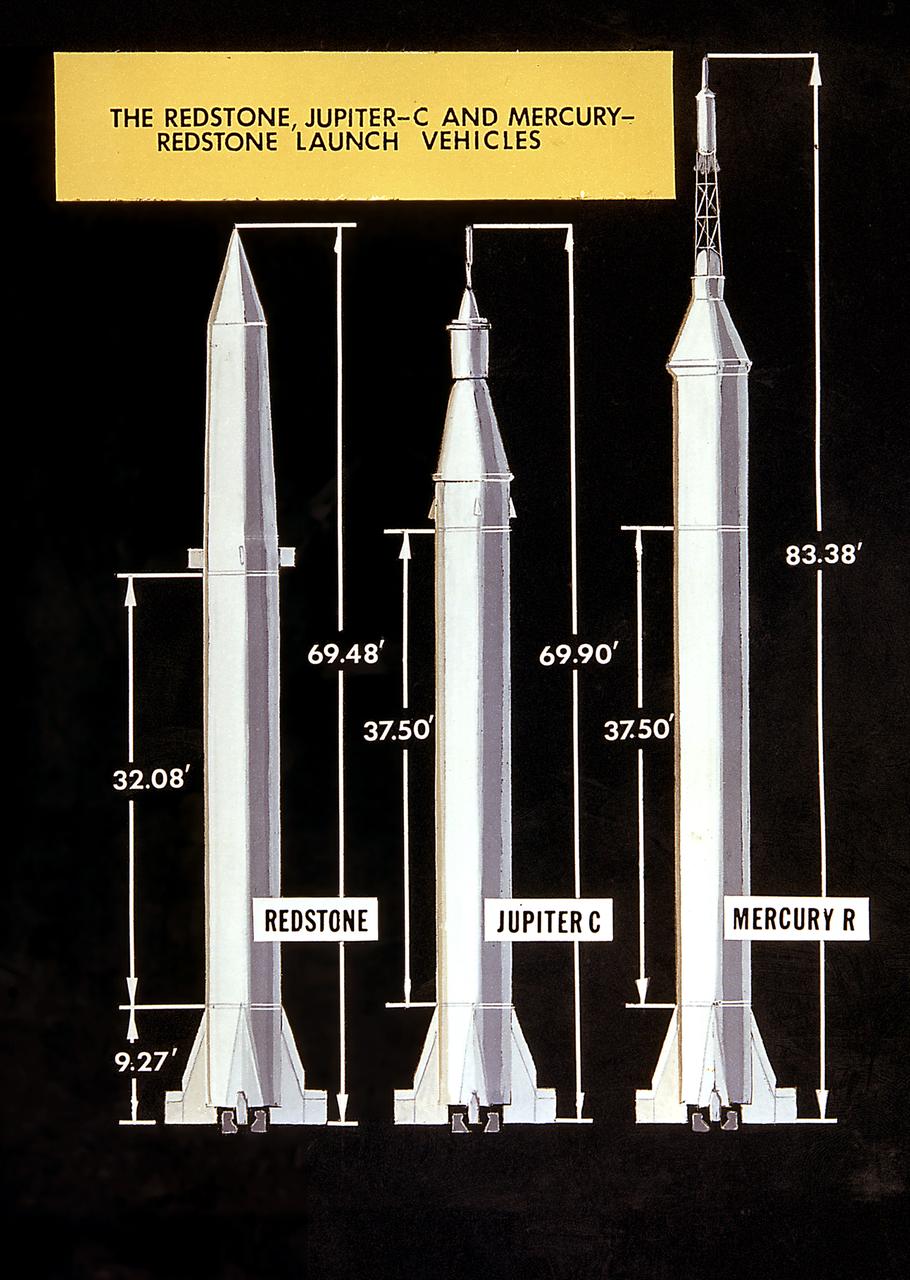
This is a comparison illustration of the Redstone, Jupiter-C, and Mercury Redstone launch vehicles. The Redstone ballistic missile was a high-accuracy, liquid-propelled, surface-to-surface missile. Originally developed as a nose cone re-entry test vehicle for the Jupiter intermediate range ballistic missile, the Jupiter-C was a modification of the Redstone missile and successfully launched the first American Satellite, Explorer-1, in orbit on January 31, 1958. The Mercury Redstone lifted off carrying the first American, astronaut Alan Shepard, in his Mercury spacecraft Freedom 7, on May 5, 1961.
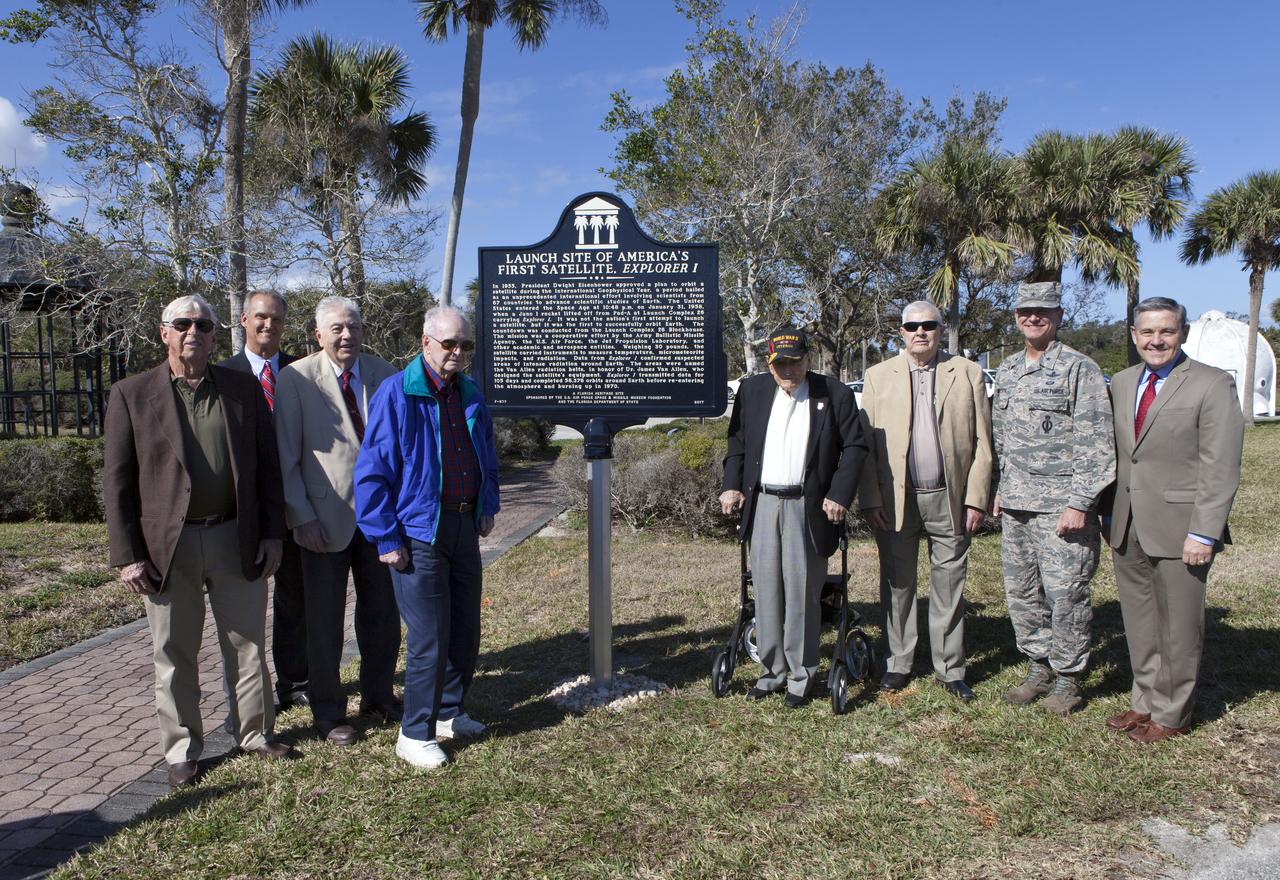
Launch team members who supported the launch of America's first satellite, Explorer 1, pose at a newly unveiled historical marker with Ray Sands, chairman of the Air Force Space and Missile Foundation -- sponsor of the marker, Brig. Gen. Wayne Monteith, 45th Space Wing commander and director of the Eastern Range, and Kennedy Space Center Director Bob Cabana. The event tool place at the site of the launch 60 years ago, Space Launch Complex 26 at Cape Canaveral Air Force Station.
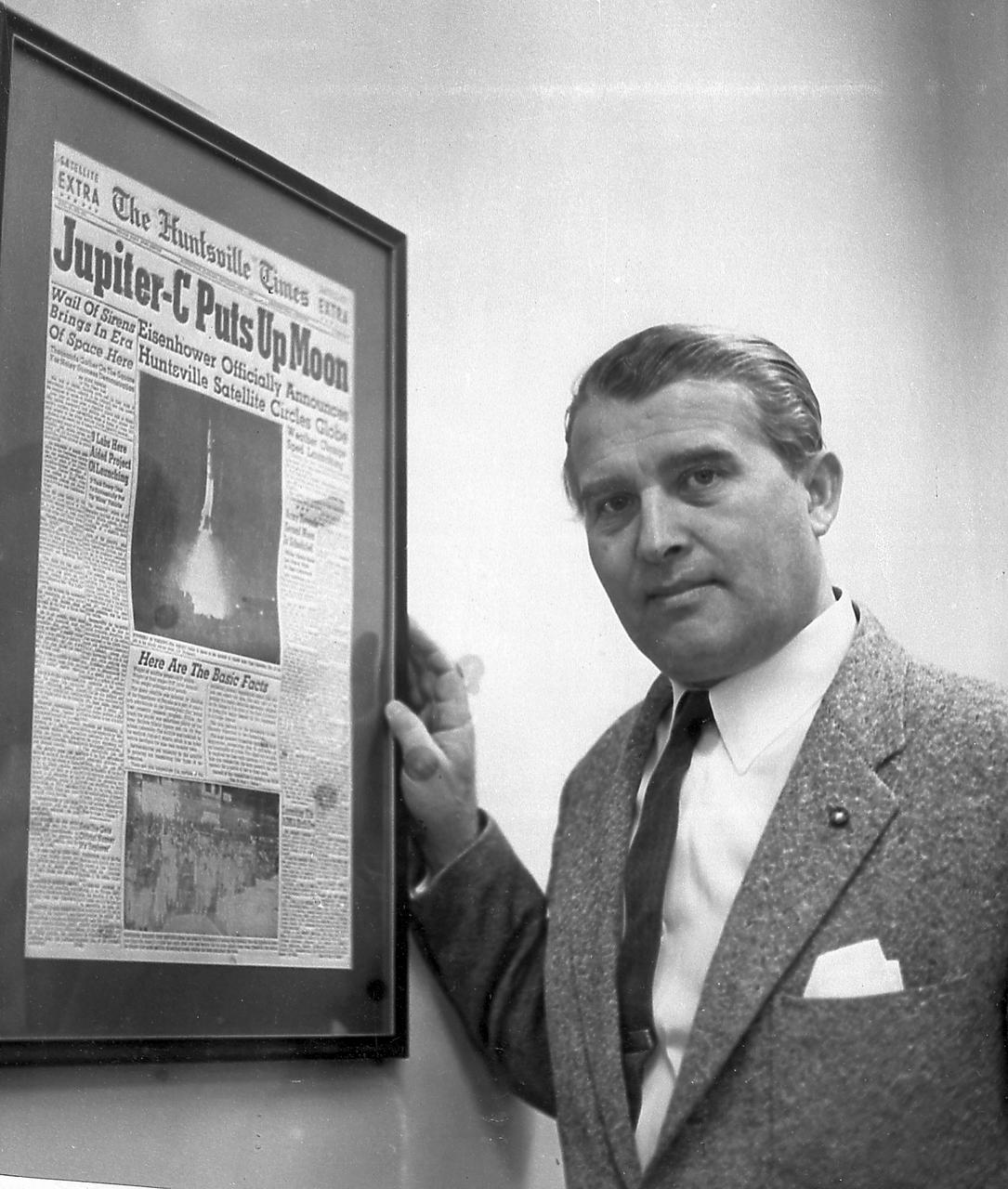
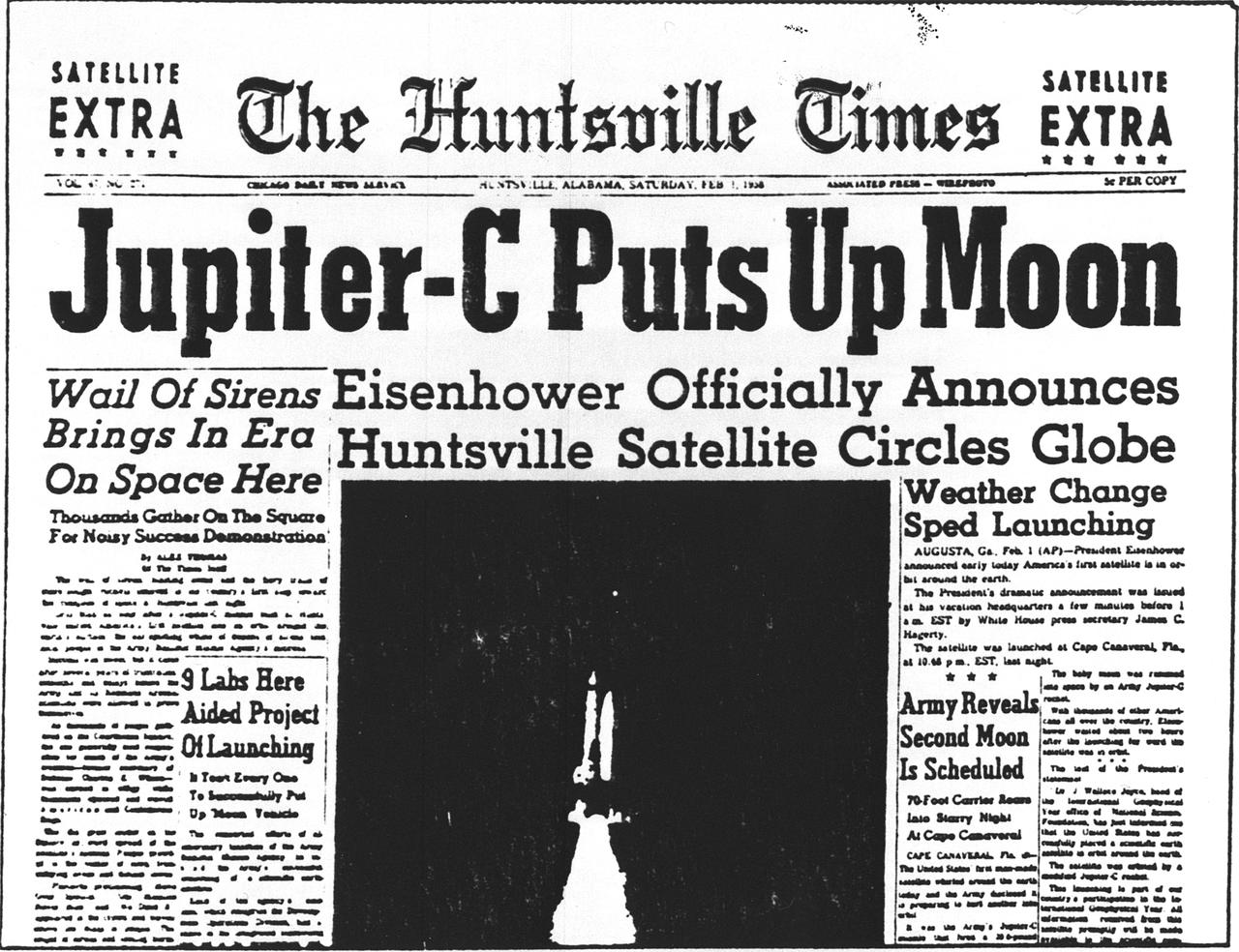
Dr. von Braun is presented with the front page of the Huntsville Times arnouncing the launch of Explorer I, the first U.S. Earth satellite, which was boosted by the Jupiter-C launch vehicle developed by Army Ballistic Missile Agency (ABMA) under the direction of Dr. von Braun. The occasion was the fifth Anniversary of the Explorer I launch in January 1958.
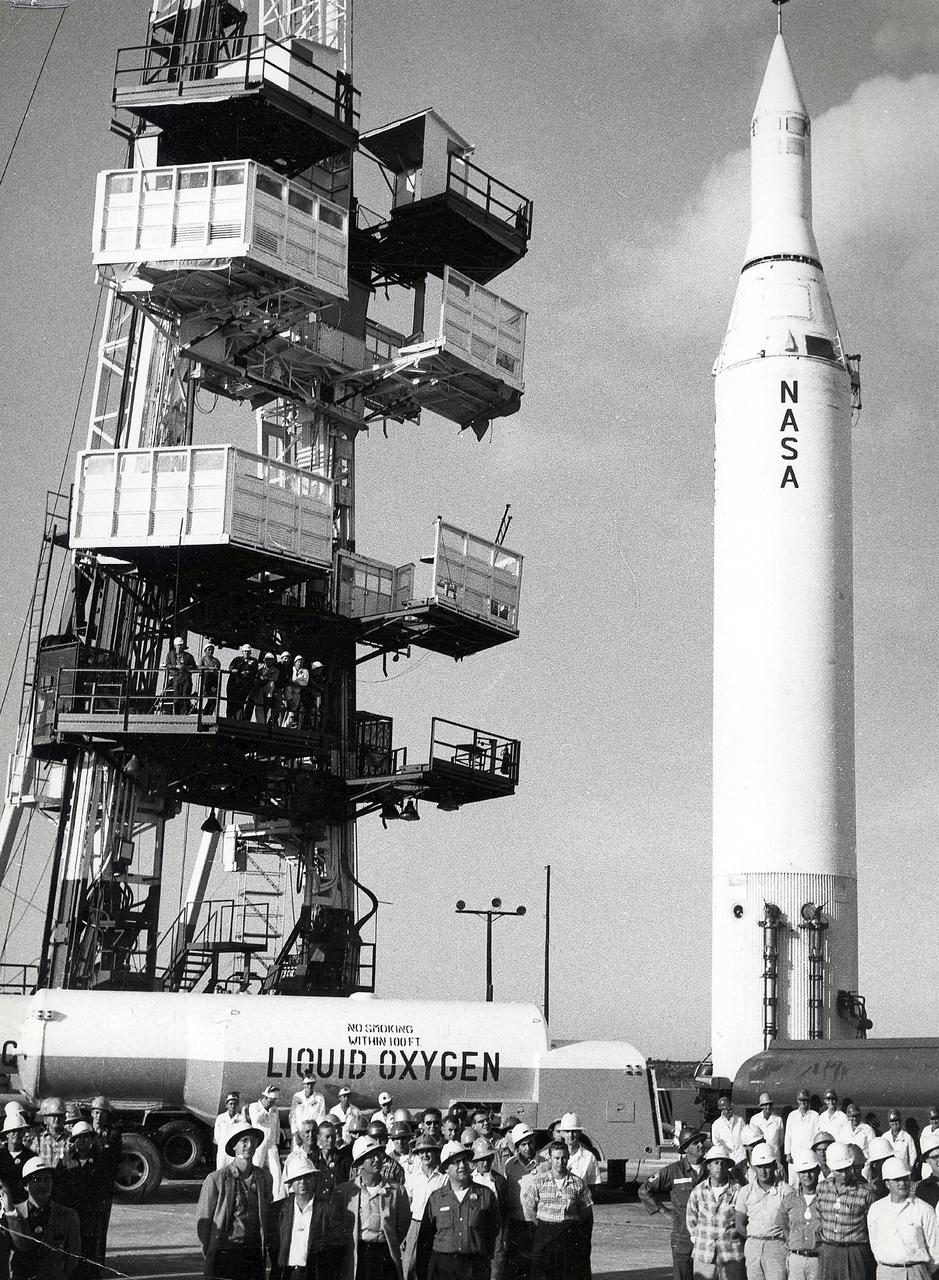
The modified Jupiter C (sometimes called Juno I), used to launch Explorer I, had minimum payload lifting capabilities. Explorer I weighed slightly less than 31 pounds. Juno II was part of America's effort to increase payload lifting capabilities. Among other achievements, the vehicle successfully launched a Pioneer IV satellite on March 3, 1959, and an Explorer VII satellite on October 13, 1959. Responsibility for Juno II passed from the Army to the Marshall Space Flight Center when the Center was activated on July 1, 1960. On November 3, 1960, a Juno II sent Explorer VIII into a 1,000-mile deep orbit within the ionosphere.
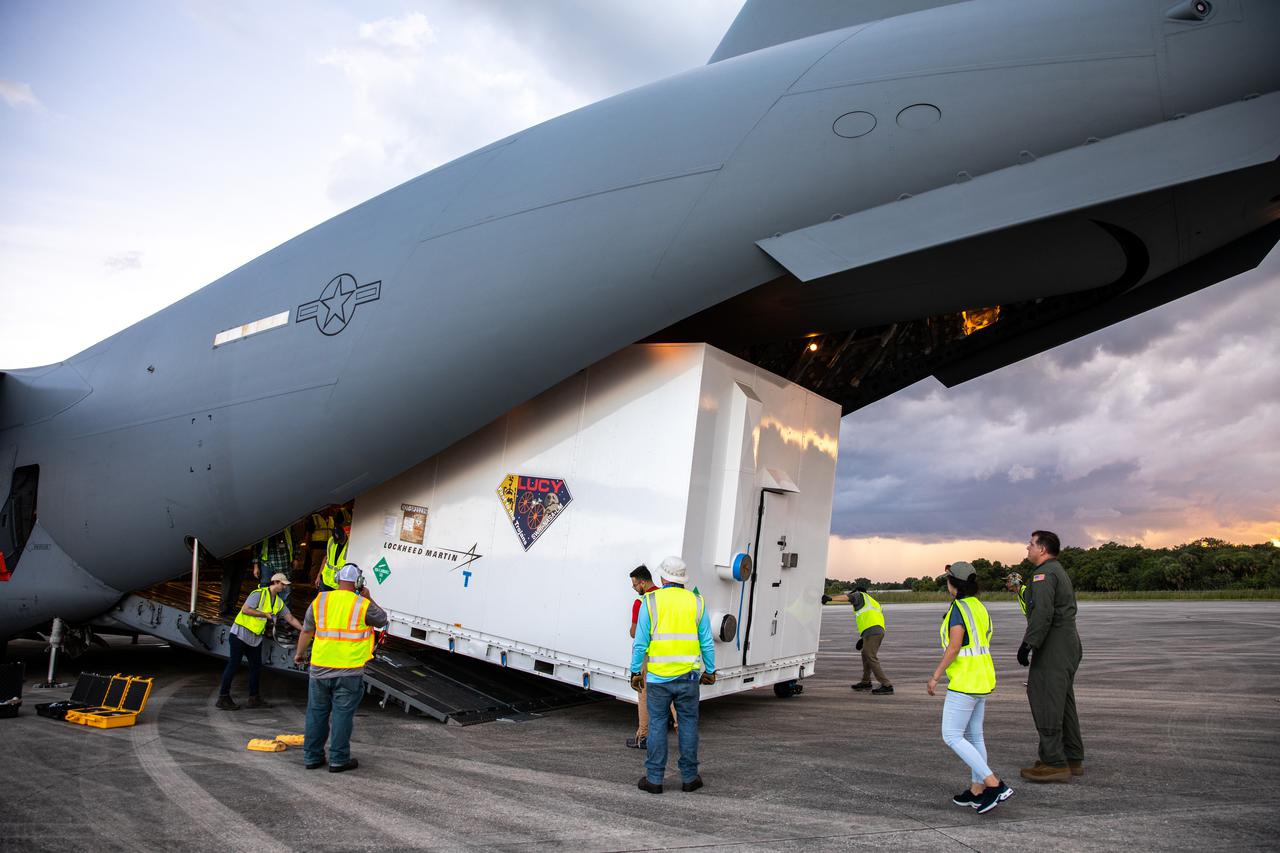
The shipping container holding NASA's Lucy spacecraft is unloaded from a United States Air Force C-17 cargo plane, stationed out of Charleston Air Force Base in South Carolina, on the runway of the Launch and Landing Facility at Kennedy Space Center in Florida on July 30, 2021. From there, the Lucy spacecraft will move to the Astrotech Space Operations payload processing facility in nearby Titusville, Florida, before its scheduled launch on a United Launch Alliance (ULA) Atlas V rocket from Cape Canaveral Space Force Station on October 16, 2021. The Lucy mission will be the first space mission to explore a diverse population of small bodies known as the Jupiter Trojan asteroids. The launch is being managed by NASA's Launch Services Program based at Kennedy, America's multi-user spaceport.
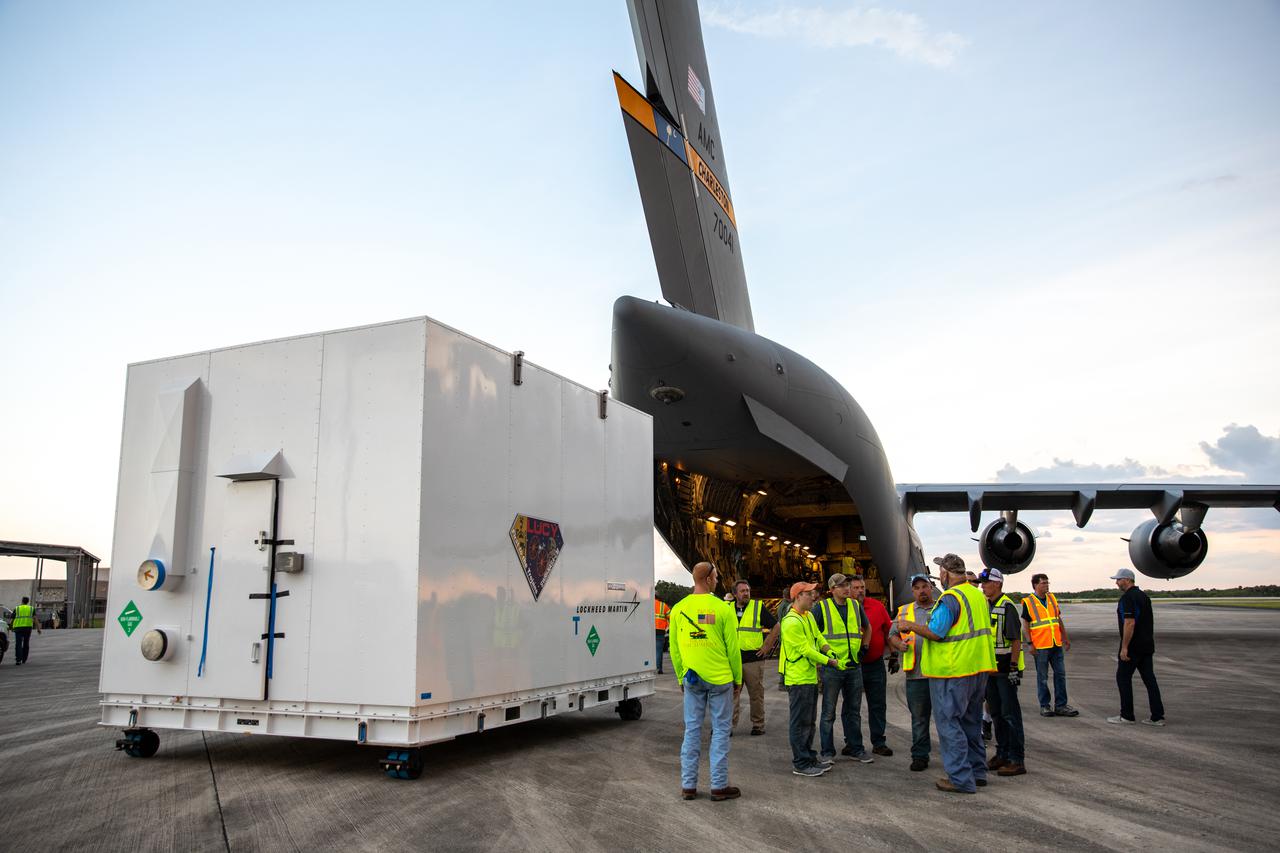
The shipping container holding NASA's Lucy spacecraft is unloaded from an Air Force C-17 cargo aircraft on the runway of the Launch and Landing Facility at Kennedy Space Center in Florida on July 30, 2021. From there, the Lucy spacecraft will move to the Astrotech Space Operations payload processing facility in nearby Titusville, Florida, before its scheduled launch on a United Launch Alliance (ULA) Atlas V rocket from Cape Canaveral Space Force Station on October 16, 2021. The Lucy mission will be the first space mission to explore a diverse population of small bodies known as the Jupiter Trojan asteroids. The launch is being managed by NASA's Launch Services Program based at Kennedy, America's premier multi-user spaceport.
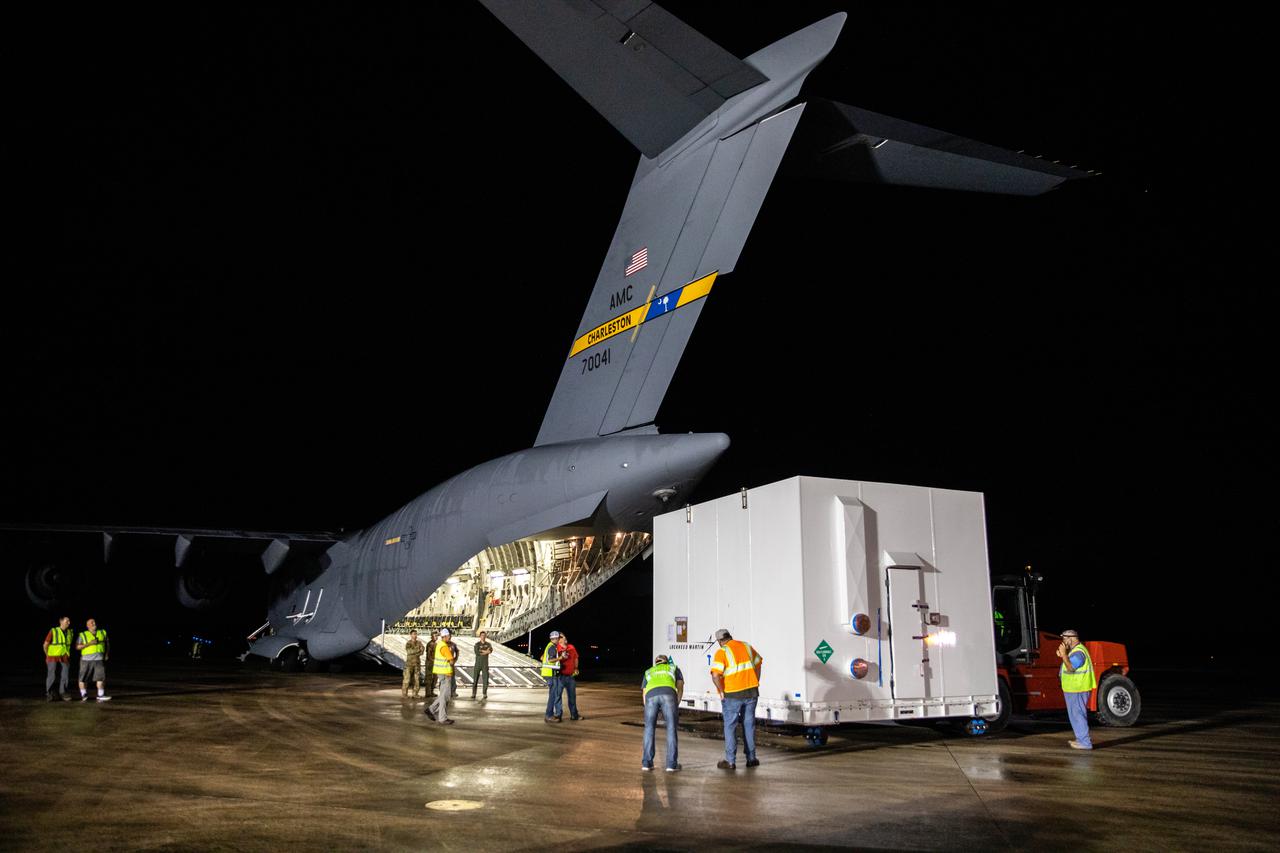
The shipping container holding NASA's Lucy spacecraft is unloaded from a United States Air Force C-17 cargo plane, stationed out of Charleston Air Force Base in South Carolina, on the runway of the Launch and Landing Facility at Kennedy Space Center in Florida on July 30, 2021. From there, the Lucy spacecraft will move to the Astrotech Space Operations payload processing facility in nearby Titusville, Florida, before its scheduled launch on a United Launch Alliance (ULA) Atlas V rocket from Cape Canaveral Space Force Station on October 16, 2021. The Lucy mission will be the first space mission to explore a diverse population of small bodies known as the Jupiter Trojan asteroids. The launch is being managed by NASA's Launch Services Program based at Kennedy, America's multi-user spaceport.
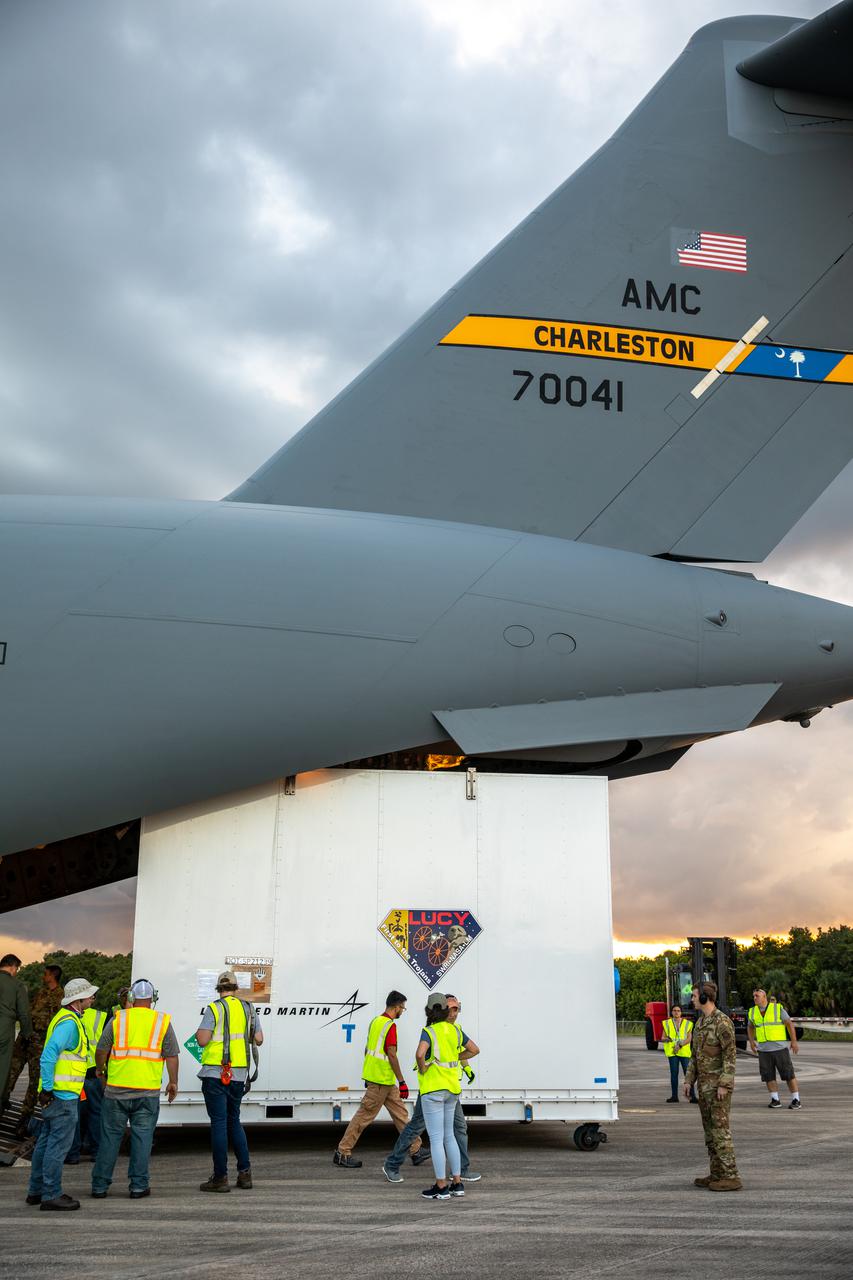
The shipping container holding NASA's Lucy spacecraft is unloaded from an Air Force C-17 cargo aircraft on the runway of the Launch and Landing Facility at Kennedy Space Center in Florida on July 30, 2021. From there, the Lucy spacecraft will move to the Astrotech Space Operations payload processing facility in nearby Titusville, Florida, before its scheduled launch on a United Launch Alliance (ULA) Atlas V rocket from Cape Canaveral Space Force Station on October 16, 2021. The Lucy mission will be the first space mission to explore a diverse population of small bodies known as the Jupiter Trojan asteroids. The launch is being managed by NASA's Launch Services Program based at Kennedy, America's premier multi-user spaceport.
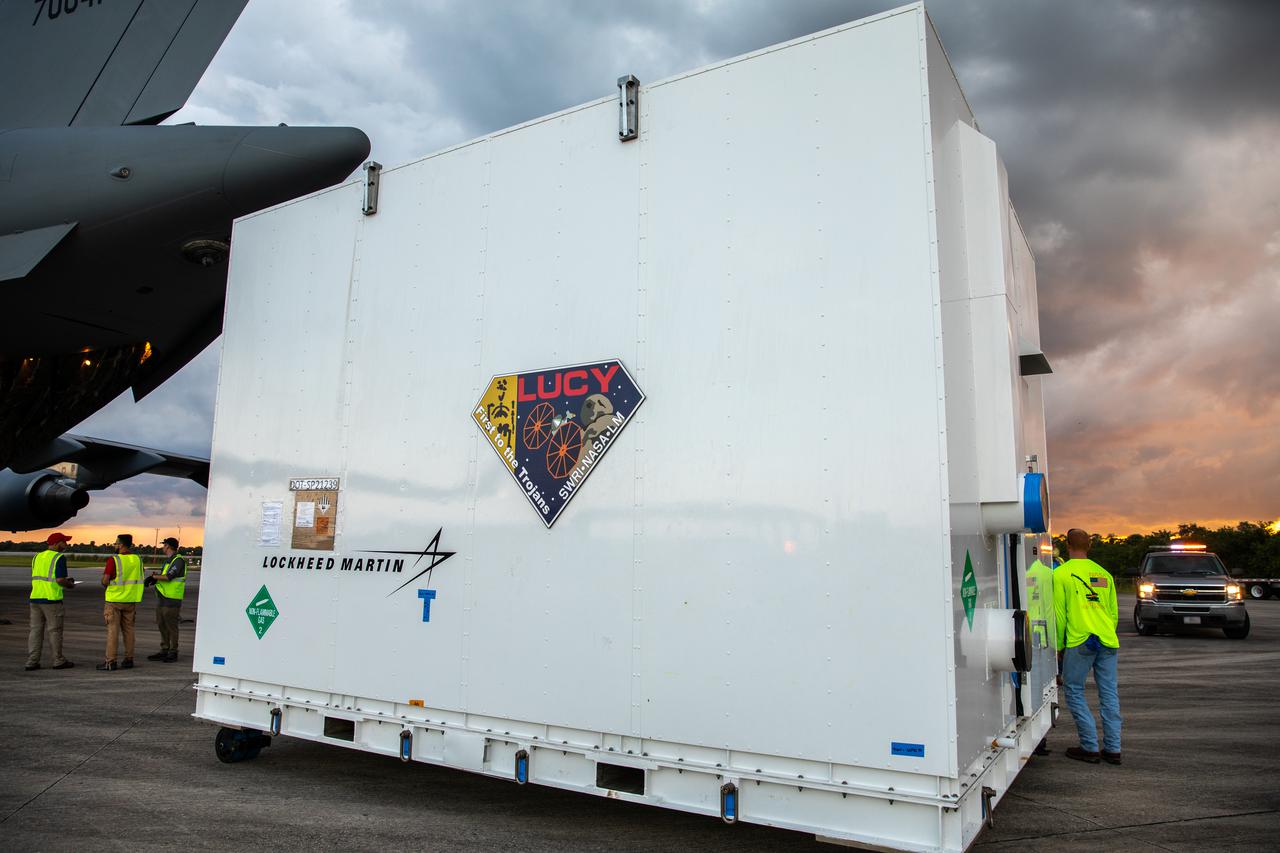
The shipping container holding NASA's Lucy spacecraft is unloaded from an Air Force C-17 cargo aircraft on the runway of the Launch and Landing Facility at Kennedy Space Center in Florida on July 30, 2021. From there, the Lucy spacecraft will move to the Astrotech Space Operations payload processing facility in nearby Titusville, Florida, before its scheduled launch on a United Launch Alliance (ULA) Atlas V rocket from Cape Canaveral Space Force Station on October 16, 2021. The Lucy mission will be the first space mission to explore a diverse population of small bodies known as the Jupiter Trojan asteroids. The launch is being managed by NASA's Launch Services Program based at Kennedy, America's premier multi-user spaceport.
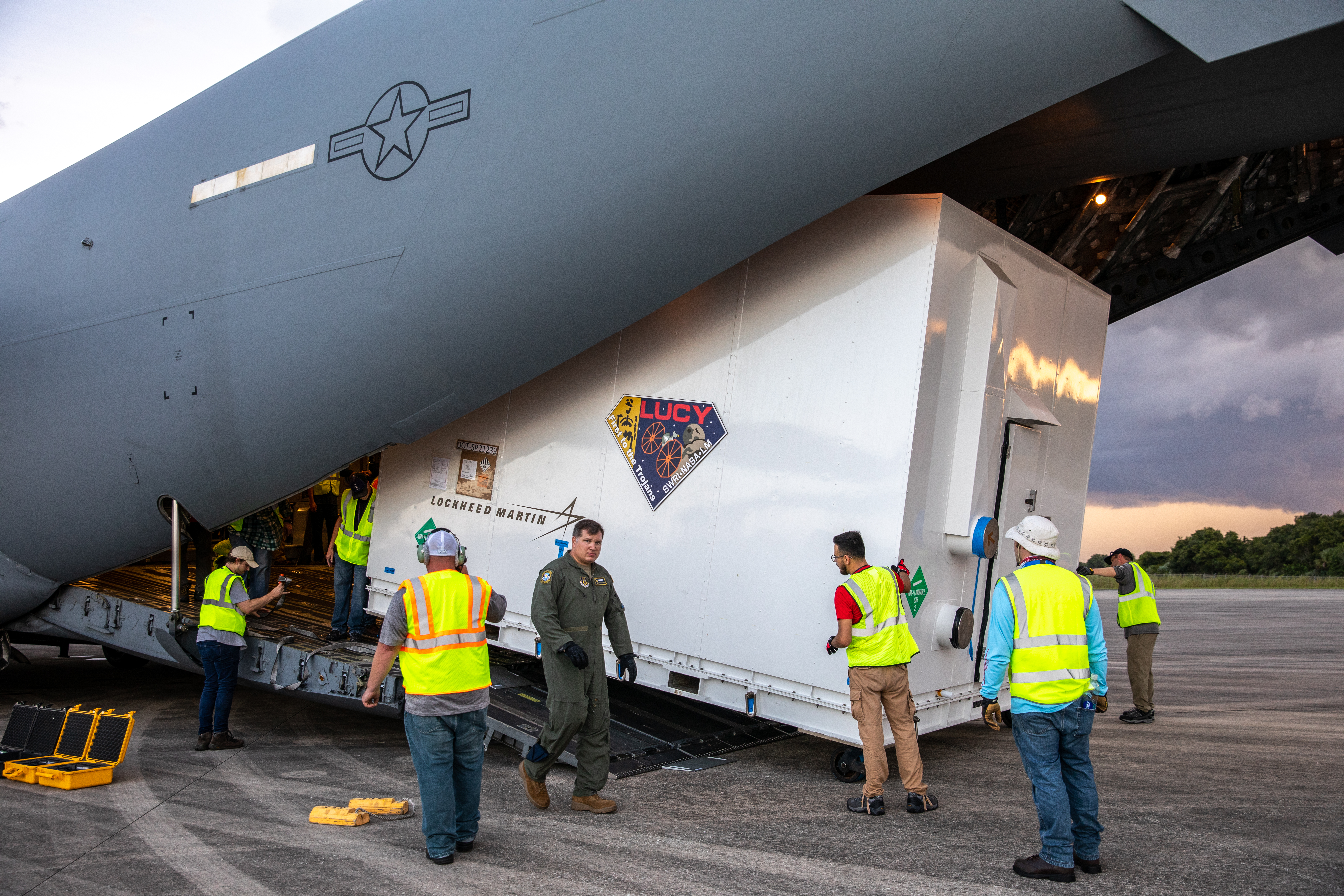
The shipping container holding NASA's Lucy spacecraft is unloaded from a United States Air Force C-17 cargo plane, stationed out of Charleston Air Force Base in South Carolina, on the runway of the Launch and Landing Facility at Kennedy Space Center in Florida on July 30, 2021. From there, the Lucy spacecraft will move to the Astrotech Space Operations payload processing facility in nearby Titusville, Florida, before its scheduled launch on a United Launch Alliance (ULA) Atlas V rocket from Cape Canaveral Space Force Station on October 16, 2021. The Lucy mission will be the first space mission to explore a diverse population of small bodies known as the Jupiter Trojan asteroids. The launch is being managed by NASA's Launch Services Program based at Kennedy, America's multi-user spaceport.
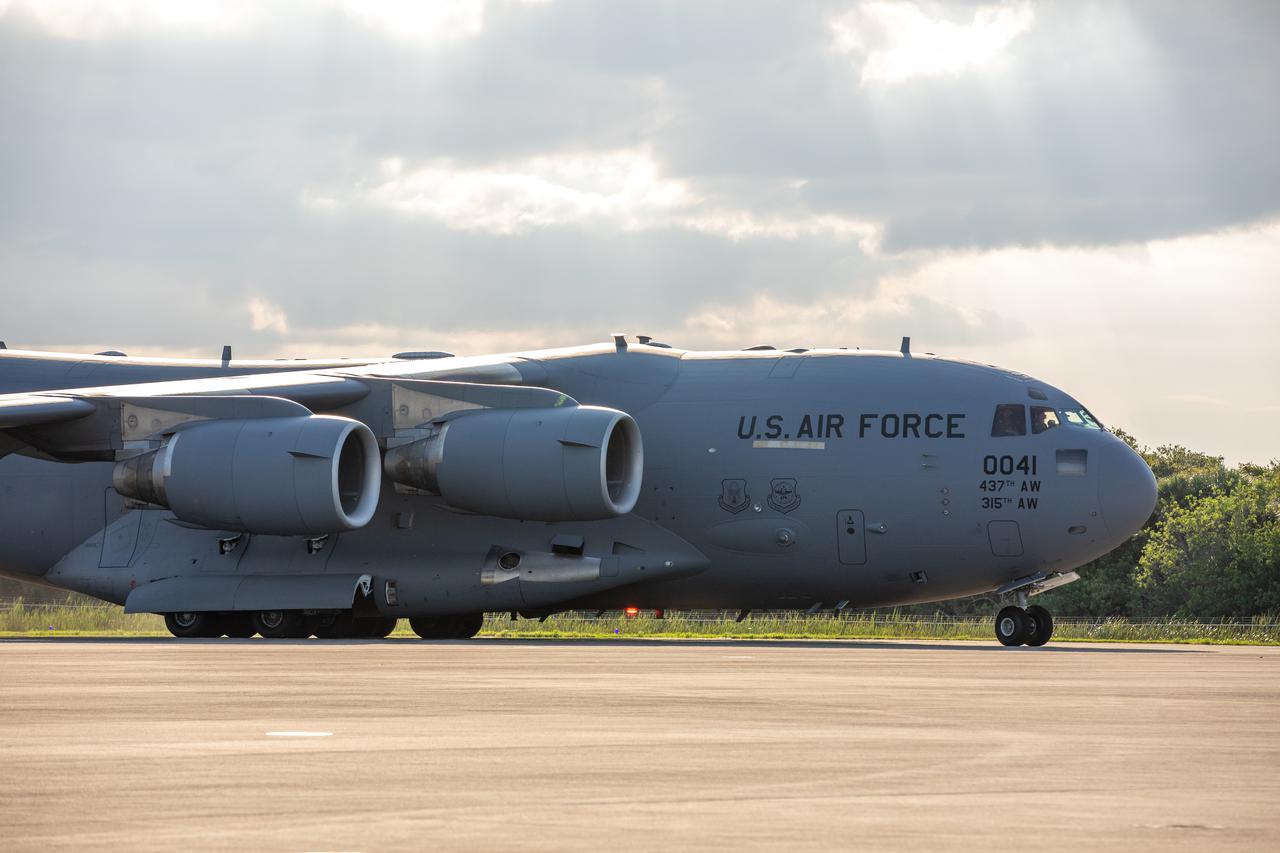
A United States Air Force C-17 cargo plane, stationed out of Charleston Air Force Base in South Carolina, holding NASA's Lucy spacecraft lands on the runway of the Launch and Landing Facility at Kennedy Space Center in Florida on July 30, 2021. From there, the Lucy spacecraft will move to the Astrotech Space Operations payload processing facility in nearby Titusville, Florida, before its scheduled launch on a United Launch Alliance (ULA) Atlas V rocket from Cape Canaveral Space Force Station on October 16, 2021. The Lucy mission will be the first space mission to explore a diverse population of small bodies known as the Jupiter Trojan asteroids. The launch is being managed by NASA's Launch Services Program based at Kennedy, America's multi-user spaceport.
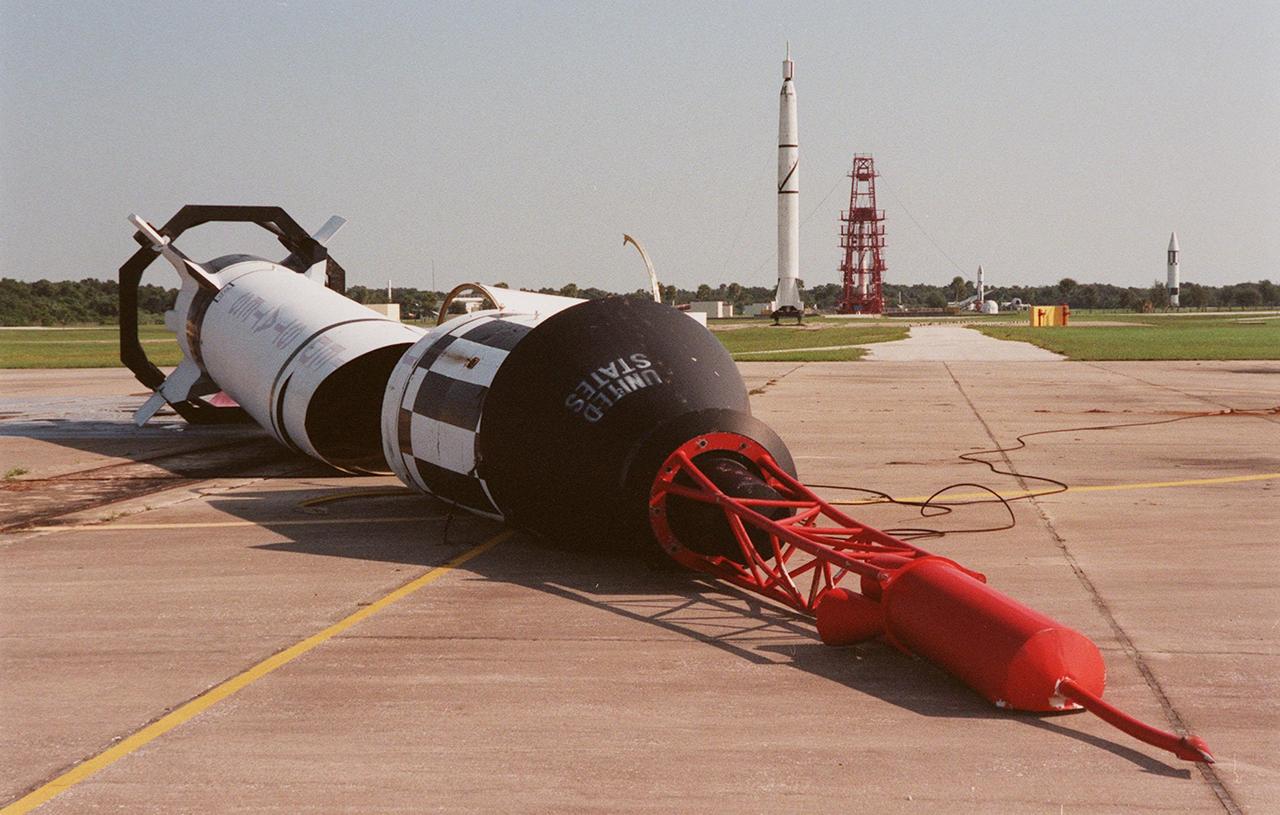
At Cape Canaveral Air Station's Complex 5/6, a Redstone rocket lies broken on the pad after Hurricane Floyd passed along the East Coast of Florida, Sept. 14-15. Still standing behind it are the Explorer I (center) and Jupiter C (right) rockets. The complex, now dismantled, was the site of the first manned launch May 5, 1961. At a weather tower located between Shuttle Launch Pad 39A and Launch Complex 41, the highest winds recorded during the superstorm were 91 mph from the NNW at 4:50 a.m. on Wednesday, Sept. 15. The maximum sustained winds were recorded at 66 mph. The highest amount of rain recorded at KSC was 2.82 inches as the eye of Hurricane Floyd passed 121 miles east of Cape Canaveral at 4 a.m. Wednesday. A preliminary review of conditions at the Kennedy Space Center was positive, however, after the worst of Hurricane Floyd passed. There appeared to be no major damage to NASA assets, including the launch pads, the four Space Shuttle Orbiters, and flight hardware
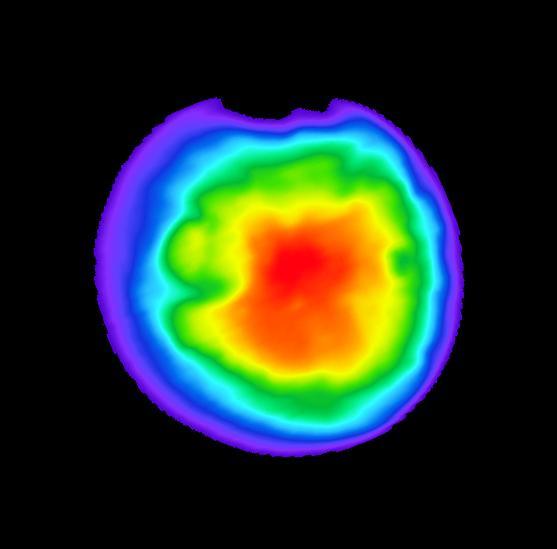
Europa Clipper, en route to the Jupiter system to investigate the icy moon Europa, swung by Mars on March 1, 2025, to use the planet's gravity to help shape the spacecraft's trajectory. The mission took the opportunity to capture infrared images of the Red Planet using the orbiter's Europa Thermal Imaging System (E-THEMIS) to calibrate the instrument. This picture is a colorized composite of several images captured by E-THEMIS from about a million miles (1.6 million kilometers) away. Warm colors represent relatively warm temperatures; red areas are about 32 degrees Fahrenheit (0 degrees Celsius), and purple regions are about minus 190 degrees F (minus 125 degrees C). The temperature variations reflect the time of day on Mars, which was noon, with the center of the globe warmest because the Sun was shining directly onto the planet, near the equator, from behind the Europa Clipper spacecraft. The instrument captured the image data in long-wave infrared wavelengths of about 7 to 14 micrometers. Europa Clipper launched from NASA's Kennedy Space Center in Florida on Oct. 14, 2024, and will arrive at the Jupiter system in 2030 to conduct about 50 flybys of Europa. The mission's main science goal is to determine whether there are places below Europa's surface that could support life. The mission's three main science objectives are to determine the thickness of the moon's icy shell and its surface interactions with the ocean below, to investigate its composition, and to characterize its geology. The mission's detailed exploration of Europa will help scientists better understand the astrobiological potential for habitable worlds beyond our planet. https://photojournal.jpl.nasa.gov/catalog/PIA26566
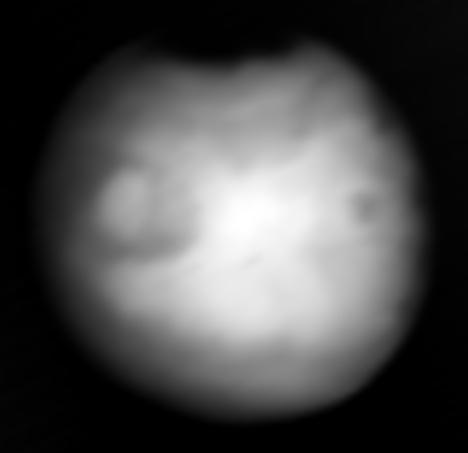
Europa Clipper, en route to the Jupiter system to investigate the icy moon Europa, swung by Mars on March 1, 2025, to use the planet's gravity to help shape the spacecraft's trajectory. The mission took the opportunity to capture to capture infrared images of the Red Planet using the orbiter's Europa Thermal Imaging System (E-THEMIS) to calibrate the instrument. This picture is a composite of several images captured by E-THEMIS, showing Mars' surface temperatures from about a million miles (1.6 million kilometers) away. Bright regions are relatively warm, with temperatures of about 32 degrees Fahrenheit (0 degrees Celsius). Darker areas are colder. The darkest region at the top is the northern polar cap and is about minus 190 F (minus 125 C). The temperature variations reflect the time of day on Mars, which was noon, with the center of the globe warmest because the Sun was shining directly onto the planet, near the equator, from behind Europa Clipper. Other variations reflect different surface features, with the fine-grained dust at the region near the equator being warm and coarser, rockier materials staying cooler. The instrument captured the images data in long-wave infrared wavelengths of about 7 to 14 micrometers. Europa Clipper launched from NASA's Kennedy Space Center in Florida on Oct. 14, 2024, and will arrive at the Jupiter system in 2030 to conduct about 50 flybys of Europa. The mission's main science goal is to determine whether there are places below Europa's surface that could support life. The mission's three main science objectives are to determine the thickness of the moon's icy shell and its surface interactions with the ocean below, to investigate its composition, and to characterize its geology. The mission's detailed exploration of Europa will help scientists better understand the astrobiological potential for habitable worlds beyond our planet. https://photojournal.jpl.nasa.gov/catalog/PIA26565
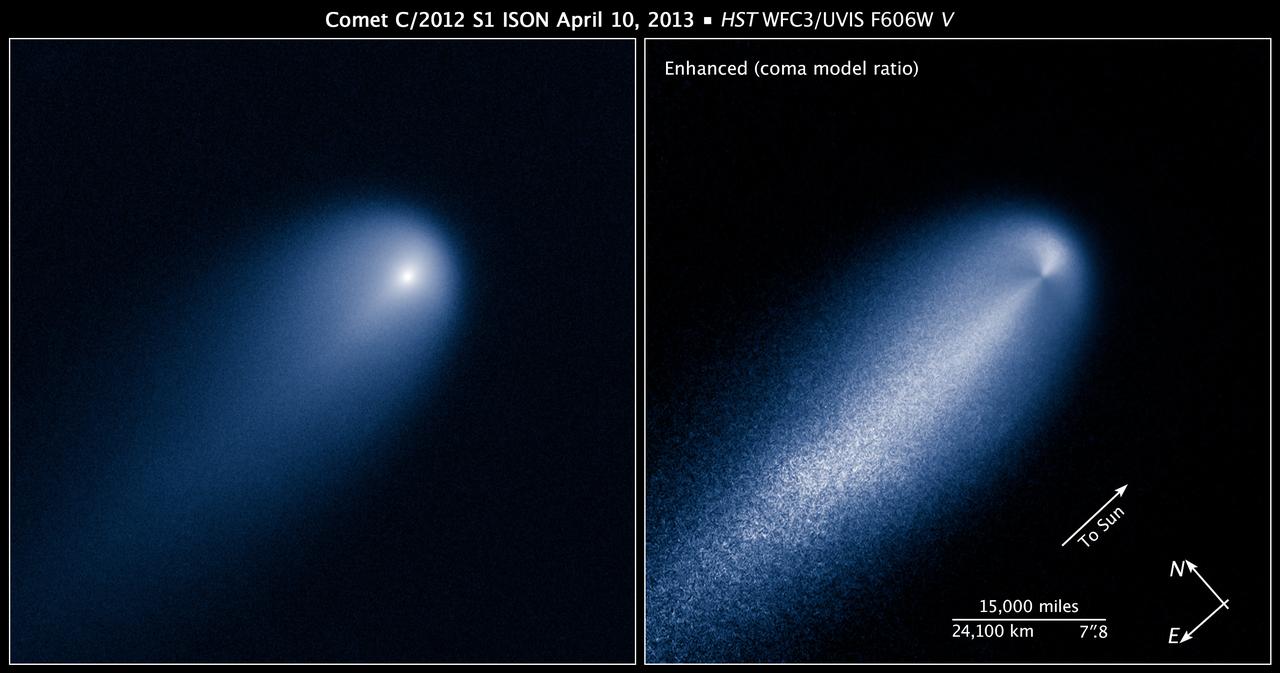
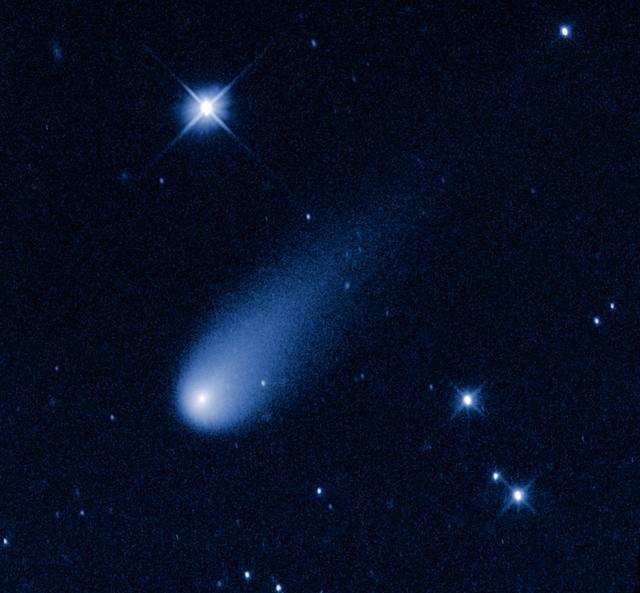
This NASA Hubble Space Telescope image of Comet (C/2012 S1) ISON was photographed on April 10, 2013, when the comet was slightly closer than Jupiter's orbit at a distance of 394 million miles from Earth. Even at that great distance the comet is already active as sunlight warms the surface and causes frozen volatiles to boil off. Astronomers used such early images to try to measure the size of the nucleus, in order to predict whether the comet would stay intact when it slingshots around the sun -- at 700,000 miles above the sun's surface -- on Nov. 28, 2013. The comet's dusty coma, or head of the comet, is approximately 3,100 miles across, or 1.2 times the width of Australia. A dust tail extends more than 57,000 miles, far beyond Hubble's field of view. This image was taken in visible light. The blue false color was added to bring out details in the comet structure. Credit: NASA/ ESA/STScI/AURA -------- More details on Comet ISON: Comet ISON began its trip from the Oort cloud region of our solar system and is now travelling toward the sun. The comet will reach its closest approach to the sun on Thanksgiving Day -- 28 Nov 2013 -- skimming just 730,000 miles above the sun's surface. If it comes around the sun without breaking up, the comet will be visible in the Northern Hemisphere with the naked eye, and from what we see now, ISON is predicted to be a particularly bright and beautiful comet. Catalogued as C/2012 S1, Comet ISON was first spotted 585 million miles away in September 2012. This is ISON's very first trip around the sun, which means it is still made of pristine matter from the earliest days of the solar system’s formation, its top layers never having been lost by a trip near the sun. Comet ISON is, like all comets, a dirty snowball made up of dust and frozen gases like water, ammonia, methane and carbon dioxide -- some of the fundamental building blocks that scientists believe led to the formation of the planets 4.5 billion years ago. NASA has been using a vast fleet of spacecraft, instruments, and space- and Earth-based telescope, in order to learn more about this time capsule from when the solar system first formed. The journey along the way for such a sun-grazing comet can be dangerous. A giant ejection of solar material from the sun could rip its tail off. Before it reaches Mars -- at some 230 million miles away from the sun -- the radiation of the sun begins to boil its water, the first step toward breaking apart. And, if it survives all this, the intense radiation and pressure as it flies near the surface of the sun could destroy it altogether. This collection of images show ISON throughout that journey, as scientists watched to see whether the comet would break up or remain intact. The comet reaches its closest approach to the sun on Thanksgiving Day -- Nov. 28, 2013 -- skimming just 730,000 miles above the sun’s surface. If it comes around the sun without breaking up, the comet will be visible in the Northern Hemisphere with the naked eye, and from what we see now, ISON is predicted to be a particularly bright and beautiful comet. ISON stands for International Scientific Optical Network, a group of observatories in ten countries who have organized to detect, monitor, and track objects in space. ISON is managed by the Keldysh Institute of Applied Mathematics, part of the Russian Academy of Sciences. <b><a href="http://www.nasa.gov/audience/formedia/features/MP_Photo_Guidelines.html" rel="nofollow">NASA image use policy.</a></b> <b><a href="http://www.nasa.gov/centers/goddard/home/index.html" rel="nofollow">NASA Goddard Space Flight Center</a></b> enables NASA’s mission through four scientific endeavors: Earth Science, Heliophysics, Solar System Exploration, and Astrophysics. Goddard plays a leading role in NASA’s accomplishments by contributing compelling scientific knowledge to advance the Agency’s mission. <b>Follow us on <a href="http://twitter.com/NASA_GoddardPix" rel="nofollow">Twitter</a></b> <b>Like us on <a href="http://www.facebook.com/pages/Greenbelt-MD/NASA-Godd</b>
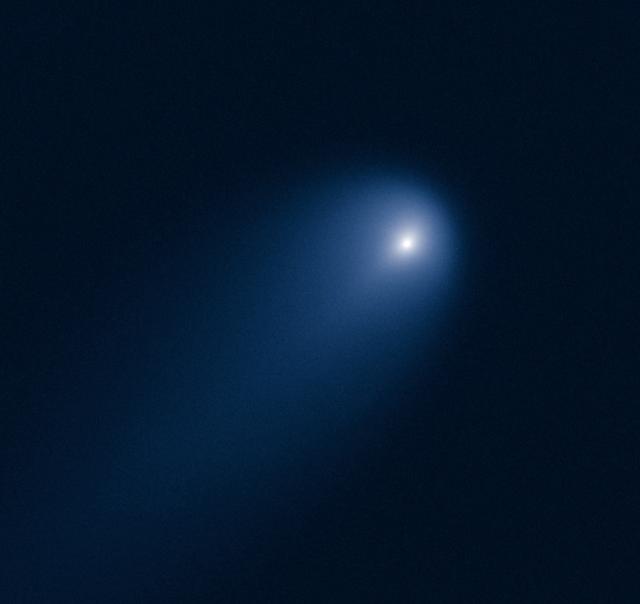
This NASA Hubble Space Telescope image of Comet (C/2012 S1) ISON was photographed on April 10, 2013, when the comet was slightly closer than Jupiter's orbit at a distance of 394 million miles from Earth. Even at that great distance the comet is already active as sunlight warms the surface and causes frozen volatiles to boil off. Astronomers used such early images to try to measure the size of the nucleus, in order to predict whether the comet would stay intact when it slingshots around the sun -- at 700,000 miles above the sun's surface -- on Nov. 28, 2013. The comet's dusty coma, or head of the comet, is approximately 3,100 miles across, or 1.2 times the width of Australia. A dust tail extends more than 57,000 miles, far beyond Hubble's field of view. This image was taken in visible light. The blue false color was added to bring out details in the comet structure. Credit: NASA/ ESA/STScI/AURA -------- More details on Comet ISON: Comet ISON began its trip from the Oort cloud region of our solar system and is now travelling toward the sun. The comet will reach its closest approach to the sun on Thanksgiving Day -- 28 Nov 2013 -- skimming just 730,000 miles above the sun's surface. If it comes around the sun without breaking up, the comet will be visible in the Northern Hemisphere with the naked eye, and from what we see now, ISON is predicted to be a particularly bright and beautiful comet. Catalogued as C/2012 S1, Comet ISON was first spotted 585 million miles away in September 2012. This is ISON's very first trip around the sun, which means it is still made of pristine matter from the earliest days of the solar system’s formation, its top layers never having been lost by a trip near the sun. Comet ISON is, like all comets, a dirty snowball made up of dust and frozen gases like water, ammonia, methane and carbon dioxide -- some of the fundamental building blocks that scientists believe led to the formation of the planets 4.5 billion years ago. NASA has been using a vast fleet of spacecraft, instruments, and space- and Earth-based telescope, in order to learn more about this time capsule from when the solar system first formed. The journey along the way for such a sun-grazing comet can be dangerous. A giant ejection of solar material from the sun could rip its tail off. Before it reaches Mars -- at some 230 million miles away from the sun -- the radiation of the sun begins to boil its water, the first step toward breaking apart. And, if it survives all this, the intense radiation and pressure as it flies near the surface of the sun could destroy it altogether. This collection of images show ISON throughout that journey, as scientists watched to see whether the comet would break up or remain intact. The comet reaches its closest approach to the sun on Thanksgiving Day -- Nov. 28, 2013 -- skimming just 730,000 miles above the sun’s surface. If it comes around the sun without breaking up, the comet will be visible in the Northern Hemisphere with the naked eye, and from what we see now, ISON is predicted to be a particularly bright and beautiful comet. ISON stands for International Scientific Optical Network, a group of observatories in ten countries who have organized to detect, monitor, and track objects in space. ISON is managed by the Keldysh Institute of Applied Mathematics, part of the Russian Academy of Sciences. <b><a href="http://www.nasa.gov/audience/formedia/features/MP_Photo_Guidelines.html" rel="nofollow">NASA image use policy.</a></b> <b><a href="http://www.nasa.gov/centers/goddard/home/index.html" rel="nofollow">NASA Goddard Space Flight Center</a></b> enables NASA’s mission through four scientific endeavors: Earth Science, Heliophysics, Solar System Exploration, and Astrophysics. Goddard plays a leading role in NASA’s accomplishments by contributing compelling scientific knowledge to advance the Agency’s mission. <b>Follow us on <a href="http://twitter.com/NASA_GoddardPix" rel="nofollow">Twitter</a></b> <b>Like us on <a href="http://www.facebook.com/pages/Greenbelt-MD/NASA-Godd</b>
Superficially resembling a skyrocket, Comet ISON is hurtling toward the Sun at a whopping 48,000 miles per hour. Its swift motion is captured in this image taken May 8, 2013, by NASA's Hubble Space Telescope. At the time the image was taken, the comet was 403 million miles from Earth, between the orbits of Mars and Jupiter. Unlike a firework, the comet is not combusting, but in fact is pretty cold. Its skyrocket-looking tail is really a streamer of gas and dust bleeding off the icy nucleus, which is surrounded by a bright, star-like-looking coma. The pressure of the solar wind sweeps the material into a tail, like a breeze blowing a windsock. As the comet warms as it moves closer to the Sun, its rate of sublimation will increase. The comet will get brighter and the tail grows longer. The comet is predicted to reach naked-eye visibility in November. The comet is named after the organization that discovered it, the Russia-based International Scientific Optical Network. This false-color, visible-light image was taken with Hubble's Wide Field Camera 3. Credit: NASA, ESA, and the Hubble Heritage Team (STScI/AURA) -------- More details on Comet ISON: Comet ISON began its trip from the Oort cloud region of our solar system and is now travelling toward the sun. The comet will reach its closest approach to the sun on Thanksgiving Day -- 28 Nov 2013 -- skimming just 730,000 miles above the sun's surface. If it comes around the sun without breaking up, the comet will be visible in the Northern Hemisphere with the naked eye, and from what we see now, ISON is predicted to be a particularly bright and beautiful comet. Catalogued as C/2012 S1, Comet ISON was first spotted 585 million miles away in September 2012. This is ISON's very first trip around the sun, which means it is still made of pristine matter from the earliest days of the solar system’s formation, its top layers never having been lost by a trip near the sun. Comet ISON is, like all comets, a dirty snowball made up of dust and frozen gases like water, ammonia, methane and carbon dioxide -- some of the fundamental building blocks that scientists believe led to the formation of the planets 4.5 billion years ago. NASA has been using a vast fleet of spacecraft, instruments, and space- and Earth-based telescope, in order to learn more about this time capsule from when the solar system first formed. The journey along the way for such a sun-grazing comet can be dangerous. A giant ejection of solar material from the sun could rip its tail off. Before it reaches Mars -- at some 230 million miles away from the sun -- the radiation of the sun begins to boil its water, the first step toward breaking apart. And, if it survives all this, the intense radiation and pressure as it flies near the surface of the sun could destroy it altogether. This collection of images show ISON throughout that journey, as scientists watched to see whether the comet would break up or remain intact. The comet reaches its closest approach to the sun on Thanksgiving Day -- Nov. 28, 2013 -- skimming just 730,000 miles above the sun’s surface. If it comes around the sun without breaking up, the comet will be visible in the Northern Hemisphere with the naked eye, and from what we see now, ISON is predicted to be a particularly bright and beautiful comet. ISON stands for International Scientific Optical Network, a group of observatories in ten countries who have organized to detect, monitor, and track objects in space. ISON is managed by the Keldysh Institute of Applied Mathematics, part of the Russian Academy of Sciences. <b><a href="http://www.nasa.gov/audience/formedia/features/MP_Photo_Guidelines.html" rel="nofollow">NASA image use policy.</a></b> <b><a href="http://www.nasa.gov/centers/goddard/home/index.html" rel="nofollow">NASA Goddard Space Flight Center</a></b> enables NASA’s mission through four scientific endeavors: Earth Science, Heliophysics, Solar System Exploration, and Astrophysics. Goddard plays a leading role in NASA’s accomplishments by contributing compelling scienti