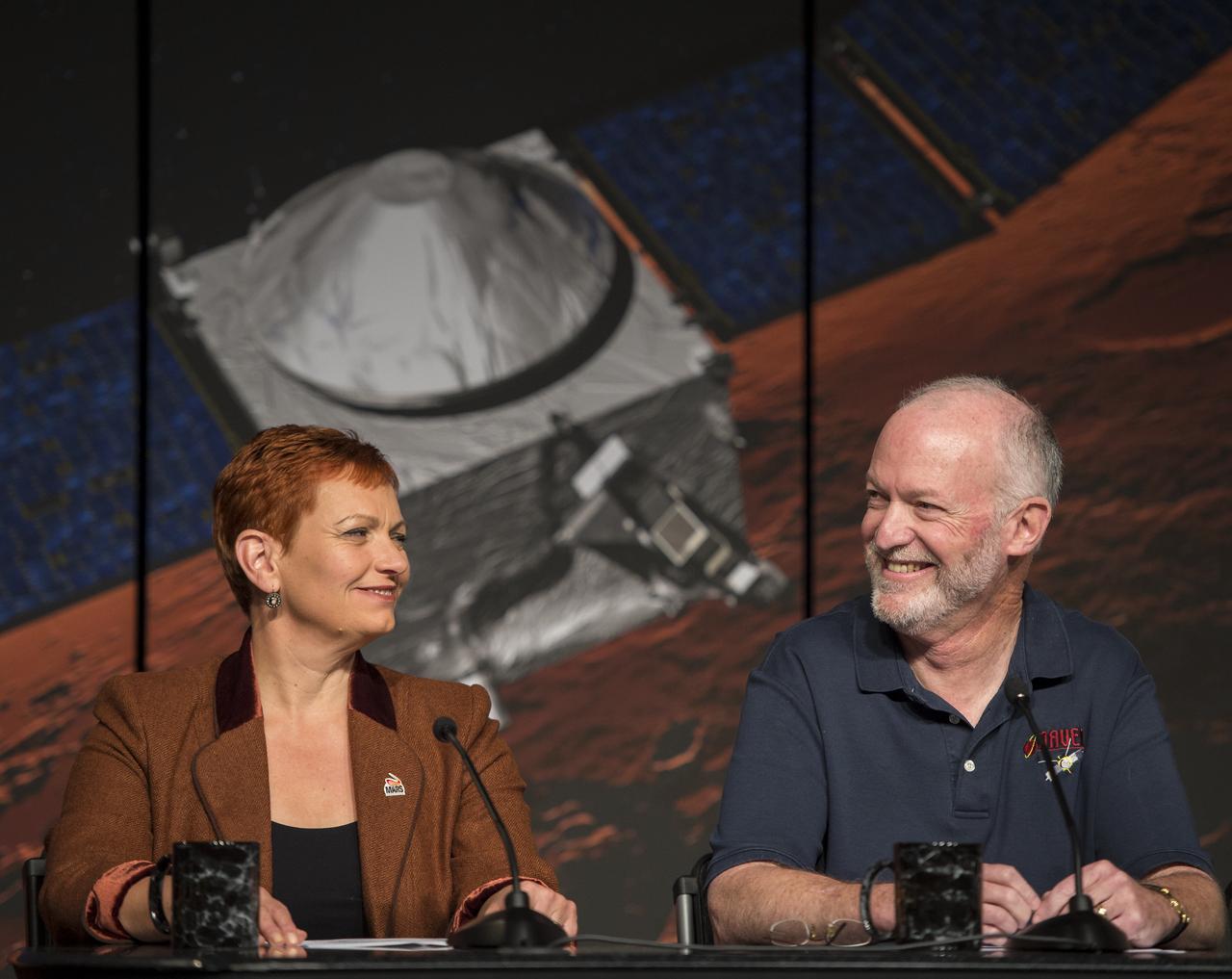
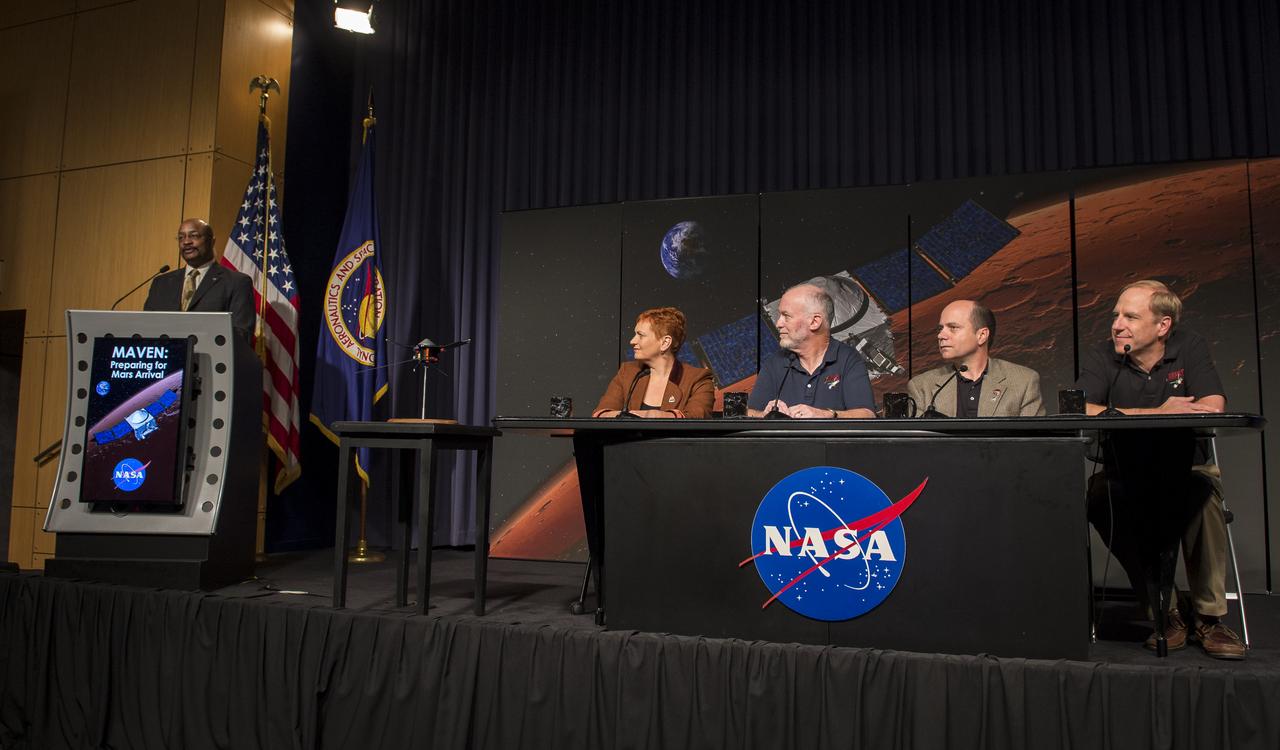
Lisa May, lead program executive, Mars Exploration Program, NASA Headquarters, and Bruce Jakosky, MAVEN principal investigator, Laboratory for Atmospheric and Space Physics, University of Colorado, Boulder, are seen during a media briefing where they and other panelist outlined activities around the Sunday, Sept. 21 orbital insertion at Mars of the agency’s Mars Atmosphere and Volatile EvolutioN (MAVEN) spacecraft, Wednesday, Sept. 17, 2014 at NASA Headquarters in Washington. (Photo credit: NASA/Bill Ingalls)
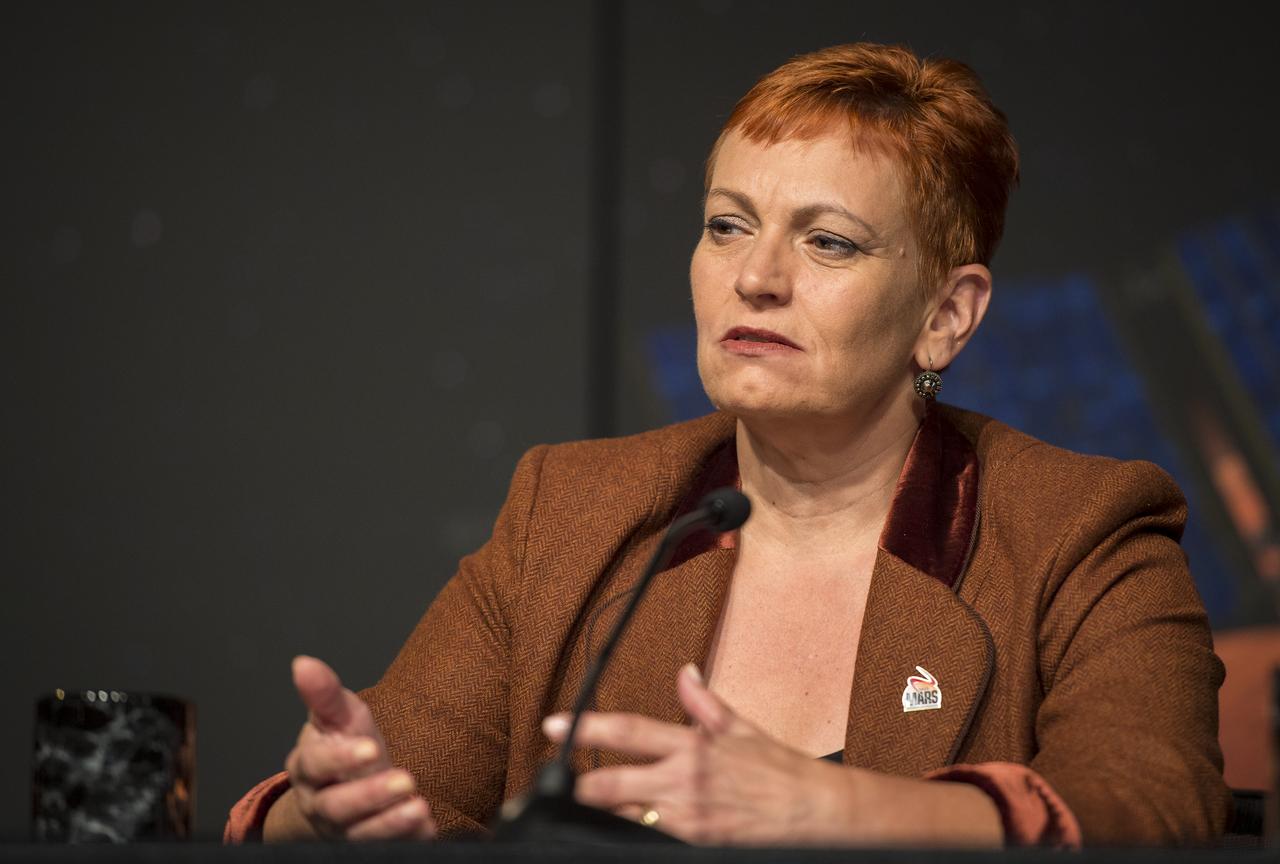
Lisa May, lead program executive, Mars Exploration Program, NASA Headquarters gives remarks during a media briefing where she and other panelist outlined activities around the Sunday, Sept. 21 orbital insertion at Mars of the agency’s Mars Atmosphere and Volatile EvolutioN (MAVEN) spacecraft, Wednesday, Sept. 17, 2014 at NASA Headquarters in Washington. (Photo credit: NASA/Bill Ingalls)

Lisa May, lead program executive, Mars Exploration Program, NASA Headquarters gives remarks during a media briefing where she and other panelist outlined activities around the Sunday, Sept. 21 orbital insertion at Mars of the agency’s Mars Atmosphere and Volatile EvolutioN (MAVEN) spacecraft, Wednesday, Sept. 17, 2014 at NASA Headquarters in Washington. (Photo credit: NASA/Bill Ingalls)
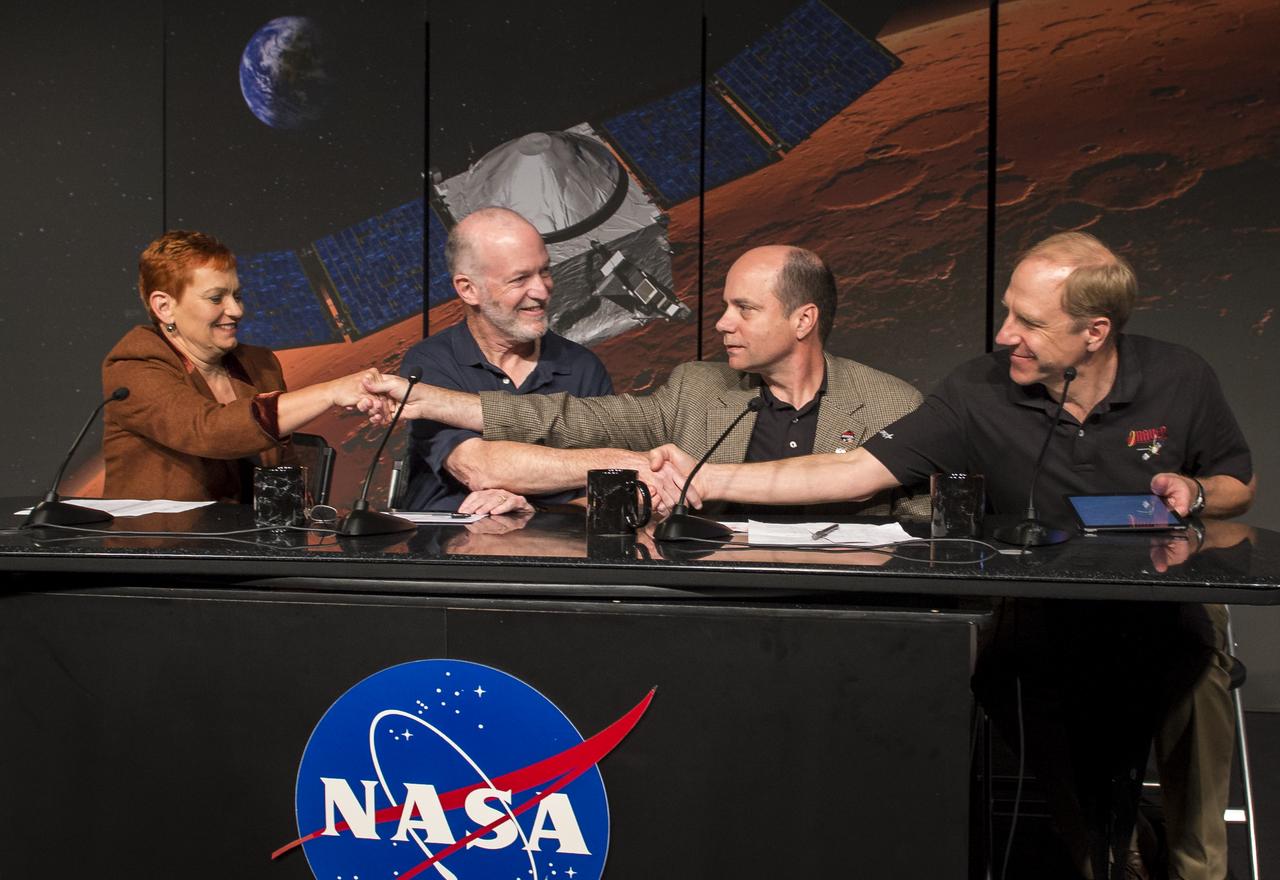
Panelist, from left, Lisa May, lead program executive, Mars Exploration Program, NASA Headquarters, Washington, Bruce Jakosky, MAVEN principal investigator, Laboratory for Atmospheric and Space Physics, University of Colorado, Boulder, David Mitchell, MAVEN project manager, NASA’s Goddard Space Flight Center, Greenbelt, Maryland, and Guy Beutelschies, Lockheed Martin MAVEN program manager, Lockheed Martin Space Systems Company, Littleton, Colorado, all shake hands at the end of a media briefing where they outlined activities around the Sunday, Sept. 21 orbital insertion at Mars of the agency’s Mars Atmosphere and Volatile EvolutioN (MAVEN) spacecraft, Wednesday, Sept. 17, 2014 at NASA Headquarters in Washington. (Photo credit: NASA/Bill Ingalls)
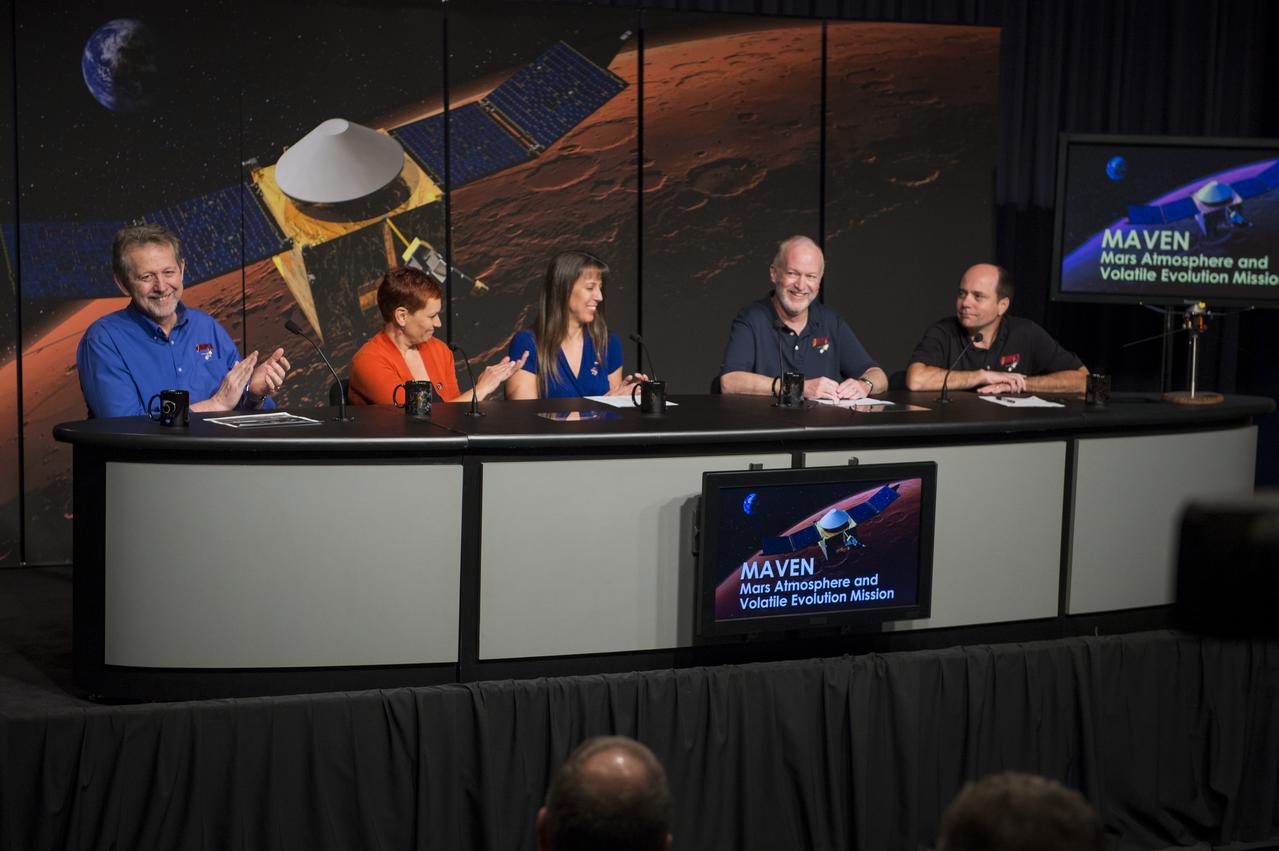
L-R: Jim Green, director, Planetary Science Division, NASA Headquarters, Lisa May, MAVEN program executive, NASA Headquarters, Kelly Fast, MAVEN program scientist, NASA Headquarters, Bruce Jakosky, MAVEN principal investigator, University of Colorado Boulder Laboratory for Atmospheric and Space Physics, and David Mitchell, MAVEN project manager, NASA's Goddard Space Flight Center, Greenbelt, Md. are applauded at the end of a panel discussion on the upcoming launch of the Mars Atmosphere and Volatile Evolution (MAVEN) mission, at a press conference at NASA Headquarters in Washington on Monday, Oct. 28th, 2013. MAVEN is the agency's next mission to Mars and the first devoted to understanding the upper atmosphere of the Red Planet. (Photo credit: NASA/Jay Westcott)
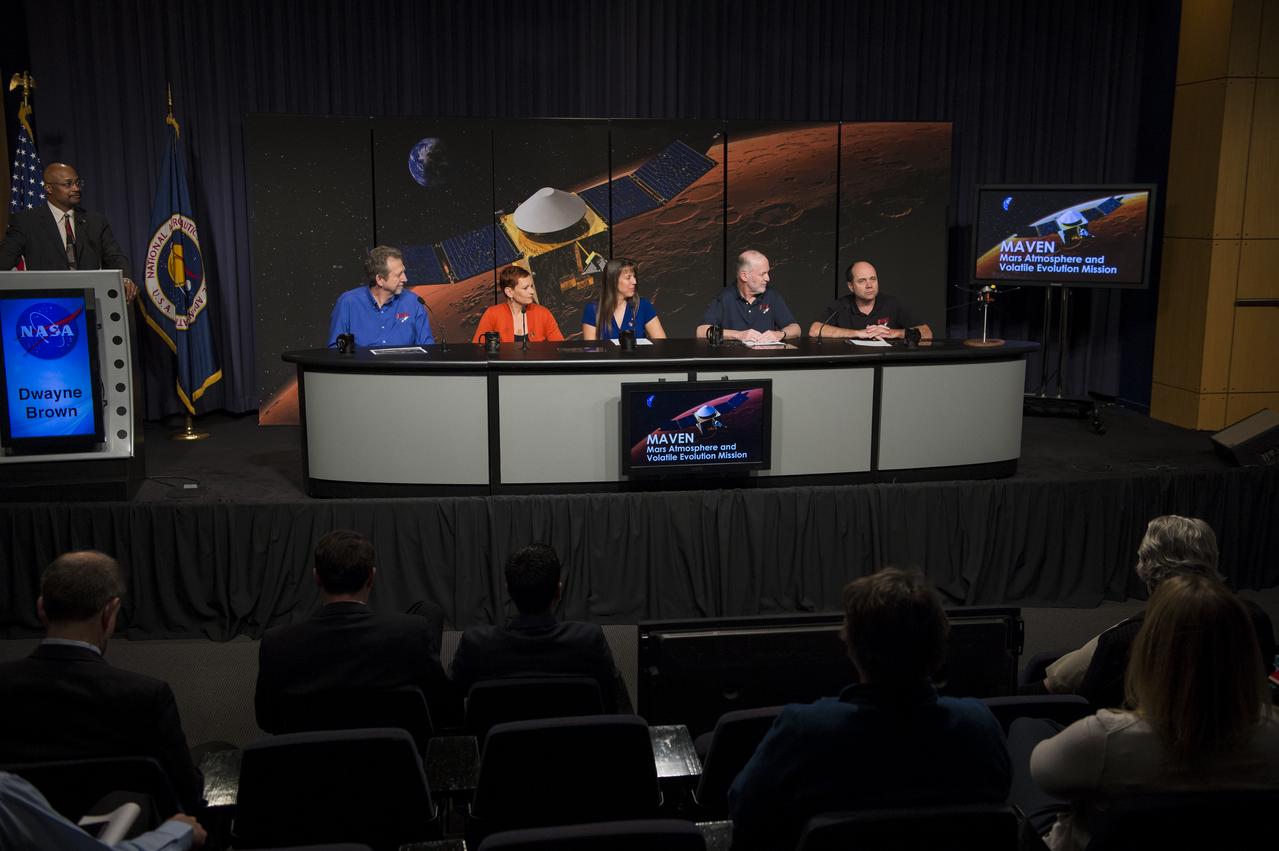
Dwayne Brown, NASA public affairs officer, left, moderates a media briefing where panelist, seated from left, Lisa May, lead program executive, Mars Exploration Program, NASA Headquarters, Washington, Bruce Jakosky, MAVEN principal investigator, Laboratory for Atmospheric and Space Physics, University of Colorado, Boulder, David Mitchell, MAVEN project manager, NASA’s Goddard Space Flight Center, Greenbelt, Maryland, and Guy Beutelschies, Lockheed Martin MAVEN program manager, Lockheed Martin Space Systems Company, Littleton, Colorado, outlined activities around the Sunday, Sept. 21 orbital insertion at Mars of the agency’s Mars Atmosphere and Volatile EvolutioN (MAVEN) spacecraft, Wednesday, Sept. 17, 2014 at NASA Headquarters in Washington. (Photo credit: NASA/Bill Ingalls)
L-R: Dwayne Brown, NASA Public Affairs Officer, Jim Green, director, Planetary Science Division, NASA Headquarters, Lisa May, MAVEN program executive, NASA Headquarters, Kelly Fast, MAVEN program scientist, NASA Headquarters, Bruce Jakosky, MAVEN principal investigator, University of Colorado Boulder Laboratory for Atmospheric and Space Physics, and David Mitchell, MAVEN project manager, NASA's Goddard Space Flight Center, Greenbelt, Md. discuss the upcoming launch of the Mars Atmosphere and Volatile Evolution (MAVEN) mission, at a press conference at NASA Headquarters in Washington on Monday, Oct. 28th, 2013. MAVEN is the agency's next mission to Mars and the first devoted to understanding the upper atmosphere of the Red Planet. (Photo credit: NASA/Jay Westcott)
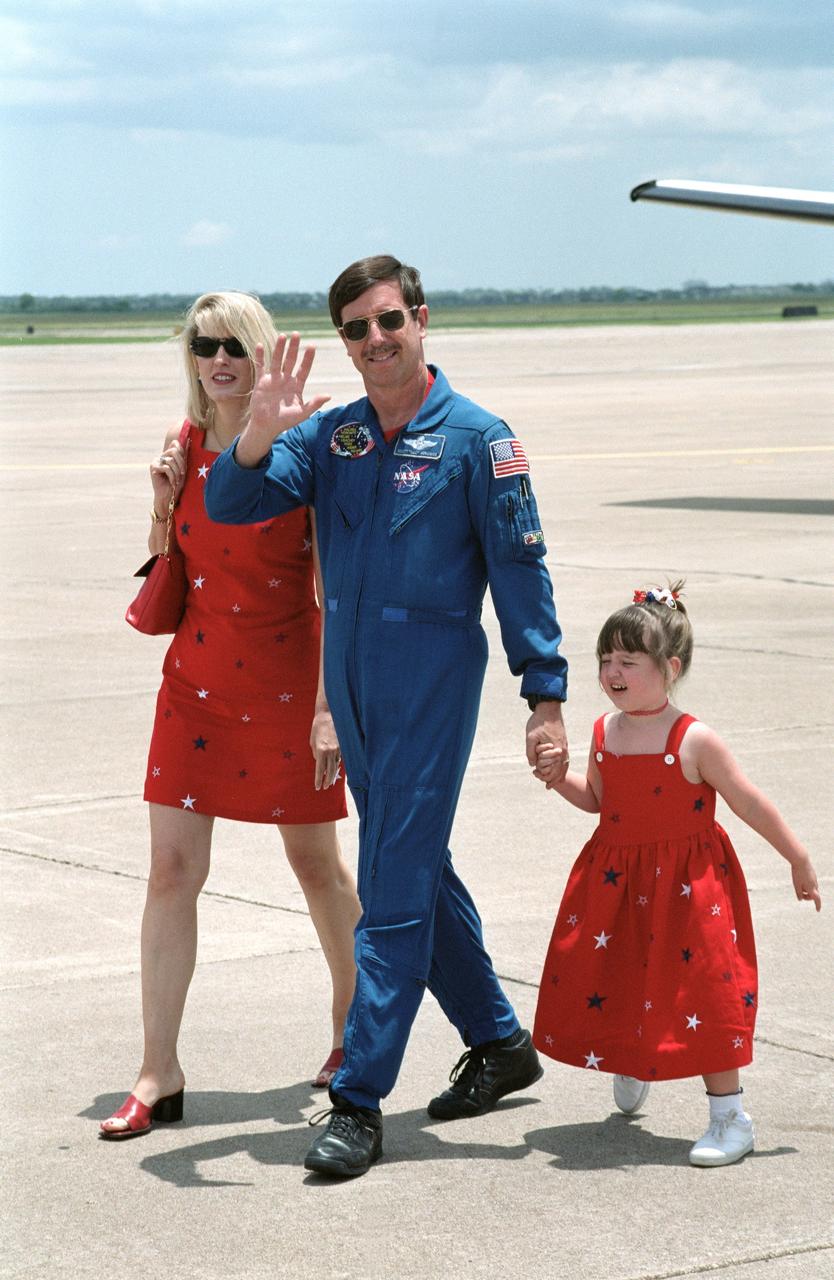
JSC2000-04594 (30 May 2000) --- Astronaut Scott J. Horowitz, pilot, reunites with wife Lisa Marie and young daughter following the STS-101 crew return. A welcome-home ceremony followed the arrival of the six astronauts and one cosmonaut at Ellington Field on the day after the landing of the Space Shuttle Atlantis in Florida.
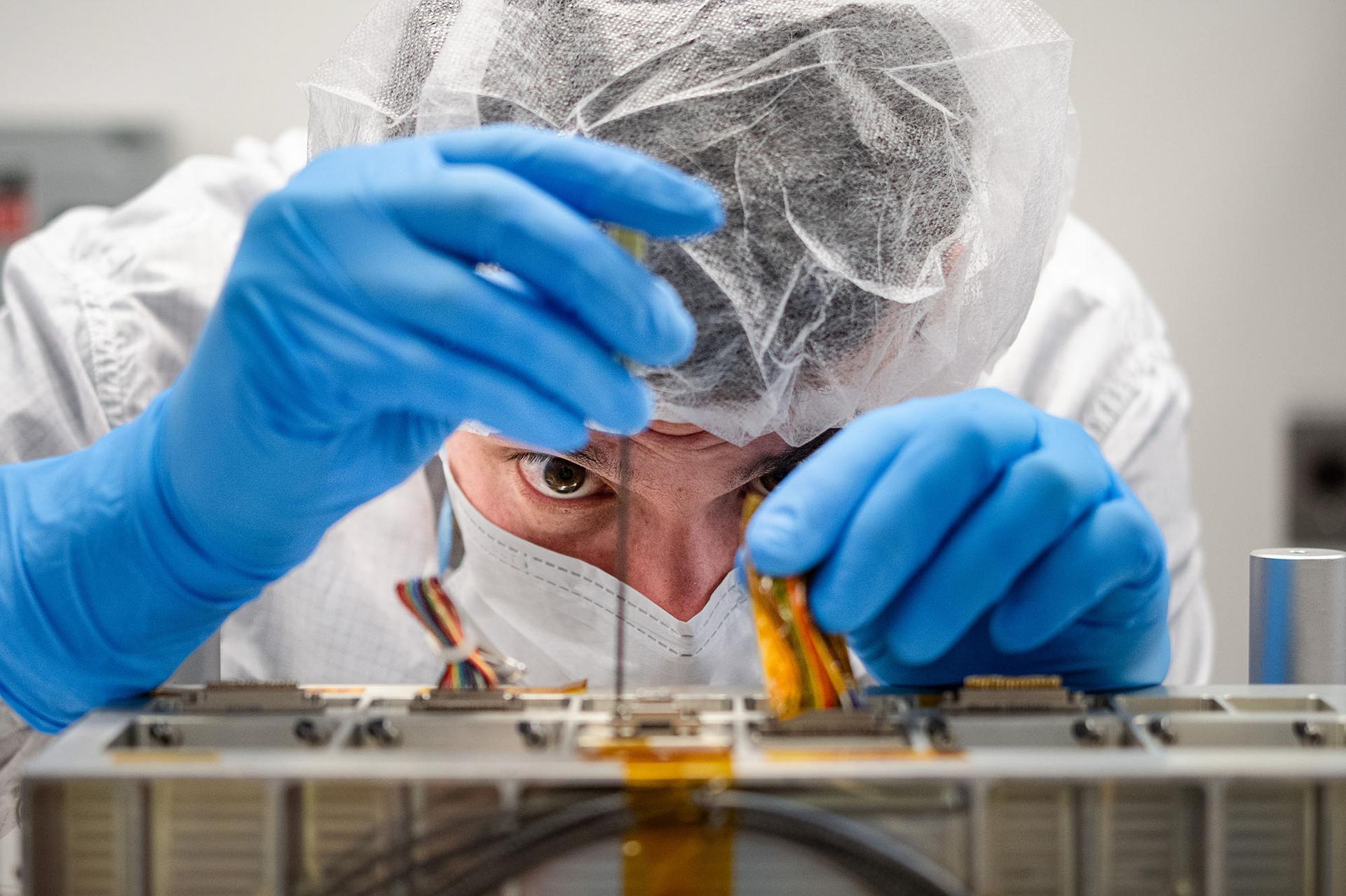
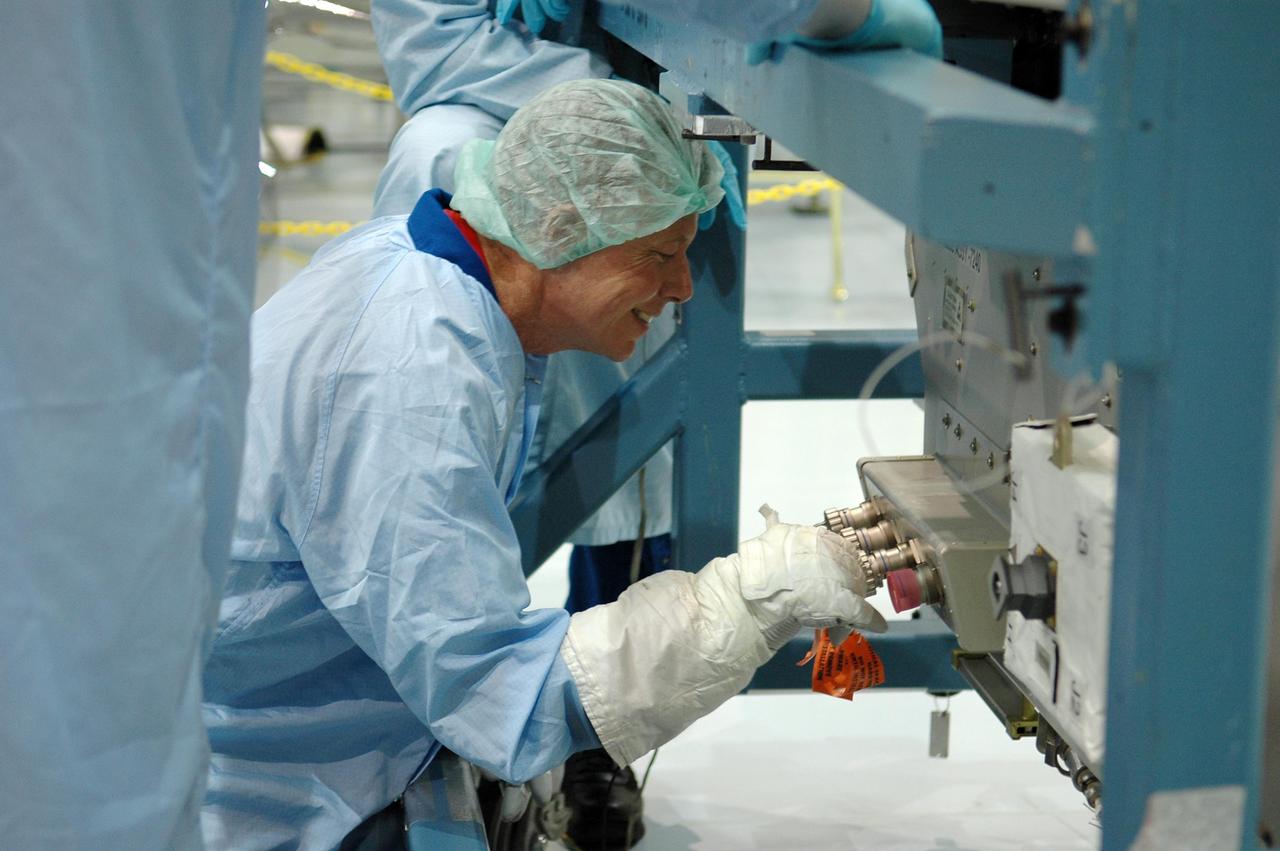
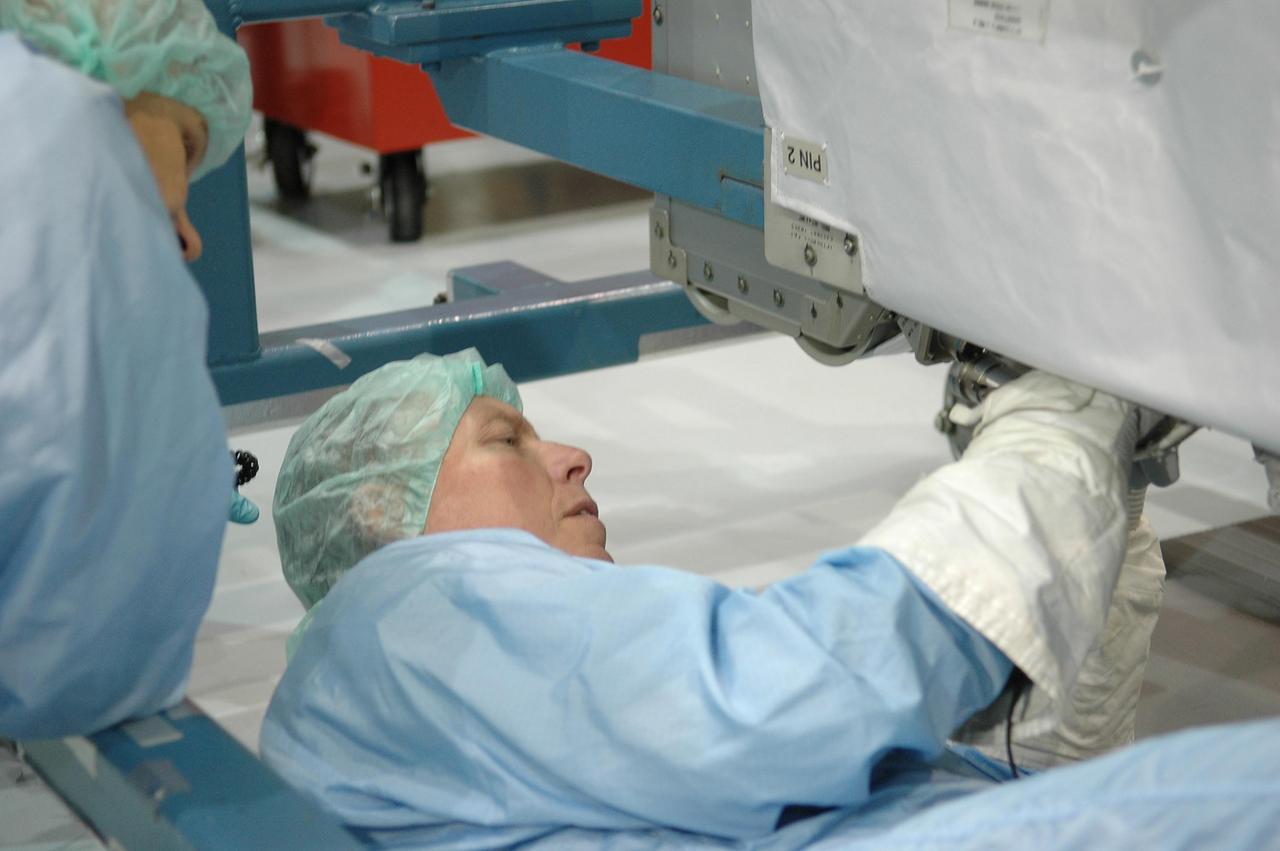
Technician Kyle Guzek installs a connector on the Laser Optical Module for the Laser Interferometer Space Antenna (LISA) mission at NASA's Goddard Space Flight Center in Greenbelt, Maryland on May 27th, 2025. Photo Credit: (NASA/Denny Henry)
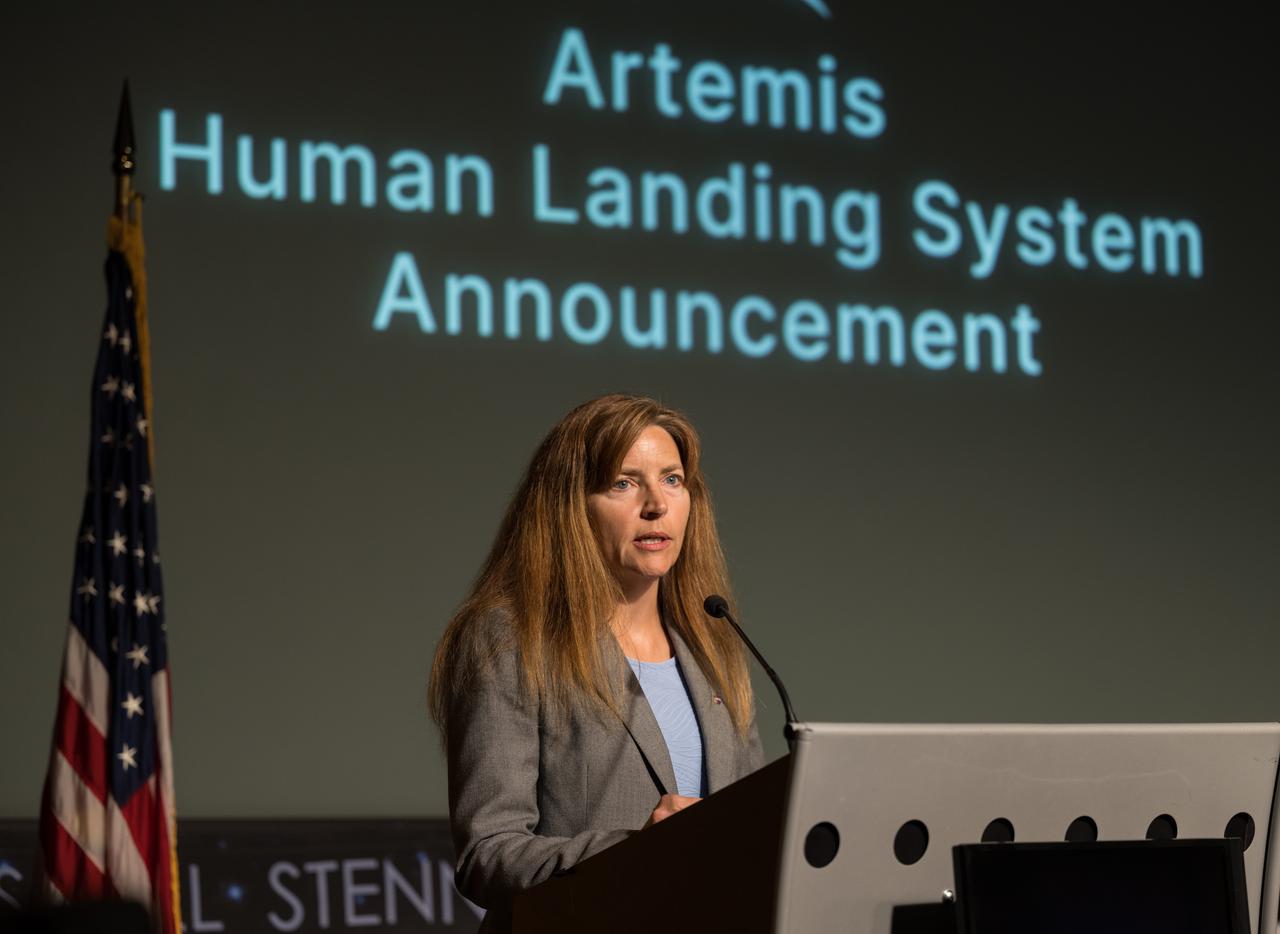
Human Landing System Program Manager Lisa Watson-Morgan gives remarks during an event announcing Blue Origin as the company selected to develop a sustainable human landing system for the Artemis V Moon mission, Friday, May 19, 2023 at the Mary W. Jackson NASA Headquarters building in Washington. The human landing system will take astronauts to and from Gateway in lunar orbit to the surface and back to the lunar space station as part of NASA’s return to the Moon for science, exploration, and inspiration. Photo Credit: (NASA/Aubrey Gemignani)
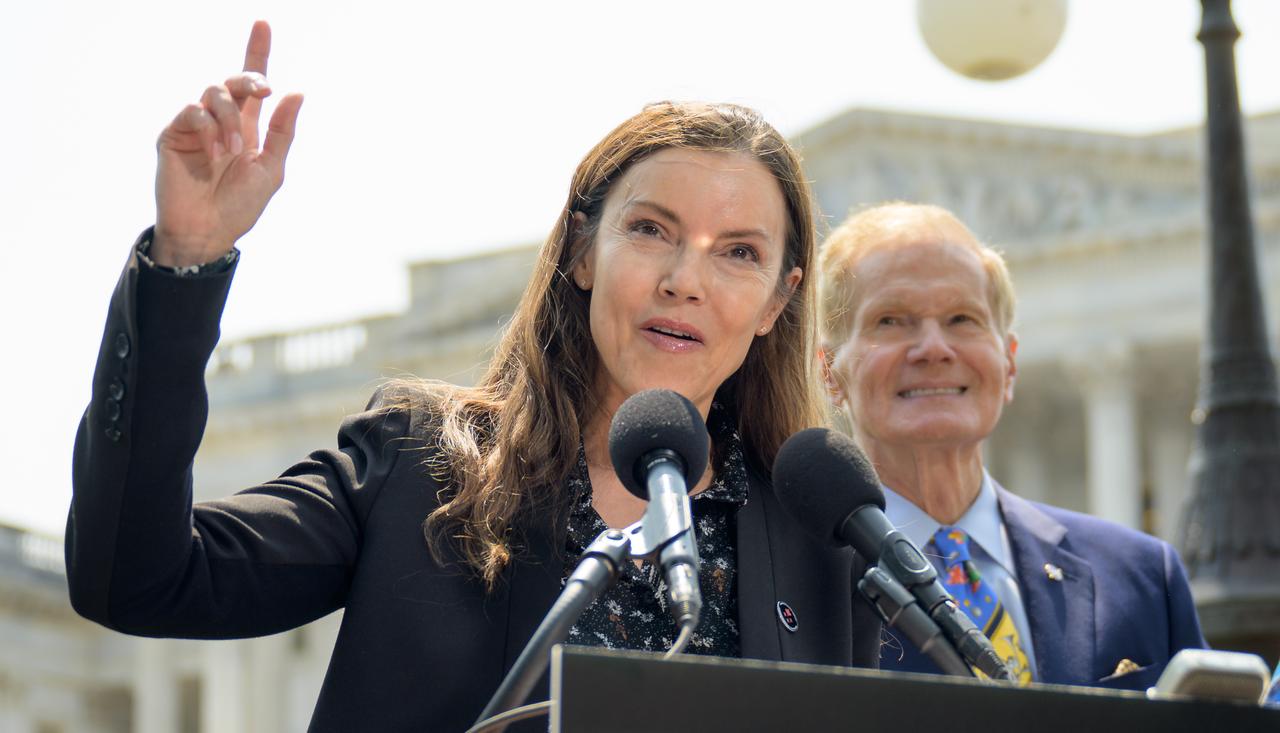
CSA (Canadian Space Agency) President Lisa Campbell gives remarks during a media gather, Thursday, May 18, 2023, on Capitol Hill grounds in Washington. NASA astronauts Reid Wiseman, Victor Glover, Christina Hammock Koch, and CSA (Canadian Space Agency) astronaut Jeremy Hansen, who will fly around the Moon on NASA’s Artemis II flight test, visited Washington to discuss their upcoming mission with members of Congress and others. Photo Credit: (NASA/Bill Ingalls)
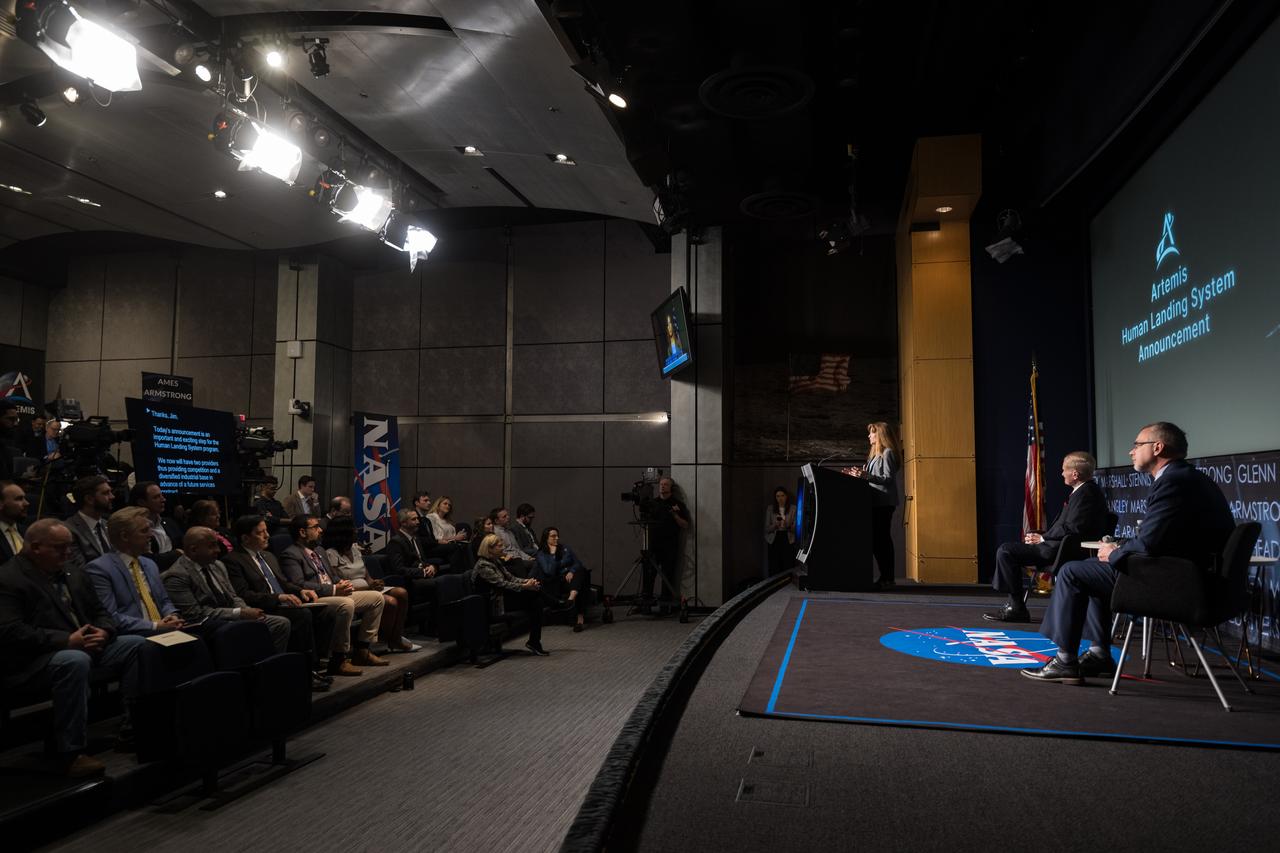
Human Landing System Program Manager Lisa Watson-Morgan gives remarks during an event announcing Blue Origin as the company selected to develop a sustainable human landing system for the Artemis V Moon mission, Friday, May 19, 2023 at the Mary W. Jackson NASA Headquarters building in Washington. The human landing system will take astronauts to and from Gateway in lunar orbit to the surface and back to the lunar space station as part of NASA’s return to the Moon for science, exploration, and inspiration. Photo Credit: (NASA/Aubrey Gemignani)
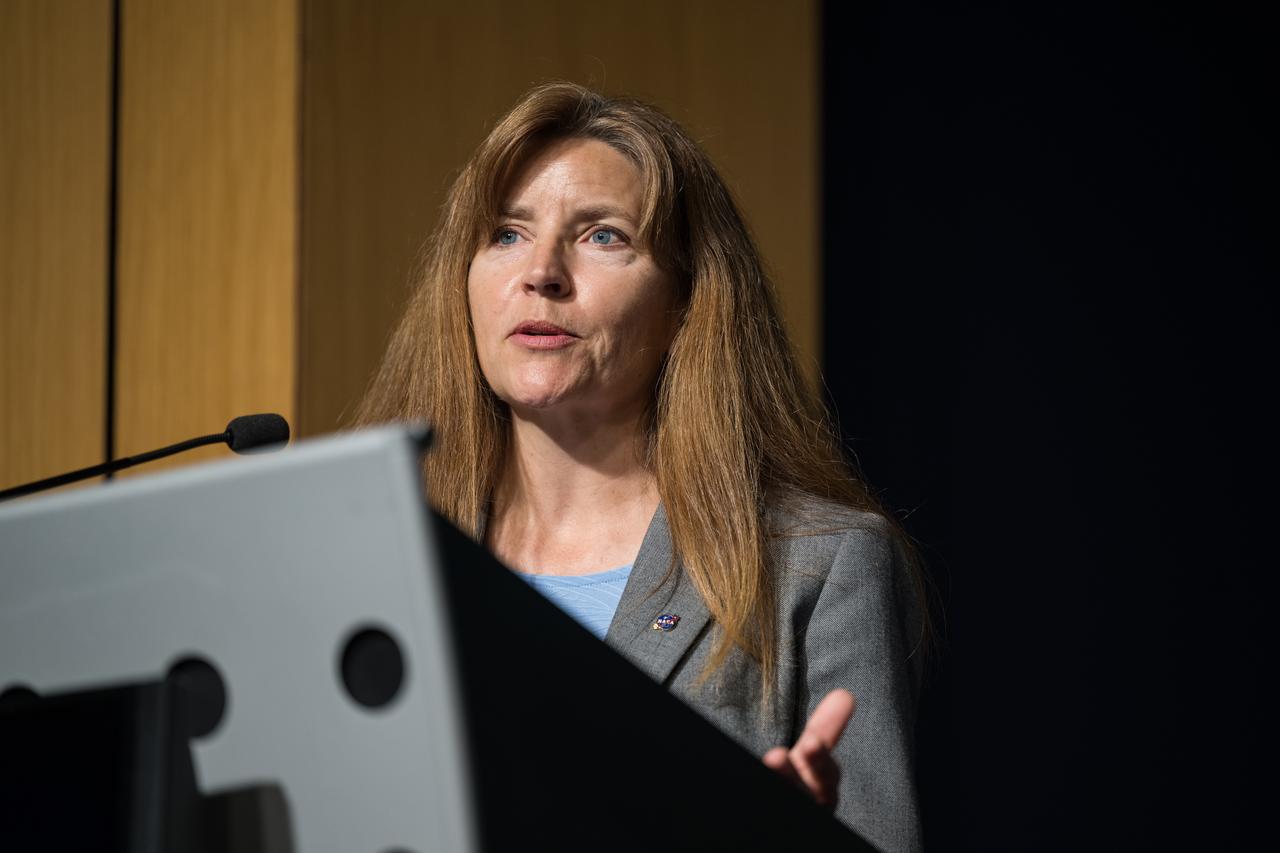
Human Landing System Program Manager Lisa Watson-Morgan gives remarks during an event announcing Blue Origin as the company selected to develop a sustainable human landing system for the Artemis V Moon mission, Friday, May 19, 2023 at the Mary W. Jackson NASA Headquarters building in Washington. The human landing system will take astronauts to and from Gateway in lunar orbit to the surface and back to the lunar space station as part of NASA’s return to the Moon for science, exploration, and inspiration. Photo Credit: (NASA/Aubrey Gemignani)
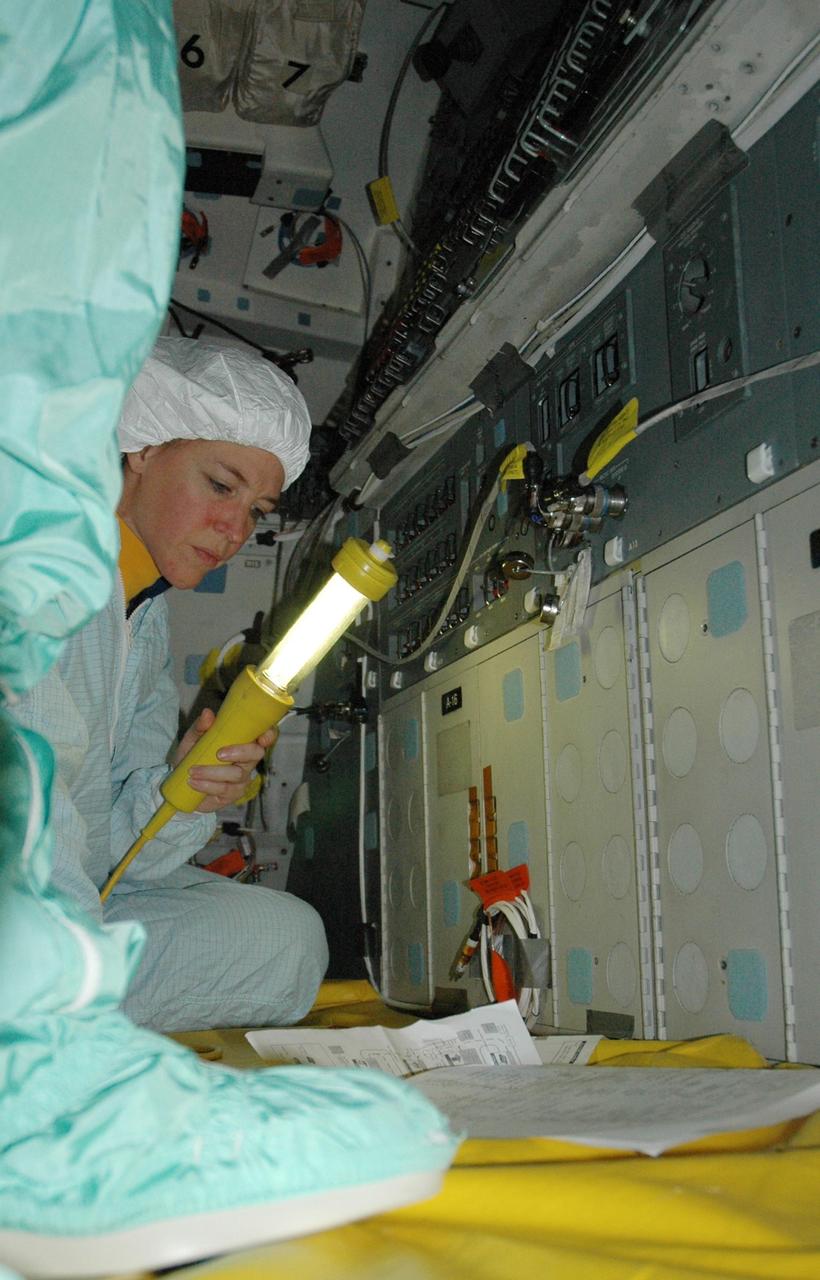
KENNEDY SPACE CENTER, FLA. - In NASA Kennedy Space Center's Orbiter Processing Facility bay 3, STS-121 Mission Specialist Lisa Nowak prepares for her upcoming mission inside Space Shuttle Discovery. The crew is at Kennedy to take part in the crew equipment interface test, which provides hands-on experience with equipment to be used on-orbit. Launch of Space Shuttle Discovery on mission STS-121, the second return-to-flight mission, is scheduled no earlier than May.
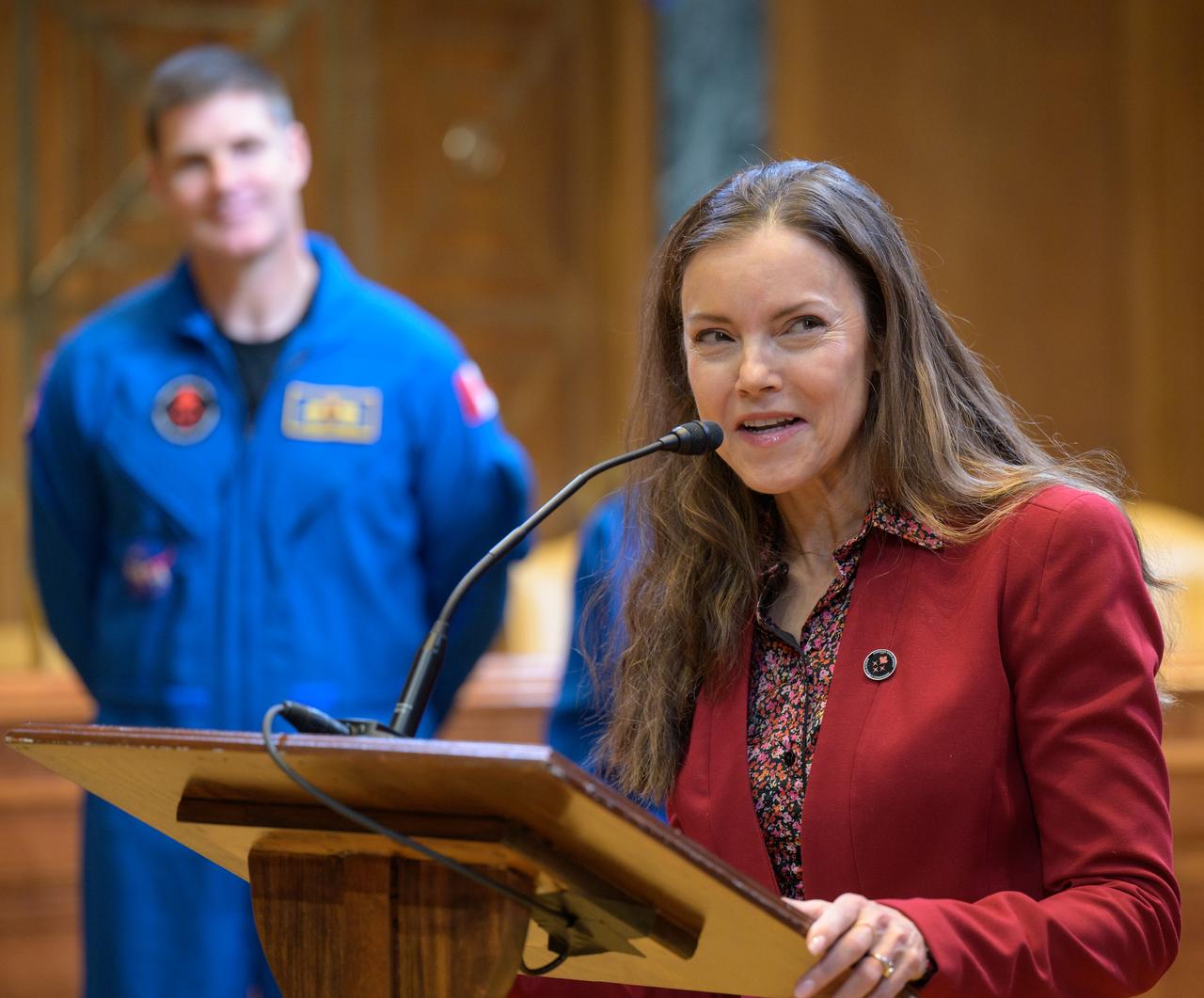
CSA (Canadian Space Agency) President Lisa Campbell gives remarks as CSA (Canadian Space Agency) astronaut Jeremy Hansen looks on, during a meet and greet, Wednesday, May 17, 2023, at the Dirksen Senate Office Building in Washington. Hansen along with NASA astronauts Reid Wiseman, Victor Glover, and Christina Hammock Koch, who will fly around the Moon on NASA’s Artemis II flight test, visited Washington to discuss their upcoming mission with members of Congress and others. Photo Credit: (NASA/Bill Ingalls)
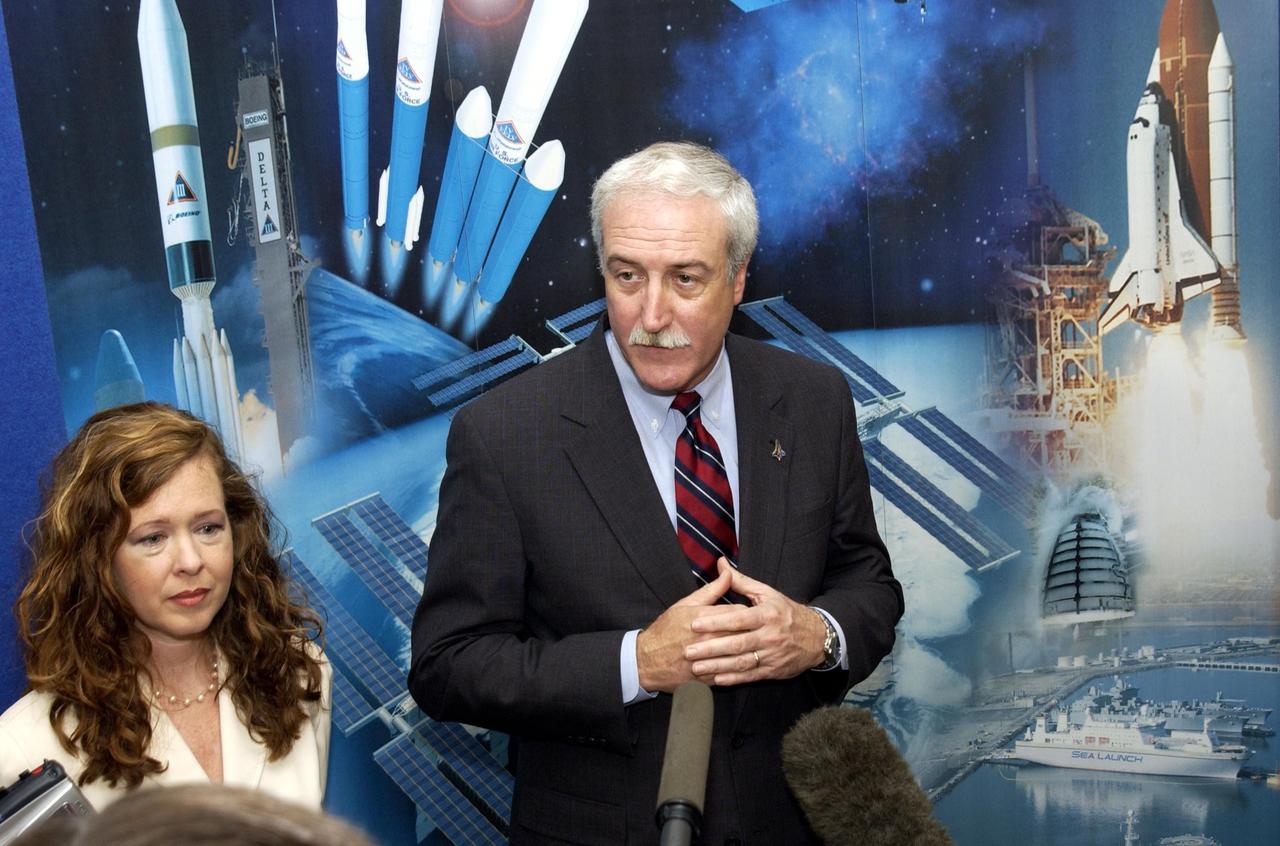
KENNEDY SPACE CENTER, FLA. - NASA Administrator Sean O'Keefe is interviewed by the media at the 40th Space Congress held April 28-May 1, 2003, in Cape Canaveral, Fla. On the left is Lisa Malone, associate director of External Relations and Business Development at KSC. The Space Congress is an international conference that gathers attendees from the scientific community, the space industry workforce, educators and local supporting industries. This year's event commemorated the 40th anniversary of the Kennedy Space Center and the Centennial of Flight. The theme for the Space Congress was "Linking the Past to the Future: A Celebration of Space."
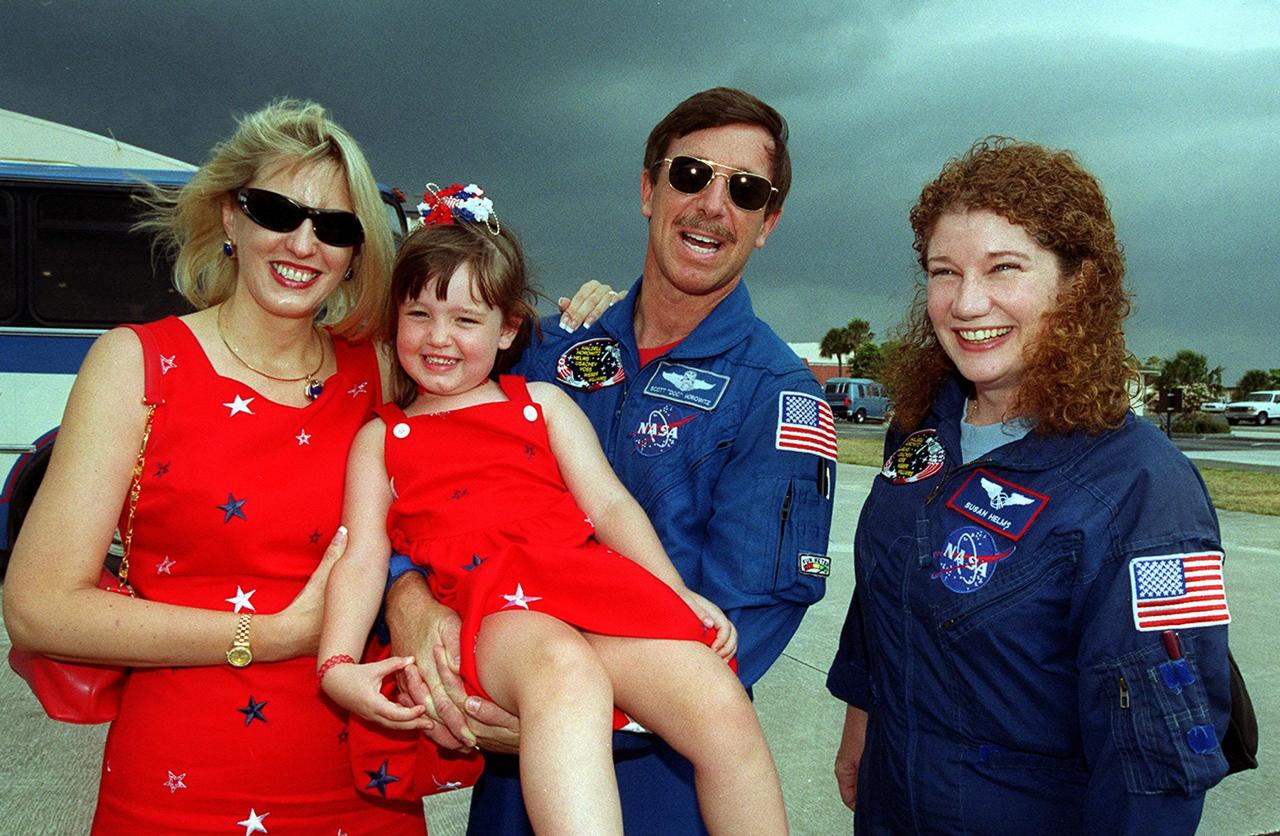
Members of the STS-101 crew gather with families and friends at Patrick Air Force Base before departure for Houston. Pilot Scott “Doc” Horowitz is joined by his wife, Lisa, and daughter; Mission Specialist Susan J. Helms is at right. After landing at 2:20 a.m. EDT May 29, the crew and their families enjoyed the Memorial Day holiday in Florida. The crew returned from the third flight to the International Space Station where they made repairs, transferred cargo and completed a space walk to install and connect several pieces of equipment on the outside of the Space Station
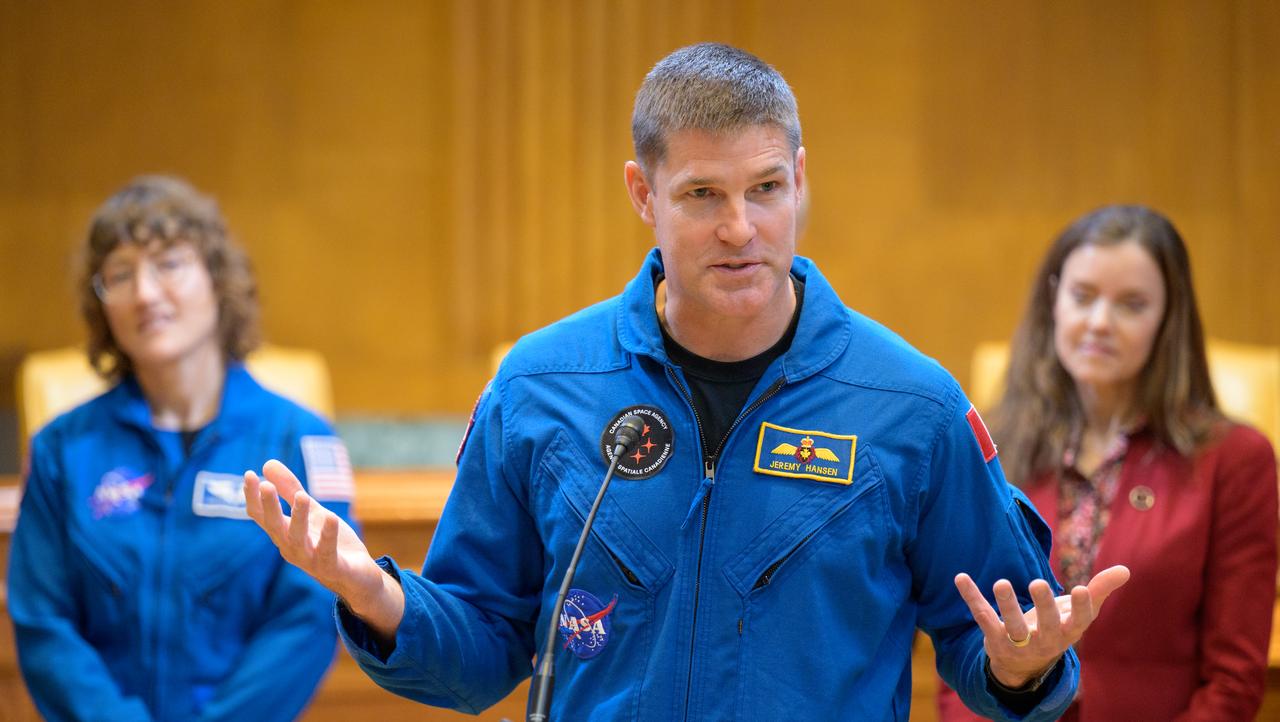
CSA (Canadian Space Agency) astronaut Jeremy Hansen gives remarks as NASA Astronaut Christina Hammock Koch, left, and CSA (Canadian Space Agency) President Lisa Campbell look on, during a meet and greet, Wednesday, May 17, 2023, at the Dirksen Senate Office Building in Washington. Hansen, Hammock Koch, and NASA astronauts Reid Wiseman and Victor Glover, who will fly around the Moon on NASA’s Artemis II flight test, visited Washington to discuss their upcoming mission with members of Congress and others. Photo Credit: (NASA/Bill Ingalls)
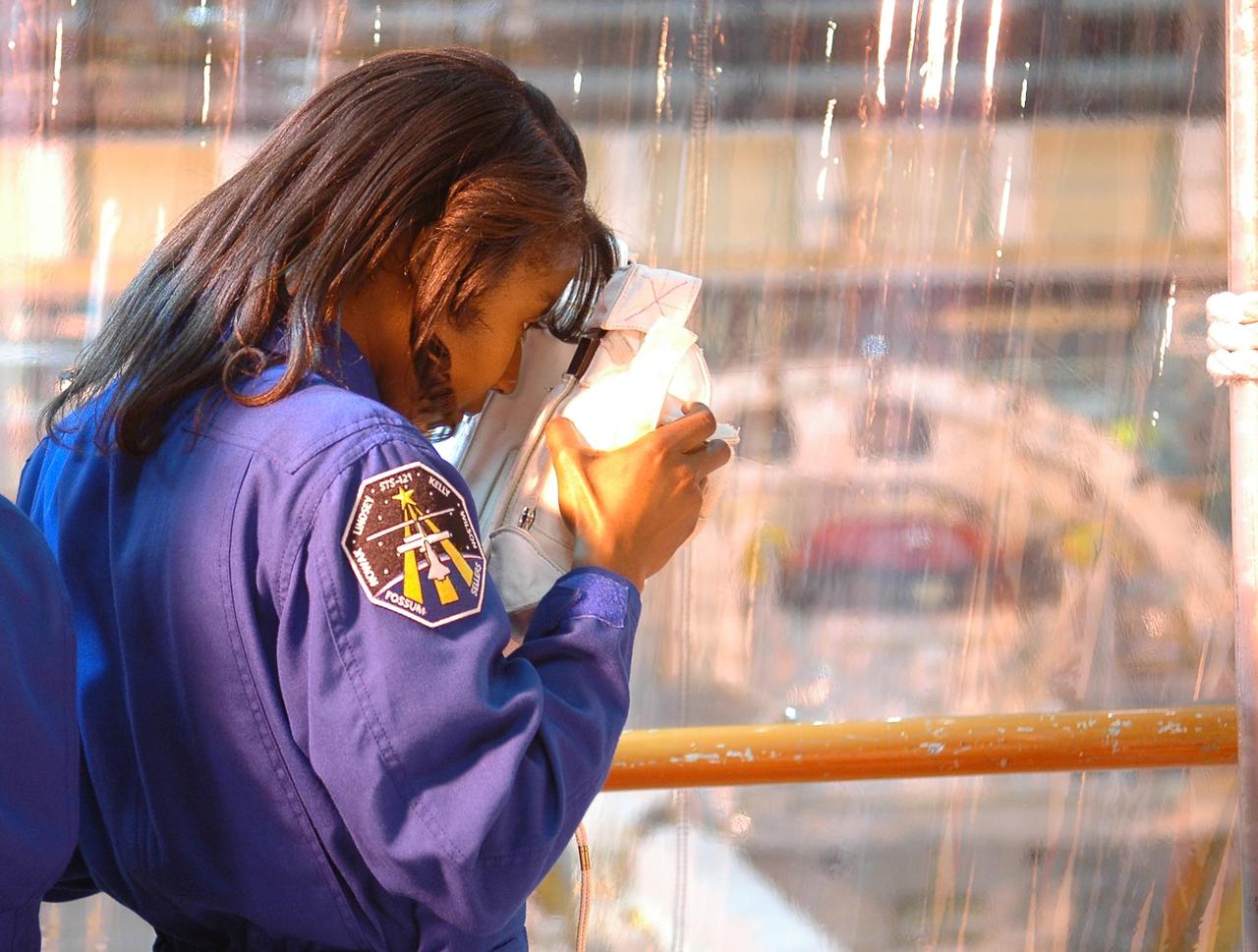
KENNEDY SPACE CENTER, FLA. - Inside the Orbiter Processing Facility bay 3 at NASA's Kennedy Space Center, STS-121 Mission Specialist Lisa Nowak photographs Discovery, the launch vehicle for the mission, during a training session. She and other crew members -- Commander Steven Lindsey, Pilot Mark Kelly and Mission Specialists Stephanie Wilson, Michael Fossum and Piers Sellers -- are at Kennedy for a crew equipment interface test, which provides hands-on experience with equipment they will use on orbit. Launch of STS-121, the second return-to-flight mission, is scheduled for no earlier than May. Photo credit: NASA/Kim Shiflett
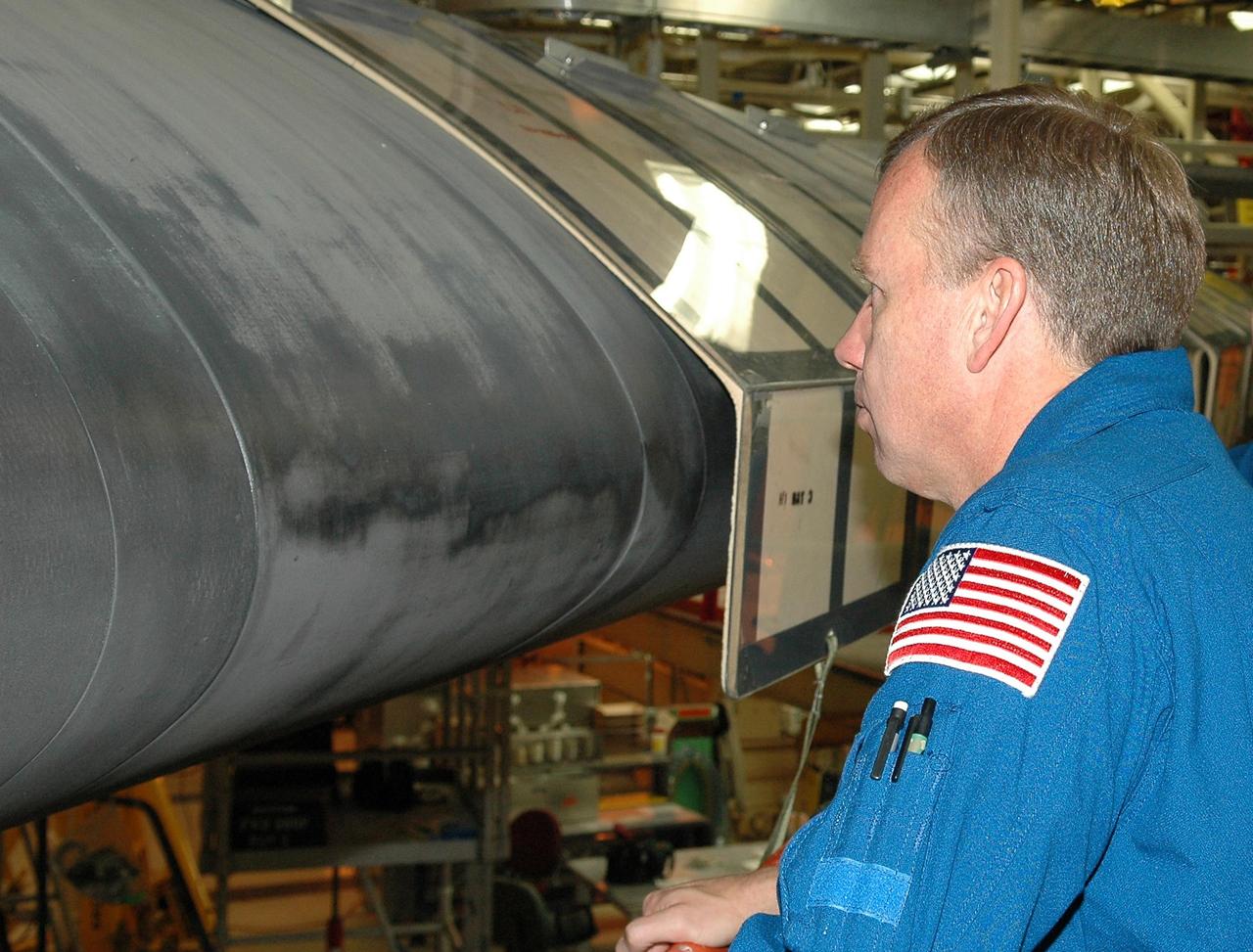
KENNEDY SPACE CENTER, FLA. - Inside the Orbiter Processing Facility bay 3 at NASA's Kennedy Space Center, STS-121 Commander Steven Lindsey gets a close look at the wing leading edge of Discovery, the launch vehicle for the mission. He and other crew members -- Pilot Mark Kelly and Mission Specialists Lisa Nowak, Stephanie Wilson, Michael Fossum and Piers Sellers -- are at Kennedy for a crew equipment interface test, which provides hands-on experience with equipment they will use on orbit. Launch of STS-121, the second return-to-flight mission, is scheduled for no earlier than May. Photo credit: NASA/Kim Shiflett
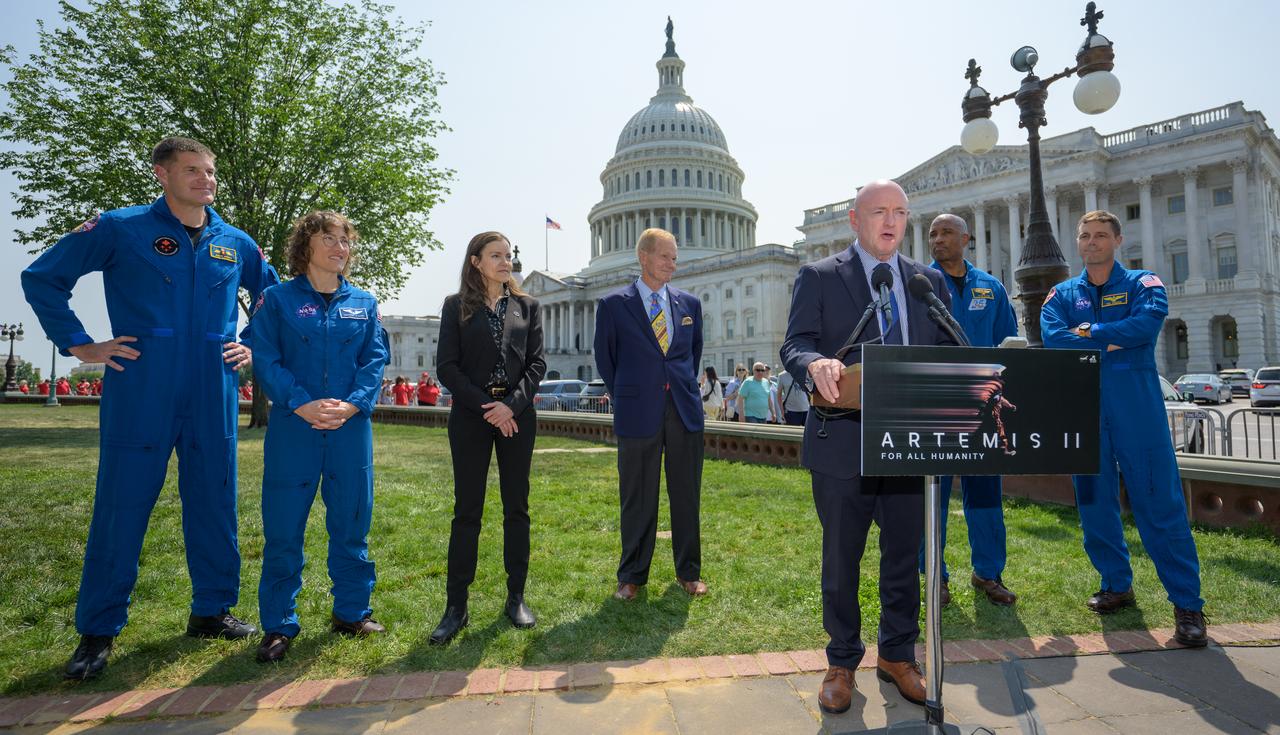
Sen. Mark Kelly, D-Ariz., gives remarks during a media gather as CSA (Canadian Space Agency) astronaut Jeremy Hansen, left, NASA Astronaut Christina Hammock Koch, CSA (Canadian Space Agency) President Lisa Campbell, NASA Administrator Bill Nelson, and NASA astronauts Victor Glover and Reid Wiseman, right, look on, Thursday, May 18, 2023, on Capitol Hill grounds in Washington. Wiseman, Glover, Hammock Koch, and Hansen, who will fly around the Moon on NASA’s Artemis II flight test, visited Washington to discuss their upcoming mission with members of Congress and others. Photo Credit: (NASA/Bill Ingalls)
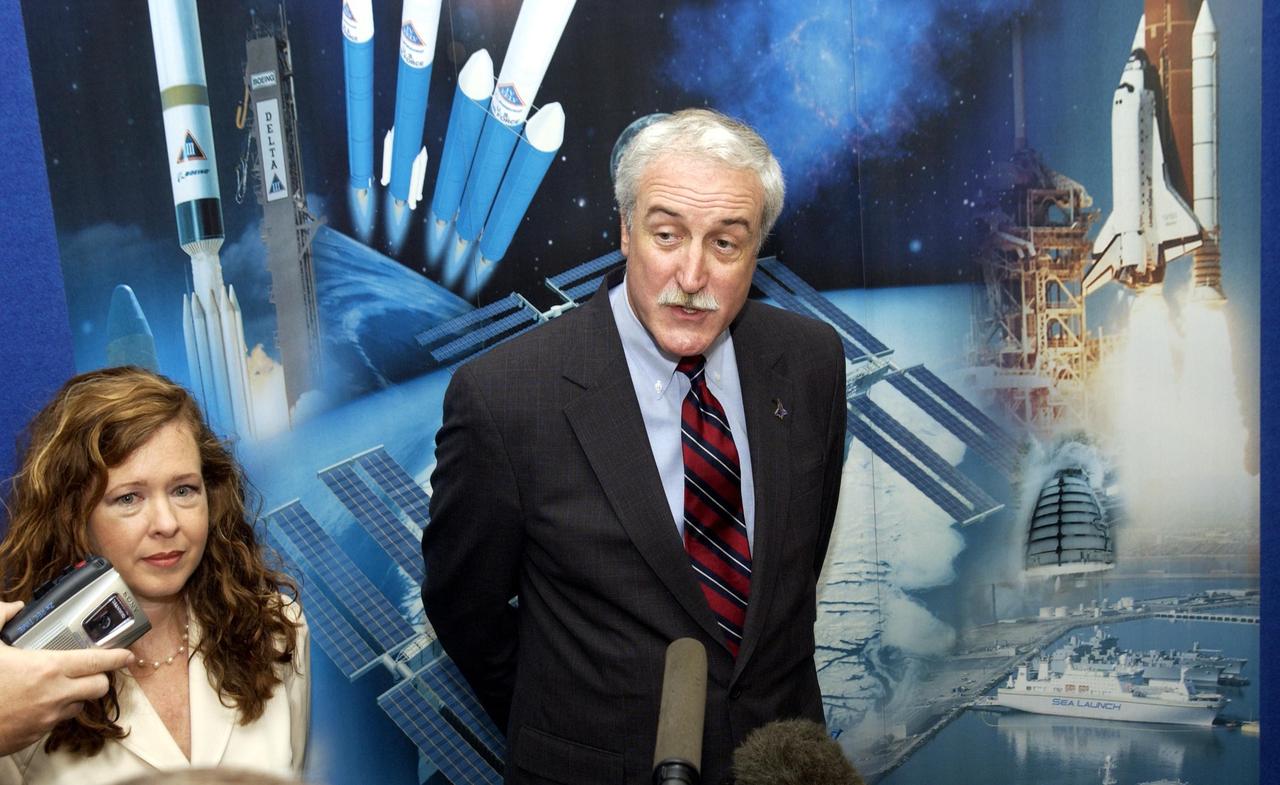
KENNEDY SPACE CENTER, FLA. - NASA Administrator Sean O'Keefe is interviewed by the media at the 40th Space Congress held April 28-May 1, 2003, in Cape Canaveral, Fla. On the left is Lisa Malone, associate director of External Relations and Business Development at KSC. The Space Congress is an international conference that gathers attendees from the scientific community, the space industry workforce, educators and local supporting industries. This year's event commemorated the 40th anniversary of the Kennedy Space Center and the Centennial of Flight. The theme for the Space Congress was "Linking the Past to the Future: A Celebration of Space."
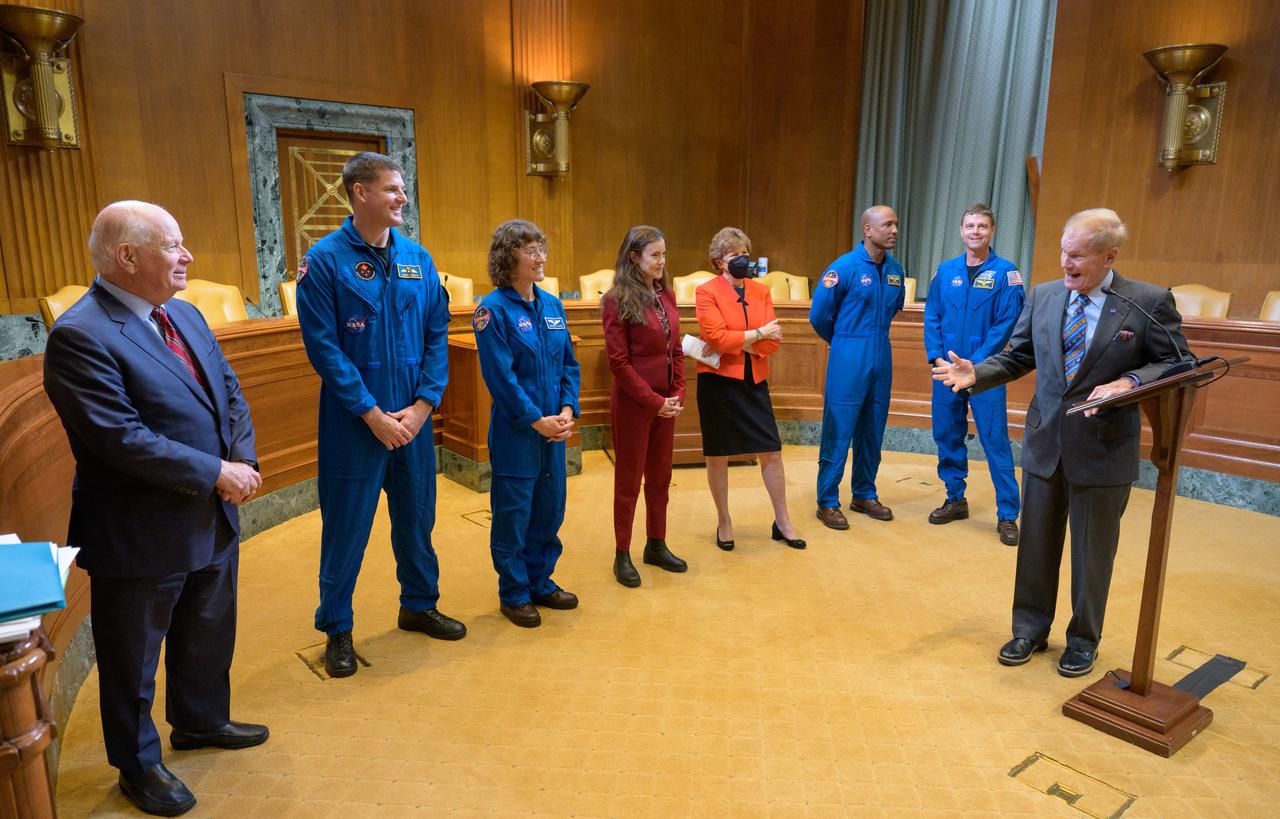
NASA Administrator Bill Nelson gives remarks as Senator Ben Cardin, D-MD., left, CSA (Canadian Space Agency) astronaut Jeremy Hansen, NASA astronaut Christina Hammock Koch, CSA (Canadian Space Agency) President Lisa Campbell, Sen. Jeanne Shaheen, D-N.H., NASA astronauts Victor Glover, and Reid Wiseman, look on during a meet and greet, Wednesday, May 17, 2023, at the Dirksen Senate Office Building in Washington. Wiseman, Glover, Hammock Koch, and Hansen, who will fly around the Moon on NASA’s Artemis II flight test, visited Washington to discuss their upcoming mission with members of Congress and others. Photo Credit: (NASA/Bill Ingalls)

Members of the STS-101 crew gather with families and friends at Patrick Air Force Base before departure for Houston. Pilot Scott “Doc” Horowitz is joined by his wife, Lisa, and daughter; Mission Specialist Susan J. Helms is at right. After landing at 2:20 a.m. EDT May 29, the crew and their families enjoyed the Memorial Day holiday in Florida. The crew returned from the third flight to the International Space Station where they made repairs, transferred cargo and completed a space walk to install and connect several pieces of equipment on the outside of the Space Station
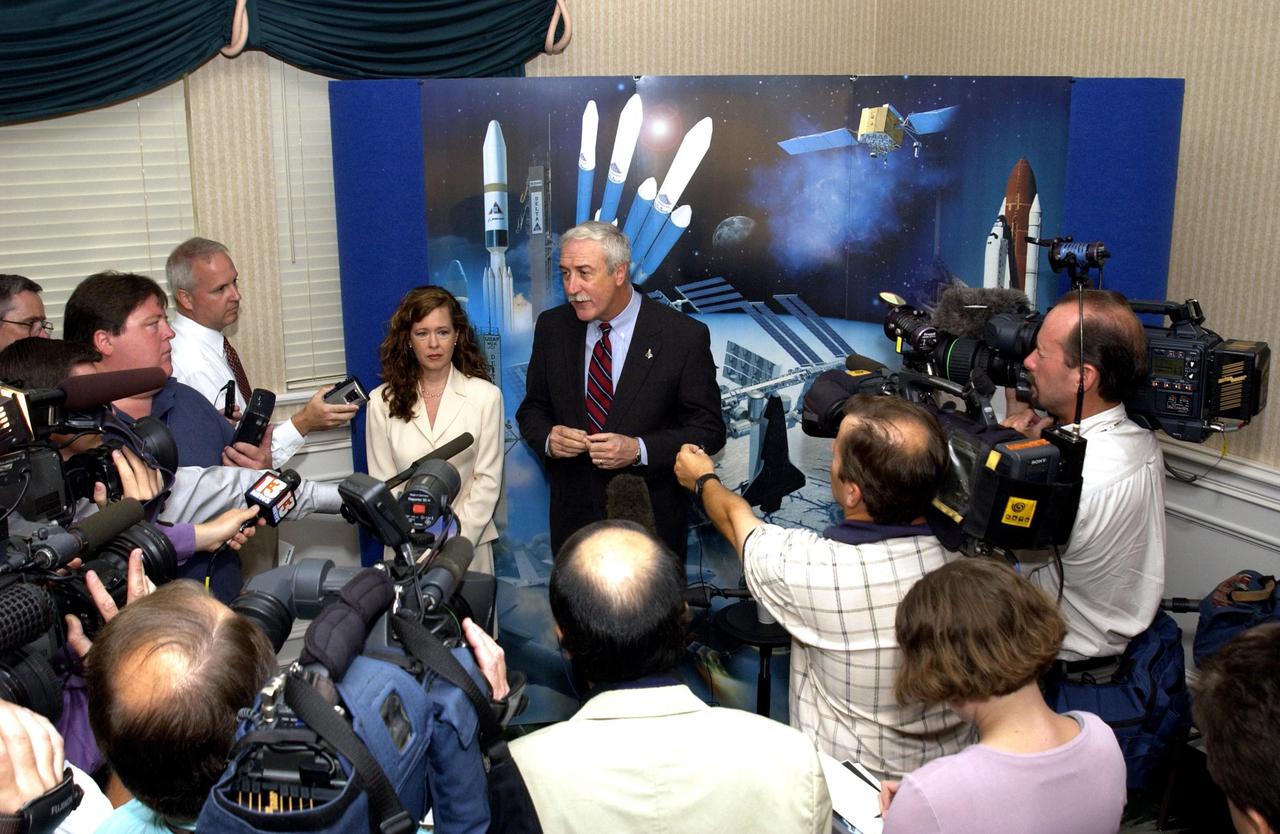
KENNEDY SPACE CENTER, FLA. - NASA Administrator Sean O'Keefe is interviewed by the media at the 40th Space Congress held April 28-May 1, 2003, in Cape Canaveral, Fla. On the left is Lisa Malone, associate director of External Relations and Business Development at KSC. The Space Congress is an international conference that gathers attendees from the scientific community, the space industry workforce, educators and local supporting industries. This year's event commemorated the 40th anniversary of the Kennedy Space Center and the Centennial of Flight. The theme for the Space Congress was "Linking the Past to the Future: A Celebration of Space."
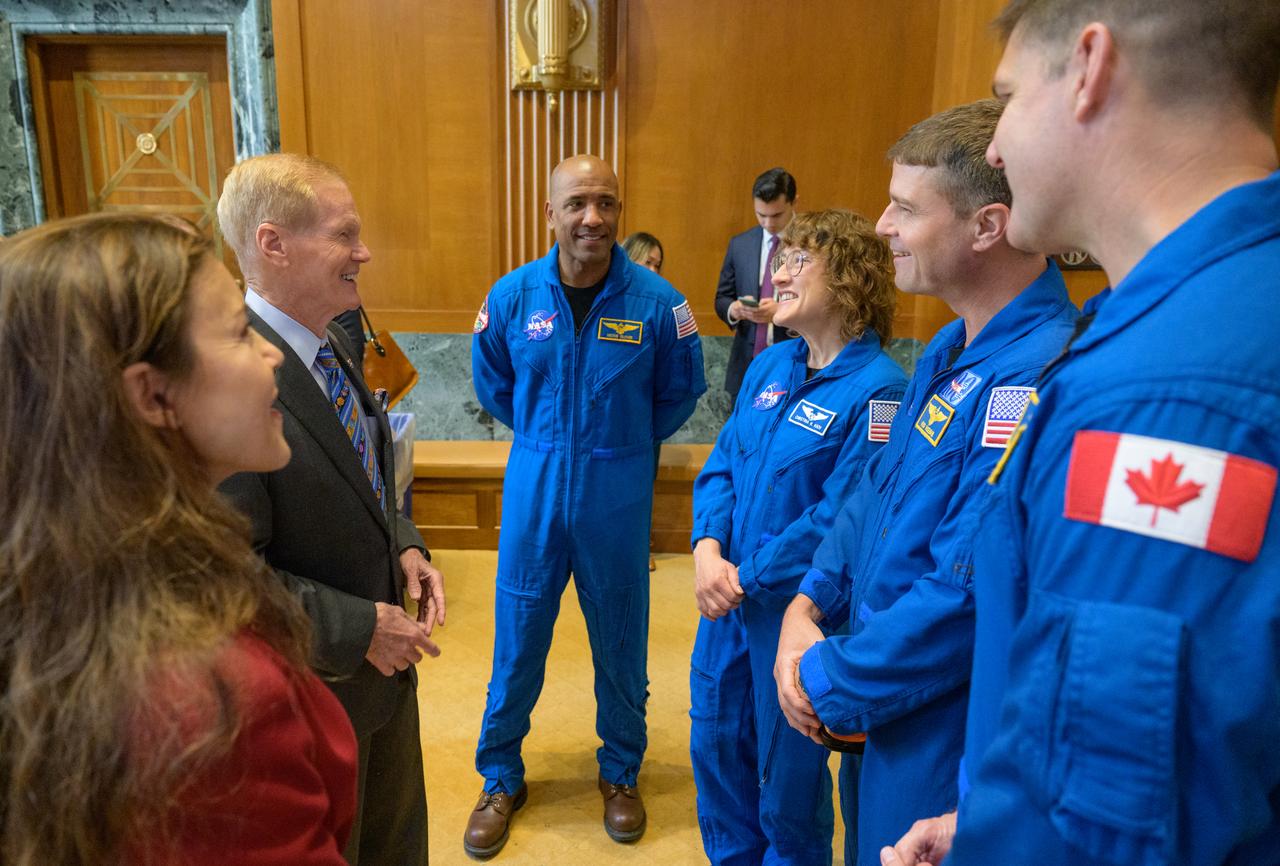
CSA (Canadian Space Agency) President Lisa Campbell, left, NASA Administrator Bill Nelson, NASA astronauts Victor Glover, Christina Hammock Koch, Reid Wiseman, and CSA (Canadian Space Agency) astronaut Jeremy Hansen, right, talk during a meet and greet, Wednesday, May 17, 2023, at the Dirksen Senate Office Building in Washington. Wiseman, Glover, Hammock Koch, and Hansen, who will fly around the Moon on NASA’s Artemis II flight test, visited Washington to discuss their upcoming mission with members of Congress and others. Photo Credit: (NASA/Bill Ingalls)
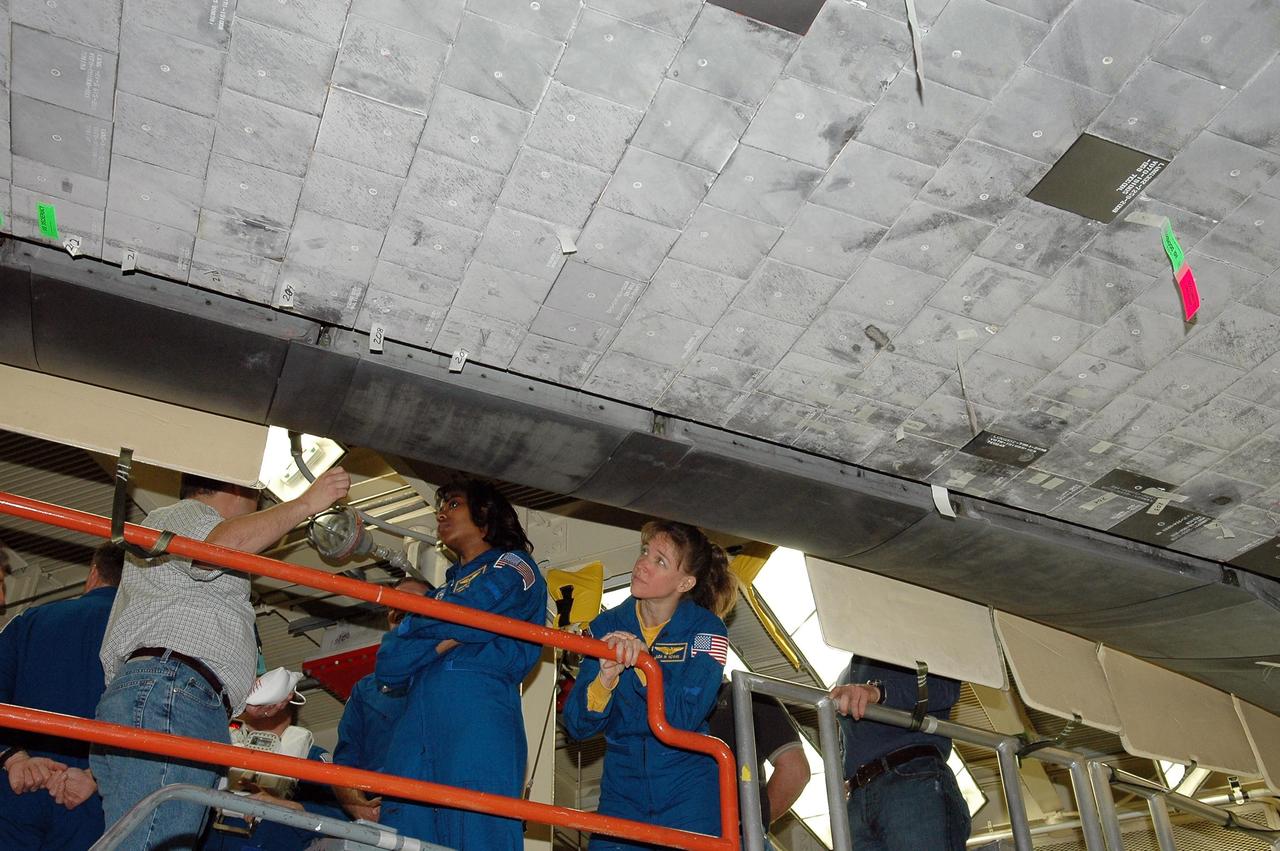
KENNEDY SPACE CENTER, FLA. - Inside the Orbiter Processing Facility bay 3 at NASA's Kennedy Space Center, STS-121 Mission Specialists Stephanie Wilson (left) and Lisa Nowak learn from technicians the work that has been done on Discovery, the launch vehicle for the mission. They and other crew members -- Commander Steven Lindsey, Pilot Mark Kelly and Mission Specialists Michael Fossum and Piers Sellers -- are at Kennedy for a crew equipment interface test, which provides hands-on experience with equipment they will use on orbit. Launch of STS-121, the second return-to-flight mission, is scheduled for no earlier than May. Photo credit: NASA/Kim Shiflett
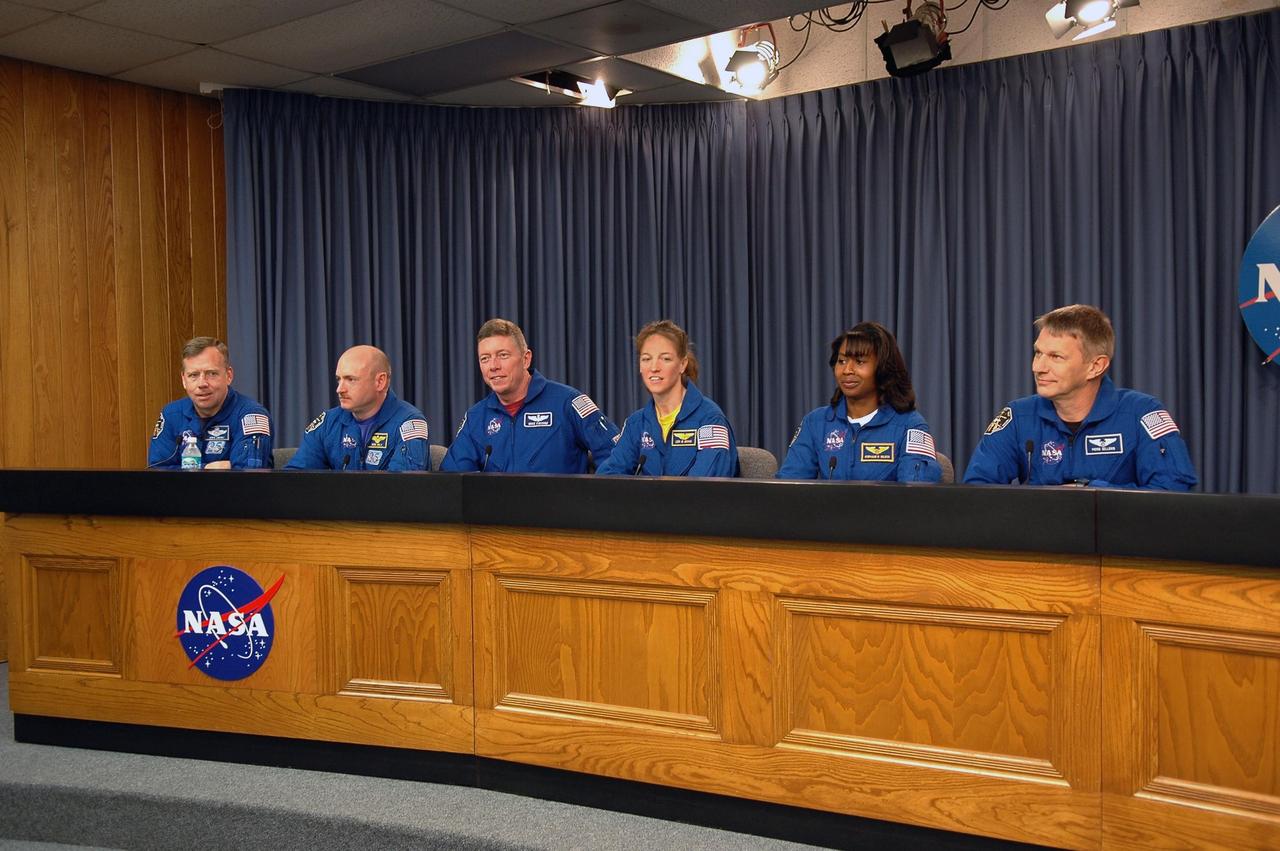
KENNEDY SPACE CENTER, FLA. - In the television studio at NASA Kennedy Space Center, the STS-121 crew answers questions during a media conference. Seated from left are Commander Steven Lindsey, Pilot Mark Kelly and Mission Specialists Michael Fossum, Lisa Nowak, Stephanie Wilson and Piers Sellers. The seventh crew member, Mission Specialist Thomas Reiter, did not attend. The crew is at NASA Kennedy Space Center for the crew equipment interface test, which provides hands-on experiences with equipment used on-orbit. The launch of STS-121, the second return-to-flight mission, is scheduled for May. Photo credit: NASA/Kim Shiflett
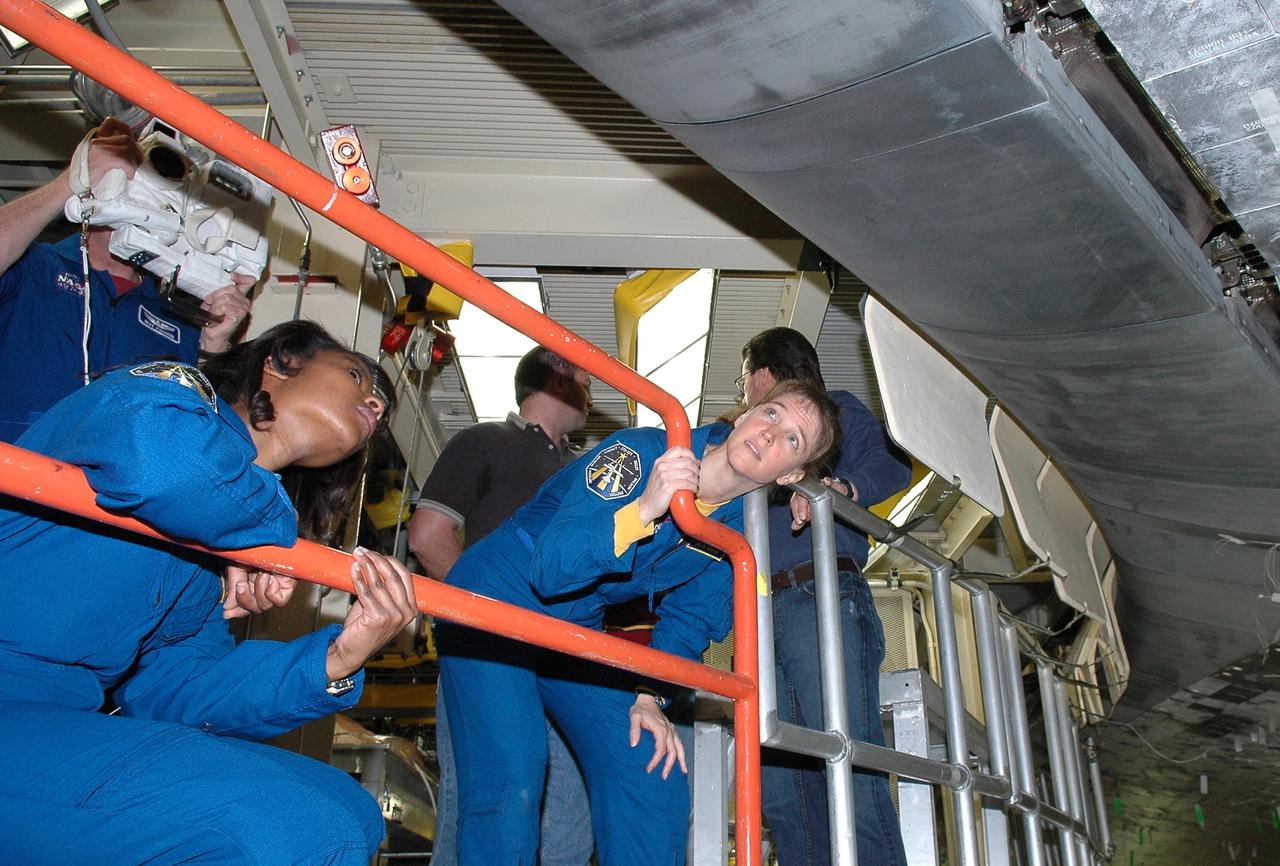
KENNEDY SPACE CENTER, FLA. - Inside the Orbiter Processing Facility bay 3 at NASA's Kennedy Space Center, STS-121 Mission Specialist Lisa Nowak and Commander Steven Lindsey take a close look at the wing leading edge of Discovery, the launch vehicle for the mission. They and other crew members -- Pilot Mark Kelly and Mission Specialists Stephanie Wilson, Michael Fossum and Piers Sellers -- are at Kennedy for a crew equipment interface test, which provides hands-on experience with equipment they will use on orbit. Launch of STS-121, the second return-to-flight mission, is scheduled for no earlier than May. Photo credit: NASA/Kim Shiflett
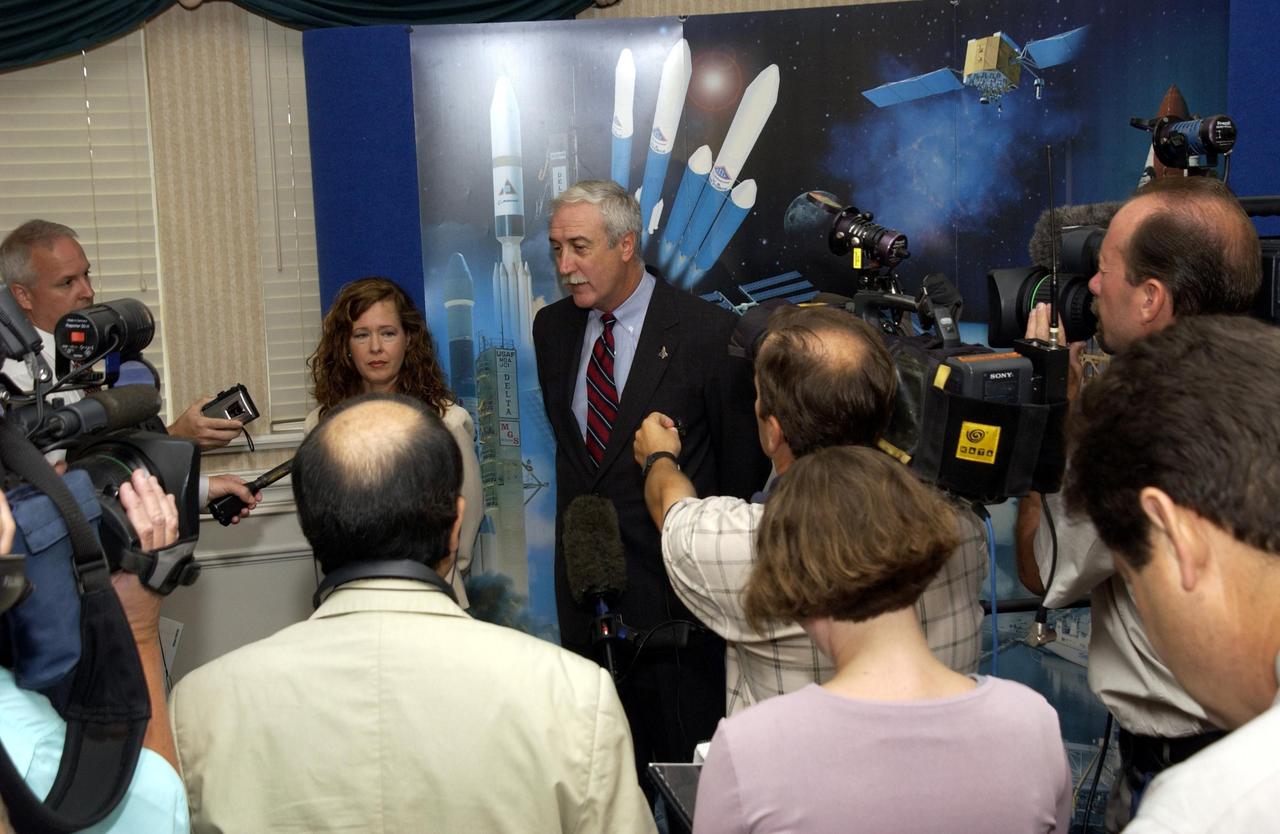
KENNEDY SPACE CENTER, FLA. - NASA Administrator Sean O'Keefe is interviewed by the media at the 40th Space Congress held April 28-May 1, 2003, in Cape Canaveral, Fla. On the left is Lisa Malone, associate director of External Relations and Business Development at KSC. The Space Congress is an international conference that gathers attendees from the scientific community, the space industry workforce, educators and local supporting industries. This year's event commemorated the 40th anniversary of the Kennedy Space Center and the Centennial of Flight. The theme for the Space Congress was "Linking the Past to the Future: A Celebration of Space."
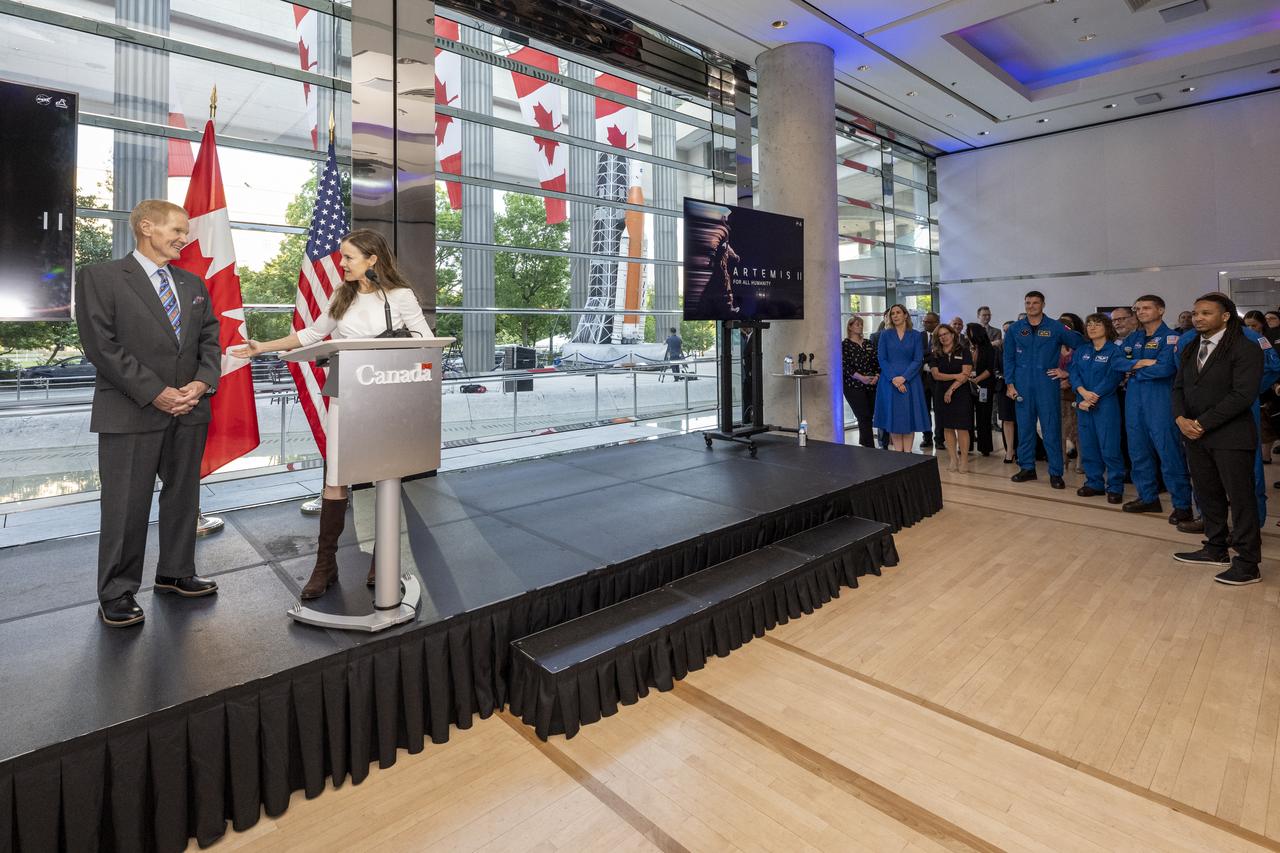
Canadian Space Agency President Lisa Campbell, joined by NASA Administrator Bill Nelson, delivers introductory remarks during a reception with NASA astronauts Reid Wiseman, Victor Glover, Christina Hammock Koch, and CSA (Canadian Space Agency) astronaut Jeremy Hansen, Wednesday, May 17, 2023, at the Canadian Embassy in Washington. Wiseman, Glover, Koch, and Hansen, who will fly around the Moon on NASA’s Artemis II flight test, visited Washington to discuss their upcoming mission with members of Congress and others. Photo Credit: (NASA/Keegan Barber)
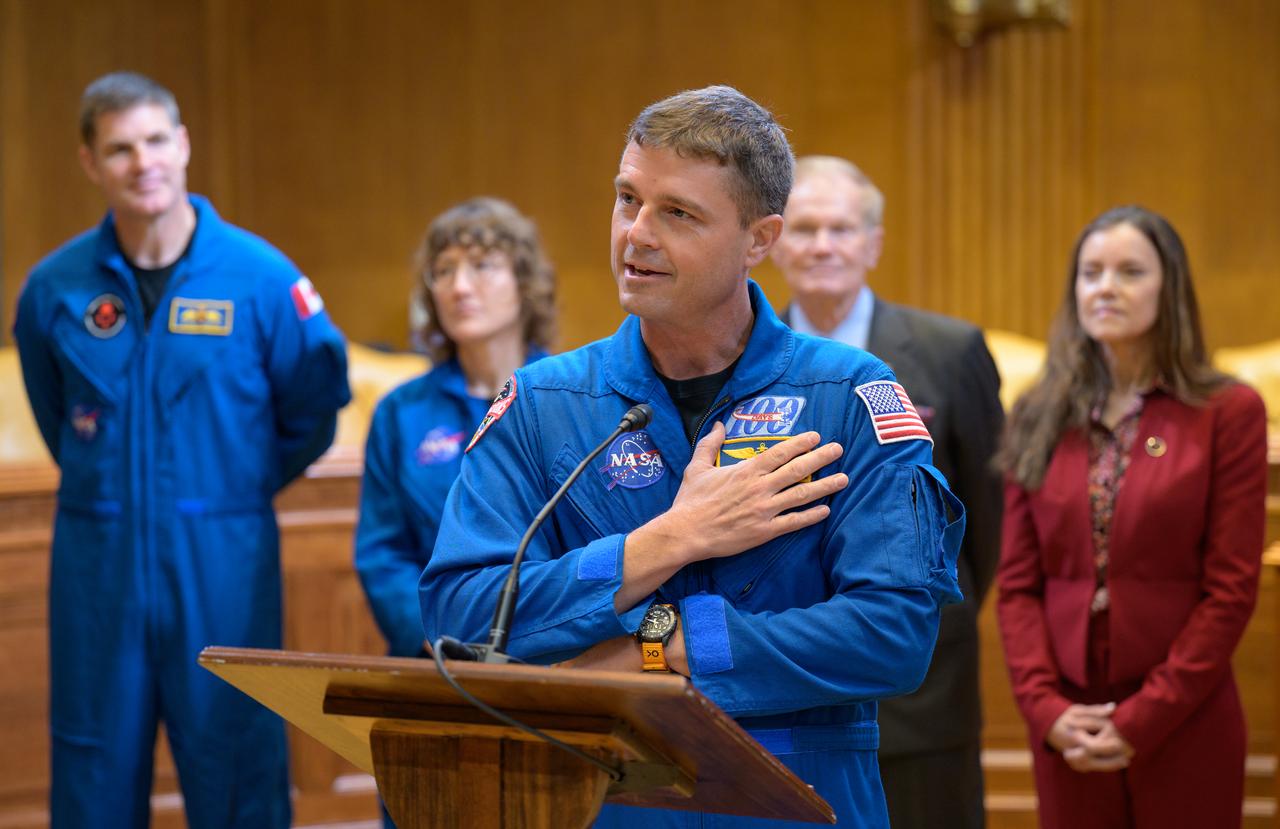
NASA astronaut Reid Wiseman gives remarks as CSA (Canadian Space Agency) astronaut Jeremy Hansen, left, NASA Astronaut Christina Hammock Koch, NASA Administrator Bill Nelson, and CSA (Canadian Space Agency) President Lisa Campbell look on during a meet and greet, Wednesday, May 17, 2023, Dirksen Senate Office Building in Washington. Wiseman, Hammock Koch, Hansen, along with NASA astronaut Victor Glover, who will fly around the Moon on NASA’s Artemis II flight test, visited Washington to discuss their upcoming mission with members of Congress and others. Photo Credit: (NASA/Bill Ingalls)
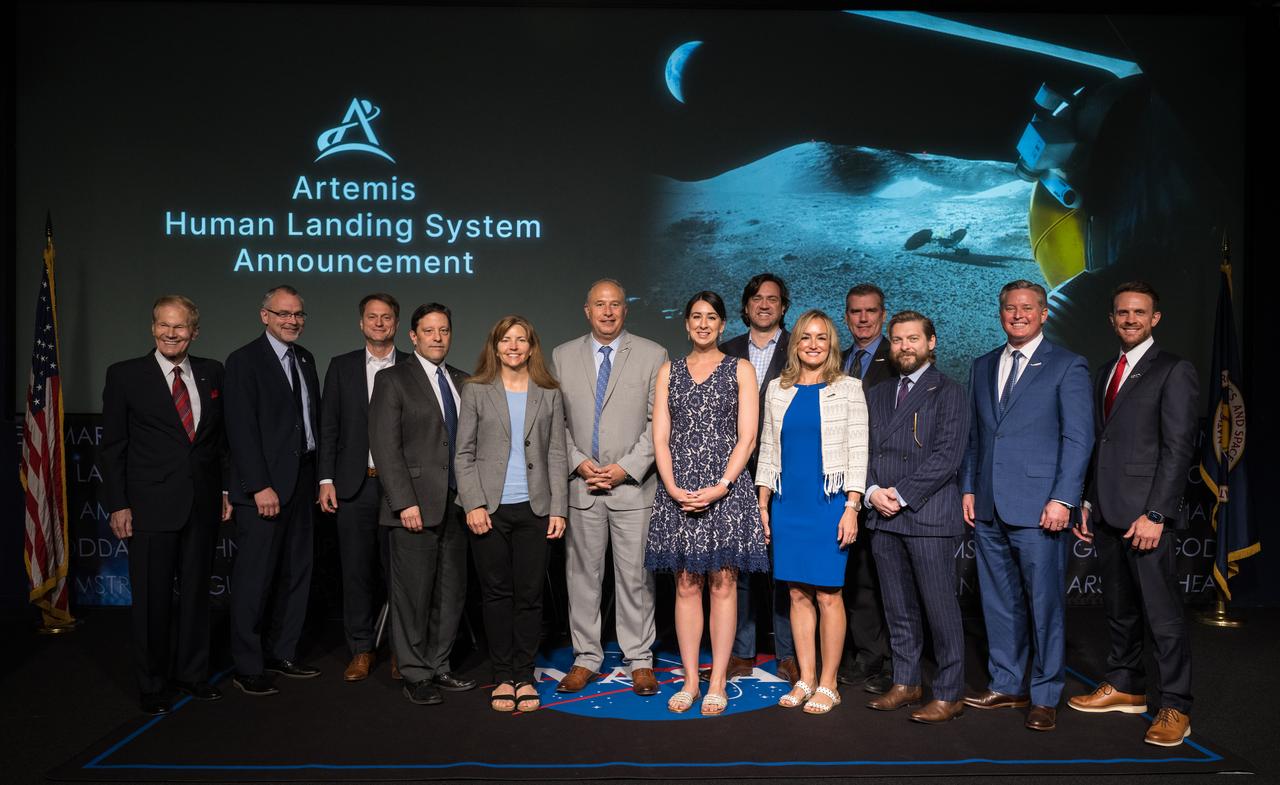
NASA Administrator Bill Nelson, NASA Associate Administrator for the Exploration Systems Development Mission Directorate Jim Free, Human Landing System Program Manager Lisa Watson-Morgan, members of Blue Origin’s team, and others pose for a photo at the conclusion of an event announcing Blue Origin as the company selected to develop a sustainable human landing system for the Artemis V Moon mission, Friday, May 19, 2023 at the Mary W. Jackson NASA Headquarters building in Washington. The human landing system will take astronauts to and from Gateway in lunar orbit to the surface and back to the lunar space station as part of NASA’s return to the Moon for science, exploration, and inspiration. Photo Credit: (NASA/Aubrey Gemignani)
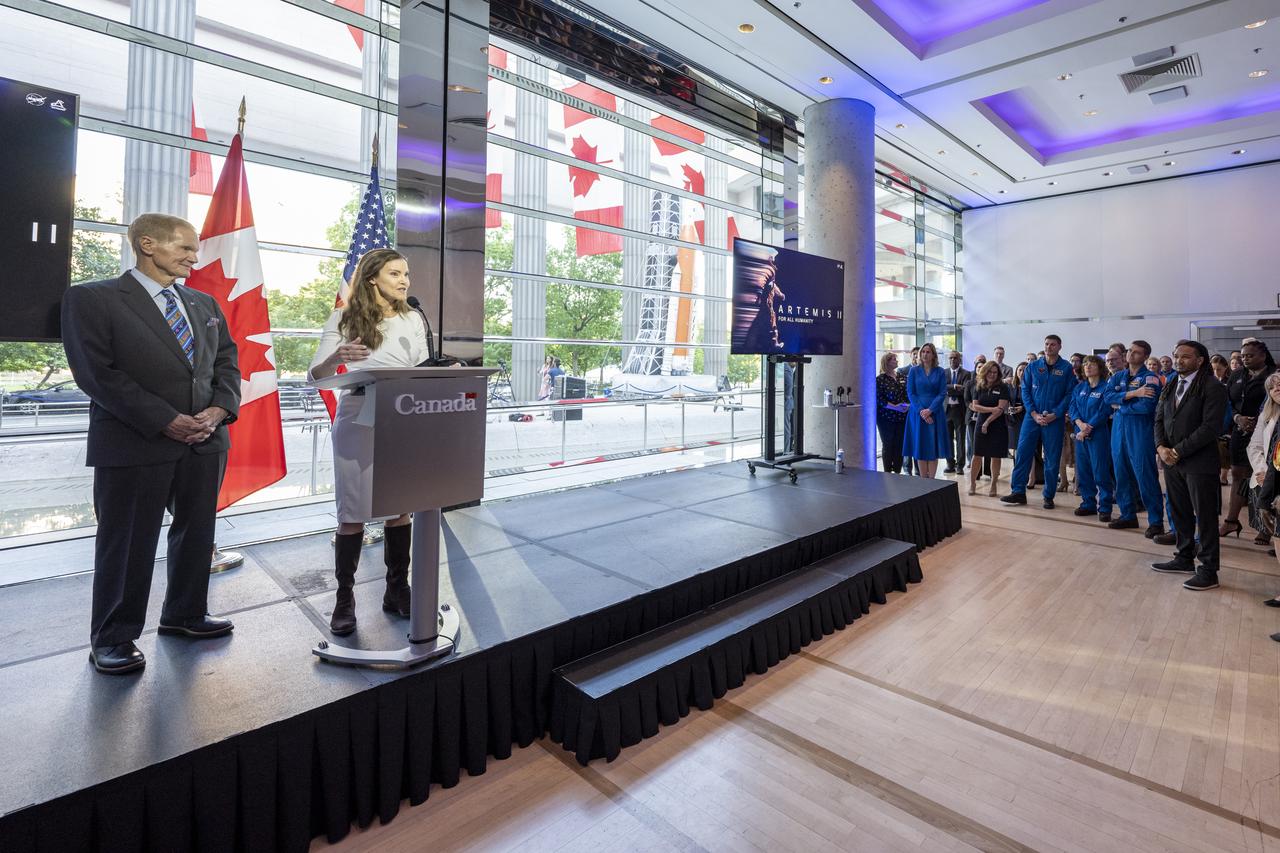
Canadian Space Agency President Lisa Campbell, joined by NASA Administrator Bill Nelson, delivers introductory remarks during a reception with NASA astronauts Reid Wiseman, Victor Glover, Christina Hammock Koch, and CSA (Canadian Space Agency) astronaut Jeremy Hansen, Wednesday, May 17, 2023, at the Canadian Embassy in Washington. Wiseman, Glover, Koch, and Hansen, who will fly around the Moon on NASA’s Artemis II flight test, visited Washington to discuss their upcoming mission with members of Congress and others. Photo Credit: (NASA/Keegan Barber)
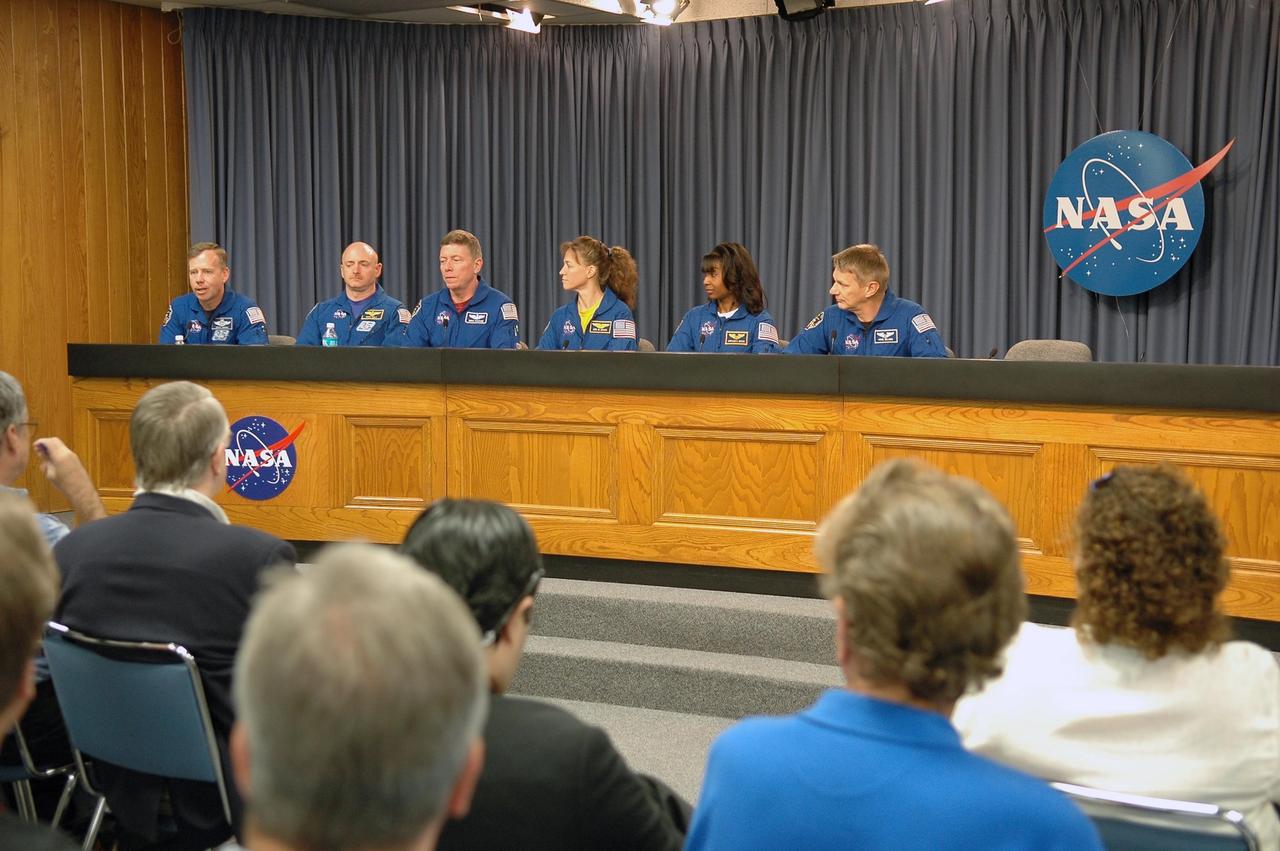
KENNEDY SPACE CENTER, FLA. - In the television studio at NASA Kennedy Space Center, the STS-121 crew answers questions during a media conference. Seated from left are Commander Steven Lindsey, Pilot Mark Kelly and Mission Specialists Michael Fossum, Lisa Nowak, Stephanie Wilson and Piers Sellers. The seventh crew member, Mission Specialist Thomas Reiter, did not attend. The crew is at NASA Kennedy Space Center for the crew equipment interface test, which provides hands-on experiences with equipment used on-orbit. The launch of STS-121, the second return-to-flight mission, is scheduled for May. Photo credit: NASA/Kim Shiflett
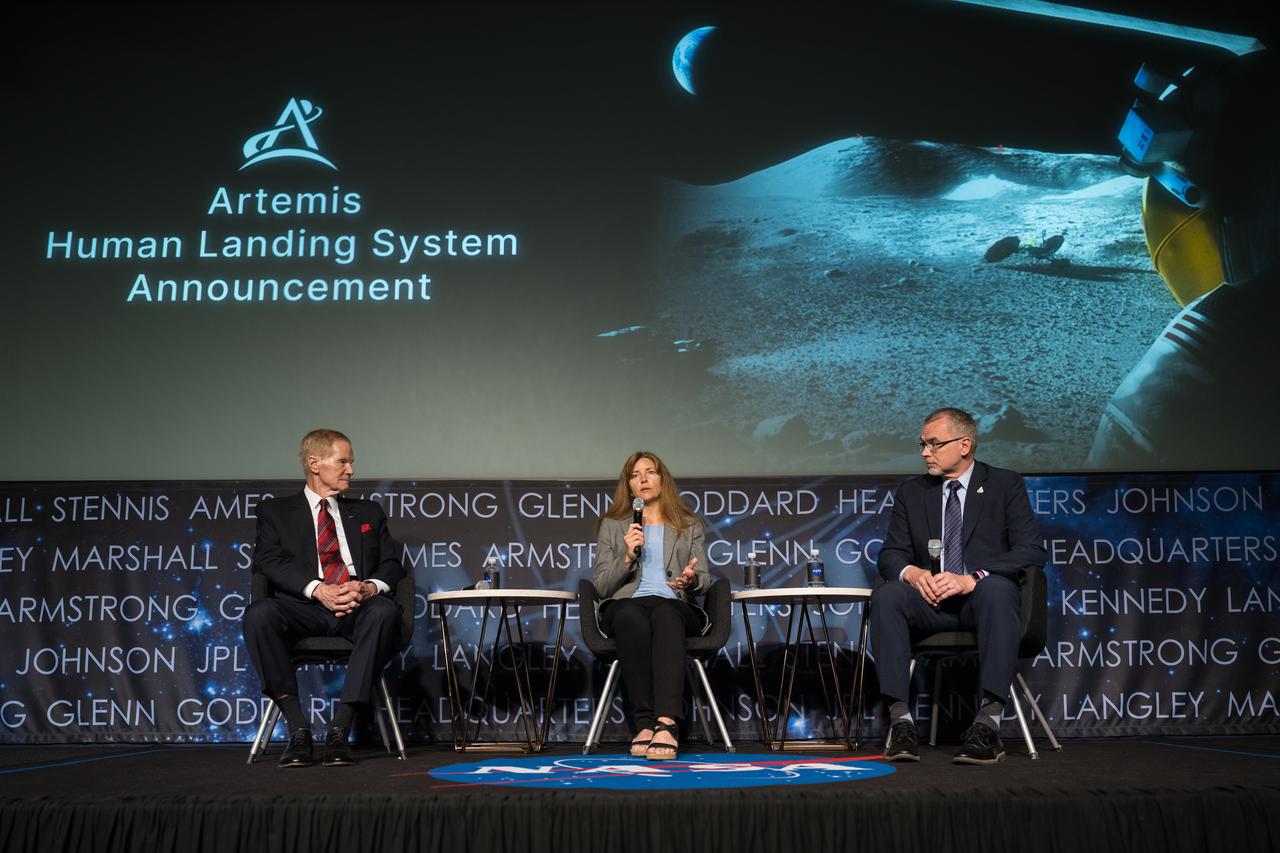
Human Landing System Program Manager Lisa Watson-Morgan gives remarks as NASA Administrator Bill Nelson, left, and NASA Associate Administrator for the Exploration Systems Development Mission Directorate Jim Free, right, look on during an event announcing Blue Origin as the company selected to develop a sustainable human landing system for the Artemis V Moon mission, Friday, May 19, 2023 at the Mary W. Jackson NASA Headquarters building in Washington. The human landing system will take astronauts to and from Gateway in lunar orbit to the surface and back to the lunar space station as part of NASA’s return to the Moon for science, exploration, and inspiration. Photo Credit: (NASA/Aubrey Gemignani)
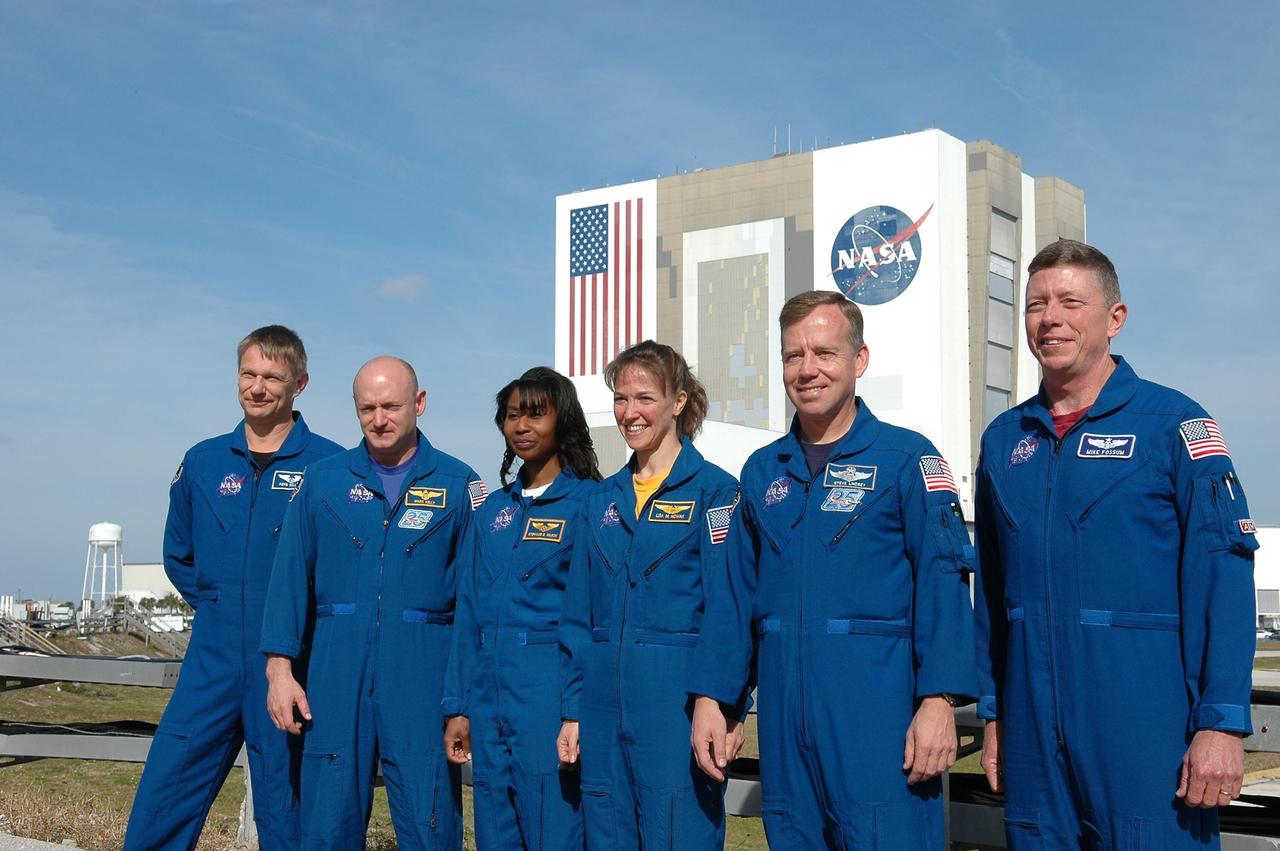
KENNEDY SPACE CENTER, FLA. - The STS-121 crew stands for a photo in front of the Vehicle Assembly Building after a media conference. From left are Mission Specialist Piers Sellers, Pilot Mark Kelly, Mission Specialists Stephanie Wilson and Lisa Nowak, Commander Steven Lindsey and Mission Specialist Michael Fossum. The remaining member of the crew, not pictured, is Mission Specialist Thomas Reiter. The crew is at NASA Kennedy Space Center for the crew equipment interface test, which provides hands-on experiences with equipment used on-orbit. The launch of STS-121, the second return-to-flight mission, is scheduled for May. Photo credit: NASA/Kim Shiflett
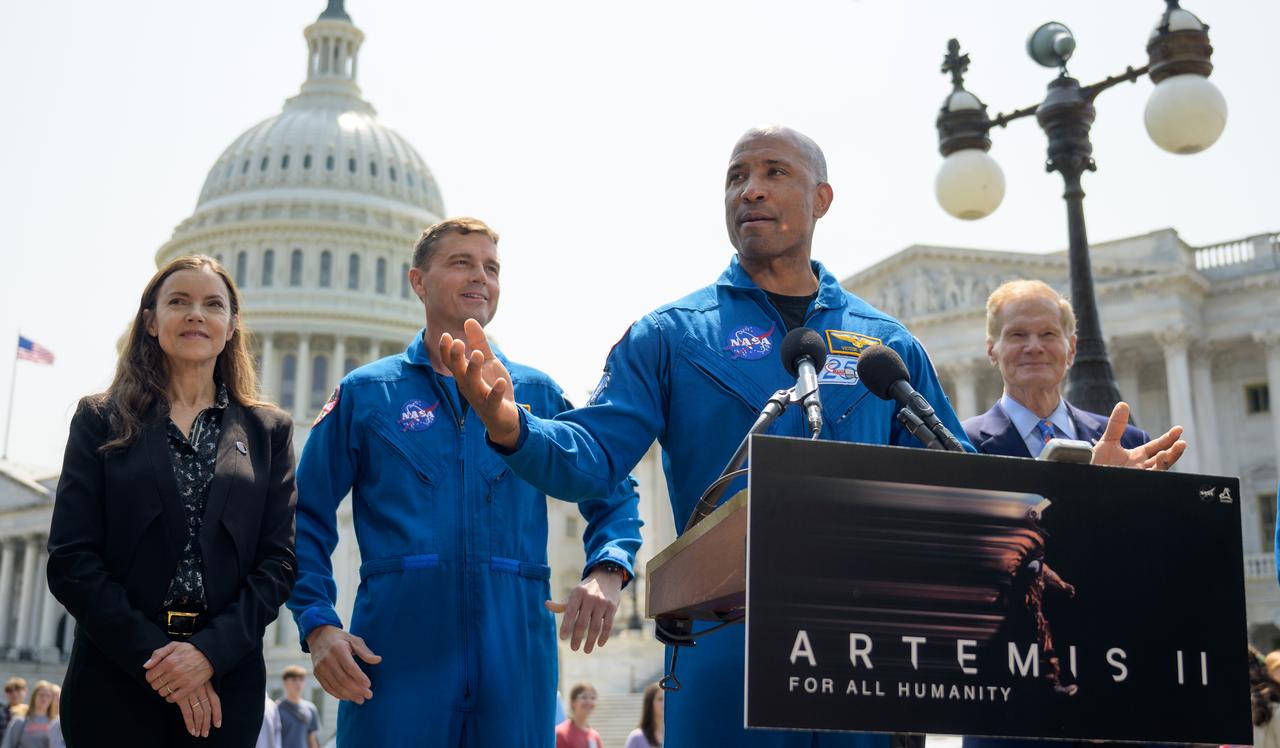
NASA astronaut Victor Glover speaks during a media gather, as CSA (Canadian Space Agency) President Lisa Campbell, left, NASA astronaut Reid Wiseman, and NASA Administrator Bill Nelson, right, look on, Thursday, May 18, 2023, on Capitol Hill grounds in Washington. NASA astronauts Reid Wiseman, Victor Glover, Christina Hammock Koch, and CSA (Canadian Space Agency) astronaut Jeremy Hansen, who will fly around the Moon on NASA’s Artemis II flight test, visited Washington to discuss their upcoming mission with members of Congress and others. Photo Credit: (NASA/Bill Ingalls)
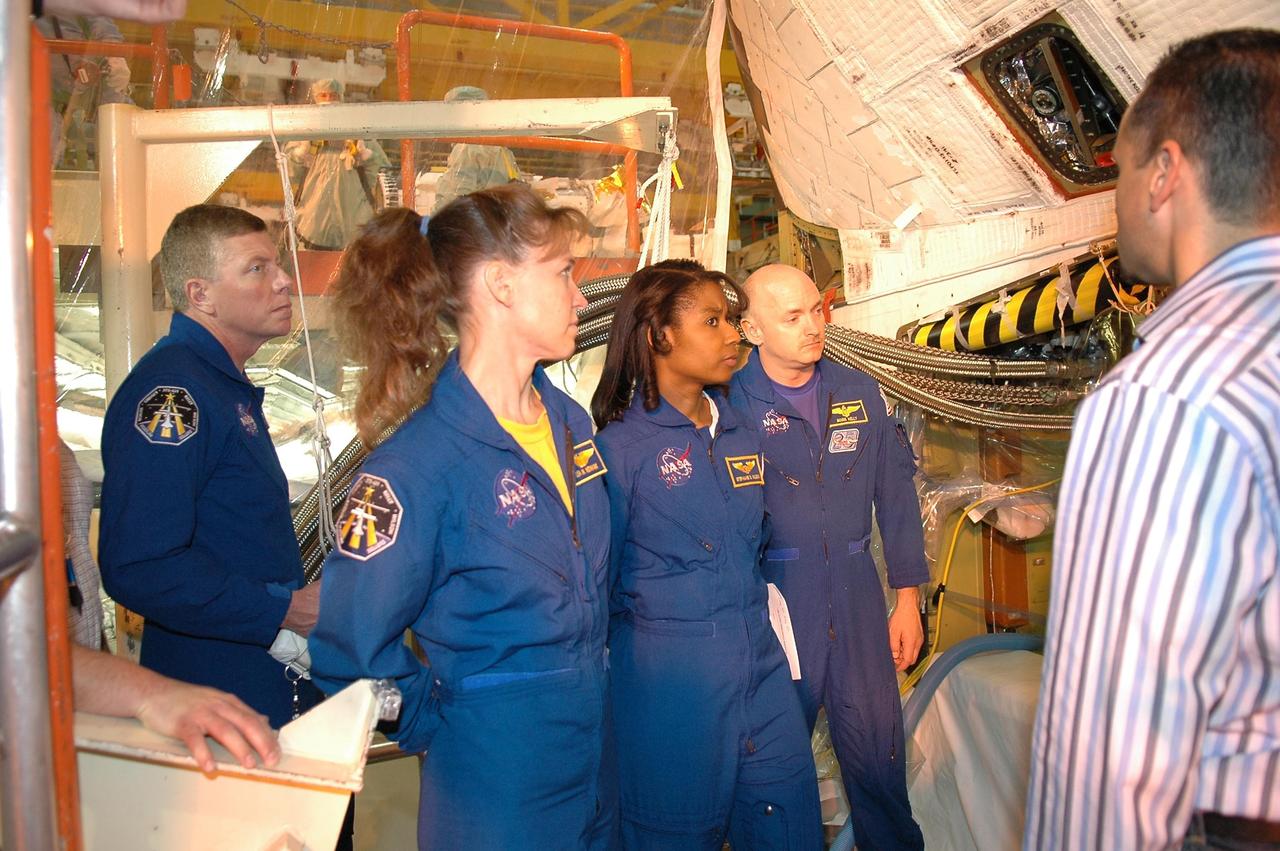
KENNEDY SPACE CENTER, FLA. - Inside the Orbiter Processing Facility bay 3 at NASA's Kennedy Space Center, members of the STS-121 crew look at Discovery, the launch vehicle for the mission. From left are Mission Specialists Michael Fossum, Lisa Nowak and Stephanie Wilson, and Pilot Mark Kelly. The crew is at Kennedy to take part in the crew equipment interface test (CEIT), which provides hands-on experience with equipment they will use on orbit. Launch of STS-121, the second return-to-flight mission, is scheduled for no earlier than May. Photo credit: NASA/Kim Shiflett
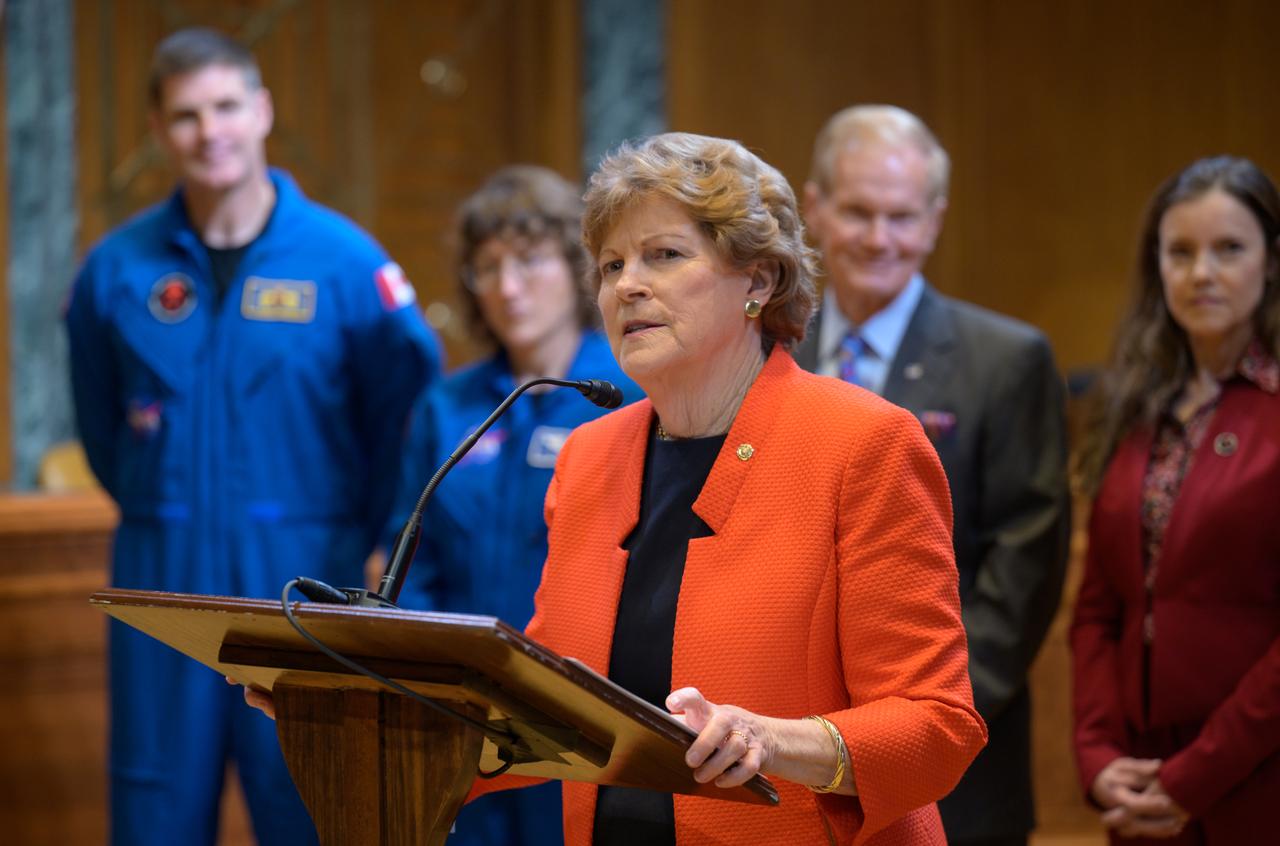
Sen. Jeanne Shaheen, D-N.H., gives remarks as CSA (Canadian Space Agency) astronaut Jeremy Hansen, left, NASA Astronaut Christina Hammock Koch, NASA Administrator Bill Nelson, and CSA (Canadian Space Agency) President Lisa Campbell, right, look on during a meet and greet, Wednesday, May 17, 2023, at the Dirksen Senate Office Building in Washington. Hansen, Hammock Koch, along with NASA Astronauts Reid Wiseman and Victor Glover, who will fly around the Moon on NASA’s Artemis II flight test, visited Washington to discuss their upcoming mission with members of Congress and others. Photo Credit: (NASA/Bill Ingalls)
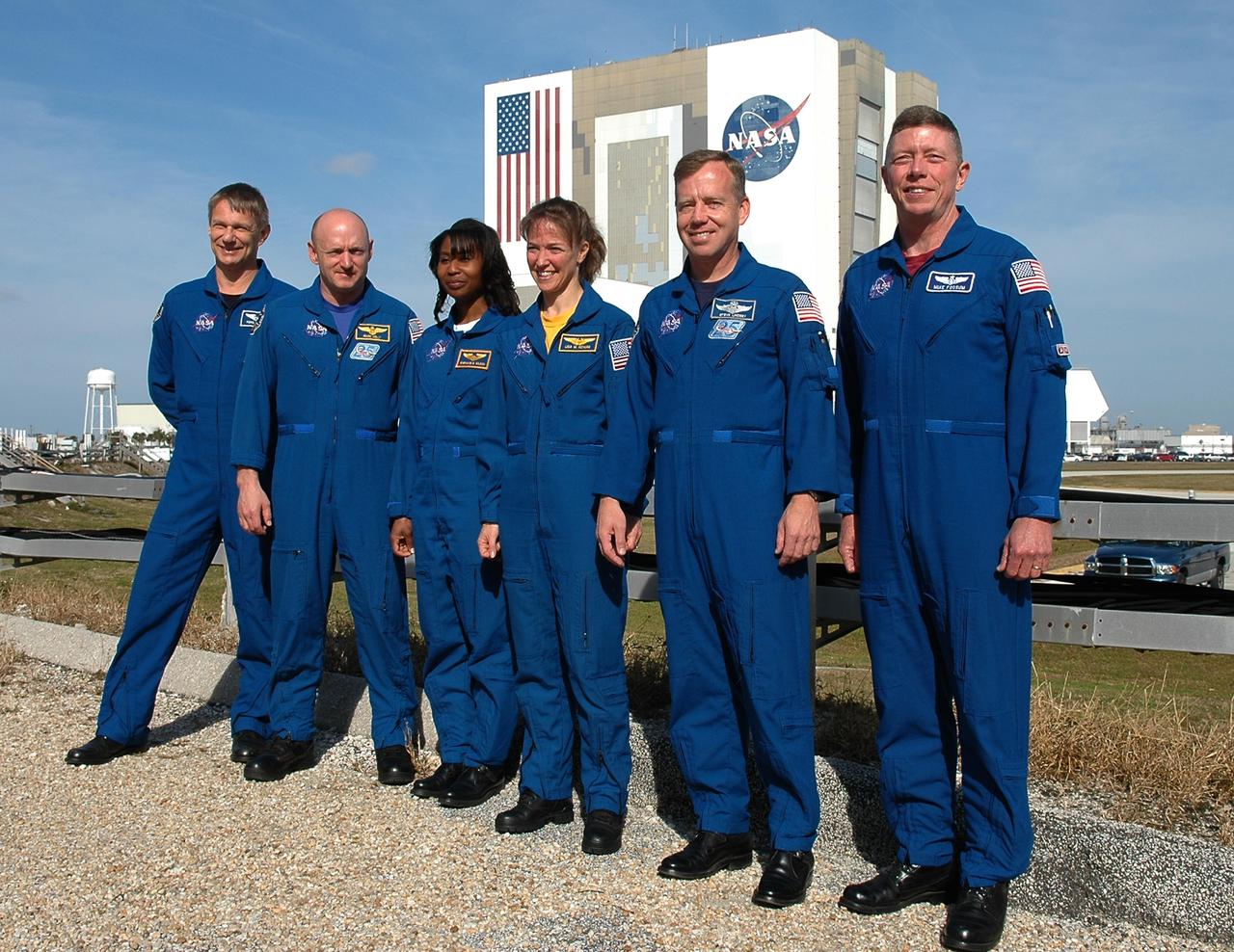
KENNEDY SPACE CENTER, FLA. - The STS-121 crew stands for a photo in front of the Vehicle Assembly Building after a media conference. From left are Mission Specialist Piers Sellers, Pilot Mark Kelly, Mission Specialists Stephanie Wilson and Lisa Nowak, Commander Steven Lindsey and Mission Specialist Michael Fossum. The remaining member of the crew, not pictured, is Mission Specialist Thomas Reiter. The crew is at NASA Kennedy Space Center for the crew equipment interface test, which provides hands-on experiences with equipment used on-orbit. The launch of STS-121, the second return-to-flight mission, is scheduled for May. Photo credit: NASA/Kim Shiflett
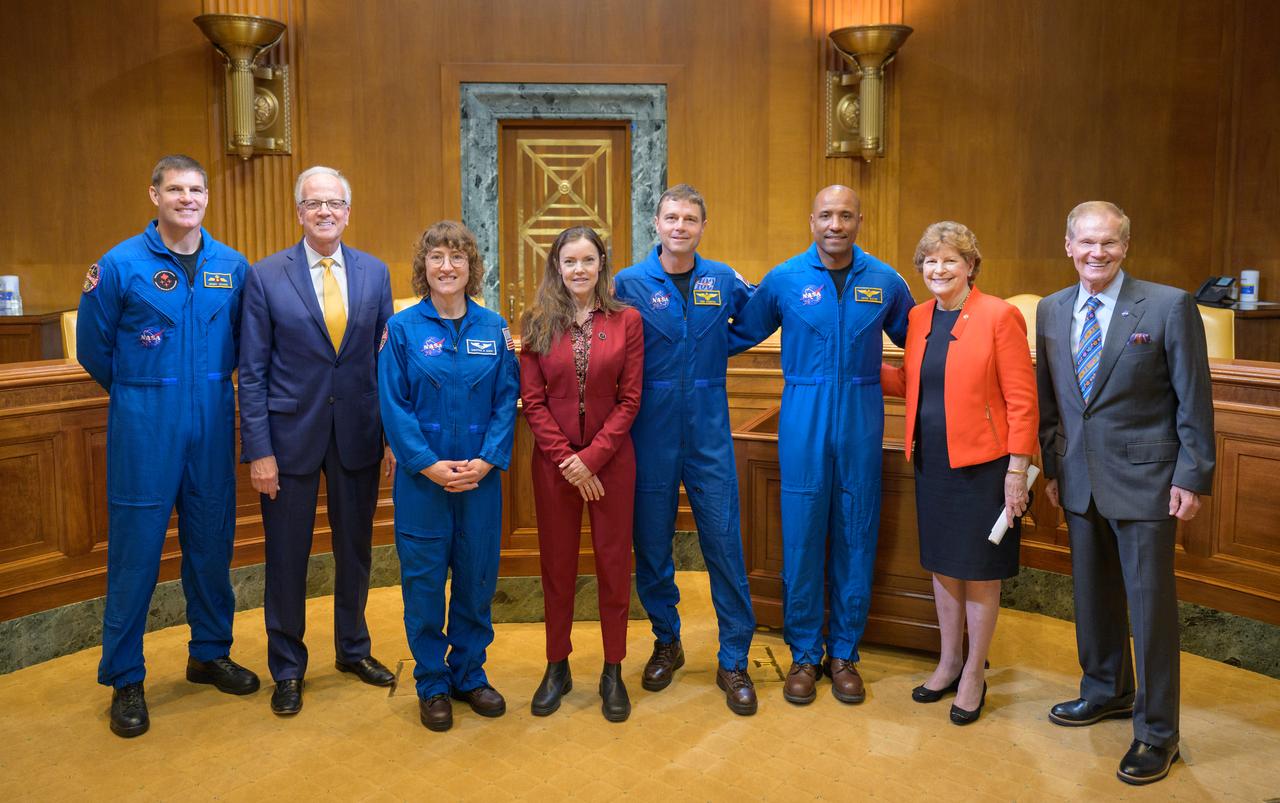
Group photo with CSA (Canadian Space Agency) astronaut Jeremy Hansen, left, Sen. Jerry Moran, R-KS., NASA Astronaut Christina Hammock Koch, CSA (Canadian Space Agency) President Lisa Campbell, NASA astronauts Reid Wiseman, and Victor Glover, Sen. Jeanne Shaheen, D-N.H., and NASA Administrator Bill Nelson at the conclusion of a meet and greet, Wednesday, May 17, 2023, at the Dirksen Senate Office Building in Washington. Wiseman, Glover, Hammock Koch, and Hansen, who will fly around the Moon on NASA’s Artemis II flight test, visited Washington to discuss their upcoming mission with members of Congress and others. Photo Credit: (NASA/Bill Ingalls)
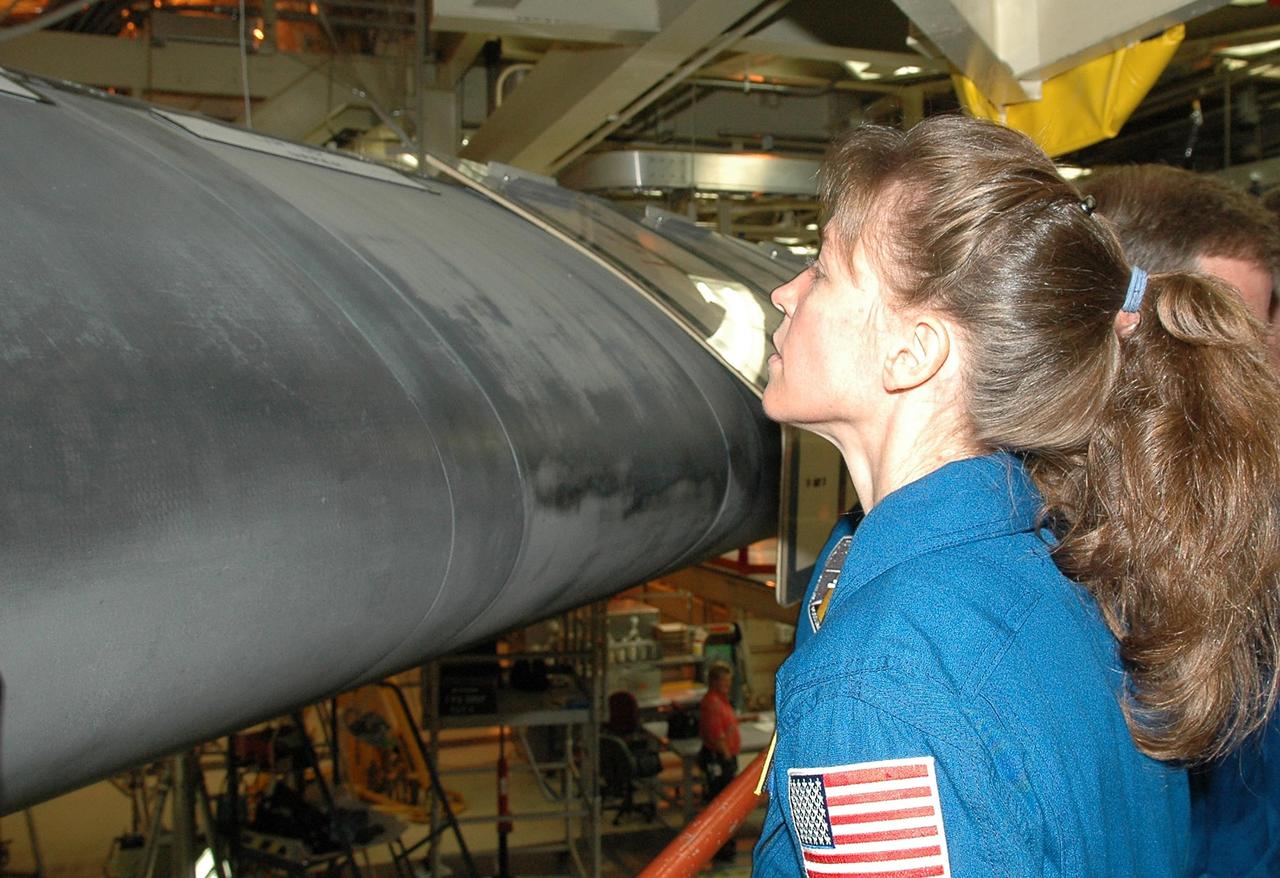
KENNEDY SPACE CENTER, FLA. - Inside the Orbiter Processing Facility bay 3 at NASA's Kennedy Space Center, STS-121 Mission Specialist Lisa Nowak gets a close look at the wing leading edge of Discovery, the launch vehicle for the mission. She and other crew members -- Commander Steven Lindsey, Pilot Mark Kelly and Mission Specialists Stephanie Wilson, Michael Fossum and Piers Sellers -- are at Kennedy for a crew equipment interface test, which provides hands-on experience with equipment they will use on orbit. Launch of STS-121, the second return-to-flight mission, is scheduled for no earlier than May. Photo credit: NASA/Kim Shiflett
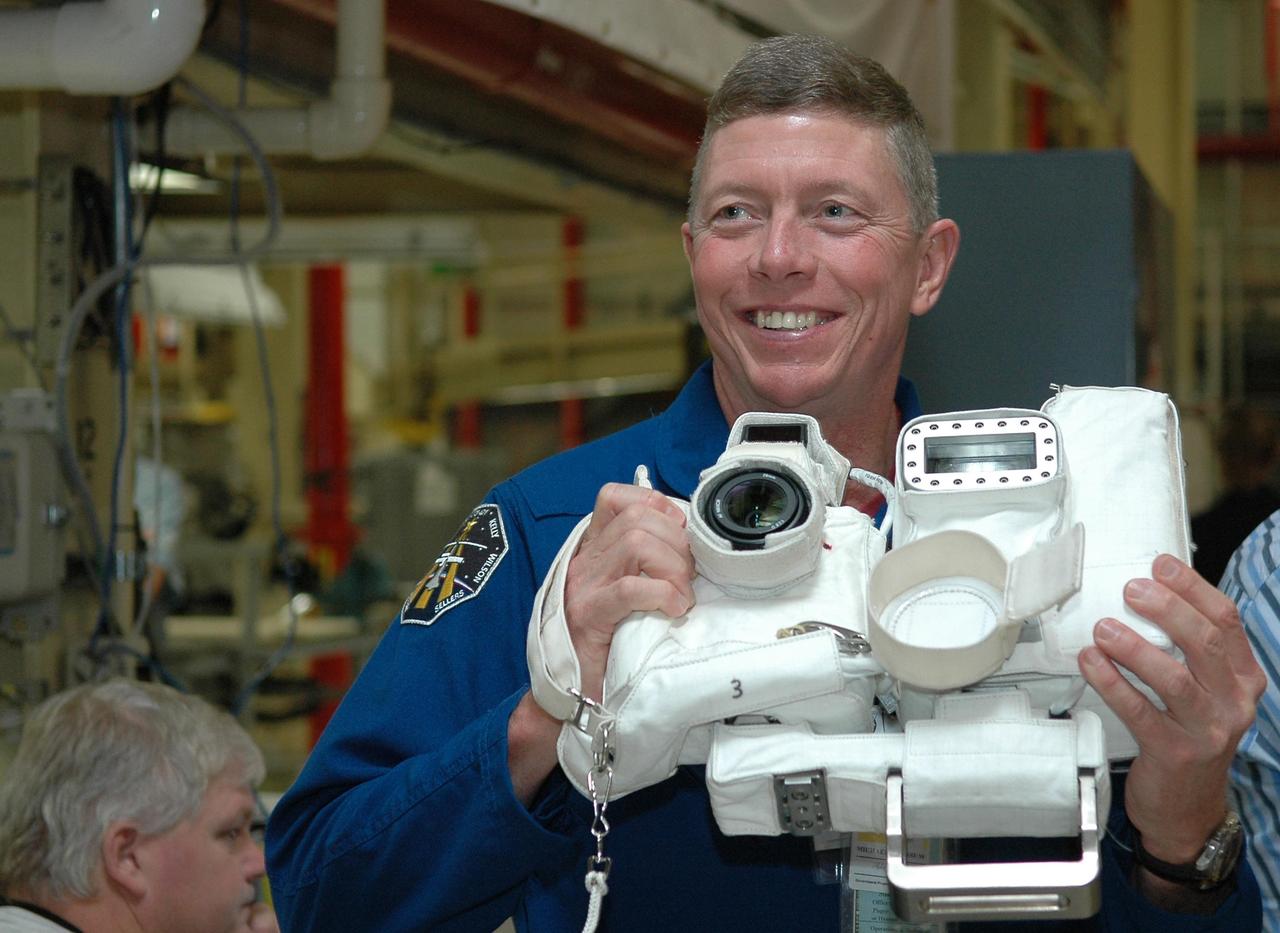
KENNEDY SPACE CENTER, FLA. - Inside the Orbiter Processing Facility bay 3 at NASA's Kennedy Space Center, STS-121 Mission Specialist Michael Fossum handles a working prototype of a camera that will be used on the mission. He and other crew members -- Commander Steven Lindsey, Pilot Mark Kelly and Mission Specialists Lisa Nowak, Stephanie Wilson and Piers Sellers -- are at Kennedy for a crew equipment interface test, which provides hands-on experience with equipment they will use on orbit. Launch of STS-121, the second return-to-flight mission, is scheduled for no earlier than May. Photo credit: NASA/Kim Shiflett
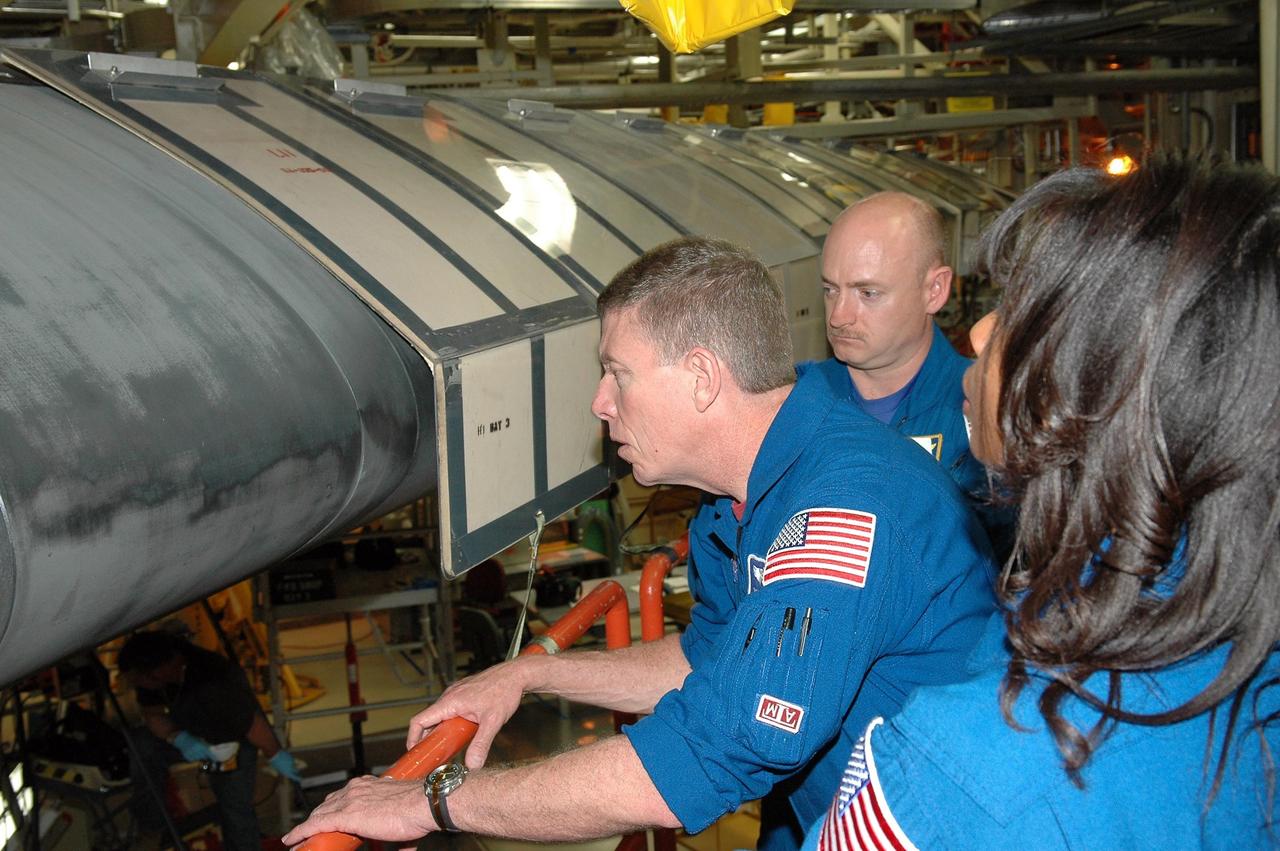
KENNEDY SPACE CENTER, FLA. - Inside the Orbiter Processing Facility bay 3 at NASA's Kennedy Space Center, members of the STS-121 crew get a close look at the wing leading edge of Discovery, the launch vehicle for the mission. Seen here are Mission Specialist Michael Fossum, Pilot Mark Kelly and Mission Specialist Stephanie Nowak. They and other crew members -- Commander Steven Lindsey and Mission Specialists Lisa Nowak and Piers Sellers -- are at Kennedy for a crew equipment interface test, which provides hands-on experience with equipment they will use on orbit. Launch of STS-121, the second return-to-flight mission, is scheduled for no earlier than May. Photo credit: NASA/Kim Shiflett
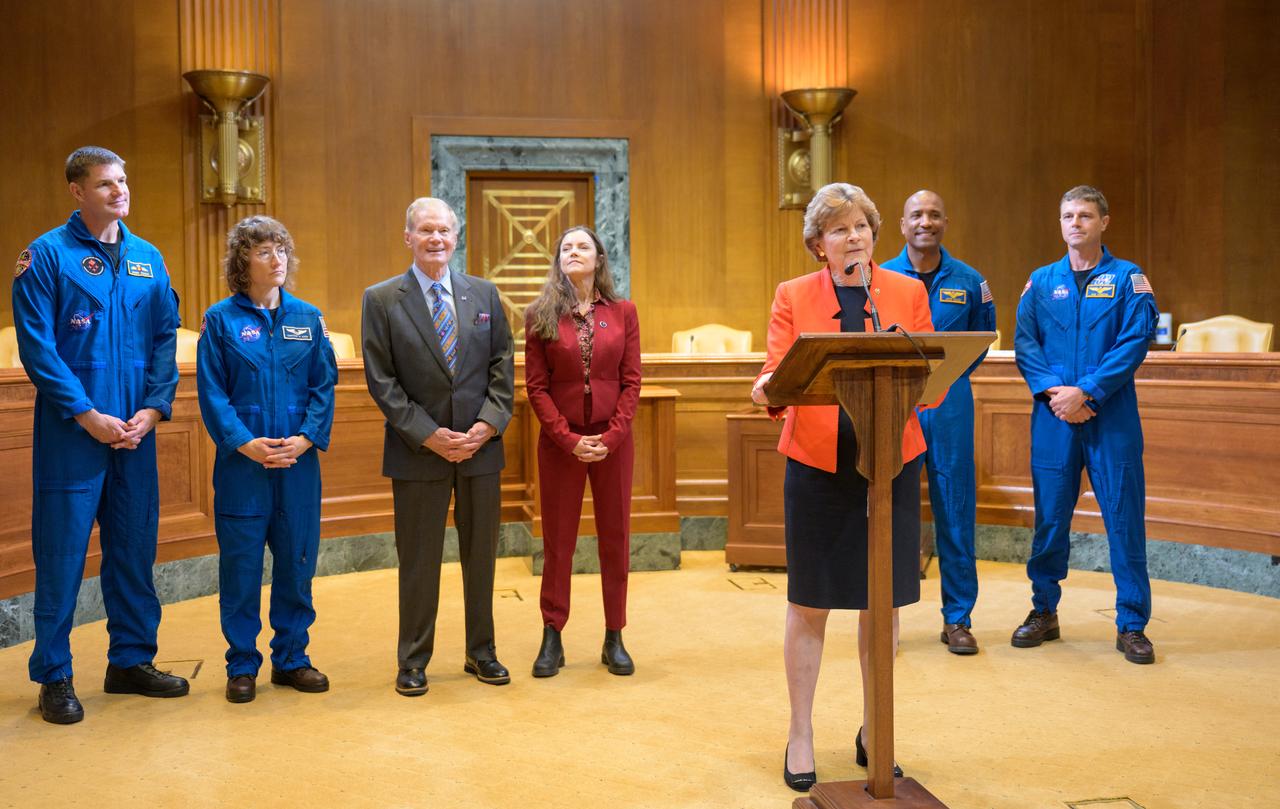
Sen. Jeanne Shaheen, D-N.H., gives remarks as CSA (Canadian Space Agency) astronaut Jeremy Hansen, left, NASA astronaut Christina Hammock Koch, NASA Administrator Bill Nelson, CSA (Canadian Space Agency) President Lisa Campbell, NASA astronauts Victor Glover, and Reid Wiseman, right. look on during a meet and greet, Wednesday, May 17, 2023, at the Dirksen Senate Office Building in Washington. Wiseman, Glover, Hammock Koch, and Hansen, who will fly around the Moon on NASA’s Artemis II flight test, visited Washington to discuss their upcoming mission with members of Congress and others. Photo Credit: (NASA/Bill Ingalls)
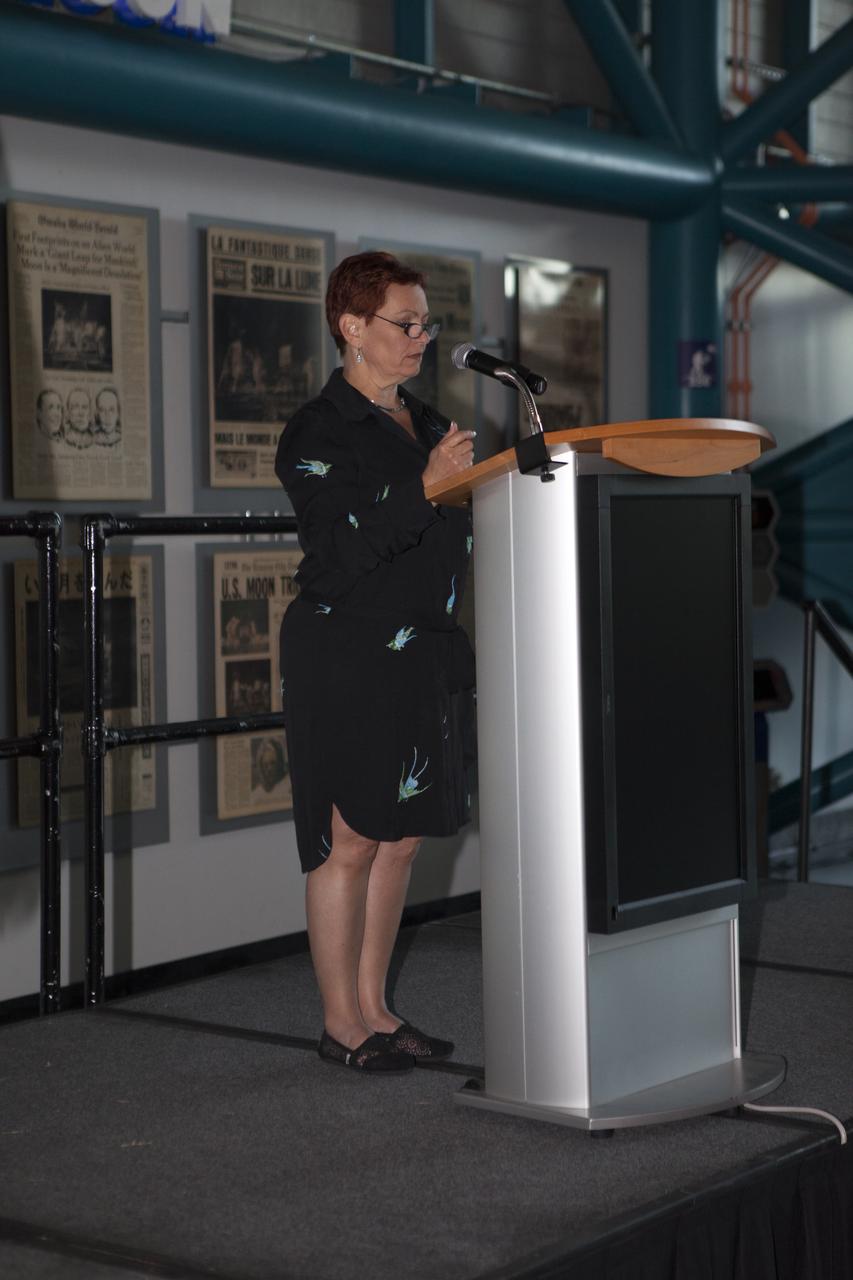
Inside the Apollo-Saturn V Center at the Kennedy Space Center Visitor Complex in Florida, Lisa May, with Murphian Systems, presents the Judges Innovation Award during the award ceremony for NASA's 8th Annual Robotic Mining Competition. More than 40 student teams from colleges and universities around the U.S. used their uniquely-designed mining robots to dig in a supersized sandbox filled with BP-1, or simulated Martian soil, and participated in other competition requirements, May 22-26, at the visitor complex. The Robotic Mining Competition is a NASA Human Exploration and Operations Mission Directorate project designed to encourage students in science, technology, engineering and math, or STEM fields. The project provides a competitive environment to foster innovative ideas and solutions that could be used on NASA's Journey to Mars.
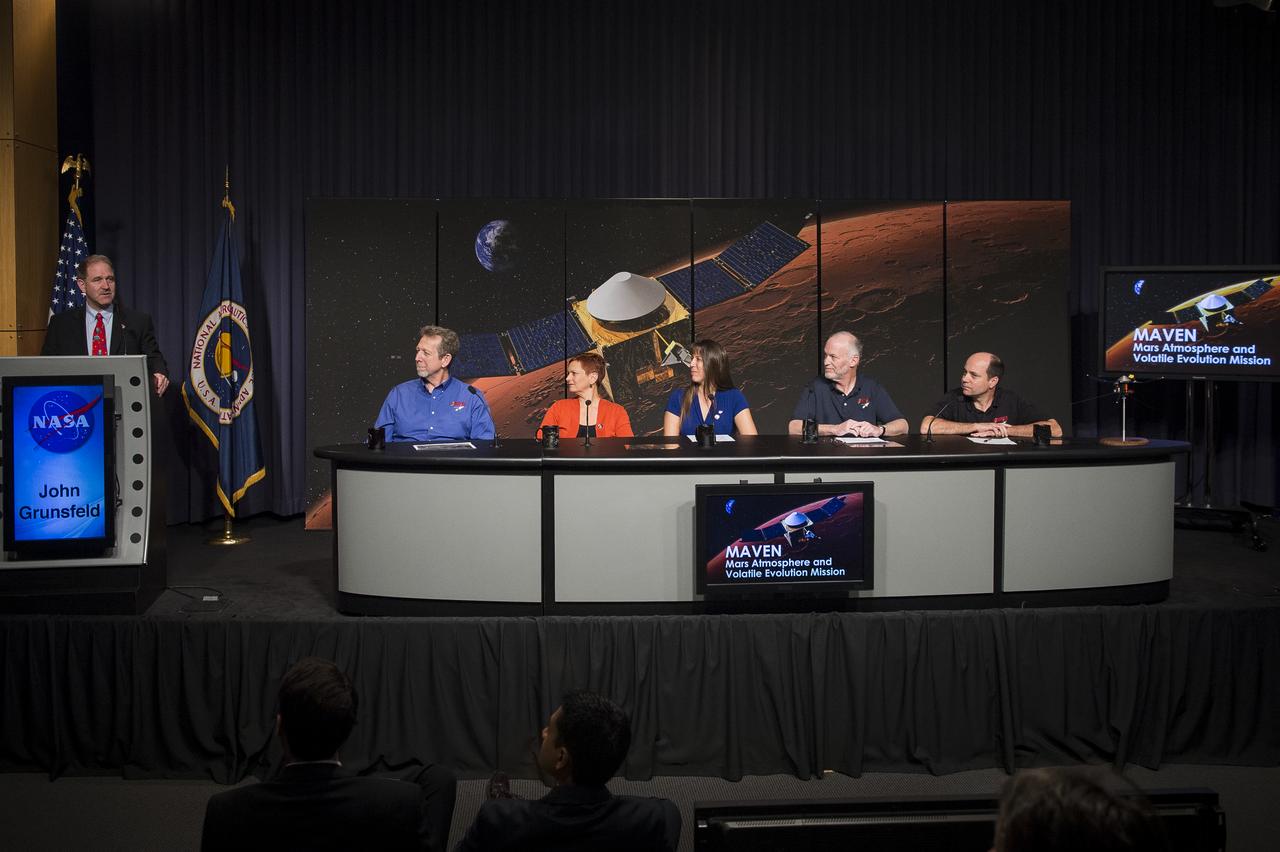
John Grunsfeld, associate administrator for the Science Mission Directorate, NASA Headquarters, Washington, introduces a panel to discuss the upcoming launch of the Mars Atmosphere and Volatile Evolution (MAVEN) mission, at a press conference at NASA Headquarters in Washington on Monday, Oct. 28th, 2013. MAVEN is the agency's next mission to Mars and the first devoted to understanding the upper atmosphere of the Red Planet. (Photo credit: NASA/Jay Westcott)
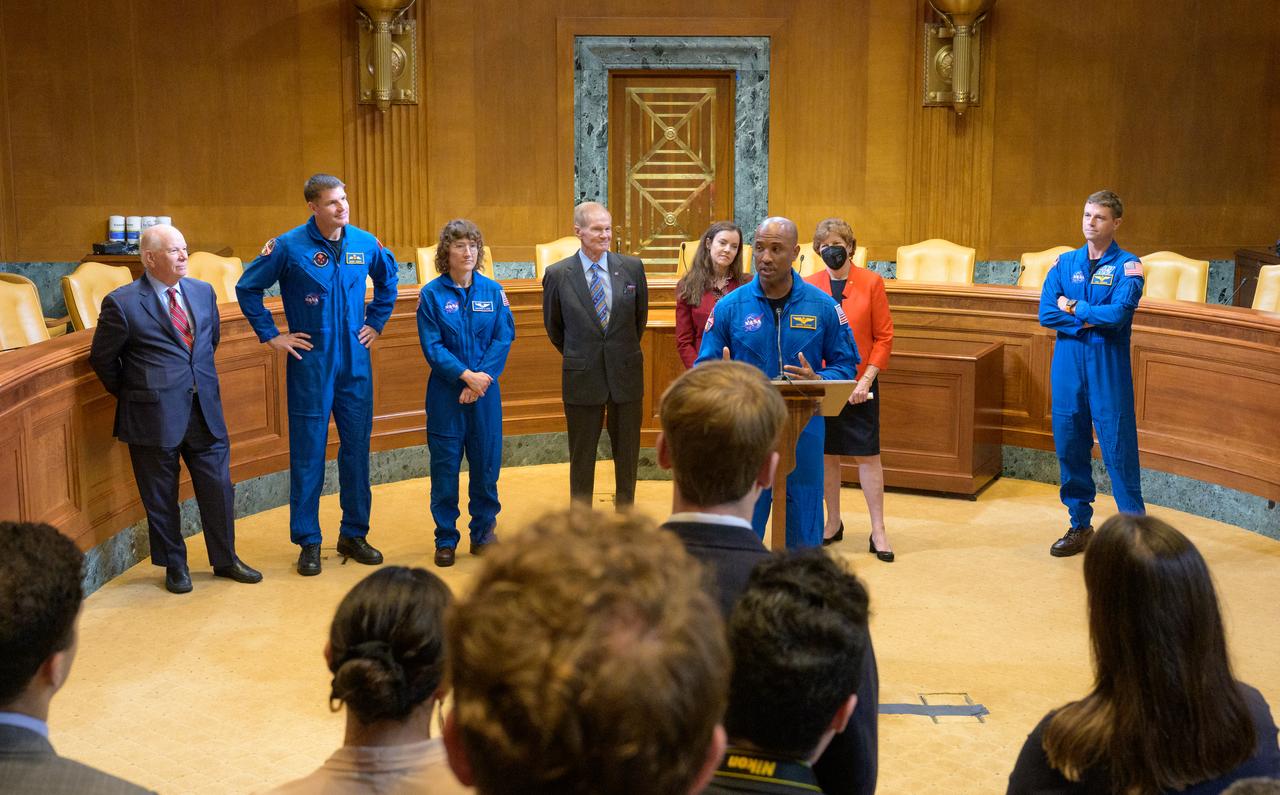
NASA astronaut Victor Glover gives remarks as Sen. Ben Cardin, D-MD., left, CSA (Canadian Space Agency) astronaut Jeremy Hansen, NASA Astronaut Christina Hammock Koch, NASA Administrator Bill Nelson, CSA (Canadian Space Agency) President Lisa Campbell, Sen. Jeanne Shaheen, D-N.H., and NASA astronaut Reid Wiseman look on, during a meet and greet, Wednesday, May 17, 2023, at the Dirksen Senate Office Building in Washington. Glover along with Wiseman, Hammock Koch, and Hansen, who will fly around the Moon on NASA’s Artemis II flight test, visited Washington to discuss their upcoming mission with members of Congress and others. Photo Credit: (NASA/Bill Ingalls)
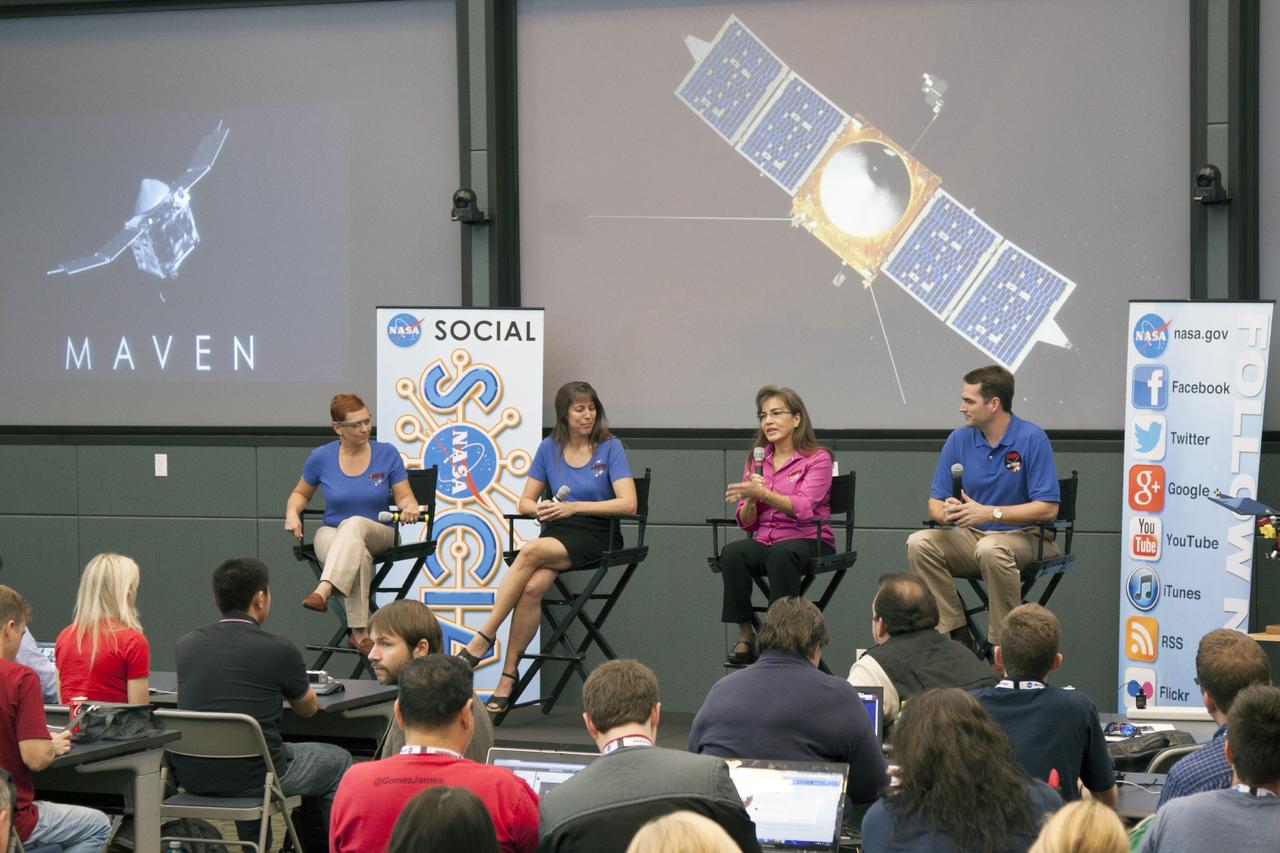
CAPE CANAVERAL, Fla. -- In the conference room of Operations Support Building II at NASA's Kennedy Space Center in Florida, social media participants listen to a briefing on the Mars Atmosphere and Volatile Evolution, or MAVEN, mission by, from the left, Lisa May, MAVEN Program executive, Kelly Fast, Mars Program scientist, Sandra Cauffman, deputy project manager at the agency's Goddard Spaceflight Center, in Greenbelt, Md., and Chris Waters, systems design team lead at Lockheed Martin. The social media participants gathered at the Florida spaceport for the launch of the Mars Atmosphere and Volatile Evolution, or MAVEN, spacecraft. Their visit included tours of key facilities and participating in presentations by key NASA leaders who updated the space agency's current efforts. Photo credit: NASA/Jim Grossman

KENNEDY SPACE CENTER, FLA. - In the Space Station Processing Facility at NASA Kennedy Space Center, members of the STS-121 crew take part in the crew equipment interface test (CEIT). Seen here are Mission Specialists Piers Sellers and Michael Fossum (back to camera). They are looking at the replacement trailing umbilical system reel assembly they will be installing on the International Space Station. Other crew members are Commander Steven Lindsey, Pilot Mark Kelly and Mission Specialists Lisa Nowak, Stephanie Wilson and Thomas Reiter. The CEIT provides hands-on experiences with equipment used on-orbit. Mission STS-121 is the second in the Return to Flight sequence and will carry on improvements that debuted during last year's STS-114 mission and build upon those tests. Launch is scheduled in May.

KENNEDY SPACE CENTER, FLA. - In the Space Station Processing Facility at NASA Kennedy Space Center, members of the STS-121 crew take part in the crew equipment interface test (CEIT). Seen here with Vehicle Integration Test officer Betsy Ahearn (center) are (from left) Mission Specialist Michael Fossum, Pilot Mark Kelly, Commander Steven Lindsey and Mission Specialist Piers Sellers. Other crew members not seen are Mission Specialists Lisa Nowak and Stephanie Wilson. The CEIT provides hands-on experiences with equipment used on-orbit. Mission STS-121 is the second in the Return to Flight sequence and will carry on improvements that debuted during last year's STS-114 mission and build upon those tests. Launch is scheduled in May. Photo credit: NASA/Kim Shiflett
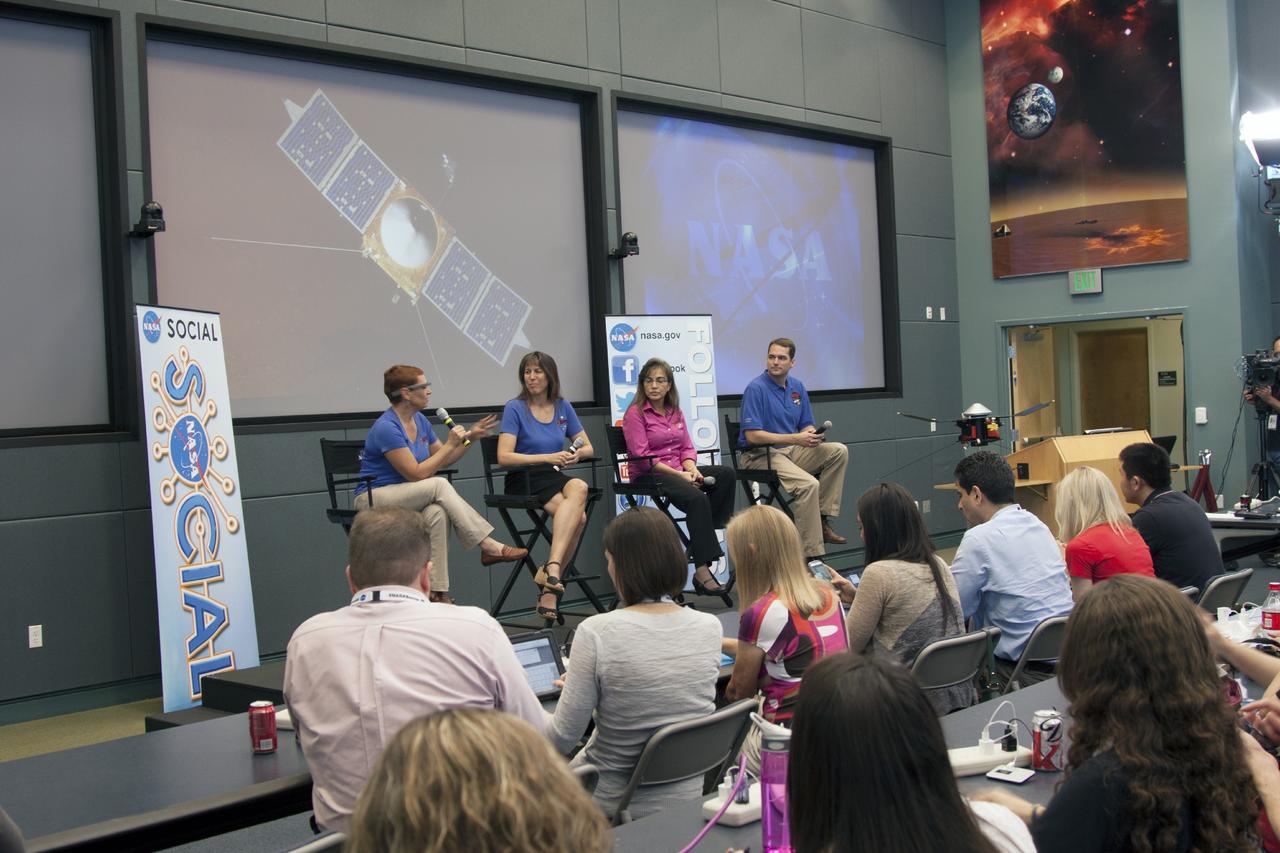
CAPE CANAVERAL, Fla. -- In the conference room of Operations Support Building II at NASA's Kennedy Space Center in Florida, social media participants listen to a briefing on the Mars Atmosphere and Volatile Evolution, or MAVEN, mission by, from the left, Lisa May, MAVEN Program executive, Kelly Fast, Mars Program scientist, Sandra Cauffman, deputy project manager at the agency's Goddard Spaceflight Center, in Greenbelt, Md., and Chris Waters, systems design team lead at Lockheed Martin. The social media participants gathered at the Florida spaceport for the launch of the Mars Atmosphere and Volatile Evolution, or MAVEN, spacecraft. Their visit included tours of key facilities and participating in presentations by key NASA leaders who updated the space agency's current efforts. Photo credit: NASA/Jim Grossman
KENNEDY SPACE CENTER, FLA. - In the Space Station Processing Facility at NASA Kennedy Space Center, STS-121 Mission Specialist Piers Sellers practices working with the replacement trailing umbilical system reel assembly that will be installed on the International Space Station. He and other crew members -- Commander Steven Lindsey, Pilot Mark Kelly and Mission Specialists Lisa Nowak, Stephanie Wilson and Michael Fossum -- are at Kennedy to take part in the crew equipment interface test (CEIT). The CEIT provides hands-on experiences with equipment used on-orbit. Mission STS-121 is the second in the Return to Flight sequence and will carry on improvements that debuted during last year's STS-114 mission and build upon those tests. Launch is scheduled in May. Photo credit: NASA/Kim Shiflett
KENNEDY SPACE CENTER, FLA. - In the Space Station Processing Facility at NASA Kennedy Space Center, STS-121 Mission Specialist Piers Sellers practices working with the replacement trailing umbilical system reel assembly that will be installed on the International Space Station. He and other crew members -- Commander Steven Lindsey, Pilot Mark Kelly and Mission Specialists Lisa Nowak, Stephanie Wilson and Michael Fossum -- are at Kennedy to take part in the crew equipment interface test (CEIT). The CEIT provides hands-on experiences with equipment used on-orbit. Mission STS-121 is the second in the Return to Flight sequence and will carry on improvements that debuted during last year's STS-114 mission and build upon those tests. Launch is scheduled in May. Photo credit: NASA/Kim Shiflett

KENNEDY SPACE CENTER, FLA. - In the Space Station Processing Facility at NASA Kennedy Space Center, members of the STS-121 crew take part in the crew equipment interface test (CEIT). Seen here with Vehicle Integration Test officer Betsy Ahearn (center) are (from left) Mission Specialist Michael Fossum, Pilot Mark Kelly, Commander Steven Lindsey and Mission Specialist Piers Sellers. Other crew members not seen are Mission Specialists Lisa Nowak and Stephanie Wilson. The CEIT provides hands-on experiences with equipment used on-orbit. Mission STS-121 is the second in the Return to Flight sequence and will carry on improvements that debuted during last year's STS-114 mission and build upon those tests. Launch is scheduled in May. Photo credit: NASA/Kim Shiflett
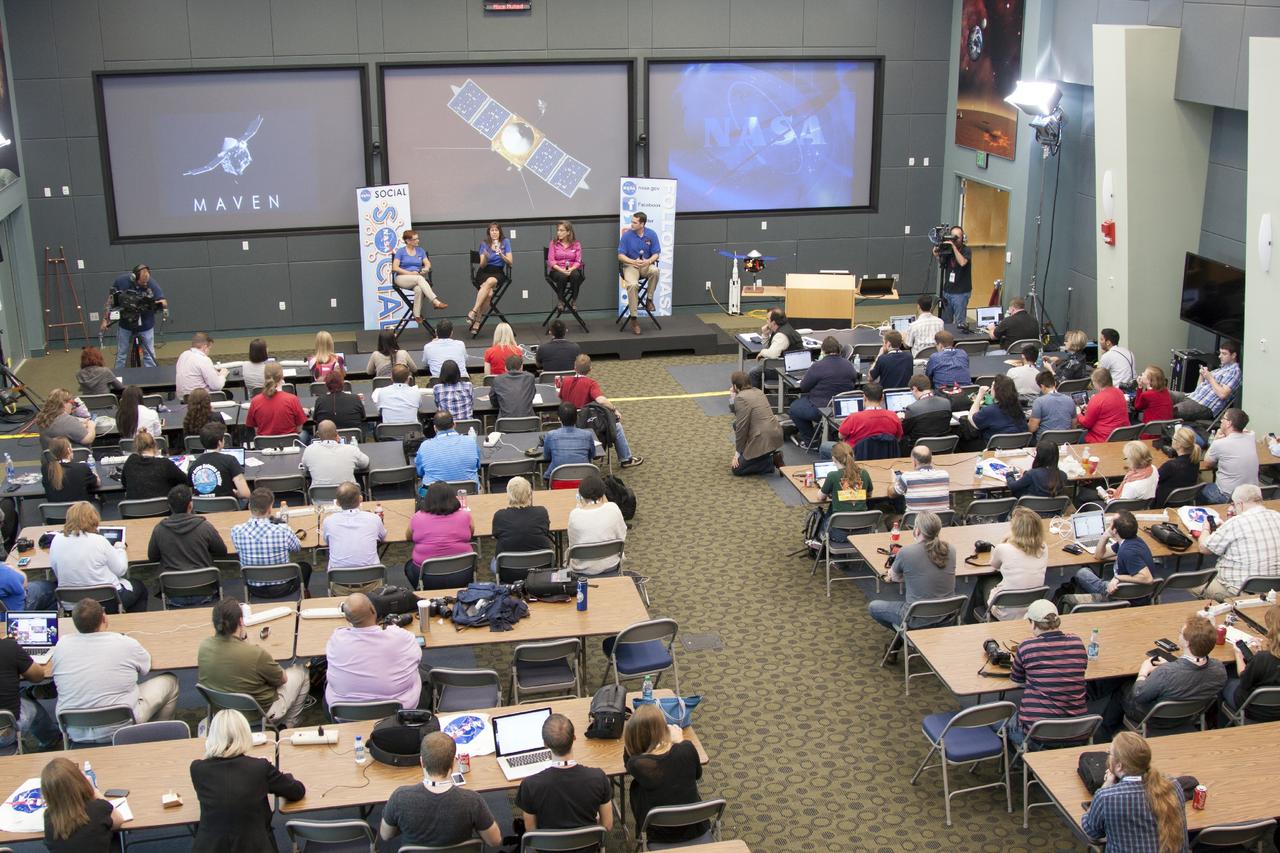
CAPE CANAVERAL, Fla. -- In the conference room of Operations Support Building II at NASA's Kennedy Space Center in Florida, social media participants listen to a briefing on the Mars Atmosphere and Volatile Evolution, or MAVEN, mission by, from the left, Lisa May, MAVEN Program executive, Kelly Fast, Mars Program scientist, Sandra Cauffman, deputy project manager at the agency's Goddard Spaceflight Center, in Greenbelt, Md., and Chris Waters, systems design team lead at Lockheed Martin. The social media participants gathered at the Florida spaceport for the launch of the Mars Atmosphere and Volatile Evolution, or MAVEN, spacecraft. Their visit included tours of key facilities and participating in presentations by key NASA leaders who updated the space agency's current efforts. Photo credit: NASA/Jim Grossman

KENNEDY SPACE CENTER, FLA. - In the Space Station Processing Facility at NASA Kennedy Space Center, STS-121 Mission Specialists Michael Fossum (left above) and Piers Sellers (on ground) get a close look at the replacement trailing umbilical system reel assembly that will be installed on the International Space Station. They and other crew members -- Commander Steven Lindsey, Pilot Mark Kelly and Mission Specialists Lisa Nowak and Stephanie Wilson -- are at Kennedy to take part in the crew equipment interface test (CEIT). The CEIT provides hands-on experiences with equipment used on-orbit. Mission STS-121 is the second in the Return to Flight sequence and will carry on improvements that debuted during last year's STS-114 mission and build upon those tests. Launch is scheduled in May. Photo credit: NASA/Kim Shiflett

U.S. Senator Ted Cruz (R-Texas) provides remarks as from left to right, CSA (Canadian Space Agency) astronaut Jeremy Hansen, Artemis II mission specialist; NASA astronaut Christina Koch, Artemis II mission specialist; U.S. Senator Maria Cantwell (D-WA); NASA astronaut Reid Wiseman, Artemis II commander; U.S. Senator Amy Klobuchar (D-MN); NASA astronaut Victor Glover, Artemis II pilot; U.S. Senator Lisa Blunt Rochester (D-DE); and U.S. Senator Andy Kim (D-NJ) look on during an event at the Russell Senate Office Building, Tuesday, May 12, 2026, in Washington. NASA’s Artemis II mission took Wiseman, Glover, Koch, and Hansen on a nearly 10-day journey around the Moon and back to Earth in April 2026. Photo Credit: (NASA/Aubrey Gemignani)

U.S. Senator Maria Cantwell (D-WA) provides remarks as from left to right, U.S. Senator Ted Cruz (R-Texas); NASA astronaut Reid Wiseman, Artemis II commander; U.S. Senator Amy Klobuchar (D-MN); NASA astronaut Victor Glover, Artemis II pilot; U.S. Senator Lisa Blunt Rochester (D-DE); and U.S. Senator Andy Kim (D-NJ) look on during an event at the Russell Senate Office Building, Tuesday, May 12, 2026, in Washington. NASA’s Artemis II mission took Wiseman, Glover, Koch, and Hansen on a nearly 10-day journey around the Moon and back to Earth in April 2026. Photo Credit: (NASA/Aubrey Gemignani)
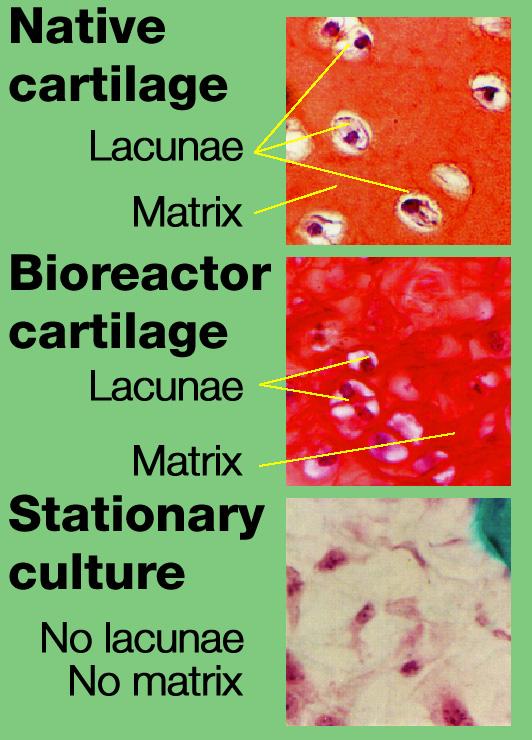
Dr. Lisa E. Freed of the Massachusetts Institute of Technology and her colleagues have reported that initially disc-like specimens tend to become spherical in space, demonstrating that tissues can grow and differentiate into distinct structures in microgravity. The Mir Increment 3 (Sept. 16, 1996 - Jan. 22, 1997) samples were smaller, more spherical, and mechanically weaker than Earth-grown control samples. These results demonstrate the feasibility of microgravity tissue engineering and may have implications for long human space voyages and for treating musculoskeletal disorders on earth. The work is sponsored by NASA's Office of Biological and Physical Research. The bioreactor is managed by the Biotechnology Cell Science Program at NASA's Johnson Space Center (JSC). NASA-sponsored bioreactor research has been instrumental in helping scientists to better understand normal and cancerous tissue development. In cooperation with the medical community, the bioreactor design is being used to prepare better models of human colon, prostate, breast and ovarian tumors. Cartilage, bone marrow, heart muscle, skeletal muscle, pancreatic islet cells, liver and kidney are just a few of the normal tissues being cultured in rotating bioreactors by investigators.

U.S. Senator Maria Cantwell (D-WA) provides remarks as from left to right, NASA Administrator Jared Isaacman; CSA (Canadian Space Agency) astronaut Jeremy Hansen, Artemis II mission specialist; NASA astronaut Christina Koch, Artemis II mission specialist; U.S. Senator Ted Cruz (R-Texas); NASA astronaut Reid Wiseman, Artemis II commander; U.S. Senator Amy Klobuchar (D-MN); NASA astronaut Victor Glover, Artemis II pilot; U.S. Senator Lisa Blunt Rochester (D-DE); U.S. Senator Andy Kim (D-NJ); and U.S. Senator Edward Markey (D-Mass.), look on during an event at the Russell Senate Office Building, Tuesday, May 12, 2026, in Washington. NASA’s Artemis II mission took Wiseman, Glover, Koch, and Hansen on a nearly 10-day journey around the Moon and back to Earth in April 2026. Photo Credit: (NASA/Aubrey Gemignani)
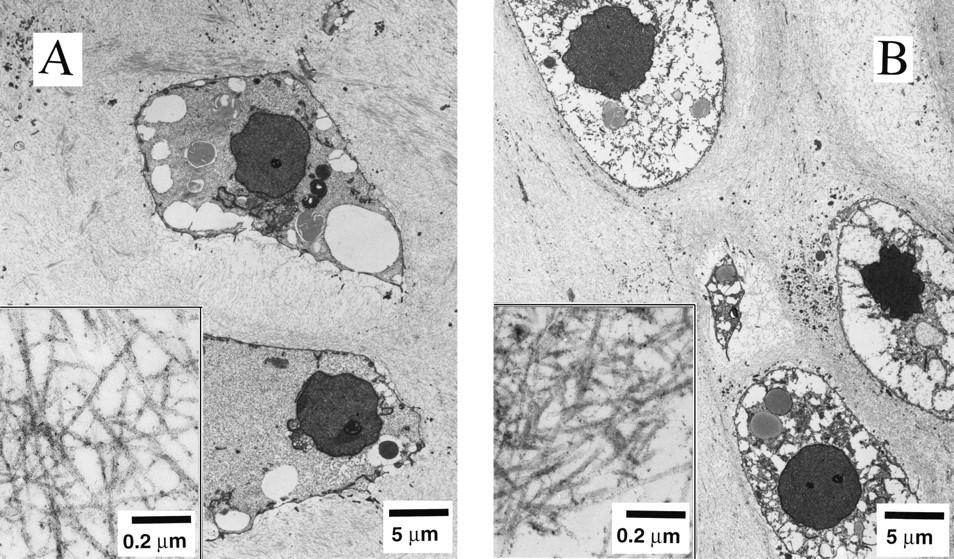
Dr. Lisa E. Freed of the Massachusetts Institute of Technology and her colleagues have reported that initially disc-like specimens tend to become spherical in space, demonstrating that tissues can grow and differentiate into distinct structures in microgravity. The Mir Increment 3 (Sept. 16, 1996 - Jan. 22, 1997) samples were smaller, more spherical, and mechanically weaker than Earth-grown control samples. These results demonstrate the feasibility of microgravity tissue engineering and may have implications for long human space voyages and for treating musculoskeletal disorders on earth. Final samples from Mir and Earth appeared histologically cartilaginous throughout their entire cross sections (5-8 mm thick), with the exception of fibrous outer capsules. Constructs grown on Earth (A) appeared to have a more organized extracellular matrix with more uniform collagen orientation as compared with constructs grown on Mir (B), but the average collagen fiber diameter was similar in the two groups (22 +- 2 nm) and comparable to that previously reported for developing articular cartilage. Randomly oriented collagen in Mir samples would be consistent with previous reports that microgravity disrupts fibrillogenesis. These are transmission electron micrographs of constructs from Mir (A) and Earth (B) groups at magnifications of x3,500 and x120,000 (Inset). The work is sponsored by NASA's Office of Biological and Physical Research. The bioreactor is managed by the Biotechnology Cell Science Program at NASA's Johnson Space Center (JSC). NASA-sponsored bioreactor research has been instrumental in helping scientists to better understand normal and cancerous tissue development. In cooperation with the medical community, the bioreactor design is being used to prepare better models of human colon, prostate, breast and ovarian tumors. Credit: Proceedings of the National Academy of Sciences.
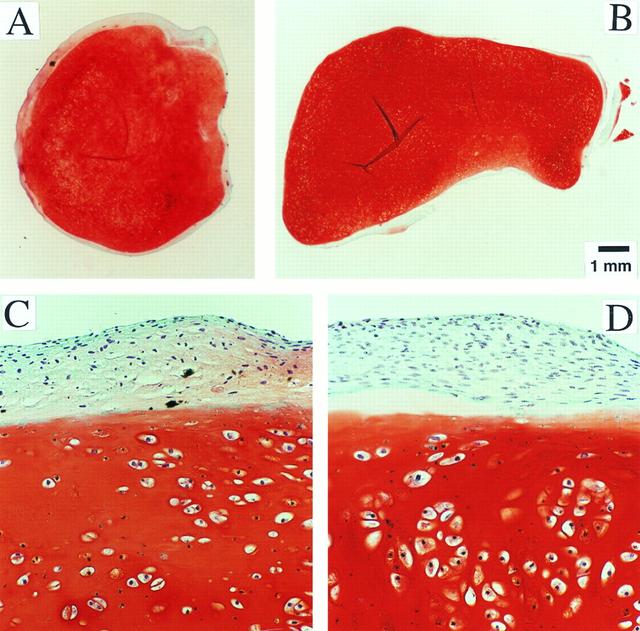
Dr. Lisa E. Freed of the Massachusetts Institute of Technology and her colleagues have reported that initially disc-like specimens of cartilage tend to become spherical in space, demonstrating that tissues can grow and differentiate into distinct structures in microgravity. The Mir Increment 3 (Sept. 16, 1996 - Jan. 22, 1997) samples were smaller, more spherical, and mechanically weaker than Earth-grown control samples. These results demonstrate the feasibility of microgravity tissue engineering and may have implications for long human space voyages and for treating musculoskeletal disorders on earth. Constructs grown on Mir (A) tended to become more spherical, whereas those grown on Earth (B) maintained their initial disc shape. These findings might be related to differences in cultivation conditions, i.e., videotapes showed that constructs floated freely in microgravity but settled and collided with the rotating vessel wall at 1g (Earth's gravity). In particular, on Mir the constructs were exposed to uniform shear and mass transfer at all surfaces such that the tissue grew equally in all directions, whereas on Earth the settling of discoid constructs tended to align their flat circular areas perpendicular to the direction of motion, increasing shear and mass transfer circumferentially such that the tissue grew preferentially in the radial direction. A and B are full cross sections of constructs from Mir and Earth groups shown at 10-power. C and D are representative areas at the construct surfaces enlarged to 200-power. They are stained red with safranin-O. NASA-sponsored bioreactor research has been instrumental in helping scientists to better understand normal and cancerous tissue development. The work is sponsored by NASA's Office of Biological and Physical Research. The bioreactor is managed by the Biotechnology Cell Science Program at NASA's Johnson Space Center (JSC). Photo credit: Proceedings of the National Academy of Sciences.

This image depicts a vast canyon of dust and gas in the Orion Nebula from a 3-D computer model based on observations by NASA's Hubble Space Telescope and created by science visualization specialists at the Space Telescope Science Institute (STScI) in Baltimore, Md. A 3-D visualization of this model takes viewers on an amazing four-minute voyage through the 15-light-year-wide canyon. Credit: NASA, G. Bacon, L. Frattare, Z. Levay, and F. Summers (STScI/AURA) Go here to learn more about Hubble 3D: <a href="http://www.nasa.gov/topics/universe/features/hubble_imax_premiere.html" rel="nofollow">www.nasa.gov/topics/universe/features/hubble_imax_premier...</a> or <a href="http://www.imax.com/hubble/" rel="nofollow">www.imax.com/hubble/</a> Take an exhilarating ride through the Orion Nebula, a vast star-making factory 1,500 light-years away. Swoop through Orion's giant canyon of gas and dust. Fly past behemoth stars whose brilliant light illuminates and energizes the entire cloudy region. Zoom by dusty tadpole-shaped objects that are fledgling solar systems. This virtual space journey isn't the latest video game but one of several groundbreaking astronomy visualizations created by specialists at the Space Telescope Science Institute (STScI) in Baltimore, the science operations center for NASA's Hubble Space Telescope. The cinematic space odysseys are part of the new Imax film "Hubble 3D," which opens today at select Imax theaters worldwide. The 43-minute movie chronicles the 20-year life of Hubble and includes highlights from the May 2009 servicing mission to the Earth-orbiting observatory, with footage taken by the astronauts. The giant-screen film showcases some of Hubble's breathtaking iconic pictures, such as the Eagle Nebula's "Pillars of Creation," as well as stunning views taken by the newly installed Wide Field Camera 3. While Hubble pictures of celestial objects are awe-inspiring, they are flat 2-D photographs. For this film, those 2-D images have been converted into 3-D environments, giving the audience the impression they are space travelers taking a tour of Hubble's most popular targets. "A large-format movie is a truly immersive experience," says Frank Summers, an STScI astronomer and science visualization specialist who led the team that developed the movie visualizations. The team labored for nine months, working on four visualization sequences that comprise about 12 minutes of the movie. "Seeing these Hubble images in 3-D, you feel like you are flying through space and not just looking at picture postcards," Summers continued. "The spacescapes are all based on Hubble images and data, though some artistic license is necessary to produce the full depth of field needed for 3-D." The most ambitious sequence is a four-minute voyage through the Orion Nebula's gas-and-dust canyon, about 15 light-years across. During the ride, viewers will see bright and dark, gaseous clouds; thousands of stars, including a grouping of bright, hefty stars called the Trapezium; and embryonic planetary systems. The tour ends with a detailed look at a young circumstellar disk, which is much like the structure from which our solar system formed 4.5 billion years ago. Based on a Hubble image of Orion released in 2006, the visualization was a collaborative effort between science visualization specialists at STScI, including Greg Bacon, who sculpted the Orion Nebula digital model, with input from STScI astronomer Massimo Roberto; the National Center for Supercomputing Applications at the University of Illinois at Urbana-Champaign; and the Spitzer Science Center at the California Institute of Technology in Pasadena. For some of the sequences, STScI imaging specialists developed new techniques for transforming the 2-D Hubble images into 3-D. STScI image processing specialists Lisa Frattare and Zolt Levay, for example, created methods of splitting a giant gaseous pillar in the Carina Nebula into multiple layers to produce a 3-D effect, giving the structure depth. The Carina Nebula is a nursery for baby stars. Frattare painstakingly removed the thousands of stars in the image so that Levay could separate the gaseous layers on the isolated Carina pillar. Frattare then replaced the stars into both foreground and background layers to complete the 3-D model. For added effect, the same separation was done for both visible and infrared Hubble images, allowing the film to cross-fade between wavelength views in 3-D. In another sequence viewers fly into a field of 170,000 stars in the giant star cluster Omega Centauri. STScI astronomer Jay Anderson used his stellar database to create a synthetic star field in 3-D that matches recent razor-sharp Hubble photos. The film's final four-minute sequence takes viewers on a voyage from our Milky Way Galaxy past many of Hubble's best galaxy shots and deep into space. Some 15,000 galaxies from Hubble's deepest surveys stretch billions of light-years across the universe in a 3-D sequence created by STScI astronomers and visualizers. The view dissolves into a cobweb that traces the universe's large-scale structure, the backbone from which galaxies were born. In addition to creating visualizations, STScI's education group also provided guidance on the "Hubble 3D" Educator Guide, which includes standards-based lesson plans and activities about Hubble and its mission. Students will use the guide before or after seeing the movie. "The guide will enhance the movie experience for students and extend the movie into classrooms," says Bonnie Eisenhamer, STScI's Hubble Formal Education manager. The Hubble Space Telescope is a project of international cooperation between NASA and the European Space Agency (ESA) and is managed by NASA’s Goddard Space Flight Center (GSFC) in Greenbelt, Md. The Space Telescope Science Institute (STScI) conducts Hubble science operations. The institute is operated for NASA by the Association of Universities for Research in Astronomy, Inc., Washington, D.C.