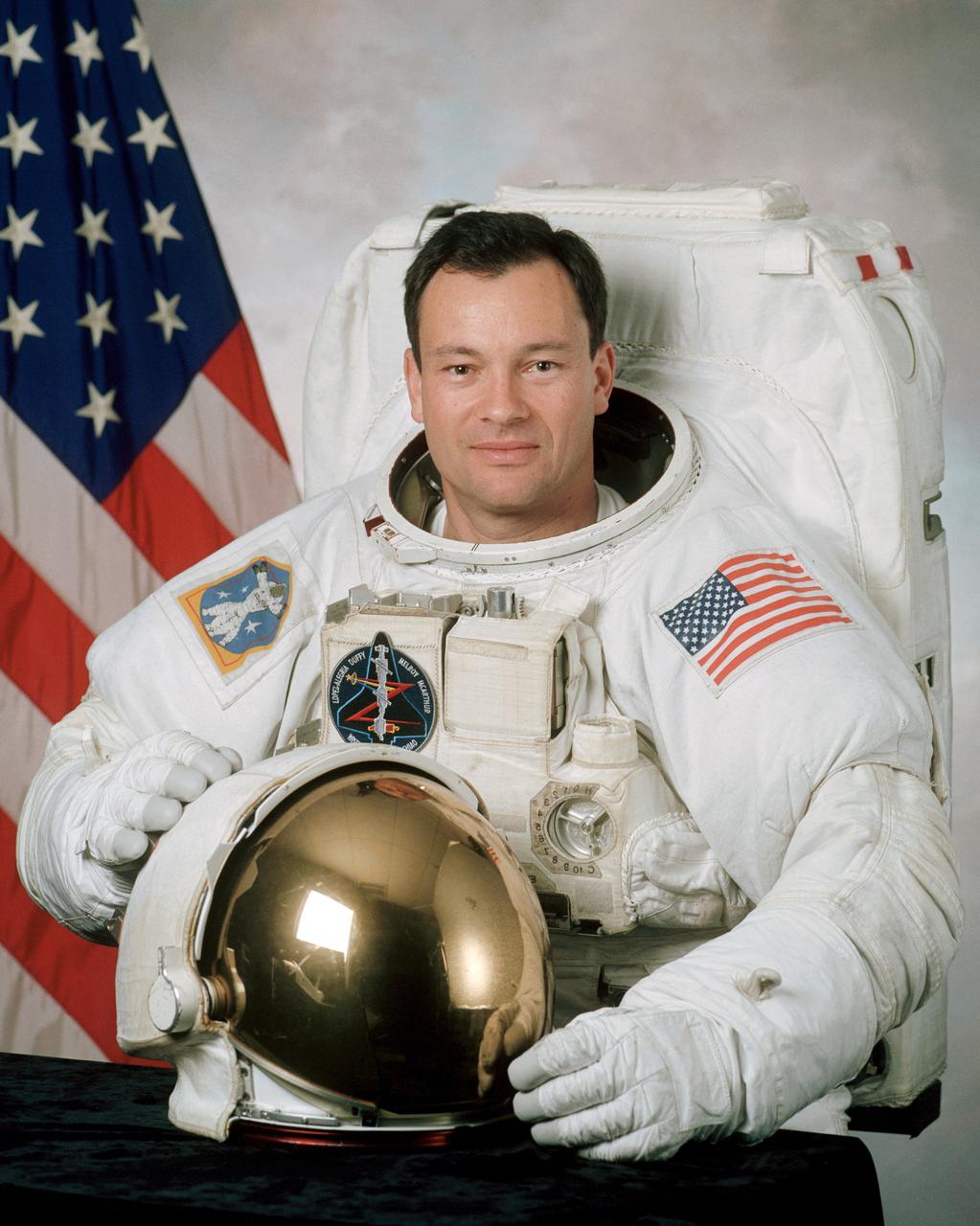
JSC2000-03028 (13 March 2000) --- Astronaut Michael E. Lopez-Alegria, mission specialist.
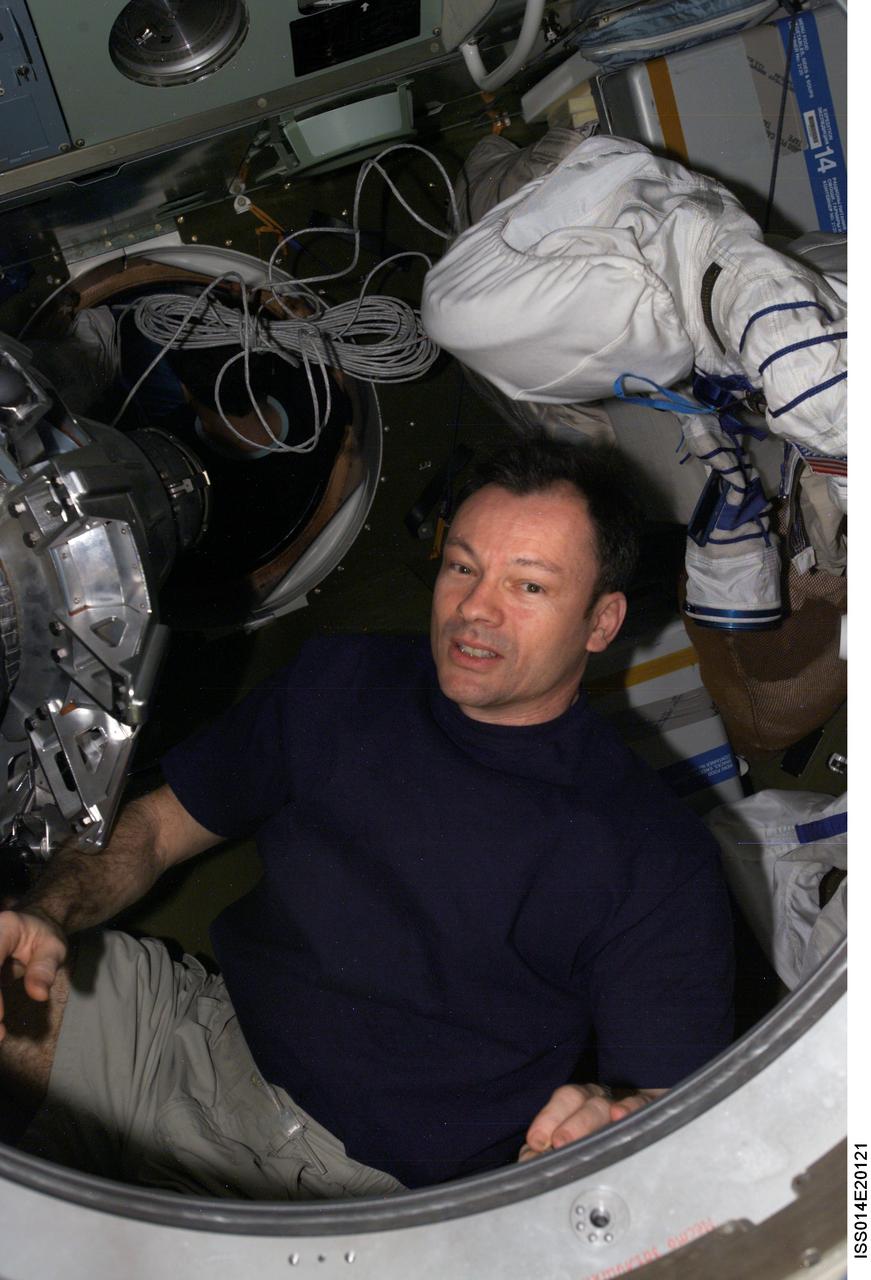
ISS014-E-20121 (21 April 2007) --- Astronaut Michael E. Lopez-Alegria, Expedition 14 commander and NASA space station science officer, photographed in a hatch of a Soyuz spacecraft docked to the International Space Station.
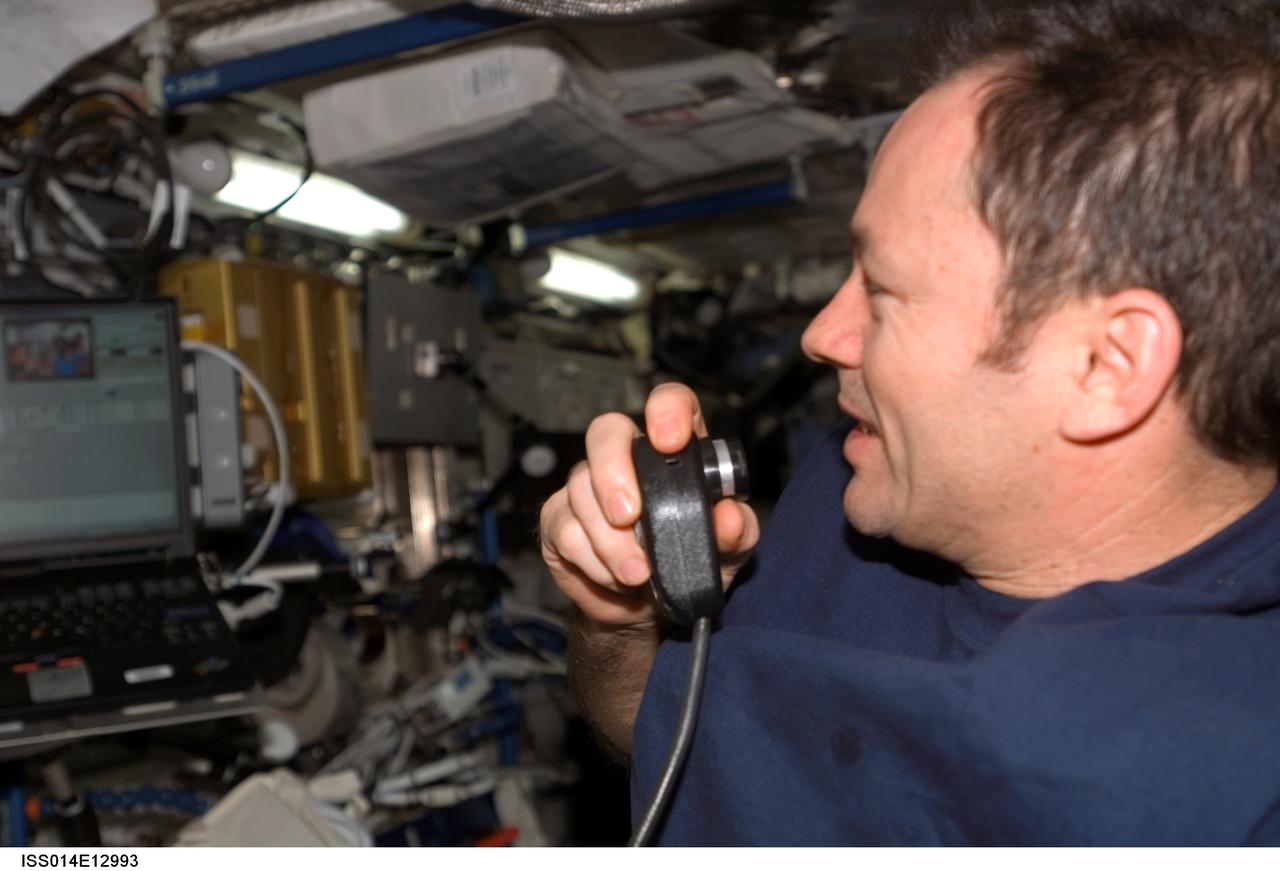
ISS014-E-12993 (26 Jan. 2007) --- Astronaut Michael E. Lopez-Alegria, Expedition 14 commander and NASA space station science officer, uses a communication system in the Destiny laboratory of the International Space Station.
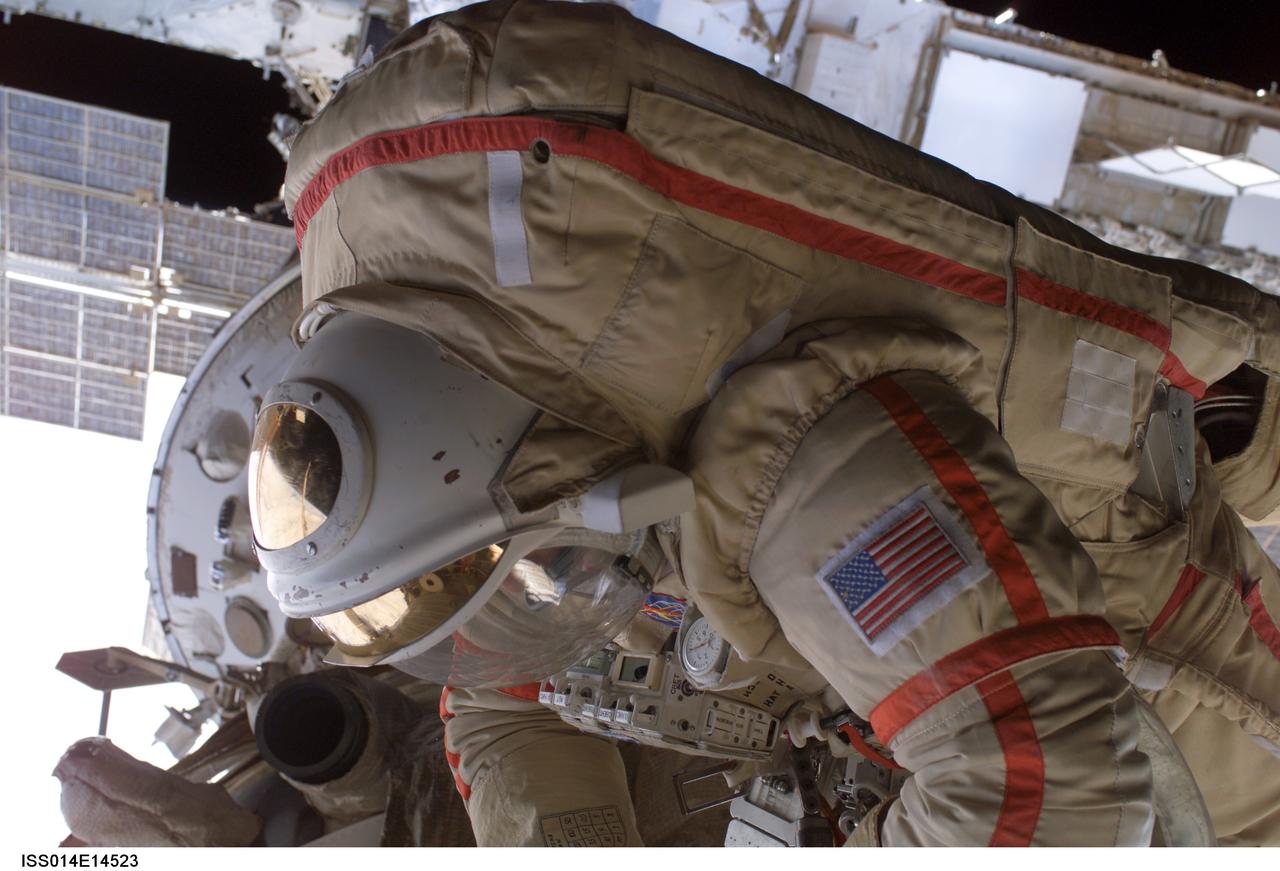
ISS014-E-14523 (22 Feb. 2007) --- Astronaut Michael E. Lopez-Alegria, Expedition 14 commander and NASA space station science officer, wearing a Russian Orlan spacesuit, participates in a session of extravehicular activity (EVA). Among other tasks, Lopez-Alegria and cosmonaut Mikhail Tyurin (out of frame), flight engineer representing Russia's Federal Space Agency, were able to retract a stuck Kurs antenna on the Progress vehicle docked to the International Space Station's Zvezda Service Module.
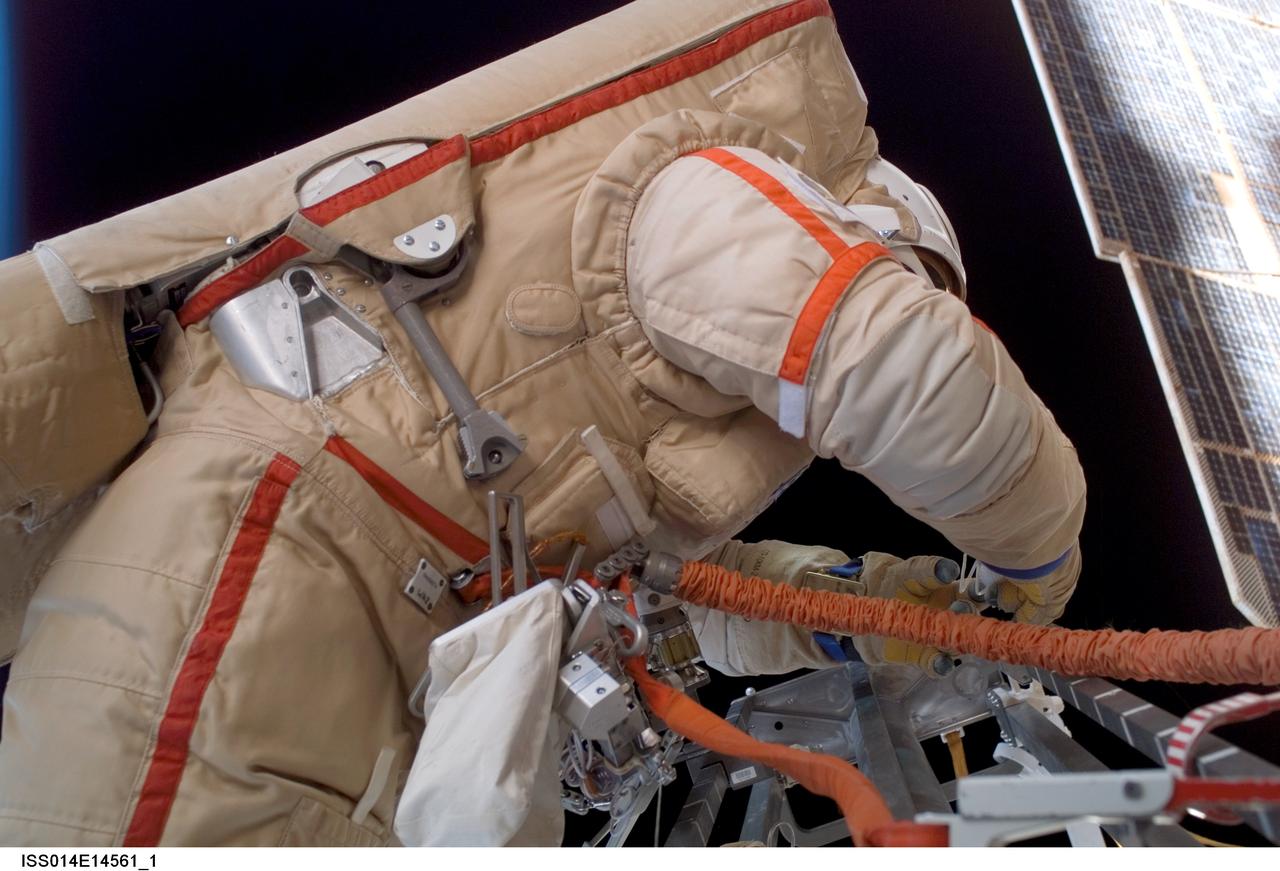
ISS014-E-14561 (22 Feb. 2007) --- Astronaut Michael E. Lopez-Alegria, Expedition 14 commander and NASA space station science officer, wearing a Russian Orlan spacesuit, participates in a session of extravehicular activity (EVA). Among other tasks, Lopez-Alegria and cosmonaut Mikhail Tyurin (out of frame), flight engineer representing Russia's Federal Space Agency, were able to retract a stuck antenna on the Progress vehicle docked to the International Space Station's Zvezda Service Module.
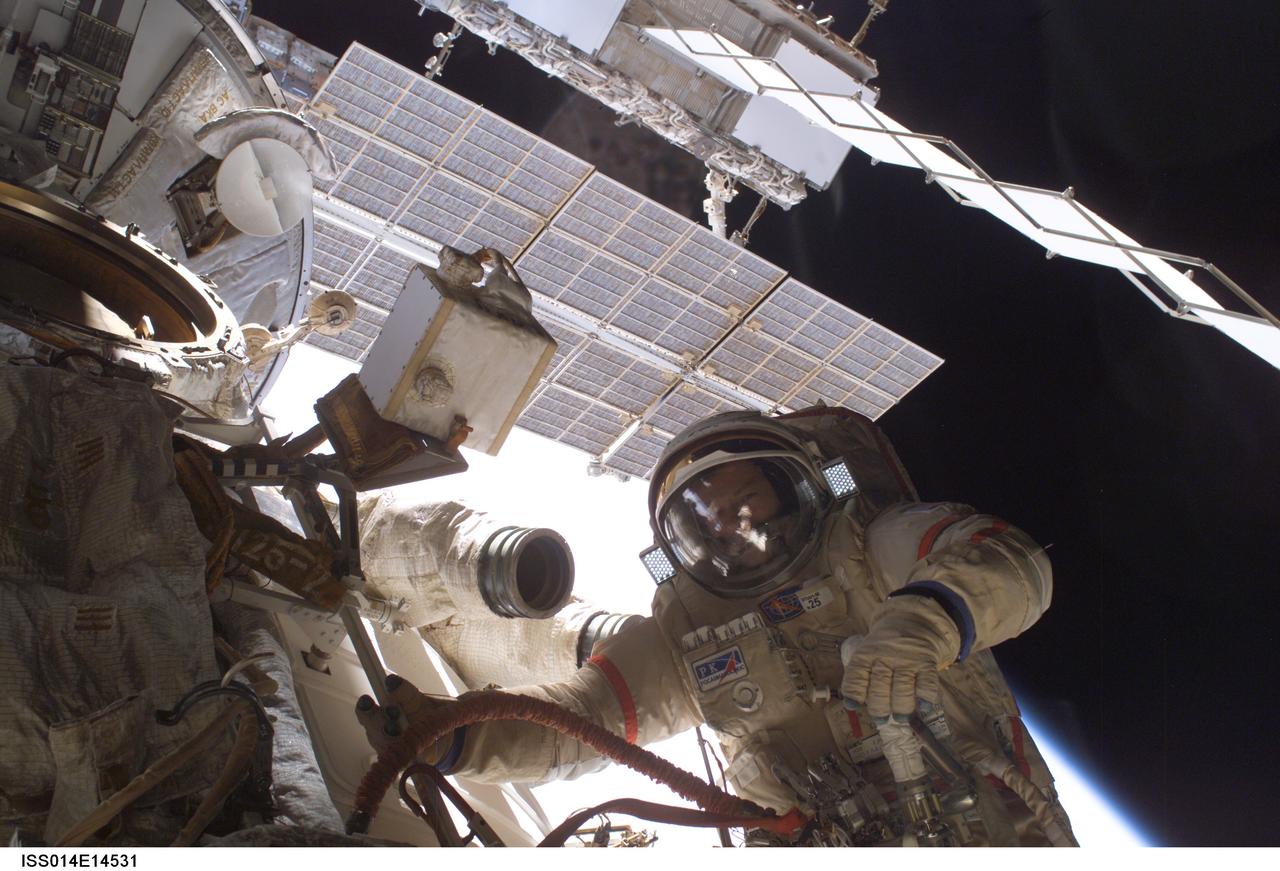
ISS014-E-14531 (22 Feb. 2007) --- Astronaut Michael E. Lopez-Alegria, Expedition 14 commander and NASA space station science officer, wearing a Russian Orlan spacesuit, participates in a session of extravehicular activity (EVA). Among other tasks, Lopez-Alegria and cosmonaut Mikhail Tyurin (out of frame), flight engineer representing Russia's Federal Space Agency, were able to retract a stuck Kurs antenna on the Progress vehicle docked to the International Space Station's Zvezda Service Module.
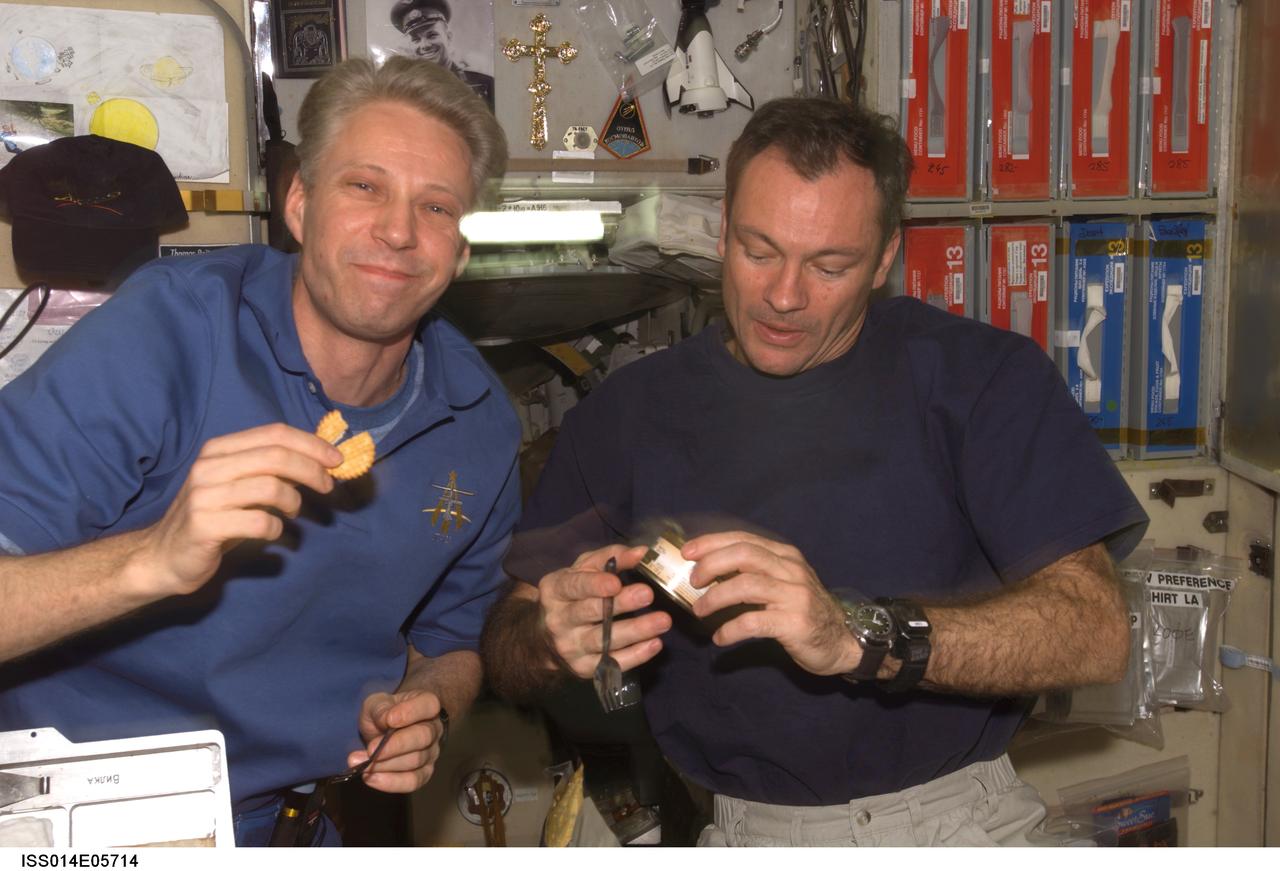
ISS014-E-05714 (15 Oct. 2006) --- Astronauts Michael E. Lopez-Alegria (right), Expedition 14 commander and NASA space station science officer, and Thomas Reiter, flight engineer representing the European Space Agency (ESA), share a meal in the Zvezda Service Module of the International Space Station.
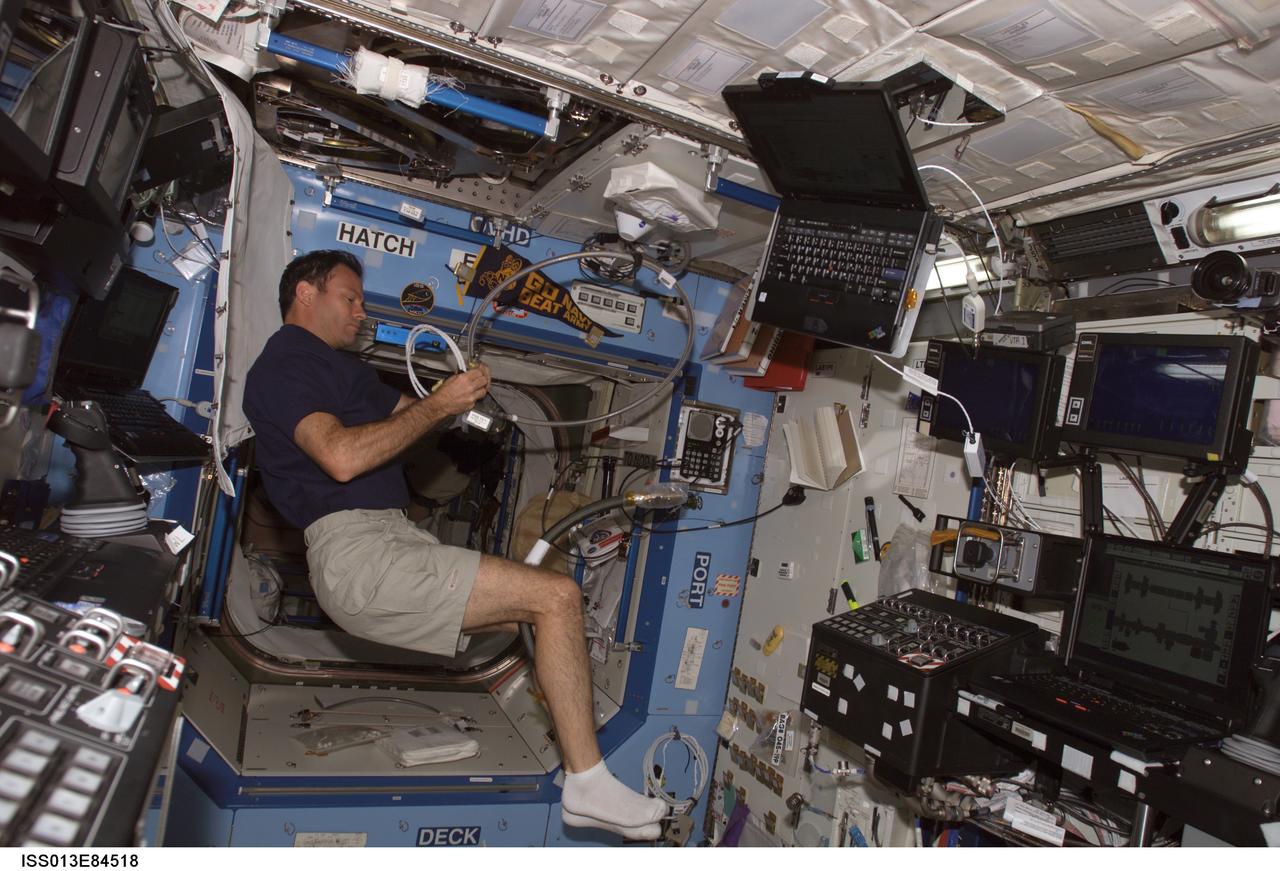
ISS013-E-84518 (27 Sept. 2006) --- Astronaut Michael E. Lopez-Alegria, Expedition 14 commander and NASA space station science officer, works with cables in the Destiny laboratory of the International Space Station.
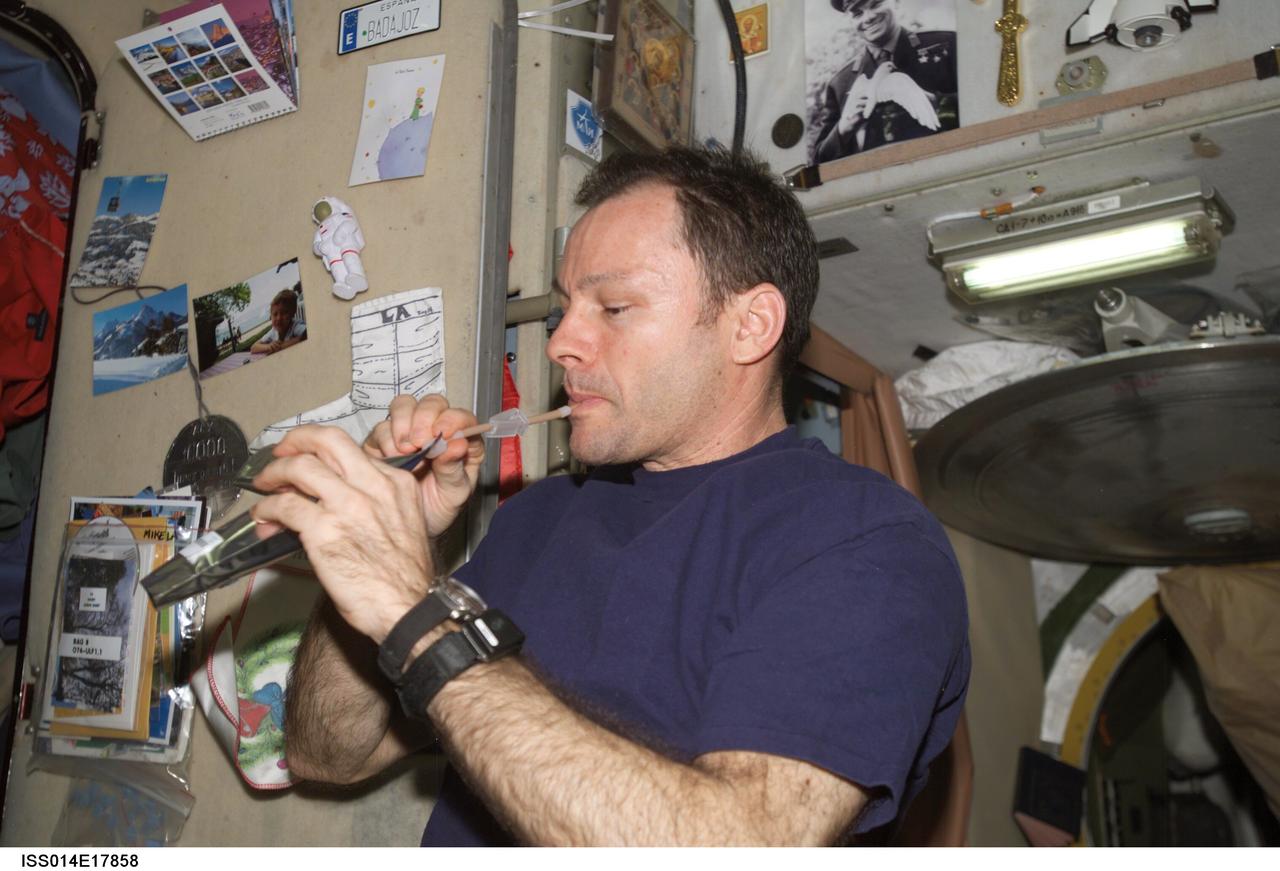
ISS014-E-17858 (11 March 2007) --- Astronaut Michael E. Lopez-Alegria, Expedition 14 commander and NASA space station science officer, drinks a beverage in the Zvezda Service Module of the International Space Station.
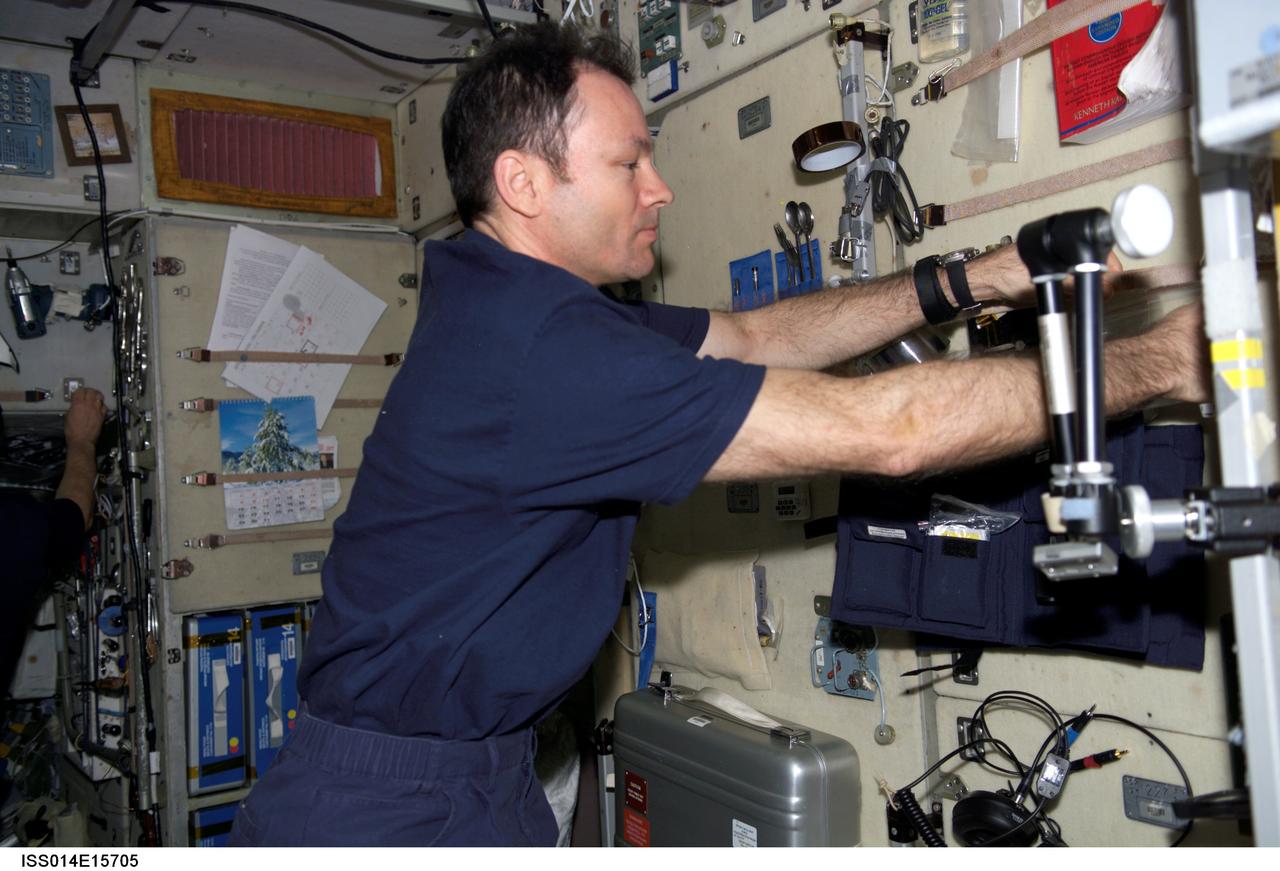
ISS014-E-15705 (1 March 2007) --- Astronaut Michael E. Lopez-Alegria, Expedition 14 commander and NASA space station science officer, works in the Zvezda Service Module of the International Space Station.
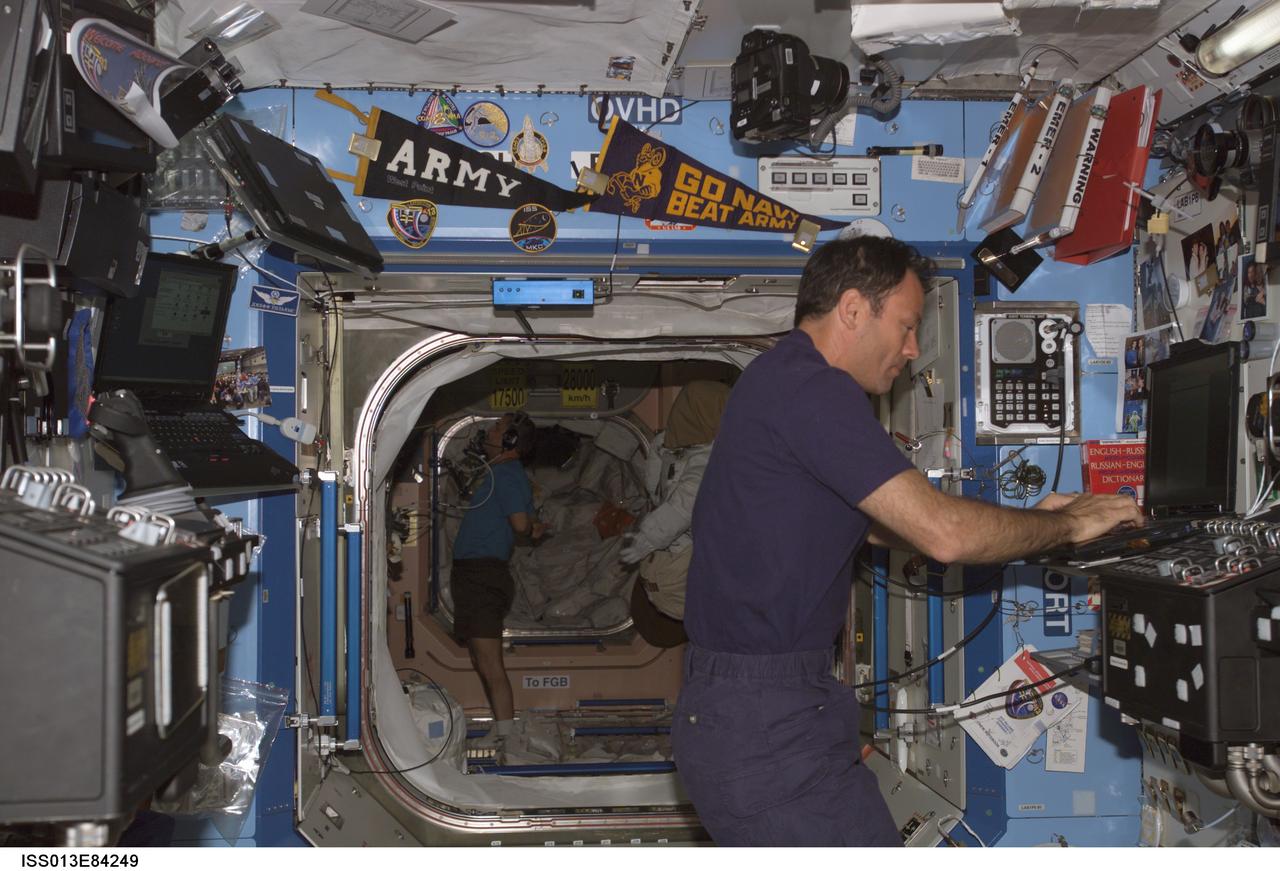
ISS013-E-84249 (23 Sept. 2006) --- Astronaut Michael E. Lopez-Alegria, Expedition 14 commander and NASA space station science officer, uses a computer in the Destiny laboratory of the International Space Station.
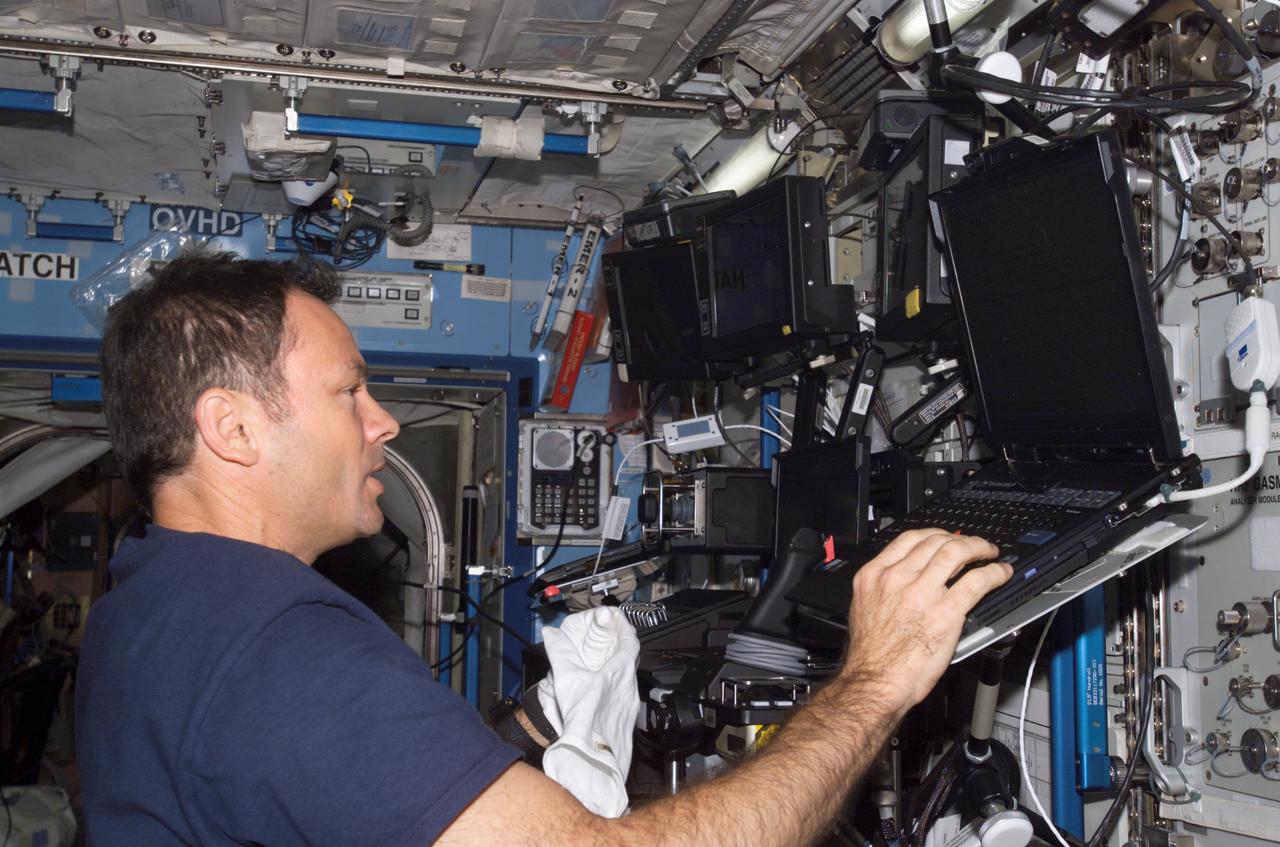
ISS014-E-05129 (3 Oct. 2006) --- Astronaut Michael E. Lopez-Alegria, Expedition 14 commander and NASA space station science officer, uses a computer in the Destiny laboratory of the International Space Station.
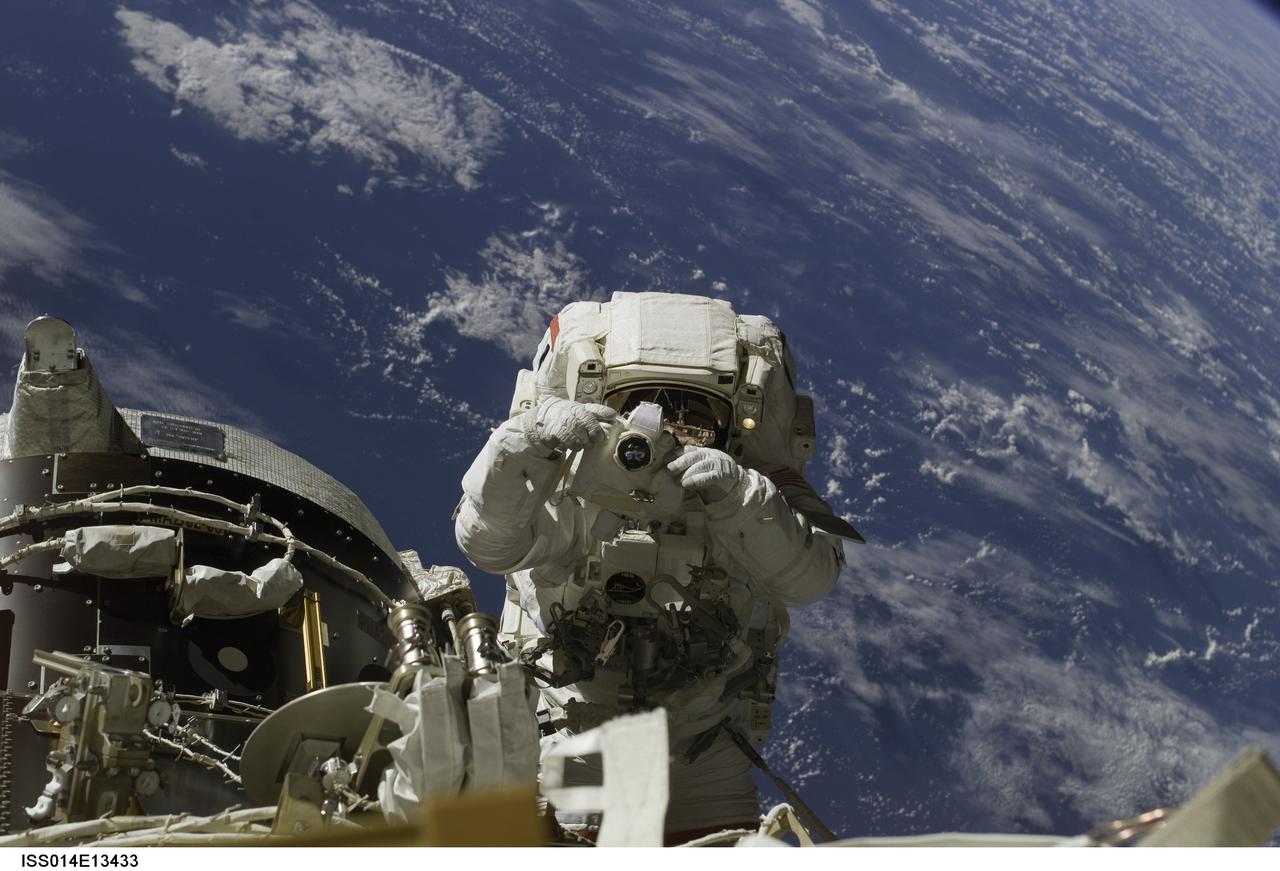
ISS014-E-13433 (8 Feb. 2007) --- Astronaut Michael E. Lopez-Alegria, Expedition 14 commander and NASA space station science officer, uses a digital still camera during the final of three sessions of extravehicular activity (EVA) in nine days, as construction continues on the International Space Station. During the 6-hour, 40-minute spacewalk, Lopez-Alegria and Sunita L. Williams (out of frame), flight engineer, completed tasks that will allow for the attachment of a cargo platform during the STS-118 mission this summer and relocation of the P6 truss during STS-120 later this year. A blue and white Earth provides the backdrop for the image.
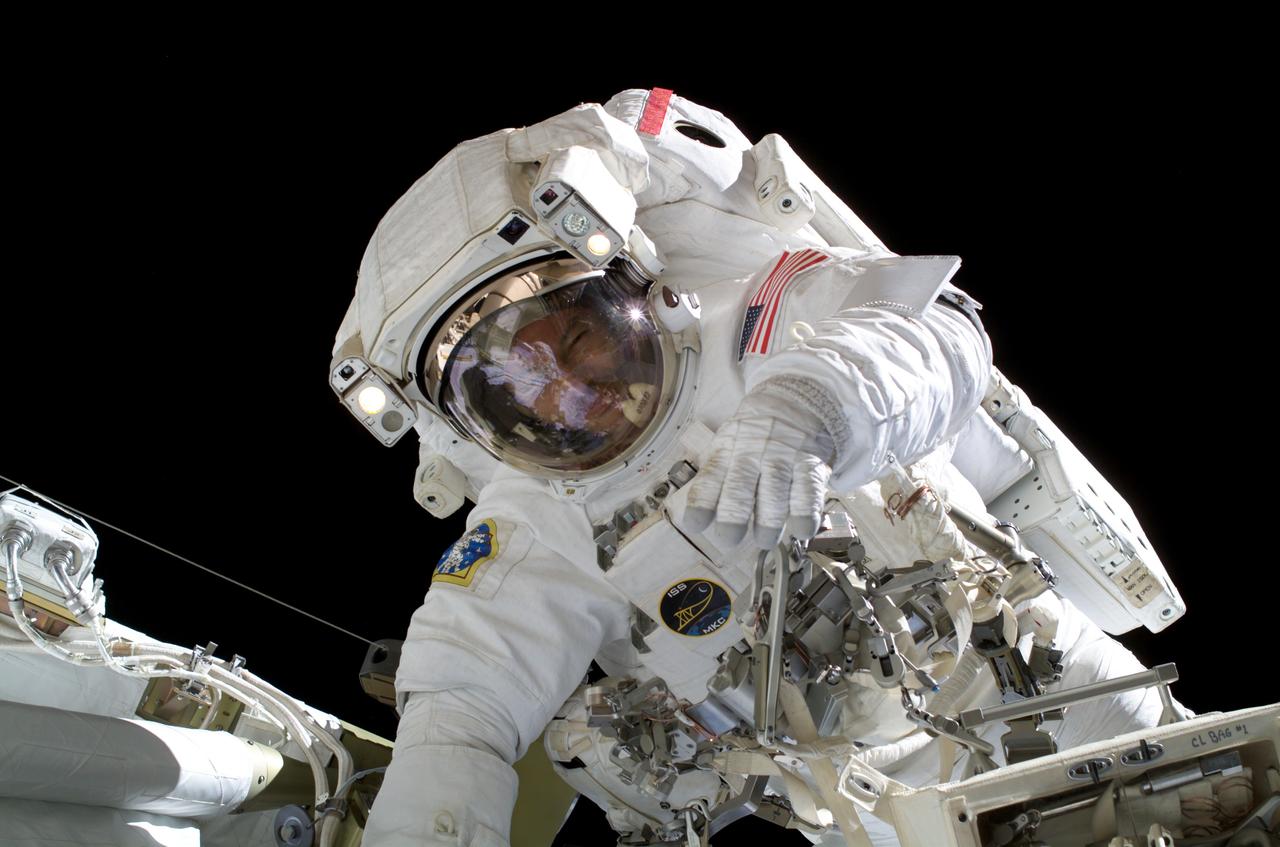
ISS014-E-13416 (8 Feb. 2007) --- Astronaut Michael E. Lopez-Alegria, Expedition 14 commander and NASA space station science officer, participates in the final of three sessions of extravehicular activity (EVA) in nine days, as construction continues on the International Space Station. During the 6-hour, 40-minute spacewalk, Lopez-Alegria and Sunita L. Williams (out of frame), flight engineer, completed tasks that will allow for the attachment of a cargo platform during the STS-118 mission this summer and relocation of the P6 truss during STS-120 later this year.
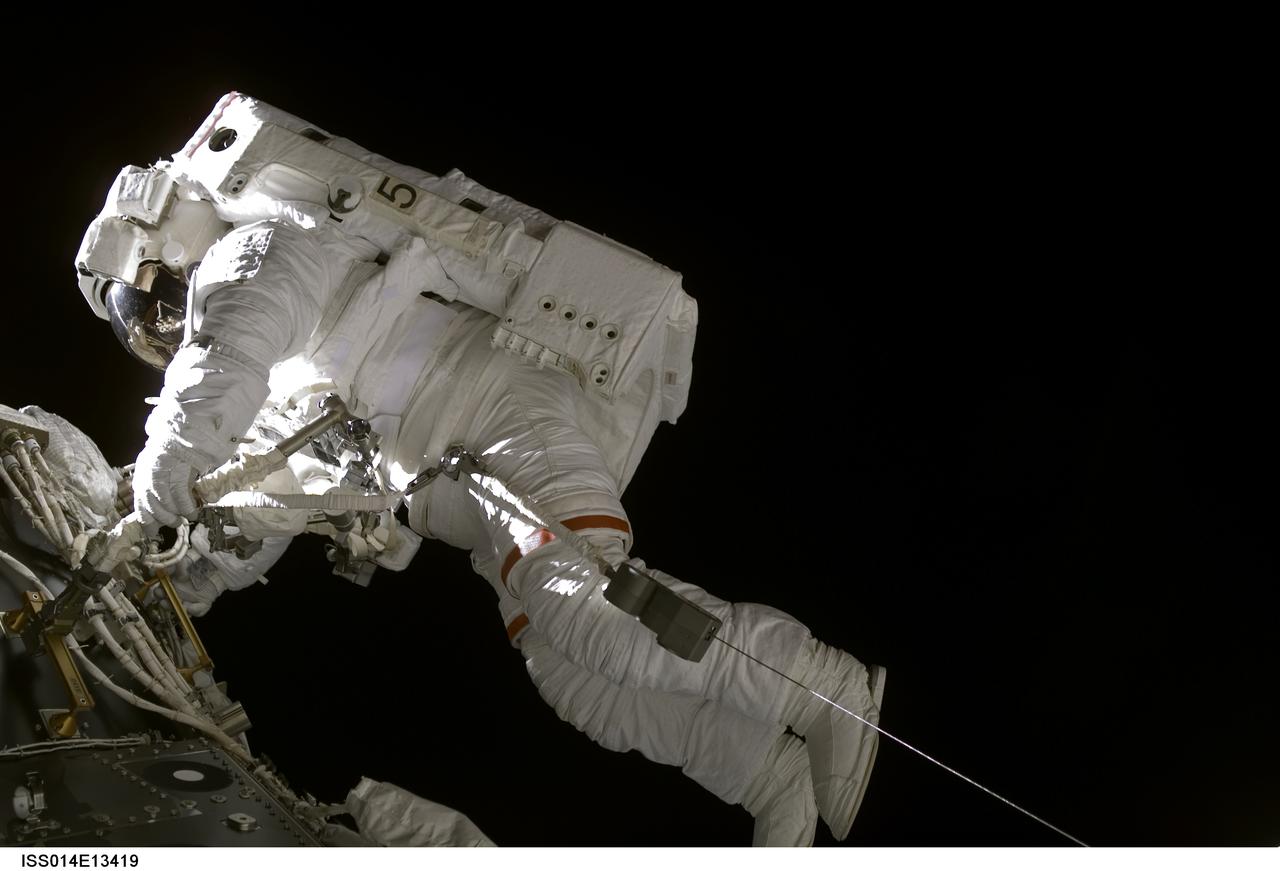
ISS014-E-13419 (8 Feb. 2007) --- Astronaut Michael E. Lopez-Alegria, Expedition 14 commander and NASA space station science officer, participates in the final of three sessions of extravehicular activity (EVA) in nine days, as construction continues on the International Space Station. During the 6-hour, 40-minute spacewalk, Lopez-Alegria and Sunita L. Williams (out of frame), flight engineer, completed tasks that will allow for the attachment of a cargo platform during the STS-118 mission this summer and relocation of the P6 truss during STS-120 later this year.
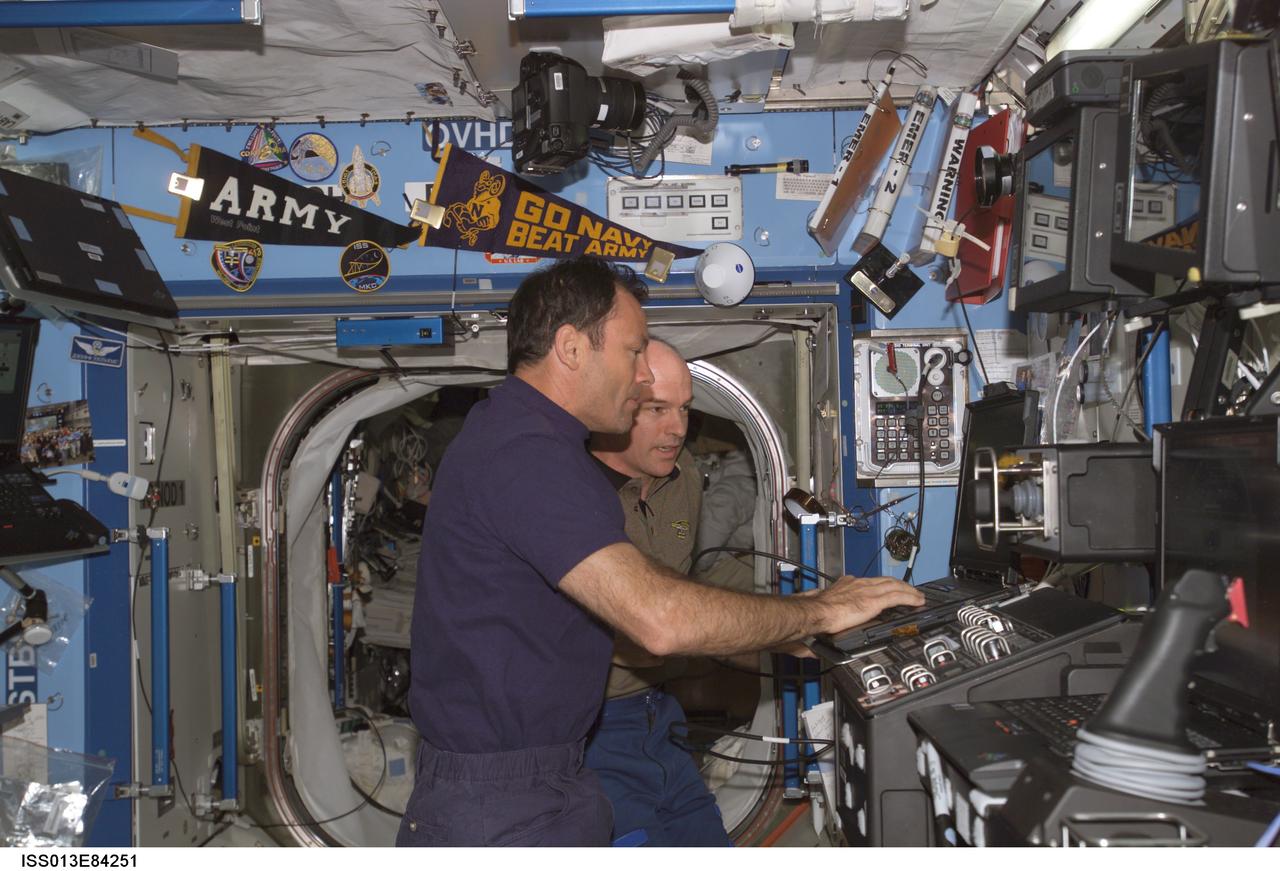
ISS013-E-84251 (23 Sept. 2006) --- Astronaut Michael E. Lopez-Alegria (foreground), Expedition 14 commander and NASA space station science officer, participates in a familiarization session with the Mobile Service System (MSS) and hands-on experience with the Canadarm2, or Space Station Remote Manipulator System (SSRMS) in the Destiny laboratory of the International Space Station. Astronaut Jeffrey N. Williams, Expedition 13 NASA space station science officer and flight engineer, assisted Lopez-Alegria.
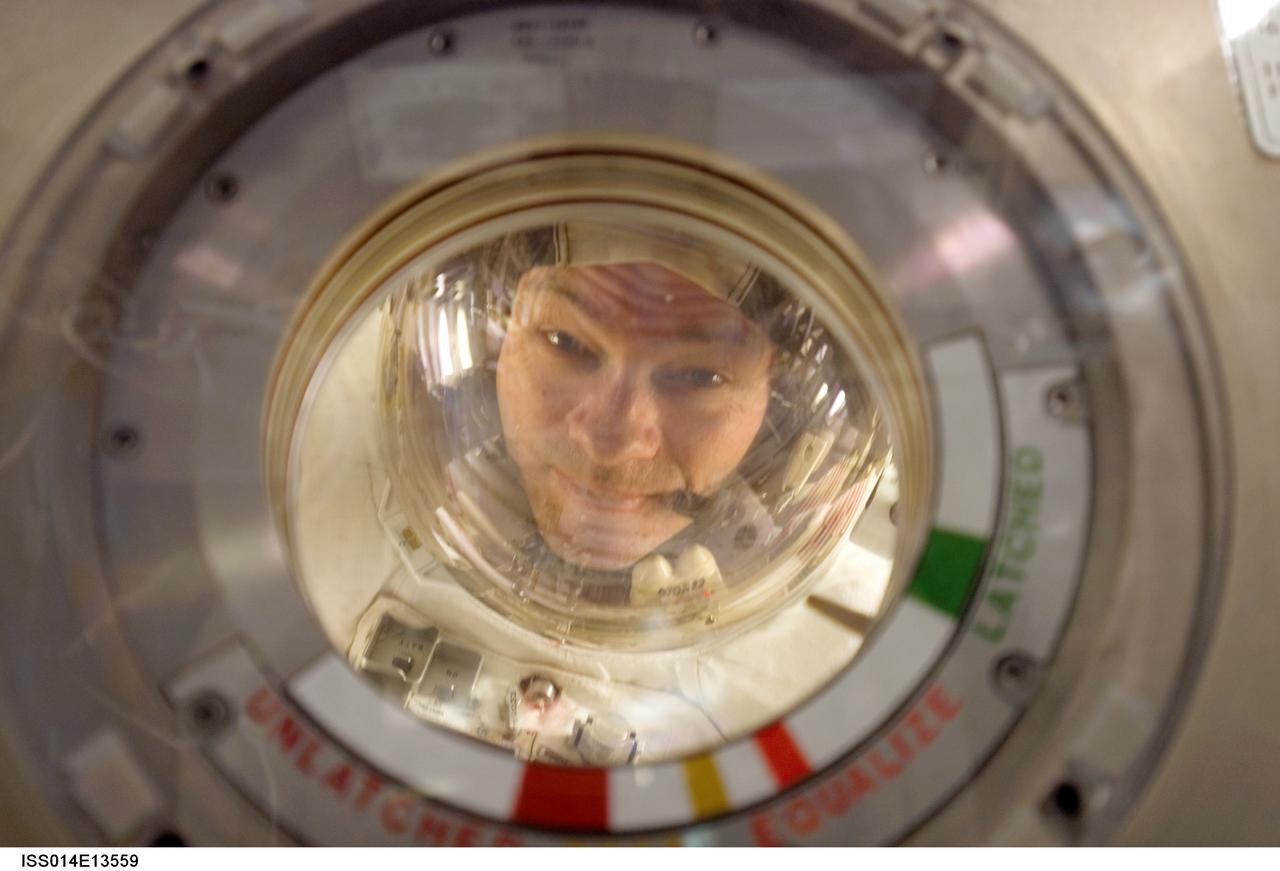
ISS014-E-13559 (8 Feb. 2007) --- Astronaut Michael E. Lopez-Alegria, Expedition 14 commander and NASA space station science officer, attired in his Extravehicular Mobility Unit (EMU) spacesuit, is photographed through a window of the Quest Airlock on the interior of the International Space Station. Astronaut Sunita L. Williams (out of frame), flight engineer, and Lopez-Alegria were about to begin the final of three sessions of extravehicular activity (EVA) in nine days, as construction continues on the International Space Station.
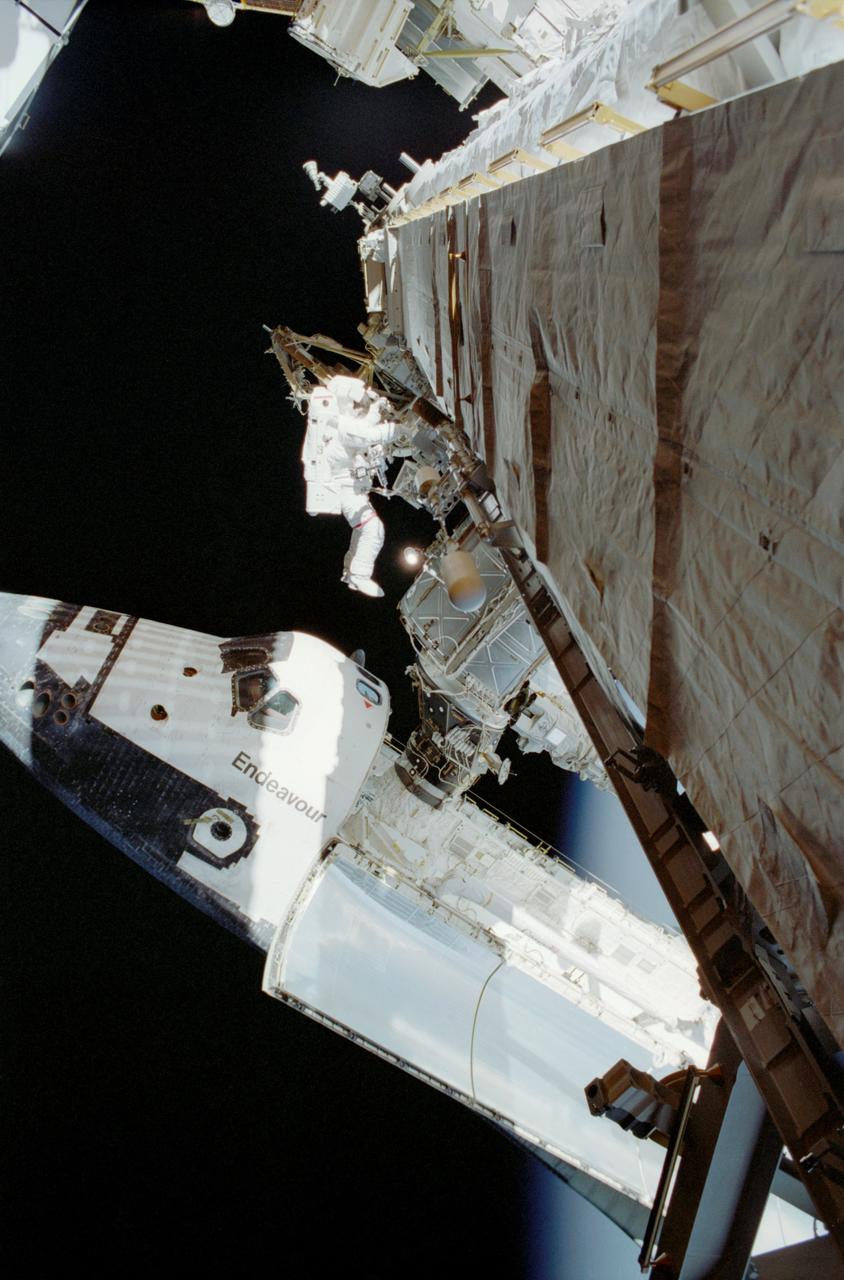
STS113-308-002 (28 November 2002) --- Astronaut Michael E. Lopez-Alegria, STS-113 mission specialist, participates in the mission’s second scheduled spacewalk to perform work on the International Space Station (ISS). The Space Shuttle Endeavour, docked to the Pressurized Mating Adapter 2 (PMA-2), is visible below Lopez-Alegria.
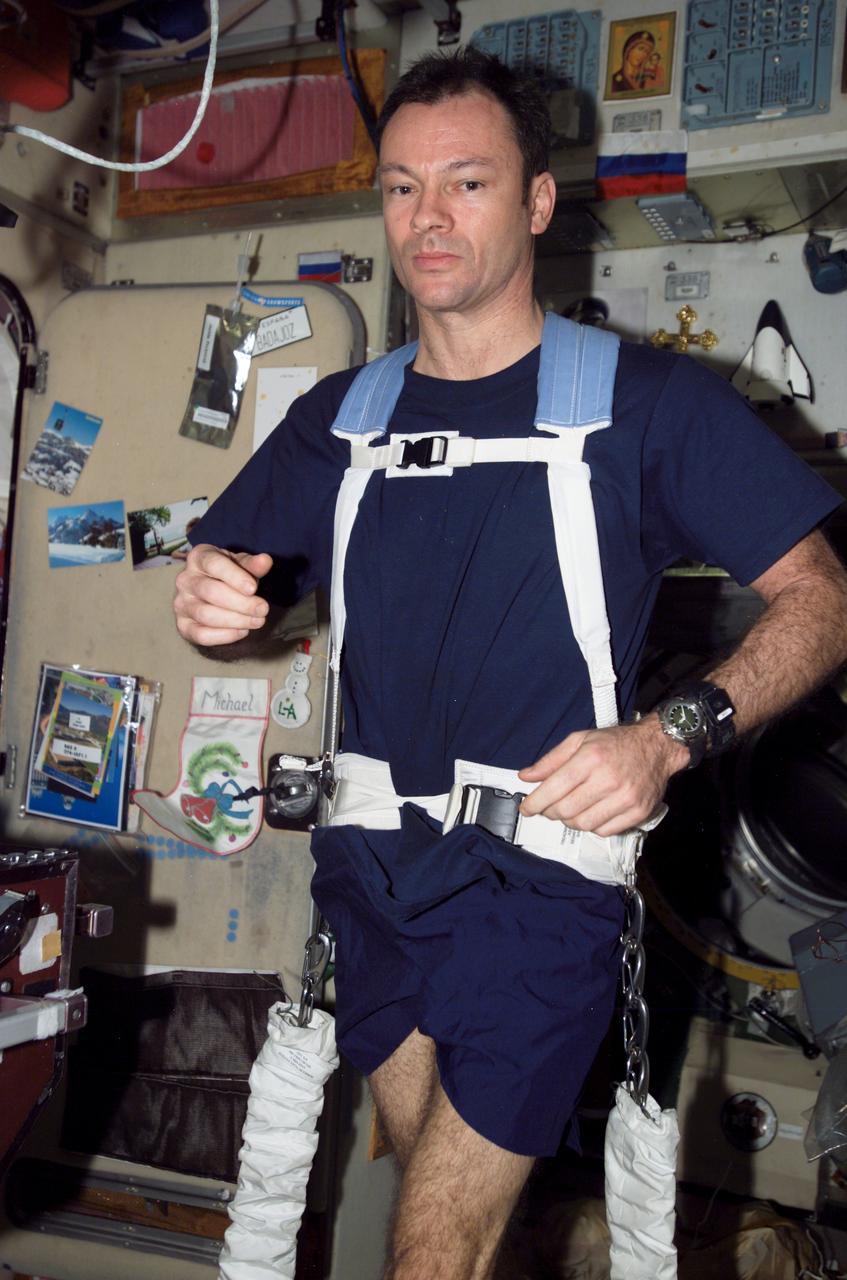
ISS014-E-12154 (15 Jan. 2007) --- Astronaut Michael E. Lopez-Alegria, Expedition 14 commander and NASA space station science officer, equipped with a bungee harness, exercises on the Treadmill Vibration Isolation System (TVIS) in the Zvezda Service Module of the International Space Station.
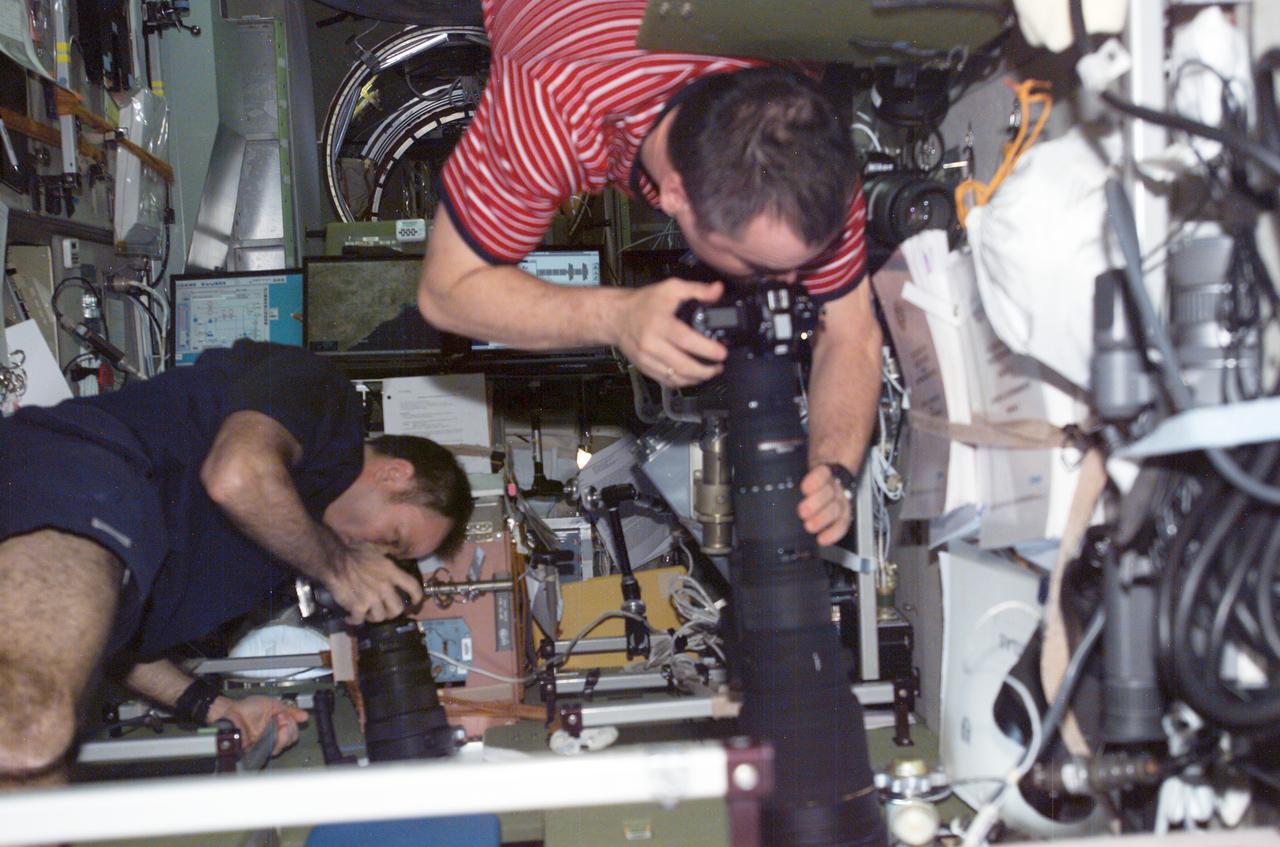
ISS014-E-11781 (12 Jan. 2007) --- Astronaut Michael E. Lopez-Alegria (left), Expedition 14 commander and NASA space station science officer, and cosmonaut Mikhail Tyurin, flight engineer representing Russia's Federal Space Agency, use still cameras at windows in the Zvezda Service Module of the International Space Station.
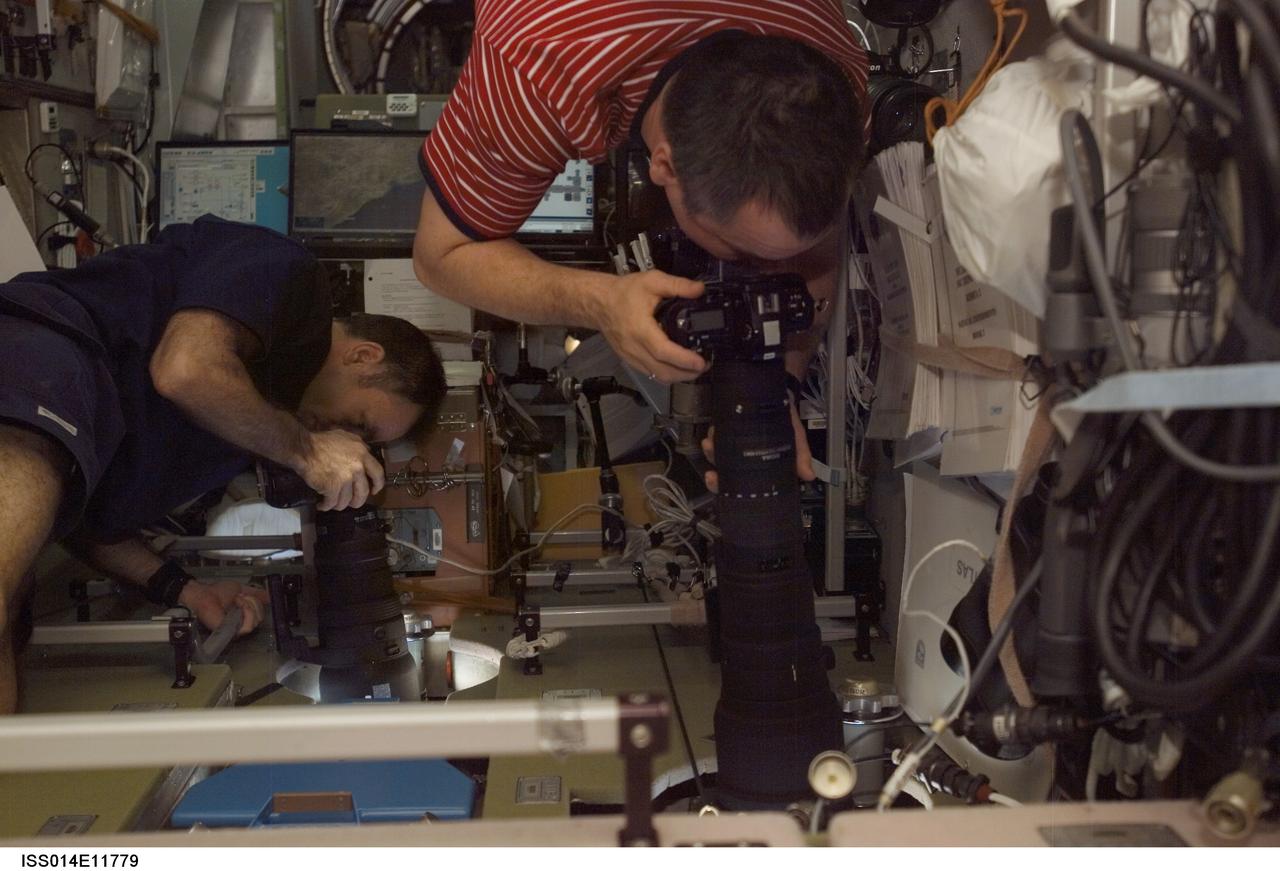
ISS014-E-11779 (12 Jan. 2007) --- Astronaut Michael E. Lopez-Alegria (left), Expedition 14 commander and NASA space station science officer, and cosmonaut Mikhail Tyurin, flight engineer representing Russia's Federal Space Agency, use still cameras at windows in the Zvezda Service Module of the International Space Station.
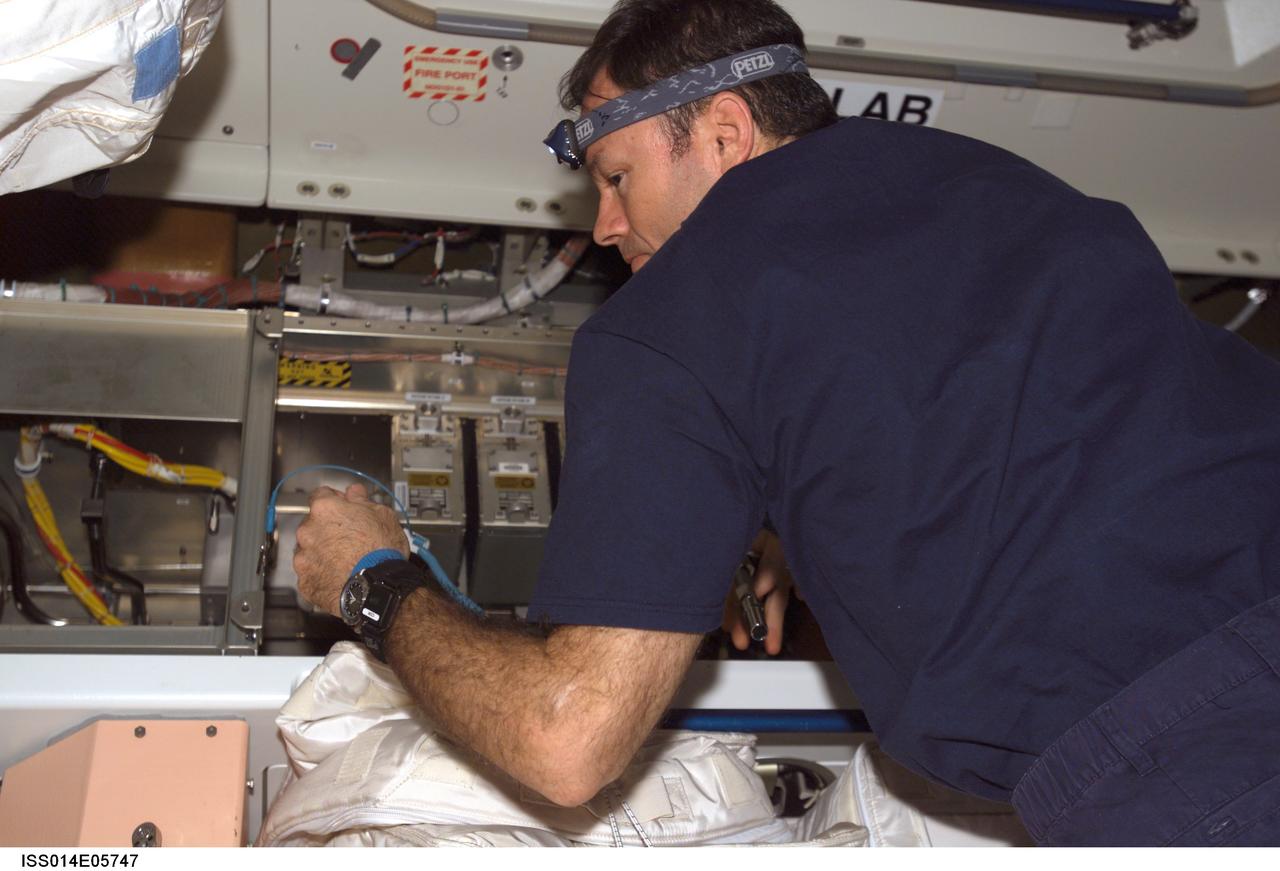
ISS014-E-05747 (16 Oct. 2006) --- Astronaut Michael E. Lopez-Alegria, Expedition 14 commander and NASA space station science officer, works with the remote power control modules (RPCM) in the Unity node of the International Space Station.
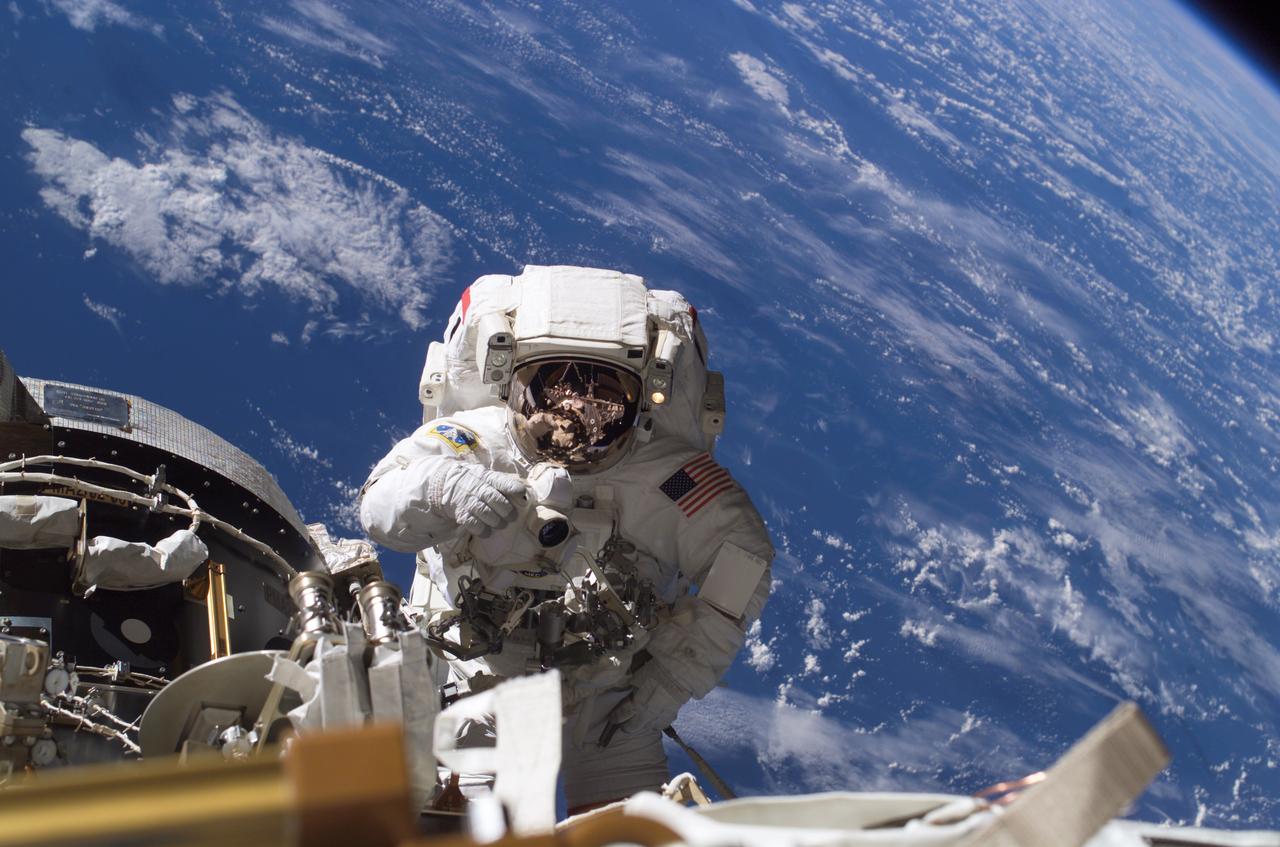
ISS014-E-13438 (8 Feb. 2007) --- Astronaut Michael A. Lopez-Alegria, Expedition 14 commander and NASA ISS science officer, pauses near the front of the International Space Station during one of several Expedition 14 spacewalks--the third in nine days--to work on the orbital outpost.
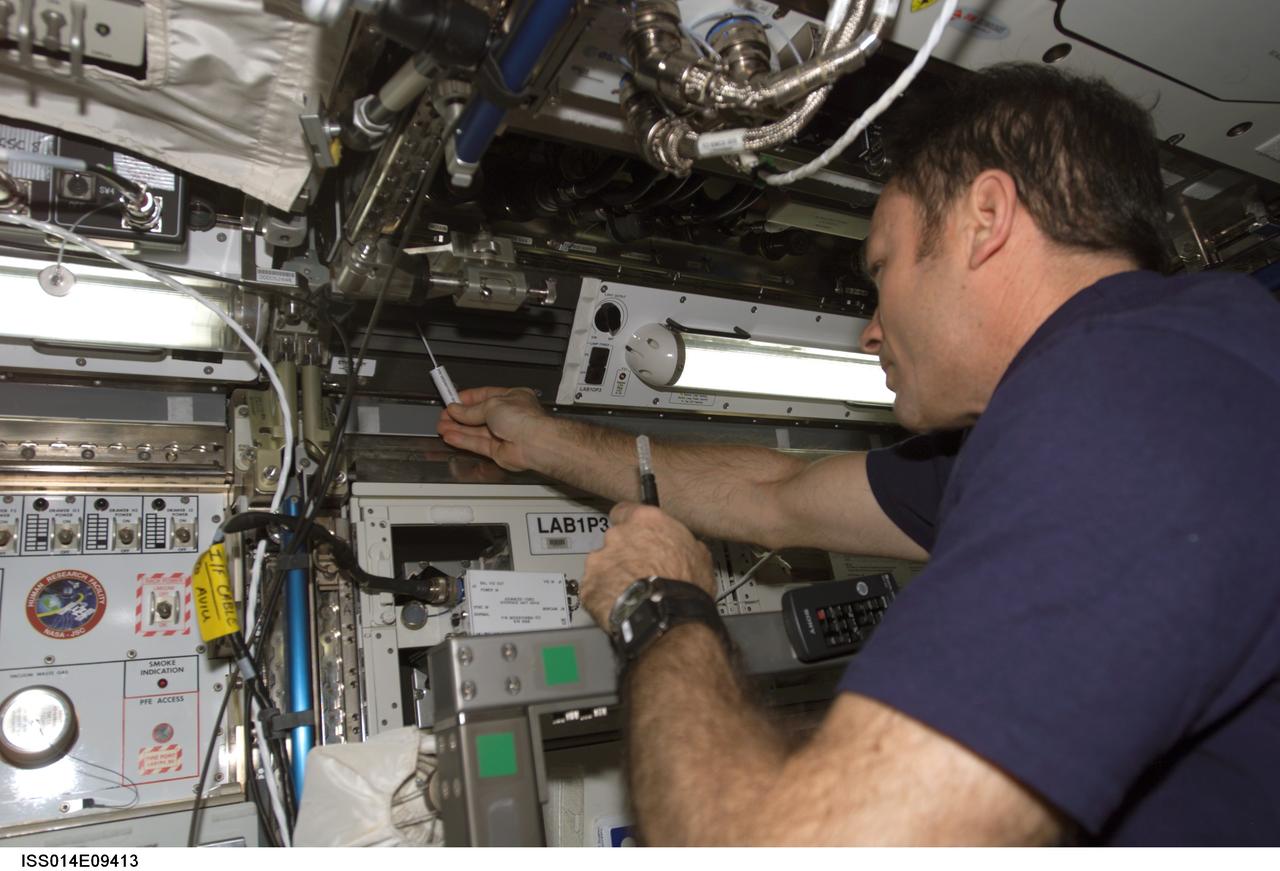
ISS014-E-09413 (8 Dec. 2006) --- Astronaut Michael E. Lopez-Alegria, Expedition 14 commander and NASA space station science officer, conducts a Surface, Water and Air Biocharacterization (SWAB) air sampling in the Destiny laboratory of the International Space Station.
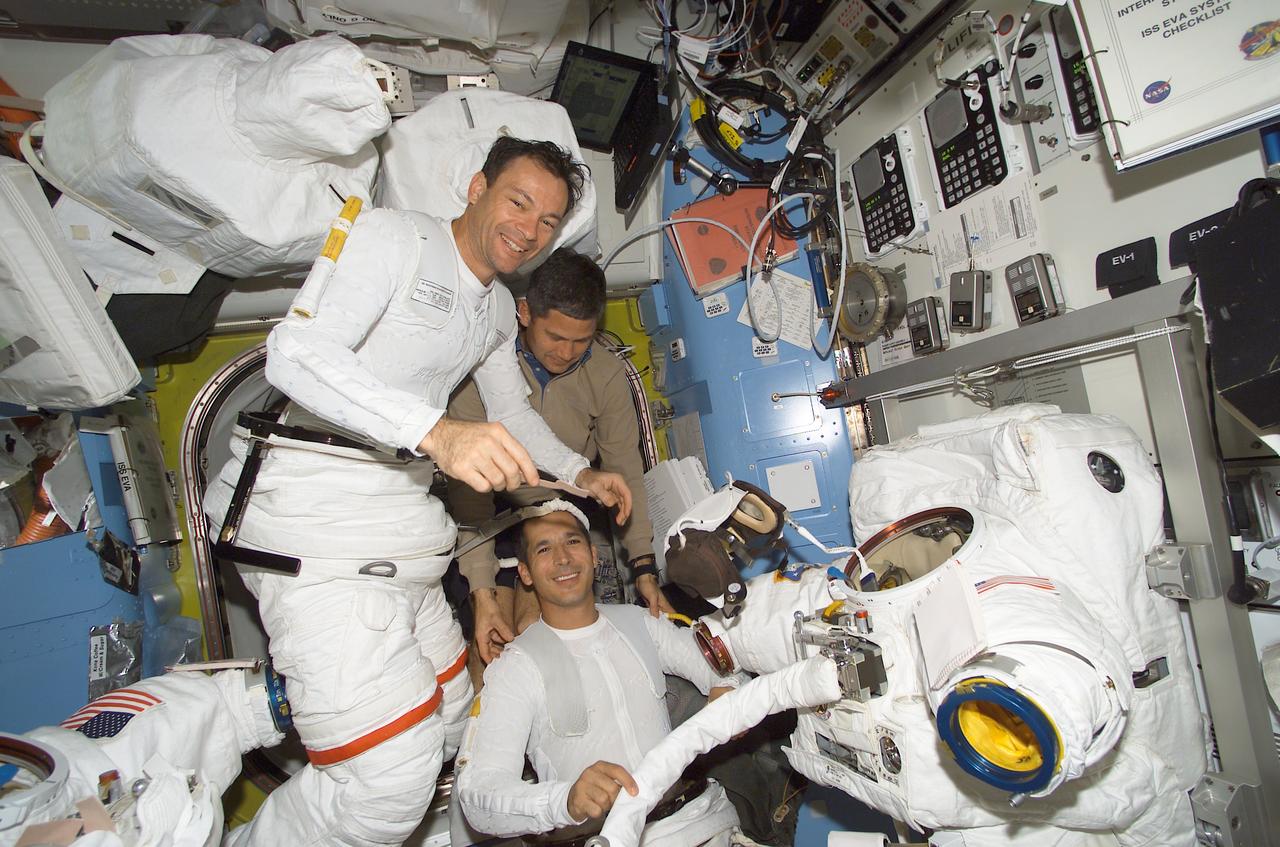
STS113-E-05290 (30 November 2002) --- Astronauts Michael E. Lopez-Alegria (left) and John B. Herrington (bottom), both STS-113 mission specialists, assisted by astronaut Paul S. Lockhart, STS-113 pilot, don their Extravehicular Mobility Unit (EMU) spacesuits in the Quest Airlock on the International Space Station (ISS). Moments later, Lopez-Alegria and Herrington went on to begin the third and final scheduled spacewalks to perform work on the International Space Station (ISS).
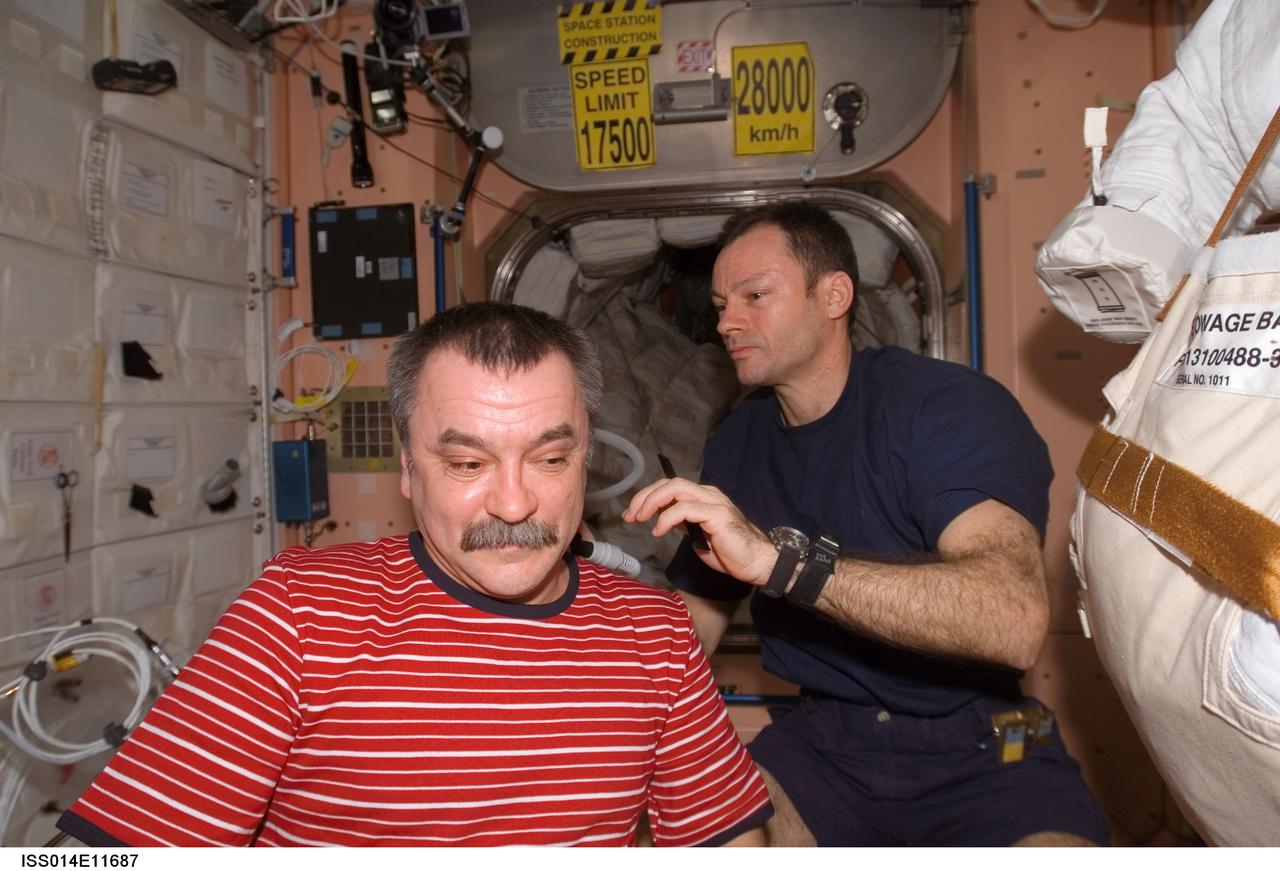
ISS014-E-11687 (11 Jan. 2007) --- Astronaut Michael E. Lopez-Alegria, Expedition 14 commander and NASA space station science officer, trims cosmonaut Mikhail Tyurin's hair in the Unity node of the International Space Station. Lopez-Alegria used hair clippers fashioned with a vacuum device to garner freshly cut hair. Tyurin, flight engineer, represents Russia's Federal Space Agency.
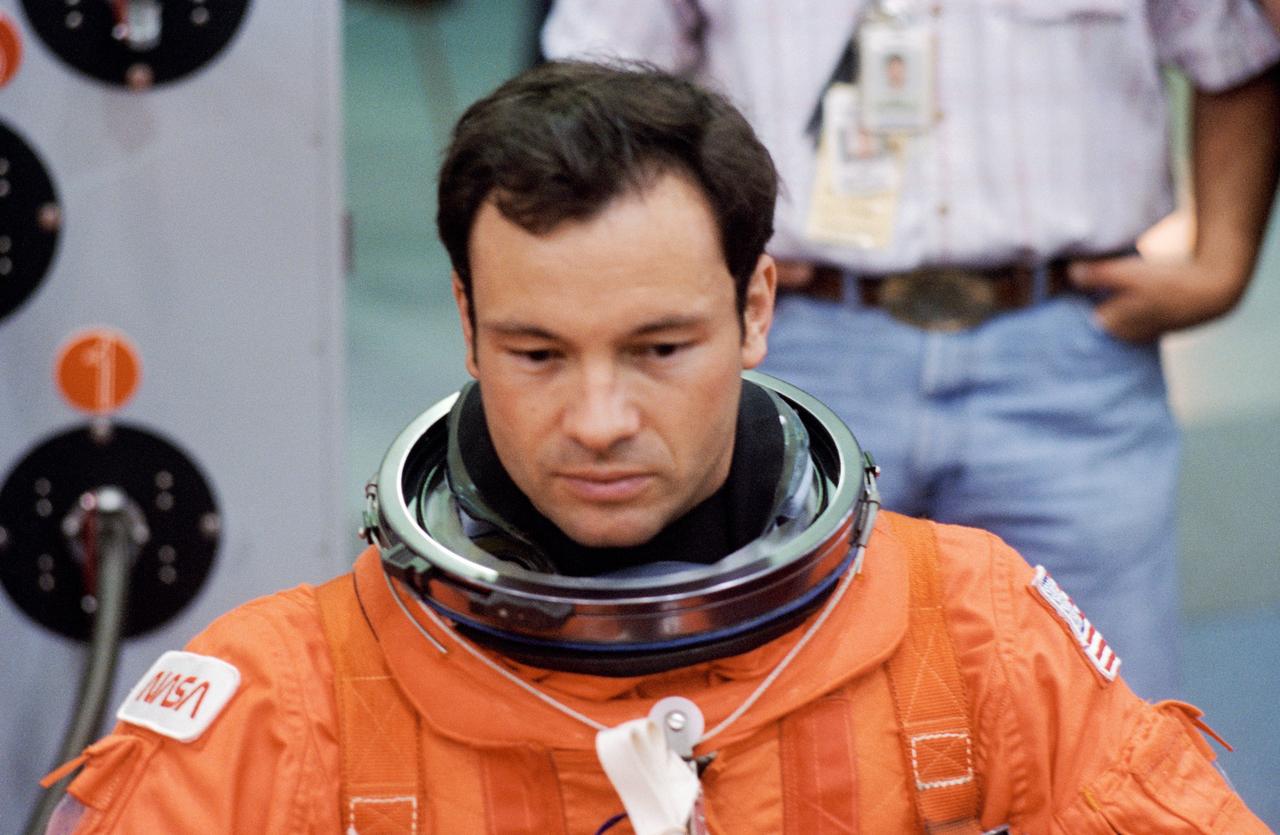
S95-09131 (27 Apr. 1995) --- Astronaut Michael E. Lopez-Alegria, mission specialist, watches as one his seven STS-73 crew mates (out of frame) rehearses action necessary in the case of an emergency with the Space Shuttle. The crew mate uses (and Lopez-Alegria later used) a Sky-genie device to rappel from the top of a ?troubled Shuttle? during emergency egress training exercises in the Systems Integration Facility at the Johnson Space Center (JSC).
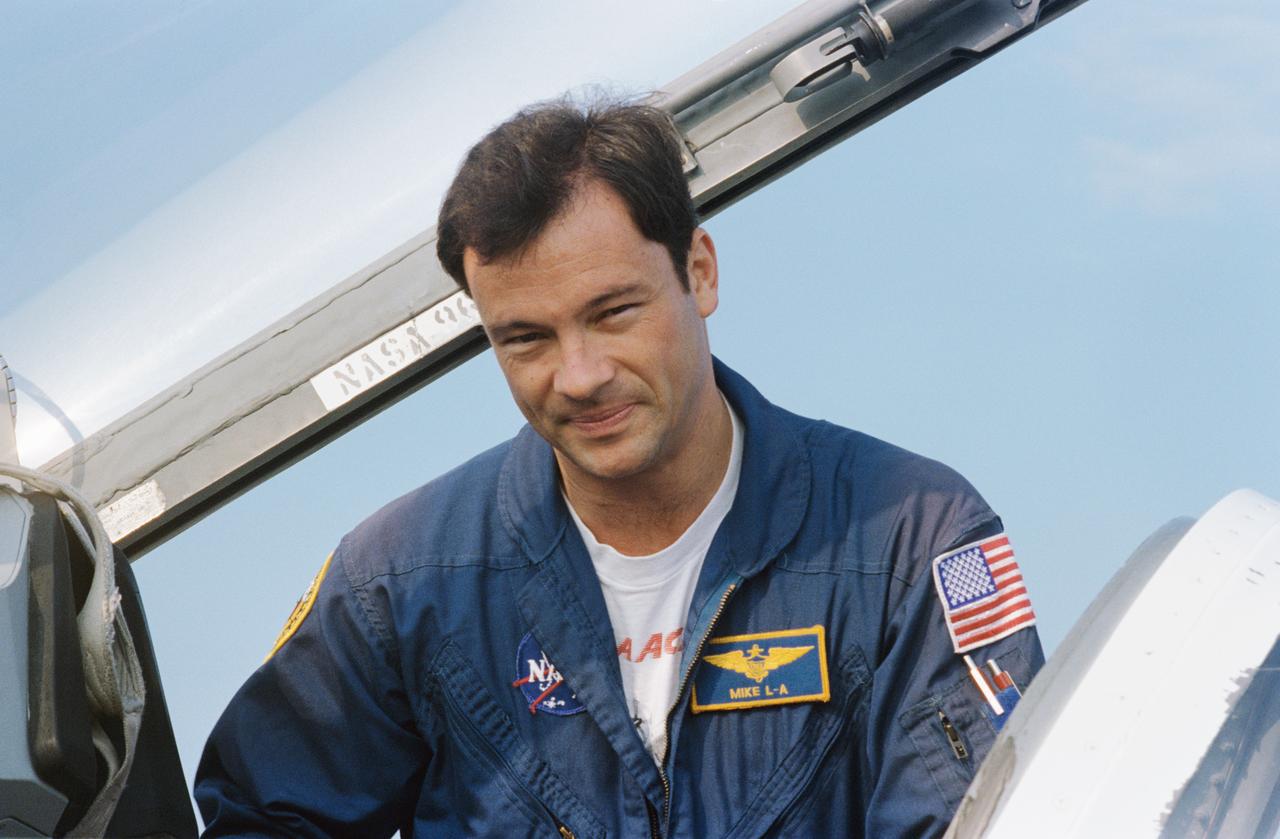
S95-17154 (24 Aug. 1995) --- Astronaut Michael E. Lopez-Alegria, mission specialist, prepares to take a familiarization flight in the rear station of a T-38 jet trainer aircraft, based at Ellington Field, near the Johnson Space Center (JSC). Lopez-Alegria was named last year as one of seven crew members for the U.S. Microgravity Laboratory (USML-2) mission.
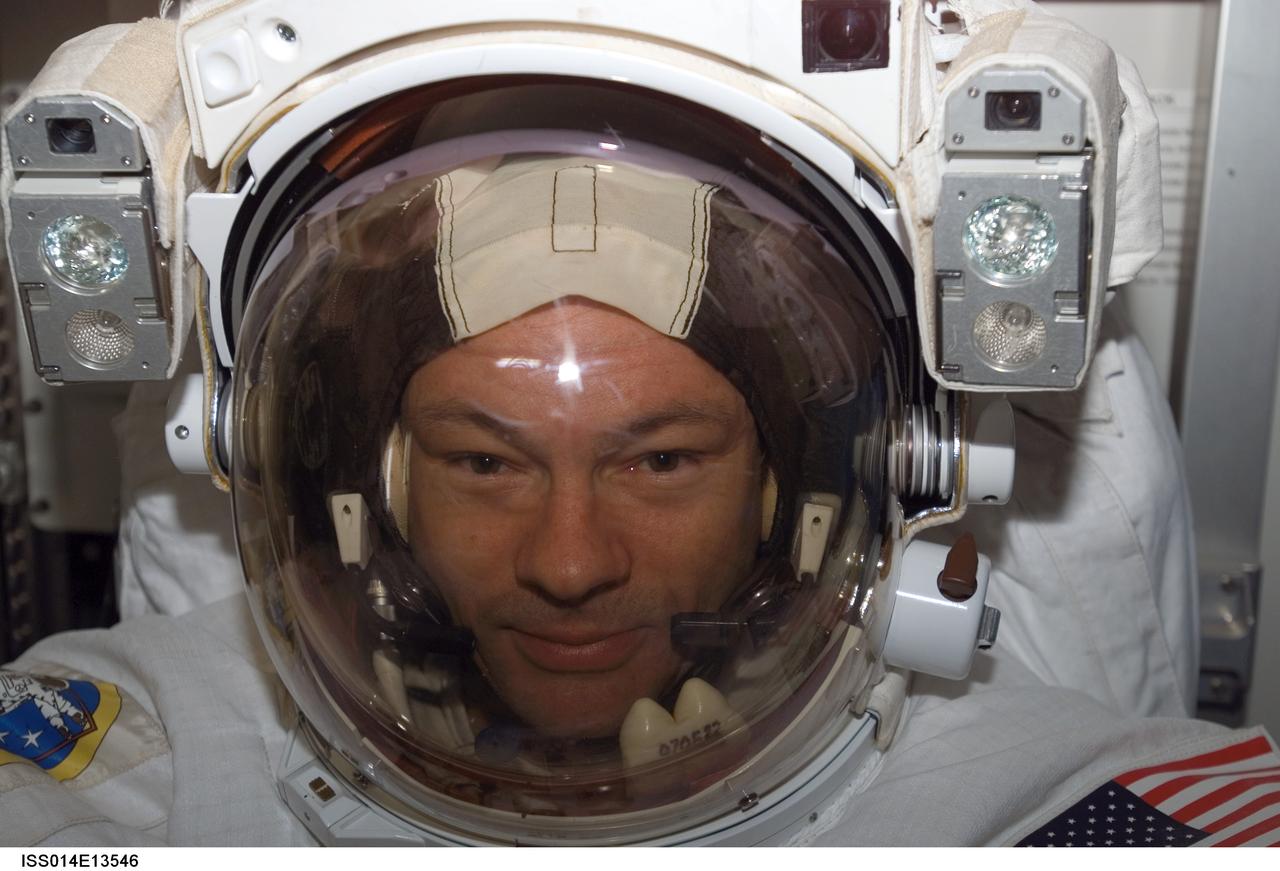
ISS014-E-13546 (8 Feb. 2007) --- Astronaut Michael E. Lopez-Alegria, Expedition 14 commander and NASA space station science officer, attired in his Extravehicular Mobility Unit (EMU) spacesuit, awaits the start of the third session of extravehicular activity (EVA) in nine days in the Quest Airlock of the International Space Station.
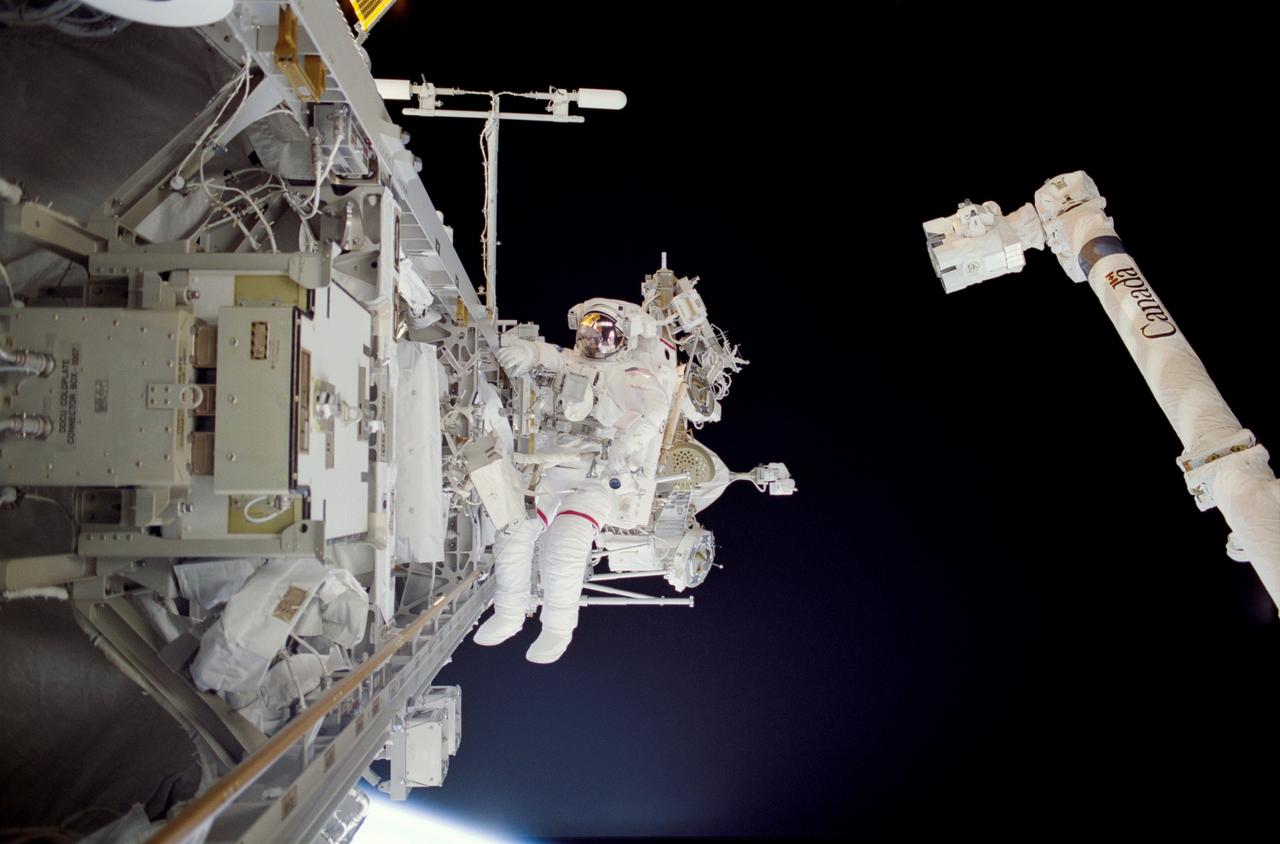
STS113-307-009 (30 November 2002) --- Astronaut Michael E. Lopez-Alegria, STS-113 mission specialist, participates in the mission’s third spacewalk. The International Space Station’s (ISS) Canadarm2 is visible in right frame.
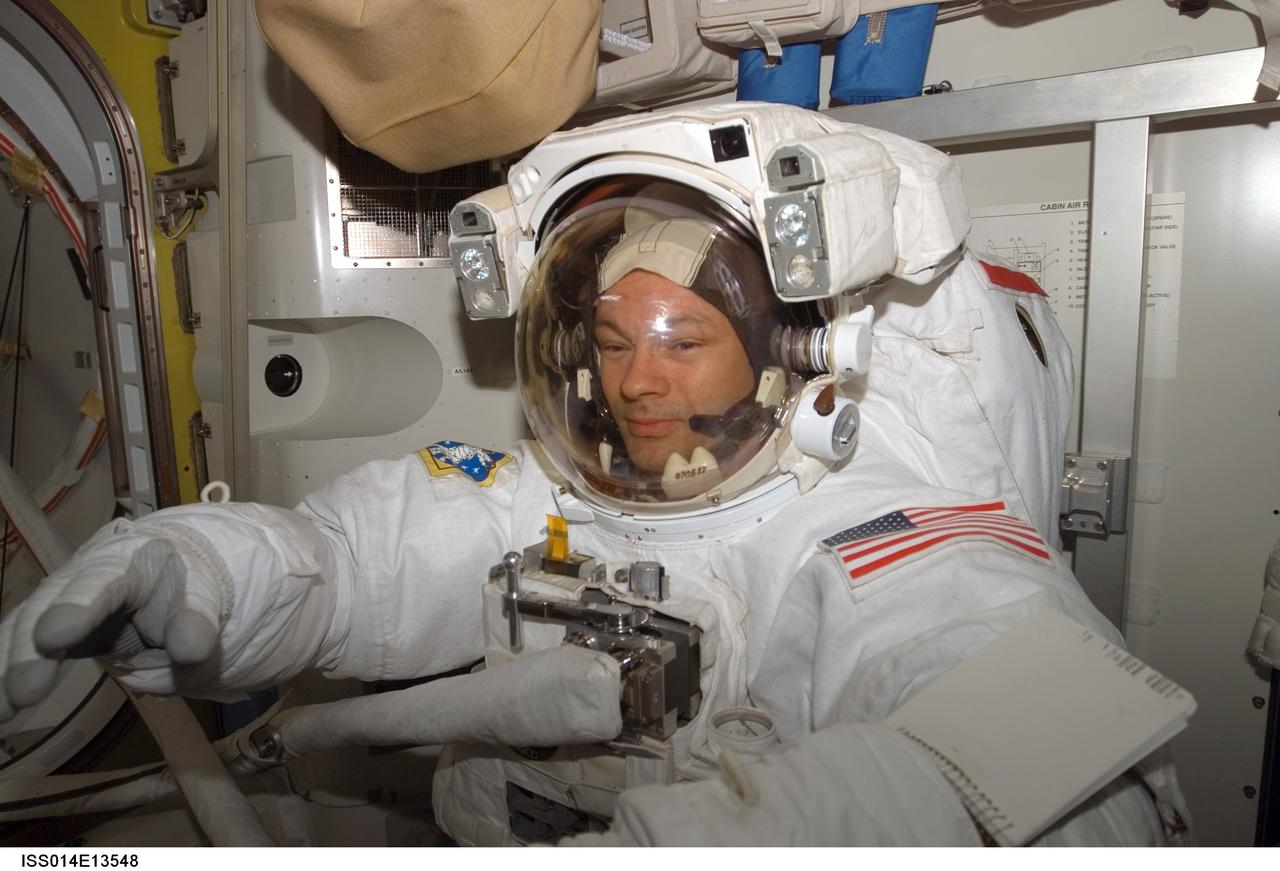
ISS014-E-13548 (8 Feb. 2007) --- Astronaut Michael E. Lopez-Alegria, Expedition 14 commander and NASA space station science officer, attired in his Extravehicular Mobility Unit (EMU) spacesuit, awaits the start of the third session of extravehicular activity (EVA) in nine days in the Quest Airlock of the International Space Station.
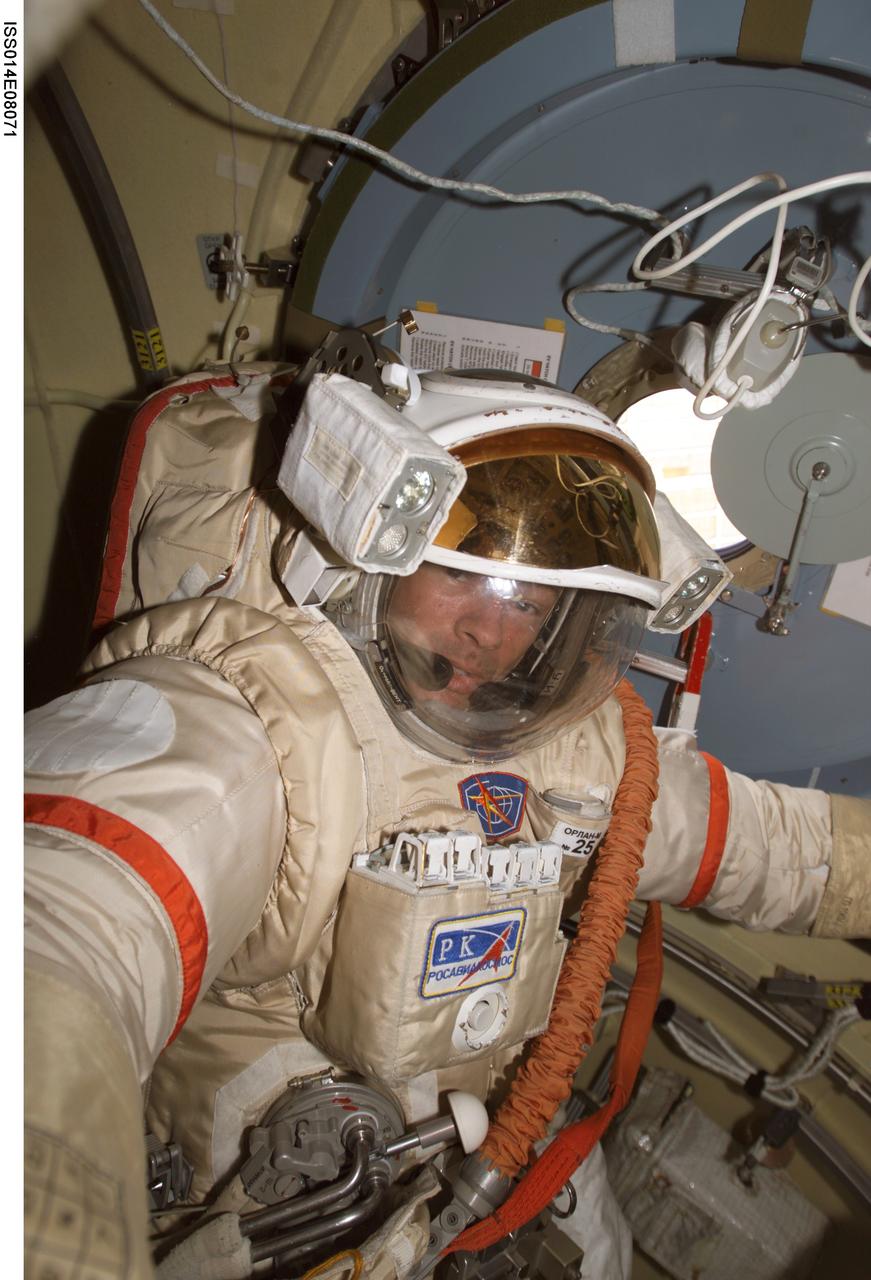
ISS014-E-08071 (17 Nov. 2006) --- Astronaut Michael E. Lopez-Alegria, Expedition 14 commander, participates in an Russian Orlan spacesuit translation exercise in the Pirs Docking Compartment of the International Space Station as the crewmembers prepare for their spacewalk scheduled for Nov. 22.
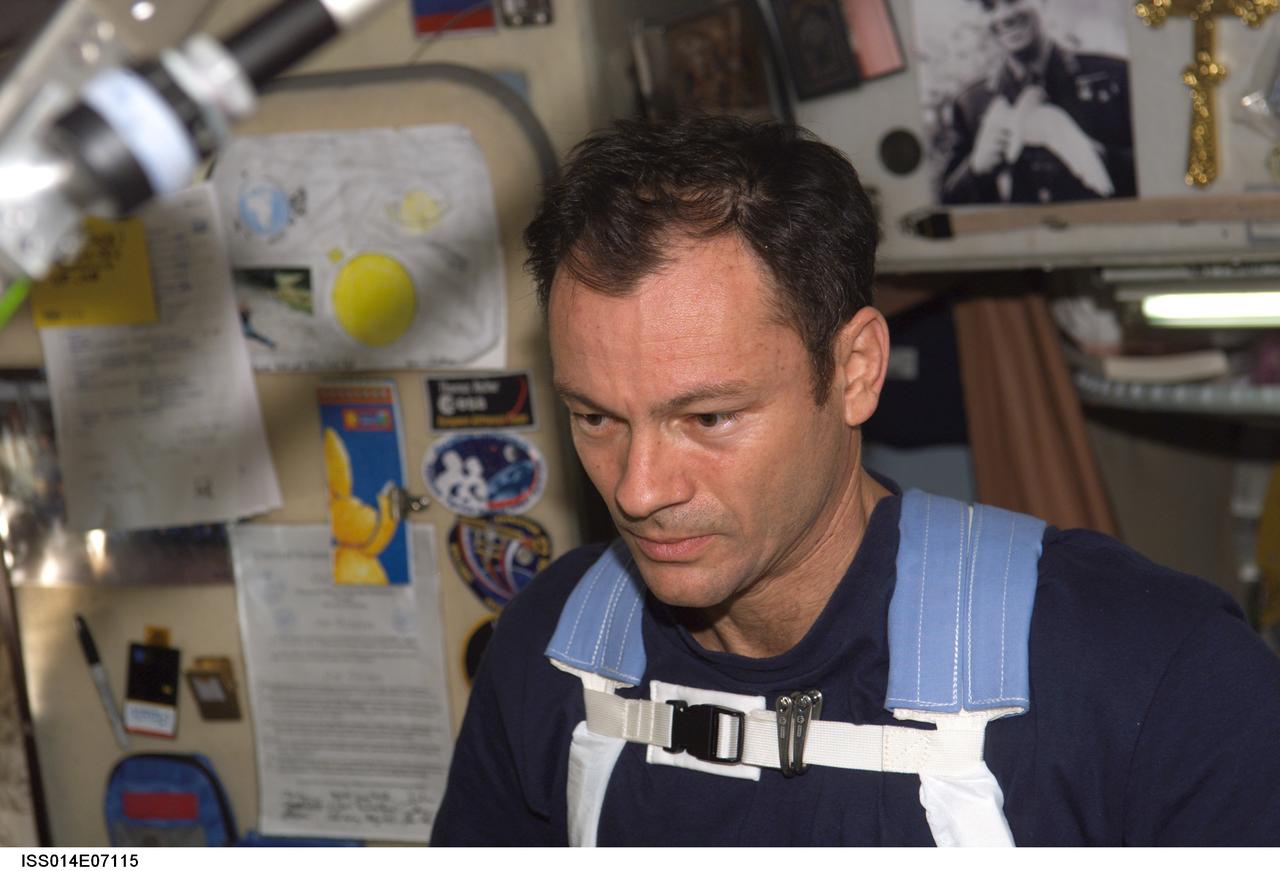
ISS014-E-07115 (2 Nov. 2006) --- Astronaut Michael E. Lopez-Alegria, Expedition 14 commander and NASA space station science officer, equipped with a bungee harness, exercises on the Treadmill Vibration Isolation System (TVIS) in the Zvezda Service Module of the International Space Station. In this close-up view, the TVIS is out of frame.
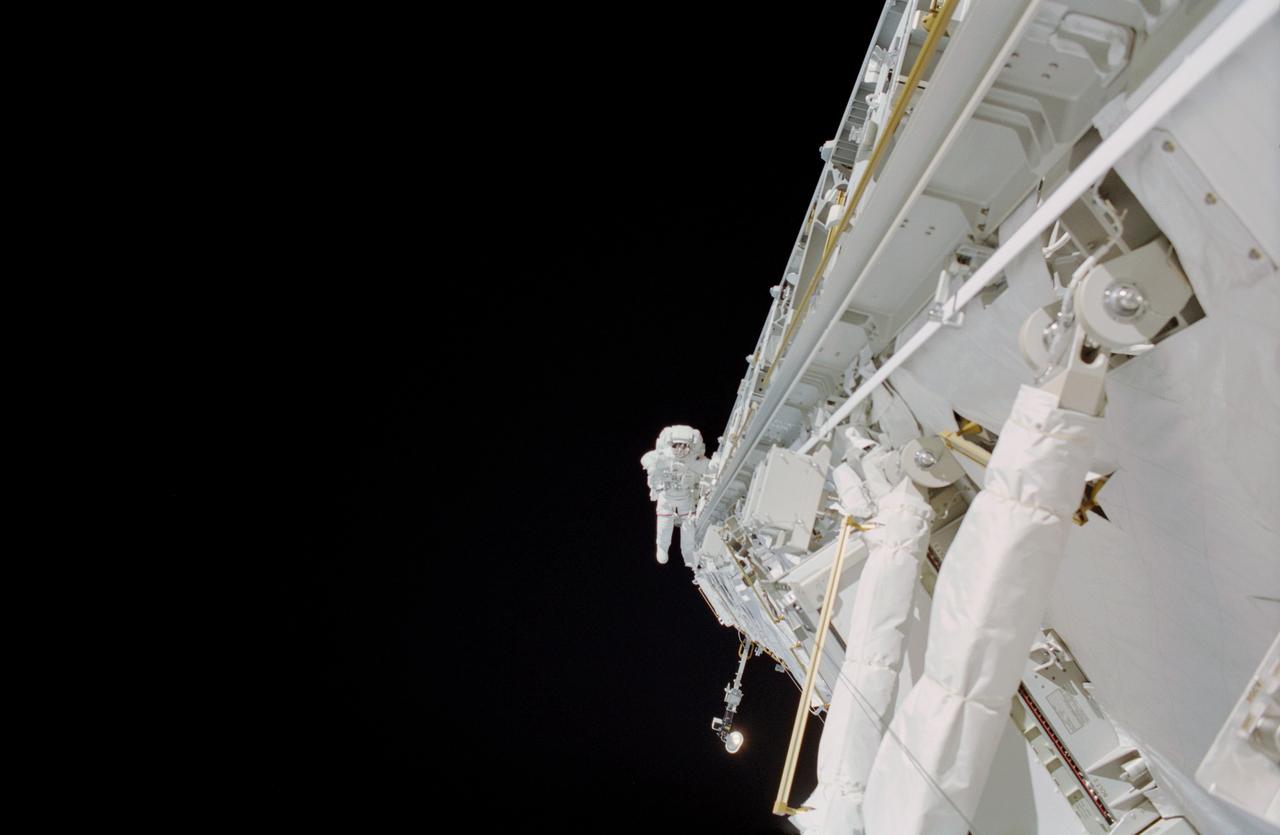
STS113-307-006 (30 November 2002) --- Astronaut Michael E. Lopez-Alegria, STS-113 mission specialist, traverses along the Starboard One (S1) truss on the International Space Station (ISS) during the mission’s third and final scheduled spacewalk.
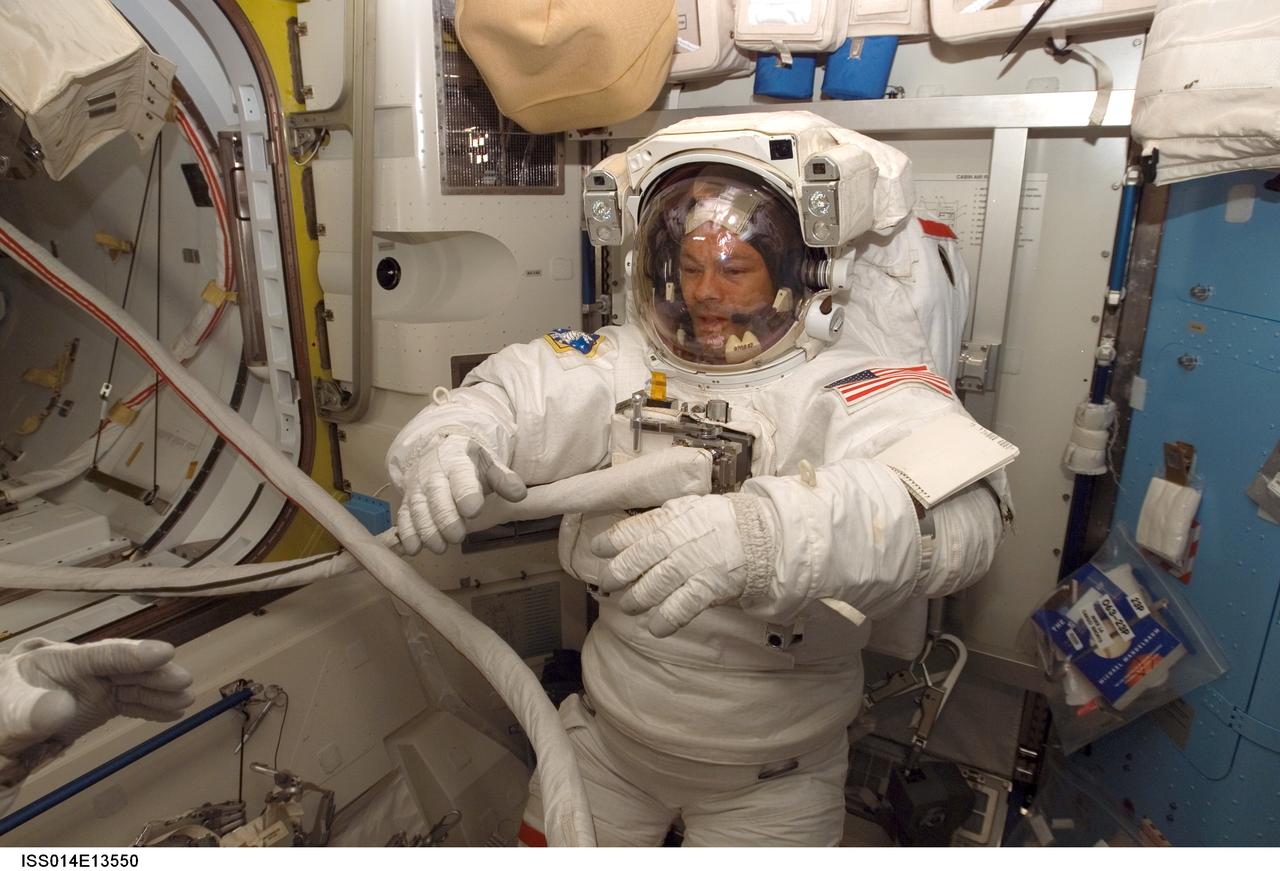
ISS014-E-13550 (8 Feb. 2007) --- Astronaut Michael E. Lopez-Alegria, Expedition 14 commander and NASA space station science officer, attired in his Extravehicular Mobility Unit (EMU) spacesuit, awaits the start of the third session of extravehicular activity (EVA) in nine days in the Quest Airlock of the International Space Station.
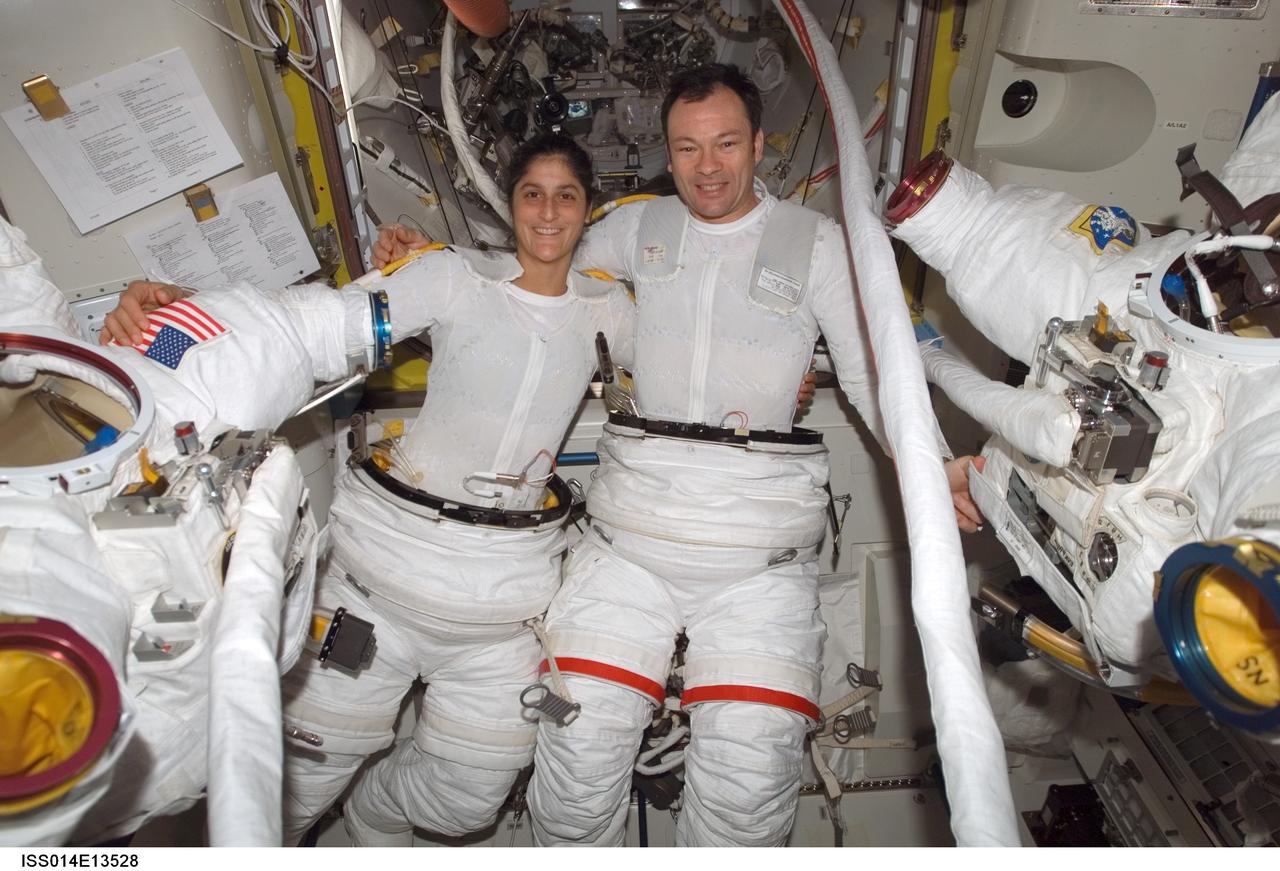
ISS014-E-13528 (8 Feb. 2007) --- Astronauts Sunita L. Williams, flight engineer, and Michael A. Lopez-Alegria, commander and NASA ISS science officer, don their extravehicular mobility unit (EMU) space suits onboard the International Space Station prior to one of several Expedition 14 spacewalks. This marks the third extravehicular activity in nine days.
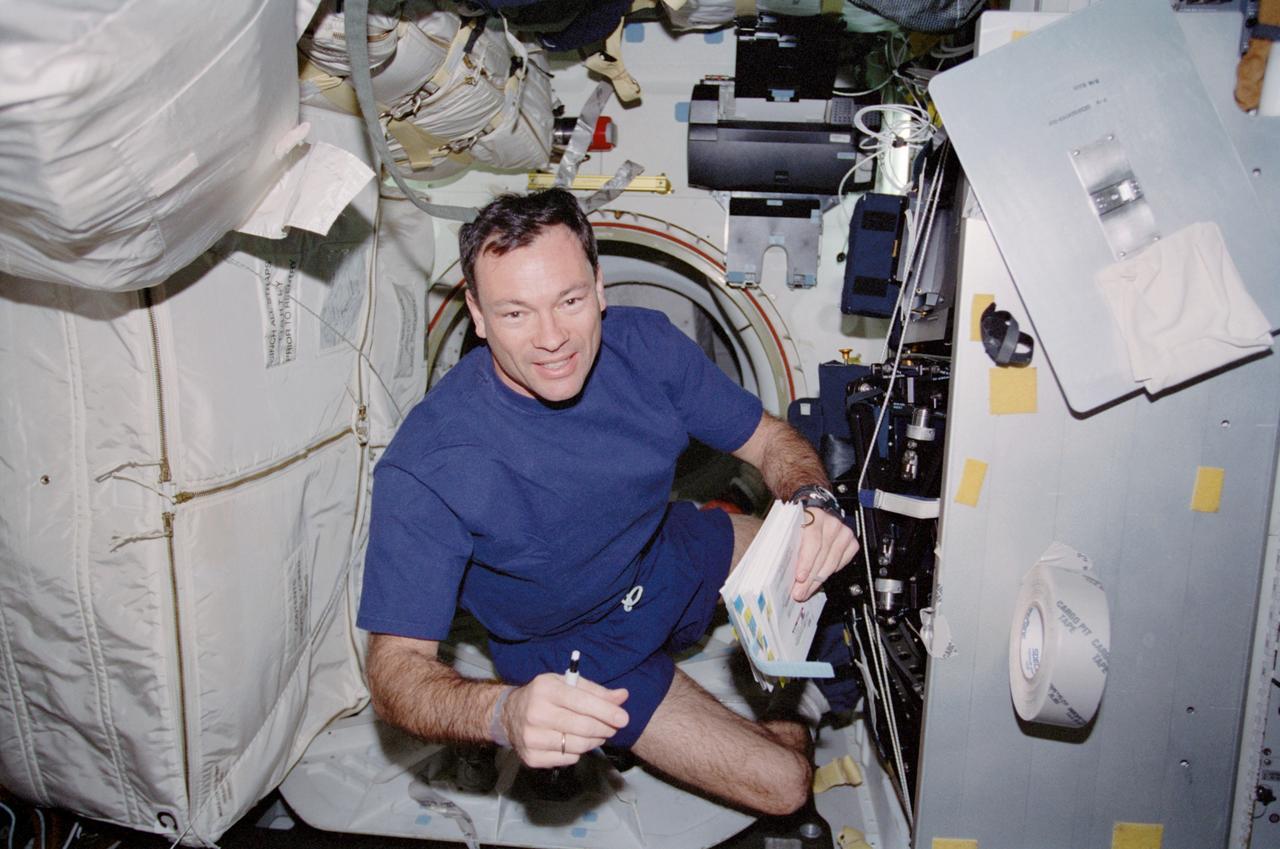
STS113-313-036 (23 November – 7 December 2002) --- Astronaut Michael E. Lopez-Alegria, STS-113 mission specialist, pictured on the middeck of the Space Shuttle Endeavour.
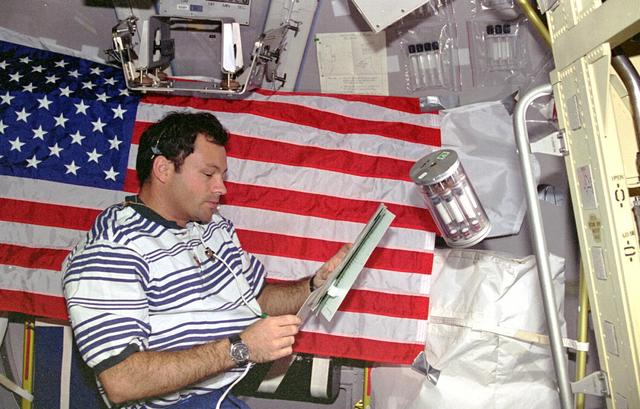
STS073-232-013 (20 October - 5 November 1995) --- Astronaut Michael E. Lopez-Alegria, STS-73 mission specialist, checks notes related to the Commercial Generic Bioprocessing Apparatus (CGBA) aboard the Earth-orbiting Space Shuttle Columbia. CGBA supported over one hundred individual experiments on small quantities of samples ranging from molecules to small organisms. Lopez-Alegria joined four other NASA astronauts and two guest researchers for 16-days of United States Microgravity Laboratory 2 (USML-2) research aboard the Space Shuttle Columbia.
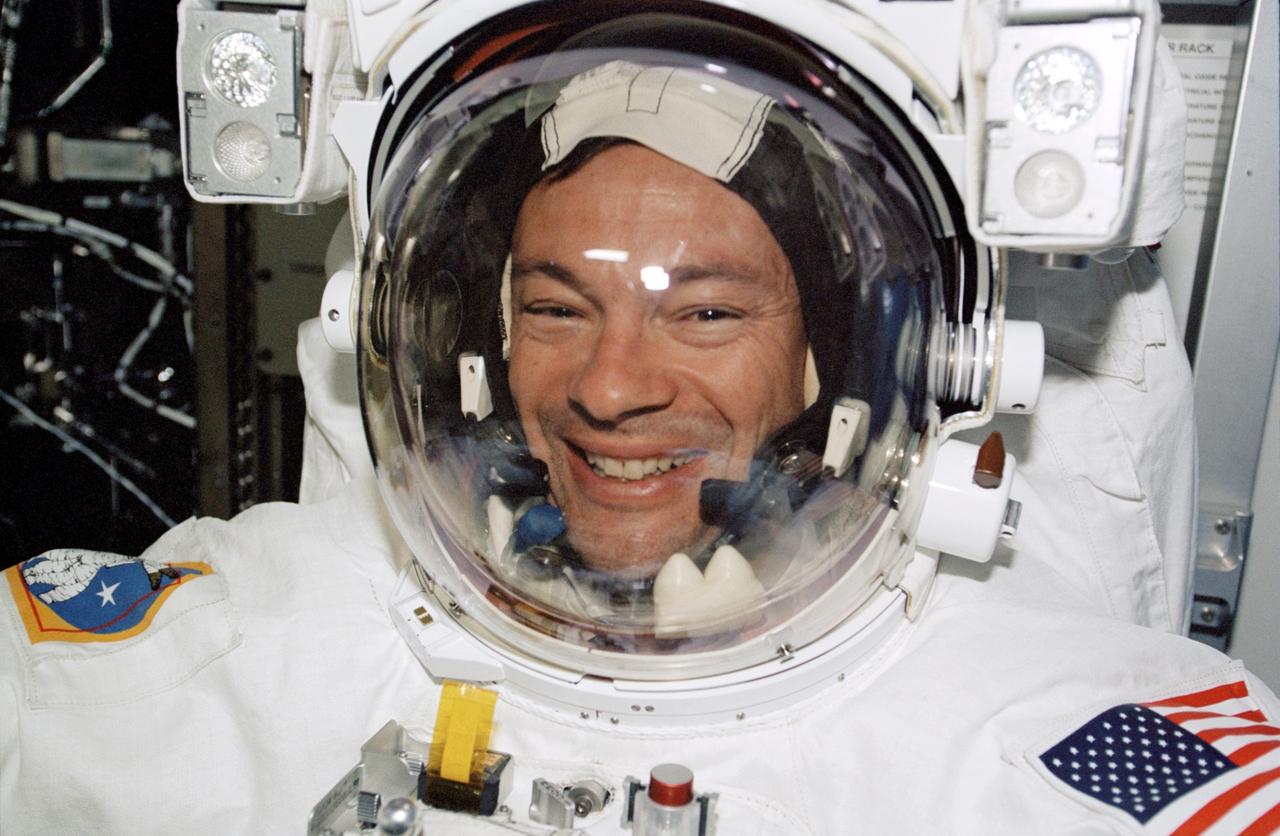
STS113-360-030 (26 November 2002) --- Astronaut Michael E. Lopez-Alegria, STS-113 mission specialist, attired in his Extravehicular Mobility Unit (EMU) spacesuit, is pictured in the Quest Airlock on the International Space Station (ISS). Lopez-Alegria was about to begin the first of three scheduled STS-113 spacewalks to perform work on the station. In cooperation with the rest of the shuttle and station crewmembers, Lopez-Alegria and John B. Herrington went on to complete a smooth spacewalk to hook up connections between the Port One (P1) truss and the rest of the station.
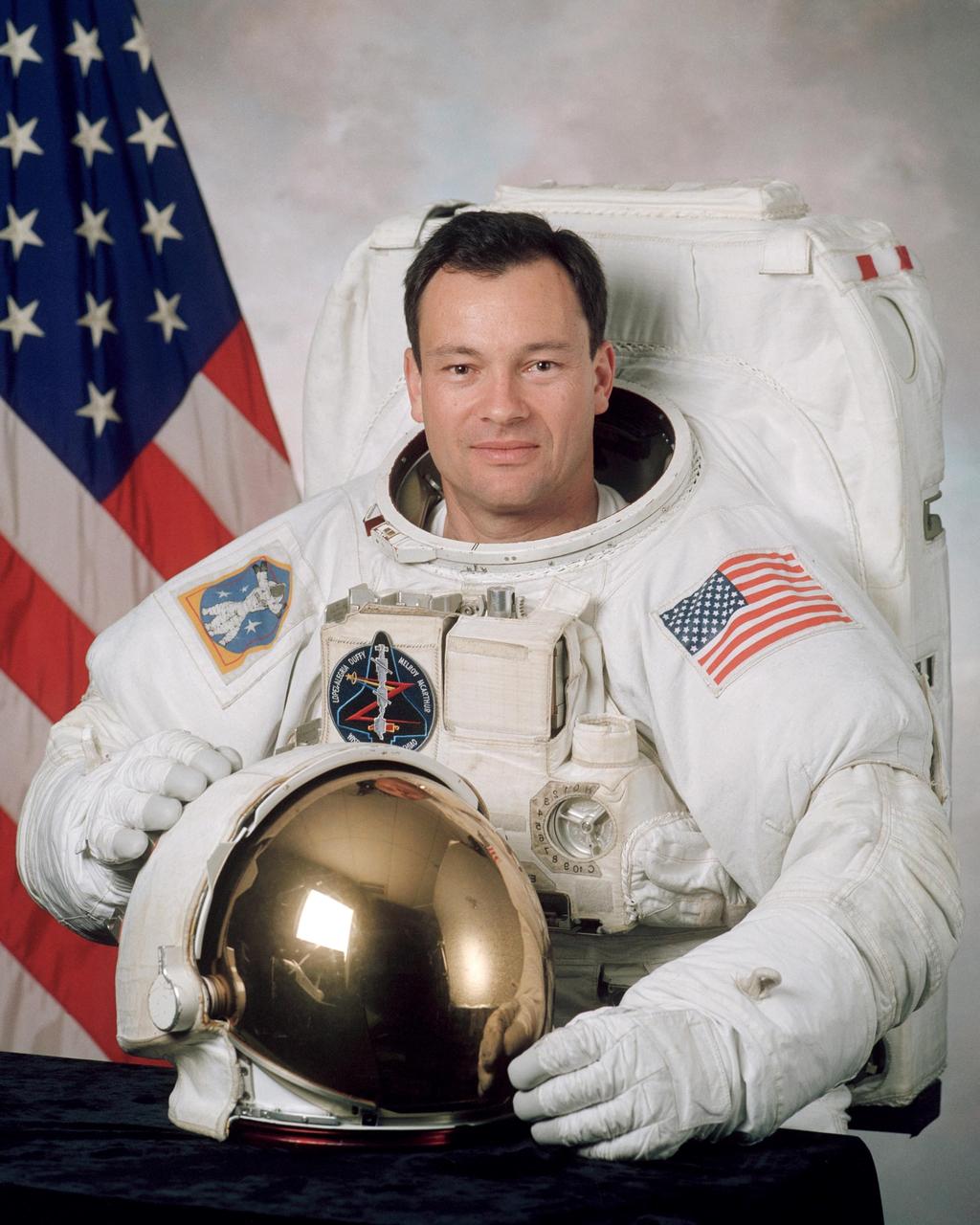
JOHNSON SPACE CENTER, HOUSTON, TEXAS -- (JSC2000-03028) Official portrait of astronaut Michael E. Lopez-Alegria, mission specialist.
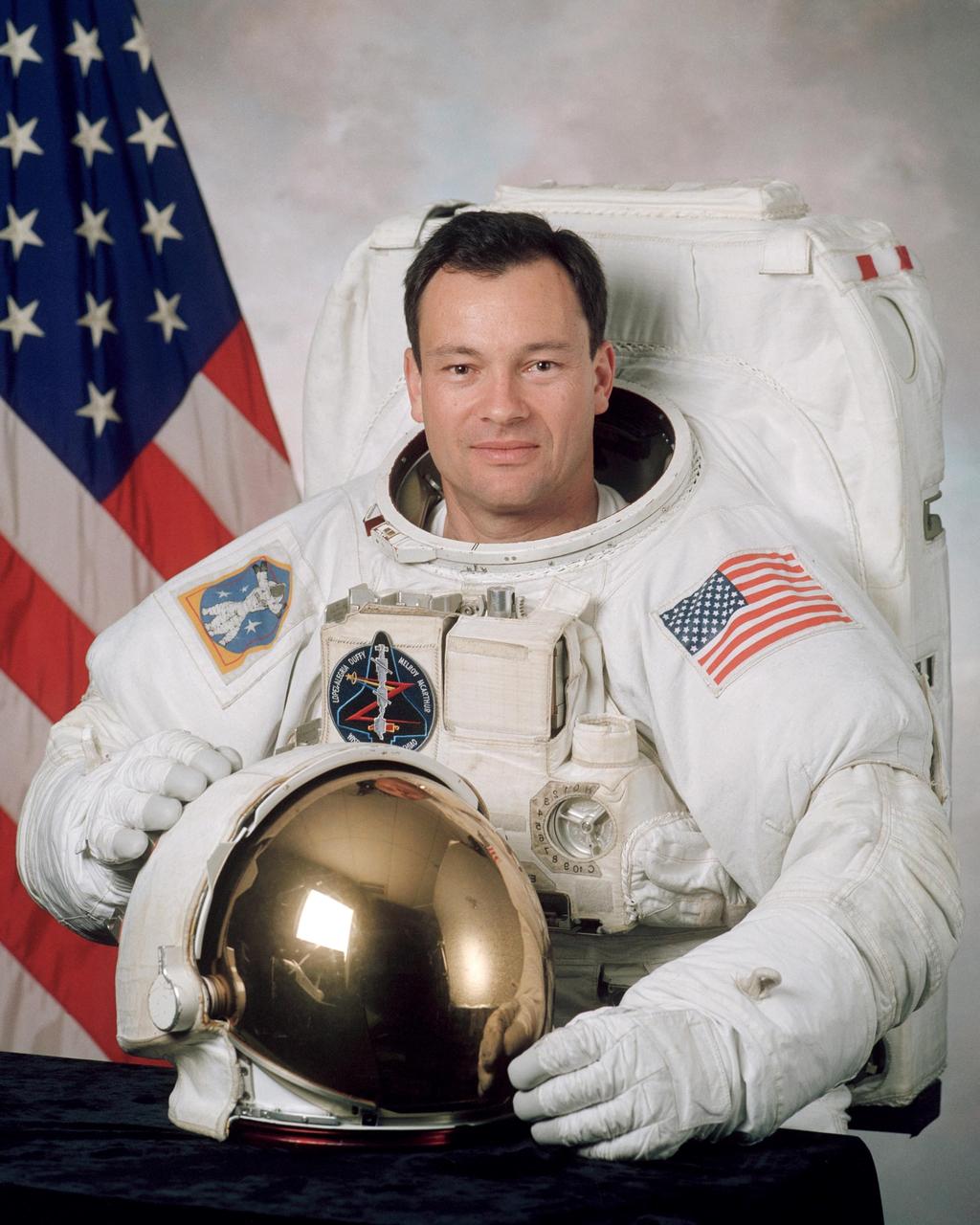
JOHNSON SPACE CENTER, HOUSTON, TEXAS -- (JSC2000-03028) Official portrait of astronaut Michael E. Lopez-Alegria, mission specialist.
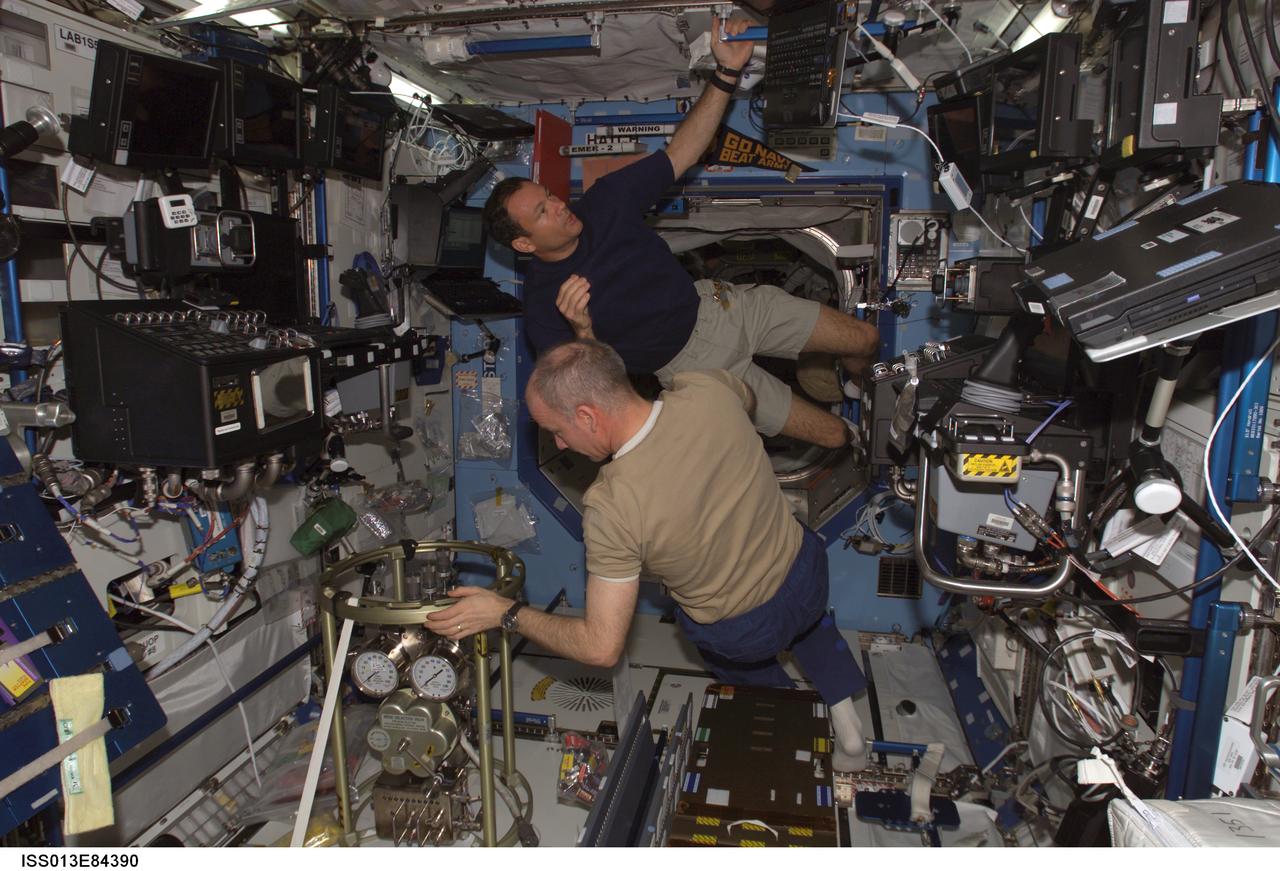
ISS013-E-84390 (27 Sept. 2006) --- Astronauts Jeffrey N. Williams (foreground), Expedition 13 NASA space station science officer and flight engineer, and Michael E. Lopez-Alegria, Expedition 14 commander and NASA space station science officer, work on the fluid servicing system installation in the Destiny laboratory of the International Space Station.
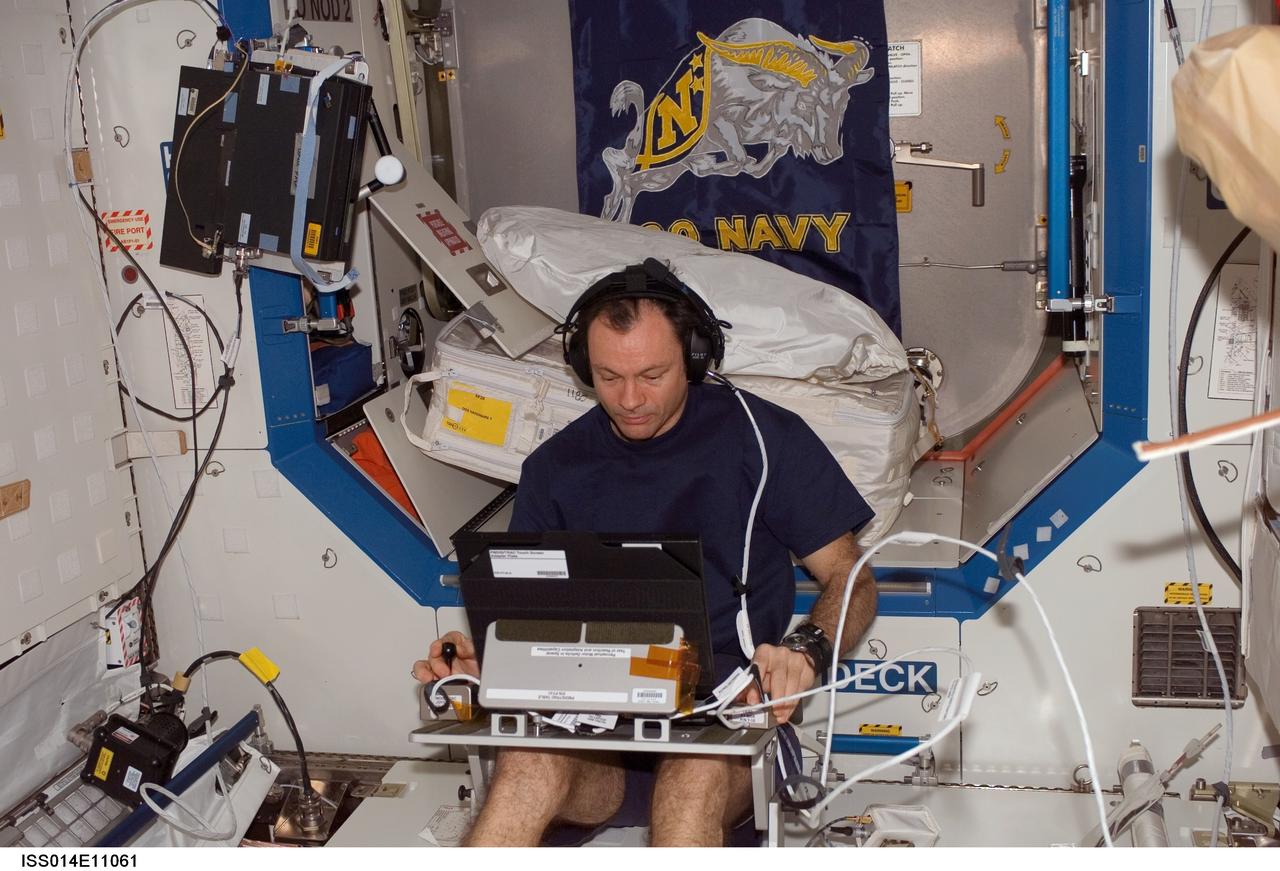
ISS014-E-11061 (2 Jan. 2007) --- Astronaut Michael E. Lopez-Alegria, Expedition 14 commander and NASA space station science officer, works with the Test of Reaction and Adaptation Capabilities (TRAC) experiment in the Destiny laboratory of the International Space Station. The TRAC investigation will test the theory of brain adaptation during space flight by testing hand-eye coordination before, during and after the space flight.
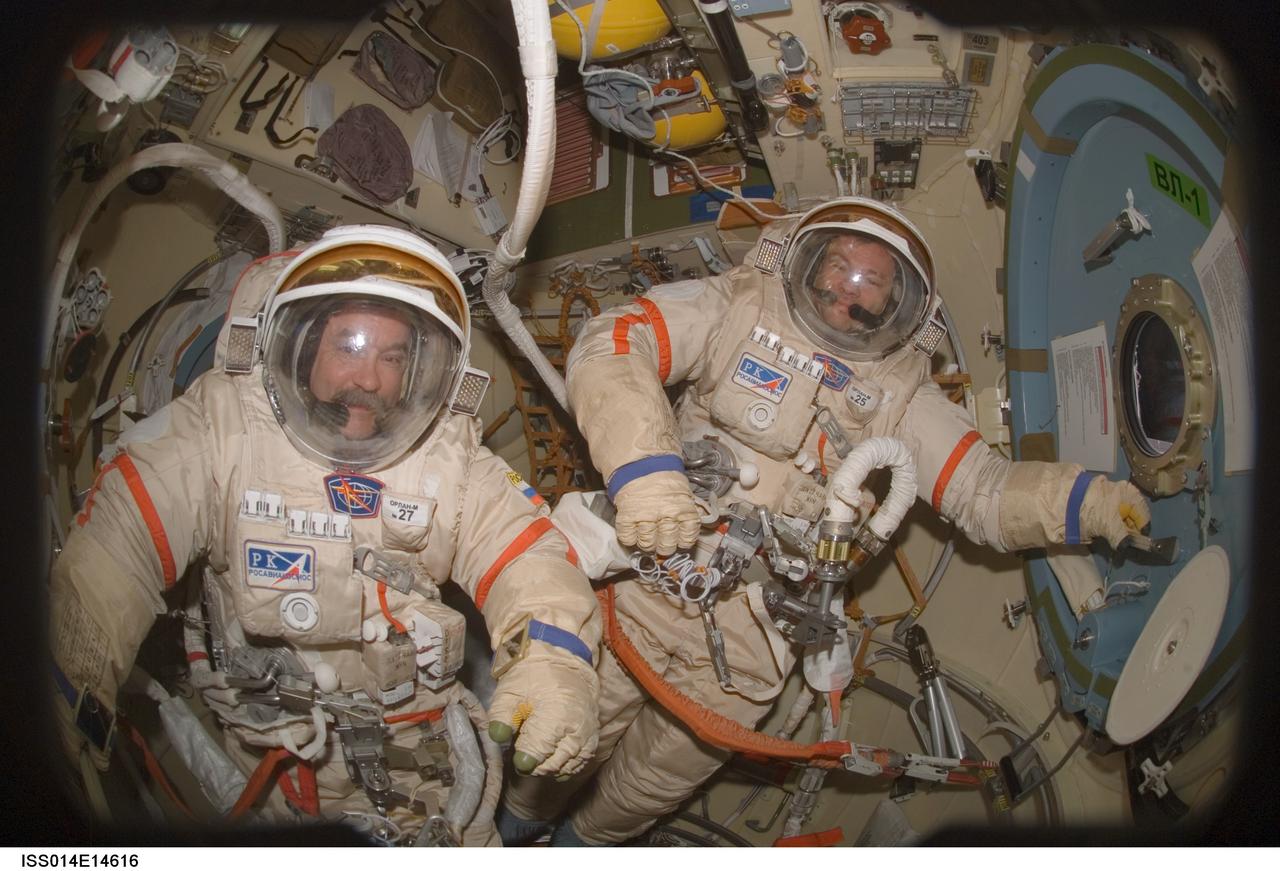
ISS014-E-14616 (20 Feb. 2007) --- Astronaut Michael E. Lopez-Alegria (right), Expedition 14 commander and NASA space station science officer; and cosmonaut Mikhail Tyurin, flight engineer representing Russia's Federal Space Agency, perform a Russian Orlan spacesuit fit check in the Pirs Docking Compartment of the International Space Station. The Expedition 14 crewmembers are two days away from their final scheduled spacewalk.
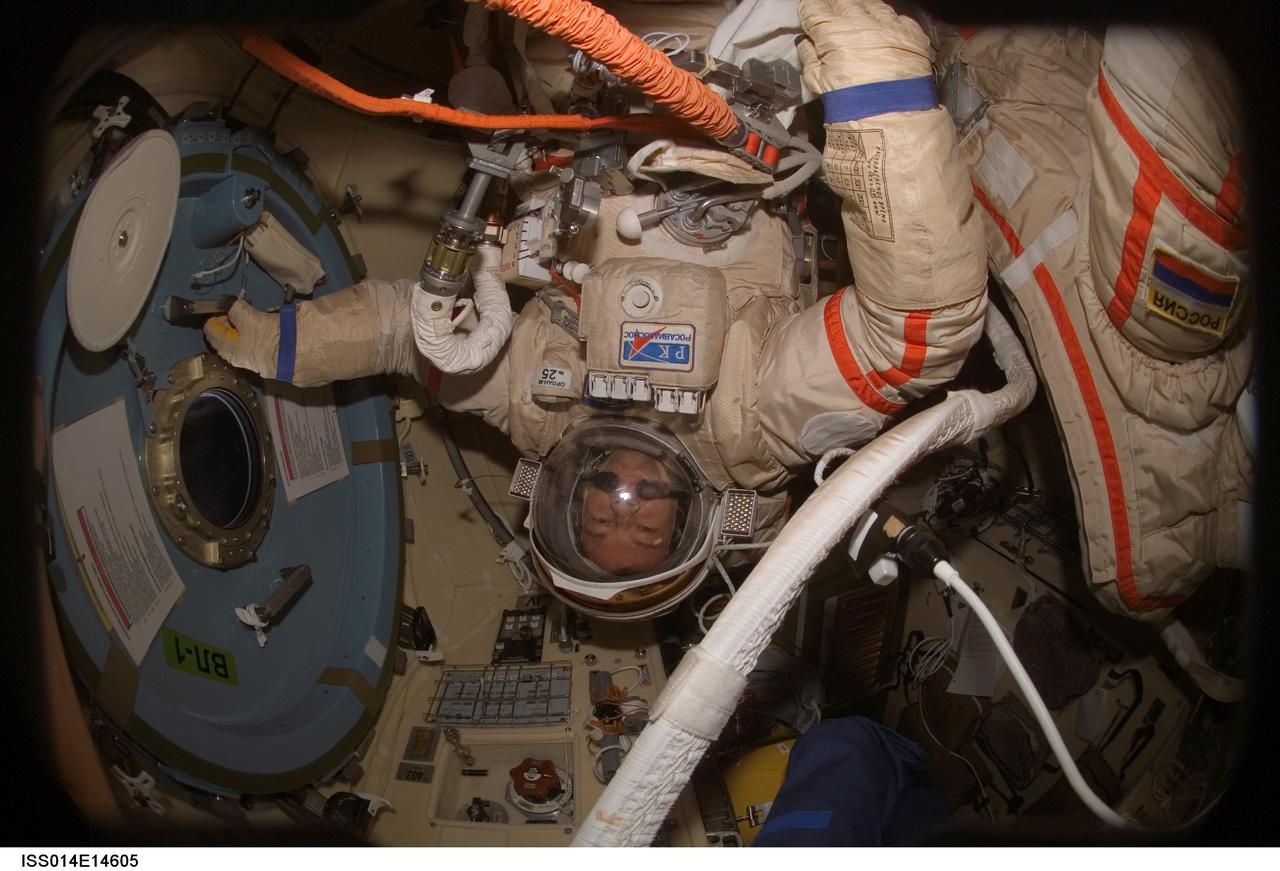
ISS014-E-14605 (20 Feb. 2007) --- Astronaut Michael E. Lopez-Alegria, Expedition 14 commander and NASA space station science officer, performs a Russian Orlan spacesuit fit check in the Pirs Docking Compartment of the International Space Station. The Expedition 14 crewmembers are two days away from their final scheduled spacewalk.
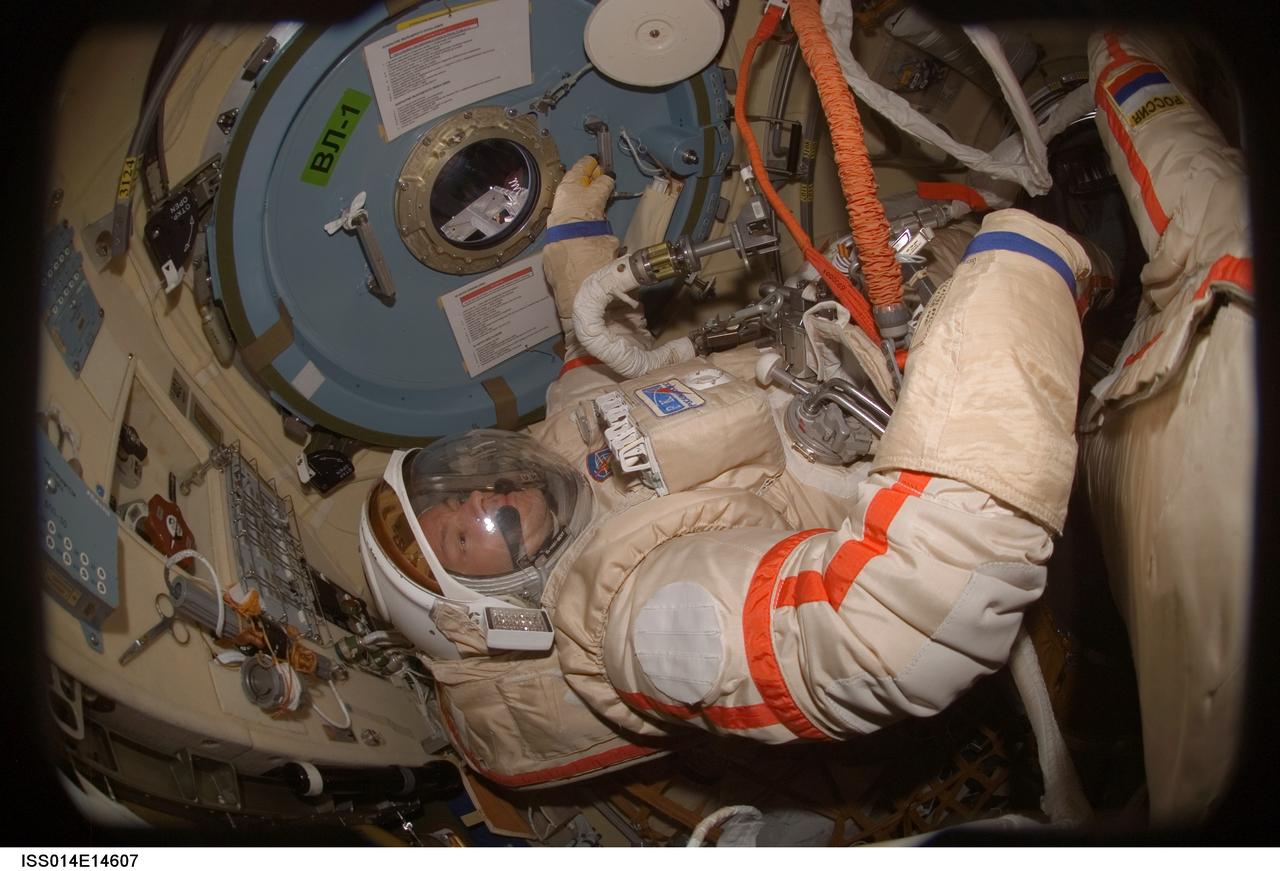
ISS014-E-14607 (20 Feb. 2007) --- Astronaut Michael E. Lopez-Alegria, Expedition 14 commander and NASA space station science officer, performs a Russian Orlan spacesuit fit check in the Pirs Docking Compartment of the International Space Station. The Expedition 14 crewmembers are two days away from their final scheduled spacewalk.
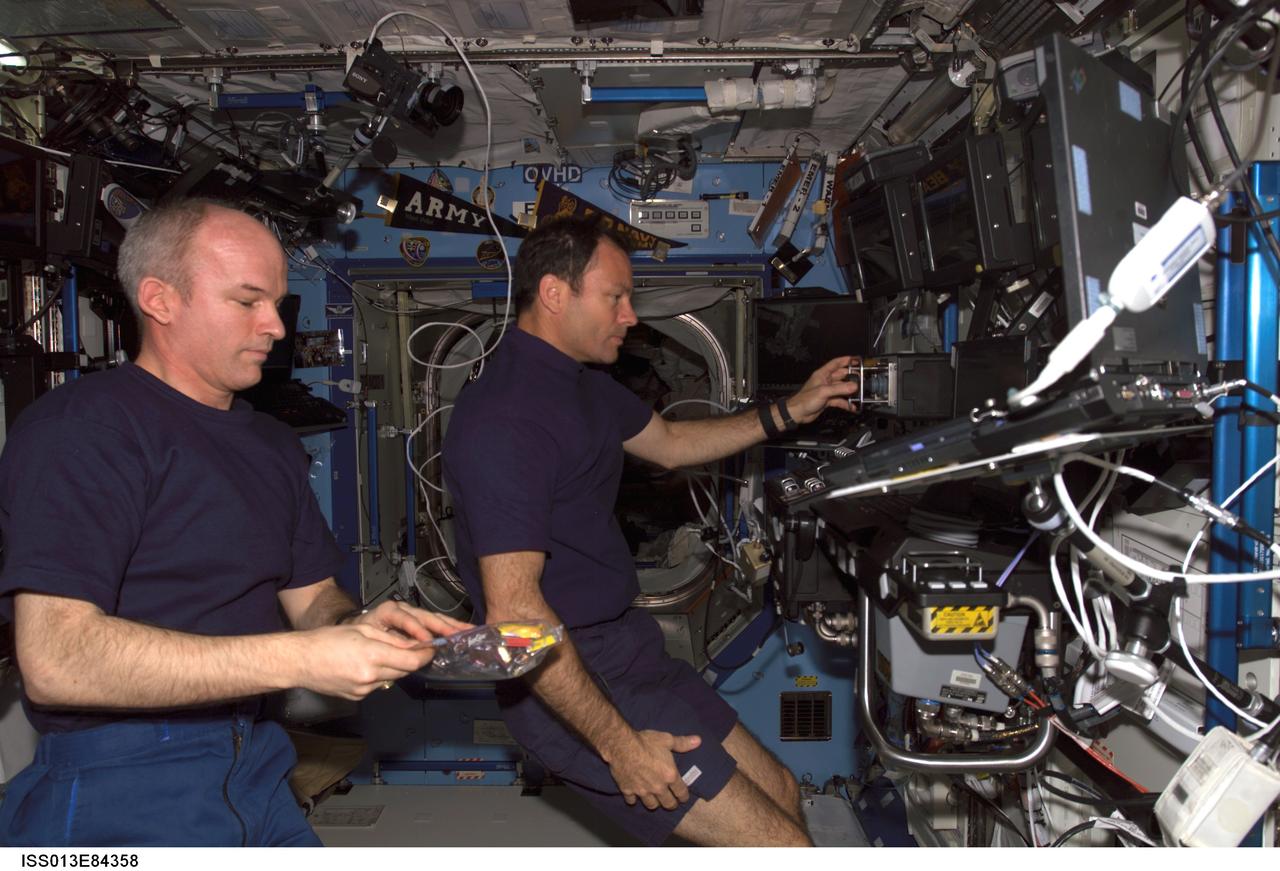
ISS013-E-84358 (26 Sept. 2006) --- Astronaut Michael E. Lopez-Alegria (right), Expedition 14 commander and NASA space station science officer, works at the Space Station Remote Manipulator System (SSRMS) or Canadarm2 workstation in the Destiny laboratory of the International Space Station. Astronaut Jeffrey N. Williams, Expedition 13 NASA space station science officer and flight engineer, is at left.
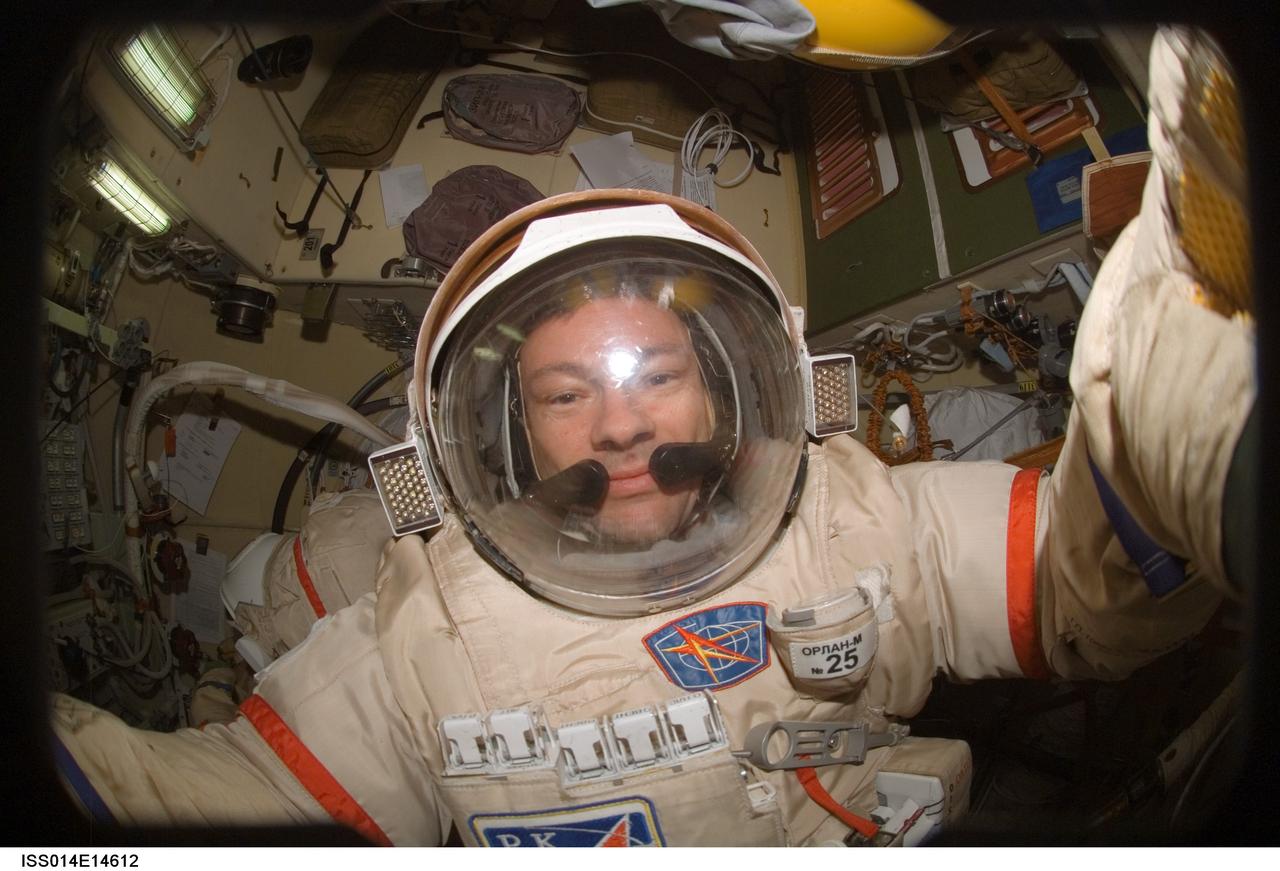
ISS014-E-14612 (20 Feb. 2007) --- Astronaut Michael E. Lopez-Alegria, Expedition 14 commander and NASA space station science officer, performs a Russian Orlan spacesuit fit check in the Pirs Docking Compartment of the International Space Station. The Expedition 14 crewmembers are two days away from their final scheduled spacewalk.
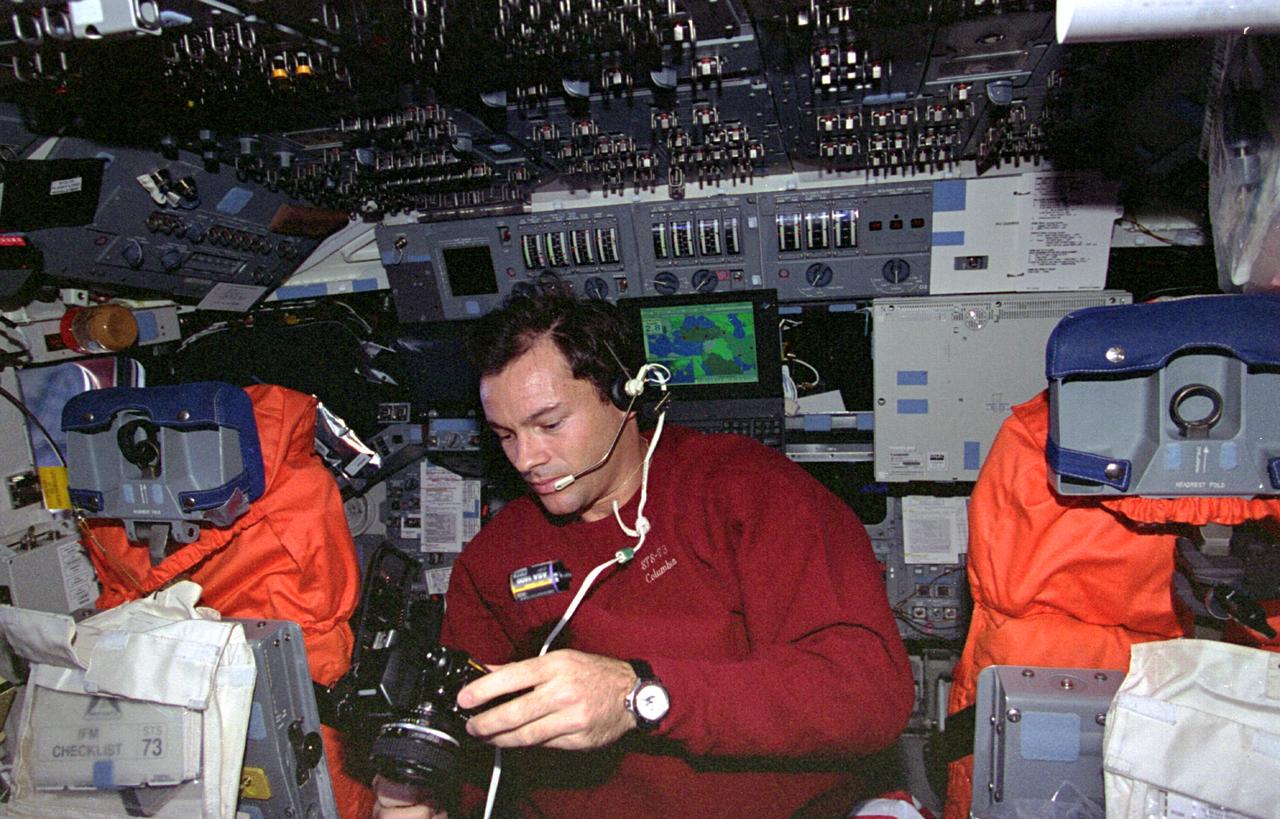
STS073-335-009 (20 October-5 November 1995) --- Astronaut Michael E. Lopez-Alegria, STS-73 mission specialist, changes the film in a 35mm camera on the flight deck of the Earth-orbiting Space Shuttle Columbia. Alegria joined four other NASA astronauts and two guest researchers for almost 16-days of Earth-orbit research in support of the U.S. Microgravity Laboratory (USML-2) mission.
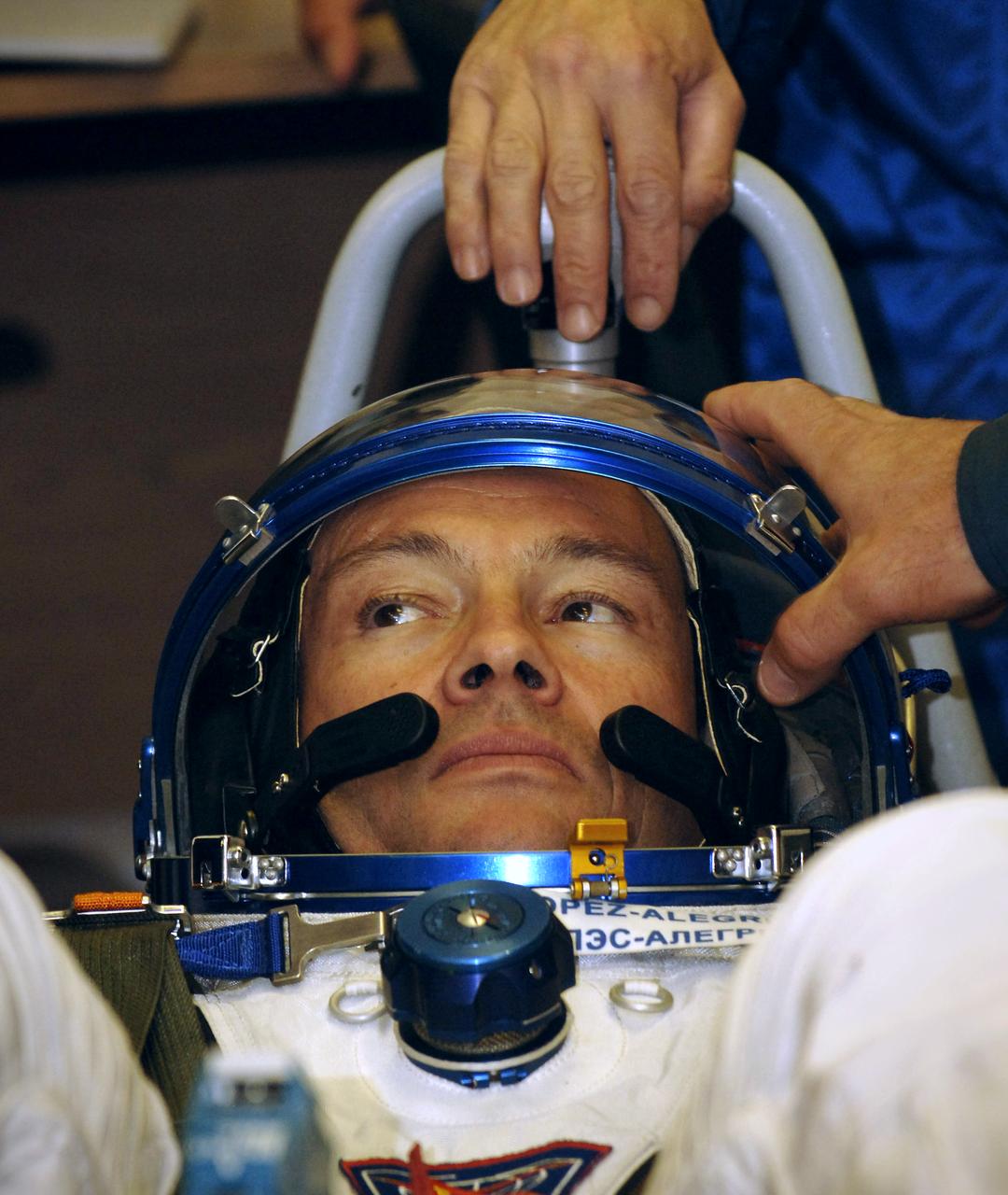
Expedition 14 Commander Michael Lopez-Alegria prepares for pressure checks on his Russian Sokol suit at the Baikonur Cosmodrome, Monday, Sept. 18, 2006, in Kazakhstan. The Soyuz TMA-9 spacecraft launched from the Baikonur Cosmodrome at 10:09 a.m. local time carrying Expedition 14 Commander Michael Lopez-Alegria, Soyuz Commander and Expedition 14 Flight Engineer Mikhail Tyurin and American spaceflight participant Anousheh Ansari, who will spend nine days on the International Space Station under a commercial agreement with the Russian Federal Space Agency. Photo Credit: (NASA/Bill Ingalls)
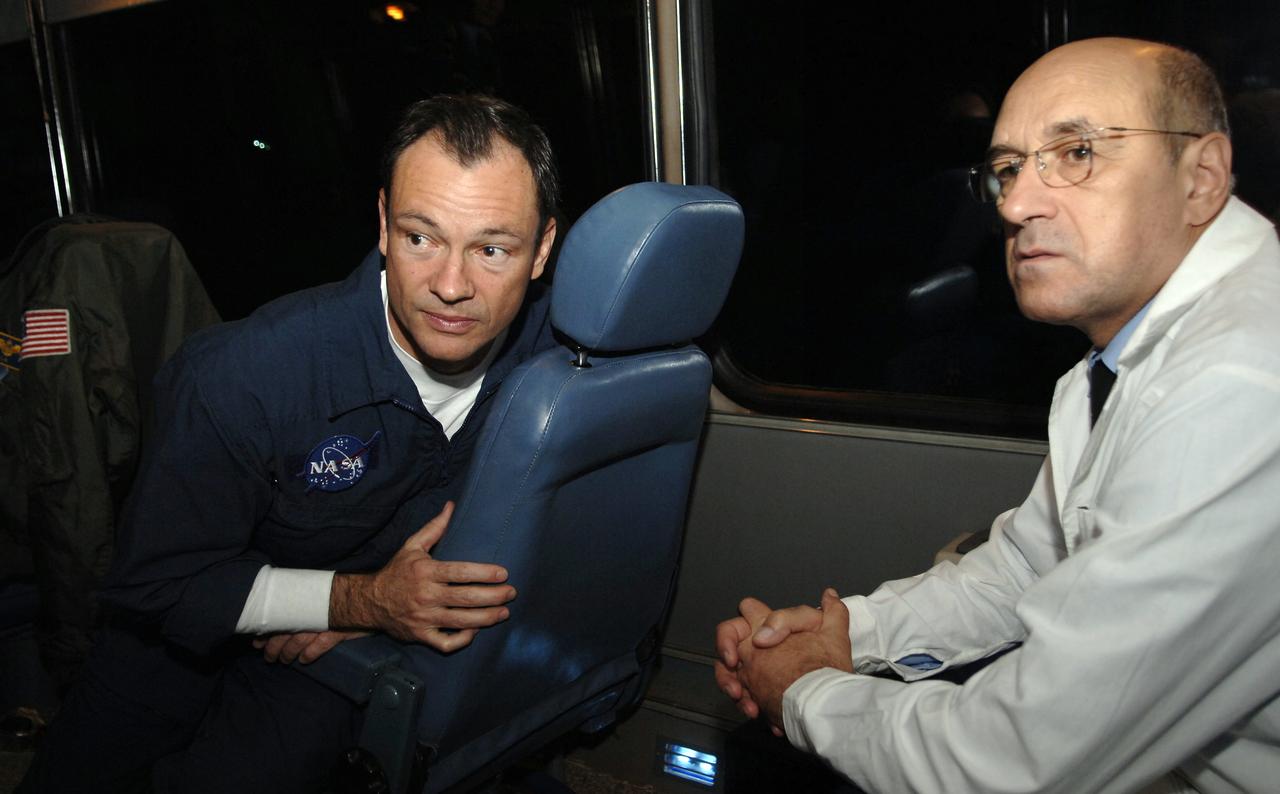
Expedition 14 Commander Michael Lopez-Alegria, left, rides the bus with doctors and his fellow crew mates from the Cosmonaut Hotel to building 254 at the Baikonur Cosmodrome where they will suit up for launch, Monday, Sept. 18, 2006 in Kazakhstan. The Soyuz TMA-9 spacecraft launched from the Baikonur Cosmodrome at 10:09 a.m. local time carrying Expedition 14 Commander Michael Lopez-Alegria, Soyuz Commander and Expedition 14 Flight Engineer Mikhail Tyurin and American spaceflight participant Anousheh Ansari, who will spend nine days on the International Space Station under a commercial agreement with the Russian Federal Space Agency. Photo Credit: (NASA/Bill Ingalls)
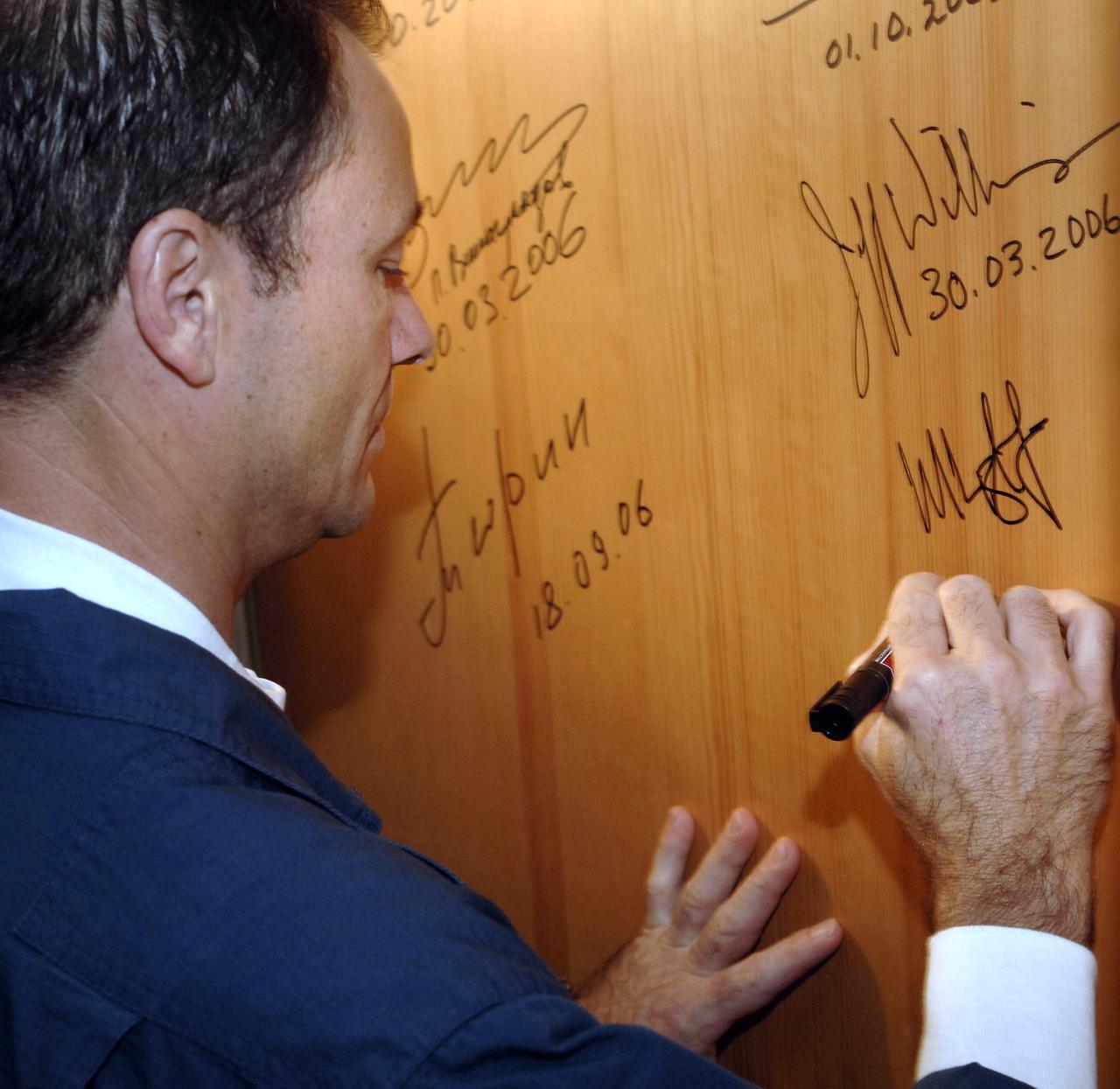
Expedition 14 Commander Michael Lopez-Alegria signs the door of a hotel room at the Cosmonaut Hotel the morning of his launch onboard the Soyuz TMA-9 spacecraft, Monday, Sept. 18, 2006, in Baikonur, Kazakhstan. The Soyuz TMA-9 spacecraft launched from the Baikonur Cosmodrome in carrying Expedition 14 Commander Michael Lopez-Alegria, Soyuz Commander and Expedition 14 Flight Engineer Mikhail Tyurin and American spaceflight participant Anousheh Ansari to the International Space Station. Anousheh Ansari will spend nine days on the station under a commercial agreement with the Russian Federal Space Agency. Photo Credit: (NASA/Bill Ingalls)
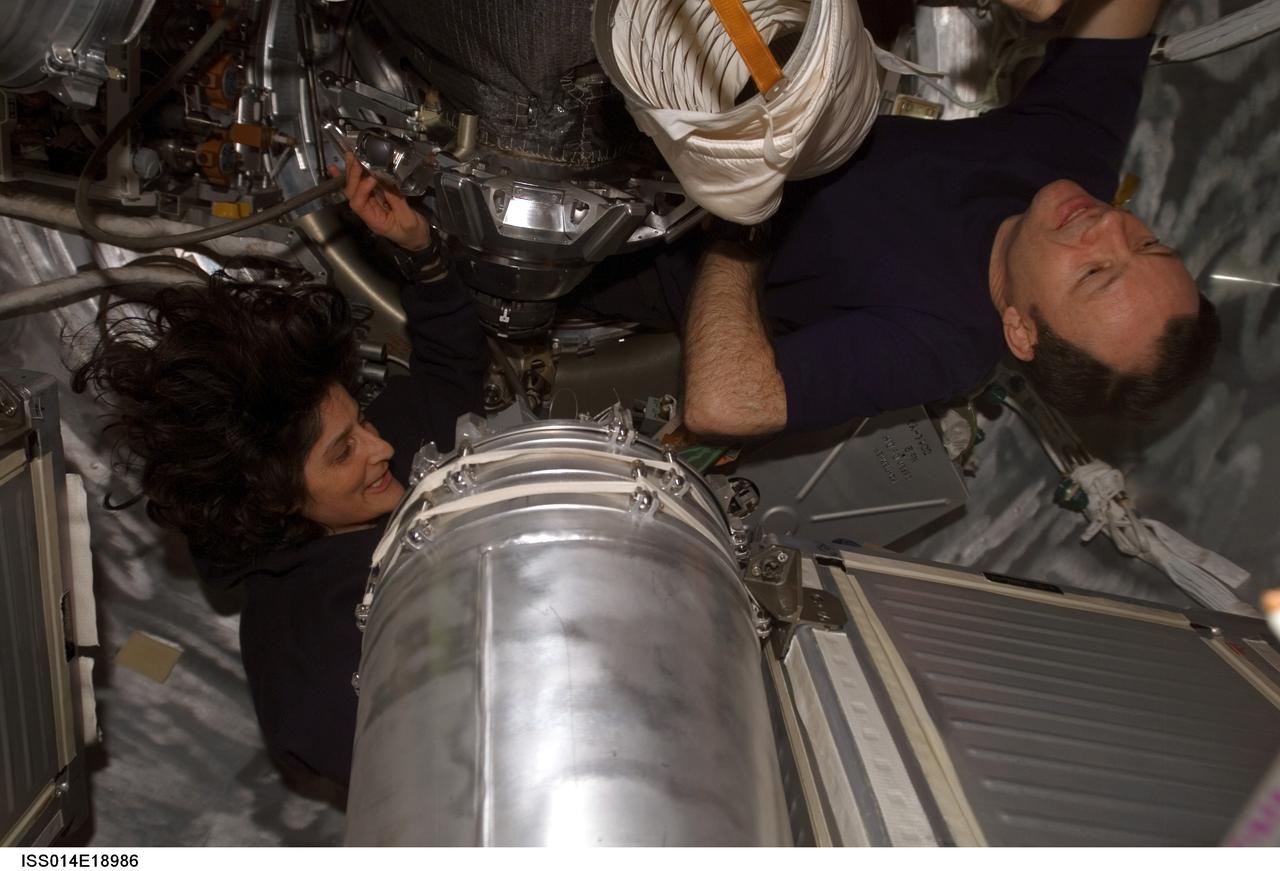
ISS014-E-18986 (5 April 2007) --- Astronauts Michael E. Lopez-Alegria (right), Expedition 14 commander and NASA space station science officer, and Sunita L. Williams, flight engineer, work with water tanks in the Progress 24 spacecraft docked to the International Space Station.
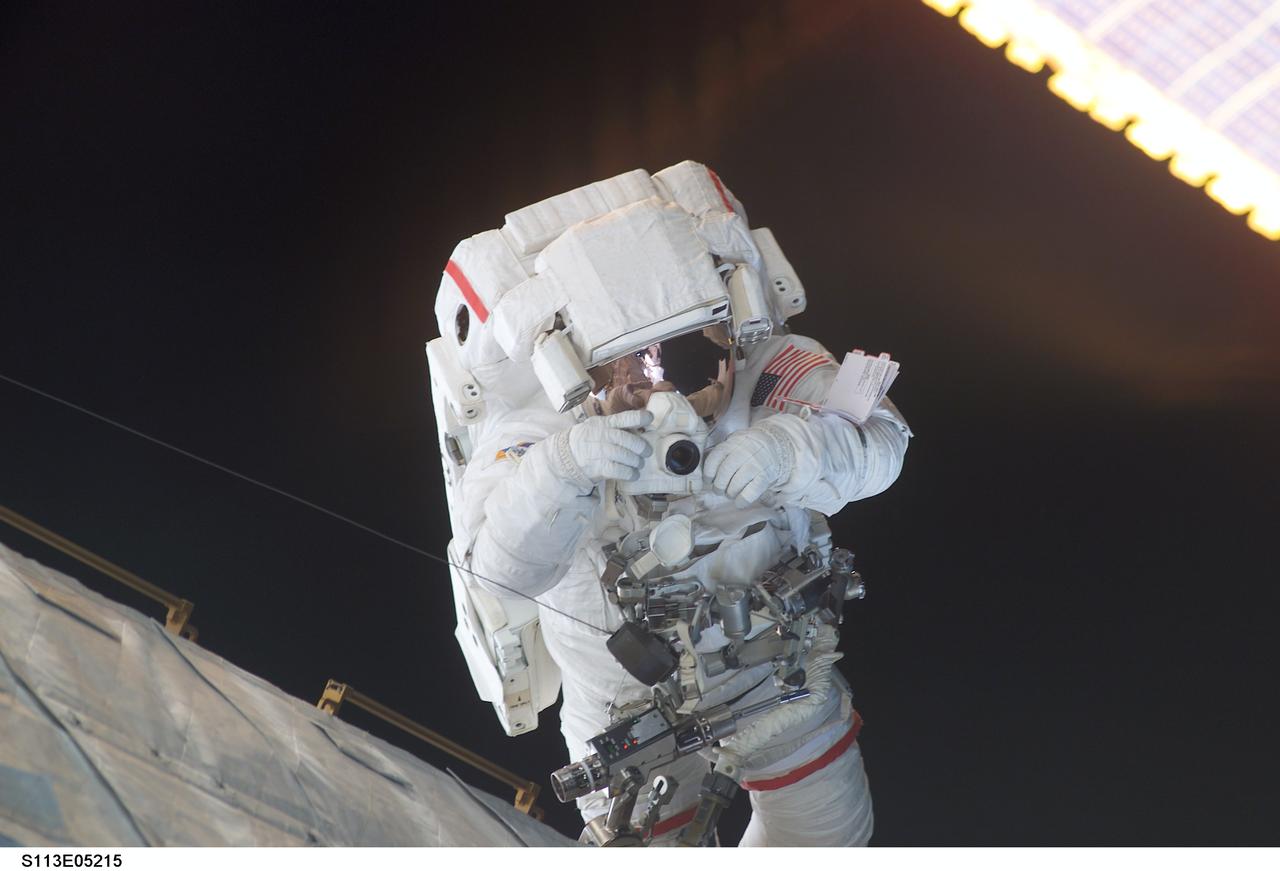
STS113-E-05215 (28 November 2002) --- Astronaut Michael E. Lopez-Alegria, STS-113 mission specialist, uses a camera during the mission’s second scheduled session of extravehicular activity (EVA). The spacewalk lasted 6 hours, 10 minutes.
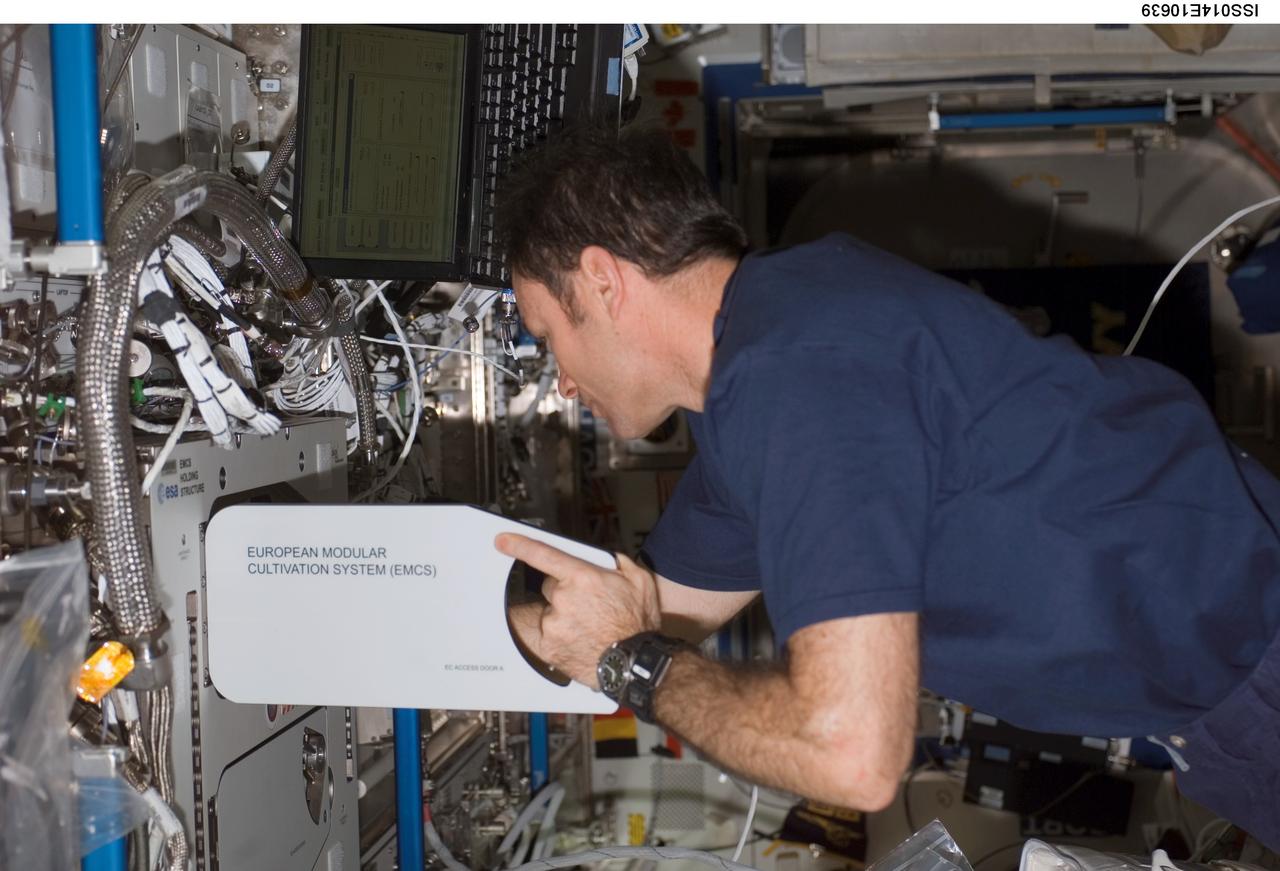
ISS014-E-10639 (29 Dec. 2006) --- Astronaut Michael E. Lopez-Alegria, Expedition 14 commander and NASA space station science officer, performs the European Modular Cultivation System (EMSC) -- Experiment Container (EC) replacement in the Destiny laboratory of the International Space Station.
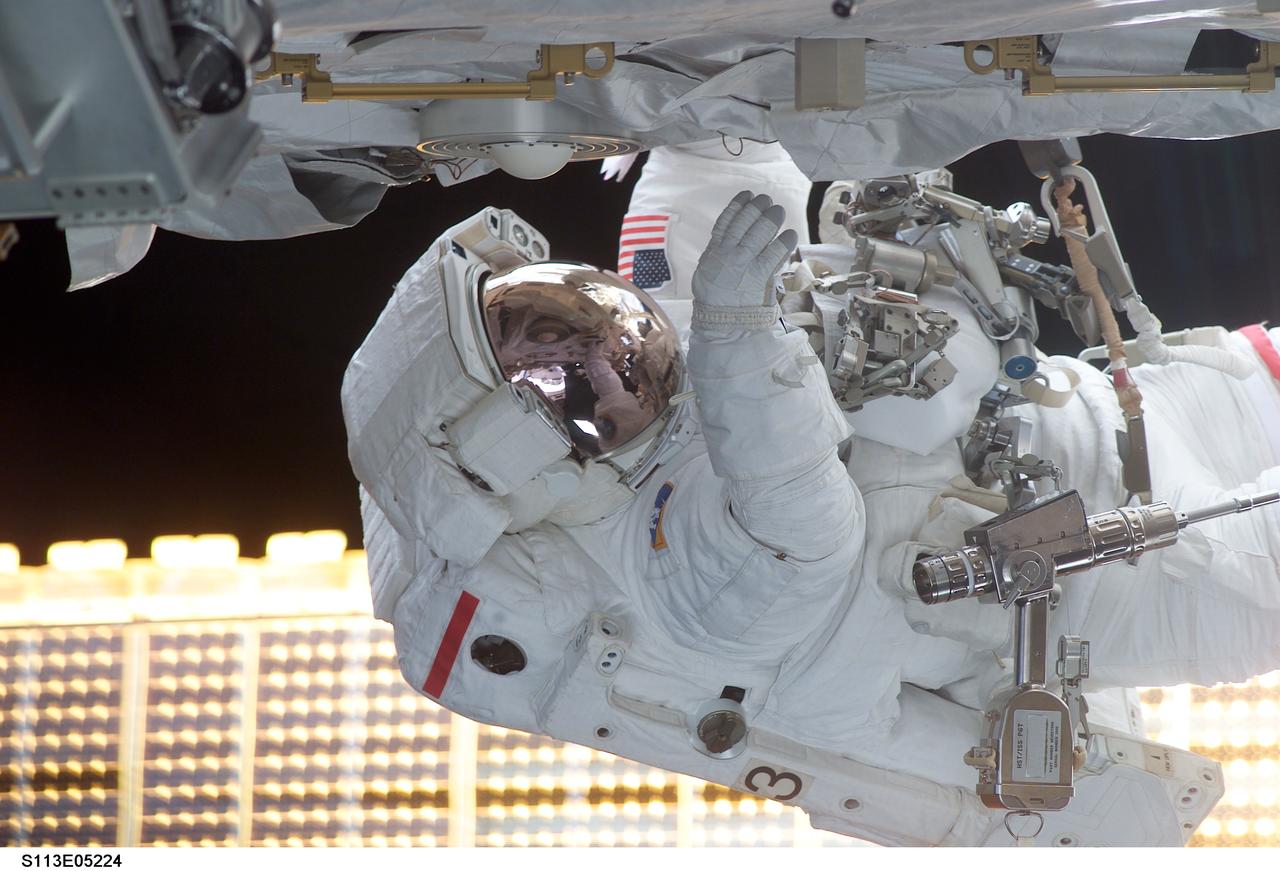
STS113-E-05224 (28 November 2002) --- Astronaut Michael E. Lopez-Alegria, STS-113 mission specialist, participates in the mission’s second scheduled session of extravehicular activity (EVA). The spacewalk lasted 6 hours, 10 minutes.
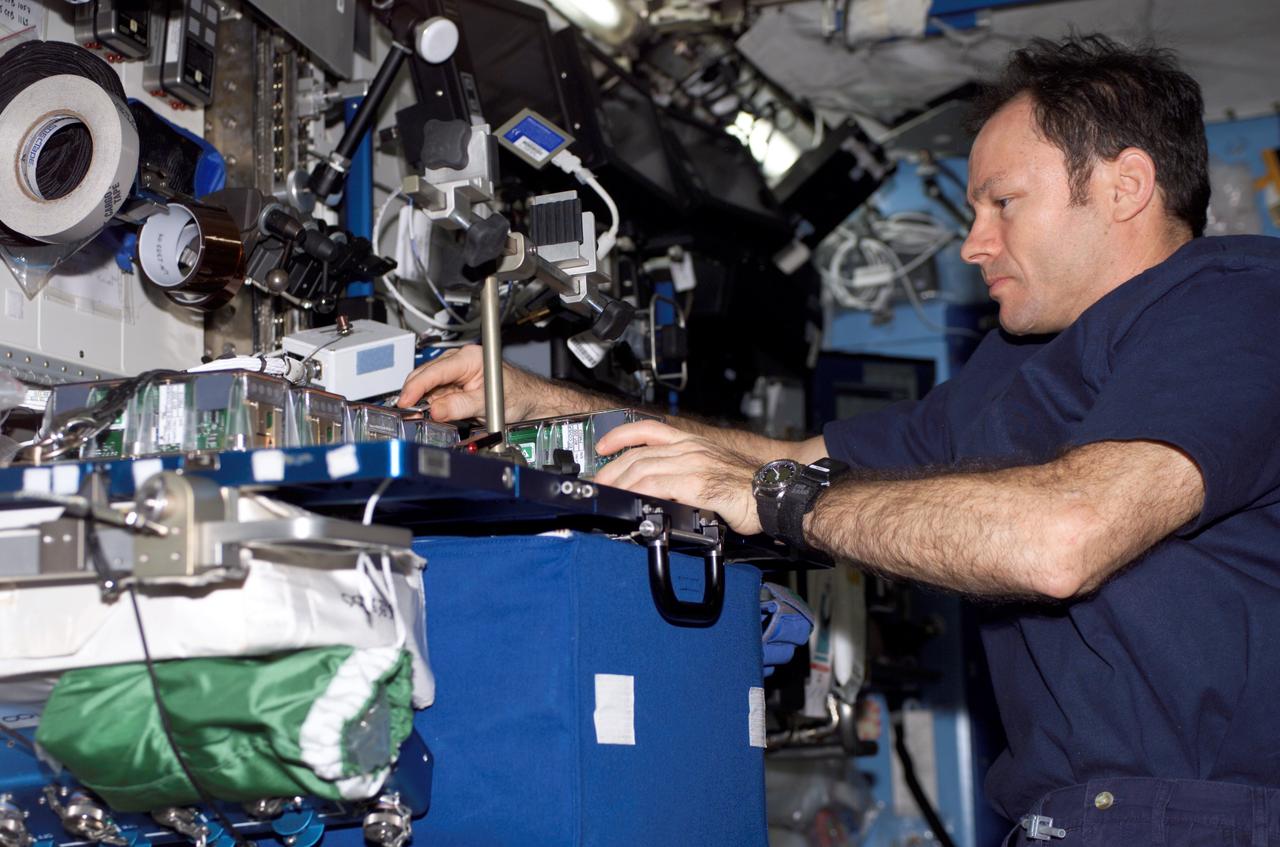
ISS014-E-10647 (29 Dec. 2006) --- Astronaut Michael E. Lopez-Alegria, Expedition 14 commander and NASA space station science officer, performs the European Modular Cultivation System (EMSC) -- Experiment Container (EC) replacement in the Destiny laboratory of the International Space Station.
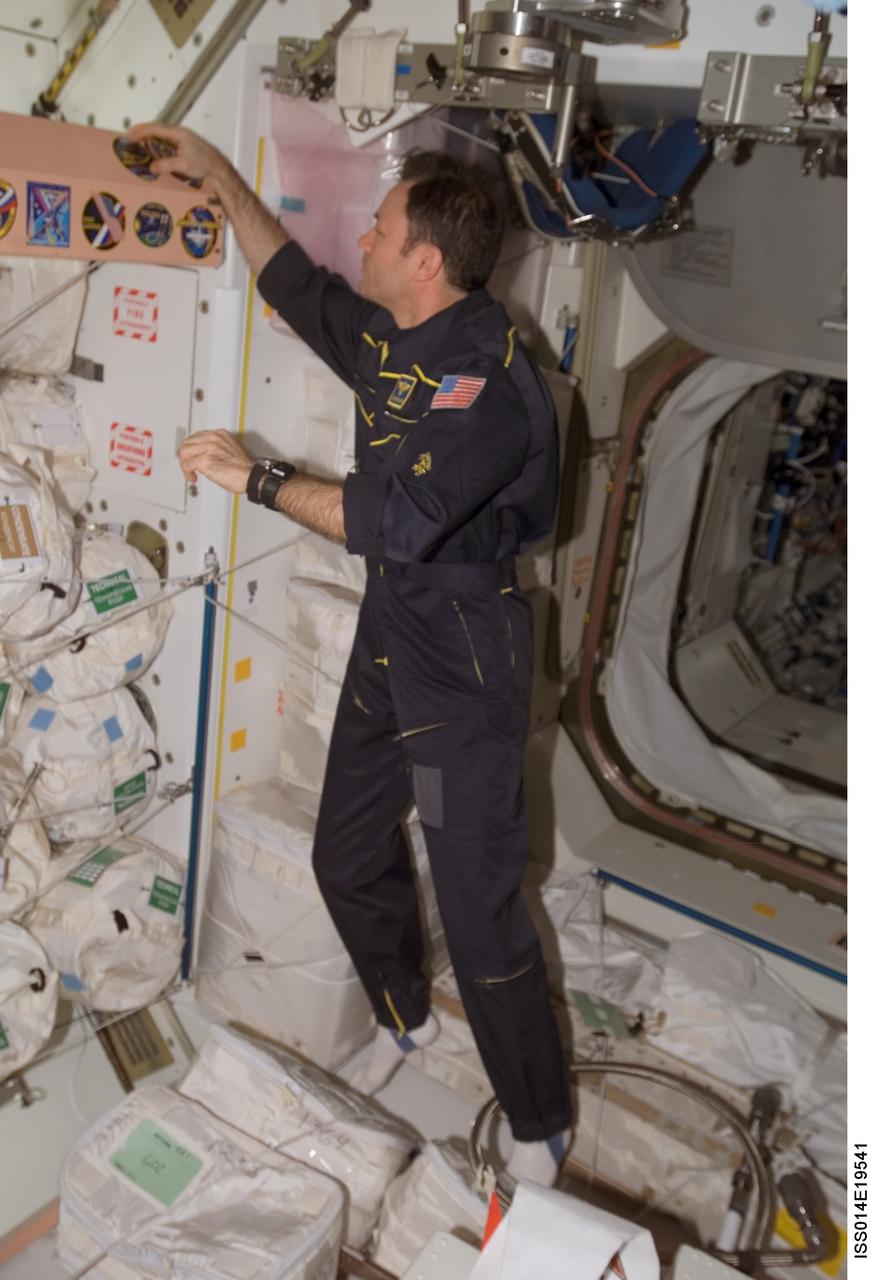
ISS014-E-19541 (17 April 2007) --- Astronaut Michael E. Lopez-Alegria, Expedition 14 commander and NASA space station science officer, adds the Expedition 14 patch to the Unity node's growing collection of insignias representing crews who have lived and worked on the International Space Station.
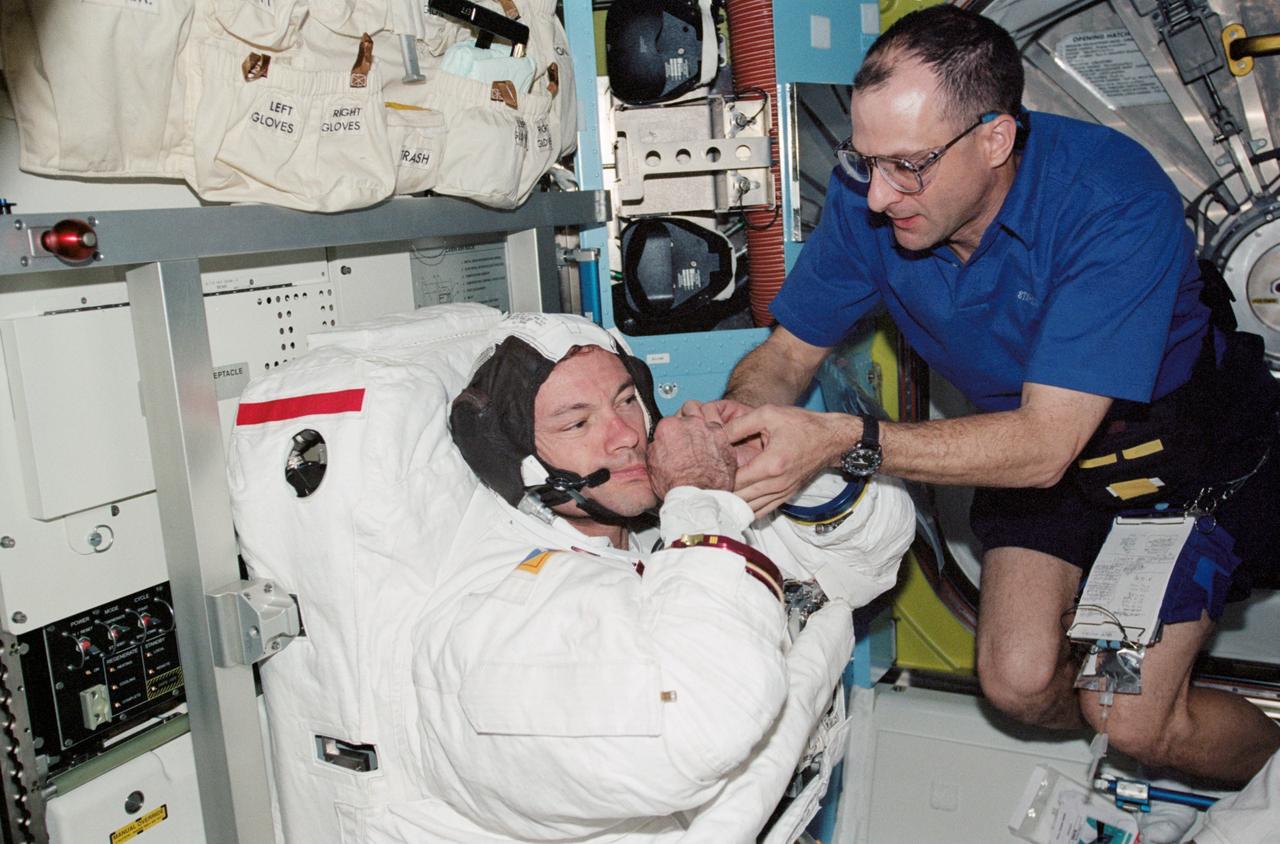
STS113-340-030 (28 November 2002) --- Astronaut Donald R. Pettit, Expedition Six NASA ISS science officer, assists astronaut Michael E. Lopez-Alegria, STS-113 mission specialist, with the final touches on his Extravehicular Mobility Unit (EMU) spacesuit in the Quest Airlock on the International Space Station (ISS). Lopez-Alegria is about to participate in the mission’s second scheduled session of extravehicular activity (EVA).
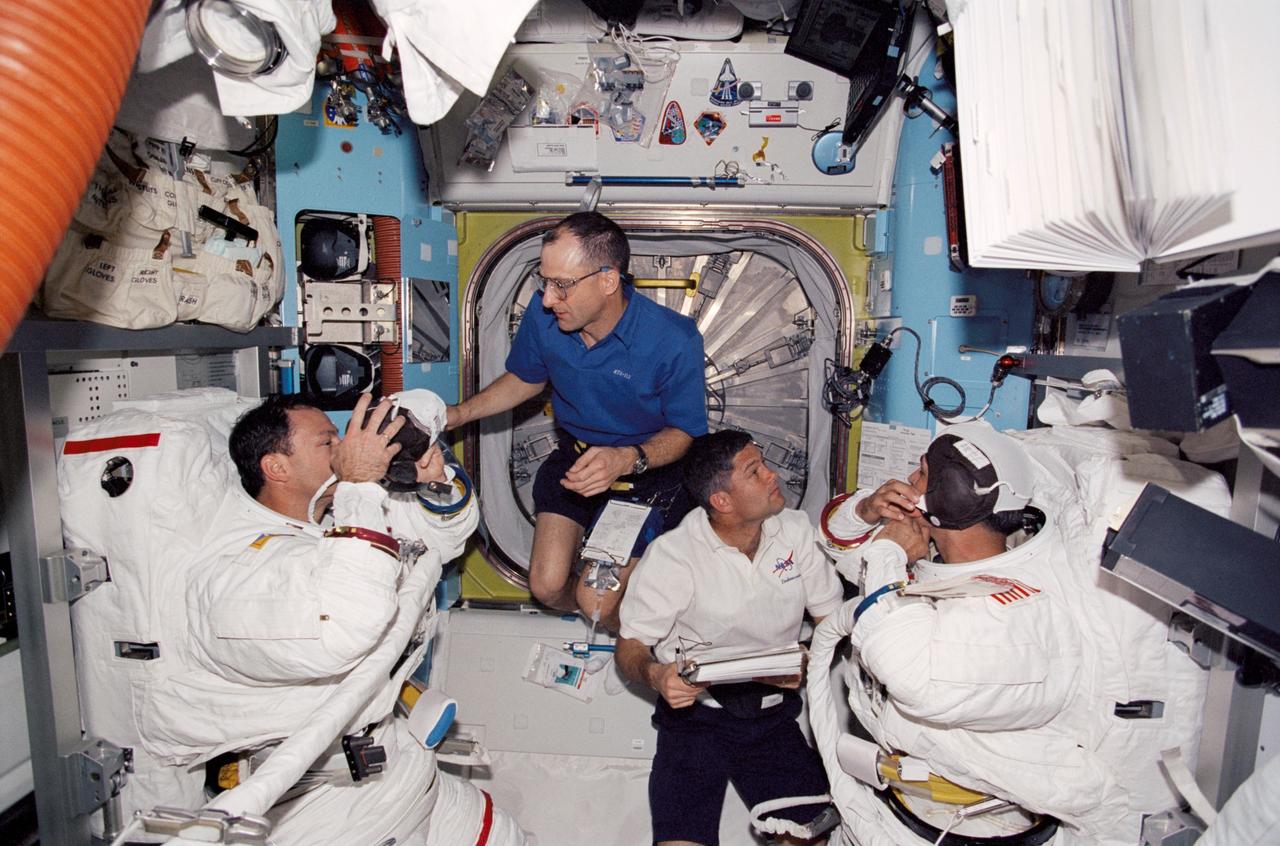
STS113-340-024 (28 November 2002) --- Astronauts Michael E. Lopez-Alegria (left) and John Herrington, both STS-113 mission specialists, assisted by astronauts Donald R. Pettit, Expedition Six NASA ISS science officer, and Paul S. Lockhart, STS-113 pilot, apply the final touches on their Extravehicular Mobility Unit (EMU) spacesuit. Moments later, Lopez-Alegria and Herrington went on to begin the second of three spacewalks to perform work on the International Space Station (ISS).
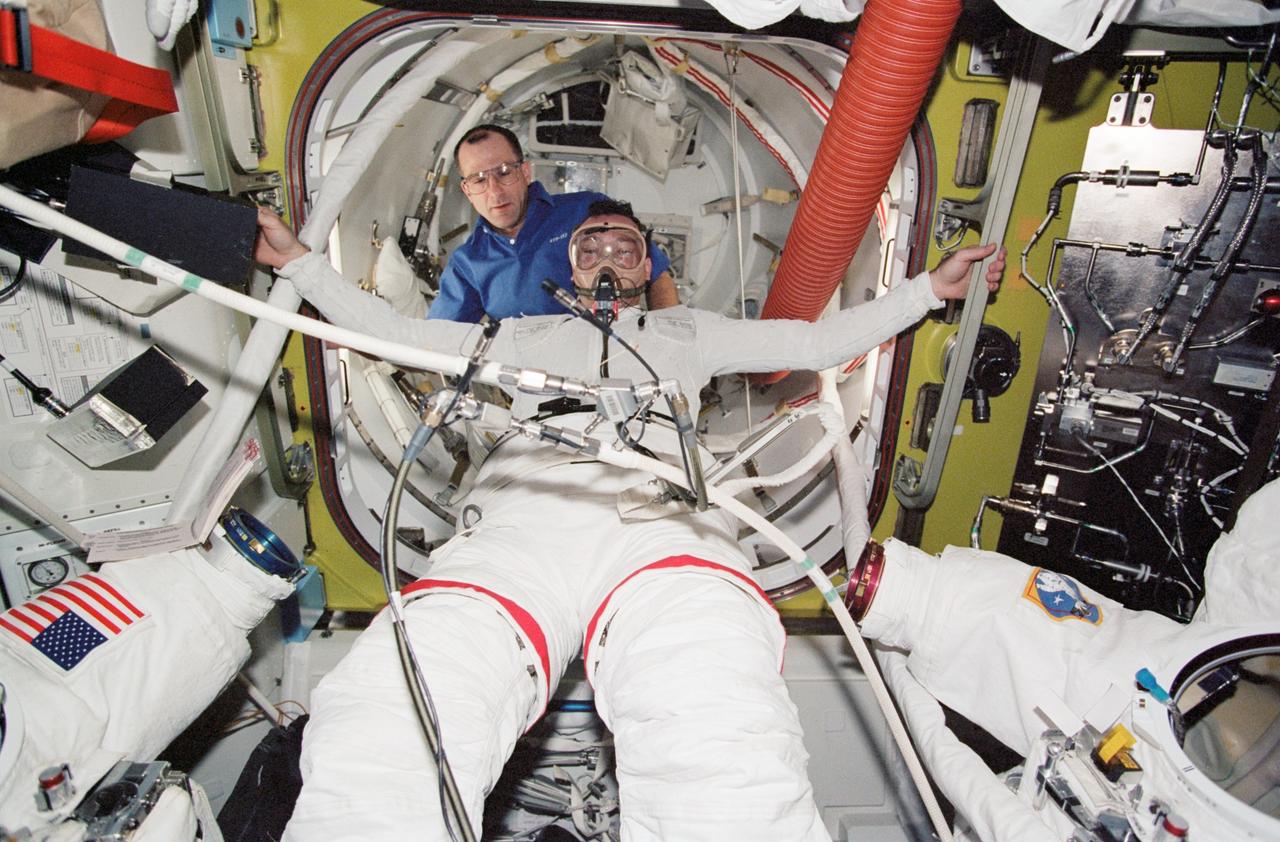
STS113-340-015 (28 November 2002) --- Astronaut Michael E. Lopez-Alegria, STS-113 mission specialist, is photographed in the midst of a pre-breathe exercise in preparation for the mission’s second session of extravehicular activity (EVA) in the Quest Airlock on the International Space Station (ISS). Astronaut Donald R. Pettit, Expedition Six NASA ISS science officer, assisted Lopez-Alegria.
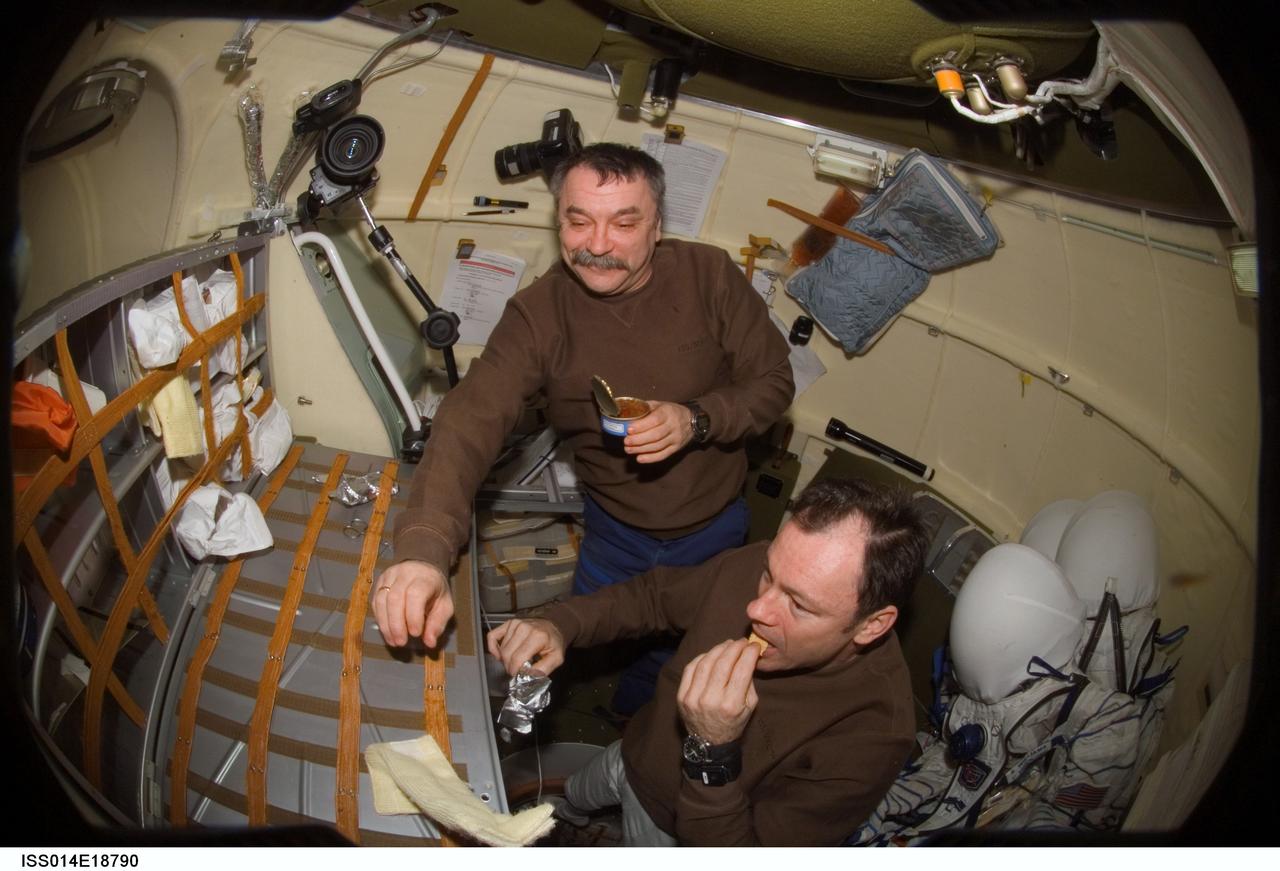
ISS014-E-18790 (29 March 2007) --- Astronaut Michael E. Lopez-Alegria (foreground), Expedition 14 commander and NASA space station science officer; cosmonaut Mikhail Tyurin, Soyuz commander and flight engineer representing Russia's Federal Space Agency; and astronaut Sunita L. Williams (out of frame), flight engineer, share a meal in the orbital module of the Soyuz 13 (TMA-9) spacecraft docked to the International Space Station. Later the crewmembers donned their Russian Sokol launch and entry suits and relocated the Soyuz from the Zarya Module nadir port to the Zvezda Service Module aft port in preparation for the arrival of Expedition 15.
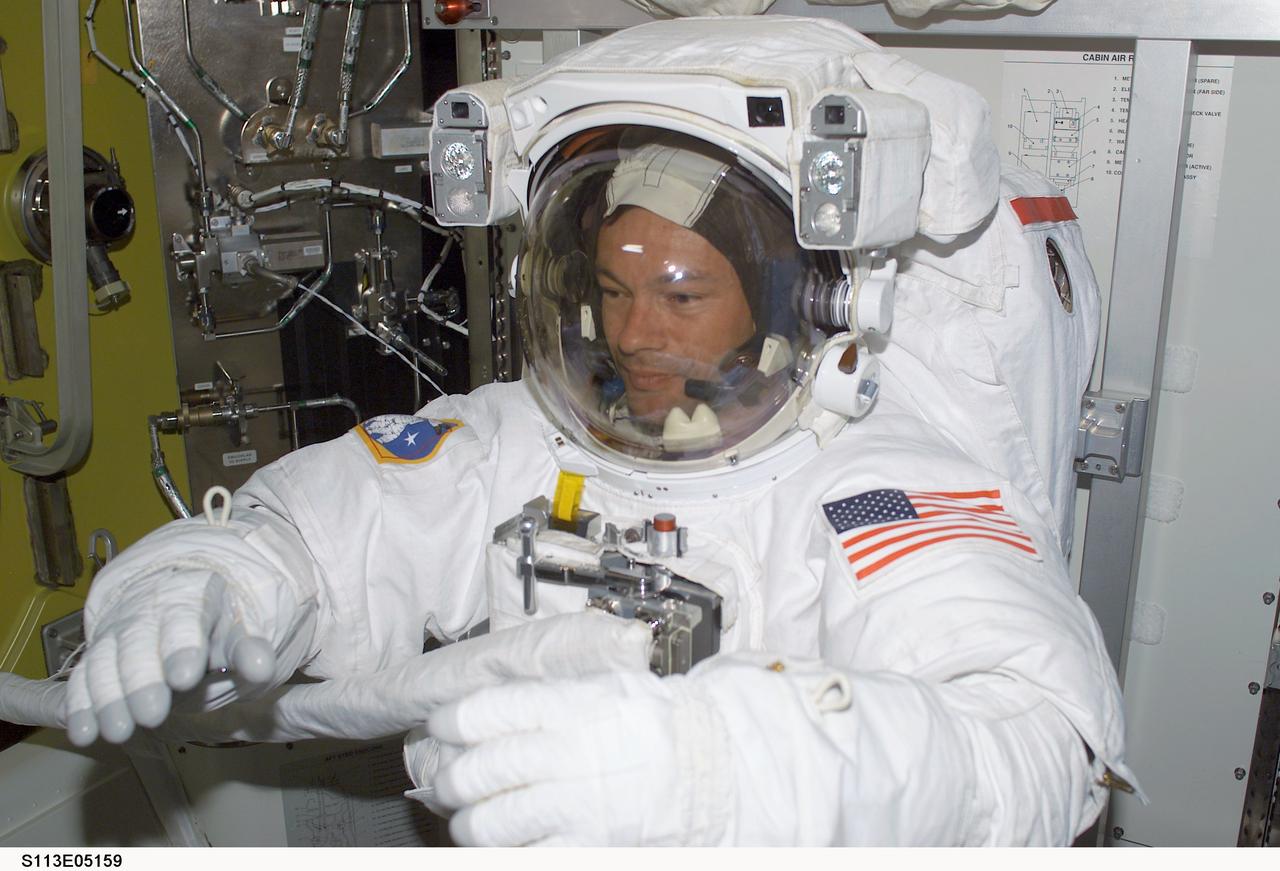
STS113-E-05159 (26 November 2002) --- Astronaut Michael E. Lopez-Alegria completes final touches on his extravehicular mobility unit (EMU) space suit aboard the International Space Station (ISS). Moments later, astronauts Lopez-Alegria and John B. Herrington went on to begin the first of three spacewalks to perform work on the station. With the assistance of the rest of the shuttle and station crewmembers who worked inside the shirt sleeve environments of the two docked spacecraft, the two mission specialists completed the six hour, 45-minute spacewalk and successfully hooked up connections between the Port One (P1) truss and the rest of the station.
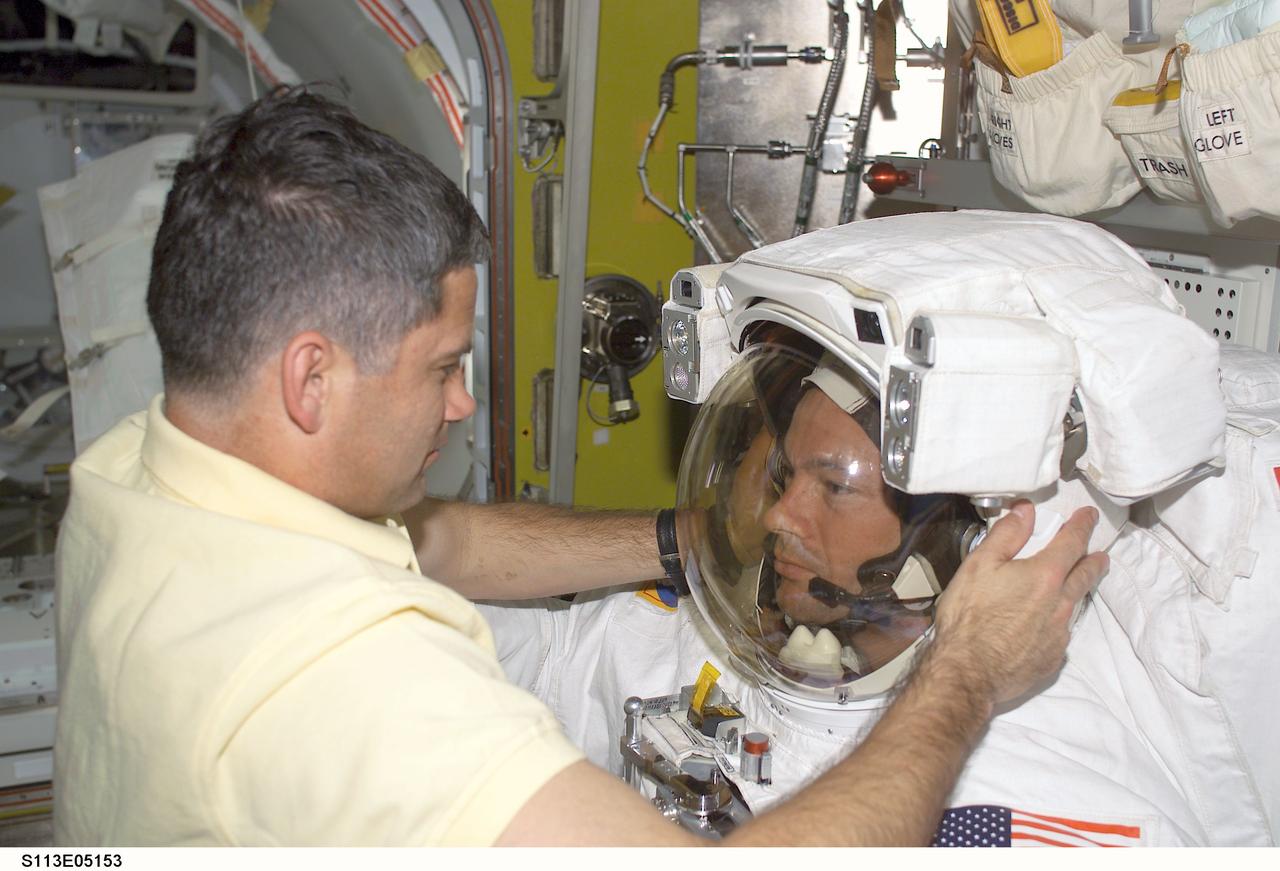
STS113-E-05153 (26 November 2002) --- Astronaut Paul S. Lockhart, pilot, assists astronaut Michael E. Lopez-Alegria with final touches on his extravehicular mobility unit (EMU) space suit. Moments later, astronauts Lopez-Alegria and John B. Herrington went on to begin the first of three spacewalks to perform work on the International Space Station (ISS). With the assistance of the rest of the shuttle and station crewmembers who worked inside the shirt sleeve environments of the two docked spacecraft, the two mission specialists successfully hooked up connections between the Port One (P1) truss and the rest of the station.
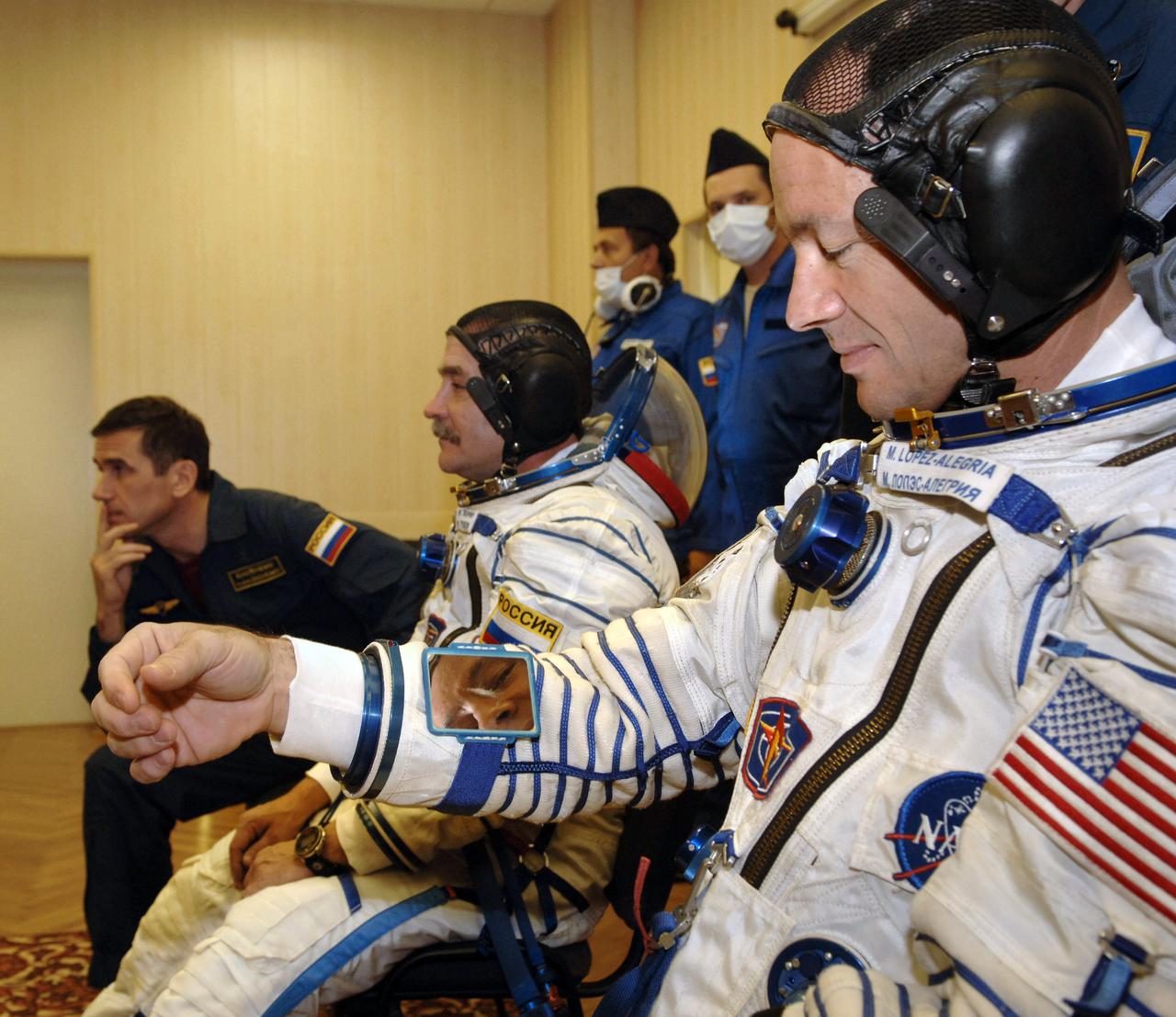
Expedition 14 Commander Michael Lopez-Alegria, right, and Soyuz Commander and Expedition 14 Flight Engineer Mikhail Tyurin don their Russian Sokol suits the Baikonur Cosmodrome prior to launch, Monday, Sept. 18, 2006, in Kazakhstan. The Soyuz TMA-9 spacecraft launched from the Baikonur Cosmodrome at 10:09 a.m. local time carrying Expedition 14 Commander Michael Lopez-Alegria, Soyuz Commander and Expedition 14 Flight Engineer Mikhail Tyurin and American spaceflight participant Anousheh Ansari, who will spend nine days on the International Space Station under a commercial agreement with the Russian Federal Space Agency. Photo Credit: (NASA/Bill Ingalls)
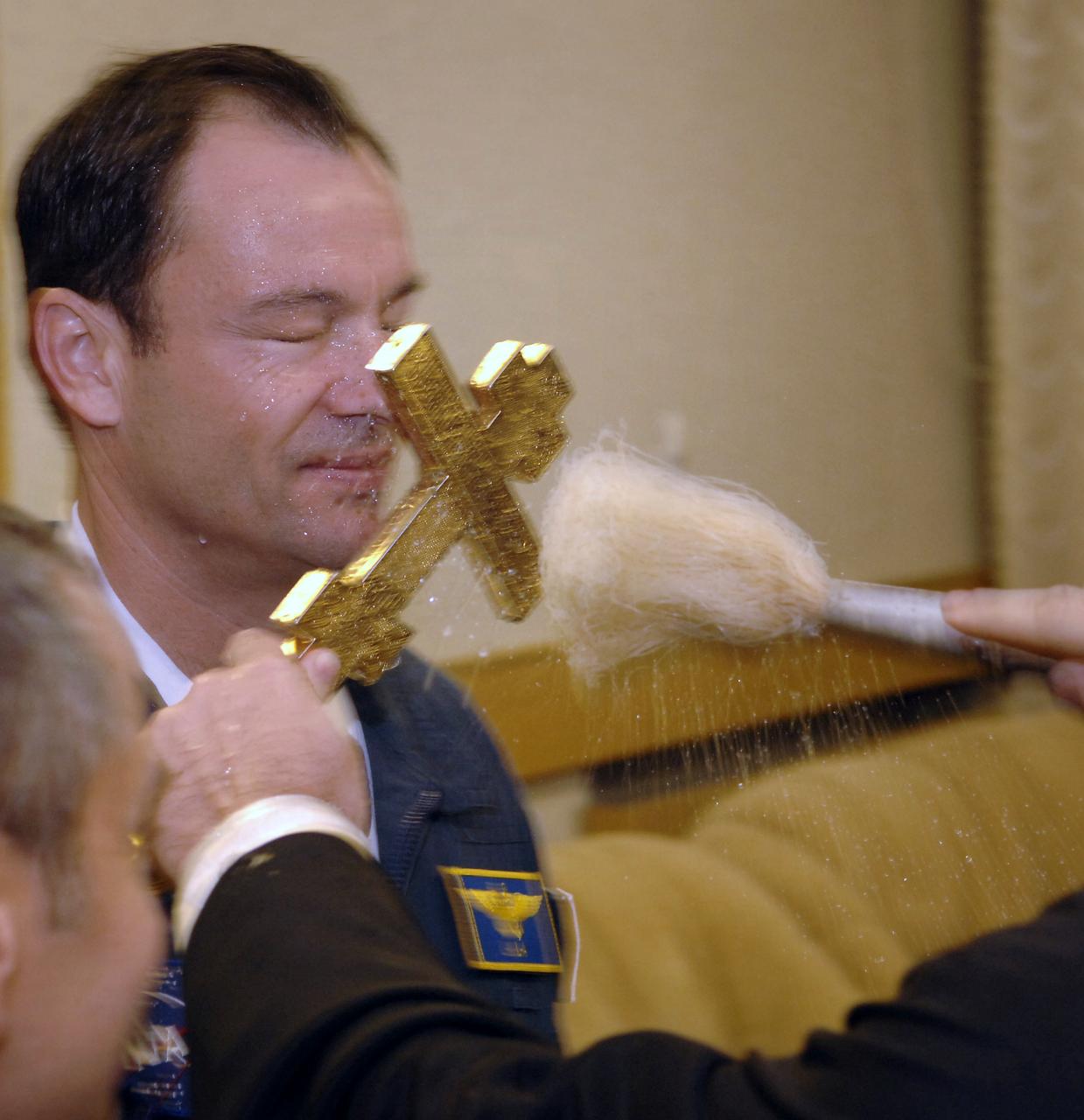
Expedition 14 Commander Michael Lopez-Alegria receives a blessing at the Cosmonaut Hotel the morning of his launch onboard the Soyuz TMA-9 spacecraft, Monday, Sept. 18, 2006 in Baikonur, Kazakhstan. The Soyuz TMA-9 spacecraft launched from the Baikonur Cosmodrome carrying Expedition 14 Commander Michael Lopez-Alegria, Soyuz Commander and Expedition 14 Flight Engineer Mikhail Tyurin and American spaceflight participant Anousheh Ansari, who will spend nine days on the International Space Station under a commercial agreement with the Russian Federal Space Agency. Photo Credit: (NASA/Bill Ingalls)
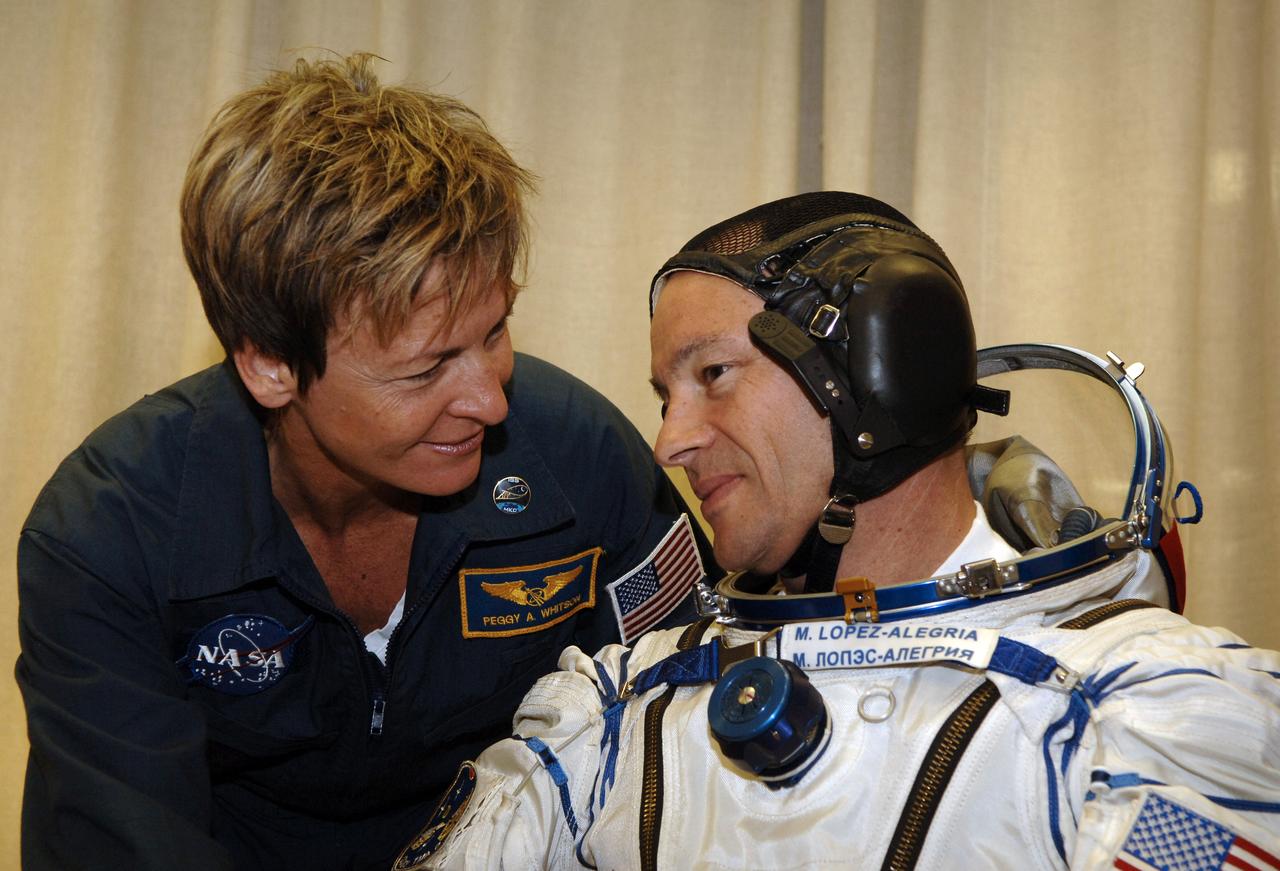
Expedition 14 Commander Michael Lopez-Alegria, right, having donned his Russian Sokol suit at the Baikonur Cosmodrome, takes a moment to talk with Expedition 14 backup crew member Peggy Whitson, Monday, Sept. 18, 2006, in Kazakhstan. The Soyuz TMA-9 spacecraft launched from the Baikonur Cosmodrome at 10:09 a.m. local time carrying Expedition 14 Commander Michael Lopez-Alegria, Soyuz Commander and Expedition 14 Flight Engineer Mikhail Tyurin and American spaceflight participant Anousheh Ansari, who will spend nine days on the International Space Station under a commercial agreement with the Russian Federal Space Agency. Photo Credit: (NASA/Bill Ingalls)
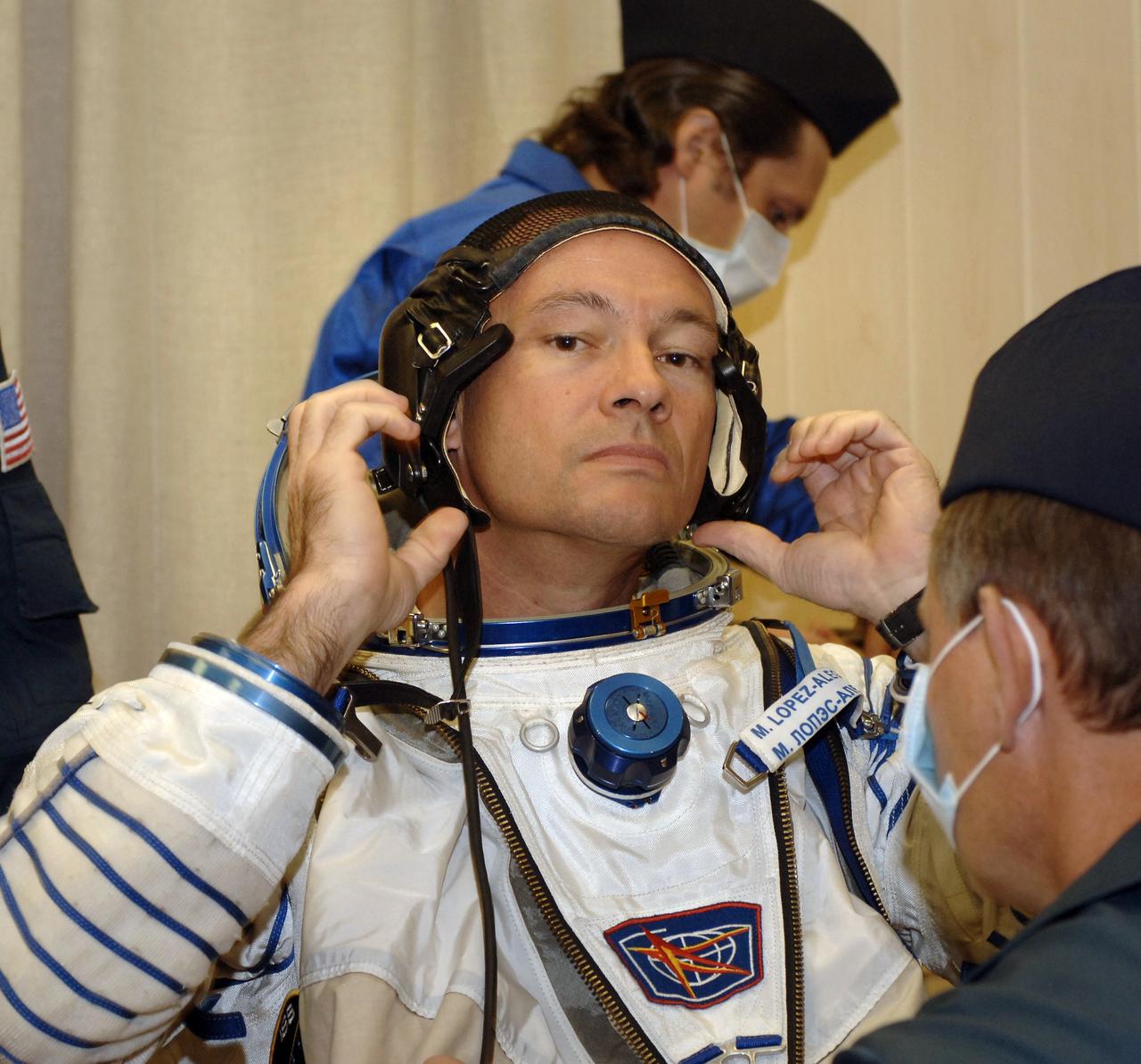
Expedition 14 Commander Michael Lopez-Alegria dons his Russian Sokol suit the Baikonur Cosmodrome, Monday, Sept. 18, 2006, in Kazakhstan. The Soyuz TMA-9 spacecraft launched from the Baikonur Cosmodrome at 10:09 a.m. local time carrying Expedition 14 Commander Michael Lopez-Alegria, Soyuz Commander and Expedition 14 Flight Engineer Mikhail Tyurin and American spaceflight participant Anousheh Ansari, who will spend nine days on the International Space Station under a commercial agreement with the Russian Federal Space Agency. Photo Credit: (NASA/Bill Ingalls)
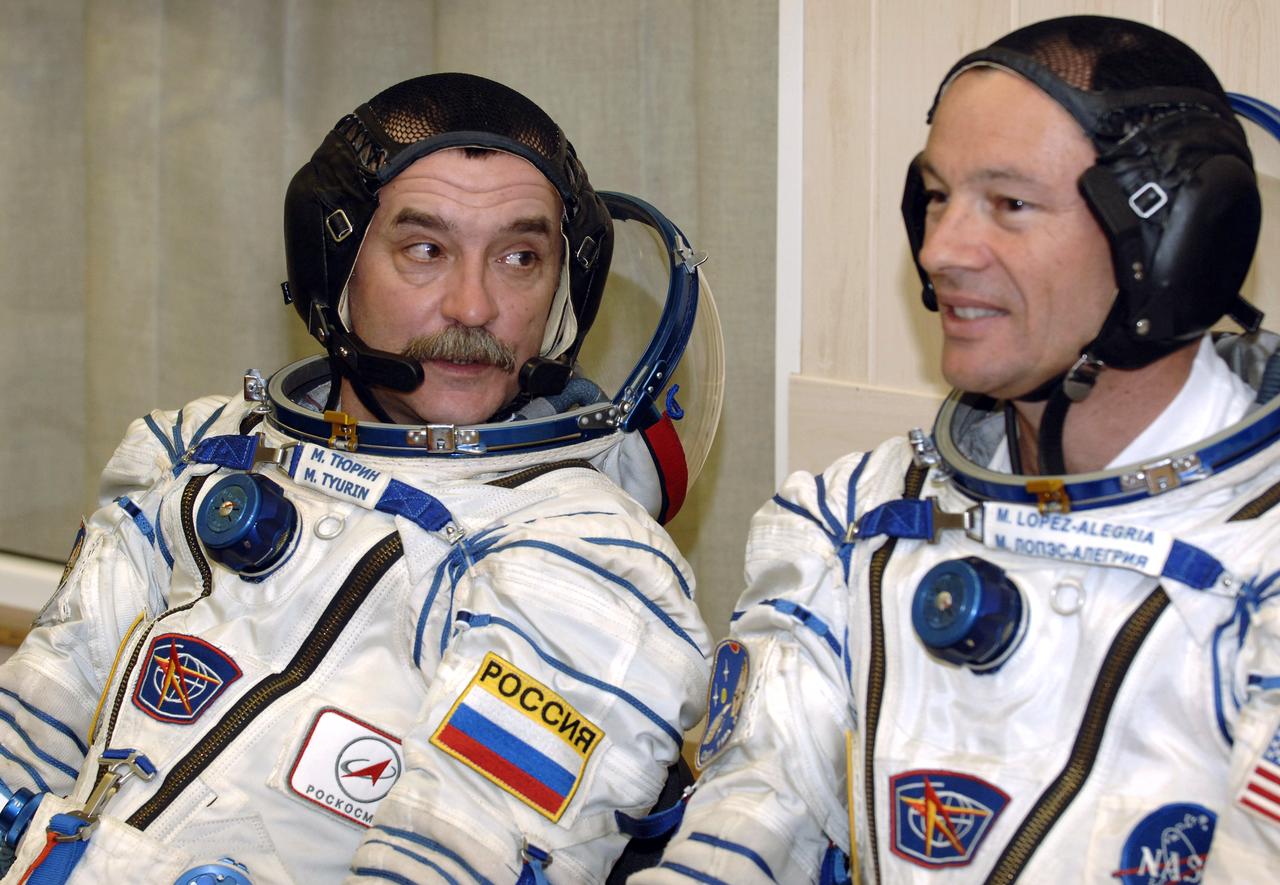
Expedition 14 Flight Engineer and Soyuz Commander Mikhail Tyurin, left, and Expedition 14 Commander Michael Lopez-Alegria talk as they prepare for pressure checks on their Russian Sokol suits at the Baikonur Cosmodrome, Monday, Sept. 18, 2006, in Kazakhstan. Their Soyuz TMA-9 spacecraft launched from the Baikonur Cosmodrome at 10:09 a.m. local time carrying Expedition 14 Commander Michael Lopez-Alegria, Soyuz Commander and Expedition 14 Flight Engineer Mikhail Tyurin and American spaceflight participant Anousheh Ansari, who will spend nine days on the International Space Station under a commercial agreement with the Russian Federal Space Agency. Photo Credit: (NASA/Bill Ingalls)
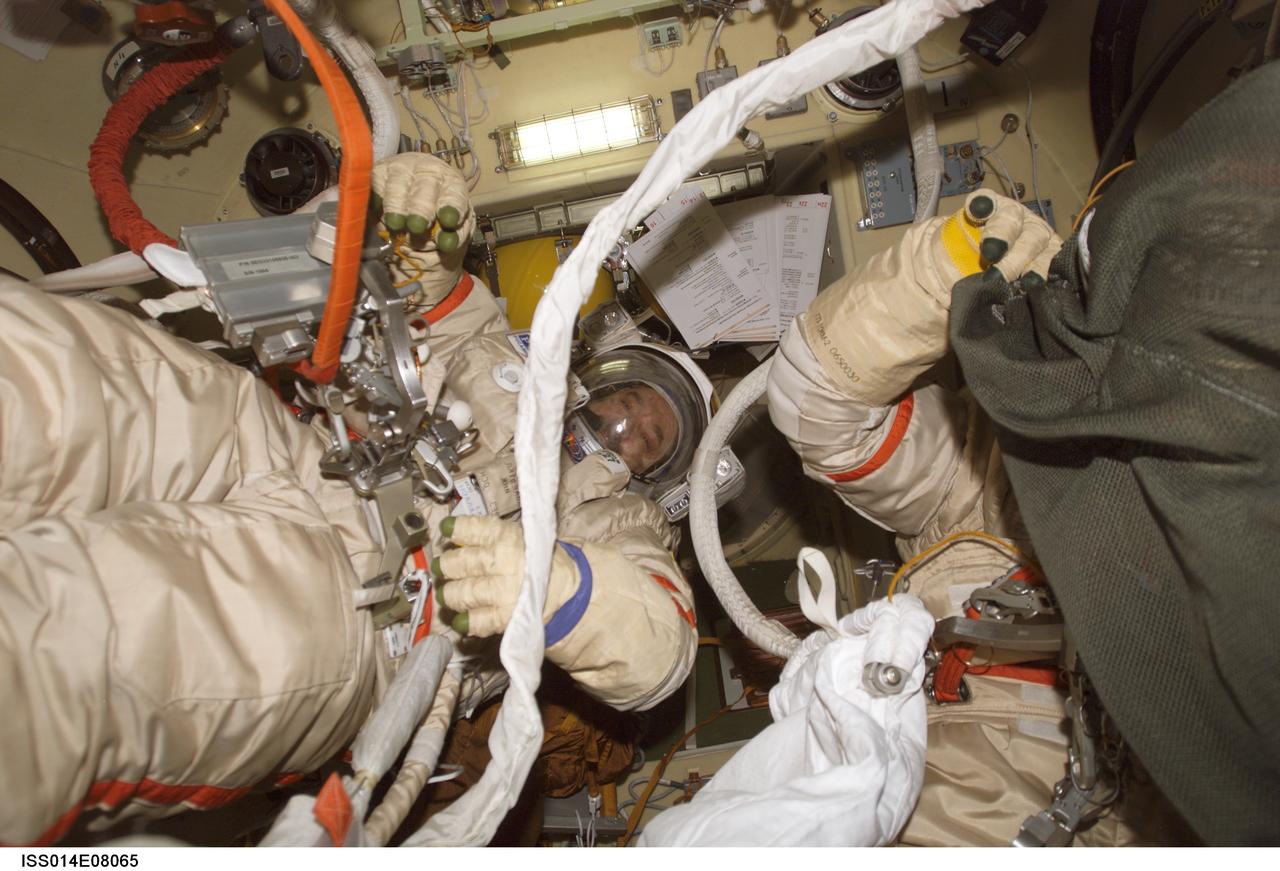
ISS014-E-08065 (17 Nov. 2006) --- Cosmonaut Mikhail Tyurin (left), Expedition 14 flight engineer representing Russia's Federal Space Agency, and astronaut Michael E. Lopez-Alegria (partially obscured), commander, participate in an Russian Orlan spacesuit translation exercise in the Pirs Docking Compartment of the International Space Station as they prepare for their spacewalk scheduled for Nov. 22.
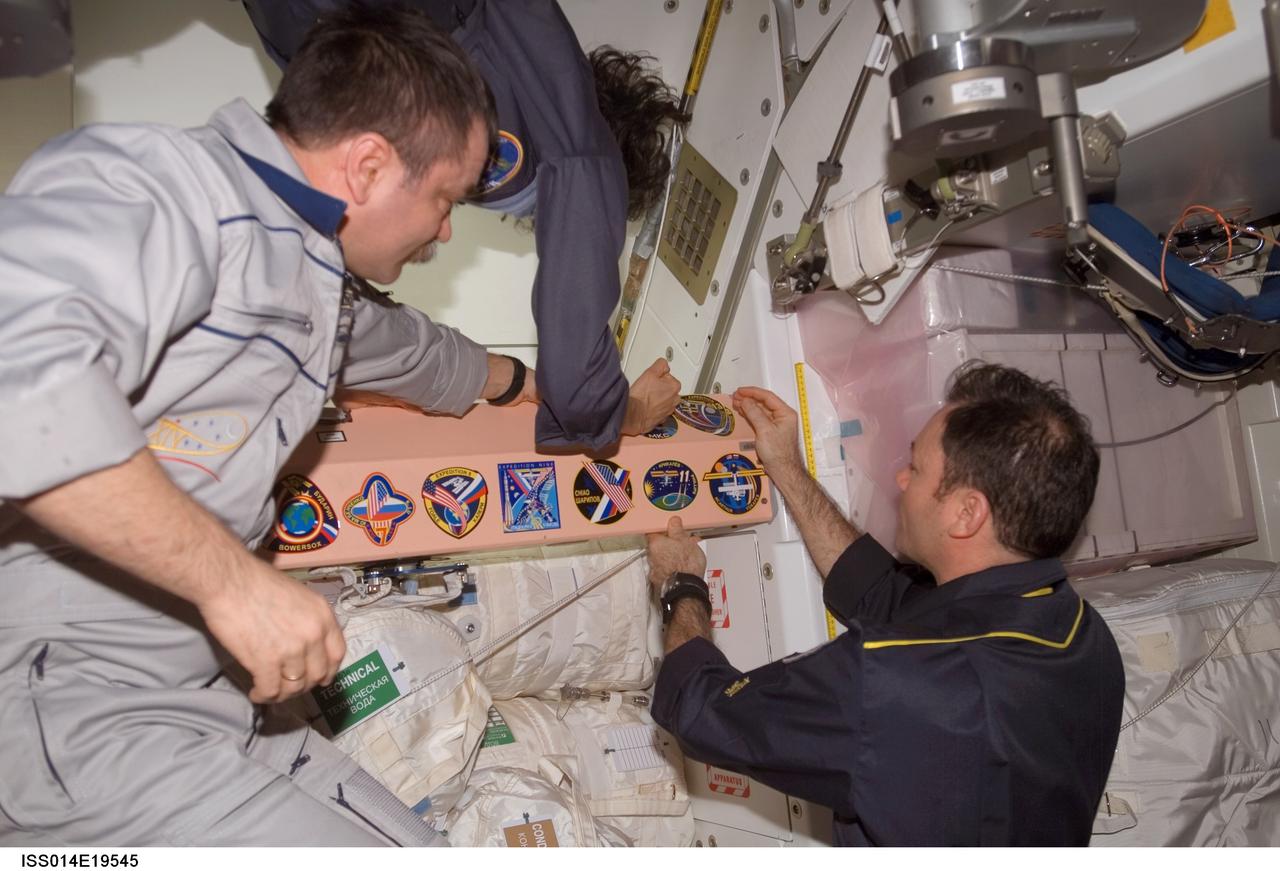
ISS014-E-19545 (17 April 2007) --- Astronauts Michael E. Lopez-Alegria (right), Expedition 14 commander and NASA space station science officer; Sunita L. Williams, flight engineer; and cosmonaut Mikhail Tyurin (left), flight engineer representing Russia's Federal Space Agency, add the Expedition 14 patch to the Unity node's growing collection of insignias representing crews who have lived and worked on the International Space Station.
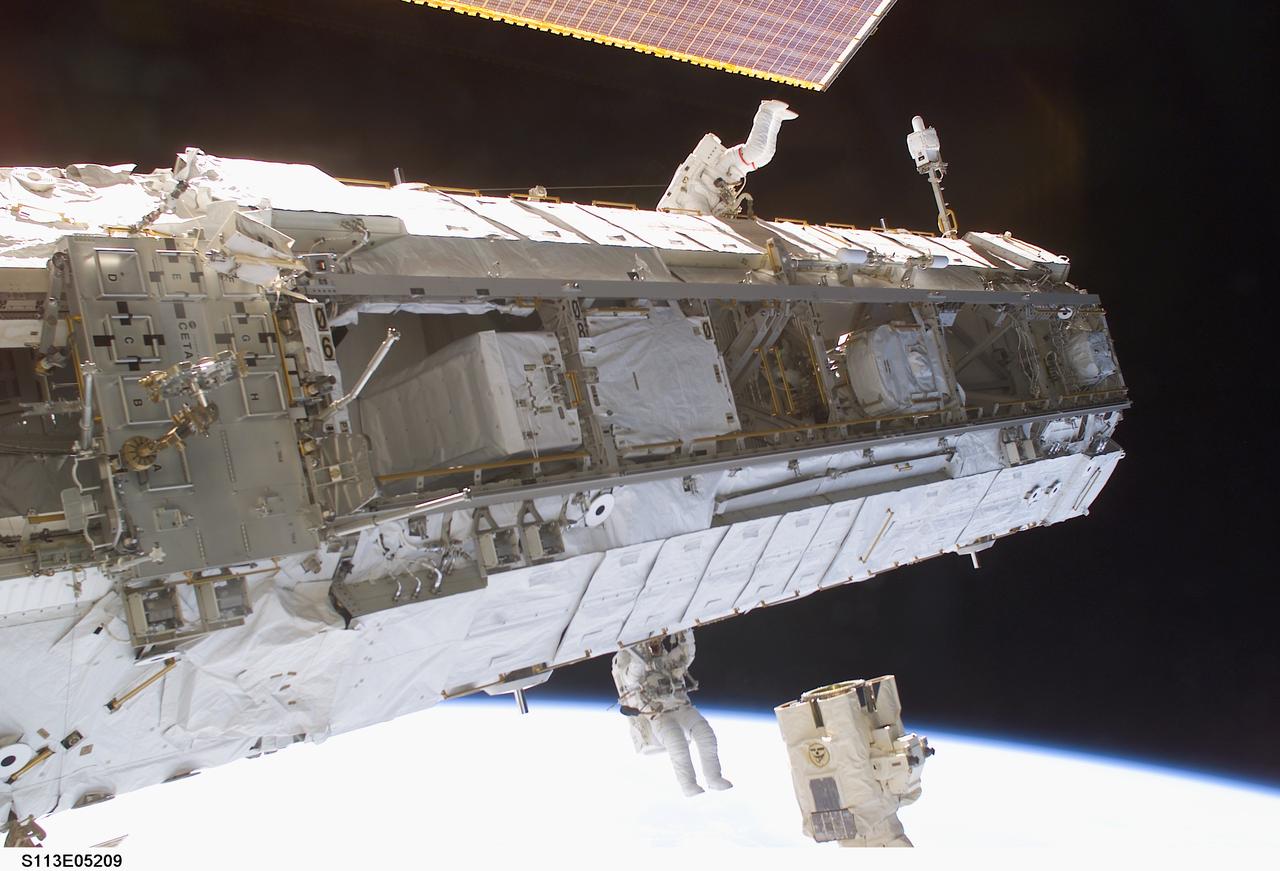
STS113-E-05209 (28 November 2002) --- Astronauts Michael E. Lopez-Alegria (red stripes) and John B. Herrington, STS-113 mission specialists, work on the newly installed Port One (P1) truss on the International Space Station (ISS) during the mission’s second scheduled session of extravehicular activity (EVA). The spacewalk lasted 6 hours, 10 minutes. The end effector of the Canadarm2 / Space Station Remote Manipulator System (SSRMS) and Earth’s horizon are visible in bottom frame.
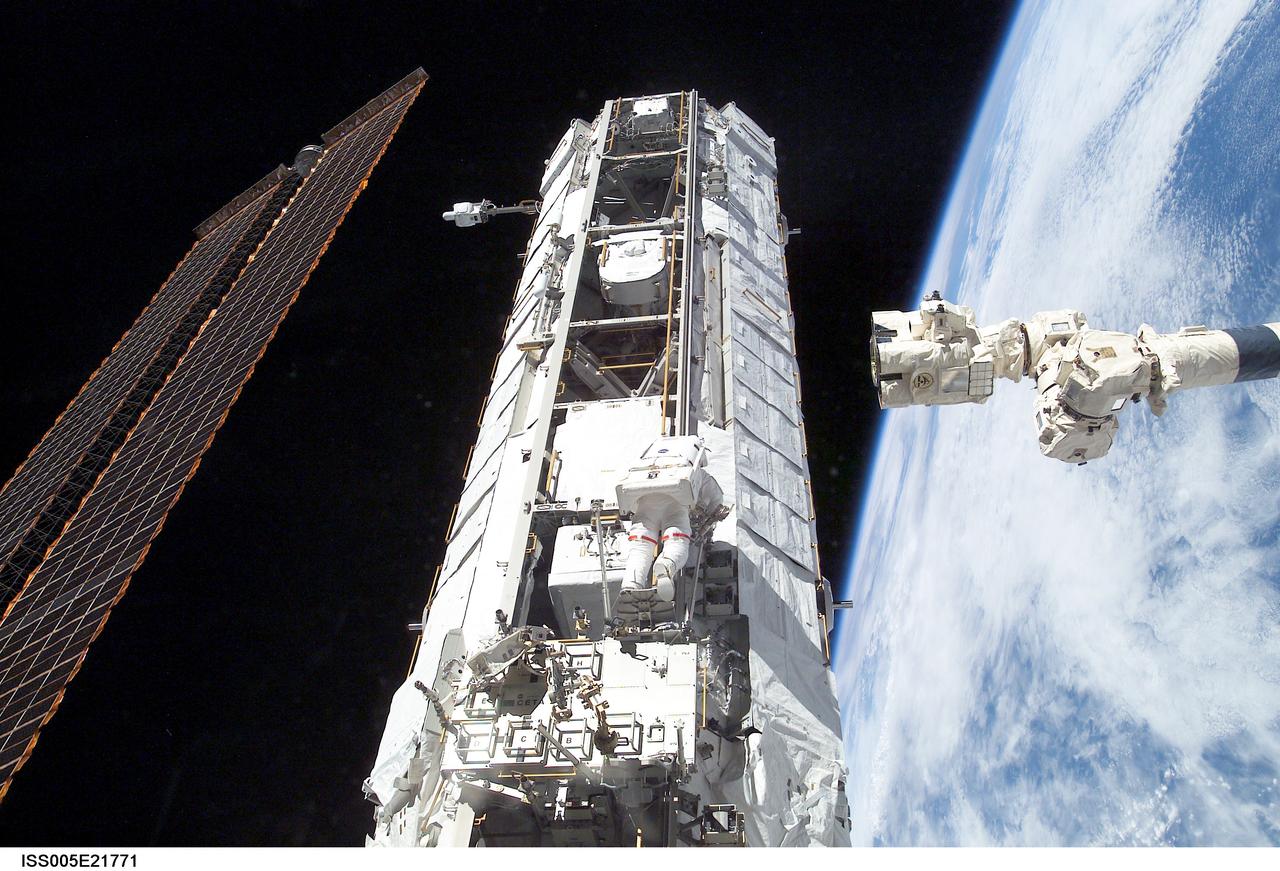
ISS005-E-21771 (28 November 2002) --- Astronaut Michael E. Lopez-Alegria, STS-113 mission specialist, works on the newly installed Port One (P1) truss on the International Space Station (ISS) during a session of extravehicular activity (EVA). The end effector of the Canadarm2 / Space Station Remote Manipulator System (SSRMS) and Earth’s horizon are visible in right frame.
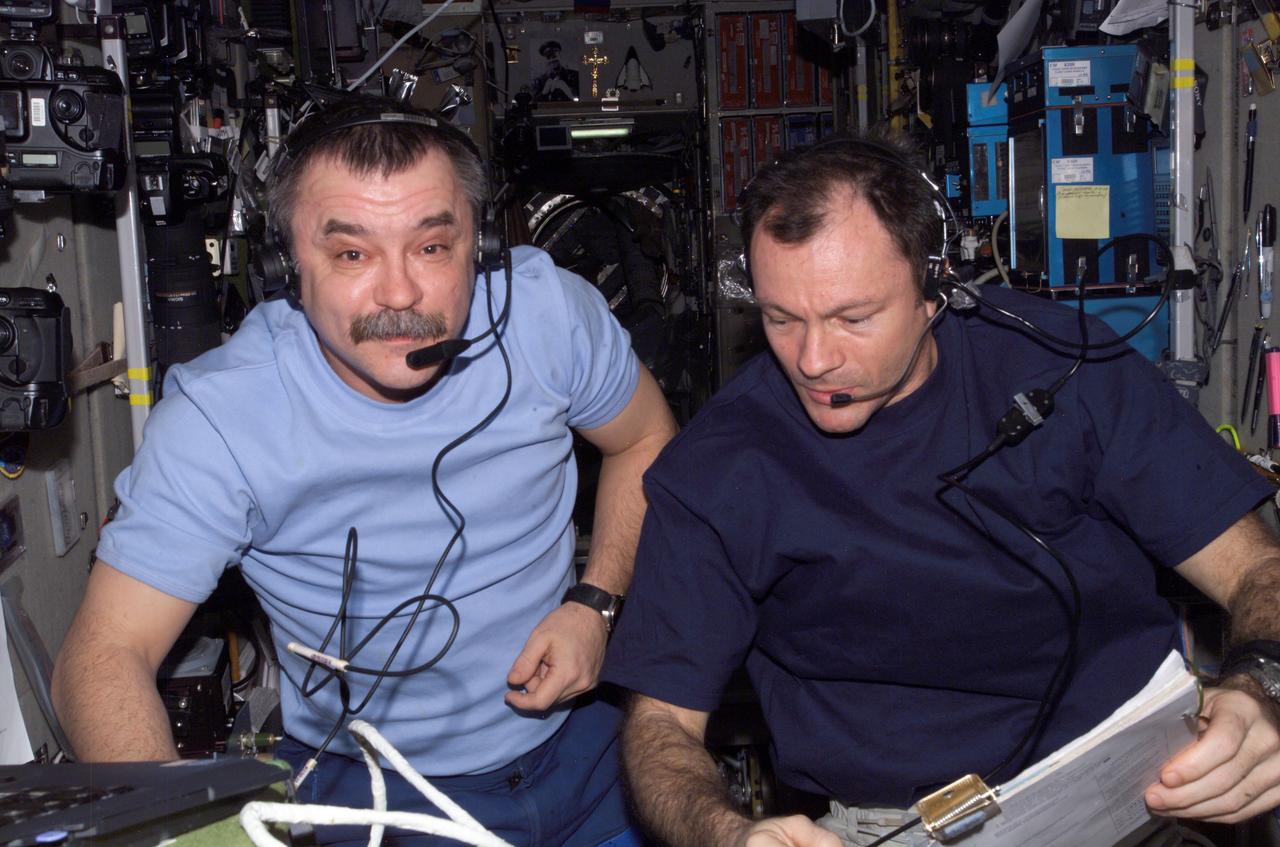
ISS014-E-12499 (19 Jan. 2007) --- Astronaut Michael Lopez-Alegria (right), Expedition 14 commander, and Russia's Federal Space Agency cosmonaut Mikhail Tyurin, flight engineer, photographed at control panels in the Zvezda Service Module of the International Space Station during the docking of Progress 24 resupply vehicle to the Pirs Docking Compartment.

ISS014-E-08323 (27 Nov. 2006) --- The Expedition 14 crewmembers share a meal at the galley in the Zvezda Service Module of the International Space Station. Pictured are astronaut Michael E. Lopez-Alegria (left), commander and NASA space station science officer, and cosmonaut Mikhail Tyurin, flight engineer representing Russia's Federal Space Agency.
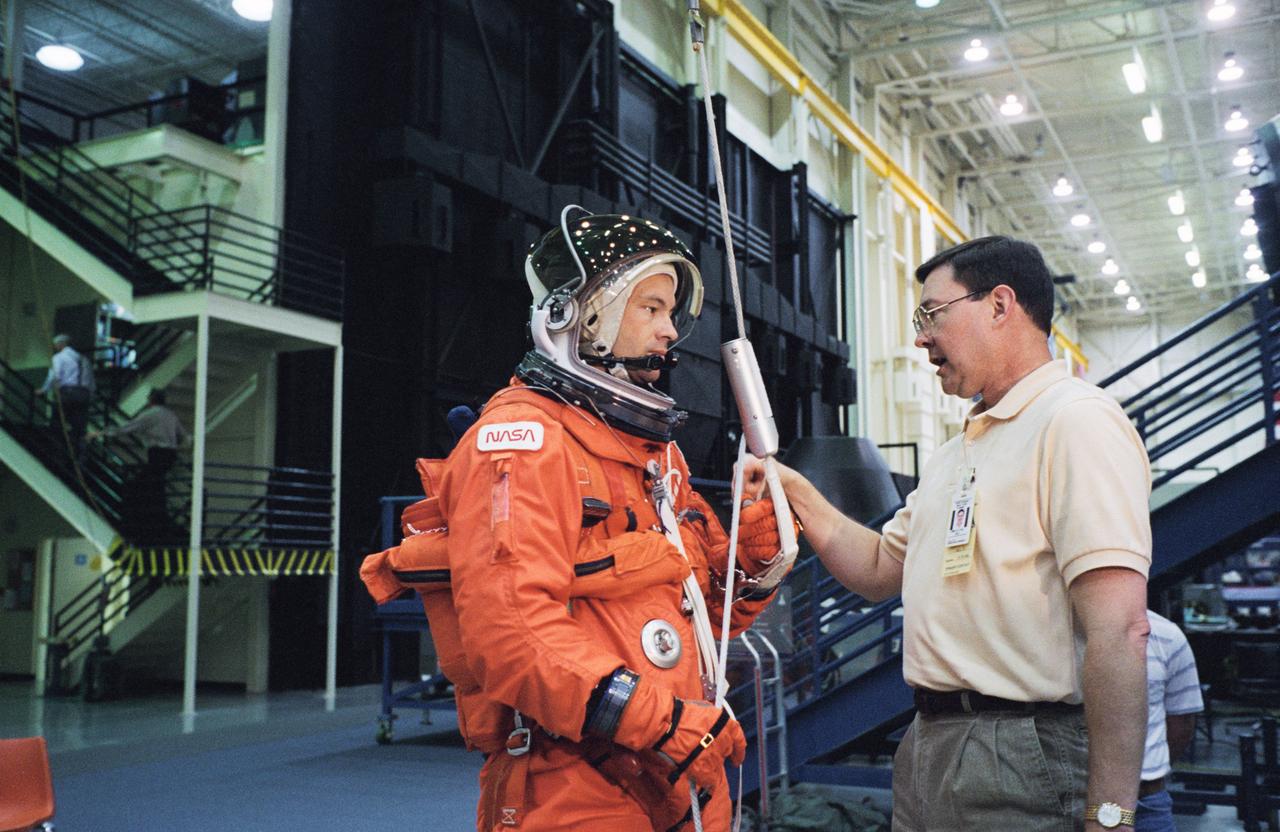
S95-09159 (27 Apr. 1995) --- Attired in a training version of the Shuttle partial pressure launch and entry garment, astronaut Michael E. Lopez-Alegria, is briefed on the use of the Sky-genie device by Scott Gill. The briefing was part of an emergency egress training session in the Johnson Space Center?s (JSC) Systems Integration Facility. Two high fidelity training facilities in this lab are used to help prepare crew members for emergency procedures and to provide realistic settings for rehearsals of the launch and entry phases.
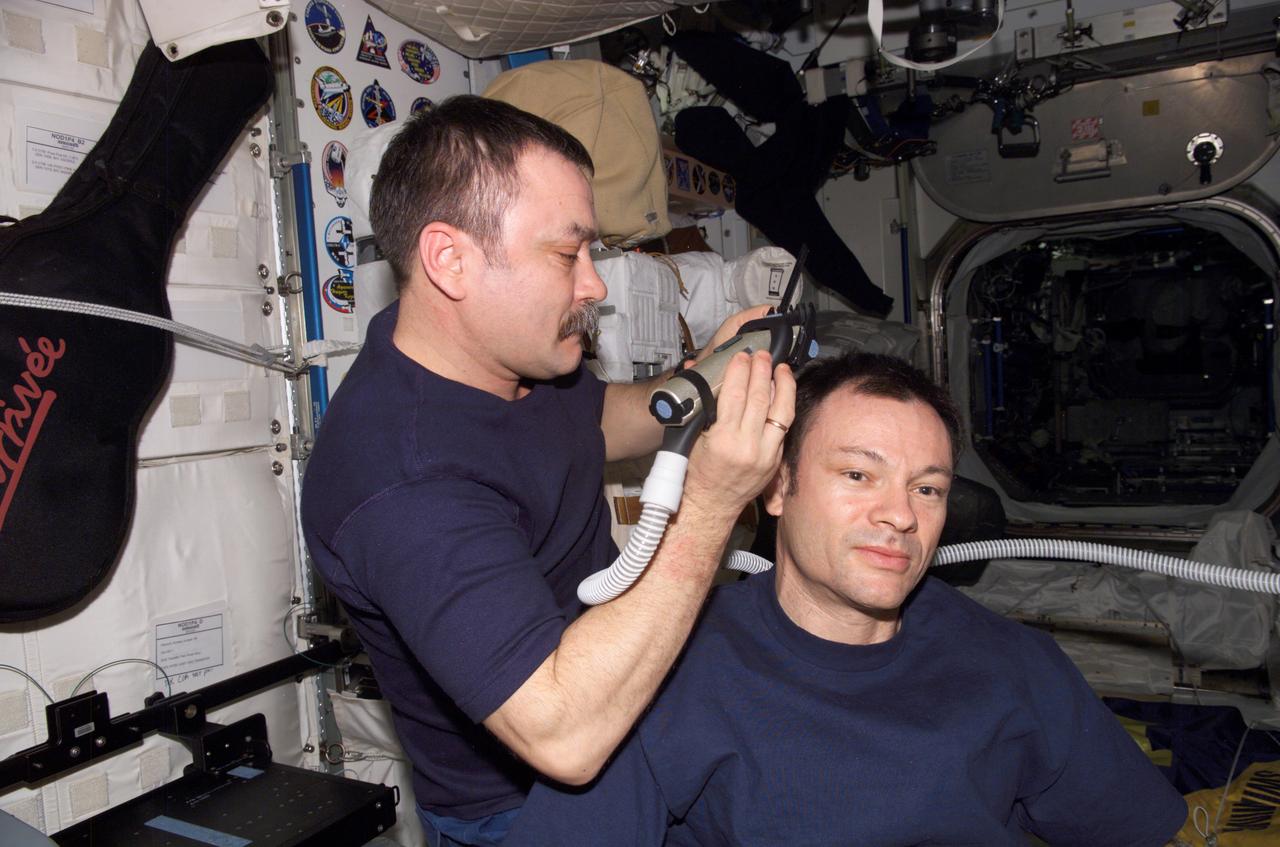
ISS014-E-14031 (20 Feb. 2007) --- Cosmonaut Mikhail Tyurin, Expedition 14 flight engineer representing Russia's Federal Space Agency, trims commander Michael E. Lopez-Alegria's hair in the Unity node of the International Space Station. Tyurin used hair clippers fashioned with a vacuum device to garner freshly cut hair.
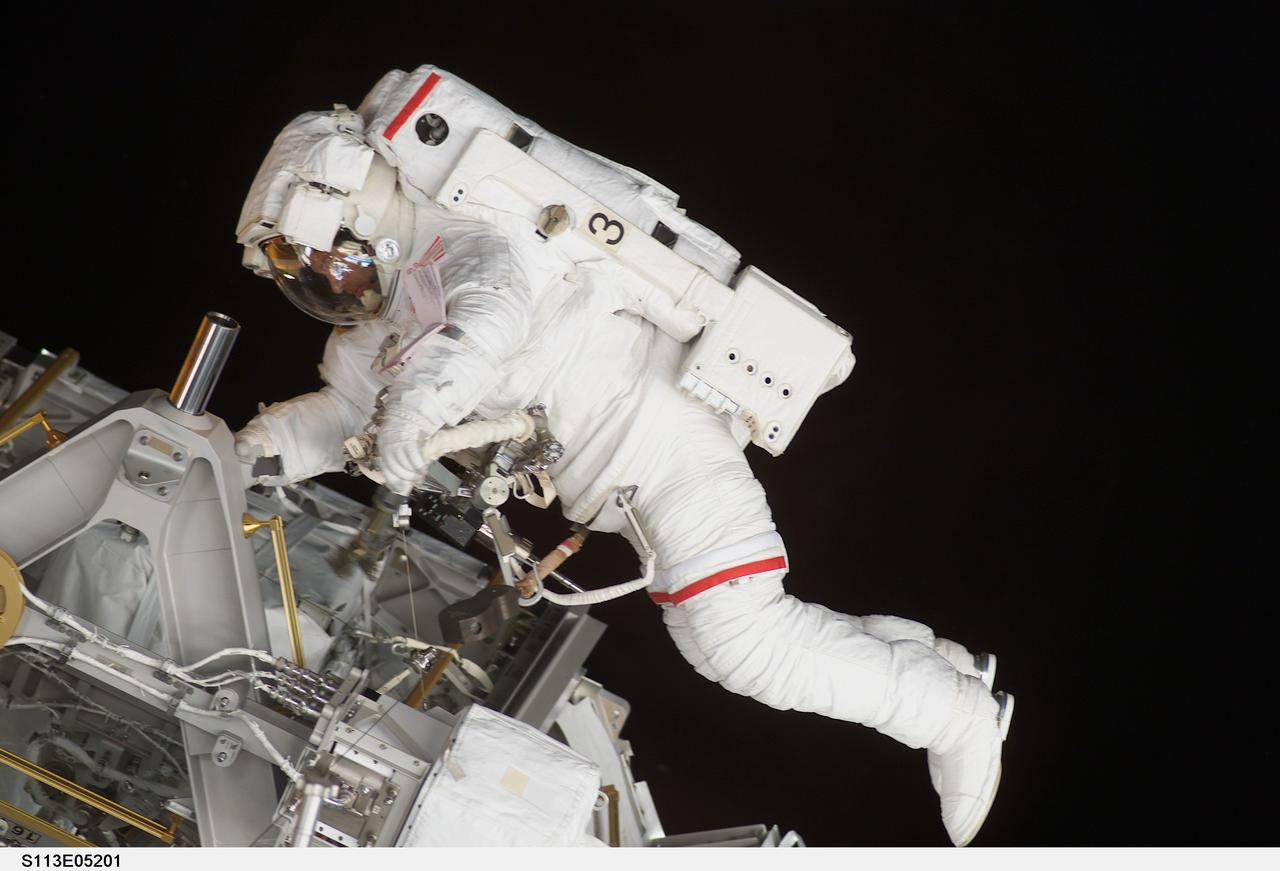
STS113-E-05201 (28 November 2002) --- Astronaut Michael E. Lopez-Alegria, STS-113 mission specialist, works on the newly installed Port One (P1) truss on the International Space Station (ISS) during the mission’s second scheduled session of extravehicular activity (EVA). The spacewalk lasted 6 hours, 10 minutes.
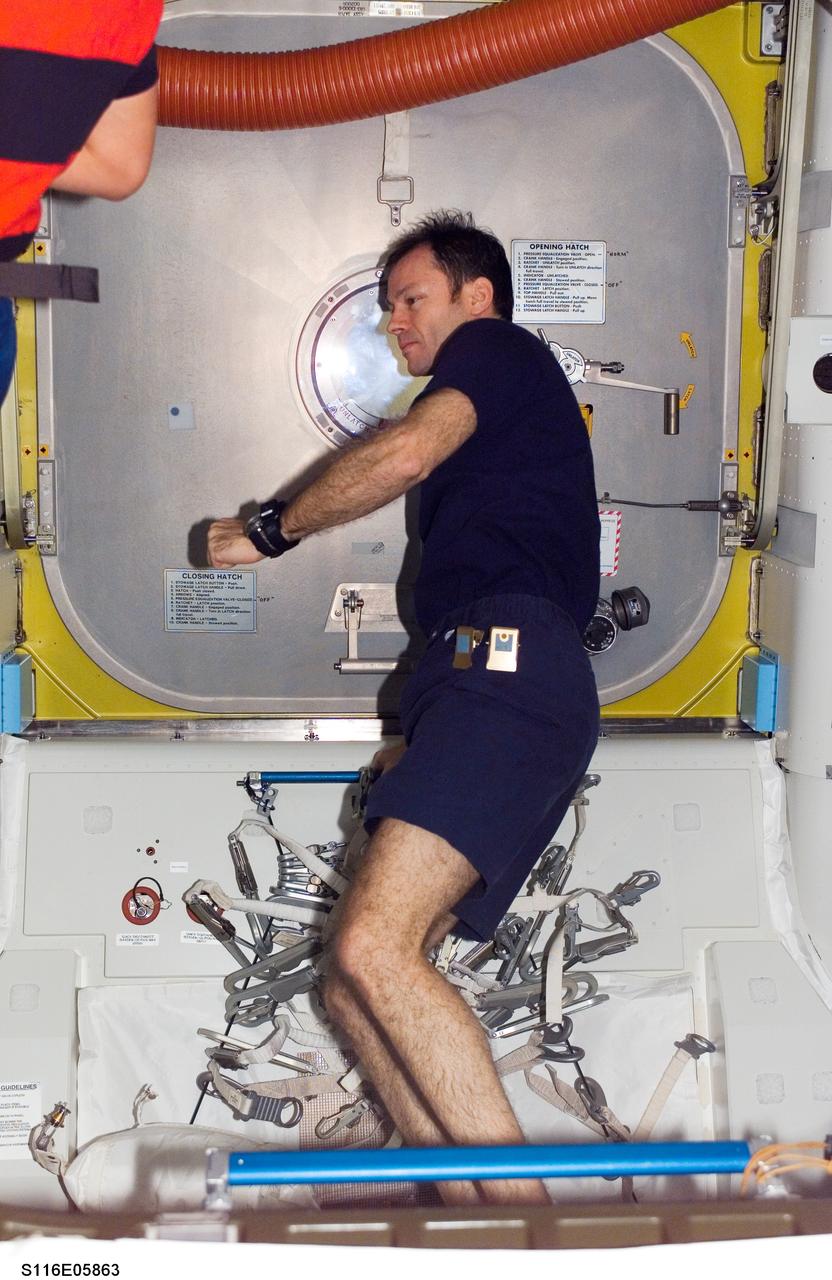
S116-E-05863 (12 Dec. 2006) --- Astronaut Michael E. Lopez-Alegria, Expedition 14 commander and NASA space station science officer, closes the interior hatch to the Quest Airlock of the International Space Station. Astronaut Robert L. Curbeam, Jr. and European Space Agency (ESA) astronaut Christer Fuglesang, both STS-116 mission specialists, were about to exit the airlock for the mission's first session of extravehicular activity (EVA).
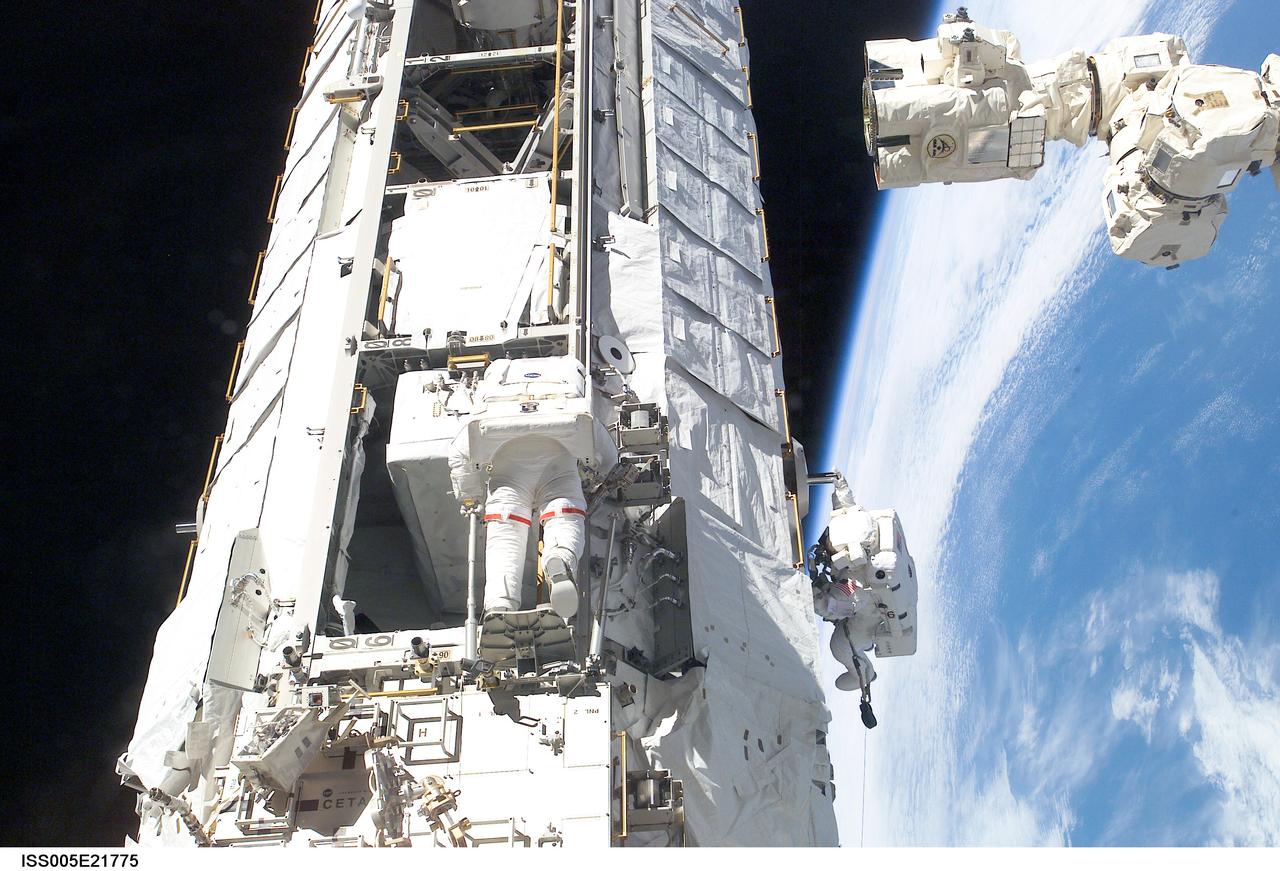
ISS005-E-21775 (28 November 2002) --- Astronauts Michael E. Lopez-Alegria (left) and John B. Herrington, STS-113 mission specialists, work on the newly installed Port One (P1) truss on the International Space Station (ISS) during a session of extravehicular activity (EVA). The end effector of the Canadarm2 / Space Station Remote Manipulator System (SSRMS) and Earth’s horizon are visible in right frame.
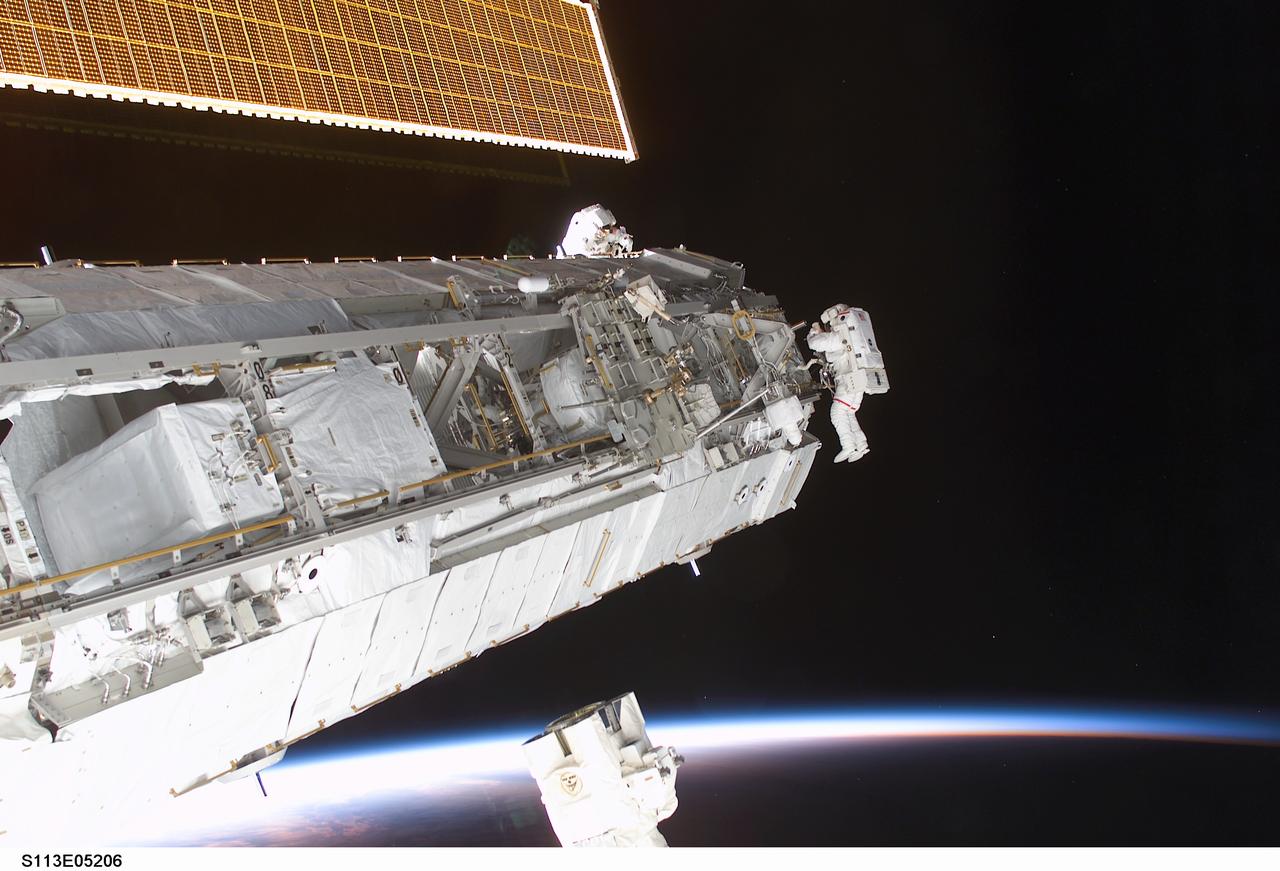
STS113-E-05206 (28 November 2002) --- Astronauts Michael E. Lopez-Alegria (red stripes) and John B. Herrington, STS-113 mission specialists, work on the newly installed Port One (P1) truss on the International Space Station (ISS) during the mission’s second scheduled session of extravehicular activity (EVA). The spacewalk lasted 6 hours, 10 minutes. The end effector of the Canadarm2 / Space Station Remote Manipulator System (SSRMS) and Earth’s horizon are visible in bottom frame.
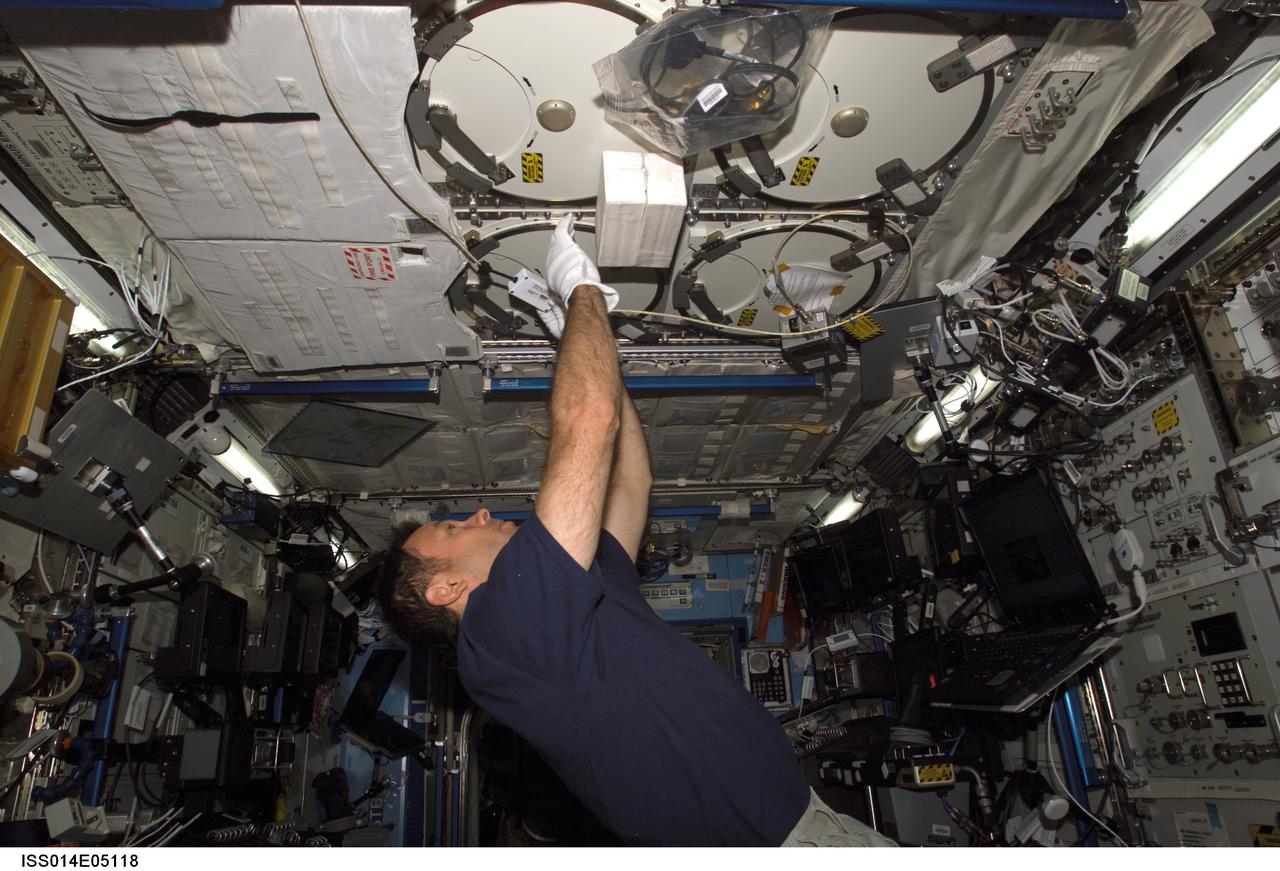
ISS014-E-05118 (3 Oct. 2006) --- Astronaut Michael E. Lopez-Alegria, Expedition 14 commander and NASA space station science officer, works with the Passive Observatories for Experimental Microbial Systems in Micro-G (POEMS) payload in the Minus Eighty Degree Laboratory Freezer for ISS (MELFI) in the Destiny laboratory of the International Space Station. MELFI is a low temperature freezer facility with nominal operating temperatures of -80, -26 and +4 degrees Celsius that will preserve experiment materials over long periods.
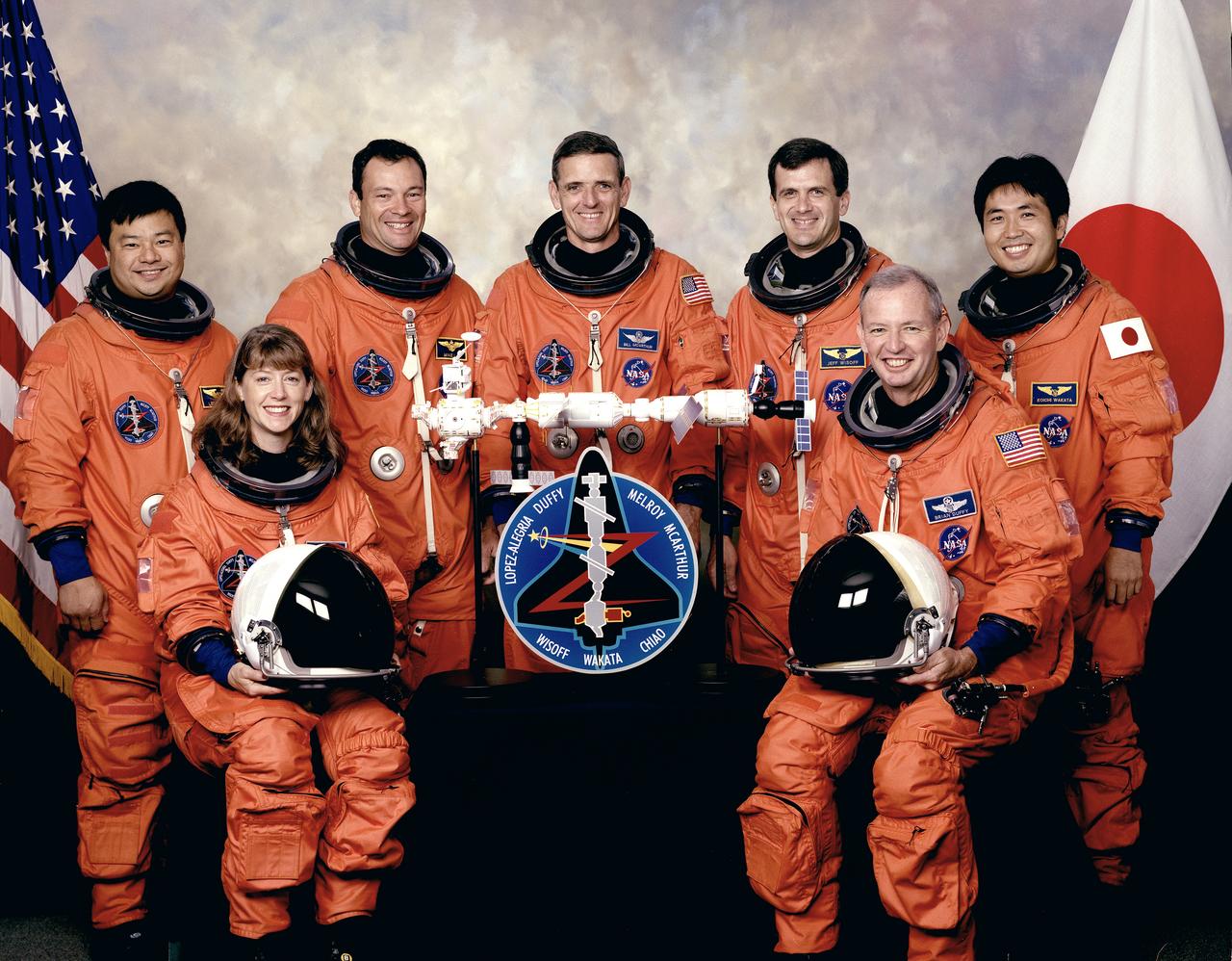
These seven astronauts composed the crew for the STS-92 mission. In front are astronauts Pamela A. Melroy, pilot; and Brian Duffy, mission commander. In the rear, from the left, are astronauts Leroy Chiao, Michael E. Lopez-Alegria, William S. McArthur, Jr., Peter J.K. (Jeff) Wisoff, and Koichi Wakata, all mission specialists. Wakata represents Japan's National Space Development Agency (NASDA). Launched aboard the Space Shuttle Discovery on October 11, 2000, the 100th shuttle flight was the second to deliver hardware to the International Space Station (ISS). During Four space walks, the crew installed the Z1 truss and the Pressurized Mating Adapter (PMA) 3.
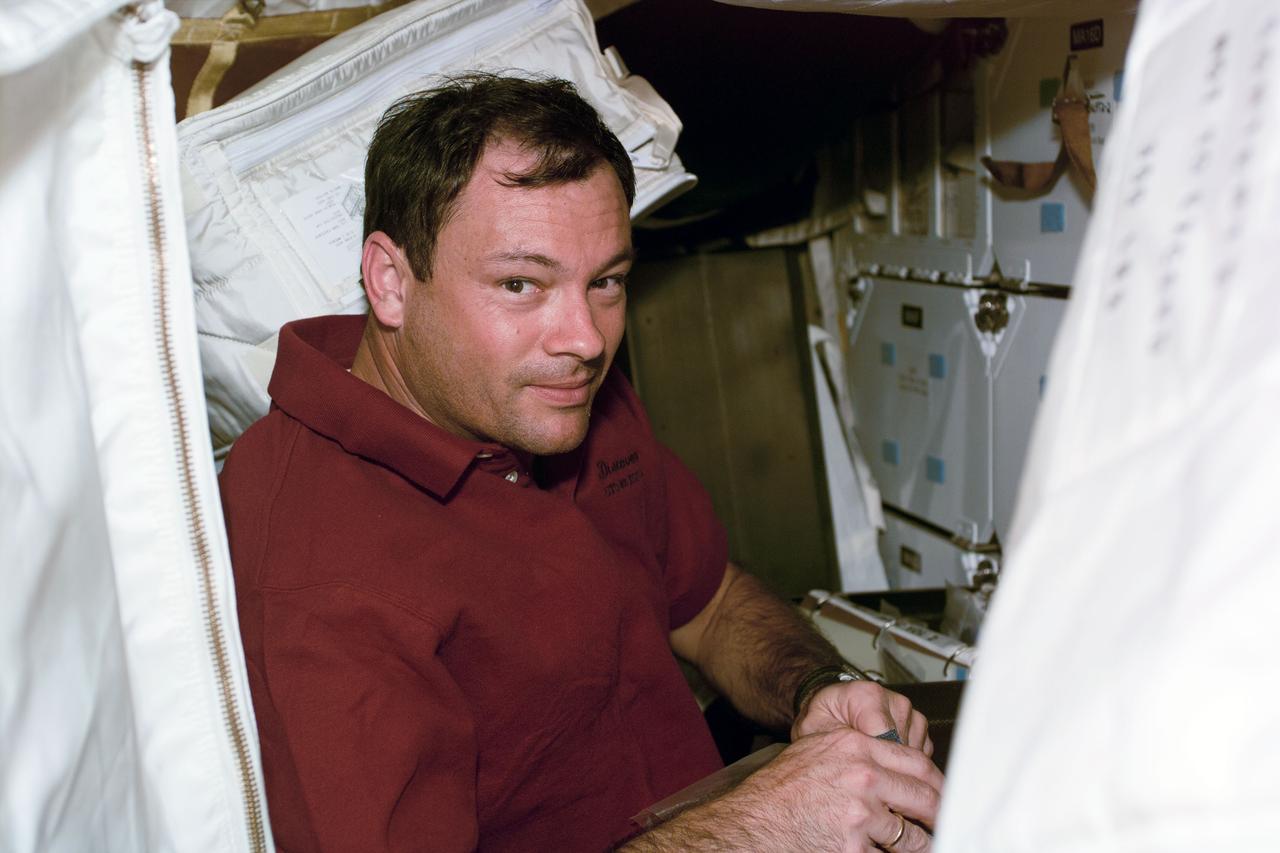
S92-E-5026 (12 October 2000) --- Astronaut Michael Lopez-Alegria, one of four STS-92 crew members who are participating in the four scheduled space walks designed to put final touches on the current ISS configuration for its first occupancy, was recorded by an electronic still camera (ESC) on Flight Day 2.
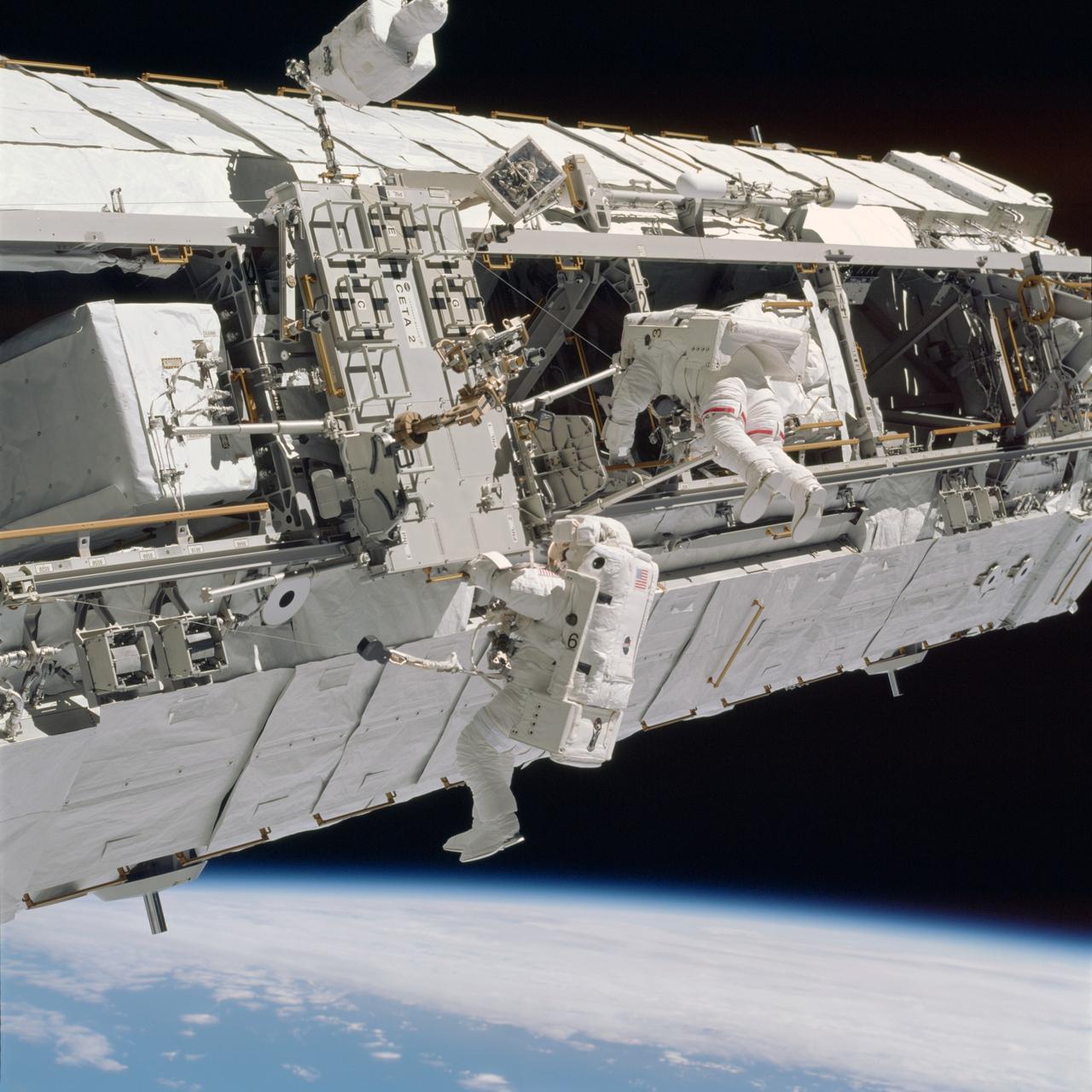
STS113-714-039 (26-30 November 2002) --- Astronauts John B. Herrington (left) and Michael E. Lopez-Alegria, STS-113 mission specialists, work on the newly installed Port One (P1) truss on the International Space Station (ISS) during one of the three scheduled sessions of extravehicular activity (EVA).
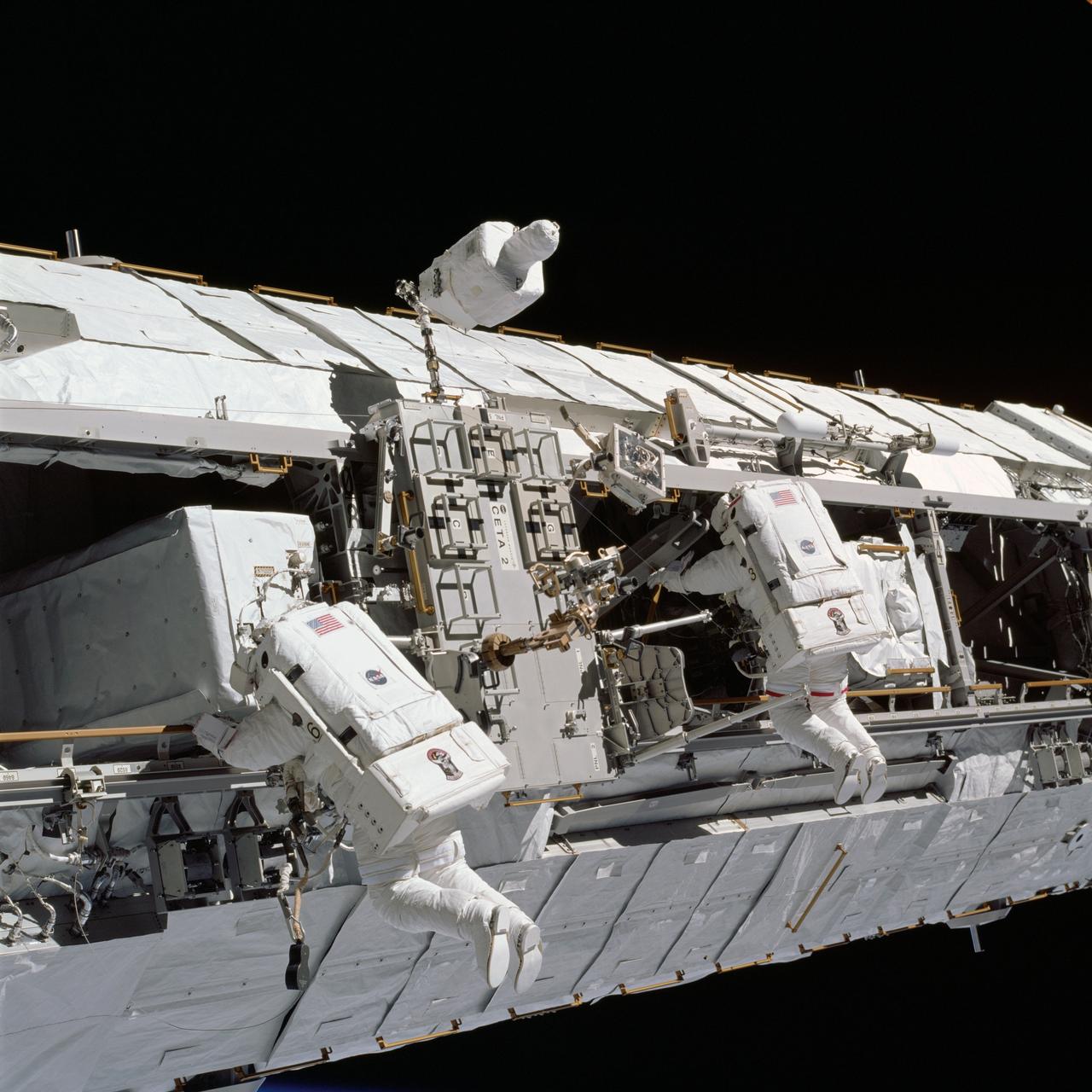
STS113-714-033 (26-30 November 2002) --- Astronauts Michael E. Lopez-Alegria (right) and John B. Herrington, STS-113 mission specialists, work near the Crew and Equipment Translation Aid (CETA) cart on a truss on the International Space Station (ISS) during a scheduled spacewalk for the mission.
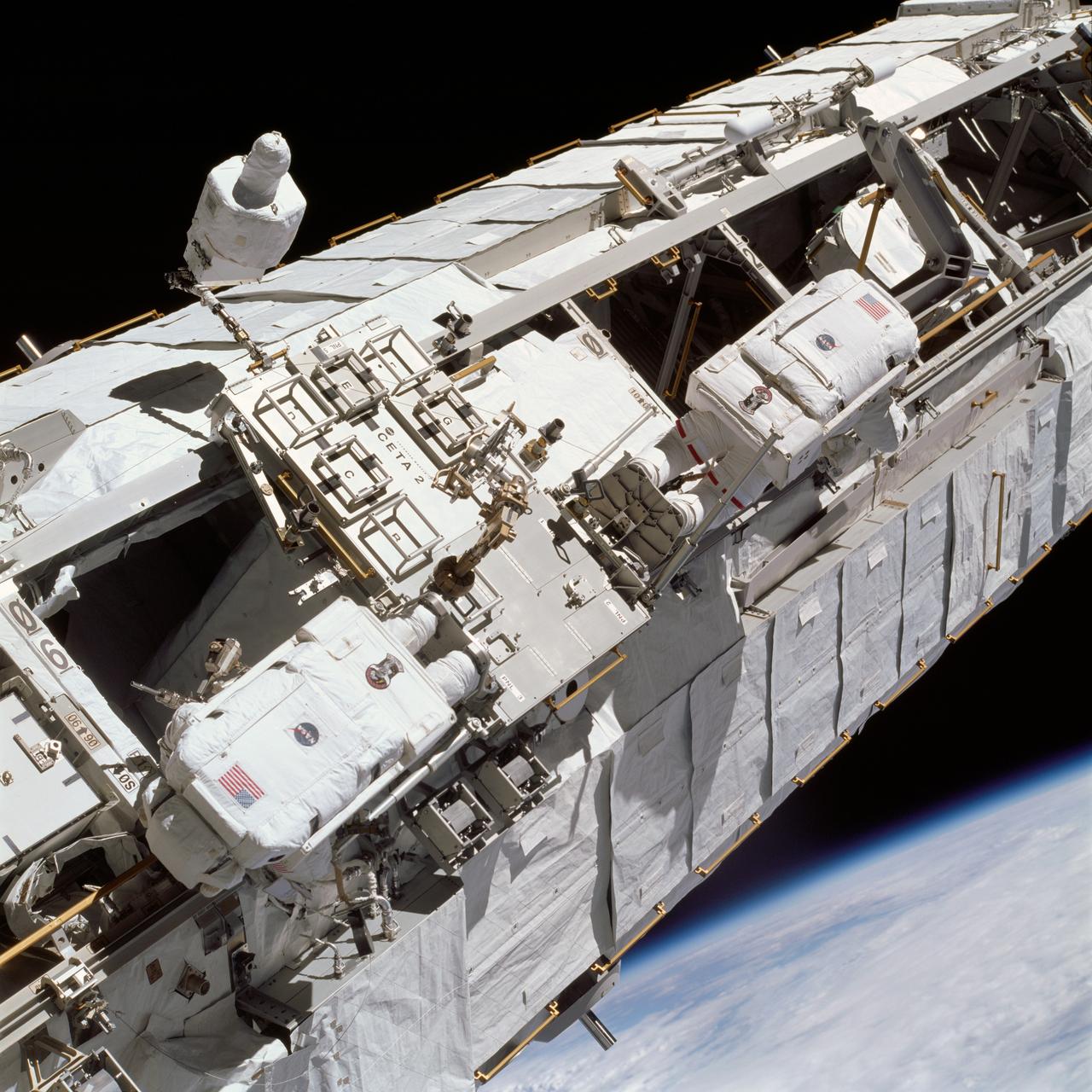
STS113-714-024 (26-30 November 2002) --- Astronauts Michael E. Lopez-Alegria (right) and John B. Herrington, STS-113 mission specialists, work near the Crew and Equipment Translation Aid (CETA) cart on a truss on the International Space Station (ISS) during a scheduled spacewalk for the mission.
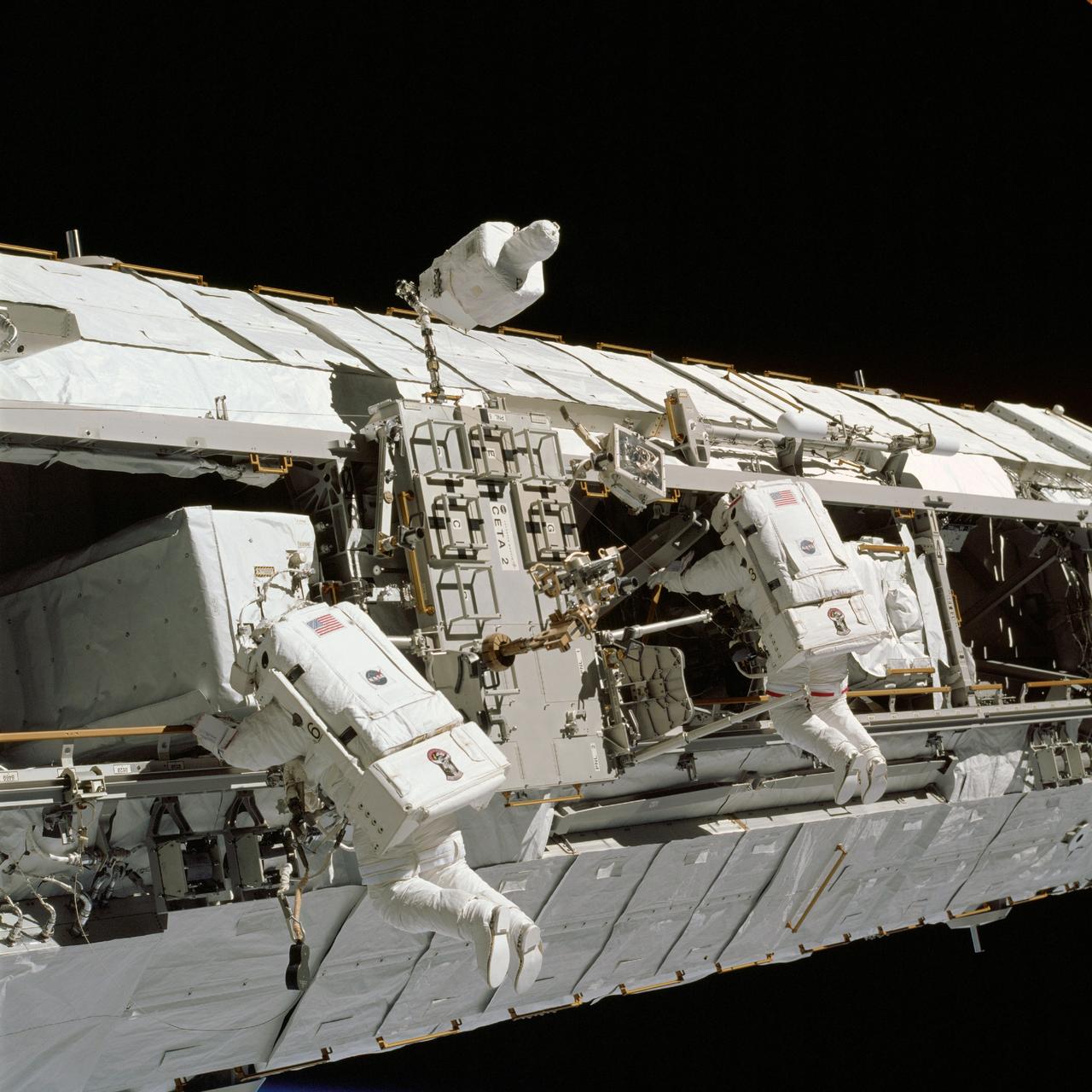
The 16th American assembly flight and 112th overall American flight to the International Space Station (ISS) launched on November 23, 2002 from Kennedy's launch pad 39A aboard the Space Shuttle Orbiter Endeavour STS-113. Mission objectives included the delivery of the Expedition Six Crew to the ISS, the return of Expedition Five crew back to Earth, the delivery of the Crew and Equipment Translation Aid (CETA) cart, and the installation and activation of the Port 1 Integrated Truss Assembly (P1). The first major component installed on the left side of the Station, the P1 truss provides an additional three External Thermal Control System radiators. Weighing in at 27,506 pounds, the P1 truss is 45 feet (13.7 meters) long, 15 feet (4.6 meters) wide, and 13 feet (4 meters) high. Three space walks, aided by the use of the Robotic Manipulator Systems of both the Shuttle and the Station, were performed in the installation of P1. In this photograph, astronauts and mission specialists John B. Herrington (left) and Michael E. Lopez-Alegria (right) work near the CETA cart on a truss on the ISS during a scheduled space walk for the mission. The final major task of the space walk was the relocation of the CETA cart from the Port One (P1) to the Starboard One (S1) Truss, which will allow the Mobile Transporter to move along the P1 to assist in upcoming assembly missions.
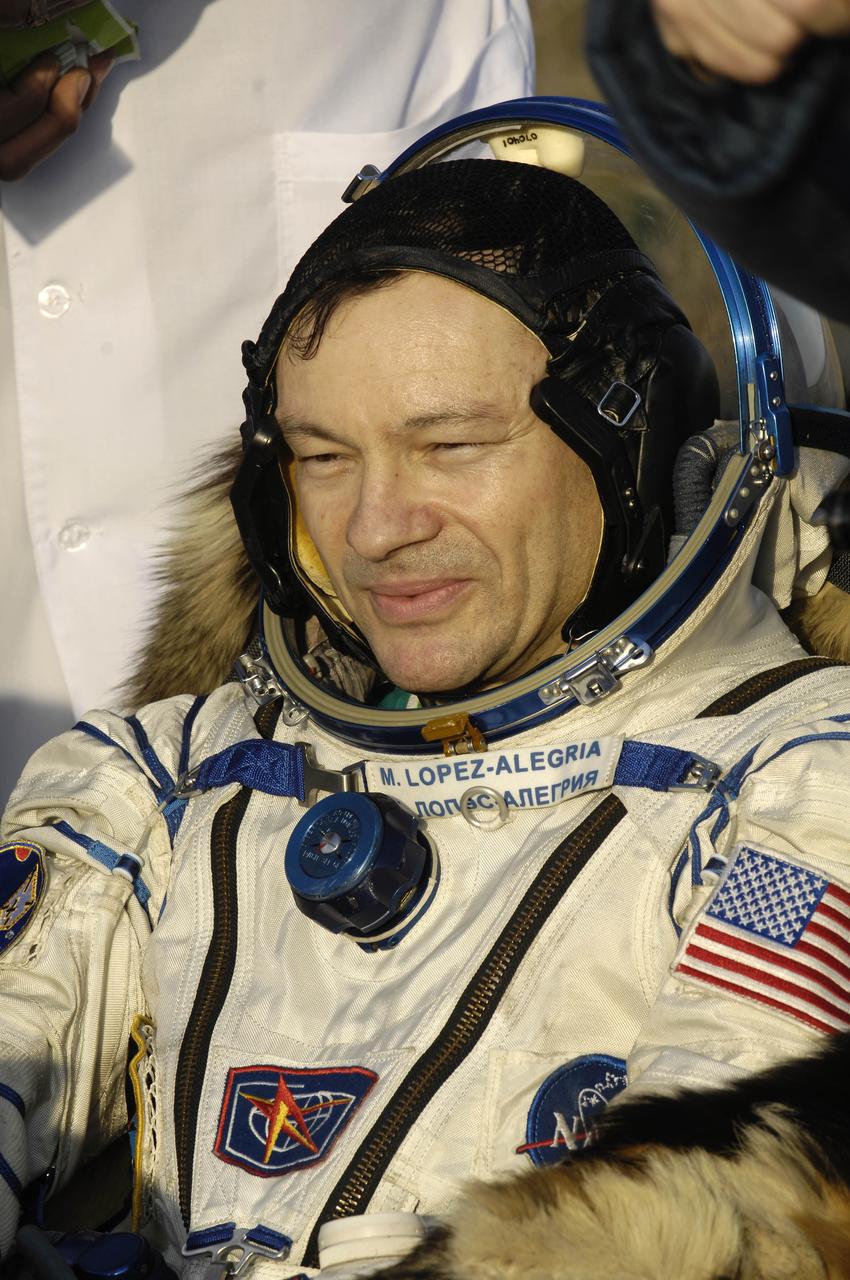
Expedition 14 Commander Michael Lopez-Alegria sits in a chair near the Soyuz TMA-9 spacecraft at the landing site as landing and recovery officials conduct post-landing medical checks, Friday, April 21, 2007 in Kazakhstan. The Soyuz spacecraft landed southwest of Karaganda, Kazakhstan at approximately 6:30 p.m. local time. Photo Credit: (NASA/Bill Ingalls)
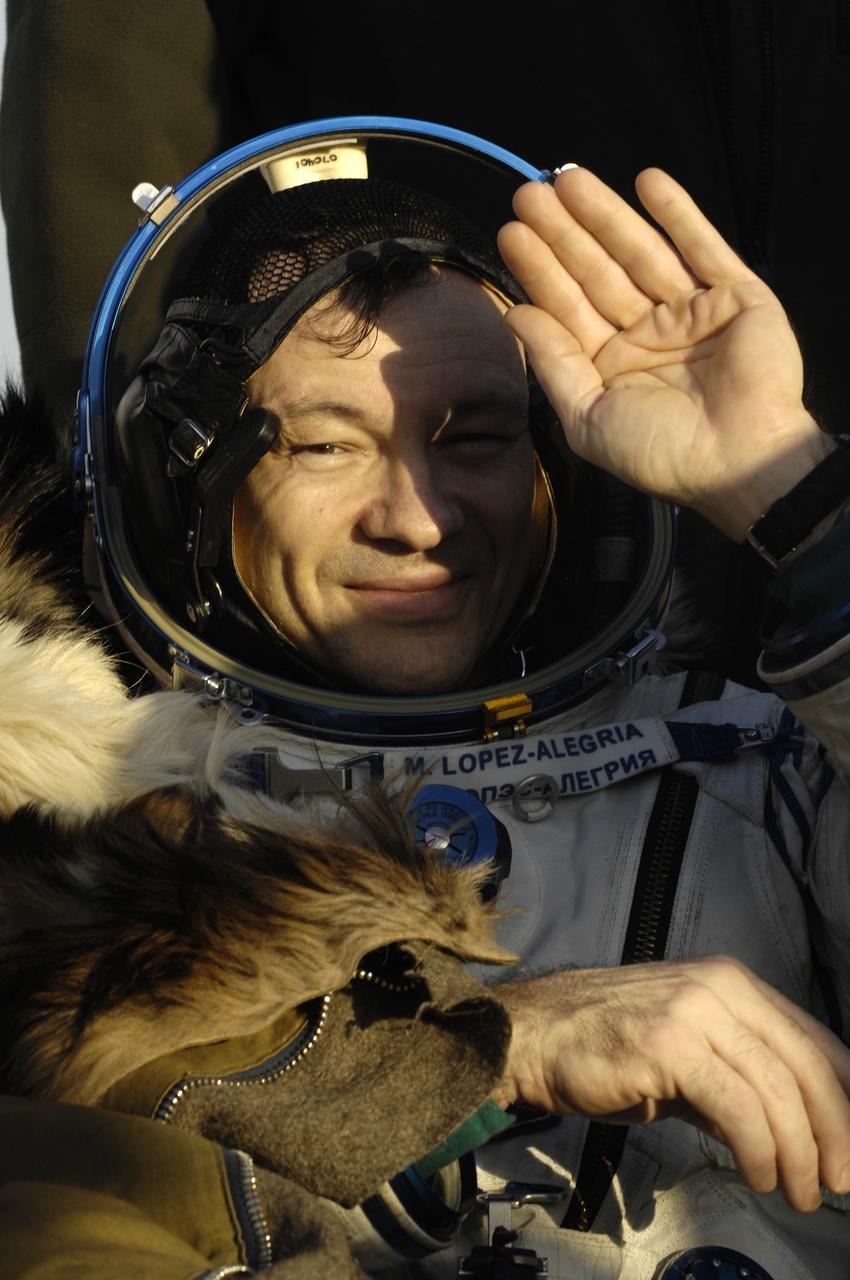
Expedition 14 Commander Michael Lopez-Alegria sits in a chair in front of their Soyuz TMA-9 spacecraft at the landing site as landing and recovery officials conduct post-landing medical checks on the crew. The Soyuz spacecraft landed southwest of Karaganda, Kazakhstan at approximately 6:30pm local time, April 21, 2007. Photo Credit: (NASA/Bill Ingalls)
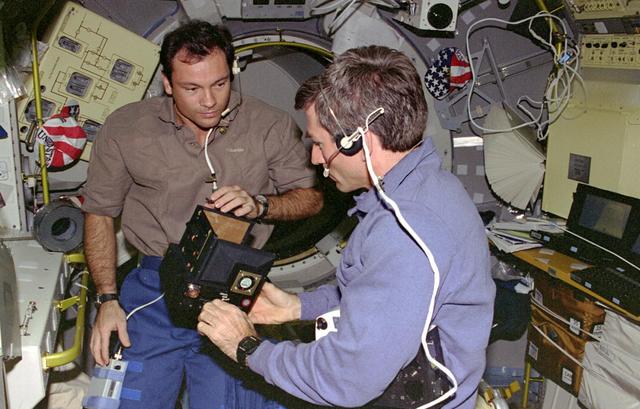
STS073-233-032 (20 October - 5 November 1995) --- Astronaut Michael E. Lopez-Alegria (left), STS-73 mission specialist, assists payload specialist Fred W. Leslie in an in-flight maintenance task involving the Fiber Support Droplet Combustion (FSDC) experiment. This new Glovebox investigation tests a technique for studying combustion in the weightless environment of space. The two joined five other crew members onboard the Space Shuttle Columbia for 16 days of in-space research in support of the United States Microgravity Laboratory (USML-2) mission.

These five astronauts and two United States Microgravity Laboratory (USML) payload specialists pause from a rigid training schedule for the STS-73 crew portrait. On the front row, left to right, are Albert Sacco Jr., payload specialist; Kent V. Rominger, pilot; and Michael E. Lopez-Alegria, mission specialist. On the back row are, left to right, Catherine G. Coleman, mission specialist; Kenneth D. Bowersox, commander; Fred W. Leslie, payload specialist; and Kathryn C. Thornton, payload commander. The STS-073 crew launched aboard the Space Shuttle Columbia on October 20, 1995 at 9:53:00.069 am (EDT). The mission served as the second flight of the Microgravity Laboratory (USML-2).
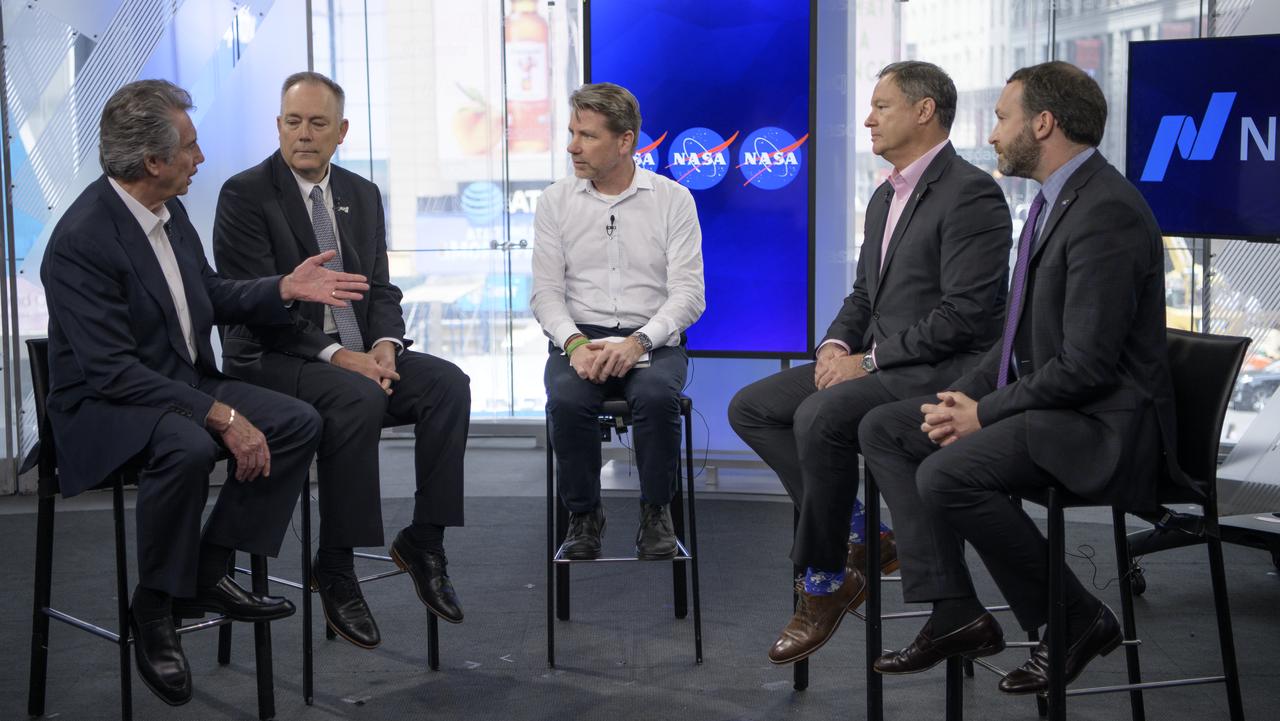
A Nasdaq moderator, center, talks with Bigelow Aerospace, LLC Founder and President Robert Bigelow, left, Boeing Global Sales and Marketing, Space Exploration, Kevin Foley, Axiom Vice President of Business Development Michael Lopez-Alegria, and NASA Senior Economic Advisor Alex MacDonald, right, during a live social media event shortly after NASA announced a five-part plan to open the International Space Station to expanded commercial and marketing activities and private astronaut missions to the station and enable additional commercial destinations in low-Earth orbit, Friday, June 7, 2019 at the Nasdaq MarketSite in New York City. NASA will continue to maintain human presence and research in low-Earth orbit, and the long-term goal is to achieve a robust economy from which NASA can purchase services at a lower cost. Photo Credit: (NASA/Bill Ingalls)

American spaceflight participant Anousheh Ansari, not pictured, Soyuz Commander and Expedition 14 Flight Engineer Mikhail Tyurin and Expedition 14 Commander Michael Lopez-Alegria, right, walk out of building 254 of the Baikonur Cosmodrome, Monday, Sept. 18, 2006, in Baikonur, Kazakhstan. Their Soyuz TMA-9 spacecraft launched from the Baikonur Cosmodrome at 10:09 a.m. local time. Anousheh Ansari, will spend nine days on the International Space Station under a commercial agreement with the Russian Federal Space Agency. Photo Credit: (NASA/Bill Ingalls)
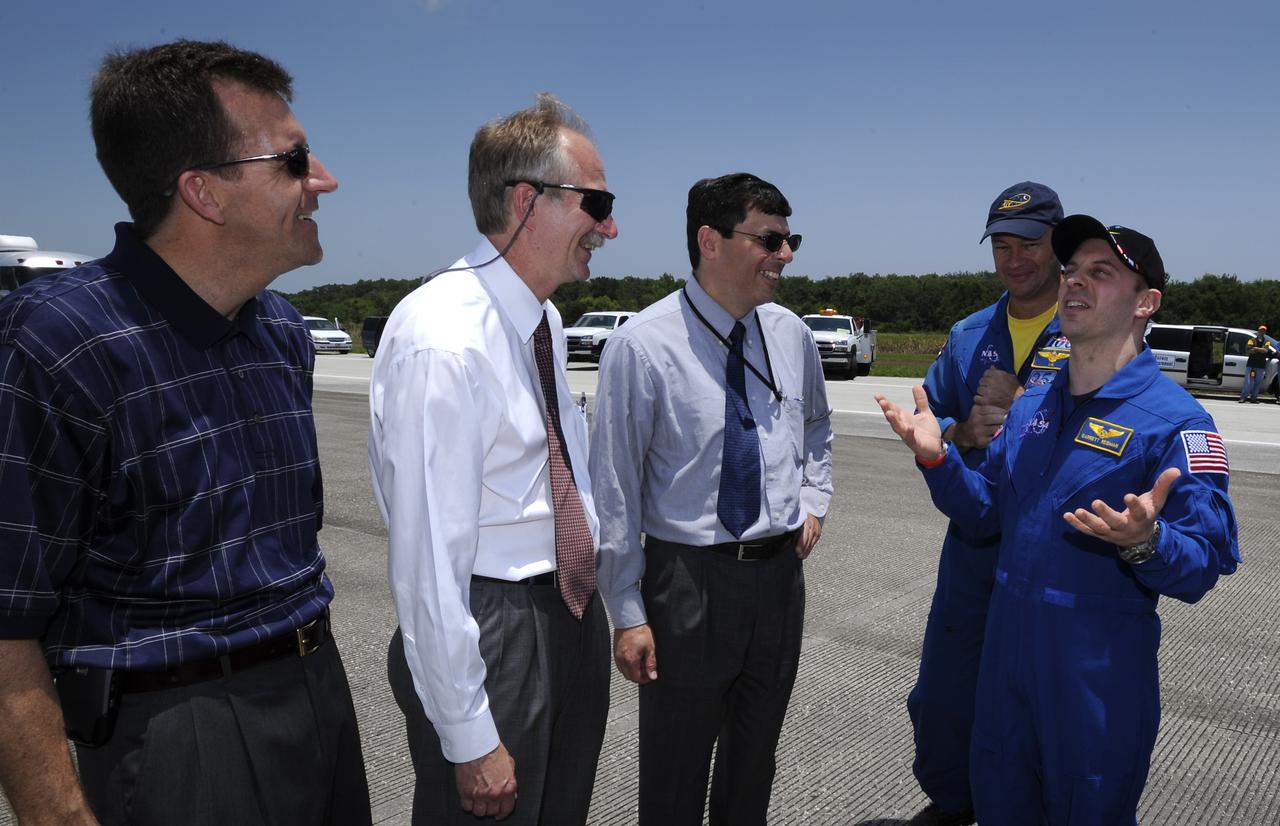
NASA Astronaut Garrett Reisman, right, jokes with NASA Associate Administrator Chris Scolese, 2nd from right, NASA Associate Administrator for Space Operations Bill Gerstenmaier, 3rd from right and NASA Deputy Shuttle Program Manager LeRoy Cain as NASA Astronaut Michael Lopez-Alegria looks on. Reisman spent 3 months in space onboard the the International Space Station. Reisman landed onboard the space shuttle Discovery along with the crew of the STS-124 mission. Discovery touched down at 11:15 a.m. EDT, Saturday, June 14, 2008, at the Kennedy Space Center in Florida. Photo Credit: (NASA/Bill Ingalls)
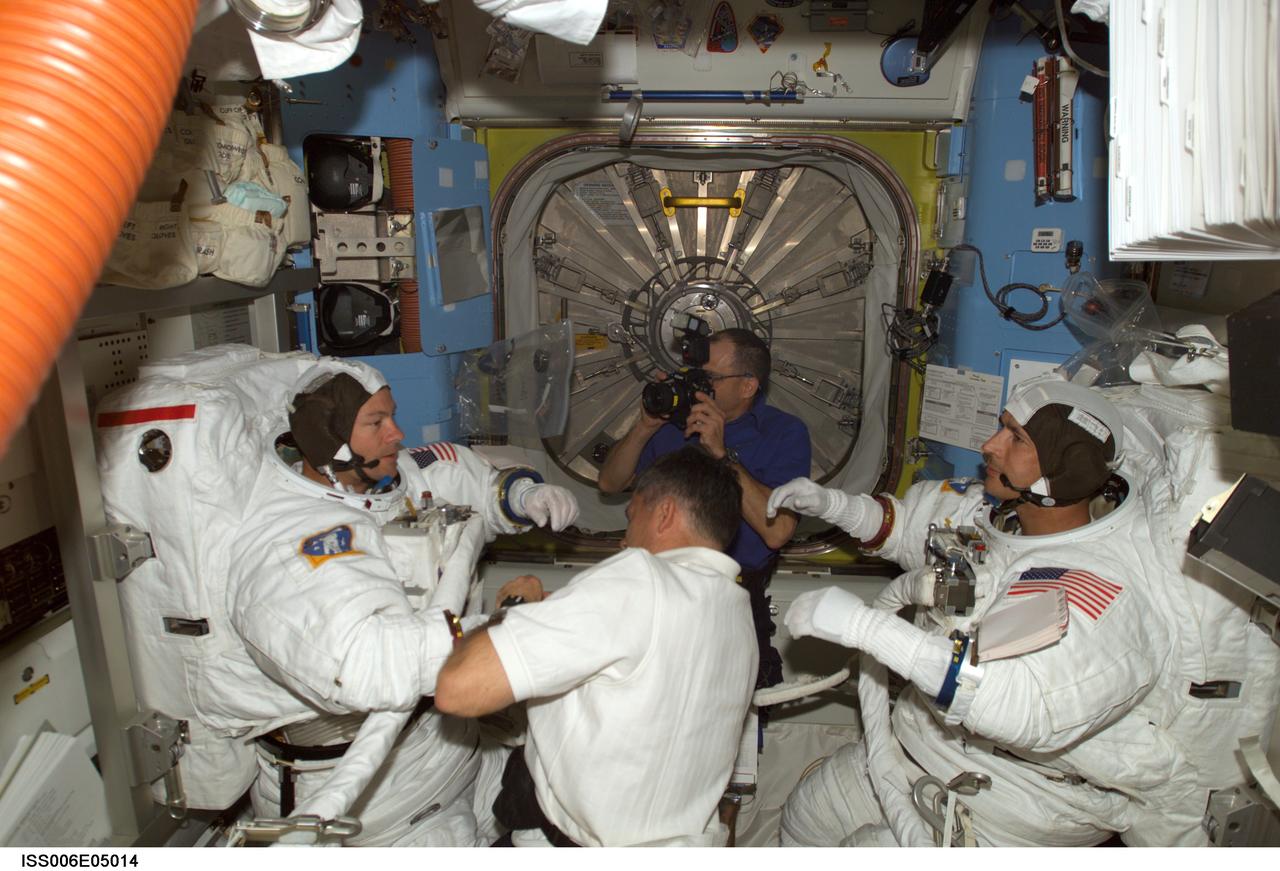
ISS006-E-05014 (28 November 2002) --- Astronaut Paul S. Lockhart, STS-113 pilot, assists astronauts Michael E. Lopez-Alegria (left) and John B. Herrington, STS-113 mission specialists, with their Extravehicular Mobility Unit (EMU) spacesuits in the Quest Airlock on the International Space Station (ISS). Astronaut Donald R. Pettit, Expedition Six NASA ISS science officer, uses a camera in the background.
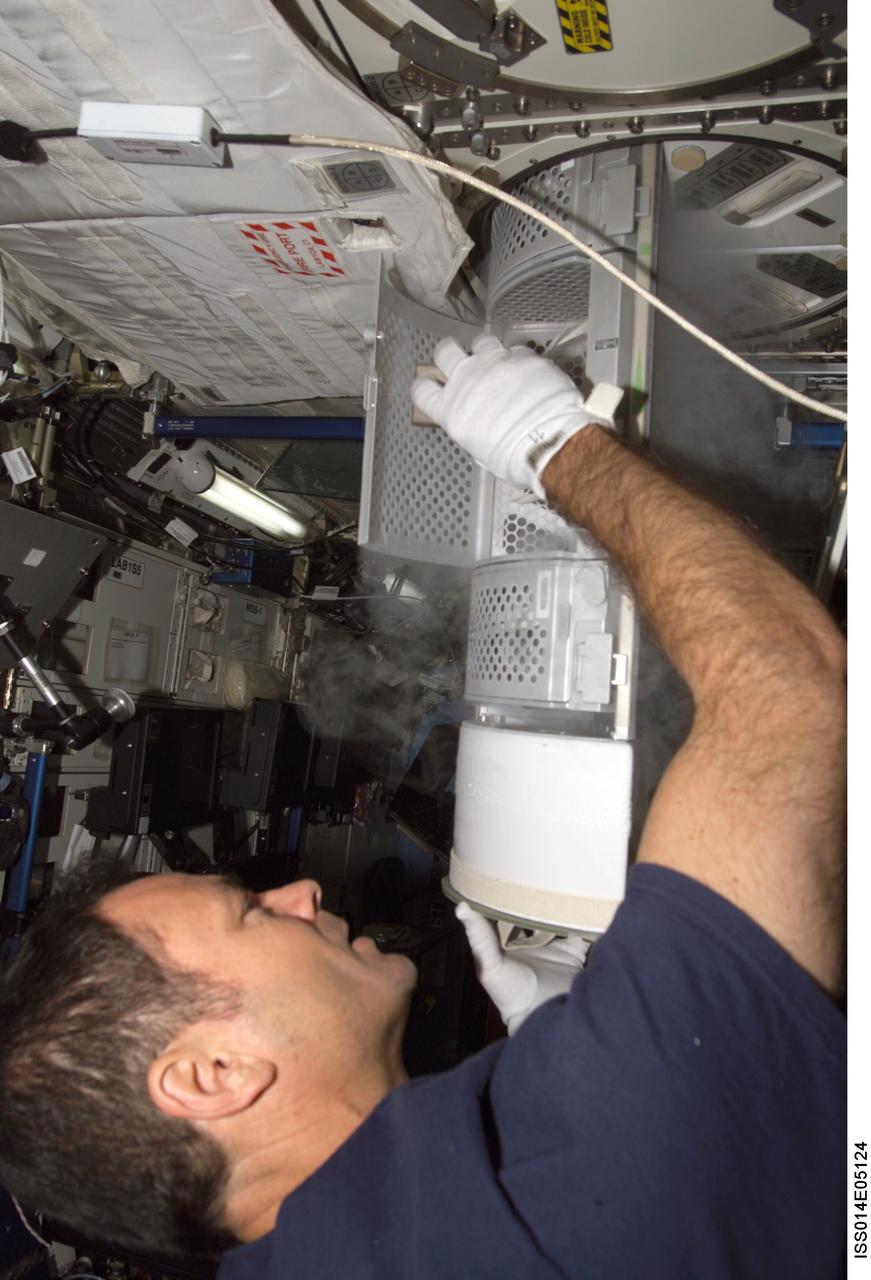
ISS014-E-05124 (3 Oct. 2006) --- Astronaut Michael E. Lopez-Alegria, Expedition 14 commander and NASA space station science officer, works with the Passive Observatories for Experimental Microbial Systems in Micro-G (POEMS) payload in the Minus Eighty Degree Laboratory Freezer for ISS (MELFI) in the Destiny laboratory of the International Space Station. MELFI is a low temperature freezer facility with nominal operating temperatures of -80, -26 and +4 degrees Celsius that will preserve experiment materials over long periods.
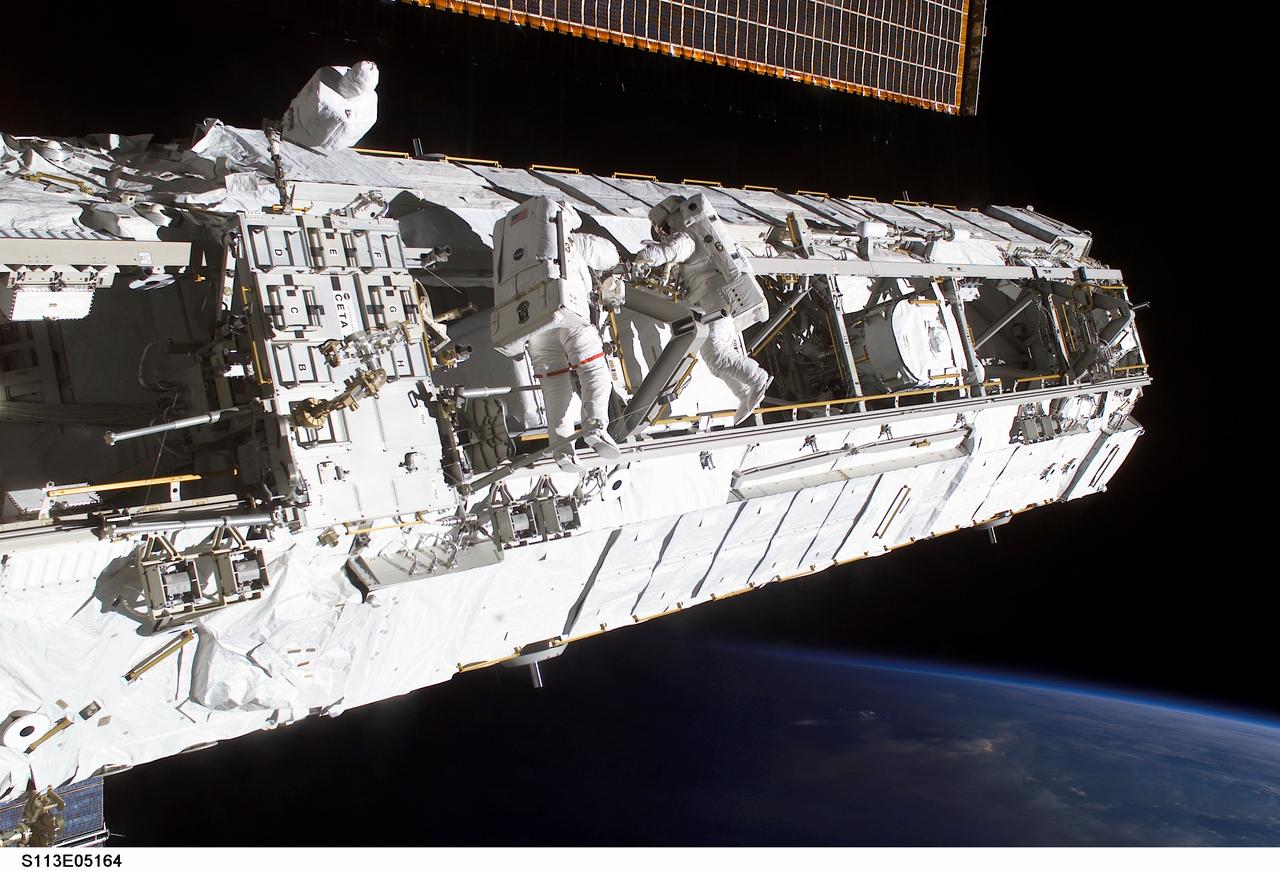
STS113-E-05164 (28 November 2002) --- Astronauts Michael E. Lopez-Alegria (left) and John B. Herrington, STS-113 mission specialists, work on the newly installed Port One (P1) truss on the International Space Station (ISS) during the mission’s second scheduled session of extravehicular activity (EVA). The spacewalk lasted 6 hours, 10 minutes.
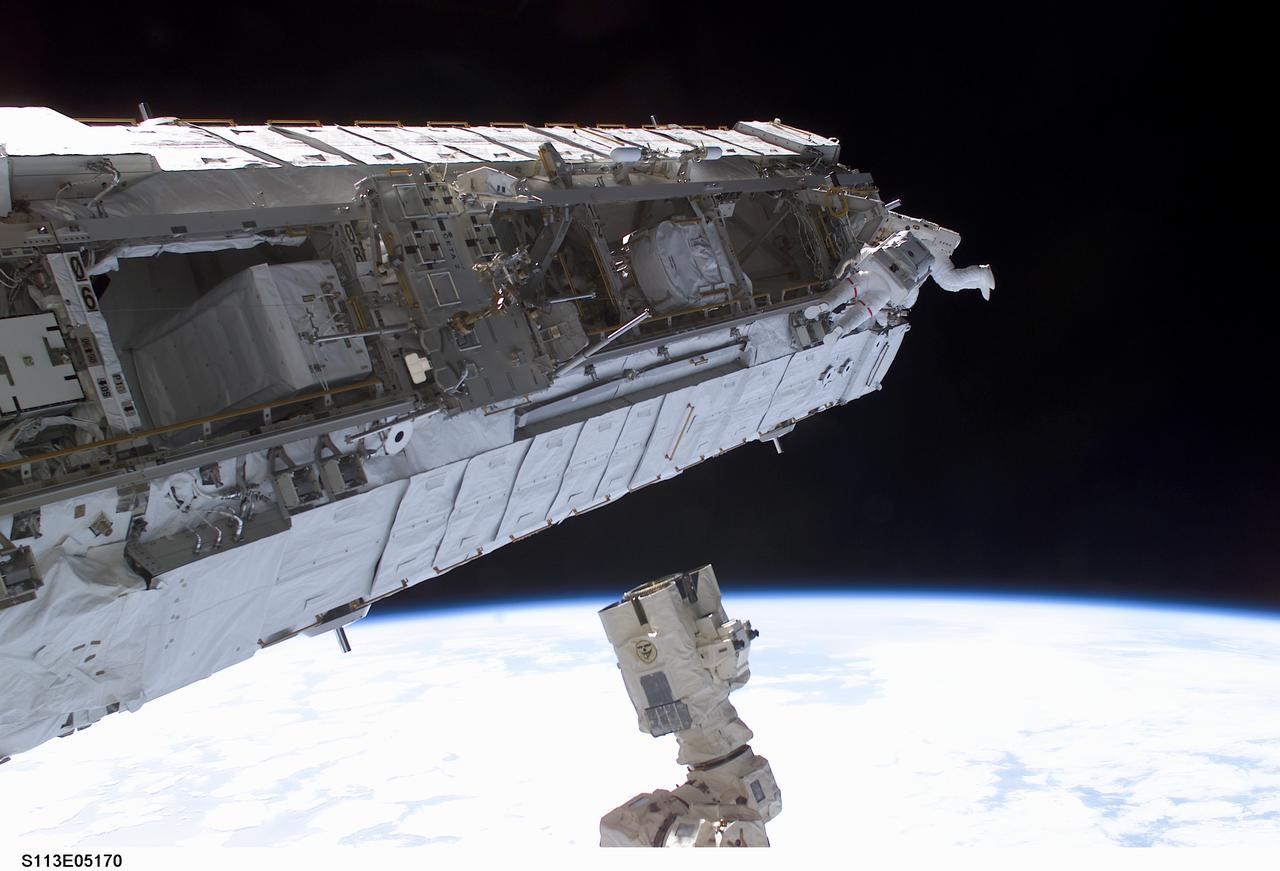
STS113-E-05170 (28 November 2002) --- Astronauts Michael E. Lopez-Alegria (red stripes) and John B. Herrington, STS-113 mission specialists, work on the newly installed Port One (P1) truss on the International Space Station (ISS) during the mission’s second scheduled session of extravehicular activity (EVA). The spacewalk lasted 6 hours, 10 minutes. The end effector of the Canadarm2 / Space Station Remote Manipulator System (SSRMS) and Earth’s horizon are visible in bottom frame.
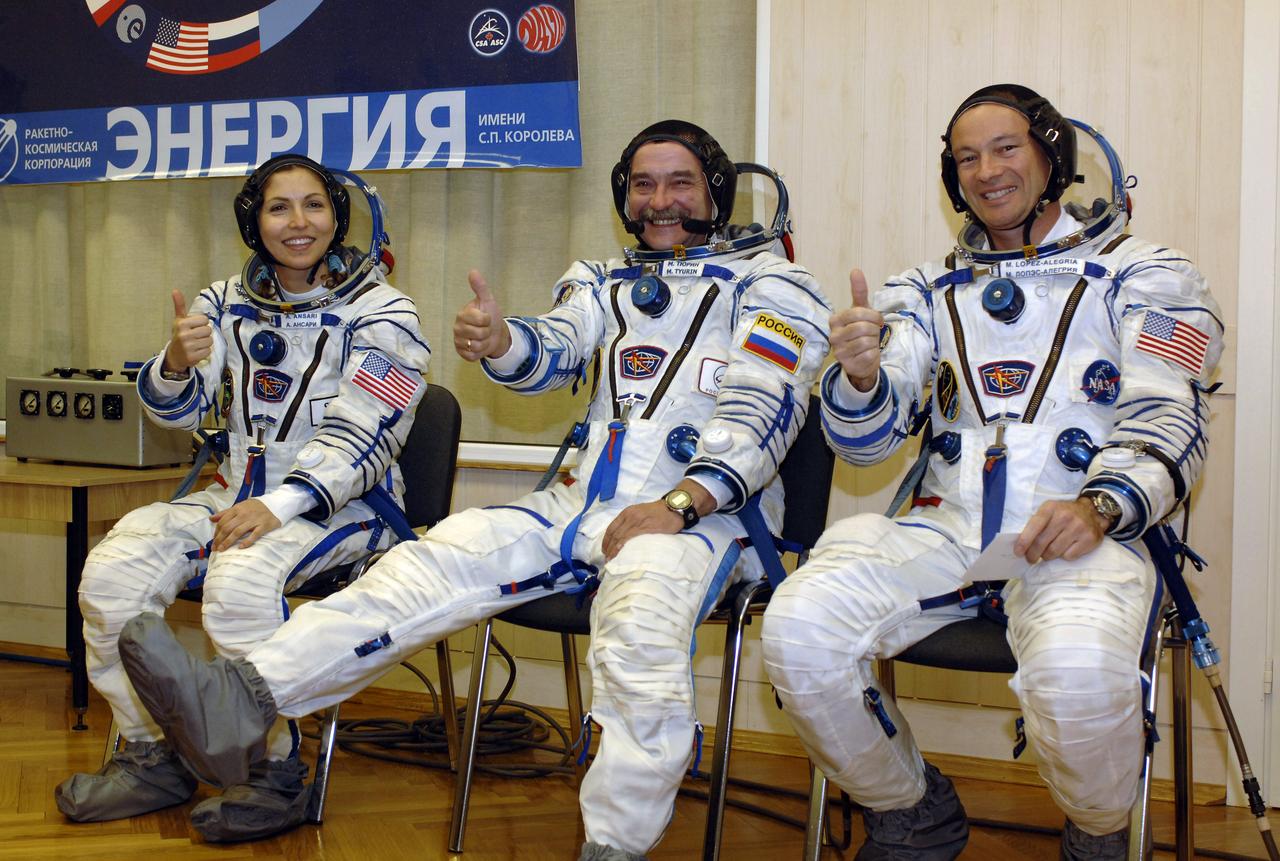
American spaceflight participant Anousheh Ansari, left, Soyuz Commander and Expedition 14 Flight Engineer Mikhail Tyurin and Expedition 14 Commander Michael Lopez-Alegria, right, give a thumbs up after final pressure checks on their flight suits, Monday, Sept. 18, 2006 in Baikonur, Kazakhstan. Photo Credit: (NASA/Bill Ingalls)