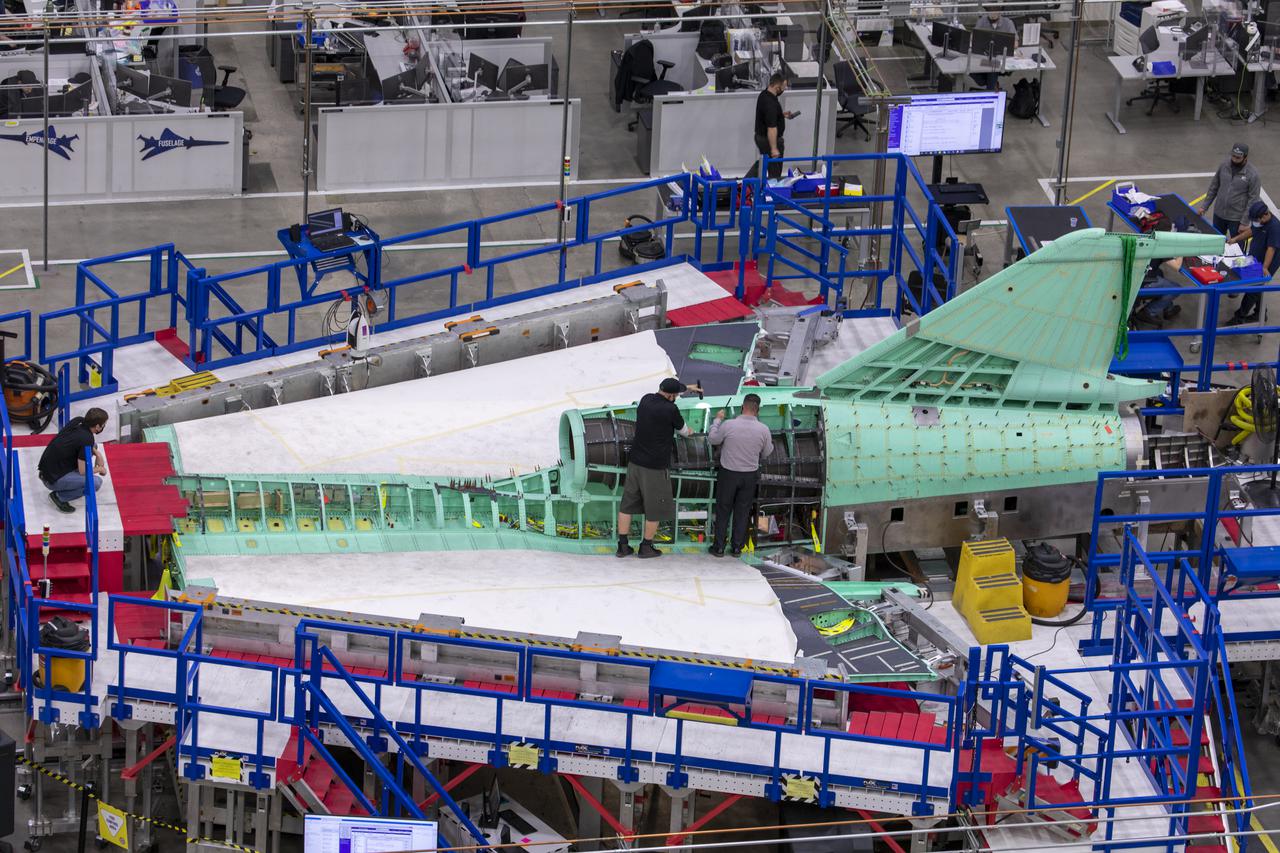
This overhead shot of the X-59 assembly during Spring 2021 shows assembly with technicians working at the engine inlet section where the engine will be located on the aircraft. Lockheed Martin Photography By Garry Tice 1011 Lockheed Way, Palmdale, Ca. 93599 Event: Manufacture Area From Above Date: 3/30/2021
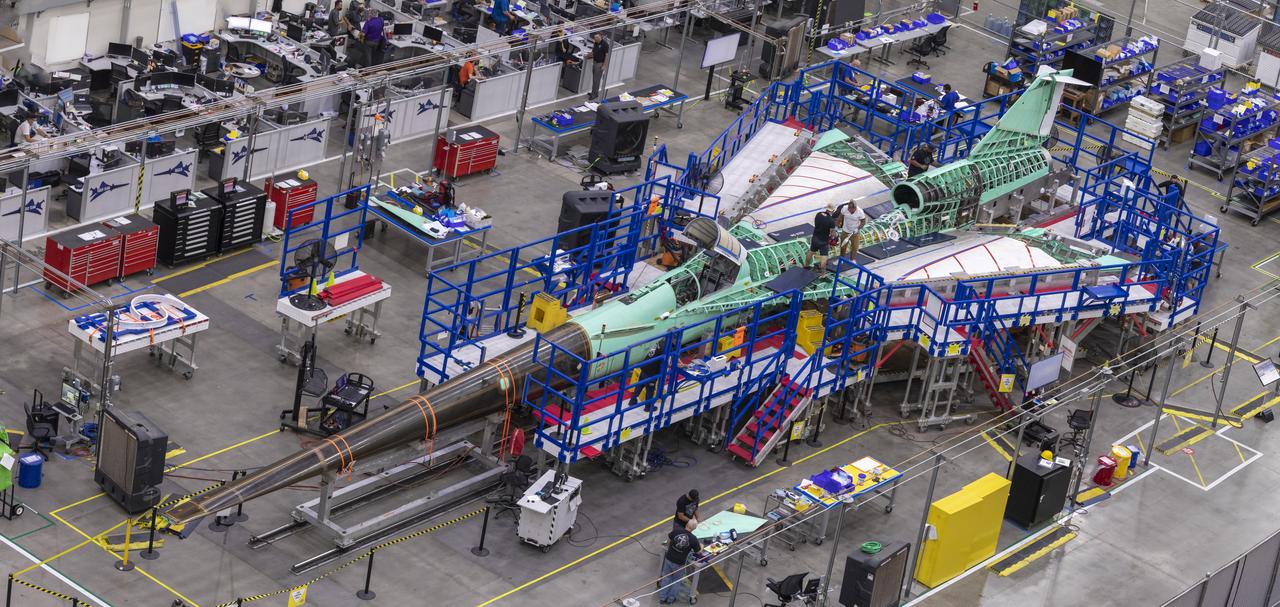
Event: Manufacturing Area From Above A overhead view of the X-59 with its nose on. The X-59’s nose is 38-feet long – approximately one third of the length of the entire aircraft. The aircraft, under construction at Lockheed Martin Skunk Works in Palmdale, California, will demonstrate the ability to fly supersonic while reducing the loud sonic boom to a quiet sonic thump.
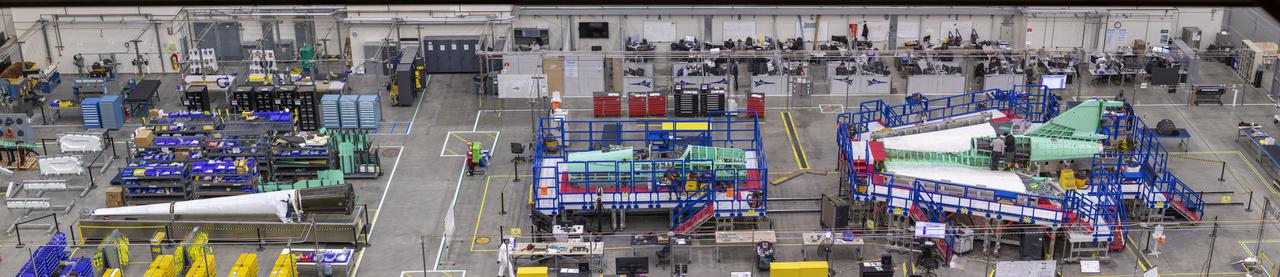
This overhead shot of the X-59 Quiet SuperSonic Technology or QueSST aircraft shows the assembly progress of the vehicle during Spring 2021. Pictured here you can see the nose (far left) which will later be mounted to the middle section in the photo known as the fuselage and the last section is the wing and tail in the far right of the photo. Lockheed Martin Photography By Garry Tice 1011 Lockheed Way, Palmdale, Ca. 93599 Event: Manufacture Area From Above Date: 3/30/2021

This overview shot of the X-59 Quiet Supersonic Technology or QueSST aircraft shows the vehicle before a major merger of three major aircraft sections – the fuselage, the wing, and the tail assembly – together, making it looks more like an airplane. Lockheed Martin Photography By Garry Tice 1011 Lockheed Way, Palmdale, Ca. 93599 Event: Manufacture Area From Above Date: 3/30/2021
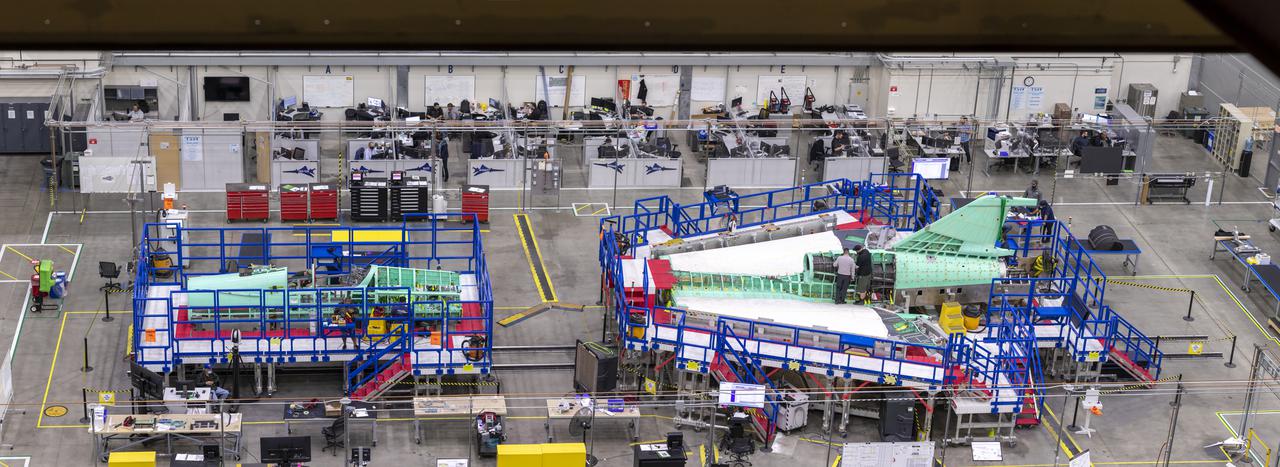
This overhead shot of the X-59 Quiet SuperSonic Technology or QueSST aircraft shows the assembly progress of the vehicle during Spring 2021. In the left side of the picture, the fuselage which contains the cockpit is shown and the right side of the photo shows the wing and the tail section of the aircraft. Lockheed Martin Photography By Garry Tice 1011 Lockheed Way, Palmdale, Ca. 93599 Event: Manufacture Area From Above Date: 3/30/2021

Pictured here is an overhead view of the X-59 as it comes together for the major assembly merger in summer 2021. Lockheed Martin Photography By Garry Tice 1011 Lockheed Way, Palmdale, Ca. 93599 Event: Manufacturing Area From Above Date: 5/26/2021
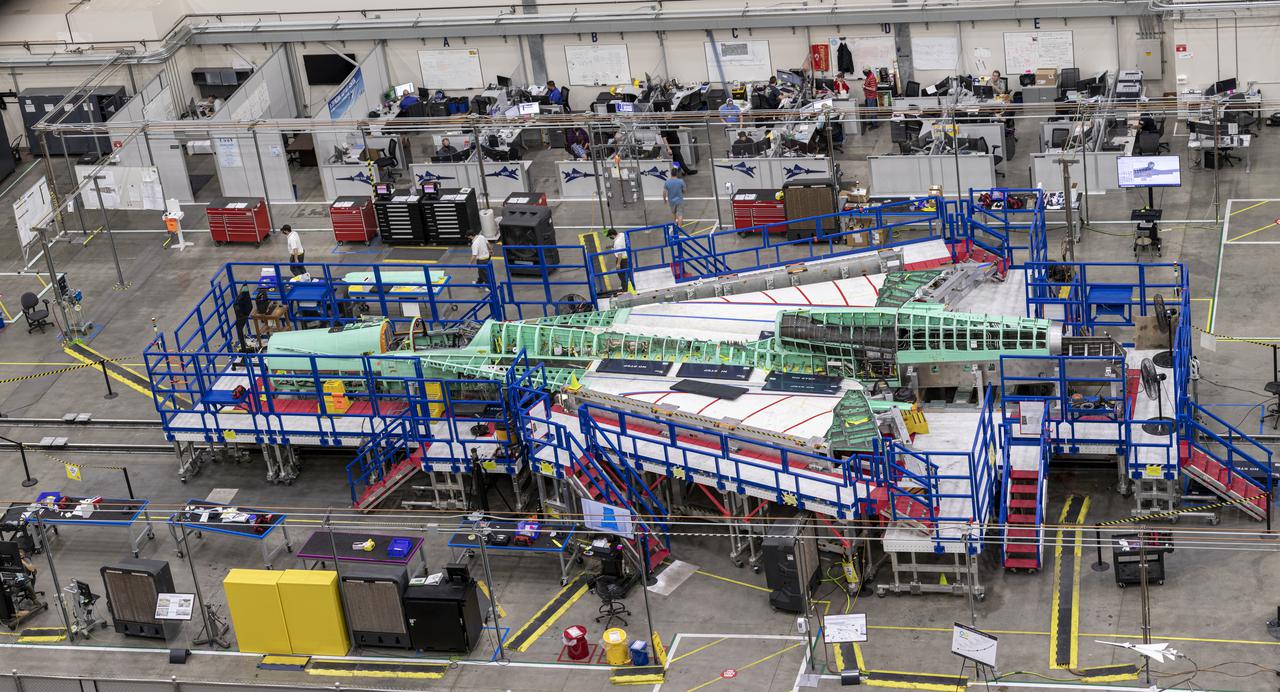
Pictured is an overhead view of the X-59 as it comes together for the major assembly merger in summer 2021. Lockheed Martin Photography By Garry Tice 1011 Lockheed Way, Palmdale, Ca. 93599 Event: Manufacturing Area From Above Date: 5/26/2021
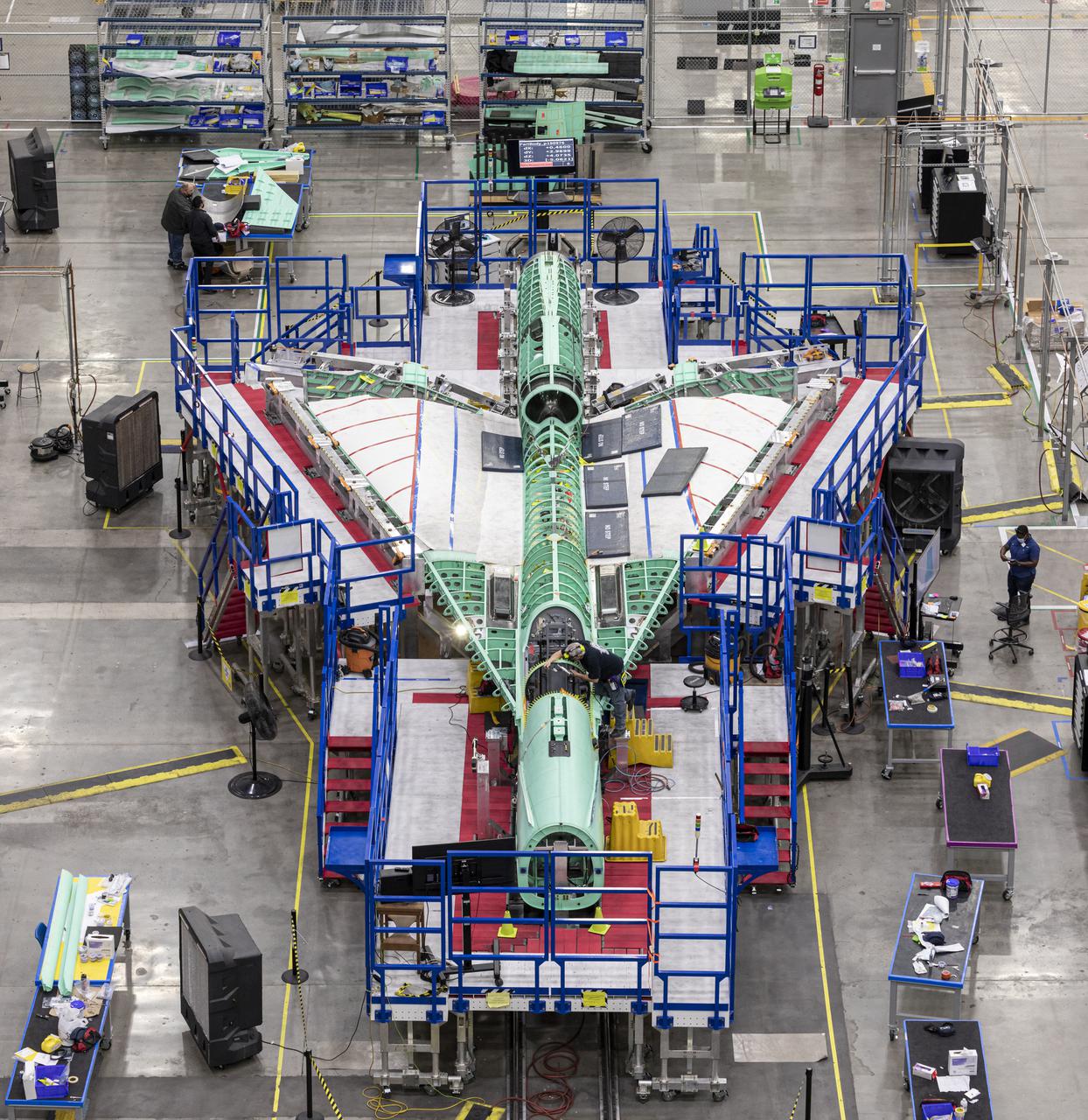
This overhead view shows NASA’s X-59 Quiet SuperSonic Technology or QueSST aircraft as it comes together for the merger of its main parts – the wing, forward section and tail assembly. Lockheed Martin Photography By Garry Tice 1011 Lockheed Way, Palmdale, Ca. 93599 Event: Manufacturing Area From Above Date: 5/26/2021
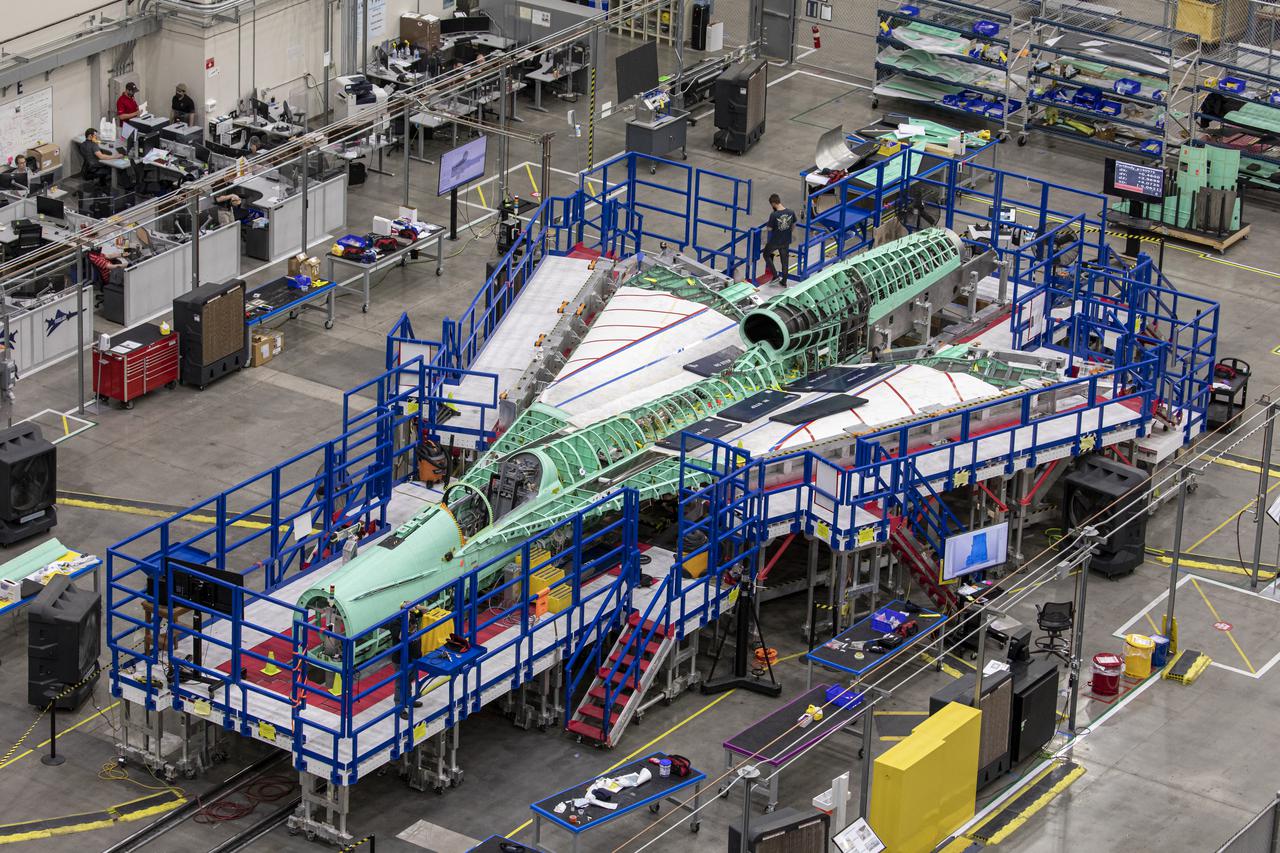
The team at Lockheed Martin Skunk Works in Palmdale, California, merged the major sections of the X-59 Quiet SuperSonic Technology aircraft, which includes the wing, tail assembly, and fuselage or forward section. This marks the first time the X-59 resembles an actual aircraft. (Pictured here is a overhead view of the X-59 as it comes together for the major assembly merger in summer 2021.) Lockheed Martin Photography By Garry Tice 1011 Lockheed Way, Palmdale, Ca. 93599 Event: Manufacturing Area From Above Date: 5/26/2021
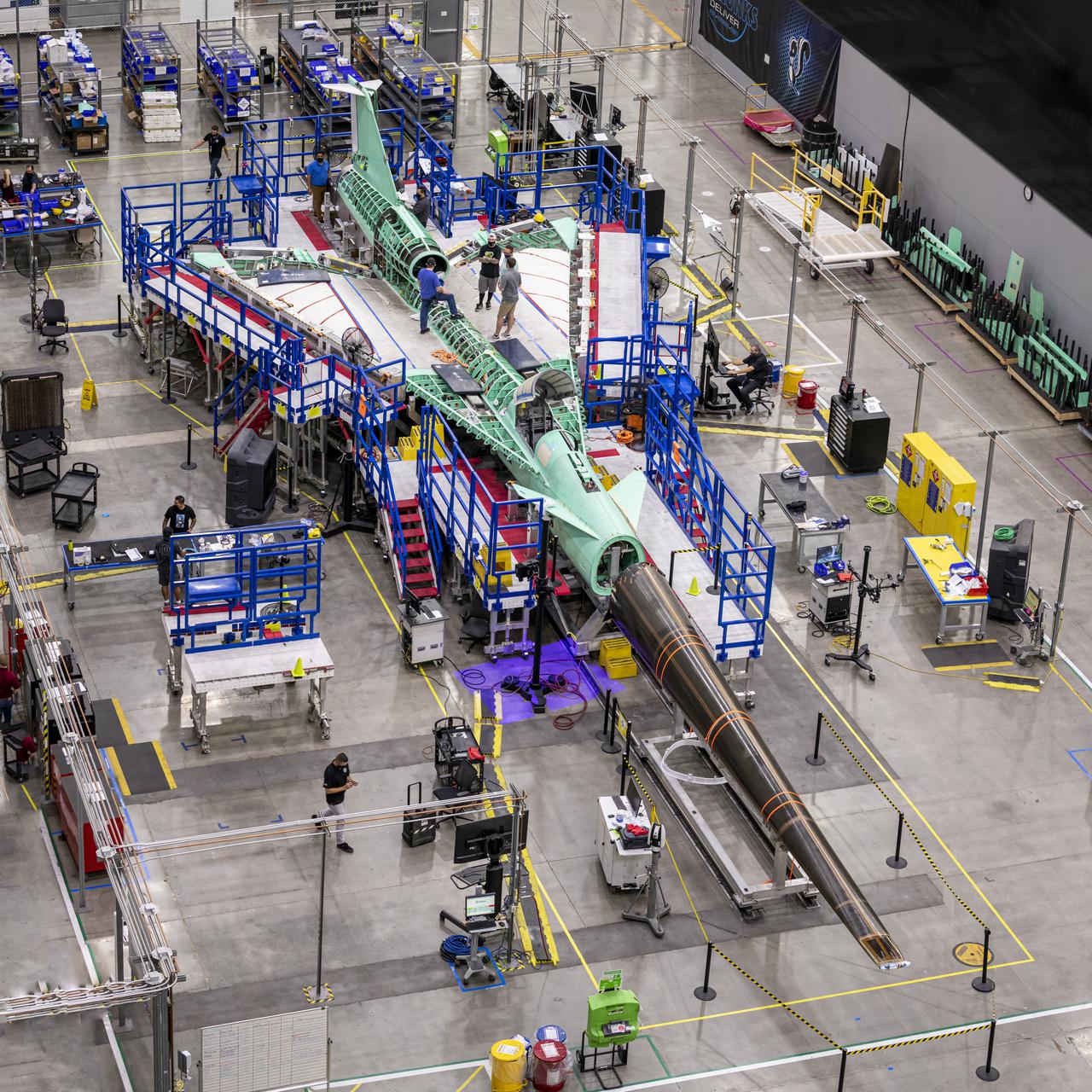
The X-59 Quiet SuperSonic Technology (QueSST) aircraft is taking shape at the Lockheed Martin Skunk Works facility in Palmdale, California. The team positioned the X-59 QueSST's nose at the front of the aircraft. As one of the more recognizable features of the X-59, the nose makes up almost a third of the aircraft length and will be essential in shaping shock waves during supersonic flight, resulting in quiet sonic thumps instead of loud sonic booms. The nose was attached and then removed from the front of the aircraft in preparation for its shipment to Fort Worth, Texas where it will undergo additional testing. The X-59 will fly at supersonic speeds above communities as part of the Low-Boom Flight Demonstration mission, during which NASA will gather community feedback to the sound of quiet supersonic flight. These findings will be shared with regulators to inform decisions on current restrictions of supersonic flight over land. Lockheed Martin Photography By Garry Tice 1011 Lockheed Way, Palmdale, Ca. 93599 Event: Manufacturing Area From Above Date: 8/18/2021 Additional Info:
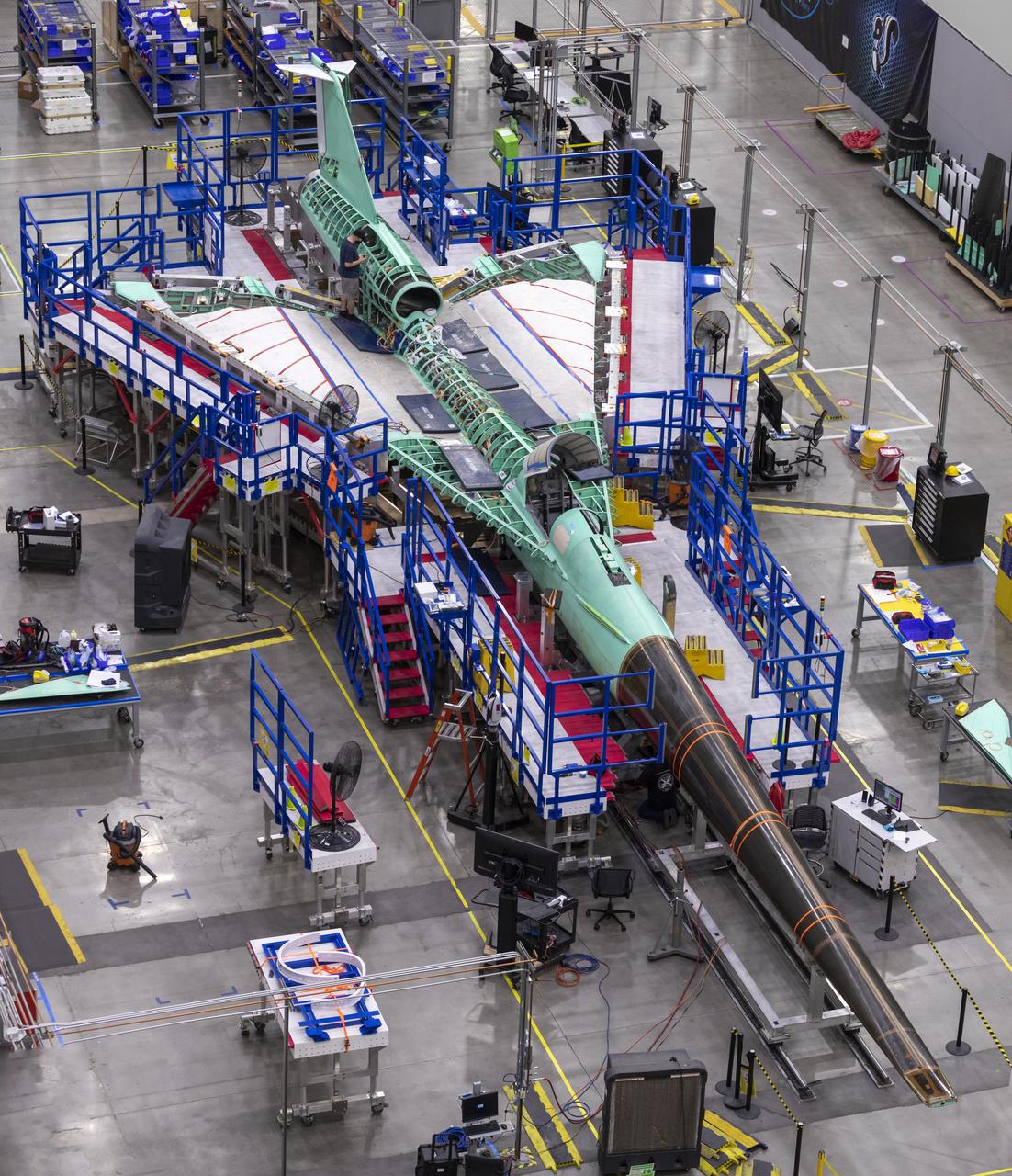
A overhead view of the X-59 with its nose on. The X-59’s nose is 38-feet long – approximately one third of the length of the entire aircraft. The plane is under construction at Lockheed Martin Skunk Works in Palmdale, California, will fly to demonstrate the ability to fly supersonic while reducing the loud sonic boom to a quiet sonic thump.
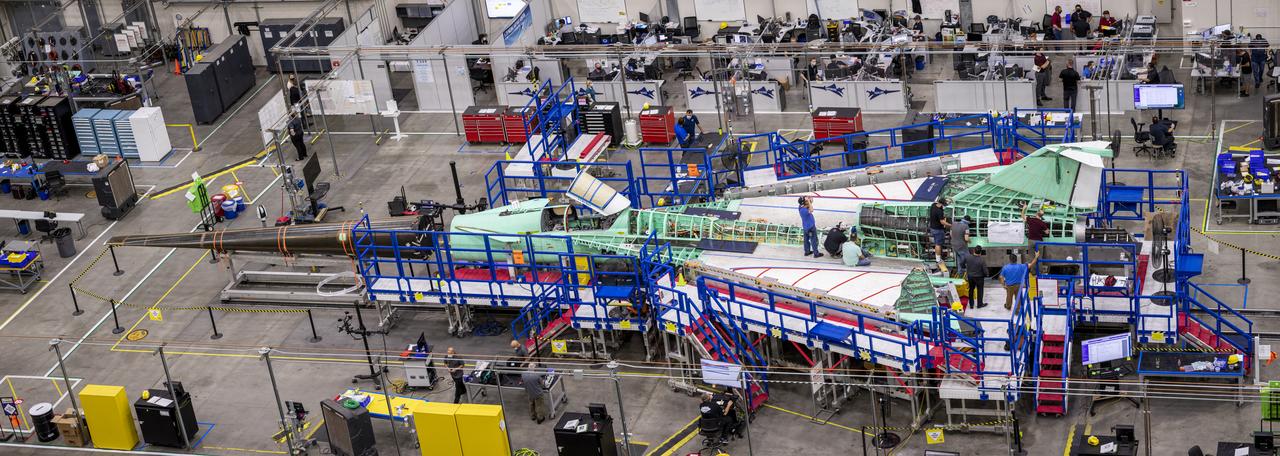
A panoramic side view of the left top of the X-59 supersonic plane with the tail on and the nose in the process of installation. The X-59’s nose is 38-feet long – approximately one third of the length of the entire aircraft. The aircraft, under construction at Lockheed Martin Skunk Works in Palmdale, California, will demonstrate the ability to fly supersonic while reducing the loud sonic boom to a quiet sonic thump.
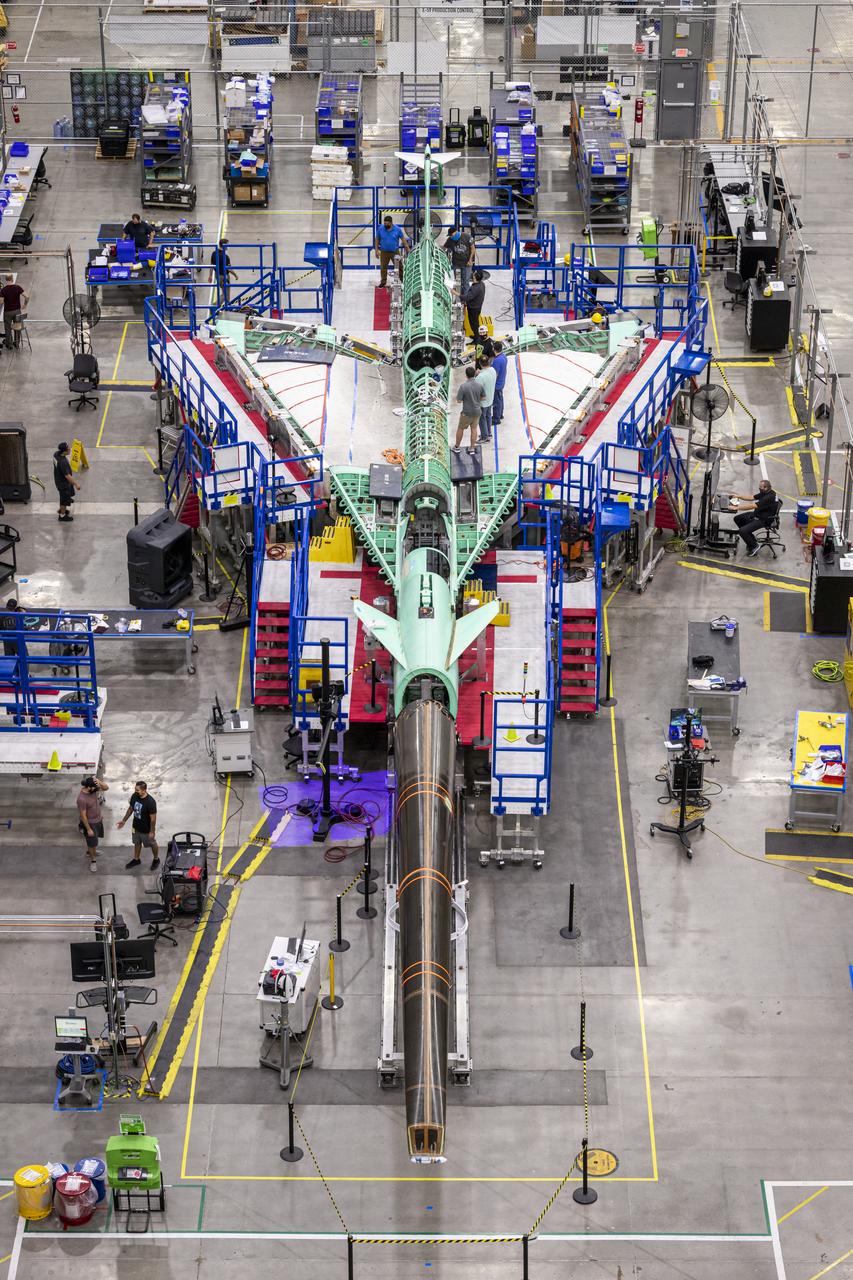
An overhead view of the X-59 supersonic plane with the tail on and the nose in the process of installation. The X-59’s nose is 38-feet long – approximately one third of the length of the entire aircraft. The aircraft, under construction at Lockheed Martin Skunk Works in Palmdale, California, will demonstrate the ability to fly supersonic while reducing the loud sonic boom to a quiet sonic thump.
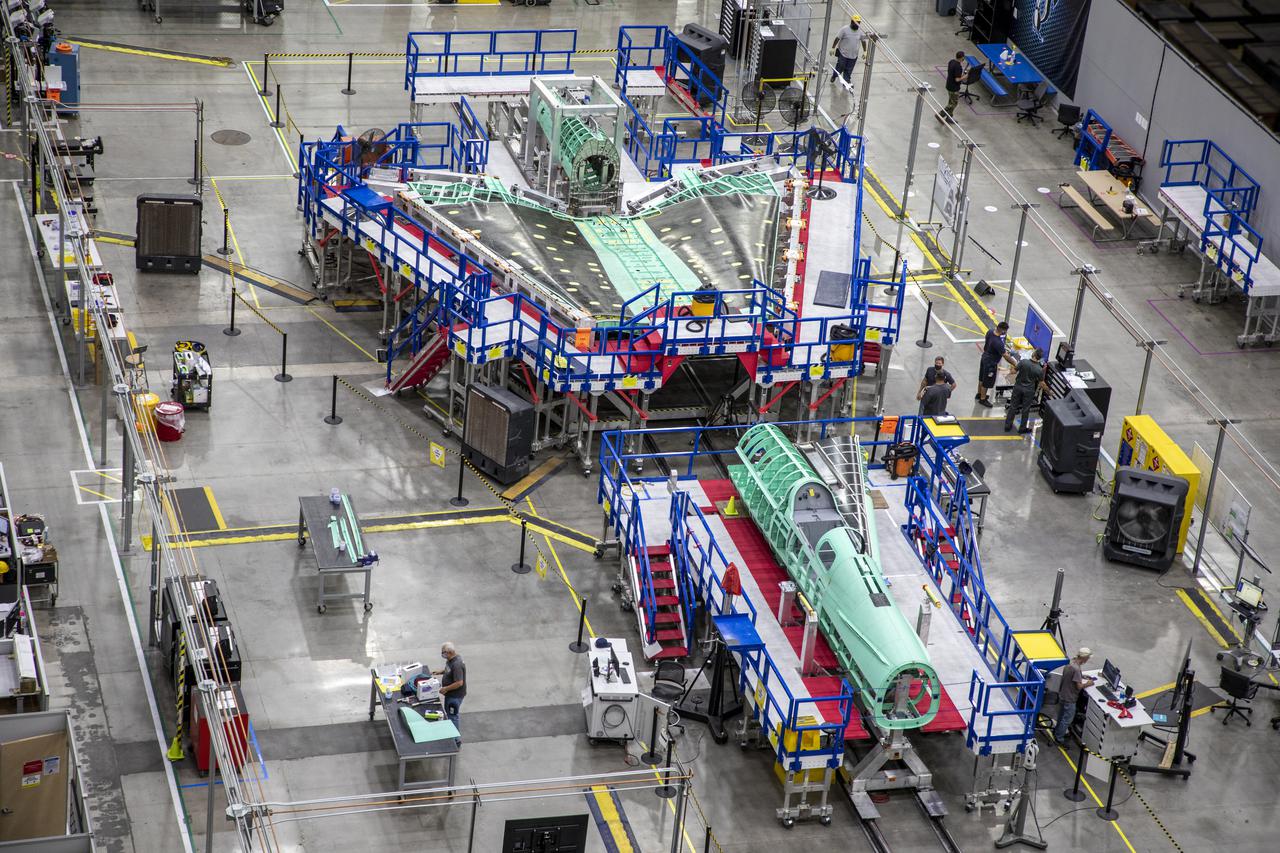
This overhead shot of the X-59 Quiet SuperSonic Technology or QueSST aircraft shows the assembly progress of the vehicle during Spring 2021. The aircraft, under construction at Lockheed Martin Skunk Works in Palmdale, California, will fly to demonstrate the ability to fly supersonic while reducing the loud sonic boom to a quiet sonic thump. Lockheed Martin Photography By Garry Tice 1011 Lockheed Way, Palmdale, Ca. 93599
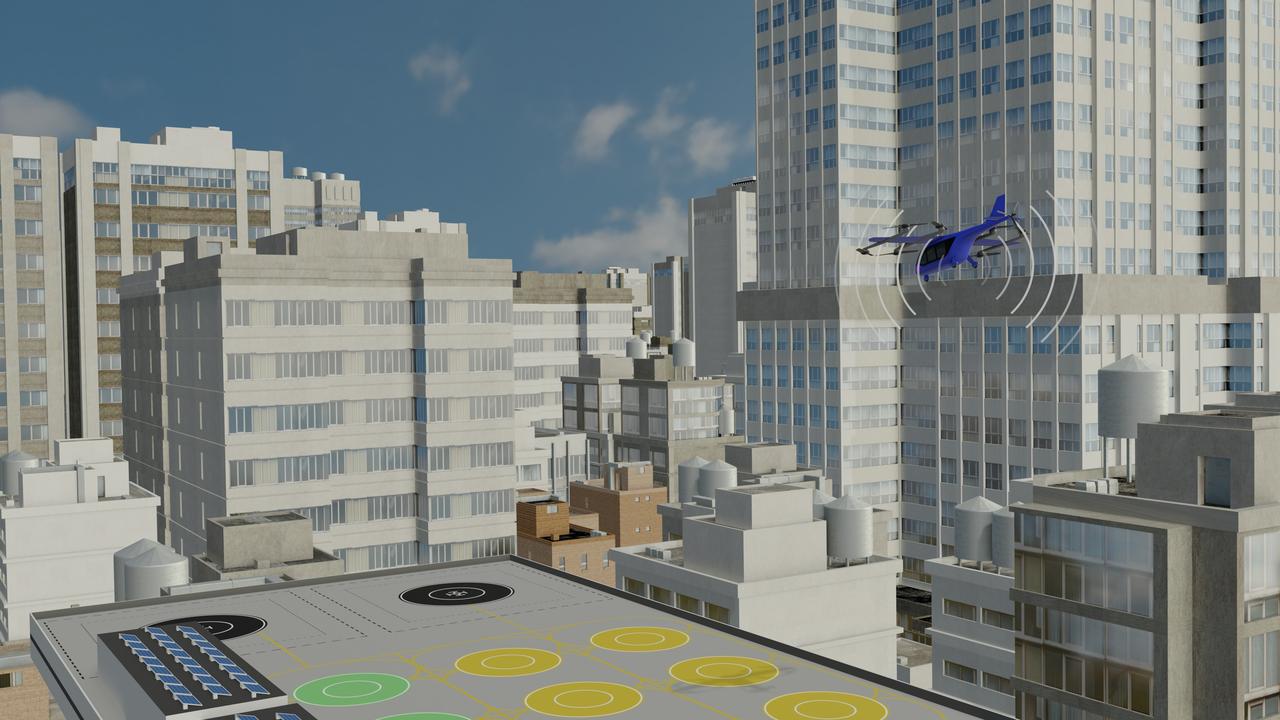
Several projects supporting NASA's Advanced Air Mobility, or AAM mission, are working on different elements to help make AAM a reality. One focus area is developing design tools manufacturers can use to reduce noise impacts.
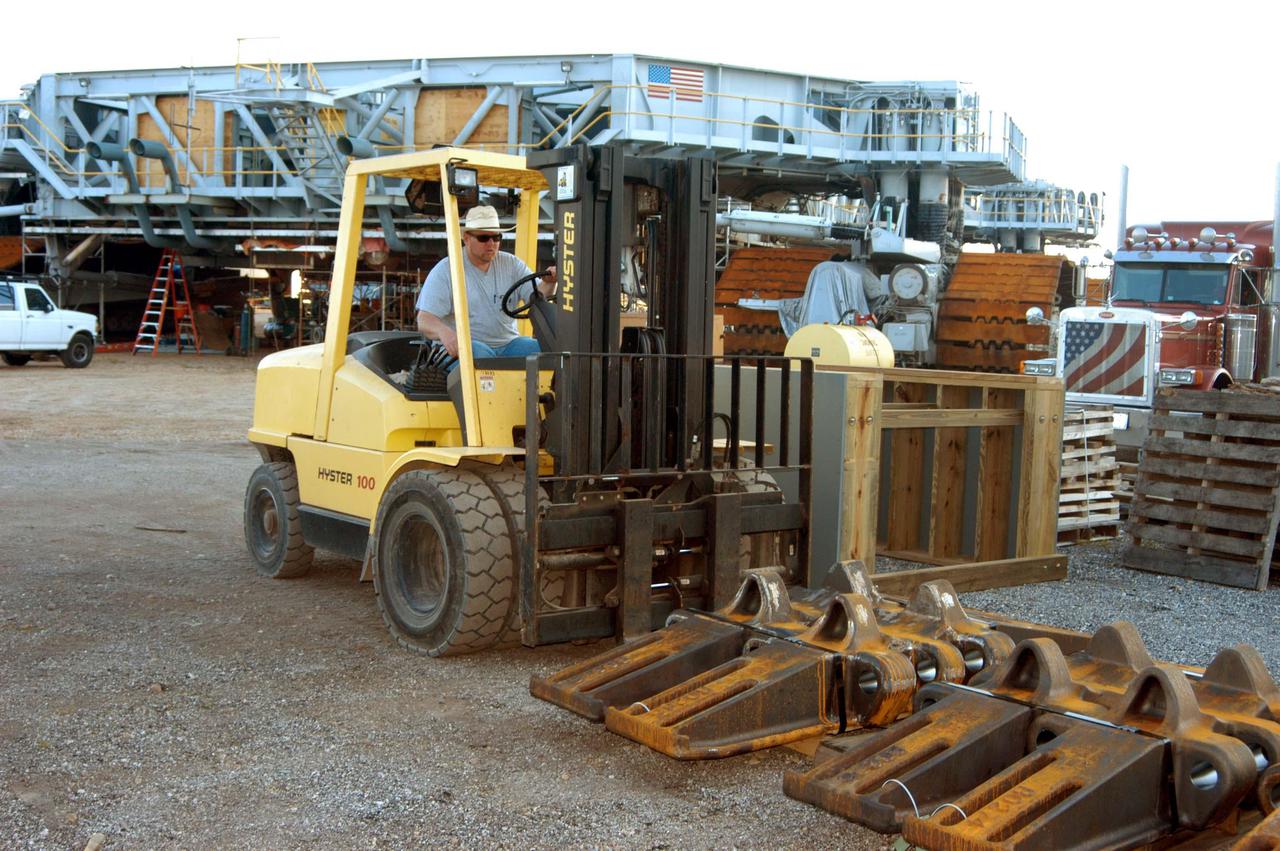
KENNEDY SPACE CENTER, FLA. - In the Crawler Transporter (CT) area, a worker offloads some of the new crawler shoes that arrived from Minnesota. In the background is one of the two CTs. The new shoes were manufactured by ME Global in Duluth, Minn. The CT transports the Mobile Launcher Platform, with the assembled Space Shuttle aboard, between the refurbishment area, the VAB and Launch Complex Pads 39A and 39B. The crawlers have 456 shoes, 57 per belt (8 belts in all). Each shoe weighs 2,200 pounds. The original shoes were manufactured for the Apollo Program. Cracks appeared in the shoes in recent years spurring a need for replacement. The new manufacturer, in Duluth, Minn., has improved the design for Return to Flight and use through the balance of the Space Shuttle Program.
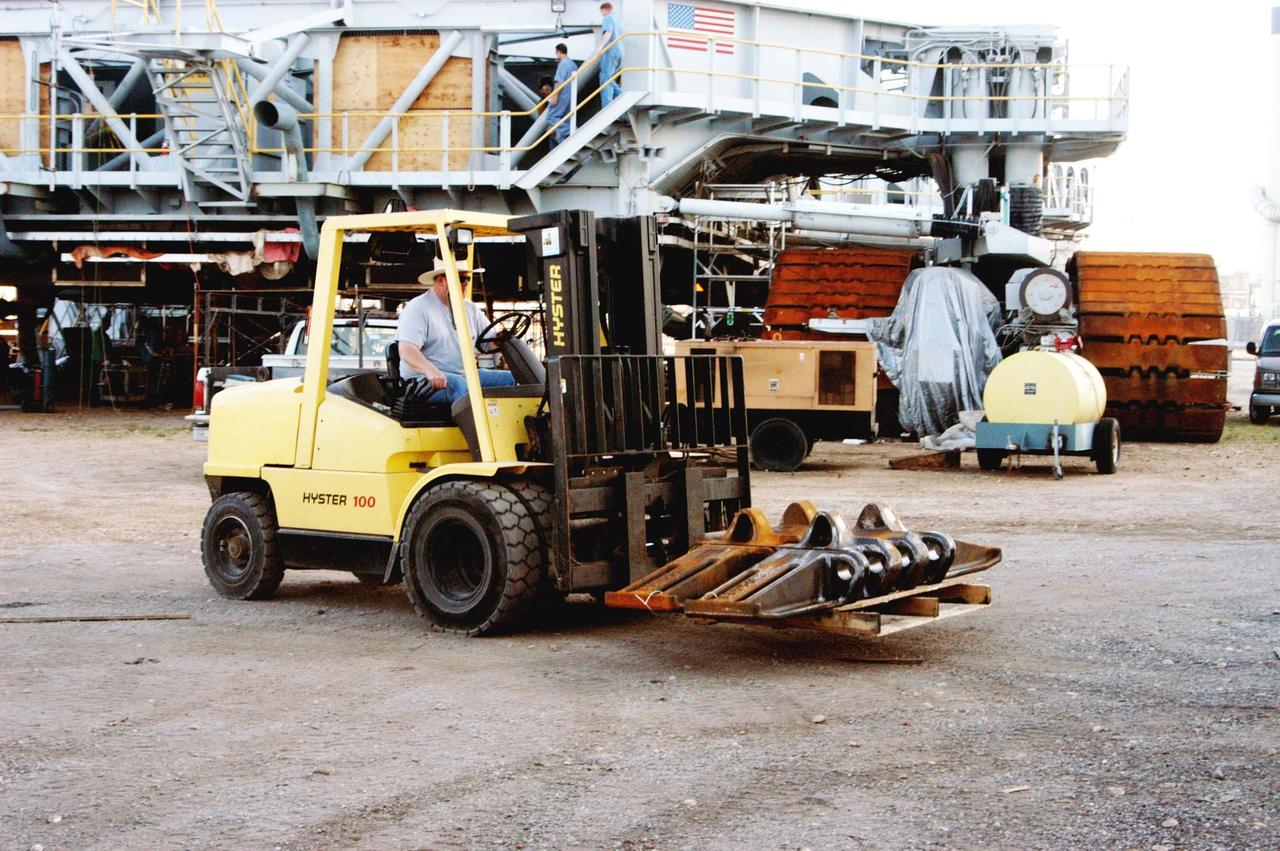
KENNEDY SPACE CENTER, FLA. - In the Crawler Transporter (CT) area, a worker offloads some of the new crawler shoes that arrived. In the background is one of the two CTs. The new shoes were manufactured by ME Global in Duluth, Minn. The CT transports the Mobile Launcher Platform, with the assembled Space Shuttle aboard, between the refurbishment area, the VAB and Launch Complex Pads 39A and 39B. The crawlers have 456 shoes, 57 per belt (8 belts in all). Each shoe weighs 2,200 pounds. The original shoes were manufactured for the Apollo Program. Cracks appeared in the shoes in recent years spurring a need for replacement. The new manufacturer, in Duluth, Minn., has improved the design for Return to Flight and use through the balance of the Space Shuttle Program.

KENNEDY SPACE CENTER, FLA. - A tractor-trailer arrives at the Crawler Transporter (CT) area with a new shipment of crawler shoes. The new shoes were manufactured by ME Global in Duluth, Minn. The CT transports the Mobile Launcher Platform, with the assembled Space Shuttle aboard, between the refurbishment area, the VAB and Launch Complex Pads 39A and 39B. The crawlers have 456 shoes, 57 per belt (8 belts in all). Each shoe weighs 2,200 pounds. The original shoes were manufactured for the Apollo Program. Cracks appeared in the shoes in recent years spurring a need for replacement. The new manufacturer, in Duluth, Minn., has improved the design for Return to Flight and use through the balance of the Space Shuttle Program.
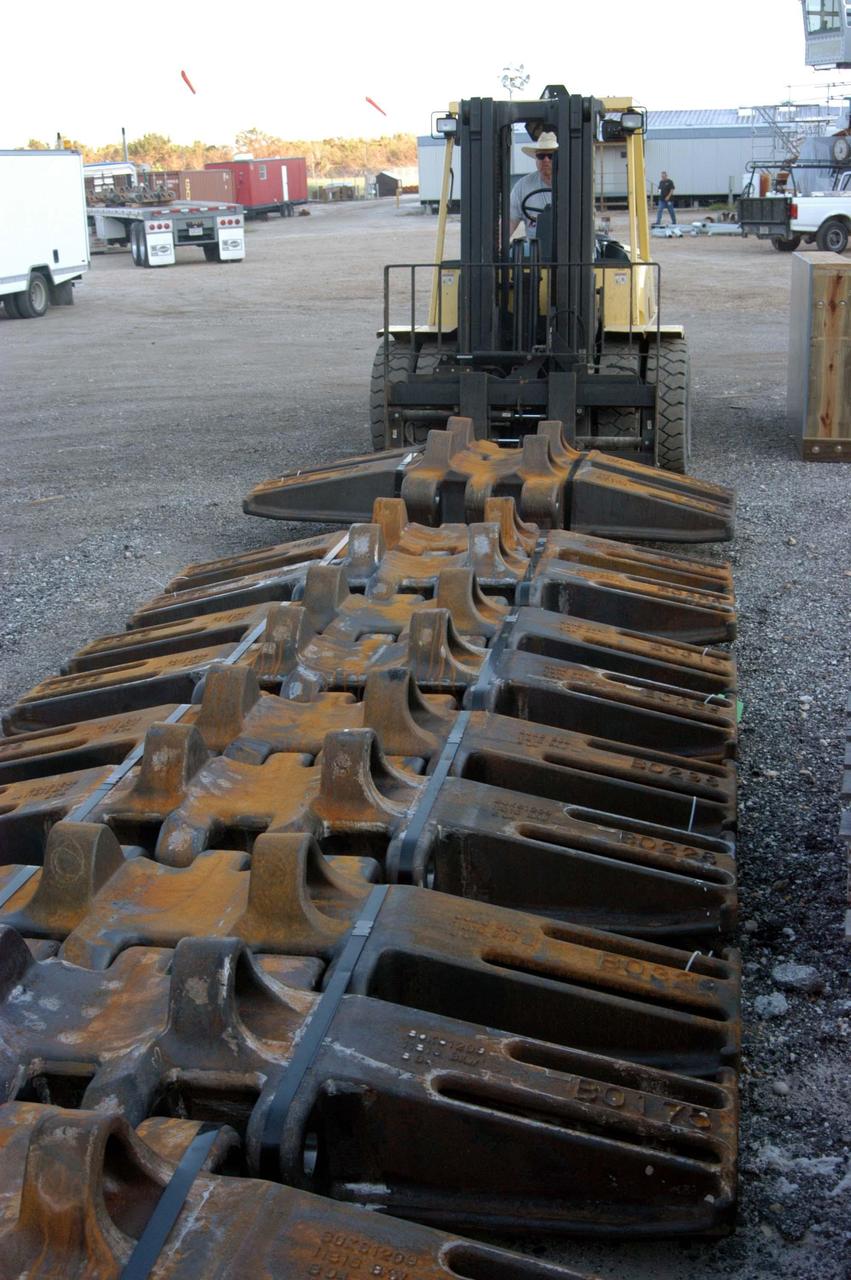
KENNEDY SPACE CENTER, FLA. - In the Crawler Transporter (CT) area, a worker places another load of new crawler shoes on the ground. The new shoes were manufactured by ME Global in Duluth, Minn. The CT transports the Mobile Launcher Platform, with the assembled Space Shuttle aboard, between the refurbishment area, the VAB and Launch Complex Pads 39A and 39B. The crawlers have 456 shoes, 57 per belt (8 belts in all). Each shoe weighs 2,200 pounds. The original shoes were manufactured for the Apollo Program. Cracks appeared in the shoes in recent years spurring a need for replacement. The new manufacturer, in Duluth, Minn., has improved the design for Return to Flight and use through the balance of the Space Shuttle Program.
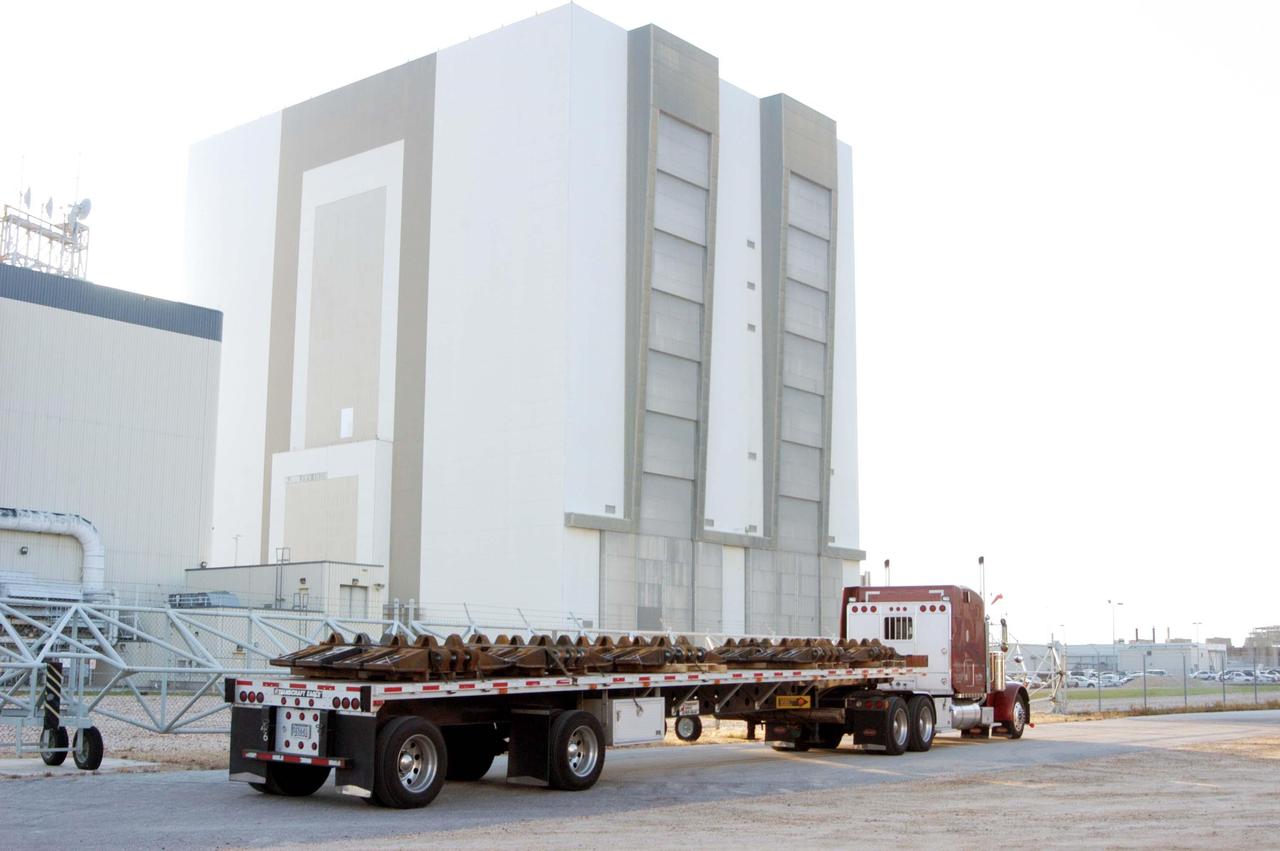
KENNEDY SPACE CENTER, FLA. - A tractor-trailer arrives at the Crawler Transporter (CT) area with a new shipment of crawler shoes. In the background is the Vehicle Assembly Building. The new shoes were manufactured by ME Global in Duluth, Minn. The CT transports the Mobile Launcher Platform, with the assembled Space Shuttle aboard, between the refurbishment area, the VAB and Launch Complex Pads 39A and 39B. The crawlers have 456 shoes, 57 per belt (8 belts in all). Each shoe weighs 2,200 pounds. The original shoes were manufactured for the Apollo Program. Cracks appeared in the shoes in recent years spurring a need for replacement. The new manufacturer, in Duluth, Minn., has improved the design for Return to Flight and use through the balance of the Space Shuttle Program.
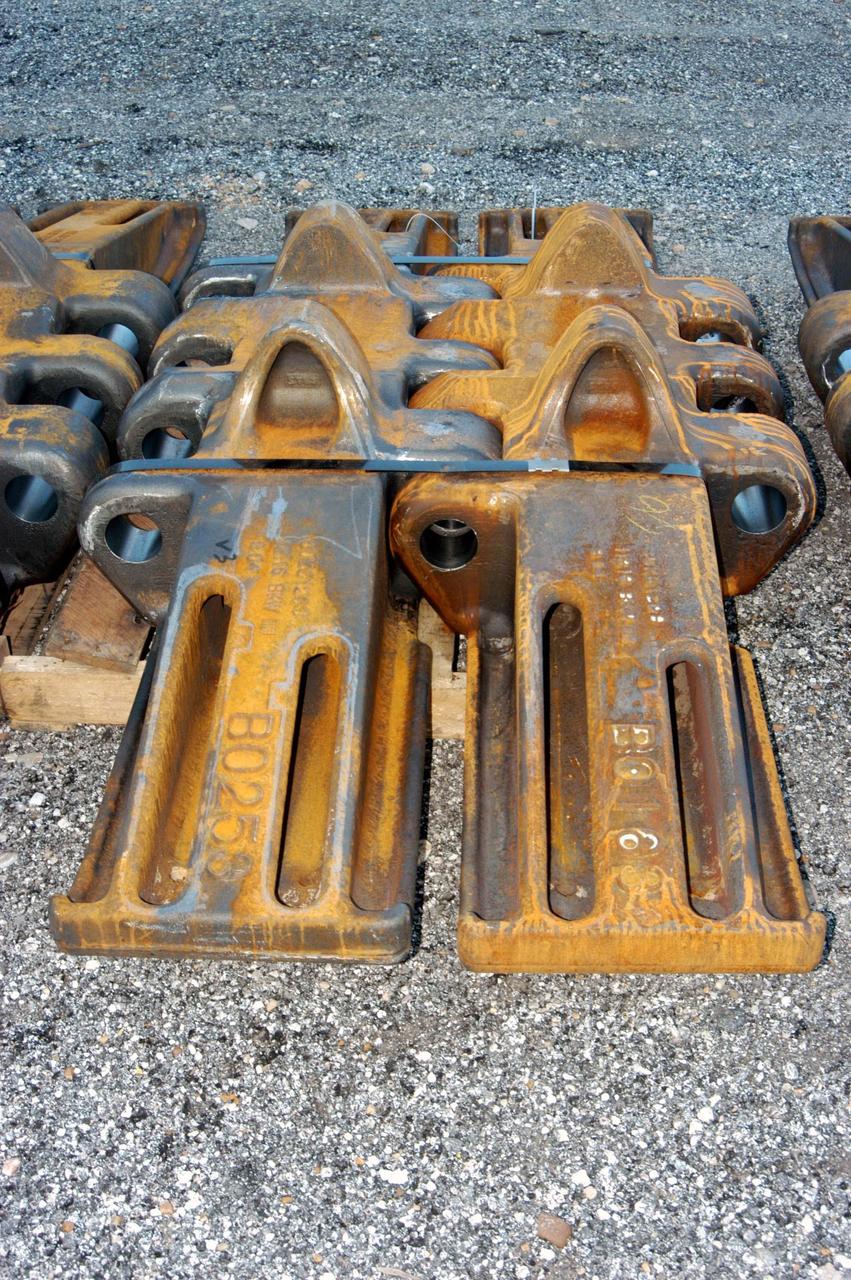
KENNEDY SPACE CENTER, FLA. - A closeup of some of the new crawler shoes that arrived from Minnesota. The new shoes were manufactured by ME Global in Duluth. The CT transports the Mobile Launcher Platform, with the assembled Space Shuttle aboard, between the refurbishment area, the VAB and Launch Complex Pads 39A and 39B. The crawlers have 456 shoes, 57 per belt (8 belts in all). Each shoe weighs 2,200 pounds. The original shoes were manufactured for the Apollo Program. Cracks appeared in the shoes in recent years spurring a need for replacement. The new manufacturer, in Duluth, Minn., has improved the design for Return to Flight and use through the balance of the Space Shuttle Program.

Brian Holz, CEO of OneWeb Satellites, speaks during the groundbreaking ceremony at Kennedy's Exploration Park for OneWeb. The company, in partnership with Airbus, is building a 150,000-square-foot factory to manufacture satellites that will connect all areas of the world to the Internet wirelessly. Photo credit: NASA/Kim Shiflett

Cissy Procter, executive director of the Florida Department of Economic Activity, speaks during the groundbreaking ceremony at Kennedy's Exploration Park for OneWeb. The company, in partnership with Airbus, is building a 150,000-square-foot factory to manufacture satellites that will connect all areas of the world to the Internet wirelessly. Photo credit: NASA/Kim Shiflett
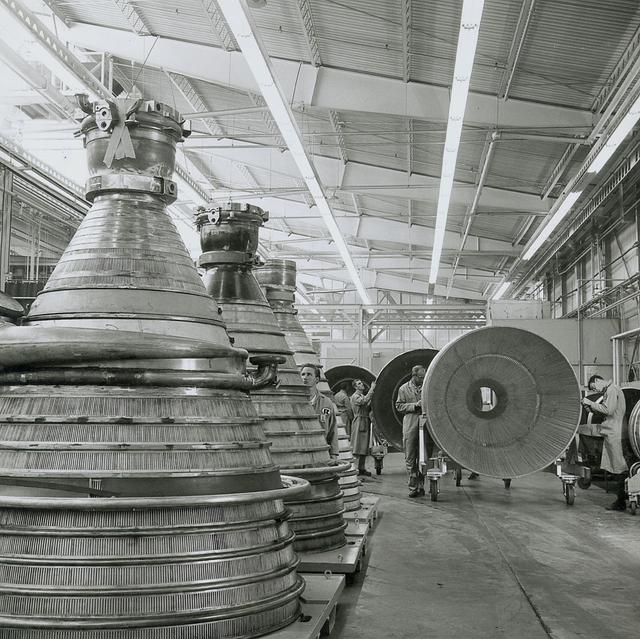
J-2 engines for the Saturn IB/Saturn V launch vehicles are lined up in the assembly area at Rocketdyne's manufacturing plant in Canoga Park, California. Five J-2 engines provided more than 1,000,000 pounds of thrust to accelerate the second stage toward a Moon trajectory.
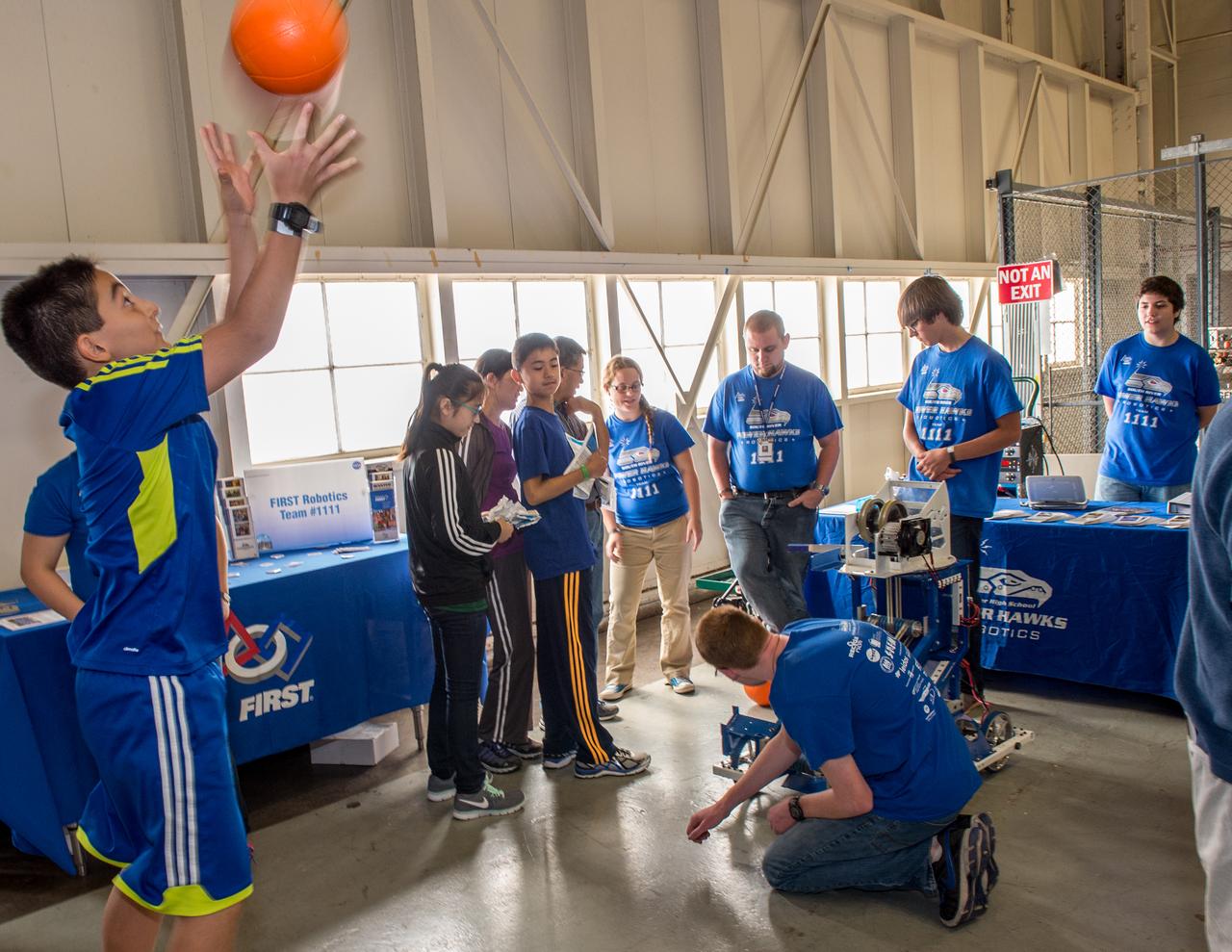
Building 5 Manufacturing Branch. Explore@NASAGoddard celebrates the 25th anniversary of the launch of the Hubble Space Telescope. All areas of Goddard’s research – Earth science, heliophysics, planetary science, astrophysics, and engineering and technology – will be presented, as each discipline plays a critical part in NASA's ongoing journey to reach new heights.
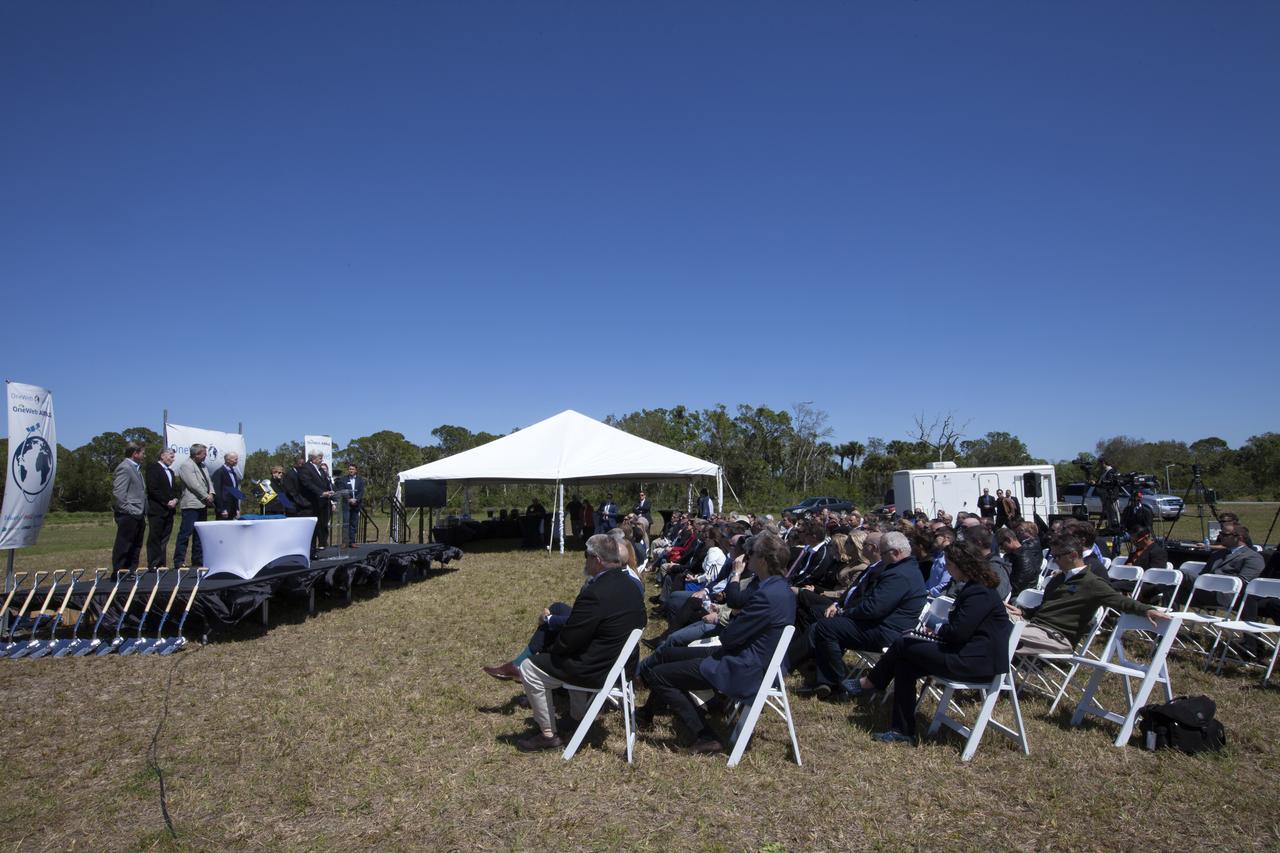
Jim Kuzma, COO of Space Florida, speaks during the groundbreaking ceremony at Kennedy's Exploration Park for OneWeb. The company, in partnership with Airbus, is building a 150,000-square-foot factory to manufacture satellites that will connect all areas of the world to the Internet wirelessly. Photo credit: NASA/Kim Shiflett
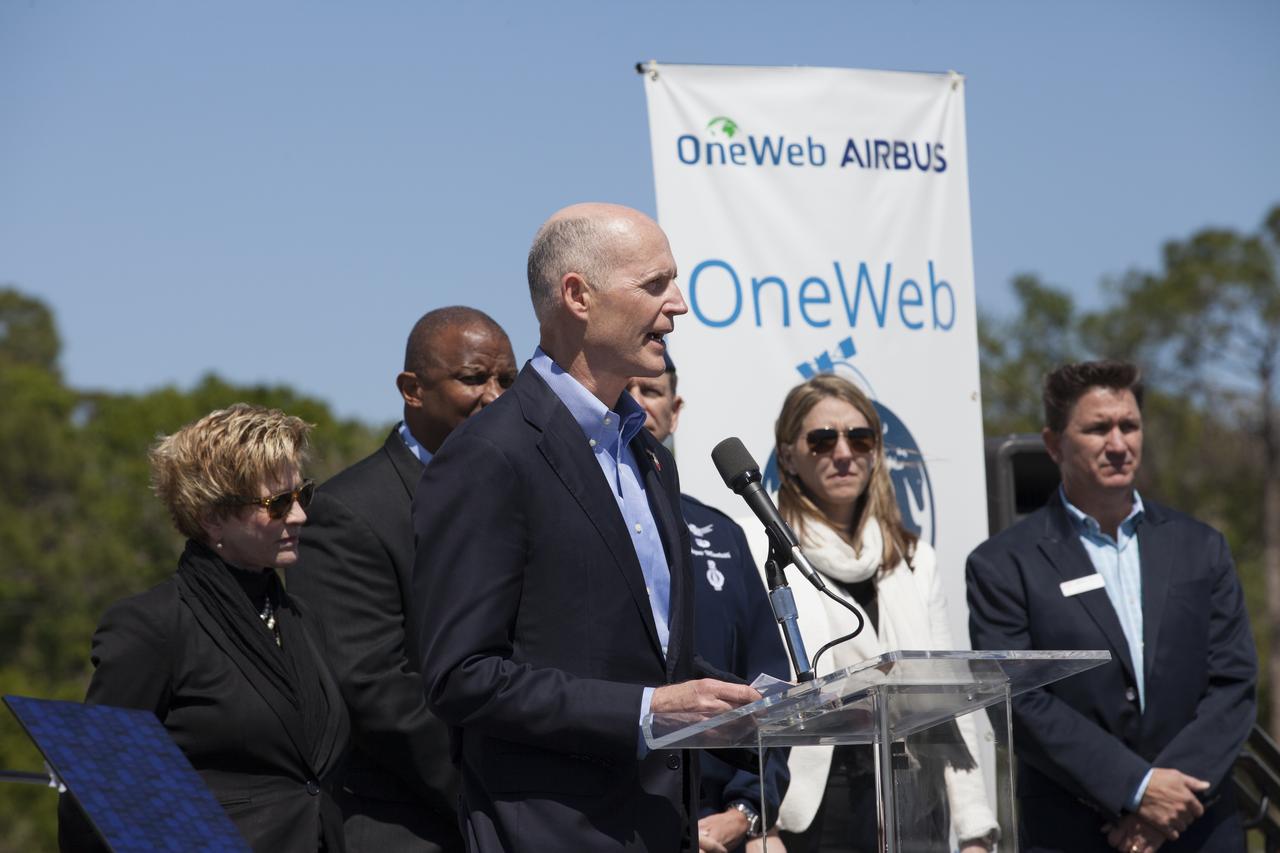
Florida Governor Rick Scott speaks during the groundbreaking ceremony at Kennedy's Exploration Park for OneWeb. The company, in partnership with Airbus, is building a 150,000-square-foot factory to manufacture satellites that will connect all areas of the world to the Internet wirelessly. Photo credit: NASA/Kim Shiflett
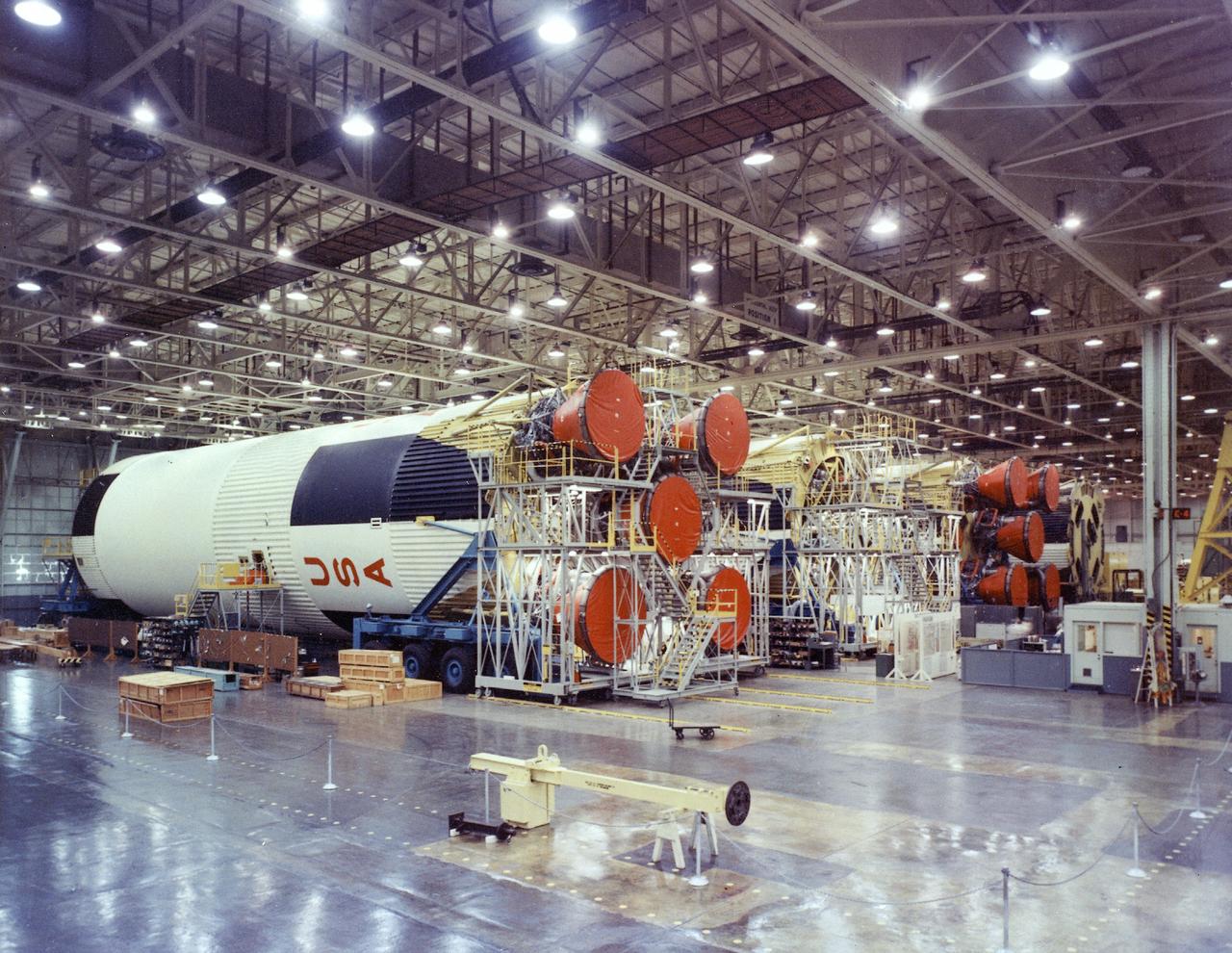
The Saturn IB and Saturn V first stages were manufactured at the Michoud Assembly Facility (MAF), located 24 kilometers (approximately 15 miles) east of downtown New Orleans, Louisiana. The basic manufacturing building boasted 43 acres under one roof. By 1964, NASA added a separate engineering and office building, vertical assembly building, and test stage building. By 1966, other changes to the site included enlarged barge facilities and other miscellaneous support buildings. The photograph shows Saturn V S-IC flight stages being assembled in the horizontal assembly area at the MAF.

The Advanced Rapid Imaging and Analysis (ARIA) team at NASA's Jet Propulsion Laboratory in Pasadena, California, created these flood proxy maps depicting areas of Mozambique that are likely flooded as a result of Cyclone Idai. The likely flooding zones are indicated by light blue pixels. The maps were derived from synthetic aperture radar (SAR) images from the ICEYE-X2 (March 18), Sentinel-1 (March 19, 20), and ALOS-2 (March 23) satellites operated by ICEYE (Finnish satellite manufacturer Every Square Meter, Every Hour), European Space Agency (ESA), and Japan Aerospace Exploration Agency (JAXA), respectively. The processed images were compared to each other for cross-validation. These flood proxy maps should be used as guidance to identify areas that are likely flooded, and may be less reliable over urban and vegetated areas. https://photojournal.jpl.nasa.gov/catalog/PIA23142
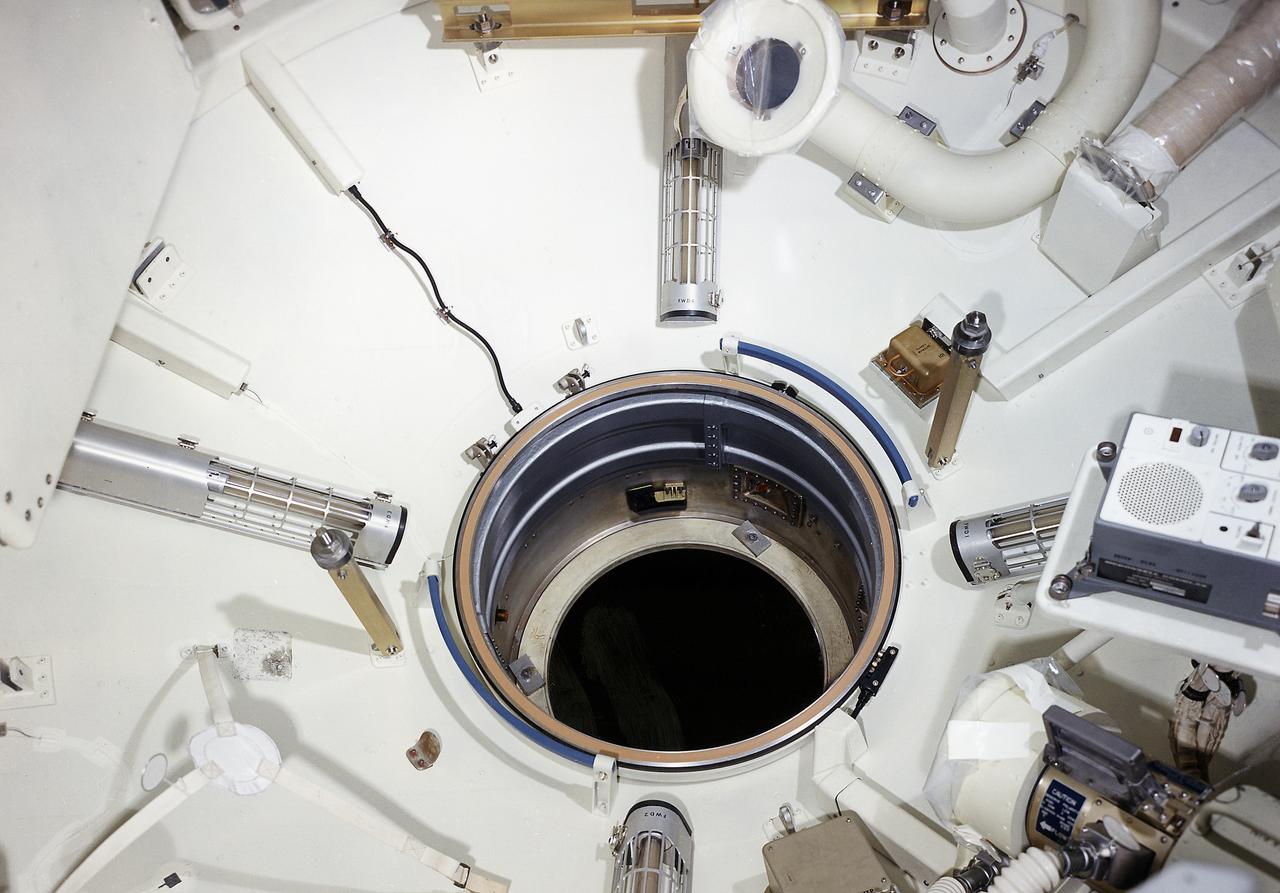
This August 1971 interior photograph of Skylab's Multiple Docking Adapter (MDA) flight article, undergoing outfitting at the Martin-Marietta Corporation's Space Center facility in Denver, Colorado, shows the forward cone area and docking tunnel (center) that attached to the Apollo Command Module. Designed and manufactured by the Marshall Space Flight Center, the MDA housed the control units for the Apollo Telescope Mount, Earth Resources Experiment Package, and Zero-Gravity Materials Processing Facility and provided a docking port for the Apollo Command Module.

KENNEDY SPACE CENTER, FLA. - A Beluga aircraft parks near the mate/demate device at the Shuttle Landing Facility on NASA's Kennedy Space Center. The Beluga carries the European Space Agency's research laboratory, designated Columbus, flown to Kennedy from its manufacturer in Germany. The module will be prepared for delivery to the International Space Station on a future space shuttle mission. Columbus will expand the research facilities of the station and provide researchers with the ability to conduct numerous experiments in the area of life, physical and materials sciences. Photo credit: NASA/Jim Grossmann
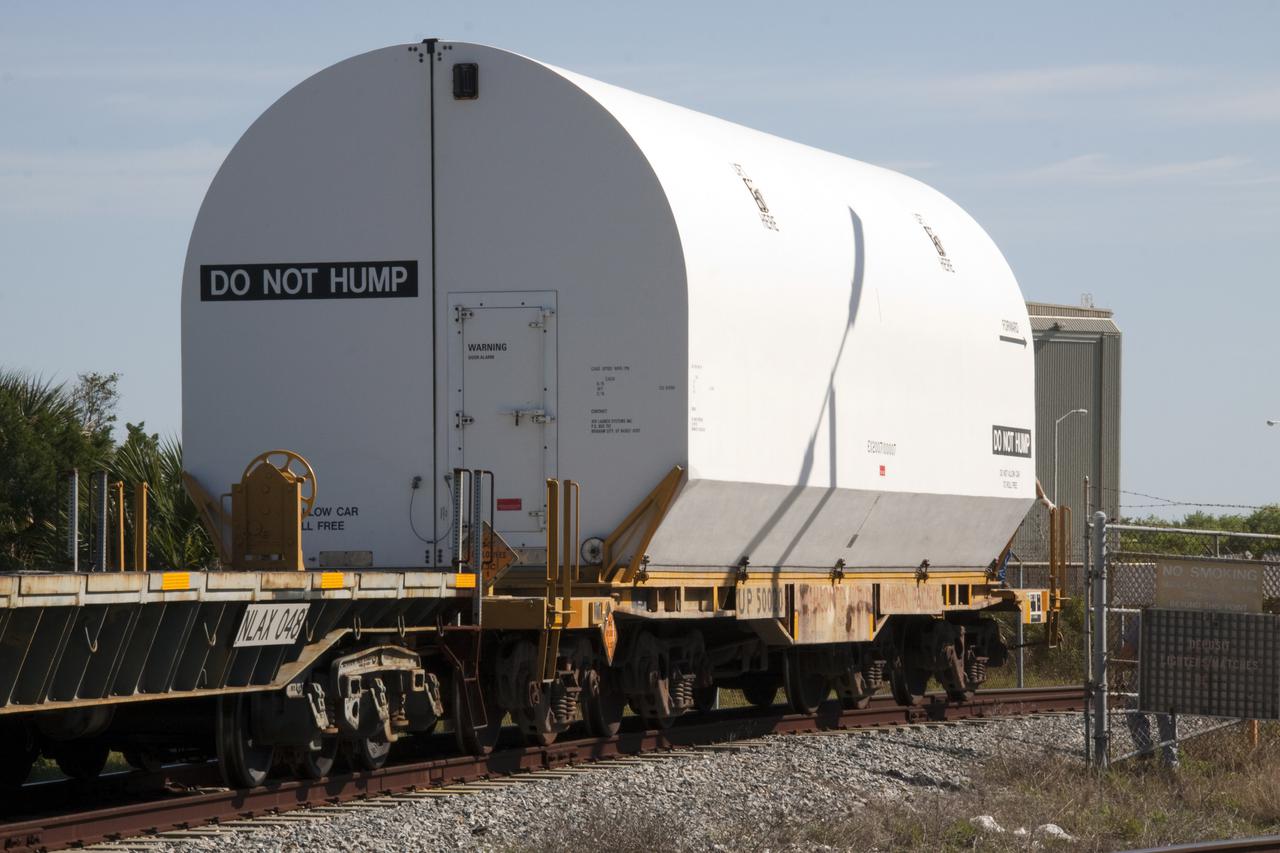
CAPE CANAVERAL, Fla. – Secured inside a railway car, a nozzle exit cone for a solid rocket booster that will be used on space shuttle Discovery's STS-133 mission is moved from Suspect Siding, a parking area, to the Rotation, Processing and Surge Facility at NASA's Kennedy Space Center in Florida. The boosters are manufactured by Alliant Techsystems Inc., or ATK. EGandG_URS runs Kennedy's railway system for NASA. Photo credit: NASA_Troy Cryder
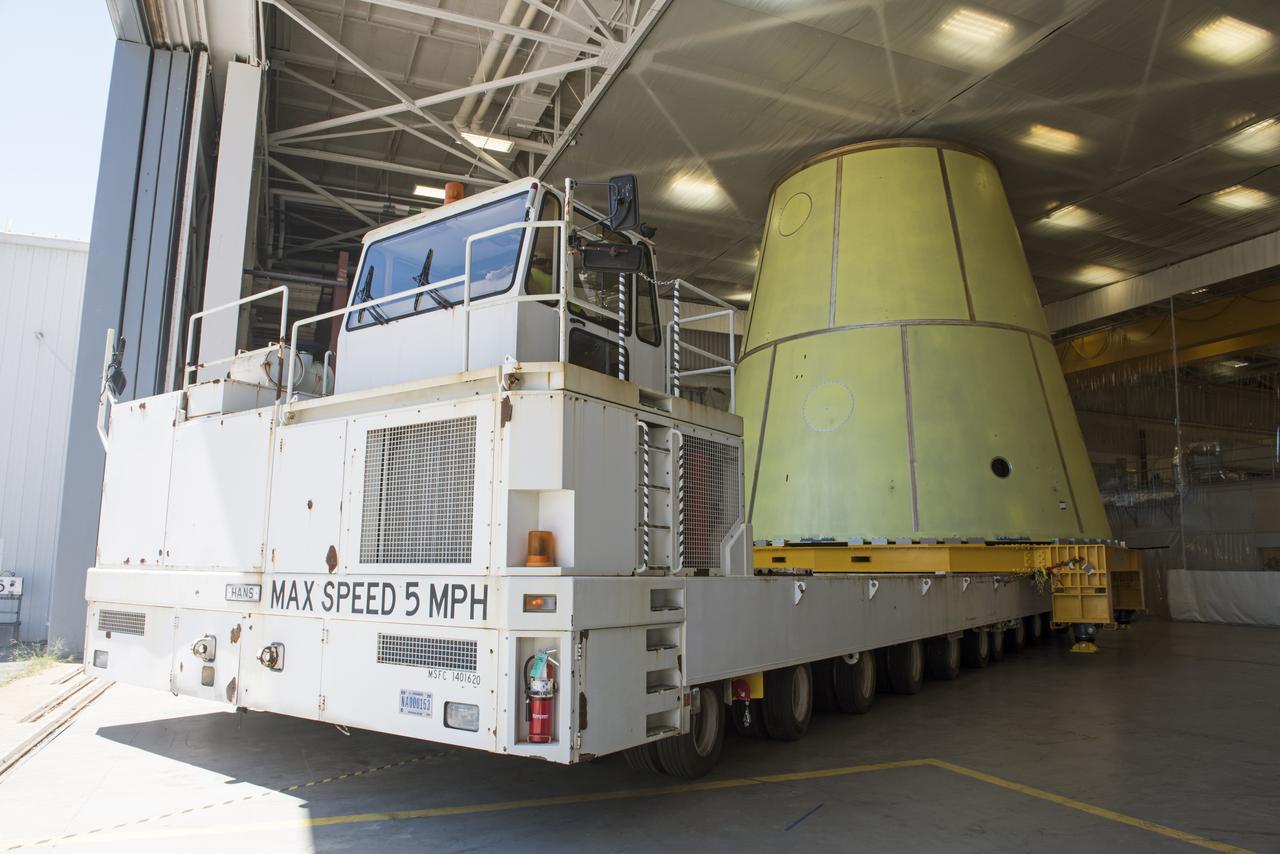
A NASA KAMAG transporter moves the Space Launch System’s launch vehicle stage adapter (LVSA) to an area where spray-on foam insulation will be applied. The LVSA recently completed manufacturing on a 30 foot welding tool at NASA’s Marshall Space Flight Center in Huntsville, Al. The LVSA will be coated with insulation that will protect it during it’s trip to space. The LVSA provides structural support and connects the core stage and the interim cryogenic propulsion stage during the first integrated flight of SLS and Orion.

Lynda Weatherman, president and CEO of the Economic Development Council of the Space Coast, talks with Kelvin Manning, associate director of NASA's Kennedy Space Center, and Gen. Wayne Monteith, commander of the 45th Space Wing of the U.S. Air Force, prior to a groundbreaking ceremony at Kennedy's Exploration Park for OneWeb. The company, in partnership with Airbus, is building a 150,000-square-foot factory to manufacture satellites that will connect all areas of the world to the Internet wirelessly. Photo credit: NASA/Kim Shiflett
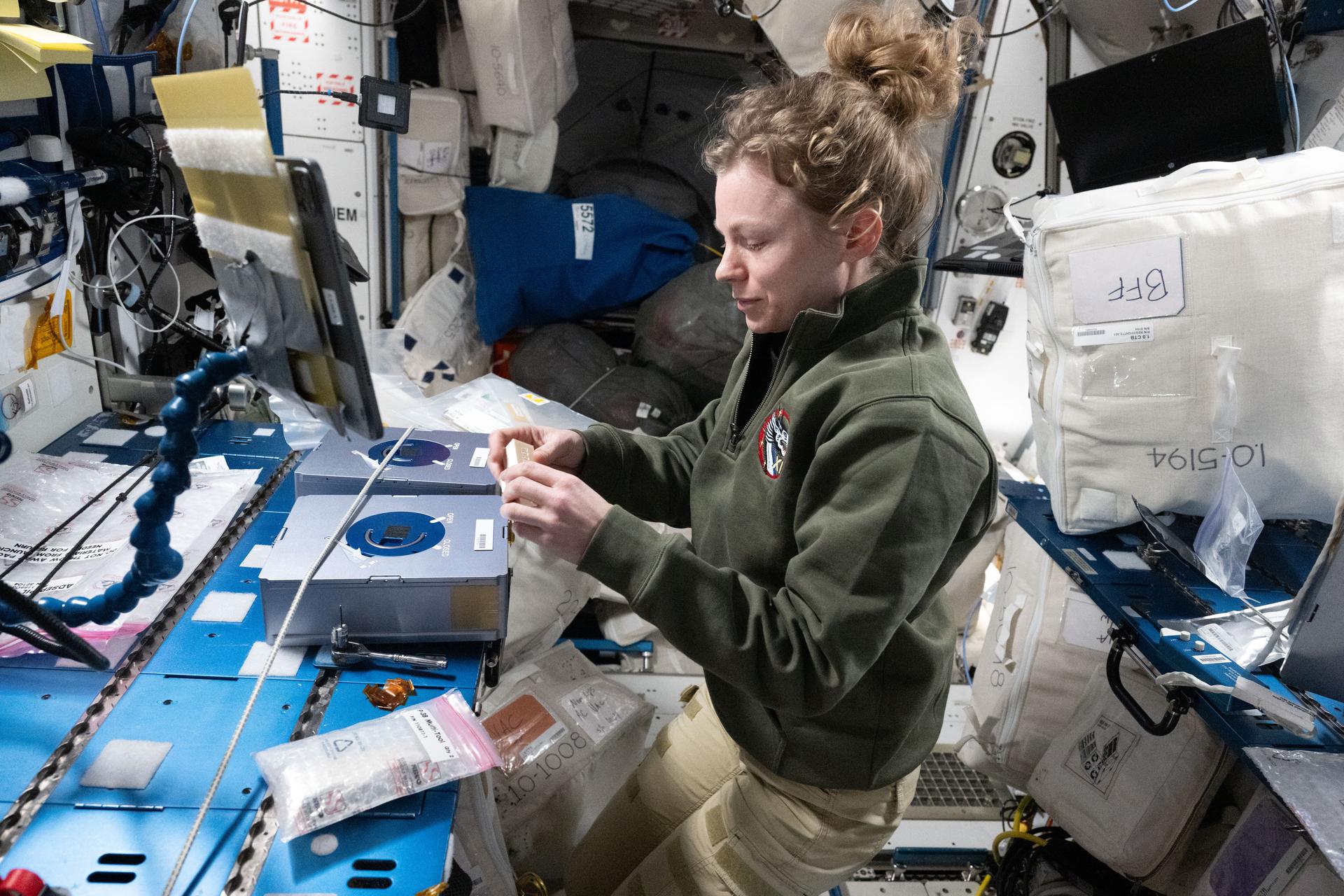
iss073e0865452 (Oct. 7, 2025) --- NASA astronaut and Expedition 73 Flight Engineer Zena Cardman inspects sample cassettes for installation into the Advanced Space Experiment Processor-4 (ADSEP-4) at the maintenance work area inside the International Space Station's Harmony module. She was conducting research operations for the Pharmaceutical In-space Laboratory biotechnology experiment, which is investigating methods to advance pharmaceutical manufacturing in microgravity.
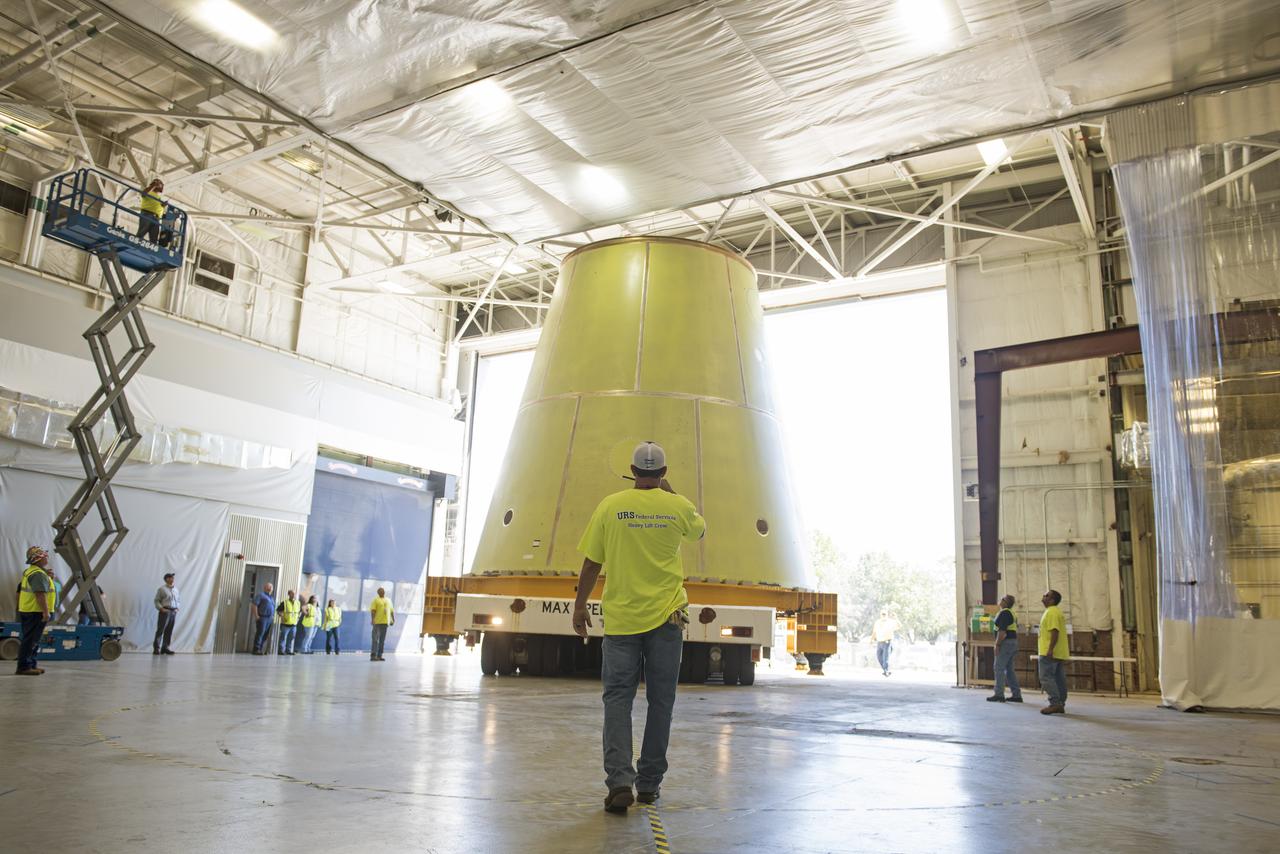
A NASA KAMAG transporter moves the Space Launch System’s launch vehicle stage adapter (LVSA) to an area where spray-on foam insulation will be applied. The LVSA recently completed manufacturing on a 30 foot welding tool at NASA’s Marshall Space Flight Center in Huntsville, Al. The LVSA will be coated with insulation that will protect it during it’s trip to space. The LVSA provides structural support and connects the core stage and the interim cryogenic propulsion stage during the first integrated flight of SLS and Orion.
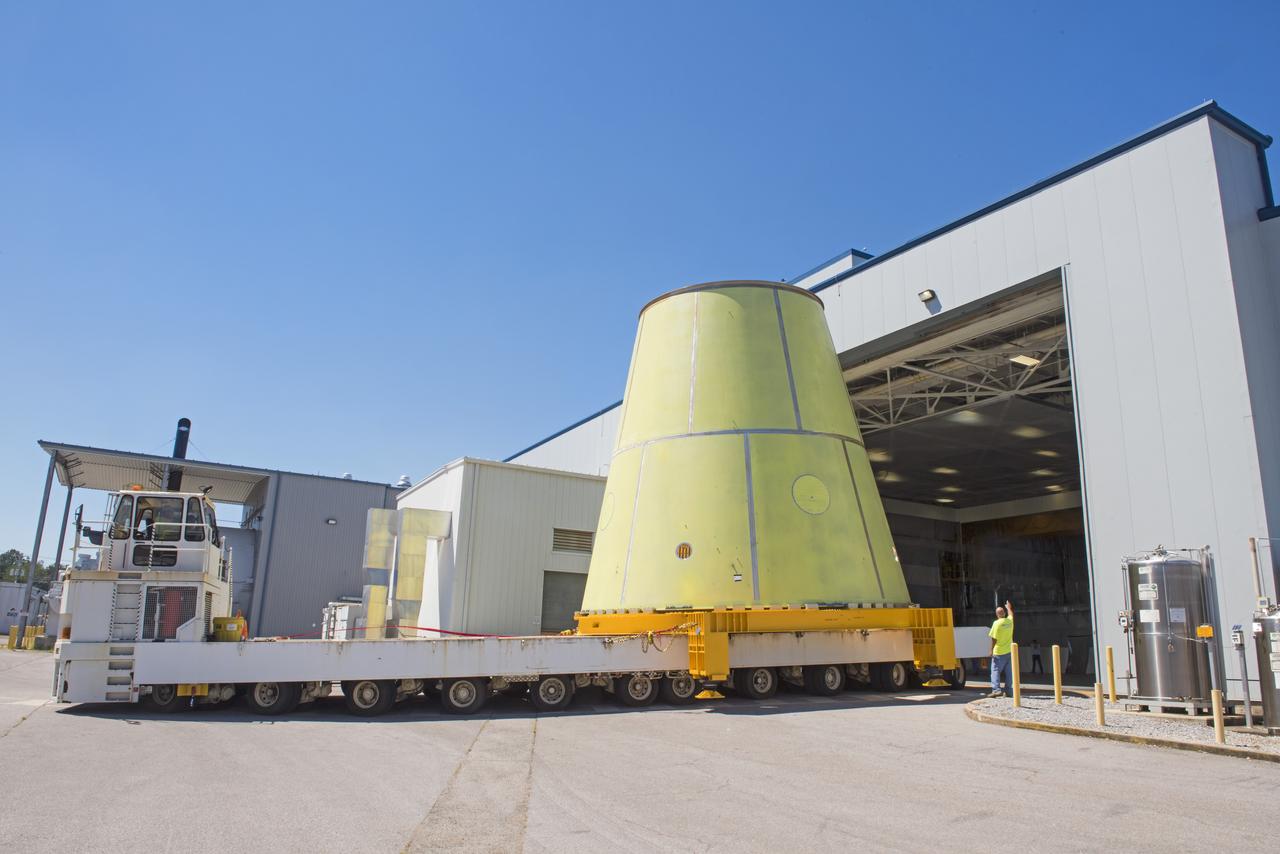
A NASA KAMAG transporter moves the Space Launch System’s launch vehicle stage adapter (LVSA) to an area where spray-on foam insulation will be applied. The LVSA recently completed manufacturing on a 30 foot welding tool at NASA’s Marshall Space Flight Center in Huntsville, Al. The LVSA will be coated with insulation that will protect it during it’s trip to space. The LVSA provides structural support and connects the core stage and the interim cryogenic propulsion stage during the first integrated flight of SLS and Orion.
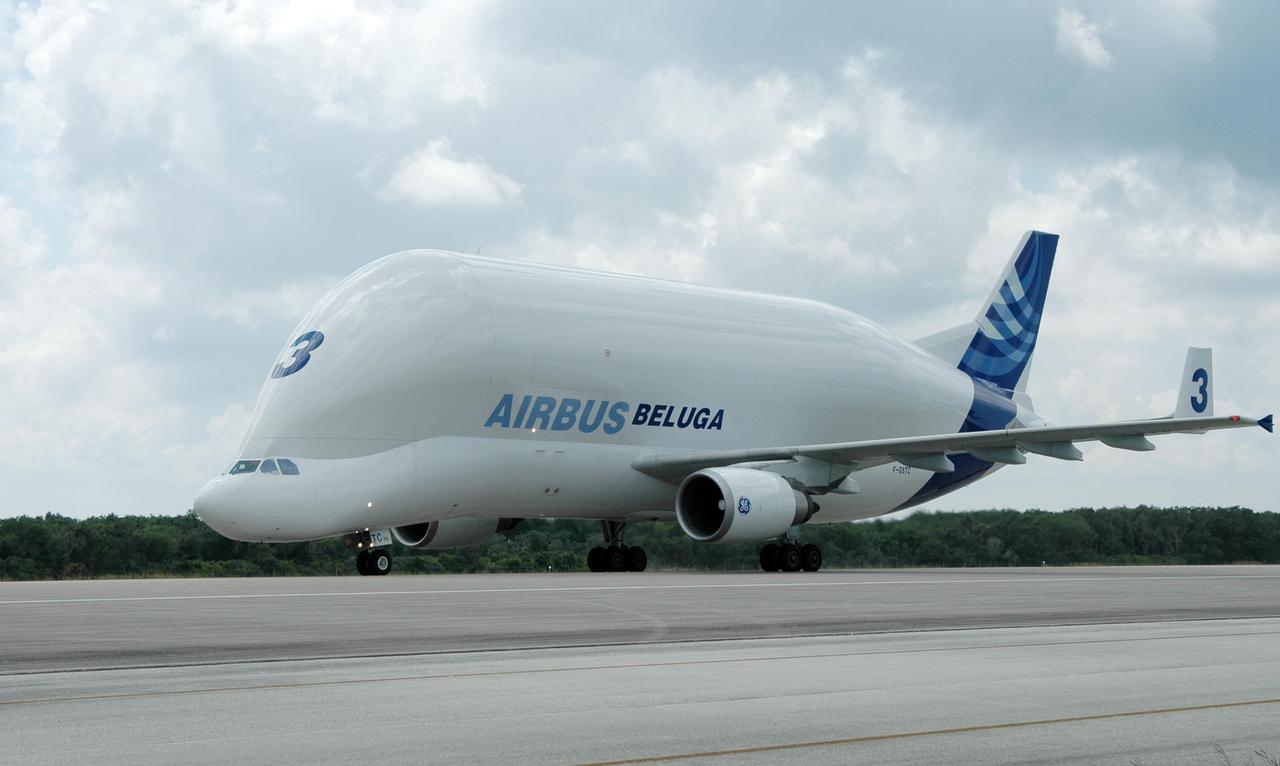
KENNEDY SPACE CENTER, FLA. - A Beluga aircraft taxis on the runway at the Shuttle Landing Facility on NASA's Kennedy Space Center. The Beluga carries the European Space Agency's research laboratory, designated Columbus, flown to Kennedy from its manufacturer in Germany. The module will be prepared for delivery to the International Space Station on a future space shuttle mission. Columbus will expand the research facilities of the station and provide researchers with the ability to conduct numerous experiments in the area of life, physical and materials sciences. Photo credit: NASA/Jim Grossmann
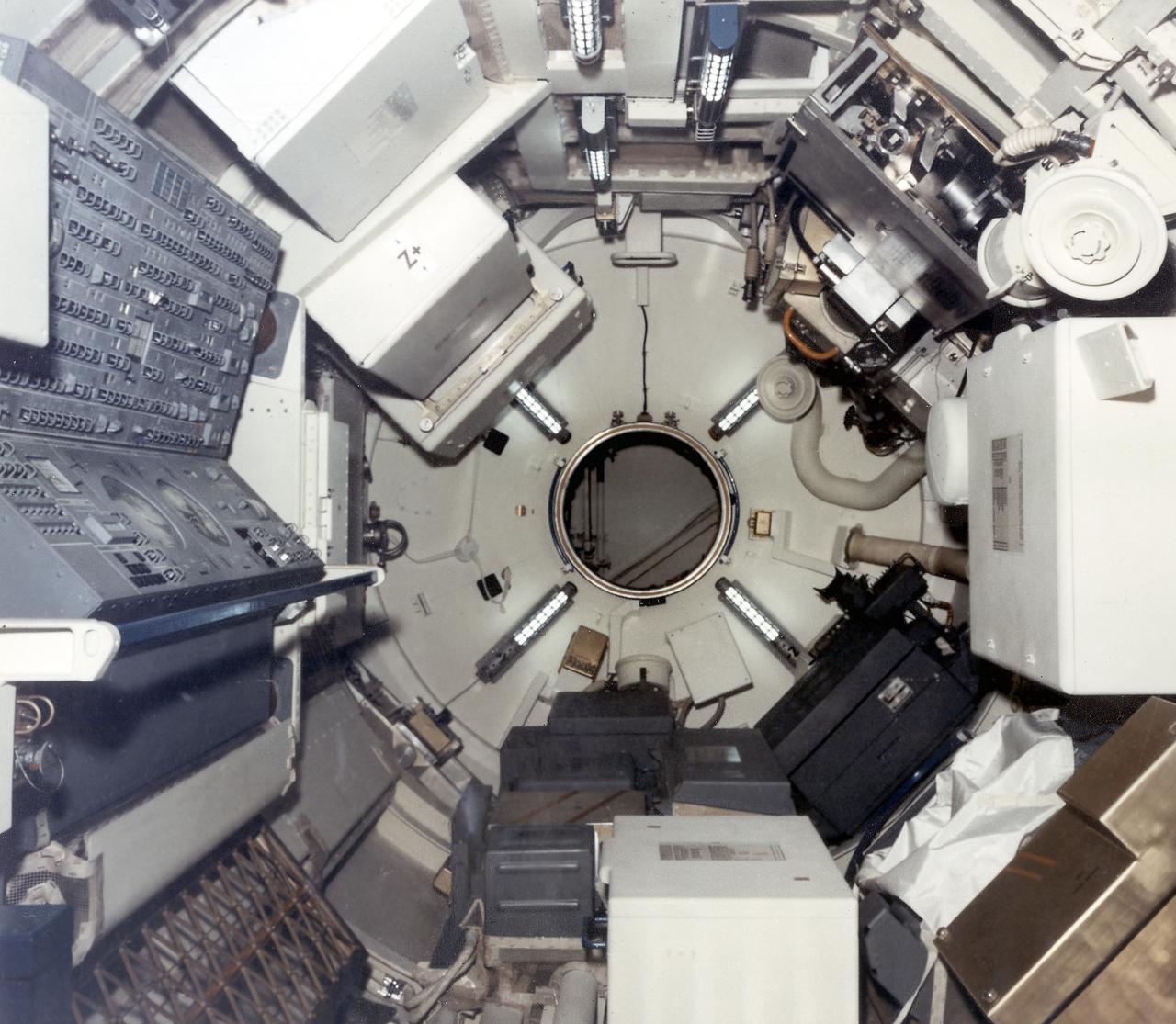
This interior photograph of Skylab's multiple docking adapter (MDA) flight article, then undergoing outfitting at the Martin Marietta Corporation's Space Center facility in Denver, Colorado, shows the forward cone area and docking turnel (center) that attached to the Apollo Command Module. Designed and manufactured by the Marshall Space Flight Center, the MDA housed the control units for the Apollo Telescope Mount (ATM), Earth Resources Experiment Package (EREP), and Zero-Gravity Materials Processing Facility and provided a docking port for the Apollo Command Module.
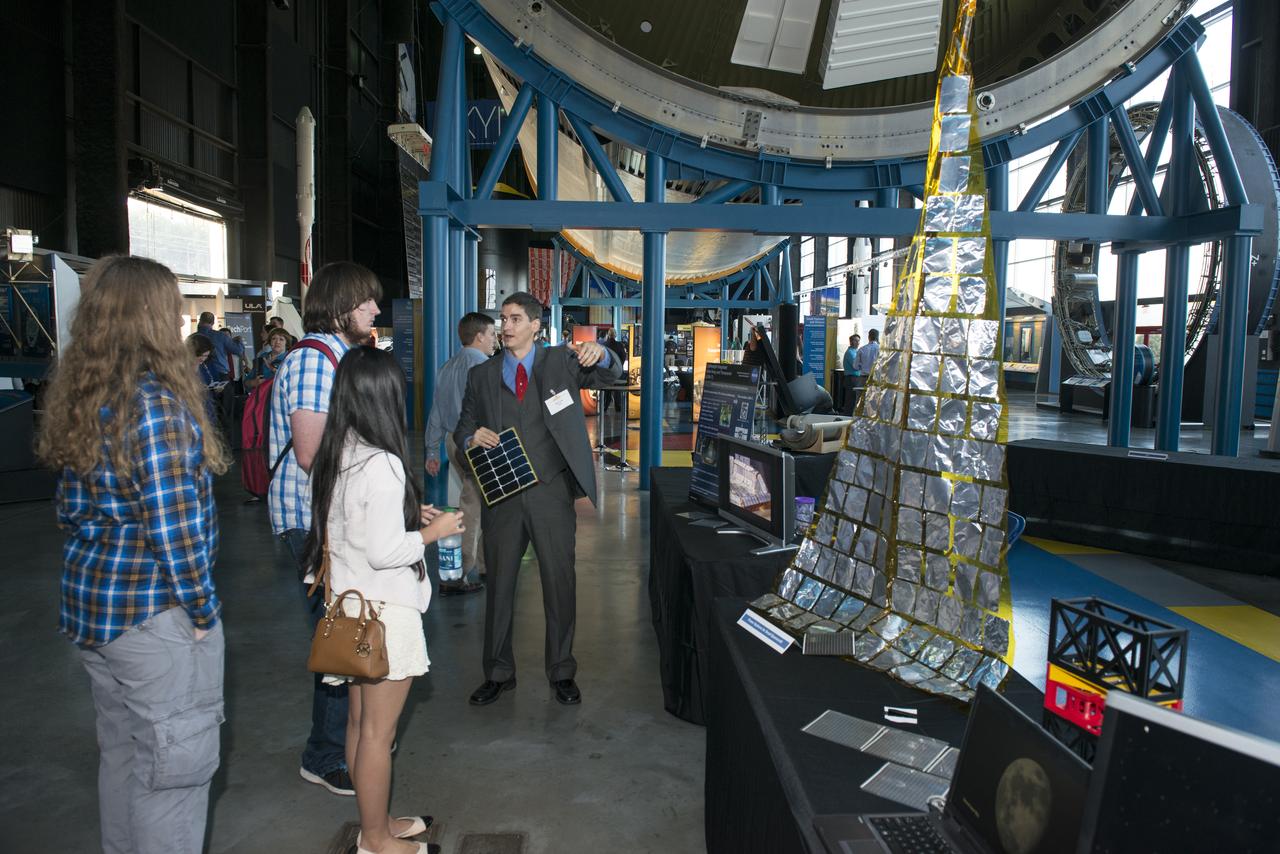
DURING THE MARSHALL TECHNOLOGY EXPO, HELD AT THE DAVIDSON CENTER FOR SPACE EXPLORATION, HUNDREDS OF PARTICIPANTS -- INCLUDING AREA HIGH SCHOOL STUDENTS –VISITED DOZENS OF BOOTHS AND EXHIBITS SHOWCASING EMERGING TECHNOLOGIES AND IN-HOUSE CAPABILITIES OF THE MARSHALL CENTER. EXPO PARTICIPANTS INCLUDED NASA TEAM MEMBERS, ALONG WITH AEROSPACE PROFESSIONALS FROM GOVERNMENT, INDUSTRY AND ACADEMIA, ALL INTERESTED IN ADVANCEMENTS WITH PROPULSION, AVIONICS, ADVANCED MANUFACTURING AND MORE.
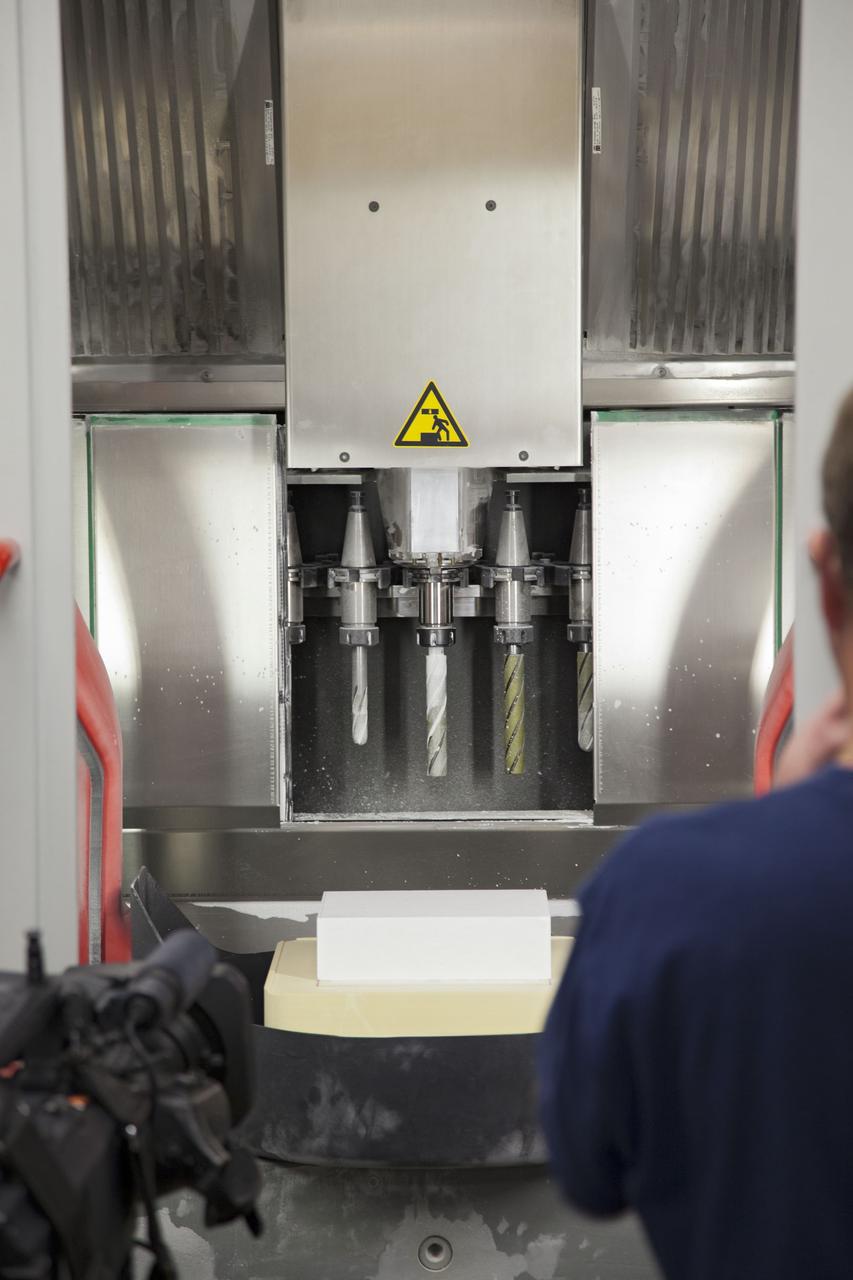
CAPE CANAVERAL, Fla. -- The heat shield tiles that will be installed to the backshell of the Orion Multi-Purpose Crew Vehicle's Exploration Flight Test EFT-1 capsule are manufactured inside the Thermal Protection System Facility at NASA's Kennedy Space Center in Florida. The insulation includes thermal barriers that are used around hatches, thrusters and other open areas of the backshell to protect the joints from heat. EFT-1 will be used during Orion's first test flight in space. For more information, visit www.nasa.gov/orion. Photo credit: Frankie Martin
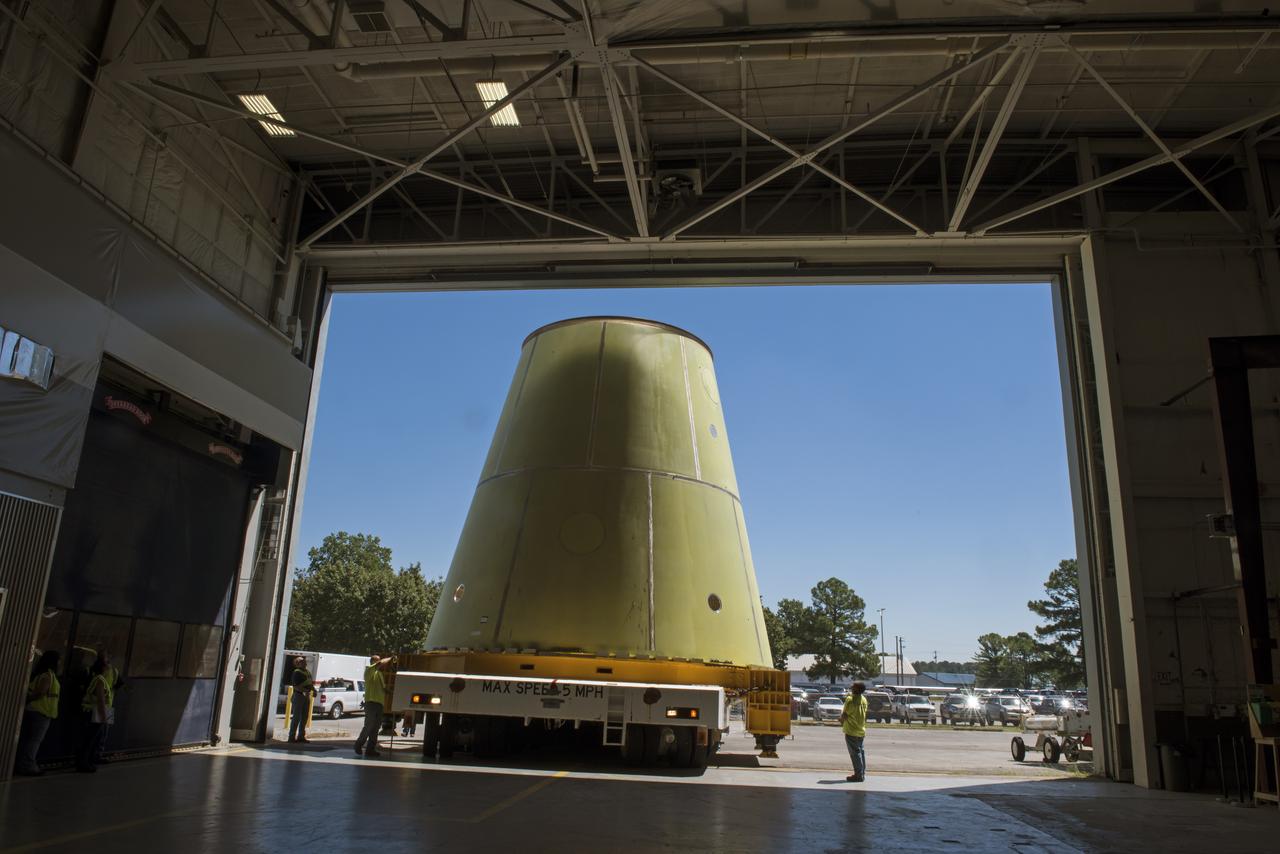
A NASA KAMAG transporter moves the Space Launch System’s launch vehicle stage adapter (LVSA) to an area where spray-on foam insulation will be applied. The LVSA recently completed manufacturing on a 30 foot welding tool at NASA’s Marshall Space Flight Center in Huntsville, Al. The LVSA will be coated with insulation that will protect it during it’s trip to space. The LVSA provides structural support and connects the core stage and the interim cryogenic propulsion stage during the first integrated flight of SLS and Orion.
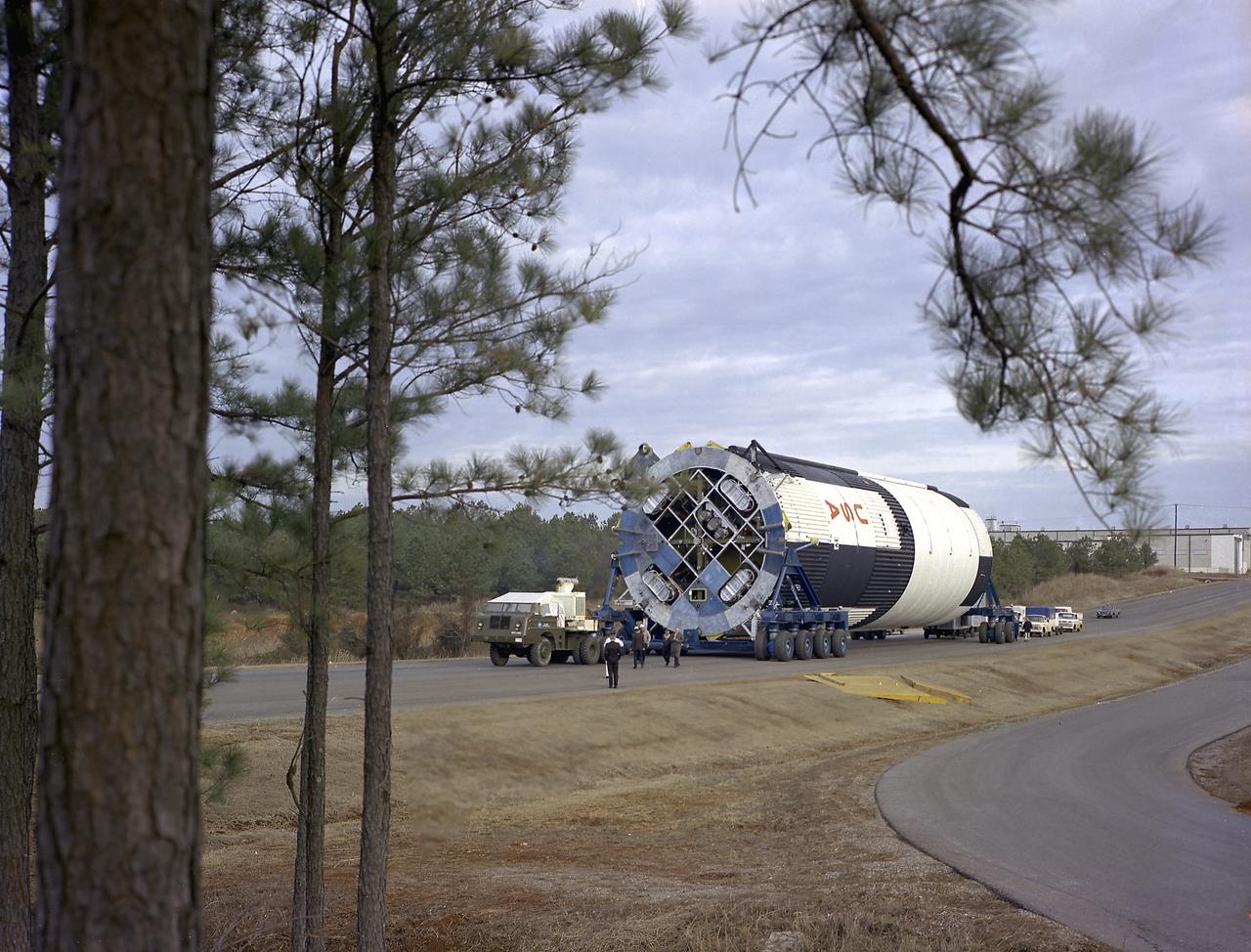
The Saturn V S-IC-T stage (static testing stage) was enroute from the Manufacturing Engineering Laboratory to the newly-built S-1C Static Test Stand at the Marshall Space Flight Center west test area. Known as S-IC-T, the stage was a static test vehicle not intended for flight. It was ground tested repeatedly over a period of many months proving the vehicle's propulsion system.
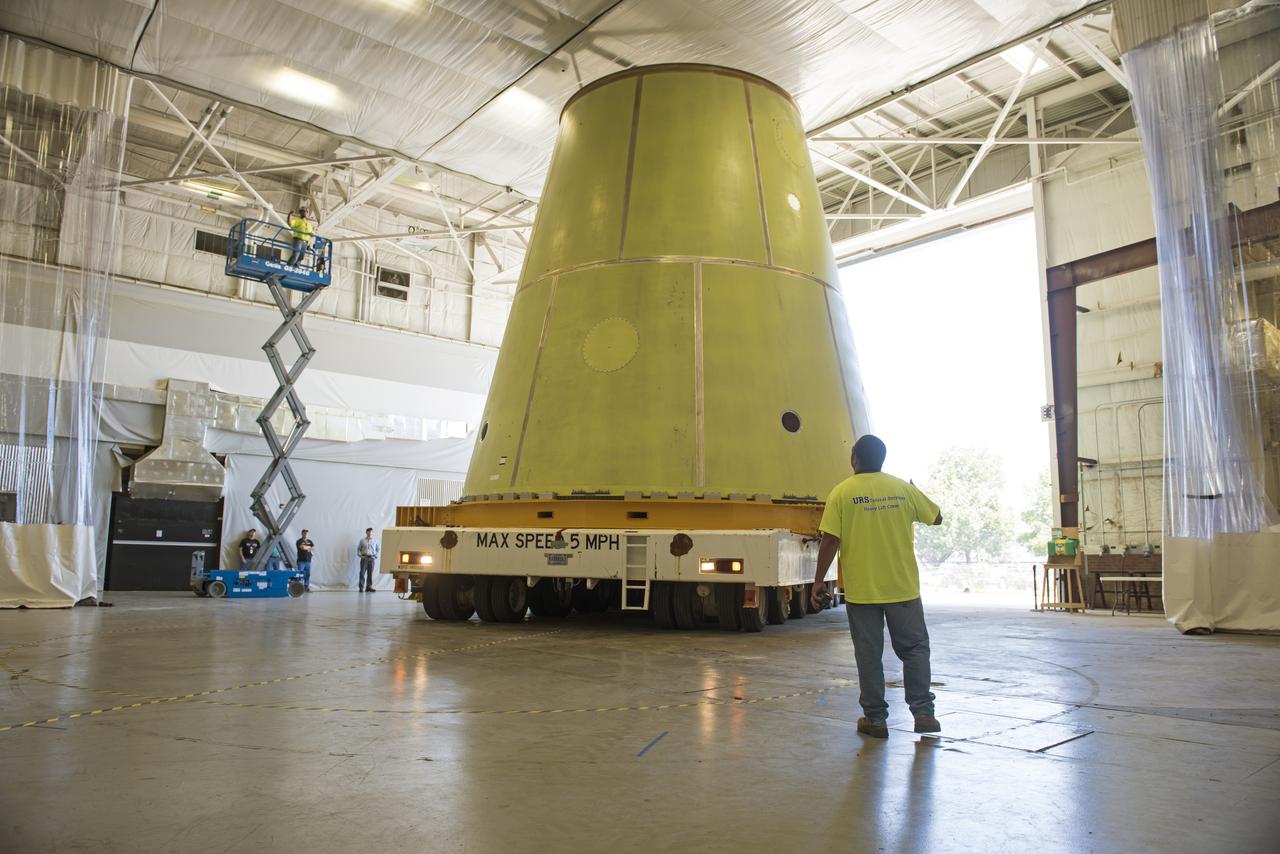
A NASA KAMAG transporter moves the Space Launch System’s launch vehicle stage adapter (LVSA) to an area where spray-on foam insulation will be applied. The LVSA recently completed manufacturing on a 30 foot welding tool at NASA’s Marshall Space Flight Center in Huntsville, Al. The LVSA will be coated with insulation that will protect it during it’s trip to space. The LVSA provides structural support and connects the core stage and the interim cryogenic propulsion stage during the first integrated flight of SLS and Orion.
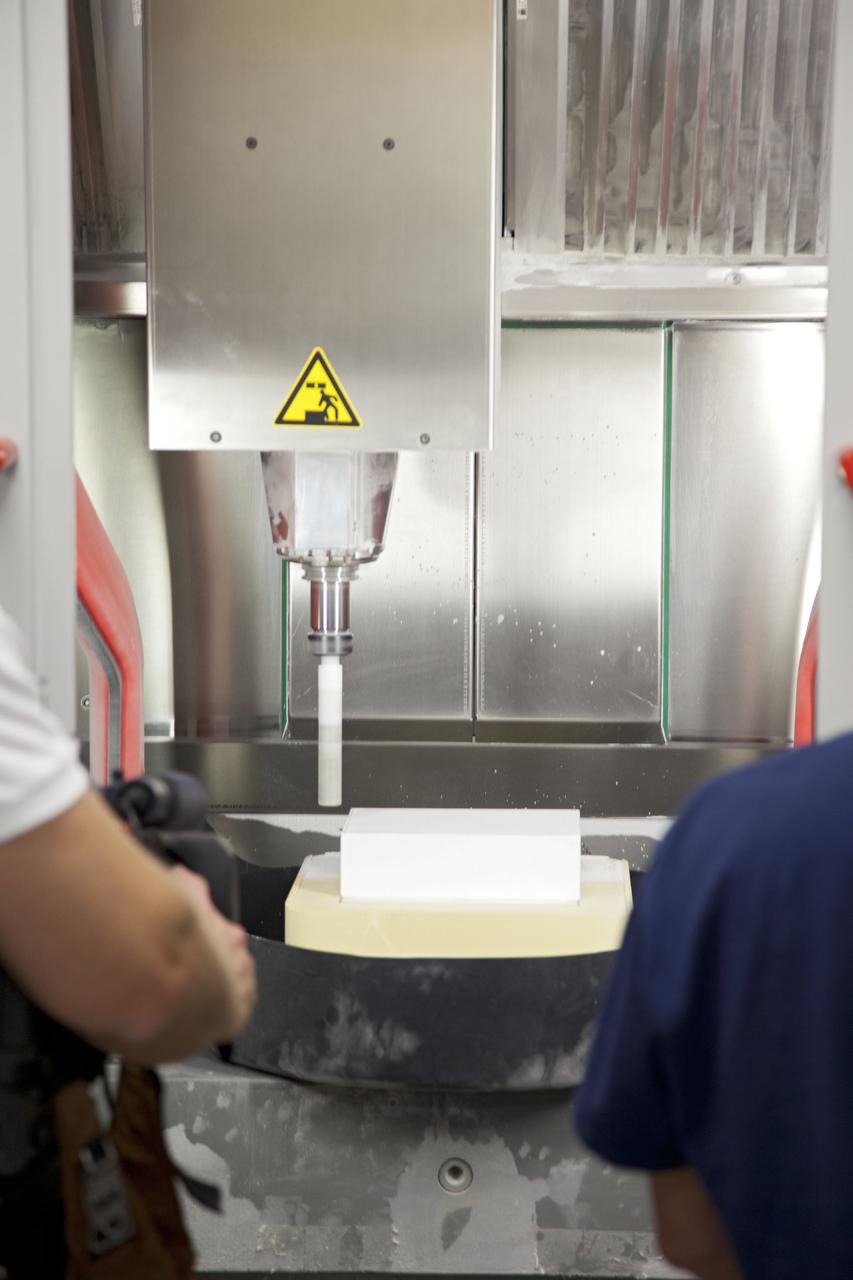
CAPE CANAVERAL, Fla. -- The heat shield tiles that will be installed to the backshell of the Orion Multi-Purpose Crew Vehicle's Exploration Flight Test EFT-1 capsule are manufactured inside the Thermal Protection System Facility at NASA's Kennedy Space Center in Florida. The insulation includes thermal barriers that are used around hatches, thrusters and other open areas of the backshell to protect the joints from heat. EFT-1 will be used during Orion's first test flight in space. For more information, visit www.nasa.gov/orion. Photo credit: Frankie Martin
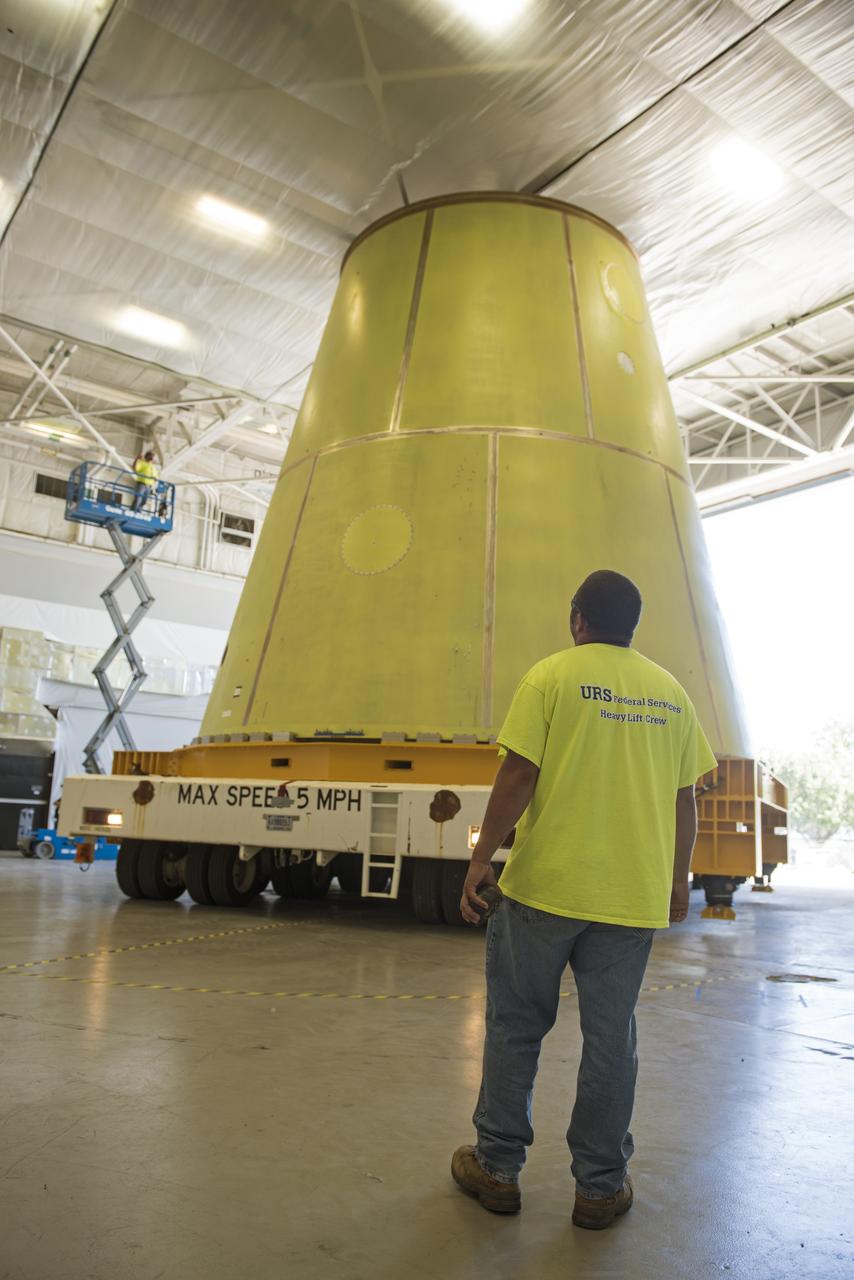
A NASA KAMAG transporter moves the Space Launch System’s launch vehicle stage adapter (LVSA) to an area where spray-on foam insulation will be applied. The LVSA recently completed manufacturing on a 30 foot welding tool at NASA’s Marshall Space Flight Center in Huntsville, Al. The LVSA will be coated with insulation that will protect it during it’s trip to space. The LVSA provides structural support and connects the core stage and the interim cryogenic propulsion stage during the first integrated flight of SLS and Orion.
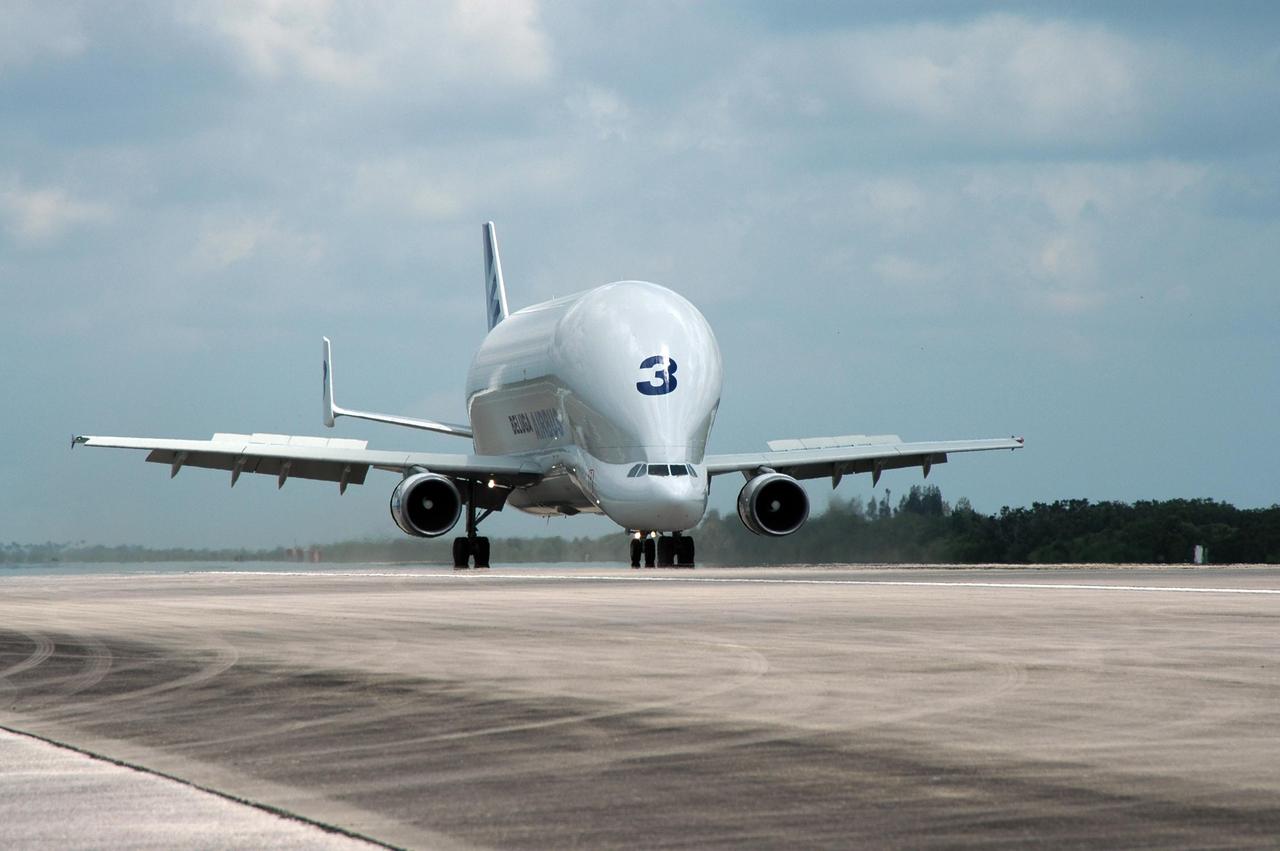
KENNEDY SPACE CENTER, FLA. - A Beluga aircraft arrives at the Shuttle Landing Facility on NASA's Kennedy Space Center. The Beluga carries the European Space Agency's research laboratory, designated Columbus, flown to Kennedy from its manufacturer in Germany. The module will be prepared for delivery to the International Space Station on a future space shuttle mission. Columbus will expand the research facilities of the station and provide researchers with the ability to conduct numerous experiments in the area of life, physical and materials sciences. Photo credit: NASA/Jim Grossmann
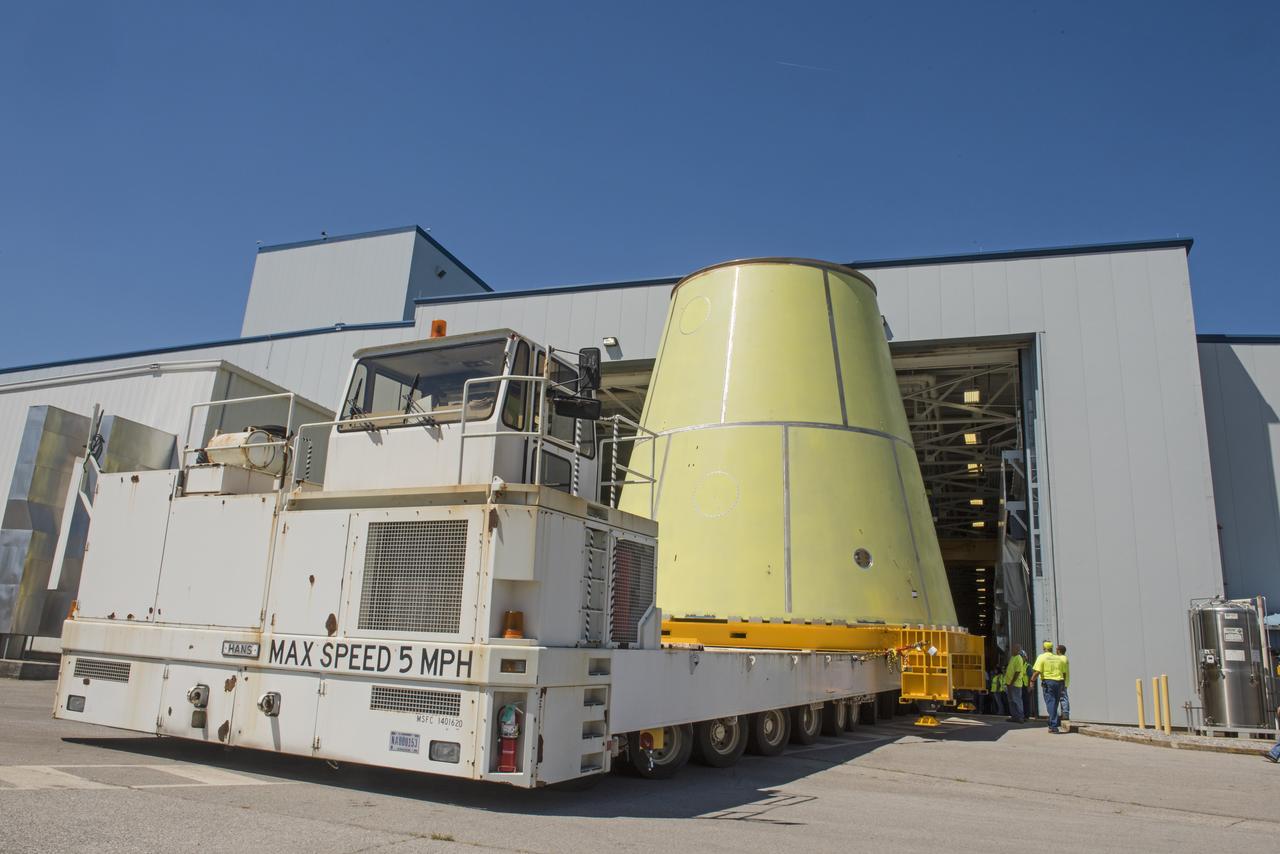
A NASA KAMAG transporter moves the Space Launch System’s launch vehicle stage adapter (LVSA) to an area where spray-on foam insulation will be applied. The LVSA recently completed manufacturing on a 30 foot welding tool at NASA’s Marshall Space Flight Center in Huntsville, Al. The LVSA will be coated with insulation that will protect it during it’s trip to space. The LVSA provides structural support and connects the core stage and the interim cryogenic propulsion stage during the first integrated flight of SLS and Orion.
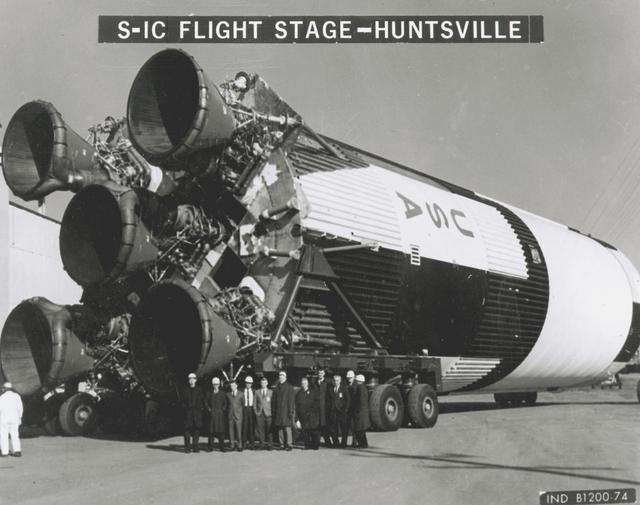
This small group of unidentified officials is dwarfed by the gigantic size of the Saturn V first stage (S-1C) at the shipping area of the Manufacturing Engineering Laboratory at Marshall Space Flight Center in Huntsville, Alabama. The towering 363-foot Saturn V was a multi-stage, multi-engine launch vehicle standing taller than the Statue of Liberty. Altogether, the Saturn V engines produced as much power as 85 Hoover Dams.
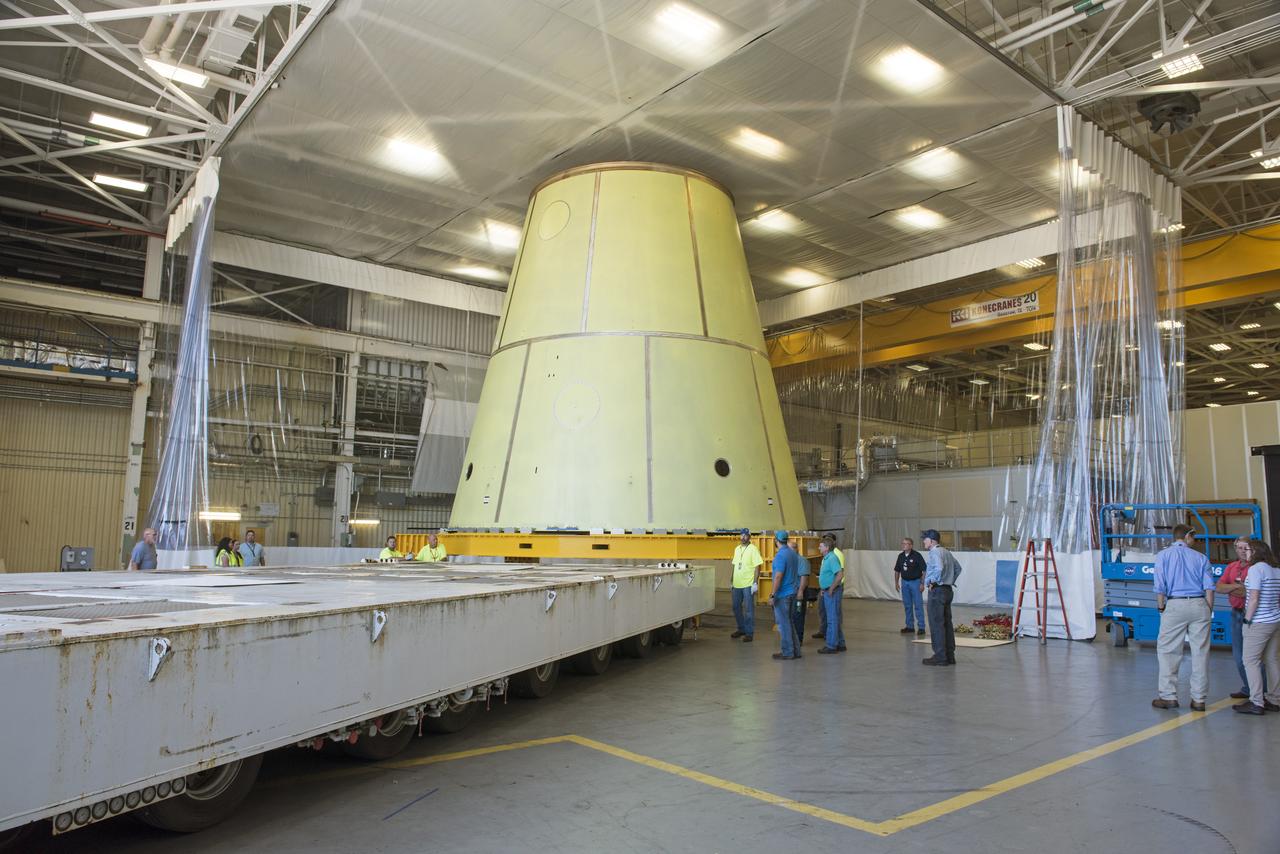
A NASA KAMAG transporter moves the Space Launch System’s launch vehicle stage adapter (LVSA) to an area where spray-on foam insulation will be applied. The LVSA recently completed manufacturing on a 30 foot welding tool at NASA’s Marshall Space Flight Center in Huntsville, Al. The LVSA will be coated with insulation that will protect it during it’s trip to space. The LVSA provides structural support and connects the core stage and the interim cryogenic propulsion stage during the first integrated flight of SLS and Orion.
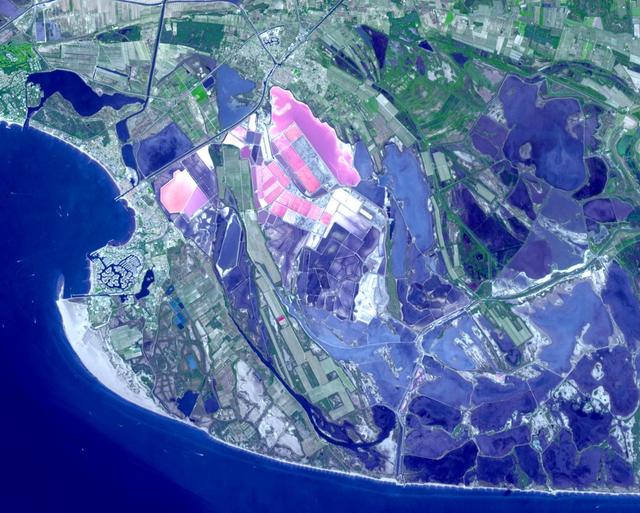
Salin-de-Giraud is a major center of salt production on the right bank of the Rhone River in southern France. Through evaporation of seawater, about one million tons of salt are produced every year. In addition, the recovery of sodium carbonate is key to the manufacture of the soap of Marseille. The image was acquired September 2, 2020, covers an area of 14.7 by 18.3 km, and is located at 43.4 degrees north, 4.7 degrees east. https://photojournal.jpl.nasa.gov/catalog/PIA26325
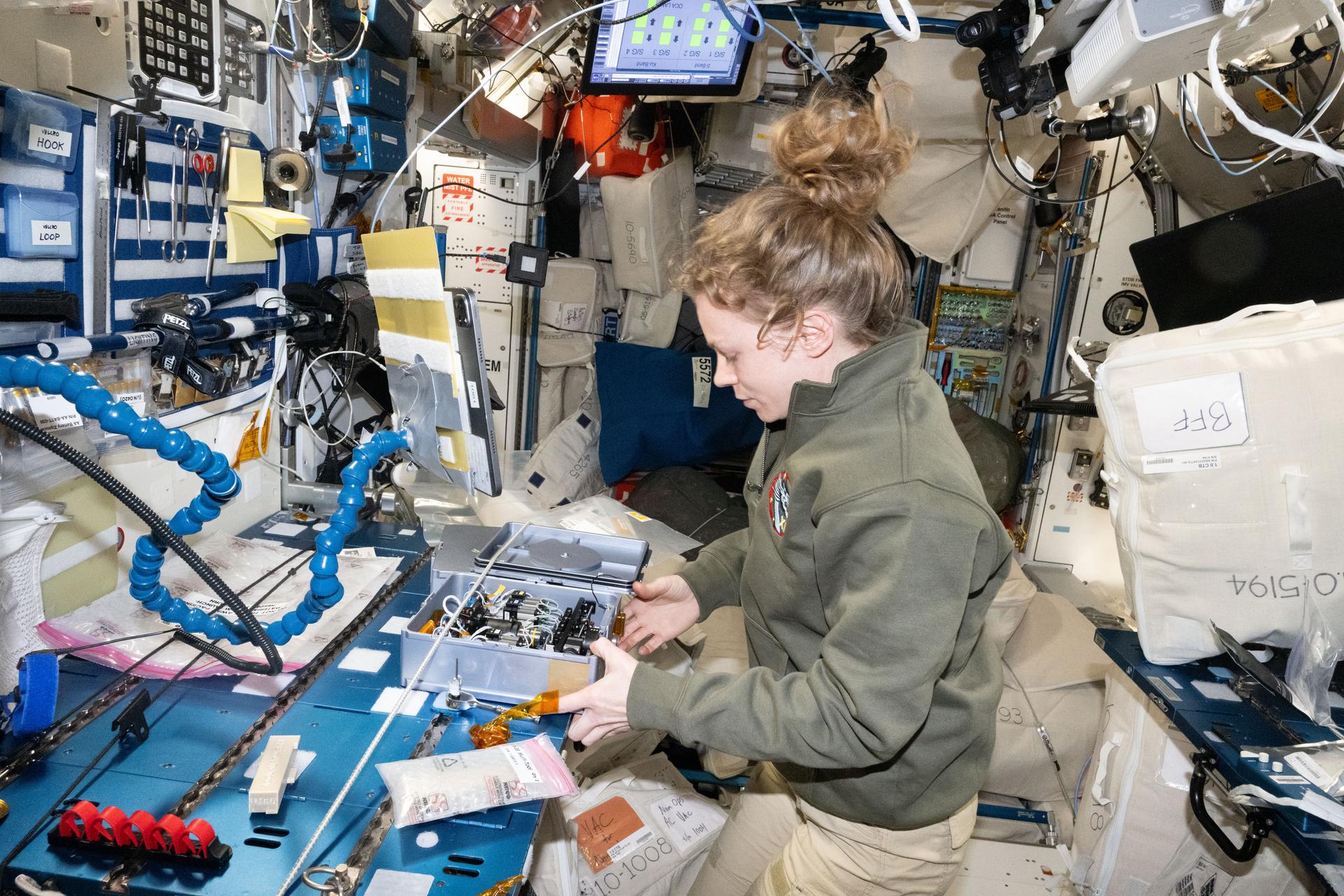
iss073e0865458 (Oct. 7, 2025) --- NASA astronaut and Expedition 73 Flight Engineer Zena Cardman inspects sample cassettes for installation into the Advanced Space Experiment Processor-4 (ADSEP-4) at the maintenance work area inside the International Space Station's Harmony module. She was conducting research operations for the Pharmaceutical In-space Laboratory biotechnology experiment, which is investigating methods to advance pharmaceutical manufacturing in microgravity.
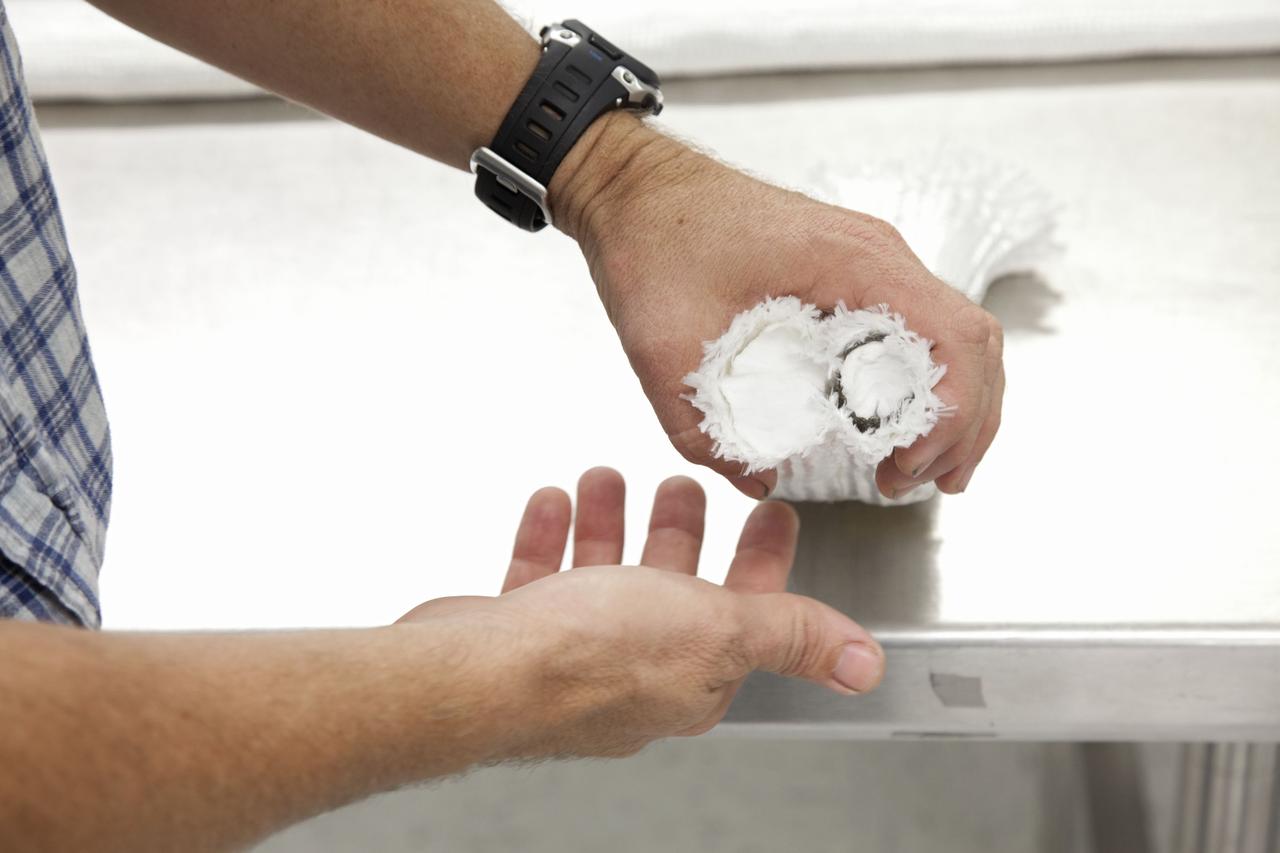
CAPE CANAVERAL, Fla. -- The heat shield tiles that will be installed to the backshell of the Orion Multi-Purpose Crew Vehicle's Exploration Flight Test EFT-1 capsule are manufactured inside the Thermal Protection System Facility at NASA's Kennedy Space Center in Florida. The insulation includes thermal barriers that are used around hatches, thrusters and other open areas of the backshell to protect the joints from heat. EFT-1 will be used during Orion's first test flight in space. For more information, visit www.nasa.gov/orion. Photo credit: Frankie Martin
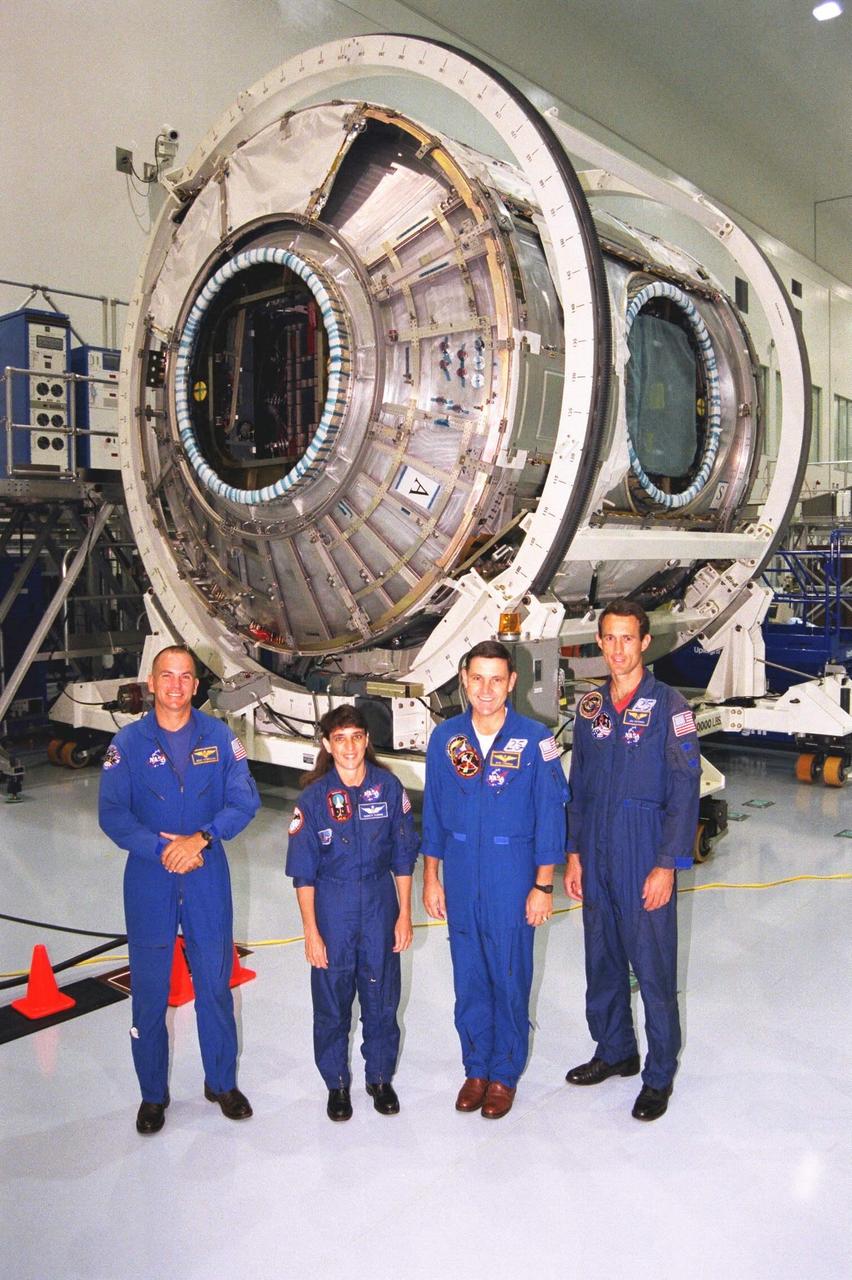
Members of the STS-88 crew pose with the Node 1 of the Internation Space Station in the high bay of the Space Station Processing Facility. The module is the first element of the International Space Station to be manufactured in the United States and the first scheduled to be launched on the Space Shuttle. The Node 1 is currently scheduled to lift off aboard the Space Shuttle Endeavour in July 1998, along with Pressurized Mating Adapters (PMAs) 1 and 2. The 18-foot-in-diameter, 22-foot-long aluminum module was manufactured by the Boeing Co. at Marshall Space Flight Center. Once in space, the Node 1 will function as a connecting passageway to the living and working areas of the International Space Station. The six hatches on the Node 1 will serve as docking ports to the U.S. laboratory module, U.S. habitation module, an airlock and other space station elements
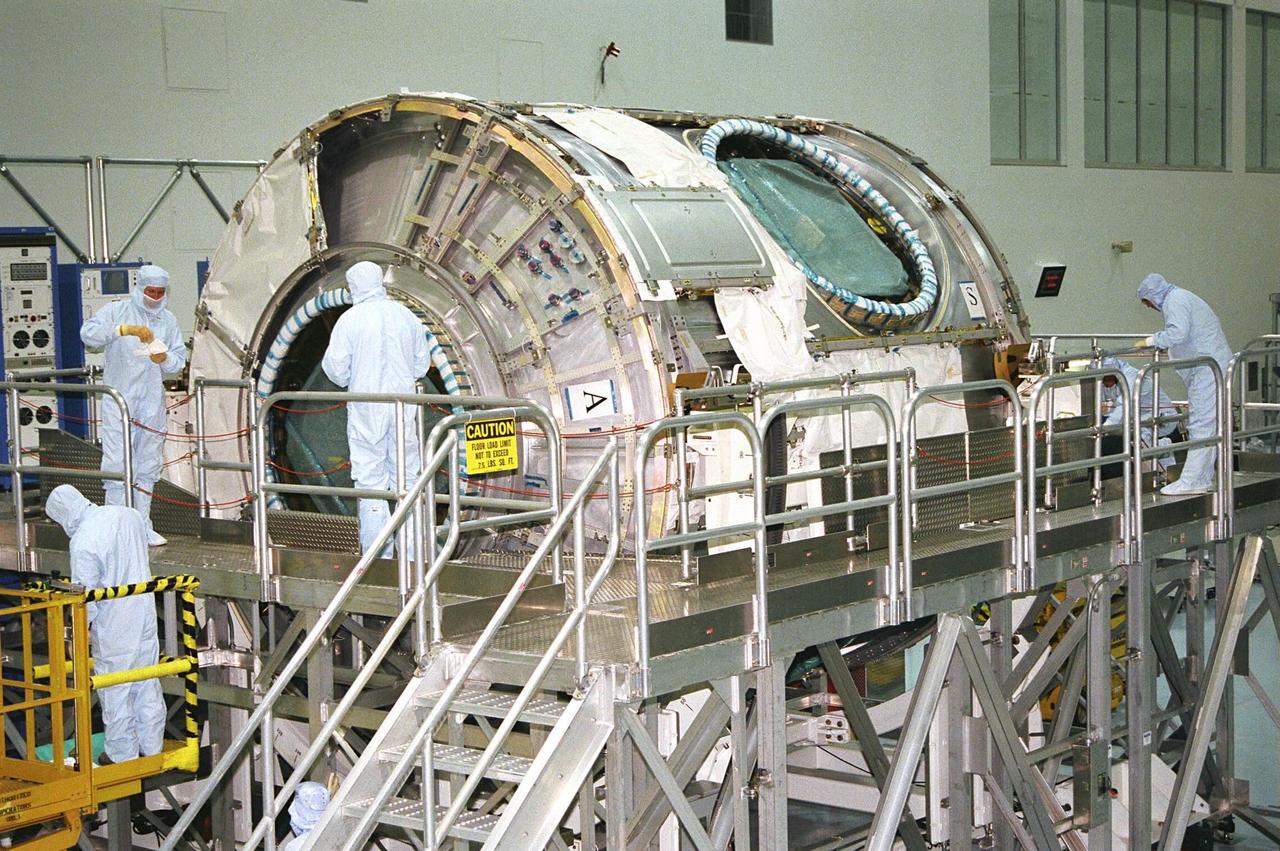
A close-up view of the Node 1 in its work stand in the Space Station Processing Facility shows two of its six hatches that will serve as docking ports. The module is the first element of the International Space Station to be manufactured in the United States and the first scheduled to be launched on the Space Shuttle. The Node 1 is currently scheduled to lift off aboard the Space Shuttle Endeavour in July 1998, along with Pressurized Mating Adapters (PMAs) 1 and 2. The 18-foot-in-diameter, 22-foot-long aluminum module was manufactured by the Boeing Co. at Marshall Space Flight Center. Once in space, the Node 1 will function as a connecting passageway to the living and working areas of the International Space Station. The six hatches on the Node 1 will serve as docking ports to the U.S. laboratory module, U.S. habitation module, an airlock and other space station elements
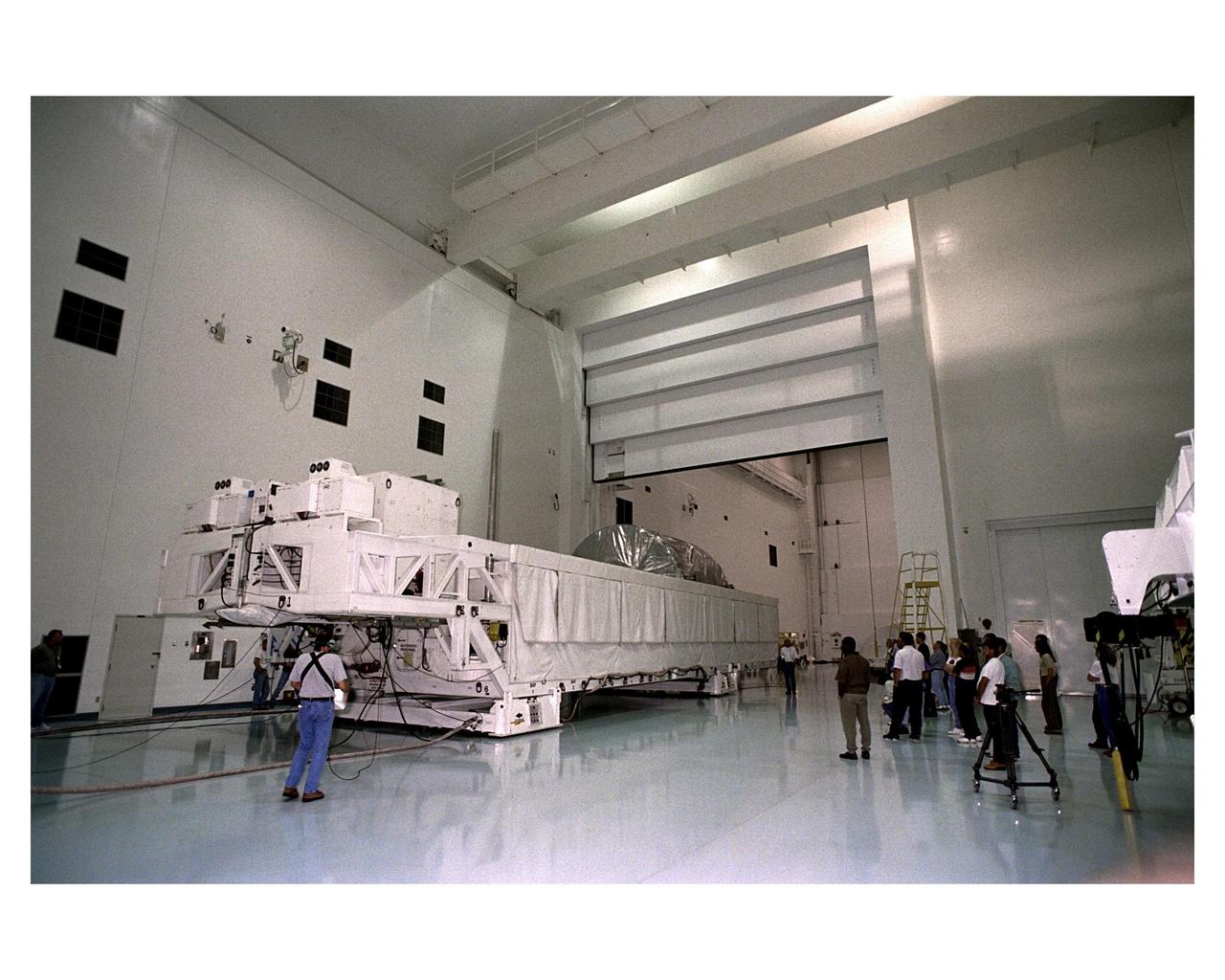
The Node 1, the first element of the International Space Station to be manufactured in the United States and the first to be launched on the Space Shuttle, rests in its container in the Space Station Processing Facility high bay after its arrival at KSC from NASA’s Marshall Space Flight Center (MSFC). The Node 1 module is currently scheduled to lift off aboard the Space Shuttle Endeavour in July 1998 along with Pressurized Mating Adapters (PMAs) 1 and 2. The 18-foot in diameter, 22- foot-long aluminum module was manufactured by the Boeing Co. at MSFC. Once in space, the Node 1 will function as a connecting passageway to the living and working areas of the International Space Station. It has six hatches that will serve as docking ports to the U.S. laboratory module, U.S. habitation module, an airlock and other space station elements
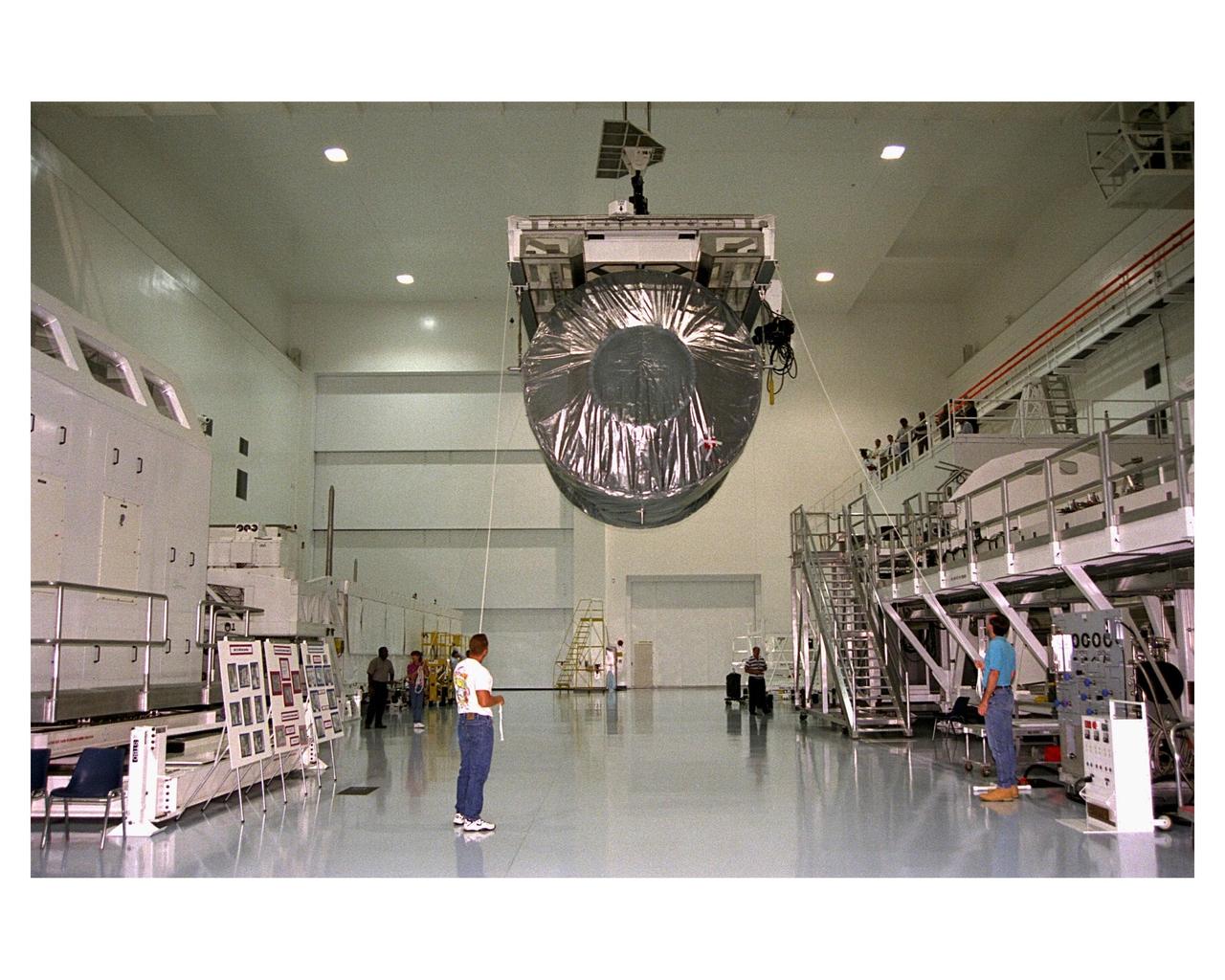
Covered in a protective sheath, International Space Station Node 1 is hoisted for installation in its work stand in the Space Station Processing Facility. The module is the first element of the International Space Station to be manufactured in the United States and the first scheduled to be launched on the Space Shuttle. The Node 1 is currently scheduled to lift off aboard the Space Shuttle Endeavour in July 1998, along with Pressurized Mating Adapters (PMAs) 1 and 2. The 18-foot-in-diameter, 22-foot-long aluminum module was manufactured by the Boeing Co. at Marshall Space Flight Center. Once in space, the Node 1 will function as a connecting passageway to the living and working areas of the International Space Station. It has six hatches that will serve as docking ports to the U.S. laboratory module, U.S. habitation module, an airlock and other space station
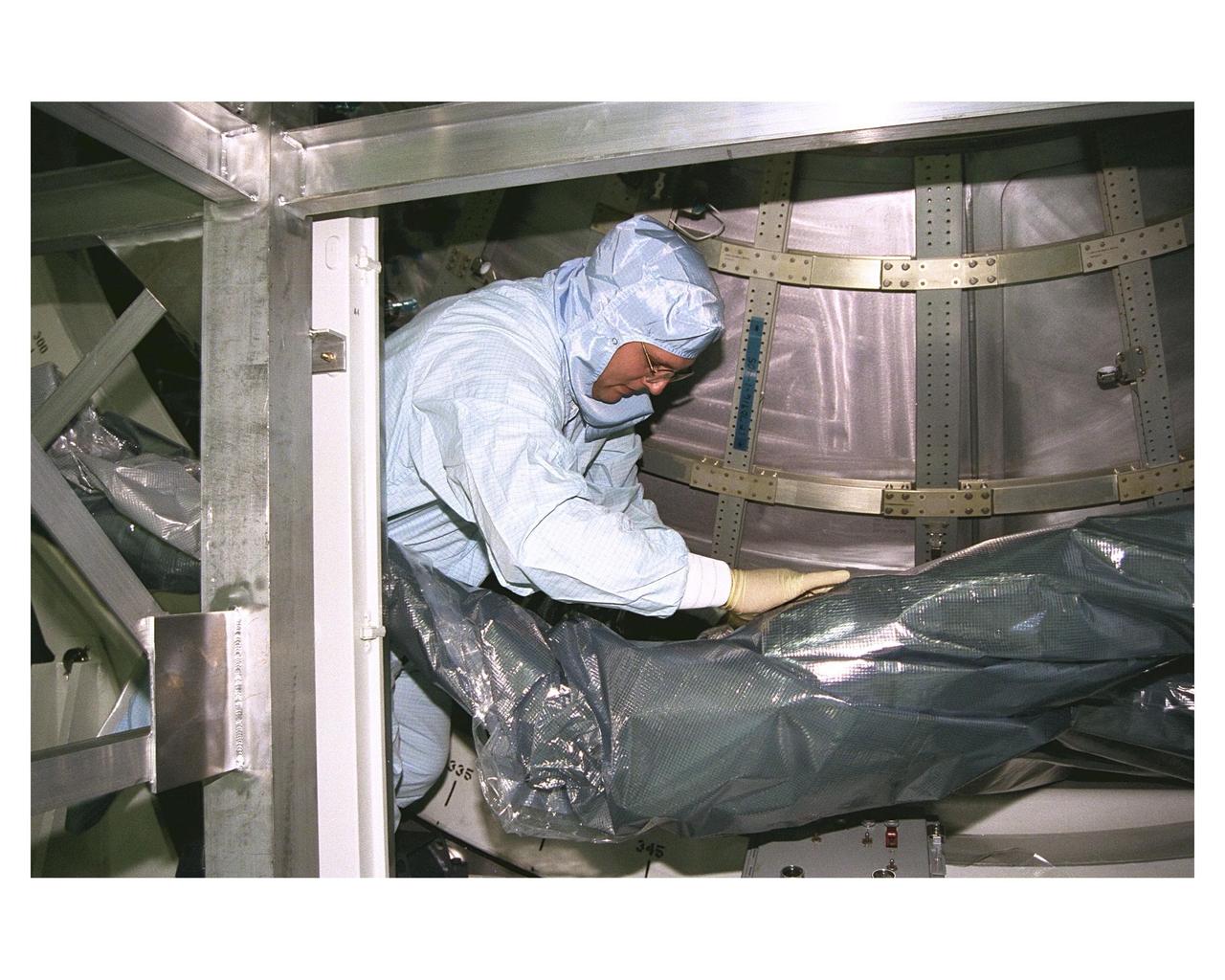
A KSC payloads processing employee removes a protective sheath part of the Node 1 in its work stand in the Space Station Processing Facility. The module is the first element of the International Space Station to be manufactured in the United States and the first scheduled to be launched on the Space Shuttle. The Node 1 is currently scheduled to lift off aboard the Space Shuttle Endeavour in July 1998, along with Pressurized Mating Adapters (PMAs) 1 and 2. The 18-foot-in-diameter, 22-foot-long aluminum module was manufactured by the Boeing Co. at Marshall Space Flight Center. Once in space, the Node 1 will function as a connecting passageway to the living and working areas of the International Space Station. It has six hatches that will serve as docking ports to the U.S. laboratory module, U.S. habitation module, an airlock and other space station elements
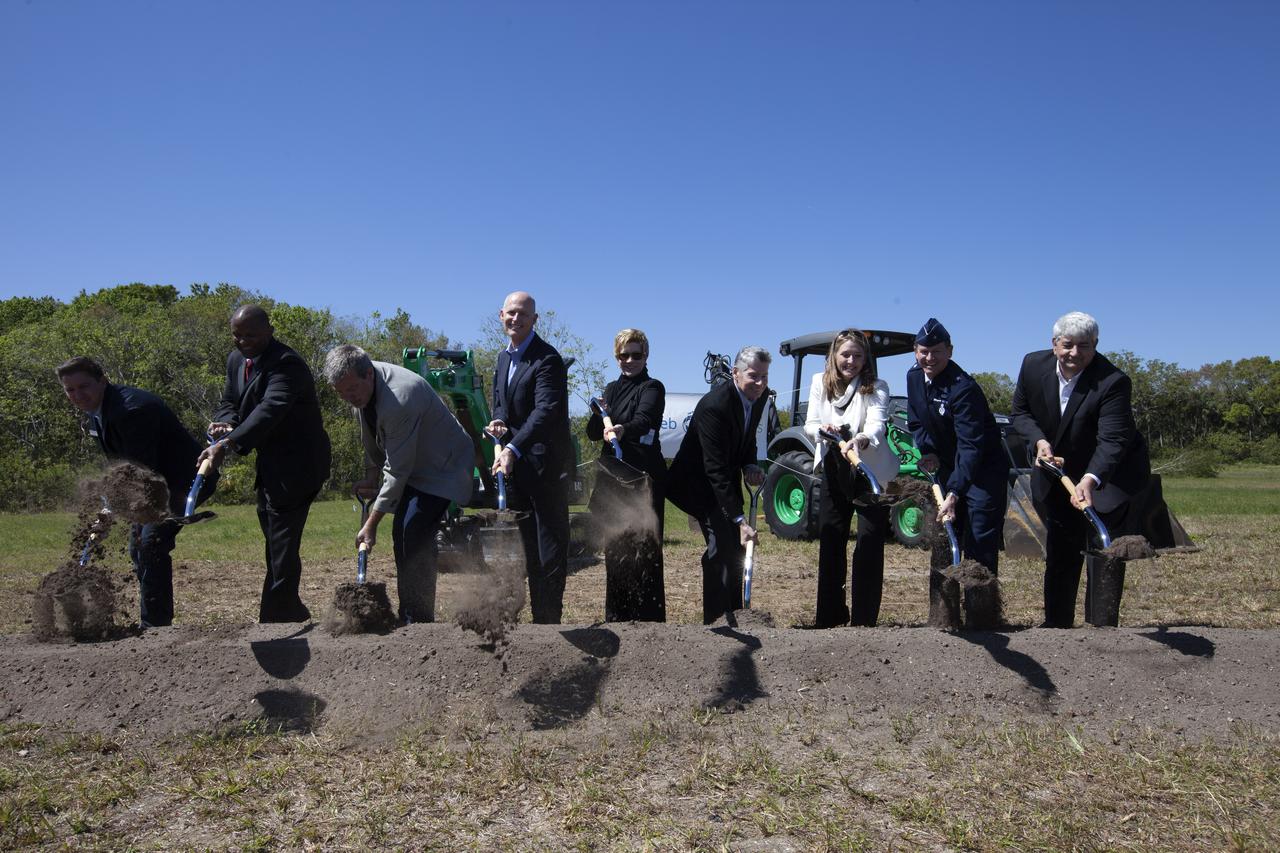
Officials break ground for a 150,000-square-foot manufacturing facility for OneWeb Satellites at Exploration Park at NASA's Kennedy Space Center. The company, in partnership with Airbus, is building a 150,000-square-foot factory to manufacture satellites that will connect all areas of the world to the Internet wirelessly. The officials are, from left, John Saul, operations manager of Hensell-Phelps; Kelvin Manning, associate director of NASA's Kennedy Space Center; Brian Holz, CEO of OneWeb Satellites; Rick Scott, governor of Florida; Lynda Weatherman, president and CEO of the Economic Development Council of the Space Coast; Mike Cosentino, president, Airbus Defense and Space; Cissy Procter, executive director of the Florida Department of Economic Activity; Gen. Wayne Monteith, commander of the 45th Space Wing of the U.S. Air Force; and Jim Kuzma, COO of Space Florida. Photo credit: NASA/Kim Shiflett
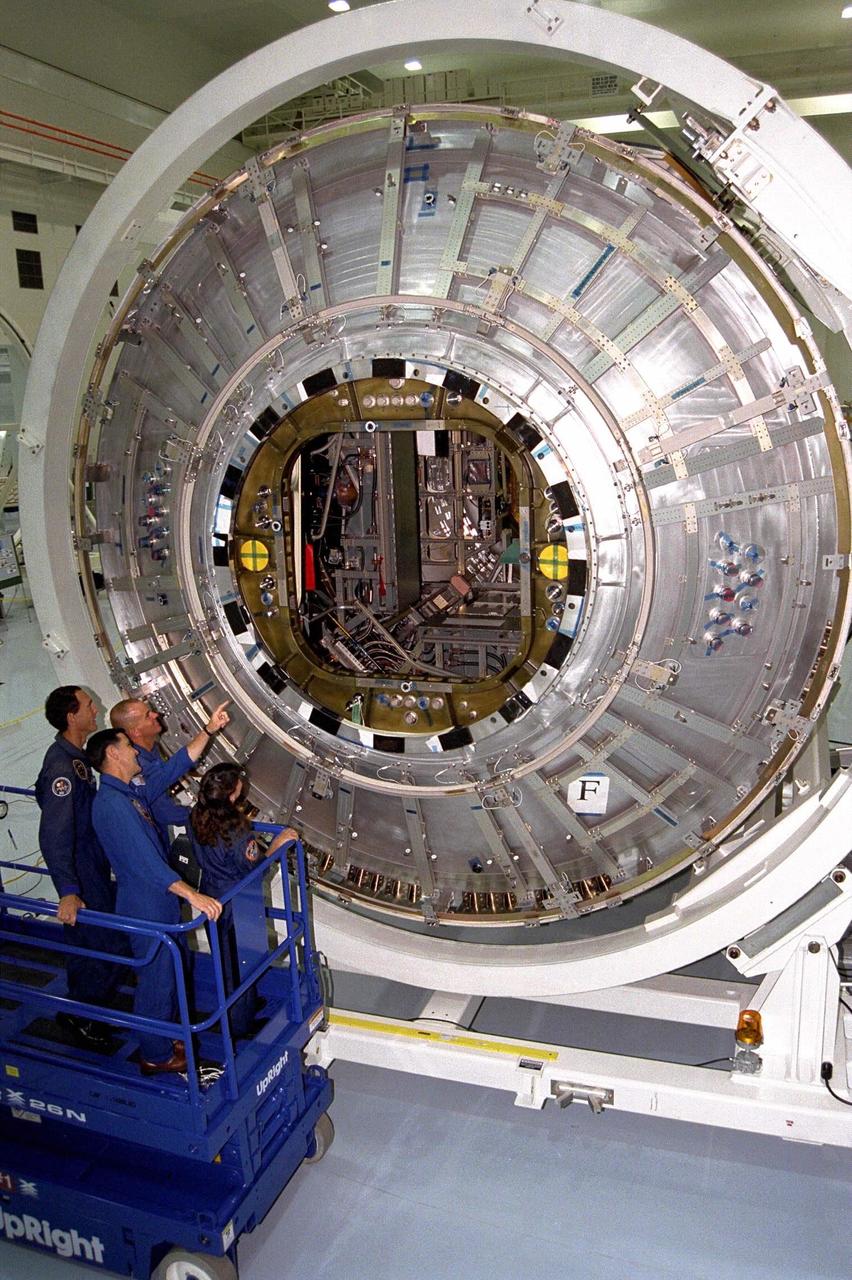
Members of the STS-88 crew examine the Node 1 of the Internation Space Station in the high bay of the Space Station Processing Facility. The module is the first element of the International Space Station to be manufactured in the United States and the first scheduled to be launched on the Space Shuttle. The Node 1 is currently scheduled to lift off aboard the Space Shuttle Endeavour in July 1998, along with Pressurized Mating Adapters (PMAs) 1 and 2. The 18-foot-in-diameter, 22-foot-long aluminum module was manufactured by the Boeing Co. at Marshall Space Flight Center. Once in space, the Node 1 will function as a connecting passageway to the living and working areas of the International Space Station. The six hatches on the Node 1 will serve as docking ports to the U.S. laboratory module, U.S. habitation module, an airlock and other space station elements
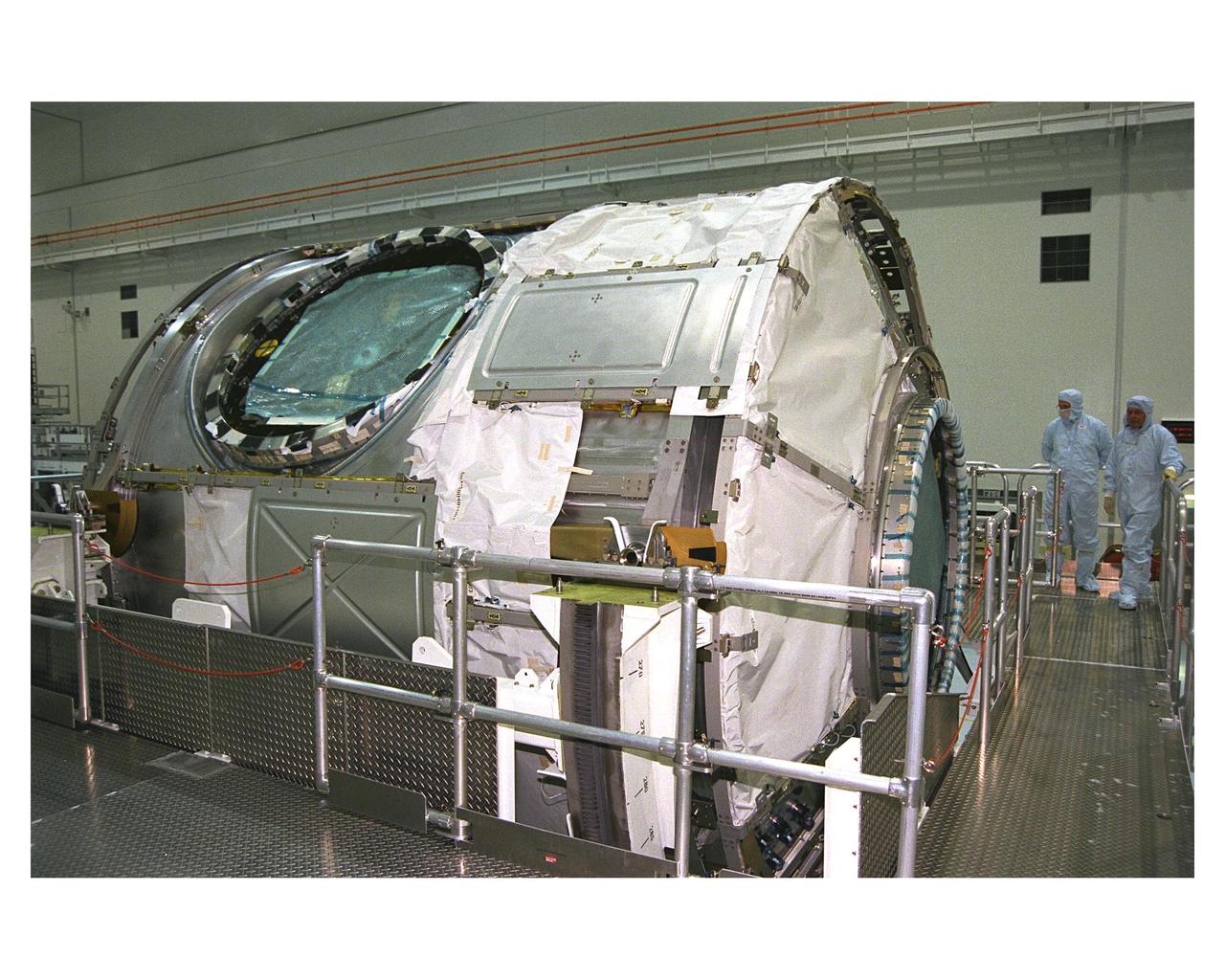
A close-up view of the Node 1 in its work stand in the Space Station Processing Facility shows one of its six hatches that will serve as docking ports. The module is the first element of the International Space Station to be manufactured in the United States and the first scheduled to be launched on the Space Shuttle. The Node 1 is currently scheduled to lift off aboard the Space Shuttle Endeavour in July 1998, along with Pressurized Mating Adapters (PMAs) 1 and 2. The 18-foot-in-diameter, 22-foot-long aluminum module was manufactured by the Boeing Co. at Marshall Space Flight Center. Once in space, the Node 1 will function as a connecting passageway to the living and working areas of the International Space Station. The six hatches on the Node 1 will serve as docking ports to the U.S. laboratory module, U.S. habitation module, an airlock and other space station elements
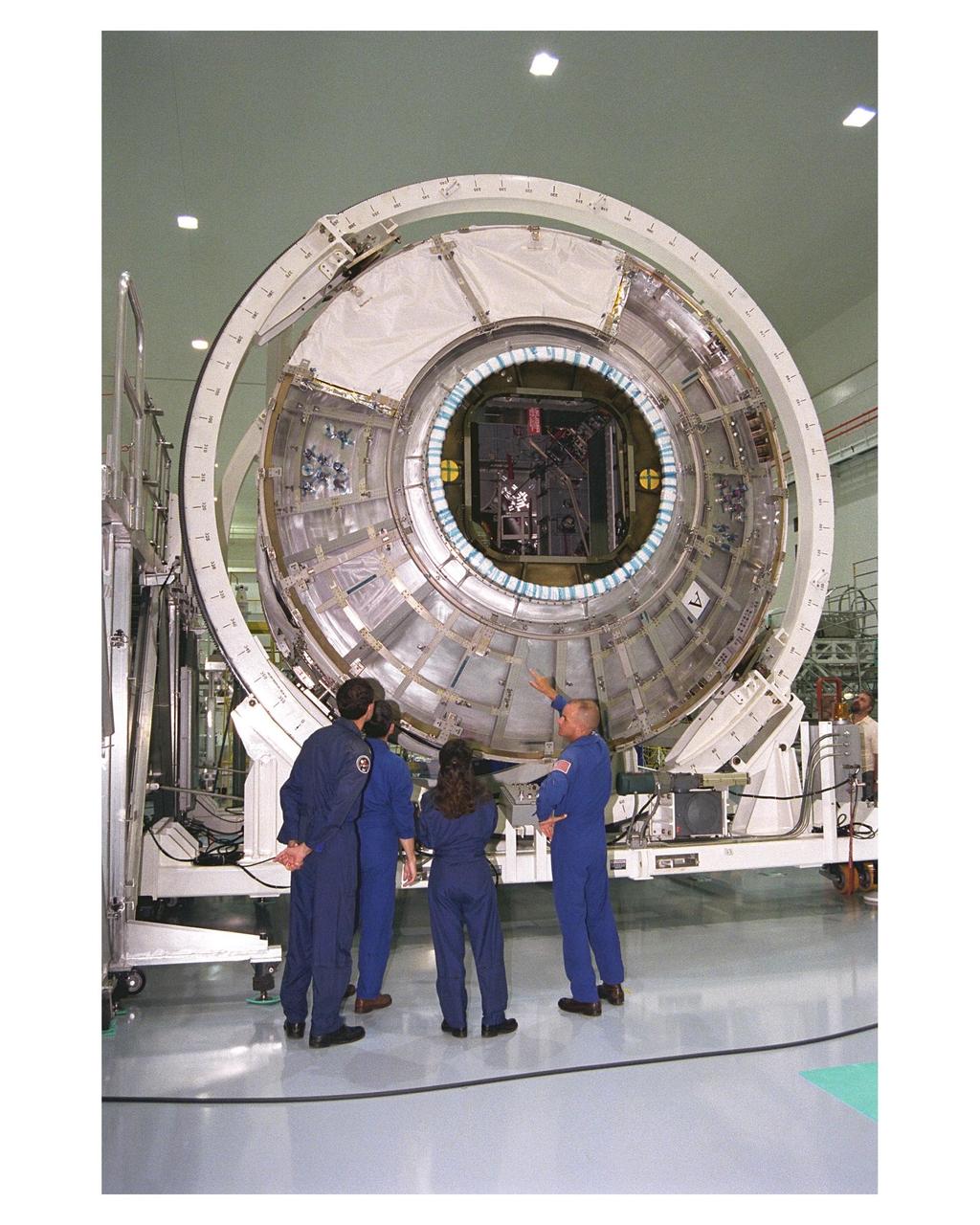
Members of the STS-88 crew examine the Node 1 of the Internation Space Station in the high bay of the Space Station Processing Facility. The module is the first element of the International Space Station to be manufactured in the United States and the first scheduled to be launched on the Space Shuttle. The Node 1 is currently scheduled to lift off aboard the Space Shuttle Endeavour in July 1998, along with Pressurized Mating Adapters (PMAs) 1 and 2. The 18-foot-in-diameter, 22-foot-long aluminum module was manufactured by the Boeing Co. at Marshall Space Flight Center. Once in space, the Node 1 will function as a connecting passageway to the living and working areas of the International Space Station. The six hatches on the Node 1 will serve as docking ports to the U.S. laboratory module, U.S. habitation module, an airlock and other space station elements

Covered in a protective sheath, International Space Station Node 1 is hoisted for installation in its work stand in the Space Station Processing Facility. The module is the first element of the International Space Station to be manufactured in the United States and the first scheduled to be launched on the Space Shuttle. The Node 1 is currently scheduled to lift off aboard the Space Shuttle Endeavour in July 1998, along with Pressurized Mating Adapters (PMAs) 1 and 2. The 18-foot-in-diameter, 22-foot-long aluminum module was manufactured by the Boeing Co. at Marshall Space Flight Center. Once in space, the Node 1 will function as a connecting passageway to the living and working areas of the International Space Station. It has six hatches that will serve as docking ports to the U.S. laboratory module, U.S. habitation module, an airlock and other space station elements
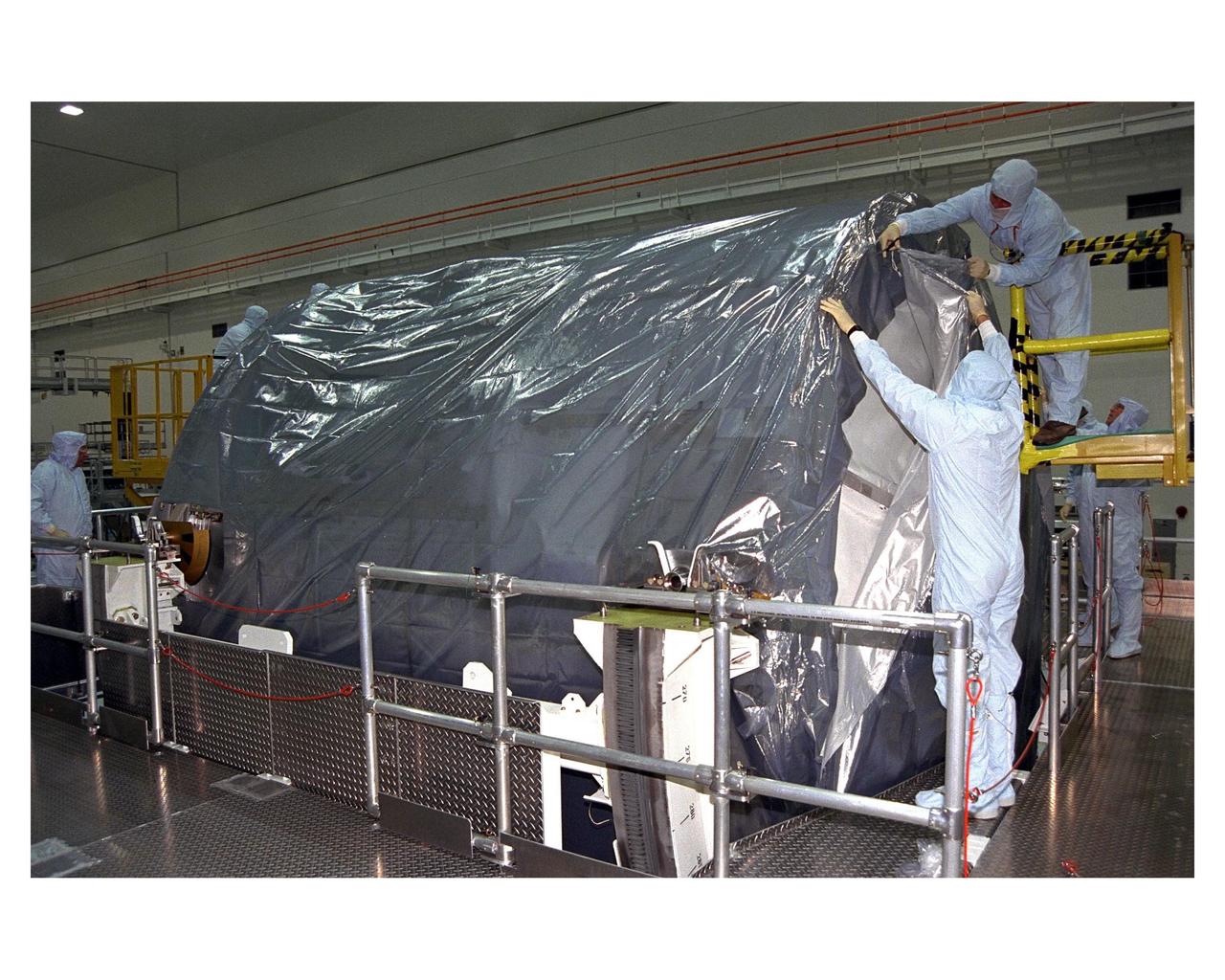
KSC workers begin to remove a protective sheath from the Node 1 in its work stand in the Space Station Processing Facility. The module is the first element of the International Space Station to be manufactured in the United States and the first scheduled to be launched on the Space Shuttle. The Node 1 is currently scheduled to lift off aboard the Space Shuttle Endeavour in July 1998, along with Pressurized Mating Adapters (PMAs) 1 and 2. The 18-foot-in-diameter, 22-foot- long aluminum module was manufactured by the Boeing Co. at Marshall Space Flight Center. Once in space, the Node 1 will function as a connecting passageway to the living and working areas of the International Space Station. It has six hatches that will serve as docking ports to the U.S. laboratory module, U.S. habitation module, an airlock and other space station elements
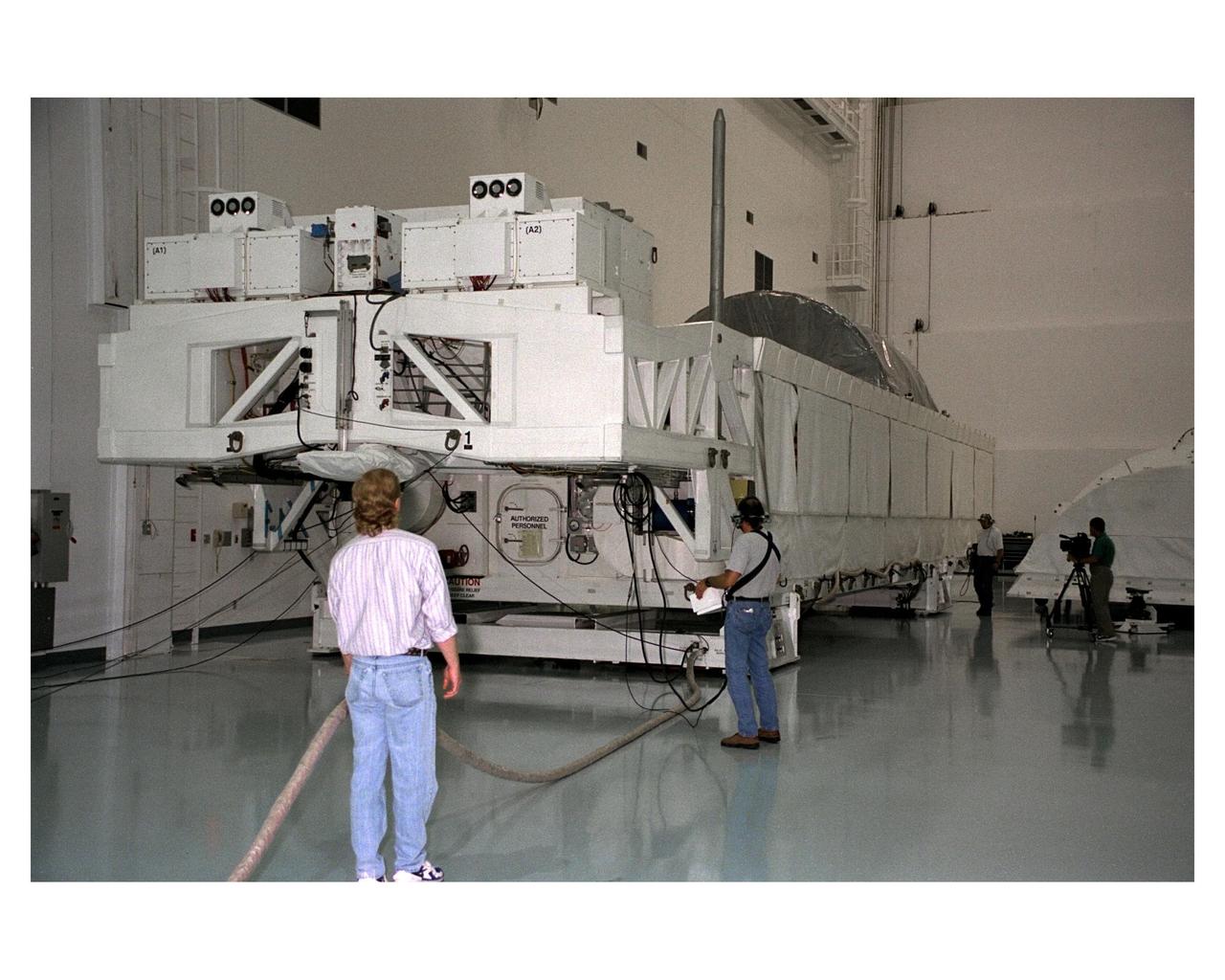
The Node 1, the first element of the International Space Station to be manufactured in the United States and the first to be launched on the Space Shuttle, rests in its container in the Space Station Processing Facility high bay after its arrival at KSC from NASA’s Marshall Space Flight Center (MSFC). The Node 1 module is currently scheduled to lift off aboard the Space Shuttle Endeavour in July 1998 along with Pressurized Mating Adapters (PMAs) 1 and 2. The 18-foot in diameter, 22- foot-long aluminum module was manufactured by the Boeing Co. at MSFC. Once in space, the Node 1 will function as a connecting passageway to the living and working areas of the International Space Station. It has six hatches that will serve as docking ports to the U.S. laboratory module, U.S. habitation module, an airlock and other space station elements
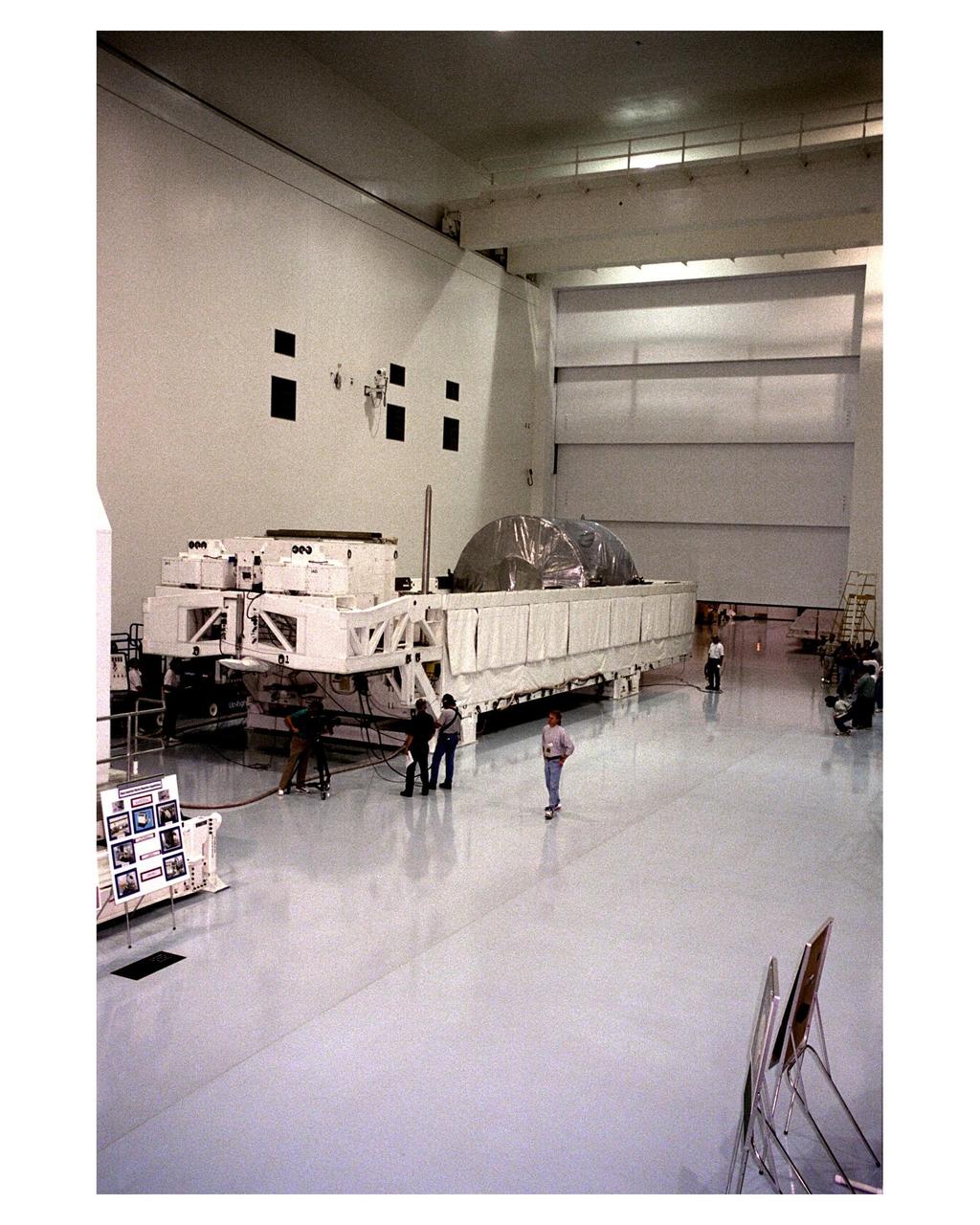
The Node 1, the first element of the International Space Station to be manufactured in the United States and the first to be launched on the Space Shuttle, rests in its container in the Space Station Processing Facility high bay after its arrival at KSC from NASA’s Marshall Space Flight Center (MSFC). The Node 1 module is currently scheduled to lift off aboard the Space Shuttle Endeavour in July 1998 along with Pressurized Mating Adapters (PMAs) 1 and 2. The 18-foot in diameter, 22- foot-long aluminum module was manufactured by the Boeing Co. at MSFC. Once in space, the Node 1 will function as a connecting passageway to the living and working areas of the International Space Station. It has six hatches that will serve as docking ports to the U.S. laboratory module, U.S. habitation module, an airlock and other space station elements
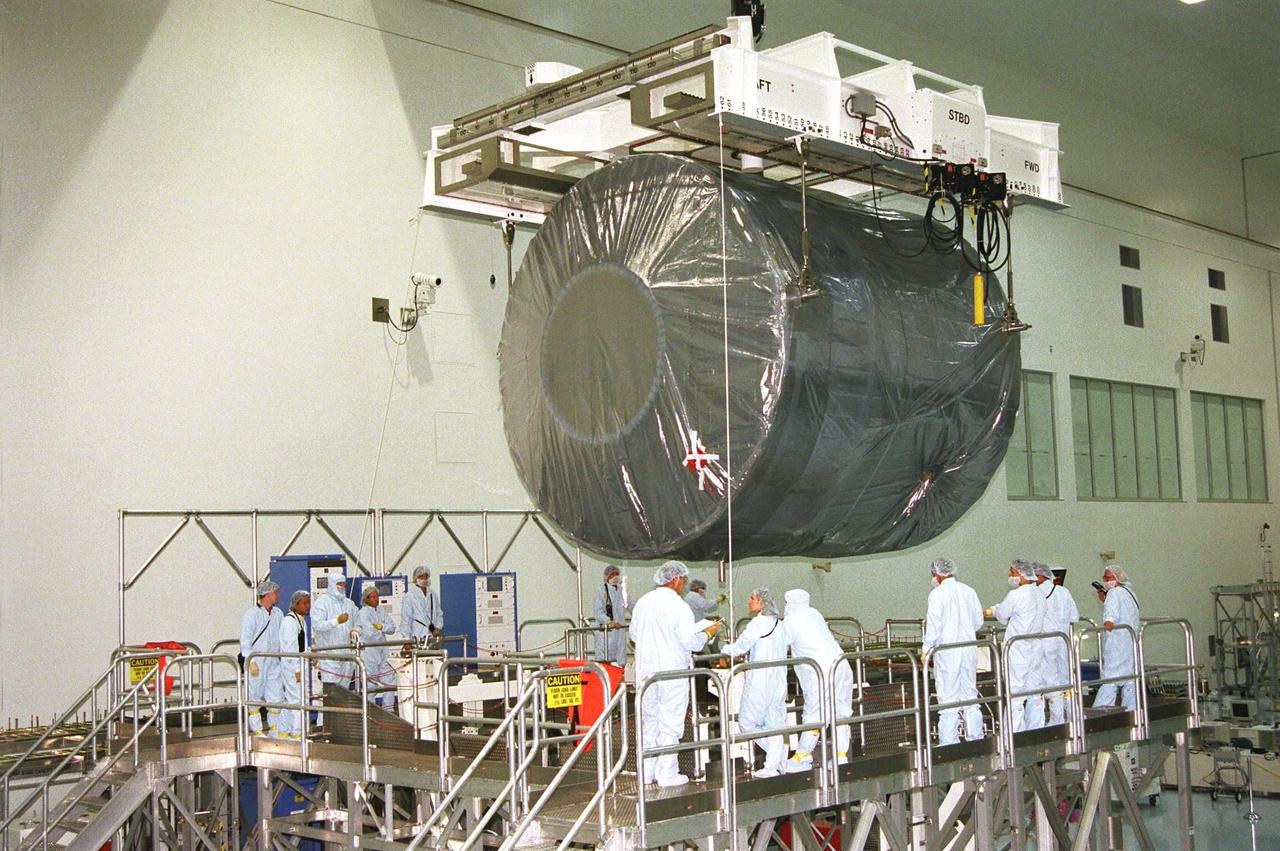
Covered in a protective sheath, International Space Station Node 1 is hoisted for installation in its work stand in the Space Station Processing Facility. The module is the first element of the International Space Station to be manufactured in the United States and the first scheduled to be launched on the Space Shuttle. The Node 1 is currently scheduled to lift off aboard the Space Shuttle Endeavour in July 1998, along with Pressurized Mating Adapters (PMAs) 1 and 2. The 18-foot-in-diameter, 22-foot-long aluminum module was manufactured by the Boeing Co. at Marshall Space Flight Center. Once in space, the Node 1 will function as a connecting passageway to the living and working areas of the International Space Station. It has six hatches that will serve as docking ports to the U.S. laboratory module, U.S. habitation module, an airlock and other space station elements
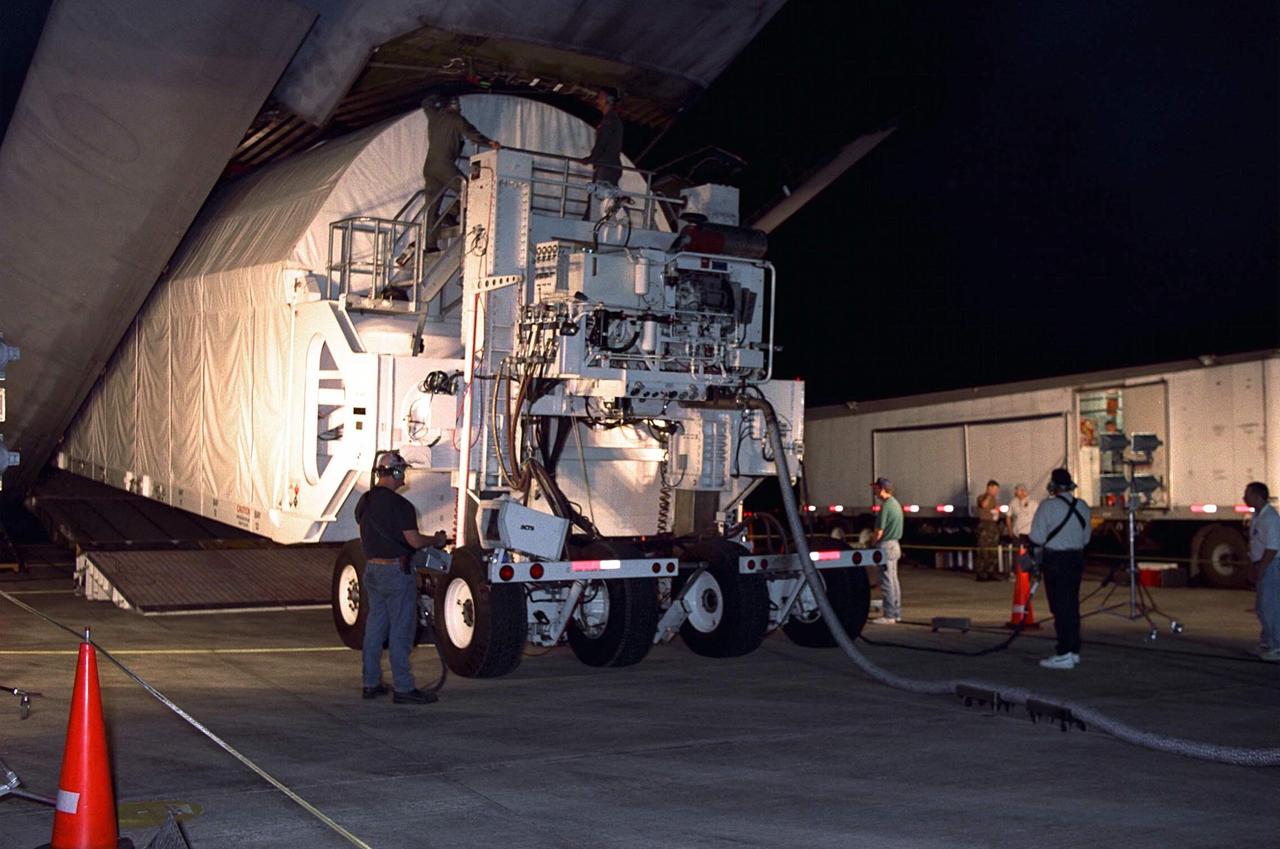
Node 1, the first element of the International Space Station to be manufactured in the United States and the first to be launched on the Space Shuttle, is unloaded in its container from an Air Force C-5 jet cargo transport at KSC’s Shuttle Landing Facility runway on June 23 after its arrival from NASA’s Marshall Space Flight Center (MSFC). The module was then transported to the Space Station Processing Facility. The Node 1 module is currently scheduled to lift off aboard the Space Shuttle Endeavour in July 1998 along with Pressurized Mating Adapters (PMAs) 1 and 2. The 18-foot-in-diameter, 22-foot-long aluminum module was manufactured by the Boeing Co. at MSFC. Once in space, the Node 1 will function as a connecting passageway to the living and working areas of the International Space Station. It has six hatches that will serve as docking ports to the U.S. laboratory module, U.S. habitation module, an airlock and other Space Station elements
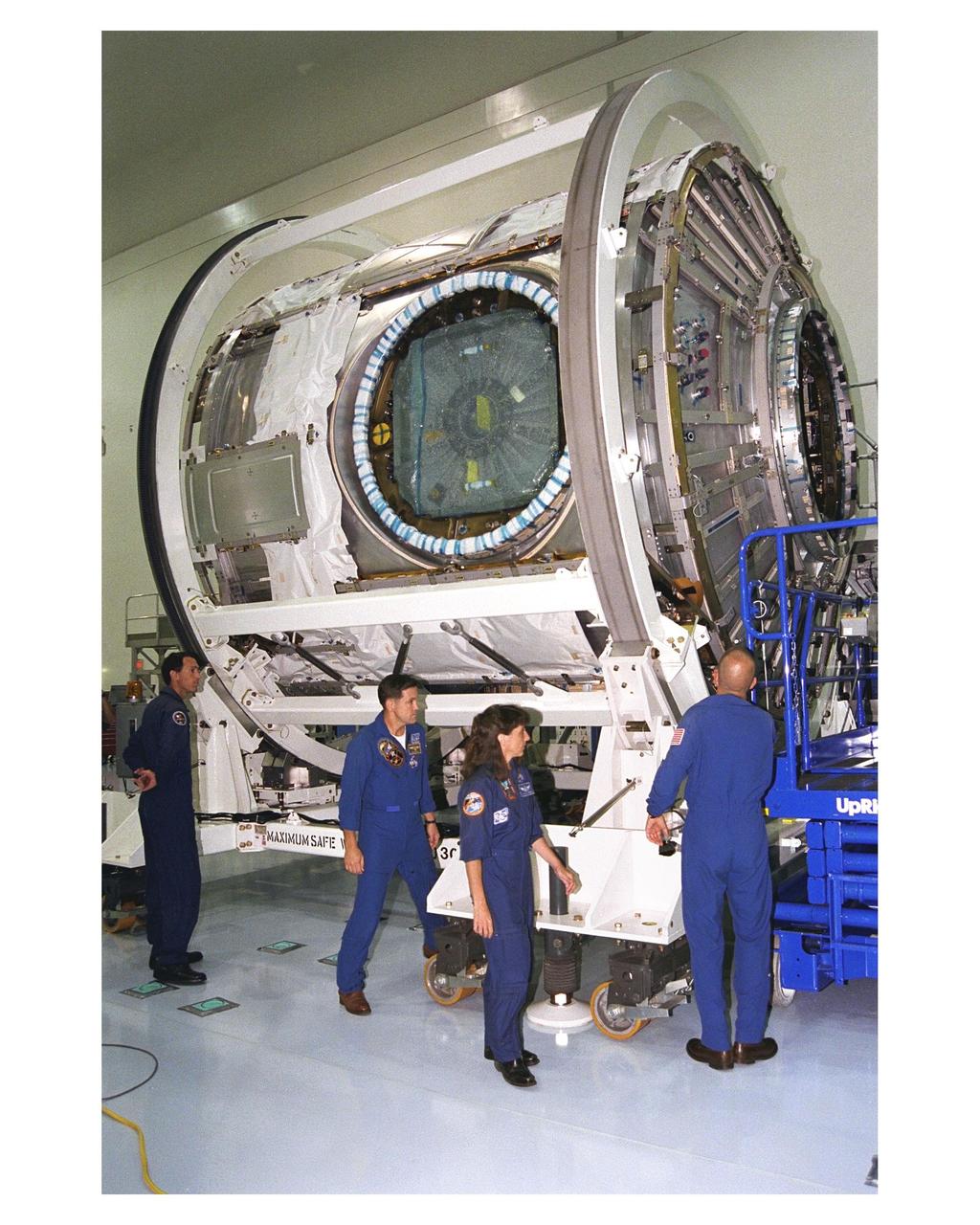
Members of the STS-88 crew examine the Node 1 of the International Space Station in the high bay of the Space Station Processing Facility. The module is the first element of the ISS to be manufactured in the United States and the first scheduled to be launched on the Space Shuttle. The Node 1 is currently scheduled to lift off aboard the Space Shuttle Endeavour in July 1998, along with Pressurized Mating Adapters (PMAs) 1 and 2. The 18-foot-in-diameter, 22-foot-long aluminum module was manufactured by the Boeing Co. at Marshall Space Flight Center. Once in space, the Node 1 will function as a connecting passageway to the living and working areas of the ISS. The six hatches on the Node 1 will serve as docking ports to the U.S. laboratory module, U.S. habitation module, an airlock and other Space Station elements
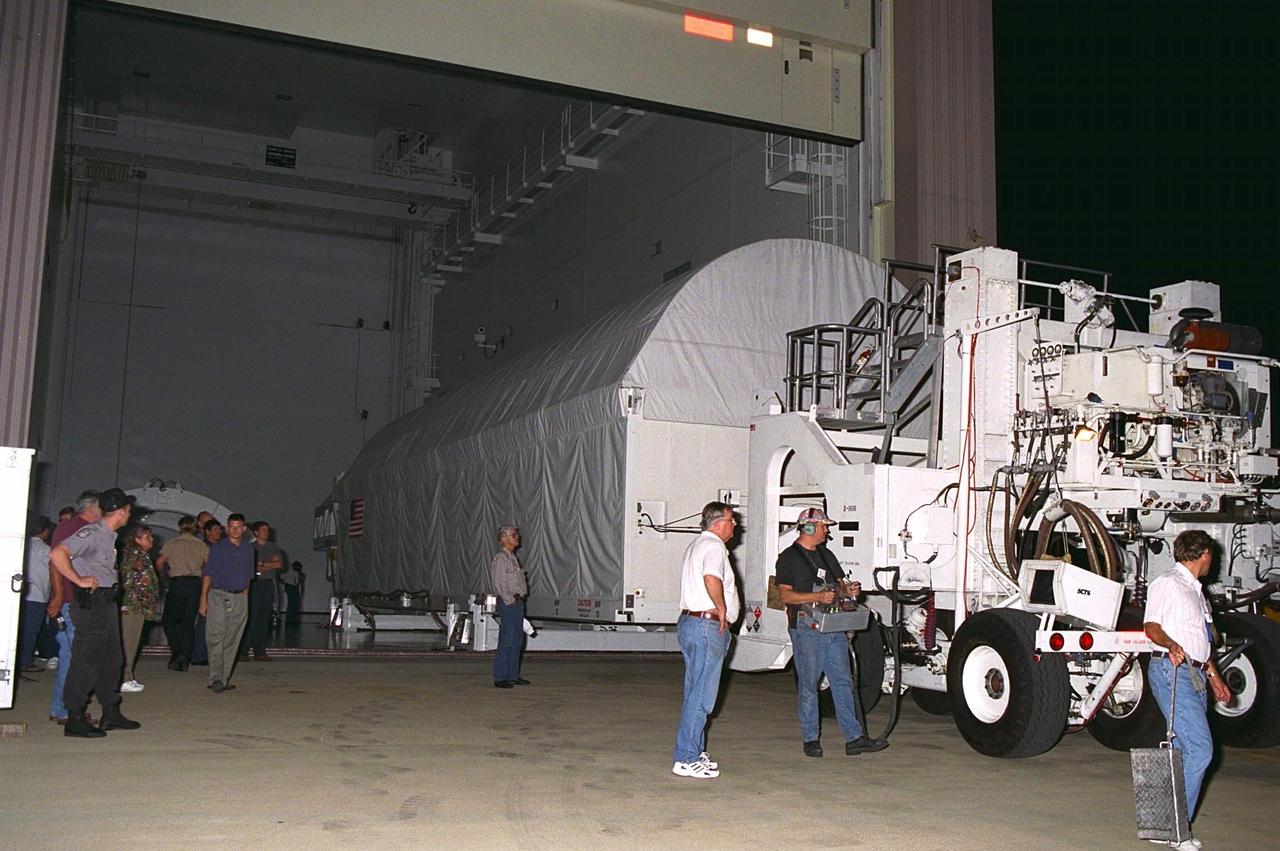
The container transporting the Node 1, the first element of the International Space Station to be manufactured in the United States and the first to be launched on the Space Shuttle, is moved into the Space Station Processing Facility high bay June 23 after its arrival from NASA’s Marshall Space Flight Center (MSFC). The Node 1 module is currently scheduled to lift off aboard the Space Shuttle Endeavour in July 1998 along with Pressurized Mating Adapters (PMAs) 1 and 2. The 18-foot in diameter, 22-foot-long aluminum module was manufactured by the Boeing Co. at MSFC. Once in space, the Node 1 will function as a connecting passageway to the living and working areas of the International Space Station. It has six hatches that will serve as docking ports to the U.S. laboratory module, U.S. habitation module, an airlock and other space station elements
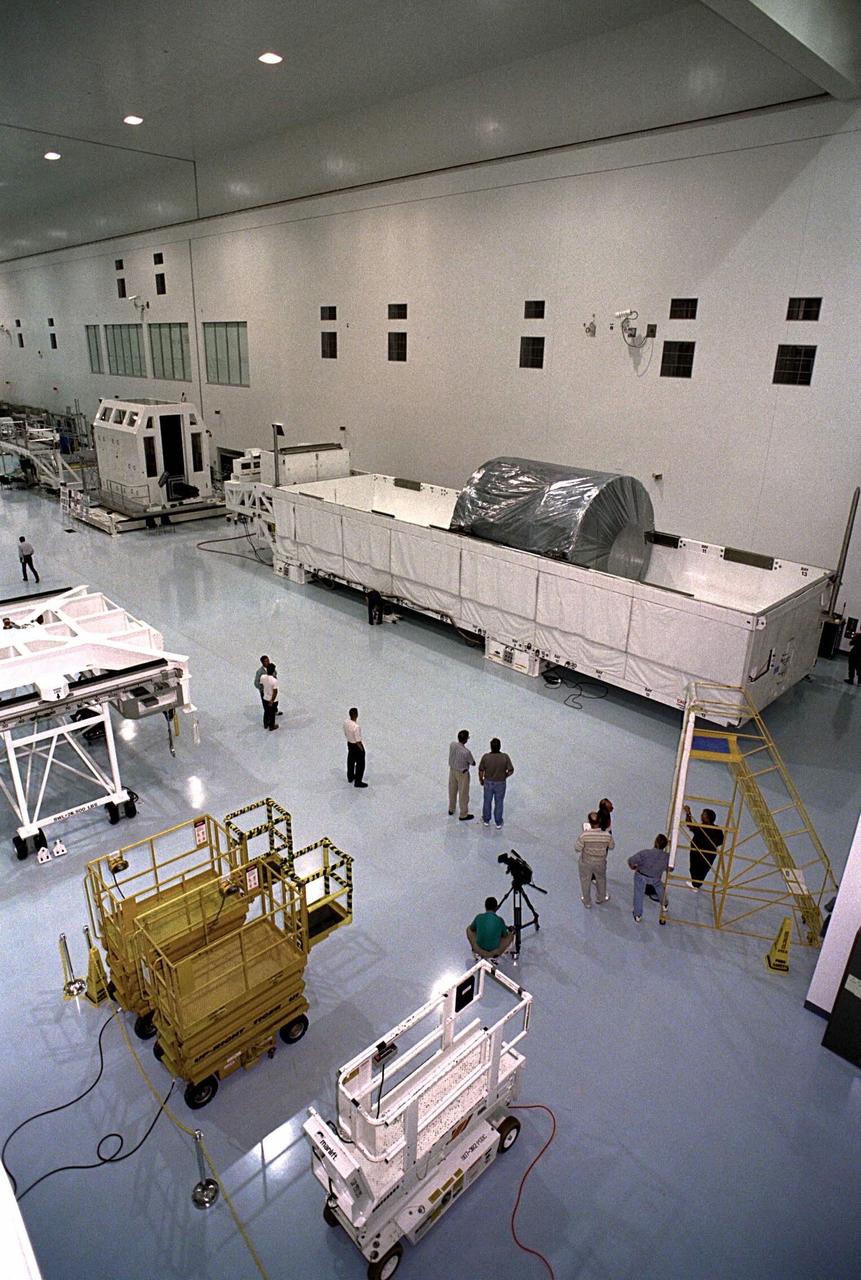
The Node 1, the first element of the International Space Station to be manufactured in the United States and the first to be launched on the Space Shuttle, rests in its container in the Space Station Processing Facility high bay after its arrival at KSC from NASA’s Marshall Space Flight Center (MSFC). The Node 1 module is currently scheduled to lift off aboard the Space Shuttle Endeavour in July 1998 along with Pressurized Mating Adapters (PMAs) 1 and 2. The 18-foot-in-diameter, 22- foot-long aluminum module was manufactured by the Boeing Co. at MSFC. Once in space, the Node 1 will function as a connecting passageway to the living and working areas of the International Space Station. It has six hatches that will serve as docking ports to the U.S. laboratory module, U.S. habitation module, an airlock and other space station elements
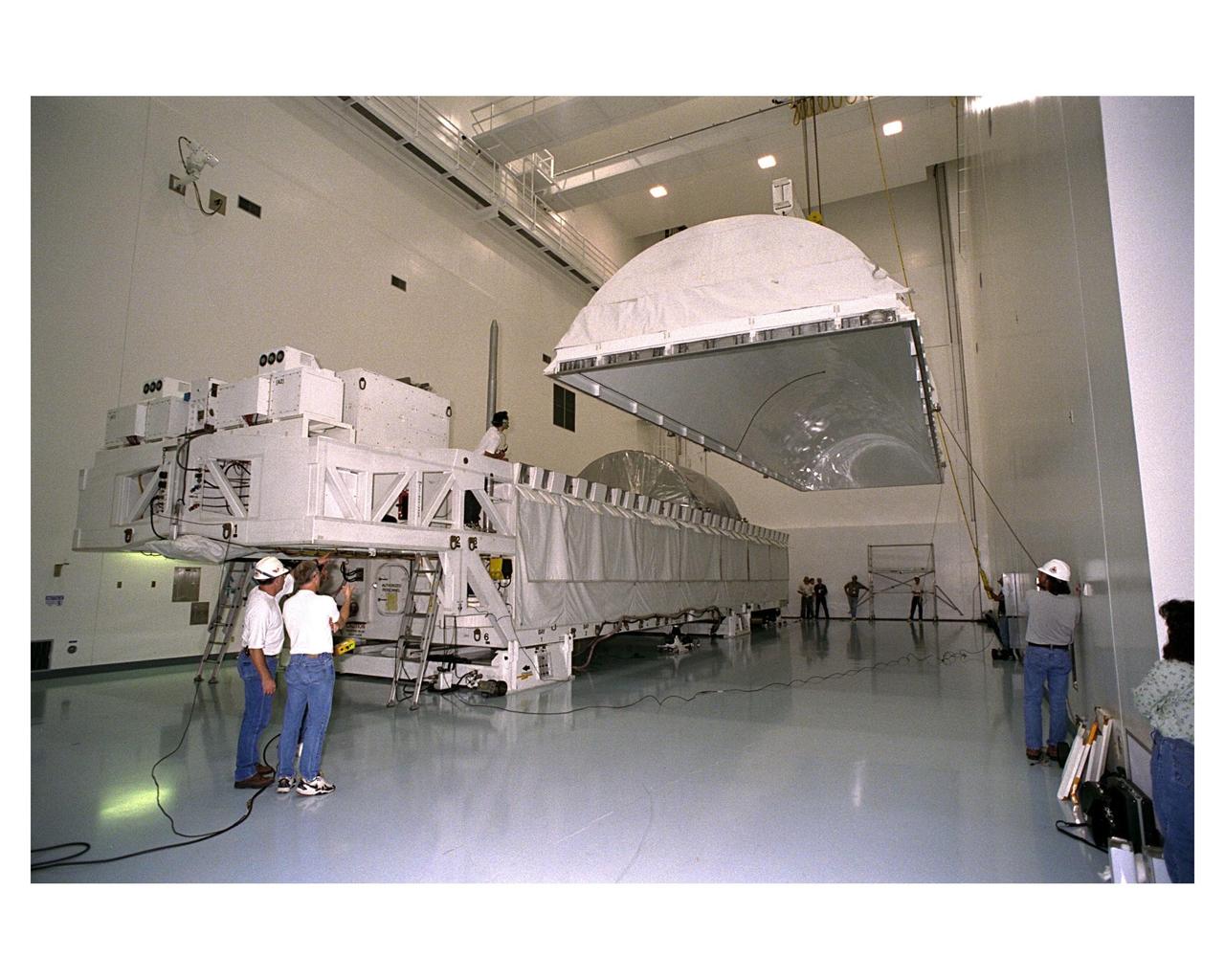
The Node 1, the first element of the International Space Station to be manufactured in the United States and the first to be launched on the Space Shuttle, rests in its container in the Space Station Processing Facility high bay after its arrival at KSC from NASA’s Marshall Space Flight Center (MSFC). The Node 1 module is currently scheduled to lift off aboard the Space Shuttle Endeavour in July 1998 along with Pressurized Mating Adapters (PMAs) 1 and 2. The 18-foot in diameter, 22- foot-long aluminum module was manufactured by the Boeing Co. at MSFC. Once in space, the Node 1 will function as a connecting passageway to the living and working areas of the International Space Station. It has six hatches that will serve as docking ports to the U.S. laboratory module, U.S. habitation module, an airlock and other space station elements
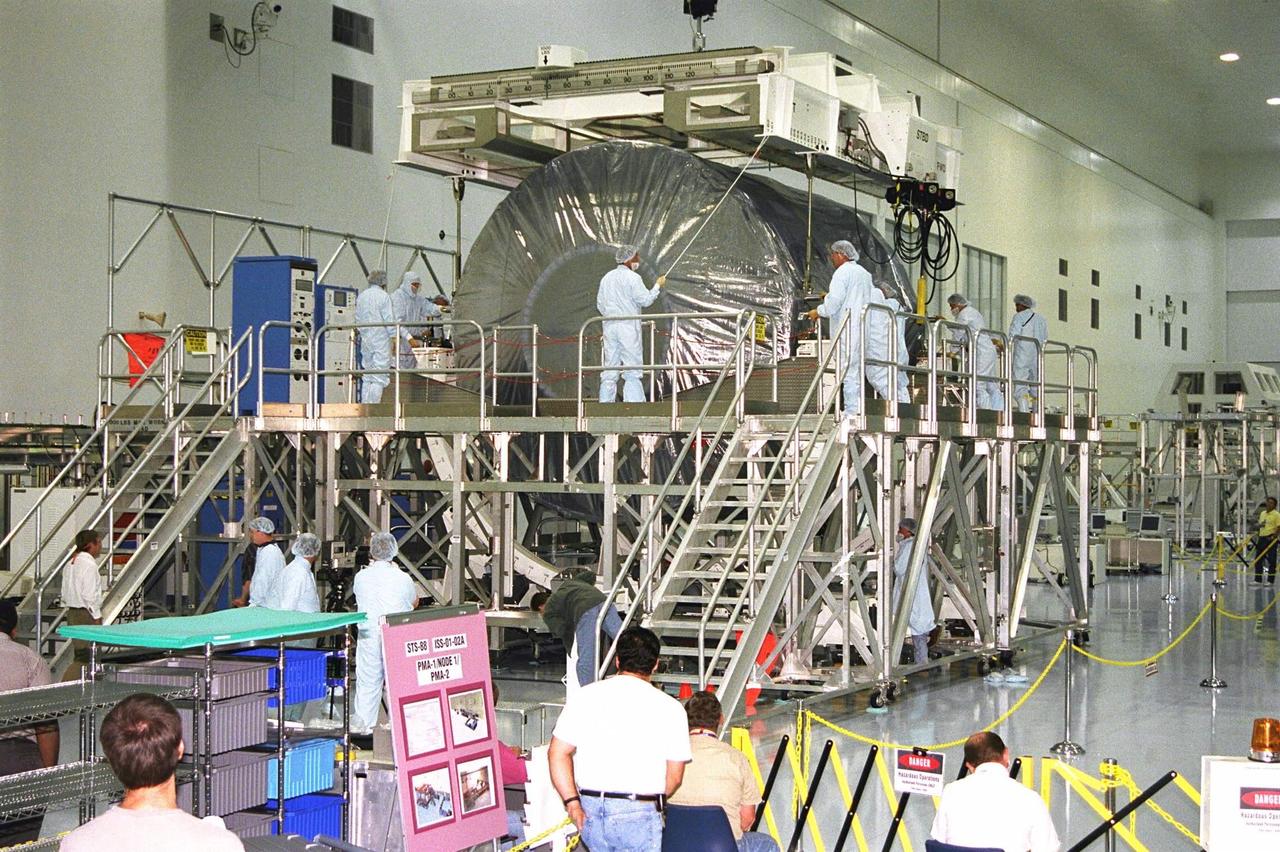
Covered in a protective sheath, International Space Station Node 1 is installed in its work stand in the Space Station Processing Facility. The module is the first element of the International Space Station to be manufactured in the United States and the first scheduled to be launched on the Space Shuttle. The Node 1 is currently scheduled to lift off aboard the Space Shuttle Endeavour in July 1998, along with Pressurized Mating Adapters (PMAs) 1 and 2. The 18-foot-in-diameter, 22-foot-long aluminum module was manufactured by the Boeing Co. at Marshall Space Flight Center. Once in space, the Node 1 will function as a connecting passageway to the living and working areas of the International Space Station. It has six hatches that will serve as docking ports to the U.S. laboratory module, U.S. habitation module, an airlock and other space station elements
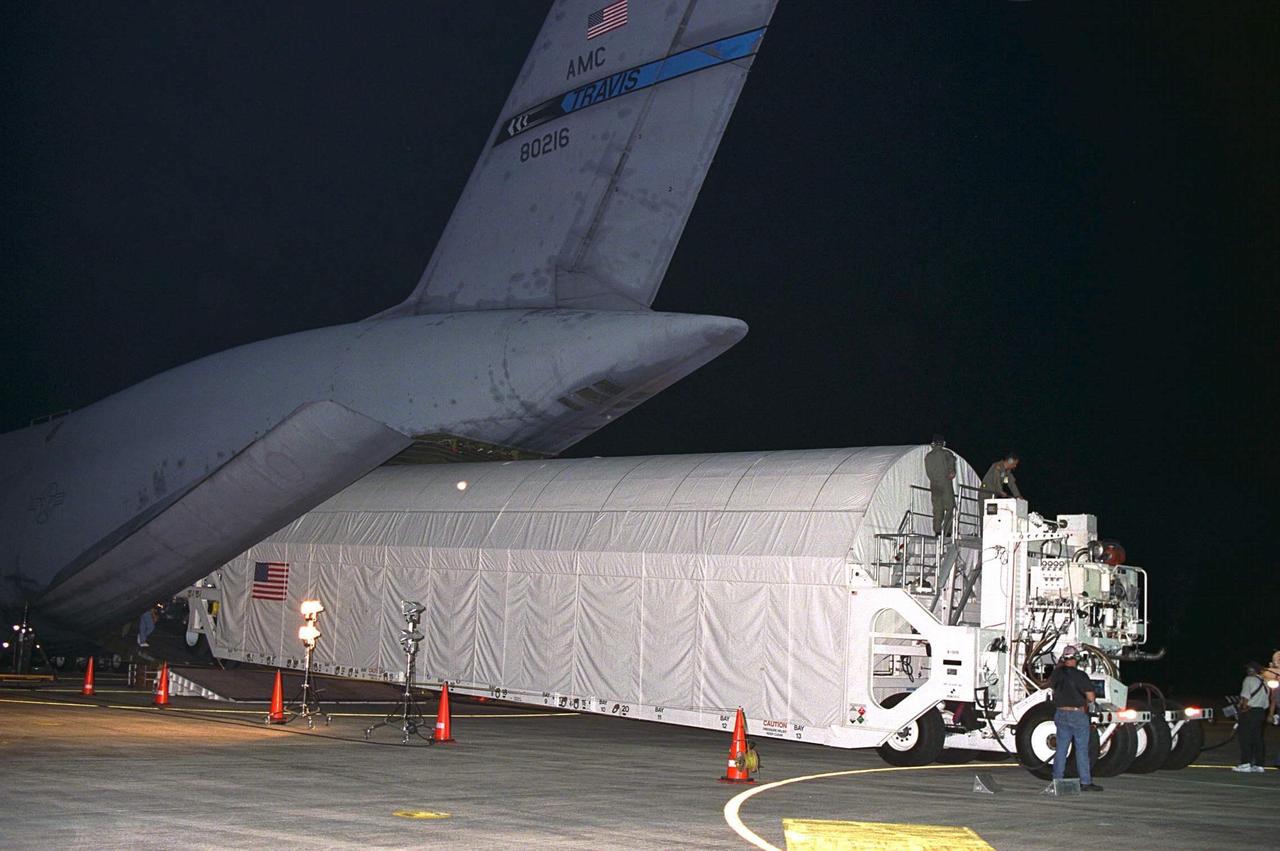
Node 1, the first element of the International Space Station to be manufactured in the United States and the first to be launched on the Space Shuttle, is unloaded in its container from an Air Force C-5 jet cargo transport at KSC’s Shuttle Landing Facility runway on June 23 after its arrival from NASA’s Marshall Space Flight Center (MSFC). The module was then transported to the Space Station Processing Facility. The Node 1 module is currently scheduled to lift off aboard the Space Shuttle Endeavour in July 1998 along with Pressurized Mating Adapters (PMAs) 1 and 2. The 18-foot in diameter, 22-foot-long aluminum module was manufactured by the Boeing Co. at MSFC. Once in space, the Node 1 will function as a connecting passageway to the living and working areas of the International Space Station. It has six hatches that will serve as docking ports to the U.S. laboratory module, U.S. habitation module, an airlock and other Space Station elements
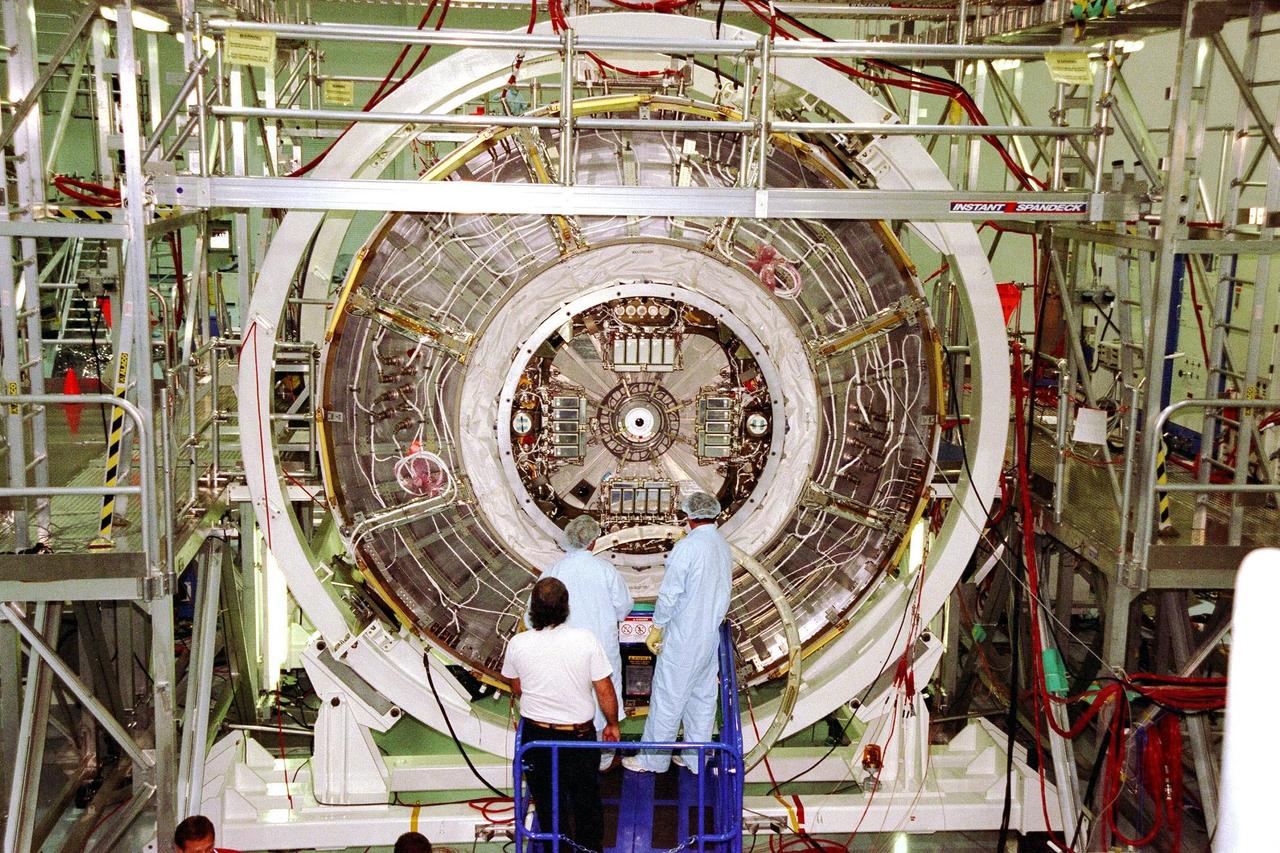
KENNEDY SPACE CENTER, FLA. -- Boeing technicians move a piece of hardware into position on Node 1 of the International Space Station (ISS) in KSC's Space Station Processing Facility in preparation for mating with Pressurized Mating Adapter (PMA)-2. The node is the first element of the ISS to be manufactured in the United States and is currently scheduled to lift off aboard the Space Shuttle Endeavour on STS-88 later this year, along with PMAs 1 and 2. The 18-foot-in-diameter, 22-foot-long aluminum module was manufactured by the Boeing Co. at Marshall Space Flight Center. Once in space, Node 1 will function as a connecting passageway to the living and working areas of the ISS. It has six hatches that will serve as docking ports to the U.S. laboratory module, U.S. habitation module, an airlock and other space station elements
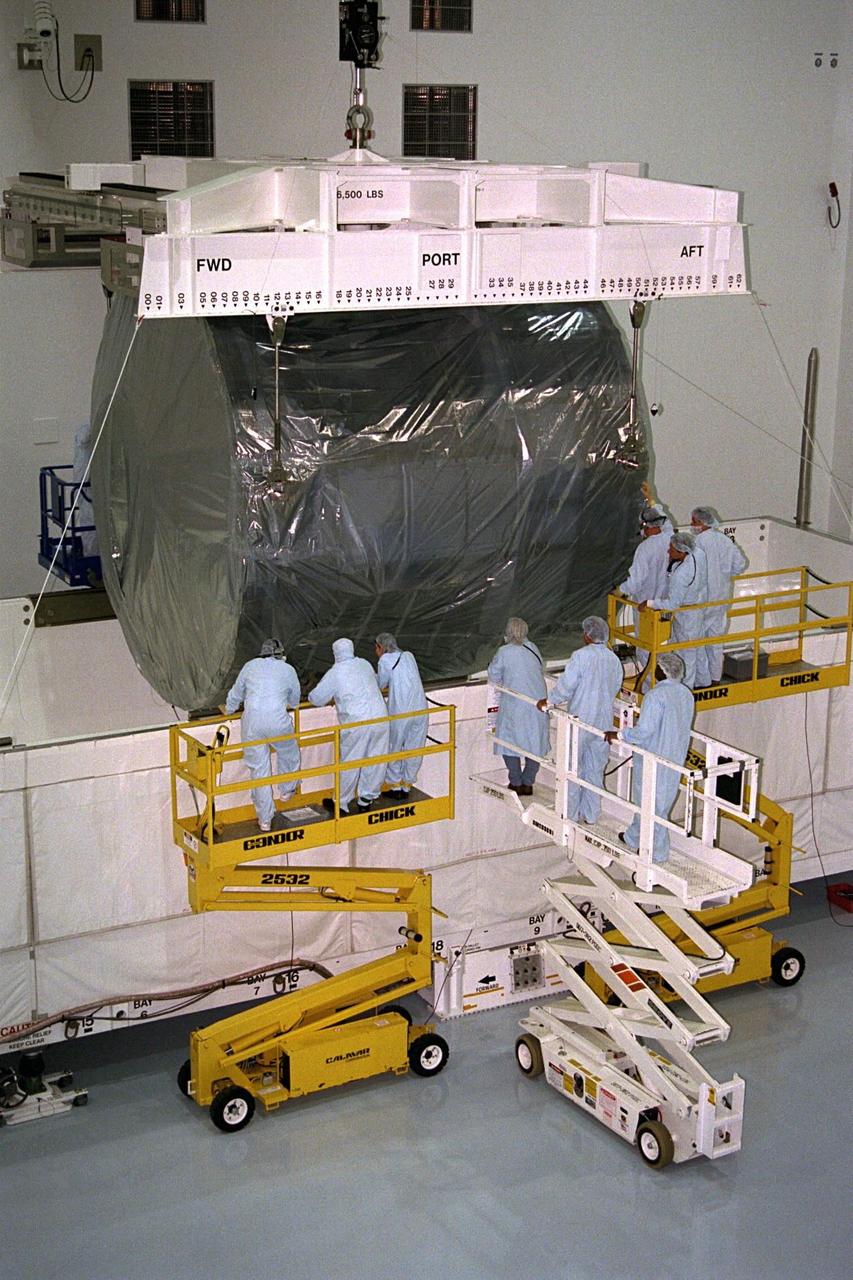
Covered in a protective sheath, International Space Station Node 1 is hoisted from its transporting container for installation in its work stand in the Space Station Processing Facility. The module is the first element of the International Space Station to be manufactured in the United States and the first scheduled to be launched on the Space Shuttle. The Node 1 is currently scheduled to lift off aboard the Space Shuttle Endeavour in July 1998, along with Pressurized Mating Adapters (PMAs) 1 and 2. The 18-foot-in-diameter, 22-foot-long aluminum module was manufactured by the Boeing Co. at Marshall Space Flight Center. Once in space, the Node 1 will function as a connecting passageway to the living and working areas of the International Space Station. It has six hatches that will serve as docking ports to the U.S. laboratory module, U.S. habitation module, an airlock and other space station elements
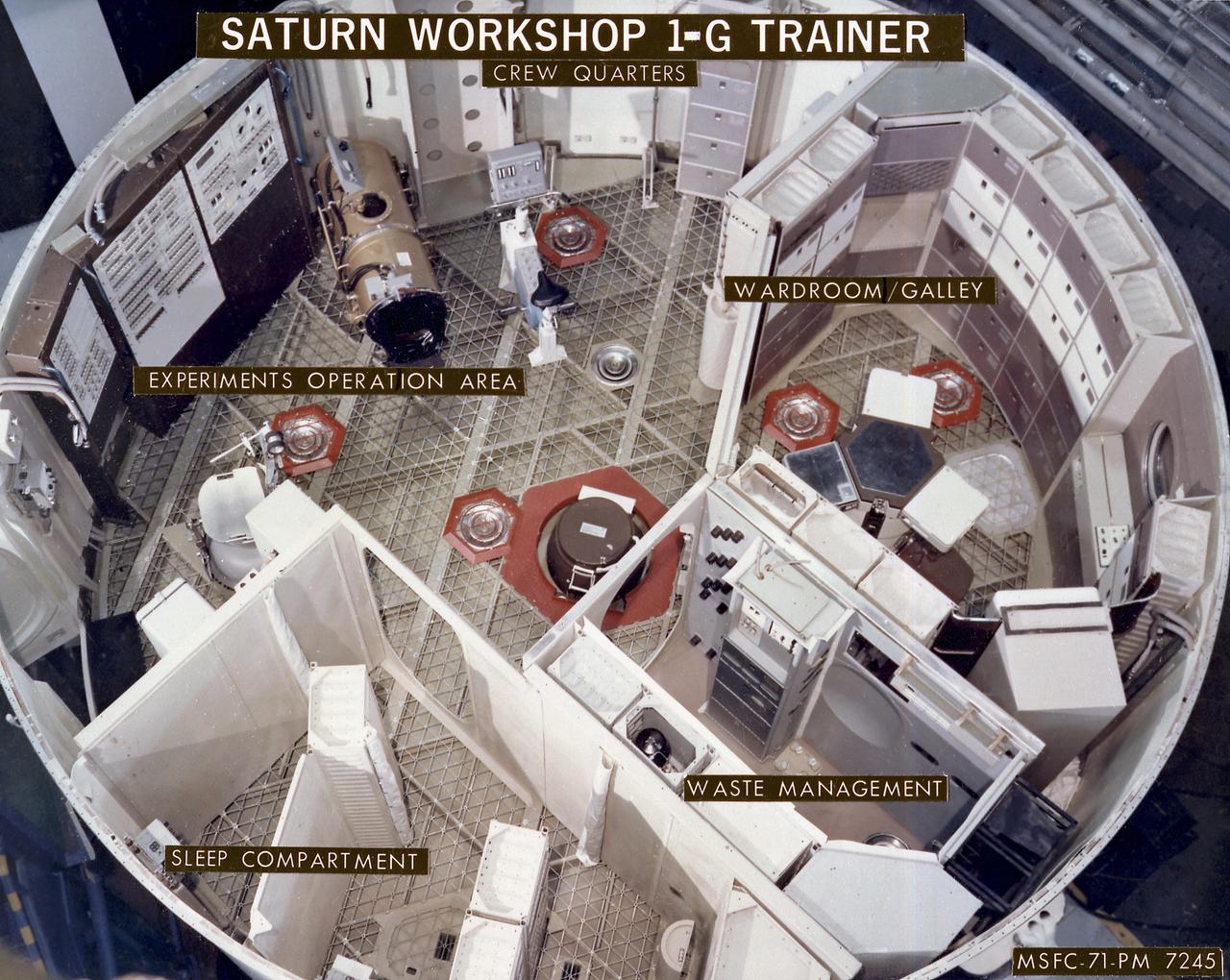
This image depicts a layout of the Skylab workshop 1-G trainer crew quarters. At left, in the sleep compartment, astronauts slept strapped to the walls of cubicles and showered at the center. Next right was the waste management area where wastes were processed and disposed. Upper right was the wardroom where astronauts prepared their meals and foods were stored. In the experiment operation area, upper left, against the far wall, was the lower-body negative-pressure device (Skylab Experiment M092) and the Ergometer for the vectorcardiogram experiment (Skylab Experiment M063). The trainers and mockups were useful in the developmental phase, while engineers and astronauts were still working out optimum designs. They provided much data applicable to the manufacture of the flight articles.
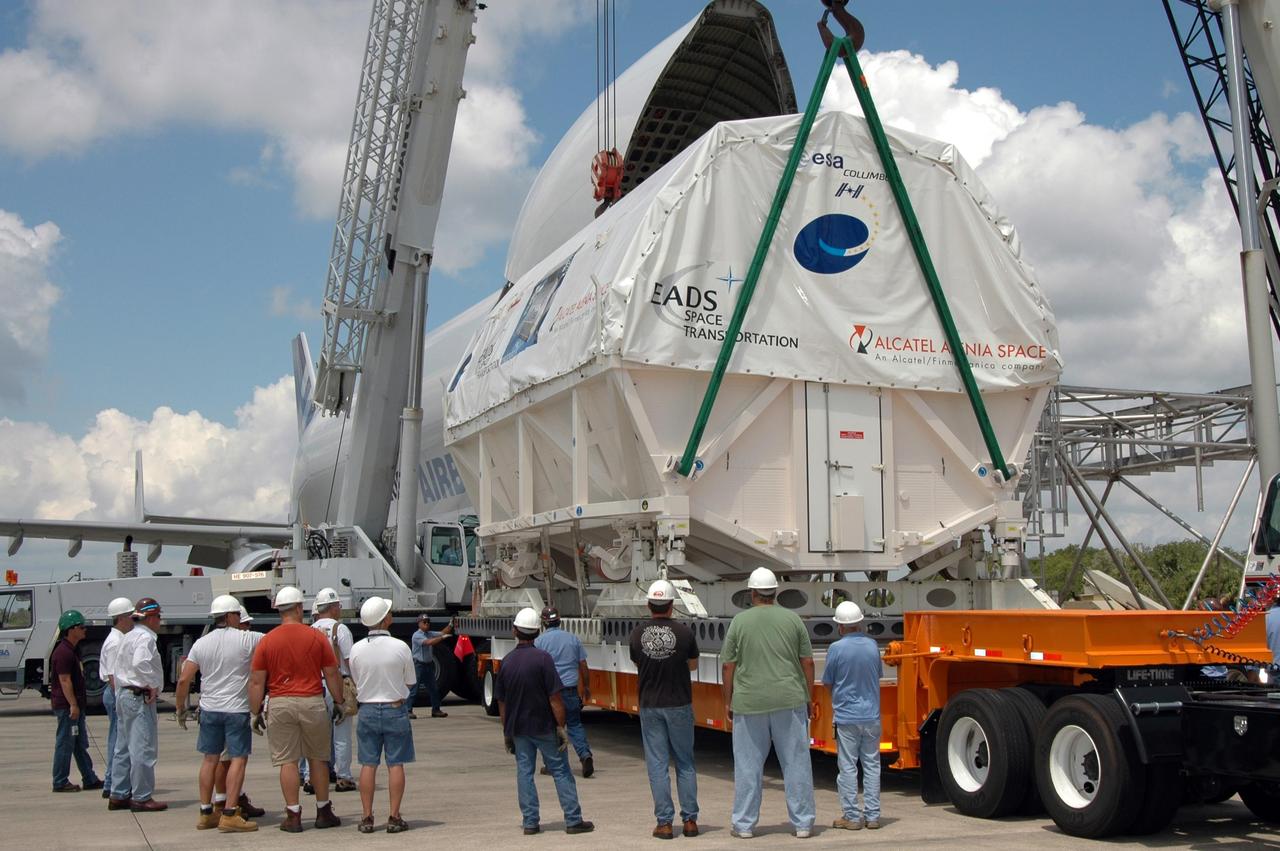
KENNEDY SPACE CENTER, FLA. - At the Shuttle Landing Facility, a crane settles Columbus, the European Space Agency's research laboratory, onto a flat bed truck. The truck will transport the module to the Space Station Processing Facility at NASA's Kennedy Space Center. The module arrived on a Beluga Airbus May 30 at NASA's Kennedy Space Center from the manufacturer in Germany. In the SSPF, the module will be prepared for delivery to the International Space Station on a future space shuttle mission. Columbus will expand the research facilities of the station and provide researchers with the ability to conduct numerous experiments in the area of life, physical and materials sciences. Photo credit: NASA/Jim Grossmann
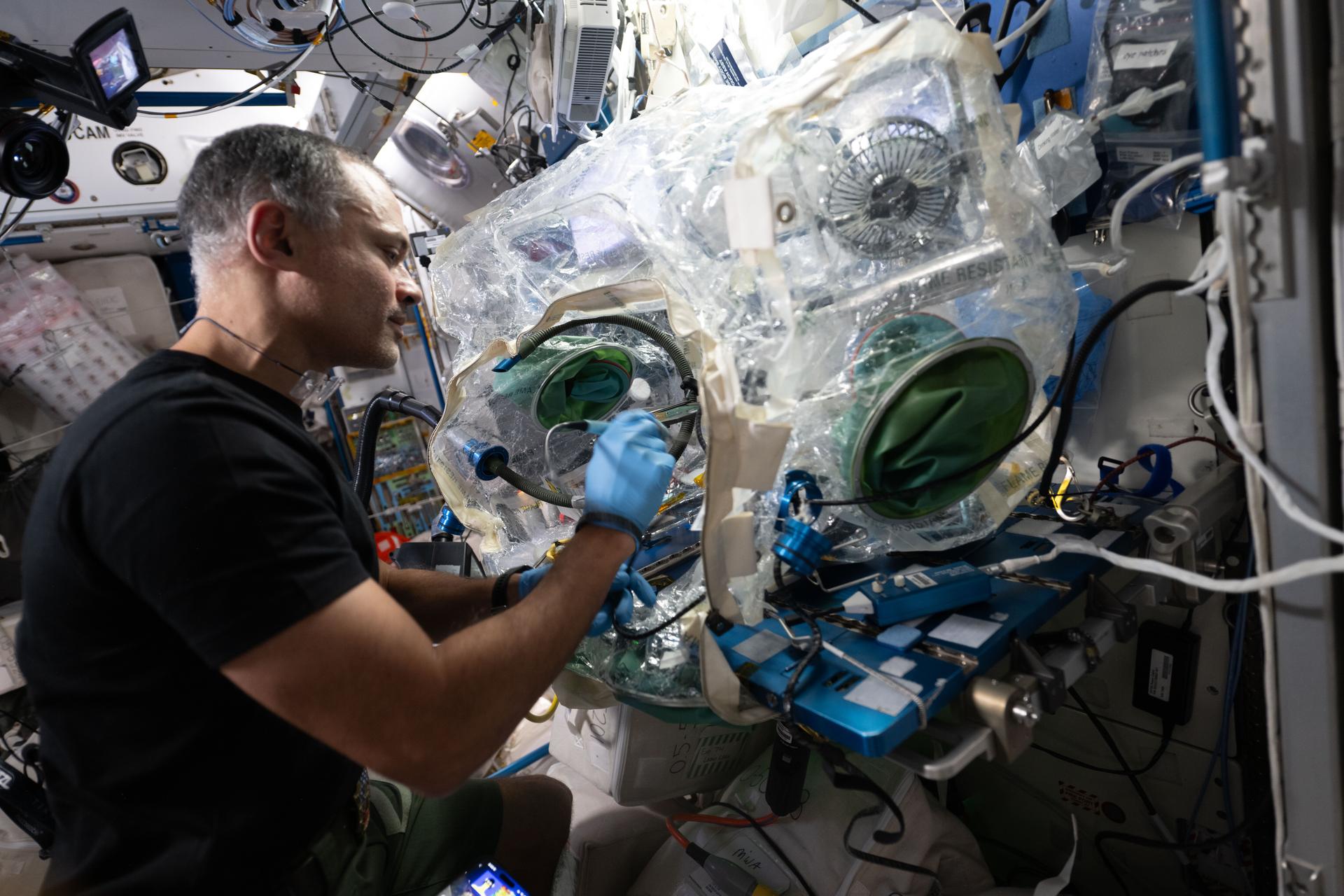
iss075e0103086 (Sept. 14, 2026) --- NASA astronaut and Expedition 75 flight engineer Anil Menon uses a lead-free soldering technique to solder components on a circuit board and demonstrate the manufacturing and repair of electronics in microgravity. Menon conducted safe research operations inside a container system attached to the Harmony module's maintenance work area to protect the International Space Station's atmosphere. The MIYOKA experiment will return the space-soldered samples to Earth for analysis and compared them to identical ground-soldered samples. Results may lead to reduced reliance on costly resupply missions. Credit: ESA/Sophie Adenot
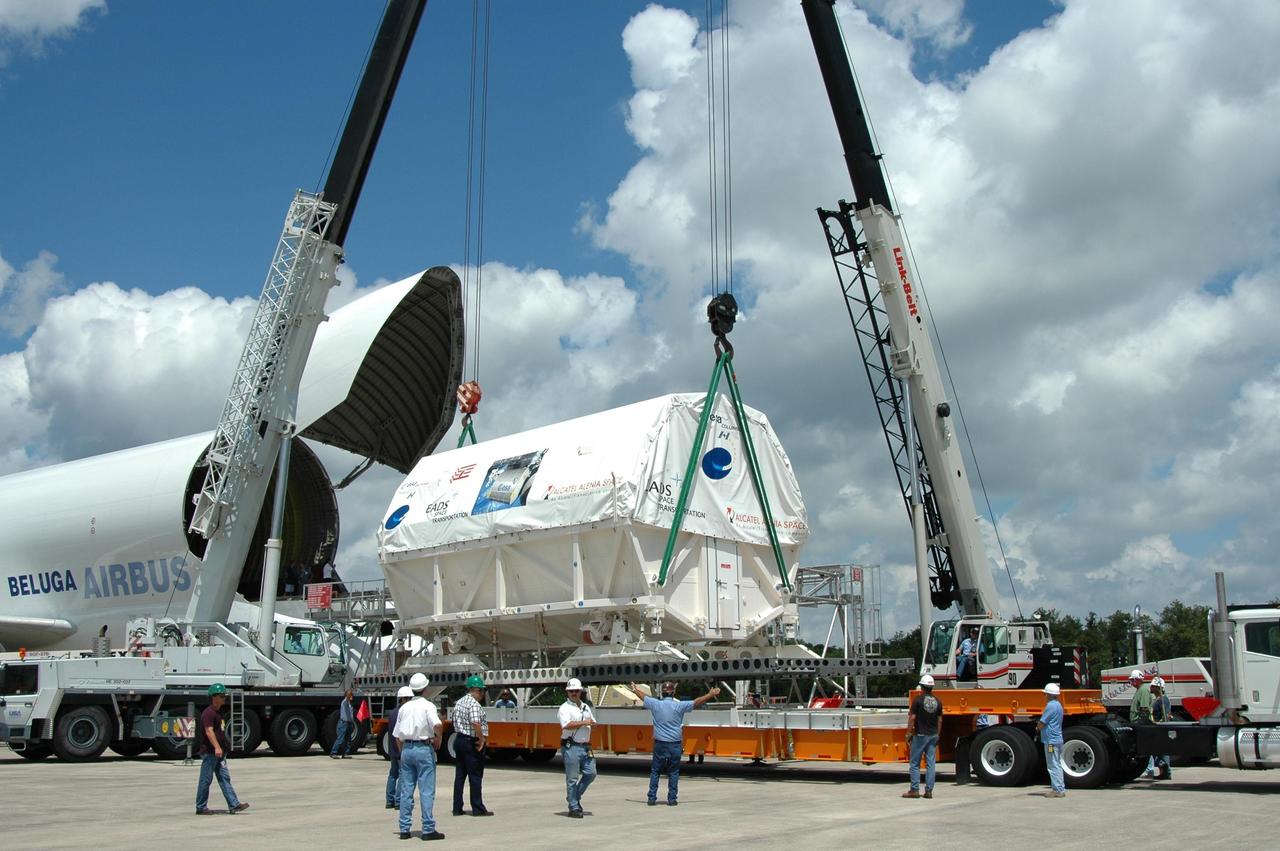
KENNEDY SPACE CENTER, FLA. - At the Shuttle Landing Facility, a crane lowers Columbus, the European Space Agency's research laboratory, toward a flat bed truck. The truck will transport the module to the Space Station Processing Facility at NASA's Kennedy Space Center. The module arrived on a Beluga Airbus May 30 at NASA's Kennedy Space Center from the manufacturer in Germany. In the SSPF, the module will be prepared for delivery to the International Space Station on a future space shuttle mission. Columbus will expand the research facilities of the station and provide researchers with the ability to conduct numerous experiments in the area of life, physical and materials sciences. Photo credit: NASA/Jim Grossmann
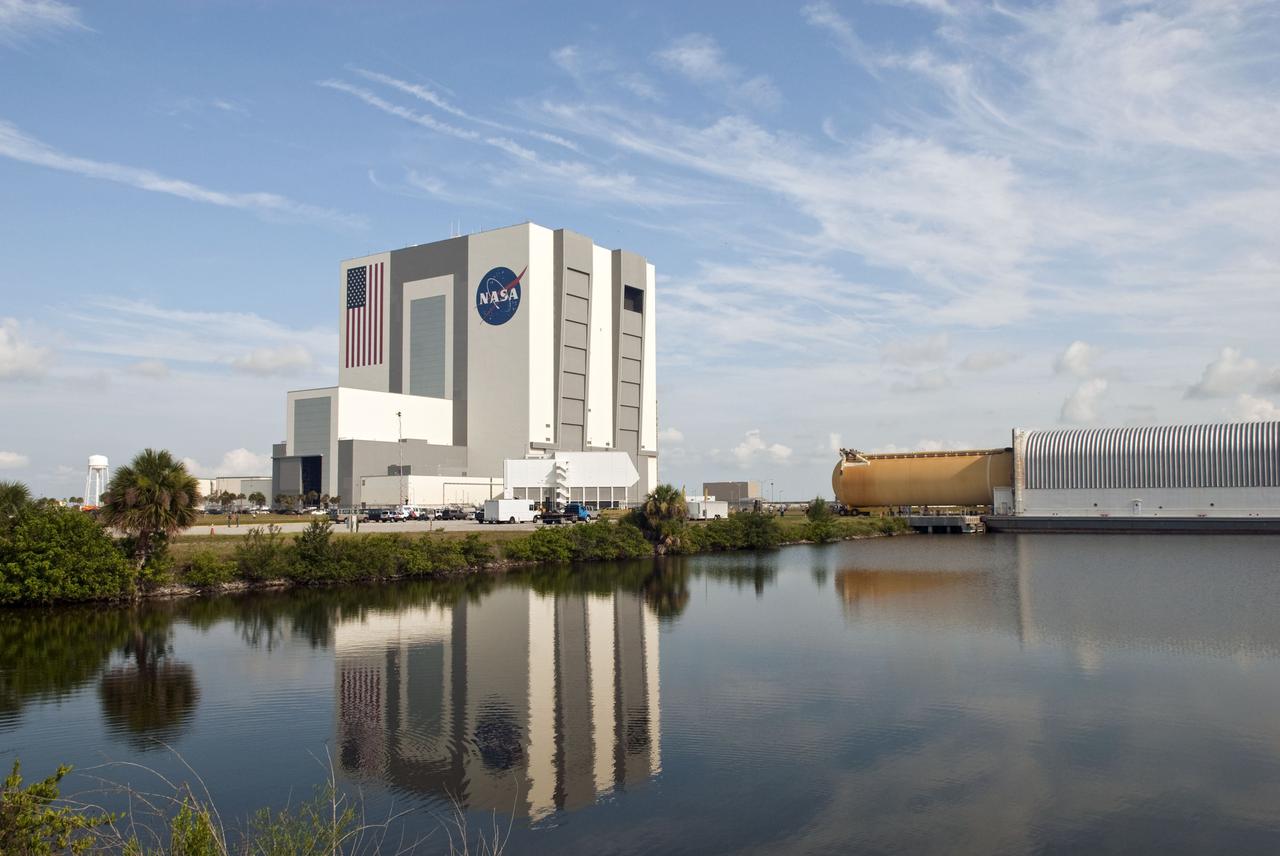
CAPE CANAVERAL, Fla. -- Viewed from across the turn basin in the Launch Complex 39 area at NASA's Kennedy Space Center in Florida, External Tank-138 is being offloaded from the Pegasus barge near the Vehicle Assembly Building. The external fuel tank arrived in Florida on July 13, from NASA's Michoud Assembly Facility near New Orleans. ET-138, the last newly manufactured tank, was originally designated to fly on Endeavour's STS-134 mission to the International Space Station, but later reassigned to fly on space shuttle Atlantis' final mission, STS-135. For information, visit www.nasa.gov_shuttle. Photo credit: NASA_Jim Grossmann
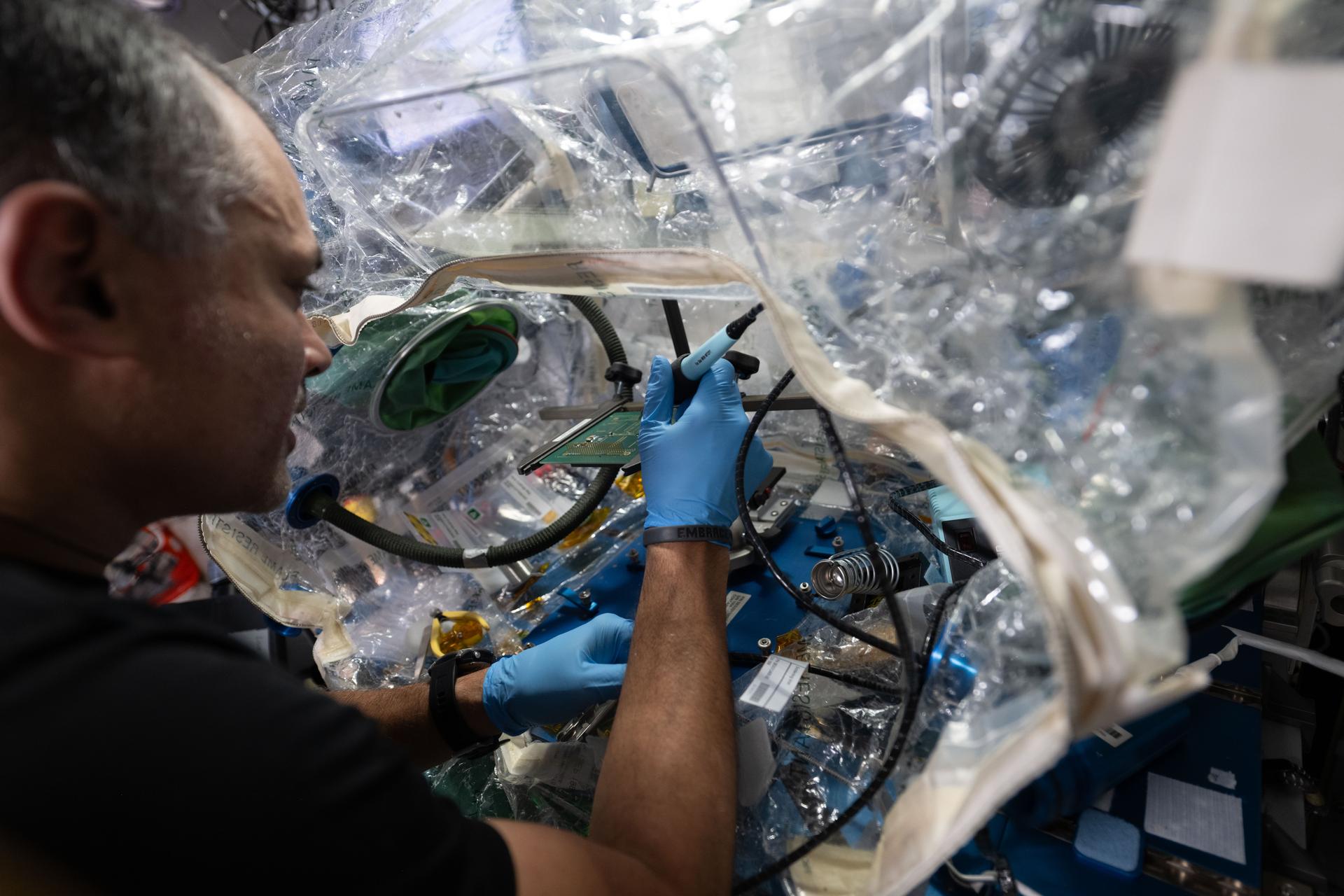
iss075e0103081 (Sept. 14, 2026) --- NASA astronaut and Expedition 75 flight engineer Anil Menon uses a lead-free soldering technique to solder components on a circuit board and demonstrate the manufacturing and repair of electronics in microgravity. Menon conducted safe research operations inside a container system attached to the Harmony module's maintenance work area to protect the International Space Station's atmosphere. The MIYOKA experiment will return the space-soldered samples to Earth for analysis and compare them to identical ground-soldered samples. Results may lead to reduced reliance on costly resupply missions. Credit: ESA/Sophie Adenot
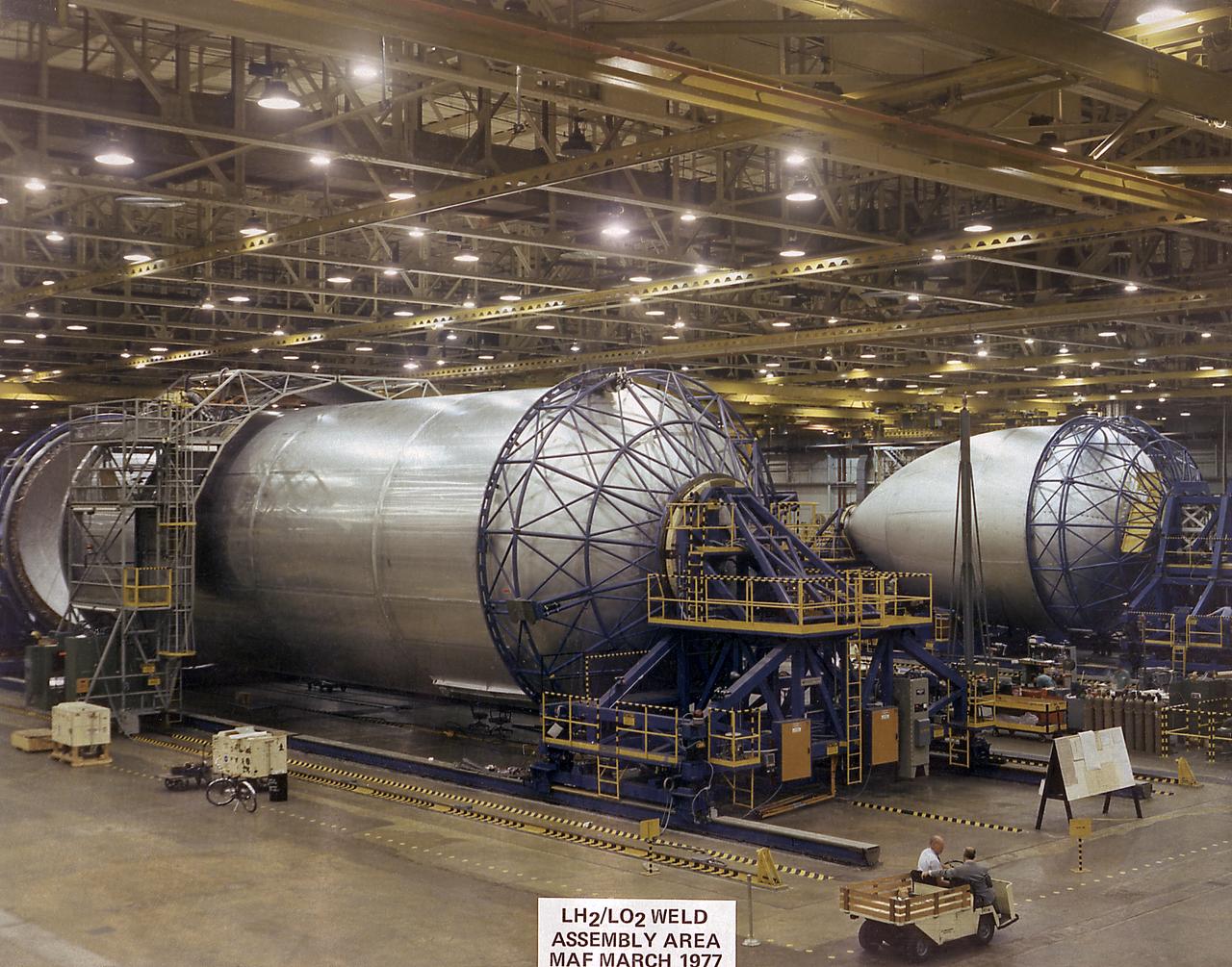
This photograph shows the liquid hydrogen tank and liquid oxygen tank for the Space Shuttle external tank (ET) being assembled in the weld assembly area of the Michoud Assembly Facility (MAF). The ET provides liquid hydrogen and liquid oxygen to the Shuttle's three main engines during the first eight 8.5 minutes of flight. At 154-feet long and more than 27-feet in diameter, the ET is the largest component of the Space Shuttle, the structural backbone of the entire Shuttle system, and the only part of the vehicle that is not reusable. The ET is manufactured at the Michoud Assembly Facility near New Orleans, Louisiana, by the Martin Marietta Corporation under management of the Marshall Space Flight Center.
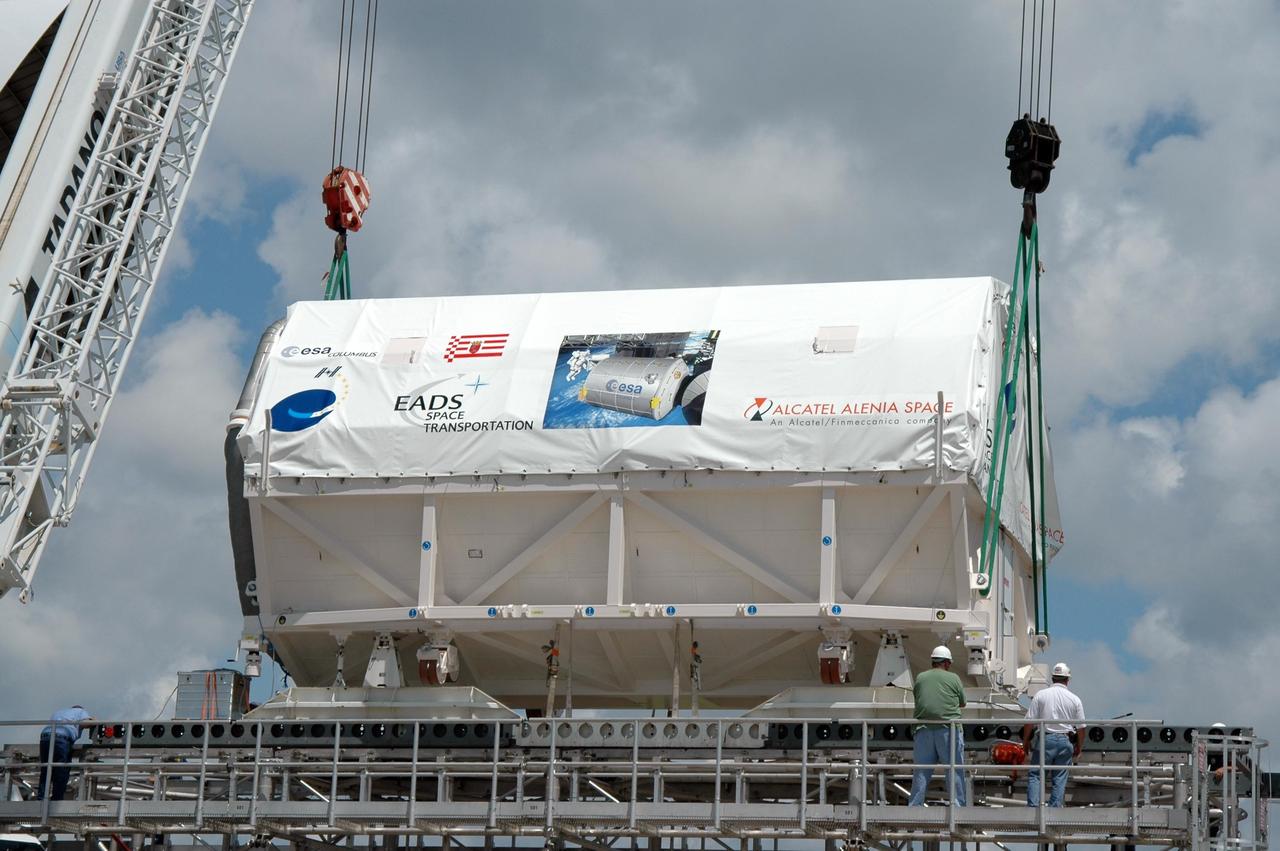
KENNEDY SPACE CENTER, FLA. - At the Shuttle Landing Facility, a crane lifts Columbus, the European Space Agency's research laboratory, off an Airbus Transport International platform to place it onto a flat bed truck. The module will be transported to the Space Station Processing Facility at NASA's Kennedy Space Center. The module arrived on a Beluga Airbus May 30 at NASA's Kennedy Space Center from the manufacturer in Germany. In the SSPF, the module will be prepared for delivery to the International Space Station on a future space shuttle mission. Columbus will expand the research facilities of the station and provide researchers with the ability to conduct numerous experiments in the area of life, physical and materials sciences. Photo credit: NASA/Jim Grossmann
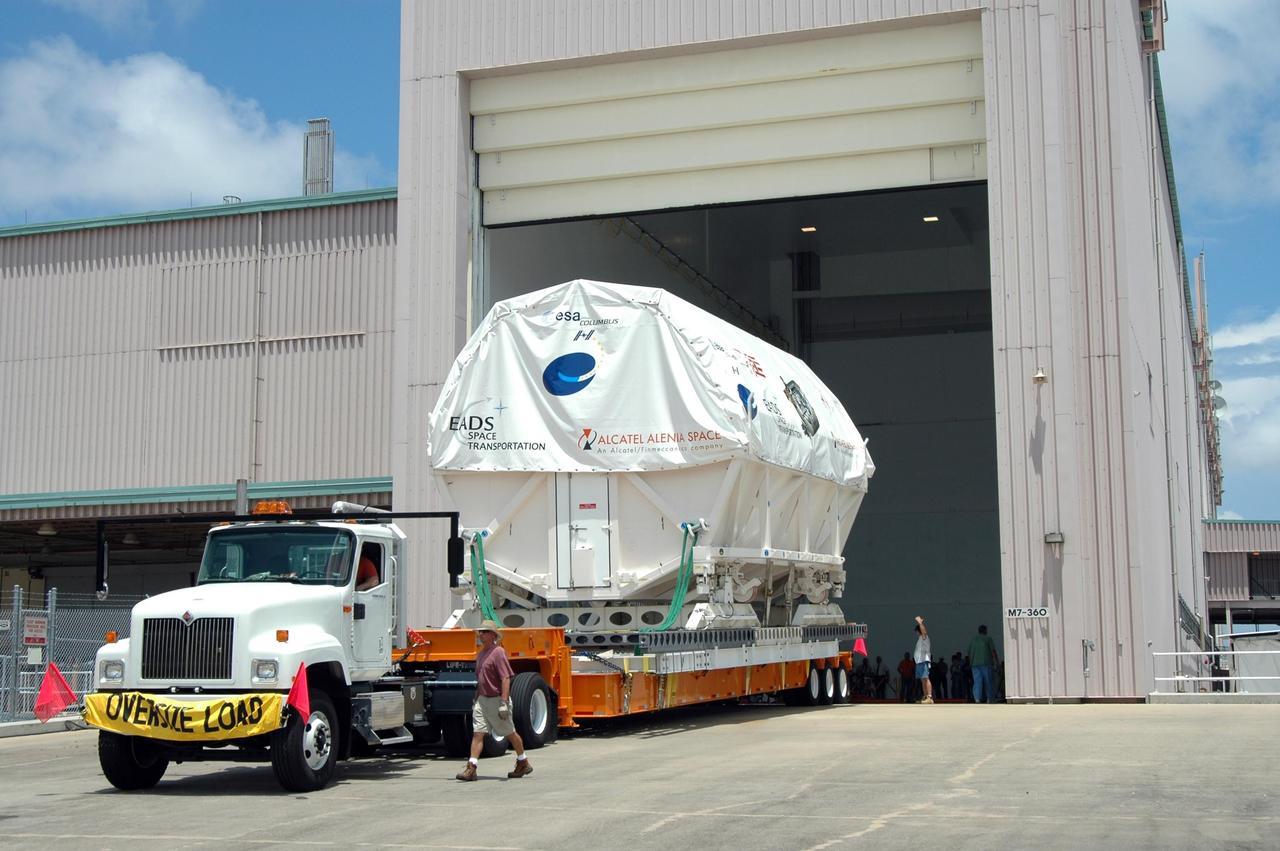
KENNEDY SPACE CENTER, FLA. - The truck transporting Columbus, the European Space Agency's research laboratory, moves the module inside the Space Station Processing Facility at NASA's Kennedy Space Center. The module arrived on a Beluga Airbus May 30 at NASA's Kennedy Space Center from the manufacturer in Germany. In the SSPF, the module will be prepared for delivery to the International Space Station on a future space shuttle mission. Columbus will expand the research facilities of the station and provide researchers with the ability to conduct numerous experiments in the area of life, physical and materials sciences. Photo credit: NASA/Jim Grossmann
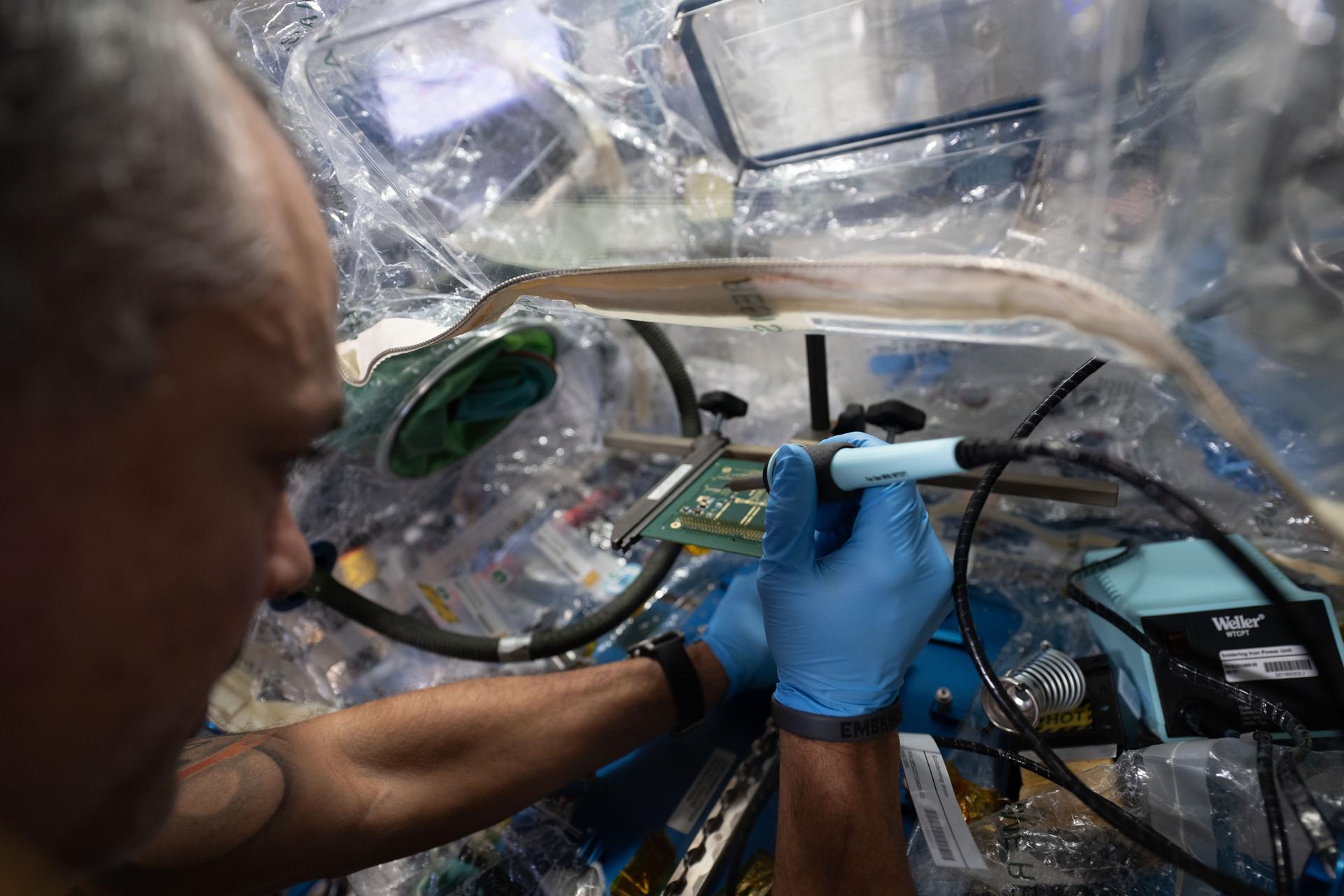
iss075e0103084 (Sept. 14, 2026) --- NASA astronaut and Expedition 75 flight engineer Anil Menon uses a lead-free soldering technique to solder components on a circuit board and demonstrate the manufacturing and repair of electronics in microgravity. Menon conducted safe research operations inside a container system attached to the Harmony module's maintenance work area to protect the International Space Station's atmosphere. The MIYOKA experiment will return the space-soldered samples to Earth for analysis and compare them to identical ground-soldered samples. Results may lead to reduced reliance on costly resupply missions. Credit: ESA/Sophie Adenot
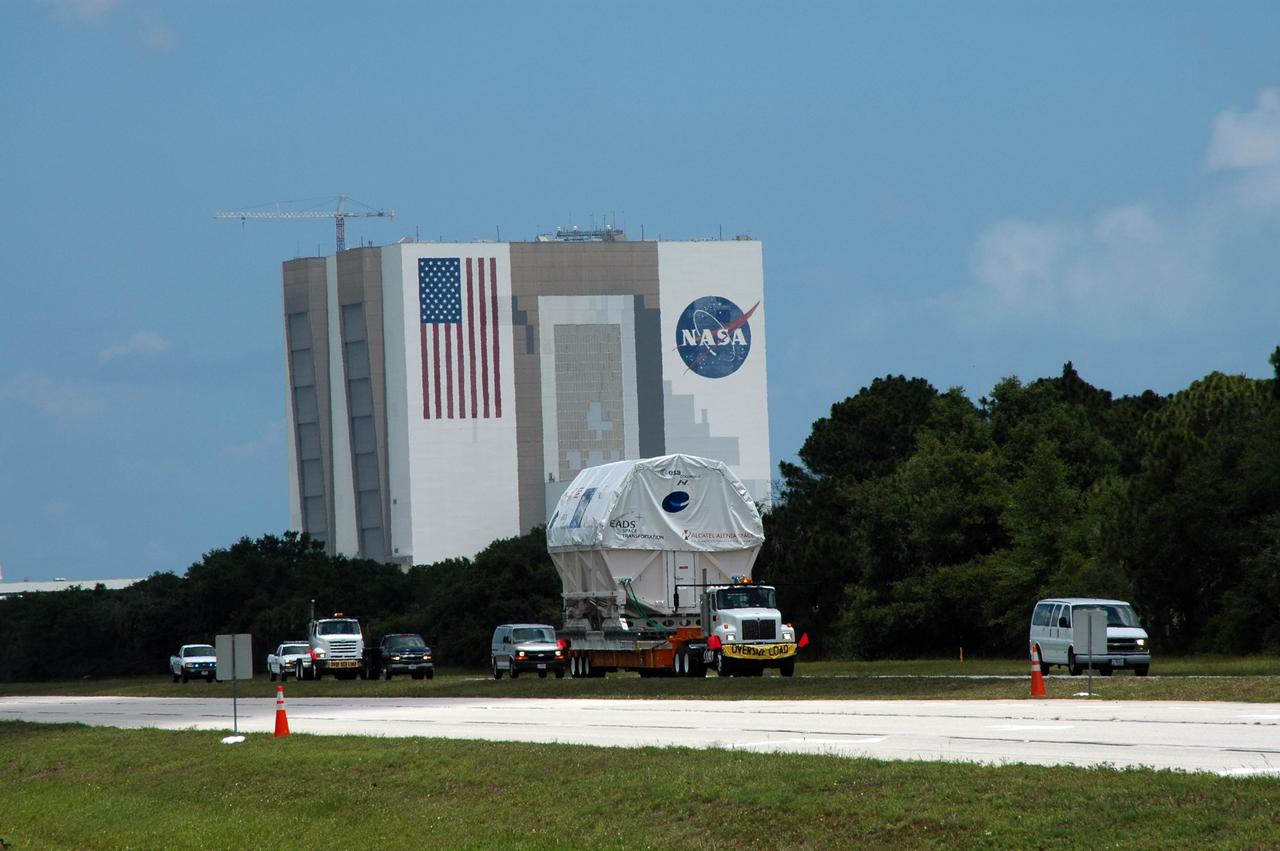
KENNEDY SPACE CENTER, FLA. - Columbus, the European Space Agency's research laboratory, is moved under escort past the Vehicle Assembly Building. It is heading to the Space Station Processing Facility at NASA's Kennedy Space Center. The module arrived on a Beluga Airbus May 30 at NASA's Kennedy Space Center from the manufacturer in Germany. In the SSPF, the module will be prepared for delivery to the International Space Station on a future space shuttle mission. Columbus will expand the research facilities of the station and provide researchers with the ability to conduct numerous experiments in the area of life, physical and materials sciences. Photo credit: NASA/Jim Grossmann
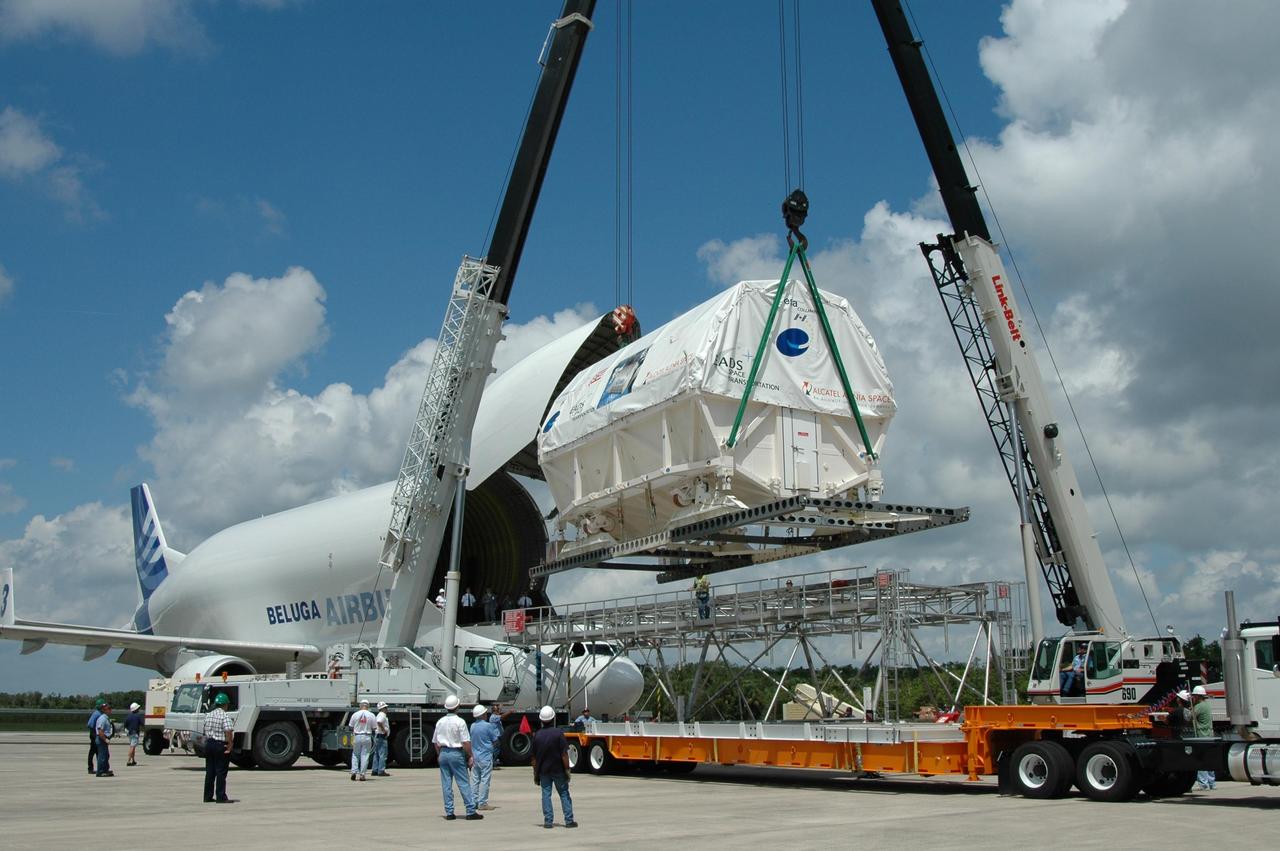
KENNEDY SPACE CENTER, FLA. - At the Shuttle Landing Facility, a crane lifts Columbus, the European Space Agency's research laboratory, off an Airbus Transport International platform toward a flat bed truck. The truck will transport the module to the Space Station Processing Facility at NASA's Kennedy Space Center. The module arrived on a Beluga Airbus May 30 at NASA's Kennedy Space Center from the manufacturer in Germany. In the SSPF, the module will be prepared for delivery to the International Space Station on a future space shuttle mission. Columbus will expand the research facilities of the station and provide researchers with the ability to conduct numerous experiments in the area of life, physical and materials sciences. Photo credit: NASA/Jim Grossmann
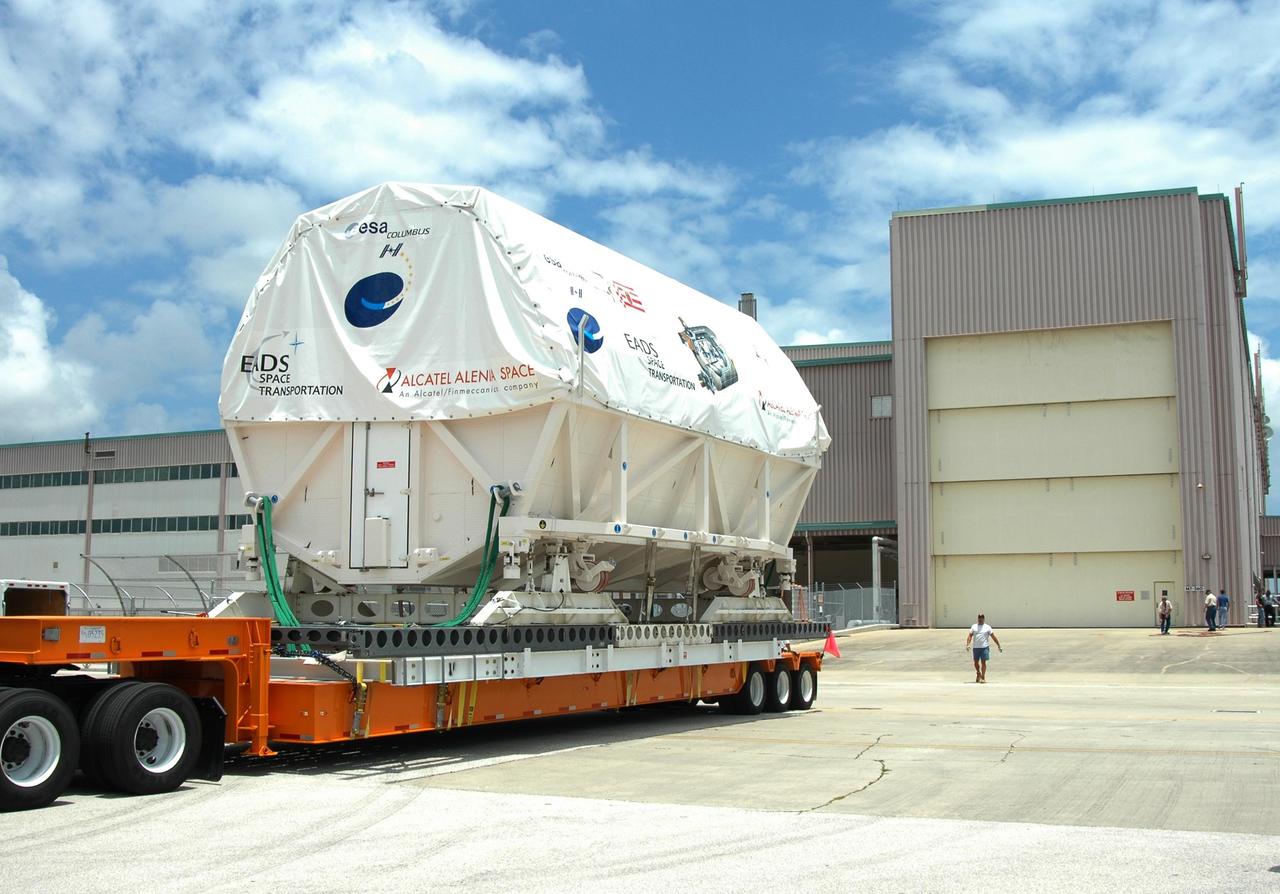
KENNEDY SPACE CENTER, FLA. - The truck transporting Columbus, the European Space Agency's research laboratory, arrives at the Space Station Processing Facility at NASA's Kennedy Space Center. The module arrived on a Beluga Airbus May 30 at NASA's Kennedy Space Center from the manufacturer in Germany. In the SSPF, the module will be prepared for delivery to the International Space Station on a future space shuttle mission. Columbus will expand the research facilities of the station and provide researchers with the ability to conduct numerous experiments in the area of life, physical and materials sciences. Photo credit: NASA/Jim Grossmann
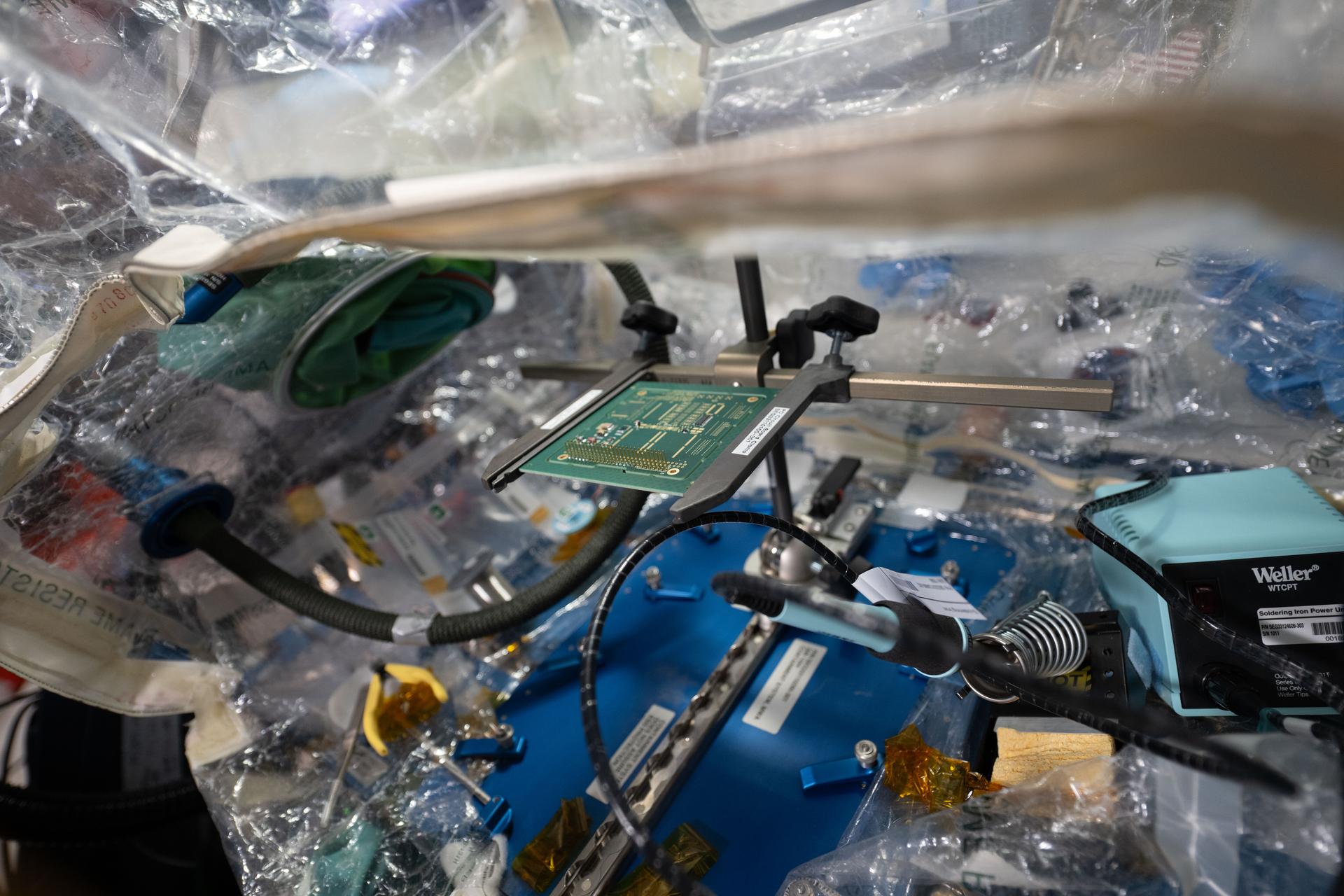
iss075e0103078 (Sept. 14, 2026) --- A circuit board is pictured inside a container system attached to the Harmony module's maintenance work area inside the International Space Station. NASA astronaut and Expedition 75 flight engineer Anil Menon used a lead-free soldering technique to solder components on the circuit board and demonstrate the manufacturing and repair of electronics in microgravity. The MIYOKA experiment will return the space-soldered samples to Earth for analysis and compare them to identical ground-soldered samples. Results may lead to reduced reliance on costly resupply missions. Credit: ESA/Sophie Adenot

jsc2019e040132 (3/10/2015) --- Preflight image of silica, a common element used in tires to help enhance performance in areas such as fuel efficiency and wet traction. The Pushing the Limits of Silica Fillers for Tire Applications (Goodyear Tire) investigation evaluates creation of novel silica forms and structures, or morphologies, using traditional techniques to form silica fillers in microgravity. The space environment may yield results not possible in ground-based environments. Better understanding of silica morphology and the relationship between silica structure and properties may improve the silica design process as well as silica rubber formulation and tire manufacturing and performance on the ground. (Image courtesy of: The Goodyear Tire & Rubber Company)

Crews at NASA’s Michoud Assembly Facility in New Orleans reinstalled the iconic NASA meatball logo to the side of the 43-acre factory following a months-long project to replace the corrugated asbestos paneling original to the building’s construction on the outer façade of the facility. The new paneling is an insulated metal sandwich panel, which provides an increased insulation R-value. The new fastening system can withstand significant wind loads, adding greater protection against hurricanes, tornados, and other storm-related events common to the area; and is critical to help protect vital hardware for the Space Launch System rockets and the Orion Spacecrafts manufactured at Michoud for NASA’s Artemis missions, which will land the first woman and first person of color on the moon. Image credit: NASA/Michael DeMocker
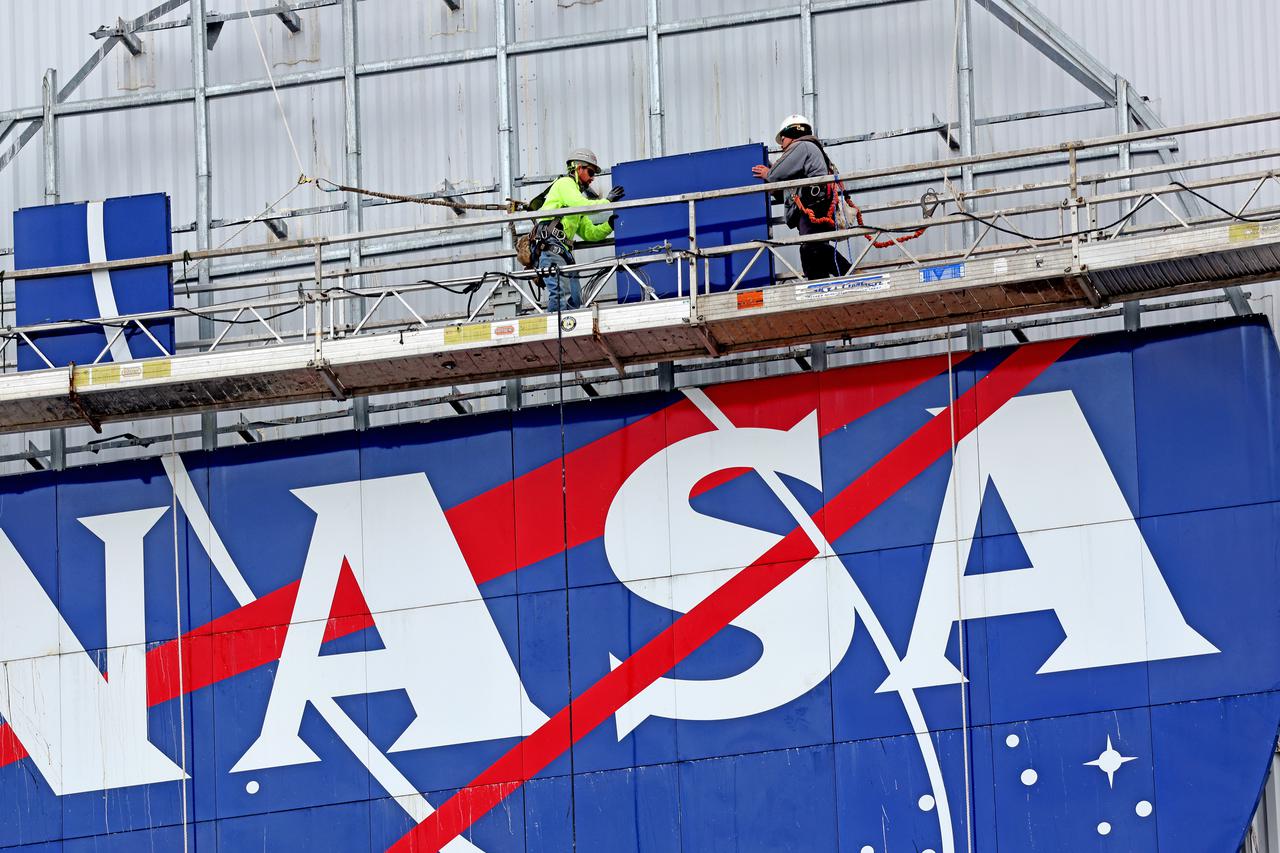
Crews at NASA’s Michoud Assembly Facility in New Orleans reinstall the iconic NASA meatball logo to the side of the 43-acre factory following a months-long project to replace the corrugated asbestos paneling original to the building’s construction on the outer façade of the facility. The new paneling is an insulated metal sandwich panel, which provides an increased insulation R-value. The new fastening system can withstand significant wind loads, adding greater protection against hurricanes, tornados, and other storm-related events common to the area; and is critical to help protect vital hardware for the Space Launch System rockets and the Orion Spacecrafts manufactured at Michoud for NASA’s Artemis missions, which will land the first woman and first person of color on the moon. Image credit: NASA/Michael DeMocker
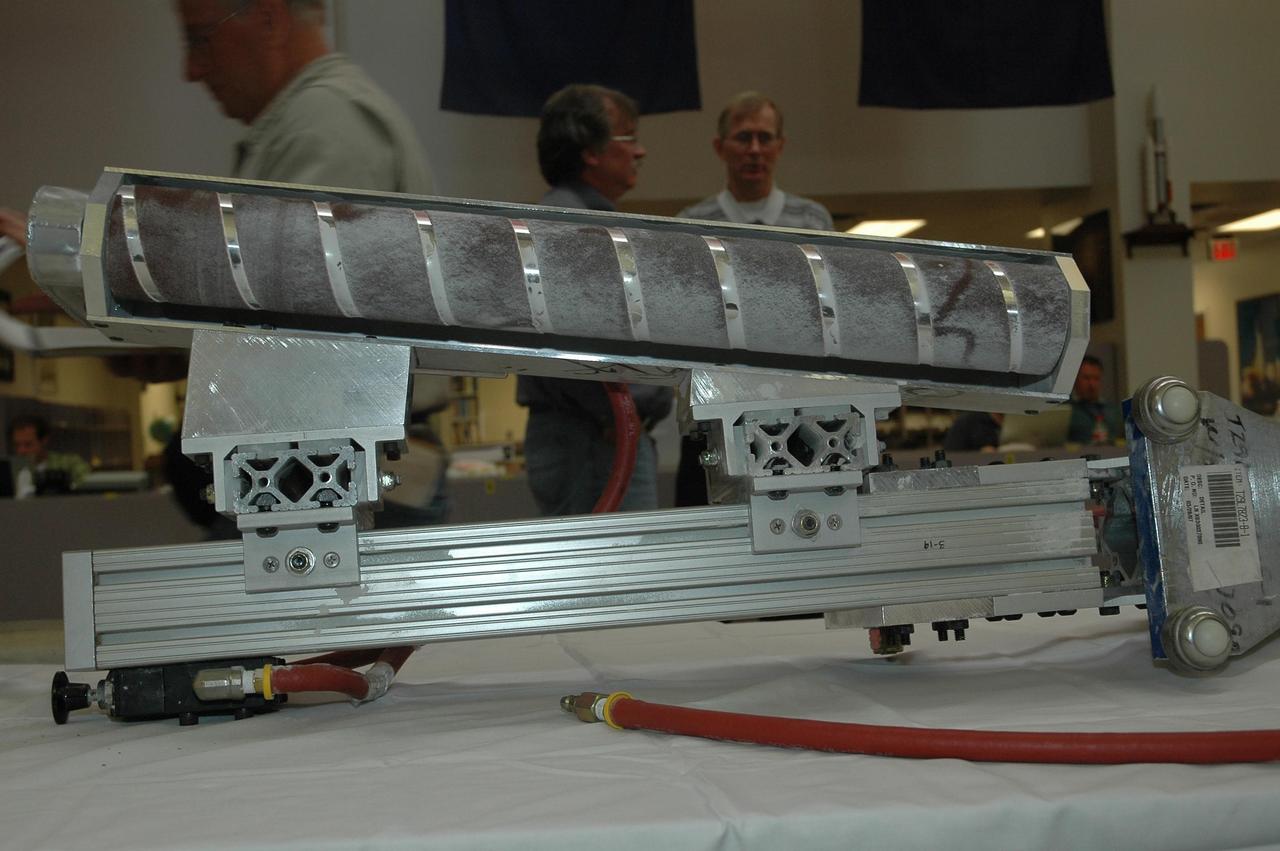
KENNEDY SPACE CENTER, FLA. -- The "pencil sharpener" tool designed to trim the hand-sprayed foam repairs on the STS-117 external tank is on display for the media at the NASA News Center. This portable tool was designed in just 10 days specifically for this task by Lockheed Martin engineer Glenn Lapeyronnie at the Michoud external tank manufacturing facility in New Orleans. The pencil sharpener tool fits over the external tank nose cone spike at the top of the tank and extends down to where the hand-sprayed foam was used to repair the hail-damaged areas. The hail damage was incurred Feb. 28 while Space Shuttle Atlantis was on the launch pad for a March 15 launch. The shuttle returned to the Vehicle Assembly Building so that repairs could be made. Mission STS-117 is scheduled to launch at 7:38 p.m. EDT on June 8. Photo credit: NASA/Jack Pfaller
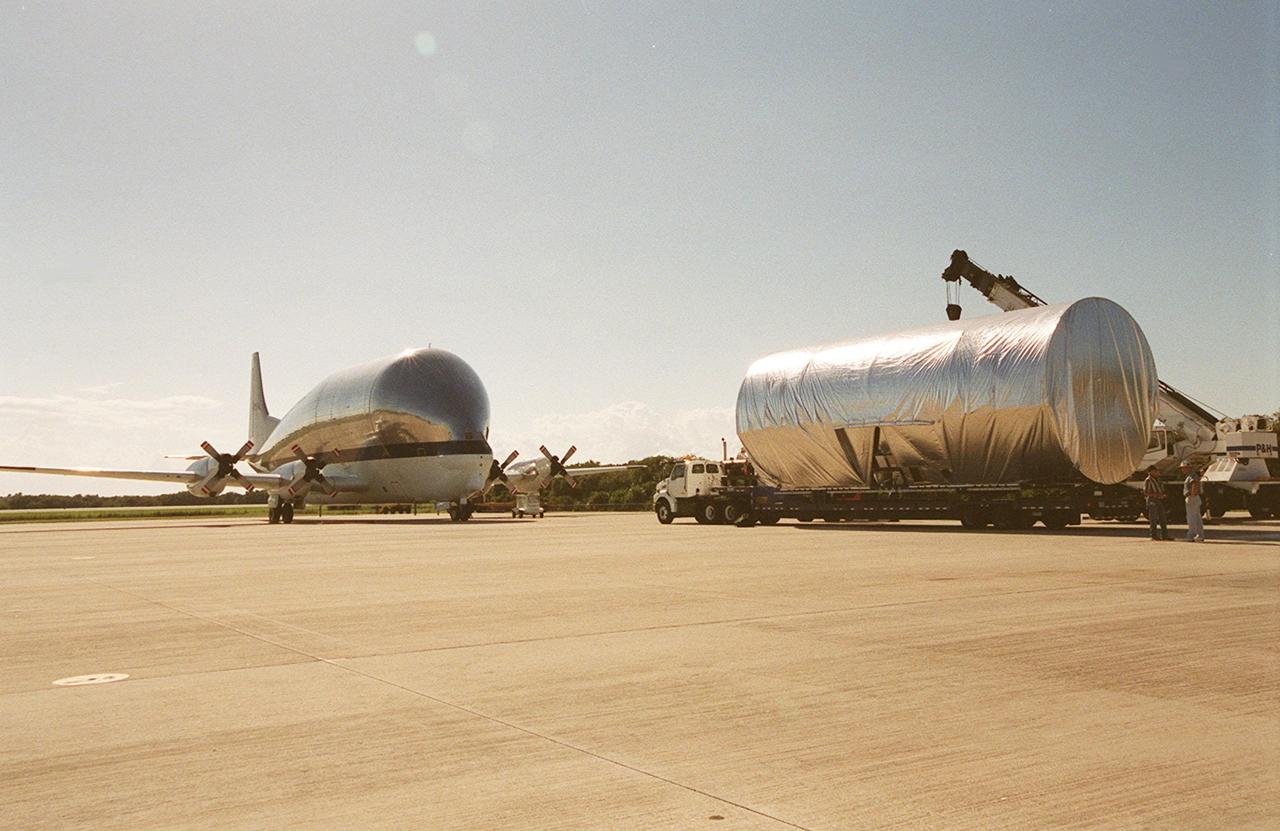
KENNEDY SPACE CENTER, FLA. -- At the KSC Shuttle Landing Facility, the Joint Airlock Module, the gateway from which crew members aboard the International Space Station (ISS) will enter and exit the 470-ton orbiting research facility, is ready for transport to the Operations and Checkout Building in the KSC industrial area. There it will undergo vacuum chamber testing. It will then be moved to the Space Station Processing Facility (SSPF) for further pre-launch preparation and checkout. The massive, spindle-shaped airlock is 20 feet long, has a diameter of 13 feet at its widest point, and weighs six and a half tons. It was manufactured at NASA's Marshall Space Flight Center by the Huntsville division of The Boeing Company. The Space Shuttle Atlantis will carry the airlock to orbit on mission STS-104, the tenth International Space Station flight, currently targeted for liftoff in May 2001

KENNEDY SPACE CENTER, FLA. -- Pressurized Mating Adapter (PMA)-2 is moved into position to be mated to Node 1 of the International Space Station (ISS) by Boeing technicians in KSC's Space Station Processing Facility (SSPF). The node is the first element of the ISS to be manufactured in the United States and is currently scheduled to lift off aboard the Space Shuttle Endeavour on STS-88 later this year, along with PMAs 1 and 2. This PMA is a cone-shaped connector to Node 1, which will have two PMAs attached once this mate is completed. Once in space, Node 1 will function as a connecting passageway to the living and working areas of the ISS. It has six hatches that will serve as docking ports to the U.S. laboratory module, U.S. habitation module, an airlock and other space station elements
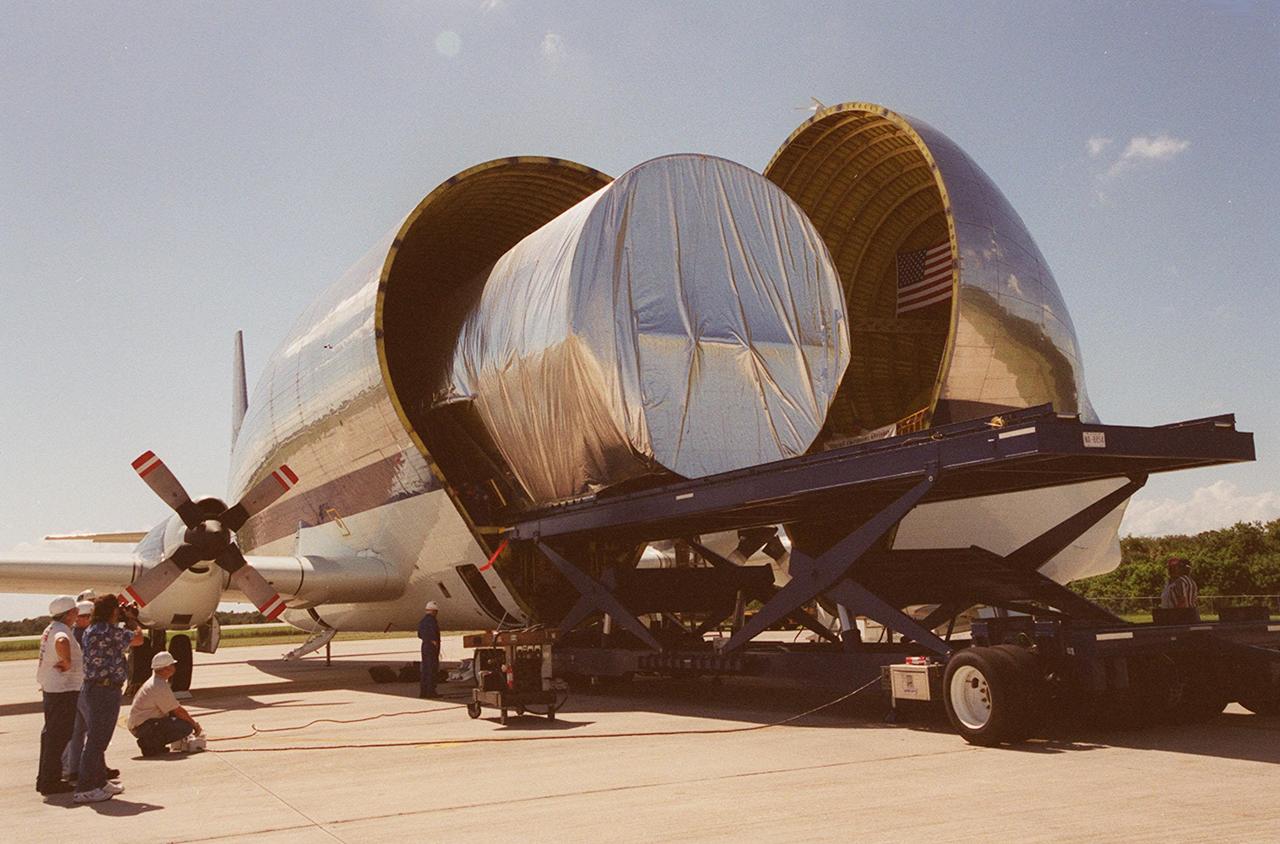
KENNEDY SPACE CENTER, FLA. -- The Joint Airlock Module, the gateway from which crew members aboard the International Space Station (ISS) will enter and exit the 470-ton orbiting research facility, rolls out of NASA's Super Guppy aircraft. It will be transferred to the Operations and Checkout Building in the KSC industrial area where it will undergo vacuum chamber testing. It will then be moved to the Space Station Processing Facility (SSPF) for further prelaunch preparation and checkout. The massive, spindle-shaped airlock is 20 feet long, has a diameter of 13 feet at its widest point, and weighs six and a half tons. It was manufactured at NASA's Marshall Space Flight Center by the Huntsville division of The Boeing Company. The Space Shuttle Atlantis will carry the airlock to orbit on mission STS-104, the tenth International Space Station flight, currently targeted for liftoff in May 2001
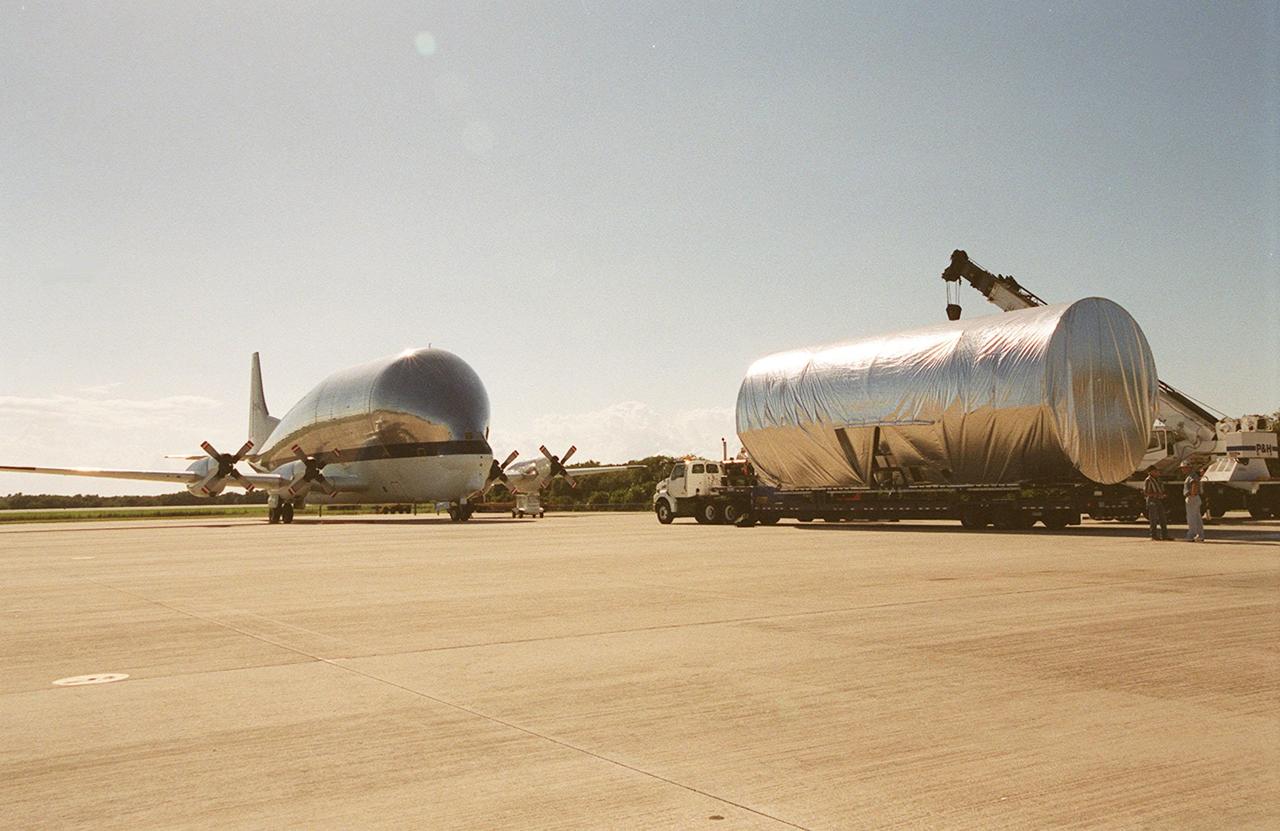
KENNEDY SPACE CENTER, FLA. -- At the KSC Shuttle Landing Facility, the Joint Airlock Module, the gateway from which crew members aboard the International Space Station (ISS) will enter and exit the 470-ton orbiting research facility, is ready for transport to the Operations and Checkout Building in the KSC industrial area. There it will undergo vacuum chamber testing. It will then be moved to the Space Station Processing Facility (SSPF) for further pre-launch preparation and checkout. The massive, spindle-shaped airlock is 20 feet long, has a diameter of 13 feet at its widest point, and weighs six and a half tons. It was manufactured at NASA's Marshall Space Flight Center by the Huntsville division of The Boeing Company. The Space Shuttle Atlantis will carry the airlock to orbit on mission STS-104, the tenth International Space Station flight, currently targeted for liftoff in May 2001
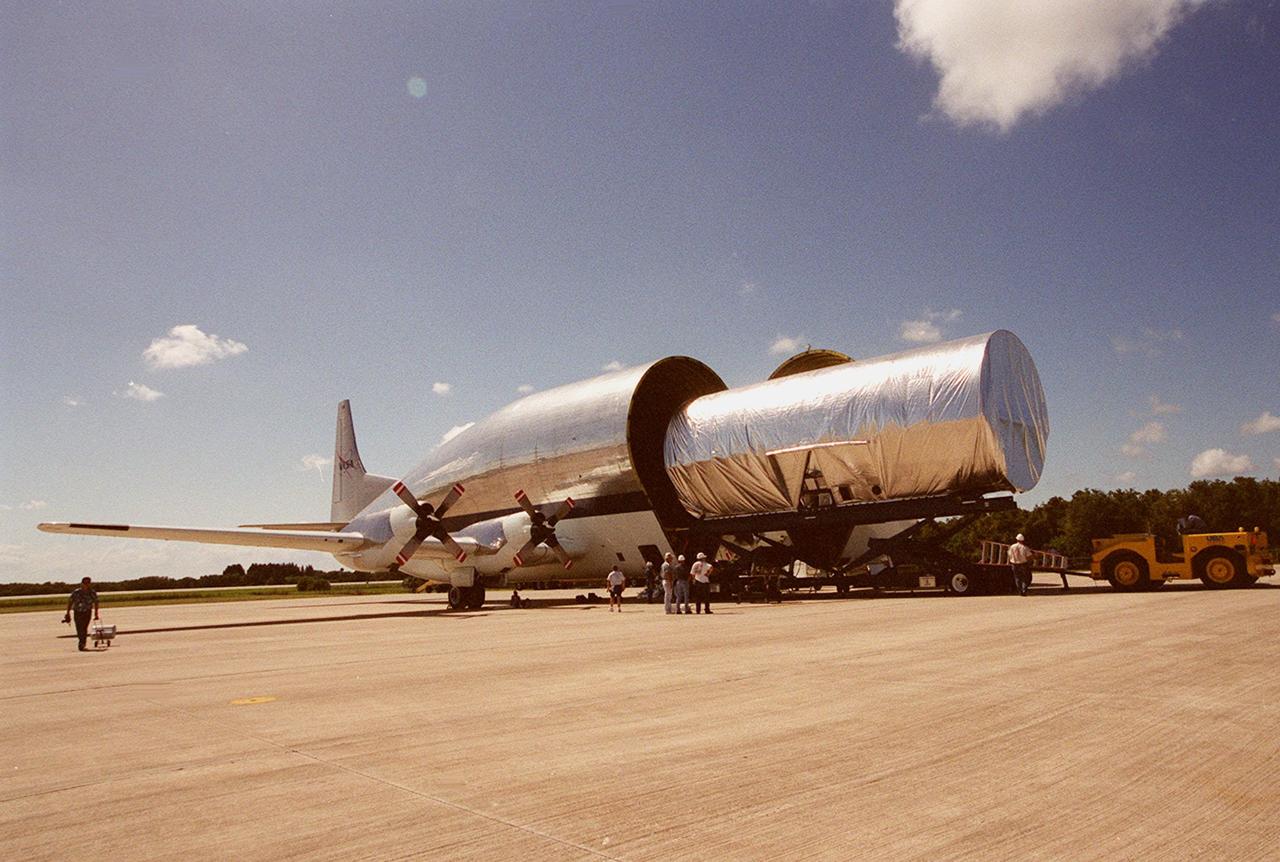
KENNEDY SPACE CENTER, FLA. -- At the KSC Shuttle Landing Facility, the Joint Airlock Module, the gateway from which crew members aboard the International Space Station (ISS) will enter and exit the 470-ton orbiting research facility, is moved away from NASA’s Super Guppy aircraft for transfer to the Operations and Checkout Building in the KSC industrial area. There it will undergo vacuum chamber testing. It will then be moved to the Space Station Processing Facility (SSPF) for further prelaunch preparation and checkout. The massive, spindle-shaped airlock is 20 feet long, has a diameter of 13 feet at its widest point, and weighs six and a half tons. It was manufactured at NASA's Marshall Space Flight Center by the Huntsville division of The Boeing Company. The Space Shuttle Atlantis will carry the airlock to orbit on mission STS-104, the tenth International Space Station flight, currently targeted for liftoff in May 2001

KENNEDY SPACE CENTER, FLA. -- At the KSC Shuttle Landing Facility, the Joint Airlock Module, the gateway from which crew members aboard the International Space Station (ISS) will enter and exit the 470-ton orbiting research facility, is settled onto a flatbed trailer for transport to the Operations and Checkout Building in the KSC industrial area. There it will undergo vacuum chamber testing. It will then be moved to the Space Station Processing Facility (SSPF) for further prelaunch preparation and checkout. The massive, spindle-shaped airlock is 20 feet long, has a diameter of 13 feet at its widest point, and weighs six and a half tons. It was manufactured at NASA's Marshall Space Flight Center by the Huntsville division of The Boeing Company. The Space Shuttle Atlantis will carry the airlock to orbit on mission STS-104, the tenth International Space Station flight, currently targeted for liftoff in May 2001