Interns with Mentors

NASA Glenn Research Pilot Jim Demers flies the T-34C Mentor aircraft. When NASA scientists study Great Lakes algal blooms, Demers is one of the pilots at the controls.
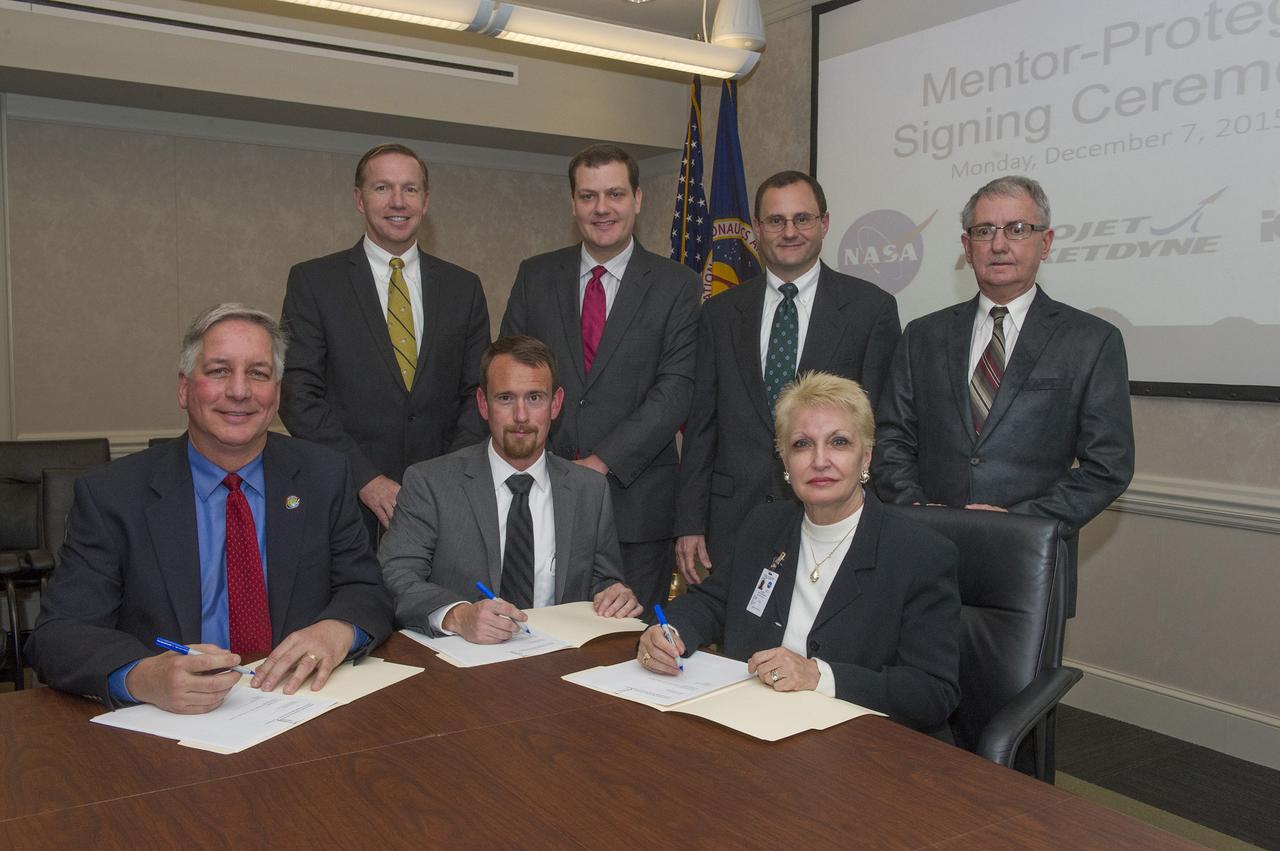
MENTOR PROTÉGÉ AGREEMENT SIGNING CEREMONY, DECEMBER 7, 2015 L TO R STANDING: STEVE MILEY, TYLER COCHRAN, STEVE WOFFORD, DAVID BROCK (ALL NASA) L TO R SEATED: DANIEL ADAMSKI (AEROJET ROCKETDYNE), JOE MCCOLLISTER (NASA), EDWINA CIOFFI (ICO RALLY)
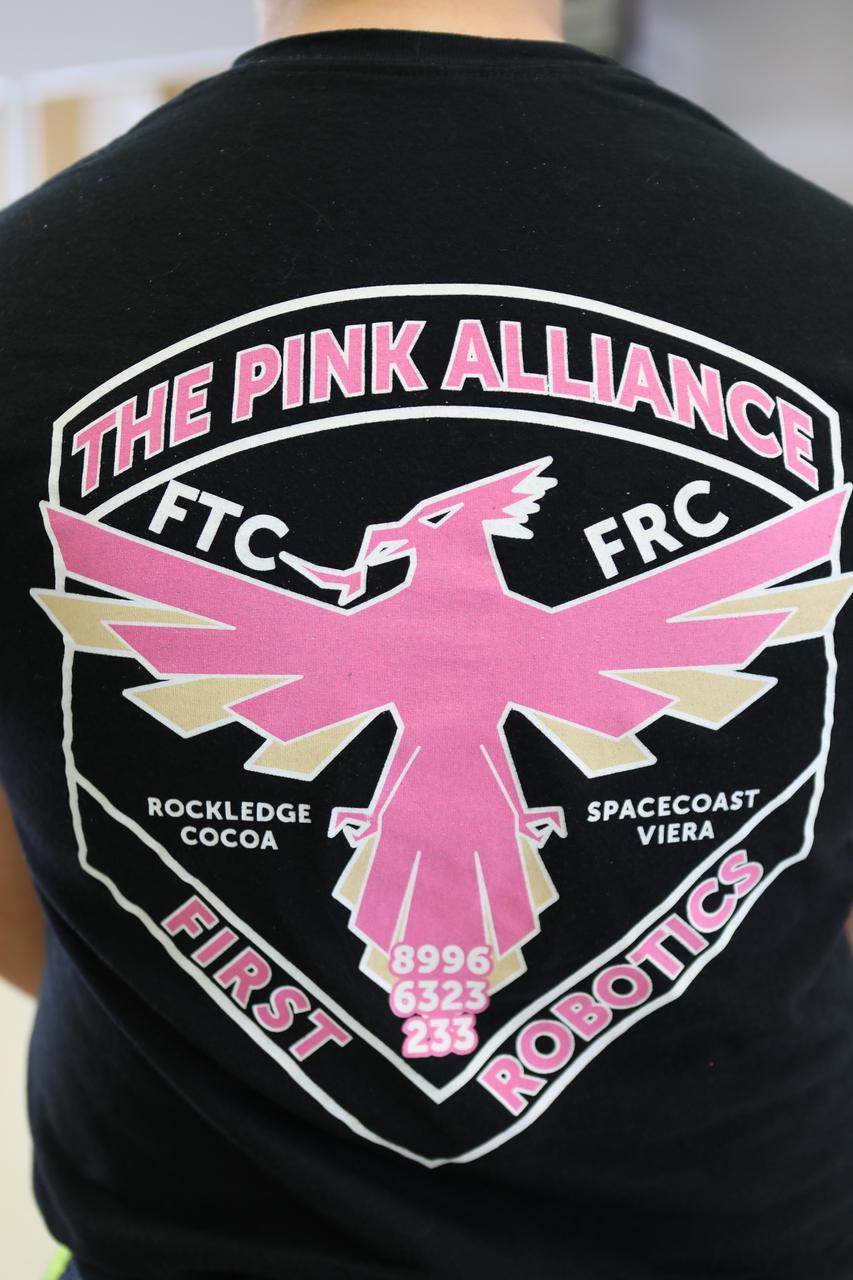
Comprised of students from Cocoa Beach, Rockledge, Viera and Space Coast high schools, the robotics group known as the "Pink Team," chose the phoenix as its mascot for the 2016 season. The group, its mentors and support personnel celebrated a successful season near the Shuttle Landing Facility at NASA's Kennedy Space Center on April 5.
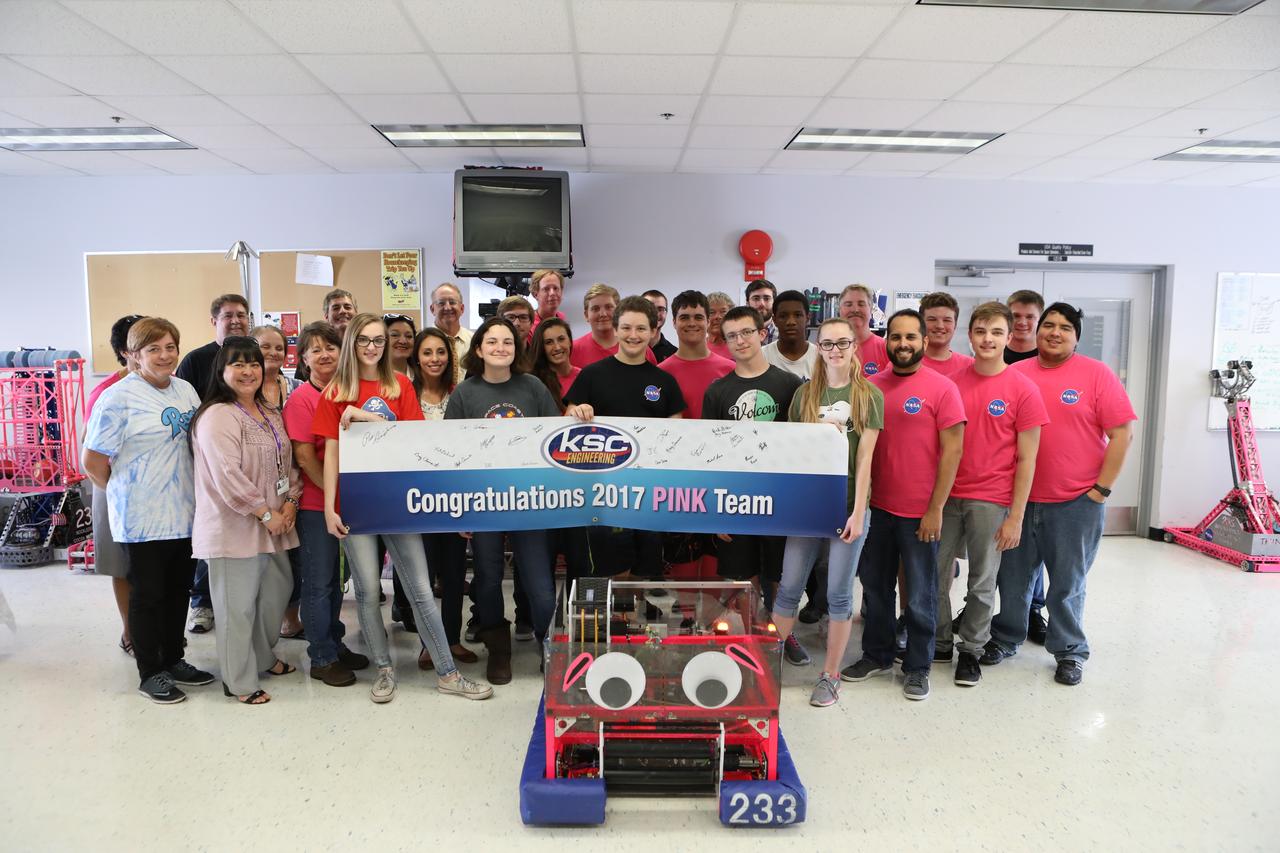
Comprised of students from Cocoa Beach, Rockledge, Viera and Space Coast high schools, the robotics group known as the "Pink Team," its mentors and support personnel celebrated a successful season near the Shuttle Landing Facility at NASA's Kennedy Space Center on April 5. The Pink Team fared well in the two regionals it competed in this year in West Palm Beach, Florida, and the University of Central Florida in Orlando.
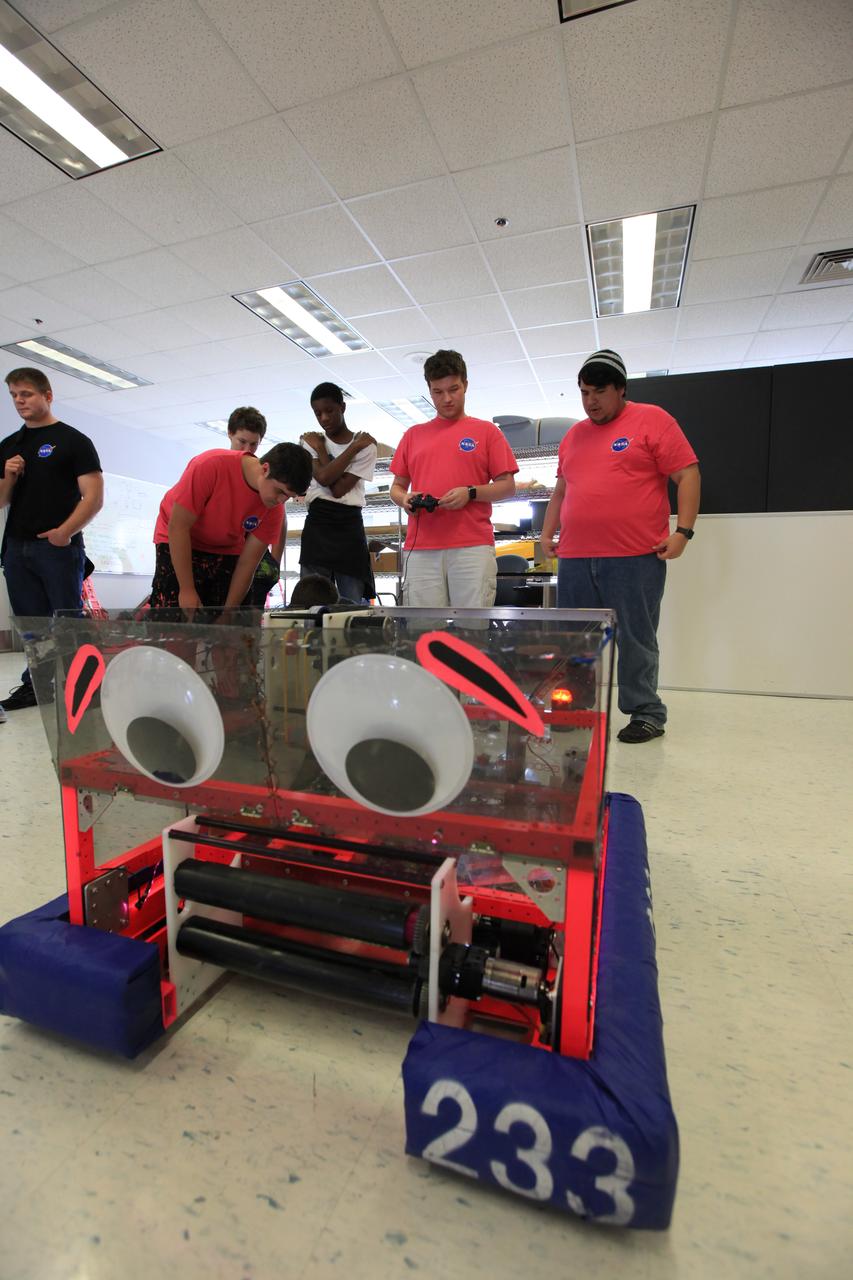
Comprised of students from Cocoa Beach, Rockledge, Viera and Space Coast high schools, the robotics group known as the "Pink Team," its mentors and support personnel celebrated a successful season near the Shuttle Landing Facility at NASA's Kennedy Space Center on April 5. The Pink Team fared well in the two regionals it competed in this year in West Palm Beach, Florida, and the University of Central Florida in Orlando.
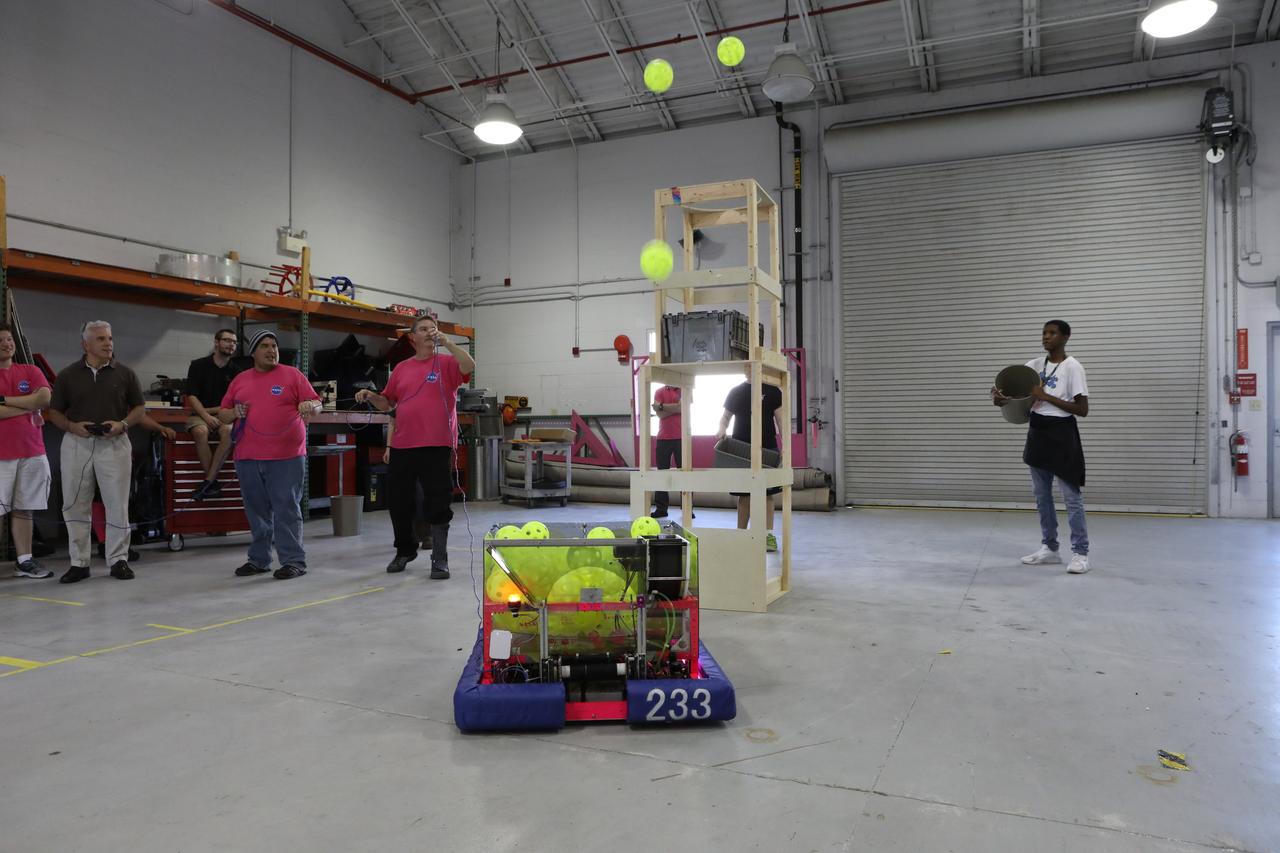
Comprised of students from Cocoa Beach, Rockledge, Viera and Space Coast high schools, the robotics group known as the "Pink Team," its mentors and support personnel celebrated a successful season near the Shuttle Landing Facility at NASA's Kennedy Space Center on April 5. The Pink Team fared well in the two regionals it competed in this year in West Palm Beach, Florida, and the University of Central Florida in Orlando.

Kennedy Space Center Deputy Director Janet Petro speaks to students during a Women in STEM mentoring breakfast inside the Debus Conference Center at the Kennedy Space Center Visitor Complex in Florida. STEM is science, technology, engineering and math. The special event gave students competing in NASA's 8th Annual Robotic Mining Competition the chance to learn from female NASA scientists, engineers and professionals about their careers and the paths they took to working at Kennedy. The Robotic Mining Competition is a NASA Human Exploration and Operations Mission Directorate project designed to encourage students in STEM fields. The project provides a competitive environment to foster innovative ideas and solutions that could be used on NASA's Journey to Mars.

Kennedy Space Center Deputy Director Janet Petro speaks to students during a Women in STEM mentoring breakfast inside the Debus Conference Center at the Kennedy Space Center Visitor Complex in Florida. STEM is science, technology, engineering and math. The special event gave students competing in NASA's 8th Annual Robotic Mining Competition the chance to learn from female NASA scientists, engineers and professionals about their careers and the paths they took to working at Kennedy. The Robotic Mining Competition is a NASA Human Exploration and Operations Mission Directorate project designed to encourage students in STEM fields. The project provides a competitive environment to foster innovative ideas and solutions that could be used on NASA's Journey to Mars.
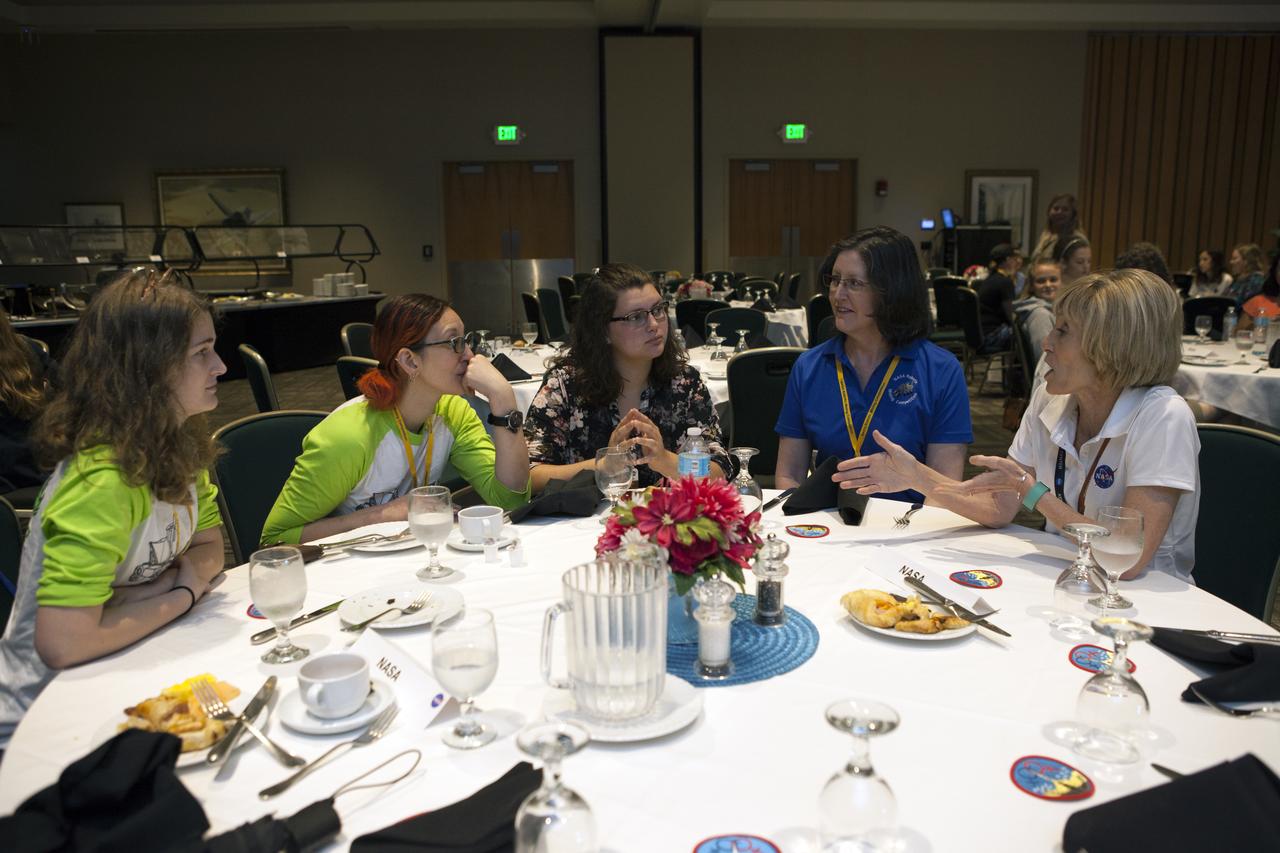
Jonette Stecklein (in the blue shirt), a flight systems engineer from Johnson Space Center in Houston, talks to students during a Women in STEM mentoring breakfast inside the Debus Conference Center at the Kennedy Space Center Visitor Complex in Florida. STEM is science, technology, engineering and math. The special event gave students competing in NASA's 8th Annual Robotic Mining Competition the chance to learn from female NASA scientists, engineers and professionals about their careers and the paths they took to working at Kennedy. The Robotic Mining Competition is a NASA Human Exploration and Operations Mission Directorate project designed to encourage students in STEM fields. The project provides a competitive environment to foster innovative ideas and solutions that could be used on NASA's Journey to Mars.
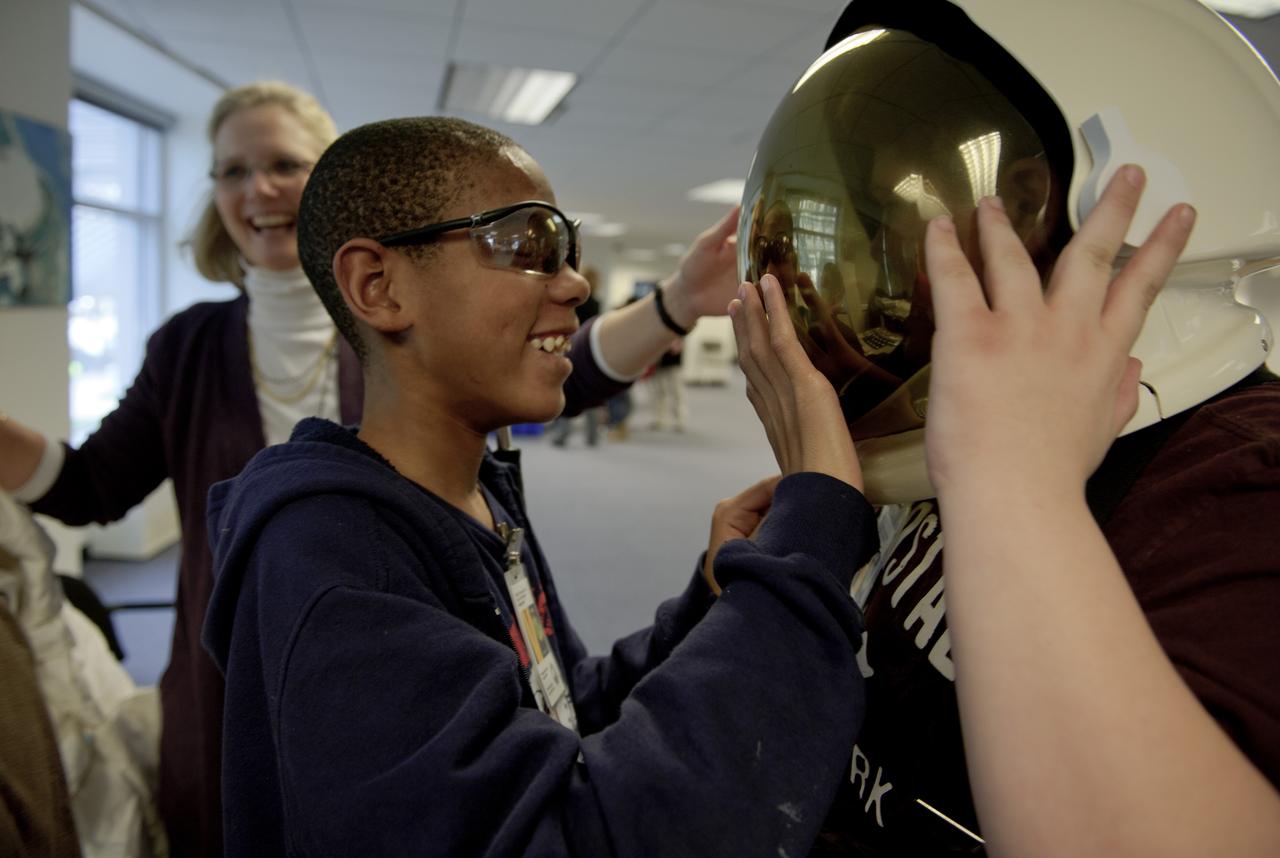
Students from the Maryland School for the Blind learn about astronauts during NASA's Disability Mentoring Day, Thursday, April 7, 2011, at NASA Headquarters in Washignton. Photo Credit: (NASA/Paul E. Alers)
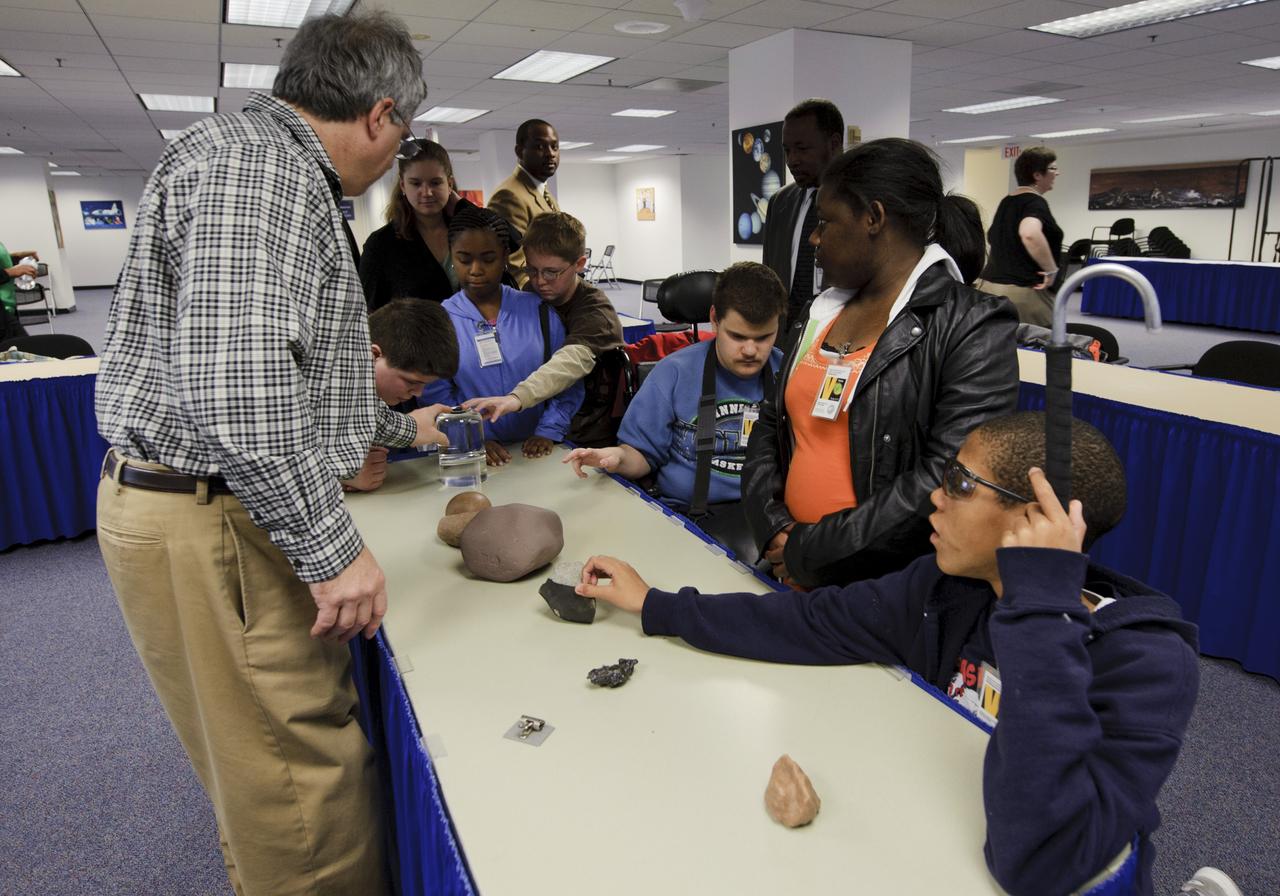
Students from the Maryland School for the Blind participate in Disability Mentoring Day, Thursday, April 7, 2011, at NASA Headquarters in Washington. Photo Credit (NASA/Paul E. Alers)
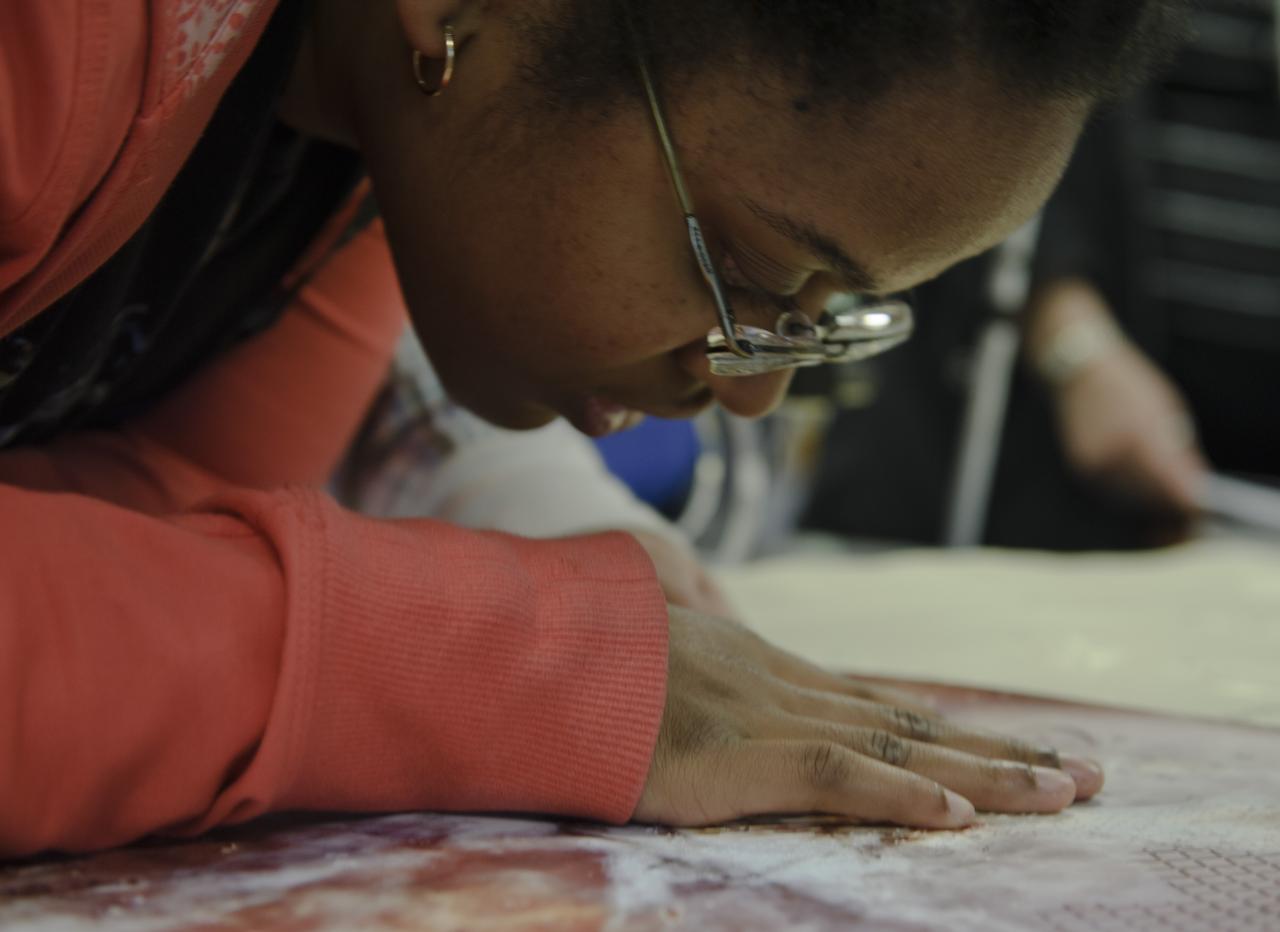
A student from the Maryland School For the Blind explores a braille map during NASA's Disability Mentoring Day, Thursday, April 7, 2011, at NASA Headquarters in Washignton. Photo Credit: (NASA/Paul E. Alers)
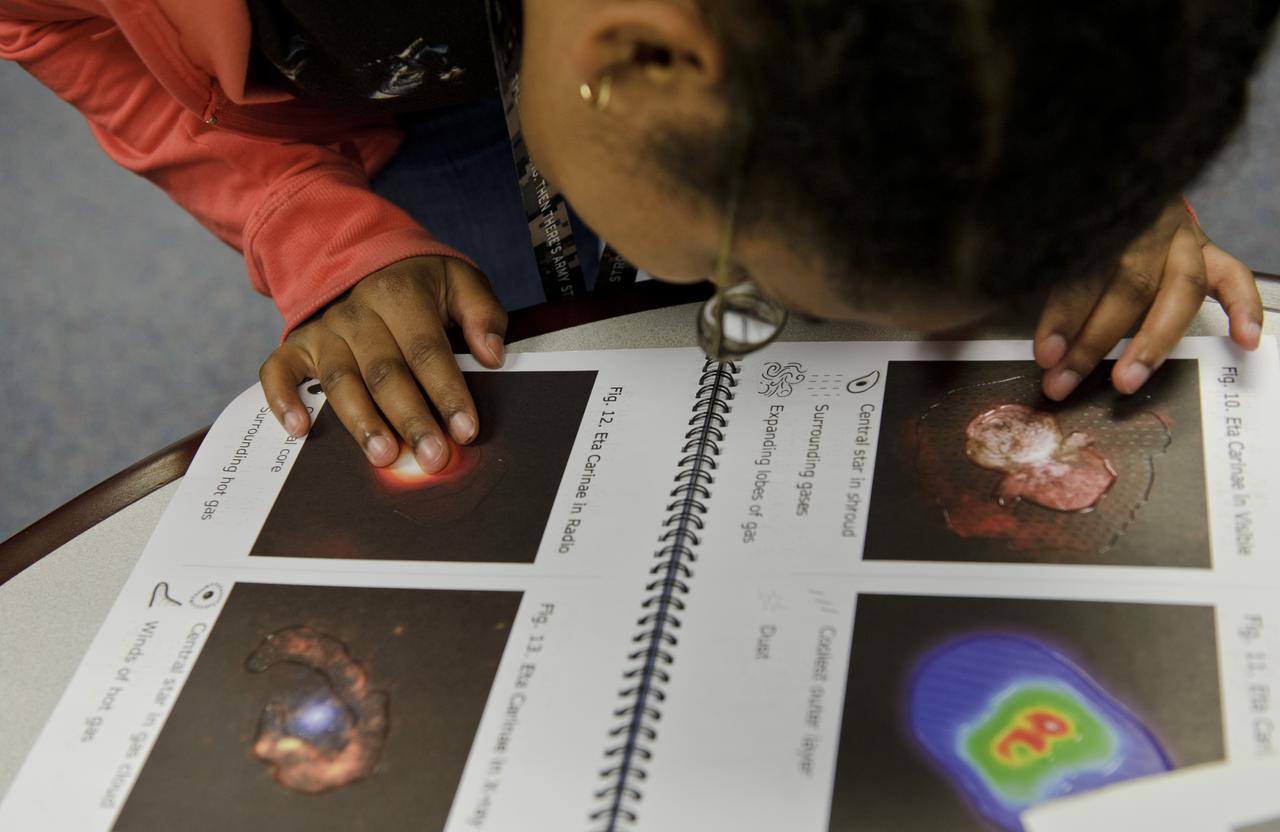
A student from the Maryland School For the Blind explores a braille map during NASA's Disability Mentoring Day, Thursday, April 7, 2011, at NASA Headquarters in Washignton. Photo Credit: (NASA/Paul E. Alers)
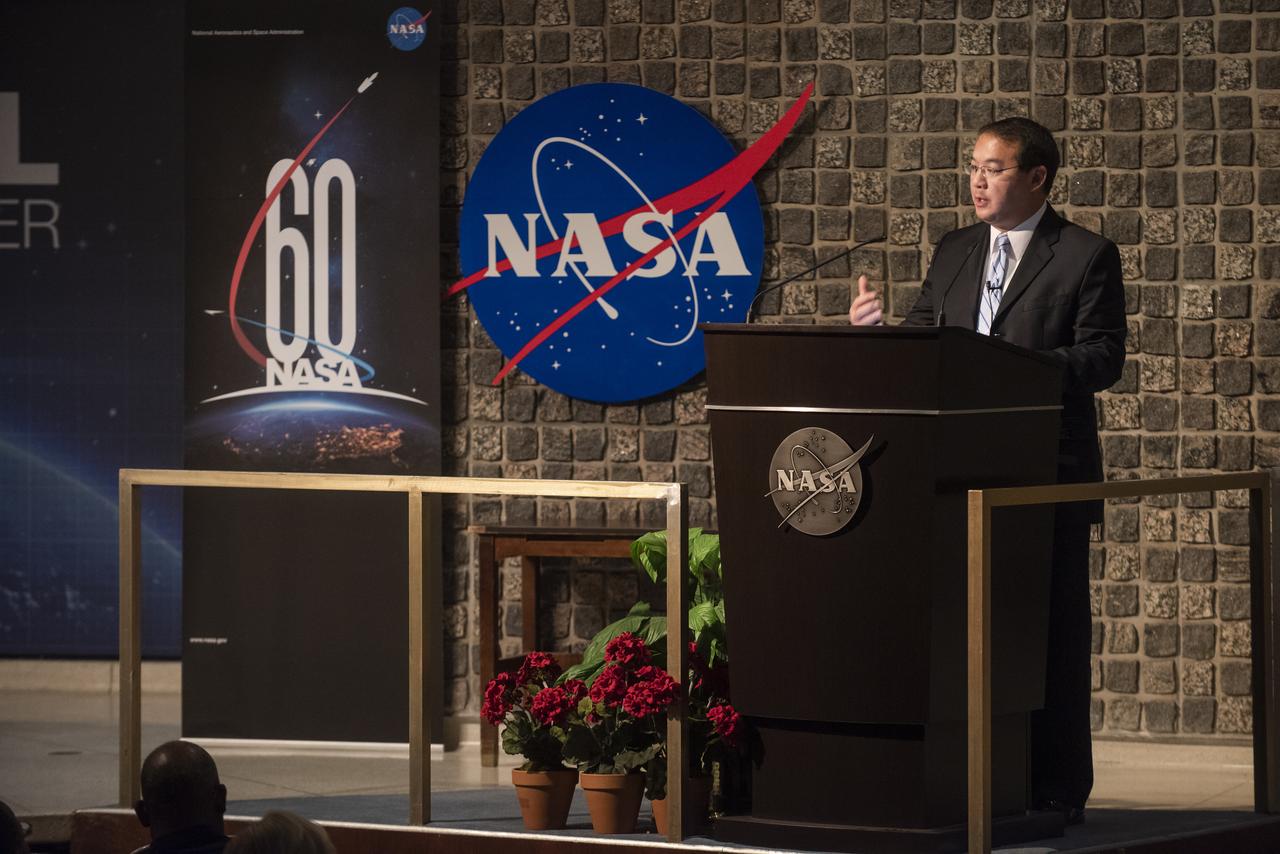
Steve Shih, NASA associate administrator for Diversity & Equal Opportunity, addresses NASA team members during a Nov. 6 mentoring event at the agency's Marshall Space Flight Center. Shih discussed ways for team members on both sides of the mentoring equation to get the most out of the experience.
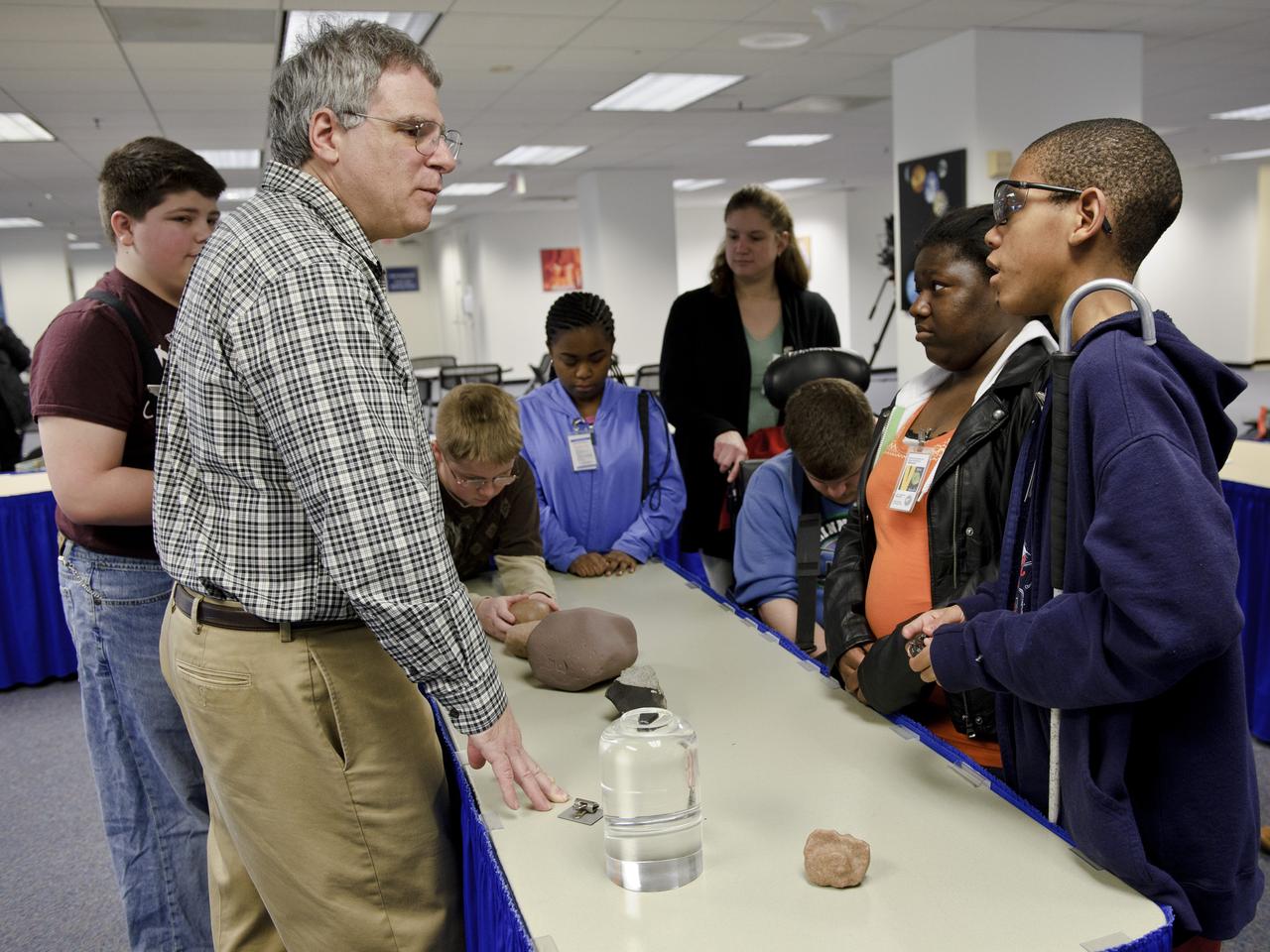
A student from the Maryland School For the Blind asks a question while learning about Meteorites, Asteroids and Comets during NASA's Disability Mentoring Day, Thursday, April 7, 2011, at NASA Headquarters in Washignton. Photo Credit: (NASA/Paul E. Alers)
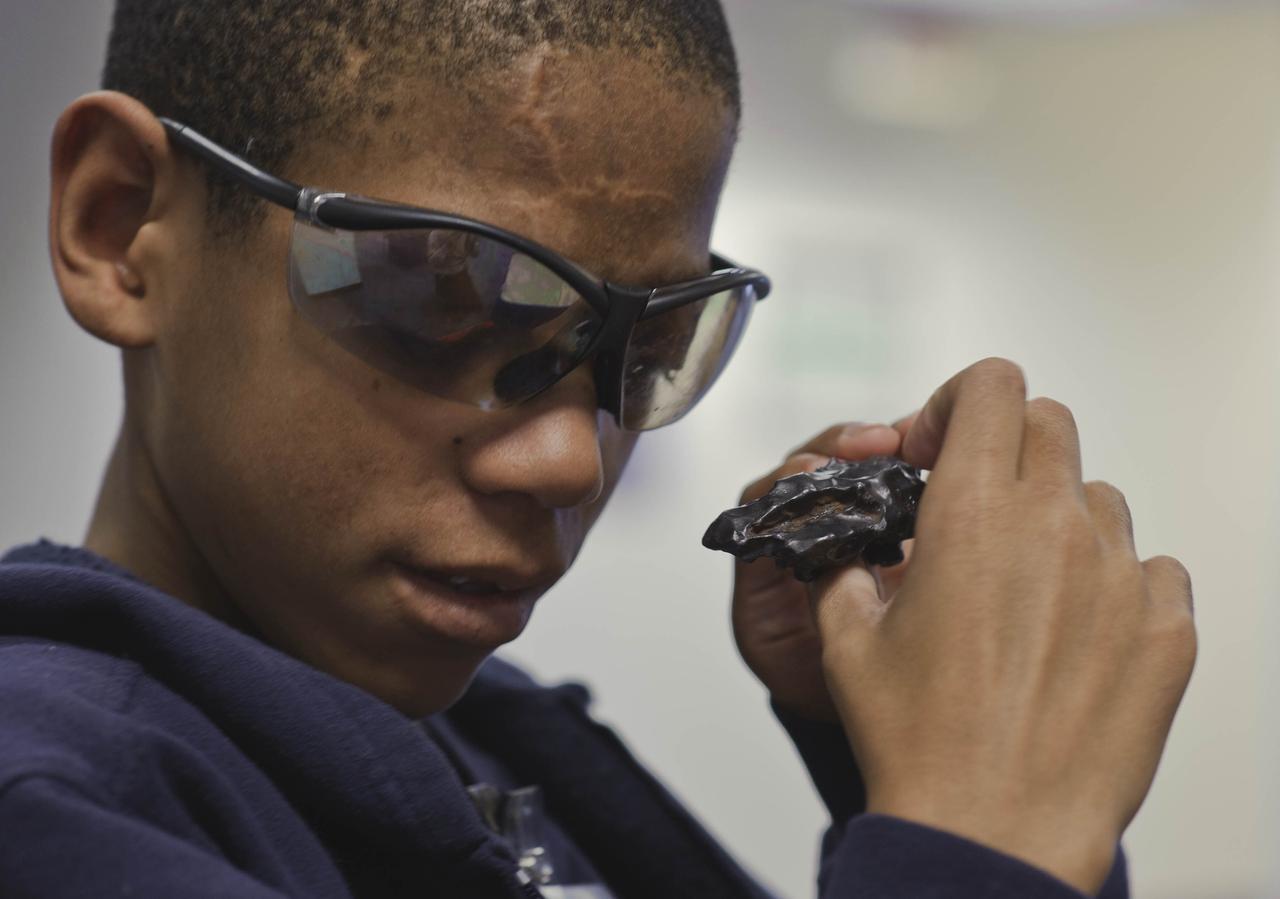
A student from the Maryland School For the Blind explores an object while learning about Meteorites, Asteroids and Comets during NASA's Disability Mentoring Day, Thursday, April 7, 2011, at NASA Headquarters in Washignton. Photo Credit: (NASA/Paul E. Alers)
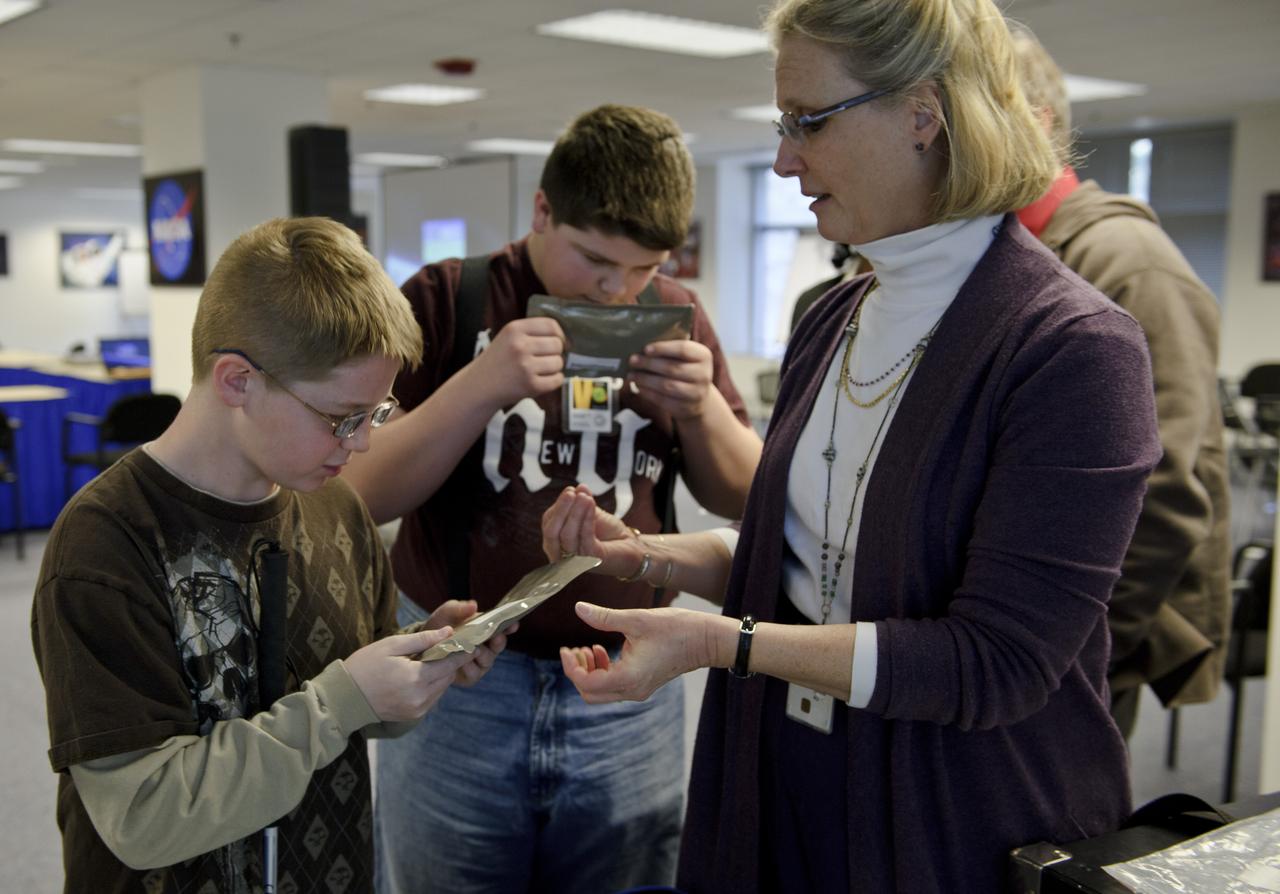
Students from the Maryland School for the Blind learn about space food from NASA Public Affairs specialist Nora Normandy, right, during Disability Mentoring Day, Thursday, April 7, 2011, at NASA Headquarters in Washington. Photo Credit (NASA/Paul E. Alers)
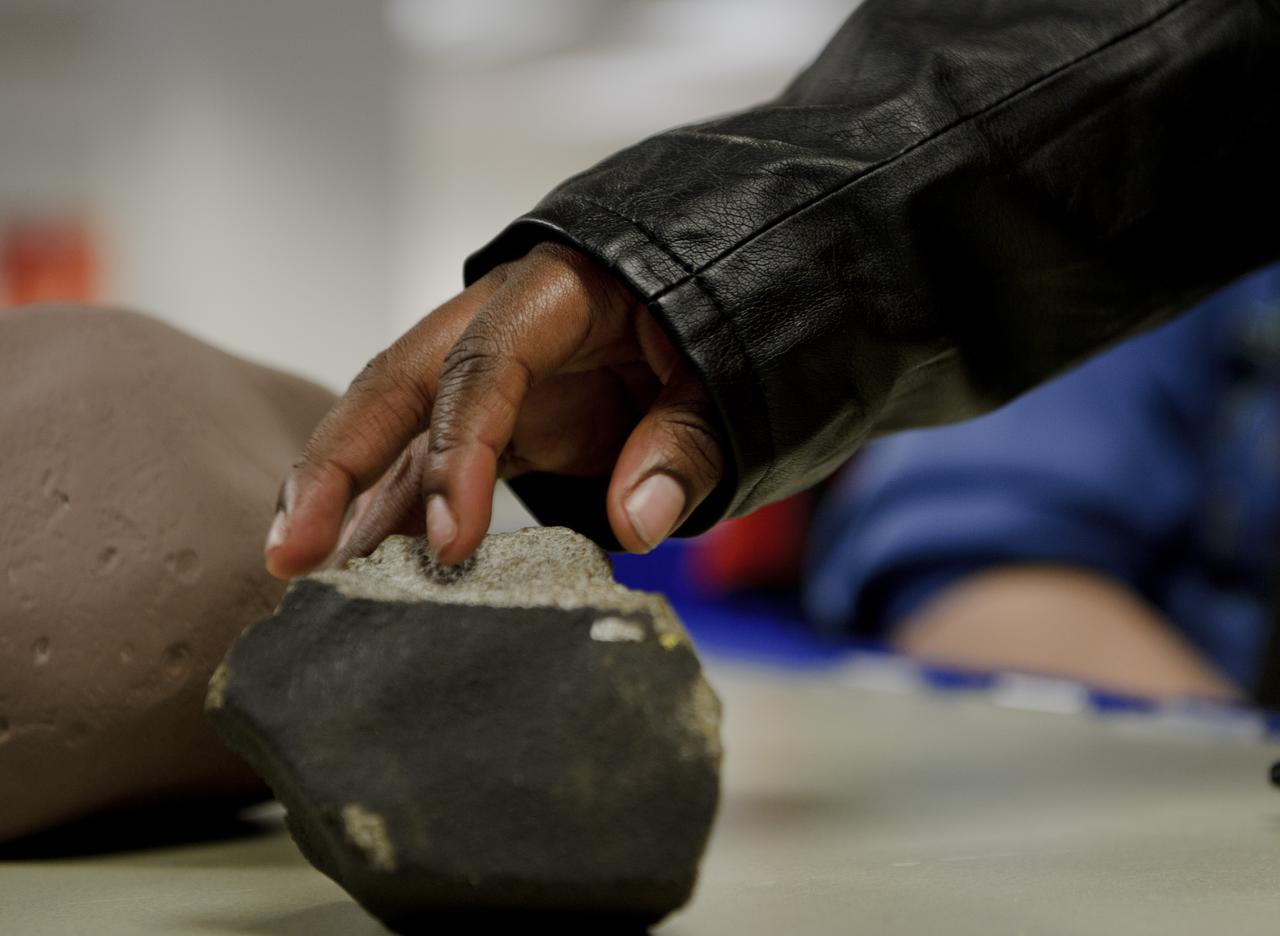
A student from the Maryland School For the Blind explores an object while learning about Meteorites, Asteroids and Comets during NASA's Disability Mentoring Day, Thursday, April 7, 2011, at NASA Headquarters in Washignton. Photo Credit: (NASA/Paul E. Alers)
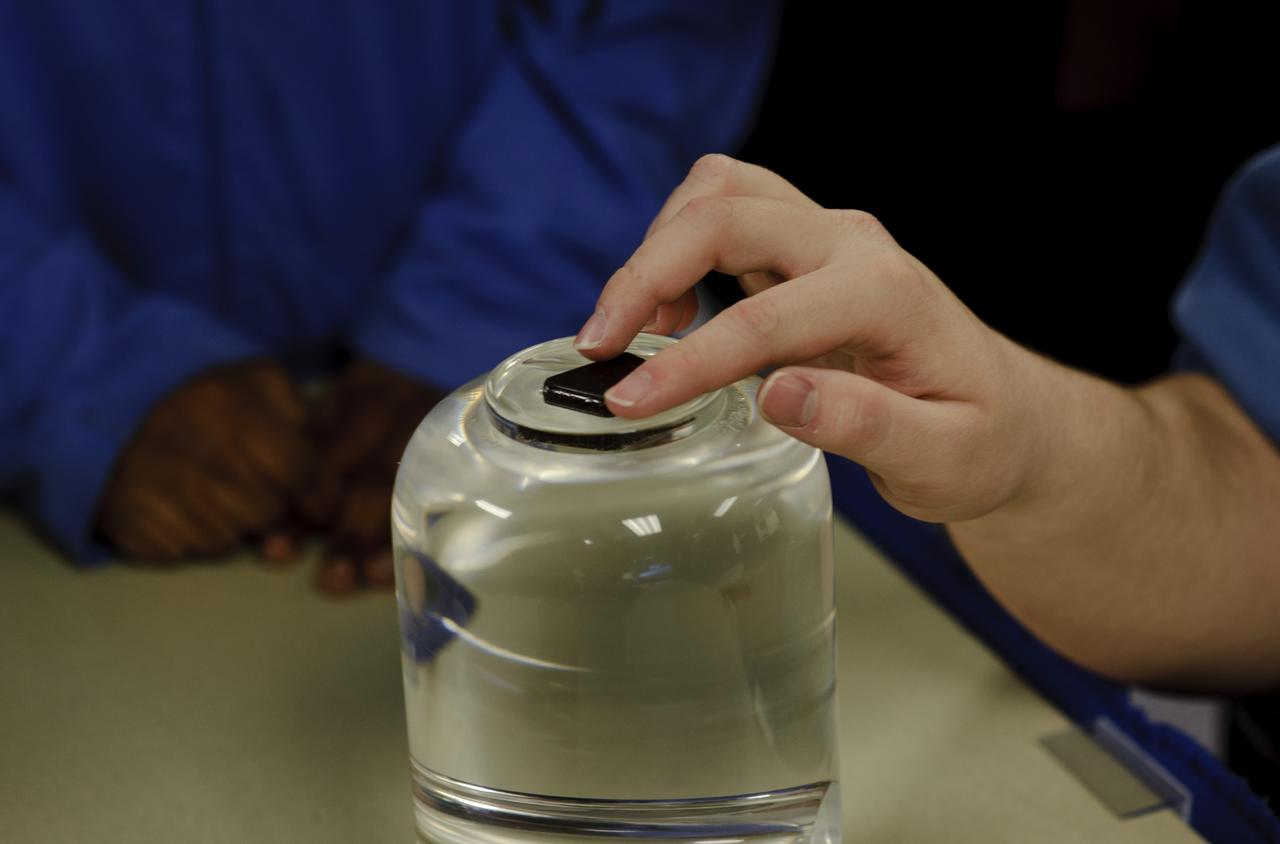
A student from the Maryland School For the Blind touches a piece of moon rock while learning about Meteorites, Asteroids and Comets during NASA's Disability Mentoring Day, Thursday, April 7, 2011, at NASA Headquarters in Washignton. Photo Credit: (NASA/Paul E. Alers)
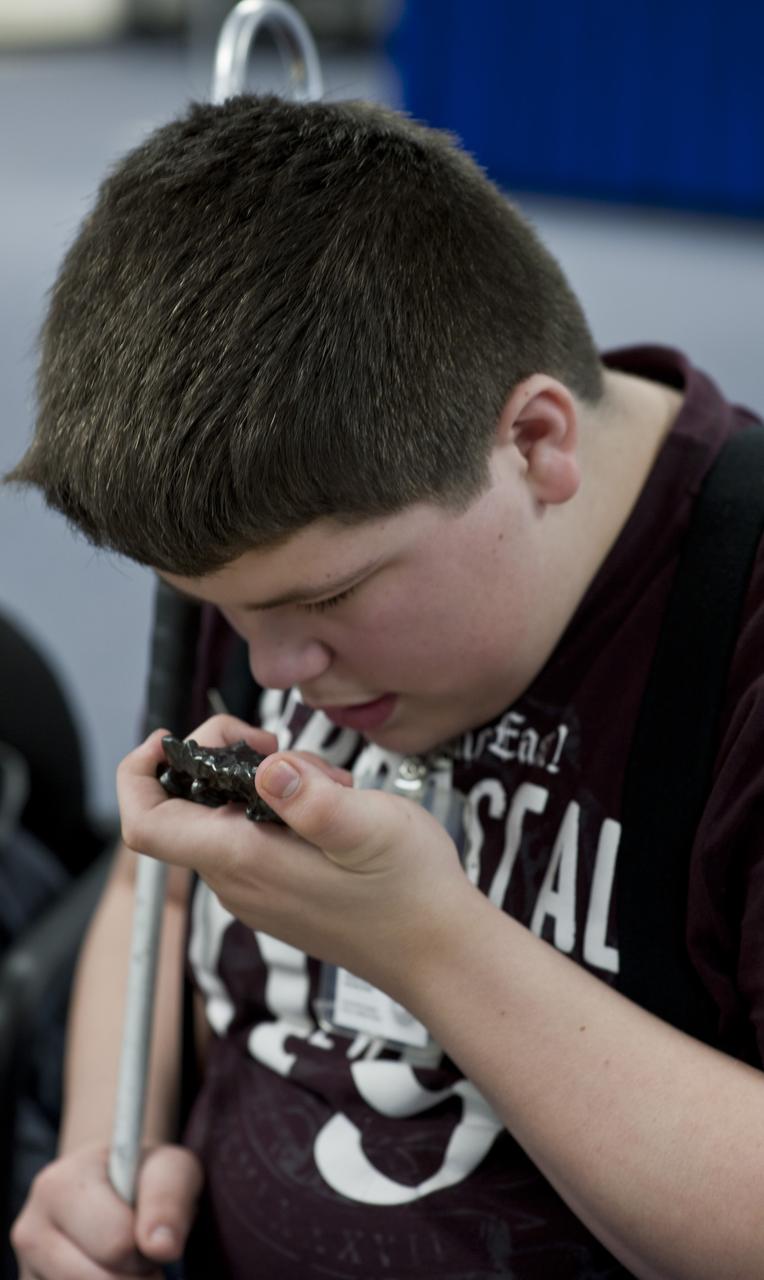
A student from the Maryland School For the Blind explores an object while learning about Meteorites, Asteroids and Comets during NASA's Disability Mentoring Day, Thursday, April 7, 2011, at NASA Headquarters in Washignton. Photo Credit: (NASA/Paul E. Alers)
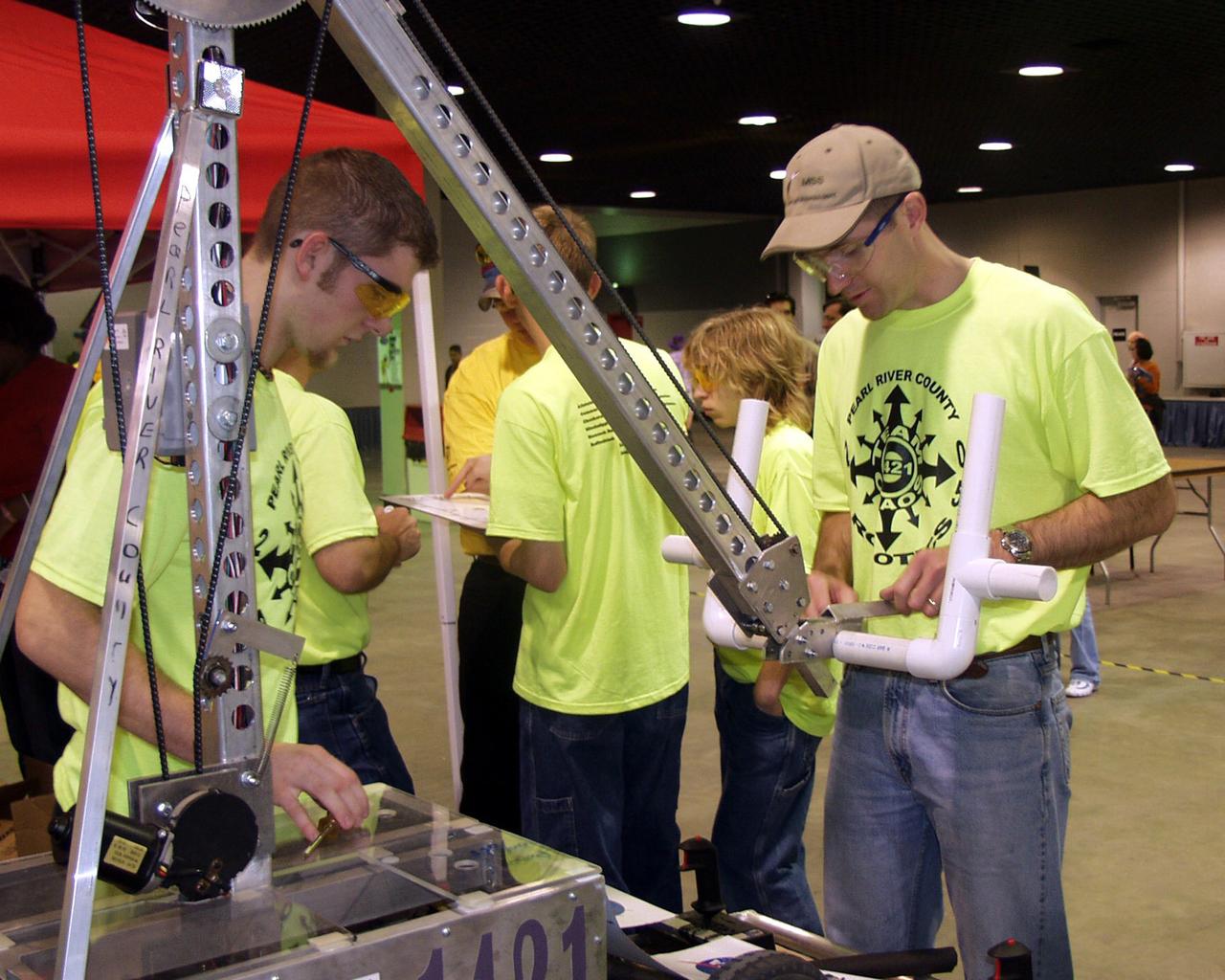
Engineers from SSC mentor teams of students from Mississippi and Louisiana competing in the FIRST Robotics Competition.
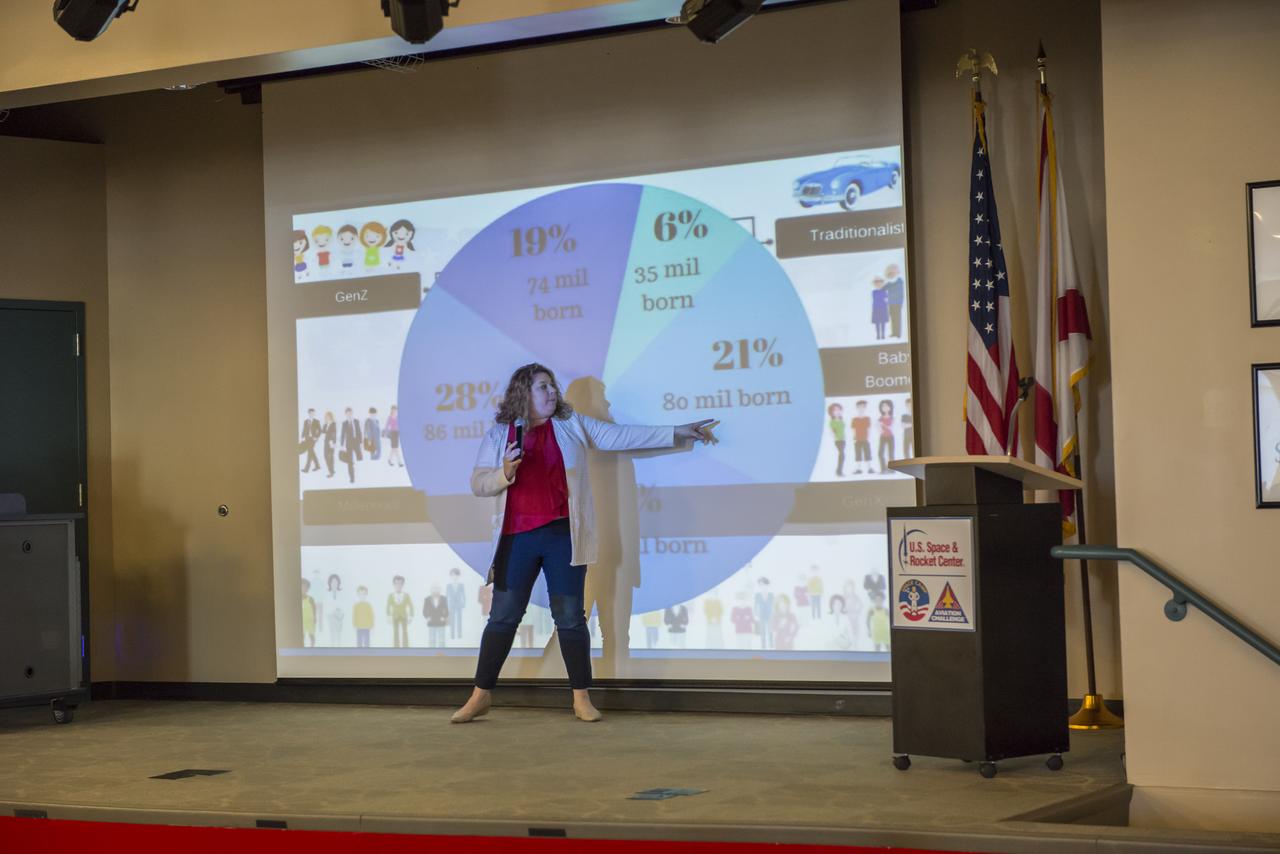
The NASA Educator Resource Center hosted the 2018 "Leading Within a Multigenerational Workforce" mentoring event. Opening remarks were by MSFC Deputy Director, Jody Singer, with a mentoring presentation from Mat Park. The key note presenter was UAH professor Kristin Scroggin.
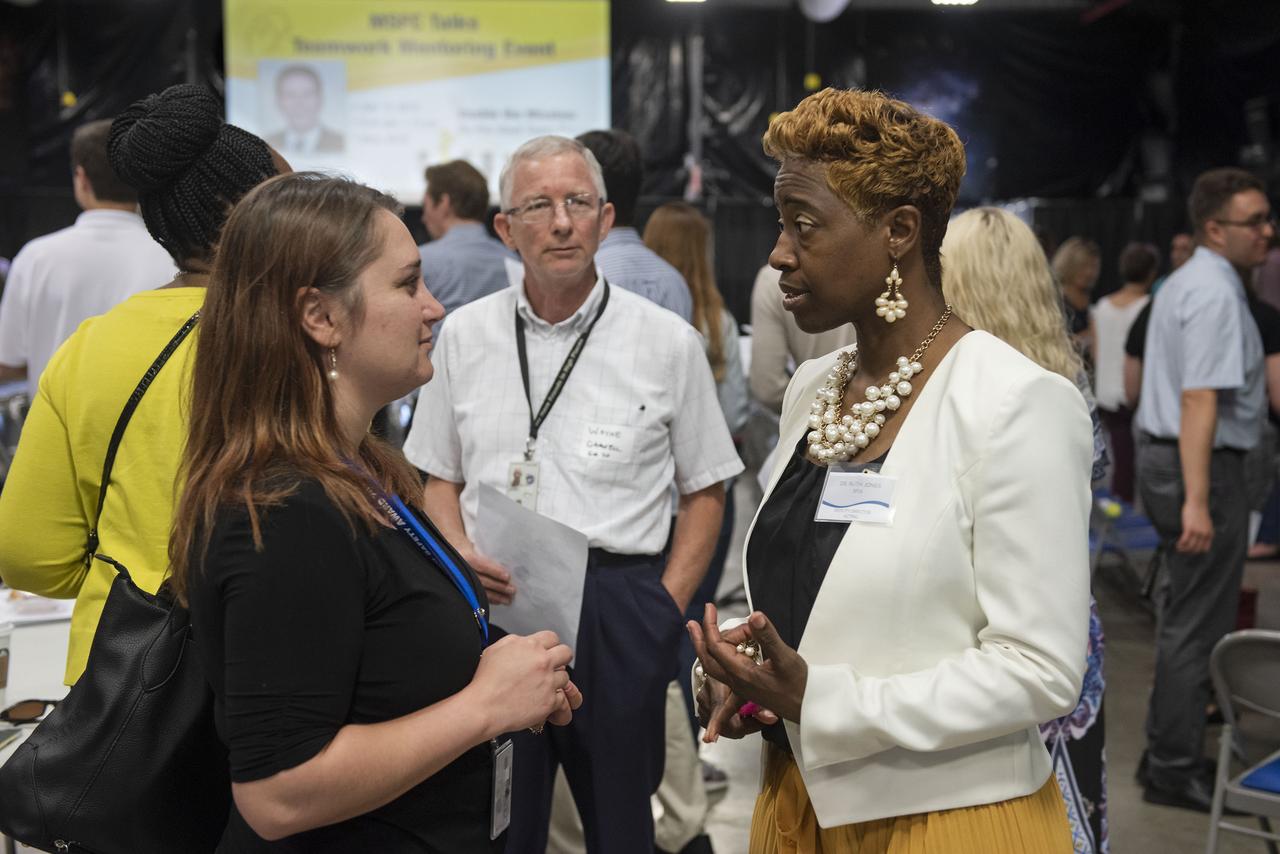
Ruth Jones, right, acting deputy director of NASA’s Michoud Assembly Facility, chats with Diana Zorzon, left, a systems engineer in Marshall’s Spacecraft and Vehicle Systems Department, and Wayne Gamwell, an engineer in the System Requirements, Verification and Validation Branch of Marshall’s Materials and Processes Laboratory, during a networking session between speaker presentations. The seminar, titled “Enable the Mission: Be the Ideal Team Player,” was organized by Marshall's Organization and Leadership Development Office in the Office of Human Resources.

Kim Stratton, at left, with Caterpillar, talks to students during a Women in STEM breakfast inside the Debus Conference Center at the Kennedy Space Center Visitor Complex in Florida. STEM is science, technology, engineering and math. The special event gave students competing in NASA's 8th Annual Robotic Mining Competition the chance to learn from female NASA scientists, engineers and professionals about their careers and the paths they took to working at Kennedy. The Robotic Mining Competition is a NASA Human Exploration and Operations Mission Directorate project designed to encourage students in STEM fields. The project provides a competitive environment to foster innovative ideas and solutions that could be used on NASA's Journey to Mars.
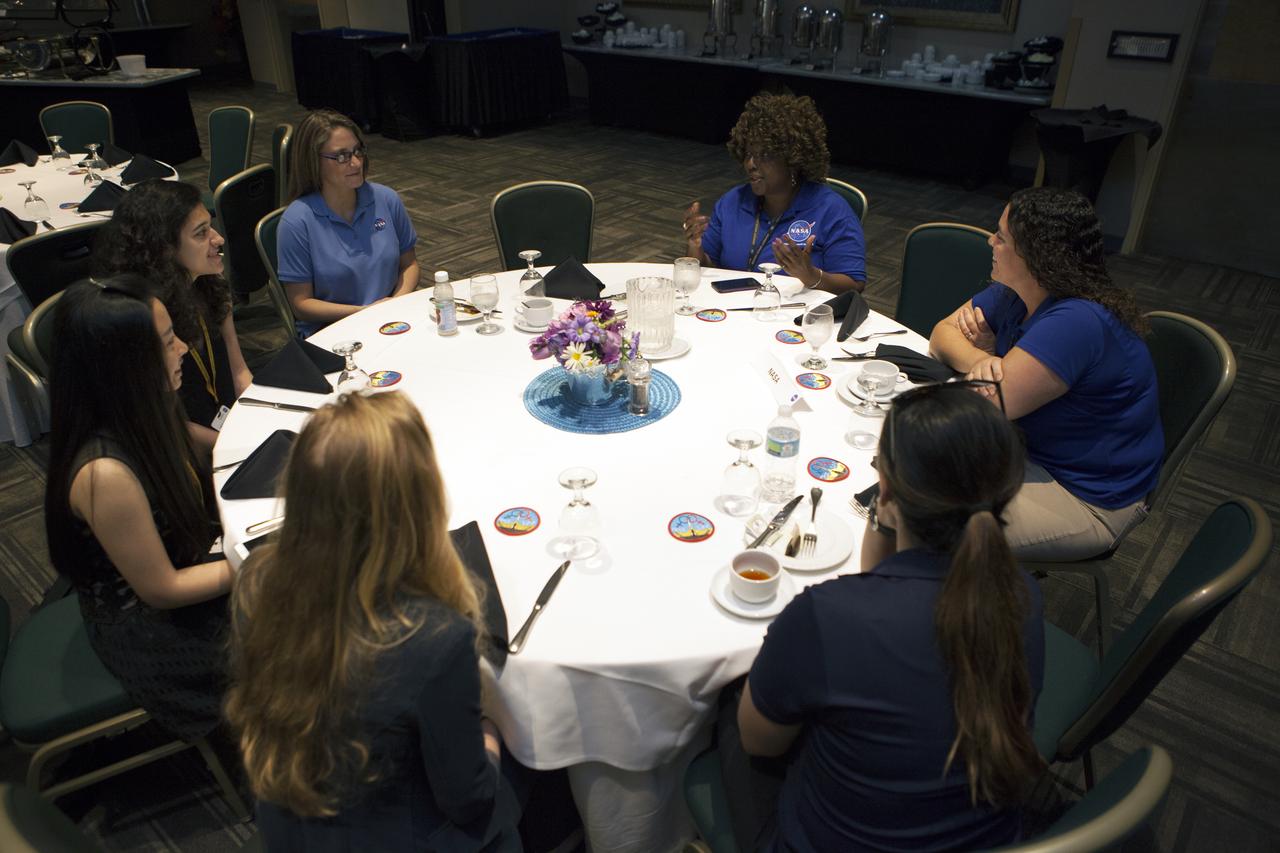
Barbara Brown, center at the table, strategic implementation manager with the Exploration Research and Technology Programs at NASA's Kennedy Space Center in Florida, talks to students during a Women in STEM breakfast inside the Debus Conference Center at the Kennedy Space Center Visitor Complex. STEM is science, technology, engineering and math. The special event gave students competing in NASA's 8th Annual Robotic Mining Competition the chance to learn from female NASA scientists, engineers and professionals about their careers and the paths they took to working at Kennedy. The Robotic Mining Competition is a NASA Human Exploration and Operations Mission Directorate project designed to encourage students in STEM fields. The project provides a competitive environment to foster innovative ideas and solutions that could be used on NASA's Journey to Mars.

Gioia Massa, at left, a NASA payload scientist, talks to students during a Women in STEM breakfast inside the Debus Conference Center at the Kennedy Space Center Visitor Complex in Florida. STEM is science, technology, engineering and math. The special event gave students competing in NASA's 8th Annual Robotic Mining Competition the chance to learn from female NASA scientists, engineers and professionals about their careers and the paths they took to working at Kennedy. The Robotic Mining Competition is a NASA Human Exploration and Operations Mission Directorate project designed to encourage students in STEM fields. The project provides a competitive environment to foster innovative ideas and solutions that could be used on NASA's Journey to Mars.

Hortense Diggs, at right, the deputy director of the Communication and Public Engagement Directorate at NASA's Kennedy Space Center in Florida, talks to students during a Women in STEM breakfast inside the Debus Conference Center at the Kennedy Space Center Visitor Complex in Florida. STEM is science, technology, engineering and math. The special event gave students competing in NASA's 8th Annual Robotic Mining Competition the chance to learn from female NASA scientists, engineers and professionals about their careers and the paths they took to working at Kennedy. The Robotic Mining Competition is a NASA Human Exploration and Operations Mission Directorate project designed to encourage students in STEM fields. The project provides a competitive environment to foster innovative ideas and solutions that could be used on NASA's Journey to Mars.
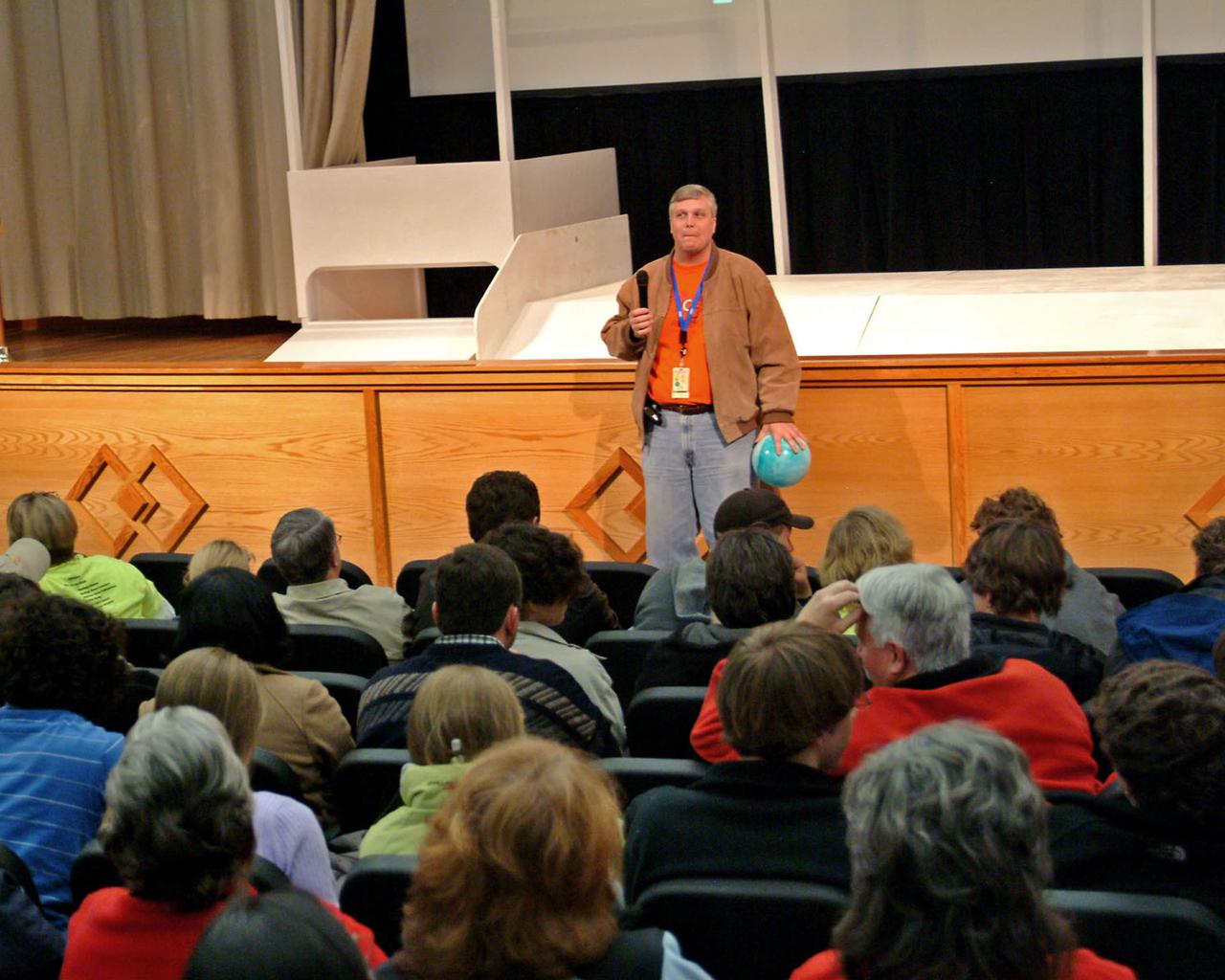
Bo Clarke, mentor for Gulfport High School's Team Fusion, offers strategy tips to students and coaches during the FIRST Robotics Competition kickoff held at StenniSphere on Jan. 7. Clarke is the lead building and infrastructure specialist for NASA's Shared Services Center at Stennis Space Center.
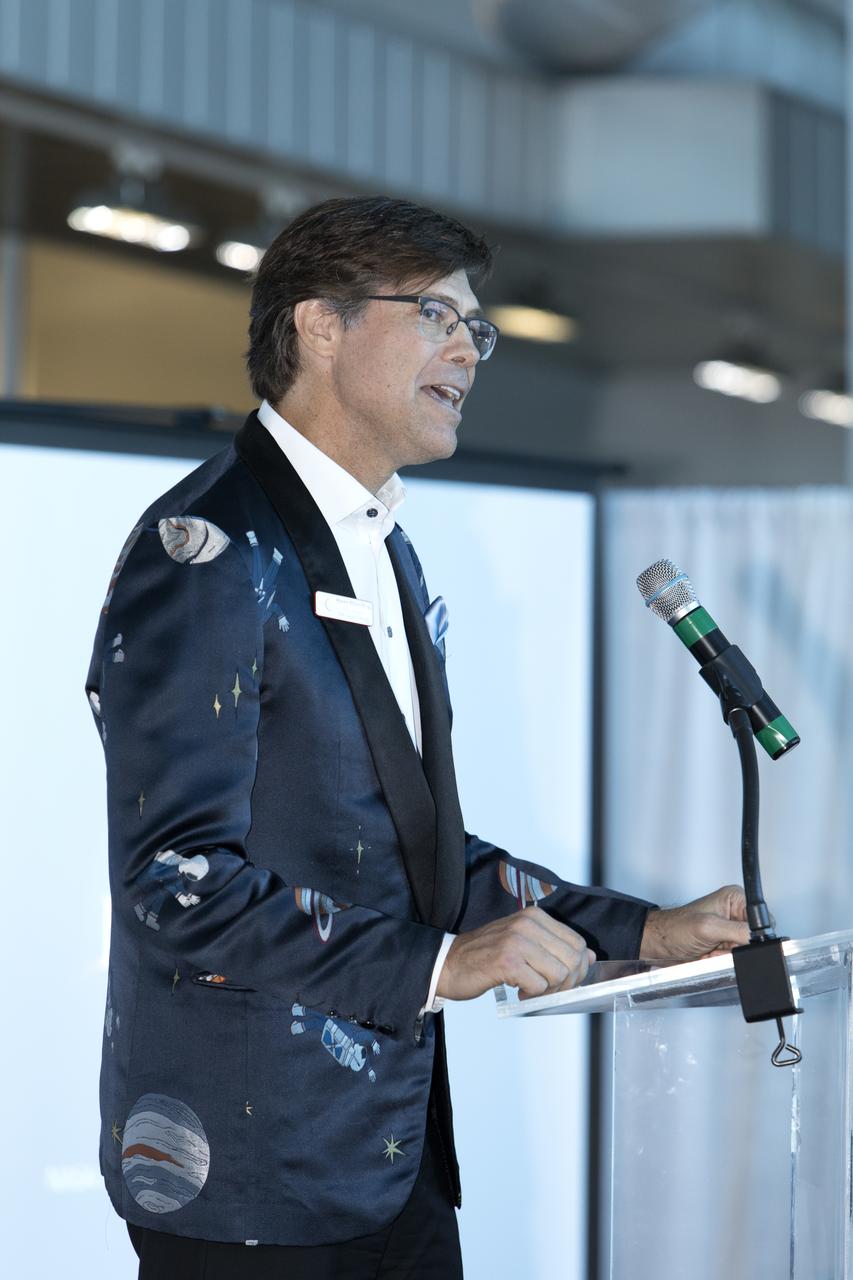
Barry Hamilton, CEO and founder of Red Canyon Software Inc., speaks to attendees at NASA's Business Opportunities Expo 2018, on Oct. 23, inside Cruise Terminal 6 at Port Canaveral in Florida. Red Canyon Software signed a Mentor-Protégé Agreement with a.i. solutions during the expo. Red Canyon Software will be mentored by a.i. solutions. The 28th Business Opportunities Expo featured more than 200 businesses, large and small, and government exhibitors from throughout the Space Coast and the nation. The Business Opportunities Expo is facilitated by Kennedy's Small Business Programs Office and Prime Contractor Board, along with the U.S. Air Force 45th Space Wing and Canaveral Port Authority. Vendors from a variety of product and service areas, such as computer technology, engineering services, communication equipment and services, and construction and safety products, to name a few, were at the expo. Representatives from the 45th Space Wing, Kennedy prime contractors, NASA and many more agencies and organizations were on hand to provide information and answer questions.
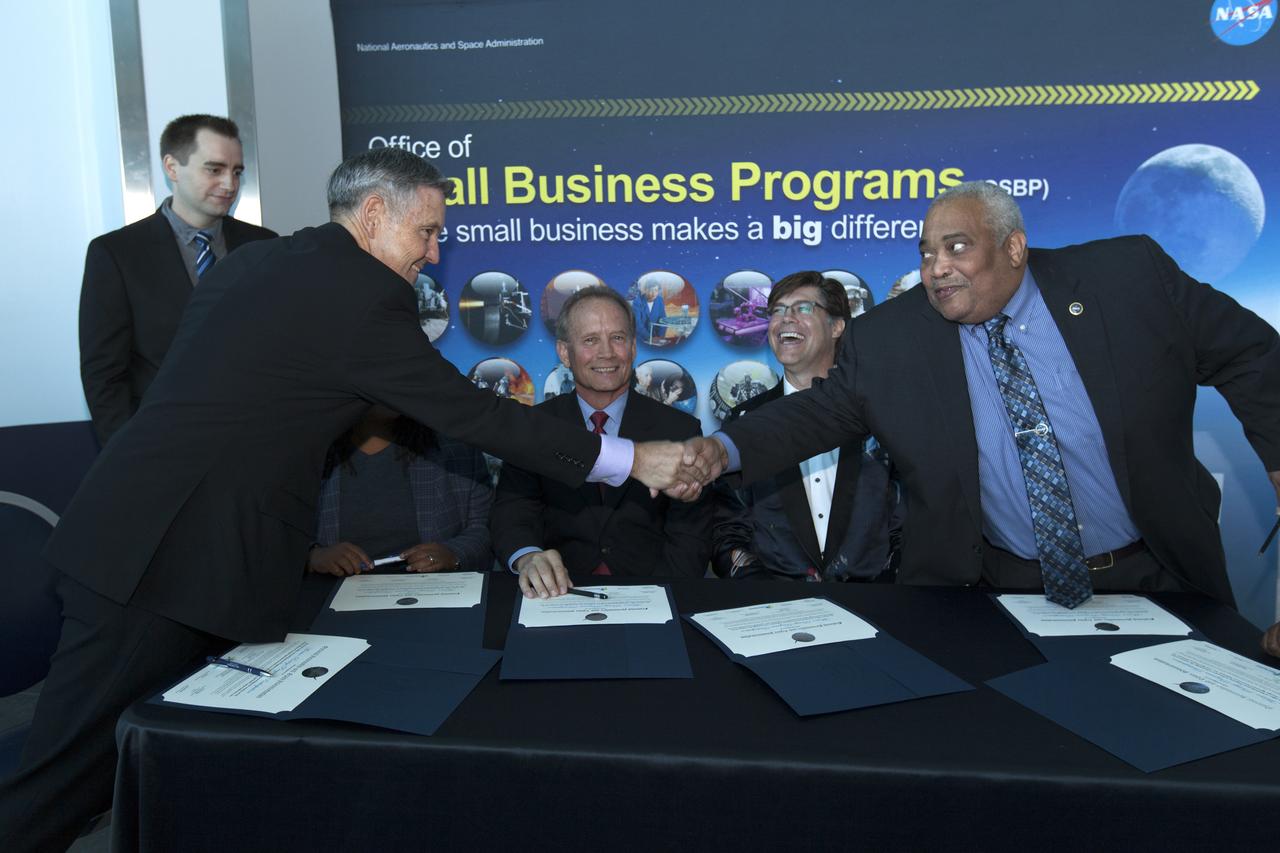
NASA Kennedy Space Center Director Bob Cabana, standing, shakes hands with Glenn Delgado, associate administrator, NASA Office of Small Business Programs, during the signing of a Mentor-Protégé Agreement on Oct. 23, 2018, at the NASA Business Opportunities Expo 2018 inside Cruise Terminal 6 at Port Canaveral in Florida. Seated, in view from left, are Steve Owens, deputy program manager with a.i. solutions Inc., a contractor at Kennedy; and Barry Hamilton, CEO and Founder of Red Canyon Software Inc. A.I. Solutions will serve as the mentor to protégé Red Canyon Software. The 28th Business Opportunities Expo featured more than 200 businesses, large and small, and government exhibitors from throughout the Space Coast and the nation. The Business Opportunities Expo is facilitated by Kennedy's Small Business Programs Office and Prime Contractor Board, along with the U.S. Air Force 45th Space Wing and Canaveral Port Authority. Vendors from a variety of product and service areas, such as computer technology, engineering services, communication equipment and services, and construction and safety products, to name a few, were at the expo. Representatives from the 45th Space Wing, Kennedy prime contractors, NASA and many more agencies and organizations were on hand to provide information and answer questions.
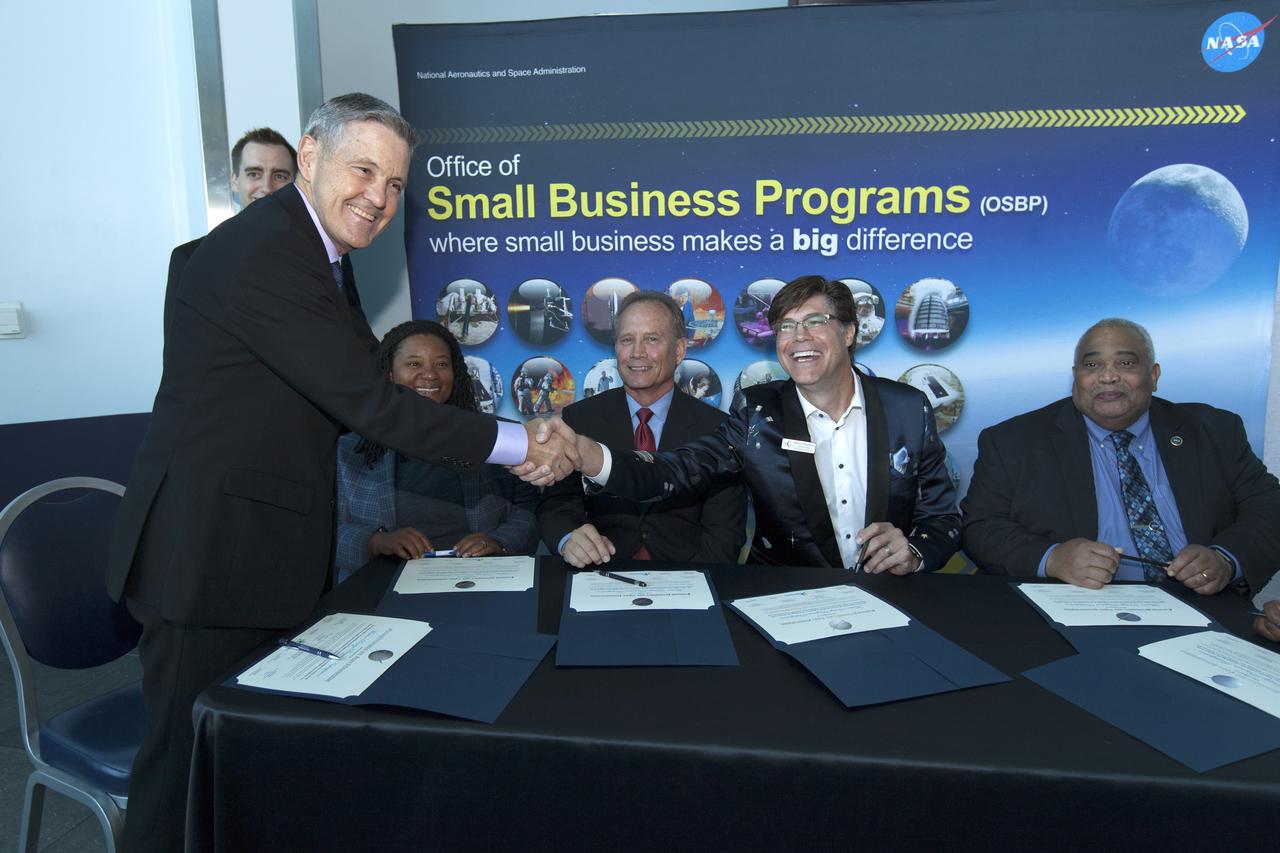
NASA Kennedy Space Center Director Bob Cabana, standing, shakes hands with Barry Hamilton, CEO and Founder of Red Canyon Software Inc., during the signing of a Mentor-Protégé Agreement on Oct. 23, 2018, at the NASA Business Opportunities Expo 2018 inside Cruise Terminal 6 at Port Canaveral in Florida. Seated, from left are Amber Allen, program analyst in the Launch Services Program; Steve Owens, deputy program manager with a.i. solutions Inc., a contractor at Kennedy; and Glenn Delgado, associate administrator, NASA Office of Small Business Programs. a.i. solutions will serve as the mentor to protégé Red Canyon Software. The 28th Business Opportunities Expo featured more than 200 businesses, large and small, and government exhibitors from throughout the Space Coast and the nation. The Business Opportunities Expo is facilitated by Kennedy's Small Business Programs Office and Prime Contractor Board, along with the U.S. Air Force 45th Space Wing and Canaveral Port Authority. Vendors from a variety of product and service areas, such as computer technology, engineering services, communication equipment and services, and construction and safety products, to name a few, were at the expo. Representatives from the 45th Space Wing, Kennedy prime contractors, NASA and many more agencies and organizations were on hand to provide information and answer questions.
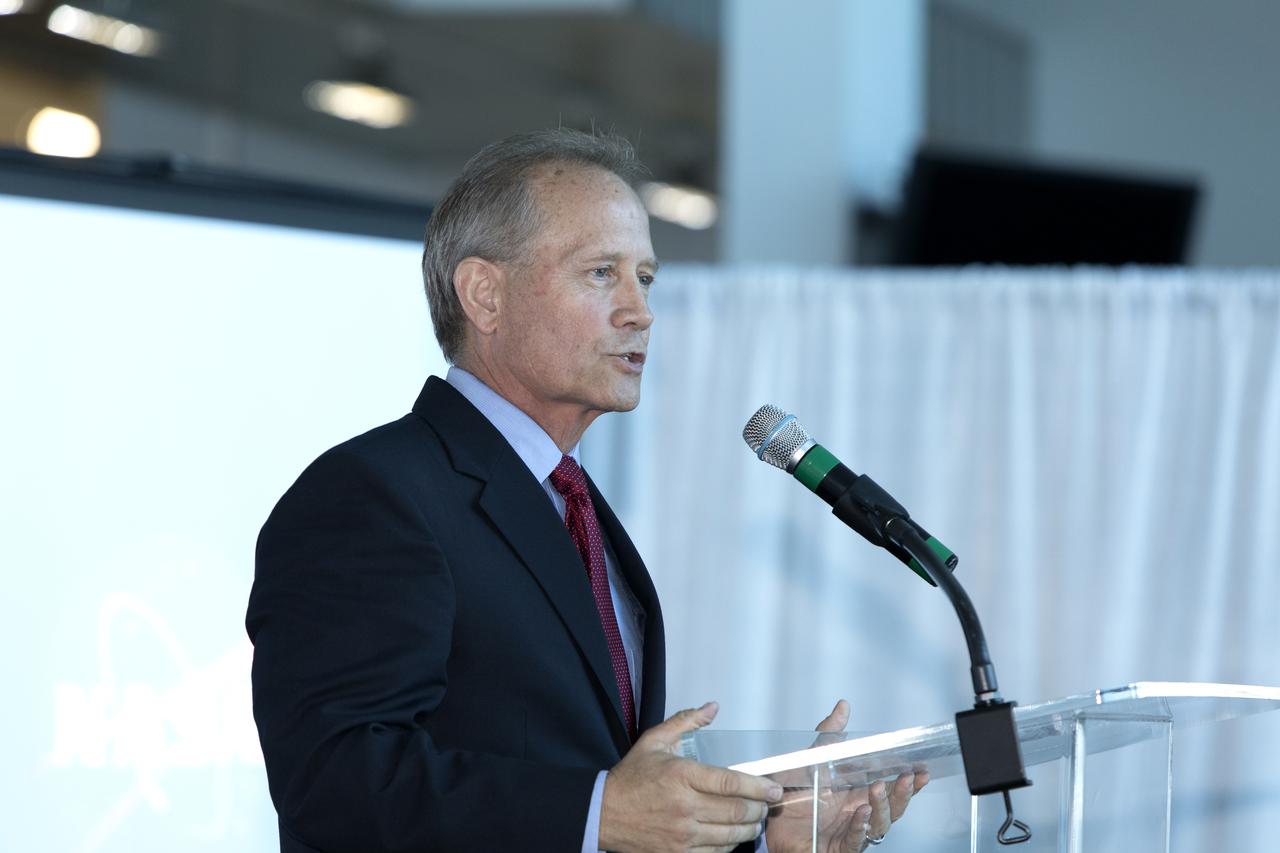
Steve Owens, deputy program manager with a.i. solutions Inc., a contractor at Kennedy Space Center, speaks to attendees at NASA's Business Opportunities Expo 2018, on Oct. 23, inside Cruise Terminal 6 at Port Canaveral in Florida. a.i. solutions signed a Mentor-Protégé Agreement with Red Canyon Software Inc. during the expo. a.i. solutions will be mentor to Red Canyon Software. The 28th Business Opportunities Expo featured more than 200 businesses, large and small, and government exhibitors from throughout the Space Coast and the nation. The Business Opportunities Expo is facilitated by Kennedy's Small Business Programs Office and Prime Contractor Board, along with the U.S. Air Force 45th Space Wing and Canaveral Port Authority. Vendors from a variety of product and service areas, such as computer technology, engineering services, communication equipment and services, and construction and safety products, to name a few, were at the expo. Representatives from the 45th Space Wing, Kennedy prime contractors, NASA and many more agencies and organizations were on hand to provide information and answer questions.

T34-C Mentor Aircraft
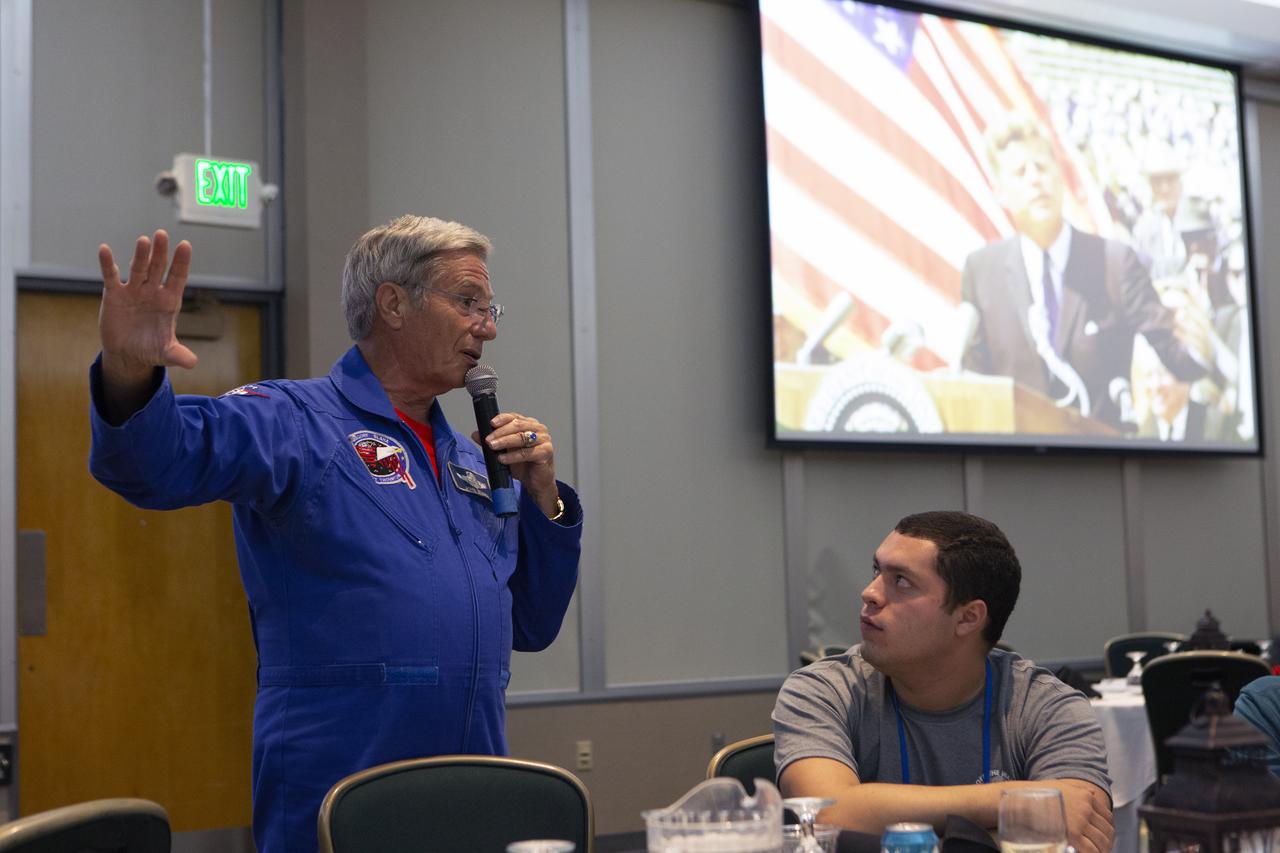
Retired NASA astronaut John Blaha talks to Swarmathon University Challenge students and their mentors during a Dine with an Astronaut event at the Kennedy Space Center Visitor Complex in Florida on June 12, 2019. Students and mentors from some of the Swarmathon teams were at Kennedy to participate in a student/mentor panel, hear from speakers, get a behind-the-scenes tour of Kennedy Space Center, dine with an astronaut and receive awards. For the challenge, university students developed algorithms for robotic swarms that are robust and adaptable like the foraging strategies of ant colonies. The fourth and final Swarmathon challenge was a combined virtual and physical competition hosted by the University of New Mexico.
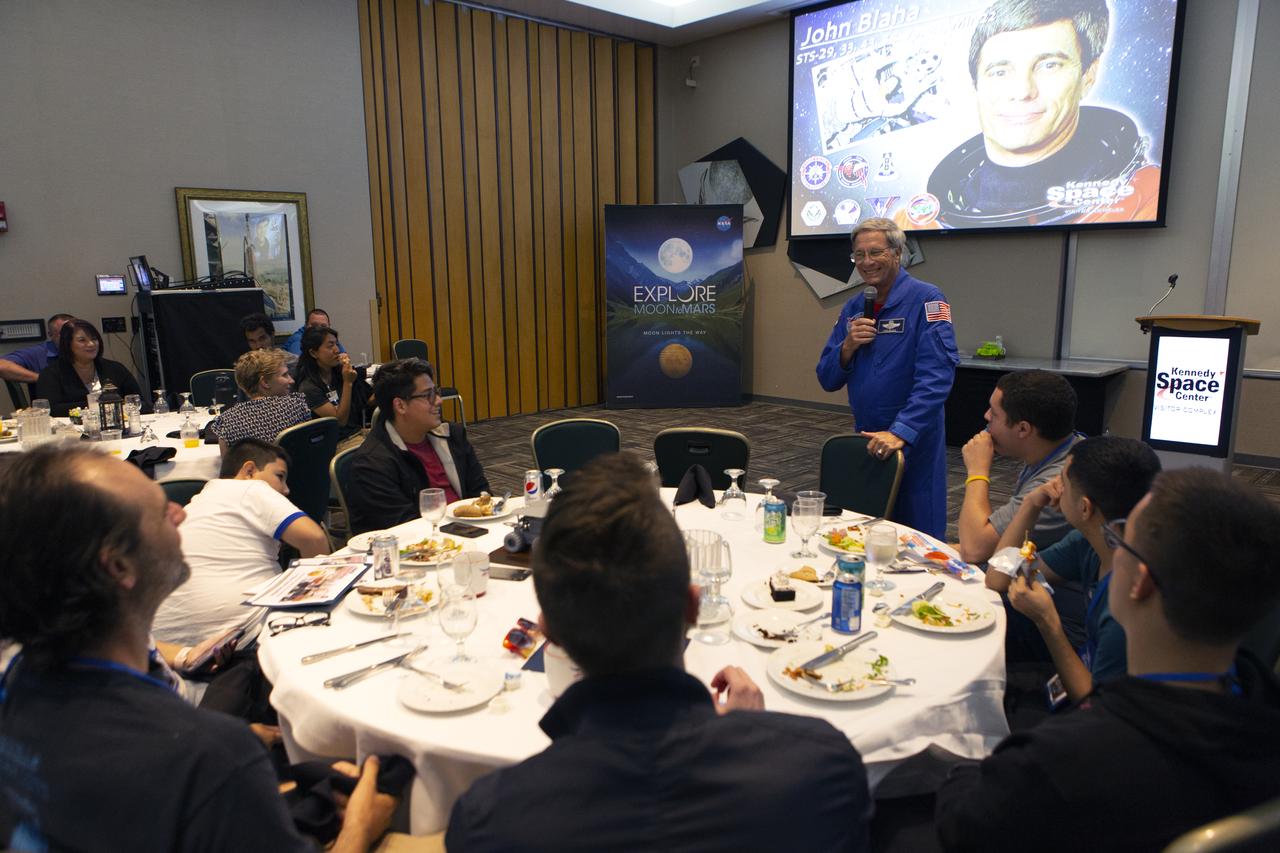
Retired NASA astronaut John Blaha talks to Swarmathon University Challenge students and their mentors during a Dine with an Astronaut event at the Kennedy Space Center Visitor Complex in Florida on June 12, 2019. Students and mentors from some of the Swarmathon teams were at Kennedy to participate in a student/mentor panel, hear from speakers, get a behind-the-scenes tour of Kennedy Space Center, dine with an astronaut and receive awards. For the challenge, university students developed algorithms for robotic swarms that are robust and adaptable like the foraging strategies of ant colonies. The fourth and final Swarmathon challenge was a combined virtual and physical competition hosted by the University of New Mexico.
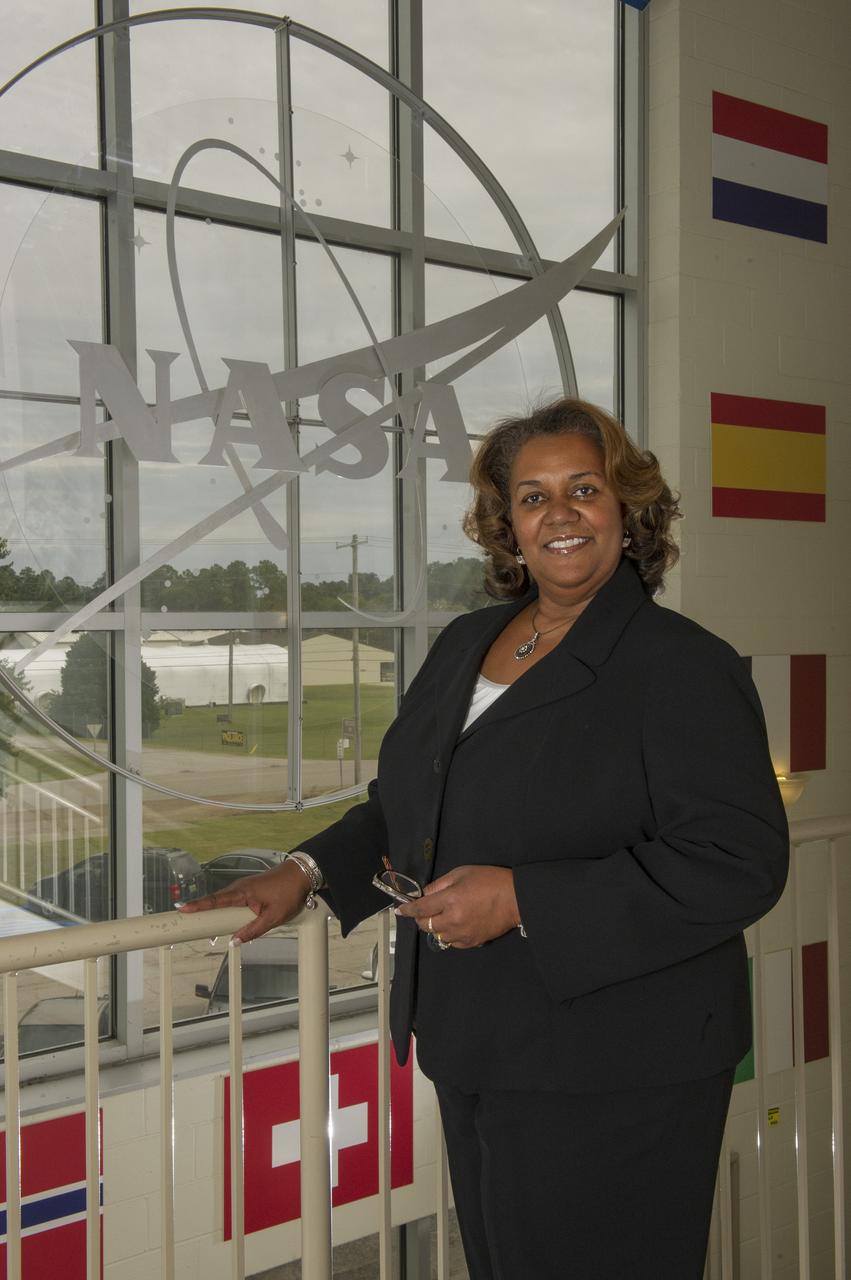
ENVIRONMENTAL PHOTO OF LYBREASE WOODARD FOR FORBES MAGAZINE ARTICLE: THE PIONEERING NASA EXEC MENTORING SPACE SCIENCE'S POWER WOMEN
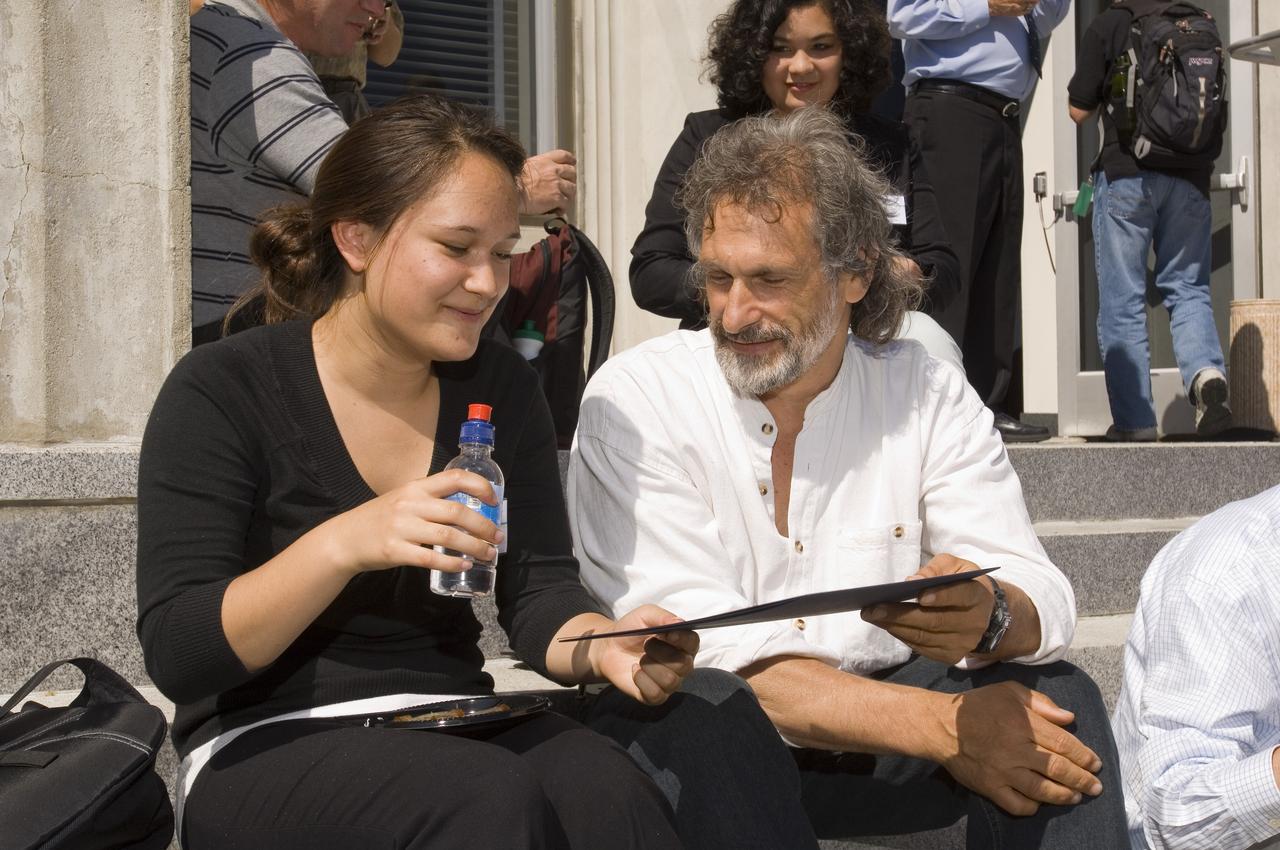
Summer Internship for 2008 closing ceremony: student with mentor Jonathan Trent on steps of the Ames Administration building N-200 enjoying the reception.
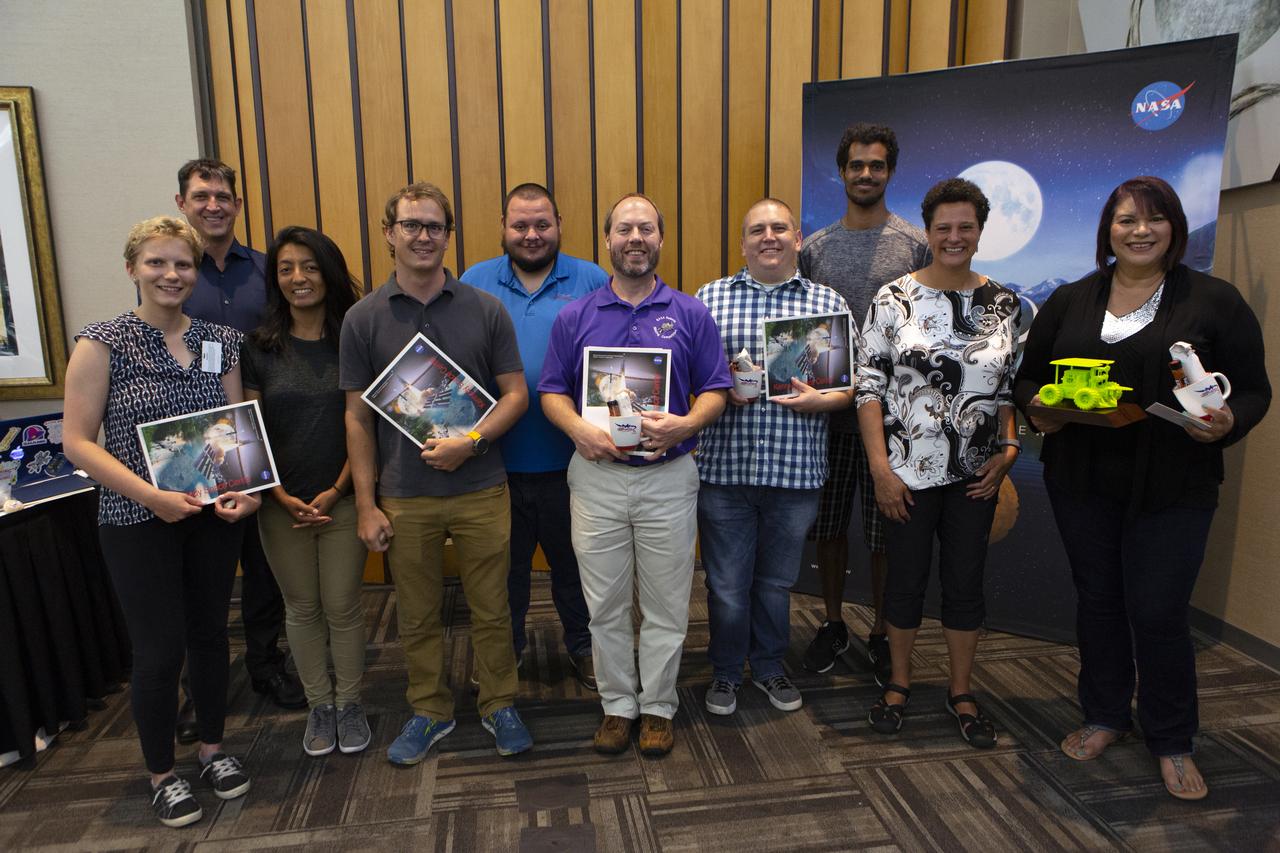
During an awards ceremony on June 12, 2019 at the Kennedy Space Center Visitor Complex in Florida, mentors and volunteers from Kennedy received certificates of recognition for the NASA Swarmathon 2019 University Challenge. Second from right is Melanie Moses, a professor of computer science at the Swarmathon host location, University of New Mexico. At far right is Theresa Martinez, engagement manager of the Minority University Research and Education Program, managed at Kennedy. University students and their mentors were at Kennedy to participate in a student/mentor panel, hear from speakers, get a behind-the-scenes tour of Kennedy Space Center, dine with an astronaut and receive awards. During Swarmathon University Challenge IV, students developed algorithms for robotic swarms that are robust and adaptable like the foraging strategies of ant colonies. The fourth and final Swarmathon was a combined virtual and physical competition.
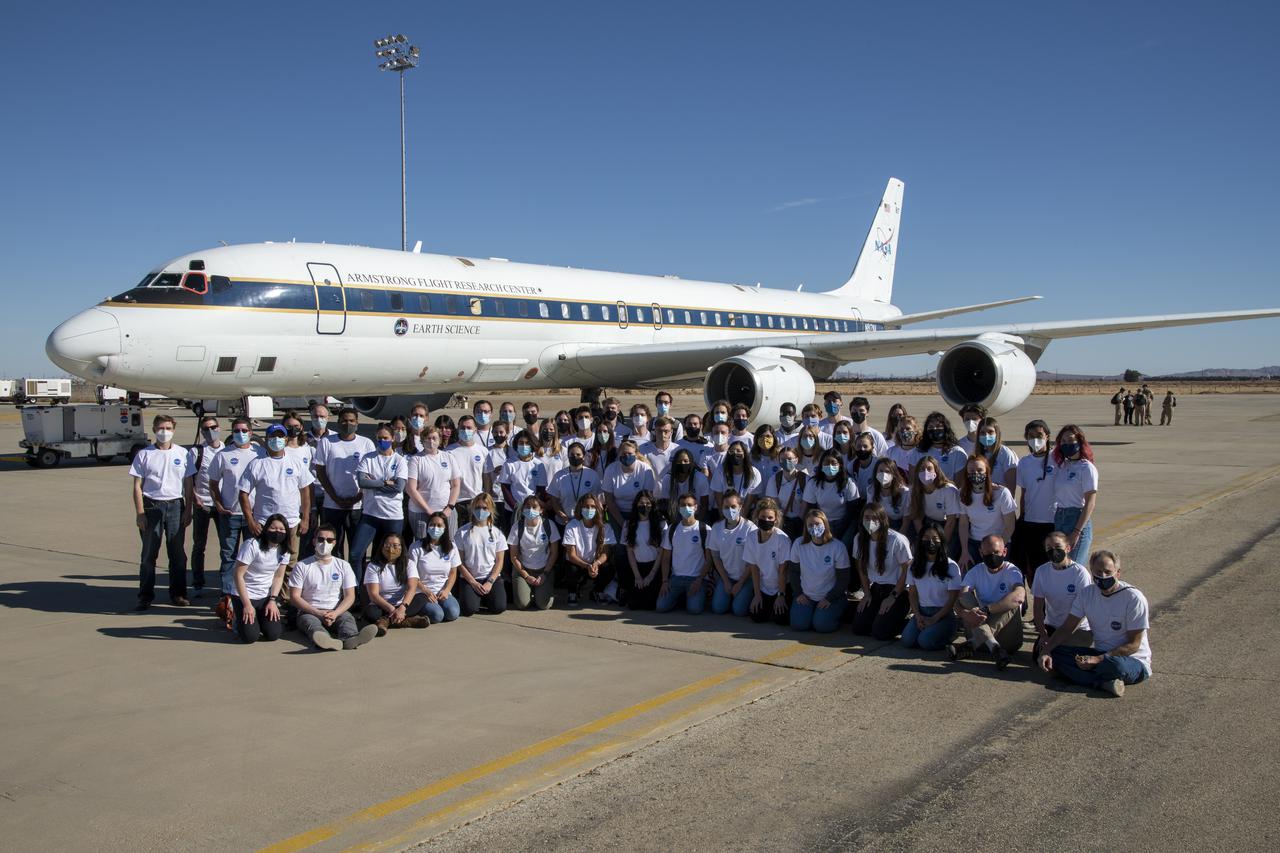
NASA Student Airborne Research Program students, mentors and faculty pose in front of NASA's DC-8 on December 7, 2021 at Armstrong Flight Research Center Building 703.
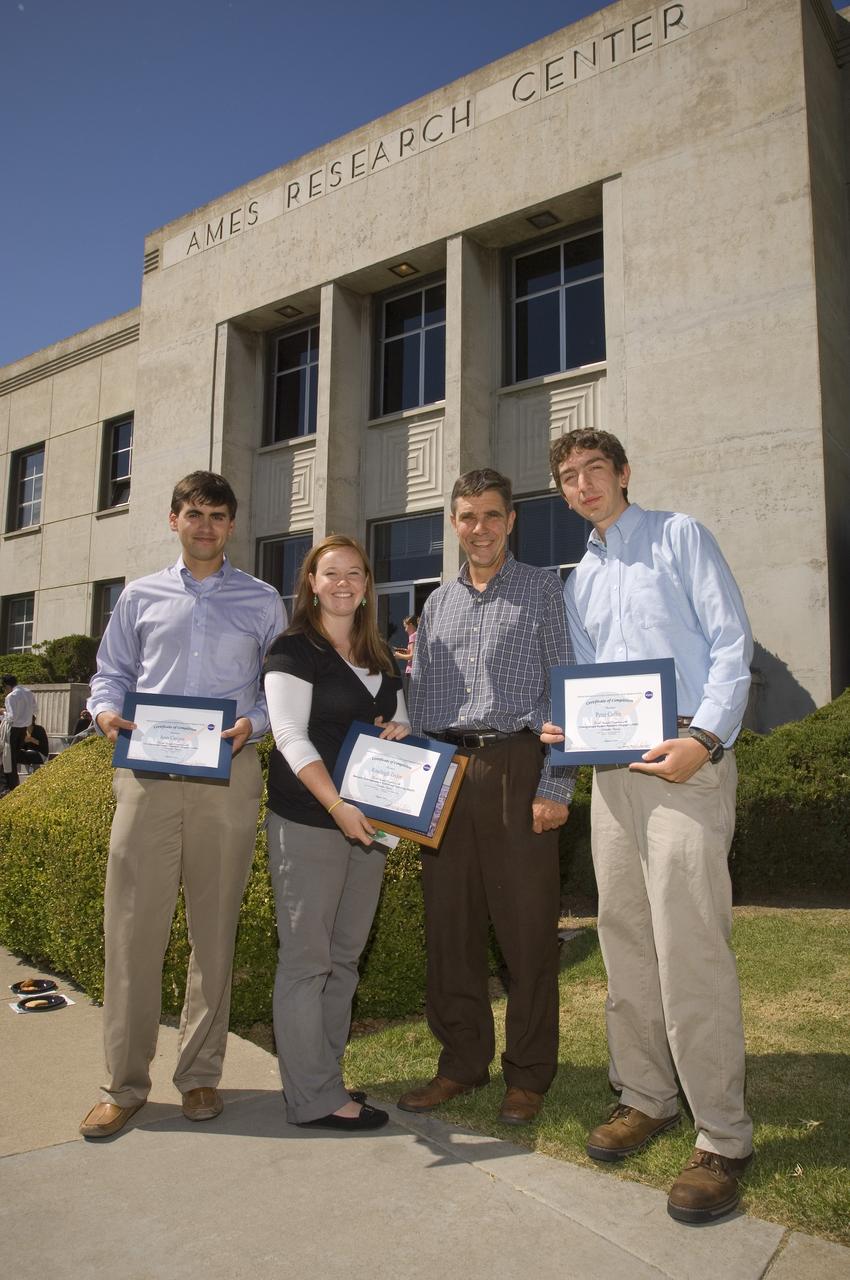
Summer Internship for 2008 closing ceremony : Juan Cjigas, Roseleith Taylor, William 'Bill' Warmbrodt (mentor) and Peter Caffin on steps of the Ames Administration building N-200.
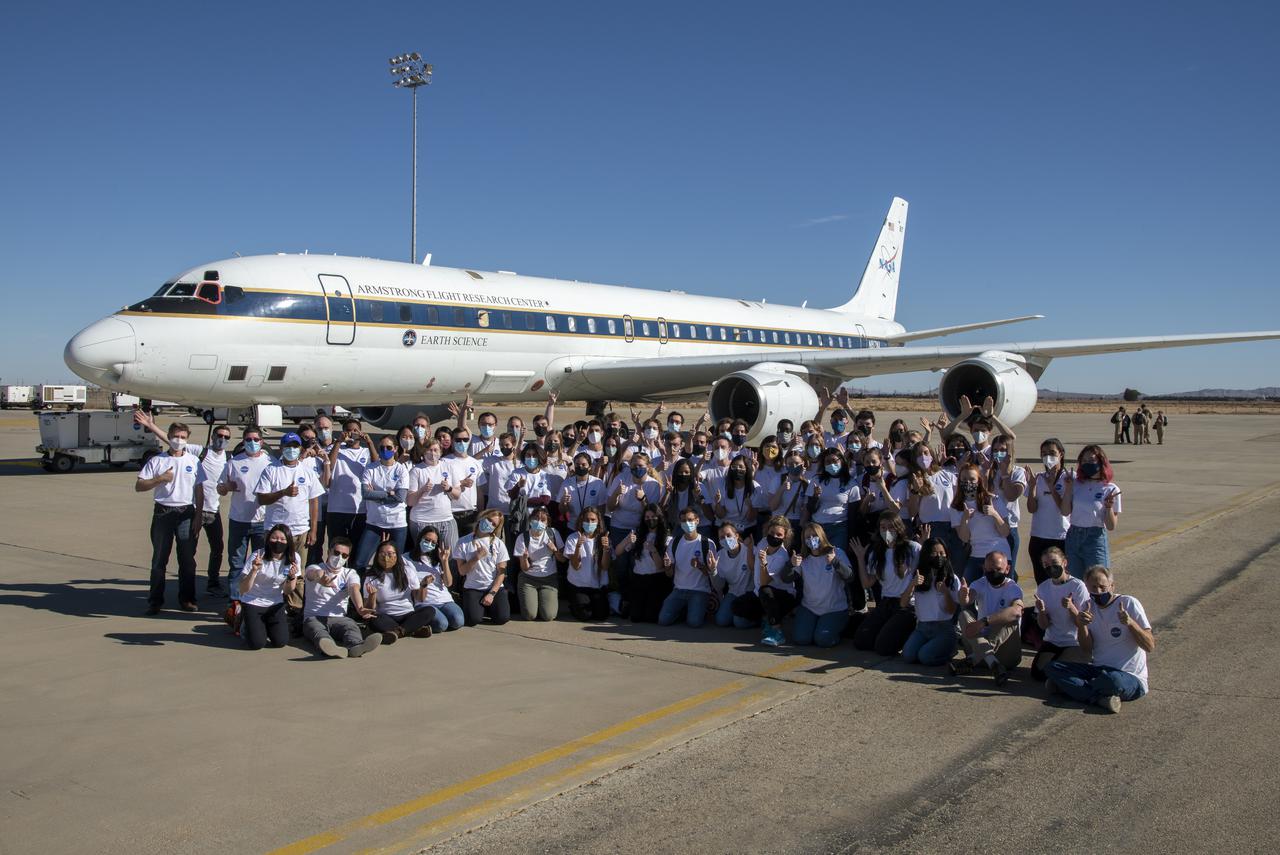
NASA Student Airborne Research Program students, mentors and faculty pose in front of NASA’s DC-8 on December 7, 2021 at Armstrong Flight Research Center Building 703.
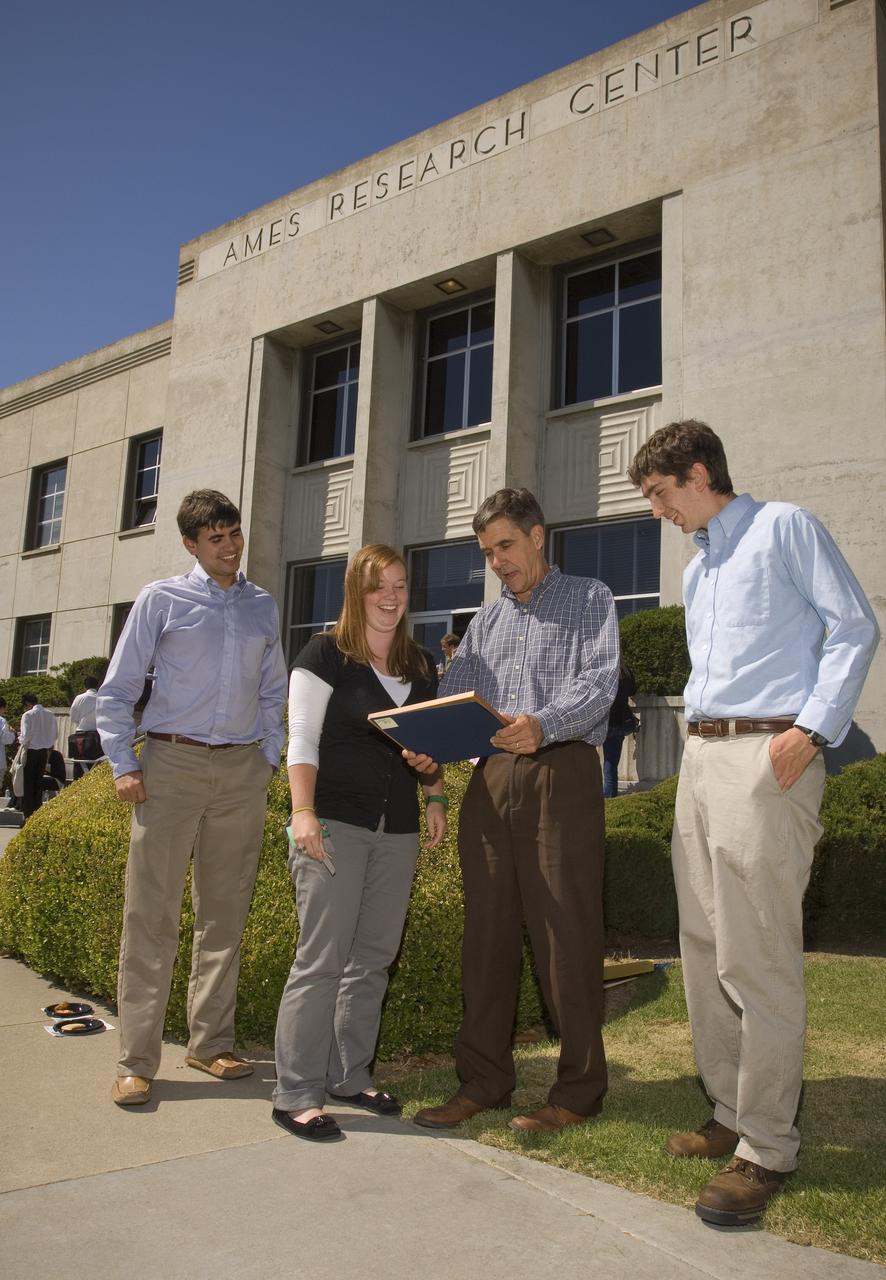
Summer Internship for 2008 closing ceremony: Juan Cjigas, Roseleith Taylor, William 'Bill' Warmbrodt (mentor) and Peter Caffin on steps of the Ames Administration building N-200.
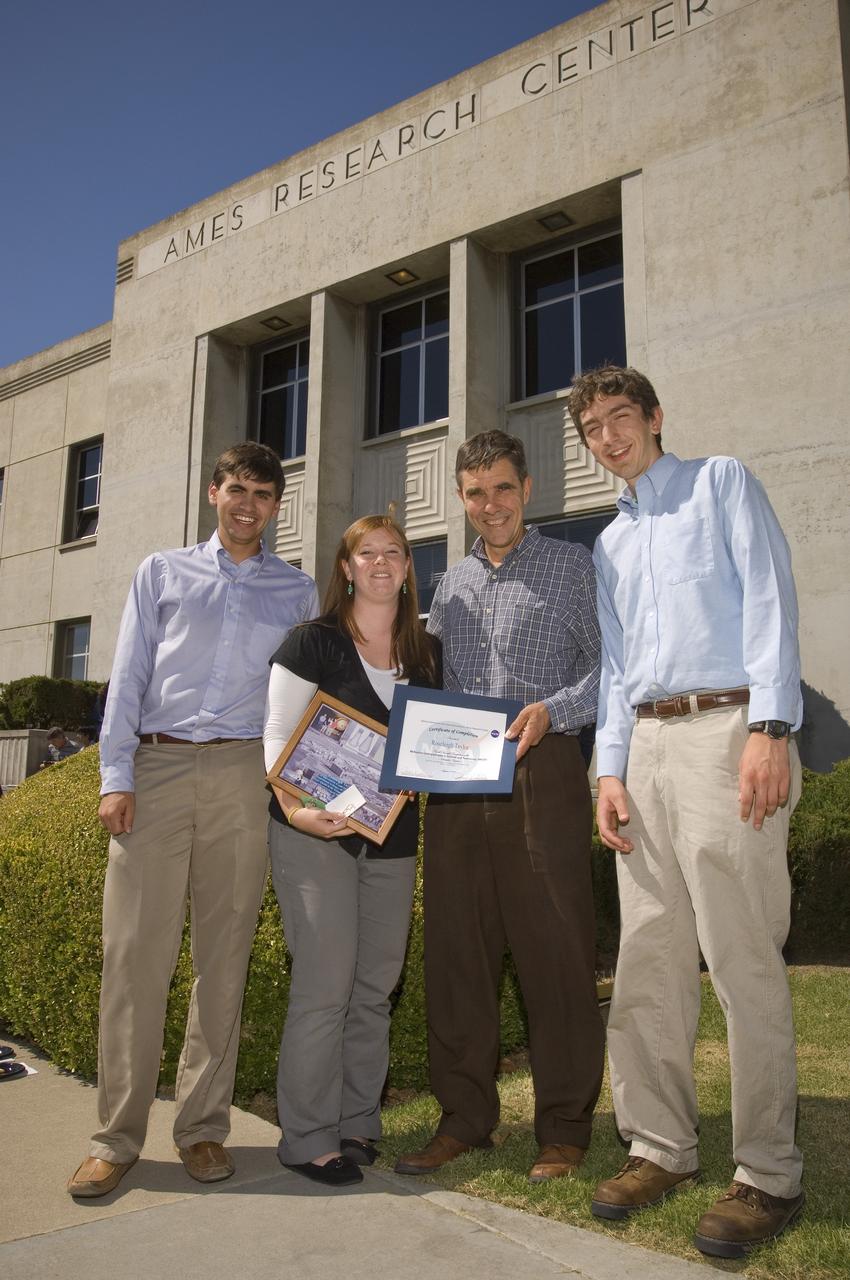
Summer Internship for 2008 closing ceremony: Juan Cjigas, Roseleith Taylor, William 'Bill' Warmbrodt (mentor) and Peter Caffin on steps of the Ames Administration building N-200.
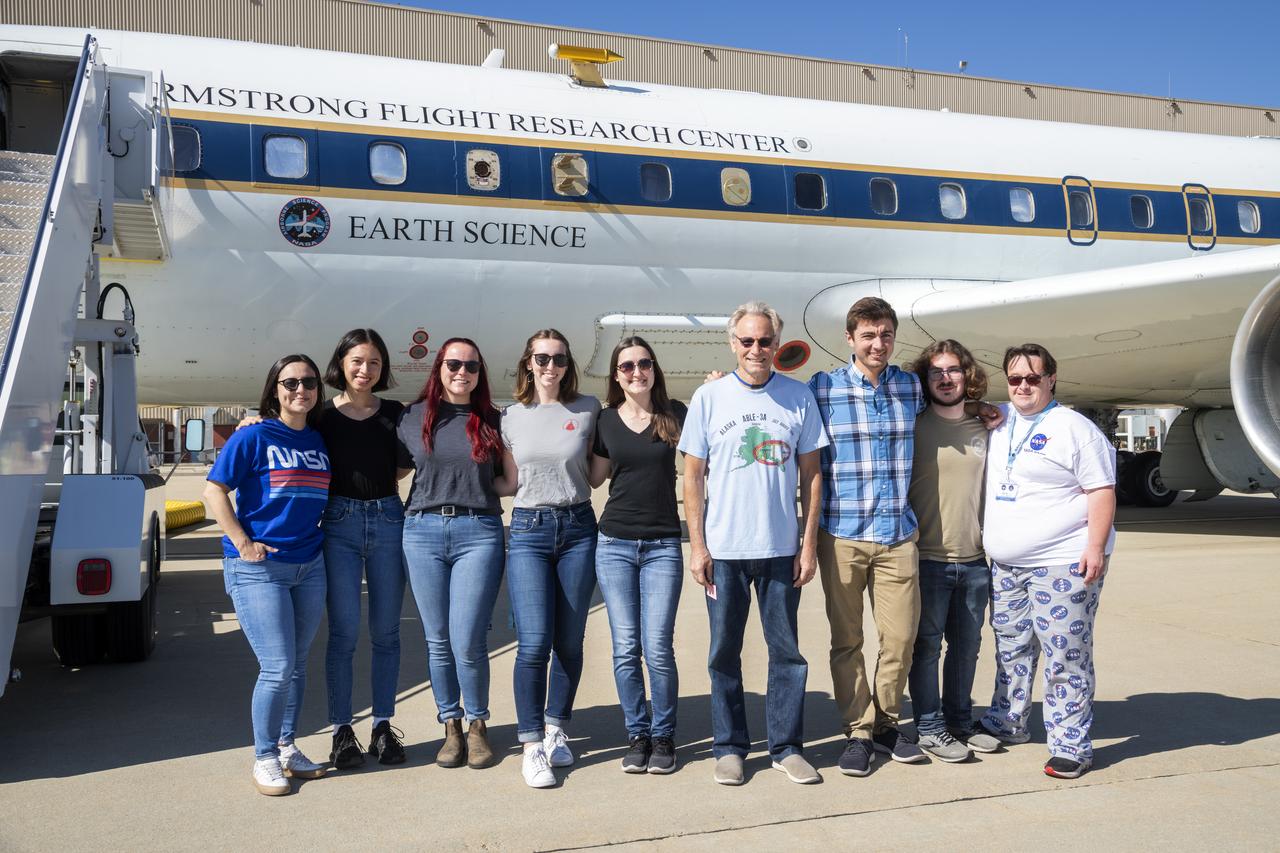
NASA Student Airborne Research Program participants pose in front of the DC-8 before their flight on Jun 23, 2022. The students are joined by mentors and professors to study air quality over the Central Valley in California.
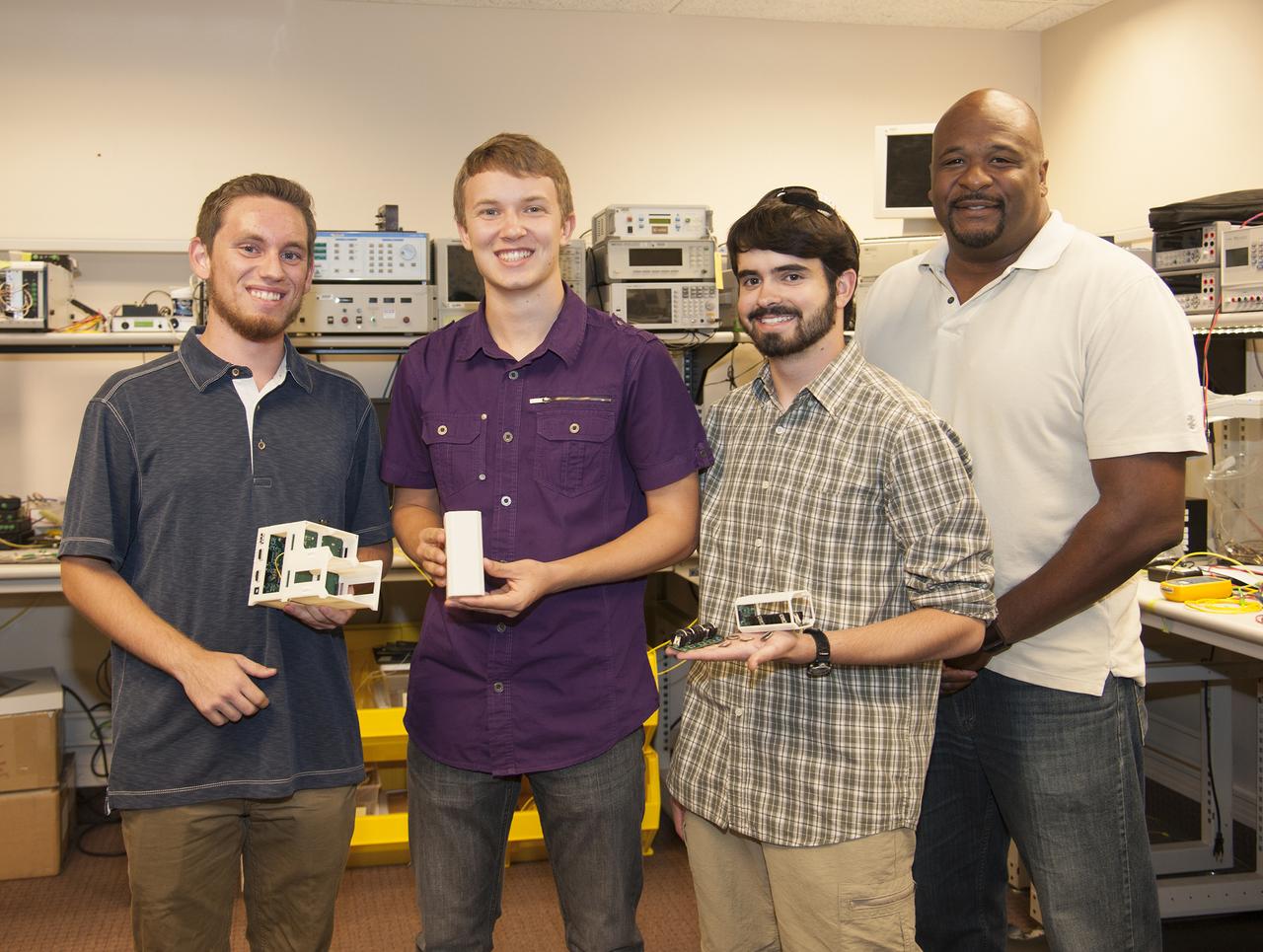
From left, former Desert Christian students Logan Francisco, Kyler Stephens and Jonathan Lokos and NASA Armstrong mentor Allen Parker show the elements of the experiment launched into space on Dec. 3.
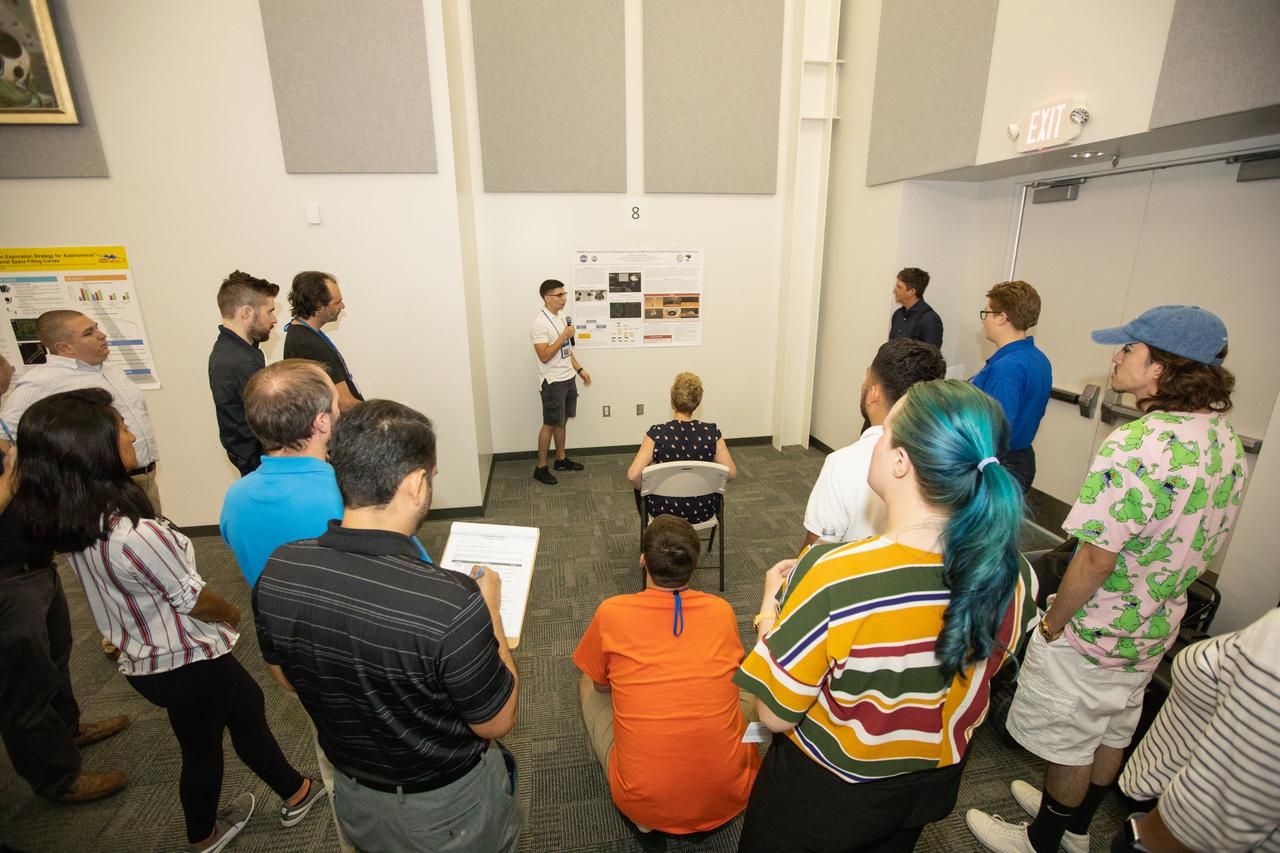
A Swarmathon University Competition 2019 team presents their poster to a panel of judges at the Kennedy Space Center Visitor Complex in Florida on June 11, 2019. Swarmathon students and their mentors were at Kennedy to participate in a student/mentor panel, hear from speakers, get a behind-the-scenes tour of Kennedy Space Center, dine with an astronaut and receive awards during an awards ceremony. During Swarmathon University Challenge IV, students developed algorithms for robotic swarms that are robust and adaptable like the foraging strategies of ant colonies. The fourth and final Swarmathon was a combined virtual and physical competition, hosted by UNM.
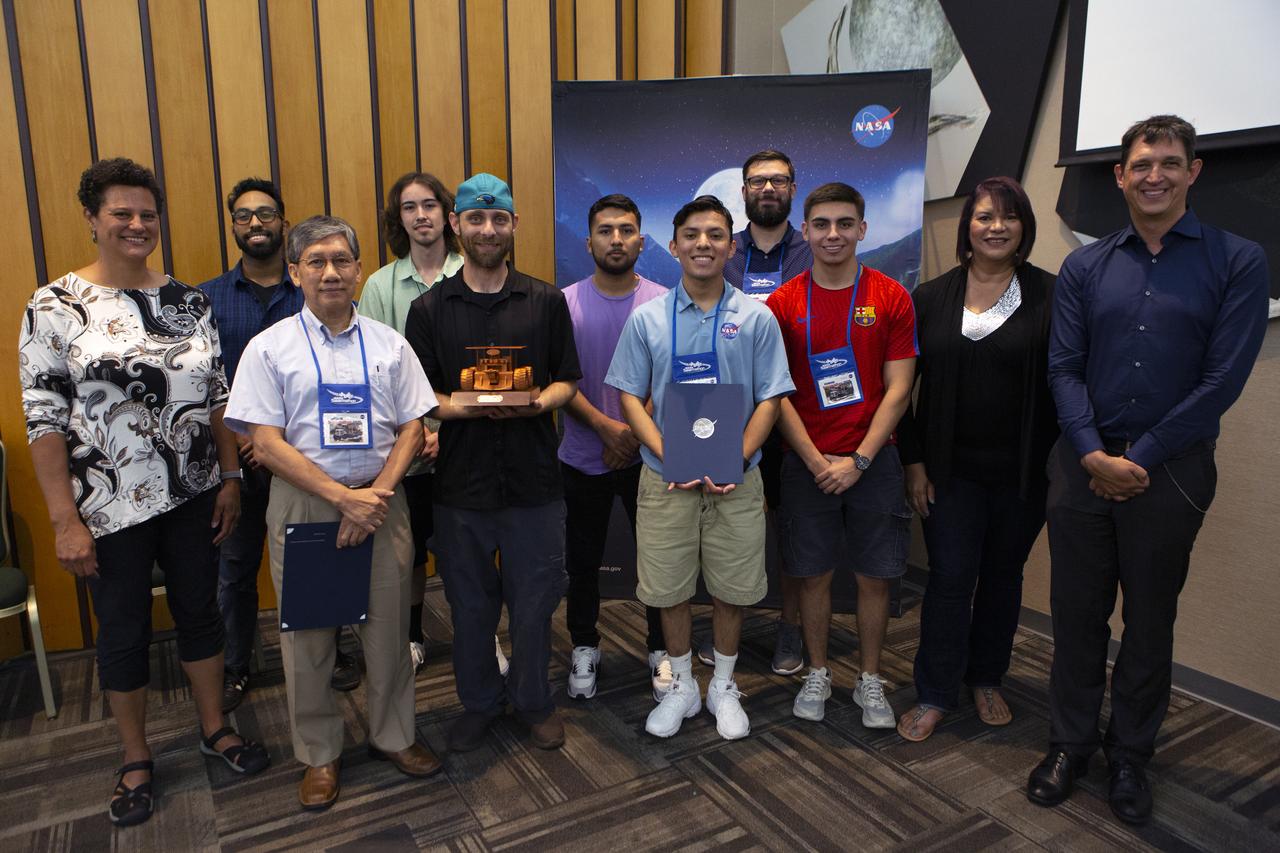
The Swarmathon team from the University of Houston Clearlake and San Jacinto College received the Mission to Mars award for their achievements in the NASA Swarmathon University Challenge for 2019. They are at the Kennedy Space Center Visitor Complex on June 12, 2019. Students and mentors from some of the Swarmathon teams were at Kennedy to participate in a student/mentor panel, hear from speakers, get a behind-the-scenes tour of Kennedy Space Center, dine with an astronaut and receive awards. During Swarmathon University Challenge IV, students developed algorithms for robotic swarms that are robust and adaptable like the foraging strategies of ant colonies. The fourth and final Swarmathon challenge was a combined virtual and physical competition.
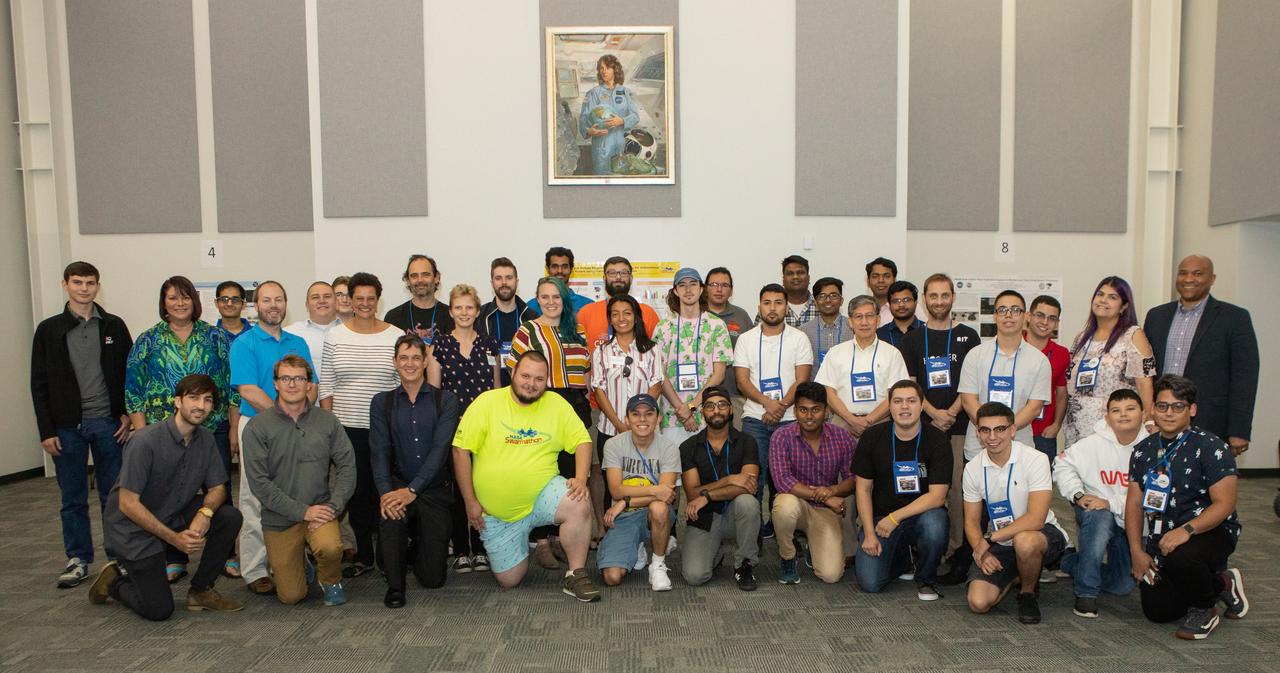
Swarmathon University Competition 2019 organizers, mentors, guest speakers and student teams gather for a group photo on June 11, 2019 at the Kennedy Space Center Visitor Complex in Florida. The University of New Mexico was the host for the physical competition held in May 2019. The student teams were at Kennedy to participate in a student/mentor panel, hear from speakers, get a behind-the-scenes tour of Kennedy Space Center, dine with an astronaut and receive awards during an awards ceremony. During Swarmathon University Challenge IV, students developed algorithms for robotic swarms that are robust and adaptable like the foraging strategies of ant colonies. The fourth and final Swarmathon was a combined virtual and physical competition.
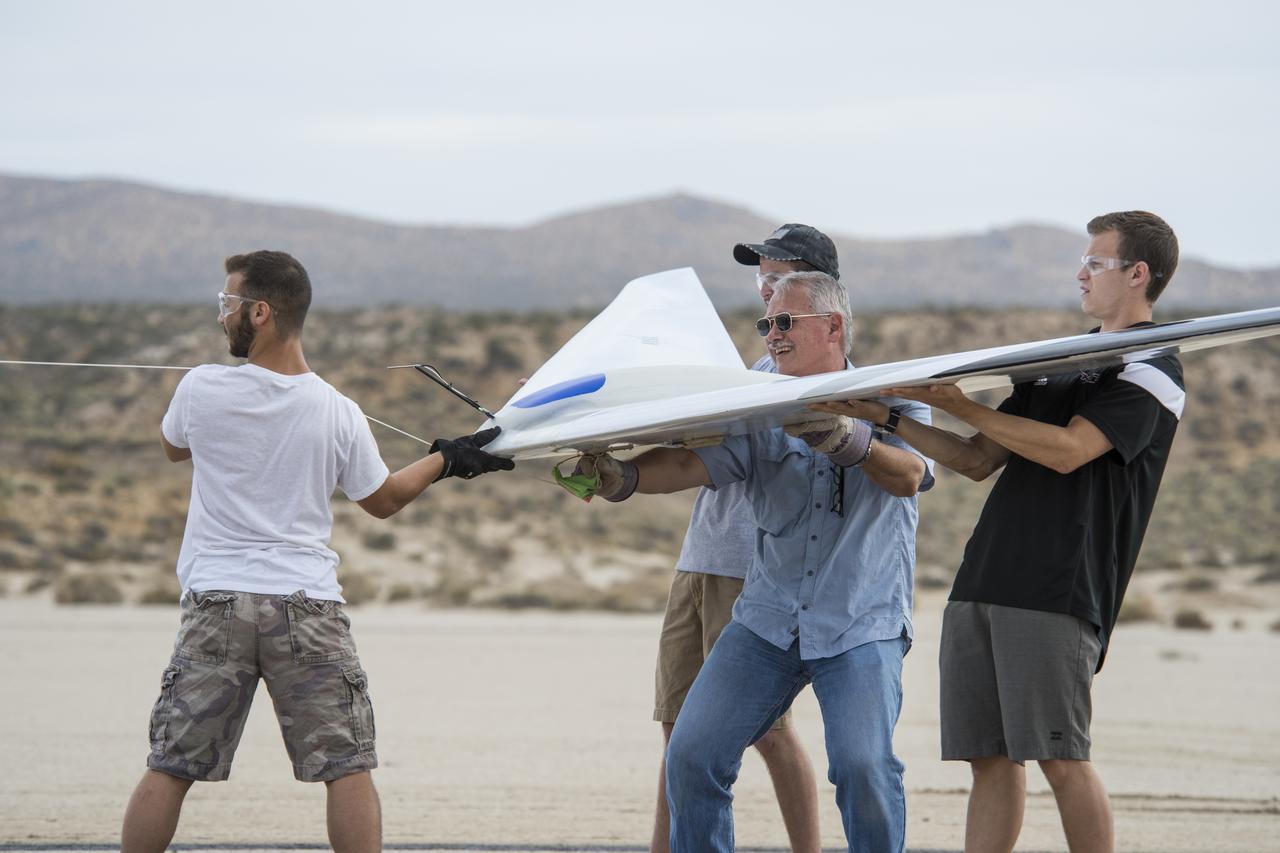
Al Bowers, center, and a group of student interns hook up a bungee cord for a flight of the Prandtl-D 3C subscale glider aircraft.
A plume of fire lights up the night during a test of the Integrated Powerhead Demonstrator at Stennis Space Center's E-1 Test Stand.
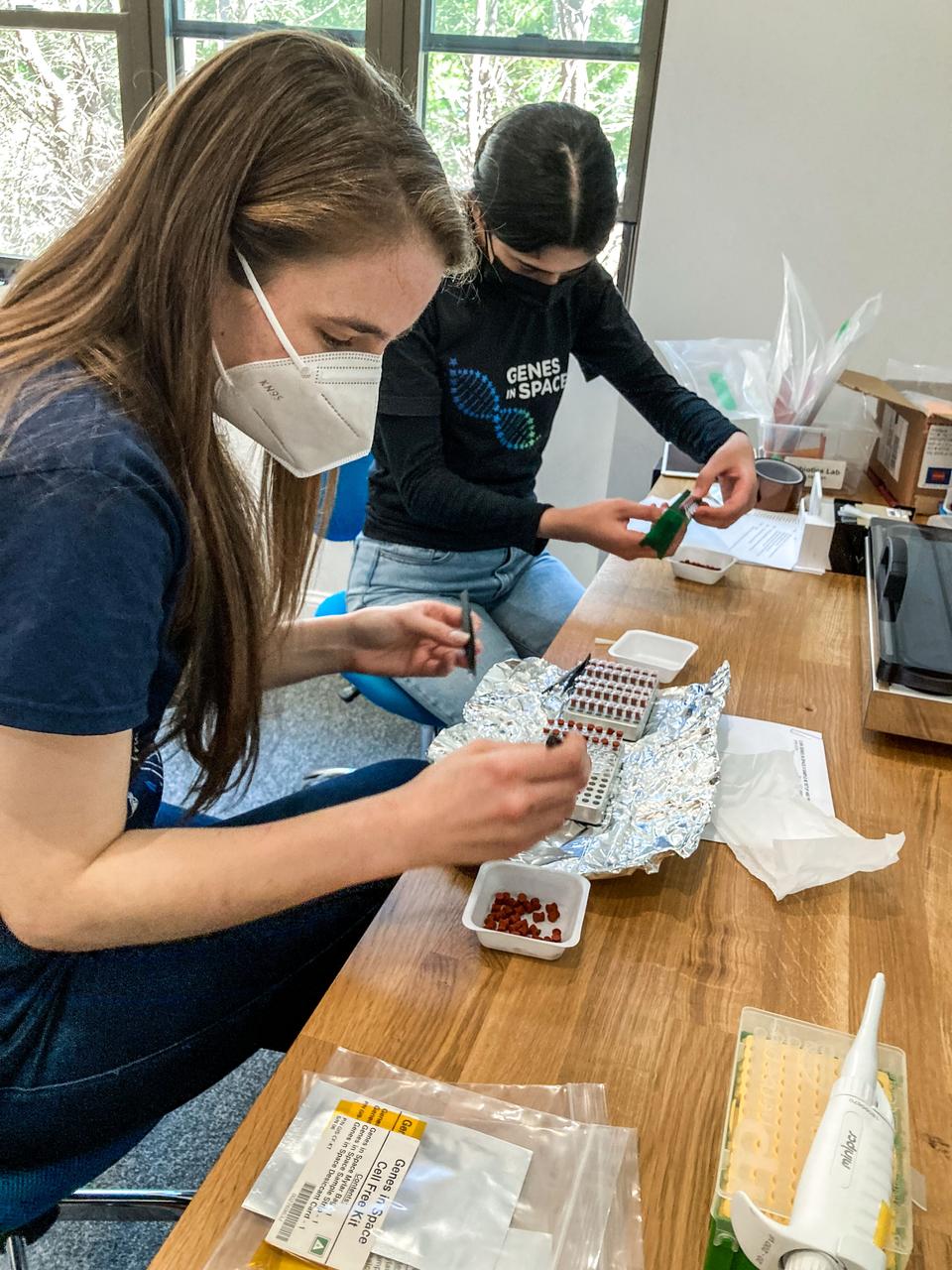
jsc2022e042477 (5/6/2022) --- Selin Kocalar, the student who designed the experiment on which Genes in Space-9 is based, readies her experimental samples for launch alongside her mentor, Bess Miller. Image courtesy of Genes in Space.
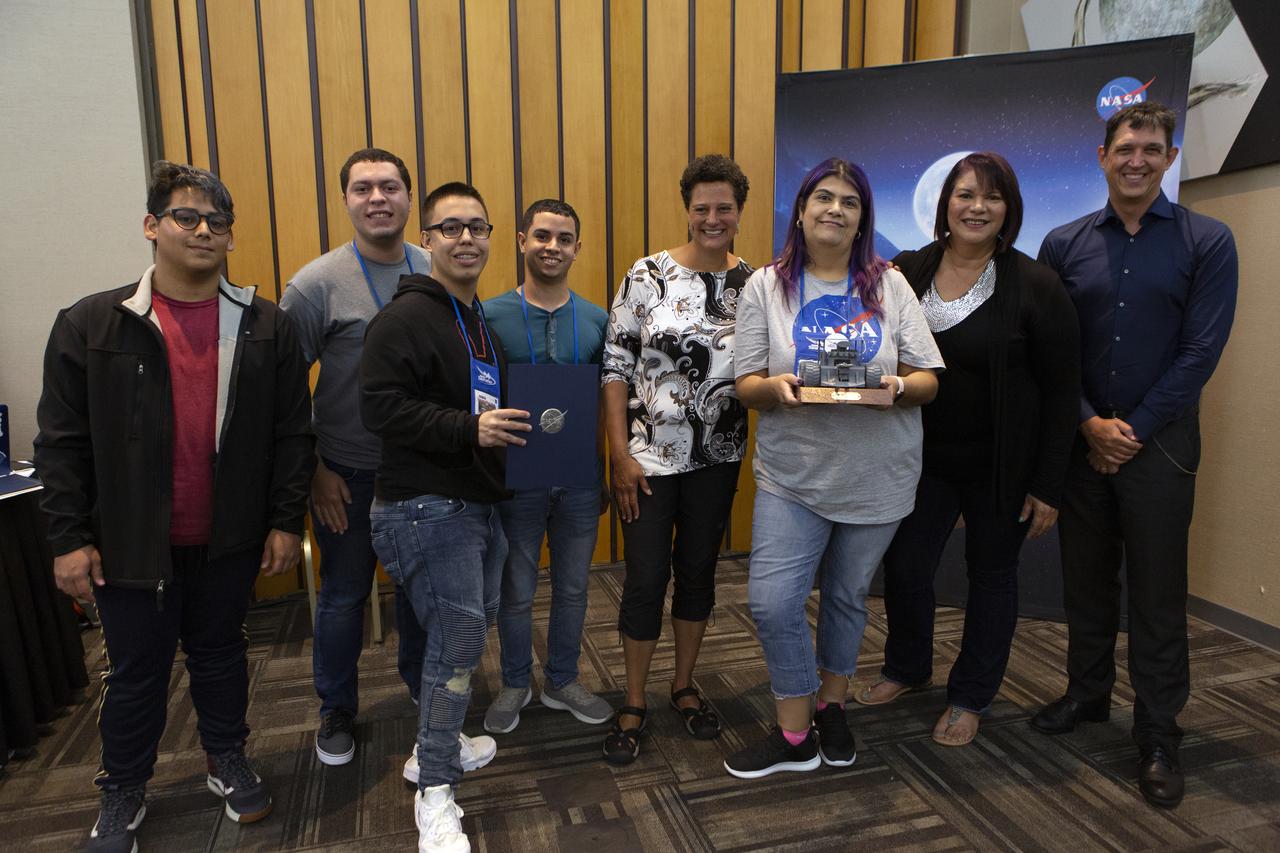
The Swarmathon team from the University of Puerto Rico at Arecibo received the Best Poster Award during the awards ceremony for NASA’s Swarmathon University Challenge IV, at the Kennedy Space Center Visitor Complex in Florida on June 12, 2019. Students and mentors from some of the Swarmathon teams were at Kennedy to participate in a student/mentor panel, hear from speakers, get a behind-the-scenes tour of Kennedy Space Center, dine with an astronaut and receive awards. For the challenge, university students developed algorithms for robotic swarms that are robust and adaptable like the foraging strategies of ant colonies. The fourth and final Swarmathon challenge was a combined virtual and physical competition. Fourth from right is Melanie Moses, a professor of computer science at the University of New Mexico, the host location for Swarmathon. Second from right is Theresa Martinez, engagement manager of the Minority University Research and Education Program, managed at Kennedy.
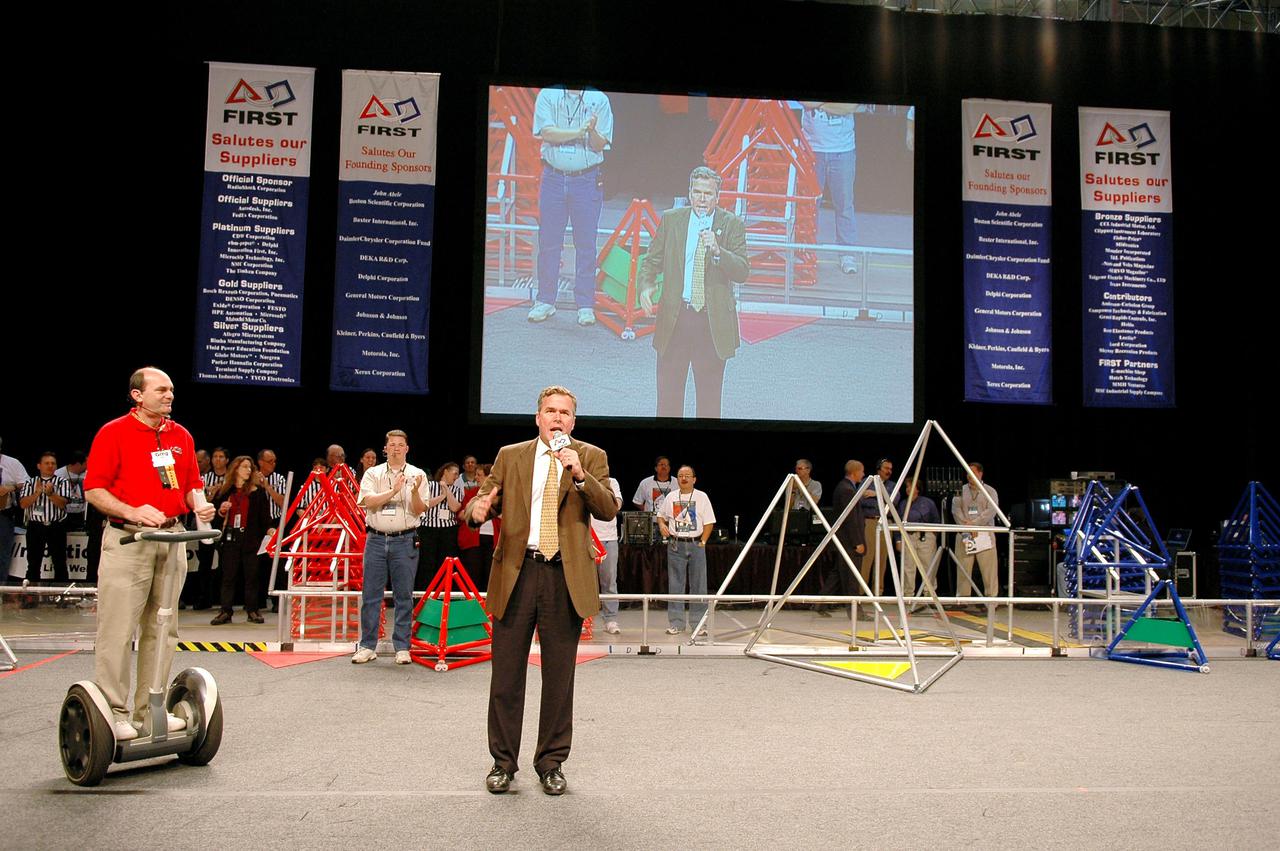
KENNEDY SPACE CENTER, FLA. - Florida Gov. Jeb Bush (right) kicks off the 2005 FIRST Robotics Regional Competition held at the University of Central Florida March 10-12. NASA and the University are co-hosts of the regional event. The competition stages short games played by remote-controlled robots, which are designed and built in six weeks by a team of high school students and a handful of engineers-mentors. The students control the robots on the playing field. NASA and the University of Central Florida are co-sponsors of the regional event. The competition stages short games played by remote-controlled robots, which are designed and built in six weeks by a team of high school students and a handful of engineers-mentors. The students control the robots on the playing field.
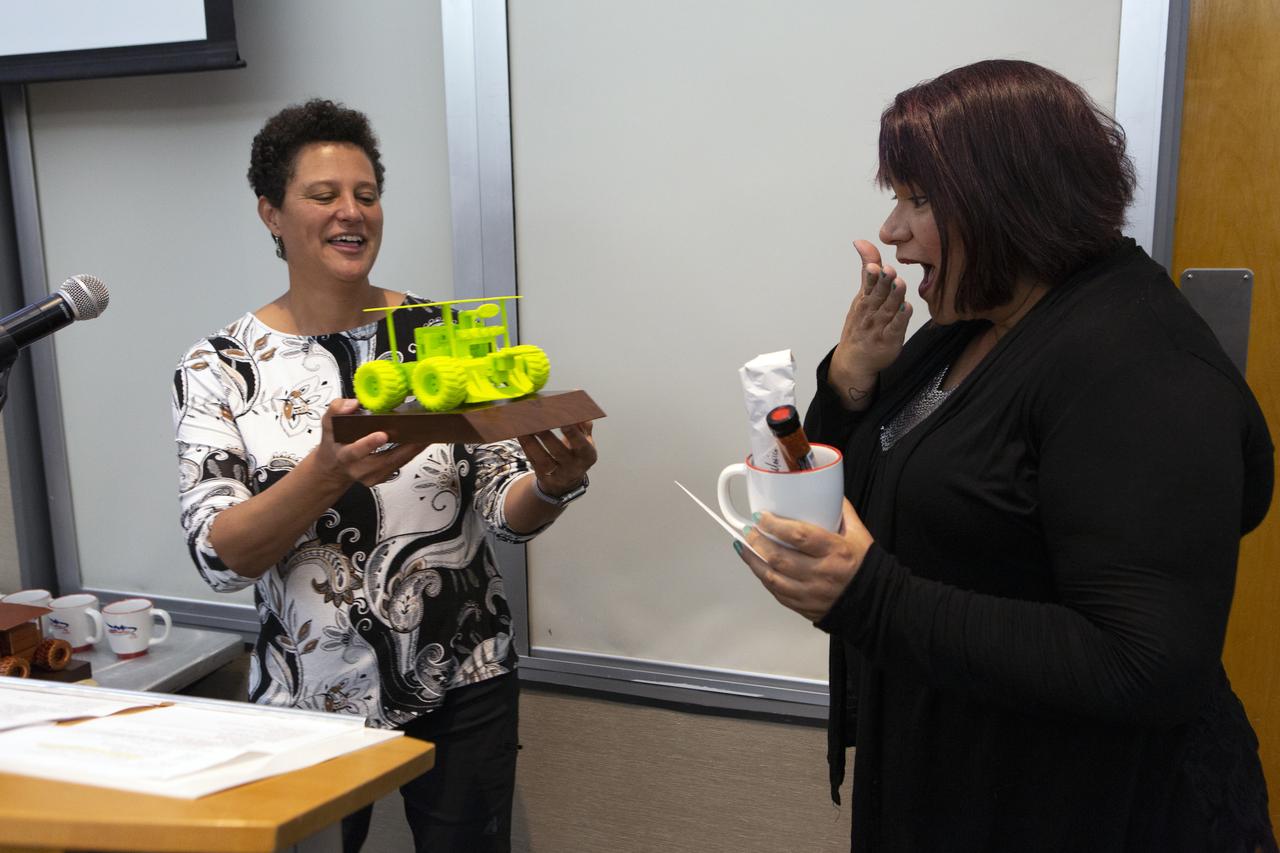
Melanie Moses, a professor of computer science at the University of New Mexico, presents a small replica of a Swarmie robot to Theresa Martinez, engagement manager of the Minority University Research and Education Program, during an awards ceremony at the Kennedy Space Center Visitor Complex in Florida on June 12, 2019. Swarmathon University Competition students and their mentors were at Kennedy to participate in a student/mentor panel, hear from speakers, get a behind-the-scenes tour of Kennedy Space Center, dine with an astronaut and receive awards. During Swarmathon University Challenge IV, students developed algorithms for robotic swarms that are robust and adaptable like the foraging strategies of ant colonies. The fourth and final Swarmathon was a combined virtual and physical competition, hosted by the University of New Mexico.
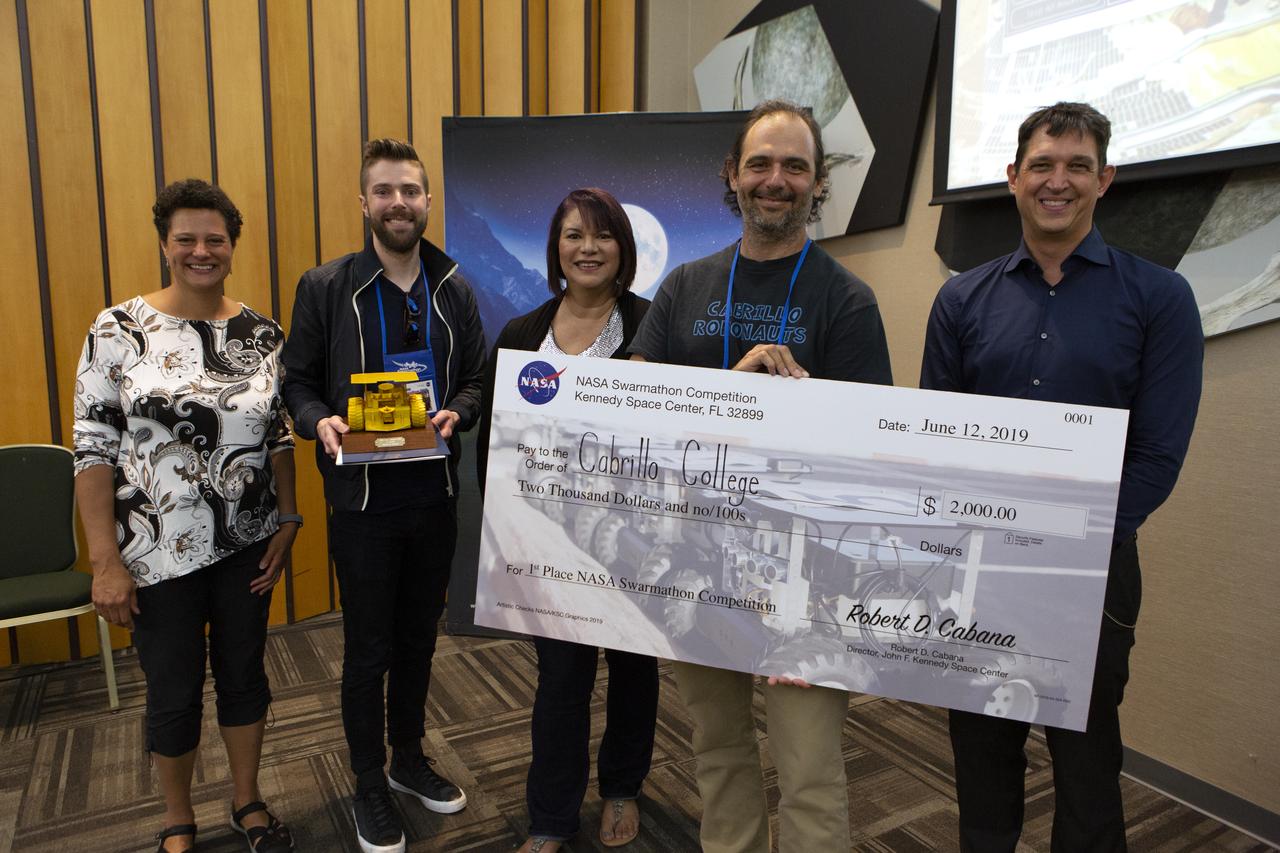
The Swarmathon team from Cabrillo College received first place in NASA’s Swarmathon University Challenge IV, during a ceremony at the Kennedy Space Center Visitor Complex in Florida on June 12, 2019. Students and mentors from some of the Swarmathon teams were at Kennedy to participate in a student/mentor panel, hear from speakers, get a behind-the-scenes tour of Kennedy Space Center, dine with an astronaut and receive awards. For the challenge, university students developed algorithms for robotic swarms that are robust and adaptable like the foraging strategies of ant colonies. The fourth and final Swarmathon challenge was a combined virtual and physical competition. At far right is Melanie Moses, a professor of computer science at the University of New Mexico, the host location for Swarmathon. Third from left is Theresa Martinez, engagement manager of the Minority University Research and Education Program, managed at Kennedy.
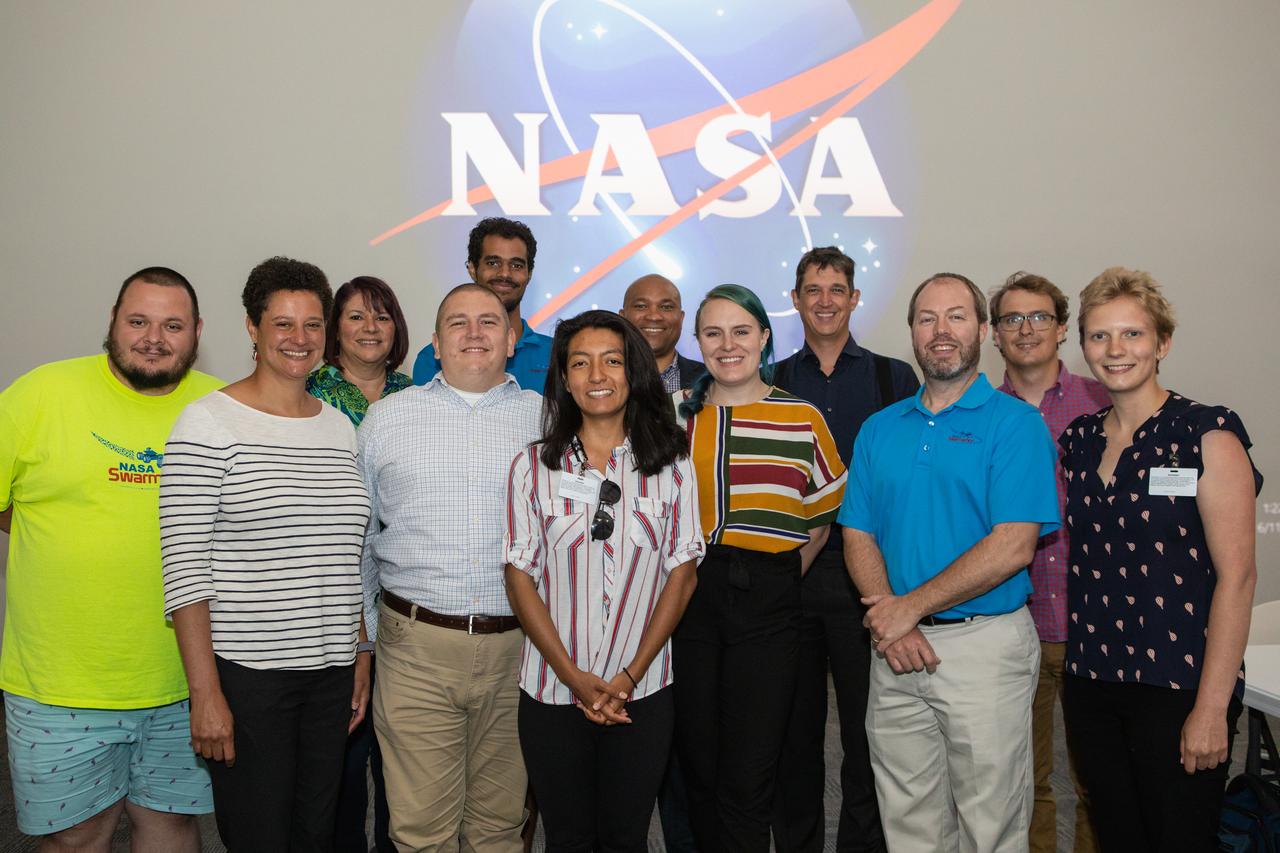
The University of New Mexico (UNM) faculty and students who administer the Swarmathon University Competition 2019 gather for a group photo on June 11, 2019 at the Kennedy Space Center Visitor Complex in Florida. Melanie Moses, faculty lead for Swarmathon and a professor of computer science at UNM, is second from left. Behind her is Theresa Martinez, Minority University Research and Education Program (MUREP) Science, Technology, Education and Math (STEM) engagement manager, at Kennedy Space Center. Swarmathon University Competition students and their mentors were at Kennedy to participate in a student/mentor panel, hear from speakers, get a behind-the-scenes tour of Kennedy Space Center, dine with an astronaut and receive awards. During Swarmathon University Challenge IV, students developed algorithms for robotic swarms that are robust and adaptable like the foraging strategies of ant colonies. The fourth and final Swarmathon was a combined virtual and physical competition, hosted by UNM.
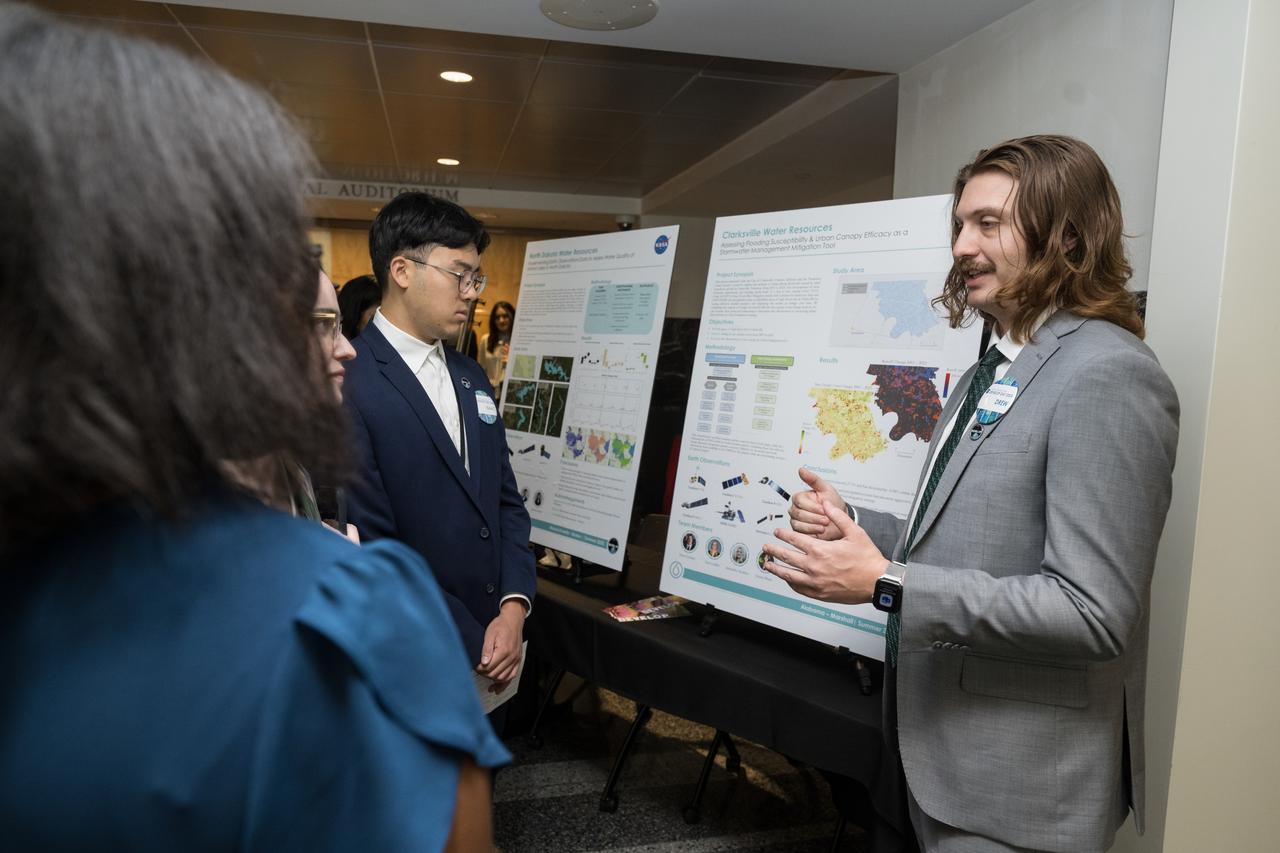
Students and young professionals share the results of their DEVELOP Project, Tuesday, August 5, 2025, at the Mary W. Jackson NASA Headquarters building in Washington. Every summer early career researchers from NASA’s DEVELOP National Program come to NASA Headquarters and present their research projects. DEVELOP is a training and development program where early career researchers work on Earth science projects, mentored by science advisors from NASA and partner agencies, and provide research results to local communities. Photo Credit: (NASA/Aubrey Gemignani)
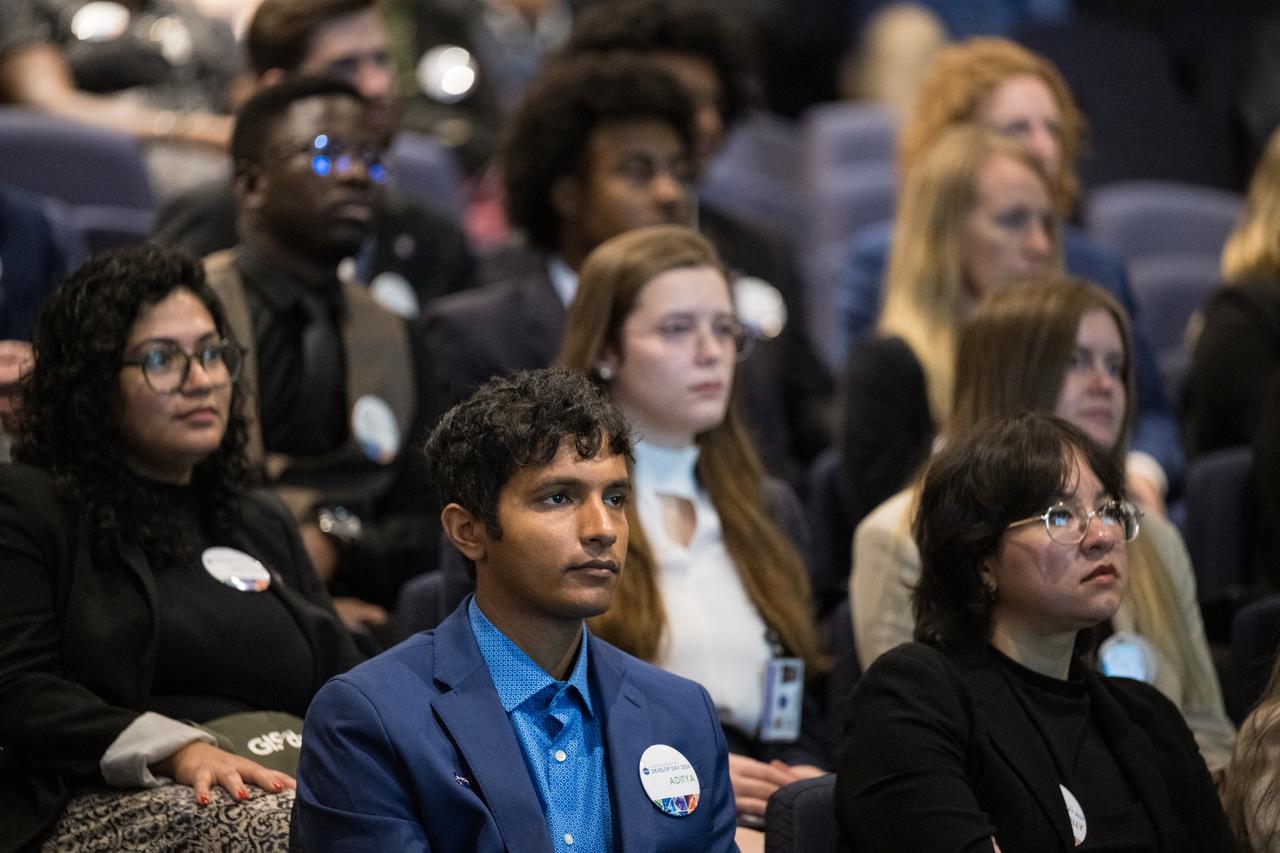
Audience members are seen during DEVELOP Day, Tuesday, August 6, 2024, at the Mary W. Jackson NASA Headquarters building in Washington. Every summer early career researchers from NASA’s DEVELOP National Program come to NASA Headquarters and present their research projects. DEVELOP is a training and development program where early career researchers work on Earth science projects, mentored by science advisors from NASA and partner agencies, and provide research results to local communities. Photo Credit: (NASA/Aubrey Gemignani)
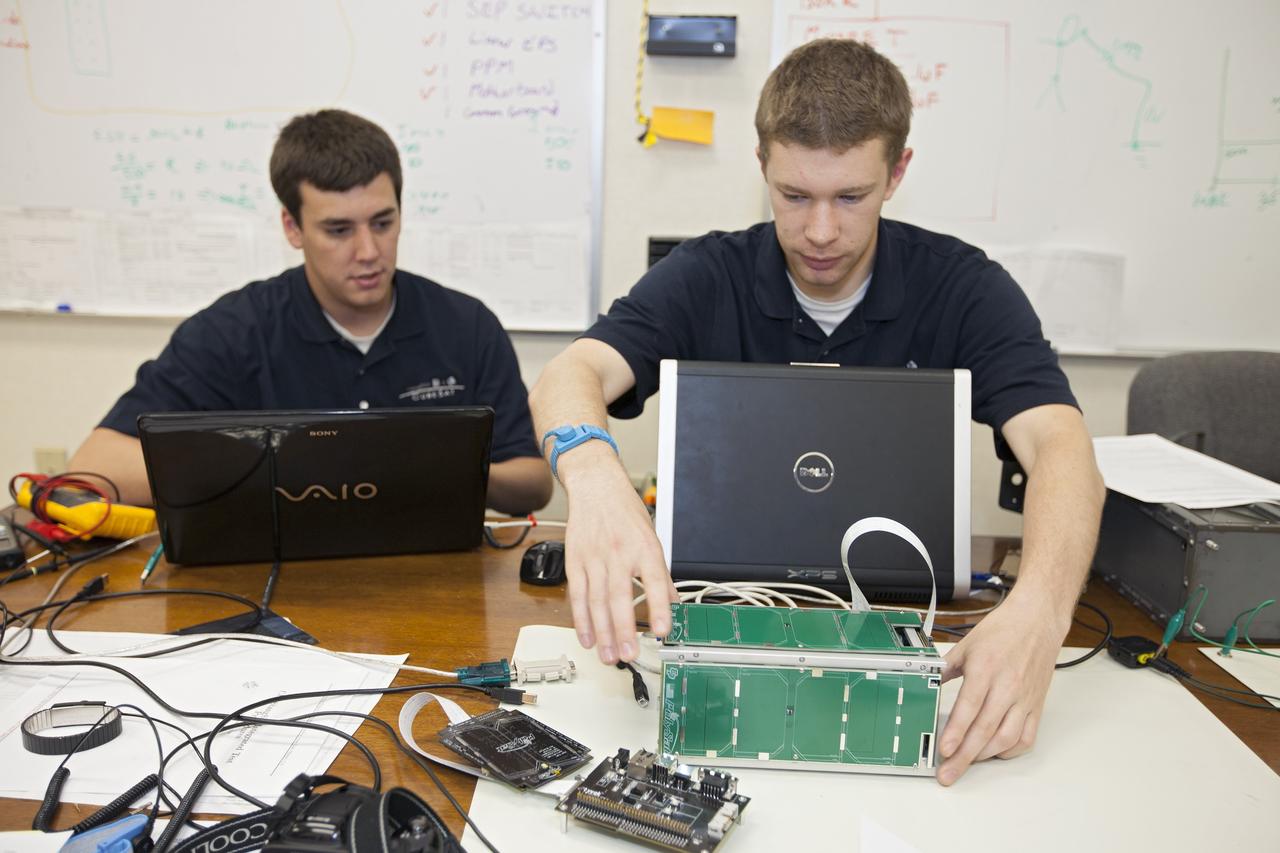
CAPE CANAVERAL, Fla. – Students from California Polytechnic Institute, or CalPoly, perform integration tests on a cubesat called PolySat they will fly on a suborbital mission in the summer. The satellite will work inside a small rocket to measure vibration and other data during launch. NASA engineers are acting as mentors for the project and some of the space agency's labs at Kennedy Space Center, including this one inside the Operations and Checkout Building, are being used by the teams. Photo credit: NASA/Kim Shiflett
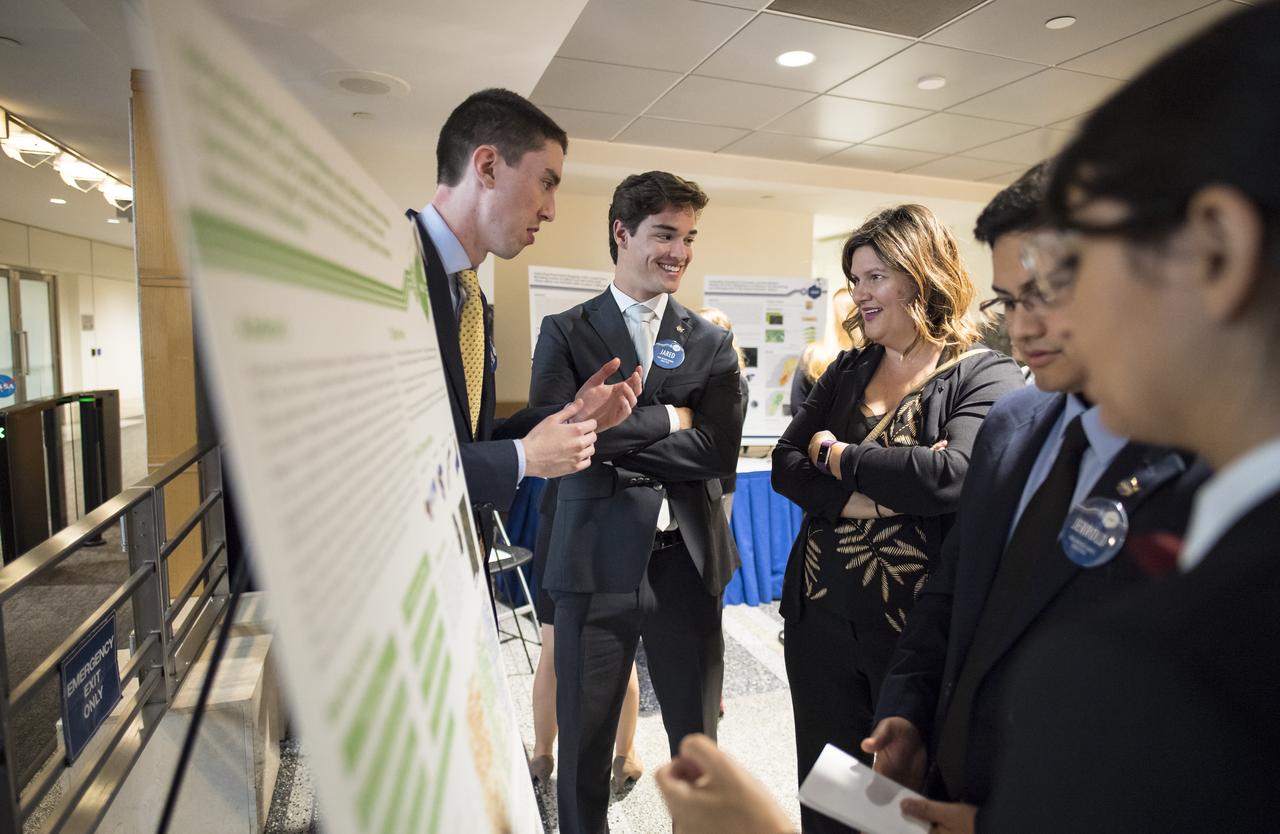
Students and young professionals discuss their projects at the Earth Science Applications Showcase Wednesday, August 1, 2018 at NASA Headquarters in Washington. Every summer, participants in NASA’s Applied Sciences’ DEVELOP National Program come to NASA Headquarters and present their research projects. DEVELOP is a training and development program where students work on Earth science research projects, mentored by science advisers from NASA and partner agencies, and extend research results to local communities. Photo Credit: (NASA/Aubrey Gemignani)
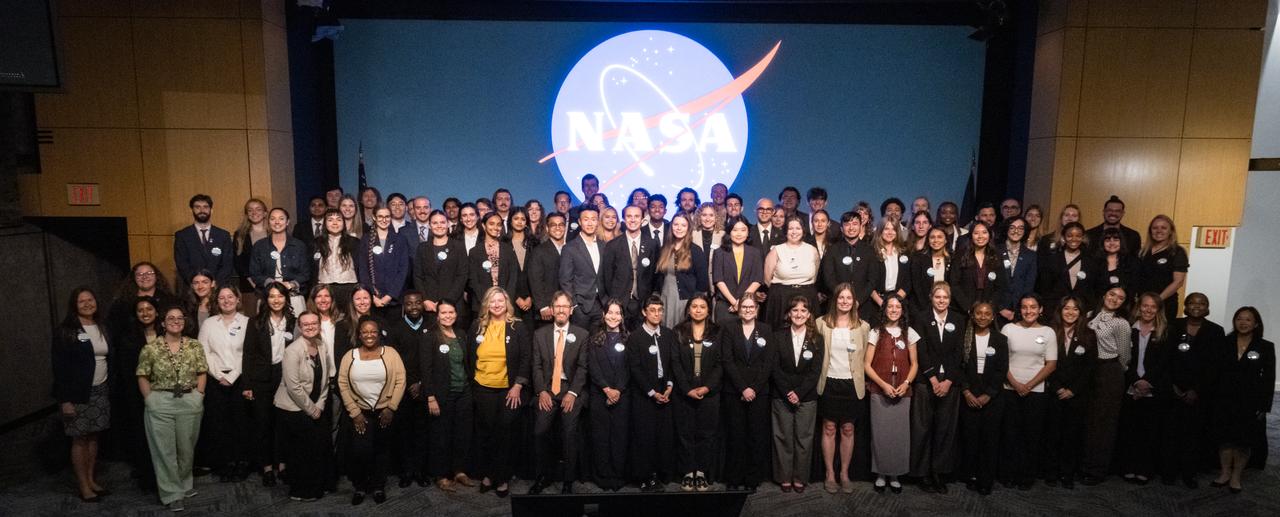
speaks about his/her DEVELOP Project, Tuesday, August 5, 2025, at the Mary W. Jackson NASA Headquarters building in Washington. Every summer early career researchers from NASA’s DEVELOP National Program come to NASA Headquarters and present their research projects. DEVELOP is a training and development program where early career researchers work on Earth science projects, mentored by science advisors from NASA and partner agencies, and provide research results to local communities. Photo Credit: (NASA/Aubrey Gemignani)

Students and young professionals discuss their projects at the Earth Science Applications Showcase Wednesday, August 1, 2018 at NASA Headquarters in Washington. Every summer, participants in NASA’s Applied Sciences’ DEVELOP National Program come to NASA Headquarters and present their research projects. DEVELOP is a training and development program where students work on Earth science research projects, mentored by science advisers from NASA and partner agencies, and extend research results to local communities. Photo Credit: (NASA/Aubrey Gemignani)
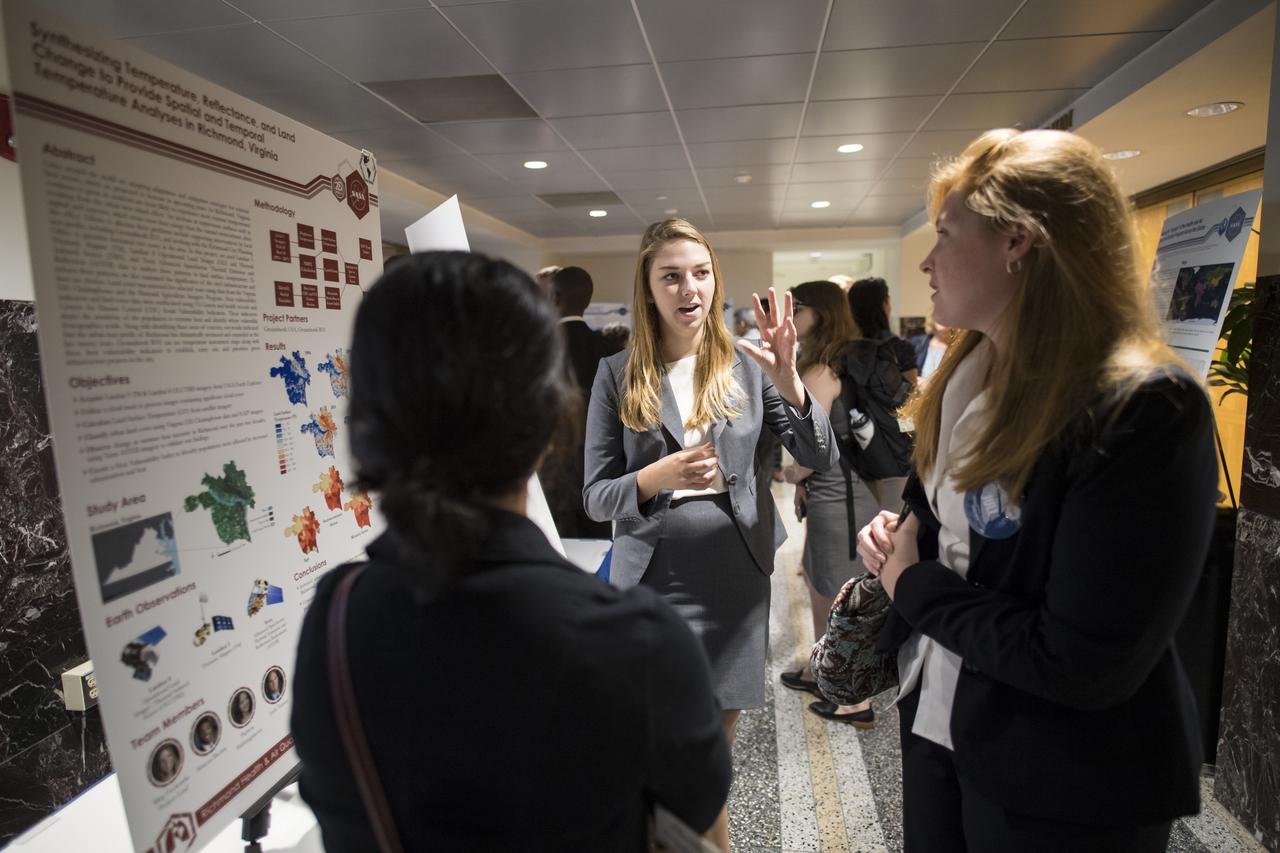
Students and young professionals discuss their projects at the Earth Science Applications Showcase Wednesday, August 1, 2018 at NASA Headquarters in Washington. Every summer, participants in NASA’s Applied Sciences’ DEVELOP National Program come to NASA Headquarters and present their research projects. DEVELOP is a training and development program where students work on Earth science research projects, mentored by science advisers from NASA and partner agencies, and extend research results to local communities. Photo Credit: (NASA/Aubrey Gemignani)
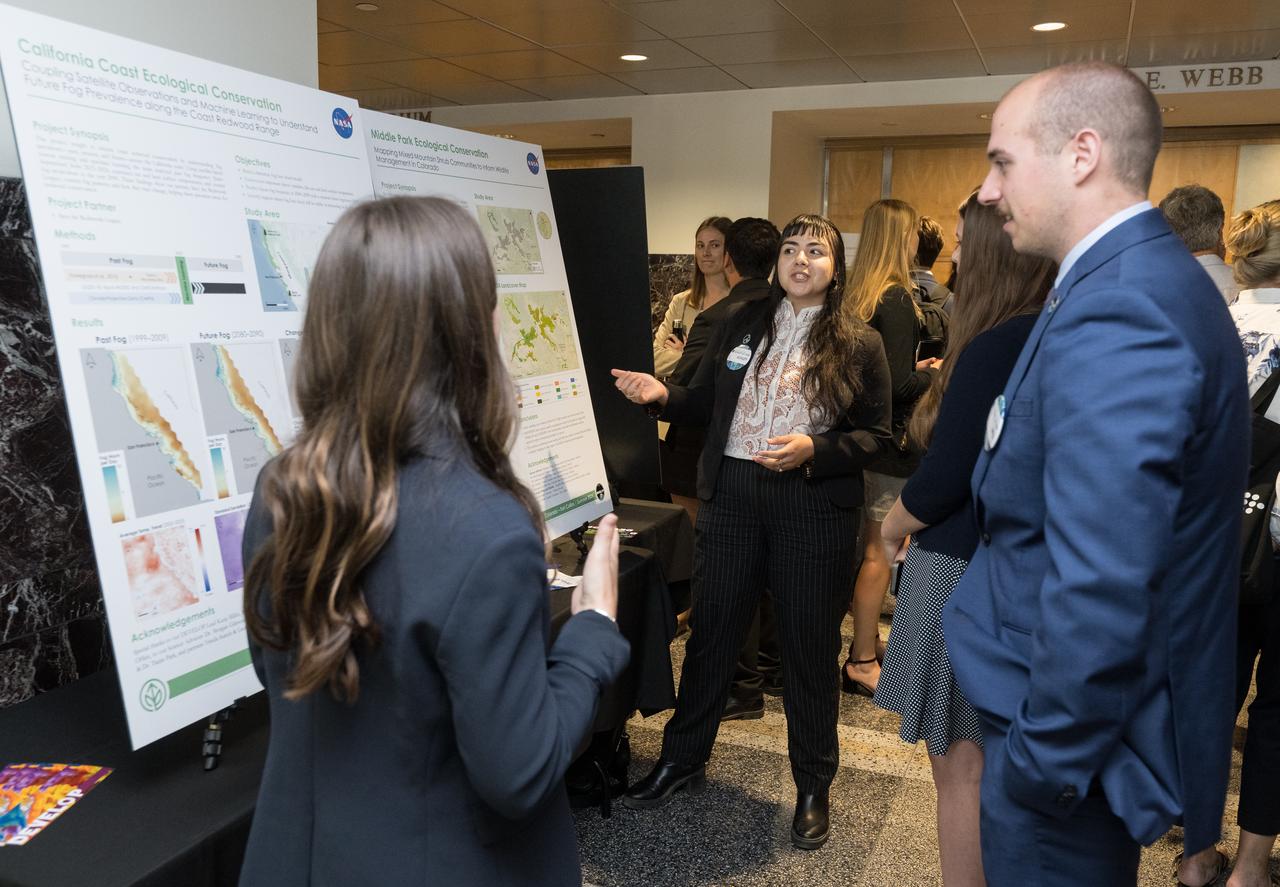
Students and young professionals share the results of their DEVELOP Project, Tuesday, August 5, 2025, at the Mary W. Jackson NASA Headquarters building in Washington. Every summer early career researchers from NASA’s DEVELOP National Program come to NASA Headquarters and present their research projects. DEVELOP is a training and development program where early career researchers work on Earth science projects, mentored by science advisors from NASA and partner agencies, and provide research results to local communities. Photo Credit: (NASA/Aubrey Gemignani)
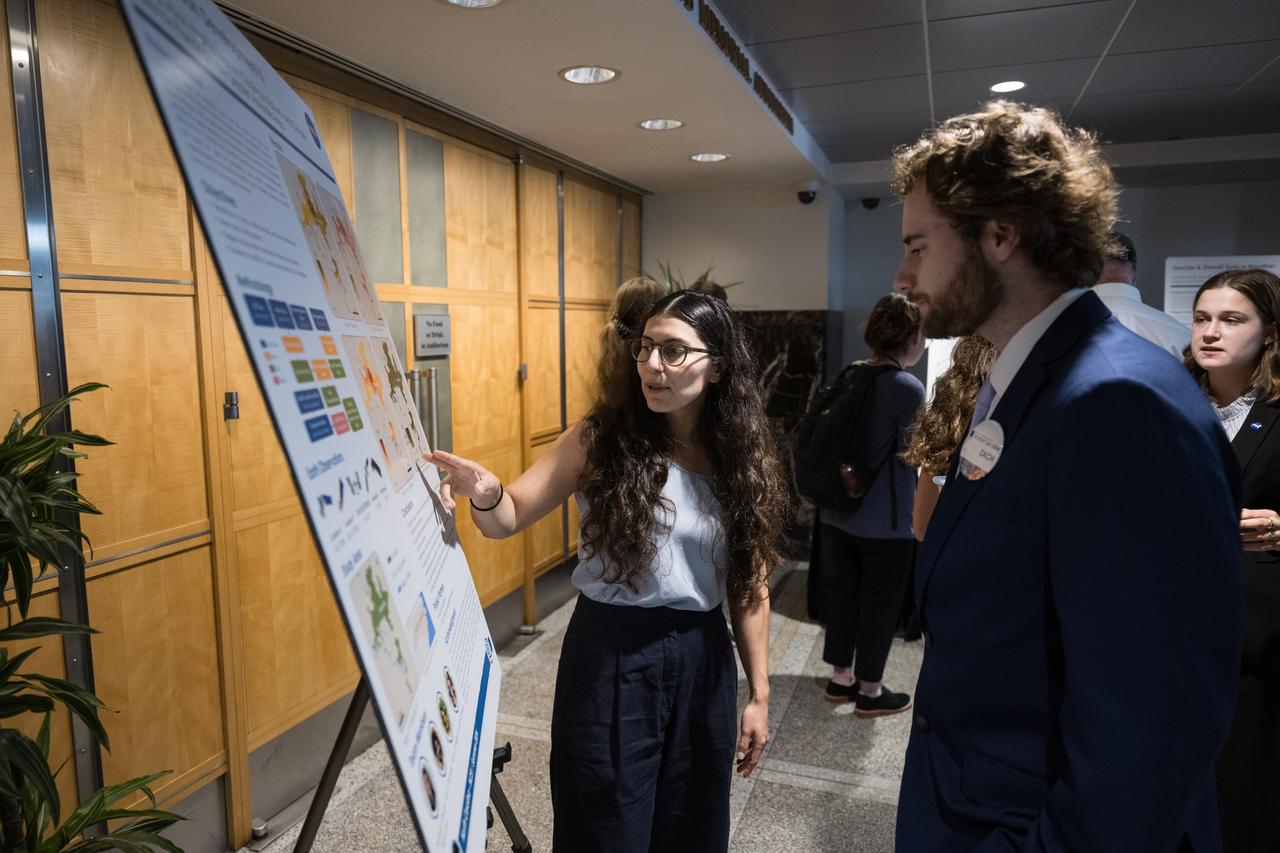
A DEVELOP researcher speaks about her project, Tuesday, August 6, 2024, at the Mary W. Jackson NASA Headquarters building in Washington. Every summer early career researchers from NASA’s DEVELOP National Program come to NASA Headquarters and present their research projects. DEVELOP is a training and development program where early career researchers work on Earth science projects, mentored by science advisors from NASA and partner agencies, and provide research results to local communities. Photo Credit: (NASA/Aubrey Gemignani)
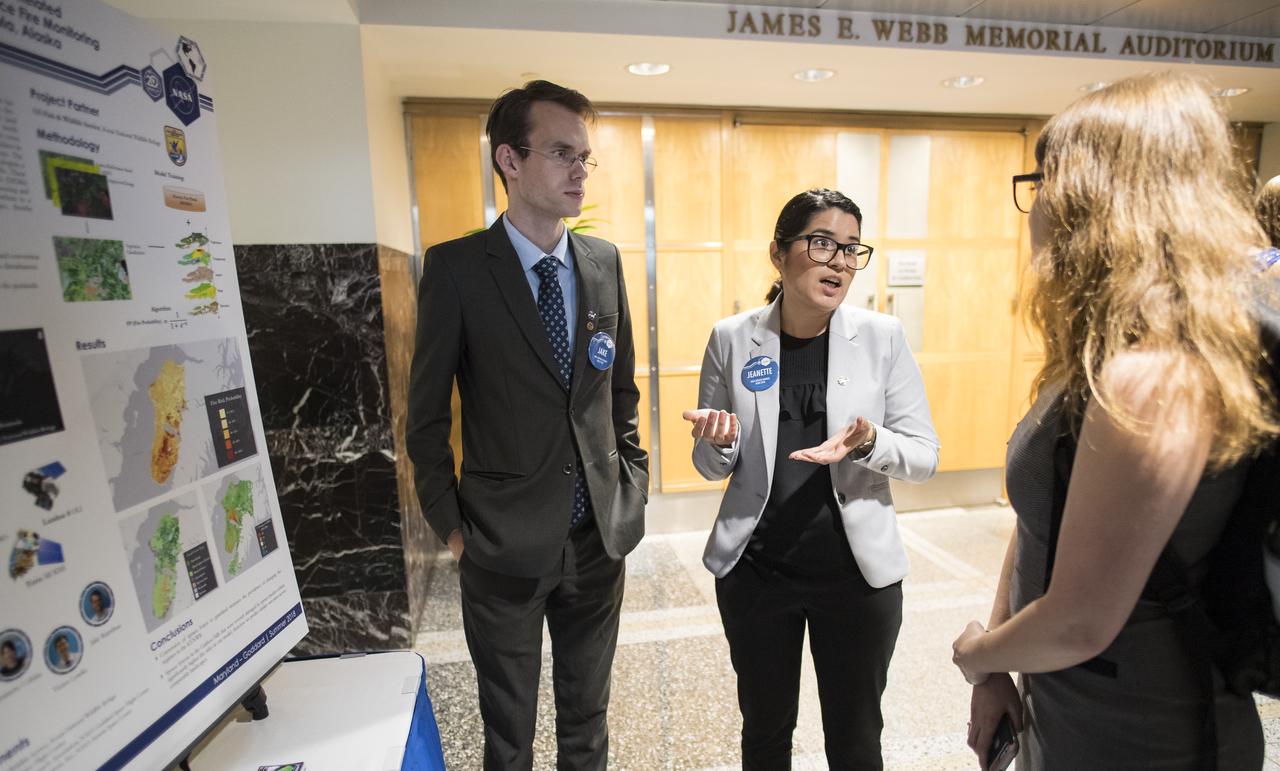
Students and young professionals discuss their projects at the Earth Science Applications Showcase Wednesday, August 1, 2018 at NASA Headquarters in Washington. Every summer, participants in NASA’s Applied Sciences’ DEVELOP National Program come to NASA Headquarters and present their research projects. DEVELOP is a training and development program where students work on Earth science research projects, mentored by science advisers from NASA and partner agencies, and extend research results to local communities. Photo Credit: (NASA/Aubrey Gemignani)
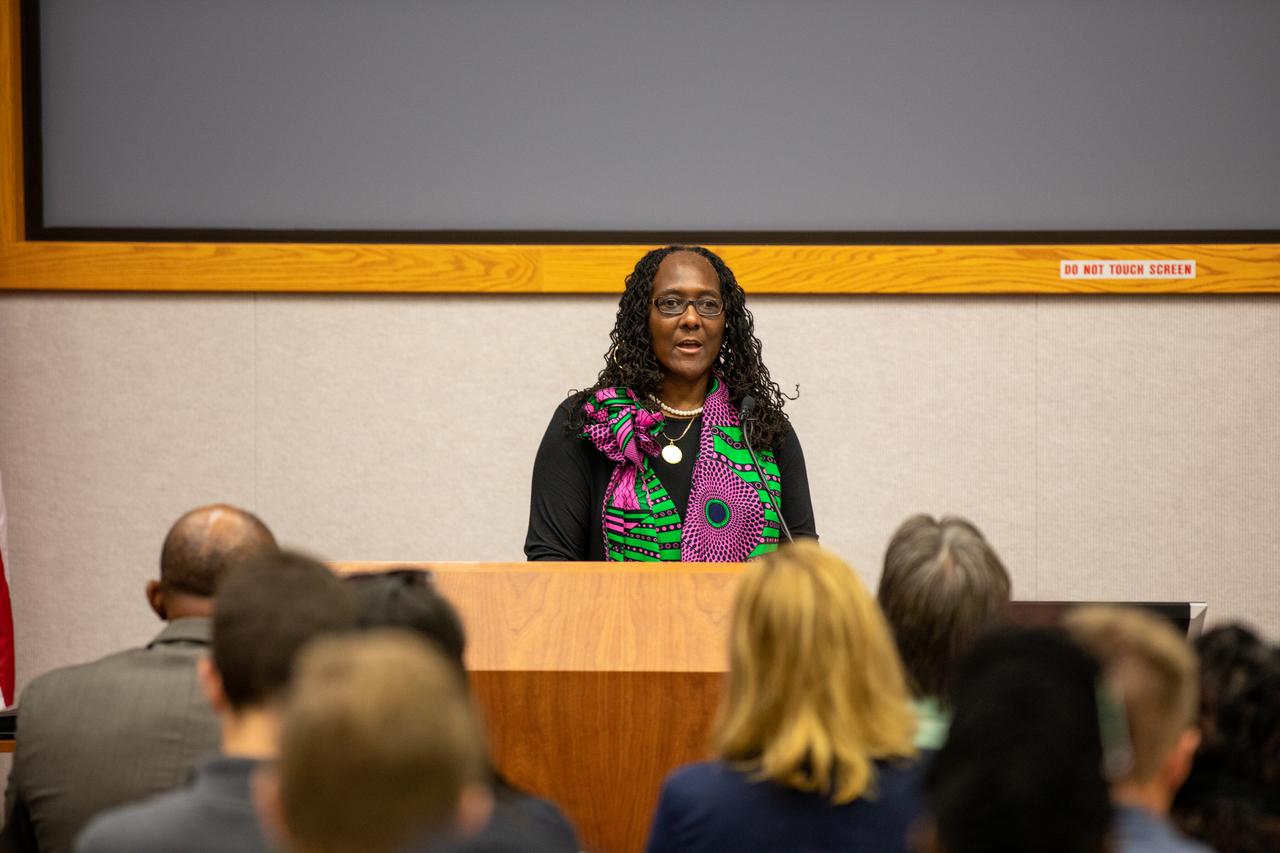
During a Black History Month celebration on Feb. 18, 2020 at NASA’s Kennedy Space Center in Florida, Hortense Diggs, director of Communication and Public Engagement, commemorates the contributions of former NASA employee and mentor Roslyn McKinney. The program was organized by the Black Employee Strategy Team (BEST), one of the center’s employee resource groups. This year’s theme was “African Americans and the Vote.” Keynote speaker was James Jennings, former NASA associate administrator for Institutions and Management and Kennedy’s former deputy director. Jennings shared advice with workers and managers.
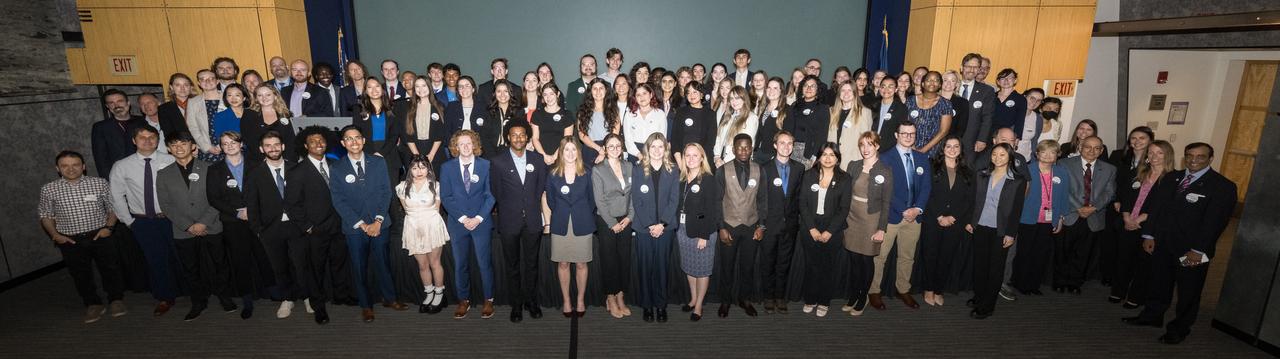
Participants and leaders in the DEVELOP program pose for a group photo, Tuesday, August 6, 2024, at the Mary W. Jackson NASA Headquarters building in Washington. Every summer early career researchers from NASA’s DEVELOP National Program come to NASA Headquarters and present their research projects. DEVELOP is a training and development program where early career researchers work on Earth science projects, mentored by science advisors from NASA and partner agencies, and provide research results to local communities. Photo Credit: (NASA/Aubrey Gemignani)
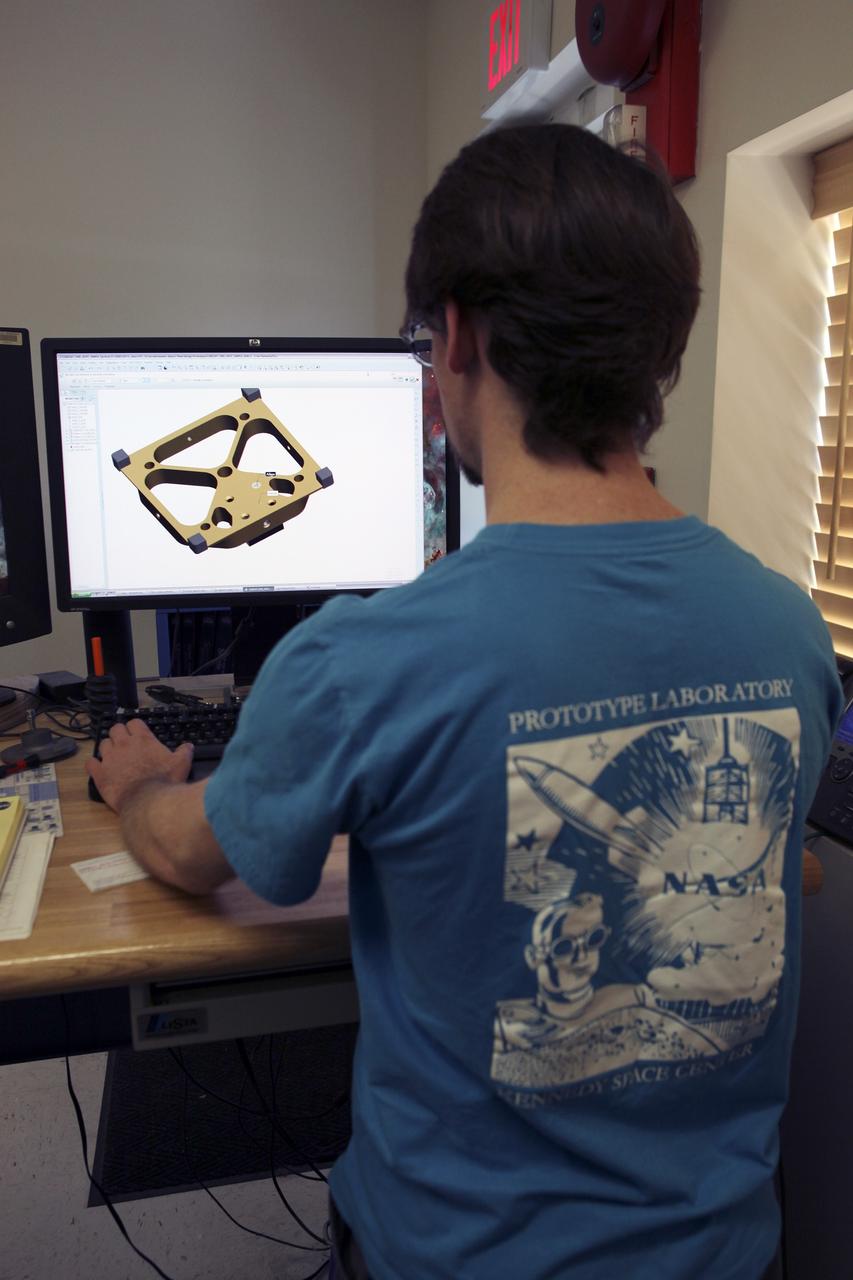
CAPE CANAVERAL, Fla. – A component is machined for a cubesat that is being assembled for launch in June. The component, being machined at NASA's Kennedy Space Center in Florida will hold accelerometers for the StangSat, which is a project whose development includes students from Merritt Island High School in Florida. The satellite will work inside a small rocket to measure vibration and collect other data during launch. NASA engineers are acting as mentors for the project. Photo credit: NASA/Dmitri Gerondidakis
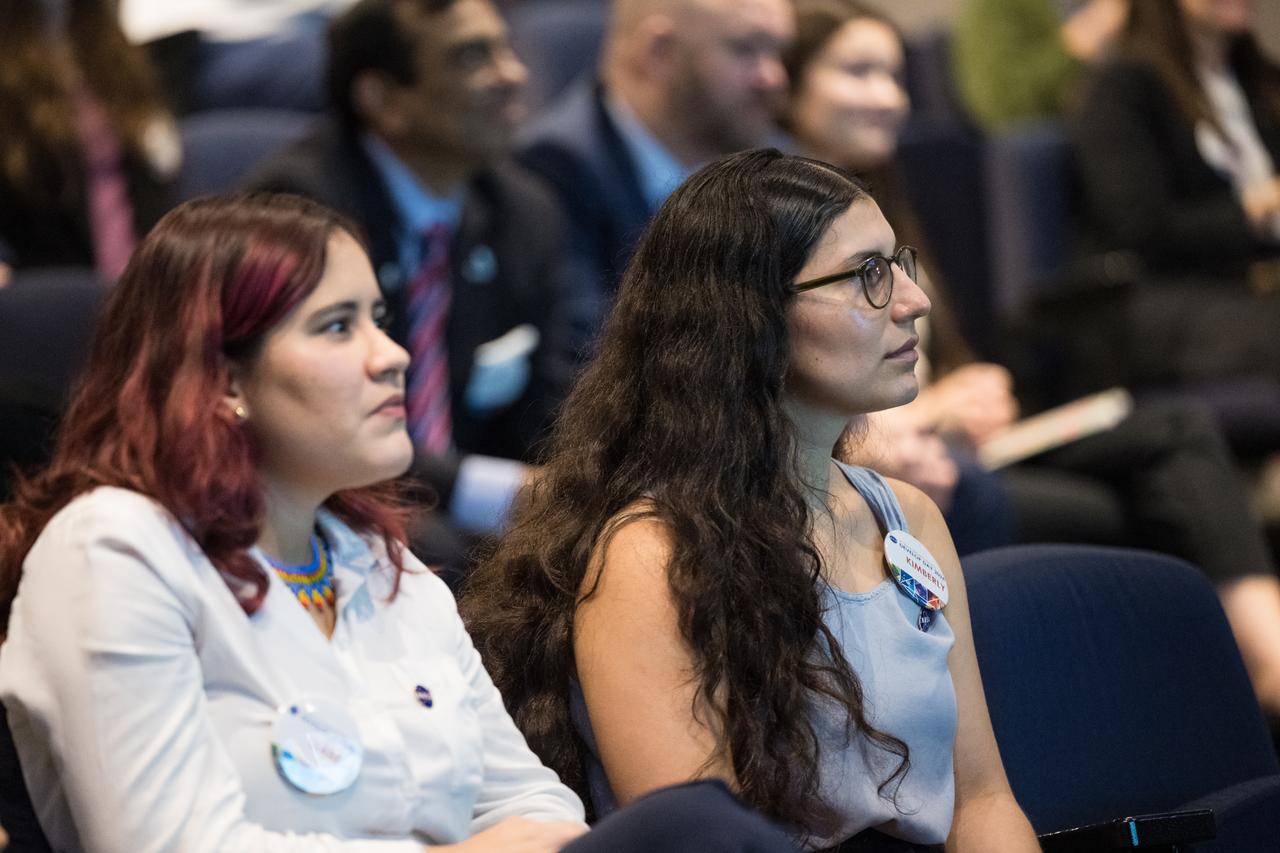
Audience members are seen during DEVELOP Day, Tuesday, August 6, 2024, at the Mary W. Jackson NASA Headquarters building in Washington. Every summer early career researchers from NASA’s DEVELOP National Program come to NASA Headquarters and present their research projects. DEVELOP is a training and development program where early career researchers work on Earth science projects, mentored by science advisors from NASA and partner agencies, and provide research results to local communities. Photo Credit: (NASA/Aubrey Gemignani)
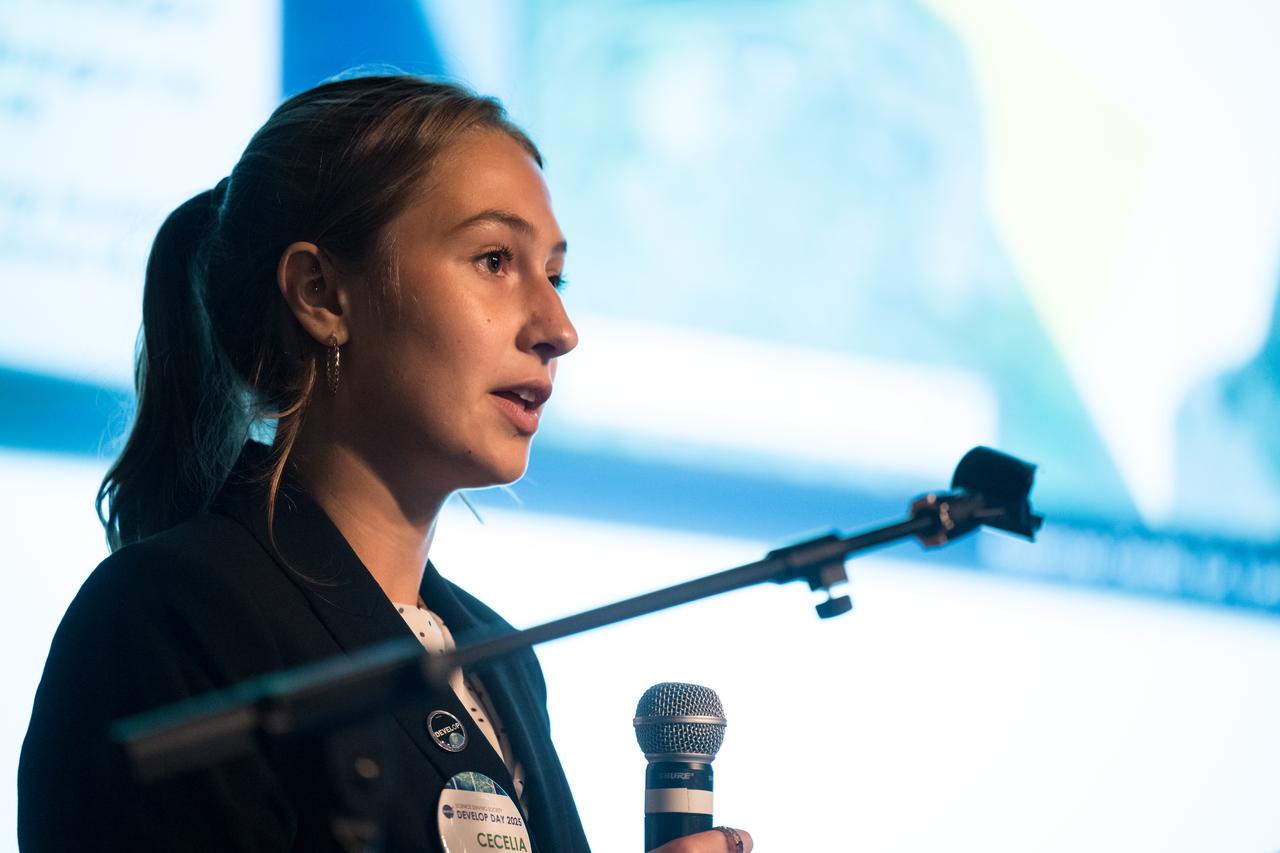
Cecelia Paparella provides remarks about her DEVELOP Project, Tuesday, August 6, 2024, at the Mary W. Jackson NASA Headquarters building in Washington. Every summer early career researchers from NASA’s DEVELOP National Program come to NASA Headquarters and present their research projects. DEVELOP is a training and development program where early career researchers work on Earth science projects, mentored by science advisors from NASA and partner agencies, and provide research results to local communities. Photo Credit: (NASA/Aubrey Gemignani)
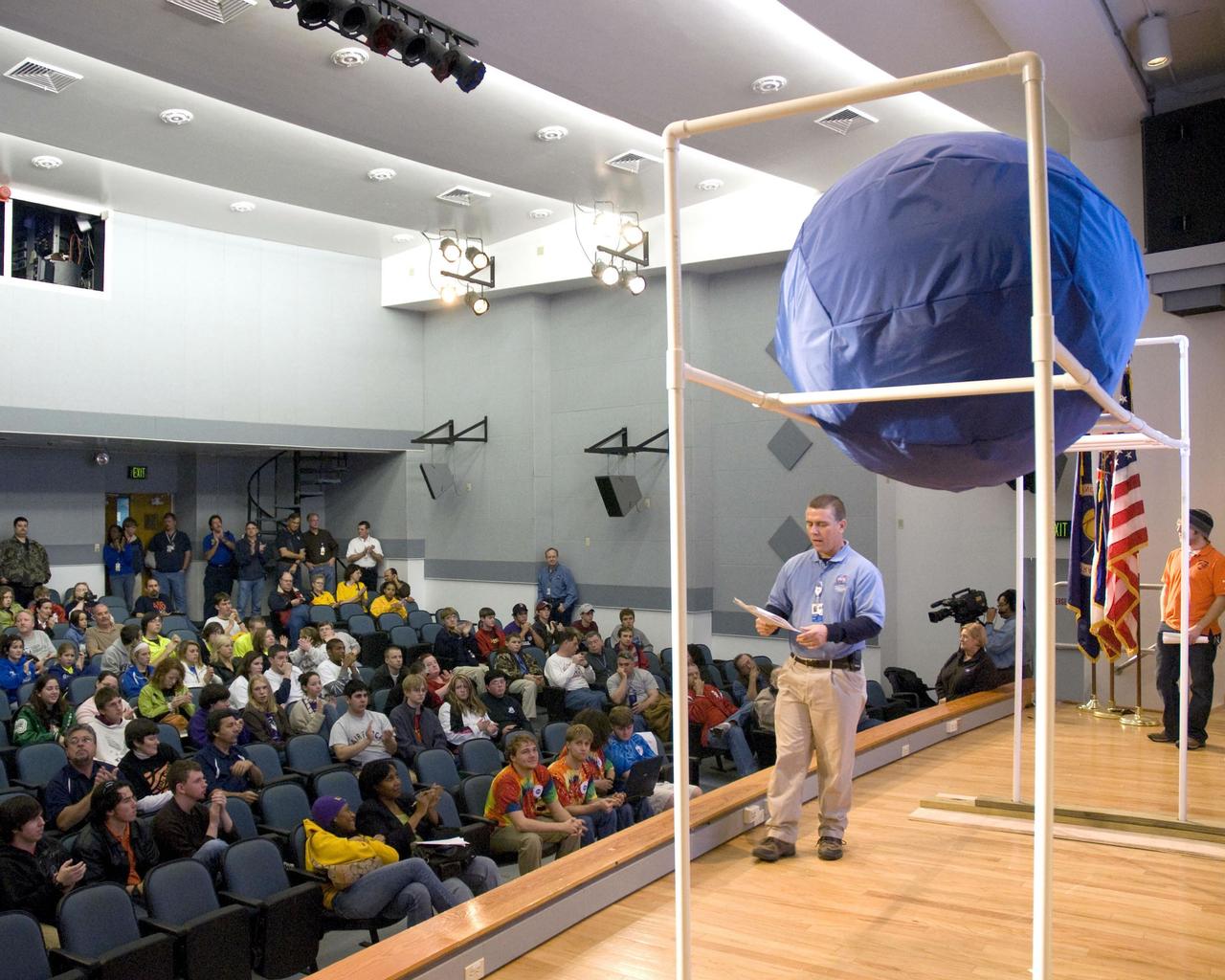
Master of ceremonies Steve Culivan, an employee of Penn State University and aerospace education specialist at NASA's Stennis Space Center, talked to a crowd of more than 300 who attended the Jan. 5 kickoff of the 2008 FIRST (For Inspiration and Recognition of Science and Technology) Robotics Competition season. The students, coaches and mentors from three states who attended also watched a live broadcast from FIRST's Manchester, N.H., headquarters that revealed this year's competition challenge, and received parts kits from which they built robots to meet the challenge.
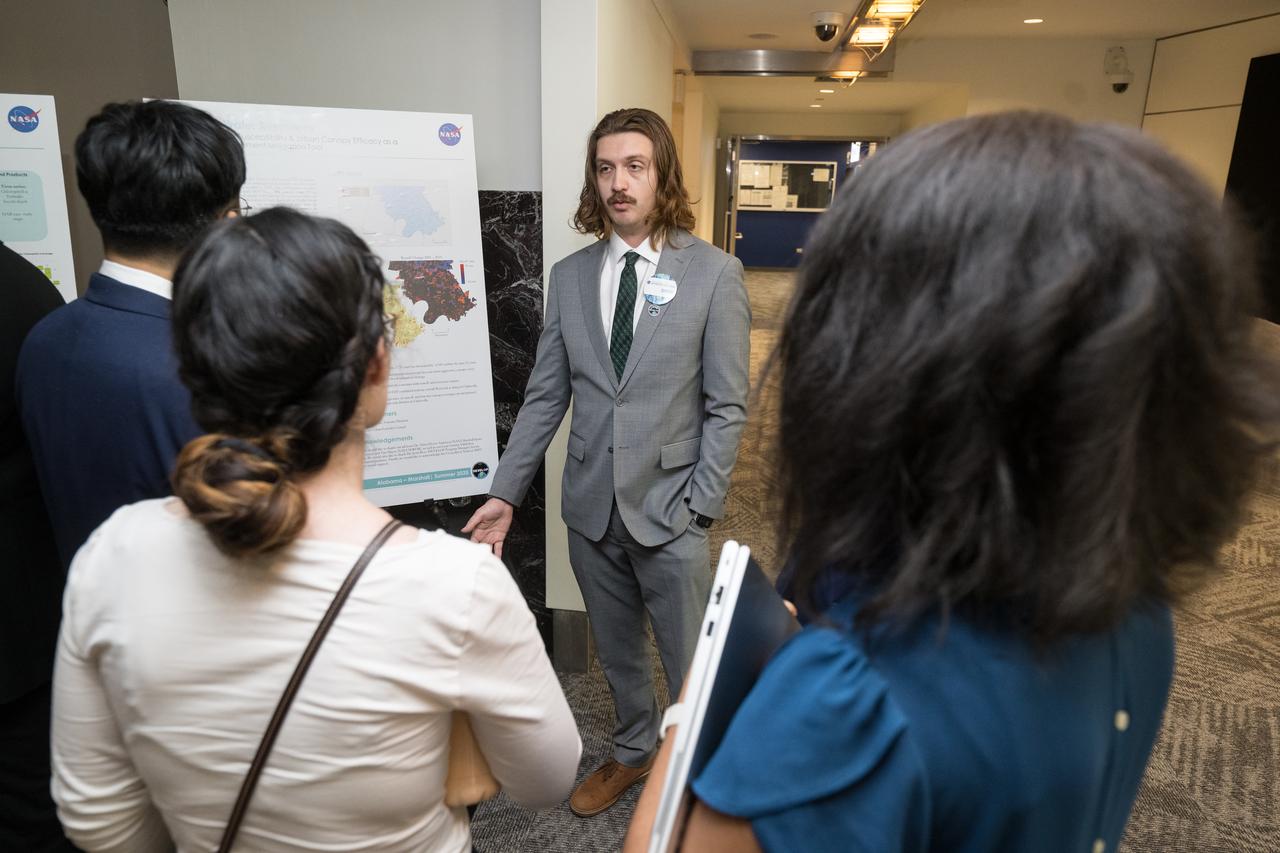
Students and young professionals share the results of their DEVELOP Project, Tuesday, August 5, 2025, at the Mary W. Jackson NASA Headquarters building in Washington. Every summer early career researchers from NASA’s DEVELOP National Program come to NASA Headquarters and present their research projects. DEVELOP is a training and development program where early career researchers work on Earth science projects, mentored by science advisors from NASA and partner agencies, and provide research results to local communities. Photo Credit: (NASA/Aubrey Gemignani)
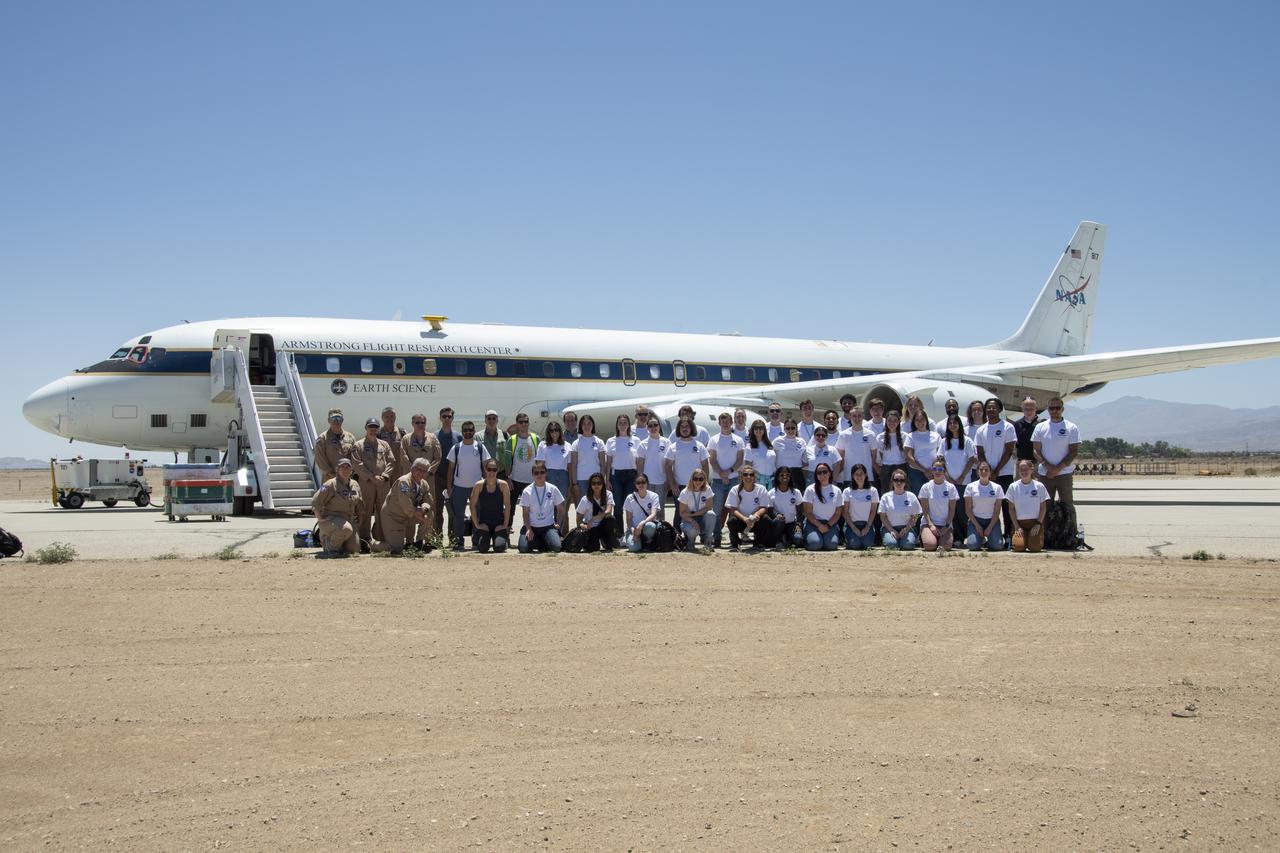
A group of university students and mentors flew aboard NASA Armstrong Flight Research Center’s DC-8 aircraft to study air quality as part of NASA’s Student Airborne Research Program (SARP). Based at NASA’s Armstrong Building 703 in Palmdale, California, the DC-8 flew over the Central Valley to measure pollution and monitor air quality on Tuesday, June 21, 2022.
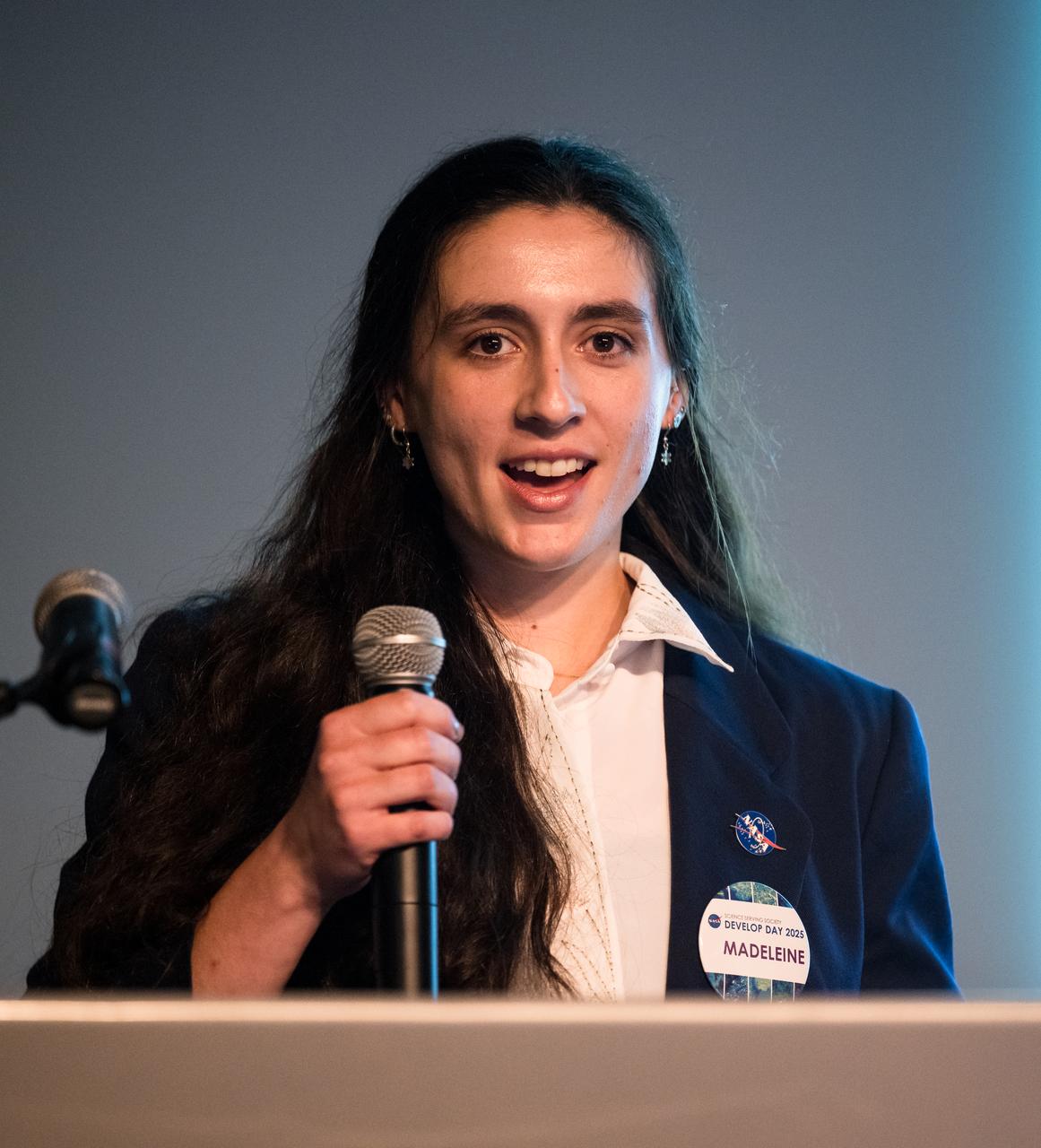
Madeleine Festin provides remarks about her DEVELOP Project, Tuesday, August 6, 2024, at the Mary W. Jackson NASA Headquarters building in Washington. Every summer early career researchers from NASA’s DEVELOP National Program come to NASA Headquarters and present their research projects. DEVELOP is a training and development program where early career researchers work on Earth science projects, mentored by science advisors from NASA and partner agencies, and provide research results to local communities. Photo Credit: (NASA/Aubrey Gemignani)
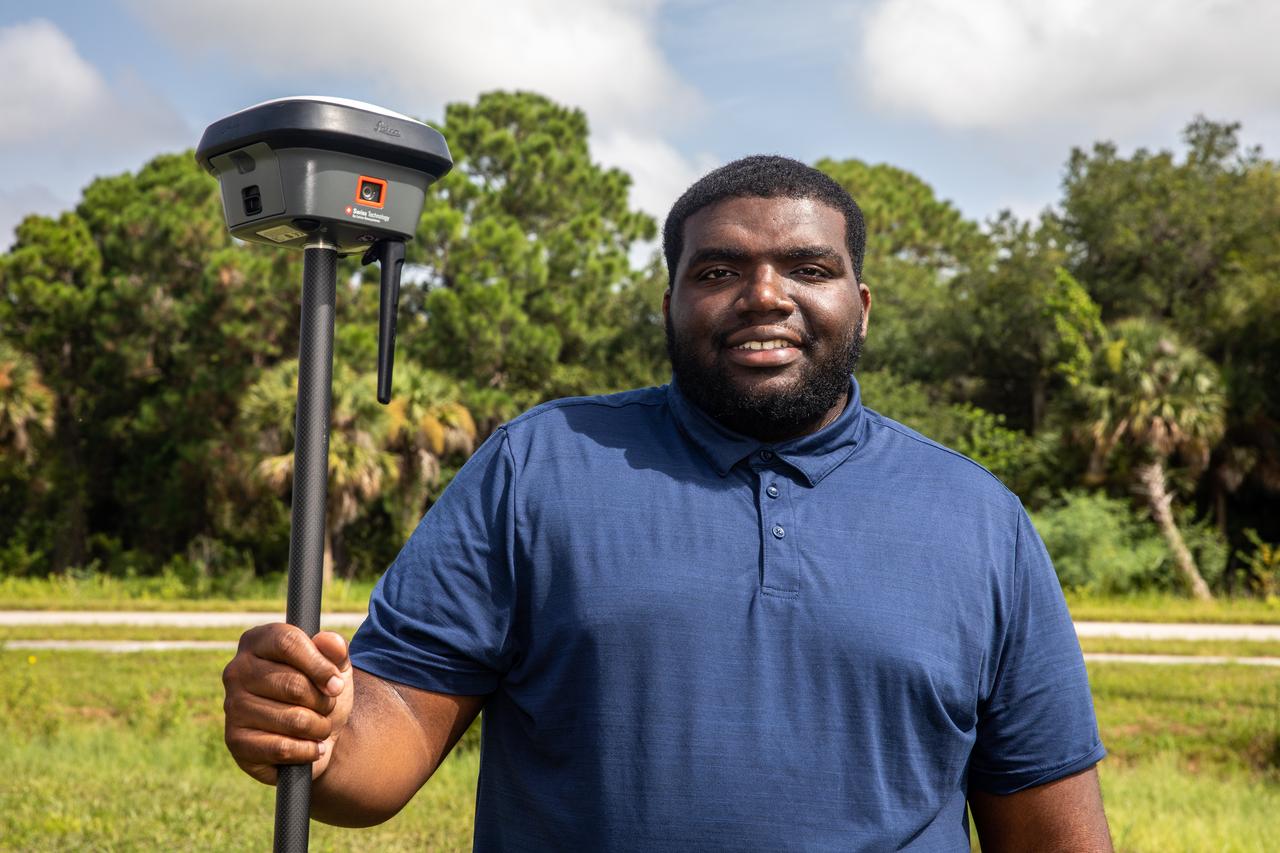
Rayshaun Wheeler said he created “forever-lasting memories” during his 10-week work experience at NASA’s Kennedy Space Center in Florida. A Farmville, Virginia, native, Wheeler is about halfway through his doctoral course work at the University of Virginia. At Kennedy, he worked under mentor Jason Schuler at Kennedy’s Granular Mechanics and Regolith Operations Lab in the center’s Swamp Works facility.

Students and young professionals discuss their projects at the Earth Science Applications Showcase Wednesday, August 1, 2018 at NASA Headquarters in Washington. Every summer, participants in NASA’s Applied Sciences’ DEVELOP National Program come to NASA Headquarters and present their research projects. DEVELOP is a training and development program where students work on Earth science research projects, mentored by science advisers from NASA and partner agencies, and extend research results to local communities. Photo Credit: (NASA/Aubrey Gemignani)
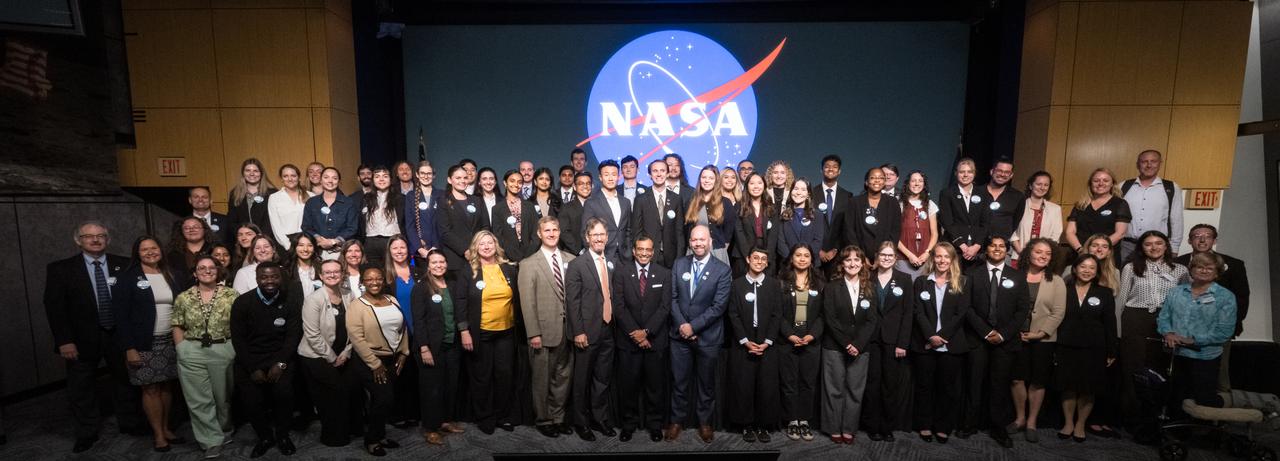
speaks about his/her DEVELOP Project, Tuesday, August 5, 2025, at the Mary W. Jackson NASA Headquarters building in Washington. Every summer early career researchers from NASA’s DEVELOP National Program come to NASA Headquarters and present their research projects. DEVELOP is a training and development program where early career researchers work on Earth science projects, mentored by science advisors from NASA and partner agencies, and provide research results to local communities. Photo Credit: (NASA/Aubrey Gemignani)
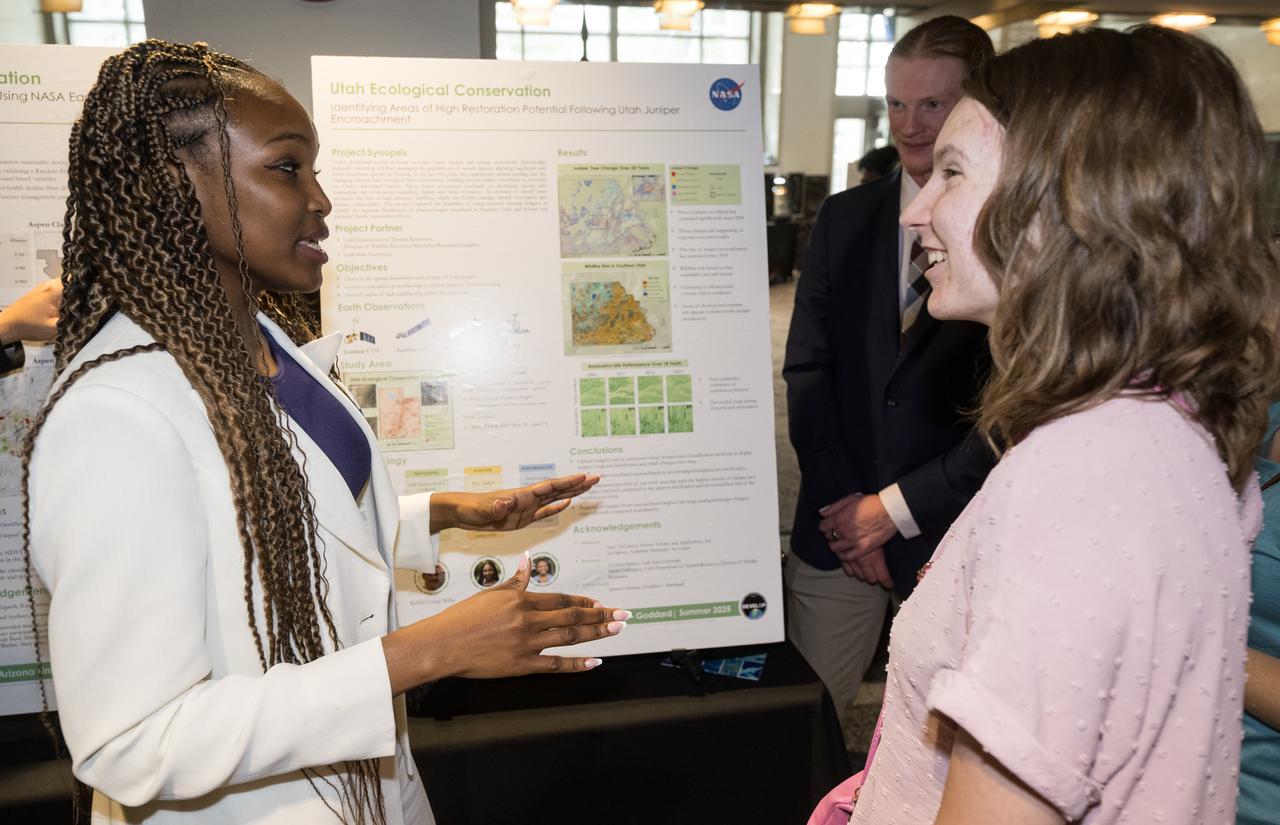
Students and young professionals share the results of their DEVELOP Project, Tuesday, August 5, 2025, at the Mary W. Jackson NASA Headquarters building in Washington. Every summer early career researchers from NASA’s DEVELOP National Program come to NASA Headquarters and present their research projects. DEVELOP is a training and development program where early career researchers work on Earth science projects, mentored by science advisors from NASA and partner agencies, and provide research results to local communities. Photo Credit: (NASA/Aubrey Gemignani)

Cecelia Paparella provides remarks about her DEVELOP Project, Tuesday, August 6, 2024, at the Mary W. Jackson NASA Headquarters building in Washington. Every summer early career researchers from NASA’s DEVELOP National Program come to NASA Headquarters and present their research projects. DEVELOP is a training and development program where early career researchers work on Earth science projects, mentored by science advisors from NASA and partner agencies, and provide research results to local communities. Photo Credit: (NASA/Aubrey Gemignani)
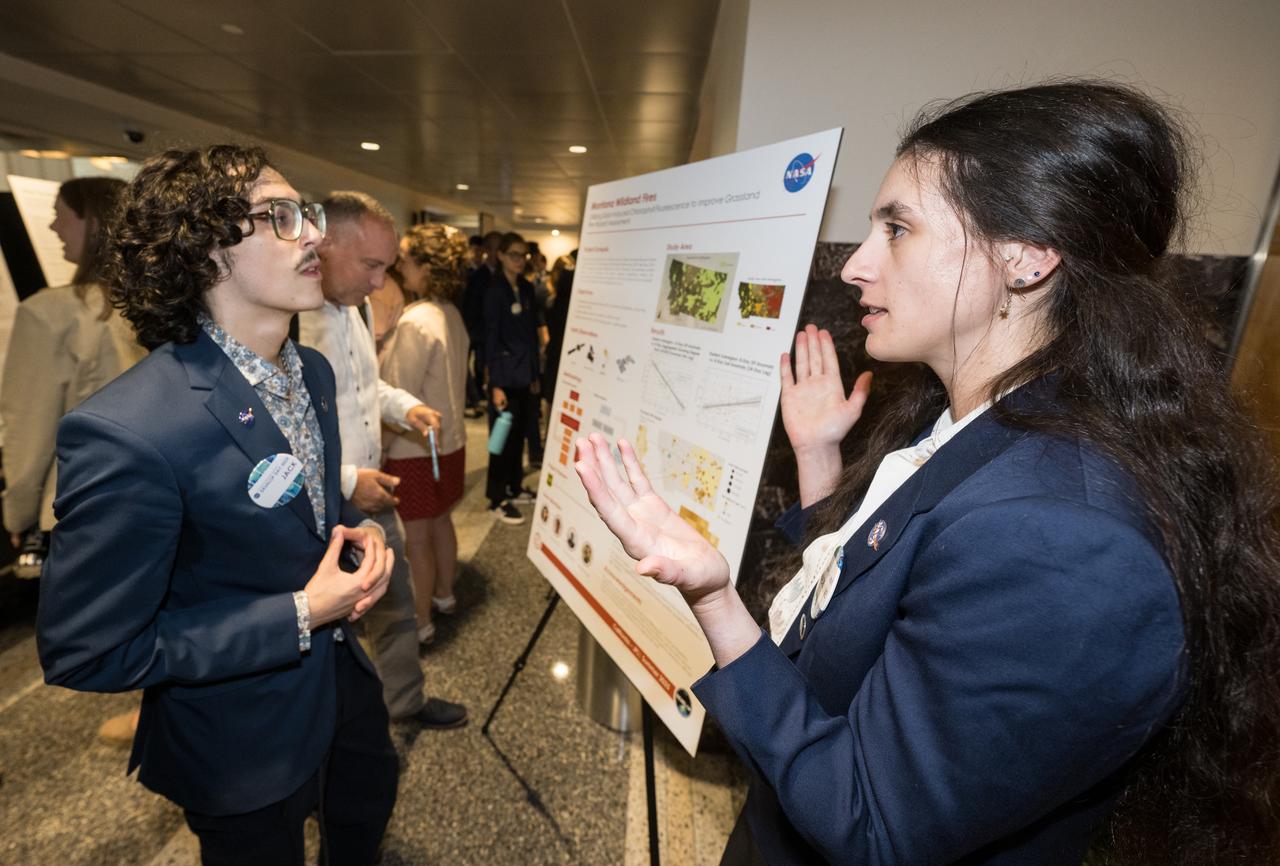
Students and young professionals share the results of their DEVELOP Project, Tuesday, August 5, 2025, at the Mary W. Jackson NASA Headquarters building in Washington. Every summer early career researchers from NASA’s DEVELOP National Program come to NASA Headquarters and present their research projects. DEVELOP is a training and development program where early career researchers work on Earth science projects, mentored by science advisors from NASA and partner agencies, and provide research results to local communities. Photo Credit: (NASA/Aubrey Gemignani)
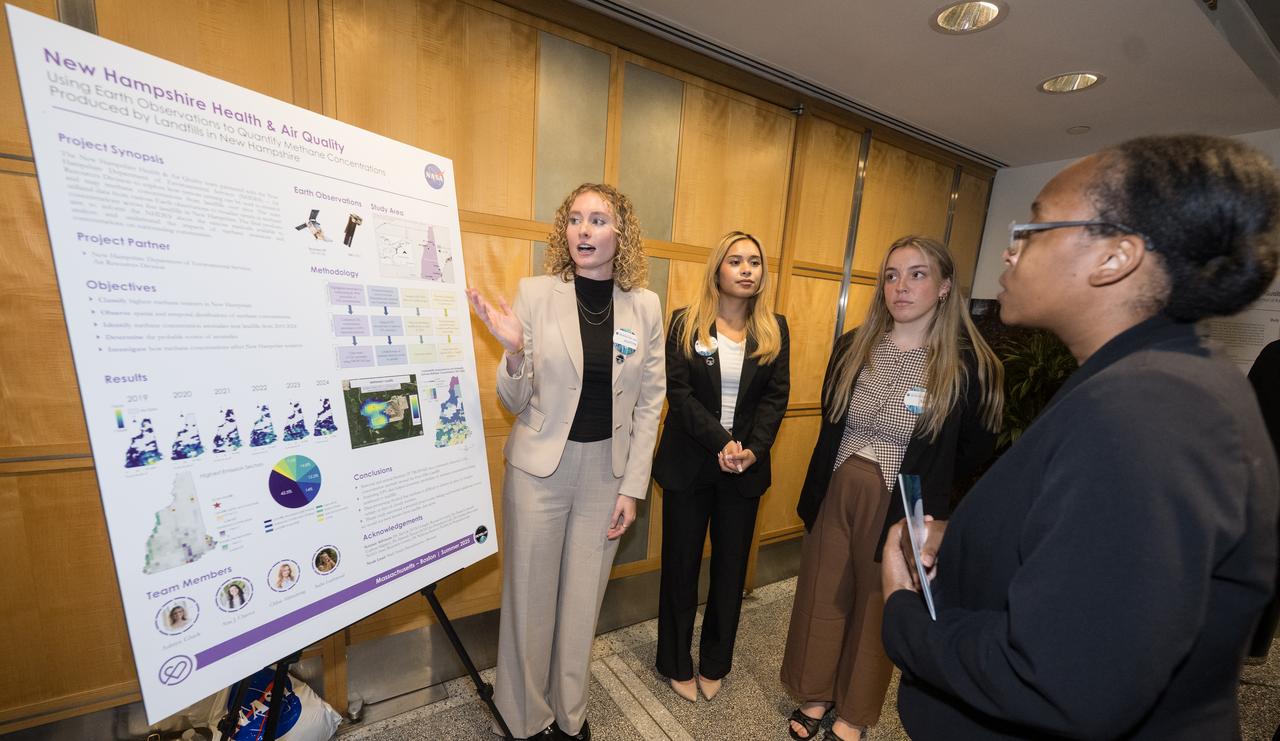
Students and young professionals share the results of their DEVELOP Project, Tuesday, August 5, 2025, at the Mary W. Jackson NASA Headquarters building in Washington. Every summer early career researchers from NASA’s DEVELOP National Program come to NASA Headquarters and present their research projects. DEVELOP is a training and development program where early career researchers work on Earth science projects, mentored by science advisors from NASA and partner agencies, and provide research results to local communities. Photo Credit: (NASA/Aubrey Gemignani)
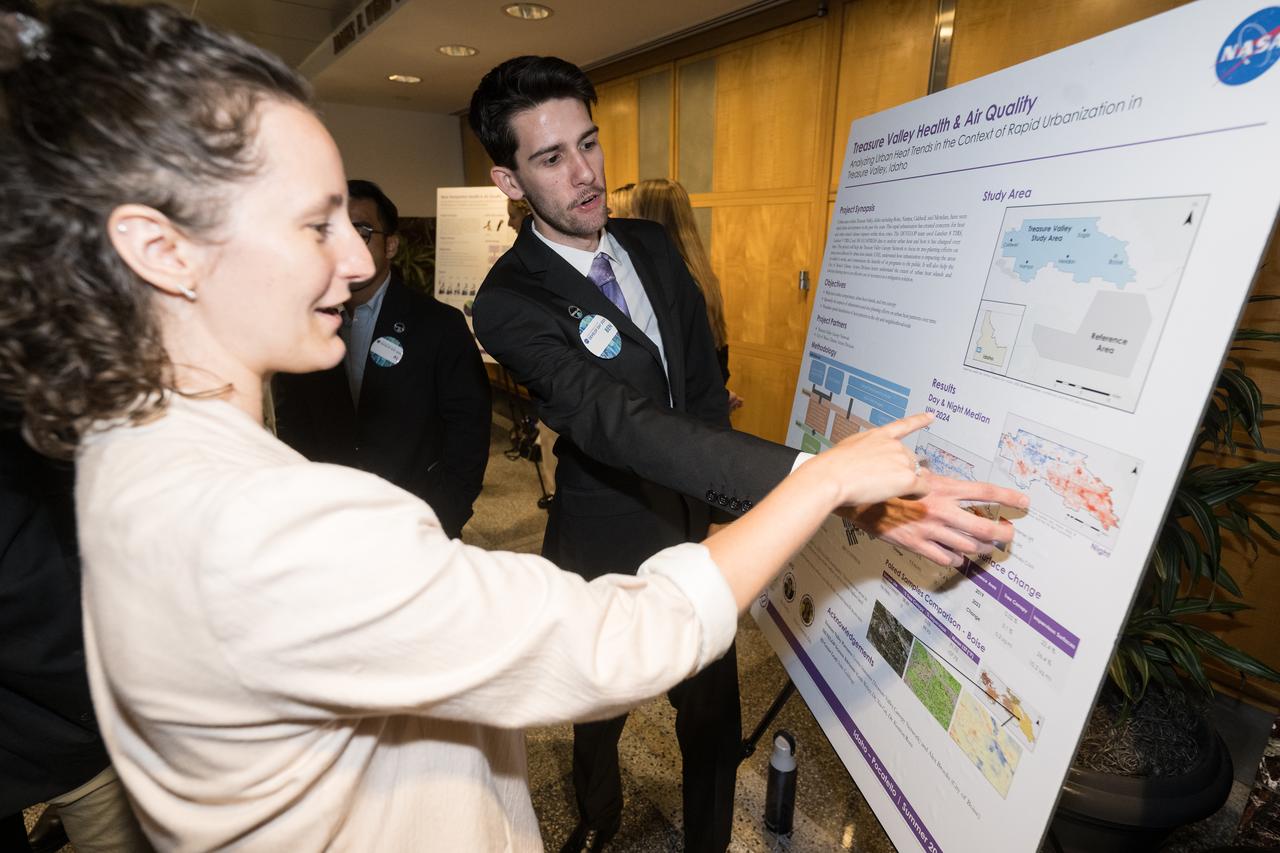
Students and young professionals share the results of their DEVELOP Project, Tuesday, August 5, 2025, at the Mary W. Jackson NASA Headquarters building in Washington. Every summer early career researchers from NASA’s DEVELOP National Program come to NASA Headquarters and present their research projects. DEVELOP is a training and development program where early career researchers work on Earth science projects, mentored by science advisors from NASA and partner agencies, and provide research results to local communities. Photo Credit: (NASA/Aubrey Gemignani)
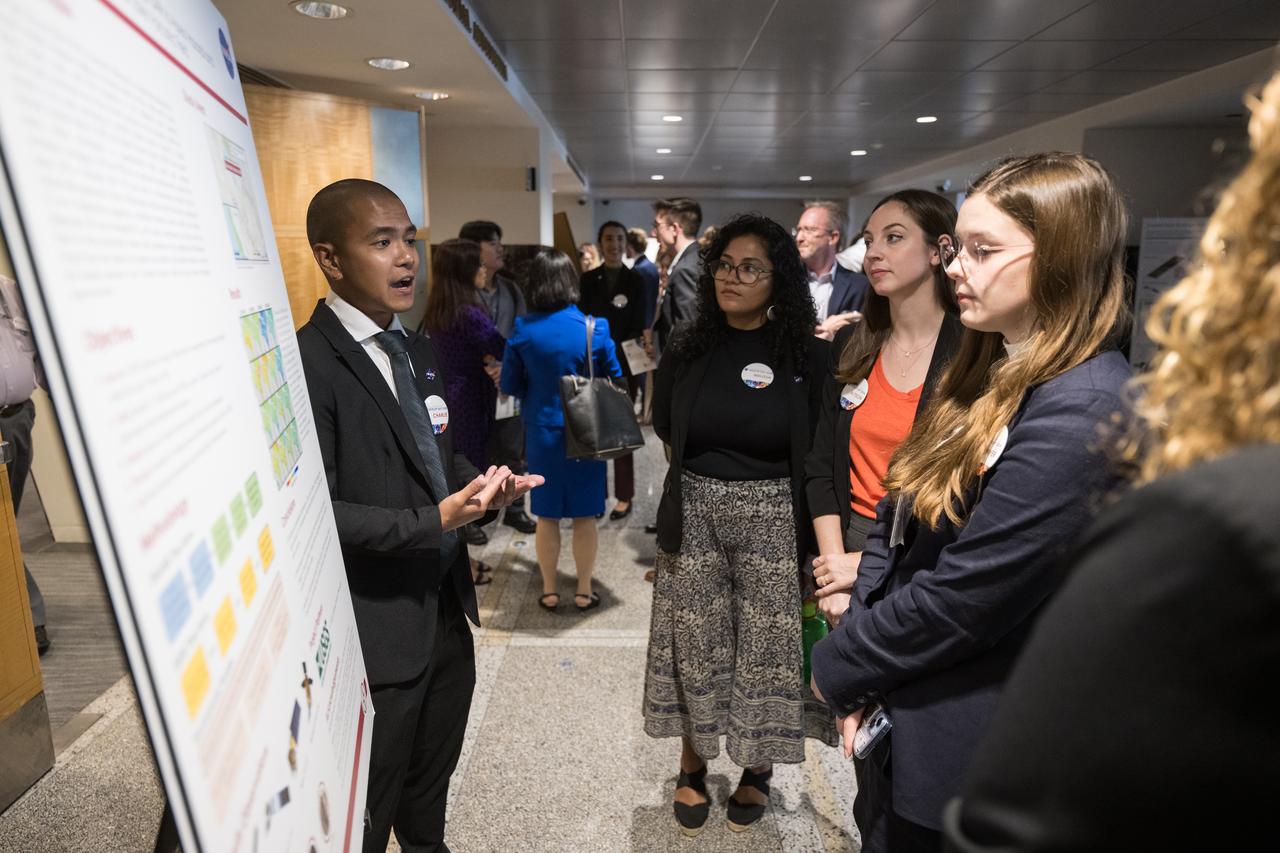
Students and young professionals share the results of their DEVELOP Project, Tuesday, August 5, 2025, at the Mary W. Jackson NASA Headquarters building in Washington. Every summer early career researchers from NASA’s DEVELOP National Program come to NASA Headquarters and present their research projects. DEVELOP is a training and development program where early career researchers work on Earth science projects, mentored by science advisors from NASA and partner agencies, and provide research results to local communities. Photo Credit: (NASA/Aubrey Gemignani)
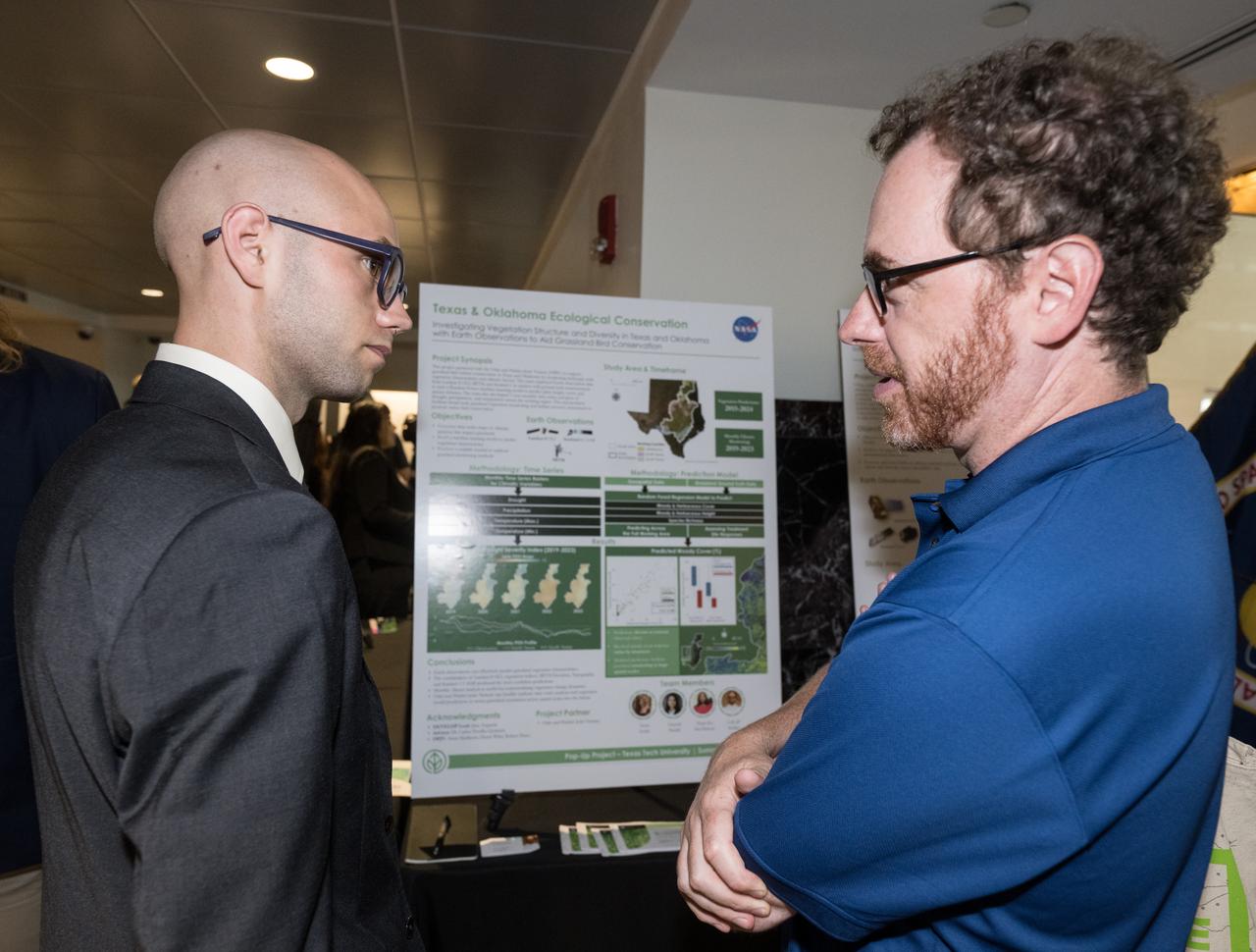
A DEVELOP researcher speaks about his project, Tuesday, August 6, 2024, at the Mary W. Jackson NASA Headquarters building in Washington. Every summer early career researchers from NASA’s DEVELOP National Program come to NASA Headquarters and present their research projects. DEVELOP is a training and development program where early career researchers work on Earth science projects, mentored by science advisors from NASA and partner agencies, and provide research results to local communities. Photo Credit: (NASA/Aubrey Gemignani)

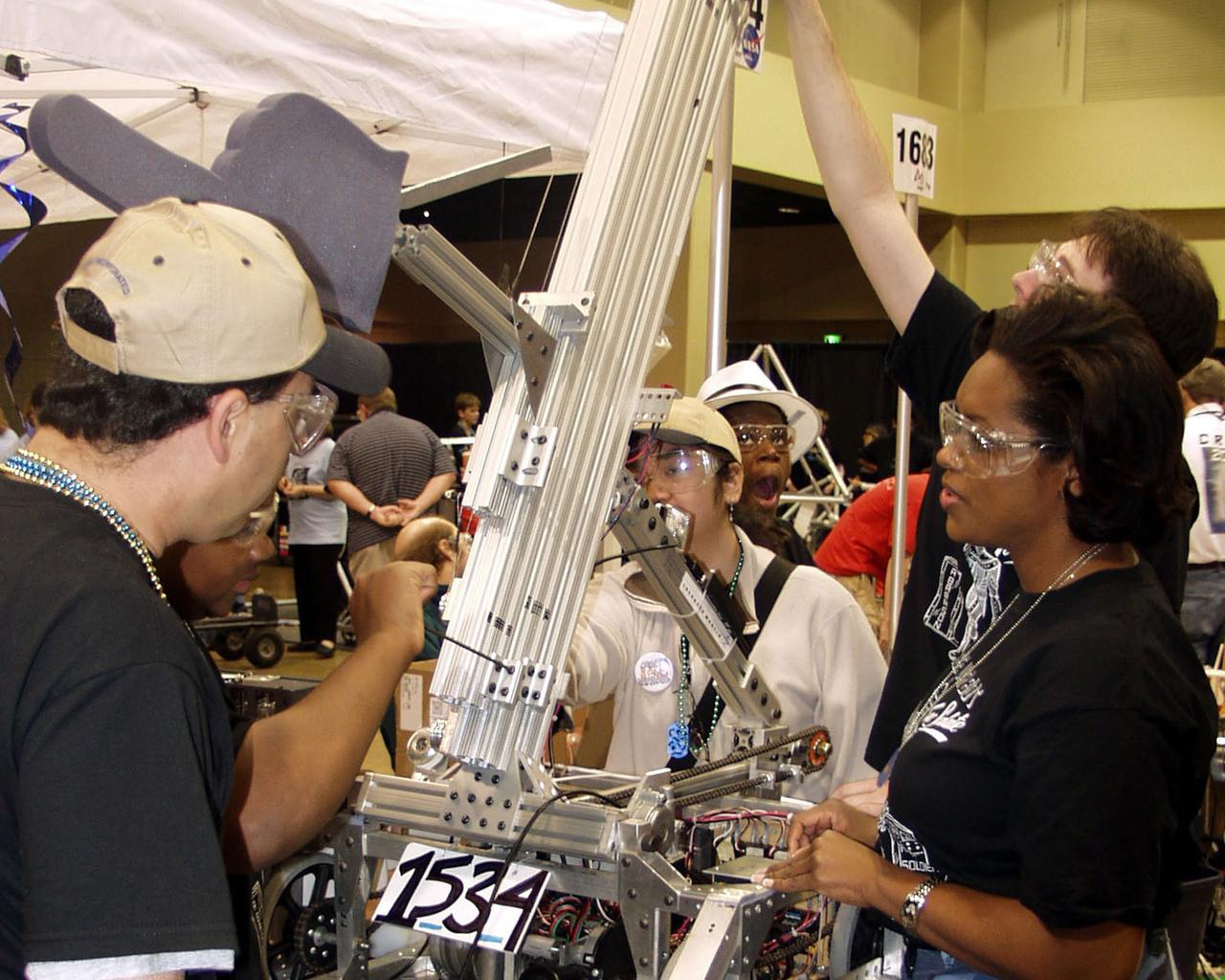
Students and their mentors prepare their team robot to compete in the NASA_KSC FIRST Southeastern Regional event. FIRST (For Inspiration and Recognition of Science and Technology) events are held nationwide, pitting the student-built robots against each other and the clock on a playing field. Many teams are sponsored by corporations and academic institutions. There are 27 teams throughout the State of Florida who are competing. KSC, which sponsors nine teams, has held the regional event for two years.
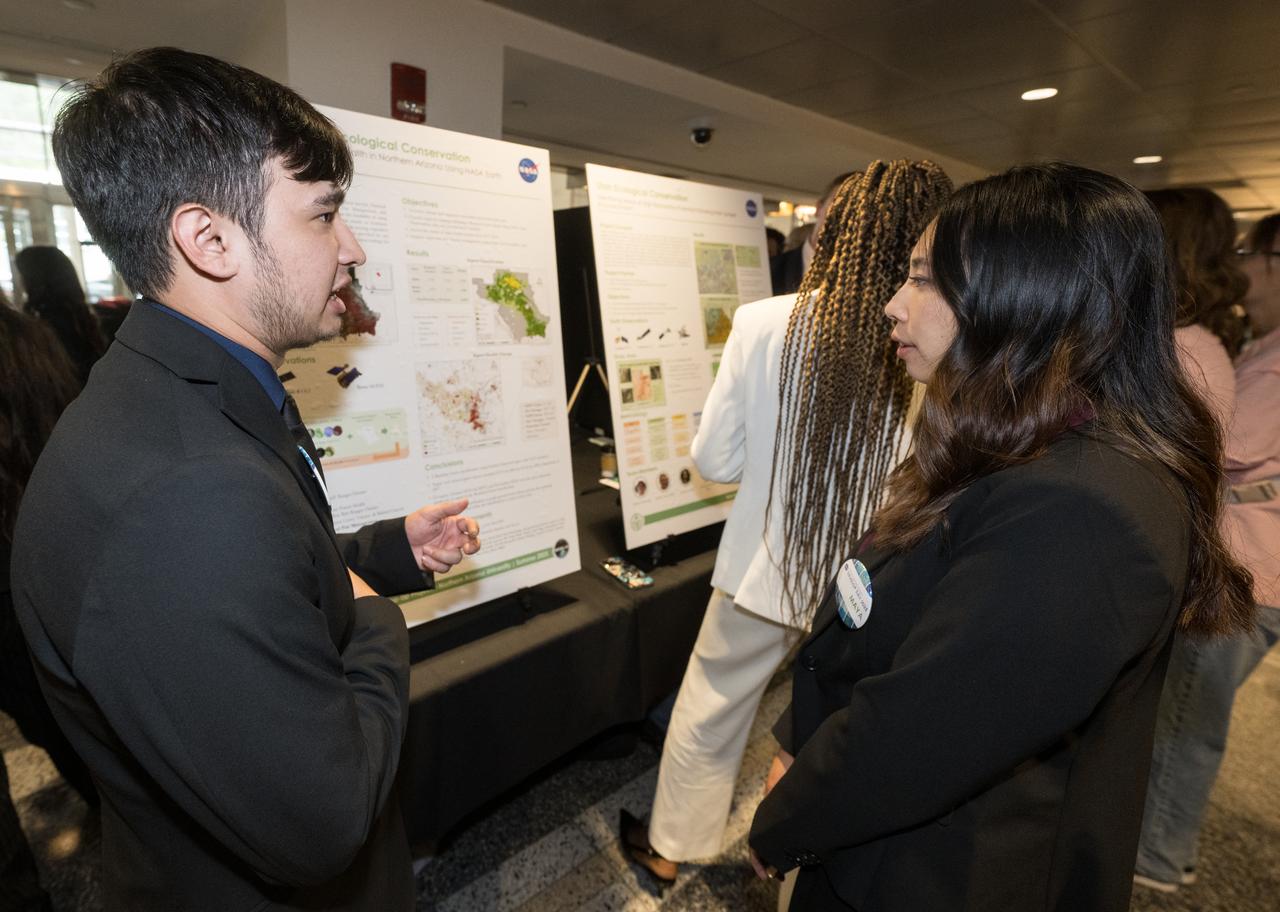
Students and young professionals share the results of their DEVELOP Project, Tuesday, August 5, 2025, at the Mary W. Jackson NASA Headquarters building in Washington. Every summer early career researchers from NASA’s DEVELOP National Program come to NASA Headquarters and present their research projects. DEVELOP is a training and development program where early career researchers work on Earth science projects, mentored by science advisors from NASA and partner agencies, and provide research results to local communities. Photo Credit: (NASA/Aubrey Gemignani)
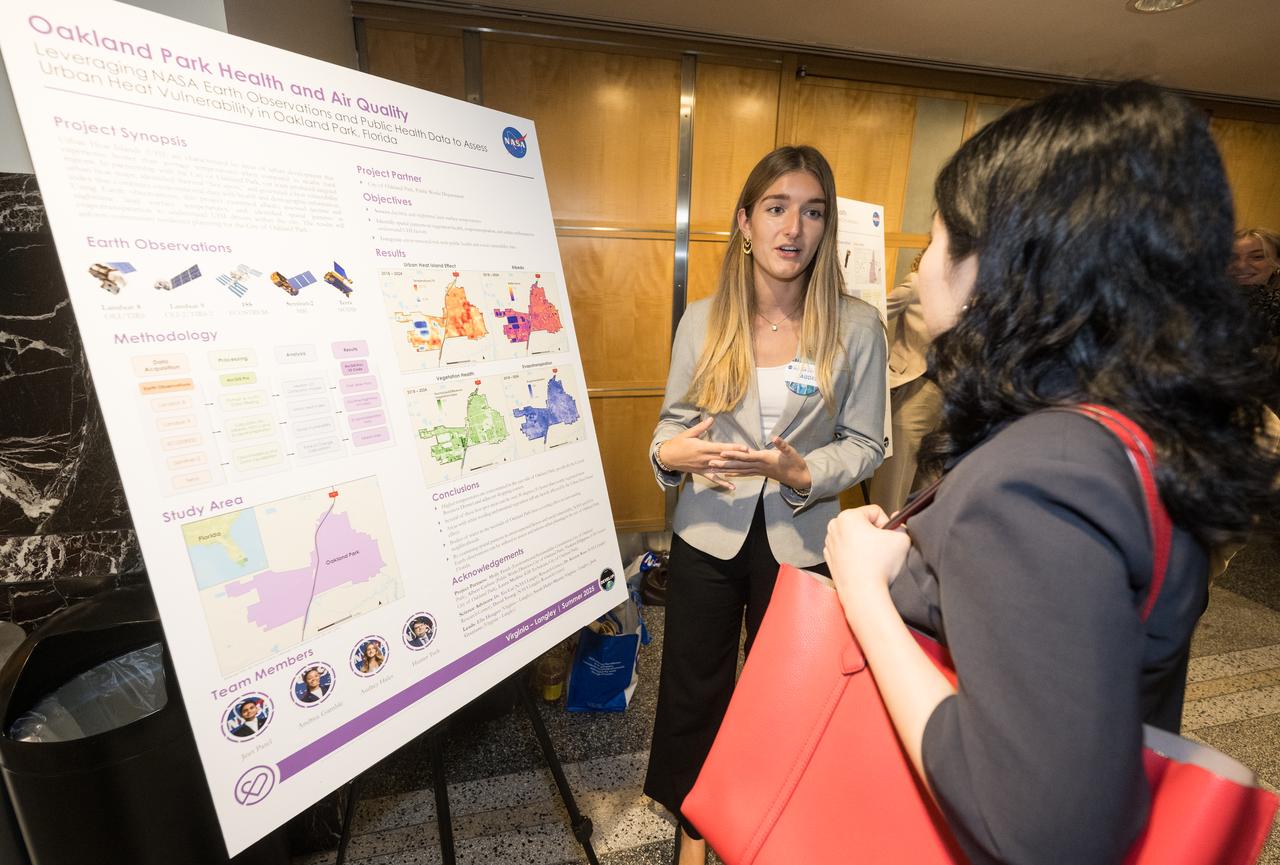
Students and young professionals share the results of their DEVELOP Project, Tuesday, August 5, 2025, at the Mary W. Jackson NASA Headquarters building in Washington. Every summer early career researchers from NASA’s DEVELOP National Program come to NASA Headquarters and present their research projects. DEVELOP is a training and development program where early career researchers work on Earth science projects, mentored by science advisors from NASA and partner agencies, and provide research results to local communities. Photo Credit: (NASA/Aubrey Gemignani)
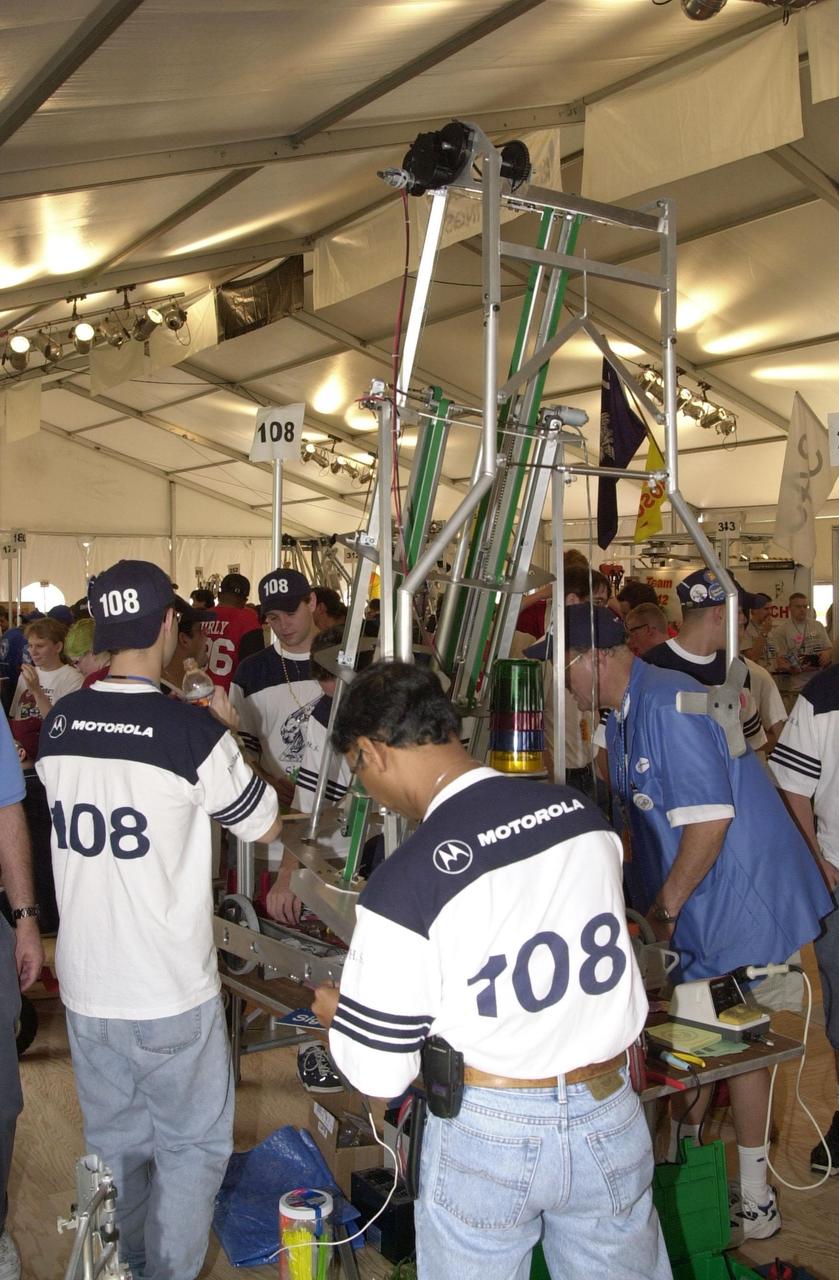
Students from Plantation, Fla., and their mentors prepare their team robot to compete in the NASA/KSC FIRST Southeastern Regional event. FIRST (For Inspiration and Recognition of Science and Technology) events are held nationwide, pitting the student-built robots against each other and the clock on a playing field. Many teams are sponsored by corporations, such as Motorola seen on these students’ shirts, and academic institutions. There are 27 teams throughout the State of Florida who are competing. KSC, which sponsors nine teams, has held the regional event for two years.
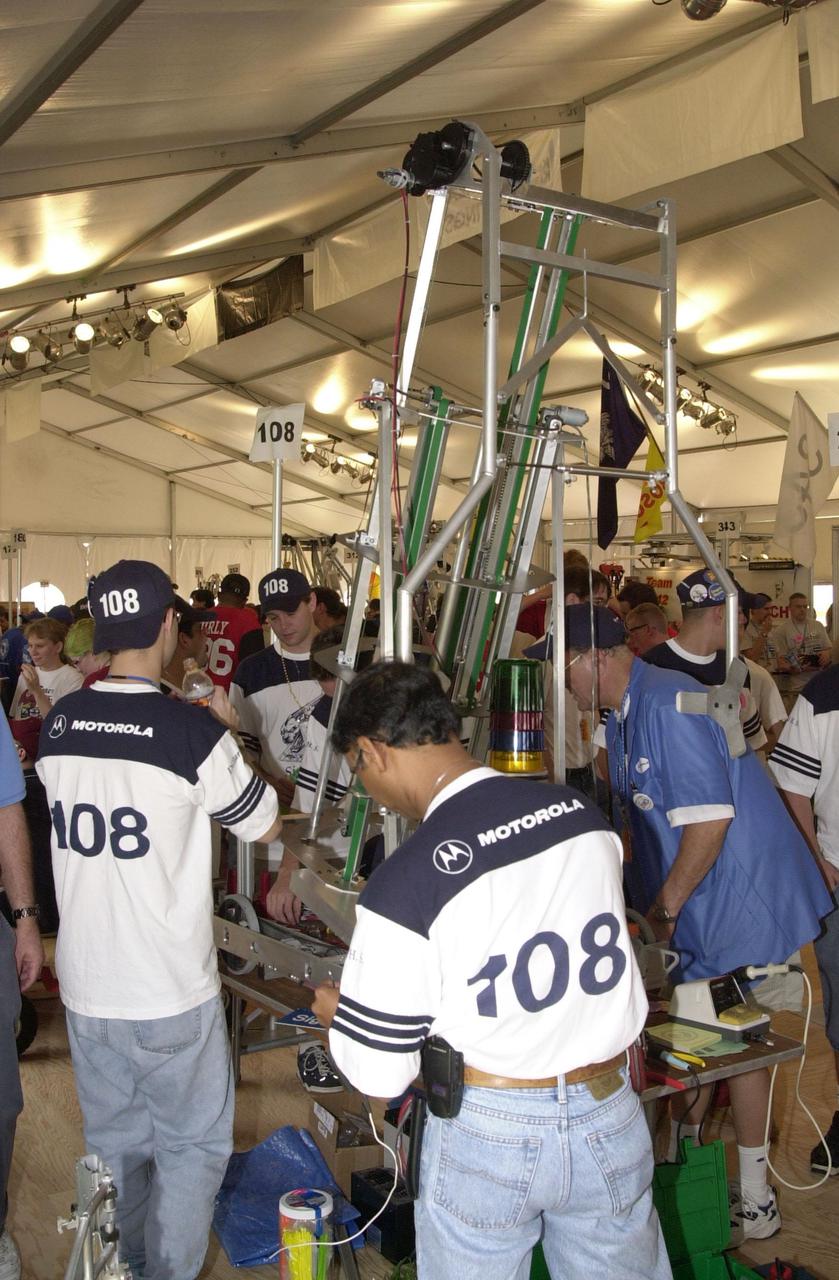
Students from Plantation, Fla., and their mentors prepare their team robot to compete in the NASA_KSC FIRST Southeastern Regional event. FIRST (For Inspiration and Recognition of Science and Technology) events are held nationwide, pitting the student-built robots against each other and the clock on a playing field. Many teams are sponsored by corporations, such as Motorola seen on these students’ shirts, and academic institutions. There are 27 teams throughout the State of Florida who are competing. KSC, which sponsors nine teams, has held the regional event for two years.
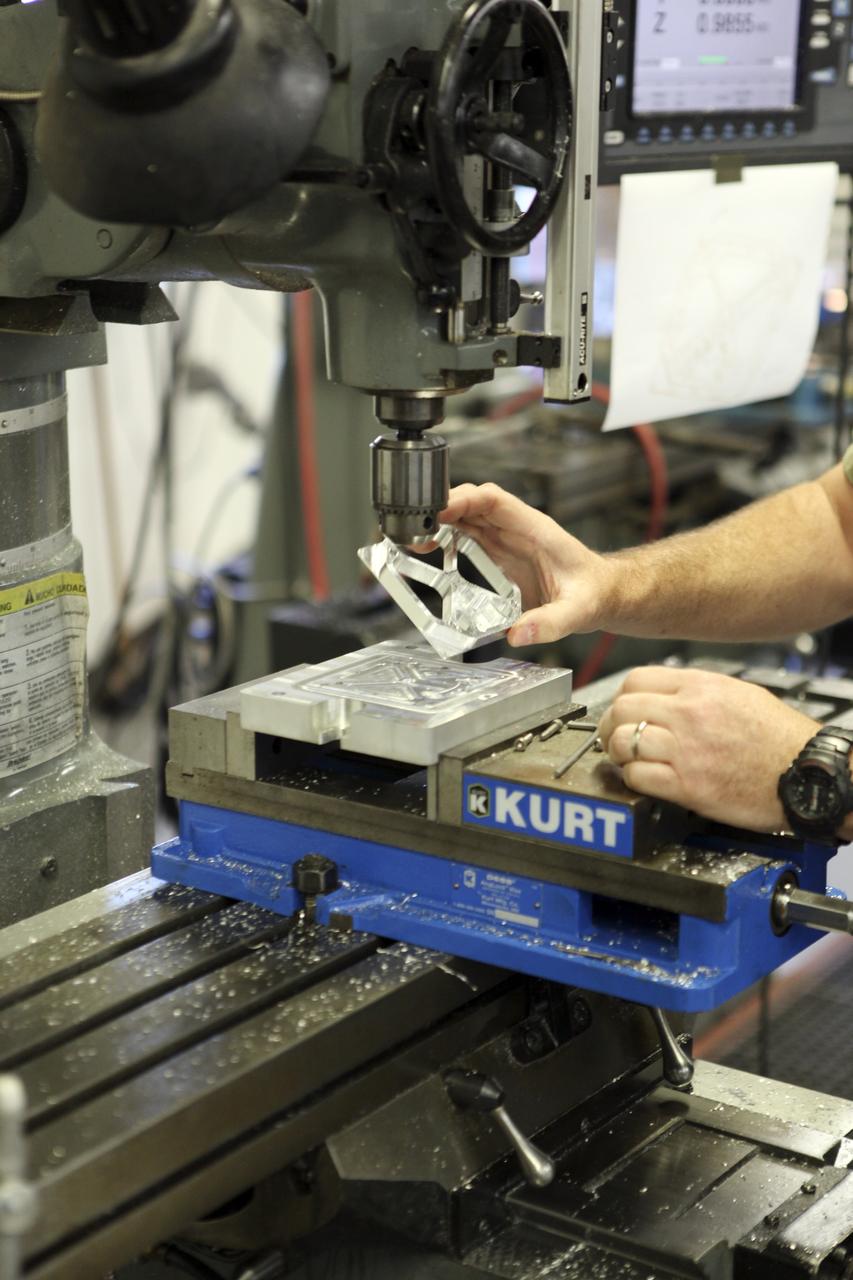
CAPE CANAVERAL, Fla. – A component is machined for a cubesat that is being assembled for launch in June. The component, being machined at NASA's Kennedy Space Center in Florida will hold accelerometers for the StangSat, which is a project whose development includes students from Merritt Island High School in Florida. The satellite will work inside a small rocket to measure vibration and collect other data during launch. NASA engineers are acting as mentors for the project. Photo credit: NASA/Dmitri Gerondidakis
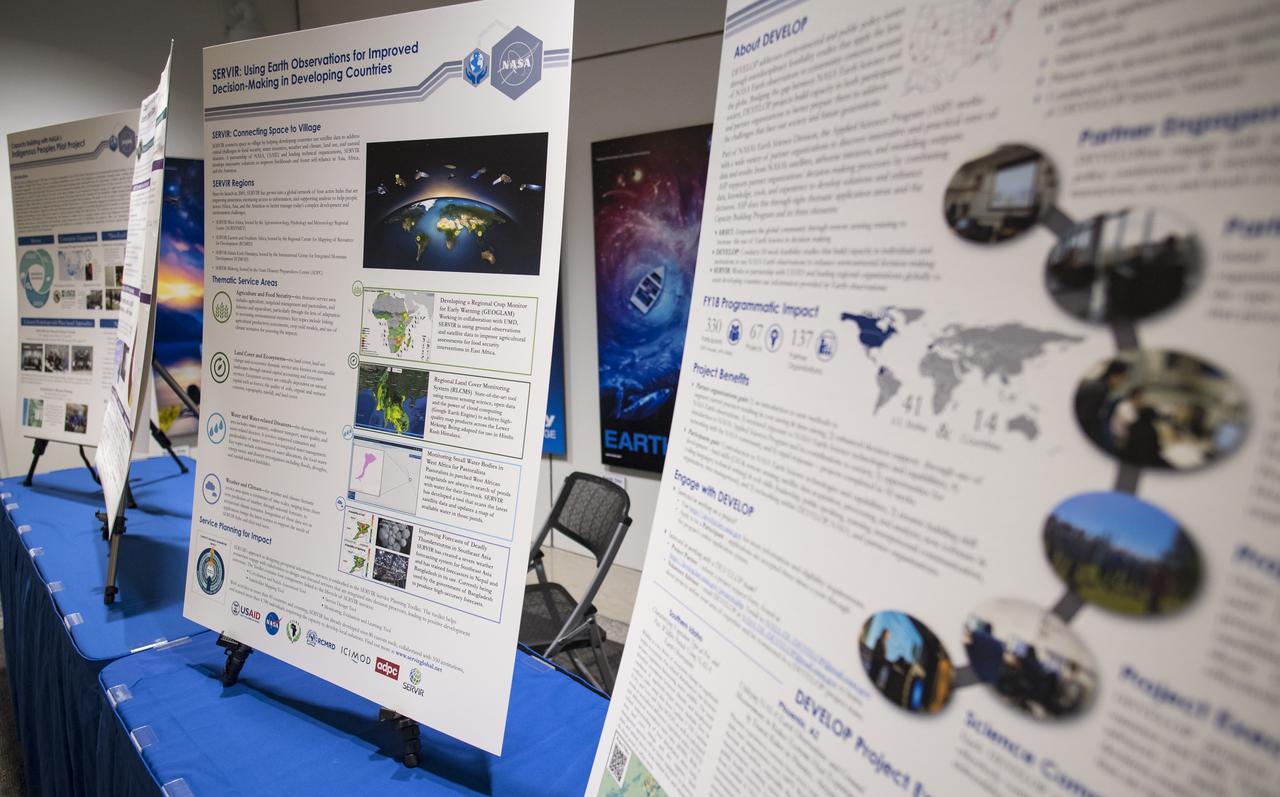
Posters are seen at the Earth Science Applications Showcase Wednesday, August 1, 2018 at NASA Headquarters in Washington. Every summer, participants in NASA’s Applied Sciences’ DEVELOP National Program come to NASA Headquarters and present their research projects. DEVELOP is a training and development program where students work on Earth science research projects, mentored by science advisers from NASA and partner agencies, and extend research results to local communities. Photo Credit: (NASA/Aubrey Gemignani)
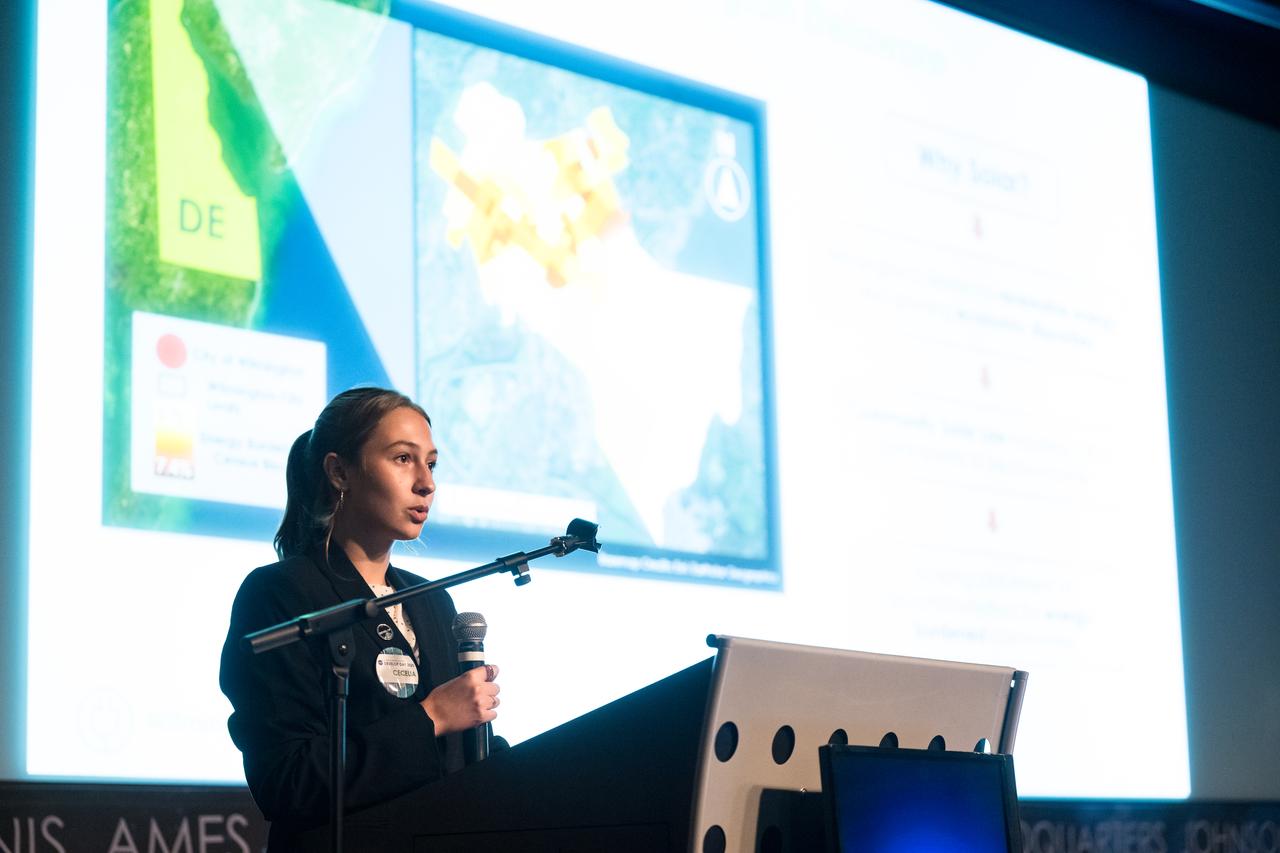
Cecelia Paparella provides remarks about her DEVELOP Project, Tuesday, August 6, 2024, at the Mary W. Jackson NASA Headquarters building in Washington. Every summer early career researchers from NASA’s DEVELOP National Program come to NASA Headquarters and present their research projects. DEVELOP is a training and development program where early career researchers work on Earth science projects, mentored by science advisors from NASA and partner agencies, and provide research results to local communities. Photo Credit: (NASA/Aubrey Gemignani)
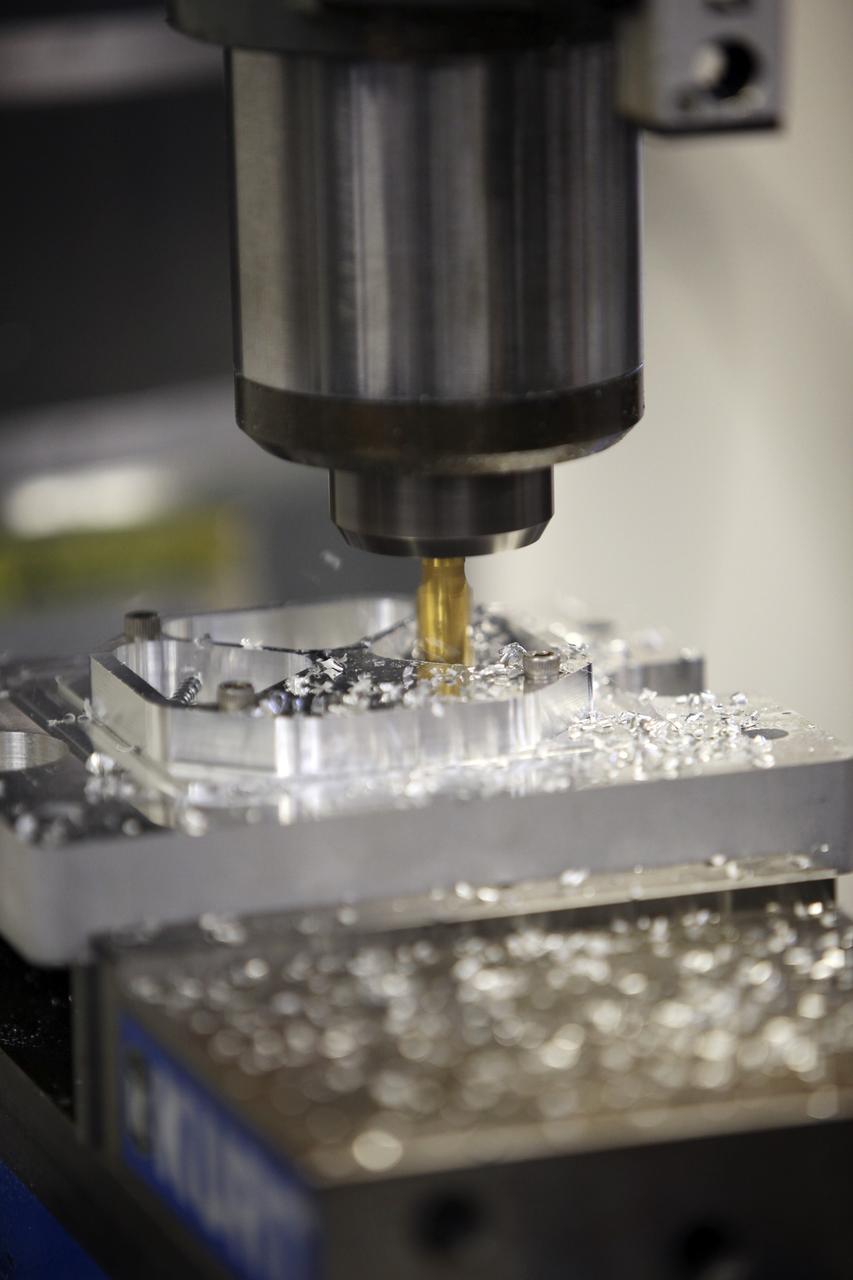
CAPE CANAVERAL, Fla. – A component is machined for a cubesat that is being assembled for launch in June. The component, being machined at NASA's Kennedy Space Center in Florida will hold accelerometers for the StangSat, which is a project whose development includes students from Merritt Island High School in Florida. The satellite will work inside a small rocket to measure vibration and collect other data during launch. NASA engineers are acting as mentors for the project. Photo credit: NASA/Dmitri Gerondidakis
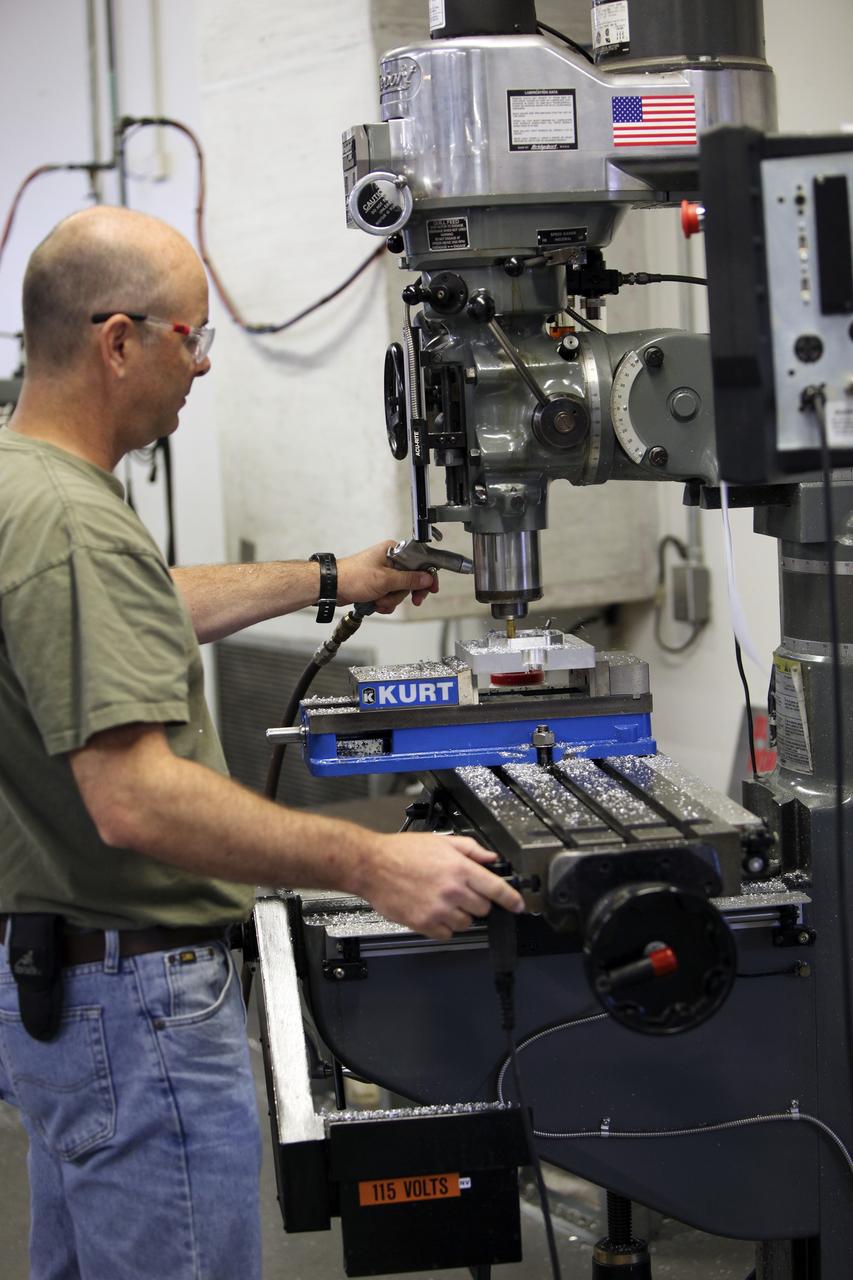
CAPE CANAVERAL, Fla. – A component is machined for a cubesat that is being assembled for launch in June. The component, being machined at NASA's Kennedy Space Center in Florida will hold accelerometers for the StangSat, which is a project whose development includes students from Merritt Island High School in Florida. The satellite will work inside a small rocket to measure vibration and collect other data during launch. NASA engineers are acting as mentors for the project. Photo credit: NASA/Dmitri Gerondidakis
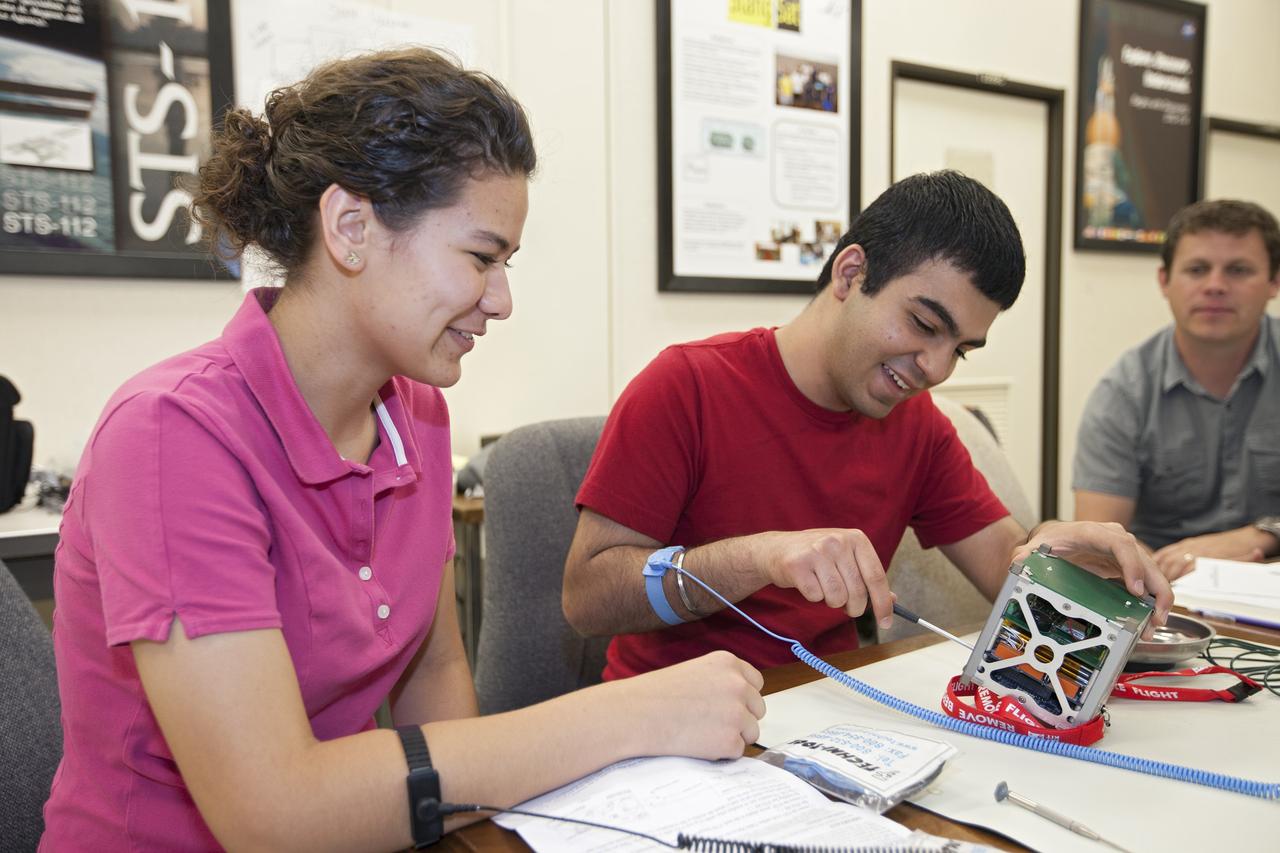
CAPE CANAVERAL, Fla. – Students from Merritt Island High School in Florida perform integration tests a cubesat called StangSat they will fly on a suborbital mission in the summer. The satellite will work inside a small rocket to measure vibration and other data during launch. NASA engineers are acting as mentors for the project and some of the space agency's labs at Kennedy Space Center, including this one inside the Operations and Checkout Building, are being used by the teams. Photo credit: NASA/Kim Shiflett
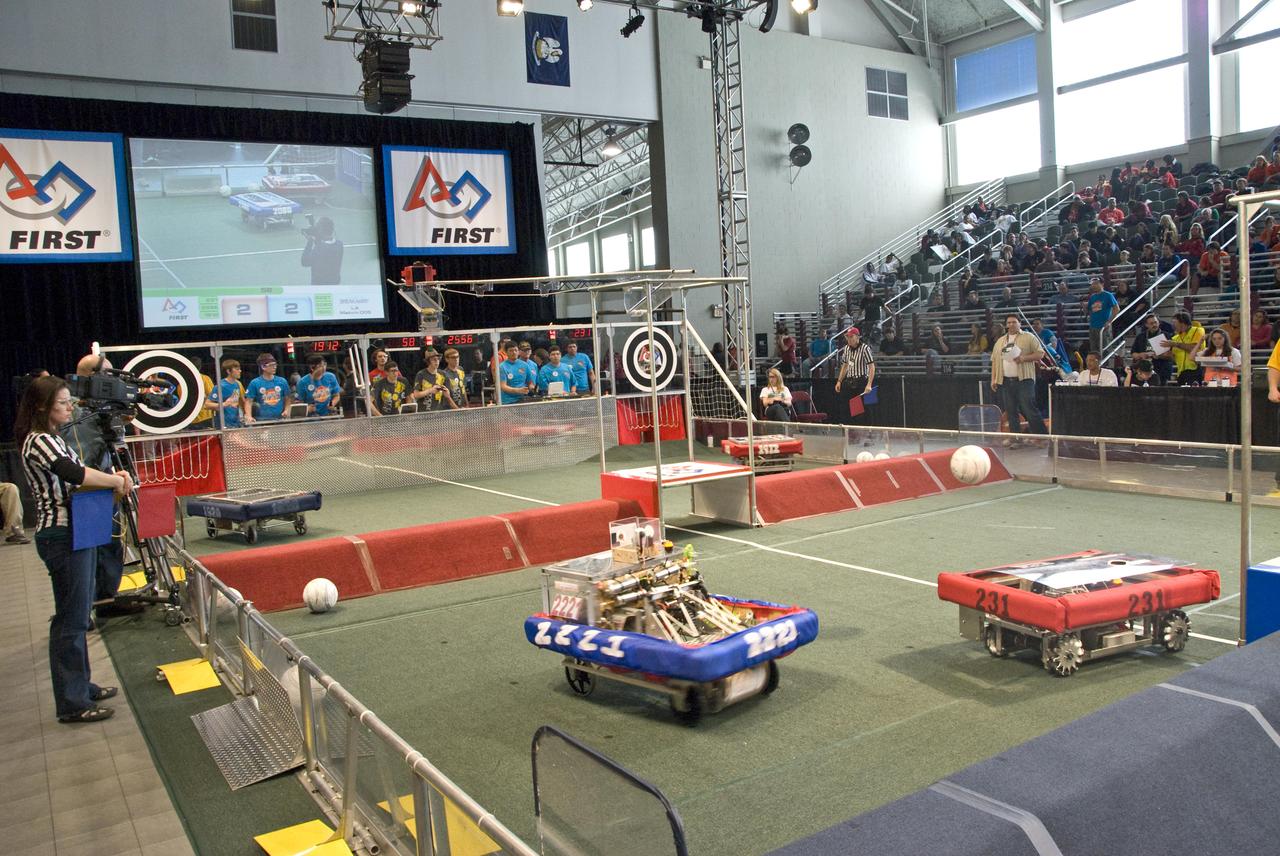
Student-built robots maneuver the course during the 2010 Bayou Regional FIRST (For Inspiration and Recognition of Science and Technology) Robotics competition in Westwego on March 5-6. The annual competition drew 36 high school teams from eight states. NASA's John C. Stennis Space Center supports FIRST Robotics by providing financing, mentors and training, as well as competition judges and referees, audiovisual staff and other volunteer personnel.
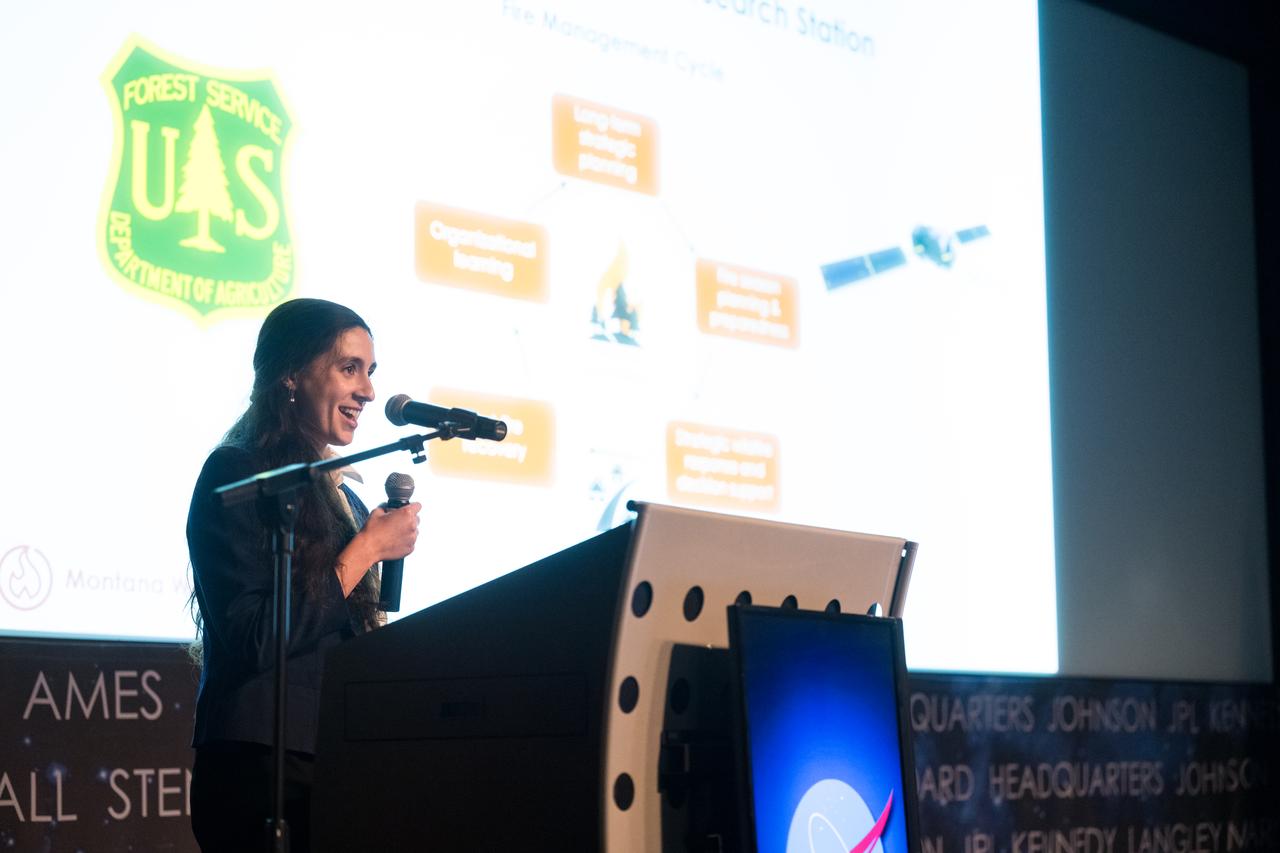
Madeleine Festin provides remarks about her DEVELOP Project, Tuesday, August 6, 2024, at the Mary W. Jackson NASA Headquarters building in Washington. Every summer early career researchers from NASA’s DEVELOP National Program come to NASA Headquarters and present their research projects. DEVELOP is a training and development program where early career researchers work on Earth science projects, mentored by science advisors from NASA and partner agencies, and provide research results to local communities. Photo Credit: (NASA/Aubrey Gemignani)
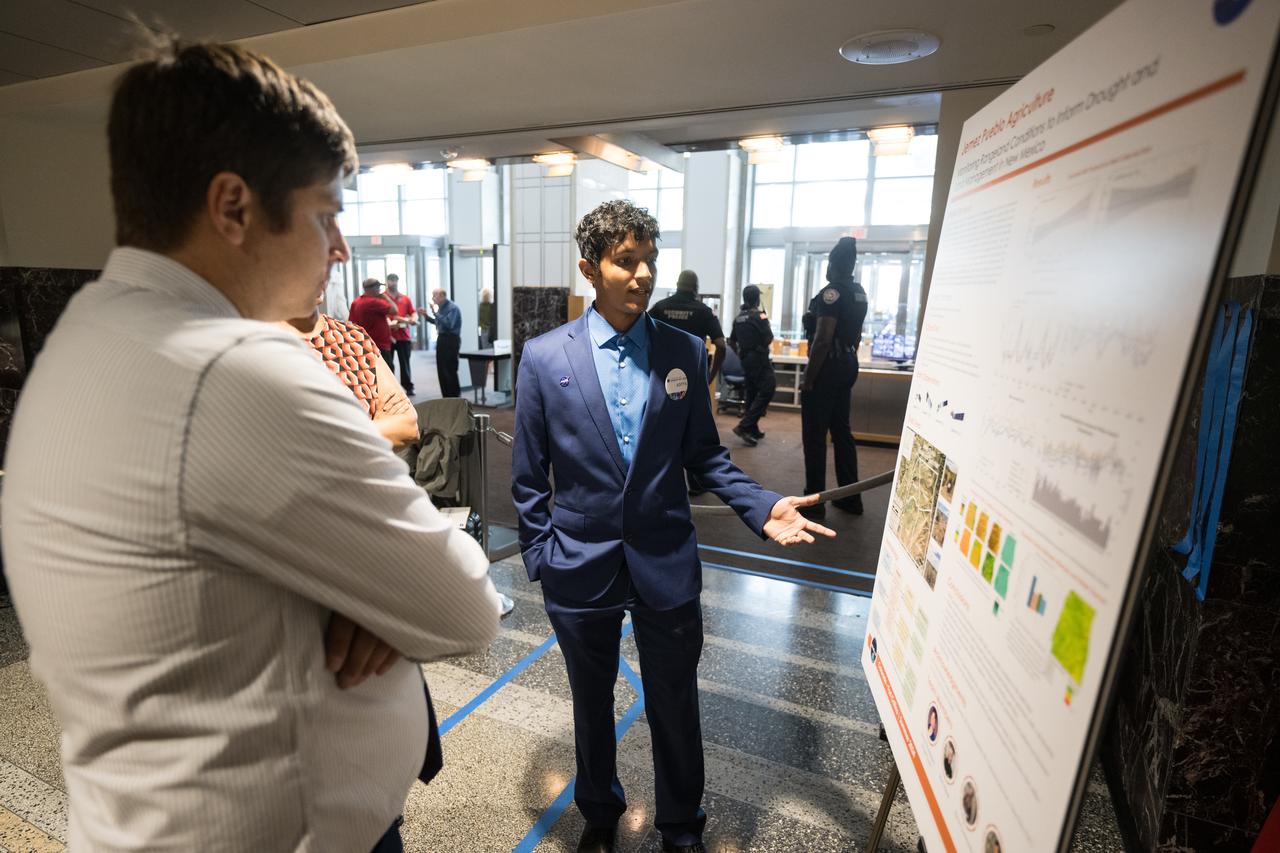
A DEVELOP researcher speaks about his project, Tuesday, August 6, 2024, at the Mary W. Jackson NASA Headquarters building in Washington. Every summer early career researchers from NASA’s DEVELOP National Program come to NASA Headquarters and present their research projects. DEVELOP is a training and development program where early career researchers work on Earth science projects, mentored by science advisors from NASA and partner agencies, and provide research results to local communities. Photo Credit: (NASA/Aubrey Gemignani)