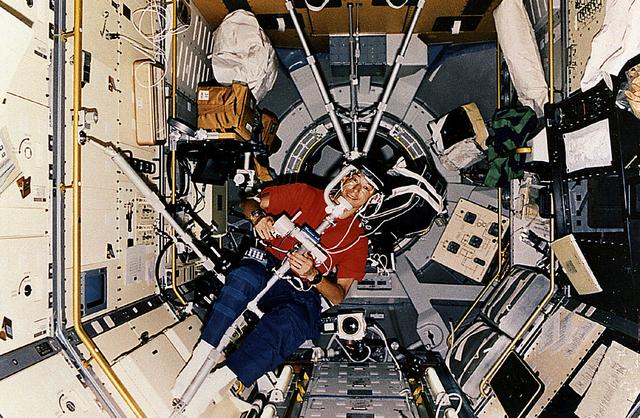
Space Shuttle Endeavour (STS-47) onboard photo of Japanese Payload Specialist Dr. Mamoru Mohri participating in Comparative Measurement of Visual Stability in Earth Cosmic Space experiment to learn more about Space Adaptation Syndrome (SAS).
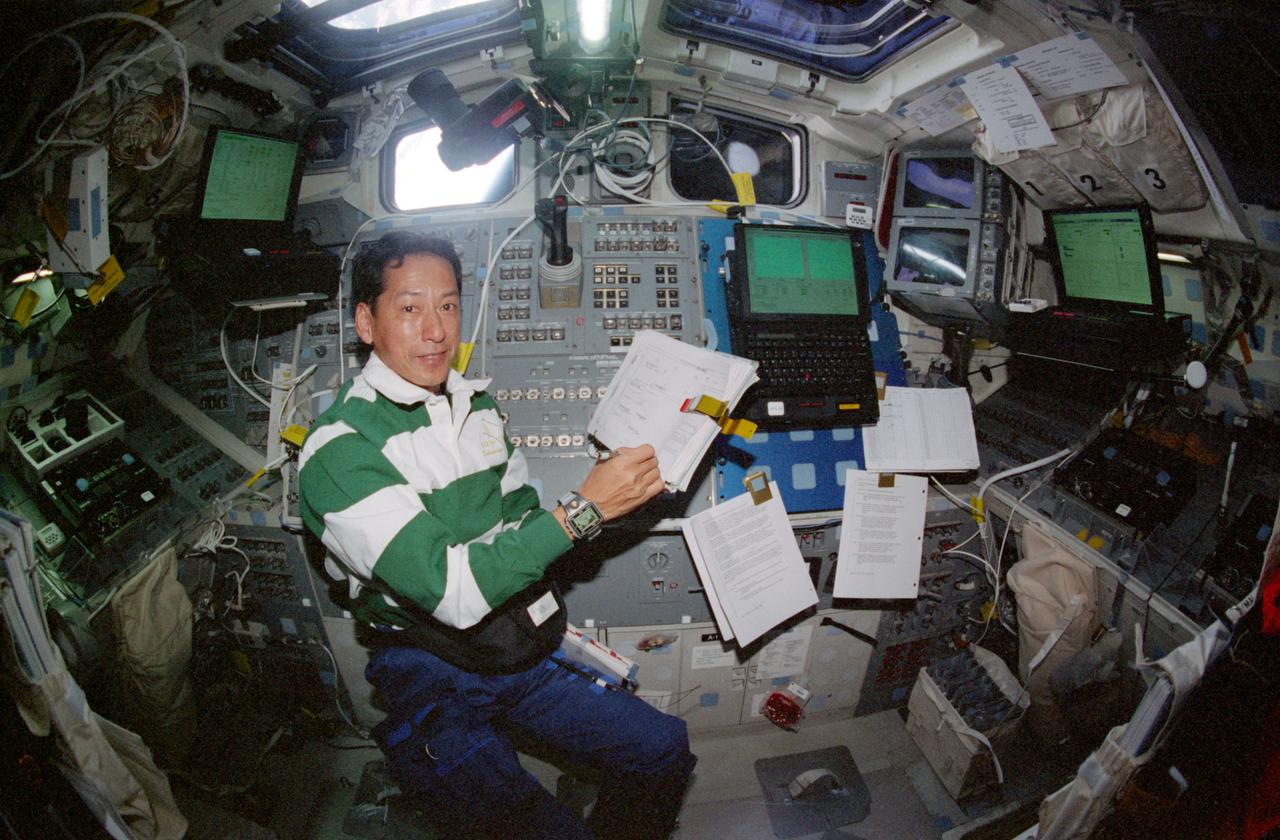
STS099-330-036 (11-22 February 2000) ---Astronaut Mamoru Mohri, mission specialist, on the aft flight deck of the Space Shuttle Endeavour, checks a data checklist for the STS-99 mission. Mohri represents Japan’s National Space Development Agency (NASDA).
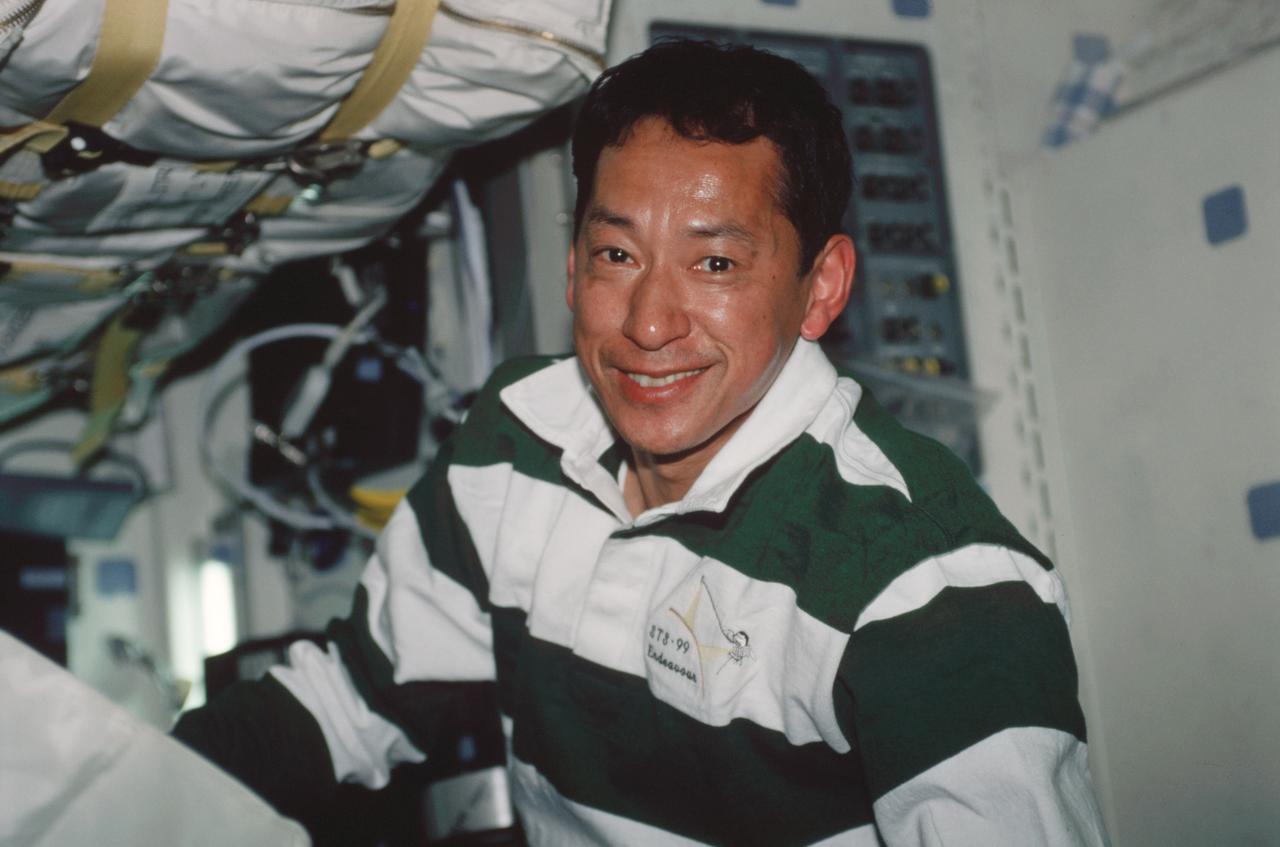
STS099-303-019 (11-22 February 2000) --- Astronaut Mamoru Mohri, mission specialist, supports SRTM's Blue Team on Endeavour's middeck. He is with Japan's National Space Development Agency (NASDA).

S99-E-5478 (16 February 2000) --- Astronaut Mamoru Mohri totes a notebook on Endeavour's mid deck. The mission specialist represents Japan's National Space Development Agency (NASDA).
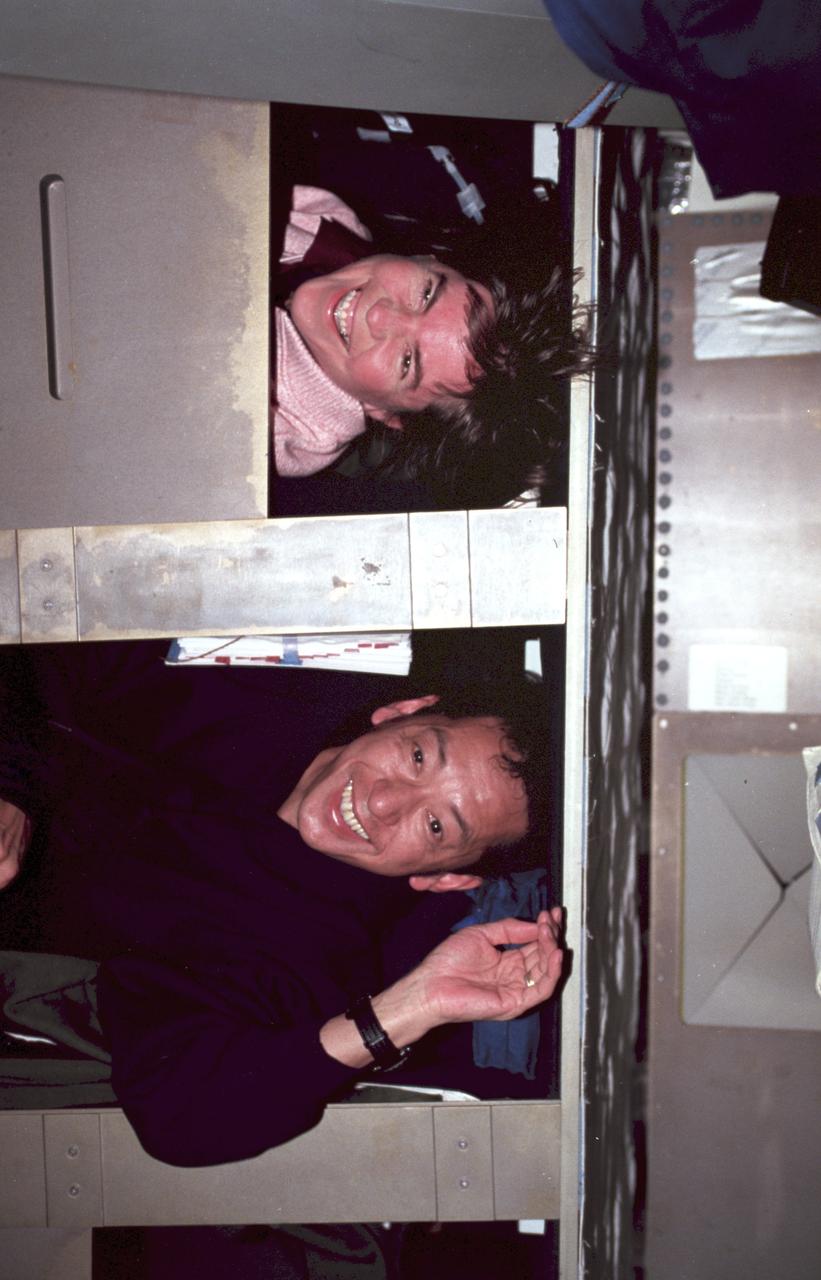
STS099-308-019 (11-22 February 2000) ---Astronauts Janice E. Voss and Mamoru Mohri, both members of the Blue Team portion of 24-hour SRTM support, prepare for their sleep shift on the middeck of the Earth-orbiting Space Shuttle Endeavour. Mohri represents Japan?s National Space Development Agency (NASDA).
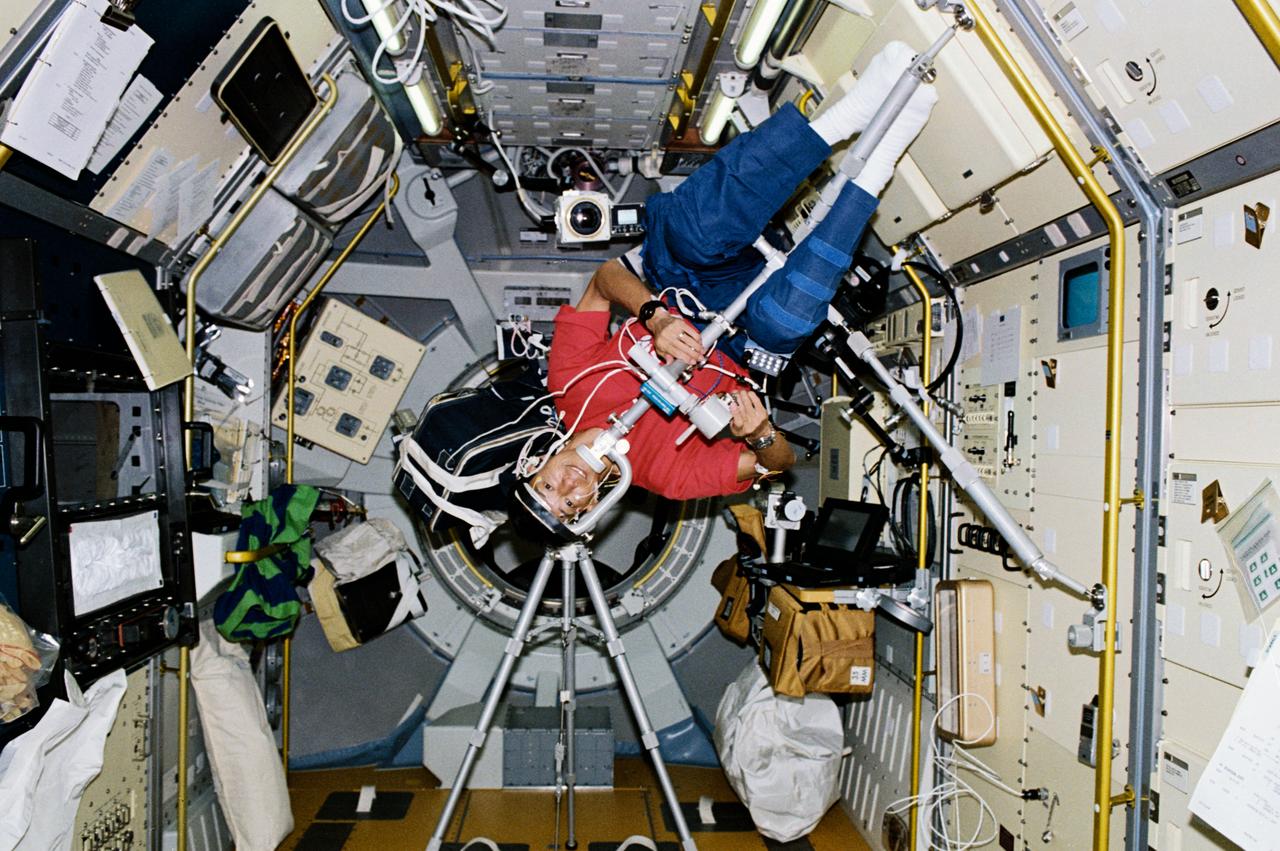
STS047-204-006 (12 - 20 Sept 1992) --- Dr. Mamoru Mohri, payload specialist representing Japan's National Space Development Agency (NASDA), participates in an experiment designed to learn more about Space Adaptation Syndrome (SAS). The experiment is titled, "Comparative Measurement of Visual Stability in Earth and Cosmic Space." During the experiment, Dr. Mohri tracked a flickering light target while eye movements and neck muscle tension were measured. This 45-degree angle position was one of four studied during the eight-day Spacelab-J mission.
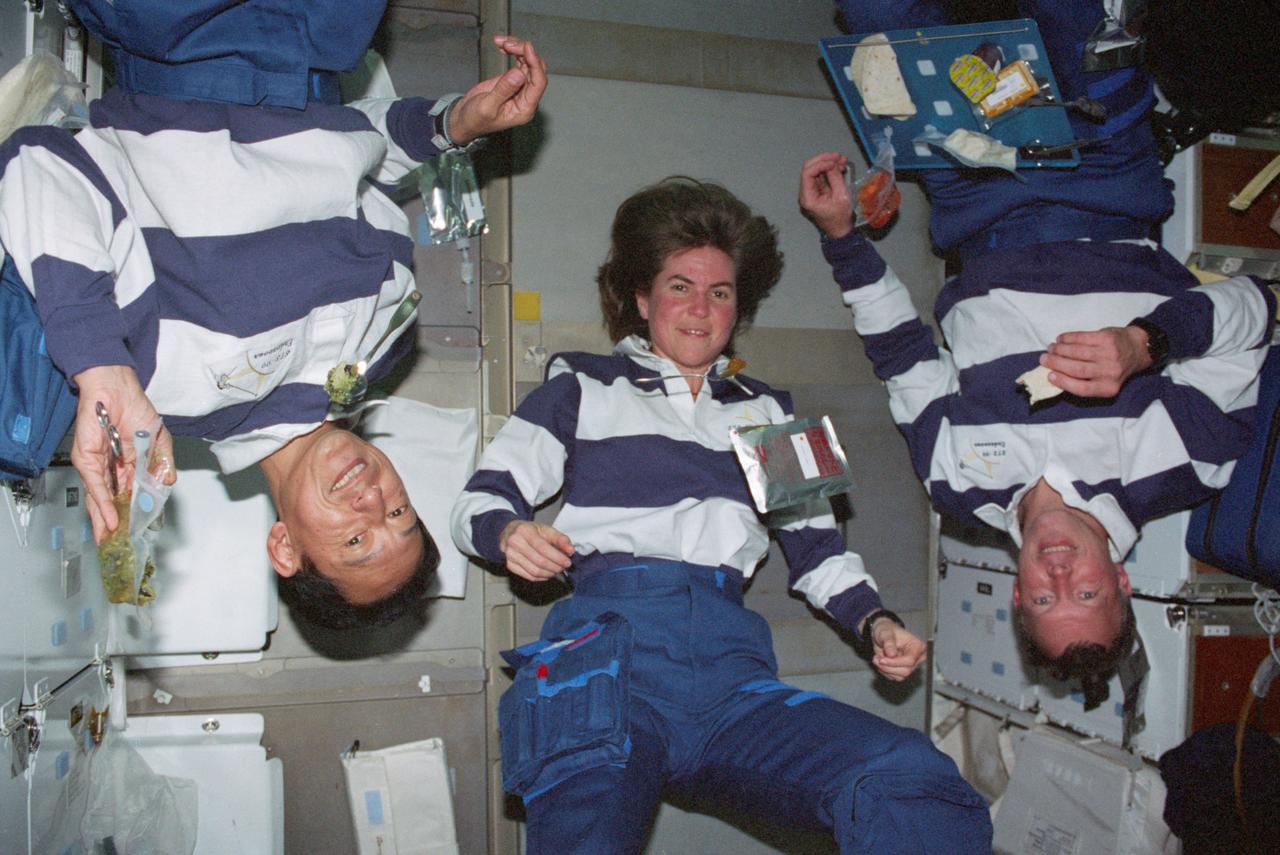
STS099-312-002 (11-22 February 2000) ---Astronauts Mamoru Mohri (left), Janice E. Voss, and Dominic L. Gorie, members of the Blue Team portion of 24-hour Shuttle Radar Topography Mission (SRTM) support, prepare for a meal on the middeck of the Space Shuttle Endeavour. Mohri represents Japan?s National Space Development Agency (NASDA).
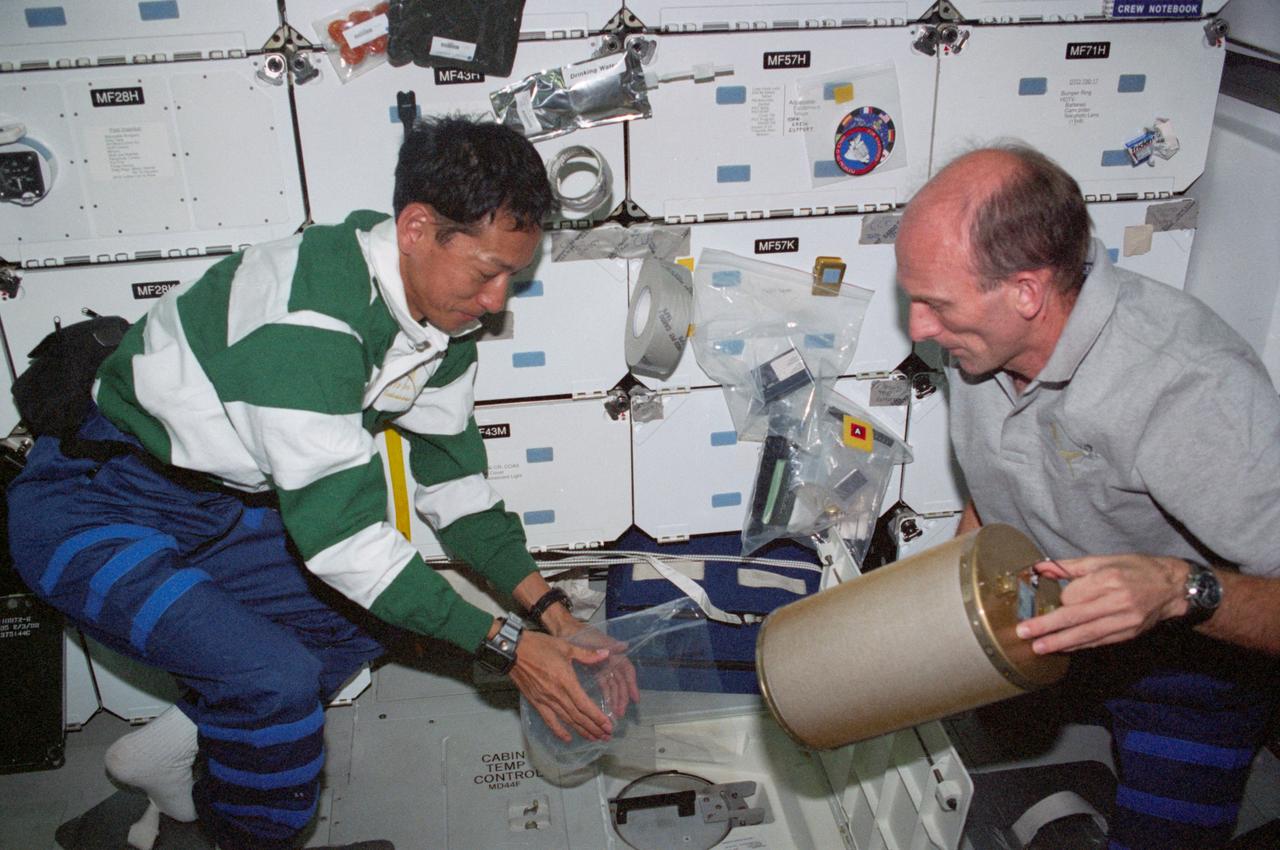
STS099-311-026 (11-22 February 2000) ---Astronauts Mamoru Mohri (left) and Gerhard P. J. Thiele, both mission specialists, change out lithium hydroxide canisters on the middeck of the Earth-orbiting Space Shuttle Endeavour. Mohri represents Japan?s National Space Development Agency (NASDA) and Thiele represents the European Space Agency (ESA).

STS047-45-003 (12-20 Sept 1992) --- Payload specialist Mamoru Mohri communicates with students from the aft flight deck of the Earth-orbiting Space Shuttle Endeavour. The communications were an extension of the Shuttle Amateur Radio Experiment (SAREX), which has flown on a number of previous flights. Dr. Mohri represents Japan's National Space Development Agency (NASDA), joining six NASA astronauts for eight-days in space in support of the Spacelab-J mission. Several of the crew members were able to talk with students and other "ham" operators during the mission.
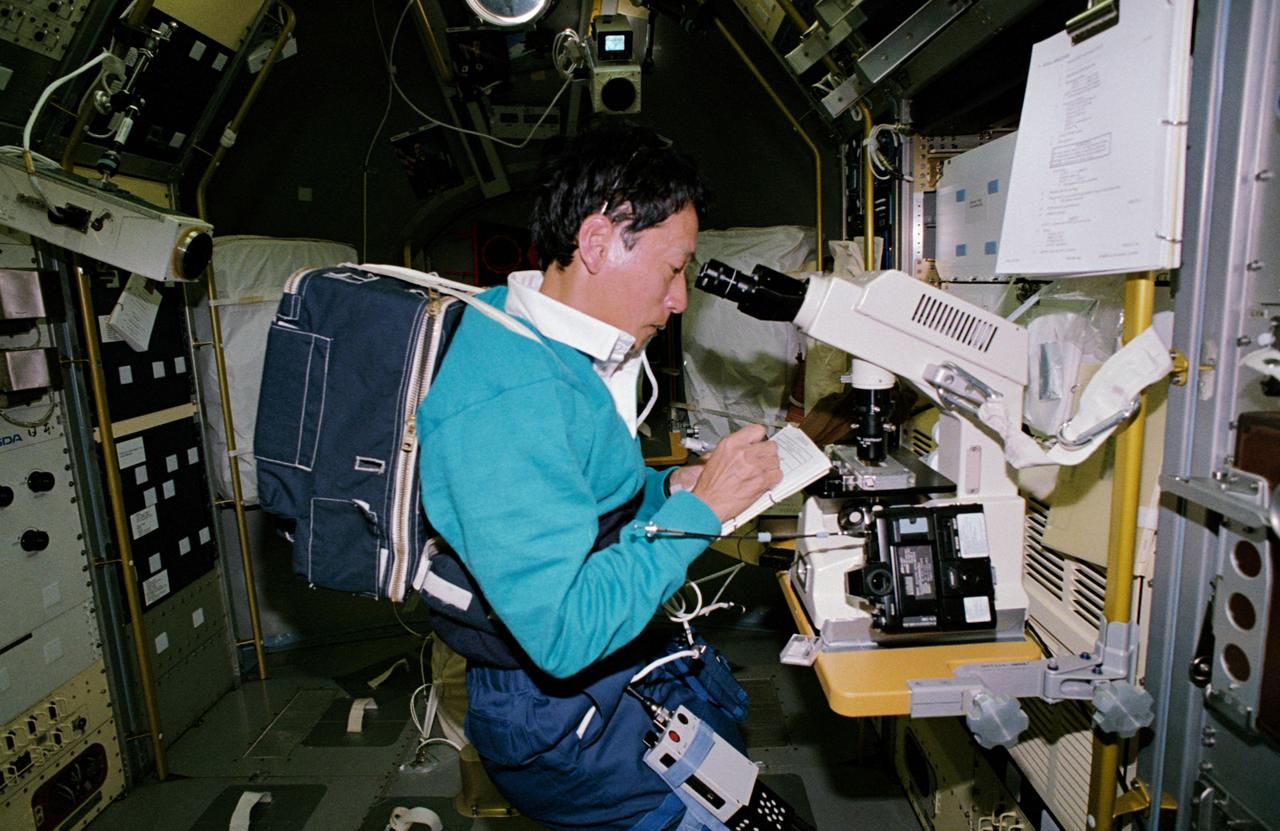
STS047-05-025 (12 - 20 Sept 1992) --- Payload specialist Mamoru Mohri, representing Japan's National Space Development Agency (NASDA), uses a microscope to produce photomicrographs of mammalian cells. The mammal cell structure experiment is one of a large number of tests that were performed during the eight-day Spacelab-J mission. On his back, Dr. Mohri totes a health monitoring experiment. The primary objective of the physiological monitoring system is to observe the health condition of the Japanese payload specialist so that good health can be maintained during and after the spaceflight.
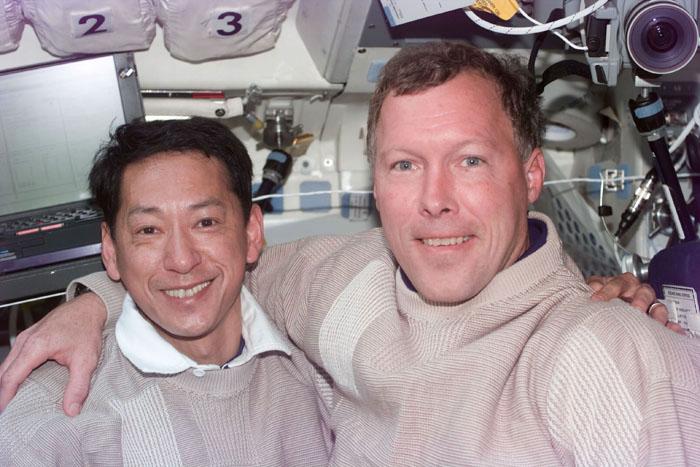
S99-E-5705 (18 February 2000) --- Astronauts Mamoru Mohri (left), mission specialist, and Dominic L. Gorie, pilot, on the flight deck of the Space Shuttle Endeavour. Mohri, representing Japan's National Space Development Agency (NASDA), and Gorie serve on the Blue Team for the scheduled 11-day mission along with astronaut Janice Voss (out of frame). A series of electronic stills was taken of the STS-99 crew members on the day they got the good news from flight controllers in Houston that Shuttle Radar Topograpy Mission (SRTM) mapping time had been extended.
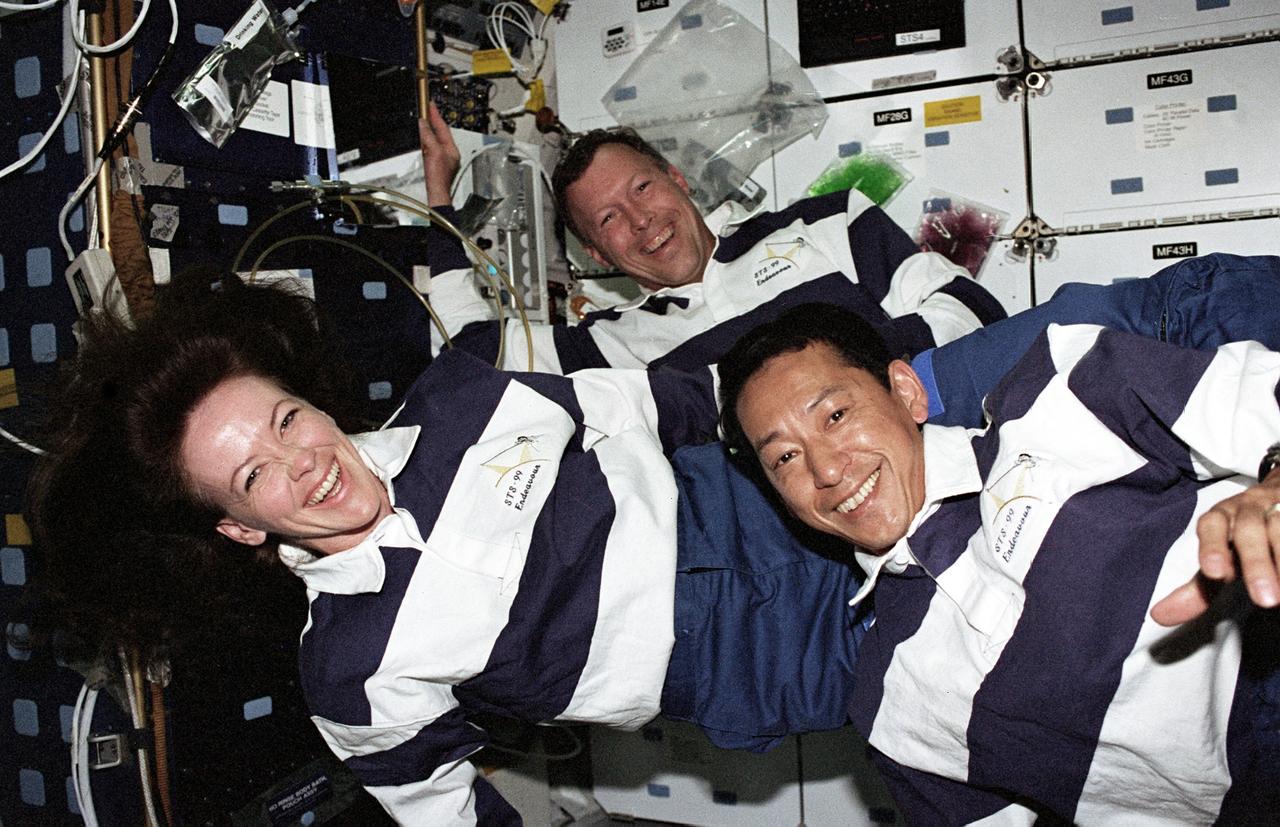
STS099-317-035 (11-22 February 2000) --- Astronauts (from left) Janet L. Kavandi, Dominic L. Gorie and Mamoru Mohri float on Endeavour's mid deck during one of the eleven-day SRTM mission's lighter moments.
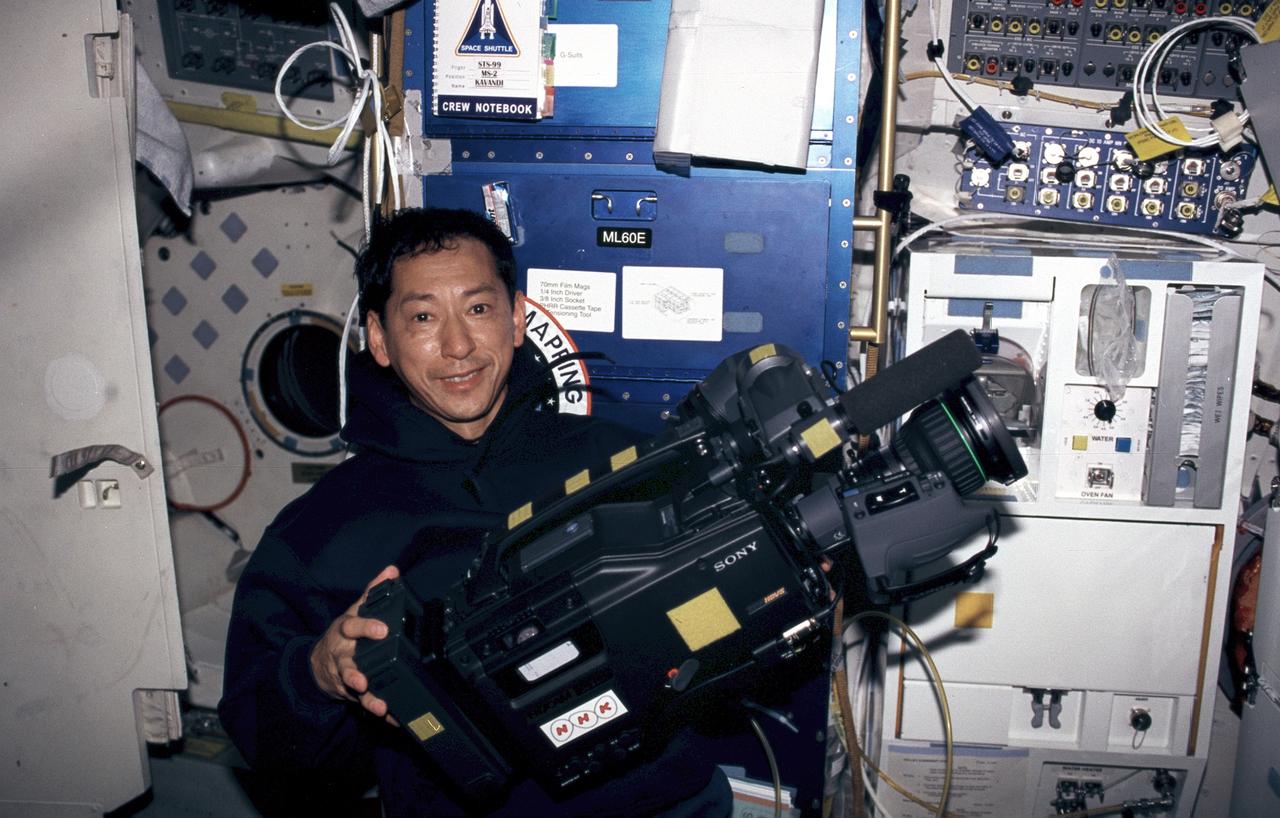
STS099-308-034 (11-22 February 2000) --- Astronaut Mamoru Mohri, mission specialist, is about to use the High Definition Television (HDTV) camera on Endeavour's middeck. The National Space Development Agency's (NASDA) astronaut supported the Blue Team during the SRTM flight. Endeavour's galley can be seen in the background.
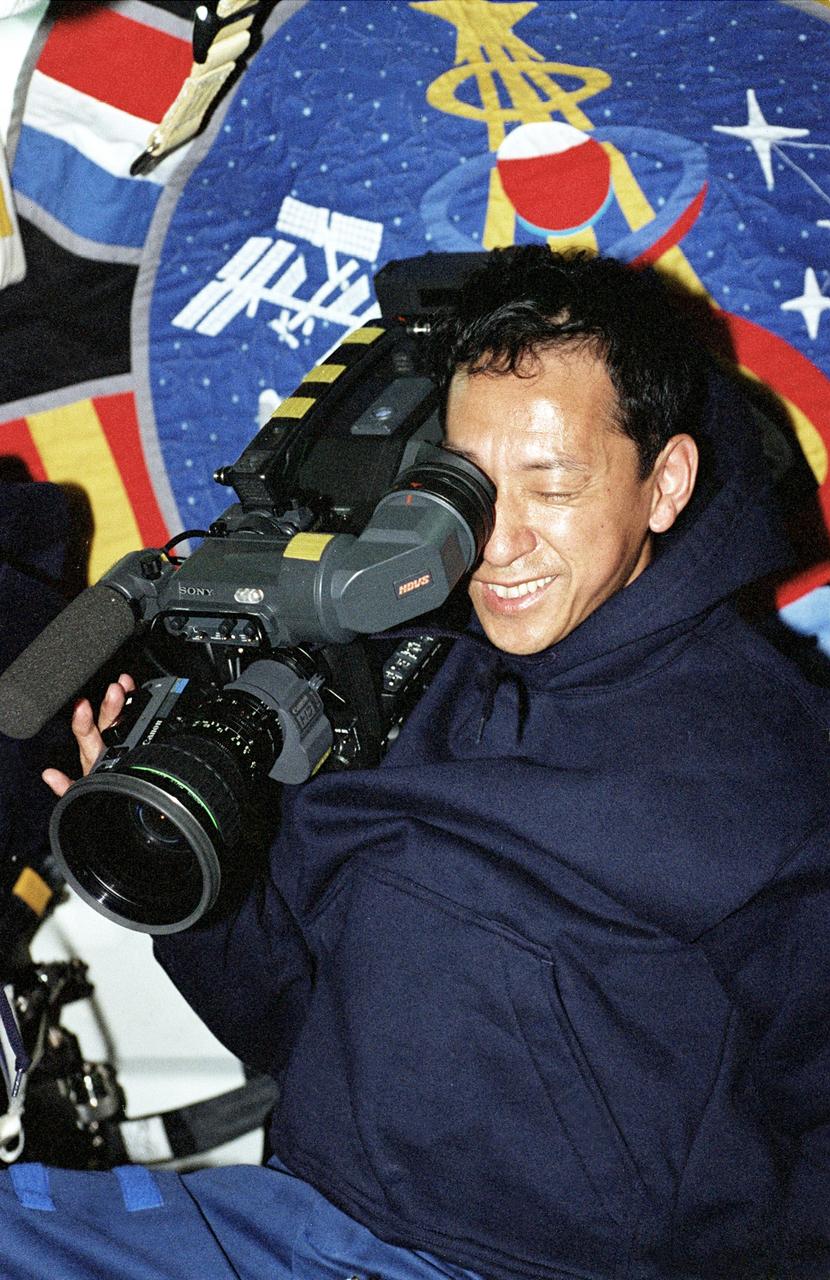
STS099-313-010 (11-22 February 2000) --- Astronaut Mamoru Mohri, mission specialist, uses the High Definition Television (HDTV) camera on Endeavour's mid deck. The National Space Development Agency's (NASDA) astronaut supported the Blue Team during the SRTM flight.
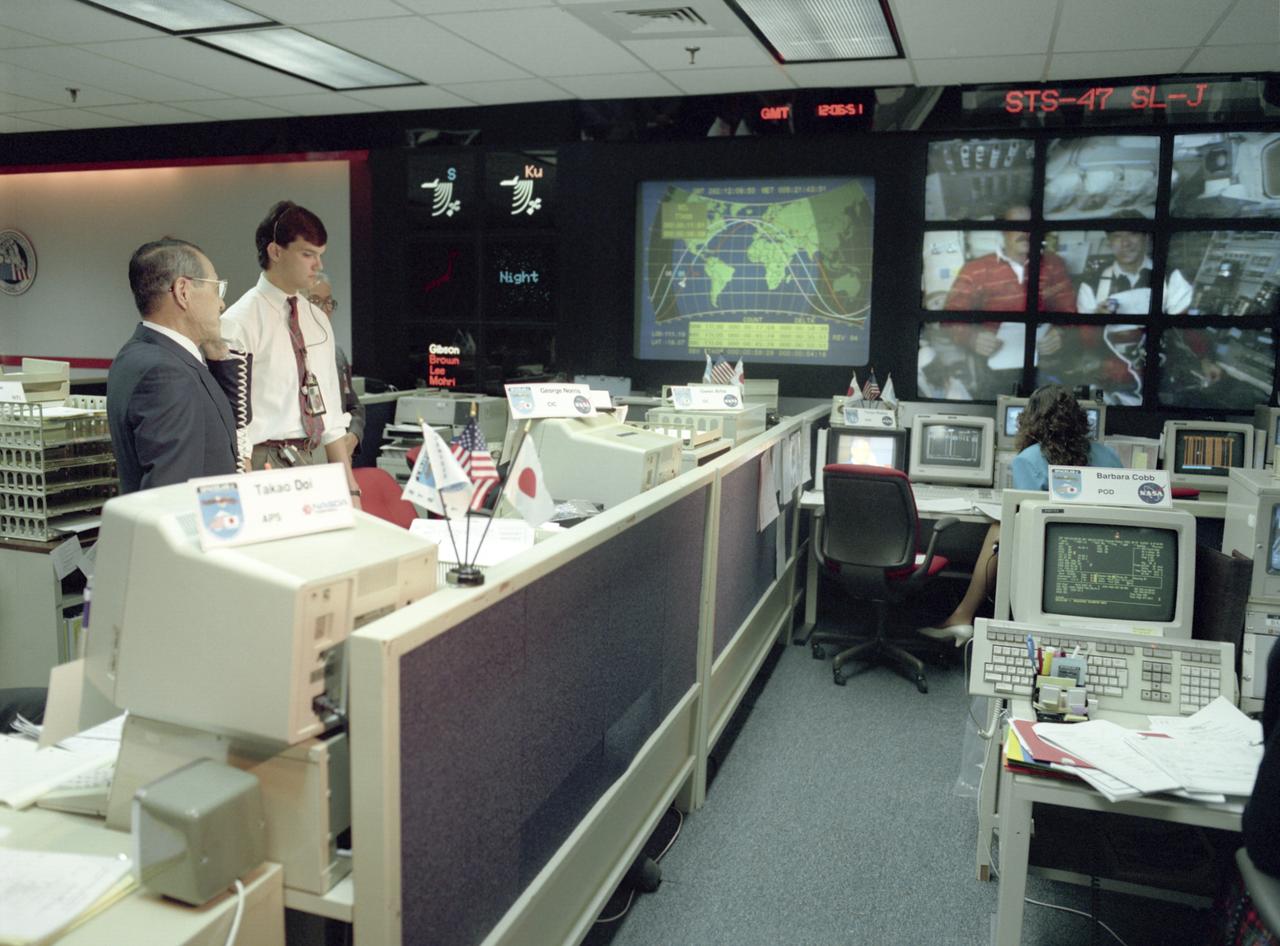
The science laboratory, Spacelab-J (SL-J), flown aboard the STS-47 flight was a joint venture between NASA and the National Space Development Agency of Japan (NASDA) utilizing a manned Spacelab module. The mission conducted 24 materials science and 20 life science experiments, of which 35 were sponsored by NASDA, 7 by NASA, and two collaborative efforts. Materials science investigations covered such fields as biotechnology, electronic materials, fluid dynamics and transport phenomena, glasses and ceramics, metals and alloys, and acceleration measurements. Life sciences included experiments on human health, cell separation and biology, developmental biology, animal and human physiology and behavior, space radiation, and biological rhythms. Test subjects included the crew, Japanese koi fish (carp), cultured animal and plant cells, chicken embryos, fruit flies, fungi and plant seeds, and frogs and frog eggs. From the Huntsville Operations Support Center (HOSC) Spacelab Payload Operations Control Center (SL POCC), NASDA President, Mr. Yamano, speaks to Payload Specialist Mamoru Mohri, a Japanese crew member aboard the STS-47 Spacelab J mission.
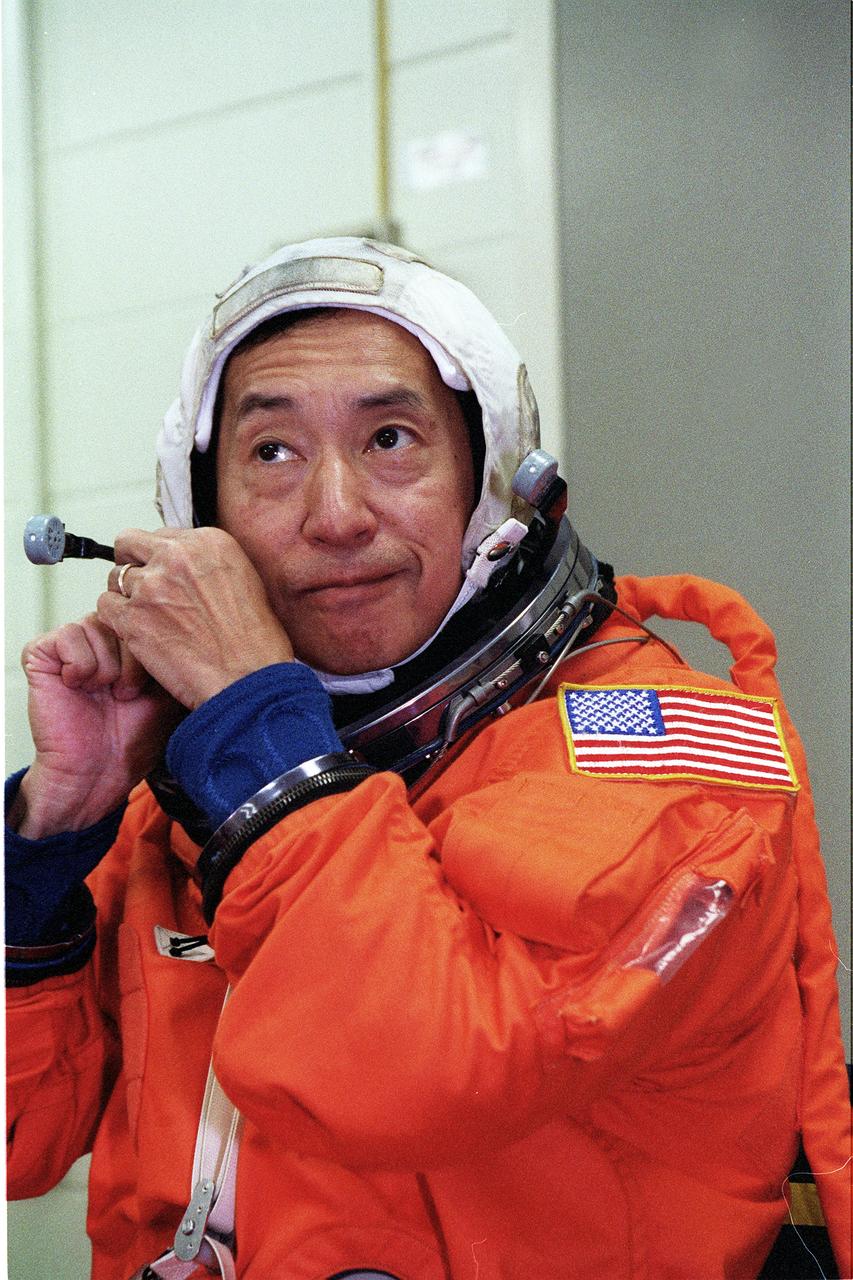
S99-05622 (19 May 1999) --- Astronaut Mamoru Mohri, mission specialist representing Japan's National Space Development Agency, works with his communications gear prior to participating in emergency bailout training at the Johnson Space Center's Systems Integration Facility. Mohri wears a training version of the partial pressure launch and entry garment.
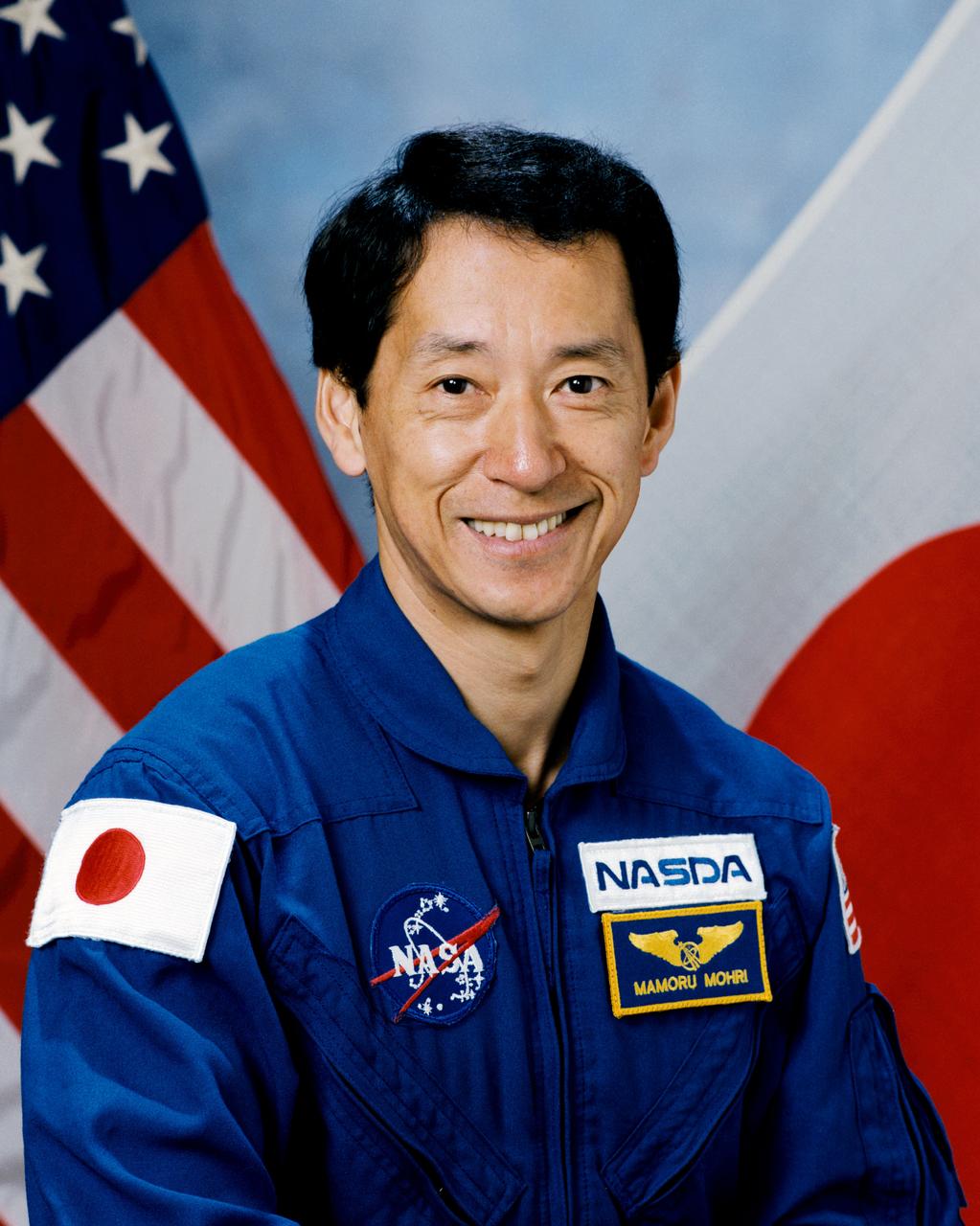
S97-05508 (13 Sept. 1996) --- Astronaut Mamoru Mohri, payload specialist, representing National Space Development Agency (NASDA).
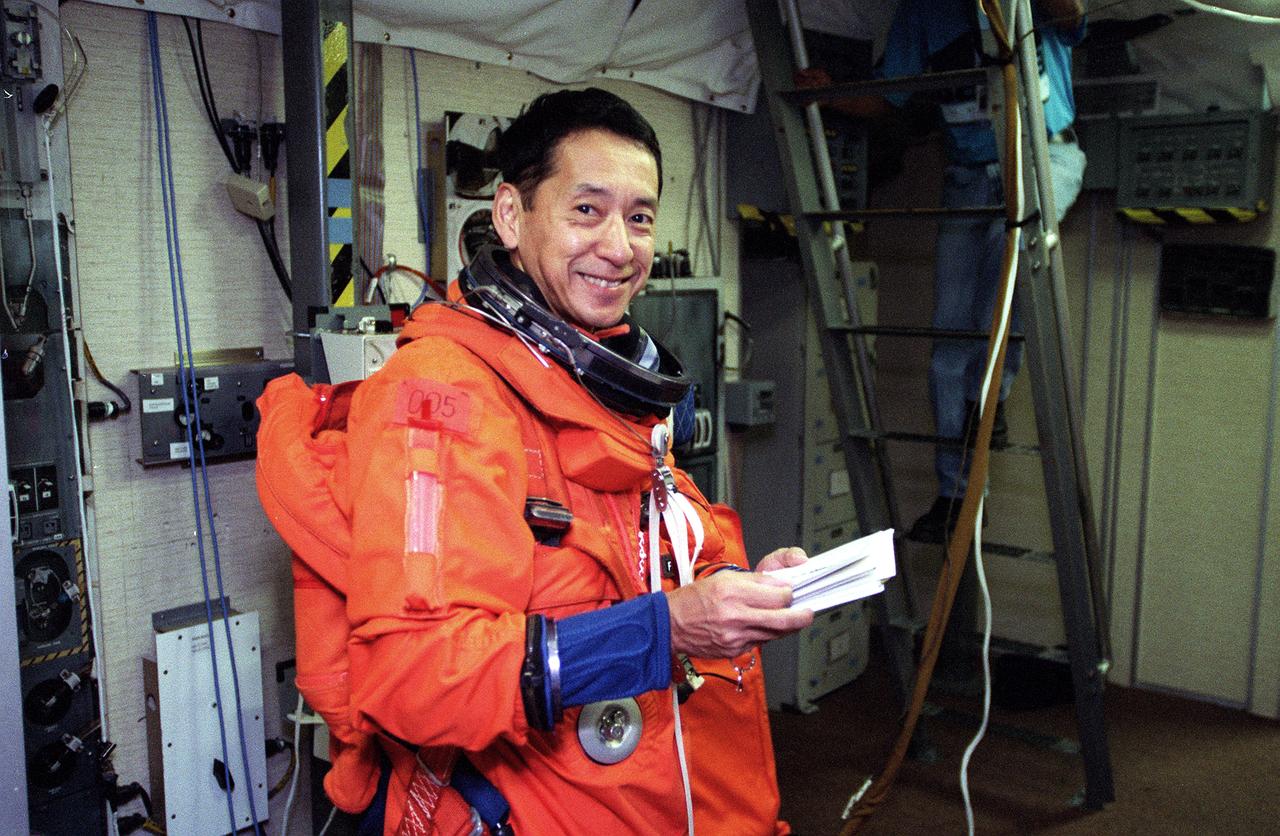
S99-10565 (24 August 1999) --- Astronaut Mamoru Mohri, STS-99 mission specialist, goes over a checklist on the mid deck of a shuttle trainer at the Johnson Space Center (JSC). Mohri represents Japan's National Space Development Agency (NASDA). He will be making his second flight in space and his second flight aboard the Space Shuttle Endeavour, having flown as a payload specialist on the STS-47 mission in 1992.
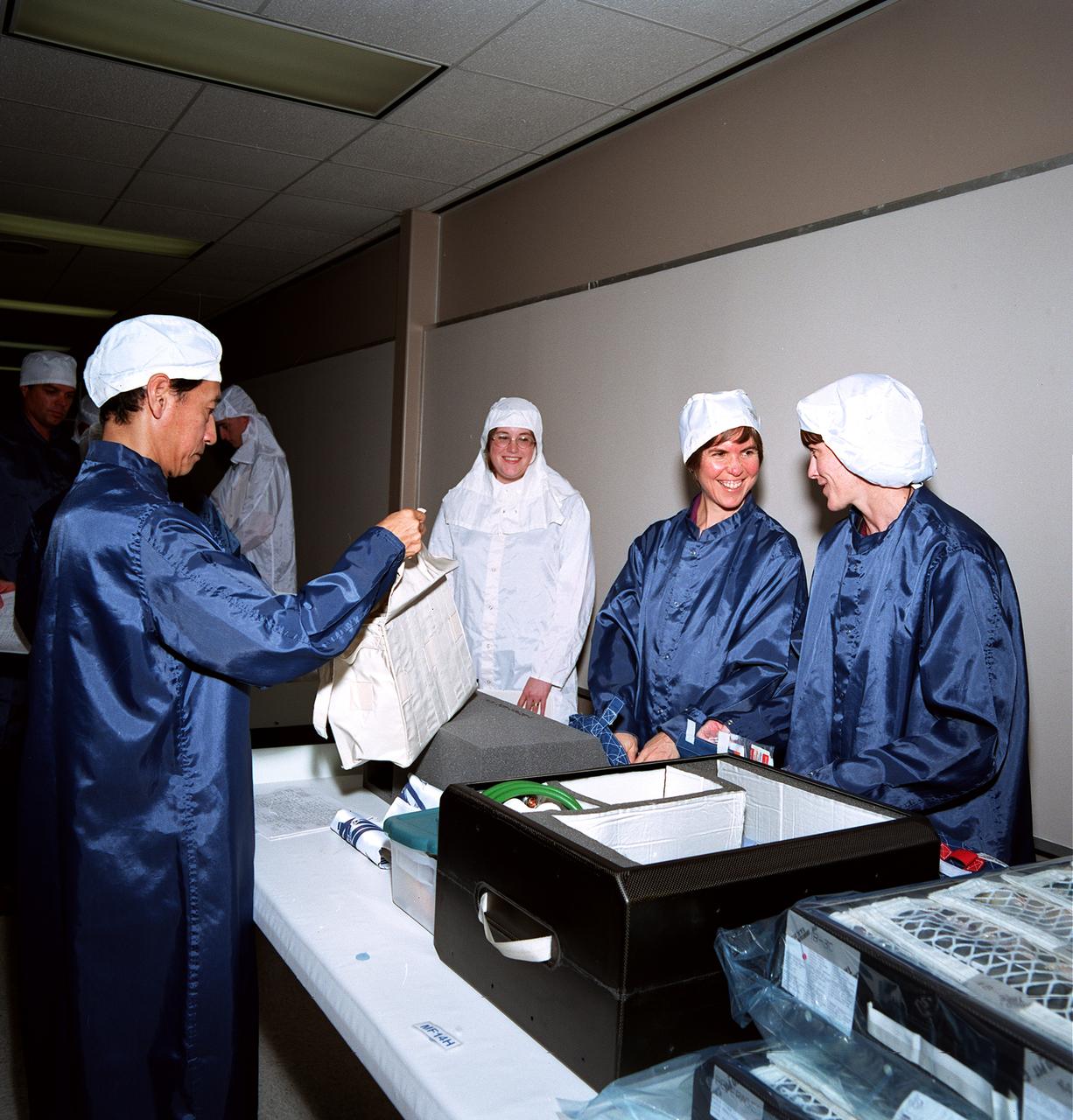
S99-09470 (11 August 1999) --- Three mission specialists participate in a STS-99 flight crew equipment (FCE) bench review. From the left (in the blue lab coats), astronauts Mamoru Mohri, Janice Voss and Janet L. Kavandi look over equipment and supplies for their assigned mission aboard the Space Shuttle Endeavour later this year. Mohri represents Japan's National Space Development Agency (NASDA). Such bench reviews are routine procedure for crews preparing for shuttle missions.
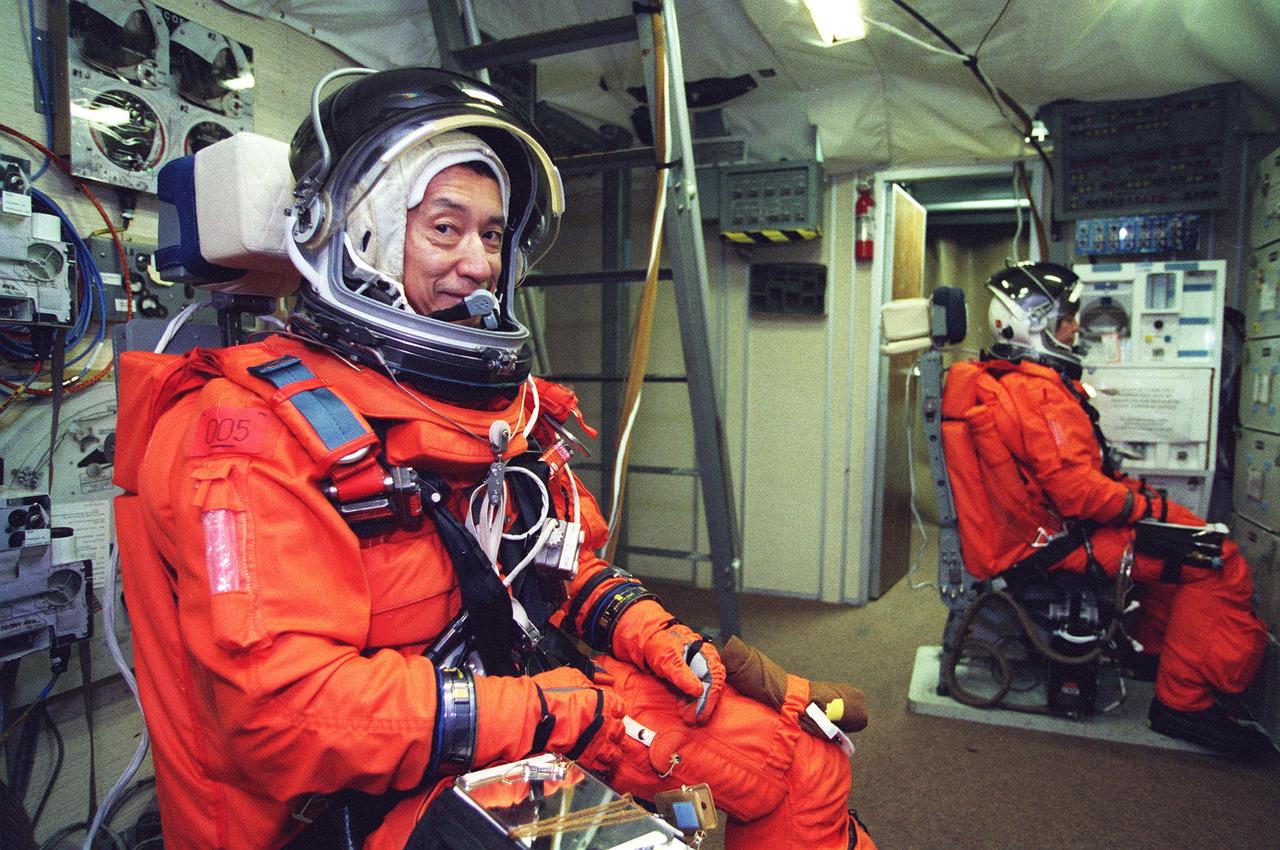
S99-10573 (24 August 1999) --- Astronauts Mamoru Mohri (foreground) and Janice Voss participate in a simulation of pre-launch measures in one of the trainers at the Johnson Space Center's Systems Integration Facility. Mohri represents Japan's National Space Development Agency (NASDA). The four other STS-99 crew members were on the flight deck for this dress rehearsal.
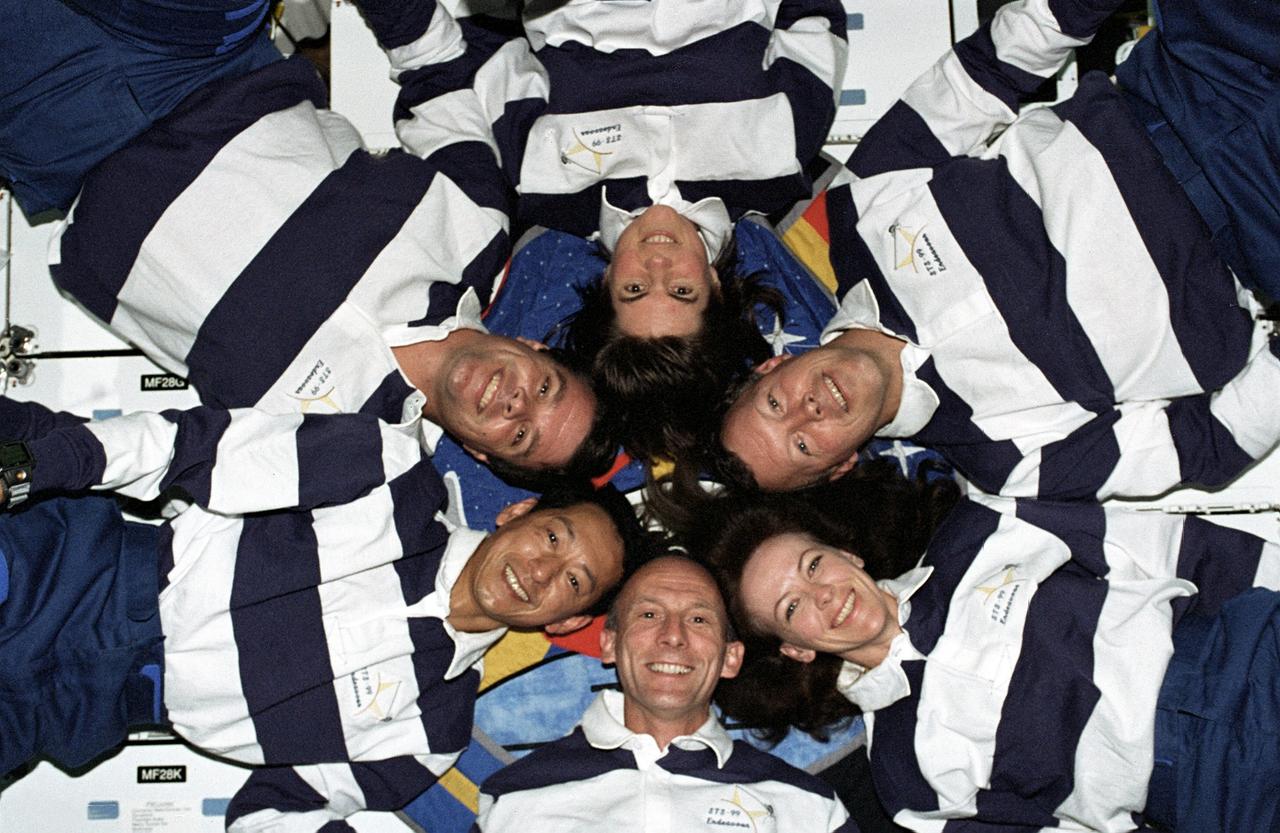
STS099-318-015 (11-22 February 2000) --- A "star-burst" pose by the STS-99 crew members helps to celebrate a successful Shuttle Radar Topographic Mission (SRTM) aboard NASA's Space Shuttle Endeavour. Astronaut Janice Voss is at top center. Clockwise, around the circle from her position, are astronauts Dominic L. Gorie, Janet L. Kavandi, Gerhard Thiele, Mamoru Mohri and Kevin R. Kregel. Mohri is with the Japanese Space Agency and Thiele represents the European Space Agency (ESA).
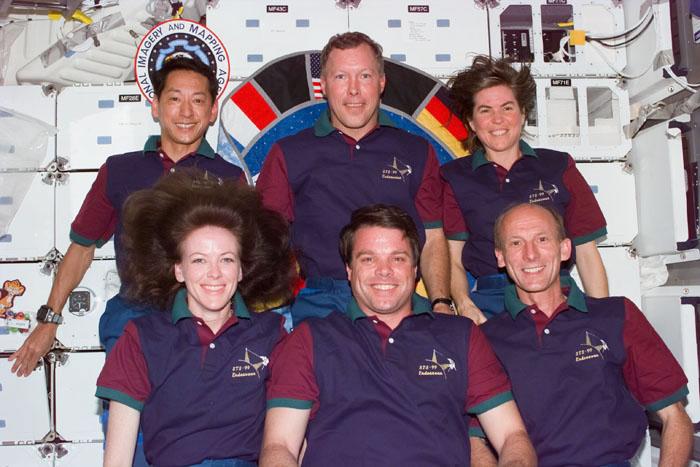
S99-E-5731 (18 February 2000) --- Not often seen together on the STS-99 flight which provides around-the-clock coverage for the Shuttle Radar Topography Mission (SRTM), the six astronauts pose for one of the traditional inflight crew portraits on Endeavour's mid deck. In the rear are the Blue Team members (from left), Mamoru Mohri, Dominic L. Gorie and Janice Voss. In front are Red Team members Janet L. Kavandi, Kevin R. Kregel and Gerhard P.J. Thiele. Mohri is with Japan's National Space Development Agency (NASDA) and Thiele represents the European Space Agency (ESA).
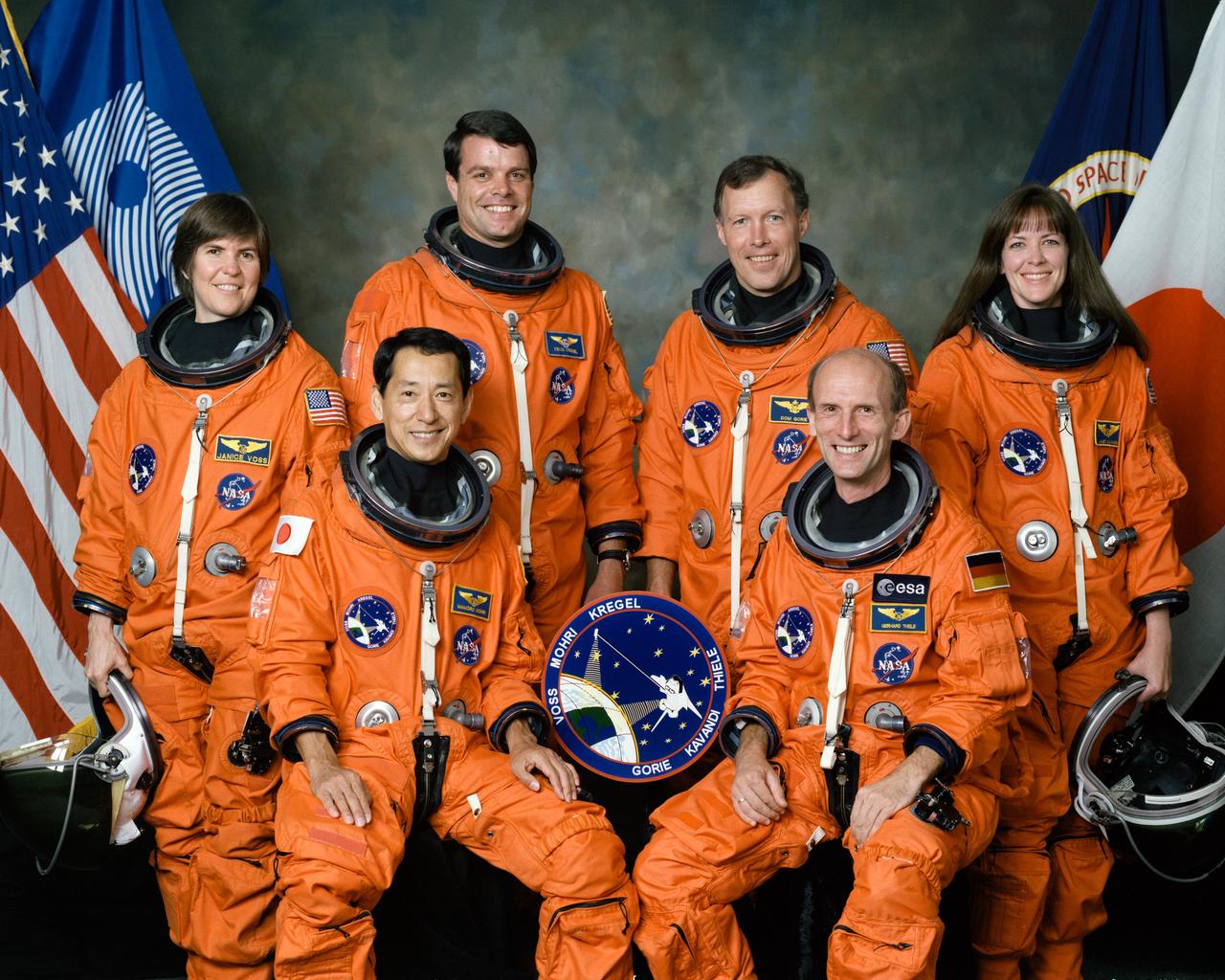
STS099-S-002 (June 1999) --- An international crew assigned to STS-99 takes a break from training to pose for the traditional crew portrait at NASA's Johnson Space Center (JSC). In front are international astronauts Mamoru Mohri and Gerhard P.J. Thiele, both mission specialists. In back are astronauts Janice Voss, mission specialist; Kevin R. Kregel, mission commander; Dominic L. Gorie, pilot; and Janet L. Kavandi, mission specialist. Mohri represents Japan's National Space Development Agency (NASDA) and Thiele represents the European Space Agency (ESA). The mission is scheduled as an eleven-day flight for late summer/early autumn of this year.
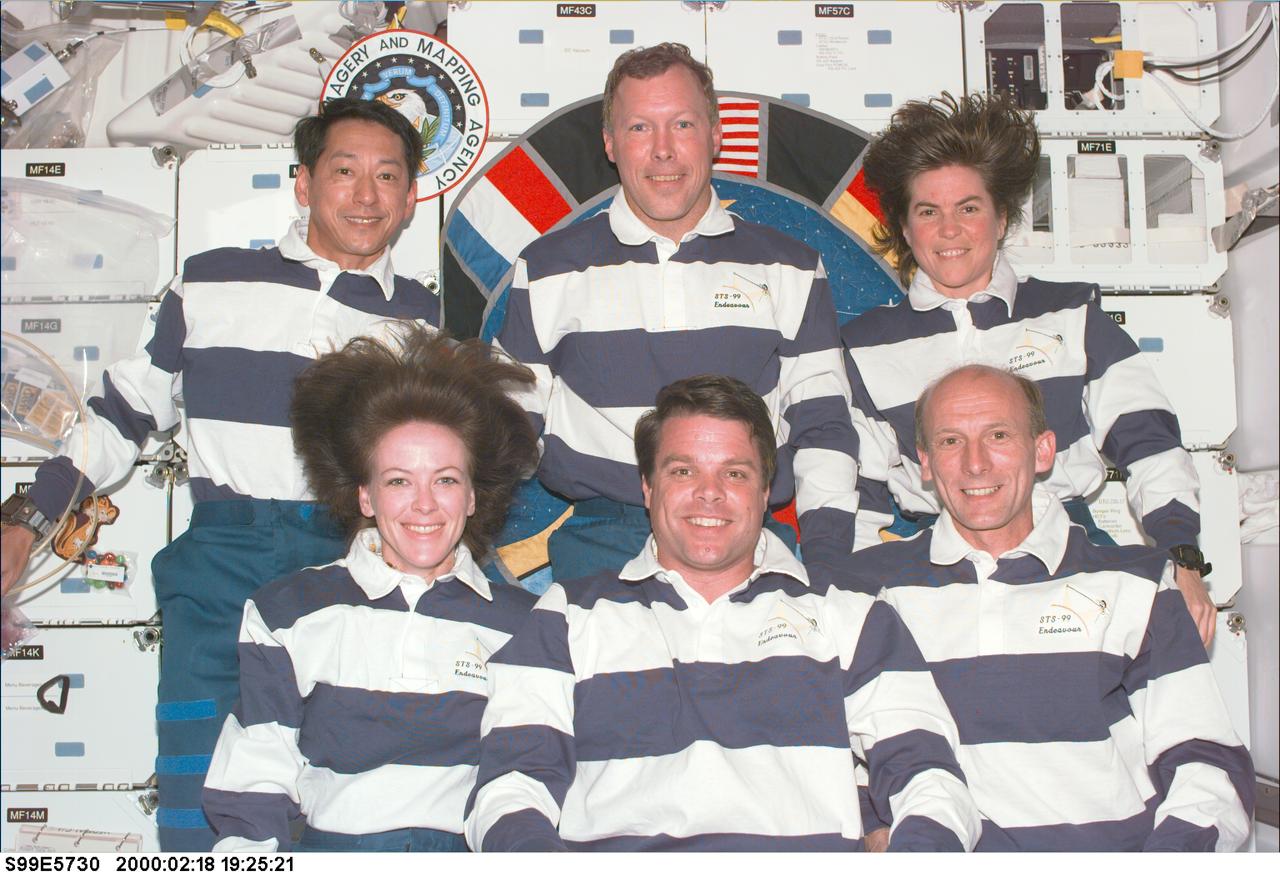
S99-E-5730 (18 February 2000) --- Not often seen together on the STS-99 flight which provides around-the-clock coverage for the Shuttle Radar Topography Mission (SRTM), the six astronauts pose for the traditional inflight crew portrait on Endeavour's mid deck. In the rear are the Blue Team members (from left), Mamoru Mohri, Dominic L. Gorie and Janice Voss. In front are Red Team members Janet L. Kavandi, Kevin R. Kregel and Gerhard P.J. Thiele. Mohri is with Japan's National Space Development Agency (NASDA) and Thiele represents the European Space Agency (ESA).
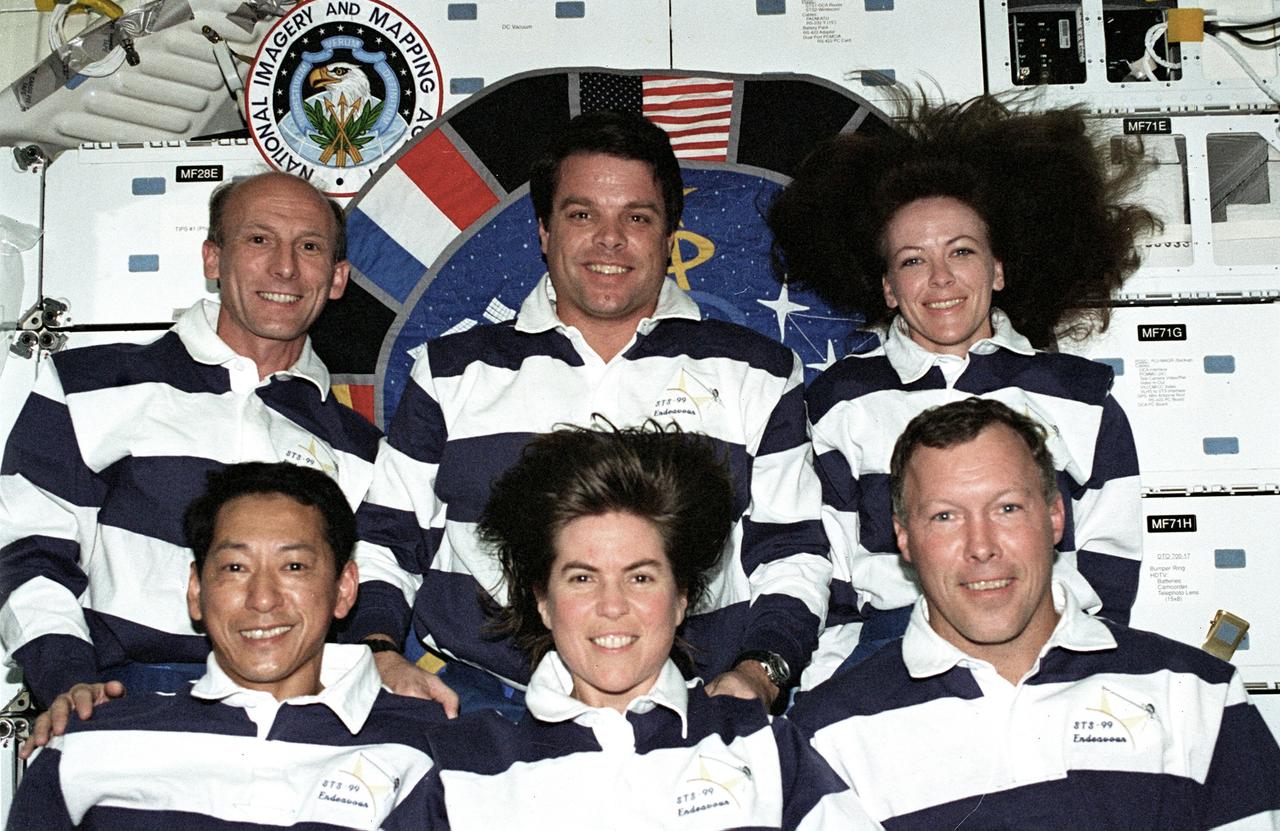
STS099-318-003 (11-22 February 2000) --- The six flight crew members for the Shuttle Radar Topography Mission (SRTM) pose for the traditional inflight crew portrait on Endeavour's mid deck. Blue Team members in front are (from the left), astronauts Mamoru Mohri, Janice Voss and Dominic L. Gorie. Red Team members are (from left, rear) astronauts Gerhard P.J. Thiele, Kevin R. Kregel and Janet L. Kavandi. Mohri is with Japan's National Space Development Agency (NASDA) and Thiele represents the European Space Agency (ESA).
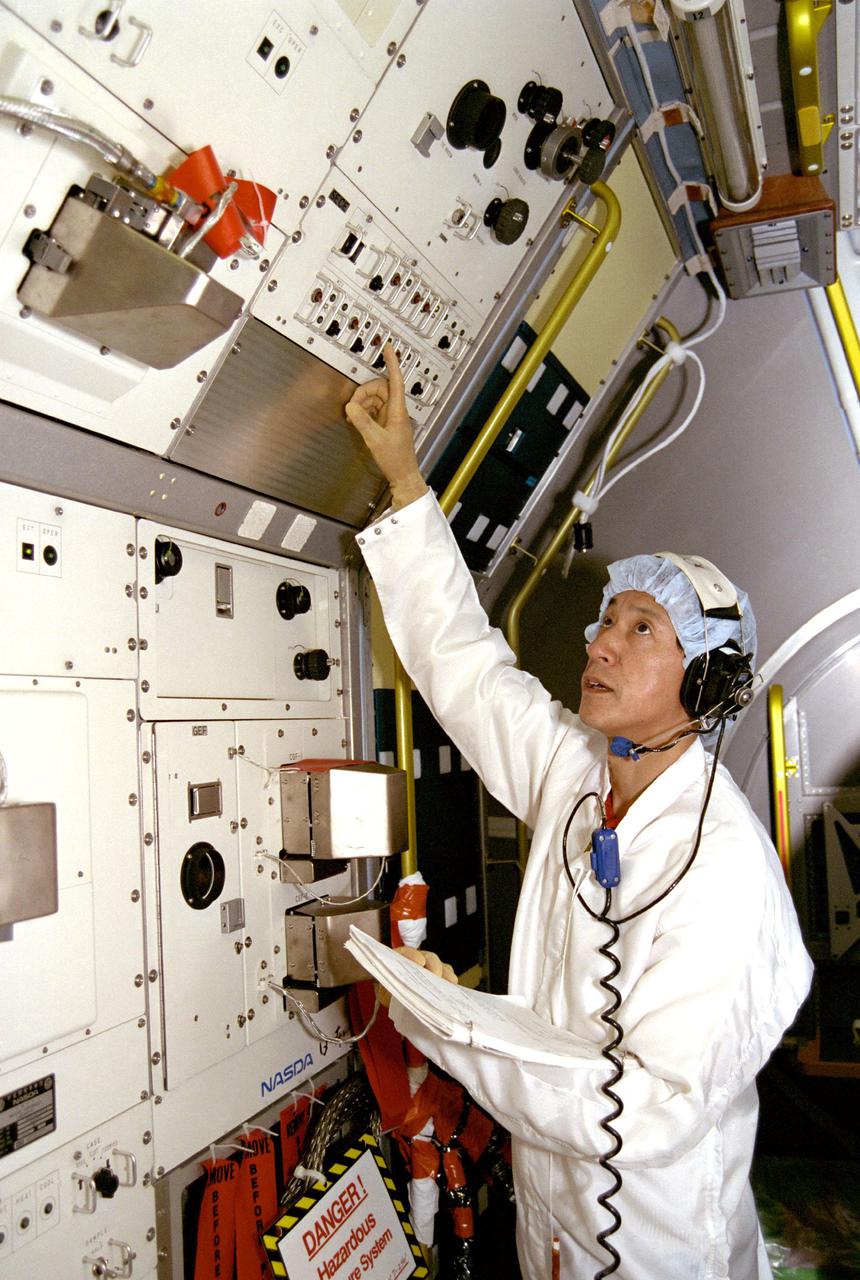
KENNEDY SPACE CENTER, FLA. -- In the Operations and Checkout Building high bay, STS-47 Payload Specialist Dr. Mamoru Mohri is participating in a Mission Sequence Test of the Spacelab-J (SL-J). Also on hand for the test of planned on-orbit activities were Payload Commander Mark Lee and other members of the payload team. Spacelab-J is a joint effort between the Japanese space agency NASDA and NASA, and features an array of 44 life science and materials processing investigations. Dr. Mohri, a payload specialist, will become the first Japanese to fly on the Shuttle.
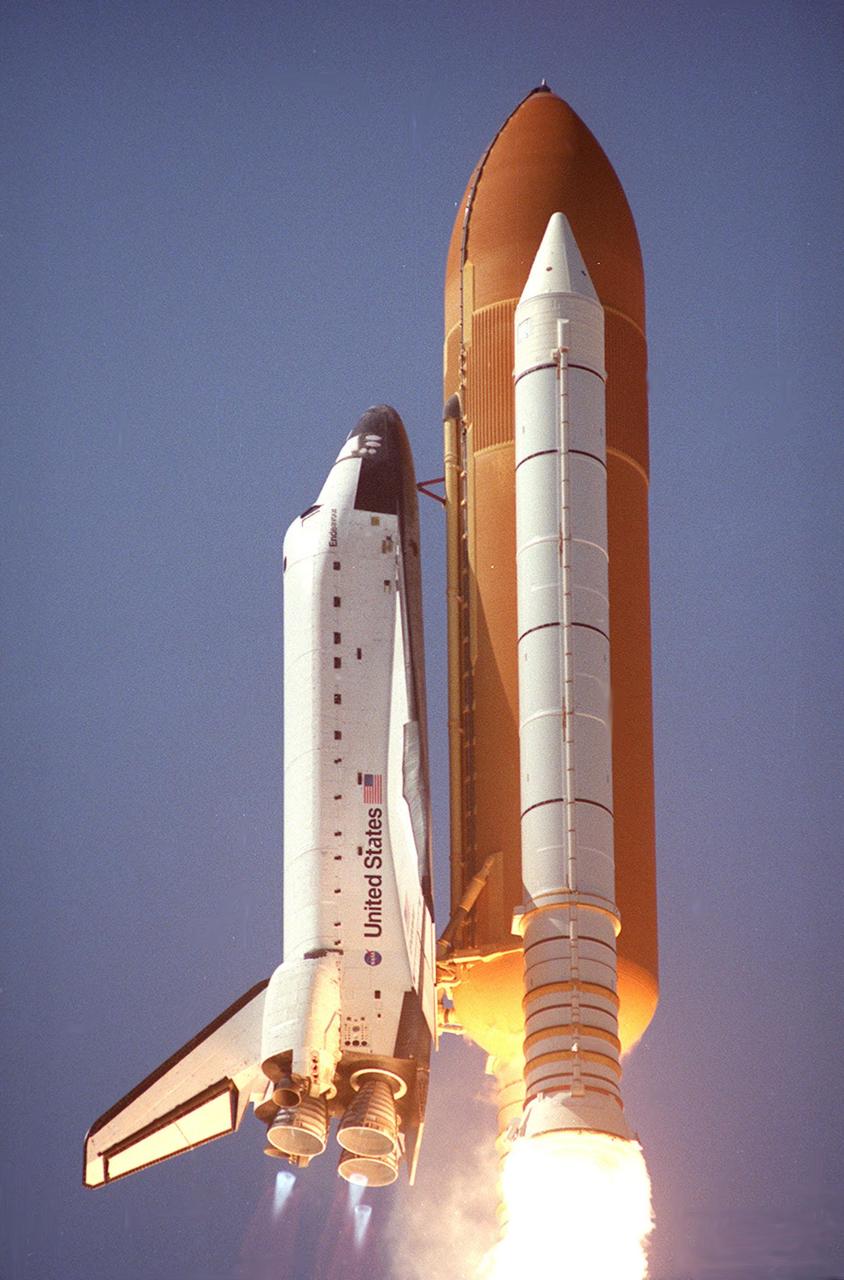
KENNEDY SPACE CENTER, FLA. -- A clear blue sky is the perfect setting behind Space Shuttle Endeavour as it hurtles into space. Launch of mission STS-99 occurred at 12:43:40 p.m. EST from Launch Pad 39A with a crew of five aboard: Commander Kevin Kregel, Pilot Dominic Gorie, and Mission Specialists Janet Kavandi, Janice Voss, Mamoru Mohri of Japan and Gerhard Thiele of Germany. Mohri is with the National Space Development Agency (NASDA) of Japan, and Thiele is with the European Space Agency. Known as the Shuttle Radar Topography Mission (SRTM), STS-99 will chart a new course to produce unrivaled 3-D images of the Earth's surface. The result of the SRTM could be close to 1 trillion measurements of the Earth's topography. The mission is expected to last 11days, with Endeavour landing at KSC Tuesday, Feb. 22, at 4:36 p.m. EST. This is the 97th Shuttle flight and 14th for Shuttle Endeavour
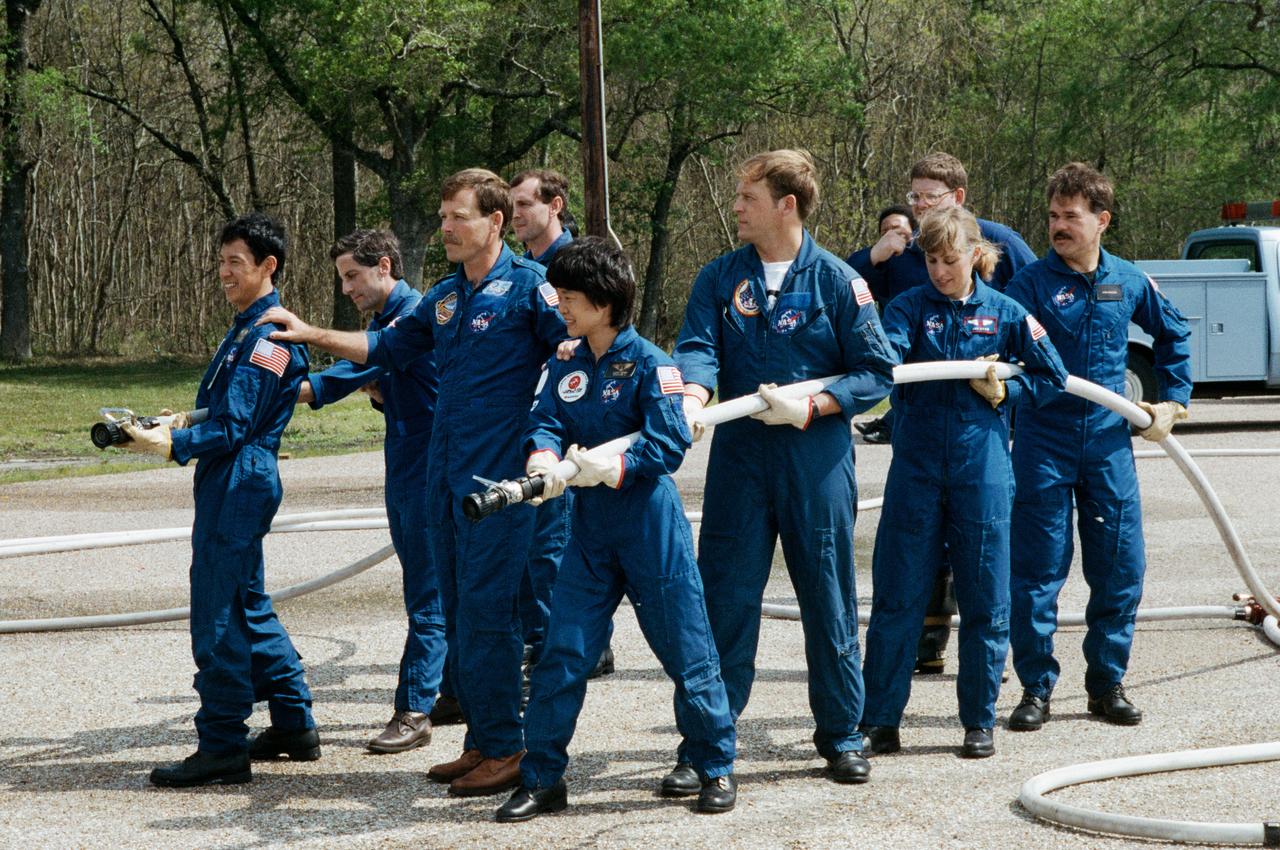
STS-47 Endeavour, Orbiter Vehicle (OV) 105, crewmembers led by Commander Robert L. Gibson (center) prepare to extinguish a blaze in JSC's Fire Training Pit. Lined up along the water hoses are: (on left) Payload Specialist Mamoru Mohri, holding the hose nozzle, followed by Mission Specialist (MS) Jerome Apt, and Pilot Curtis L. Brown, Jr; and (on right) backup Payload Specialist Chiaki Naito-Mukai, holding the hose nozzle, followed by MS and Payload Commander (PLC) Mark C. Lee, MS N. Jan Davis, and backup Payload Specialist Stan Koszelak. A veteran fire fighter and the instructor, positioned between the two hoses, looks on. Mohri and Mukai represent Japan's National Space Development Agency (NASDA). The Fire Training Pit is located across from the Gilruth Center Bldg 207.
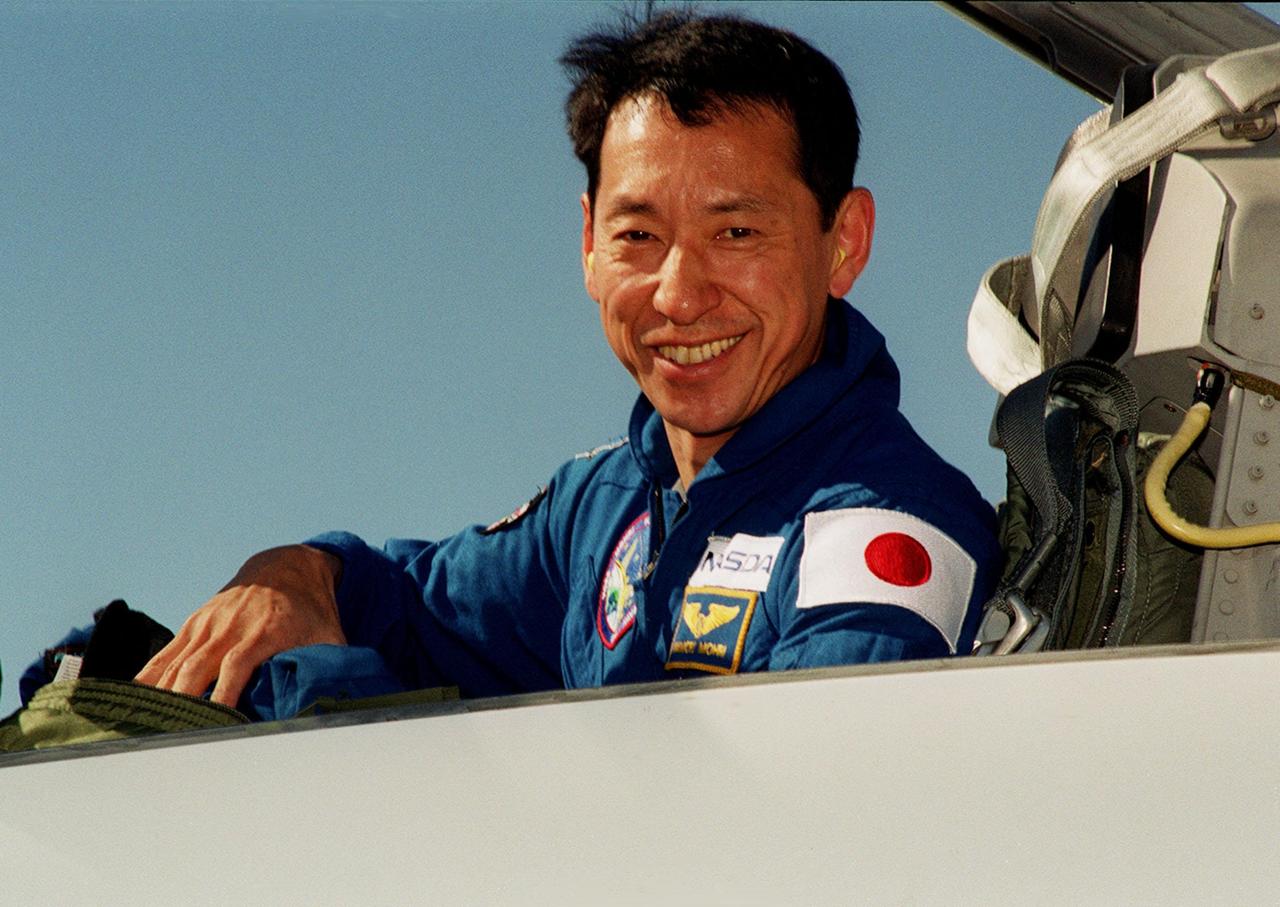
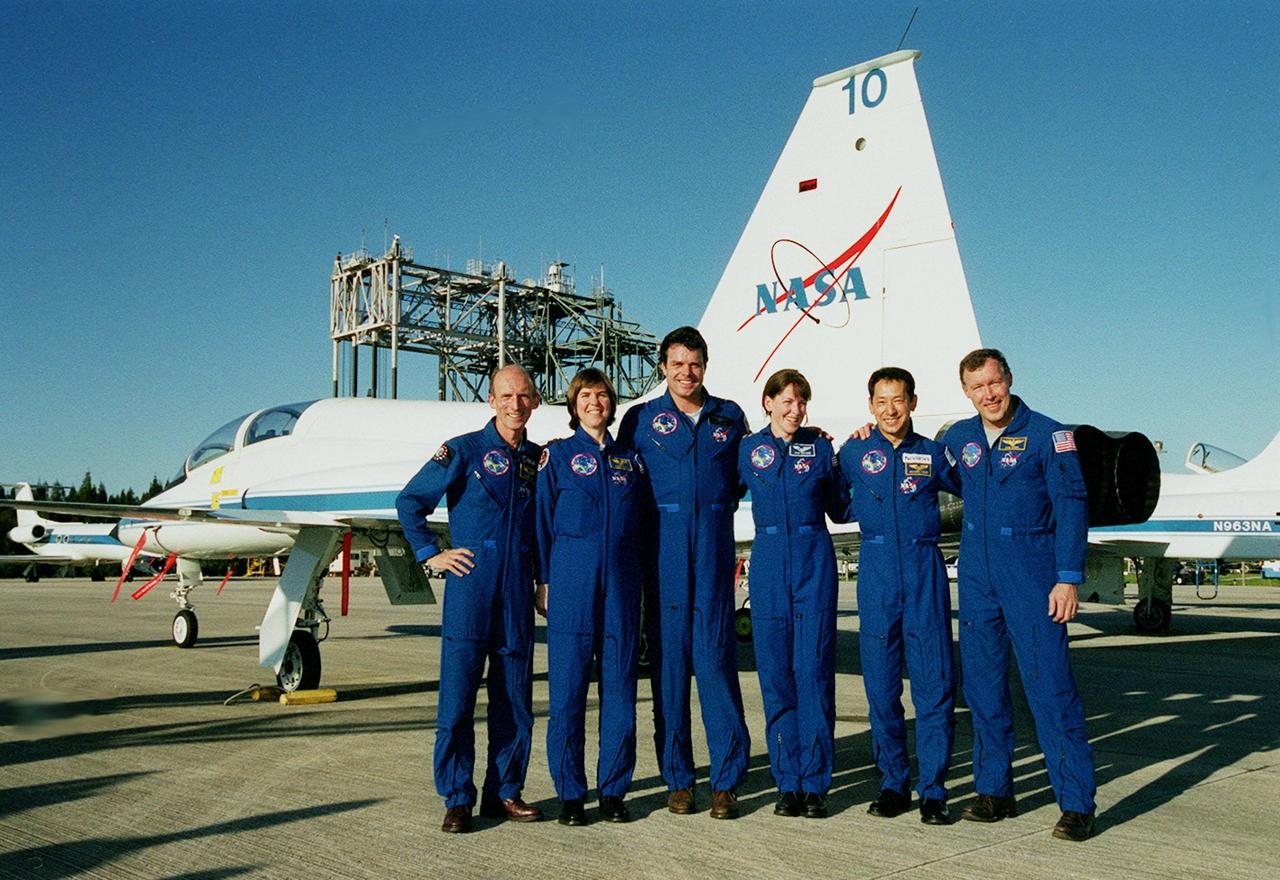
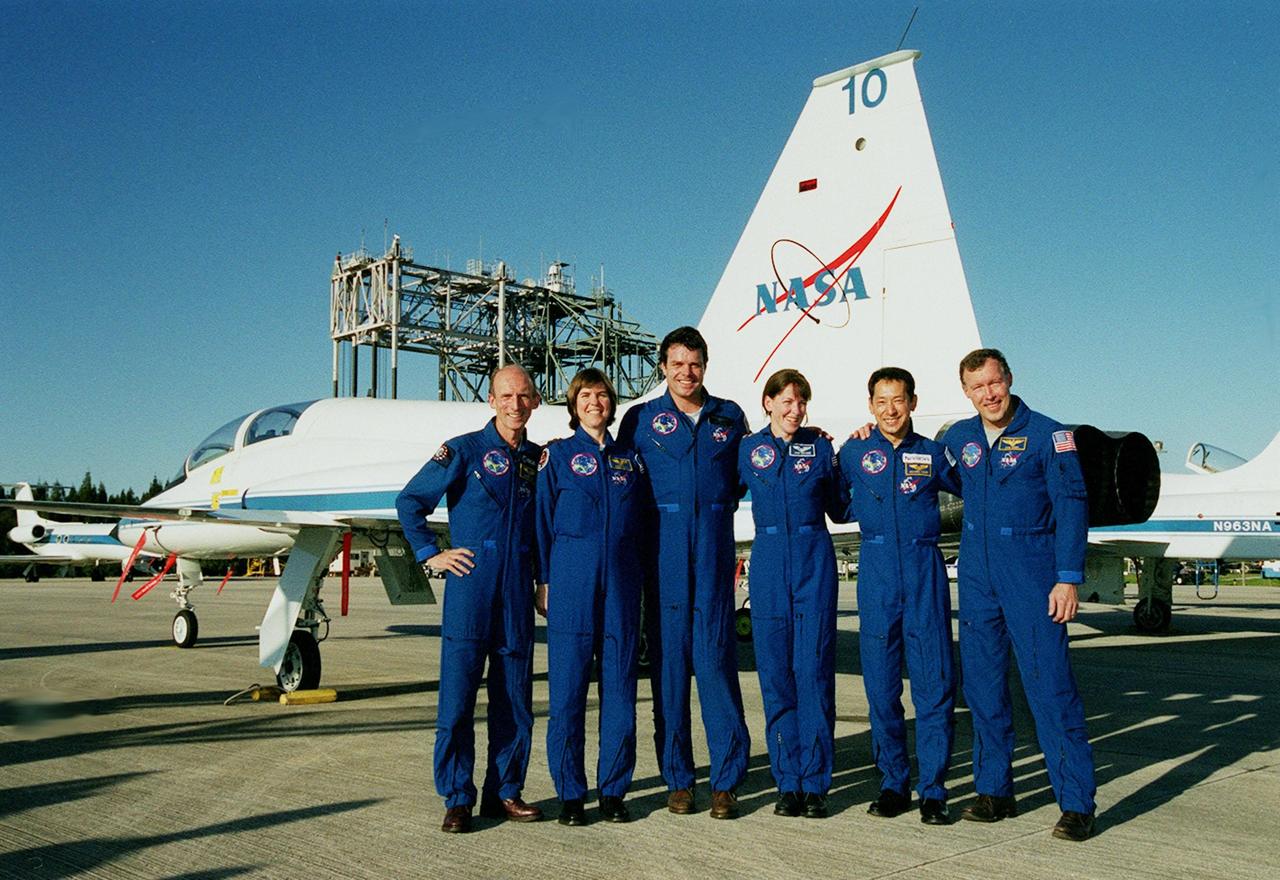
A smiling STS-99 Mission Specialist Mamoru Mohri of Japan arrives at KSC aboard a T-38 jet aircraft eager to prepare for the second launch attempt of Endeavour Feb. 11 at 12:30 p.m. EST from Launch Pad 39A. Mohri is with the Japanese National Space Development Agency (NASDA). The earlier launch scheduled for Jan. 31 was scrubbed due to poor weather and a faulty Enhanced Master Events Controller in the orbiter's aft compartment. Over the next few days, the crew will review mission procedures, conduct test flights in the Shuttle Training Aircraft and undergo routine preflight medical exams. STS-99 is the Shuttle Radar Topography Mission, which will produce unrivaled 3-D images of the Earth's surface. The result of the Shuttle Radar Topography Mission could be close to 1 trillion measurements of the Earth's topography. Landing is expected at KSC on Feb. 22 at 4:36 p.m. EST
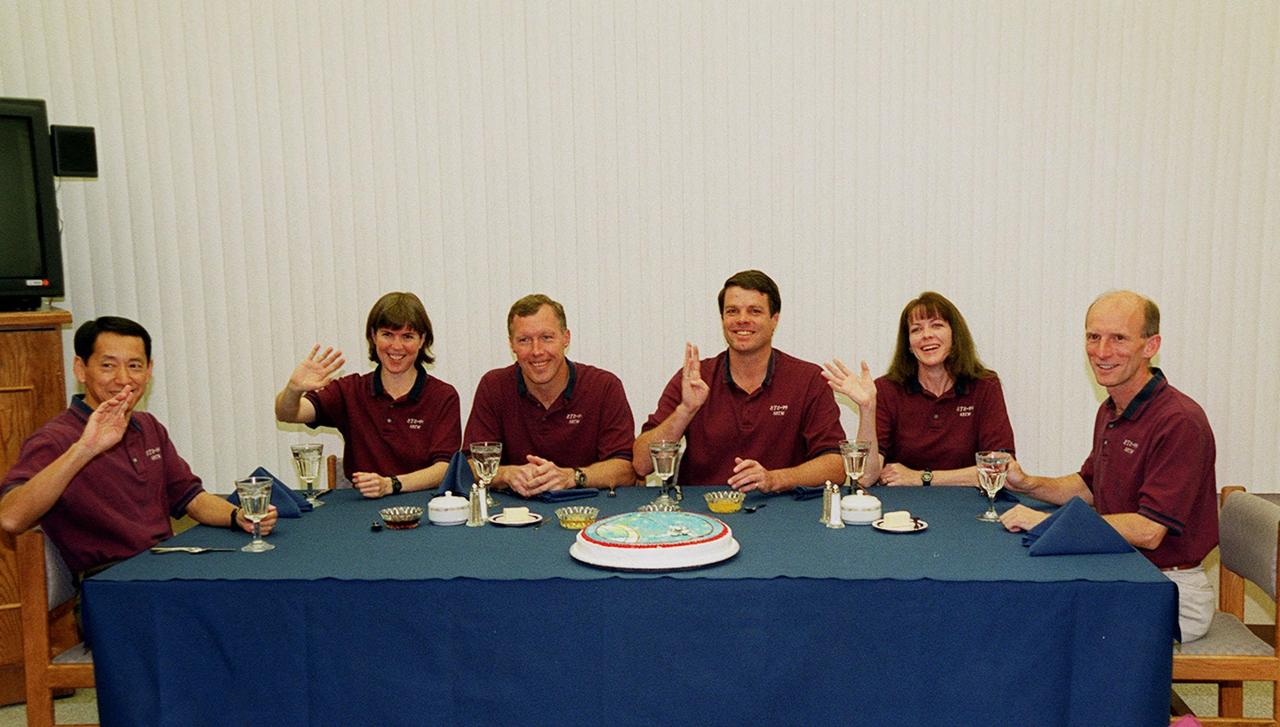
In the Operations and Checkout Building, an eager and smiling STS-99 crew gathers for breakfast before suiting up for launch. From left are Mission Specialists Mamoru Mohri and Janice Voss, Pilot Dominic Gorie, Commander Kevin Kregel, and Mission Specialists Janet Lynn Kavandi and Gerhard Thiele. Mohri is with the National Space Development Agency (NASDA) of Japan, and Thiele is with the European Space Agency. Known as the Shuttle Radar Topography Mission (SRTM), STS-99 is scheduled for liftoff at 12:30 p.m. EST from Launch Pad 39A. The SRTM will chart a new course to produce unrivaled 3-D images of the Earth's surface. The result of the Shuttle Radar Topography Mission could be close to 1 trillion measurements of the Earth's topography. The mission is expected to last about 11days, with Endeavour landing at KSC Tuesday, Feb. 22, at 4:36 p.m. EST. This is the 97th Shuttle flight and 14th for Shuttle Endeavour
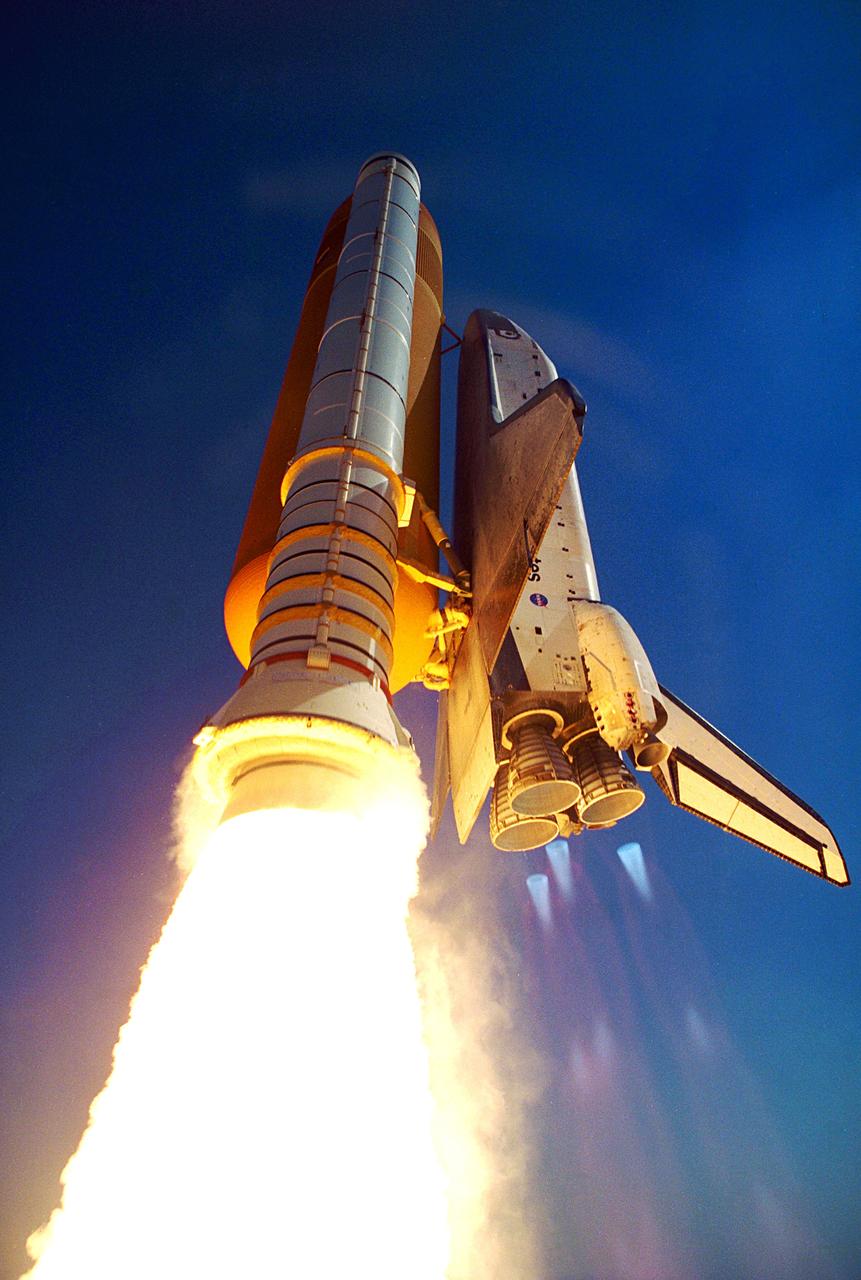
STS099-S-022 (11 February 2000) --- The Space Shuttle Endeavour lifts off from Kennedy Space Center’s (KSC) Launch Pad 39A to officially begin the Shuttle Radar Topography Mission (SRTM). Launch occurred at 12:43:40 p.m. (EST), February 11, 2000. This low-angle view clearly shows the "diamond-shock" effect of the shuttle's engines. Onboard were astronauts Kevin R. Kregel, mission commander, and Dominic L. Gorie, pilot; along with Janice Voss, Janet L. Kavandi, Mamoru Mohri and Gerhard P. J. Thiele, all mission specialists. Mohri is with Japan's National Space Development Agency (NASDA) and Thiele represents the European Space Agency (ESA).
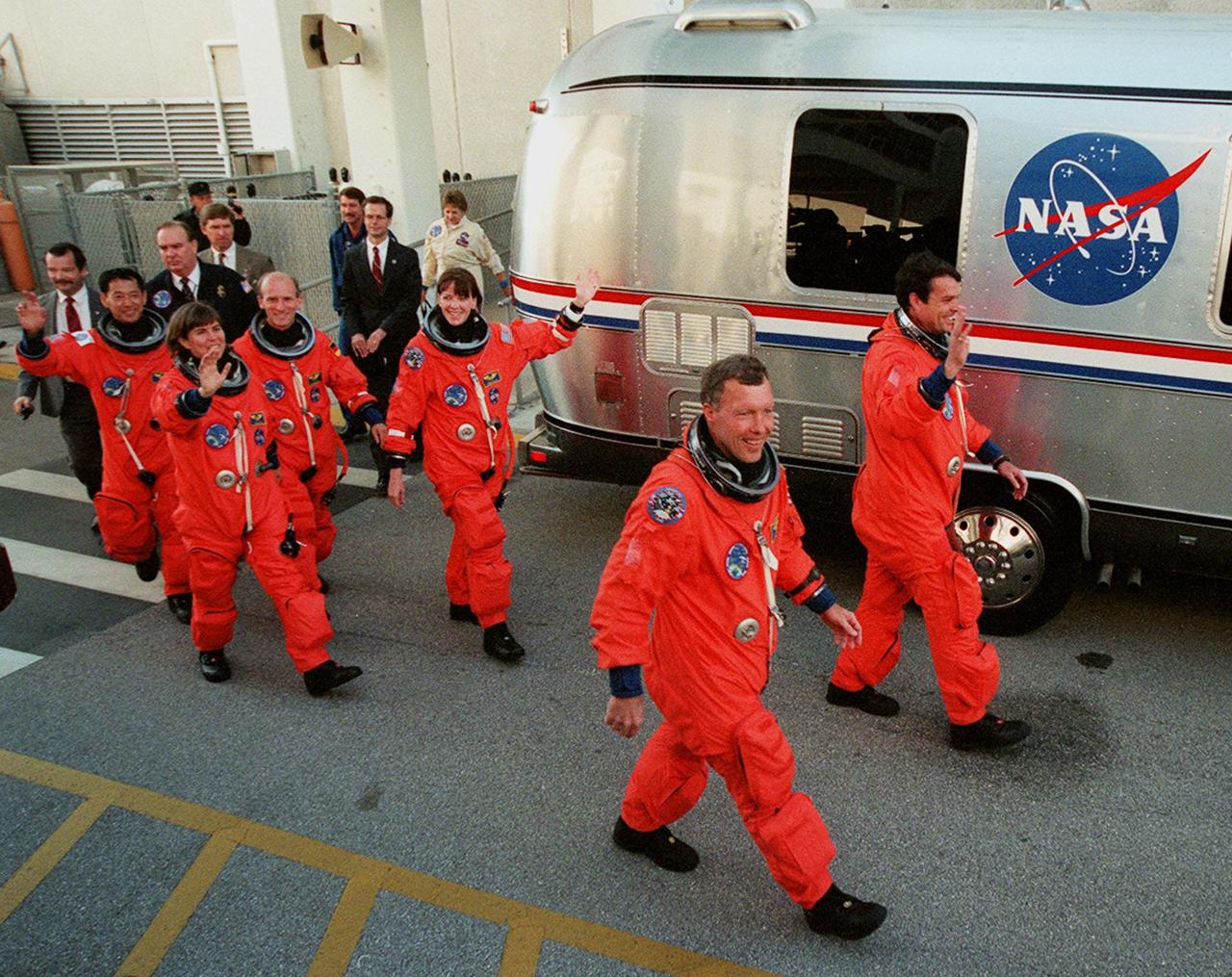
The STS-99 crew step eagerly to the "Astrovan," the bus that will take them to Launch Pad 39A for liftoff of Space Shuttle Endeavour. In their orange launch and entry suits, they are (left to right) Mission Specialists Mamoru Mohri of Japan, Janice Voss, Gerhard Thiele of Germany and Janet Lynn Kavandi, Pilot Dominic Gorie and Commander Kevin Kregel. Mohri is with the National Space Development Agency (NASDA) of Japan, and Thiele is with the European Space Agency. Known as the Shuttle Radar Topography Mission (SRTM), STS-99 is scheduled for liftoff at 12:30 p.m. EST. The SRTM will chart a new course to produce unrivaled 3-D images of the Earth's surface. The result of the Shuttle Radar Topography Mission could be close to 1 trillion measurements of the Earth's topography. The mission is expected to last 11days, with Endeavour landing at KSC Tuesday, Feb. 22, at 4:36 p.m. EST. This is the 97th Shuttle flight and 14th for Shuttle Endeavour
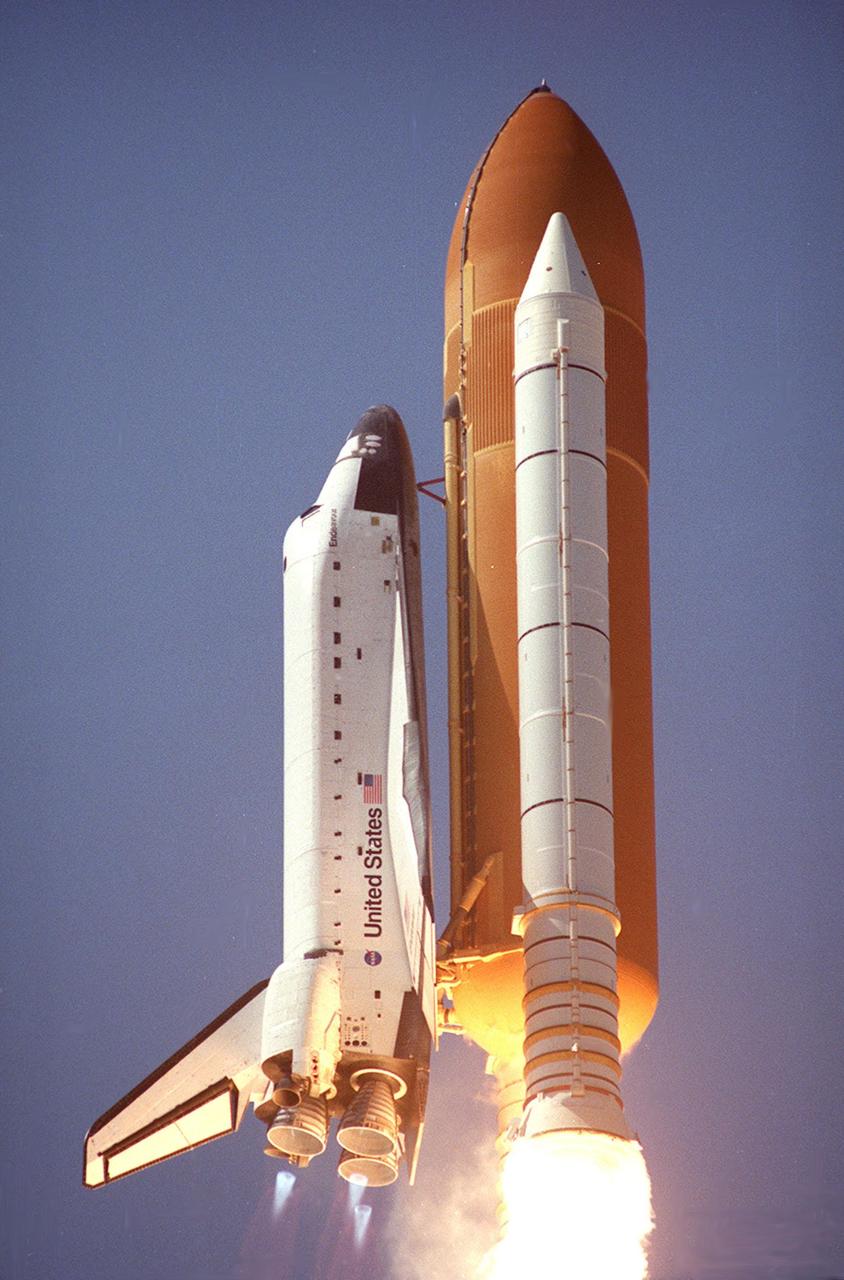
KENNEDY SPACE CENTER, FLA. -- A clear blue sky is the perfect setting behind Space Shuttle Endeavour as it hurtles into space. Launch of mission STS-99 occurred at 12:43:40 p.m. EST from Launch Pad 39A with a crew of five aboard: Commander Kevin Kregel, Pilot Dominic Gorie, and Mission Specialists Janet Kavandi, Janice Voss, Mamoru Mohri of Japan and Gerhard Thiele of Germany. Mohri is with the National Space Development Agency (NASDA) of Japan, and Thiele is with the European Space Agency. Known as the Shuttle Radar Topography Mission (SRTM), STS-99 will chart a new course to produce unrivaled 3-D images of the Earth's surface. The result of the SRTM could be close to 1 trillion measurements of the Earth's topography. The mission is expected to last 11days, with Endeavour landing at KSC Tuesday, Feb. 22, at 4:36 p.m. EST. This is the 97th Shuttle flight and 14th for Shuttle Endeavour
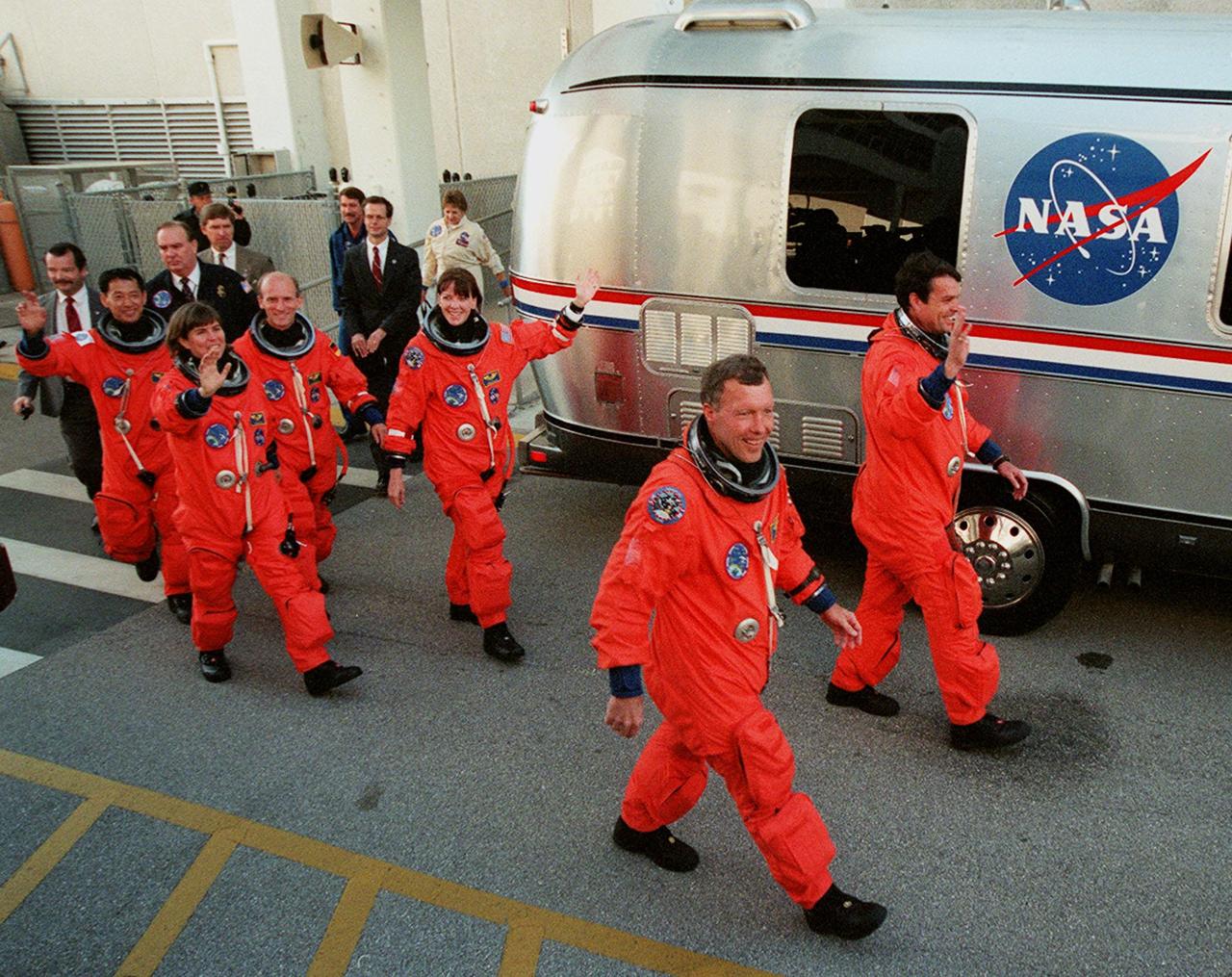
The STS-99 crew step eagerly to the "Astrovan," the bus that will take them to Launch Pad 39A for liftoff of Space Shuttle Endeavour. In their orange launch and entry suits, they are (left to right) Mission Specialists Mamoru Mohri of Japan, Janice Voss, Gerhard Thiele of Germany and Janet Lynn Kavandi, Pilot Dominic Gorie and Commander Kevin Kregel. Mohri is with the National Space Development Agency (NASDA) of Japan, and Thiele is with the European Space Agency. Known as the Shuttle Radar Topography Mission (SRTM), STS-99 is scheduled for liftoff at 12:30 p.m. EST. The SRTM will chart a new course to produce unrivaled 3-D images of the Earth's surface. The result of the Shuttle Radar Topography Mission could be close to 1 trillion measurements of the Earth's topography. The mission is expected to last 11days, with Endeavour landing at KSC Tuesday, Feb. 22, at 4:36 p.m. EST. This is the 97th Shuttle flight and 14th for Shuttle Endeavour
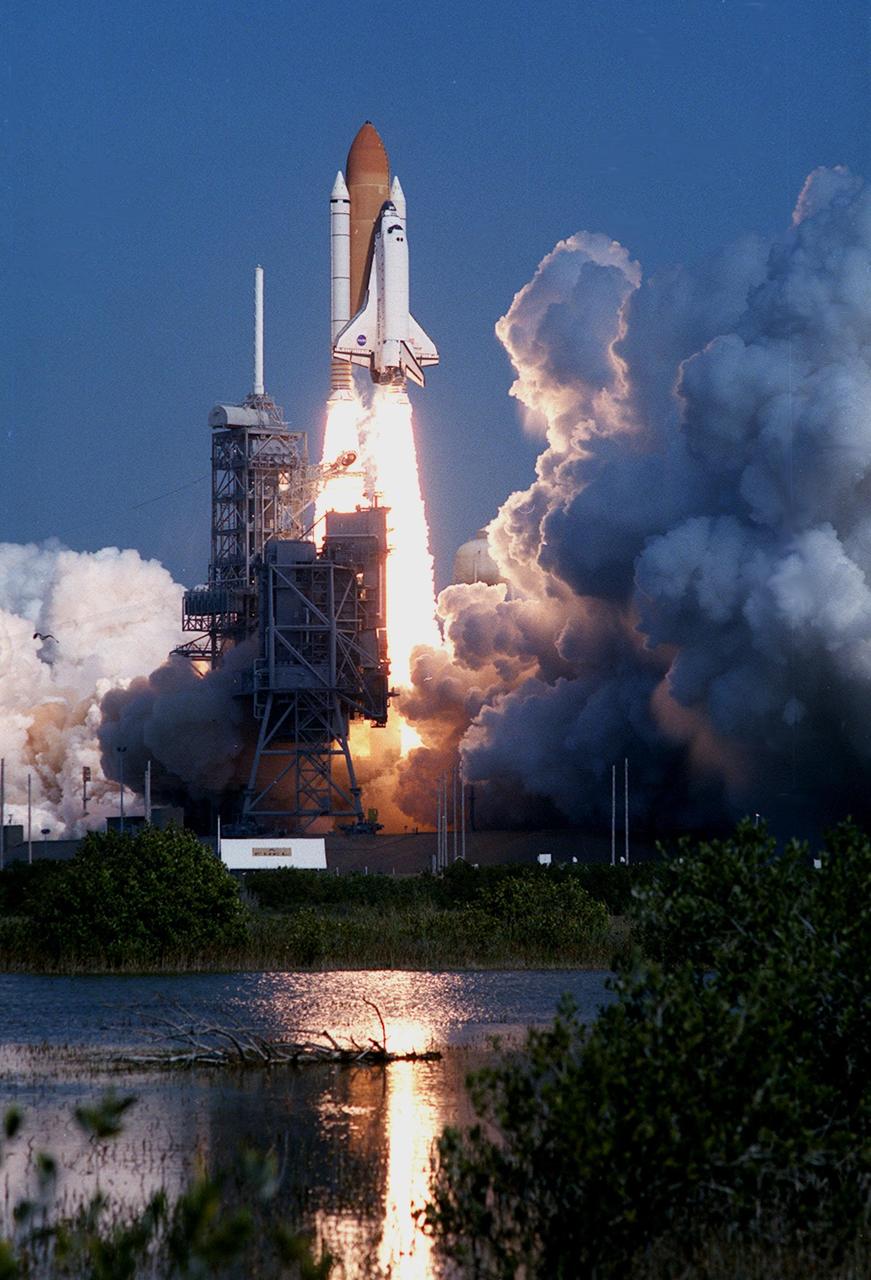
KENNEDY SPACE CENTER, Fla. -- The water below Launch Pad 39A reflects the perfect launch of Space Shuttle Endeavour on mission STS-99, while nearby billows of cloud and smoke are tinged with shadows. Launch of Endeavour occurred at 12:43:40 p.m. EST with a crew of five aboard: Commander Kevin Kregel, Pilot Dominic Gorie, and Mission Specialists Janet Kavandi, Janice Voss, Mamoru Mohri of Japan and Gerhard Thiele of Germany. Mohri is with the National Space Development Agency (NASDA) of Japan, and Thiele is with the European Space Agency. Known as the Shuttle Radar Topography Mission (SRTM), STS-99 will chart a new course to produce unrivaled 3-D images of the Earth's surface. The result of the SRTM could be close to 1 trillion measurements of the Earth's topography. The mission is expected to last 11days, with Endeavour landing at KSC Tuesday, Feb. 22, at 4:36 p.m. EST. This is the 97th Shuttle flight and 14th for Shuttle Endeavour
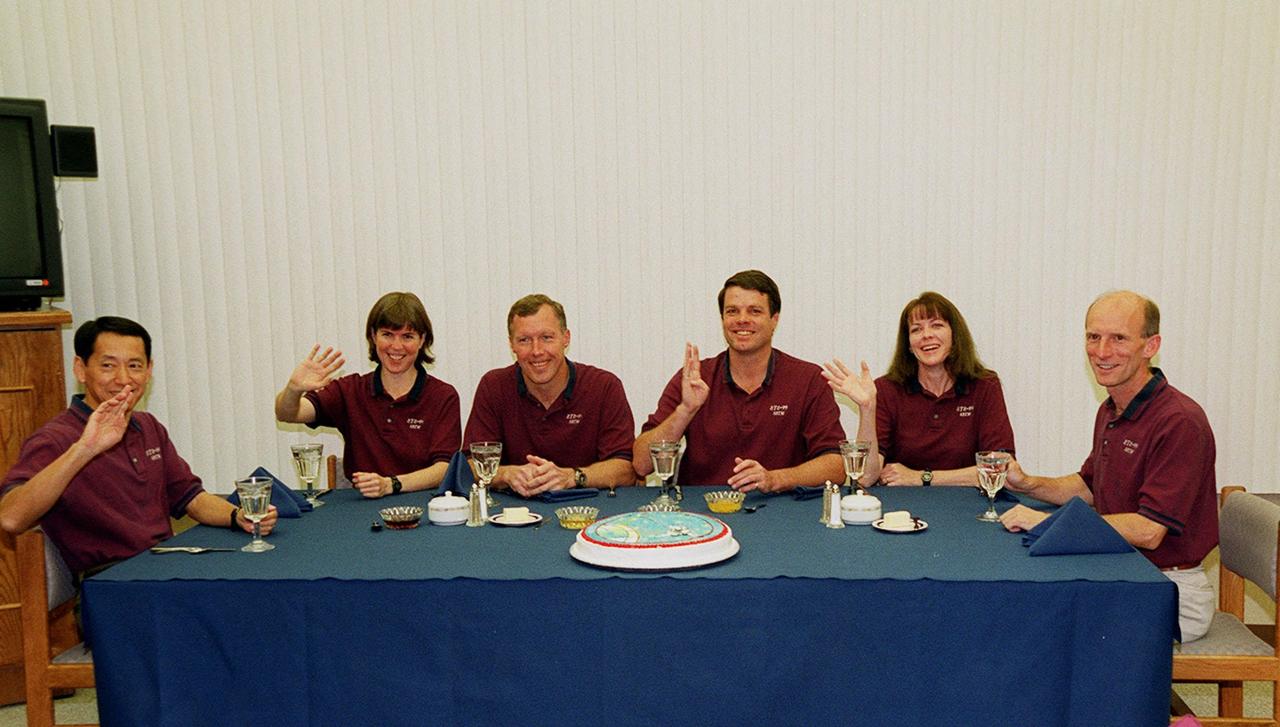
In the Operations and Checkout Building, an eager and smiling STS-99 crew gathers for breakfast before suiting up for launch. From left are Mission Specialists Mamoru Mohri and Janice Voss, Pilot Dominic Gorie, Commander Kevin Kregel, and Mission Specialists Janet Lynn Kavandi and Gerhard Thiele. Mohri is with the National Space Development Agency (NASDA) of Japan, and Thiele is with the European Space Agency. Known as the Shuttle Radar Topography Mission (SRTM), STS-99 is scheduled for liftoff at 12:30 p.m. EST from Launch Pad 39A. The SRTM will chart a new course to produce unrivaled 3-D images of the Earth's surface. The result of the Shuttle Radar Topography Mission could be close to 1 trillion measurements of the Earth's topography. The mission is expected to last about 11days, with Endeavour landing at KSC Tuesday, Feb. 22, at 4:36 p.m. EST. This is the 97th Shuttle flight and 14th for Shuttle Endeavour
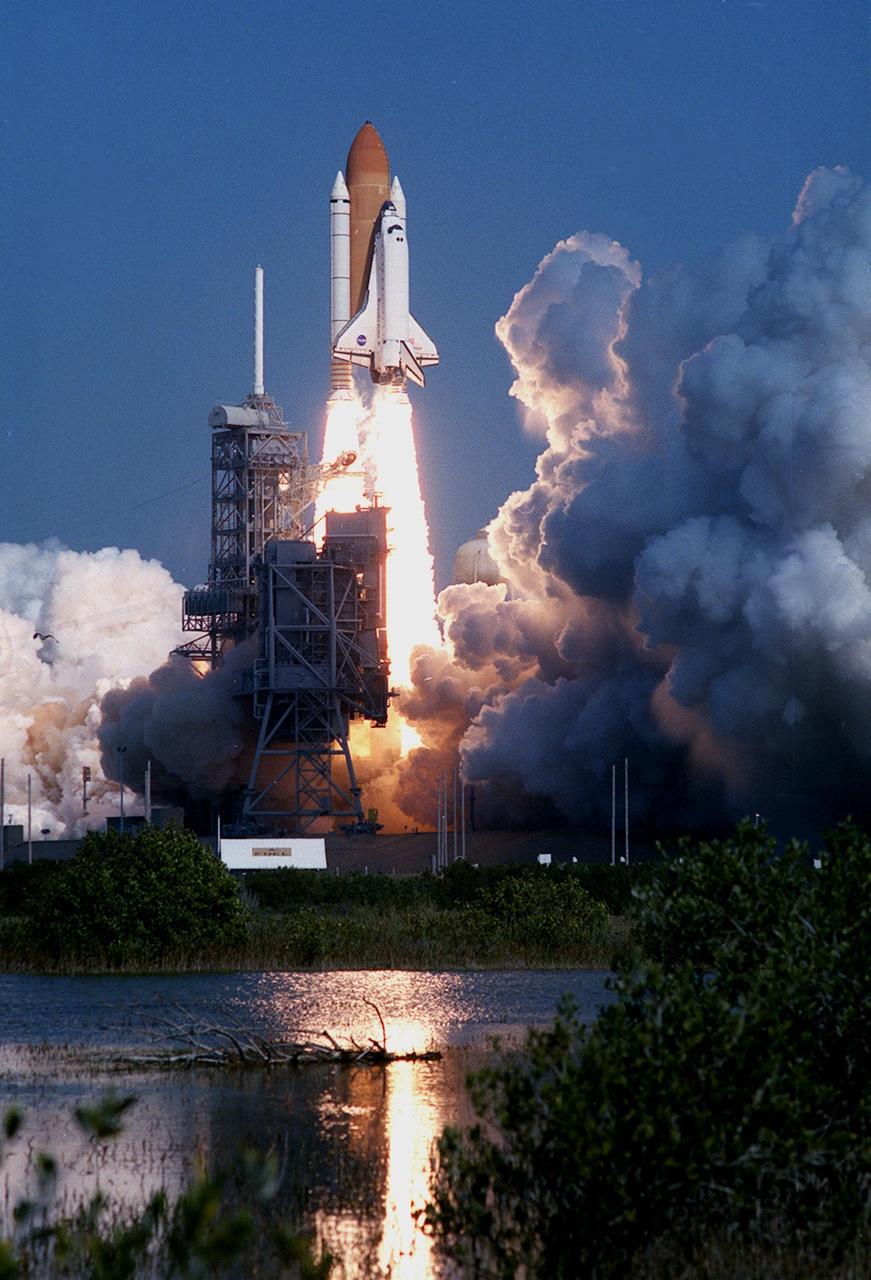
KENNEDY SPACE CENTER, Fla. -- The water below Launch Pad 39A reflects the perfect launch of Space Shuttle Endeavour on mission STS-99, while nearby billows of cloud and smoke are tinged with shadows. Launch of Endeavour occurred at 12:43:40 p.m. EST with a crew of five aboard: Commander Kevin Kregel, Pilot Dominic Gorie, and Mission Specialists Janet Kavandi, Janice Voss, Mamoru Mohri of Japan and Gerhard Thiele of Germany. Mohri is with the National Space Development Agency (NASDA) of Japan, and Thiele is with the European Space Agency. Known as the Shuttle Radar Topography Mission (SRTM), STS-99 will chart a new course to produce unrivaled 3-D images of the Earth's surface. The result of the SRTM could be close to 1 trillion measurements of the Earth's topography. The mission is expected to last 11days, with Endeavour landing at KSC Tuesday, Feb. 22, at 4:36 p.m. EST. This is the 97th Shuttle flight and 14th for Shuttle Endeavour
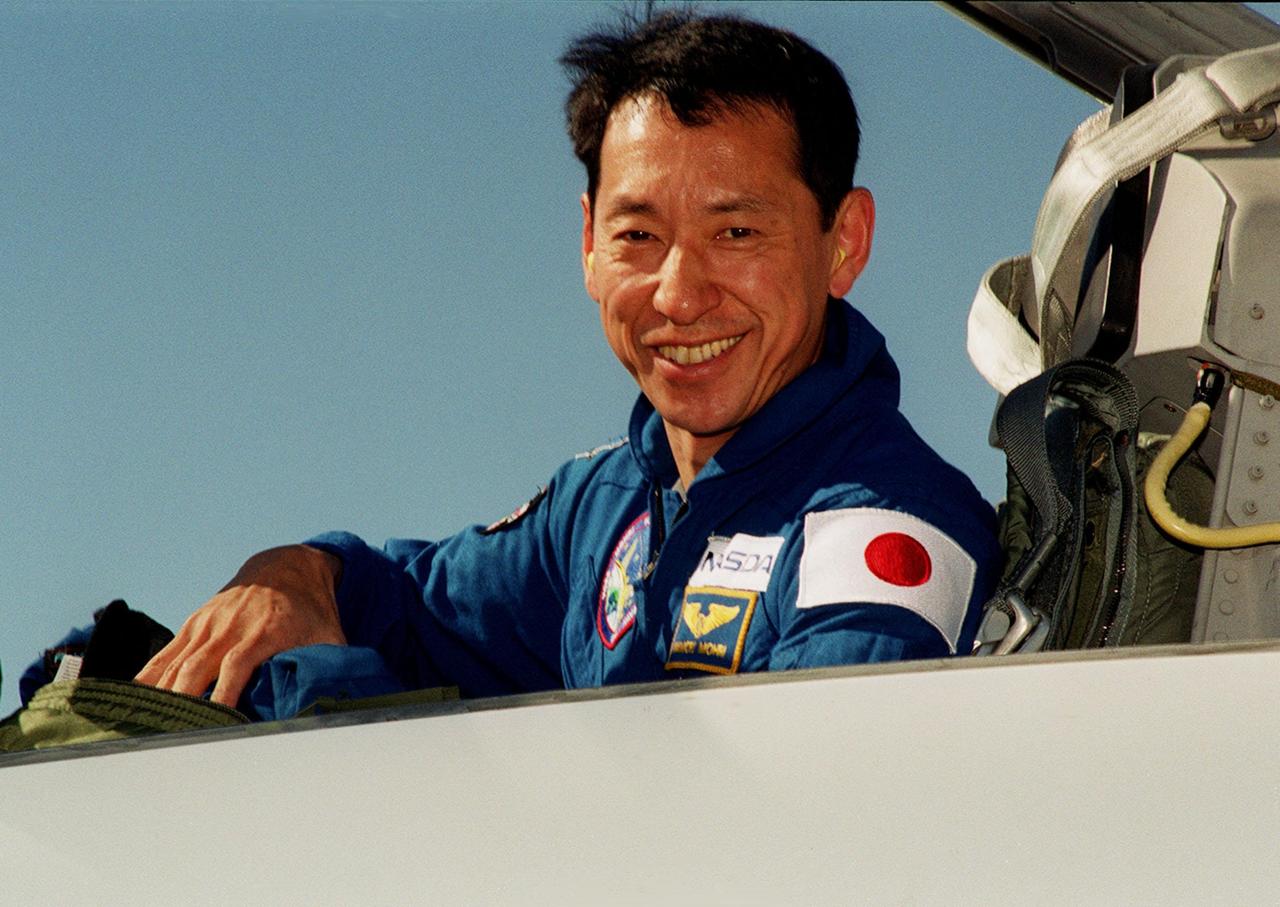
A smiling STS-99 Mission Specialist Mamoru Mohri of Japan arrives at KSC aboard a T-38 jet aircraft eager to prepare for the second launch attempt of Endeavour Feb. 11 at 12:30 p.m. EST from Launch Pad 39A. Mohri is with the Japanese National Space Development Agency (NASDA). The earlier launch scheduled for Jan. 31 was scrubbed due to poor weather and a faulty Enhanced Master Events Controller in the orbiter's aft compartment. Over the next few days, the crew will review mission procedures, conduct test flights in the Shuttle Training Aircraft and undergo routine preflight medical exams. STS-99 is the Shuttle Radar Topography Mission, which will produce unrivaled 3-D images of the Earth's surface. The result of the Shuttle Radar Topography Mission could be close to 1 trillion measurements of the Earth's topography. Landing is expected at KSC on Feb. 22 at 4:36 p.m. EST
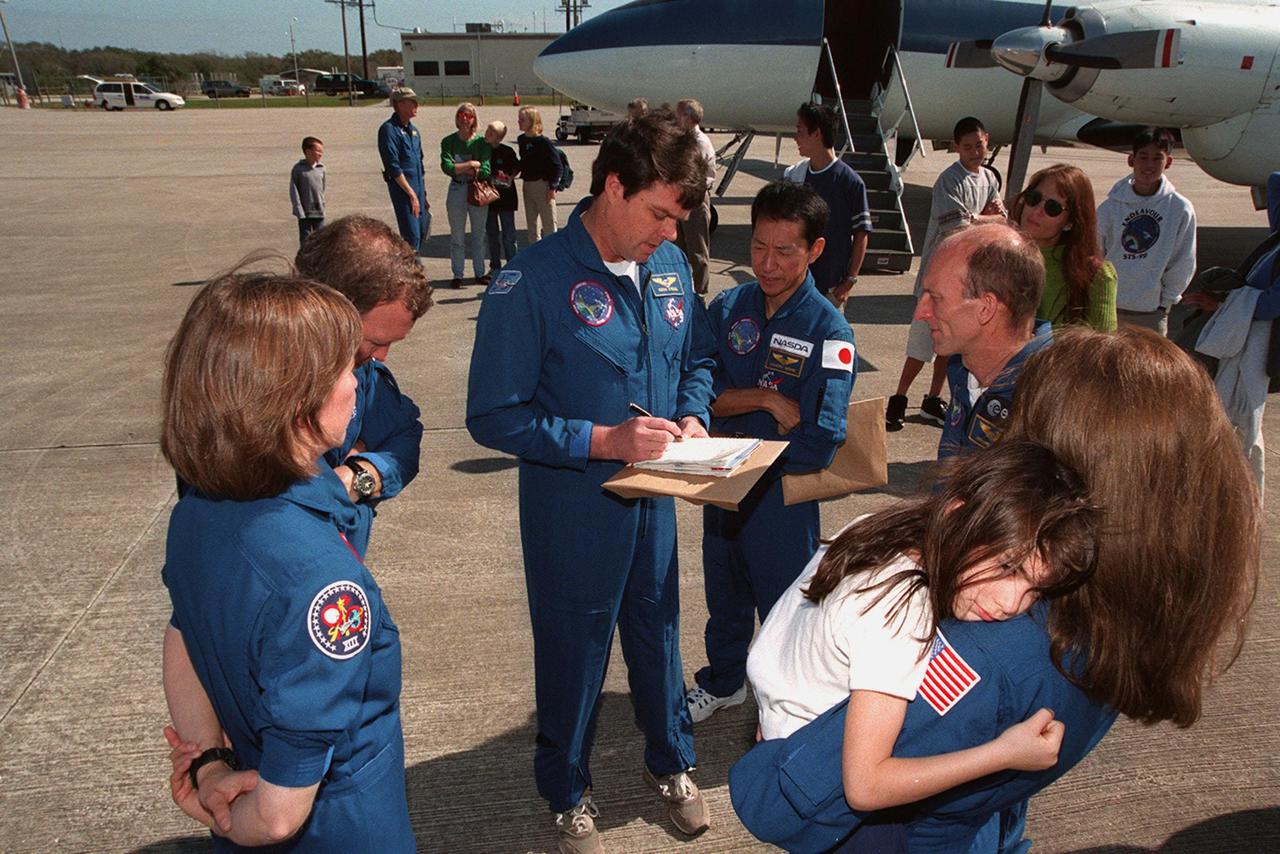
The STS-99 crew get ready to leave KSC with their families for a return trip to Houston. From left are Mission Specialist Janice Voss, Pilot Dominic Gorie, Commander Kevin Kregel, and Mission Specialists Mamoru Mohri of Japan, Gerhard Thiele of Germany, and Janet Kavandi, holding her daughter. The STS-99 crew completed a successful 11-day Shuttle Radar Topography Mission mapping 47 million square miles of the Earth's surface before landing at KSC Feb. 22
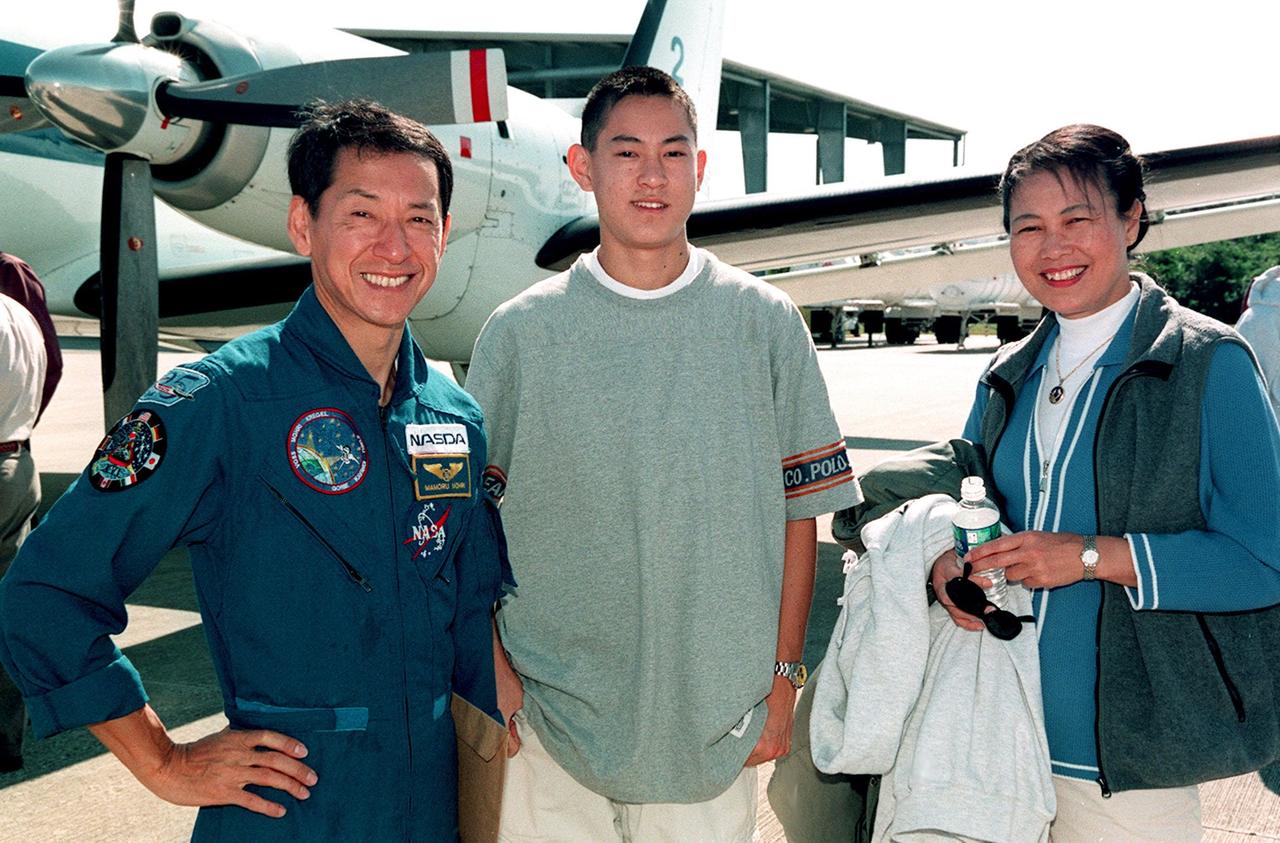
STS-99 Mission Specialist Mamoru Mohri (left) is joined by his son and wife, Akiko, at the Shuttle Landing Facility before their departure for Houston. The STS-99 crew completed a successful 11-day Shuttle Radar Topography Mission mapping 47 million square miles of the Earth's surface before landing at KSC Feb. 22
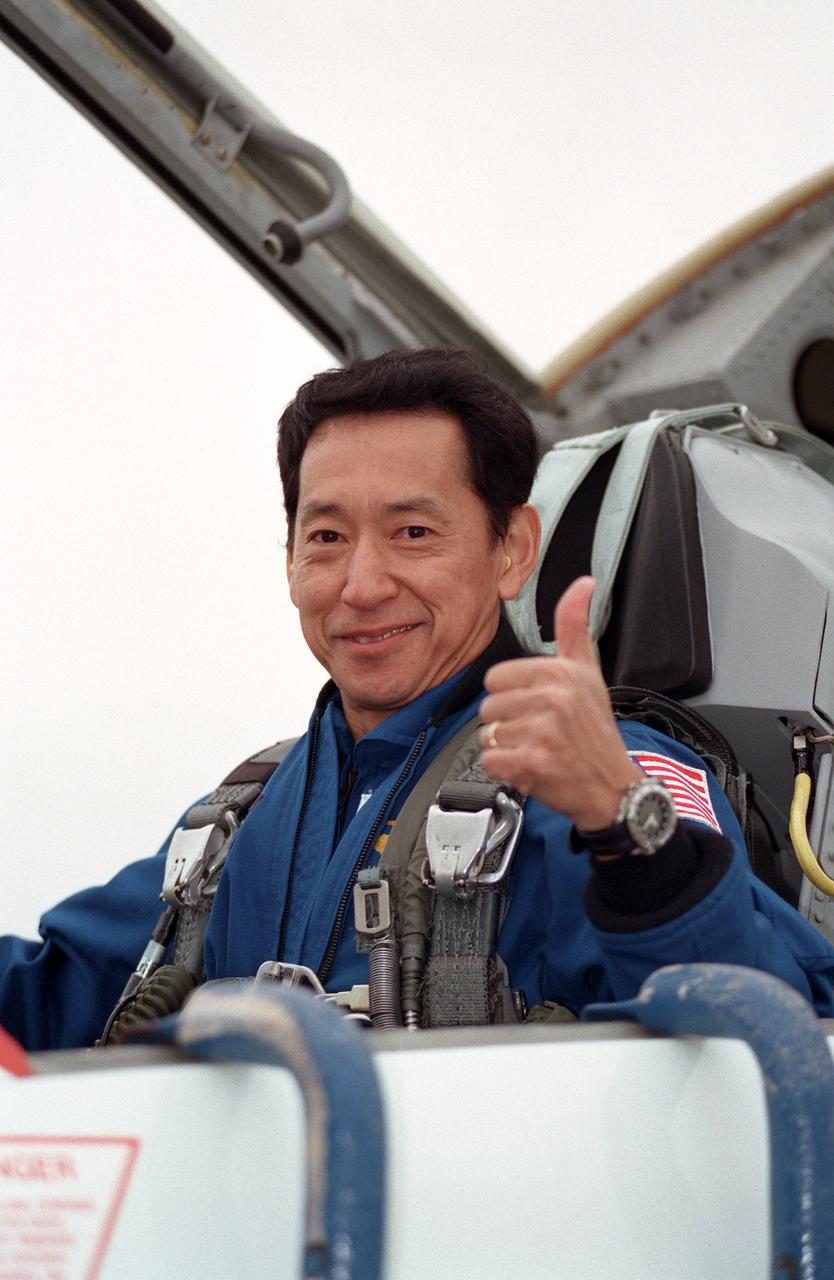
JSC2000-00923 (27 January 2000) --- Astronaut Mamoru Mohri, representing Japan's National Space Development Agency (NASDA), gives a thumbs up signal prior to departure in a T-38 from Ellington Field, destination Florida. Five other astronauts, including one from the European Space Agency (ESA), are scheduled to liftoff into space aboard the Space Shuttle Endeavour next week.
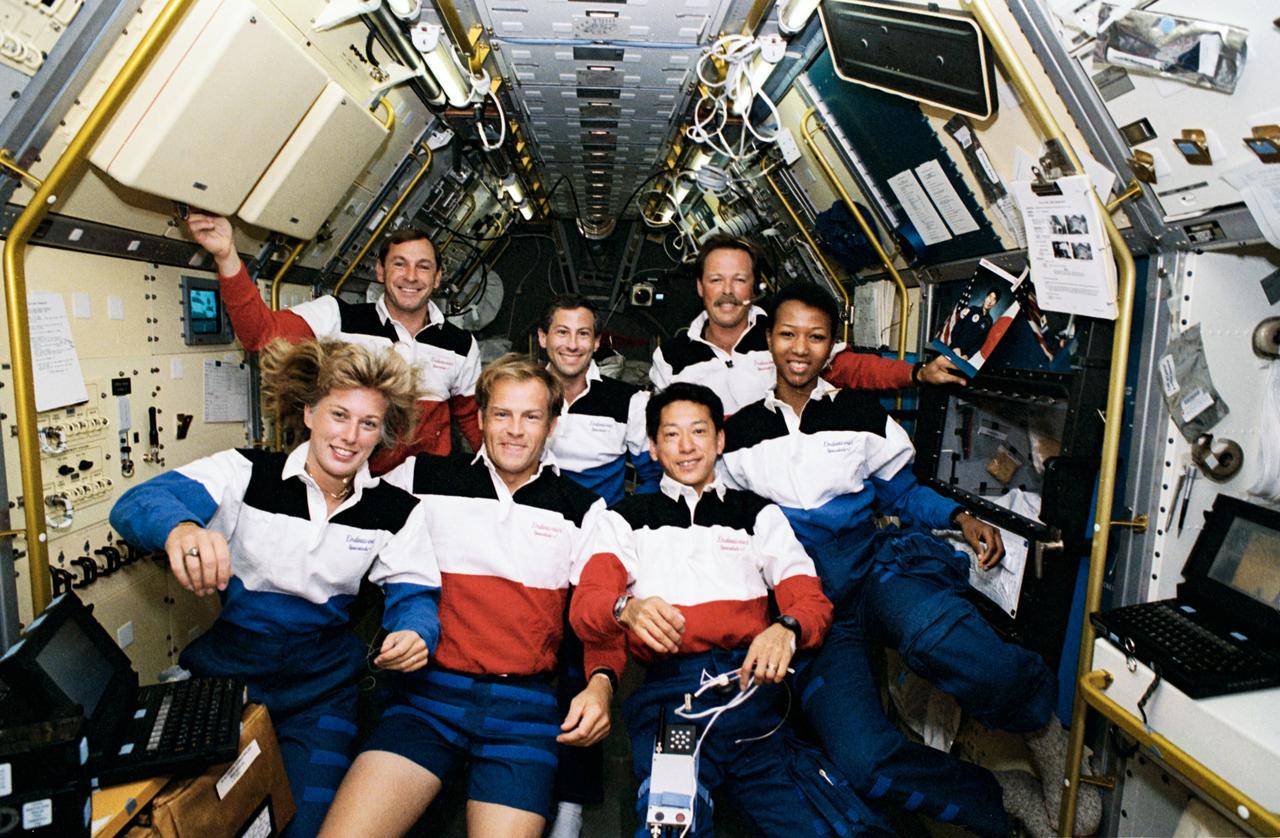
STS047-12-002 (12 - 20 Sept 1992) --- The crew members assemble for their traditional in-flight portrait in this 35mm frame photographed in the Science Module aboard the Earth-orbiting Space Shuttle Endeavour. Left to right (front) are N. Jan Davis, Mark C. Lee and Mamoru Mohri; and (rear) Curtis L. Brown, Jr., Jerome (Jay) Apt, Robert L. Gibson and Mae C. Jemison. The seven spent eight days in space in support of the Spacelab-J mission.
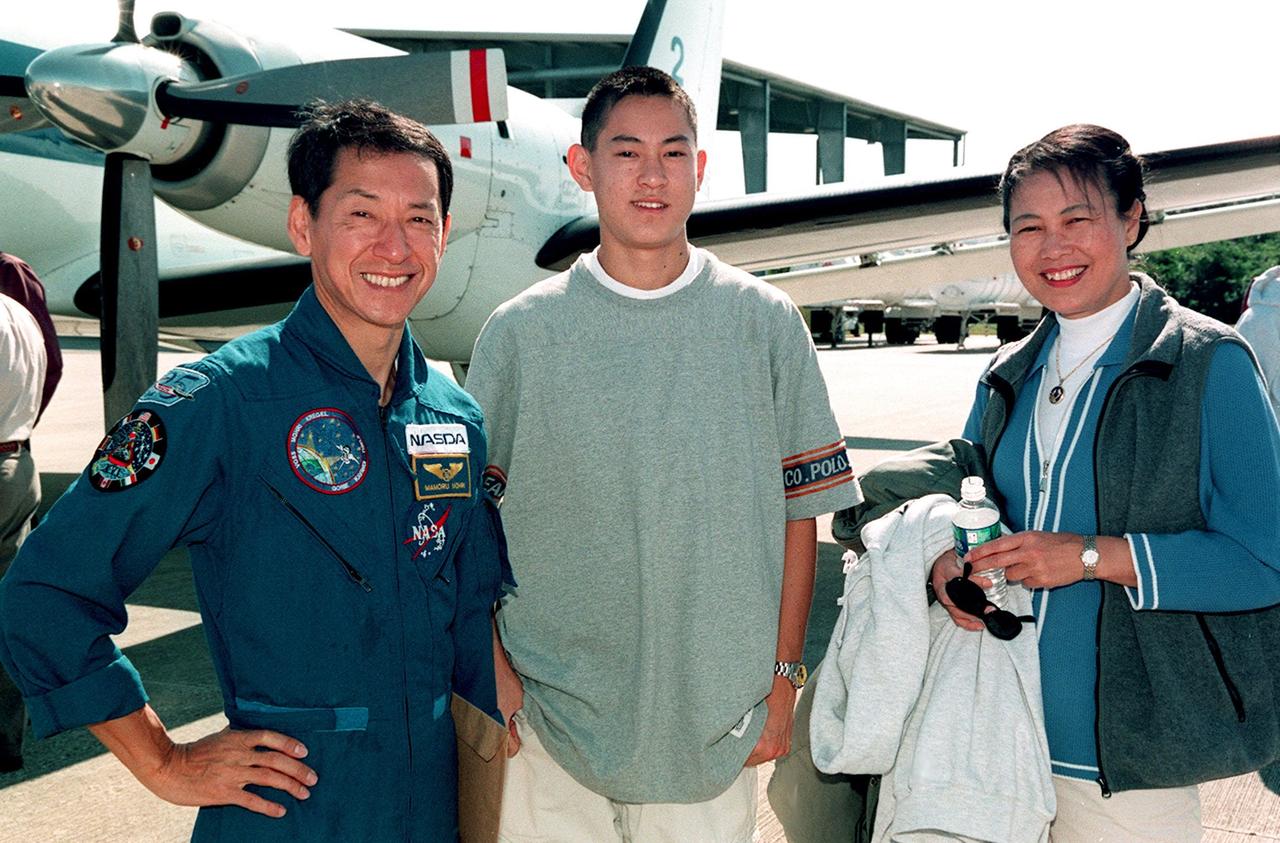
STS-99 Mission Specialist Mamoru Mohri (left) is joined by his son and wife, Akiko, at the Shuttle Landing Facility before their departure for Houston. The STS-99 crew completed a successful 11-day Shuttle Radar Topography Mission mapping 47 million square miles of the Earth's surface before landing at KSC Feb. 22
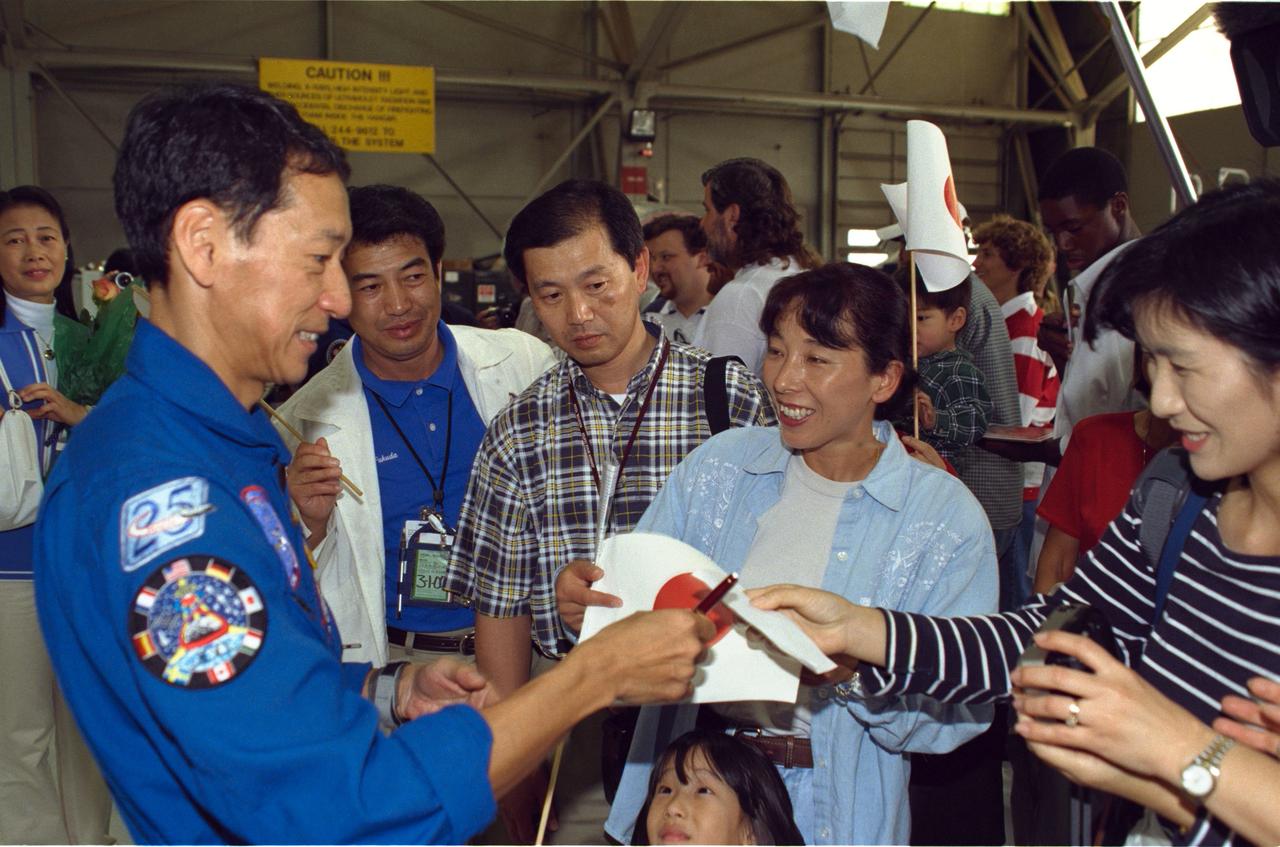
JSC2000-01638 (23 February 2000) --- Astronaut Mamoru Mohri signs autographs for some members of the crowd who turned out for the STS-99 crew arrival at Ellington Field, near the Johnson Space Center (JSC). After spending their first night back from space in Florida, the six astronauts flew to Houston, where they were greeted by the crowd of supporters at Ellington's Hangar 990.
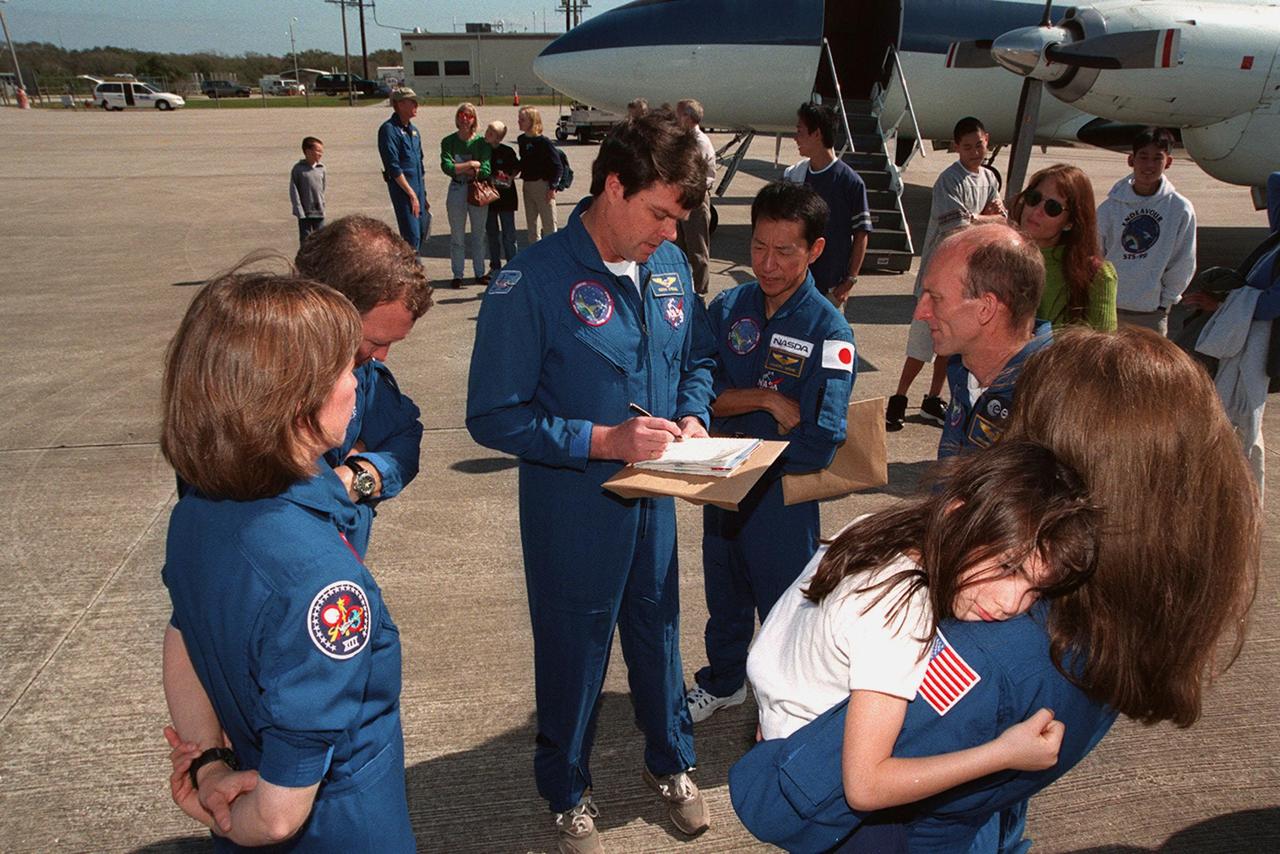
The STS-99 crew get ready to leave KSC with their families for a return trip to Houston. From left are Mission Specialist Janice Voss, Pilot Dominic Gorie, Commander Kevin Kregel, and Mission Specialists Mamoru Mohri of Japan, Gerhard Thiele of Germany, and Janet Kavandi, holding her daughter. The STS-99 crew completed a successful 11-day Shuttle Radar Topography Mission mapping 47 million square miles of the Earth's surface before landing at KSC Feb. 22
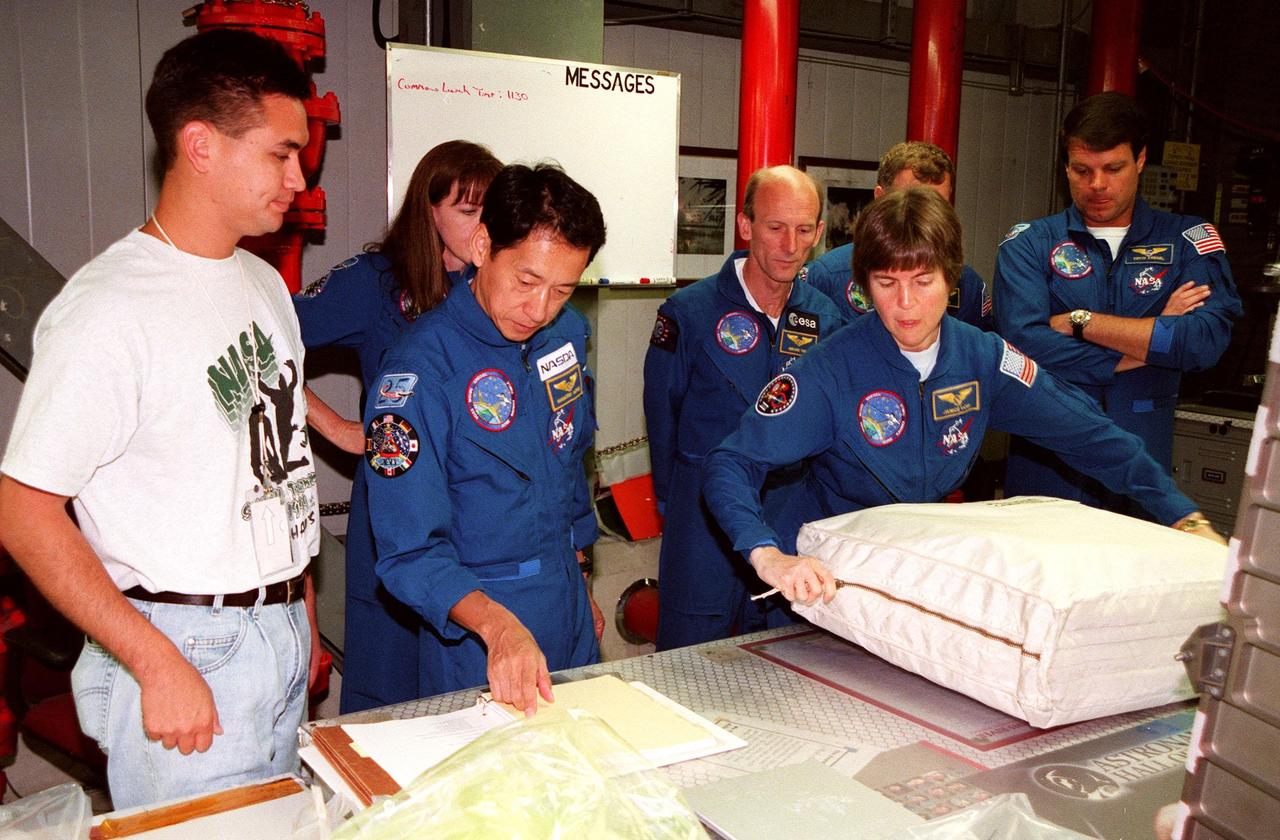
In the Orbiter Processing Facility (OPF) Bay 2, under the watchful eyes of a KSC worker (far left) the STS-99 crew look over equipment as part of a Crew Equipment Interface Test (CEIT). From left (second from right) are Mission Specialists Janet Lynn Kavandi (Ph.D.), Mamoru Mohri, Gerhard P.J. Thiele, and Janice Voss (Ph.D.); behind Voss are Pilot Dominic L. Pudwill Gorie and Commander Kevin R. Kregel. Mohri is with the National Space Development Agency (NASDA) of Japan, and Thiele is with the European Space Agency. The CEIT provides an opportunity for crew members to check equipment and facilities that will be aboard the orbiter during their mission. The STS-99 mission is the Shuttle Radar Topography Mission (SRTM), a specially modified radar system that will gather data for the most accurate and complete topographic map of the Earth's surface that has ever been assembled. SRTM will make use of radar interferometry, wherein two radar images are taken from slightly different locations. Differences between these images allow for the calculation of surface elevation, or change. The SRTM hardware will consist of one radar antenna in the shuttle payload bay and a second radar antenna attached to the end of a mast extended 60 meters (195 feet) out from the shuttle. STS-99 is scheduled to launch Sept. 16 at 8:47 a.m. from Launch Pad 39A
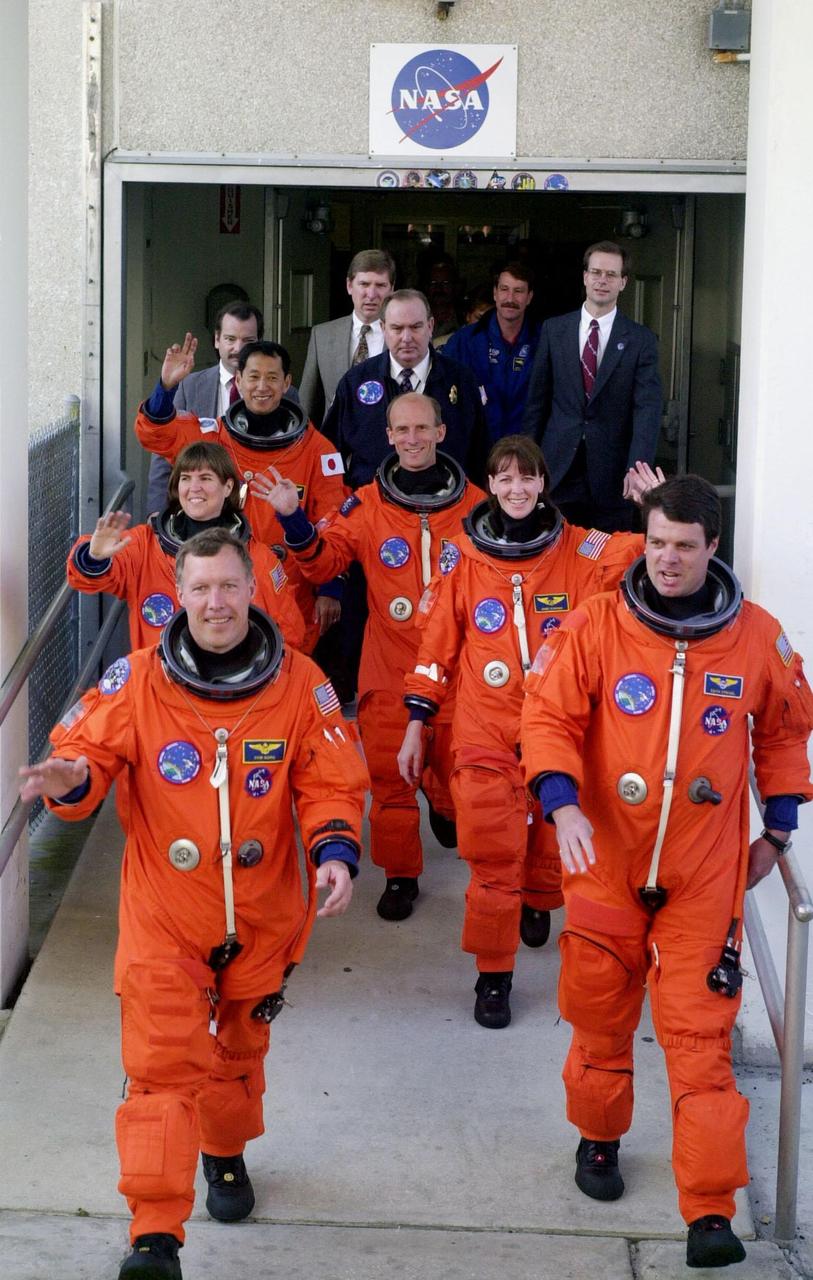
The STS-99 crew wave to onlookers as they step eagerly from the Operations and Checkout Building enroute to Launch Pad 39A for liftoff of Space Shuttle Endeavour. In their orange launch and entry suits, they are (foreground) Pilot Dominic Gorie and Commander Kevin Kregel. Behind them (left to right) are Mission Specialists Janice Voss, Mamoru Mohri of Japan, Gerhard Thiele of Germany and Janet Lynn Kavandi. Mohri is with the National Space Development Agency (NASDA) of Japan, and Thiele is with the European Space Agency. Known as the Shuttle Radar Topography Mission (SRTM), STS-99 is scheduled for liftoff at 12:30 p.m. EST. The SRTM will chart a new course to produce unrivaled 3-D images of the Earth's surface. The result of the Shuttle Radar Topography Mission could be close to 1 trillion measurements of the Earth's topography. The mission is expected to last 11days, with Endeavour landing at KSC Tuesday, Feb. 22, at 4:36 p.m. EST. This is the 97th Shuttle flight and 14th for Shuttle Endeavour
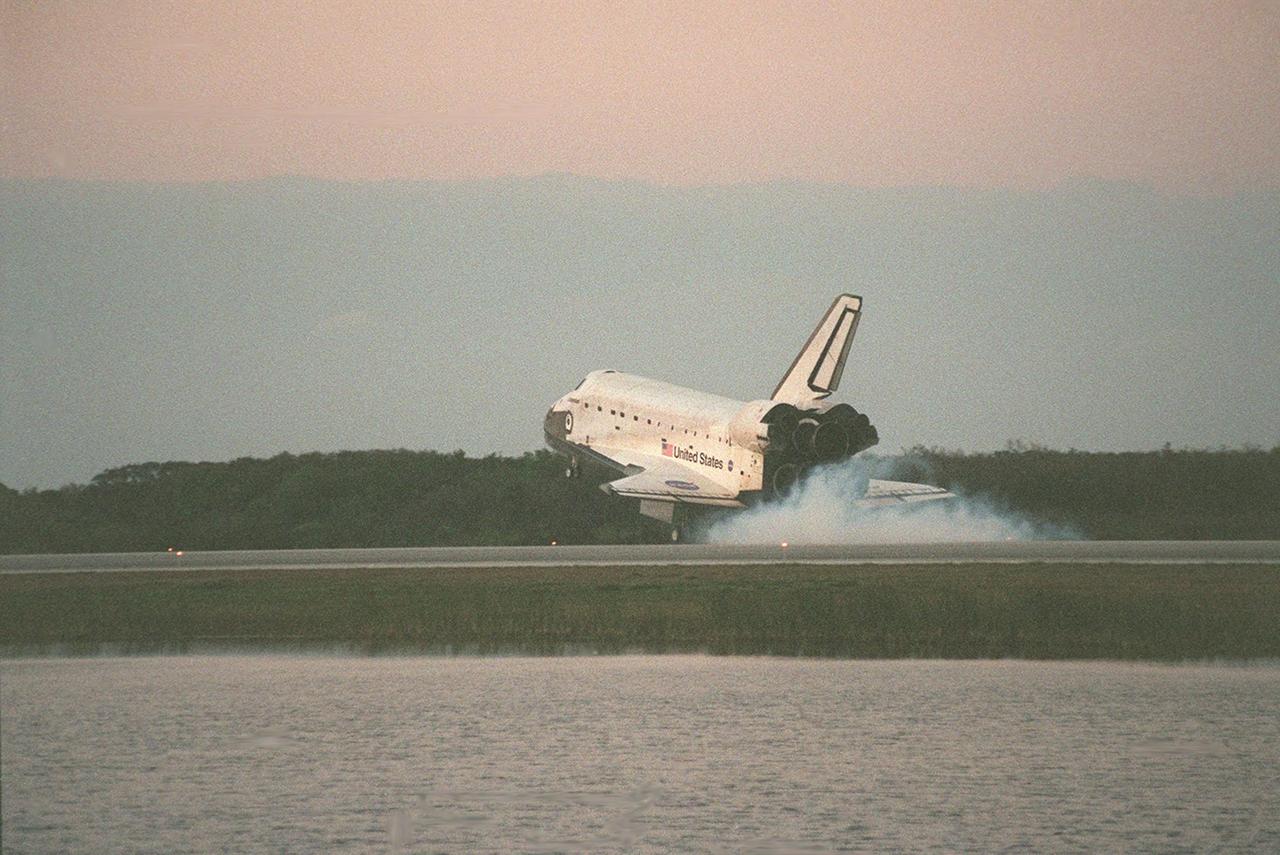
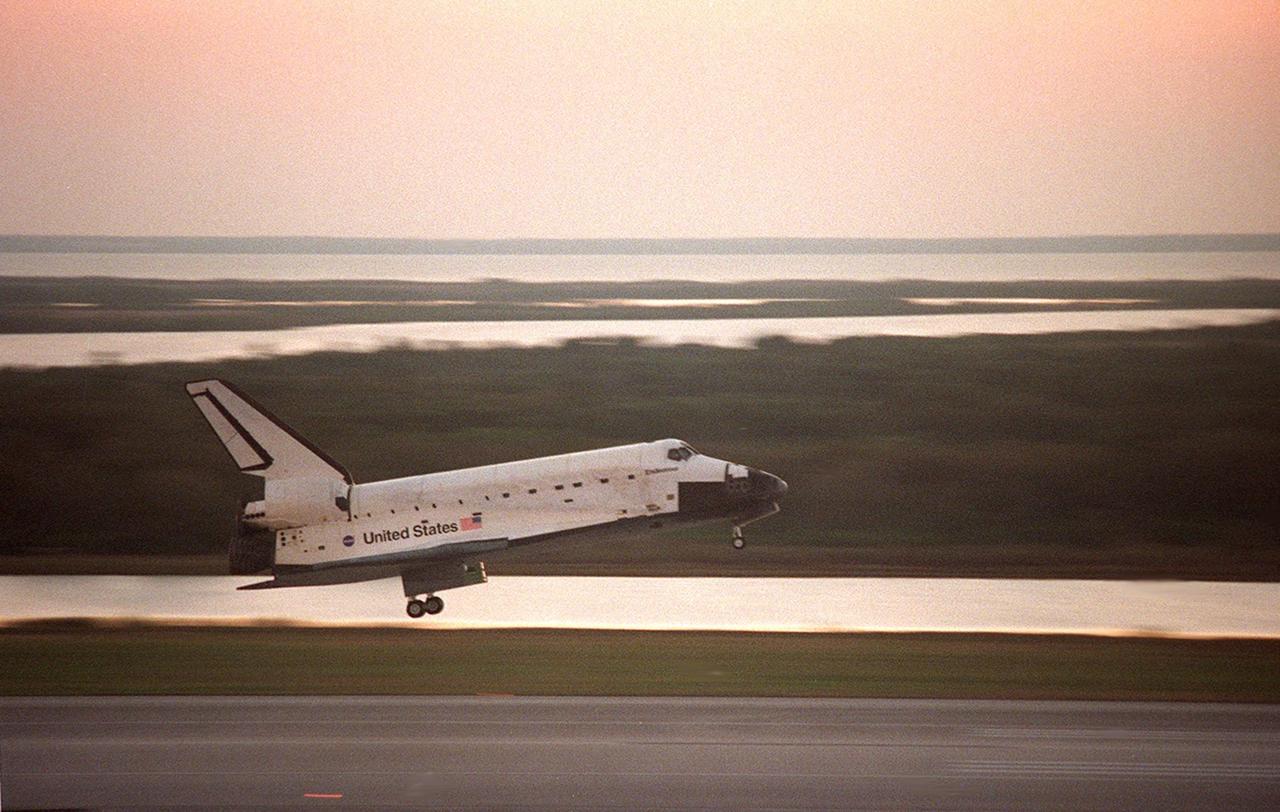
KENNEDY SPACE CENTER, FLA. -- Space Shuttle Endeavour stirs up dust as its wheels touch down on KSC's Shuttle Landing Facility Runway 33 to complete the 11-day, 5-hour, 38-minute-long STS-99 mission. At the controls are Commander Kevin Kregel and Pilot Dominic Gorie. Also onboard the orbiter are Mission Specialists Janet Kavandi, Janice Voss, Mamoru Mohri of Japan and Gerhard Thiele of Germany. Mohri is with the National Space Development Agency (NASDA) and Thiele is with the European Space Agency. The crew is returning from the Shuttle Radar Topography Mission after mapping more than 47 million square miles of the Earth's surface. Main gear touchdown was at 6:22:23 p.m. EST Feb. 22 , landing on orbit 181 of the mission. Nose gear touchdown was at 6:22:35 p.m.. EST, and wheel stop at 6:23:25 p.m. EST. This was the 97th flight in the Space Shuttle program and the 14th for Endeavour, also marking the 50th landing at KSC, the 21st consecutive landing at KSC, and the 28th in the last 29 Shuttle flights
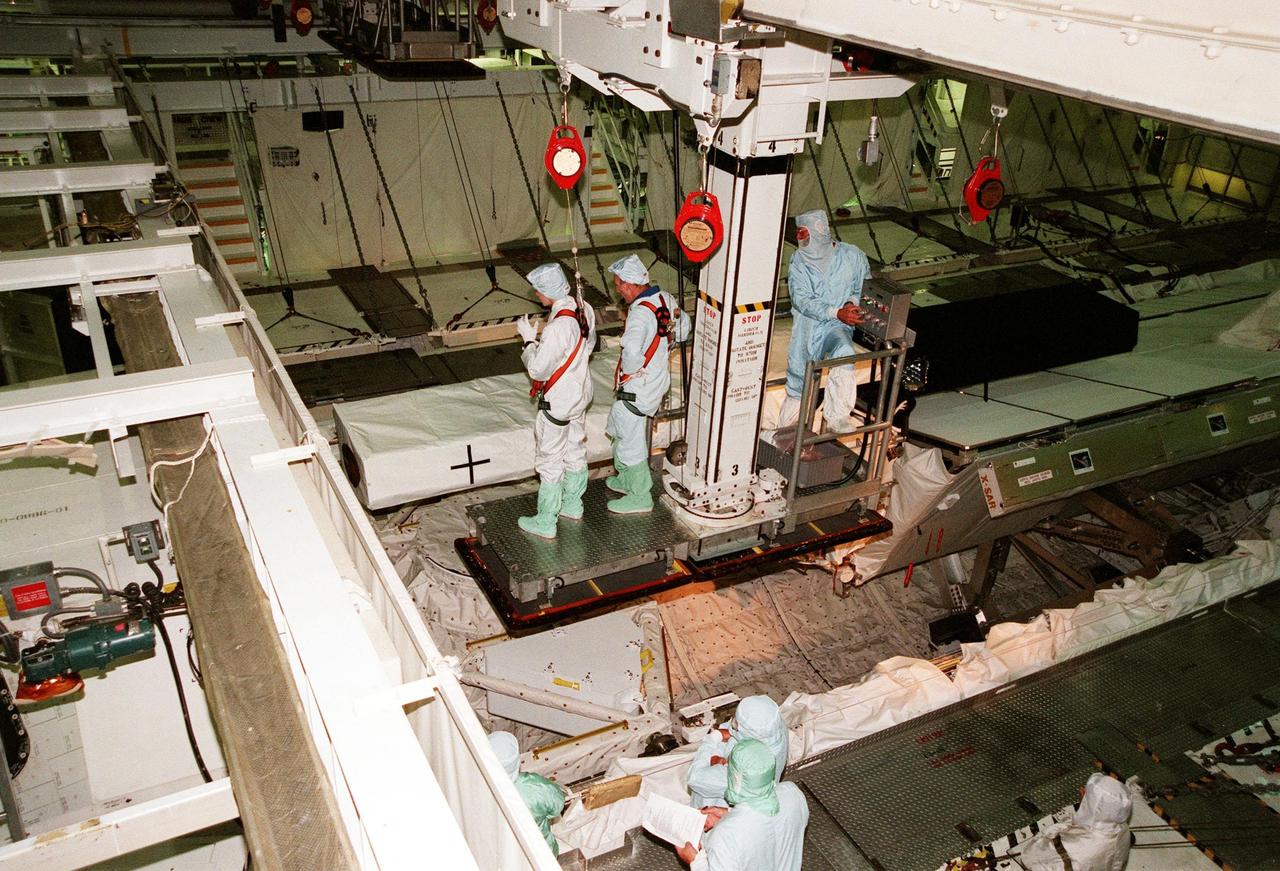
KENNEDY SPACE CENTER, FLA. -- In the Orbiter Processing Facility, members of the STS-99 crew look over the Shuttle Radar Topography Mission (SRTM), primary payload for their mission, as part of a Crew Equipment Interface Test (CEIT). Participating are Commander Kevin R. Kregel, Pilot Dominic L. Pudwill Gorie, and Mission Specialists Janet Lynn Kavandi (Ph.D.), Janice Voss (Ph.D), Mamoru Mohri, and Gerhard P.J. Thiele. Mohri is with the National Space Development Agency (NASDA) of Japan, and Thiele is with the European Space Agency. The CEIT provides an opportunity for crew members to check equipment and facilities that will be aboard the orbiter during their mission. The SRTM is a specially modified radar system that will gather data for the most accurate and complete topographic map of the Earth's surface that has ever been assembled. SRTM will make use of radar interferometry, wherein two radar images are taken from slightly different locations. Differences between these images allow for the calculation of surface elevation, or change. The SRTM hardware will consist of one radar antenna in the shuttle payload bay and a second radar antenna attached to the end of a mast extended 60 meters (195 feet) out from the shuttle. STS-99 is scheduled to launch Sept. 16 at 8:47 a.m. from Launch Pad 39A
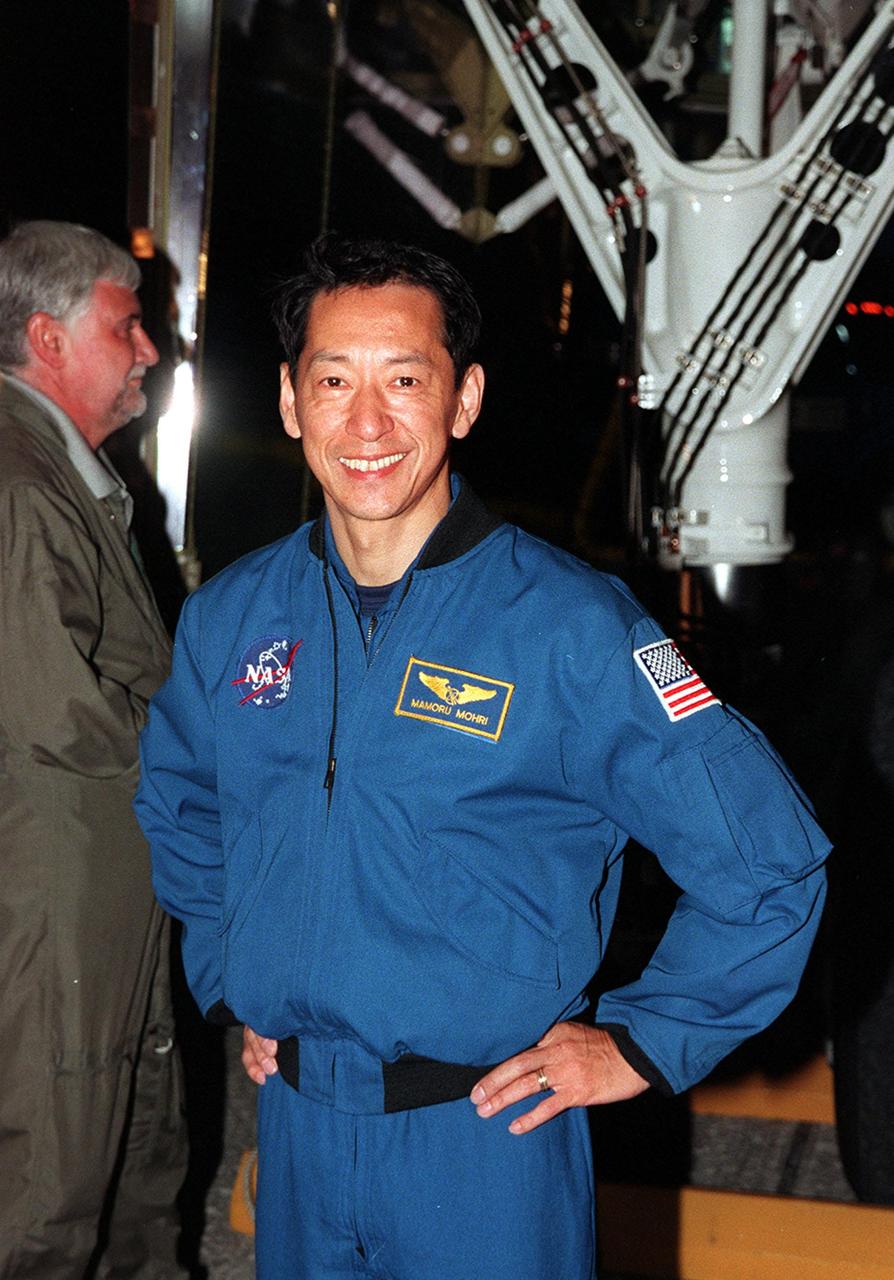
KENNEDY SPACE CENTER, FLA. -- STS-99 Mission Specialist Mamoru Mohri of Japan has only smiles after Space Shuttle Endeavour's landing on KSC's Shuttle Landing Facility completing the 11-day, 5-hour, 38-minute-long STS-99 mission. Main gear touchdown was at 6:22:23 p.m. EST Feb. 22 , landing on orbit 181 of the mission. Nose gear touchdown was at 6:22:35 p.m.. EST, and wheel stop at 6:23:25 p.m. EST. At the controls were Commander Kevin Kregel and Pilot Dominic Gorie. Also onboard the orbiter were Mission Specialists Janet Kavandi, Janice Voss, and Gerhard Thiele of Germany. Mohri is with the National Space Development Agency (NASDA) and Thiele is with the European Space Agency. The crew returned from the Shuttle Radar Topography Mission after mapping more than 47 million square miles of the Earth's surface. This was the 97th flight in the Space Shuttle program and the 14th for Endeavour, also marking the 50th landing at KSC, the 21st consecutive landing at KSC, and the 28th in the last 29 Shuttle flights
The STS-99 crew pose for a photo after their arrival at KSC's Shuttle Landing Facility. From left are Mission Specialists Gerhard Thiele, and Janice Voss (Ph.D.), Commander Kevin Kregel, Mission Specialists Janet Lynn Kavandi (Ph.D.) and Mamoru Mohri, and Pilot Dominic Gorie. Thiele is with the European Space Agency and Mohri is with the National Space Development Agency (NASDA) of Japan. The crew are here to take part in a Terminal Countdown Demonstration Test (TCDT), which provides simulated countdown exercises, emergency egress training, and opportunities to inspect the mission payloads in the orbiter's payload bay. STS-99 is the Shuttle Radar Topography Mission, which will chart a new course, using two antennae and a 200-foot-long section of space station-derived mast protruding from the payload bay to produce unrivaled 3-D images of the Earth's surface. The result of the Shuttle Radar Topography Mission could be close to 1 trillion measurements of the Earth's topography. Besides contributing to the production of better maps, these measurements could lead to improved water drainage modeling, more realistic flight simulators, better locations for cell phone towers, and enhanced navigation safety. Launch of Endeavour on the 11-day mission is scheduled for Jan. 31 at 12:47 p.m. EST
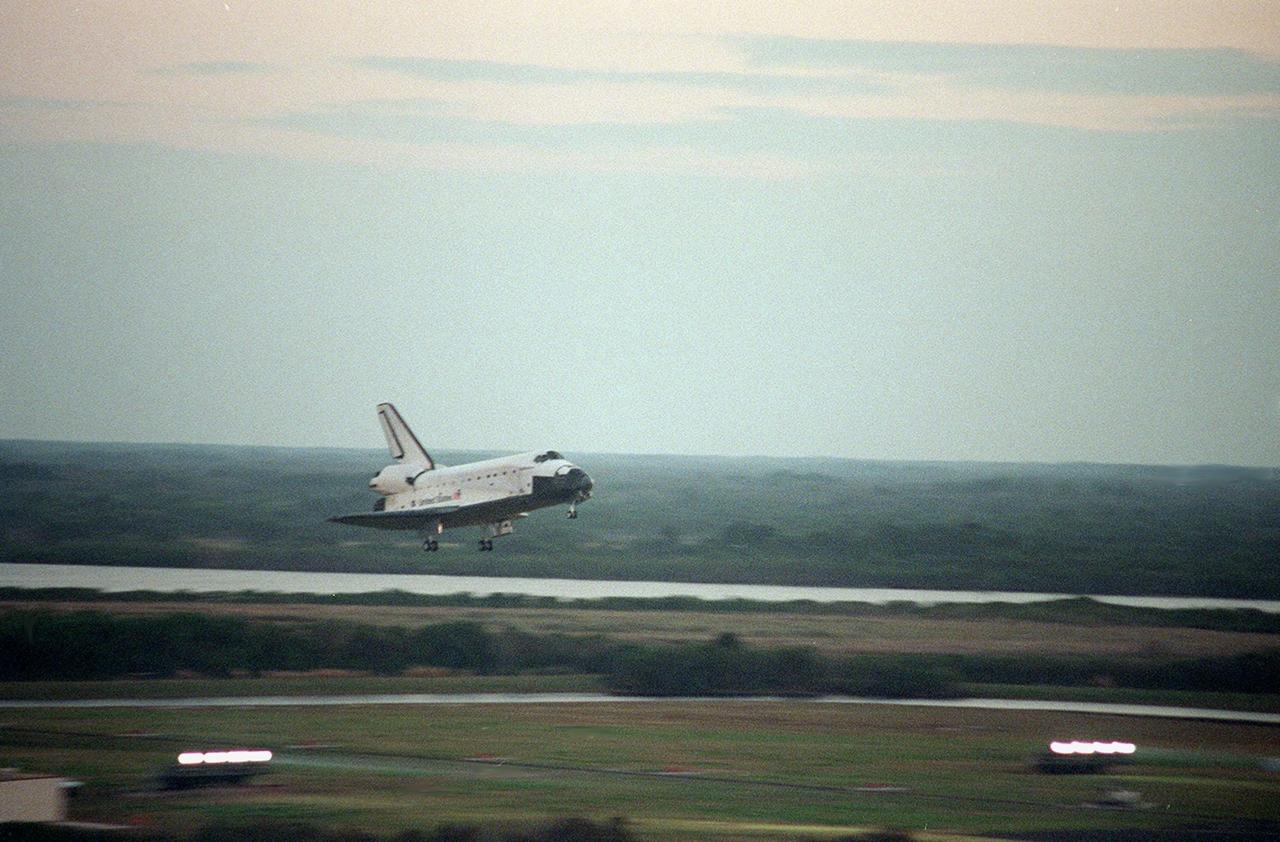
KENNEDY SPACE CENTER, Fla. -- Space Shuttle Endeavour prepares to land on KSC's Shuttle Landing Facility Runway 33 to complete the 11-day, 5-hour, 38-minute-long STS-99 mission. Main gear touchdown was at 6:22:23 p.m. EST Feb. 22 , landing on orbit 181 of the mission. Nose gear touchdown was at 6:22:35 p.m.. EST, and wheel stop at 6:23:25 p.m. EST. At the controls are Commander Kevin Kregel and Pilot Dominic Gorie. Also onboard the orbiter are Mission Specialists Janet Kavandi, Janice Voss, Mamoru Mohri of Japan and Gerhard Thiele of Germany. Mohri is with the National Space Development Agency (NASDA) and Thiele is with the European Space Agency. The crew are returning from the Shuttle Radar Topography Mission, after mapping more than 47 million square miles of the Earth. This was the 97th flight in the Space Shuttle program and the 14th for Endeavour, also marking the 50th landing at KSC, the 21st consecutive landing at KSC, and the 28th in the last 29 Shuttle flights
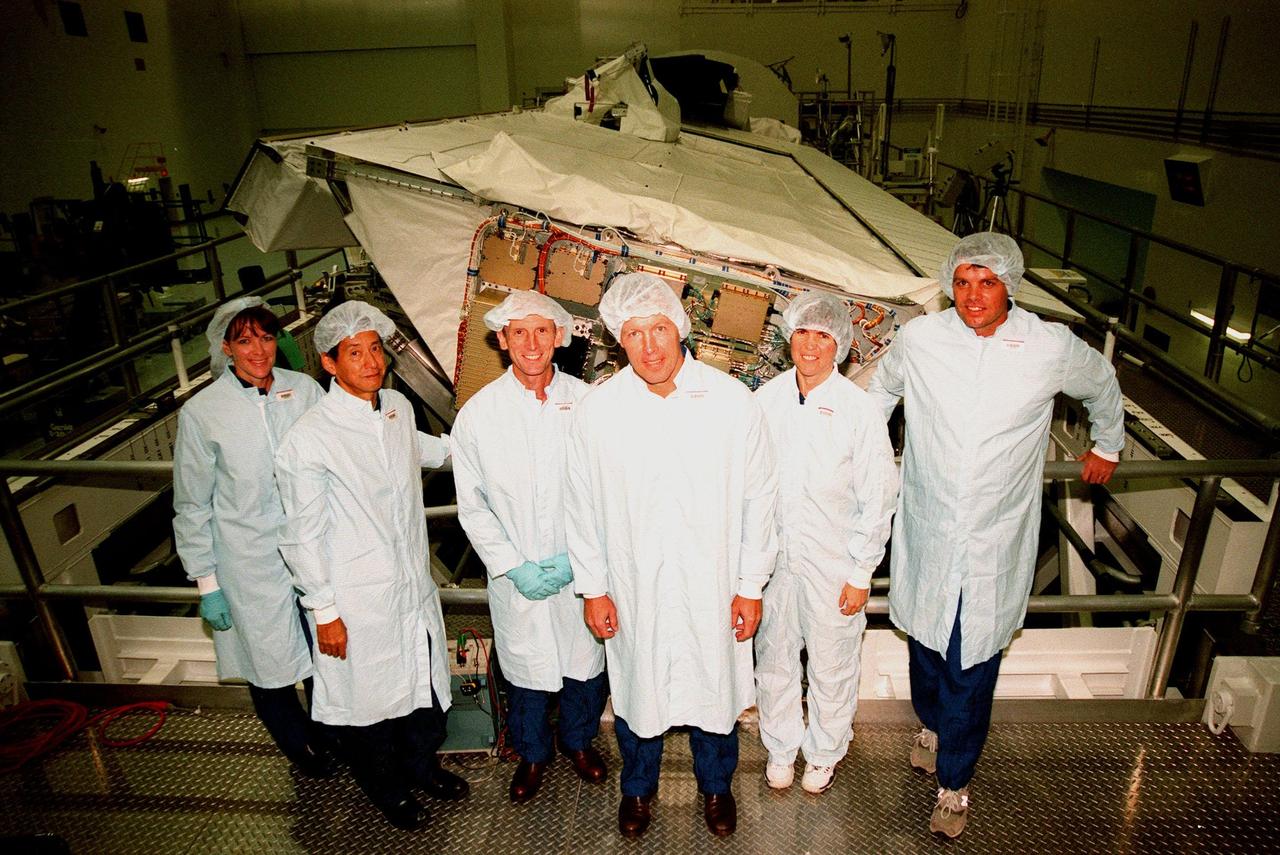
The STS-99 crew poses in front of the Shuttle Radar Topography Mission (SRTM) in the Space Station Processing Facility. The crew has been checking out the SRTM, which is the payload for their mission. From left are Mission Specialists Janet Lynn Kavandi (Ph.D.), Mamoru Mohri of Japan, and Gerhard Thiele of Germany; Pilot Dominic L. Pudwill Gorie; Mission Specialist Janice Voss (Ph.D.); and Commander Kevin R. Kregel. Mohri represents the National Space Development Agency of Japan and Thiele represents the European Space Agency. An international project spearheaded by the National Imagery and Mapping Agency and NASA, with participation of the German Aerospace Center DLR, the SRTM consists of a specially modified radar system that will gather data for the most accurate and complete topographic map of the Earth's surface that has ever been assembled. SRTM will make use of radar interferometry, wherein two radar images are taken from slightly different locations. Differences between these images allow for the calculation of surface elevation, or change. The SRTM hardware will consist of one radar antenna in the shuttle payload bay and a second radar antenna attached to the end of a mast extended 60 meters (195 feet) out from the shuttle. STS-99 is scheduled to launch Sept. 16 at 8:47 a.m. from Launch Pad 39A
The STS-99 crew pose for a photo after their arrival at KSC's Shuttle Landing Facility. From left are Mission Specialists Gerhard Thiele, and Janice Voss (Ph.D.), Commander Kevin Kregel, Mission Specialists Janet Lynn Kavandi (Ph.D.) and Mamoru Mohri, and Pilot Dominic Gorie. Thiele is with the European Space Agency and Mohri is with the National Space Development Agency (NASDA) of Japan. The crew are here to take part in a Terminal Countdown Demonstration Test (TCDT), which provides simulated countdown exercises, emergency egress training, and opportunities to inspect the mission payloads in the orbiter's payload bay. STS-99 is the Shuttle Radar Topography Mission, which will chart a new course, using two antennae and a 200-foot-long section of space station-derived mast protruding from the payload bay to produce unrivaled 3-D images of the Earth's surface. The result of the Shuttle Radar Topography Mission could be close to 1 trillion measurements of the Earth's topography. Besides contributing to the production of better maps, these measurements could lead to improved water drainage modeling, more realistic flight simulators, better locations for cell phone towers, and enhanced navigation safety. Launch of Endeavour on the 11-day mission is scheduled for Jan. 31 at 12:47 p.m. EST
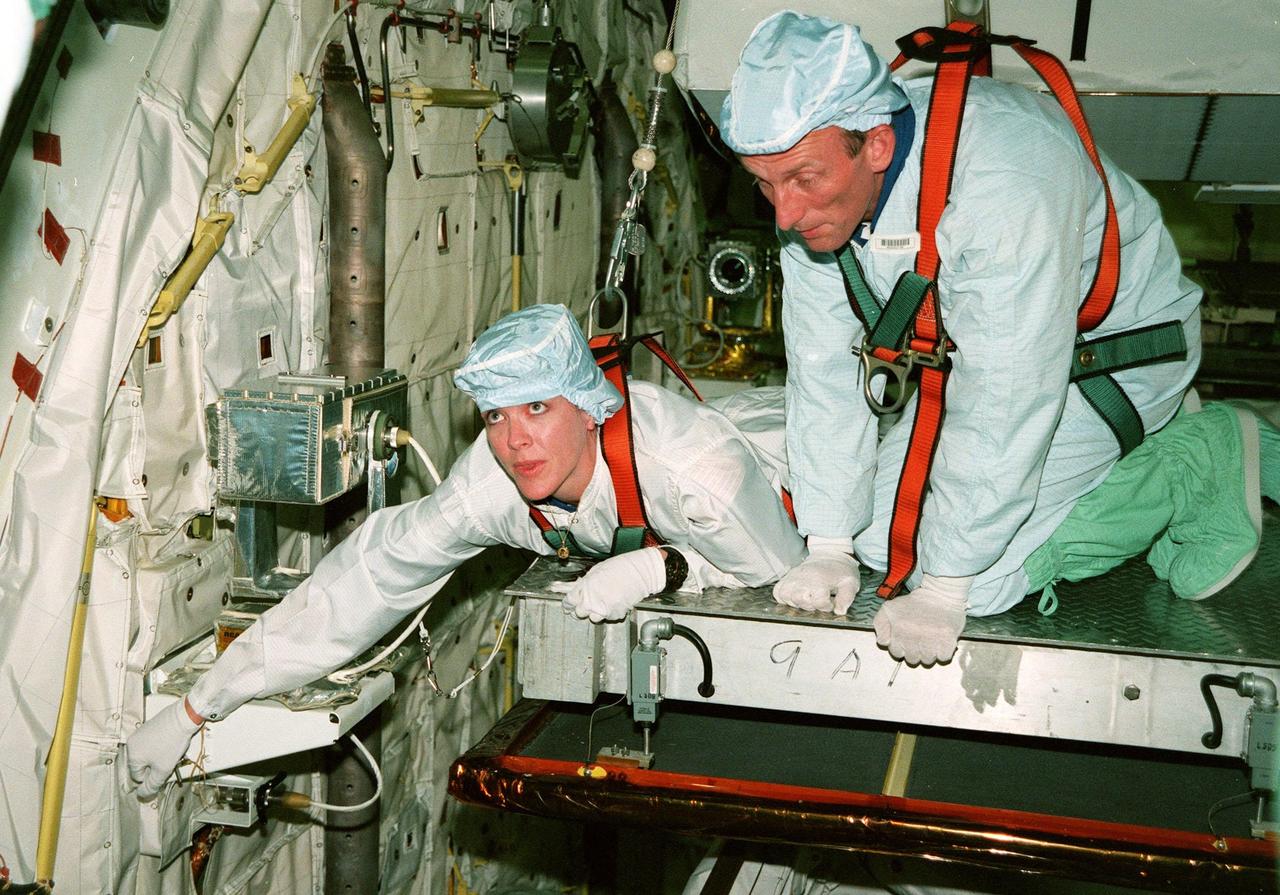
KENNEDY SPACE CENTER, FLA. -- In the Orbiter Processing Facility, STS-99 Mission Specialists Janet Lynn Kavandi (Ph.D.) and Gerhard P.J. Thiele look over part of the Shuttle Radar Topography Mission (SRTM), primary payload for their mission, as part of a Crew Equipment Interface Test (CEIT). Also taking part in the CEIT are Commander Kevin R. Kregel, Pilot Dominic L. Pudwill Gorie, and Mission Specialists Janice Voss (Ph.D.) and Mamoru Mohri. Mohri is with the National Space Development Agency (NASDA) of Japan, and Thiele is with the European Space Agency. The CEIT provides an opportunity for crew members to check equipment and facilities that will be aboard the orbiter during their mission. The SRTM is a specially modified radar system that will gather data for the most accurate and complete topographic map of the Earth's surface that has ever been assembled. SRTM will make use of radar interferometry, wherein two radar images are taken from slightly different locations. Differences between these images allow for the calculation of surface elevation, or change. The SRTM hardware will consist of one radar antenna in the shuttle payload bay and a second radar antenna attached to the end of a mast extended 60 meters (195 feet) out from the shuttle. STS-99 is scheduled to launch Sept. 16 at 8:47 a.m. from Launch Pad 39A
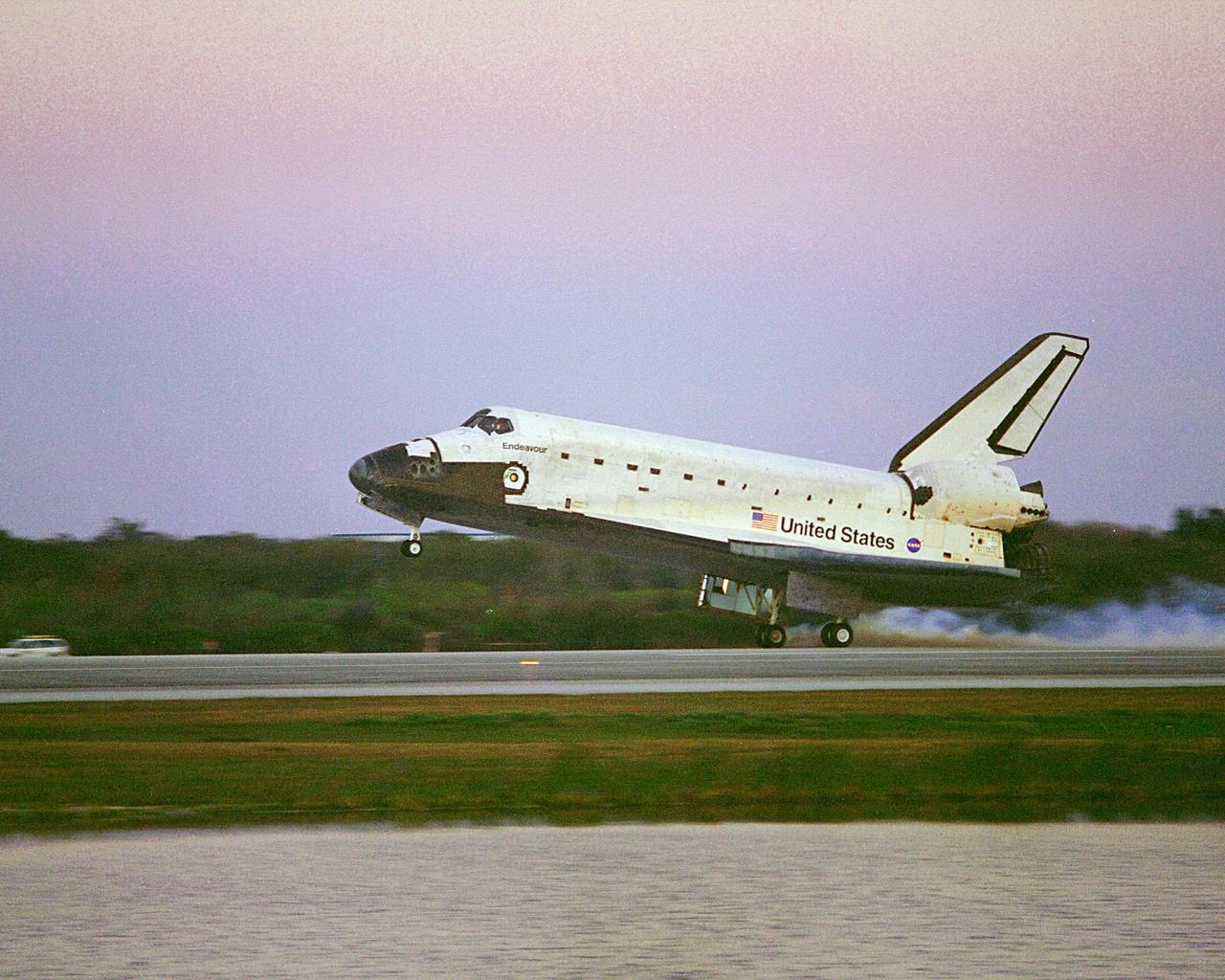
KENNEDY SPACE CENTER, FLA. -- In the waning light after sundown, Space Shuttle Endeavour touches down on KSC's Shuttle Landing Facility Runway 33 to complete the 11-day, 5-hour, 38-minute-long STS-99 mission. At the controls are Commander Kevin Kregel and Pilot Dominic Gorie. Also onboard the orbiter are Mission Specialists Janet Kavandi, Janice Voss, Mamoru Mohri of Japan and Gerhard Thiele of Germany. Mohri is with the National Space Development Agency (NASDA) and Thiele is with the European Space Agency. The crew are returning from the Shuttle Radar Topography Mission after mapping more than 47 million square miles of the Earth's surface. Main gear touchdown was at 6:22:23 p.m. EST Feb. 22 , landing on orbit 181 of the mission. Nose gear touchdown was at 6:22:35 p.m.. EST, and wheel stop at 6:23:25 p.m. EST. This was the 97th flight in the Space Shuttle program and the 14th for Endeavour, also marking the 50th landing at KSC, the 21st consecutive landing at KSC, and the 28th in the last 29 Shuttle flight
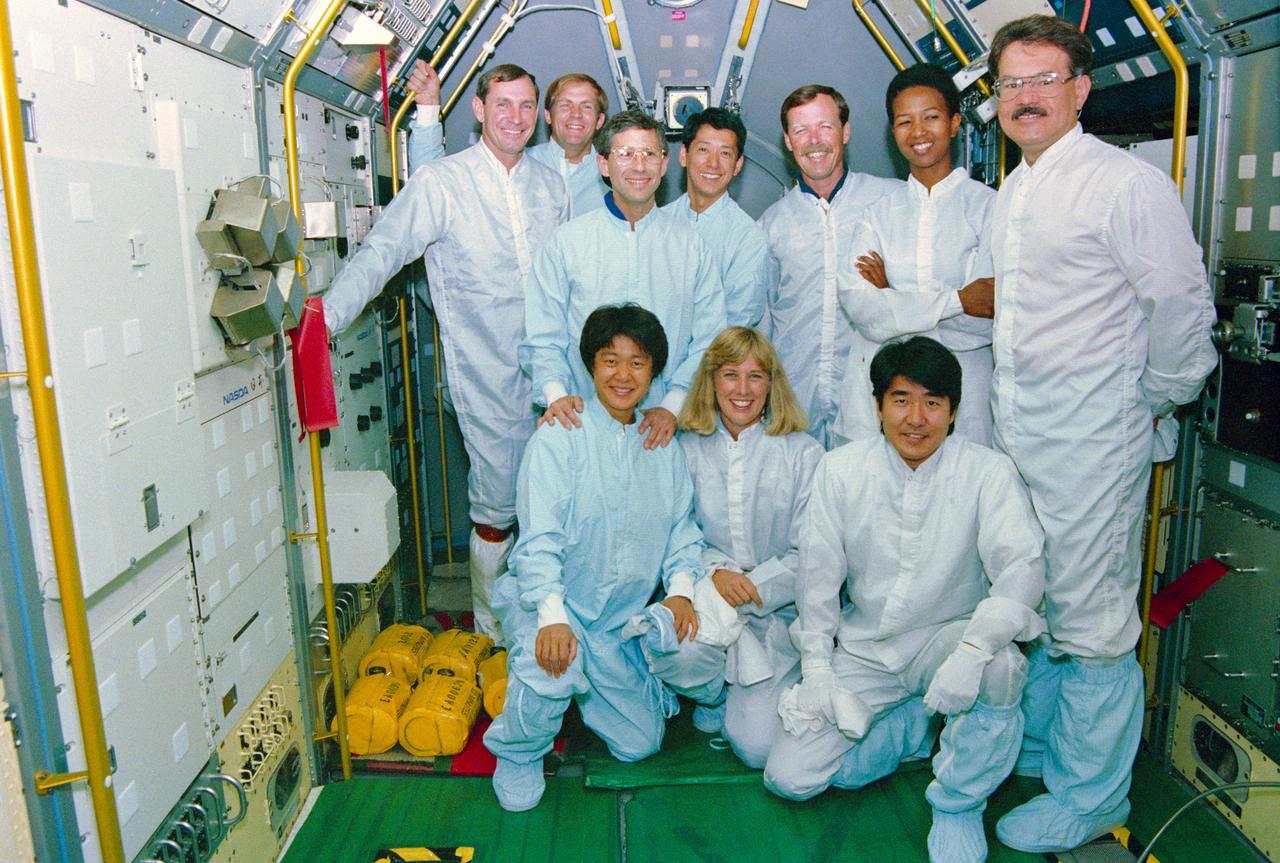
S92-44303 --- STS-47 Endeavour, Orbiter Vehicle (OV) 105, crew members and back-up payload specialists, wearing clean suits, pose for a group portrait in the Spacelab Japan (SLJ) module. The team is at the Kennedy Space Center's (KSC's) Orbiter Processing Facility (OPF) to inspect SLJ configuration and OV-105 preparations. Kneeling, from left, are back-up Payload Specialist Chiaki Naito-Mukai; Mission Specialist N. Jan Davis; and backup Payload Specialist Takao Doi. Standing, from the left, are Pilot Curtis L. Brown,Jr; Payload Commander Mark C. Lee; Jerome Apt; Payload Specialist Mamoru Mohri; Commander Robert L. Gibson; Mae C. Jemison; and back-up Payload Specialist Stanely L. Koszelak. Mohri, Mukai, and Doi represent the National Space Development Agency of Japan (NASDA). View provided by KSC with alternate KSC number KSC-92PC-1647. Photo credit: NASA
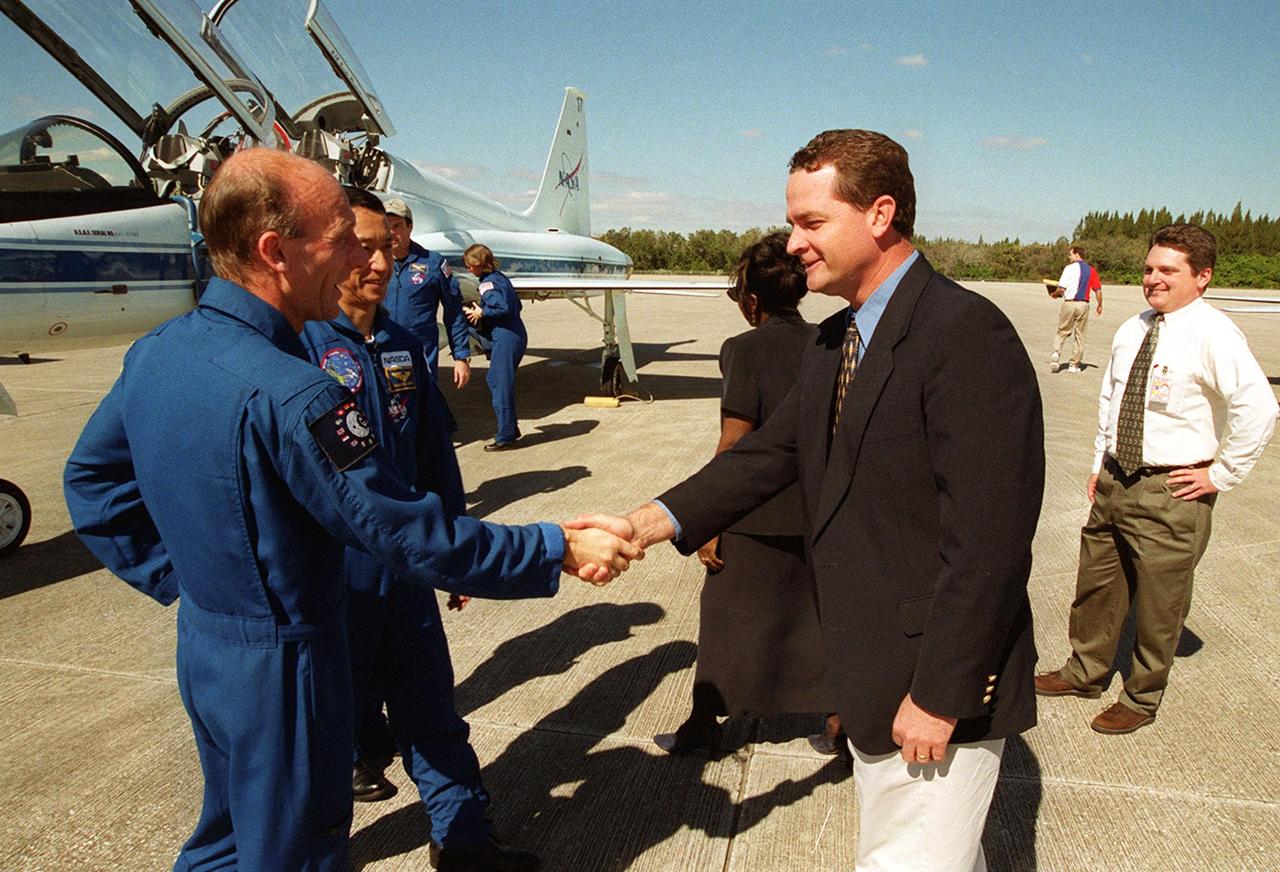
After landing at the Shuttle Landing Facility aboard T-38 jet aircraft, STS-99 Mission Specialists (from left) Gerhard Thiele of Germany and Mamoru Mohri of Japan are greeted by Dave King, director of Shuttle Operations. Behind Mohri can be seen Commander Kevin Kregel and Mission Specialist Janice Voss. The crew, which includes Pilot Dom gorie and Mission Specialist Janet Kavandi, are ready to prepare for the second launch attempt of Endeavour Feb. 11 at 12:30 p.m. EST from Launch Pad 39A. The earlier launch scheduled for Jan. 31 was scrubbed due to poor weather and a faulty Enhanced Master Events Controller in the orbiter's aft compartment. Over the next few days, the crew will review mission procedures, conduct test flights in the Shuttle Training Aircraft and undergo routine preflight medical exams. STS-99 is the Shuttle Radar Topography Mission, which will produce unrivaled 3-D images of the Earth's surface. The result of the Shuttle Radar Topography Mission could be close to 1 trillion measurements of the Earth's topography. Landing is expected at KSC on Feb. 22 at 4:36 p.m. EST

KENNEDY SPACE CENTER, Fla. -- Near the bunker at Launch Pad 39A, STS-99 Mission Specialists Janice Voss (Ph.D.), Gerhard Thiele and Mamoru Mohri check out the slidewire basket used for emergency egress. The crew are taking part in Terminal Countdown Demonstration Test activities, which provide them with simulated countdown exercises, emergency egress training, and opportunities to inspect the mission payloads in the orbiter's payload bay. Thiele is with the European Space Agency and Mohri is with the National Space Development Agency (NASDA) of Japan. STS-99 is the Shuttle Radar Topography Mission, which will chart a new course, using two antennae and a 200-foot-long section of space station-derived mast protruding from the payload bay to produce unrivaled 3-D images of the Earth's surface. The result of the Shuttle Radar Topography Mission could be close to 1 trillion measurements of the Earth's topography. Besides contributing to the production of better maps, these measurements could lead to improved water drainage modeling, more realistic flight simulators, better locations for cell phone towers, and enhanced navigation safety. Launch of Endeavour on the 11-day mission is scheduled for Jan. 31 at 12:47 p.m. EST
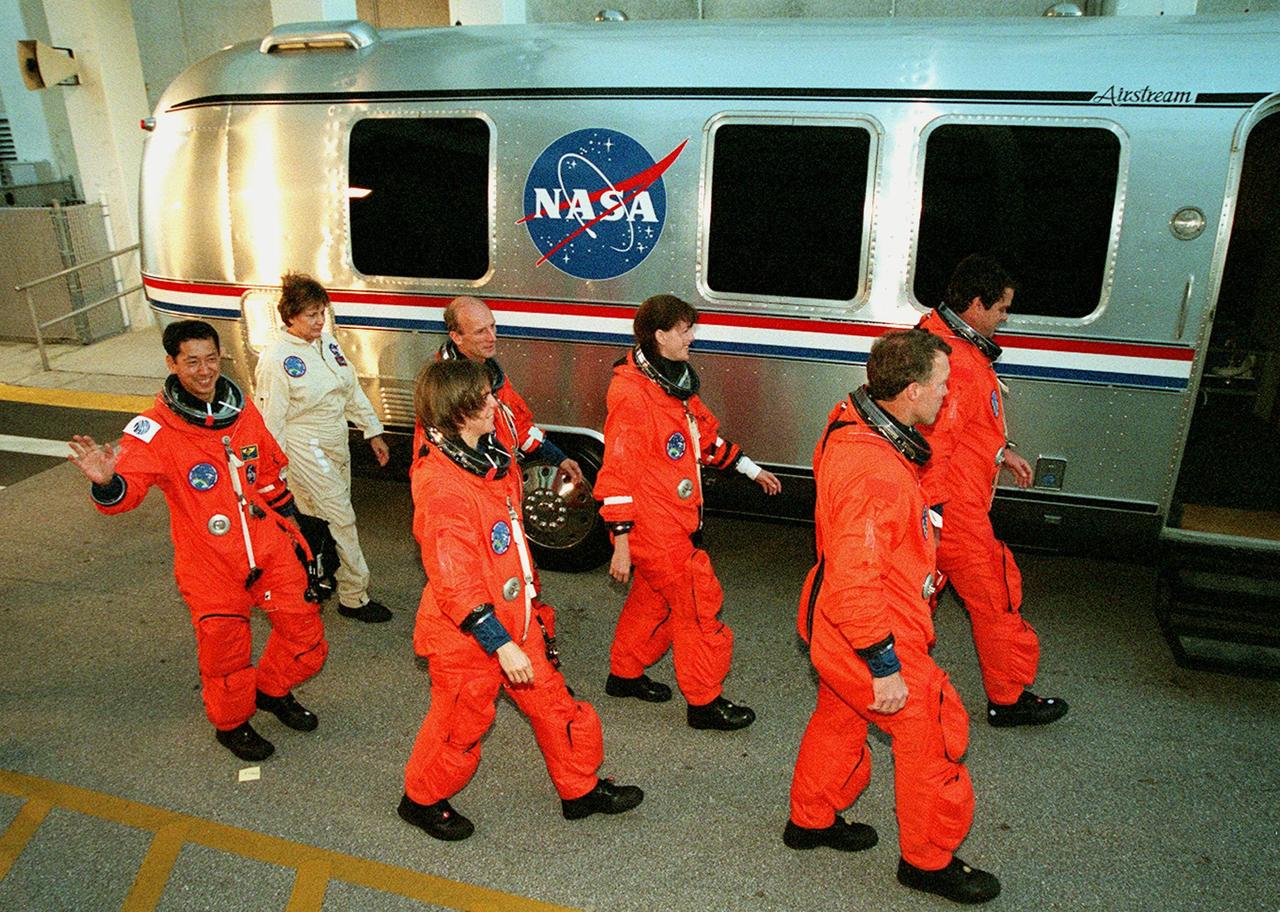
In their orange flight suits, the STS-99 crew head toward the "astrovan" that will take them to Launch Pad 39A for a simulated countdown exercise. From left to right are Mission Specialists Mamoru Mohri (waving), Gerhard Thiele, Janice Voss (Ph.D.) and Janet Lynn Kavandi (Ph.D.), Pilot Dominic Gorie and Commander Kevin Kregel. Mohri is with the National Space Development Agency (NASDA) of Japan and Thiele is with the European Space Agency. The crew are taking part in Terminal Countdown Demonstration Test activities, which provide them with simulated countdown exercises, emergency egress training, and opportunities to inspect the mission payloads in the orbiter's payload bay. STS-99 is the Shuttle Radar Topography Mission, which will chart a new course, using two antennae and a 200-foot-long section of space station-derived mast protruding from the payload bay to produce unrivaled 3-D images of the Earth's surface. The result of the Shuttle Radar Topography Mission could be close to 1 trillion measurements of the Earth's topography. Besides contributing to the production of better maps, these measurements could lead to improved water drainage modeling, more realistic flight simulators, better locations for cell phone towers, and enhanced navigation safety. Launch of Endeavour on the 11-day mission is scheduled for Jan. 31 at 12:47 p.m. EST
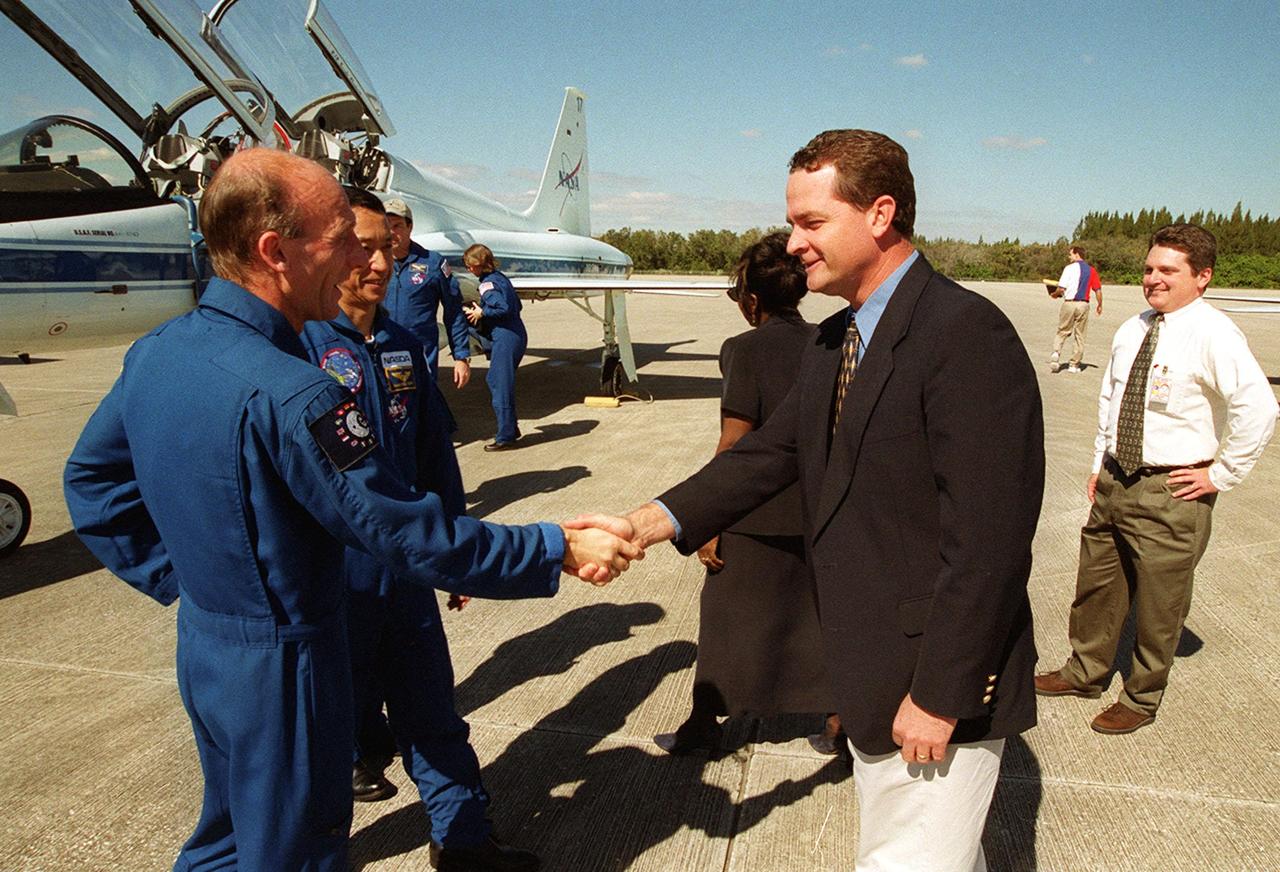
After landing at the Shuttle Landing Facility aboard T-38 jet aircraft, STS-99 Mission Specialists (from left) Gerhard Thiele of Germany and Mamoru Mohri of Japan are greeted by Dave King, director of Shuttle Operations. Behind Mohri can be seen Commander Kevin Kregel and Mission Specialist Janice Voss. The crew, which includes Pilot Dom gorie and Mission Specialist Janet Kavandi, are ready to prepare for the second launch attempt of Endeavour Feb. 11 at 12:30 p.m. EST from Launch Pad 39A. The earlier launch scheduled for Jan. 31 was scrubbed due to poor weather and a faulty Enhanced Master Events Controller in the orbiter's aft compartment. Over the next few days, the crew will review mission procedures, conduct test flights in the Shuttle Training Aircraft and undergo routine preflight medical exams. STS-99 is the Shuttle Radar Topography Mission, which will produce unrivaled 3-D images of the Earth's surface. The result of the Shuttle Radar Topography Mission could be close to 1 trillion measurements of the Earth's topography. Landing is expected at KSC on Feb. 22 at 4:36 p.m. EST
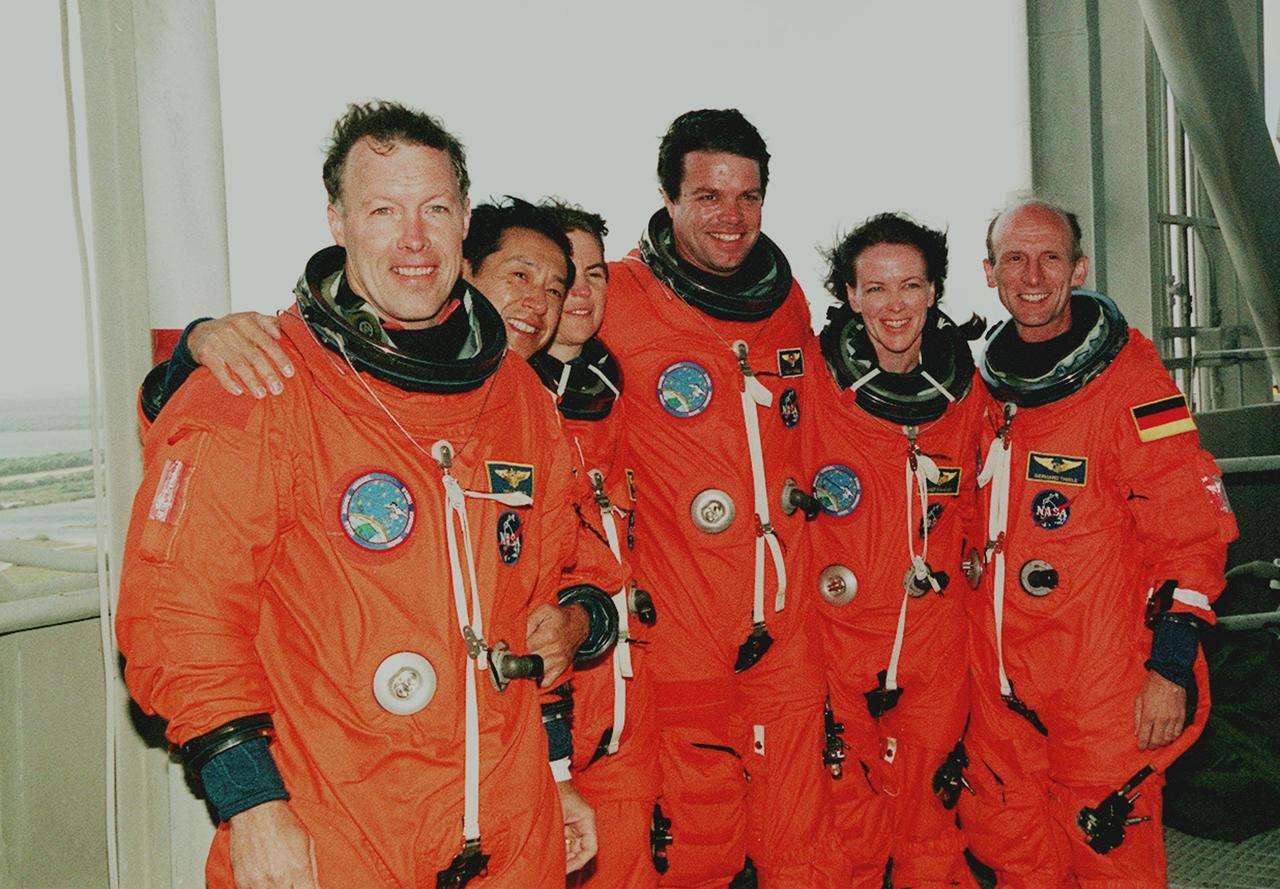
KENNEDY SPACE CENTER, Fla. -- At the 195-foot level of the Fixed Service Structure on Launch Pad 39A, the STS-99 crew pose for a photograph during Terminal Countdown Demonstration Test (TCDT) activities. Standing left to right are Pilot Dominic Gorie, Mission Specialist Mamoru Mohri (Ph.D.), Mission Specialist Janice Voss (Ph.D.), Commander Kevin Kregel, Mission Specialist Janet Lynn Kavandi (Ph.D.), and Mission Specialist Gerhard Thiele (Ph.D.). Thiele is with the European Space Agency and Mohri is with the National Space Development Agency (NASDA) of Japan. The TCDT provides the crew with simulated countdown exercises, emergency egress training, and opportunities to inspect the mission payloads in the orbiter's payload bay. STS-99 is the Shuttle Radar Topography Mission, which will chart a new course, using two antennae and a 200-foot-long section of space station-derived mast protruding from the payload bay to produce unrivaled 3-D images of the Earth's surface. The result of the Shuttle Radar Topography Mission could be close to 1 trillion measurements of the Earth's topography. Besides contributing to the production of better maps, these measurements could lead to improved water drainage modeling, more realistic flight simulators, better locations for cell phone towers, and enhanced navigation safety. Launch of Endeavour on the 11-day mission is scheduled for Jan. 31 at 12:47 p.m. EST
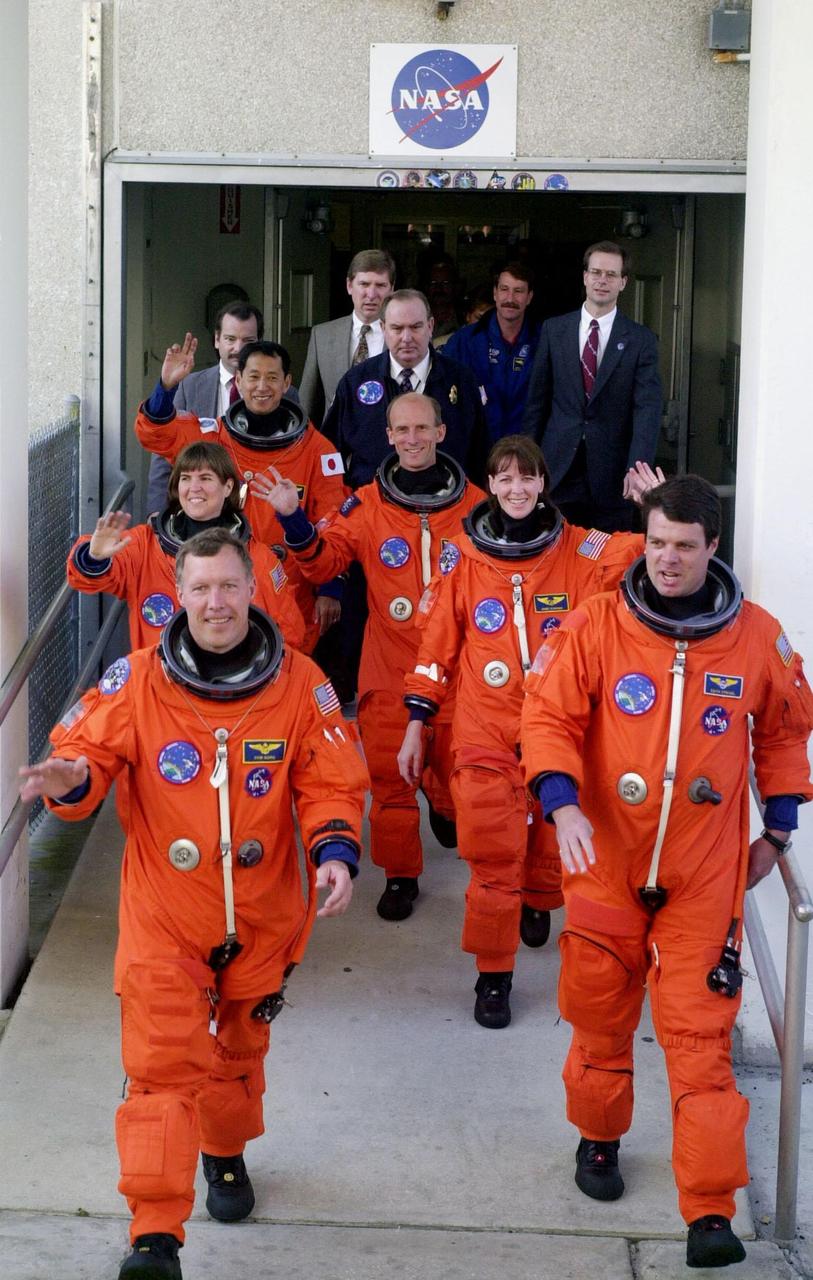
The STS-99 crew wave to onlookers as they step eagerly from the Operations and Checkout Building enroute to Launch Pad 39A for liftoff of Space Shuttle Endeavour. In their orange launch and entry suits, they are (foreground) Pilot Dominic Gorie and Commander Kevin Kregel. Behind them (left to right) are Mission Specialists Janice Voss, Mamoru Mohri of Japan, Gerhard Thiele of Germany and Janet Lynn Kavandi. Mohri is with the National Space Development Agency (NASDA) of Japan, and Thiele is with the European Space Agency. Known as the Shuttle Radar Topography Mission (SRTM), STS-99 is scheduled for liftoff at 12:30 p.m. EST. The SRTM will chart a new course to produce unrivaled 3-D images of the Earth's surface. The result of the Shuttle Radar Topography Mission could be close to 1 trillion measurements of the Earth's topography. The mission is expected to last 11days, with Endeavour landing at KSC Tuesday, Feb. 22, at 4:36 p.m. EST. This is the 97th Shuttle flight and 14th for Shuttle Endeavour
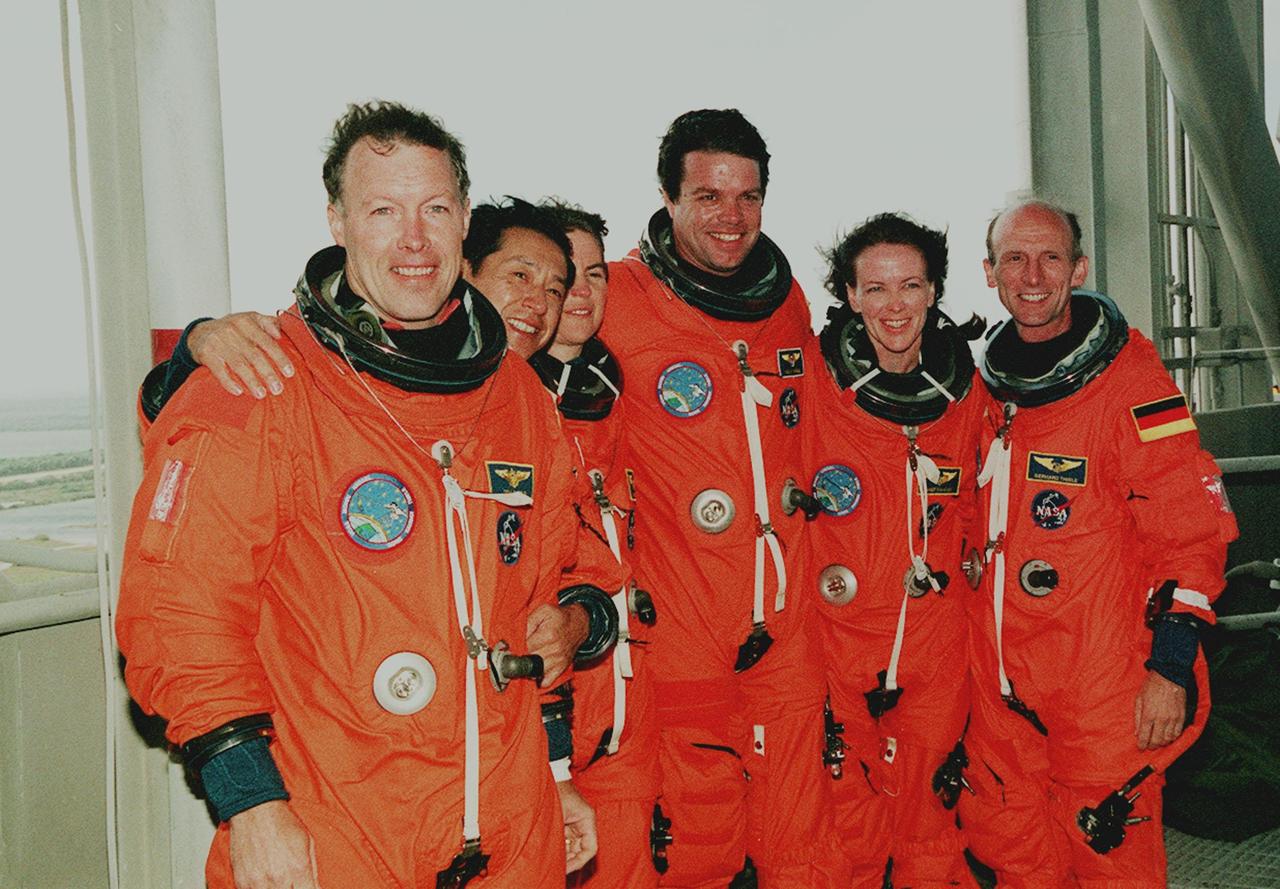
KENNEDY SPACE CENTER, Fla. -- At the 195-foot level of the Fixed Service Structure on Launch Pad 39A, the STS-99 crew pose for a photograph during Terminal Countdown Demonstration Test (TCDT) activities. Standing left to right are Pilot Dominic Gorie, Mission Specialist Mamoru Mohri (Ph.D.), Mission Specialist Janice Voss (Ph.D.), Commander Kevin Kregel, Mission Specialist Janet Lynn Kavandi (Ph.D.), and Mission Specialist Gerhard Thiele (Ph.D.). Thiele is with the European Space Agency and Mohri is with the National Space Development Agency (NASDA) of Japan. The TCDT provides the crew with simulated countdown exercises, emergency egress training, and opportunities to inspect the mission payloads in the orbiter's payload bay. STS-99 is the Shuttle Radar Topography Mission, which will chart a new course, using two antennae and a 200-foot-long section of space station-derived mast protruding from the payload bay to produce unrivaled 3-D images of the Earth's surface. The result of the Shuttle Radar Topography Mission could be close to 1 trillion measurements of the Earth's topography. Besides contributing to the production of better maps, these measurements could lead to improved water drainage modeling, more realistic flight simulators, better locations for cell phone towers, and enhanced navigation safety. Launch of Endeavour on the 11-day mission is scheduled for Jan. 31 at 12:47 p.m. EST
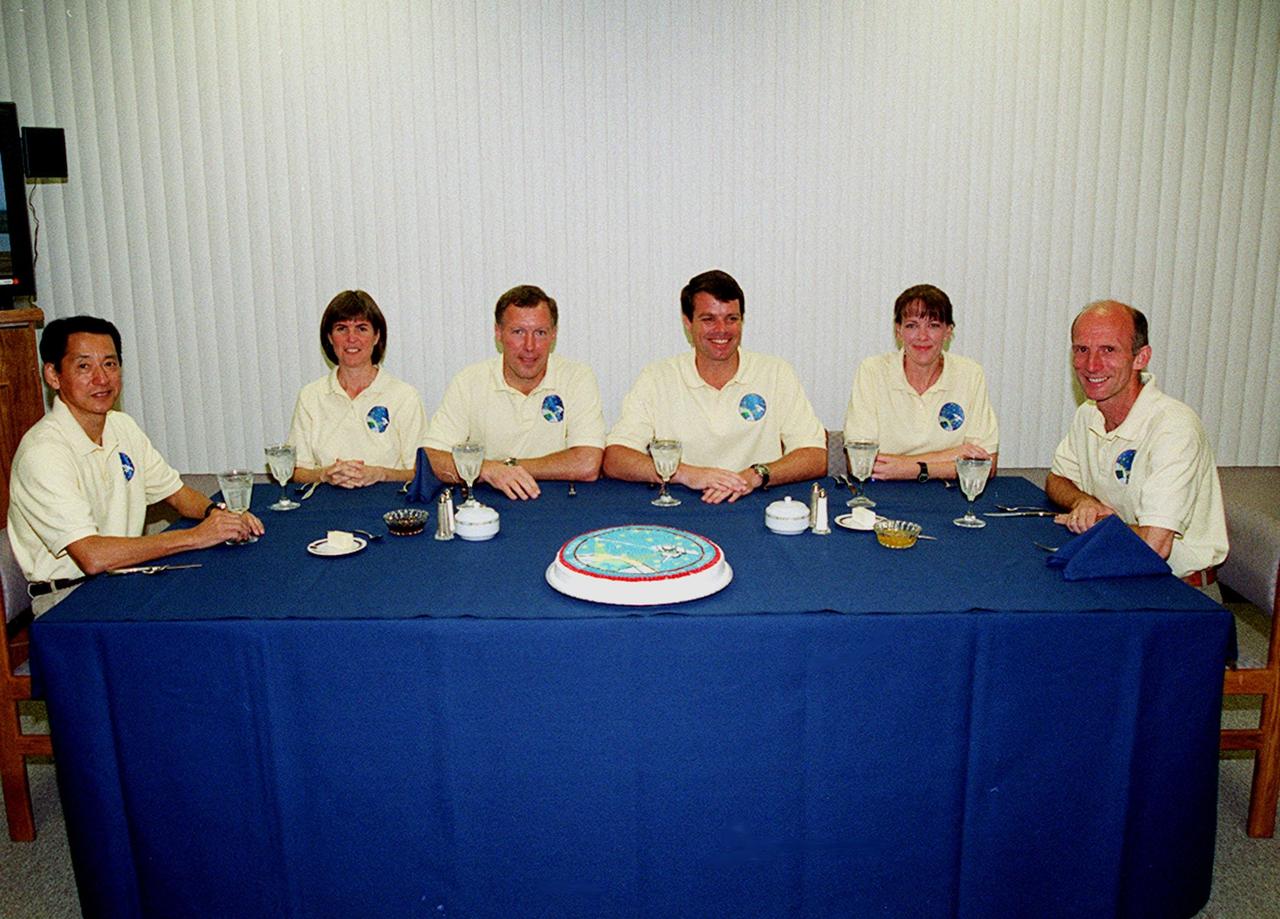
In the Operations and Checkout Building, the STS-99 crew gathers for breakfast before suiting up for launch. From left are Mission Specialists Mamoru Mohri (Ph.D.) and Janice Voss (Ph.D.); Pilot Dominic Gorie; Commander Kevin Kregel; and Mission Specialists Janet Lynn Kavandi (Ph.D.) and Gerhard Thiele. Mohri is with the National Space Development Agency (NASDA) of Japan, and Thiele is with the European Space Agency. Known as the Shuttle Radar Topography Mission, liftoff is scheduled for 12:47 p.m. EST from Launch Pad 39A. The SRTM will chart a new course to produce unrivaled 3-D images of the Earth's surface, using two antennae and a 200-foot-long section of space station-derived mast protruding from the payload bay. The result of the Shuttle Radar Topography Mission could be close to 1 trillion measurements of the Earth's topography. Besides contributing to the production of better maps, these measurements could lead to improved water drainage modeling, more realistic flight simulators, better locations for cell phone towers, and enhanced navigation safety. The mission is expected to last about 11days, with Endeavour landing at KSC Friday, Feb. 11, at 4:55 p.m. EST
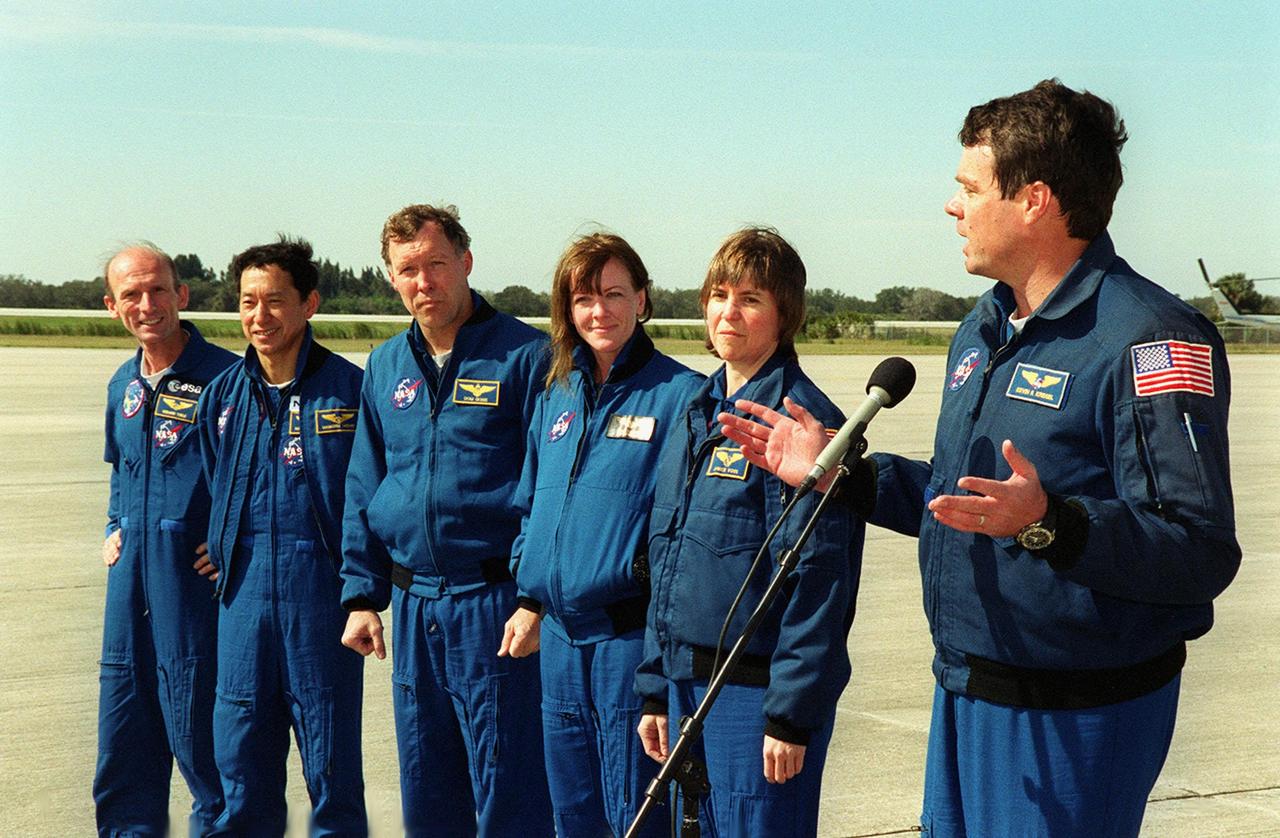
After arriving at KSC's Shuttle Landing Facility, the STS-99 crew pause to greet the media and Commander Kevin Kregel (right) introduces his crew: (from left) Mission Specialists Gerhard Thiele (Ph.D.) and Mamoru Mohri (Ph.D.); Pilot Dominic Gorie; and Mission Specialists Janet Lynn Kavandi (Ph.D.) and Janice Voss (Ph.D.). Thiele is with the European Space Agency and Mohri is with the National Space Development Agency (NASDA) of Japan. Over the next few days, the crew will review mission procedures, conduct test flights in the Shuttle Training Aircraft and undergo routine preflight medical exams. STS-99 is the Shuttle Radar Topography Mission, which will chart a new course, using two antennae and a 200-foot-long section of space station-derived mast protruding from the payload bay to produce unrivaled 3-D images of the Earth's surface. The result of the Shuttle Radar Topography Mission could be close to 1 trillion measurements of the Earth's topography. Besides contributing to the production of better maps, these measurements could lead to improved water drainage modeling, more realistic flight simulators, better locations for cell phone towers, and enhanced navigation safety. Launch of Endeavour is scheduled for Jan. 31 at 12:47 p.m. EST
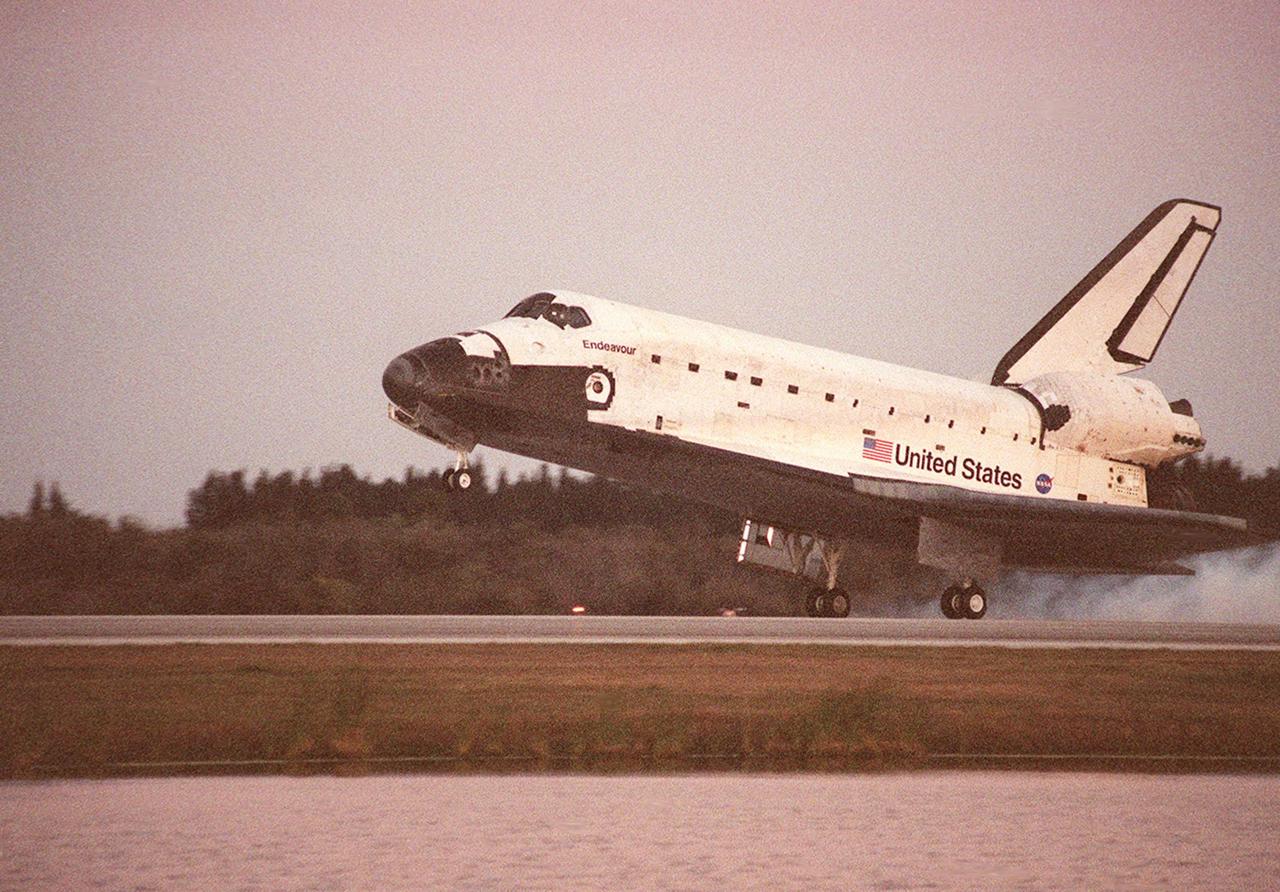
KENNEDY SPACE CENTER, FLA. -- In the waning light after sundown, Space Shuttle Endeavour touches down on KSC's Shuttle Landing Facility Runway 33 to complete the 11-day, 5-hour, 38-minute-long STS-99 mission. At the controls are Commander Kevin Kregel and Pilot Dominic Gorie. Also onboard the orbiter are Mission Specialists Janet Kavandi, Janice Voss, Mamoru Mohri of Japan and Gerhard Thiele of Germany. Mohri is with the National Space Development Agency (NASDA) and Thiele is with the European Space Agency. The crew is returning from the Shuttle Radar Topography Mission after mapping more than 47 million square miles of the Earth's surface. Main gear touchdown was at 6:22:23 p.m. EST Feb. 22 , landing on orbit 181 of the mission. Nose gear touchdown was at 6:22:35 p.m.. EST, and wheel stop at 6:23:25 p.m. EST. This was the 97th flight in the Space Shuttle program and the 14th for Endeavour, also marking the 50th landing at KSC, the 21st consecutive landing at KSC, and the 28th in the last 29 Shuttle flights
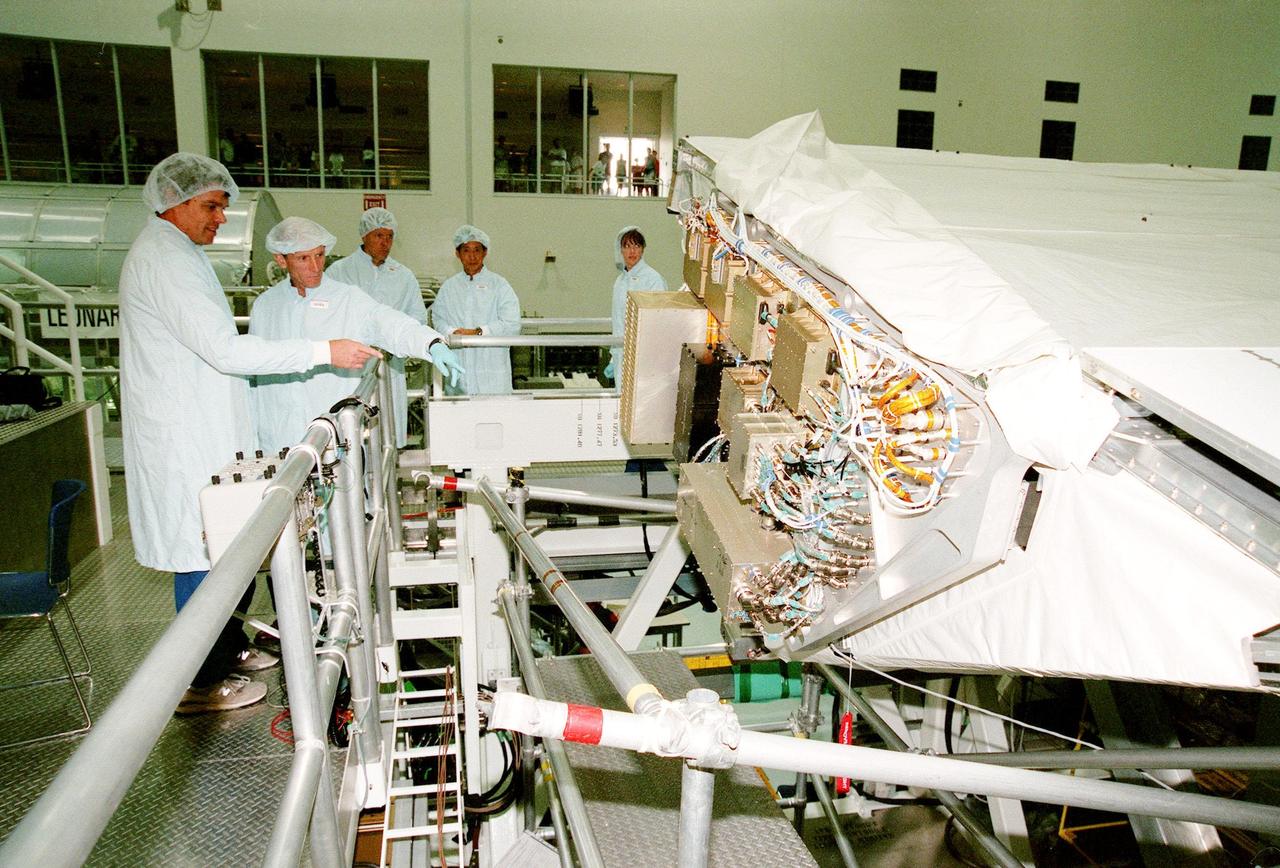
In the Space Station Processing Facility, the STS-99 crew looks over the payload for their mission, the Shuttle Radar Topography Mission (SRTM). Pointing to the SRTM are Commander Kevin R. Kregel and Mission Specialist Gerhard Thiele of Germany. Behind them are (left to right) Pilot Dominic L. Pudwill Gorie and Mission Specialists Mamoru Mohri of Japan and Janet Lynn Kavandi (Ph.D.) The remaining crew member (not shown) is Mission Specialist Janice Voss (Ph.D.) Mohri represents the National Space Development Agency of Japan and Thiele represents the European Space Agency. An international project spearheaded by the National Imagery and Mapping Agency and NASA, with participation of the German Aerospace Center DLR, the SRTM consists of a specially modified radar system that will gather data for the most accurate and complete topographic map of the Earth's surface that has ever been assembled. SRTM will make use of radar interferometry, wherein two radar images are taken from slightly different locations. Differences between these images allow for the calculation of surface elevation, or change. The SRTM hardware will consist of one radar antenna in the shuttle payload bay and a second radar antenna attached to the end of a mast extended 60 meters (195 feet) out from the shuttle. STS-99 is scheduled to launch Sept. 16 at 8:47 a.m. from Launch Pad 39A
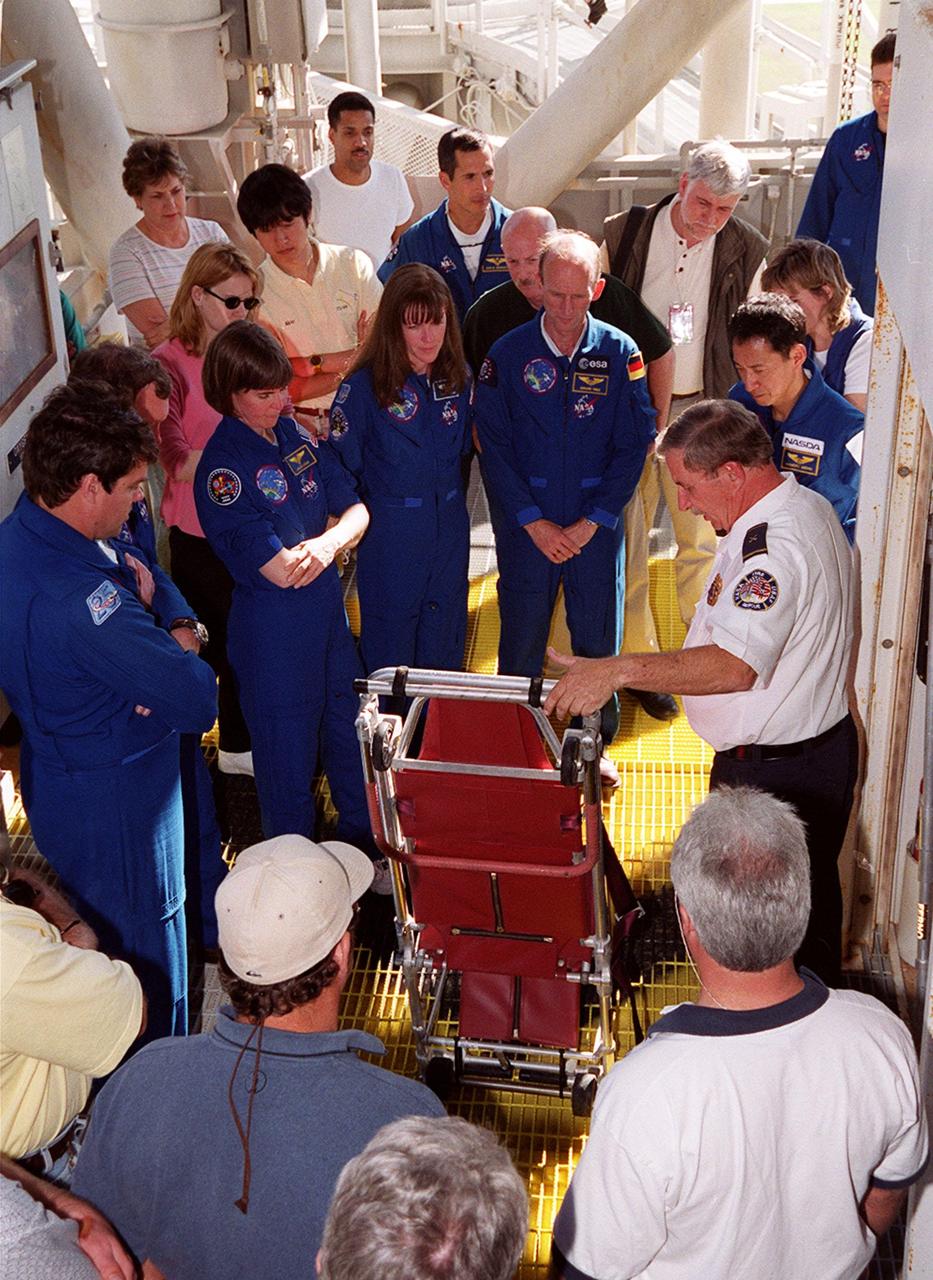
At Launch Pad 39A, members of the STS-99 crew and others look over part of the safety equipment. Standing left to right (in uniform) are Commander Kevin Kregel, Pilot Dominic Gorie, and Mission Specialists Janice Voss (Ph.D.), Janet Lynn Kavandi (Ph.D.), Gerhard Thiele and Mamoru Mohri. Thiele is with the European Space Agency and Mohri is with the National Space Development Agency (NASDA) of Japan. The crew are taking part in Terminal Countdown Demonstration Test activities, which provide them with simulated countdown exercises, emergency egress training, and opportunities to inspect the mission payloads in the orbiter's payload bay. STS-99 is the Shuttle Radar Topography Mission, which will chart a new course, using two antennae and a 200-foot-long section of space station-derived mast protruding from the payload bay to produce unrivaled 3-D images of the Earth's surface. The result of the Shuttle Radar Topography Mission could be close to 1 trillion measurements of the Earth's topography. Besides contributing to the production of better maps, these measurements could lead to improved water drainage modeling, more realistic flight simulators, better locations for cell phone towers, and enhanced navigation safety. Launch of Endeavour on the 11-day mission is scheduled for Jan. 31 at 12:47 p.m. EST
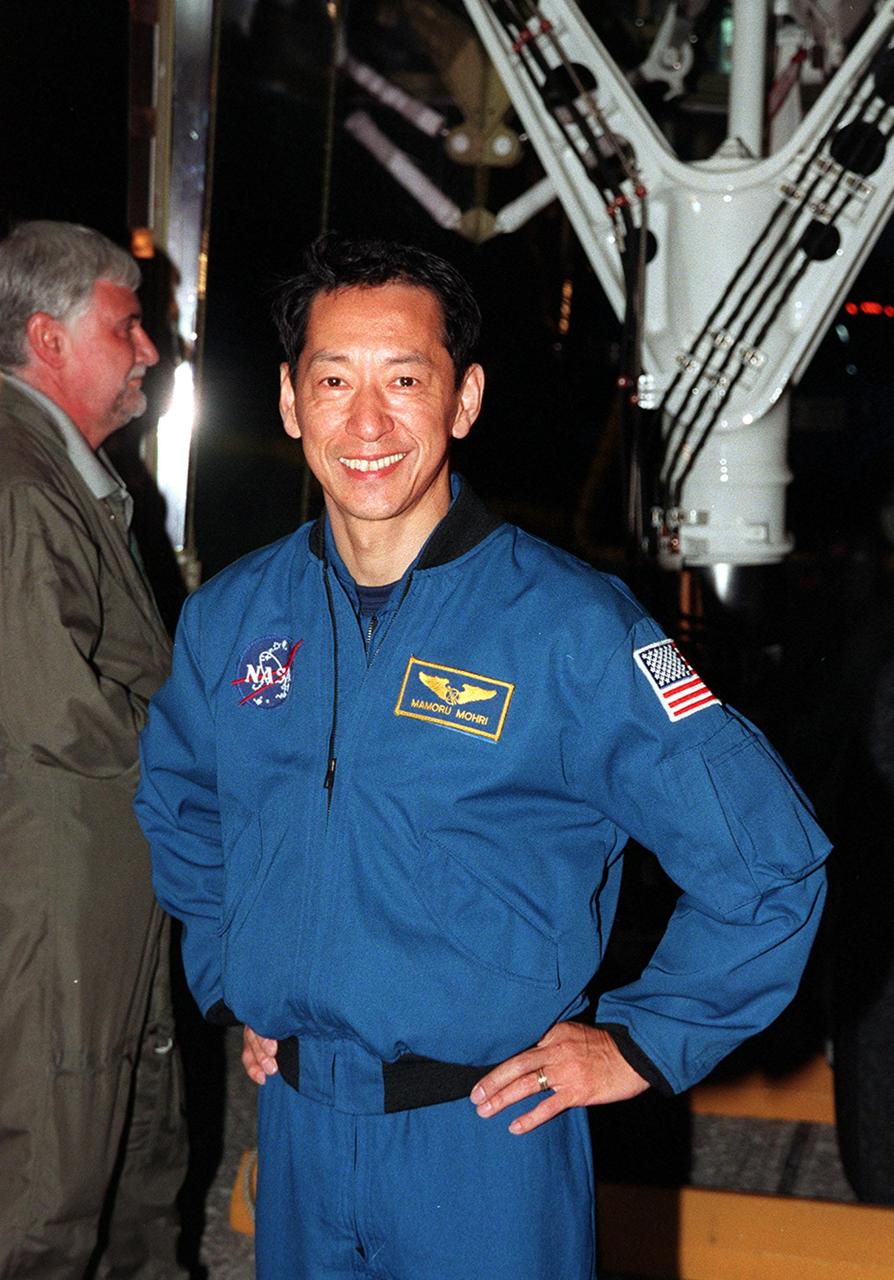
KENNEDY SPACE CENTER, FLA. -- STS-99 Mission Specialist Mamoru Mohri of Japan has only smiles after Space Shuttle Endeavour's landing on KSC's Shuttle Landing Facility completing the 11-day, 5-hour, 38-minute-long STS-99 mission. Main gear touchdown was at 6:22:23 p.m. EST Feb. 22 , landing on orbit 181 of the mission. Nose gear touchdown was at 6:22:35 p.m.. EST, and wheel stop at 6:23:25 p.m. EST. At the controls were Commander Kevin Kregel and Pilot Dominic Gorie. Also onboard the orbiter were Mission Specialists Janet Kavandi, Janice Voss, and Gerhard Thiele of Germany. Mohri is with the National Space Development Agency (NASDA) and Thiele is with the European Space Agency. The crew returned from the Shuttle Radar Topography Mission after mapping more than 47 million square miles of the Earth's surface. This was the 97th flight in the Space Shuttle program and the 14th for Endeavour, also marking the 50th landing at KSC, the 21st consecutive landing at KSC, and the 28th in the last 29 Shuttle flights
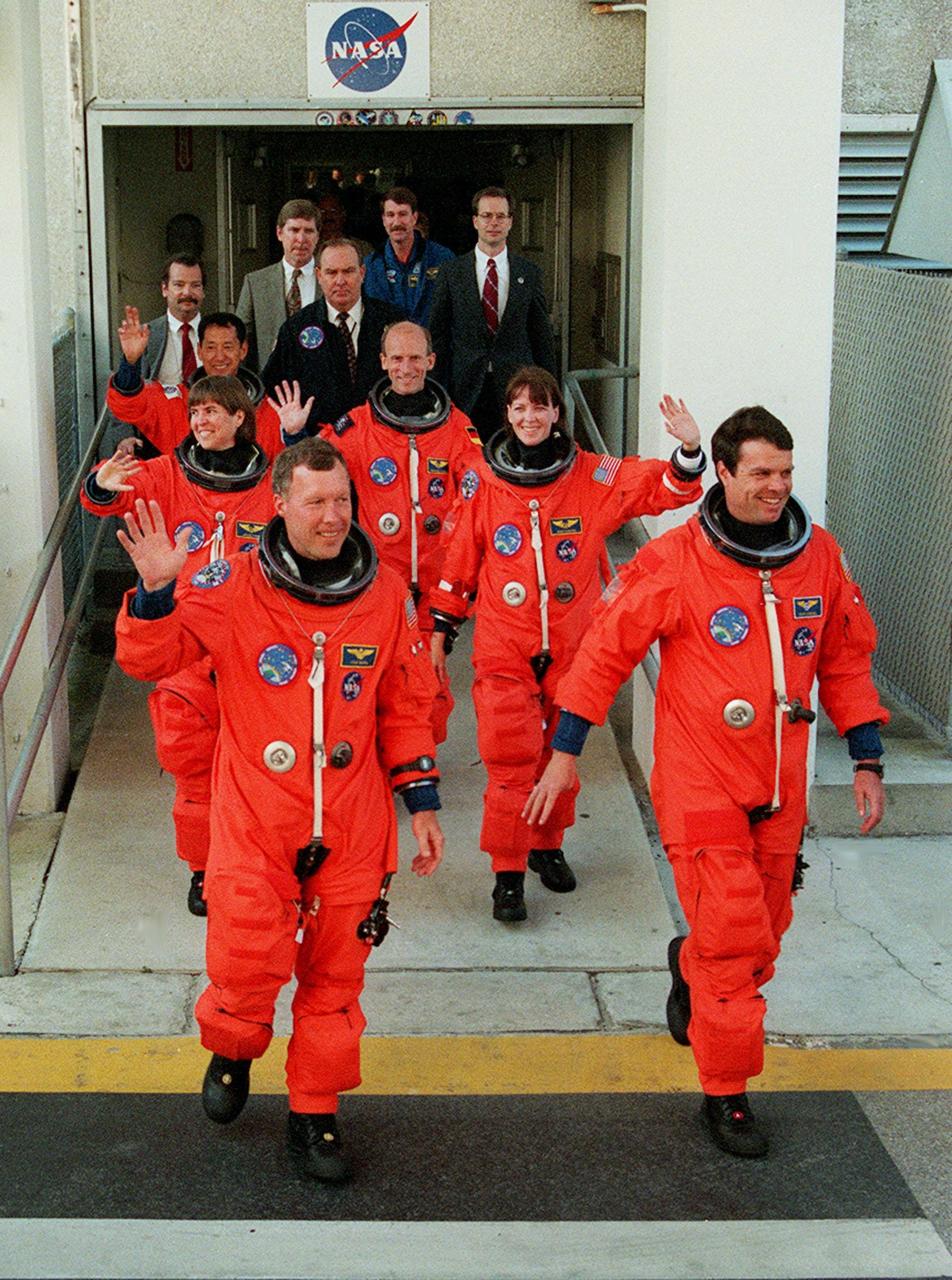
The STS-99 crew wave to onlookers as they step eagerly from the Operations and Checkout Building enroute to Launch Pad 39A for liftoff of Space Shuttle Endeavour. In their orange launch and entry suits, they are (foreground) Pilot Dominic Gorie and Commander Kevin Kregel. Behind them (left to right) are Mission Specialists Janice Voss, Mamoru Mohri of Japan, Gerhard Thiele of Germany and Janet Lynn Kavandi. Mohri is with the National Space Development Agency (NASDA) of Japan, and Thiele is with the European Space Agency. Known as the Shuttle Radar Topography Mission (SRTM), STS-99 is scheduled for liftoff at 12:30 p.m. EST. The SRTM will chart a new course to produce unrivaled 3-D images of the Earth's surface. The result of the Shuttle Radar Topography Mission could be close to 1 trillion measurements of the Earth's topography. The mission is expected to last 11days, with Endeavour landing at KSC Tuesday, Feb. 22, at 4:36 p.m. EST. This is the 97th Shuttle flight and 14th for Shuttle Endeavour
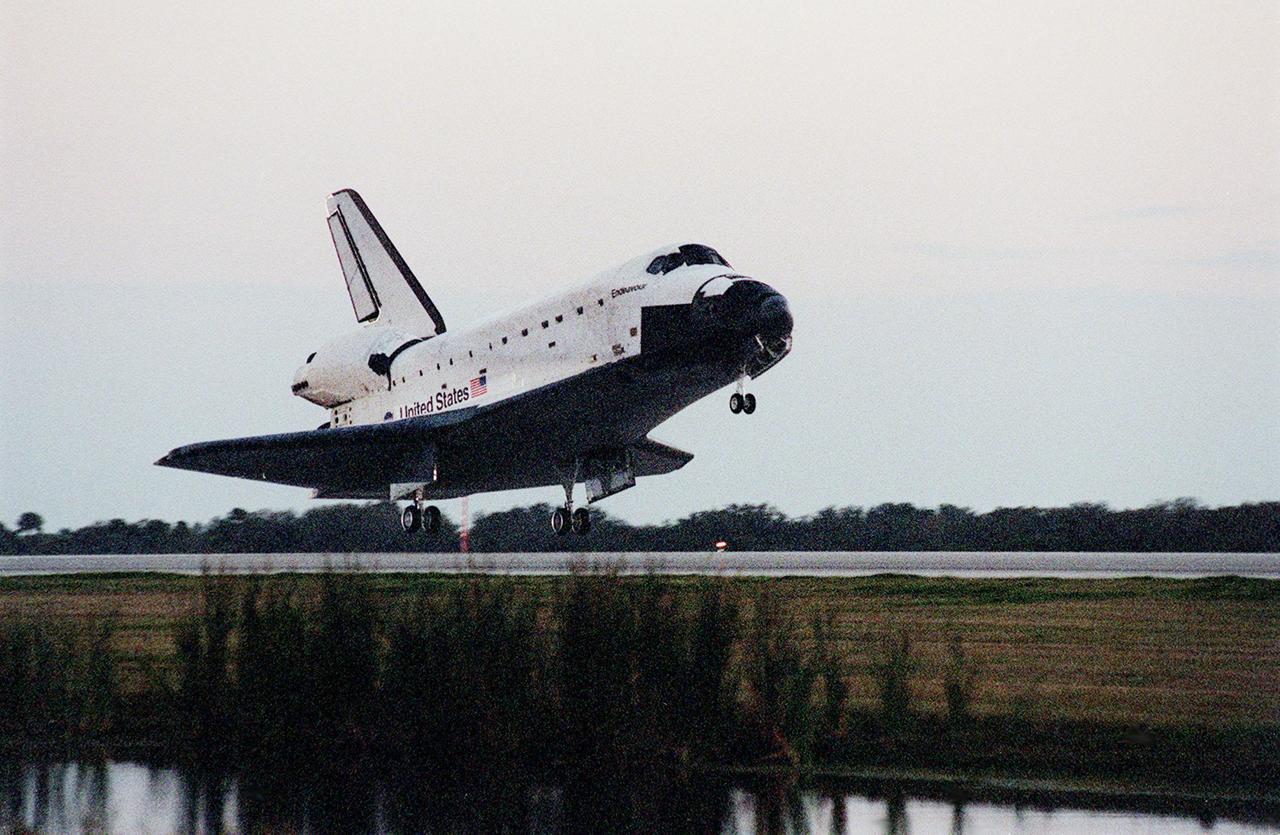
KENNEDY SPACE CENTER, Fla. -- Just after sundown, Space Shuttle Endeavour approaches touchdown on KSC's Shuttle Landing Facility Runway 33 to complete the 11-day, 5-hour, 38-minute-long STS-99 mission. Main gear touchdown was at 6:22:23 p.m. EST Feb. 22 , landing on orbit 181 of the mission. Nose gear touchdown was at 6:22:35 p.m.. EST, and wheel stop at 6:23:25 p.m. EST. At the controls are Commander Kevin Kregel and Pilot Dominic Gorie. Also onboard the orbiter are Mission Specialists Janet Kavandi, Janice Voss, Mamoru Mohri of Japan and Gerhard Thiele of Germany. Mohri is with the National Space Development Agency (NASDA) and Thiele is with the European Space Agency. The crew are returning from the Shuttle Radar Topography Mission, after mapping more than 47 million square miles of the Earth. This was the 97th flight in the Space Shuttle program and the 14th for Endeavour, also marking the 50th landing at KSC, the 21st consecutive landing at KSC, and the 28th in the last 29 Shuttle flights
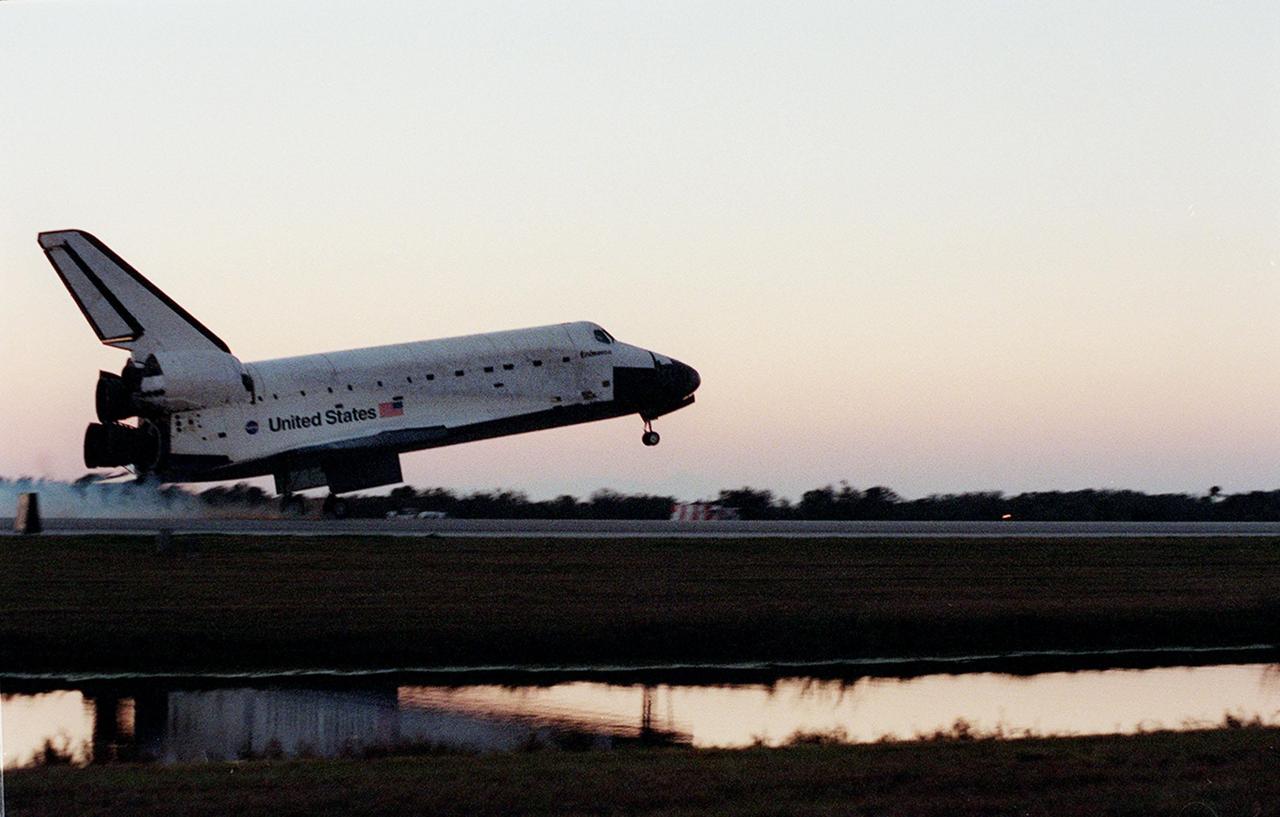
KENNEDY SPACE CENTER, Fla. -- The nearby water reflects Space Shuttle Endeavour as it touches down on KSC's Shuttle Landing Facility Runway 33 to complete the 11-day, 5-hour, 38-minute-long STS-99 mission. Main gear touchdown was at 6:22:23 p.m. EST Feb. 22 , landing on orbit 181 of the mission. Nose gear touchdown was at 6:22:35 p.m.. EST, and wheel stop at 6:23:25 p.m. EST. At the controls are Commander Kevin Kregel and Pilot Dominic Gorie. Also onboard the orbiter are Mission Specialists Janet Kavandi, Janice Voss, Mamoru Mohri of Japan and Gerhard Thiele of Germany. Mohri is with the National Space Development Agency (NASDA) and Thiele is with the European Space Agency. The crew are returning from the Shuttle Radar Topography Mission, after mapping more than 47 million square miles of the Earth. This was the 97th flight in the Space Shuttle program and the 14th for Endeavour, also marking the 50th landing at KSC, the 21st consecutive landing at KSC, and the 28th in the last 29 Shuttle flights

The STS-99 crew wave to onlookers as they walk to the astrovan which will take them to Launch Pad 39A and liftoff of Space Shuttle Endeavour, targeted for 12:47 p.m. EST. In their orange launch and entry suits, they are (foreground) Pilot Dominic Gorie and Commander Kevin Kregel. Behind them (left to right) are Mission Specialists Janice Voss (Ph.D.), Mamoru Mohri (Ph.D.), Gerhard Thiele and Janet Lynn Kavandi (Ph.D.). Mohri is with the National Space Development Agency (NASDA) of Japan, and Thiele is with the European Space Agency. The SRTM will chart a new course to produce unrivaled 3-D images of the Earth's surface, using two antennae and a 200-foot-long section of space station-derived mast protruding from the payload bay. The result of the Shuttle Radar Topography Mission could be close to 1 trillion measurements of the Earth's topography. Besides contributing to the production of better maps, these measurements could lead to improved water drainage modeling, more realistic flight simulators, better locations for cell phone towers, and enhanced navigation safety. The mission is expected to last about 11days, with Endeavour landing at KSC Friday, Feb. 11, at 4:55 p.m. EST

After the crew arrival at KSC's Shuttle Landing Facility, STS-99 Mission Specialist Mamoru Mohri (Ph.D.), at right, talks to the media. At left is Mission Specialist Gerhard Thiele (Ph.D.). Thiele is with the European Space Agency and Mohri is with the National Space Development Agency (NASDA) of Japan. Over the next few days, the crew will review mission procedures, conduct test flights in the Shuttle Training Aircraft and undergo routine preflight medical exams. STS-99 is the Shuttle Radar Topography Mission, which will chart a new course, using two antennae and a 200-foot-long section of space station-derived mast protruding from the payload bay to produce unrivaled 3-D images of the Earth's surface. The result of the Shuttle Radar Topography Mission could be close to 1 trillion measurements of the Earth's topography. Besides contributing to the production of better maps, these measurements could lead to improved water drainage modeling, more realistic flight simulators, better locations for cell phone towers, and enhanced navigation safety. Launch of Endeavour is scheduled for Jan. 31 at 12:47 p.m. EST
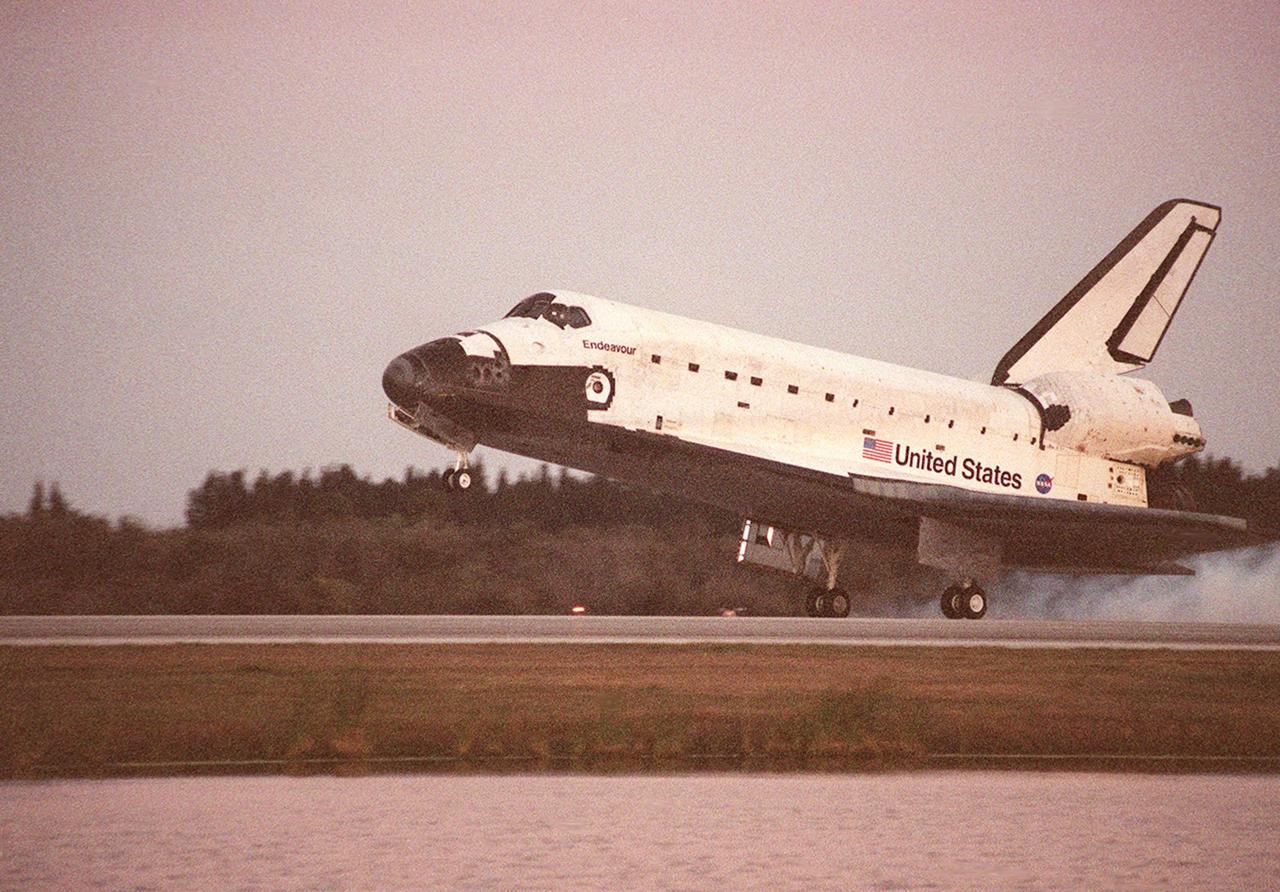
KENNEDY SPACE CENTER, FLA. -- In the waning light after sundown, Space Shuttle Endeavour touches down on KSC's Shuttle Landing Facility Runway 33 to complete the 11-day, 5-hour, 38-minute-long STS-99 mission. At the controls are Commander Kevin Kregel and Pilot Dominic Gorie. Also onboard the orbiter are Mission Specialists Janet Kavandi, Janice Voss, Mamoru Mohri of Japan and Gerhard Thiele of Germany. Mohri is with the National Space Development Agency (NASDA) and Thiele is with the European Space Agency. The crew is returning from the Shuttle Radar Topography Mission after mapping more than 47 million square miles of the Earth's surface. Main gear touchdown was at 6:22:23 p.m. EST Feb. 22 , landing on orbit 181 of the mission. Nose gear touchdown was at 6:22:35 p.m.. EST, and wheel stop at 6:23:25 p.m. EST. This was the 97th flight in the Space Shuttle program and the 14th for Endeavour, also marking the 50th landing at KSC, the 21st consecutive landing at KSC, and the 28th in the last 29 Shuttle flights
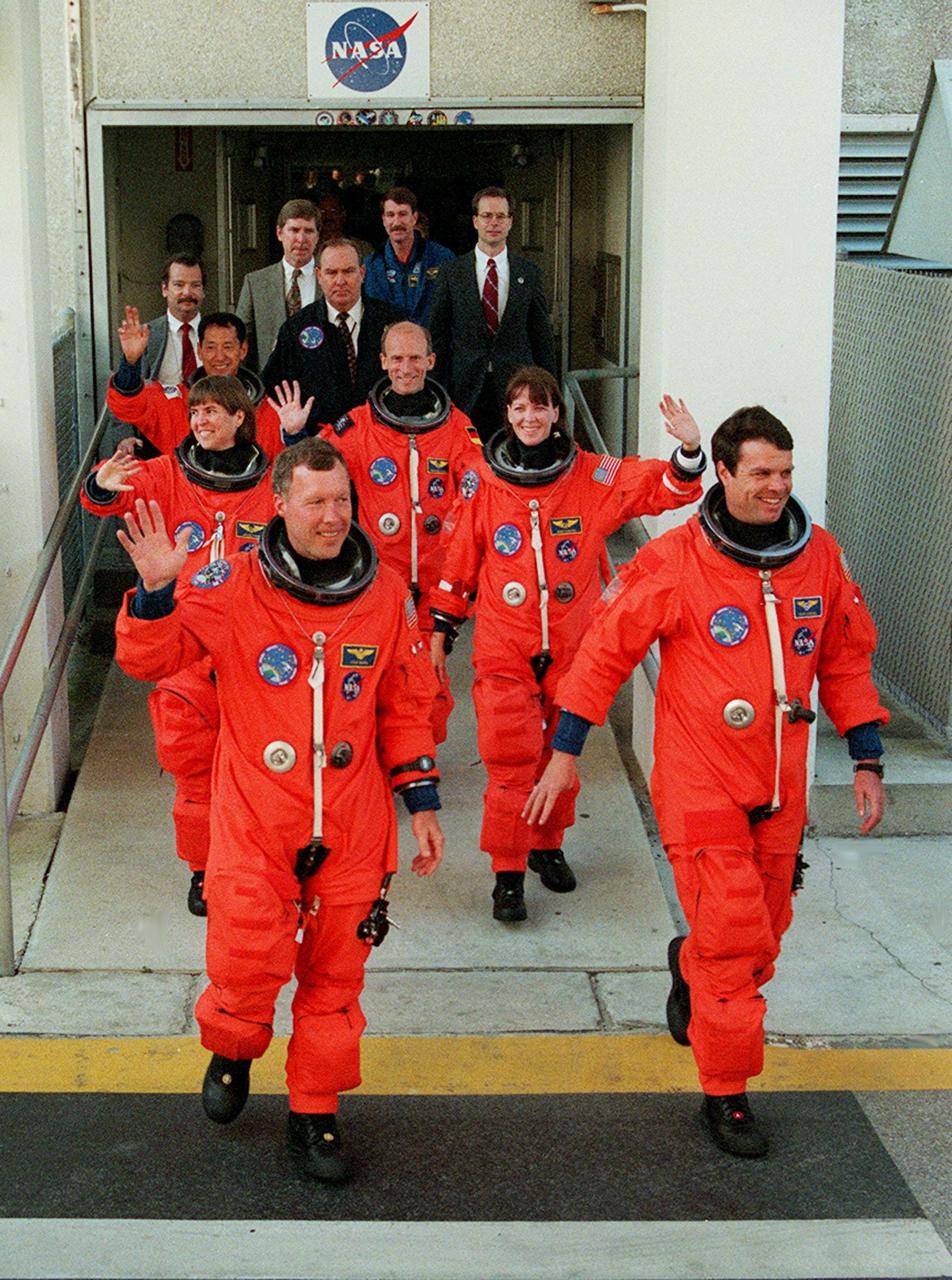
The STS-99 crew wave to onlookers as they step eagerly from the Operations and Checkout Building enroute to Launch Pad 39A for liftoff of Space Shuttle Endeavour. In their orange launch and entry suits, they are (foreground) Pilot Dominic Gorie and Commander Kevin Kregel. Behind them (left to right) are Mission Specialists Janice Voss, Mamoru Mohri of Japan, Gerhard Thiele of Germany and Janet Lynn Kavandi. Mohri is with the National Space Development Agency (NASDA) of Japan, and Thiele is with the European Space Agency. Known as the Shuttle Radar Topography Mission (SRTM), STS-99 is scheduled for liftoff at 12:30 p.m. EST. The SRTM will chart a new course to produce unrivaled 3-D images of the Earth's surface. The result of the Shuttle Radar Topography Mission could be close to 1 trillion measurements of the Earth's topography. The mission is expected to last 11days, with Endeavour landing at KSC Tuesday, Feb. 22, at 4:36 p.m. EST. This is the 97th Shuttle flight and 14th for Shuttle Endeavour
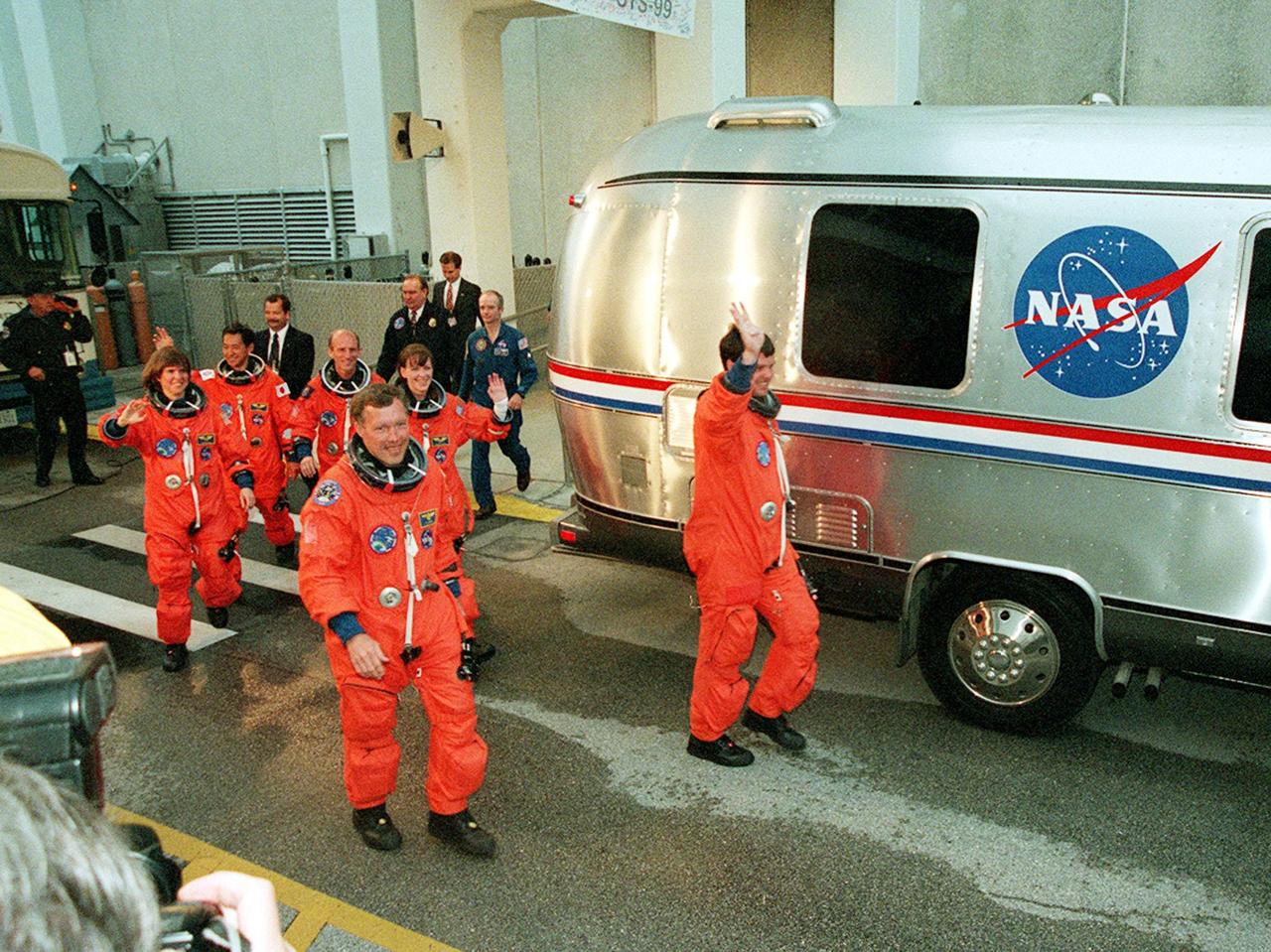
The STS-99 crew wave to onlookers as they walk to the astrovan which will take them to Launch Pad 39A and liftoff of Space Shuttle Endeavour, targeted for 12:47 p.m. EST. In their orange launch and entry suits, they are (foreground) Pilot Dominic Gorie and Commander Kevin Kregel. Behind them (left to right) are Mission Specialists Janice Voss (Ph.D.), Mamoru Mohri (Ph.D.), Gerhard Thiele and Janet Lynn Kavandi (Ph.D.). Mohri is with the National Space Development Agency (NASDA) of Japan, and Thiele is with the European Space Agency. The SRTM will chart a new course to produce unrivaled 3-D images of the Earth's surface, using two antennae and a 200-foot-long section of space station-derived mast protruding from the payload bay. The result of the Shuttle Radar Topography Mission could be close to 1 trillion measurements of the Earth's topography. Besides contributing to the production of better maps, these measurements could lead to improved water drainage modeling, more realistic flight simulators, better locations for cell phone towers, and enhanced navigation safety. The mission is expected to last about 11days, with Endeavour landing at KSC Friday, Feb. 11, at 4:55 p.m. EST
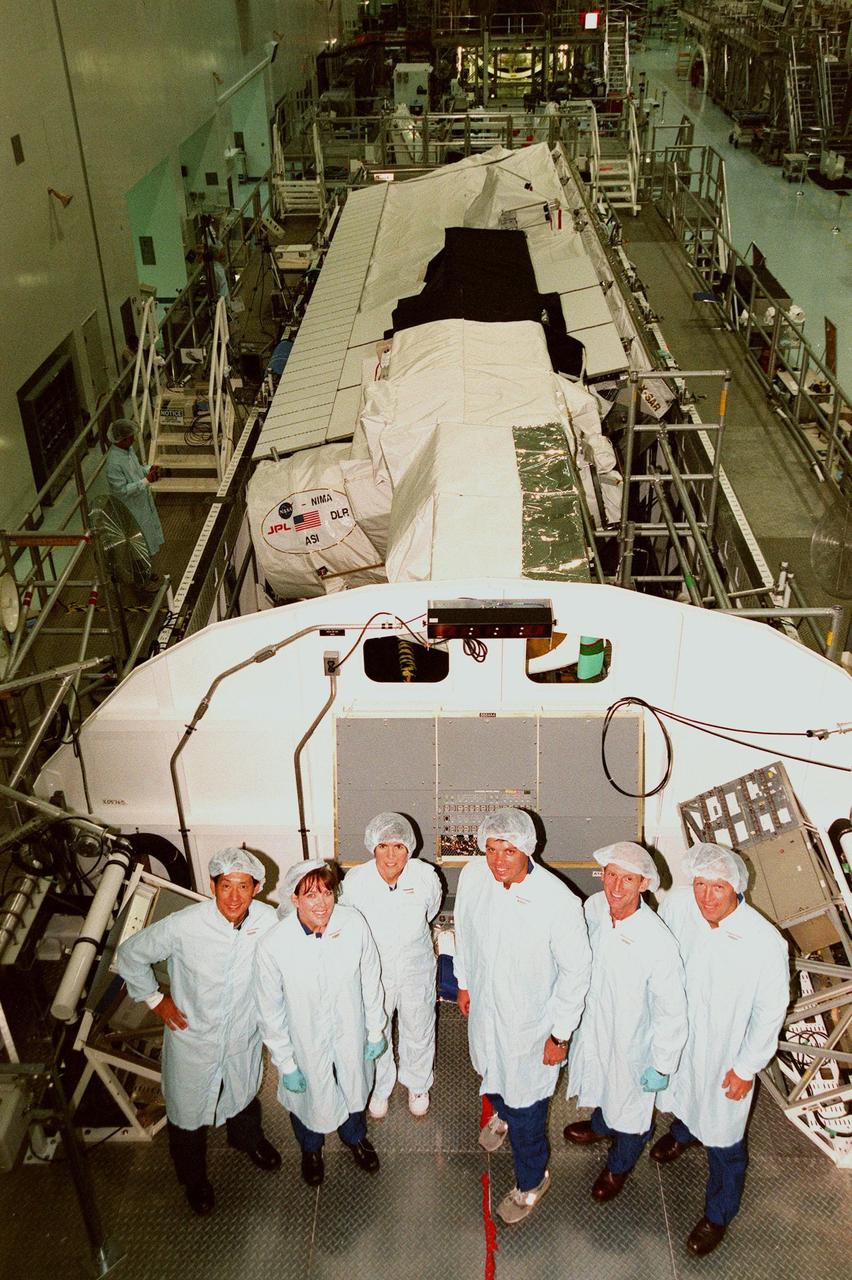
In the Space Station Processing Facility, the STS-99 crew pose in front of the Shuttle Radar Topography Mission, the payload for their mission. From left are Mission Specialists Mamoru Mohri of Japan, Janet Lynn Kavandi (Ph.D.), and Janice Voss (Ph.D.); Commander Kevin R. Kregel; Mission Specialist Gerhard Thiele of Germany; and Pilot Dominic L. Pudwill Gorie. Mohri represents the National Space Development Agency of Japan and Thiele represents the European Space Agency. An international project spearheaded by the National Imagery and Mapping Agency and NASA, with participation of the German Aerospace Center DLR, the SRTM consists of a specially modified radar system that will gather data for the most accurate and complete topographic map of the Earth's surface that has ever been assembled. SRTM will make use of radar interferometry, wherein two radar images are taken from slightly different locations. Differences between these images allow for the calculation of surface elevation, or change. The SRTM hardware will consist of one radar antenna in the shuttle payload bay and a second radar antenna attached to the end of a mast extended 60 meters (195 feet) out from the shuttle. STS-99 is scheduled to launch Sept. 16 at 8:47 a.m. from Launch Pad 39A
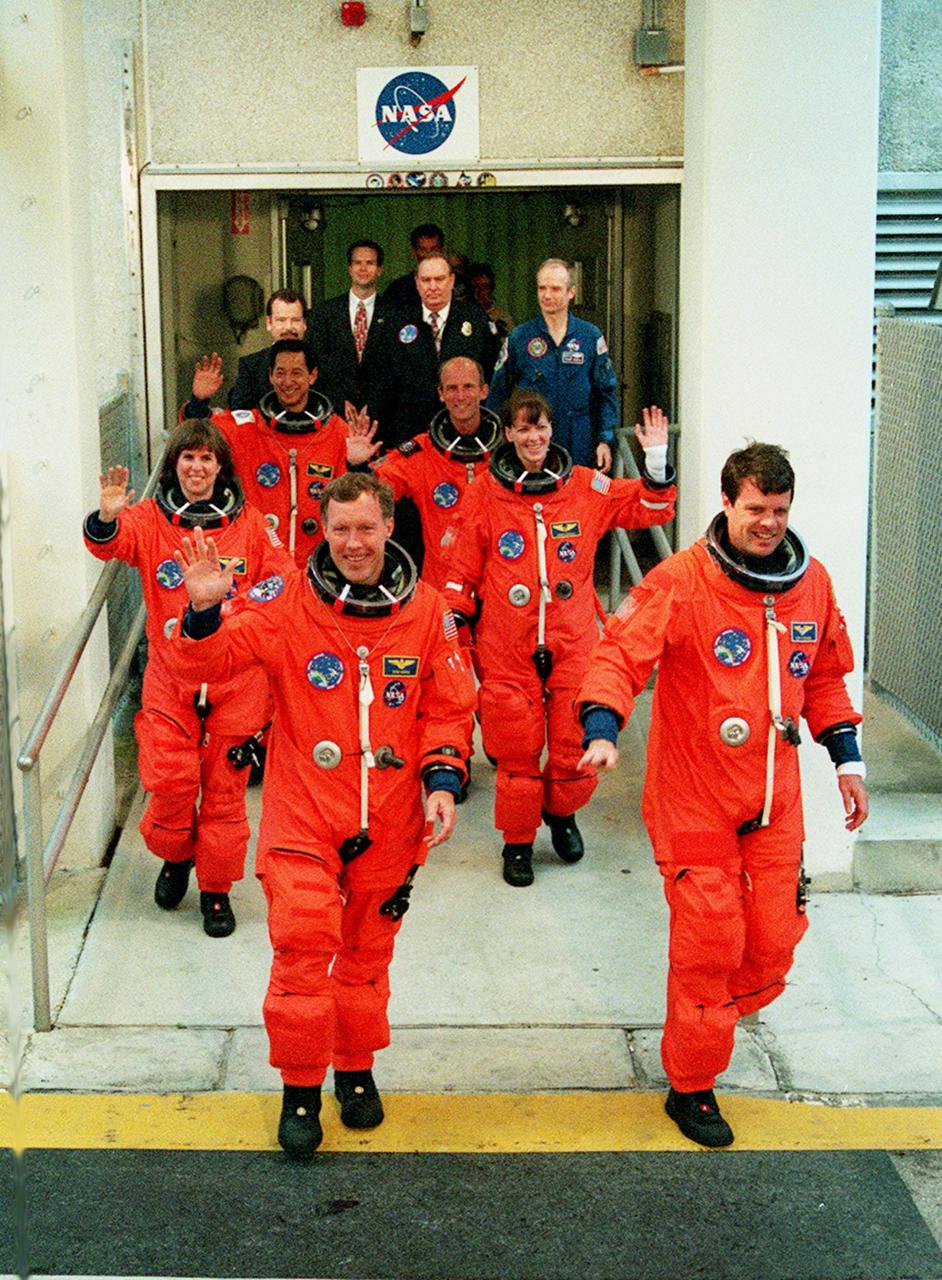
The STS-99 crew wave to onlookers as they leave the Operations and Checkout Building enroute to Launch Pad 39A and liftoff of Space Shuttle Endeavour, targeted for 12:47 p.m. EST. In their orange launch and entry suits, they are (foreground) Pilot Dominic Gorie and Commander Kevin Kregel. Behind them (left to right) are Mission Specialists Janice Voss (Ph.D.), Mamoru Mohri (Ph.D.), Gerhard Thiele and Janet Lynn Kavandi (Ph.D.). Mohri is with the National Space Development Agency (NASDA) of Japan, and Thiele is with the European Space Agency. The SRTM will chart a new course to produce unrivaled 3-D images of the Earth's surface, using two antennae and a 200-foot-long section of space station-derived mast protruding from the payload bay. The result of the Shuttle Radar Topography Mission could be close to 1 trillion measurements of the Earth's topography. Besides contributing to the production of better maps, these measurements could lead to improved water drainage modeling, more realistic flight simulators, better locations for cell phone towers, and enhanced navigation safety. The mission is expected to last about 11days, with Endeavour landing at KSC Friday, Feb. 11, at 4:55 p.m. EST
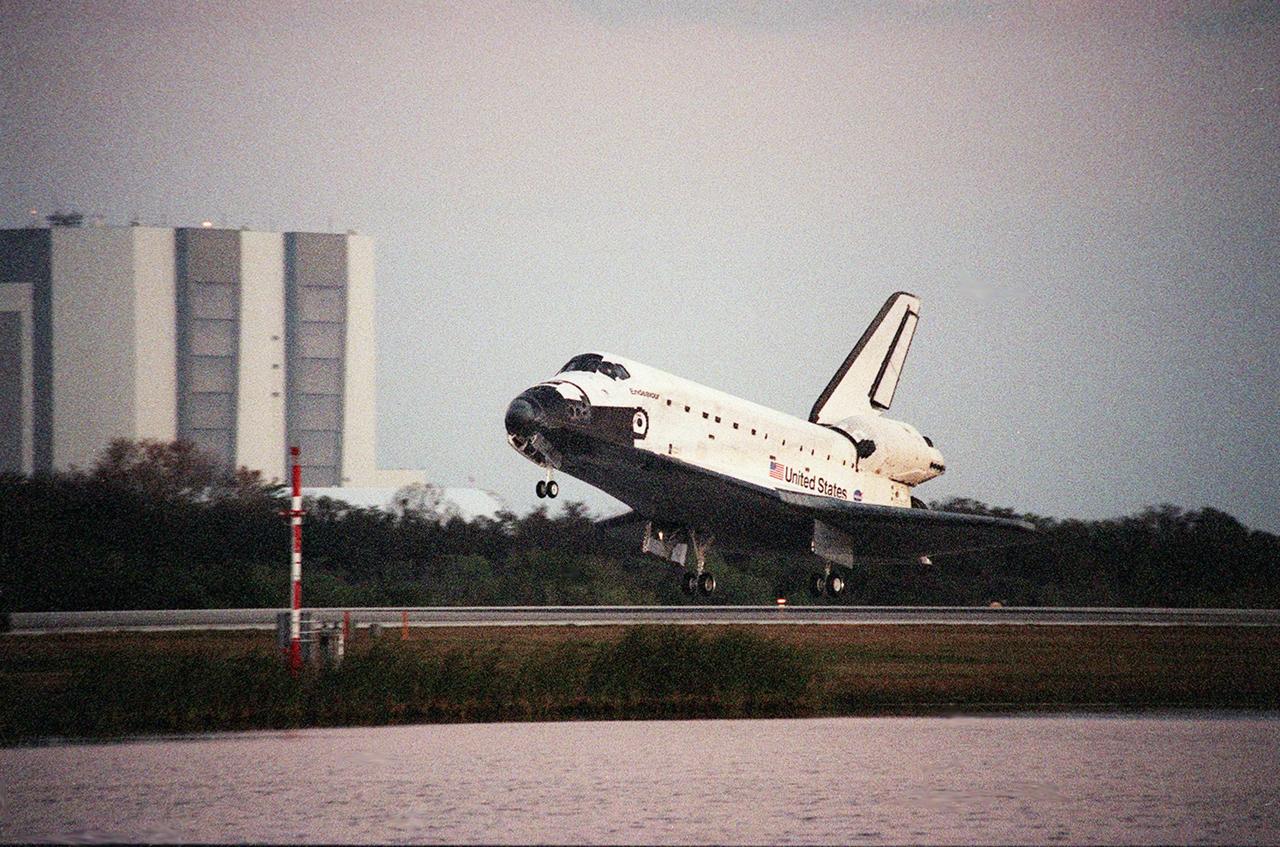
KENNEDY SPACE CENTER, FLA. -- In the waning light after sundown, Space Shuttle Endeavour nears touchdown on KSC's Shuttle Landing Facility Runway 33 to complete the 11-day, 5-hour, 38-minute-long STS-99 mission. In the background is the Vehicle Assembly Building. At the controls are Commander Kevin Kregel and Pilot Dominic Gorie. Also onboard the orbiter are Mission Specialists Janet Kavandi, Janice Voss, Mamoru Mohri of Japan and Gerhard Thiele of Germany. Mohri is with the National Space Development Agency (NASDA) and Thiele is with the European Space Agency. The crew is returning from the Shuttle Radar Topography Mission, after mapping more than 47 million square miles of the Earth's surface. Main gear touchdown was at 6:22:23 p.m. EST Feb. 22 , landing on orbit 181 of the mission. Nose gear touchdown was at 6:22:35 p.m.. EST, and wheel stop at 6:23:25 p.m. EST. This was the 97th flight in the Space Shuttle program and the 14th for Endeavour, also marking the 50th landing at KSC, the 21st consecutive landing at KSC, and the 28th in the last 29 Shuttle flights
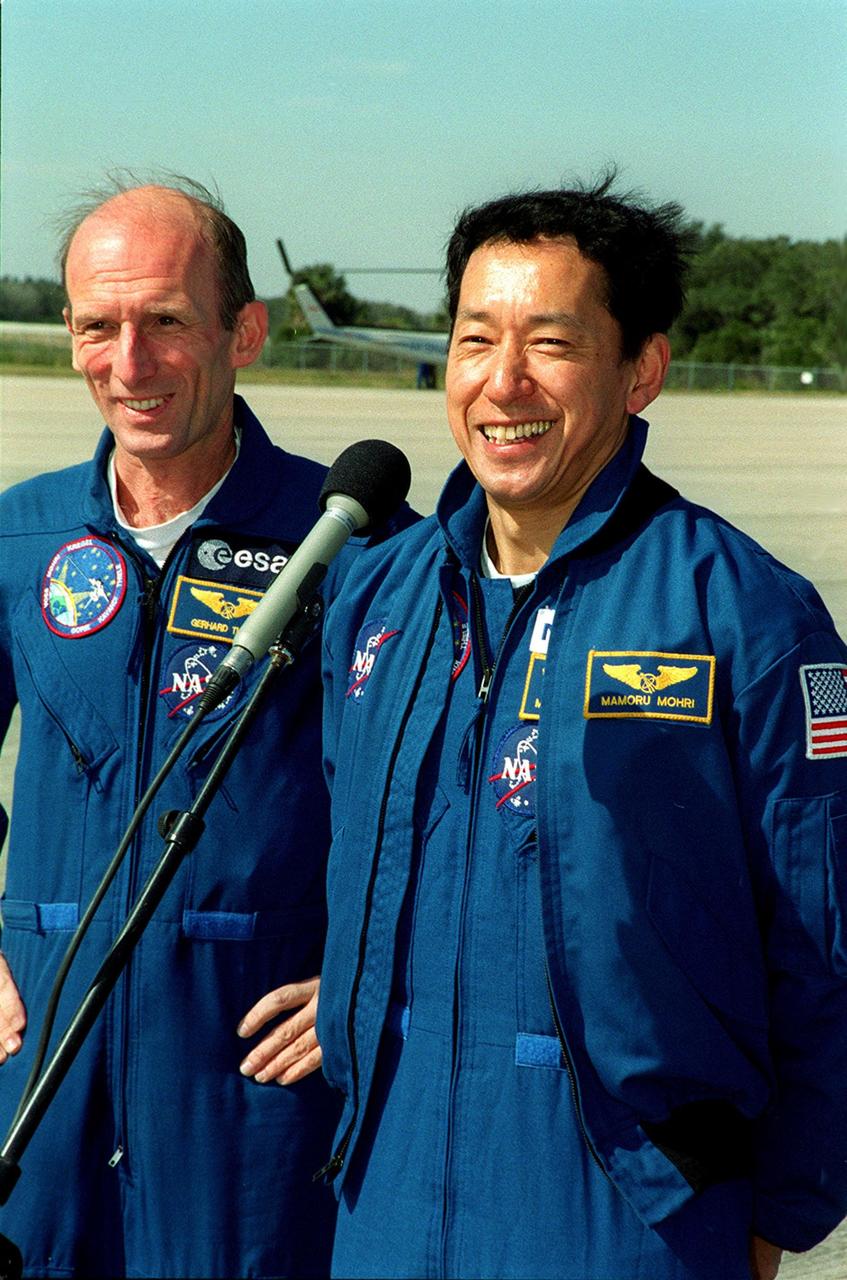
After the crew arrival at KSC's Shuttle Landing Facility, STS-99 Mission Specialist Mamoru Mohri (Ph.D.), at right, talks to the media. At left is Mission Specialist Gerhard Thiele (Ph.D.). Thiele is with the European Space Agency and Mohri is with the National Space Development Agency (NASDA) of Japan. Over the next few days, the crew will review mission procedures, conduct test flights in the Shuttle Training Aircraft and undergo routine preflight medical exams. STS-99 is the Shuttle Radar Topography Mission, which will chart a new course, using two antennae and a 200-foot-long section of space station-derived mast protruding from the payload bay to produce unrivaled 3-D images of the Earth's surface. The result of the Shuttle Radar Topography Mission could be close to 1 trillion measurements of the Earth's topography. Besides contributing to the production of better maps, these measurements could lead to improved water drainage modeling, more realistic flight simulators, better locations for cell phone towers, and enhanced navigation safety. Launch of Endeavour is scheduled for Jan. 31 at 12:47 p.m. EST
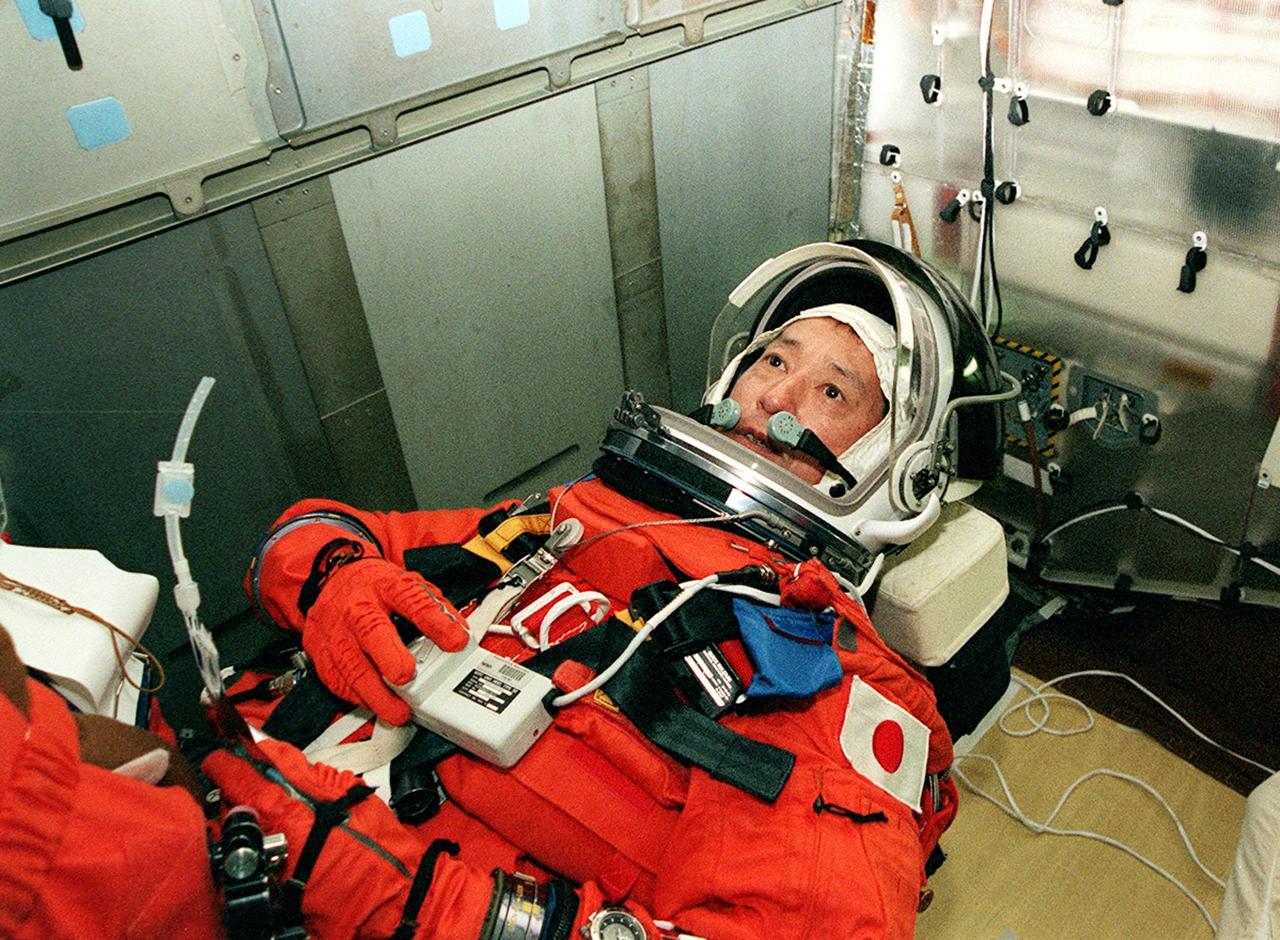
STS-99 Mission Specialist Mamoru Mohri (Ph.D.) takes his seat inside Space Shuttle Endeavour for a practice launch countdown during Terminal Countdown Demonstration Test (TCDT) activities for the mission. Mohri is with the National Space Development Agency (NASDA) of Japan. The TCDT includes a simulation of the final launch countdown. STS-99 is the Shuttle Radar Topography Mission, which will chart a new course, using two antennae and a 200-foot-long section of space station-derived mast protruding from the payload bay to produce unrivaled 3-D images of the Earth's surface. The result of the Shuttle Radar Topography Mission could be close to 1 trillion measurements of the Earth's topography. Besides contributing to the production of better maps, these measurements could lead to improved water drainage modeling, more realistic flight simulators, better locations for cell phone towers, and enhanced navigation safety. Launch of Endeavour on the 11-day mission is scheduled for Jan. 31 at 12:47 p.m. EST
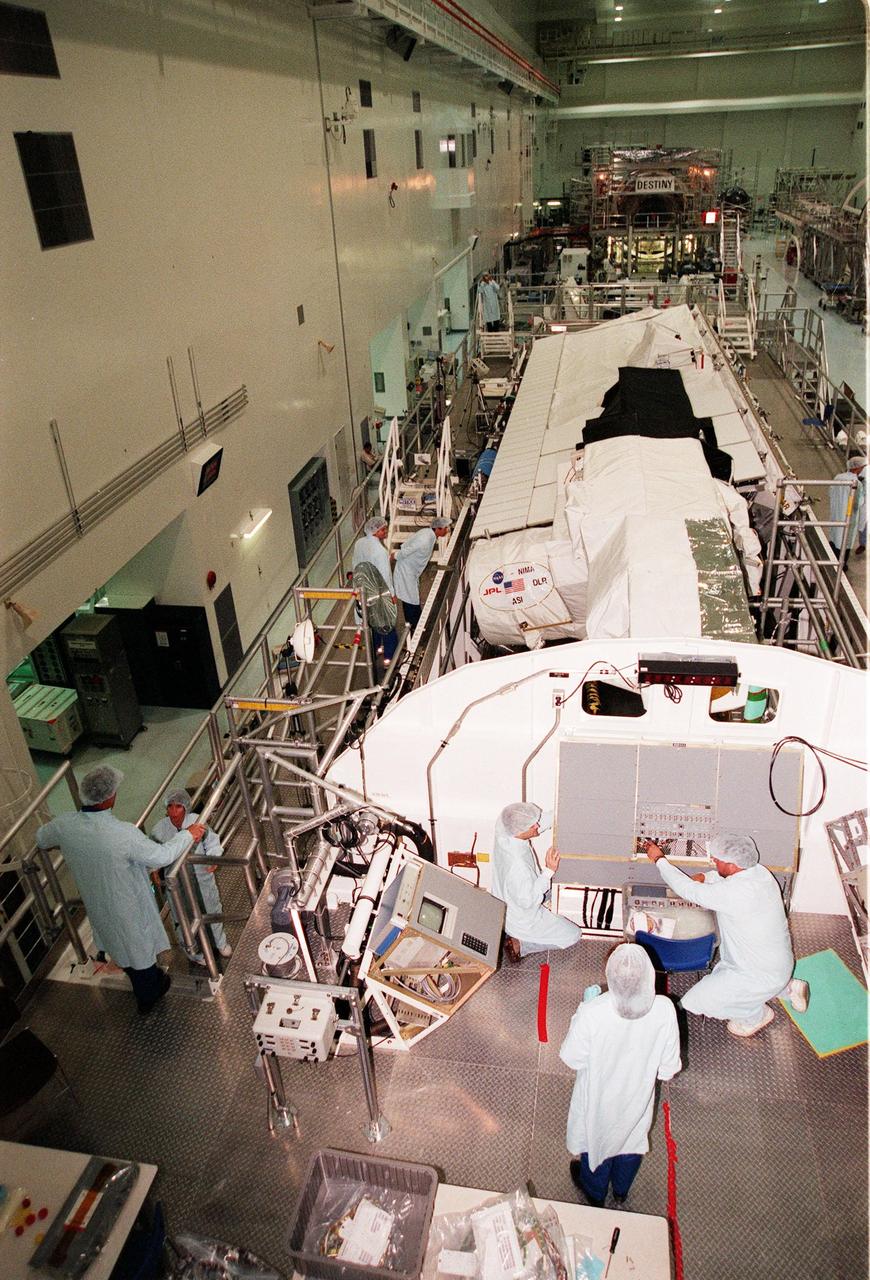
In the Space Station Processing Facility, STS-99 crew members inspect the Shuttle Radar Topography Mission (SRTM), the payload for their mission. At left is Commander Kevin R. Kregel talking to Mission Specialist Janice Voss (Ph.D.); and Mission Specialists Gerhard Thiele of Germany and Mamoru Mohri of Japan farther back. In the foreground (back to camera) is Mission Specialist Janet Lynn Kavandi (Ph.D.). The final crew member (not shown) is Pilot Dominic L. Pudwill Gorie. Thiele represents the European Space Agency and Mohri represents the National Space Agency of Japan. An international project spearheaded by the National Imagery and Mapping Agency and NASA, with participation of the German Aerospace Center DLR, the SRTM consists of a specially modified radar system that will gather data for the most accurate and complete topographic map of the Earth's surface that has ever been assembled. SRTM will make use of radar interferometry, wherein two radar images are taken from slightly different locations. Differences between these images allow for the calculation of surface elevation, or change. The SRTM hardware will consist of one radar antenna in the shuttle payload bay and a second radar antenna attached to the end of a mast extended 60 meters (195 feet) out from the shuttle. STS-99 is scheduled to launch Sept. 16 at 8:47 a.m. from Launch Pad 39A
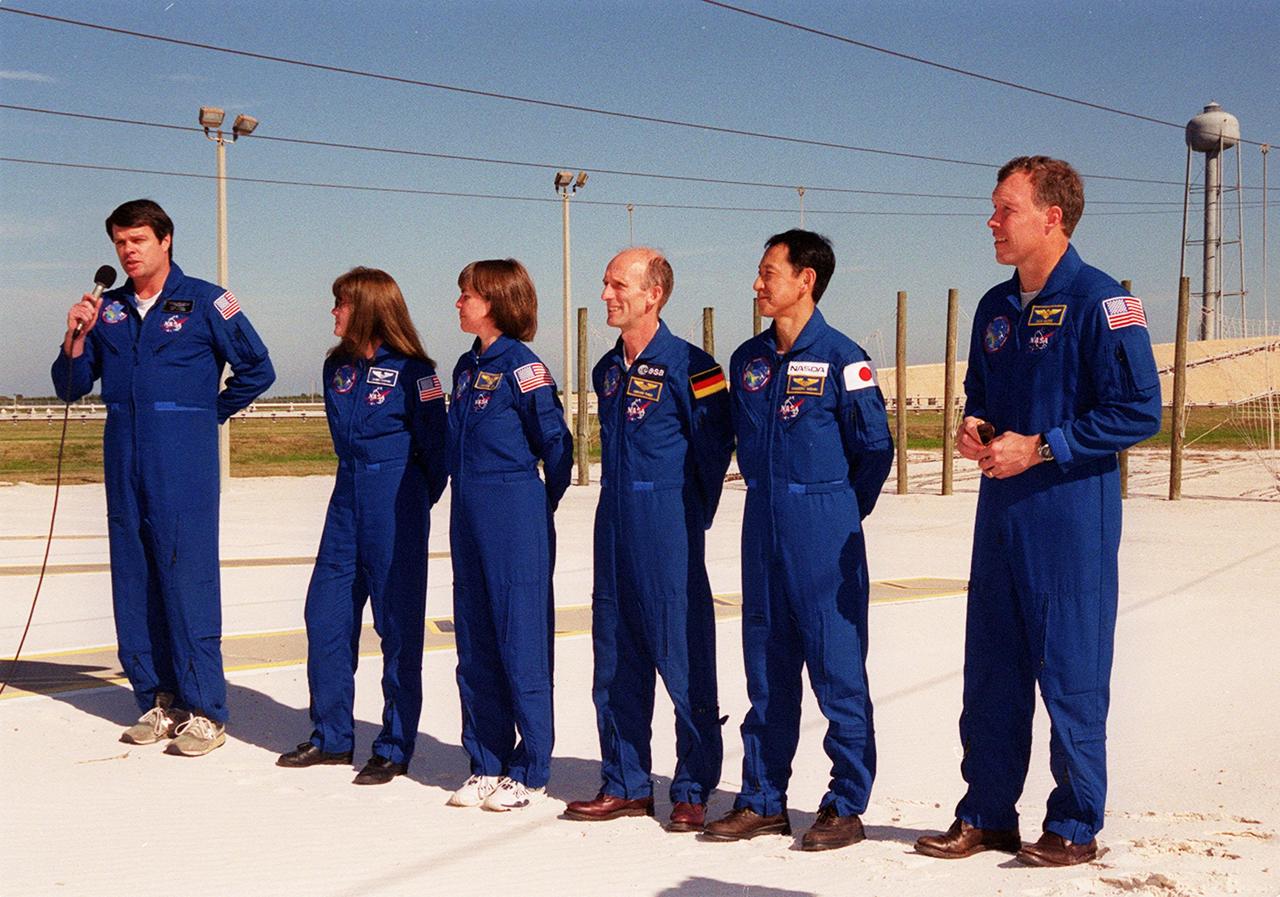
KENNEDY SPACE CENTER, Fla. -- The STS-99 crew take time out during Terminal Countdown Demonstration Test (TCDT) activities to talk to the media. From left to right are Commander Kevin Kregel, Mission Specialists Janet Lynn Kavandi (Ph.D.), Janice Voss (Ph.D.), Gerhard Thiele and Mamoru Mohri, and Pilot Dominic Gorie. Thiele is with the European Space Agency and Mohri is with the National Space Development Agency (NASDA) of Japan. The TCDT provides the crew with simulated countdown exercises, emergency egress training, and opportunities to inspect the mission payloads in the orbiter's payload bay. STS-99 is the Shuttle Radar Topography Mission, which will chart a new course, using two antennae and a 200-foot-long section of space station-derived mast protruding from the payload bay to produce unrivaled 3-D images of the Earth's surface. The result of the Shuttle Radar Topography Mission could be close to 1 trillion measurements of the Earth's topography. Besides contributing to the production of better maps, these measurements could lead to improved water drainage modeling, more realistic flight simulators, better locations for cell phone towers, and enhanced navigation safety. Launch of Endeavour on the 11-day mission is scheduled for Jan. 31 at 12:47 p.m. ES
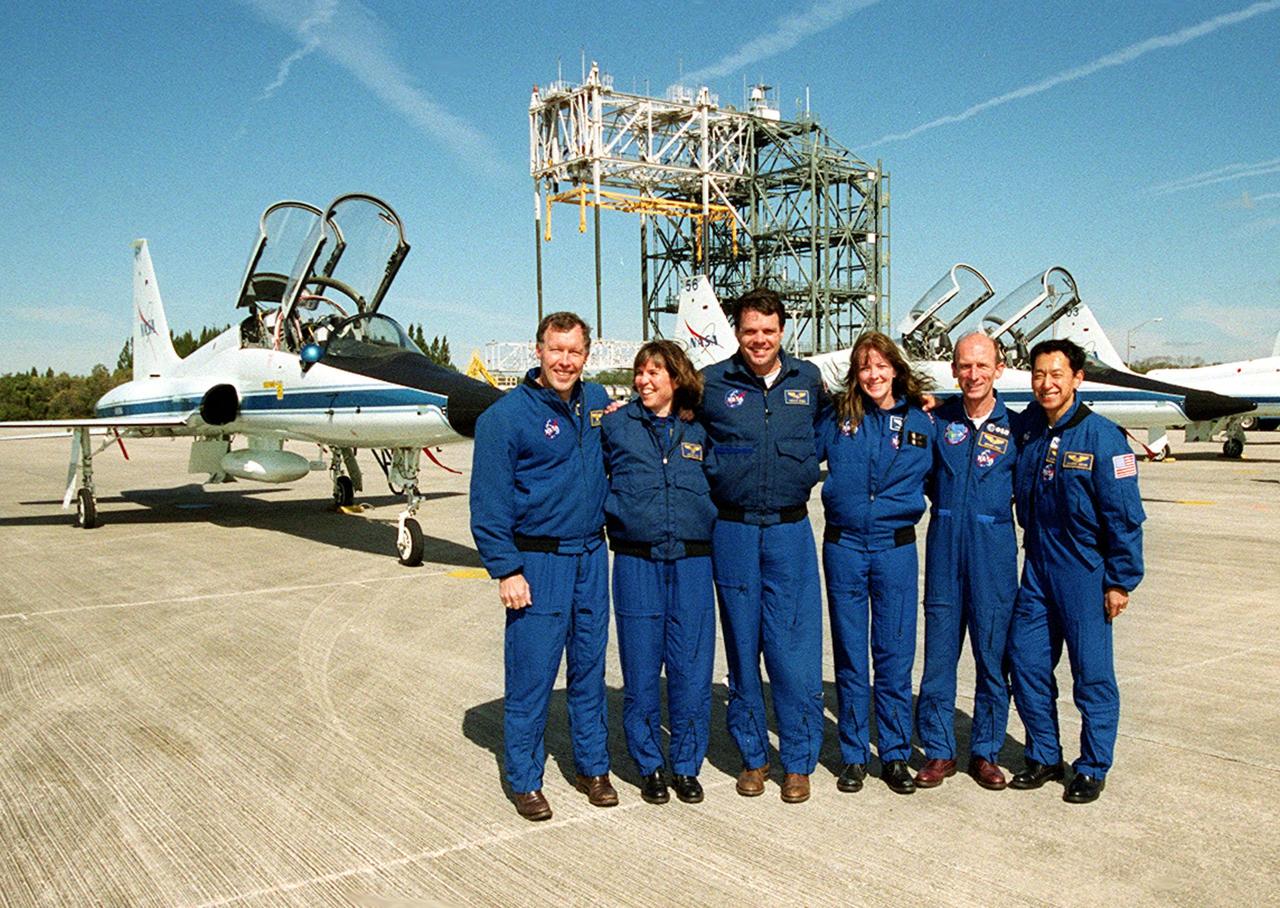
The STS-99 crew pose for a photograph after their arrival at the Shuttle Landing Facility to prepare for launch. From left are Pilot Dominic Gorie, Mission Specialist Janice Voss (Ph.D.), Commander Kevin Kregel, and Mission Specialists Janet Lynn Kavandi (Ph.D.), Gerhard Thiele (Ph.D.) and Mamoru Mohri (Ph.D.). Thiele is with the European Space Agency and Mohri is with the National Space Development Agency (NASDA) of Japan. Behind them are the T-38 jets in which they arrived, and the mate/demate device. Over the next few days, the crew will review mission procedures, conduct test flights in the Shuttle Training Aircraft and undergo routine preflight medical exams. STS-99 is the Shuttle Radar Topography Mission, which will chart a new course, using two antennae and a 200-foot-long section of space station-derived mast protruding from the payload bay to produce unrivaled 3-D images of the Earth's surface. The result of the Shuttle Radar Topography Mission could be close to 1 trillion measurements of the Earth's topography. Besides contributing to the production of better maps, these measurements could lead to improved water drainage modeling, more realistic flight simulators, better locations for cell phone towers, and enhanced navigation safety. Launch of Endeavour is scheduled for Jan. 31 at 12:47 p.m. EST

KENNEDY SPACE CENTER, Fla. -- In the bunker at Launch Pad 39A, the STS-99 crew try on oxygen masks. From left are Pilot Dominic Gorie, Mission Specialist Janice Voss (Ph.D.), Commander Kevin Kregel, and Mission Specialists Mamoru Mohri, Janet Lynn Kavandi (Ph.D.) and Gerhard Thiele. Mohri is with the National Space Development Agency (NASDA) of Japan and Thiele is with the European Space Agency. The crew are taking part in Terminal Countdown Demonstration Test activities, which provide them with simulated countdown exercises, emergency egress training, and opportunities to inspect the mission payloads in the orbiter's payload bay. STS-99 is the Shuttle Radar Topography Mission, which will chart a new course, using two antennae and a 200-foot-long section of space station-derived mast protruding from the payload bay to produce unrivaled 3-D images of the Earth's surface. The result of the Shuttle Radar Topography Mission could be close to 1 trillion measurements of the Earth's topography. Besides contributing to the production of better maps, these measurements could lead to improved water drainage modeling, more realistic flight simulators, better locations for cell phone towers, and enhanced navigation safety. Launch of Endeavour on the 11-day mission is scheduled for Jan. 31 at 12:47 p.m. EST
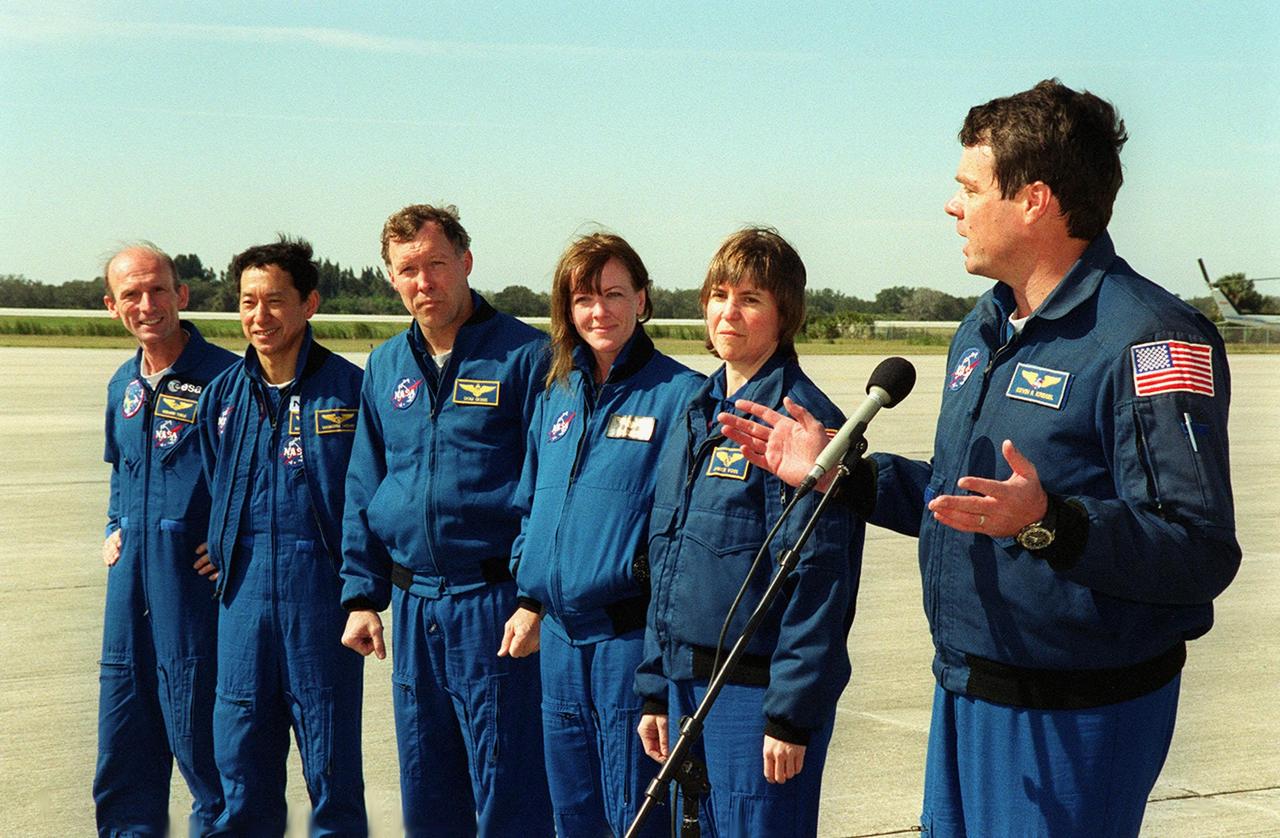
After arriving at KSC's Shuttle Landing Facility, the STS-99 crew pause to greet the media and Commander Kevin Kregel (right) introduces his crew: (from left) Mission Specialists Gerhard Thiele (Ph.D.) and Mamoru Mohri (Ph.D.); Pilot Dominic Gorie; and Mission Specialists Janet Lynn Kavandi (Ph.D.) and Janice Voss (Ph.D.). Thiele is with the European Space Agency and Mohri is with the National Space Development Agency (NASDA) of Japan. Over the next few days, the crew will review mission procedures, conduct test flights in the Shuttle Training Aircraft and undergo routine preflight medical exams. STS-99 is the Shuttle Radar Topography Mission, which will chart a new course, using two antennae and a 200-foot-long section of space station-derived mast protruding from the payload bay to produce unrivaled 3-D images of the Earth's surface. The result of the Shuttle Radar Topography Mission could be close to 1 trillion measurements of the Earth's topography. Besides contributing to the production of better maps, these measurements could lead to improved water drainage modeling, more realistic flight simulators, better locations for cell phone towers, and enhanced navigation safety. Launch of Endeavour is scheduled for Jan. 31 at 12:47 p.m. EST
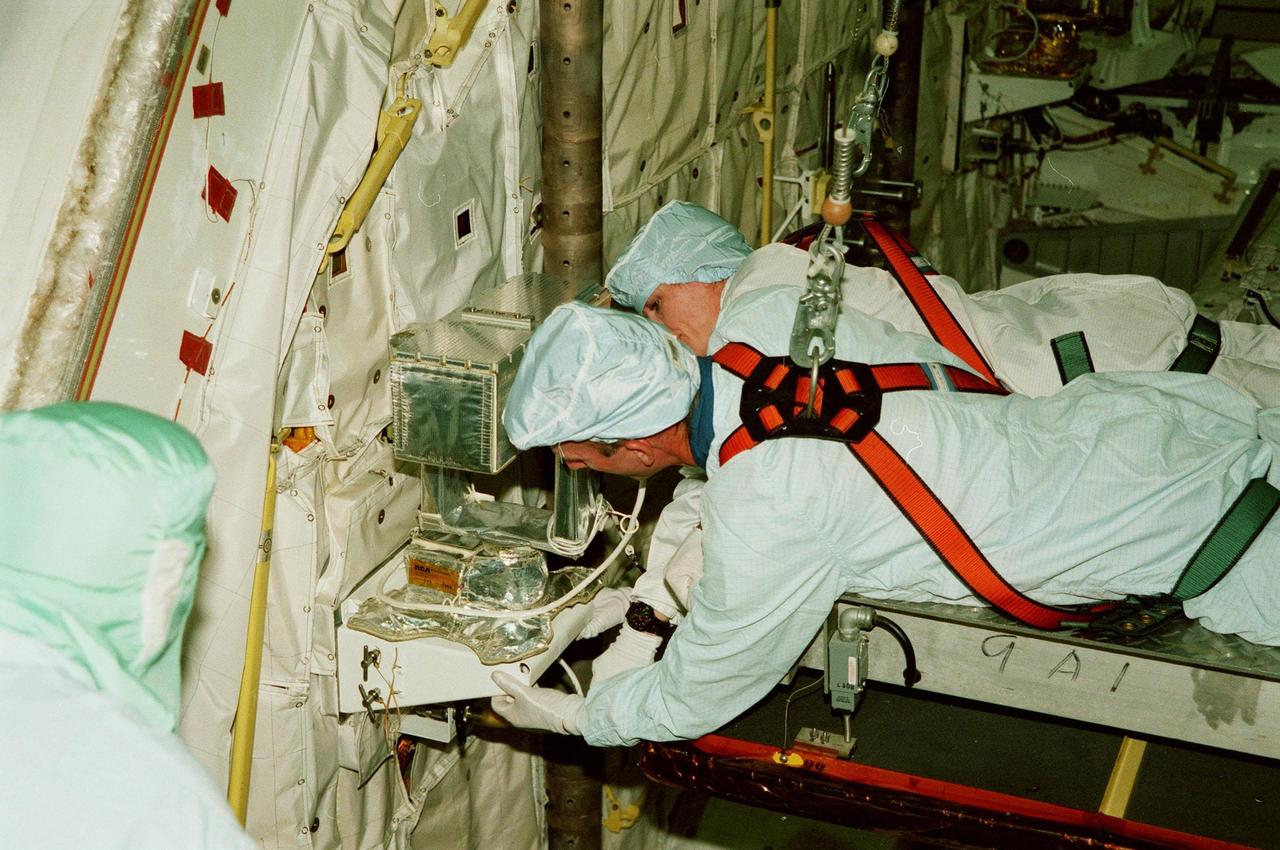
KENNEDY SPACE CENTER, FLA. -- In the Orbiter Processing Facility, STS-99 Mission Specialists Gerhard P.J. Thiele and Janet Lynn Kavandi (Ph.D.) look over part of the Shuttle Radar Topography Mission (SRTM), primary payload for their mission, as part of a Crew Equipment Interface Test (CEIT). Also taking part in the CEIT are Commander Kevin R. Kregel, Pilot Dominic L. Pudwill Gorie, and Mission Specialists Janice Voss (Ph.D.) and Mamoru Mohri. Mohri is with the National Space Development Agency (NASDA) of Japan, and Thiele is with the European Space Agency. The CEIT provides an opportunity for crew members to check equipment and facilities that will be aboard the orbiter during their mission. The SRTM is a specially modified radar system that will gather data for the most accurate and complete topographic map of the Earth's surface that has ever been assembled. SRTM will make use of radar interferometry, wherein two radar images are taken from slightly different locations. Differences between these images allow for the calculation of surface elevation, or change. The SRTM hardware will consist of one radar antenna in the shuttle payload bay and a second radar antenna attached to the end of a mast extended 60 meters (195 feet) out from the shuttle. STS-99 is scheduled to launch Sept. 16 at 8:47 a.m. from Launch Pad 39A
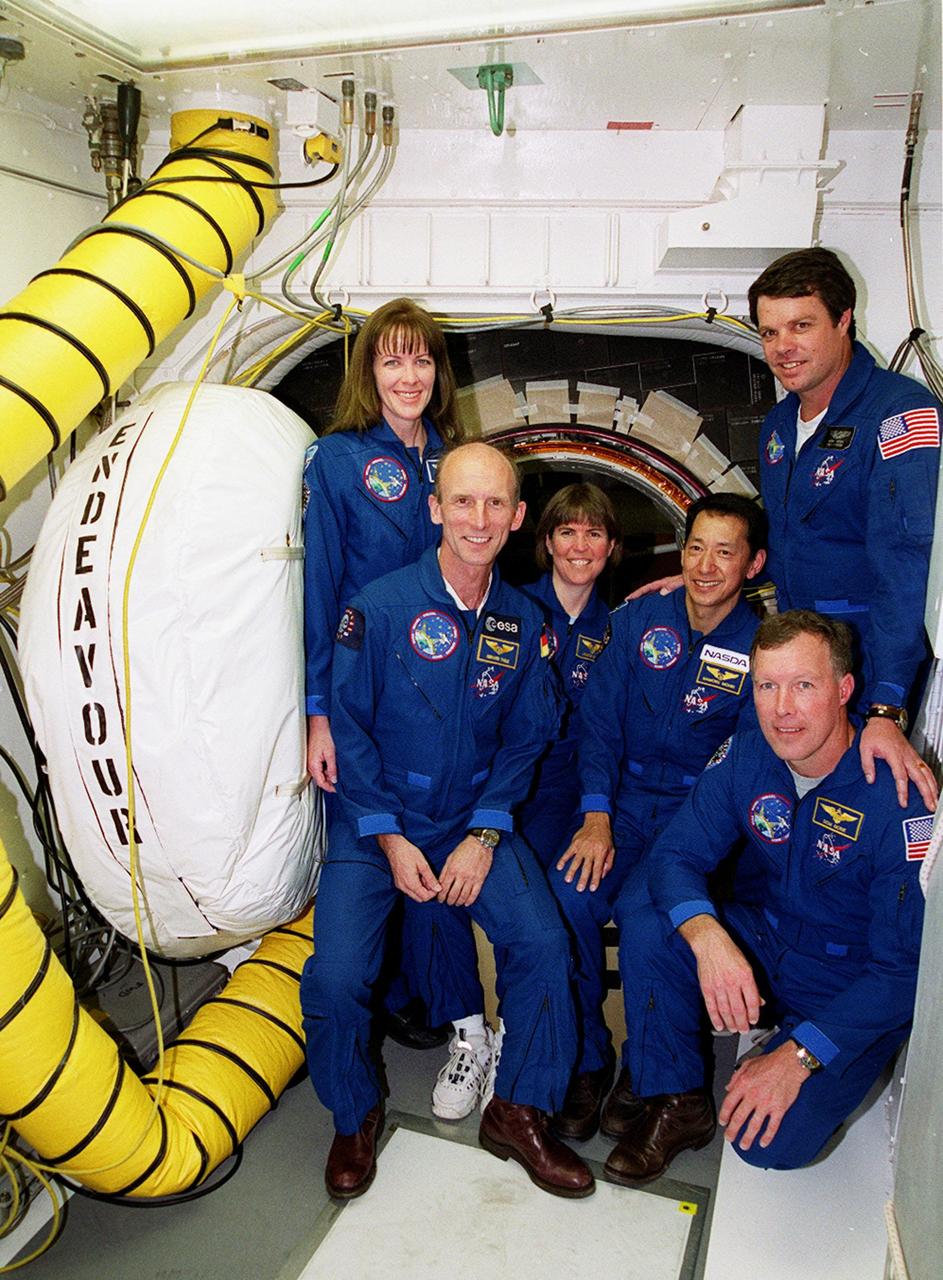
Inside the White Room attached to the Fixed Service Structure on Launch Pad 39A, the STS-99 crew pose at the entrance to the orbiter Endeavour. From left are Mission Specialists Janet Lynn Kavandi (Ph.D.), Gerhard Thiele, Janice Voss (Ph.D.) and Mamoru Mohri, Commander Kevin Kregel (standing) and Pilot Dominic Gorie (kneeling in front). Thiele is with the European Space Agency and Mohri is with the National Space Development Agency (NASDA) of Japan. The crew are taking part in Terminal Countdown Demonstration Test activities, which provide them with simulated countdown exercises, emergency egress training, and opportunities to inspect the mission payloads in the orbiter's payload bay. STS-99 is the Shuttle Radar Topography Mission, which will chart a new course, using two antennae and a 200-foot-long section of space station-derived mast protruding from the payload bay to produce unrivaled 3-D images of the Earth's surface. The result of the Shuttle Radar Topography Mission could be close to 1 trillion measurements of the Earth's topography. Besides contributing to the production of better maps, these measurements could lead to improved water drainage modeling, more realistic flight simulators, better locations for cell phone towers, and enhanced navigation safety. Launch of Endeavour on the 11-day mission is scheduled for Jan. 31 at 12:47 p.m. EST
KENNEDY SPACE CENTER, FLA. -- Space Shuttle Endeavour prepares to land on KSC's Shuttle Landing Facility Runway 33 to complete the 11-day, 5-hour, 38-minute-long STS-99 mission. Main gear touchdown was at 6:22:23 p.m. EST Feb. 22 , landing on orbit 181 of the mission. Nose gear touchdown was at 6:22:35 p.m.. EST, and wheel stop at 6:23:25 p.m. EST. At the controls are Commander Kevin Kregel and Pilot Dominic Gorie. Also onboard the orbiter are Mission Specialists Janet Kavandi, Janice Voss, Mamoru Mohri of Japan and Gerhard Thiele of Germany. Mohri is with the National Space Development Agency (NASDA) and Thiele is with the European Space Agency. The crew are returning from the Shuttle Radar Topography Mission, after mapping more than 47 million square miles of the Earth. This was the 97th flight in the Space Shuttle program and the 14th for Endeavour, also marking the 50th landing at KSC, the 21st consecutive landing at KSC, and the 28th in the last 29 Shuttle flights
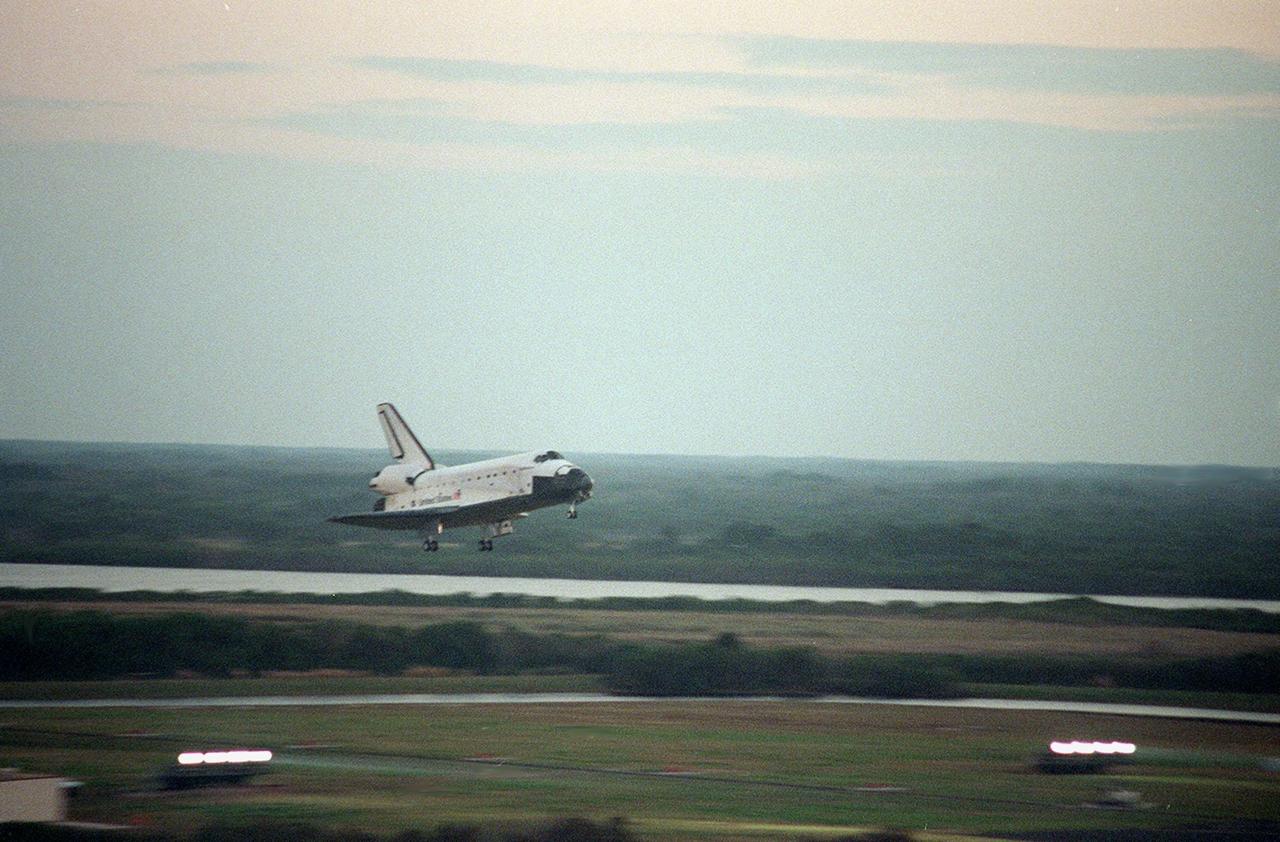
KENNEDY SPACE CENTER, Fla. -- Space Shuttle Endeavour prepares to land on KSC's Shuttle Landing Facility Runway 33 to complete the 11-day, 5-hour, 38-minute-long STS-99 mission. Main gear touchdown was at 6:22:23 p.m. EST Feb. 22 , landing on orbit 181 of the mission. Nose gear touchdown was at 6:22:35 p.m.. EST, and wheel stop at 6:23:25 p.m. EST. At the controls are Commander Kevin Kregel and Pilot Dominic Gorie. Also onboard the orbiter are Mission Specialists Janet Kavandi, Janice Voss, Mamoru Mohri of Japan and Gerhard Thiele of Germany. Mohri is with the National Space Development Agency (NASDA) and Thiele is with the European Space Agency. The crew are returning from the Shuttle Radar Topography Mission, after mapping more than 47 million square miles of the Earth. This was the 97th flight in the Space Shuttle program and the 14th for Endeavour, also marking the 50th landing at KSC, the 21st consecutive landing at KSC, and the 28th in the last 29 Shuttle flights
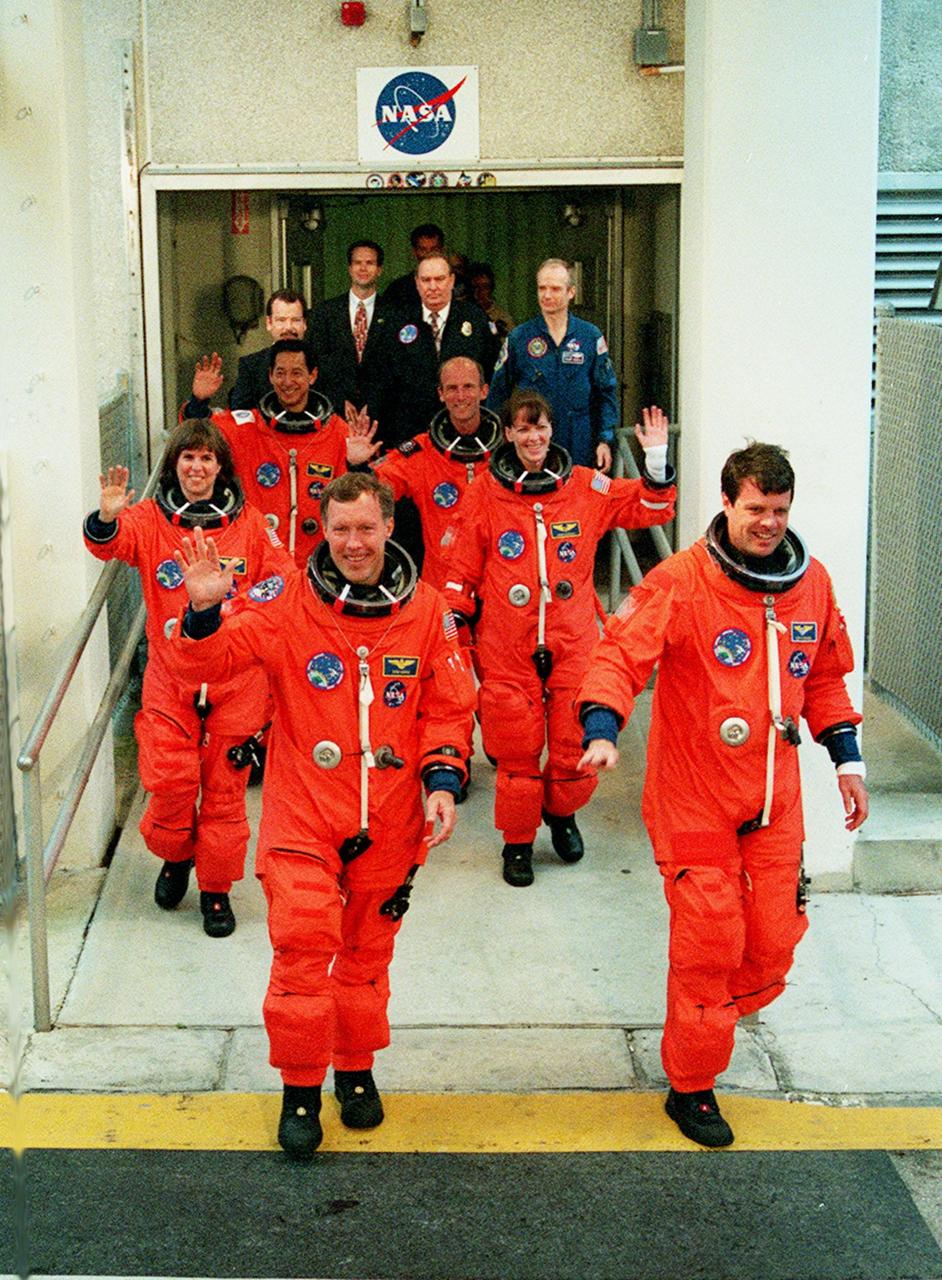
The STS-99 crew wave to onlookers as they leave the Operations and Checkout Building enroute to Launch Pad 39A and liftoff of Space Shuttle Endeavour, targeted for 12:47 p.m. EST. In their orange launch and entry suits, they are (foreground) Pilot Dominic Gorie and Commander Kevin Kregel. Behind them (left to right) are Mission Specialists Janice Voss (Ph.D.), Mamoru Mohri (Ph.D.), Gerhard Thiele and Janet Lynn Kavandi (Ph.D.). Mohri is with the National Space Development Agency (NASDA) of Japan, and Thiele is with the European Space Agency. The SRTM will chart a new course to produce unrivaled 3-D images of the Earth's surface, using two antennae and a 200-foot-long section of space station-derived mast protruding from the payload bay. The result of the Shuttle Radar Topography Mission could be close to 1 trillion measurements of the Earth's topography. Besides contributing to the production of better maps, these measurements could lead to improved water drainage modeling, more realistic flight simulators, better locations for cell phone towers, and enhanced navigation safety. The mission is expected to last about 11days, with Endeavour landing at KSC Friday, Feb. 11, at 4:55 p.m. EST
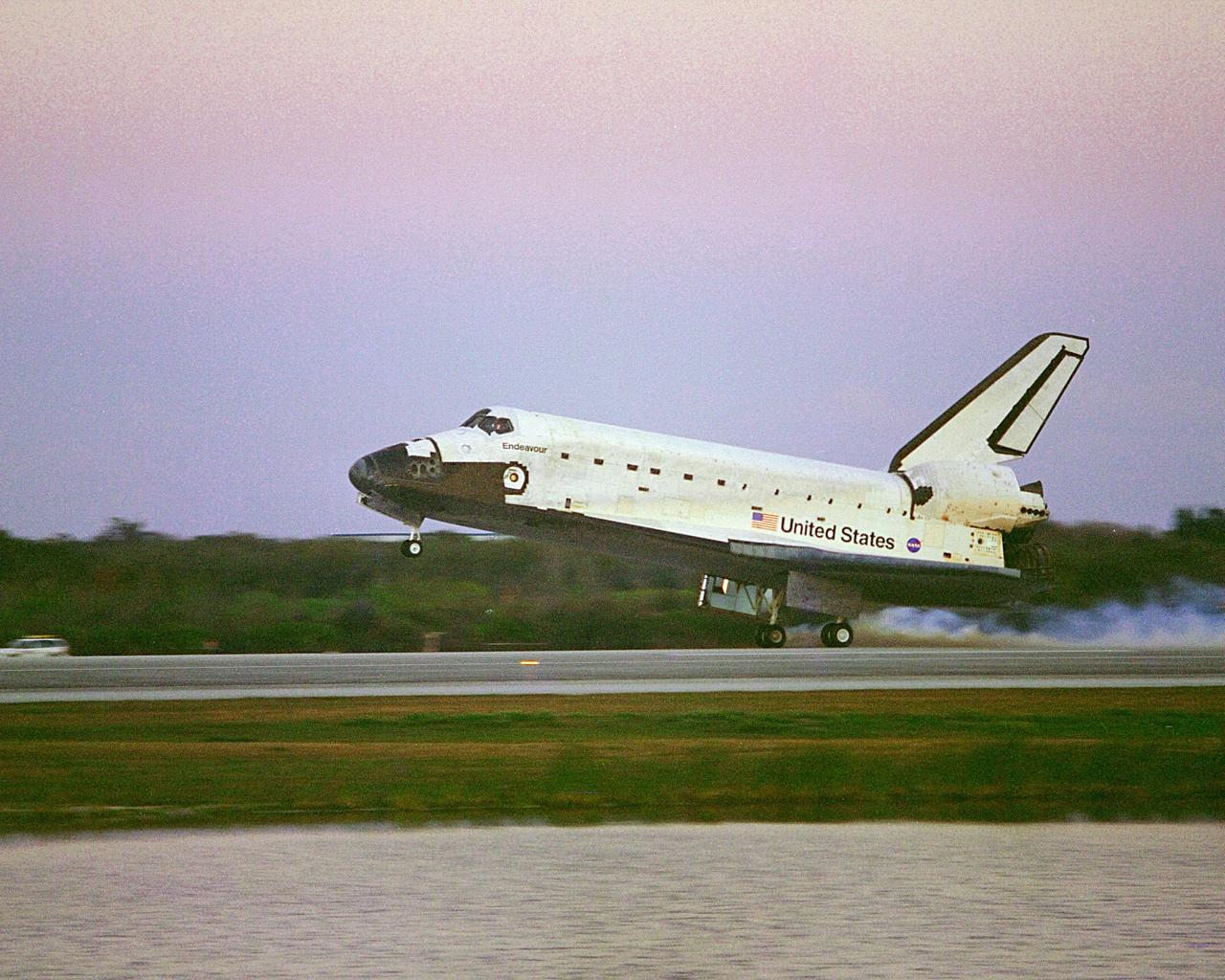
KENNEDY SPACE CENTER, FLA. -- In the waning light after sundown, Space Shuttle Endeavour touches down on KSC's Shuttle Landing Facility Runway 33 to complete the 11-day, 5-hour, 38-minute-long STS-99 mission. At the controls are Commander Kevin Kregel and Pilot Dominic Gorie. Also onboard the orbiter are Mission Specialists Janet Kavandi, Janice Voss, Mamoru Mohri of Japan and Gerhard Thiele of Germany. Mohri is with the National Space Development Agency (NASDA) and Thiele is with the European Space Agency. The crew are returning from the Shuttle Radar Topography Mission after mapping more than 47 million square miles of the Earth's surface. Main gear touchdown was at 6:22:23 p.m. EST Feb. 22 , landing on orbit 181 of the mission. Nose gear touchdown was at 6:22:35 p.m.. EST, and wheel stop at 6:23:25 p.m. EST. This was the 97th flight in the Space Shuttle program and the 14th for Endeavour, also marking the 50th landing at KSC, the 21st consecutive landing at KSC, and the 28th in the last 29 Shuttle flight
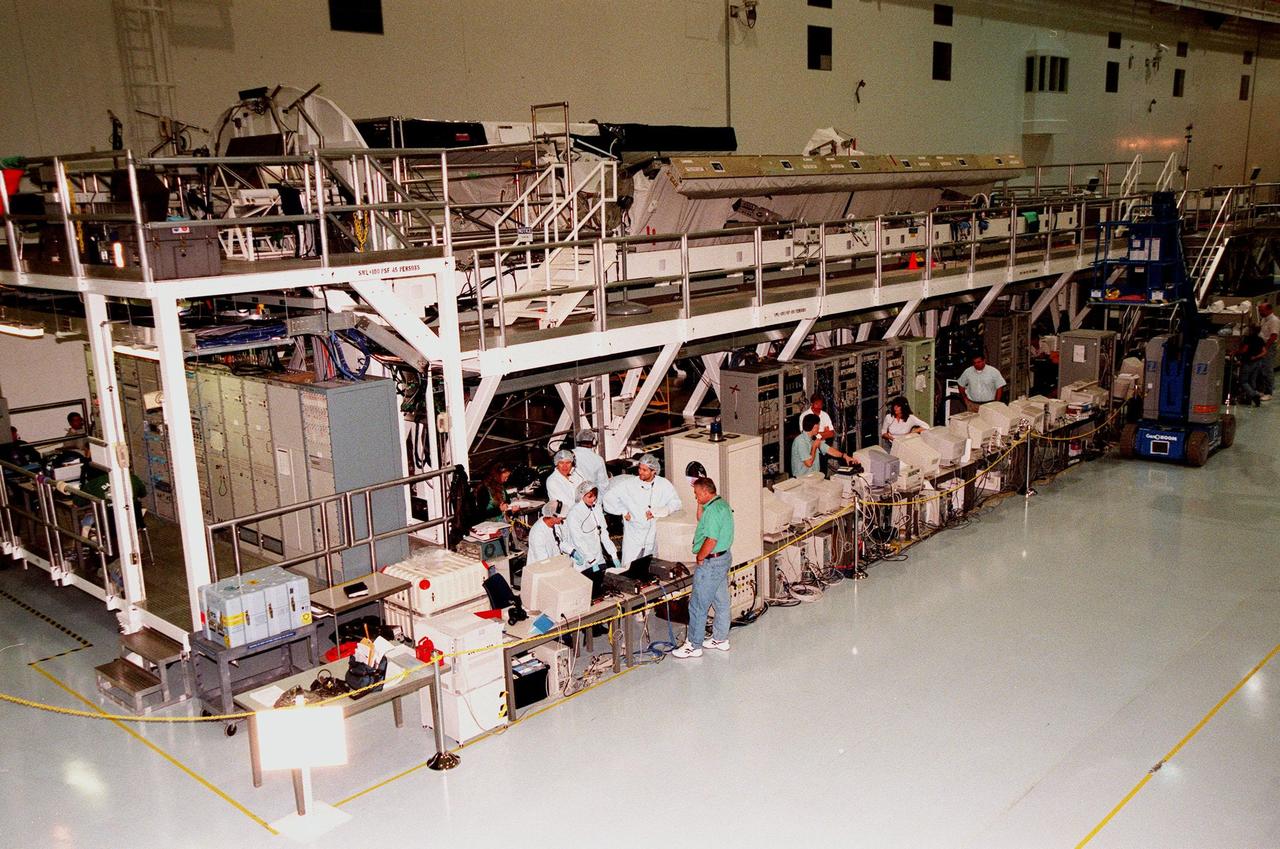
In the Space Station Processing Facility, STS-99 crew members take part in a simulated flight check of the Shuttle Radar Topography Mission (SRTM), above and behind them. The SRTM is the payload for their mission. The crew members are Commander Kevin R. Kregel, Pilot Dominic L. Pudwill Gorie, and Mission Specialists Janet Lynn kavandi (Ph.D.), Janice Voss (Ph.D.), Mamoru Mohri of Japan and Gerhard Thiele of Germany. Mohri represents the National Space Development Agency of Japan and Thiele represents the European Space Agency. An international project spearheaded by the National Imagery and Mapping Agency and NASA, with participation of the German Aerospace Center DLR, the SRTM consists of a specially modified radar system that will gather data for the most accurate and complete topographic map of the Earth's surface that has ever been assembled. SRTM will make use of radar interferometry, wherein two radar images are taken from slightly different locations. Differences between these images allow for the calculation of surface elevation, or change. The SRTM hardware will consist of one radar antenna in the shuttle payload bay and a second radar antenna attached to the end of a mast extended 60 meters (195 feet) out from the shuttle. STS-99 is scheduled to launch Sept. 16 at 8:47 a.m. from Launch Pad 39A
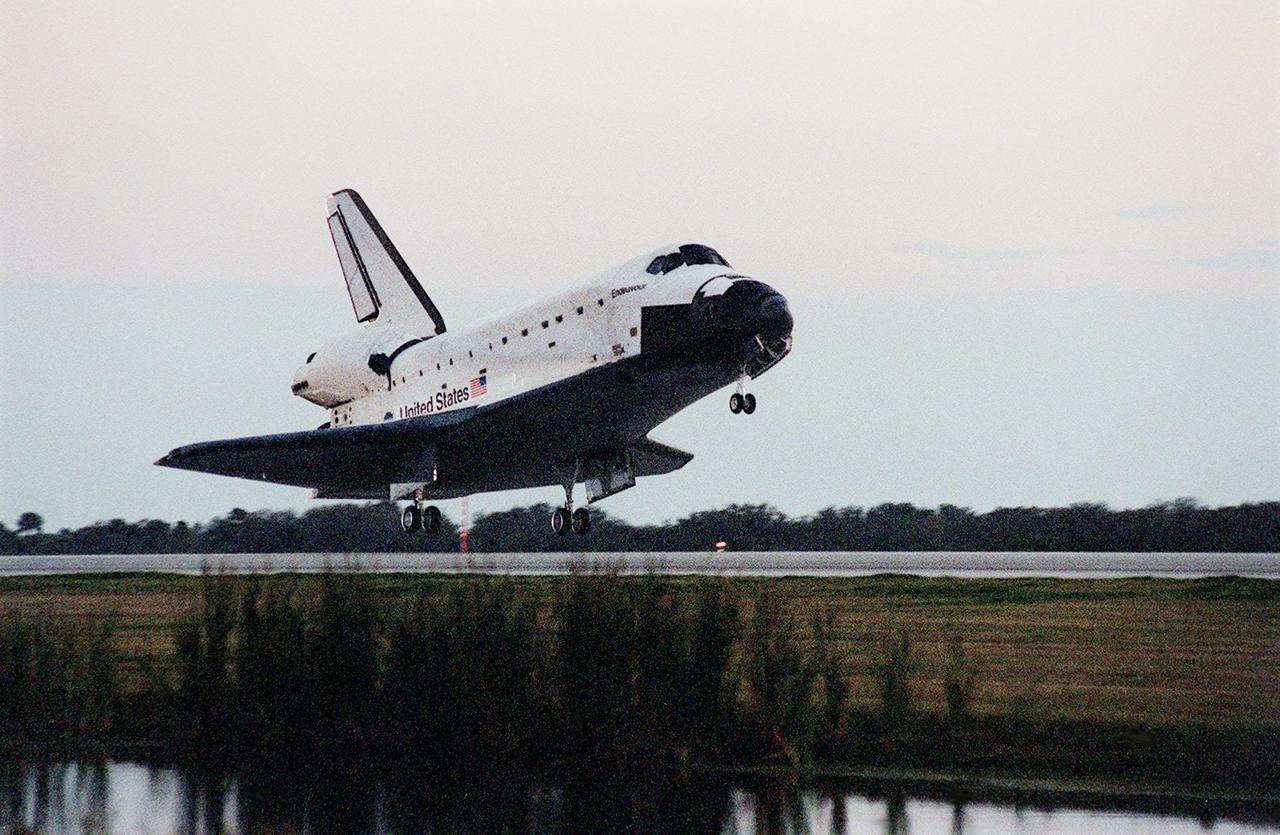
KENNEDY SPACE CENTER, Fla. -- Just after sundown, Space Shuttle Endeavour approaches touchdown on KSC's Shuttle Landing Facility Runway 33 to complete the 11-day, 5-hour, 38-minute-long STS-99 mission. Main gear touchdown was at 6:22:23 p.m. EST Feb. 22 , landing on orbit 181 of the mission. Nose gear touchdown was at 6:22:35 p.m.. EST, and wheel stop at 6:23:25 p.m. EST. At the controls are Commander Kevin Kregel and Pilot Dominic Gorie. Also onboard the orbiter are Mission Specialists Janet Kavandi, Janice Voss, Mamoru Mohri of Japan and Gerhard Thiele of Germany. Mohri is with the National Space Development Agency (NASDA) and Thiele is with the European Space Agency. The crew are returning from the Shuttle Radar Topography Mission, after mapping more than 47 million square miles of the Earth. This was the 97th flight in the Space Shuttle program and the 14th for Endeavour, also marking the 50th landing at KSC, the 21st consecutive landing at KSC, and the 28th in the last 29 Shuttle flights
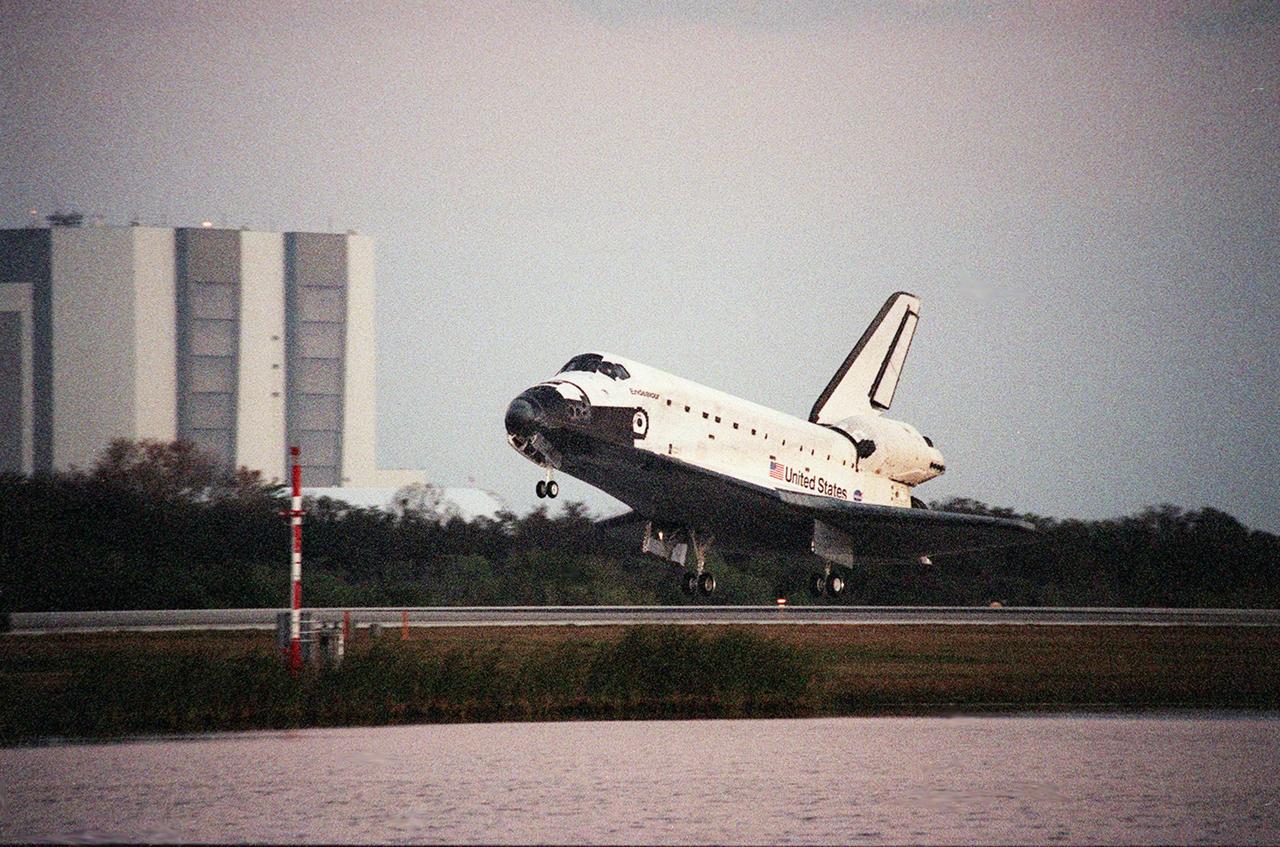
KENNEDY SPACE CENTER, FLA. -- In the waning light after sundown, Space Shuttle Endeavour nears touchdown on KSC's Shuttle Landing Facility Runway 33 to complete the 11-day, 5-hour, 38-minute-long STS-99 mission. In the background is the Vehicle Assembly Building. At the controls are Commander Kevin Kregel and Pilot Dominic Gorie. Also onboard the orbiter are Mission Specialists Janet Kavandi, Janice Voss, Mamoru Mohri of Japan and Gerhard Thiele of Germany. Mohri is with the National Space Development Agency (NASDA) and Thiele is with the European Space Agency. The crew is returning from the Shuttle Radar Topography Mission, after mapping more than 47 million square miles of the Earth's surface. Main gear touchdown was at 6:22:23 p.m. EST Feb. 22 , landing on orbit 181 of the mission. Nose gear touchdown was at 6:22:35 p.m.. EST, and wheel stop at 6:23:25 p.m. EST. This was the 97th flight in the Space Shuttle program and the 14th for Endeavour, also marking the 50th landing at KSC, the 21st consecutive landing at KSC, and the 28th in the last 29 Shuttle flights
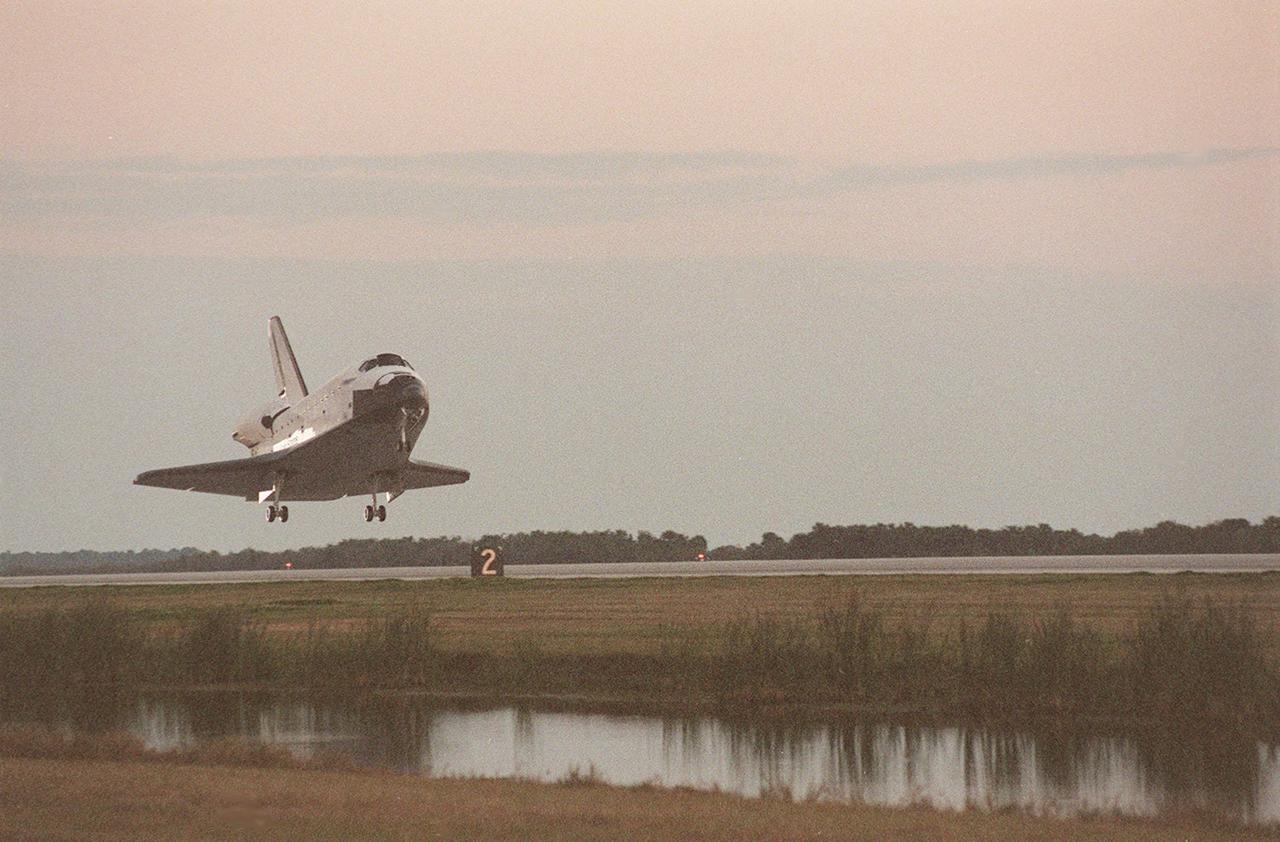
KENNEDY SPACE CENTER, Fla. -- Just after sundown, Space Shuttle Endeavour approaches touchdown on KSC's Shuttle Landing Facility Runway 33 to complete the 11-day, 5-hour, 38-minute-long STS-99 mission. Main gear touchdown was at 6:22:23 p.m. EST Feb. 22 , landing on orbit 181 of the mission. Nose gear touchdown was at 6:22:35 p.m.. EST, and wheel stop at 6:23:25 p.m. EST. At the controls are Commander Kevin Kregel and Pilot Dominic Gorie. Also onboard the orbiter are Mission Specialists Janet Kavandi, Janice Voss, Mamoru Mohri of Japan and Gerhard Thiele of Germany. Mohri is with the National Space Development Agency (NASDA) and Thiele is with the European Space Agency. The crew are returning from the Shuttle Radar Topography Mission, after mapping more than 47 million square miles of the Earth. This was the 97th flight in the Space Shuttle program and the 14th for Endeavour, also marking the 50th landing at KSC, the 21st consecutive landing at KSC, and the 28th in the last 29 Shuttle flights
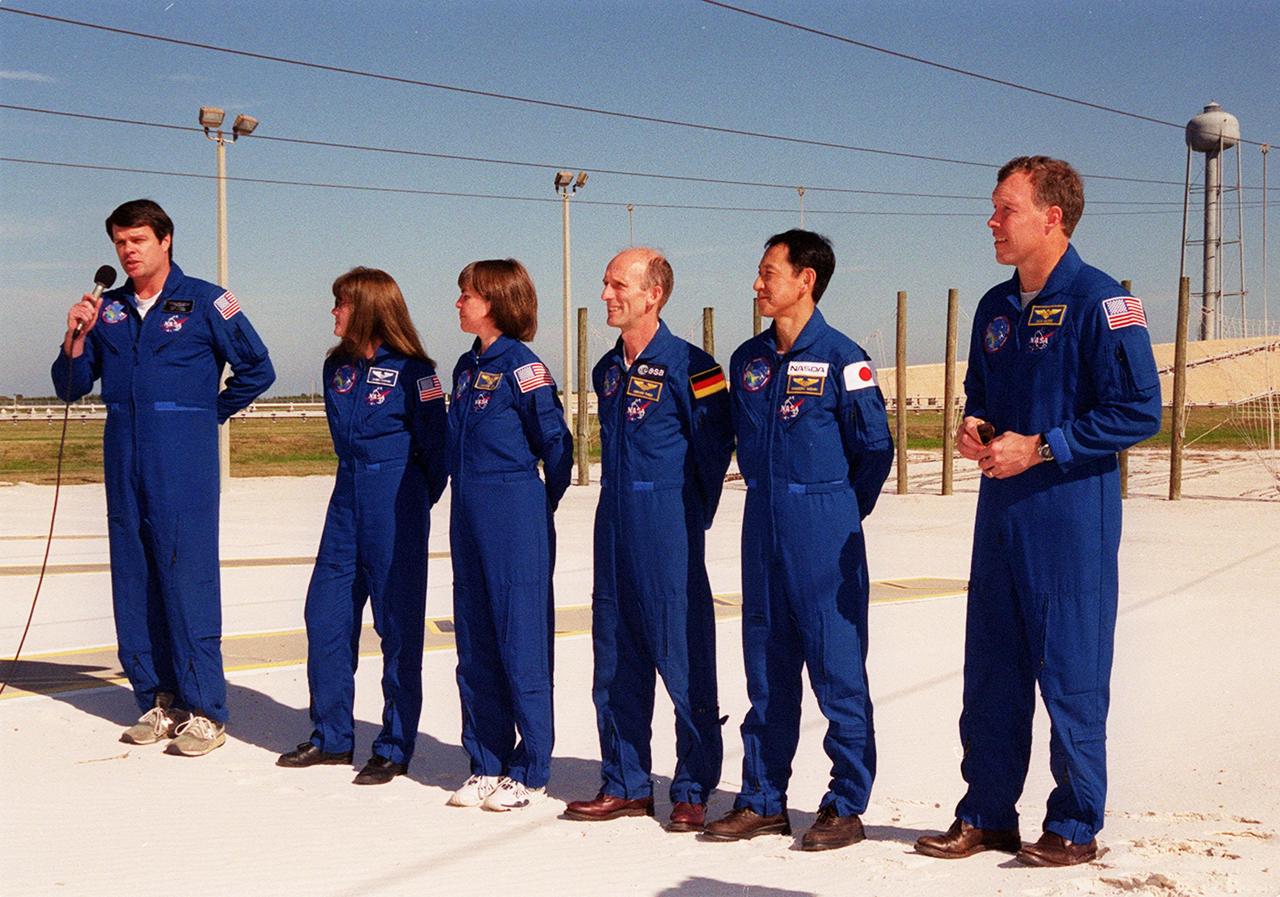
KENNEDY SPACE CENTER, Fla. -- The STS-99 crew take time out during Terminal Countdown Demonstration Test (TCDT) activities to talk to the media. From left to right are Commander Kevin Kregel, Mission Specialists Janet Lynn Kavandi (Ph.D.), Janice Voss (Ph.D.), Gerhard Thiele and Mamoru Mohri, and Pilot Dominic Gorie. Thiele is with the European Space Agency and Mohri is with the National Space Development Agency (NASDA) of Japan. The TCDT provides the crew with simulated countdown exercises, emergency egress training, and opportunities to inspect the mission payloads in the orbiter's payload bay. STS-99 is the Shuttle Radar Topography Mission, which will chart a new course, using two antennae and a 200-foot-long section of space station-derived mast protruding from the payload bay to produce unrivaled 3-D images of the Earth's surface. The result of the Shuttle Radar Topography Mission could be close to 1 trillion measurements of the Earth's topography. Besides contributing to the production of better maps, these measurements could lead to improved water drainage modeling, more realistic flight simulators, better locations for cell phone towers, and enhanced navigation safety. Launch of Endeavour on the 11-day mission is scheduled for Jan. 31 at 12:47 p.m. ES
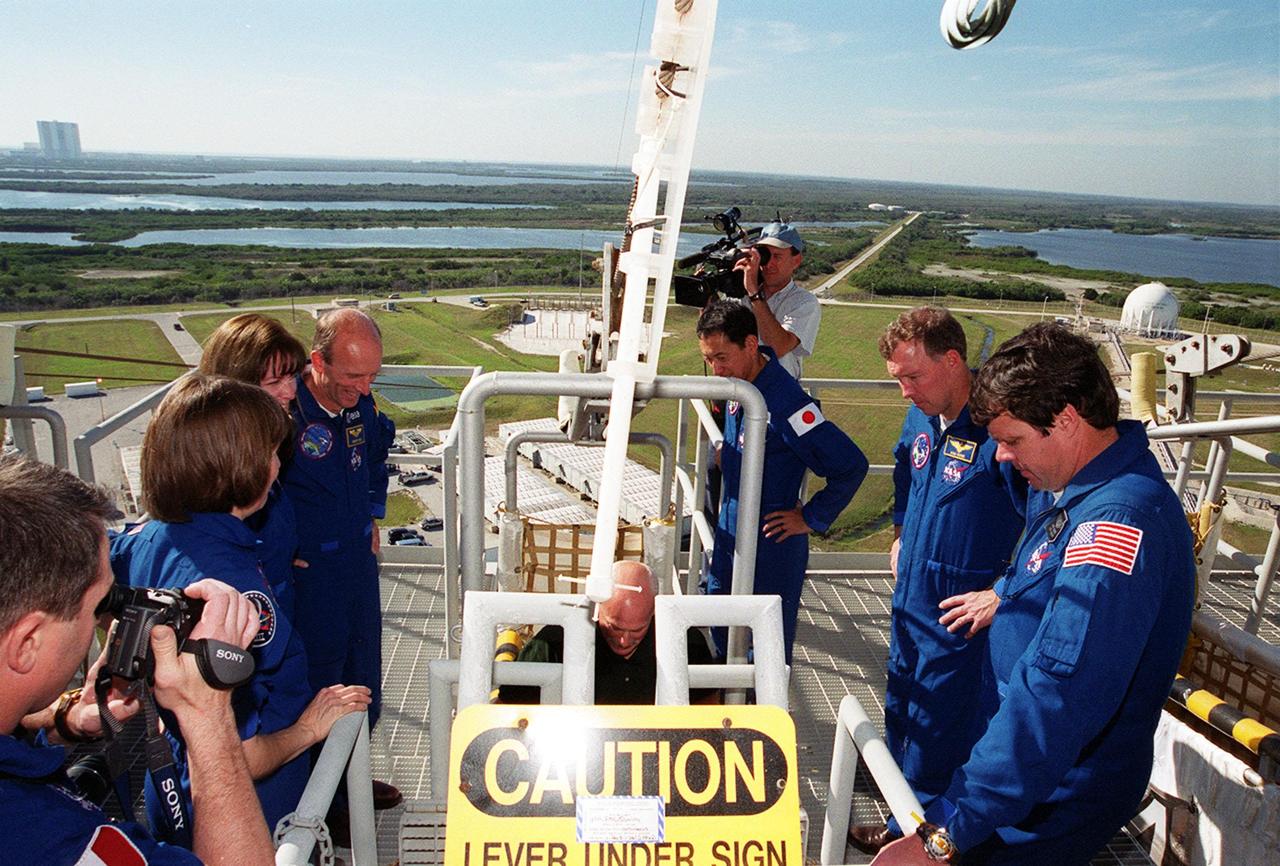
KENNEDY SPACE CENTER, Fla. -- Near the bunker at Launch Pad 39A, STS-99 Mission Specialists Janice Voss (Ph.D.), Gerhard Thiele and Mamoru Mohri check out the slidewire basket used for emergency egress. The crew are taking part in Terminal Countdown Demonstration Test activities, which provide them with simulated countdown exercises, emergency egress training, and opportunities to inspect the mission payloads in the orbiter's payload bay. Thiele is with the European Space Agency and Mohri is with the National Space Development Agency (NASDA) of Japan. STS-99 is the Shuttle Radar Topography Mission, which will chart a new course, using two antennae and a 200-foot-long section of space station-derived mast protruding from the payload bay to produce unrivaled 3-D images of the Earth's surface. The result of the Shuttle Radar Topography Mission could be close to 1 trillion measurements of the Earth's topography. Besides contributing to the production of better maps, these measurements could lead to improved water drainage modeling, more realistic flight simulators, better locations for cell phone towers, and enhanced navigation safety. Launch of Endeavour on the 11-day mission is scheduled for Jan. 31 at 12:47 p.m. EST