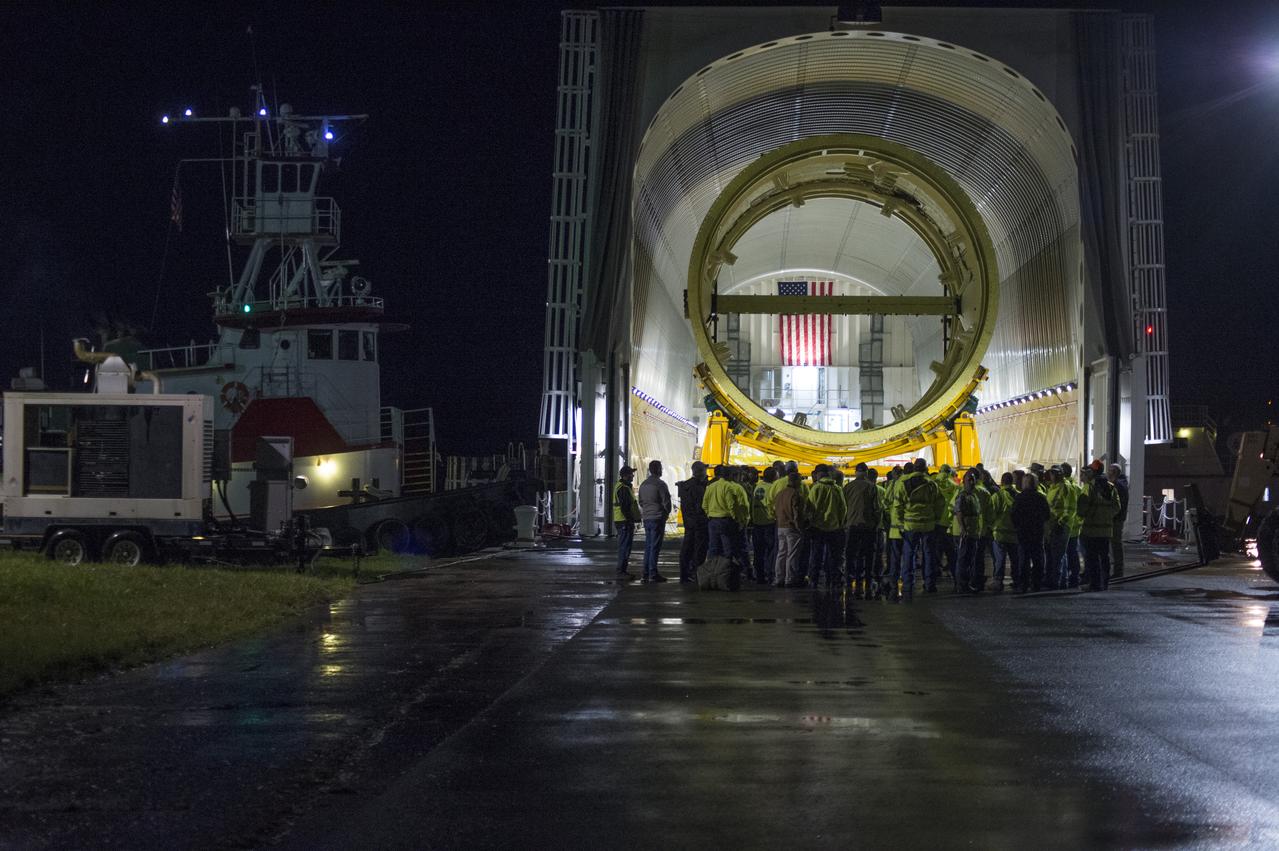
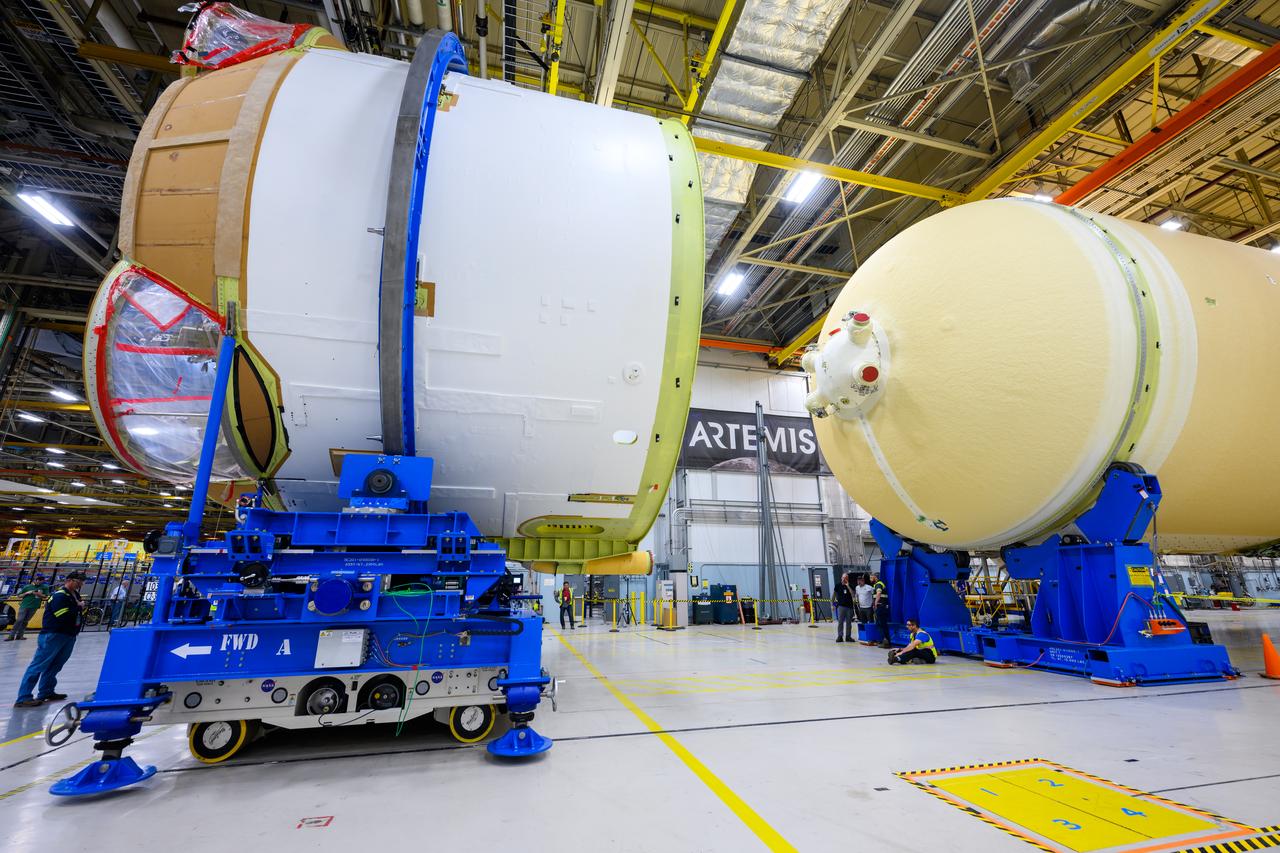
The SLS Stages Intertank Structural Test Assembly (STA) is rolling off the NASA Pegasus Barge at the MSFC Dock enroute to the MSFC 4619 Load Test Annex test facility for qualification testing. Members of MSFC Logistics Office and Move Team members gather for last minute instructions and safety briefing before off-loading STA hardware.
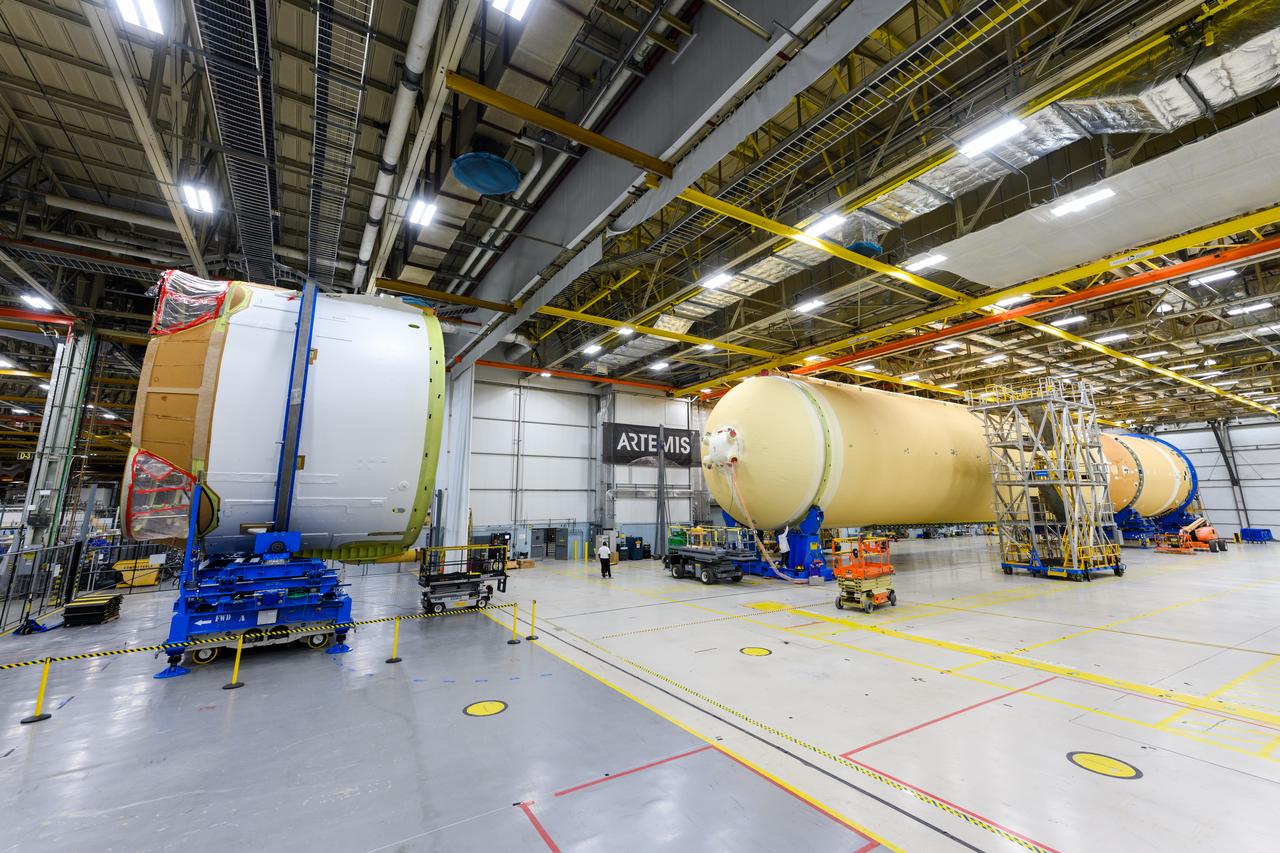
Technicians at NASA’s Michoud Assembly Facility in New Orleans moved the engine section of NASA’s Space Launch System (SLS) rocket for Artemis II, the first crewed mission to the Moon, into position for the final join of the core stage Feb. 22. The engine section is the bottom-most portion of the 212-foot-tall core stage. It is the last of five major elements that is needed to connect the stage into one major structure. In addition to its miles of cabling and hundreds of sensors, the engine section is a crucial attachment point for the four RS-25 engines and two solid rocket boosters that produce a combined 8.8 million pounds of thrust at liftoff and flight. During launch and flight, liquid propellants from the liquid hydrogen tank and liquid oxygen tanks are delivered through the engine section to the four RS-25 engines. The engine section also includes the avionics that help steer the engines after liftoff. Next, teams will join the engine section to the core stage for the second SLS rocket. After the join is complete, teams will begin to add each of the four RS-25 engines one by one to complete the stage. The completely assembled stage with its four RS-25 engines will be shipped to NASA’s Kennedy Space Center in Florida later this year. The SLS rocket is the only rocket capable of carrying astronauts in Orion around the Moon in a single mission.
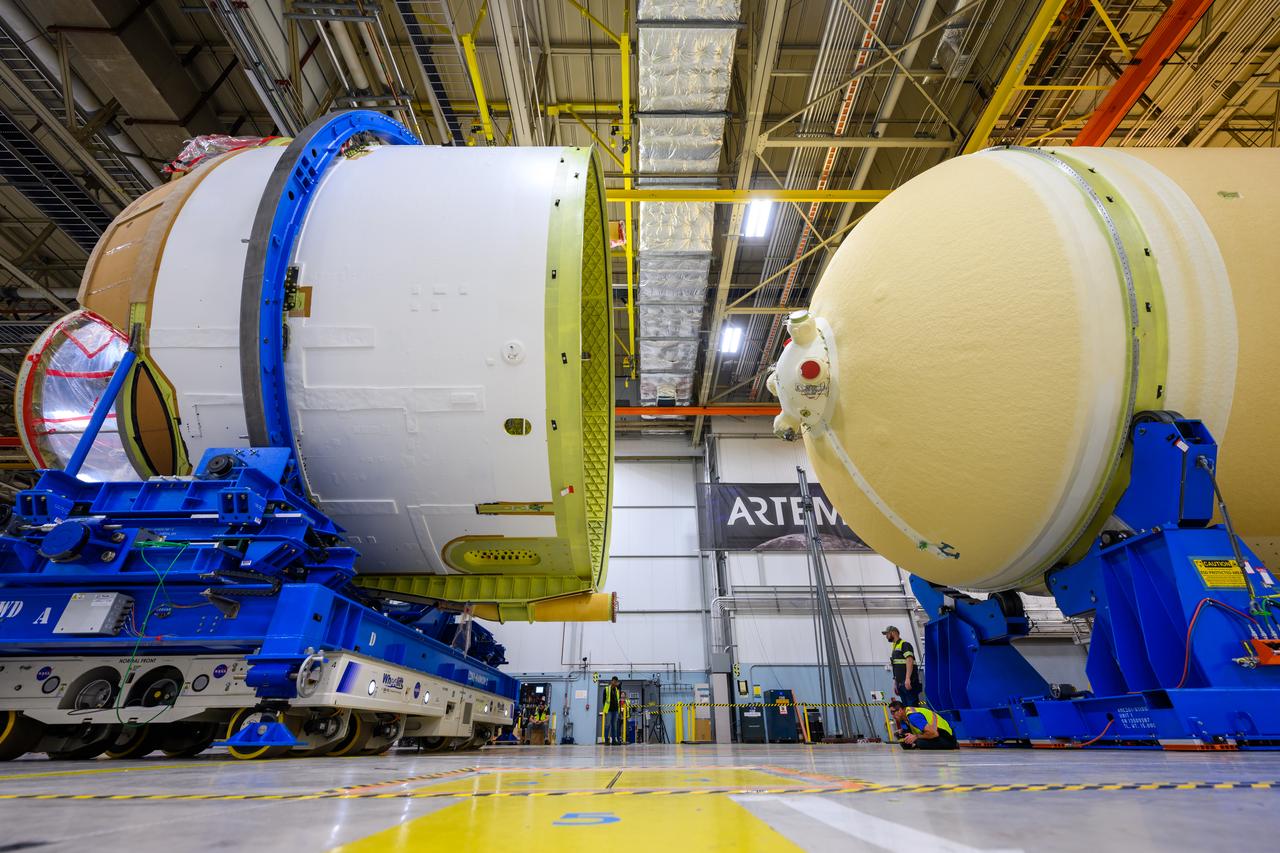
Technicians at NASA’s Michoud Assembly Facility in New Orleans moved the engine section of NASA’s Space Launch System (SLS) rocket for Artemis II, the first crewed mission to the Moon, into position for the final join of the core stage Feb. 22. The engine section is the bottom-most portion of the 212-foot-tall core stage. It is the last of five major elements that is needed to connect the stage into one major structure. In addition to its miles of cabling and hundreds of sensors, the engine section is a crucial attachment point for the four RS-25 engines and two solid rocket boosters that produce a combined 8.8 million pounds of thrust at liftoff and flight. During launch and flight, liquid propellants from the liquid hydrogen tank and liquid oxygen tanks are delivered through the engine section to the four RS-25 engines. The engine section also includes the avionics that help steer the engines after liftoff. Next, teams will join the engine section to the core stage for the second SLS rocket. After the join is complete, teams will begin to add each of the four RS-25 engines one by one to complete the stage. The completely assembled stage with its four RS-25 engines will be shipped to NASA’s Kennedy Space Center in Florida later this year. The SLS rocket is the only rocket capable of carrying astronauts in Orion around the Moon in a single mission.
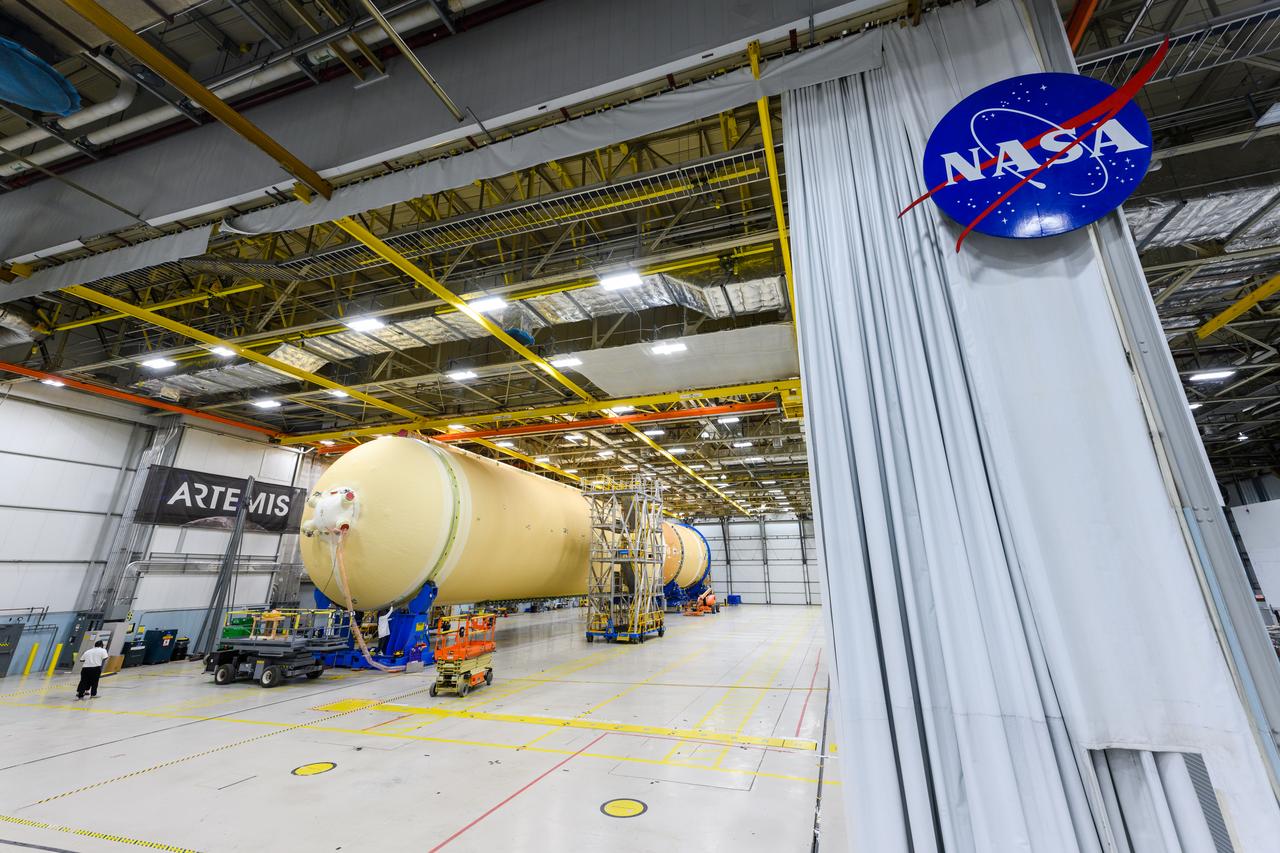
Technicians at NASA’s Michoud Assembly Facility in New Orleans moved the engine section of NASA’s Space Launch System (SLS) rocket for Artemis II, the first crewed mission to the Moon, into position for the final join of the core stage Feb. 22. The engine section is the bottom-most portion of the 212-foot-tall core stage. It is the last of five major elements that is needed to connect the stage into one major structure. In addition to its miles of cabling and hundreds of sensors, the engine section is a crucial attachment point for the four RS-25 engines and two solid rocket boosters that produce a combined 8.8 million pounds of thrust at liftoff and flight. During launch and flight, liquid propellants from the liquid hydrogen tank and liquid oxygen tanks are delivered through the engine section to the four RS-25 engines. The engine section also includes the avionics that help steer the engines after liftoff. Next, teams will join the engine section to the core stage for the second SLS rocket. After the join is complete, teams will begin to add each of the four RS-25 engines one by one to complete the stage. The completely assembled stage with its four RS-25 engines will be shipped to NASA’s Kennedy Space Center in Florida later this year. The SLS rocket is the only rocket capable of carrying astronauts in Orion around the Moon in a single mission.
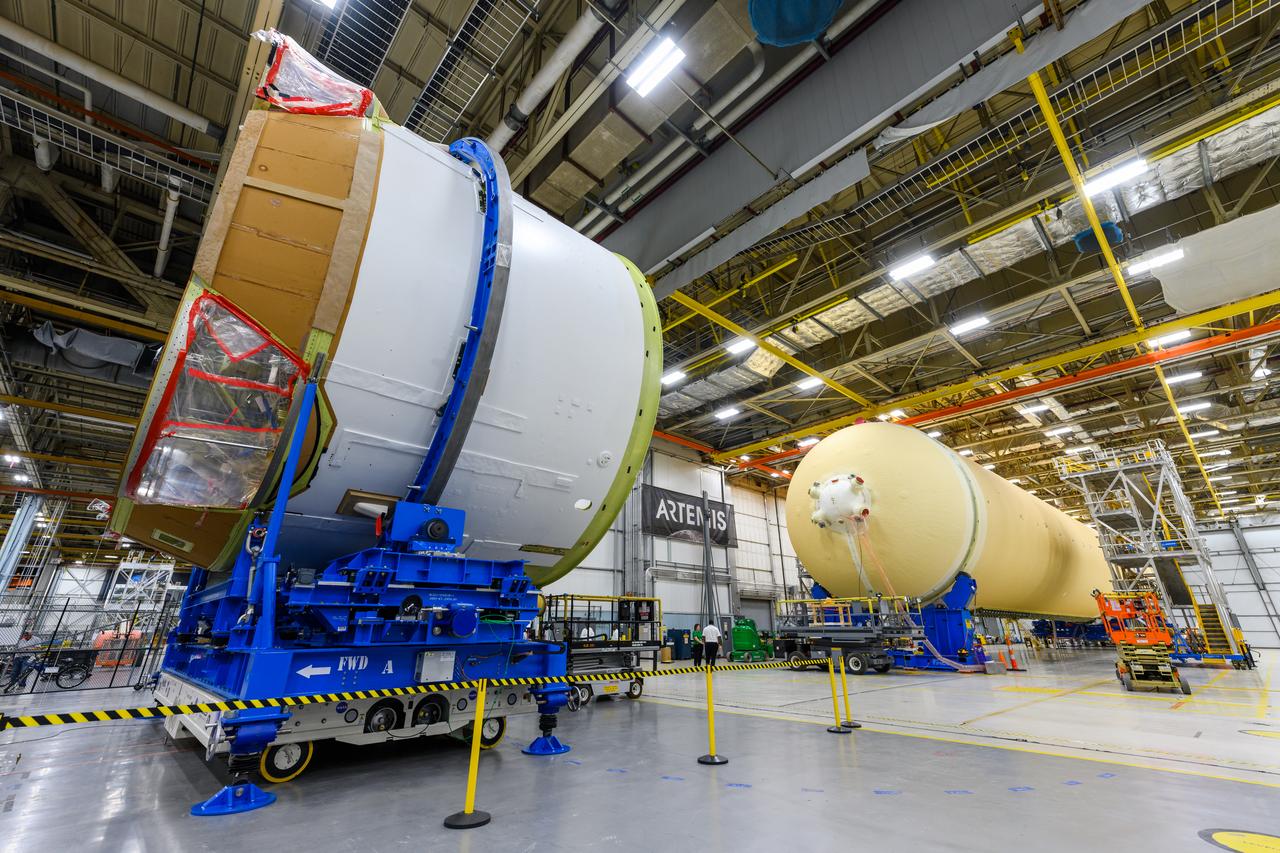
Technicians at NASA’s Michoud Assembly Facility in New Orleans moved the engine section of NASA’s Space Launch System (SLS) rocket for Artemis II, the first crewed mission to the Moon, into position for the final join of the core stage Feb. 22. The engine section is the bottom-most portion of the 212-foot-tall core stage. It is the last of five major elements that is needed to connect the stage into one major structure. In addition to its miles of cabling and hundreds of sensors, the engine section is a crucial attachment point for the four RS-25 engines and two solid rocket boosters that produce a combined 8.8 million pounds of thrust at liftoff and flight. During launch and flight, liquid propellants from the liquid hydrogen tank and liquid oxygen tanks are delivered through the engine section to the four RS-25 engines. The engine section also includes the avionics that help steer the engines after liftoff. Next, teams will join the engine section to the core stage for the second SLS rocket. After the join is complete, teams will begin to add each of the four RS-25 engines one by one to complete the stage. The completely assembled stage with its four RS-25 engines will be shipped to NASA’s Kennedy Space Center in Florida later this year. The SLS rocket is the only rocket capable of carrying astronauts in Orion around the Moon in a single mission.
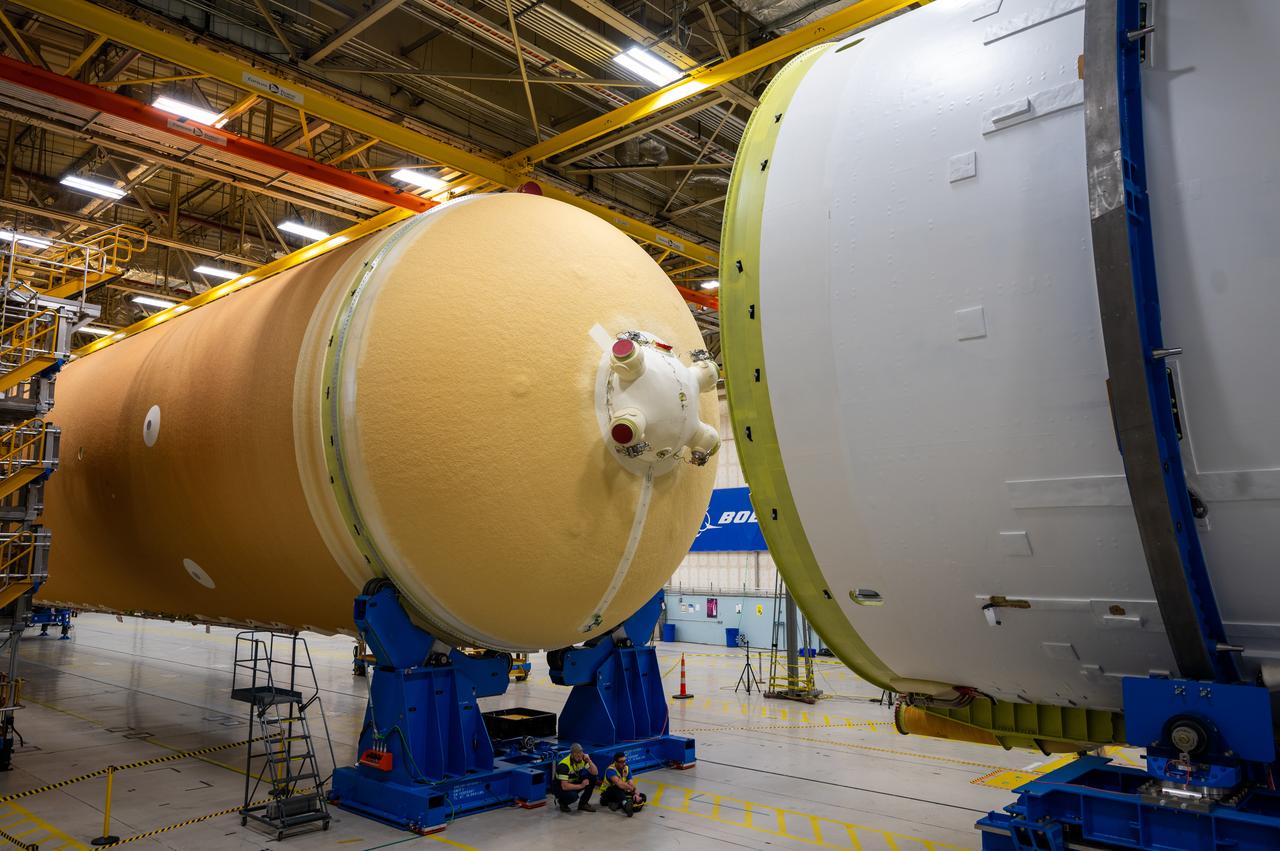
Technicians at NASA’s Michoud Assembly Facility in New Orleans moved the engine section of NASA’s Space Launch System (SLS) rocket for Artemis II, the first crewed mission to the Moon, into position for the final join of the core stage Feb. 22. The engine section is the bottom-most portion of the 212-foot-tall core stage. It is the last of five major elements that is needed to connect the stage into one major structure. In addition to its miles of cabling and hundreds of sensors, the engine section is a crucial attachment point for the four RS-25 engines and two solid rocket boosters that produce a combined 8.8 million pounds of thrust at liftoff and flight. During launch and flight, liquid propellants from the liquid hydrogen tank and liquid oxygen tanks are delivered through the engine section to the four RS-25 engines. The engine section also includes the avionics that help steer the engines after liftoff. Next, teams will join the engine section to the core stage for the second SLS rocket. After the join is complete, teams will begin to add each of the four RS-25 engines one by one to complete the stage. The completely assembled stage with its four RS-25 engines will be shipped to NASA’s Kennedy Space Center in Florida later this year. The SLS rocket is the only rocket capable of carrying astronauts in Orion around the Moon in a single mission.
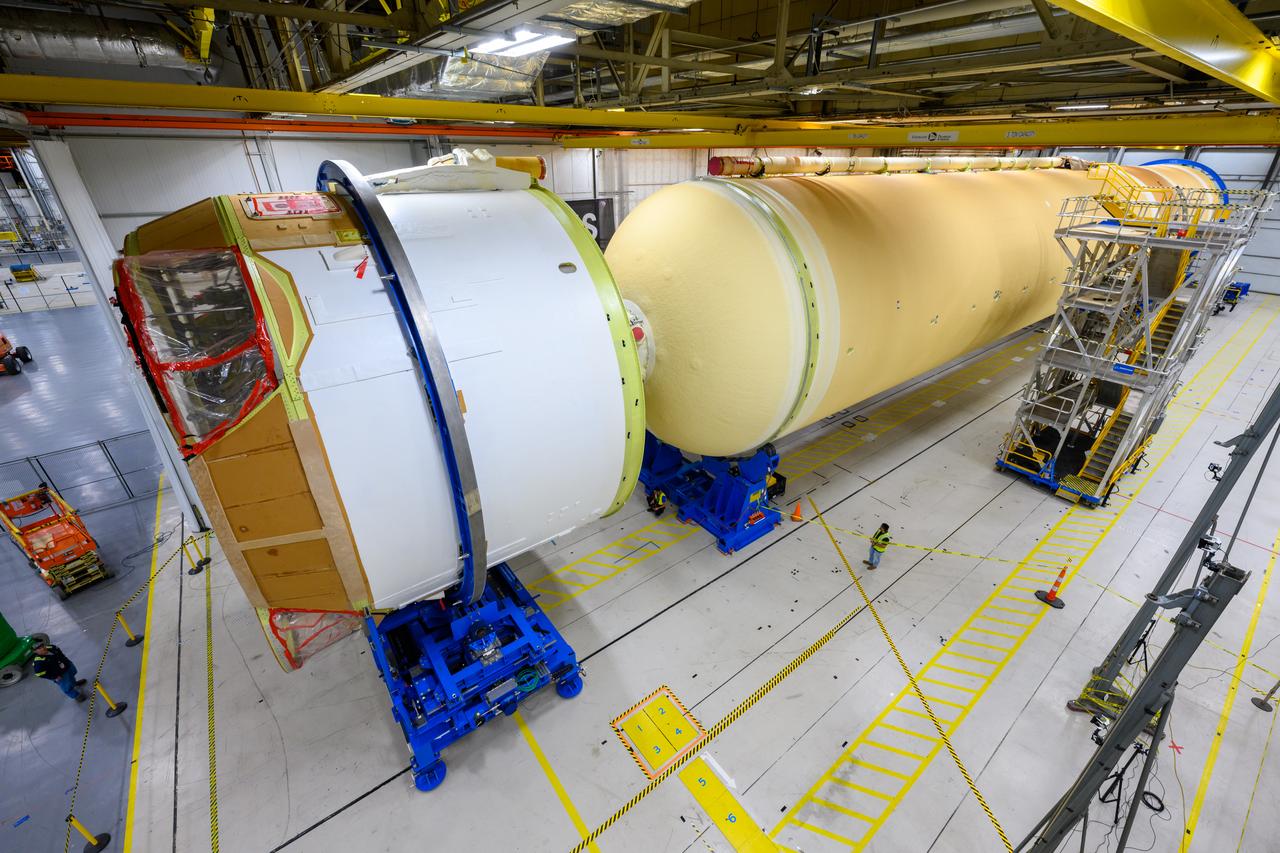
Technicians at NASA’s Michoud Assembly Facility in New Orleans moved the engine section of NASA’s Space Launch System (SLS) rocket for Artemis II, the first crewed mission to the Moon, into position for the final join of the core stage Feb. 22. The engine section is the bottom-most portion of the 212-foot-tall core stage. It is the last of five major elements that is needed to connect the stage into one major structure. In addition to its miles of cabling and hundreds of sensors, the engine section is a crucial attachment point for the four RS-25 engines and two solid rocket boosters that produce a combined 8.8 million pounds of thrust at liftoff and flight. During launch and flight, liquid propellants from the liquid hydrogen tank and liquid oxygen tanks are delivered through the engine section to the four RS-25 engines. The engine section also includes the avionics that help steer the engines after liftoff. Next, teams will join the engine section to the core stage for the second SLS rocket. After the join is complete, teams will begin to add each of the four RS-25 engines one by one to complete the stage. The completely assembled stage with its four RS-25 engines will be shipped to NASA’s Kennedy Space Center in Florida later this year. The SLS rocket is the only rocket capable of carrying astronauts in Orion around the Moon in a single mission.
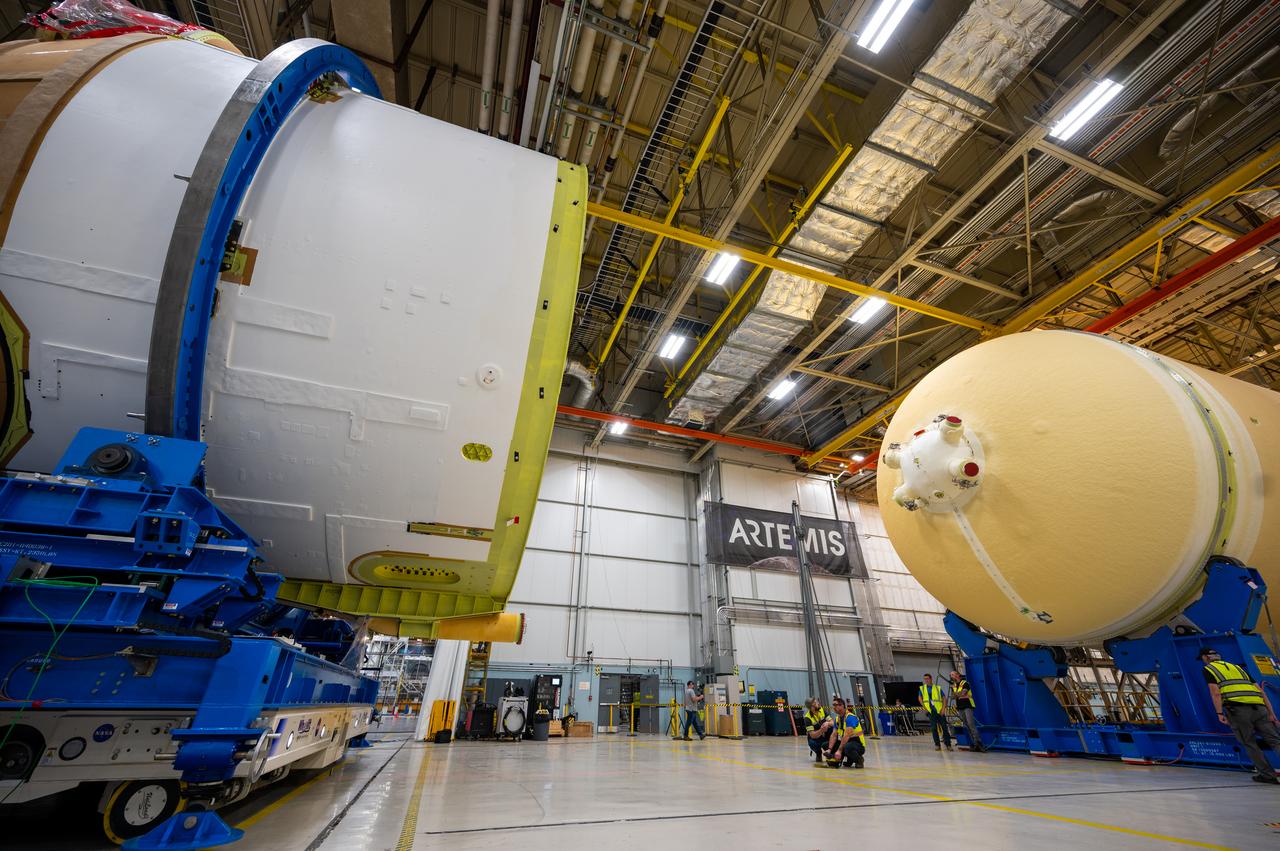
Technicians at NASA’s Michoud Assembly Facility in New Orleans moved the engine section of NASA’s Space Launch System (SLS) rocket for Artemis II, the first crewed mission to the Moon, into position for the final join of the core stage Feb. 22. The engine section is the bottom-most portion of the 212-foot-tall core stage. It is the last of five major elements that is needed to connect the stage into one major structure. In addition to its miles of cabling and hundreds of sensors, the engine section is a crucial attachment point for the four RS-25 engines and two solid rocket boosters that produce a combined 8.8 million pounds of thrust at liftoff and flight. During launch and flight, liquid propellants from the liquid hydrogen tank and liquid oxygen tanks are delivered through the engine section to the four RS-25 engines. The engine section also includes the avionics that help steer the engines after liftoff. Next, teams will join the engine section to the core stage for the second SLS rocket. After the join is complete, teams will begin to add each of the four RS-25 engines one by one to complete the stage. The completely assembled stage with its four RS-25 engines will be shipped to NASA’s Kennedy Space Center in Florida later this year. The SLS rocket is the only rocket capable of carrying astronauts in Orion around the Moon in a single mission.
Technicians at NASA’s Michoud Assembly Facility in New Orleans moved the engine section of NASA’s Space Launch System (SLS) rocket for Artemis II, the first crewed mission to the Moon, into position for the final join of the core stage Feb. 22. The engine section is the bottom-most portion of the 212-foot-tall core stage. It is the last of five major elements that is needed to connect the stage into one major structure. In addition to its miles of cabling and hundreds of sensors, the engine section is a crucial attachment point for the four RS-25 engines and two solid rocket boosters that produce a combined 8.8 million pounds of thrust at liftoff and flight. During launch and flight, liquid propellants from the liquid hydrogen tank and liquid oxygen tanks are delivered through the engine section to the four RS-25 engines. The engine section also includes the avionics that help steer the engines after liftoff. Next, teams will join the engine section to the core stage for the second SLS rocket. After the join is complete, teams will begin to add each of the four RS-25 engines one by one to complete the stage. The completely assembled stage with its four RS-25 engines will be shipped to NASA’s Kennedy Space Center in Florida later this year. The SLS rocket is the only rocket capable of carrying astronauts in Orion around the Moon in a single mission.

Technicians at NASA’s Michoud Assembly Facility in New Orleans moved the engine section of NASA’s Space Launch System (SLS) rocket for Artemis II, the first crewed mission to the Moon, into position for the final join of the core stage Feb. 13. The engine section is the bottom-most portion of the 212-foot-tall core stage. It is the last of five major elements that is needed to connect the stage into one major structure. In addition to its miles of cabling and hundreds of sensors, the engine section is a crucial attachment point for the four RS-25 engines and two solid rocket boosters that produce a combined 8.8 million pounds of thrust at liftoff and flight. During launch and flight, liquid propellants from the liquid hydrogen tank and liquid oxygen tanks are delivered through the engine section to the four RS-25 engines. The engine section also includes the avionics that help steer the engines after liftoff. Next, teams will join the engine section to the core stage for the second SLS rocket. After the join is complete, teams will begin to add each of the four RS-25 engines one by one to complete the stage. The completely assembled stage with its four RS-25 engines will be shipped to NASA’s Kennedy Space Center in Florida later this year. The SLS rocket is the only rocket capable of carrying astronauts in Orion around the Moon in a single mission. Image credit: NASA/Michael DeMocker

Technicians at NASA’s Michoud Assembly Facility in New Orleans moved the engine section of NASA’s Space Launch System (SLS) rocket for Artemis II, the first crewed mission to the Moon, into position for the final join of the core stage Feb. 13. The engine section is the bottom-most portion of the 212-foot-tall core stage. It is the last of five major elements that is needed to connect the stage into one major structure. In addition to its miles of cabling and hundreds of sensors, the engine section is a crucial attachment point for the four RS-25 engines and two solid rocket boosters that produce a combined 8.8 million pounds of thrust at liftoff and flight. During launch and flight, liquid propellants from the liquid hydrogen tank and liquid oxygen tanks are delivered through the engine section to the four RS-25 engines. The engine section also includes the avionics that help steer the engines after liftoff. Next, teams will join the engine section to the core stage for the second SLS rocket. After the join is complete, teams will begin to add each of the four RS-25 engines one by one to complete the stage. The completely assembled stage with its four RS-25 engines will be shipped to NASA’s Kennedy Space Center in Florida later this year. The SLS rocket is the only rocket capable of carrying astronauts in Orion around the Moon in a single mission. Image credit: NASA/Michael DeMocker

Technicians at NASA’s Michoud Assembly Facility in New Orleans moved the engine section of NASA’s Space Launch System (SLS) rocket for Artemis II, the first crewed mission to the Moon, into position for the final join of the core stage Feb. 13. The engine section is the bottom-most portion of the 212-foot-tall core stage. It is the last of five major elements that is needed to connect the stage into one major structure. In addition to its miles of cabling and hundreds of sensors, the engine section is a crucial attachment point for the four RS-25 engines and two solid rocket boosters that produce a combined 8.8 million pounds of thrust at liftoff and flight. During launch and flight, liquid propellants from the liquid hydrogen tank and liquid oxygen tanks are delivered through the engine section to the four RS-25 engines. The engine section also includes the avionics that help steer the engines after liftoff. Next, teams will join the engine section to the core stage for the second SLS rocket. After the join is complete, teams will begin to add each of the four RS-25 engines one by one to complete the stage. The completely assembled stage with its four RS-25 engines will be shipped to NASA’s Kennedy Space Center in Florida later this year. The SLS rocket is the only rocket capable of carrying astronauts in Orion around the Moon in a single mission. Image credit: NASA/Michael DeMocker

Technicians at NASA’s Michoud Assembly Facility in New Orleans moved the engine section of NASA’s Space Launch System (SLS) rocket for Artemis II, the first crewed mission to the Moon, into position for the final join of the core stage Feb. 13. The engine section is the bottom-most portion of the 212-foot-tall core stage. It is the last of five major elements that is needed to connect the stage into one major structure. In addition to its miles of cabling and hundreds of sensors, the engine section is a crucial attachment point for the four RS-25 engines and two solid rocket boosters that produce a combined 8.8 million pounds of thrust at liftoff and flight. During launch and flight, liquid propellants from the liquid hydrogen tank and liquid oxygen tanks are delivered through the engine section to the four RS-25 engines. The engine section also includes the avionics that help steer the engines after liftoff. Next, teams will join the engine section to the core stage for the second SLS rocket. After the join is complete, teams will begin to add each of the four RS-25 engines one by one to complete the stage. The completely assembled stage with its four RS-25 engines will be shipped to NASA’s Kennedy Space Center in Florida later this year. The SLS rocket is the only rocket capable of carrying astronauts in Orion around the Moon in a single mission. Image credit: NASA/Michael DeMocker
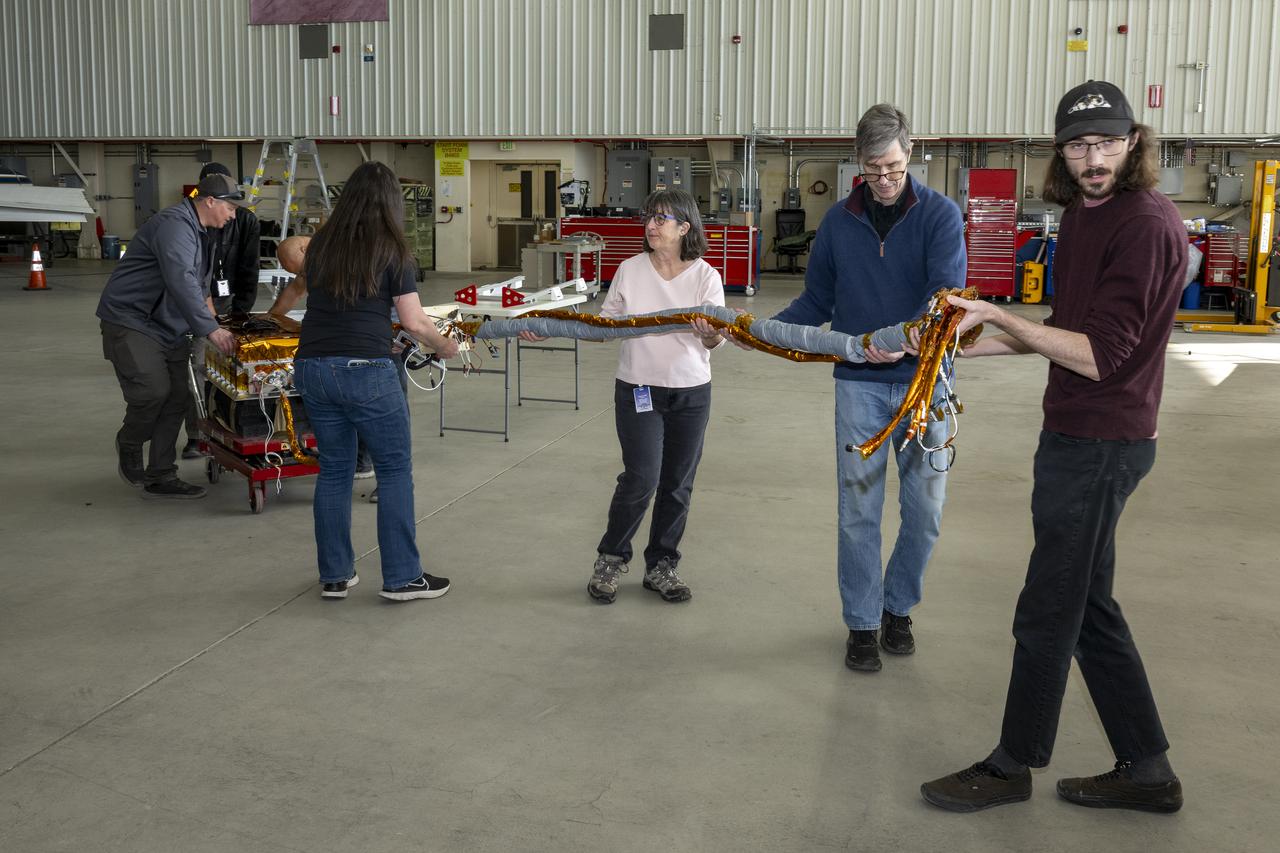
The airborne Lunar Spectral Irradiance (air-LUSI) instrument is moved across the hangar floor by robotic engineer Alexander McCafferty-Leroux ,from right to left, co-investigator Dr. John Woodward, NIST astronomer Dr. Susana Deustua, air-LUSI chief system engineer Dr. Kathleen “Kat” Scanlon, and members of the ER-2 ground crew at NASA’s Armstrong Flight Research Center in Edwards, California, in March 2025.

Mars Exploration Rover team members at NASA Jet Propulsion Laboratory, Pasadena, Calif., prepare an experiment on July 13, 2009, for assessing how a test rover moves when embedded in loose soil and commanded to drive backward with wheels turned.

Rover team members at NASA Jet Propulsion Laboratory, Pasadena, Calif., on July 24, 2009, discuss the next step in preparing for a new phase in testing of possible moves for getting NASA Mars rover Spirit out of a sandtrap on Mars.
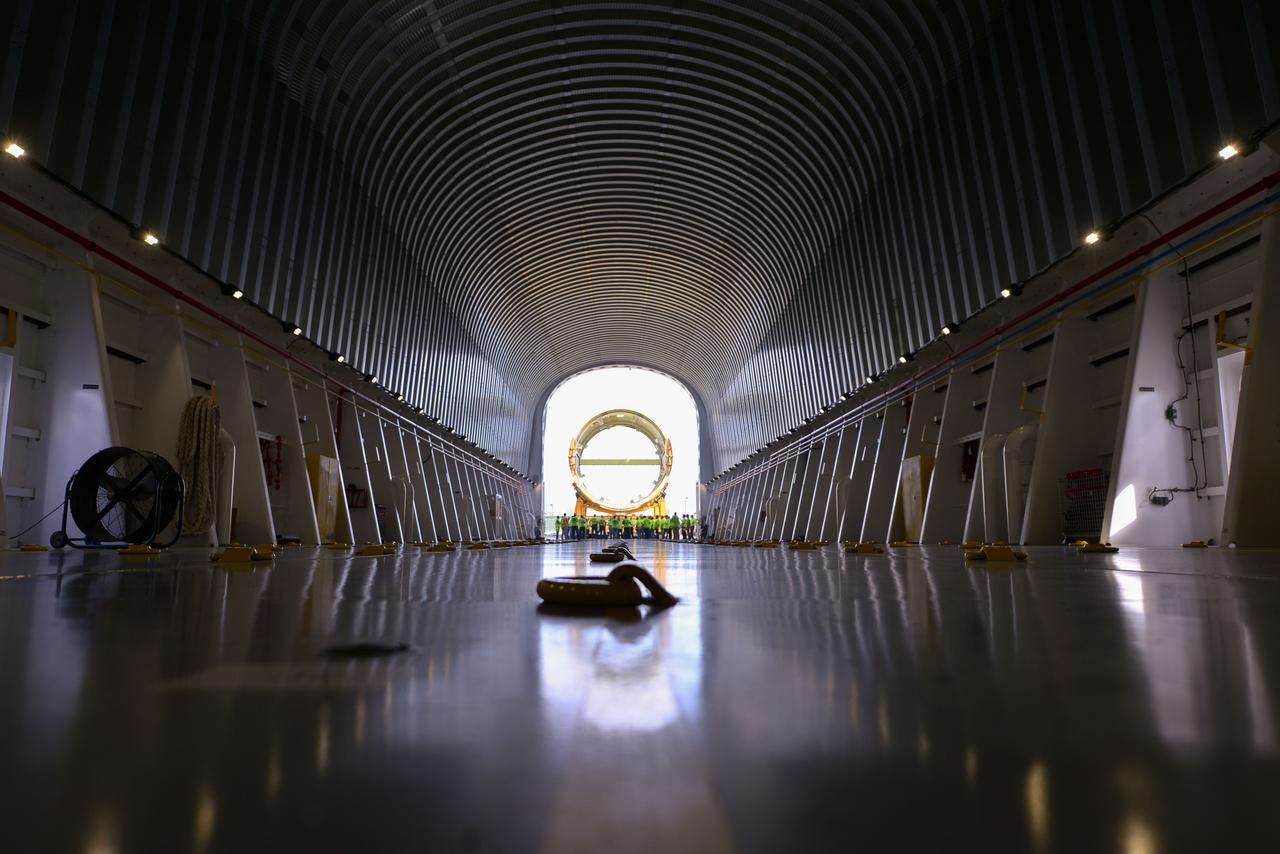
The S3 Move Crew holds a team tag up prior to loading the Intertank STA on the Pegasus Barge.
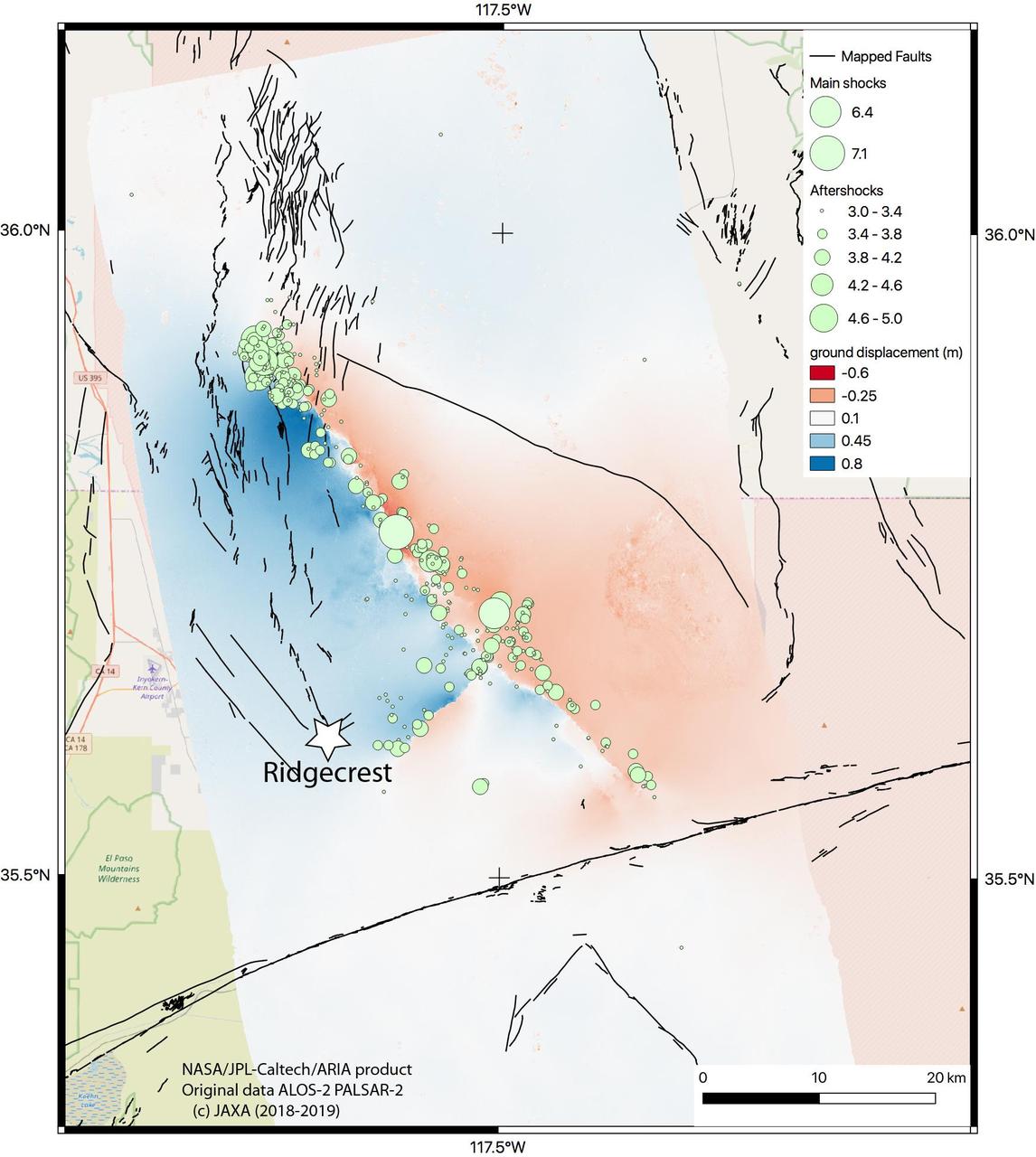
The Advanced Rapid Imaging and Analysis (ARIA) team at NASA's Jet Propulsion Laboratory in Pasadena, California, created this map of the Ridgecrest area of Southern California following two strong earthquakes — a magnitude 6.4 on July 4 and a magnitude 7.1 on July 5, 2019. The map shows how much and in what direction the ground moved in various places, displayed in meters. The blue tones show that the ground west of the main fault rupture, which runs from the lower right to the upper left, moved toward the northwest by as much as 0.8 meters (2.7 feet) during the 7.1-magnitude quake. The ground in the red and pink areas moved southeast by as much as 0.6 meters (2 feet). Black lines show faults that were mapped before the 2019 earthquakes. The 6.4-magnitude quake moved a shorter fault that runs perpendicular to the main fault — shown slightly down and to the left of center on the map. The colors in this area show that the north side of the fault moved to the west (blue) and the south side moved to the east (pink). The green circles correspond to aftershocks of a magnitude of 3.0 or higher, which were detected along both faults, between July 4 and July 9. The larger the circle, the stronger the aftershock. The ARIA team used interferometric synthetic aperture radar (InSAR) analysis of data from the ALOS-2 satellite, operated by the Japan Aerospace Exploration Agency (JAXA) to create the map. They used images captured before the quakes (on April 16, 2018) and after the quakes (on July 8, 2019) for this analysis. https://photojournal.jpl.nasa.gov/catalog/PIA23351
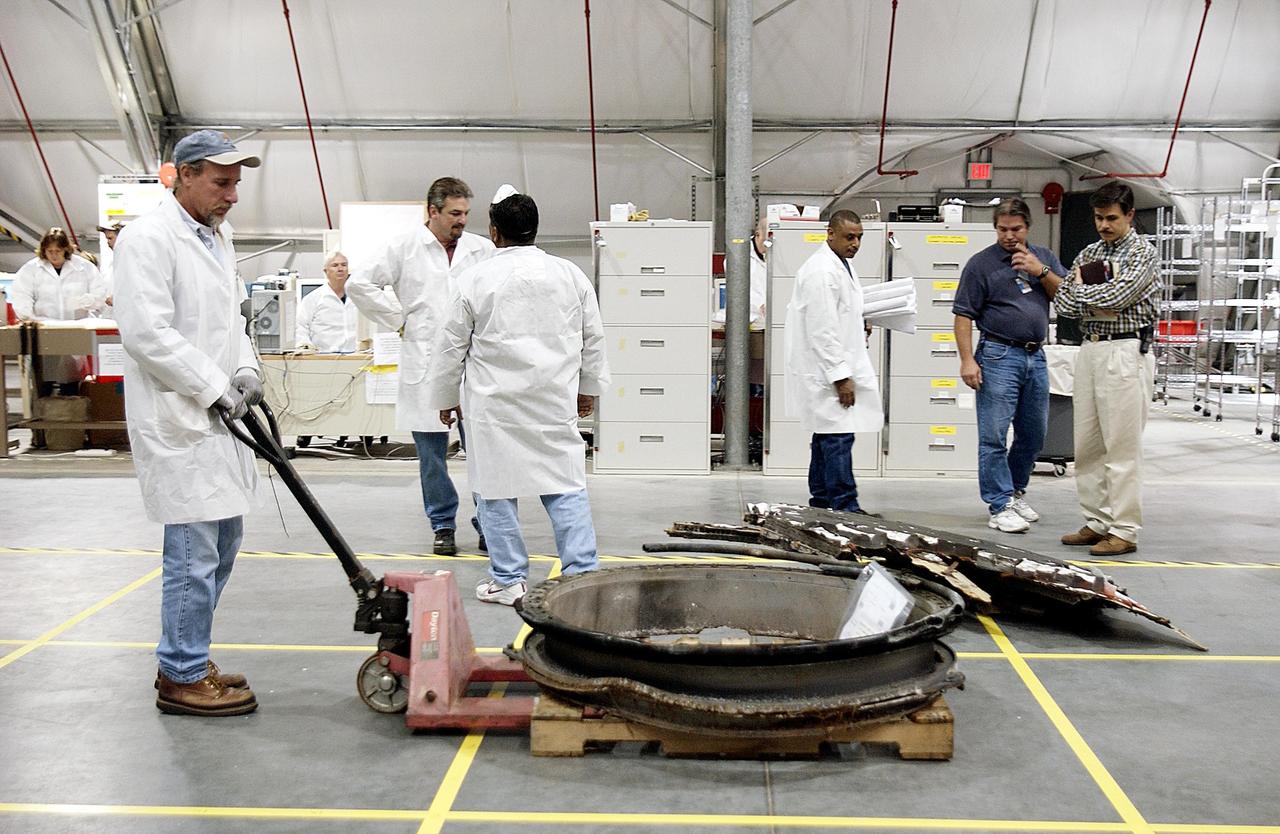
KENNEDY SPACE CENTER, FLA. -- Members of the Columbia Reconstruction Project Team move a piece of Columbia debris across the grid in the RLV Hangar. The team is examining Columbia materials and will attempt to reconstruct the orbiter as part of the investigation into the accident that caused the destruction of Columbia and loss of its crew as it returned to Earth on mission STS-107.

CAPE CANAVERAL, Fla. – Emergency Response Team officers from the Protective Services branch of NASA's Kennedy Space Center in Florida move through a field on their way to an objective during a training exercise simulating a situation the team could confront at the center. Photo credit: NASA/Dan Casper
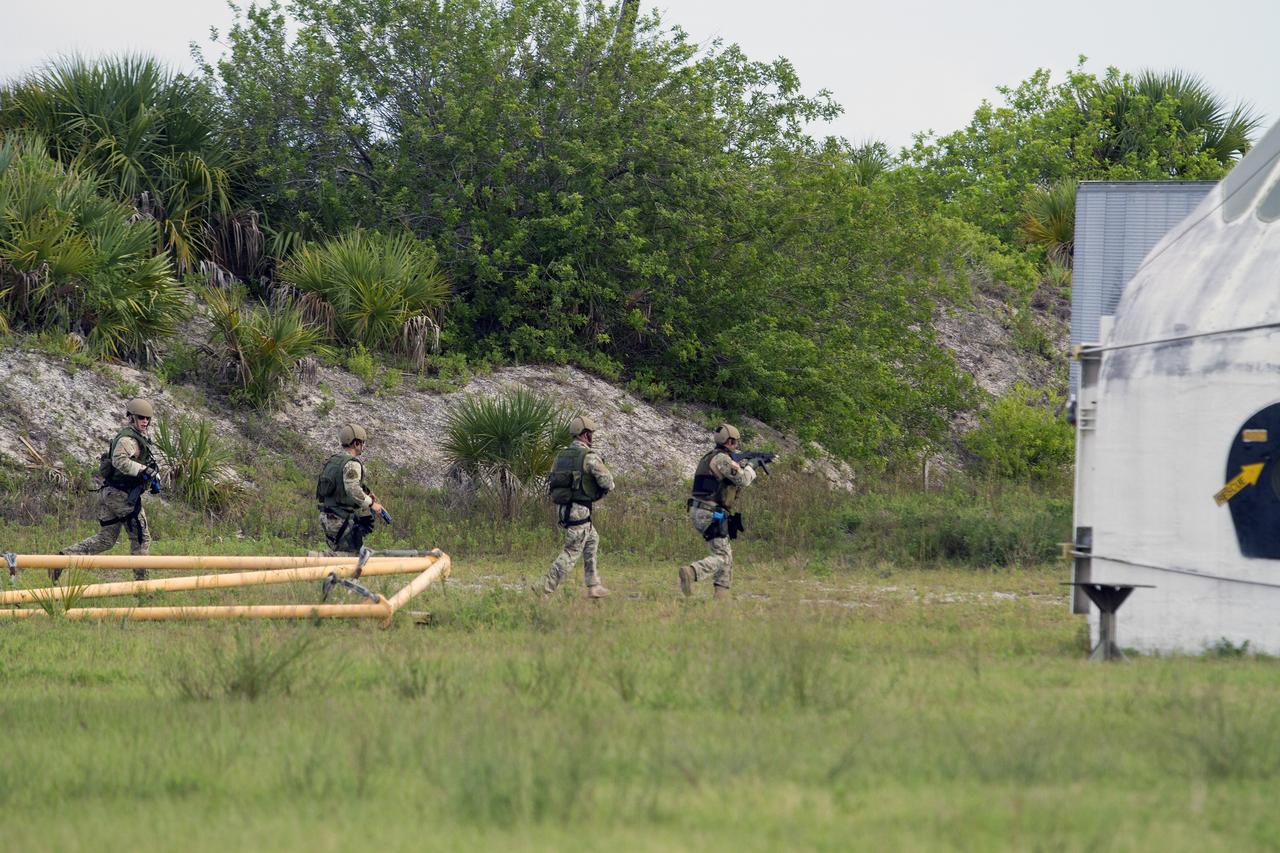
CAPE CANAVERAL, Fla. – Emergency Response Team officers from the Protective Services branch of NASA's Kennedy Space Center in Florida move toward an objective during a training exercise simulating a situation the team could confront at the center. Photo credit: NASA/Dan Casper
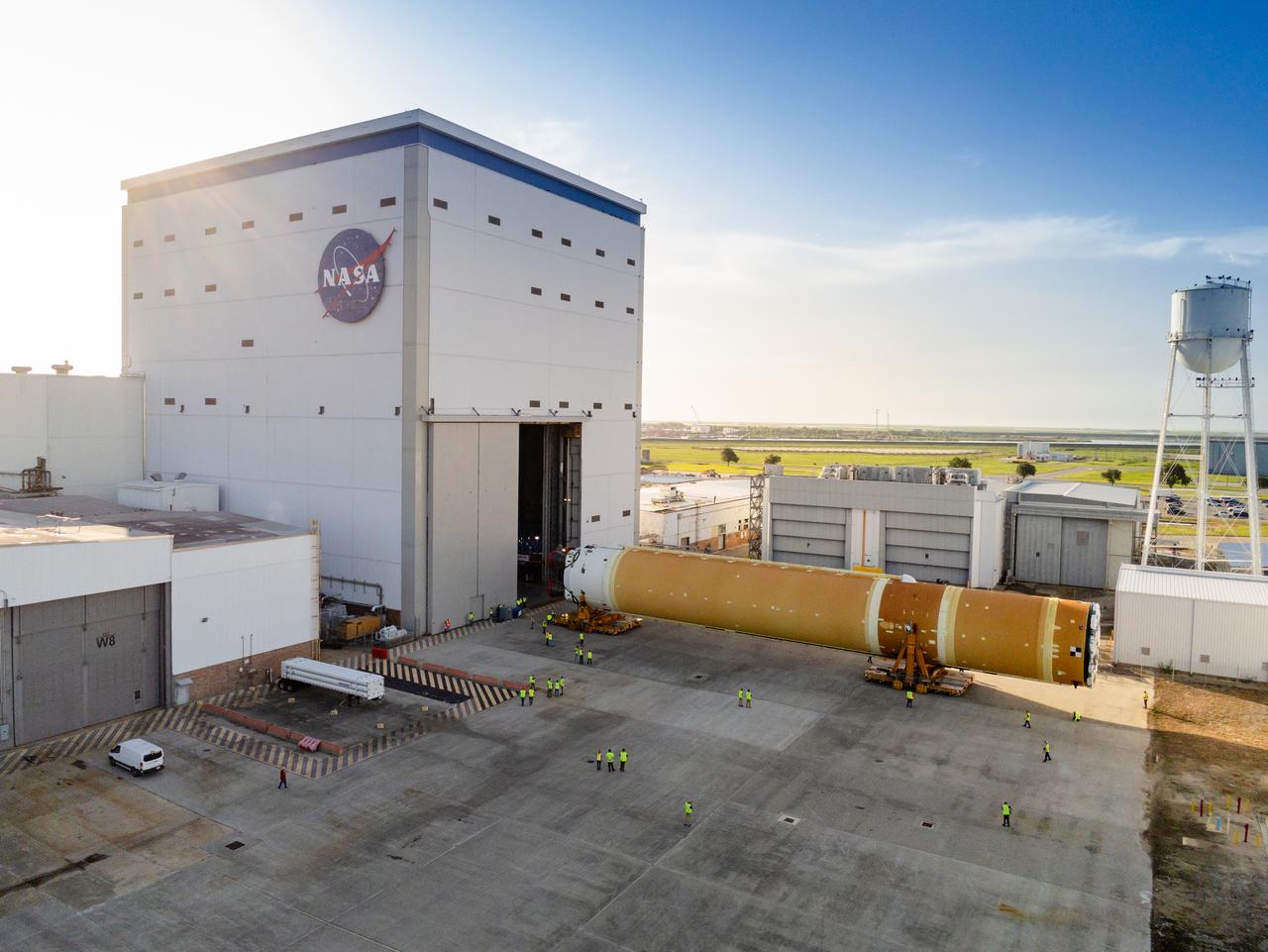
This photo shows NASA and Boeing, the SLS core stage lead contractor, preparing the SLS (Space Launch System) rocket core stage for shipment at NASA’s Michoud Assembly Facility in New Orleans. On July 6, NASA and Boeing moved the Artemis II rocket stage to Building 110. The move comes as teams prepare to roll the massive rocket stage with its four RS-25 engines to the agency’s Pegasus barge for delivery to NASA’s Kennedy Space Center in Florida in mid-July. Prior to the move, technicians began removing external access stands, or scaffolding, surrounding the core stage to assess the interior elements, including its complex avionics and flight propulsion systems. The stage is fully manufactured at NASA Michoud.
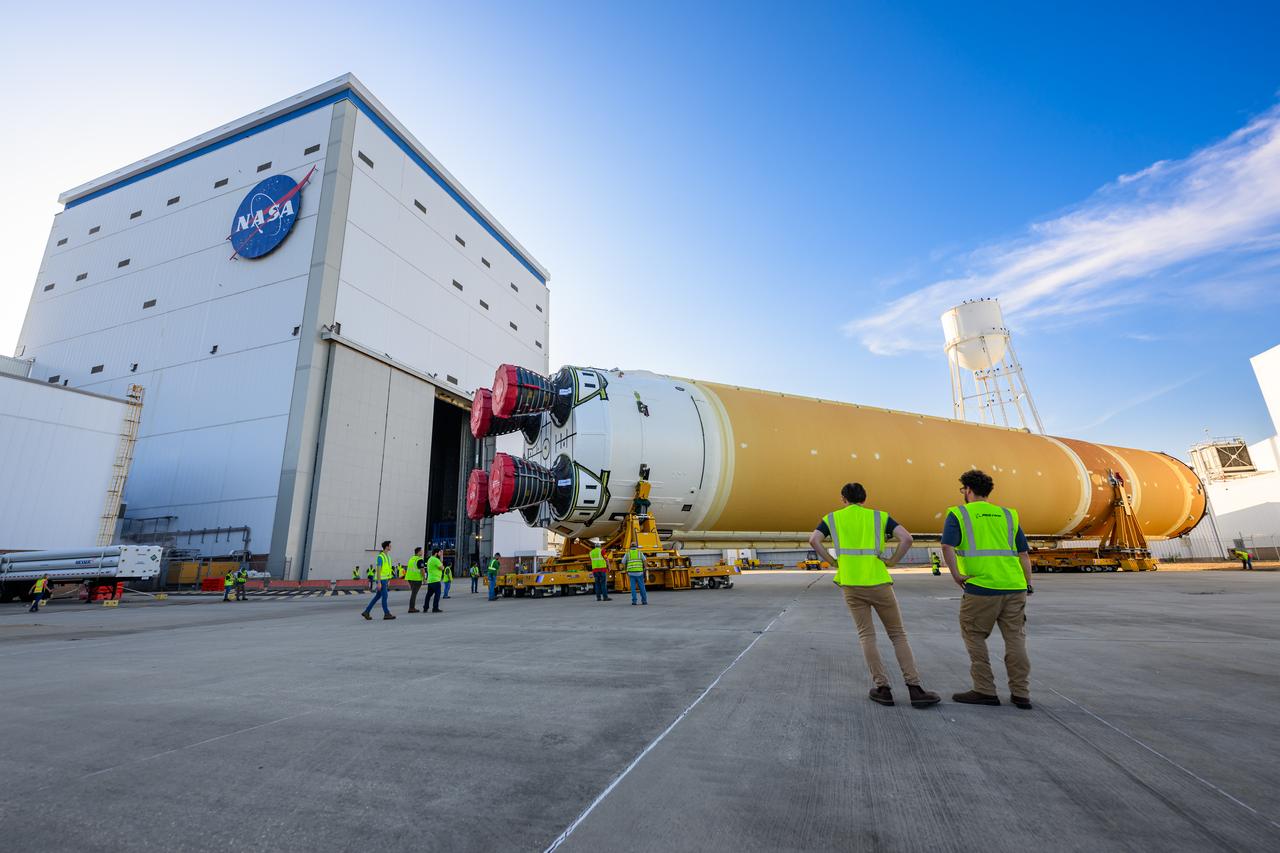
This photo shows NASA and Boeing, the SLS core stage lead contractor, preparing the SLS (Space Launch System) rocket core stage for shipment at NASA’s Michoud Assembly Facility in New Orleans. On July 6, NASA and Boeing moved the Artemis II rocket stage to Building 110. The move comes as teams prepare to roll the massive rocket stage with its four RS-25 engines to the agency’s Pegasus barge for delivery to NASA’s Kennedy Space Center in Florida in mid-July. Prior to the move, technicians began removing external access stands, or scaffolding, surrounding the core stage to assess the interior elements, including its complex avionics and flight propulsion systems. The stage is fully manufactured at NASA Michoud.
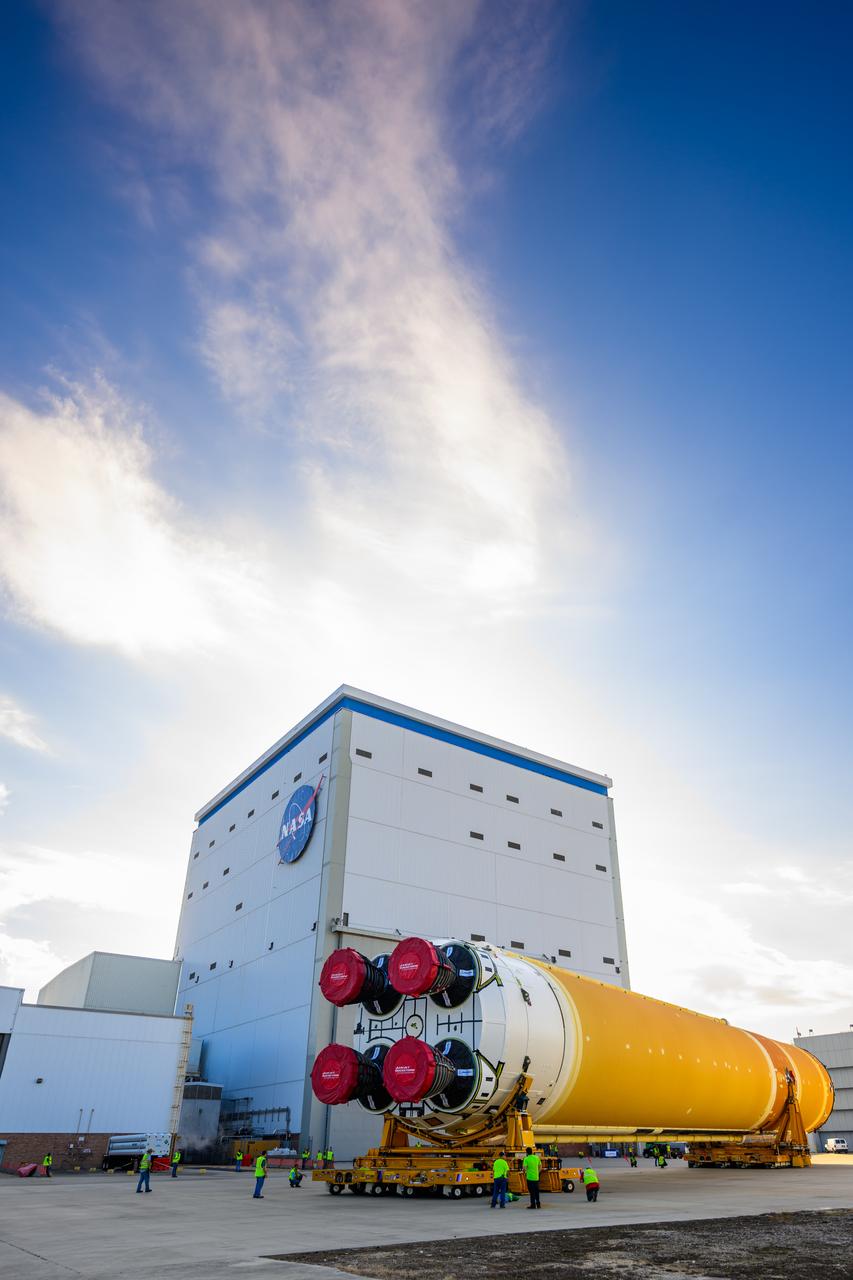
This photo shows NASA and Boeing, the SLS core stage lead contractor, preparing the SLS (Space Launch System) rocket core stage for shipment at NASA’s Michoud Assembly Facility in New Orleans. On July 6, NASA and Boeing moved the Artemis II rocket stage to Building 110. The move comes as teams prepare to roll the massive rocket stage with its four RS-25 engines to the agency’s Pegasus barge for delivery to NASA’s Kennedy Space Center in Florida in mid-July. Prior to the move, technicians began removing external access stands, or scaffolding, surrounding the core stage to assess the interior elements, including its complex avionics and flight propulsion systems. The stage is fully manufactured at NASA Michoud.

This beautiful dune field is located along the western margin of Hellas Planitia, the floor of a giant depression in the Southern Hemisphere of Mars. Scientists on the HiRISE team take multiple pictures of the same dune fields on the Red Planet to see if they can detect subtle changes that would indicate if the dunes are moving. Some Martian dune fields do shift and move under the present day environmental conditions, but at a rate that is typically much slower than dunes move on Earth. https://photojournal.jpl.nasa.gov/catalog/PIA25704
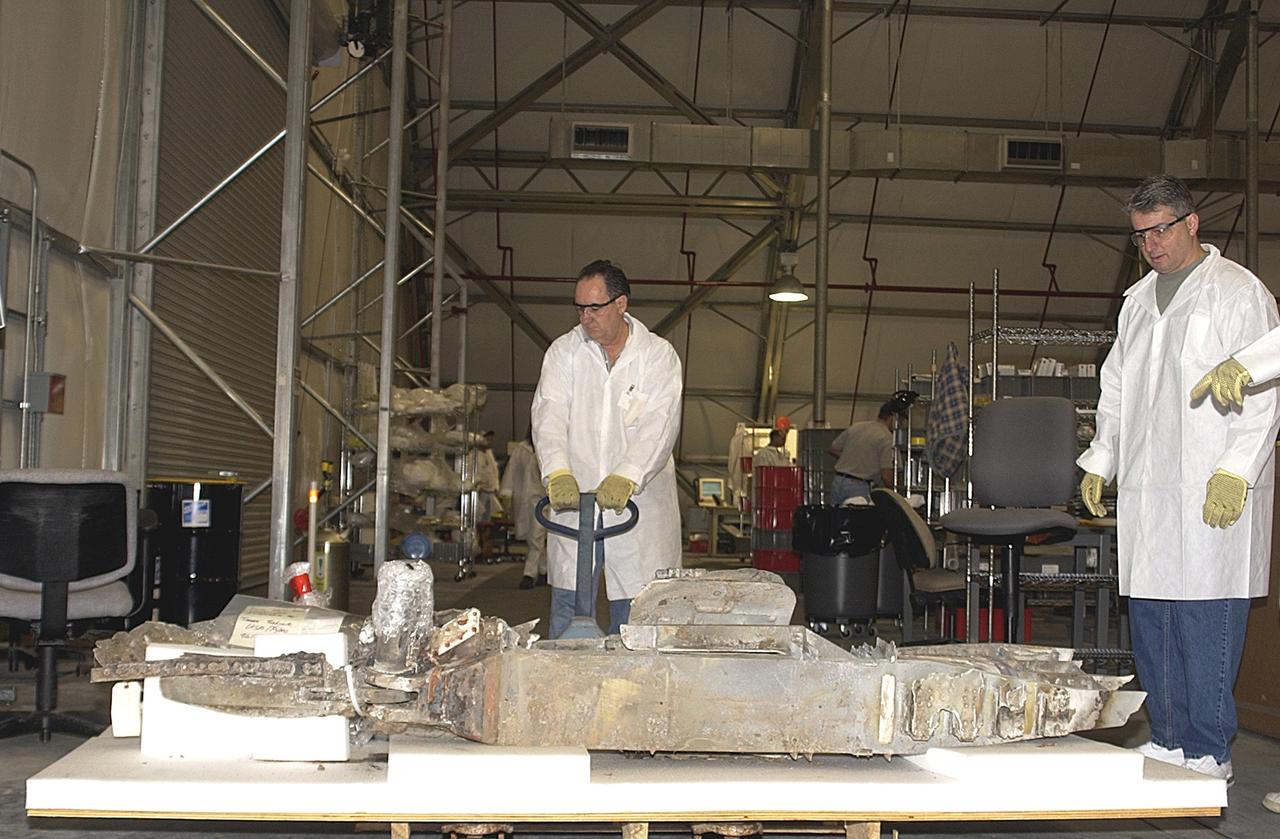
KENNEDY SPACE CENTER, Fla. - Members of the Columbia Reconstruction Project Team help move newly arrived pieces of Columbia debris into the RLV Hangar. There the team is identifying pieces and placing them on a floor grid in a configuration of the orbiter. The team will attempt to reconstruct the bottom of the orbiter as part of the investigation into the accident that caused the destruction of Columbia and loss of its crew as it returned to Earth on mission STS-107. To date, 35,319 pieces have been shipped to KSC; 1,218 are identified and placed on the grid.
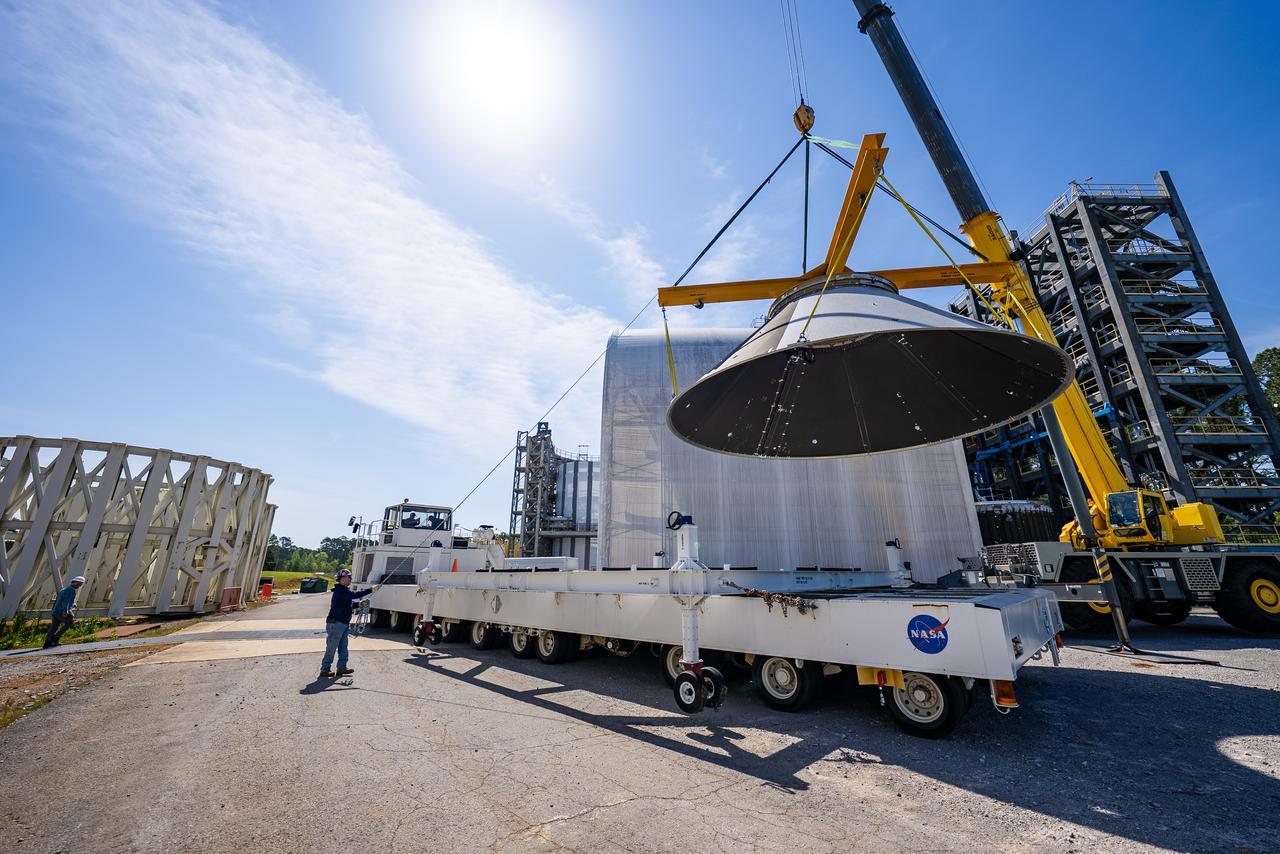
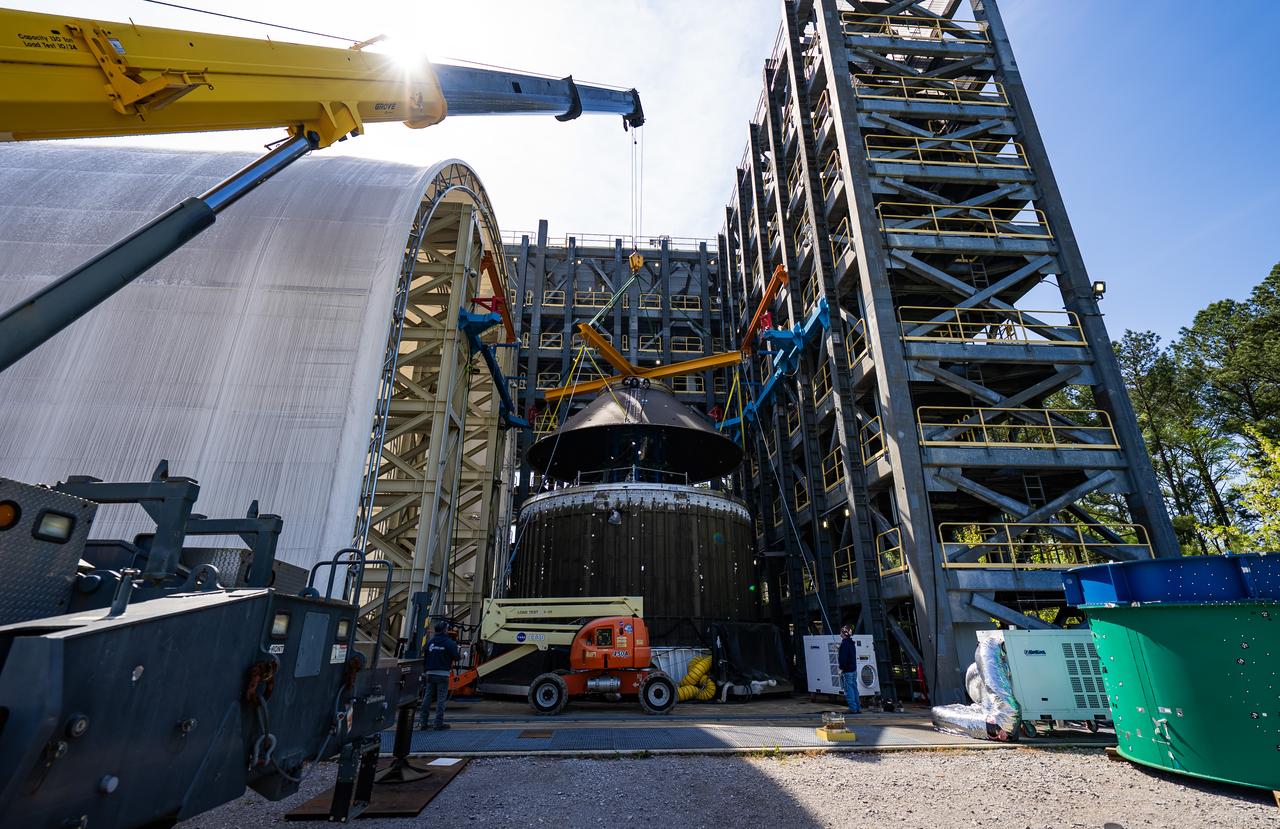
Technicians at NASA’s Marshall Space Flight Center in Huntsville, Alabama, are seen in these images taken April 17, 2025, moving the payload adapter test article from Building 4697 to Building 4705 for storage. This move marks the end of structural testing for the test article. Next, engineers will complete the qualification article and conduct additional for further testing before building the final flight hardware. Manufactured at Marshall, the test article underwent extensive and rigorous testing to validate the design before engineers finalized the configuration for the flight article. The newly completed composite payload adapter is an evolution from the Orion stage adapter to be used in the upgraded Block 1B configuration of the SLS (Space Launch System) rocket, debuting with Artemis IV.
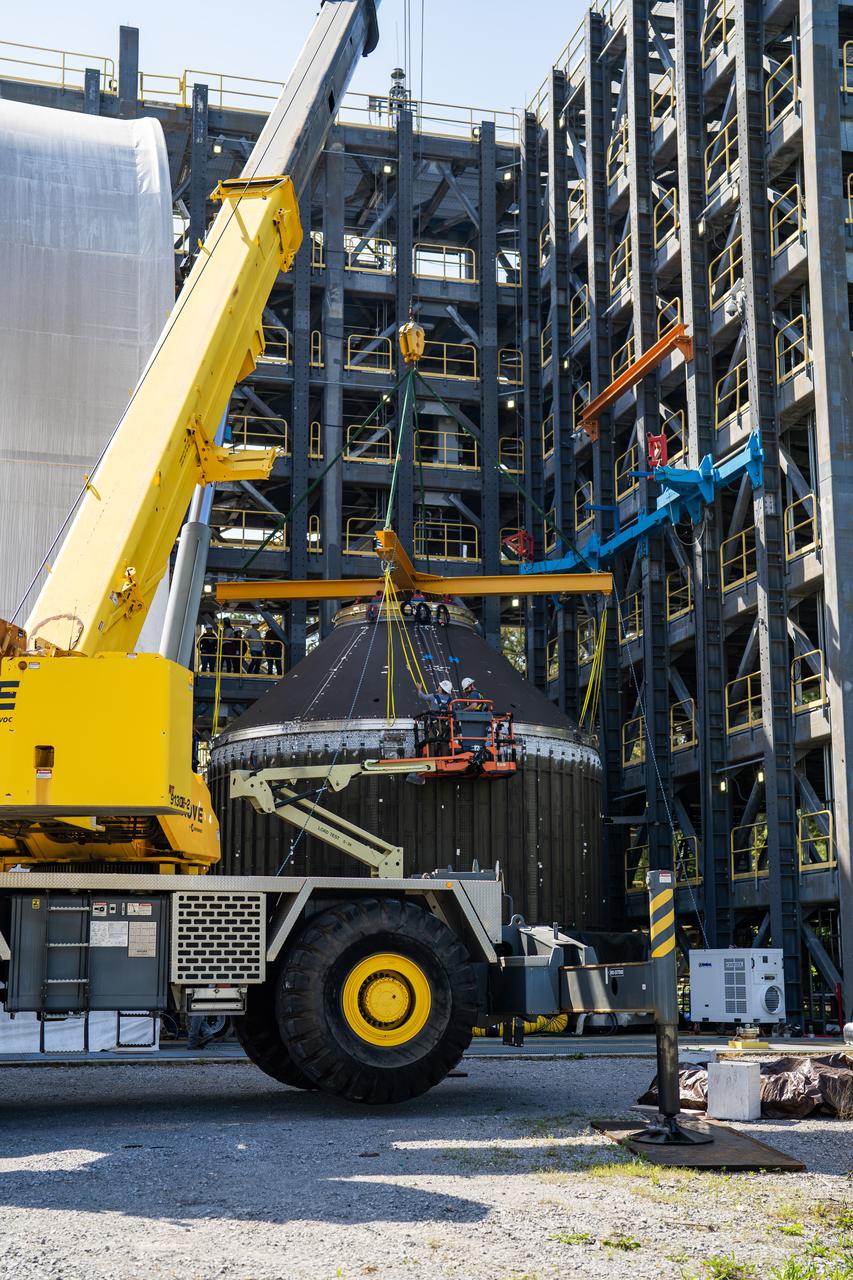
Technicians at NASA’s Marshall Space Flight Center in Huntsville, Alabama, are seen in these images taken April 17, 2025, moving the payload adapter test article from Building 4697 to Building 4705 for storage. This move marks the end of structural testing for the test article. Next, engineers will complete the qualification article and conduct additional for further testing before building the final flight hardware. Manufactured at Marshall, the test article underwent extensive and rigorous testing to validate the design before engineers finalized the configuration for the flight article. The newly completed composite payload adapter is an evolution from the Orion stage adapter to be used in the upgraded Block 1B configuration of the SLS (Space Launch System) rocket, debuting with Artemis IV.
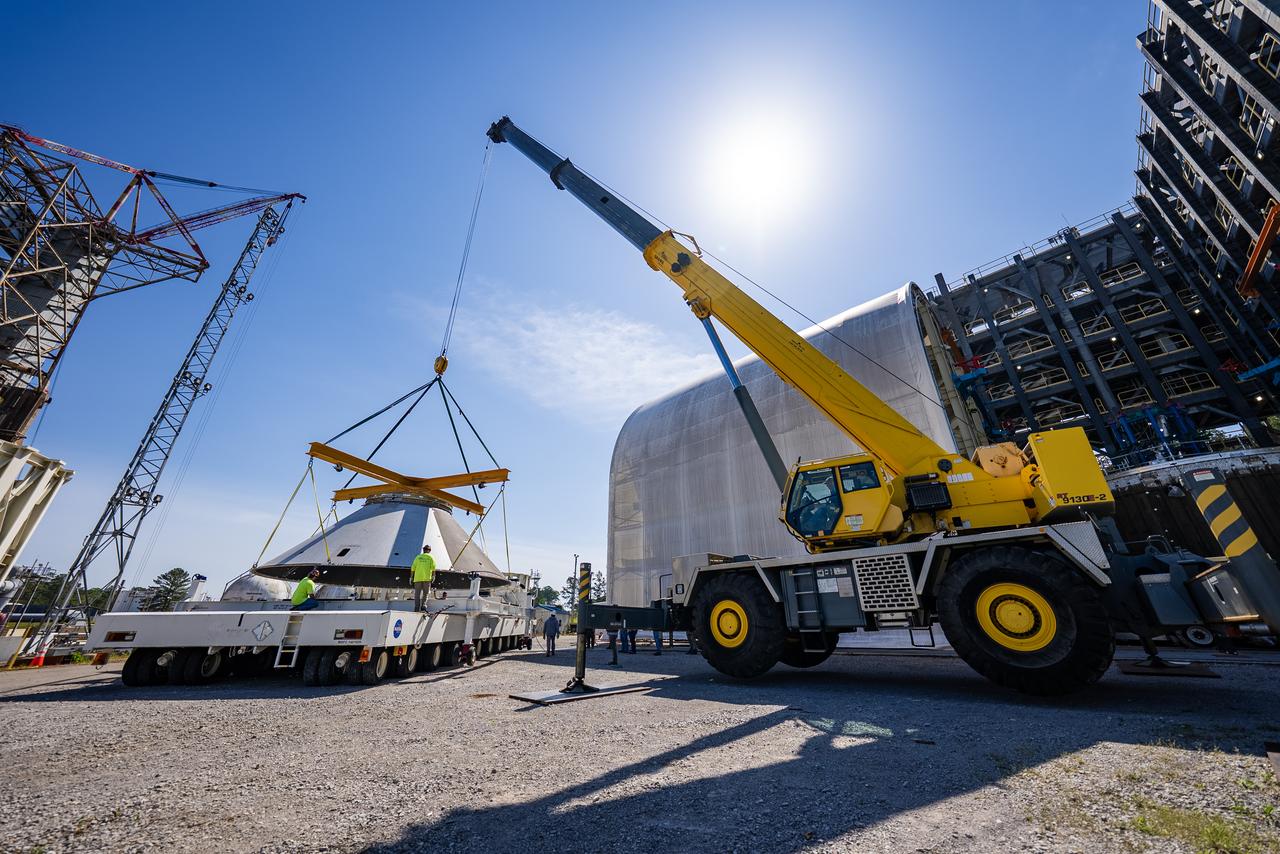
Technicians at NASA’s Marshall Space Flight Center in Huntsville, Alabama, are seen in these images taken April 17, 2025, moving the payload adapter test article from Building 4697 to Building 4705 for storage. This move marks the end of structural testing for the test article. Next, engineers will complete the qualification article and conduct additional for further testing before building the final flight hardware. Manufactured at Marshall, the test article underwent extensive and rigorous testing to validate the design before engineers finalized the configuration for the flight article. The newly completed composite payload adapter is an evolution from the Orion stage adapter to be used in the upgraded Block 1B configuration of the SLS (Space Launch System) rocket, debuting with Artemis IV.

Technicians at NASA’s Marshall Space Flight Center in Huntsville, Alabama, are seen in these images taken April 17, 2025, moving the payload adapter test article from Building 4697 to Building 4705 for storage. This move marks the end of structural testing for the test article. Next, engineers will complete the qualification article and conduct additional for further testing before building the final flight hardware. Manufactured at Marshall, the test article underwent extensive and rigorous testing to validate the design before engineers finalized the configuration for the flight article. The newly completed composite payload adapter is an evolution from the Orion stage adapter to be used in the upgraded Block 1B configuration of the SLS (Space Launch System) rocket, debuting with Artemis IV.
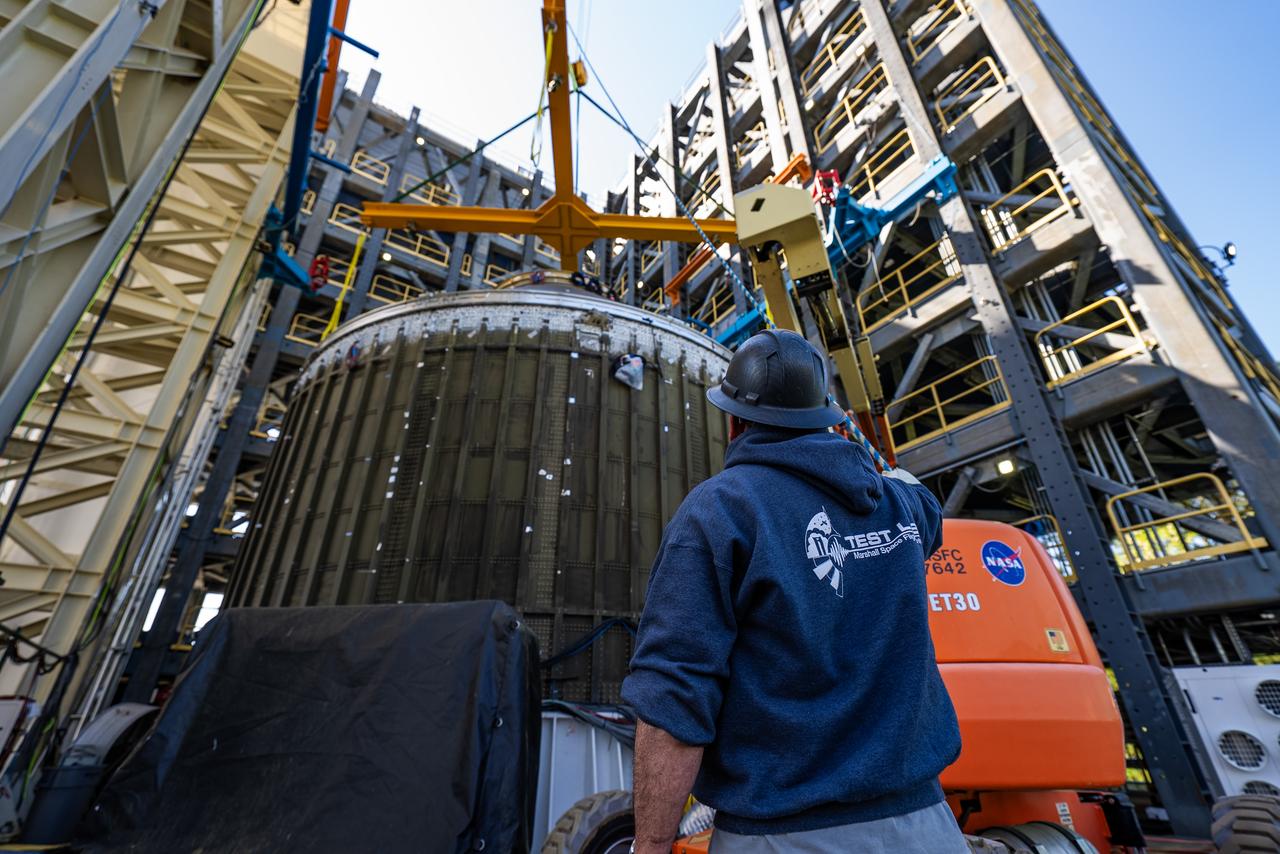
Technicians at NASA’s Marshall Space Flight Center in Huntsville, Alabama, are seen in these images taken April 17, 2025, moving the payload adapter test article from Building 4697 to Building 4705 for storage. This move marks the end of structural testing for the test article. Next, engineers will complete the qualification article and conduct additional for further testing before building the final flight hardware. Manufactured at Marshall, the test article underwent extensive and rigorous testing to validate the design before engineers finalized the configuration for the flight article. The newly completed composite payload adapter is an evolution from the Orion stage adapter to be used in the upgraded Block 1B configuration of the SLS (Space Launch System) rocket, debuting with Artemis IV.
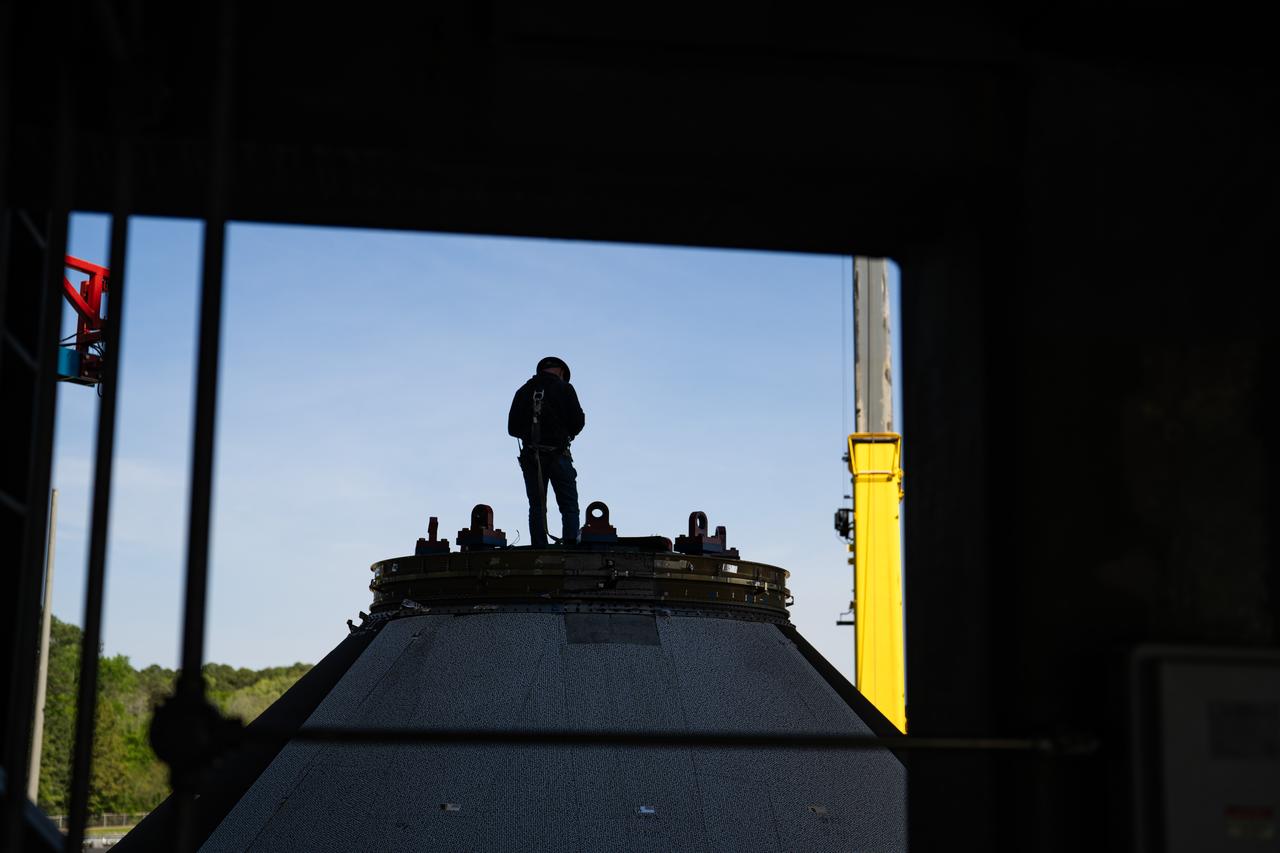
Technicians at NASA’s Marshall Space Flight Center in Huntsville, Alabama, are seen in these images taken April 17, 2025, moving the payload adapter test article from Building 4697 to Building 4705 for storage. This move marks the end of structural testing for the test article. Next, engineers will complete the qualification article and conduct additional for further testing before building the final flight hardware. Manufactured at Marshall, the test article underwent extensive and rigorous testing to validate the design before engineers finalized the configuration for the flight article. The newly completed composite payload adapter is an evolution from the Orion stage adapter to be used in the upgraded Block 1B configuration of the SLS (Space Launch System) rocket, debuting with Artemis IV.
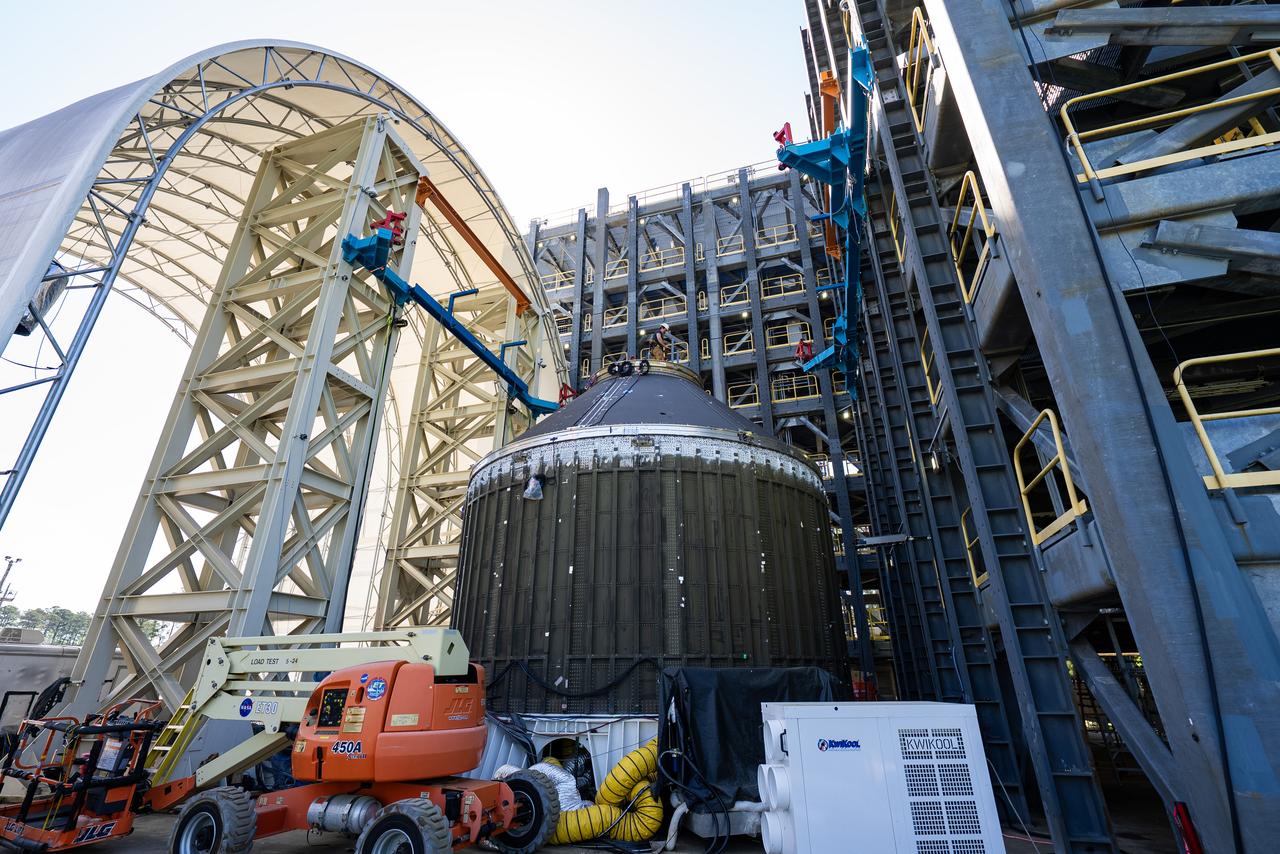
Technicians at NASA’s Marshall Space Flight Center in Huntsville, Alabama, are seen in these images taken April 17, 2025, moving the payload adapter test article from Building 4697 to Building 4705 for storage. This move marks the end of structural testing for the test article. Next, engineers will complete the qualification article and conduct additional for further testing before building the final flight hardware. Manufactured at Marshall, the test article underwent extensive and rigorous testing to validate the design before engineers finalized the configuration for the flight article. The newly completed composite payload adapter is an evolution from the Orion stage adapter to be used in the upgraded Block 1B configuration of the SLS (Space Launch System) rocket, debuting with Artemis IV.
Technicians at NASA’s Marshall Space Flight Center in Huntsville, Alabama, are seen in these images taken April 17, 2025, moving the payload adapter test article from Building 4697 to Building 4705 for storage. This move marks the end of structural testing for the test article. Next, engineers will complete the qualification article and conduct additional for further testing before building the final flight hardware. Manufactured at Marshall, the test article underwent extensive and rigorous testing to validate the design before engineers finalized the configuration for the flight article. The newly completed composite payload adapter is an evolution from the Orion stage adapter to be used in the upgraded Block 1B configuration of the SLS (Space Launch System) rocket, debuting with Artemis IV.
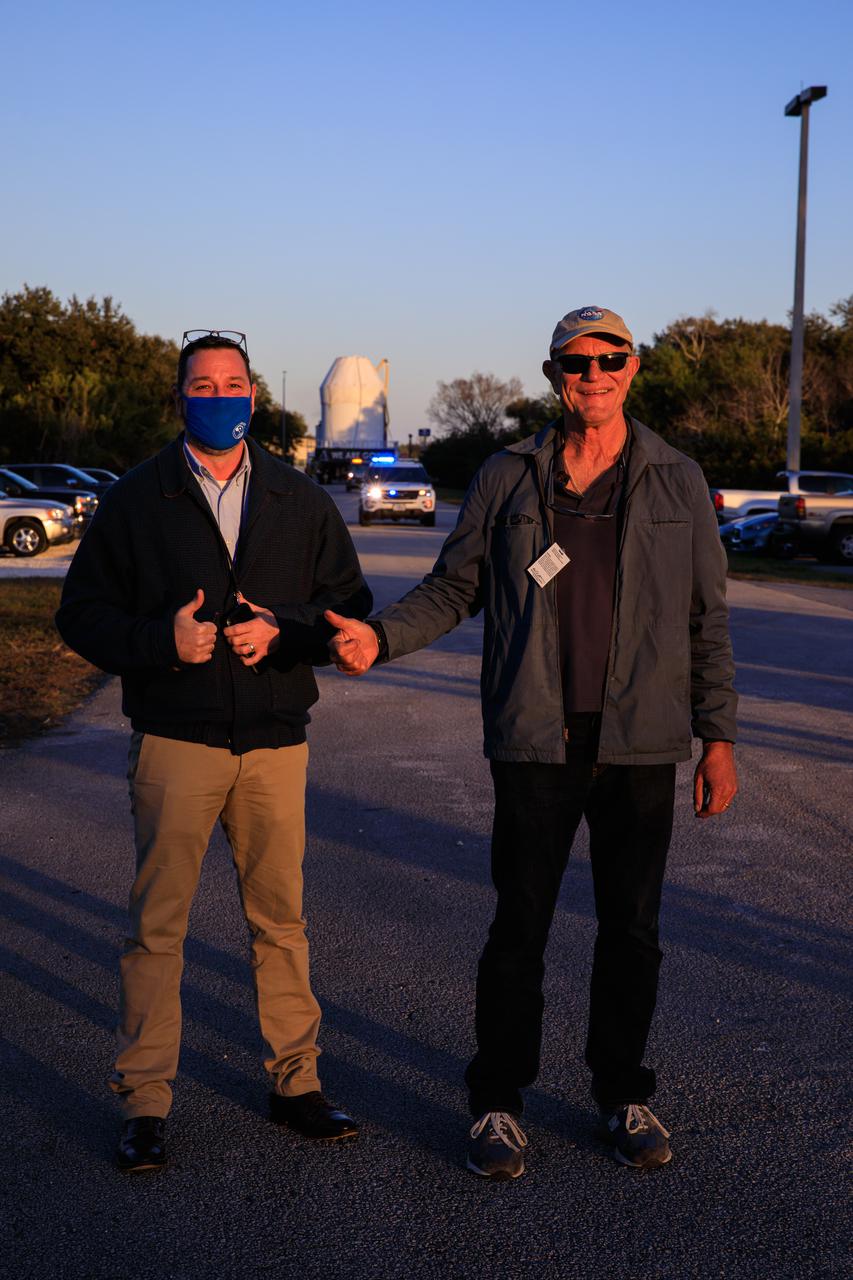
Secured atop a transport vehicle, Orion moves along the route to the Multi-Payload Processing Facility (MPPF) on Jan. 16, 2021, after departing from the Neil Armstrong Operations and Checkout Building at NASA’s Kennedy Space Center in Florida. Watching Orion move, from left are Mike Collins, NASA Operations manager for Spacecraft Offline Operations at Kennedy, and Skip Williams, operations manager for the MPPF spacecraft offline element integration team. In the MPPF, Orion will undergo processing with the Exploration Ground Systems team taking over ground processing ahead of the Artemis I launch.
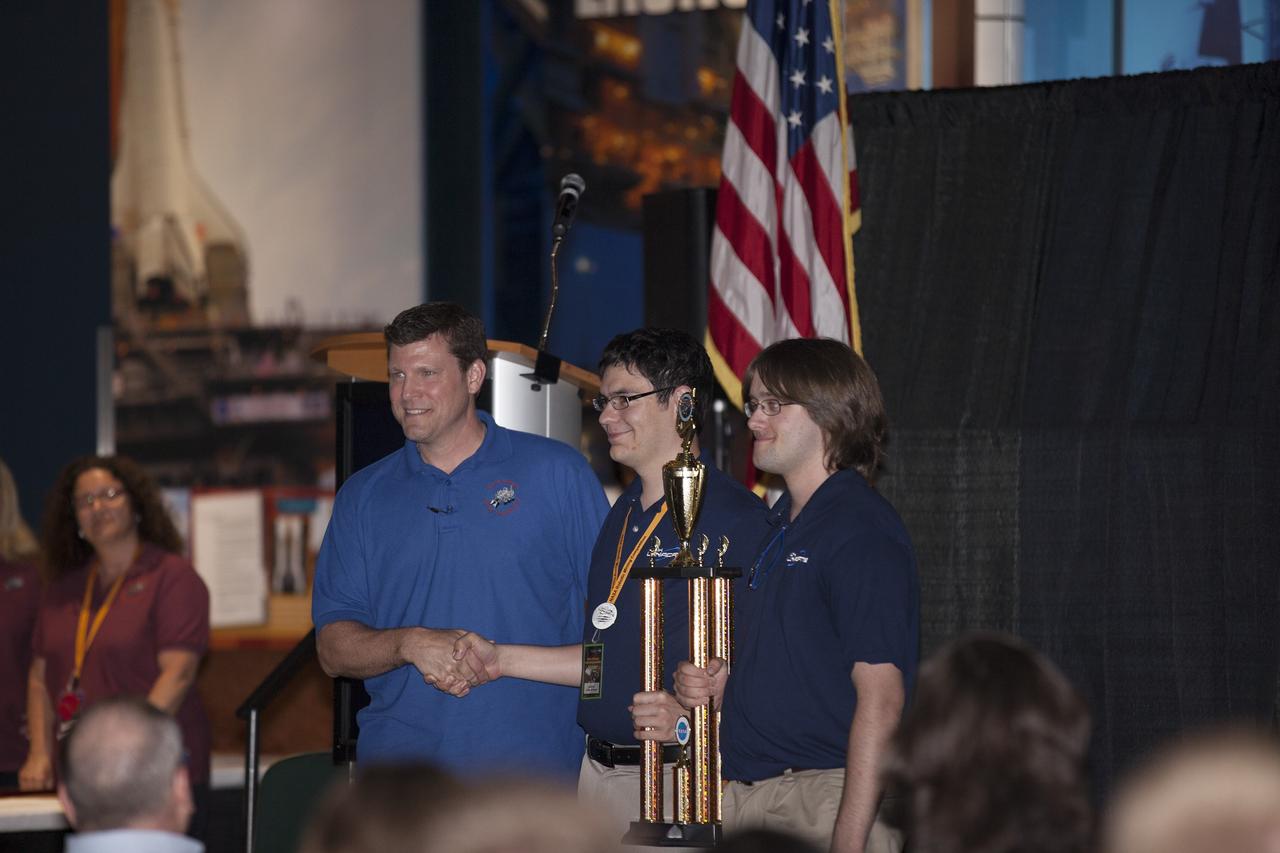
CAPE CANAVERAL, Fla. -- Kennedy Space Center engineer Marc Seibert presents the Communication Award to the University of New Hampshire team members during NASA's 2014 Robotic Mining Competition award ceremony inside the Space Shuttle Atlantis attraction at the Kennedy Space Center Visitor Complex in Florida. The team moved 10 kilograms of simulated Martian soil with its robot while using the least amount of communication power. More than 35 teams from colleges and universities around the U.S. designed and built remote-controlled robots for the mining competition. The competition is a NASA Human Exploration and Operations Mission Directorate project designed to engage and retain students in science, technology, engineering and mathematics, or STEM, fields by expanding opportunities for student research and design. Teams use their remote-controlled robotics to maneuver and dig in a supersized sandbox filled with a crushed material that has characteristics similar to Martian soil. The objective of the challenge is to see which team’s robot can collect and move the most regolith within a specified amount of time. The competition includes on-site mining, writing a systems engineering paper, performing outreach projects for K-12 students, slide presentation and demonstrations, and team spirit. For more information, visit www.nasa.gov/nasarmc. Photo credit: NASA/Kim Shiflett
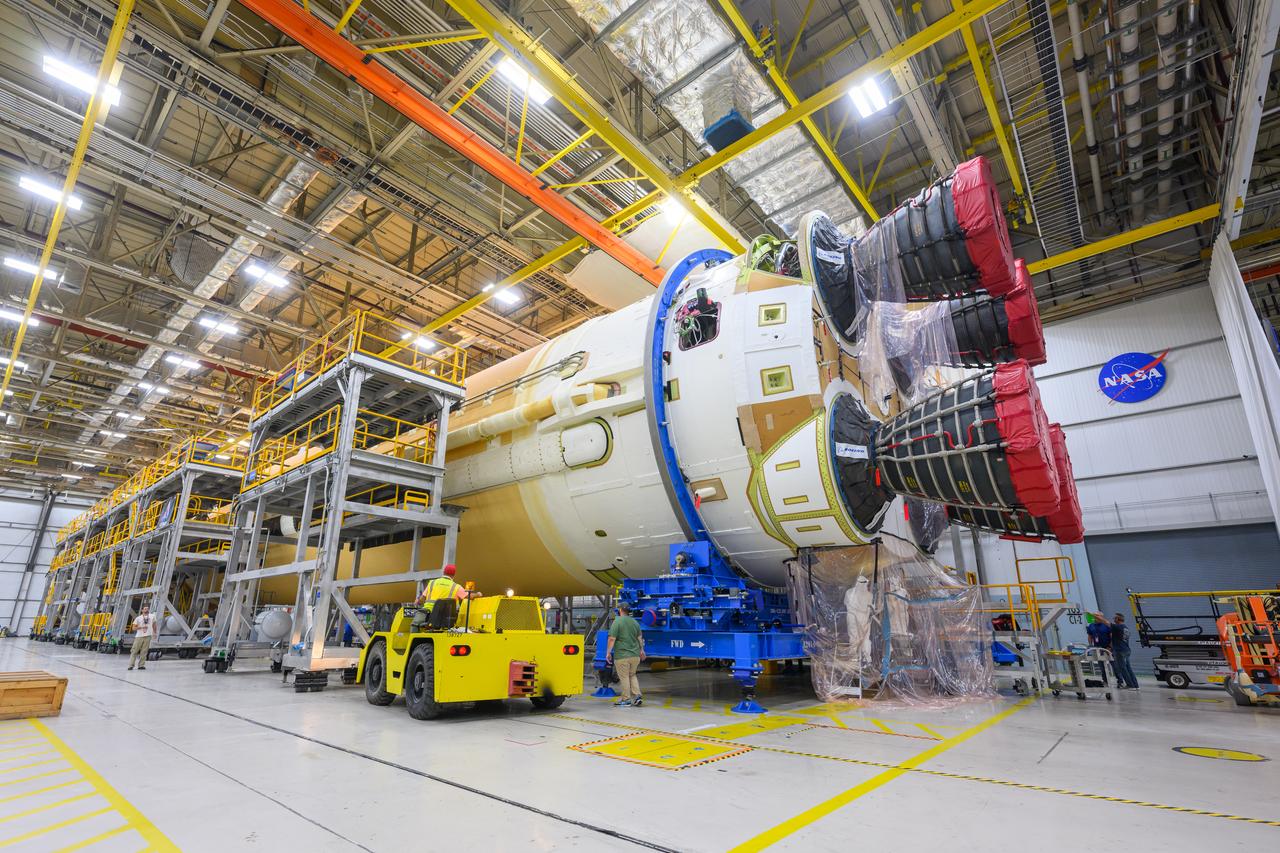
Teams at NASA’s Michoud Assembly Facility in New Orleans are preparing the core stage of the agency’s SLS (Space Launch System) for shipment to the agency’s Kennedy Space Center in Florida. The 212-foot-tall core stage and its four RS-25 engines will help power Artemis II, the first crewed mission of NASA’s Artemis campaign. Crews removed the external access stands, or scaffolding, in preparation for moving the rocket hardware to another area of the facility.
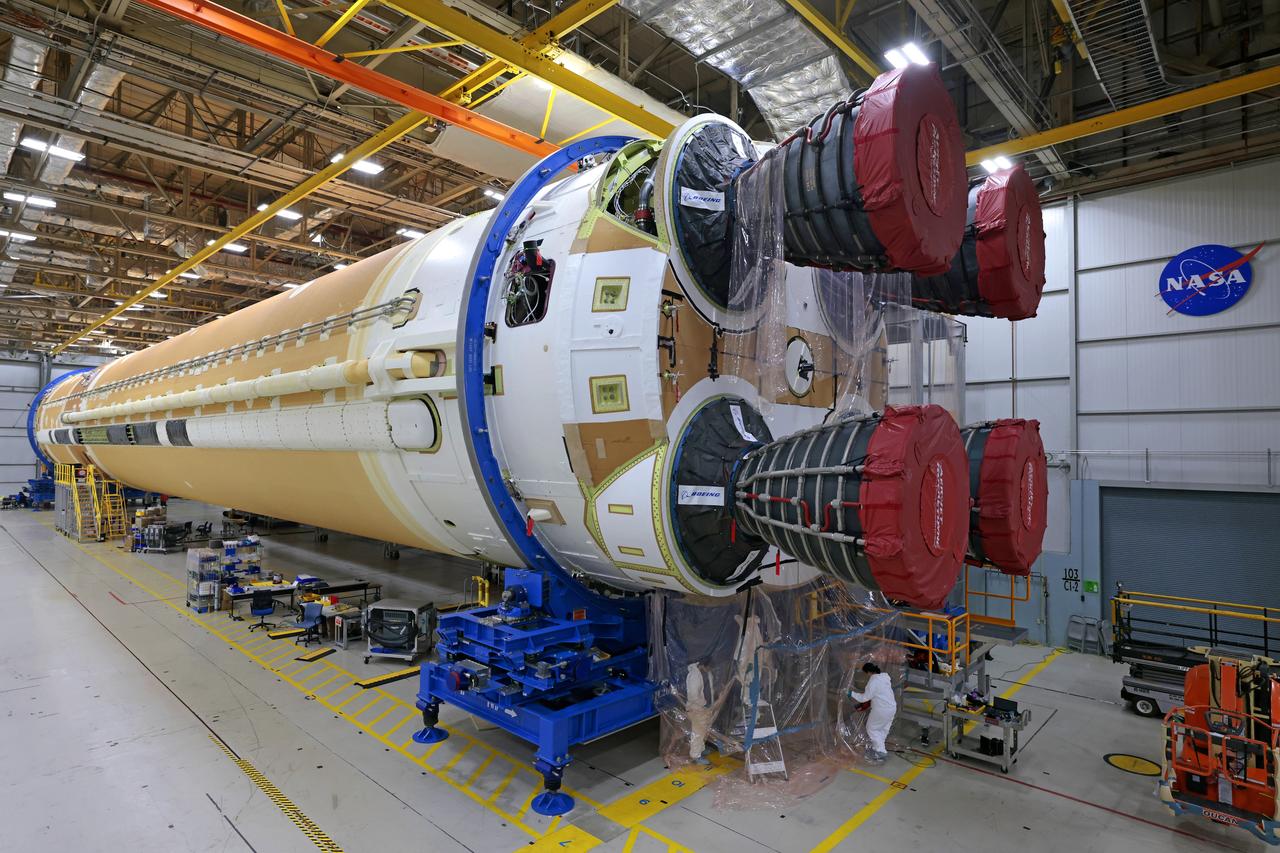
Teams at NASA’s Michoud Assembly Facility in New Orleans are preparing the core stage of the agency’s SLS (Space Launch System) for shipment to the agency’s Kennedy Space Center in Florida. The 212-foot-tall core stage and its four RS-25 engines will help power Artemis II, the first crewed mission of NASA’s Artemis campaign. Crews removed the external access stands, or scaffolding, in preparation for moving the rocket hardware to another area of the facility. Image credit: NASA/Michael DeMocker
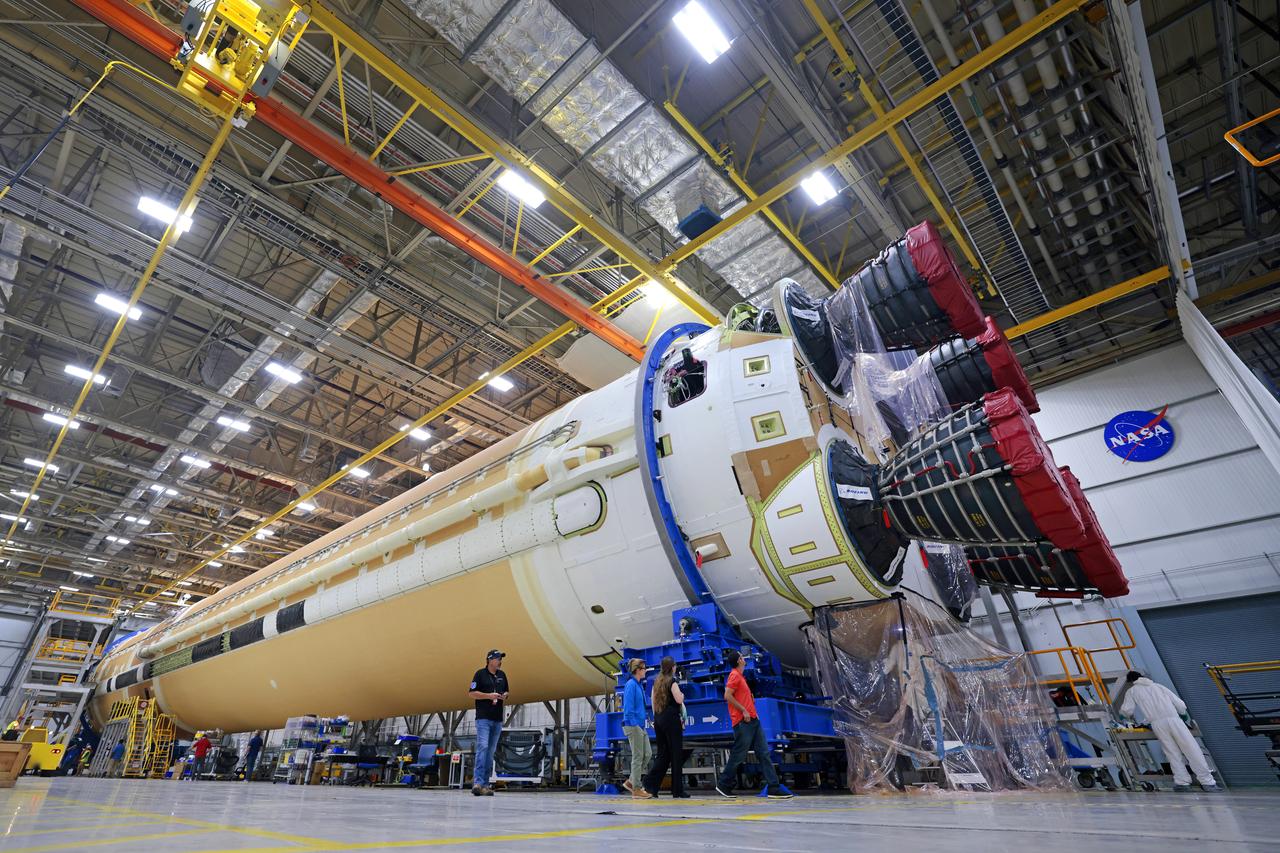
Teams at NASA’s Michoud Assembly Facility in New Orleans are preparing the core stage of the agency’s SLS (Space Launch System) for shipment to the agency’s Kennedy Space Center in Florida. The 212-foot-tall core stage and its four RS-25 engines will help power Artemis II, the first crewed mission of NASA’s Artemis campaign. Crews removed the external access stands, or scaffolding, in preparation for moving the rocket hardware to another area of the facility. Image credit: NASA/Michael DeMocker
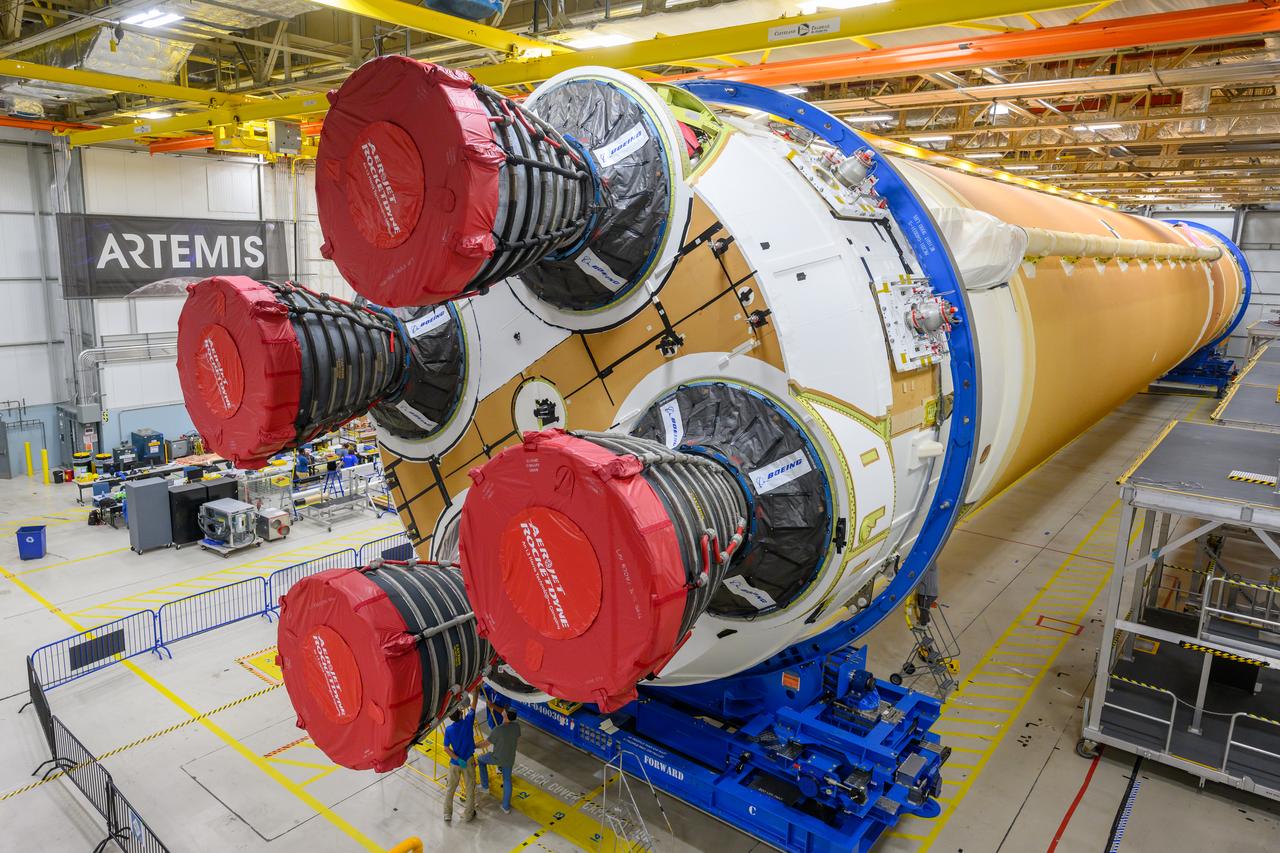
Teams at NASA’s Michoud Assembly Facility in New Orleans are preparing the core stage of the agency’s SLS (Space Launch System) for shipment to the agency’s Kennedy Space Center in Florida. The 212-foot-tall core stage and its four RS-25 engines will help power Artemis II, the first crewed mission of NASA’s Artemis campaign. Crews removed the external access stands, or scaffolding, in preparation for moving the rocket hardware to another area of the facility.
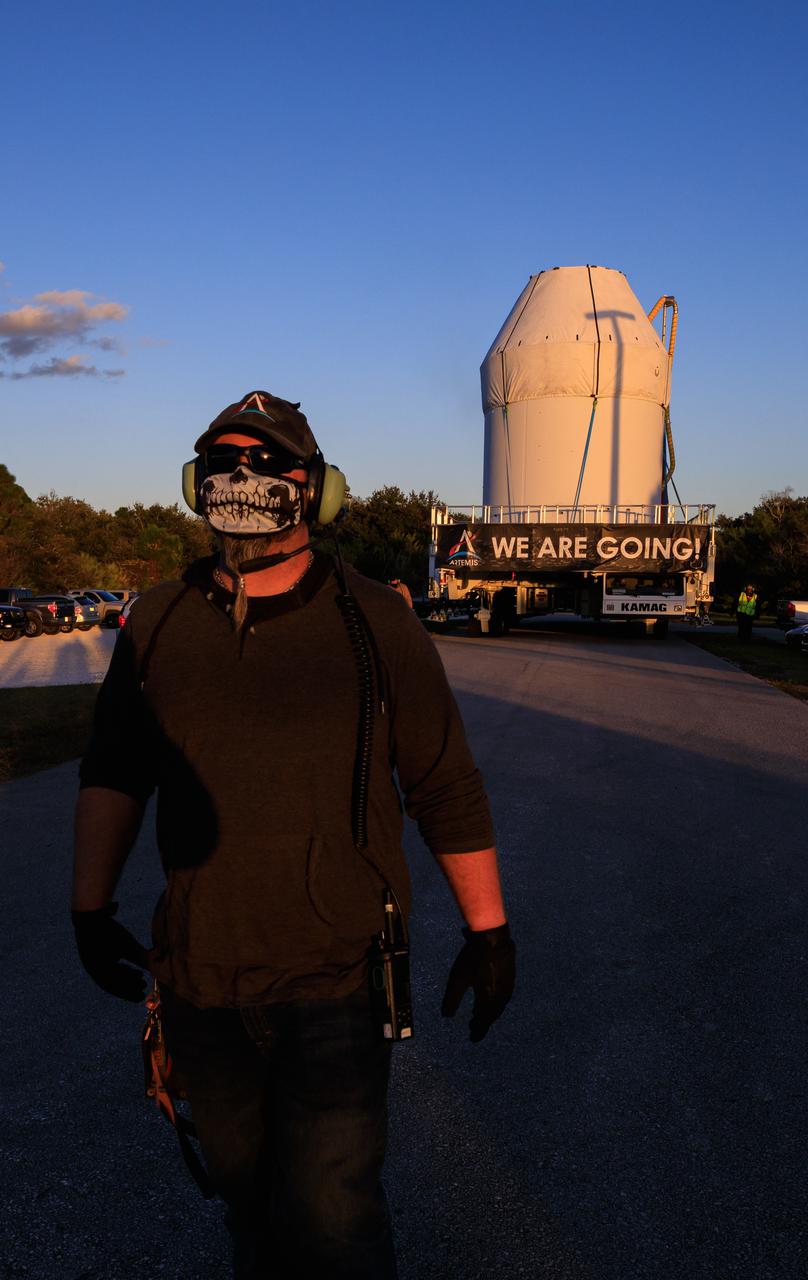
Secured atop a transport vehicle, Orion moves along the route to the Multi-Payload Processing Facility (MPPF) on Jan. 16, 2021, after departing from the Neil Armstrong Operations and Checkout Building at NASA’s Kennedy Space Center in Florida. Jason Parrish, a mechanical technician, Crawler Transporter Systems, with Jacobs, is one of the workers assisting with the move. Inside the MPPF, Orion will undergo processing with the Exploration Ground Systems team taking over ground processing ahead of the Artemis I launch.
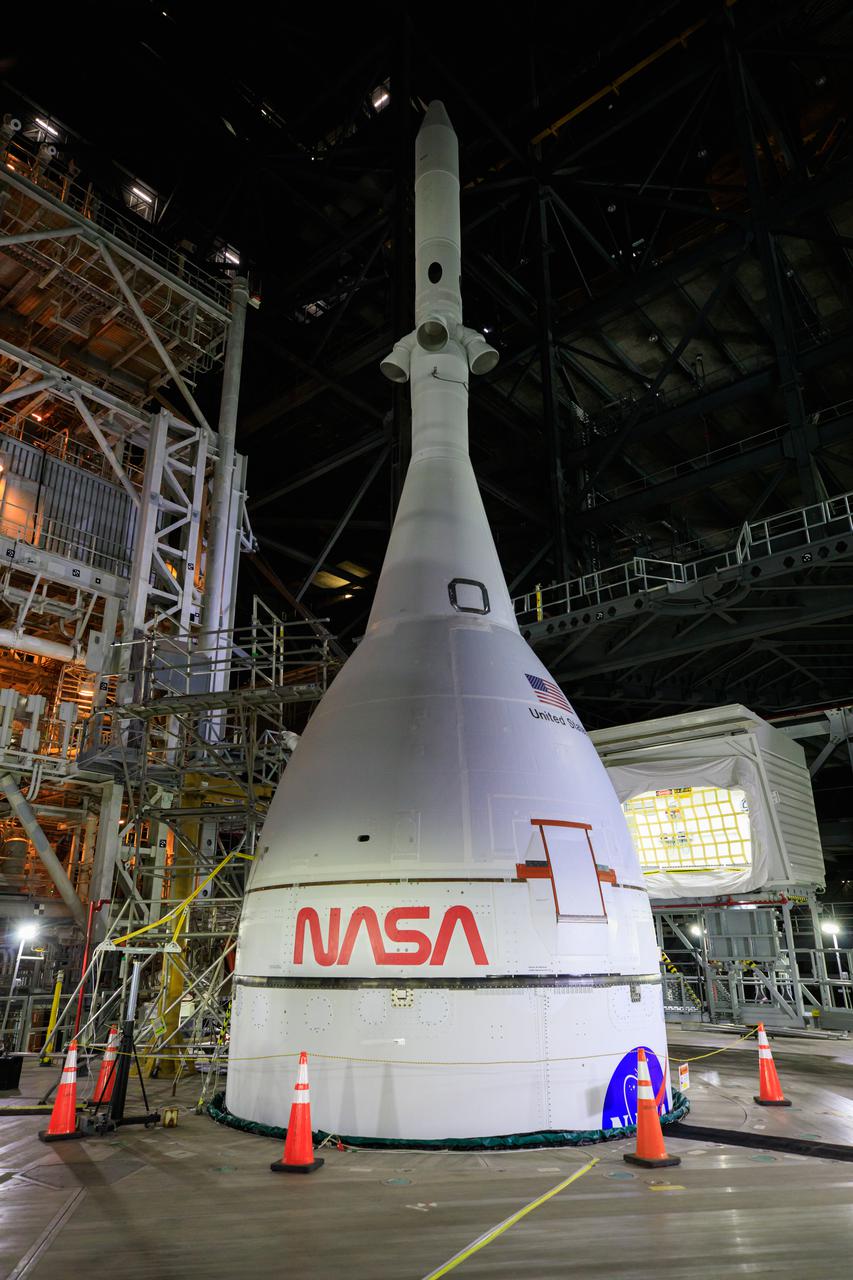
Teams retracted the first two of 20 platforms surrounding the Space Launch System rocket and Orion spacecraft that allow work on the integrated system in High Bay 3 inside the Vehicle Assembly Building at NASA’s Kennedy Space Center in Florida. The first platforms to be retracted – which move like hydraulic kitchen drawers when moved – are those located near the launch abort system on Orion in preparation for rollout to Launch Complex 39B for the Artemis I wet dress rehearsal.
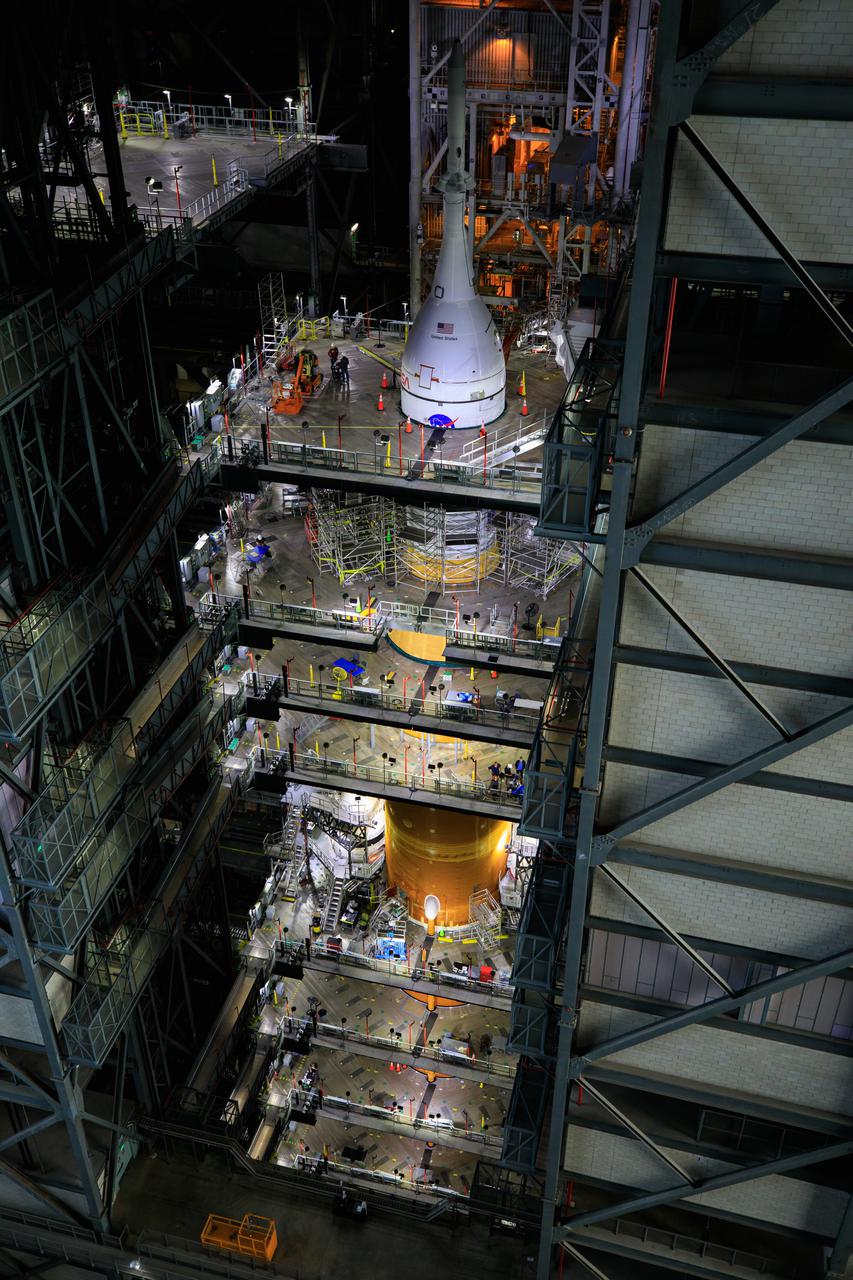
Teams retracted the first two of 20 platforms surrounding the Space Launch System rocket and Orion spacecraft that allow work on the integrated system in High Bay 3 inside the Vehicle Assembly Building at NASA’s Kennedy Space Center in Florida. The first platforms to be retracted – which move like hydraulic kitchen drawers when moved – are those located near the launch abort system on Orion in preparation for rollout to Launch Complex 39B for the Artemis I wet dress rehearsal.

On June 28, 2019, NASA's InSight lander used its robotic arm to move the support structure for its digging instrument, informally called the "mole." This view was captured by the Instrument Deployment Camera on the spacecraft's robotic arm. Lifting the support structure had been done in three steps, a little bit at a time, to ensure the mole wasn't pulled out of the soil. Moving the structure out of the way will give the InSight team a better look at the mole and allow them to try to help it dig. https://photojournal.jpl.nasa.gov/catalog/PIA23309
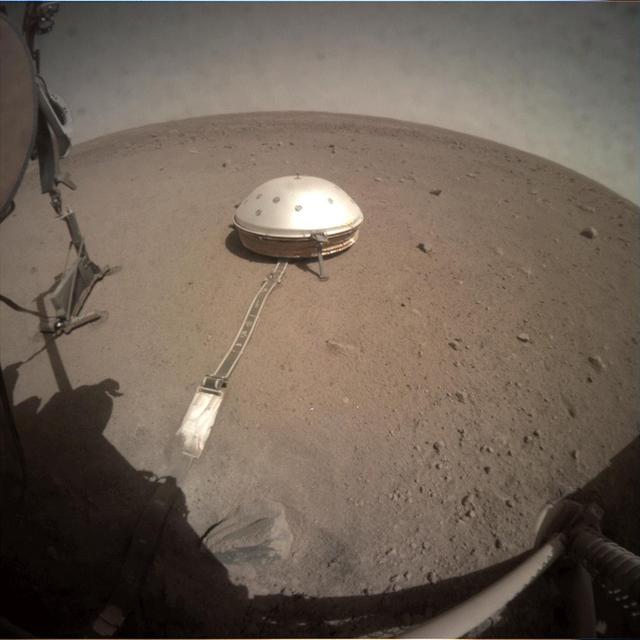
On June 28, 2019, NASA's InSight lander used its robotic arm to move the support structure for its digging instrument, informally called the "mole." This view was captured by the fisheye Instrument Context Camera under the lander's deck. Lifting the support structure had been done in three steps, a little bit at a time, to ensure the mole wasn't pulled out of the soil. Moving the structure out of the way will give the InSight team a better look at the mole and allow them to try to help it dig. https://photojournal.jpl.nasa.gov/catalog/PIA23308
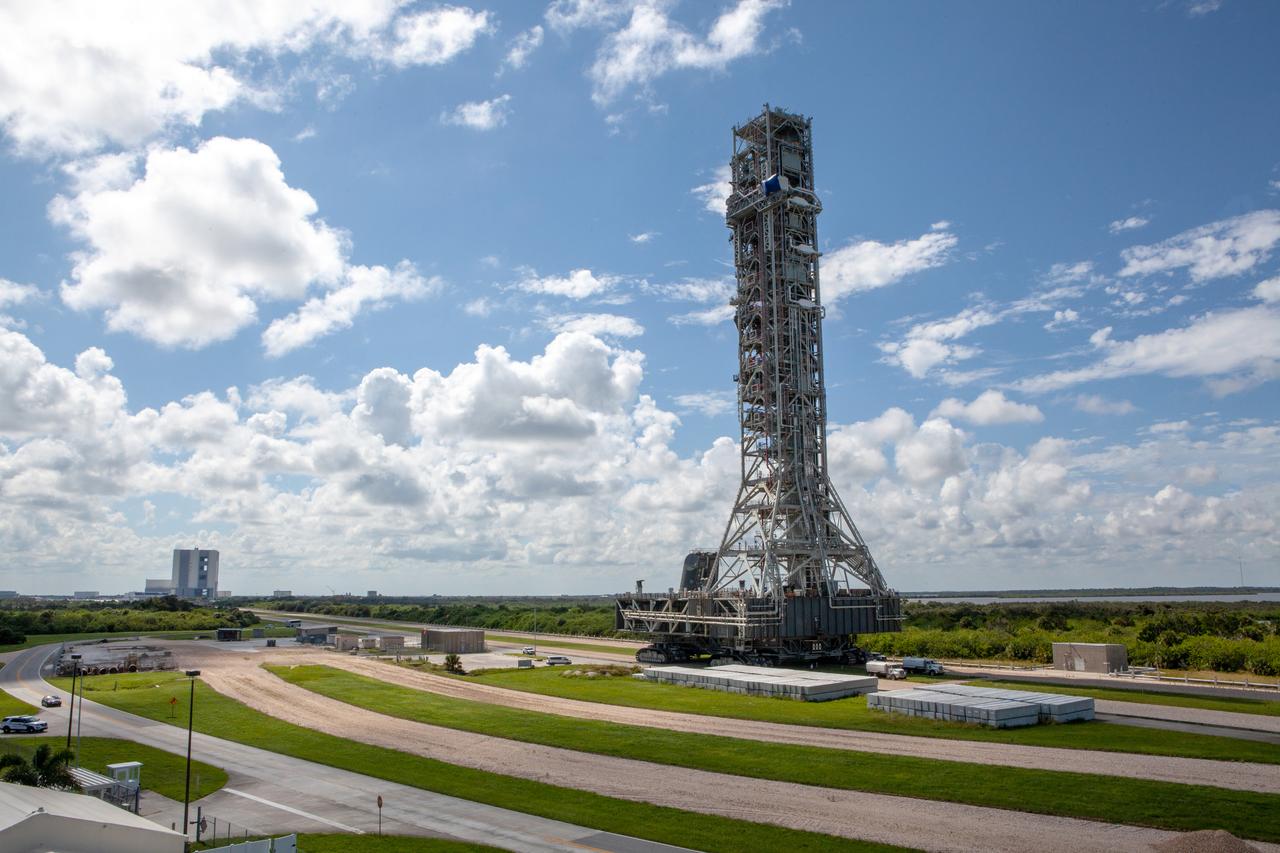
NASA’s mobile launcher (ML) atop crawler-transporter 2 moves along the crawlerway on Sept. 10, 2019, after spending a week and a half inside the Vehicle Assembly Building (VAB) at Kennedy Space Center in Florida due to the approach of Hurricane Dorian. The nearly 400-foot-tall structure was moved from Launch Pad 39B to the VAB for safekeeping on Aug. 30. The storm passed about 70 miles east of the spaceport during the overnight hours Tuesday, Sept. 3, and Wednesday, Sept. 4. NASA’s Exploration Ground Systems is moving the mobile launcher back to the launch pad, where teams will complete testing and checkout on the launcher in the coming weeks for the Artemis I mission.
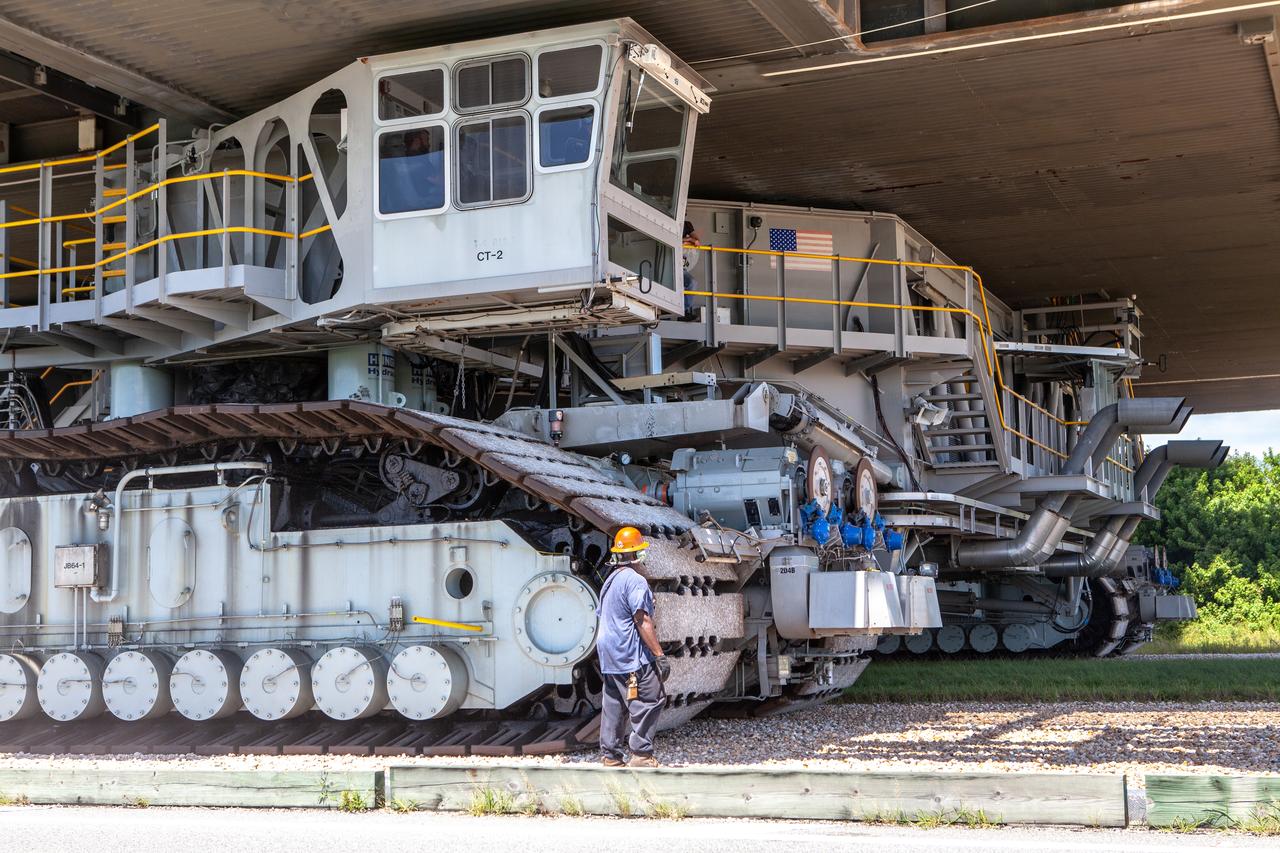
NASA’s mobile launcher (ML) atop crawler-transporter 2 moves along the crawlerway on Sept. 10, 2019, after spending a week and a half inside the Vehicle Assembly Building (VAB) at Kennedy Space Center in Florida due to the approach of Hurricane Dorian. The nearly 400-foot-tall structure was moved from Launch Pad 39B to the VAB for safekeeping on Aug. 30. The storm passed about 70 miles east of the spaceport during the overnight hours Tuesday, Sept. 3, and Wednesday, Sept. 4. NASA’s Exploration Ground Systems is moving the mobile launcher back to the launch pad, where teams will complete testing and checkout on the launcher in the coming weeks for the Artemis I mission.
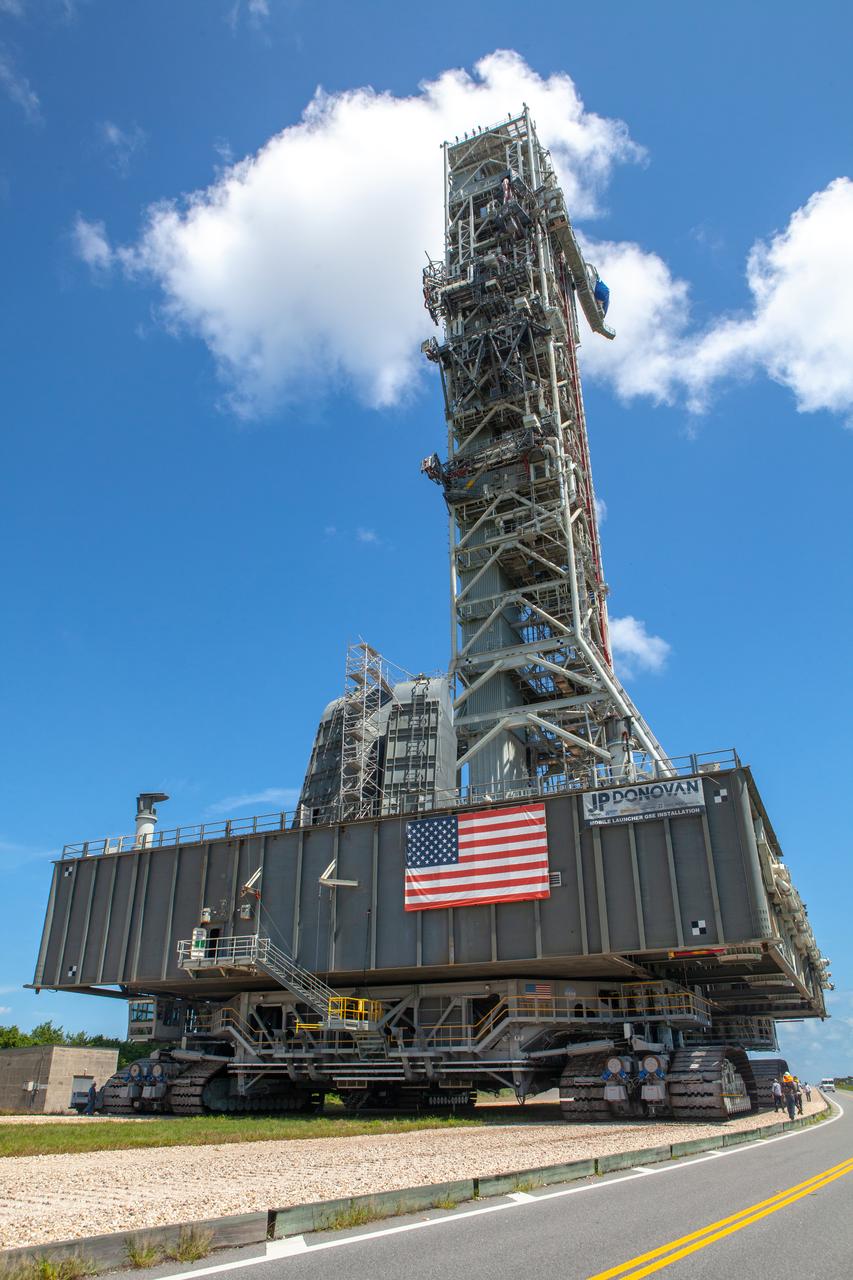
NASA’s mobile launcher (ML) atop crawler-transporter 2 moves along the crawlerway on Sept. 10, 2019, after spending a week and a half inside the Vehicle Assembly Building (VAB) at Kennedy Space Center in Florida due to the approach of Hurricane Dorian. The nearly 400-foot-tall structure was moved from Launch Pad 39B to the VAB for safekeeping on Aug. 30. The storm passed about 70 miles east of the spaceport during the overnight hours Tuesday, Sept. 3, and Wednesday, Sept. 4. NASA’s Exploration Ground Systems is moving the mobile launcher back to the launch pad, where teams will complete testing and checkout on the launcher in the coming weeks for the Artemis I mission.
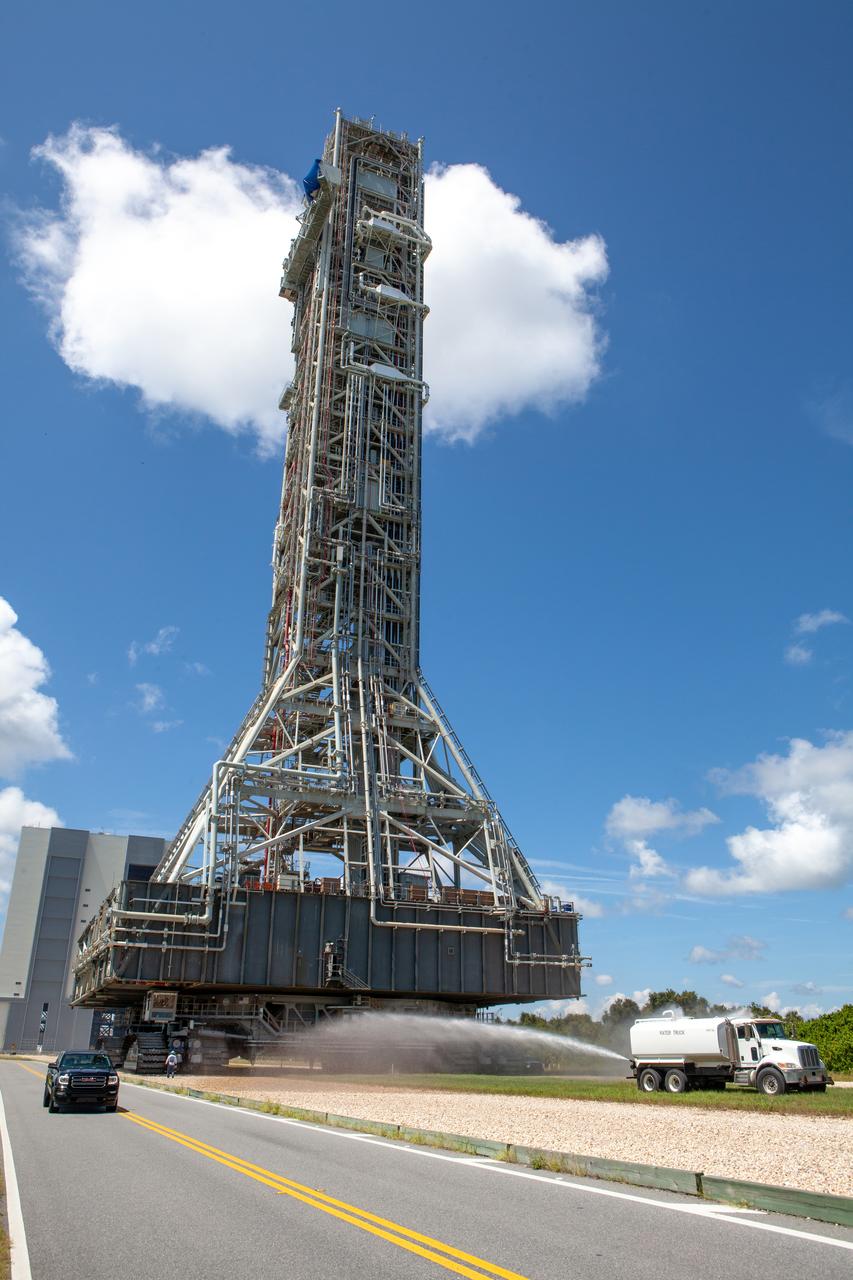
The mobile launcher for NASA’s Artemis missions moves along the crawlerway on Sept. 10, 2019, after spending a week and a half inside the Vehicle Assembly Building (VAB) at Kennedy Space Center in Florida due to the approach of Hurricane Dorian. The nearly 400-foot-tall structure was moved from Launch Pad 39B to the VAB for safekeeping on Aug. 30. The storm passed about 70 miles east of the spaceport during the overnight hours Tuesday, Sept. 3, and Wednesday, Sept. 4. NASA’s Exploration Ground Systems is moving the mobile launcher back to the launch pad, where teams will complete testing and checkout on the launcher in the coming weeks for the Artemis I mission.
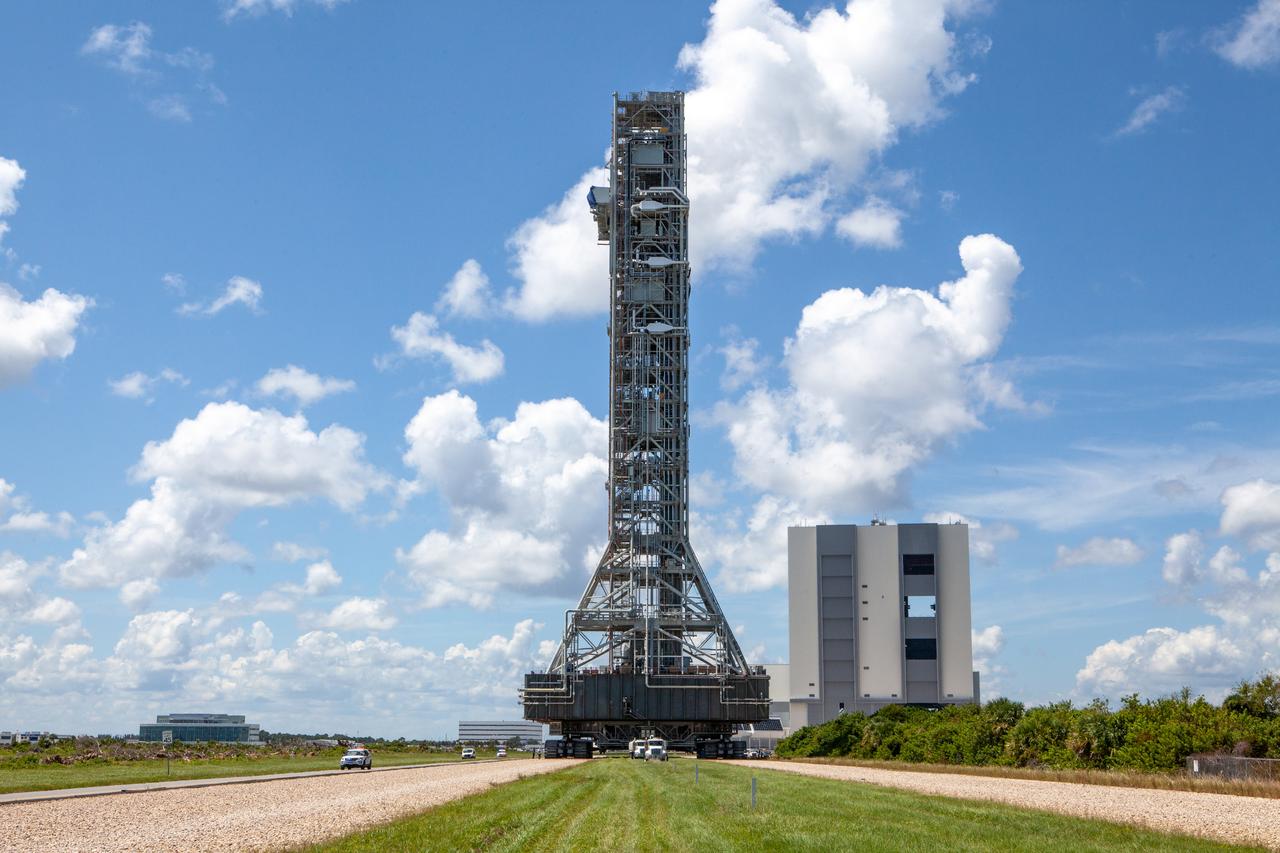
NASA’s mobile launcher (ML) atop crawler-transporter 2 moves along the crawlerway on Sept. 10, 2019, after spending a week and a half inside the Vehicle Assembly Building (VAB) at Kennedy Space Center in Florida due to the approach of Hurricane Dorian. The nearly 400-foot-tall structure was moved from Launch Pad 39B to the VAB for safekeeping on Aug. 30. The storm passed about 70 miles east of the spaceport during the overnight hours Tuesday, Sept. 3, and Wednesday, Sept. 4. NASA’s Exploration Ground Systems is moving the mobile launcher back to the launch pad, where teams will complete testing and checkout on the launcher in the coming weeks for the Artemis I mission.
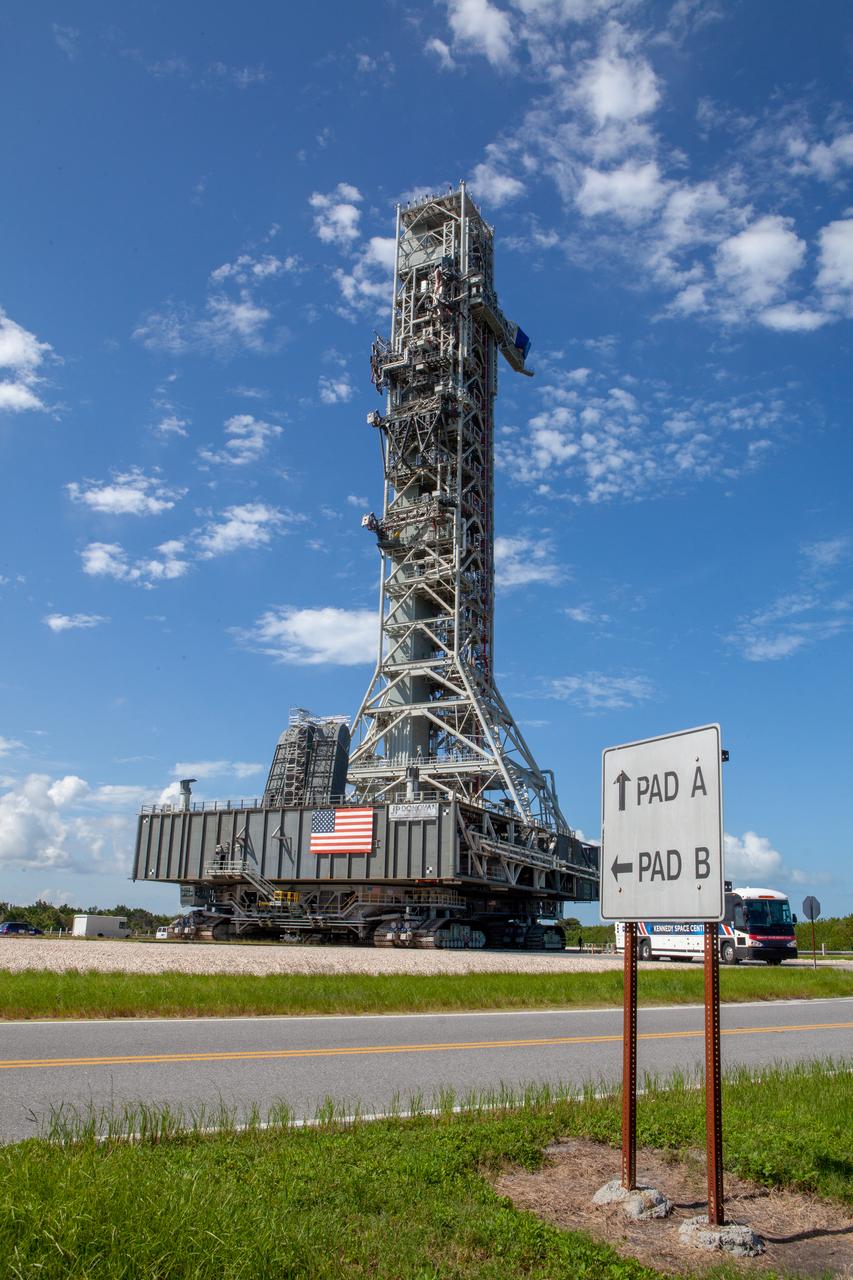
NASA’s mobile launcher (ML) atop crawler-transporter 2 moves along the crawlerway on Sept. 10, 2019, after spending a week and a half inside the Vehicle Assembly Building (VAB) at Kennedy Space Center in Florida due to the approach of Hurricane Dorian. The nearly 400-foot-tall structure was moved from Launch Pad 39B to the VAB for safekeeping on Aug. 30. The storm passed about 70 miles east of the spaceport during the overnight hours Tuesday, Sept. 3, and Wednesday, Sept. 4. NASA’s Exploration Ground Systems is moving the mobile launcher back to the launch pad, where teams will complete testing and checkout on the launcher in the coming weeks for the Artemis I mission.
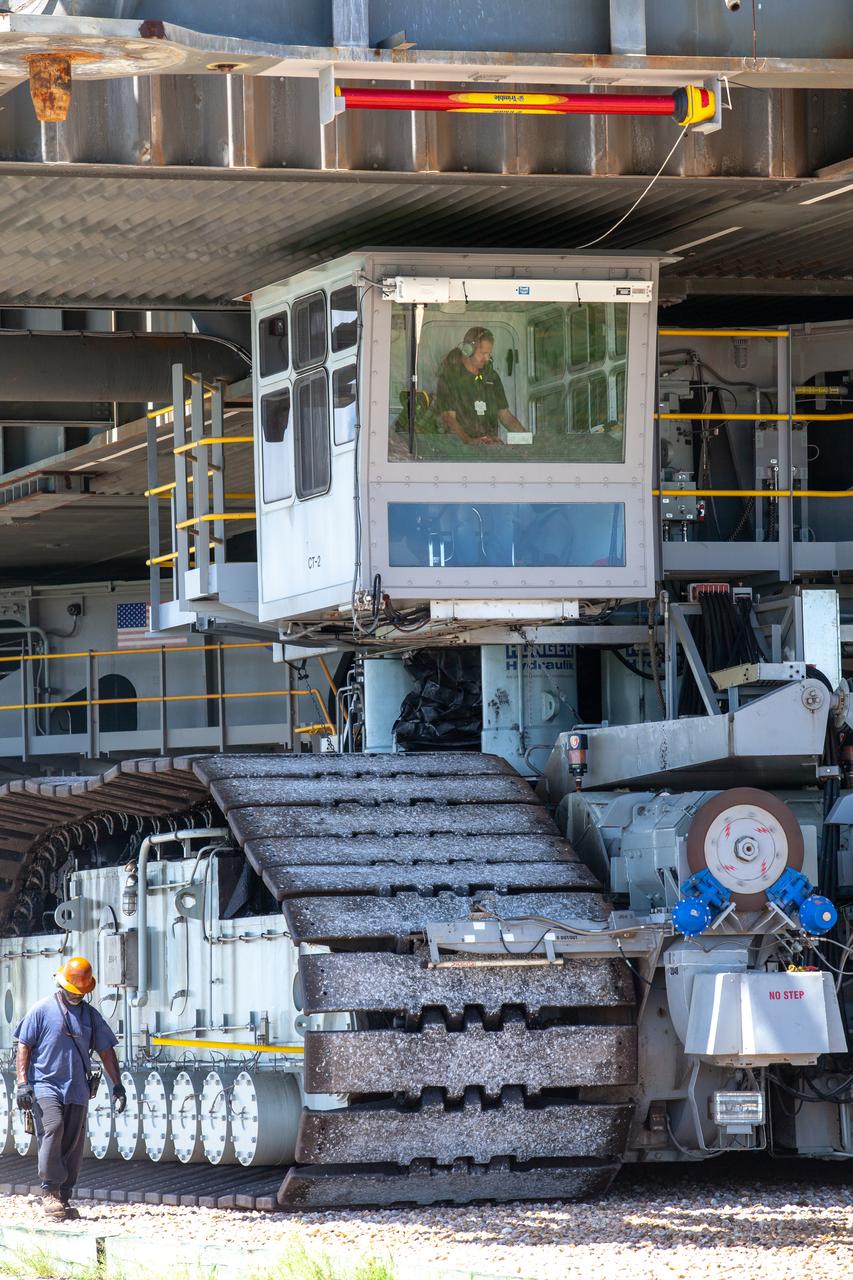
NASA’s mobile launcher (ML) atop crawler-transporter 2 moves along the crawlerway on Sept. 10, 2019, after spending a week and a half inside the Vehicle Assembly Building (VAB) at Kennedy Space Center in Florida due to the approach of Hurricane Dorian. The nearly 400-foot-tall structure was moved from Launch Pad 39B to the VAB for safekeeping on Aug. 30. The storm passed about 70 miles east of the spaceport during the overnight hours Tuesday, Sept. 3, and Wednesday, Sept. 4. NASA’s Exploration Ground Systems is moving the mobile launcher back to the launch pad, where teams will complete testing and checkout on the launcher in the coming weeks for the Artemis I mission.
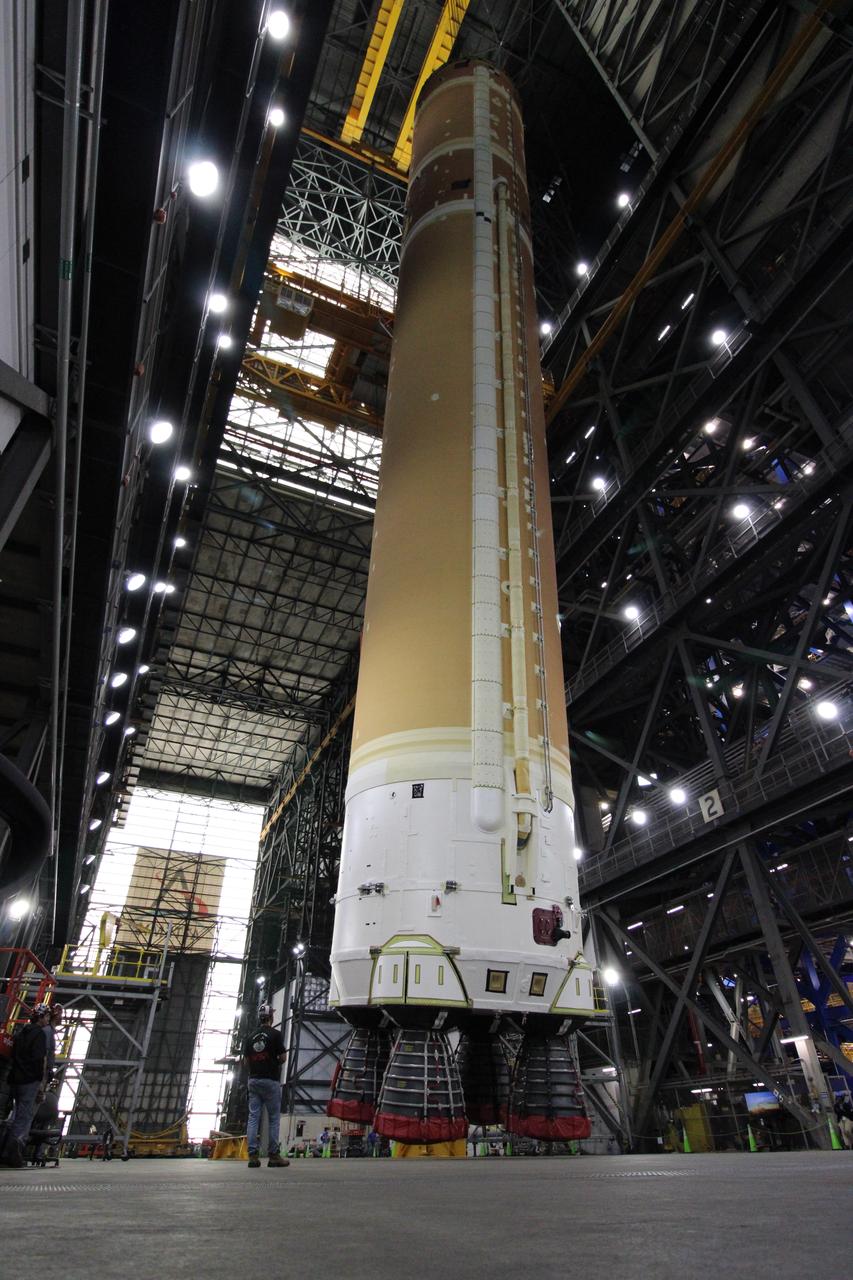
Teams with NASA’s Exploration Ground Systems Program lift the agency’s SLS (Space Launch System) core stage for the Artemis II mission from horizonal to vertical inside the transfer aisle at the Vehicle Assembly Building at NASA’s Kennedy Space Center in Florida on Tuesday, Dec. 10, 2024. The one-of-a kind lifting beam is designed to move the core stage from the transfer aisle to High Bay 2 where it will remain while teams stack the two solid rocket boosters for the SLS core stage.
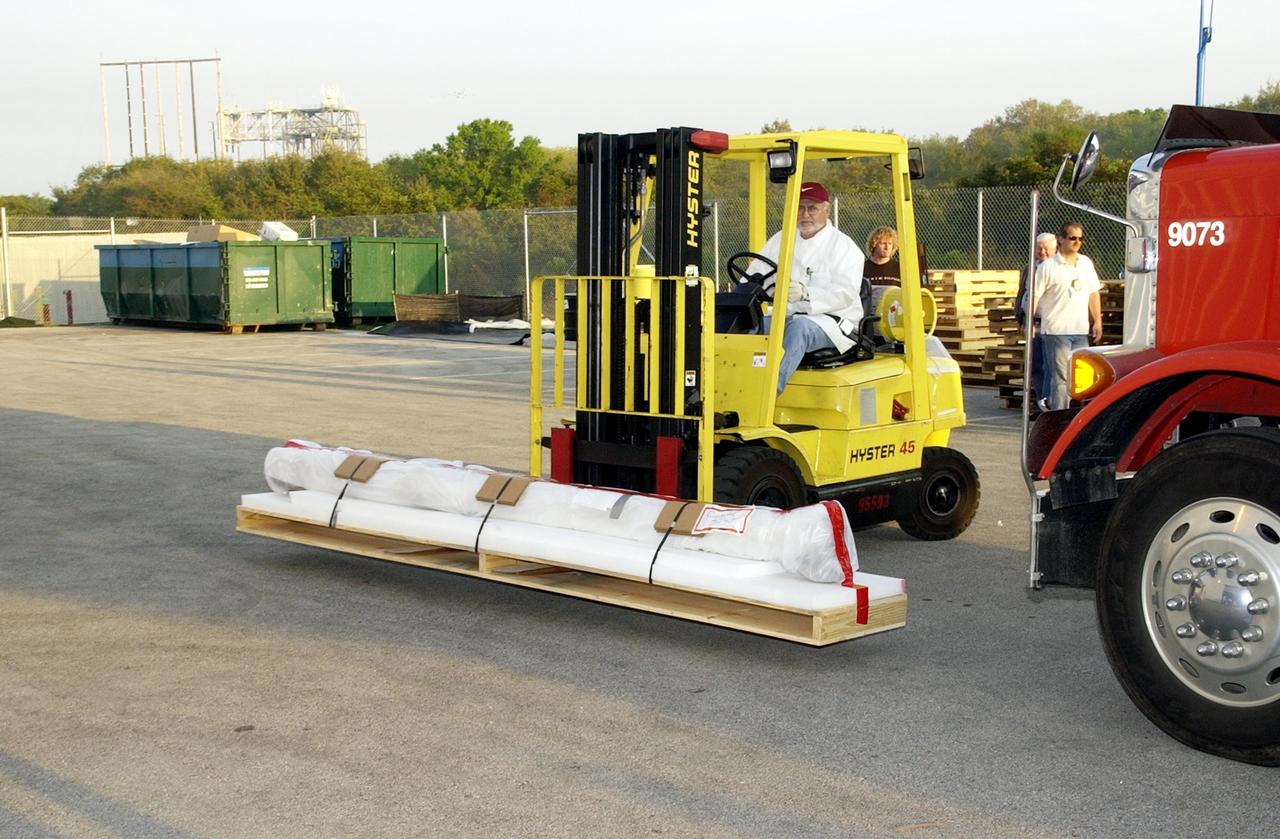
KENNEDY SPACE CENTER, Fla. - A piece of Columbia debris is offloaded from the truck and moved toward the KSC RLV Hangar. Inside, the Columbia Reconstruction Project Team is identifying pieces and placing them on a floor grid in a configuration of the orbiter. The team will attempt to reconstruct the bottom of the orbiter as part of the investigation into the accident that caused the destruction of Columbia and loss of its crew as it returned to Earth on mission STS-107. To date, 35,319 pieces have been shipped to KSC; 1,218 are identified and placed on the grid.
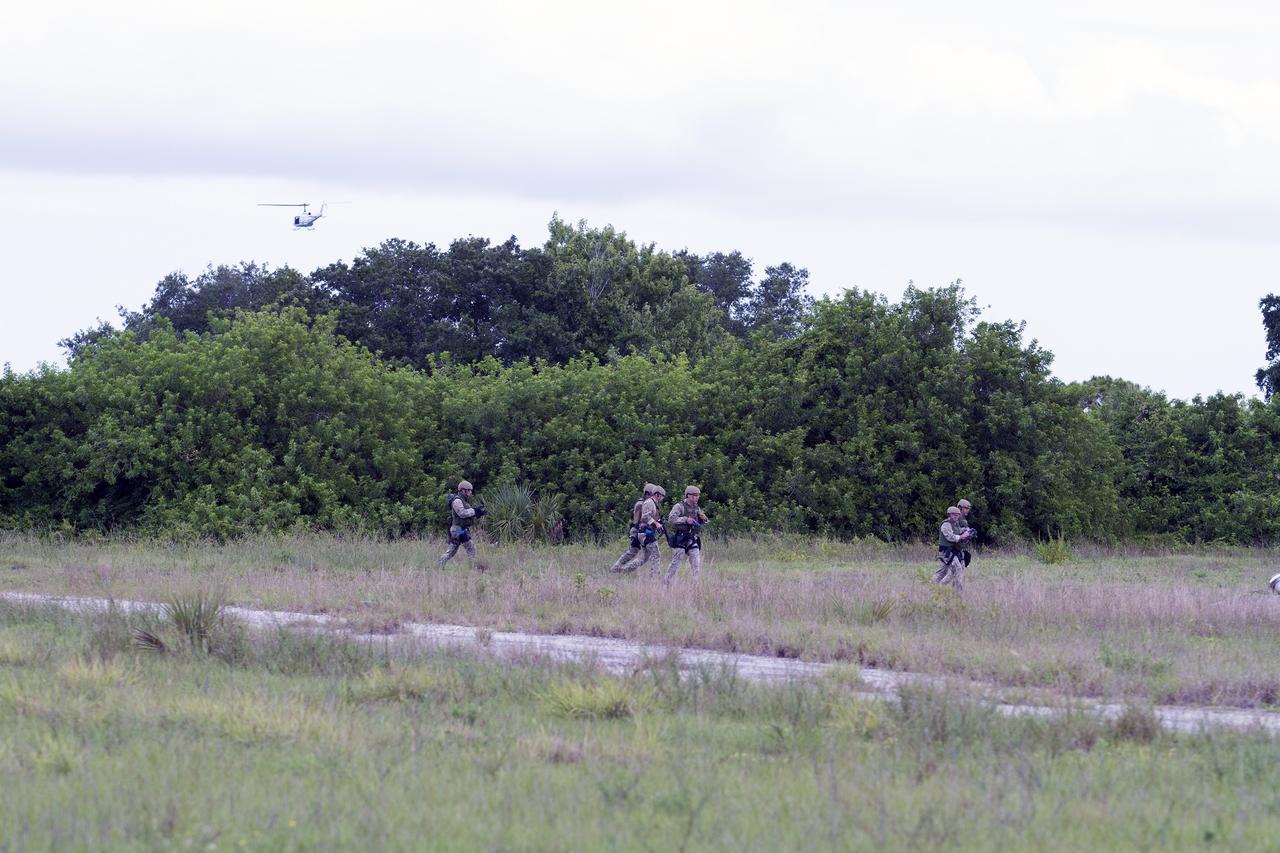
CAPE CANAVERAL, Fla. – Emergency Response Team officers from the Protective Services branch of NASA's Kennedy Space Center in Florida move through a field on their way to an objective during a training exercise simulating a situation the team could confront at the center. A Huey helicopter from the Air Operations branch at Kennedy is visible in the background flying out of the training area after delivering the officers. Photo credit: NASA/Dan Casper
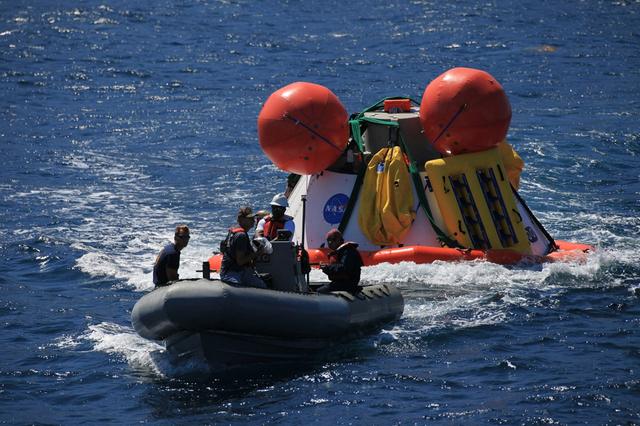
Recovery team members move away from a test version of Orion ready to be recovered from the Pacific Ocean on Sept. 13, 2014. A combined NASA and U.S. Navy team practiced recovery techniques off the coast of California over the course of the the week -- first with a crane on board the Navy's USS Salvor, then using the USS Anchorage's well deck -- in preparation for Exploration Flight Test-1 (EFT-1). Part of Batch image transfer from Flickr.

CAPE CANAVERAL, Fla. – Emergency Response Team officers from the Protective Services branch of NASA's Kennedy Space Center in Florida move through a field on their way to an objective during a training exercise simulating a situation the team could confront at the center. The Vehicle Assembly Building and mobile launcher at Kennedy are visible in the background. Photo credit: NASA/Dan Casper
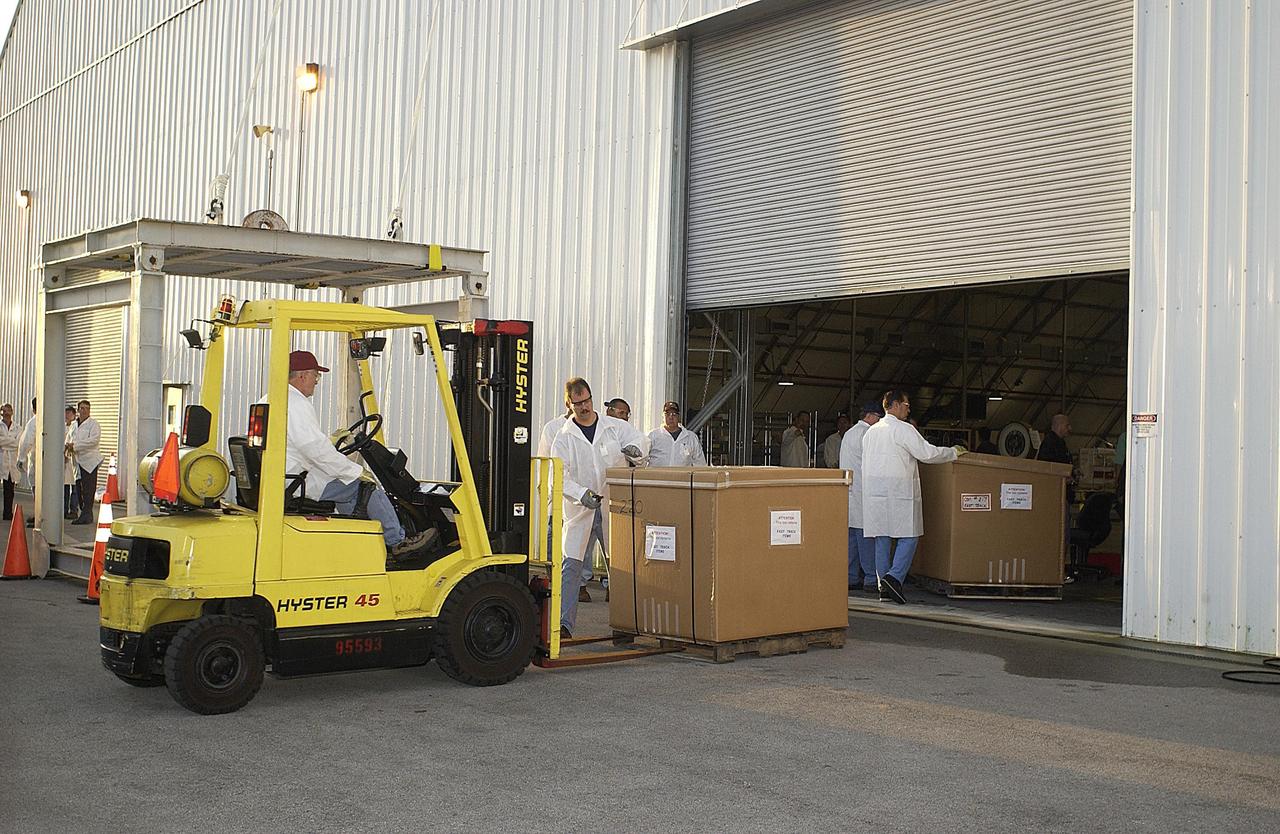
KENNEDY SPACE CENTER, FLA. - Boxes of Columbia debris are moved into the KSC RLV Hangar for identification. Inside, the Columbia Reconstruction Project Team is placing the pieces of debris on a floor grid in a configuration of the orbiter. The team will attempt to reconstruct the orbiter as part of the investigation into the accident that caused the destruction of Columbia and loss of its crew as it returned to Earth on mission STS-107.
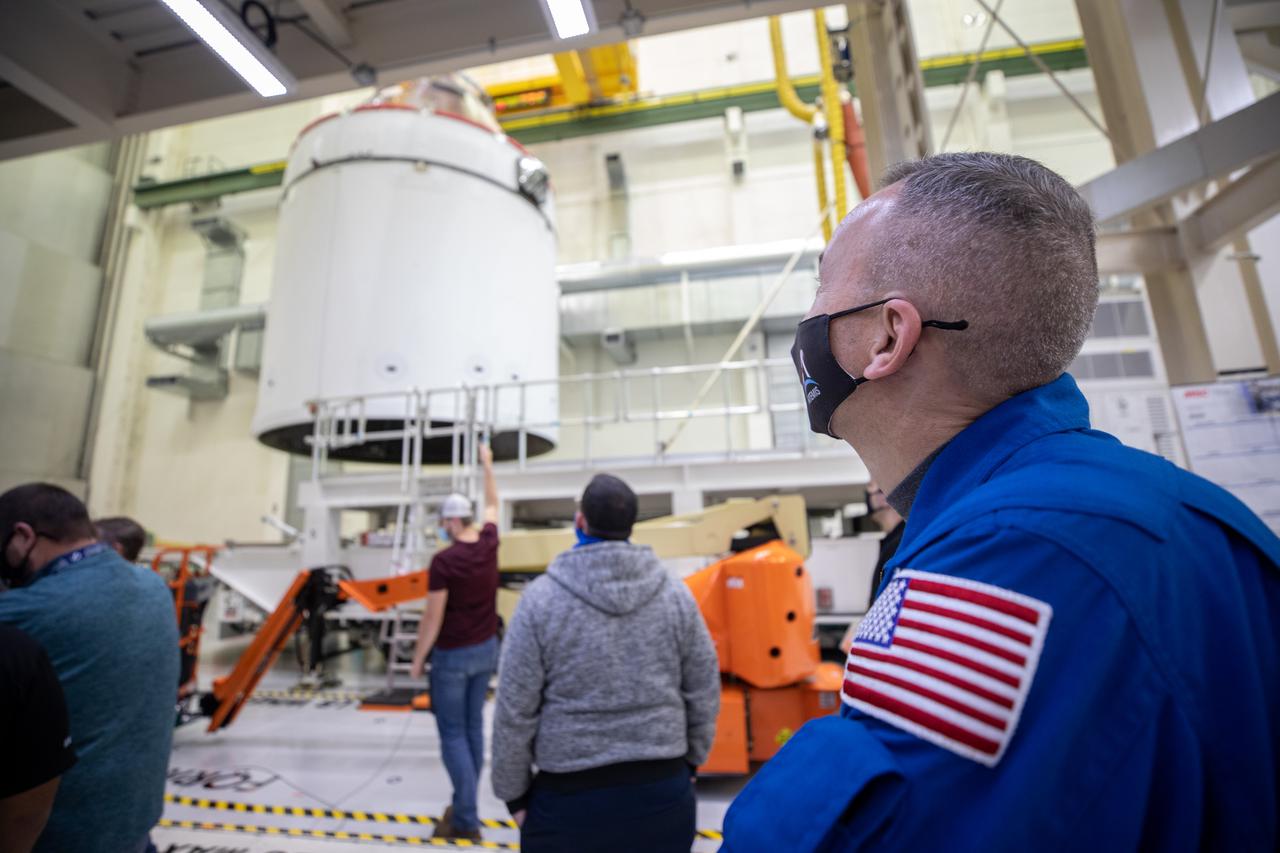
Orion is revealed for one of the final times on Jan. 14, as it is moved by crane to its transport pallet inside the Neil Armstrong Operations and Checkout Building at NASA’s Kennedy Space Center in Florida, along its path to the pad ahead of the Artemis I launch. Teams across the globe have worked tirelessly to assemble the spacecraft which will receive a protective covering prior to departing for the Multi-Payload Processing Facility to begin ground processing by the Exploration Ground Systems and Jacobs teams.

Orion is revealed for one of the final times on Jan. 14, as it is moved by crane to its transport pallet inside the Neil Armstrong Operations and Checkout Building at NASA’s Kennedy Space Center in Florida, along its path to the pad ahead of the Artemis I launch. Teams across the globe have worked tirelessly to assemble the spacecraft, which will receive a protective covering prior to departing for the Multi-Payload Processing Facility to begin ground processing by the Exploration Ground Systems and Jacobs teams.

Orion is revealed for one of the final times on Jan. 14, as it is moved by crane to its transport pallet inside the Neil Armstrong Operations and Checkout Building at NASA’s Kennedy Space Center in Florida, along its path to the pad ahead of the Artemis I launch. Teams across the globe have worked tirelessly to assemble the spacecraft which will receive a protective covering prior to departing for the Multi-Payload Processing Facility to begin ground processing by the Exploration Ground Systems and Jacobs teams.
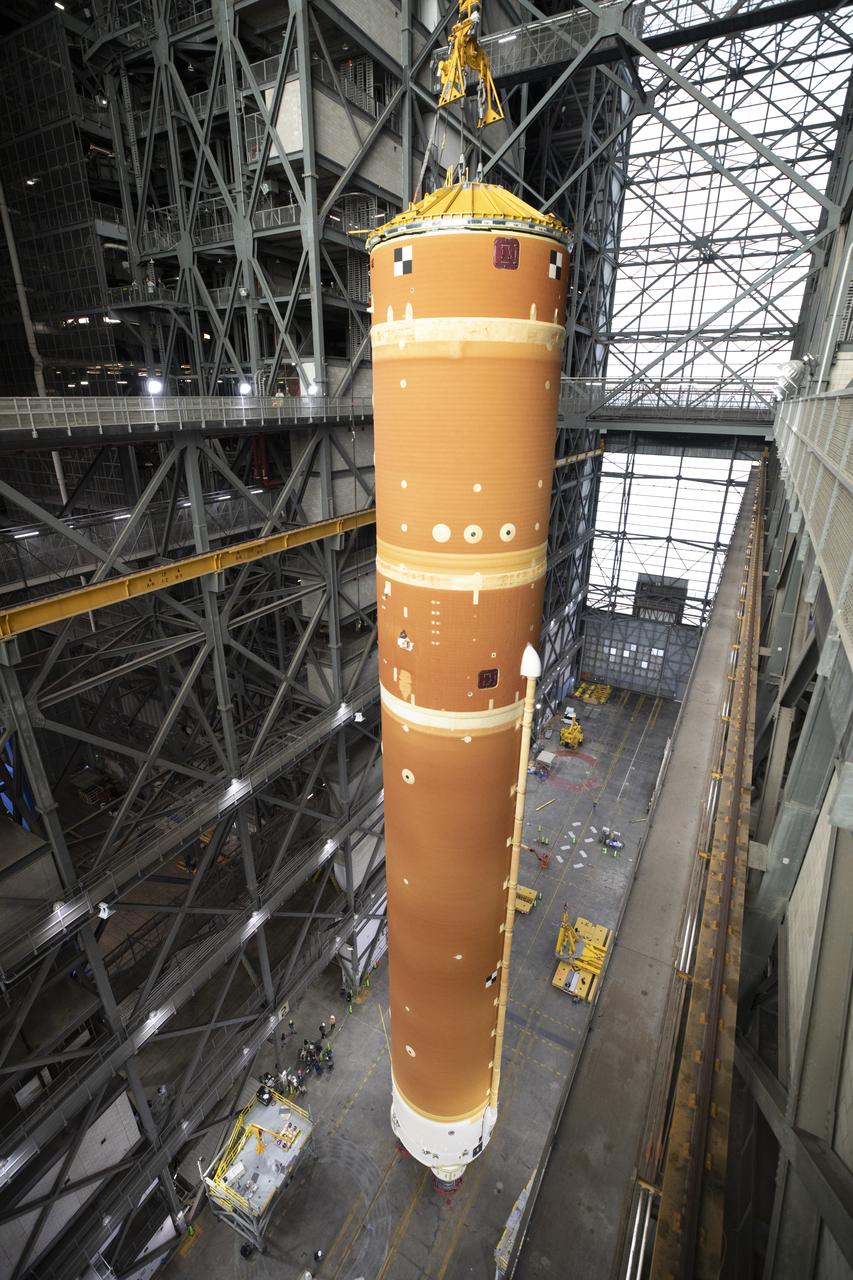
Teams with NASA’s Exploration Ground Systems Program lift the agency’s SLS (Space Launch System) core stage inside the transfer aisle at the Vehicle Assembly Building at NASA’s Kennedy Space Center in Florida on Wednesday, Dec. 11, 2024. The one-of-a kind lifting beam is designed to move the core stage from the transfer aisle to High Bay 2 where it will remain while teams stack the two solid rocket boosters for the SLS core stage.
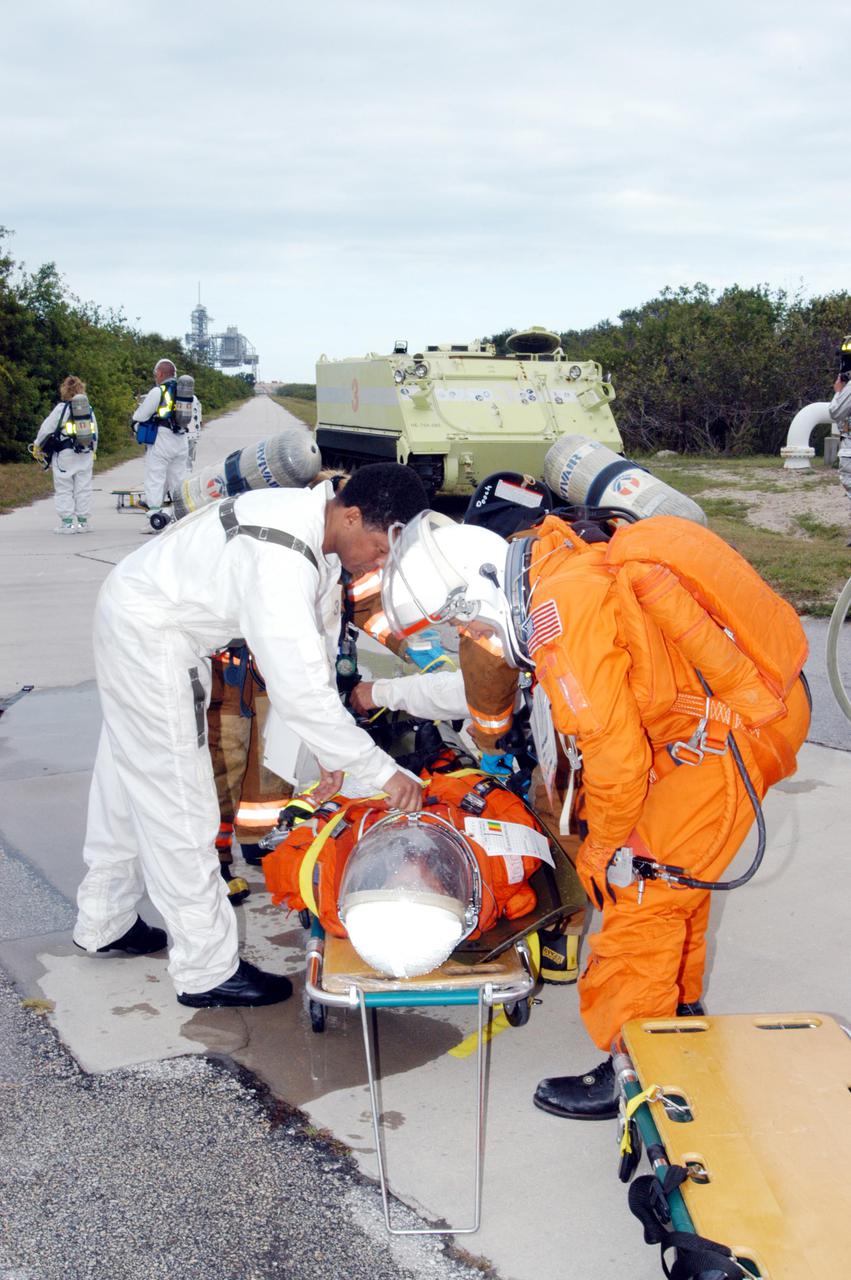
KENNEDY SPACE CENTER, FLA. - During a simulated launch countdown_emergency simulation on Launch Pad 39A, the rescue team moves “injured” astronaut-suited workers out of the M-113 armored personnel carriers that transported them away from the pad (seen in the distance). Pad team members participated in the four-hour exercise simulating normal launch countdown operations, with the added challenge of a fictitious event causing an evacuation of the vehicle and launch pad. The simulation tested the team’s rescue approaches on the Fixed Service Structure, slidewire basket evacuation, triage care and transportation of injured personnel to hospitals, as well as communications and coordination.
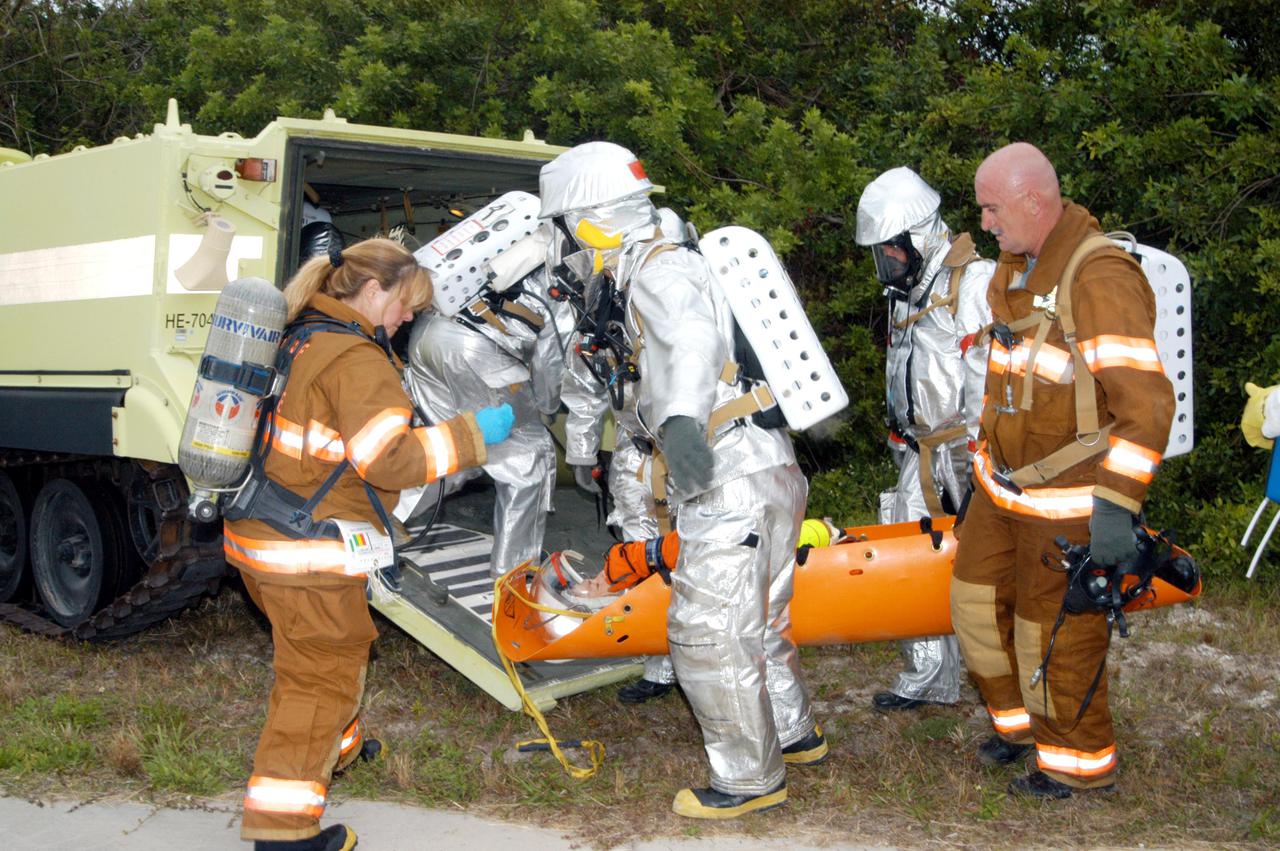
KENNEDY SPACE CENTER, FLA. - During a simulated launch countdown_emergency simulation on Launch Pad 39A, the rescue team moves “injured” astronaut-suited workers out of the M-113 armored personnel carriers that transported them away from the pad (seen in the distance). Pad team members participated in the four-hour exercise simulating normal launch countdown operations, with the added challenge of a fictitious event causing an evacuation of the vehicle and launch pad. The simulation tested the team’s rescue approaches on the Fixed Service Structure, slidewire basket evacuation, triage care and transportation of injured personnel to hospitals, as well as communications and coordination.
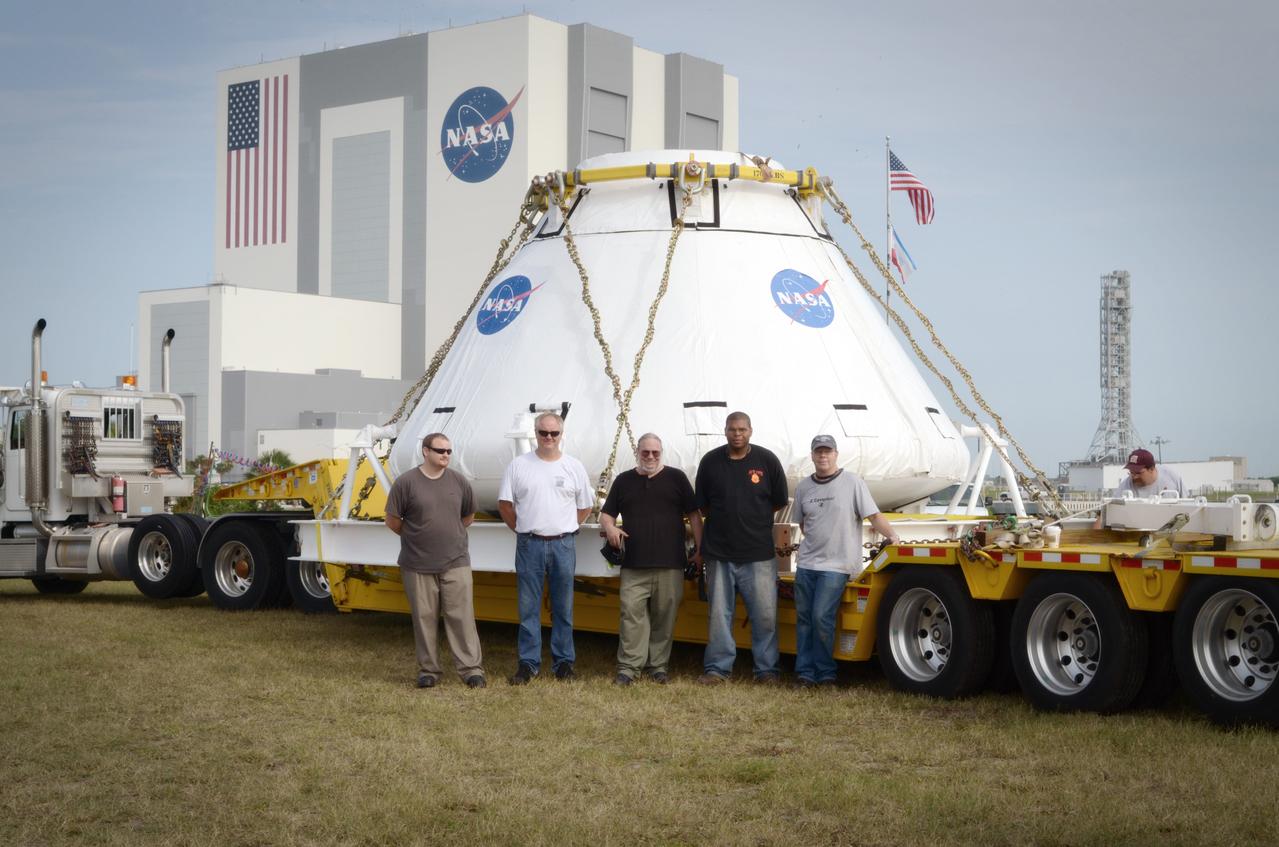
The Orion Pad Abort-1 (PA-1) crew module operations team poses with the crew module prior to its move to the Operations & Checkout (O&C) Building at Kennedy Space Center in Florida on July 11, 2011. Part of Batch image transfer from Flickr.
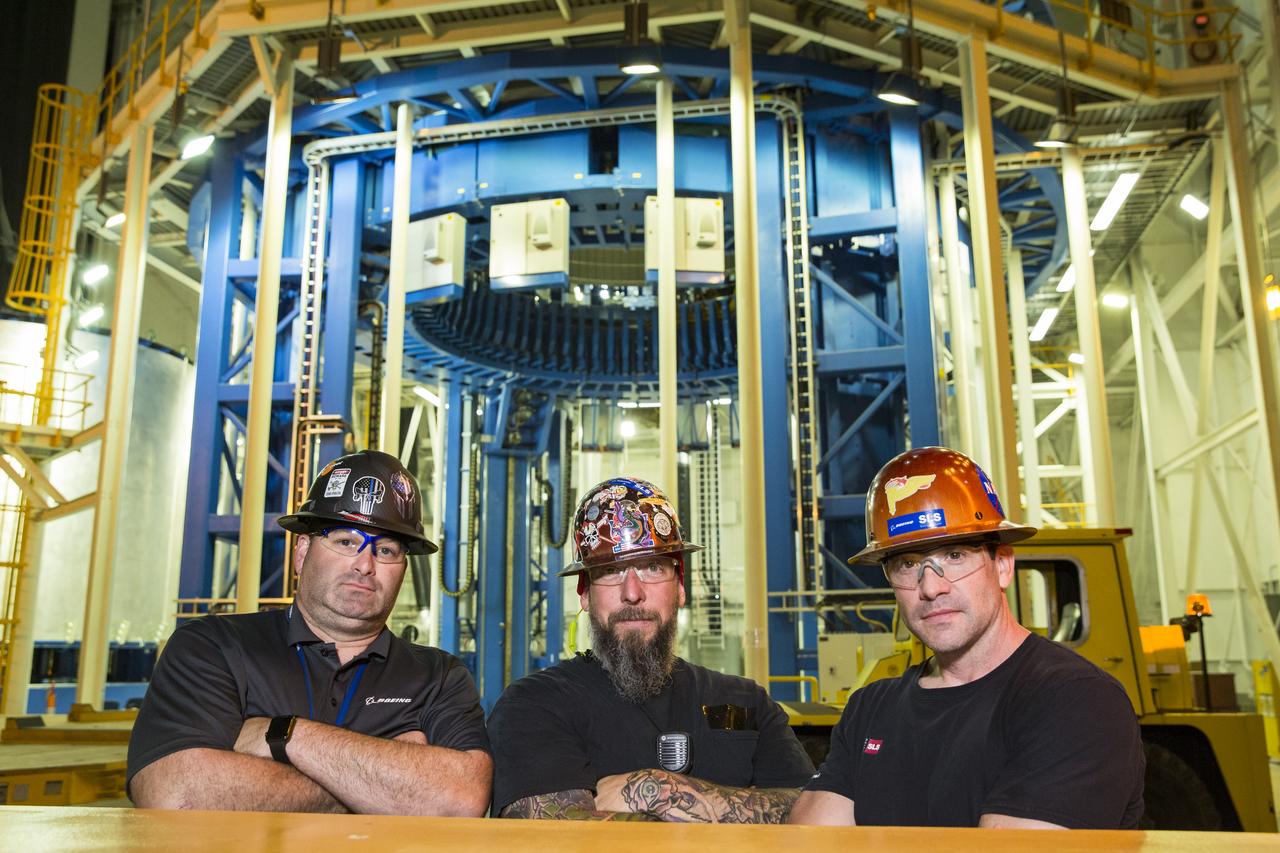
From left to right, Mac Cook, Jeffrey Thompson, Chris Mart, Critical Lift and Move Team, Boeing, Portrait, Friday, June 28, 2019 at Michoud Assembly Facility, New Orleans, LA. Photo Credit: (NASA/Aubrey Gemignani)
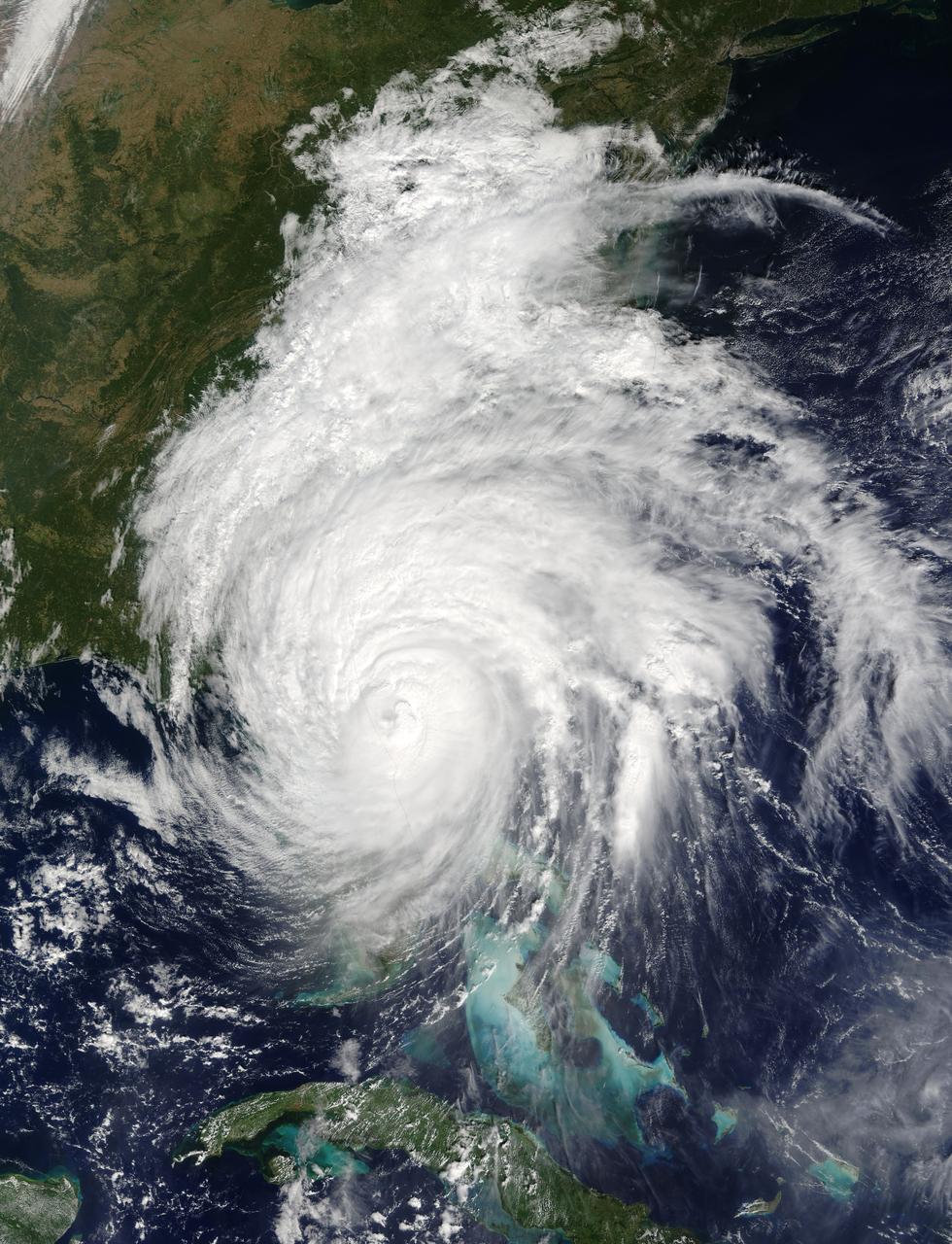
This is a visible image of Major Hurricane Matthew taken from NASA's Terra satellite on Oct. 7 at 12 p.m. EDT as it continued moving along Florida's East Coast. Matthew was a Category 3 hurricane at the time of this image. Credit: NASA's Goddard MODIS Rapid Response Team
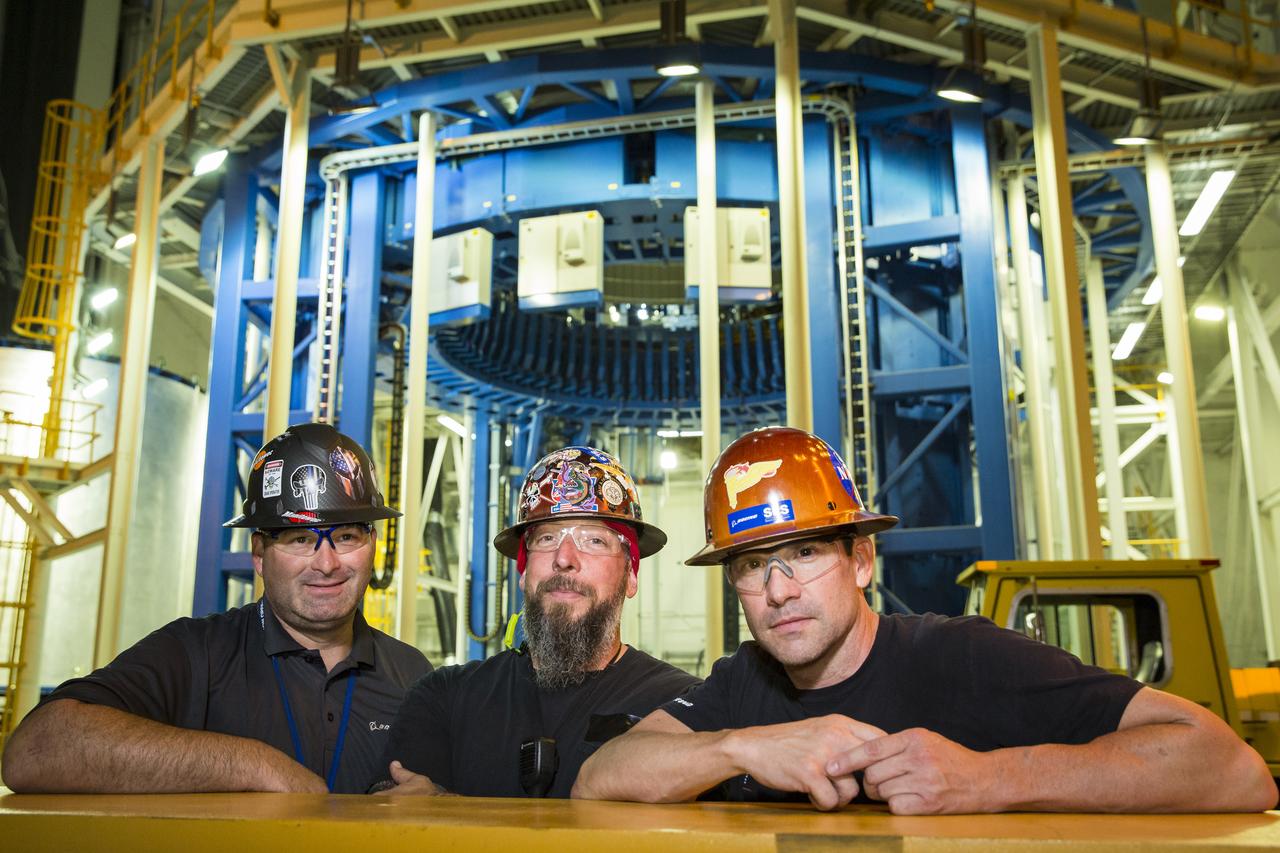
From left to right, Mac Cook, Jeffrey Thompson, Chris Mart, Critical Lift and Move Team, Boeing, Portrait, Friday, June 28, 2019 at Michoud Assembly Facility, New Orleans, LA. Photo Credit: (NASA/Aubrey Gemignani)
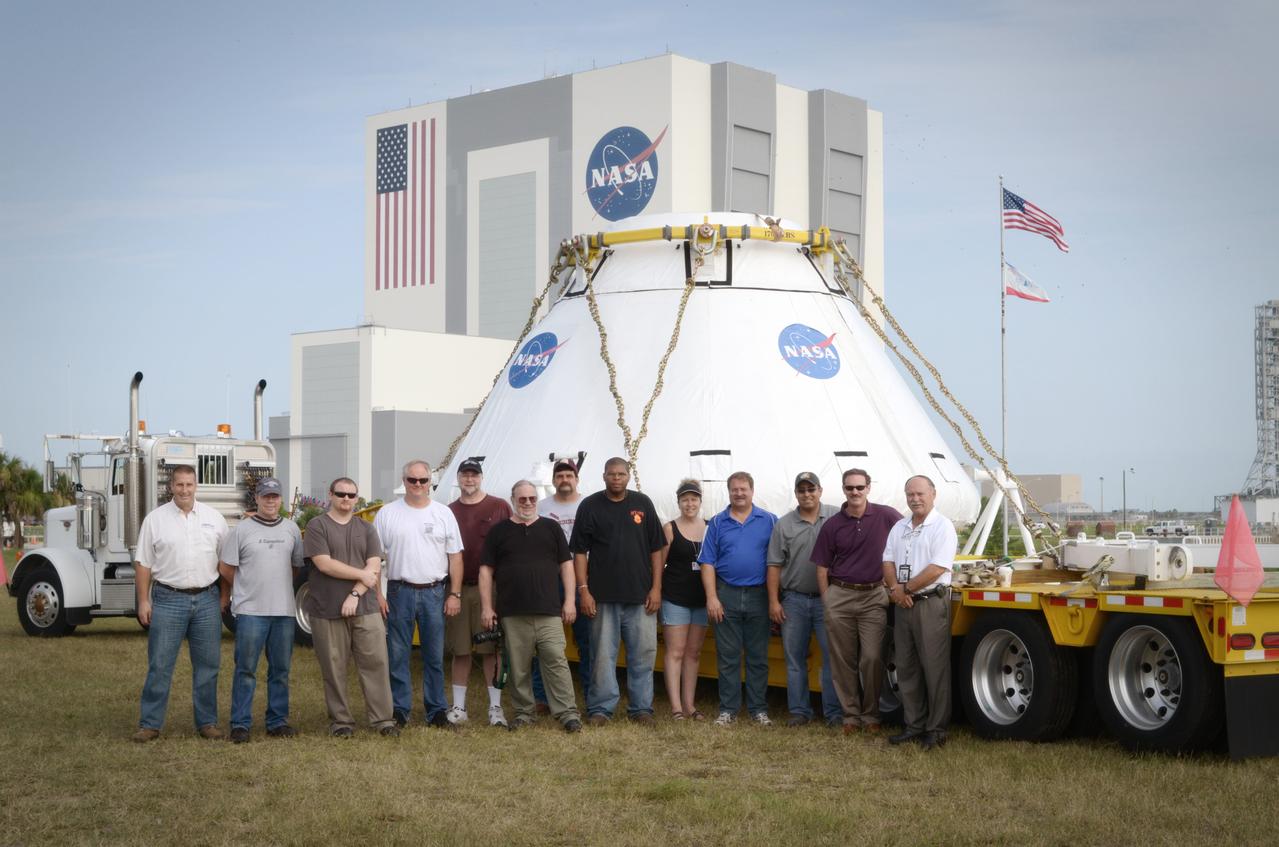
The Orion Pad Abort-1 (PA-1) crew module operations team poses with the crew module prior to its move to the Operations & Checkout (O&C) Building at Kennedy Space Center in Florida on July 11, 2011. Part of Batch image transfer from Flickr.
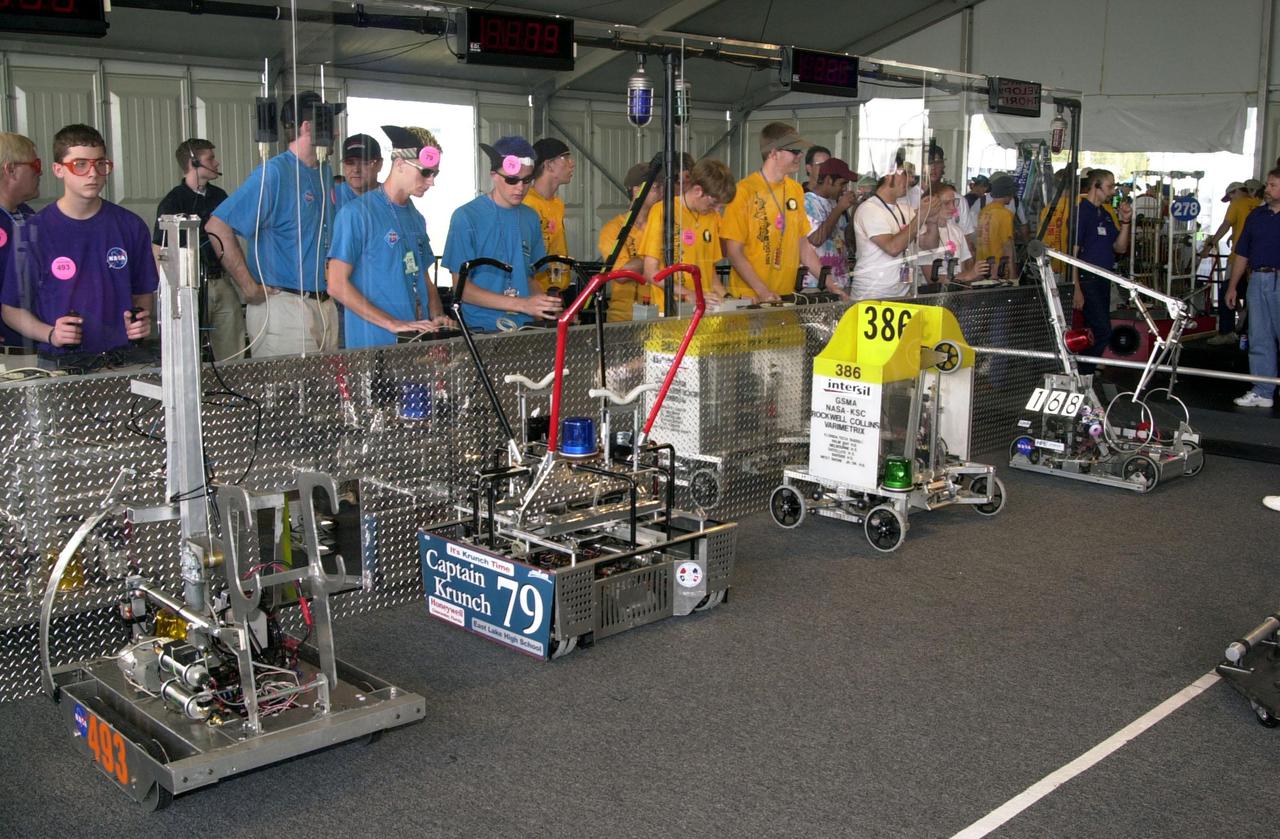
Student teams get ready to move their robots on the playing field during the NASA_KSC FIRST Southeastern Regional event held March 1-3, 2001. Starting from left, robot number 493, “Dukes,” is controlled by students from Marlington High School, Alliance, Ohio. It is a KSC joint-sponsored team. Team 79, the “Navigators,” are from East Lake High School, Clearwater, Fla. Team 386, “Voltage: South Brevard FIRST Team,” represents six schools in Brevard County, Fla. Team 168, Flashbacks, represent North Miami Beach Senior High School and Michael Kropp High School, North Miami, Fla. Voltage and Flashbacks are KSC joint-sponsored teams. FIRST (For Inspiration and Recognition of Science and Technology) events are held nationwide, pitting robots against each other and the clock on a playing field. Many teams are sponsored by corporations and academic institutions. There are 27 teams throughout the State of Florida who are competing. KSC, which sponsors nine teams, has held the regional event for two years
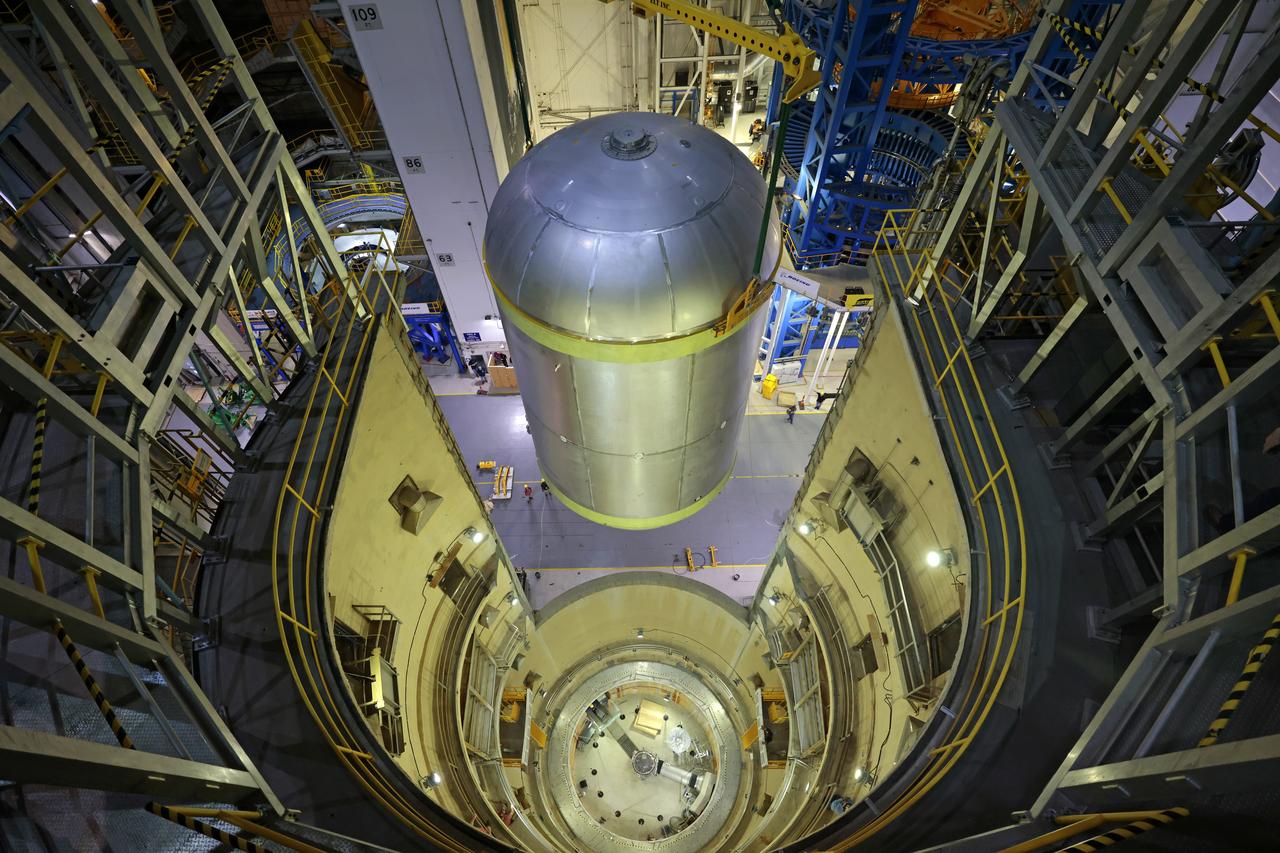
Teams at NASA’s Michoud Assembly Facility in New Orleans move a liquid oxygen tank for its SLS (Space Launch System) rocket to a cleaning cell inside the facility’s vertical assembly building on Oct. 11. The tank, which will be used on the core stage of the agency’s Artemis III mission, will undergo an internal cleaning before moving on to its next phase of production. Inside the cleaning cell, a solution is sprayed into the tank to remove particulates which may collect during the manufacturing process. Once a tank is cleaned, teams use mobile clean rooms for internal access to the tank to prevent external contaminates from entering the hardware. The propellant tank is one of five major elements that make up the 212-foot-tall rocket stage. The core stage, along with its four RS-25 engines, produce more than two million pounds of thrust to help launch NASA’s Orion spacecraft, astronauts, and supplies beyond Earth’s orbit and to the lunar surface for Artemis. Image credit: NASA/Michael DeMocker

Teams at NASA’s Michoud Assembly Facility in New Orleans move a liquid oxygen tank for its SLS (Space Launch System) rocket to a cleaning cell inside the facility’s vertical assembly building on Oct. 11. The tank, which will be used on the core stage of the agency’s Artemis III mission, will undergo an internal cleaning before moving on to its next phase of production. Inside the cleaning cell, a solution is sprayed into the tank to remove particulates which may collect during the manufacturing process. Once a tank is cleaned, teams use mobile clean rooms for internal access to the tank to prevent external contaminates from entering the hardware. The propellant tank is one of five major elements that make up the 212-foot-tall rocket stage. The core stage, along with its four RS-25 engines, produce more than two million pounds of thrust to help launch NASA’s Orion spacecraft, astronauts, and supplies beyond Earth’s orbit and to the lunar surface for Artemis. Image credit: NASA/Michael DeMocker
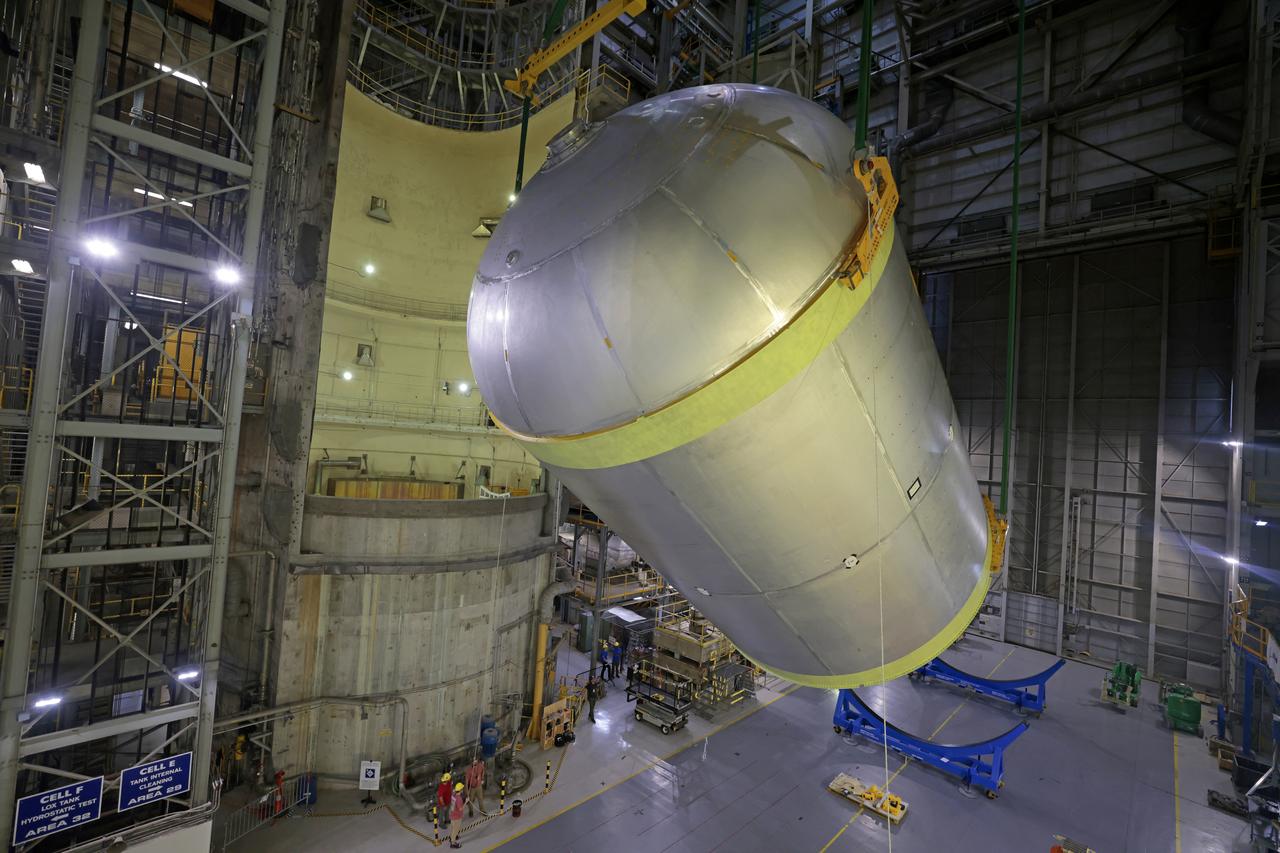
Teams at NASA’s Michoud Assembly Facility in New Orleans move a liquid oxygen tank for its SLS (Space Launch System) rocket to a cleaning cell inside the facility’s vertical assembly building on Oct. 11. The tank, which will be used on the core stage of the agency’s Artemis III mission, will undergo an internal cleaning before moving on to its next phase of production. Inside the cleaning cell, a solution is sprayed into the tank to remove particulates which may collect during the manufacturing process. Once a tank is cleaned, teams use mobile clean rooms for internal access to the tank to prevent external contaminates from entering the hardware. The propellant tank is one of five major elements that make up the 212-foot-tall rocket stage. The core stage, along with its four RS-25 engines, produce more than two million pounds of thrust to help launch NASA’s Orion spacecraft, astronauts, and supplies beyond Earth’s orbit and to the lunar surface for Artemis. Image credit: NASA/Michael DeMocker
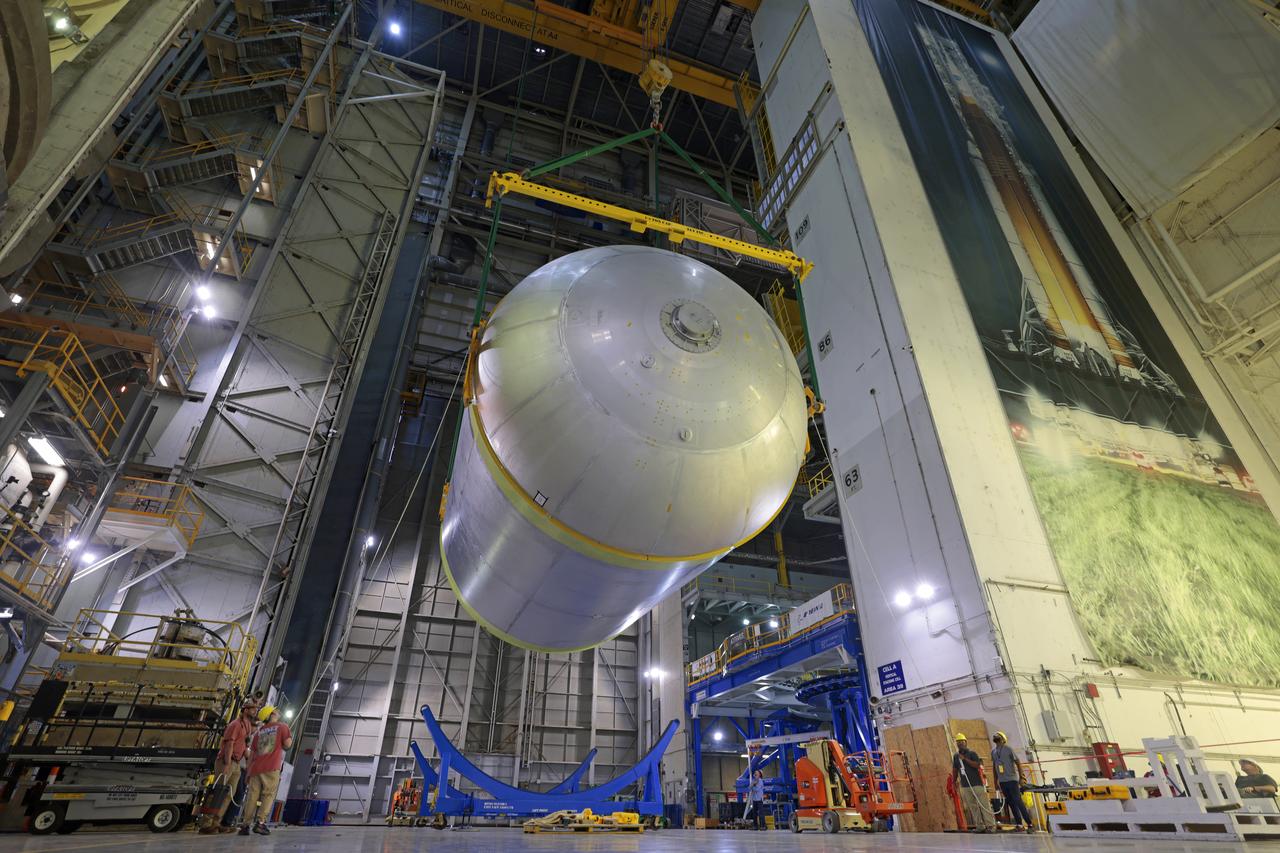
Teams at NASA’s Michoud Assembly Facility in New Orleans move a liquid oxygen tank for its SLS (Space Launch System) rocket to a cleaning cell inside the facility’s vertical assembly building on Oct. 11. The tank, which will be used on the core stage of the agency’s Artemis III mission, will undergo an internal cleaning before moving on to its next phase of production. Inside the cleaning cell, a solution is sprayed into the tank to remove particulates which may collect during the manufacturing process. Once a tank is cleaned, teams use mobile clean rooms for internal access to the tank to prevent external contaminates from entering the hardware. The propellant tank is one of five major elements that make up the 212-foot-tall rocket stage. The core stage, along with its four RS-25 engines, produce more than two million pounds of thrust to help launch NASA’s Orion spacecraft, astronauts, and supplies beyond Earth’s orbit and to the lunar surface for Artemis. Image credit: NASA/Michael DeMocker
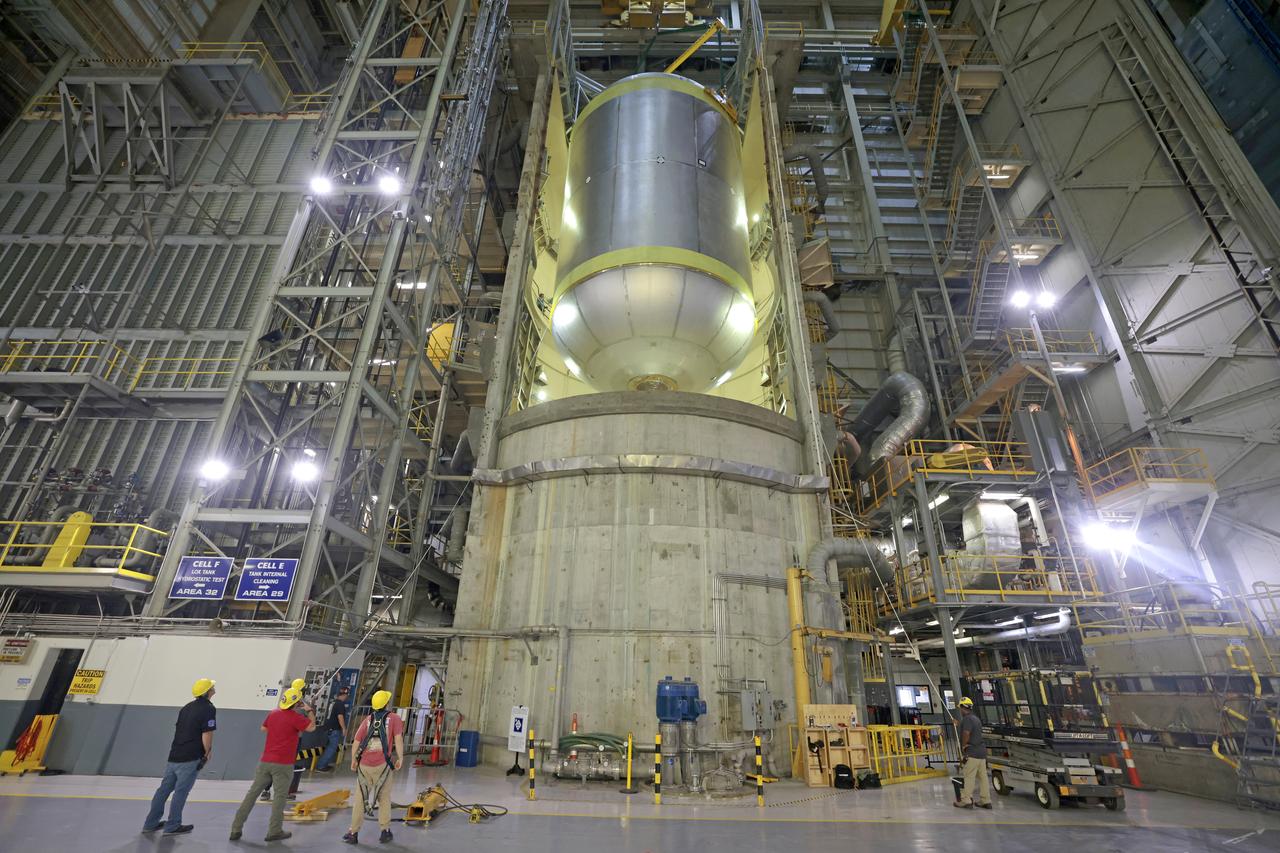
Teams at NASA’s Michoud Assembly Facility in New Orleans move a liquid oxygen tank for its SLS (Space Launch System) rocket to a cleaning cell inside the facility’s vertical assembly building on Oct. 11. The tank, which will be used on the core stage of the agency’s Artemis III mission, will undergo an internal cleaning before moving on to its next phase of production. Inside the cleaning cell, a solution is sprayed into the tank to remove particulates which may collect during the manufacturing process. Once a tank is cleaned, teams use mobile clean rooms for internal access to the tank to prevent external contaminates from entering the hardware. The propellant tank is one of five major elements that make up the 212-foot-tall rocket stage. The core stage, along with its four RS-25 engines, produce more than two million pounds of thrust to help launch NASA’s Orion spacecraft, astronauts, and supplies beyond Earth’s orbit and to the lunar surface for Artemis. Image credit: NASA/Michael DeMocker
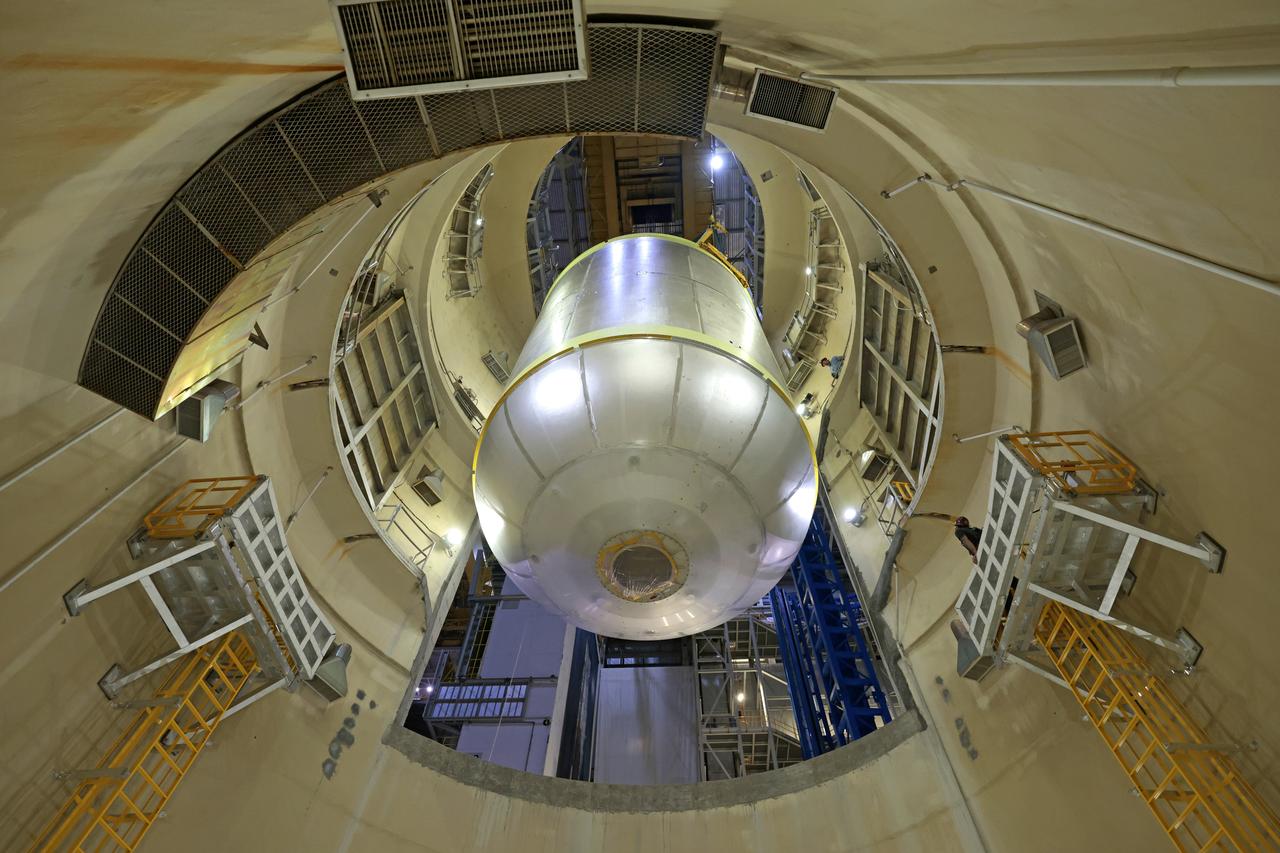
Teams at NASA’s Michoud Assembly Facility in New Orleans move a liquid oxygen tank for its SLS (Space Launch System) rocket to a cleaning cell inside the facility’s vertical assembly building on Oct. 11. The tank, which will be used on the core stage of the agency’s Artemis III mission, will undergo an internal cleaning before moving on to its next phase of production. Inside the cleaning cell, a solution is sprayed into the tank to remove particulates which may collect during the manufacturing process. Once a tank is cleaned, teams use mobile clean rooms for internal access to the tank to prevent external contaminates from entering the hardware. The propellant tank is one of five major elements that make up the 212-foot-tall rocket stage. The core stage, along with its four RS-25 engines, produce more than two million pounds of thrust to help launch NASA’s Orion spacecraft, astronauts, and supplies beyond Earth’s orbit and to the lunar surface for Artemis. Image credit: NASA/Michael DeMocker
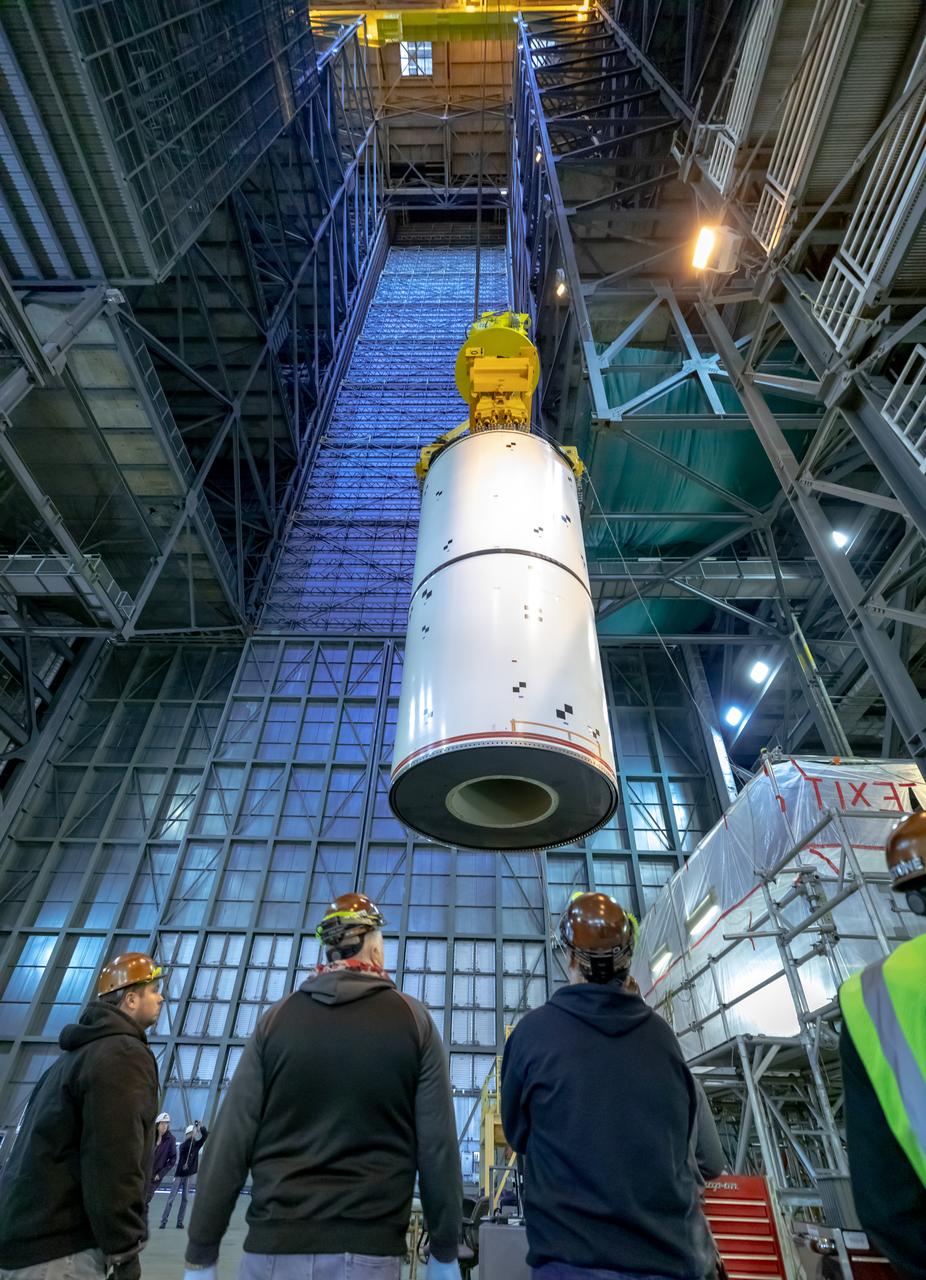
In High Bay 4 of the Vehicle Assembly Building at NASA’s Kennedy Space Center in Florida, a team of engineers with Exploration Ground Systems and contractor Jacobs participate in Space Launch System (SLS) solid rocket booster pathfinder stacking during a training exercise on Jan. 8, 2020. A crane is used to lift up two pathfinder segments and move them to a platform. The booster pathfinders are inert, full-scale replicas of the actual booster hardware that will be attached to the SLS rocket for Artemis missions. The team is practicing lifting, moving and stacking maneuvers, using important ground support equipment to train employees and certify all the equipment works properly. The five-segment, 17-story-tall twin boosters will provide 3.6 million pounds of thrust each at liftoff to help launch Orion on Artemis I, its first uncrewed mission beyond the Moon.
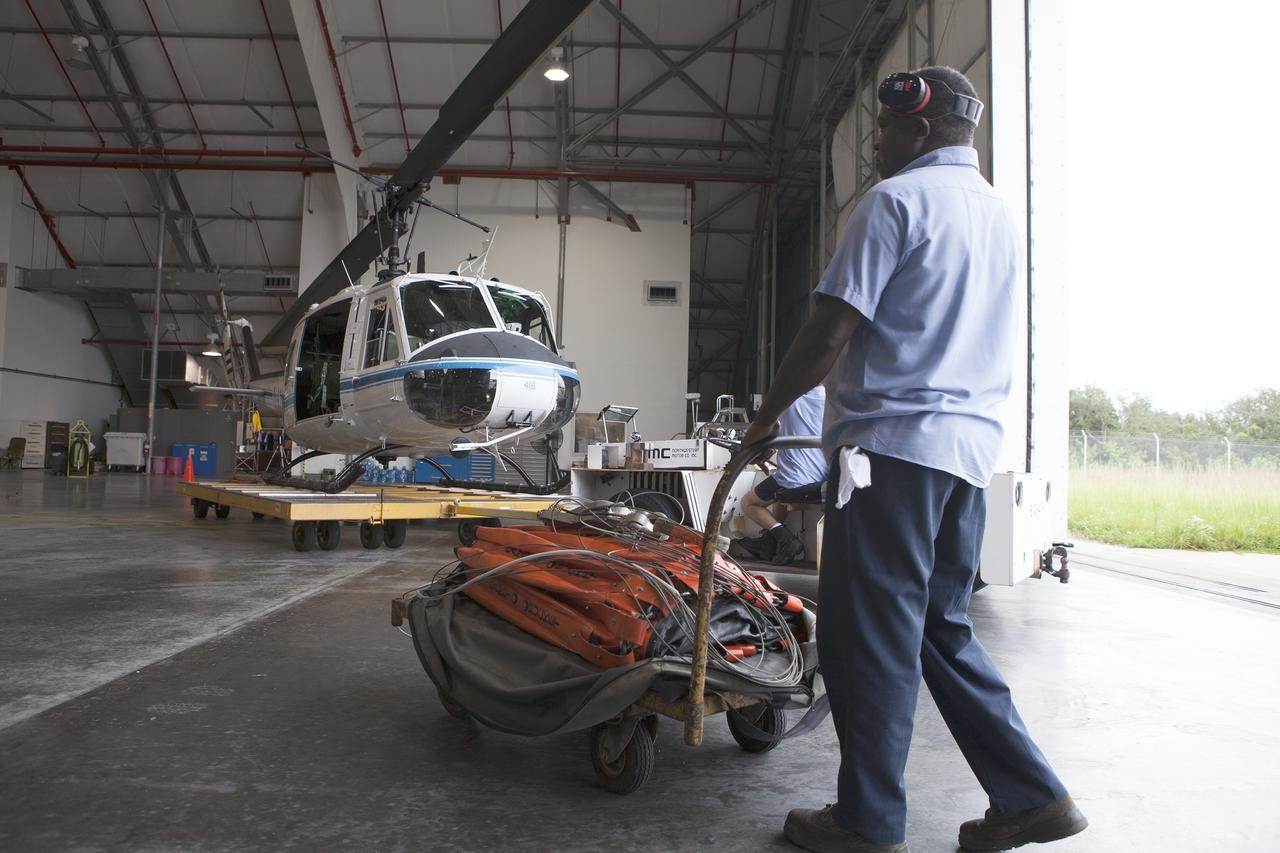
CAPE CANAVERAL, Fla. -- At NASA's Kennedy Space Center in Florida, John Miller of URS Federal Technical Services moves a Bambi Bucket and its associated cables are moved outside the Shuttle Landing Facility hangar prior to a training exercise to practice firefighting techniques. A three-person helicopter crew recently practiced using a Bambi Bucket to pick up water from a nearby waterway and dropping it on simulated targets at the center’s Shuttle Landing Facility. Firefighters respond to wildfires with teams on the ground and in the air. The most up-to-date tools include helicopters that use Bambi Buckets large quantities of water. NASA Flight Operations teams are training to perfect the skills needed to ensure they are ready to use tools, such as the Bambi Bucket, in the event of an out-of-control blaze at the spaceport. Photo credit: NASA/Frankie Martin
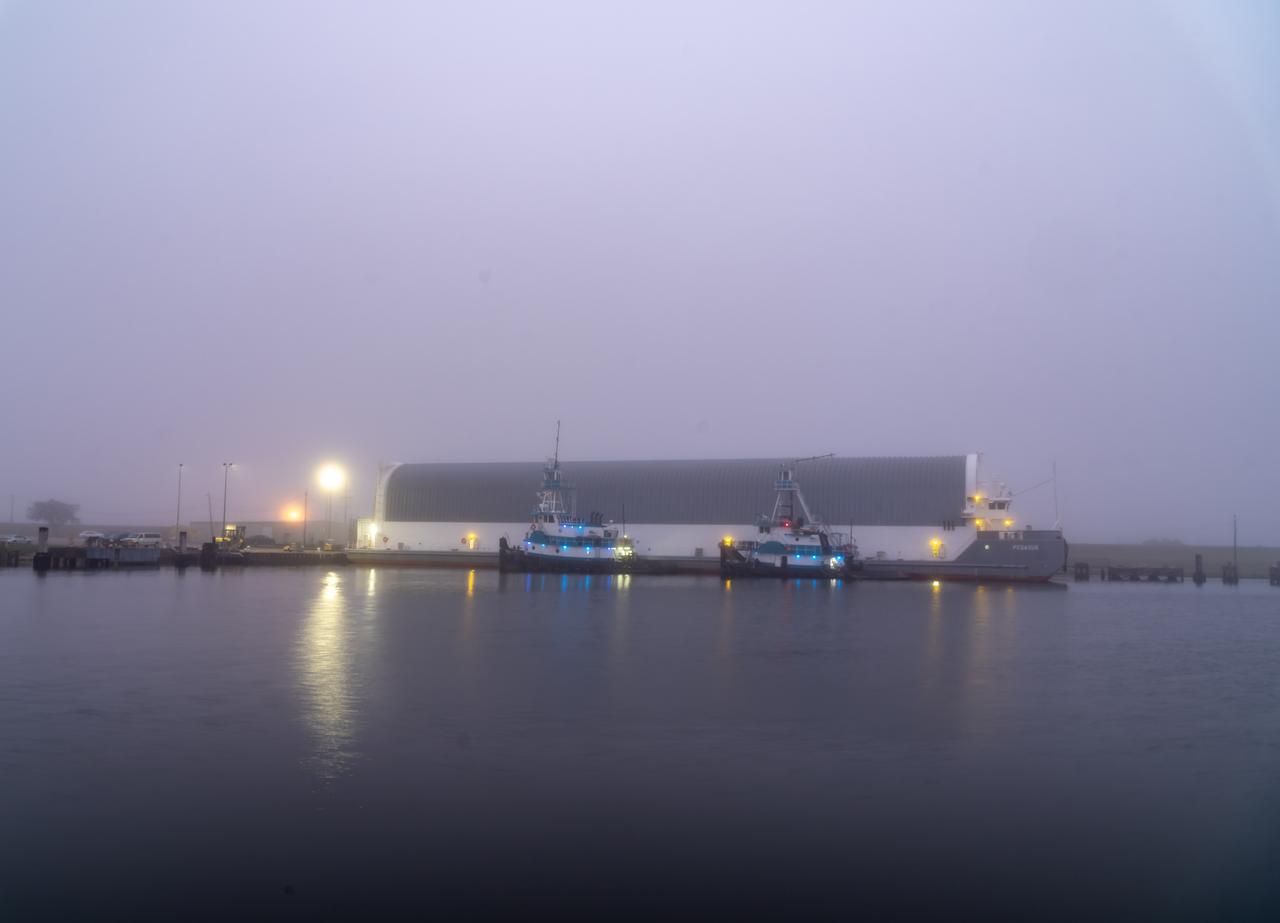
Teams at NASA’s Michoud Assembly Facility in New Orleans move the engine section flight hardware to the agency’s Pegasus barge Sunday, Dec. 4. The barge will ferry the engine section of NASA’s Space Launch System (SLS) rocket for Artemis III to the agency’s Kennedy Space Center in Florida. Once there, teams at Kennedy will finish outfitting the engine section, which comprises the tail-end of the rocket’s 212-foot-tall core stage, before integrating it to the rest of the stage. Beginning with production for Artemis III, NASA and core stage lead contractor Boeing will use Michoud, where the SLS core stages are currently manufactured, to produce and outfit the core stage’s five elements, and available space at Kennedy for final assembly and integration.
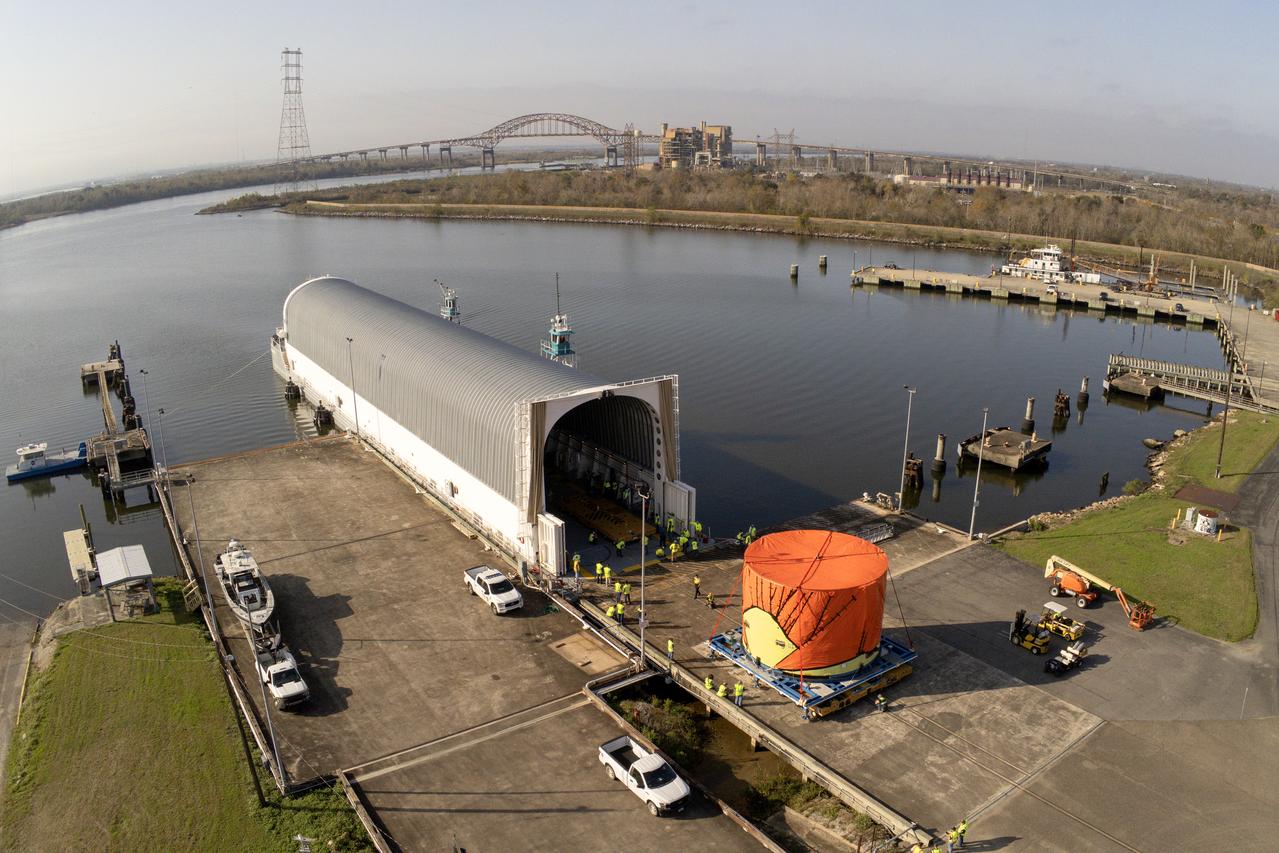
Teams at NASA’s Michoud Assembly Facility in New Orleans move the engine section flight hardware to the agency’s Pegasus barge on Sunday, December 4, 2022. The barge will ferry the engine section of NASA’s Space Launch System (SLS) rocket for Artemis III to the agency’s Kennedy Space Center in Florida. Once there, teams at Kennedy will finish outfitting the engine section, which comprises the tail-end of the rocket’s 212-foot-tall core stage, before integrating it to the rest of the stage. Beginning with production for Artemis III, NASA and core stage lead contractor Boeing will use Michoud, where the SLS core stages are currently manufactured, to produce and outfit the core stage’s five elements, and available space at Kennedy for final assembly and integration. Image credit: NASA/Michael DeMocker
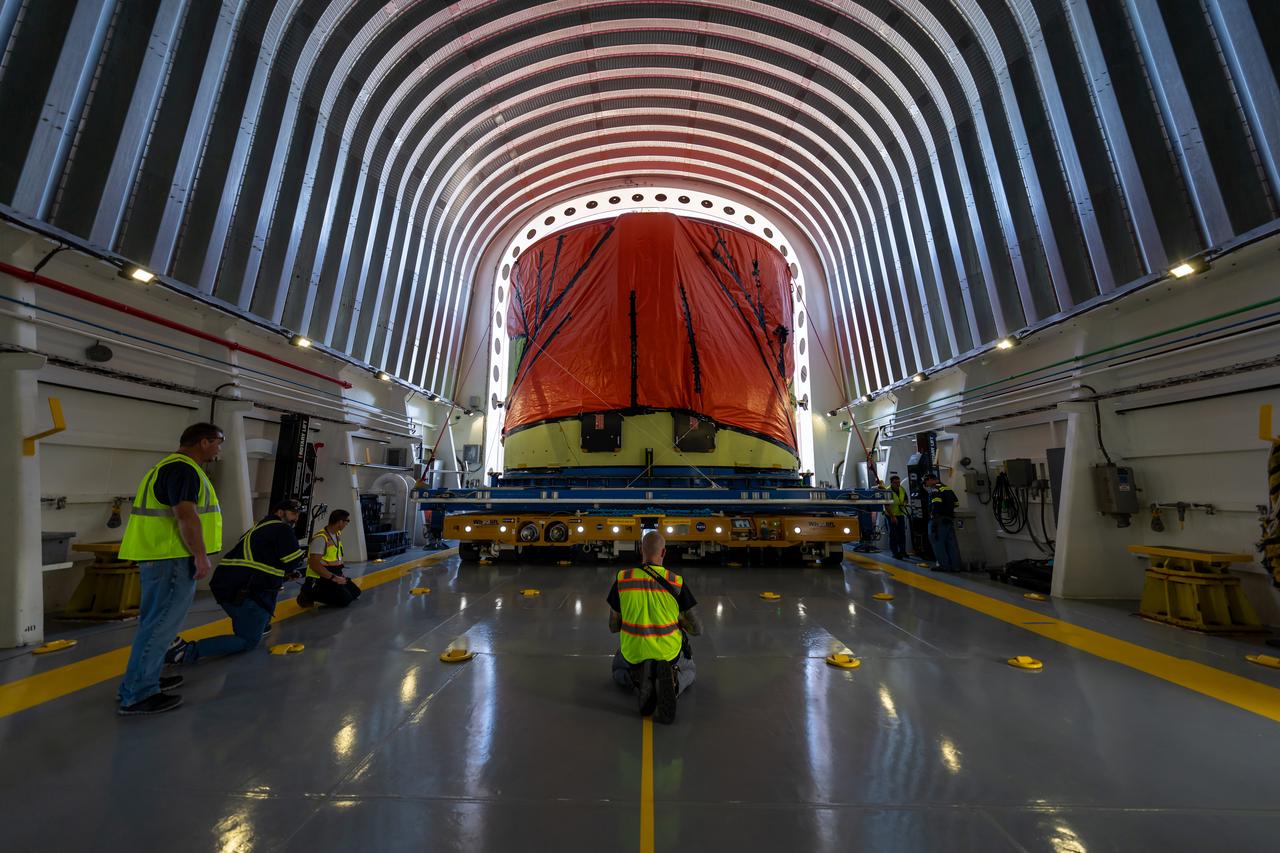
Teams at NASA’s Michoud Assembly Facility in New Orleans move the engine section flight hardware to the agency’s Pegasus barge Sunday, Dec. 4. The barge will ferry the engine section of NASA’s Space Launch System (SLS) rocket for Artemis III to the agency’s Kennedy Space Center in Florida. Once there, teams at Kennedy will finish outfitting the engine section, which comprises the tail-end of the rocket’s 212-foot-tall core stage, before integrating it to the rest of the stage. Beginning with production for Artemis III, NASA and core stage lead contractor Boeing will use Michoud, where the SLS core stages are currently manufactured, to produce and outfit the core stage’s five elements, and available space at Kennedy for final assembly and integration.
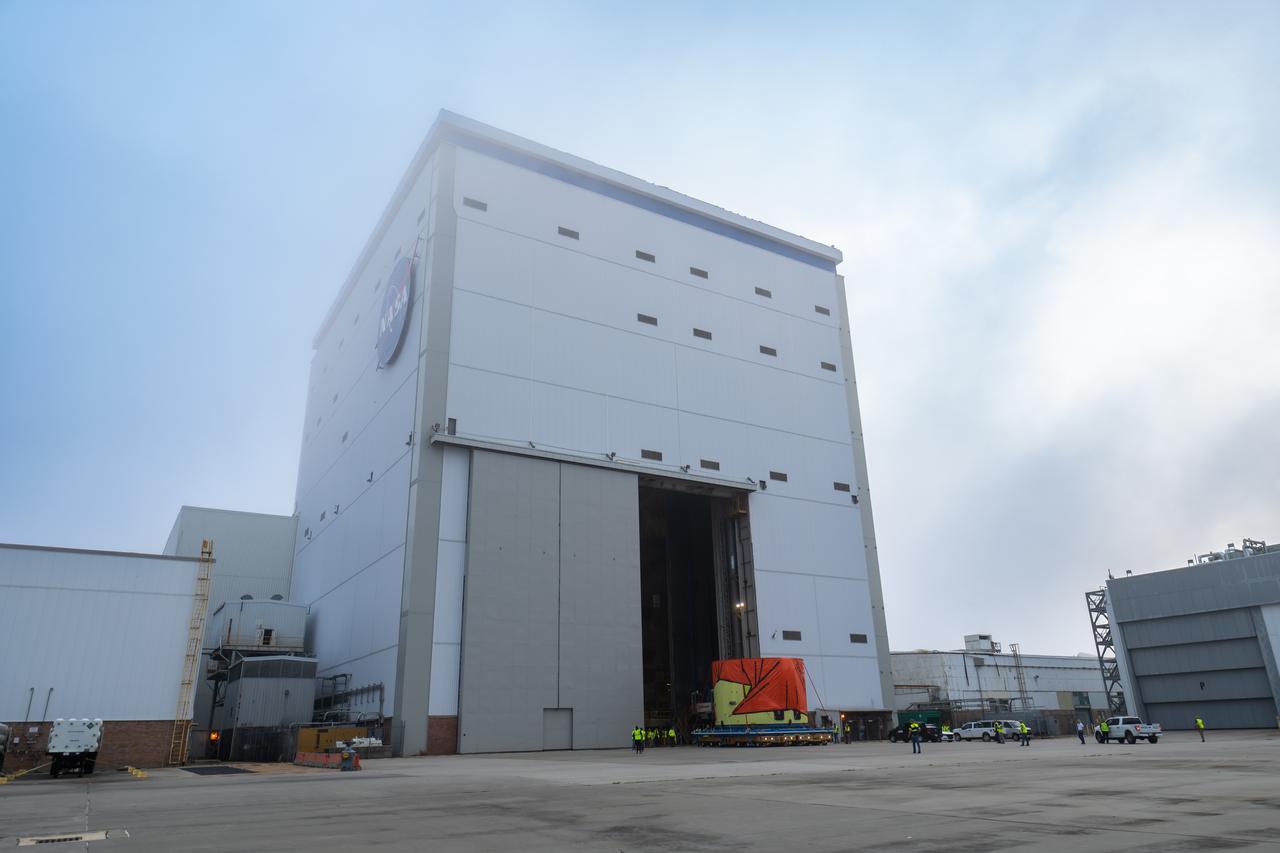
Teams at NASA’s Michoud Assembly Facility in New Orleans move the engine section flight hardware to the agency’s Pegasus barge Sunday, Dec. 4. The barge will ferry the engine section of NASA’s Space Launch System (SLS) rocket for Artemis III to the agency’s Kennedy Space Center in Florida. Once there, teams at Kennedy will finish outfitting the engine section, which comprises the tail-end of the rocket’s 212-foot-tall core stage, before integrating it to the rest of the stage. Beginning with production for Artemis III, NASA and core stage lead contractor Boeing will use Michoud, where the SLS core stages are currently manufactured, to produce and outfit the core stage’s five elements, and available space at Kennedy for final assembly and integration.
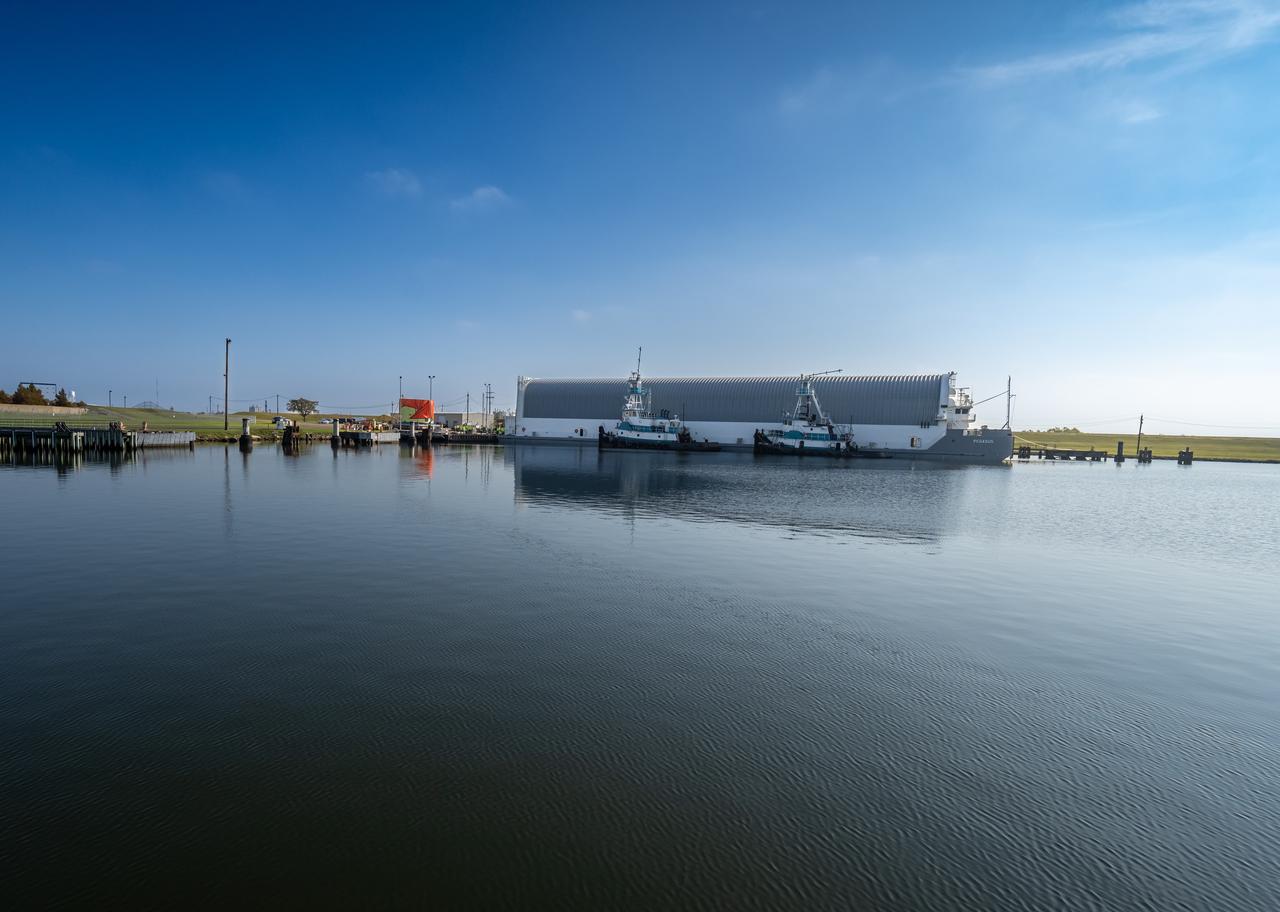
Teams at NASA’s Michoud Assembly Facility in New Orleans move the engine section flight hardware to the agency’s Pegasus barge Sunday, Dec. 4. The barge will ferry the engine section of NASA’s Space Launch System (SLS) rocket for Artemis III to the agency’s Kennedy Space Center in Florida. Once there, teams at Kennedy will finish outfitting the engine section, which comprises the tail-end of the rocket’s 212-foot-tall core stage, before integrating it to the rest of the stage. Beginning with production for Artemis III, NASA and core stage lead contractor Boeing will use Michoud, where the SLS core stages are currently manufactured, to produce and outfit the core stage’s five elements, and available space at Kennedy for final assembly and integration.
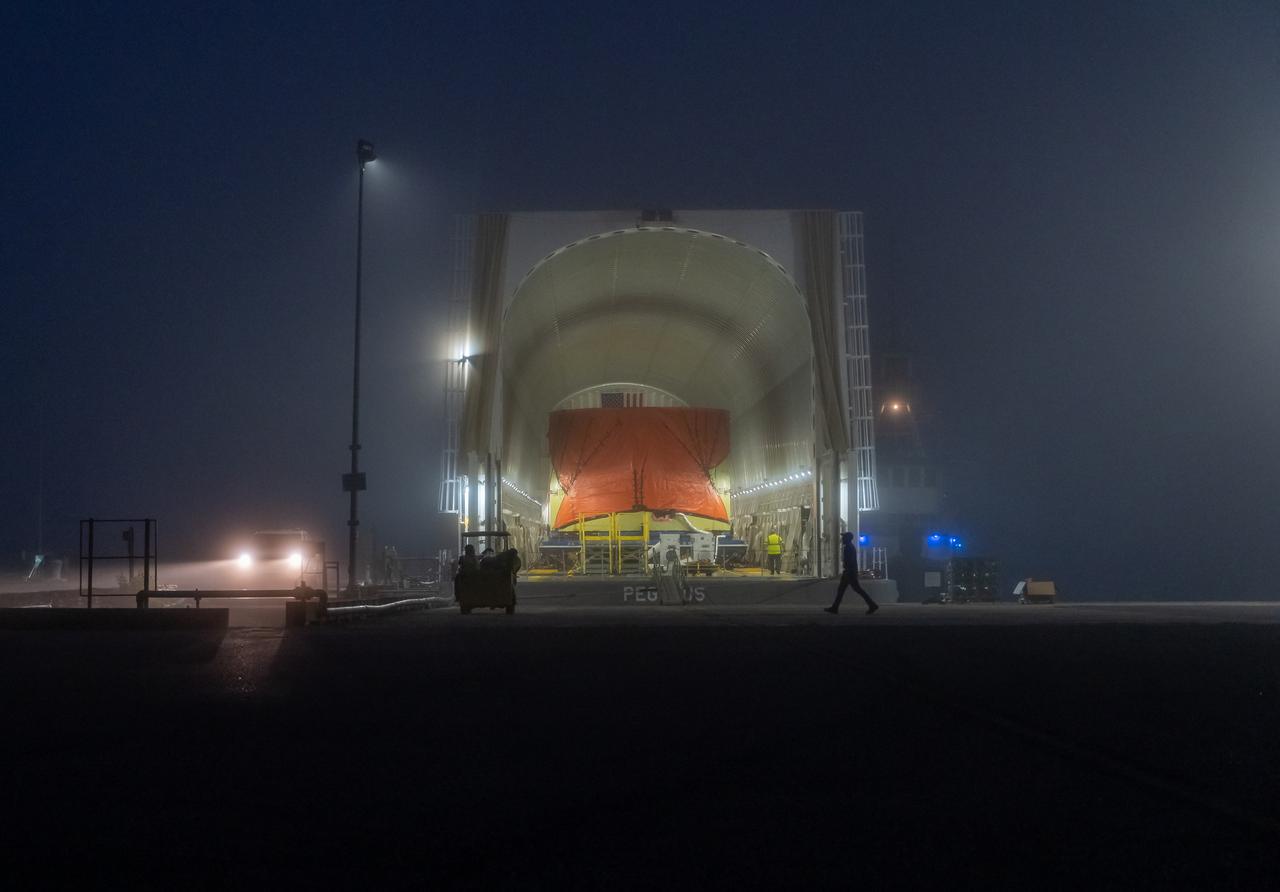
Teams at NASA’s Michoud Assembly Facility in New Orleans move the engine section flight hardware to the agency’s Pegasus barge Sunday, Dec. 4. The barge will ferry the engine section of NASA’s Space Launch System (SLS) rocket for Artemis III to the agency’s Kennedy Space Center in Florida. Once there, teams at Kennedy will finish outfitting the engine section, which comprises the tail-end of the rocket’s 212-foot-tall core stage, before integrating it to the rest of the stage. Beginning with production for Artemis III, NASA and core stage lead contractor Boeing will use Michoud, where the SLS core stages are currently manufactured, to produce and outfit the core stage’s five elements, and available space at Kennedy for final assembly and integration.
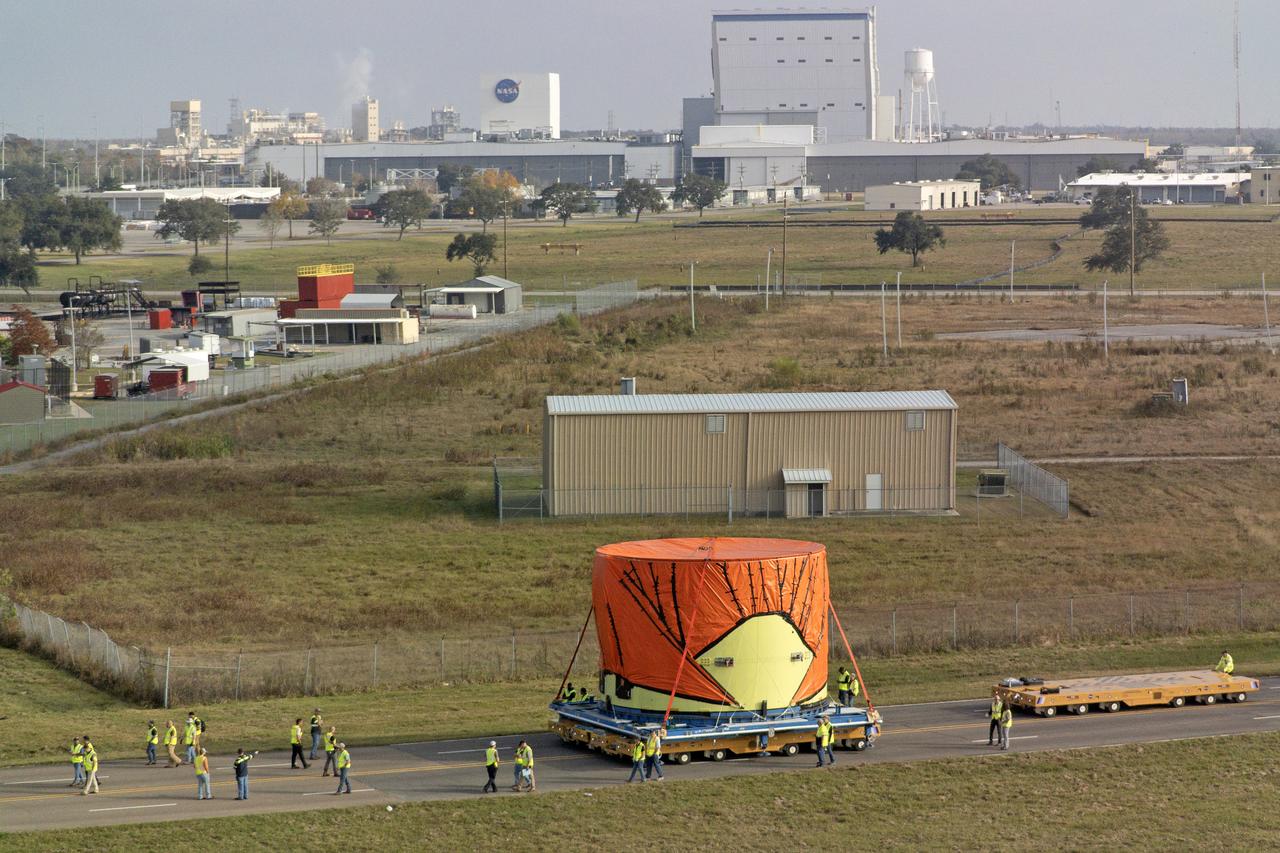
Teams at NASA’s Michoud Assembly Facility in New Orleans move the engine section flight hardware to the agency’s Pegasus barge on Sunday, December 4, 2022. The barge will ferry the engine section of NASA’s Space Launch System (SLS) rocket for Artemis III to the agency’s Kennedy Space Center in Florida. Once there, teams at Kennedy will finish outfitting the engine section, which comprises the tail-end of the rocket’s 212-foot-tall core stage, before integrating it to the rest of the stage. Beginning with production for Artemis III, NASA and core stage lead contractor Boeing will use Michoud, where the SLS core stages are currently manufactured, to produce and outfit the core stage’s five elements, and available space at Kennedy for final assembly and integration. Image credit: NASA/Michael DeMocker
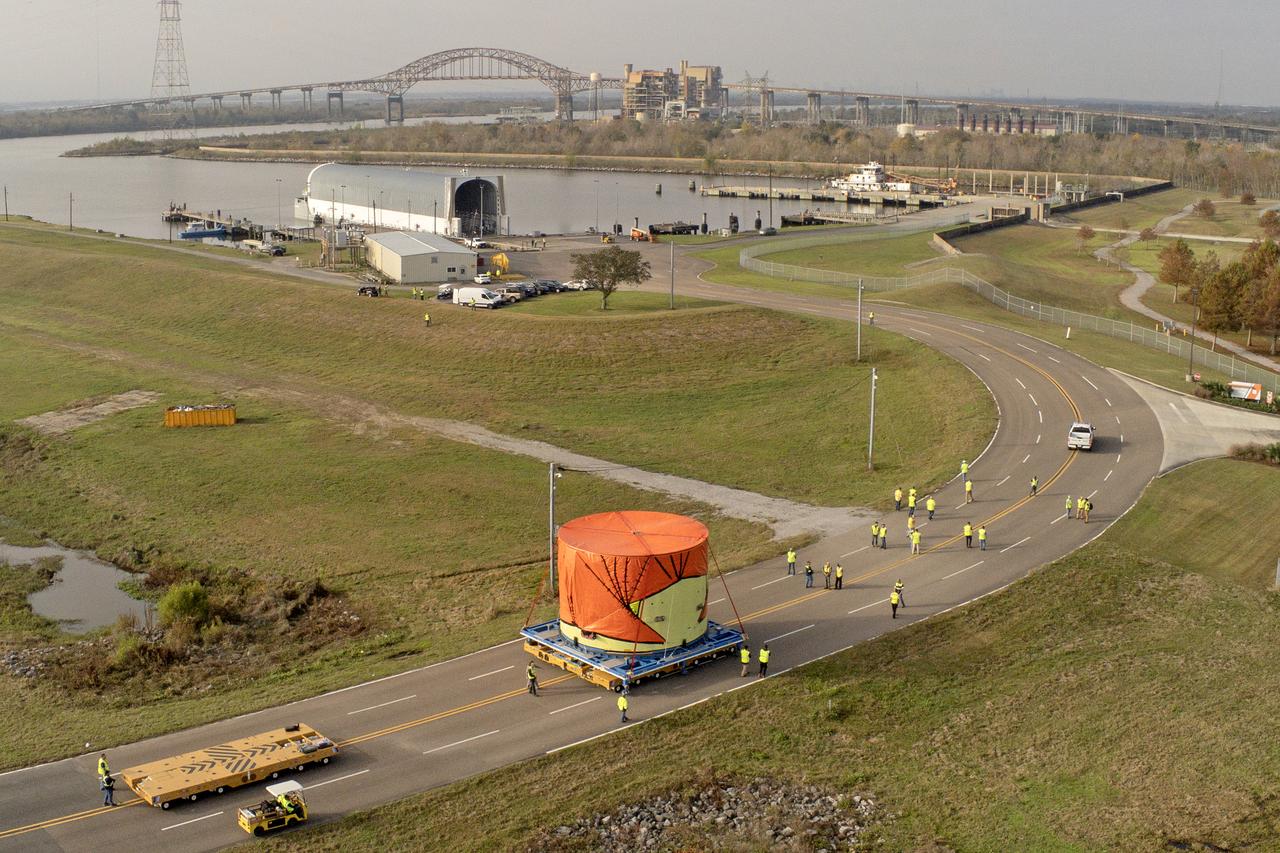
Teams at NASA’s Michoud Assembly Facility in New Orleans move the engine section flight hardware to the agency’s Pegasus barge on Sunday, December 4, 2022. The barge will ferry the engine section of NASA’s Space Launch System (SLS) rocket for Artemis III to the agency’s Kennedy Space Center in Florida. Once there, teams at Kennedy will finish outfitting the engine section, which comprises the tail-end of the rocket’s 212-foot-tall core stage, before integrating it to the rest of the stage. Beginning with production for Artemis III, NASA and core stage lead contractor Boeing will use Michoud, where the SLS core stages are currently manufactured, to produce and outfit the core stage’s five elements, and available space at Kennedy for final assembly and integration. Image credit: NASA/Michael DeMocker

CAPE CANAVERAL, Fla. – Team members check their robot before the start of a mining session in simulated Martian soil in the Caterpillar Mining Arena during NASA’s 2014 Robotic Mining Competition at the Kennedy Space Center Visitor Complex in Florida. More than 35 teams from colleges and universities around the U.S. have designed and built remote-controlled robots for the mining competition. The competition is a NASA Human Exploration and Operations Mission Directorate project designed to engage and retain students in science, technology, engineering and mathematics, or STEM, fields by expanding opportunities for student research and design. Teams use their remote-controlled robotics to maneuver and dig in a supersized sandbox filled with a crushed material that has characteristics similar to Martian soil. The objective of the challenge is to see which team’s robot can collect and move the most regolith within a specified amount of time. For more information, visit www.nasa.gov/nasarmc. Photo credit: NASA/Kim Shiflett
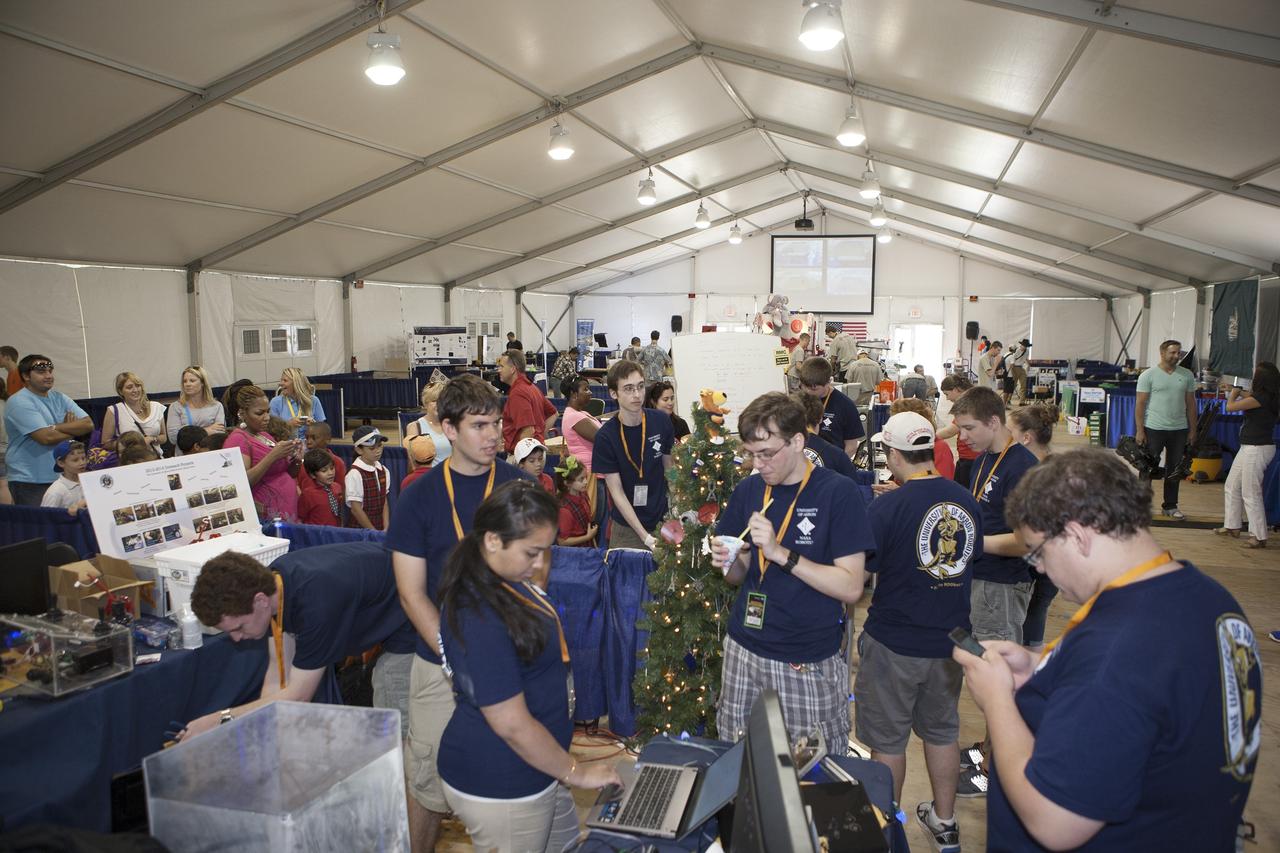
CAPE CANAVERAL, Fla. -- Team members from the University of Akron in Ohio take a break before their final mining run on the final day of NASA's 2014 Robotic Mining Competition at the Kennedy Space Center Visitor Complex in Florida. More than 35 teams from colleges and universities around the U.S. designed and built remote-controlled robots for the mining competition. The competition is a NASA Human Exploration and Operations Mission Directorate project designed to engage and retain students in science, technology, engineering and mathematics, or STEM, fields by expanding opportunities for student research and design. Teams use their remote-controlled robotics to maneuver and dig in a supersized sandbox filled with a crushed material that has characteristics similar to Martian soil. The objective of the challenge is to see which team’s robot can collect and move the most regolith within a specified amount of time. For more information, visit www.nasa.gov/nasarmc. Photo credit: NASA/Kim Shiflett
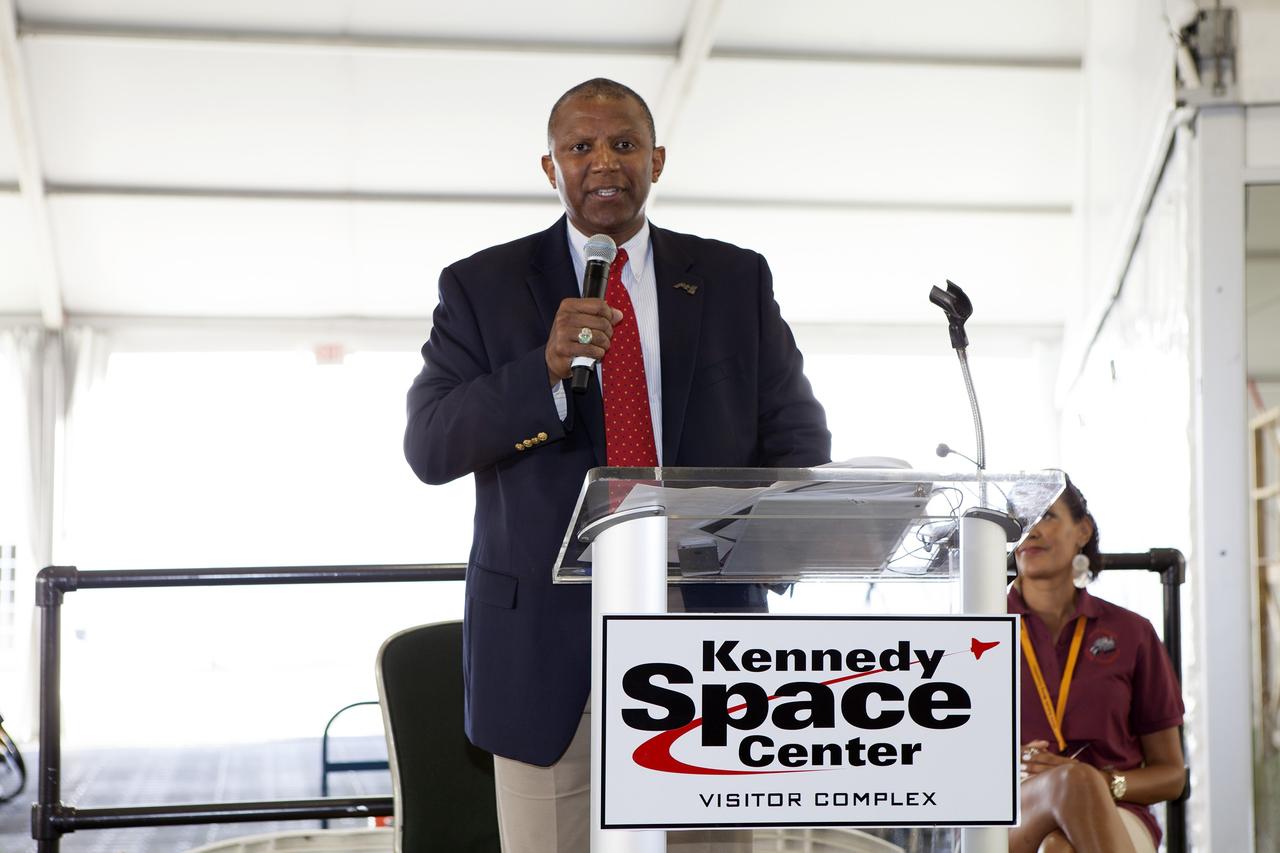
CAPE CANAVERAL, Fla. – Kelvin Manning, associate director of Kennedy Space Center, speaks to the college and university teams during the opening ceremony of NASA’s 2014 Robotics Mining Competition at the Kennedy Space Center Visitor Complex in Florida. More than 35 teams from around the U.S. have designed and built remote-controlled robots for the mining competition. The competition is a NASA Human Exploration and Operations Mission Directorate project designed to engage and retain students in science, technology, engineering and mathematics, or STEM, fields by expanding opportunities for student research and design. Teams use their remote-controlled robotics to maneuver and dig in a supersized sandbox filled with a crushed material that has characteristics similar to Martian soil. The objective of the challenge is to see which team’s robot can collect and move the most regolith within a specified amount of time. For more information, visit www.nasa.gov/nasarmc. Photo credit: NASA/Frankie Martin
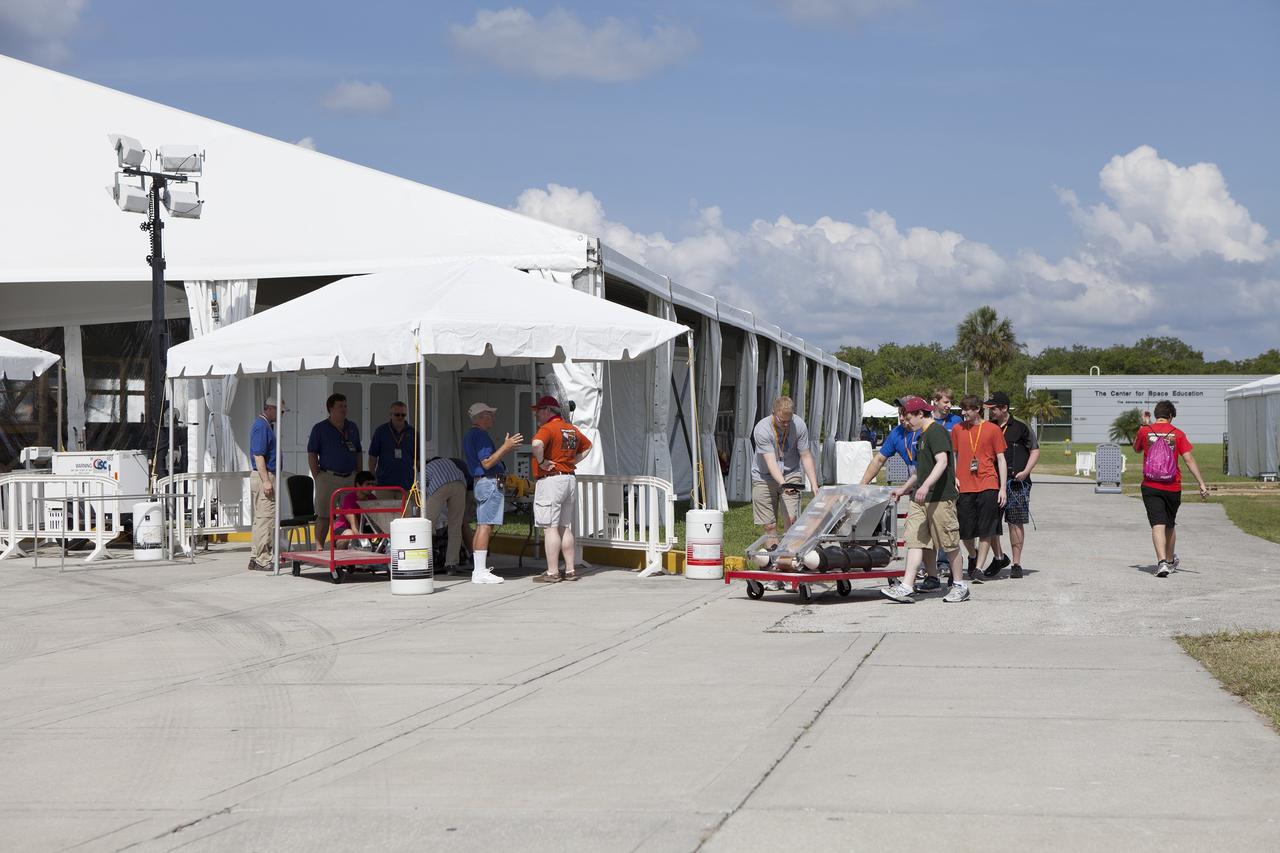
CAPE CANAVERAL, Fla. – A college team prepares its robot for a trial run at NASA’s Robotics Mining Competition at the Kennedy Space Center Visitor Complex in Florida. More than 35 teams from around the U.S. have designed and built remote-controlled robots for the mining competition. The competition is a NASA Human Exploration and Operations Mission Directorate project designed to engage and retain students in science, technology, engineering and mathematics, or STEM, fields by expanding opportunities for student research and design. Teams use their remote-controlled robotics to maneuver and dig in a supersized sandbox filled with a crushed material that has characteristics similar to Martian soil. The objective of the challenge is to see which team’s robot can collect and move the most regolith within a specified amount of time. For more information, visit www.nasa.gov/nasarmc. Photo credit: NASA/Ben Smegelsky

CAPE CANAVERAL, Fla. – Team members from the University of Alabama prepare their robot for the mining portion of NASA's 2014 Robotics Mining Competition at the Kennedy Space Center Visitor Complex in Florida. More than 35 teams from around the U.S. have designed and built remote-controlled robots for the mining competition. The competition is a NASA Human Exploration and Operations Mission Directorate project designed to engage and retain students in science, technology, engineering and mathematics, or STEM, fields by expanding opportunities for student research and design. Teams use their remote-controlled robotics to maneuver and dig in a supersized sandbox filled with a crushed material that has characteristics similar to Martian soil. The objective of the challenge is to see which team’s robot can collect and move the most regolith within a specified amount of time. For more information, visit www.nasa.gov/nasarmc. Photo credit: NASA/Frankie Martin
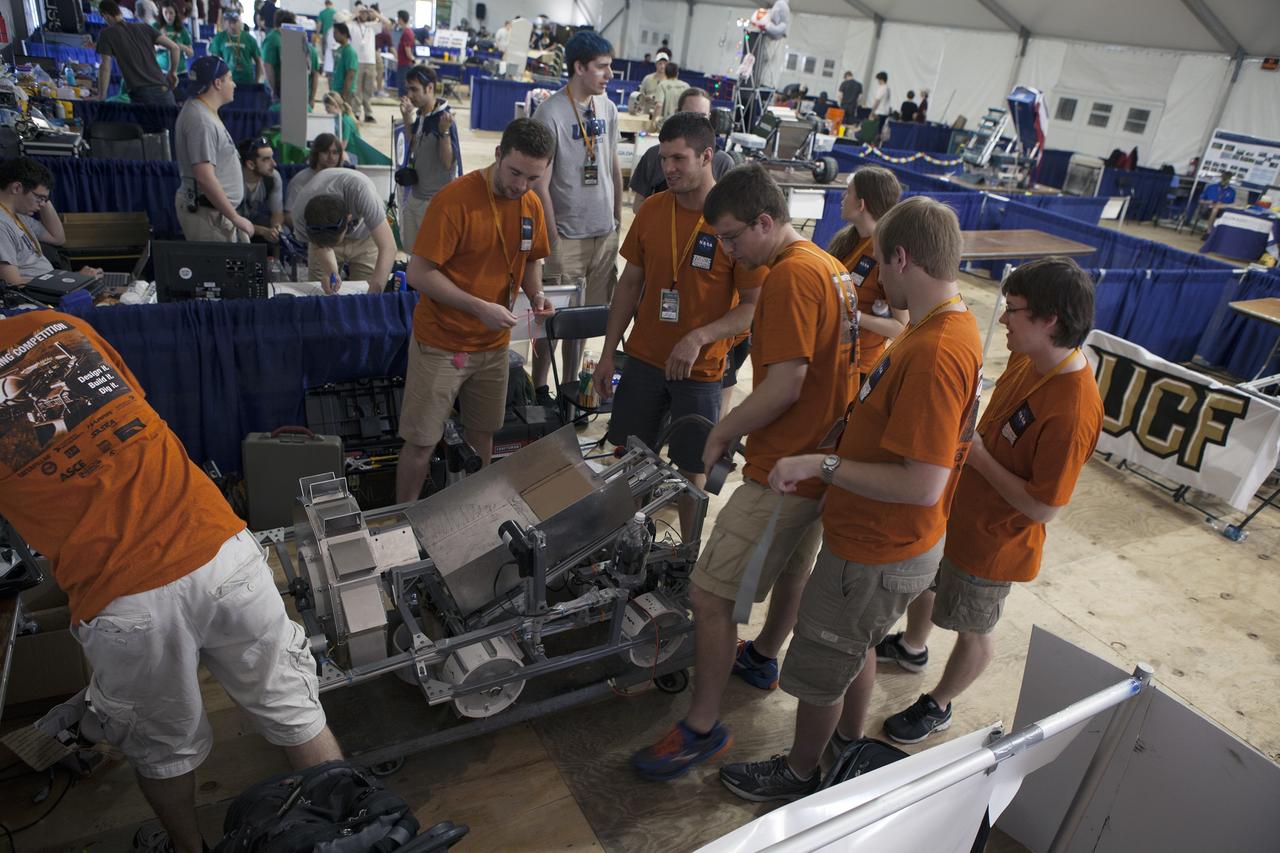
CAPE CANAVERAL, Fla. – College and university teams prepare their robots for the mining portion of NASA’s 2014 Robotic Mining Competition at the Kennedy Space Center Visitor Complex in Florida. More than 35 teams from around the U.S. have designed and built remote-controlled robots for the mining competition. The competition is a NASA Human Exploration and Operations Mission Directorate project designed to engage and retain students in science, technology, engineering and mathematics, or STEM, fields by expanding opportunities for student research and design. Teams use their remote-controlled robotics to maneuver and dig in a supersized sandbox filled with a crushed material that has characteristics similar to Martian soil. The objective of the challenge is to see which team’s robot can collect and move the most regolith within a specified amount of time. For more information, visit www.nasa.gov/nasarmc. Photo credit: NASA/Kim Shiflett
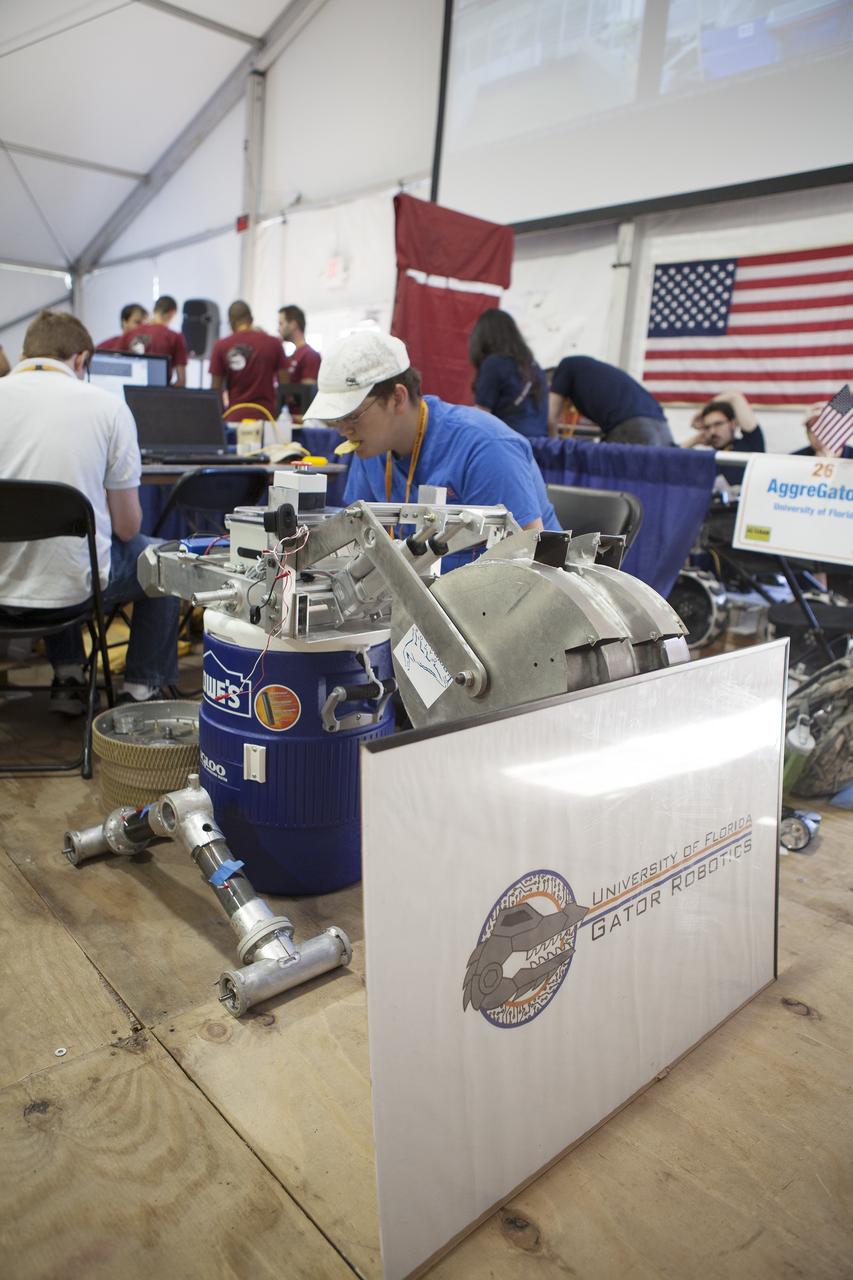
CAPE CANAVERAL, Fla. – Team members from the University of Florida in Gainesville prepare their robot for the mining portion of NASA's 2014 Robotics Mining Competition at the Kennedy Space Center Visitor Complex in Florida. More than 35 teams from around the U.S. have designed and built remote-controlled robots for the mining competition. The competition is a NASA Human Exploration and Operations Mission Directorate project designed to engage and retain students in science, technology, engineering and mathematics, or STEM, fields by expanding opportunities for student research and design. Teams use their remote-controlled robotics to maneuver and dig in a supersized sandbox filled with a crushed material that has characteristics similar to Martian soil. The objective of the challenge is to see which team’s robot can collect and move the most regolith within a specified amount of time. For more information, visit www.nasa.gov/nasarmc. Photo credit: NASA/Frankie Martin
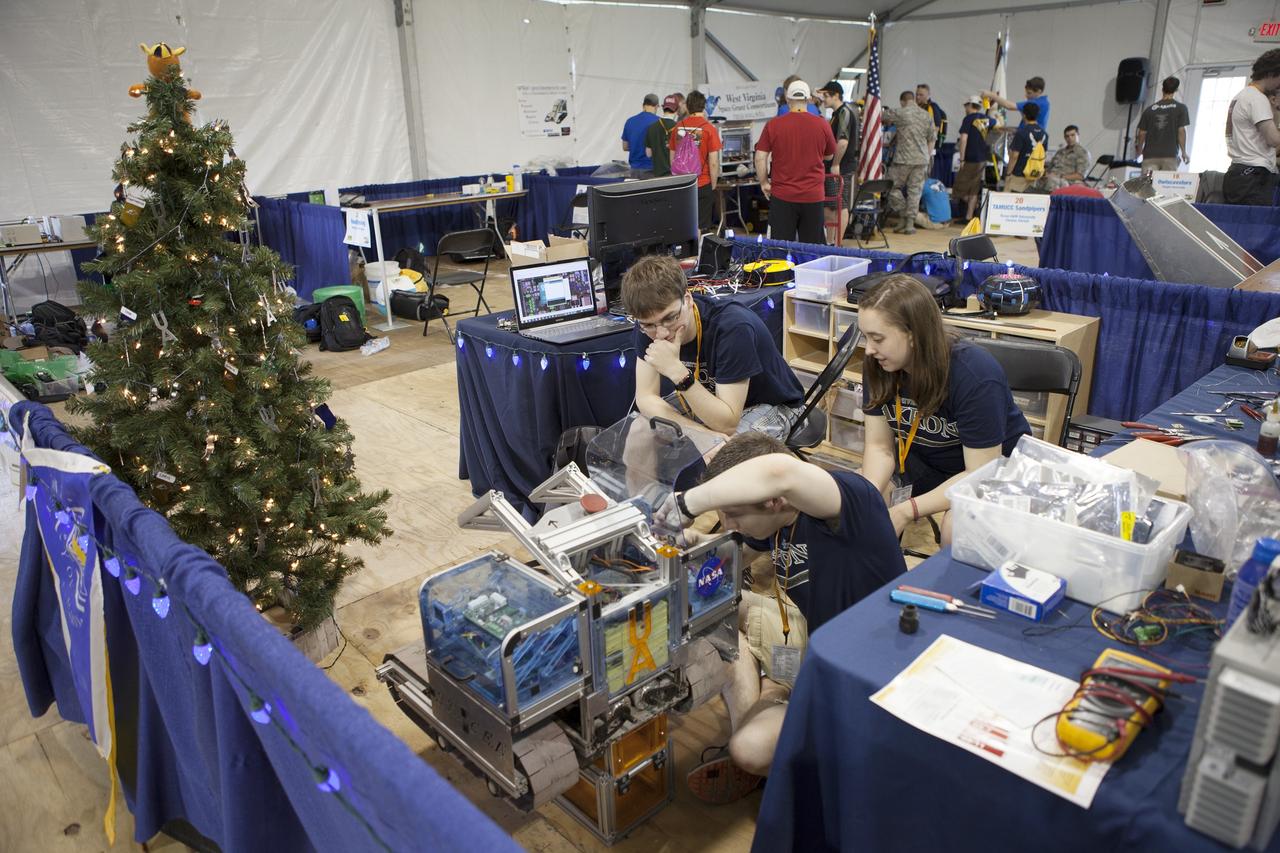
CAPE CANAVERAL, Fla. – College and university teams prepare their robots for NASA’s Robotics Mining Competition at the Kennedy Space Center Visitor Complex in Florida. More than 35 teams from around the U.S. have designed and built remote-controlled robots for the mining competition. The competition is a NASA Human Exploration and Operations Mission Directorate project designed to engage and retain students in science, technology, engineering and mathematics, or STEM, fields by expanding opportunities for student research and design. Teams use their remote-controlled robotics to maneuver and dig in a supersized sandbox filled with a crushed material that has characteristics similar to Martian soil. The objective of the challenge is to see which team’s robot can collect and move the most regolith within a specified amount of time. For more information, visit www.nasa.gov/nasarmc. Photo credit: NASA/Ben Smegelsky
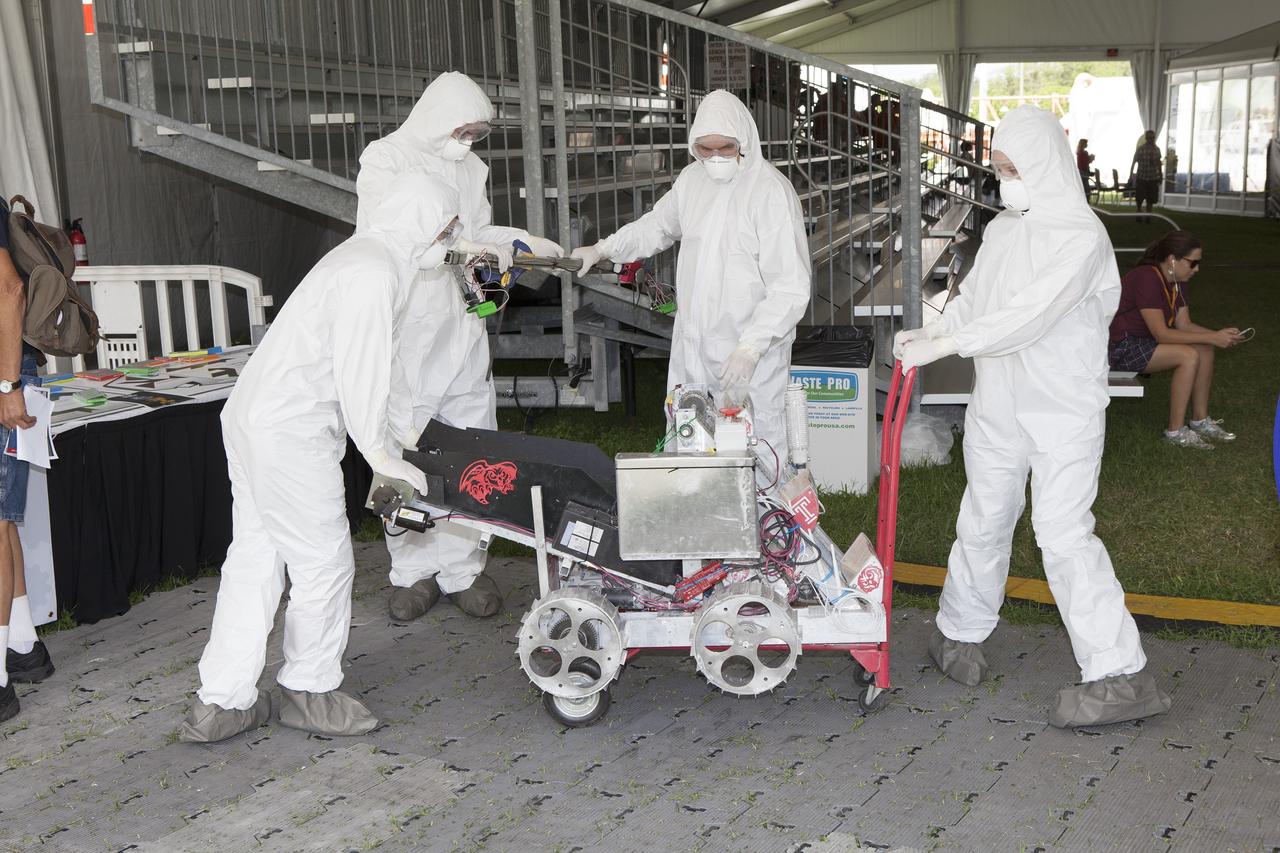
CAPE CANAVERAL, Fla. – College team members, dressed in protective suits, prepare their robot for a trial run at NASA’s Robotics Mining Competition at the Kennedy Space Center Visitor Complex in Florida. More than 35 teams from around the U.S. have designed and built remote-controlled robots for the mining competition. The competition is a NASA Human Exploration and Operations Mission Directorate project designed to engage and retain students in science, technology, engineering and mathematics, or STEM, fields by expanding opportunities for student research and design. Teams use their remote-controlled robotics to maneuver and dig in a supersized sandbox filled with a crushed material that has characteristics similar to Martian soil. The objective of the challenge is to see which team’s robot can collect and move the most regolith within a specified amount of time. For more information, visit www.nasa.gov/nasarmc. Photo credit: NASA/Ben Smegelsky
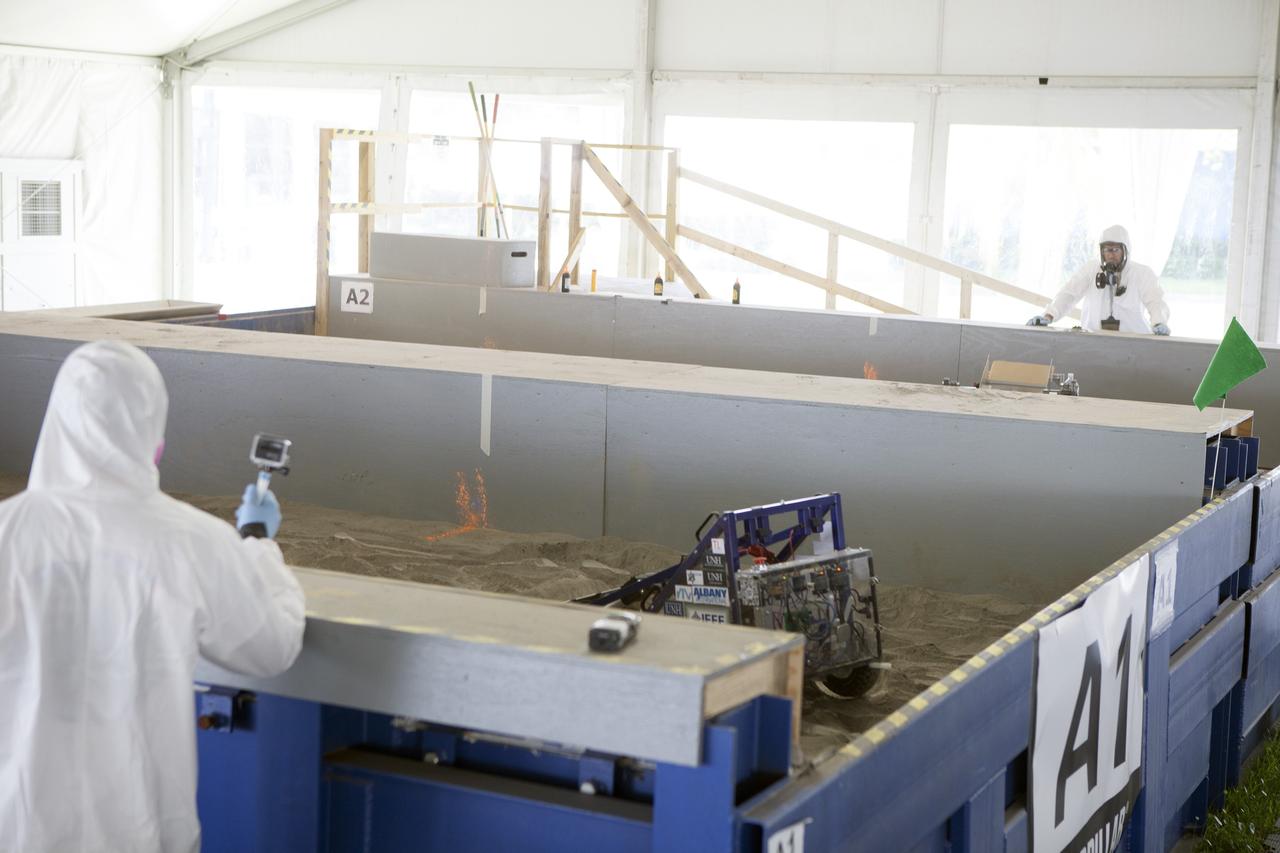
CAPE CANAVERAL, Fla. – Competition judges monitor two team's robots digging in the simulated Martian soil in the Caterpillar Mining Arena during NASA’s 2014 Robotic Mining Competition at the Kennedy Space Center Visitor Complex in Florida. More than 35 teams from colleges and universities around the U.S. have designed and built remote-controlled robots for the mining competition. The competition is a NASA Human Exploration and Operations Mission Directorate project designed to engage and retain students in science, technology, engineering and mathematics, or STEM, fields by expanding opportunities for student research and design. Teams use their remote-controlled robotics to maneuver and dig in a supersized sandbox filled with a crushed material that has characteristics similar to Martian soil. The objective of the challenge is to see which team’s robot can collect and move the most regolith within a specified amount of time. For more information, visit www.nasa.gov/nasarmc. Photo credit: NASA/Kim Shiflett

CAPE CANAVERAL, Fla. – Team members from the University of North Dakota prepare their robot for the mining portion of NASA's 2014 Robotics Mining Competition at the Kennedy Space Center Visitor Complex in Florida. More than 35 teams from around the U.S. have designed and built remote-controlled robots for the mining competition. The competition is a NASA Human Exploration and Operations Mission Directorate project designed to engage and retain students in science, technology, engineering and mathematics, or STEM, fields by expanding opportunities for student research and design. Teams use their remote-controlled robotics to maneuver and dig in a supersized sandbox filled with a crushed material that has characteristics similar to Martian soil. The objective of the challenge is to see which team’s robot can collect and move the most regolith within a specified amount of time. For more information, visit www.nasa.gov/nasarmc. Photo credit: NASA/Frankie Martin
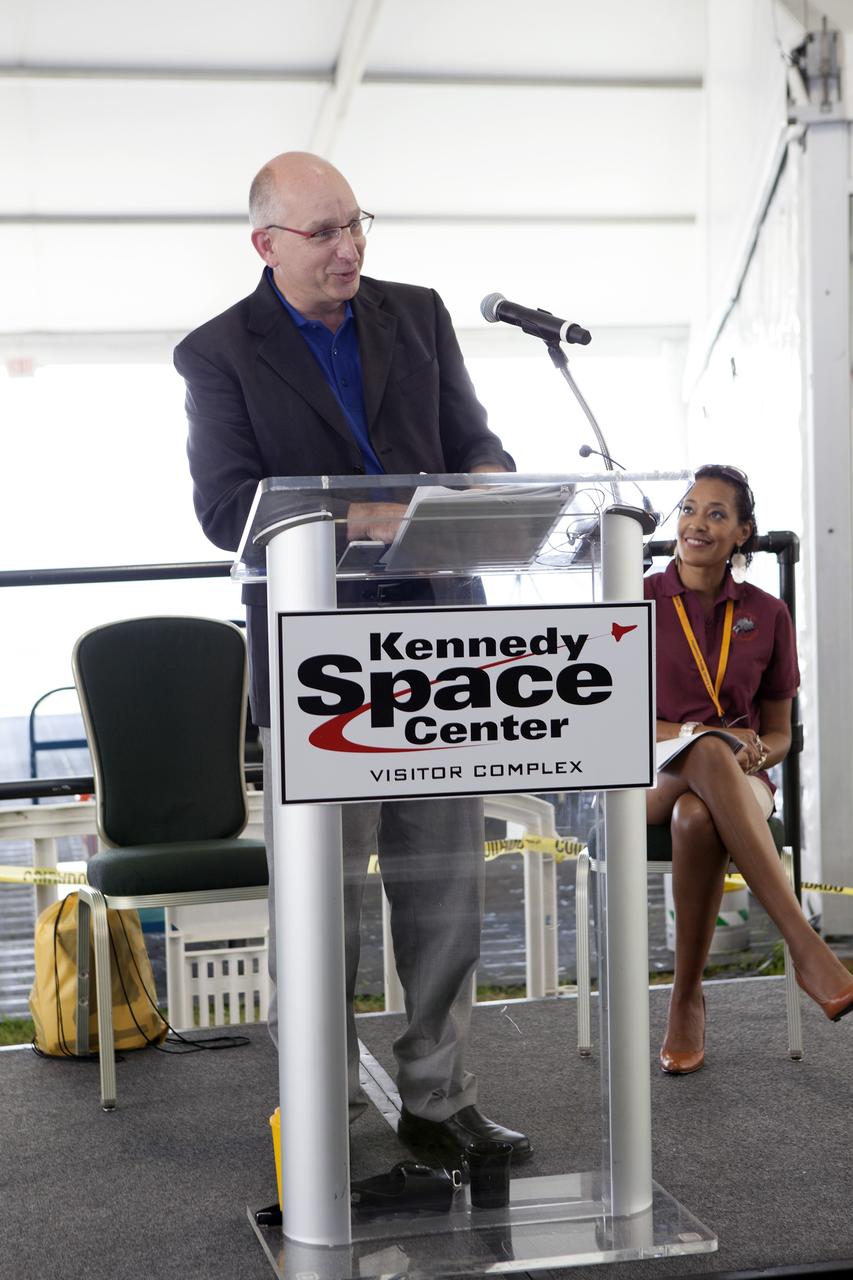
CAPE CANAVERAL, Fla. – Brian Roth, with Caterpillar, speaks to the college and university teams during the opening ceremony of NASA’s 2014 Robotics Mining Competition at the Kennedy Space Center Visitor Complex in Florida. More than 35 teams from around the U.S. have designed and built remote-controlled robots for the mining competition. The competition is a NASA Human Exploration and Operations Mission Directorate project designed to engage and retain students in science, technology, engineering and mathematics, or STEM, fields by expanding opportunities for student research and design. Teams use their remote-controlled robotics to maneuver and dig in a supersized sandbox filled with a crushed material that has characteristics similar to Martian soil. The objective of the challenge is to see which team’s robot can collect and move the most regolith within a specified amount of time. For more information, visit www.nasa.gov/nasarmc. Photo credit: NASA/Frankie Martin
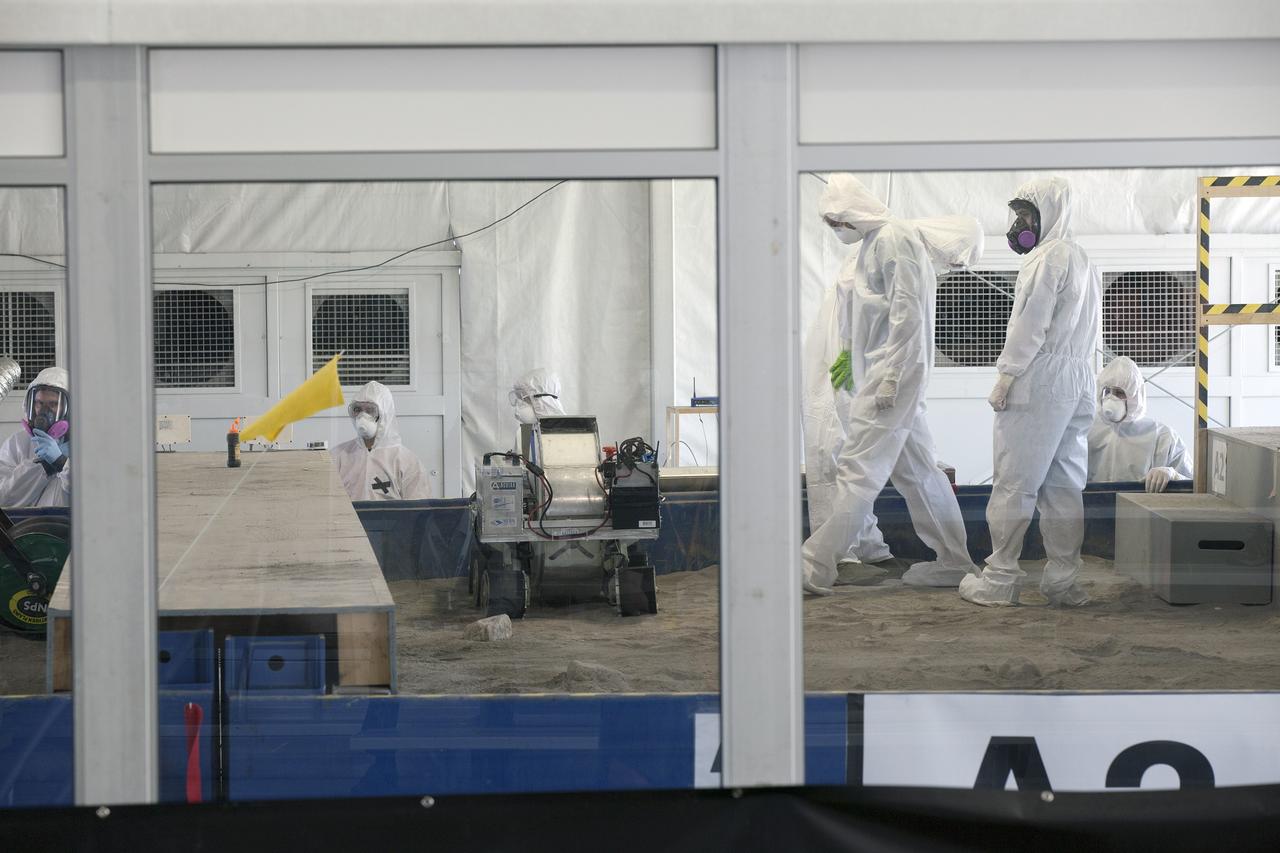
CAPE CANAVERAL, Fla. -- Team members prepare their robot to dig in simulated Martian soil in the Caterpillar Mining Arena on the final day of NASA's 2014 Robotic Mining Competition at the Kennedy Space Center Visitor Complex in Florida. More than 35 teams from colleges and universities around the U.S. designed and built remote-controlled robots for the mining competition. The competition is a NASA Human Exploration and Operations Mission Directorate project designed to engage and retain students in science, technology, engineering and mathematics, or STEM, fields by expanding opportunities for student research and design. Teams use their remote-controlled robotics to maneuver and dig in a supersized sandbox filled with a crushed material that has characteristics similar to Martian soil. The objective of the challenge is to see which team’s robot can collect and move the most regolith within a specified amount of time. For more information, visit www.nasa.gov/nasarmc. Photo credit: NASA/Kim Shiflett
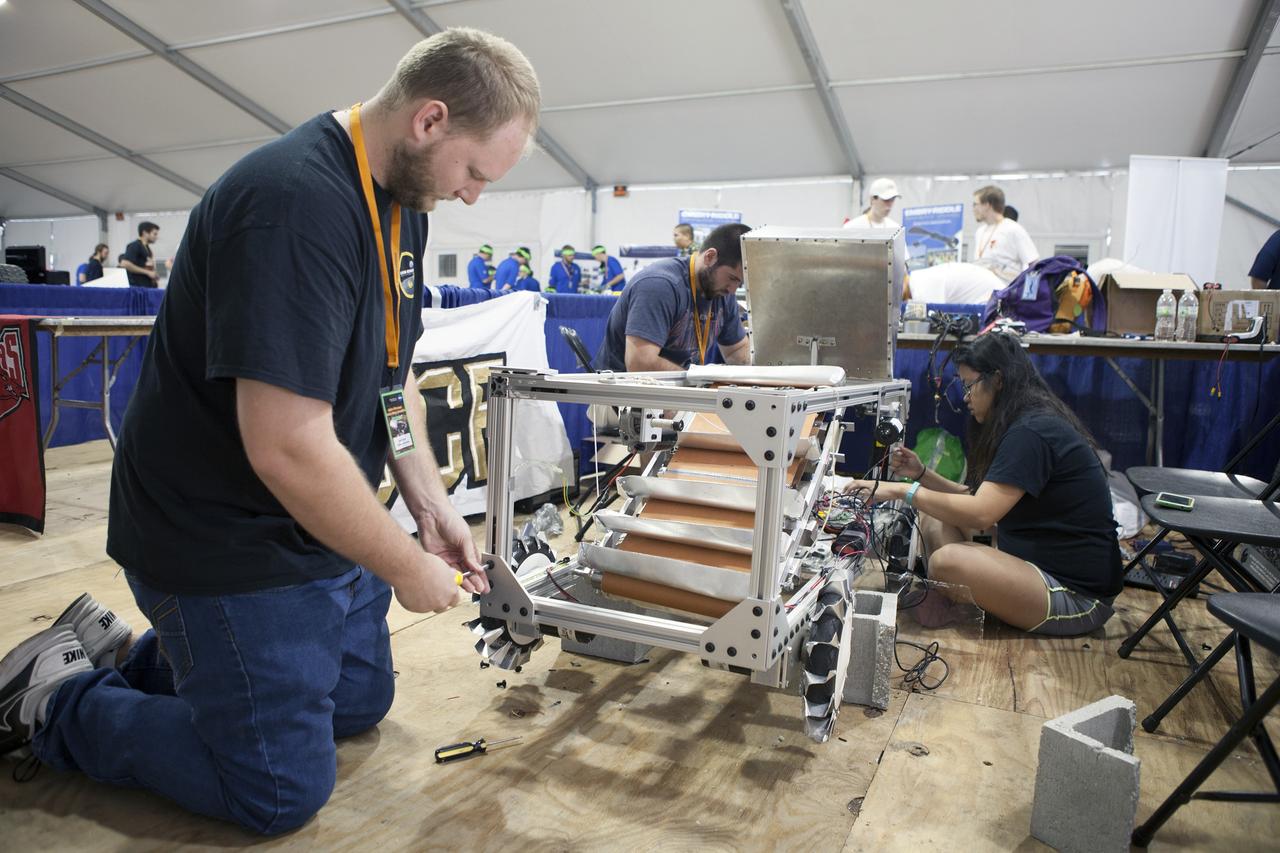
CAPE CANAVERAL, Fla. – The Hawai'l Marsbot Team members from Kapi'olani Community College in Hawaii prepare their robot for the mining portion of NASA's 2014 Robotics Mining Competition at the Kennedy Space Center Visitor Complex in Florida. More than 35 teams from around the U.S. have designed and built remote-controlled robots for the mining competition. The competition is a NASA Human Exploration and Operations Mission Directorate project designed to engage and retain students in science, technology, engineering and mathematics, or STEM, fields by expanding opportunities for student research and design. Teams use their remote-controlled robotics to maneuver and dig in a supersized sandbox filled with a crushed material that has characteristics similar to Martian soil. The objective of the challenge is to see which team’s robot can collect and move the most regolith within a specified amount of time. For more information, visit www.nasa.gov/nasarmc. Photo credit: NASA/Frankie Martin