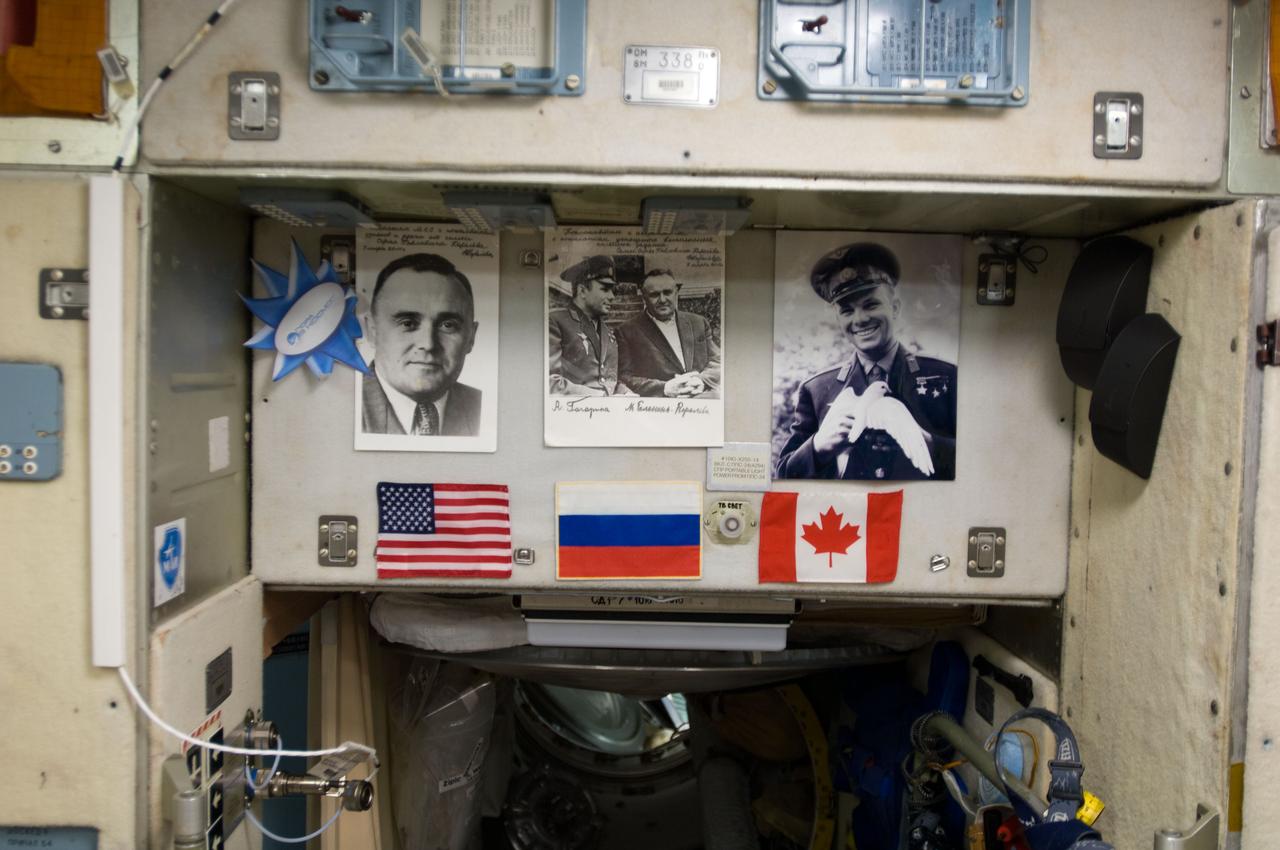
View of Yuri Alexievich Gagarin (first space traveler) photo and other photos,above Service Module (SM) hatch. The blue and white rosette on the left with the writing поÑа в коÑÐ¼Ð¾Ñ is the symbol and name of the Russian television program for children that covers cosmonautic and International Space Station (ISS) topics. Photo was taken during Expedition 34.
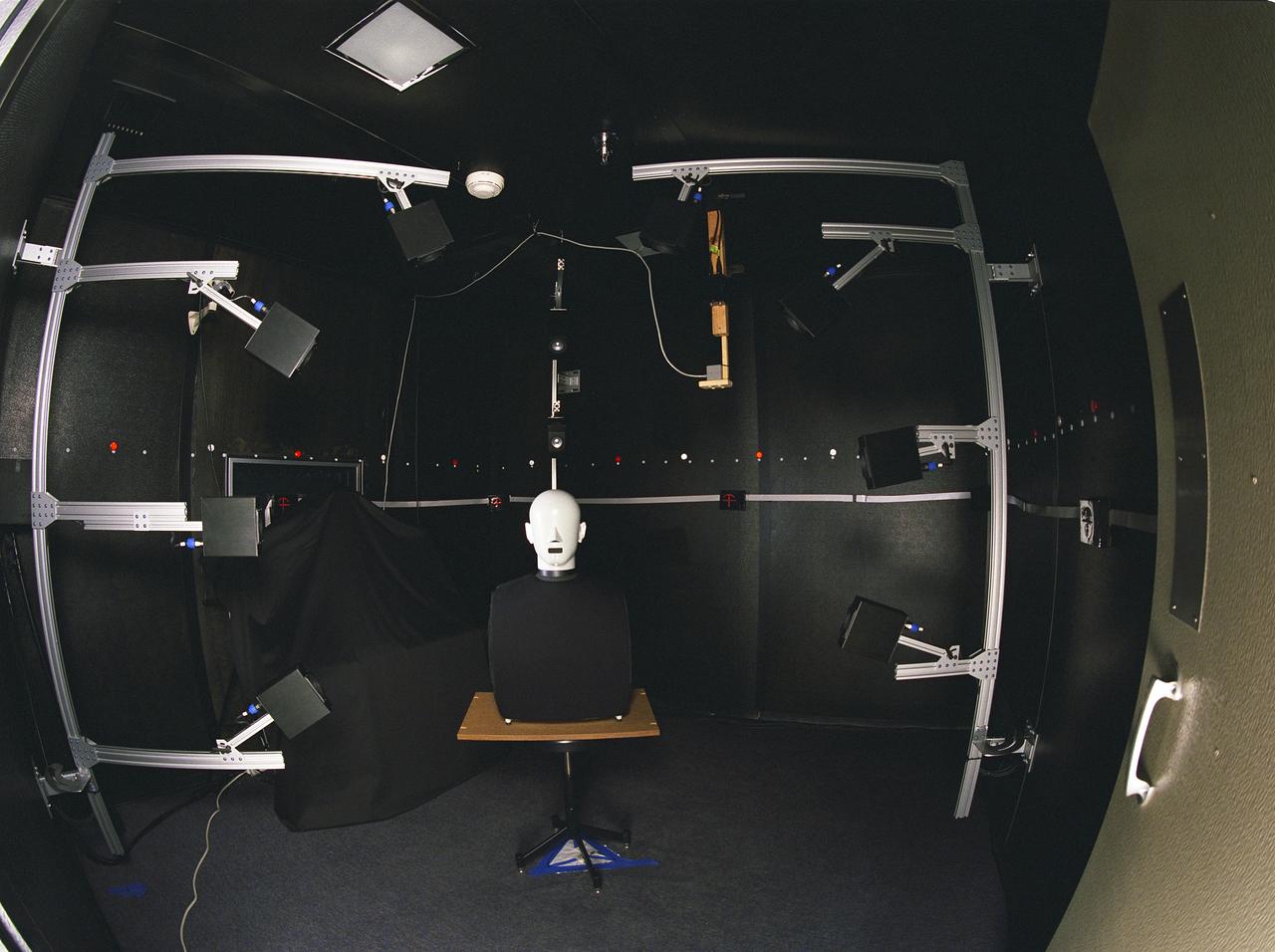
3-D Audio Laboratory N-262 (rm194) Human Factors Research. Sound Booth with dummy.
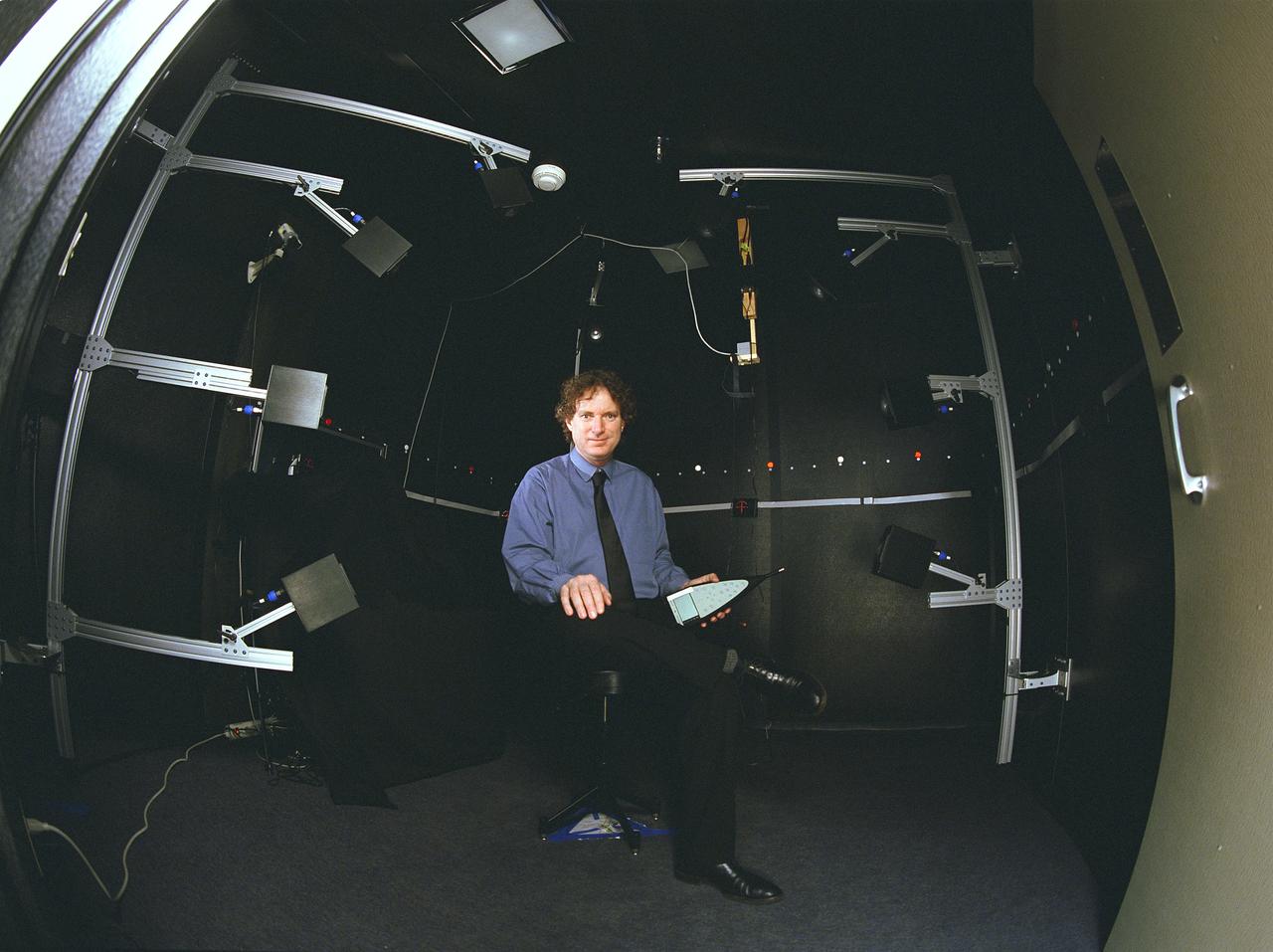
3-D Audio Laboratory N-262 (rm194) Human Factors Research. Druand 'Randy' Begauldt in sound booth.
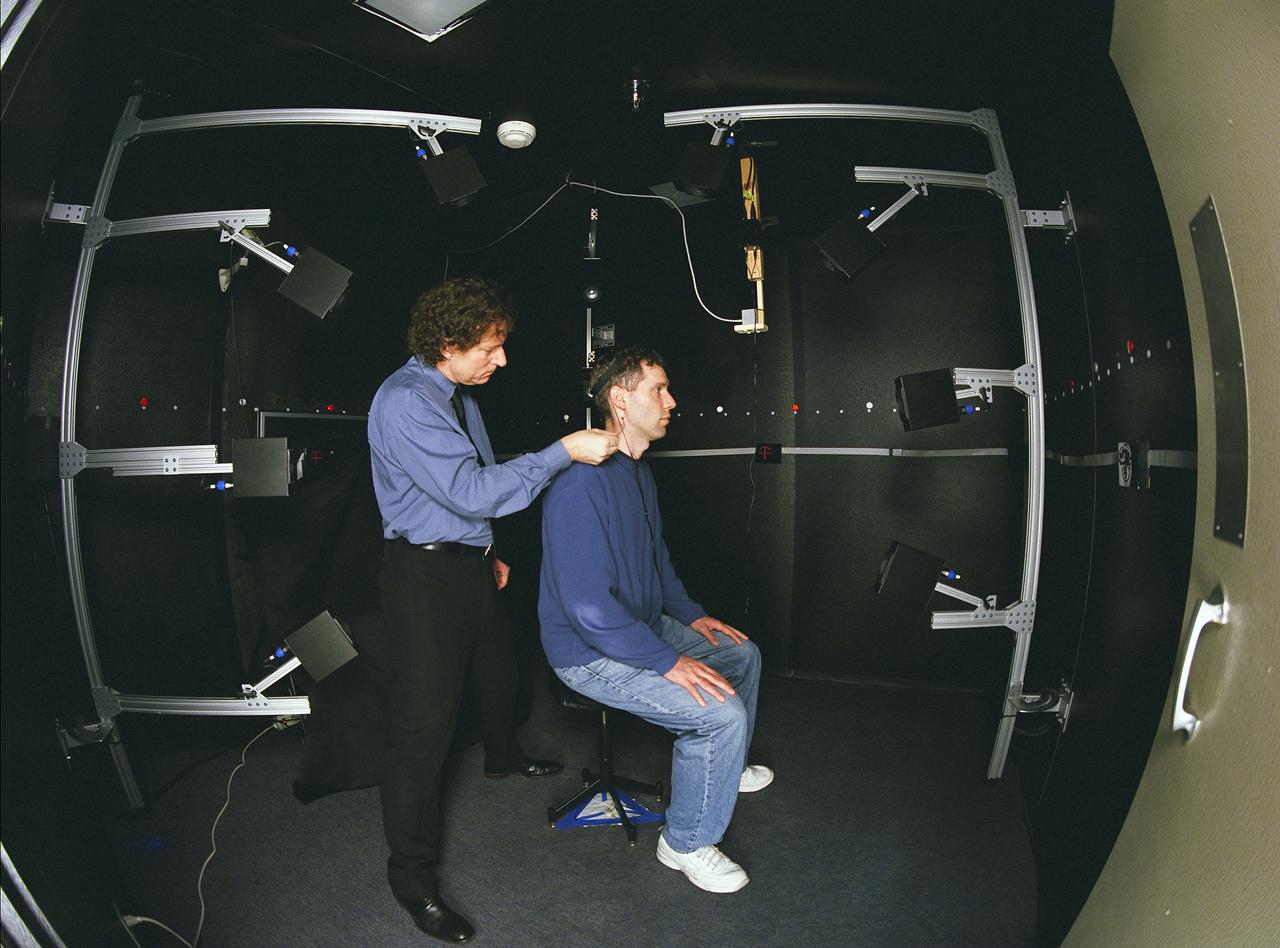
3-D Audio Laboratory N-262 (rm194) Human Factors Research. Tom Lee (subject) and Durand 'Randy' Begauldt in sound booth
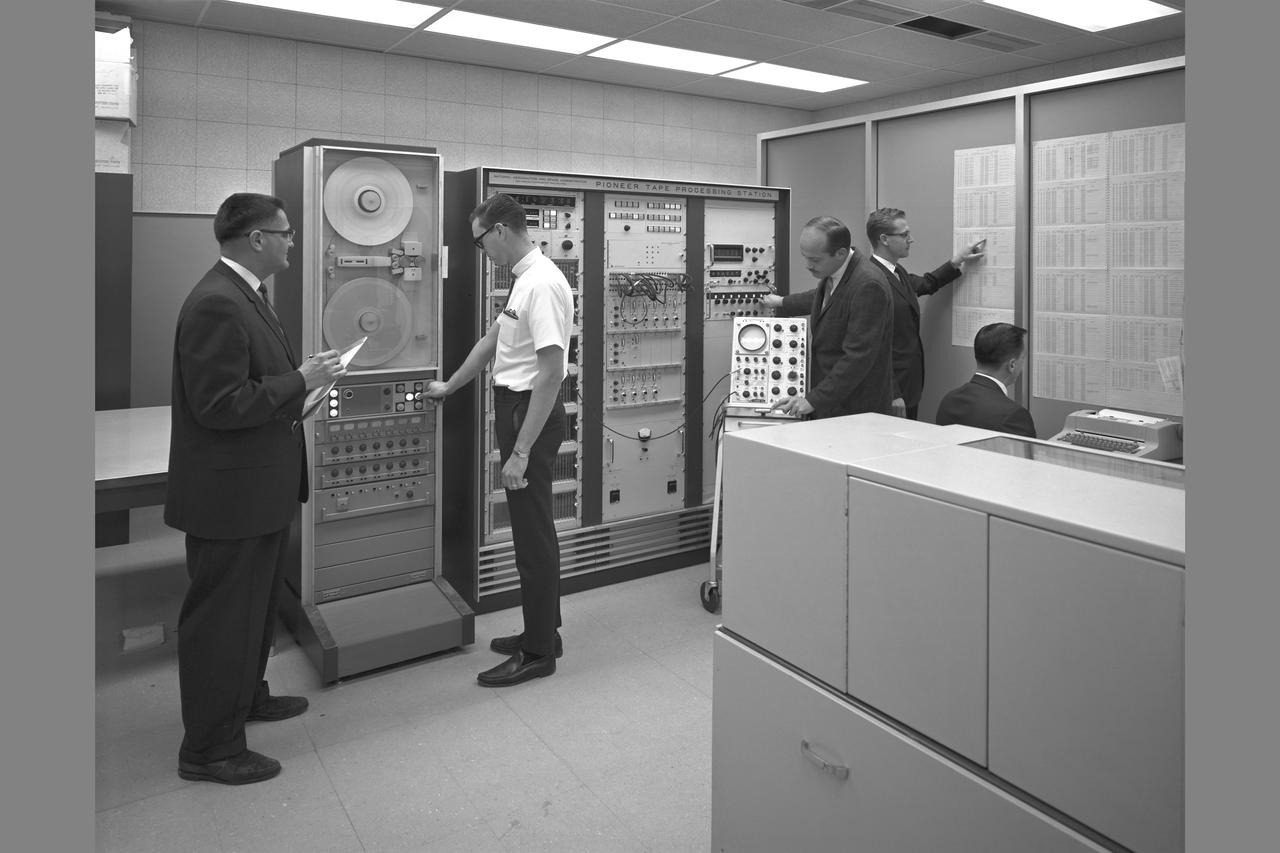
MR. R. O. FIMMEL, MR. G. R. HARVEY, R. C. VINYARD, N. WIRTH, D. KLAUK, WORKING IN THE DATA ROOM OF THE PIONEER TAPE PROCESSING STATION. Pioneer Off-Line Data Processing System.
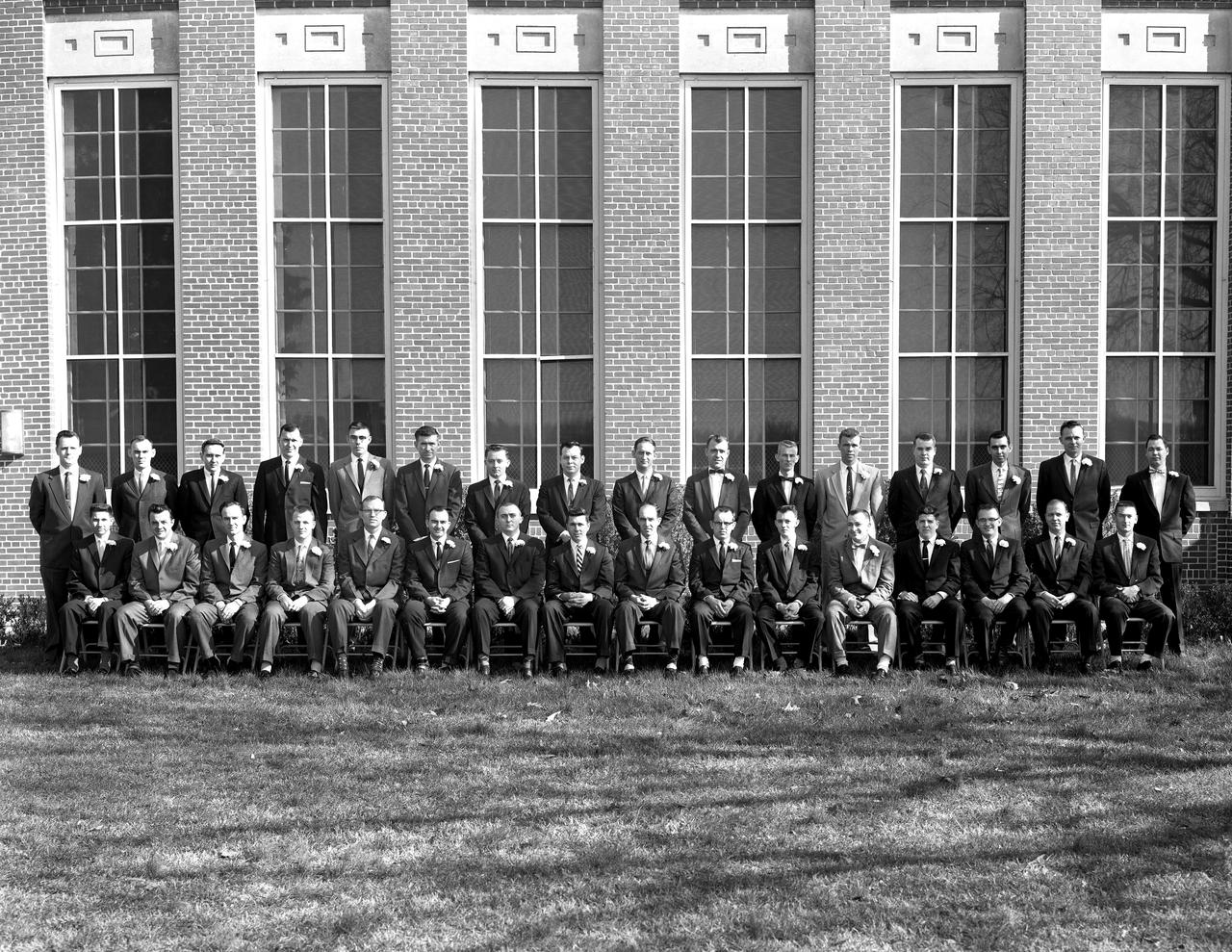
Apprentice Class Graduates: 32 Apprentice Greaduates: Ivan E. Albertson, Colossie N. Batts, Billy W. Beasley, John H. Belveal, Ernest R. Dunnigan, Durwood W. Davis, Charles E. Drummond, John R.Ellingsworth, Jr., Hugh D. Fitzgerald, Ernest A. Gurganus, Joseph R. Guy, William C. Henley,Jr., Richard N. Hill, Hiram R. Hogge, Jr., James D. Holt, James L. Hudgins, Robert F. Macklin, Roy W. Mason, Clyde J. May,Roger N. Messier, William C. Moughon, William S. Pillow, Wayne R. Posey, Mark E. Price, John W. Schwartz, Herbert F. Shackleford, John W. Simpson,John B. Slight, Cecil W. Stephens, Richard K. Stoops, John W. Sundy, Dave, E. Williams.
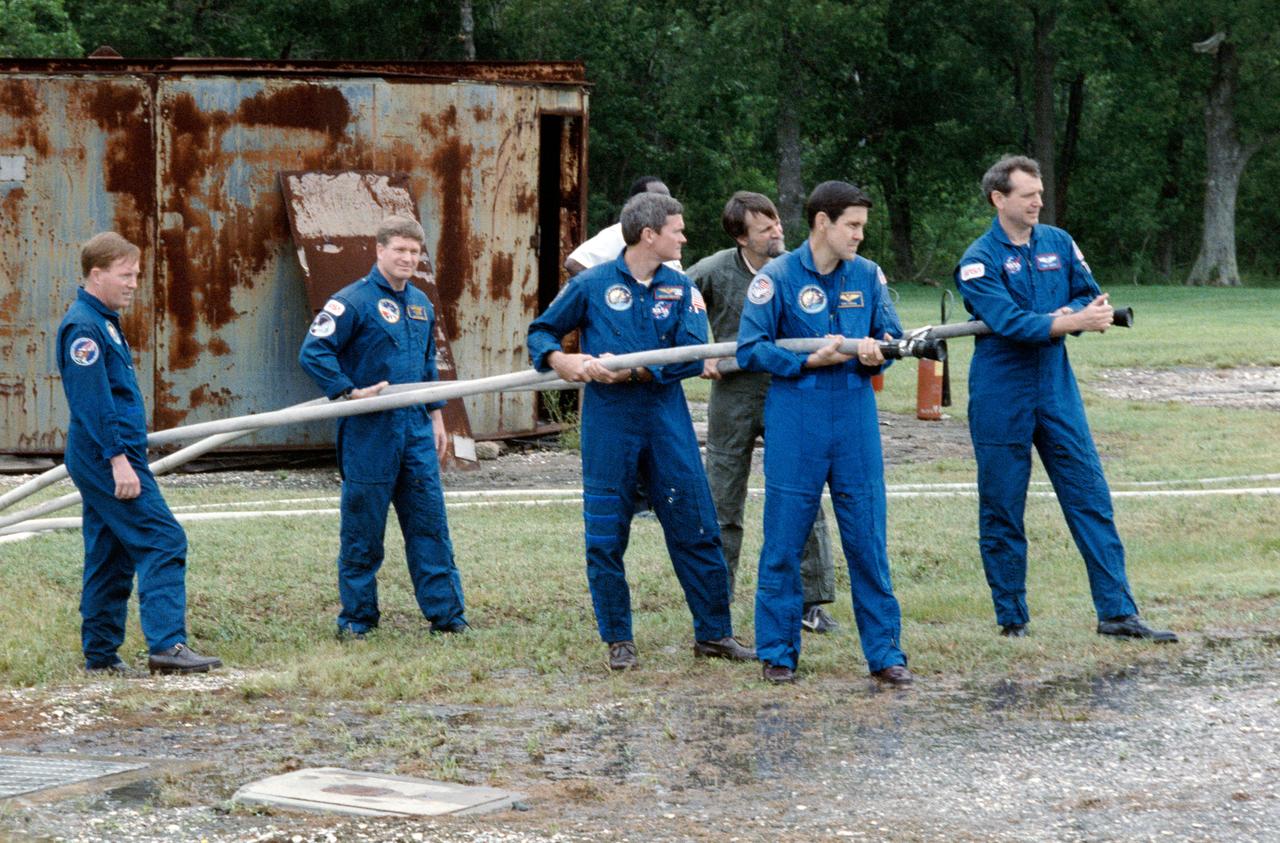
S90-38926 (4 May 1990) --- The STS-41 astronaut crew and a STS-35 backup payload specialist participate in fire control training exercises at the Johnson Space Center (JSC). Left to right are Richard N. Richards, William M. Shepherd, Bruce E. Melnick, Kenneth Nordsieck, Robert D. Cabana and Thomas D. Akers. Nordsieck is Astro-1 backup payload specialist in training for STS-35. This type training is provided all crewmembers assigned to seats aboard Space Shuttle.
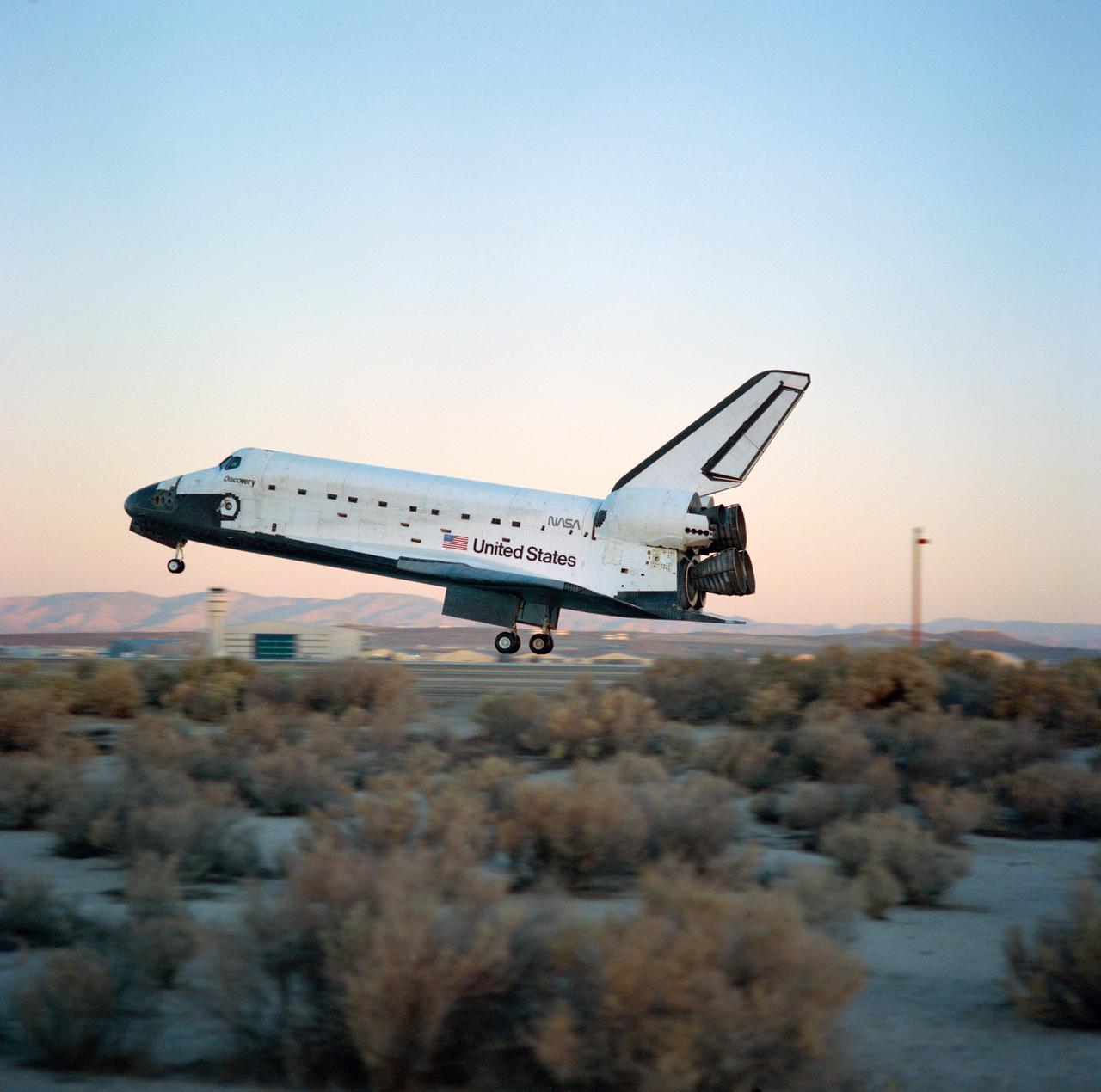
STS041-S-093 (10 Oct 1990) --- Discovery is only moments away from touchdown at Edwards Air Force Base to end a four-day mission in space for its five-man crew. The vehicle landed at 6:57 a.m. PDT, Oct. 10, 1990. Onboard the spacecraft were Astronauts Richard N. Richards, Robert D. Cabana, William M. Shepherd, Bruce E. Melnick and Thomas D. Akers.
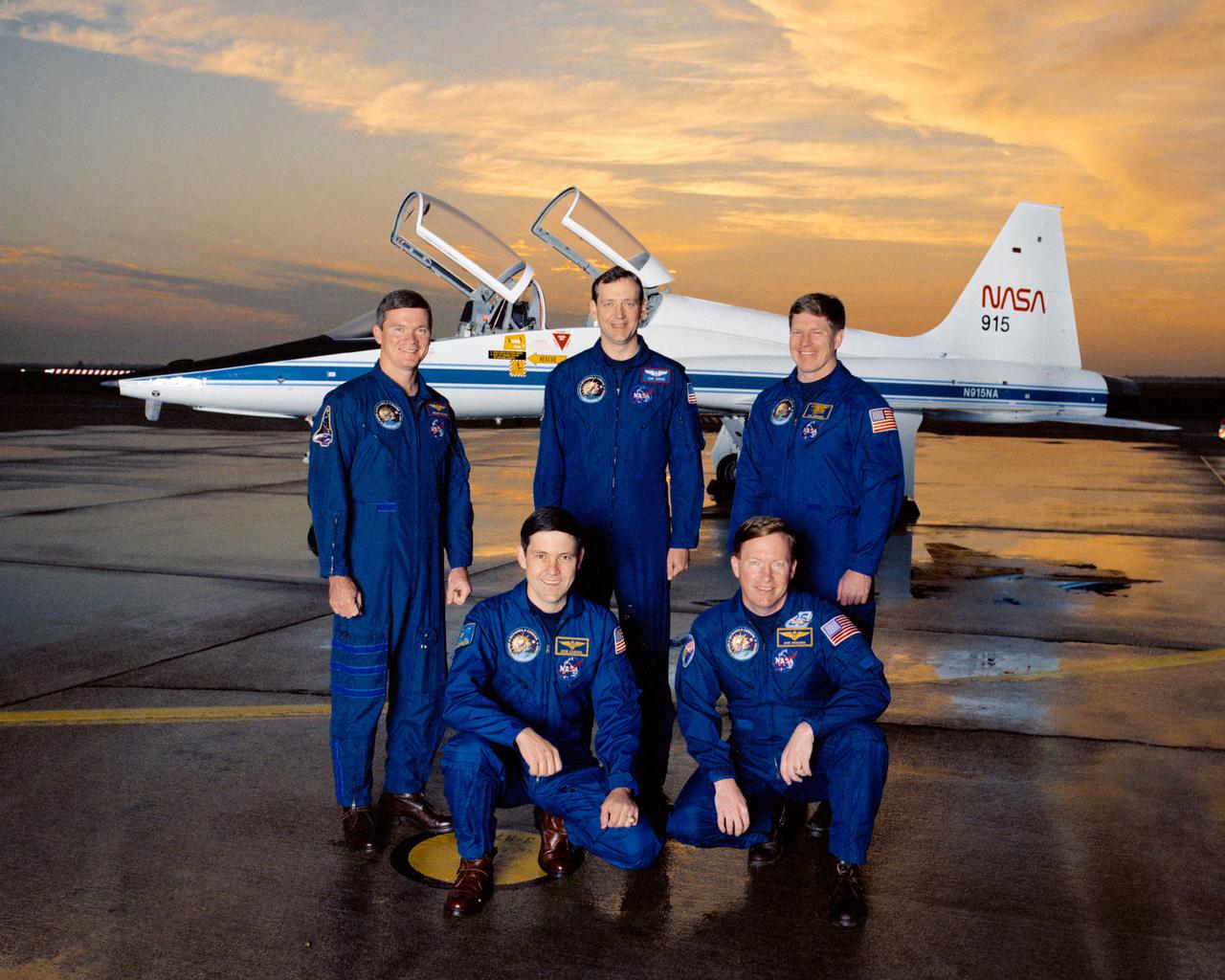
KENNEDY SPACE CENTER, Fla. – STS-41 crewmembers -- These five astronauts have been assigned to fly the STS-41 mission for NASA. Pictured are (kneeling, from the left) Robert D. Cabana, pilot, and Richard N. Richards, mission commander; and (standing from left) Bruce E. Melnick, Thomas D. Akers and William M. Shepard. All three are mission specialists.
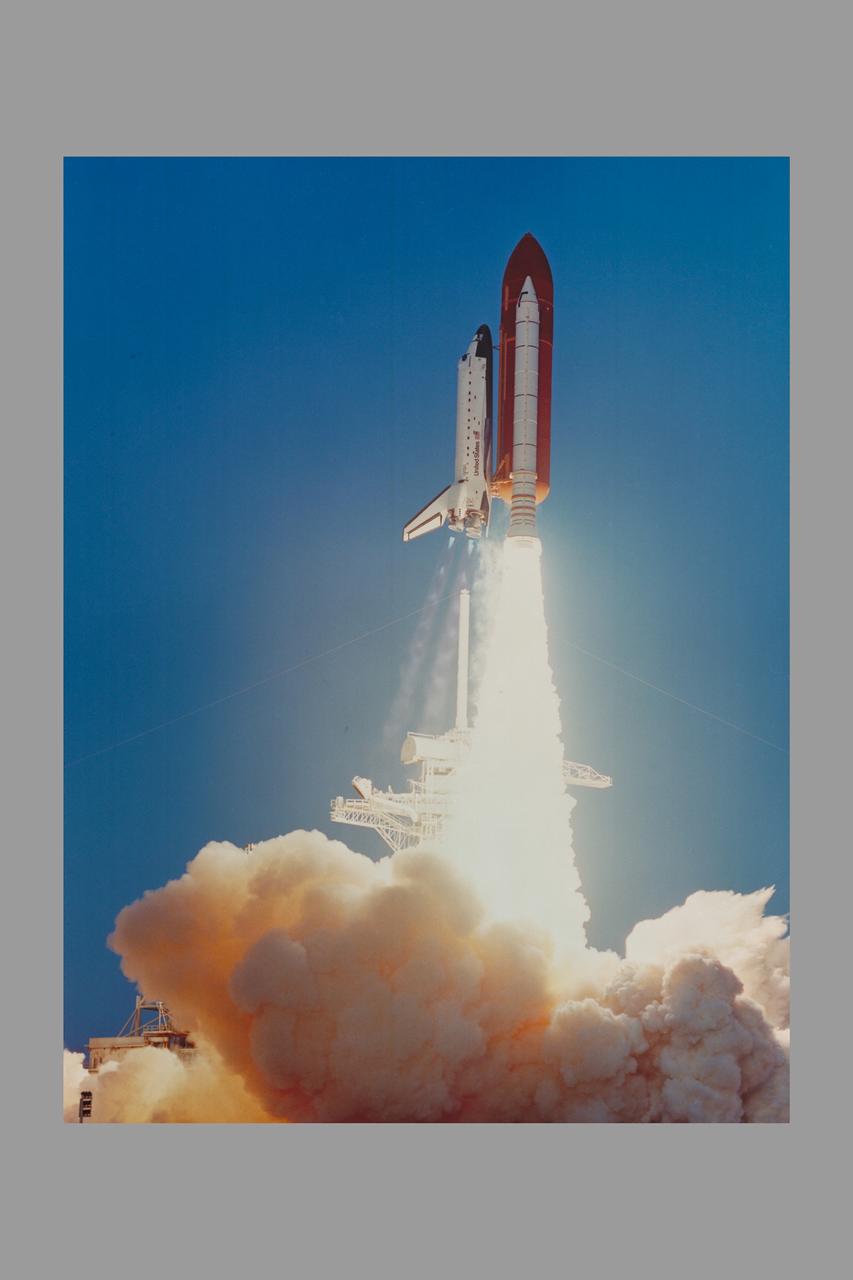
STS-41 Discovery lifts off from Launch Complex 39 at the Kennedy Space Center to begin a four-day mission in space for its five-man crew. Onboard the spacecraft were Astronauts Richard N. Richards, Robert D Cabana, William M Sheperd, Bruce E. Melnick and Thomas D. Akers. Lift off was at 7:47 a.m. EDT on oct 6, 1990. A feww hours after this photo was made, the crewmembers released the Ulysses spacecraft onits way to a long-awaited mission.
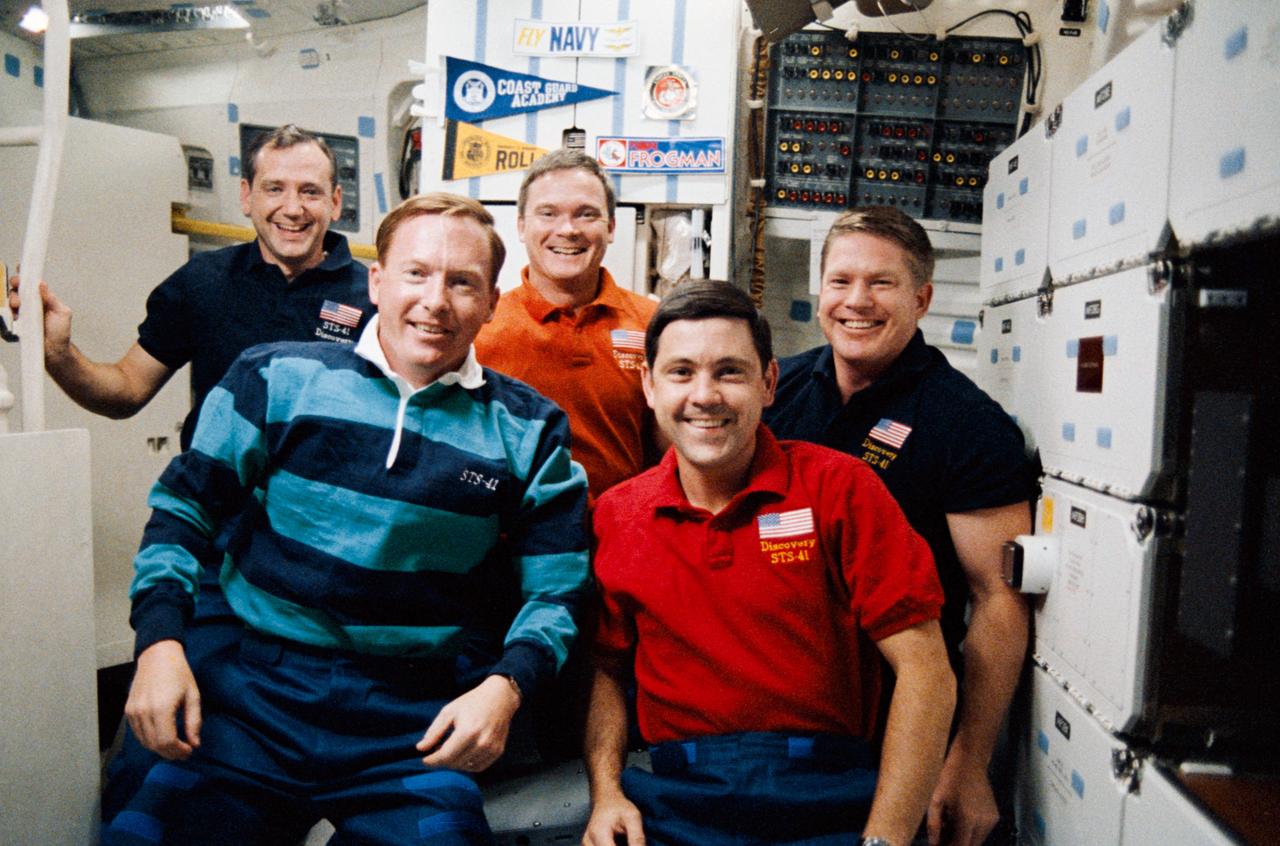
STS041-26-007 (6-10 Oct 1990) --- A 35mm preset camera on Discovery's middeck captures the traditional in-space portrait of the STS-41 crewmembers. In front are (l.-r.) Astronauts Richard N. Richards, mission commander; and Robert D. Cabana, pilot. In the rear are (l.-r.) Astronauts Thomas D. Akers, Bruce E. Melnick and William M. Shepherd.
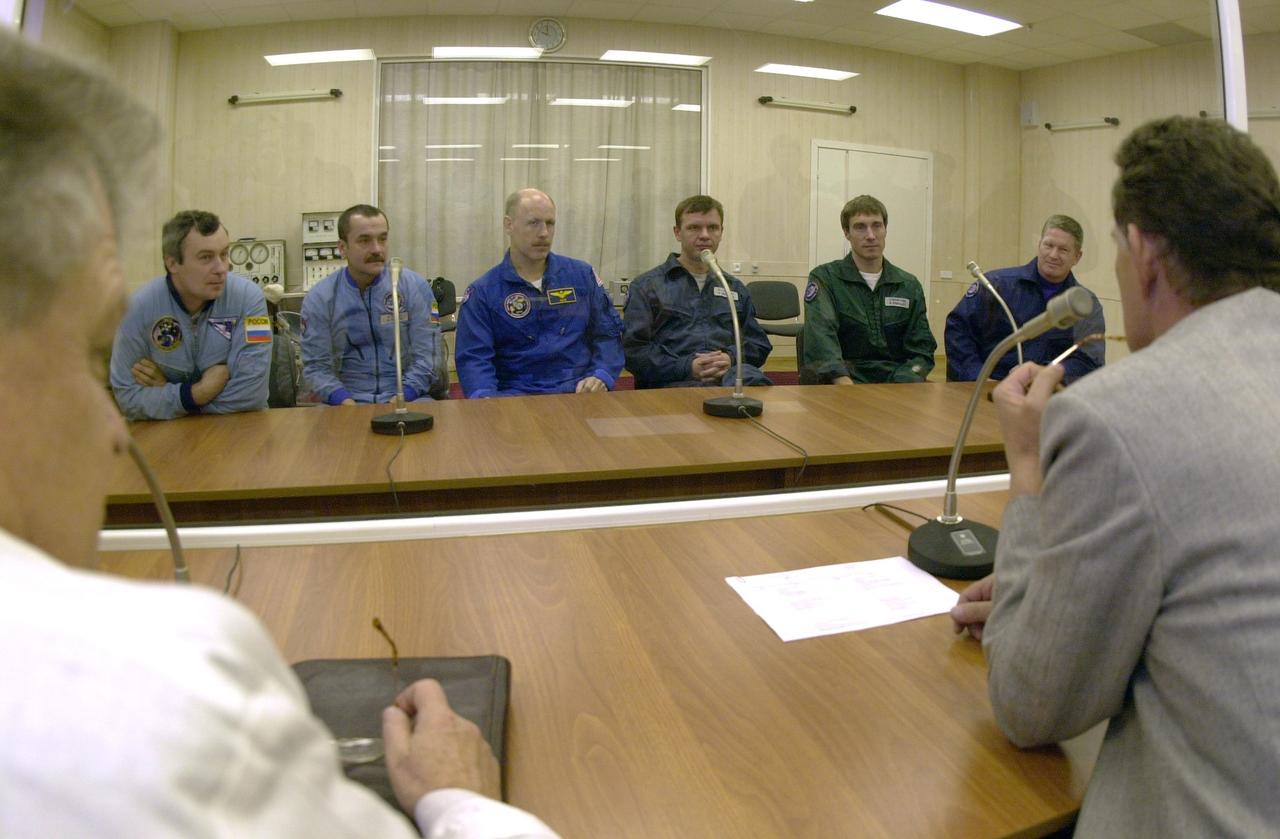
JSC2000-E-27080 (20 October 2000) --- In background, from left, Vladimir N. Dezhurov, Mikhail Turin, Kenneth D. Bowersox, Yuri P. Gidzenko, Sergei K. Krikalev and William M. (Bill) Shepherd, the backup and prime crew members for Expedition One, during conference prior to simulation at Baikonur complex in Kazakhstan.
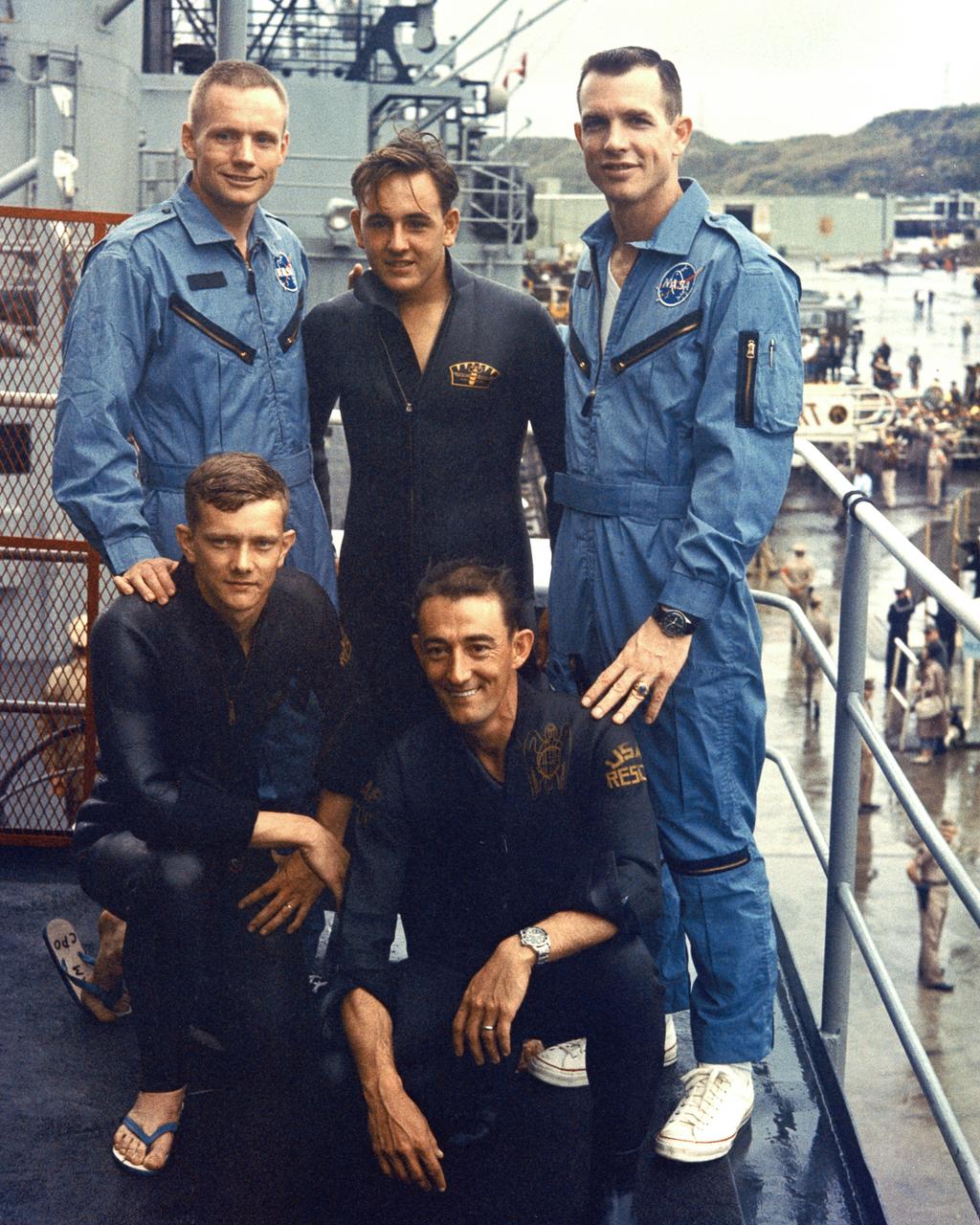
KSC-66C-1878 Gemini 8 Astronauts pose with the PARA-RESCUE team. Left-to-right, top: Neil Armstrong, E. M. Neil, David Scott; bottom row: L. D. Huyett and G. N. Moore. (jrs)
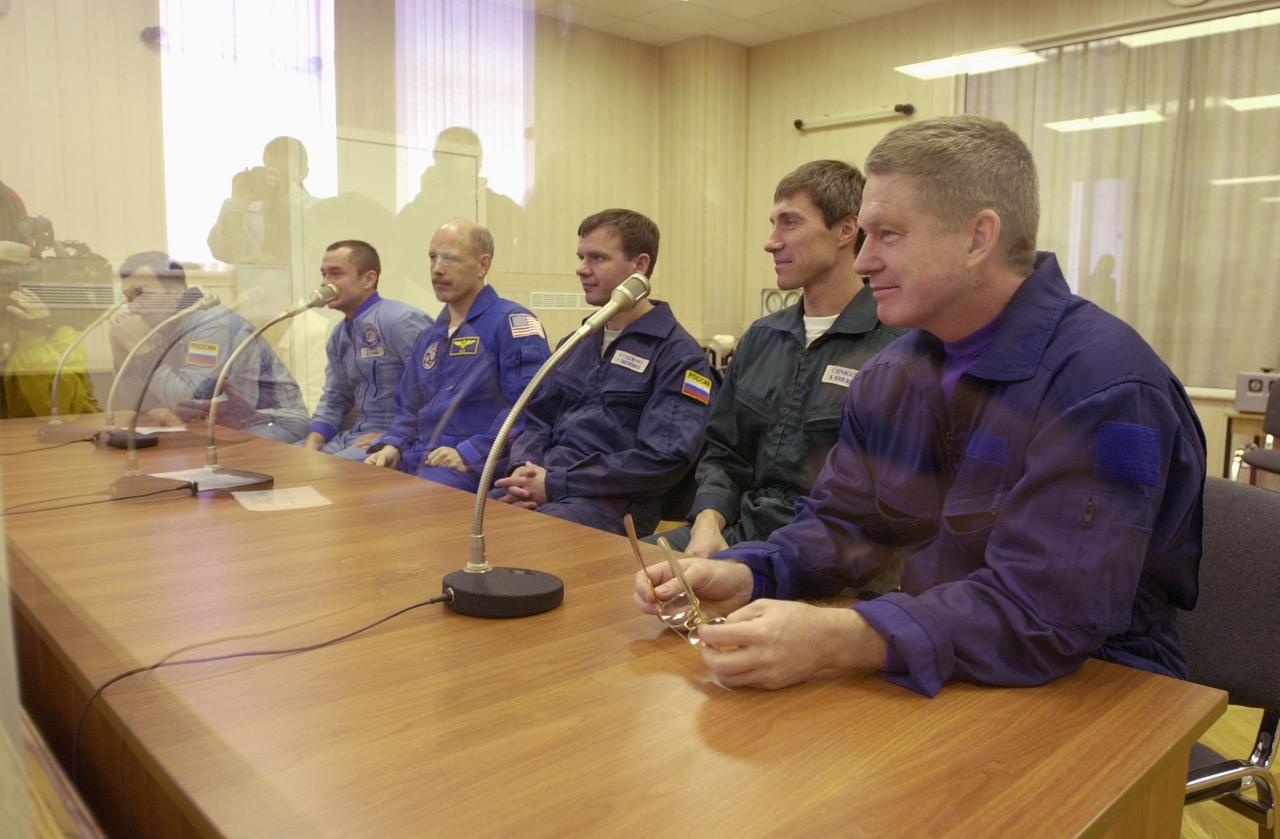
JSC2000-E-27079 (20 October 2000) --- From left, Vladimir N. Dezhurov, Mikhail Turin, Kenneth D. Bowersox, Yuri P. Gidzenko, Sergei K. Krikalev and William M. (Bill) Shepherd, the backup and prime crew members for Expedition One, during conference prior to simulation at Baikonur complex in Kazakhstan.
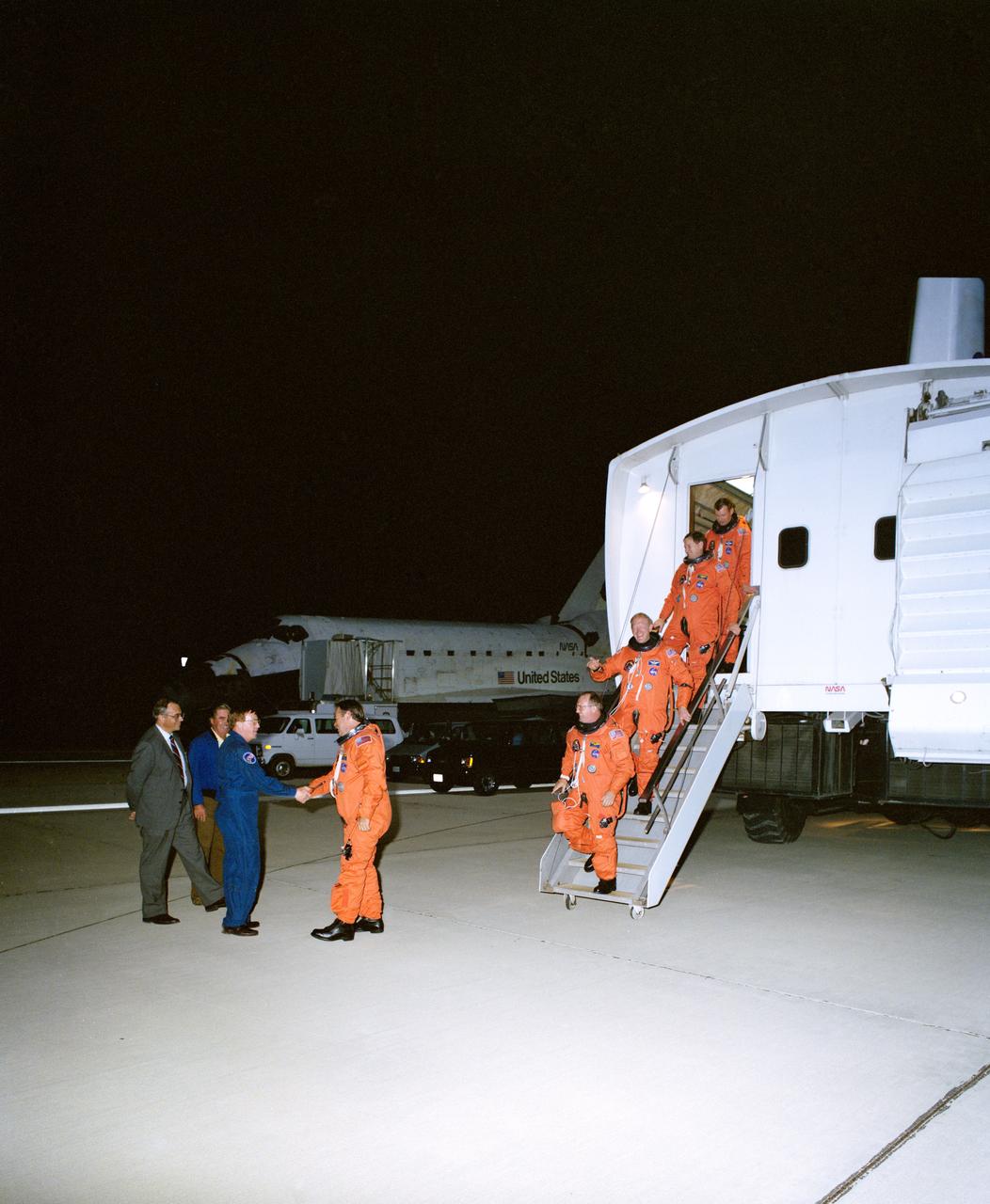
STS048-S-180 (18 Sept 1991) --- Having just completed a successful six day mission in Earth orbit, the five astronaut crewmembers for NASA's STS-48 spaceflight egress the crew transport vehicle (CTV). Astronaut John O. Creighton shakes hands with astronaut Richard N. Richards, who had earlier flown a NASA aircraft for weather checkout in the landing area. Following the mission commander are astronauts James F. Buchli, Charles D. (Sam) Gemar, Kenneth S. Reightler and Mark N. Brown. Discovery can be seen in the background. The Edwards Air Force Base landing occurred at 12:38:38 a.m. (PDT), September 18, 1991.
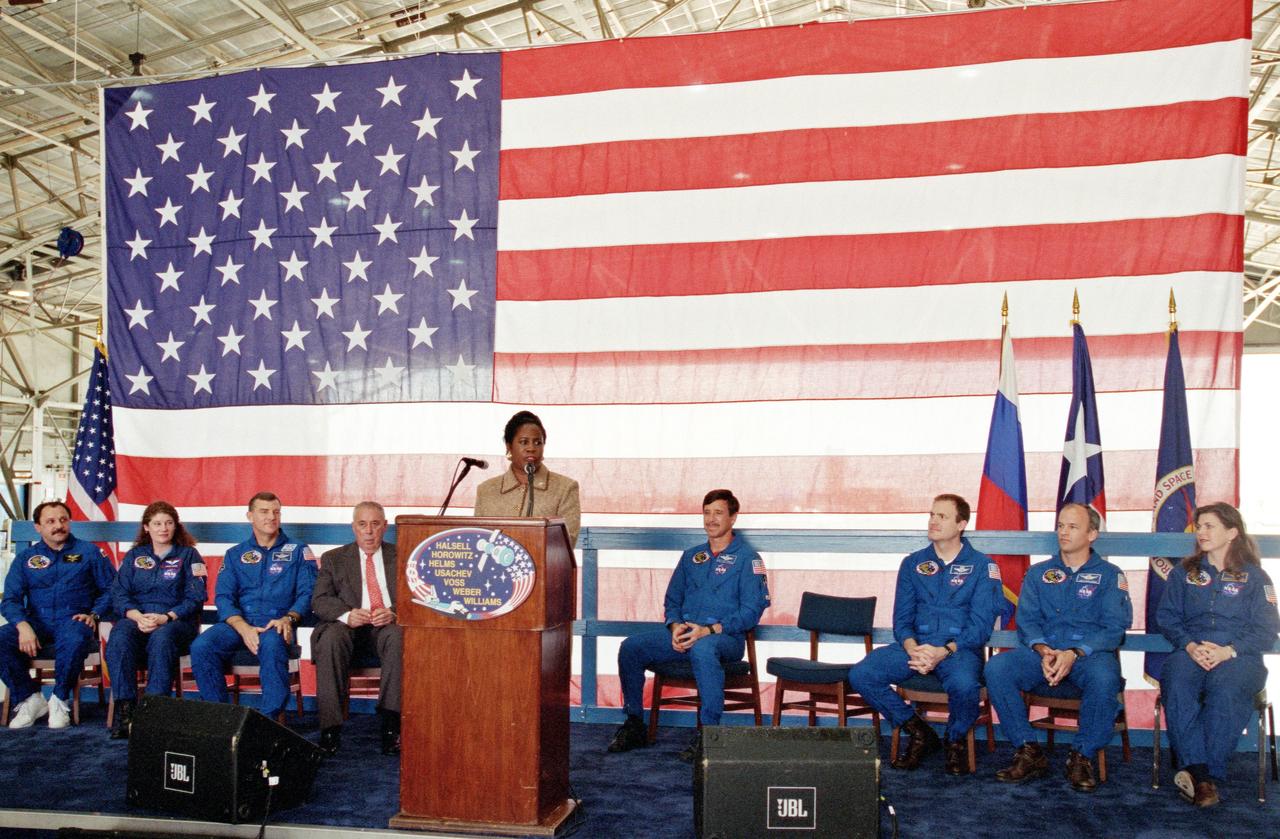
JSC2000-04603 (30 May 2000) --- U.S. Congresswoman Sheila Jackson Lee (D.-Houston) speaks to a crowd at the crew-welcoming ceremony at Ellington Field on the day following the completion of the STS-101 mission. Other speakers, seated behind the lecturn, are (from the left) cosmonaut Yury V. Usachev, representing the Russian Aviation and Space Agency; Susan J. Helms and James S. Voss, all mission specialists; JSC Director George W.S. Abbey; astronaut Scott J. Horowitz, pilot; along with astronauts James D. Halsell, Jr., mission commander; and Jeffrey N. Williams and Mary Ellen Weber, both mission specialists.
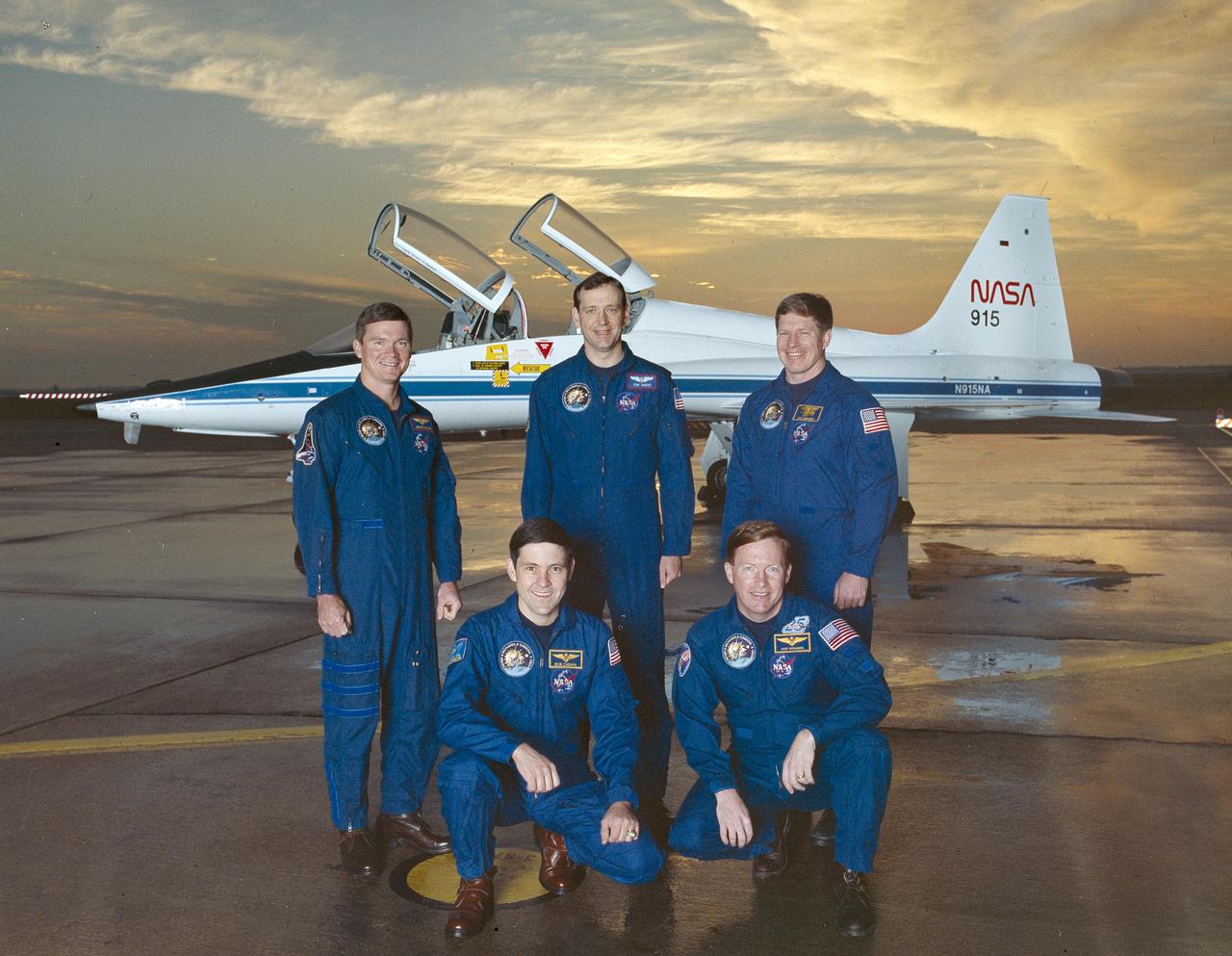
The 5 member crew of the STS-41 mission included (left to right): Bruce E. Melnick, mission specialist 2; Robert D. Cabana, pilot; Thomas D. Akers, mission specialist 3; Richard N. Richards, commander; and William M. Shepherd, mission specialist 1. Launched aboard the Space Shuttle Discovery on October 6, 1990 at 7:47:15 am (EDT), the primary payload for the mission was the ESA built Ulysses Space Craft made to explore the polar regions of the Sun. Other main payloads and experiments included the Shuttle Solar Backscatter Ultraviolet (SSBUV) experiment and the INTELSAT Solar Array Coupon (ISAC).
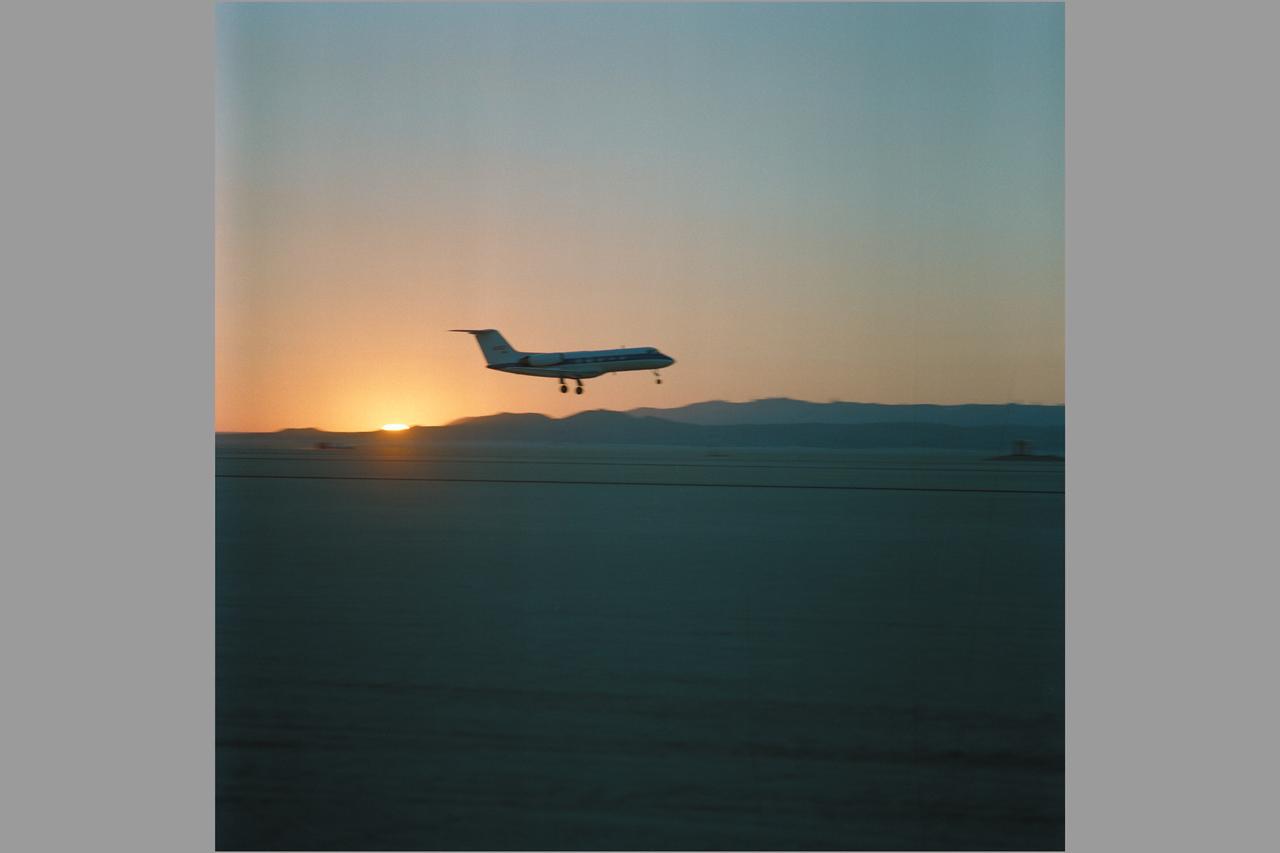
Dryden Fllight Reseach Facility, Edwards, California STA (Shuttle Training Aircraft, Gulf Stream II) flys chase as STS-41returns from it's mission to Deploy Ulysses Spacecraft... Discovery's main gear is about to touch down at Edwards Air Foce Base to end a four-day mission in space for it's five-man crew. The vehicle landed at 6:57 a.m. Onboard the spacecraft were Astronauts Richard N. Richards, Robert D Cabana, William M Sheperd, Bruce E. Melnick and Thomas D. Akers.
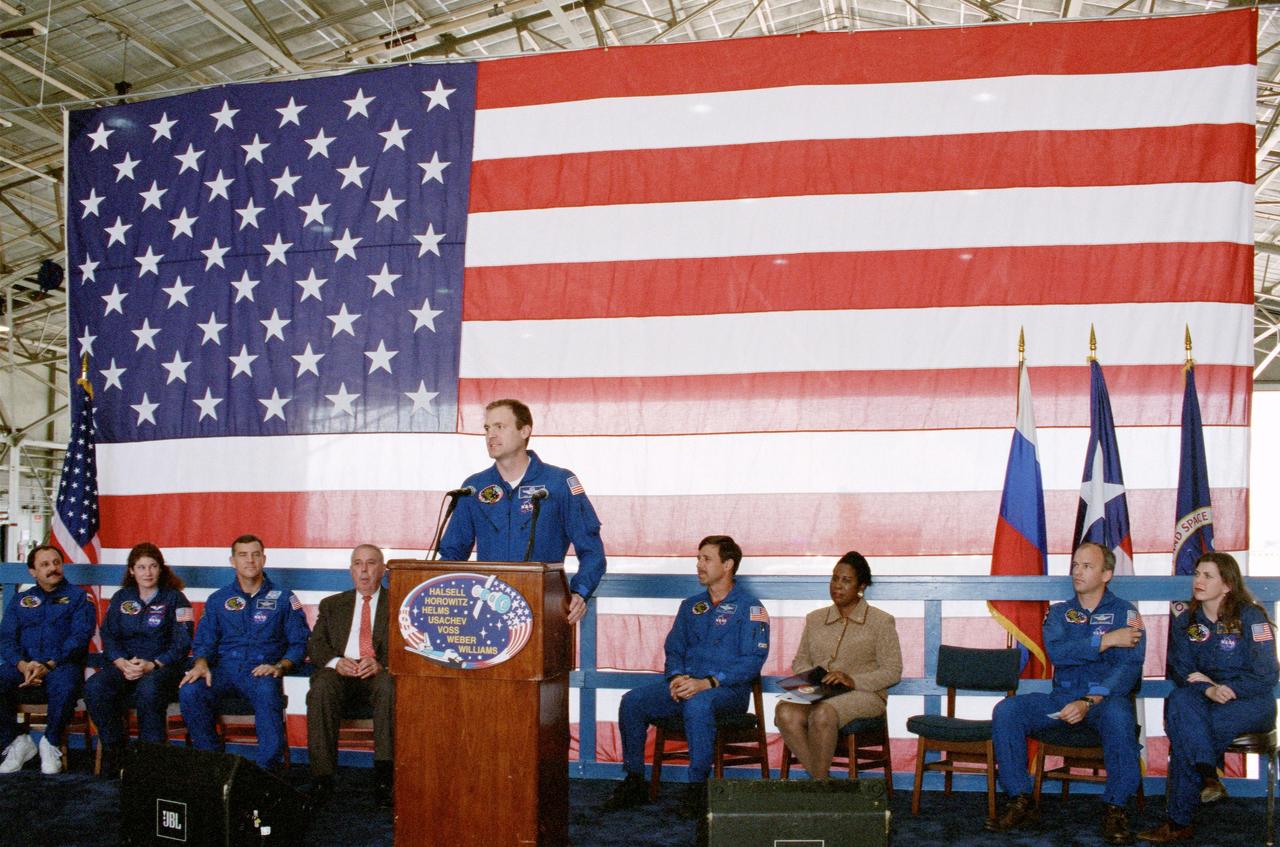
JSC2000-04607 (30 May 2000) --- Astronaut James D. Halsell, Jr., mission commander, speaks to a crowd at the crew-welcoming ceremony at Ellington Field on the day following the completion of the STS-101 mission. Other speakers, seated behind the lecturn, are (from the left) cosmonaut Yury V. Usachev, representing the Russian Aviation and Space Agency; Susan J. Helms and James S. Voss, all mission specialists; JSC Director George W.S. Abbey; astronaut Scott J. Horowitz, pilot; U.S. Congresswoman Sheila Jackson Lee (D.-Houston); along with astronauts Jeffrey N. Williams and Mary Ellen Weber, both mission specialists.
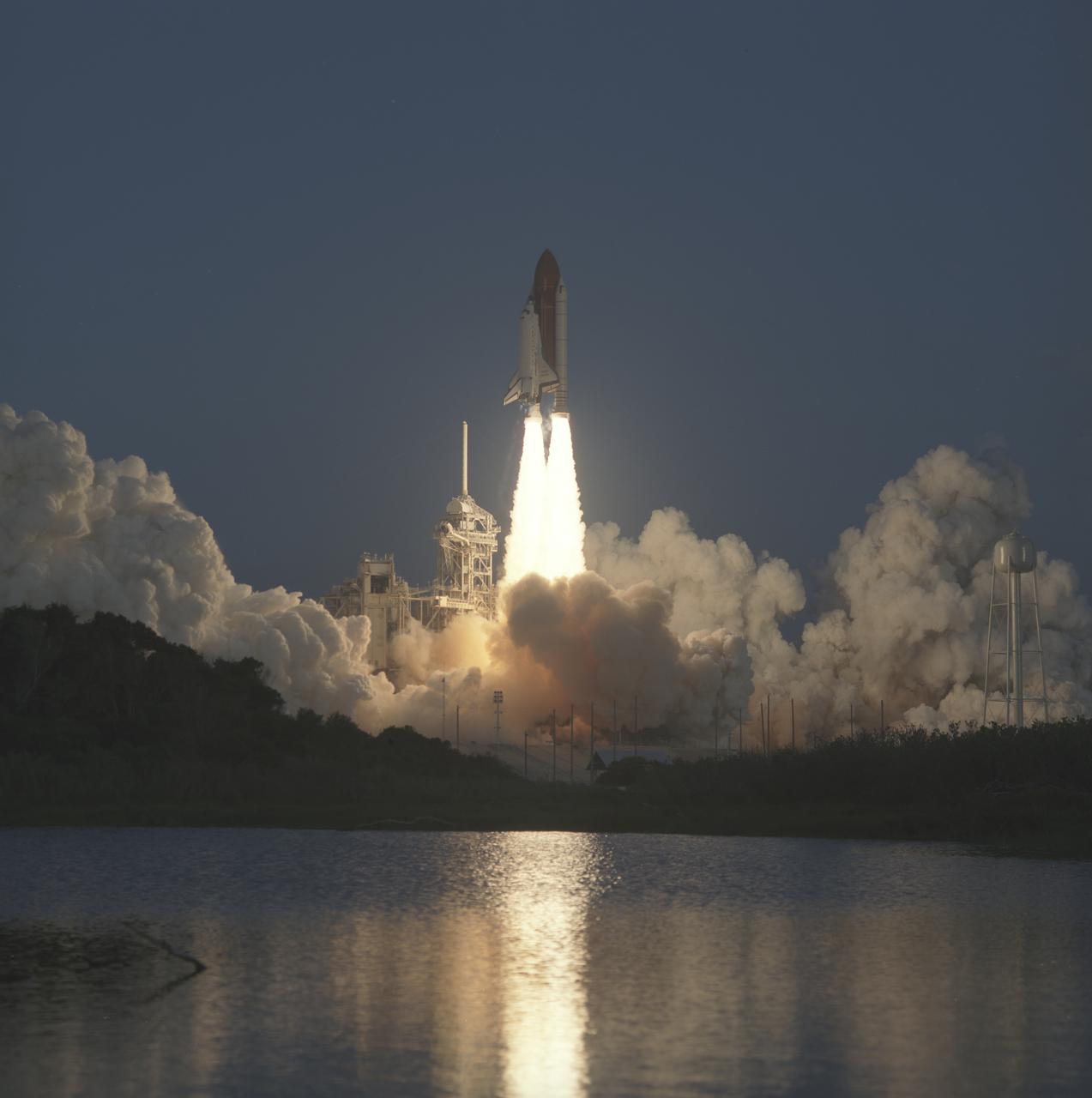
Launched aboard the Space Shuttle Discovery on October 6, 1990 at 7:47:15 am (EDT), the STS-41 mission consisted of 5 crew members. Included were Richard N. Richards, commander; Robert D. Cabana, pilot; and Bruce E. Melnick, Thomas D. Akers, and William M. Shepherd, all mission specialists. The primary payload for the mission was the European Space Agency (ESA) built Ulysses Space Craft made to explore the polar regions of the Sun. Other main payloads and experiments included the Shuttle Solar Backscatter Ultraviolet (SSBUV) experiment and the INTELSAT Solar Array Coupon (ISAC).
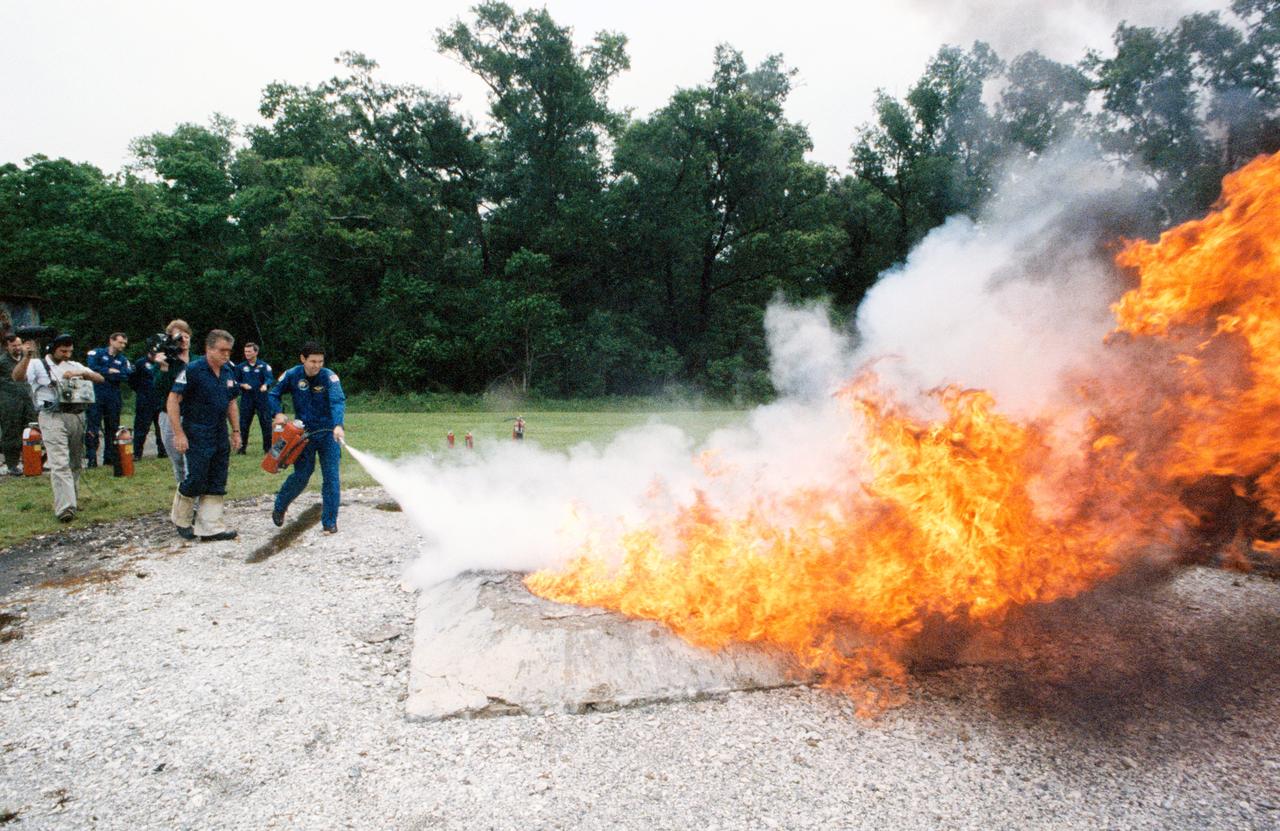
S90-38933 (4 May 1990) --- The STS-41 astronaut crew participates in fire control training exercises at the Johnson Space Center (JSC). Controlling the fire extinguisher at left frame is astronaut Robert D. Cabana, STS-41 pilot. Watching in the background are other STS-41 astronauts who participated in the session. They were Richard N. Richards, William M. Shepherd, Bruce E. Melnick and Thomas D. Akers. This type training is provided all crewmembers assigned to seats aboard Space Shuttle. Members of the both the Houston and Pasadena fire departments instruct the sessions.
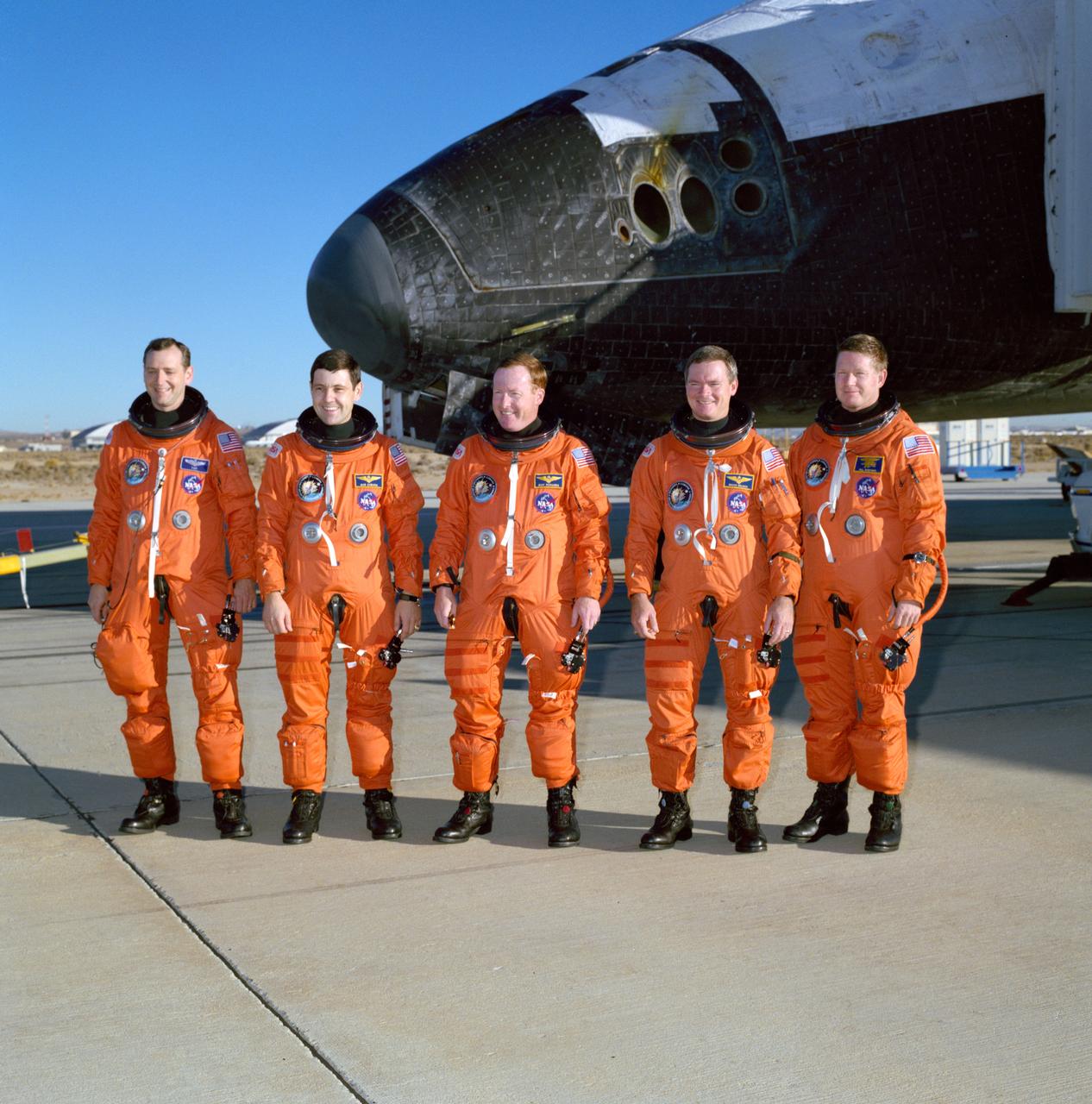
STS041-S-096 (10 Oct 1990) --- The five astronaut crewmembers of Discovery's most recent flight pose for their first photo back on terra firma following their successful four day mission in earth orbit. Discovery, partially visible in this frame, touched down at Edwards Air Force Base at 6:57 a.m. PDT, Oct. 10, 1990. Astronaut Richard N. Richards (center) was mission commander. He is flanked here by (left to right) Astronauts Thomas D. Akers, Robert D. Cabana, Bruce E. Melnick and William M. Shepherd.
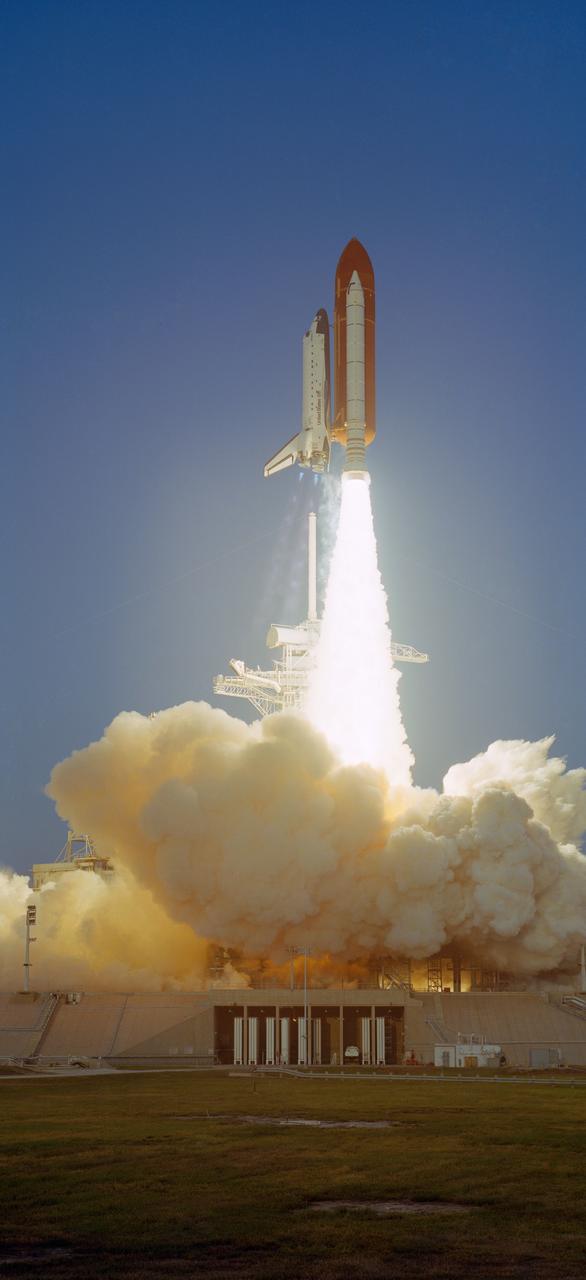
STS041-S-101 (6 Oct 1990) --- Discovery lifts off from Launch Complex 39 at the Kennedy Space Center to begin a four-day mission in space for its five-man crew. Onboard the spacecraft are Astronauts Richard N. Richards, Robert D. Cabana, William M. Shepherd, Bruce E. Melnick and Thomas D. Akers. Discovery lifted off at 7:47 a.m. EDT on Oct. 6, 1990. A few hours after this photo was made, the crewmembers released the Ulysses spacecraft on its way to a long-awaited mission.
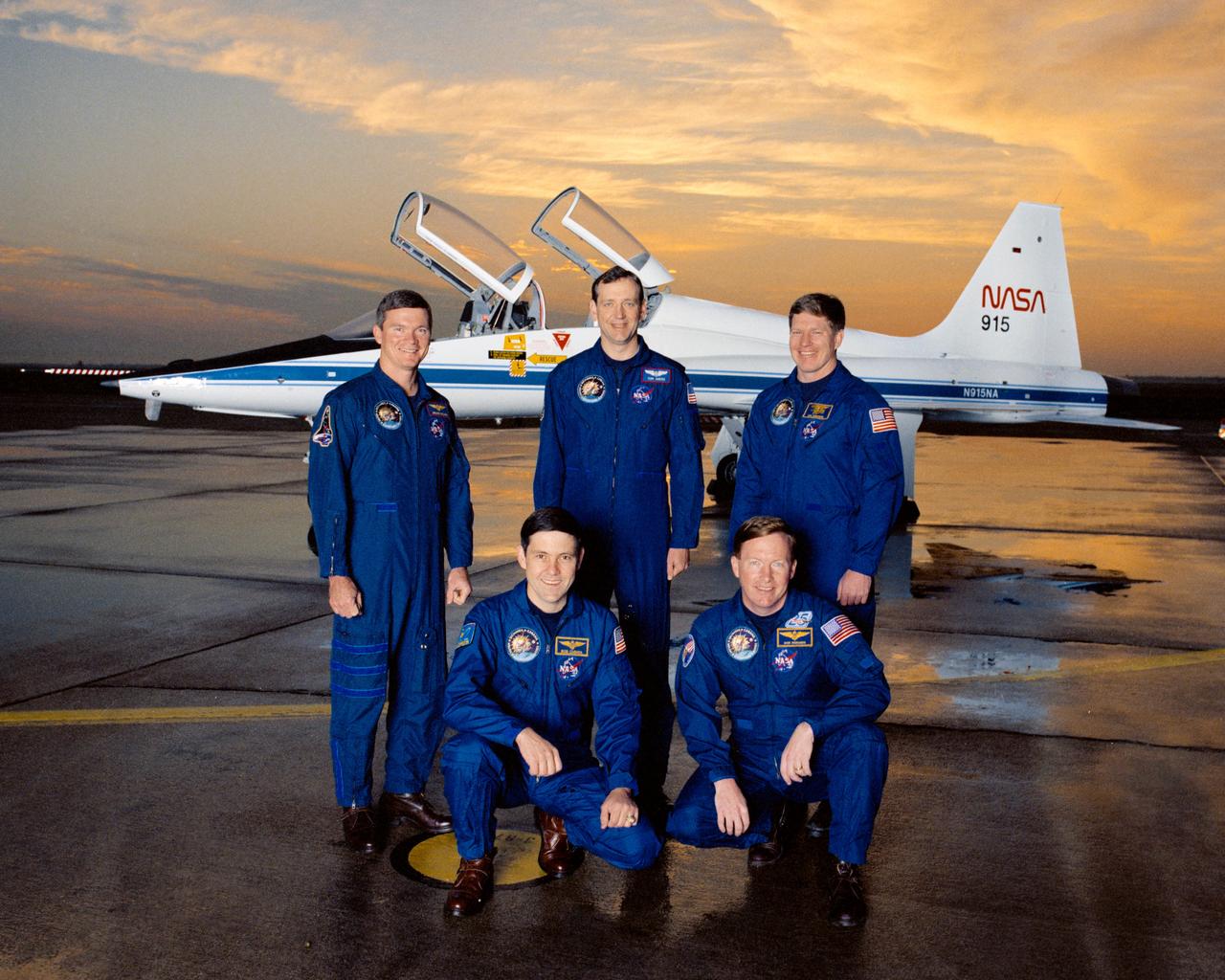
STS041-S-002 (7 May 1990) --- These five astronauts have been assigned to fly the STS-41 mission for the National Aeronautics and Space Administration (NASA). Pictured near the flight line at Ellington Field prior to an early morning flight in NASA T-38s are (kneeling, from the left) Robert D. Cabana, pilot; and Richard N. Richards, mission commander; and (standing, from left) Bruce E. Melnick, Thomas D. Akers and William M. Shepherd, all mission specialists. Primary payload for the Space Shuttle Discovery on the STS 41 mission is Ulysses.
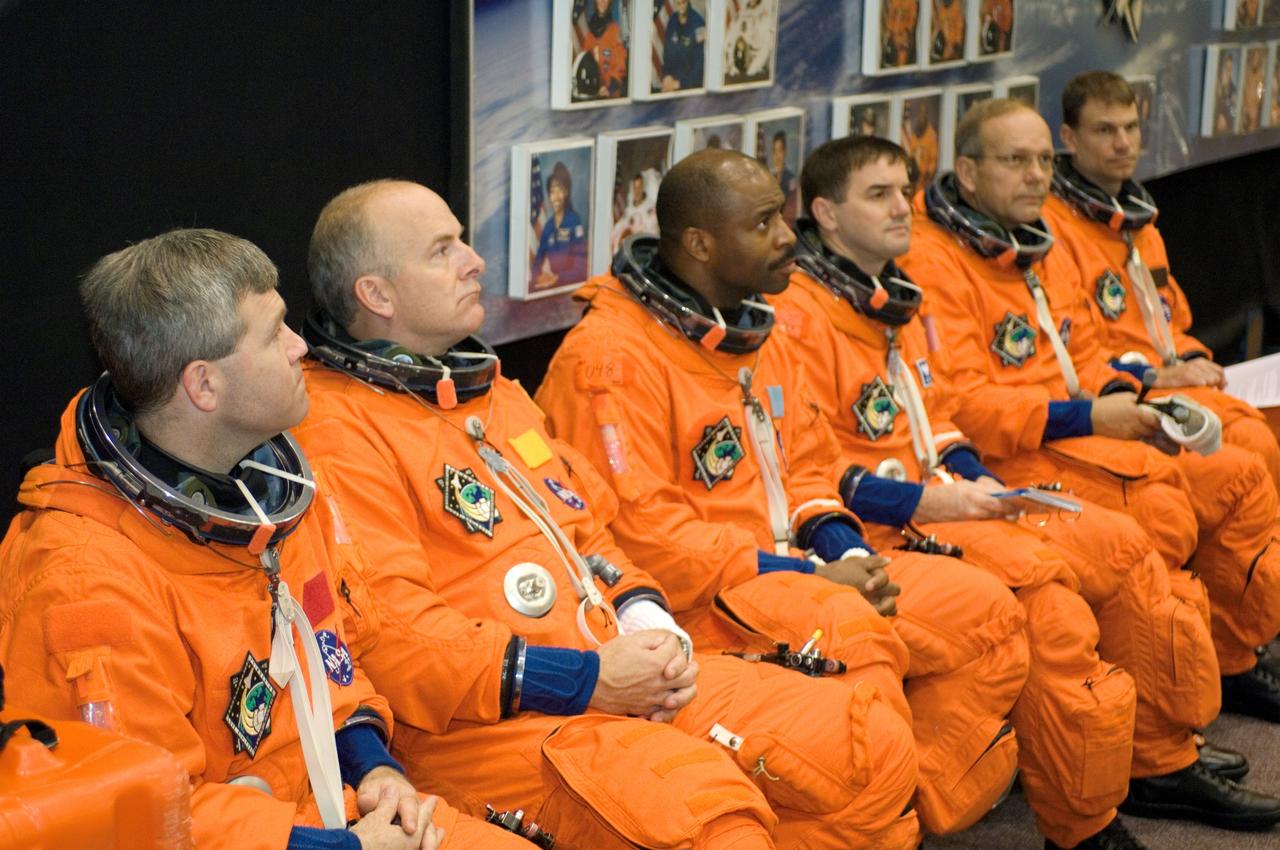
JSC2007-E-49821 (3 Oct. 2007) --- Astronauts Stephen N. Frick (left), STS-122 commander; Alan G. Poindexter, pilot; Leland D. Melvin, Rex J. Walheim, European Space Agency's (ESA) Hans Schlegel and Stanley G. Love, all mission specialists, await the start of a training session in the Space Vehicle Mockup Facility at the Johnson Space Center. The crewmembers are attired in training versions of their shuttle launch and entry suits.
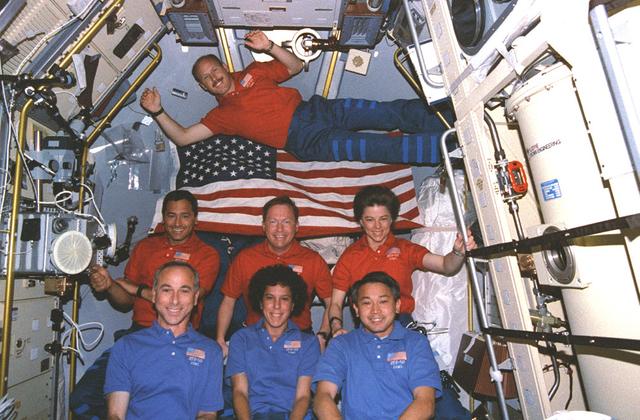
Onboard Space Shuttle Columbia (STS-50) crewmembers rally around the American flag in the United States Microgravity Laboratory-1 (USML-1). Pictured are (from top, left to right) pilot Kerneth D. Bowersox; payload specialist Lawrence J. Delucas; commander Richard N. Richards; payload commander Bonnie J. Dunbar; mission specialists Carl J. Meade and Ellen S. Baker; and payload specialist Eugene H. Trinh.
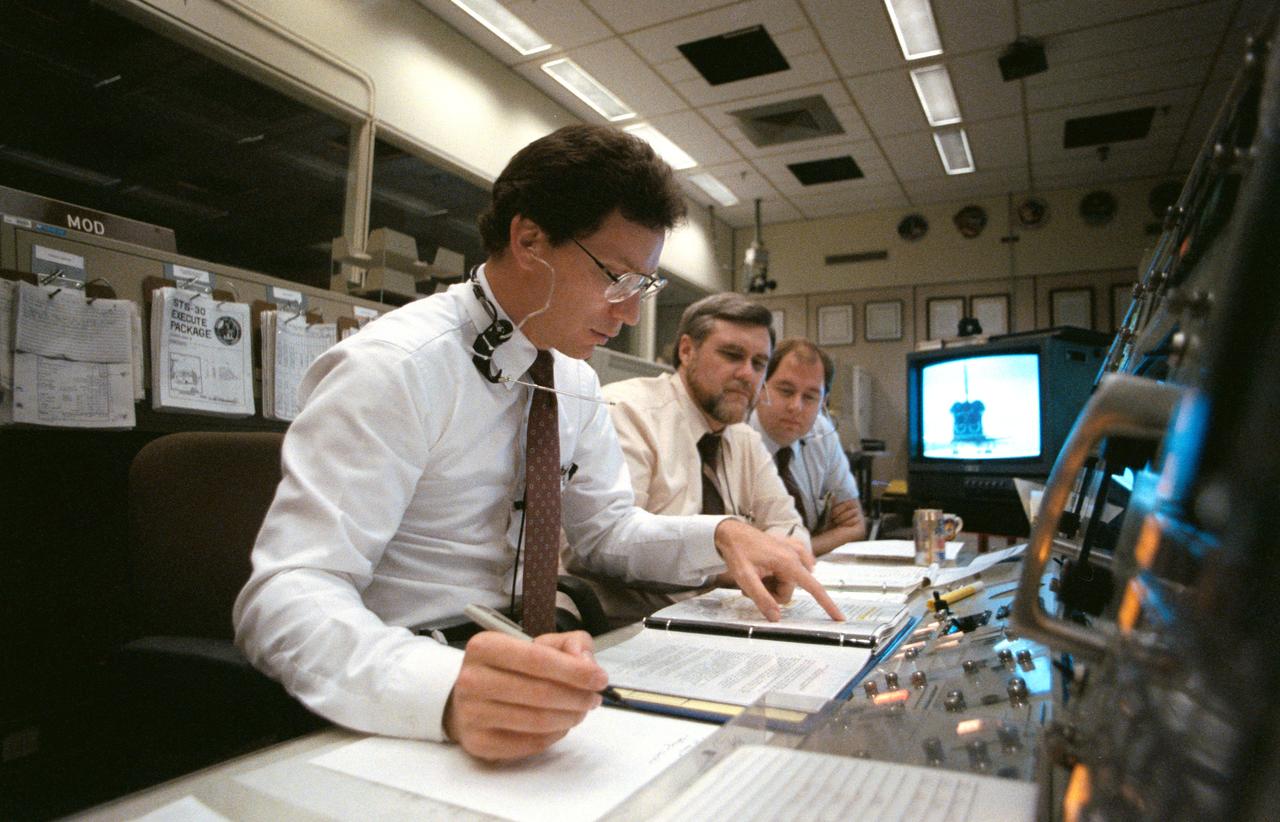
STS030-S-118 (8 May 1989 ) --- The landing phase of the space shuttle Atlantis is monitored by three flight directors in the Flight Control Room (FCR) of the Johnson Space Center's (JSC) Mission Control Center (MCC). Studying the data at the Flight Director Console are Ronald D. Dittemore, Alan L. (Lee) Briscoe and N. Wayne Hale. Moments earlier, Atlantis touched down on Runway 22 at Edwards Air Force Bakse (Note monitor).
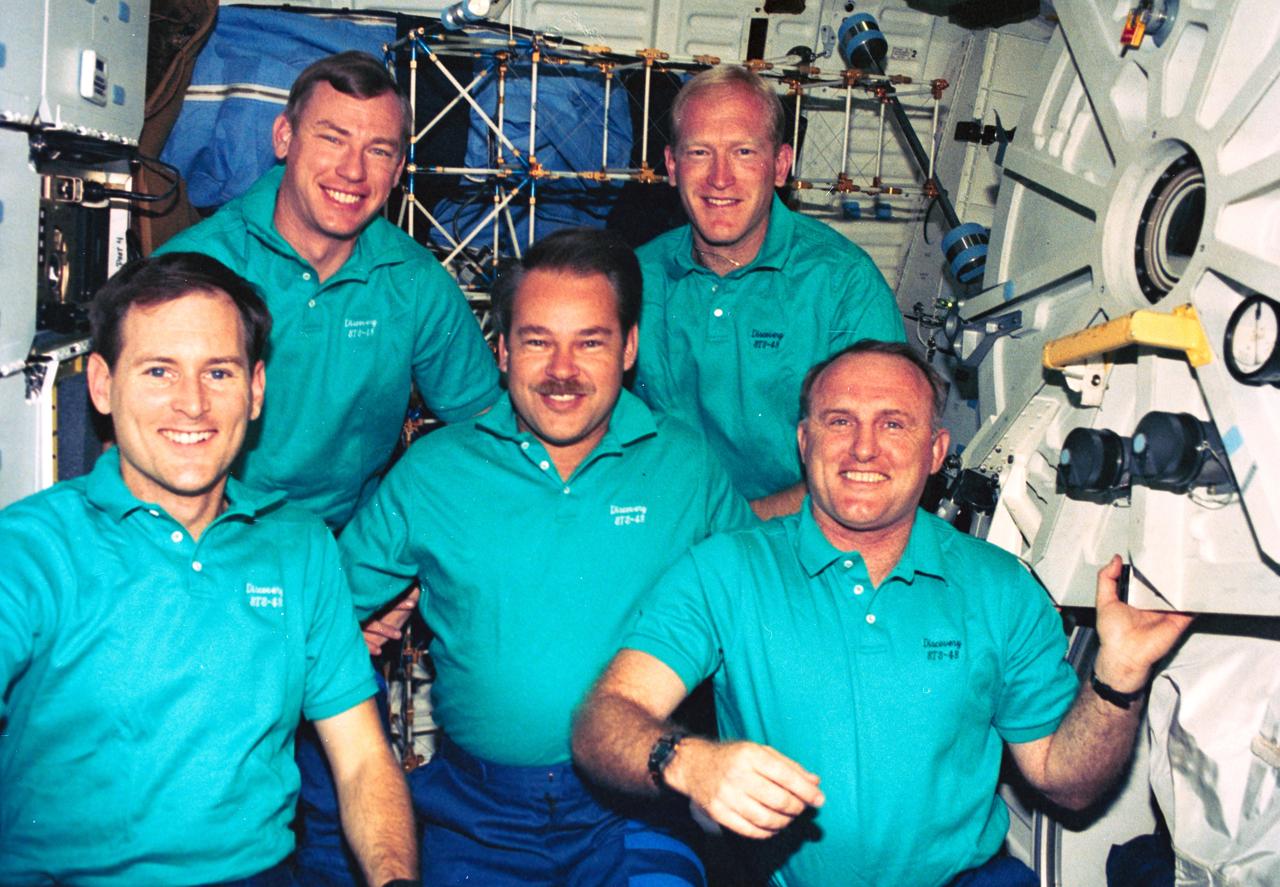
STS048-21-04 (15 Sept 1991) --- The five astronauts pose on the Space Shuttle Discovery's middeck for the traditional in-flight crew portrait. Astronaut John O. Creighton, mission commander, is at center. Others are (front row, left to right) Kenneth S. Reightler, pilot; and James F. Buchli, mission specialist; and (rear row, left to right) astronauts Mark N. Brown and Charles D. (Sam) Gemar, both mission specialists. The image was photographed with a pre-set 35mm camera.

JSC2007-E-49826 (3 Oct. 2007) --- Attired in training versions of their shuttle launch and entry suits, the STS-122 crewmembers take a moment to pose for a photo during a training session in the Space Vehicle Mockup Facility at the Johnson Space Center. From the right are astronauts Stephen N. Frick, commander; Alan G. Poindexter, pilot; Leland D. Melvin, Rex J. Walheim, European Space Agency's (ESA) Hans Schlegel and Stanley G. Love, all mission specialists.

The STS-48 mission launched aboard the Space Shuttle Discovery on September 12, 1991 at 7:11:04 pm. Five astronauts composed the crew including: John O. Creighton, commander; Kenneth S. Reightler, pilot; and Mark N. Brown, Charles D. (Sam) Gemar, and James F. Buchli, all mission specialists. The primary payload of the mission was the Upper Atmosphere Research Satellite (UARS).
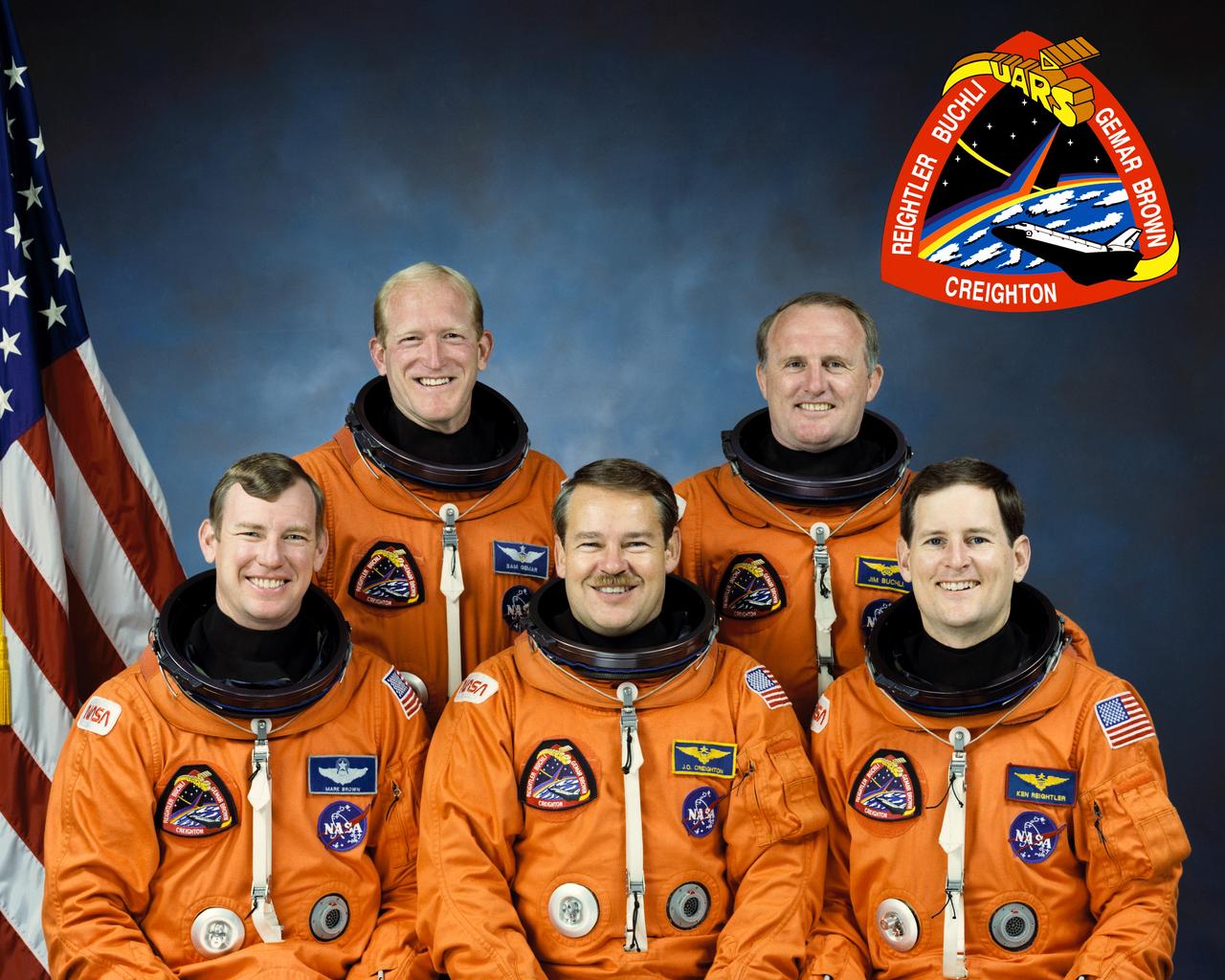
STS048-S-002 (August 1991) --- These five astronauts have been assigned to NASA's mission, scheduled for September. Astronaut John O. Creighton, center, is mission commander. Astronaut Kenneth S. Reightler Jr. (right front) will be pilot for the flight aboard the Space Shuttle Discovery. Mission specialists are Mark N. Brown (left, front row) and (left to right, back row) Charles D. (Sam) Gemar and James F. Buchli.
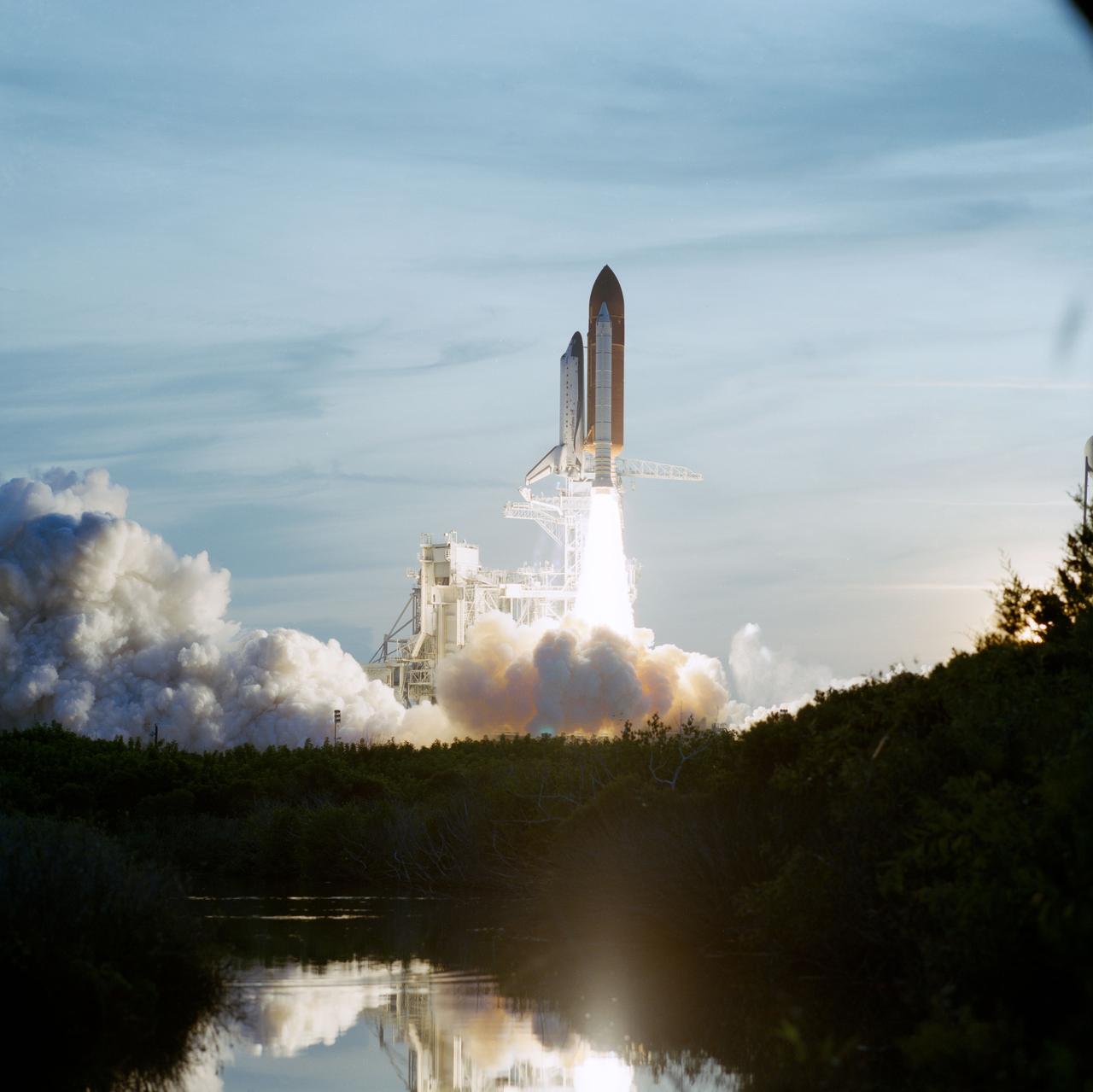
STS048-S-172 (12 Sept 1991) ---- With five astronauts and the Upper Atmosphere Research Satellite (UARS) onboard, the Space Shuttle Discovery heads toward a six day mission in Earth orbit. Onboard are astronauts John O. Creighton, Kenneth S. Reightler, Charles D. (Sam) Gemar, James F. Buchli and Mark N. Brown. Liftoff occurred at 7:11:04 p.m. (EDT), September 12, 1991.
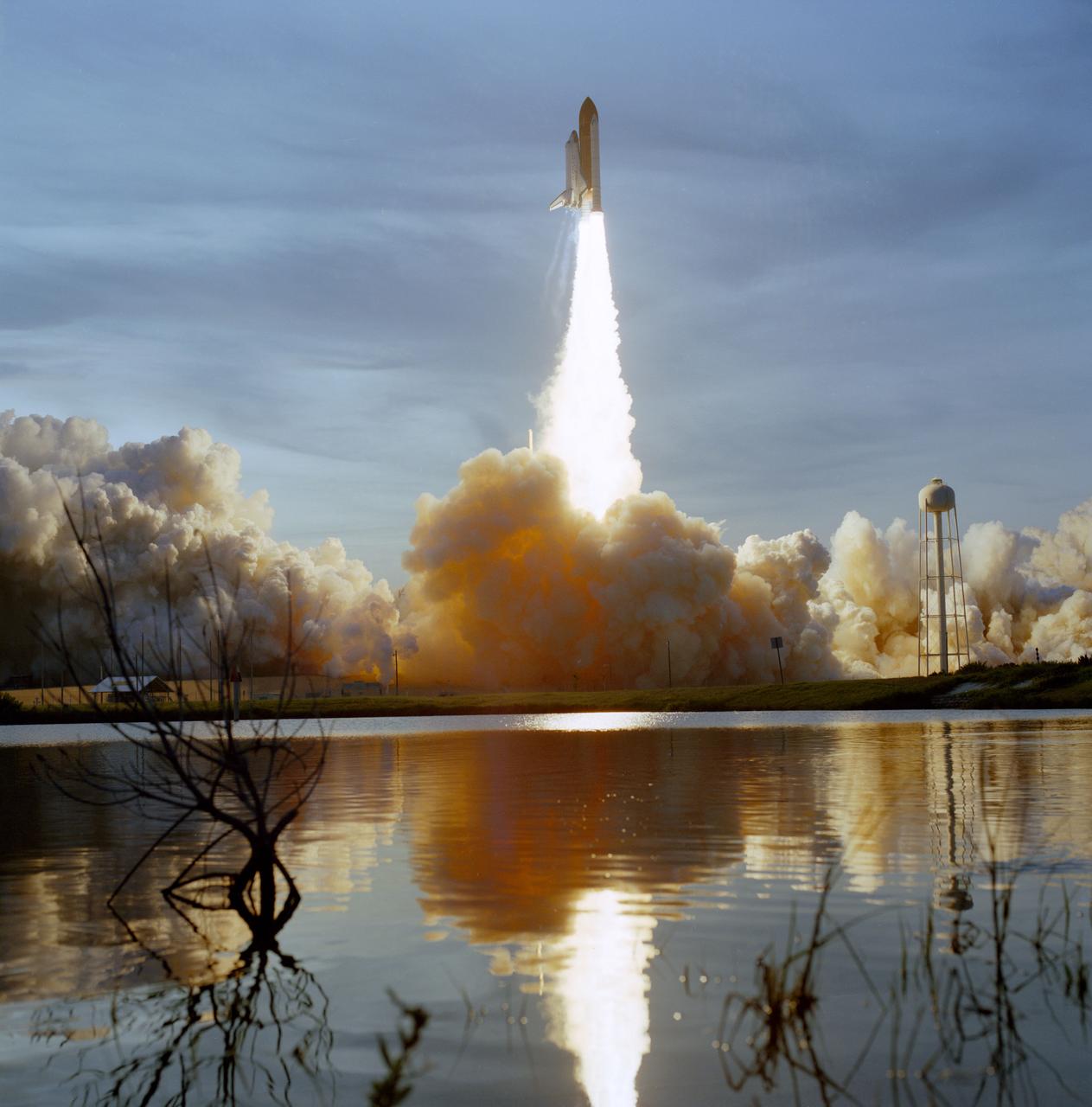
STS048-S-170 (12 Sept 1991) ---- With five astronauts and the Upper Atmosphere Research Satellite (UARS) onboard, the Space Shuttle Discovery heads toward a six day mission in Earth orbit. Onboard are astronauts John O. Creighton, Kenneth S. Reightler, Charles D. (Sam) Gemar, James F. Buchli and Mark N. Brown. Liftoff occurred at 7:11:04 p.m. (EDT), September 12, 1991.
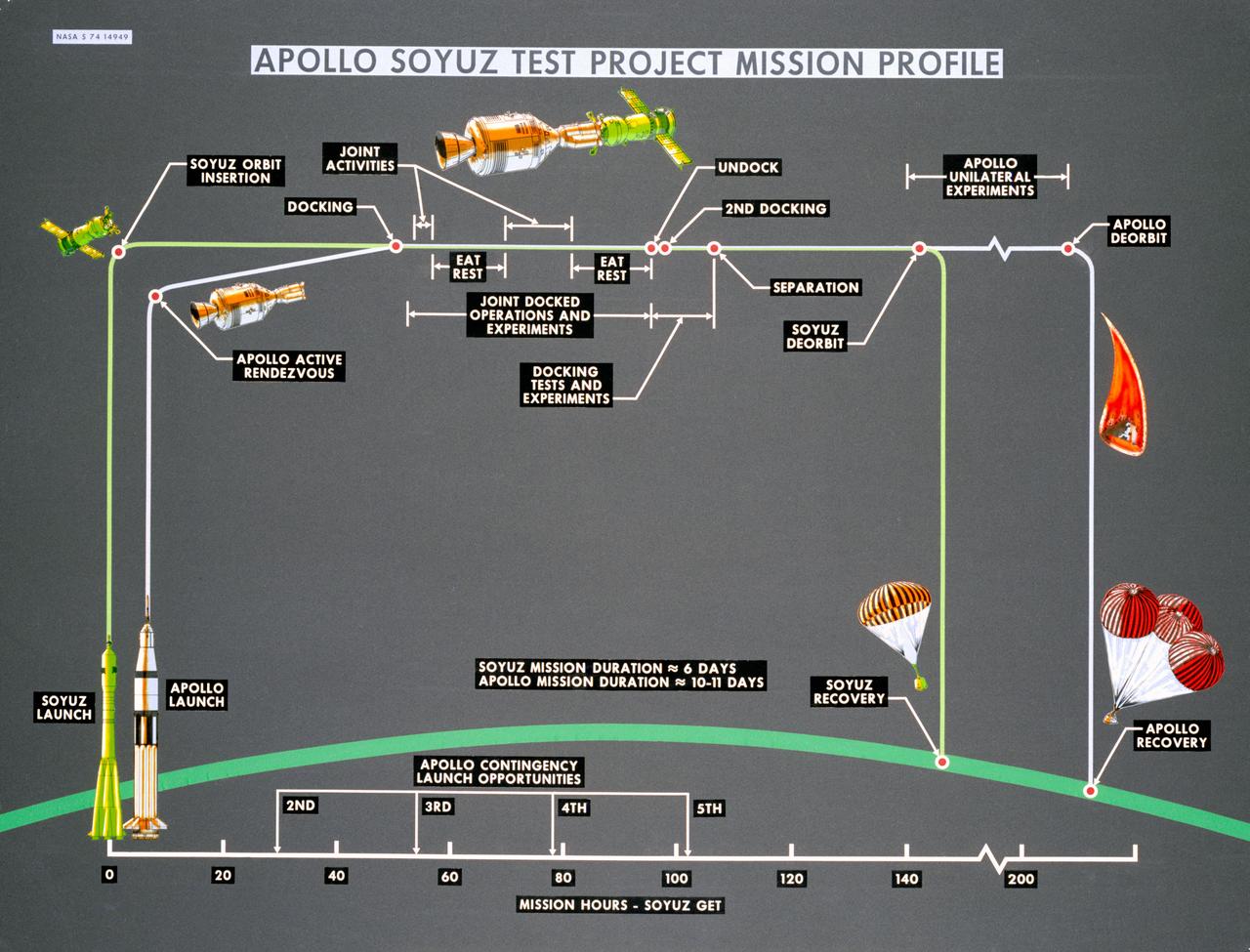
S74-14949 (October 1974) --- Artist?s drawings and call-outs depict phases of the joint U.S.-USSR Apollo-Soyuz Test Project, an Earth-orbital mission which will feature rendezvous and docking of the respective spacecraft of the two nations. ASTP crewmen for the USSR include Aleksey A. Leonov and Valeriy N. Kubasov. The astronaut team includes astronauts Thomas P. Stafford, Vance D. Brand and Donald K. Slayton. The mission is scheduled to take place in summer 1975.
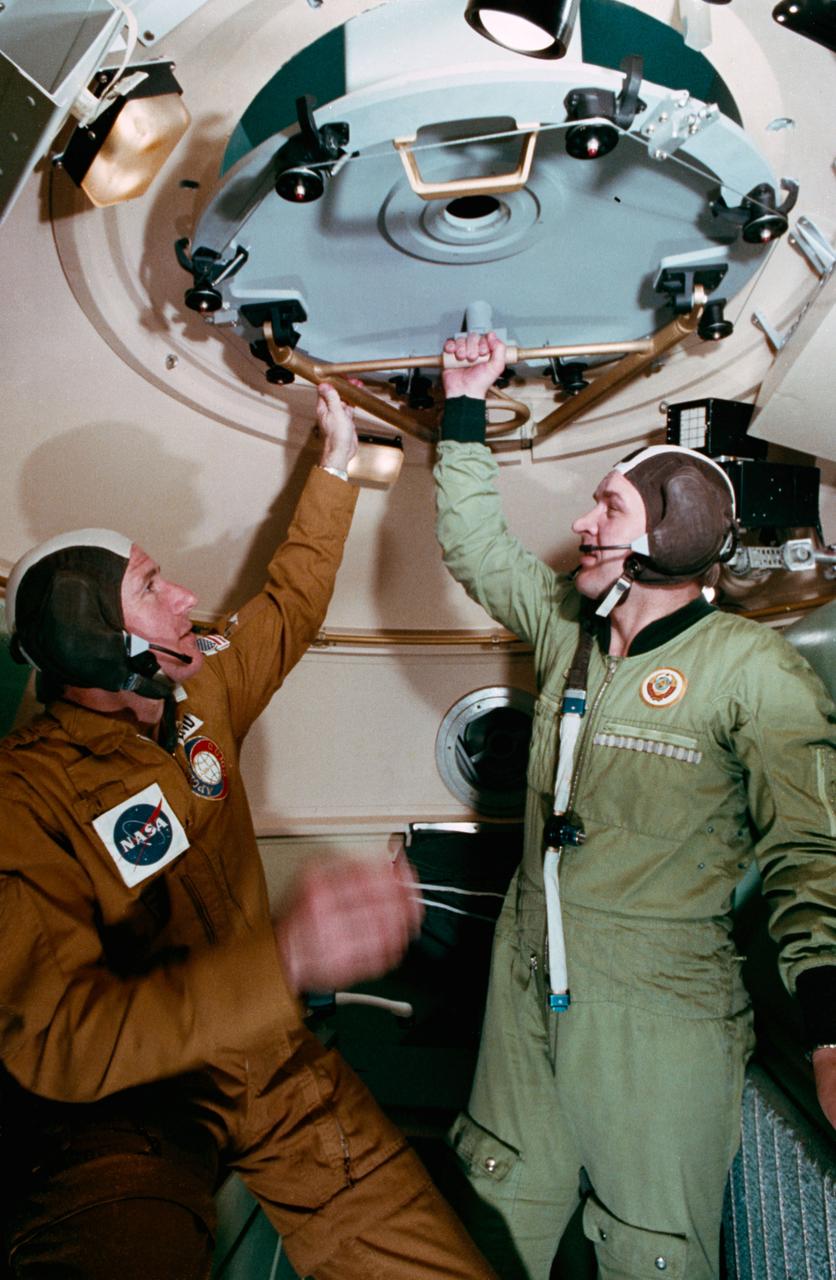
S75-22856 (25 Feb. 1975) --- An interior view of the Soyuz orbital module mock-up in Building 35 during Apollo-Soyuz Test Project joint crew training at NASA's Johnson Space Center. The ASTP crewmen are astronaut Vance D. Brand (on left), command module pilot of the American ASTP prime crew; and cosmonaut Valeriy N. Kubasov, engineer on the Soviet ASTP first (prime) crew. The training session simulated activities on the second day in Earth orbit. Photo credit: NASA
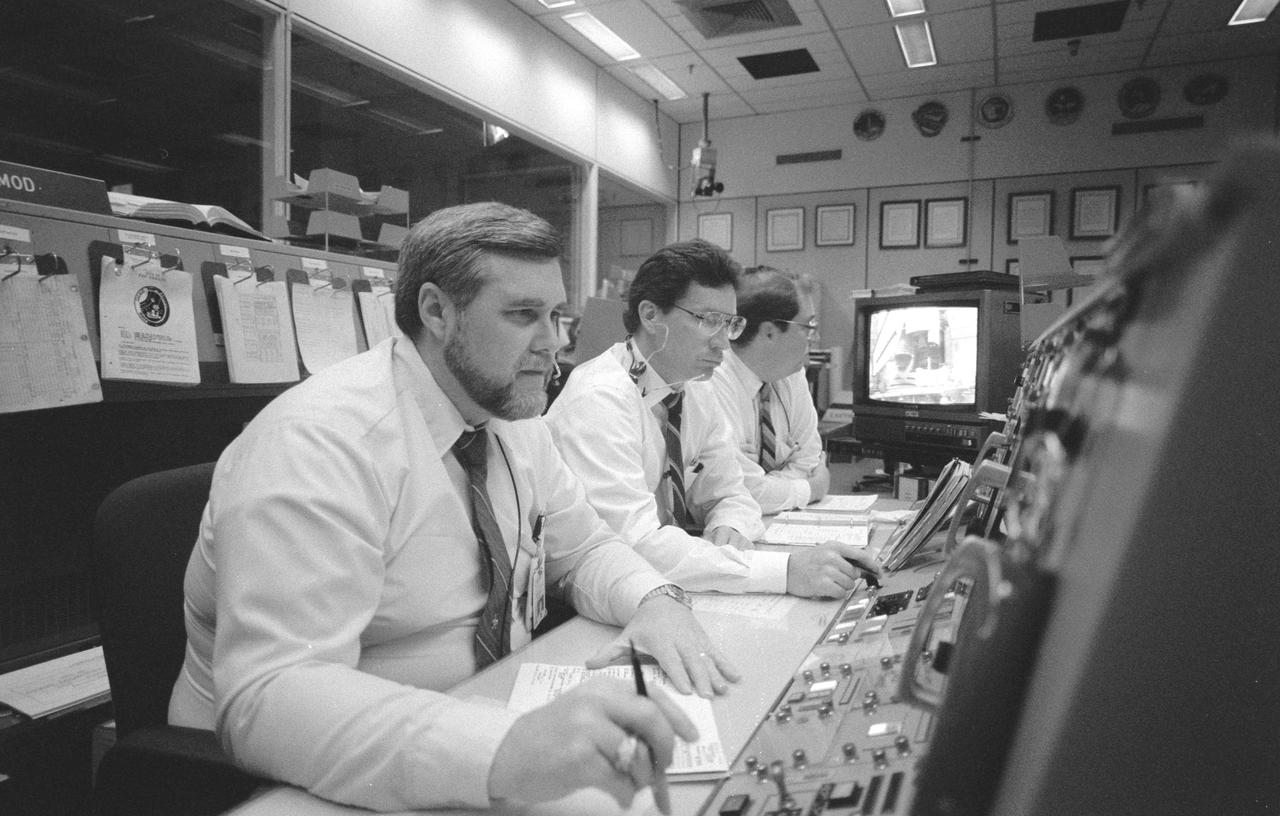
Only moments away from ignition, Atlantis, Orbiter Vehicle (OV) 104, and its five member crew are the subjects of concern drawing serious countenance in this scene in the Flight Control Room (FCR) of JSC's Mission Control Center (MCC) Bldg 30. Ascent Flight Director Alan L. Briscoe, monitors the Kennedy Space Center pre-launch activity from the flight director (FD) console, along with Ronald D. Dittemore (center) and N. Wayne Hale, Jr.
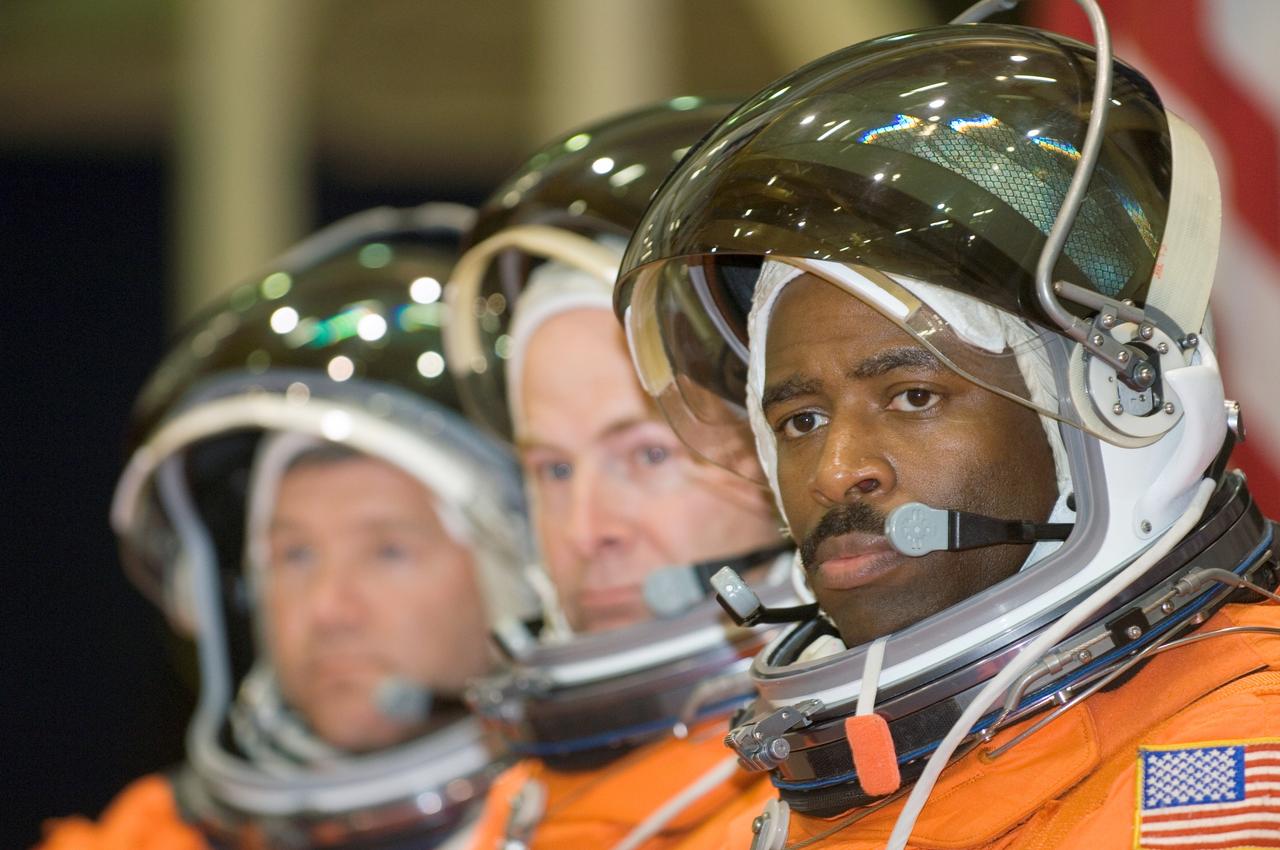
JSC2007-E-21251 (1 May 2007) --- Astronauts Stephen N. Frick (left), STS-122 commander; Alan G. Poindexter, pilot; and Leland D. Melvin, mission specialist, await the start of an emergency egress training session in the Space Vehicle Mockup Facility at Johnson Space Center. The crewmembers are wearing training versions of their shuttle launch and entry suits.
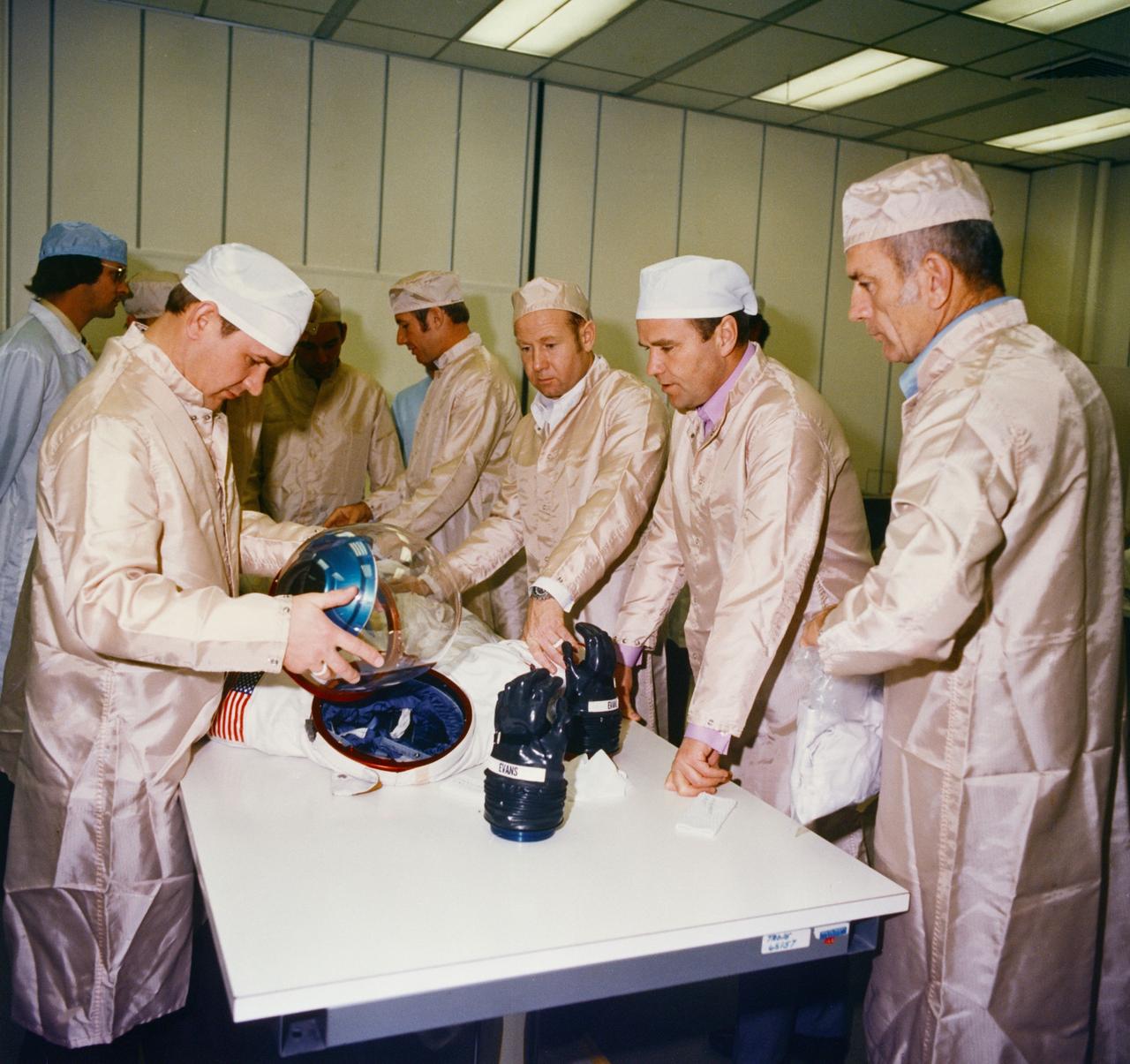
S75-24108 (8-10 Feb. 1975) --- A group of Apollo-Soyuz Test Project crewmen inspects an Apollo spacesuit during a three-day tour of NASA's Kennedy Space Center. They were at KSC to look over ASTP launch facilities and flight hardware. The six men wearing white caps are, left to right, cosmonaut Valeriy N. Kubasov, interpreter K.S. Samofal (far end of table), astronaut Vance D. Brand, cosmonaut Aleksey A. Leonov, cosmonaut Vladimir A. Shatalov and astronaut Donald K. Slayton.
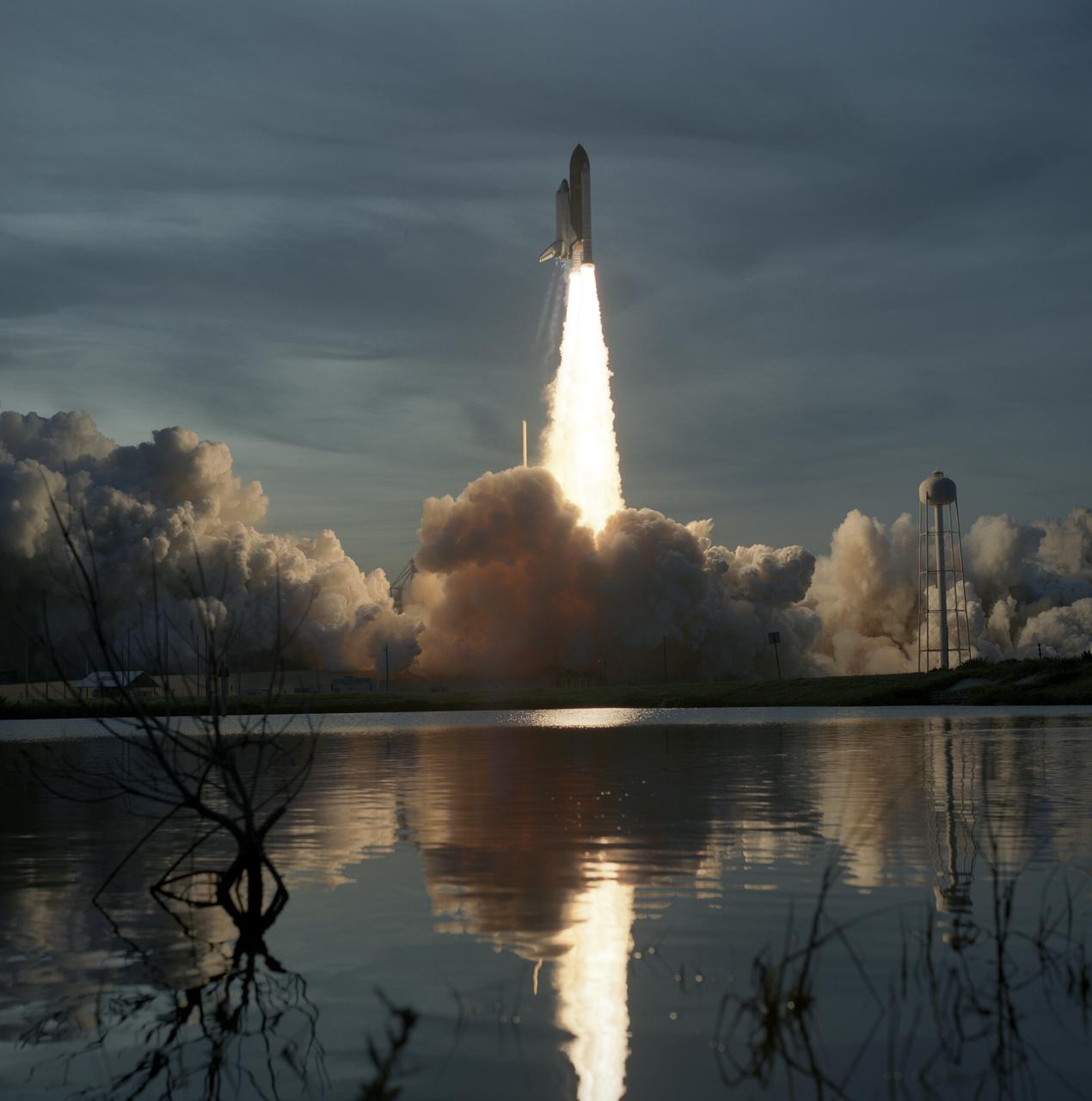
The STS-48 mission launched aboard the Space Shuttle Discovery on September 12, 1991 at 7:11:04 pm. Five astronauts composed the crew including: John O. Creighton, commander; Kenneth S. Reightler, pilot; and Mark N. Brown, Charles D. (Sam) Gemar, and James F. Buchli, all mission specialists. The primary payload of the mission was the Upper Atmosphere Research Satellite (UARS).
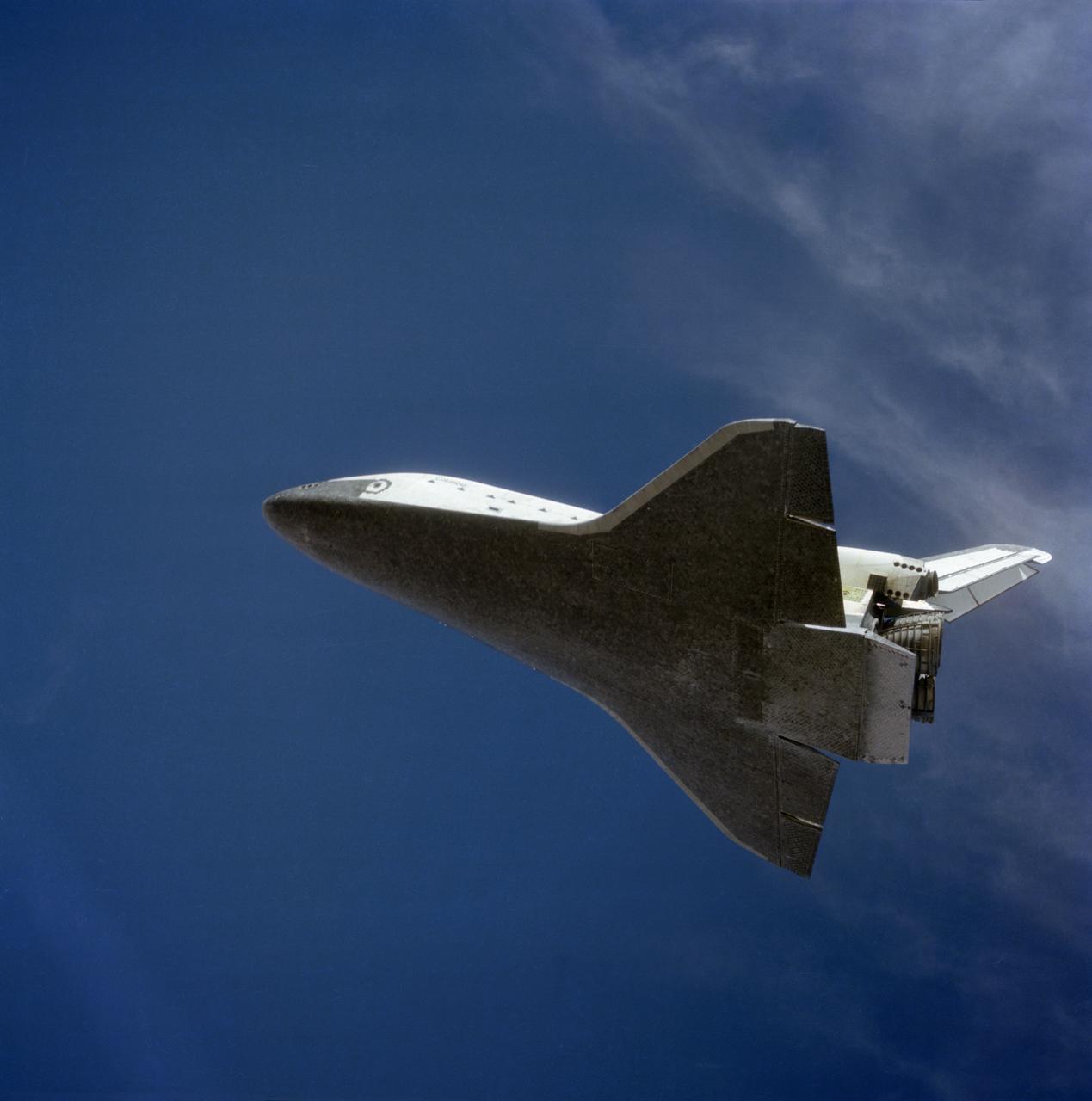
S81-39564 (14 Nov. 1981) --- This view of the space shuttle Columbia (STS-2) was made with a hand-held 70mm camera in the rear station of the T-38 chase plane. Mission specialist/astronaut Kathryn D. Sullivan exposed the frame as astronauts Joe N. Engle and Richard H. Truly aboard the Columbia guided the vehicle to an unpowered but smooth landing on the desert area of Edwards Air Force base in California. The picture provides a good view of the underside of the returning spacecraft. Photo credit: NASA
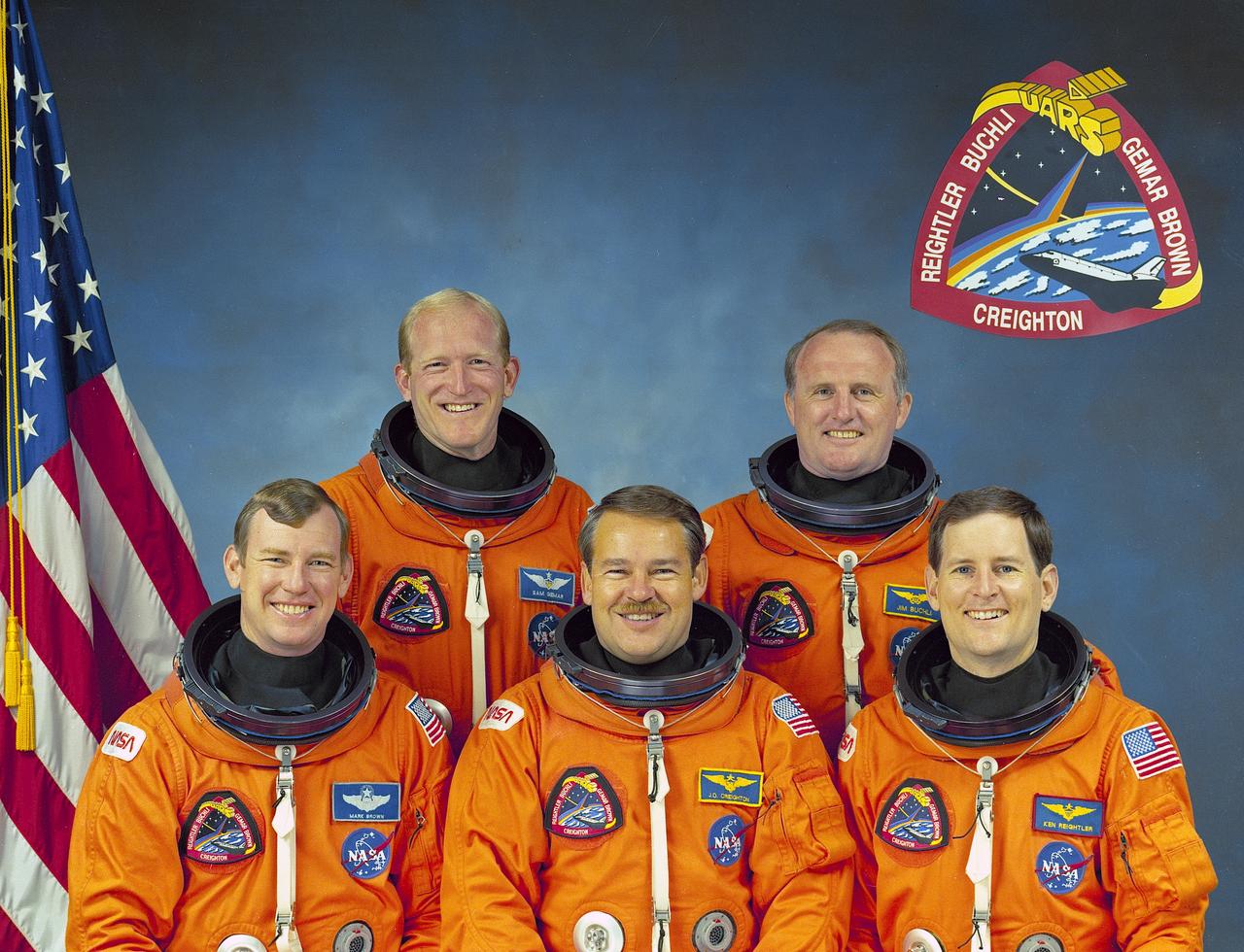
The STS-48 crew portrait includes (front row left to right): Mark N. Brown, mission specialist; John O. Creighton, commander; and Kenneth S. Reightler, pilot. Pictured on the back row (left to right) are mission specialists Charles D. (Sam) Gemar, and James F. Buchli. The crew of five launched aboard the Space Shuttle Discovery on September 12, 1991 at 7:11:04 pm (EDT). The primary payload of the mission was the Upper Atmosphere Research Satellite (UARS).
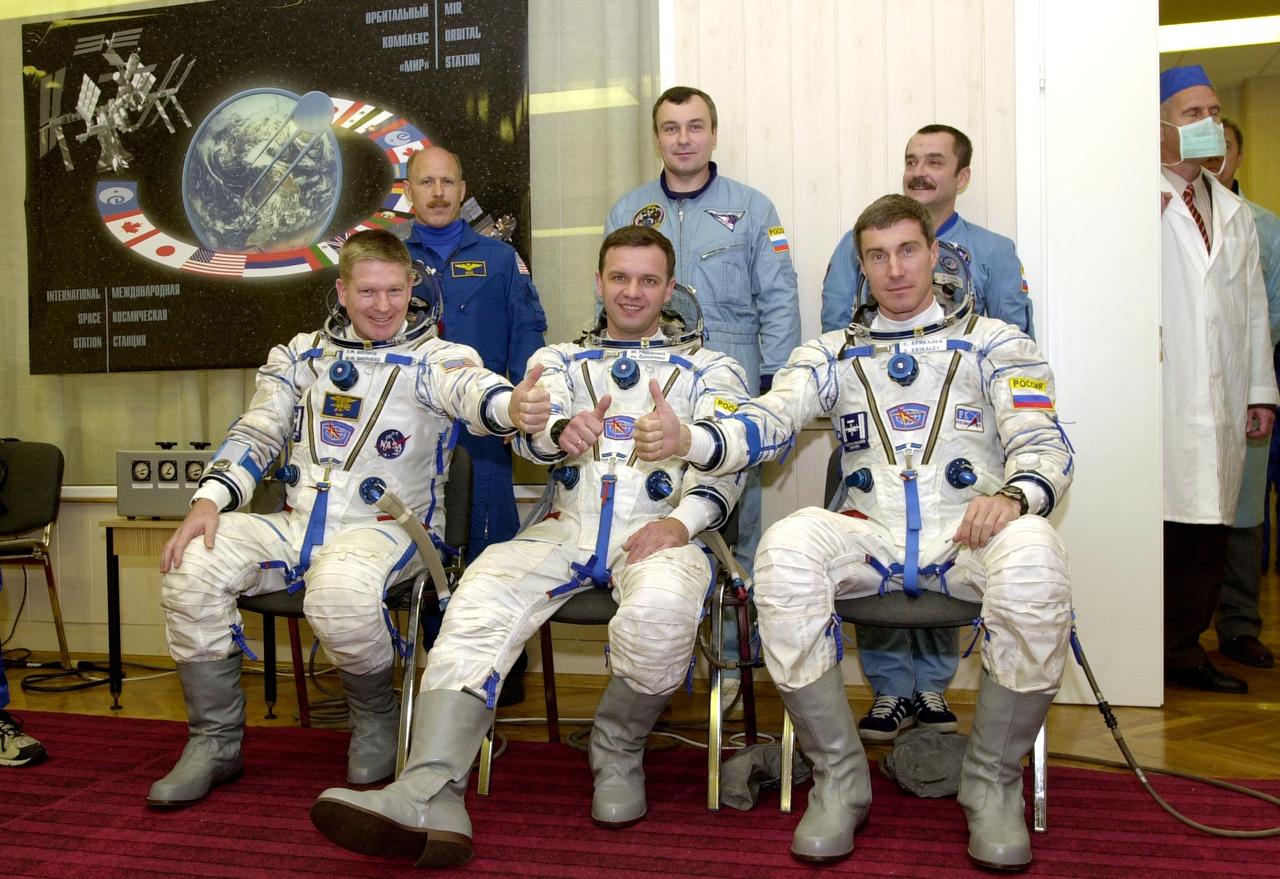
ISS01-S-007 (20 October 2000) --- Appearing ready for their rapidly-approaching date with the International Space Station (ISS) are (seated, from the left) astronaut William M. Shepherd, Expedition One commander; with cosmonauts Yuri P. Gidzenko, Soyuz commander; and Sergei K. Krikalev, flight engineer. Behind them are the backup crewmembers (from left)-- astronaut Kenneth D. Bowersox with cosmonauts Vladimir N. Dezhurov and Mikhail Turin.
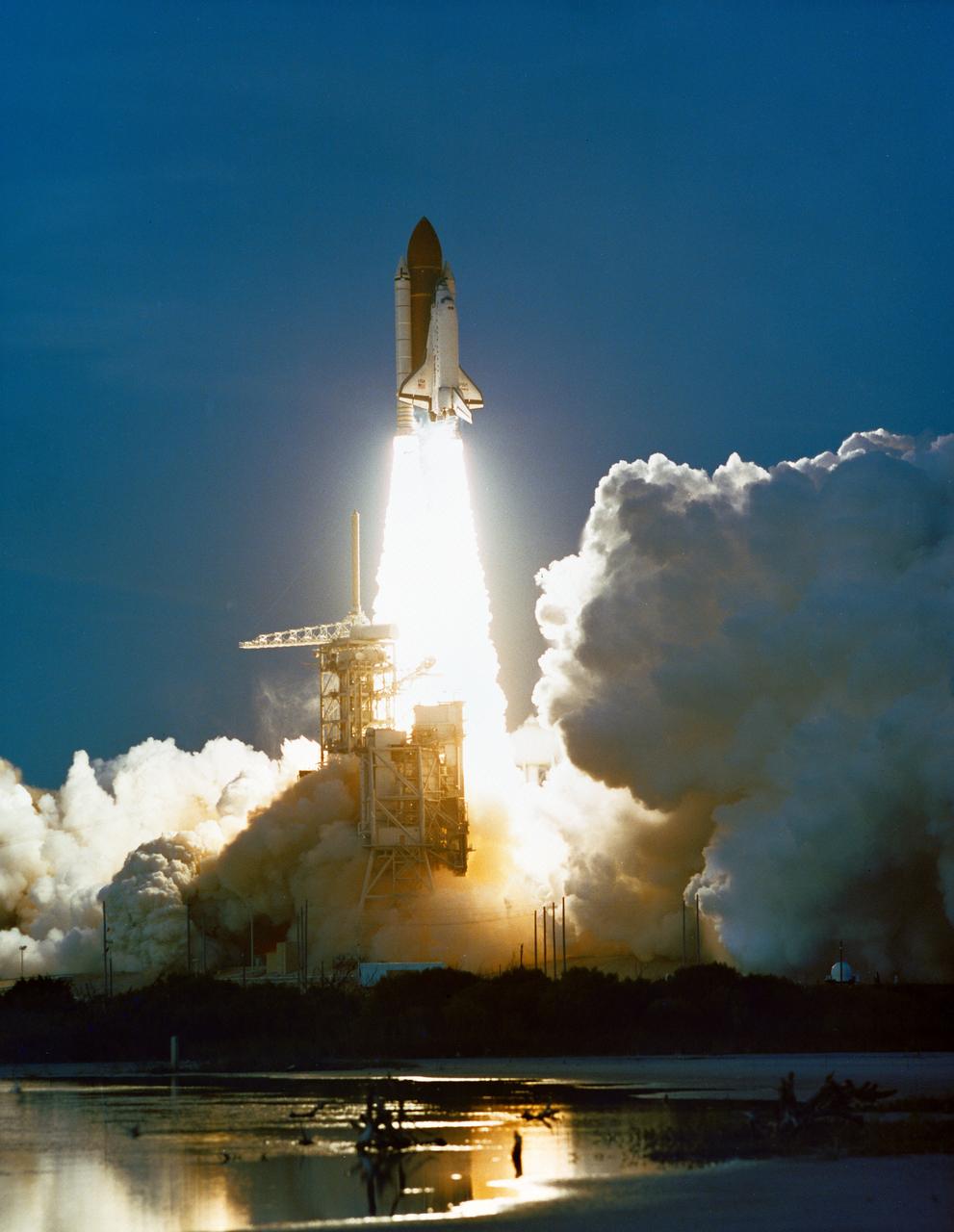
STS048-S-171 (12 Sept 1991) --- With five astronauts and the Upper Atmosphere Research Satellite (UARS) onboard, the Space Shuttle Discovery heads toward a six day mission in Earth orbit. Onboard are astronauts John O. Creighton, Kenneth S. Reightler, Charles D. (Sam) Gemar, James F. Buchli and Mark N. Brown. Liftoff occurred at 7:11:04 p.m. (EDT), September 12, 1991.
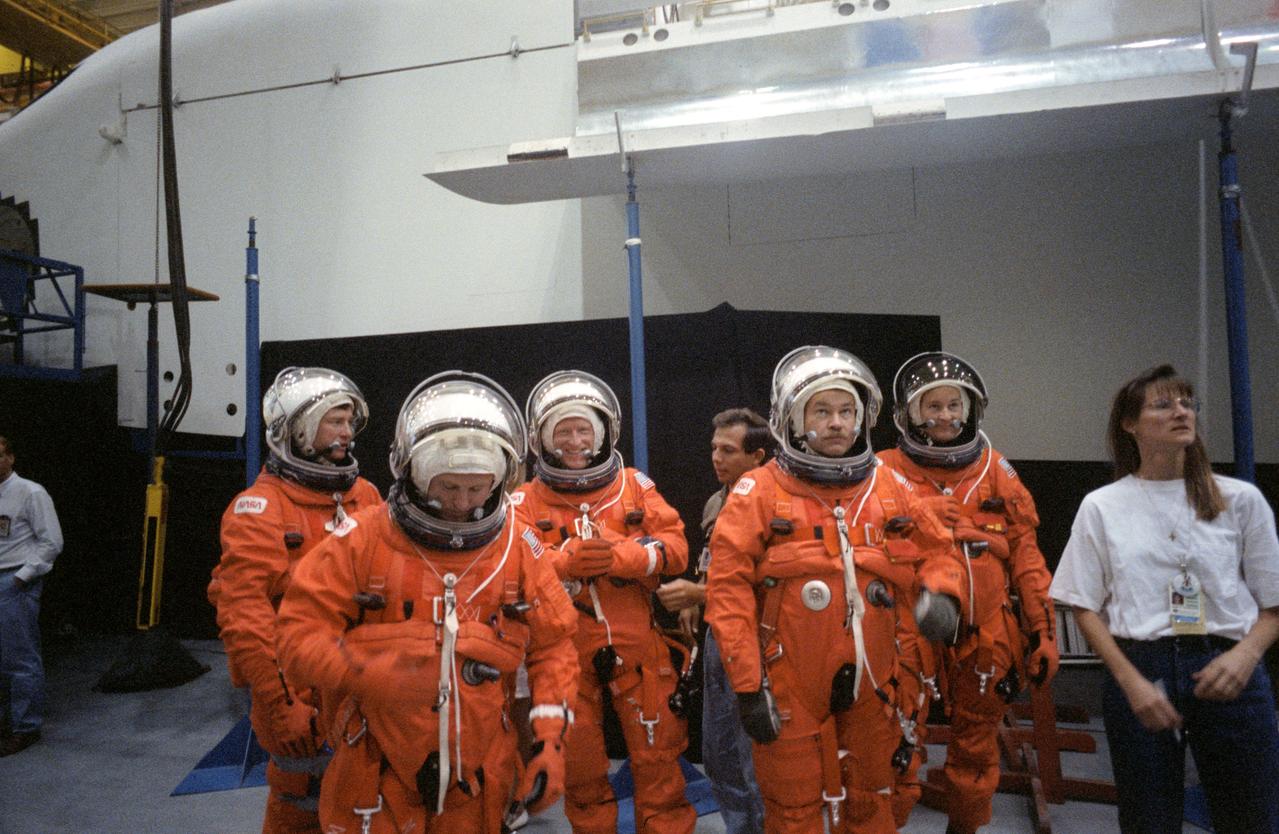
S91-43614 (25 July 1991) --- The astronaut crewmembers for NASA's STS 48 mission, attired in orange partial pressure garments used for Shuttle launch and entry, prepare to participate in an emergency egress training session at the Johnson Space Center. The crewmembers are, left to right, astronauts Mark N. Brown, James F. Buchli and Charles D. (Sam) Gemar, all mission specialists, and John O. Creighton, Mission commander, and Kenneth S. Reightler, pilot. STS 48 is currently scheduled for mid-September of this year.
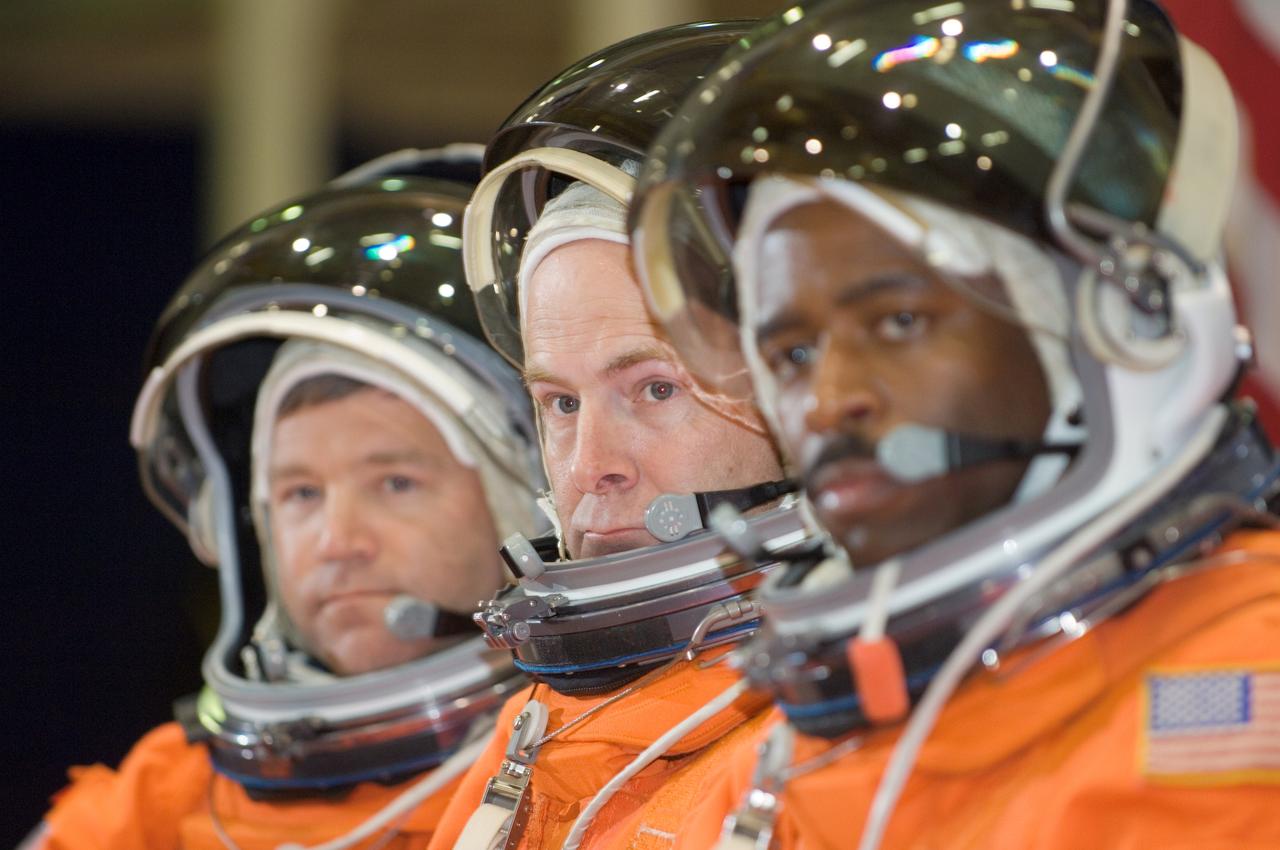
JSC2007-E-21250 (1 May 2007) --- Astronauts Stephen N. Frick (left), STS-122 commander; Alan G. Poindexter, pilot; and Leland D. Melvin, mission specialist, await the start of an emergency egress training session in the Space Vehicle Mockup Facility at Johnson Space Center. The crewmembers are wearing training versions of their shuttle launch and entry suits.

CAPE CANAVERAL, Fla. -- At NASA's Kennedy Space Center in Florida, the Class of 2009 Astronaut Candidates, also called ASCANs, tour the Vehicle Assembly Building. The new astronaut candidates for NASA are Serena M. Aunon, Jeanette J. Epps, Air Force Maj. Jack D. Fischer, Air Force Lt. Col. Michael S. Hopkins, Kjell N. Lindgren, Kathleen 'Kate' Rubins, Navy Cmdr. Scott D. Tingle, Army Lt. Col. Mark T. Vande, and Navy Lt. Cmdr. Gregory R. 'Reid' Wiseman. The new astronaut candidates for the Japan Aerospace Exploration Agency, or JAXA, are Norishige Kanai, Takuya Onishi and Kimiya Yui. The new astronaut candidates for the Canadian Space Agency, or CSA, are Jeremy Hansen and David Saint-Jacques. Photo Credit: NASA_Kim Shiflett
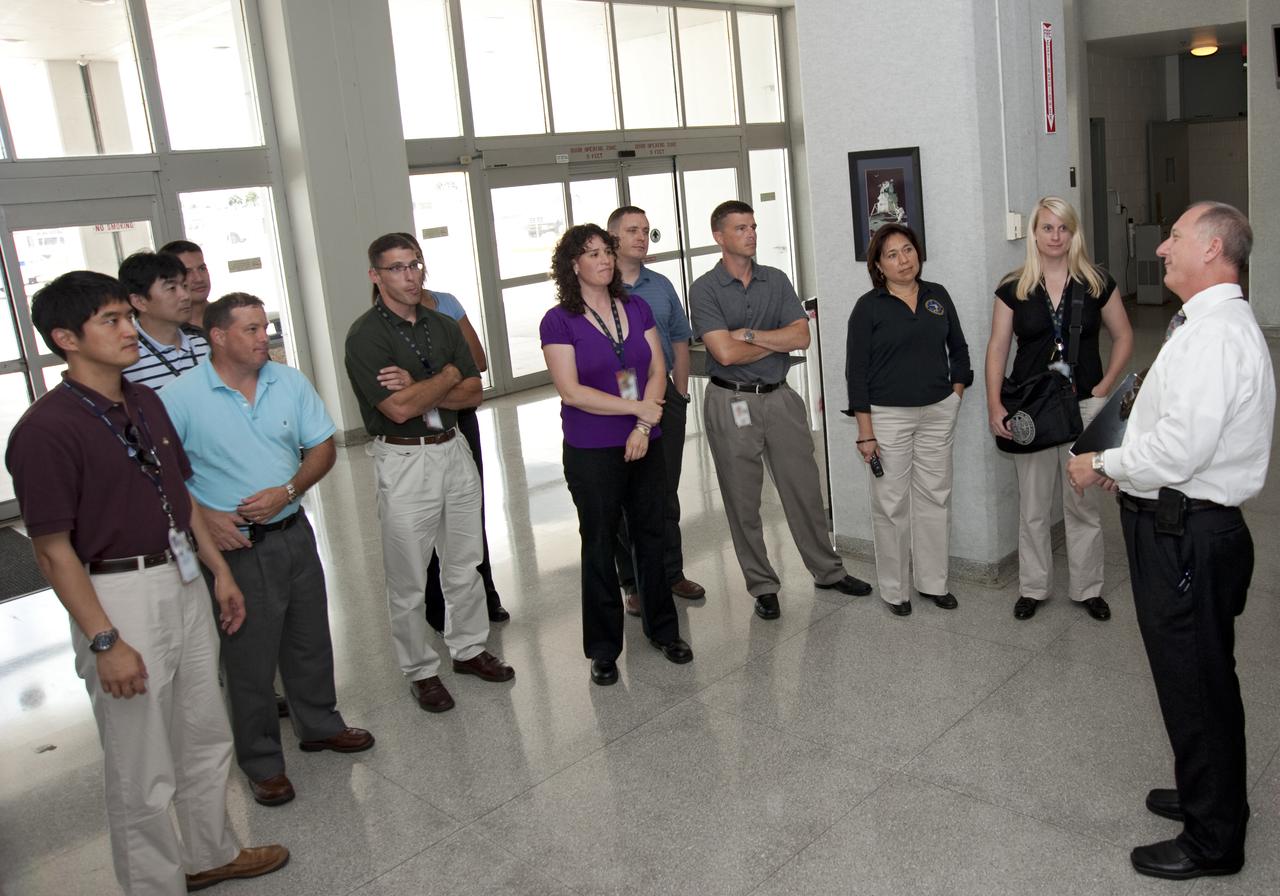
CAPE CANAVERAL, Fla. --- At NASA's Kennedy Space Center in Florida, Deputy Director for Kennedy's Launch Vehicle Processing Directorate Pete Nickolenko, right, greets the Class of 2009 Astronaut Candidates, also called ASCANs, before taking them on a tour of the Launch Control Center. The new astronaut candidates for NASA are Serena M. Aunon, Jeanette J. Epps, Air Force Maj. Jack D. Fischer, Air Force Lt. Col. Michael S. Hopkins, Kjell N. Lindgren, Kathleen 'Kate' Rubins, Navy Cmdr. Scott D. Tingle, Army Lt. Col. Mark T. Vande, and Navy Lt. Cmdr. Gregory R. 'Reid' Wiseman. The new astronaut candidates for the Japan Aerospace Exploration Agency, or JAXA, are Norishige Kanai, Takuya Onishi and Kimiya Yui. The new astronaut candidates for the Canadian Space Agency, or CSA, are Jeremy Hansen and David Saint-Jacques. Photo Credit: NASA_Kim Shiflett
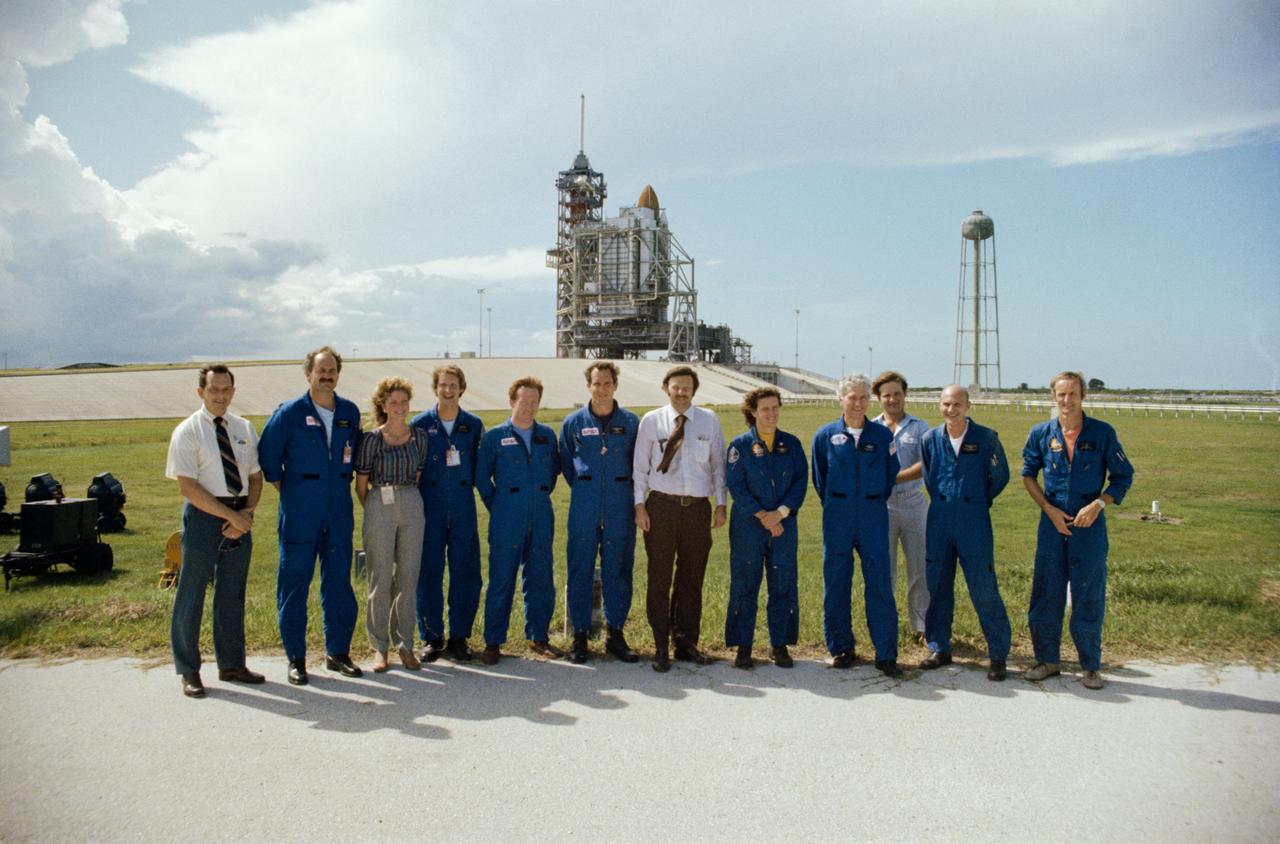
S82-32201 (29 May 1982) --- Members of the JSC astronaut corps, vehicle integration test team (VITT) and other personnel pose for a photograph at the completion of a countdown demonstration test (CDDT) at Launch Pad 39A, Kennedy Space Center (KSC). The participants are, from the left, Wilbur J. Etbauer, engineer with the VITT; mission specialist-astronaut James D. Van Hoften; Terri Stanford, engineer from JSC's flight operations directorate; mission specialist-astronaut Steven A. Hawley; astronaut Richard N. Richards; astronaut Michael J. Smith; Richard W. Nygren, head of the VITT; mission specialist-astronaut Kathryn D. Sullivan; astronaut Henry W. Hartsfield Jr., STS-4 pilot; Mark Haynes, a co-op student participating with the VITT; astronaut Thomas K. Mattingly II, STS-4 commander; and astronaut Donald E. Williams. Photo credit: NASA
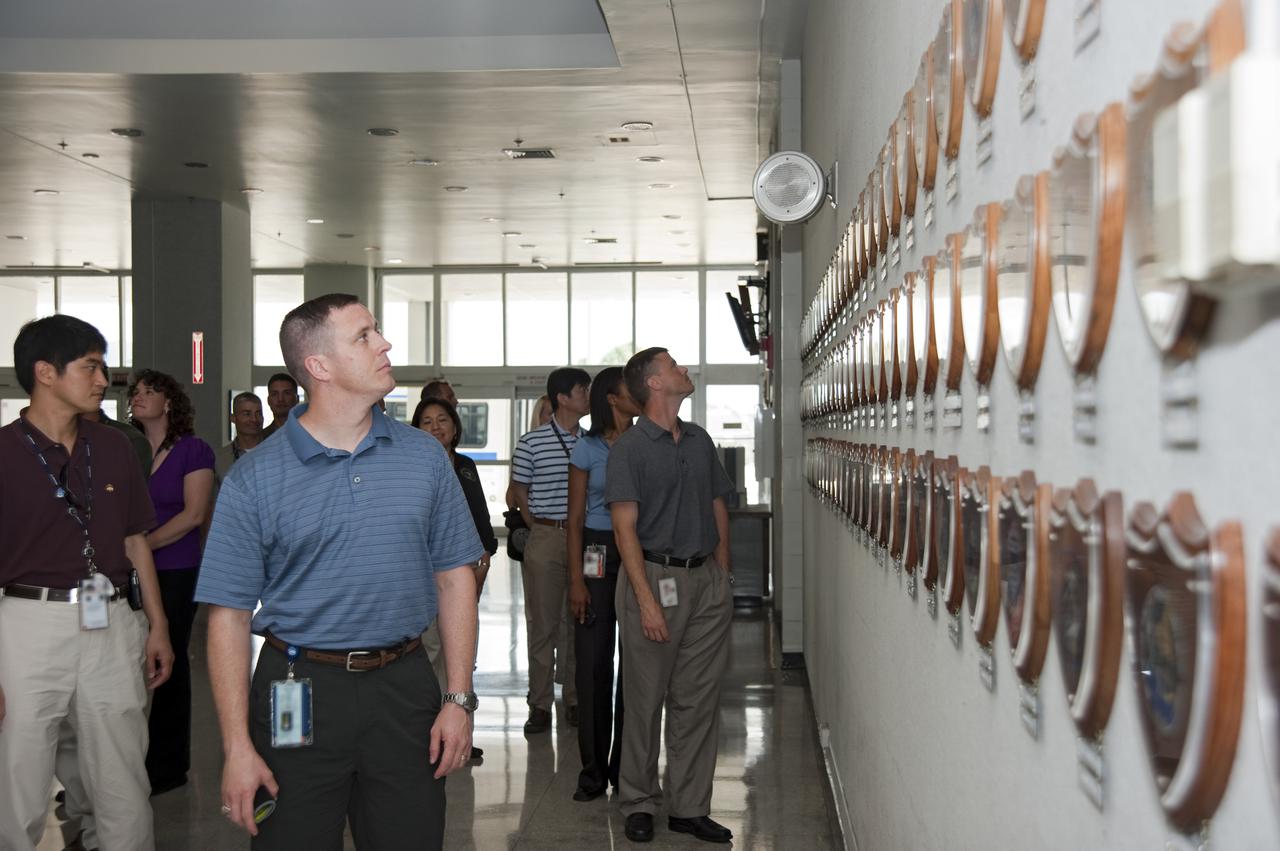
CAPE CANAVERAL, Fla. --- At NASA's Kennedy Space Center in Florida, the Class of 2009 Astronaut Candidates, also called ASCANs, tour the Launch Control Center. Along the wall of the center's lobby are all the space shuttle mission patches. The new astronaut candidates for NASA are Serena M. Aunon, Jeanette J. Epps, Air Force Maj. Jack D. Fischer, Air Force Lt. Col. Michael S. Hopkins, Kjell N. Lindgren, Kathleen 'Kate' Rubins, Navy Cmdr. Scott D. Tingle, Army Lt. Col. Mark T. Vande, and Navy Lt. Cmdr. Gregory R. 'Reid' Wiseman. The new astronaut candidates for the Japan Aerospace Exploration Agency, or JAXA, are Norishige Kanai, Takuya Onishi and Kimiya Yui. The new astronaut candidates for the Canadian Space Agency, or CSA, are Jeremy Hansen and David Saint-Jacques. Photo Credit: NASA_Kim Shiflett
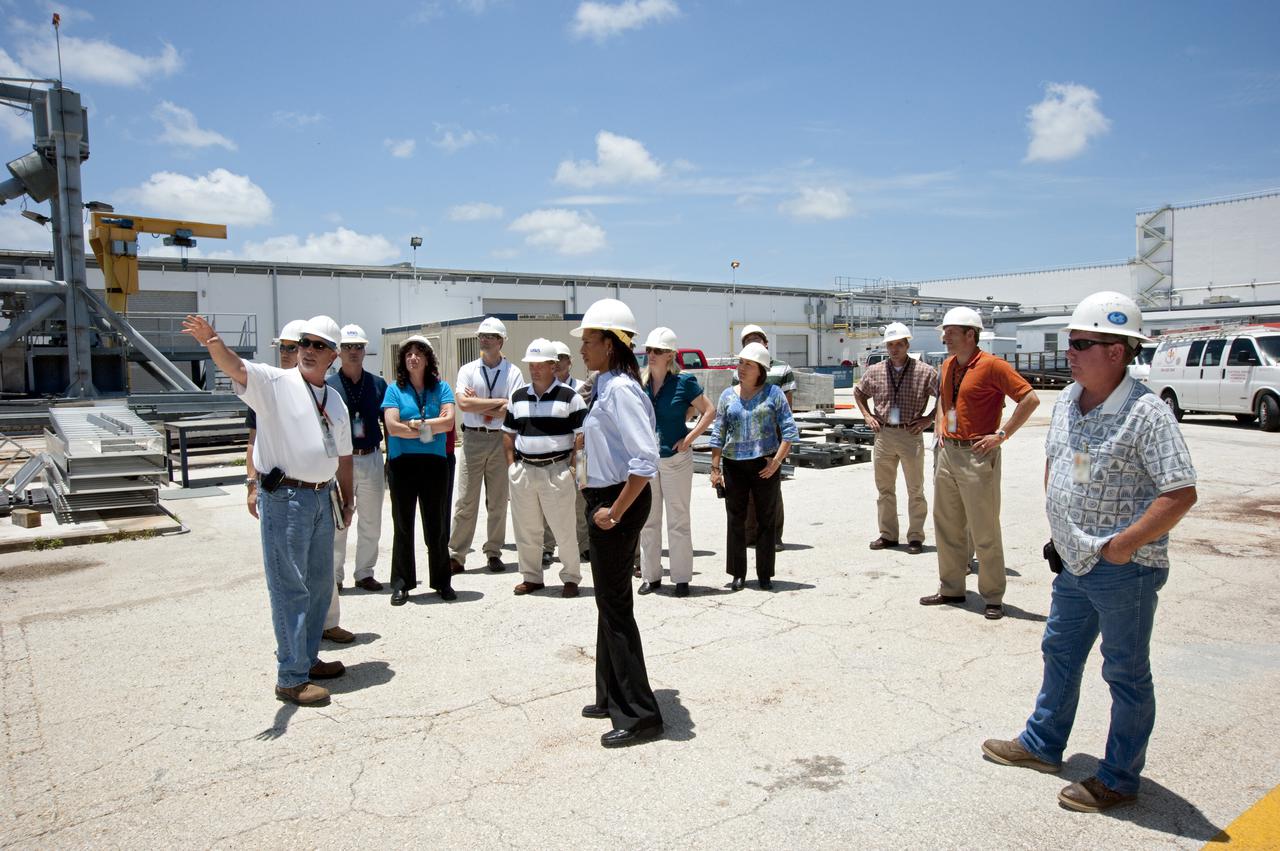
CAPE CANAVERAL, Fla. --- At NASA's Kennedy Space Center in Florida, the Class of 2009 Astronaut Candidates, also called ASCANs, tour the Launch Equipment Test Facility, where prototype ground support equipment is tested. The new astronaut candidates for NASA are Serena M. Aunon, Jeanette J. Epps, Air Force Maj. Jack D. Fischer, Air Force Lt. Col. Michael S. Hopkins, Kjell N. Lindgren, Kathleen 'Kate' Rubins, Navy Cmdr. Scott D. Tingle, Army Lt. Col. Mark T. Vande, and Navy Lt. Cmdr. Gregory R. 'Reid' Wiseman. The new astronaut candidates for the Japan Aerospace Exploration Agency, or JAXA, are Norishige Kanai, Takuya Onishi and Kimiya Yui. The new astronaut candidates for the Canadian Space Agency, or CSA, are Jeremy Hansen and David Saint-Jacques. Photo Credit: NASA_Kim Shiflett
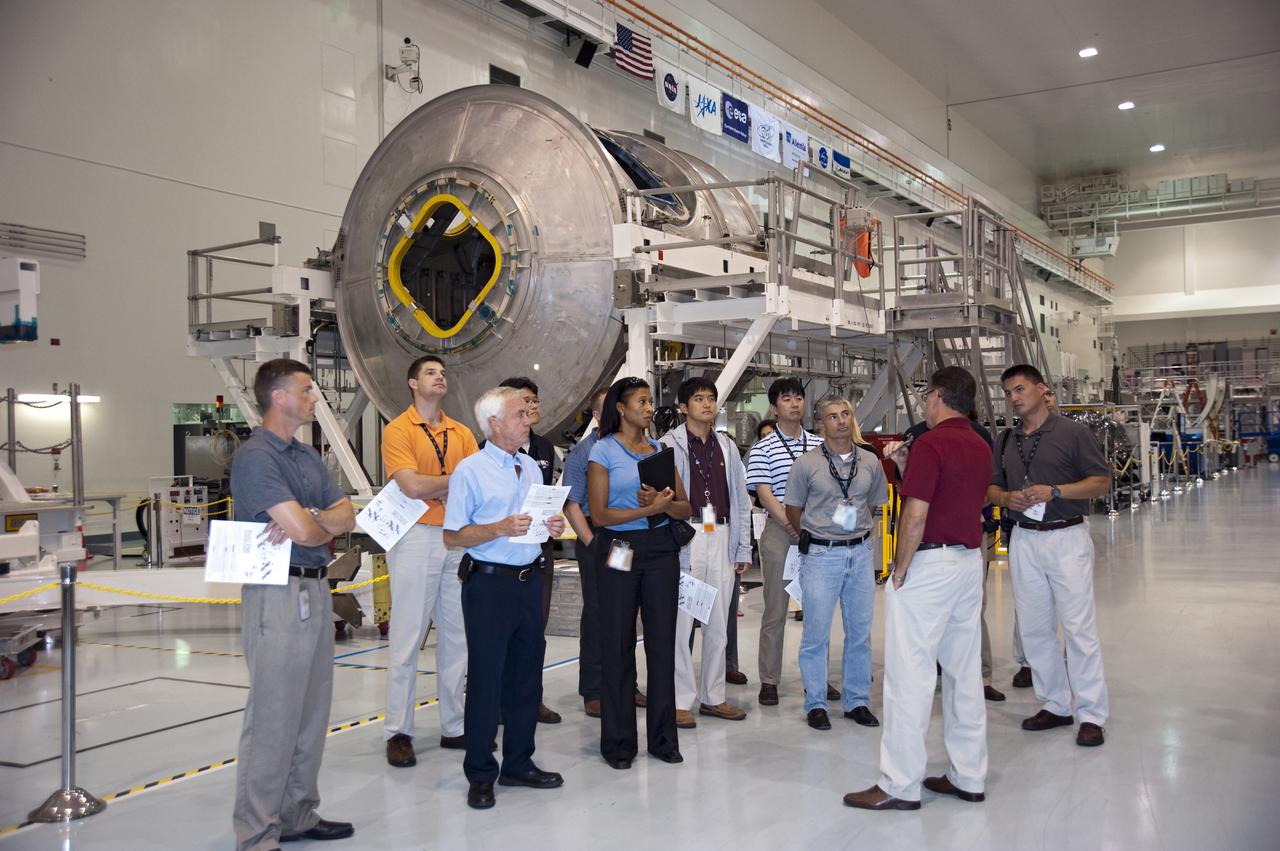
CAPE CANAVERAL, Fla. --- At NASA's Kennedy Space Center in Florida, the Class of 2009 Astronaut Candidates, also called ASCANs, tour the Space Station Processing Facility. Inside, critical parts bound for the International Space Station on the STS-133 and STS-134 missions are being processed for flight. The new astronaut candidates for NASA are Serena M. Aunon, Jeanette J. Epps, Air Force Maj. Jack D. Fischer, Air Force Lt. Col. Michael S. Hopkins, Kjell N. Lindgren, Kathleen 'Kate' Rubins, Navy Cmdr. Scott D. Tingle, Army Lt. Col. Mark T. Vande, and Navy Lt. Cmdr. Gregory R. 'Reid' Wiseman. The new astronaut candidates for the Japan Aerospace Exploration Agency, or JAXA, are Norishige Kanai, Takuya Onishi and Kimiya Yui. The new astronaut candidates for the Canadian Space Agency, or CSA, are Jeremy Hansen and David Saint-Jacques. Photo Credit: NASA_Kim Shiflett
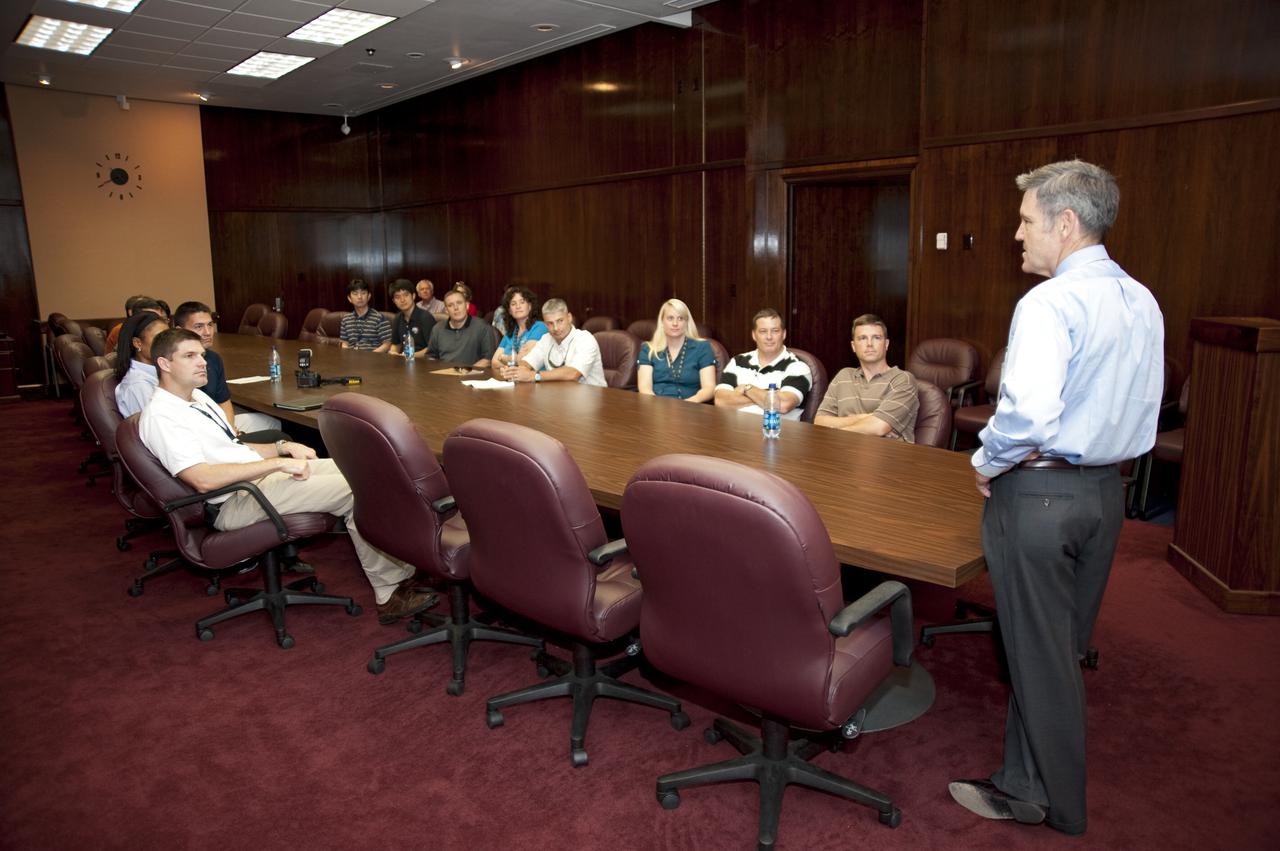
CAPE CANAVERAL, Fla. --- At NASA's Kennedy Space Center in Florida, four-time shuttle astronaut and Kennedy Center Director Bob Cabana meets the Class of 2009 Astronaut Candidates, also called ASCANs. The new astronaut candidates for NASA are Serena M. Aunon, Jeanette J. Epps, Air Force Maj. Jack D. Fischer, Air Force Lt. Col. Michael S. Hopkins, Kjell N. Lindgren, Kathleen 'Kate' Rubins, Navy Cmdr. Scott D. Tingle, Army Lt. Col. Mark T. Vande, and Navy Lt. Cmdr. Gregory R. 'Reid' Wiseman. The new astronaut candidates for the Japan Aerospace Exploration Agency, or JAXA, are Norishige Kanai, Takuya Onishi and Kimiya Yui. The new astronaut candidates for the Canadian Space Agency, or CSA, are Jeremy Hansen and David Saint-Jacques. Photo Credit: NASA_Kim Shiflett
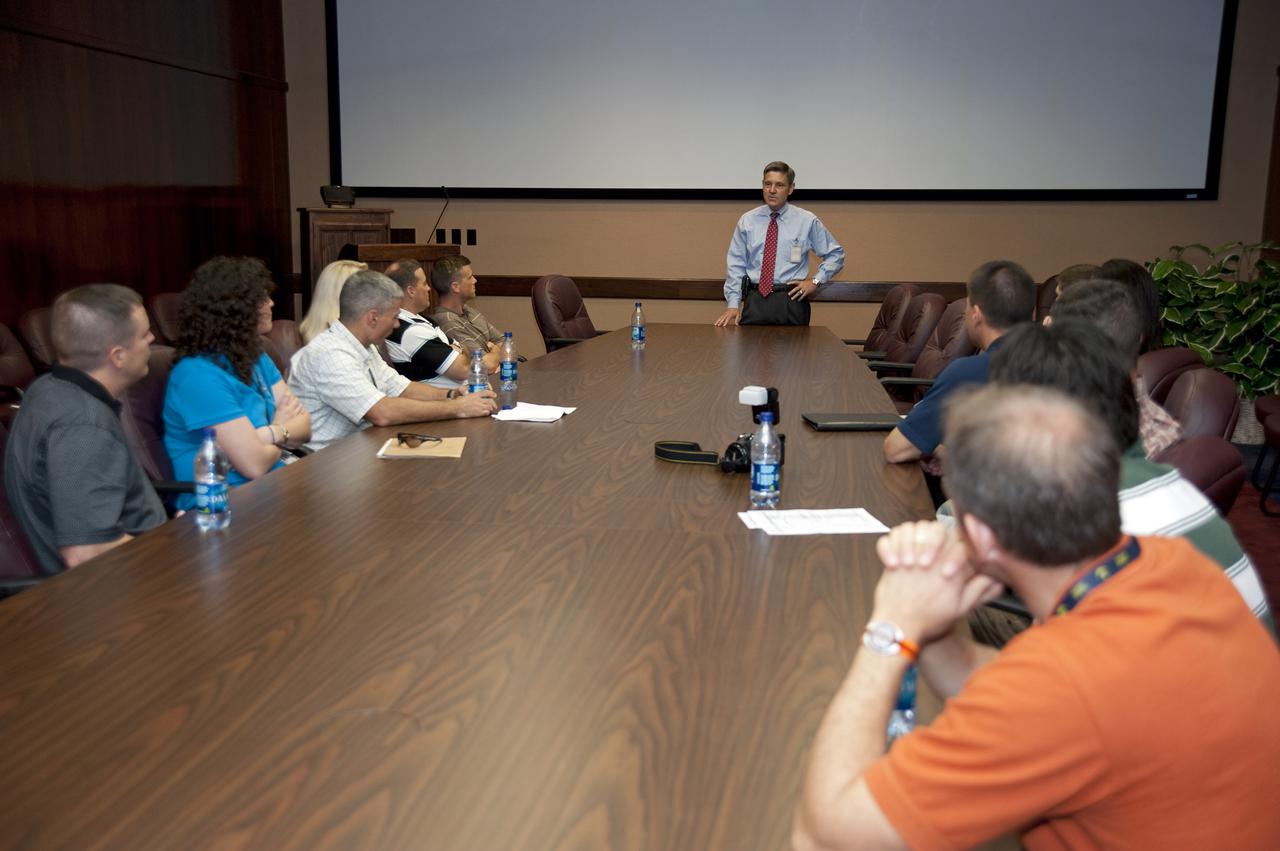
CAPE CANAVERAL, Fla. -- At NASA's Kennedy Space Center in Florida, four-time shuttle astronaut and Kennedy Center Director Bob Cabana meets the Class of 2009 Astronaut Candidates, also called ASCANs. The new astronaut candidates for NASA are Serena M. Aunon, Jeanette J. Epps, Air Force Maj. Jack D. Fischer, Air Force Lt. Col. Michael S. Hopkins, Kjell N. Lindgren, Kathleen 'Kate' Rubins, Navy Cmdr. Scott D. Tingle, Army Lt. Col. Mark T. Vande, and Navy Lt. Cmdr. Gregory R. 'Reid' Wiseman. The new astronaut candidates for the Japan Aerospace Exploration Agency, or JAXA, are Norishige Kanai, Takuya Onishi and Kimiya Yui. The new astronaut candidates for the Canadian Space Agency, or CSA, are Jeremy Hansen and David Saint-Jacques. Photo Credit: NASA_Kim Shiflett
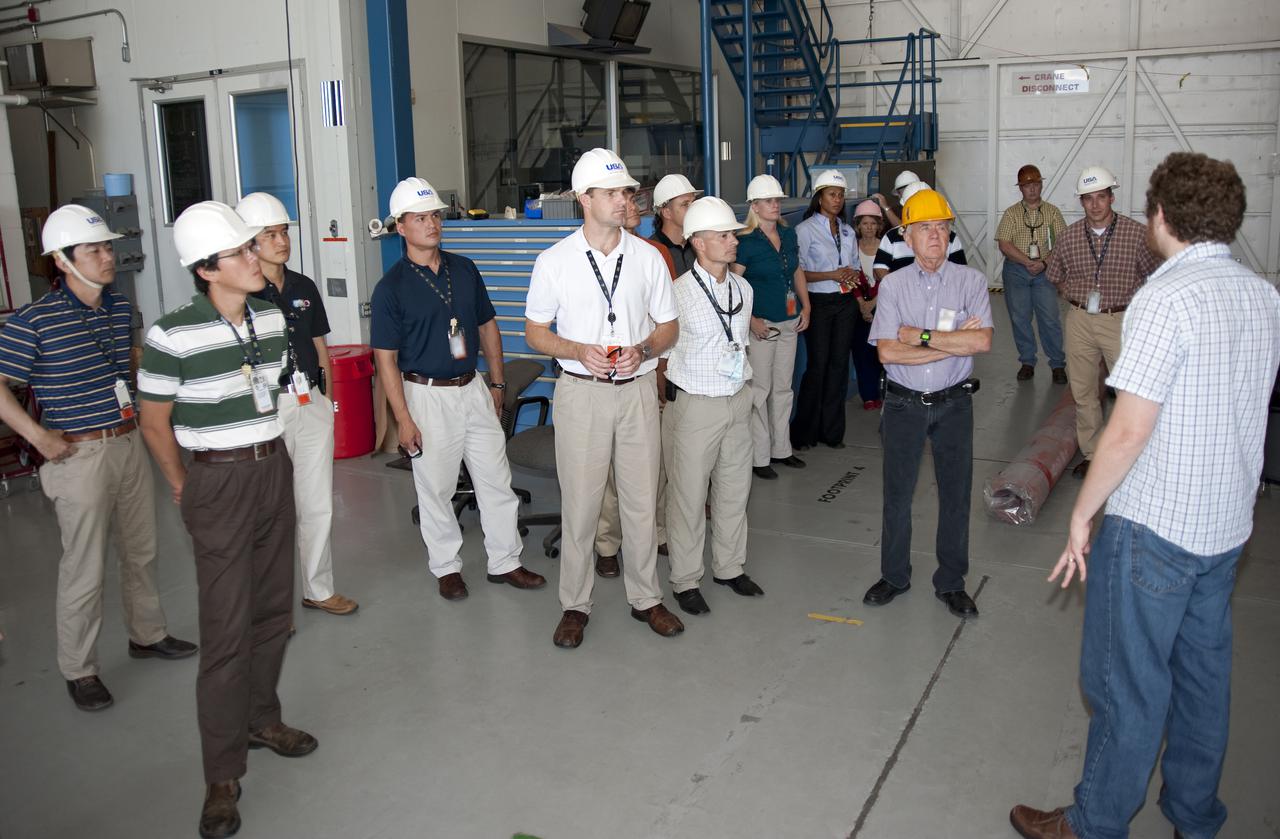
CAPE CANAVERAL, Fla. --- At NASA's Kennedy Space Center in Florida, the Class of 2009 Astronaut Candidates, also called ASCANs, tour the Launch Equipment Test Facility, where prototype ground support equipment is tested. The new astronaut candidates for NASA are Serena M. Aunon, Jeanette J. Epps, Air Force Maj. Jack D. Fischer, Air Force Lt. Col. Michael S. Hopkins, Kjell N. Lindgren, Kathleen 'Kate' Rubins, Navy Cmdr. Scott D. Tingle, Army Lt. Col. Mark T. Vande, and Navy Lt. Cmdr. Gregory R. 'Reid' Wiseman. The new astronaut candidates for the Japan Aerospace Exploration Agency, or JAXA, are Norishige Kanai, Takuya Onishi and Kimiya Yui. The new astronaut candidates for the Canadian Space Agency, or CSA, are Jeremy Hansen and David Saint-Jacques. Photo Credit: NASA_Kim Shiflett

CAPE CANAVERAL, Fla. --- At NASA's Kennedy Space Center in Florida, the Class of 2009 Astronaut Candidates, also called ASCANs, take a picture in a high bay of the Vehicle Assembly Building. From left, are NASA's Jeanette J. Epps, Kathleen 'Kate' Rubins, Army Lt. Col. Mark T. Vande, Kjell N. Lindgren and Navy Lt. Cmdr. Gregory R. 'Reid' Wiseman, CSA's David Saint-Jacques, NASA's Air Force Lt. Col. Michael S. Hopkins and Air Force Maj. Jack D. Fischer, JAXA's Kimiya Yui and Takuya Onishi, NASA's Serena M. Aunon, CSA's Jeremy Hansen, NASA's Navy Cmdr. Scott D. Tingle, and JAXA's Norishige Kanai.
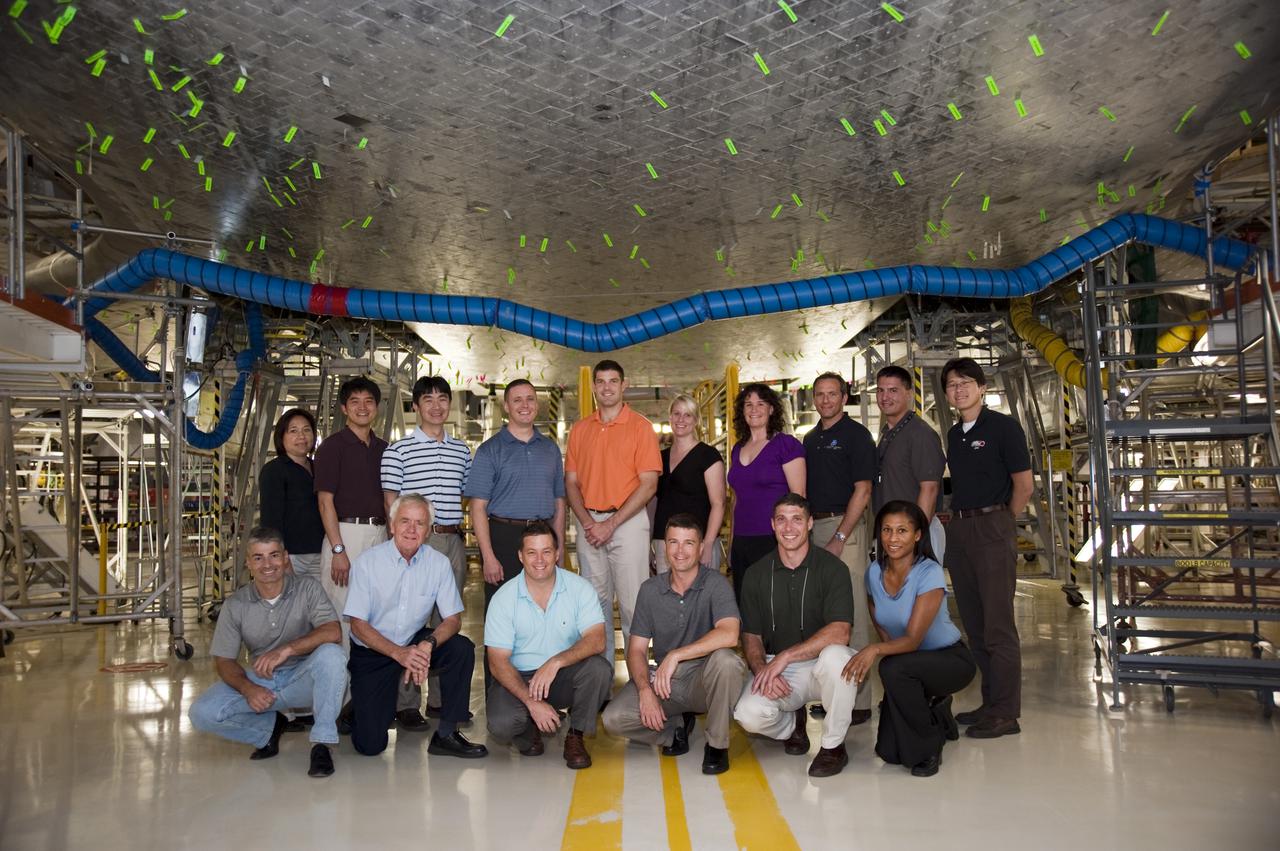
CAPE CANAVERAL, Fla. --- At NASA's Kennedy Space Center in Florida, the Class of 2009 Astronaut Candidates, also called ASCANs, take a picture under space shuttle Atlantis in Orbiter Processing Facility-1. Standing, from left, are Astronaut Office Training Specialist Debbie Trainor, JAXA's Takuya Onishi and Kimiya Yui, NASA's Air Force Maj. Jack D. Fischer, CSA's Jeremy Hansen, NASA's Kathleen 'Kate' Rubins and Serena M. Aunon, CSA's David Saint-Jacques, NASA's Kjell N. Lindgren, and JAXA's Norishige Kanai. Kneeling, from left, are NASA's Army Lt. Col. Mark T. Vande, Chief of the Astronaut Candidate Program Duane Ross, Navy Cmdr. Scott D. Tingle, Navy Lt. Cmdr. Gregory R. 'Reid' Wiseman, Air Force Lt. Col. Michael S. Hopkins, and Jeanette J. Epps. Photo Credit: NASA_Kim Shiflett
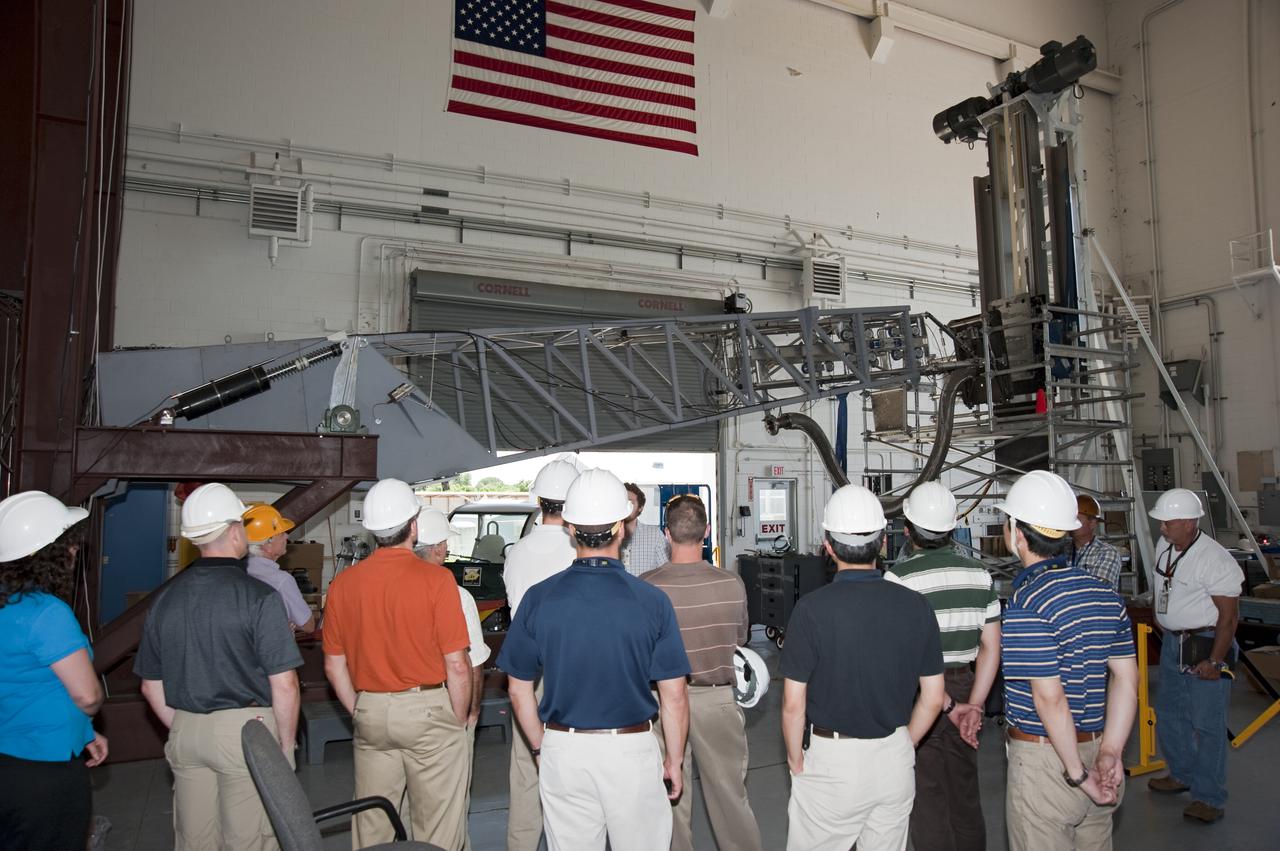
CAPE CANAVERAL, Fla. --- At NASA's Kennedy Space Center in Florida, the Class of 2009 Astronaut Candidates, also called ASCANs, tour the Launch Equipment Test Facility, where prototype ground support equipment is tested. The new astronaut candidates for NASA are Serena M. Aunon, Jeanette J. Epps, Air Force Maj. Jack D. Fischer, Air Force Lt. Col. Michael S. Hopkins, Kjell N. Lindgren, Kathleen 'Kate' Rubins, Navy Cmdr. Scott D. Tingle, Army Lt. Col. Mark T. Vande, and Navy Lt. Cmdr. Gregory R. 'Reid' Wiseman. The new astronaut candidates for the Japan Aerospace Exploration Agency, or JAXA, are Norishige Kanai, Takuya Onishi and Kimiya Yui. The new astronaut candidates for the Canadian Space Agency, or CSA, are Jeremy Hansen and David Saint-Jacques. Photo Credit: NASA_Kim Shiflett
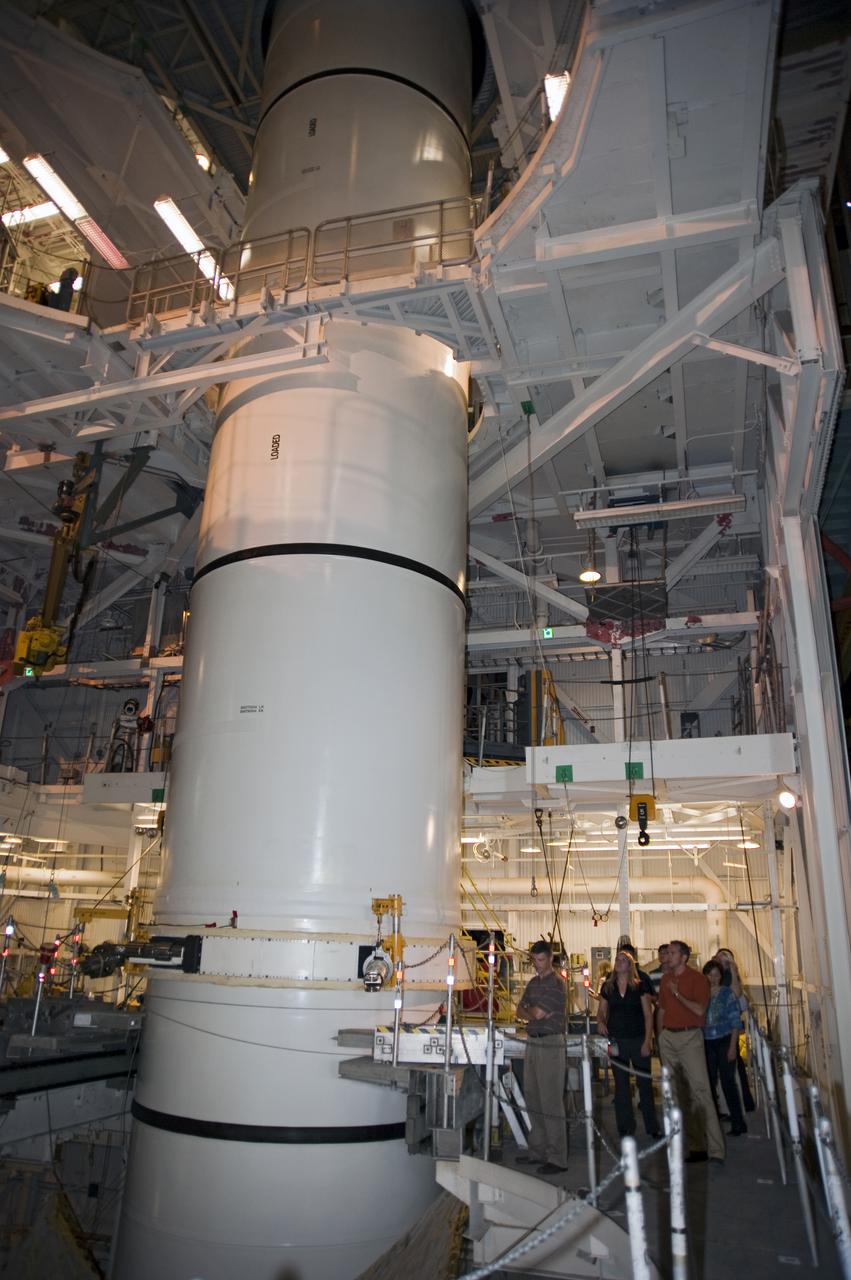
CAPE CANAVERAL, Fla. -- At NASA's Kennedy Space Center in Florida, the Class of 2009 Astronaut Candidates, also called ASCANs, tour the Vehicle Assembly Building. The new astronaut candidates for NASA are Serena M. Aunon, Jeanette J. Epps, Air Force Maj. Jack D. Fischer, Air Force Lt. Col. Michael S. Hopkins, Kjell N. Lindgren, Kathleen 'Kate' Rubins, Navy Cmdr. Scott D. Tingle, Army Lt. Col. Mark T. Vande, and Navy Lt. Cmdr. Gregory R. 'Reid' Wiseman. The new astronaut candidates for the Japan Aerospace Exploration Agency, or JAXA, are Norishige Kanai, Takuya Onishi and Kimiya Yui. The new astronaut candidates for the Canadian Space Agency, or CSA, are Jeremy Hansen and David Saint-Jacques. Photo Credit: NASA_Kim Shiflett
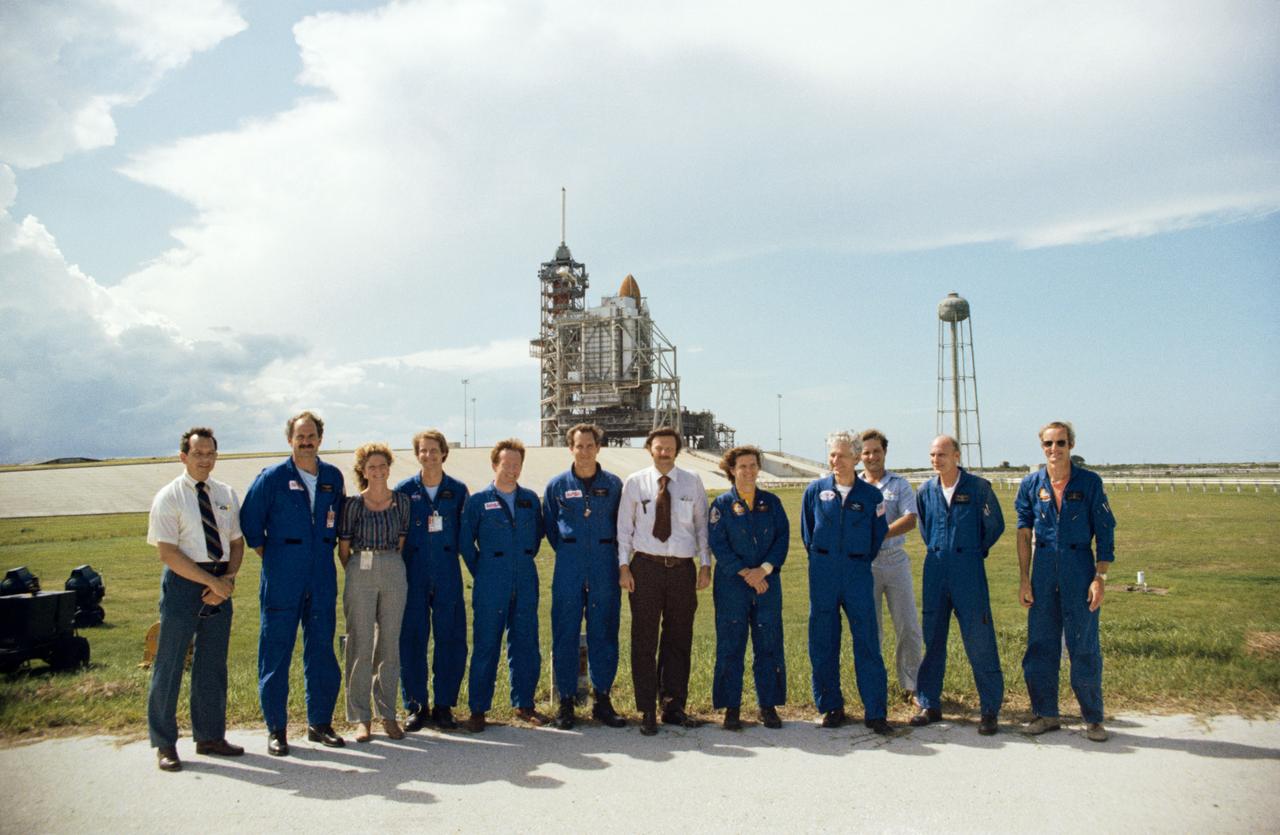
S82-32200 (29 May 1982) --- Members of the JSC astronaut corps, STS-4 vehicle integration test team (VITT) and other personnel pose for a photograph at the completion of a countdown demonstration test (CDDT) at Launch Pad 39A, Kennedy Space Center (KSC). The participants are, from the left, Wilbur J. Etbauer, engineer with the VITT; mission specialist-astronaut James D. van Hoften; Terry Stanford, engineer from JSC's flight operations directorate; mission specialist-astronaut Steven A. Hawley; astronaut Richard N. Richards; astronaut Michael J. Smith; Richard W. Nygren, head of the VITT; mission specialist-astronaut Kathryn D. Sullivan; astronaut Henry W. Hartsfield Jr.,STS-4 pilot; Mary Haynes, a co-op student participating with the VITT; astronaut Thomas K. Mattingly II, STS-4 commander; and astronaut Donald E. Williams. Photo credit: NASA
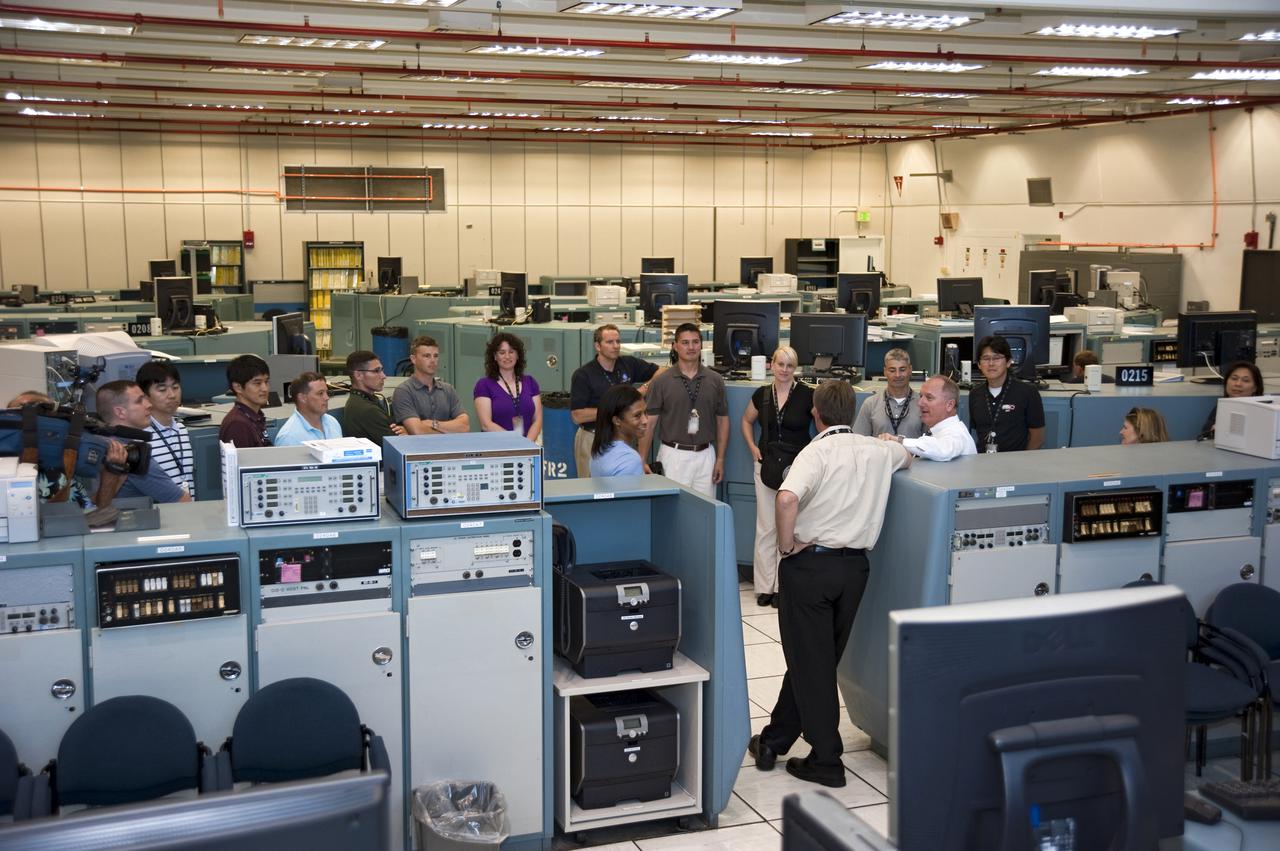
CAPE CANAVERAL, Fla. --- At NASA's Kennedy Space Center in Florida, the Class of 2009 Astronaut Candidates, also called ASCANs, tour Firing Room 2 of the Launch Control Center. It takes about 200 launch team members monitoring critical operations and components to launch a space shuttle. The new astronaut candidates for NASA are Serena M. Aunon, Jeanette J. Epps, Air Force Maj. Jack D. Fischer, Air Force Lt. Col. Michael S. Hopkins, Kjell N. Lindgren, Kathleen 'Kate' Rubins, Navy Cmdr. Scott D. Tingle, Army Lt. Col. Mark T. Vande, and Navy Lt. Cmdr. Gregory R. 'Reid' Wiseman. The new astronaut candidates for the Japan Aerospace Exploration Agency, or JAXA, are Norishige Kanai, Takuya Onishi and Kimiya Yui. The new astronaut candidates for the Canadian Space Agency, or CSA, are Jeremy Hansen and David Saint-Jacques. Photo Credit: NASA_Kim Shiflett
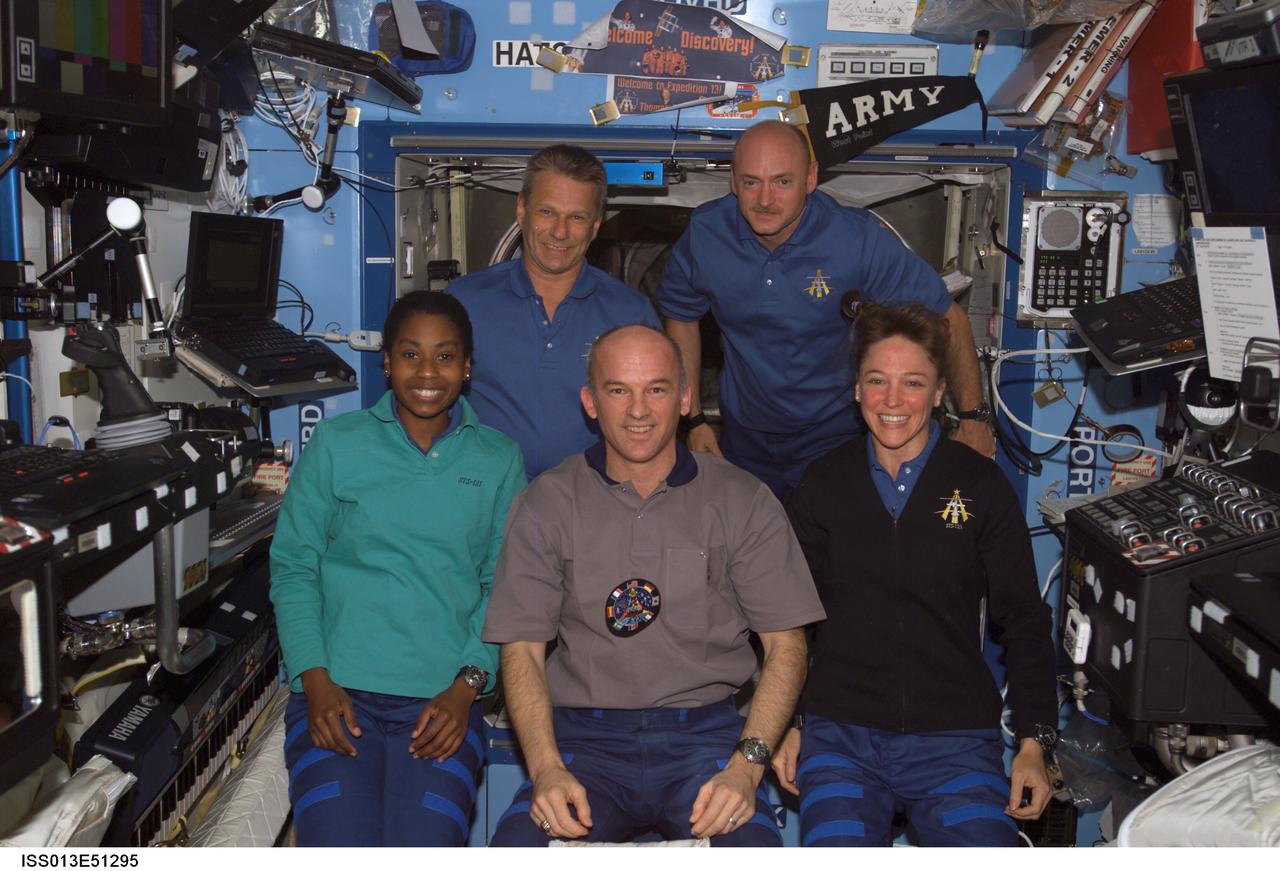
ISS013-E-51295 (14 July 2006) --- Crewmembers onboard the International Space Station gather for a photo in the Destiny laboratory while Space Shuttle Discovery was docked with the station. From the left (front) are astronauts Stephanie D. Wilson, STS-121 mission specialist; Jeffrey N. Williams, Expedition 13 NASA space station science officer and flight engineer; and Lisa M. Nowak, STS-121 mission specialist. From the left (back) are astronauts Piers J. Sellers and Mark E. Kelly, STS-121 mission specialist and pilot, respectively.
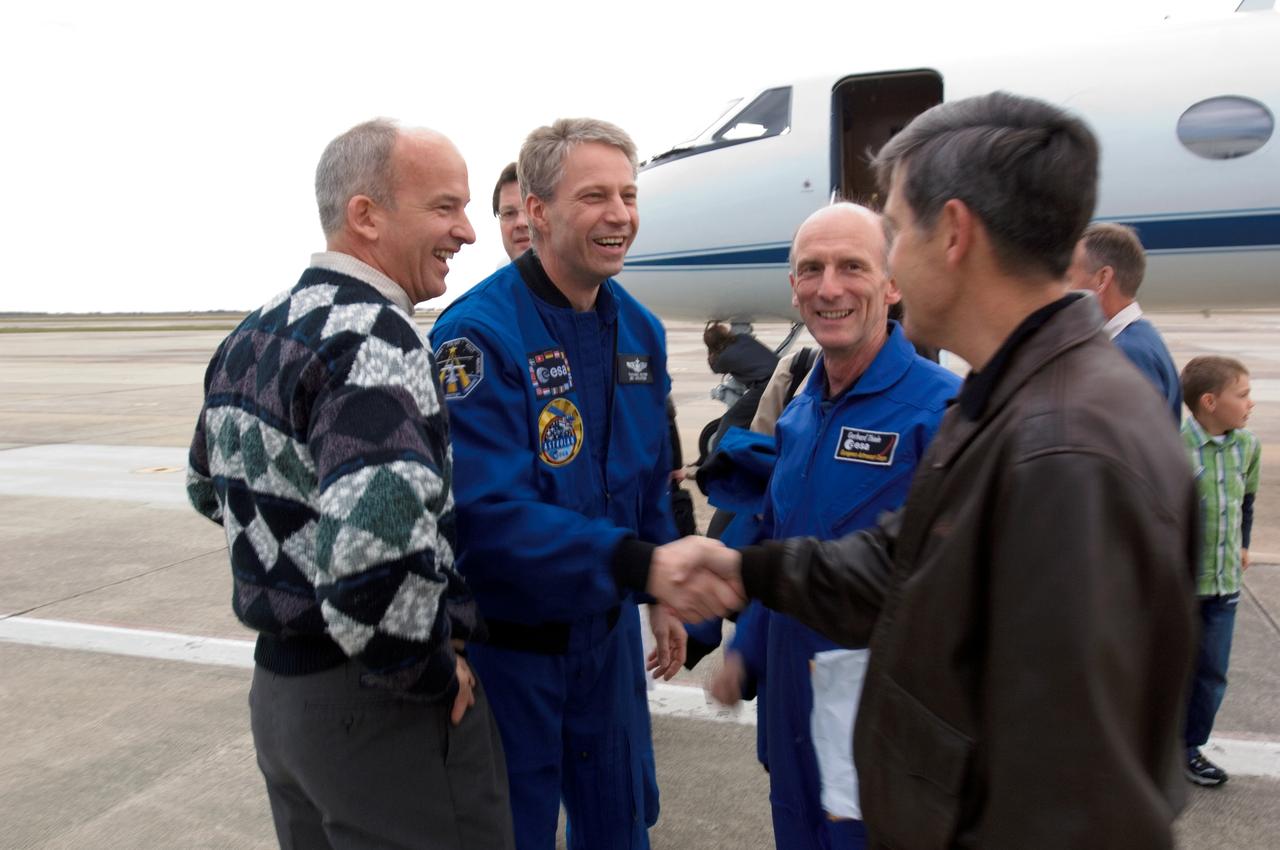
JSC2006-E-54836 (23 Dec. 2006) --- In this scene at Ellington Field, European Space Agency astronaut Thomas Reiter (second left, foreground) shakes hands with JSC deputy director Robert D. Cabana. Reiter had just arrived from Florida, along with the STS-116 crew. He completed half a year aboard the International Space Station before departing the station with the STS-116 astronauts, who landed at the Kennedy Space Center on Dec. 22. Part of Reiter's time onboard the orbital outpost was spent with astronaut Jeffrey N. Williams, left, Expedition 13 flight engineer and NASA station science officer. ESA astronaut Gerhard Thiele is also pictured.
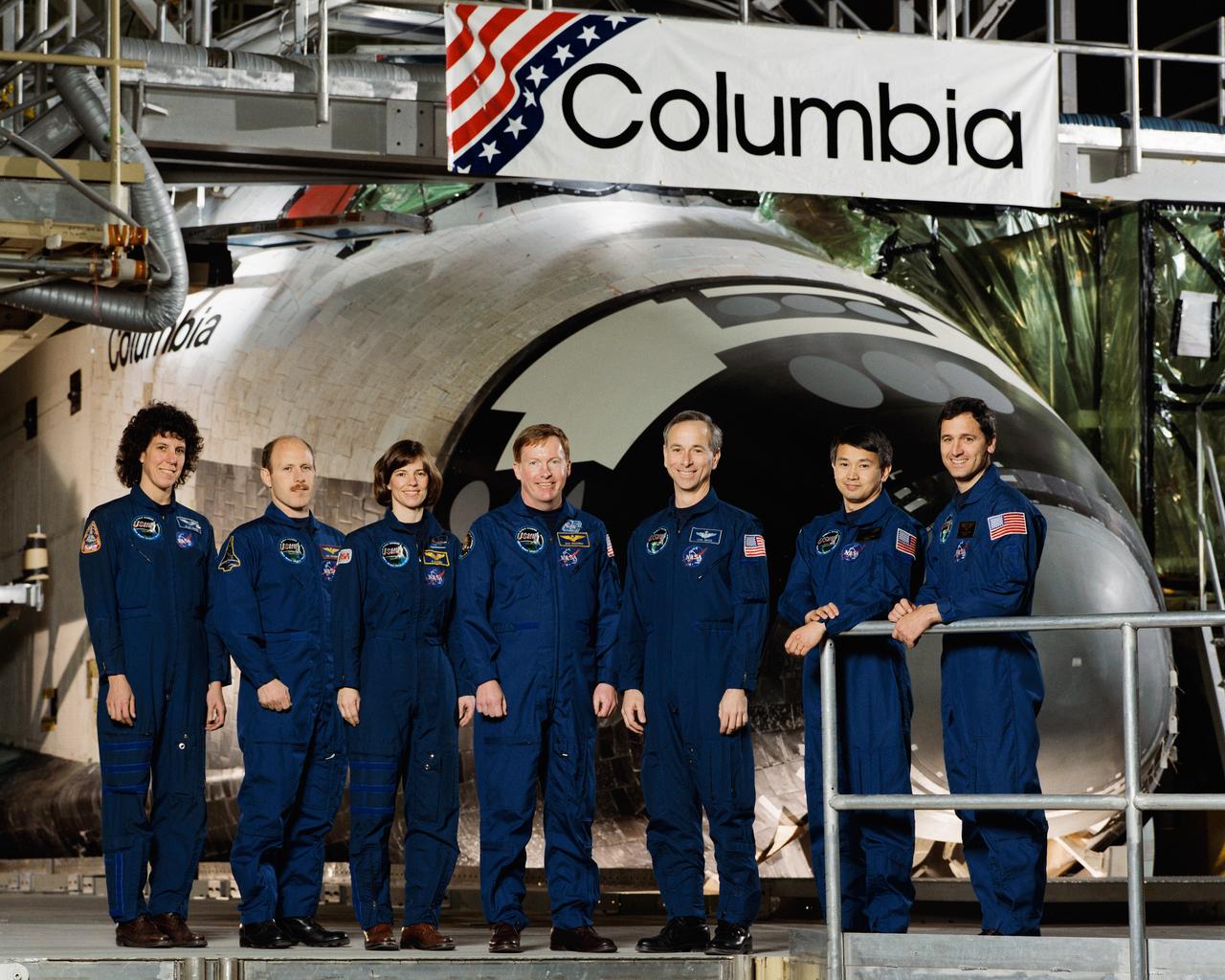
STS050-S-002 (24 Jan. 1992) --- The seven crew members assigned to NASA's mission pose for the traditional crew portrait. The crew was in Palmdale, California for the Space Shuttle Columbia's Extended-Duration Orbiter (EDO) modifications roll-out. Astronaut Richard N. Richards, mission commander, is center. Astronaut Kenneth D. Bowersox, pilot, is second from left. Others, left to right, are astronauts Ellen S. Baker, mission specialist; Bonnie J. Dunbar, payload commander; and Carl J. Meade, mission specialist; Eugene H. Trinh and Lawrence J. DeLucas, payload specialists.
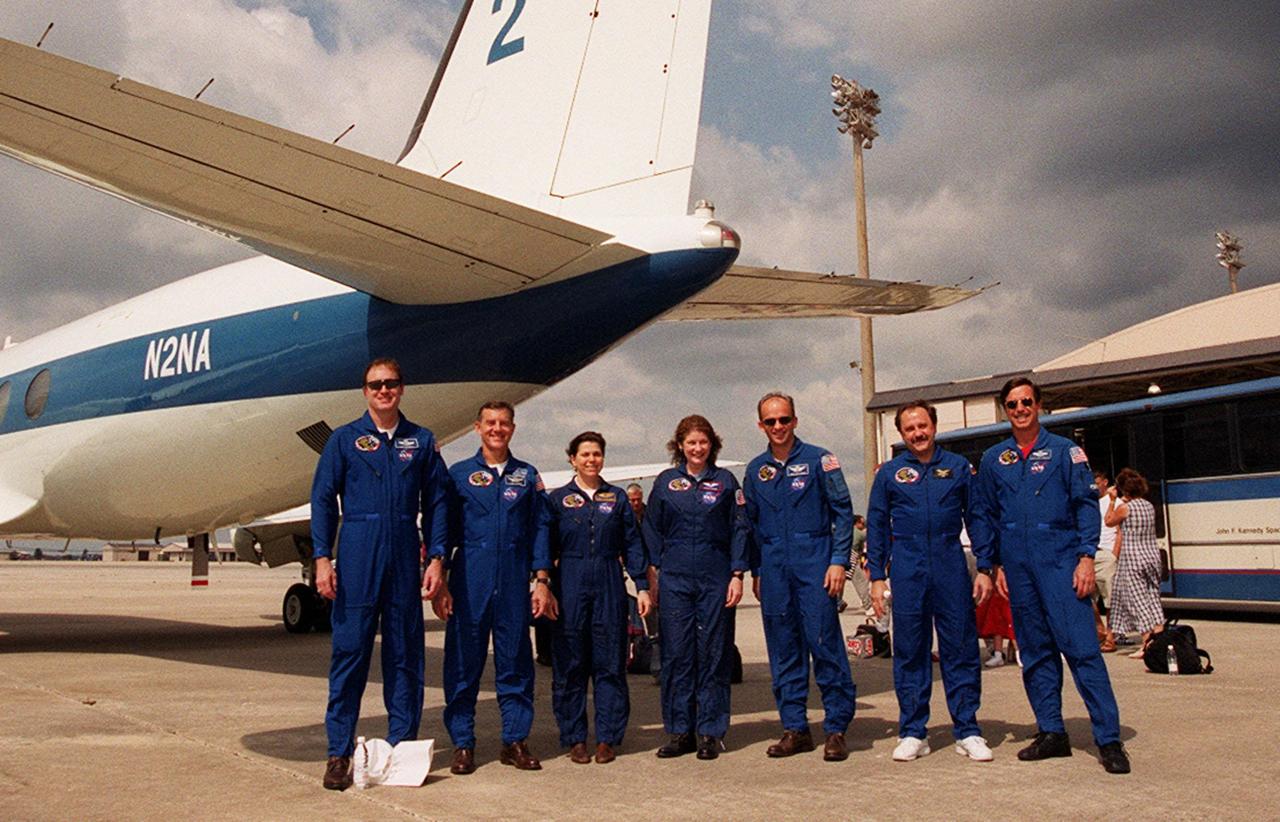
The STS-101 crew pose one more time before departing for Houston from Patrick Air Force Base. From left are Commander James D. Halsell Jr., Mission Specialists James S. Voss, Mary Ellen Weber, Susan J. Helms, Jeffrey N. Williams, Yury Usachev of Russia, and Pilot Scott “Doc” Horowitz. After landing at 2:20 a.m. EDT May 29, the crew and their families enjoyed the Memorial Day holiday in Florida. The crew returned from the third flight to the International Space Station where they made repairs, transferred cargo and completed a space walk to install and connect several pieces of equipment on the outside of the Space Station
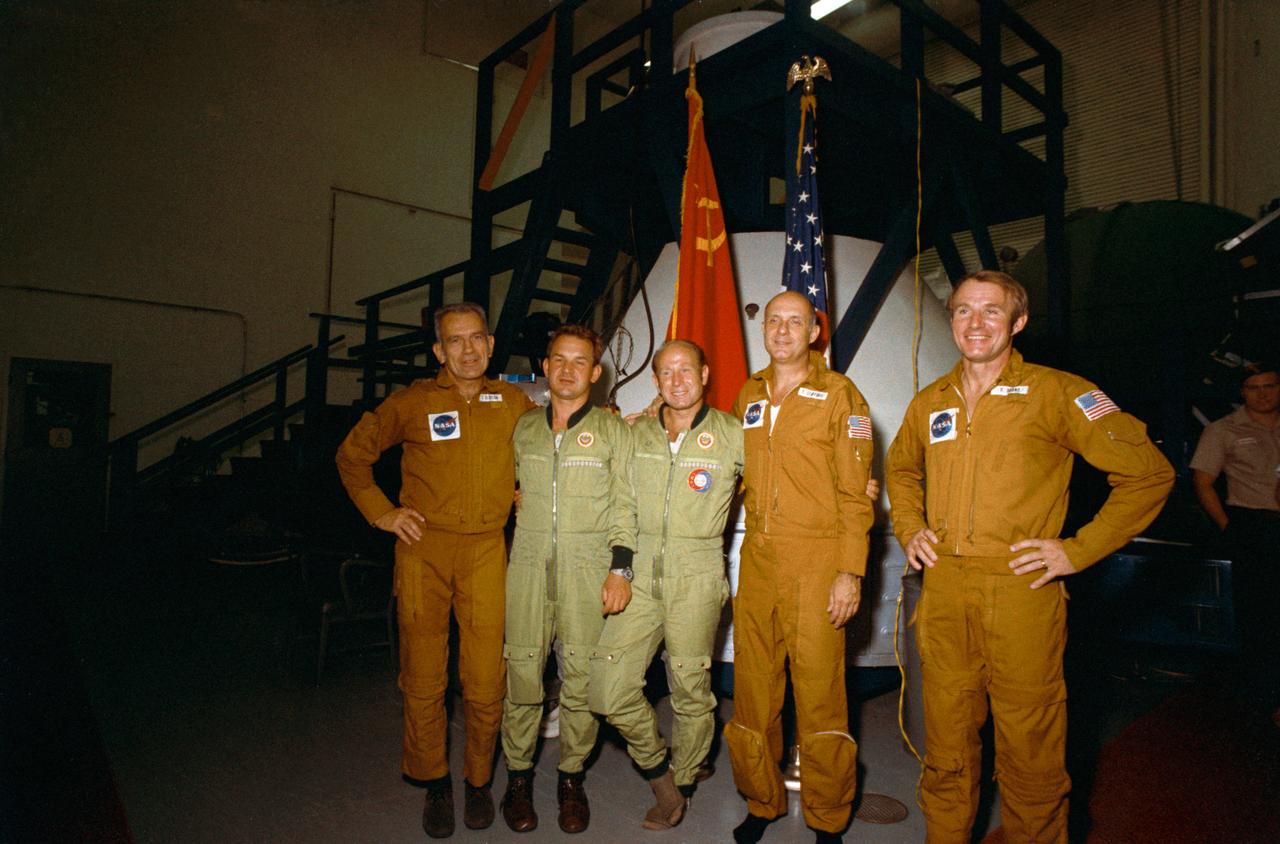
S74-28811 (23 Sept. 1974) --- The five prime crewmen of the joint U.S.-USSR Apollo-Soyuz Test Project mission are photographed in the Flight Crew Training Facility, Building 35, at the Johnson Space Center during ASTP crew training activity. They are, left to right, astronaut Donald K. Slayton, docking module pilot of the American crew; cosmonaut Valeriy N. Kubasov, engineer on the Soviet crew; cosmonaut Aleksey A. Leonov, commander of the Soviet crew; astronaut Thomas P. Stafford, commander of the American crew; and astronaut Vance D. Brand, command module pilot of the American crew.
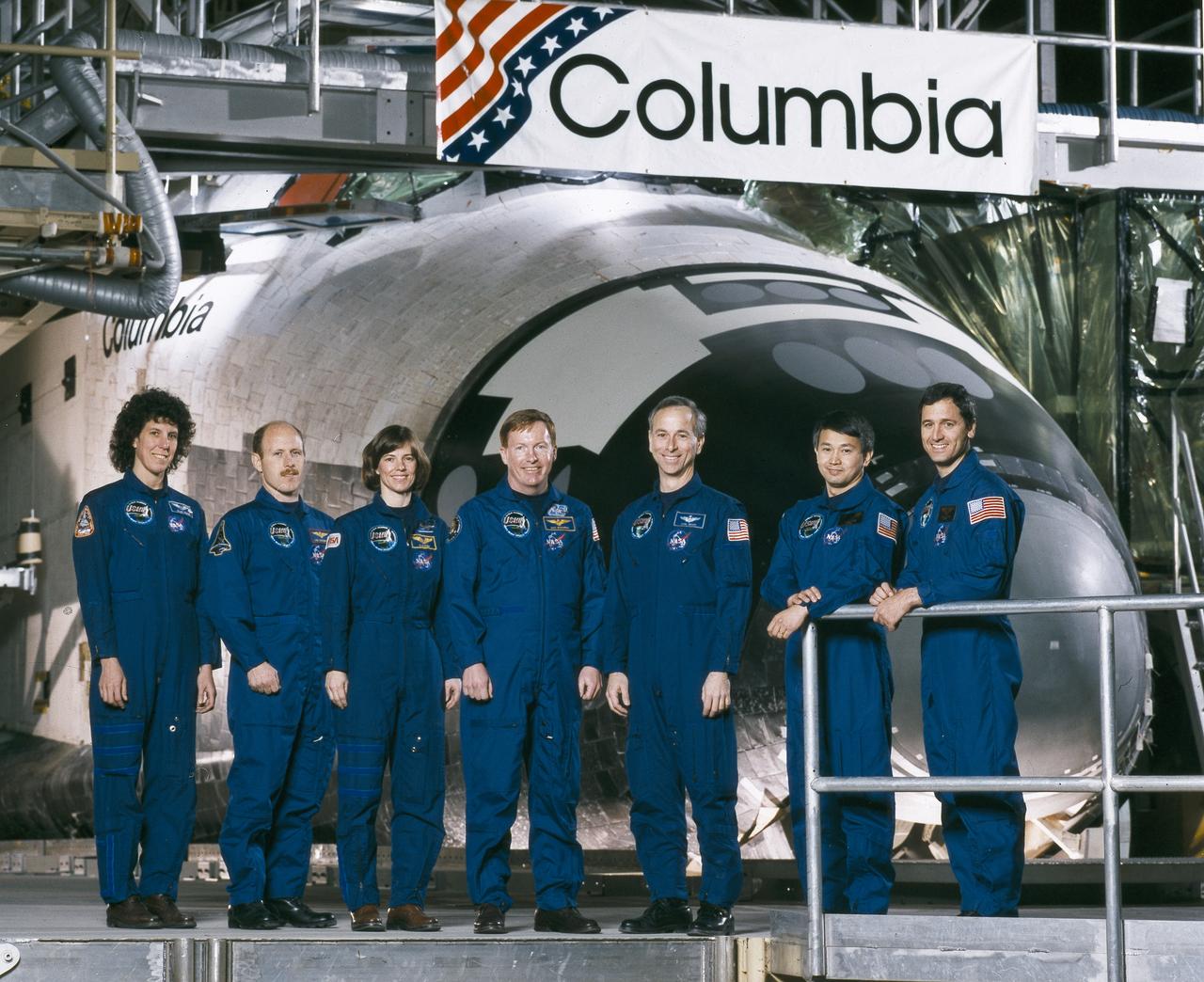
The STS-50 crew portrait includes (from left to right): Ellen S. Baker, mission specialist; Kenneth D. Bowersox, pilot; Bonnie J. Dunbar, payload commander; Richard N. Richards, commander; Carl J. Meade, mission specialist; Eugene H. Trinh, payload specialist; and Lawrence J. DeLucas, payload specialist. Launched aboard the Space Shuttle Columbia on June 25, 1992 at 12:12:23 pm (EDT), the primary payload for the mission was the U.S. Microgravity Laboratory-1 (USML-1) featuring a pressurized Spacelab module.
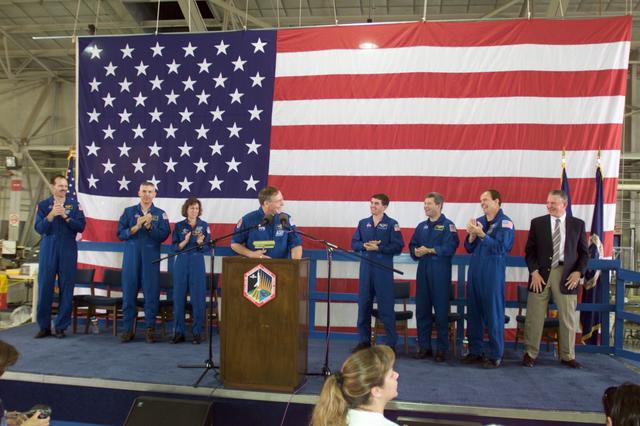
JSC2002-E-14078 (20 April 2002) --- Astronaut Jerry L. Ross, STS-110 mission specialist, speaks from the lectern in Hangar 990 at Ellington Field during the crew return ceremonies. From the left (standing behind Ross) are astronauts Steven L. Smith, Lee M. E. Morin, Ellen Ochoa, Rex J. Walheim, all mission specialists; Stephen N. Frick, pilot; Michael J. Bloomfield, mission commander; and Johnson Space Center’s (JSC) Director Jefferson D. Howell, Jr.

STS122-S-002 (24 April 2007) --- These seven astronauts take a break from training to pose for the STS-122 crew portrait. From the left (front row) are astronauts Stephen N. Frick, commander; European Space Agency's (ESA) Leopold Eyharts; and Alan G. Poindexter, pilot. From the left (back row) are astronauts Leland D. Melvin, Rex J. Walheim, Stanley G. Love and European Space Agency's (ESA) Hans Schlegel, all mission specialists. Eyharts will join Expedition 16 in progress to serve as a flight engineer aboard the International Space Station. The crewmembers are attired in training versions of their shuttle launch and entry suits.
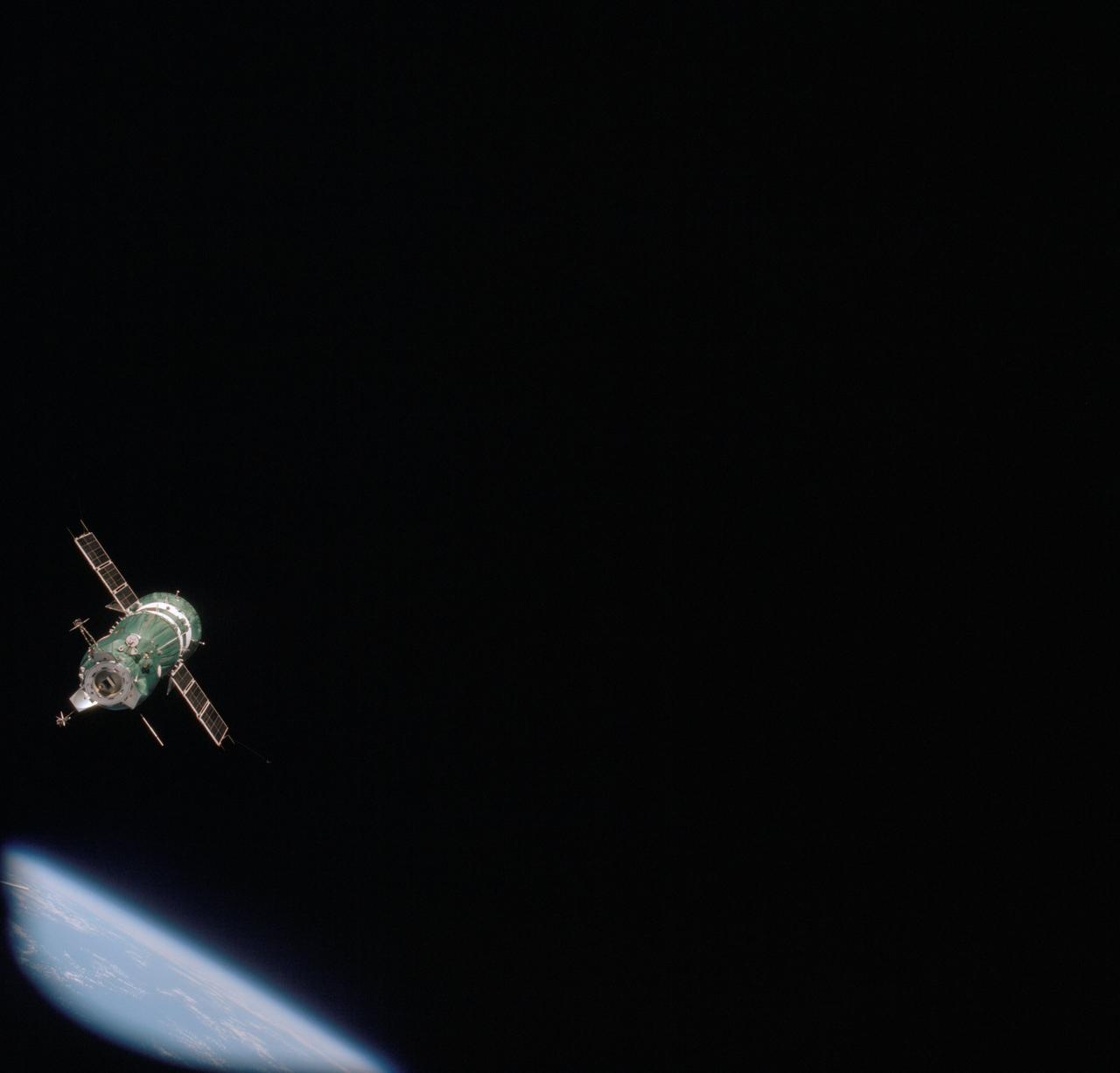
AST-09-572 (17-18 July 1975) --- The Soviet Soyuz 19 spacecraft is photographed from the American Apollo spacecraft during the joint U.S.-USSR Apollo-Soyuz Test Project (ASTP) docking mission in Earth orbit. Earth is visible in the lower left corner. This picture was taken with a 70mm camera. The Apollo crew consisted of astronauts Thomas P. Stafford, commander; Donald K. "Deke" Slayton, docking module pilot; and Vance D. Brand, command module pilot. The Soyuz 19 crew consisted of cosmonauts Aleksei A. Leonov, command pilot; and Valeri N. Kubasov, flight engineer.
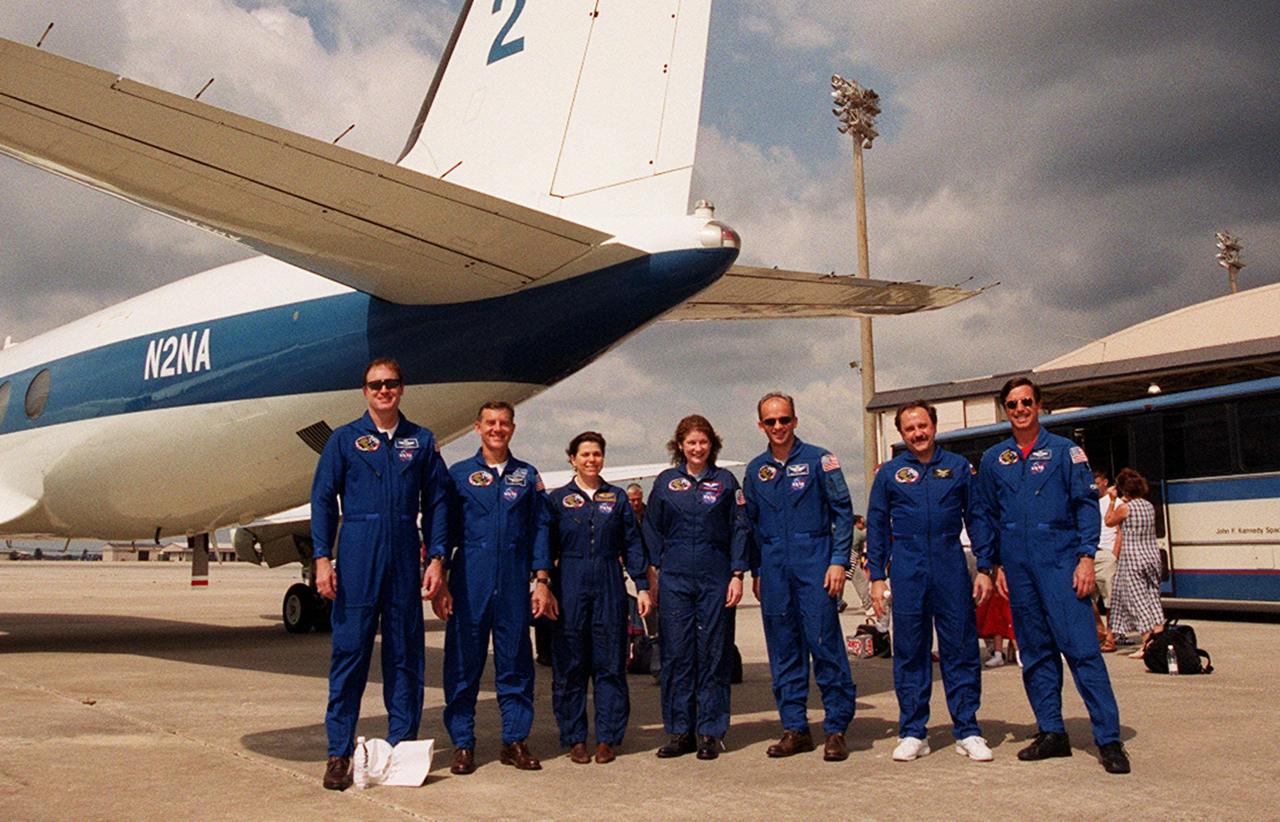
The STS-101 crew pose one more time before departing for Houston from Patrick Air Force Base. From left are Commander James D. Halsell Jr., Mission Specialists James S. Voss, Mary Ellen Weber, Susan J. Helms, Jeffrey N. Williams, Yury Usachev of Russia, and Pilot Scott “Doc” Horowitz. After landing at 2:20 a.m. EDT May 29, the crew and their families enjoyed the Memorial Day holiday in Florida. The crew returned from the third flight to the International Space Station where they made repairs, transferred cargo and completed a space walk to install and connect several pieces of equipment on the outside of the Space Station
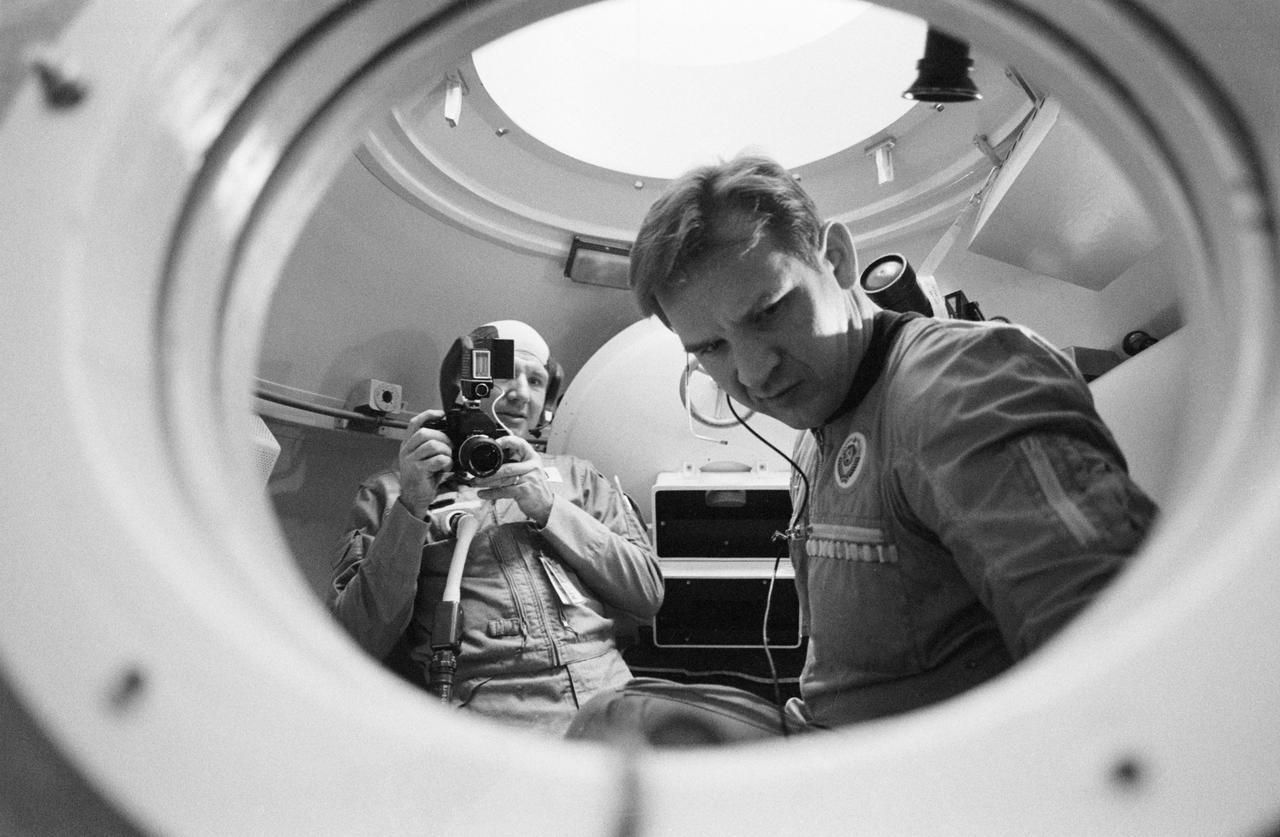
S75-21627 (13 Feb. 1975) --- Two crewmen of the joint U.S.-USSR Apollo-Soyuz Test Project mission participate in ASTP training in Building 35 at the Johnson Space Center. They are astronaut Vance D. Brand (left), command module pilot of the American ASTP prime crew; and cosmonaut Valeriy N. Kubasov, engineer on the Soviet ASTP first (prime) crew. They are in the Soyuz spacecraft orbital module mock-up. Brand and Kubasov are going through a walk-through simulation of the second day of activities in Earth orbit. Brand takes some pictures.
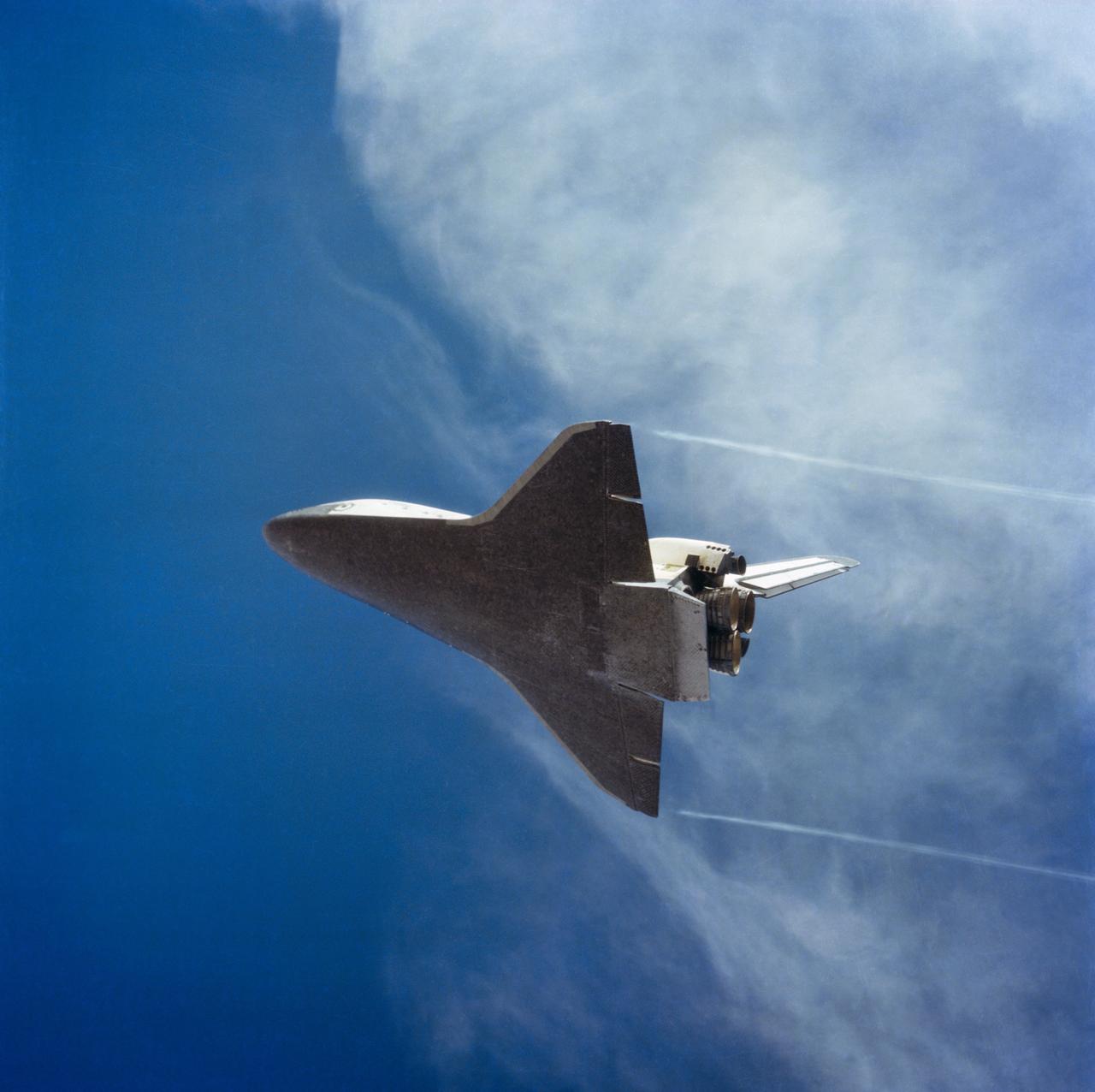
S81-39563 (14 Nov. 1981) --- This view of the space shuttle Columbia (STS-2) was made with a hand-held 70mm camera in the rear station of the T-38 chase plane. Mission specialist/astronaut Kathryn D. Sullivan exposed the frame as astronauts Joe N. Engle and Richard H. Truly aboard the Columbia guided the vehicle to an unpowered but smooth landing on the desert area of Edwards Air Force base in California. The view provides a good study of the high temperature protection material on the underside of the spacecraft which is exposed to the friction on the atmospheric entry on the return to Earth. Also note trails from the wing tips. Photo credit: NASA
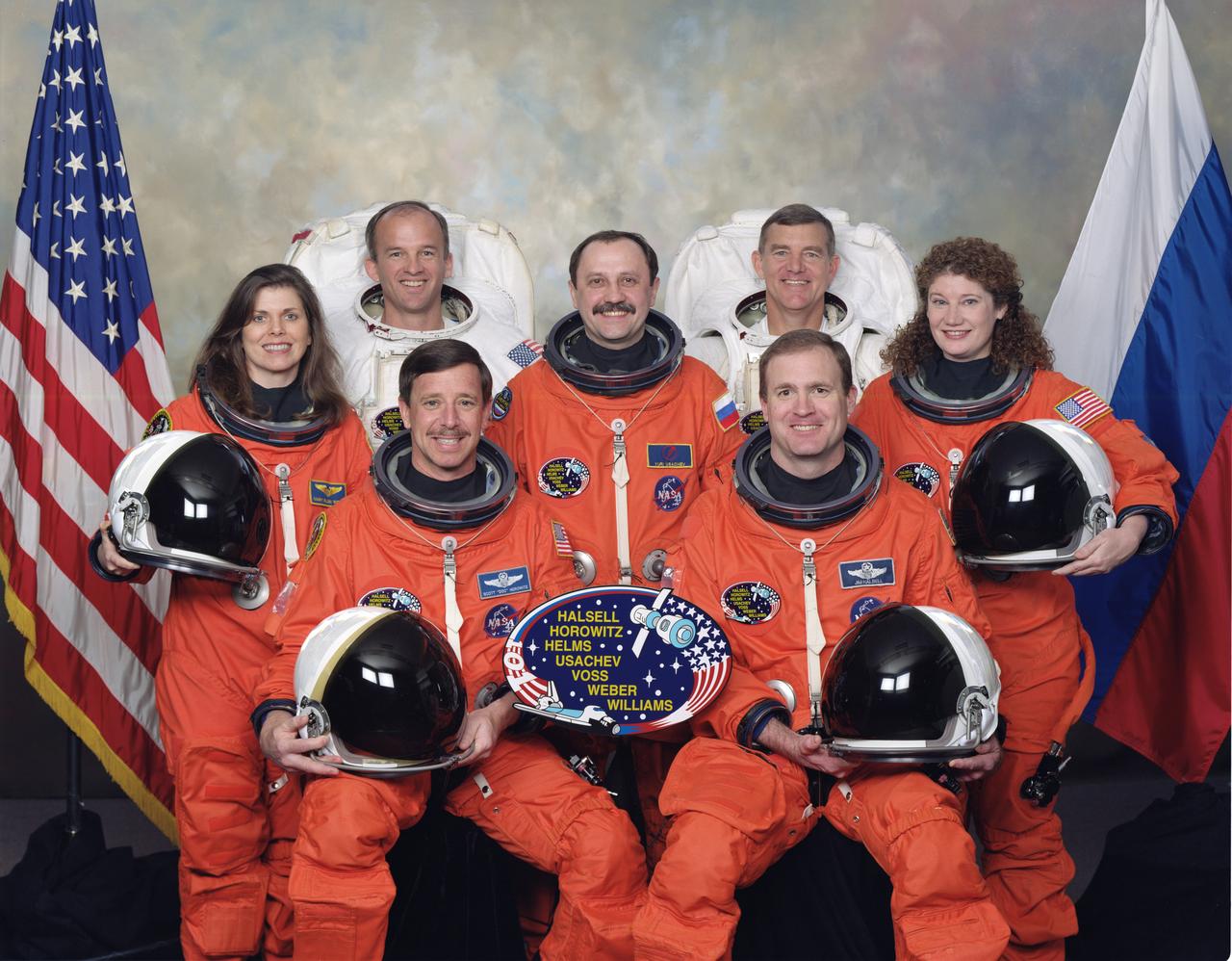
Six astronauts and a Russian cosmonaut comprised the STS-101 mission that launched aboard the Space Shuttle Atlantis on May 19, 2000 at 5:11 am (CDT). Seated in front are astronauts James D. Halsell (right), mission commander; and Scott J. Horowitz, pilot. Others, from the left, are Mary Ellen Weber, Jeffrey N. Williams, Yury V. Usachev, James S. Voss and Susan J. Helms, all mission specialists. Usachev represents the Russian Space Agency (RSA). The crew of the STS- 101 mission refurbished and replaced components in both the Zarya and Unity modules, with top priority being the Zarya module.
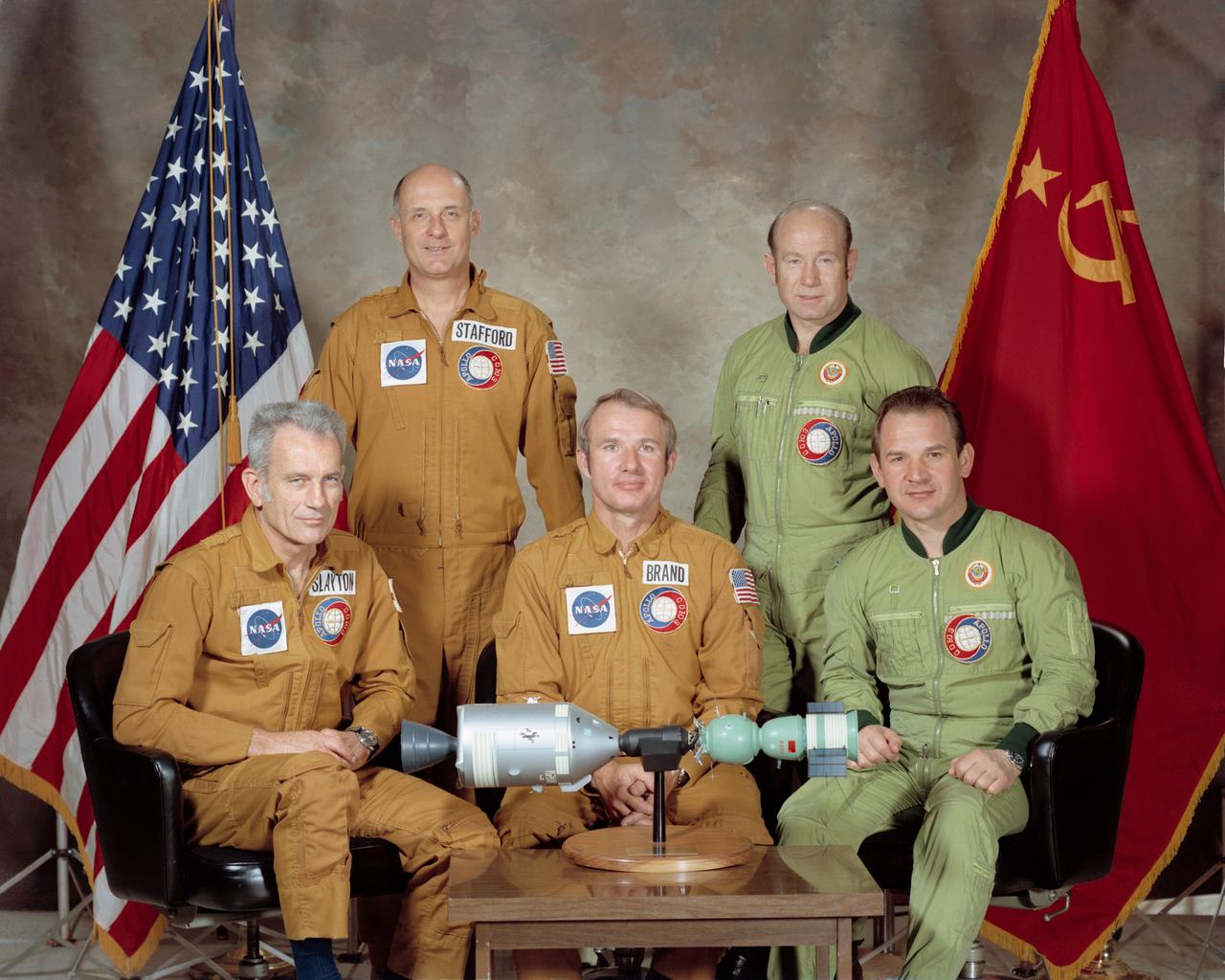
S75-22410 (March 1975) --- These five men compose the two prime crews of the joint United States-USSR Apollo-Soyuz Test Project (ASTP) docking mission in Earth orbit scheduled for July 1975. They are astronaut Thomas P. Stafford (standing on left), commander of the American crew; cosmonaut Aleksey A. Leonov (standing on right), commander of the Soviet crew; astronaut Donald K. Slayton (seated on left), docking module pilot of the American crew; astronaut Vance D. Brand (seated center), command module pilot of the American crew; and cosmonaut Valeriy N. Kubasov (seated on right), engineer on the Soviet crew.
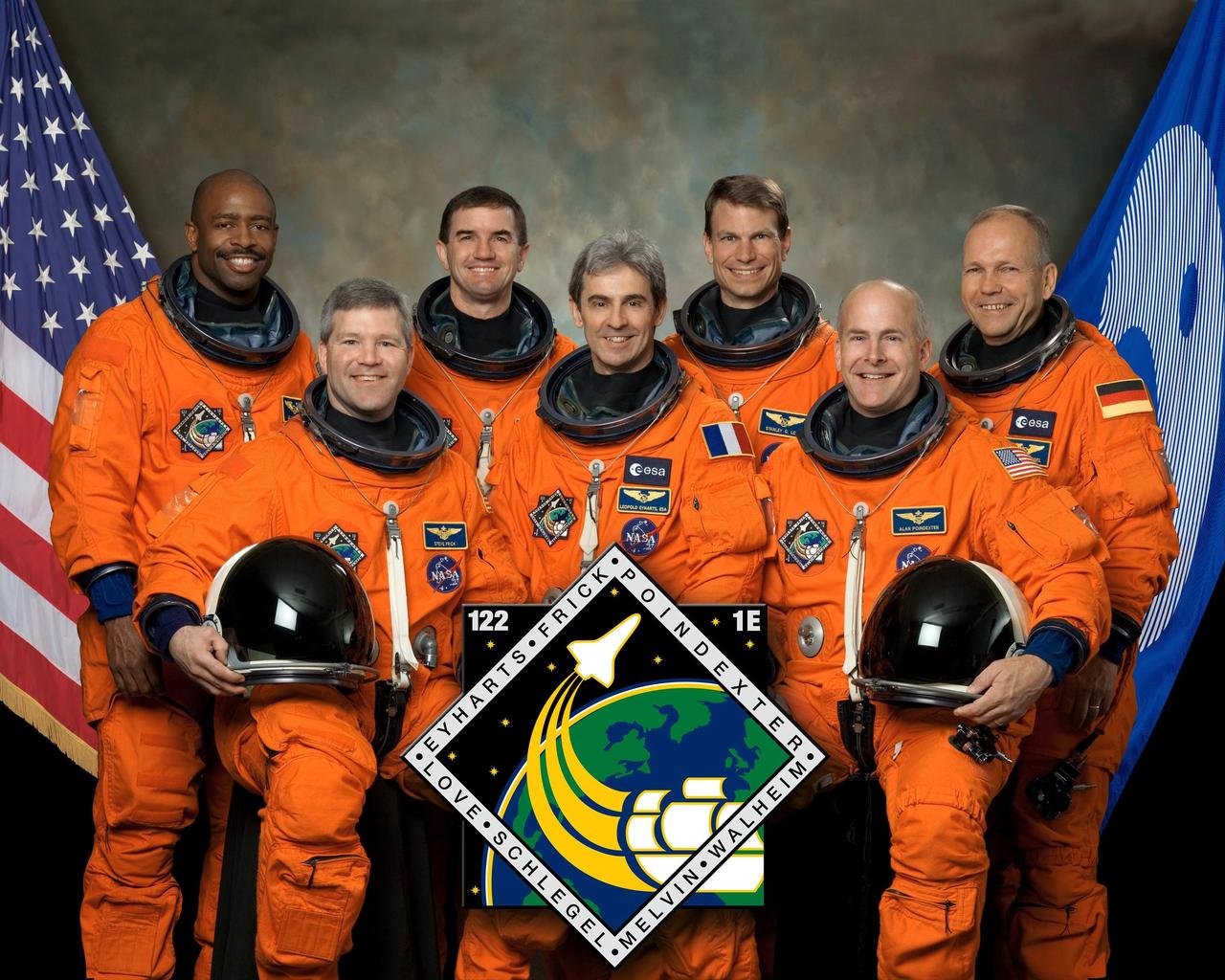
KENNEDY SPACE CENTER, FLA. -- STS122-S-002 -- These seven astronauts take a break from training to pose for the STS-122 crew portrait. From the left (front row) are astronauts Stephen N. Frick, commander; the European Space Agency's, or ESA's, Leopold Eyharts; and Alan G. Poindexter, pilot. From the left (back row) are astronauts Leland D. Melvin, Rex J. Walheim, Stanley G. Love and ESA's Hans Schlegel, all mission specialists. Eyharts will join Expedition 16 in progress to serve as a flight engineer aboard the International Space Station. The crewmembers are attired in training versions of their shuttle launch and entry suits.
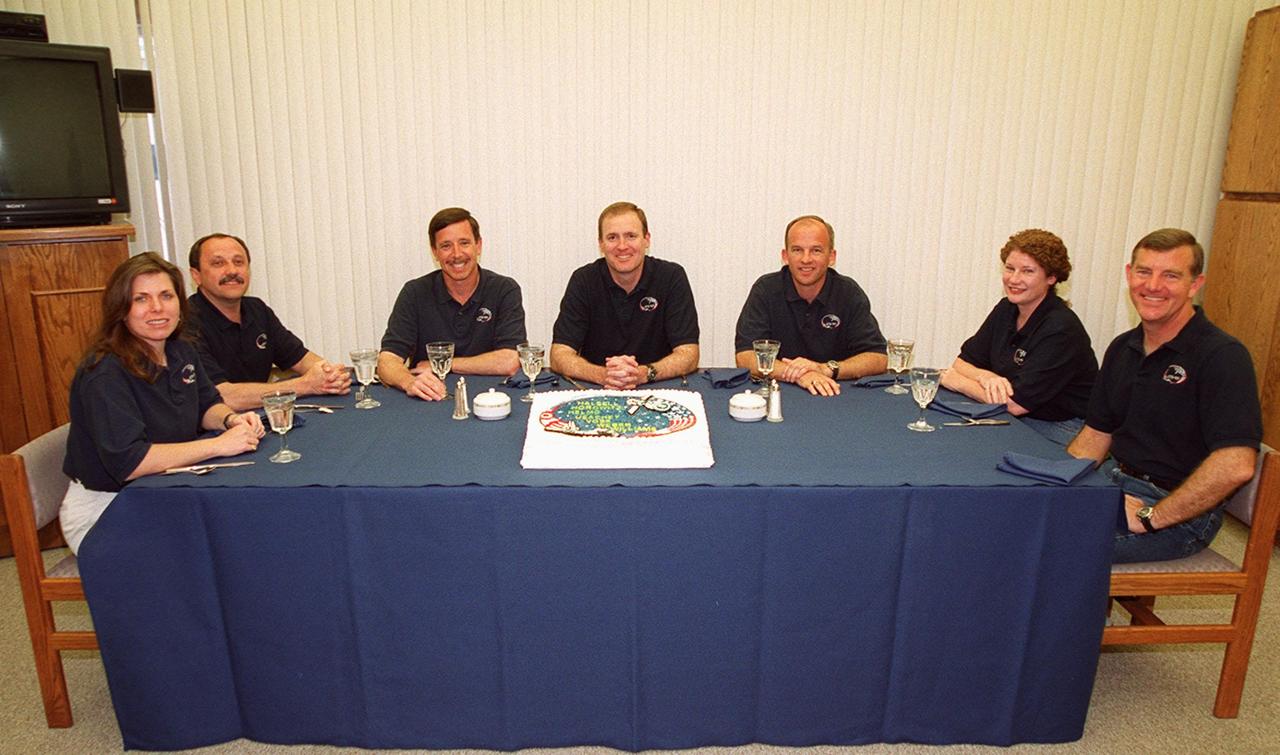
In the Operations and Checkout Building, the STS-101 crew gathers for a snack before suiting up for launch. From left are Mission Specialists Mary Ellen Weber and Yury Usachev of Russia; Pilot Scott J. Horowitz; Commander James D. Halsell Jr.; and Mission Specialists Jeffrey N. Williams, Susan J. Helms and James S. Voss. The mission will take the crew to the International Space Station to deliver logistics and supplies and prepare the Station for the arrival of the Zvezda Service Module, expected to be launched by Russia in July 2000. Also, the crew will conduct one space walk. This will be the third assembly flight to the Space Station
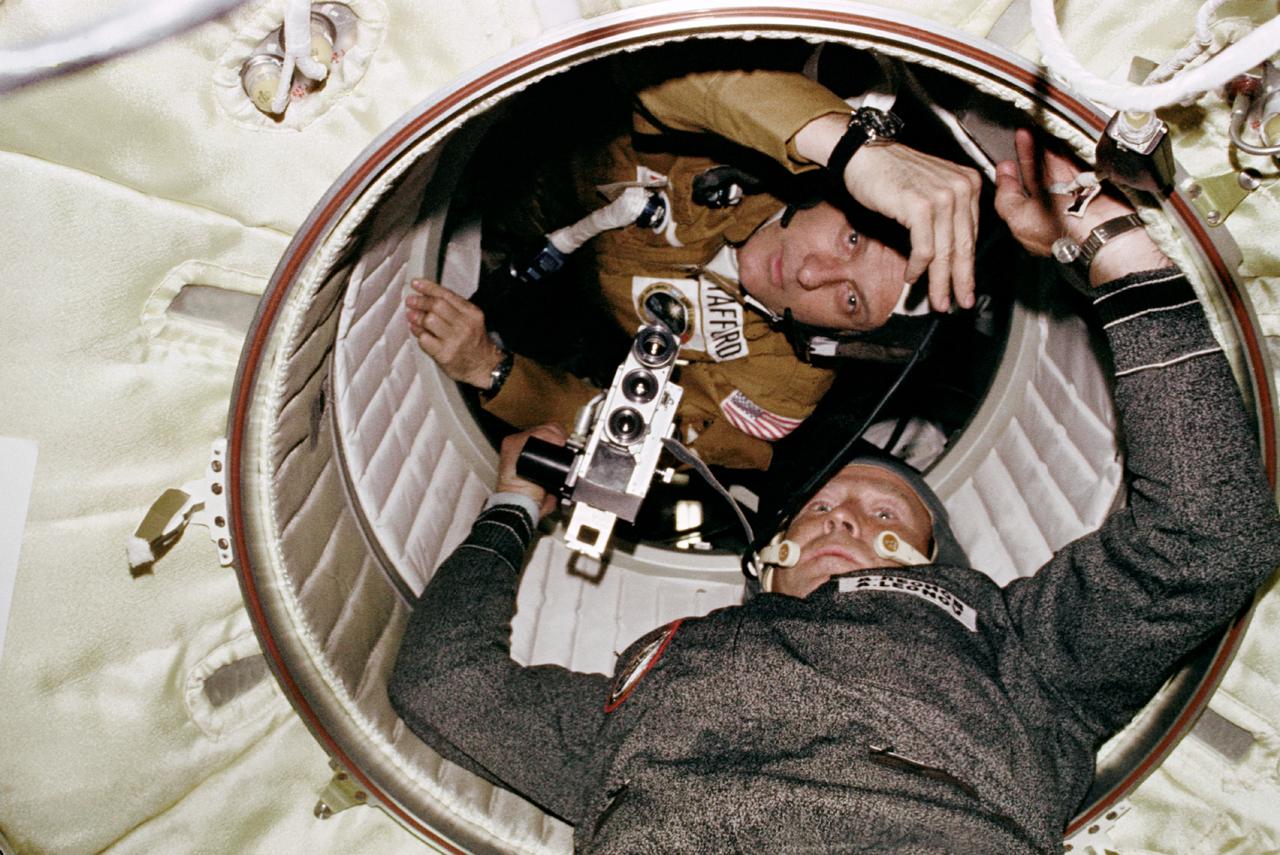
AST-03-191 (17-19 July 1975) --- Astronaut Thomas P. Stafford and cosmonaut Aleksei A. Leonov are seen at the hatchway leading from the Apollo Docking Module (DM) to the Soyuz Orbital Module (OM) during the joint U.S.-USSR Apollo Soyuz Test Project (ASTP) docking mission in Earth orbit. Cosmonaut Leonov is in the OM and astronaut Stafford is in the DM. Leonov holds a camera. The Apollo crew consisted of astronauts Stafford, commander; Donald K. "Deke" Slayton, docking module pilot; Vance D. Brand, command module pilot. The Soyuz 19 crew consisted of cosmonauts Leonov, command pilot; and Valeri N. Kubasov, flight engineer.
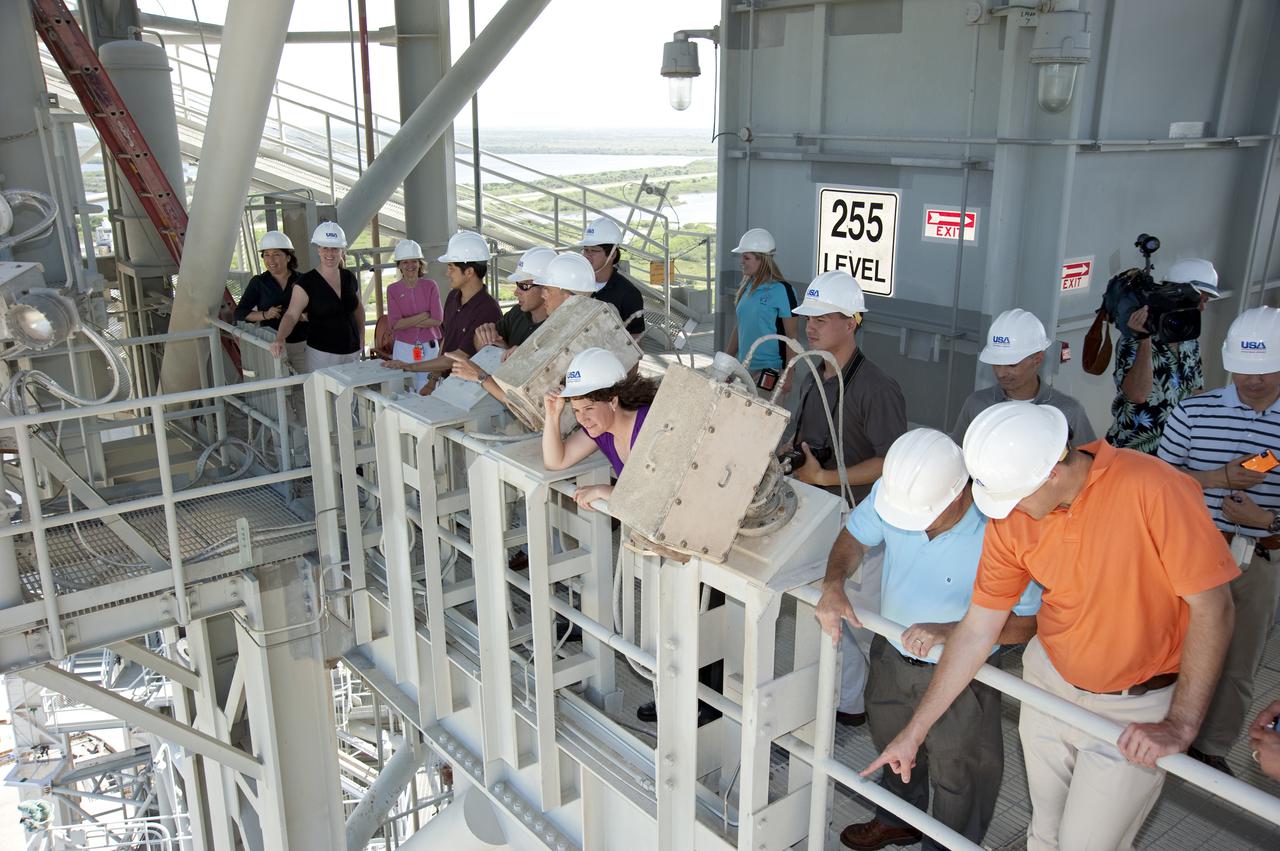
CAPE CANAVERAL, Fla. --- At NASA's Kennedy Space Center in Florida, the Class of 2009 Astronaut Candidates, also called ASCANs, tour Launch Pad 39A. Here, they are at the 255-foot-level, the highest floor of the pad structure. This is where the Final Inspection Team begins its top-to-bottom inspection of a space shuttle and external fuel tank before launch. The new astronaut candidates for NASA are Serena M. Aunon, Jeanette J. Epps, Air Force Maj. Jack D. Fischer, Air Force Lt. Col. Michael S. Hopkins, Kjell N. Lindgren, Kathleen 'Kate' Rubins, Navy Cmdr. Scott D. Tingle, Army Lt. Col. Mark T. Vande, and Navy Lt. Cmdr. Gregory R. 'Reid' Wiseman. The new astronaut candidates for the Japan Aerospace Exploration Agency, or JAXA, are Norishige Kanai, Takuya Onishi and Kimiya Yui. The new astronaut candidates for the Canadian Space Agency, or CSA, are Jeremy Hansen and David Saint-Jacques. Photo Credit: NASA_Kim Shiflett
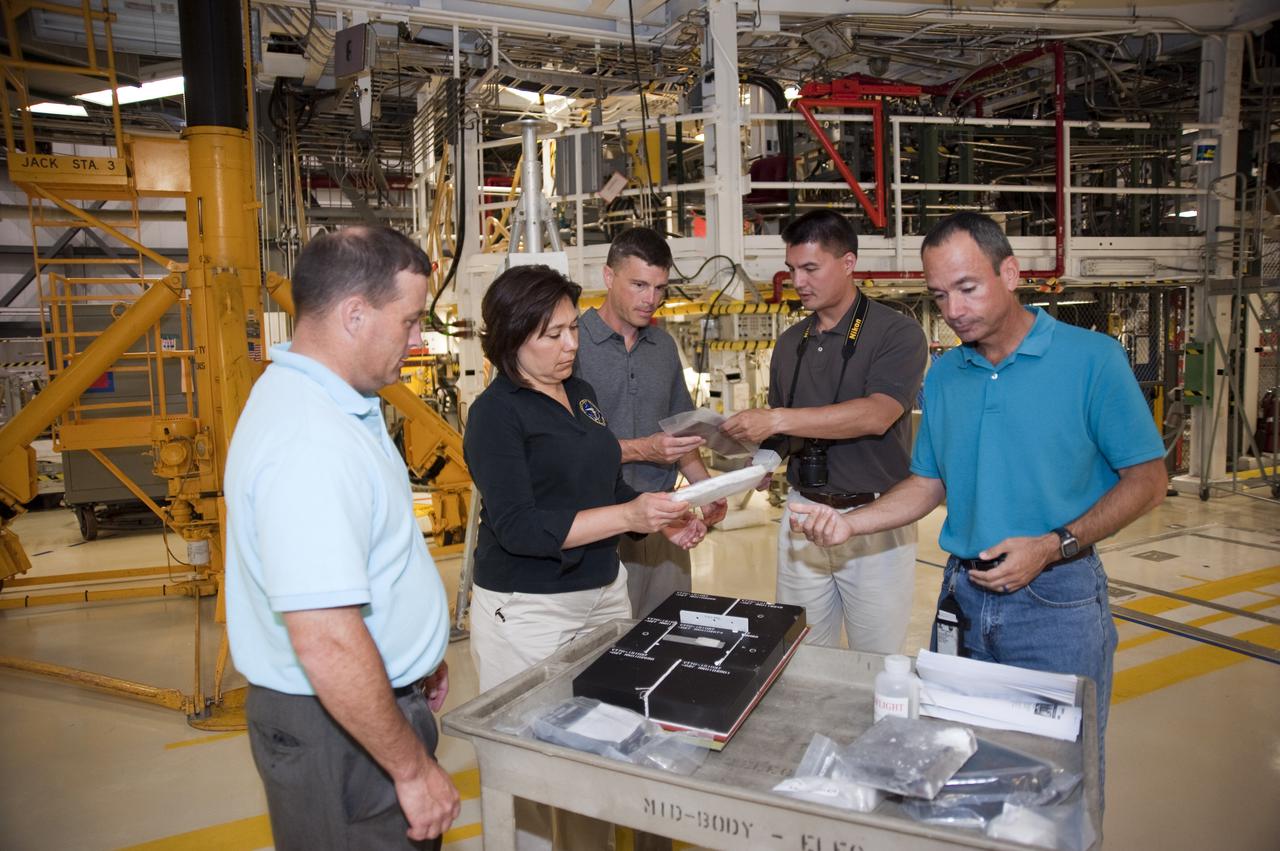
CAPE CANAVERAL, Fla. --- At NASA's Kennedy Space Center in Florida, the Class of 2009 Astronaut Candidates, also called ASCANs, check out heat shield tiles in Orbiter Processing Facility-1. Inside the facility, space shuttle Atlantis is being processed for the 'launch on need,' or potential rescue mission for the final scheduled shuttle flight, Endeavour's STS-134 mission. The new astronaut candidates for NASA are Serena M. Aunon, Jeanette J. Epps, Air Force Maj. Jack D. Fischer, Air Force Lt. Col. Michael S. Hopkins, Kjell N. Lindgren, Kathleen 'Kate' Rubins, Navy Cmdr. Scott D. Tingle, Army Lt. Col. Mark T. Vande, and Navy Lt. Cmdr. Gregory R. 'Reid' Wiseman. The new astronaut candidates for the Japan Aerospace Exploration Agency, or JAXA, are Norishige Kanai, Takuya Onishi and Kimiya Yui. The new astronaut candidates for the Canadian Space Agency, or CSA, are Jeremy Hansen and David Saint-Jacques. Photo Credit: NASA_Kim Shiflett
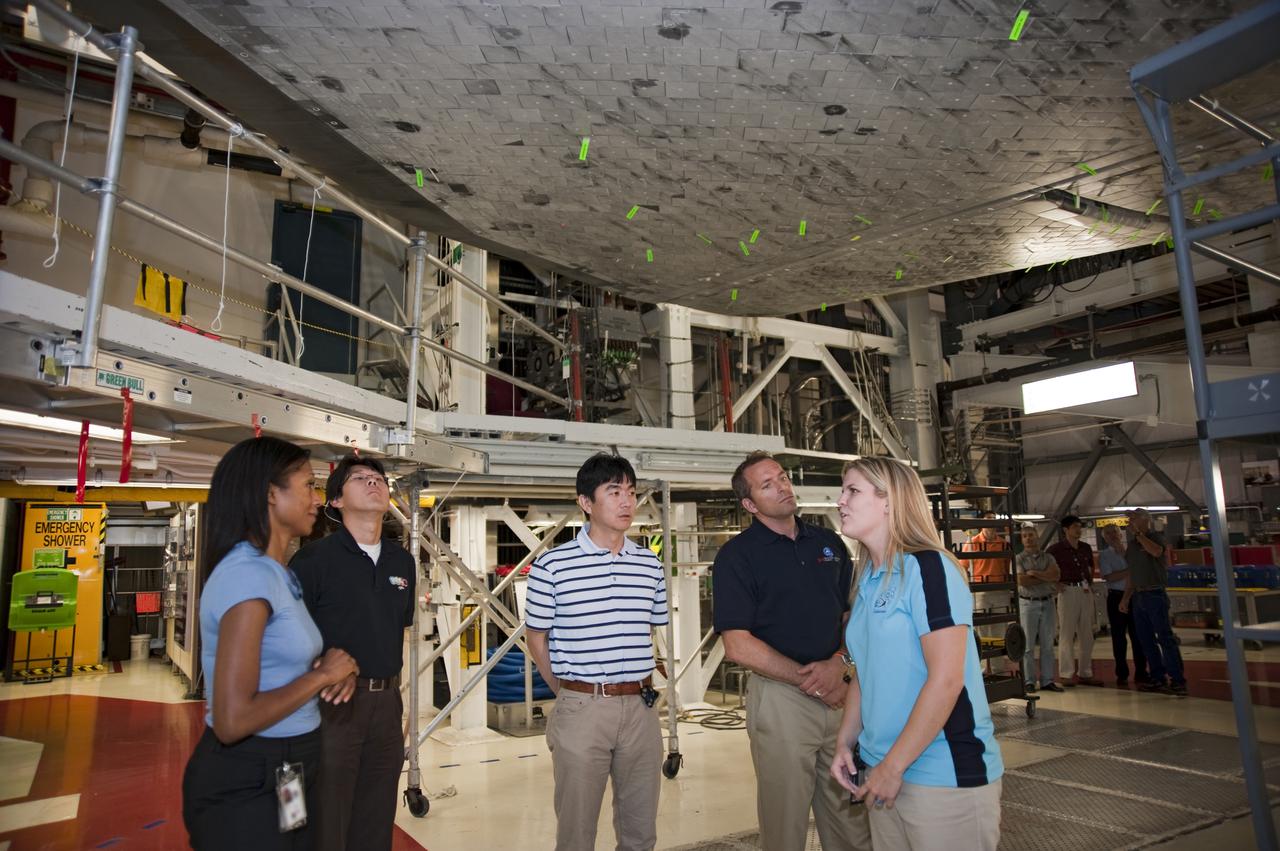
CAPE CANAVERAL, Fla. --- At NASA's Kennedy Space Center in Florida, the Class of 2009 Astronaut Candidates, also called ASCANs, tour Orbiter Processing Facility-1. Inside the facility, space shuttle Atlantis is being processed for the 'launch on need,' or potential rescue mission for the final scheduled shuttle flight, Endeavour's STS-134 mission. Sarah Schilling, Atlantis' processing engineer, right, was on hand to answer questions about the vehicle. The new astronaut candidates for NASA are Serena M. Aunon, Jeanette J. Epps, Air Force Maj. Jack D. Fischer, Air Force Lt. Col. Michael S. Hopkins, Kjell N. Lindgren, Kathleen 'Kate' Rubins, Navy Cmdr. Scott D. Tingle, Army Lt. Col. Mark T. Vande, and Navy Lt. Cmdr. Gregory R. 'Reid' Wiseman. The new astronaut candidates for the Japan Aerospace Exploration Agency, or JAXA, are Norishige Kanai, Takuya Onishi and Kimiya Yui. The new astronaut candidates for the Canadian Space Agency, or CSA, are Jeremy Hansen and David Saint-Jacques. Photo Credit: NASA_Kim Shiflett
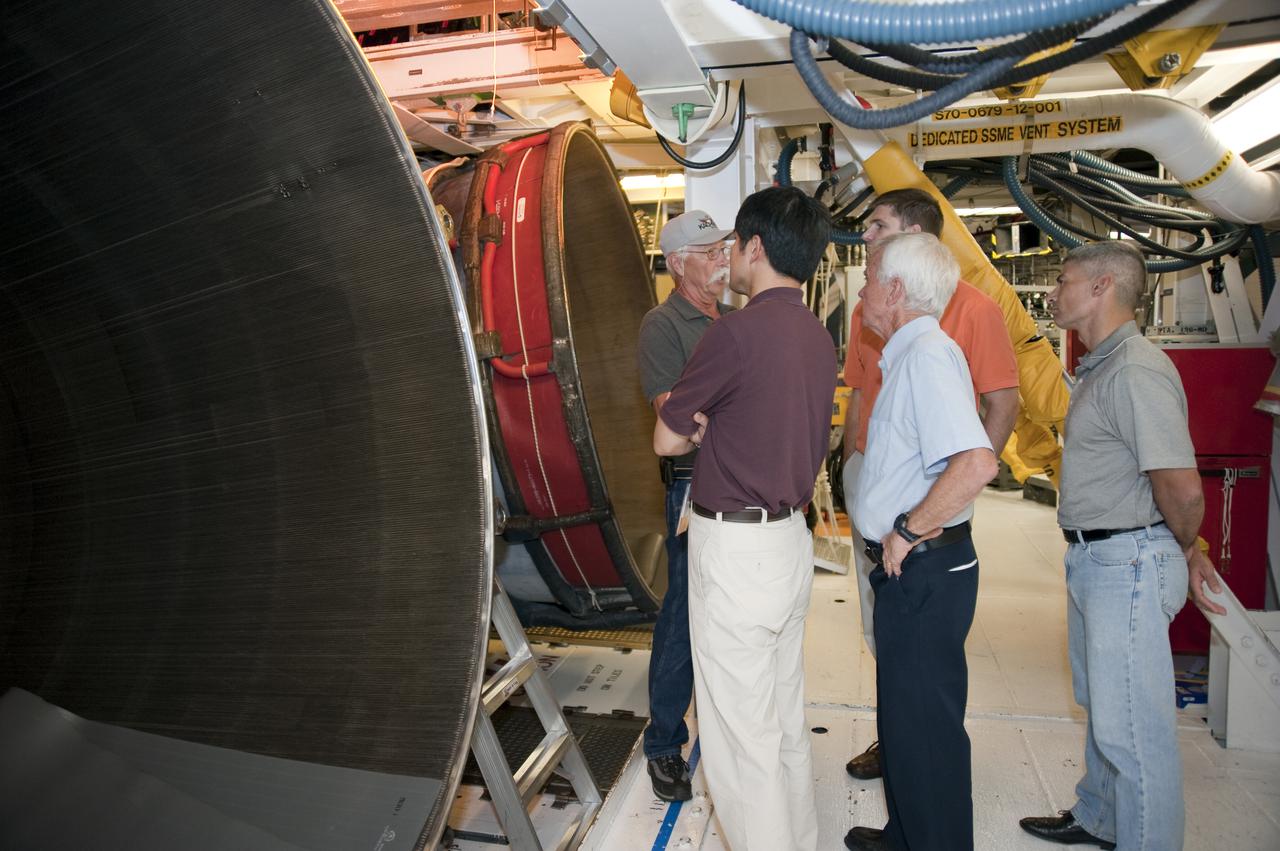
CAPE CANAVERAL, Fla. --- At NASA's Kennedy Space Center in Florida, the Class of 2009 Astronaut Candidates, also called ASCANs, check out space shuttle Atlantis' main engines in Orbiter Processing Facility-1. Inside the facility, Atlantis is being processed for the 'launch on need,' or potential rescue mission for the final scheduled shuttle flight, Endeavour's STS-134 mission. The new astronaut candidates for NASA are Serena M. Aunon, Jeanette J. Epps, Air Force Maj. Jack D. Fischer, Air Force Lt. Col. Michael S. Hopkins, Kjell N. Lindgren, Kathleen 'Kate' Rubins, Navy Cmdr. Scott D. Tingle, Army Lt. Col. Mark T. Vande, and Navy Lt. Cmdr. Gregory R. 'Reid' Wiseman. The new astronaut candidates for the Japan Aerospace Exploration Agency, or JAXA, are Norishige Kanai, Takuya Onishi and Kimiya Yui. The new astronaut candidates for the Canadian Space Agency, or CSA, are Jeremy Hansen and David Saint-Jacques. Photo Credit: NASA_Kim Shiflett
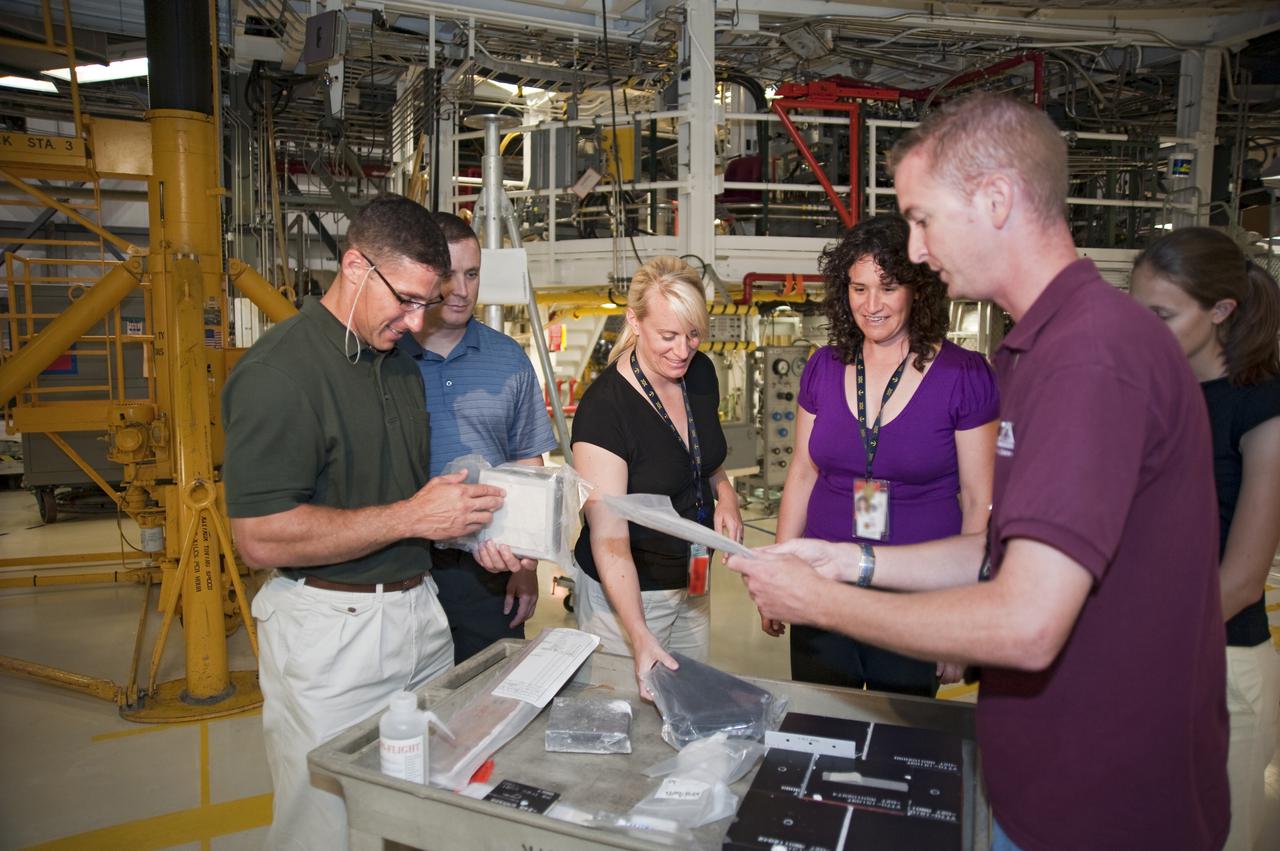
CAPE CANAVERAL, Fla. --- At NASA's Kennedy Space Center in Florida, the Class of 2009 Astronaut Candidates, also called ASCANs, check out heat shield tiles in Orbiter Processing Facility-1. Inside the facility, space shuttle Atlantis is being processed for the 'launch on need,' or potential rescue mission for the final scheduled shuttle flight, Endeavour's STS-134 mission. The new astronaut candidates for NASA are Serena M. Aunon, Jeanette J. Epps, Air Force Maj. Jack D. Fischer, Air Force Lt. Col. Michael S. Hopkins, Kjell N. Lindgren, Kathleen 'Kate' Rubins, Navy Cmdr. Scott D. Tingle, Army Lt. Col. Mark T. Vande, and Navy Lt. Cmdr. Gregory R. 'Reid' Wiseman. The new astronaut candidates for the Japan Aerospace Exploration Agency, or JAXA, are Norishige Kanai, Takuya Onishi and Kimiya Yui. The new astronaut candidates for the Canadian Space Agency, or CSA, are Jeremy Hansen and David Saint-Jacques. Photo Credit: NASA_Kim Shiflett
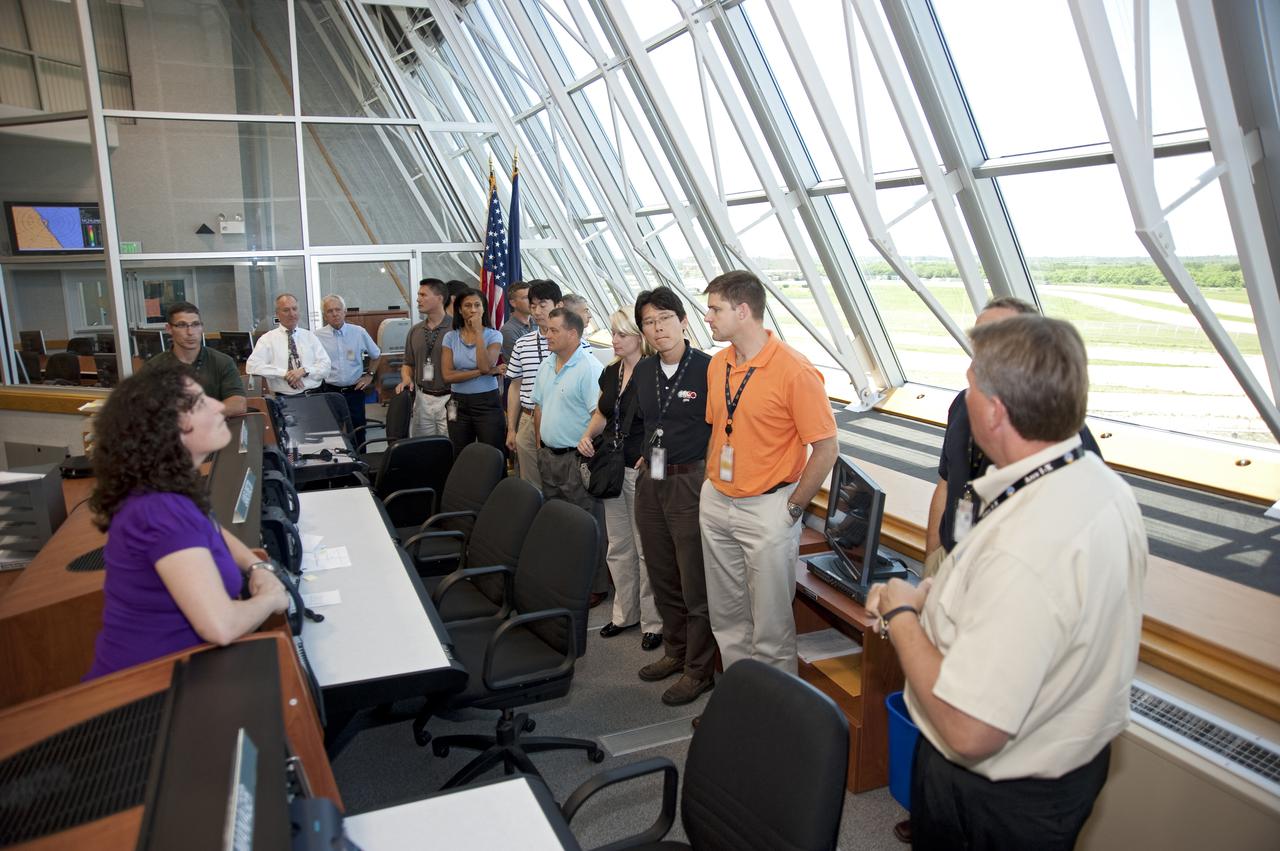
CAPE CANAVERAL, Fla. --- At NASA's Kennedy Space Center in Florida, the Class of 2009 Astronaut Candidates, also called ASCANs, tour Firing Room 4 of the Launch Control Center. Firing Room 4 was last used by launch controllers and the mission management team to launch space shuttle Atlantis on the STS-132 mission to the International Space Station. The new astronaut candidates for NASA are Serena M. Aunon, Jeanette J. Epps, Air Force Maj. Jack D. Fischer, Air Force Lt. Col. Michael S. Hopkins, Kjell N. Lindgren, Kathleen 'Kate' Rubins, Navy Cmdr. Scott D. Tingle, Army Lt. Col. Mark T. Vande, and Navy Lt. Cmdr. Gregory R. 'Reid' Wiseman. The new astronaut candidates for the Japan Aerospace Exploration Agency, or JAXA, are Norishige Kanai, Takuya Onishi and Kimiya Yui. The new astronaut candidates for the Canadian Space Agency, or CSA, are Jeremy Hansen and David Saint-Jacques. Photo Credit: NASA_Kim Shiflett
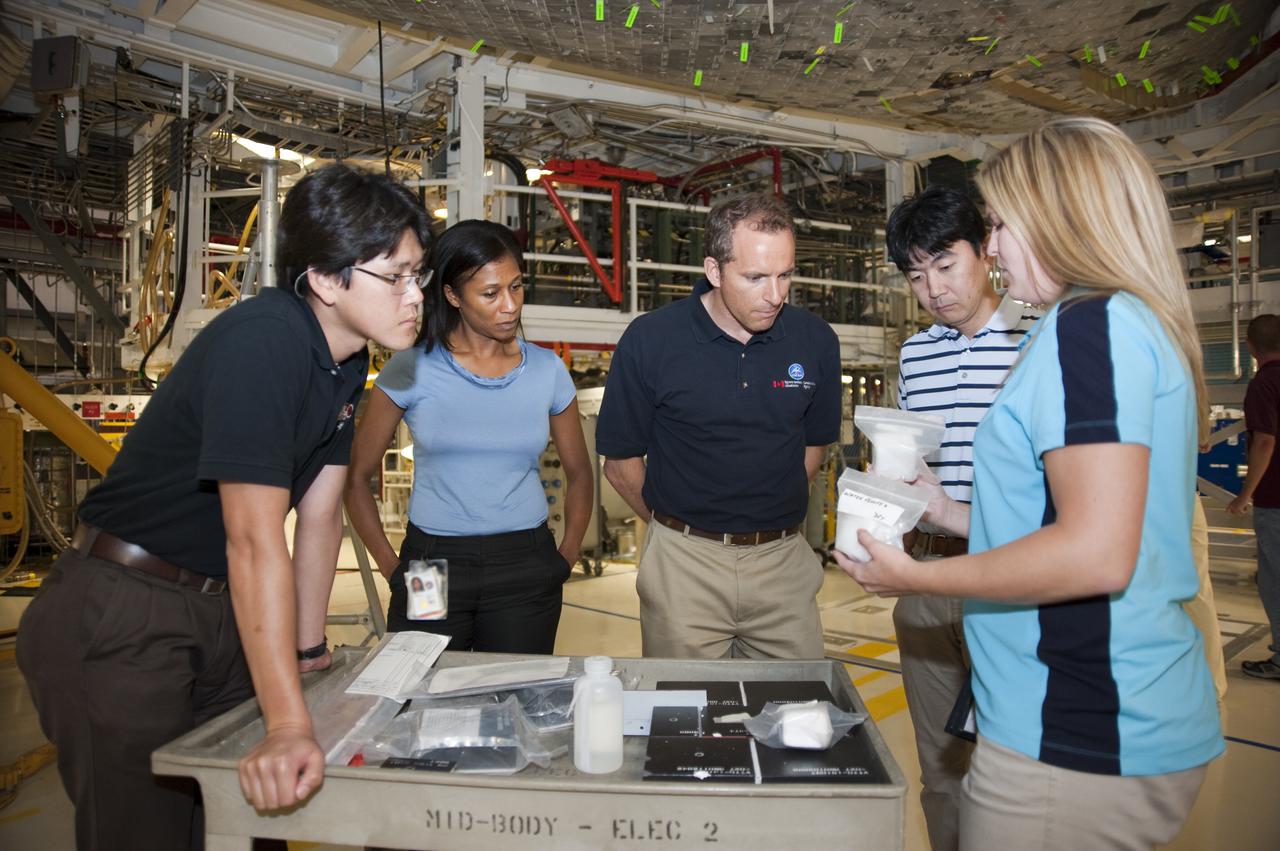
CAPE CANAVERAL, Fla. --- At NASA's Kennedy Space Center in Florida, the Class of 2009 Astronaut Candidates, also called ASCANs, check out heat shield tiles in Orbiter Processing Facility-1. Inside the facility, shuttle Atlantis is being prepared for the 'launch on need,' or potential rescue mission for the final scheduled shuttle flight, Endeavour's STS-134 mission. Sarah Schilling, Atlantis' processing engineer, right, was on hand to answer questions about the vehicle. The new astronaut candidates for NASA are Serena M. Aunon, Jeanette J. Epps, Air Force Maj. Jack D. Fischer, Air Force Lt. Col. Michael S. Hopkins, Kjell N. Lindgren, Kathleen 'Kate' Rubins, Navy Cmdr. Scott D. Tingle, Army Lt. Col. Mark T. Vande, and Navy Lt. Cmdr. Gregory R. 'Reid' Wiseman. The new astronaut candidates for the Japan Aerospace Exploration Agency, or JAXA, are Norishige Kanai, Takuya Onishi and Kimiya Yui. The new astronaut candidates for the Canadian Space Agency, or CSA, are Jeremy Hansen and David Saint-Jacques. Photo Credit: NASA_Kim Shiflett
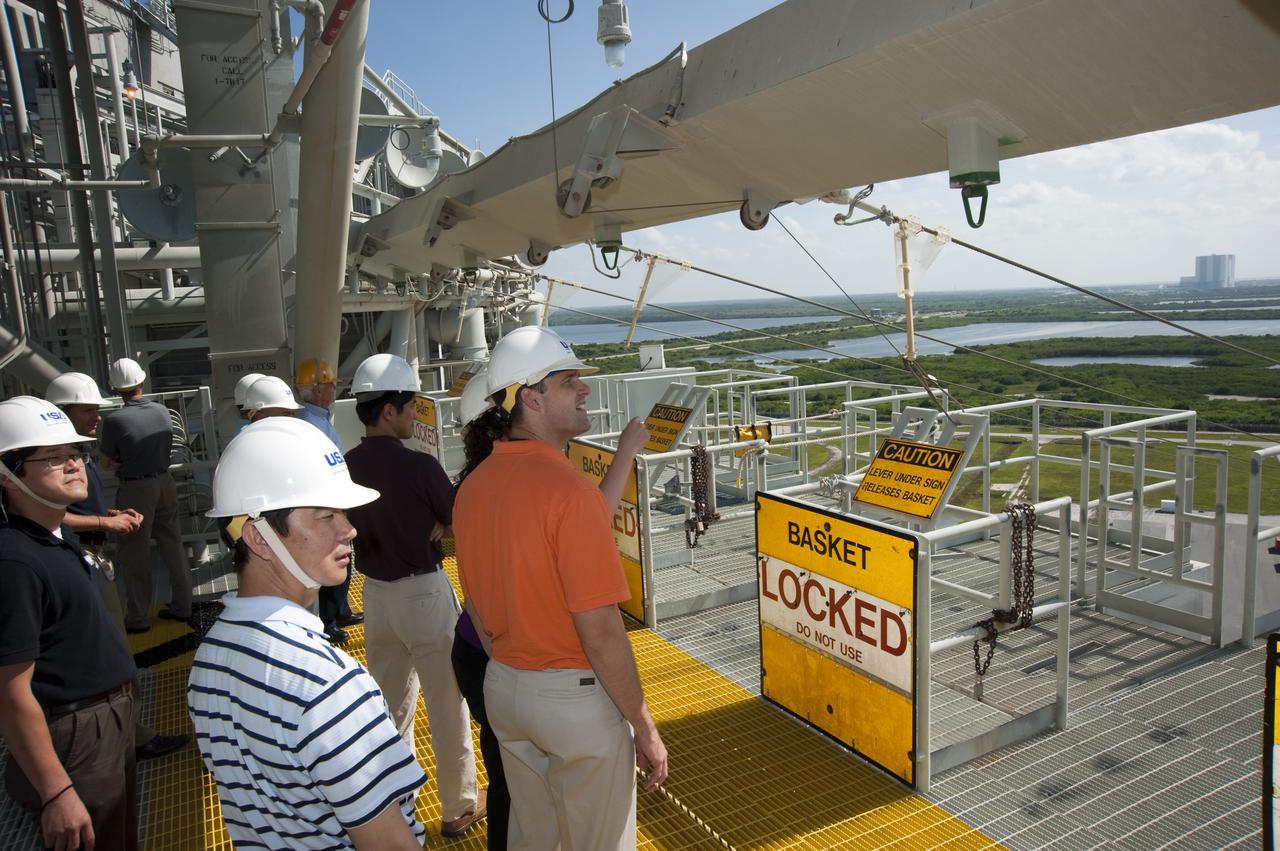
CAPE CANAVERAL, Fla. --- At NASA's Kennedy Space Center in Florida, the Class of 2009 Astronaut Candidates, also called ASCANs, tour Launch Pad 39A. Here, they are at the 195-foot-level where seven slidewire baskets can take astronauts to a landing zone 1,200 feet west of the pad in the unlikely event of an emergency. The new astronaut candidates for NASA are Serena M. Aunon, Jeanette J. Epps, Air Force Maj. Jack D. Fischer, Air Force Lt. Col. Michael S. Hopkins, Kjell N. Lindgren, Kathleen 'Kate' Rubins, Navy Cmdr. Scott D. Tingle, Army Lt. Col. Mark T. Vande, and Navy Lt. Cmdr. Gregory R. 'Reid' Wiseman. The new astronaut candidates for the Japan Aerospace Exploration Agency, or JAXA, are Norishige Kanai, Takuya Onishi and Kimiya Yui. The new astronaut candidates for the Canadian Space Agency, or CSA, are Jeremy Hansen and David Saint-Jacques. Photo Credit: NASA_Kim Shiflett

The STS-101 crew wave to onlookers as they leave the Operations and Checkout Building enroute to Launch Pad 39A and liftoff of Space Shuttle Atlantis, targeted for 4:15 p.m. EDT. In their orange launch and entry suits, they are (front line) Pilot Scott J. Horowitz and Commander James D. Halsell Jr.; (second line) Mission Specialists Mary Ellen Weber and Jeffrey N. Williams; and (third line) Mission Specialists Susan Helms, Yuri Usachev of Russia and James S. Voss. The mission will take the crew to the International Space Station to deliver logistics and supplies and to prepare the Station for the arrival of the Zvezda Service Module, expected to be launched by Russia in July 2000. Also, the crew will conduct one space walk. This will be the third assembly flight to the Space Station. The mission is expected to last about 10 days, with Atlantis landing at KSC Thursday, May 4, about 11:23 a.m. EDT
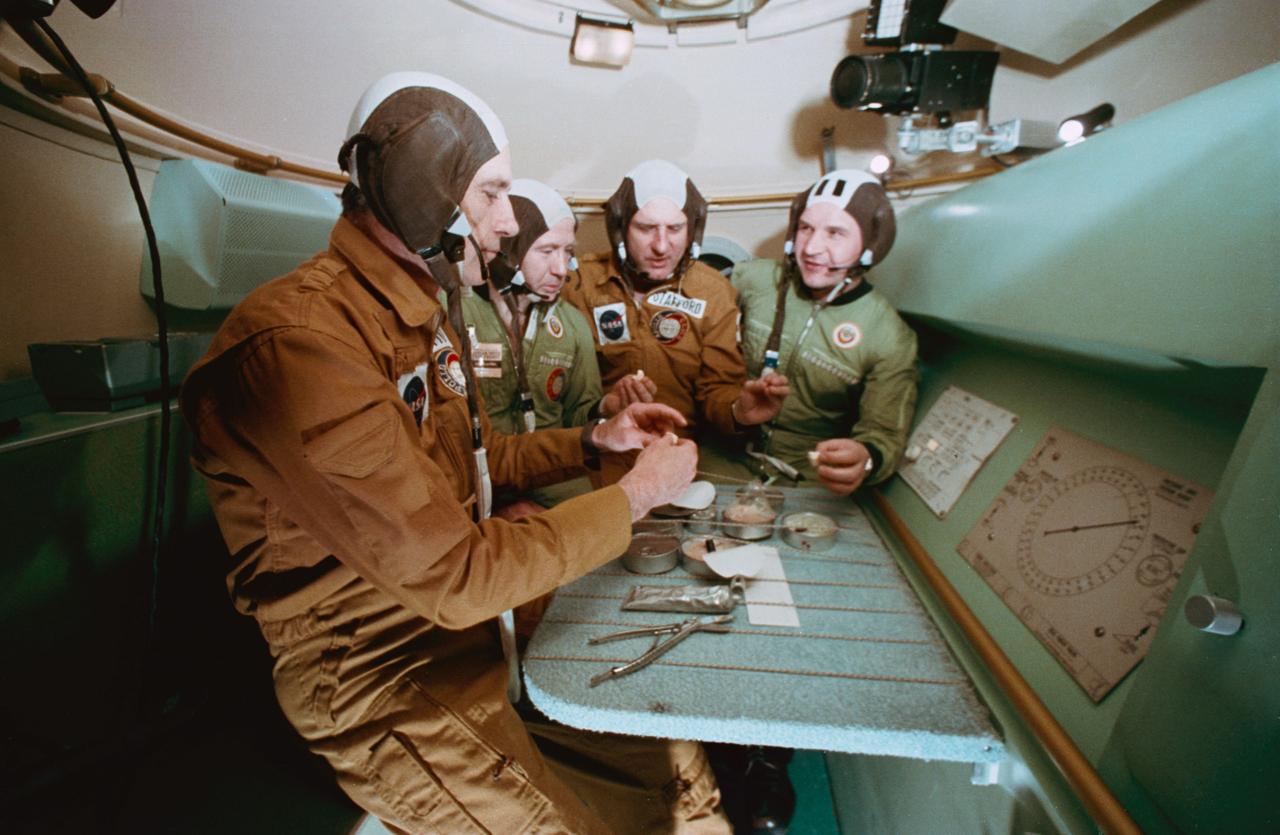
S75-22770 (25 Feb. 1975) --- Two American ASTP prime crewmen have a meal with the Soviet ASTP first (prime) crewmen during Apollo-Soyuz Test Project joint crew training at NASA's Johnson Space Center. The four are inside the Soyuz orbital module mock-up in Building 35. They are, left to right, astronaut Donald K. Slayton, docking module pilot of the American crew; cosmonaut Aleksey A. Leonov, commander of the Soviet crew; astronaut Thomas P. Stafford, commander of the American crew; and cosmonaut Valeriy N. Kubasov, engineer on the Soviet crew. The training session simulated activities on the second day in Earth orbit. During the actual mission the other American crewmen, astronaut Vance D. Brand, command module pilot, would be in the Command Module.
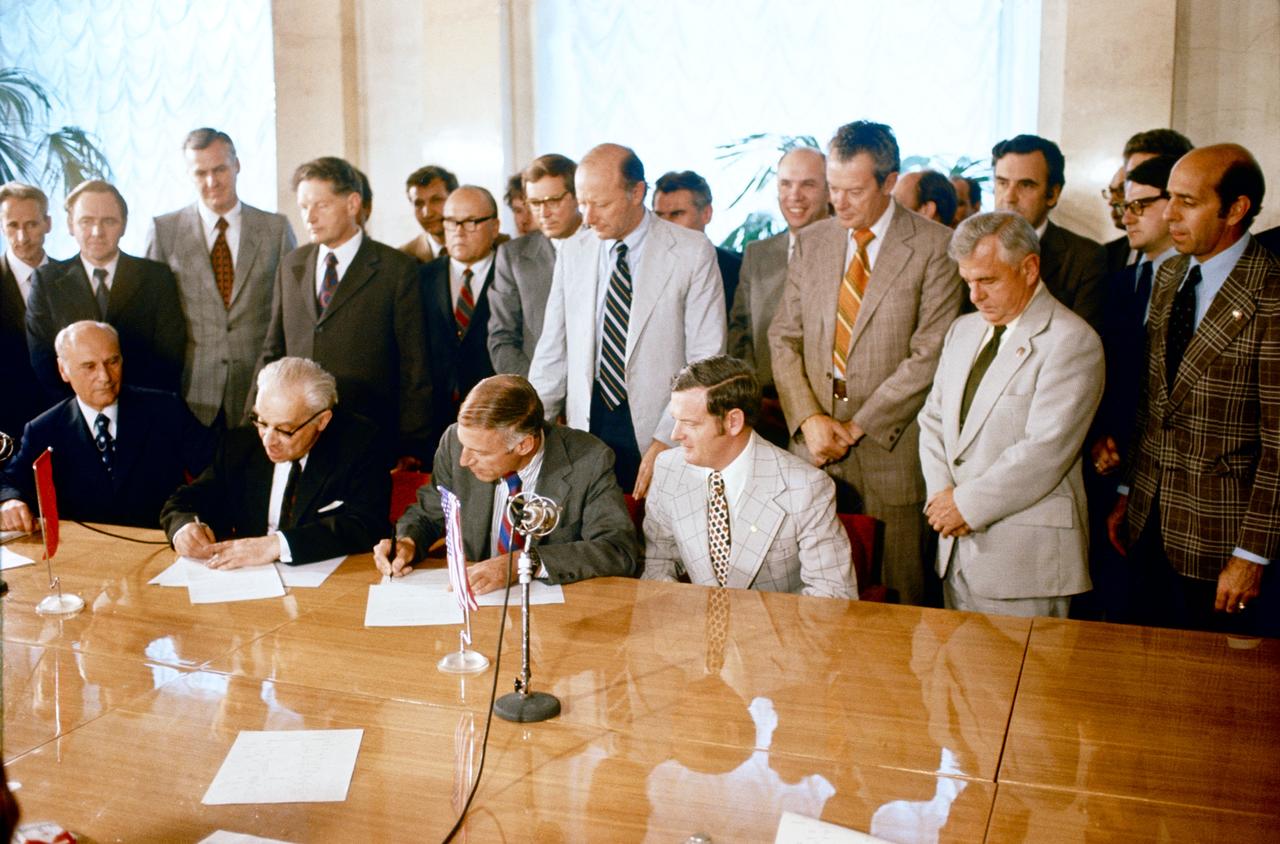
S75-27346 (22 May 1975) --- An overall view of the signing of the Apollo-Soyuz Test Project joint flight readiness review in ceremonies on May 22, 1975 in Moscow. Academician Vladimir A. Kotelnikov (on left) and NASA Deputy Administrator George M. Low (in center) are seen affixing their signatures to the ASTP document. Kotelnikov is the Acting President of the USSR Academy of Sciences. Seated at far left is Professor Konstantin D. Bushuyev, the Soviet Technical Director of ASTP. Dr. Glynn S. Lunney, the U.S. Technical Director of ASTP, is seated on Dr. Low?s left. Arnold W. Frutkin (in light jacket), NASA Assistant Administrator for International Affairs, is standing behind Dr. Low. Academician Boris N. Petrov (in dark suit), Chairman of the USSR Council for International Cooperation in the Exploration and Use of Outer Space, is standing behind Kotelnikov. The signing of the agreement took place at the Presidium of the Academy of Sciences in Moscow.

In the Operations and Checkout Building, the STS-101 crew gathers for a snack before suiting up for launch for the second time. The previous day's launch attempt was scrubbed due to high cross winds at the Shuttle Landing Facility. From left are Mission Specialists Mary Ellen Weber and Yury Usachev of Russia; Pilot Scott J. Horowitz; Commander James D. Halsell Jr.; and Mission Specialists Jeffrey N. Williams, Susan J. Helms and James S. Voss. The mission will take the crew to the International Space Station to deliver logistics and supplies and prepare the Station for the arrival of the Zvezda Service Module, expected to be launched by Russia in July 2000. Also, the crew will conduct one space walk. This will be the third assembly flight to the Space Station
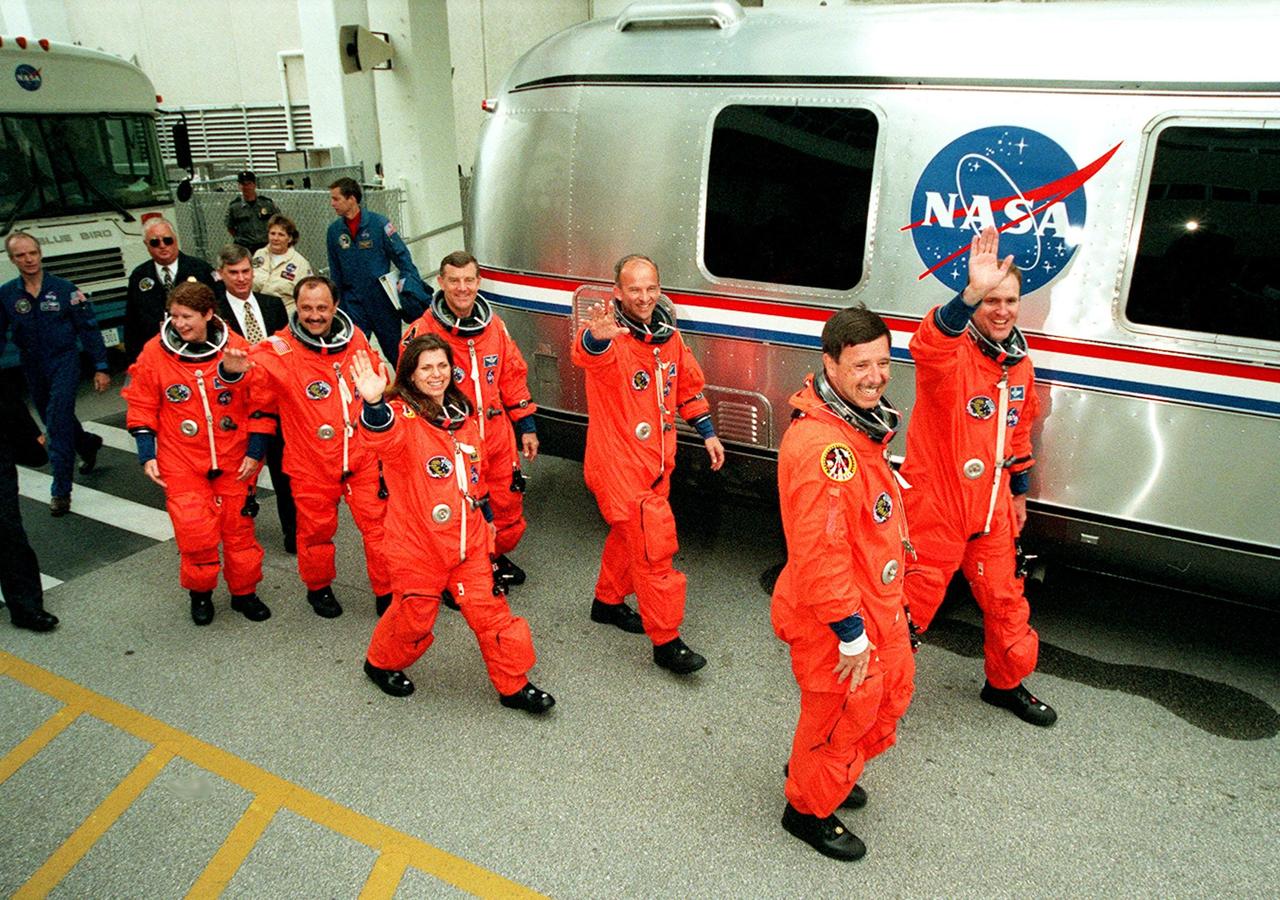
Waving to onlookers, the STS-101 crew eagerly walk to the waiting Astrovan that will take them to Launch Pad 39A and liftoff of Space Shuttle Atlantis, targeted for 4:15 p.m. EDT. In their orange launch and entry suits, they are (in the f ront, left to right) Mission Specialists Susan Helms, Yuri Usachev of Russia and Mary Ellen Weber, plus Pilot Scott J. Horowitz; (in the rear, left to right) Mission Specialists James S. Voss and Jeffrey N. Williams, plus Commander James D. Halsell Jr. The mission will take the crew to the International Space Station to deliver logistics and supplies and to prepare the Station for the arrival of the Zvezda Service Module, expected to be launched by Russia in July 2000. Also, the crew will conduct one space walk. This will be the third assembly flight to the Space Station. The mission is expected to last about 10 days, with Atlantis landing at KSC Thursday, May 4, about 11:23 a.m. EDT
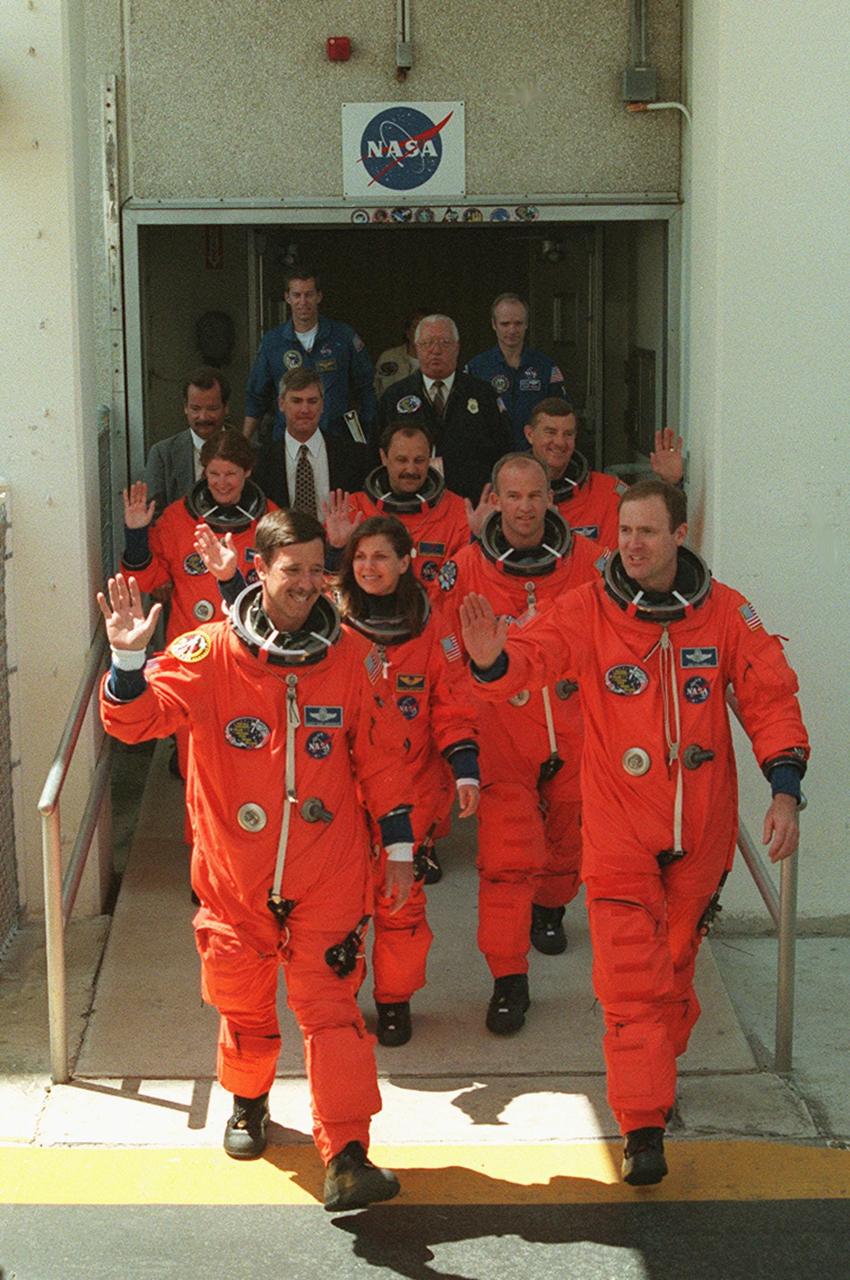
The STS-101 crew wave to onlookers as they leave the Operations and Checkout Building enroute a third time to Launch Pad 39A for launch of Space Shuttle Atlantis. The previous two launch attempts were scrubbed due to high cross winds at the Shuttle Landing Facility. They are (front) Pilot Scott J. Horowitz (left) and Commander James D. Halsell Jr.; (middle) Mission Specialists Mary Ellen Weber and Jeffrey N. Williams; (back) Mission Specialists Susan J. Helms, Yury Usachev of Russia and James S. Voss. The mission will take the crew to the International Space Station to deliver logistics and supplies and to prepare the Station for the arrival of the Zvezda Service Module, expected to be launched by Russia in July 2000. Also, the crew will conduct one space walk. This is the third assembly flight to the Space Station. After the 10-day mission, Atlantis is expected to land at KSC May 6 at about 12:03 p.m. EDT
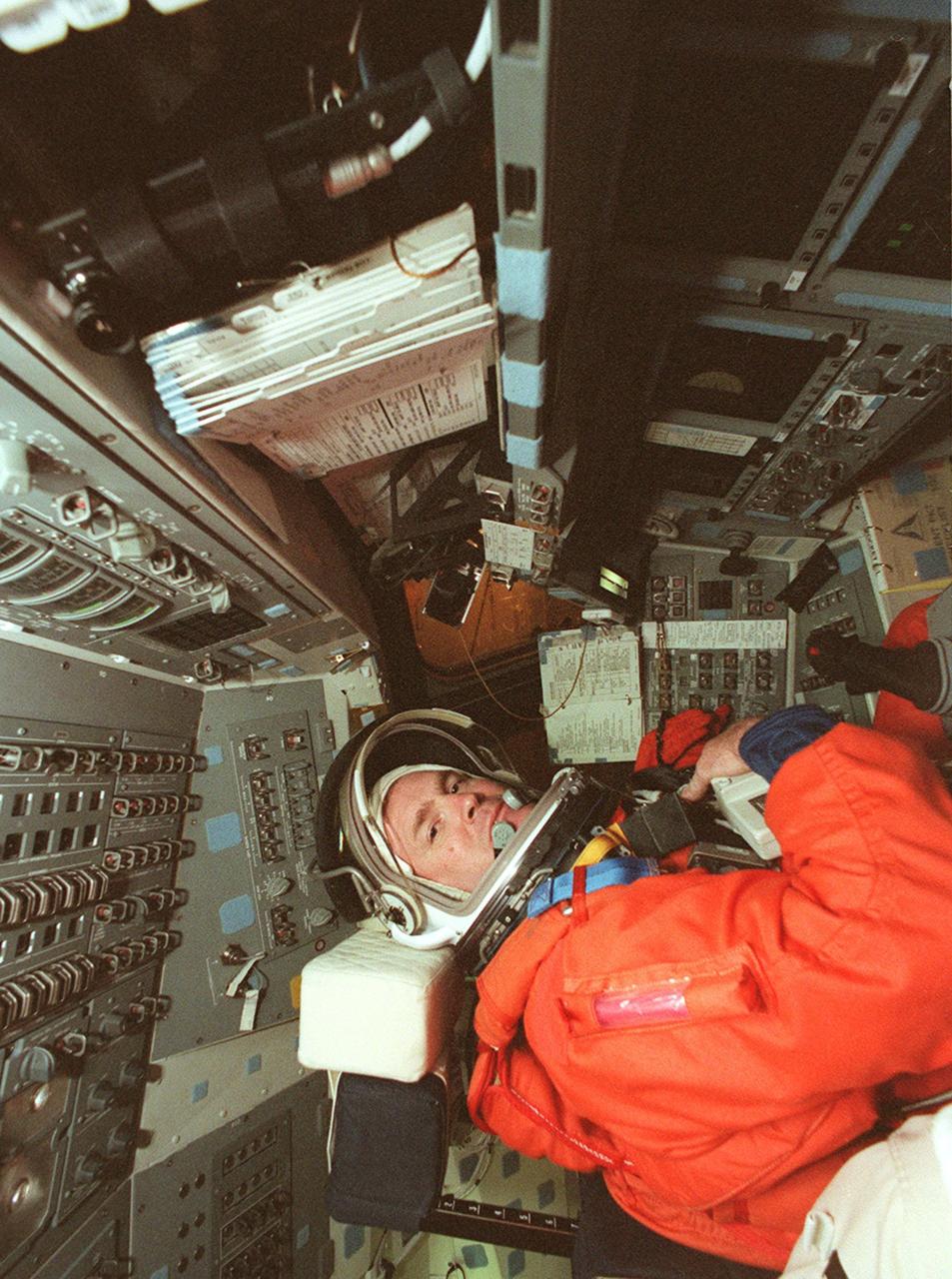
KENNEDY SPACE CENTER, FLA. -- STS-101 Commander James D. Halsell Jr. takes his seat inside Space Shuttle Atlantis for a simulated launch countdown. The countdown is part of Terminal Countdown Demonstration Test (TCDT) activities that also include emergency egress training and familiarization with the payload. Other crew members taking part are Pilot Scott J. "Doc" Horowitz and Mission Specialists Mary Ellen Weber, James Voss, Jeffrey N. Williams, Susan Helms, and Yury Usachev of Russia. During their mission to the International Space Station, the STS-101 crew will be delivering logistics and supplies, plus preparing the Station for the arrival of the Zvezda Service Module, expected to be launched by Russia in July 2000. Also, the crew will conduct one space walk to perform maintenance on the Space Station. This will be the third assembly flight for the Space Station. STS-101 is scheduled to launch April 24 at 4:15 p.m. from Launch Pad 39A

The STS-101 crew wave to onlookers as they leave the Operations and Checkout Building enroute to Launch Pad 39A and liftoff of Space Shuttle Atlantis, targeted for 4:15 p.m. EDT. In their orange launch and entry suits, they are (front line) Pilot Scott J. Horowitz and Commander James D. Halsell Jr.; (second line) Mission Specialists Mary Ellen Weber and Jeffrey N. Williams; and (third line) Mission Specialists Susan Helms, Yuri Usachev of Russia and James S. Voss. The mission will take the crew to the International Space Station to deliver logistics and supplies and to prepare the Station for the arrival of the Zvezda Service Module, expected to be launched by Russia in July 2000. Also, the crew will conduct one space walk. This will be the third assembly flight to the Space Station. The mission is expected to last about 10 days, with Atlantis landing at KSC Thursday, May 4, about 11:23 a.m. EDT

KENNEDY SPACE CENTER, Fla. -- After Terminal Countdown Demonstration Test (TCDT) activities at Launch Pad 39A, the STS-101 crew talk to the media. At the microphone is Commander James D. Halsell Jr. Next to him, standing left to right, are Pilot Scott J. "Doc" Horowitz and Mission Specialists Mary Ellen Weber, Jeffrey N. Williams, James Voss, Susan J. Helms and Yury Usachev of Russia. The TCDT includes emergency egress training and a simulated launch countdown. During their mission to the International Space Station, the STS-101 crew will be delivering logistics and supplies, plus preparing the Station for the arrival of the Zvezda Service Module, expected to be launched by Russia in July 2000. Also, the crew will conduct one space walk to perform maintenance on the Space Station. This will be the third assembly flight for the Space Station. STS-101 is scheduled to launch April 24 at 4:15 p.m. from Launch Pad 39A
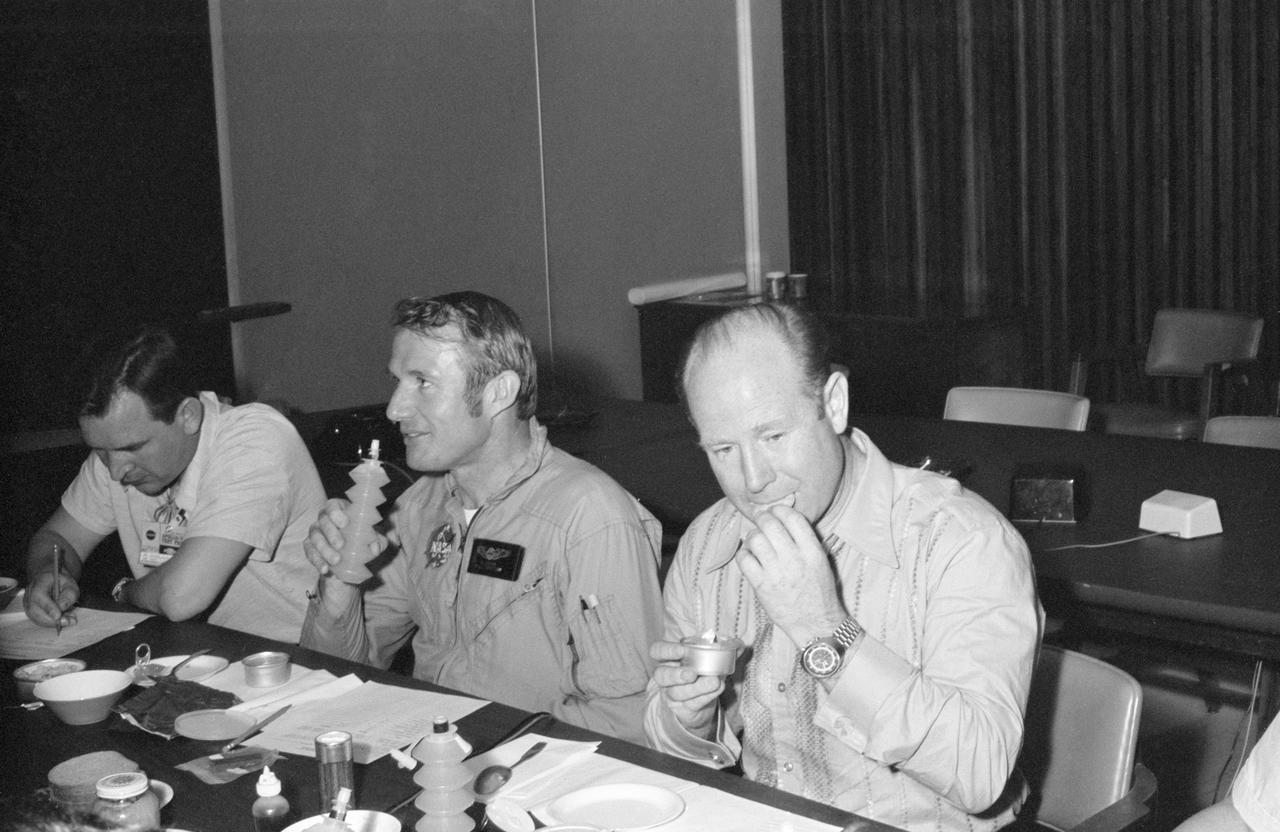
S74-20797 (23 April 1974) --- Candidate food items being considered for the joint U.S.-USSR Apollo-Soyuz Test Project mission are sampled by three ASTP crewmen in Building 4 at the Johnson Space Center. They are, left to right, cosmonaut Valeriy N. Kubasov, engineer on the Soviet ASTP crew; astronaut Vance D. Brand, command module pilot of the American ASTP crew; and cosmonaut Aleksey A. Leonov, commander of the Soviet ASTP crew. Kubasov is marking a food rating chart on which the crewmen mark their choices, likes and dislikes of the food being sampled. Brand is drinking orange juice from an accordion-like dispenser. Leonov is eating butter cookies. The two Soviet crewmen will have an opportunity to eat with the three American crewmen while the Apollo and Soyuz spacecraft are docked in Earth orbit. Leonov and Kubasov will dine on food being chosen individually by them now.
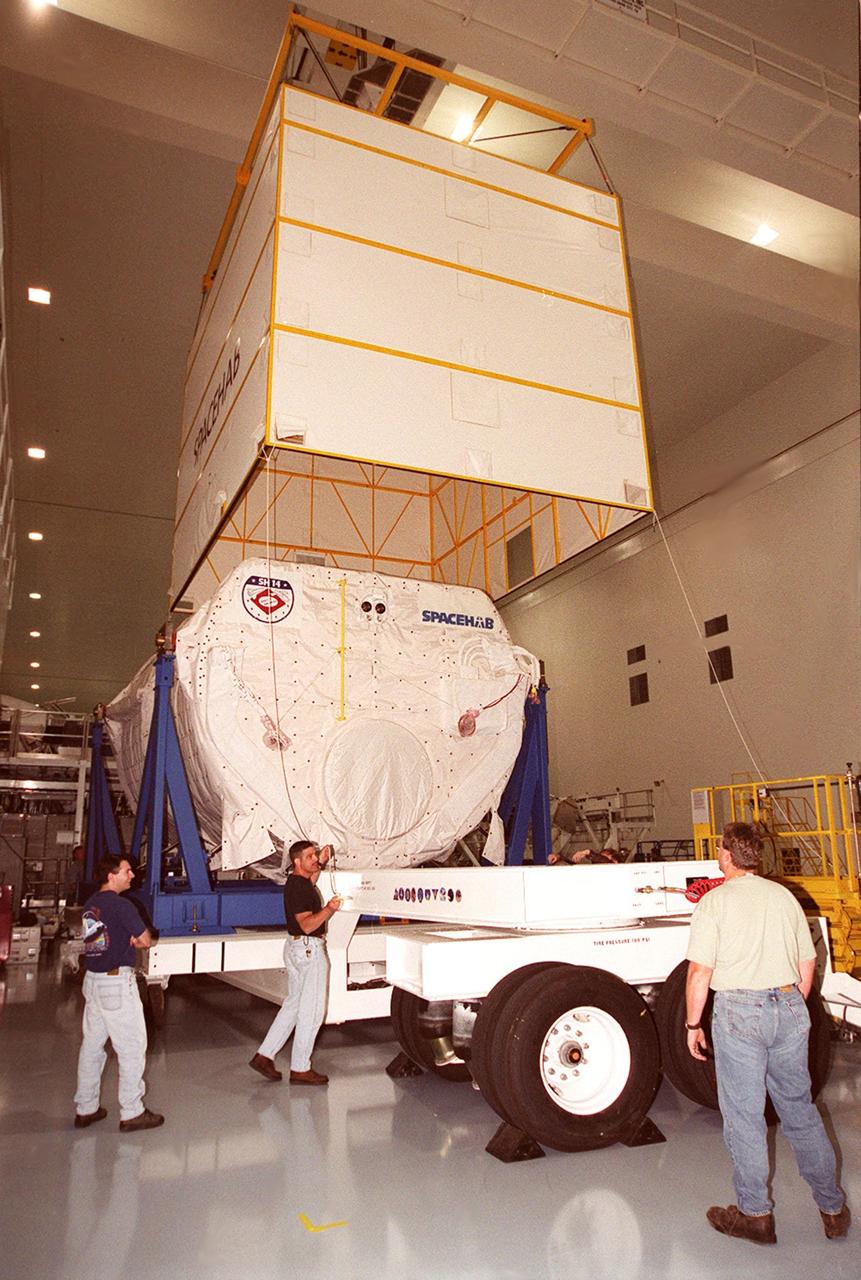
KENNEDY SPACE CENTER, FLA. -- The SPACEHAB Double Module is uncovered in the Space Station Processing Facility for transfer to a payload canister that will take it to Launch Pad 39A. There it will be installed in the Shuttle Atlantis' payload bay for mission STS-101. The module carries internal logistics and resupply cargo for restoring full redundancy to the International Space Station power system in preparation for the arrival of the next pressurized module, the Russian-built Zvezda. The STS-101 crew of seven comprises Commander James D. Halsell Jr., Pilot Scott J. "Doc" Horowitz (Ph.D.) and Mission Specialists Mary Ellen Weber (Ph.D.), James S. Voss, Jeffrey N. Williams, Susan J. Helms and Yuri Vladimirovich Usachev, cosmonaut. Launch of Atlantis on mission STS-101 is scheduled no earlier than April 17, 2000
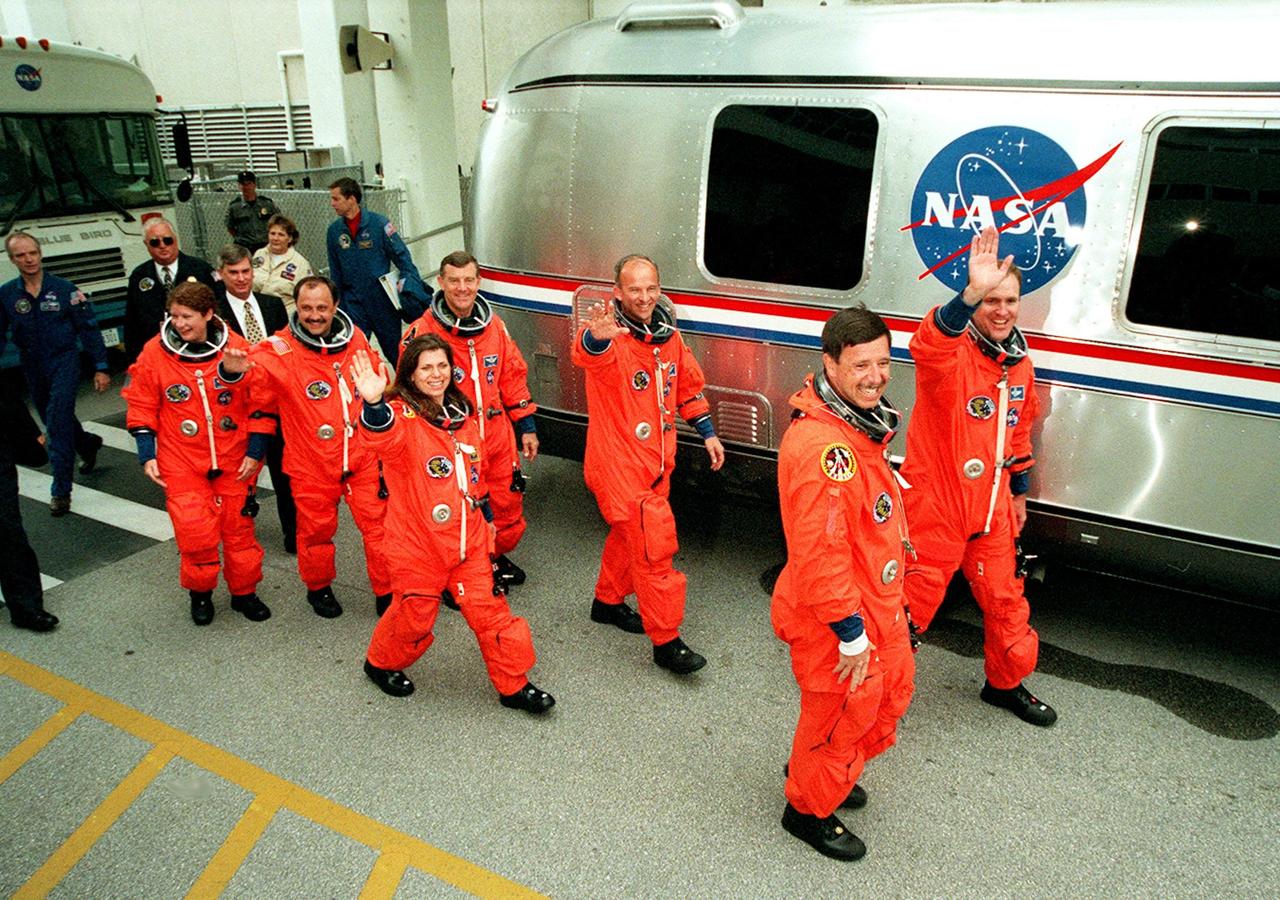
Waving to onlookers, the STS-101 crew eagerly walk to the waiting Astrovan that will take them to Launch Pad 39A and liftoff of Space Shuttle Atlantis, targeted for 4:15 p.m. EDT. In their orange launch and entry suits, they are (in the f ront, left to right) Mission Specialists Susan Helms, Yuri Usachev of Russia and Mary Ellen Weber, plus Pilot Scott J. Horowitz; (in the rear, left to right) Mission Specialists James S. Voss and Jeffrey N. Williams, plus Commander James D. Halsell Jr. The mission will take the crew to the International Space Station to deliver logistics and supplies and to prepare the Station for the arrival of the Zvezda Service Module, expected to be launched by Russia in July 2000. Also, the crew will conduct one space walk. This will be the third assembly flight to the Space Station. The mission is expected to last about 10 days, with Atlantis landing at KSC Thursday, May 4, about 11:23 a.m. EDT
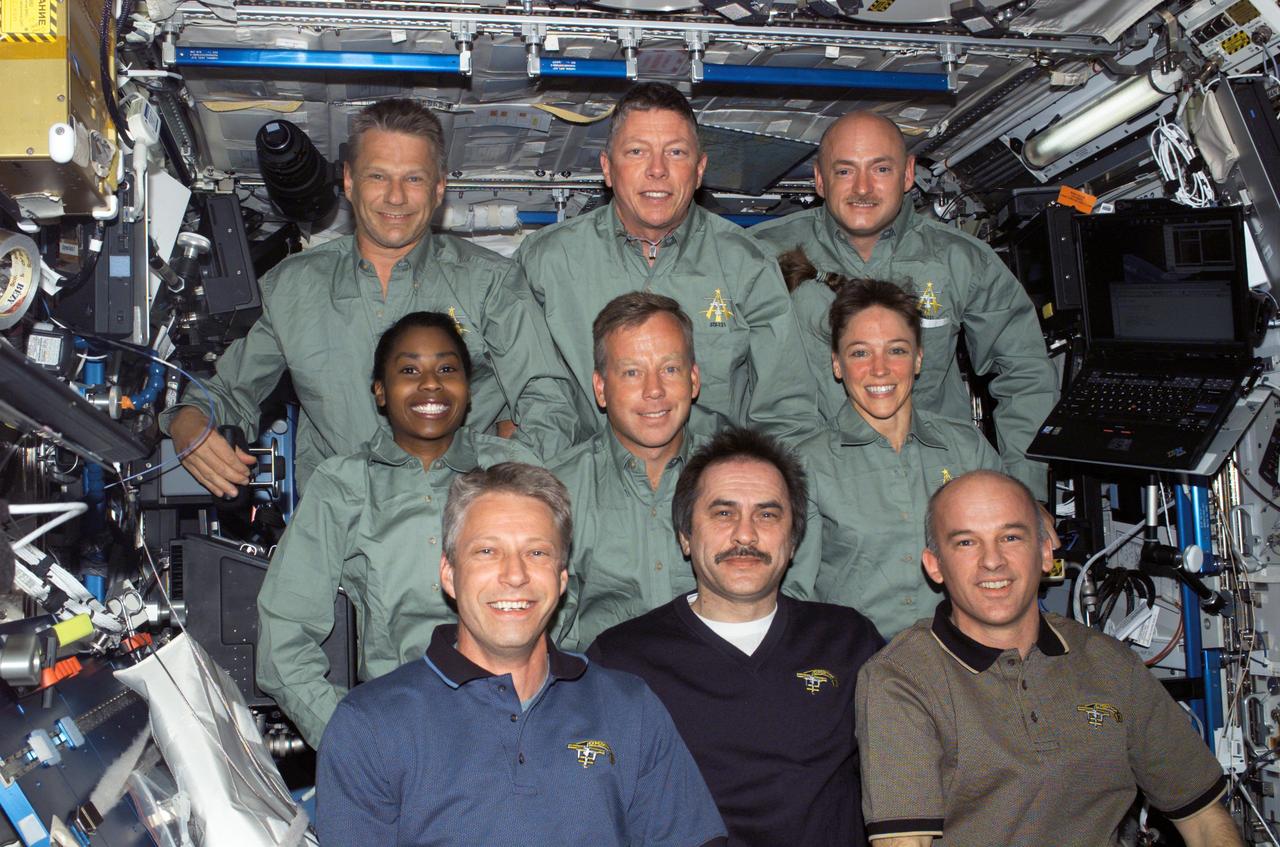
S121-E-06239 (9 July 2006) --- The STS-121 (green shirts) and Expedition 13 crewmembers gather for a group photo in the Destiny laboratory of the International Space Station. From the left (front row) are European Space Agency (ESA) astronaut Thomas Reiter of Germany, Expedition 13 flight engineer; cosmonaut Pavel V. Vinogradov, commander representing Russia's Federal Space Agency; and astronaut Jeffrey N. Williams, NASA space station science officer and flight engineer. From the left (middle row) are astronauts Stephanie D. Wilson, STS-121 mission specialist; Steven W. Lindsey, commander; and Lisa M. Nowak, mission specialist. From the left (back row) are astronauts Piers J. Sellers, Michael E. Fossum, both mission specialists; and Mark E. Kelly, pilot.
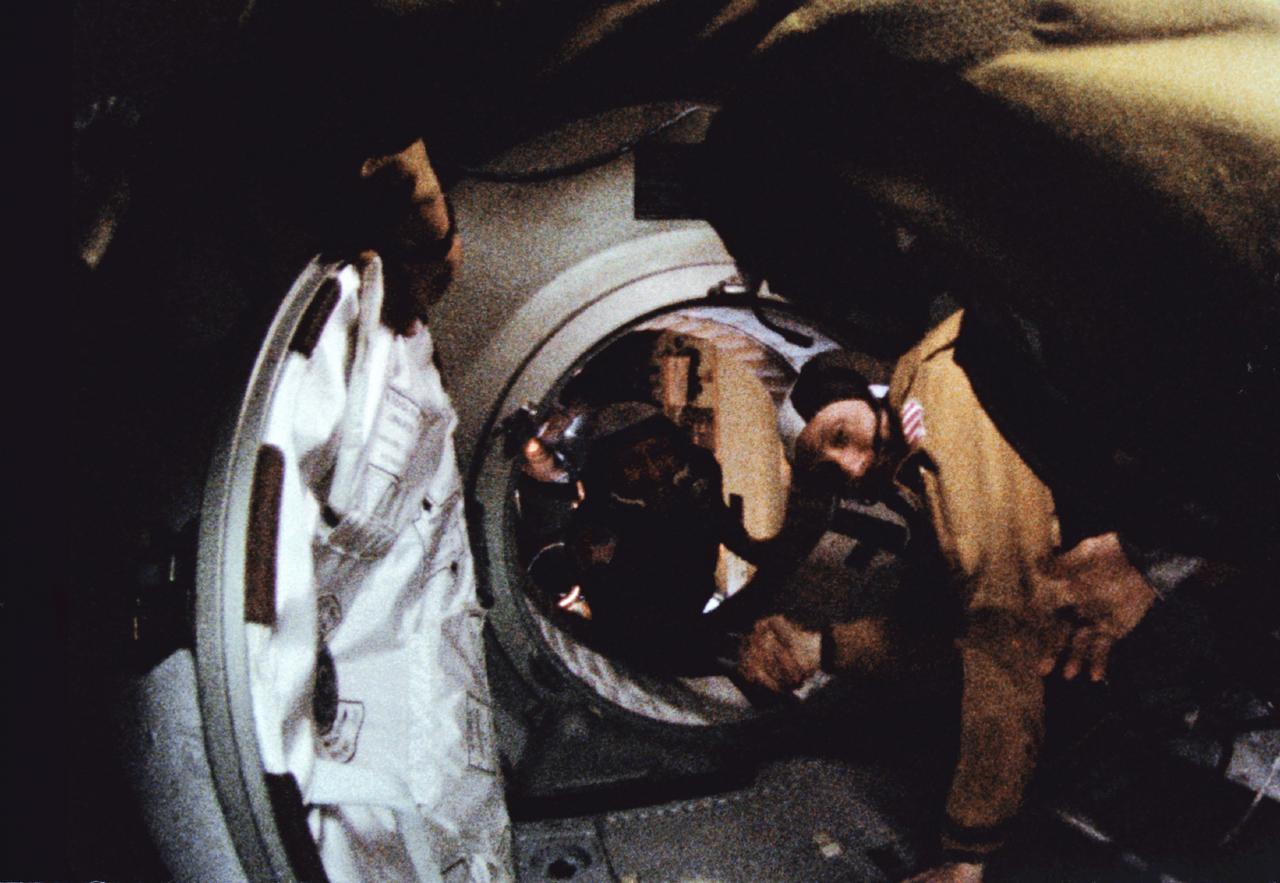
S75-29432 (17 July 1975) --- Astronaut Thomas P. Stafford (in foreground) and cosmonaut Aleksei A. Leonov make their historic handshake in space on July 17, 1975 during the joint U.S.-USSR Apollo Soyuz Test Project (ASTP) docking mission in Earth orbit. This picture was reproduced from a frame of 16mm motion picture film. The American and Soviet spacecraft were joined together in space for approximately 47 hours on July 17th, 18th, 19th, 1975. The Apollo crew consisted of astronauts Thomas P. Stafford, commander; Donald K. "Deke" Slayton, docking module pilot; Vance D. Brand, command module pilot. The Soyuz 19 crew consisted of cosmonauts Aleksei A. Leonov, command pilot; and Valeri N. Kubasov, flight engineer.
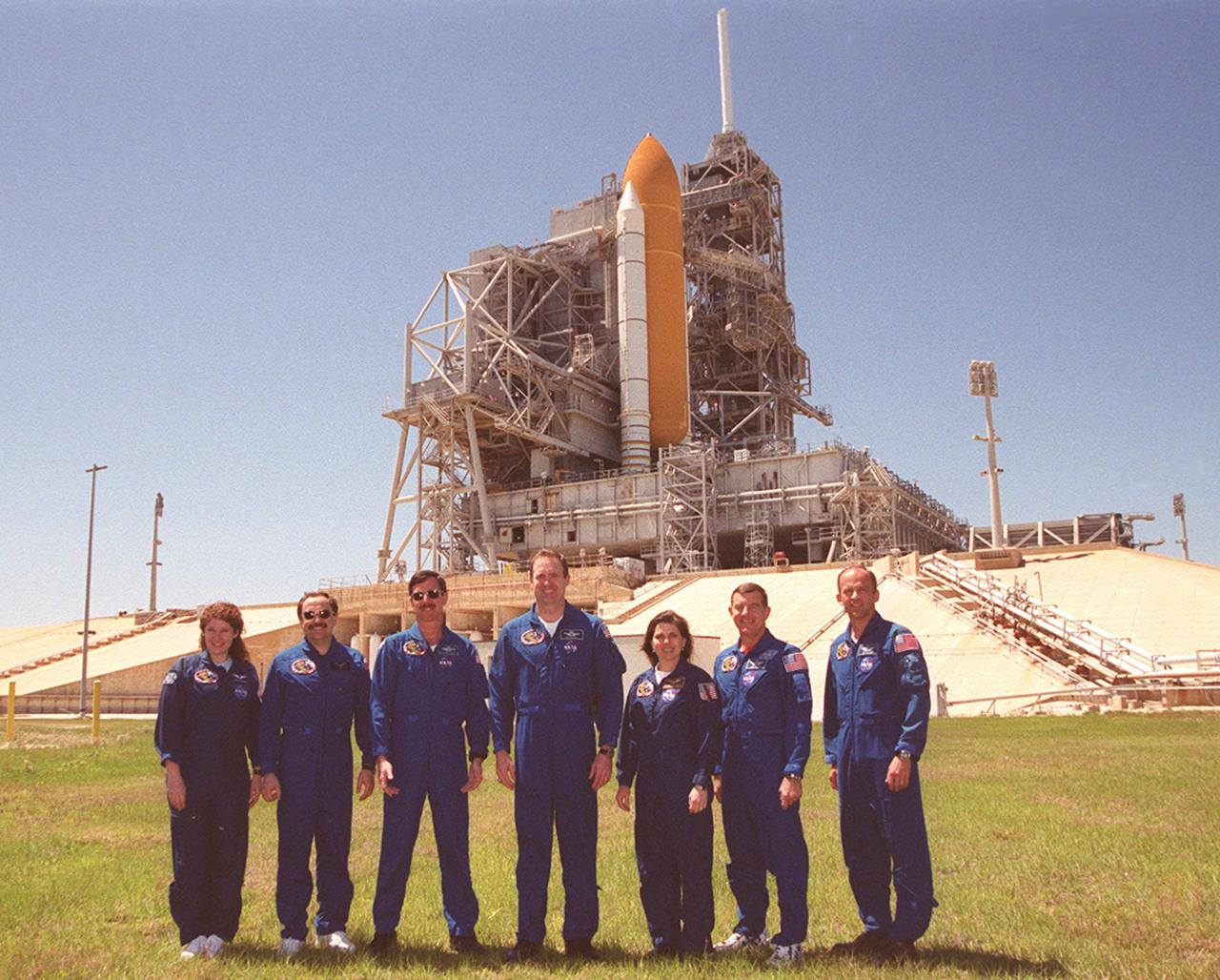
KENNEDY SPACE CENTER, Fla. -- During a break in their Terminal Countdown Demonstration Test (TCDT), the STS-101 crew poses in front of Space Shuttle Atlantis at Launch Pad 39A. Standing, left to right, are Mission Specialists Susan J. Helms and Yury Usachev of Russia; Pilot Scott J. "Doc" Horowitz; Commander James D. Halsell Jr.; and Mission Specialists Mary Ellen Weber, James Voss and Jeffrey N. Williams. The TCDT includes emergency egress training and a simulated launch countdown. During their mission to the International Space Station, the STS-101 crew will be delivering logistics and supplies, plus preparing the Station for the arrival of the Zvezda Service Module, expected to be launched by Russia in July 2000. Also, the crew will conduct one space walk to perform maintenance on the Space Station. This will be the third assembly flight for the Space Station. STS-101 is scheduled to launch April 24 at 4:15 p.m. from Launch Pad 39A