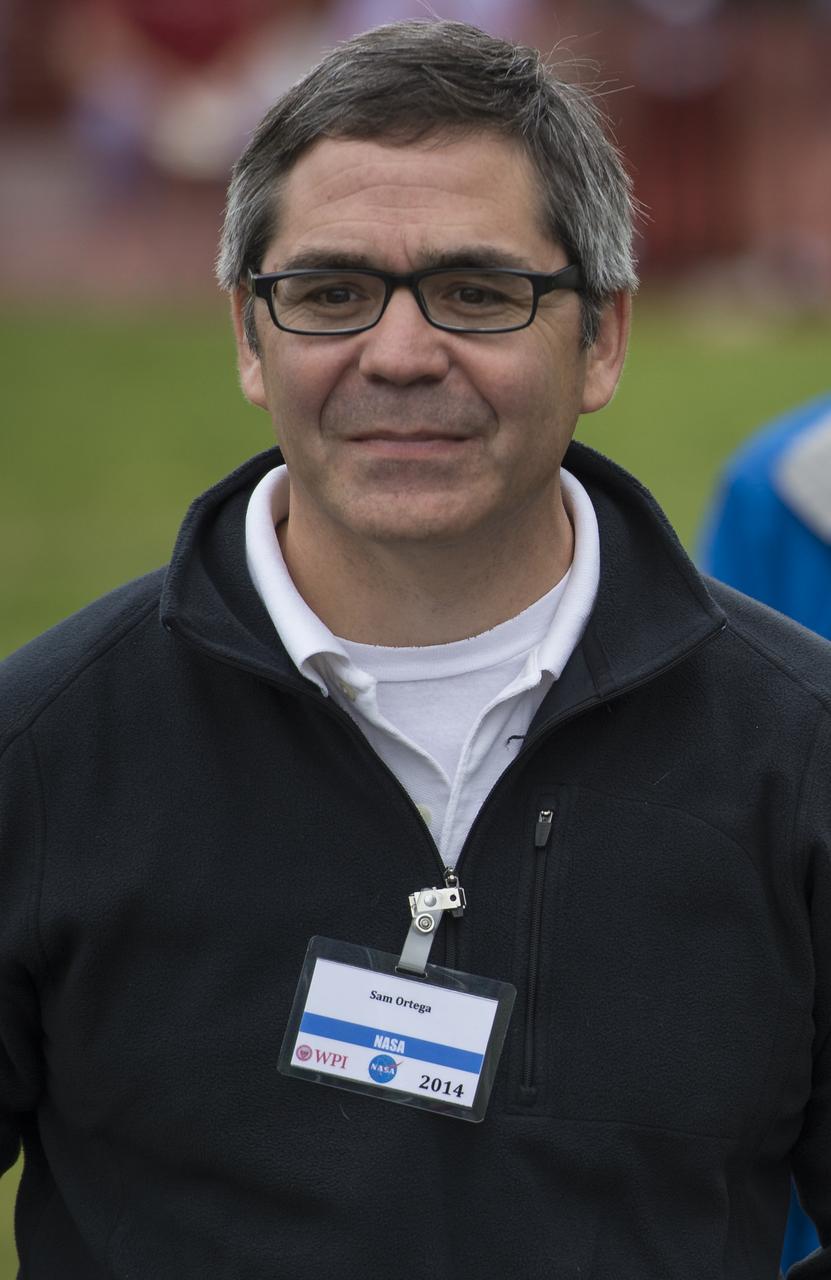
Sam Ortega, NASA program manager for Centennial Challenges, is seen during the 2014 NASA Centennial Challenges Sample Return Robot Challenge, Thursday, June 12, 2014, at the Worcester Polytechnic Institute (WPI) in Worcester, Mass. Eighteen teams are competing for a $1.5 million NASA prize purse. Teams will be required to demonstrate autonomous robots that can locate and collect samples from a wide and varied terrain, operating without human control. The objective of this NASA-WPI Centennial Challenge is to encourage innovations in autonomous navigation and robotics technologies. Innovations stemming from the challenge may improve NASA's capability to explore a variety of destinations in space, as well as enhance the nation's robotic technology for use in industries and applications on Earth. Photo Credit: (NASA/Joel Kowsky)

Sam Ortega, NASA program manager for Centennial Challenges, is interviewed by a member of the media before the start of level two competition at the 2014 NASA Centennial Challenges Sample Return Robot Challenge, Thursday, June 12, 2014, at the Worcester Polytechnic Institute (WPI) in Worcester, Mass. Eighteen teams are competing for a $1.5 million NASA prize purse. Teams will be required to demonstrate autonomous robots that can locate and collect samples from a wide and varied terrain, operating without human control. The objective of this NASA-WPI Centennial Challenge is to encourage innovations in autonomous navigation and robotics technologies. Innovations stemming from the challenge may improve NASA's capability to explore a variety of destinations in space, as well as enhance the nation's robotic technology for use in industries and applications on Earth. Photo Credit: (NASA/Joel Kowsky)
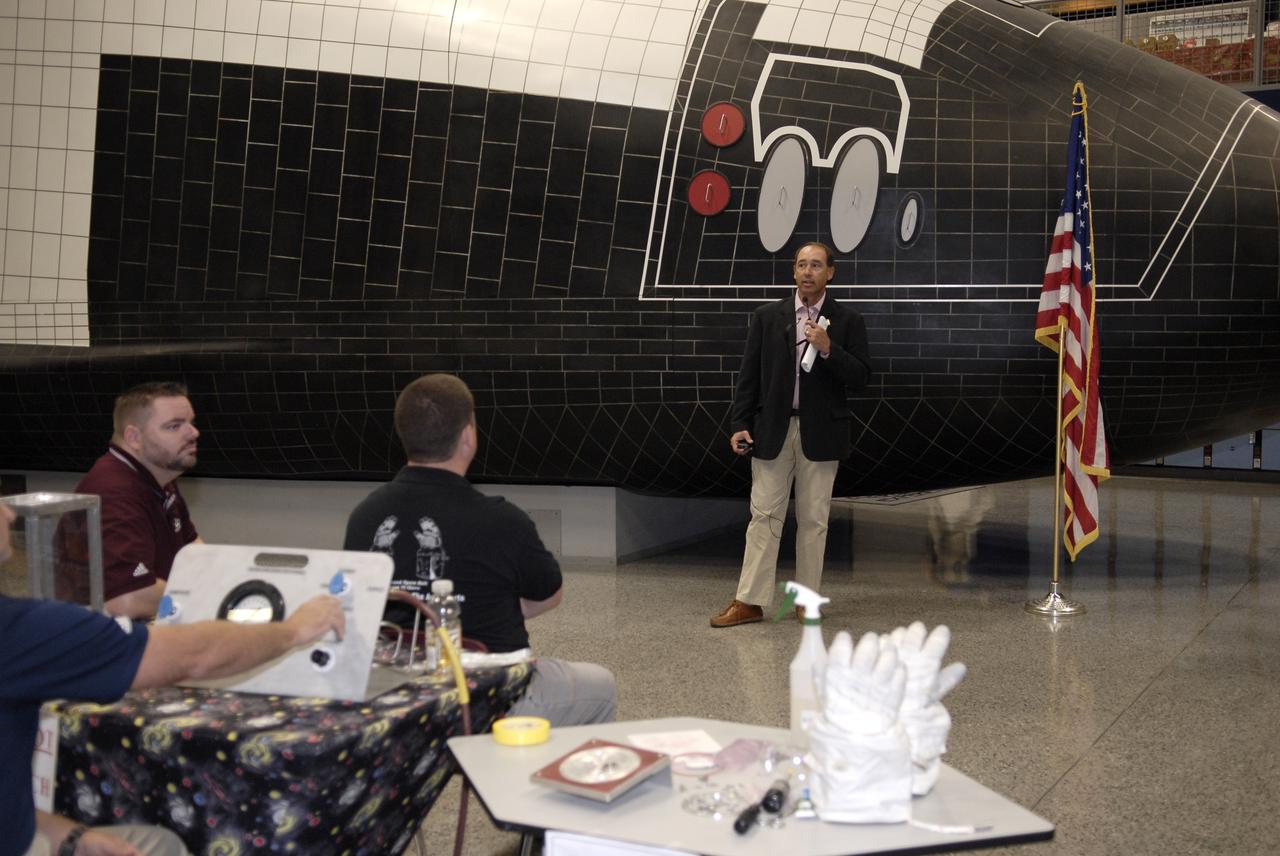
CAPE CANAVERAL, Fla. – Andy Petro, at microphone, manager of NASA Centennial Challenges, addresses the participants in the 2009 Astronaut Glove Challenge, part of NASA’s Centennial Challenges Program, at the Astronaut Hall of Fame near NASA’s Kennedy Space Center in Florida. The nationwide competition focused on developing improved pressure suit gloves for astronauts to use while working in space. During the challenge, inventors tested the gloves to measure dexterity and strength during operation in a glove box which simulates the vacuum of space. Centennial Challenges is NASA’s program of technology prizes for the citizen-inventor. The winning prize for the Glove Challenge is $250,000 provided by the Centennial Challenges Program. Photo credit: NASA/Kim Shiflett
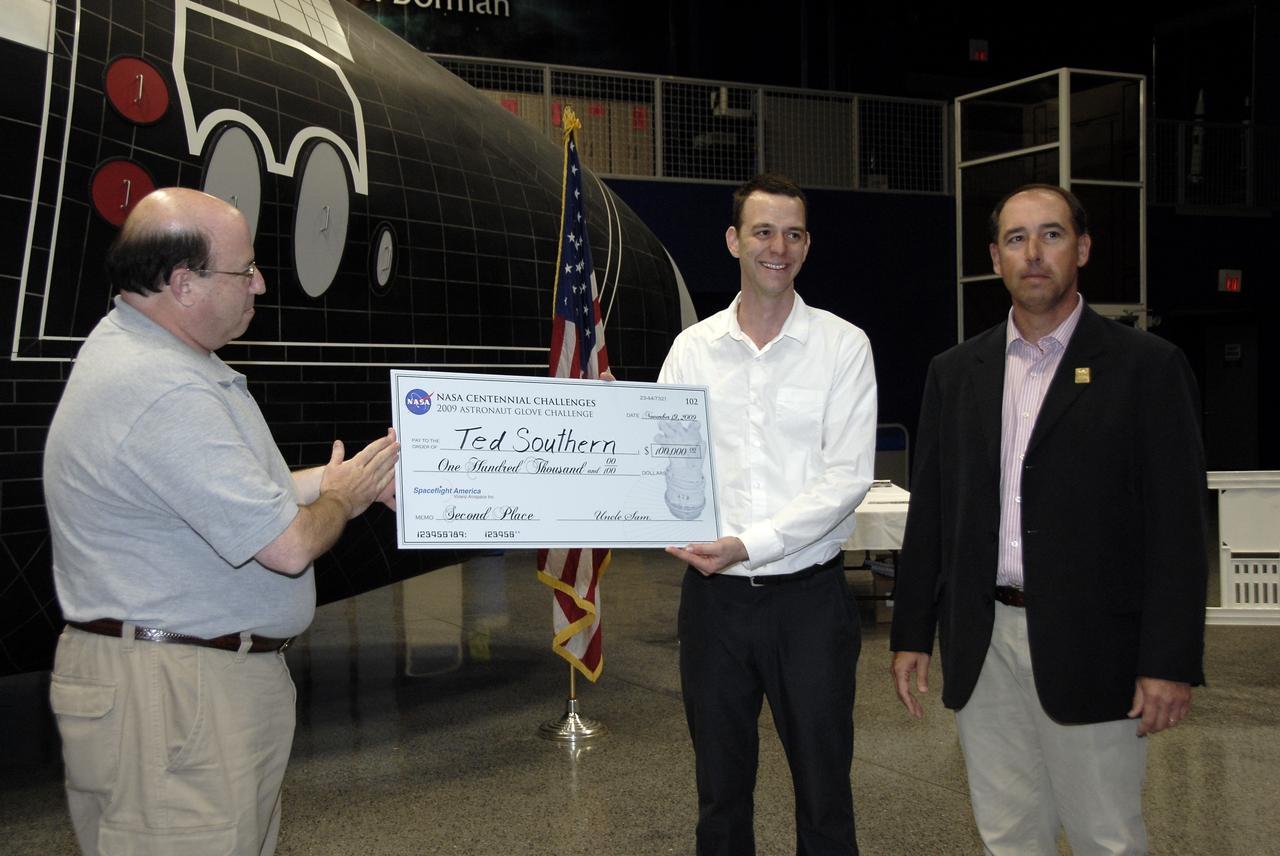
CAPE CANAVERAL, Fla. – Alan Hayes, left, chairman of Volanz Aerospace Inc., presents Ted Southern of Brooklyn, N.Y., with the second place prize of $100,000 at the 2009 Astronaut Glove Challenge, part of NASA’s Centennial Challenges Program, as Andy Petro, manager of NASA Centennial Challenges, stands by at the Astronaut Hall of Fame near NASA’s Kennedy Space Center in Florida. The nationwide competition focused on developing improved pressure suit gloves for astronauts to use while working in space. During the challenge, the gloves were submitted to burst tests, joint force tests and tests to measure their dexterity and strength during operation in a glove box which simulates the vacuum of space. Centennial Challenges is NASA’s program of technology prizes for the citizen-inventor. The winning prize for the Glove Challenge is $250,000 provided by the Centennial Challenges Program. Photo credit: NASA/Kim Shiflett
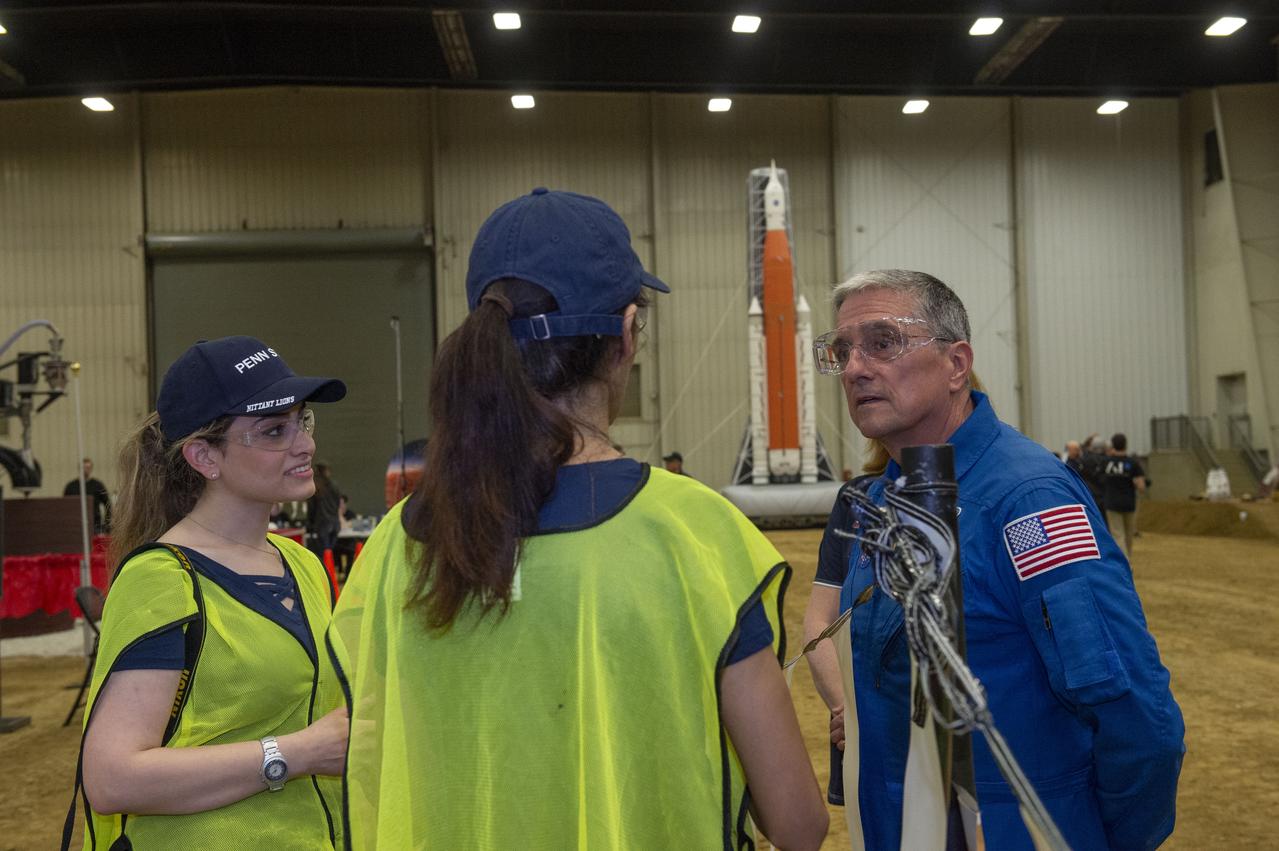
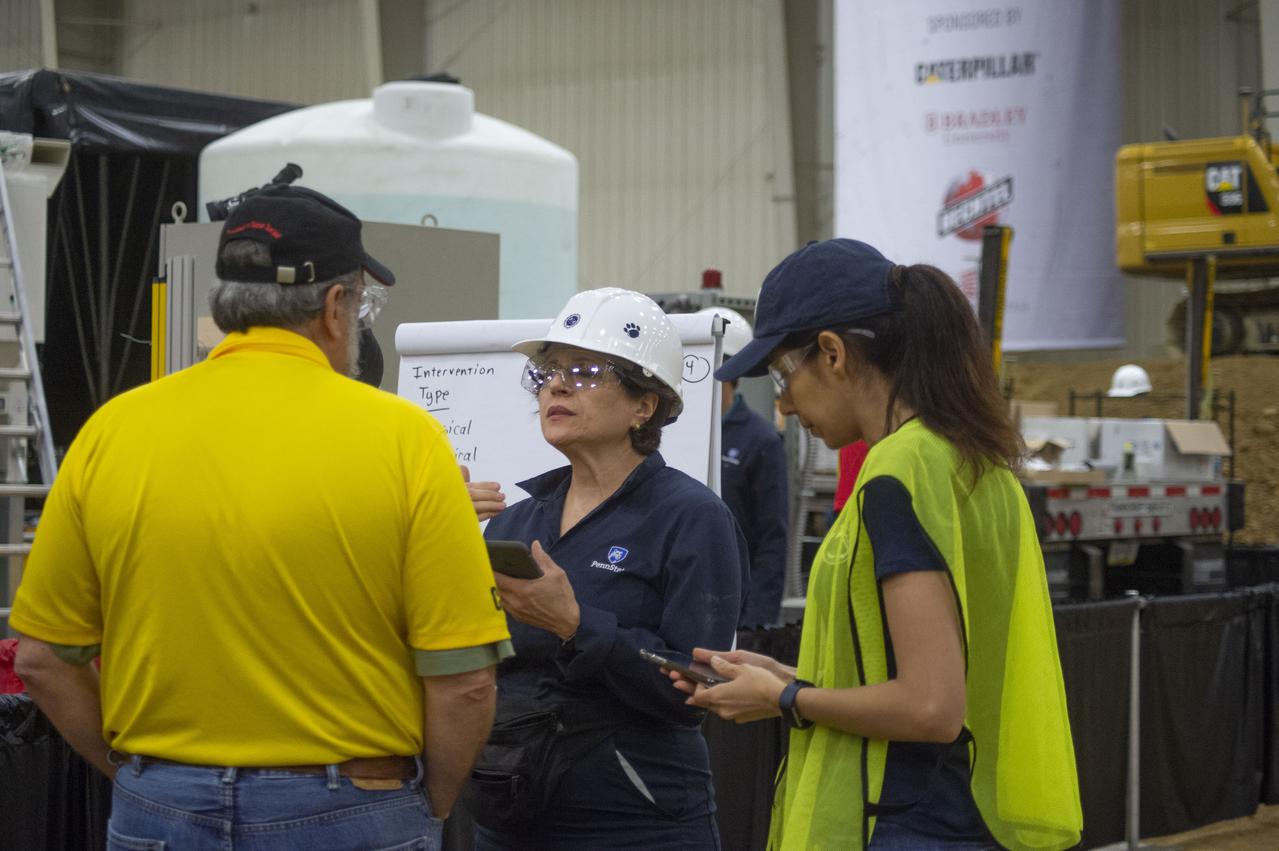
Center in Edwards, Illinois, May 1-4, 2019. The habitat print is the final level of the multi-phase competition, which began in in 2015. The challenge is managed by NASA's Centennial Challenges program, and partner Bradley University of Peoria, Illinois. Astronaut Don Thomas talks with Penn State team members Negar Ashrafi and Maryam Hojati.
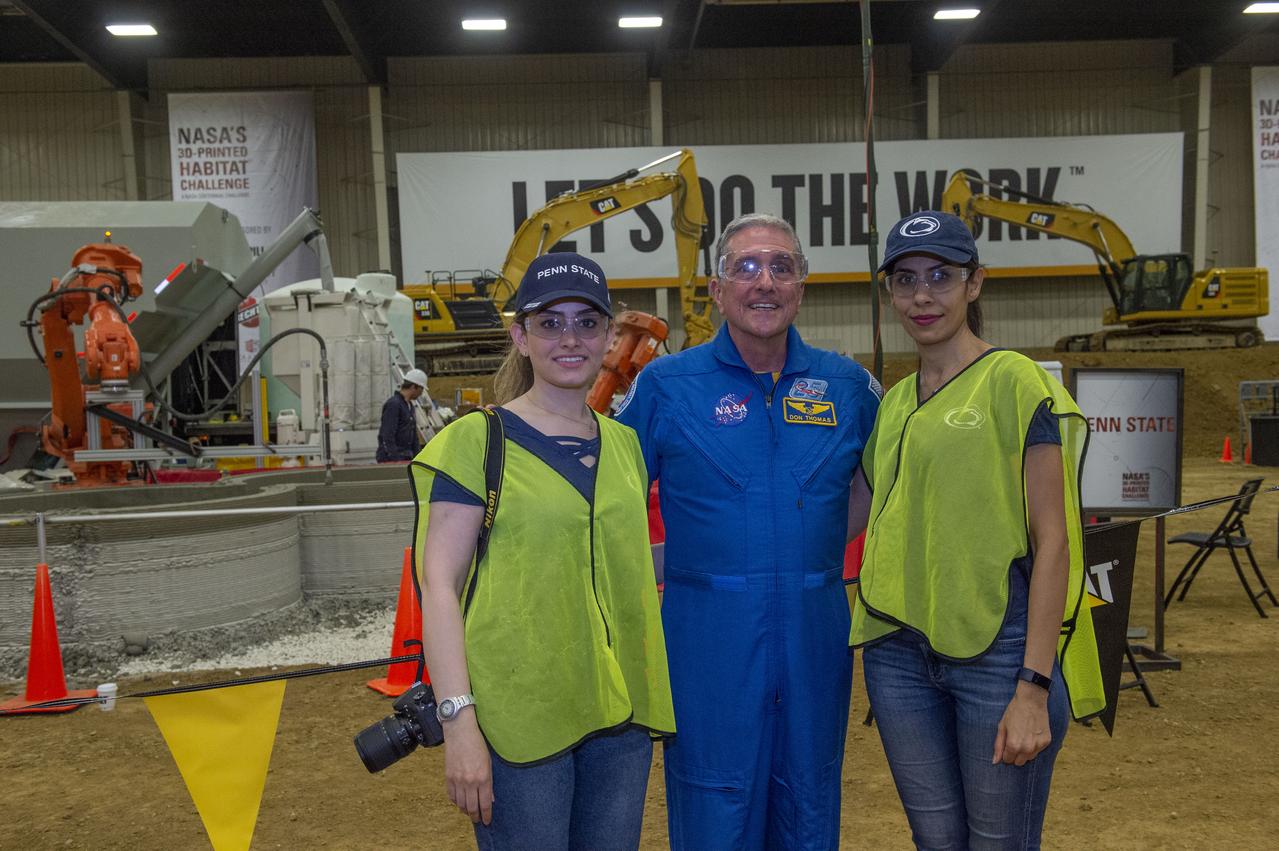
Center in Edwards, Illinois, May 1-4, 2019. The habitat print is the final level of the multi-phase competition, which began in in 2015. The challenge is managed by NASA's Centennial Challenges program, and partner Bradley University of Peoria, Illinois. Astronaut Don Thomas talks with Penn State team members Negar Ashrafi and Maryam Hojati.
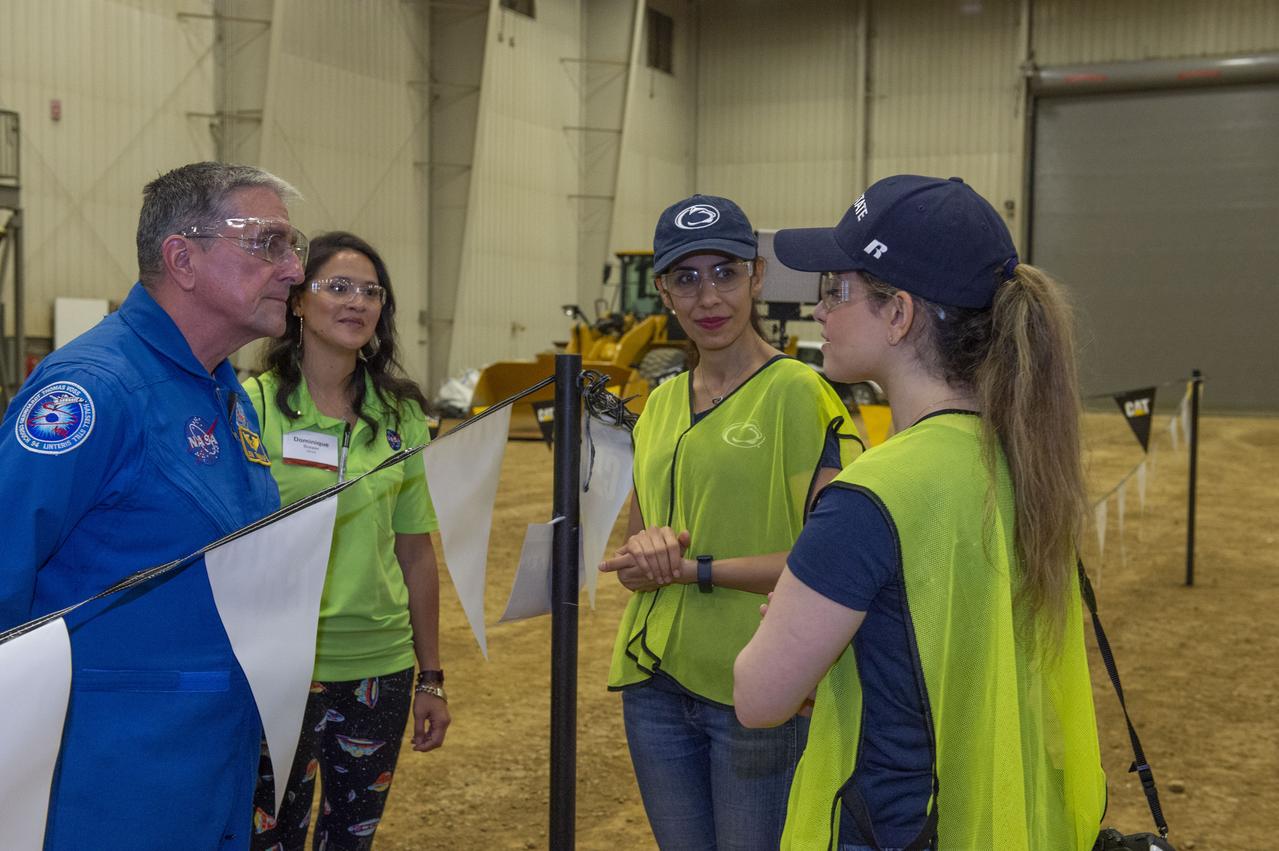
Center in Edwards, Illinois, May 1-4, 2019. The habitat print is the final level of the multi-phase competition, which began in in 2015. The challenge is managed by NASA's Centennial Challenges program, and partner Bradley University of Peoria, Illinois. Astronaut Don Thomas talks with Penn State team members Negar Ashrafi and Maryam Hojati.

Sam Ortega, NASA program manager of Centennial Challenges, watches as robots attempt the rerun of the level one challenge during the 2014 NASA Centennial Challenges Sample Return Robot Challenge, Saturday, June 14, 2014, at the Worcester Polytechnic Institute (WPI) in Worcester, Mass. Eighteen teams are competing for a $1.5 million NASA prize purse. Teams will be required to demonstrate autonomous robots that can locate and collect samples from a wide and varied terrain, operating without human control. The objective of this NASA-WPI Centennial Challenge is to encourage innovations in autonomous navigation and robotics technologies. Innovations stemming from the challenge may improve NASA's capability to explore a variety of destinations in space, as well as enhance the nation's robotic technology for use in industries and applications on Earth. Photo Credit: (NASA/Joel Kowsky)
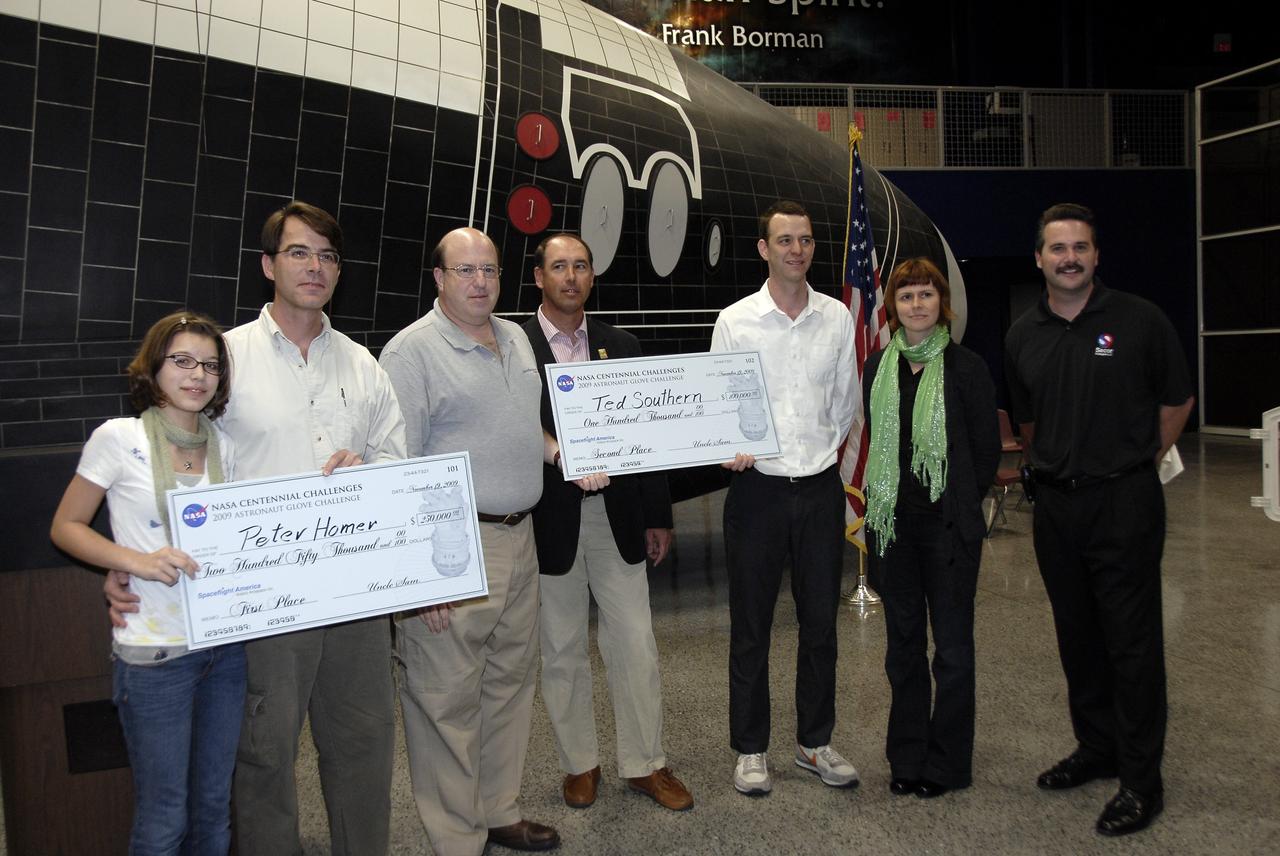
CAPE CANAVERAL, Fla. - At the Astronaut Hall of Fame near NASA’s Kennedy Space Center in Florida, the winners of the 2009 Astronaut Glove Challenge, part of NASA’s Centennial Challenges Program, pose for a group photograph with their friends, family and the event organizers. From left are Caroline Homer and her father, Peter Homer, winner of the $250,000 first prize; Alan Hayes, chairman of Volanz Aerospace Inc.; Andy Petro, manager of NASA Centennial Challenges; Ted Southern, winner of the $100,000 second prize; his friend and glove tester Amy Miller; and Paul Secor, Secor Strategies LLC. The nationwide competition focused on developing improved pressure suit gloves for astronauts to use while working in space. During the challenge, the gloves were submitted to burst tests, joint force tests and tests to measure their dexterity and strength during operation in a glove box which simulates the vacuum of space. Centennial Challenges is NASA’s program of technology prizes for the citizen-inventor. The winning prize for the Glove Challenge is $250,000 provided by the Centennial Challenges Program. Photo credit: NASA/Kim Shiflett
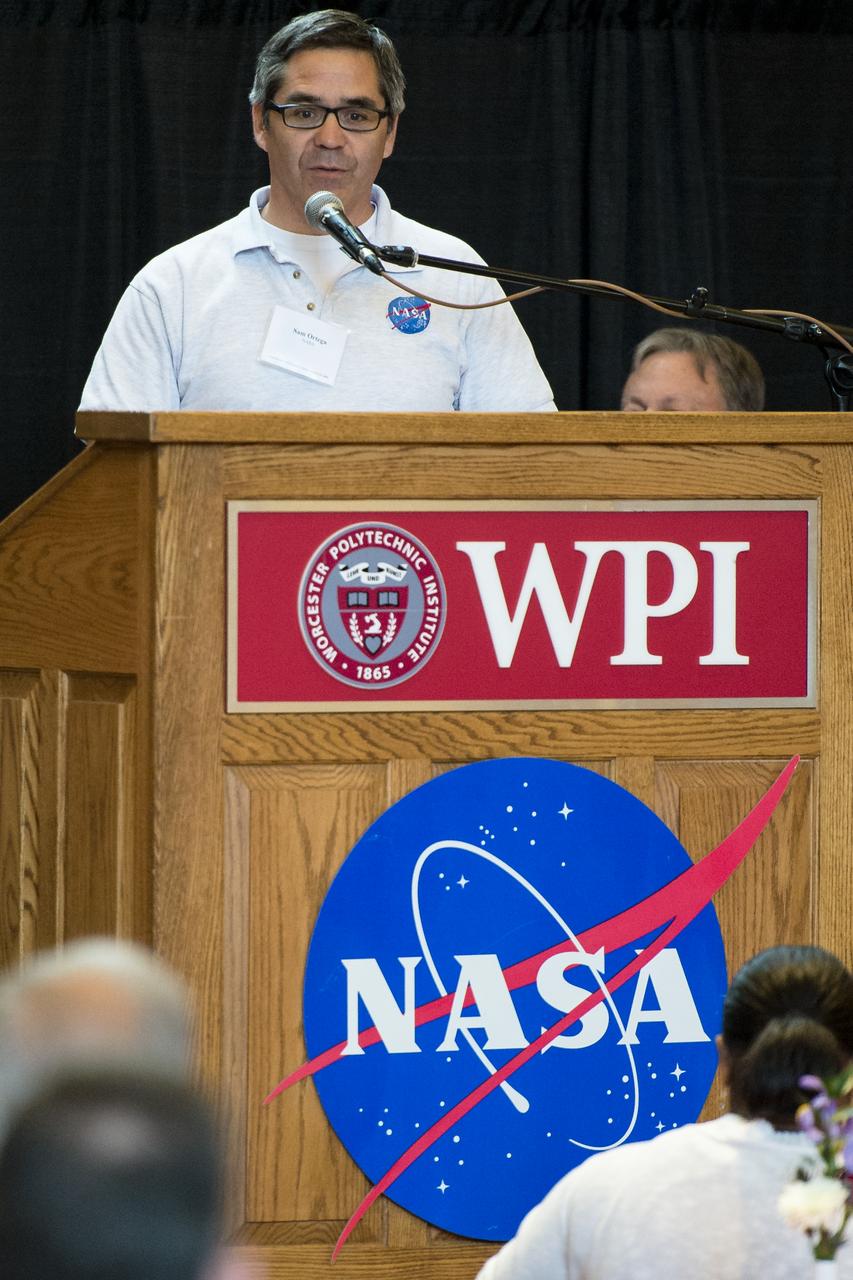
Sam Ortega, NASA Centennial Challenges Program Manager, speaks at a breakfast opening the TouchTomorrow Festival, held in conjunction with the 2014 NASA Centennial Challenges Sample Return Robot Challenge, Saturday, June 14, 2014, at the Worcester Polytechnic Institute (WPI) in Worcester, Mass. Eighteen teams are competing for a $1.5 million NASA prize purse. Teams will be required to demonstrate autonomous robots that can locate and collect samples from a wide and varied terrain, operating without human control. The objective of this NASA-WPI Centennial Challenge is to encourage innovations in autonomous navigation and robotics technologies. Innovations stemming from the challenge may improve NASA's capability to explore a variety of destinations in space, as well as enhance the nation's robotic technology for use in industries and applications on Earth. Photo Credit: (NASA/Joel Kowsky)

NASA Program Manager for Centennial Challenges Sam Ortega help show a young visitor how to drive a rover as part of the interactive NASA Mars rover exhibit during the Worcester Polytechnic Institute (WPI) "TouchTomorrow" education and outreach event that was held in tandem with the NASA-WPI Sample Return Robot Centennial Challenge on Saturday, June 16, 2012 in Worcester, Mass. The NASA-WPI challenge tasked robotic teams to build autonomous robots that can identify, collect and return samples. NASA needs autonomous robotic capability for future planetary exploration. Photo Credit: (NASA/Bill Ingalls)
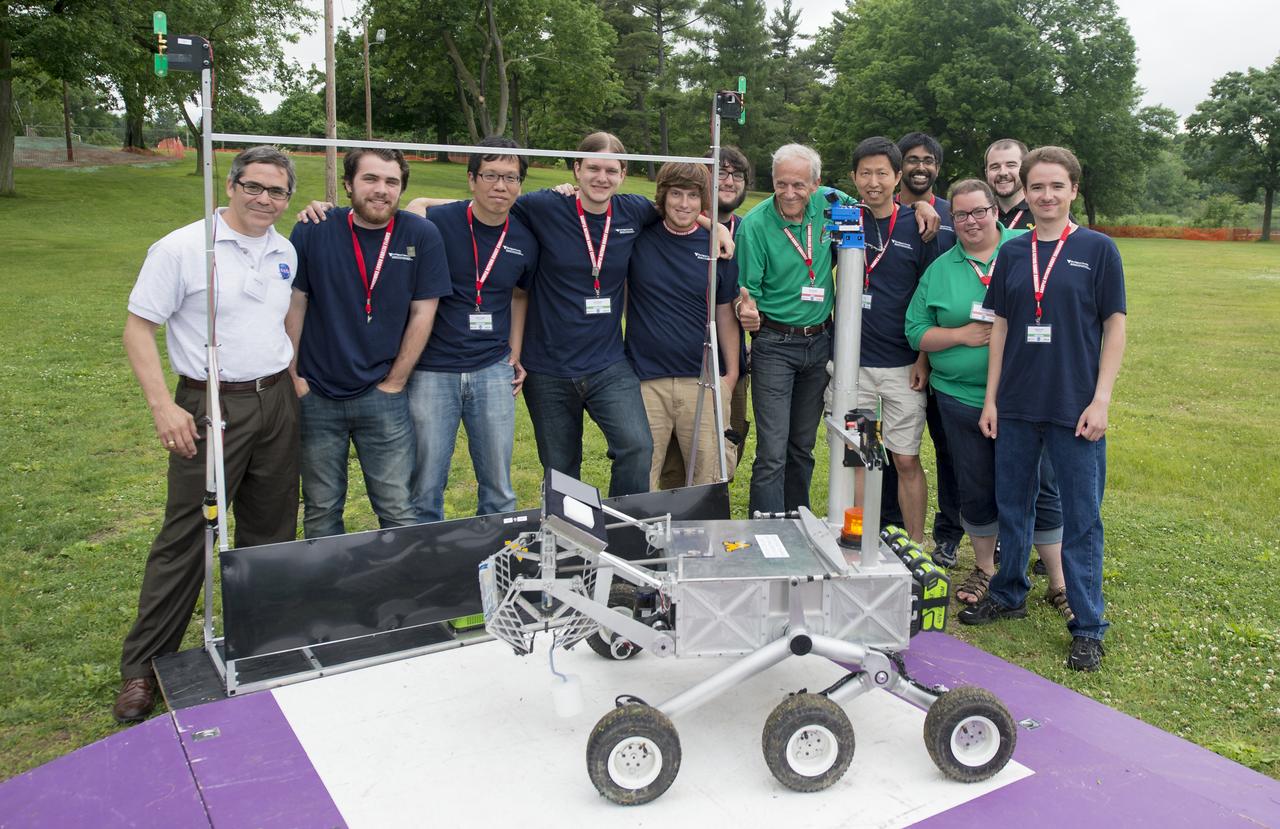
Members of team Mountaineers pose with officials from the 2014 NASA Centennial Challenges Sample Return Robot Challenge on Saturday, June 14, 2014 at Worcester Polytechnic Institute (WPI) in Worcester, Mass. Team Mountaineer was the only team to complete the level one challenge this year. Team Mountaineer members, from left (in blue shirts) are: Ryan Watson, Marvin Cheng, Scott Harper, Jarred Strader, Lucas Behrens, Yu Gu, Tanmay Mandal, Alexander Hypes, and Nick Ohi Challenge judges and competition staff (in white and green polo shirts) from left are: Sam Ortega, NASA Centennial Challenge program manager; Ken Stafford, challenge technical advisor, WPI; Colleen Shaver, challenge event manager, WPI. During the competition, teams were required to demonstrate autonomous robots that can locate and collect samples from a wide and varied terrain, operating without human control. The objective of this NASA-WPI Centennial Challenge was to encourage innovations in autonomous navigation and robotics technologies. Innovations stemming from the challenge may improve NASA's capability to explore a variety of destinations in space, as well as enhance the nation's robotic technology for use in industries and applications on Earth. Photo Credit: (NASA/Joel Kowsky)
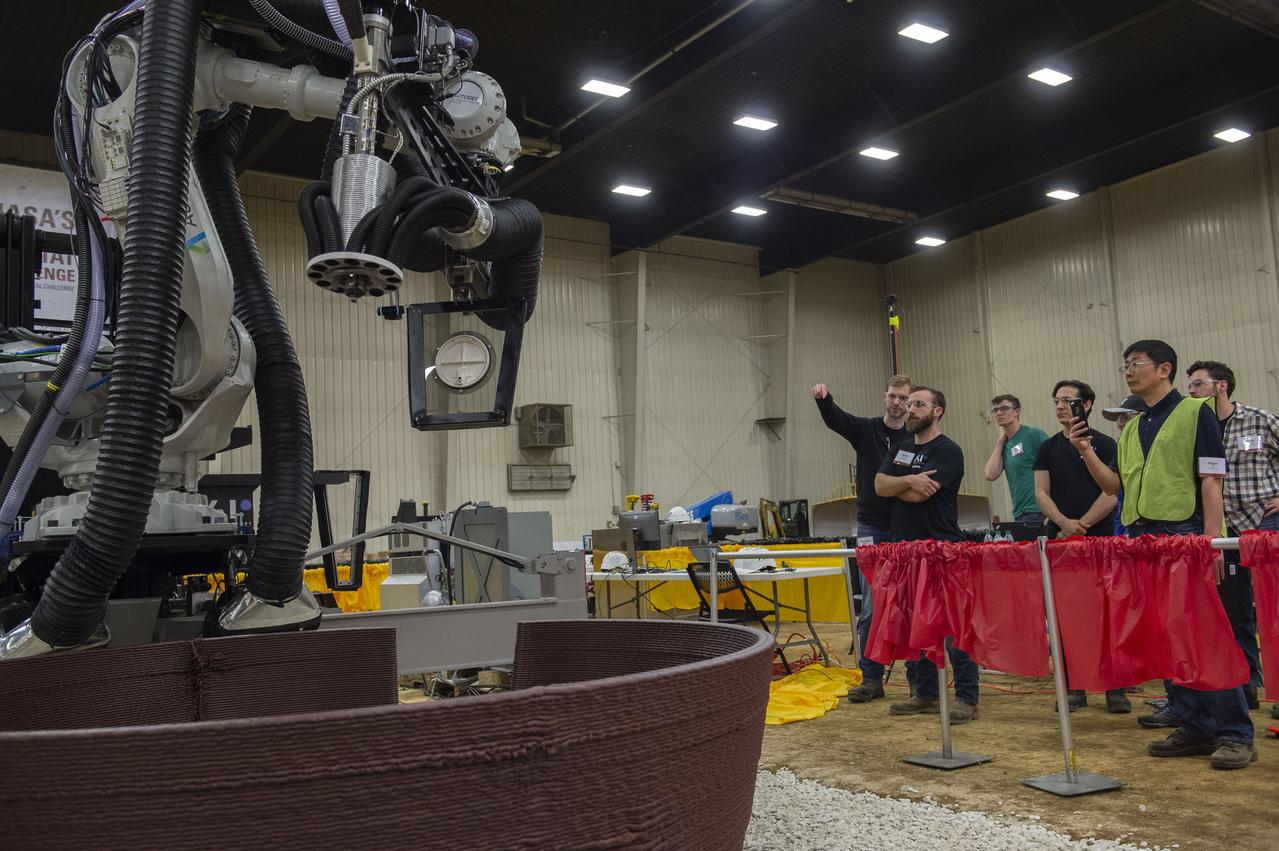
AI. SpaceFactory of New York and Pennsylvania State University of College Park print subscale habitat structures at NASA's 3D-Printed Habitat Challenge, held at the Caterpillar Edwards Demonstration & Learning Center in Edwards, Illinois, May 1-4, 2019. The habitat print is the final level of the multi-phase competition, which began in in 2015. The challenge is managed by NASA's Centennial Challenges program, and partner Bradley University of Peoria, Illinois. First window placement in AI Spacefactory habitat.
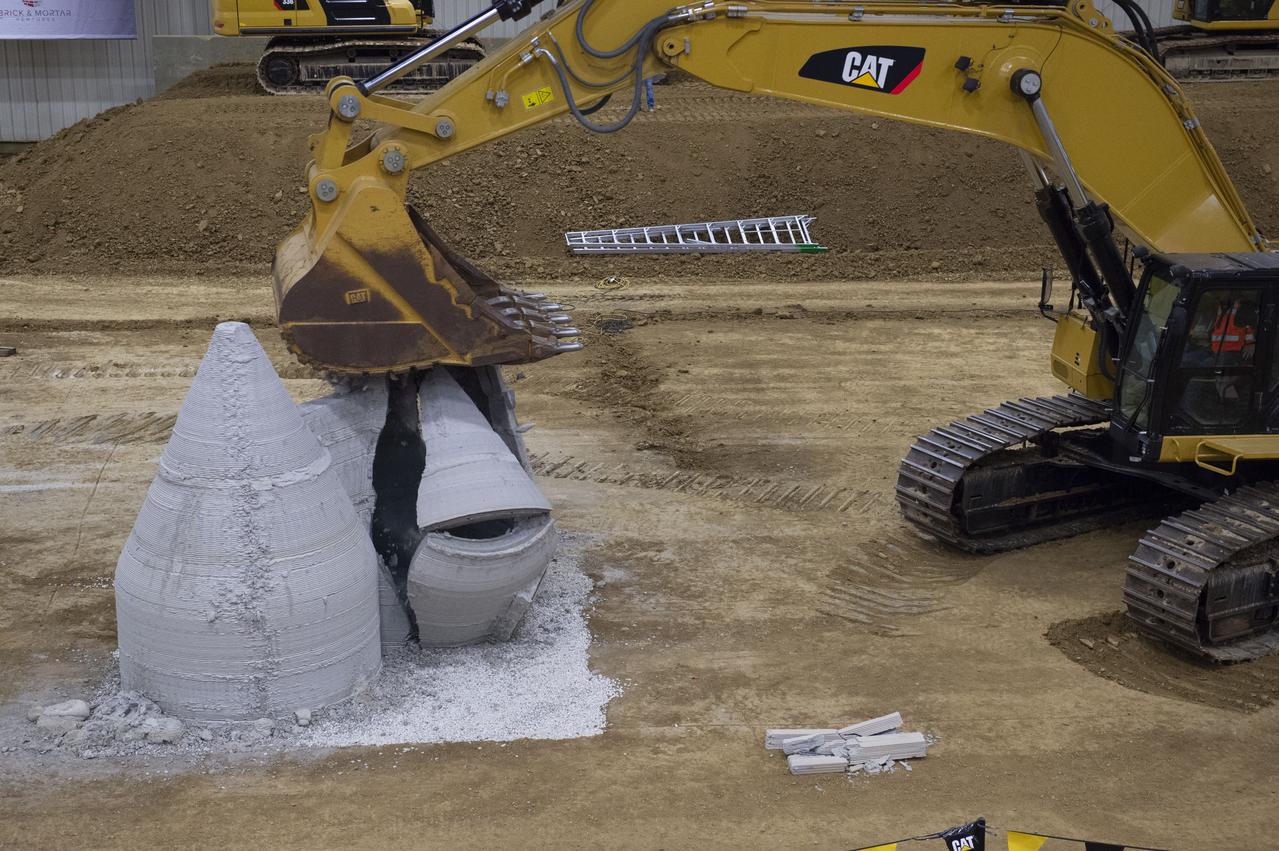
AI. SpaceFactory of New York and Pennsylvania State University of College Park print subscale habitat structures at NASA's 3D-Printed Habitat Challenge, held at the Caterpillar Edwards Demonstration & Learning Center in Edwards, Illinois, May 1-4, 2019. The habitat print is the final level of the multi-phase competition, which began in in 2015. The challenge is managed by NASA's Centennial Challenges program, and partner Bradley University of Peoria, Illinois.
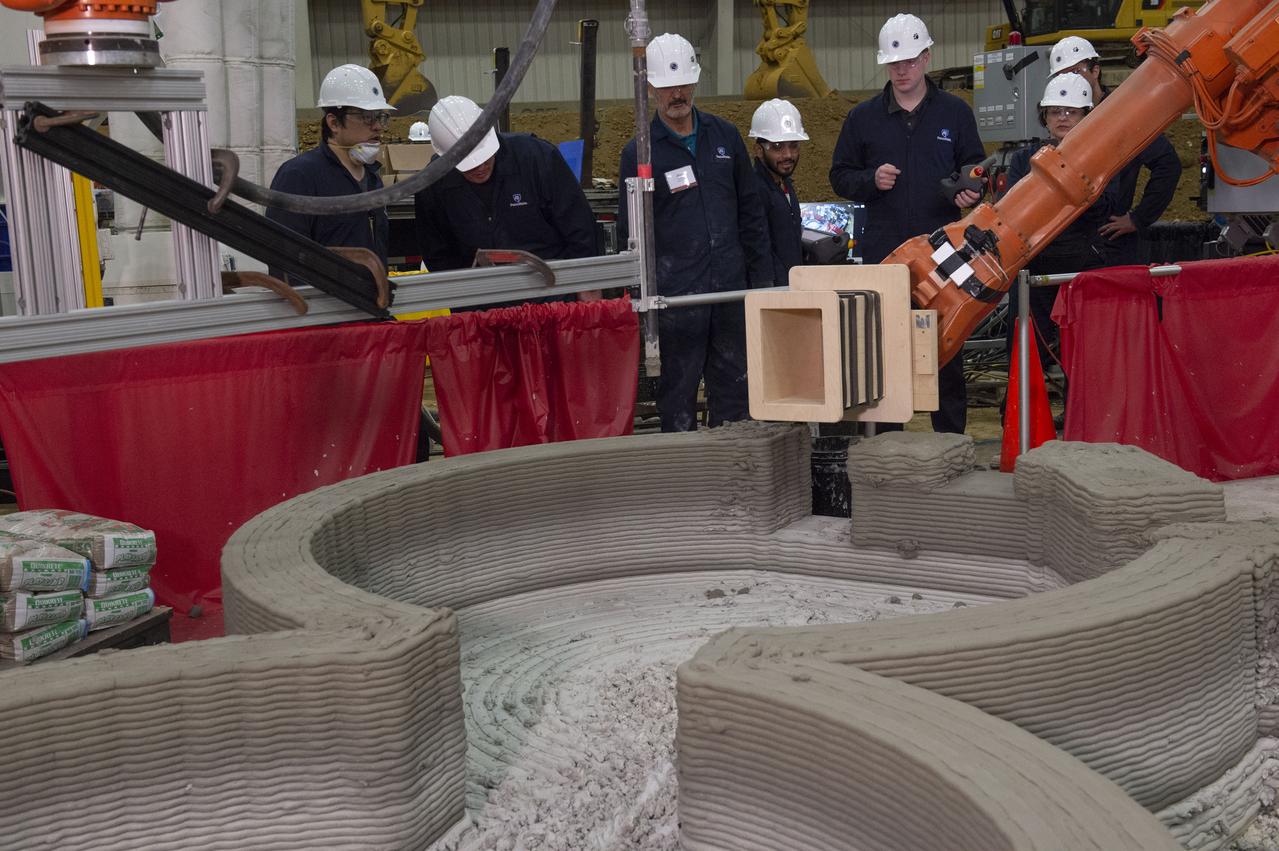
AI. SpaceFactory of New York and Pennsylvania State University of College Park print subscale habitat structures at NASA's 3D-Printed Habitat Challenge, held at the Caterpillar Edwards Demonstration & Learning Center in Edwards, Illinois, May 1-4, 2019. The habitat print is the final level of the multi-phase competition, which began in in 2015. The challenge is managed by NASA's Centennial Challenges program, and partner Bradley University of Peoria, Illinois. Insertion of window element in Penn State Habitat.
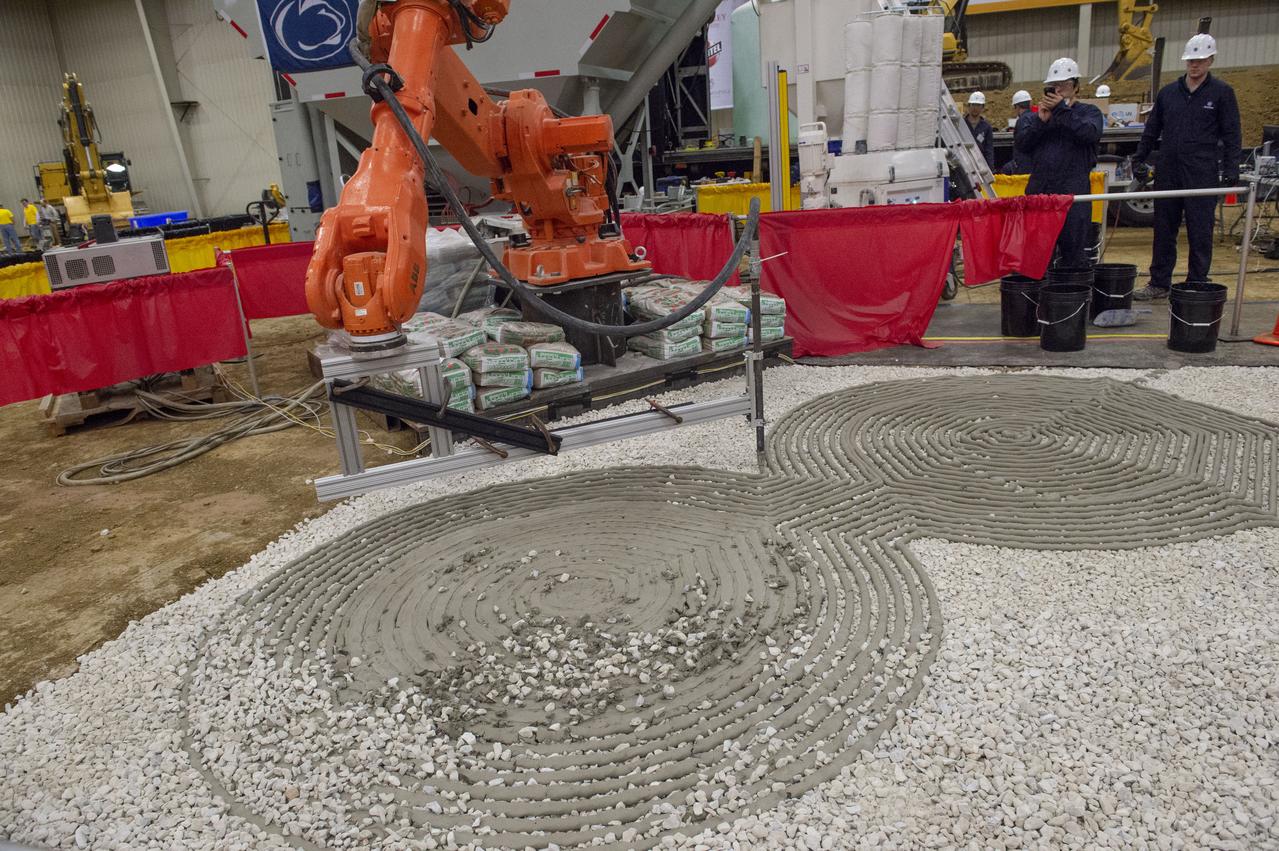
AI. SpaceFactory of New York and Pennsylvania State University of College Park print subscale habitat structures at NASA's 3D-Printed Habitat Challenge, held at the Caterpillar Edwards Demonstration & Learning Center in Edwards, Illinois, May 1-4, 2019. The habitat print is the final level of the multi-phase competition, which began in in 2015. The challenge is managed by NASA's Centennial Challenges program, and partner Bradley University of Peoria, Illinois. Initial footprint of 3D material laydown for Penn State habitat.

AI. SpaceFactory of New York and Pennsylvania State University of College Park print subscale habitat structures at NASA's 3D-Printed Habitat Challenge, held at the Caterpillar Edwards Demonstration & Learning Center in Edwards, Illinois, May 1-4, 2019. The habitat print is the final level of the multi-phase competition, which began in in 2015. The challenge is managed by NASA's Centennial Challenges program, and partner Bradley University of Peoria, Illinois. Bradley University students demonstrate force produced by air cannon.
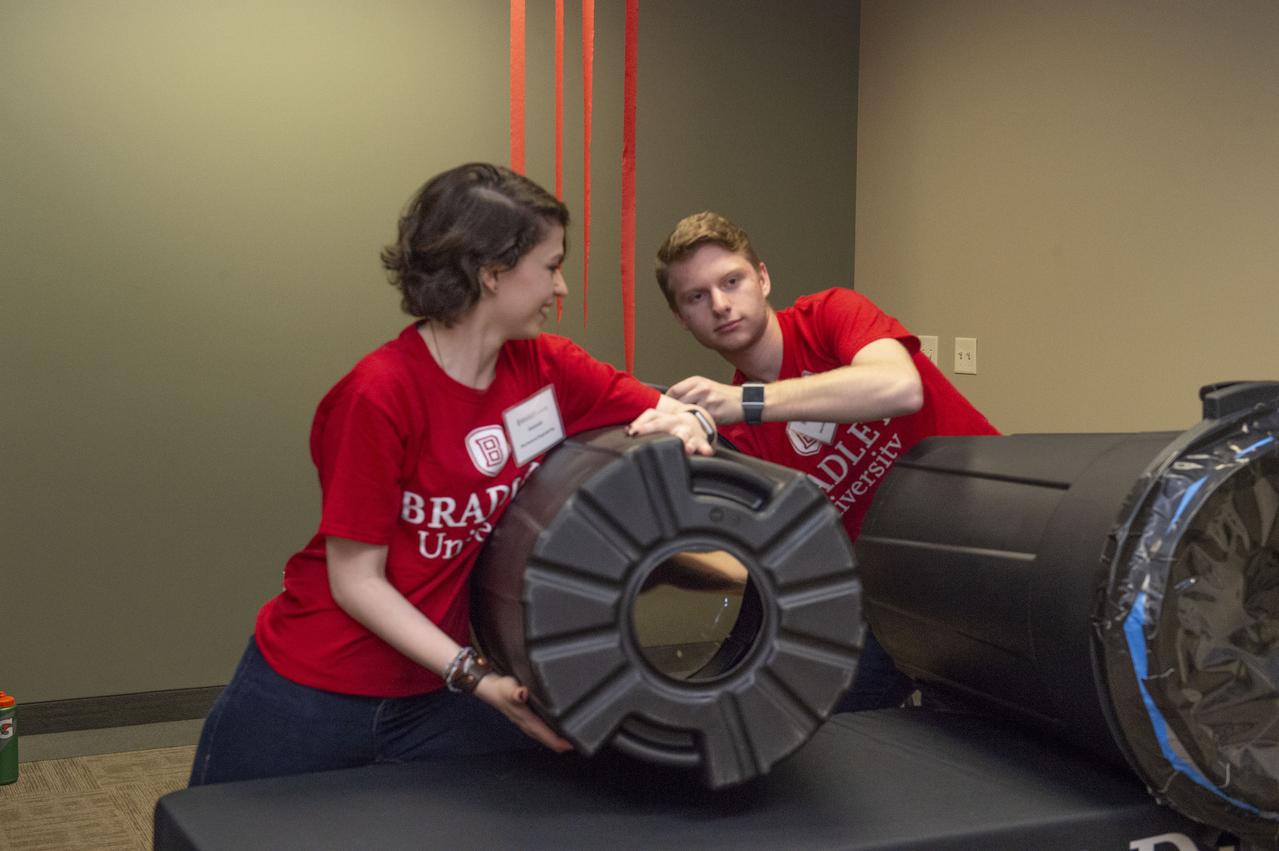
AI. SpaceFactory of New York and Pennsylvania State University of College Park print subscale habitat structures at NASA's 3D-Printed Habitat Challenge, held at the Caterpillar Edwards Demonstration & Learning Center in Edwards, Illinois, May 1-4, 2019. The habitat print is the final level of the multi-phase competition, which began in in 2015. The challenge is managed by NASA's Centennial Challenges program, and partner Bradley University of Peoria, Illinois. Bradley University students demonstrate force produced by air cannon.

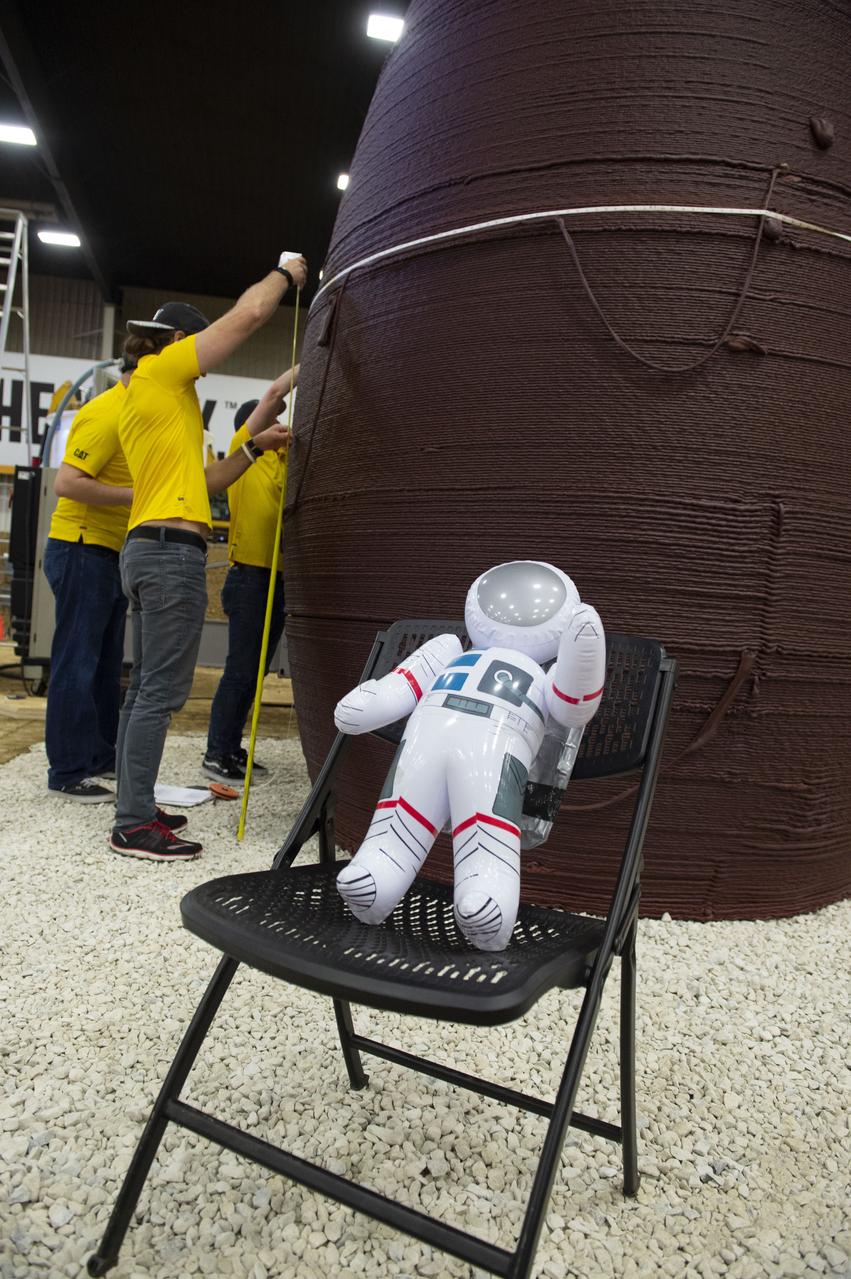
AI. SpaceFactory of New York and Pennsylvania State University of College Park print subscale habitat structures at NASA's 3D-Printed Habitat Challenge, held at the Caterpillar Edwards Demonstration & Learning Center in Edwards, Illinois, May 1-4, 2019. The habitat print is the final level of the multi-phase competition, which began in in 2015. The challenge is managed by NASA's Centennial Challenges program, and partner Bradley University of Peoria, Illinois. Final measurement of Penn State habitat before crush test.
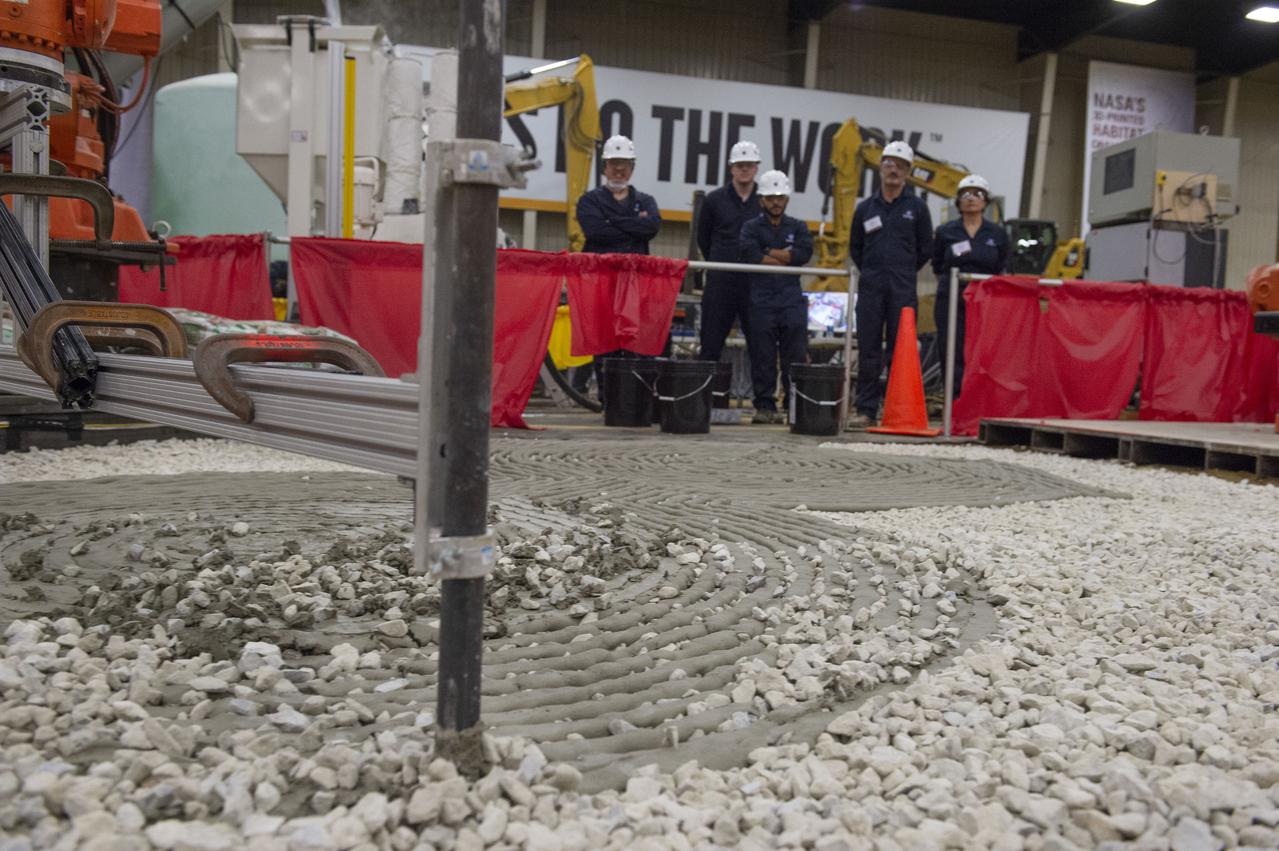
AI. SpaceFactory of New York and Pennsylvania State University of College Park print subscale habitat structures at NASA's 3D-Printed Habitat Challenge, held at the Caterpillar Edwards Demonstration & Learning Center in Edwards, Illinois, May 1-4, 2019. The habitat print is the final level of the multi-phase competition, which began in in 2015. The challenge is managed by NASA's Centennial Challenges program, and partner Bradley University of Peoria, Illinois. Initial footprint of 3D material laydown for Penn State habitat.

AI. SpaceFactory of New York and Pennsylvania State University of College Park print subscale habitat structures at NASA's 3D-Printed Habitat Challenge, held at the Caterpillar Edwards Demonstration & Learning Center in Edwards, Illinois, May 1-4, 2019. The habitat print is the final level of the multi-phase competition, which began in in 2015. The challenge is managed by NASA's Centennial Challenges program, and partner Bradley University of Peoria, Illinois. MSFC engineer Dr. Tracie Prater talks to public audience about the need for space habitat.
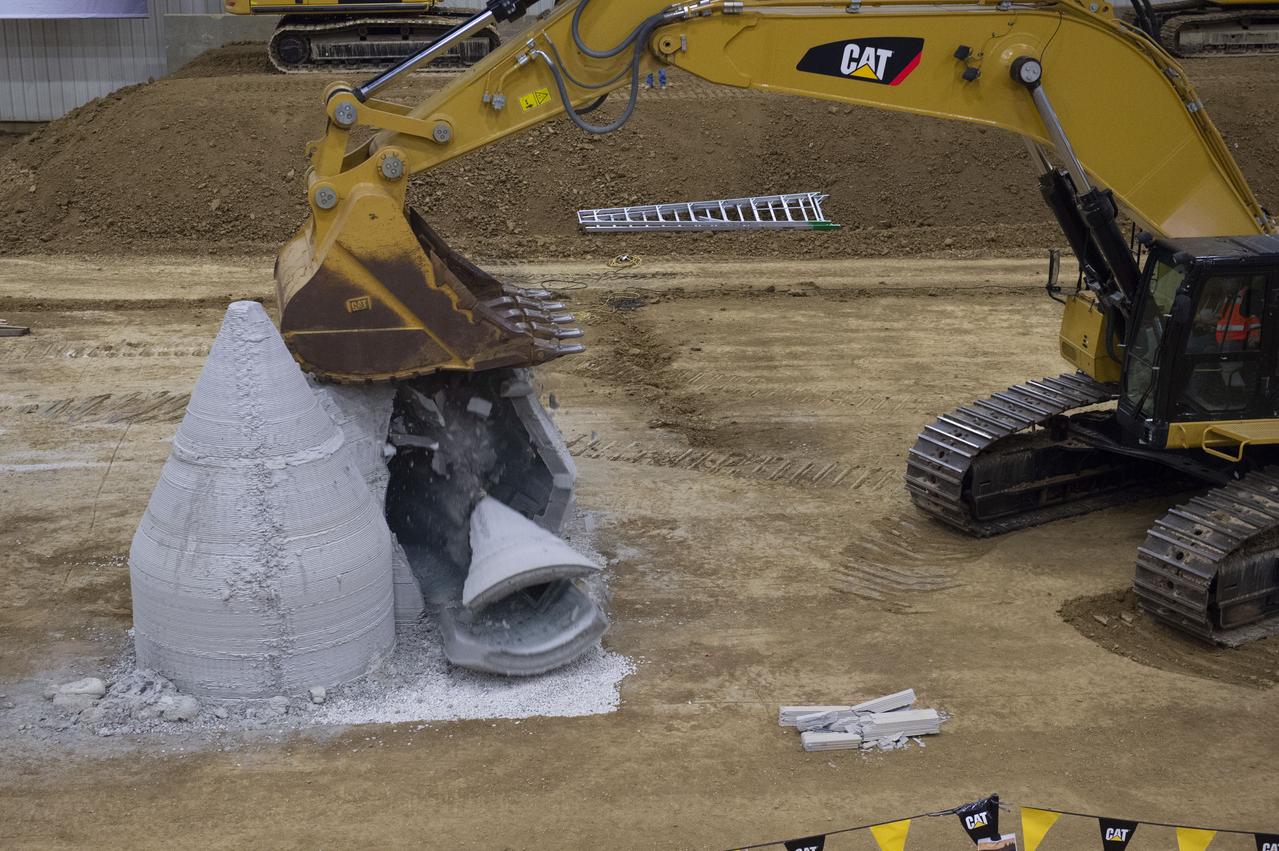
AI. SpaceFactory of New York and Pennsylvania State University of College Park print subscale habitat structures at NASA's 3D-Printed Habitat Challenge, held at the Caterpillar Edwards Demonstration & Learning Center in Edwards, Illinois, May 1-4, 2019. The habitat print is the final level of the multi-phase competition, which began in in 2015. The challenge is managed by NASA's Centennial Challenges program, and partner Bradley University of Peoria, Illinois.
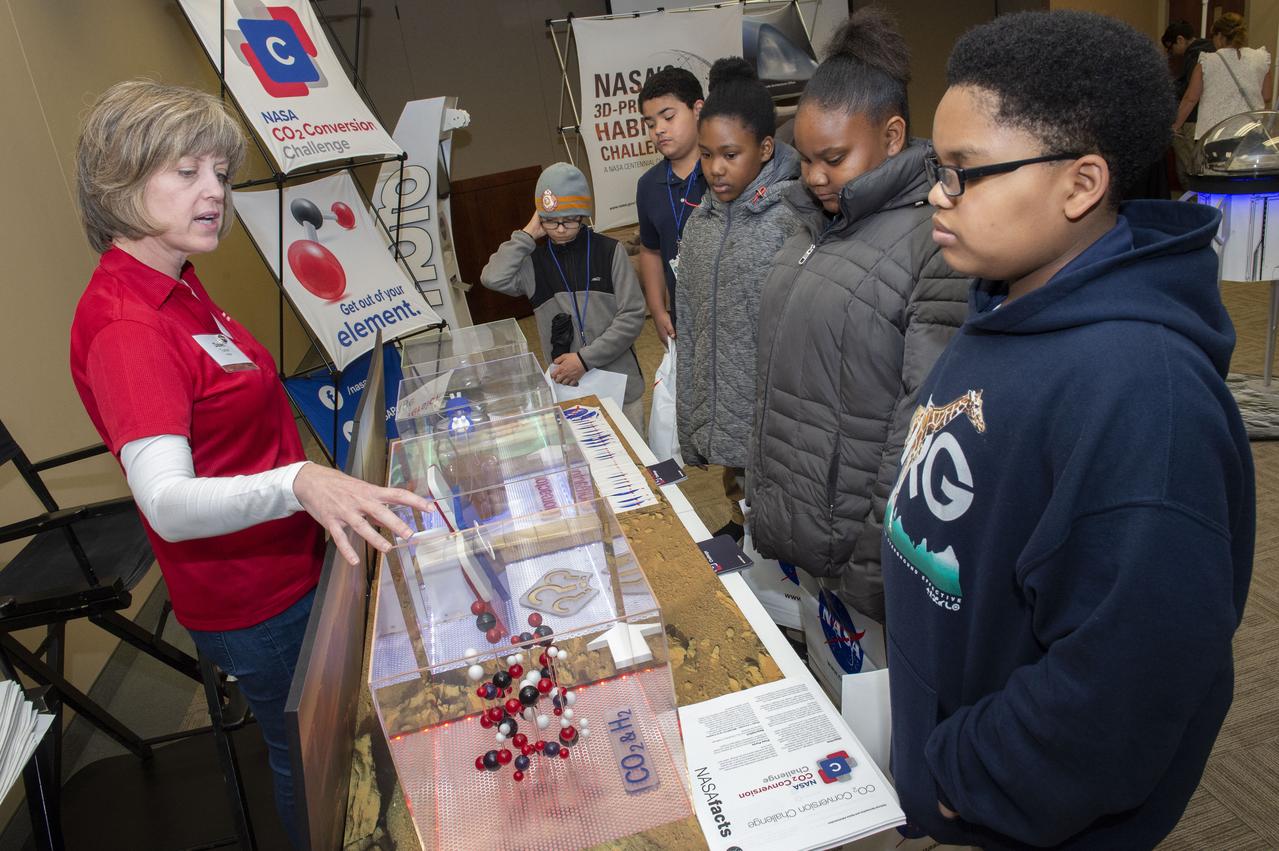
AI. SpaceFactory of New York and Pennsylvania State University of College Park print subscale habitat structures at NASA's 3D-Printed Habitat Challenge, held at the Caterpillar Edwards Demonstration & Learning Center in Edwards, Illinois, May 1-4, 2019. The habitat print is the final level of the multi-phase competition, which began in in 2015. The challenge is managed by NASA's Centennial Challenges program, and partner Bradley University of Peoria, Illinois. Dawn Mercer Turner talks to school children about CO2 conversion.
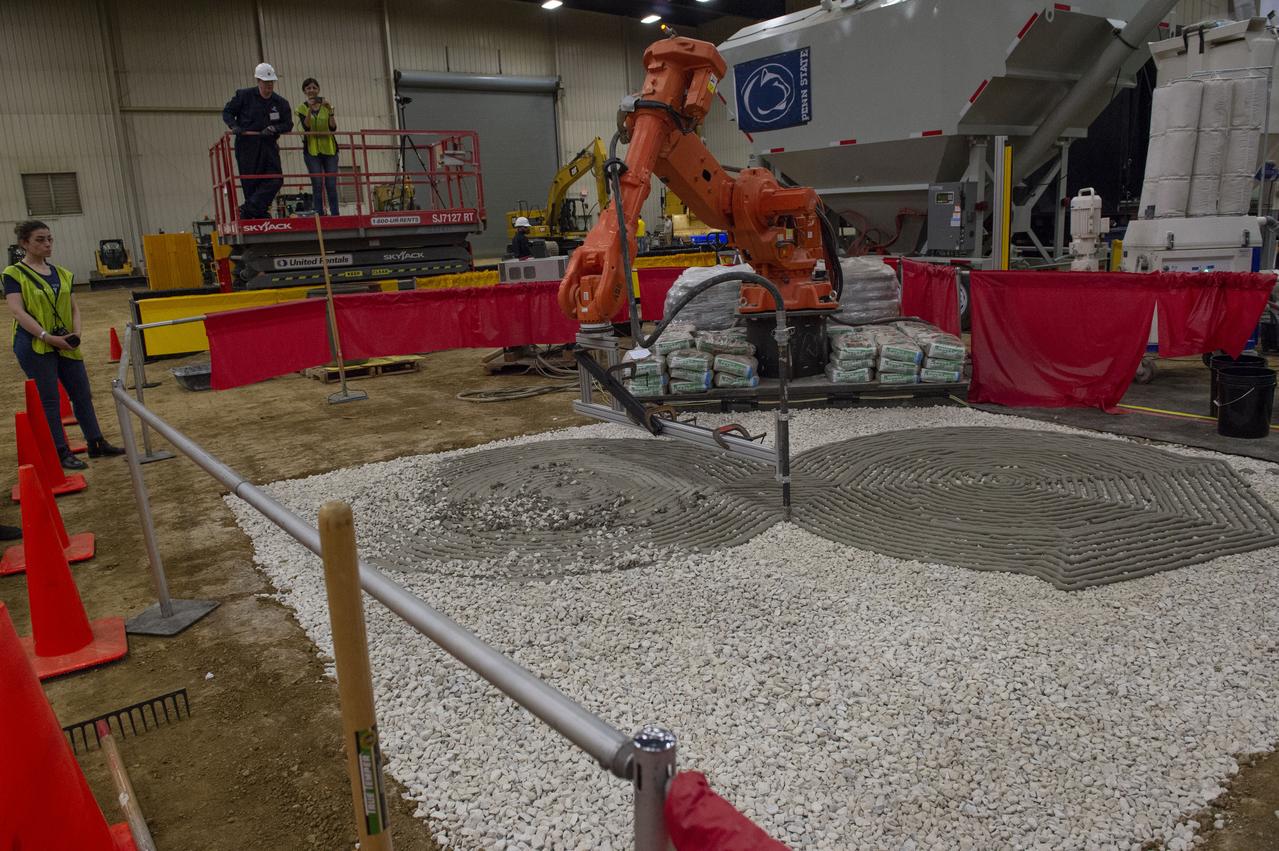
AI. SpaceFactory of New York and Pennsylvania State University of College Park print subscale habitat structures at NASA's 3D-Printed Habitat Challenge, held at the Caterpillar Edwards Demonstration & Learning Center in Edwards, Illinois, May 1-4, 2019. The habitat print is the final level of the multi-phase competition, which began in in 2015. The challenge is managed by NASA's Centennial Challenges program, and partner Bradley University of Peoria, Illinois. Initial footprint of 3D material laydown for Penn State habitat.

AI. SpaceFactory of New York and Pennsylvania State University of College Park print subscale habitat structures at NASA's 3D-Printed Habitat Challenge, held at the Caterpillar Edwards Demonstration & Learning Center in Edwards, Illinois, May 1-4, 2019. The habitat print is the final level of the multi-phase competition, which began in in 2015. The challenge is managed by NASA's Centennial Challenges program, and partner Bradley University of Peoria, Illinois. Initial footprint of 3D material laydown for Penn State habitat.
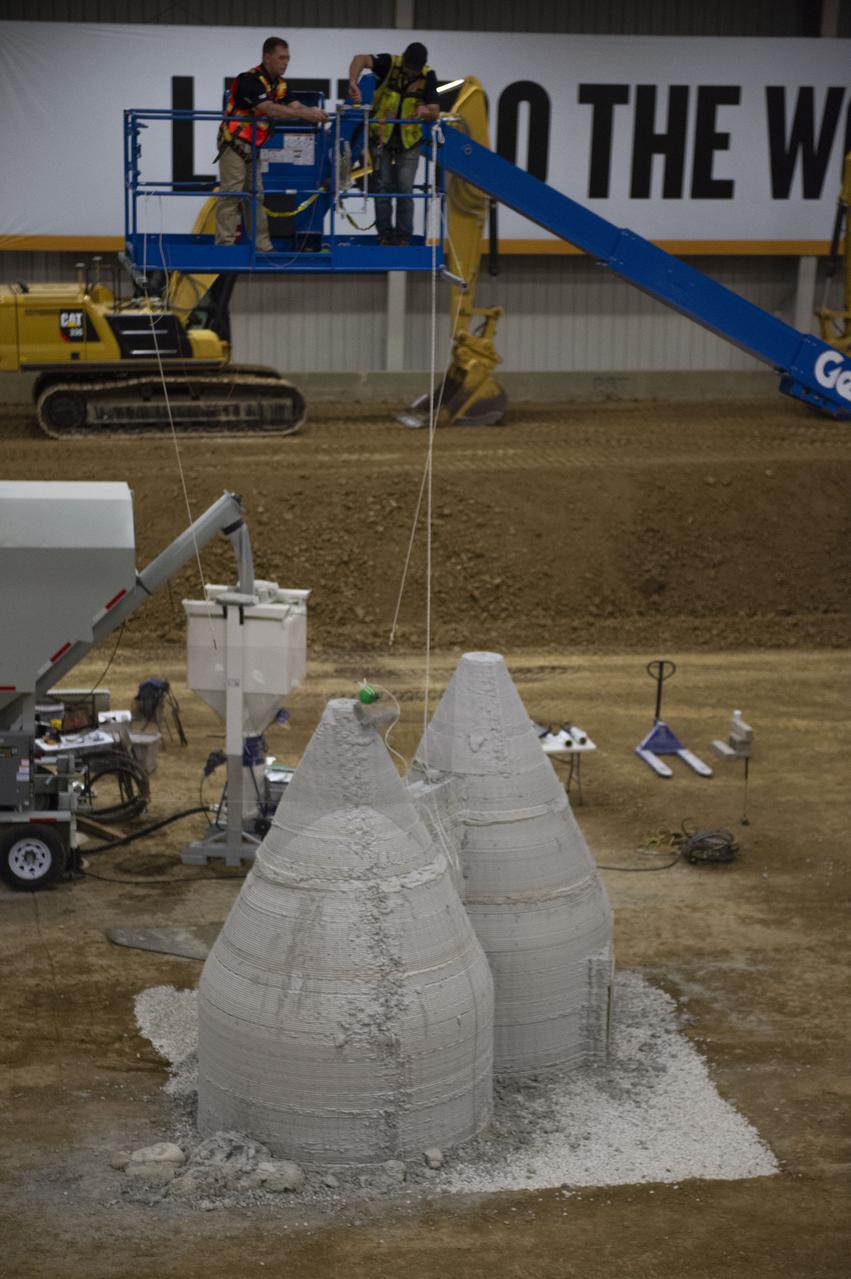
AI. SpaceFactory of New York and Pennsylvania State University of College Park print subscale habitat structures at NASA's 3D-Printed Habitat Challenge, held at the Caterpillar Edwards Demonstration & Learning Center in Edwards, Illinois, May 1-4, 2019. The habitat print is the final level of the multi-phase competition, which began in in 2015. The challenge is managed by NASA's Centennial Challenges program, and partner Bradley University of Peoria, Illinois. Penn State's printed habitat.
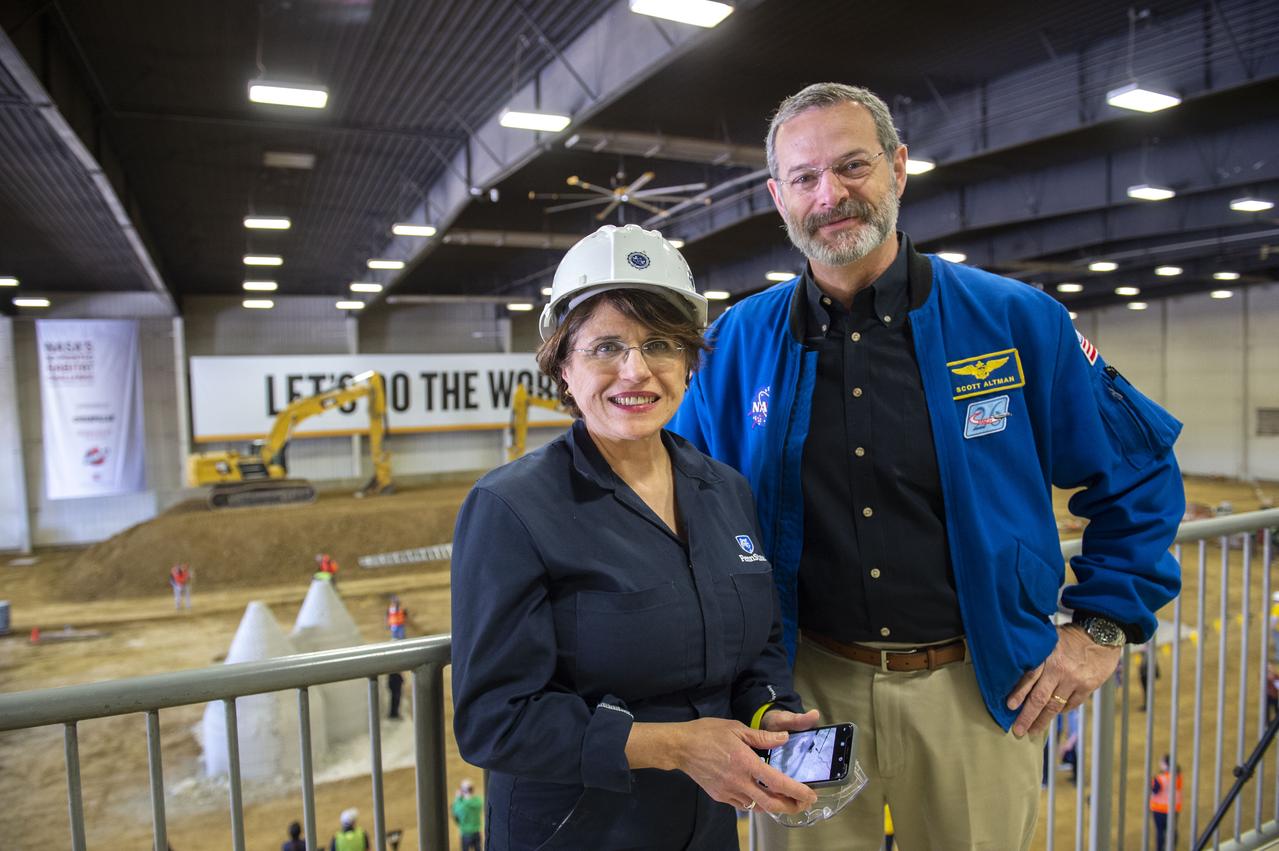
AI. SpaceFactory of New York and Pennsylvania State University of College Park print subscale habitat structures at NASA's 3D-Printed Habitat Challenge, held at the Caterpillar Edwards Demonstration & Learning Center in Edwards, Illinois, May 1-4, 2019. The habitat print is the final level of the multi-phase competition, which began in in 2015. The challenge is managed by NASA's Centennial Challenges program, and partner Bradley University of Peoria, Illinois. Penn State's printed habitat.
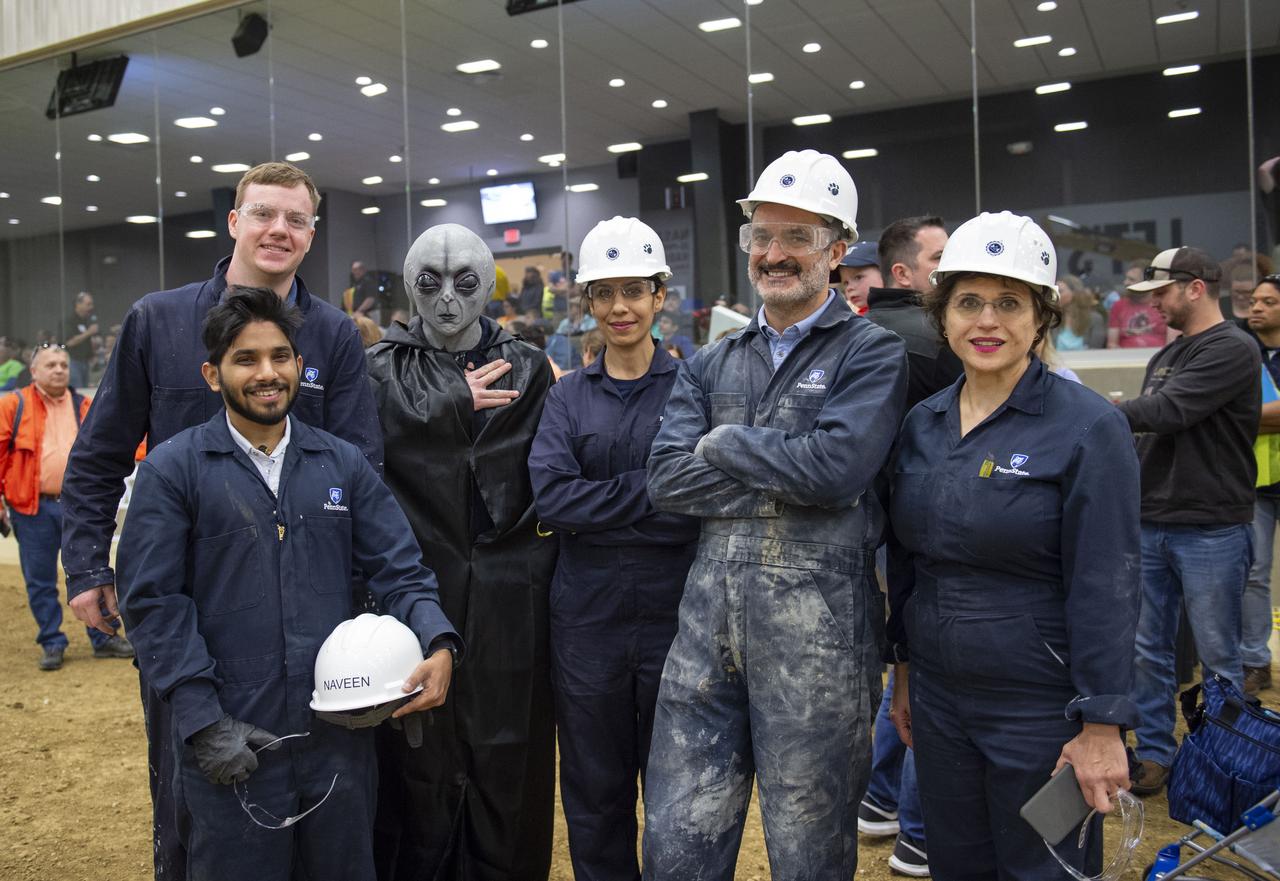
AI. SpaceFactory of New York and Pennsylvania State University of College Park print subscale habitat structures at NASA's 3D-Printed Habitat Challenge, held at the Caterpillar Edwards Demonstration & Learning Center in Edwards, Illinois, May 1-4, 2019. The habitat print is the final level of the multi-phase competition, which began in in 2015. The challenge is managed by NASA's Centennial Challenges program, and partner Bradley University of Peoria, Illinois. Penn State's printed habitat.
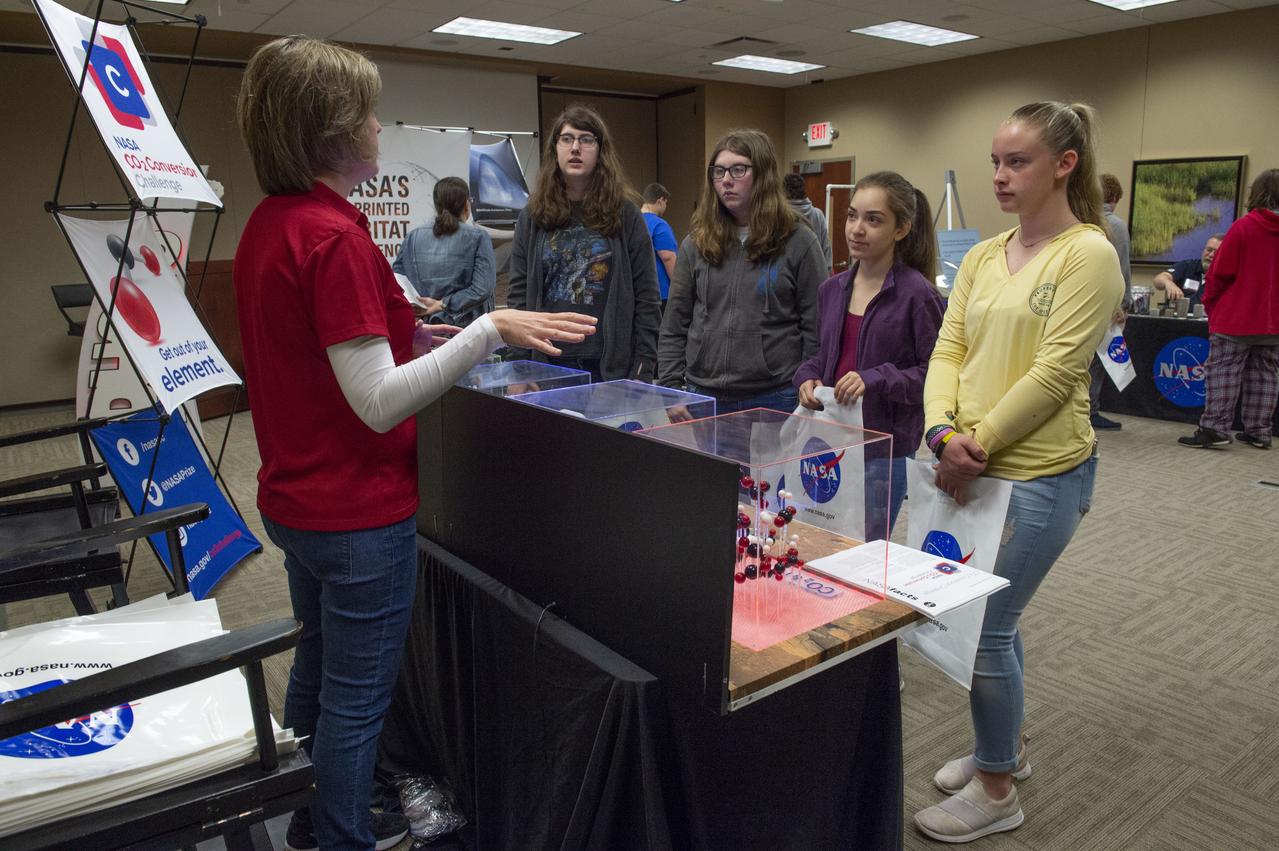
AI. SpaceFactory of New York and Pennsylvania State University of College Park print subscale habitat structures at NASA's 3D-Printed Habitat Challenge, held at the Caterpillar Edwards Demonstration & Learning Center in Edwards, Illinois, May 1-4, 2019. The habitat print is the final level of the multi-phase competition, which began in in 2015. The challenge is managed by NASA's Centennial Challenges program, and partner Bradley University of Peoria, Illinois. Dawn Mercer Turner talks to school children about CO2 conversion.
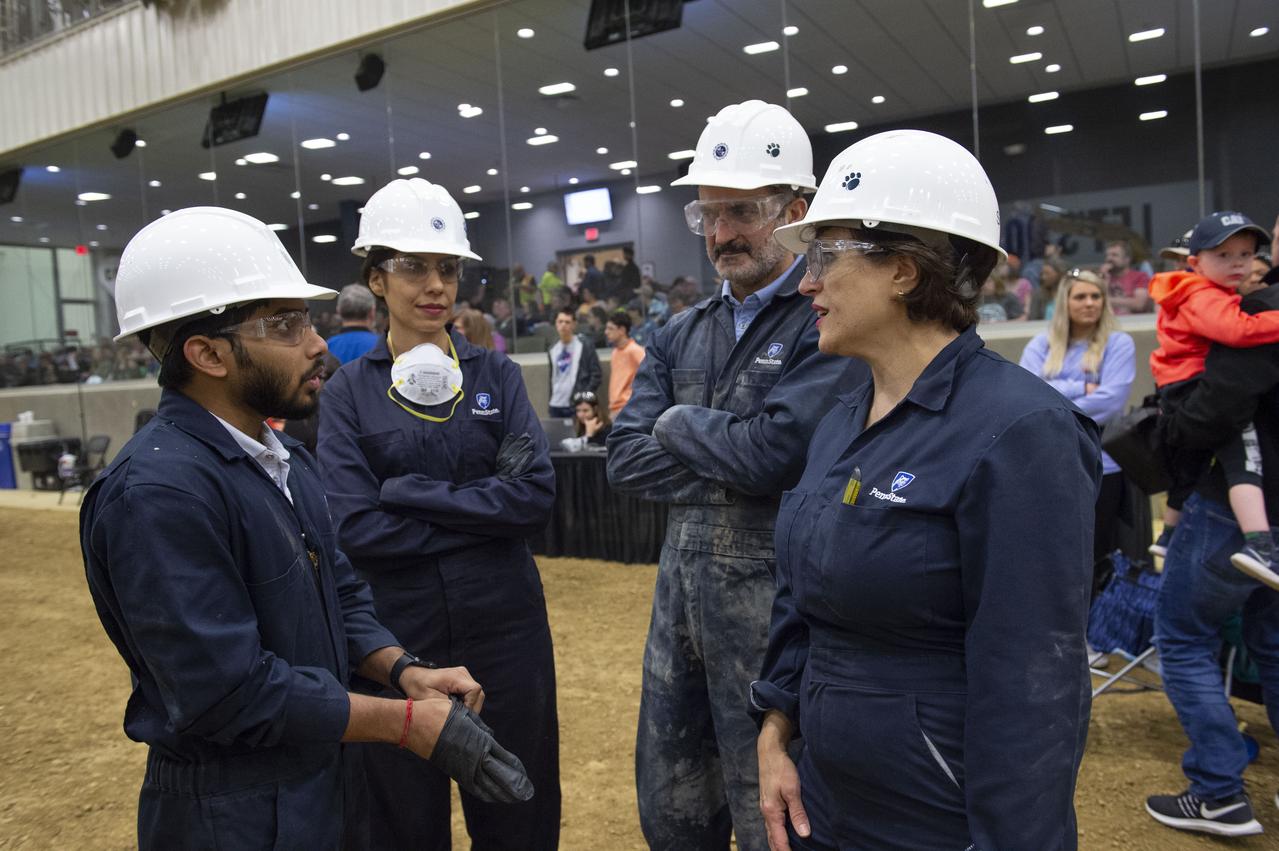
AI. SpaceFactory of New York and Pennsylvania State University of College Park print subscale habitat structures at NASA's 3D-Printed Habitat Challenge, held at the Caterpillar Edwards Demonstration & Learning Center in Edwards, Illinois, May 1-4, 2019. The habitat print is the final level of the multi-phase competition, which began in in 2015. The challenge is managed by NASA's Centennial Challenges program, and partner Bradley University of Peoria, Illinois. Penn State's printed habitat.
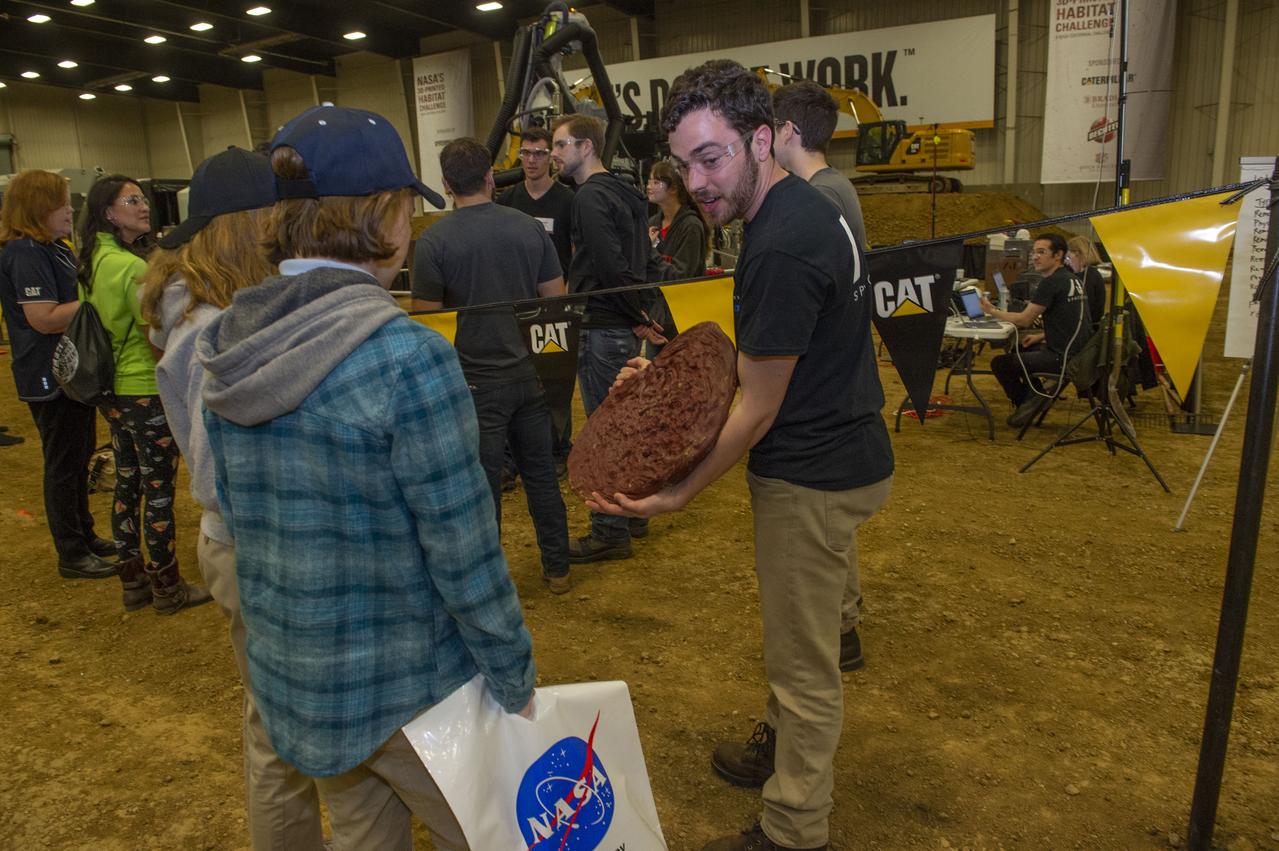
AI. SpaceFactory of New York and Pennsylvania State University of College Park print subscale habitat structures at NASA's 3D-Printed Habitat Challenge, held at the Caterpillar Edwards Demonstration & Learning Center in Edwards, Illinois, May 1-4, 2019. The habitat print is the final level of the multi-phase competition, which began in in 2015. The challenge is managed by NASA's Centennial Challenges program, and partner Bradley University of Peoria, Illinois. AI team member shows early unsuccessful attempt at printing to students viewing the competition.
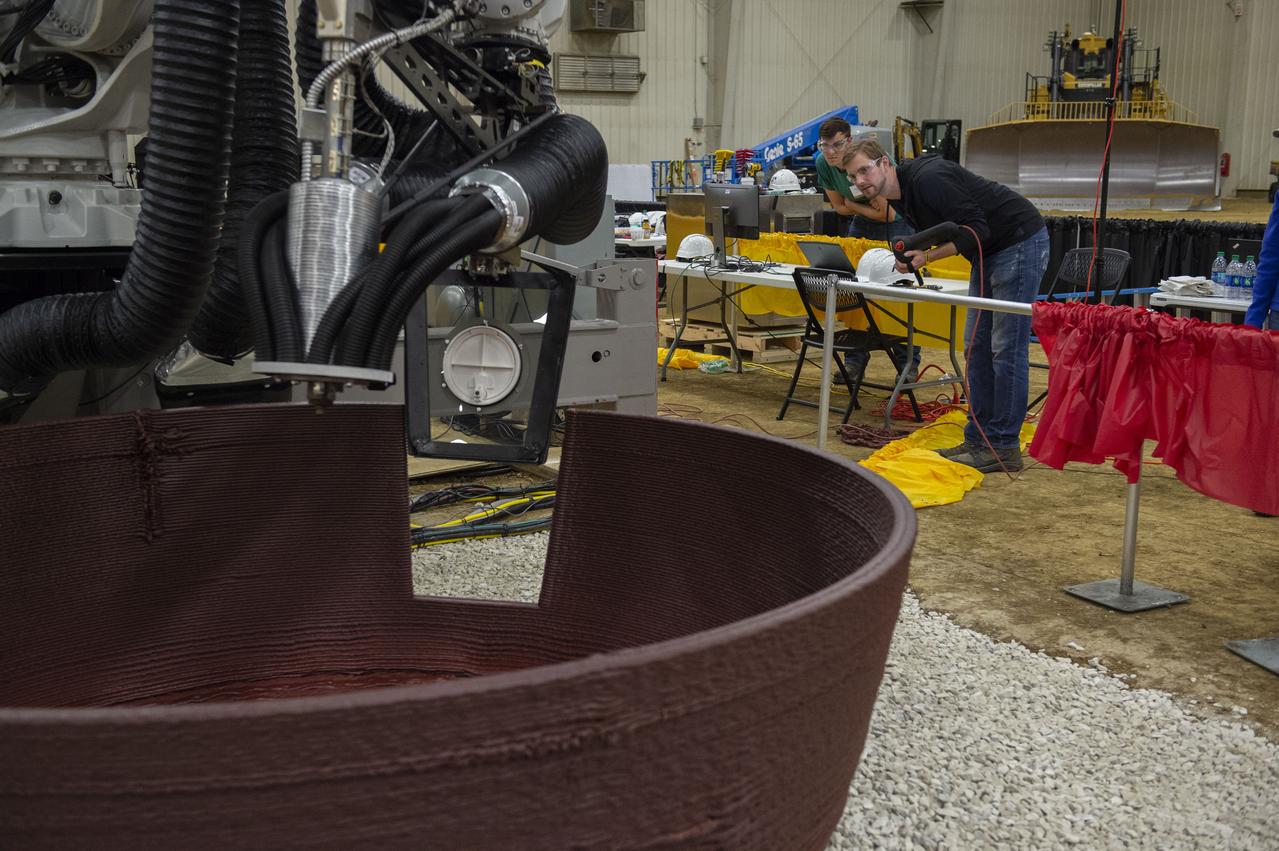
AI. SpaceFactory of New York and Pennsylvania State University of College Park print subscale habitat structures at NASA's 3D-Printed Habitat Challenge, held at the Caterpillar Edwards Demonstration & Learning Center in Edwards, Illinois, May 1-4, 2019. The habitat print is the final level of the multi-phase competition, which began in in 2015. The challenge is managed by NASA's Centennial Challenges program, and partner Bradley University of Peoria, Illinois.
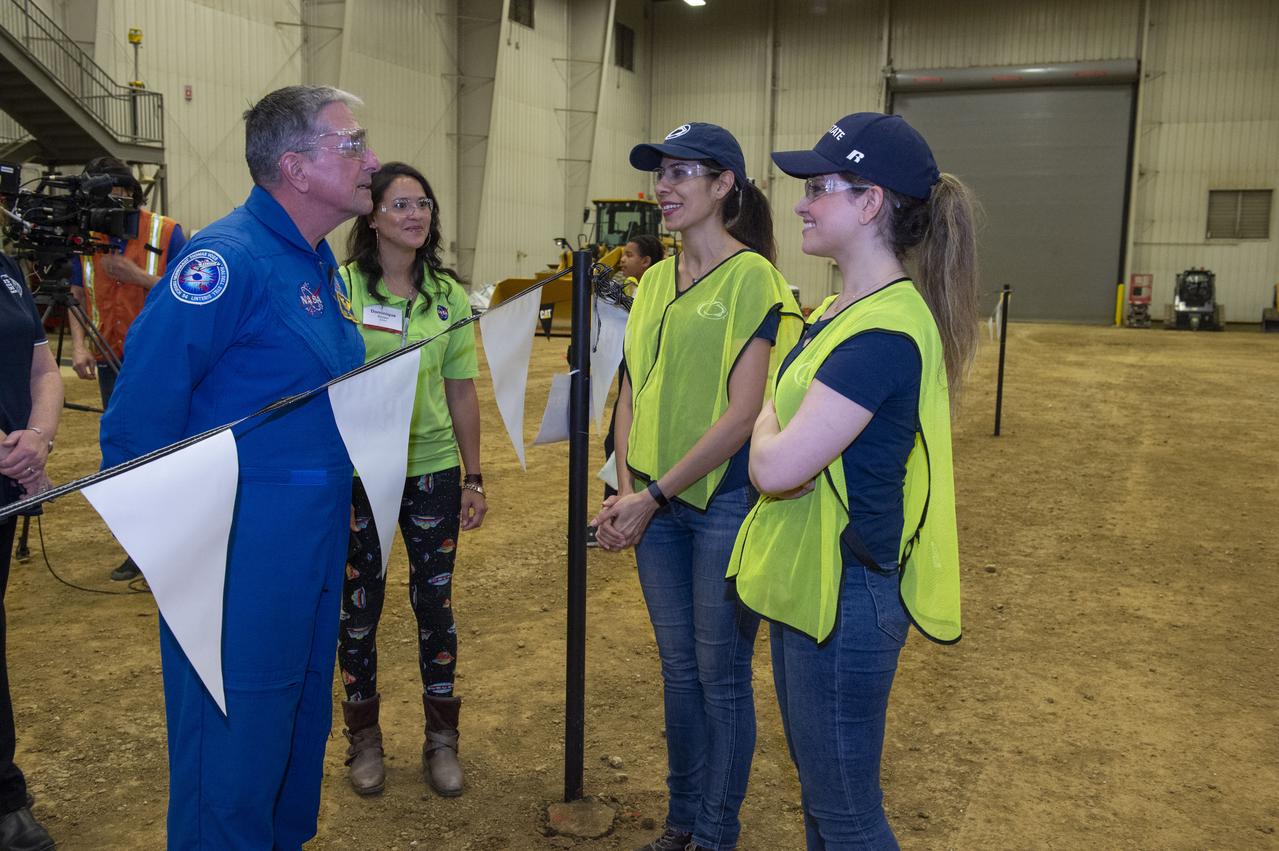
AI. SpaceFactory of New York and Pennsylvania State University of College Park print subscale habitat structures at NASA's 3D-Printed Habitat Challenge, held at the Caterpillar Edwards Demonstration & Learning Center in Edwards, Illinois, May 1-4, 2019. The habitat print is the final level of the multi-phase competition, which began in in 2015. The challenge is managed by NASA's Centennial Challenges program, and partner Bradley University of Peoria, Illinois. Astronaut Don Thomas talks with Penn State team members Negar Ashrafi and Maryam Hojati.
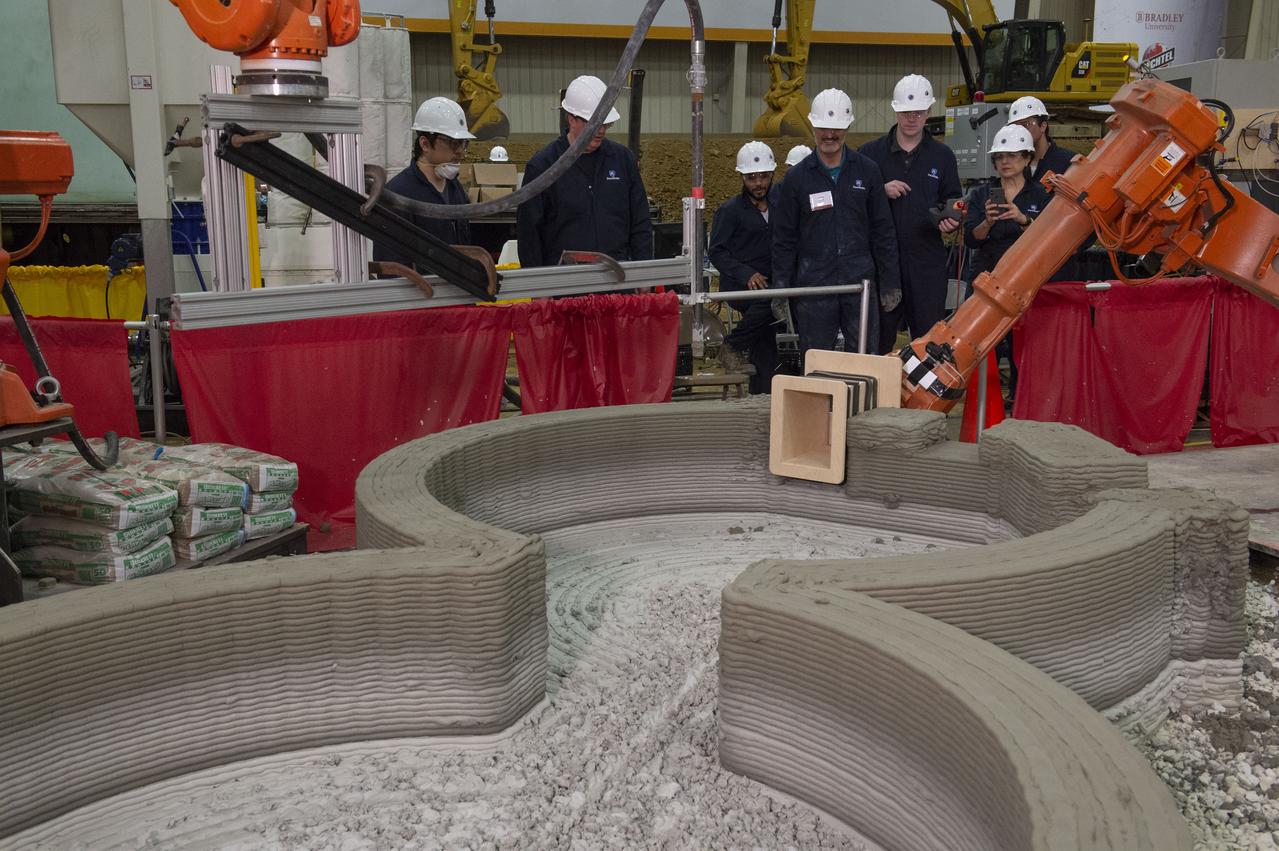
AI. SpaceFactory of New York and Pennsylvania State University of College Park print subscale habitat structures at NASA's 3D-Printed Habitat Challenge, held at the Caterpillar Edwards Demonstration & Learning Center in Edwards, Illinois, May 1-4, 2019. The habitat print is the final level of the multi-phase competition, which began in in 2015. The challenge is managed by NASA's Centennial Challenges program, and partner Bradley University of Peoria, Illinois. Insertion of window element in Penn State Habitat.
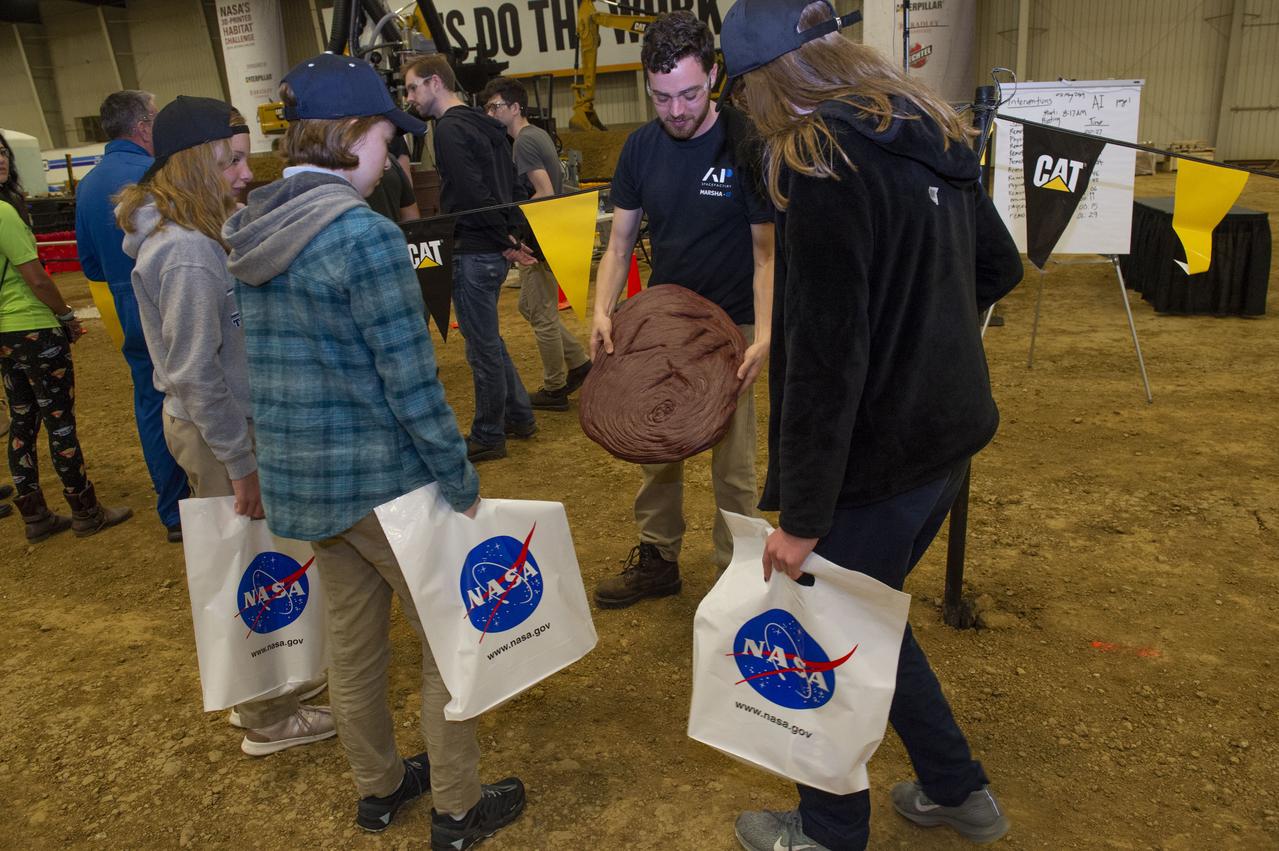
AI. SpaceFactory of New York and Pennsylvania State University of College Park print subscale habitat structures at NASA's 3D-Printed Habitat Challenge, held at the Caterpillar Edwards Demonstration & Learning Center in Edwards, Illinois, May 1-4, 2019. The habitat print is the final level of the multi-phase competition, which began in in 2015. The challenge is managed by NASA's Centennial Challenges program, and partner Bradley University of Peoria, Illinois. AI team member shows early unsuccessful attempt at printing to students viewing the competition.

AI. SpaceFactory of New York and Pennsylvania State University of College Park print subscale habitat structures at NASA's 3D-Printed Habitat Challenge, held at the Caterpillar Edwards Demonstration & Learning Center in Edwards, Illinois, May 1-4, 2019. The habitat print is the final level of the multi-phase competition, which began in in 2015. The challenge is managed by NASA's Centennial Challenges program, and partner Bradley University of Peoria, Illinois. Smoke test of AI Spacefactory habitat
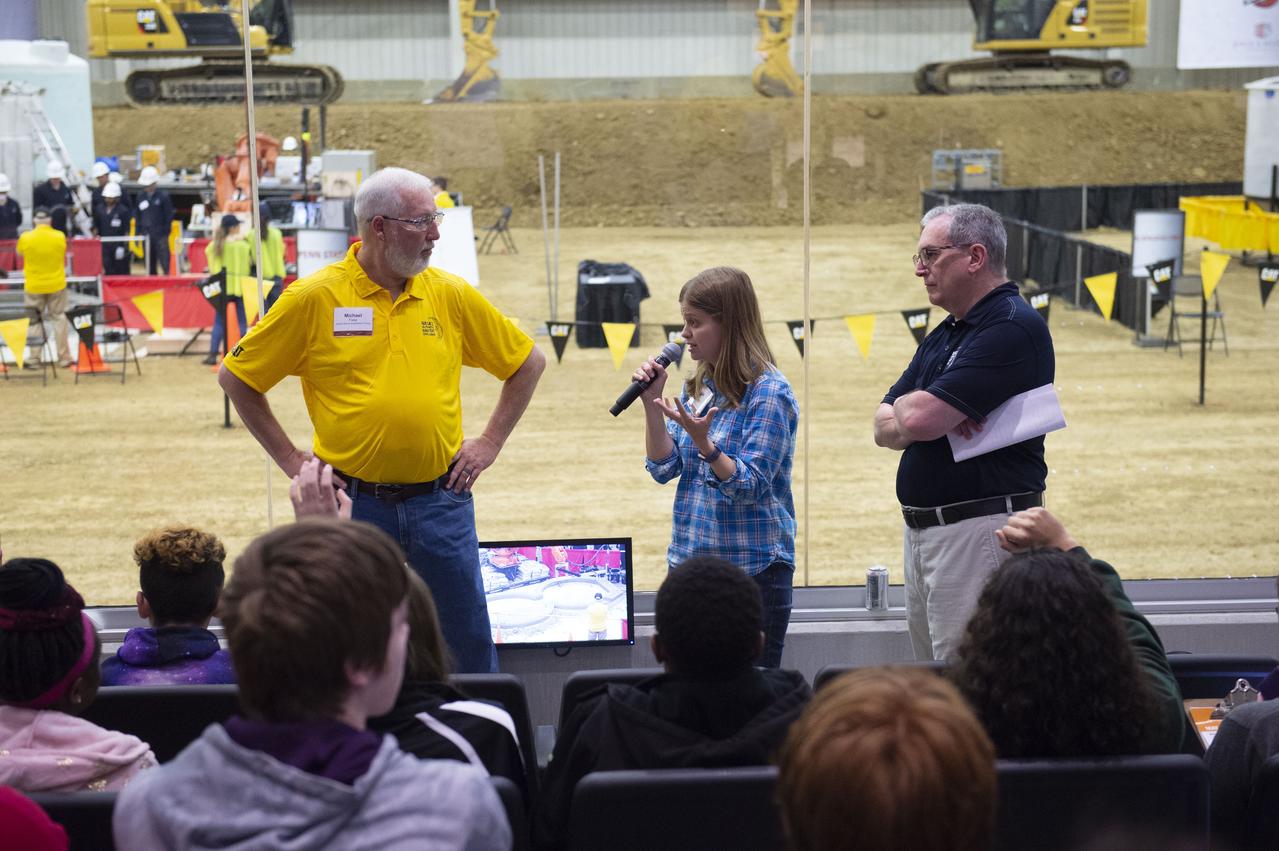
AI. SpaceFactory of New York and Pennsylvania State University of College Park print subscale habitat structures at NASA's 3D-Printed Habitat Challenge, held at the Caterpillar Edwards Demonstration & Learning Center in Edwards, Illinois, May 1-4, 2019. The habitat print is the final level of the multi-phase competition, which began in in 2015. The challenge is managed by NASA's Centennial Challenges program, and partner Bradley University of Peoria, Illinois. MSFC engineer Dr. Tracie Prater talks to public audience about the need for space habitat.

AI. SpaceFactory of New York and Pennsylvania State University of College Park print subscale habitat structures at NASA's 3D-Printed Habitat Challenge, held at the Caterpillar Edwards Demonstration & Learning Center in Edwards, Illinois, May 1-4, 2019. The habitat print is the final level of the multi-phase competition, which began in in 2015. The challenge is managed by NASA's Centennial Challenges program, and partner Bradley University of Peoria, Illinois. Strength testing of composite material used for habitat construction by AI Spacefactory.

AI. SpaceFactory of New York and Pennsylvania State University of College Park print subscale habitat structures at NASA's 3D-Printed Habitat Challenge, held at the Caterpillar Edwards Demonstration & Learning Center in Edwards, Illinois, May 1-4, 2019. The habitat print is the final level of the multi-phase competition, which began in in 2015. The challenge is managed by NASA's Centennial Challenges program, and partner Bradley University of Peoria, Illinois. Bradley University students demonstrate force produced by air cannon.

AI. SpaceFactory of New York and Pennsylvania State University of College Park print subscale habitat structures at NASA's 3D-Printed Habitat Challenge, held at the Caterpillar Edwards Demonstration & Learning Center in Edwards, Illinois, May 1-4, 2019. The habitat print is the final level of the multi-phase competition, which began in in 2015. The challenge is managed by NASA's Centennial Challenges program, and partner Bradley University of Peoria, Illinois. Window to eventually be placed in Penn State habitat.

AI. SpaceFactory of New York and Pennsylvania State University of College Park print subscale habitat structures at NASA's 3D-Printed Habitat Challenge, held at the Caterpillar Edwards Demonstration & Learning Center in Edwards, Illinois, May 1-4, 2019. The habitat print is the final level of the multi-phase competition, which began in in 2015. The challenge is managed by NASA's Centennial Challenges program, and partner Bradley University of Peoria, Illinois. Insertion of window element in Penn State Habitat.
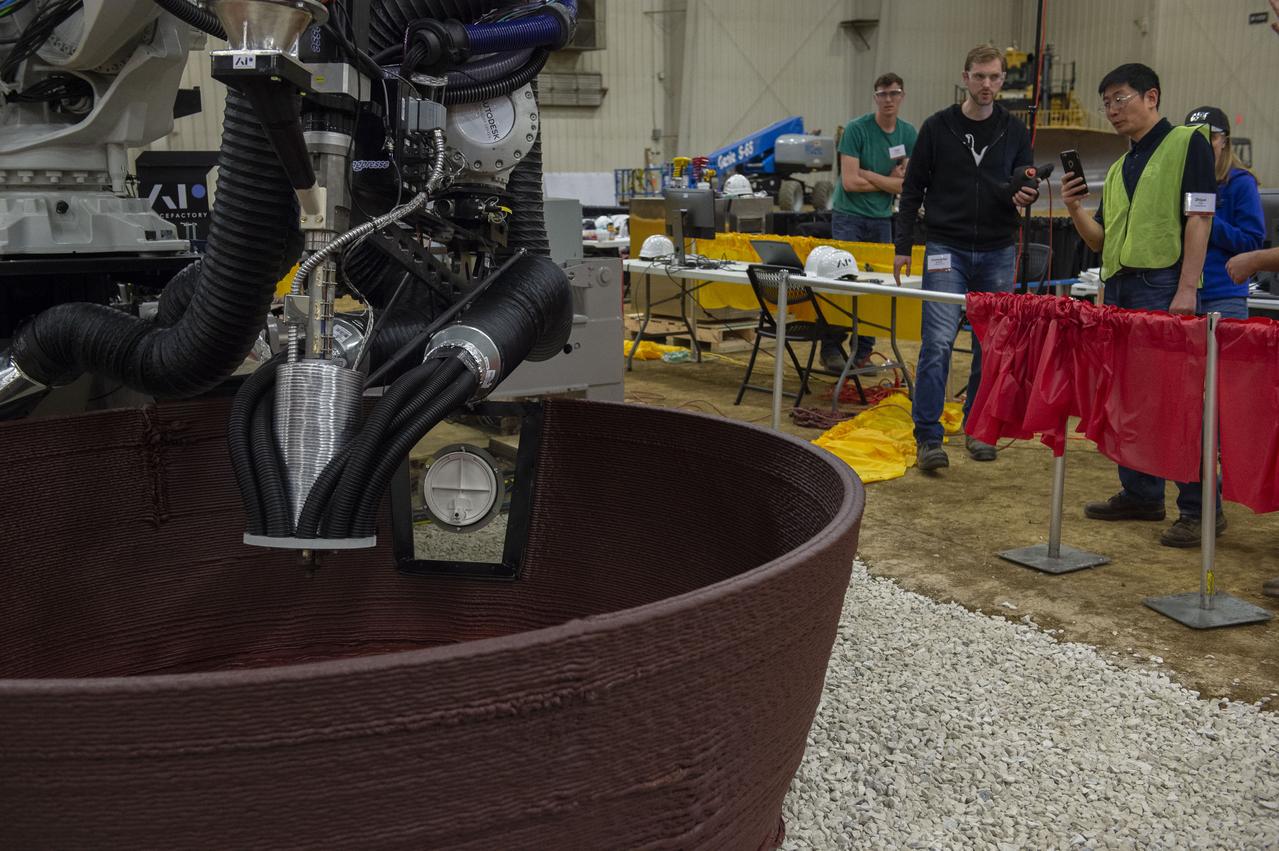
AI. SpaceFactory of New York and Pennsylvania State University of College Park print subscale habitat structures at NASA's 3D-Printed Habitat Challenge, held at the Caterpillar Edwards Demonstration & Learning Center in Edwards, Illinois, May 1-4, 2019. The habitat print is the final level of the multi-phase competition, which began in in 2015. The challenge is managed by NASA's Centennial Challenges program, and partner Bradley University of Peoria, Illinois. First window placement in AI Spacefactory habitat.
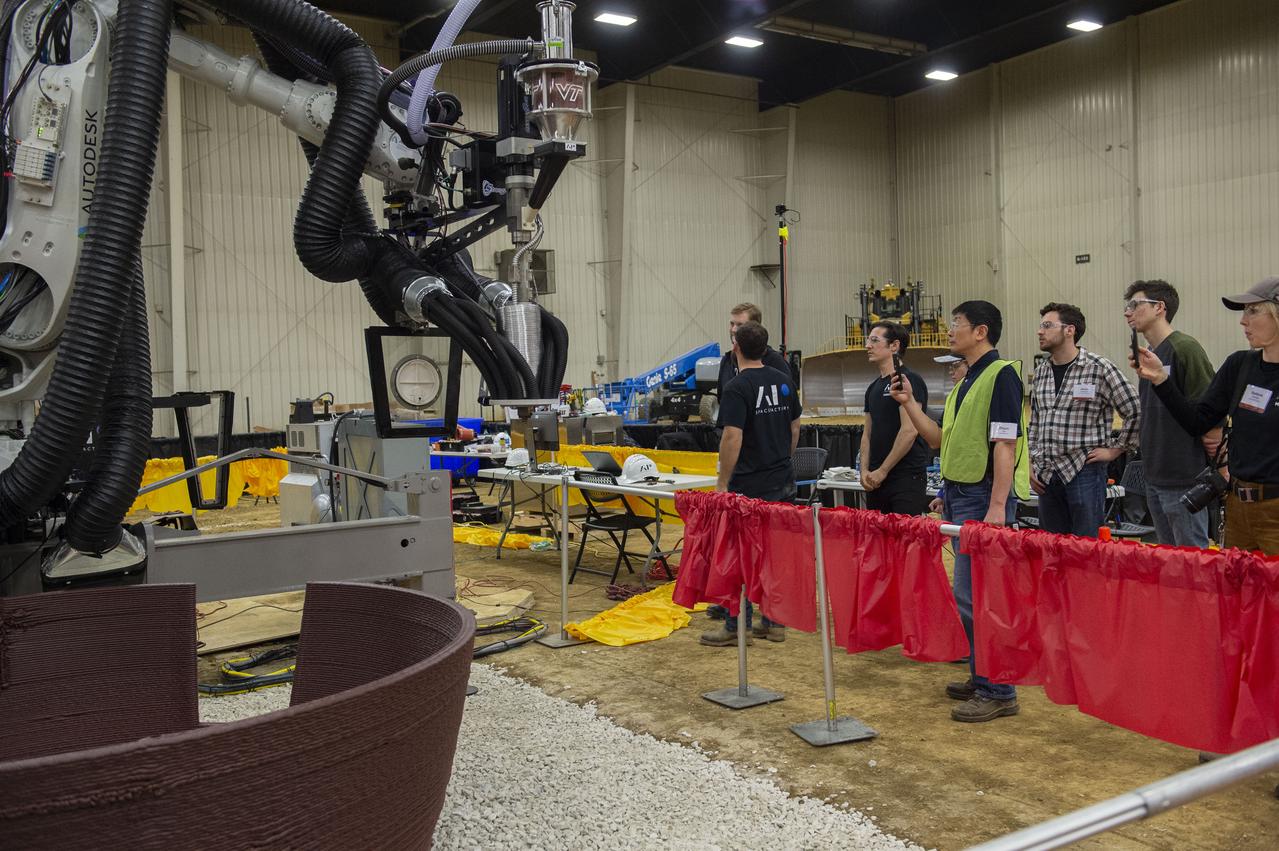
AI. SpaceFactory of New York and Pennsylvania State University of College Park print subscale habitat structures at NASA's 3D-Printed Habitat Challenge, held at the Caterpillar Edwards Demonstration & Learning Center in Edwards, Illinois, May 1-4, 2019. The habitat print is the final level of the multi-phase competition, which began in in 2015. The challenge is managed by NASA's Centennial Challenges program, and partner Bradley University of Peoria, Illinois. First window placement in AI Spacefactory habitat.
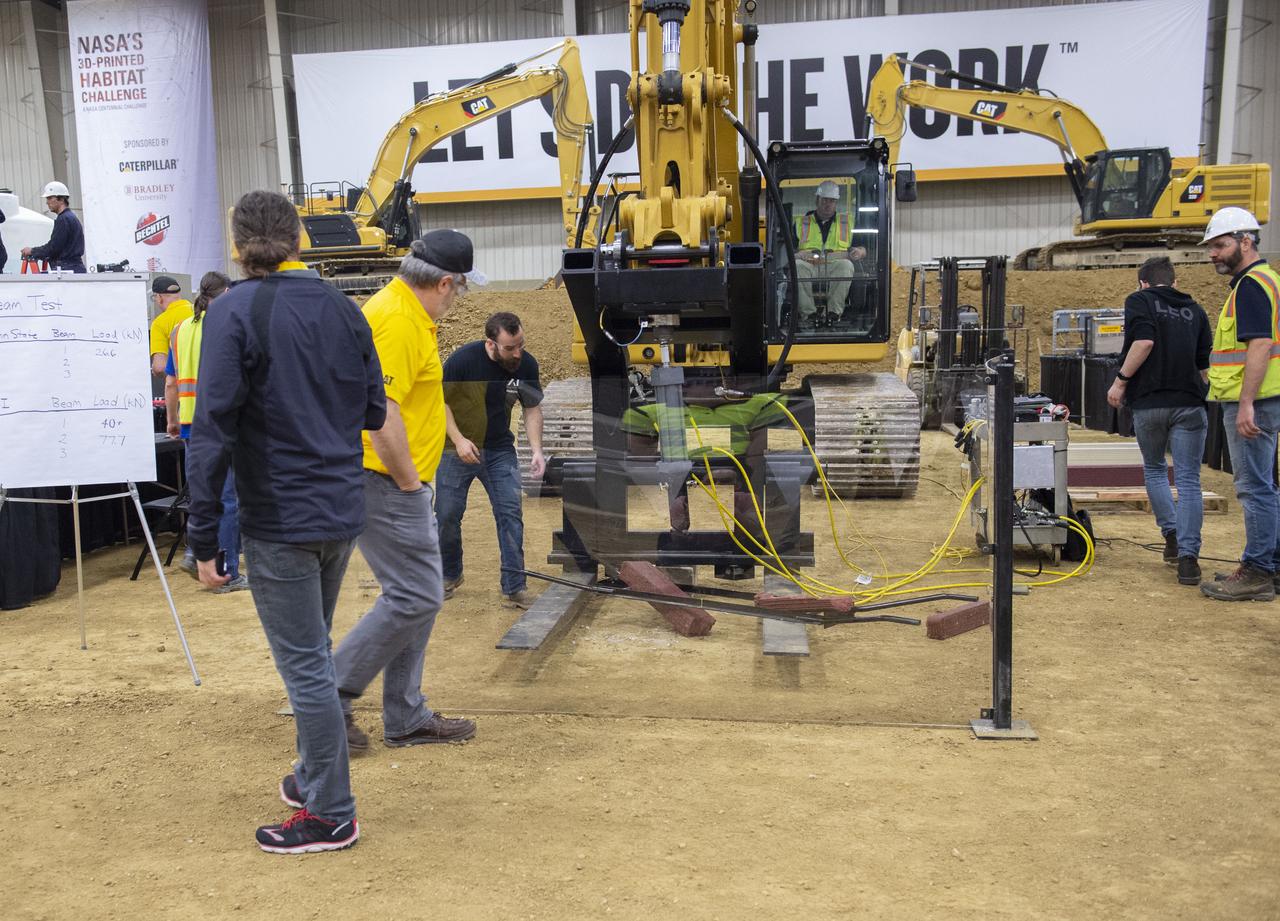
AI. SpaceFactory of New York and Pennsylvania State University of College Park print subscale habitat structures at NASA's 3D-Printed Habitat Challenge, held at the Caterpillar Edwards Demonstration & Learning Center in Edwards, Illinois, May 1-4, 2019. The habitat print is the final level of the multi-phase competition, which began in in 2015. The challenge is managed by NASA's Centennial Challenges program, and partner Bradley University of Peoria, Illinois. Strength testing of composite material used for habitat construction by AI Spacefactory.

AI. SpaceFactory of New York and Pennsylvania State University of College Park print subscale habitat structures at NASA's 3D-Printed Habitat Challenge, held at the Caterpillar Edwards Demonstration & Learning Center in Edwards, Illinois, May 1-4, 2019. The habitat print is the final level of the multi-phase competition, which began in in 2015. The challenge is managed by NASA's Centennial Challenges program, and partner Bradley University of Peoria, Illinois. Free Caterpillar sunglasses and caps are a hit with school children.

AI. SpaceFactory of New York and Pennsylvania State University of College Park print subscale habitat structures at NASA's 3D-Printed Habitat Challenge, held at the Caterpillar Edwards Demonstration & Learning Center in Edwards, Illinois, May 1-4, 2019. The habitat print is the final level of the multi-phase competition, which began in in 2015. The challenge is managed by NASA's Centennial Challenges program, and partner Bradley University of Peoria, Illinois.
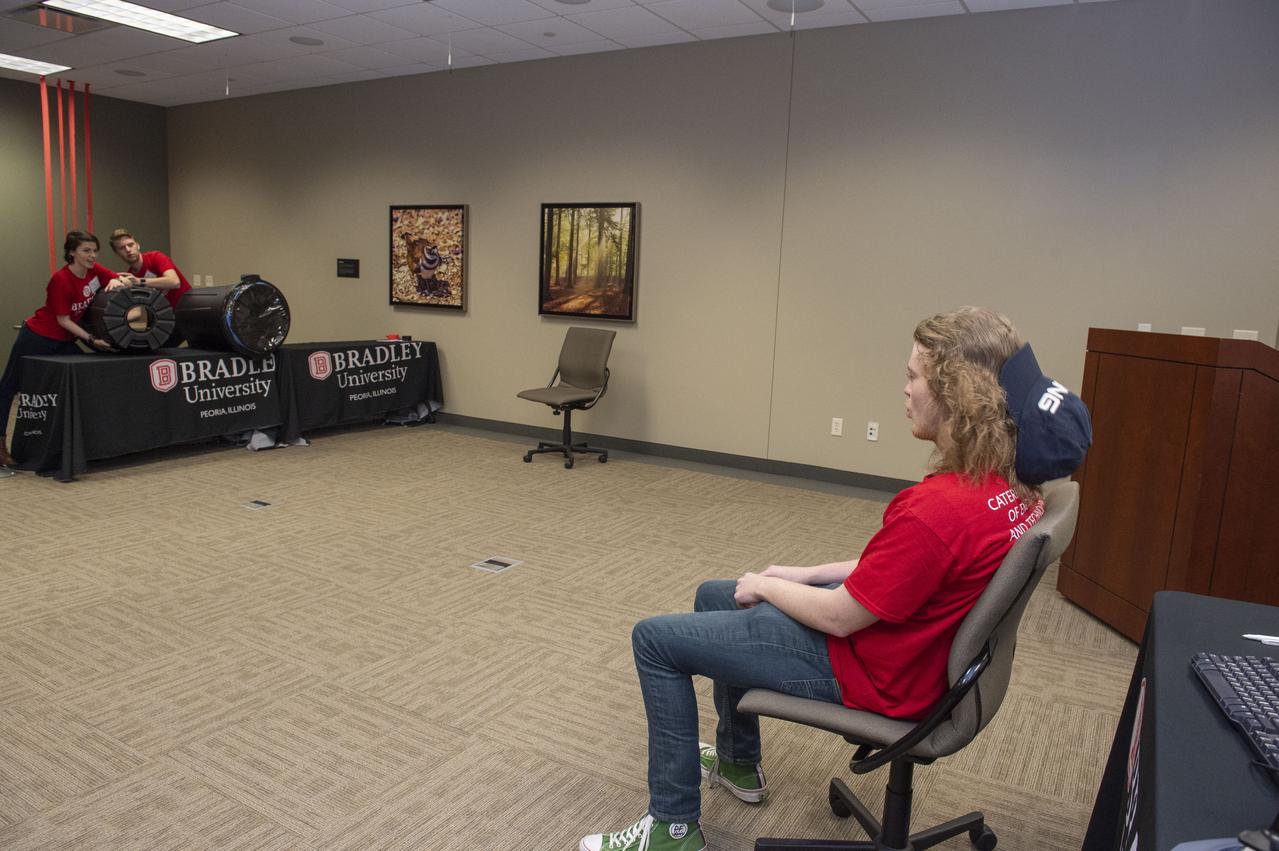
AI. SpaceFactory of New York and Pennsylvania State University of College Park print subscale habitat structures at NASA's 3D-Printed Habitat Challenge, held at the Caterpillar Edwards Demonstration & Learning Center in Edwards, Illinois, May 1-4, 2019. The habitat print is the final level of the multi-phase competition, which began in in 2015. The challenge is managed by NASA's Centennial Challenges program, and partner Bradley University of Peoria, Illinois. Bradley University students demonstrate force produced by air cannon.
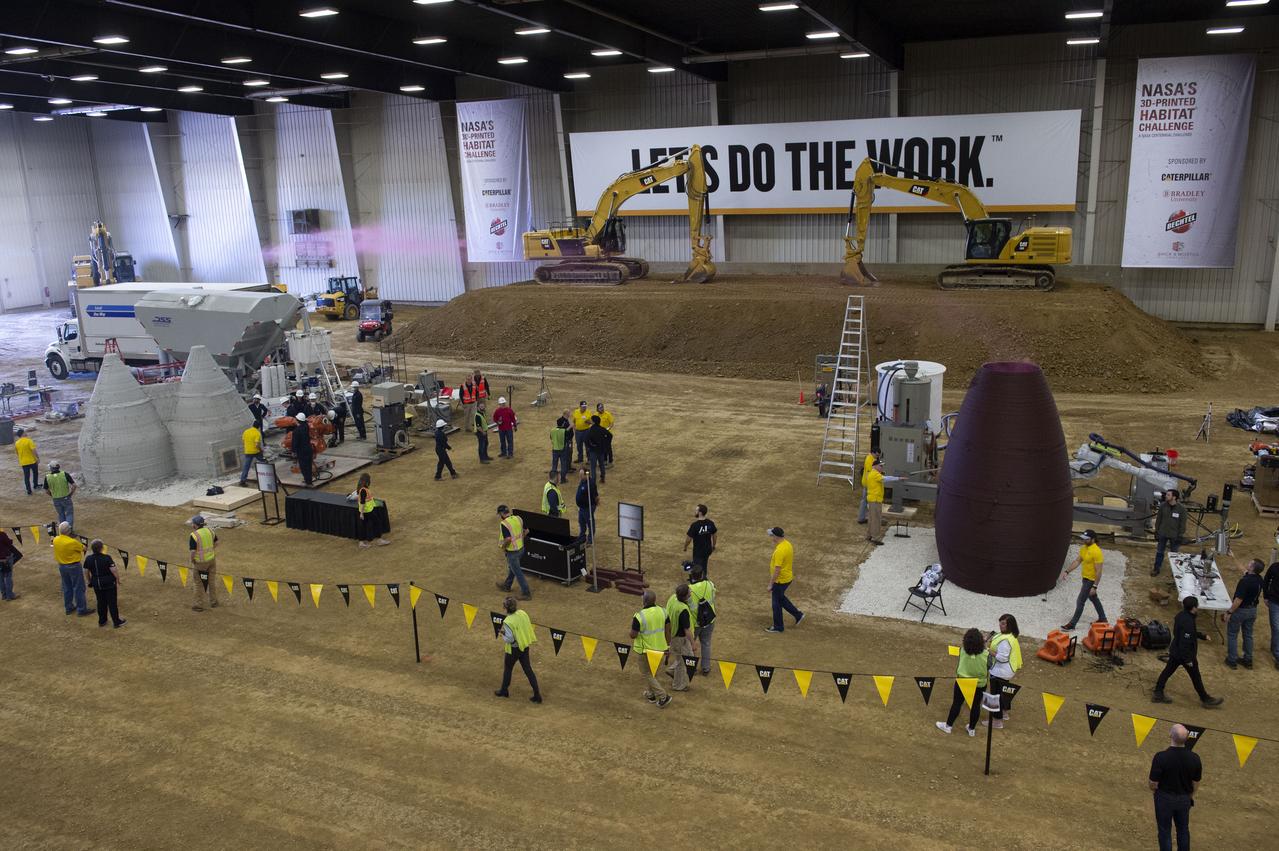
AI. SpaceFactory of New York and Pennsylvania State University of College Park print subscale habitat structures at NASA's 3D-Printed Habitat Challenge, held at the Caterpillar Edwards Demonstration & Learning Center in Edwards, Illinois, May 1-4, 2019. The habitat print is the final level of the multi-phase competition, which began in in 2015. The challenge is managed by NASA's Centennial Challenges program, and partner Bradley University of Peoria, Illinois. Overview of arena and both 3D printed habitats during smoke test

AI. SpaceFactory of New York and Pennsylvania State University of College Park print subscale habitat structures at NASA's 3D-Printed Habitat Challenge, held at the Caterpillar Edwards Demonstration & Learning Center in Edwards, Illinois, May 1-4, 2019. The habitat print is the final level of the multi-phase competition, which began in in 2015. The challenge is managed by NASA's Centennial Challenges program, and partner Bradley University of Peoria, Illinois.
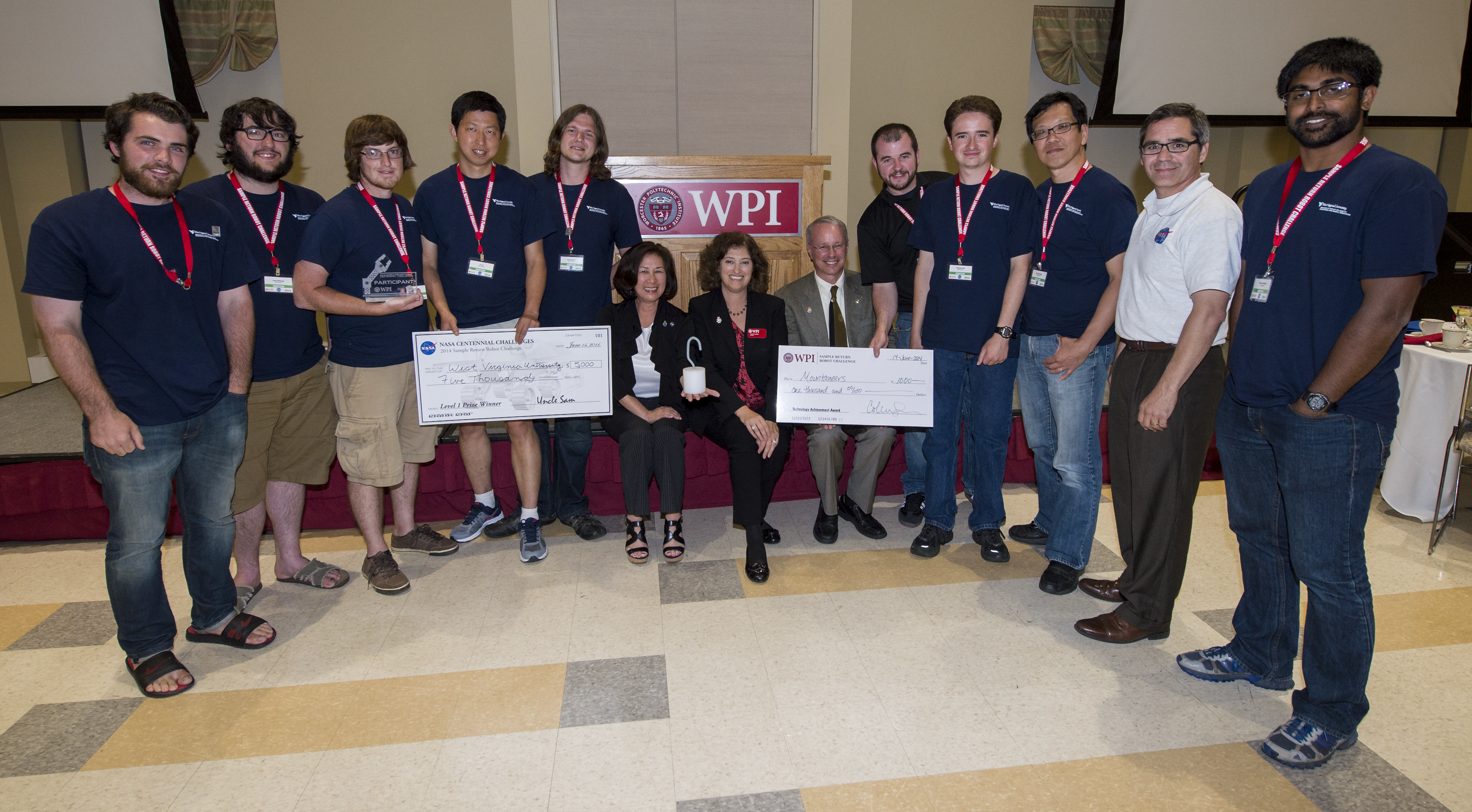
The NASA Centennial Challenges prize, level one, is presented to team Mountaineers for successfully completing level one of the NASA 2014 Sample Return Robot Challenge, from left, Ryan Watson, Team Mountaineers; Lucas Behrens, Team Mountaineers; Jarred Strader, Team Mountaineers; Yu Gu, Team Mountaineers; Scott Harper, Team Mountaineers; Dorothy Rasco, NASA Deputy Associate Administrator for the Space Technology Mission Directorate; Laurie Leshin, Worcester Polytechnic Institute (WPI) President; David Miller, NASA Chief Technologist; Alexander Hypes, Team Mountaineers; Nick Ohi,Team Mountaineers; Marvin Cheng, Team Mountaineers; Sam Ortega, NASA Program Manager for Centennial Challenges; and Tanmay Mandal, Team Mountaineers;, Saturday, June 14, 2014, at Worcester Polytechnic Institute (WPI) in Worcester, Mass. Team Mountaineers was the only team to complete the level one challenge. During the competition, teams were required to demonstrate autonomous robots that can locate and collect samples from a wide and varied terrain, operating without human control. The objective of this NASA-WPI Centennial Challenge was to encourage innovations in autonomous navigation and robotics technologies. Innovations stemming from the challenge may improve NASA's capability to explore a variety of destinations in space, as well as enhance the nation's robotic technology for use in industries and applications on Earth. Photo Credit: (NASA/Joel Kowsky)

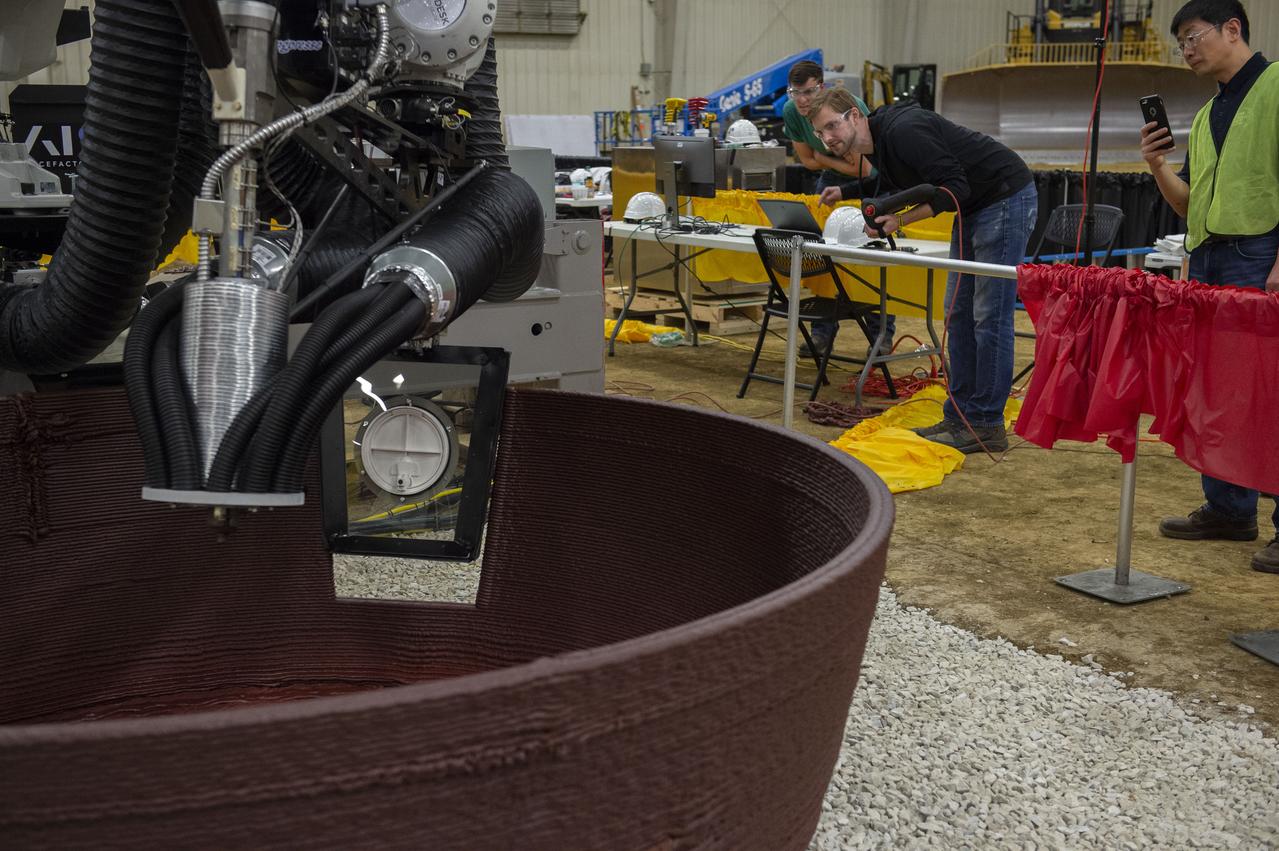
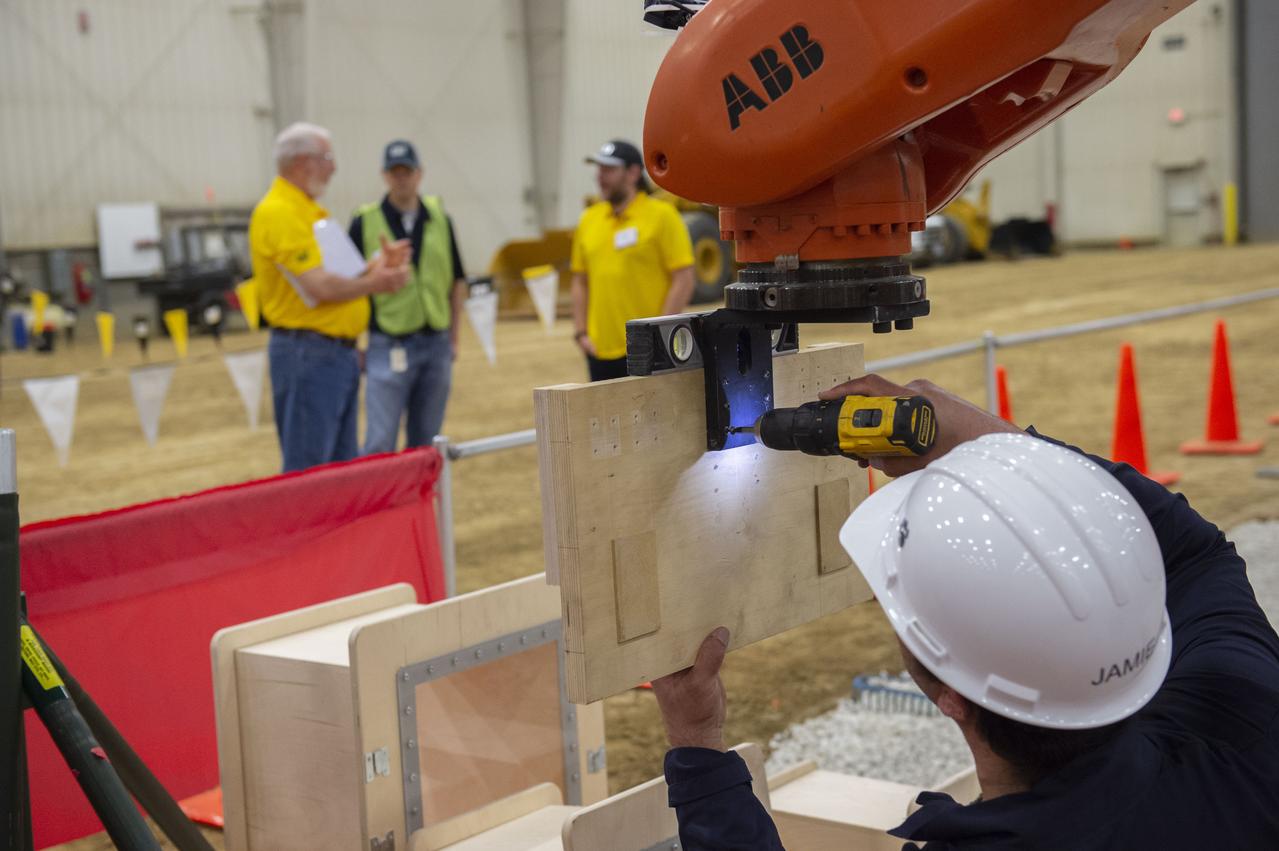
Team AI. SpaceFactory's printer autonomously inserts a window into their 3D-printed subscale habitat structure at NASA's 3D-Printed Habitat Challenge, held at the Caterpillar Edwards Demonstration & Learning Center in Edwards, Illinois, May 1-4, 2019. The habitat print is the final level of the multi-phase competition, which began in in 2015. The 3D-Printed Habitat Challenge is a competition to create sustainable shelters suitable for the Moon, Mars or beyond using resources available on-site in these locations. The challenge is managed by NASA's Centennial Challenges program, and partner Bradley University of Peoria, Illinois.
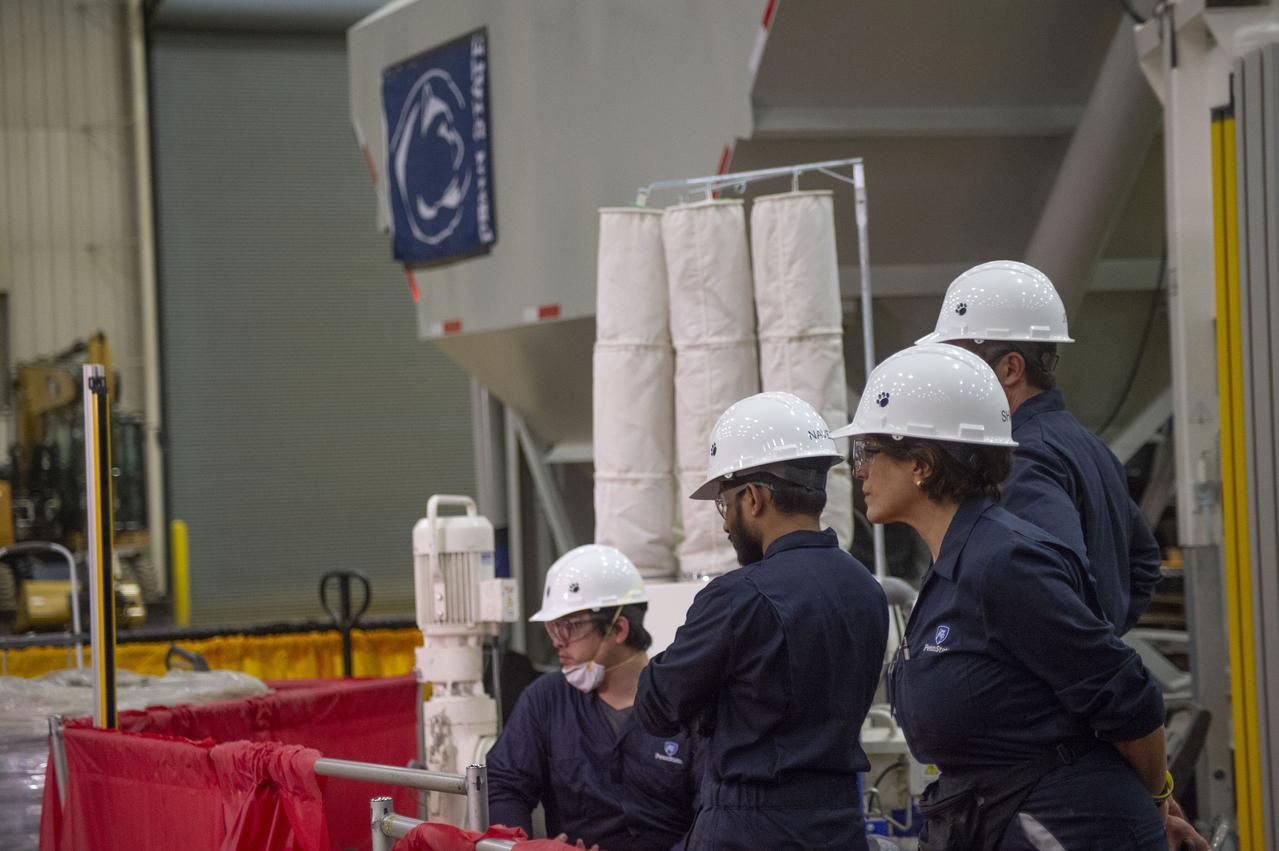
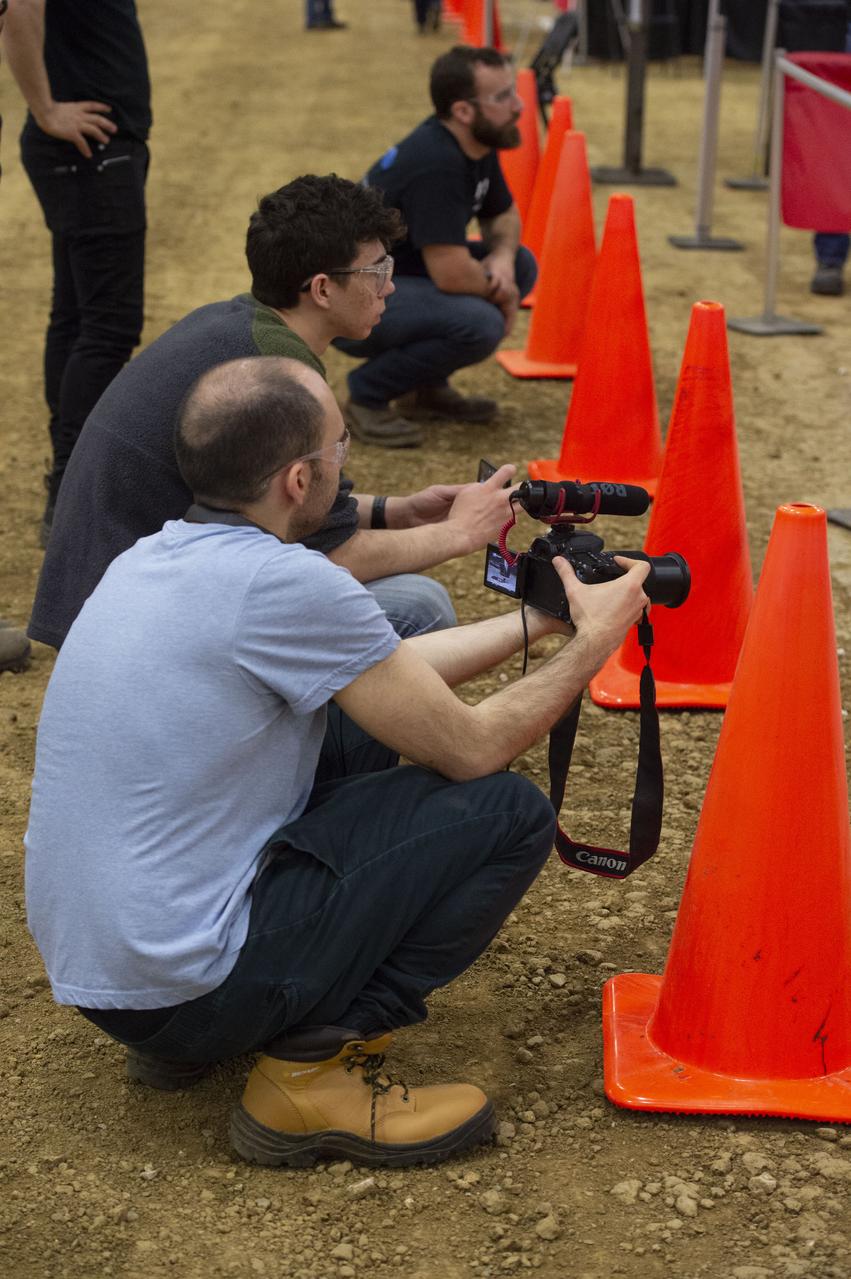
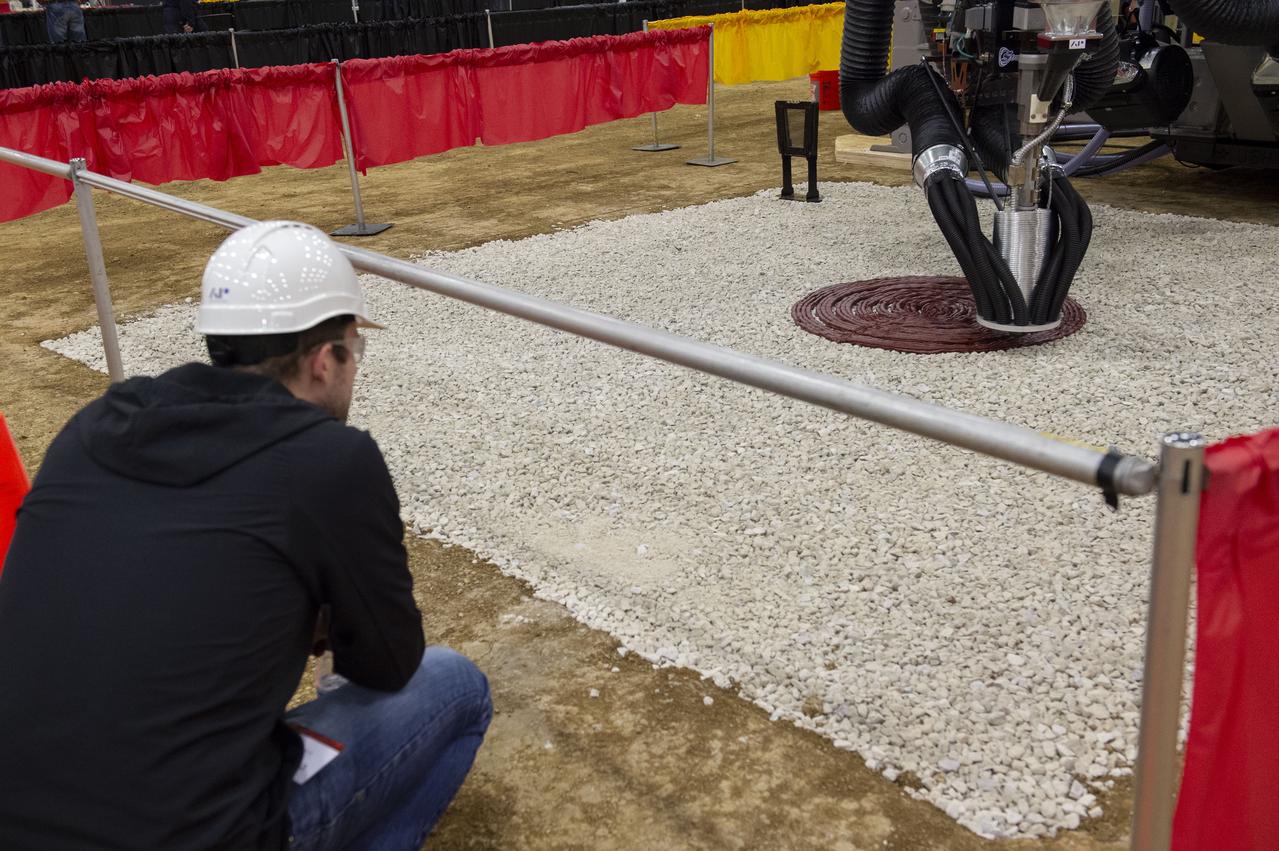
Team Penn State prepares their 3D-printer to begin printing a subscale habitat structure at NASA's 3D-Printed Habitat Challenge, held at the Caterpillar Edwards Demonstration & Learning Center in Edwards, Illinois, May 1-4, 2019. The habitat print is the final level of the multi-phase competition, which began in in 2015. The 3D-Printed Habitat Challenge is a competition to create sustainable shelters suitable for the Moon, Mars or beyond using resources available on-site in these locations. The challenge is managed by NASA's Centennial Challenges program, and partner Bradley University of Peoria, Illinois.
Team Penn State prepares their 3D-printer to begin printing a subscale habitat structure at NASA's 3D-Printed Habitat Challenge, held at the Caterpillar Edwards Demonstration & Learning Center in Edwards, Illinois, May 1-4, 2019. The habitat print is the final level of the multi-phase competition, which began in in 2015. The 3D-Printed Habitat Challenge is a competition to create sustainable shelters suitable for the Moon, Mars or beyond using resources available on-site in these locations. The challenge is managed by NASA's Centennial Challenges program, and partner Bradley University of Peoria, Illinois.
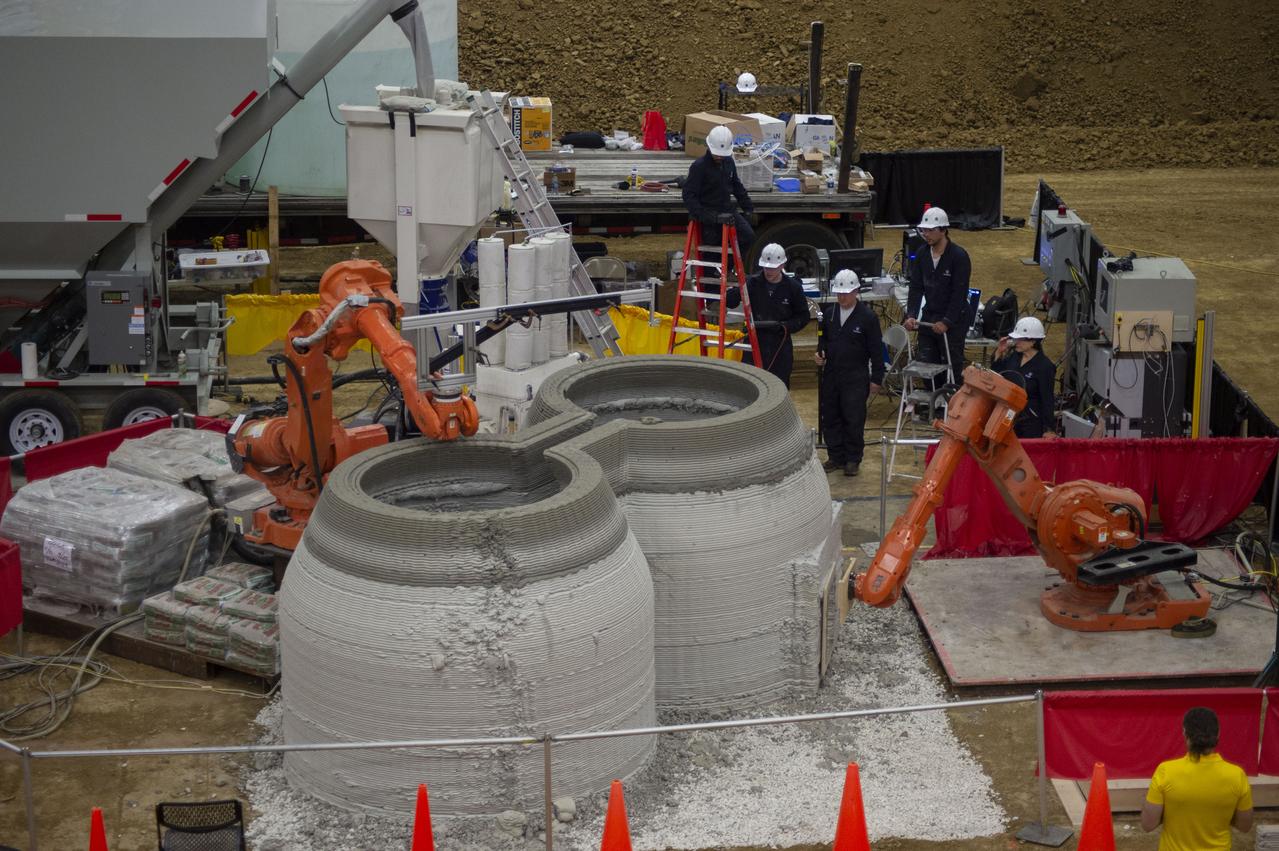
Team Penn State prepares their 3D-printer to begin printing a subscale habitat structure at NASA's 3D-Printed Habitat Challenge, held at the Caterpillar Edwards Demonstration & Learning Center in Edwards, Illinois, May 1-4, 2019. The habitat print is the final level of the multi-phase competition, which began in in 2015. The 3D-Printed Habitat Challenge is a competition to create sustainable shelters suitable for the Moon, Mars or beyond using resources available on-site in these locations. The challenge is managed by NASA's Centennial Challenges program, and partner Bradley University of Peoria, Illinois.
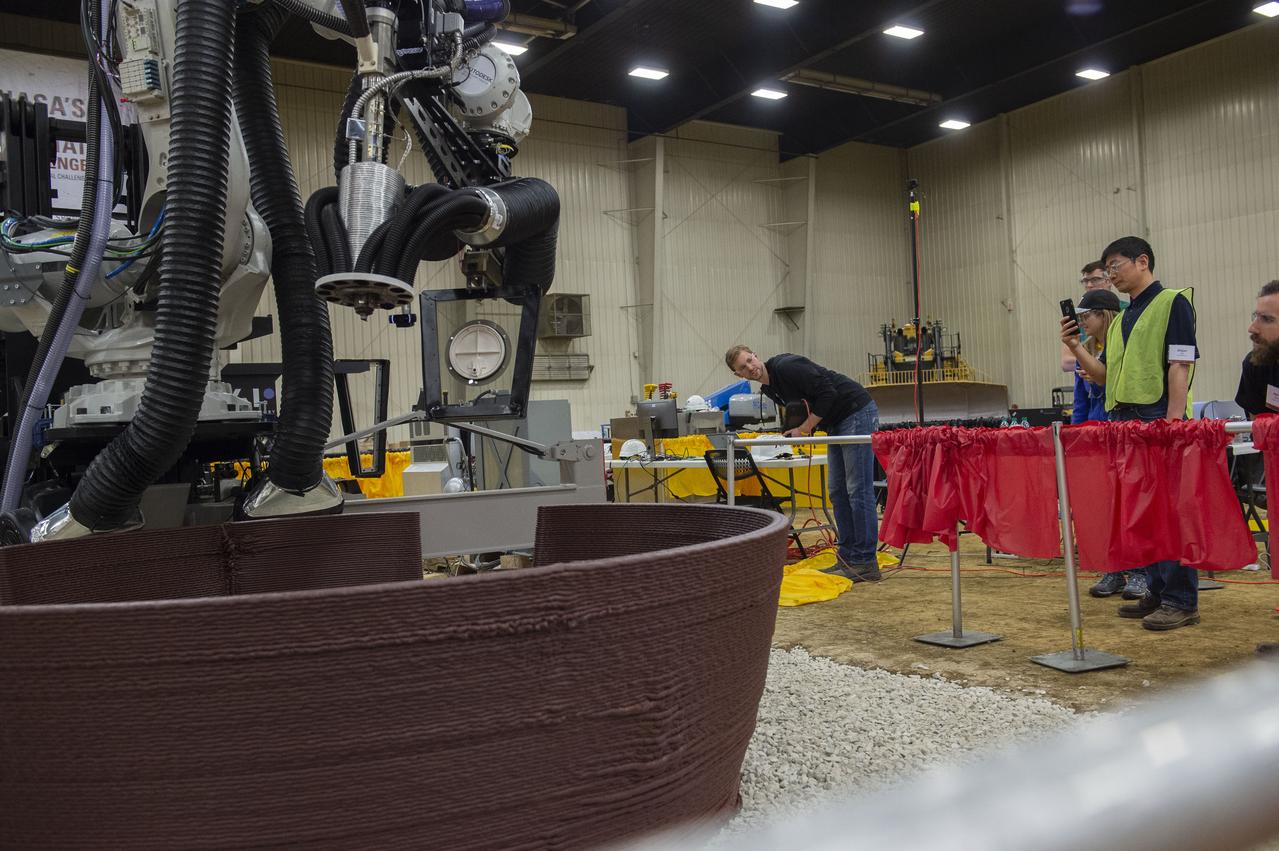
Team AI. SpaceFactory's printer autonomously inserts a window into their 3D-printed subscale habitat structure at NASA's 3D-Printed Habitat Challenge, held at the Caterpillar Edwards Demonstration & Learning Center in Edwards, Illinois, May 1-4, 2019. The habitat print is the final level of the multi-phase competition, which began in in 2015. The 3D-Printed Habitat Challenge is a competition to create sustainable shelters suitable for the Moon, Mars or beyond using resources available on-site in these locations. The challenge is managed by NASA's Centennial Challenges program, and partner Bradley University of Peoria, Illinois.
Team Penn State prepares their 3D-printer to begin printing a subscale habitat structure at NASA's 3D-Printed Habitat Challenge, held at the Caterpillar Edwards Demonstration & Learning Center in Edwards, Illinois, May 1-4, 2019. The habitat print is the final level of the multi-phase competition, which began in in 2015. The 3D-Printed Habitat Challenge is a competition to create sustainable shelters suitable for the Moon, Mars or beyond using resources available on-site in these locations. The challenge is managed by NASA's Centennial Challenges program, and partner Bradley University of Peoria, Illinois.
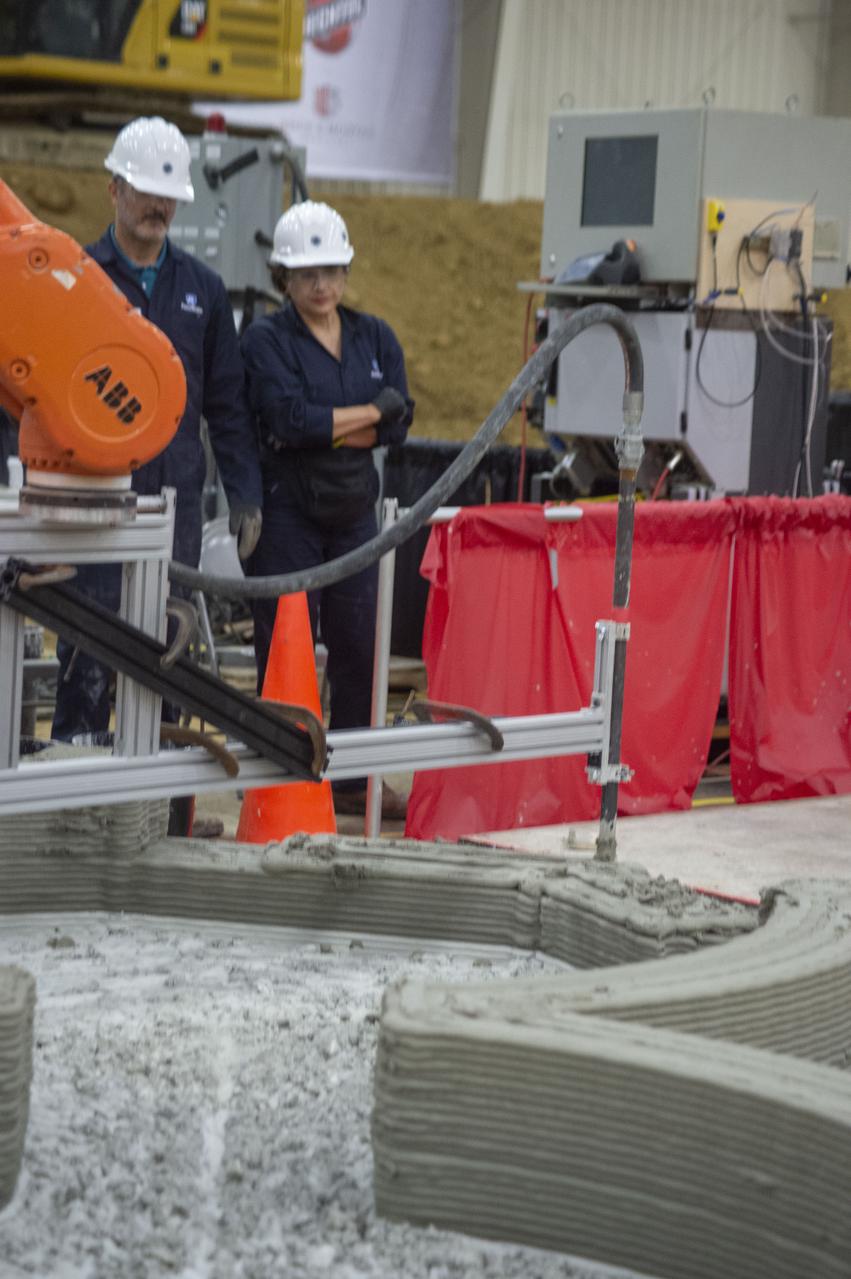
Team Penn State prepares their 3D-printer to begin printing a subscale habitat structure at NASA's 3D-Printed Habitat Challenge, held at the Caterpillar Edwards Demonstration & Learning Center in Edwards, Illinois, May 1-4, 2019. The habitat print is the final level of the multi-phase competition, which began in in 2015. The 3D-Printed Habitat Challenge is a competition to create sustainable shelters suitable for the Moon, Mars or beyond using resources available on-site in these locations. The challenge is managed by NASA's Centennial Challenges program, and partner Bradley University of Peoria, Illinois.
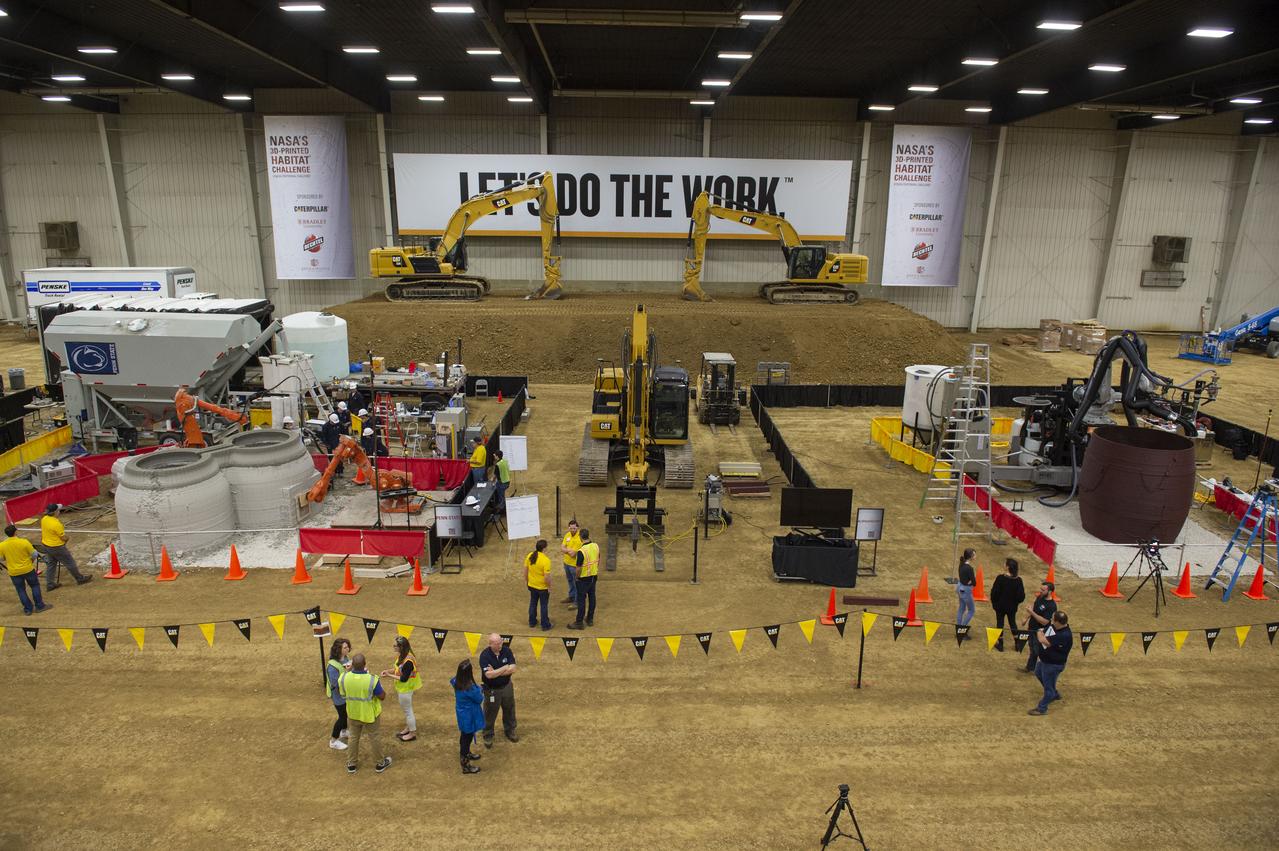
Two teams - Penn State (left) and AI. SpaceFactory (right) competed to 3D-print subscale habitat structures at NASA's 3D-Printed Habitat Challenge, held at the Caterpillar Edwards Demonstration & Learning Center in Edwards, Illinois, May 1-4, 2019. The habitat print is the final level of the multi-phase competition, which began in in 2015. The 3D-Printed Habitat Challenge is a competition to create sustainable shelters suitable for the Moon, Mars or beyond using resources available on-site in these locations. The challenge is managed by NASA's Centennial Challenges program, and partner Bradley University of Peoria, Illinois.
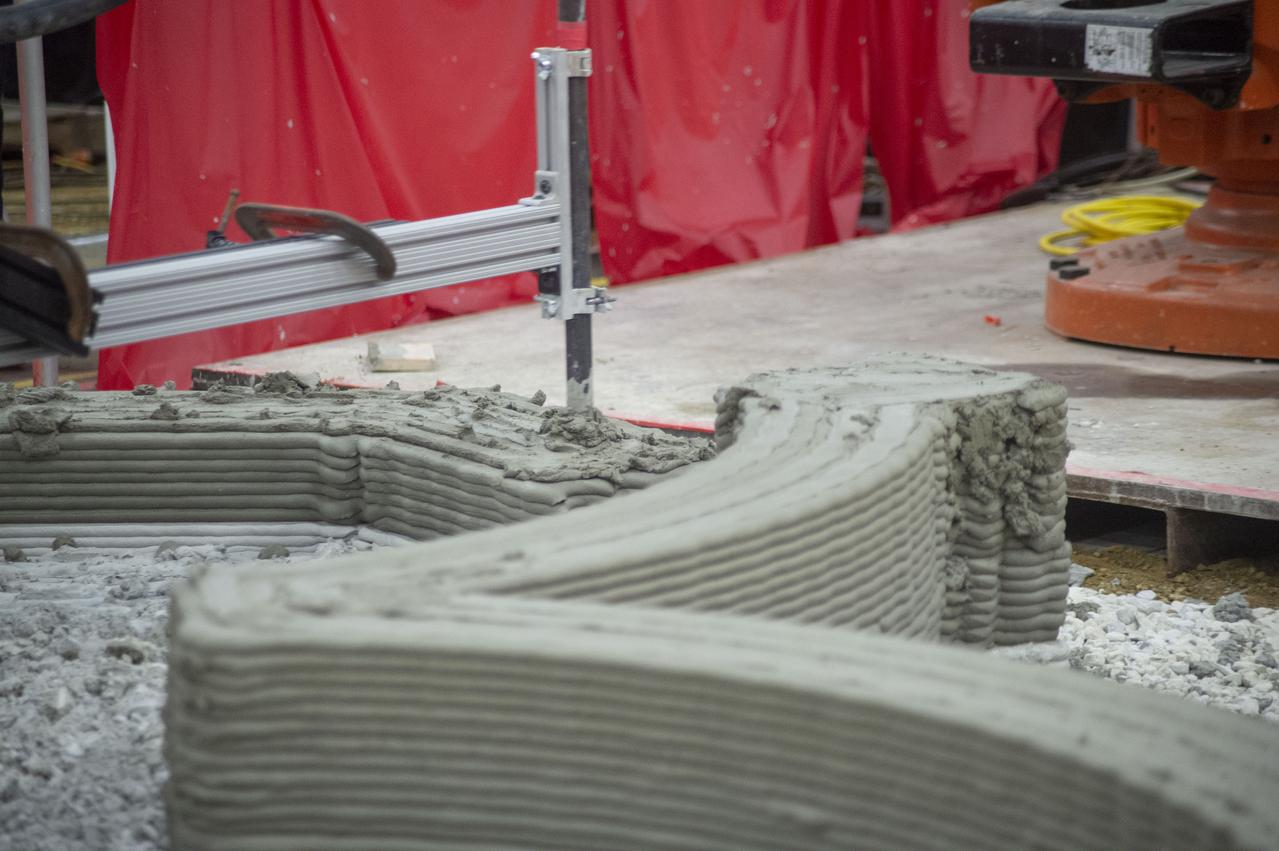
Team Penn State prepares their 3D-printer to begin printing a subscale habitat structure at NASA's 3D-Printed Habitat Challenge, held at the Caterpillar Edwards Demonstration & Learning Center in Edwards, Illinois, May 1-4, 2019. The habitat print is the final level of the multi-phase competition, which began in in 2015. The 3D-Printed Habitat Challenge is a competition to create sustainable shelters suitable for the Moon, Mars or beyond using resources available on-site in these locations. The challenge is managed by NASA's Centennial Challenges program, and partner Bradley University of Peoria, Illinois.
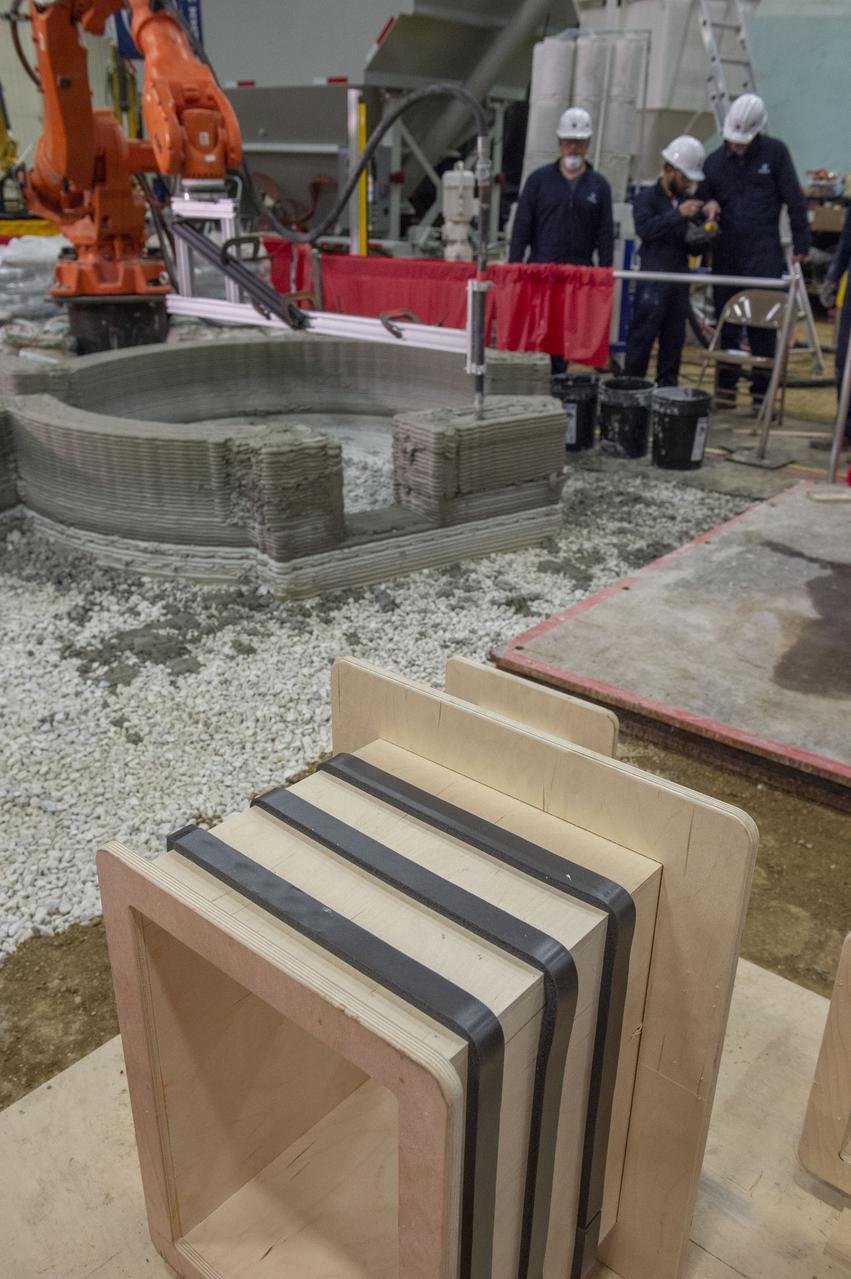
Team Penn State prepares their 3D-printer to begin printing a subscale habitat structure at NASA's 3D-Printed Habitat Challenge, held at the Caterpillar Edwards Demonstration & Learning Center in Edwards, Illinois, May 1-4, 2019. The habitat print is the final level of the multi-phase competition, which began in in 2015. The 3D-Printed Habitat Challenge is a competition to create sustainable shelters suitable for the Moon, Mars or beyond using resources available on-site in these locations. The challenge is managed by NASA's Centennial Challenges program, and partner Bradley University of Peoria, Illinois.
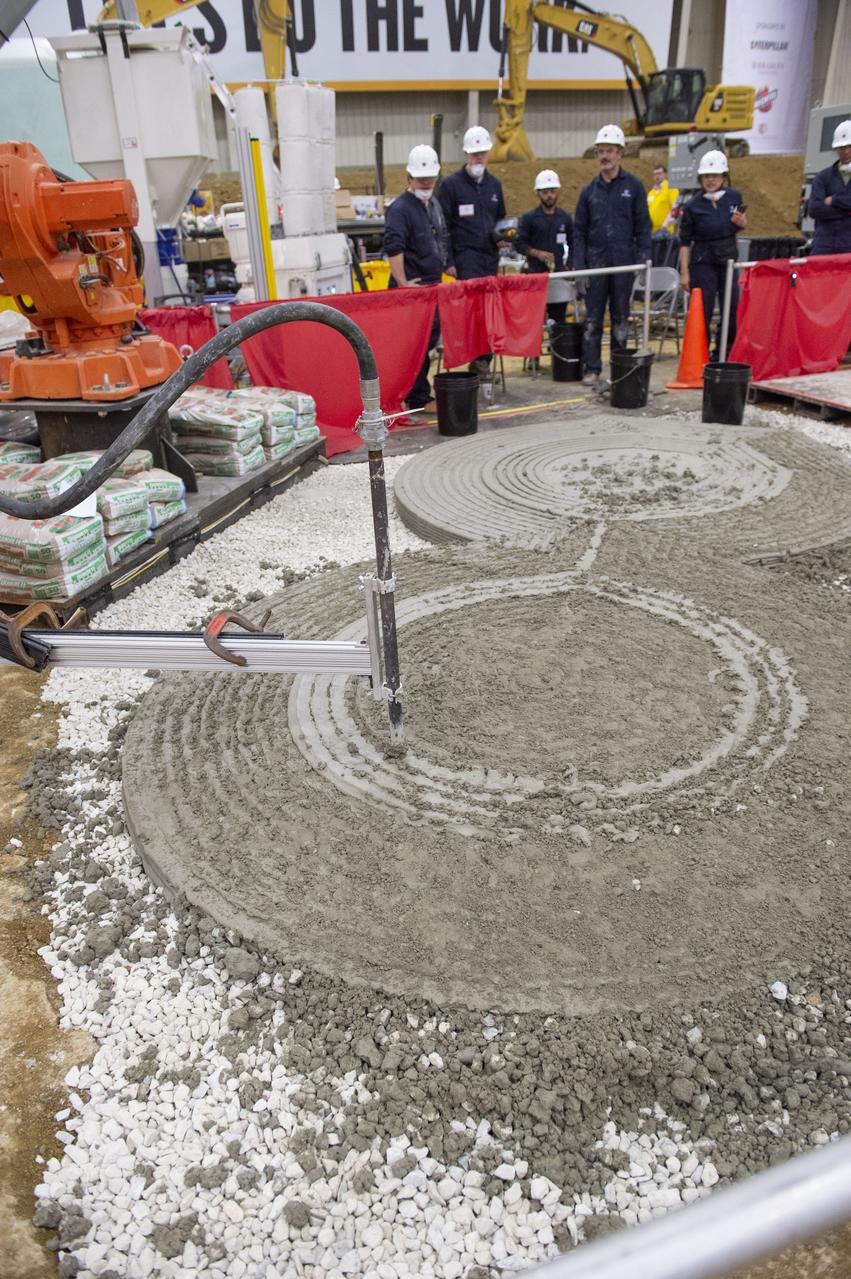
Team Penn State prepares their 3D-printer to begin printing a subscale habitat structure at NASA's 3D-Printed Habitat Challenge, held at the Caterpillar Edwards Demonstration & Learning Center in Edwards, Illinois, May 1-4, 2019. The habitat print is the final level of the multi-phase competition, which began in in 2015. The 3D-Printed Habitat Challenge is a competition to create sustainable shelters suitable for the Moon, Mars or beyond using resources available on-site in these locations. The challenge is managed by NASA's Centennial Challenges program, and partner Bradley University of Peoria, Illinois.
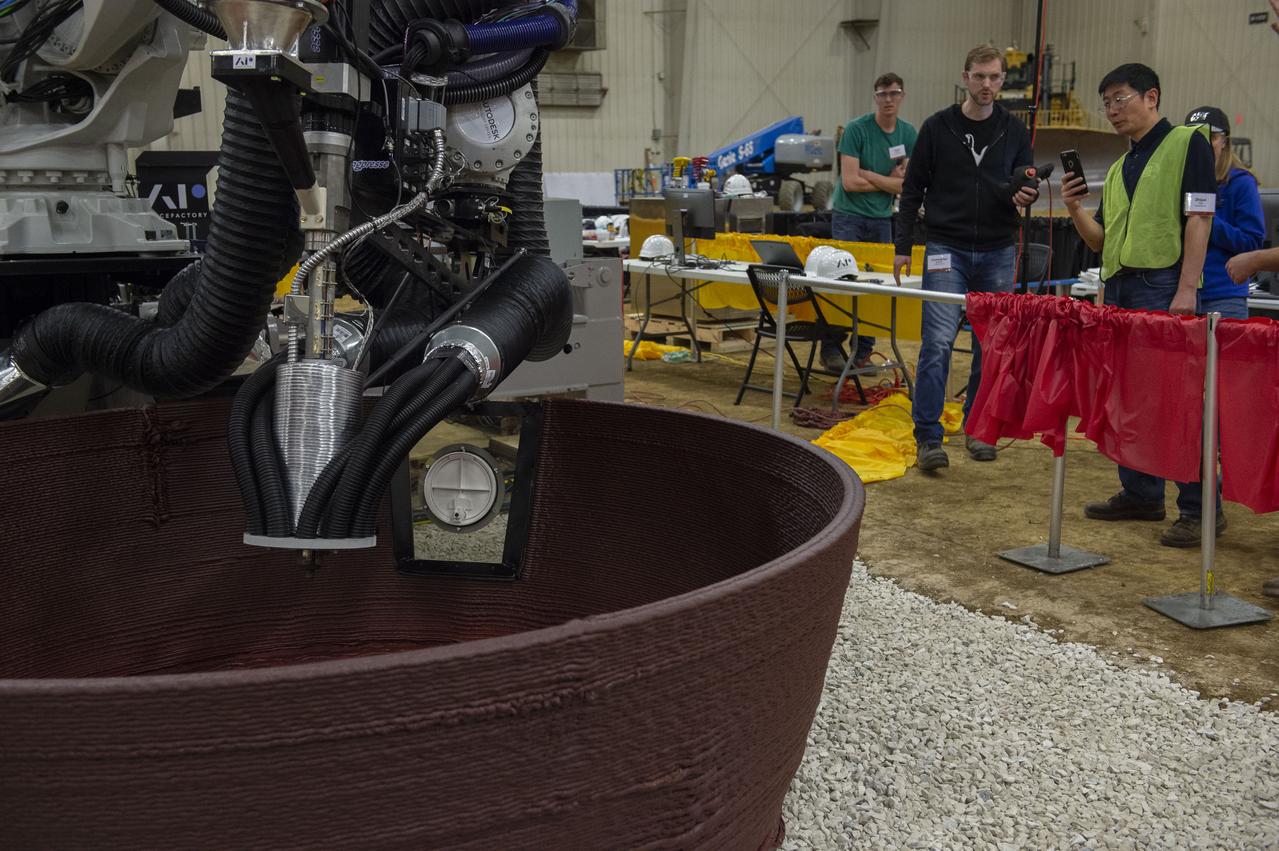
Team AI. SpaceFactory's printer autonomously inserts a window into their 3D-printed subscale habitat structure at NASA's 3D-Printed Habitat Challenge, held at the Caterpillar Edwards Demonstration & Learning Center in Edwards, Illinois, May 1-4, 2019. The habitat print is the final level of the multi-phase competition, which began in in 2015. The 3D-Printed Habitat Challenge is a competition to create sustainable shelters suitable for the Moon, Mars or beyond using resources available on-site in these locations. The challenge is managed by NASA's Centennial Challenges program, and partner Bradley University of Peoria, Illinois.
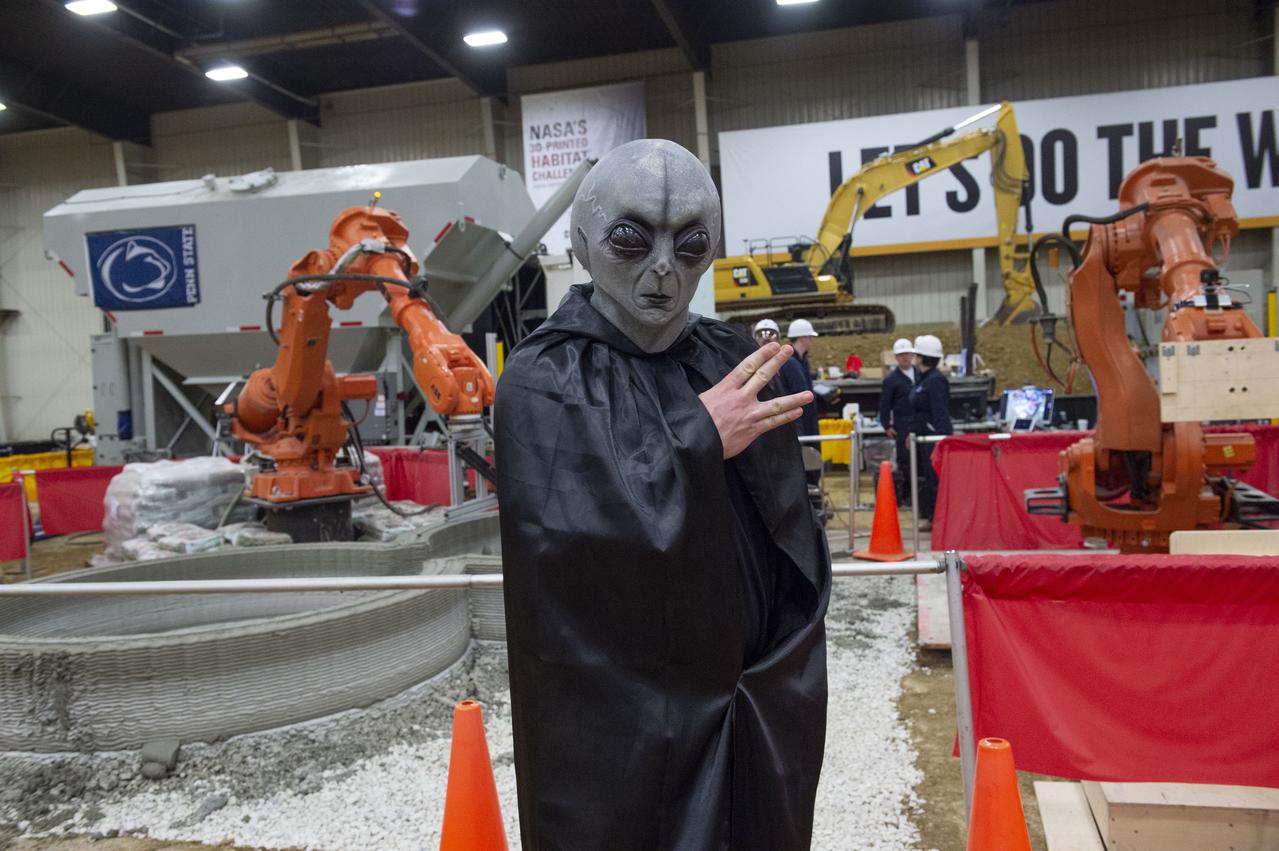
Team Penn State prepares their 3D-printer to begin printing a subscale habitat structure at NASA's 3D-Printed Habitat Challenge, held at the Caterpillar Edwards Demonstration & Learning Center in Edwards, Illinois, May 1-4, 2019. The habitat print is the final level of the multi-phase competition, which began in in 2015. The 3D-Printed Habitat Challenge is a competition to create sustainable shelters suitable for the Moon, Mars or beyond using resources available on-site in these locations. The challenge is managed by NASA's Centennial Challenges program, and partner Bradley University of Peoria, Illinois.
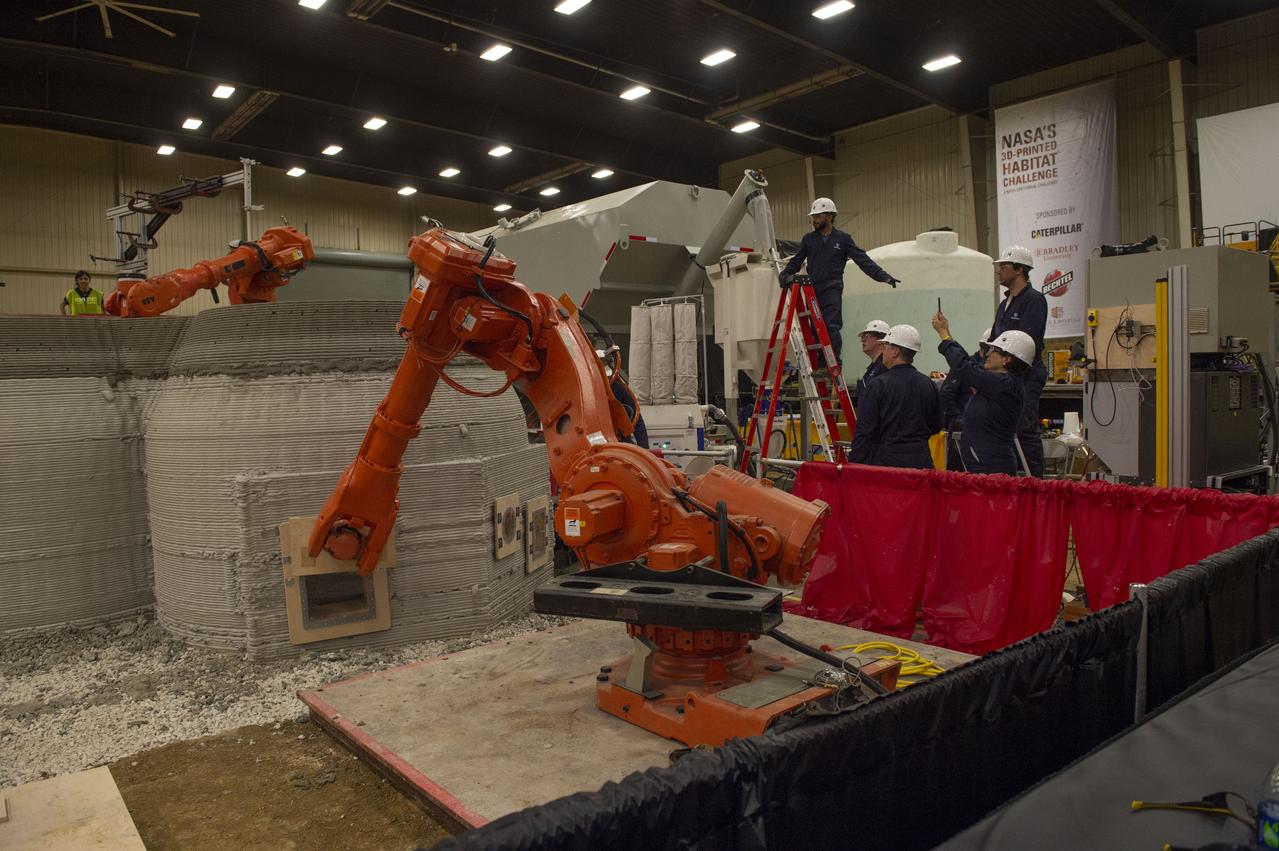
Team Penn State prepares their 3D-printer to begin printing a subscale habitat structure at NASA's 3D-Printed Habitat Challenge, held at the Caterpillar Edwards Demonstration & Learning Center in Edwards, Illinois, May 1-4, 2019. The habitat print is the final level of the multi-phase competition, which began in in 2015. The 3D-Printed Habitat Challenge is a competition to create sustainable shelters suitable for the Moon, Mars or beyond using resources available on-site in these locations. The challenge is managed by NASA's Centennial Challenges program, and partner Bradley University of Peoria, Illinois.
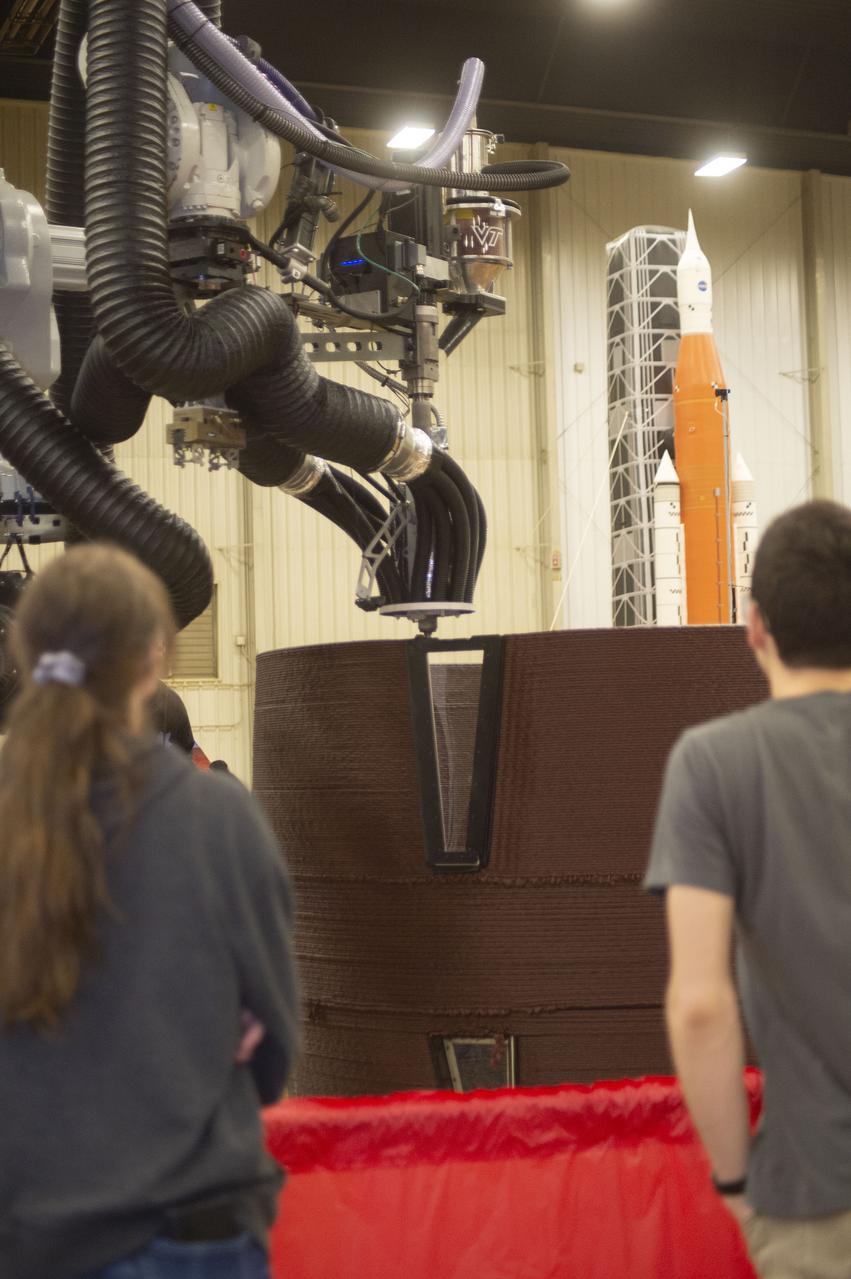
Team AI. SpaceFactory's printer autonomously inserts a window into their 3D-printed subscale habitat structure at NASA's 3D-Printed Habitat Challenge, held at the Caterpillar Edwards Demonstration & Learning Center in Edwards, Illinois, May 1-4, 2019. The habitat print is the final level of the multi-phase competition, which began in in 2015. The 3D-Printed Habitat Challenge is a competition to create sustainable shelters suitable for the Moon, Mars or beyond using resources available on-site in these locations. The challenge is managed by NASA's Centennial Challenges program, and partner Bradley University of Peoria, Illinois.
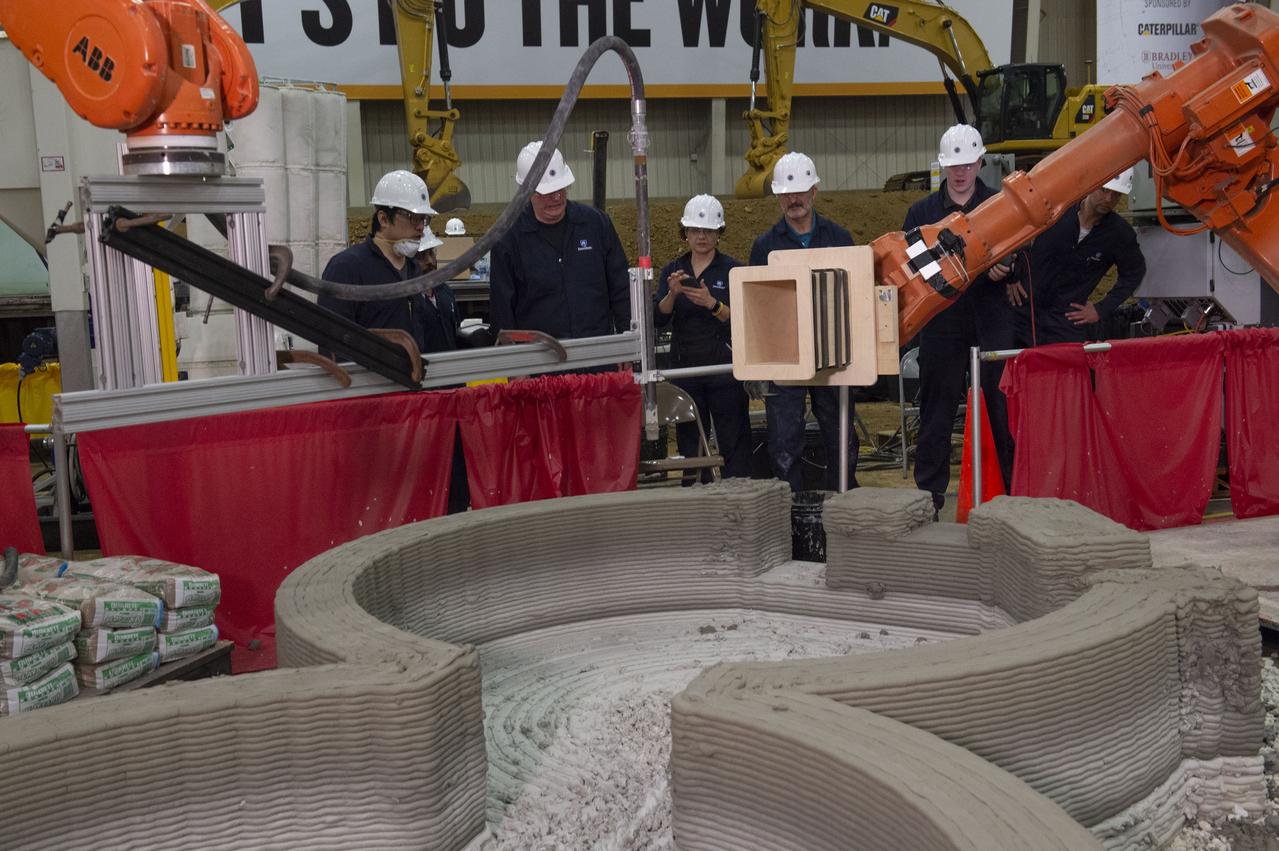
Team Penn State prepares their 3D-printer to begin printing a subscale habitat structure at NASA's 3D-Printed Habitat Challenge, held at the Caterpillar Edwards Demonstration & Learning Center in Edwards, Illinois, May 1-4, 2019. The habitat print is the final level of the multi-phase competition, which began in in 2015. The 3D-Printed Habitat Challenge is a competition to create sustainable shelters suitable for the Moon, Mars or beyond using resources available on-site in these locations. The challenge is managed by NASA's Centennial Challenges program, and partner Bradley University of Peoria, Illinois.
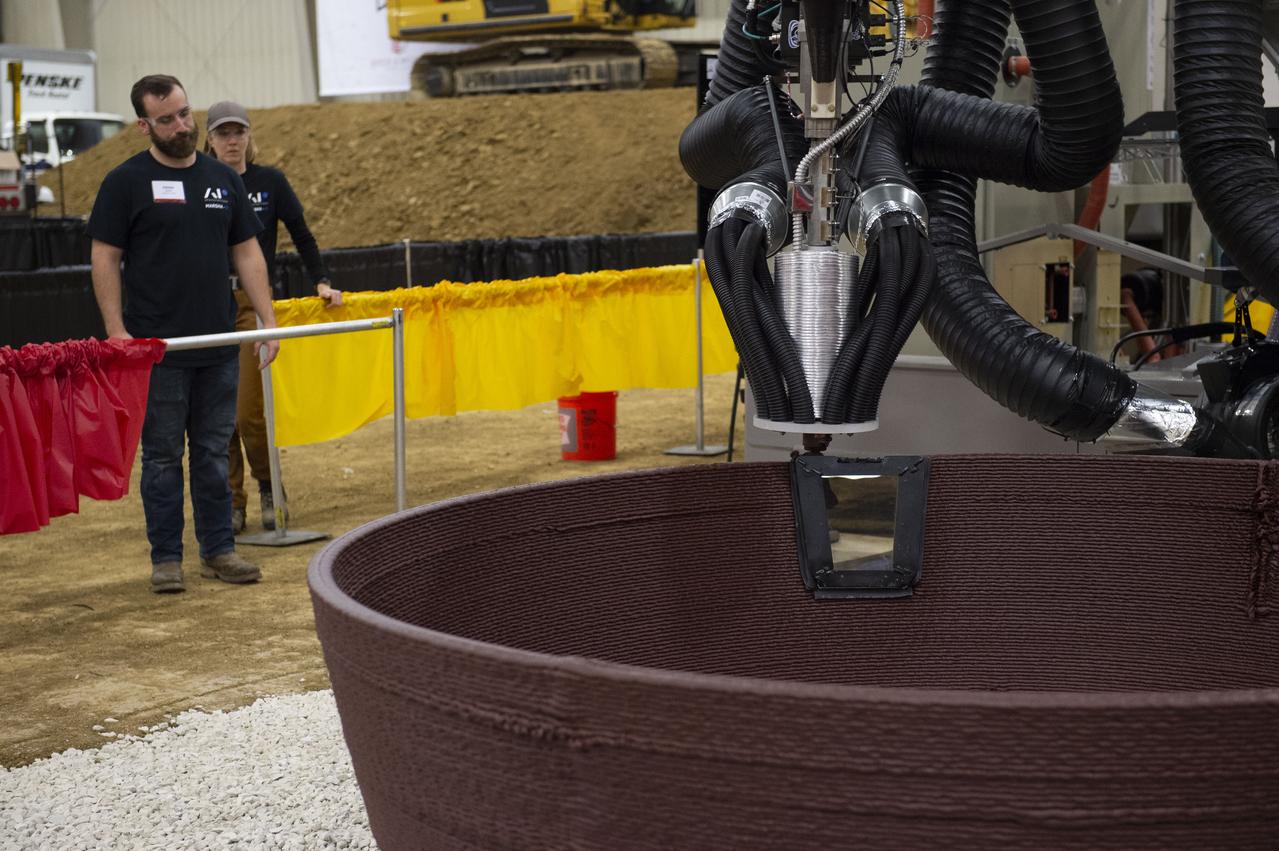
Team AI. SpaceFactory's printer autonomously inserts a window into their 3D-printed subscale habitat structure at NASA's 3D-Printed Habitat Challenge, held at the Caterpillar Edwards Demonstration & Learning Center in Edwards, Illinois, May 1-4, 2019. The habitat print is the final level of the multi-phase competition, which began in in 2015. The 3D-Printed Habitat Challenge is a competition to create sustainable shelters suitable for the Moon, Mars or beyond using resources available on-site in these locations. The challenge is managed by NASA's Centennial Challenges program, and partner Bradley University of Peoria, Illinois.
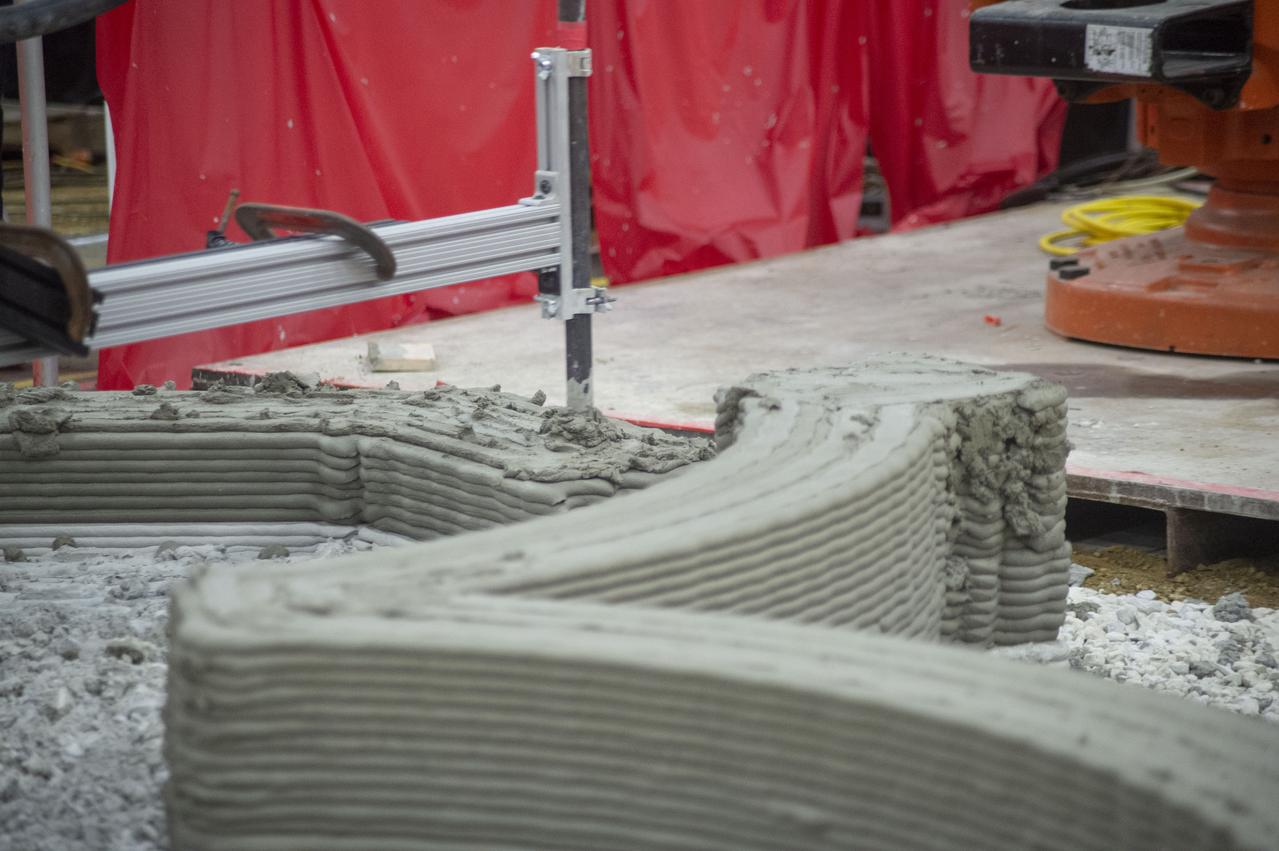
Team AI. SpaceFactory's printer autonomously inserts a window into their 3D-printed subscale habitat structure at NASA's 3D-Printed Habitat Challenge, held at the Caterpillar Edwards Demonstration & Learning Center in Edwards, Illinois, May 1-4, 2019. The habitat print is the final level of the multi-phase competition, which began in in 2015. The 3D-Printed Habitat Challenge is a competition to create sustainable shelters suitable for the Moon, Mars or beyond using resources available on-site in these locations. The challenge is managed by NASA's Centennial Challenges program, and partner Bradley University of Peoria, Illinois.
Team AI. SpaceFactory's printer autonomously inserts a window into their 3D-printed subscale habitat structure at NASA's 3D-Printed Habitat Challenge, held at the Caterpillar Edwards Demonstration & Learning Center in Edwards, Illinois, May 1-4, 2019. The habitat print is the final level of the multi-phase competition, which began in in 2015. The 3D-Printed Habitat Challenge is a competition to create sustainable shelters suitable for the Moon, Mars or beyond using resources available on-site in these locations. The challenge is managed by NASA's Centennial Challenges program, and partner Bradley University of Peoria, Illinois.
Team Penn State prepares their 3D-printer to begin printing a subscale habitat structure at NASA's 3D-Printed Habitat Challenge, held at the Caterpillar Edwards Demonstration & Learning Center in Edwards, Illinois, May 1-4, 2019. The habitat print is the final level of the multi-phase competition, which began in in 2015. The 3D-Printed Habitat Challenge is a competition to create sustainable shelters suitable for the Moon, Mars or beyond using resources available on-site in these locations. The challenge is managed by NASA's Centennial Challenges program, and partner Bradley University of Peoria, Illinois.
Team Penn State prepares their 3D-printer to begin printing a subscale habitat structure at NASA's 3D-Printed Habitat Challenge, held at the Caterpillar Edwards Demonstration & Learning Center in Edwards, Illinois, May 1-4, 2019. The habitat print is the final level of the multi-phase competition, which began in in 2015. The 3D-Printed Habitat Challenge is a competition to create sustainable shelters suitable for the Moon, Mars or beyond using resources available on-site in these locations. The challenge is managed by NASA's Centennial Challenges program, and partner Bradley University of Peoria, Illinois.
Team Penn State prepares their 3D-printer to begin printing a subscale habitat structure at NASA's 3D-Printed Habitat Challenge, held at the Caterpillar Edwards Demonstration & Learning Center in Edwards, Illinois, May 1-4, 2019. The habitat print is the final level of the multi-phase competition, which began in in 2015. The 3D-Printed Habitat Challenge is a competition to create sustainable shelters suitable for the Moon, Mars or beyond using resources available on-site in these locations. The challenge is managed by NASA's Centennial Challenges program, and partner Bradley University of Peoria, Illinois.
Two teams - Penn State (left) and AI. SpaceFactory (right) competed to 3D-print subscale habitat structures at NASA's 3D-Printed Habitat Challenge, held at the Caterpillar Edwards Demonstration & Learning Center in Edwards, Illinois, May 1-4, 2019. The habitat print is the final level of the multi-phase competition, which began in in 2015. The 3D-Printed Habitat Challenge is a competition to create sustainable shelters suitable for the Moon, Mars or beyond using resources available on-site in these locations. The challenge is managed by NASA's Centennial Challenges program, and partner Bradley University of Peoria, Illinois.
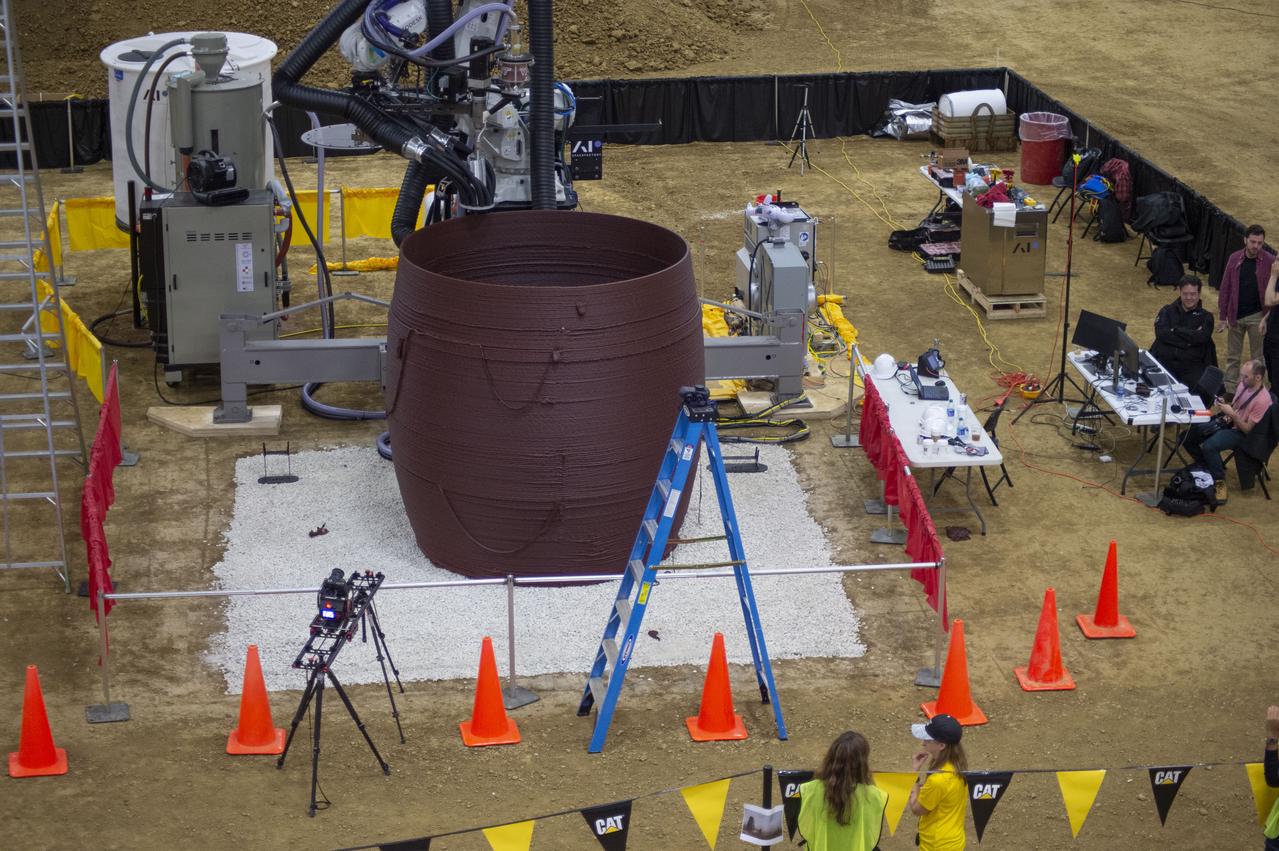
Team AI. SpaceFactory's subscale habitat structure about two-thirds complete at NASA's 3D-Printed Habitat Challenge, held at the Caterpillar Edwards Demonstration & Learning Center in Edwards, Illinois, May 1-4, 2019. The habitat print is the final level of the multi-phase competition, which began in in 2015. The 3D-Printed Habitat Challenge is a competition to create sustainable shelters suitable for the Moon, Mars or beyond using resources available on-site in these locations. The challenge is managed by NASA's Centennial Challenges program, and partner Bradley University of Peoria, Illinois.
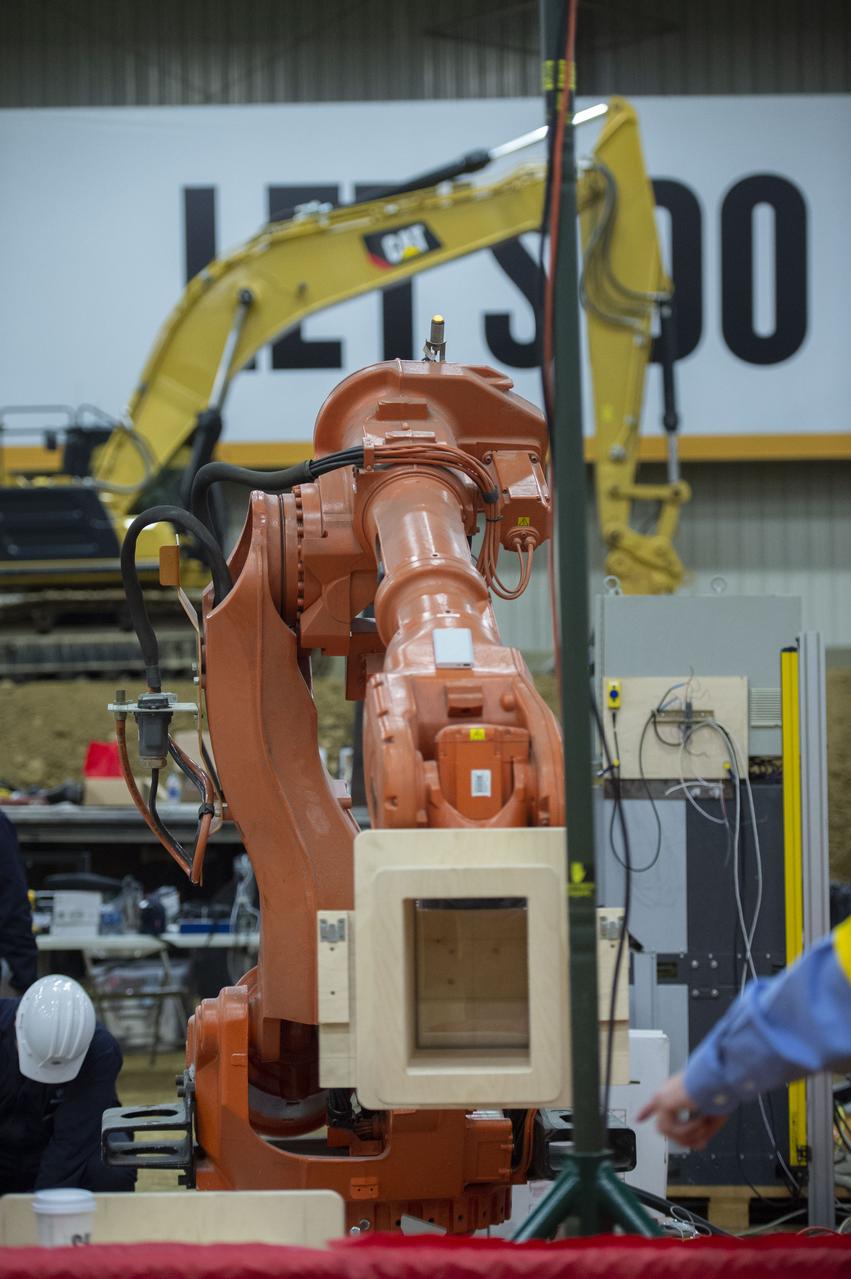
Team Penn State prepares their 3D-printer to begin printing a subscale habitat structure at NASA's 3D-Printed Habitat Challenge, held at the Caterpillar Edwards Demonstration & Learning Center in Edwards, Illinois, May 1-4, 2019. The habitat print is the final level of the multi-phase competition, which began in in 2015. The 3D-Printed Habitat Challenge is a competition to create sustainable shelters suitable for the Moon, Mars or beyond using resources available on-site in these locations. The challenge is managed by NASA's Centennial Challenges program, and partner Bradley University of Peoria, Illinois.
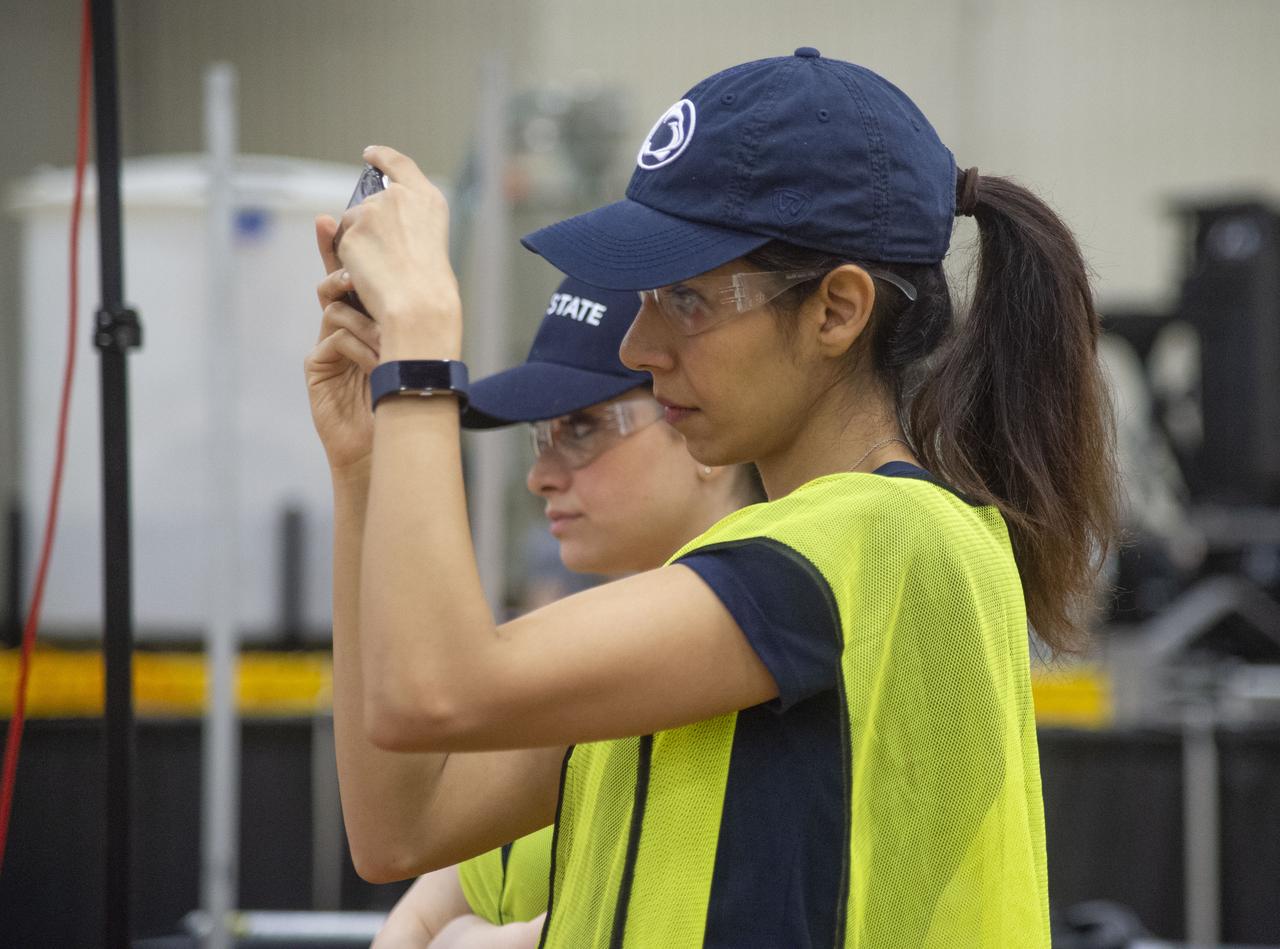
Team Penn State prepares their 3D-printer to begin printing a subscale habitat structure at NASA's 3D-Printed Habitat Challenge, held at the Caterpillar Edwards Demonstration & Learning Center in Edwards, Illinois, May 1-4, 2019. The habitat print is the final level of the multi-phase competition, which began in in 2015. The 3D-Printed Habitat Challenge is a competition to create sustainable shelters suitable for the Moon, Mars or beyond using resources available on-site in these locations. The challenge is managed by NASA's Centennial Challenges program, and partner Bradley University of Peoria, Illinois.
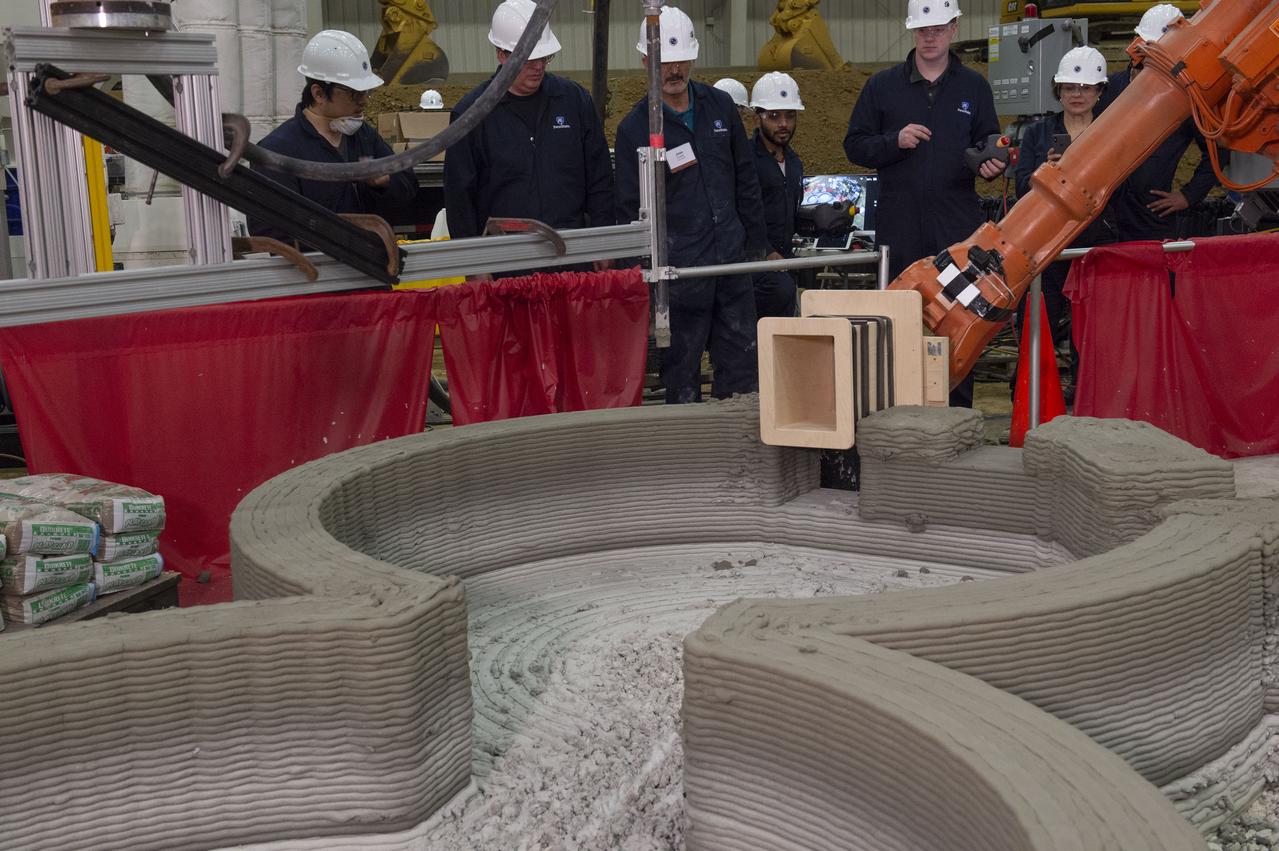
Team Penn State prepares their 3D-printer to begin printing a subscale habitat structure at NASA's 3D-Printed Habitat Challenge, held at the Caterpillar Edwards Demonstration & Learning Center in Edwards, Illinois, May 1-4, 2019. The habitat print is the final level of the multi-phase competition, which began in in 2015. The 3D-Printed Habitat Challenge is a competition to create sustainable shelters suitable for the Moon, Mars or beyond using resources available on-site in these locations. The challenge is managed by NASA's Centennial Challenges program, and partner Bradley University of Peoria, Illinois.
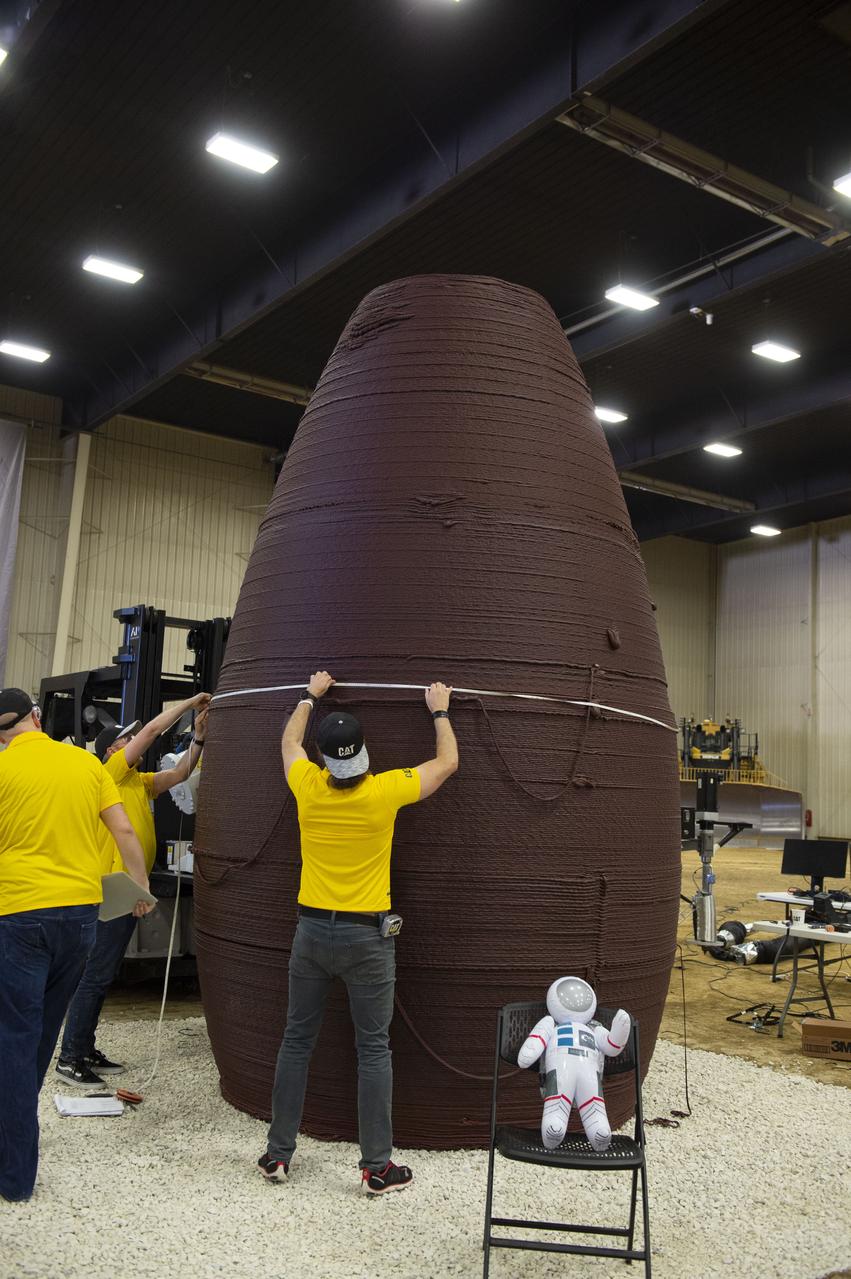
Two teams - Penn State (left) and AI. SpaceFactory (right) competed to 3D-print subscale habitat structures at NASA's 3D-Printed Habitat Challenge, held at the Caterpillar Edwards Demonstration & Learning Center in Edwards, Illinois, May 1-4, 2019. The habitat print is the final level of the multi-phase competition, which began in in 2015. The 3D-Printed Habitat Challenge is a competition to create sustainable shelters suitable for the Moon, Mars or beyond using resources available on-site in these locations. The challenge is managed by NASA's Centennial Challenges program, and partner Bradley University of Peoria, Illinois.
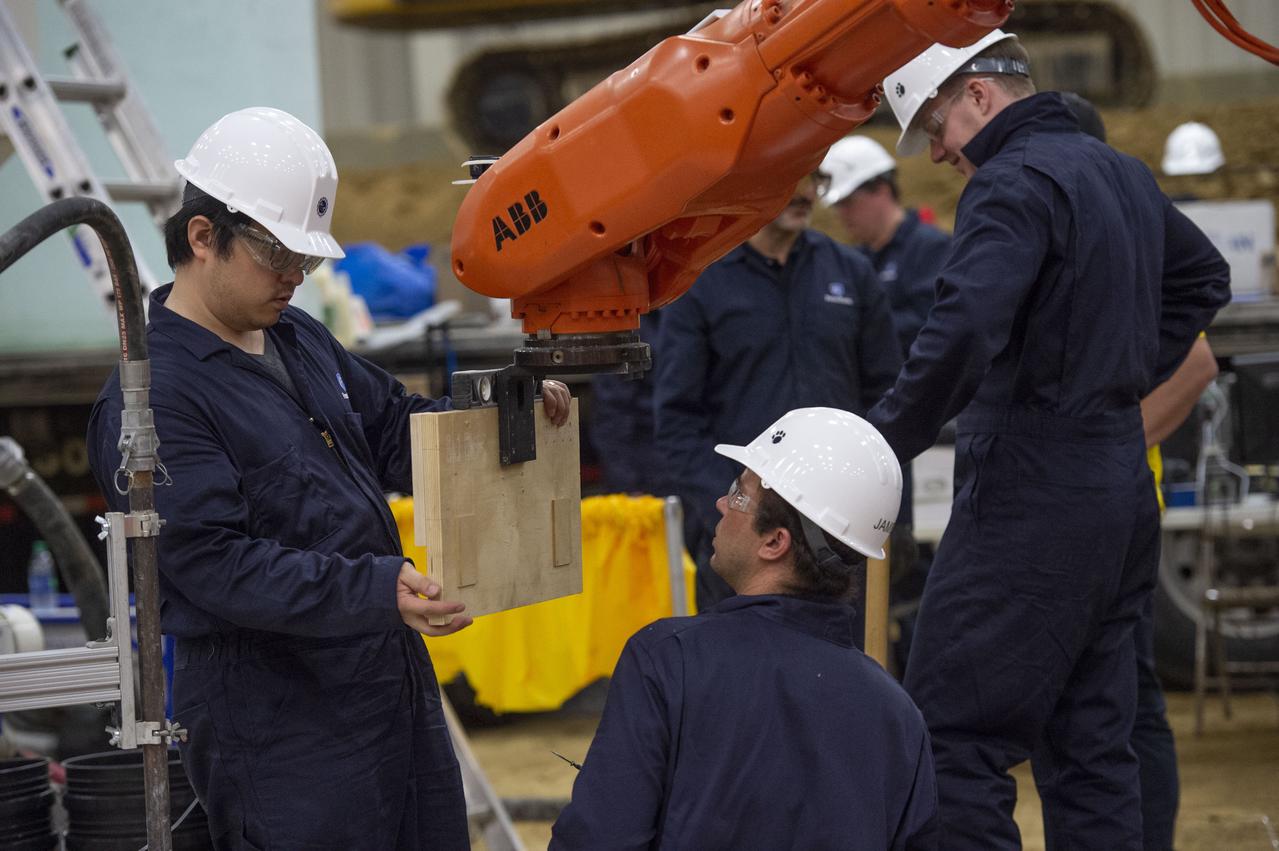
Team Penn State prepares their 3D-printer to begin printing a subscale habitat structure at NASA's 3D-Printed Habitat Challenge, held at the Caterpillar Edwards Demonstration & Learning Center in Edwards, Illinois, May 1-4, 2019. The habitat print is the final level of the multi-phase competition, which began in in 2015. The 3D-Printed Habitat Challenge is a competition to create sustainable shelters suitable for the Moon, Mars or beyond using resources available on-site in these locations. The challenge is managed by NASA's Centennial Challenges program, and partner Bradley University of Peoria, Illinois.
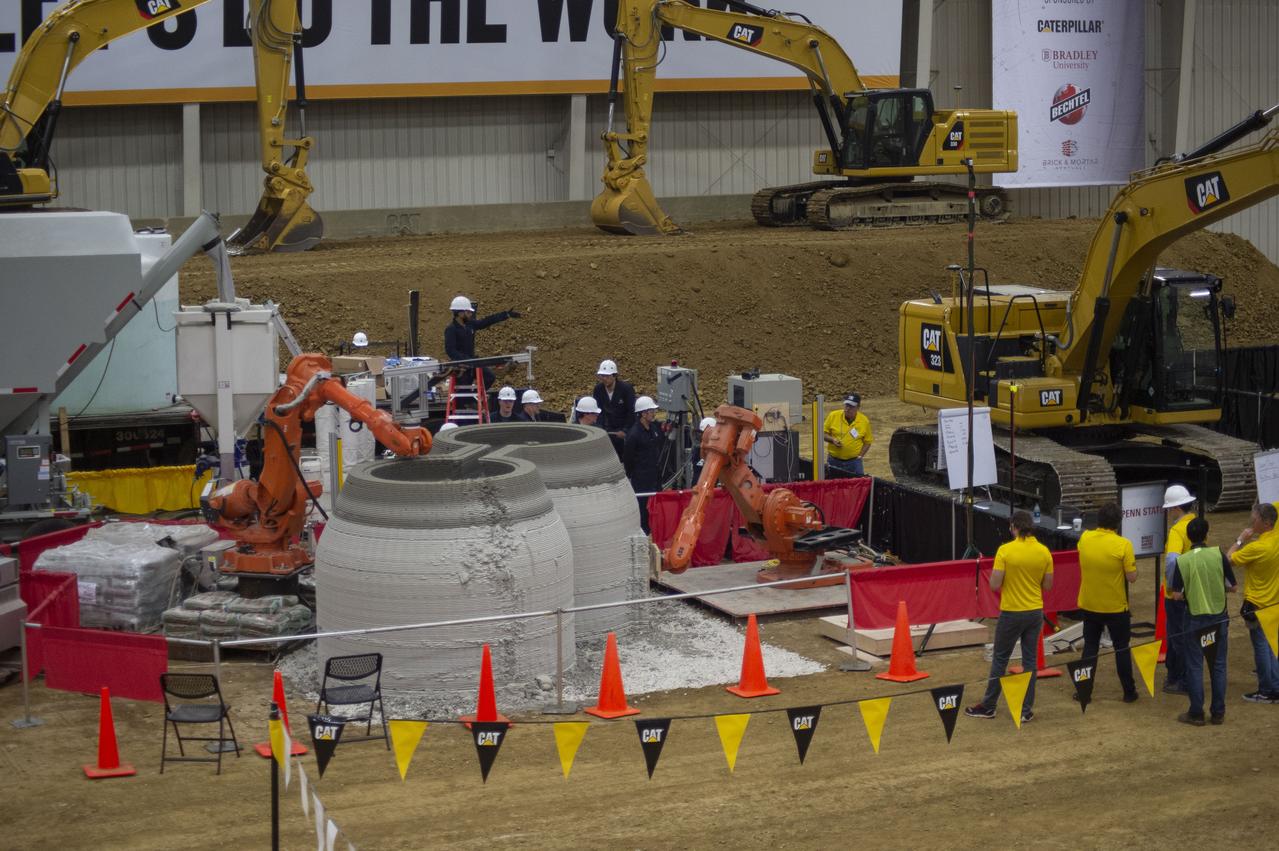
Team Penn State prepares their 3D-printer to begin printing a subscale habitat structure at NASA's 3D-Printed Habitat Challenge, held at the Caterpillar Edwards Demonstration & Learning Center in Edwards, Illinois, May 1-4, 2019. The habitat print is the final level of the multi-phase competition, which began in in 2015. The 3D-Printed Habitat Challenge is a competition to create sustainable shelters suitable for the Moon, Mars or beyond using resources available on-site in these locations. The challenge is managed by NASA's Centennial Challenges program, and partner Bradley University of Peoria, Illinois.
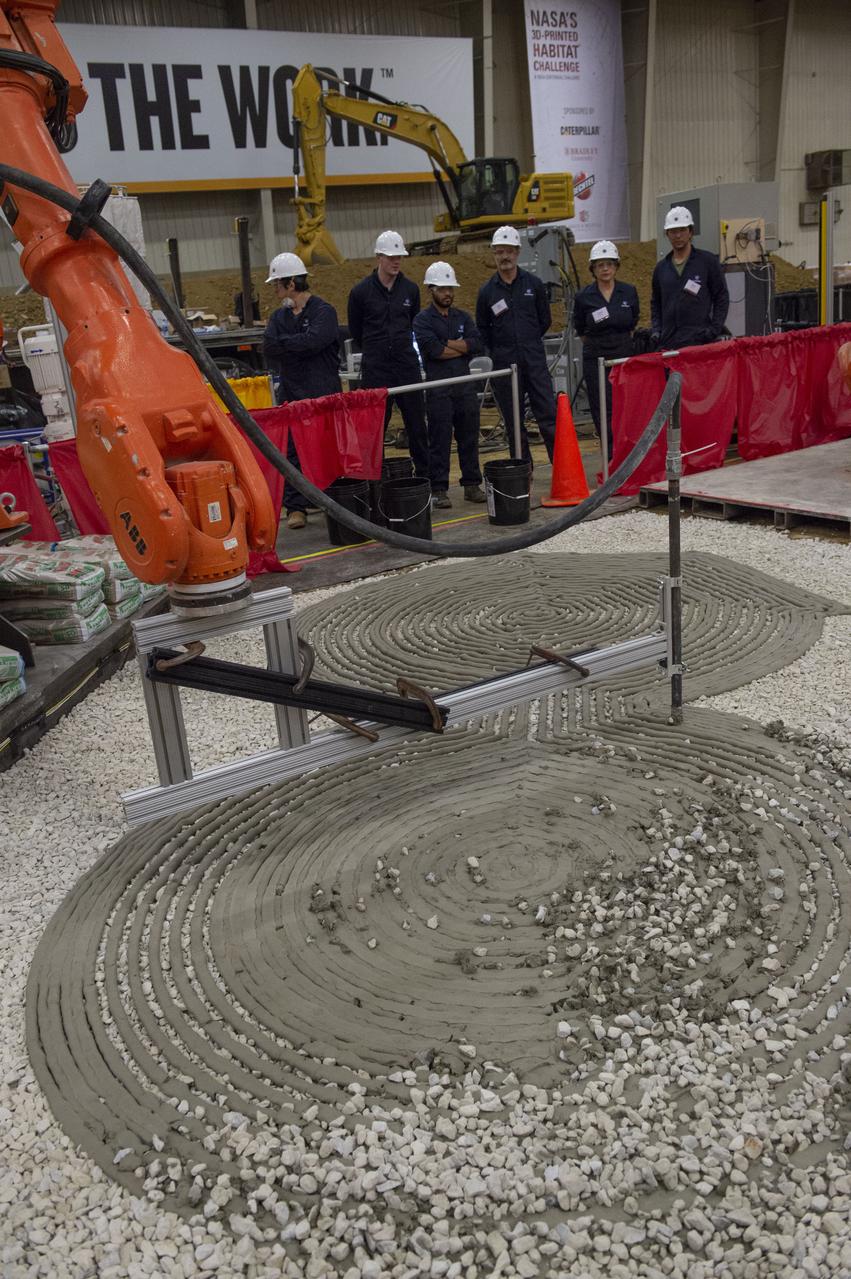
Team Penn State prepares their 3D-printer to begin printing a subscale habitat structure at NASA's 3D-Printed Habitat Challenge, held at the Caterpillar Edwards Demonstration & Learning Center in Edwards, Illinois, May 1-4, 2019. The habitat print is the final level of the multi-phase competition, which began in in 2015. The 3D-Printed Habitat Challenge is a competition to create sustainable shelters suitable for the Moon, Mars or beyond using resources available on-site in these locations. The challenge is managed by NASA's Centennial Challenges program, and partner Bradley University of Peoria, Illinois.

Team Penn State prepares their 3D-printer to begin printing a subscale habitat structure at NASA's 3D-Printed Habitat Challenge, held at the Caterpillar Edwards Demonstration & Learning Center in Edwards, Illinois, May 1-4, 2019. The habitat print is the final level of the multi-phase competition, which began in in 2015. The 3D-Printed Habitat Challenge is a competition to create sustainable shelters suitable for the Moon, Mars or beyond using resources available on-site in these locations. The challenge is managed by NASA's Centennial Challenges program, and partner Bradley University of Peoria, Illinois.
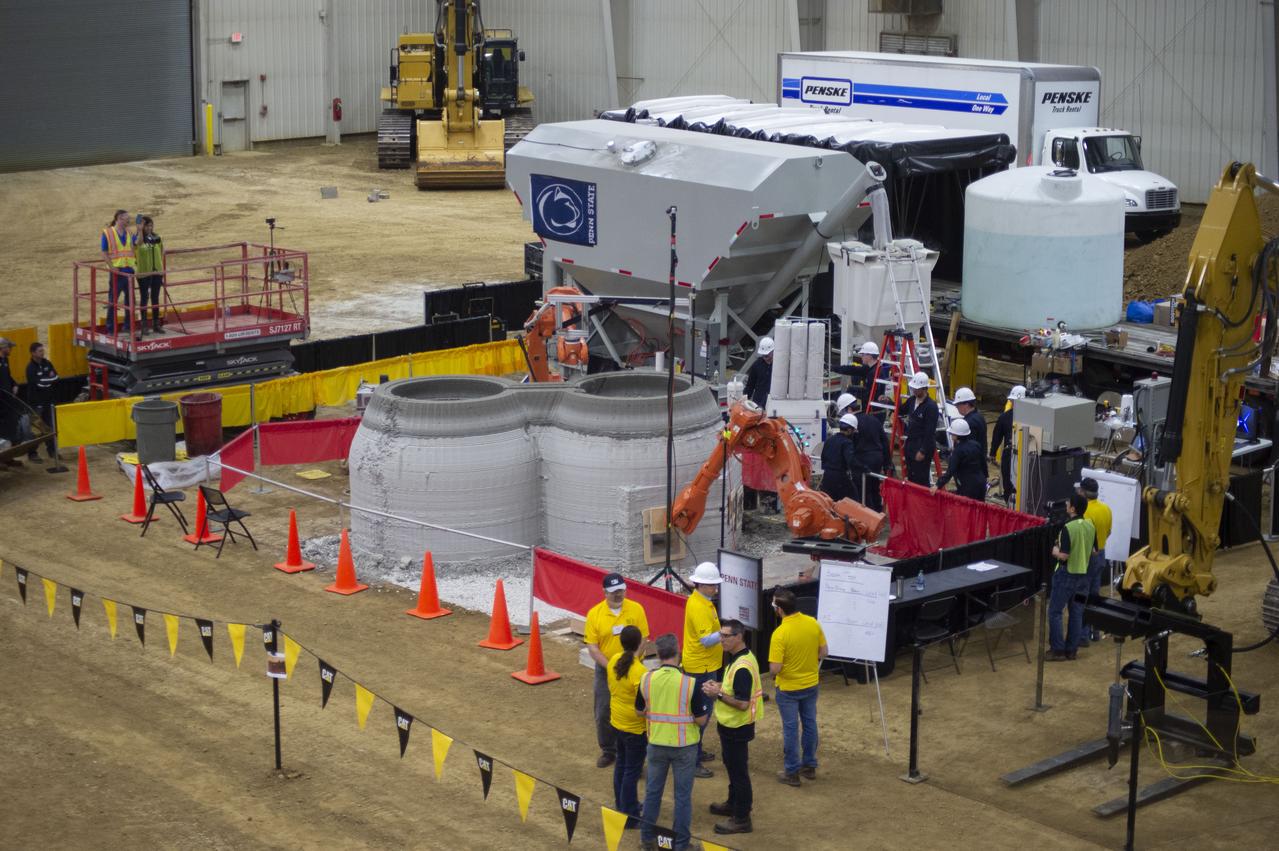
Team Penn State prepares their 3D-printer to begin printing a subscale habitat structure at NASA's 3D-Printed Habitat Challenge, held at the Caterpillar Edwards Demonstration & Learning Center in Edwards, Illinois, May 1-4, 2019. The habitat print is the final level of the multi-phase competition, which began in in 2015. The 3D-Printed Habitat Challenge is a competition to create sustainable shelters suitable for the Moon, Mars or beyond using resources available on-site in these locations. The challenge is managed by NASA's Centennial Challenges program, and partner Bradley University of Peoria, Illinois.
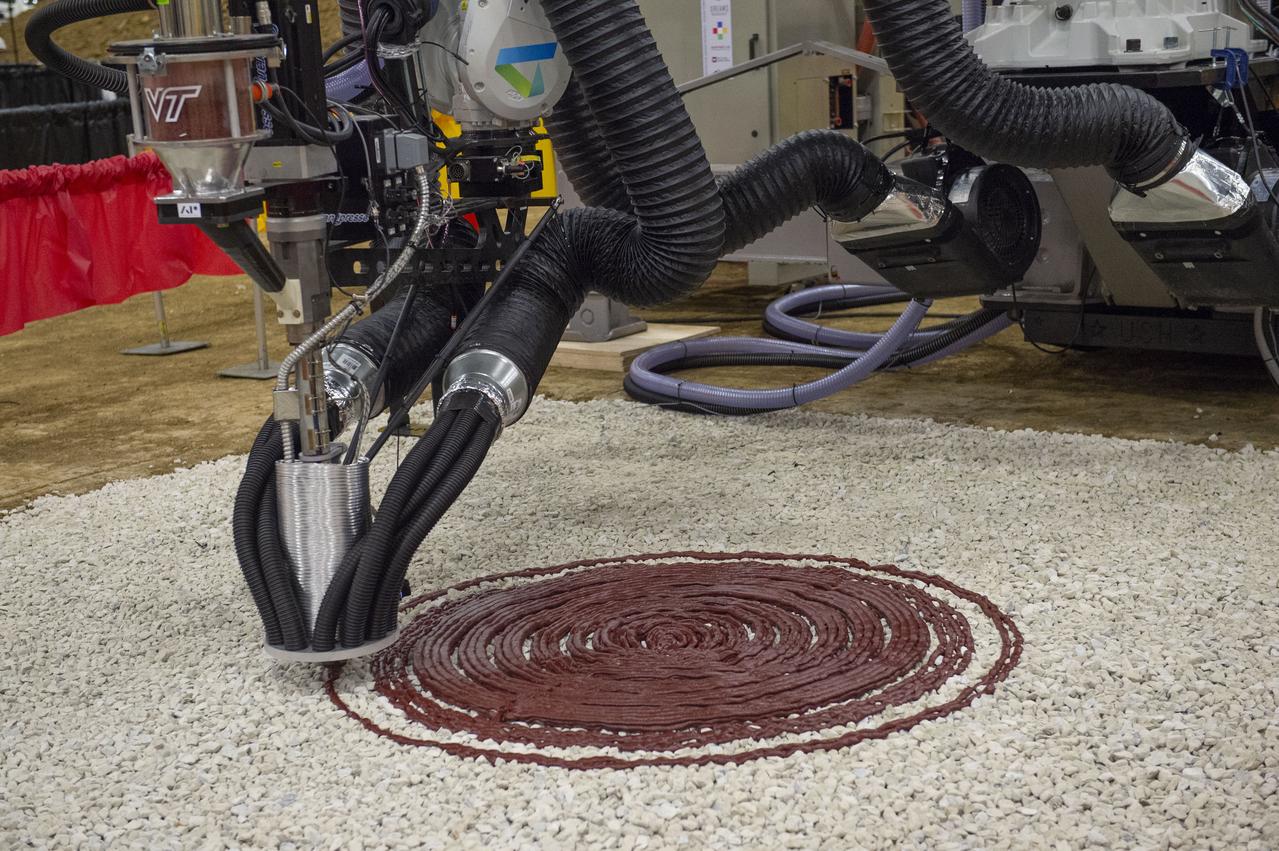
AI. SpaceFactory of New York and Pennsylvania State Team Penn State prepares their 3D-printer to begin printing a subscale habitat structure at NASA's 3D-Printed Habitat Challenge, held at the Caterpillar Edwards Demonstration & Learning Center in Edwards, Illinois, May 1-4, 2019. The habitat print is the final level of the multi-phase competition, which began in in 2015. The 3D-Printed Habitat Challenge is a competition to create sustainable shelters suitable for the Moon, Mars or beyond using resources available on-site in these locations. The challenge is managed by NASA's Centennial Challenges program, and partner Bradley University of Peoria, Illinois.
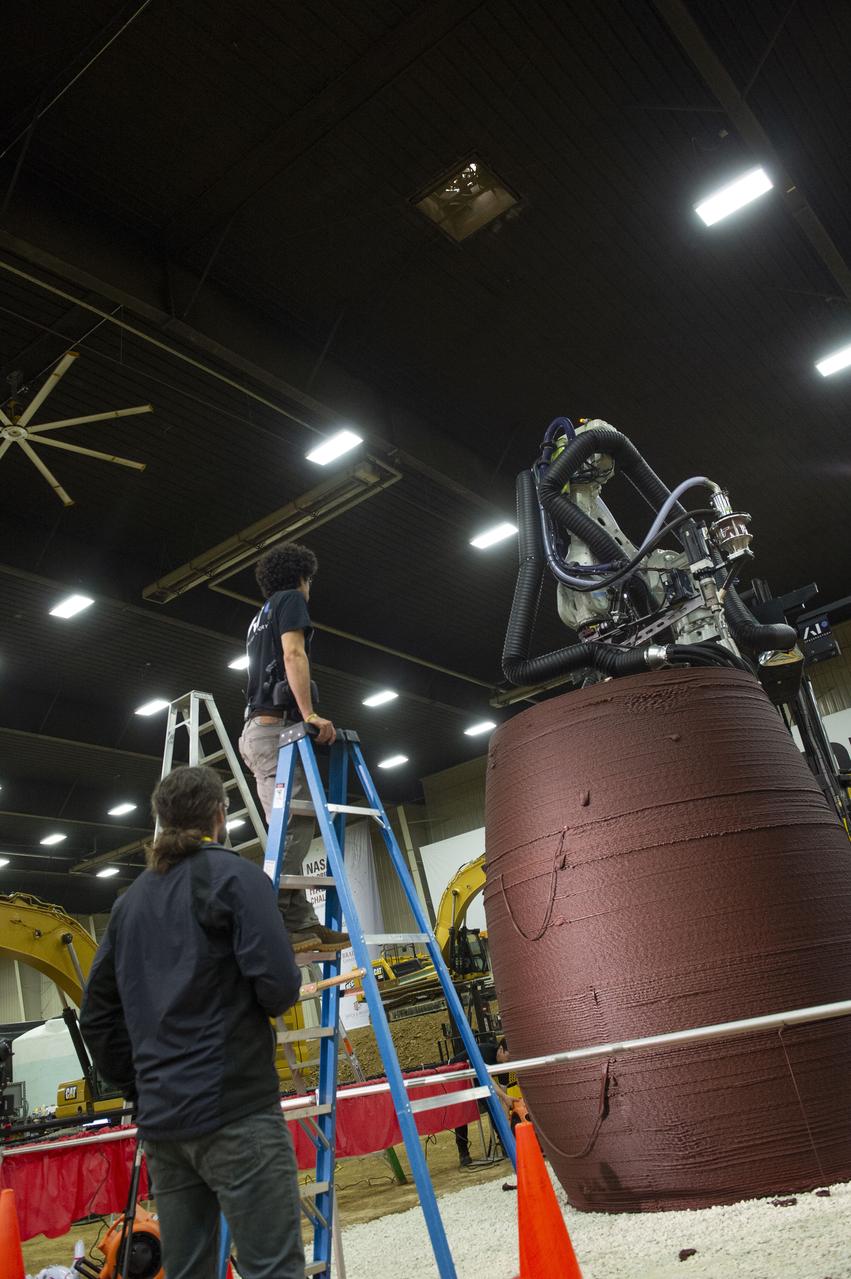
Two teams - Penn State (left) and AI. SpaceFactory (right) competed to 3D-print subscale habitat structures at NASA's 3D-Printed Habitat Challenge, held at the Caterpillar Edwards Demonstration & Learning Center in Edwards, Illinois, May 1-4, 2019. The habitat print is the final level of the multi-phase competition, which began in in 2015. The 3D-Printed Habitat Challenge is a competition to create sustainable shelters suitable for the Moon, Mars or beyond using resources available on-site in these locations. The challenge is managed by NASA's Centennial Challenges program, and partner Bradley University of Peoria, Illinois.
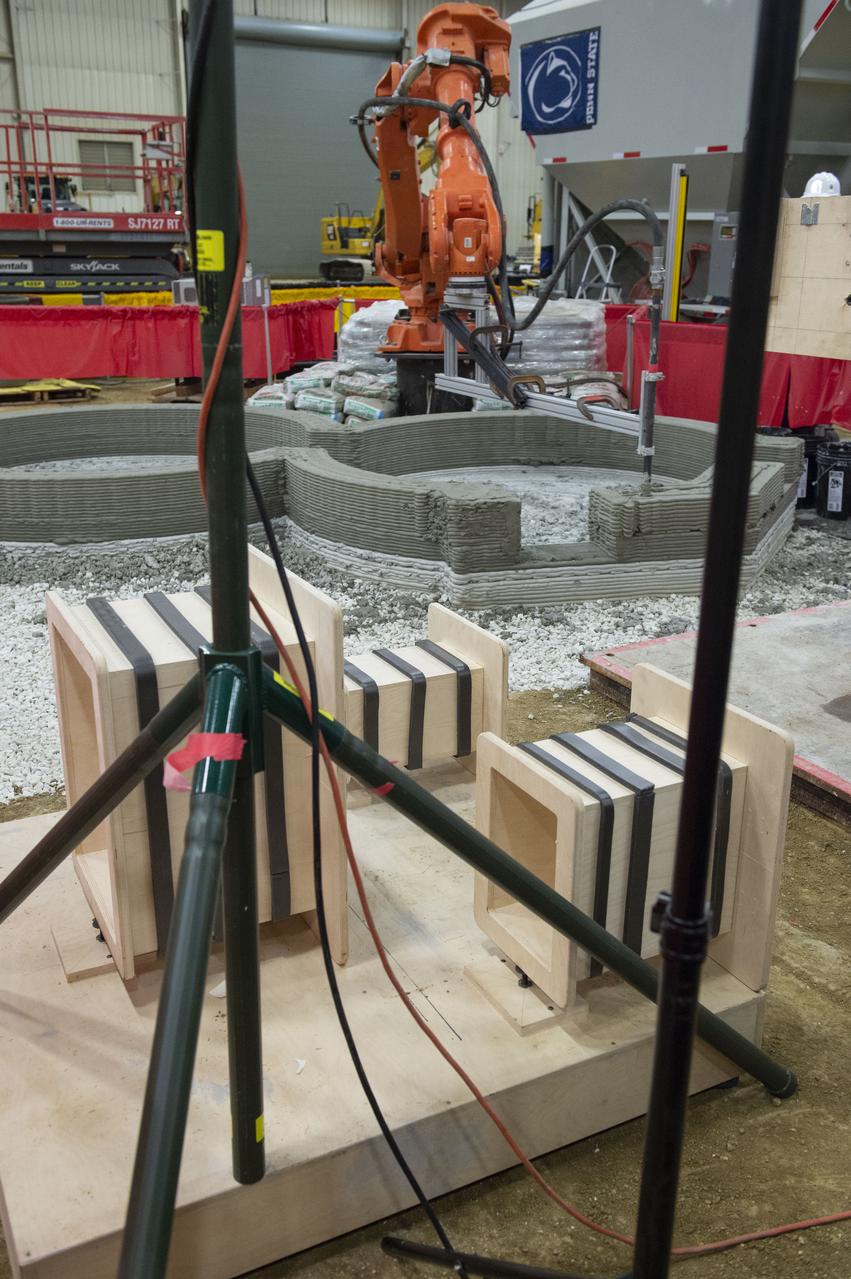
Team Penn State prepares their 3D-printer to begin printing a subscale habitat structure at NASA's 3D-Printed Habitat Challenge, held at the Caterpillar Edwards Demonstration & Learning Center in Edwards, Illinois, May 1-4, 2019. The habitat print is the final level of the multi-phase competition, which began in in 2015. The 3D-Printed Habitat Challenge is a competition to create sustainable shelters suitable for the Moon, Mars or beyond using resources available on-site in these locations. The challenge is managed by NASA's Centennial Challenges program, and partner Bradley University of Peoria, Illinois.
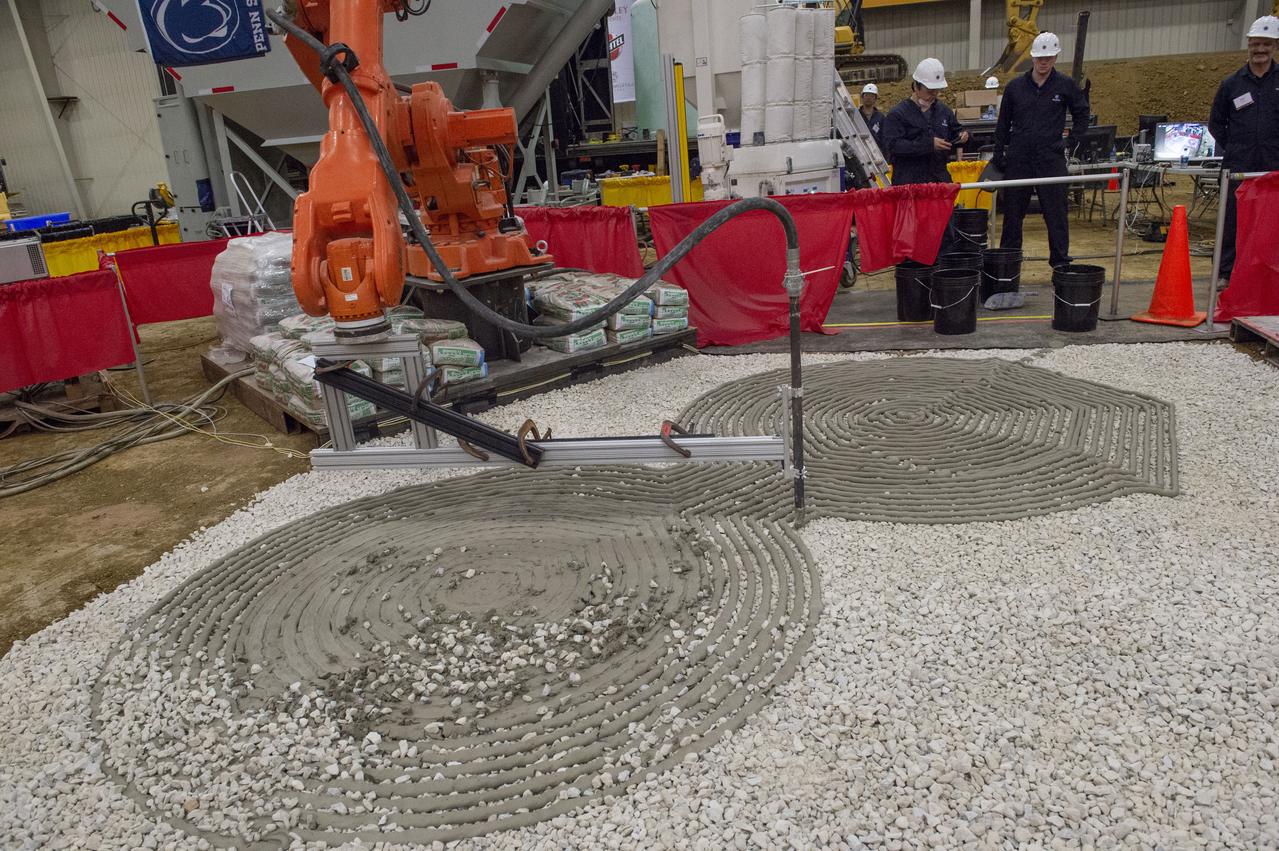
Team Penn State prepares their 3D-printer to begin printing a subscale habitat structure at NASA's 3D-Printed Habitat Challenge, held at the Caterpillar Edwards Demonstration & Learning Center in Edwards, Illinois, May 1-4, 2019. The habitat print is the final level of the multi-phase competition, which began in in 2015. The 3D-Printed Habitat Challenge is a competition to create sustainable shelters suitable for the Moon, Mars or beyond using resources available on-site in these locations. The challenge is managed by NASA's Centennial Challenges program, and partner Bradley University of Peoria, Illinois.

Team AI. SpaceFactory's printer autonomously inserts a window into their 3D-printed subscale habitat structure at NASA's 3D-Printed Habitat Challenge, held at the Caterpillar Edwards Demonstration & Learning Center in Edwards, Illinois, May 1-4, 2019. The habitat print is the final level of the multi-phase competition, which began in in 2015. The 3D-Printed Habitat Challenge is a competition to create sustainable shelters suitable for the Moon, Mars or beyond using resources available on-site in these locations. The challenge is managed by NASA's Centennial Challenges program, and partner Bradley University of Peoria, Illinois.
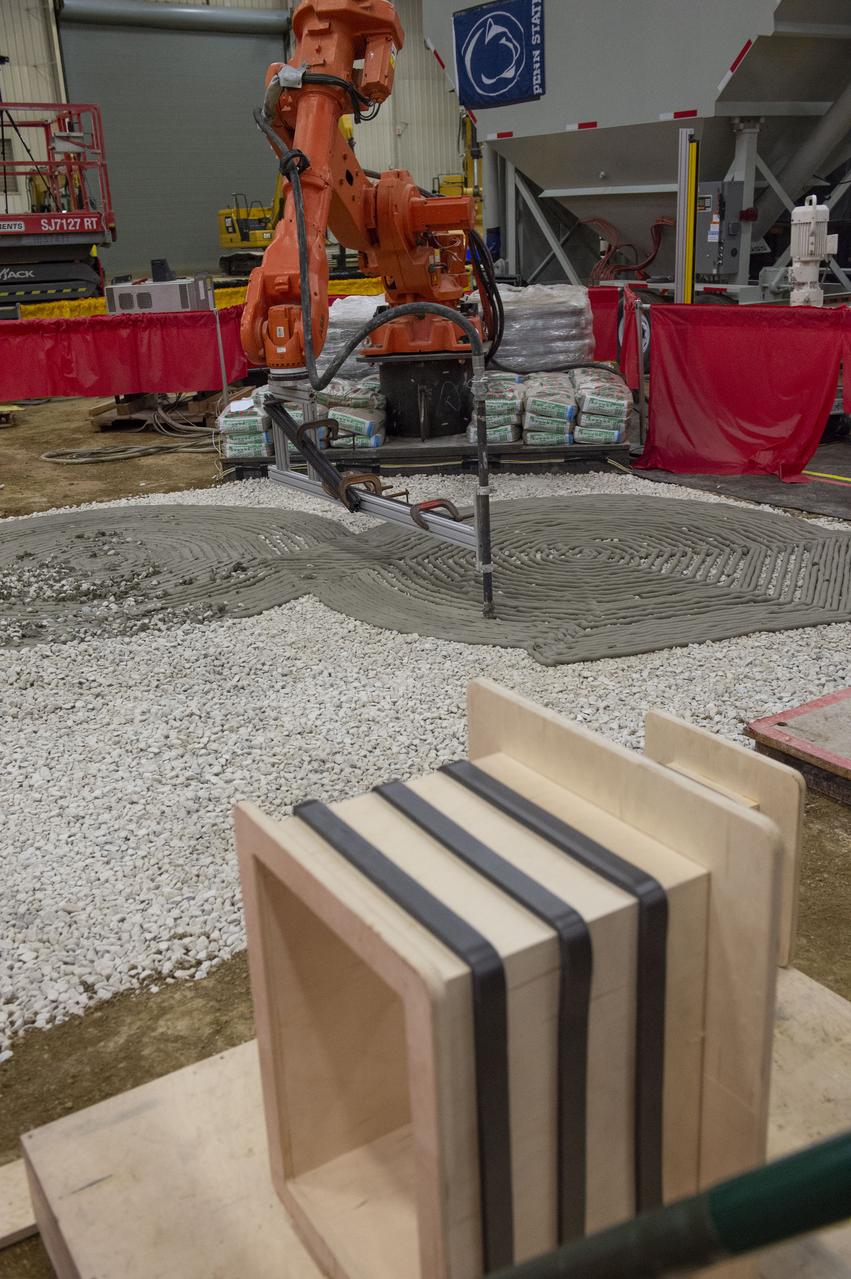
Team Penn State prepares their 3D-printer to begin printing a subscale habitat structure at NASA's 3D-Printed Habitat Challenge, held at the Caterpillar Edwards Demonstration & Learning Center in Edwards, Illinois, May 1-4, 2019. The habitat print is the final level of the multi-phase competition, which began in in 2015. The 3D-Printed Habitat Challenge is a competition to create sustainable shelters suitable for the Moon, Mars or beyond using resources available on-site in these locations. The challenge is managed by NASA's Centennial Challenges program, and partner Bradley University of Peoria, Illinois.
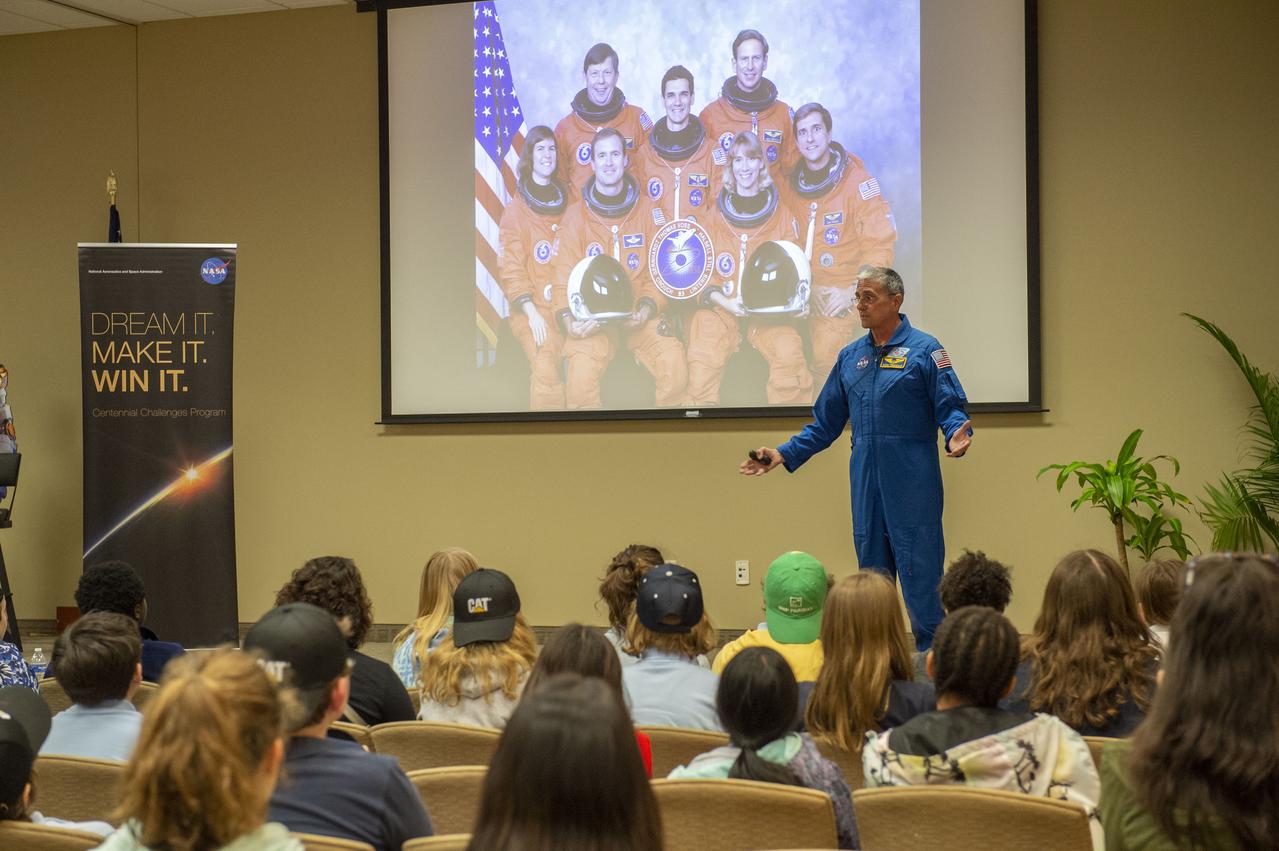
Team Penn State prepares their 3D-printer to begin printing a subscale habitat structure at NASA's 3D-Printed Habitat Challenge, held at the Caterpillar Edwards Demonstration & Learning Center in Edwards, Illinois, May 1-4, 2019. The habitat print is the final level of the multi-phase competition, which began in in 2015. The 3D-Printed Habitat Challenge is a competition to create sustainable shelters suitable for the Moon, Mars or beyond using resources available on-site in these locations. The challenge is managed by NASA's Centennial Challenges program, and partner Bradley University of Peoria, Illinois.
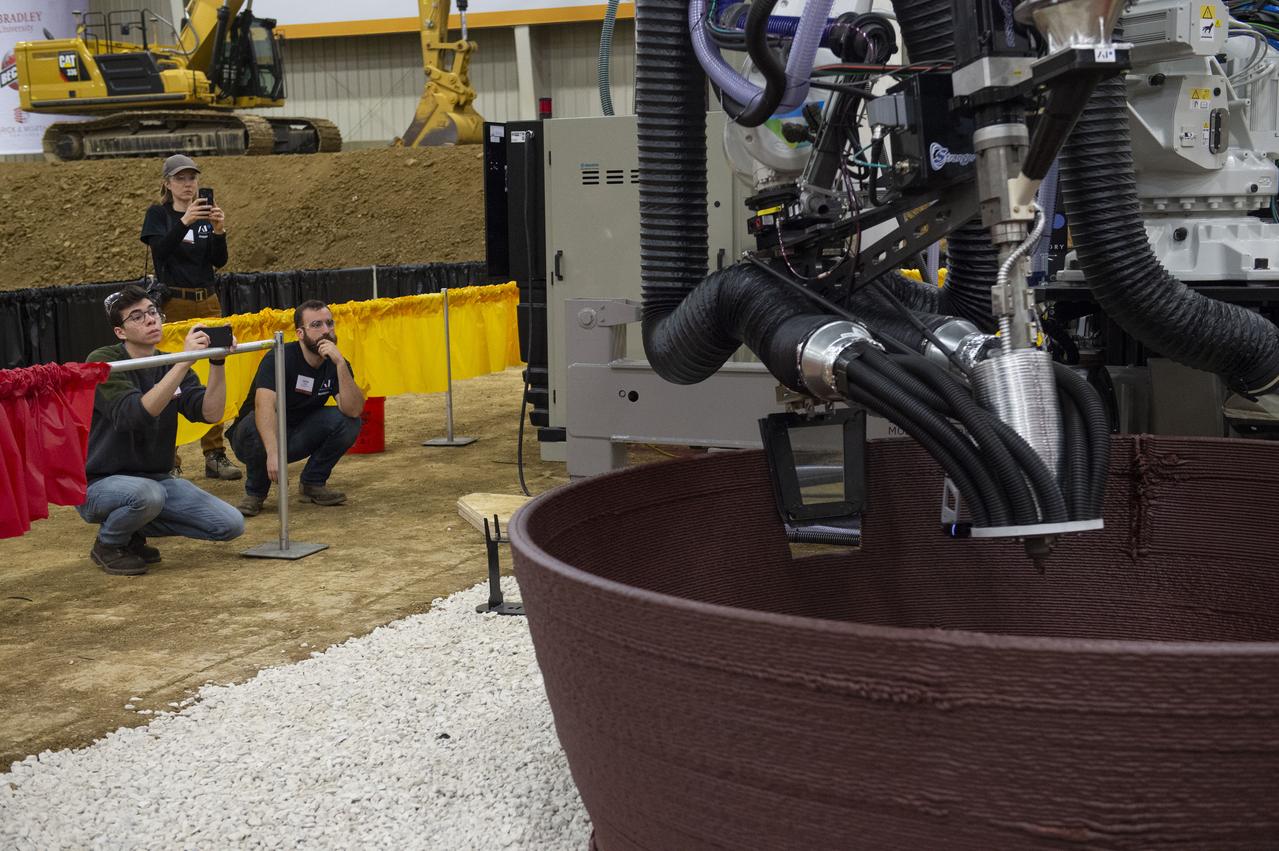
Team AI. SpaceFactory's printer autonomously inserts a window into their 3D-printed subscale habitat structure at NASA's 3D-Printed Habitat Challenge, held at the Caterpillar Edwards Demonstration & Learning Center in Edwards, Illinois, May 1-4, 2019. The habitat print is the final level of the multi-phase competition, which began in in 2015. The 3D-Printed Habitat Challenge is a competition to create sustainable shelters suitable for the Moon, Mars or beyond using resources available on-site in these locations. The challenge is managed by NASA's Centennial Challenges program, and partner Bradley University of Peoria, Illinois.
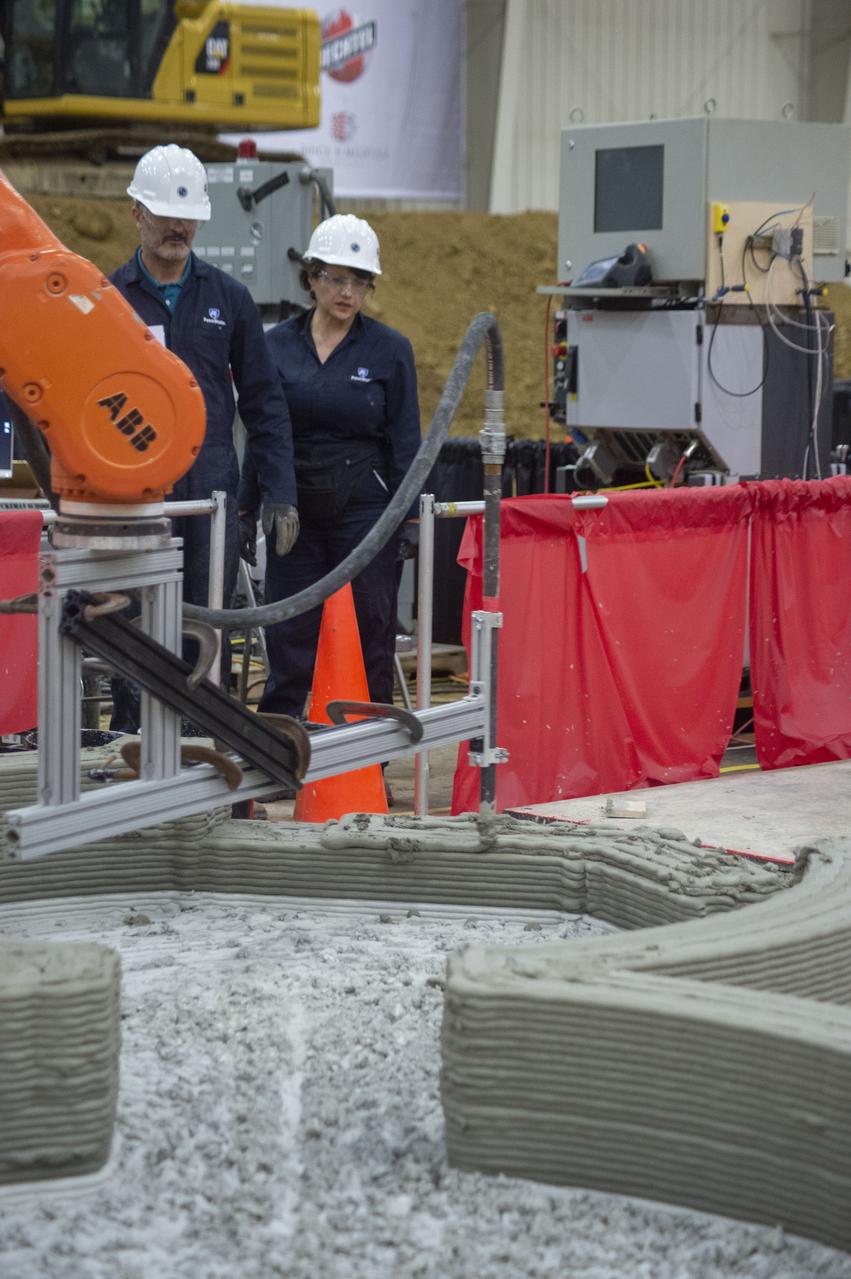
Team Penn State prepares their 3D-printer to begin printing a subscale habitat structure at NASA's 3D-Printed Habitat Challenge, held at the Caterpillar Edwards Demonstration & Learning Center in Edwards, Illinois, May 1-4, 2019. The habitat print is the final level of the multi-phase competition, which began in in 2015. The 3D-Printed Habitat Challenge is a competition to create sustainable shelters suitable for the Moon, Mars or beyond using resources available on-site in these locations. The challenge is managed by NASA's Centennial Challenges program, and partner Bradley University of Peoria, Illinois.
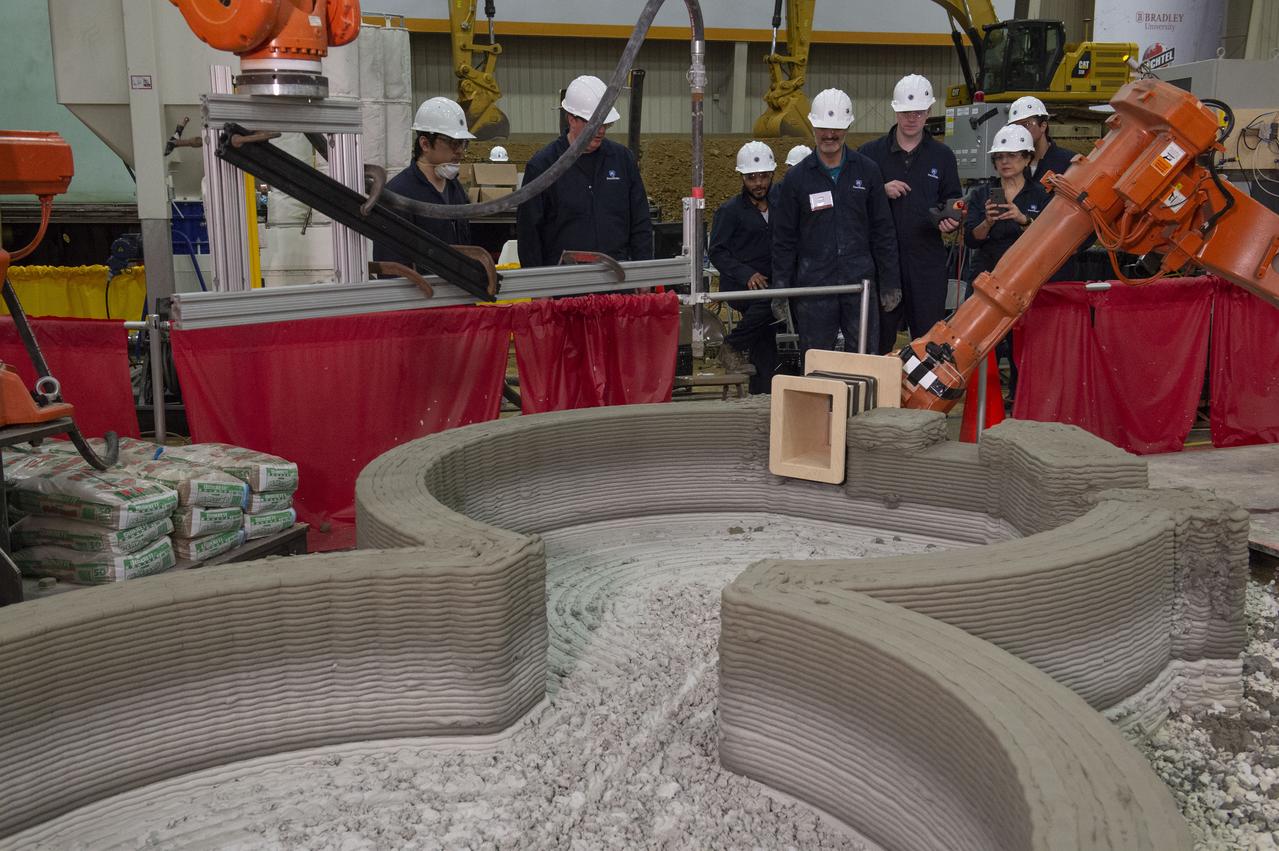
Team Penn State prepares their 3D-printer to begin printing a subscale habitat structure at NASA's 3D-Printed Habitat Challenge, held at the Caterpillar Edwards Demonstration & Learning Center in Edwards, Illinois, May 1-4, 2019. The habitat print is the final level of the multi-phase competition, which began in in 2015. The 3D-Printed Habitat Challenge is a competition to create sustainable shelters suitable for the Moon, Mars or beyond using resources available on-site in these locations. The challenge is managed by NASA's Centennial Challenges program, and partner Bradley University of Peoria, Illinois.
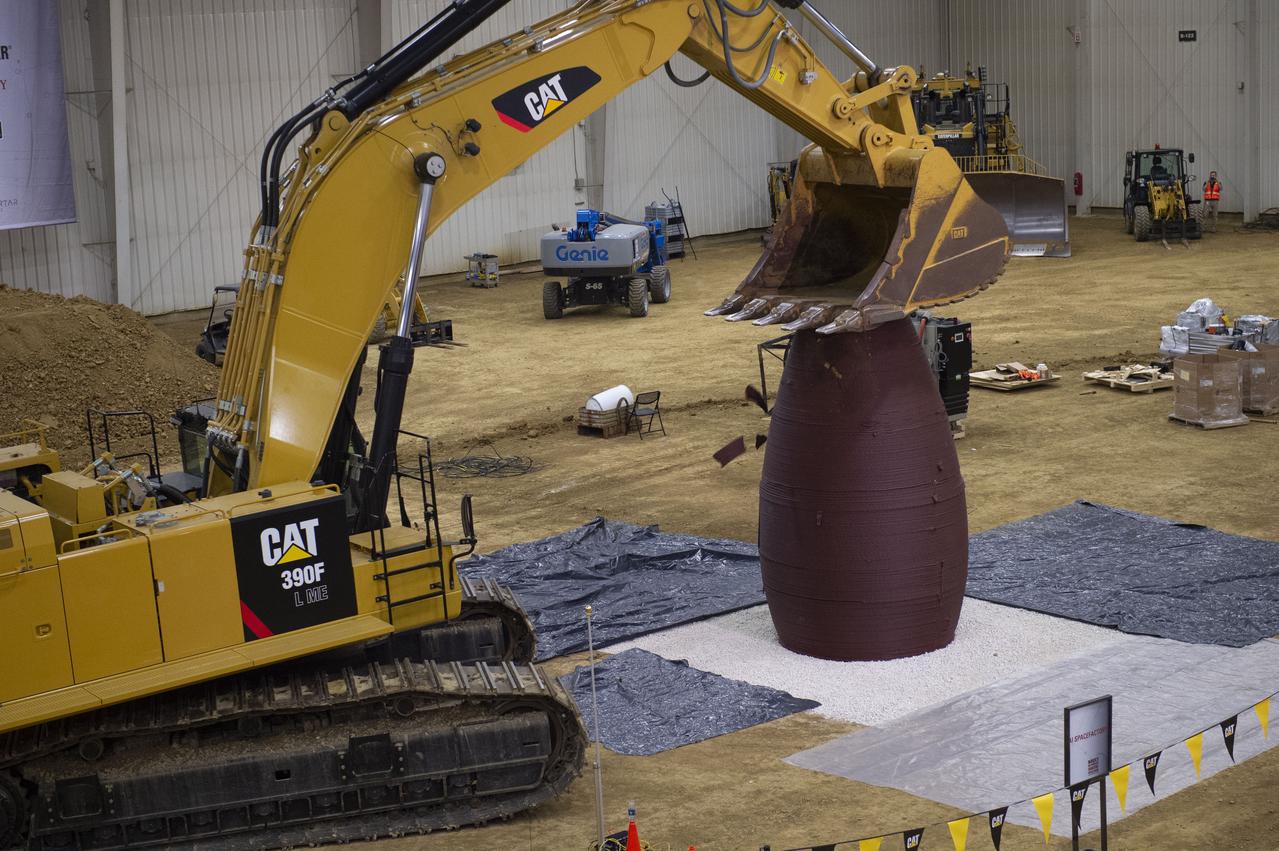
Two teams - Penn State (left) and AI. SpaceFactory (right) competed to 3D-print subscale habitat structures at NASA's 3D-Printed Habitat Challenge, held at the Caterpillar Edwards Demonstration & Learning Center in Edwards, Illinois, May 1-4, 2019. The habitat print is the final level of the multi-phase competition, which began in in 2015. The 3D-Printed Habitat Challenge is a competition to create sustainable shelters suitable for the Moon, Mars or beyond using resources available on-site in these locations. The challenge is managed by NASA's Centennial Challenges program, and partner Bradley University of Peoria, Illinois.
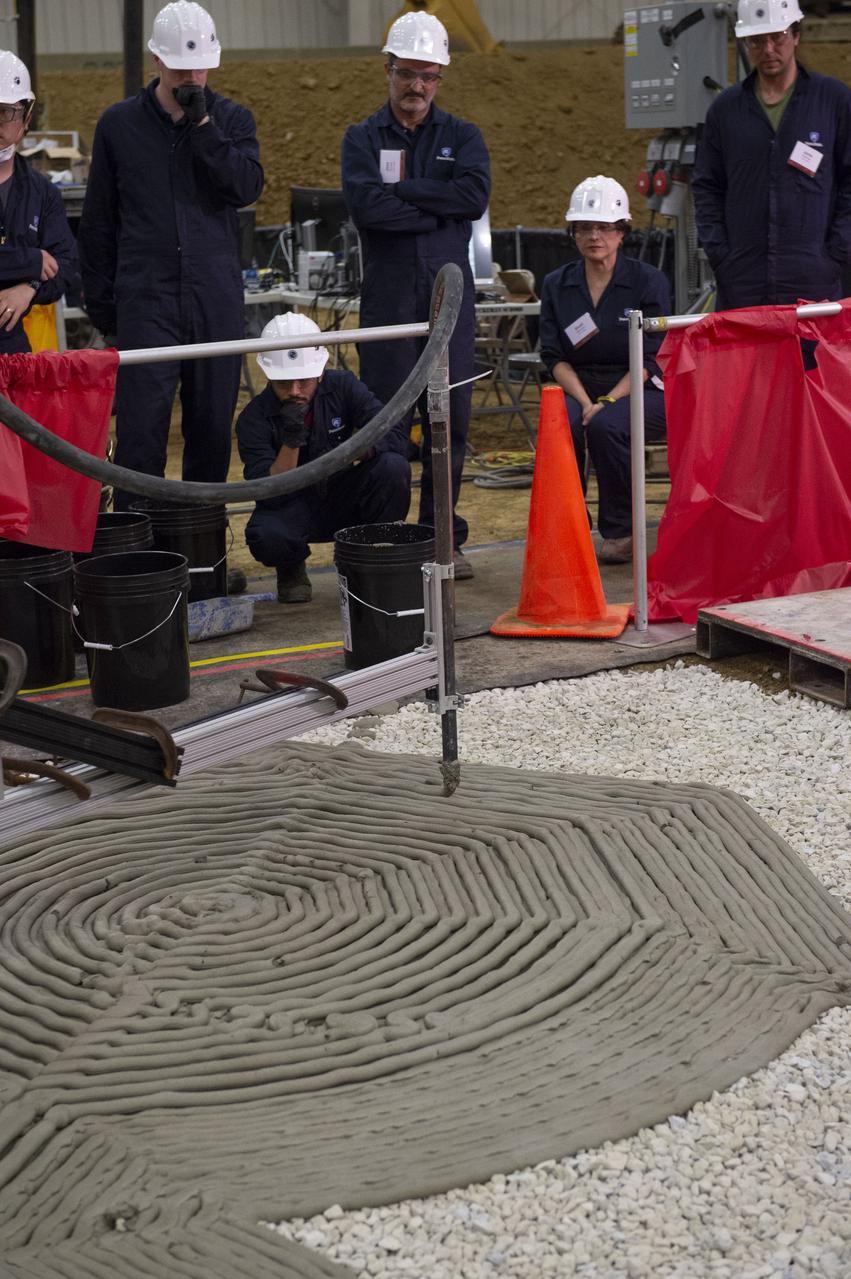
Team Penn State prepares their 3D-printer to begin printing a subscale habitat structure at NASA's 3D-Printed Habitat Challenge, held at the Caterpillar Edwards Demonstration & Learning Center in Edwards, Illinois, May 1-4, 2019. The habitat print is the final level of the multi-phase competition, which began in in 2015. The 3D-Printed Habitat Challenge is a competition to create sustainable shelters suitable for the Moon, Mars or beyond using resources available on-site in these locations. The challenge is managed by NASA's Centennial Challenges program, and partner Bradley University of Peoria, Illinois.
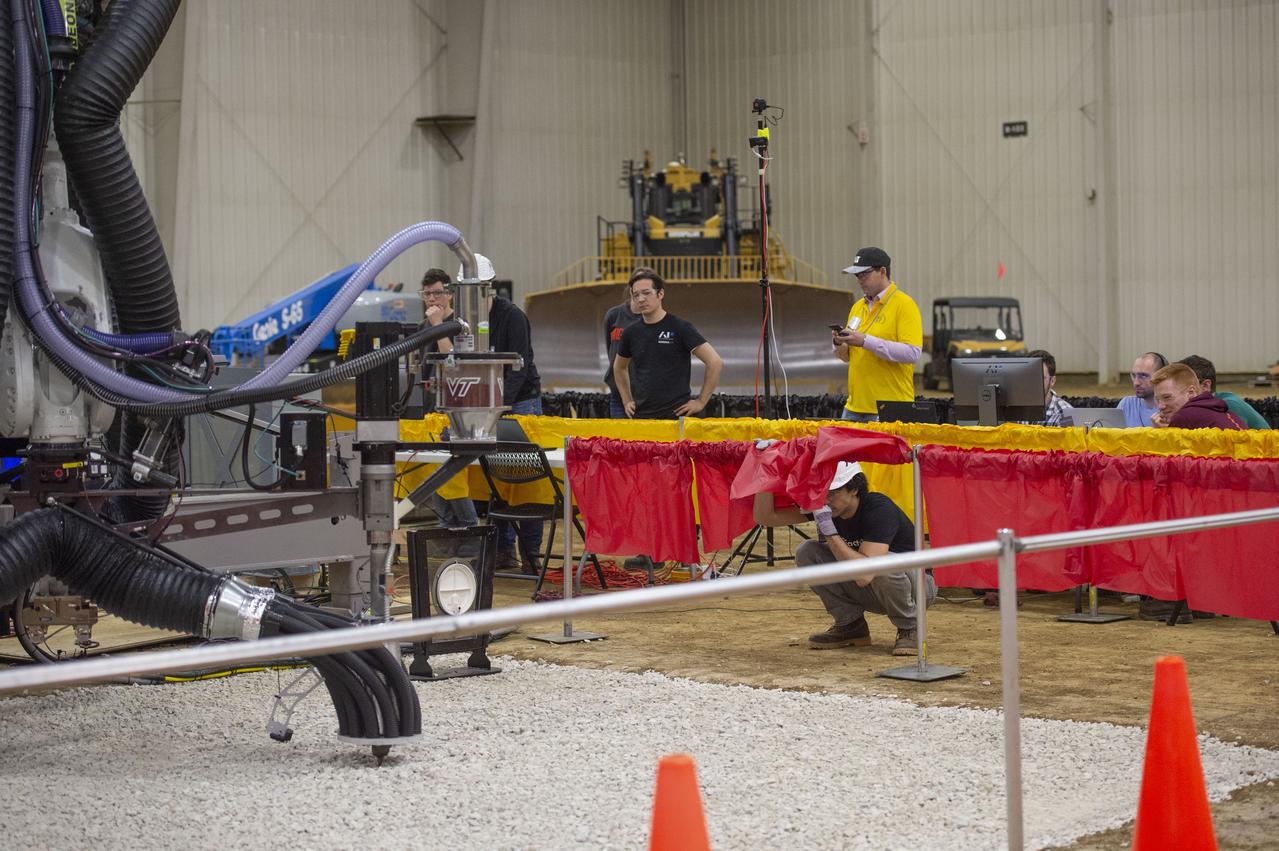
Team Penn State prepares their 3D-printer to begin printing a subscale habitat structure at NASA's 3D-Printed Habitat Challenge, held at the Caterpillar Edwards Demonstration & Learning Center in Edwards, Illinois, May 1-4, 2019. The habitat print is the final level of the multi-phase competition, which began in in 2015. The 3D-Printed Habitat Challenge is a competition to create sustainable shelters suitable for the Moon, Mars or beyond using resources available on-site in these locations. The challenge is managed by NASA's Centennial Challenges program, and partner Bradley University of Peoria, Illinois.
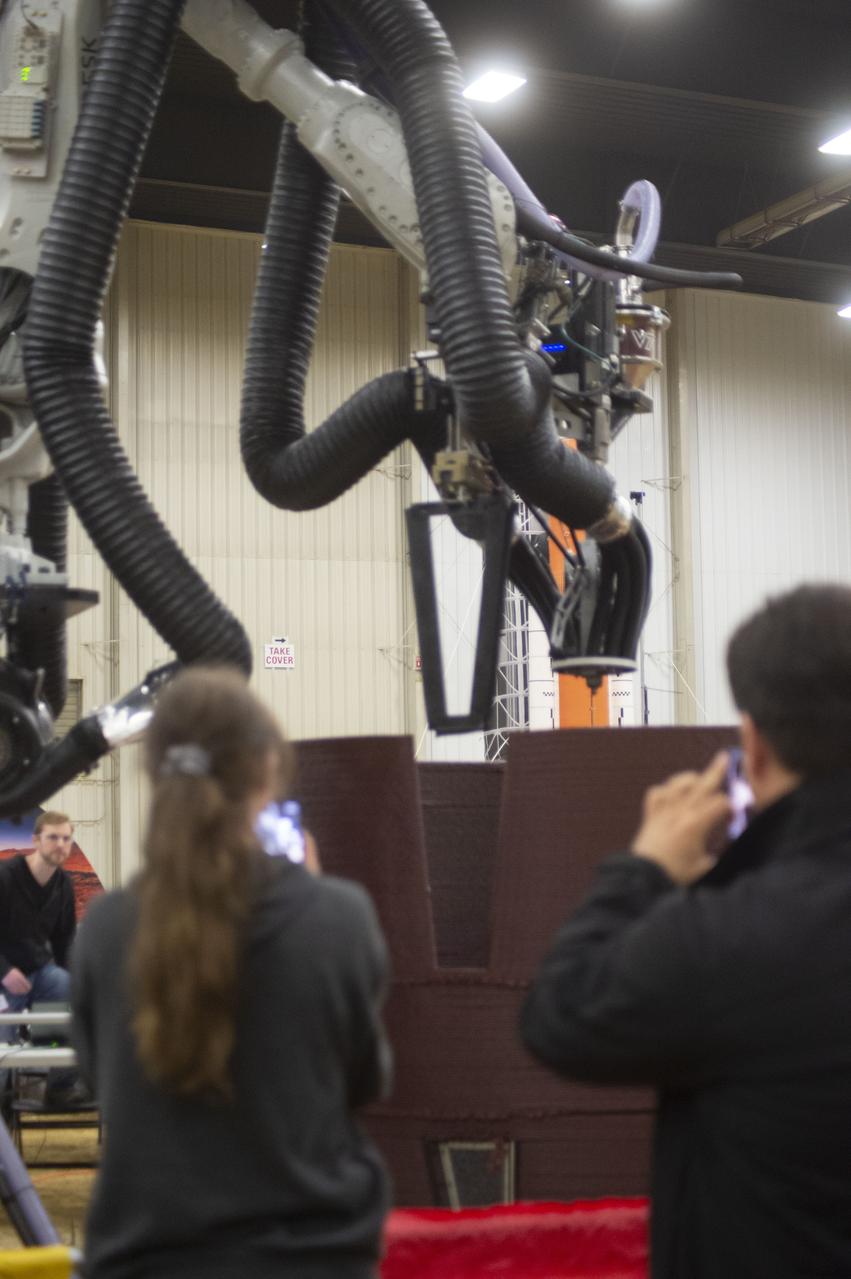
Team AI. SpaceFactory's printer autonomously inserts a window into their 3D-printed subscale habitat structure at NASA's 3D-Printed Habitat Challenge, held at the Caterpillar Edwards Demonstration & Learning Center in Edwards, Illinois, May 1-4, 2019. The habitat print is the final level of the multi-phase competition, which began in in 2015. The 3D-Printed Habitat Challenge is a competition to create sustainable shelters suitable for the Moon, Mars or beyond using resources available on-site in these locations. The challenge is managed by NASA's Centennial Challenges program, and partner Bradley University of Peoria, Illinois.
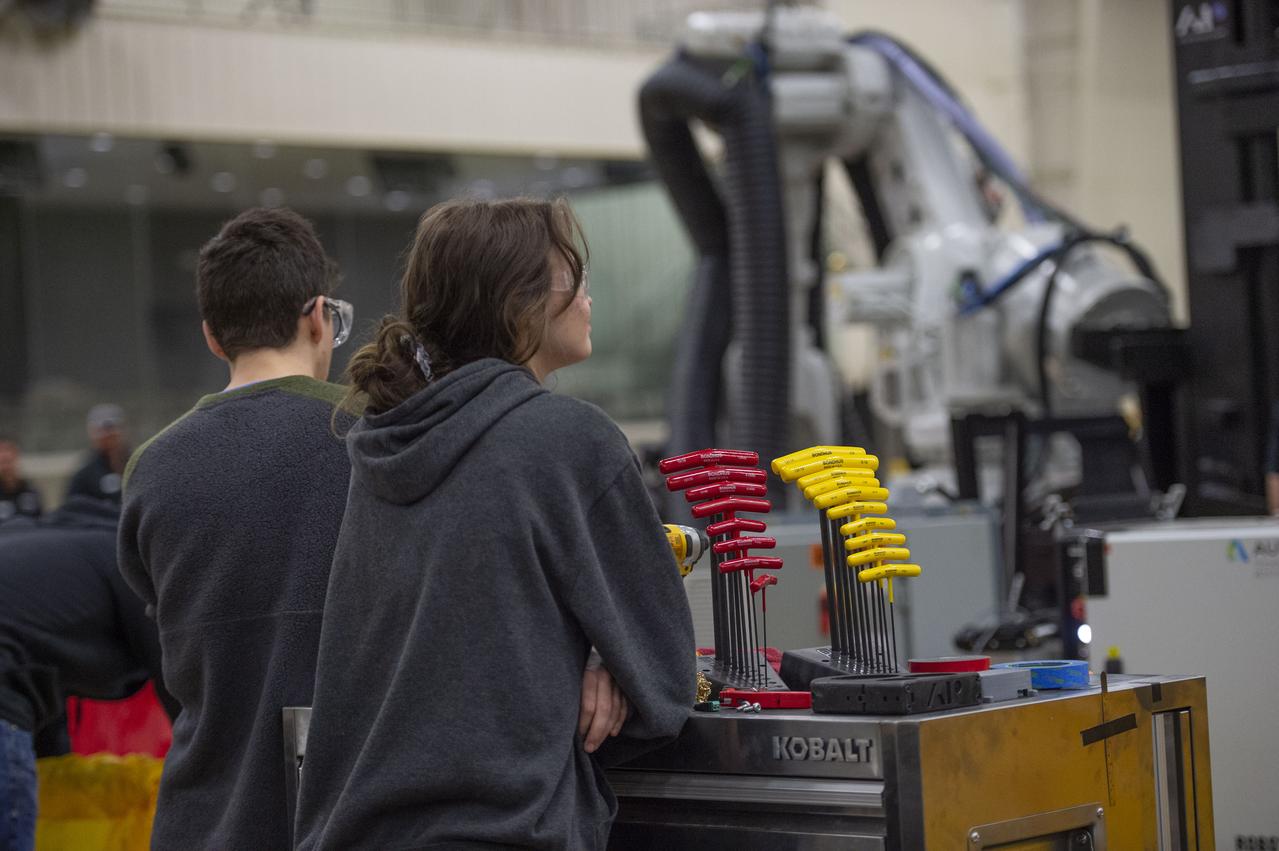
Team Penn State prepares their 3D-printer to begin printing a subscale habitat structure at NASA's 3D-Printed Habitat Challenge, held at the Caterpillar Edwards Demonstration & Learning Center in Edwards, Illinois, May 1-4, 2019. The habitat print is the final level of the multi-phase competition, which began in in 2015. The 3D-Printed Habitat Challenge is a competition to create sustainable shelters suitable for the Moon, Mars or beyond using resources available on-site in these locations. The challenge is managed by NASA's Centennial Challenges program, and partner Bradley University of Peoria, Illinois.
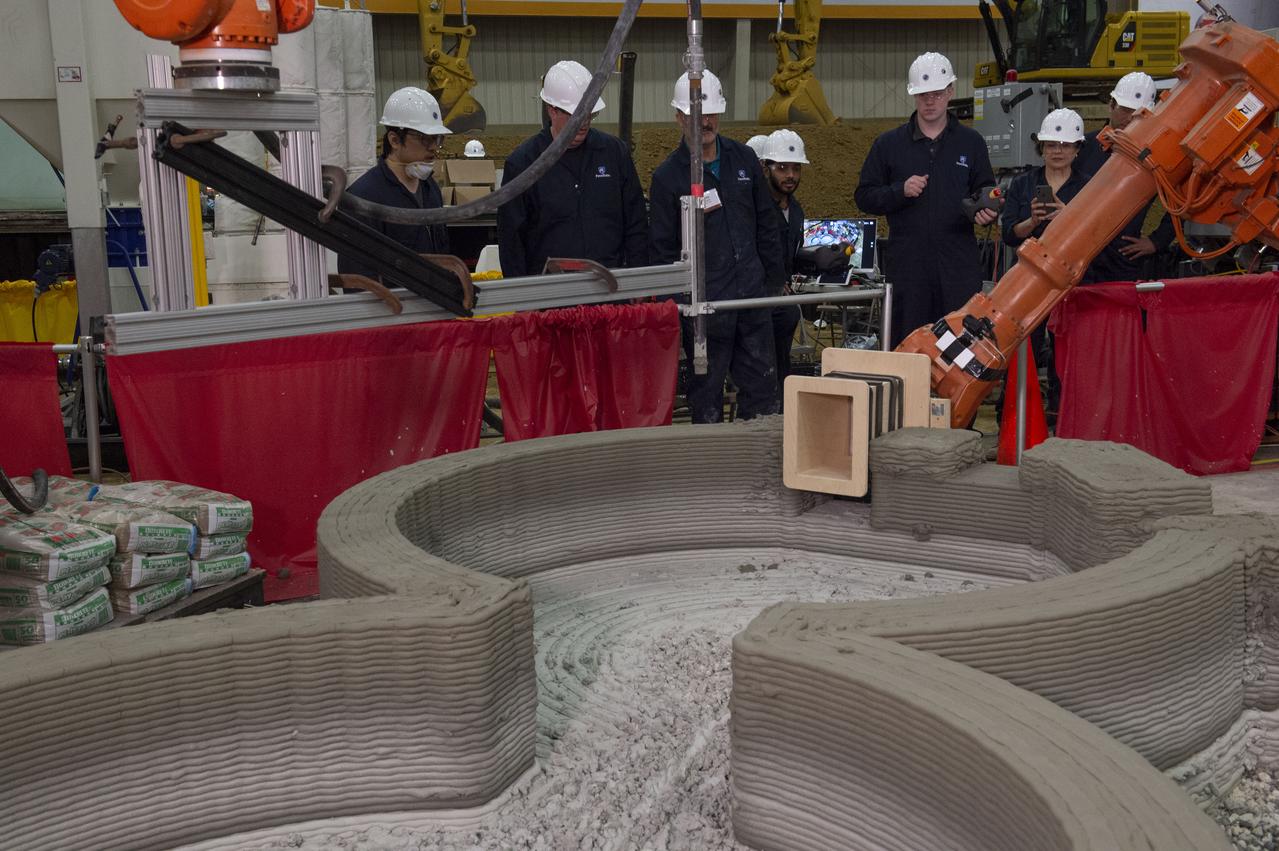
Team Penn State prepares their 3D-printer to begin printing a subscale habitat structure at NASA's 3D-Printed Habitat Challenge, held at the Caterpillar Edwards Demonstration & Learning Center in Edwards, Illinois, May 1-4, 2019. The habitat print is the final level of the multi-phase competition, which began in in 2015. The 3D-Printed Habitat Challenge is a competition to create sustainable shelters suitable for the Moon, Mars or beyond using resources available on-site in these locations. The challenge is managed by NASA's Centennial Challenges program, and partner Bradley University of Peoria, Illinois.
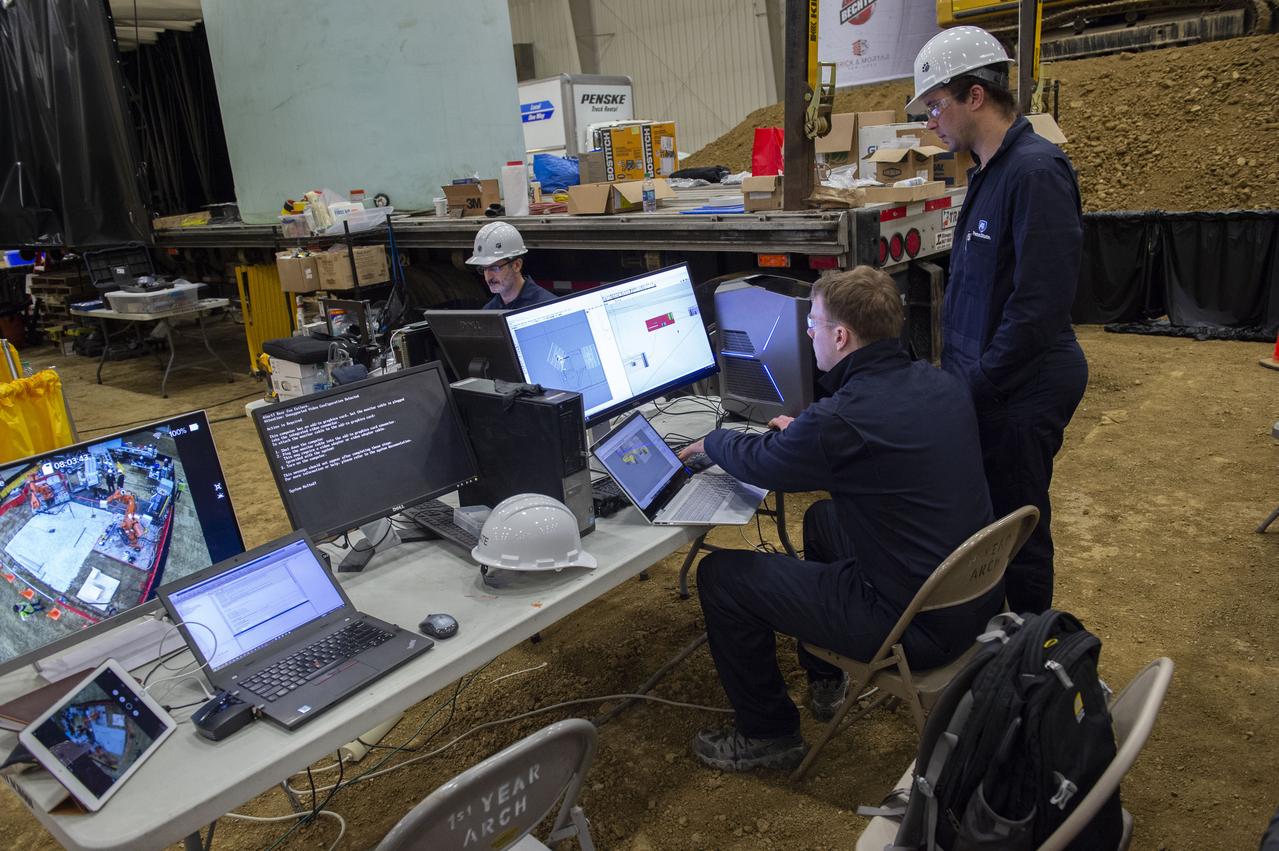
Team Penn State prepares their 3D-printer to begin printing a subscale habitat structure at NASA's 3D-Printed Habitat Challenge, held at the Caterpillar Edwards Demonstration & Learning Center in Edwards, Illinois, May 1-4, 2019. The habitat print is the final level of the multi-phase competition, which began in in 2015. The 3D-Printed Habitat Challenge is a competition to create sustainable shelters suitable for the Moon, Mars or beyond using resources available on-site in these locations. The challenge is managed by NASA's Centennial Challenges program, and partner Bradley University of Peoria, Illinois.