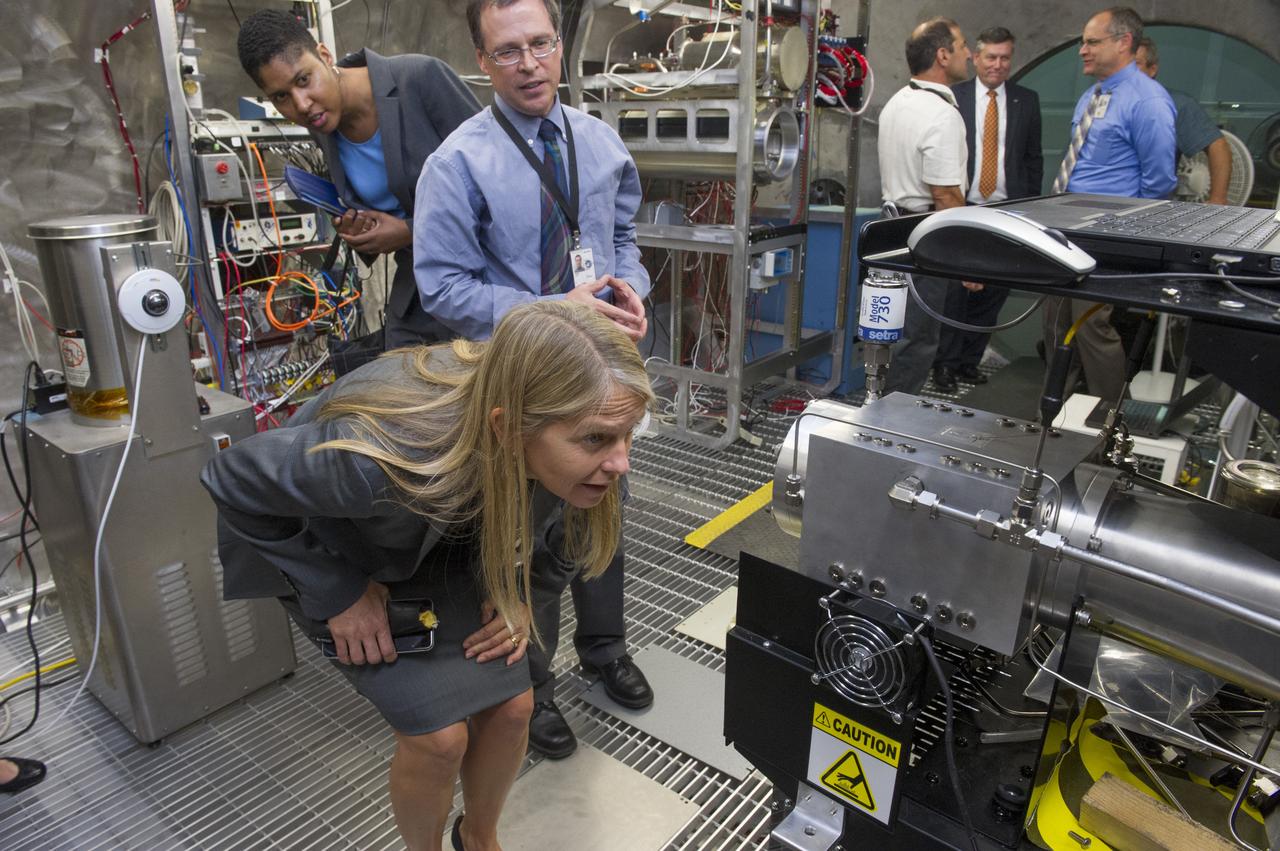
NEWMAN TAKES A CLOSER LOOK AT EQUIPMENT UNDER DEVELOPMENT IN THE ENVIRONMENTAL CONTROL & LIFE SUPPORT SYSTEMS SECTION IN BUILDING 4755. ELCSS IS BUILDING DEVICES TO RECYCLE AIR AND WATER FOR CREW MEMBERS ON THE INTERNATIONAL SPACE STATION, USING THE ORBITING LABORATORY AS A TEST BED FOR LIFE SUPPORT SYSTEMS ON LONG-DURATION MISSIONS DEEPER INTO OUR SOLAR SYSTEM.
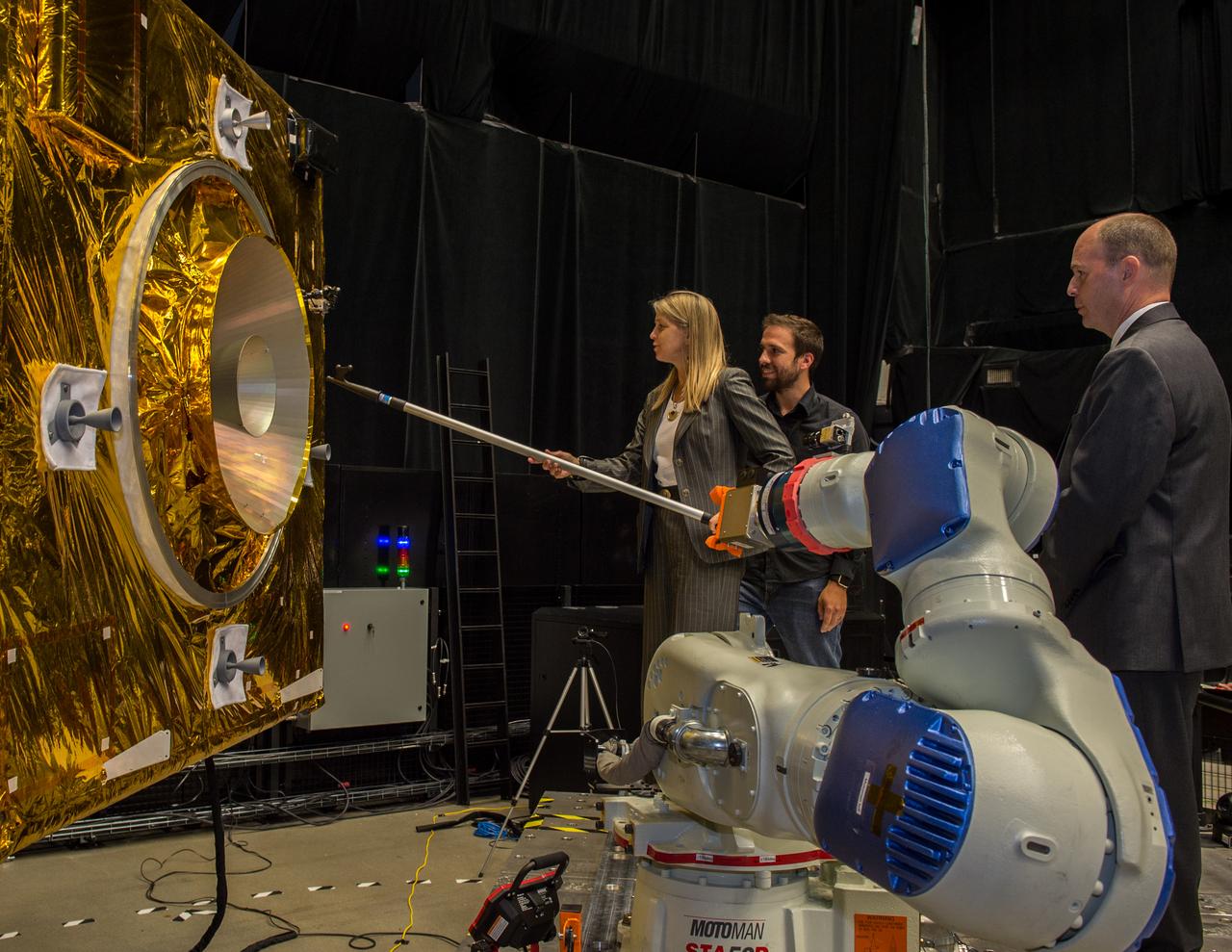
NASA Deputy Administrator Dr. Dava Newman tours Goddard Space Flight Center with Center Director Chris Scolese
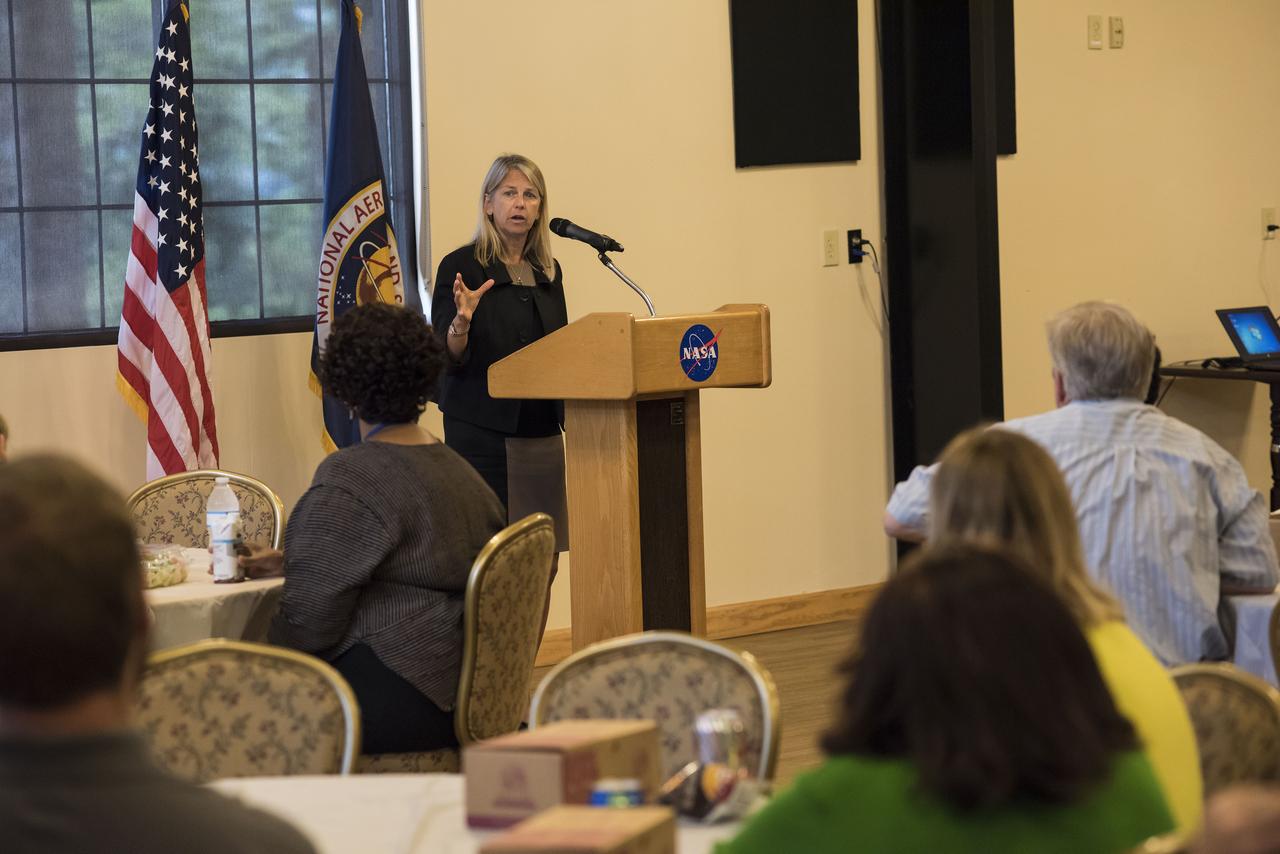
MARSHALL ASSOCIATION LUNCHEON WITH GUEST SPEAKER DR. DAVA NEWMAN, NASA DEPUTY ADMINISTRATOR. AUGUST 16, 2016.
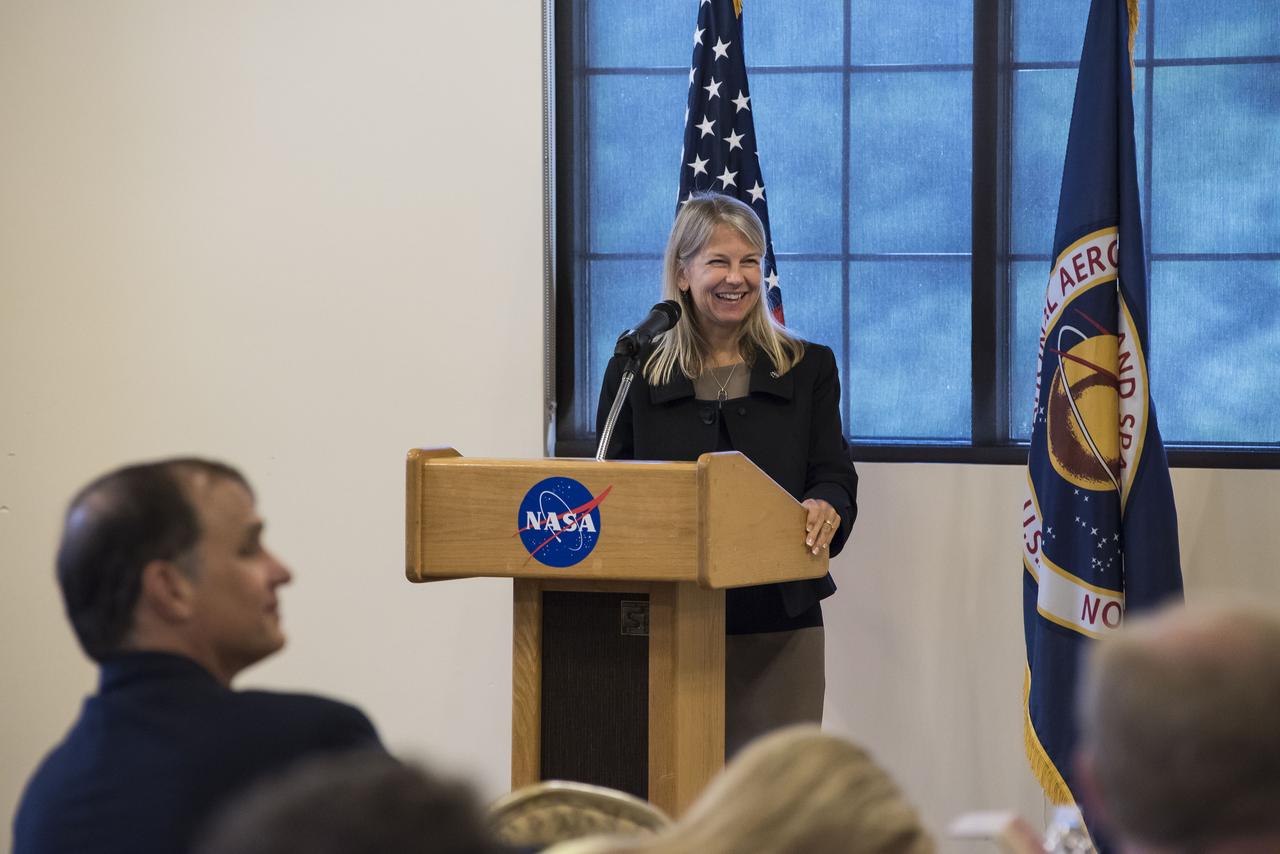
MARSHALL ASSOCIATION LUNCHEON WITH GUEST SPEAKER DR. DAVA NEWMAN, NASA DEPUTY ADMINISTRATOR. AUGUST 16, 2016.
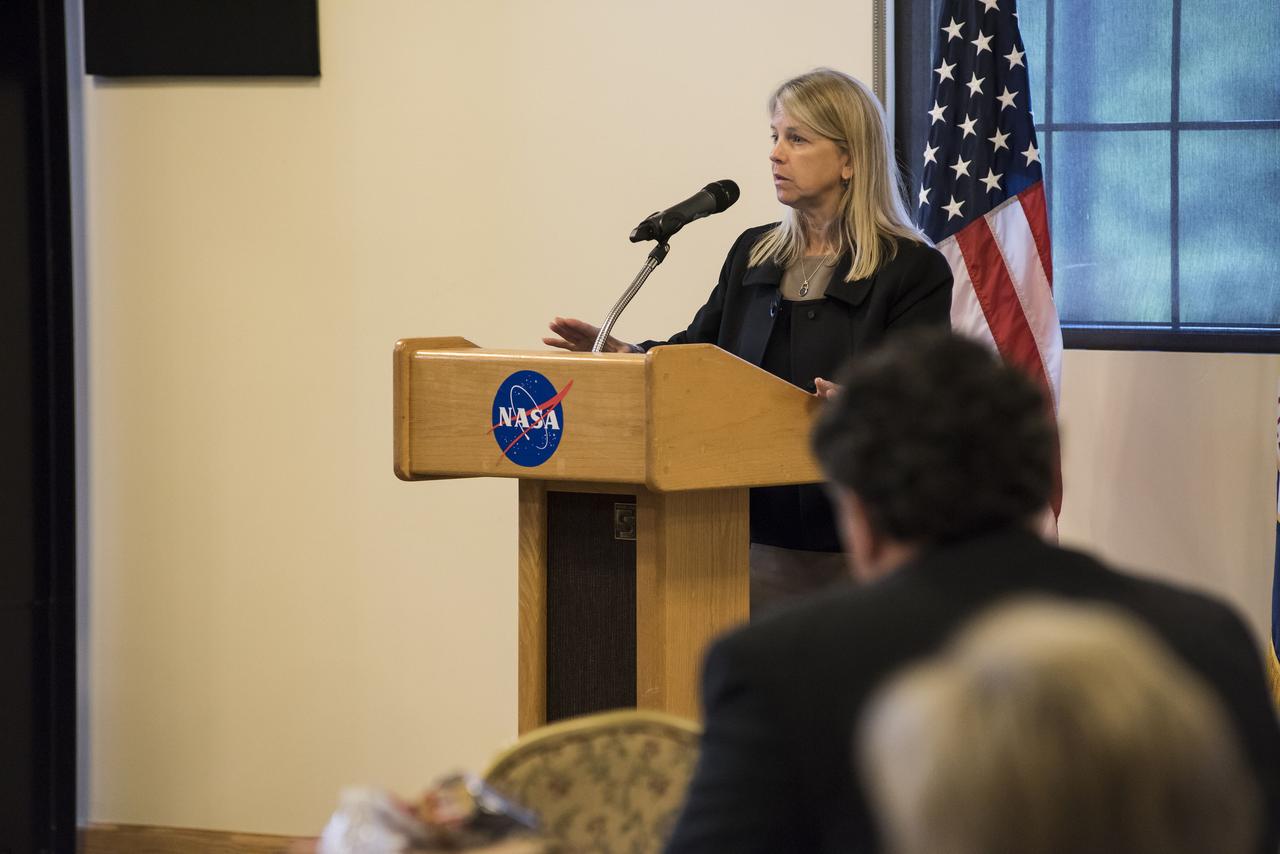
MARSHALL ASSOCIATION LUNCHEON WITH GUEST SPEAKER DR. DAVA NEWMAN, NASA DEPUTY ADMINISTRATOR. AUGUST 16, 2016.
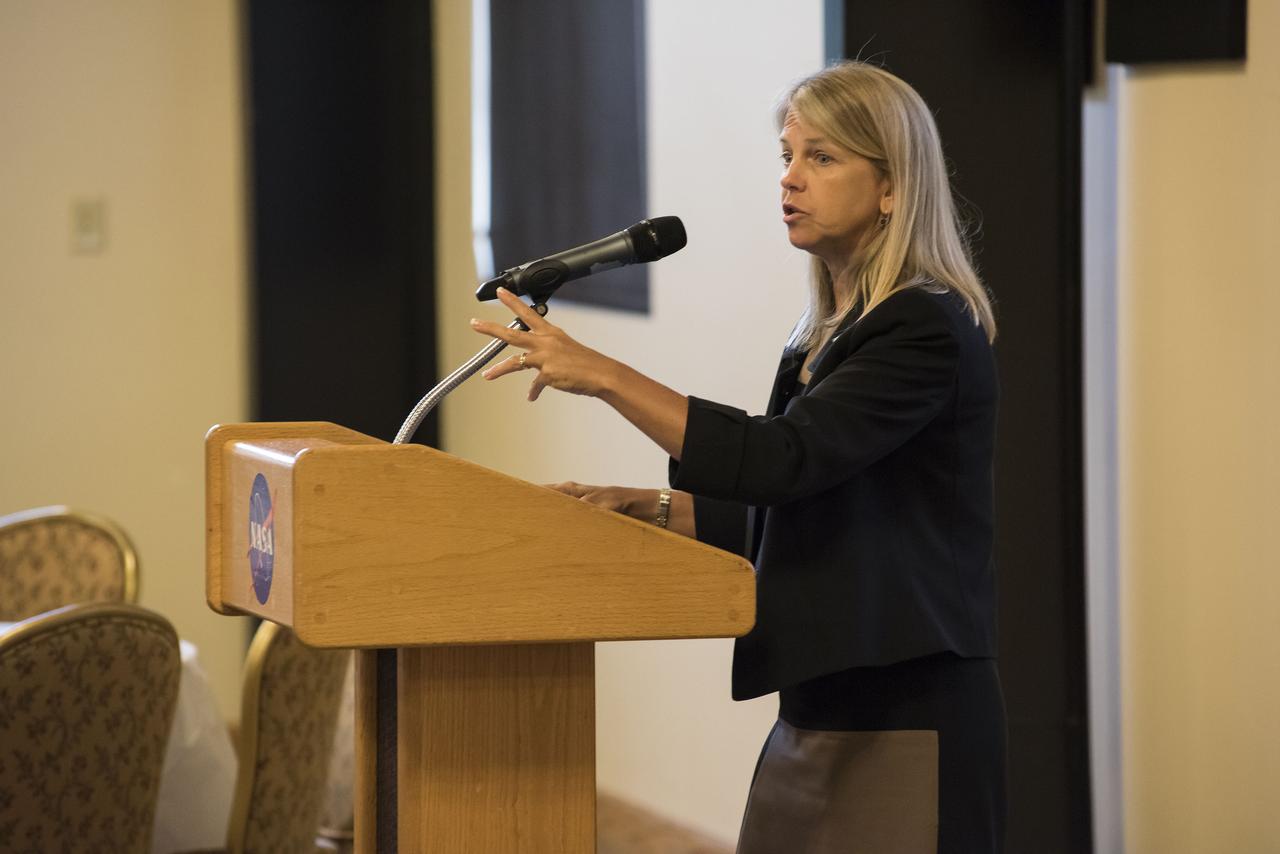
MARSHALL ASSOCIATION LUNCHEON WITH GUEST SPEAKER DR. DAVA NEWMAN, NASA DEPUTY ADMINISTRATOR. AUGUST 16, 2016.
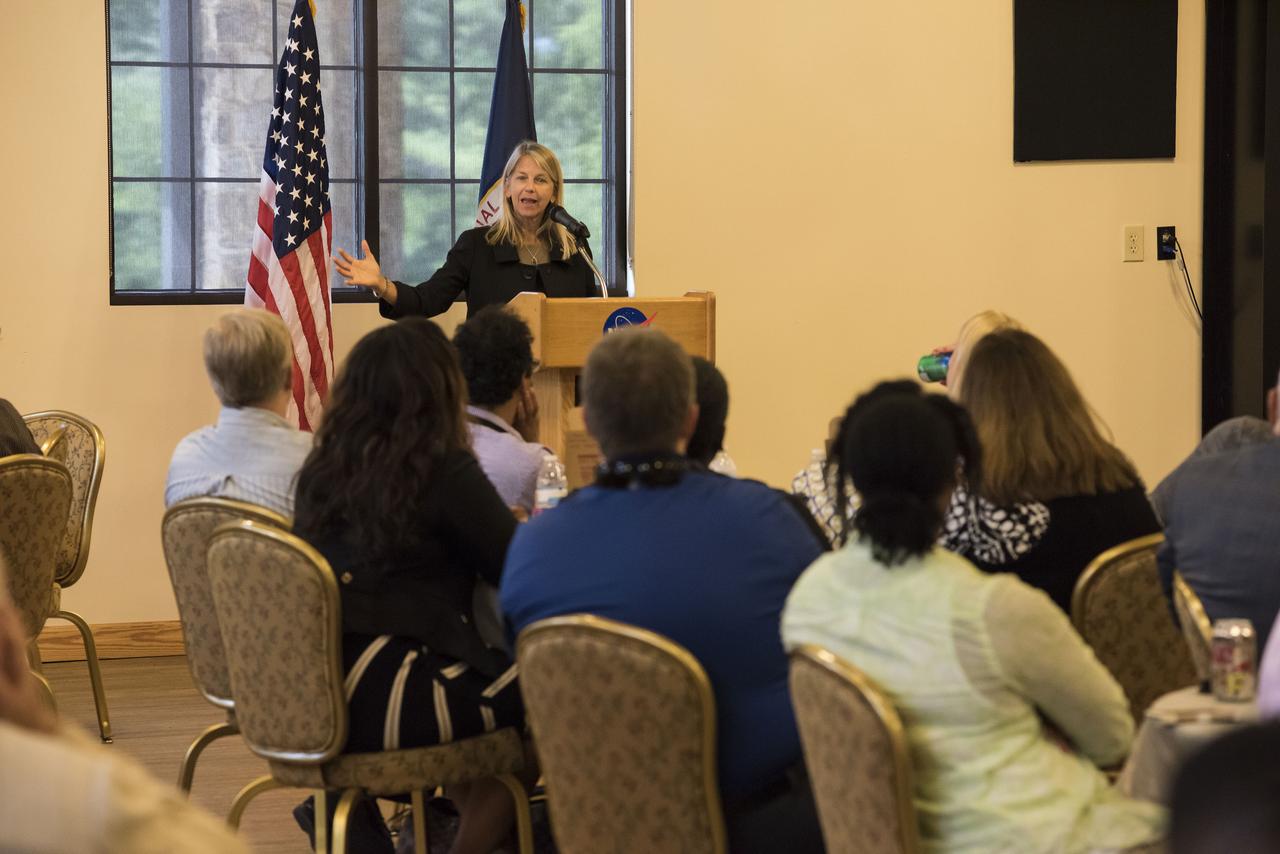
MARSHALL ASSOCIATION LUNCHEON WITH GUEST SPEAKER DR. DAVA NEWMAN, NASA DEPUTY ADMINISTRATOR. AUGUST 16, 2016.
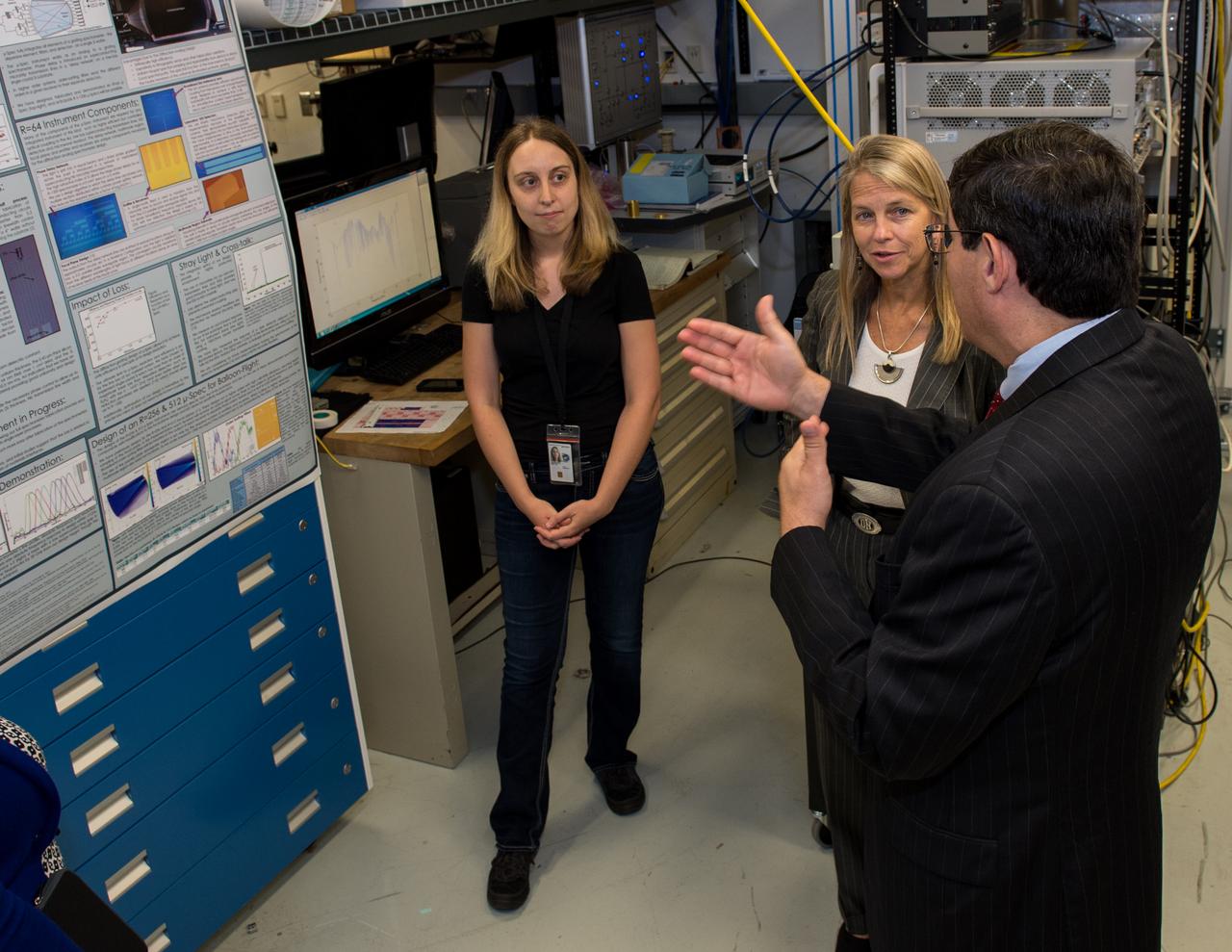
NASA Deputy Administrator Dr. Dava Newman tours Goddard Space Flight Center with Center Director Chris Scolese. Visit Microspec lab Emily Barrentine; Omid Noroozian; Thomas Stevenson; Ed Wollack
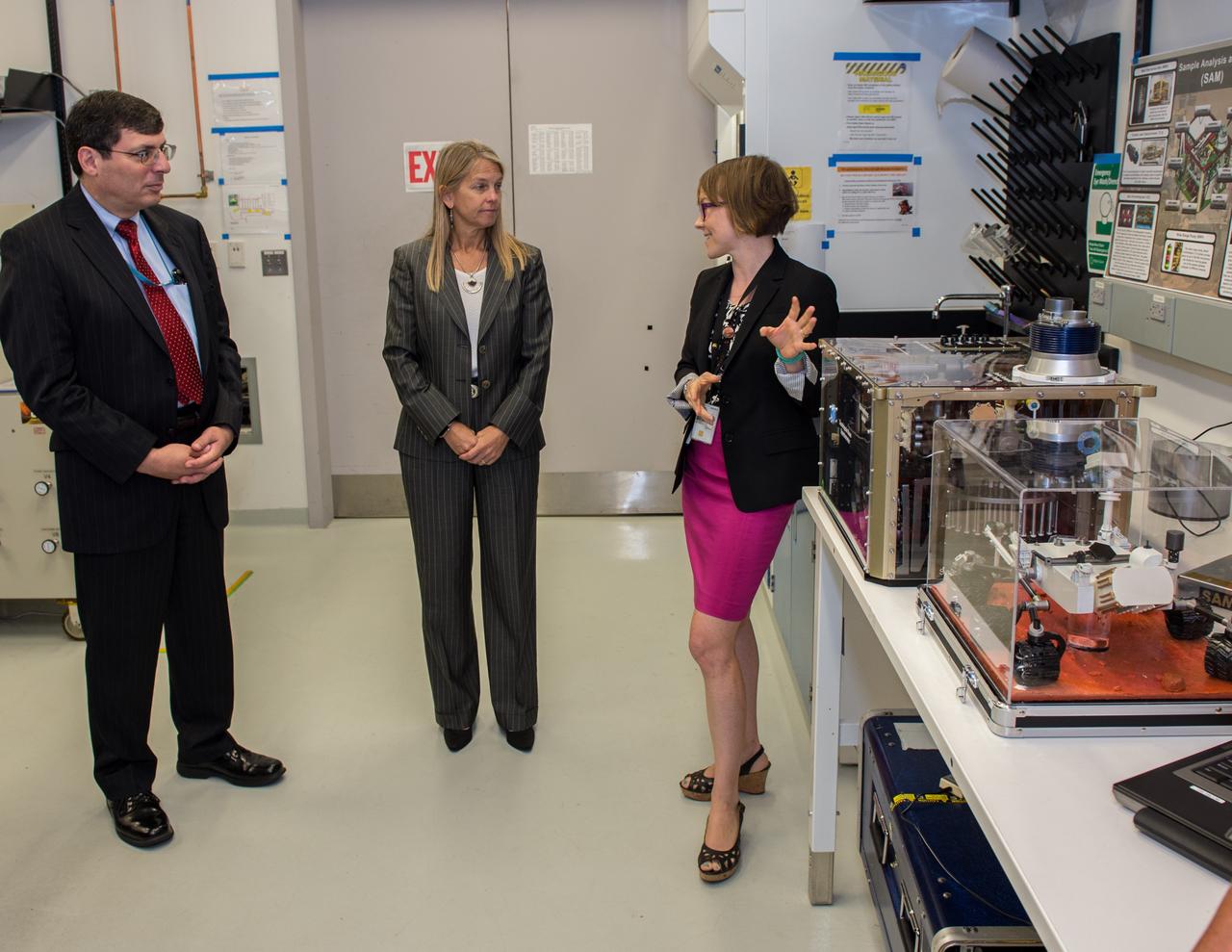
NASA Deputy Administrator Dr. Dava Newman tours Goddard Space Flight Center with Center Director Chris Scolese; Sample Analysis at Mars (SAM) instrument Test Bed; Dr. Melissa Trainer
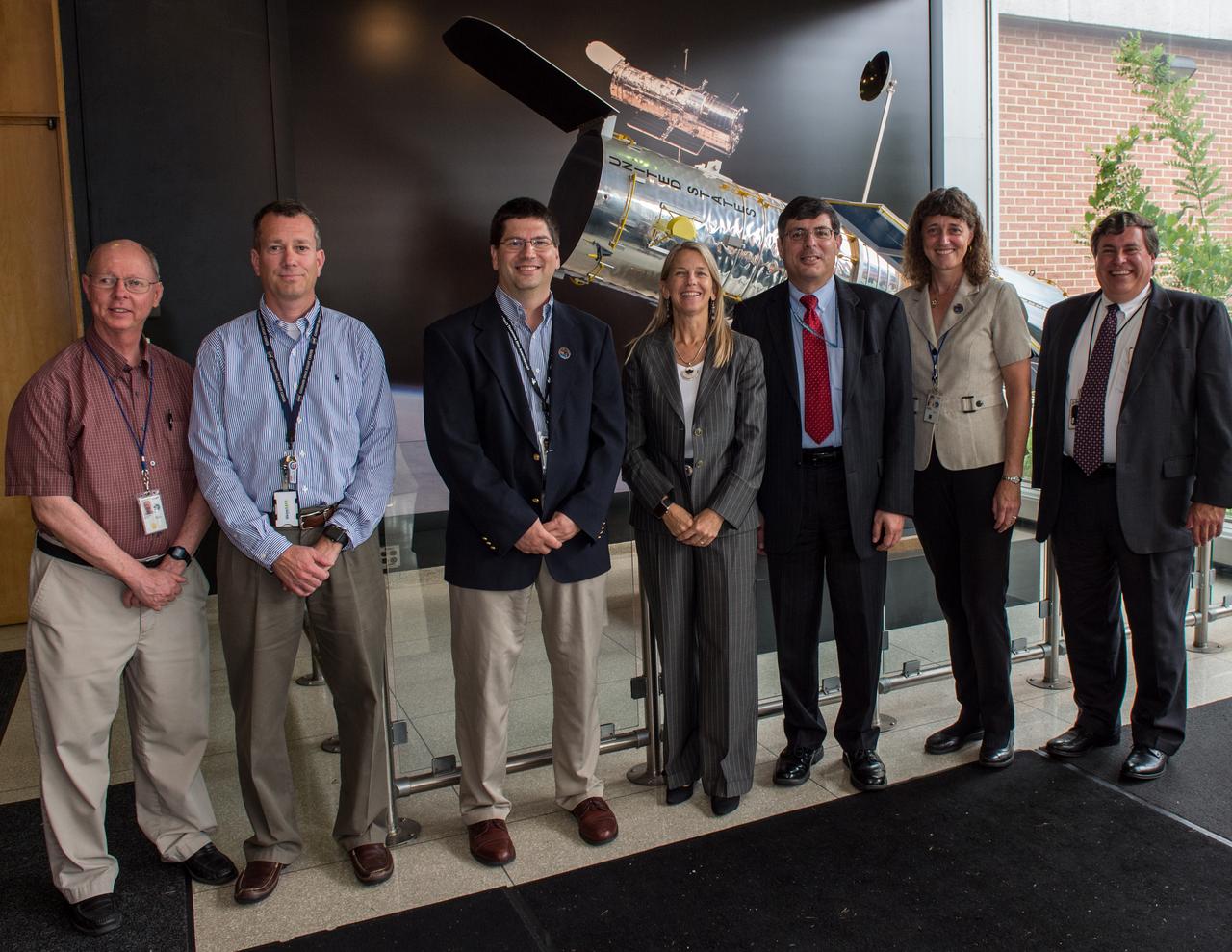
Hubble Operations Control Center, NASA Deputy Administrator Dr. Dava Newman tours Goddard Space Flight Center with Center Director Chris Scolese; Kevin Hartnet; Dave Haskins;Patrick Crouse; Dava Newman; Chris Scolese; Jennifer Wiseman; George Morrow
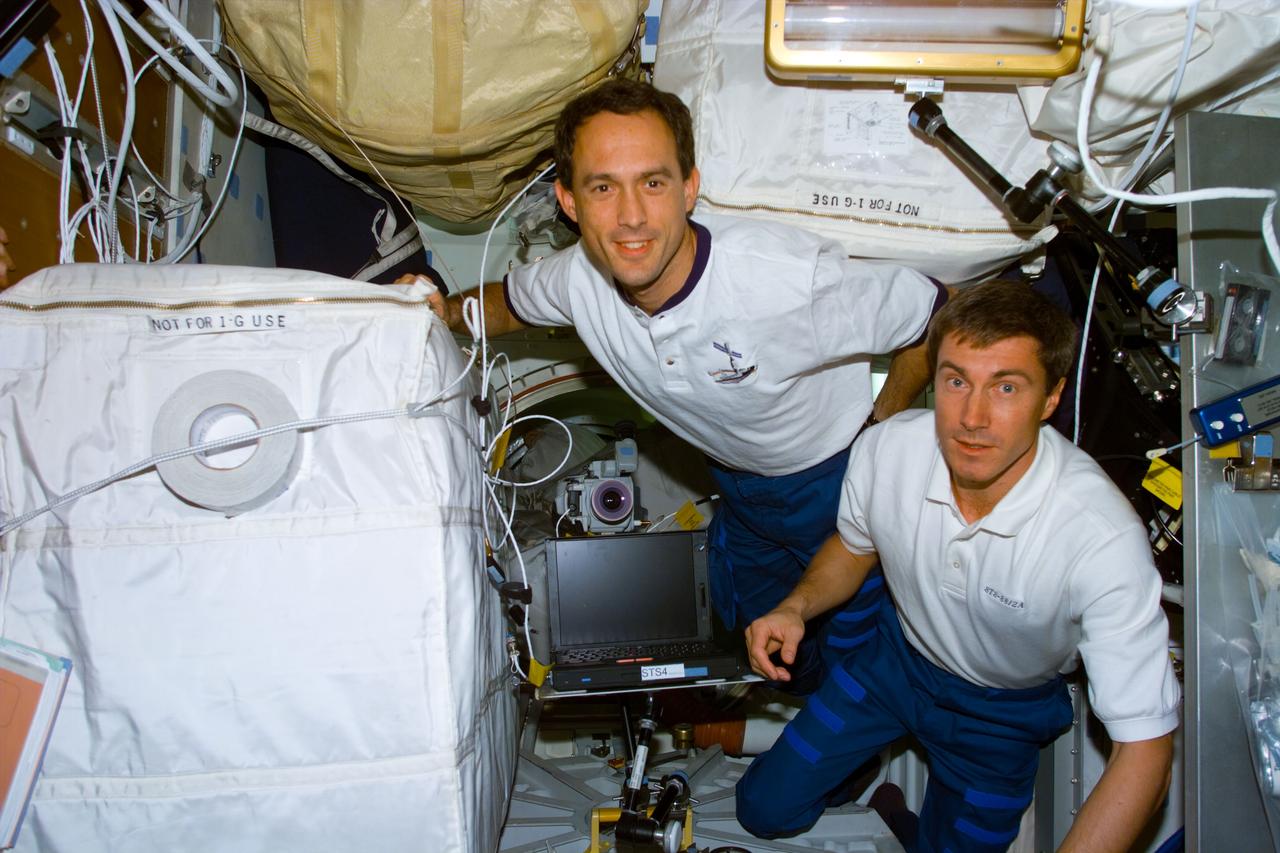
S88-E-5159 (12-14-98) --- Less than 48-hours prior to the completion of their 11-day mission in Earth orbit, two of the seven STS-88 crew members are pictured on Endeavour's middeck. They are James H. Newman (left) and Sergei K. Krikalev, both mission specialists. Krikalev represents the Russian Space Agency (RSA) and has been named to the first ISS crew. Newman earlier had joined astronaut Jerry L. Ross on three space walks to perform a number of tasks to ready the first components of ISS. The photo was taken with an electronic still camera (ESC) at 03:00:43, Dec. 14.
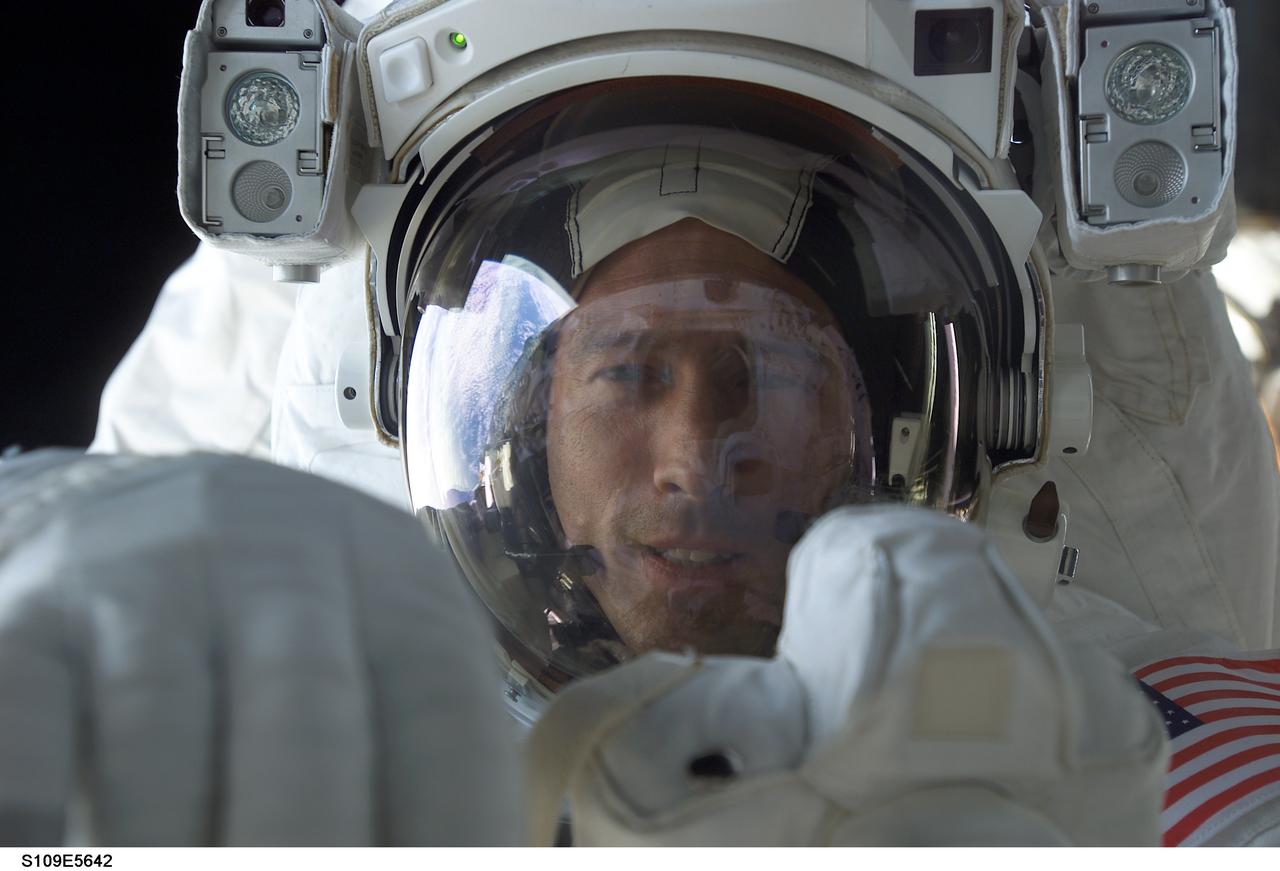
STS109-E-5642 (5 March 2002) --- Astronaut James H. Newman, mission specialist, peers into Columbia's crew cabin during a brief break in work on the Hubble Space Telescope (HST), latched down just a few feet behind him in Columbia's cargo bay. Astronauts Newman and Michael J. Massimino are making their first extravehicular activity (EVA) of the mission, following the act of two other crewmembers on the previous day. The image was recorded with a digital still camera.
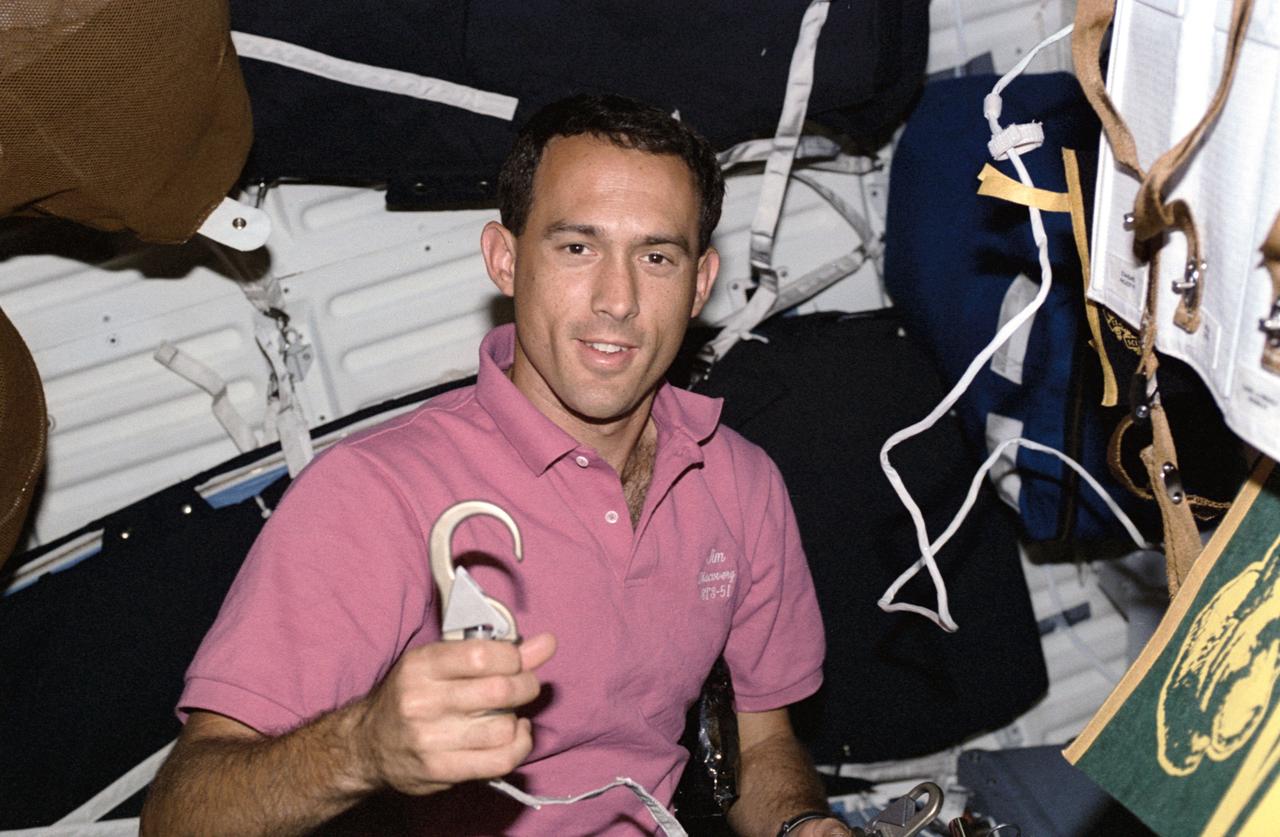
STS051-26-002 (12-22 Sept 1993) --- Astronaut James H. Newman, mission specialist, shows off a latch hook for a tether device used during the STS-51 extravehicular activity (EVA) on September 16, 1993. Newman, on Discovery's middeck, appears surrounded by sleep restraints.
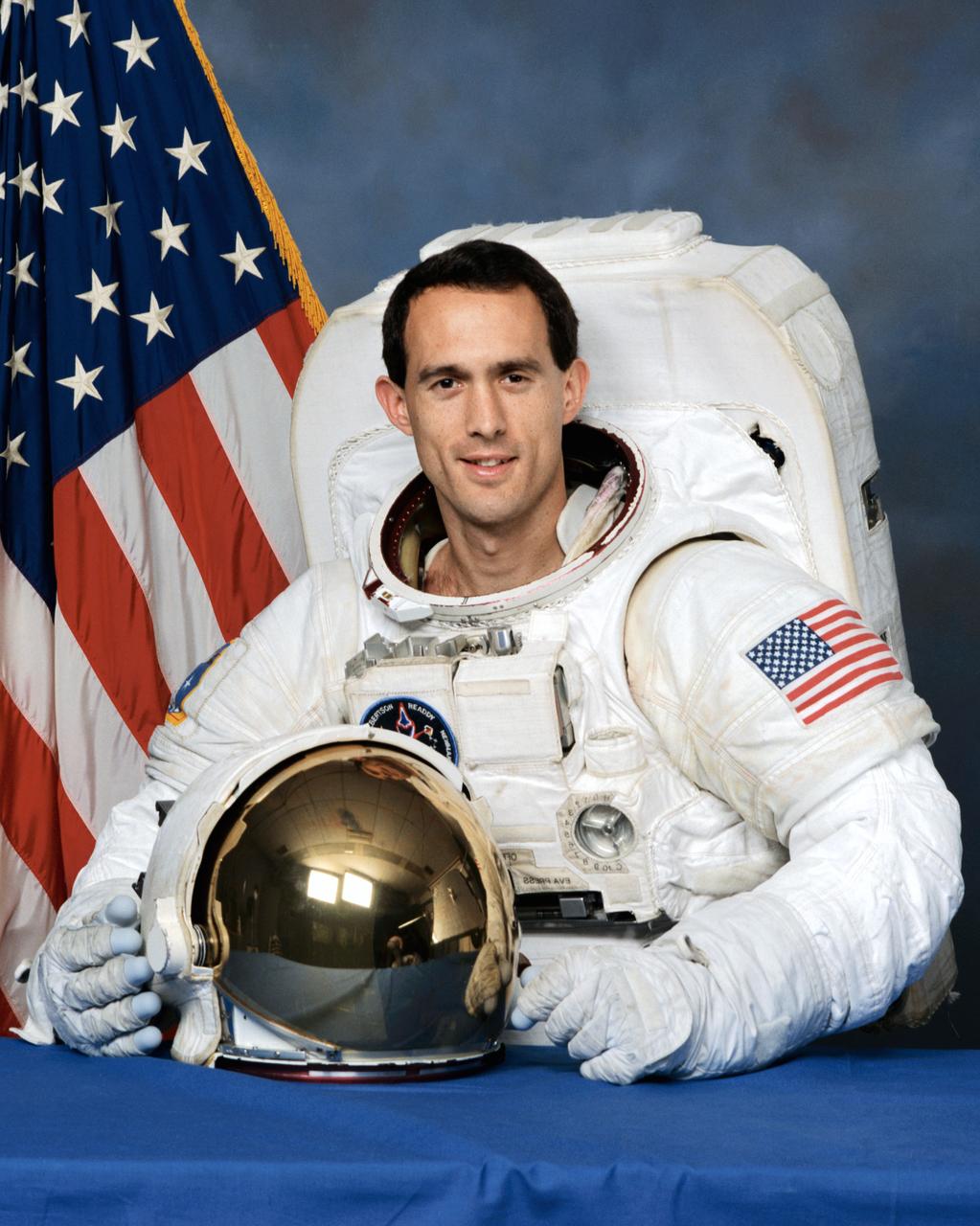
S95-14660 (July 1995) --- Astronaut James H. Newman, mission specialist.
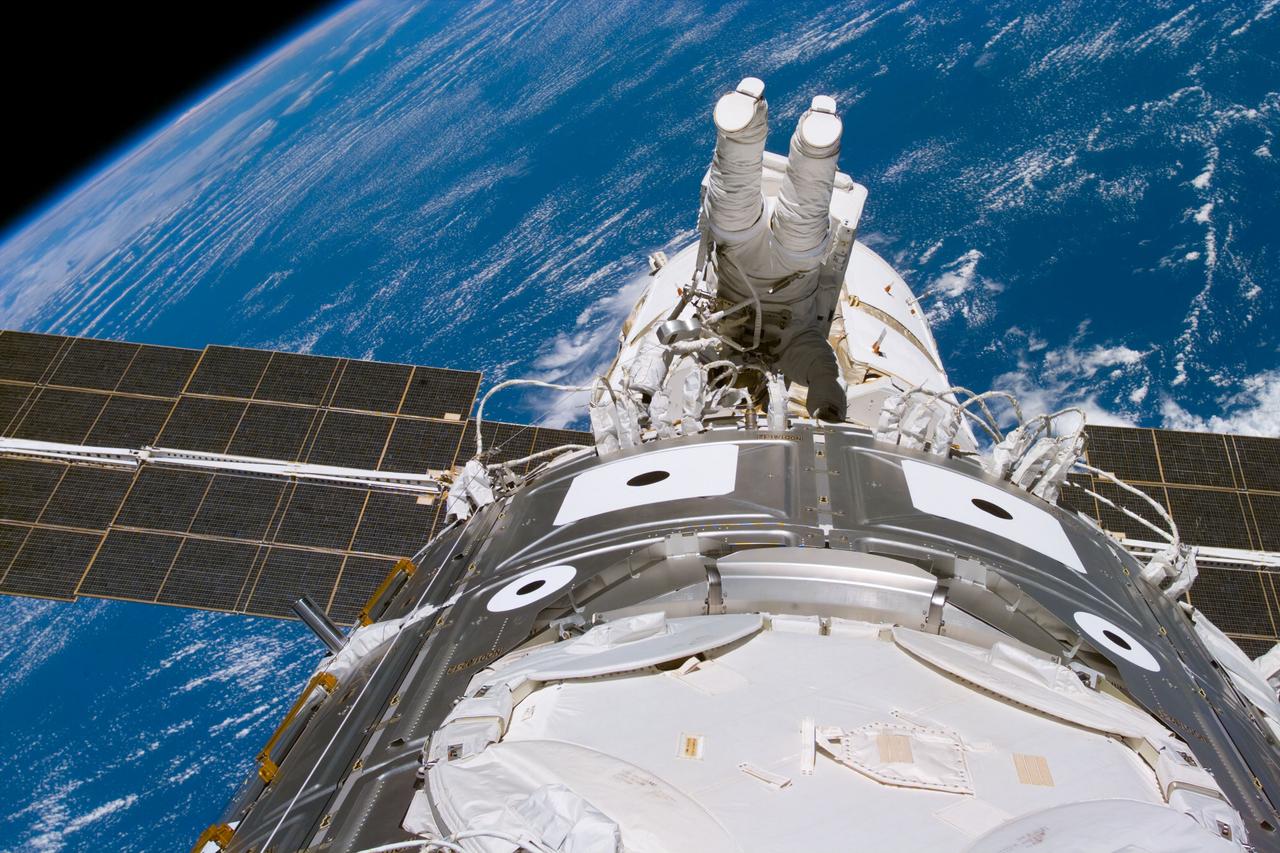
S88-E-5144 (12-12-98) --- Astronaut James H. Newman, mission specialist, wraps up extravehicular activity (EVA) tasks as he and fellow mission specialist Jerry L. Ross (out of frame) approach the completion of their third and final scheduled space walk on STS-88. Newman holds onto handrails on the U.S.-built Unity connecting module (foreground). Zarya can be seen beyond Newman, backdropped over ocean waters some 173 nautical miles below. The photo was taken with an electronic still camera (ESC) at 21:59:39 GMT, Dec. 12.
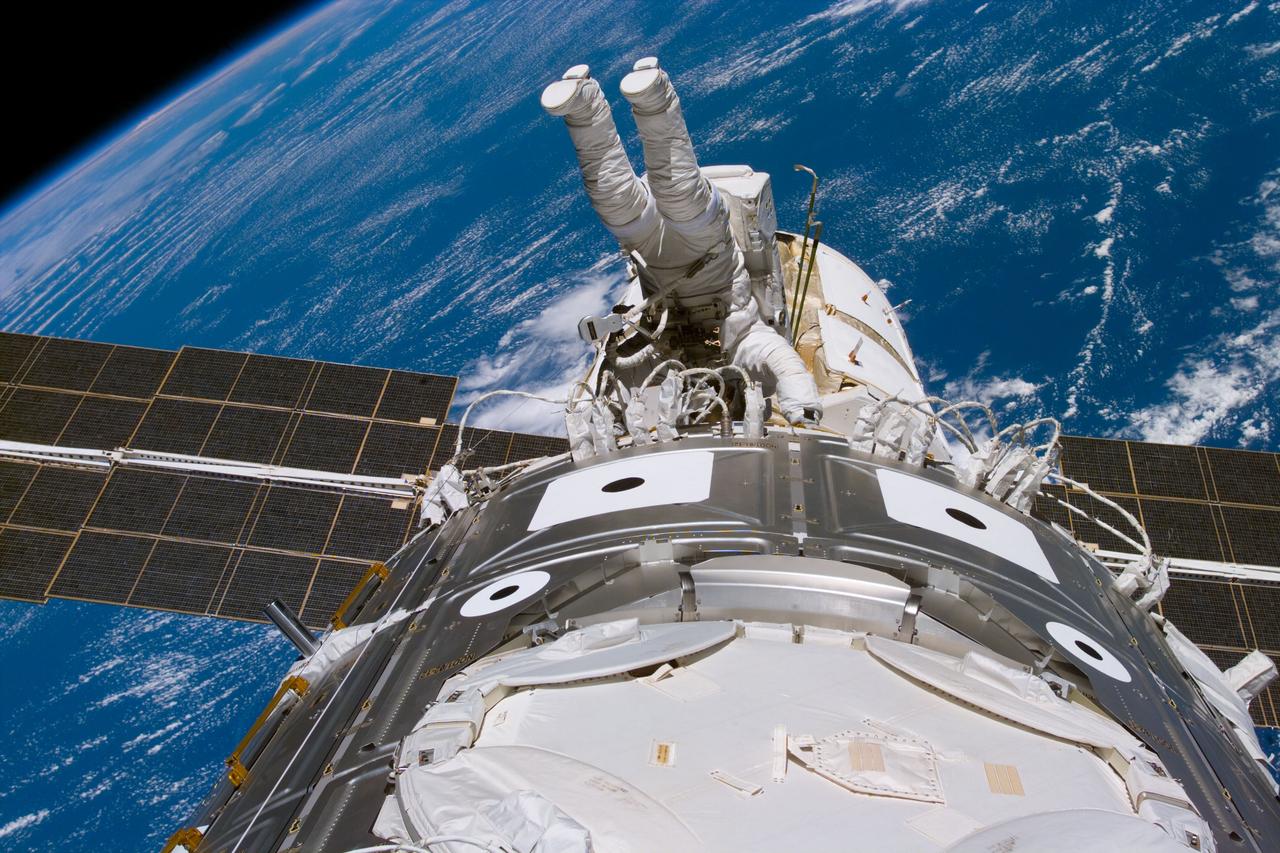
S88-E-5145 (12-12-98) --- Astronaut James H. Newman, mission specialist, wraps up extravehicular activity (EVA) tasks as he and fellow mission specialist Jerry L. Ross (out of frame) near the completion of their third and final scheduled space walk on STS-88. Newman holds onto handrails on the U.S.-built Unity connecting module (foreground). Zarya can be seen beyond Newman, backdropped over ocean waters some 173 nautical miles below. The photo was taken with an electronic still camera (ESC) at 21:59:43 GMT, Dec. 12.
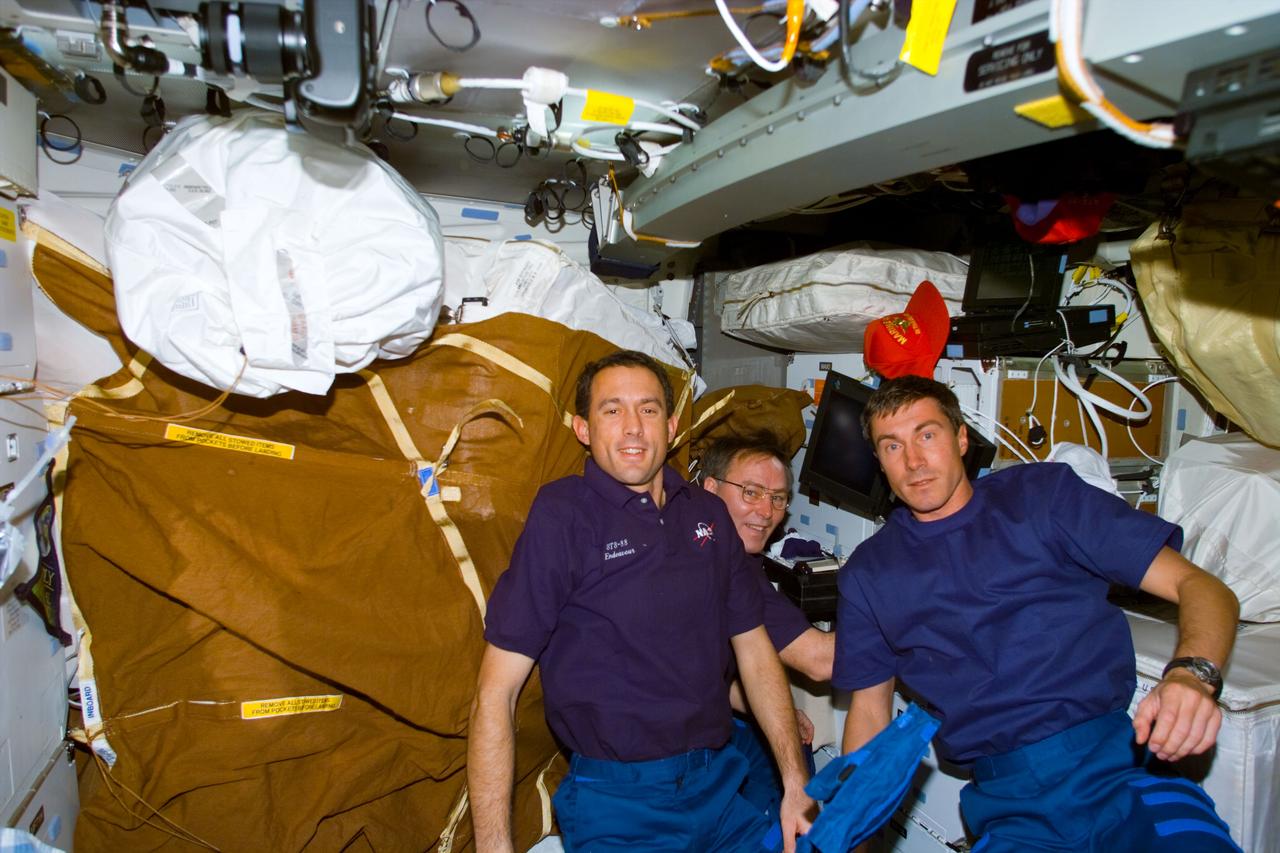
S88-E-5163 (12-08-98) --- Left to right, James H. Newman, Jerry L. Ross and Sergei K. Krikalev--all mission specialists--on Endeavour's middeck. Ross and Newman eventually participated in three space walks as part of the STS-88 work involved in readying the Unity and Zarya modules for their ISS roles. Krikalev, representing the Russian Space Agency, has been named as a member of the first ISS flight crew. This photo was taken with an electronic still camera (ESC) at 23:14:01 GMT, Dec. 8.

STS109-E-5389 (5 March 2002) --- Astronaut James H. Newman, mission specialist, returns to a stowage area in the cargo bay of the Space Shuttle Columbia during the STS-109 mission's second day of extravehicular activity (EVA). Astronauts Newman and Michael J. Massimino worked to replace the second set of solar arrays on the Hubble Space Telescope (HST). The image was recorded with a digital still camera.
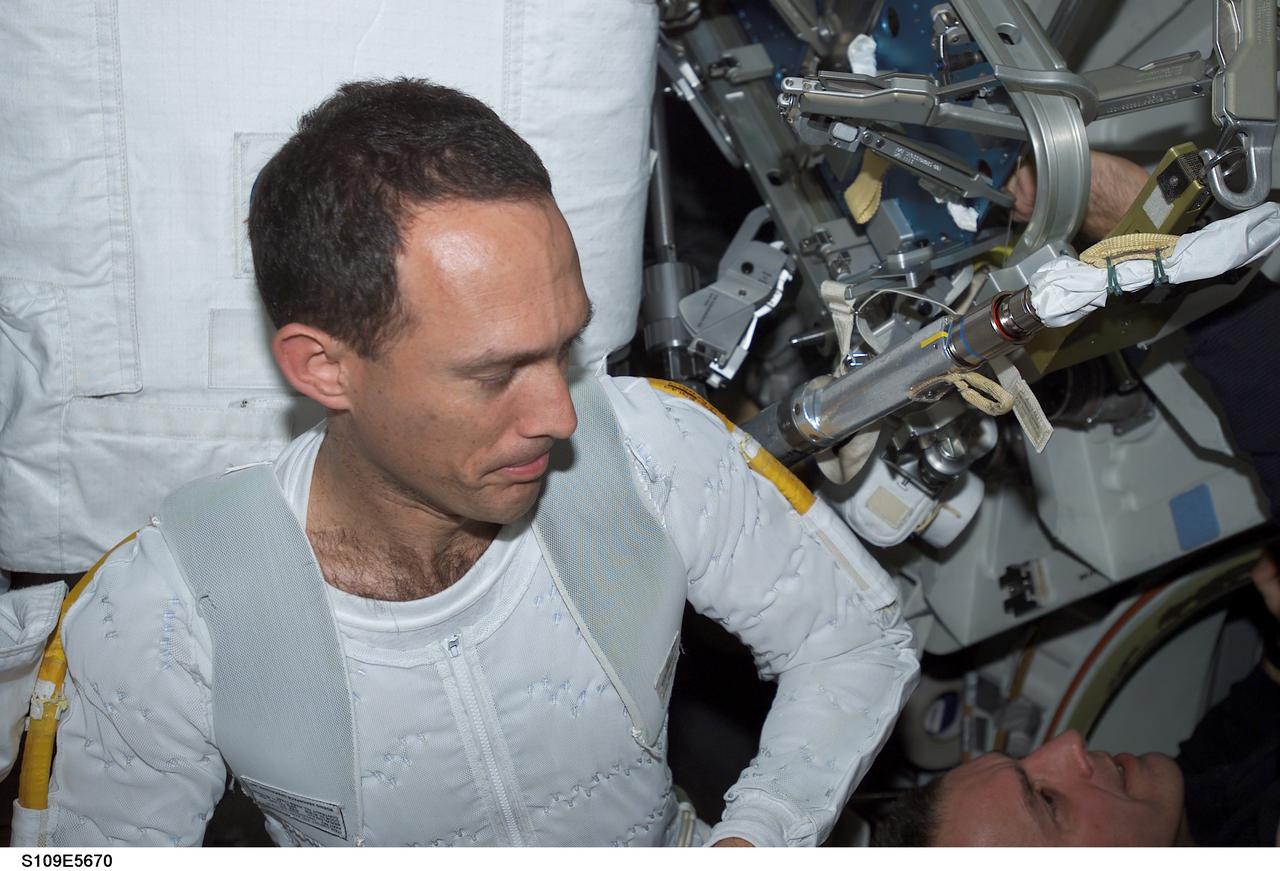
STS109-E-5670 (7 March 2002) --- Astronaut James H. Newman, mission specialist, is about to put on his extravehicular mobility unit's (EMU) outer suit over its thermal under garment. Astronauts Newman and Michael J. Massimino were about to embark on the STS-109 mission's fourth space walk. The image was recorded with a digital still camera.
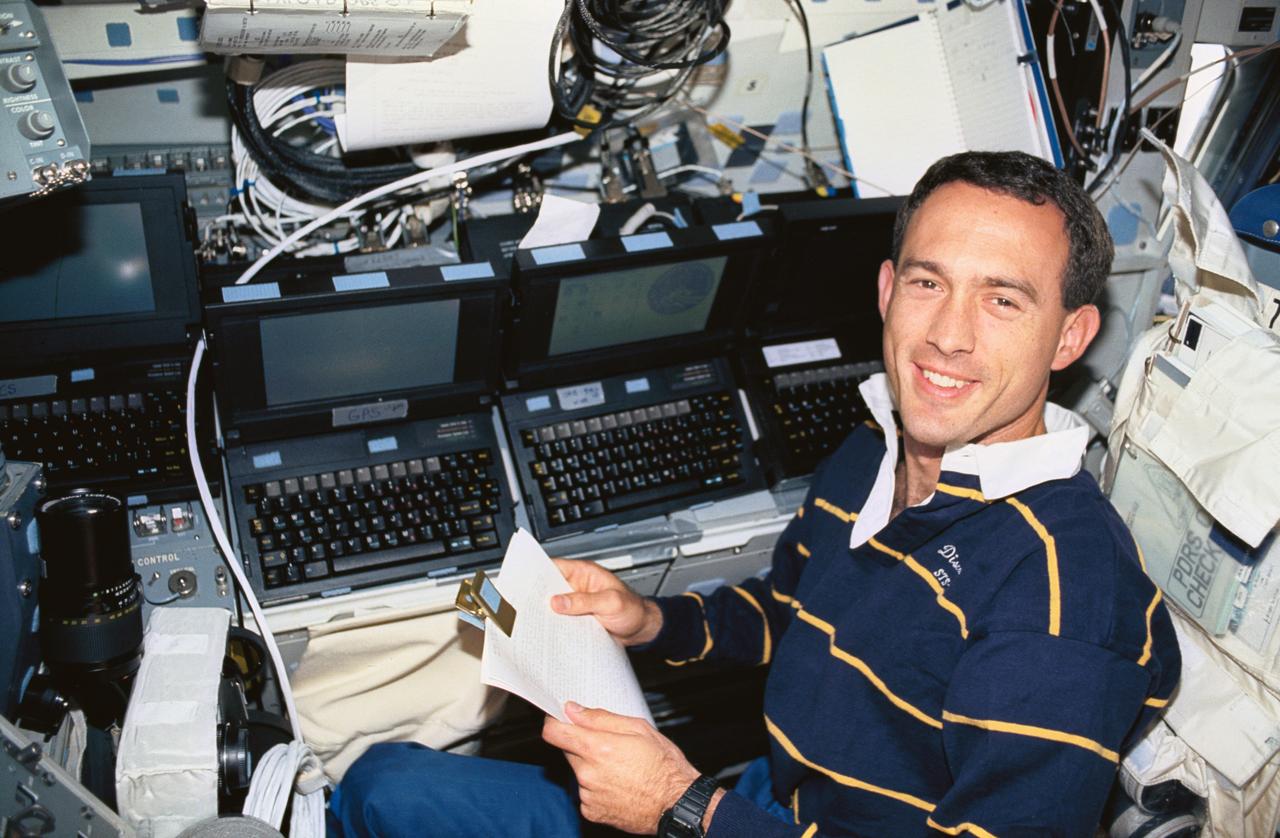
STS051-16-028 (12-22 Sept 1993) --- On Discovery's middeck, astronaut James H. Newman, mission specialist, works with an array of computers, including one devoted to Global Positioning System (GPS) operations, a general portable onboard computer displaying a tracking map, a portable audio data modem and another payload and general support computer. Newman was joined by four other NASA astronauts for almost ten full days in space.
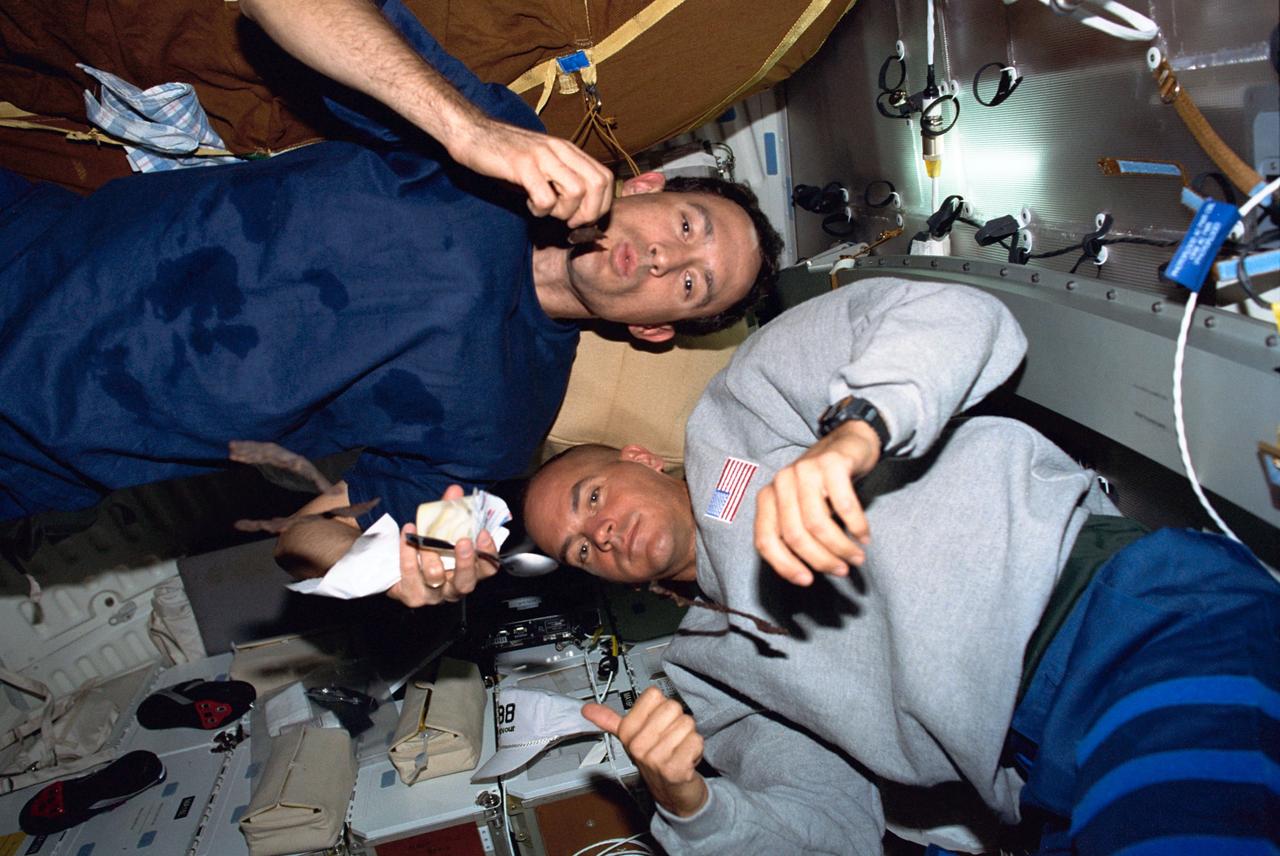
STS088-342-034 (13 Dec. 1998) --- NASA astronaut James Newman (left), with NASA astronaut Rick Sturckow, pilot, looking on, enjoys some beef jerky on the middeck while Endeavour was in Earth orbit. Photo credit: NASA
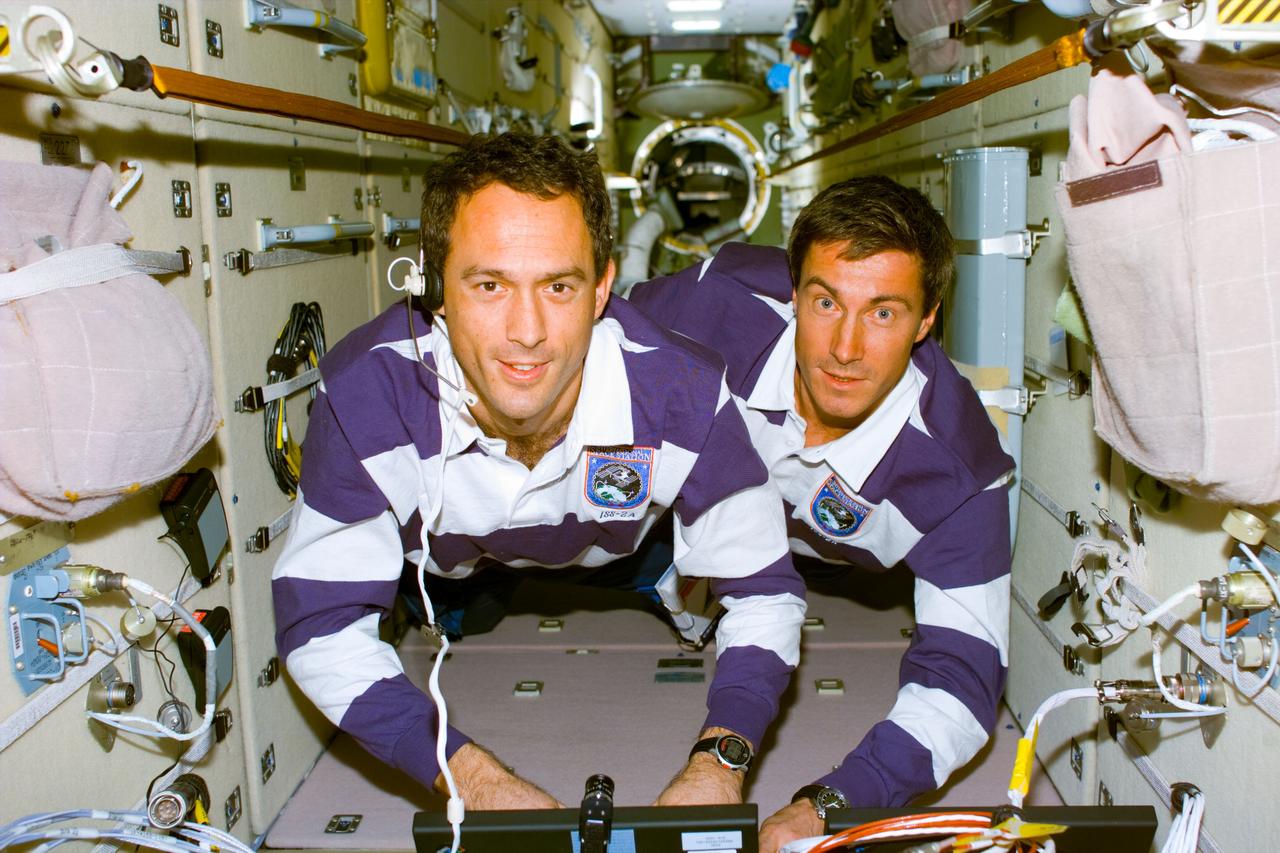
S88-E-5081 (12-11-98) --- James H. Newman (left) and Sergei Krikalev are in communications with ground controllers while working aboard Zarya. The two are mission specialists, with Krikalev representing the Russian Space Agency (RSA). The photo was taken with an electronic still camera (ESC) at 05:23:01 GMT, Dec. 11.

S88-E-5143 (12-12-98) --- Astronaut James H. Newman, mission specialist, works at the edge of the U.S.-built Unity connecting module during the STS-88 mission's third and final space walk, on Flight Day 10. The solar array panel on the Russian-built Zarya module is at right. The photo was taken with an electronic still camera (ESC) at 21:59:43 GMT, Dec. 12.
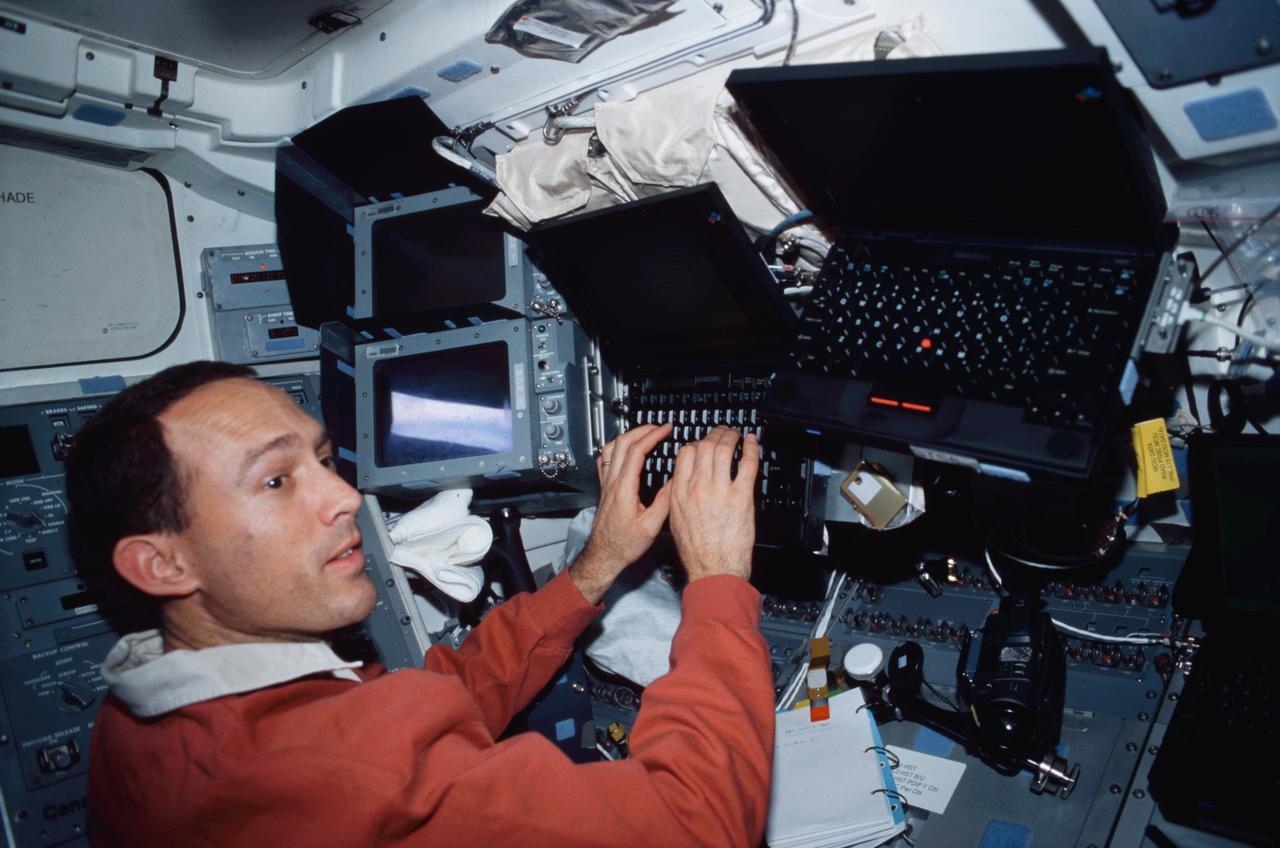
STS109-406-026 (1-12 March 2002) --- Astronaut James H. Newman, STS-109 mission specialist, works with Payload and General Support Computers (PGSC) on the mid deck of the Space Shuttle Columbia.
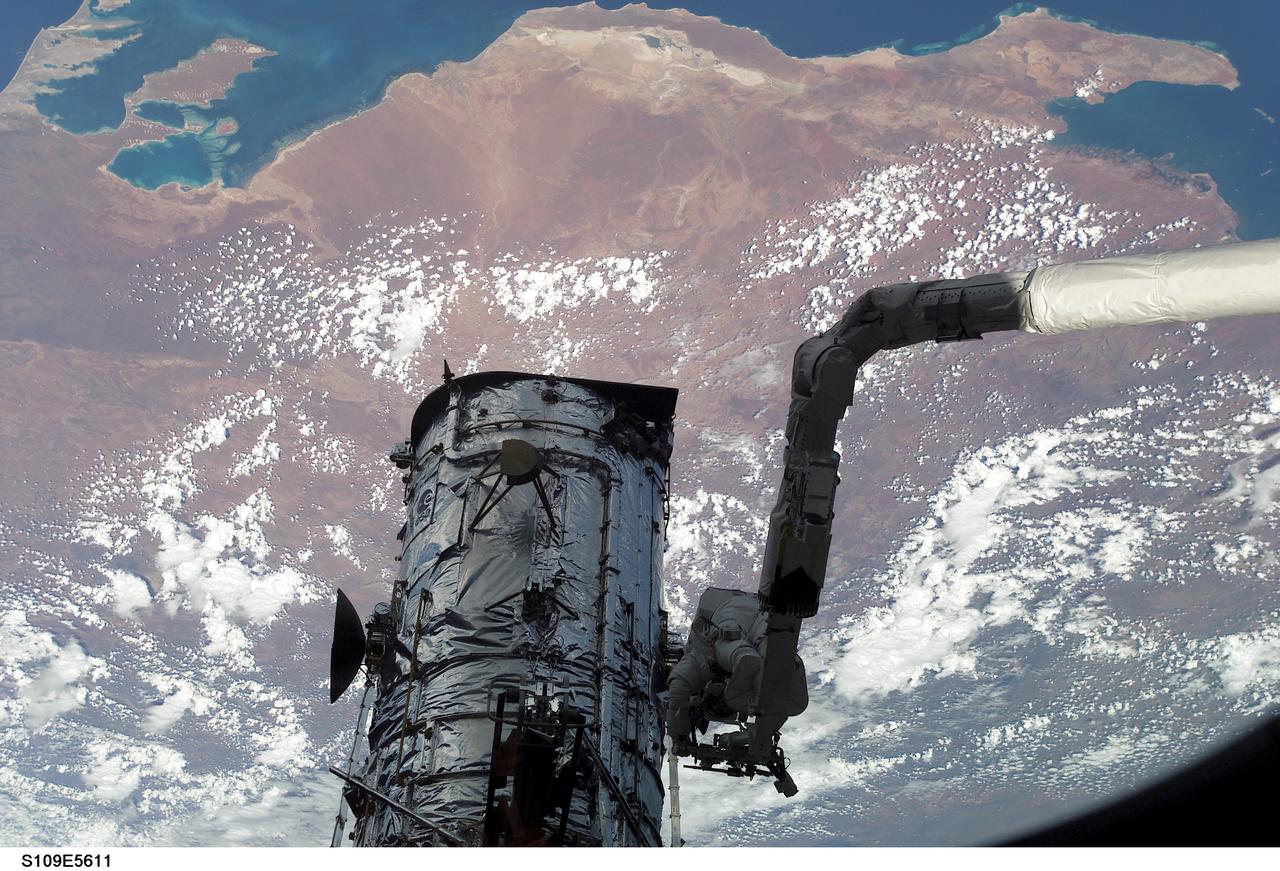
STS109-E-5611 (5 March 2002) --- Astronauts James H. Newman, attached to the Remote Manipulator System (RMS) arm of the Space Shuttle Columbia, and Michael J. Massimino (out of frame) work on the Hubble Space Telescope as the shuttle flies over Western Australia. This day's space walk went on to see astronauts Newman and Massimino replace the port solar array on the Hubble. On the previous day astronauts John M. Grunsfeld and Richard M. Linnehan replaced the starboard solar array on the giant telescope. The image was recorded with a digital still camera.
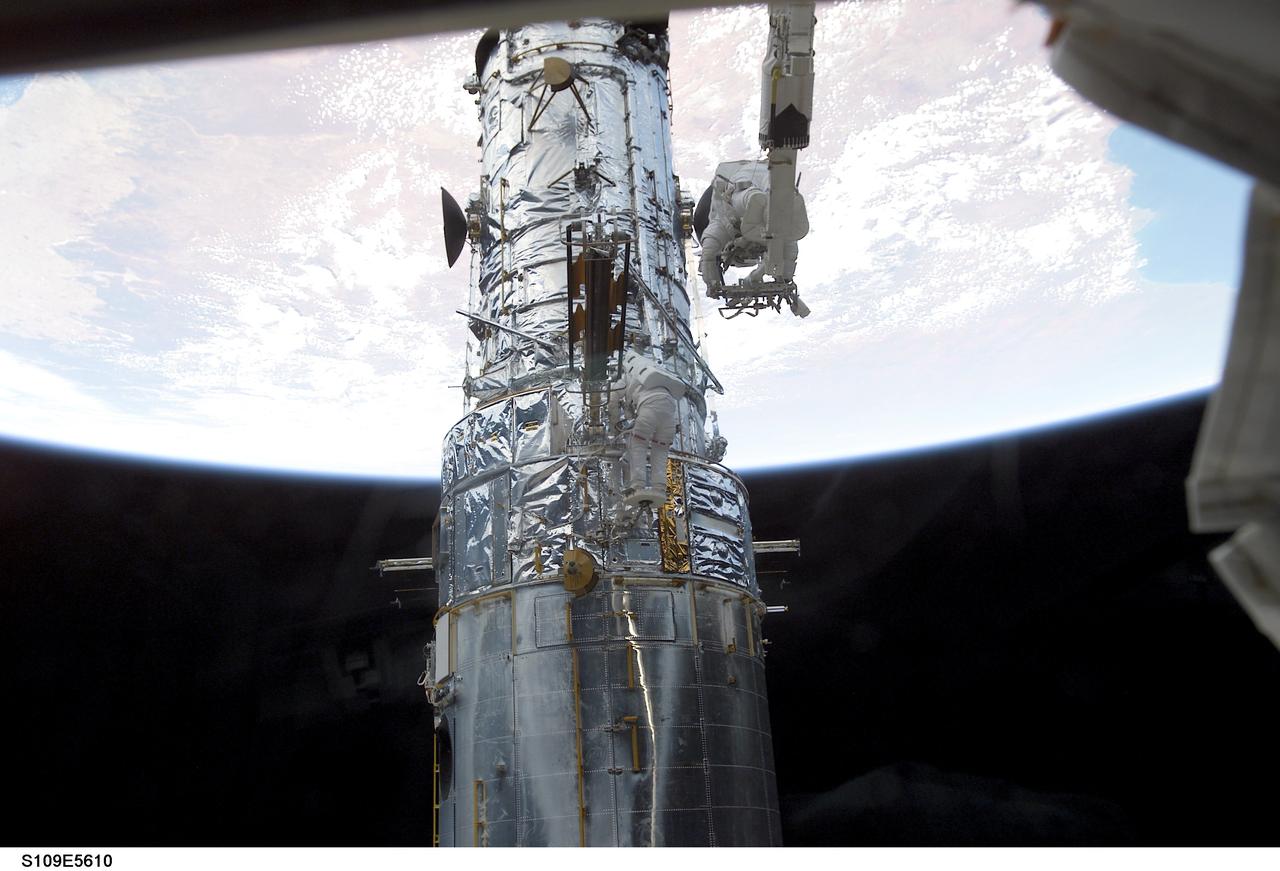
STS109-E-5610 (5 March 2002) --- Astronauts James H. Newman, attached to the Remote Manipulator System (RMS) arm of the Space Shuttle Columbia, and Michael J. Massimino (barely visible against the Hubble Space Telescope near center frame) work on the telescope as the shuttle flies over Australia. This day's space walk went on to see astronauts Newman and Massimino replace the port solar array on the Hubble. On the previous day astronauts John M. Grunsfeld and Richard M. Linnehan replaced the starboard solar array on the giant telescope. The image was recorded with a digital still camera.
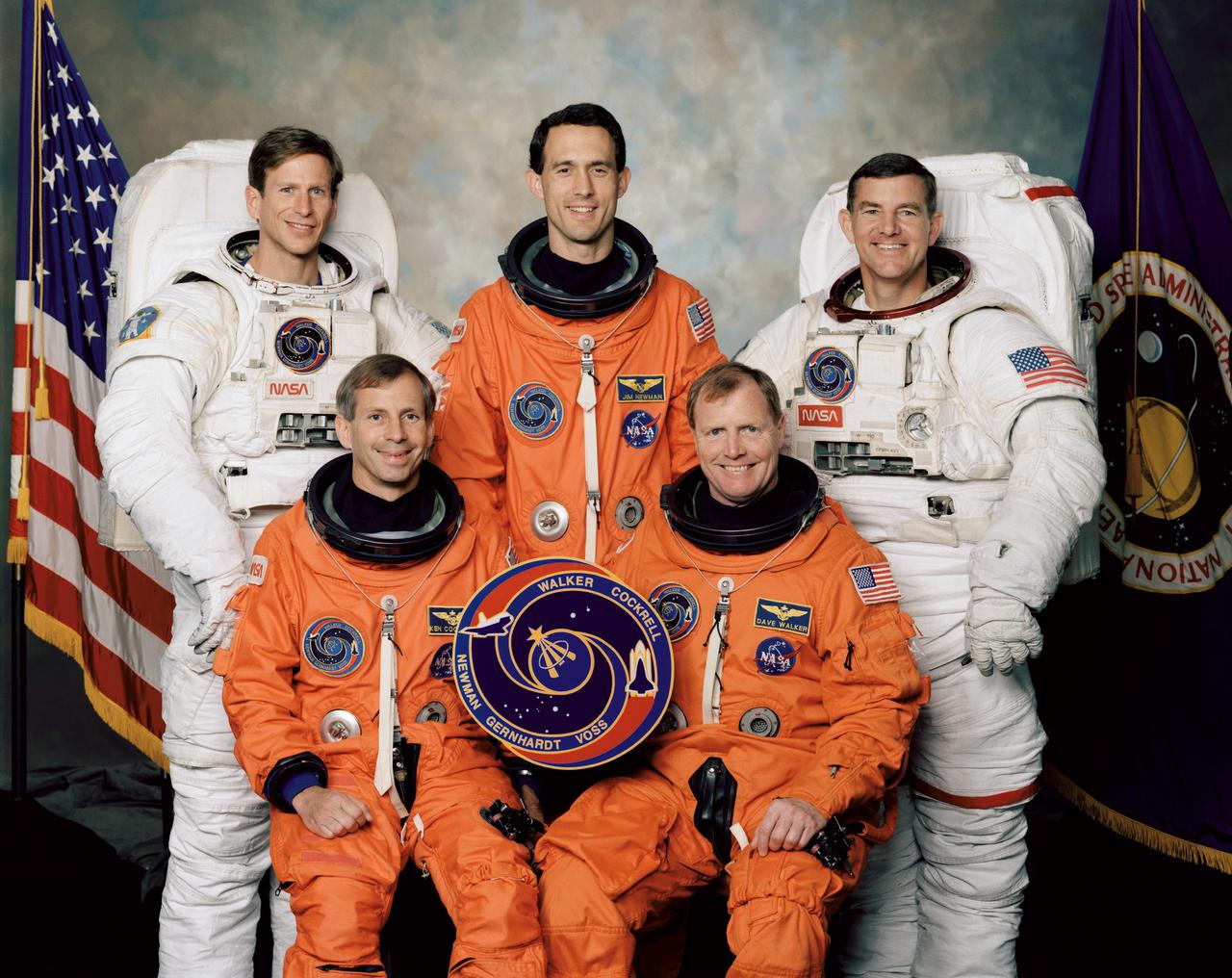
These five NASA astronauts were the crew members for the STS-69 mission that launched aboard the Space Shuttle Endeavour September 7, 1995. Pictured on the front row (left to right) are David M. Walker, mission commander; and Kenneth D. Cockrell, pilot. On the back row (left to right) are Michael L. Gernhardt and James H. Newman, both mission specialists; and James S. Voss, payload commander. The mission’s two primary payloads included the Spartan 201-3 and Wake Shield Facility-2 (WSF-2).
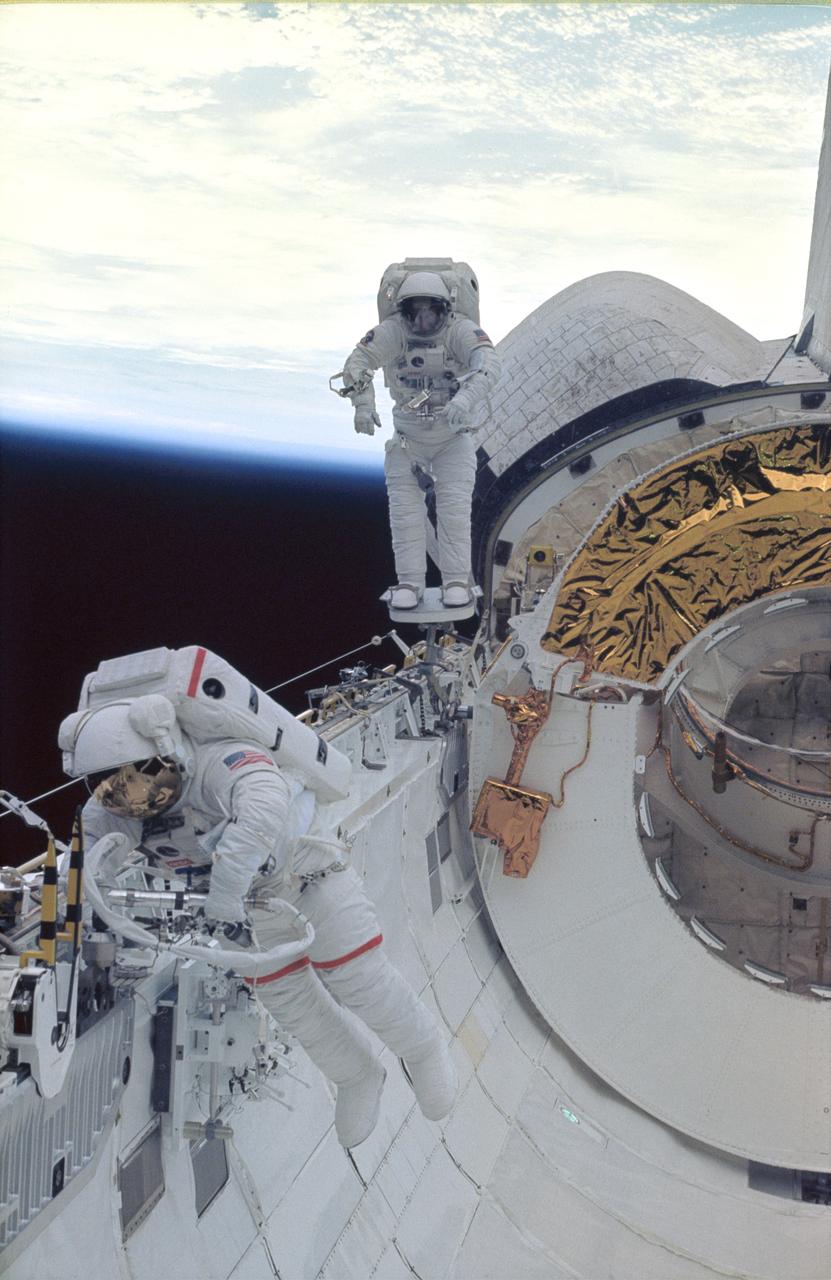
STS051-06-037 (16 Sept 1993) --- Astronauts Carl E. Walz (foreground) and James H. Newman evaluate some important gear. Walz reaches for the Power Ratchet Tool (PRT) while Newman checks out mobility on the Portable Foot Restraint (PFR) near the Space Shuttle Discovery's starboard Orbital Maneuvering System (OMS) pod. The tools and equipment will be instrumental on some of the five periods of extravehicular activity (EVA) scheduled for the Hubble Space Telescope (HST) STS-61 servicing mission later this year.
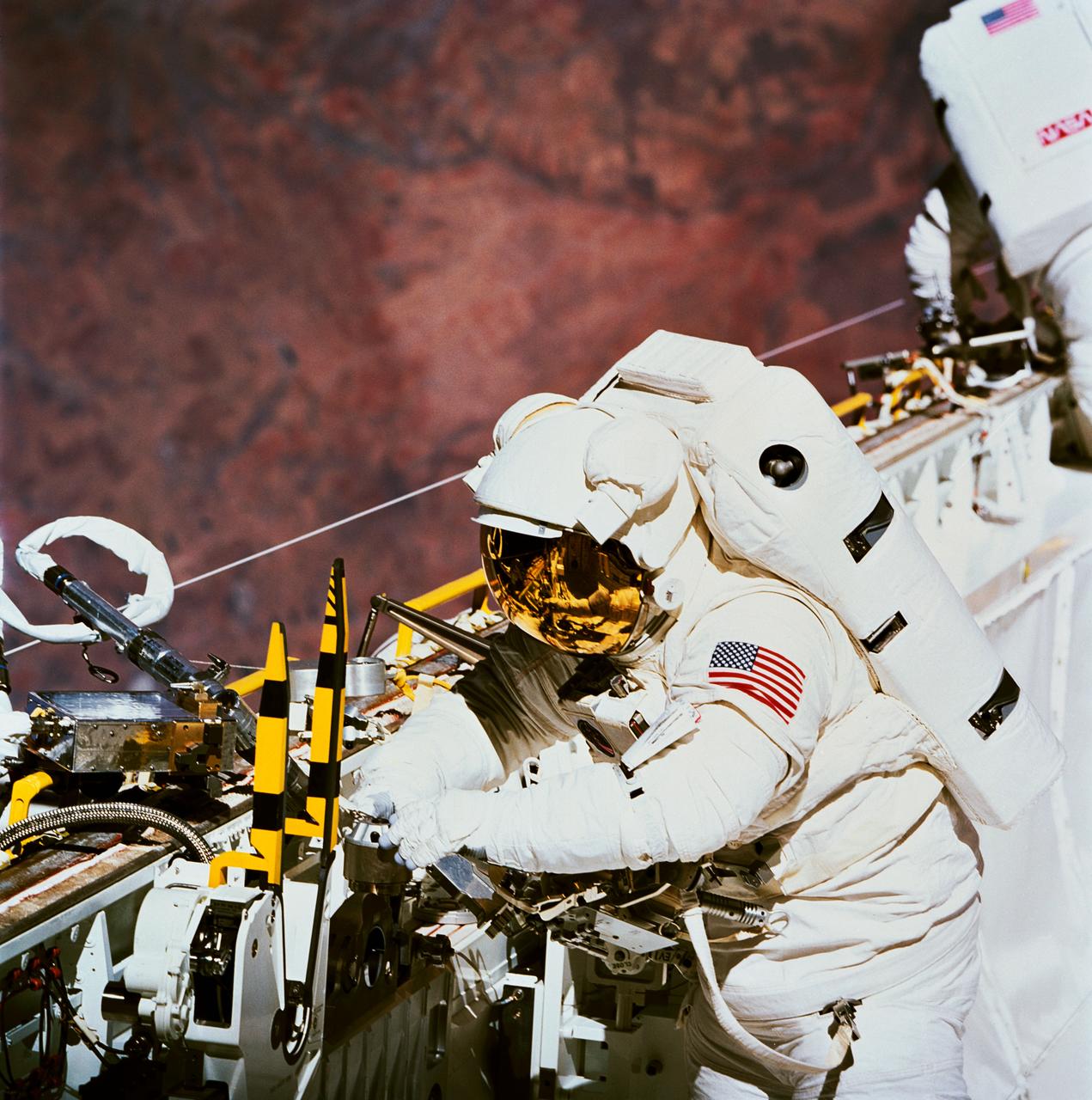
In Discovery's cargo bay, astronaut James H. Newman works with the power ratchet tool (PRT). Astronaut Carl E. Walz, who joined Newman for the lengthy period of extravehicular activity (EVA), is partially visible in the background. The two mission specialists devoted part of their EVA to evaluating tools and equipment expected to be used in the Hubble Space Telescope servicing. A desert area in Africa forms the backdrop for the 70mm scene.
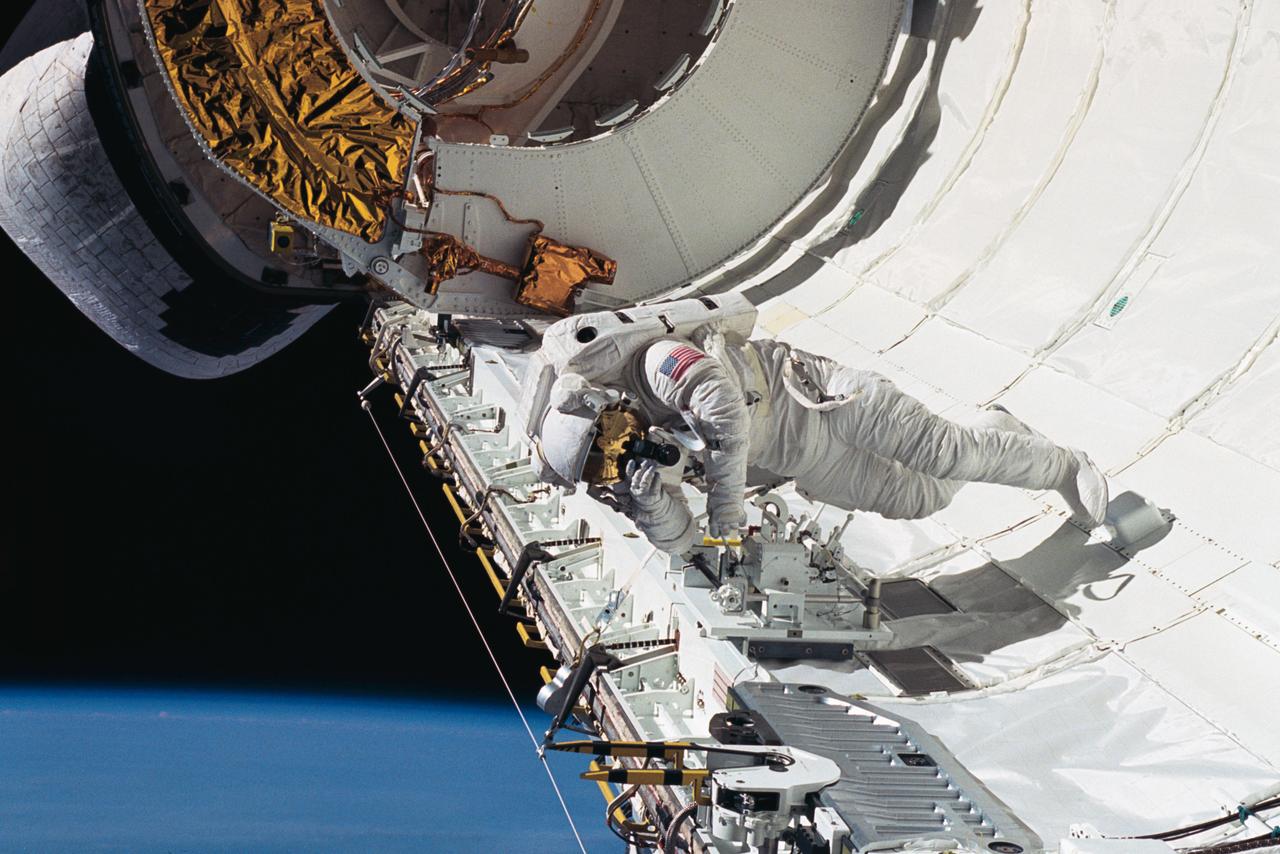
Astronaut James H. Newman, mission specialist, uses a 35mm camera to take a picture of fellow astronaut Carl E. Walz (out of frame) in Discovery's cargo bay. The two were engaged in an extravehicular activity (EVA) to test equipment to be used on future EVA's. Newman is tethered to the starboard side, with the orbital maneuvering system (OMS) pod just behind him.
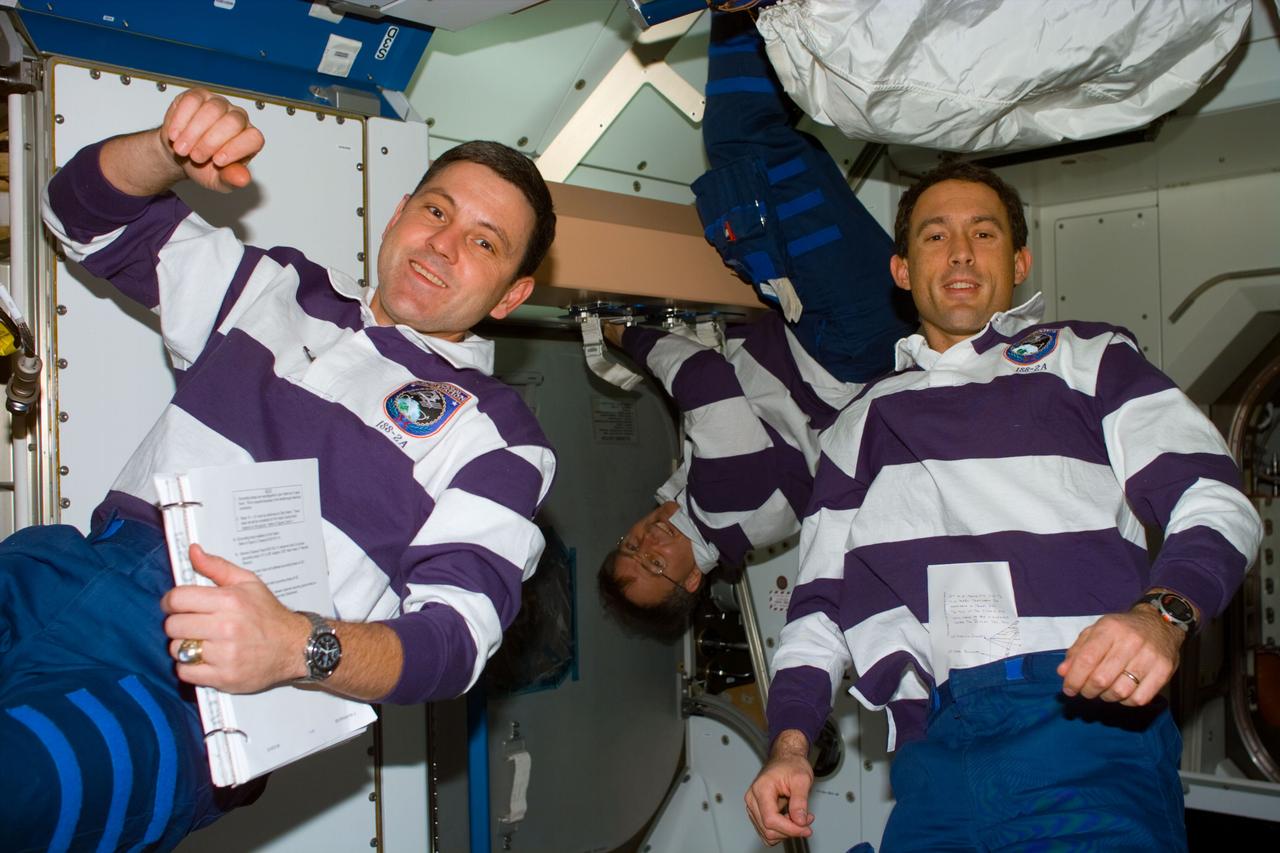
S88-E-5124 (12-11-98) --- From the left, astronauts Robert D. Cabana, Jerry L. Ross and James H. Newman are pictured during work to ready the Unity connecting module for its ISS role. The photo was taken with an electronic still camera (ESC) at 00:23:27 GMT, Dec. 11.
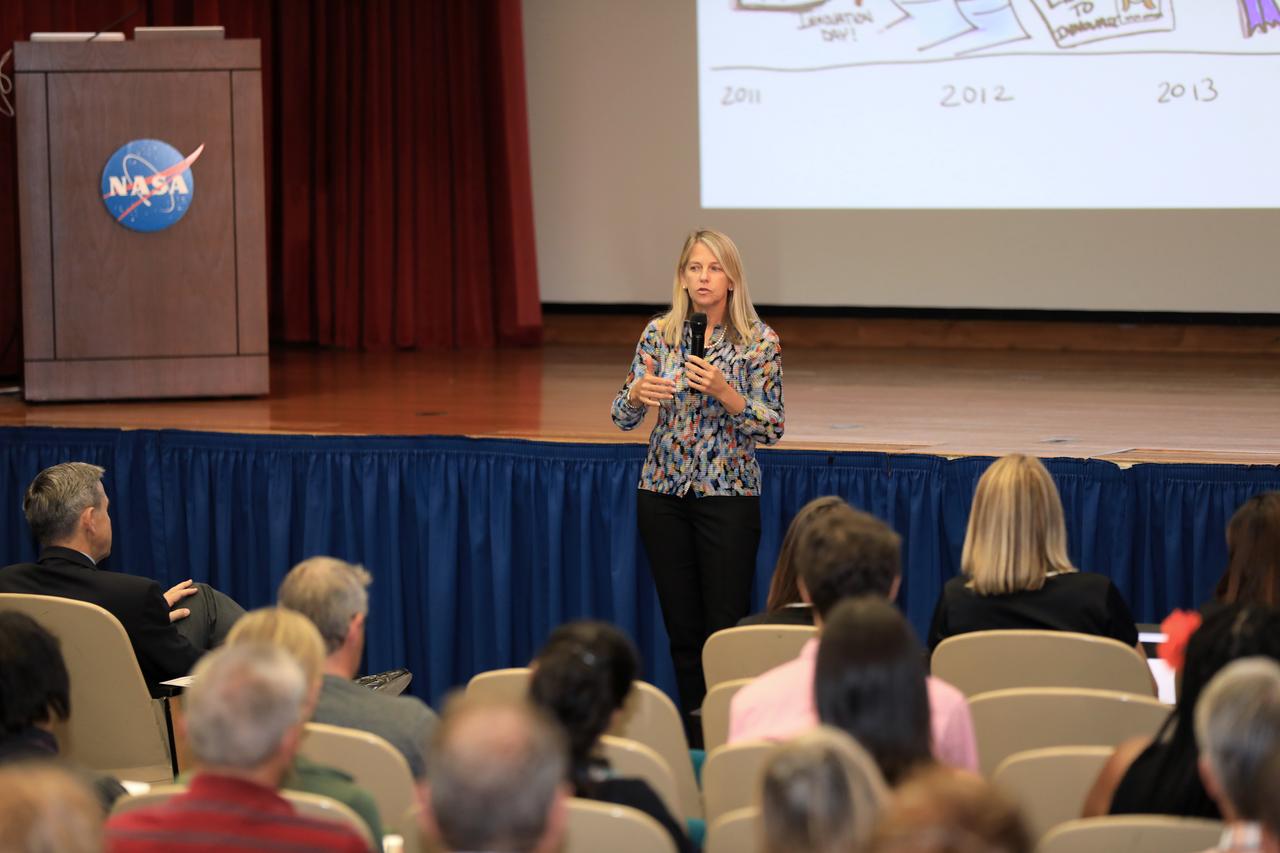
Dr. Dava Newman, NASA's deputy administrator, speaks to employees at the Florida spaceport during the annual KickStart Innovation Expo. The event gives employees an opportunity to present proposals for new ideas and processes. A small amount of funding is awarded to those selected allowing individuals or teams to procure needed items to implement their projects. Kennedy employees are encouraged to look for ways to do their work better and to propose concepts for tackling future mission needs.

Dr. Dava Newman, NASA's deputy administrator, speaks to employees at the Florida spaceport during the annual KickStart Innovation Expo The event gives employees an opportunity to present proposals for new ideas and processes. A small amount of funding is awarded to those selected allowing individuals or teams to procure needed items to implement their projects. Kennedy employees are encouraged to look for ways to do their work better and to propose concepts for tackling future mission needs.
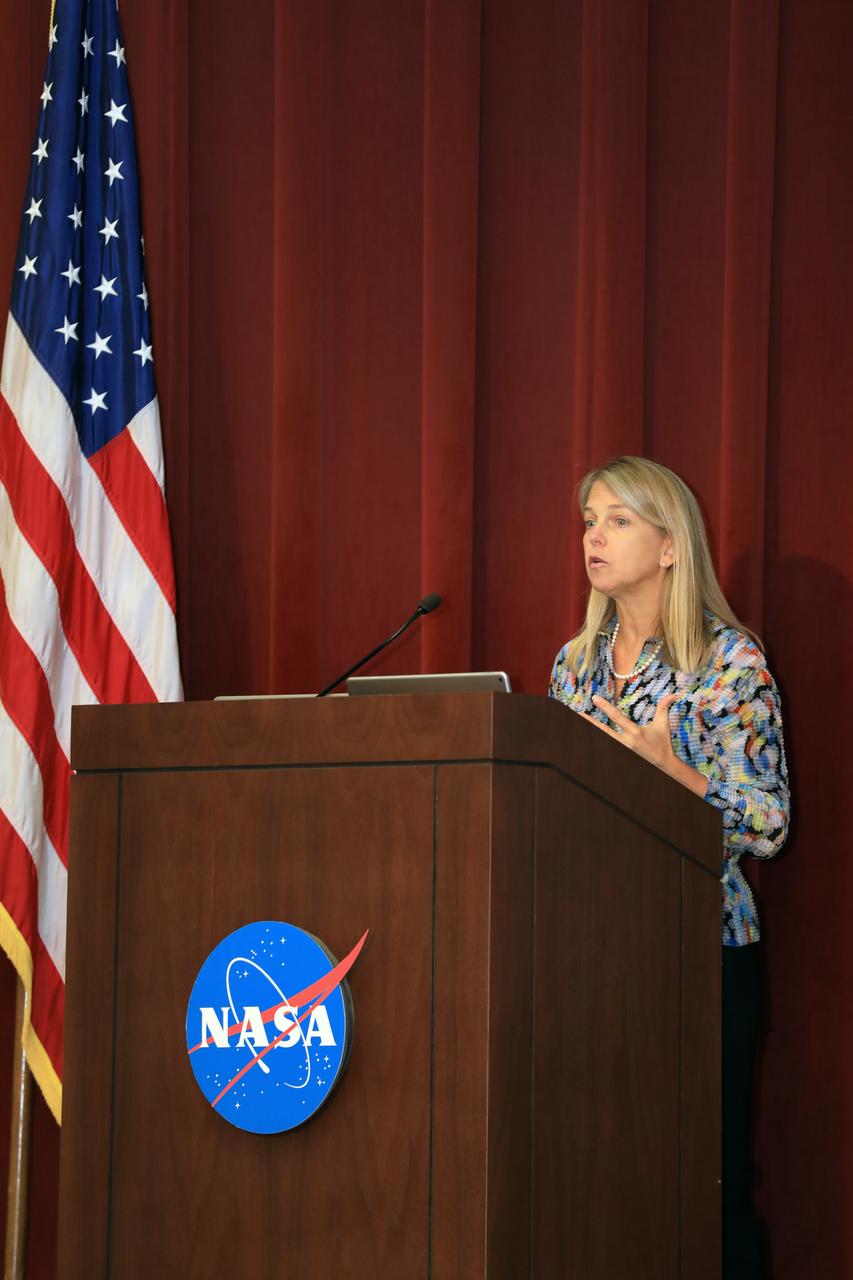
Dr. Dava Newman, NASA's deputy administrator, speaks to employees at the Florida spaceport during the annual KickStart Innovation Expo. The event gives employees an opportunity to present proposals for new ideas and processes. A small amount of funding is awarded to those selected allowing individuals or teams to procure needed items to implement their projects. Kennedy employees are encouraged to look for ways to do their work better and to propose concepts for tackling future mission needs.
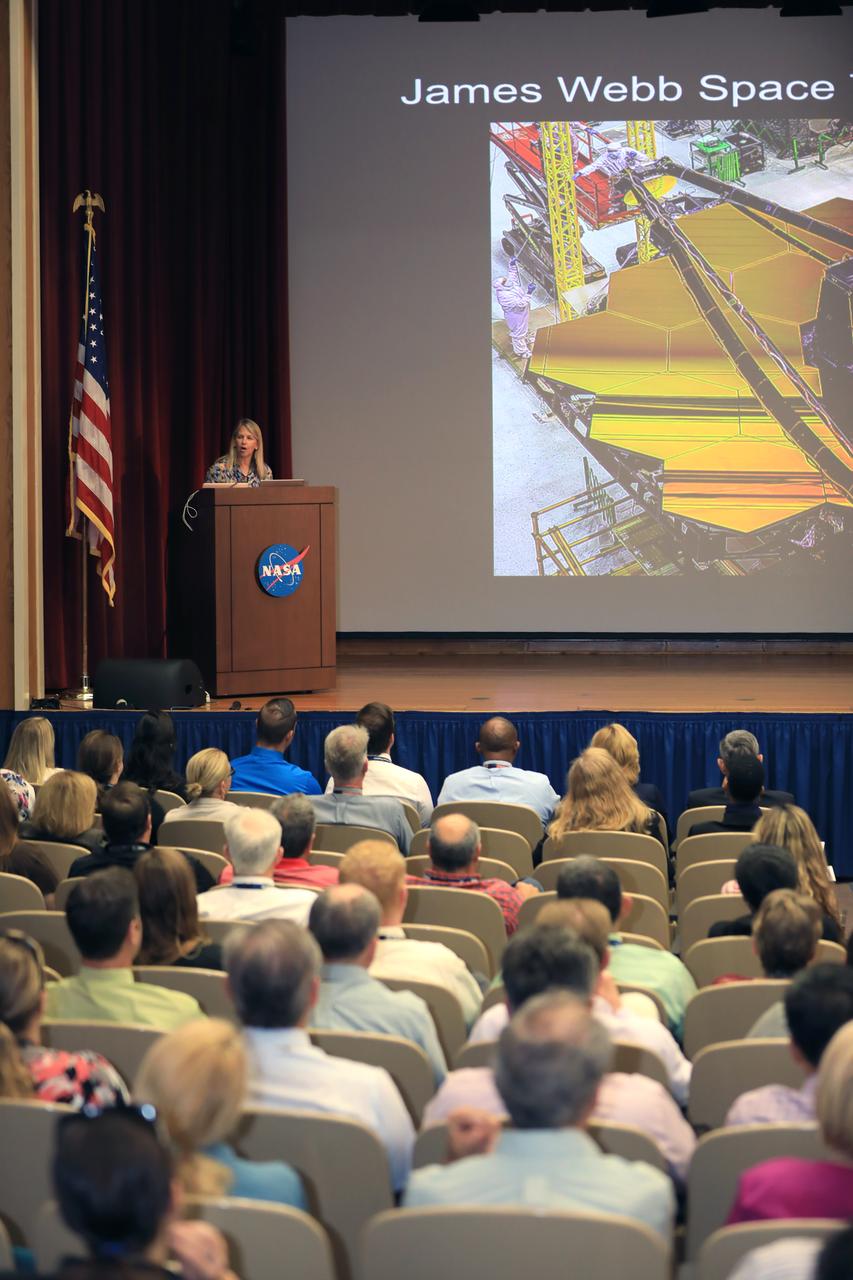
Dr. Dava Newman, NASA's deputy administrator, speaks to employees at the Florida spaceport during the annual KickStart Innovation Expo. The event gives employees an opportunity to present proposals for new ideas and processes. A small amount of funding is awarded to those selected allowing individuals or teams to procure needed items to implement their projects. Kennedy employees are encouraged to look for ways to do their work better and to propose concepts for tackling future mission needs.
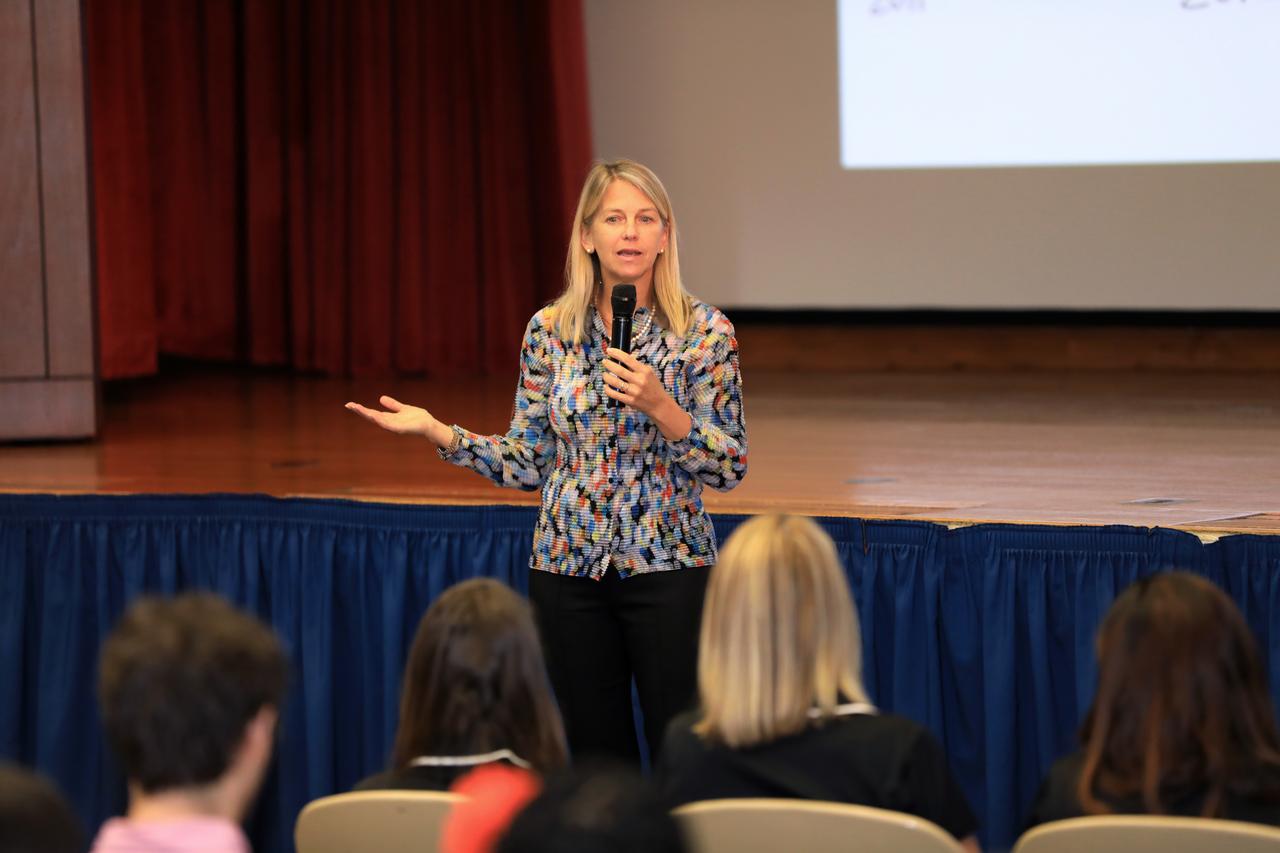
Dr. Dava Newman, NASA's deputy administrator, speaks to employees at the Florida spaceport during the annual KickStart Innovation Expo. The event gives employees an opportunity to present proposals for new ideas and processes. A small amount of funding is awarded to those selected allowing individuals or teams to procure needed items to implement their projects. Kennedy employees are encouraged to look for ways to do their work better and to propose concepts for tackling future mission needs.
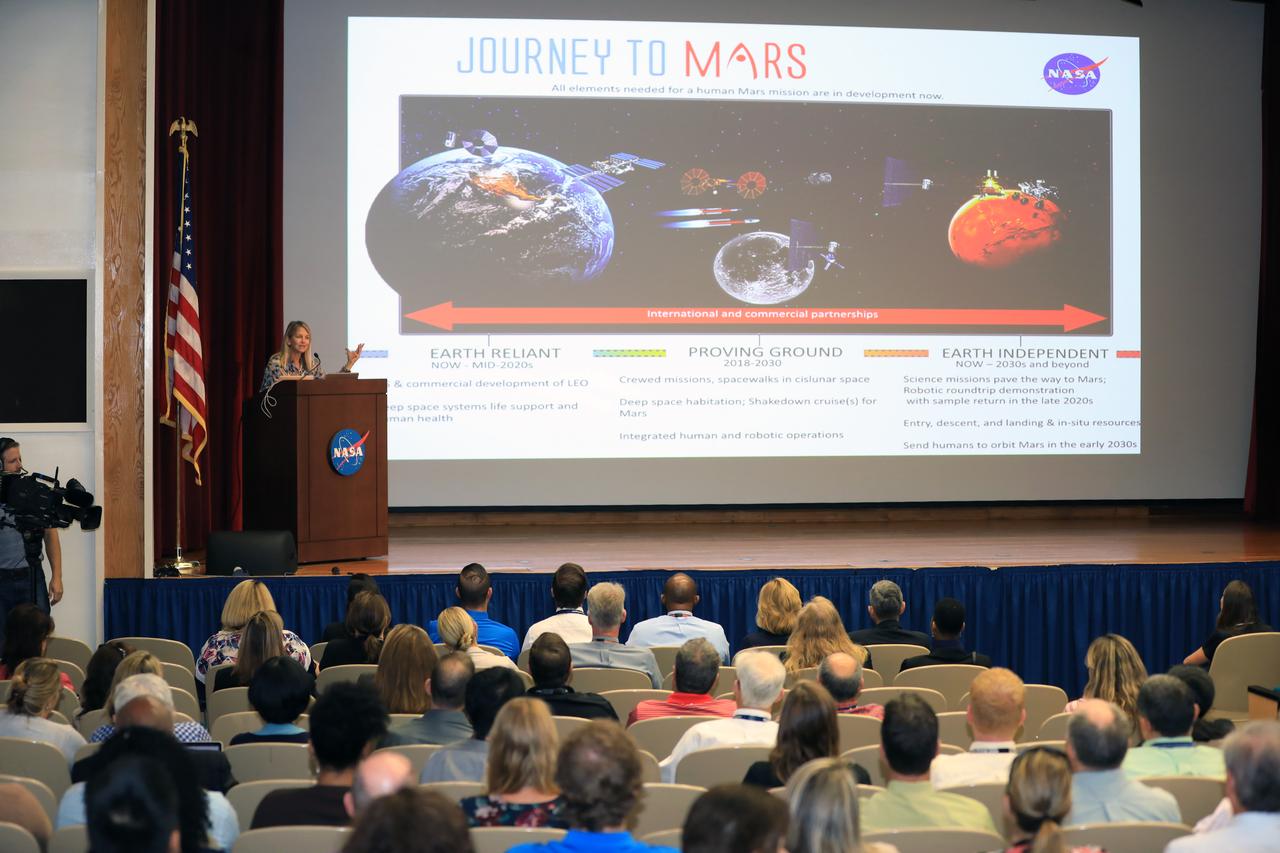
Dr. Dava Newman, NASA's deputy administrator, speaks to employees at the Florida spaceport during the annual KickStart Innovation Expo. The event gives employees an opportunity to present proposals for new ideas and processes. A small amount of funding is awarded to those selected allowing individuals or teams to procure needed items to implement their projects. Kennedy employees are encouraged to look for ways to do their work better and to propose concepts for tackling future mission needs.
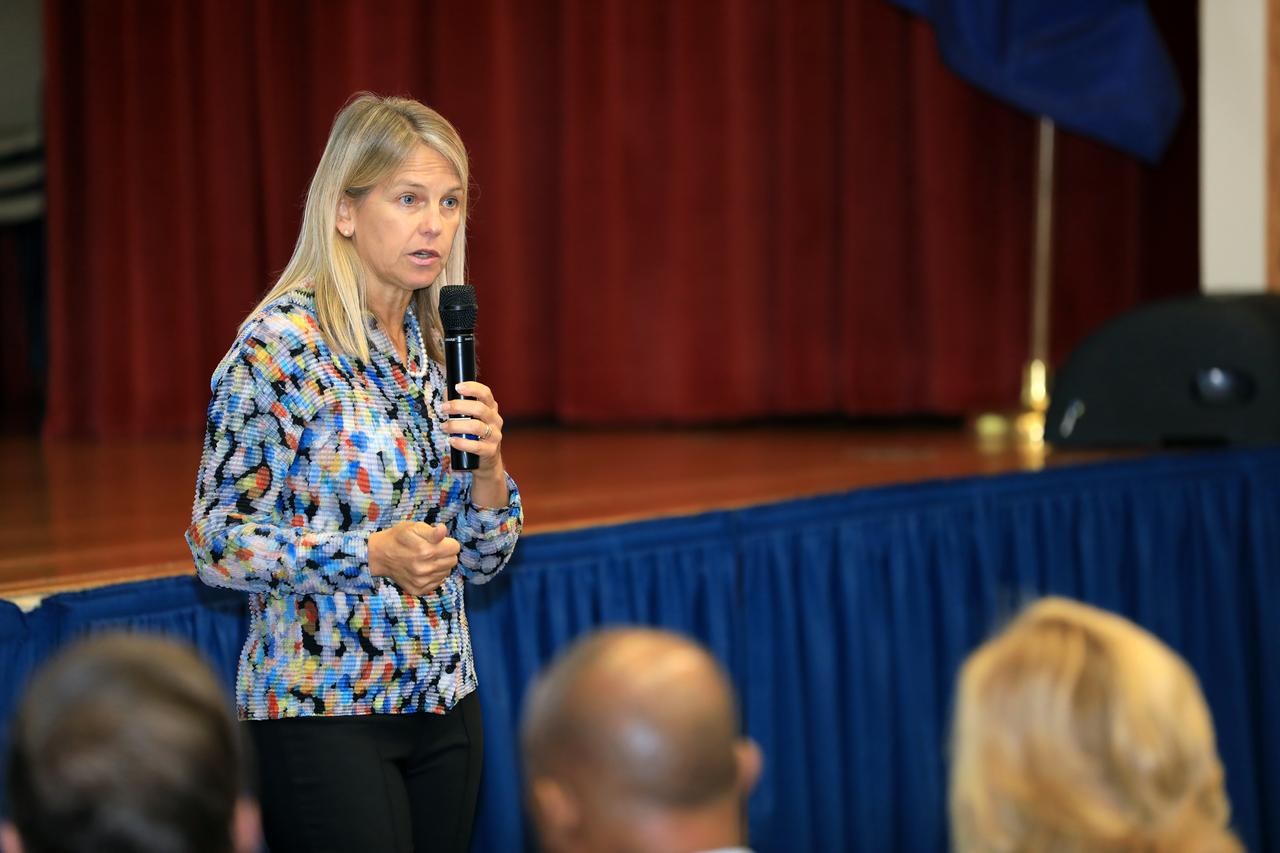
Dr. Dava Newman, NASA's deputy administrator, speaks to employees at the Florida spaceport during the annual KickStart Innovation Expo. The event gives employees an opportunity to present proposals for new ideas and processes. A small amount of funding is awarded to those selected allowing individuals or teams to procure needed items to implement their projects. Kennedy employees are encouraged to look for ways to do their work better and to propose concepts for tackling future mission needs.
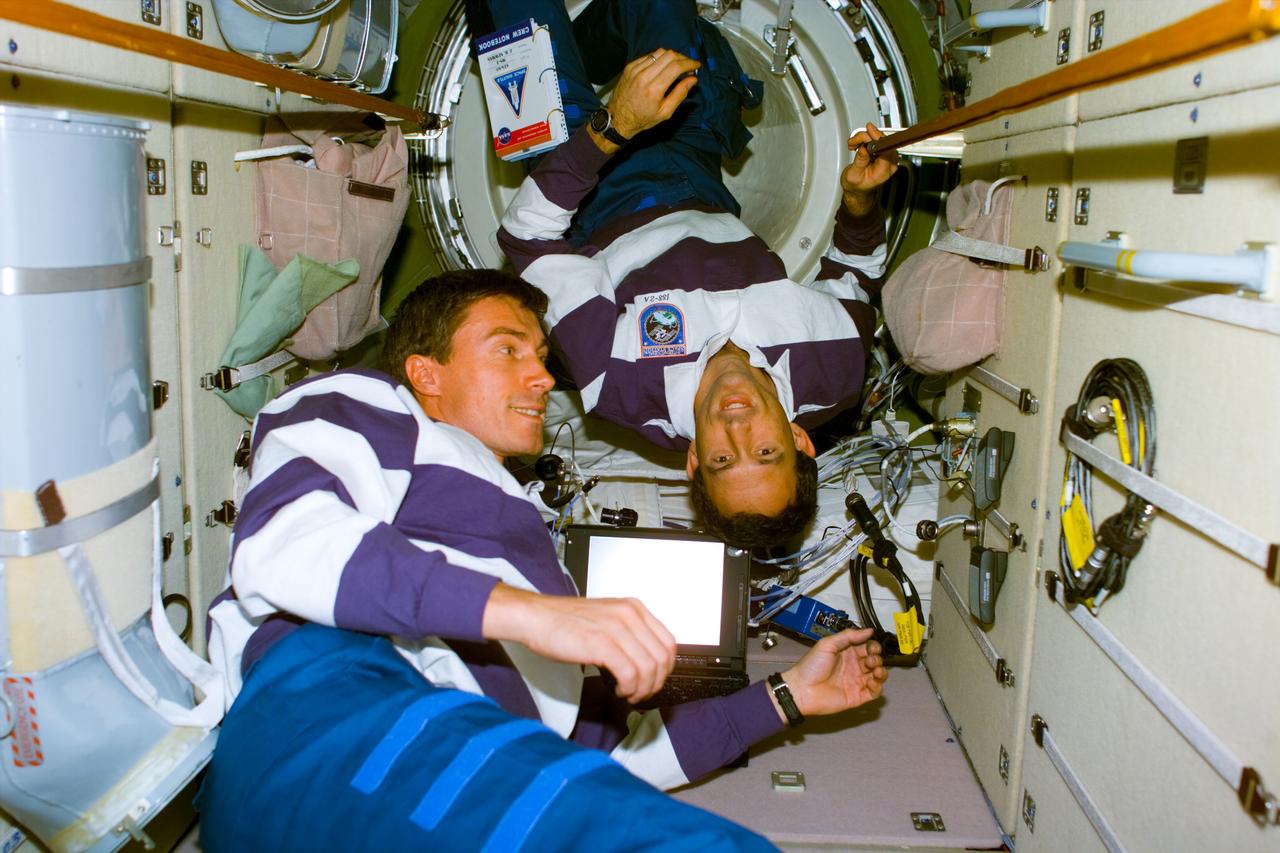
S88-E-5078 (12-11-98) --- Sergei Krikalev, left, and James H. Newman, both mission specialists, begin work in the Zarya. Krikalev, who has spent time in space on both Shuttle and Mir missions, represents the Russian Space Agency (RSA). The photo was taken with an electronic still camera (ESC) at 05:18:06, Dec. 11.
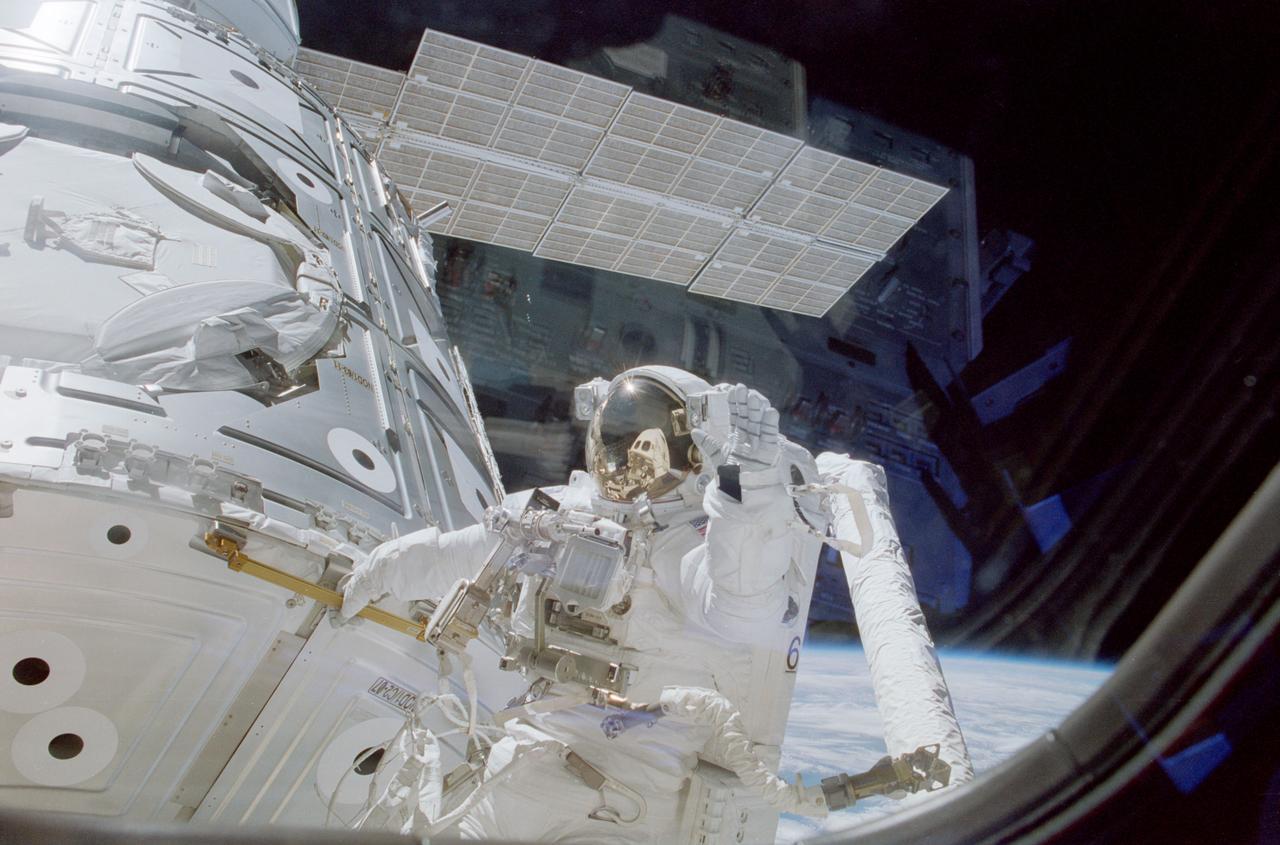
STS088-343-025 (4-15 Dec. 1998) --- Astronaut James H. Newman, mission specialist, holds onto a handrail while waving to the camera during one of three periods of Extravehicular Activity (EVA). Mission specialists Newman and Jerry L. Ross, (out of frame) shared three separate space walks designed to prepare for the release the first combined elements of the International Space Station (ISS). The modules are the Russian-built Zarya Module (or FGB), with its solar array panel visible here, and the United States-built Unity Module, partially visible in the cargo bay of the Earth-orbiting Space Shuttle Endeavour. Endeavour?s forward section is reflected in Newman?s helmet visor.
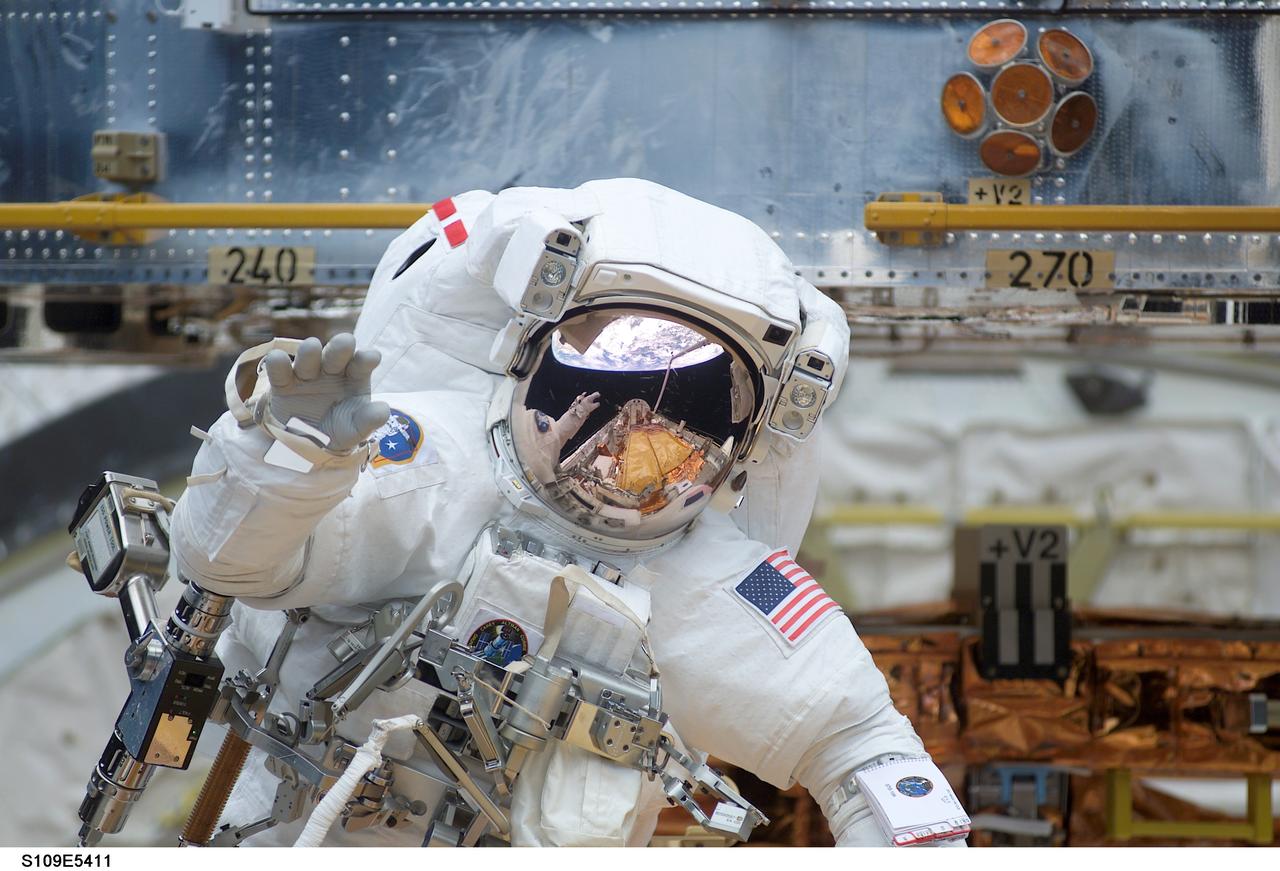
STS109-E-5411 (5 March 2002) --- Astronaut James H. Newman, mission specialist, waves to a cabin-bound crewmate while moving about in the Space Shuttle Columbia's cargo bay. The veteran of four previous NASA space walks was working in tandem with astronaut Michael J. Massimino (out of frame), mission specialist, during the STS-109 mission's second day of extravehicular activity (EVA). The space walk lasted seven hours, 16 minutes. Inside Columbia's cabin, astronaut Nancy J. Currie, mission specialist, controlled the Remote Manipulator System (RMS) to assist the two in their work on the Hubble Space Telescope (HST). Part of the giant telescope's base, latched down in the payload bay, can be seen behind Newman. The image was recorded with a digital still camera.
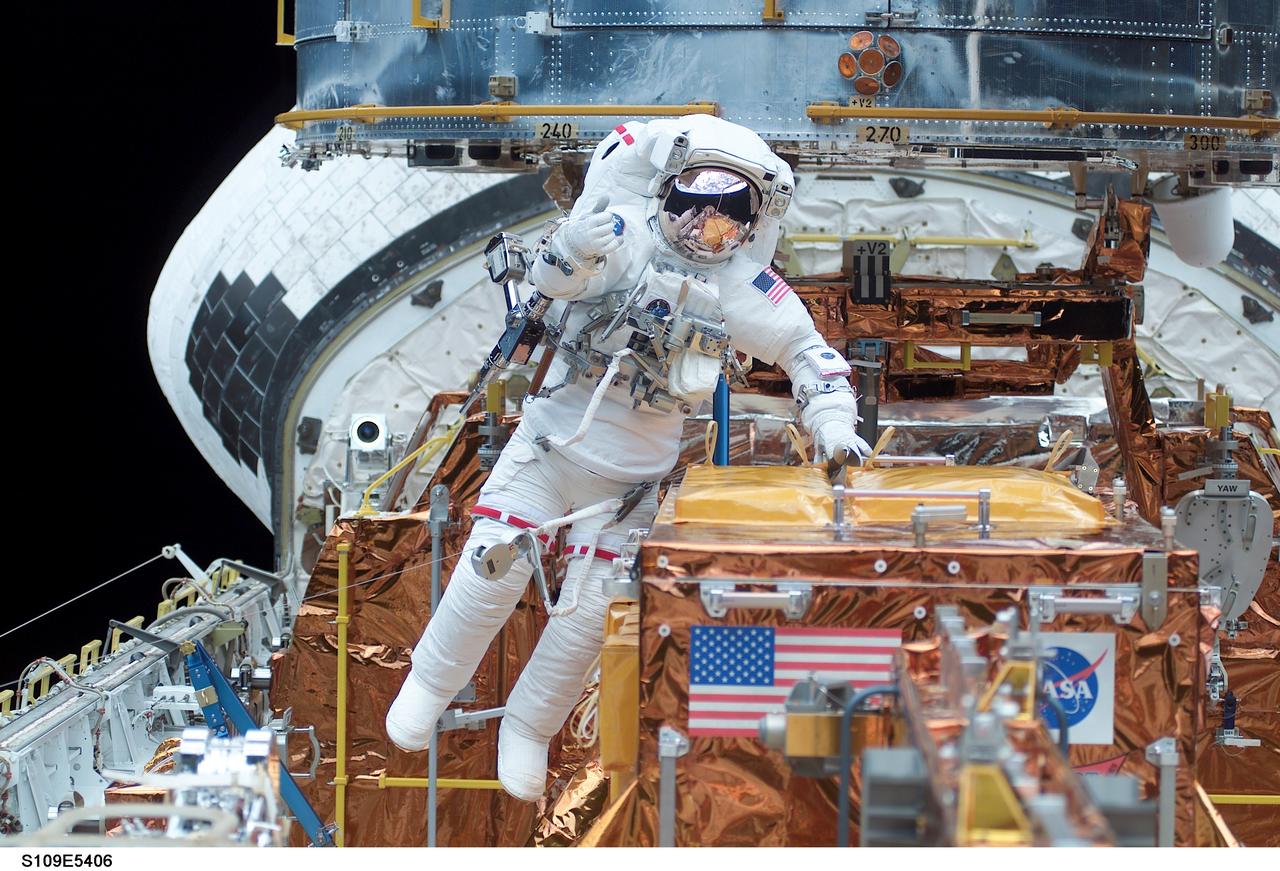
STS109-E-5406 (5 March 2002) --- Astronaut James H. Newman, mission specialist, moves about in the Space Shuttle Columbia's cargo bay while working in tandem with astronaut Michael J. Massimino (out of frame), mission specialist, during the STS-109 mission's second day of extravehicular activity (EVA). The space walk lasted seven hours, 16 minutes. Inside Columbia's cabin, astronaut Nancy J. Currie, mission specialist, controlled the Remote Manipulator System (RMS) to assist the two in their work on the Hubble Space Telescope (HST). Part of the giant telescope's base, latched down in the payload bay, can be seen behind Newman. The image was recorded with a digital still camera.
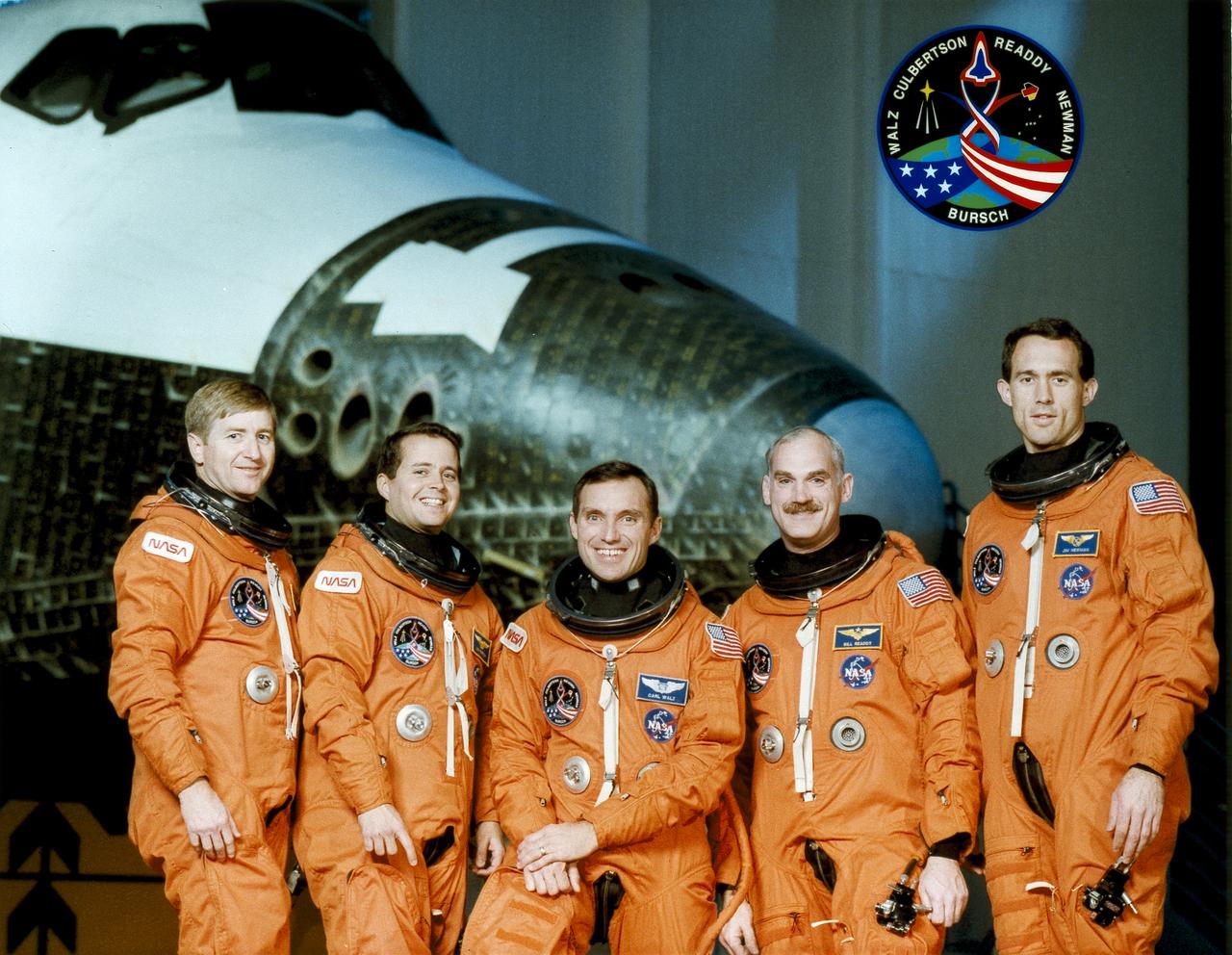
The STS-51 crew portrait features (left to right): Frank L. Culbertson, commander; Daniel W. Bursch, mission specialist; Carl E. Walz, mission specialist; William F. Readdy, pilot; and James H. Newman, mission specialist. The crew of five launched aboard the Space Shuttle Discovery on September 12, 1993 at 7:45:00 am (EDT). Two primary payloads included the Advanced Communications Technology Satellite (ACTS), and the Orbiting and Retrievable Far and Extreme Ultraviolet Spectrograph Shuttle Pallet Satellite (OERFEUS-SPAS).
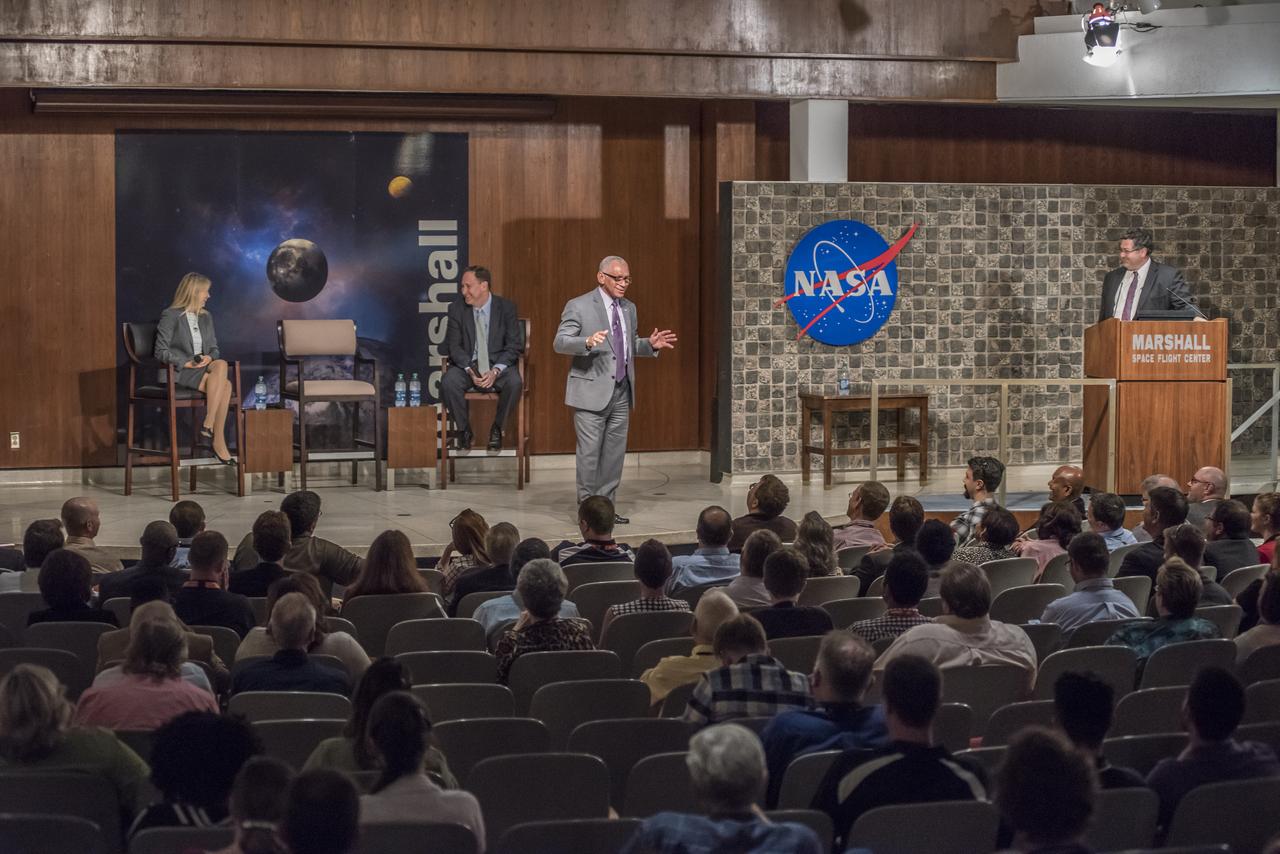
NASA ADMINISTRATOR CHARLES BOLDEN TALKS WITH MARSHALL SPACE FLIGHT CENTER TEAM MEMBERS IN MORRIS AUDITORIUM DURING AN ALL-HANDS MEETING OCT. 27. BOLDEN SAID NASA'S PROGRESS ON THE SPACE LAUNCH SYSTEM AND OTHER PROGRAMS -- MILESTONES DELIVERED BY THE WORKFORCE AT MARSHALL AND AGENCY WIDE -- SHOULD ALLAY CONCERNS ABOUT MISSION CHANGES ASSOCIATED WITH A NEW PRESIDENT AND ADMINISTRATION. "I WANTED TO THANK ALL OF YOU," HE SAID. "WE'RE THE BEST SPACE PROGRAM IN THE WORLD. I COULD NOT BE MORE CONFIDENT." ON STAGE WITH BOLDEN ARE, FROM RIGHT, MARSHALL DIRECTOR TODD MAY, ASSOCIATE ADMINISTRATOR ROBERT LIGHTFOOT AND DEPUTY ADMINISTRATOR DAVA NEWMAN.
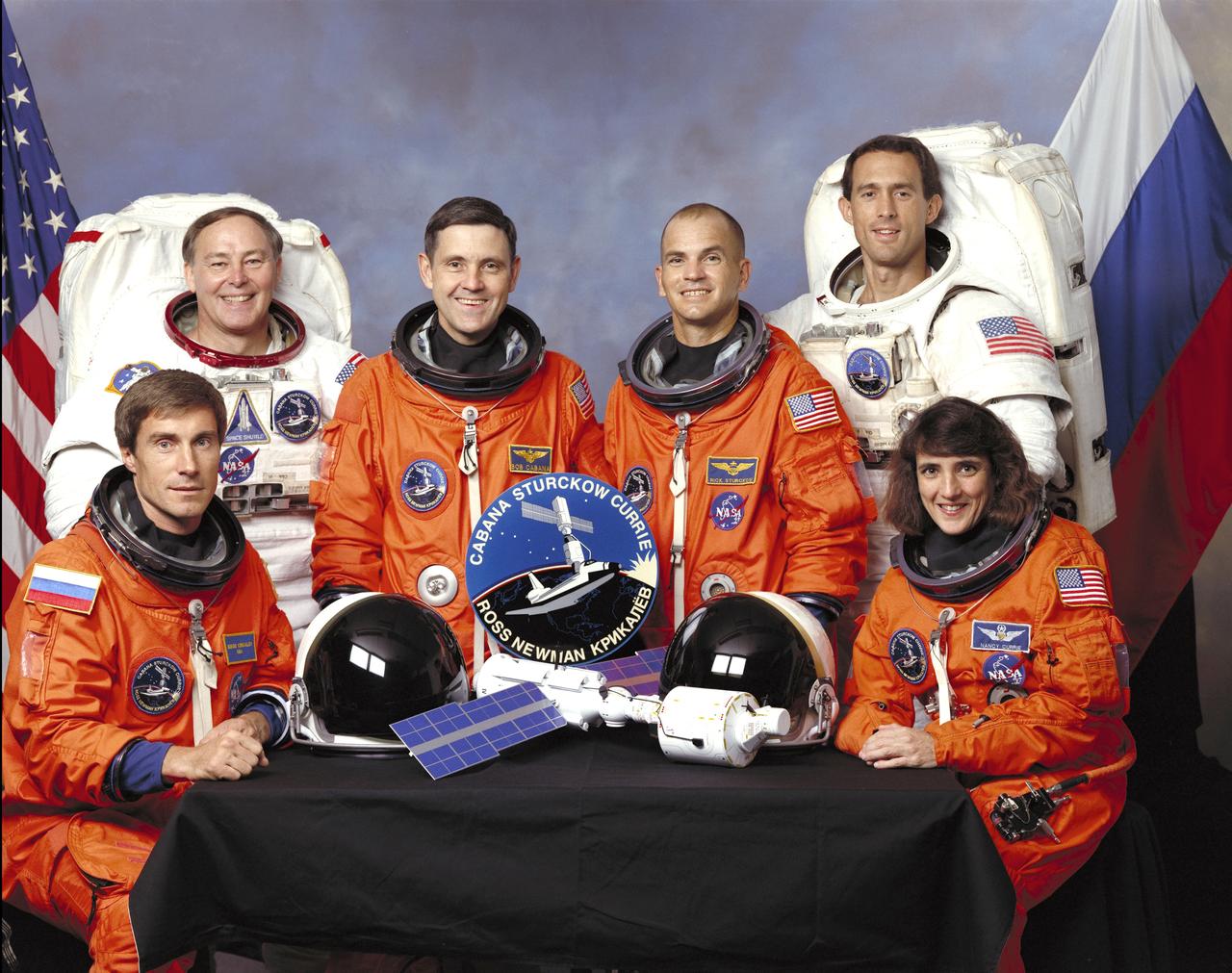
Five NASA astronauts and a Russian cosmonaut assigned to the STS-88 mission pose for a crew portrait. Seated in front (left to right) are mission specialists Sergei K. Krikalev, representing the Russian Space Agency (RSA), and astronaut Nancy J. Currie. In the rear from the left, are astronauts Jerry L. Ross, mission specialist; Robert D. Cabana, mission commander; Frederick W. “Rick” Sturckow, pilot; and James H. Newman, mission specialist. The STS-88 mission launched aboard the Space Shuttle Endeavor on December 4, 1998 at 2:35 a.m. (CST) to deliver the Unity Node to the International Space Station (ISS).
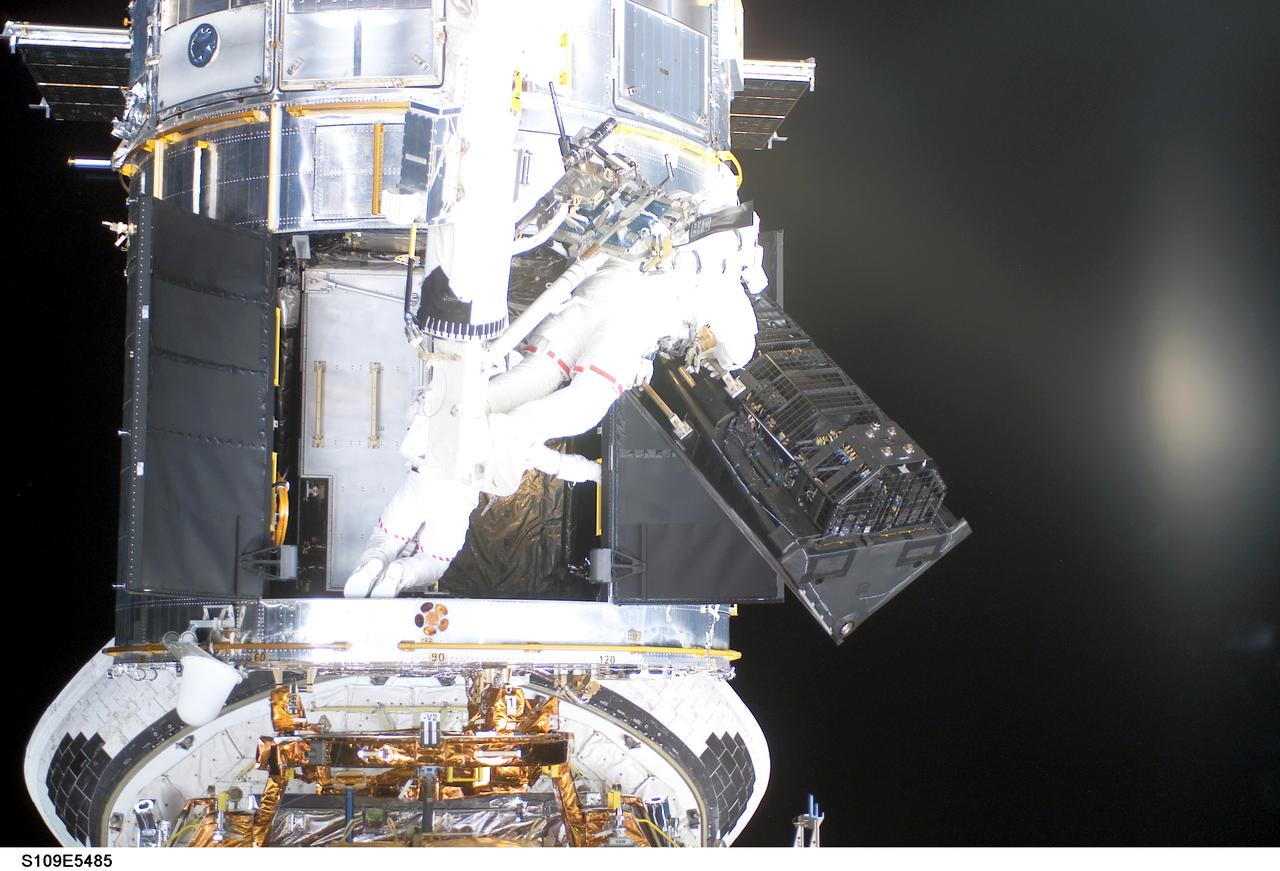
STS109-E-5485 (7 March 2002) --- Two of Columbia's four spacewalkers--astronauts James H. Newman and Michael J. Massimino--participate in the first science instrument upgrade of the fourth Hubble Space Telescope (HST) servicing mission during the flight's fourth day of extravehicular activity (EVA). The two, with Newman on Columbia's remote manipulator system (RMS) robotic arm, remove the Faint Object Camera to make room for the new Advanced Camera for Surveys (ACS). This image was recorded with a digital still camera by one of the duo's crewmates on the aft flight deck.
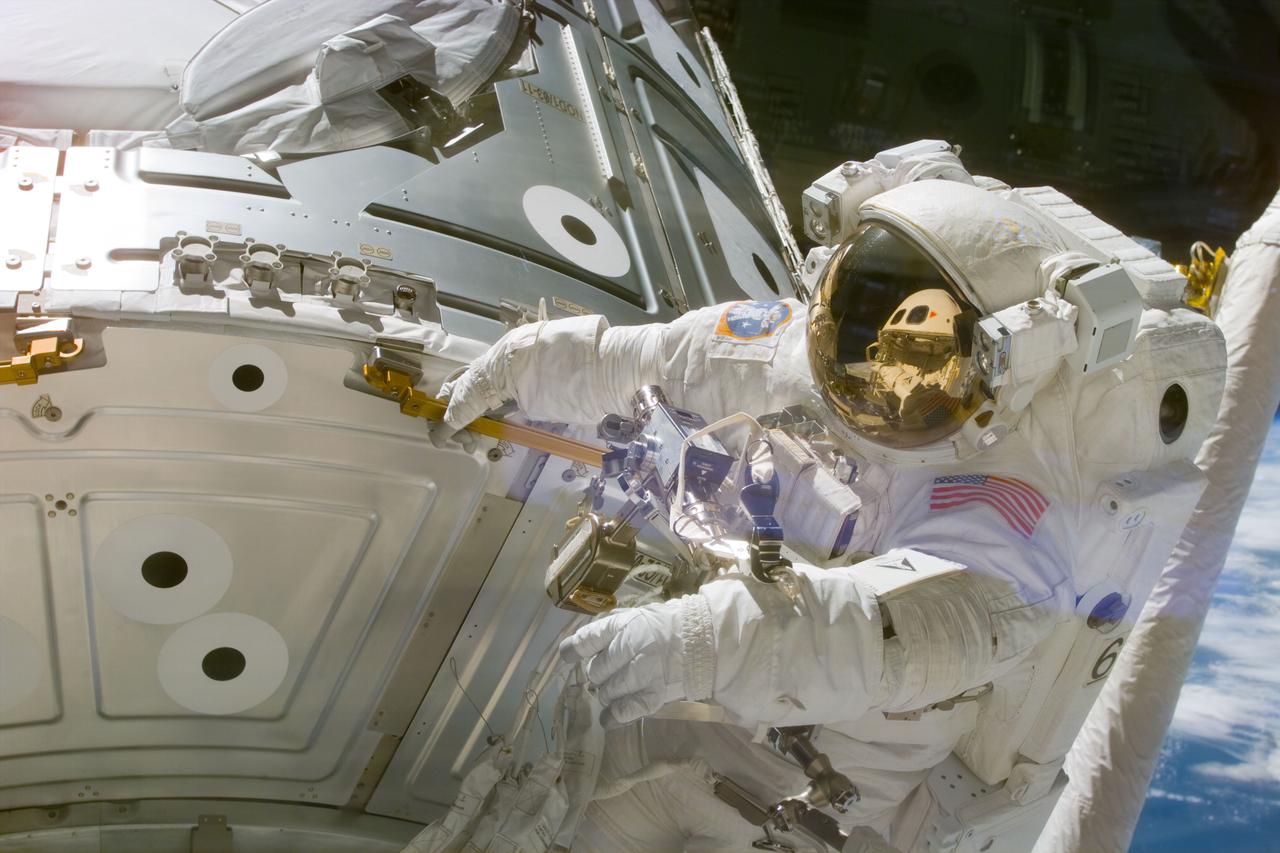
S88-E-5056 (12-07-98) --- Astronaut James H. Newman, holds one of the hand rails on the Unity connecting module during the early stages of a 7-hour, 21-minute spacewalk. Astronauts Newman and Jerry L. Ross, both mission specialists, went on to mate 40 cables and connectors running 76 feet from the Zarya control module to Unity, with the 35-ton complex towering over Endeavour's cargo bay. This photo was taken with an electronic still camera (ESC) at 23:37:07 GMT, Dec. 7.
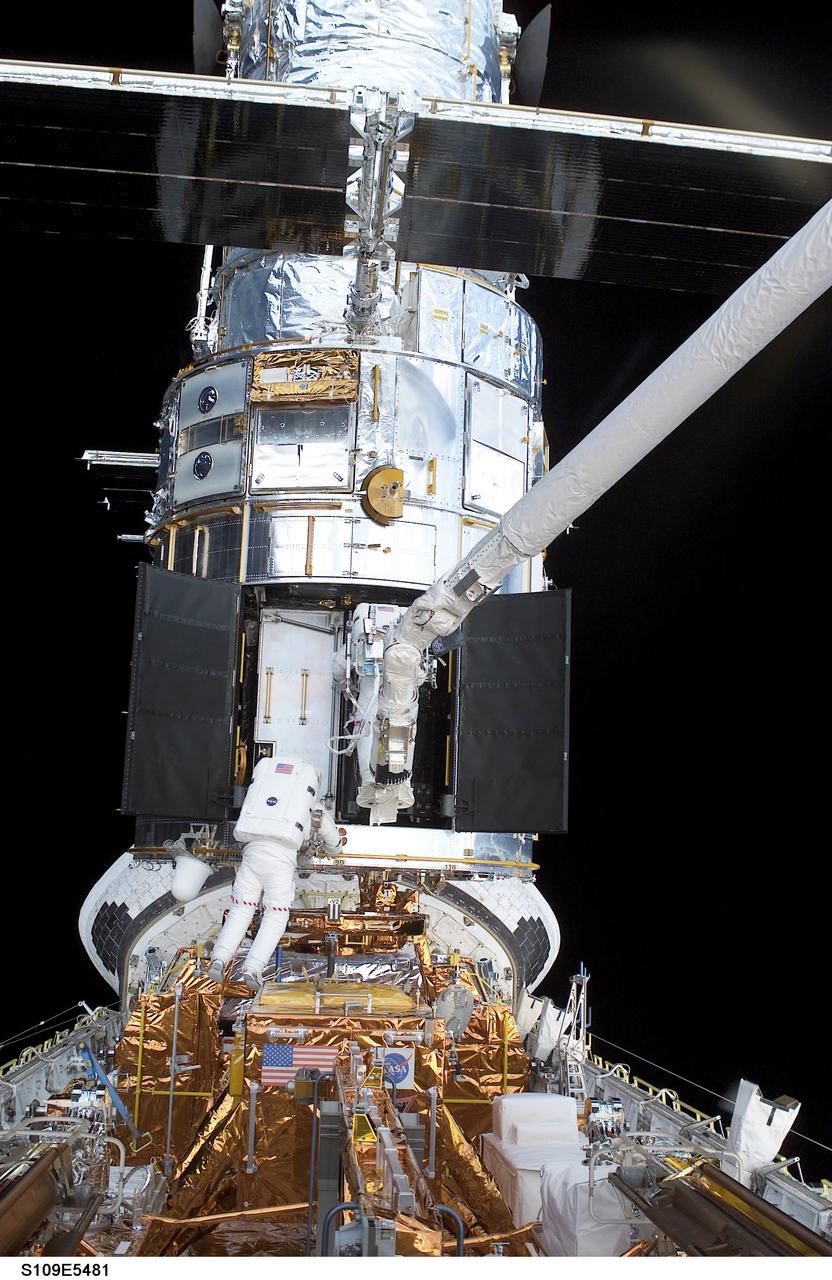
STS109-E-5481 (7 March 2002) --- Two of Columbia's four spacewalkers--astronauts James H. Newman and Michael J. Massimino--participate in the first science instrument upgrade of the fourth Hubble Space Telescope (HST) servicing mission during the flight's fourth day of extravehicular activity (EVA). The two, with Newman on Columbia's remote manipulator system (RMS) robotic arm, removed the Faint Object Camera to make room for the new Advanced Camera for Surveys (ACS). This image was recorded with a digital still camera by one of the duo's crewmates on the aft flight deck.

STS051-98-010 (16 Sept 1993) --- Astronaut James H. Newman, mission specialist, conducts an in-space evaluation of the Portable Foot Restraint (PFR) which will be used operationally on the first Hubble Space Telescope (HST) STS-61 servicing mission and future Shuttle missions. Astronauts Newman and Carl E. Walz spent part of their lengthy extravehicular activity (EVA) evaluating gear to be used on the STS-61 HST servicing mission. The frame was exposed with a 70mm handheld Hasselblad camera from the Space Shuttle Discovery's flight deck.
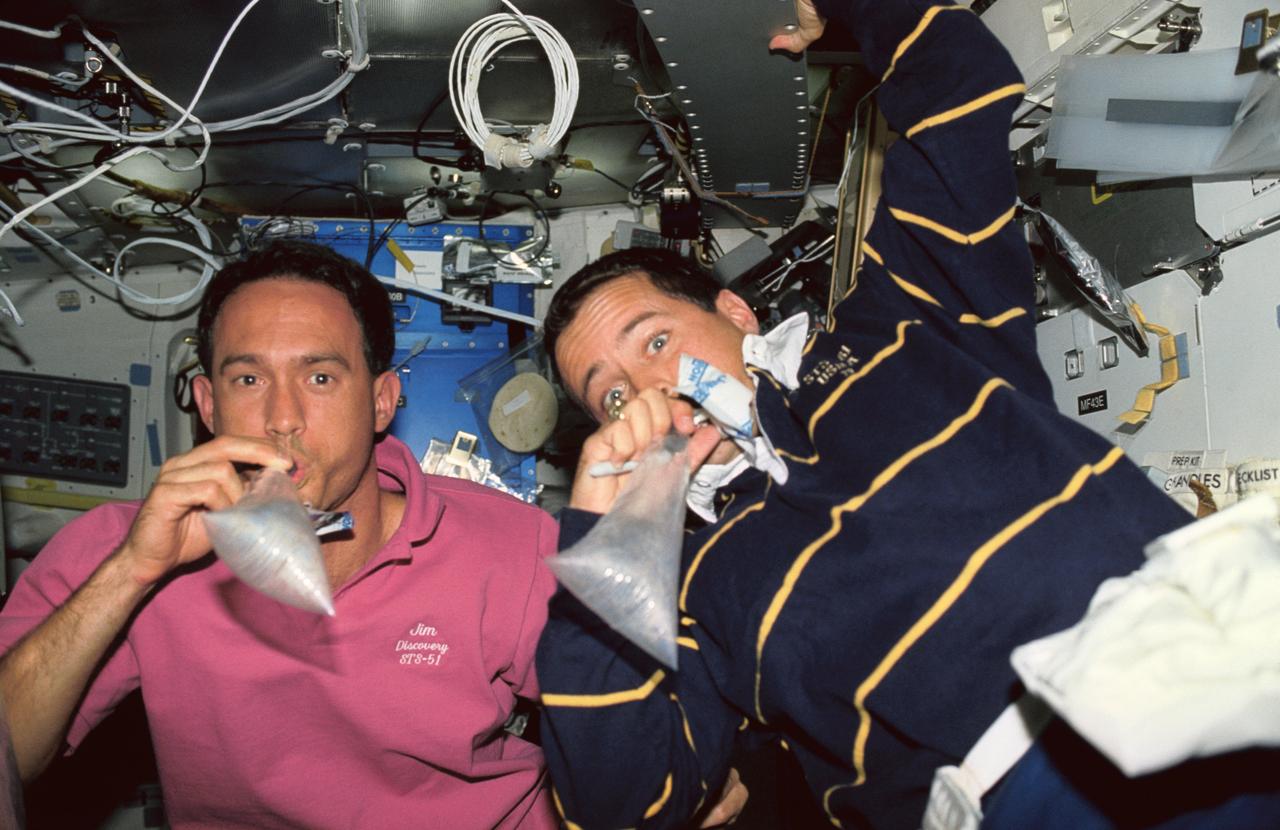
STS051-08-029 (12-22 Sept 1993) --- Astronauts James H. Newman, left, and Daniel W. Bursch, mission specialists, participate in a Detailed Supplementary Objective (DSO) dealing with the gastro-intestinal function during extended duration flight (DSO 622). The two are on Discovery's middeck. Bursch holds himself in position with his left hand grasping the emergency escape pole.
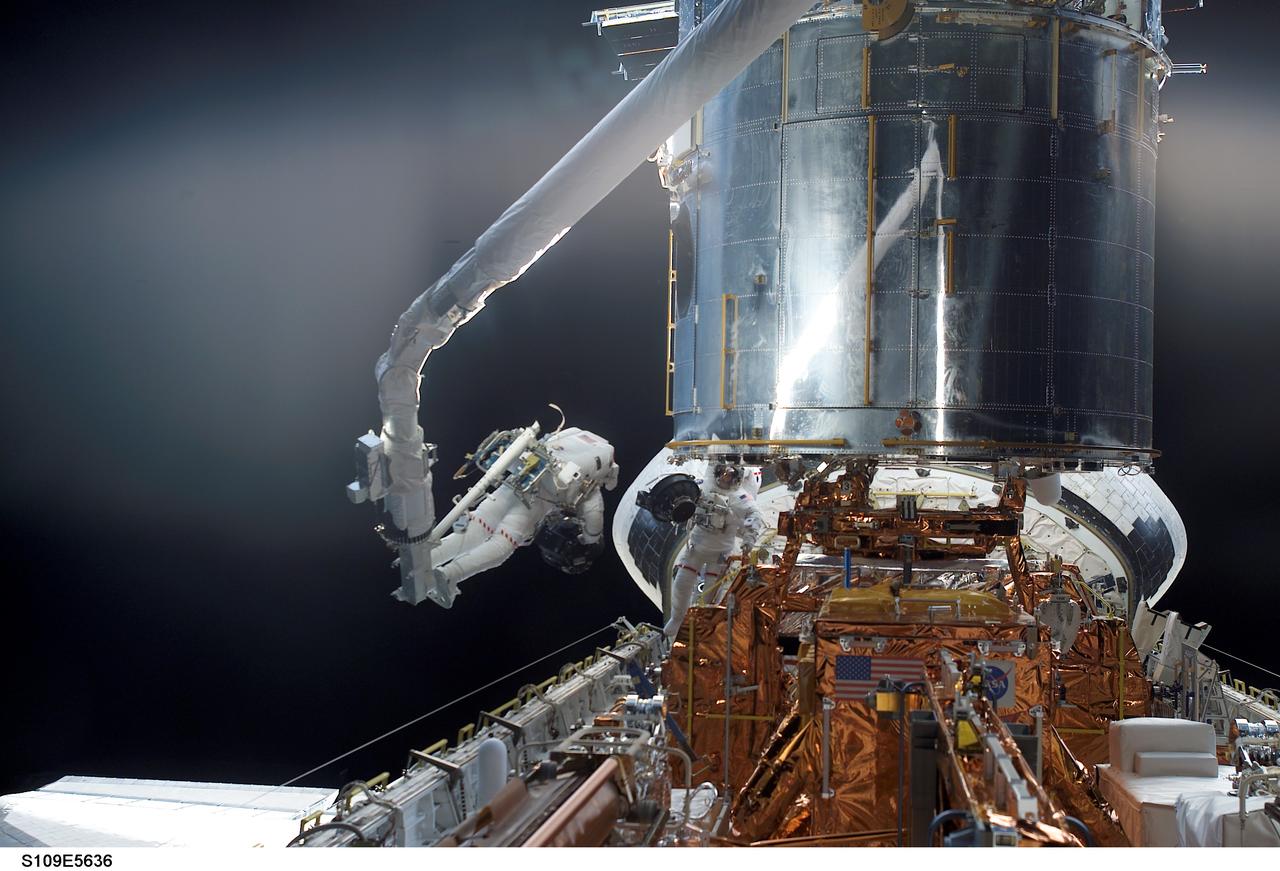
STS109-E-5636 (5 March 2002) --- Astronauts Michael J. Massimino (on the end of Columbia's robotic arm) and James H. Newman (positioned just to the right of Massimino above the shuttle's longerons) perform the second of five scheduled STS-109 space walks to service and upgrade the Hubble Space Telescope (HST). The image was recorded with a digital still camera.
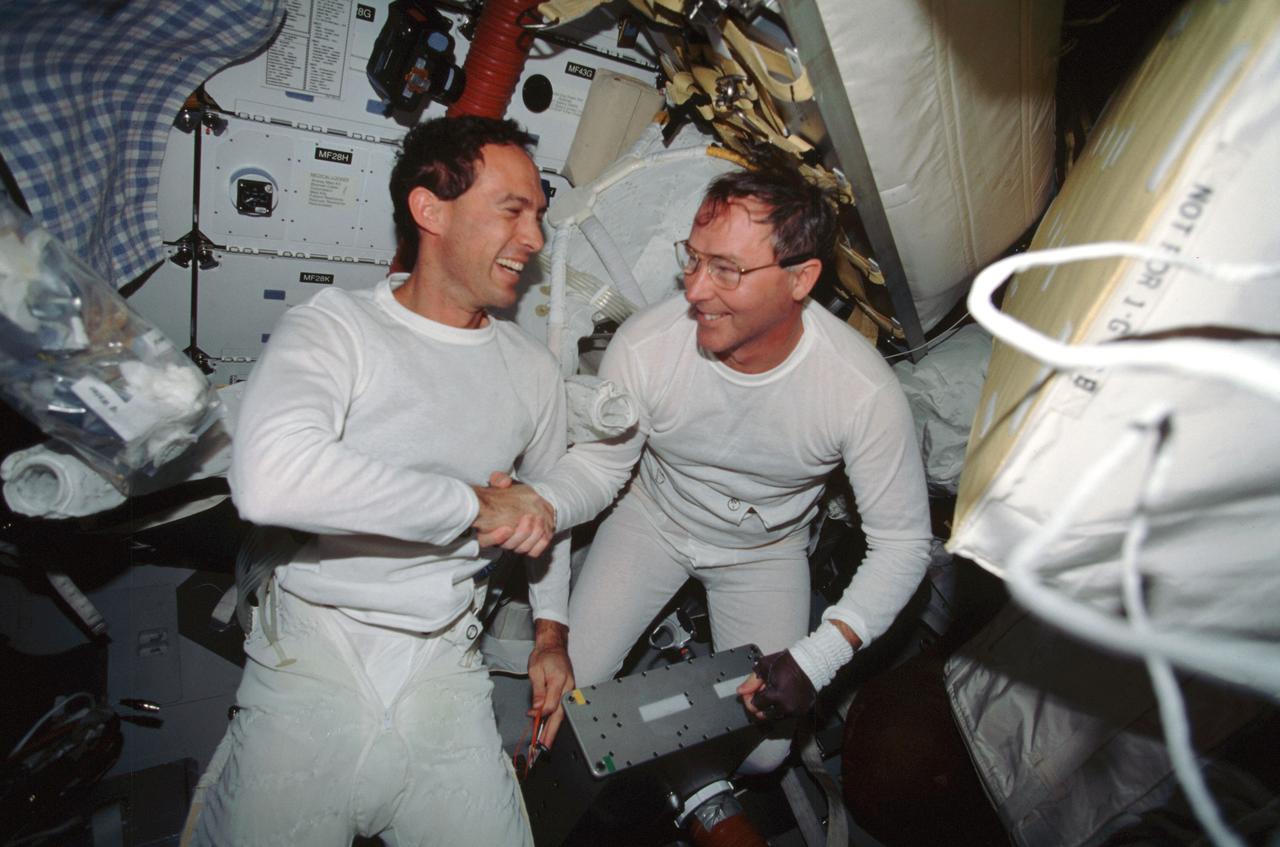
STS088-307-005 (4-15 December 1998) --- Astronauts James H. Newman (left) and Jerry L. Ross, both mission specialists, congratulate each other following one of their three extravehicular activities (EVA). The two had just doffed their Extravehicular Mobility Units (EMU) with the aid of astronaut Frederick W. "Rick" Sturckow (out of frame), pilot.
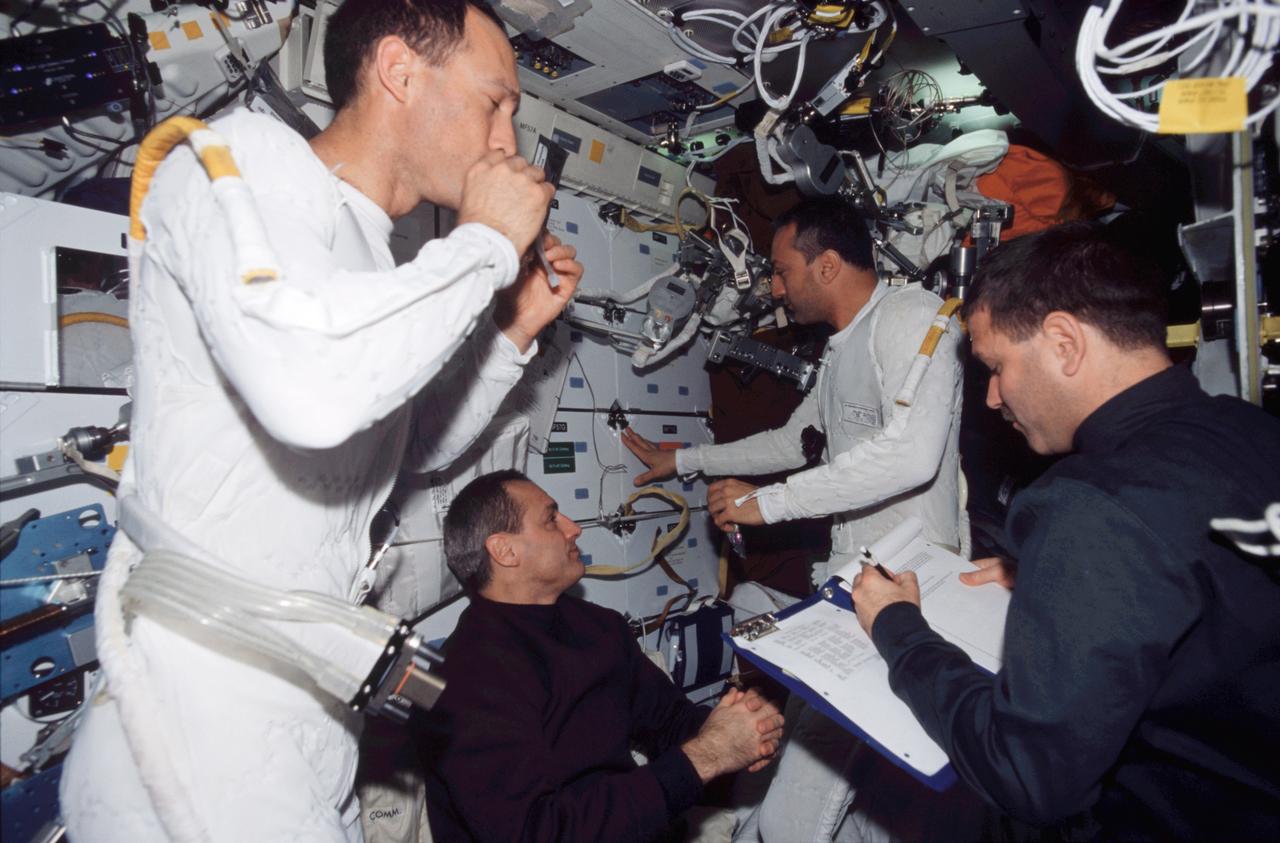
STS109-318-005 (1-12 March 2002) --- Astronauts James H. Newman (left foreground) and Michael J. Massimino, both STS-109 mission specialists, wearing the liquid cooling and ventilation garment that complements the Extravehicular Mobility Unit (EMU) space suit, are photographed on the mid deck of the Space Shuttle Columbia. Also pictured are astronauts John M. Grunsfeld (right) and Richard M. Linnehan, payload commander and mission specialist, respectively. The two teams were preparing for one of the five scheduled space walks for the mission.
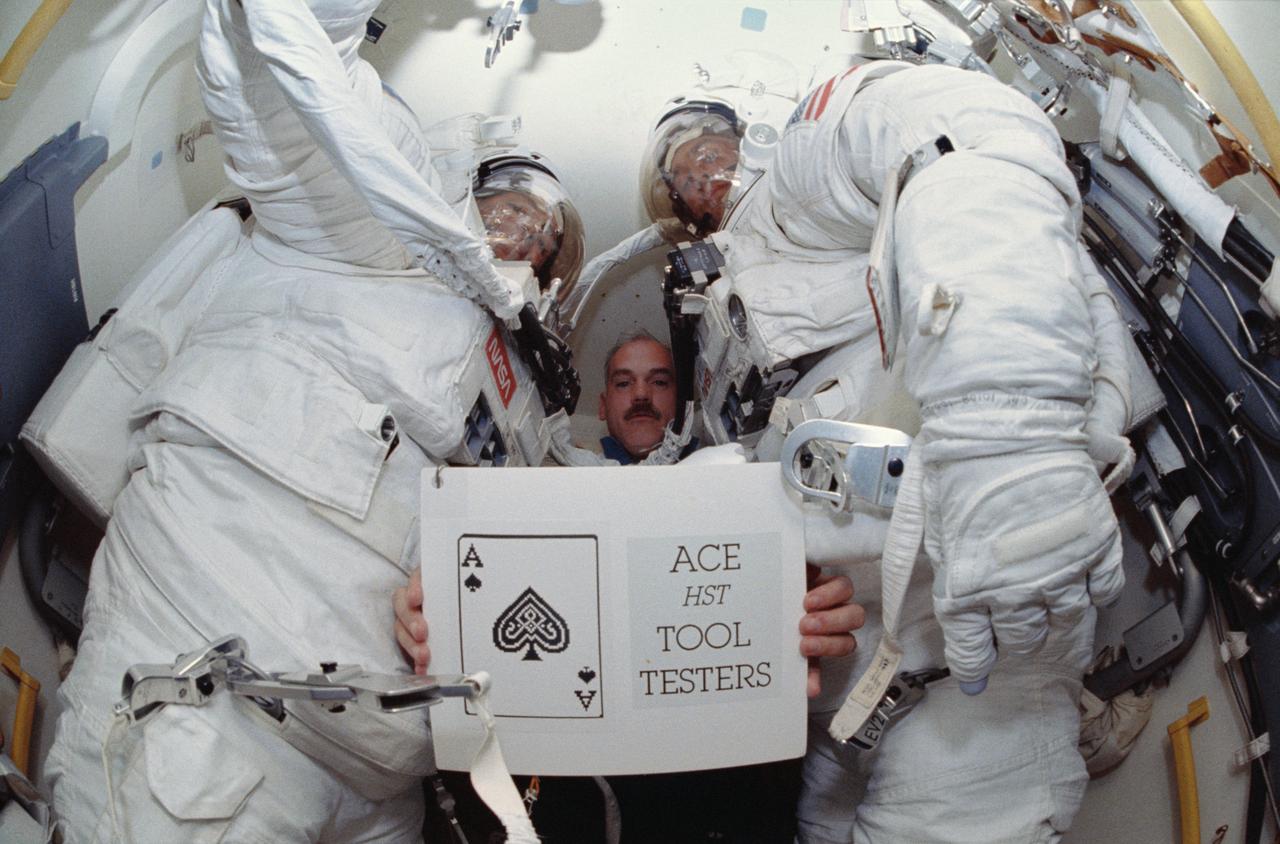
STS051-66-009 (16 Sept 1993) --- In Discovery's airlock, astronaut William F. Readdy, pilot, holds up a STS-51 slogan -- "Ace HST Tool Testers" -- for still and video cameras to record. Readdy is flanked by astronauts Carl E. Walz (left) and James H. Newman, who had just shared a lengthy period of extravehicular activity (EVA) in and around Discovery's cargo bay. Not pictured are astronauts Frank L. Culbertson Jr., mission commander, and Daniel W. Bursch, mission specialist.
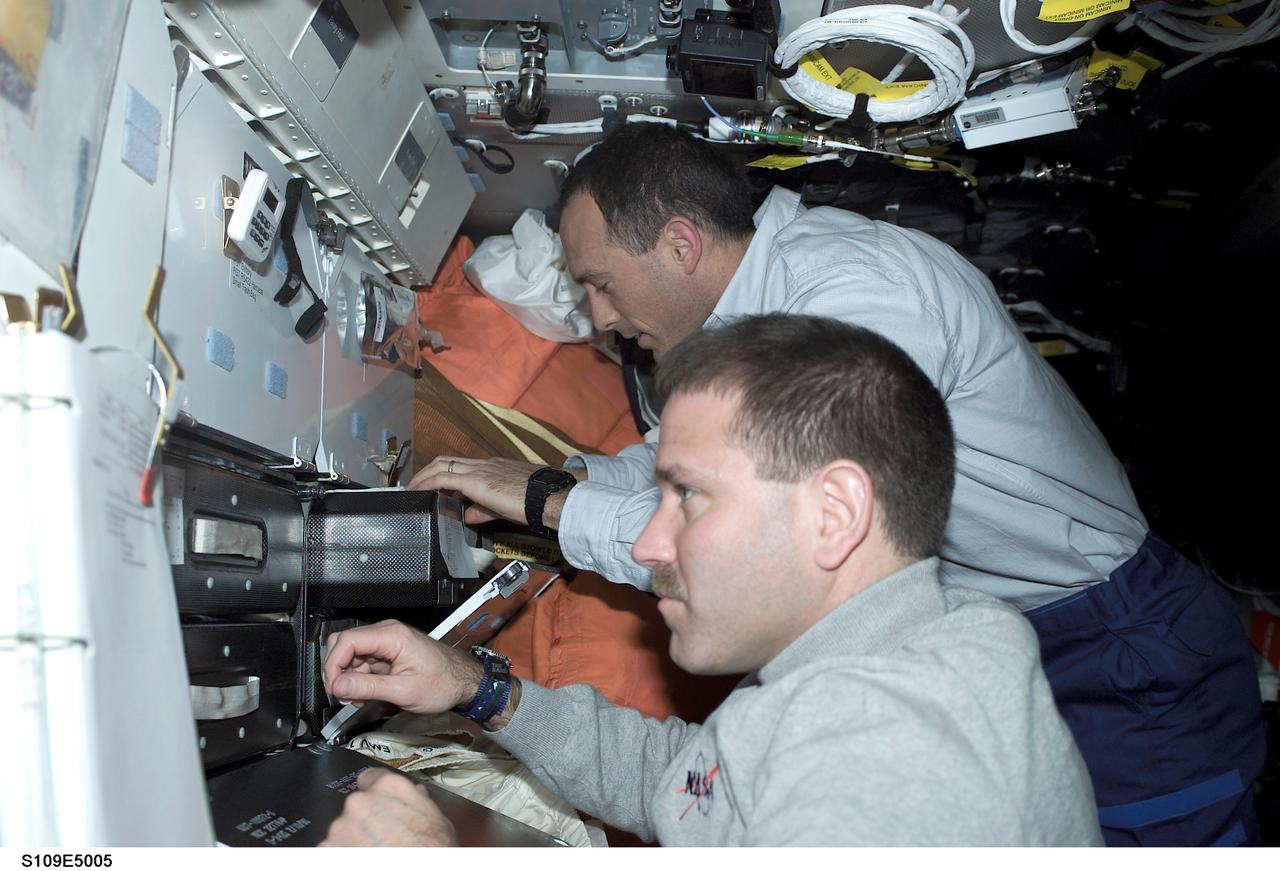
STS109-E-5005 (3 March 2002) --- Astronauts John M. Grunsfeld (foreground), payload commander; and James H. Newman, mission specialist, perform tasks on the mid deck of the Space Shuttle Columbia. Although other tasks are being accomplished, the STS-109 crew is in a general posture of preparation for several days' space walk duty to perform work on the Hubble Space Telescope (HST). The image was recorded with a digital still camera.
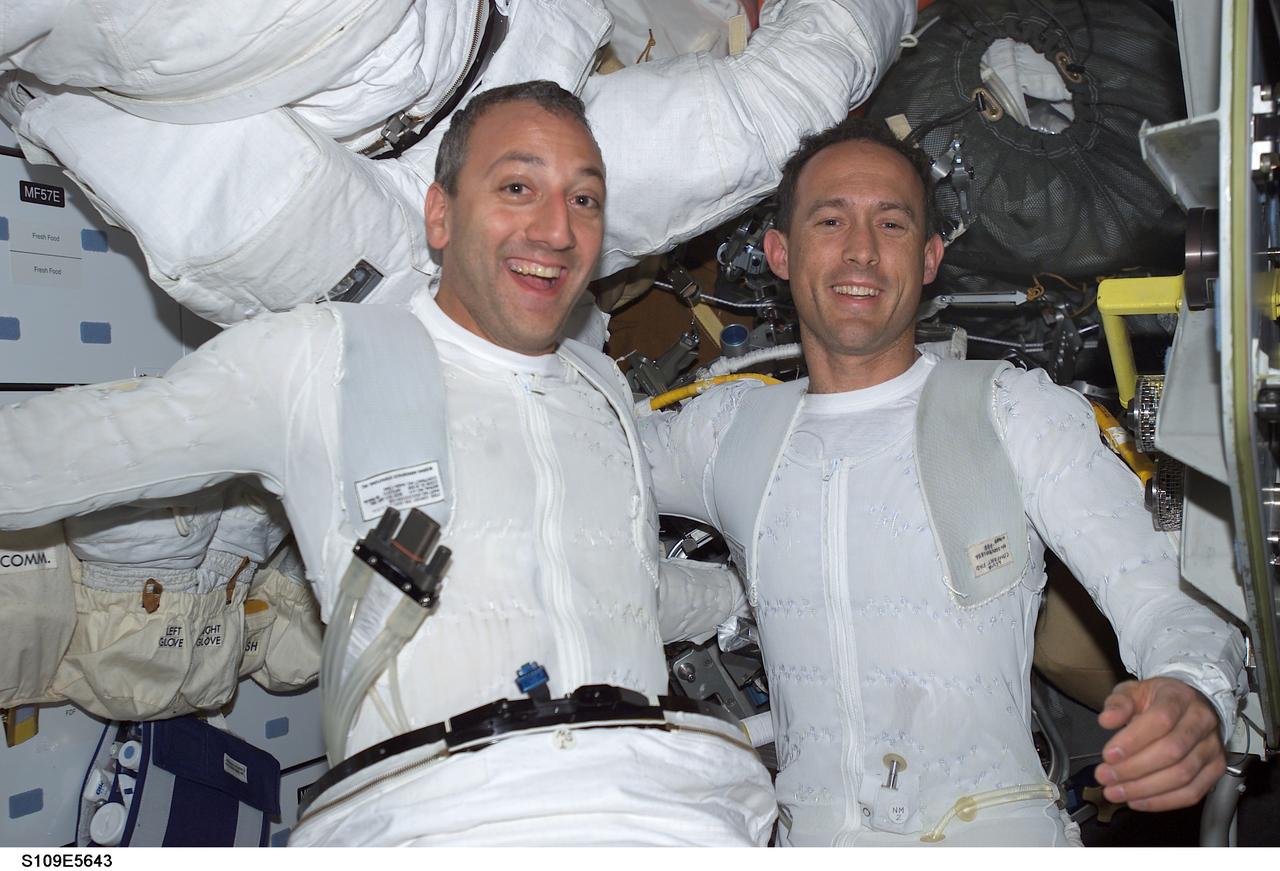
STS109-E-5643 (5 March 2002) --- Astronauts Michael J. Massimino (left) and James H. Newman, mission specialists, are back on board the mid deck of the Space Shuttle Columbia during the second of five scheduled STS-109 space walks to perform servicing and upgrading of the Hubble Space Telescope (HST). The image was recorded with a digital still camera.
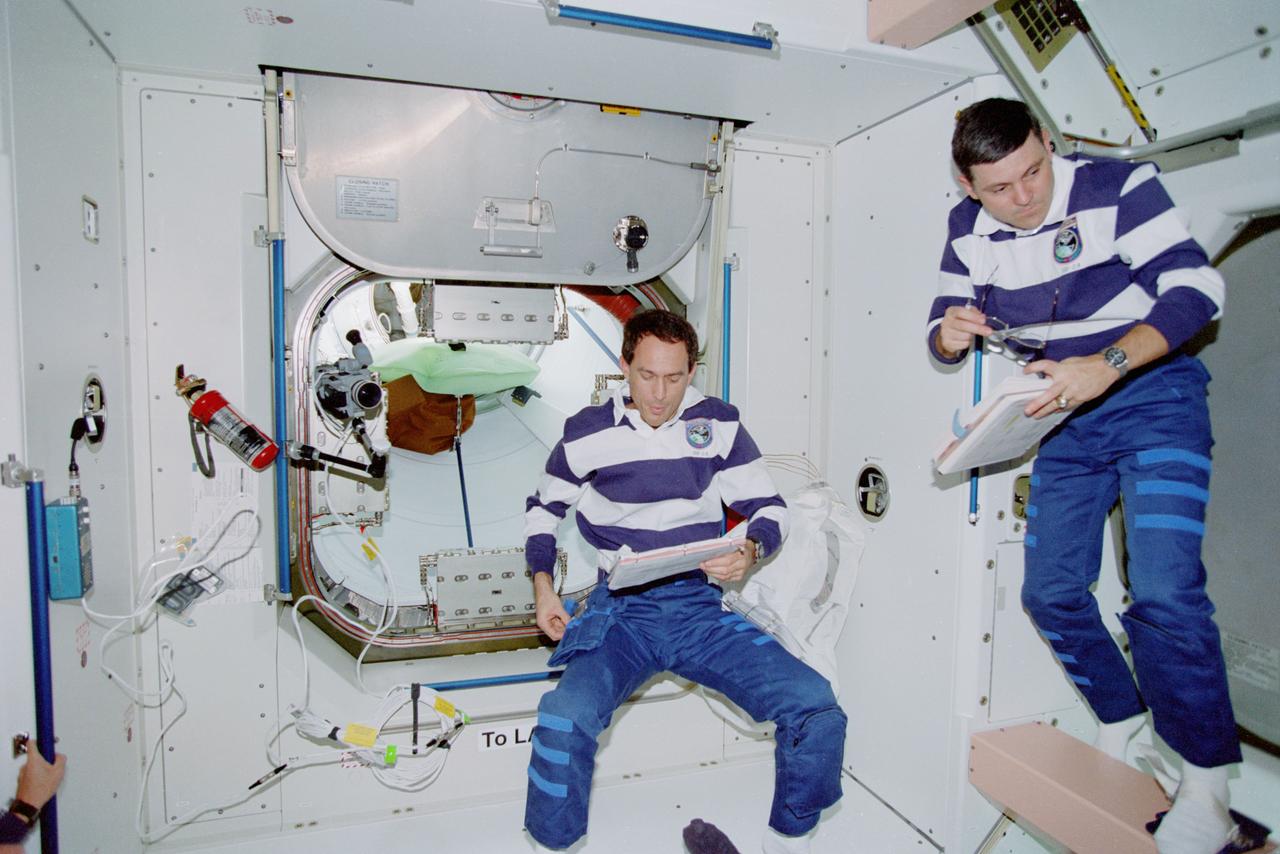
STS088-357-016 (4-15 Dec. 1998) --- Astronauts James H. Newman (left), mission specialist, and Robert D. Cabana, mission commander, look over checklists as they prepare to continue work in the U.S.-built Unity connecting module in Earth orbit. The STS-88 crew went on to spend eleven days in space preparing Unity and the attached Russian-built Zarya module for their International Space Station (ISS) roles.
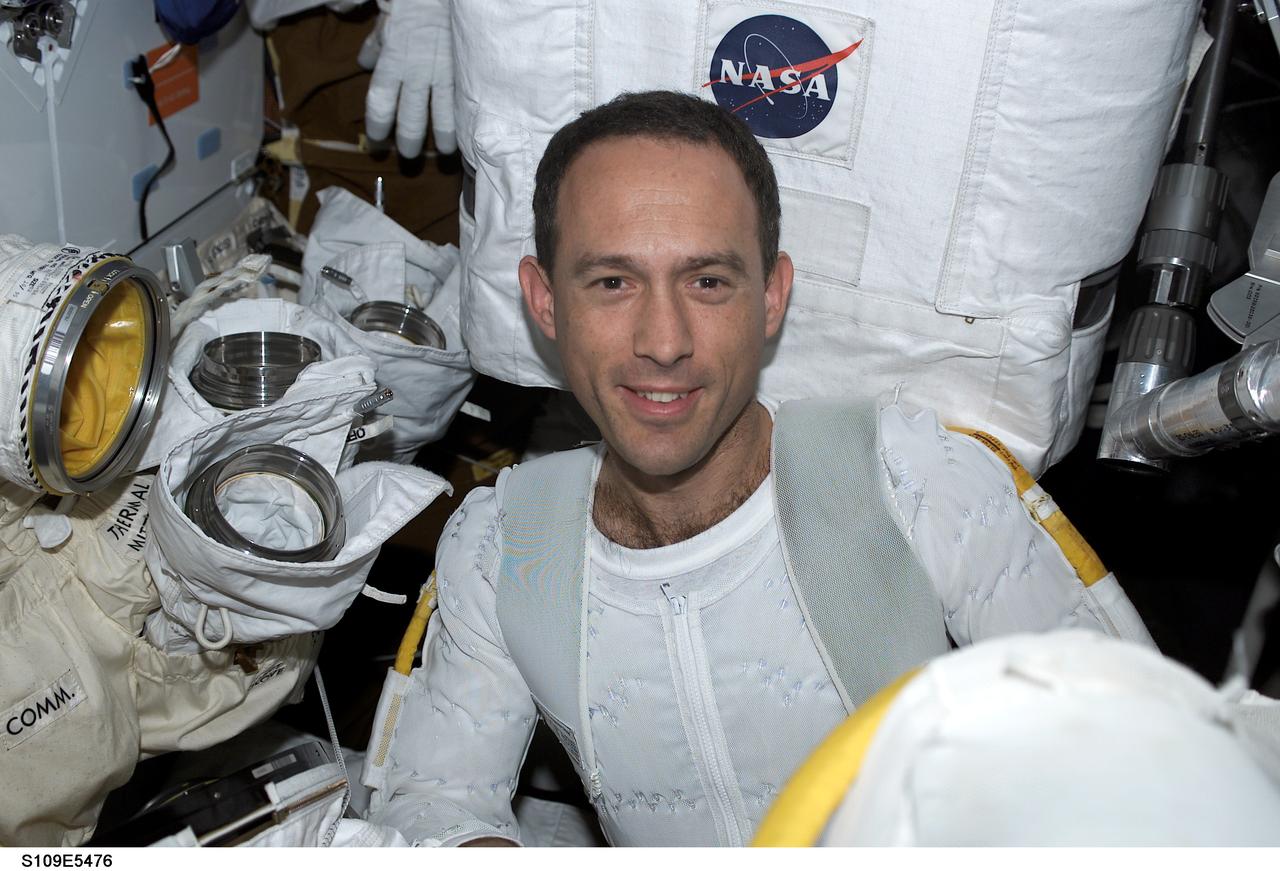
STS109-E-5476 (7 March 2002)-- Astronaut James H. Newman prepares to don his extravehicular mobility unit (EMU) space suit in order to participate in the fourth of five scheduled STS-109 space walks to work on the Hubble Space Telescope (HST). This image was recorded with a digital still camera.
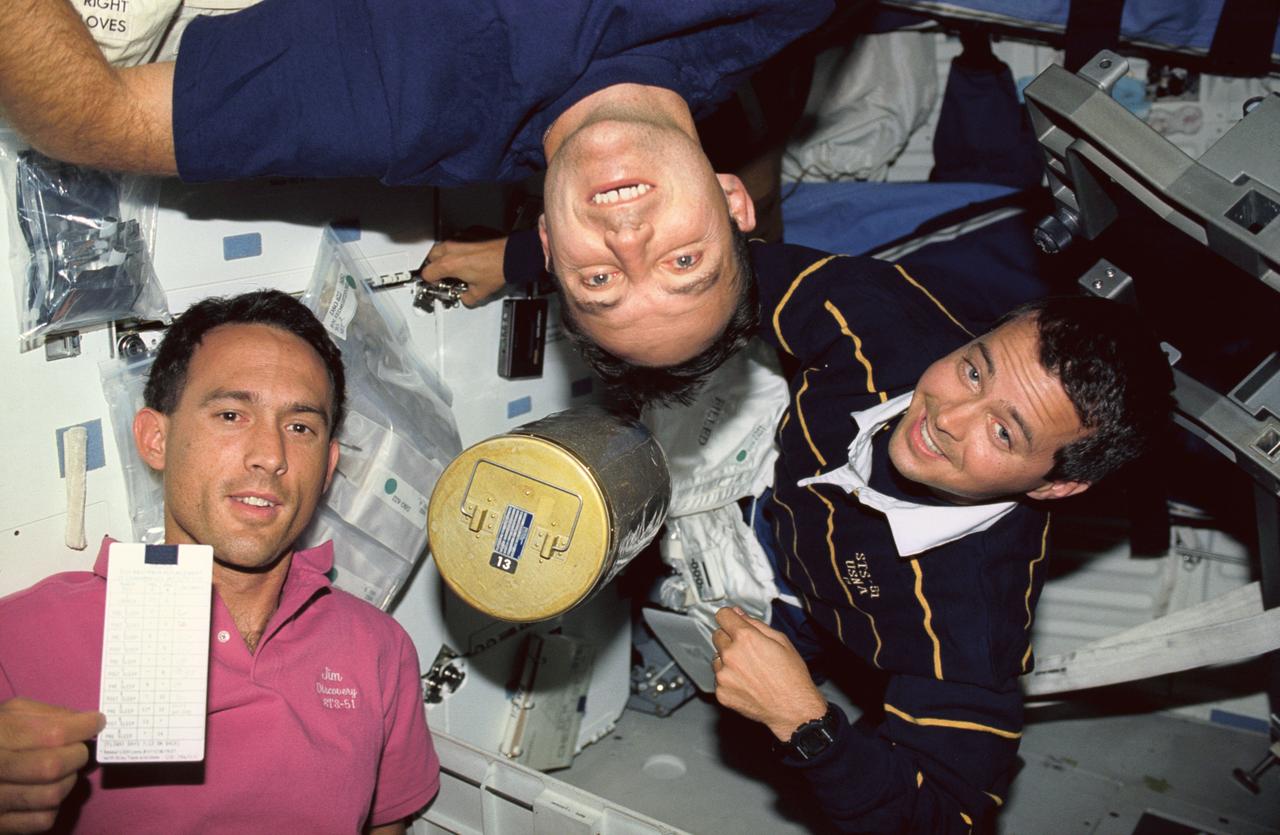
STS051-08-037 (12-22 Sept 1993) --- Three members of the astronaut class of 1990 change out a lithium hydroxide canister beneath Discovery's middeck. Left to right are astronauts James H. Newman, Carl E. Walz and Daniel W. Bursch, all mission specialists.
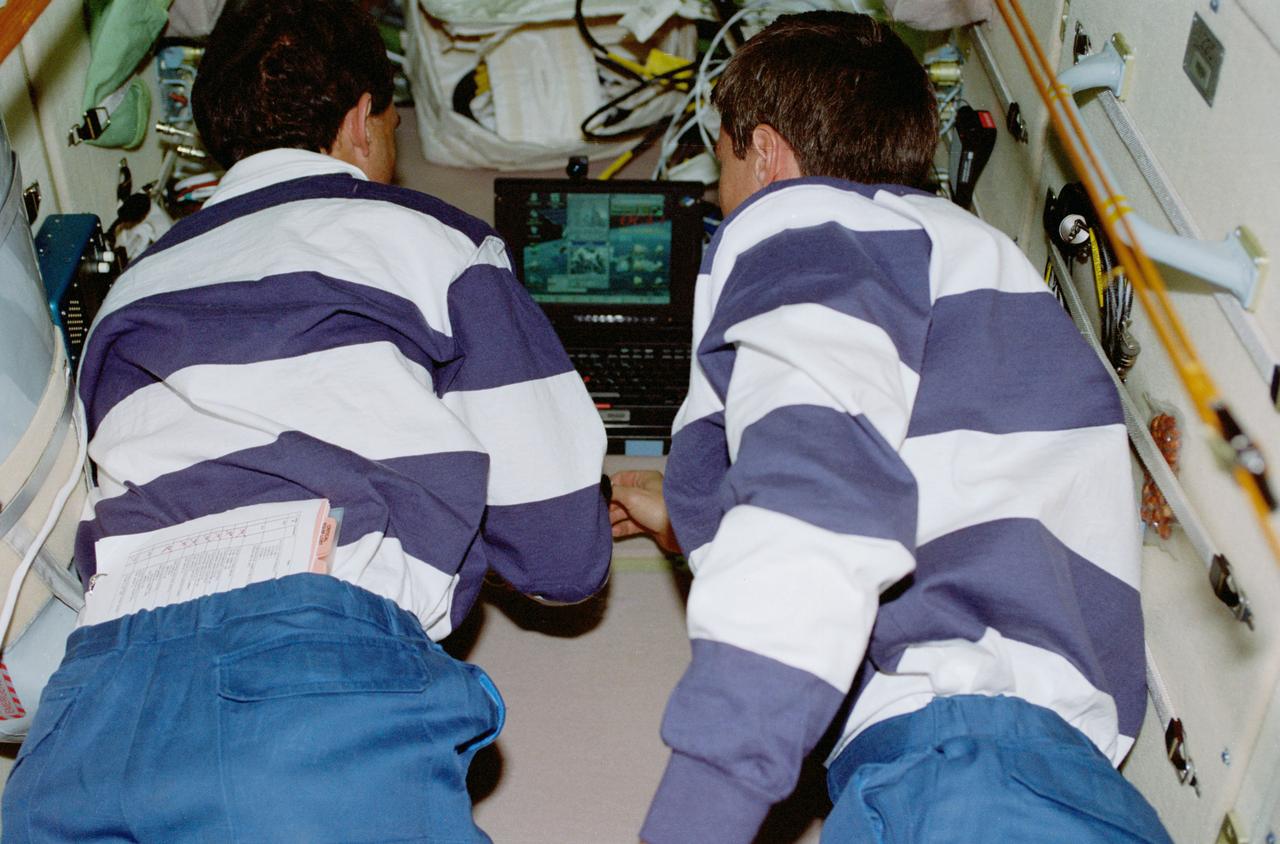
STS088-359-005 (4-15 Dec. 1998) --- Cosmonaut Sergei K. Krikalev (right), mission specialist representing the Russian Space Agency (RSA), and astronaut James H. Newman, mission specialist, participate in video teleconference with ground controllers while working in the Russian-built FGB or Zarya Module. Zarya is docked with the United States-built Unity (Node 1) Module, which is temporarily docked in Space Shuttle Endeavour?s cargo bay. The mission specialists, along with other members of the crew, were in the process of setting up interior systems of Zarya.
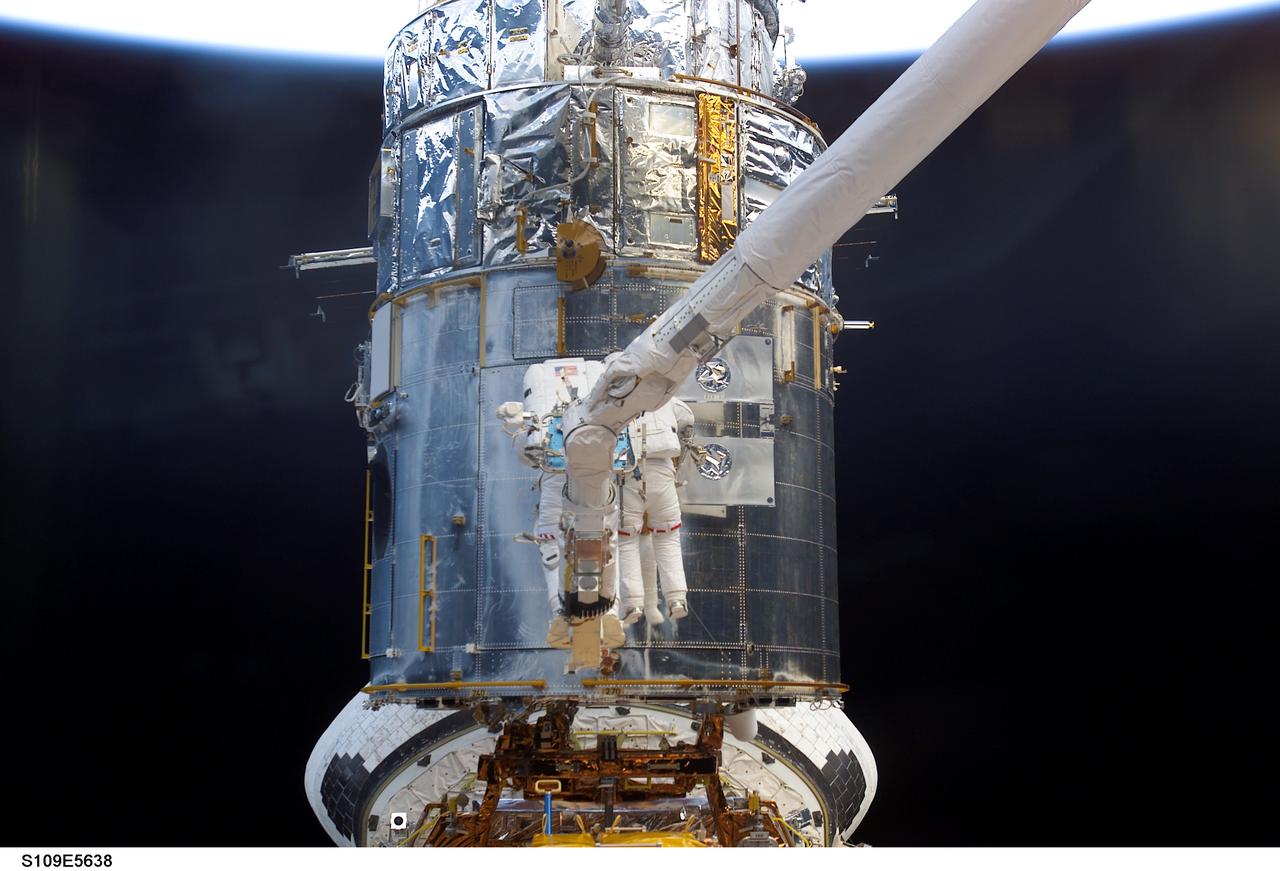
STS109-E-5638 (5 March 2002) --- With the Space Shuttle Columbia in limited natural light, two astronauts work on the Hubble Space Telescope (HST) during the flight's second of five scheduled space walks. A thin slice of reflected sunlight and airglow can be seen at Earth's horizon. Astronauts James H. Newman (right) and Michael J. Massimino share the platform on the end of robotic arm. The mission specialists, are making their first extravehicular activity (EVA) of the mission, following the act of two other crewmembers on the previous day. The image was recorded with a digital still camera.
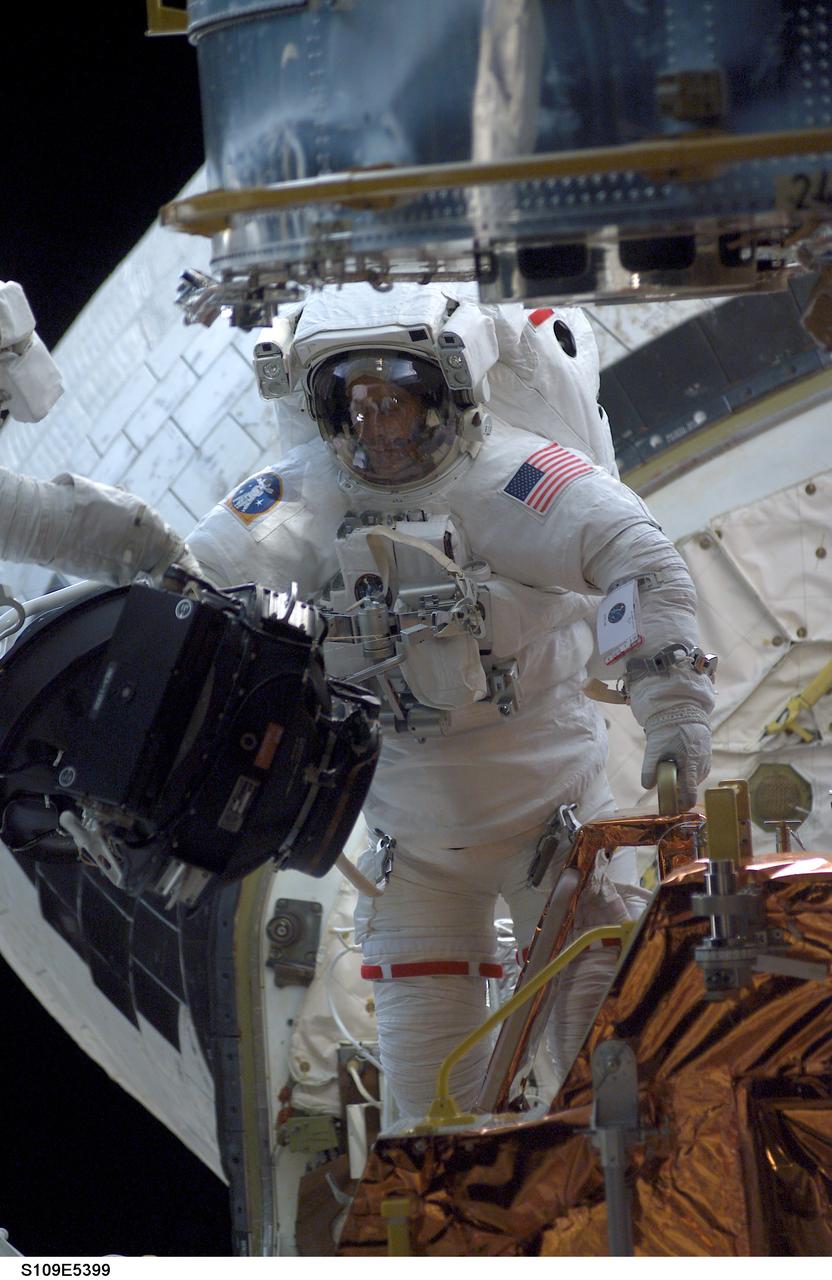
STS109-E-5399 (5 March 2002) --- Astronaut James H. Newman, mission specialist, moves about in the Space Shuttle Columbia's cargo bay while working in tandem with astronaut Michael J. Massimino (out of frame), mission specialist, during the STS-109 mission's second day of extravehicular activity (EVA). Inside Columbia's cabin, astronaut Nancy J. Currie, mission specialist, controlled the Remote Manipulator System (RMS) to assist the two in their work on the Hubble Space Telescope (HST). Part of the giant telescope's base, latched down in the payload bay, can be seen just above Newman. The image was recorded with a digital still camera.
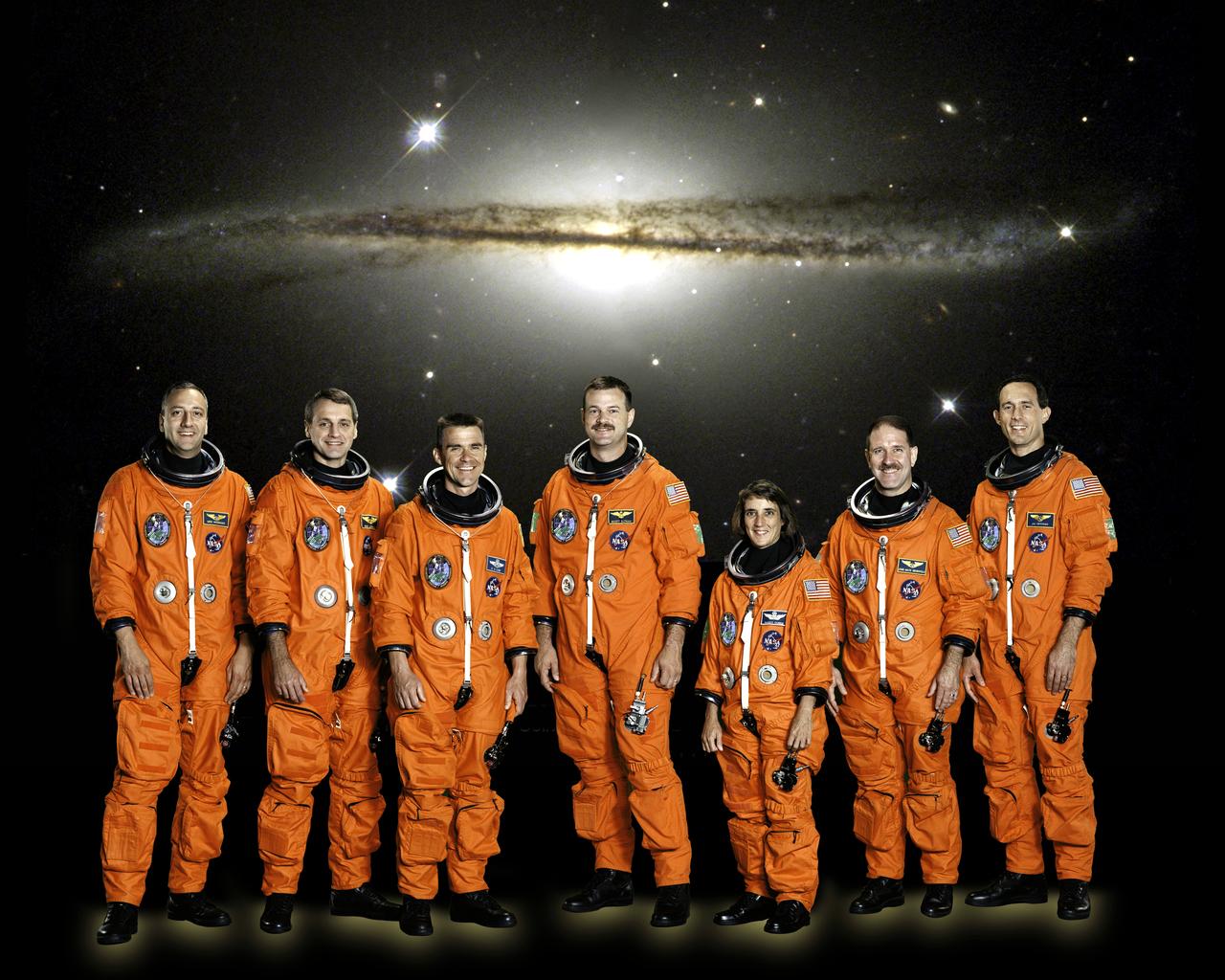
Posing for the traditional preflight crew portrait, the seven astronauts of the STS-109 mission are (left to right) astronauts Michael J. Massimino, Richard M. Linnehan, Duane G. Carey, Scott D. Altman, Nancy J. Currie, John M. Grunsfeld and James H. Newman. Altman and Carey were commander and pilot, respectively, with the others serving as mission specialists. Grunsfeld was payload commander. Launched aboard the Space Shuttle Columbia on March 1, 2002, the group was the fourth visit to the the Hubble Space Telescope (HST) for performing upgrade and servicing on the giant orbital observatory.
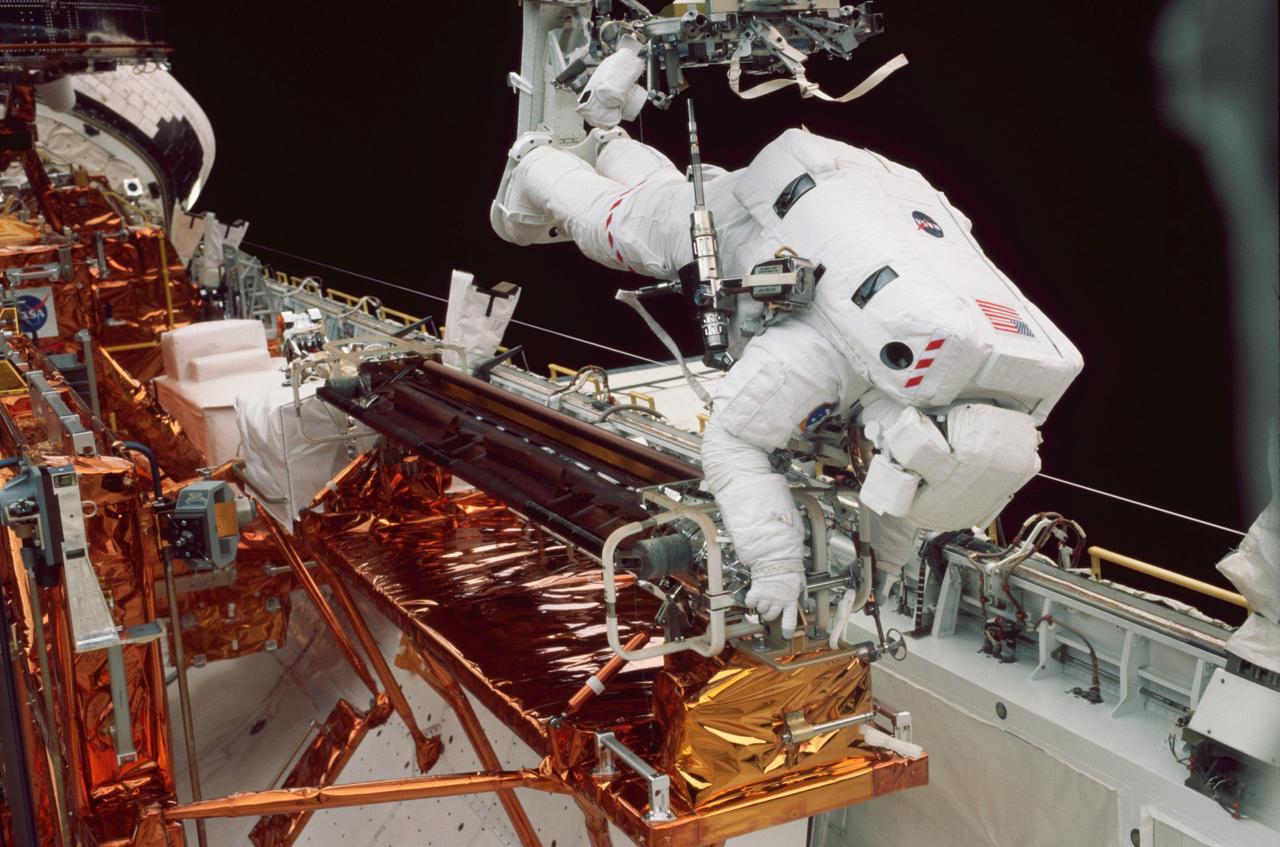
STS-109 Astronaut Michael J. Massimino, mission specialist, perched on the Shuttle's robotic arm is working at the stowage area for the Hubble Space Telescope's port side solar array. Working in tandem with James. H. Newman, Massimino removed the old port solar array and stored it in Columbia's payload bay for return to Earth. The two went on to install a third generation solar array and its associated electrical components. Two crew mates had accomplished the same feat with the starboard array on the previous day. In addition to the replacement of the solar arrays, the STS-109 crew also installed the experimental cooling system for the Hubble's Near-Infrared Camera (NICMOS), replaced the power control unit (PCU), and replaced the Faint Object Camera (FOC) with a new advanced camera for Surveys (ACS). The 108th flight overall in NASA's Space Shuttle Program, the Space Shuttle Columbia STS-109 mission lifted off March 1, 2002 for 10 days, 22 hours, and 11 minutes. Five space walks were conducted to complete the HST upgrades. The Marshall Space Flight Center in Huntsville, Alabama had the responsibility for the design, development, and construction of the HST, which is the most powerful and sophisticated telescope ever built.
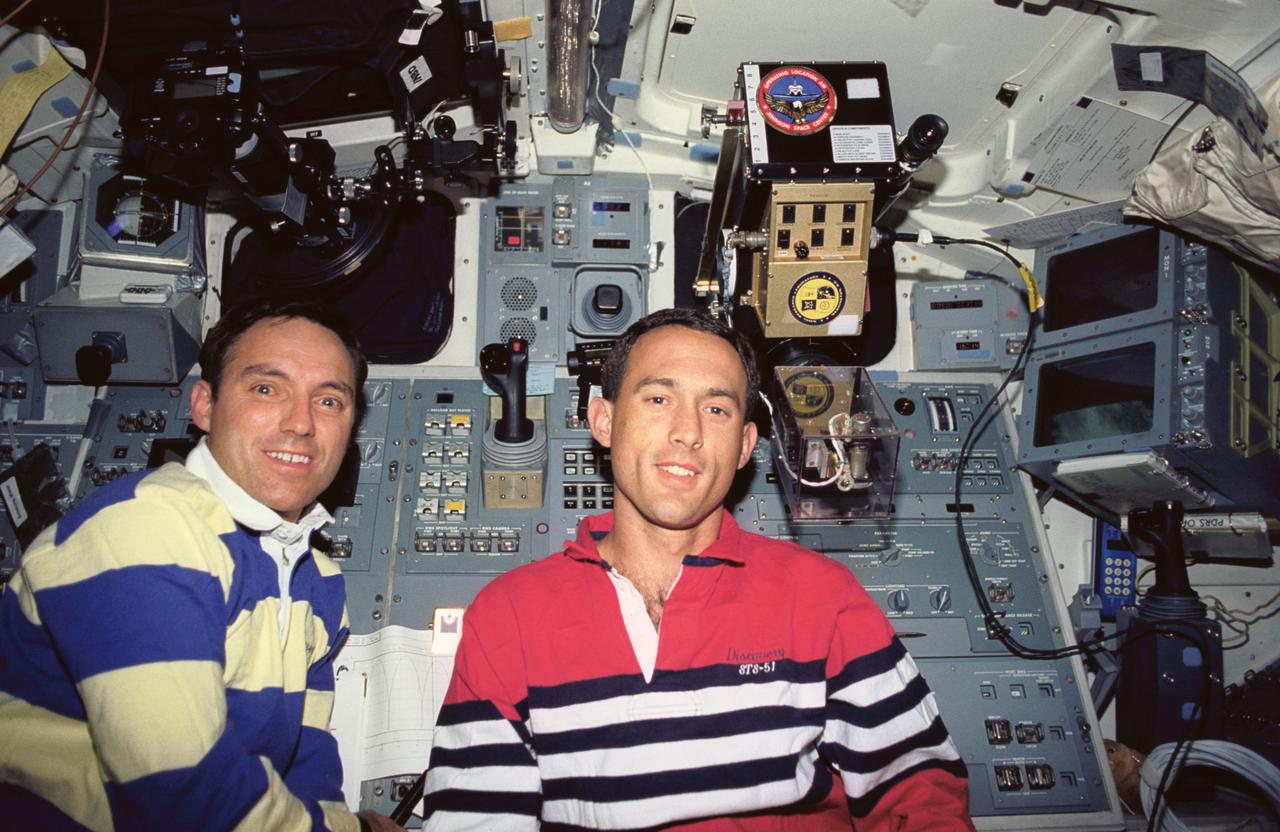
STS051-07-031 (12-22 Sept 1993) --- Astronauts Carl E. Walz, left, and James H. Newman are pictured on Discovery's aft flight deck near two experiments. Positioned in the window above Walz's head is the Auroral Photography Experiment (APE-B), while the High Resolution Shuttle Glow Spectroscopy (HRSGS-A) experiment is deployed in the other window.
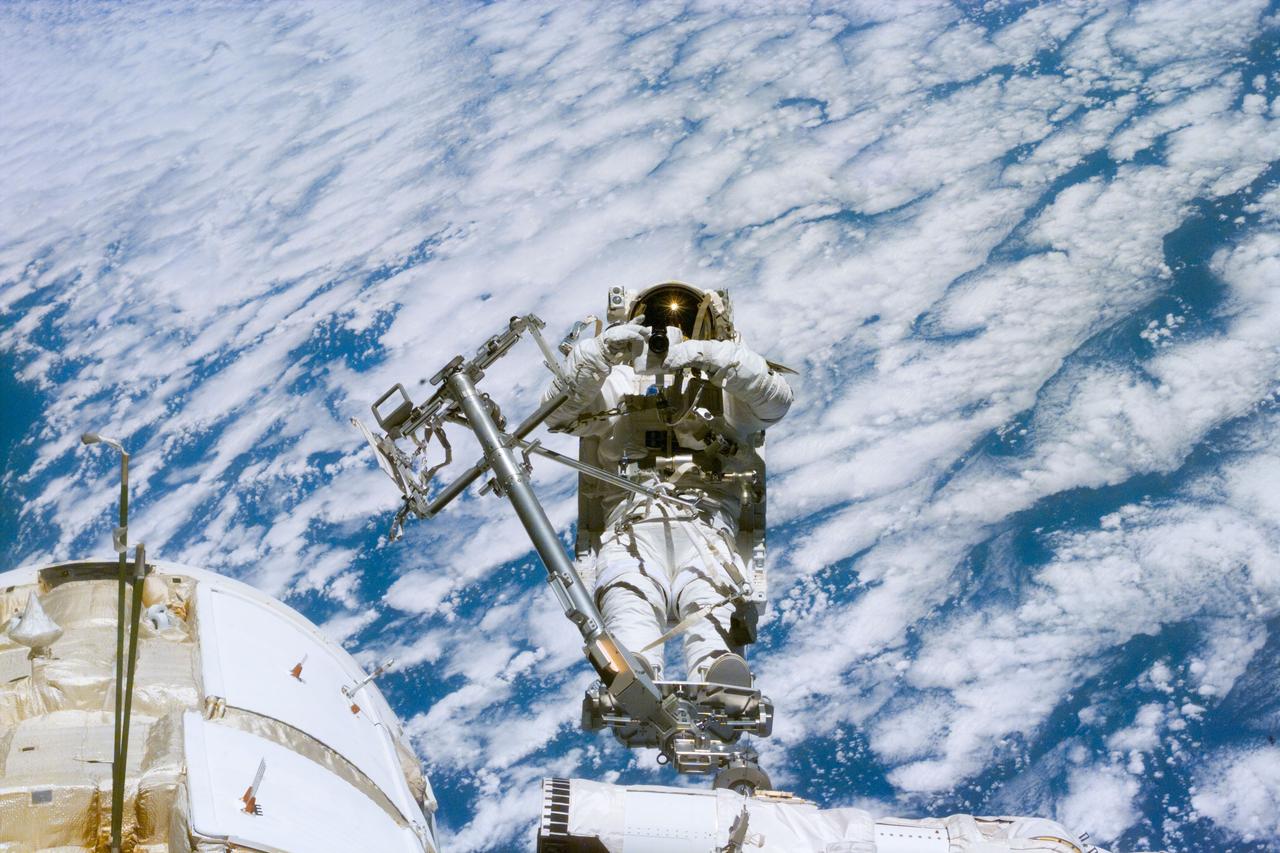
S88-E-5102 (12-10-98) --- Astronaut James H. Newman, mission specialist, is backdropped against a blue and white Earth while standing on a mobile foot restraint attached to Endeavour's remote manipulator system (RMS). Astronaut Jerry L. Ross, mission specialist, is out of frame at left. Part of Zarya is in the lower left corner. The photo was taken with an electronic still camera (ESC) at 02:23:47 GMT, Dec. 10
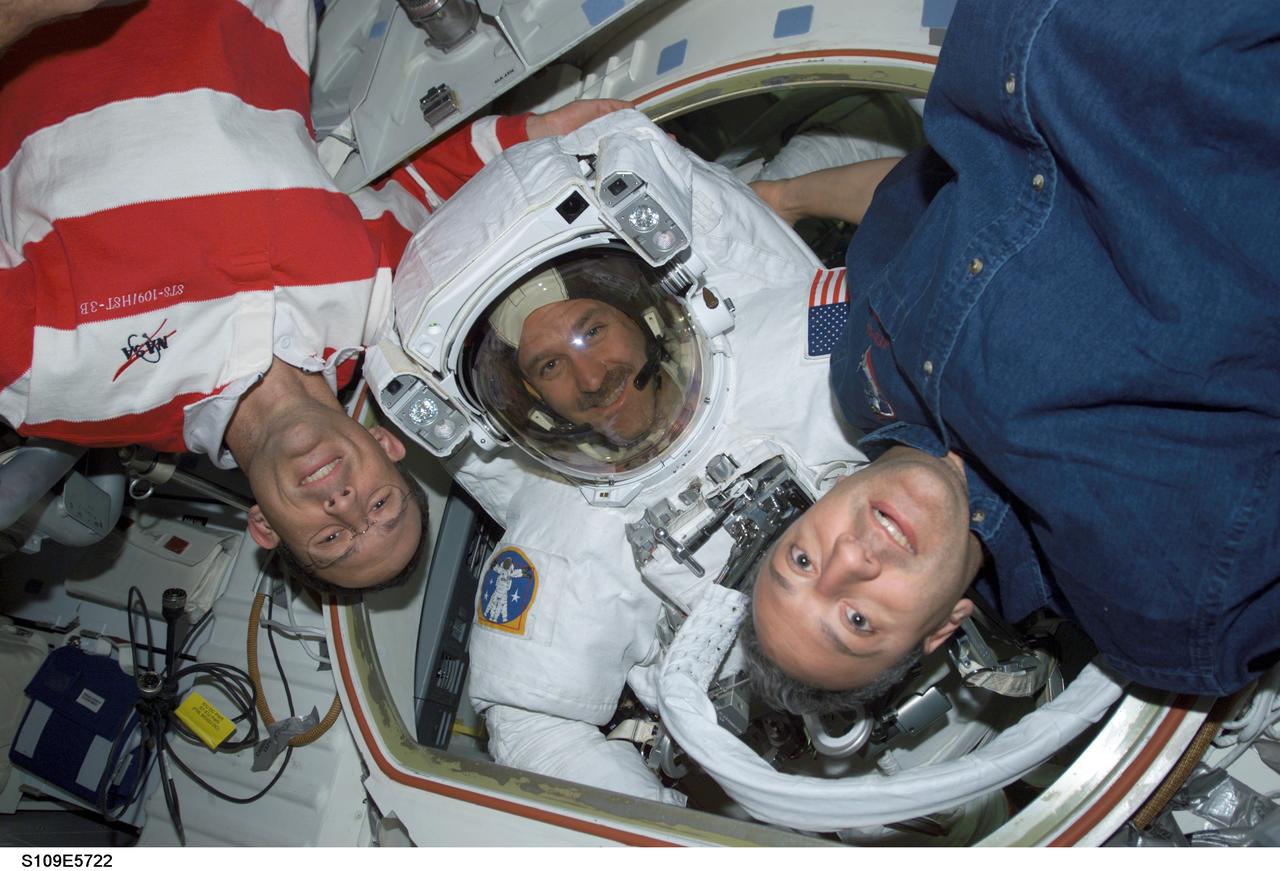
STS109-E-5722 (8 March 2002) --- Astronaut John M. Grunsfeld (center), STS-109 payload commander, attired in the extravehicular mobility unit (EMU) space suit, is photographed with astronauts James H. Newman (left) and Michael J. Massimino, both mission specialists, prior to the fifth space walk. Activities for EVA-5 centered around the Near-Infrared Camera and Multi-Object Spectrometer (NICMOS) to install a Cryogenic Cooler and its Cooling System Radiator. The image was recorded with a digital still camera.
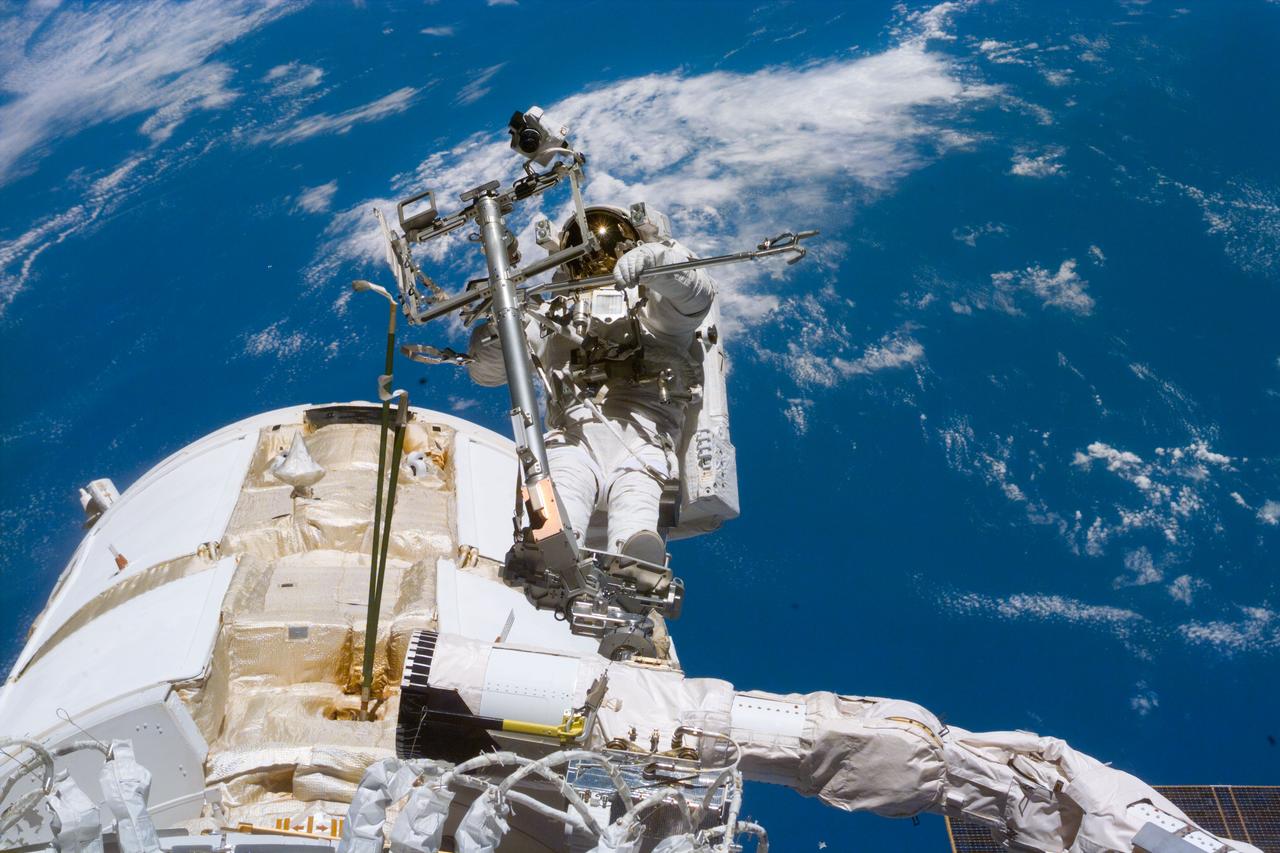
S88-E-5096 (12-10-98) --- Astronaut James H. Newman, mission specialist, is pictured on the end of Endeavour's remote manipulator system (RMS) arm during extravehicular activity (EVA) on Flight Day 8. The Russian-built Zarya module is in the background. The photo was taken with an electronic still camera (ESC) at 02:20:25 GMT, Dec. 10.

STS109-326-031 (5 March 2002) --- The broad smiles of astronauts Michael J. Massimino (left) and James H. Newman reflect the success of their just-completed lengthy space walk designed to finish the replacement of the solar arrays on the Hubble Space Telescope (HST). A day earlier, two other astronauts replaced one of sets of solar panels. The two are in the process of doffing their extravehicular mobility unit (EMU) space suits on the mid deck of the Space Shuttle Columbia.
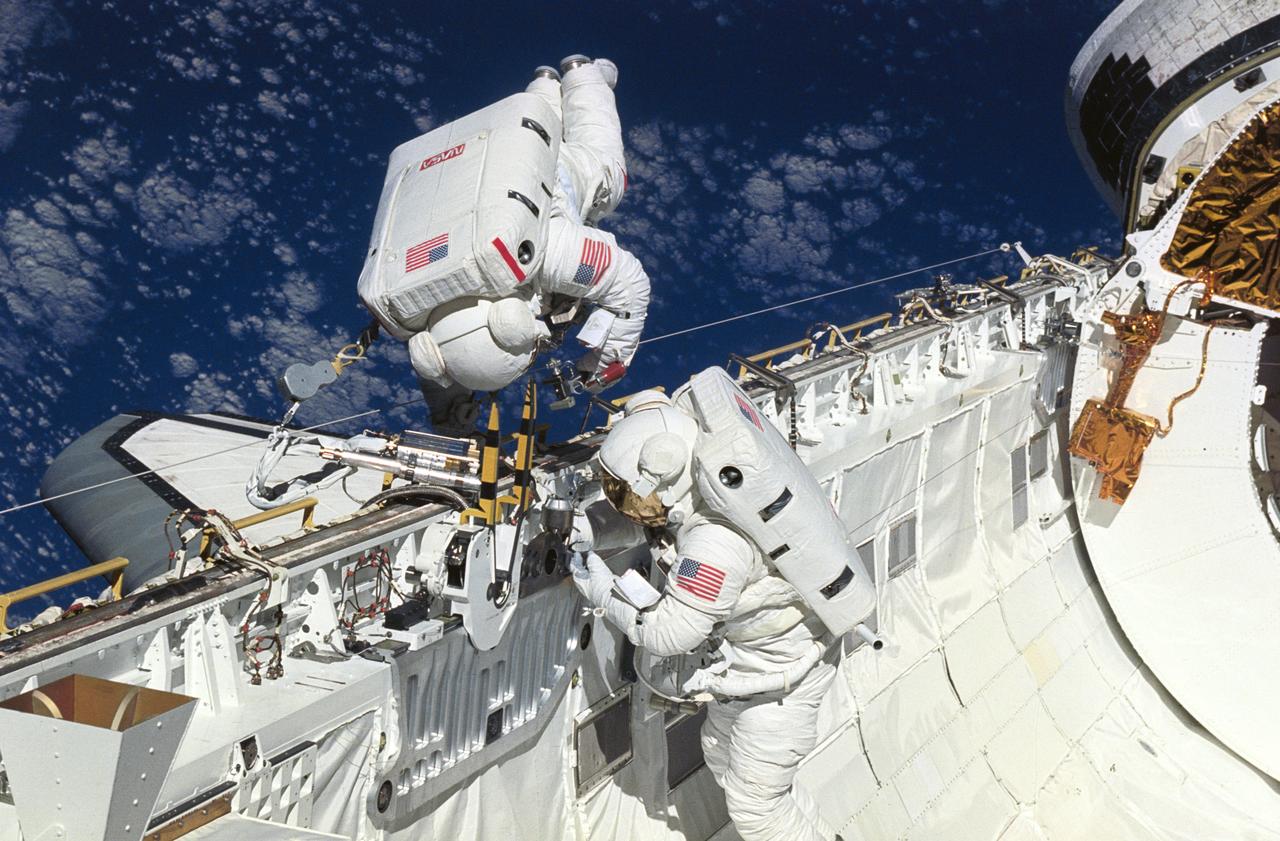
STS051-06-023 (16 Sept 1993) --- Astronauts James H. Newman (in bay) and Carl E. Walz, mission specialists, practice space walking techniques and evaluate tools to be used on the first Hubble Space Telescope (HST) servicing mission scheduled for later this year. Walz rehearses using the Power Ratchet Tool (PRT), one of several special pieces of gear to be put to duty during the scheduled five periods of extravehicular activity (EVA) on the STS-61 mission.
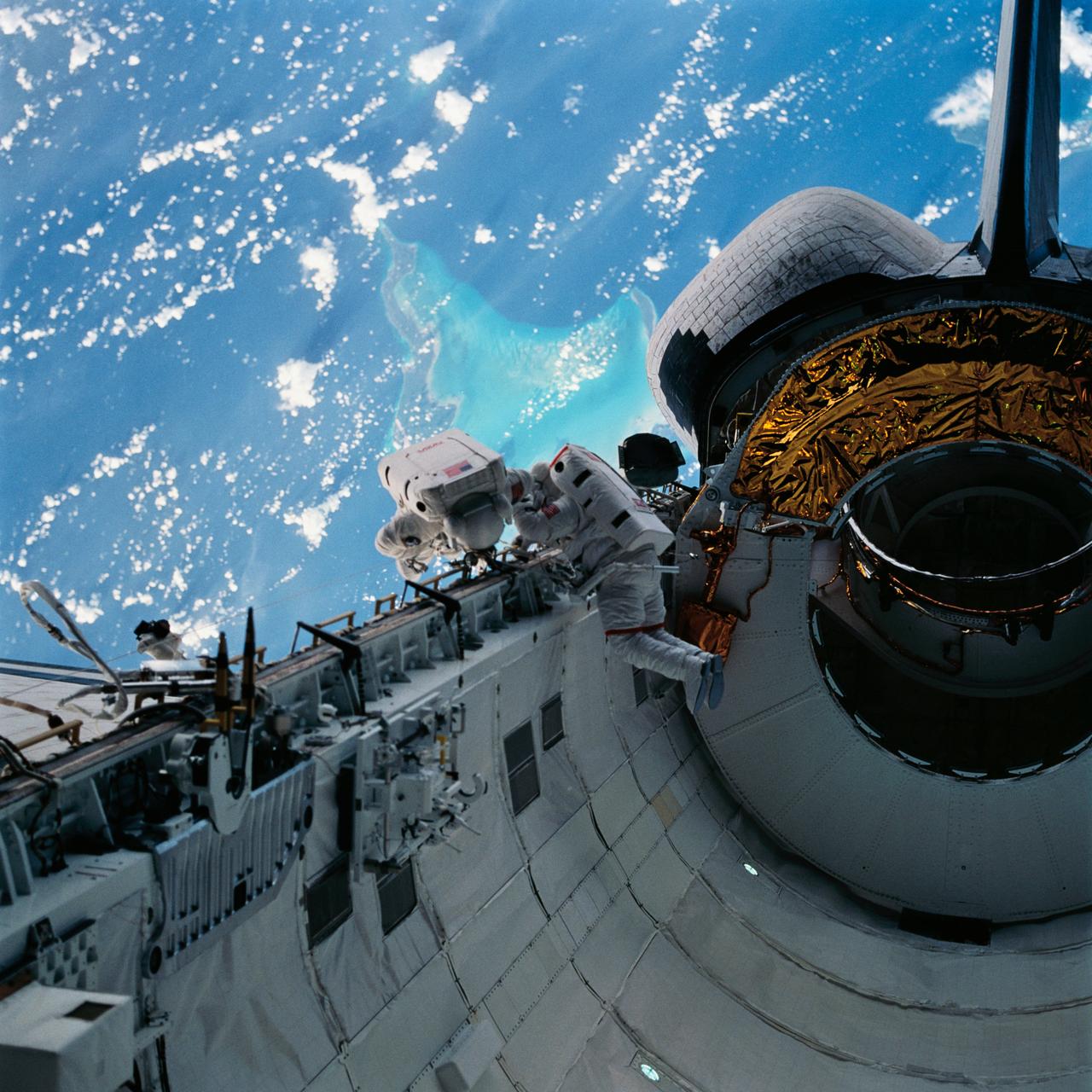
With the Caribbean Sea and part of the Bahama Islands chain as a backdrop, two STS-51 crewmembers evaluate procedures and gear to be used on the upcoming Hubble Space Telescope (HST)-servicing mission. Sharing the lengthy extravehicular activity in and around Discovery's cargo bay were astronauts James H. Newman (left), and Carl E. Walz, mission specialists.
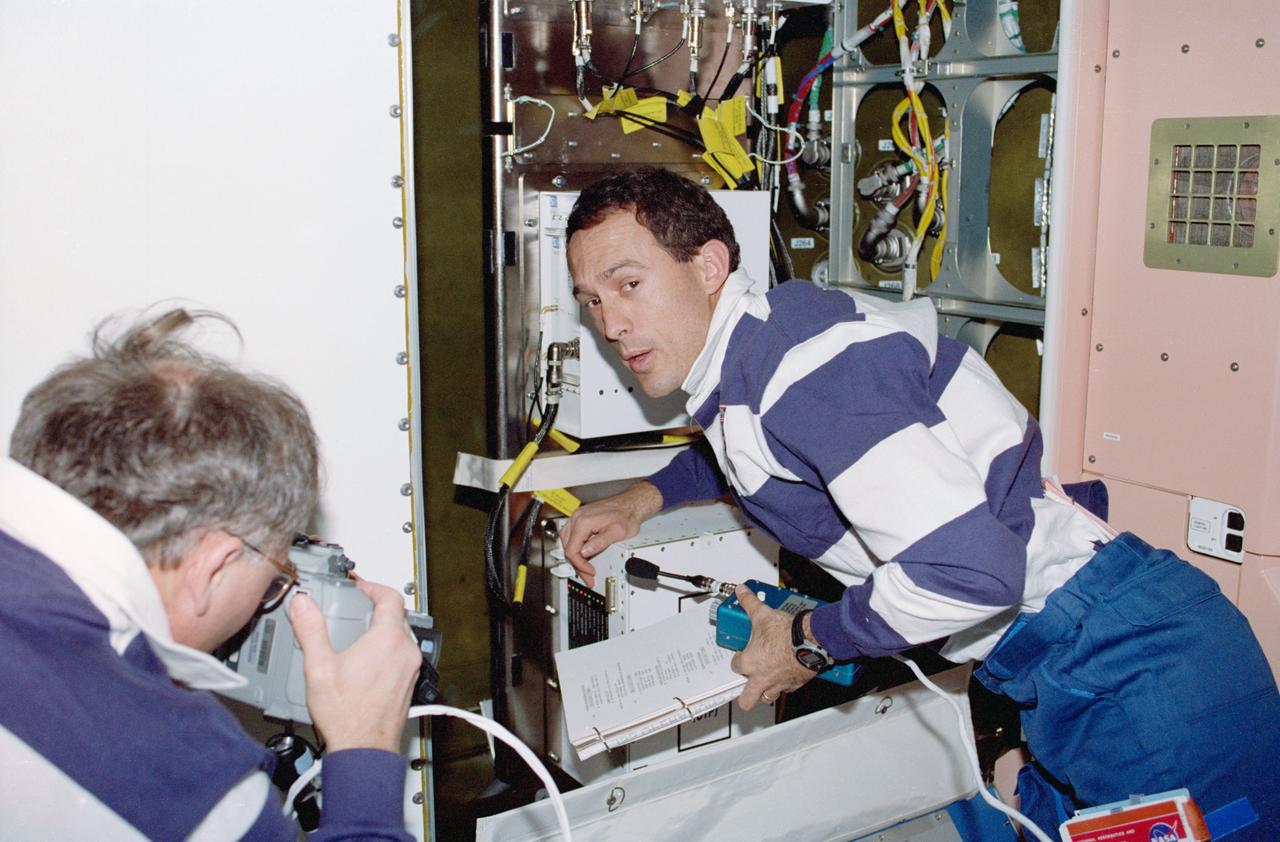
STS088-334-033 (4-15 Dec. 1998) --- Astronauts Jerry L. Ross (on left with camera) and James H. Newman, both mission specialists, work in the Unity Module (Node 1). This task was designed to complete the assembly of an early S-band communications system that will allow flight controllers in Houston, Texas, to send commands to Unity's systems and to keep tabs on the health of the station with a more extensive communications capability than exists through Russian ground stations.
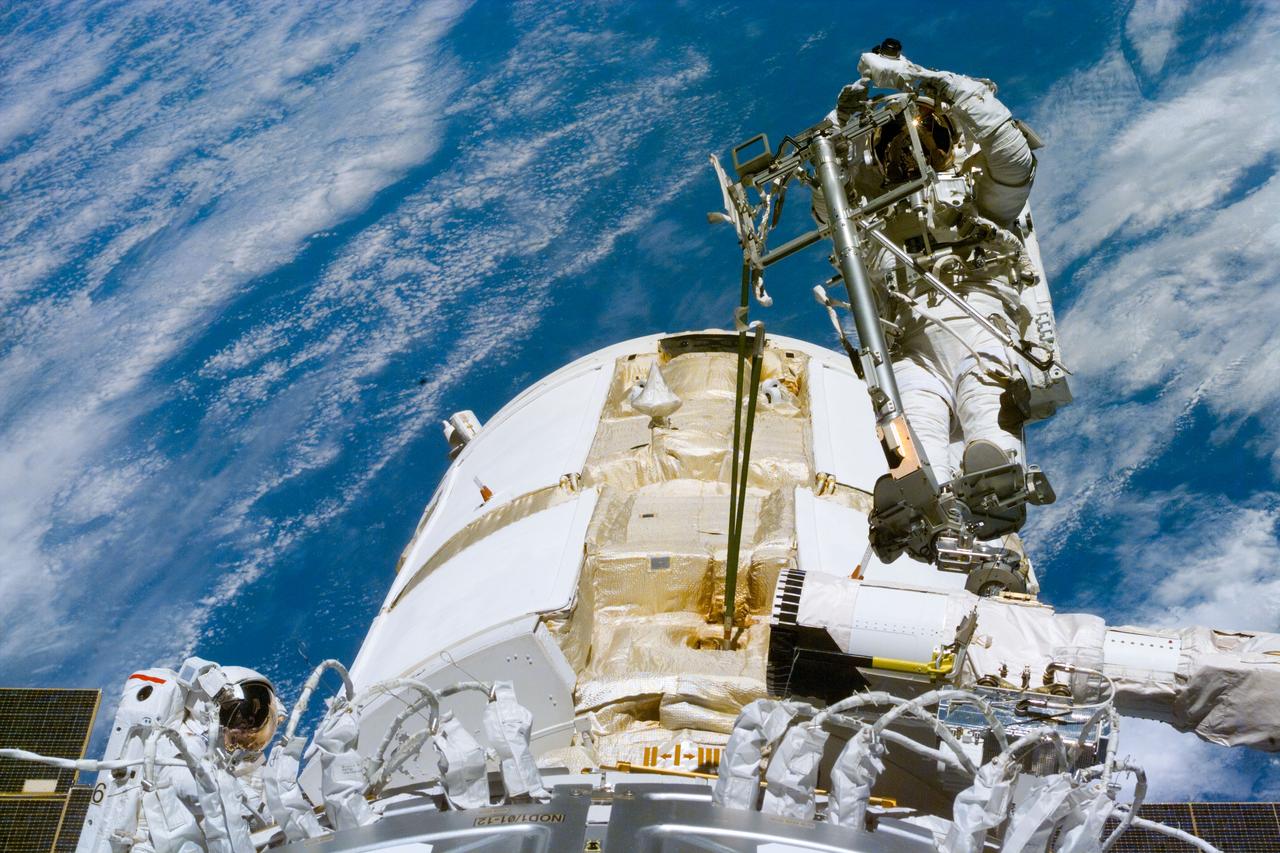
S88-E-5101 (12-10-98) --- Astronaut James H. Newman, mission specialist, is backdropped against a blue and white Earth while standing on a mobile foot restraint attached to Endeavour's remote manipulator system (RMS). Astronaut Jerry L. Ross, mission specialist, is at left. Part of the Russian-built Zarya module is in the center of the frame. The photo was taken with an electronic still camera (ESC) at 02:21:27 GMT, Dec. 10
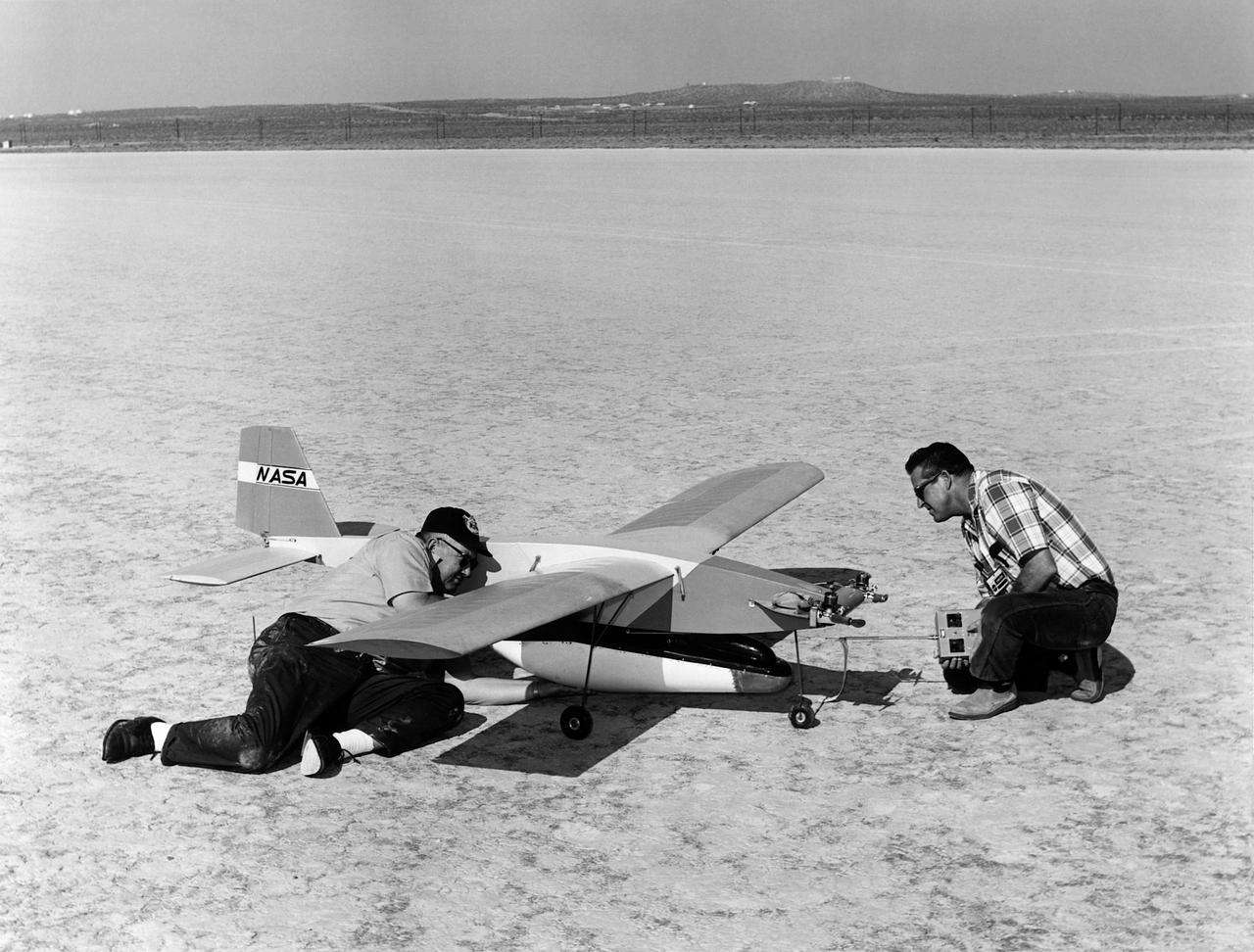
A photo of model airplane builders James B. Newman and Robert L. McDonald preparing for a flight with models of the M2-F2 and a “Mothership”. In 1968 a test flight was made on the Rosamond dry lakebed, Rosamond, California. The original idea of lifting bodies was conceived about 1957 by Dr. Alfred J. Eggers, Jr., then the assistant director for Research and Development Analysis and Planning at the National Advisory Committee for Aeronautics' Ames Aeronautical Laboratory, Moffett Field, California. Nose cone studies led to the design known as the M-2, a modified half-cone, rounded on the bottom and flat on top, with a blunt, rounded nose and twin tail fins. To gather flight data on this configuration, models were found to be an effective method. A special twin-engined, 14-foot model “mothership” was used for carrying the M2-F2 model to altitude and a launch, much as was being done with the B-52 for the full-scale lifting bodies. Jim (on the left) will fly the “mothership” and Bob will take control of the M2-F2 at launch and fly it to a landing on the lakebed.
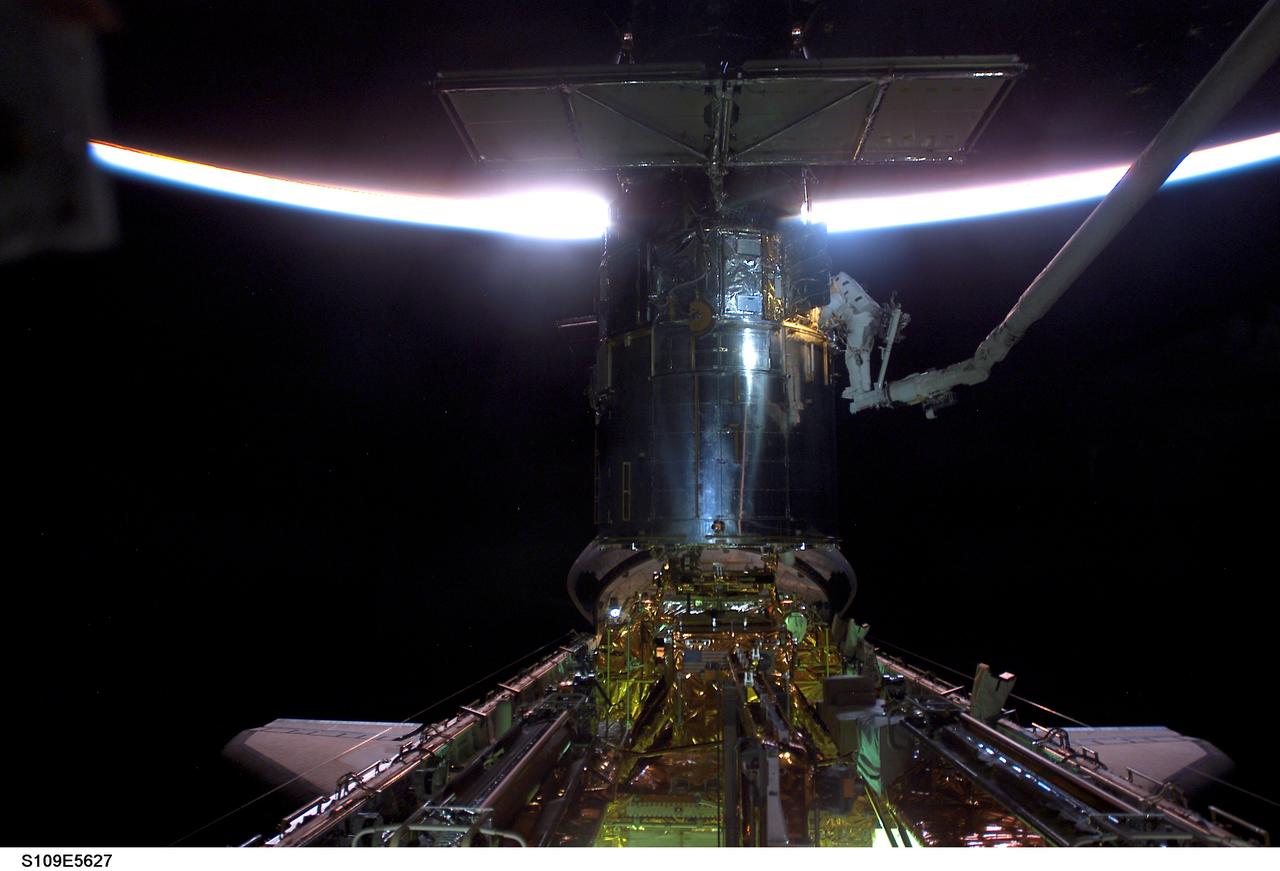
STS109-E-5627 (5 March 2002) --- With the Space Shuttle Columbia in limited natural light, two astronauts work on the Hubble Space Telescope (HST) during the flight's second of five scheduled space walks. A thin slice of reflected sunlight and airglow can be seen at Earth's horizon. Astronauts James H. Newman and Michael J. Massimino, mission specialists, are making their first extravehicular activity (EVA) of the mission, following the act of two other crewmembers on the previous day. Massimino can be identified on the end of the arm by the diagonal stripes on the pant legs of his extravehicular mobility unit (EMU) space suit. The image was recorded with a digital still camera.
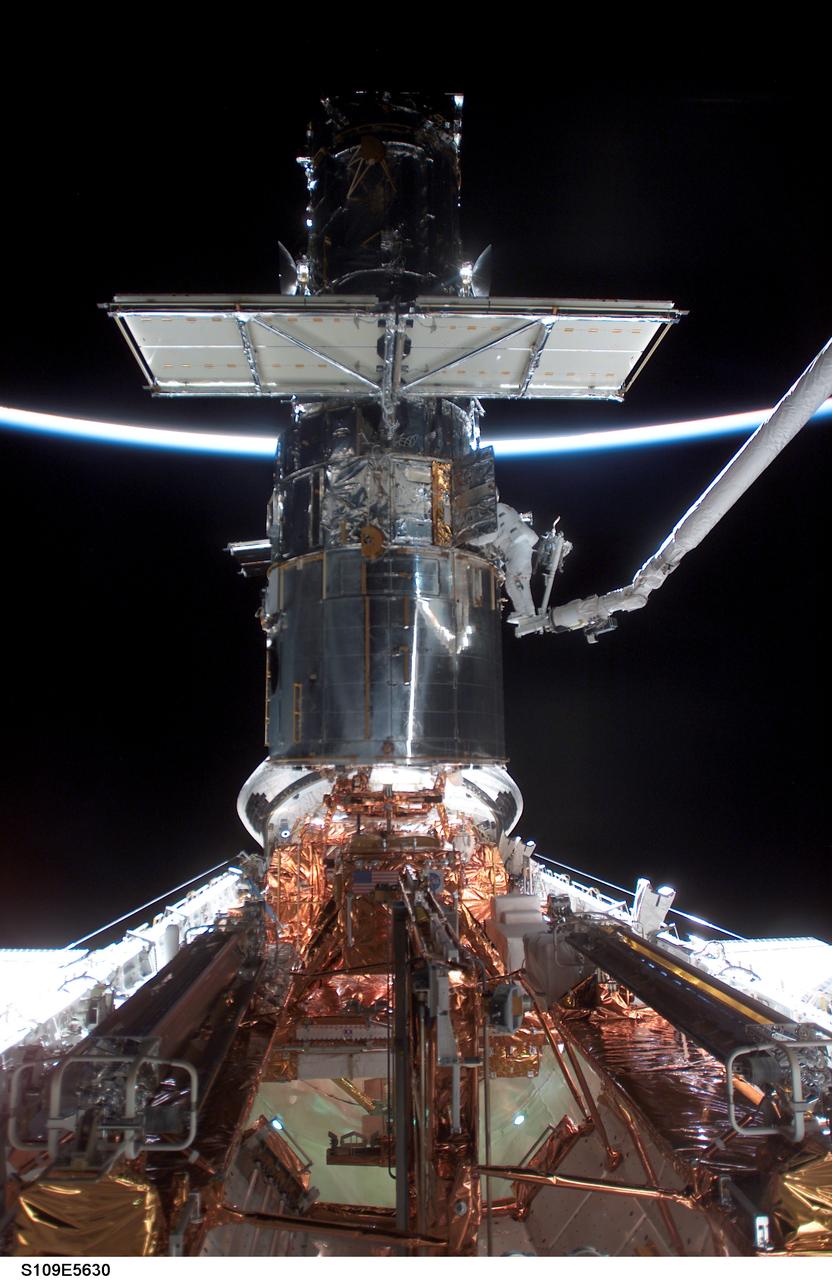
STS109-E-5630 (5 March 2002) --- With the Space Shuttle Columbia in limited natural light, two astronauts work on the Hubble Space Telescope (HST) during the flight's second of five scheduled space walks. A thin slice of reflected sunlight and airglow can be seen at Earth's horizon. Astronauts James H. Newman (out of frame) and Michael J. Massimino (on platform on end of robotic arm), mission specialists, are making their first extravehicular activity (EVA) of the mission, following the act of two other crewmembers on the previous day. The image was recorded with a digital still camera.
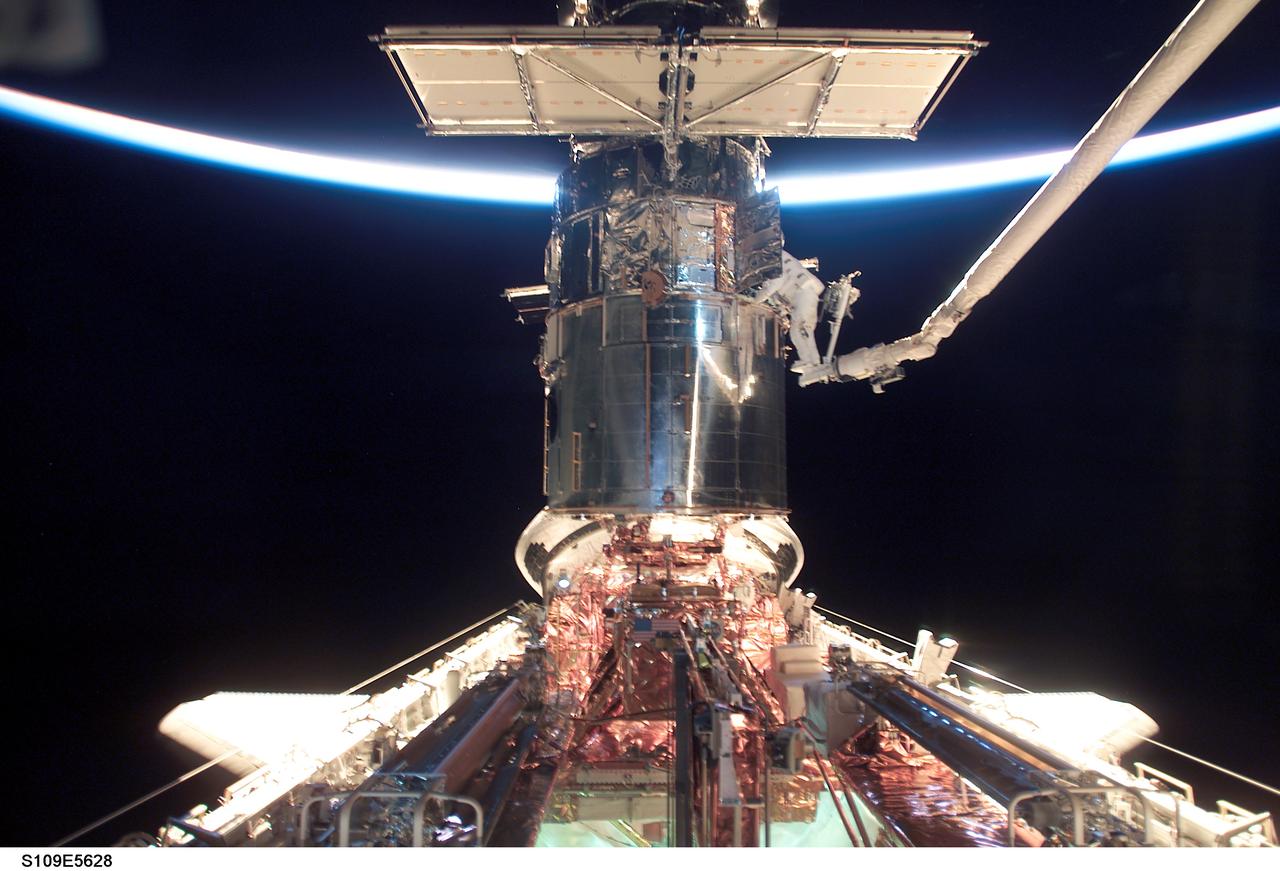
STS109-E-5628 (5 March 2002) --- With the Space Shuttle Columbia in limited natural light, two astronauts work on the Hubble Space Telescope (HST) during the flight's second of five scheduled space walks. A thin slice of reflected sunlight and airglow can be seen at Earth's horizon. Astronauts James H. Newman (out of frame) and Michael J. Massimino (on platform on end of robotic arm), mission specialists, are making their first extravehicular activity (EVA) of the mission, following the act of two other crewmembers on the previous day. The image was recorded with a digital still camera.
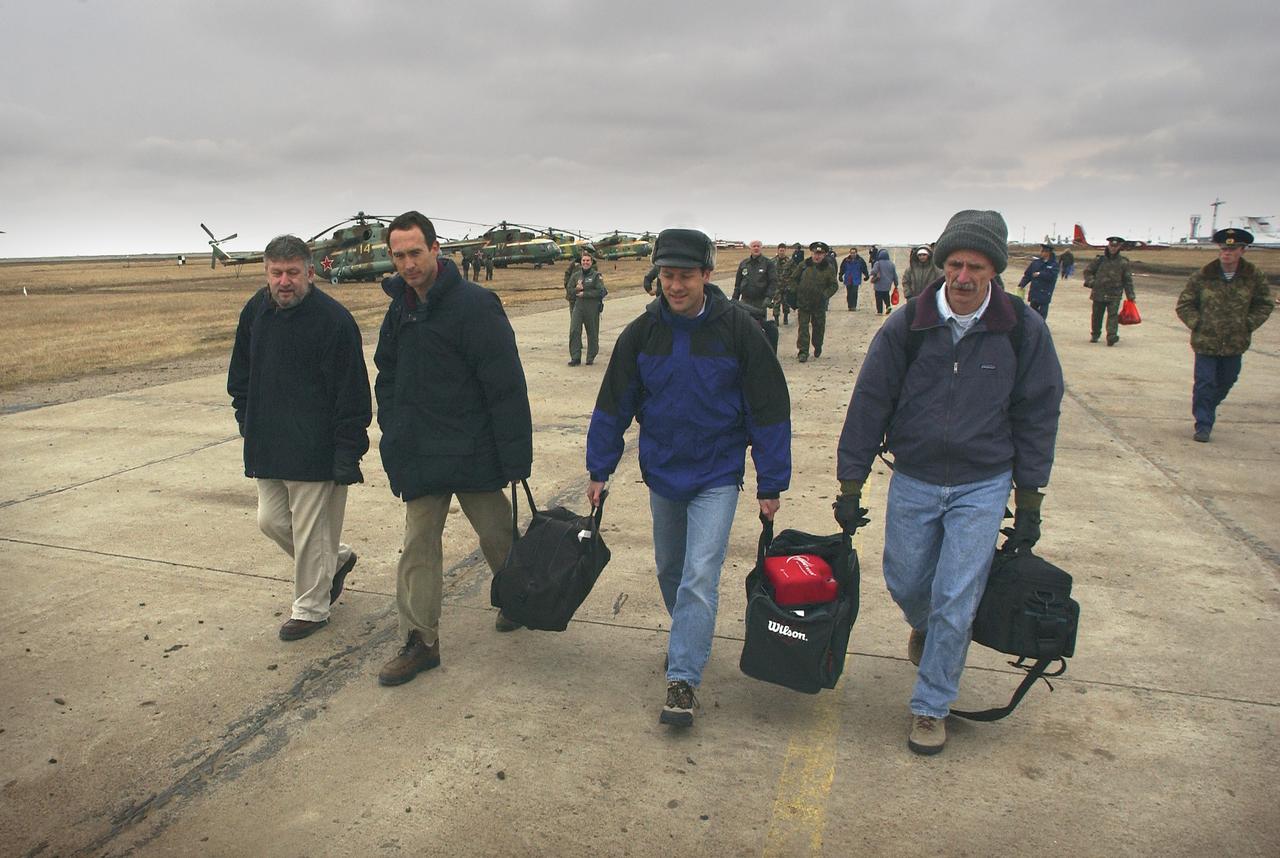
Dr. Thomas H. Marshburn, NASA Flight Surgeon, center, is helped to a Russian helicopter by interpreter Paul Kharmats, far left, astronaut James H. Newman and NASA International Space Station Program Manager William Gerstenmaier, right. Dr. Marshburn was on one of four helicopters that were advanced to Arkalyk, Kazakhstan a day prior to the Expedition 7 Soyuz landing, Monday, October 27, 2003. Photo Credit: (NASA/Bill Ingalls)
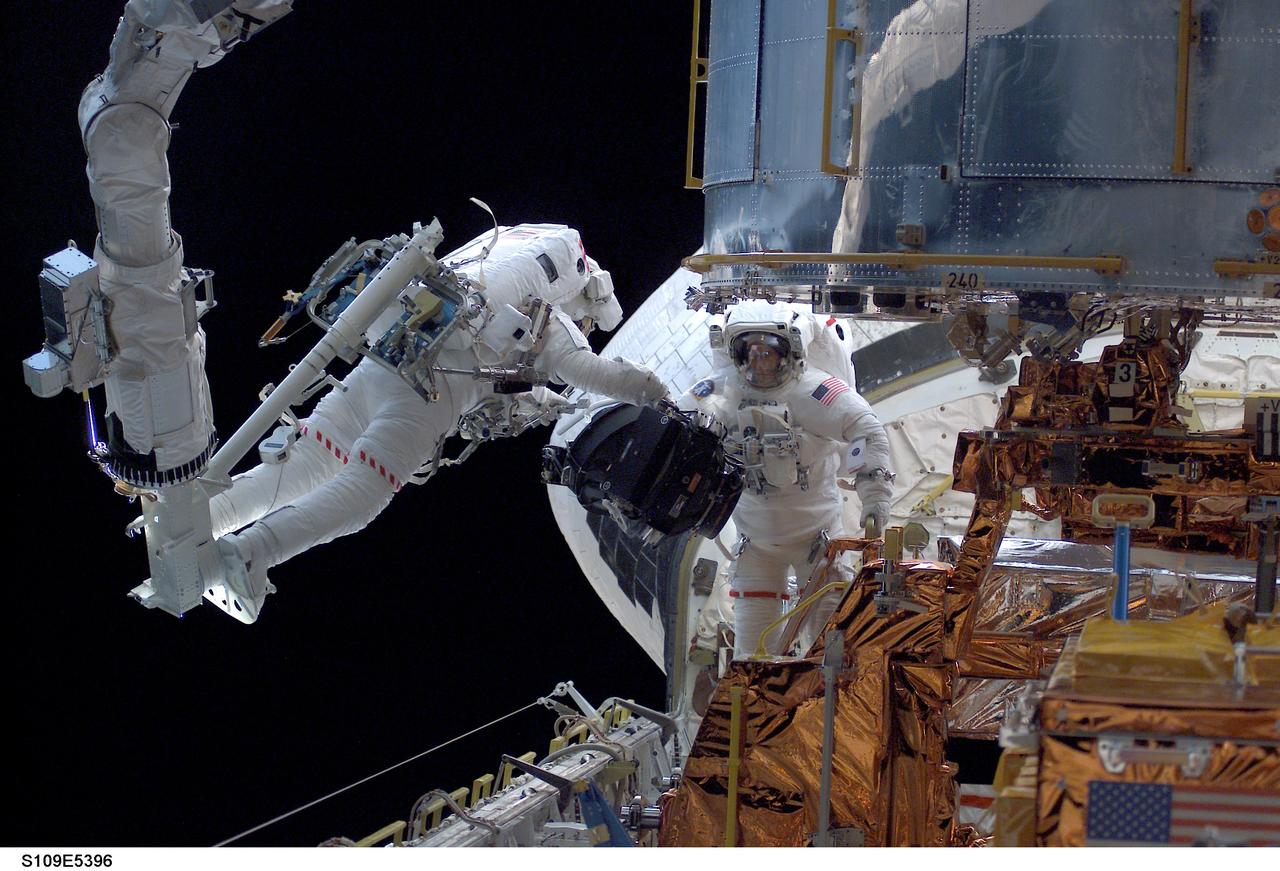
With his feet secured on a platform connected to the remote manipulator system (RMS) robotic arm of the Space Shuttle Columbia, astronaut Michael J. Massimino, mission specialist, hovers over the shuttle's cargo bay while working in tandem with astronaut James H. Newman, mission specialist, to replace the Reaction Wheel Assembly in the Hubble Space Telescope (HST) during the STS-109 mission's second day of extravehicular activity (EVA).
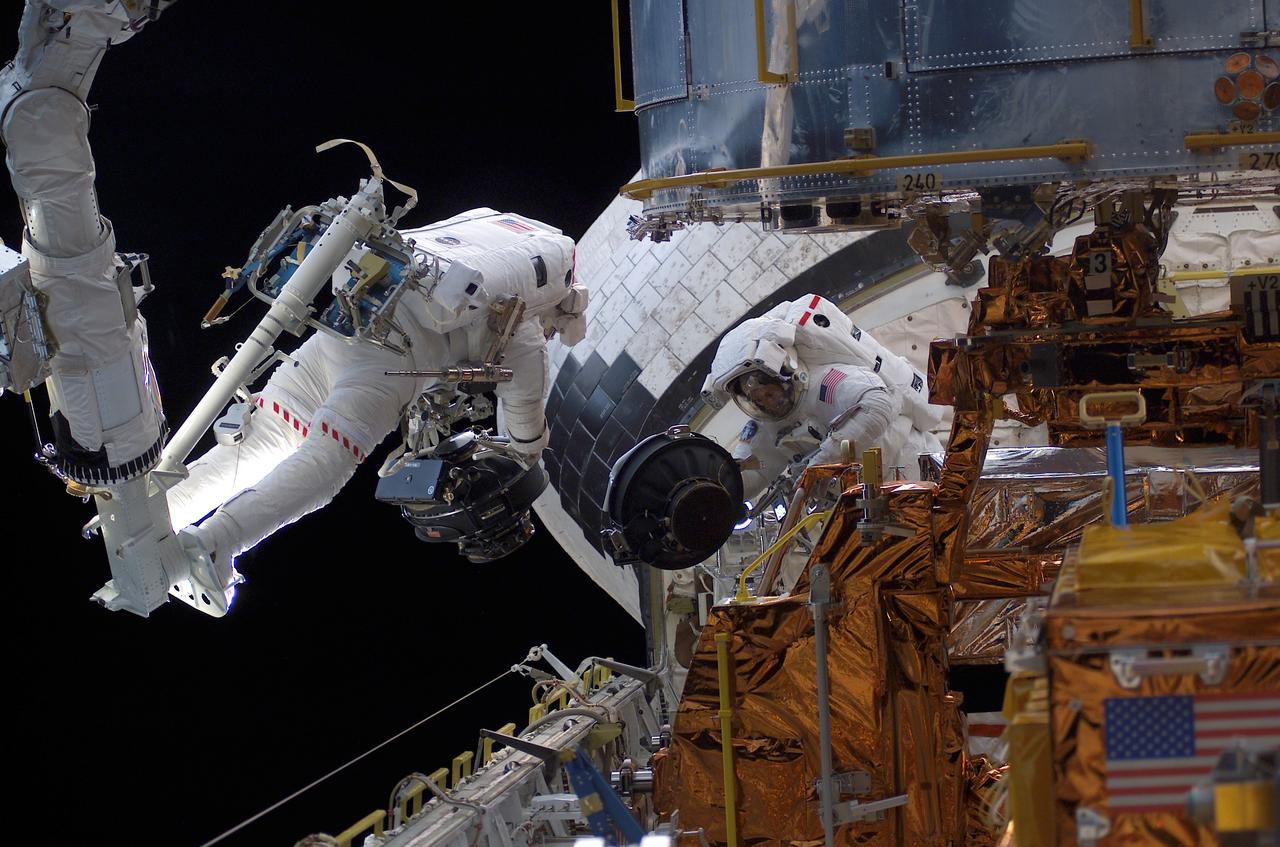
STS109-E-5402 (5 March 2002) --- With his feet secured on a platform connected to the remote manipulator system (RMS) robotic arm of the Space Shuttle Columbia, astronaut Michael J. Massimino, mission specialist, hovers over the shuttle's cargo bay while working in tandem with astronaut James H. Newman, mission specialist, during the STS-109 mission's second day of extravehicular activity (EVA). Inside Columbia's cabin, astronaut Nancy J. Currie, mission specialist, controlled the RMS. The image was recorded with a digital still camera.
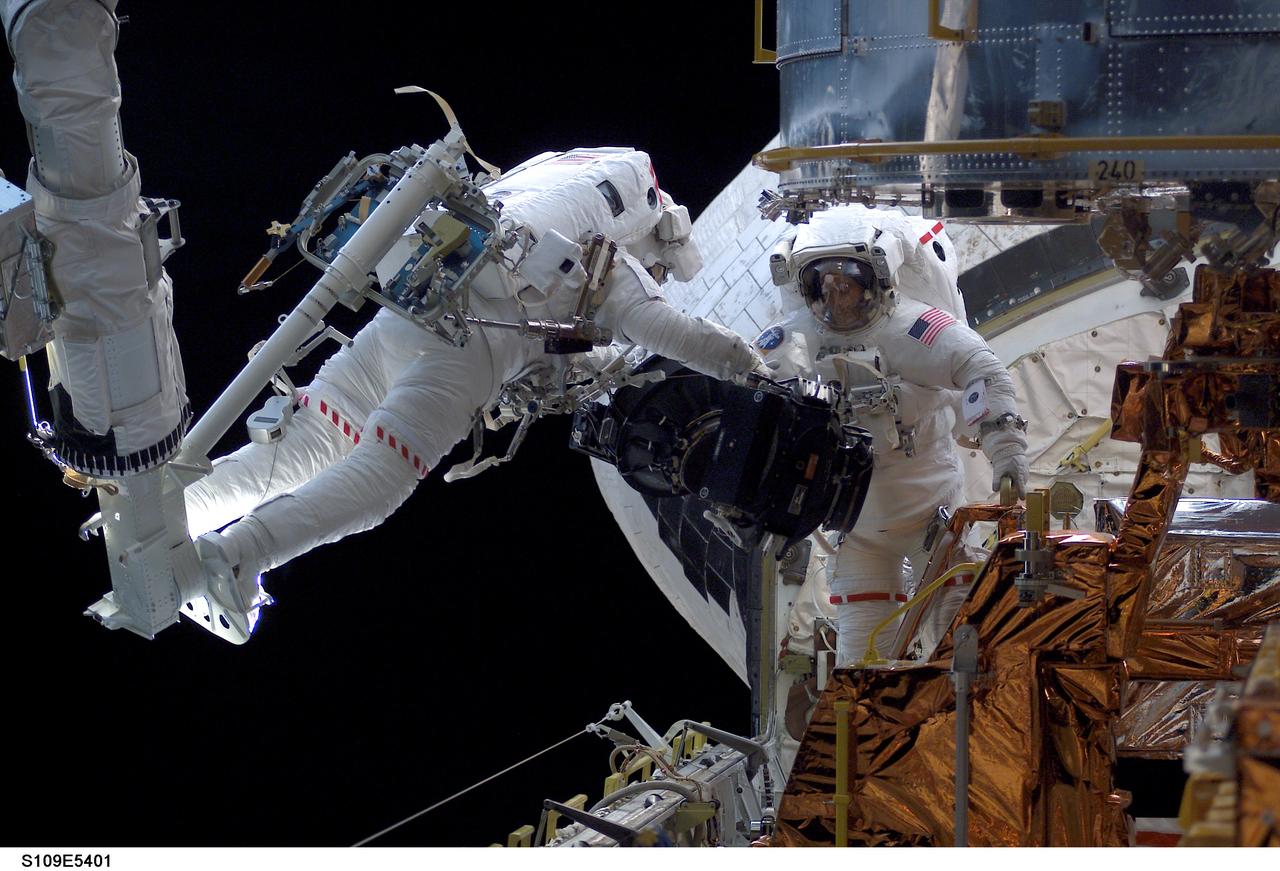
STS109-E-5401 (5 March 2002) --- With his feet secured on a platform connected to the remote manipulator system (RMS) robotic arm of the Space Shuttle Columbia, astronaut Michael J. Massimino, mission specialist, hovers over the shuttle's cargo bay while working in tandem with astronaut James H. Newman, mission specialist, during the STS-109 mission's second day of extravehicular activity (EVA). Inside Columbia's cabin, astronaut Nancy J. Currie, mission specialist, controlled the RMS. The image was recorded with a digital still camera.
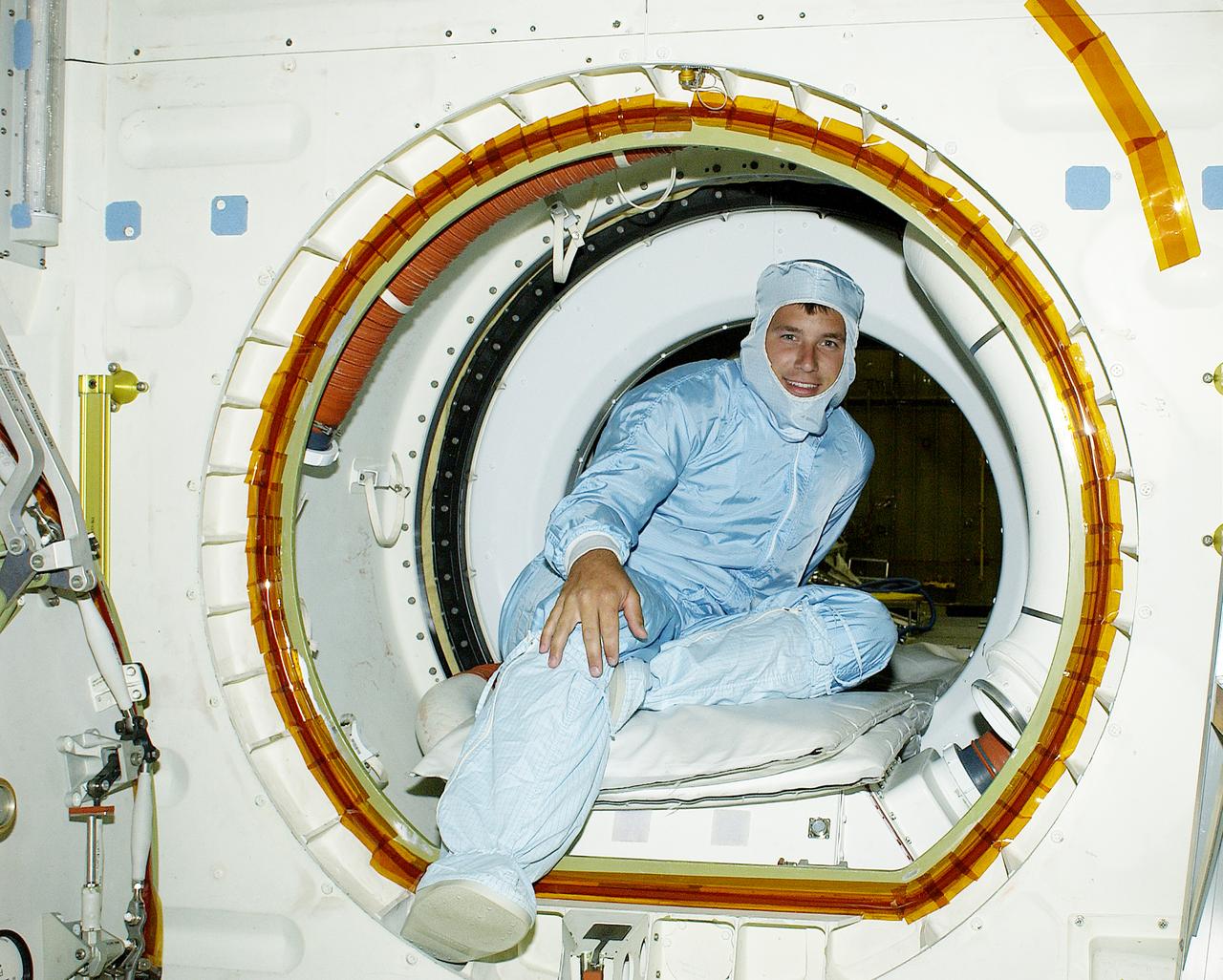
NASCAR driver Ryan Newman gets a close look at the orbiter Endeavour. Newman and other drivers Jimmie Johnson and Dale Jarrett were on a tour of KSC. The men are scheduled to drive in the Pepsi 400 auto race being held July 5 at the Daytona International Speedway, Daytona Beach.

NASCAR driver Ryan Newman tries out a seat of another vehicle known for speed: the orbiter Endeavour. Newman and other drivers Dale Jarrett and Jimmie Johnson were on a tour of KSC. The men are scheduled to drive in the Pepsi 400 auto race being held July 5 at the Daytona International Speedway, Daytona Beach.

CAPE CANAVERAL, Fla. – At NASA's Kennedy Space Center, 2008 Daytona 500 winner Ryan Newman drives the Astrovan that takes shuttle crews to the launch pad for launches. Newman is visiting Kennedy in honor of NASA's 50th anniversary and the 50th running of NASCAR's Daytona 500 in February. NASA presented Newman two green racing flags that were flown last February aboard space shuttle Atlantis' STS-122 mission to the International Space Station. One flag was given to Newman, the second was presented to Daytona 500 Experience General Manager Kim Isemann. A third flag that was flown will be kept by NASA for public display. The connection between NASA and Daytona's International Speedway extends beyond their close proximity to one another. During recent years, technology developed for the space program has found many uses on Earth, including helping NASCAR drivers stay safe and increase performance. Photo credit: NASA/Kim Shiflett
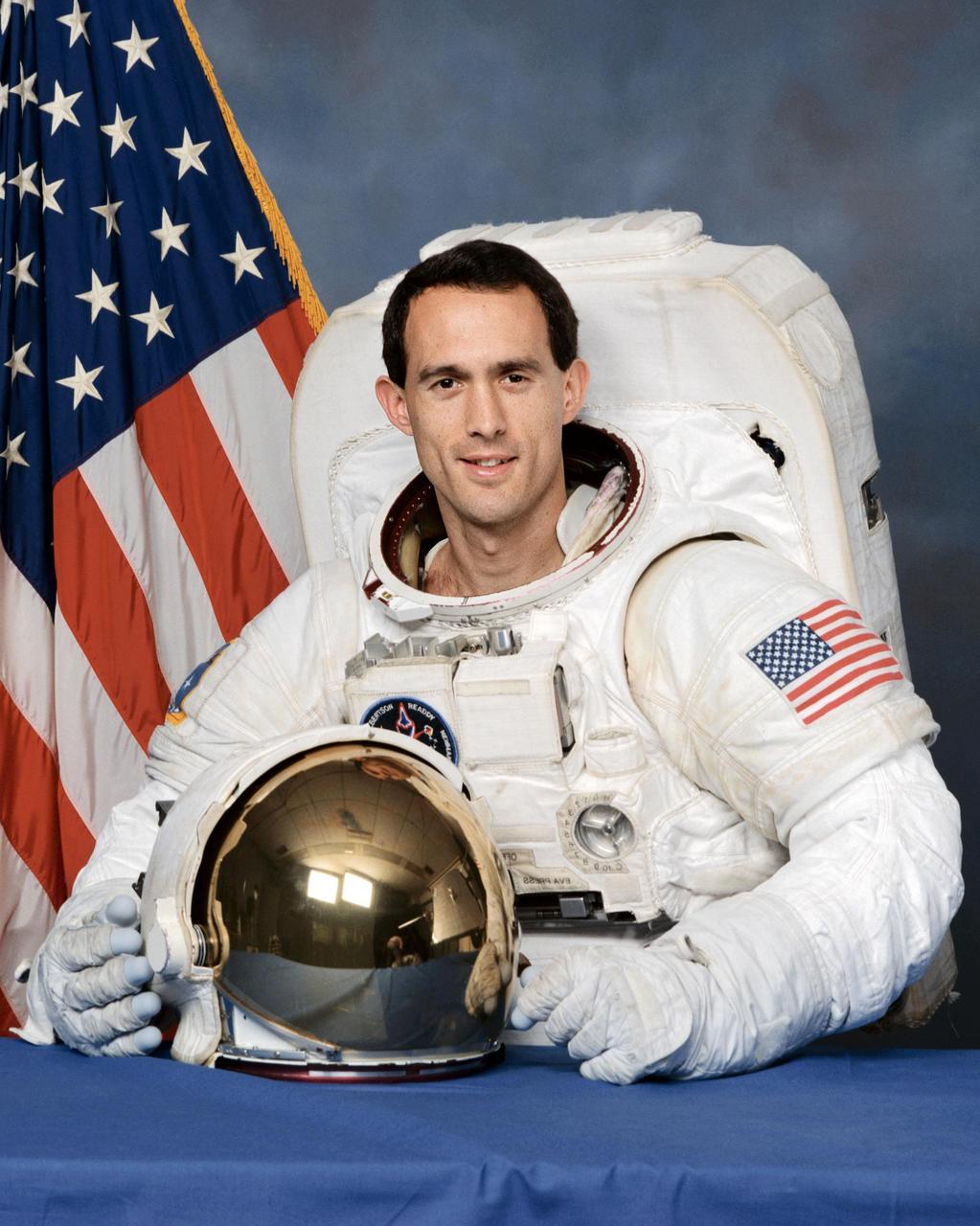
JOHNSON SPACE CENTER, HOUSTON, TEXAS -- (JSC 595-14660) -- Official portrait of astronaut James H. Newman, Mission Specialist
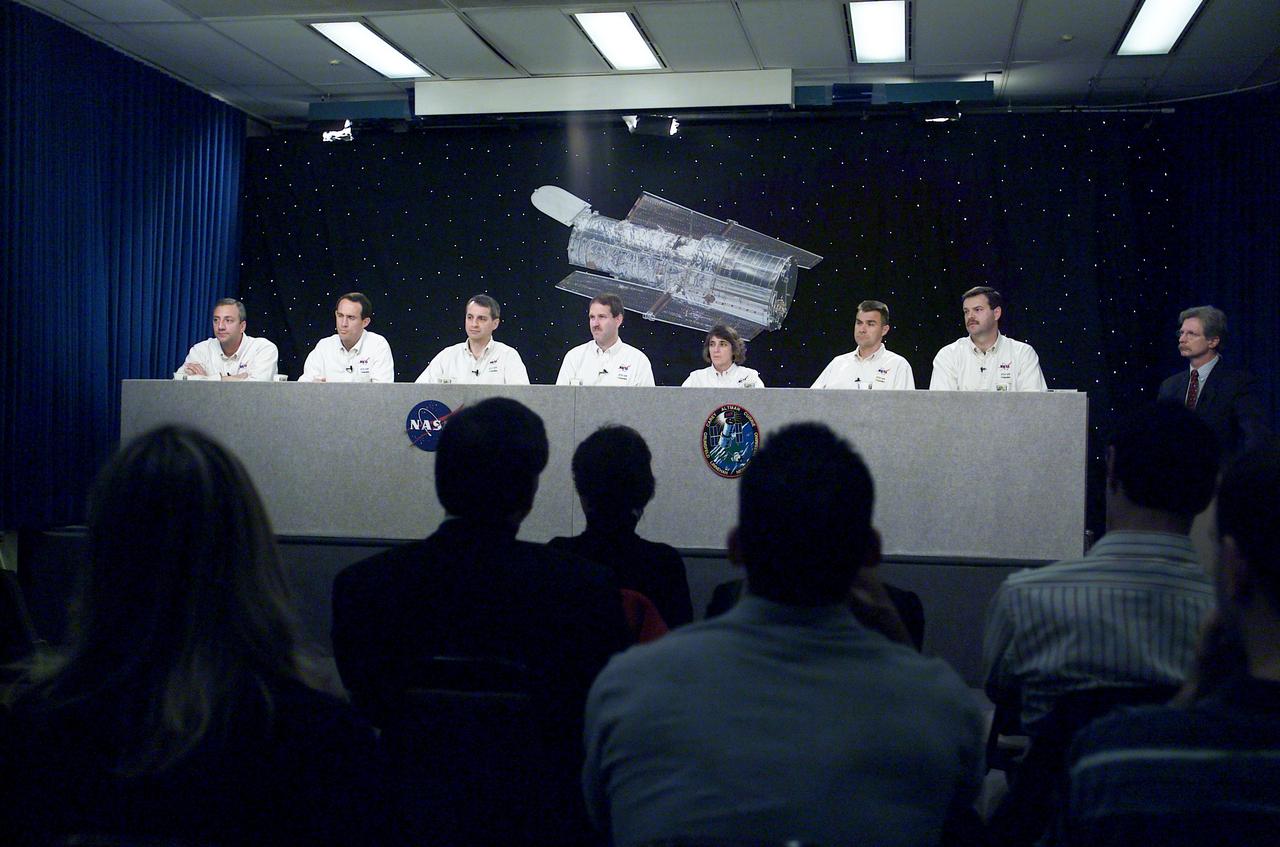
JSC2002-E-05104 (15 February 2002) --- The STS-109 crewmembers are photographed during a pre-flight press conference at Johnson Space Center (JSC). From the left are astronauts Michael J. Massimino, James H. Newman, Richard M. Linnehan, John M. Grunsfeld, Nancy J. Currie, Duane G. Carey, and Scott D. Altman. Altman and Carey are mission commander and pilot, respectively. Grunsfeld is payload commander and Currie, Linnehan, Newman and Massimino are mission specialists.
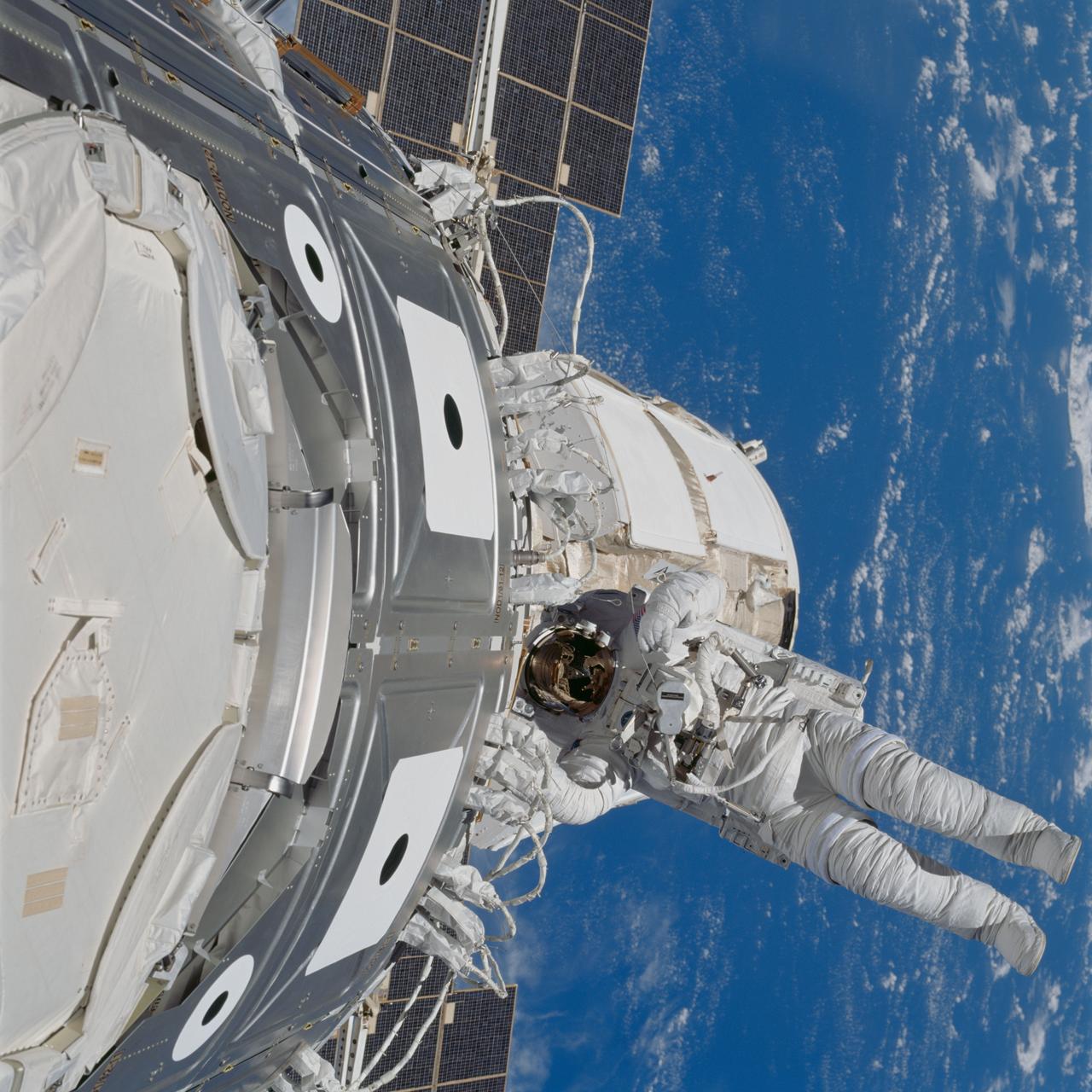
STS088-702-004 (4-15 Dec. 1998) --- Astronaut James H. Newman works on wrap up tasks during the final of three space walks performed by the STS-88 crew during its eleven-day mission in Earth orbit. Astronaut Jerry L. Ross, Newman's partner on all three of the extravehicular activity (EVA) sessions, is out of frame at left.
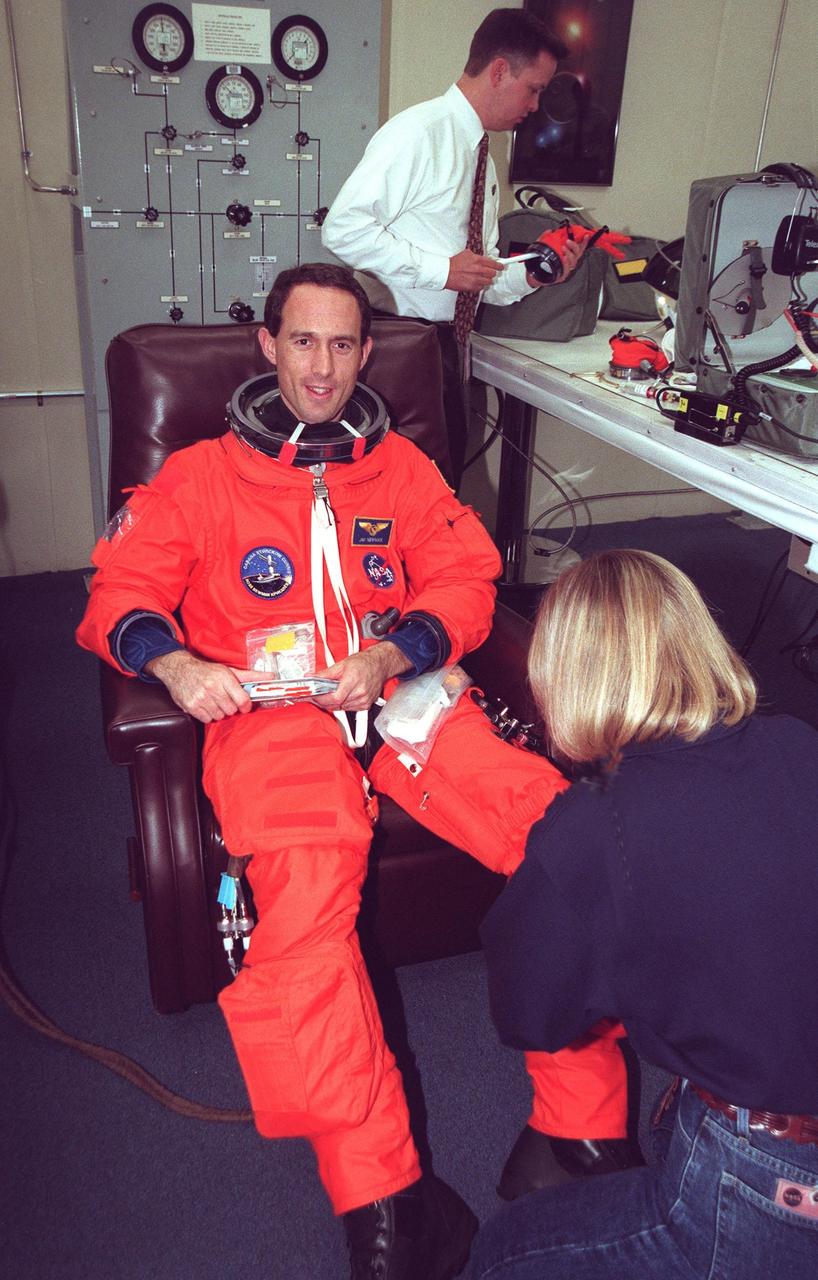
STS-88 Mission Specialist James H. Newman gets assistance from suit technician Terri McKinney while donning his orange launch and entry suit in the Operations and Checkout Building. STS-88 will be Newman’s third spaceflight. He also is scheduled to perform three spacewalks on the mission. He and the five other STS-88 crew members will depart shortly for Launch Pad 39A where the Space Shuttle Endeavour is poised for liftoff on the first U.S. mission dedicated to the assembly of the International Space Station
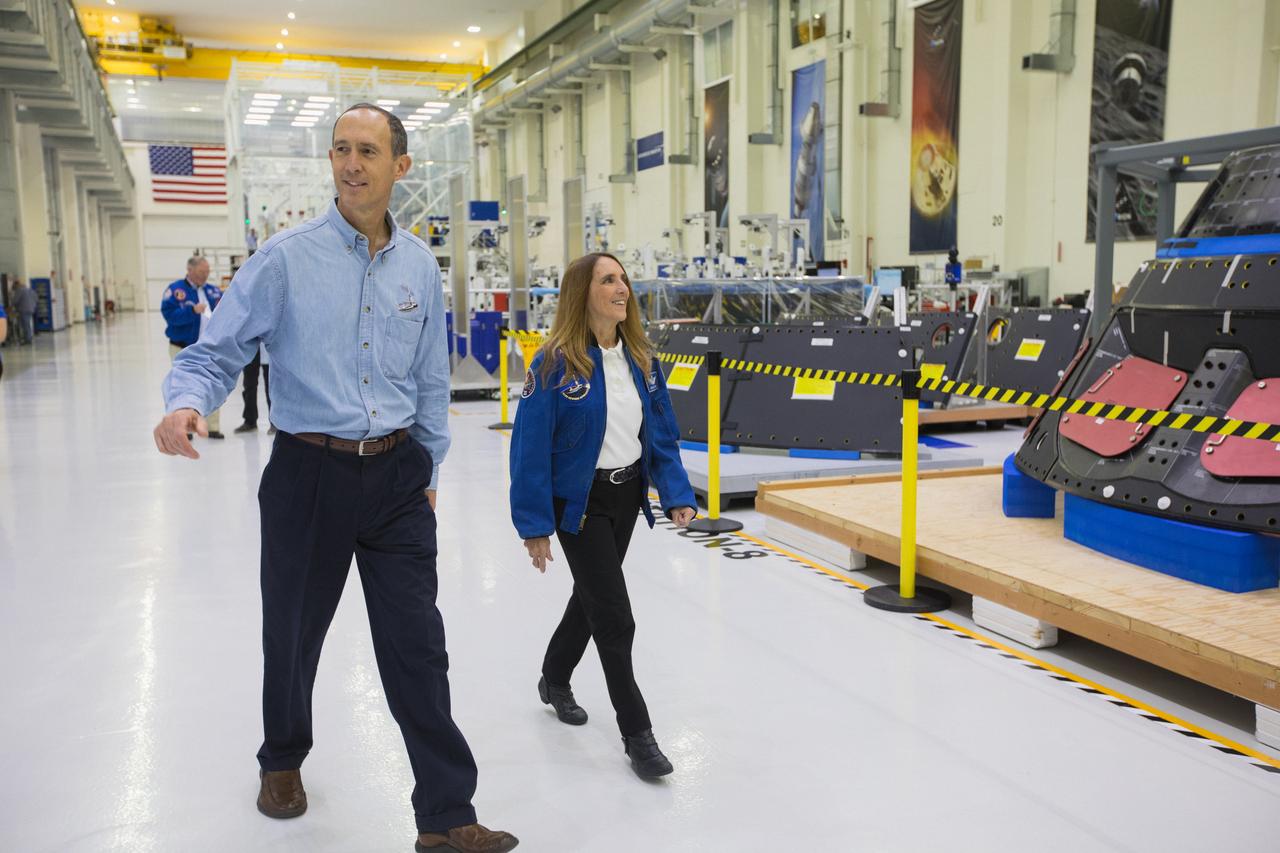
From left, STS-88 mission specialists Jim Newman and Nancie Currie-Gregg tour the Neil Armstrong Operations & Checkout building at Kennedy Space Center on Dec. 10, 2018. Newman and Currie-Gregg were visiting the Florida spaceport as part of a 20th anniversary celebration of STS-88, the first International Space Station assembly mission.
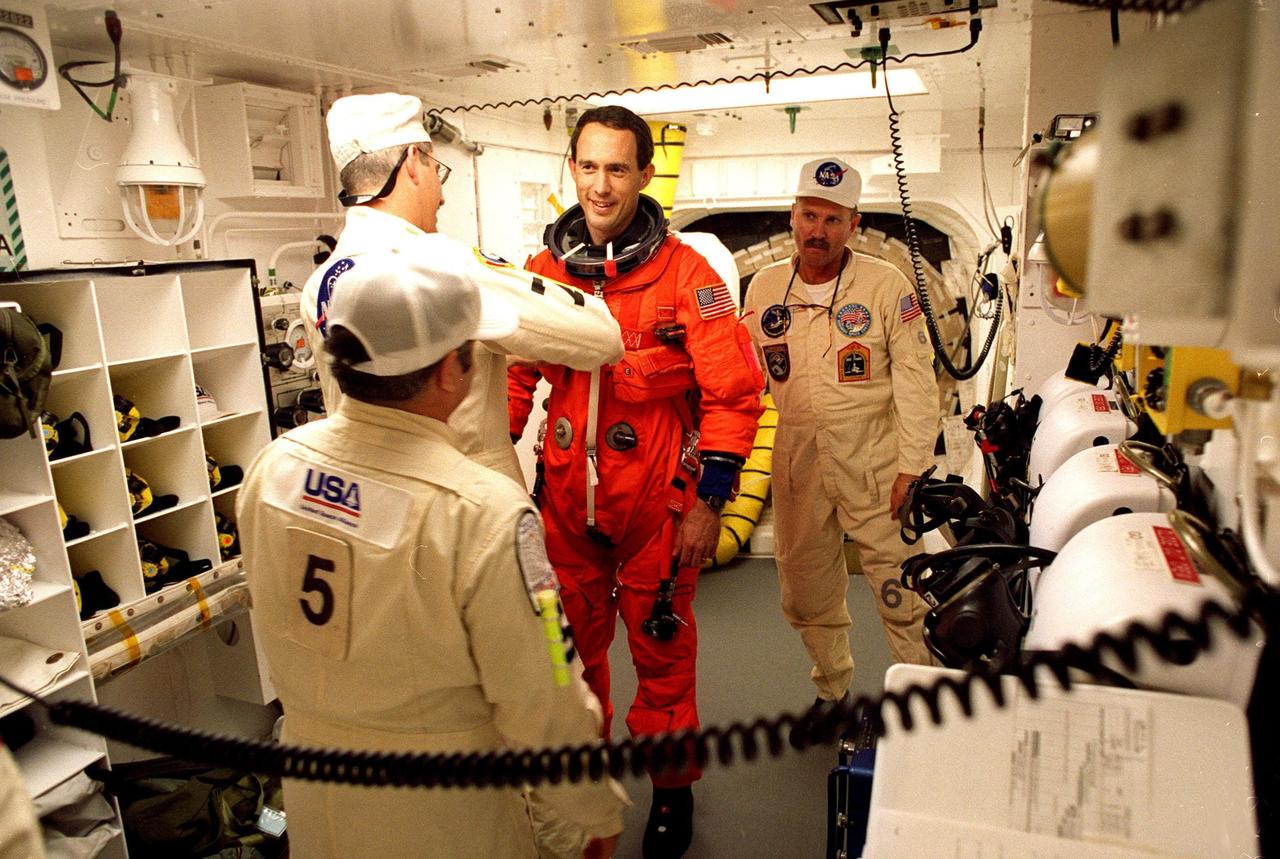
STS-88 Mission Specialist James H. Newman is assisted with his ascent and re-entry flight suit in the white room at Launch Pad 39A before entering Space Shuttle Endeavour for launch. During the nearly 12-day mission, the six-member crew will mate the first two elements of the International Space Station the already-orbiting Zarya control module with the Unity connecting module carried by Endeavour. Newman is making his third spaceflight and is one of two extravehicular activity crew members on this mission
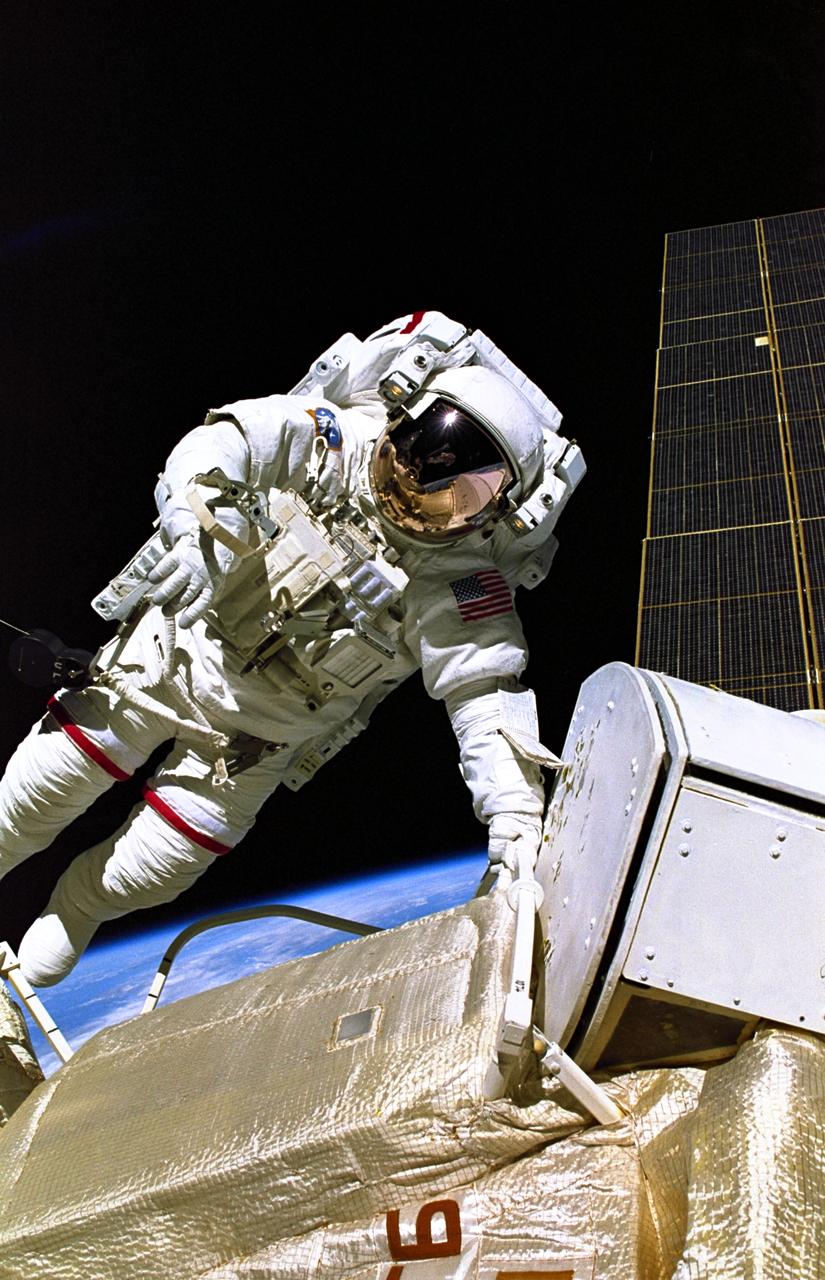
STS088-355-015 (4-15 Dec. 1998) --- Astronaut Jerry L. Ross, STS-88 mission specialist, is pictured during one of three space walks which were conducted on the eleven-day mission. Perched on the end of Endeavour's remote manipulator system (RMS) arm, astronaut James H. Newman, mission specialist, recorded this image. Newman can be seen reflected in Ross' helmet visor. The solar array panel for the Russian-built Zarya module can be seen along right edge.
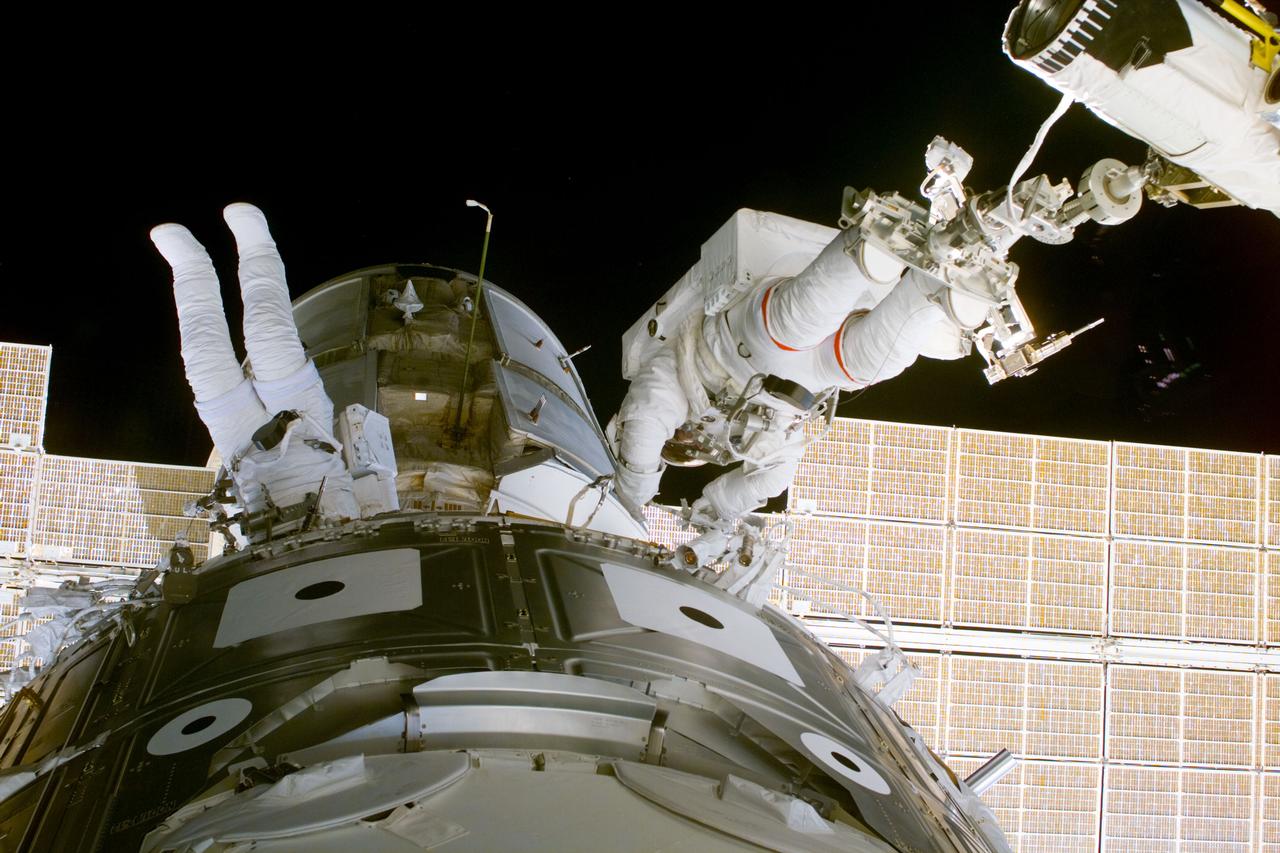
S88-E-5059 (12-08-98) --- Astronauts James H. Newman (left) and Jerry L. Ross work between Zarya and Unity (foreground) during the first of three scheduled spacewalks on the STS-88 mission. Newman is tethered to the module, while Ross is anchored at the feet to a mobile foot restraint mounted on the end of the remote manipulator system (RMS) arm.
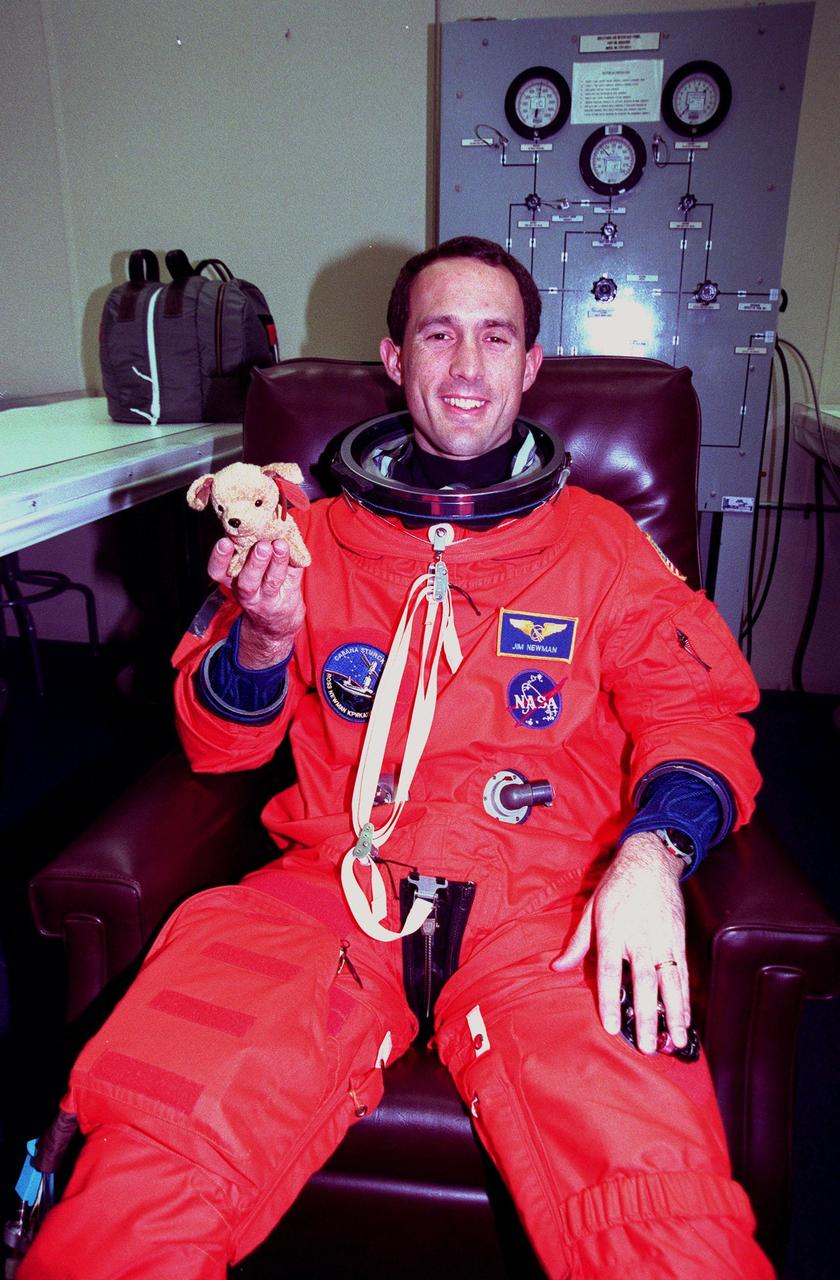
KENNEDY SPACE CENTER, FLA. -- In the Operations and Checkout Building, STS-88 Mission Specialist James H. Newman takes part in a complete suit check before launch. Newman holds a toy dog, "Pluto," representing the crew nickname Dog Crew 3 and Newman's nickname, Pluto. Mission STS-88 is expected to launch at 3:56 a.m. EST with the six-member crew aboard Space Shuttle Endeavour on Dec. 3. Endeavour carries the Unity connecting module, which the crew will be mating with the Russian-built Zarya control module already in orbit. In addition to Unity, two small replacement electronics boxes are on board for possible repairs to Zarya batteries. The mission is expected to last 11 days, 19 hours and 49 minutes, landing at 10:17 p.m. EST on Dec. 14
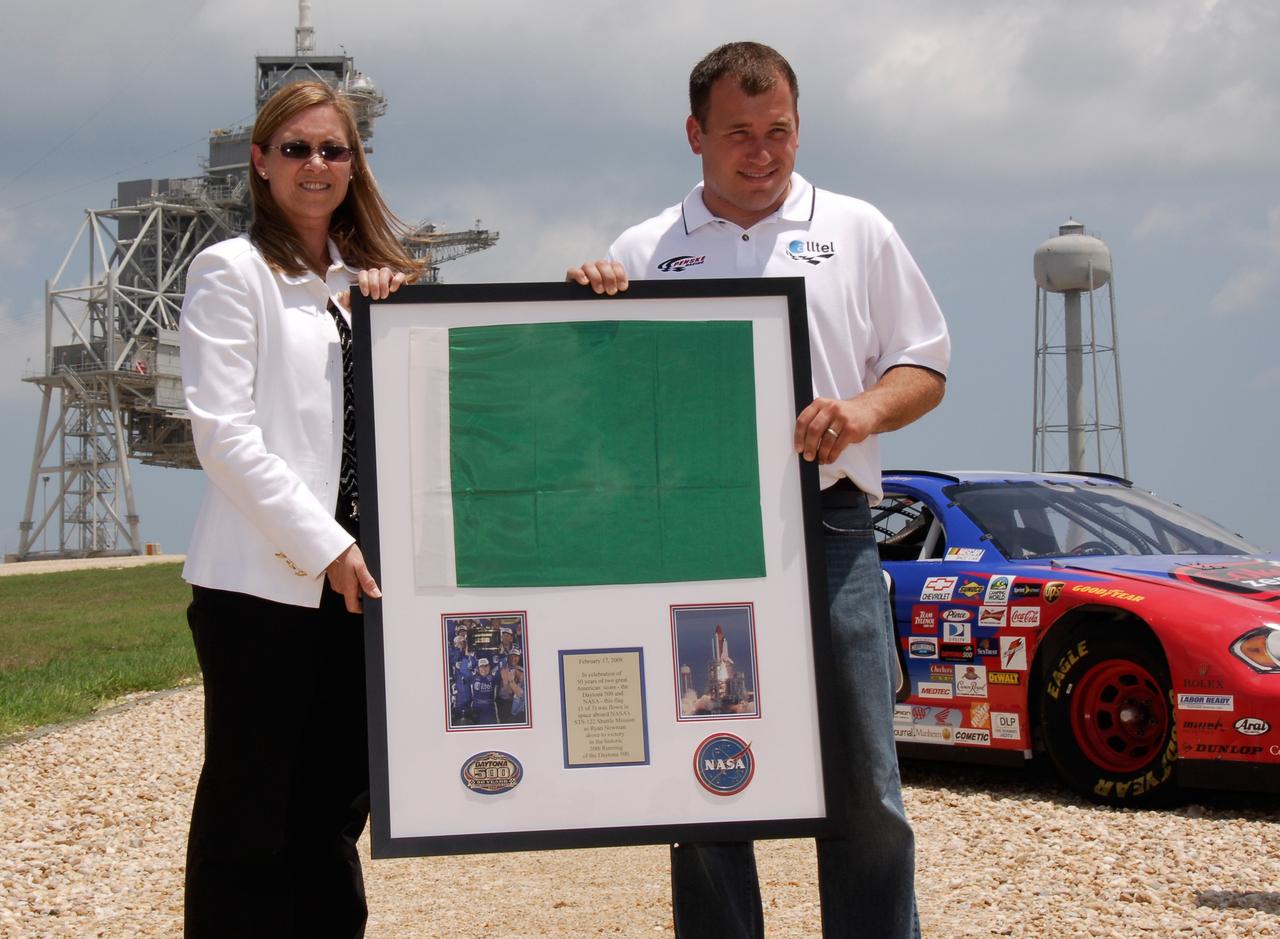
CAPE CANAVERAL, Fla. – On Launch Pad 39A at NASA's Kennedy Space Center, Janet Petro, Kennedy's deputy center director, presents 2008 Daytona 500 winner Ryan Newman one of the racing flags flown last February aboard space shuttle Atlantis' STS-122 mission to the International Space Station. Behind him, at right, is the Daytona International Speedway show car. Newman is visiting Kennedy in honor of NASA's 50th anniversary and the 50th running of NASCAR's Daytona 500 in February. NASA presented Newman two green racing flags. One flag was given to Newman, the second was presented to Daytona 500 Experience General Manager Kim Isemann. A third flag that was flown will be kept by NASA for public display. The connection between NASA and Daytona's International Speedway extends beyond their close proximity to one another. During recent years, technology developed for the space program has found many uses on Earth, including helping NASCAR drivers stay safe and increase performance. Photo credit: NASA/Kim Shiflett
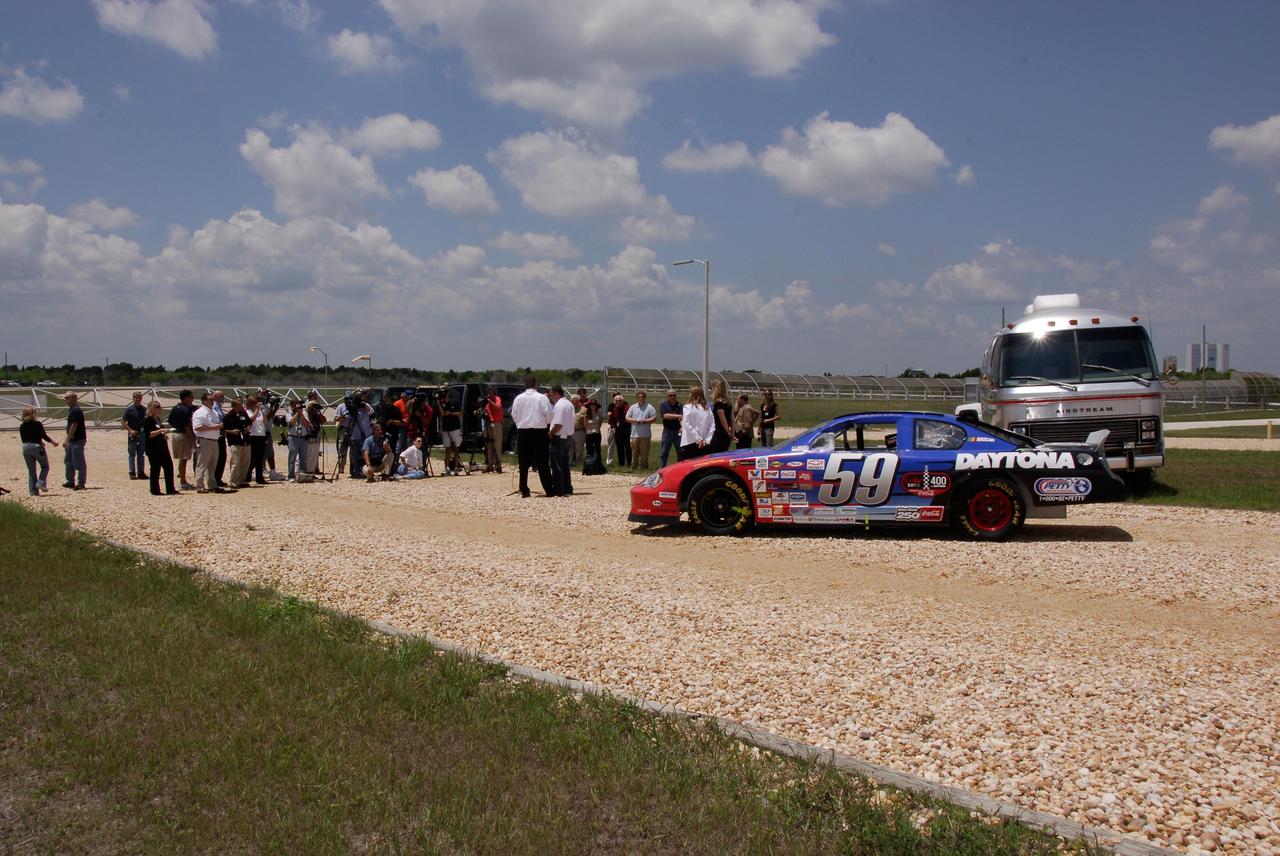
CAPE CANAVERAL, Fla. – Members of the media stretch across the crawlerway on Launch Pad 39A at NASA's Kennedy Space Center to interview 2008 Daytona 500 winner Ryan Newman (center right). At left is Daytona International Speedway President Robin Braig. The Daytona International Speedway show car, shown here, is in sharp contrast to the crawler-transporter that usually travels the special road to the pad at a maximum speed of 2 mph. Newman is visiting Kennedy in honor of NASA's 50th anniversary and the 50th running of NASCAR's Daytona 500 in February. NASA presented Newman two green racing flags that were flown last February aboard space shuttle Atlantis' STS-122 mission to the International Space Station. One flag was given to Newman, the second was presented to Daytona 500 Experience General Manager Kim Isemann. A third flag that was flown will be kept by NASA for public display. The connection between NASA and Daytona's International Speedway extends beyond their close proximity to one another. During recent years, technology developed for the space program has found many uses on Earth, including helping NASCAR drivers stay safe and increase performance. Photo credit: NASA/Kim Shiflett
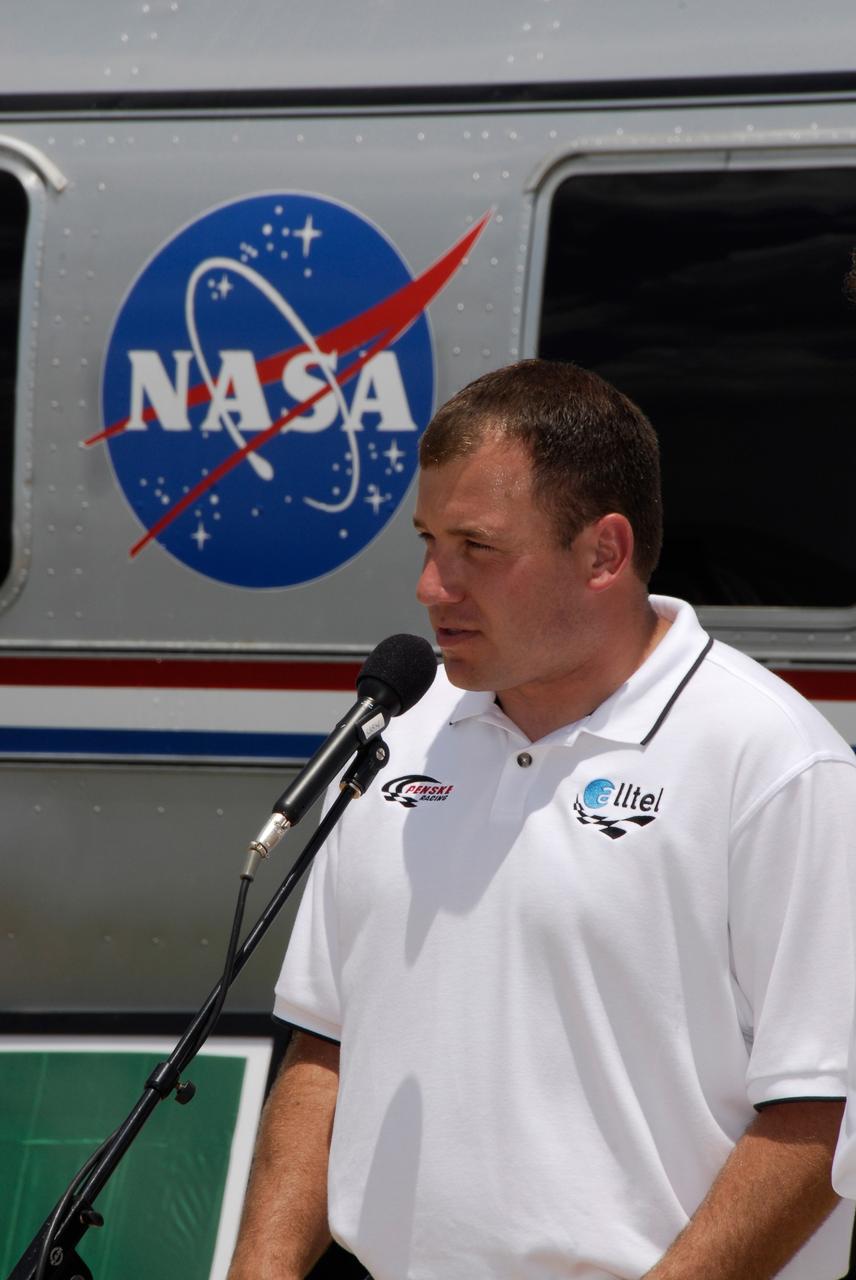
CAPE CANAVERAL, Fla. – 2008 Daytona 500 winner Ryan Newman talks to the media gathered on the crawlerway on Launch Pad 39A. The Daytona International Speedway show car, shown here, is in sharp contrast to the crawler-transporter that usually travels the special road to the pad. Newman is visiting Kennedy in honor of NASA's 50th anniversary and the 50th running of NASCAR's Daytona 500 in February. NASA presented Newman two green racing flags that were flown last February aboard space shuttle Atlantis' STS-122 mission to the International Space Station. One flag was given to Newman, the second was presented to Daytona 500 Experience General Manager Kim Isemann. A third flag that was flown will be kept by NASA for public display. The connection between NASA and Daytona's International Speedway extends beyond their close proximity to one another. During recent years, technology developed for the space program has found many uses on Earth, including helping NASCAR drivers stay safe and increase performance. Photo credit: NASA/Kim Shiflett
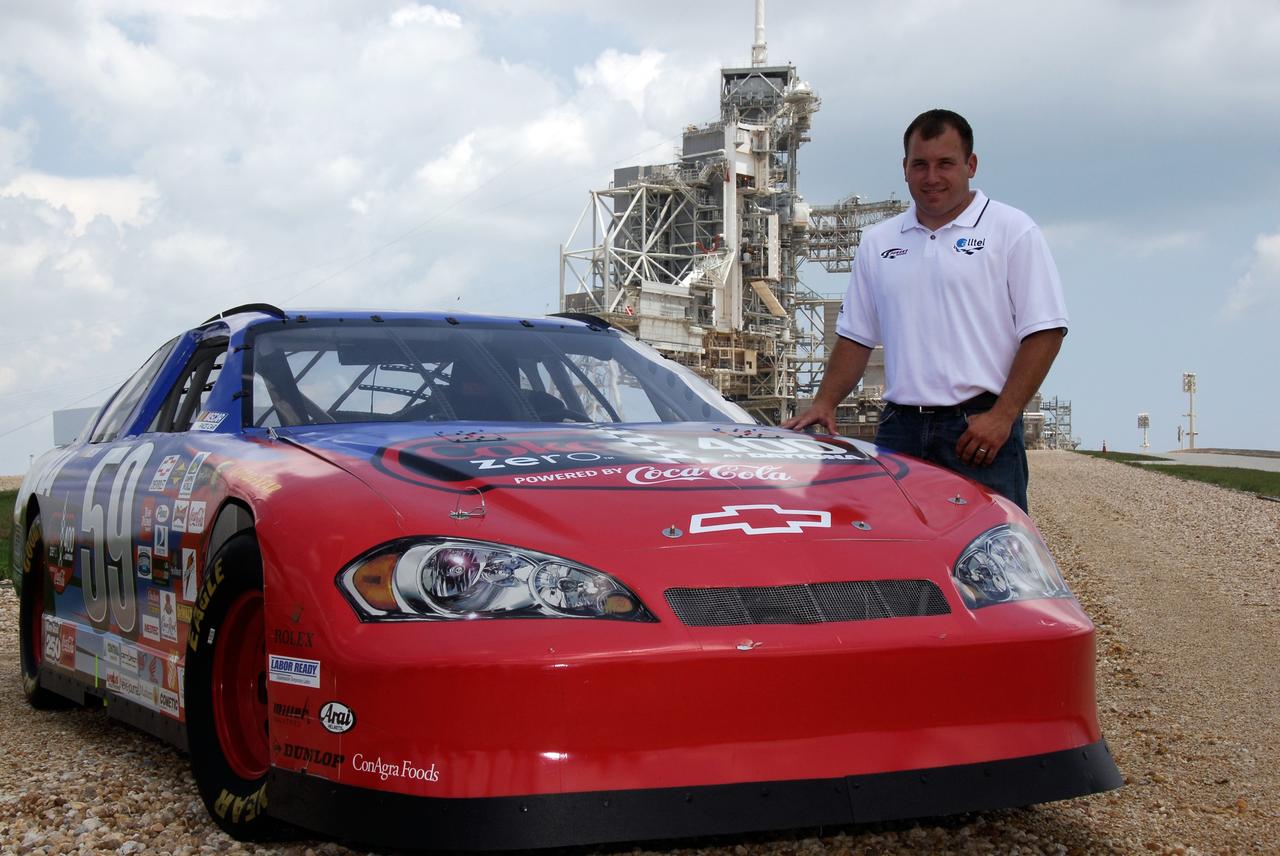
CAPE CANAVERAL, Fla. – On Launch Pad 39A at NASA's Kennedy Space Center, 2008 Daytona 500 winner Ryan Newman poses for photographers with the Daytona International Speedway show car. Newman is visiting Kennedy in honor of NASA's 50th anniversary and the 50th running of NASCAR's Daytona 500 in February. NASA presented Newman two green racing flags that were flown last February aboard space shuttle Atlantis' STS-122 mission to the International Space Station. One flag was given to Newman, the second was presented to Daytona 500 Experience General Manager Kim Isemann. A third flag that was flown will be kept by NASA for public display. The connection between NASA and Daytona's International Speedway extends beyond their close proximity to one another. During recent years, technology developed for the space program has found many uses on Earth, including helping NASCAR drivers stay safe and increase performance. Photo credit: NASA/Kim Shiflett
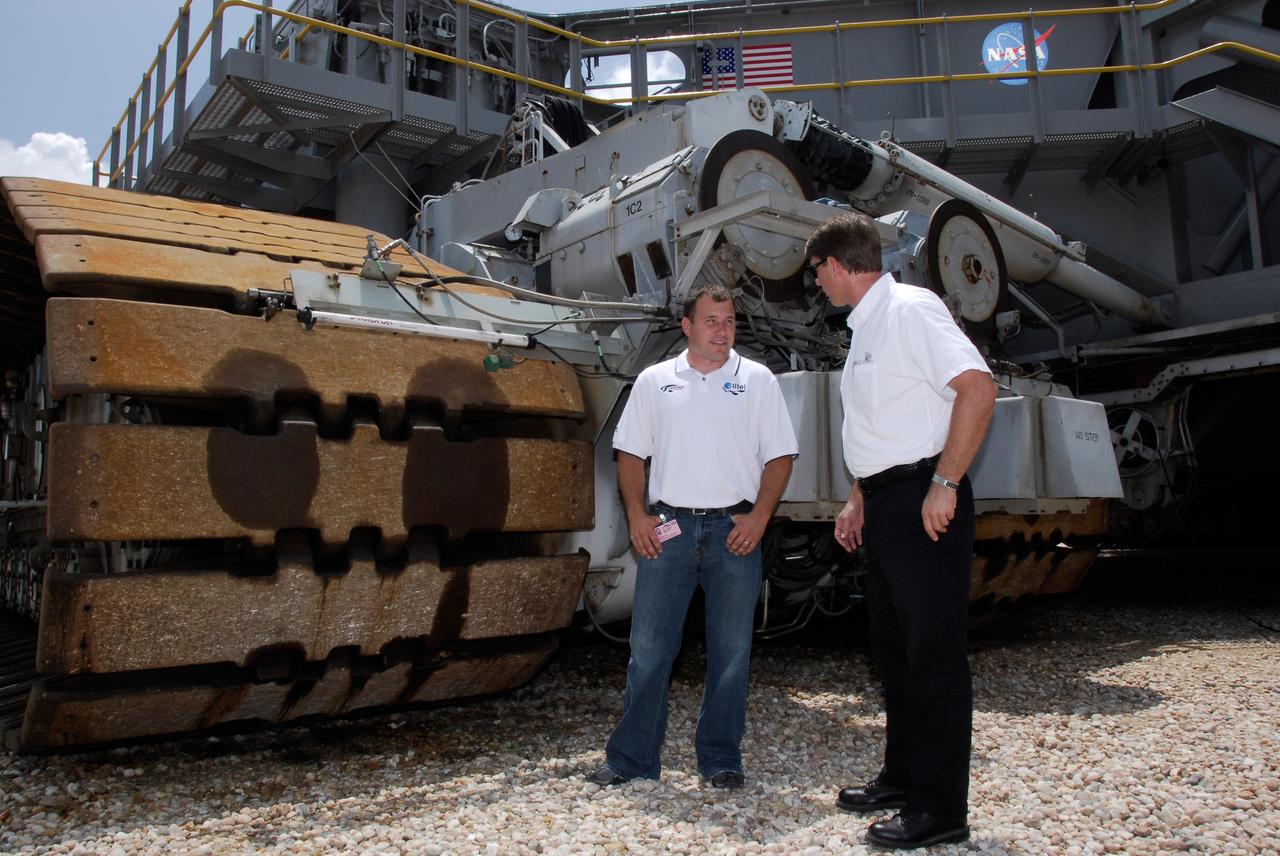
CAPE CANAVERAL, Fla. – 2008 Daytona 500 winner Ryan Newman learns more from Gordon Coffey, NASA systems engineer, about the crawler-transporter behind him. Standing 20 feet tall, the crawler weighs 5.5 million pounds unloaded. It has 16 traction motors of 375 hp each and only travels 2 mph unloaded. Newman is visiting Kennedy in honor of NASA's 50th anniversary and the 50th running of NASCAR's Daytona 500 in February. NASA presented Newman two green racing flags that were flown last February aboard space shuttle Atlantis' STS-122 mission to the International Space Station. One flag was given to Newman, the second was presented to Daytona 500 Experience General Manager Kim Isemann. A third flag that was flown will be kept by NASA for public display. The connection between NASA and Daytona's International Speedway extends beyond their close proximity to one another. During recent years, technology developed for the space program has found many uses on Earth, including helping NASCAR drivers stay safe and increase performance. Photo credit: NASA/Kim Shiflett
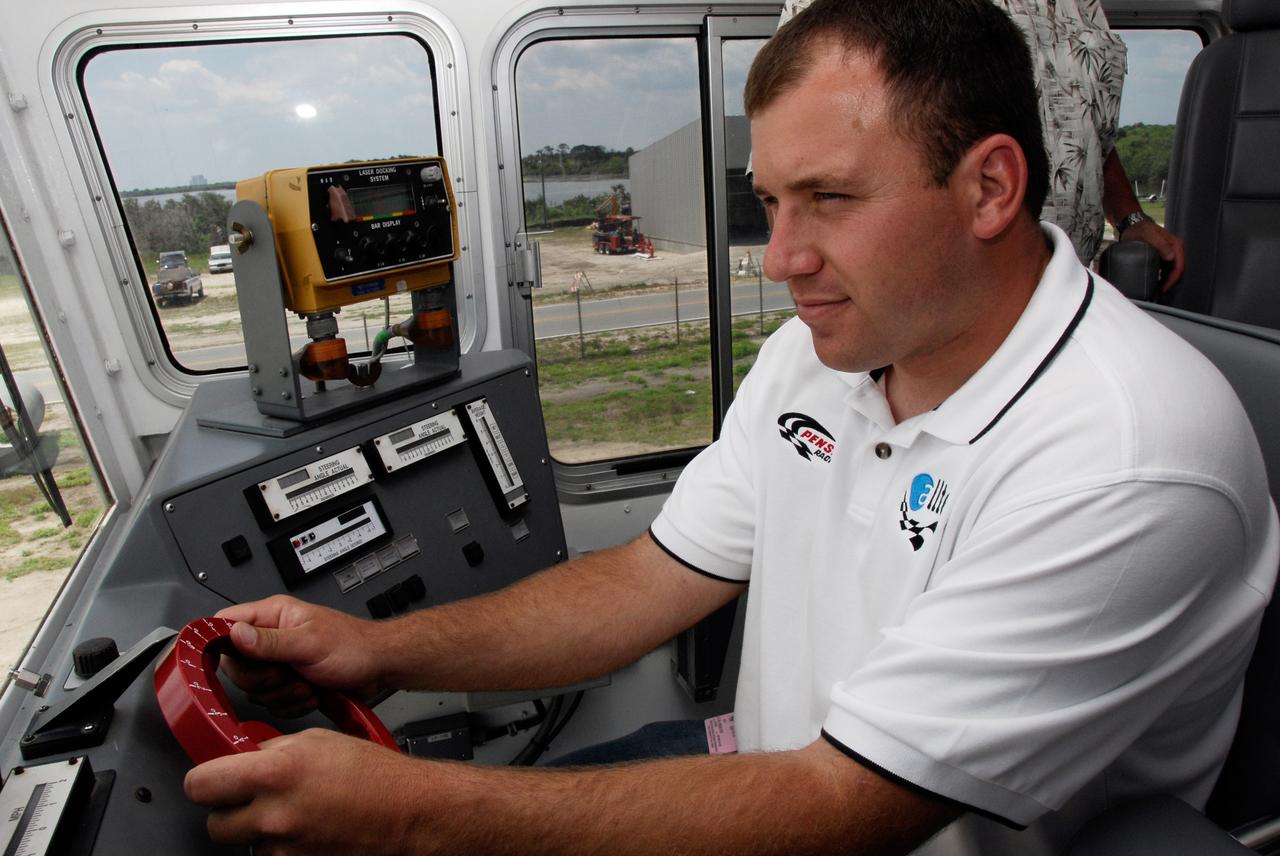
CAPE CANAVERAL, Fla. – 2008 Daytona 500 winner Ryan Newman sits behind the wheel of a crawler-transporter at NASA's Kennedy Space Center. Unlike his winning race car, the maximum speed of a crawler is 2 mph unloaded. Newman is visiting Kennedy in honor of NASA's 50th anniversary and the 50th running of NASCAR's Daytona 500 in February. NASA presented Newman two green racing flags that were flown last February aboard space shuttle Atlantis' STS-122 mission to the International Space Station. One flag was given to Newman, the second was presented to Daytona 500 Experience General Manager Kim Isemann. A third flag that was flown will be kept by NASA for public display. The connection between NASA and Daytona's International Speedway extends beyond their close proximity to one another. During recent years, technology developed for the space program has found many uses on Earth, including helping NASCAR drivers stay safe and increase performance. Photo credit: NASA/Kim Shiflett
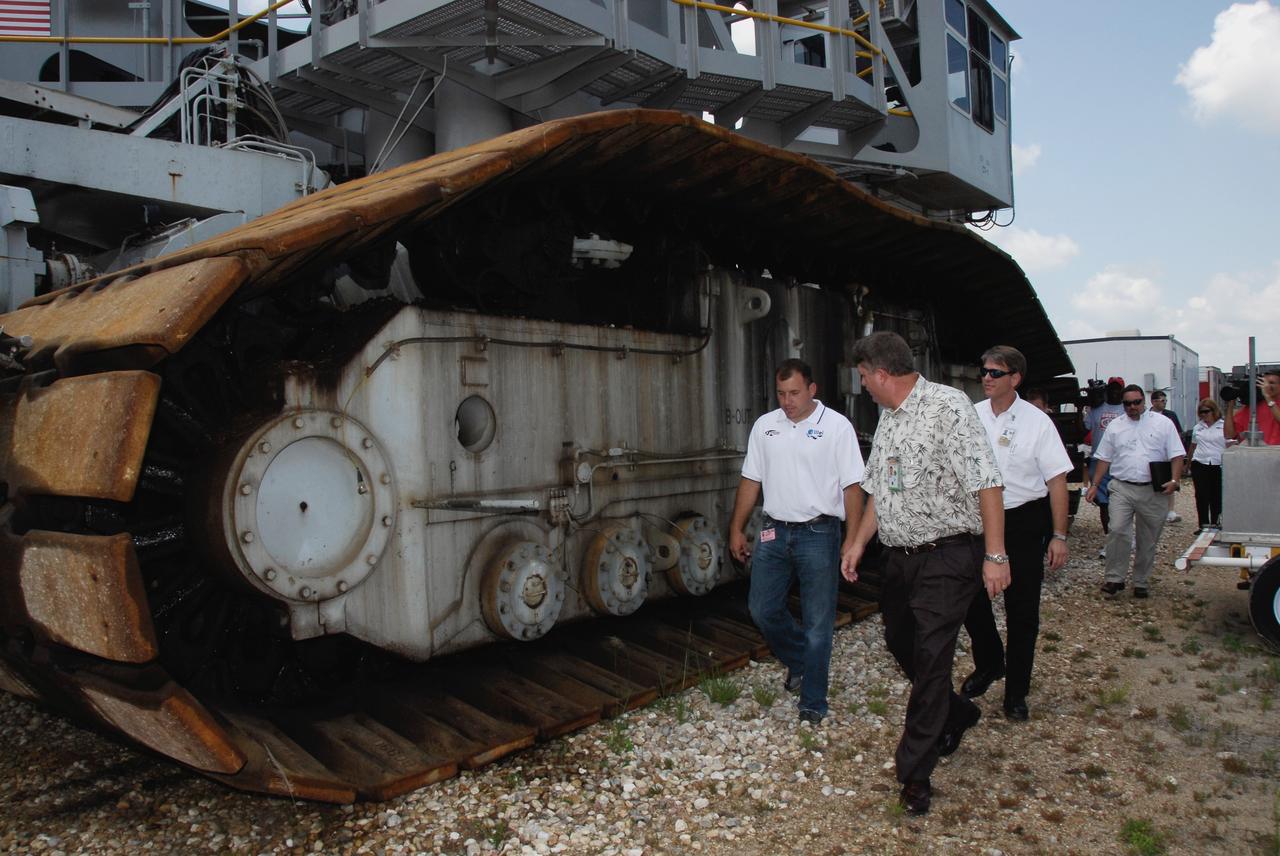
CAPE CANAVERAL, Fla. – 2008 Daytona 500 winner Ryan Newman (left) gets a close look at a crawler-transporter with Perry Becker, chief of the Shuttle Grounds Structural Branch, at NASA's Kennedy Space Center. Unlike his winning race car, the maximum speed of a crawler is 2 mph unloaded. Newman is visiting Kennedy in honor of NASA's 50th anniversary and the 50th running of NASCAR's Daytona 500 in February. NASA presented Newman two green racing flags that were flown last February aboard space shuttle Atlantis' STS-122 mission to the International Space Station. One flag was given to Newman, the second was presented to Daytona 500 Experience General Manager Kim Isemann. A third flag that was flown will be kept by NASA for public display. The connection between NASA and Daytona's International Speedway extends beyond their close proximity to one another. During recent years, technology developed for the space program has found many uses on Earth, including helping NASCAR drivers stay safe and increase performance. Photo credit: NASA/Kim Shiflett