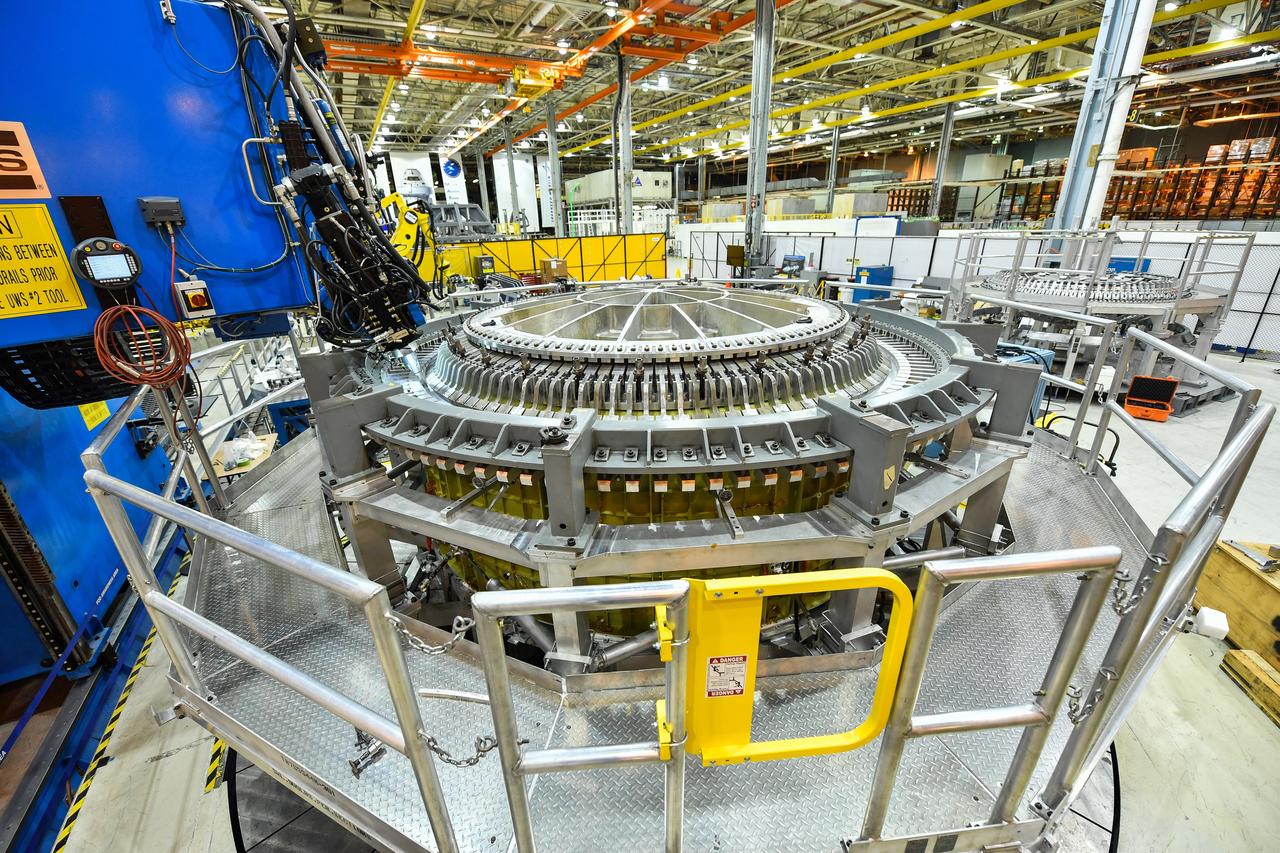
Orion STA PV4 Weld
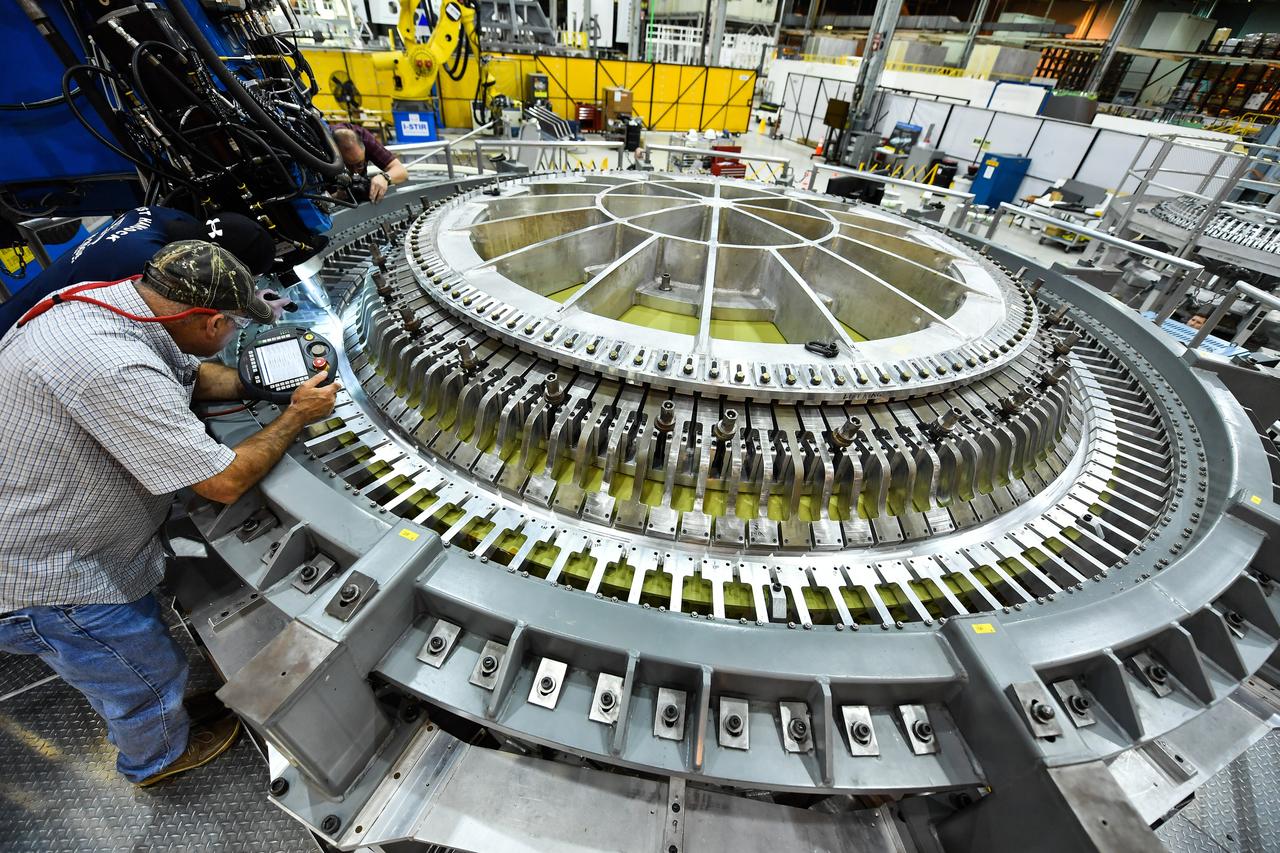
Orion STA PV4 Weld
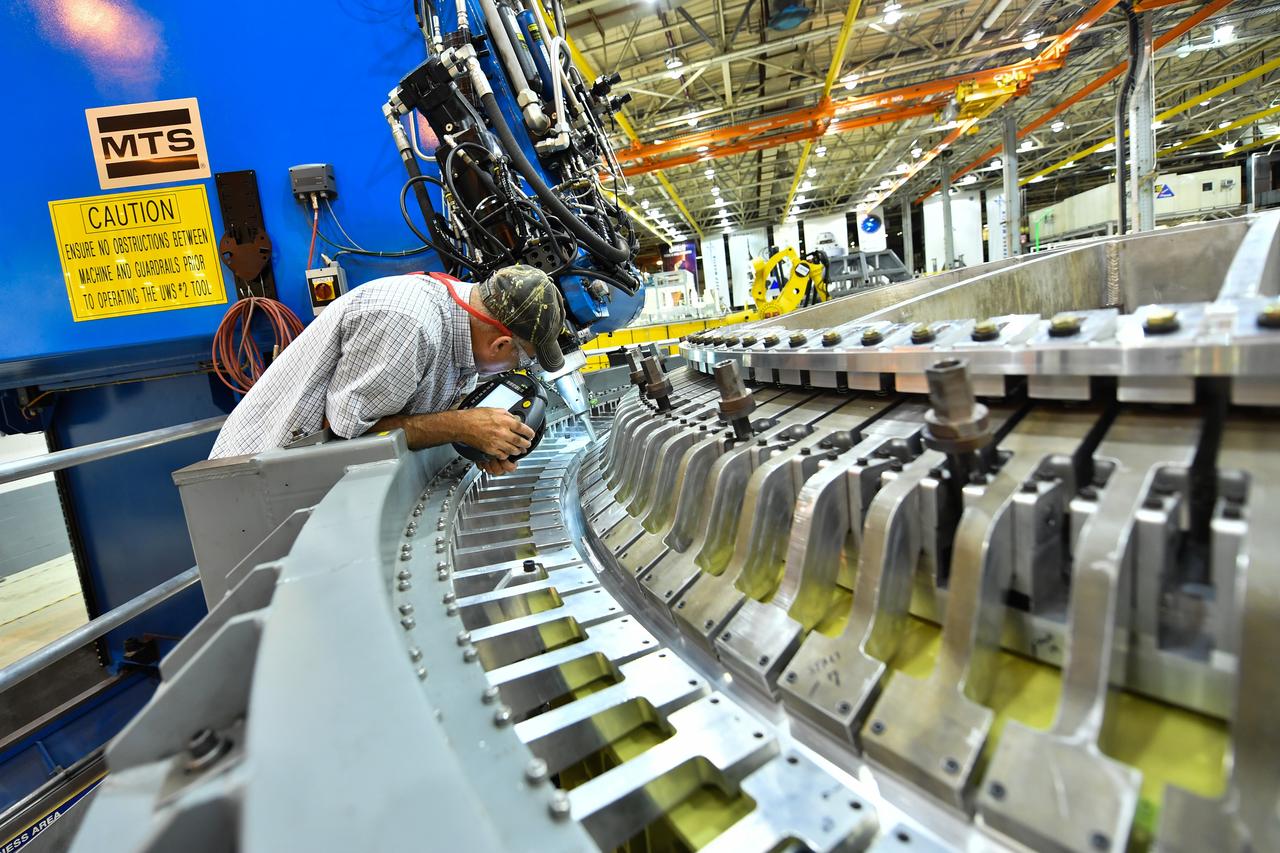
Orion STA PV4 Weld
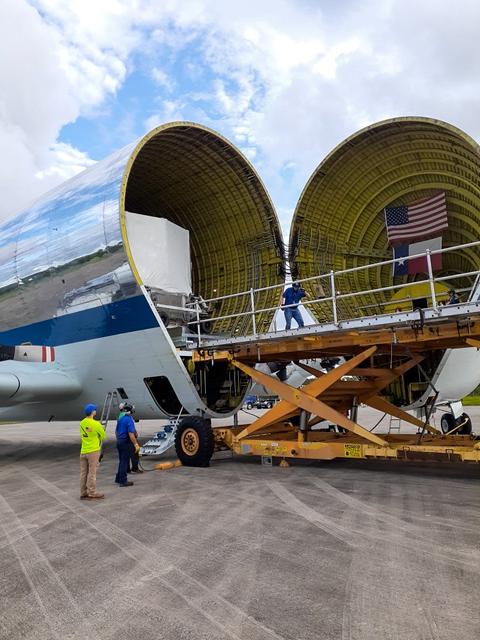
NASA’s Super Guppy arrives at Kennedy Space Center’s Launch and Landing Facility in Florida on Sept. 11, 2020, carrying the Orion Service Module Structural Test Article (SM-STA). Composed of the European Service Module (ESM) and crew module adapter (CMA), these components mark the completion of the test campaign to certify Orion’s Service Module for Artemis I. The Orion SM-STA is being offloaded for transport to the Neil Armstrong Operations and Checkout Building. The first in a series of increasingly complex missions, Artemis I will test the Orion spacecraft and Space Launch System as an integrated system ahead of crewed flights to the Moon. Under the Artemis program, NASA will land the first woman and the next man on the Moon by 2024. Photo credit:
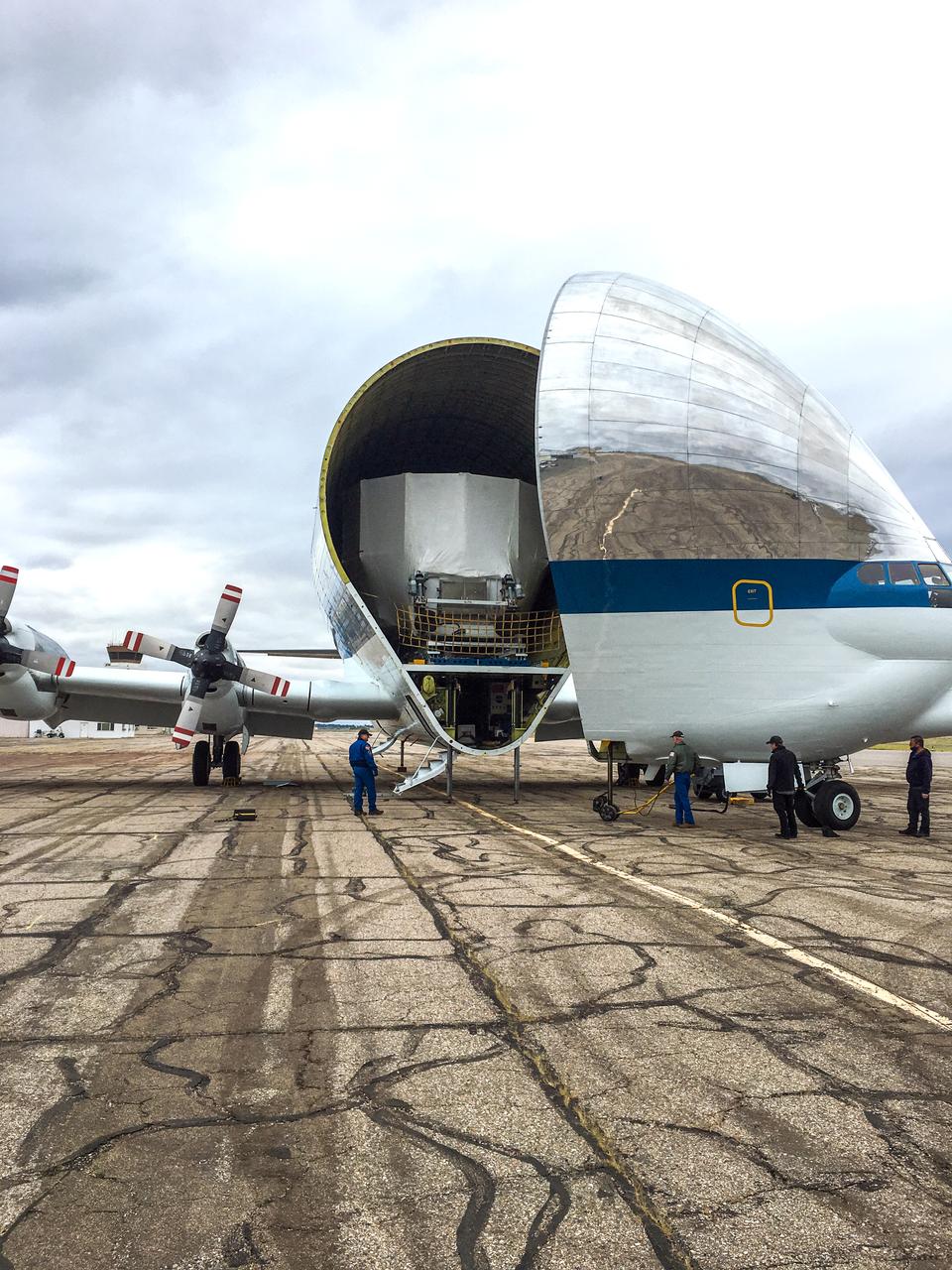
NASA’s Super Guppy arrives at Kennedy Space Center’s Launch and Landing Facility in Florida on Sept. 11, 2020, carrying the Orion Service Module Structural Test Article (SM-STA). Composed of the European Service Module (ESM) and crew module adapter (CMA), these components mark the completion of the test campaign to certify Orion’s Service Module for Artemis I. The Orion SM-STA is being offloaded for transport to the Neil Armstrong Operations and Checkout Building. The first in a series of increasingly complex missions, Artemis I will test the Orion spacecraft and Space Launch System as an integrated system ahead of crewed flights to the Moon. Under the Artemis program, NASA will land the first woman and the next man on the Moon by 2024.

NASA’s Super Guppy arrives at Kennedy Space Center’s Launch and Landing Facility in Florida on Sept. 11, 2020, carrying the Orion Service Module Structural Test Article (SM-STA). Composed of the European Service Module (ESM) and crew module adapter (CMA), these components mark the completion of the test campaign to certify Orion’s Service Module for Artemis I. The Orion SM-STA is being offloaded for transport to the Neil Armstrong Operations and Checkout Building. The first in a series of increasingly complex missions, Artemis I will test the Orion spacecraft and Space Launch System as an integrated system ahead of crewed flights to the Moon. Under the Artemis program, NASA will land the first woman and the next man on the Moon by 2024.NASA’s Super Guppy arrives at Kennedy Space Center’s Launch and Landing Facility in Florida on Sept. 11, 2020, carrying the Orion Service Module Structural Test Article (SM-STA). Composed of the European Service Module (ESM) and crew module adapter (CMA) these components mark the completion of the test campaign to certify Orion’s Service Module for Artemis I. The Orion SM-STA is being offloaded for transport to the Neil Armstrong Operations and Checkout Building. The first in a series of increasingly complex missions, Artemis I will test the Orion spacecraft and Space Launch System as an integrated system ahead of crewed flights to the Moon. Under the Artemis program, NASA will land the first woman and the next man on the Moon by 2024.

Unwrapping of Orion STA
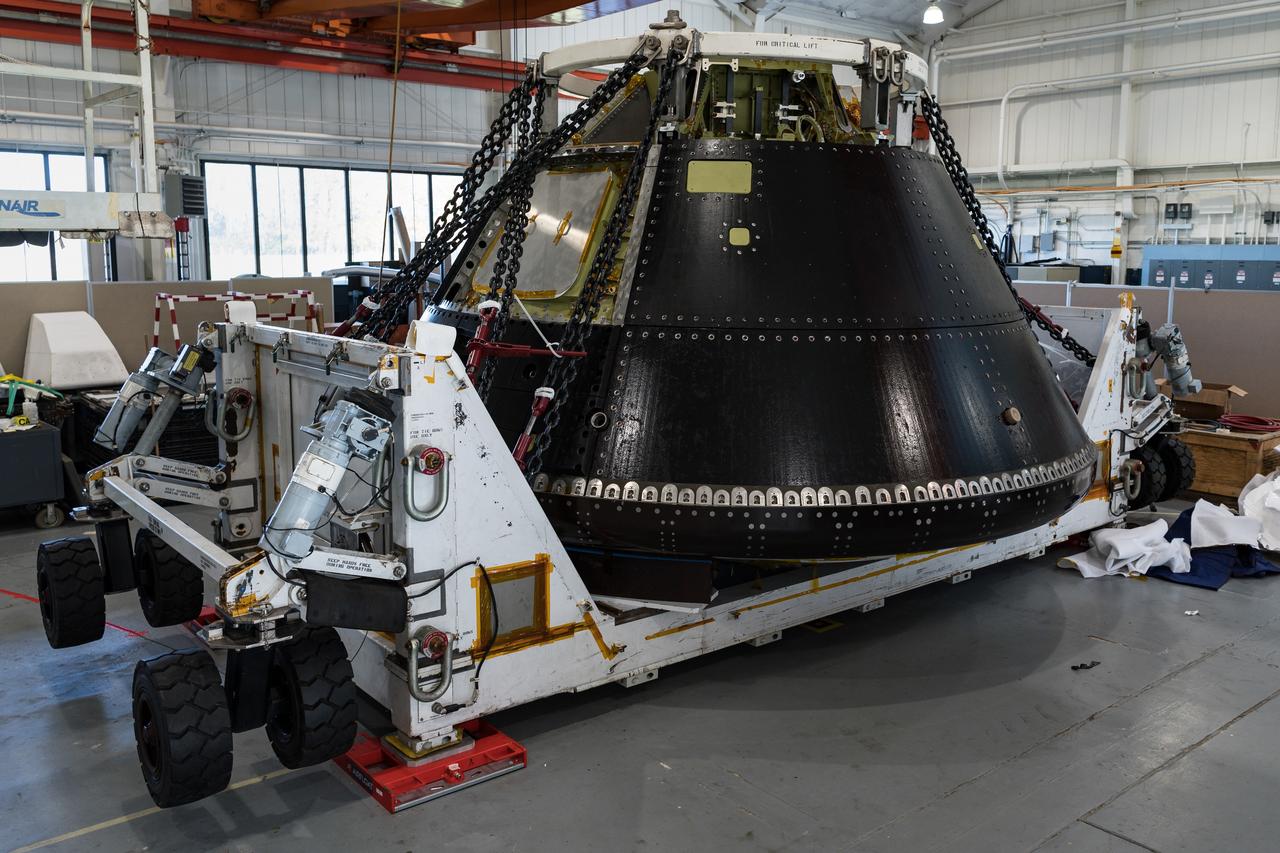
Unwrapping of Orion STA
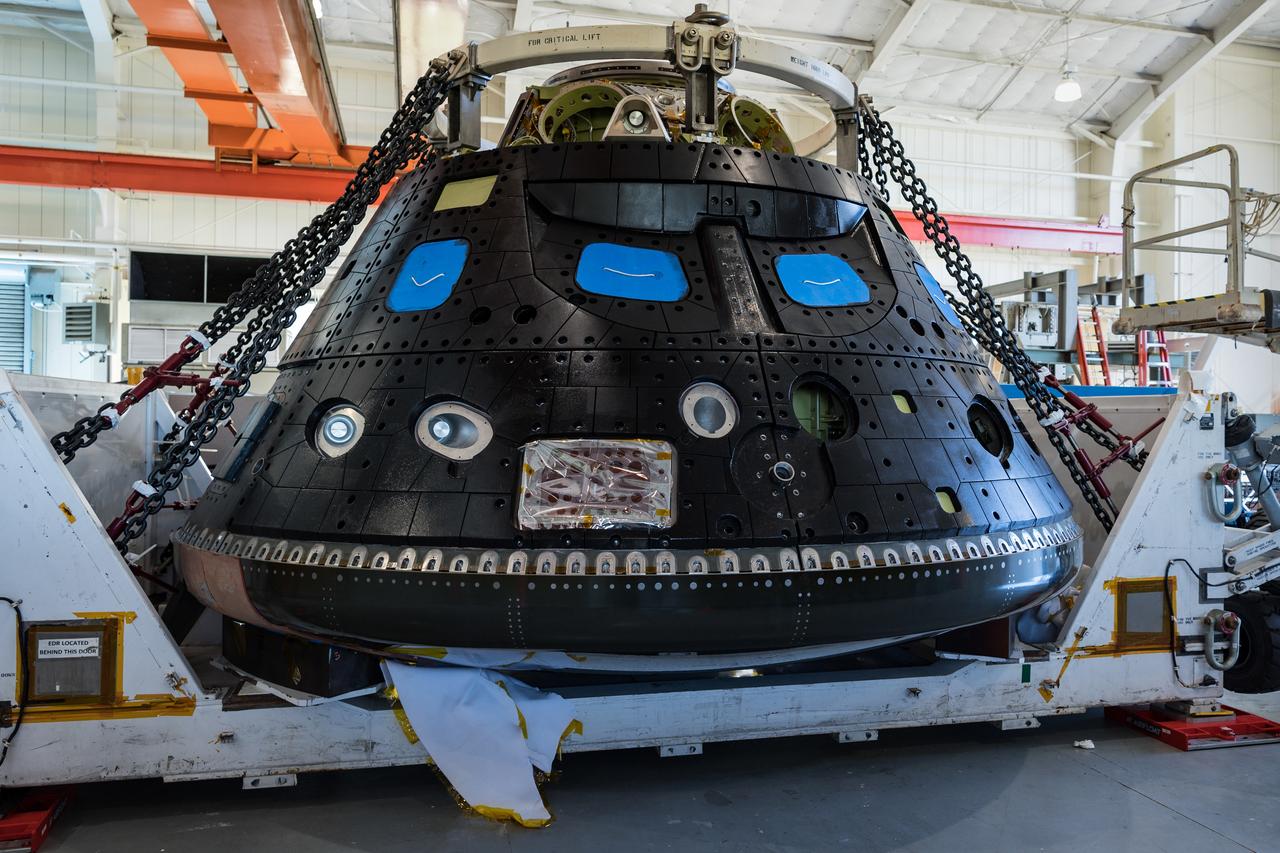
Unwrapping of Orion STA
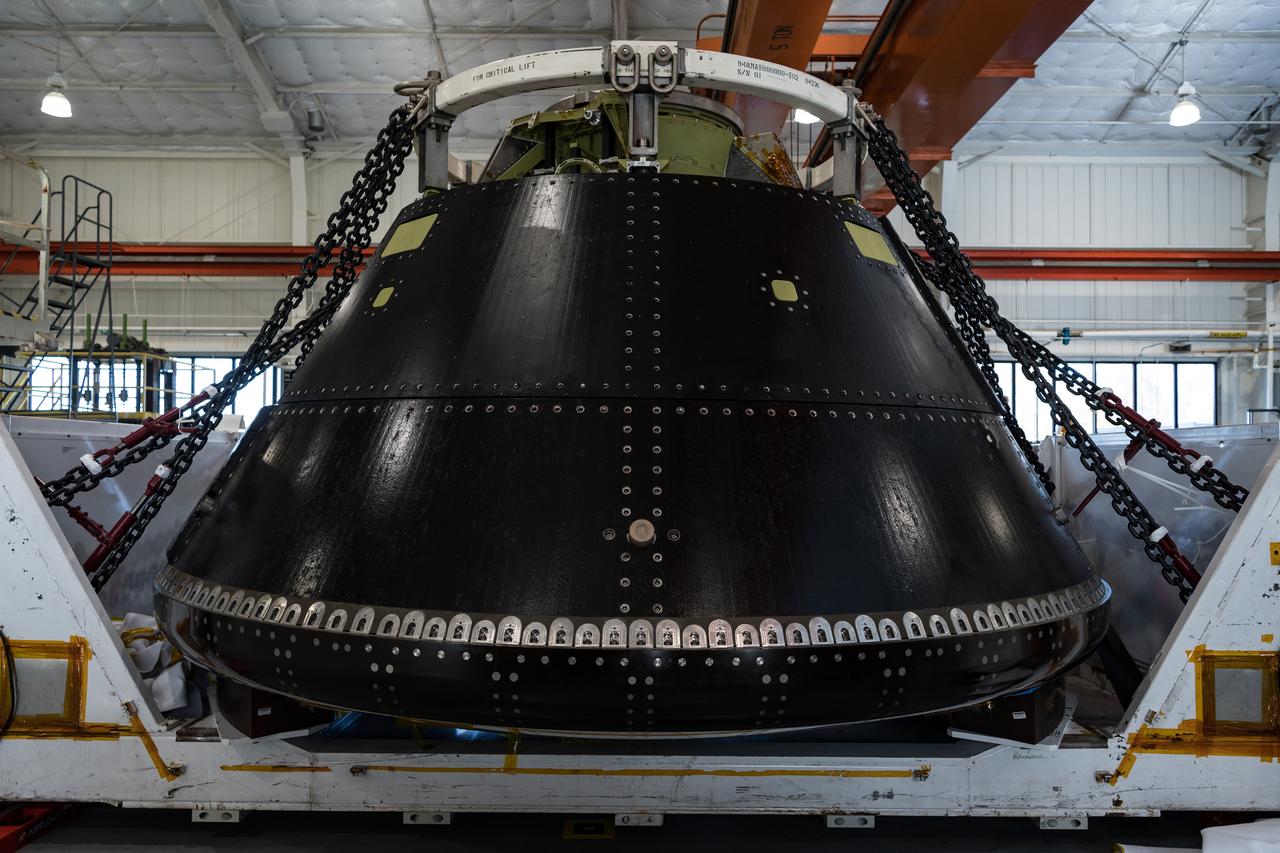
Unwrapping of Orion STA
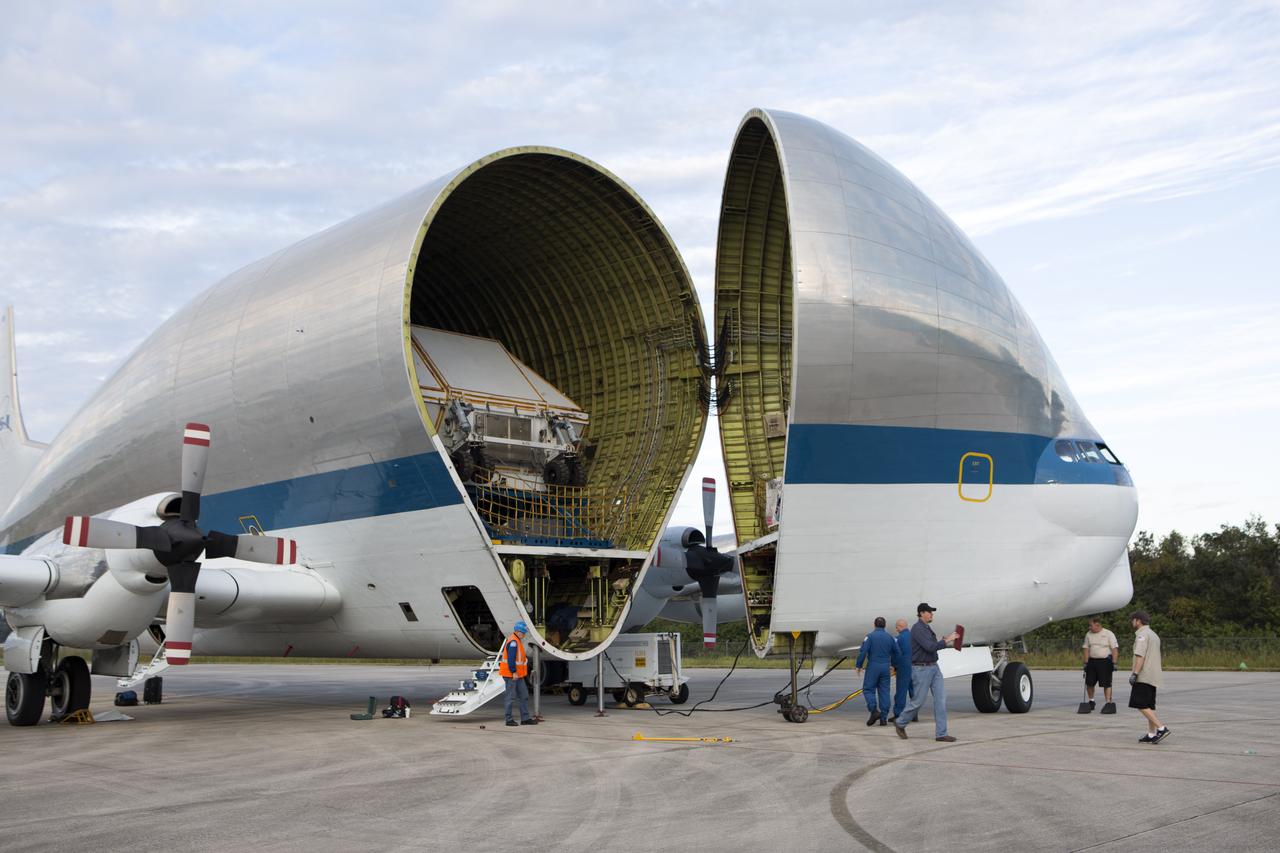
NASA’s Super Guppy aircraft, carrying the Orion crew module structural test article (STA), arrived at the Shuttle Landing Facility operated by Space Florida at NASA’s Kennedy Space Center in Florida. The unique aircraft is being opened to offload the STA. The test article will be transported to the Neil Armstrong Operations and Checkout Building high bay for further testing. The Orion spacecraft will launch atop NASA’s Space Launch System rocket on EM-1, its first deep space mission, in late 2018.
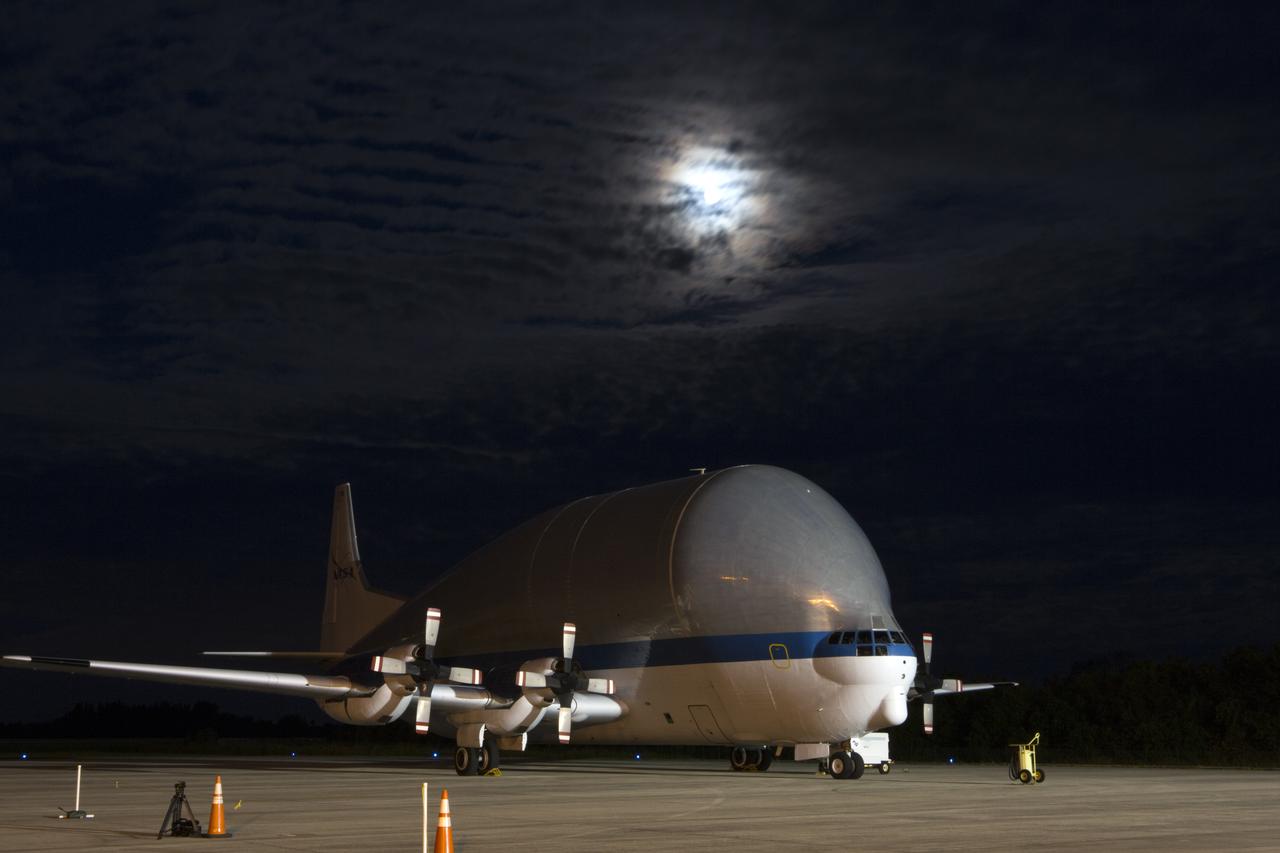
NASA’s Super Guppy aircraft, carrying the Orion crew module structural test article (STA), arrives at the Shuttle Landing Facility operated by Space Florida at NASA’s Kennedy Space Center in Florida. The STA will be offloaded and transported to the Neil Armstrong Operations and Checkout Building high bay for further testing. The Orion spacecraft will launch atop NASA’s Space Launch System rocket on EM-1, its first deep space mission, in late 2018.
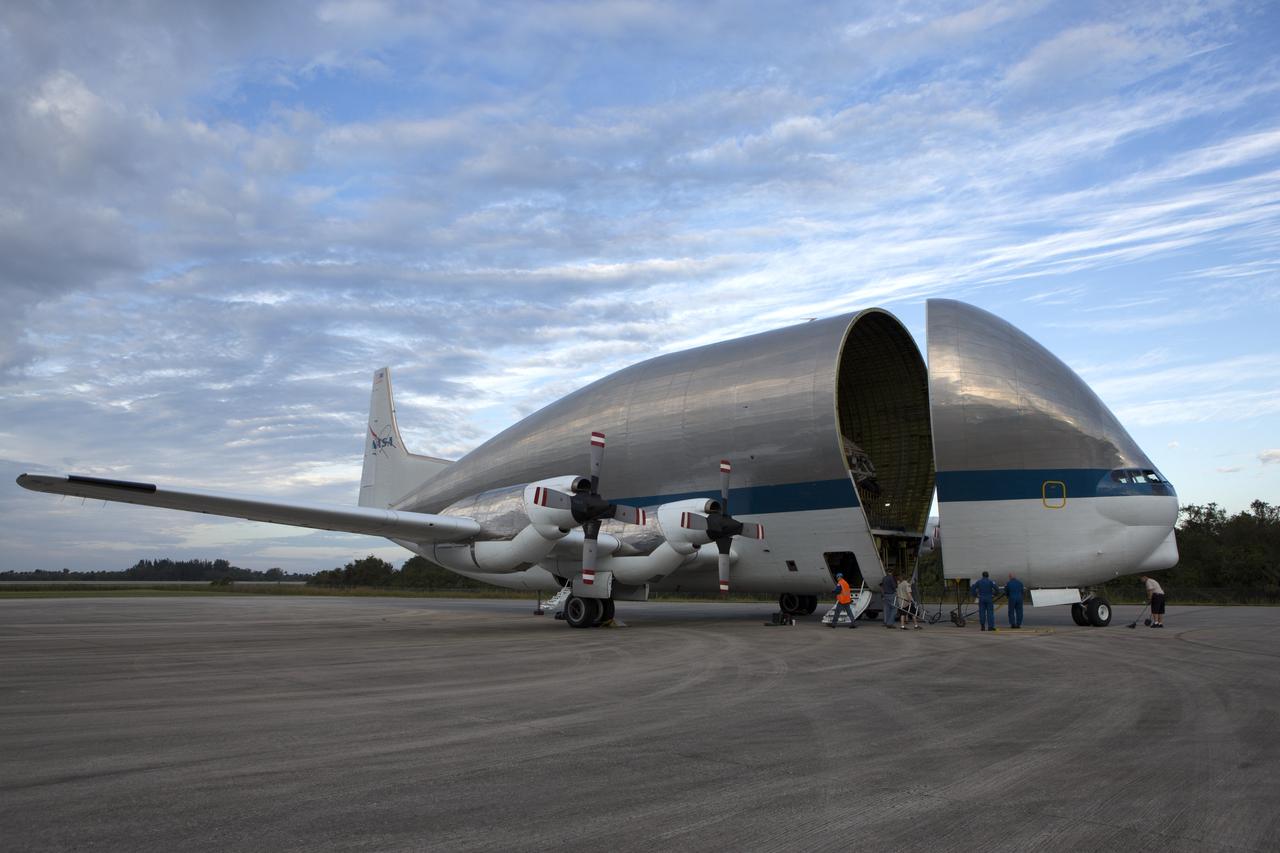
NASA’s Super Guppy aircraft, carrying the Orion crew module structural test article (STA), arrived at the Shuttle Landing Facility operated by Space Florida at NASA’s Kennedy Space Center in Florida. The front of the unique aircraft is being opened to offload the STA. The test article will be transported to the Neil Armstrong Operations and Checkout Building high bay for further testing. The Orion spacecraft will launch atop NASA’s Space Launch System rocket on EM-1, its first deep space mission, in late 2018.
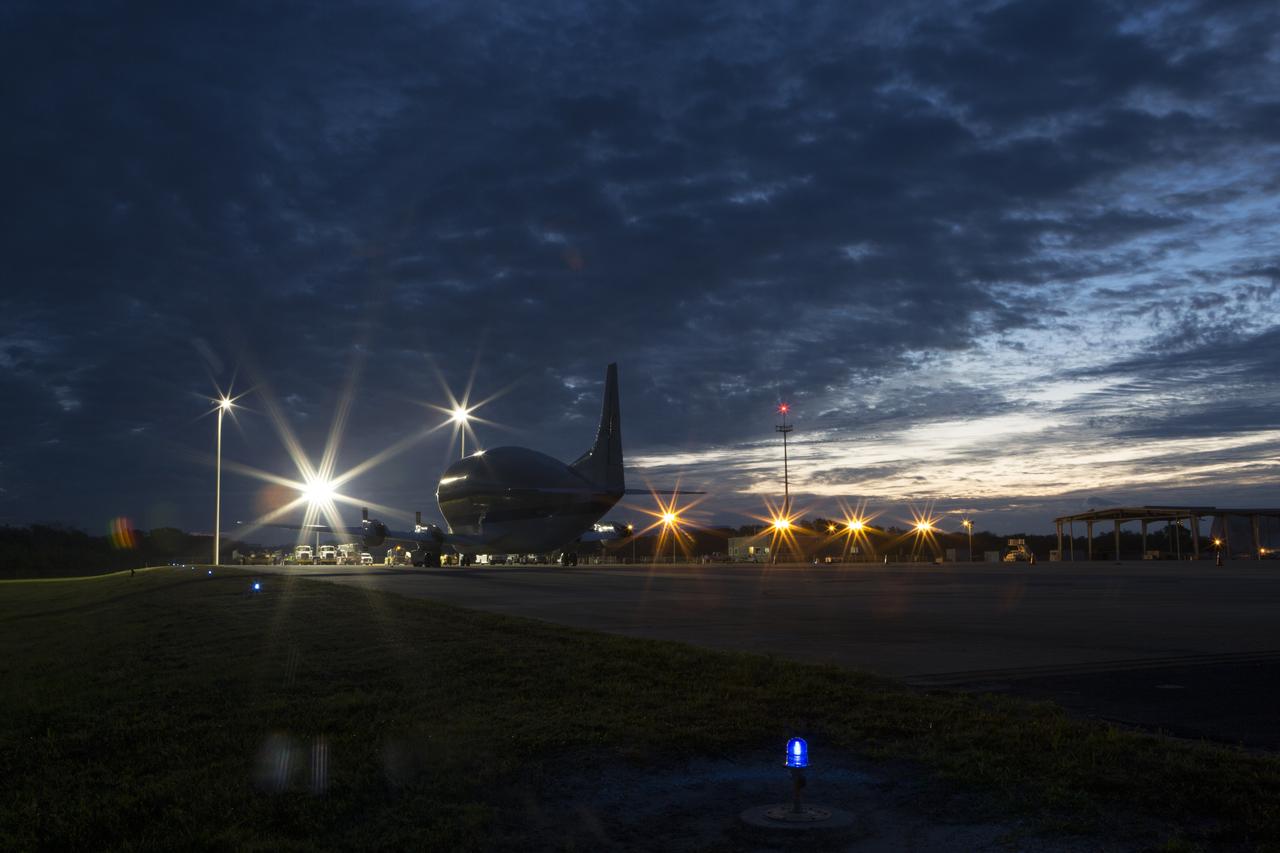
NASA’s Super Guppy aircraft, carrying the Orion crew module structural test article (STA), arrives at the Shuttle Landing Facility operated by Space Florida at NASA’s Kennedy Space Center in Florida. The STA will be offloaded and transported to the Neil Armstrong Operations and Checkout Building high bay for further testing. The Orion spacecraft will launch atop NASA’s Space Launch System rocket on EM-1, its first deep space mission, in late 2018.
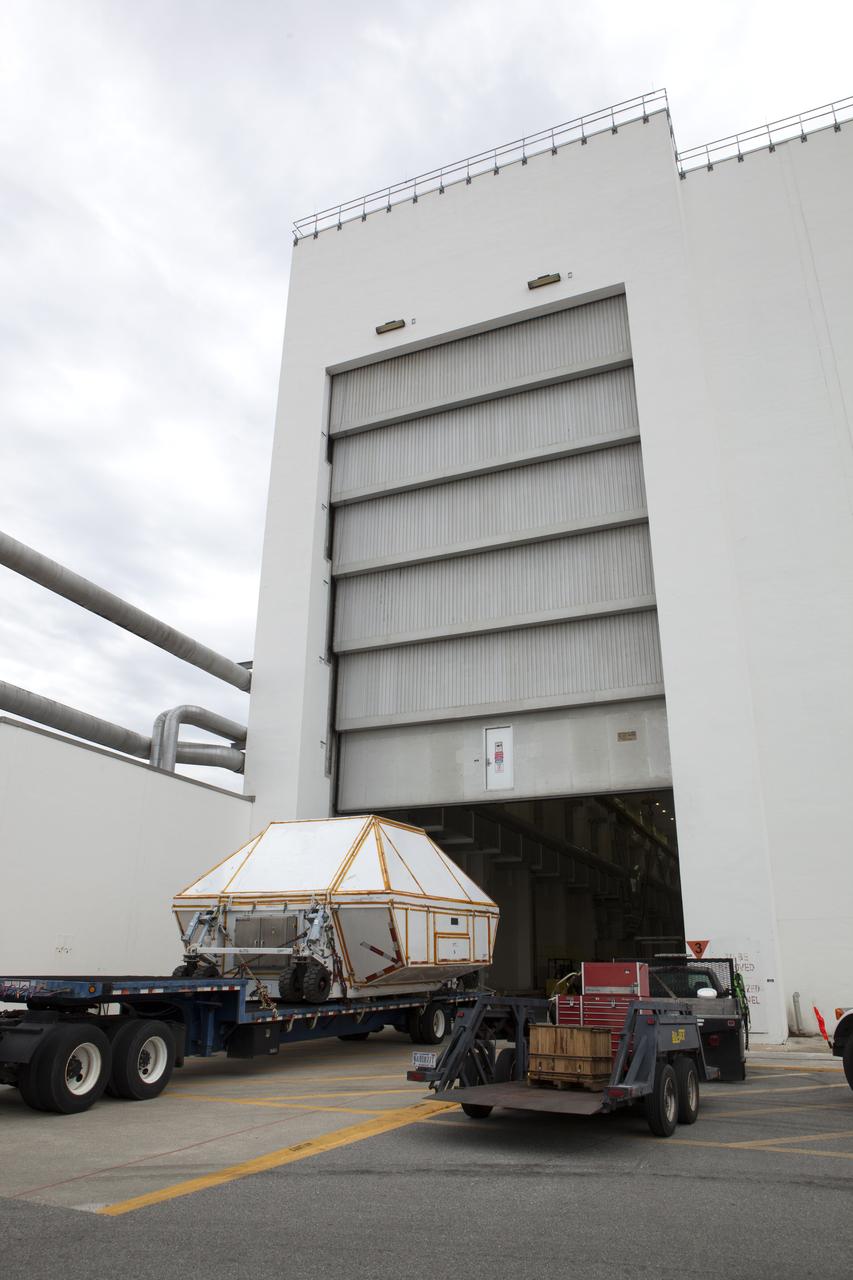
A transporter carrying the Orion crew module structural test article (STA) in its container arrives at the low bay entrance of the Neil Armstrong Operations and Checkout Building at NASA's Kennedy Space Center in Florida. The STA arrived aboard NASA's Super Guppy aircraft at the Shuttle Landing Facility operated by Space Florida. The test article will be moved inside the facility's high bay for further testing. The Orion spacecraft will launch atop NASA’s Space Launch System rocket on EM-1, its first deep space mission, in late 2018.
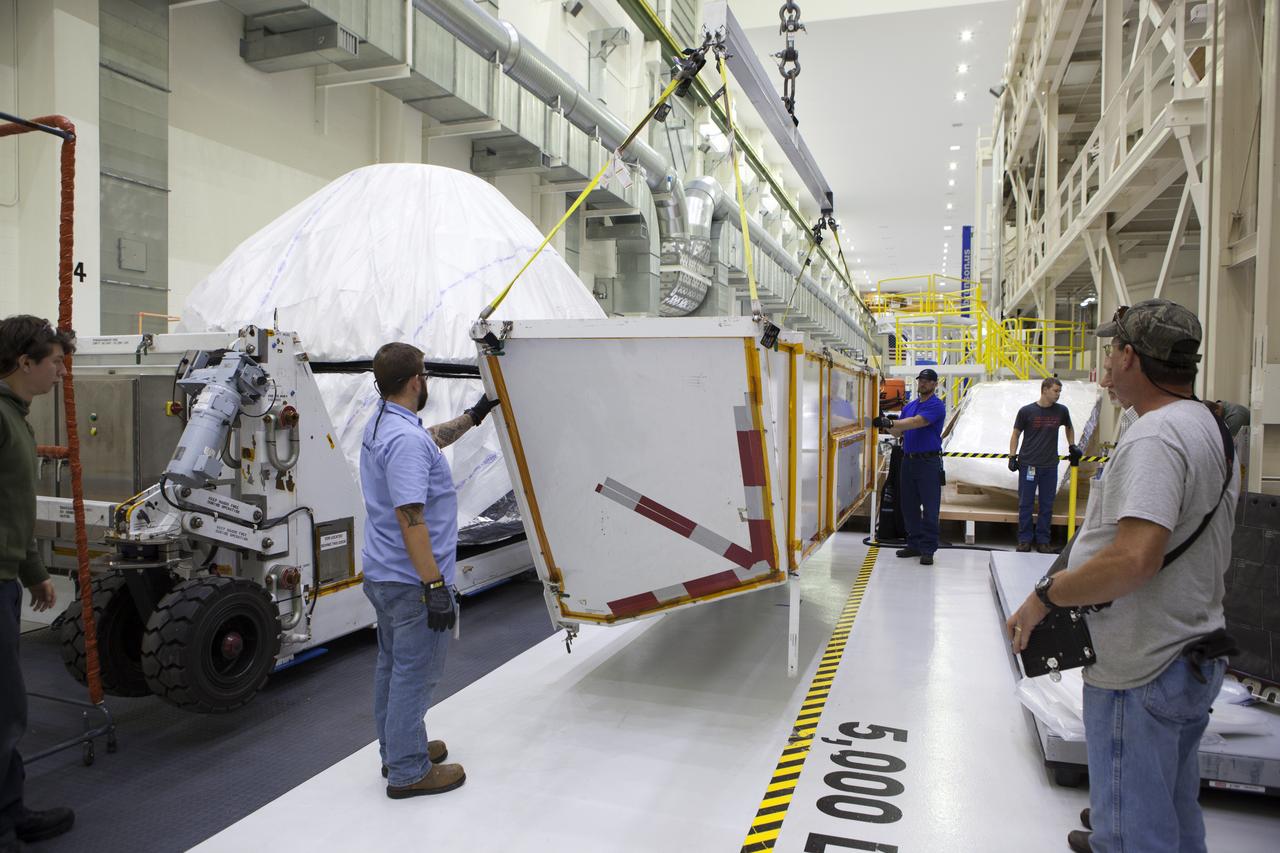
Inside the Neil Armstrong Operations and Checkout Building high bay at NASA's Kennedy Space Center in Florida, technicians with Lockheed Martin assist as a crane lifts the cover away from the container holding the Orion crew module structural test article (STA). The STA arrived aboard NASA's Super Guppy aircraft at the Shuttle Landing Facility operated by Space Florida. The test article was moved inside the facility's high bay for further testing. The Orion spacecraft will launch atop NASA’s Space Launch System rocket on EM-1, its first deep space mission, in late 2018.
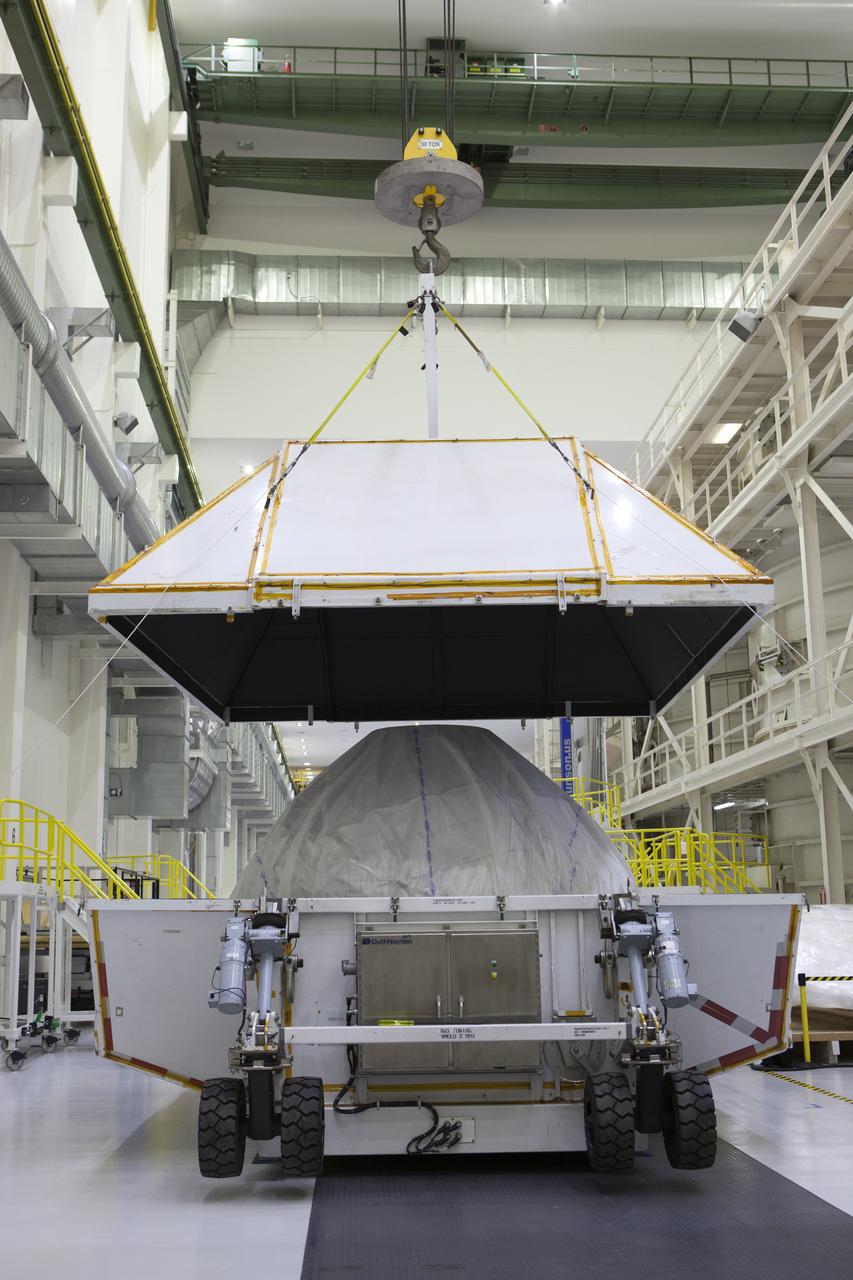
Inside the Neil Armstrong Operations and Checkout Building high bay at NASA's Kennedy Space Center in Florida, a crane lifts the cover up from the container holding the Orion crew module structural test article (STA). The STA arrived aboard NASA's Super Guppy aircraft at the Shuttle Landing Facility operated by Space Florida. The test article was moved inside the facility's high bay for further testing. The Orion spacecraft will launch atop NASA’s Space Launch System rocket on EM-1, its first deep space mission, in late 2018.
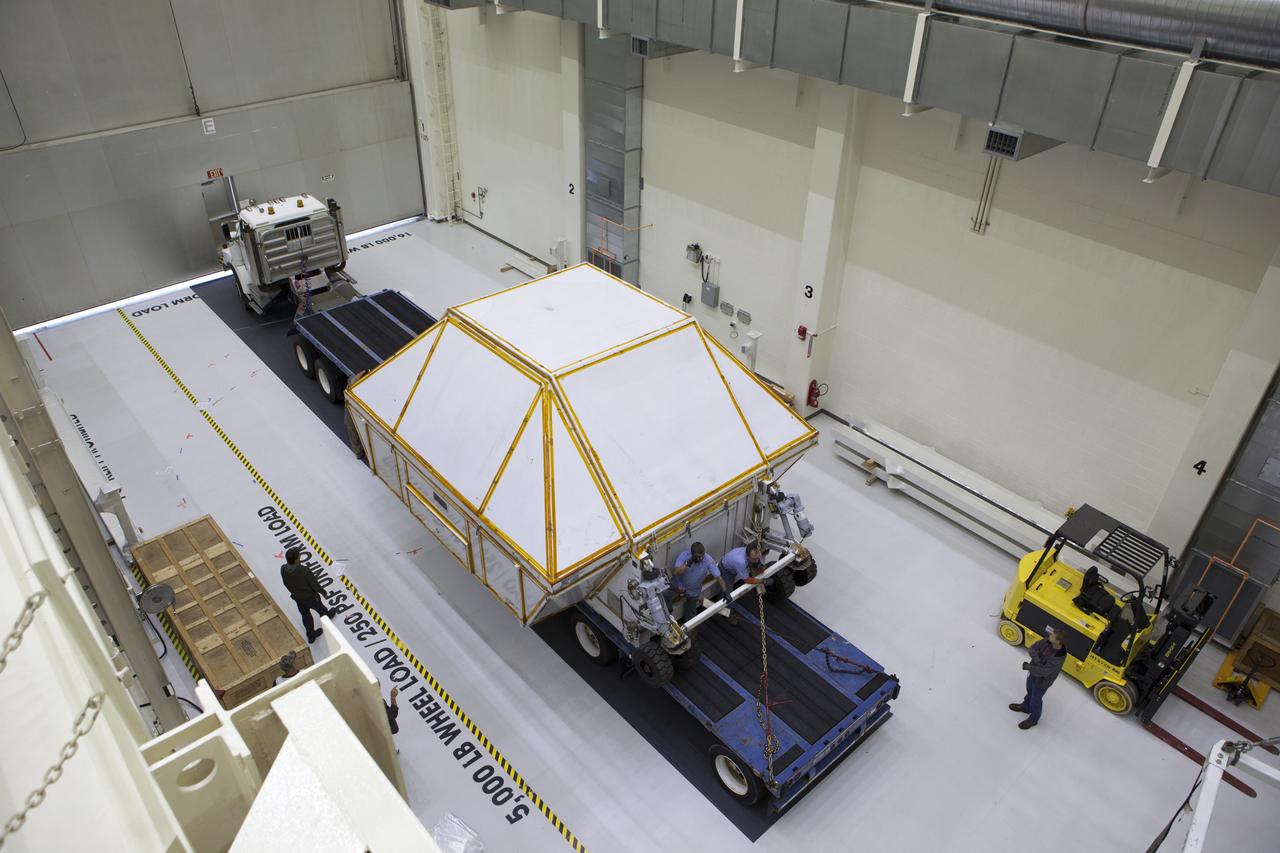
A transporter carrying the Orion crew module structural test article (STA) in its container arrives inside the low bay of the Neil Armstrong Operations and Checkout Building at NASA's Kennedy Space Center in Florida. The STA arrived aboard NASA's Super Guppy aircraft at the Shuttle Landing Facility operated by Space Florida. The test article will be moved inside the facility's high bay for further testing. The Orion spacecraft will launch atop NASA’s Space Launch System rocket on EM-1, its first deep space mission, in late 2018.
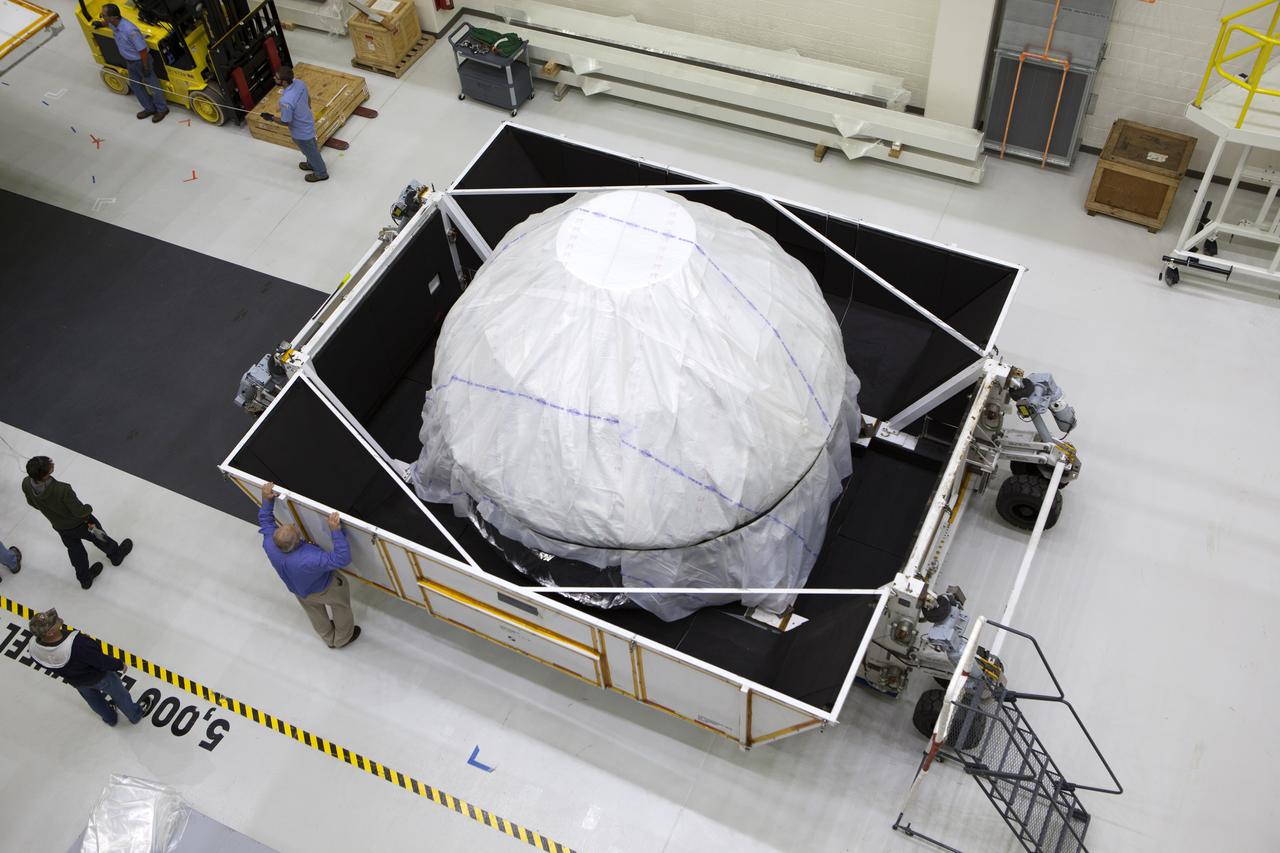
Inside the Neil Armstrong Operations and Checkout Building high bay at NASA's Kennedy Space Center in Florida, the cover has been removed from the container holding the Orion crew module structural test article (STA). The STA arrived aboard NASA's Super Guppy aircraft at the Shuttle Landing Facility operated by Space Florida. The test article was moved inside the facility's high bay for further testing. The Orion spacecraft will launch atop NASA’s Space Launch System rocket on EM-1, its first deep space mission, in late 2018.
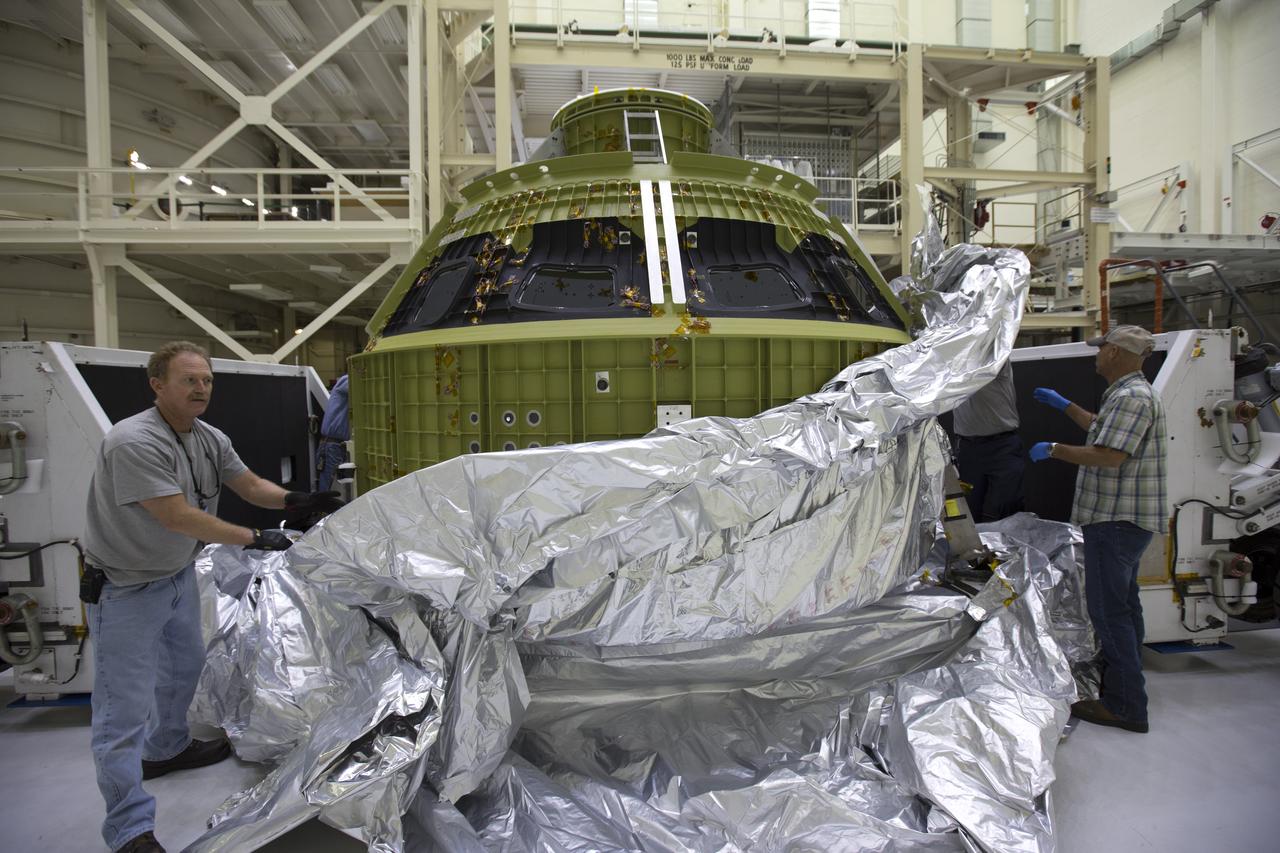
Inside the Neil Armstrong Operations and Checkout Building high bay at NASA's Kennedy Space Center in Florida, Lockheed Martin technicians remove the protective covering from the Orion crew module structural test article (STA). The STA arrived aboard NASA's Super Guppy aircraft at the Shuttle Landing Facility operated by Space Florida. The test article was moved inside the facility's high bay for further testing. The Orion spacecraft will launch atop NASA’s Space Launch System rocket on EM-1, its first deep space mission, in late 2018.
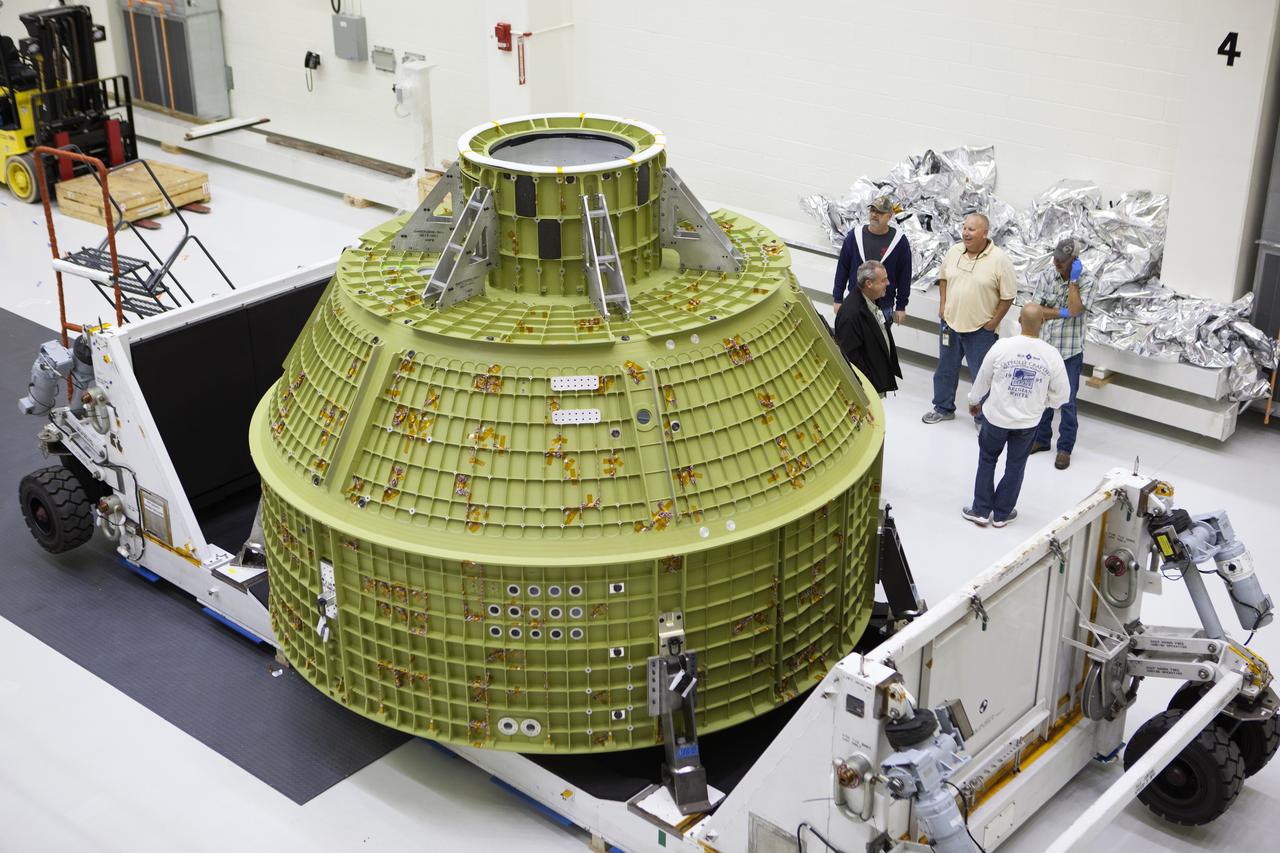
Inside the Neil Armstrong Operations and Checkout Building high bay at NASA's Kennedy Space Center in Florida, the protective covering was removed from the Orion crew module structural test article (STA). It remains secured on the bottom of its transport container. The STA arrived aboard NASA's Super Guppy aircraft at the Shuttle Landing Facility operated by Space Florida. The test article was moved inside the facility's high bay for further testing. The Orion spacecraft will launch atop NASA’s Space Launch System rocket on EM-1, its first deep space mission, in late 2018.
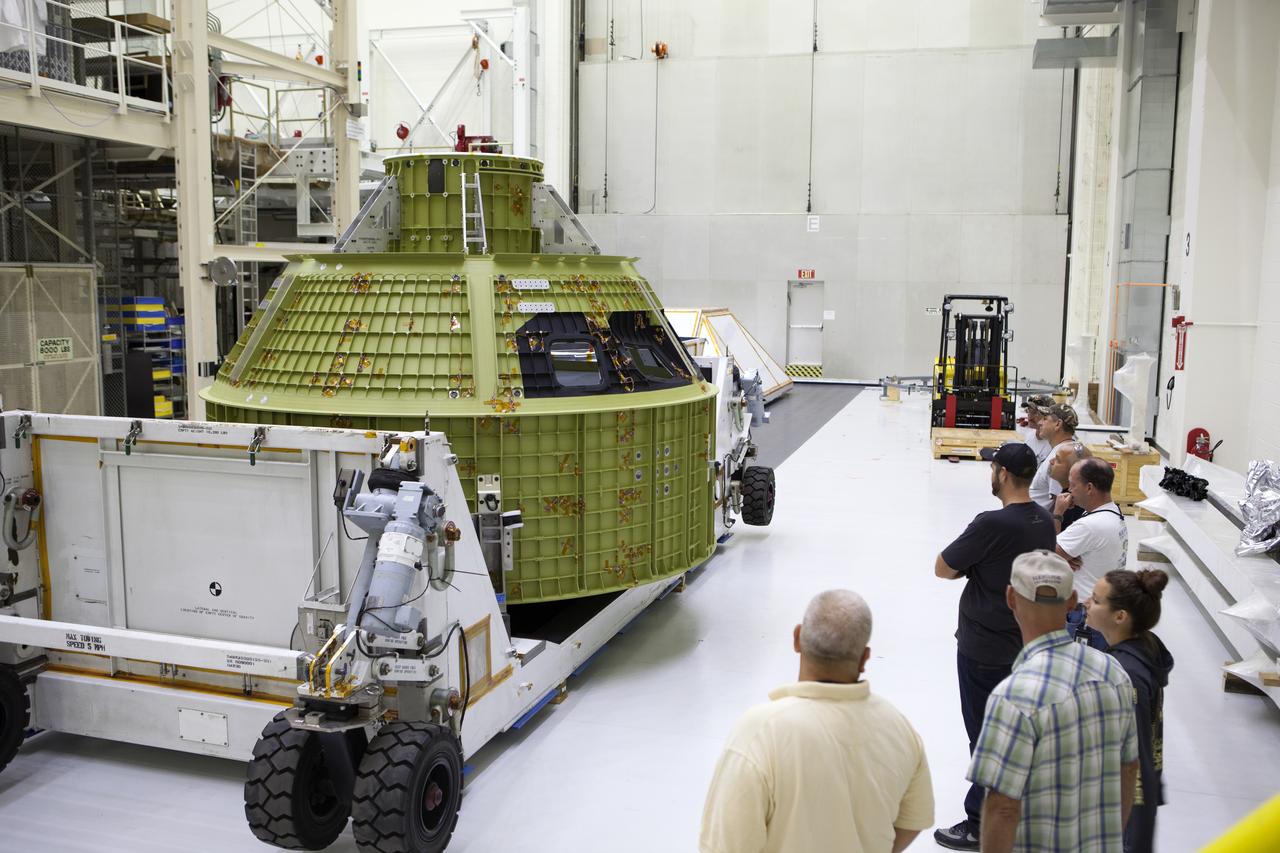
Inside the Neil Armstrong Operations and Checkout Building high bay at NASA's Kennedy Space Center in Florida, technicians with Lockheed Martin look over the Orion crew module structural test article (STA) secured on the bottom of its transport container. The STA arrived aboard NASA's Super Guppy aircraft at the Shuttle Landing Facility operated by Space Florida. The test article was moved inside the facility's high bay for further testing. The Orion spacecraft will launch atop NASA’s Space Launch System rocket on EM-1, its first deep space mission, in late 2018.
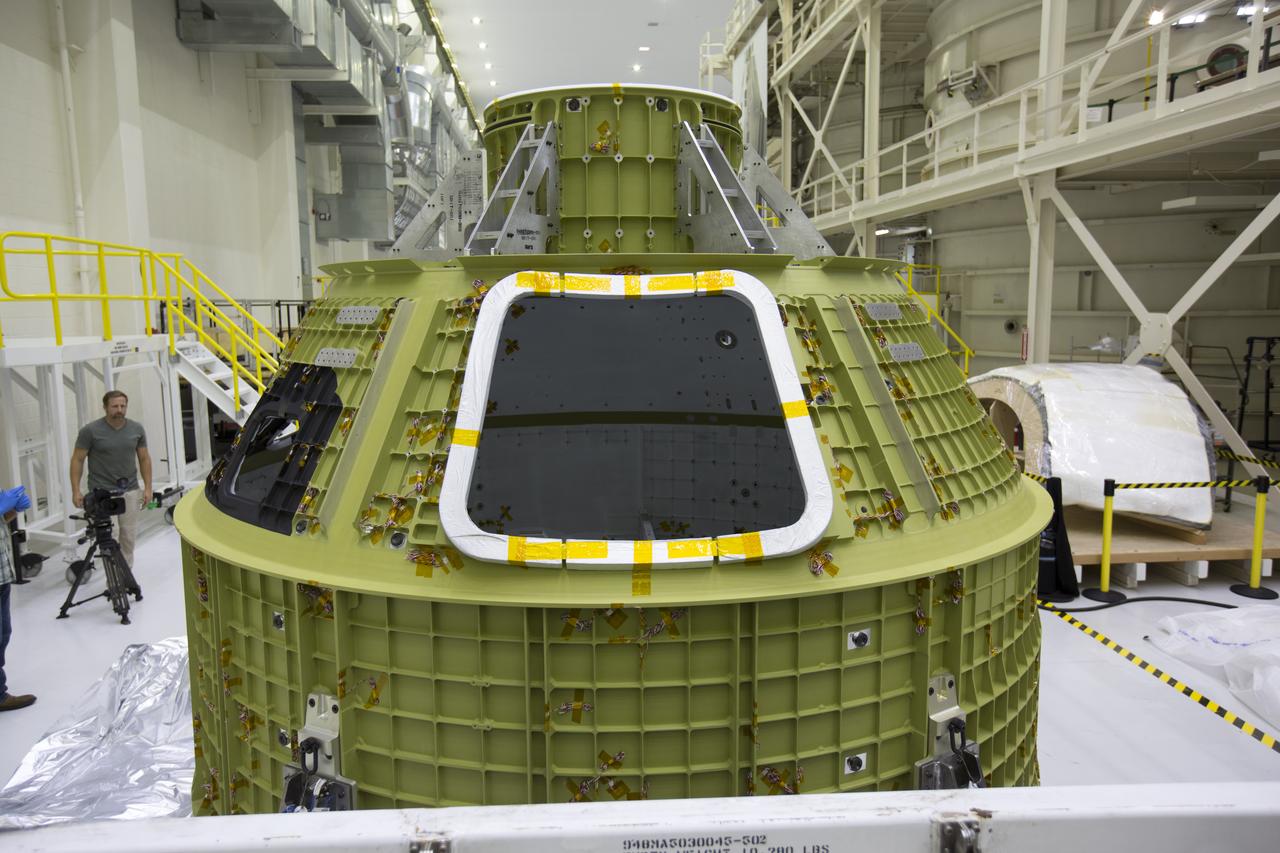
Inside the Neil Armstrong Operations and Checkout Building high bay at NASA's Kennedy Space Center in Florida, the protective covering was removed from the Orion crew module structural test article (STA). It remains secured on the bottom of its transport container. The STA arrived aboard NASA's Super Guppy aircraft at the Shuttle Landing Facility operated by Space Florida. The test article was moved inside the facility's high bay for further testing. The Orion spacecraft will launch atop NASA’s Space Launch System rocket on EM-1, its first deep space mission, in late 2018.
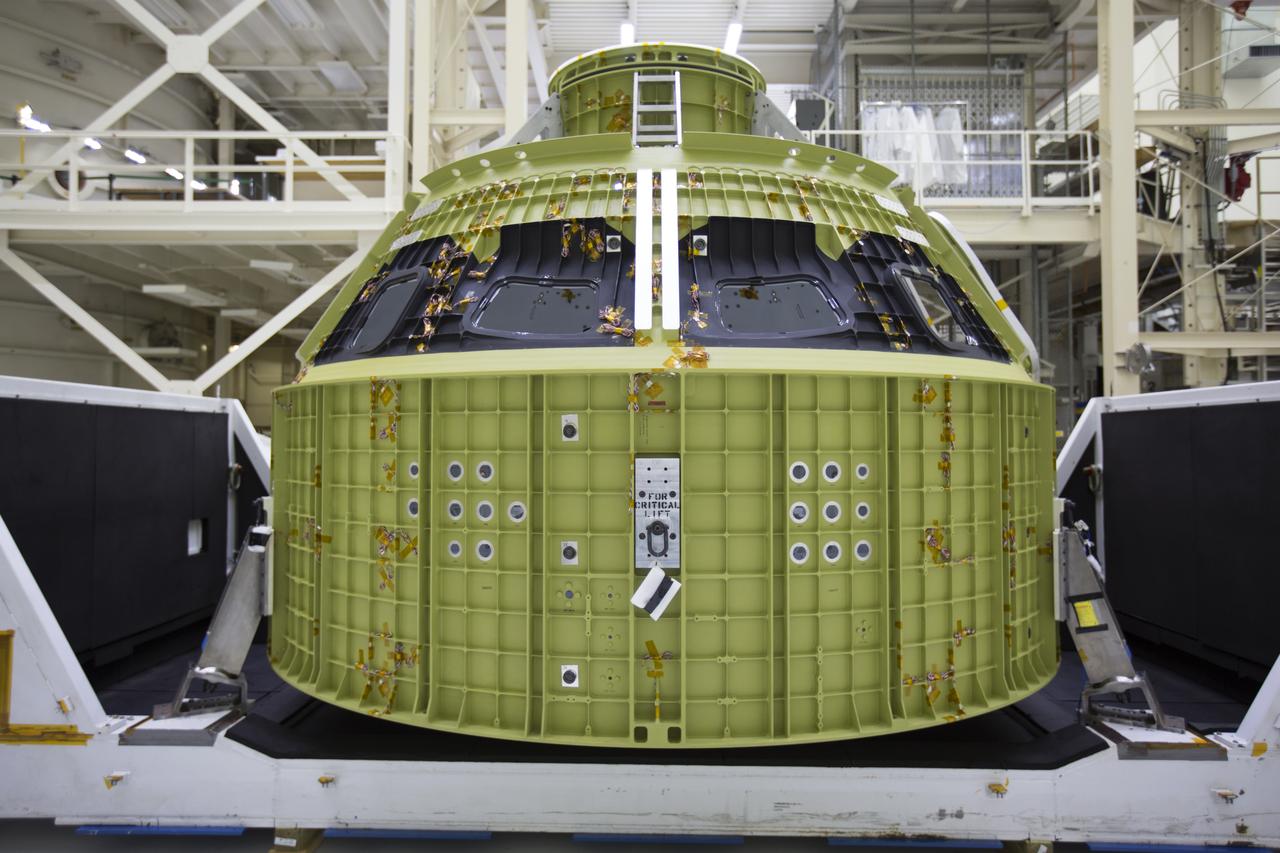
Inside the Neil Armstrong Operations and Checkout Building high bay at NASA's Kennedy Space Center in Florida, the protective covering was removed from the Orion crew module structural test article (STA). It remains secured on the bottom of its transport container. The STA arrived aboard NASA's Super Guppy aircraft at the Shuttle Landing Facility operated by Space Florida. The test article was moved inside the facility's high bay for further testing. The Orion spacecraft will launch atop NASA’s Space Launch System rocket on EM-1, its first deep space mission, in late 2018.
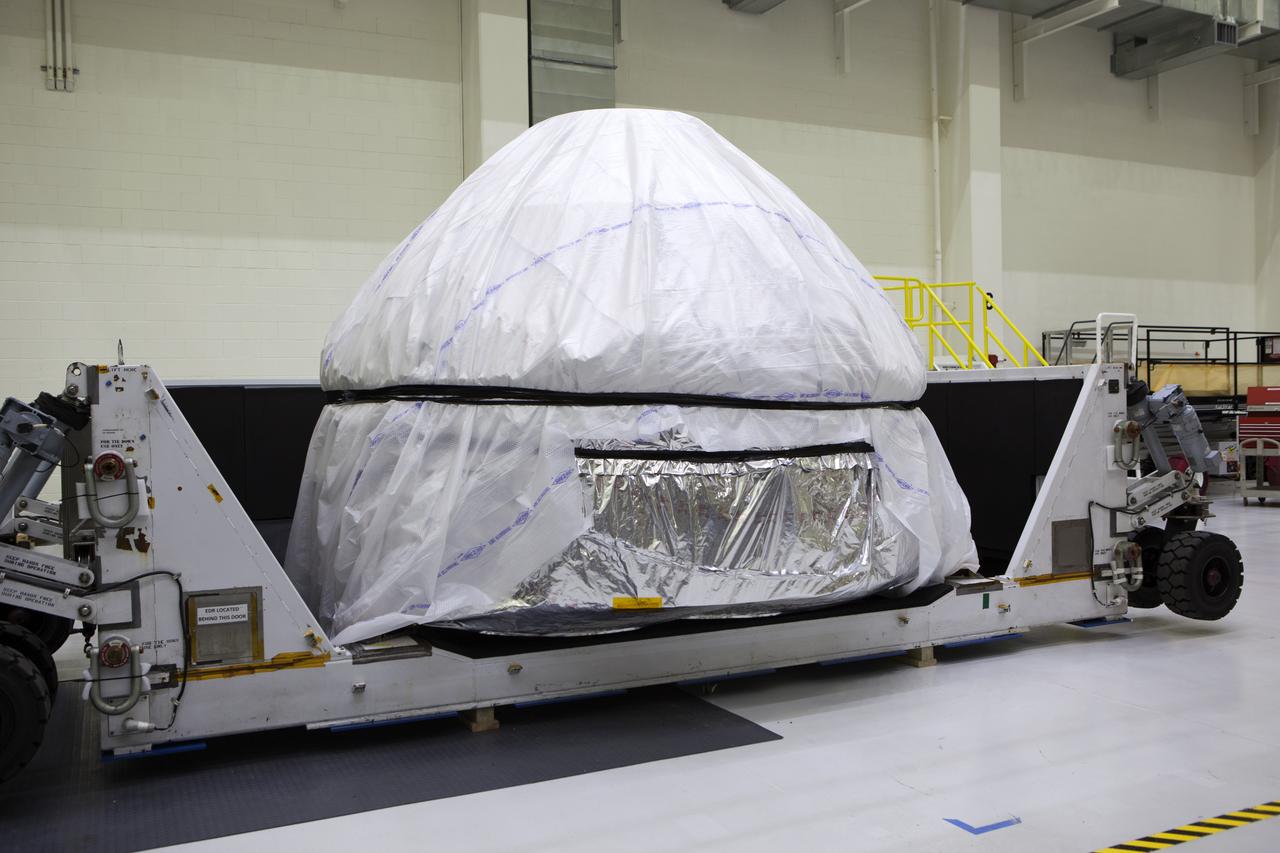
Inside the Neil Armstrong Operations and Checkout Building high bay at NASA's Kennedy Space Center in Florida, the cover has been removed from the container holding the Orion crew module structural test article (STA). The STA arrived aboard NASA's Super Guppy aircraft at the Shuttle Landing Facility operated by Space Florida. The test article was moved inside the facility's high bay for further testing. The Orion spacecraft will launch atop NASA’s Space Launch System rocket on EM-1, its first deep space mission, in late 2018.
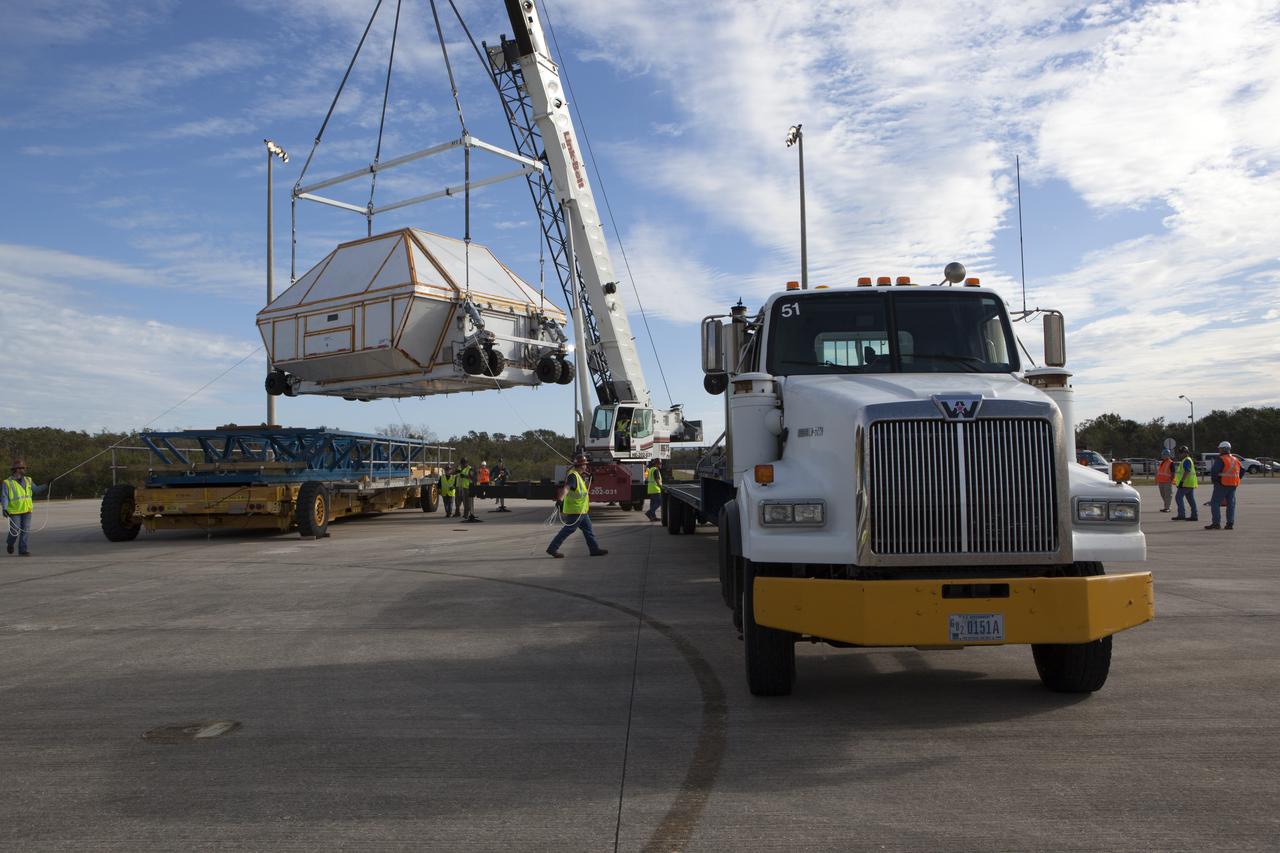
After arriving at the Shuttle Landing Facility operated by Space Florida at NASA's Kennedy Space Center in Florida, the agency's Super Guppy aircraft was opened and the container holding the Orion crew module structural test article (STA) was offloaded. A crane has lifted the container for placement on a transporter. The test article will be moved to the Neil Armstrong Operations and Checkout Building high bay for further testing. The Orion spacecraft will launch atop NASA’s Space Launch System rocket on EM-1, its first deep space mission, in late 2018.
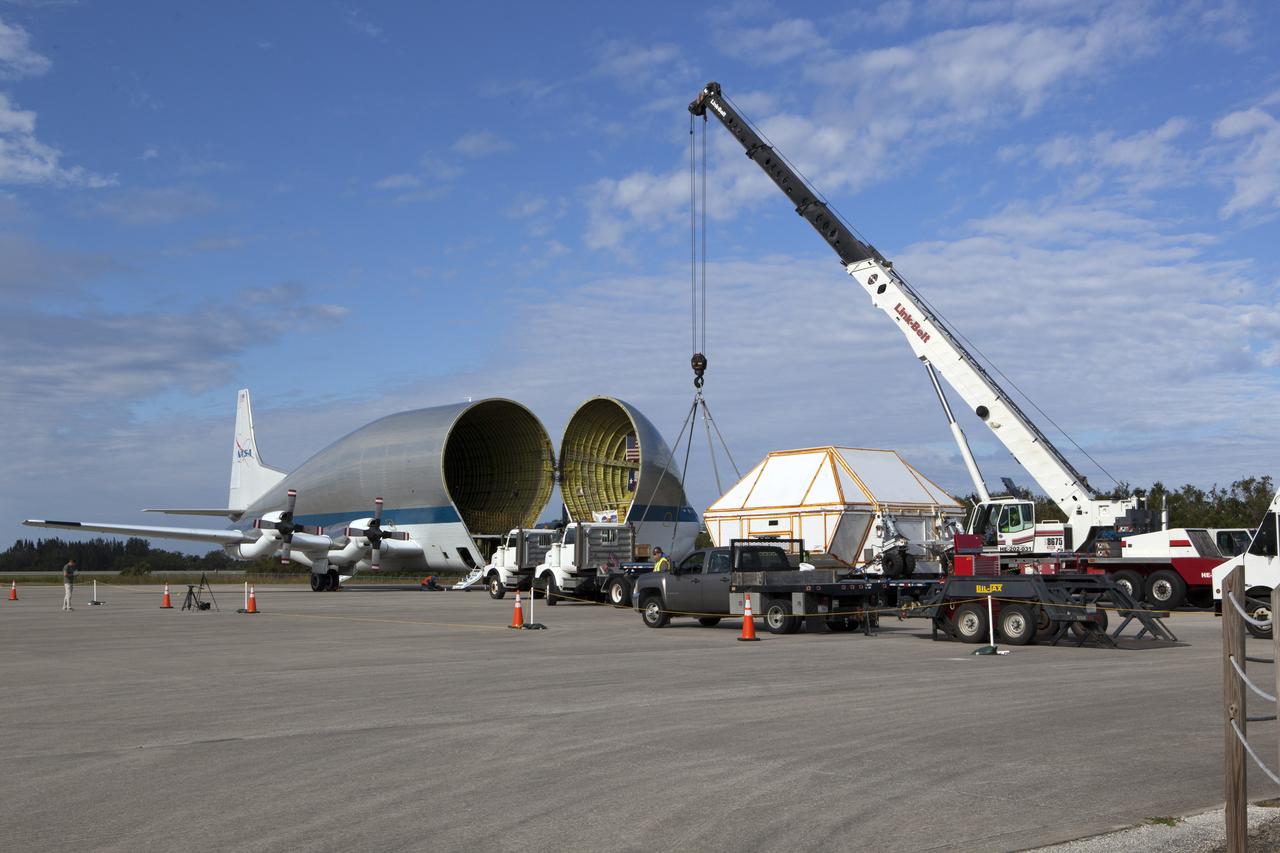
After arriving at the Shuttle Landing Facility operated by Space Florida at NASA's Kennedy Space Center in Florida, the agency's Super Guppy aircraft was opened and the container holding the Orion crew module structural test article (STA) was offloaded. A crane was used to lower the container onto a transporter. The test article will be moved to the Neil Armstrong Operations and Checkout Building high bay for further testing. The Orion spacecraft will launch atop NASA’s Space Launch System rocket on EM-1, its first deep space mission, in late 2018.
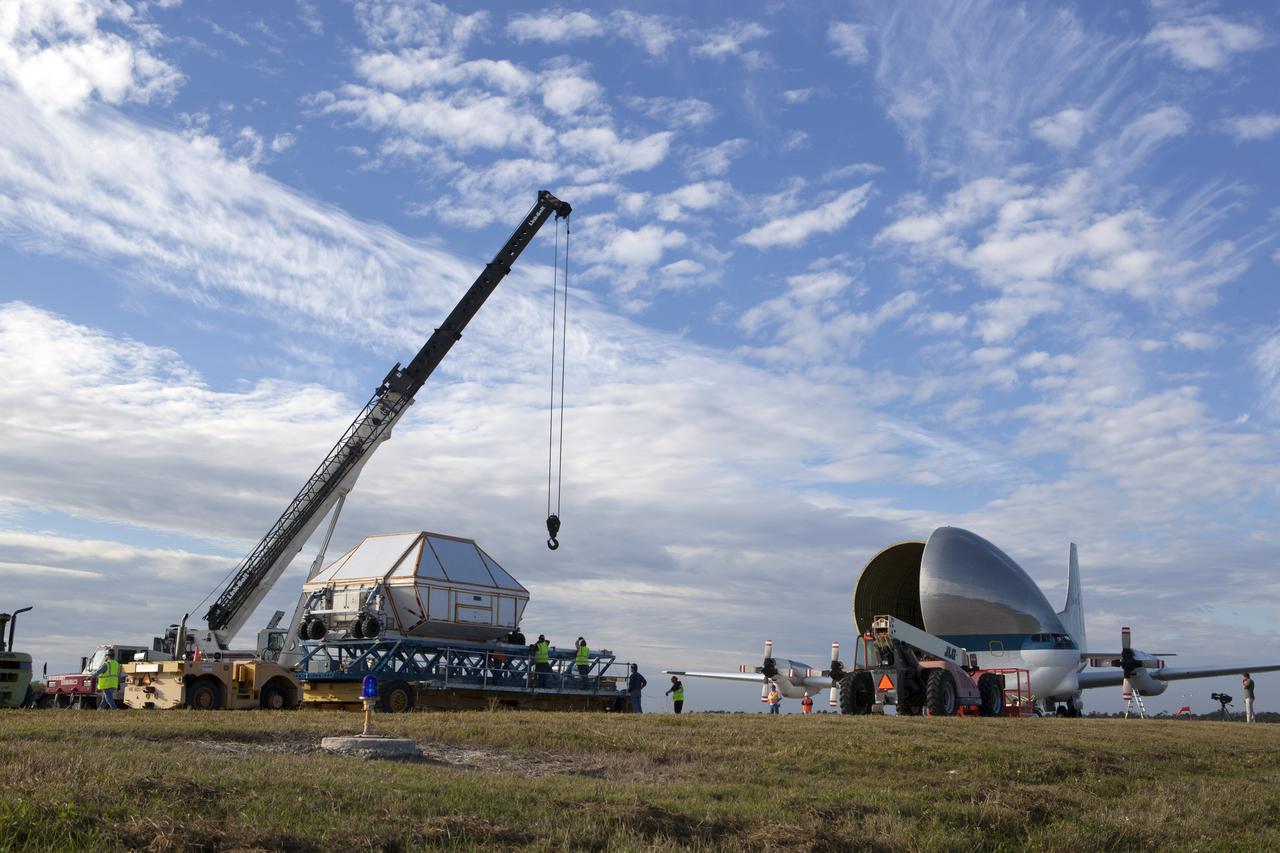
After arriving at the Shuttle Landing Facility operated by Space Florida at NASA's Kennedy Space Center in Florida, the agency's Super Guppy aircraft was opened and the container holding the Orion crew module structural test article (STA) was offloaded. The test article will be transported to the Neil Armstrong Operations and Checkout Building high bay for further testing. The Orion spacecraft will launch atop NASA’s Space Launch System rocket on EM-1, its first deep space mission, in late 2018.
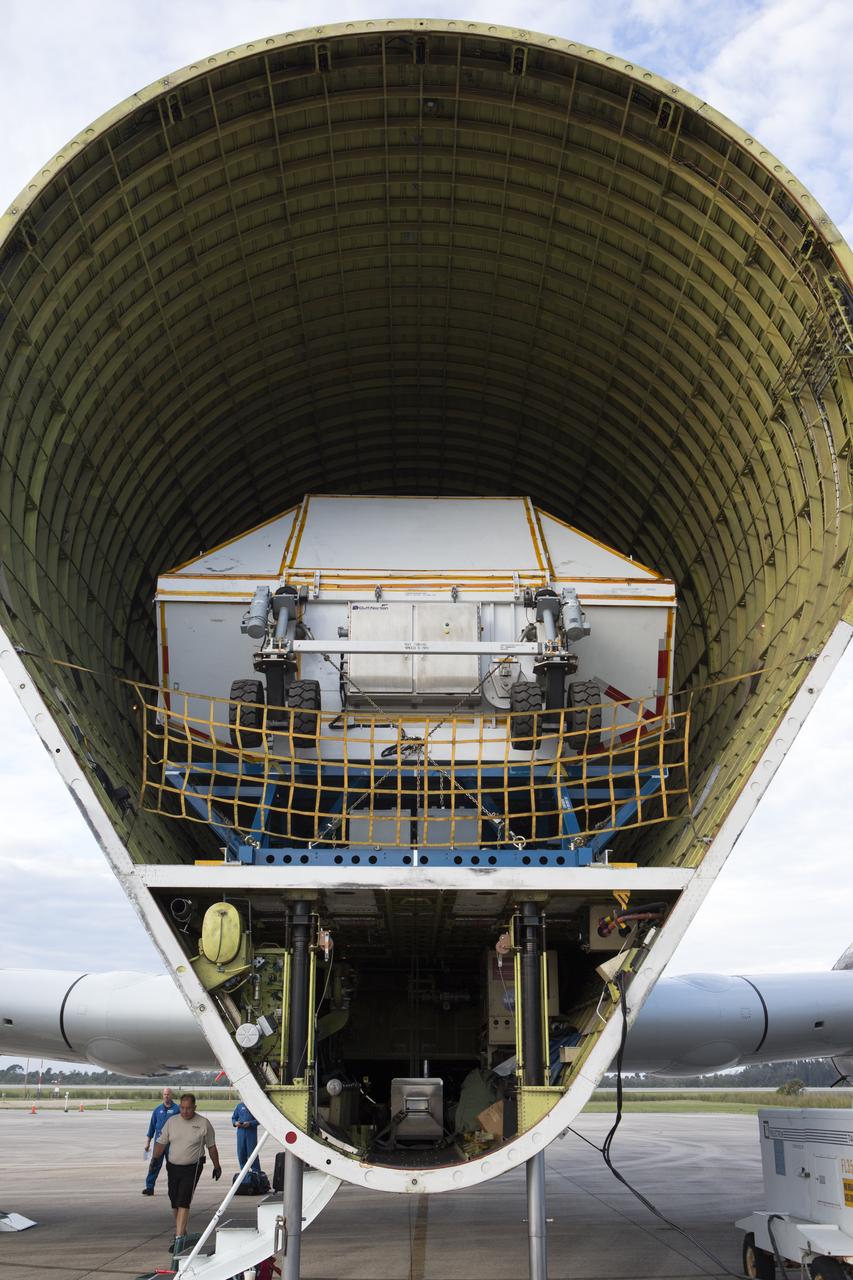
NASA’s Super Guppy aircraft, carrying the Orion crew module structural test article, arrived at the Shuttle Landing Facility operated by Space Florida at NASA’s Kennedy Space Center in Florida. The unique aircraft has been opened to reveal the container holding the STA. The test article will be transported to the Neil Armstrong Operations and Checkout Building high bay for further testing. The Orion spacecraft will launch atop NASA’s Space Launch System rocket on EM-1, its first deep space mission, in late 2018.
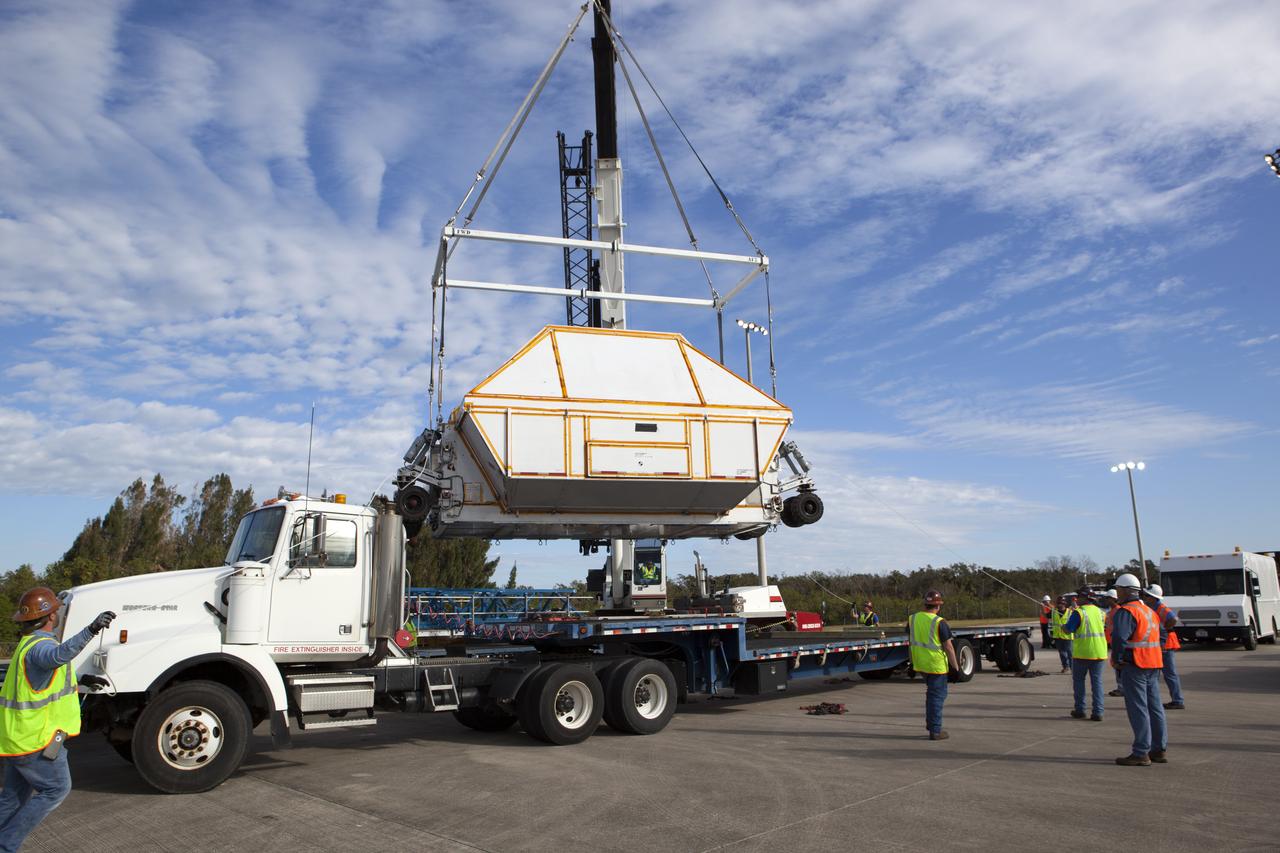
After arriving at the Shuttle Landing Facility operated by Space Florida at NASA's Kennedy Space Center in Florida, the agency's Super Guppy aircraft was opened and the container holding the Orion crew module structural test article (STA) was offloaded. A crane is used to lower the container for placement on a transporter. The test article will be moved to the Neil Armstrong Operations and Checkout Building high bay for further testing. The Orion spacecraft will launch atop NASA’s Space Launch System rocket on EM-1, its first deep space mission, in late 2018.
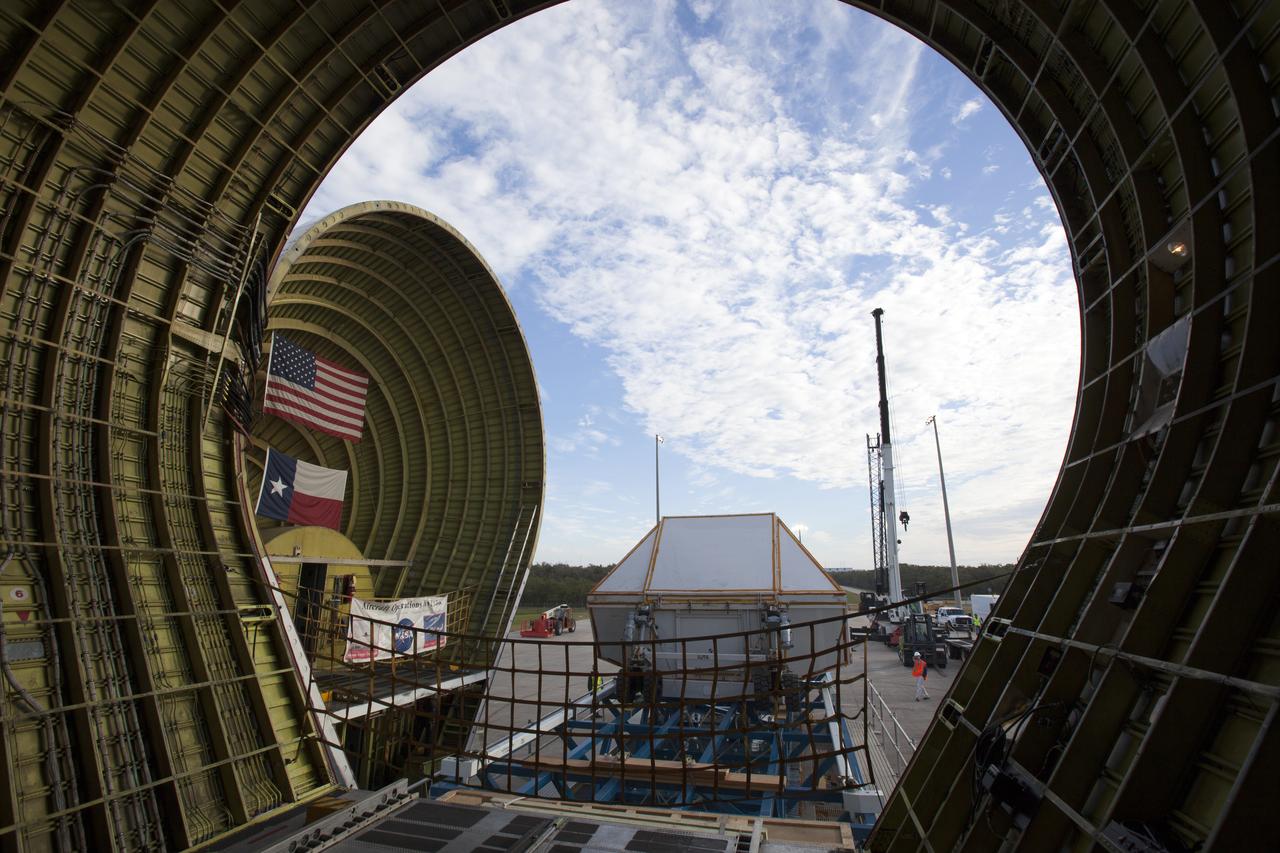
After arriving at the Shuttle Landing Facility operated by Space Florida at NASA's Kennedy Space Center in Florida, the agency's Super Guppy aircraft has been opened and the container holding the Orion crew module structural test article (STA) is being offloaded. The test article will be transported to the Neil Armstrong Operations and Checkout Building high bay for further testing. The Orion spacecraft will launch atop NASA’s Space Launch System rocket on EM-1, its first deep space mission, in late 2018.
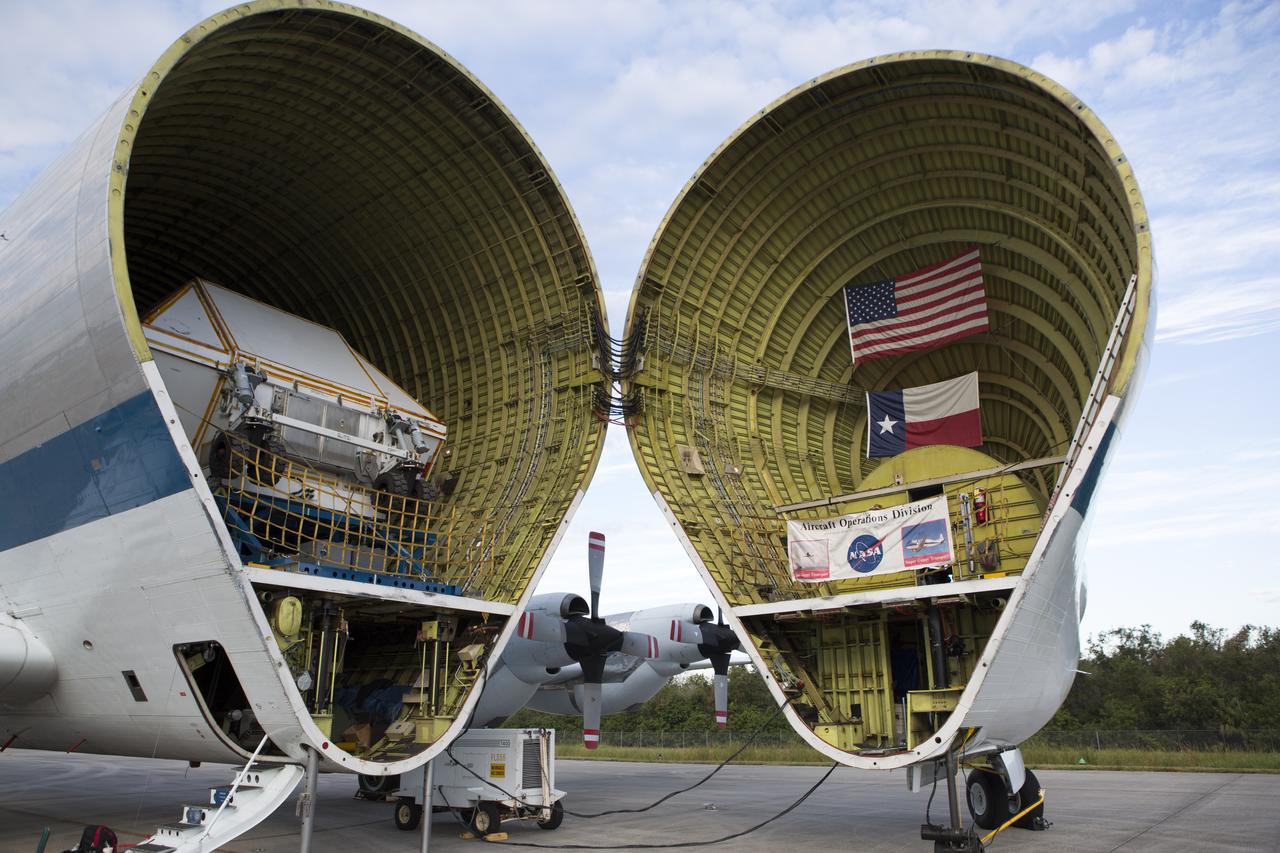
NASA’s Super Guppy aircraft, carrying the Orion crew module structural test article, arrived at the Shuttle Landing Facility operated by Space Florida at NASA’s Kennedy Space Center in Florida. The unique aircraft has been opened to reveal the container holding the STA. The test article will be transported to the Neil Armstrong Operations and Checkout Building high bay for further testing. The Orion spacecraft will launch atop NASA’s Space Launch System rocket on EM-1, its first deep space mission, in late 2018.
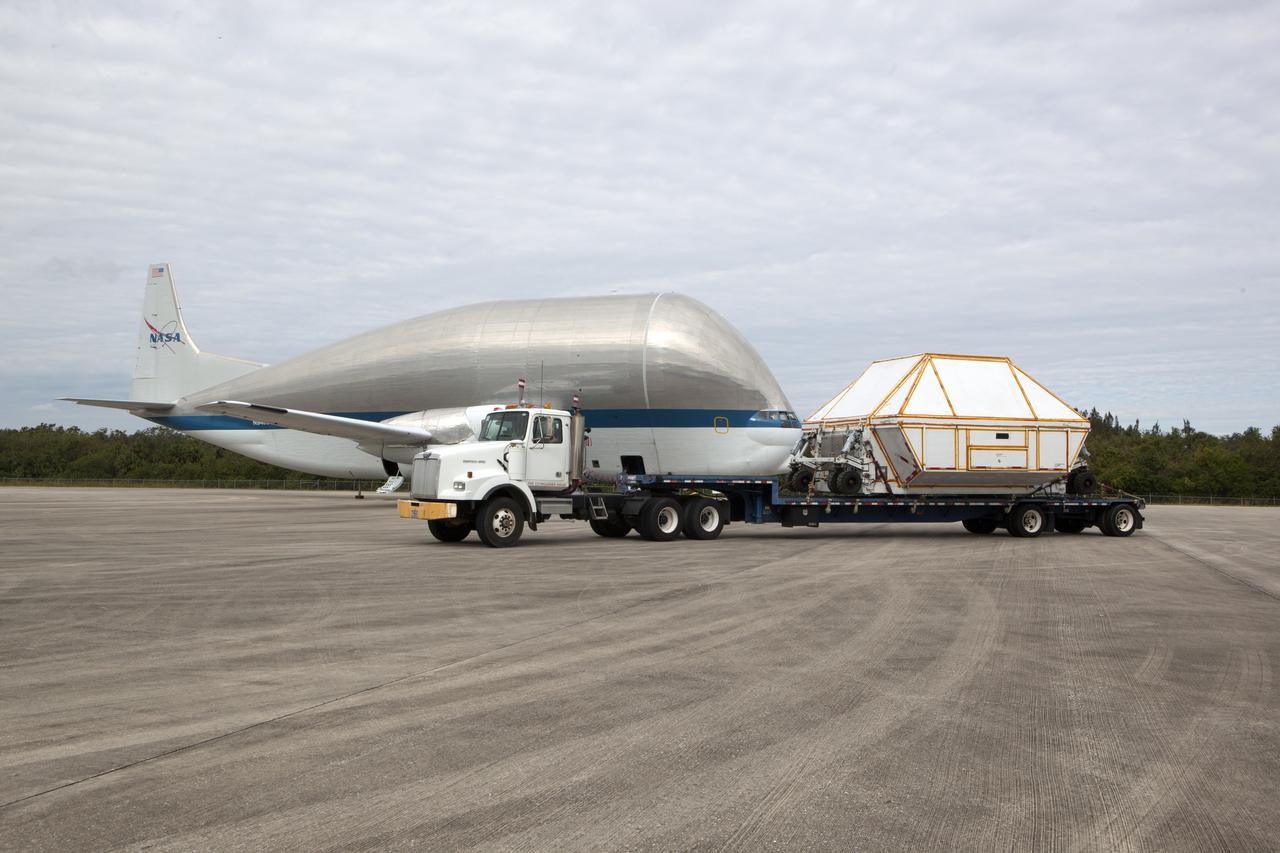
After arriving at the Shuttle Landing Facility operated by Space Florida at NASA's Kennedy Space Center in Florida, the agency's Super Guppy aircraft was opened and the container holding the Orion crew module structural test article (STA) was offloaded. A crane was used to lower the container for placement on a transporter. The Super Guppy has been closed. The test article will be moved to the Neil Armstrong Operations and Checkout Building high bay for further testing. The Orion spacecraft will launch atop NASA’s Space Launch System rocket on EM-1, its first deep space mission, in late 2018.
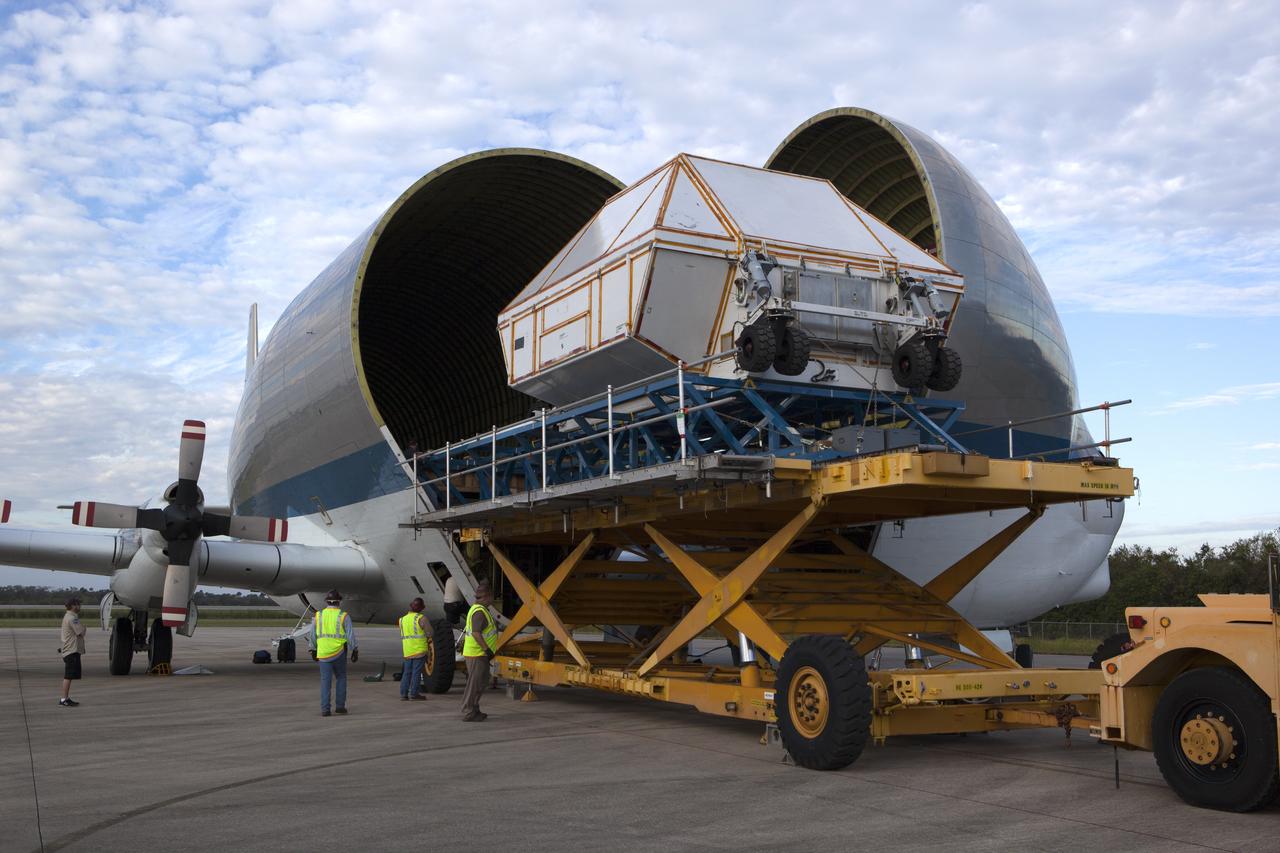
After arriving at the Shuttle Landing Facility operated by Space Florida at NASA's Kennedy Space Center in Florida, the agency's Super Guppy aircraft has been opened and the container holding the Orion crew module structural test article (STA) is being offloaded. The test article will be transported to the Neil Armstrong Operations and Checkout Building high bay for further testing. The Orion spacecraft will launch atop NASA’s Space Launch System rocket on EM-1, its first deep space mission, in late 2018. Photo credit: NASA/Ben Smegelsky
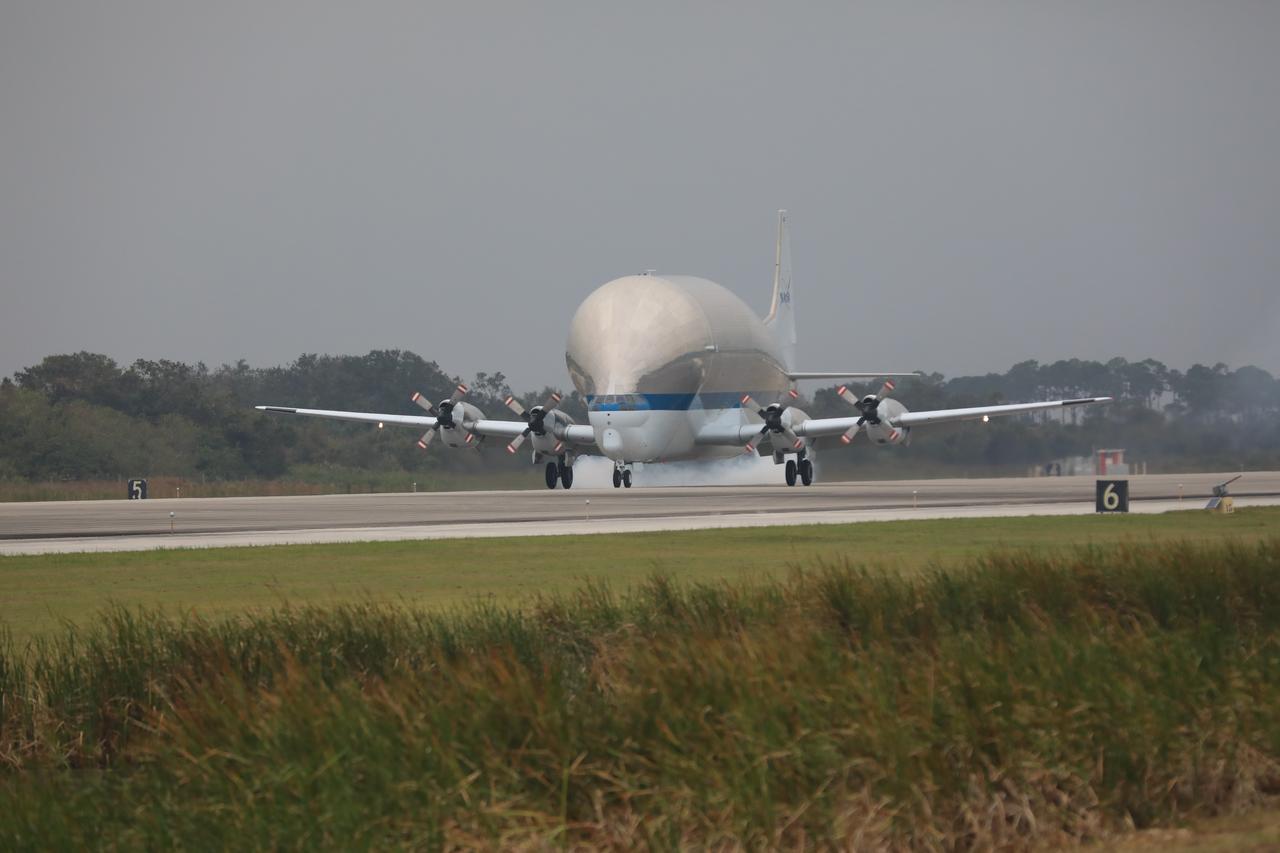
NASA’s Super Guppy aircraft touches down at the Shuttle Landing Facility at the agency’s Kennedy Space Center in Florida, carrying the Orion crew module structural test article (STA). The STA will be offloaded and transported to the Neil Armstrong Operations and Checkout Building high bay for further testing. Photo credit: NASA/Kim Shiflett

Inside the Neil Armstrong Operations and Checkout Building at NASA’s Kennedy Space Center in Florida, the Orion crew module structural test article (STA) is secured on a test tool called the birdcage. The STA arrived aboard NASA's Super Guppy aircraft at the Shuttle Landing Facility operated by Space Florida. The test article will undergo further testing in the high bay. The Orion spacecraft will launch atop NASA’s Space Launch System rocket on EM-1, its first deep space mission, in late 2018.
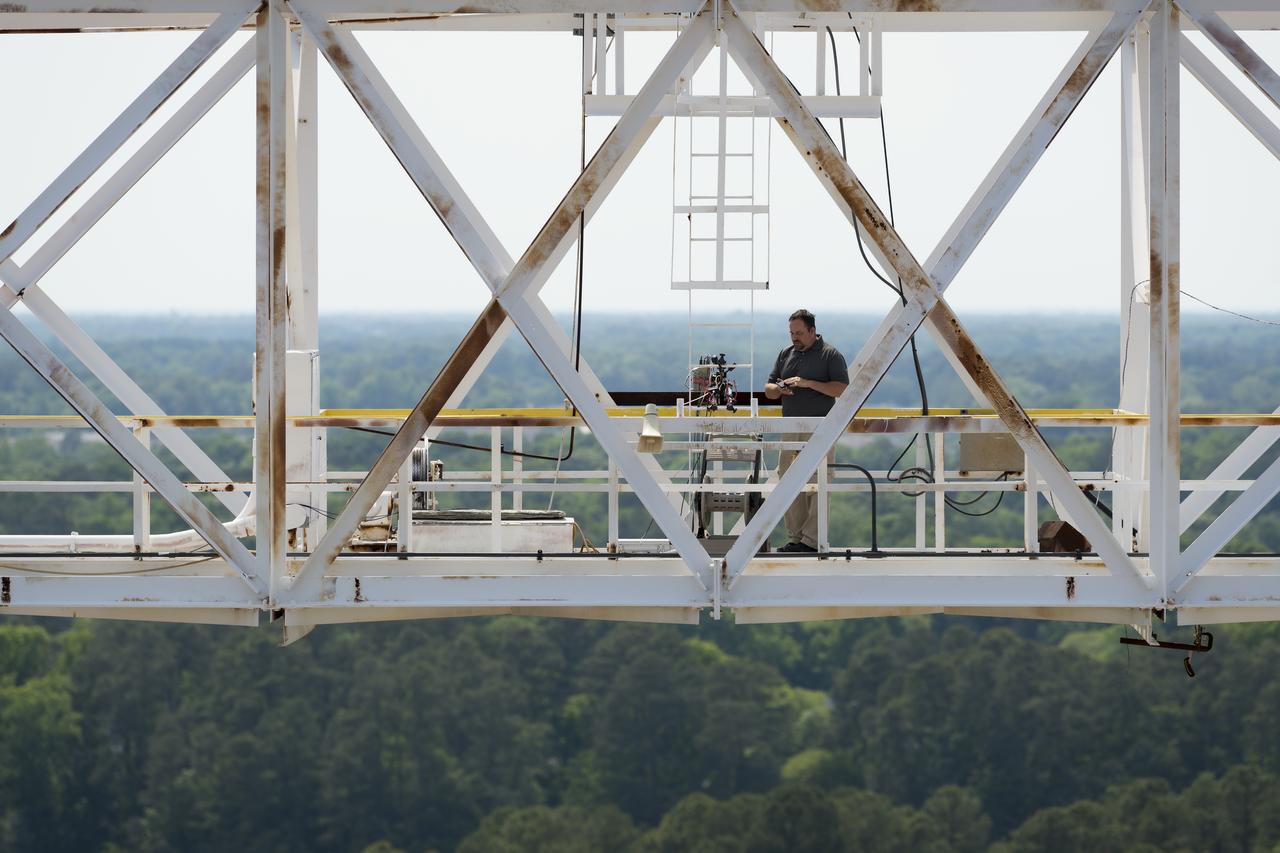
Images from Orion Structural Test Article (STA) vertical water impact testing (WIT) Swing Test 4, Photographer Harlen Capen at the top of the Impact Dynamics Facility or Gantry as it is know at NASA Langley Research Center.
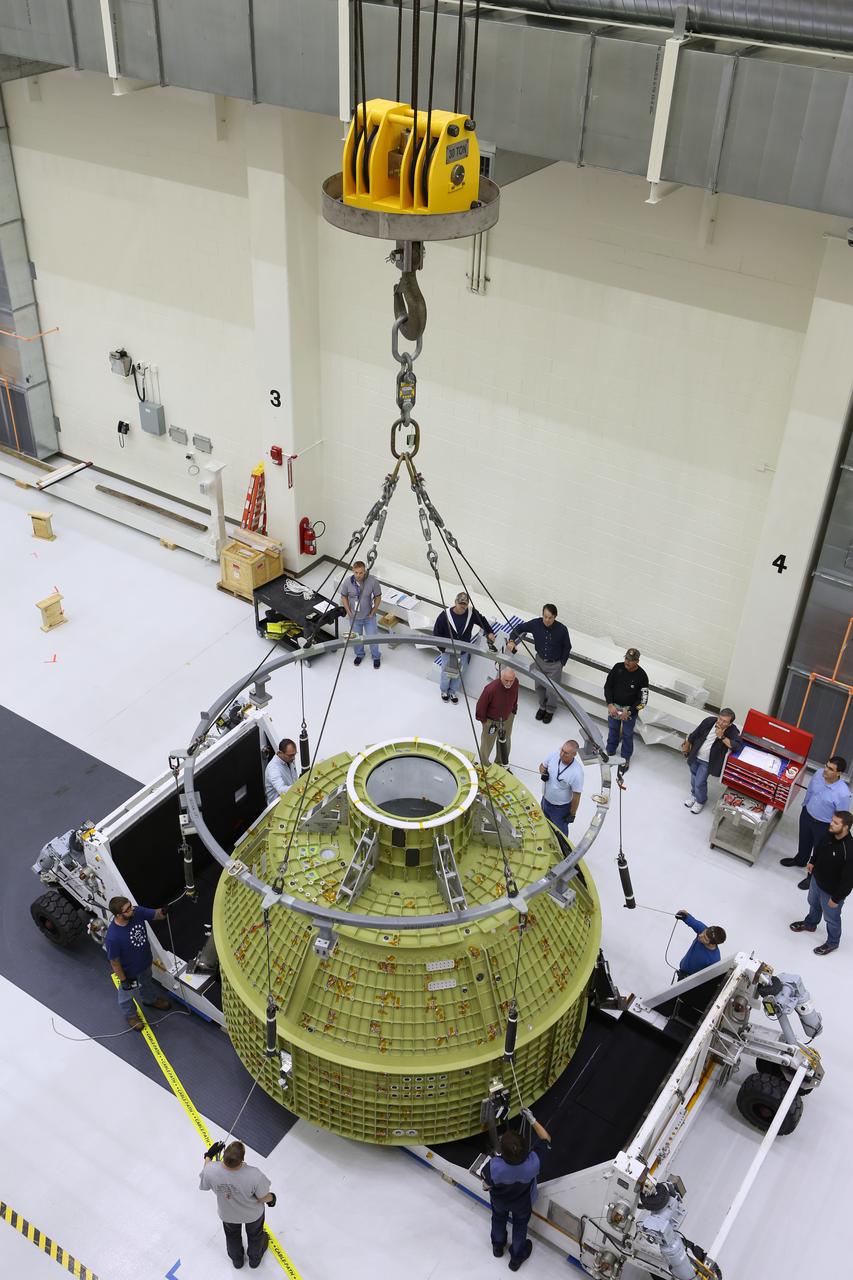
Inside the Neil Armstrong Operations and Checkout Building at NASA’s Kennedy Space Center in Florida, Lockheed Martin technicians attach lines from a crane to the Orion crew module structural test article (STA). The STA arrived aboard NASA's Super Guppy aircraft at the Shuttle Landing Facility operated by Space Florida. The test article will be lifted out of its container and moved to a test tool called the birdcage for further testing. The Orion spacecraft will launch atop NASA’s Space Launch System rocket on EM-1, its first deep space mission, in late 2018.
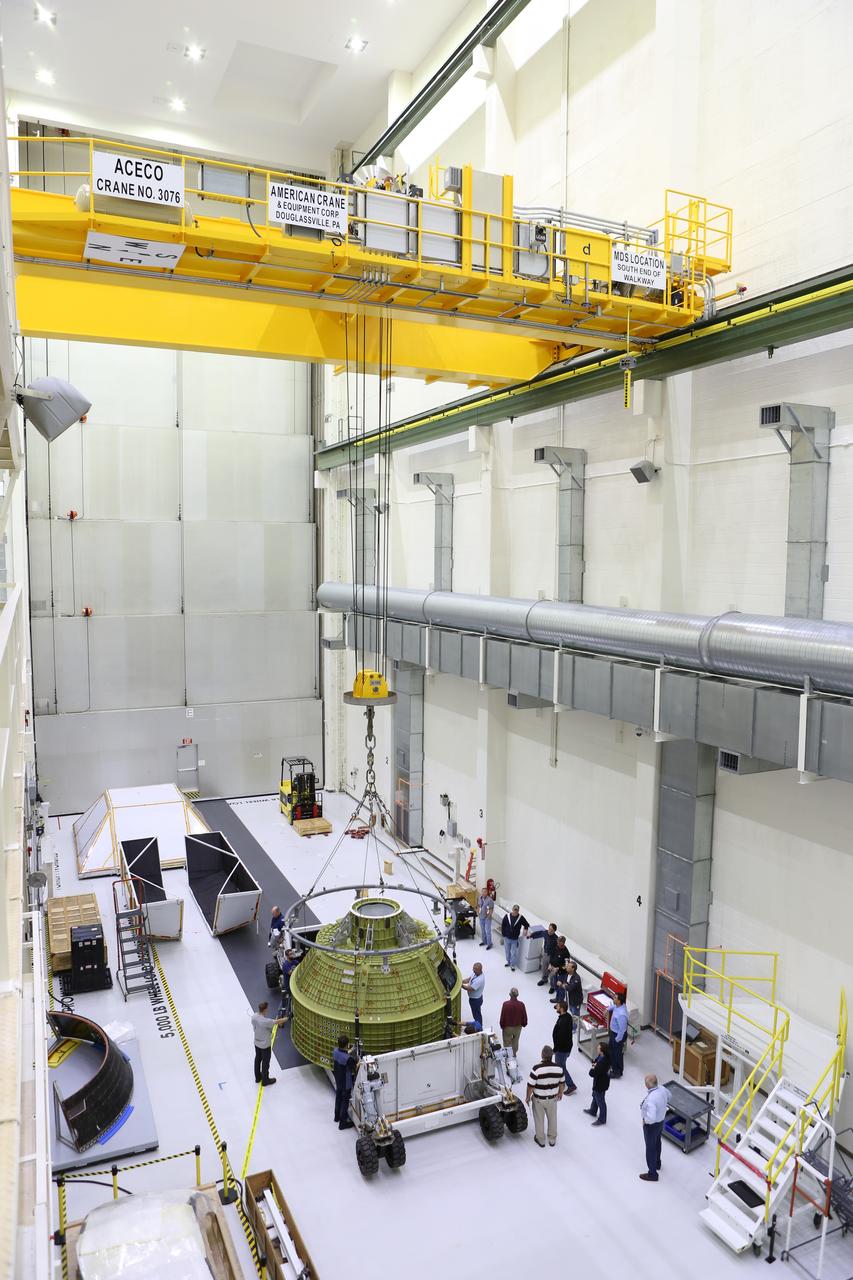
Inside the Neil Armstrong Operations and Checkout Building at NASA’s Kennedy Space Center in Florida, Lockheed Martin technicians attach lines from a crane to the Orion crew module structural test article (STA). The STA arrived aboard NASA's Super Guppy aircraft at the Shuttle Landing Facility operated by Space Florida. The test article will be lifted out of its container and moved to a test tool called the birdcage for further testing. The Orion spacecraft will launch atop NASA’s Space Launch System rocket on EM-1, its first deep space mission, in late 2018.
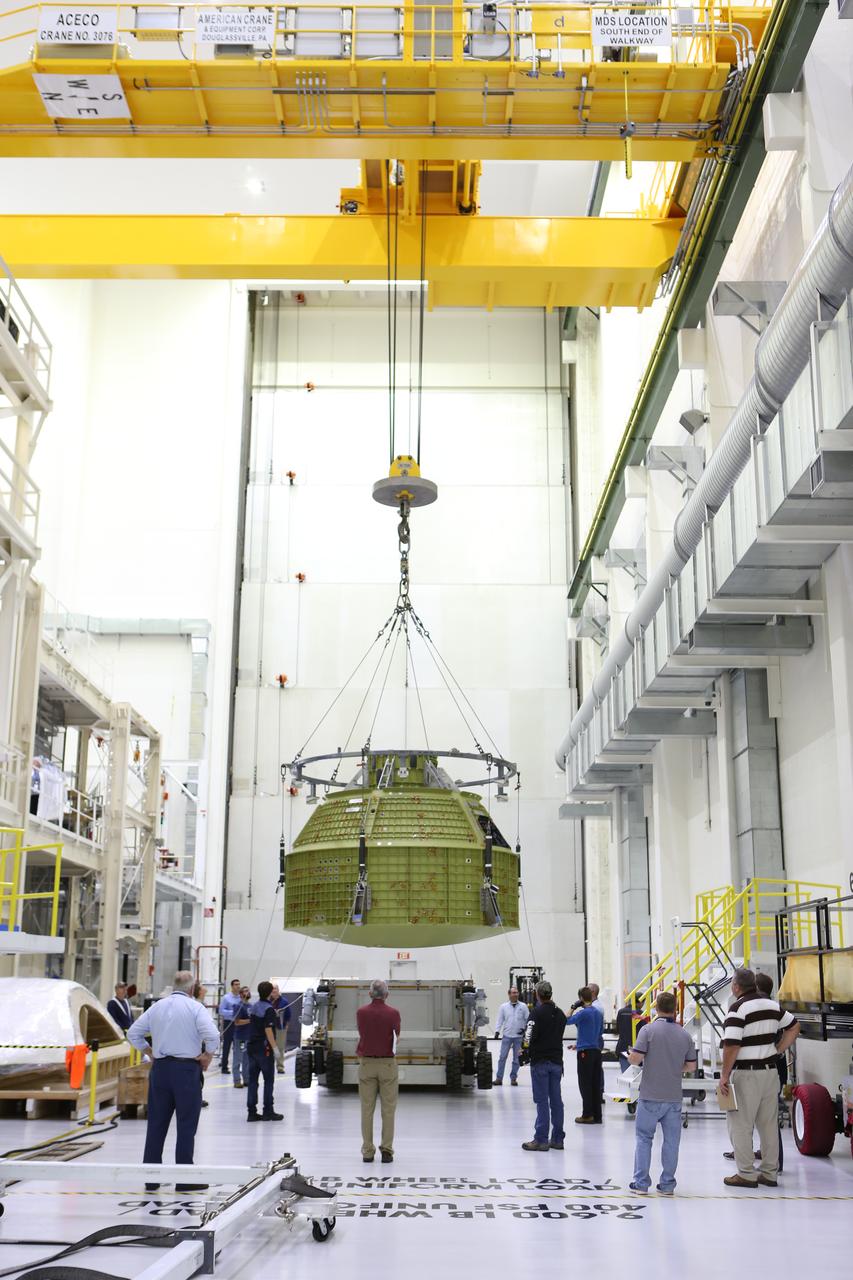
Inside the Neil Armstrong Operations and Checkout Building at NASA’s Kennedy Space Center in Florida, Lockheed Martin technicians monitor the progress as a crane lifts the Orion crew module structural test article (STA) away from the base of its transport container. The STA arrived aboard NASA's Super Guppy aircraft at the Shuttle Landing Facility operated by Space Florida. The test article will be moved to a test tool called the birdcage for further testing. The Orion spacecraft will launch atop NASA’s Space Launch System rocket on EM-1, its first deep space mission, in late 2018.
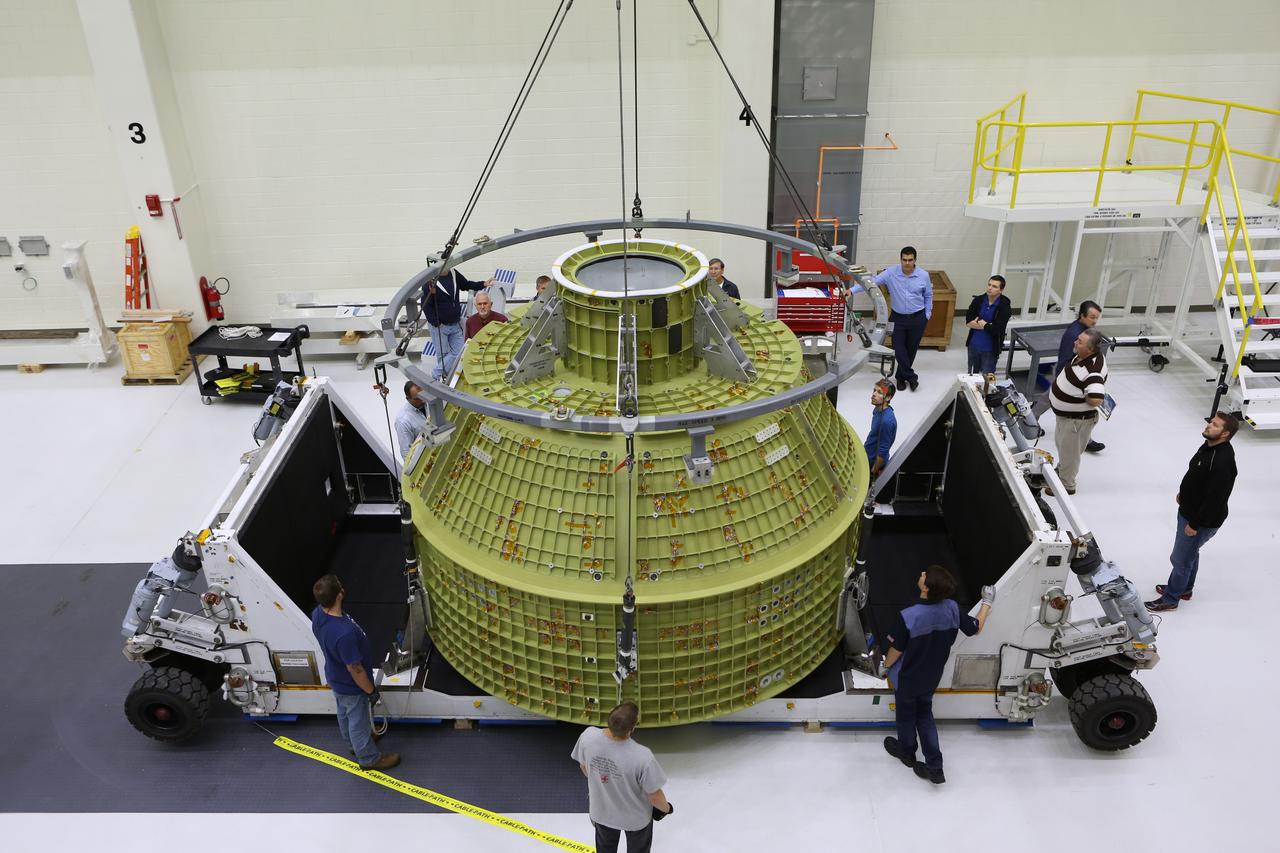
Inside the Neil Armstrong Operations and Checkout Building at NASA’s Kennedy Space Center in Florida, Lockheed Martin technicians monitor the progress as a crane begins to lift the Orion crew module structural test article (STA) up from the base of its transport container. The STA arrived aboard NASA's Super Guppy aircraft at the Shuttle Landing Facility operated by Space Florida. The test article will be moved to a test tool called the birdcage for further testing. The Orion spacecraft will launch atop NASA’s Space Launch System rocket on EM-1, its first deep space mission, in late 2018.
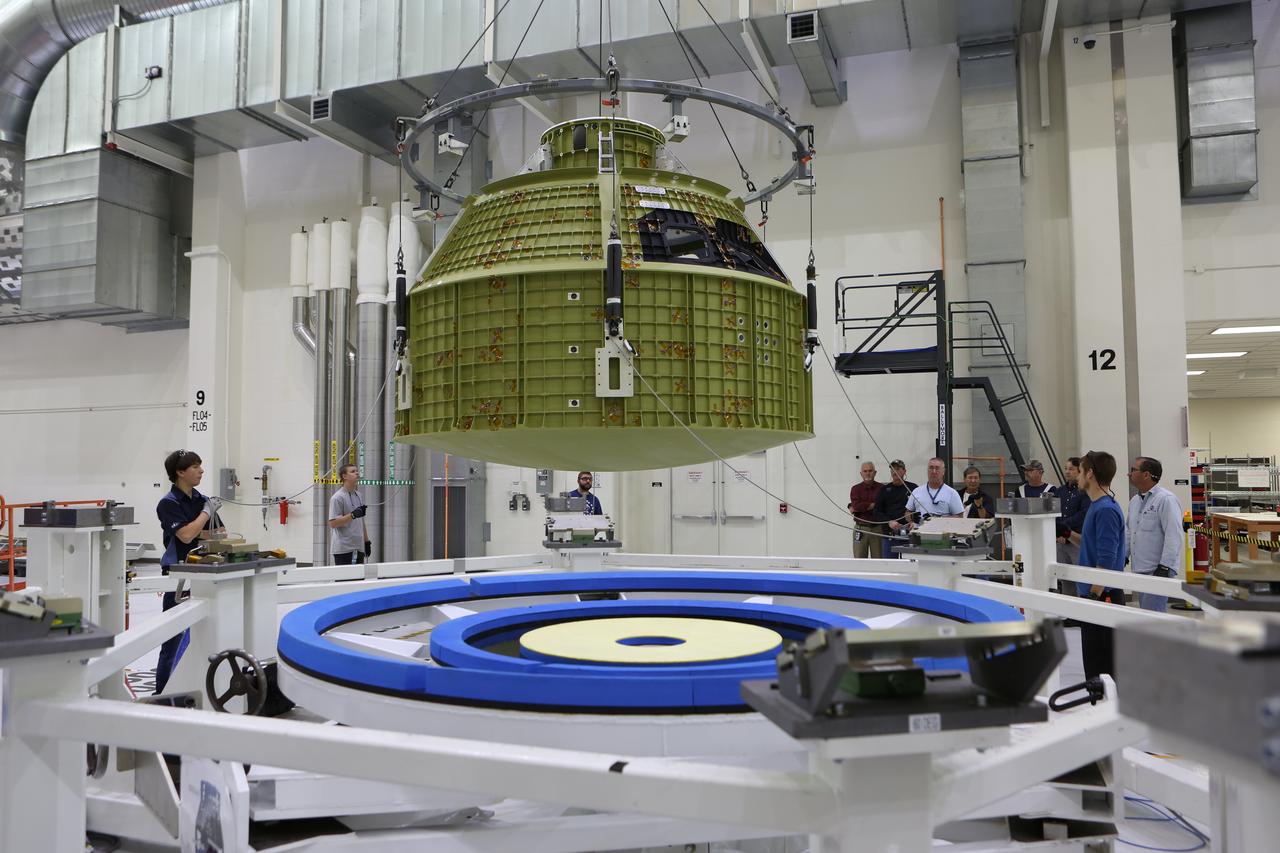
Inside the Neil Armstrong Operations and Checkout Building at NASA’s Kennedy Space Center in Florida, Lockheed Martin technicians monitor the progress as a crane lowers the Orion crew module structural test article (STA) toward a test tool called the birdcage. The STA arrived aboard NASA's Super Guppy aircraft at the Shuttle Landing Facility operated by Space Florida. The test article will be secured on the birdcage for further testing. The Orion spacecraft will launch atop NASA’s Space Launch System rocket on EM-1, its first deep space mission, in late 2018.
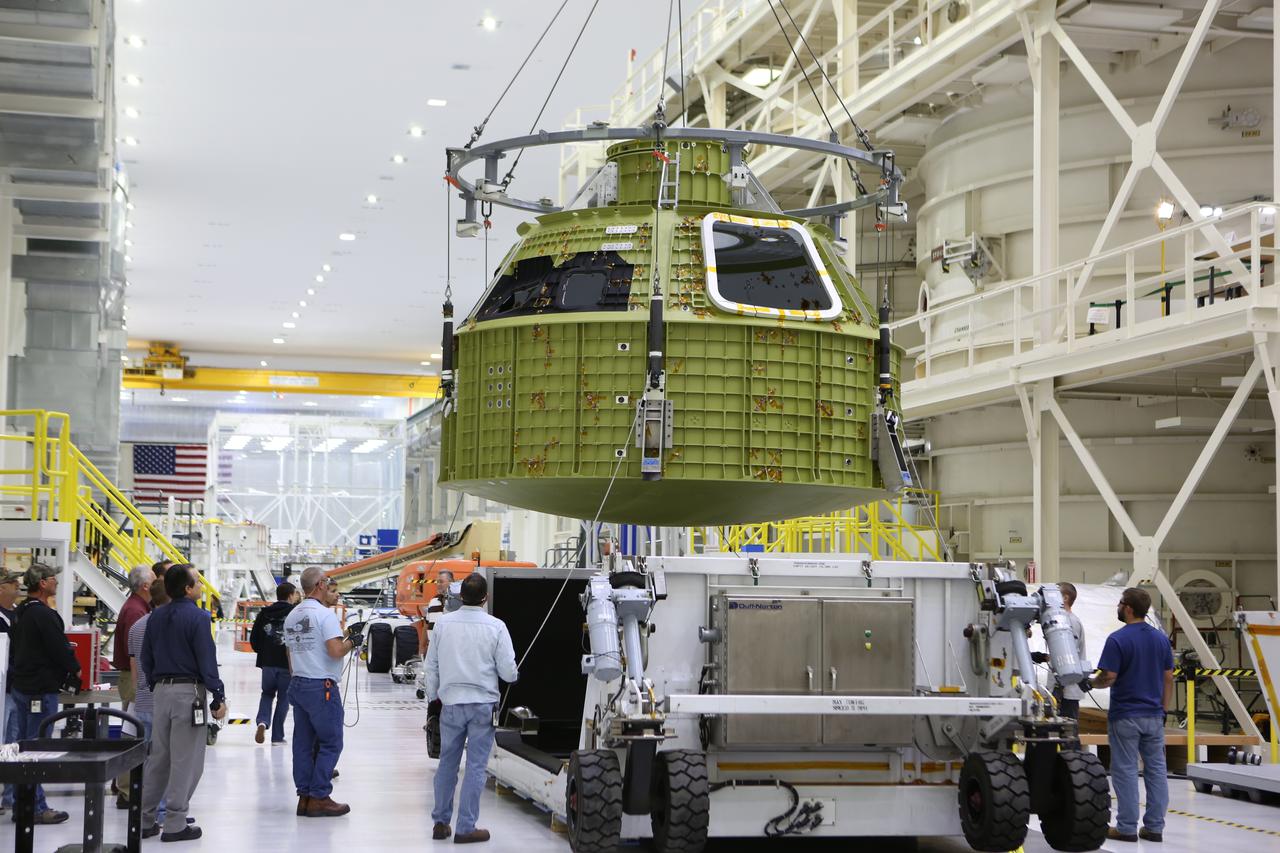
Inside the Neil Armstrong Operations and Checkout Building at NASA’s Kennedy Space Center in Florida, Lockheed Martin technicians monitor the progress as a crane lifts the Orion crew module structural test article (STA) up from the base of its transport container. The STA arrived aboard NASA's Super Guppy aircraft at the Shuttle Landing Facility operated by Space Florida. The test article will be moved to a test tool called the birdcage for further testing. The Orion spacecraft will launch atop NASA’s Space Launch System rocket on EM-1, its first deep space mission, in late 2018.
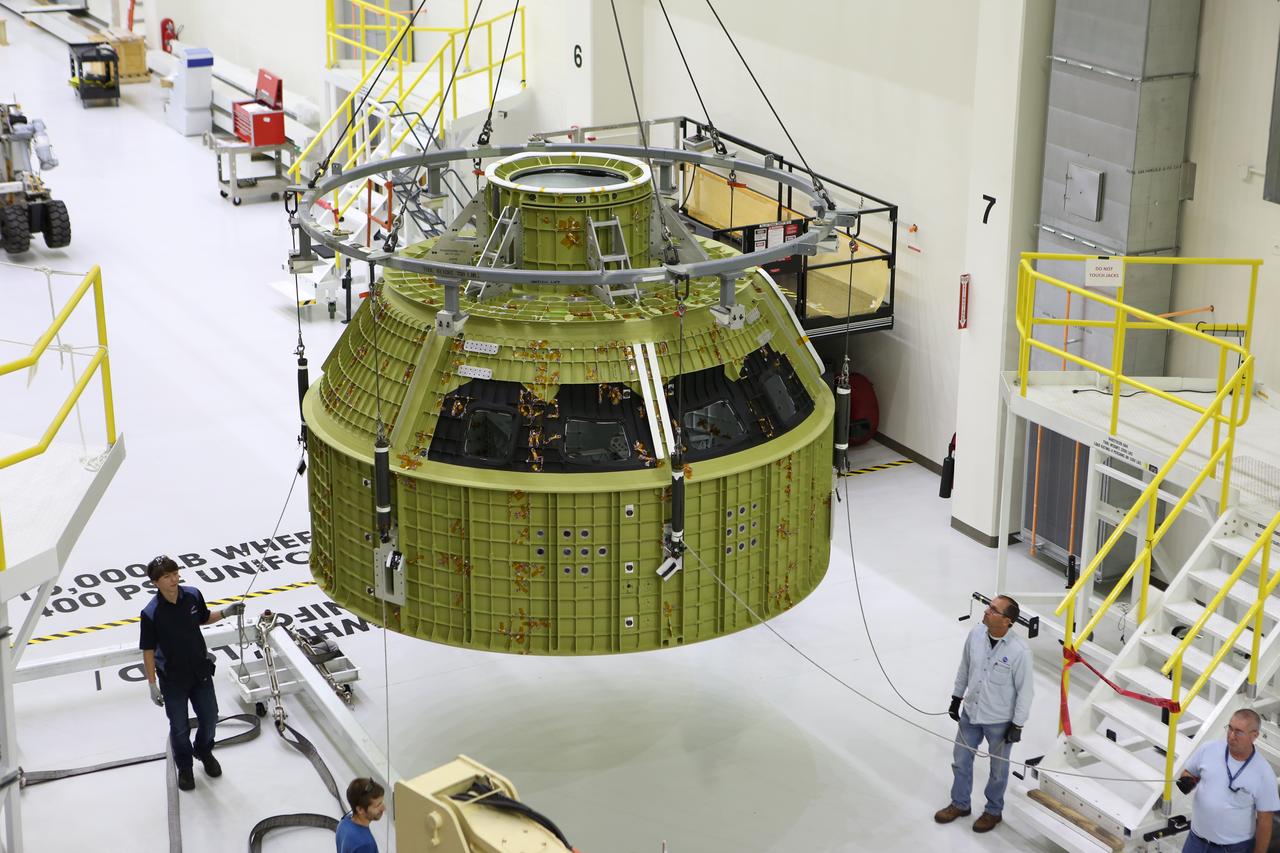
Inside the Neil Armstrong Operations and Checkout Building at NASA’s Kennedy Space Center in Florida, Lockheed Martin technicians monitor the progress as a crane moves the Orion crew module structural test article (STA) along the center aisle of the high bay. The STA arrived aboard NASA's Super Guppy aircraft at the Shuttle Landing Facility operated by Space Florida. The test article will be moved to a test tool called the birdcage for further testing. The Orion spacecraft will launch atop NASA’s Space Launch System rocket on EM-1, its first deep space mission, in late 2018.

Inside the Neil Armstrong Operations and Checkout Building at NASA’s Kennedy Space Center in Florida, Lockheed Martin technicians check the lines attached from a crane to the Orion crew module structural test article (STA). The STA arrived aboard NASA's Super Guppy aircraft at the Shuttle Landing Facility operated by Space Florida. The test article will be lifted out of its container and moved to a test tool called the birdcage for further testing. The Orion spacecraft will launch atop NASA’s Space Launch System rocket on EM-1, its first deep space mission, in late 2018.

Inside the Neil Armstrong Operations and Checkout Building at NASA’s Kennedy Space Center in Florida, Lockheed Martin technicians monitor the progress as a crane lowers the Orion crew module structural test article (STA) onto a test tool called the birdcage. The STA arrived aboard NASA's Super Guppy aircraft at the Shuttle Landing Facility operated by Space Florida. The test article will be secured on the birdcage for further testing. The Orion spacecraft will launch atop NASA’s Space Launch System rocket on EM-1, its first deep space mission, in late 2018.
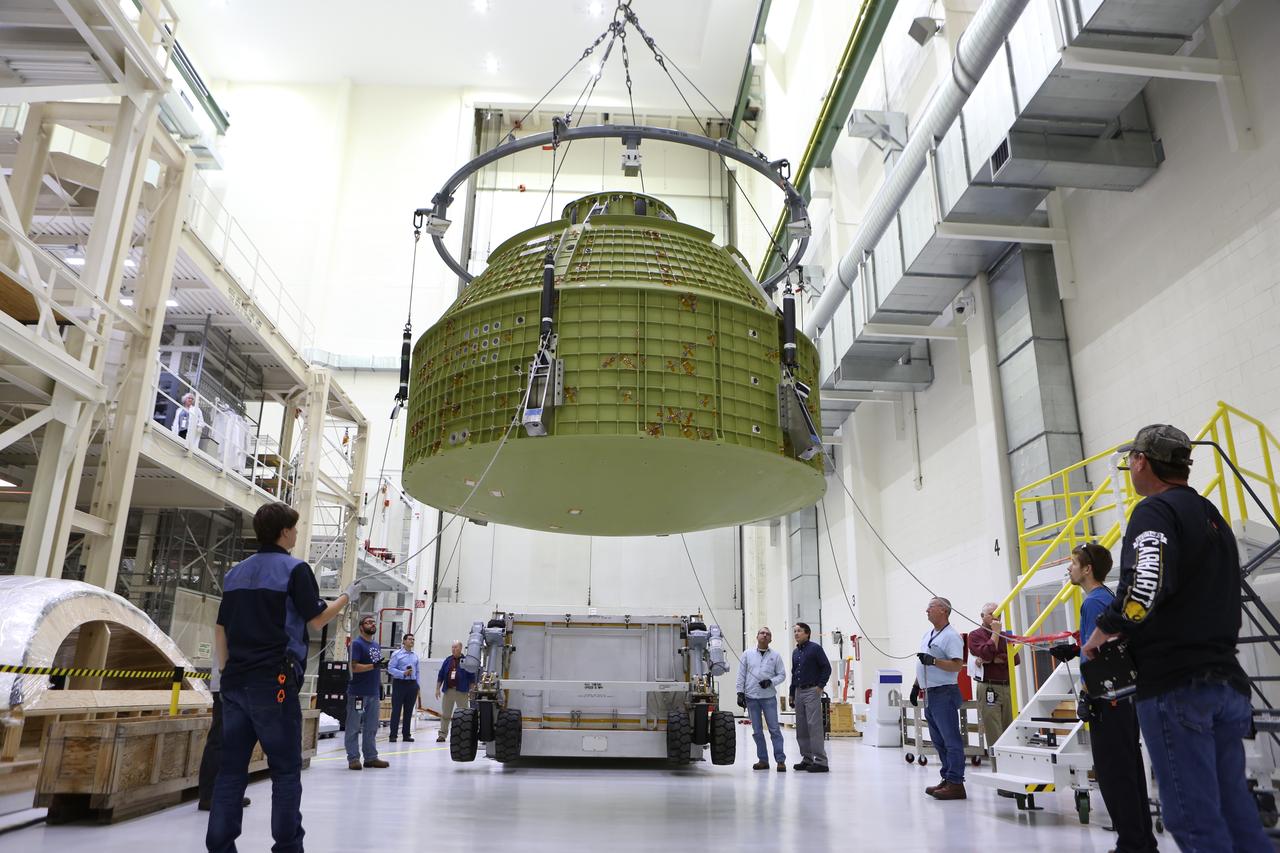
Inside the Neil Armstrong Operations and Checkout Building at NASA’s Kennedy Space Center in Florida, Lockheed Martin technicians monitor the progress as a crane moves the Orion crew module structural test article (STA) along the center aisle of the high bay. The STA arrived aboard NASA's Super Guppy aircraft at the Shuttle Landing Facility operated by Space Florida. The test article will be moved to a test tool called the birdcage for further testing. The Orion spacecraft will launch atop NASA’s Space Launch System rocket on EM-1, its first deep space mission, in late 2018.
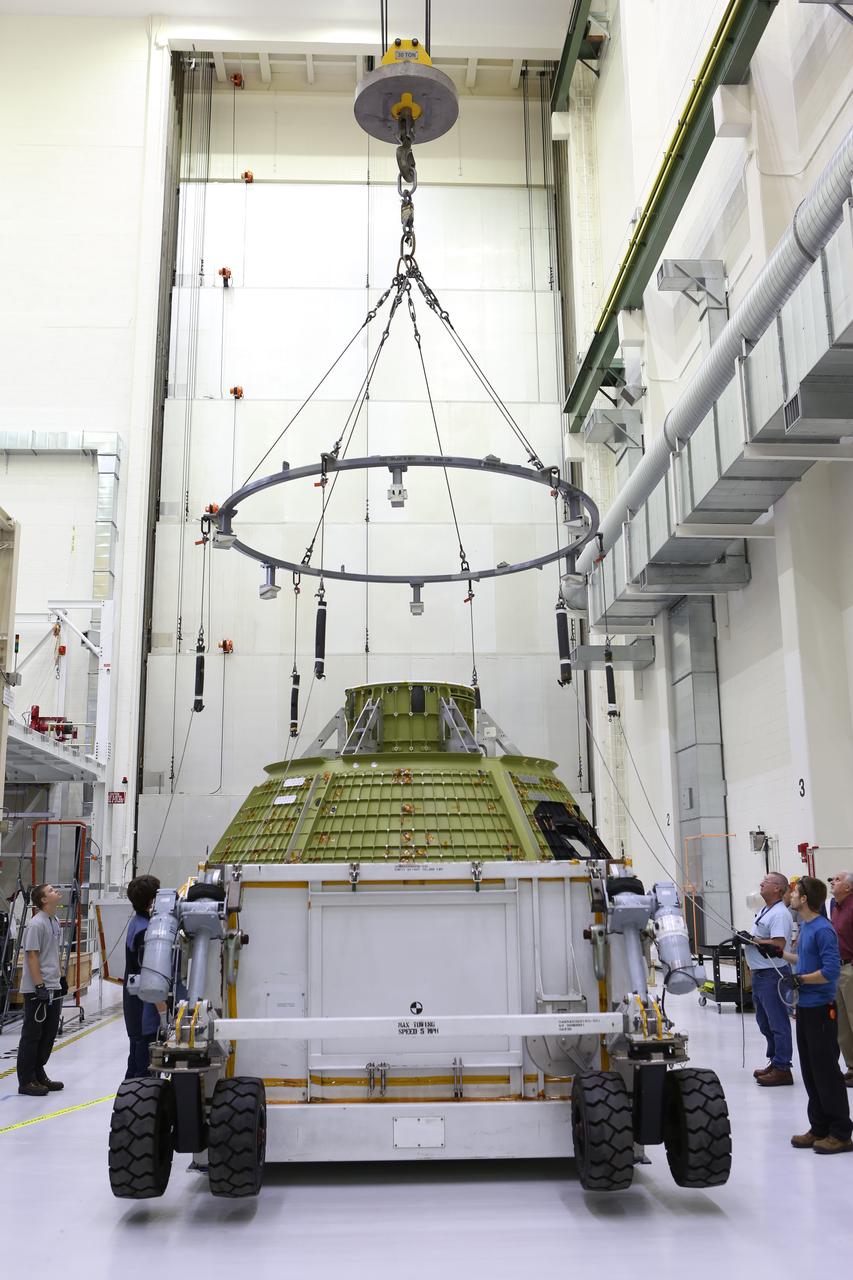
Inside the Neil Armstrong Operations and Checkout Building at NASA’s Kennedy Space Center in Florida, Lockheed Martin technicians prepare to attach lines from a crane to the Orion crew module structural test article (STA). The STA arrived aboard NASA's Super Guppy aircraft at the Shuttle Landing Facility operated by Space Florida. The test article will be lifted out of its container and moved to a test tool called the birdcage for further testing. The Orion spacecraft will launch atop NASA’s Space Launch System rocket on EM-1, its first deep space mission, in late 2018.
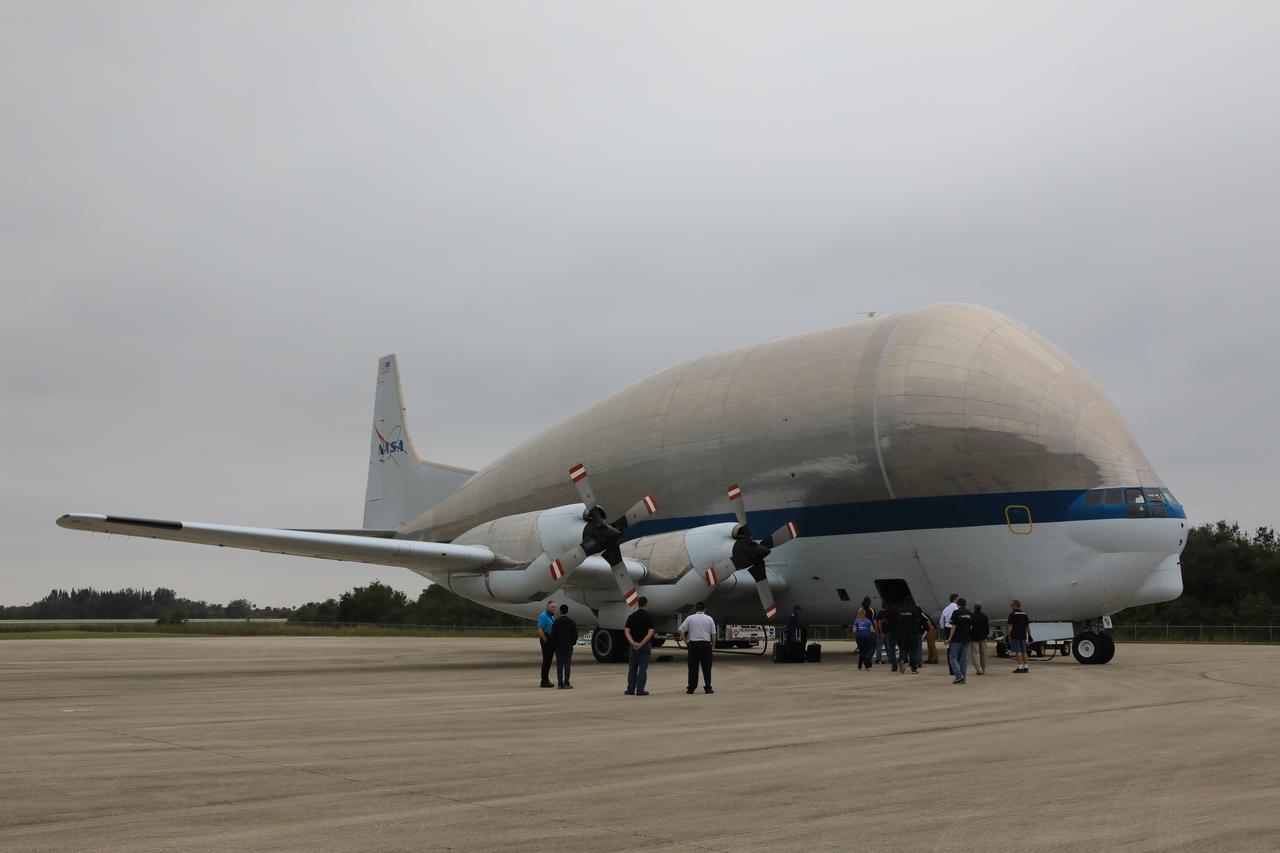
NASA’s Super Guppy aircraft arrives on the tarmac after touching down at the Shuttle Landing Facility at the agency’s Kennedy Space Center in Florida. The guppy is carrying the Orion crew module structural test article (STA). The STA will be offloaded and transported to the Neil Armstrong Operations and Checkout Building high bay for further testing. Photo credit: NASA/Kim Shiflett
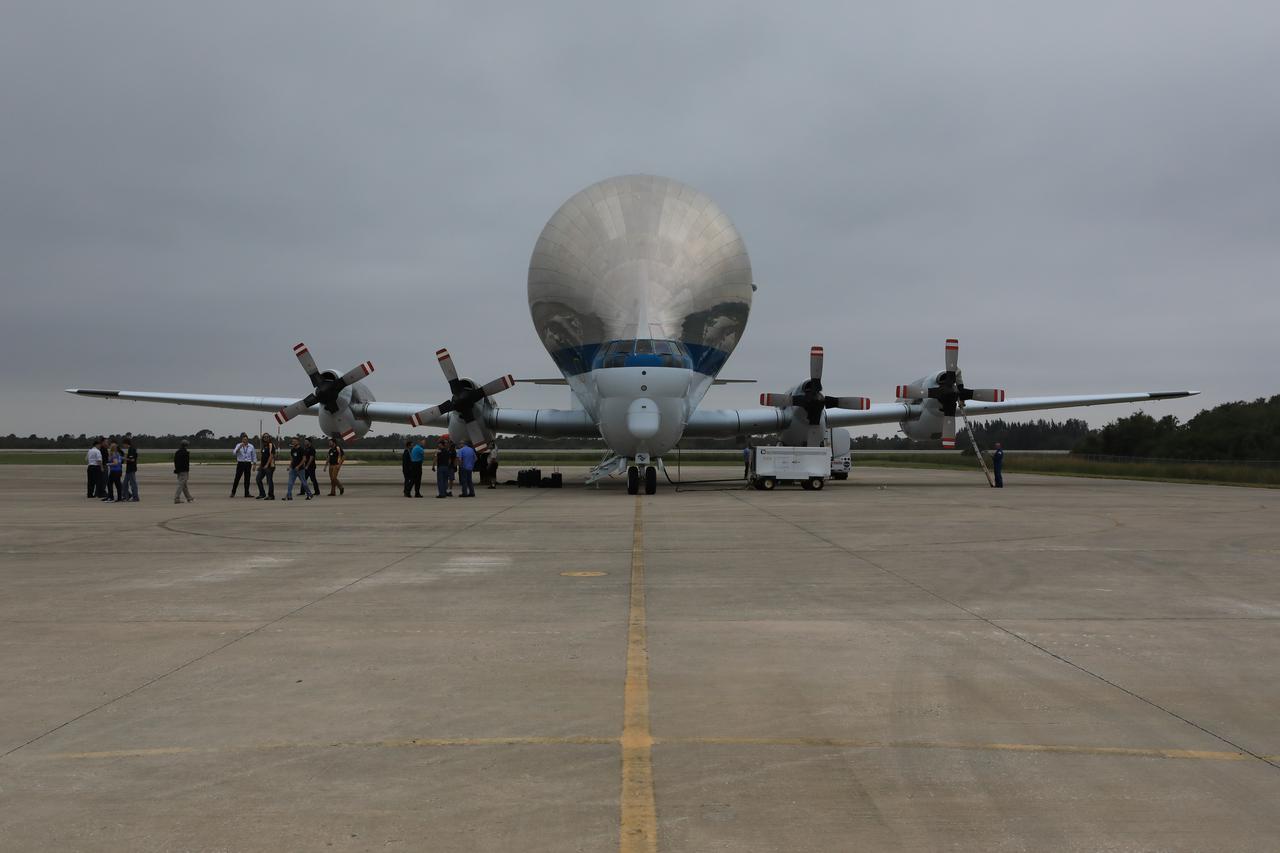
NASA’s Super Guppy aircraft arrives on the tarmac after touching down at the Shuttle Landing Facility at the agency’s Kennedy Space Center in Florida. The guppy is carrying the Orion crew module structural test article (STA). The STA will be offloaded and transported to the Neil Armstrong Operations and Checkout Building high bay for further testing. Photo credit: NASA/Kim Shiflett
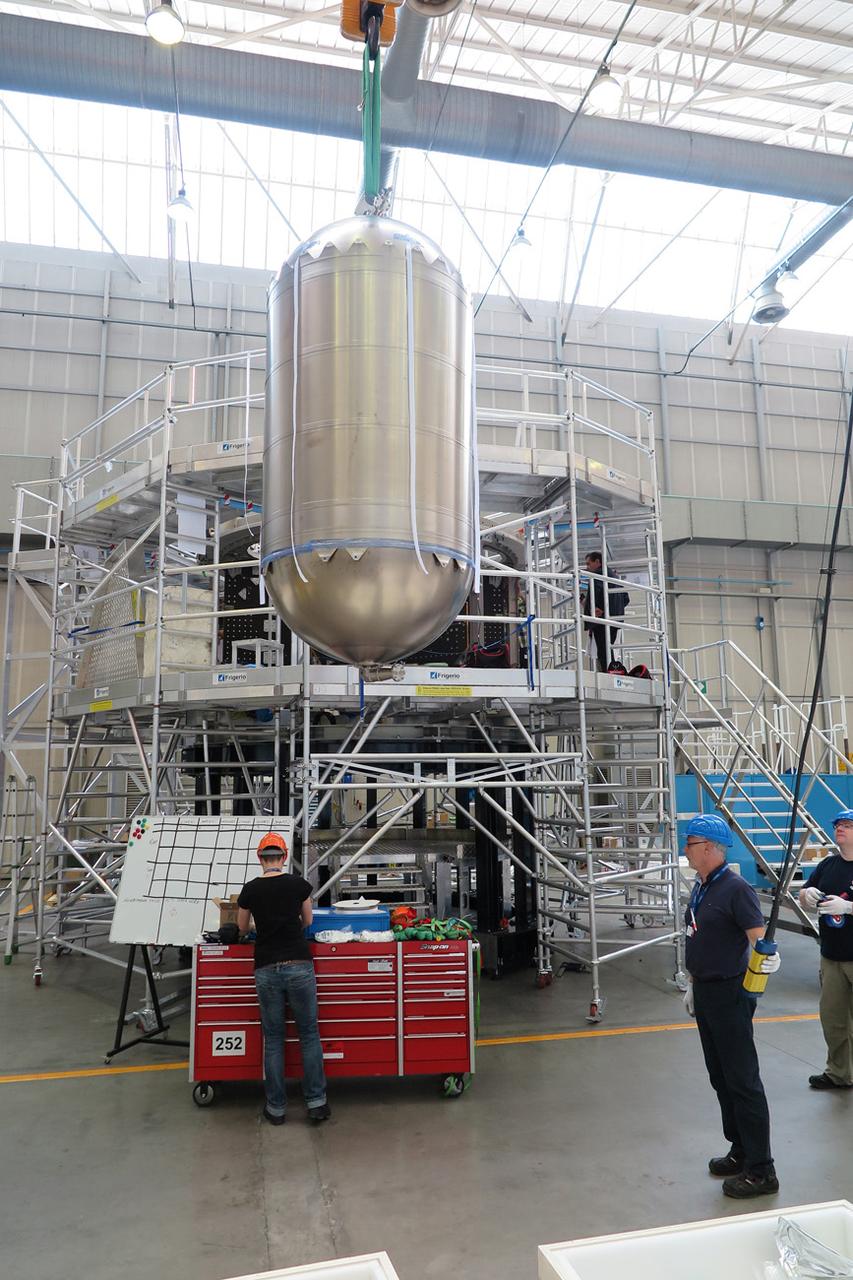
The structural test article of the European service module for Orion, shown here on Nov. 9, 2015 is being assembled at Airbus Defence and Space. Airbus is building the module, which will supply the spacecraft’s power, in-space propulsion and air and water for the crew, on behalf of ESA (European Space Agency) for Orion. The STA is being transported to Glenn Research Center's Plum Brook station for testing.
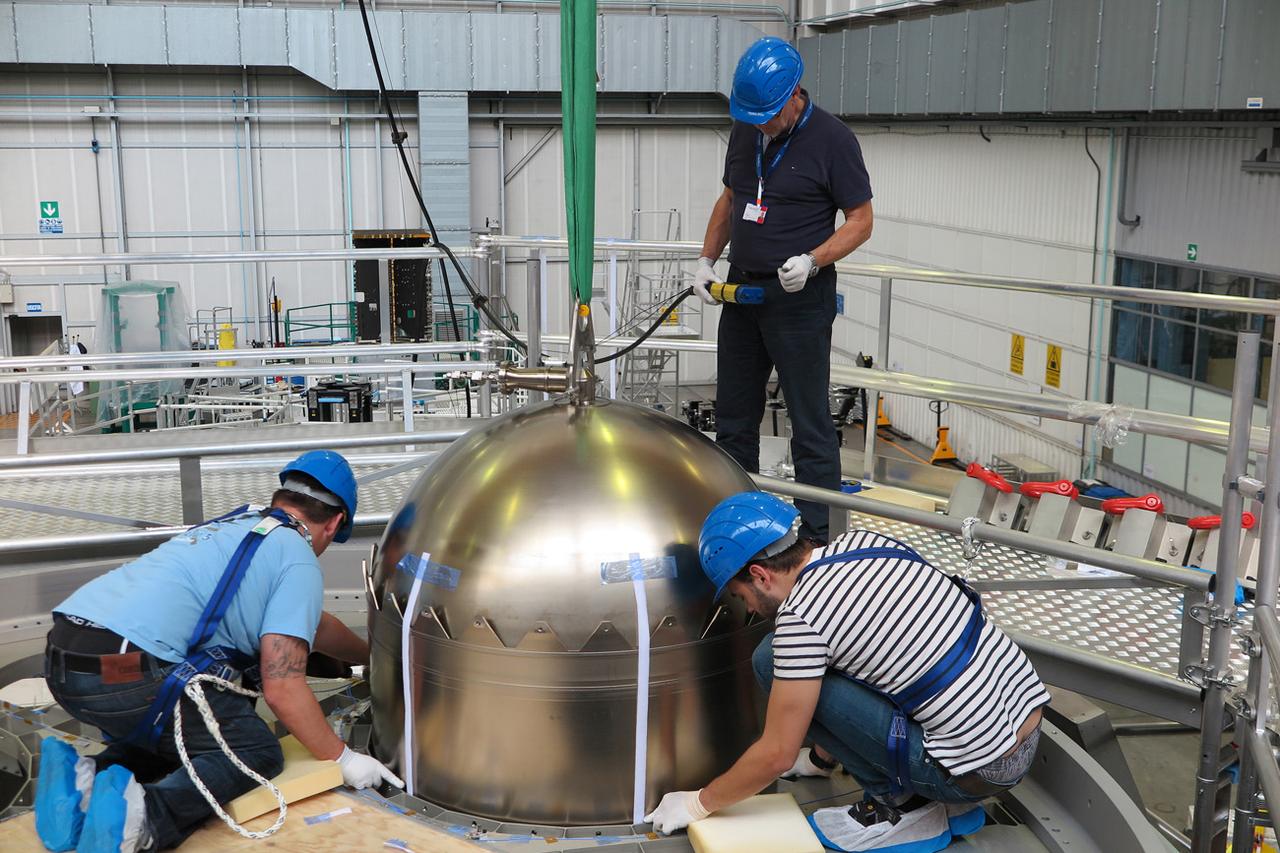
The structural test article of the European service module for Orion, shown here on Nov. 9, 2015 is being assembled at Airbus Defence and Space. Airbus is building the module, which will supply the spacecraft’s power, in-space propulsion and air and water for the crew, on behalf of ESA (European Space Agency) for Orion. The STA is being transported to Glenn Research Center's Plum Brook station for testing.
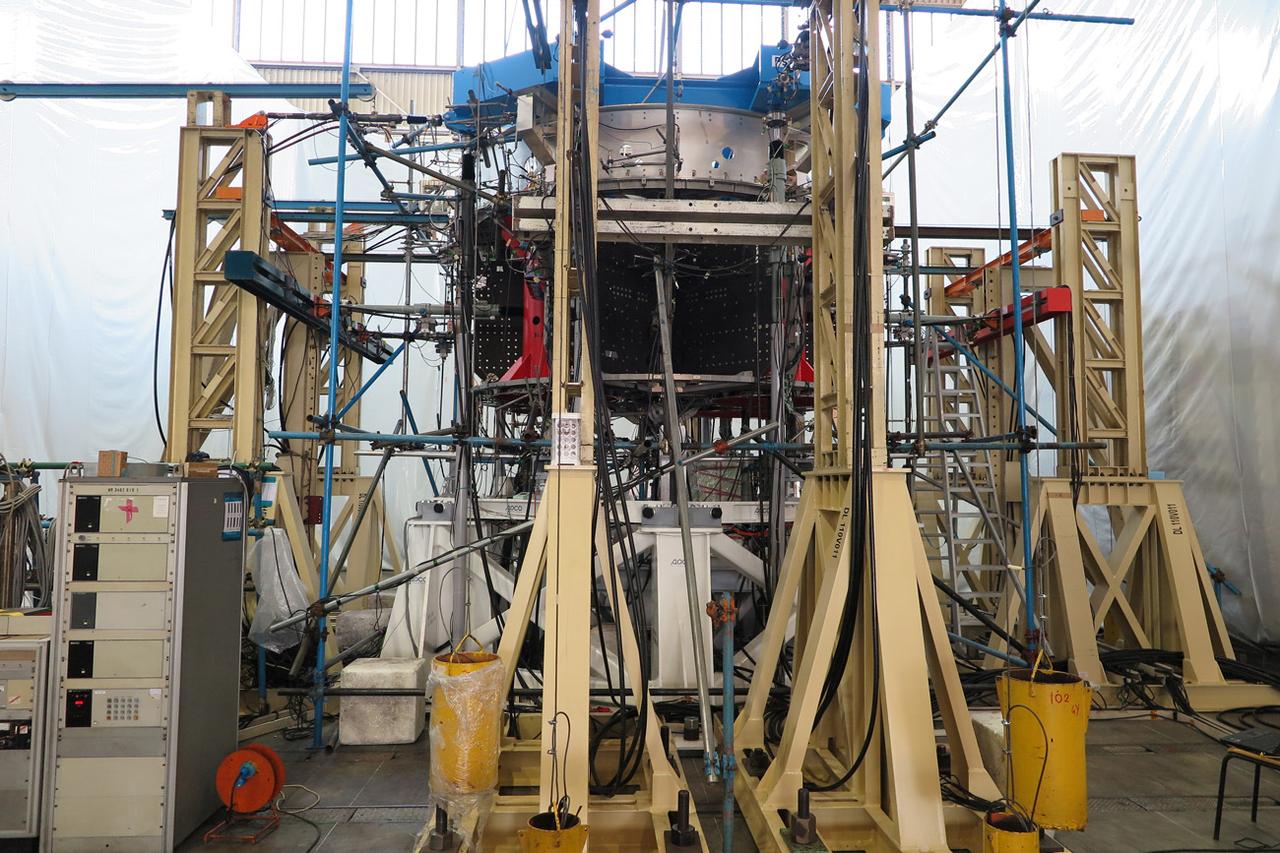
The structural test article of the European service module for Orion, shown here on Nov. 9, 2015 is being assembled at Airbus Defence and Space. Airbus is building the module, which will supply the spacecraft’s power, in-space propulsion and air and water for the crew, on behalf of ESA (European Space Agency) for Orion. The STA is being transported to Glenn Research Center's Plum Brook station for testing.
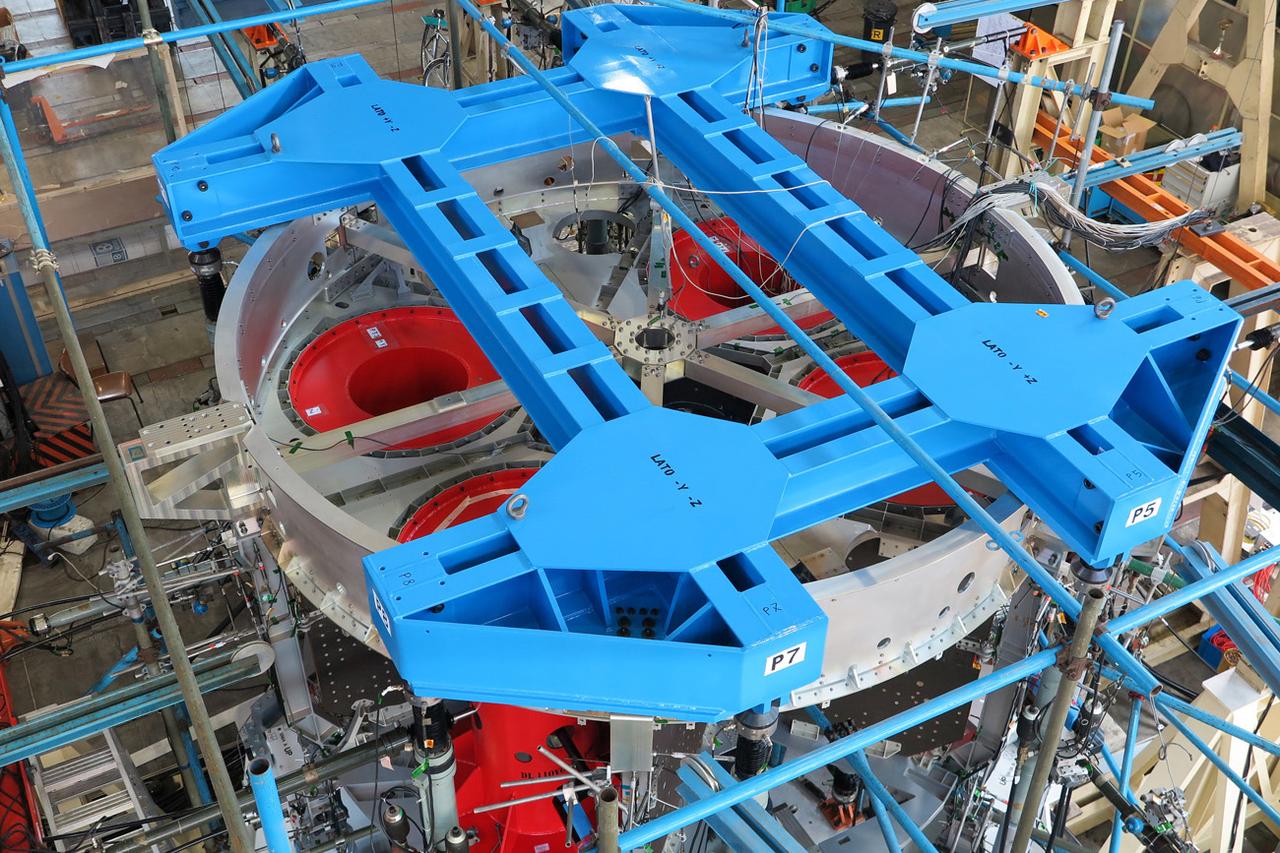
The structural test article of the European service module for Orion, shown here on Nov. 9, 2015 is being assembled at Airbus Defence and Space. Airbus is building the module, which will supply the spacecraft’s power, in-space propulsion and air and water for the crew, on behalf of ESA (European Space Agency) for Orion. The STA is being transported to Glenn Research Center's Plum Brook station for testing.
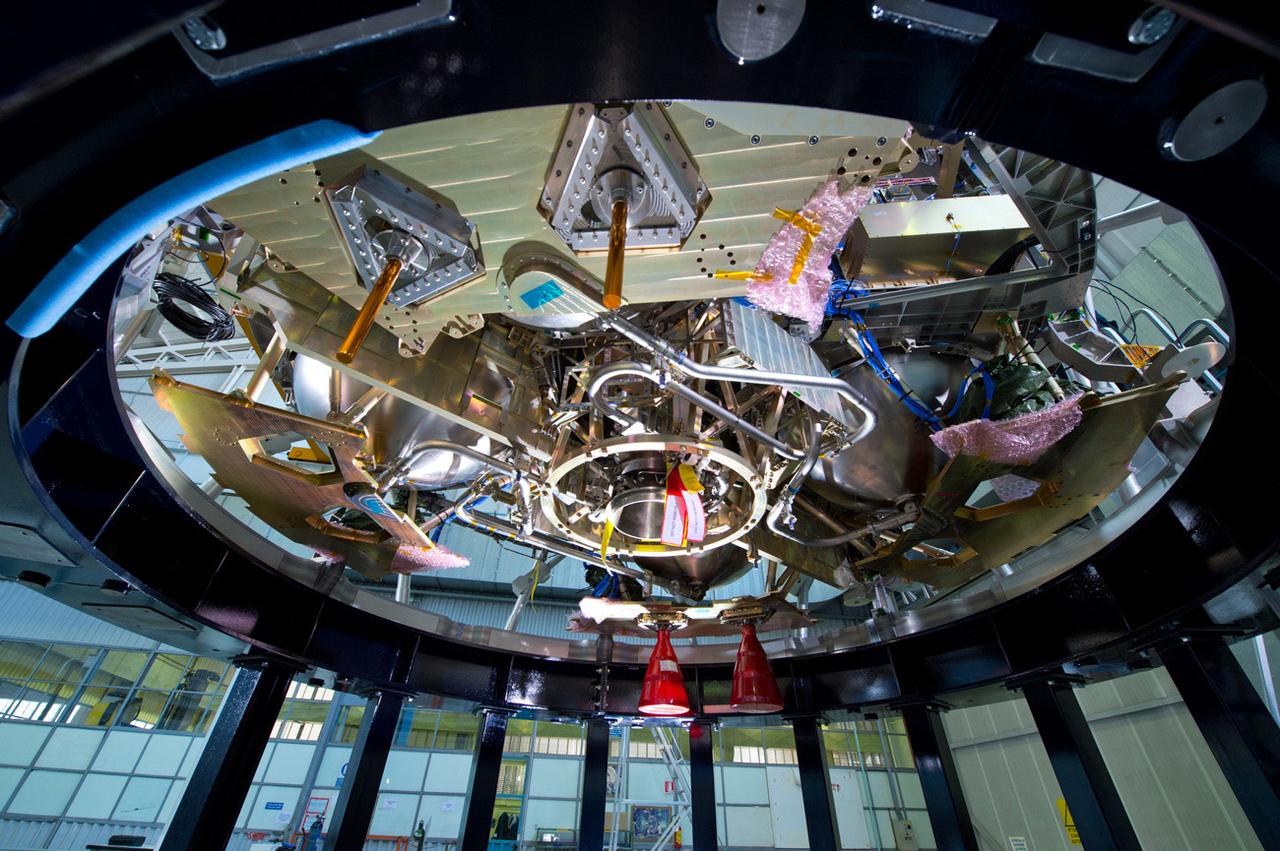
The structural test article of the European service module for Orion, shown here on Nov. 9, 2015 is being assembled at Airbus Defence and Space. Airbus is building the module, which will supply the spacecraft’s power, in-space propulsion and air and water for the crew, on behalf of ESA (European Space Agency) for Orion. The STA is being transported to Glenn Research Center's Plum Brook station for testing.
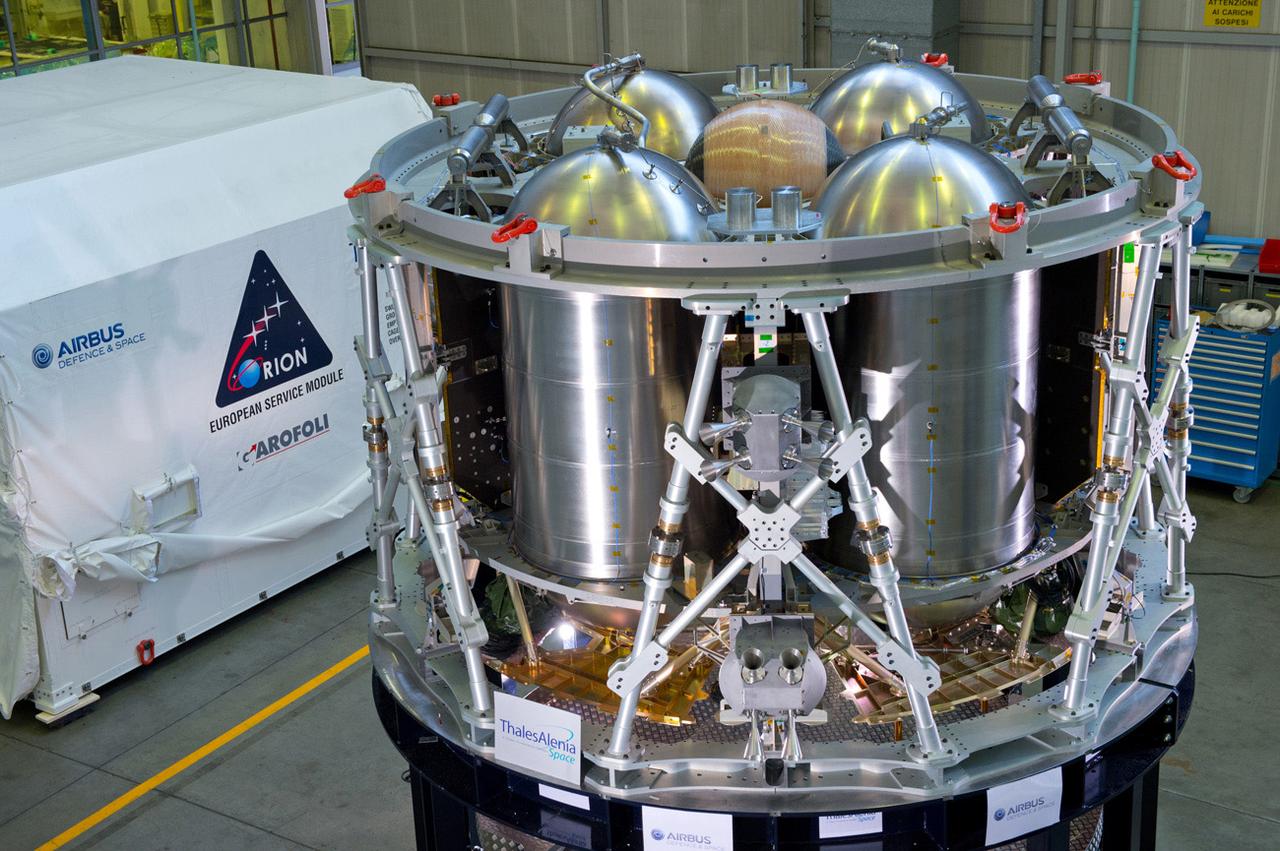
The structural test article of the European service module for Orion, shown here on Nov. 9, 2015 is being assembled at Airbus Defence and Space. Airbus is building the module, which will supply the spacecraft’s power, in-space propulsion and air and water for the crew, on behalf of ESA (European Space Agency) for Orion. The STA is being transported to Glenn Research Center's Plum Brook station for testing.
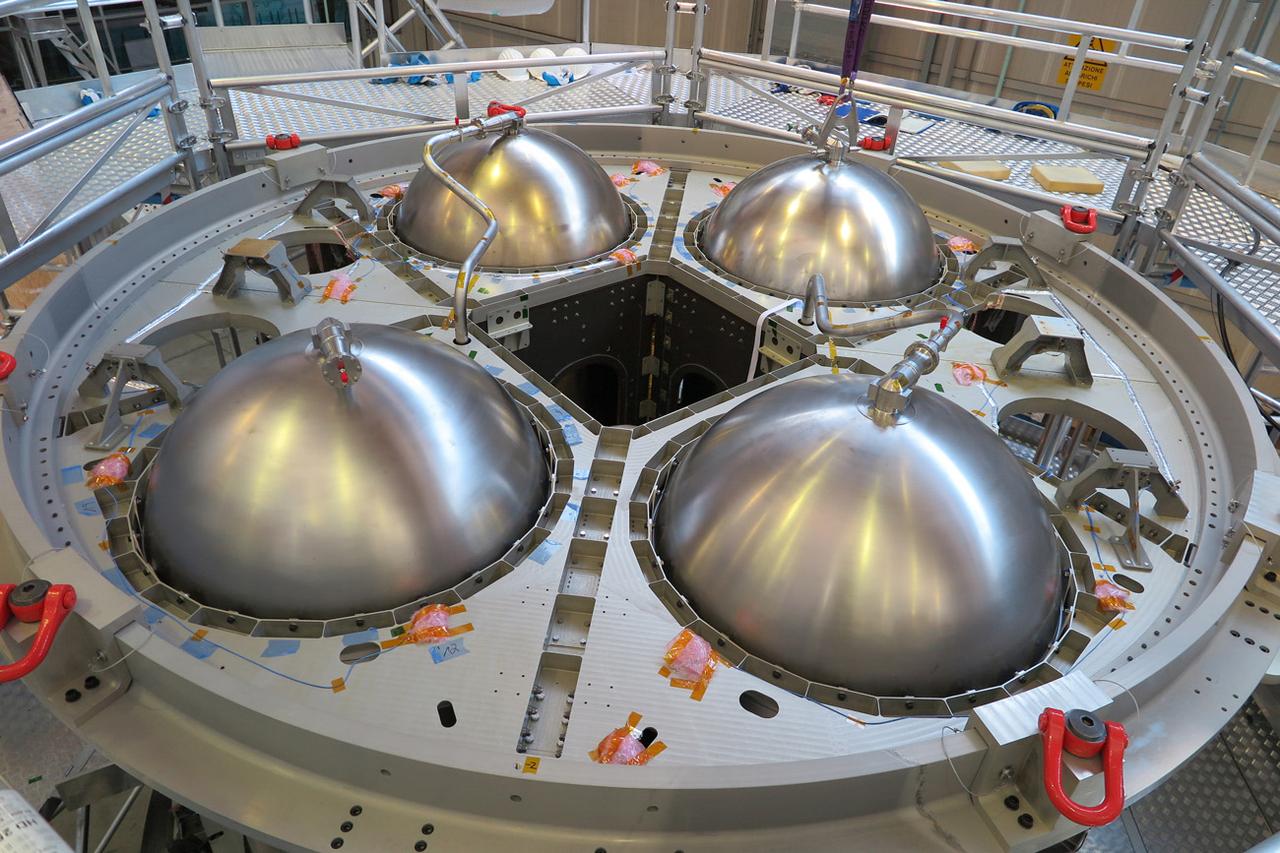
The structural test article of the European service module for Orion, shown here on Nov. 9, 2015 is being assembled at Airbus Defence and Space. Airbus is building the module, which will supply the spacecraft’s power, in-space propulsion and air and water for the crew, on behalf of ESA (European Space Agency) for Orion. The STA is being transported to Glenn Research Center's Plum Brook station for testing.
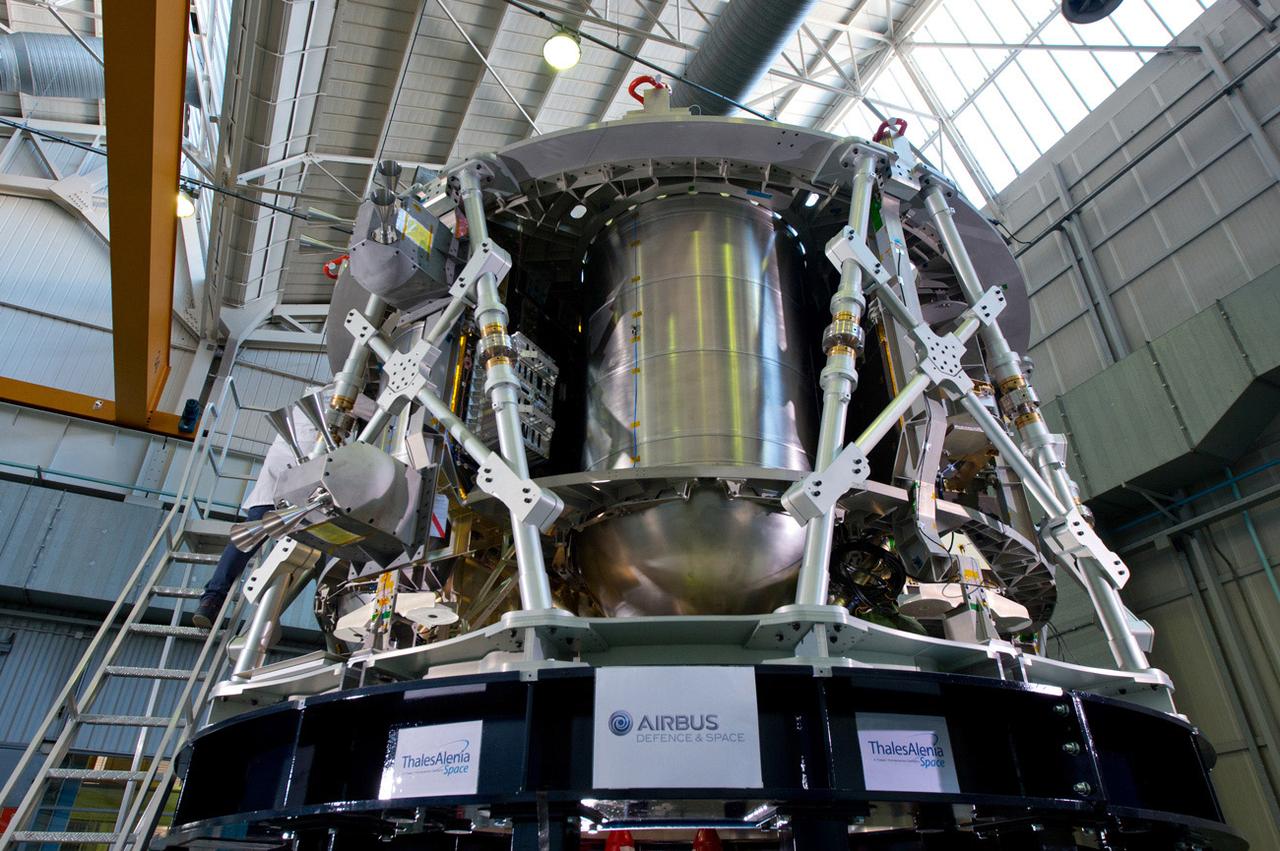
The structural test article of the European service module for Orion, shown here on Nov. 9, 2015 is being assembled at Airbus Defence and Space. Airbus is building the module, which will supply the spacecraft’s power, in-space propulsion and air and water for the crew, on behalf of ESA (European Space Agency) for Orion. The STA is being transported to Glenn Research Center's Plum Brook station for testing.
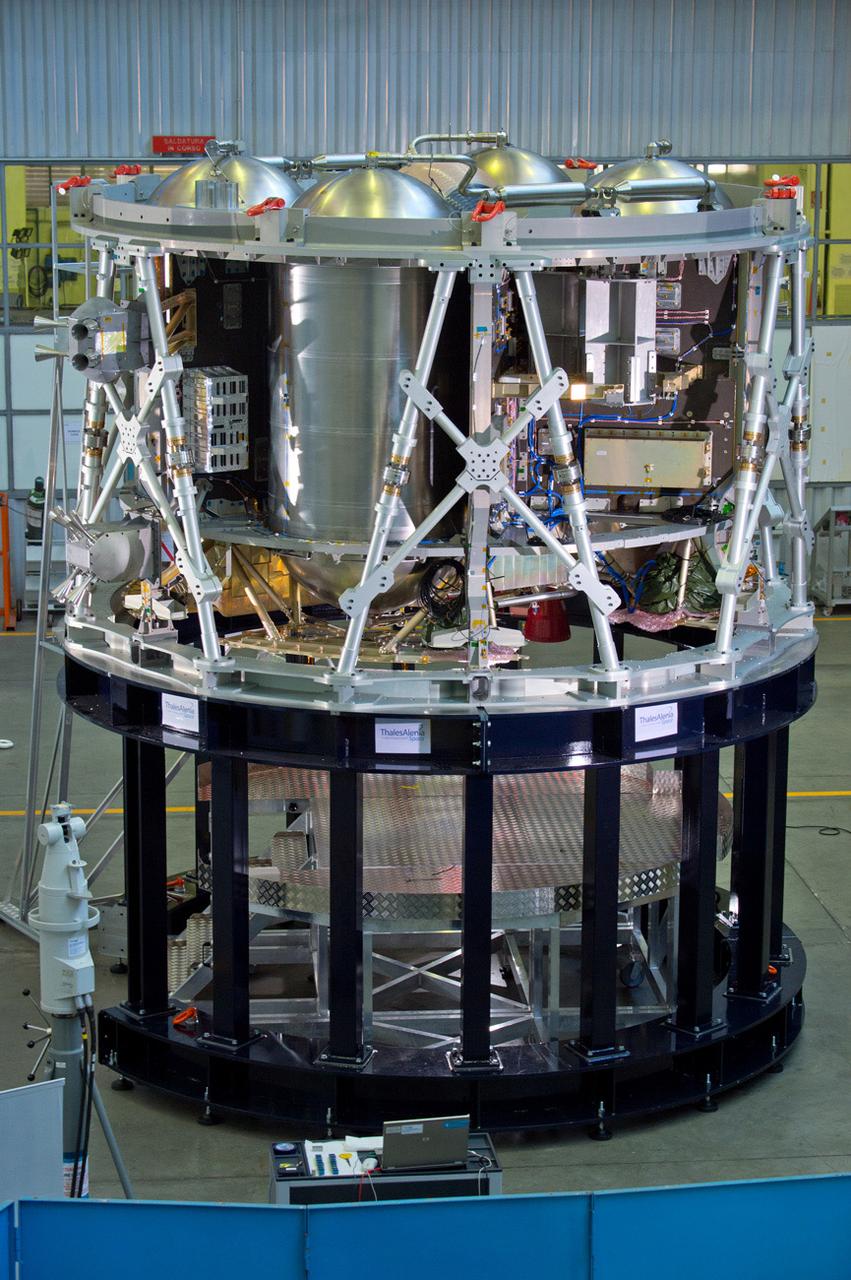
The structural test article of the European service module for Orion, shown here on Nov. 9, 2015 is being assembled at Airbus Defence and Space. Airbus is building the module, which will supply the spacecraft’s power, in-space propulsion and air and water for the crew, on behalf of ESA (European Space Agency) for Orion. The STA is being transported to Glenn Research Center's Plum Brook station for testing.
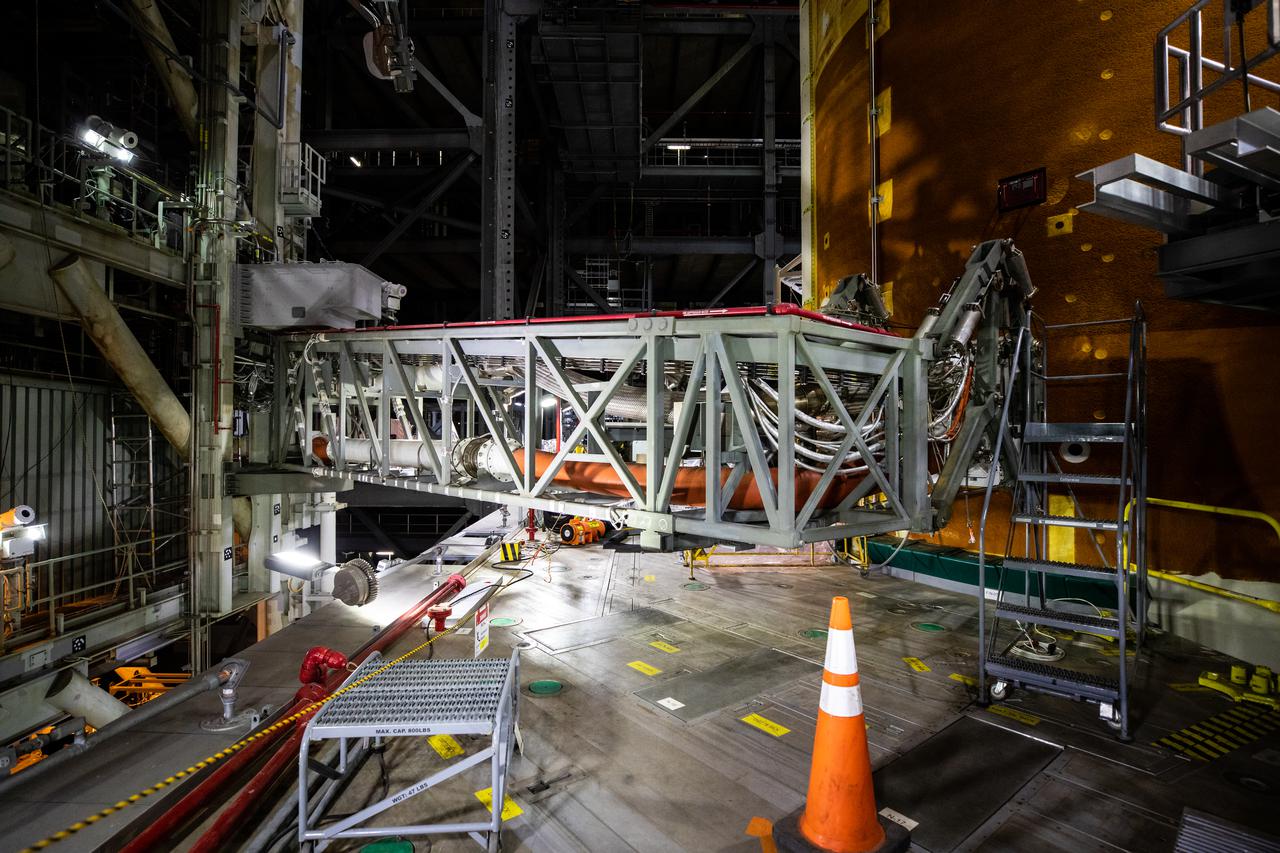
The core stage inter-tank umbilical – one of multiple connections on the mobile launcher that will provide power, communications, and pressurized gases to the rocket – is attached to the Space Launch System (SLS) core stage inside the Vehicle Assembly Building at NASA’s Kennedy Space Center in Florida on Aug. 12, 2021. Before the Orion spacecraft can be stacked atop the SLS, teams are conducting various tests to ensure the rocket can properly communicate with the ground systems equipment that will be used for launch. The first in an increasingly complex set of missions, Artemis I will test SLS and Orion as an integrated system prior to crewed flights to the Moon. Through Artemis, NASA will send the first woman and the first person of color to the lunar surface, as well as establish a sustainable presence on and around the Moon.

Seen here is a close-up view of the Orion stage adapter (OSA) structural test article atop the Space Launch System (SLS) rocket inside the Vehicle Assembly Building (VAB) at NASA’s Kennedy Space Center in Florida on Aug. 12, 2021. The test article, representing the mass and weight of the actual flight hardware, is being used for various tests inside the VAB ahead of OSA stacking operations. The first in an increasingly complex set of missions, Artemis I will test SLS and the Orion spacecraft as an integrated system prior to crewed flights to the Moon. Through Artemis, NASA will send the first woman and the first person of color to the lunar surface, as well as establish a sustainable presence on and around the Moon.

In High Bay 3 inside the Vehicle Assembly Building at NASA’s Kennedy Space Center in Florida, teams with Exploration Ground Systems and Jacobs use the Orion stage adapter structural test article and the Mass Simulator for Orion for testing on Aug. 13, 2021. They are stacked atop the Space Launch System (SLS) rocket. These test articles represent the mass and weight of the actual Orion stage adapter and Orion spacecraft that will be used for various tests. Launching in 2021, Artemis I will be an uncrewed test of the Orion spacecraft and SLS rocket as an integrated system ahead of crewed flights to the Moon. Under Artemis, NASA aims to land the first woman and first person of color on the Moon and establish sustainable lunar exploration.

The core stage inter-tank umbilical – one of multiple connections on the mobile launcher that will provide power, communications, and pressurized gases to the rocket – is attached to the Space Launch System (SLS) core stage inside the Vehicle Assembly Building at NASA’s Kennedy Space Center in Florida on Aug. 12, 2021. Before the Orion spacecraft can be stacked atop the SLS, teams are conducting various tests to ensure the rocket can properly communicate with the ground systems equipment that will be used for launch. The first in an increasingly complex set of missions, Artemis I will test SLS and Orion as an integrated system prior to crewed flights to the Moon. Through Artemis, NASA will send the first woman and the first person of color to the lunar surface, as well as establish a sustainable presence on and around the Moon.
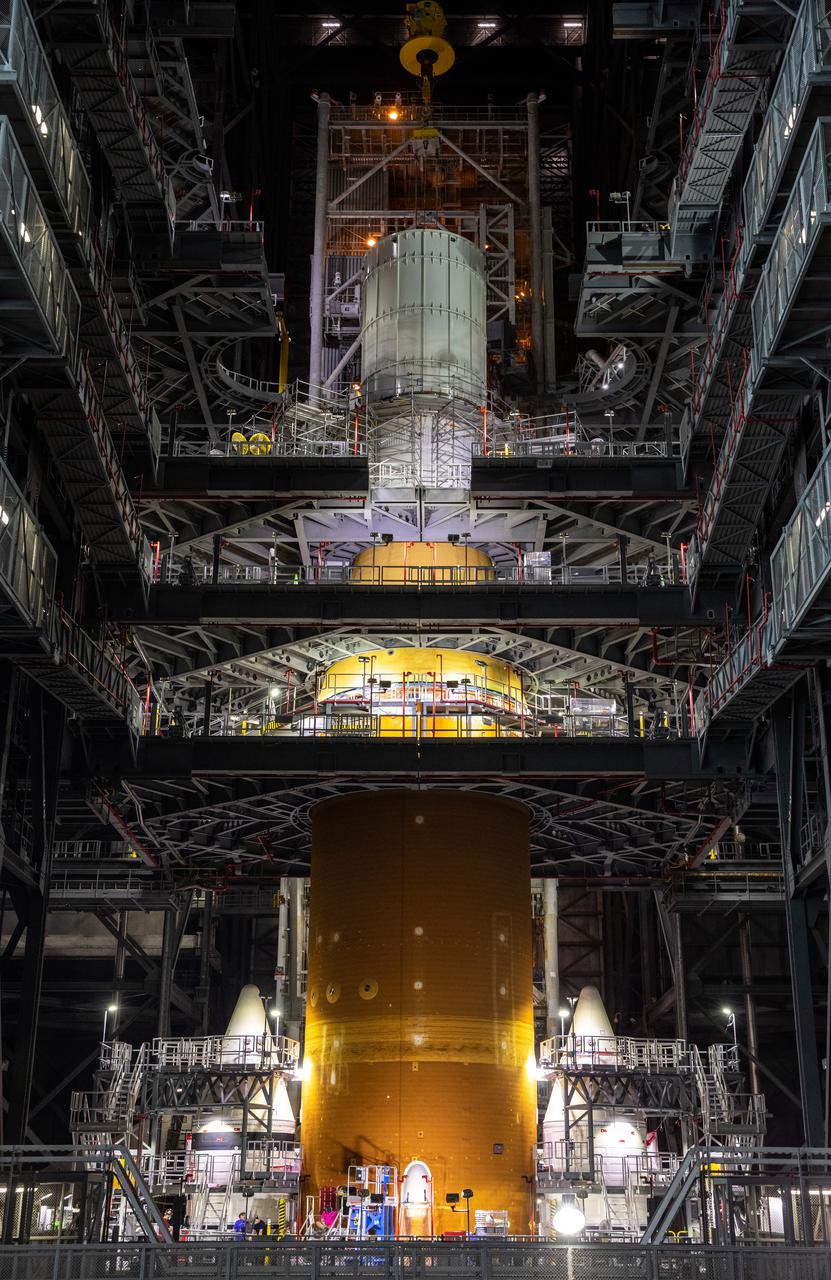
Tests are underway in High Bay 3 inside the Vehicle Assembly Building at NASA’s Kennedy Space Center in Florida on Aug. 13, 2021, using the Orion stage adapter structural test article and the Mass Simulator for Orion. Stacked atop the Space Launch System (SLS) rocket, these test articles represent the mass and weight of the actual Orion stage adapter and Orion spacecraft. Launching in 2021, Artemis I will be an uncrewed test of the Orion spacecraft and SLS rocket as an integrated system ahead of crewed flights to the Moon. Under Artemis, NASA aims to land the first woman and first person of color on the Moon and establish sustainable lunar exploration.

In High Bay 3 inside the Vehicle Assembly Building at NASA’s Kennedy Space Center in Florida, teams with Exploration Ground Systems and Jacobs use the Orion stage adapter structural test article and the Mass Simulator for Orion for testing on Aug. 13, 2021. They are stacked atop the Space Launch System (SLS) rocket. These test articles represent the mass and weight of the actual Orion stage adapter and Orion spacecraft that will be used for various tests. Launching in 2021, Artemis I will be an uncrewed test of the Orion spacecraft and SLS rocket as an integrated system ahead of crewed flights to the Moon. Under Artemis, NASA aims to land the first woman and first person of color on the Moon and establish sustainable lunar exploration.

Tests are underway in High Bay 3 inside the Vehicle Assembly Building at NASA’s Kennedy Space Center in Florida on Aug. 13, 2021, using the Orion stage adapter structural test article and the Mass Simulator for Orion. Stacked atop the Space Launch System (SLS) rocket, these test articles represent the mass and weight of the actual Orion stage adapter and Orion spacecraft. Launching in 2021, Artemis I will be an uncrewed test of the Orion spacecraft and SLS rocket as an integrated system ahead of crewed flights to the Moon. Under Artemis, NASA aims to land the first woman and first person of color on the Moon and establish sustainable lunar exploration.

Seen here is a close-up view of the Orion stage adapter (OSA) structural test article atop the Space Launch System (SLS) rocket inside the Vehicle Assembly Building (VAB) at NASA’s Kennedy Space Center in Florida on Aug. 12, 2021. The test article, representing the mass and weight of the actual flight hardware, is being used for various tests inside the VAB ahead of OSA stacking operations. The first in an increasingly complex set of missions, Artemis I will test SLS and the Orion spacecraft as an integrated system prior to crewed flights to the Moon. Through Artemis, NASA will send the first woman and the first person of color to the lunar surface, as well as establish a sustainable presence on and around the Moon.

Photos of LaRC team weighting and performing Center of Gravity (CG) measurements of the Structural Test Article (STA) at NASA Langley Research Center.

Direct Field Acoustic (DFA) Testing was successfully completed on the Exploration Flight Test-1 (EFT-1) crew module at the Lockheed Martin Waterton Reverberant Acoustic Lab (RAL) on March 1, 2016. DFA Testing is an alternative method for spacecraft module acoustic qualification and acceptance verification that is being investigated for use in the Orion program. Its portability would allow testing at KSC and eliminate the transportation risks and associated cost and schedule of performing this verification activity off-site. Two configurations were tested; one representing the future reverberant acoustic comparison test and one representing the future configuration for the Artemis I crew module. A mock-up of the service module without the fairings will also be tested to gather volumetric data to decide viability of performing DFA Testing on the Static Test Article (STA) SM in the 2016 Fall. Data will be used to develop predictive algorithms for future tests.
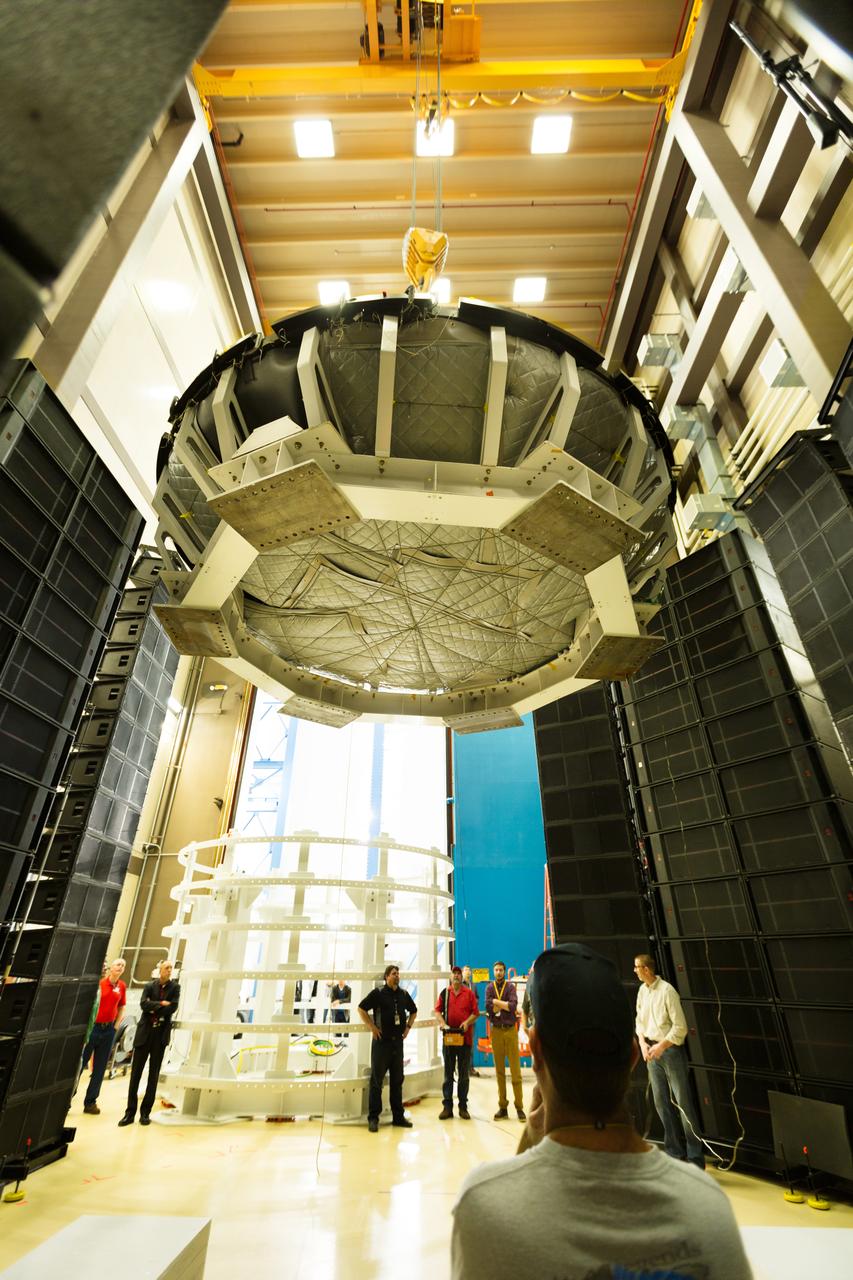
Direct Field Acoustic (DFA) Testing was successfully completed on the Exploration Flight Test-1 (EFT-1) crew module at the Lockheed Martin Waterton Reverberant Acoustic Lab (RAL) on March 1, 2016. DFA Testing is an alternative method for spacecraft module acoustic qualification and acceptance verification that is being investigated for use in the Orion program. Its portability would allow testing at KSC and eliminate the transportation risks and associated cost and schedule of performing this verification activity off-site. Two configurations were tested; one representing the future reverberant acoustic comparison test and one representing the future configuration for the Artemis I crew module. A mock-up of the service module without the fairings will also be tested to gather volumetric data to decide viability of performing DFA Testing on the Static Test Article (STA) SM in the 2016 Fall. Data will be used to develop predictive algorithms for future tests.
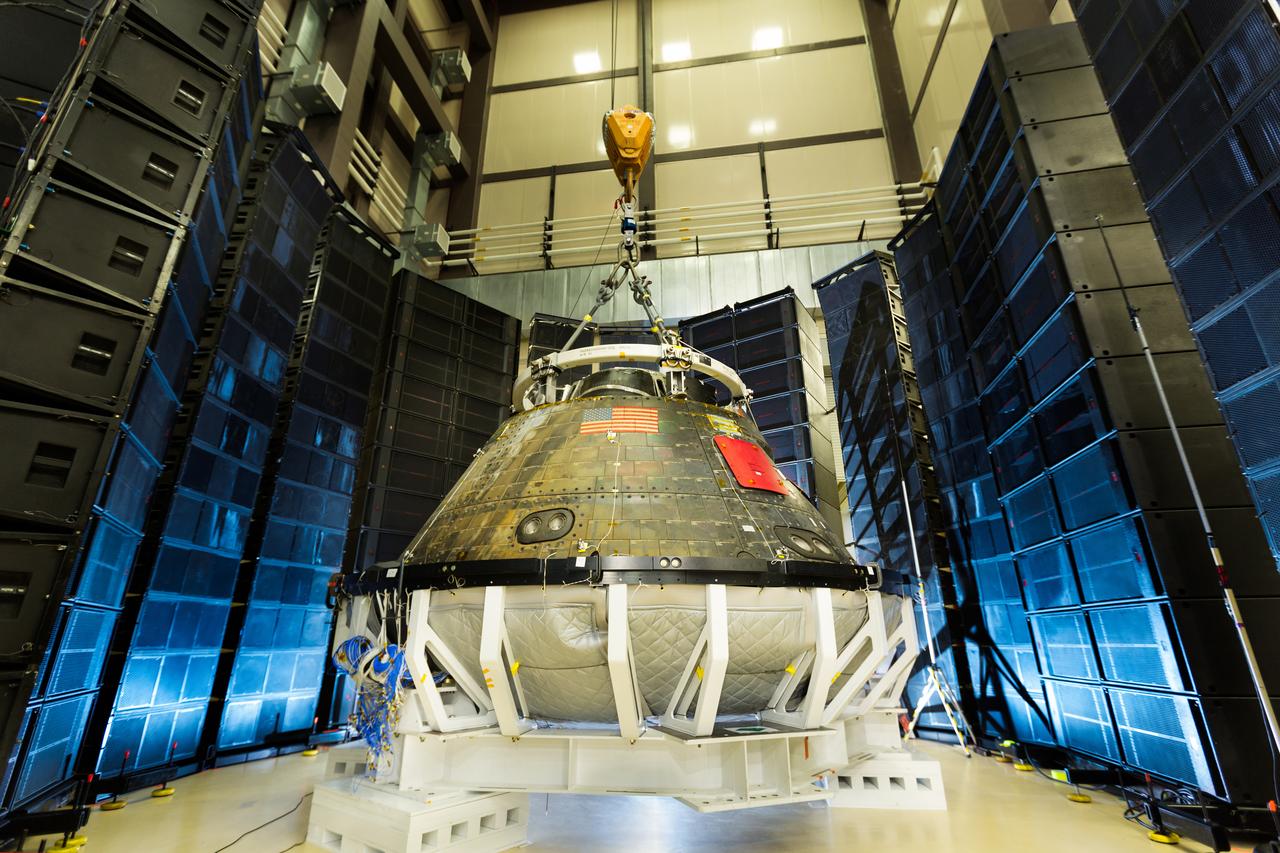
Direct Field Acoustic (DFA) Testing was successfully completed on the Exploration Flight Test-1 (EFT-1) crew module at the Lockheed Martin Waterton Reverberant Acoustic Lab (RAL) on March 1, 2016. DFA Testing is an alternative method for spacecraft module acoustic qualification and acceptance verification that is being investigated for use in the Orion program. Its portability would allow testing at KSC and eliminate the transportation risks and associated cost and schedule of performing this verification activity off-site. Two configurations were tested; one representing the future reverberant acoustic comparison test and one representing the future configuration for the Artemis I crew module. A mock-up of the service module without the fairings will also be tested to gather volumetric data to decide viability of performing DFA Testing on the Static Test Article (STA) SM in the 2016 Fall. Data will be used to develop predictive algorithms for future tests.
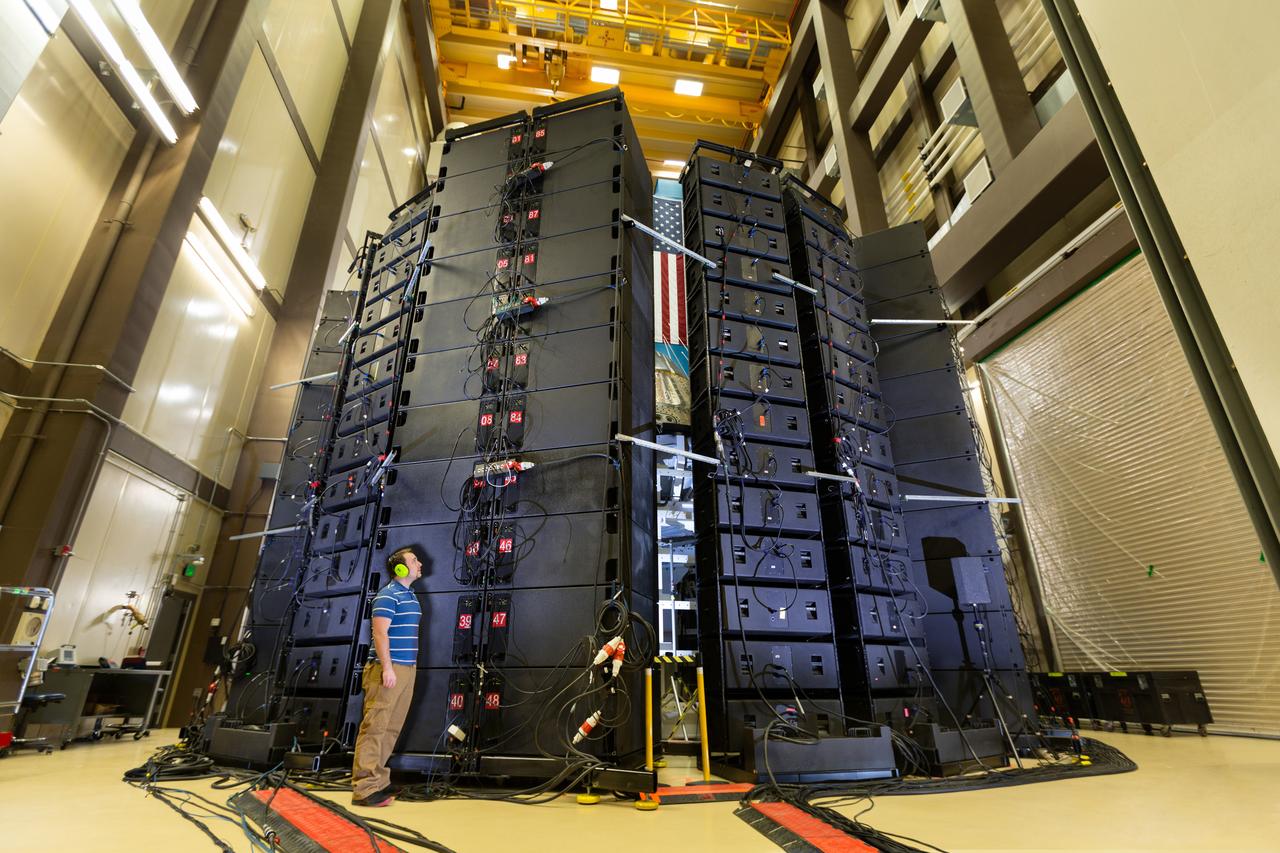
Direct Field Acoustic (DFA) Testing was successfully completed on the Exploration Flight Test-1 (EFT-1) crew module at the Lockheed Martin Waterton Reverberant Acoustic Lab (RAL) on March 1, 2016. DFA Testing is an alternative method for spacecraft module acoustic qualification and acceptance verification that is being investigated for use in the Orion program. Its portability would allow testing at KSC and eliminate the transportation risks and associated cost and schedule of performing this verification activity off-site. Two configurations were tested; one representing the future reverberant acoustic comparison test and one representing the future configuration for the Artemis I crew module. A mock-up of the service module without the fairings will also be tested to gather volumetric data to decide viability of performing DFA Testing on the Static Test Article (STA) SM in the 2016 Fall. Data will be used to develop predictive algorithms for future tests.

Direct Field Acoustic (DFA) Testing was successfully completed on the Exploration Flight Test-1 (EFT-1) crew module at the Lockheed Martin Waterton Reverberant Acoustic Lab (RAL) on March 1, 2016. DFA Testing is an alternative method for spacecraft module acoustic qualification and acceptance verification that is being investigated for use in the Orion program. Its portability would allow testing at KSC and eliminate the transportation risks and associated cost and schedule of performing this verification activity off-site. Two configurations were tested; one representing the future reverberant acoustic comparison test and one representing the future configuration for the Artemis I crew module. A mock-up of the service module without the fairings will also be tested to gather volumetric data to decide viability of performing DFA Testing on the Static Test Article (STA) SM in the 2016 Fall. Data will be used to develop predictive algorithms for future tests.
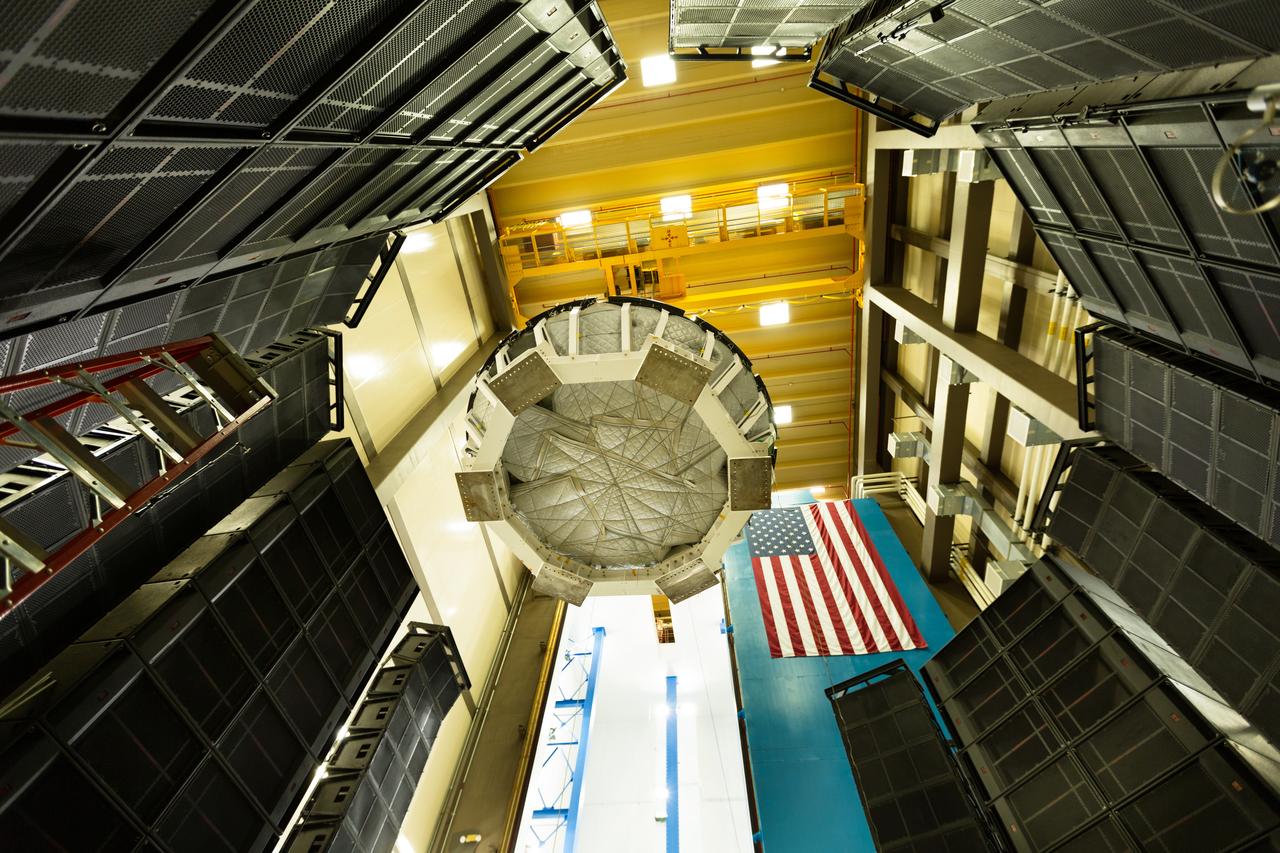
Direct Field Acoustic (DFA) Testing was successfully completed on the Exploration Flight Test-1 (EFT-1) crew module at the Lockheed Martin Waterton Reverberant Acoustic Lab (RAL) on March 1, 2016. DFA Testing is an alternative method for spacecraft module acoustic qualification and acceptance verification that is being investigated for use in the Orion program. Its portability would allow testing at KSC and eliminate the transportation risks and associated cost and schedule of performing this verification activity off-site. Two configurations were tested; one representing the future reverberant acoustic comparison test and one representing the future configuration for the Artemis I crew module. A mock-up of the service module without the fairings will also be tested to gather volumetric data to decide viability of performing DFA Testing on the Static Test Article (STA) SM in the 2016 Fall. Data will be used to develop predictive algorithms for future tests.