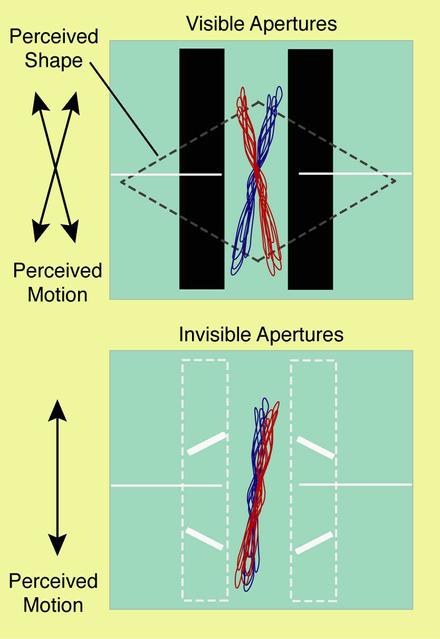
One concern about human adaptation to space is how returning from the microgravity of orbit to Earth can affect an astronaut's ability to fly safely. There are monitors and infrared video cameras to measure eye movements without having to affect the crew member. A computer screen provides moving images which the eye tracks while the brain determines what it is seeing. A video camera records movement of the subject's eyes. Researchers can then correlate perception and response. Test subjects perceive different images when a moving object is covered by a mask that is visible or invisible (above). Early results challenge the accepted theory that smooth pursuit -- the fluid eye movement that humans and primates have -- does not involve the higher brain. NASA results show that: Eye movement can predict human perceptual performance, smooth pursuit and saccadic (quick or ballistic) movement share some signal pathways, and common factors can make both smooth pursuit and visual perception produce errors in motor responses.
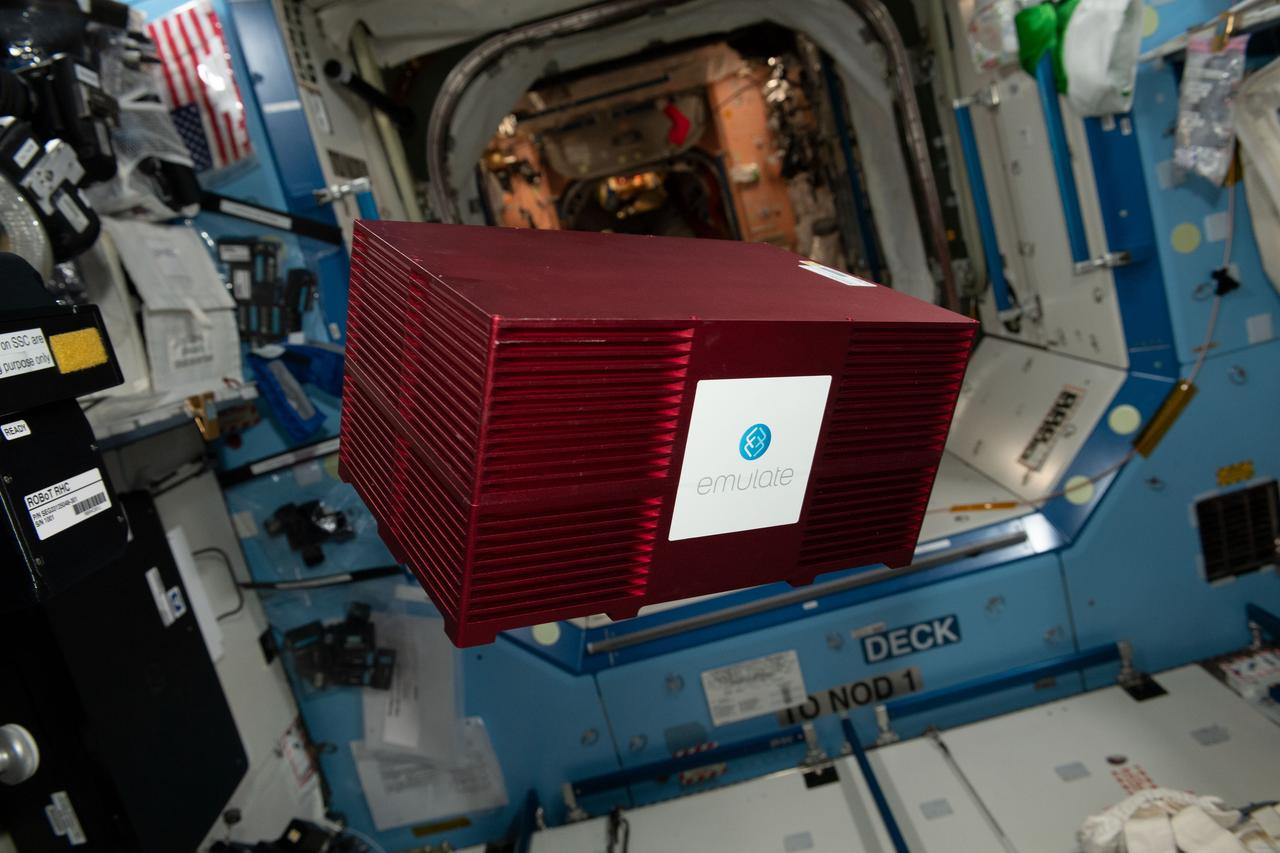
iss058e000975 (12/26/2018) --- A view of the Organs-On-Chips as a Platform for Studying Effects of Microgravity on Human Physiology investigation taken onboard the International Space Station (ISS). Organs-On-Chips as a Platform for Studying Effects of Microgravity on Human Physiology analyzes the effect of microgravity and other space-related stressors on the brain blood barrier. It uses fully automated tissue chip technology, a Brain-Chip, consisting of living neuronal and vascular endothelial cells in a micro-engineered environment. Results may provide insight into the relationship between inflammation and brain function and a better understanding of neurodegenerative diseases such as Alzheimer’s and Parkinson’s.
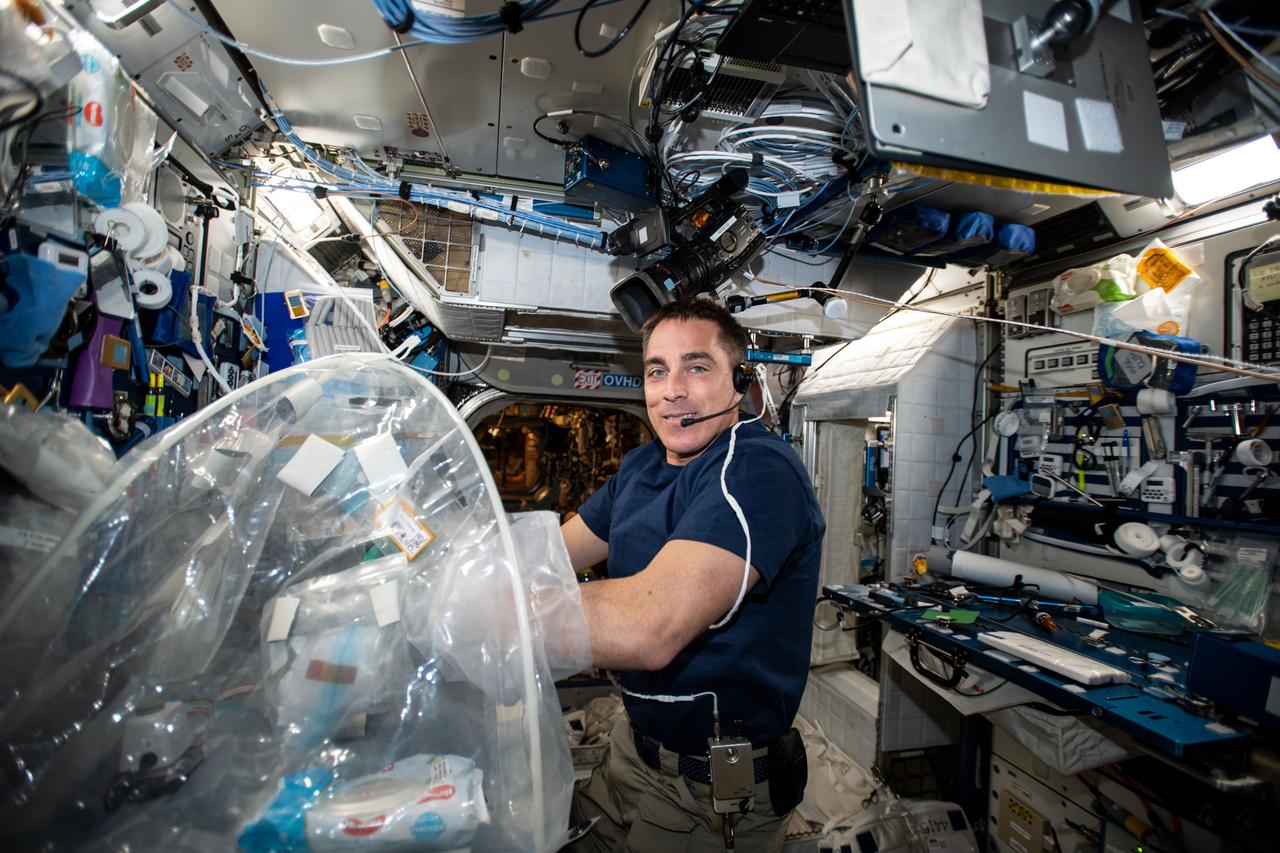
iss062e151901 (April 7, 2020) --- NASA astronaut Chris Cassidy services biological samples in a glovebag for the Food Physiology experiment to characterize the key effects of an enhanced spaceflight diet on immune function, the gut microbiome, and nutritional status indicators.
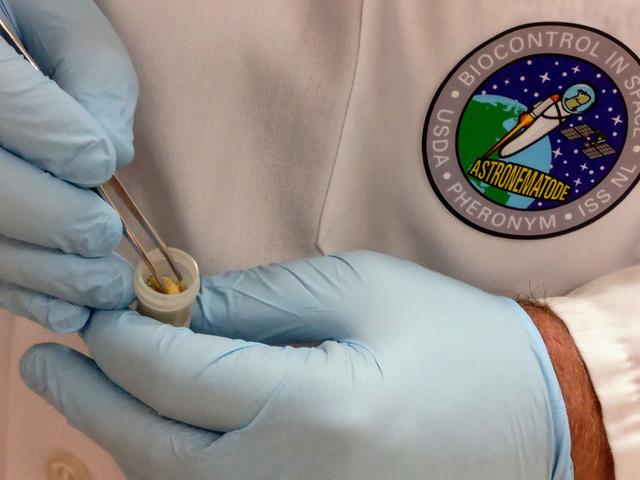
jsc2019e062137 (10/24/2019) --- Loading of the nematodes into the sample tubes. Microgravity Effect on Entomopathogenic Nematodes’ Ability to Find and Kill Insects (Module-85 Pheronym) tests the effects of microgravity on the movement and infection behavior of beneficial nematodes, which are used to control agricultural insect pests. The research looks at whether these nematodes can navigate through soil, infect insects and reproduce in space. It also looks at whether their symbiotic bacteria function normally in microgravity and has any effects on insect host physiology. Image Courtesy of: Fatma Kaplan (PI)
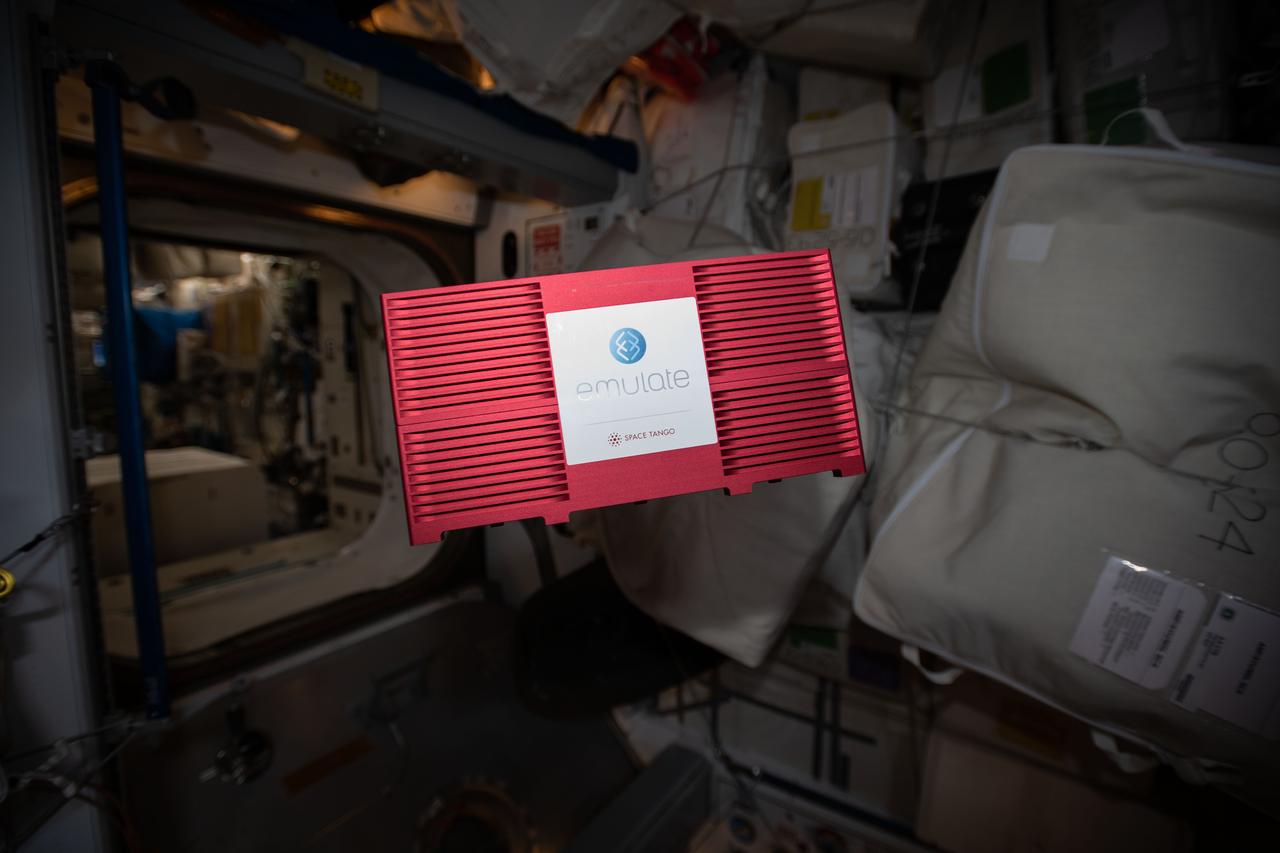
iss062e102157 (3/18/2020) --- A view of the Gut on Chip CubeLab aboard the International Space Station (ISS). Organ-Chips as a Platform for Studying Effects of Space on Human Enteric Physiology (Gut on Chip) examines the effect of microgravity and other space-related stress factors on Emulate’s human innervated Intestine-Chip (hiIC). Results could contribute to prevention methods and treatments for these effects, helping to protect astronaut health on future long-term missions.

ISS047e038968 (04/05/2016) --- ESA (European Space Agency) astronaut Tim Peake operates the Muscle Atrophy Research and Exercise System (MARES) equipment inside the Columbus module. MARES is an ESA system that will be used for research on musculoskeletal, biomechanical, and neuromuscular human physiology to better understand the effects of microgravity on the muscular system.
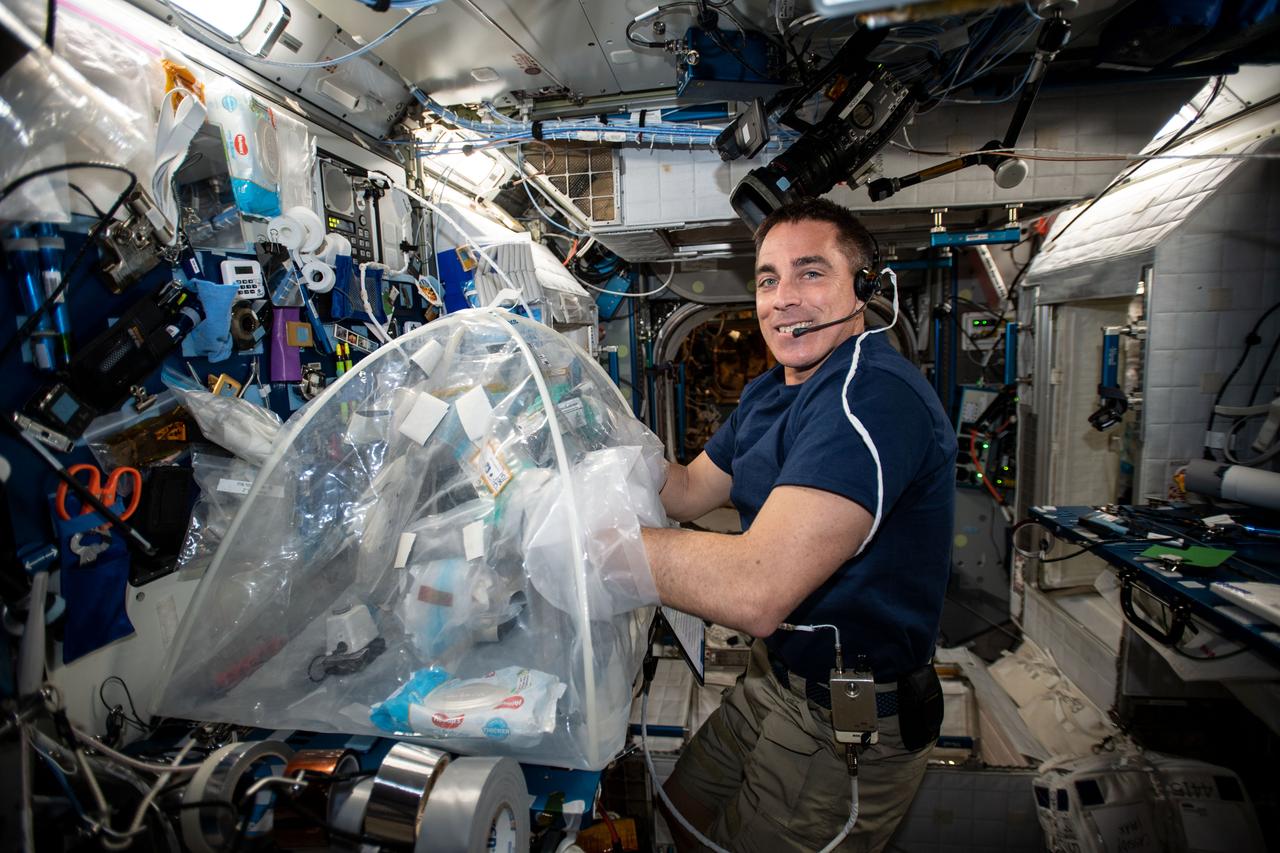
ss062e151904 (April 16, 2020) --- NASA astronaut Chris Cassidy services biological samples in a glovebag aboard the International Space Station (ISS) for the Food Physiology experiment to characterize the key effects of an enhanced spaceflight diet on immune function, the gut microbiome, and nutritional status indicators.
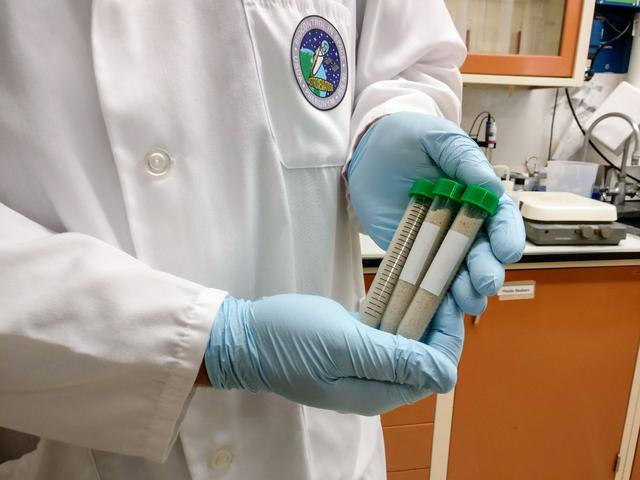
jsc2019e062136 (10/24/2019) --- Dr. Karl Shiller presents the loaded nematode tube samples. Microgravity Effect on Entomopathogenic Nematodes’ Ability to Find and Kill Insects (Module-85 Pheronym) tests the effects of microgravity on the movement and infection behavior of beneficial nematodes, which are used to control agricultural insect pests. The research looks at whether these nematodes can navigate through soil, infect insects and reproduce in space. It also looks at whether their symbiotic bacteria function normally in microgravity and has any effects on insect host physiology. Image Courtesy of: Fatma Kaplan (PI)
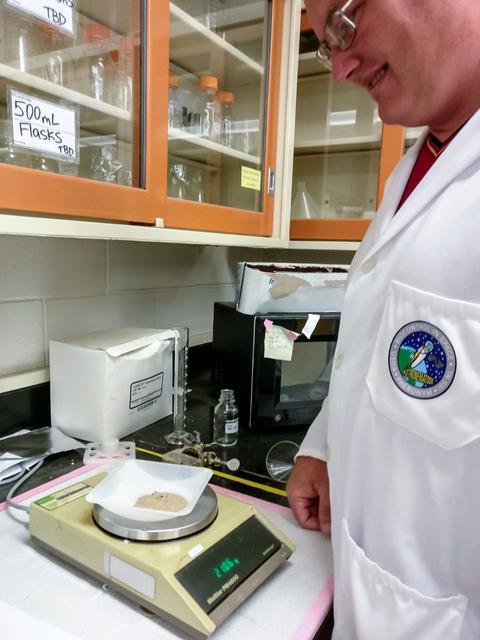
jsc2019e062135 (10/24/2019) --- Dr. Karl Shiller weighs some of the material included with the nematodes tubes. Microgravity Effect on Entomopathogenic Nematodes’ Ability to Find and Kill Insects (Module-85 Pheronym) tests the effects of microgravity on the movement and infection behavior of beneficial nematodes, which are used to control agricultural insect pests. The research looks at whether these nematodes can navigate through soil, infect insects and reproduce in space. It also looks at whether their symbiotic bacteria function normally in microgravity and has any effects on insect host physiology. Image Courtesy of: Fatma Kaplan (PI)
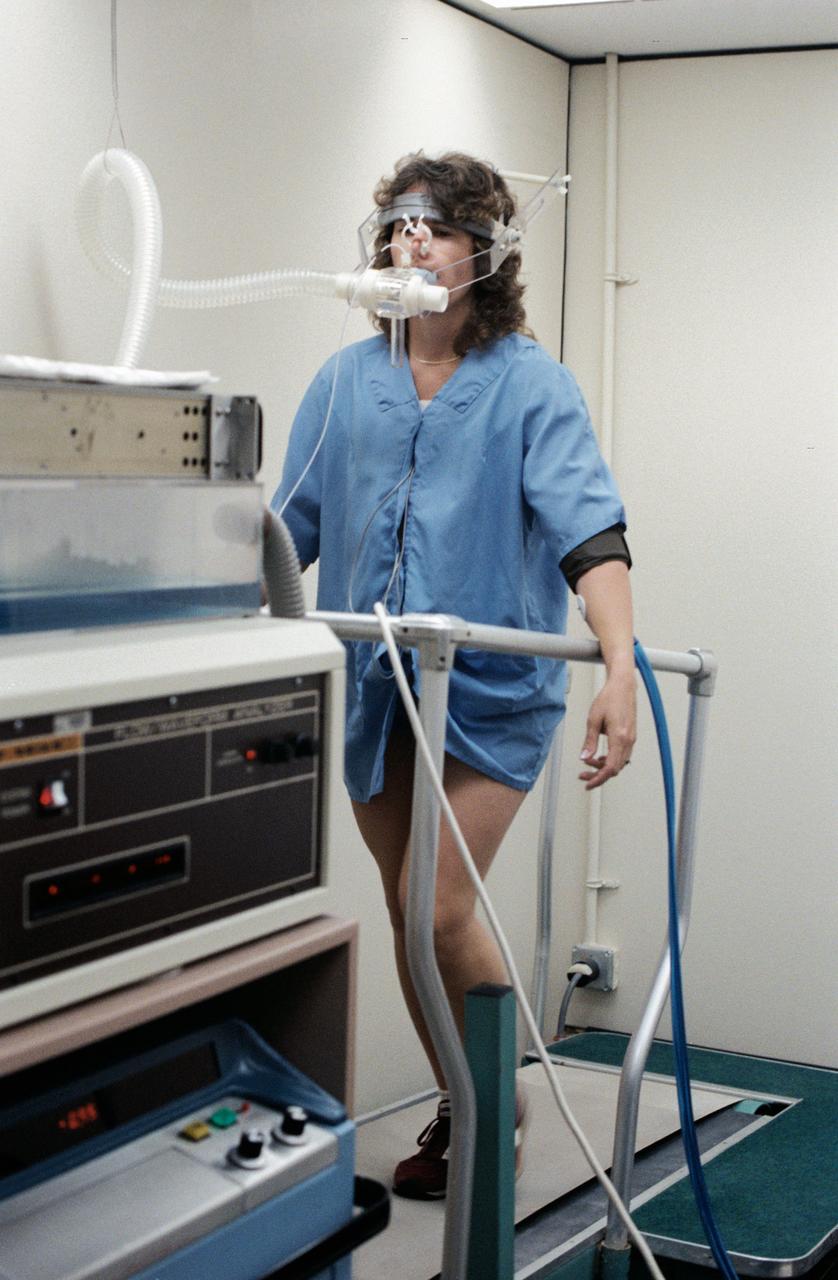
S85-37165 (8-12 July 1985) -- Sharon C. (Christa) McAuliffe of Concord High, Concord, New Hampshire, runs in place on treadmill to test physiological responses at Johnson Space Center. Christa McAuliffe was eventually chosen as the first Teacher in Space and was a member of the seven-member Challenger shuttle crew which died tragically in the explosion of the spacecraft during the launch of STS-51L from the Kennedy Space Center about 11:40 a.m., EST, on Jan. 28, 1986. The explosion occurred 73 seconds into the flight as a result of a leak in one of two Solid Rocket Boosters that ignited the main liquid fuel tank. The crew members of the Challenger represented a cross-section of the American population in terms of race, gender, geography, background, and religion. The explosion became one of the most significant events of the 1980s, as billions around the world saw the accident on television and empathized with any one of the several crew members killed. Photo credit: NASA
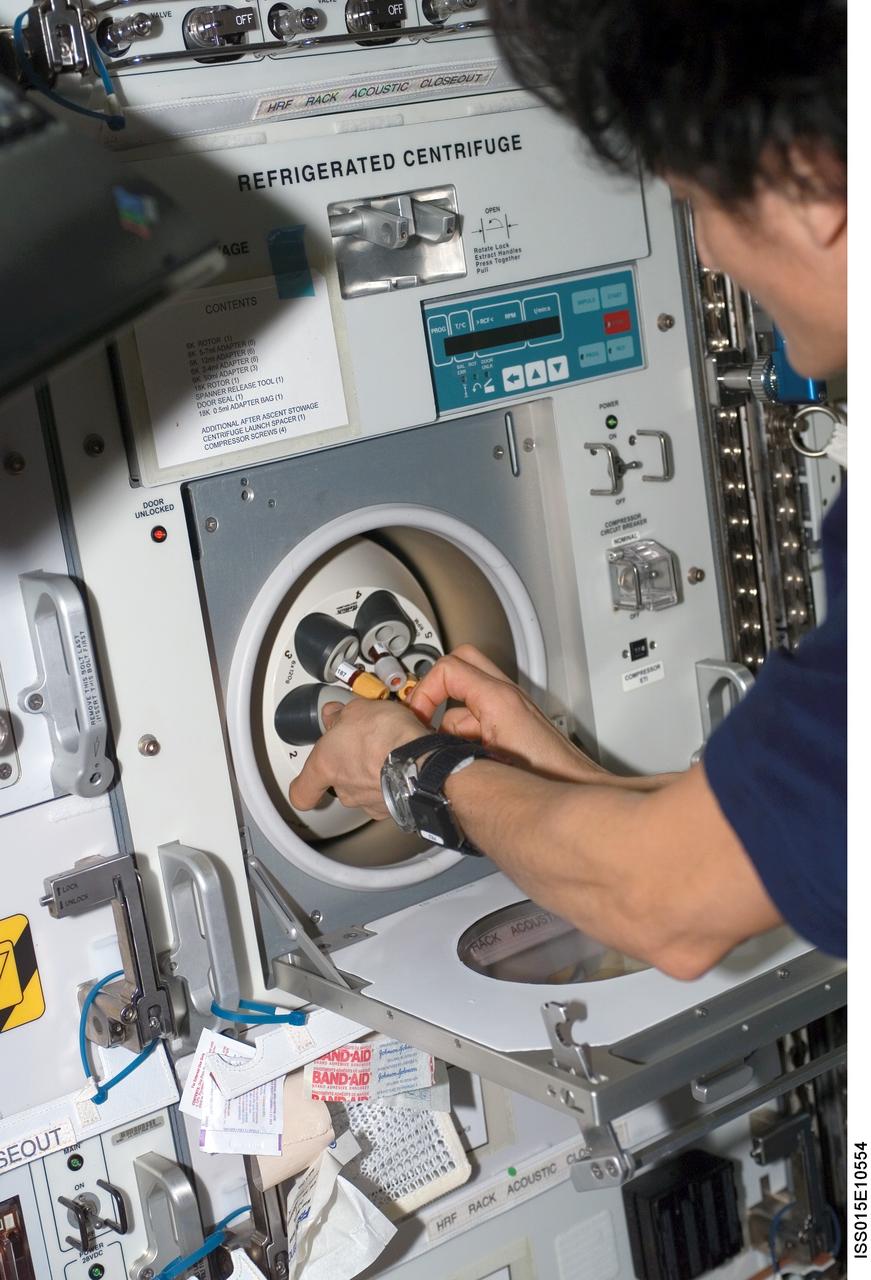
ISS015-E-10554 (1 June 2007) --- Astronaut Sunita L. Williams, Expedition 15 flight engineer, loads test samples in the Human Research Facility 2 (HRF-2) Refrigerated Centrifuge as a part of the Nutritional Status Assessment (Nutrition) experiment in the Destiny laboratory of the International Space Station. The results of the Nutrition experiment will be used to better understand the time course effects of space flight on human physiology.
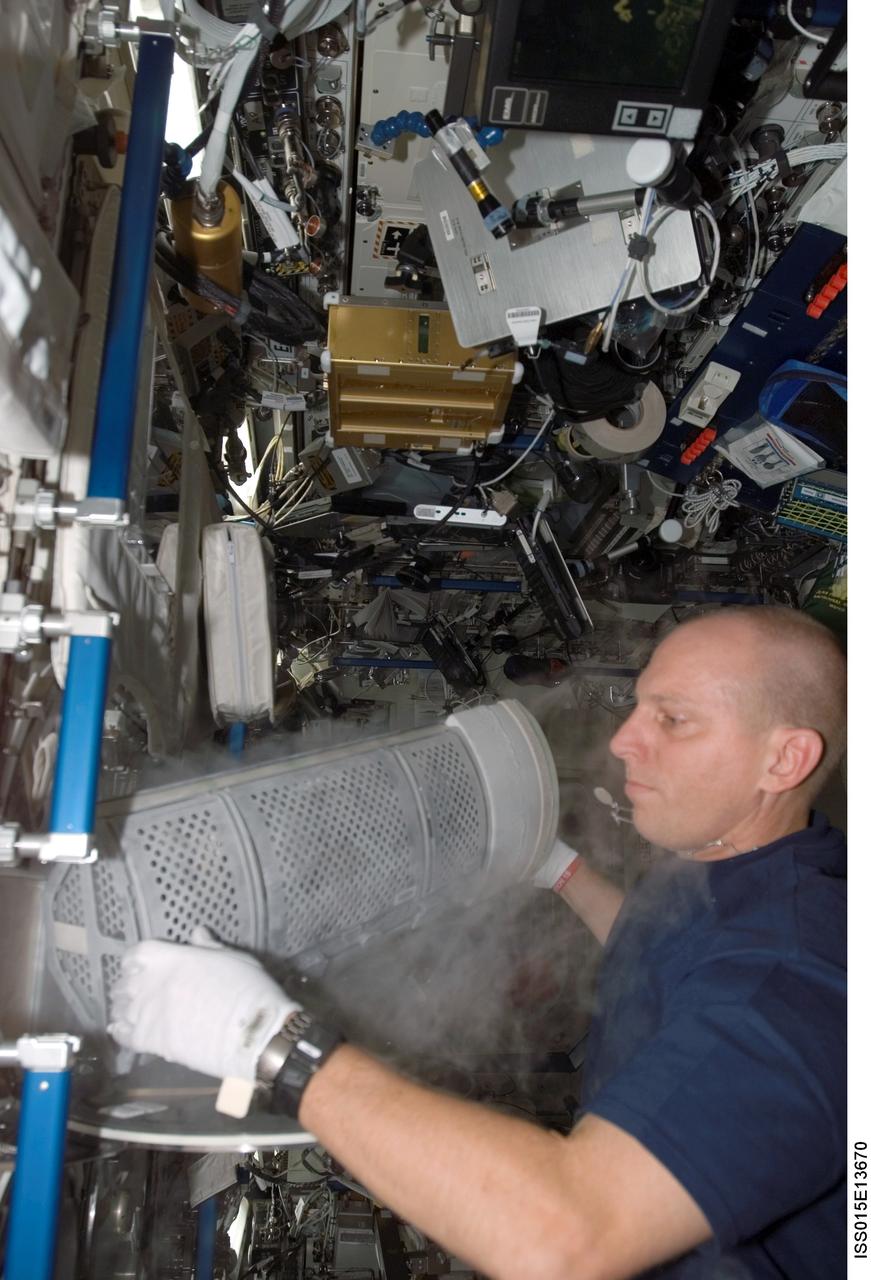
ISS015-E-13670 (25 June 2007) --- Astronaut Clayton Anderson, Expedition 15 flight engineer, works with the Minus Eighty Degree Laboratory Freezer for ISS (MELFI) as part of the Nutritional Status Assessment (NUTRITION) experiment in the Destiny laboratory of the International Space Station. MELFI is a low temperature freezer facility with nominal operating temperatures of -80, -26 and +4 degrees Celsius that will preserve experiment materials over long periods. The results of the Nutrition experiment will be used to better understand the time course effects of space flight on human physiology.

ISS022-E-091395 (12 March 2010) --- NASA astronaut Jeffrey Williams, Expedition 22 commander, works with test samples in the Human Research Facility 2 (HRF-2) Refrigerated Centrifuge as a part of the Nutritional Status Assessment (Nutrition) experiment in the Columbus laboratory of the International Space Station. The results of the Nutrition experiment will be used to better understand the time course effects of space flight on human physiology.
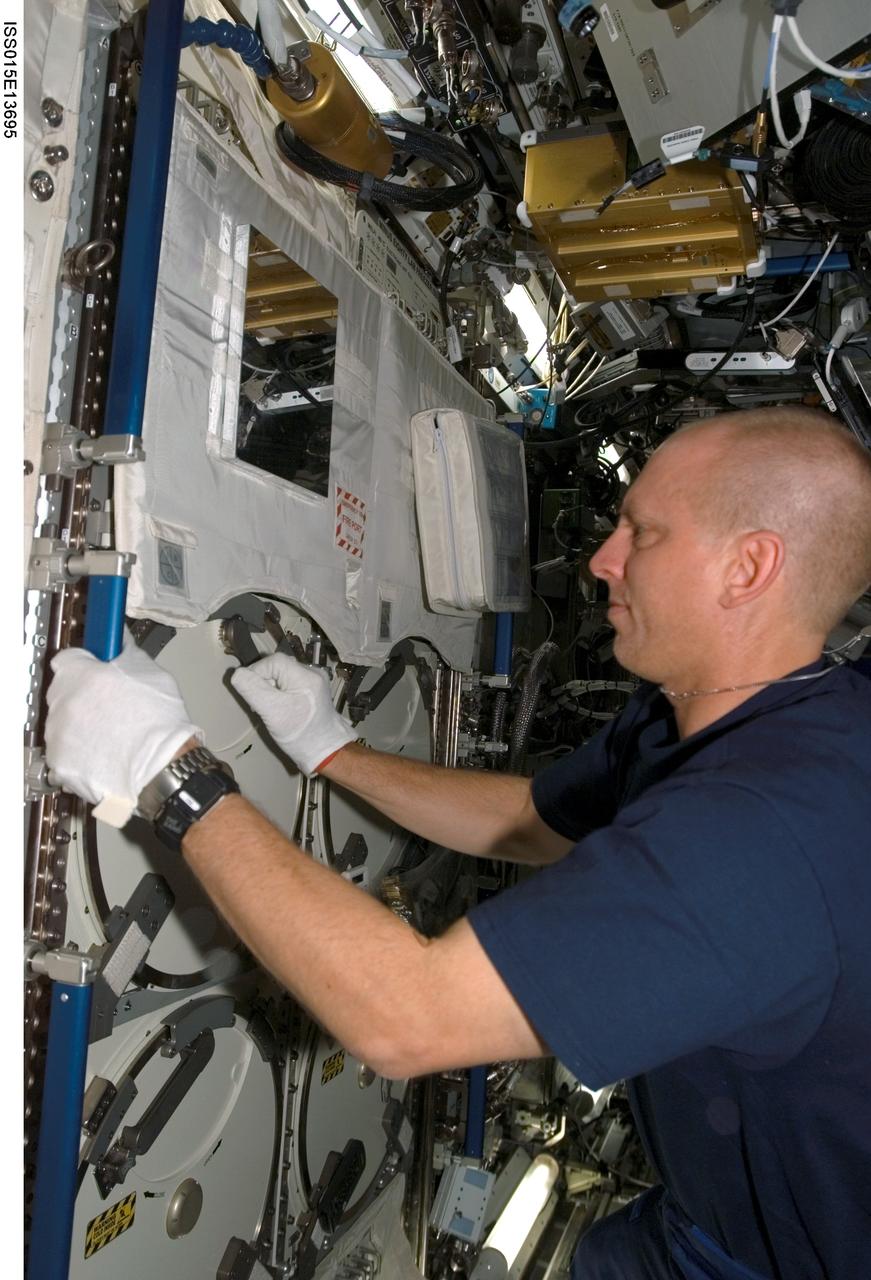
ISS015-E-13695 (25 June 2007) --- Astronaut Clayton Anderson, Expedition 15 flight engineer, works with the Minus Eighty Degree Laboratory Freezer for ISS (MELFI) as part of the Nutritional Status Assessment (NUTRITION) experiment in the Destiny laboratory of the International Space Station. MELFI is a low temperature freezer facility with nominal operating temperatures of -80, -26 and +4 degrees Celsius that will preserve experiment materials over long periods. The results of the Nutrition experiment will be used to better understand the time course effects of space flight on human physiology.
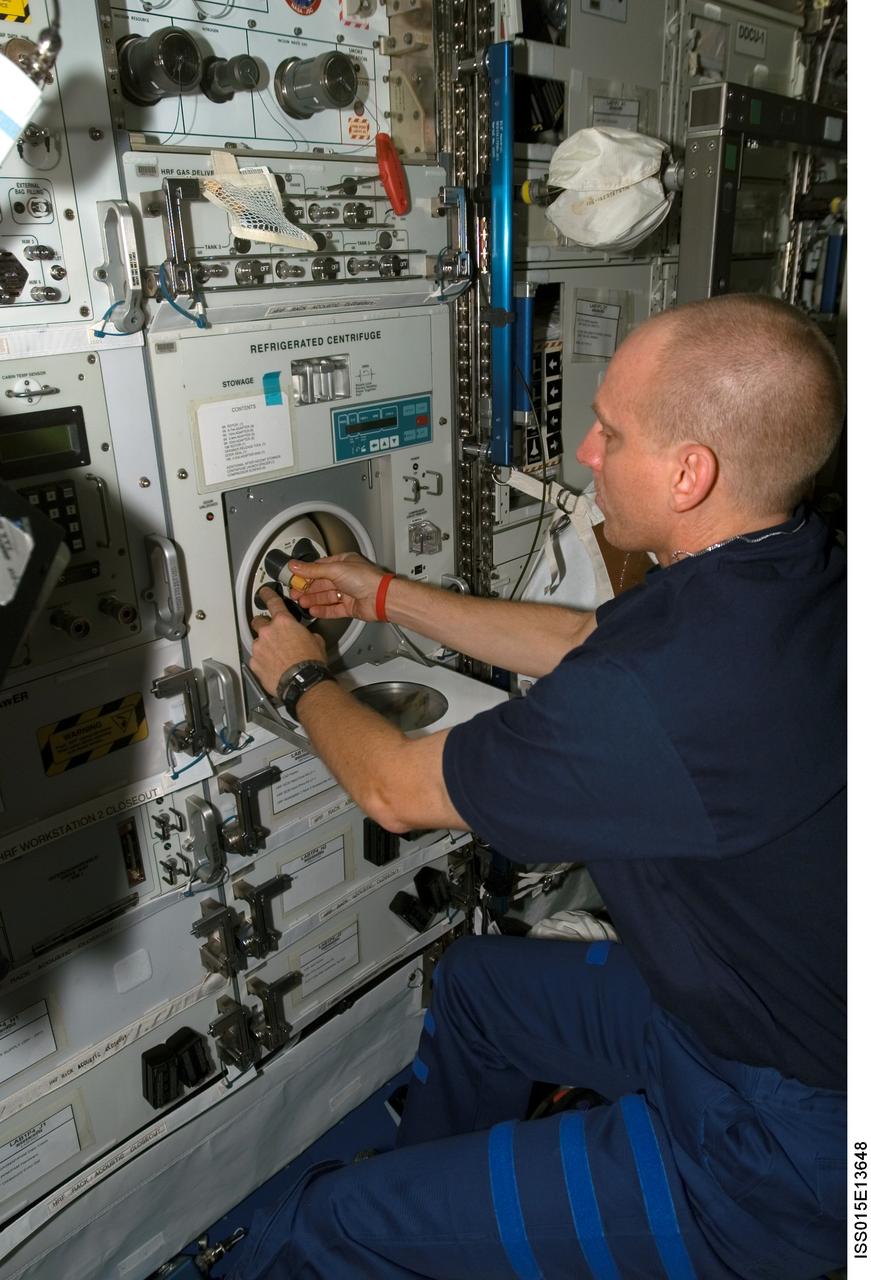
ISS015-E-13648 (25 June 2007) --- Astronaut Clayton Anderson, Expedition 15 flight engineer, works with test samples in the Human Research Facility 2 (HRF-2) Refrigerated Centrifuge as a part of the Nutritional Status Assessment (Nutrition) experiment in the Destiny laboratory of the International Space Station. The results of the Nutrition experiment will be used to better understand the time course effects of space flight on human physiology.
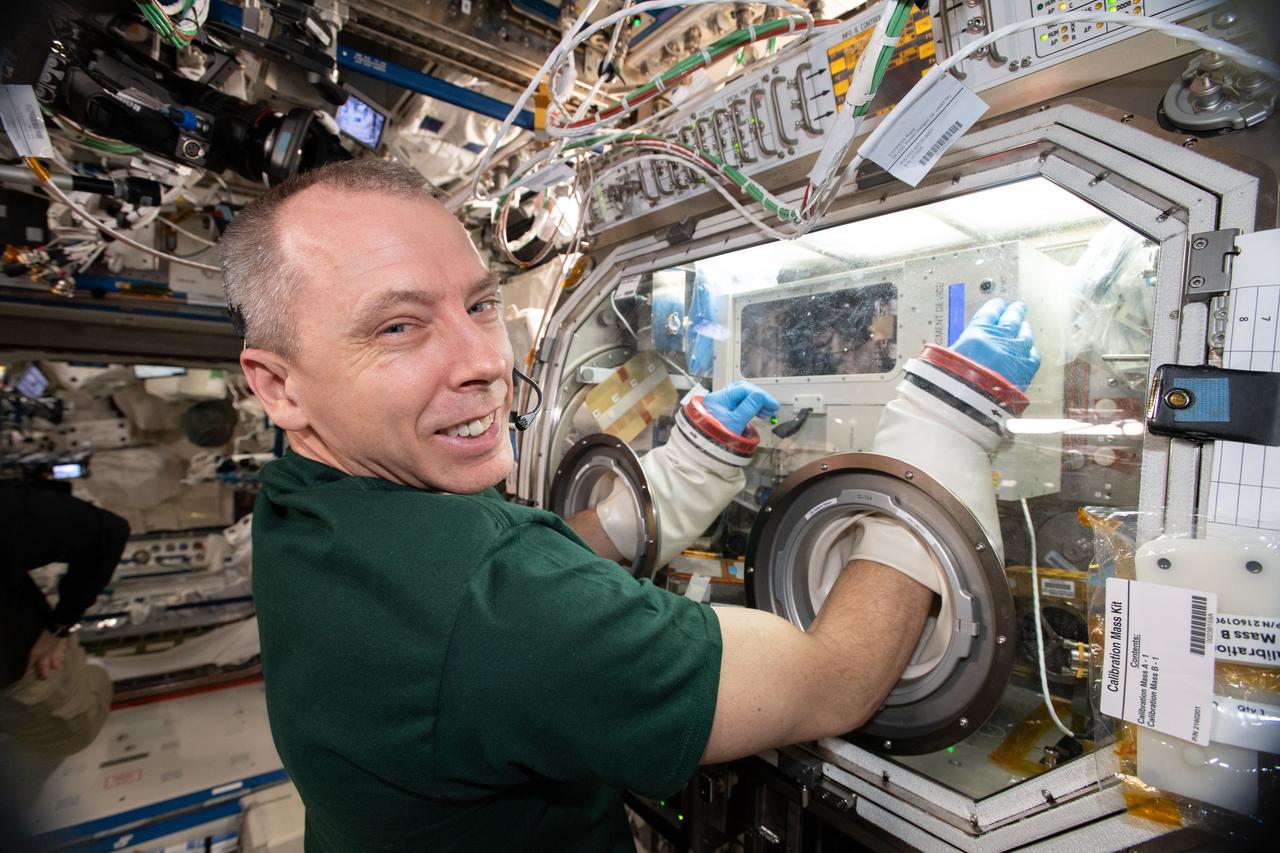
iss056e097340 (July 18, 2018) --- NASA astronaut Drew Feustel works inside the Microgravity Science Glovebox inspecting mice being observed as part of the Rodent Research-7 experiment. Feustel measured the rodent's breathing and mass for the study that examines how the space environment affects the community of microoganisms in the gastrointestinal tract of mice (also known as the microbiota). It also looks at microgravity’s effects on multiple physiological systems known to be affected by the microbiota, including the gastrointestinal, immune, metabolic, circadian, and sleep systems. These studies help explain mechanisms underlying interactions between these systems and the role of the microbiota in these interactions.
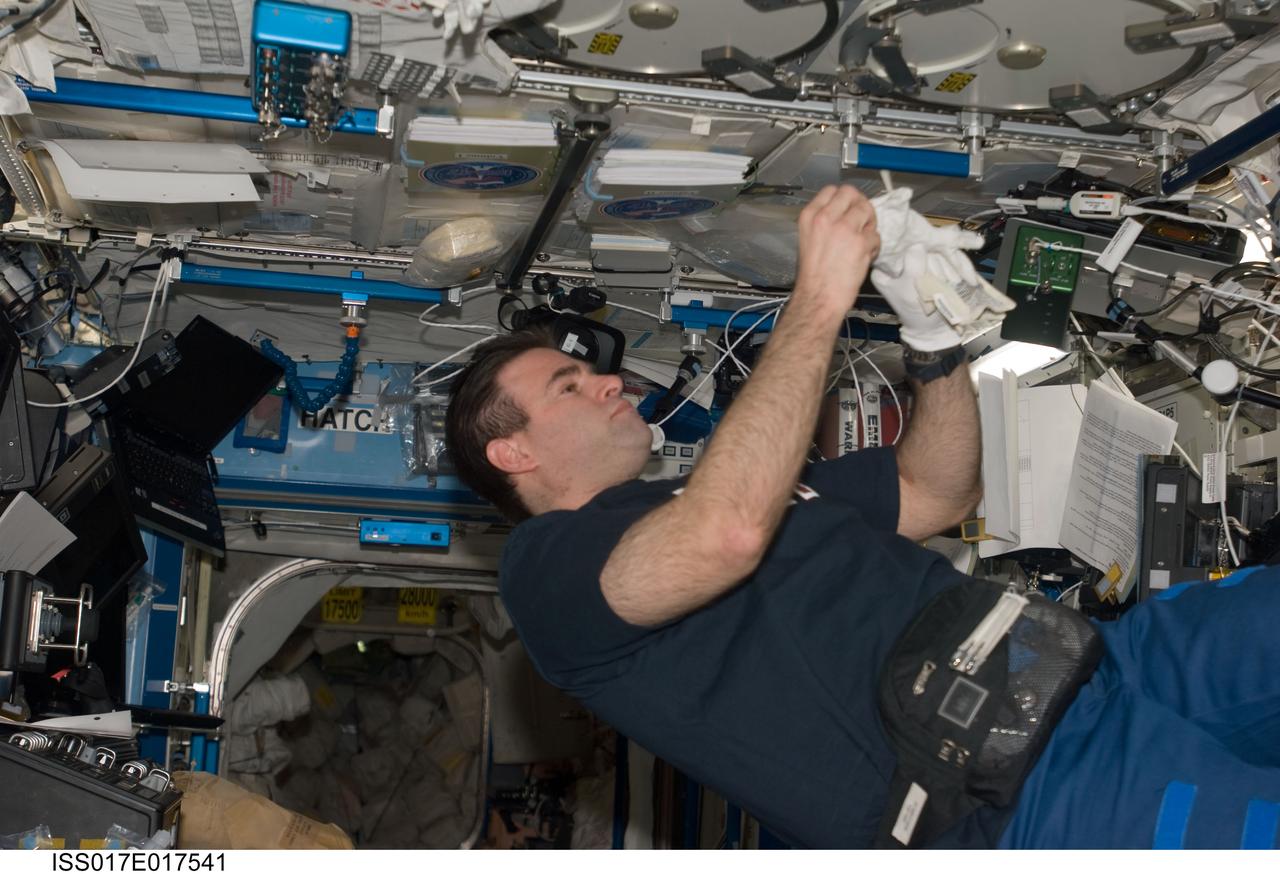
ISS017-E-017541 (27 Sept. 2008) --- NASA astronaut Greg Chamitoff, Expedition 17 flight engineer, works with the Minus Eighty Degree Laboratory Freezer for ISS (MELFI) as part of the Nutritional Status Assessment (NUTRITION) experiment in the Destiny laboratory of the International Space Station. MELFI is a low temperature freezer facility with nominal operating temperatures of -80, -26 and +4 degrees Celsius that will preserve experiment materials over long periods. The results of the Nutrition experiment will be used to better understand the time course effects of space flight on human physiology.
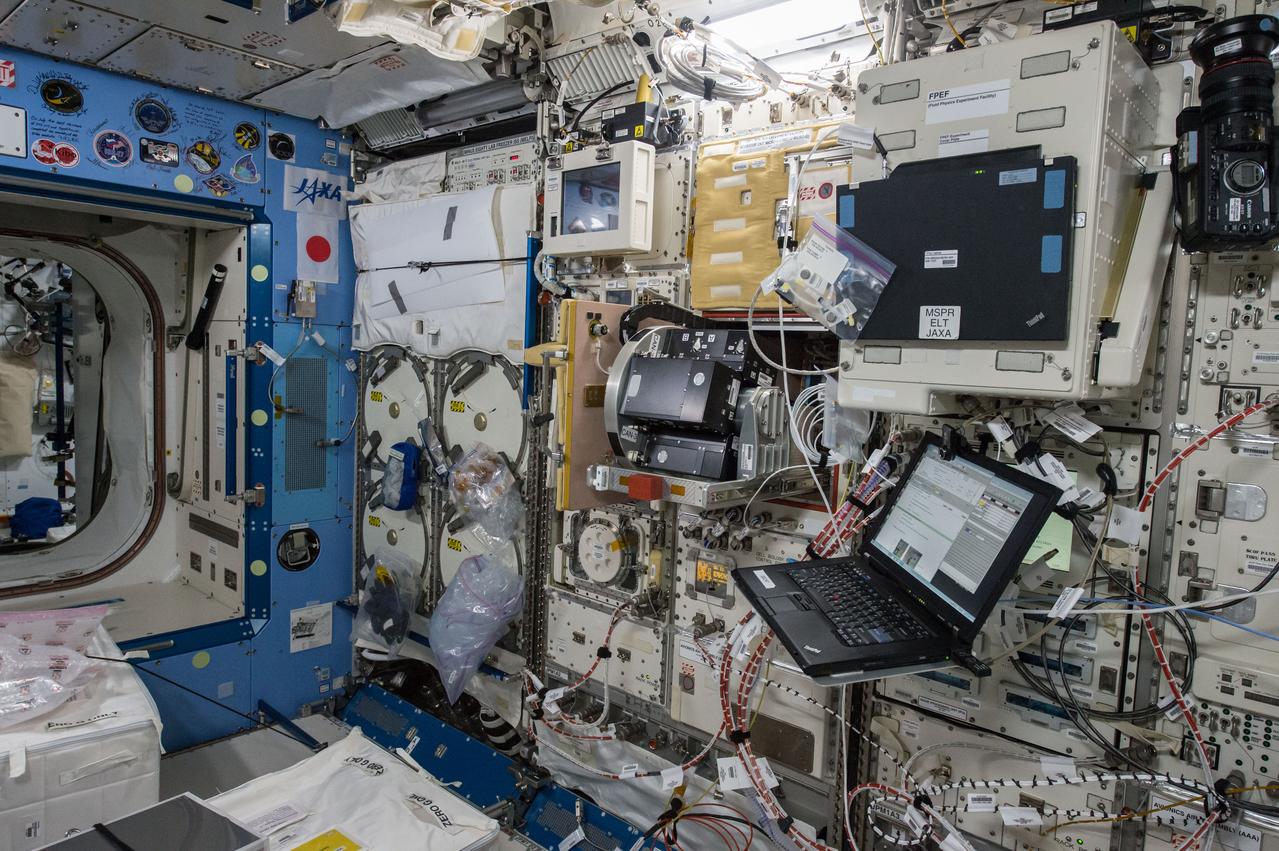
iss043e124204 (4/18/2015) --- A view of the Cell Biology Experiment Facility (CBEF) rack in the Japanese Experiment Module (JEM) aboard the International Space Station (ISS) in preparation for the Space Aging investigation. The purpose of the experiment is to study the effects of weightlessness in space flight on the aging of the C. elegans roundworm, a model organism for a range of biological studies. Microgravity causes a number of physiological changes, like heart and bone deconditioning, involving mechanisms that are poorly understood and may affect the rate at which organisms and astronauts age. The Space Aging experiment will grow millimeter-long C. elegans roundworms in microgravity and compare their health and longevity with controlled specimens on Earth.
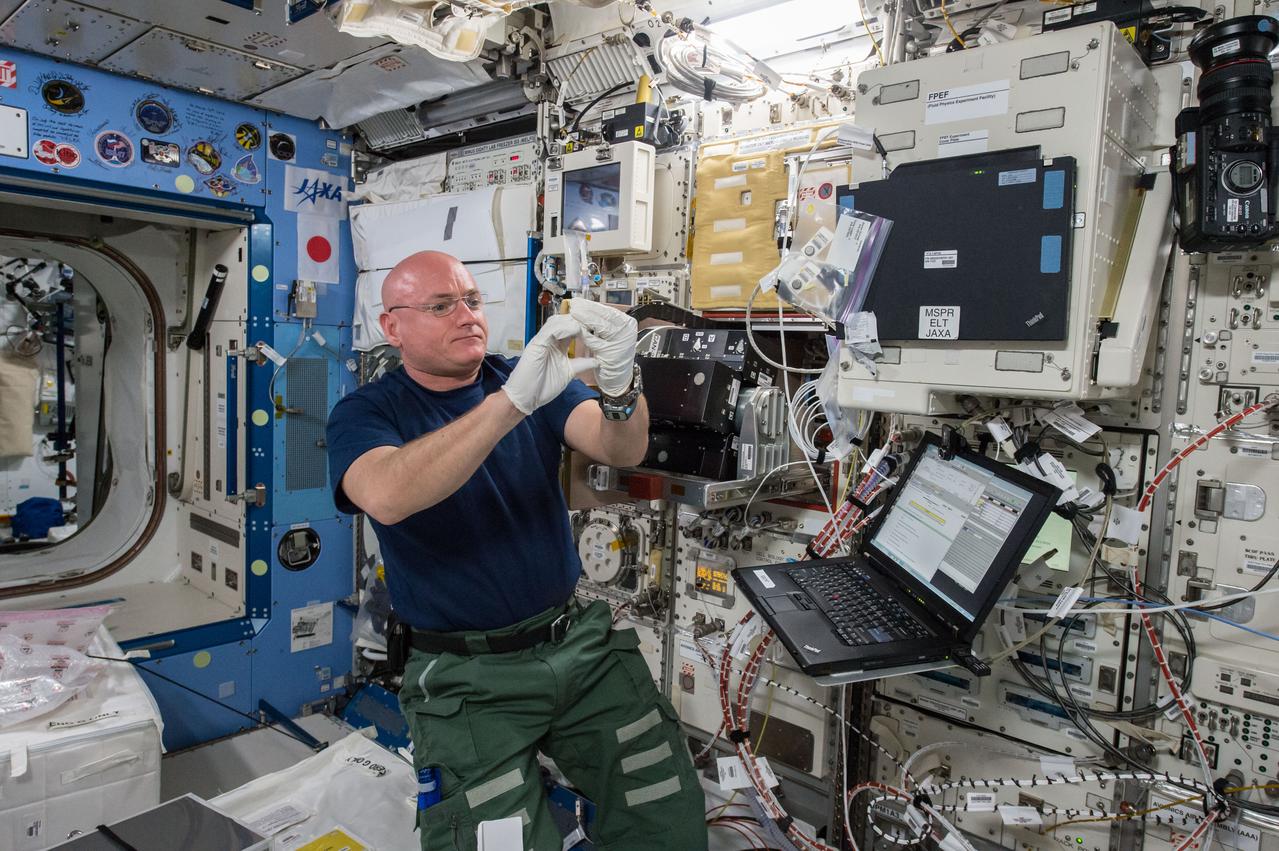
iss043e124213 (4/18/2015) --- NASA astronaut Scott Kelly is seen performing the Space Aging experiment using the Cell Biology Experiment Facility (CBEF) rack in the Japanese Experiment Module (JEM) aboard the International Space Station (ISS). The purpose of the experiment is to study the effects of weightlessness in space flight on the aging of the C. elegans roundworm, a model organism for a range of biological studies. Microgravity causes a number of physiological changes, like heart and bone deconditioning, involving mechanisms that are poorly understood and may affect the rate at which organisms and astronauts age. The Space Aging experiment will grow millimeter-long C. elegans roundworms in microgravity and compare their health and longevity with controlled specimens on Earth.
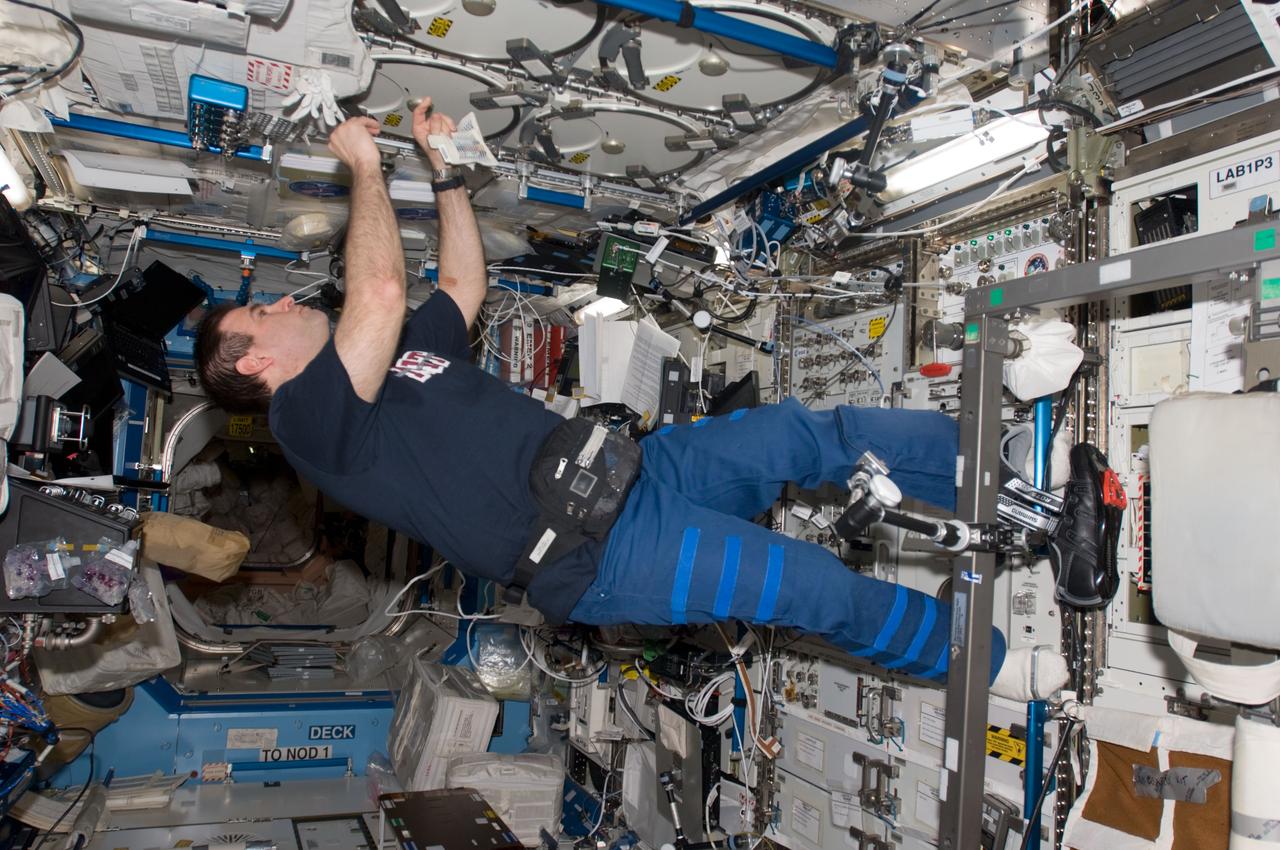
ISS017-E-017539 (27 Sept. 2008) --- NASA astronaut Greg Chamitoff, Expedition 17 flight engineer, works with the Minus Eighty Degree Laboratory Freezer for ISS (MELFI) as part of the Nutritional Status Assessment (NUTRITION) experiment in the Destiny laboratory of the International Space Station. MELFI is a low temperature freezer facility with nominal operating temperatures of -80, -26 and +4 degrees Celsius that will preserve experiment materials over long periods. The results of the Nutrition experiment will be used to better understand the time course effects of space flight on human physiology.
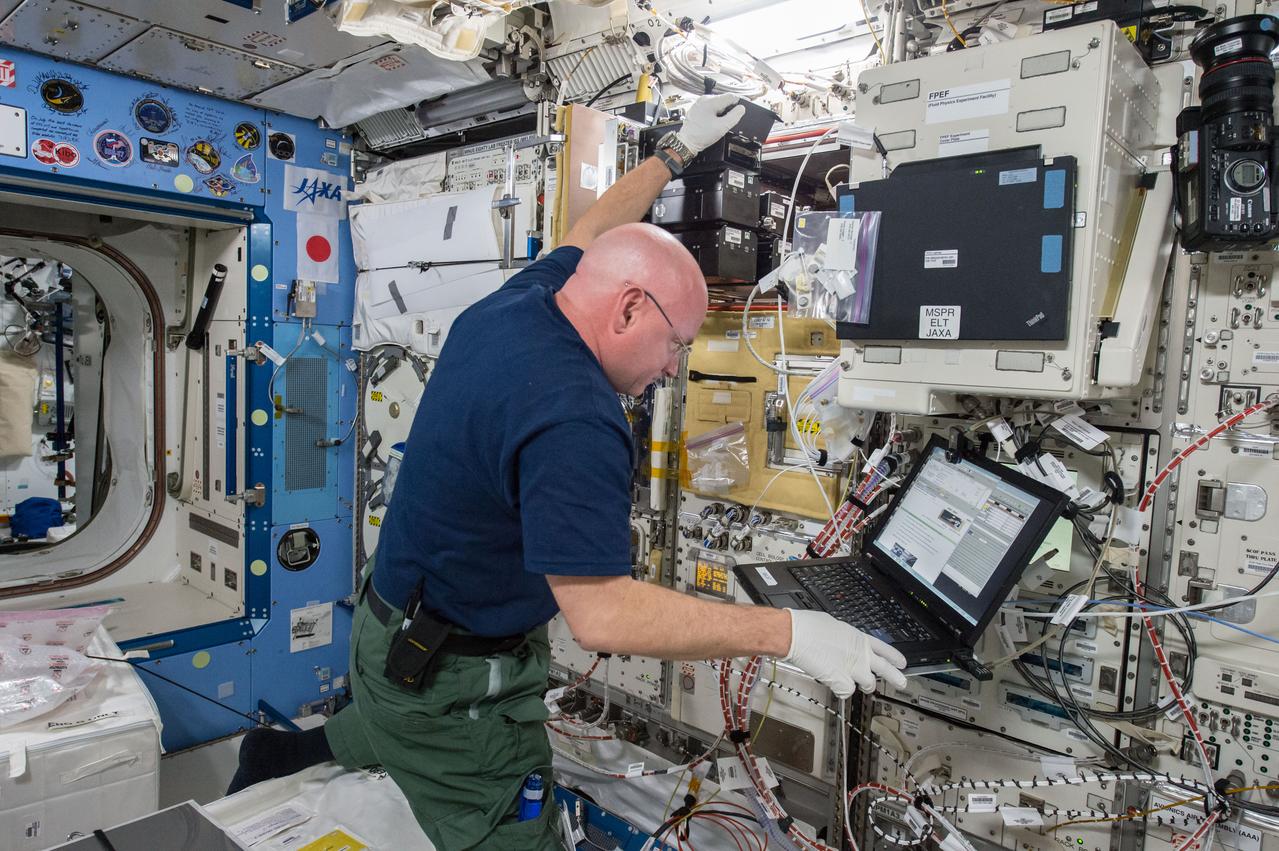
iss043e124225 (4/18/2015) --- NASA astronaut Scott Kelly is seen performing the Space Aging experiment using the Cell Biology Experiment Facility (CBEF) rack in the Japanese Experiment Module (JEM) aboard the International Space Station (ISS). The purpose of the experiment is to study the effects of weightlessness in space flight on the aging of the C. elegans roundworm, a model organism for a range of biological studies. Microgravity causes a number of physiological changes, like heart and bone deconditioning, involving mechanisms that are poorly understood and may affect the rate at which organisms and astronauts age. The Space Aging experiment will grow millimeter-long C. elegans roundworms in microgravity and compare their health and longevity with controlled specimens on Earth.
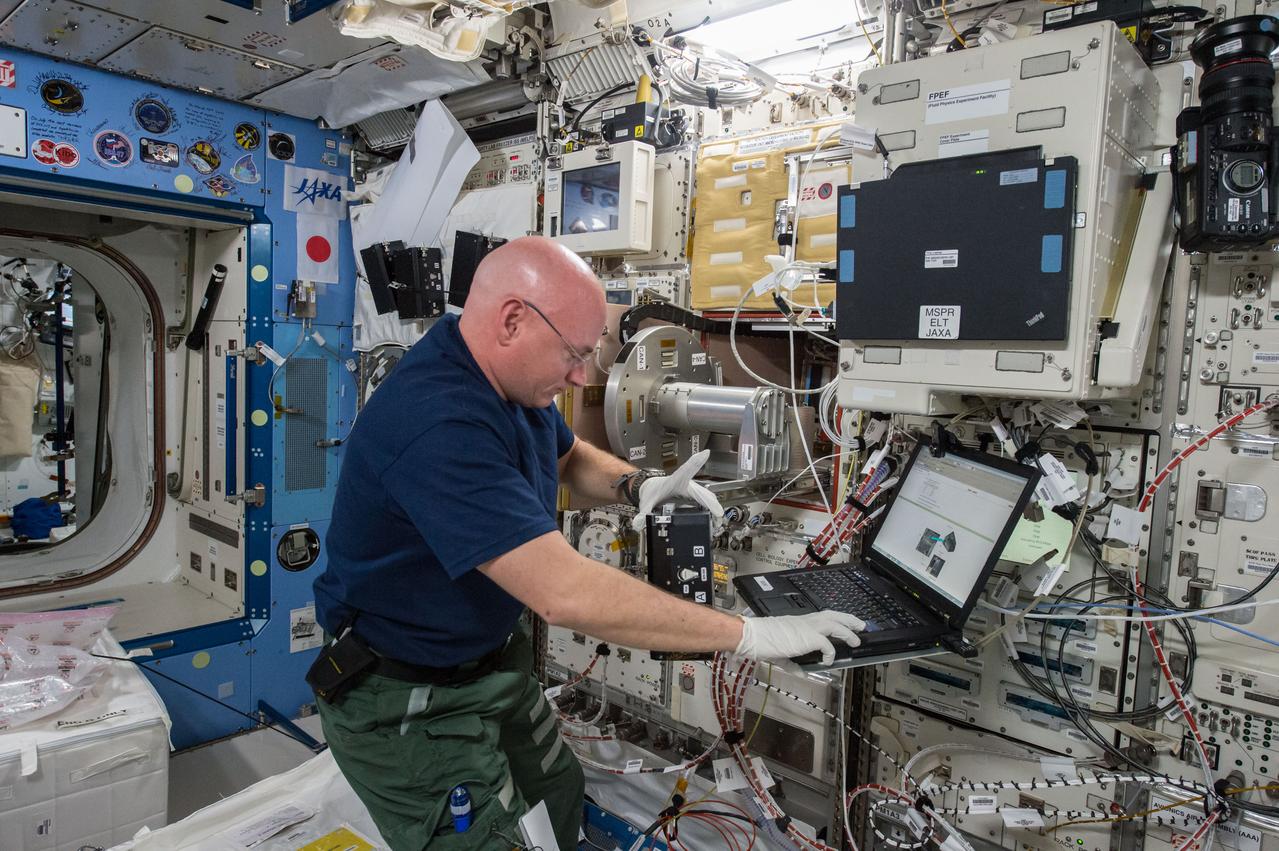
iss043e124063 (4/18/2015) --- NASA astronaut Scott Kelly is seen performing the Space Aging experiment using the Cell Biology Experiment Facility (CBEF) rack in the Japanese Experiment Module (JEM) aboard the International Space Station (ISS). The purpose of the experiment is to study the effects of weightlessness in space flight on the aging of the C. elegans roundworm, a model organism for a range of biological studies. Microgravity causes a number of physiological changes, like heart and bone deconditioning, involving mechanisms that are poorly understood and may affect the rate at which organisms and astronauts age. The Space Aging experiment will grow millimeter-long C. elegans roundworms in microgravity and compare their health and longevity with controlled specimens on Earth.
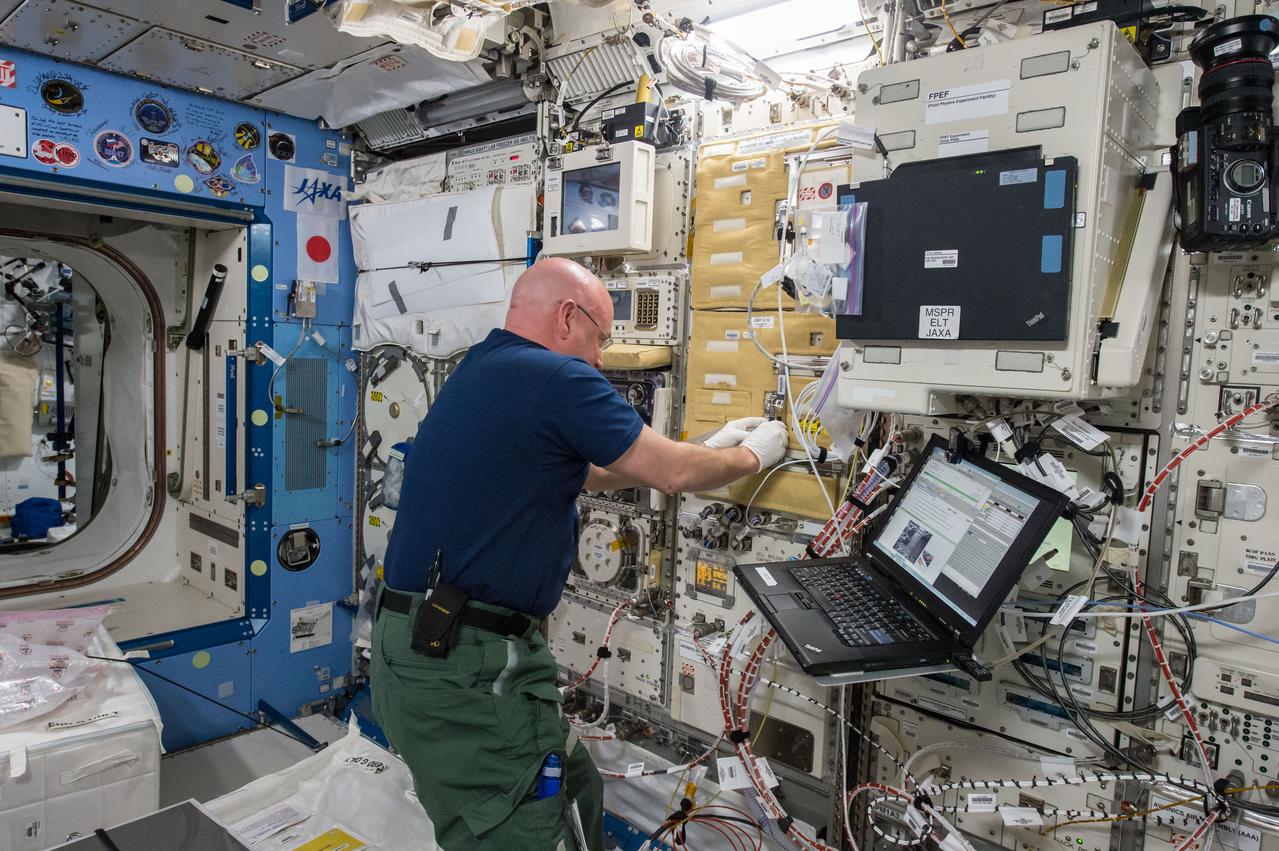
iss043e124238 (4/18/2015) --- NASA astronaut Scott Kelly is seen performing the Space Aging experiment using the Cell Biology Experiment Facility (CBEF) rack in the Japanese Experiment Module (JEM) aboard the International Space Station (ISS). The purpose of the experiment is to study the effects of weightlessness in space flight on the aging of the C. elegans roundworm, a model organism for a range of biological studies. Microgravity causes a number of physiological changes, like heart and bone deconditioning, involving mechanisms that are poorly understood and may affect the rate at which organisms and astronauts age. The Space Aging experiment will grow millimeter-long C. elegans roundworms in microgravity and compare their health and longevity with controlled specimens on Earth.
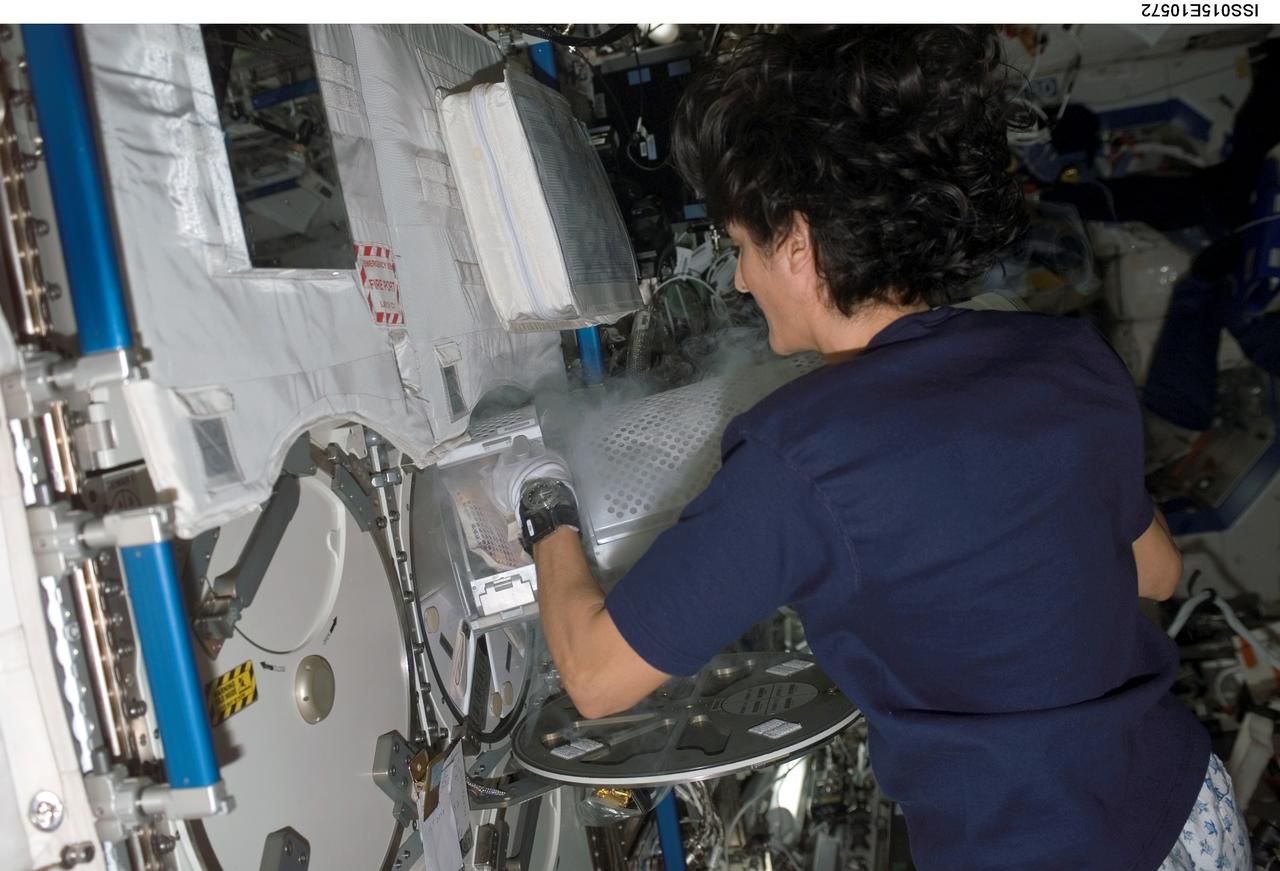
ISS015-E-10572 (1 June 2007) --- Astronaut Sunita L. Williams, Expedition 15 flight engineer, inserts test samples in the Minus Eighty Degree Laboratory Freezer for ISS (MELFI) as a part of the Nutritional Status Assessment (Nutrition) experiment in the Destiny laboratory of the International Space Station. MELFI is a low temperature freezer facility with nominal operating temperatures of -80, -26 and +4 degrees Celsius that will preserve experiment materials over long periods. The results of the Nutrition experiment will be used to better understand the time course effects of space flight on human physiology.
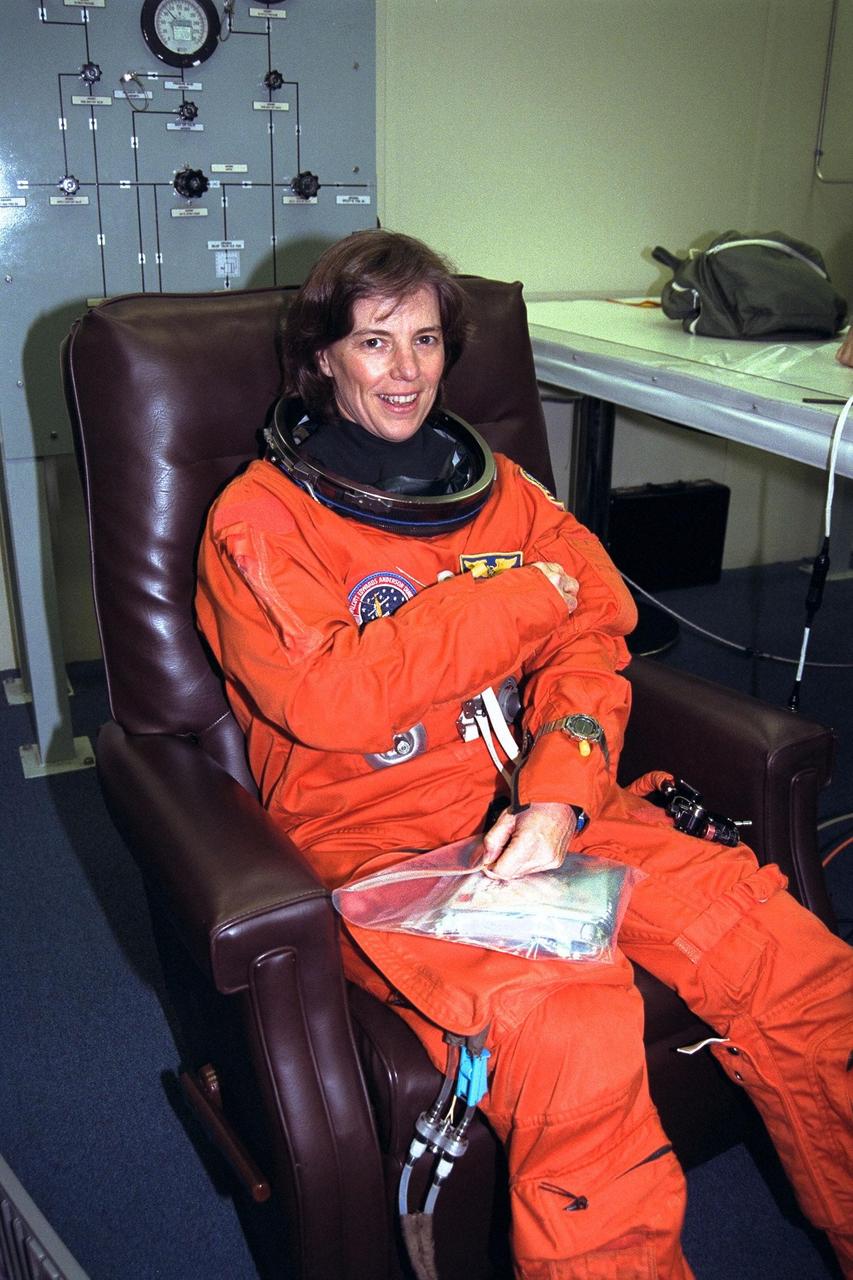
STS-89 Mission Specialist Bonnie Dunbar, Ph.D., smiles as she completes the donning of her launch/entry suit in the Operations and Checkout (O&C) Building. Dr. Dunbar completed her doctorate at the University of Houston in Texas. Her multi-disciplinary dissertation (materials science and physiology) involved evaluating the effects of simulated space flight on bone strength and fracture toughness. She and six fellow crew members will shortly depart the O&C and head for Launch Pad 39A, where the Space Shuttle Endeavour will lift off during a launch window that opens at 9:43 p.m. EST, Jan. 22. STS-89 is the eighth of nine planned missions to dock the Space Shuttle with Russia's Mir space station
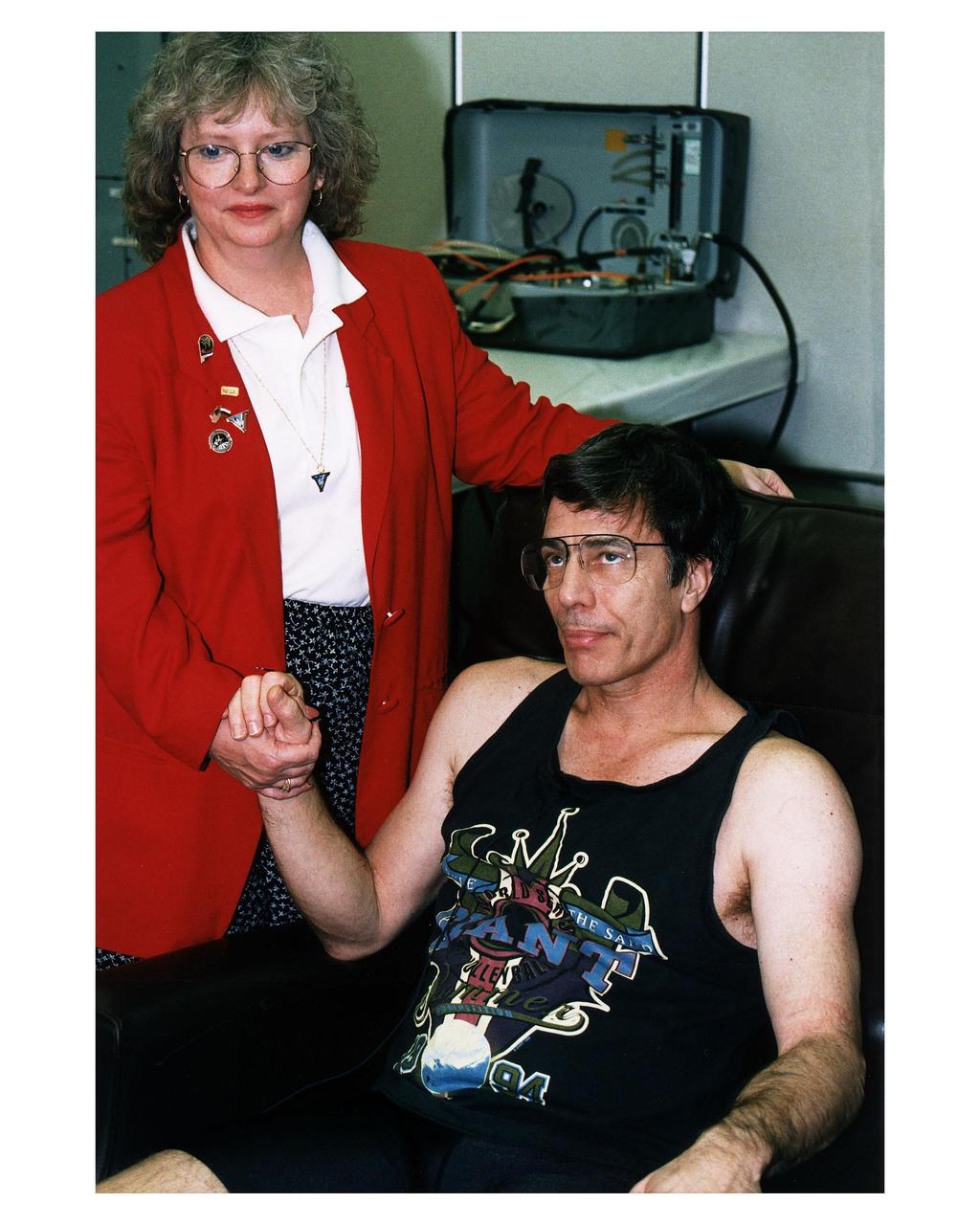
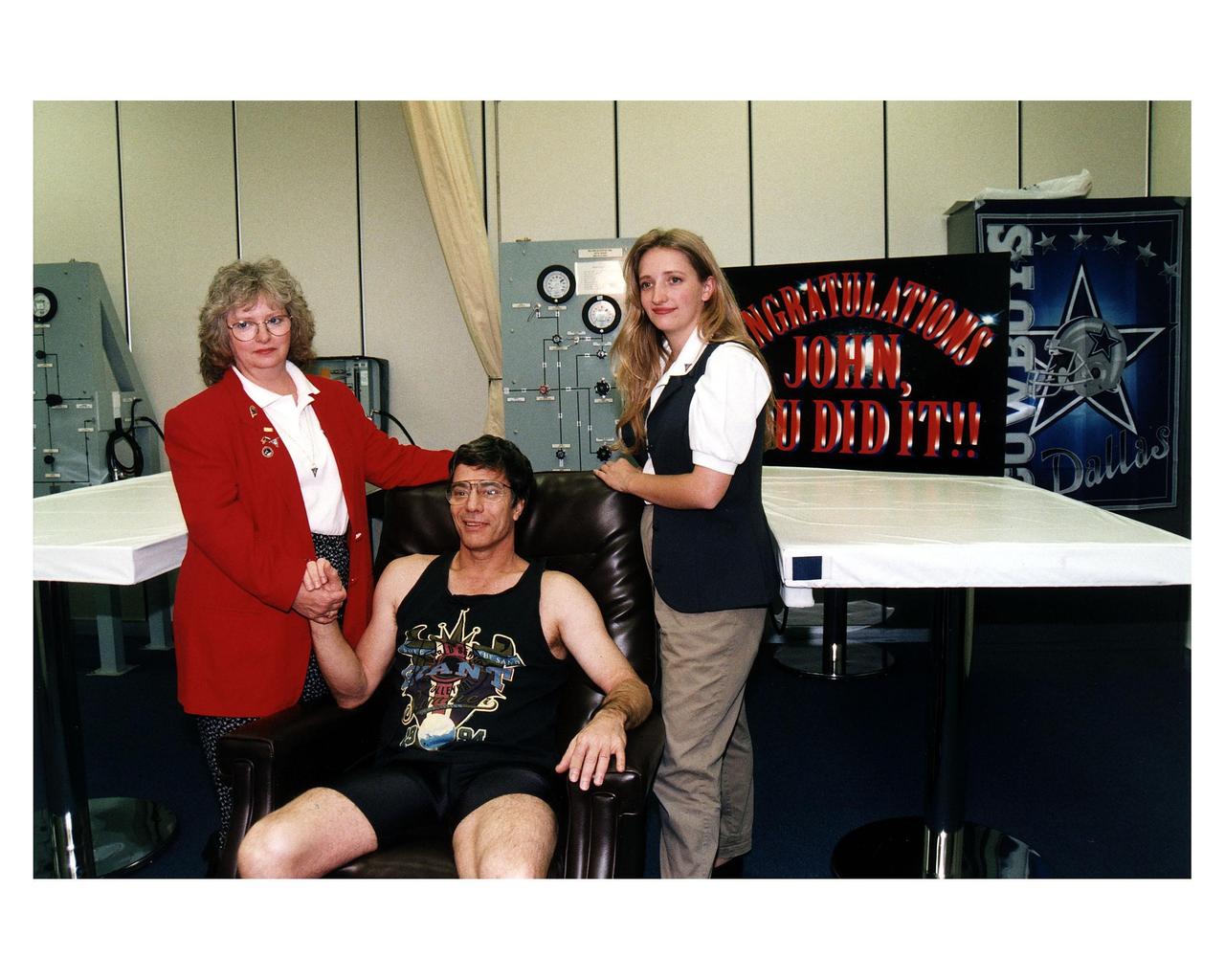
U. S. astronaut John E. Blaha and his wife, Brenda, hold hands in the crew quarters at KSC after he answered questions about his four-month stay aboard the Russian Mir space station. Blaha returned to Earth earlier today aboard the Space Shuttle orbiter Atlantis when it touched down at 9:22:44 a.m. EST Jan. 22 on Runway 33 of KSC’s Shuttle Landing Facility at the conclusion of the STS-81 mission. Blaha and the other five returning STS-81 crew members are spending the night here in the Operations and Checkout Building before returning to Johnson Space Center in Houston tomorrow morning. Blaha will undergo a two-week series of medical tests to help determine the physiological effects of his long-duration mission
U. S. astronaut John E. Blaha poses with his wife, Brenda (left), and daughter, Carolyn (right), in the crew quarters at KSC after answering questions about his four-month stay aboard the Russian Mir space station. Blaha returned to Earth earlier today aboard the Space Shuttle orbiter Atlantis when it touched down at 9:22:44 a.m. EST Jan. 22 on Runway 33 of KSC’s Shuttle Landing Facility at the conclusion of the STS-81 mission. Blaha and the other five returning STS-81 crew members are spending the night here in the Operations and Checkout Building before returning to Johnson Space Center in Houston tomorrow morning. Blaha will undergo a two-week series of medical tests to help determine the physiological effects of his long-duration mission
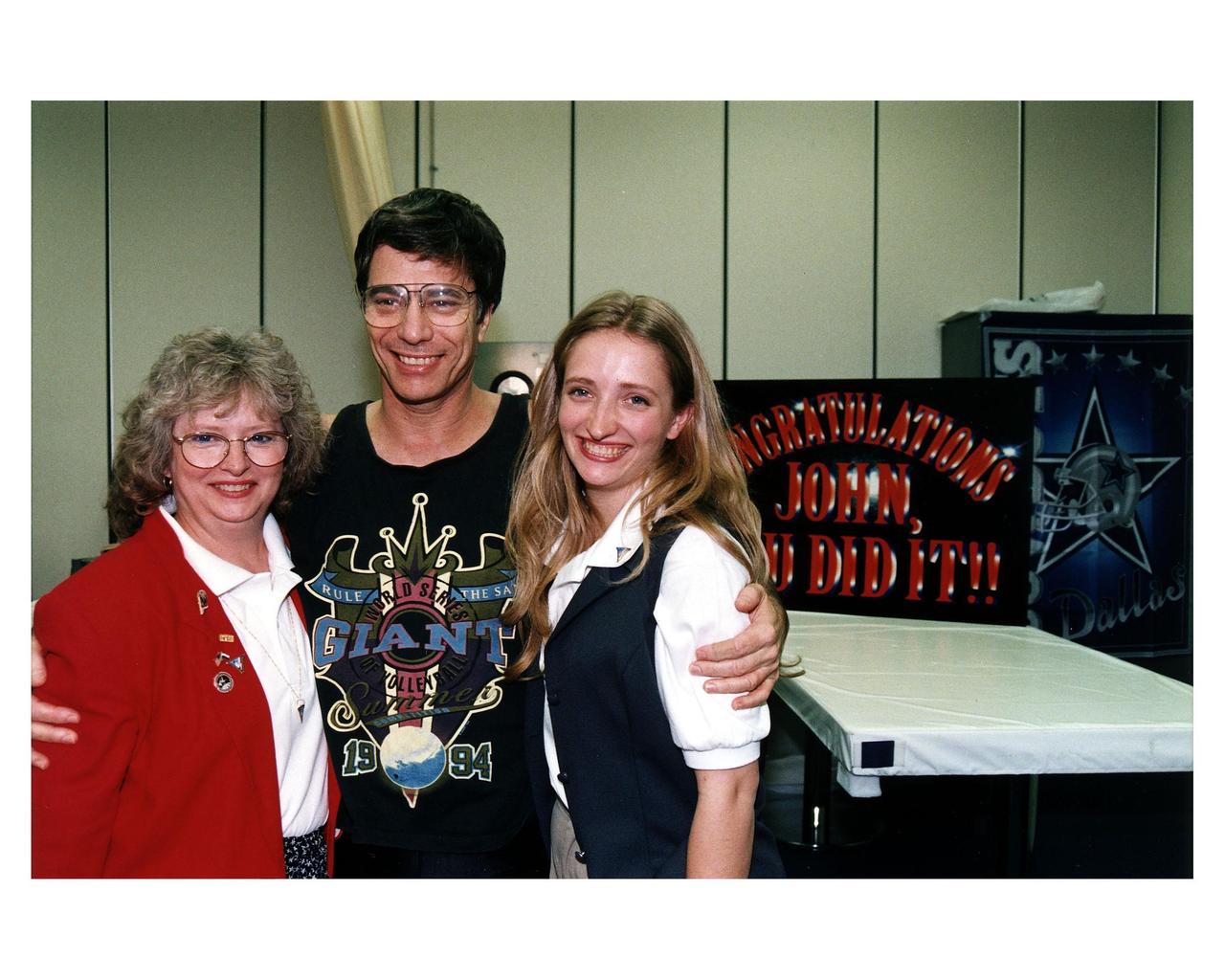
U. S. astronaut John E. Blaha and his family are all smiles as they embrace in the crew quarters at KSC after he answered questions about his four-month stay aboard the Russian Mir space station. Blaha’s wife, Brenda, is on the left and his daughter, Carolyn, is on the right. Blaha returned to Earth earlier today aboard the Space Shuttle orbiter Atlantis when it touched down at 9:22:44 a.m. EST Jan. 22 on Runway 33 of KSC’s Shuttle Landing Facility at the conclusion of the STS-81 mission. Blaha and the other five returning STS-81 crew members are spending the night here in the Operations and Checkout Building before returning to Johnson Space Center in Houston tomorrow morning. Blaha will undergo a two-week series of medical tests to help determine the physiological effects of his long-duration mission
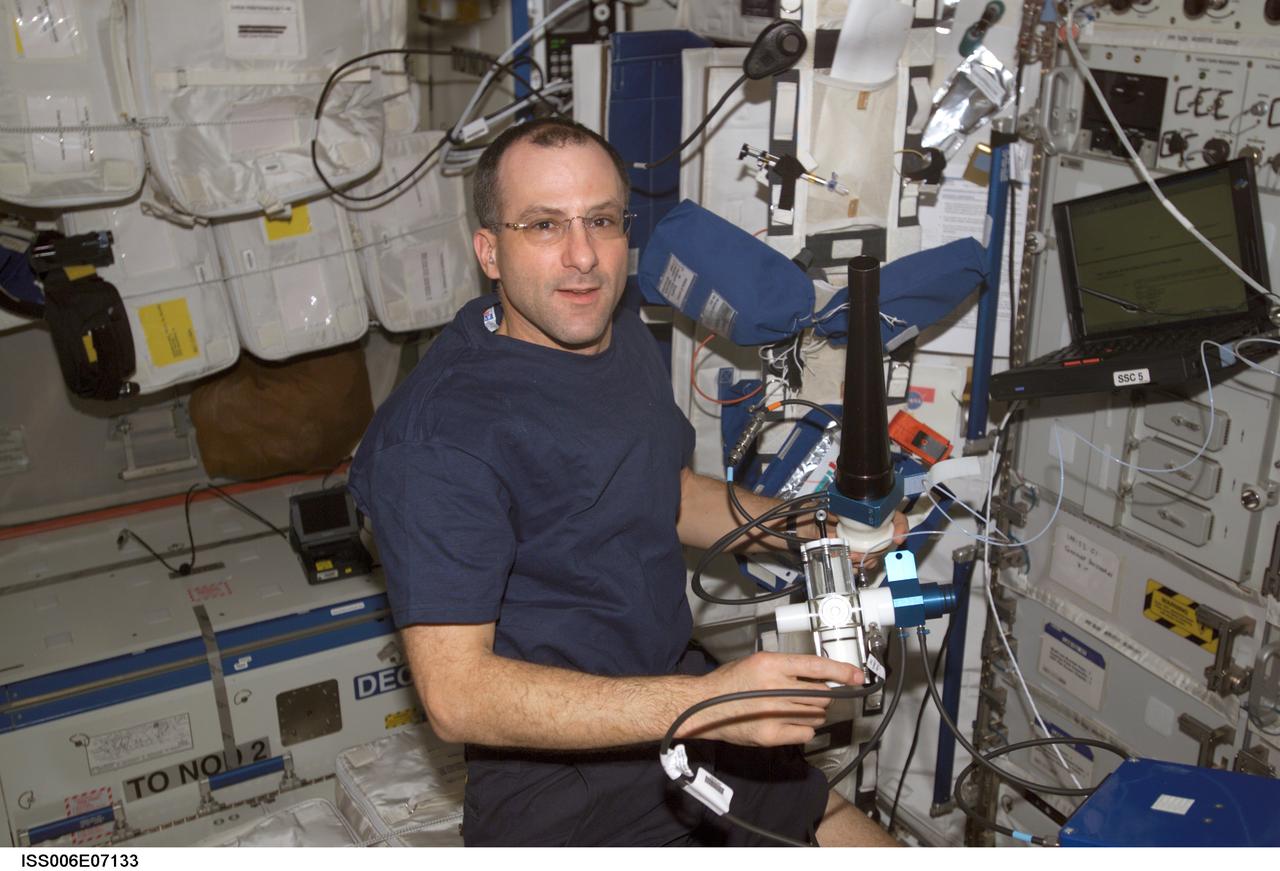
In this International Space Station (ISS) onboard photo, Expedition Six Science Officer Donald R. Pettit works to set up the Pulmonary Function in Flight (PuFF) experiment hardware in the Destiny Laboratory. Expedition Six is the fourth and final crew to perform the PuFF experiment. The PuFF experiment was developed to better understand what effects long term exposure to microgravity may have on the lungs. The focus is on measuring changes in the everness of gas exchange in the lungs, and on detecting changes in respiratory muscle strength. It allows astronauts to measure blood flow through the lungs, the ability of the lung to take up oxygen, and lung volumes. Each PuFF session includes five lung function tests, which involve breathing only cabin air. For each planned extravehicular (EVA) activity, a crew member performs a PuFF test within one week prior to the EVA. Following the EVA, those crew members perform another test to document the effect of exposure of the lungs to the low-pressure environment of the space suits. This experiment utilizes the Gas Analyzer System for Metabolic Analysis Physiology, or GASMAP, located in the Human Research Facility (HRF), along with a variety of other Puff equipment including a manual breathing valve, flow meter, pressure-flow module, pressure and volume calibration syringes, and disposable mouth pieces.
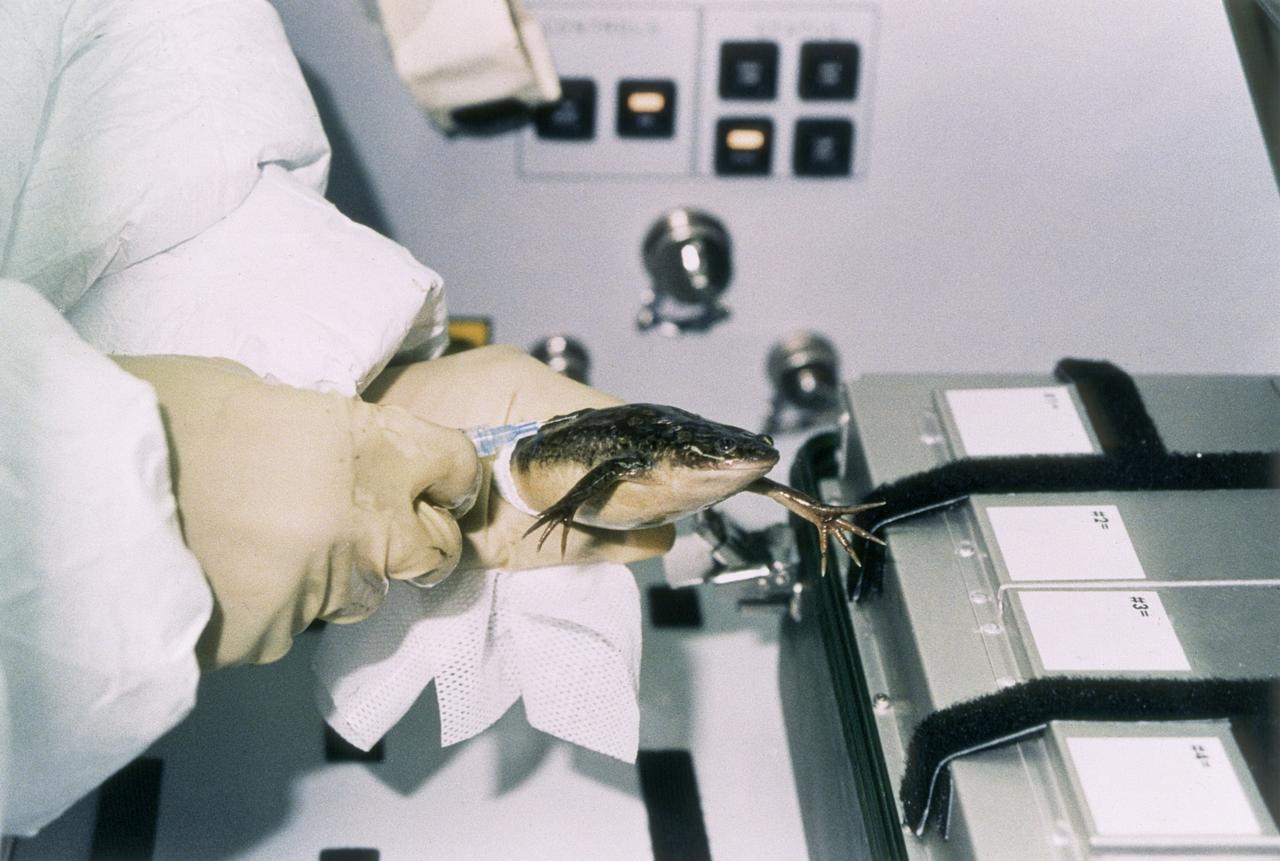
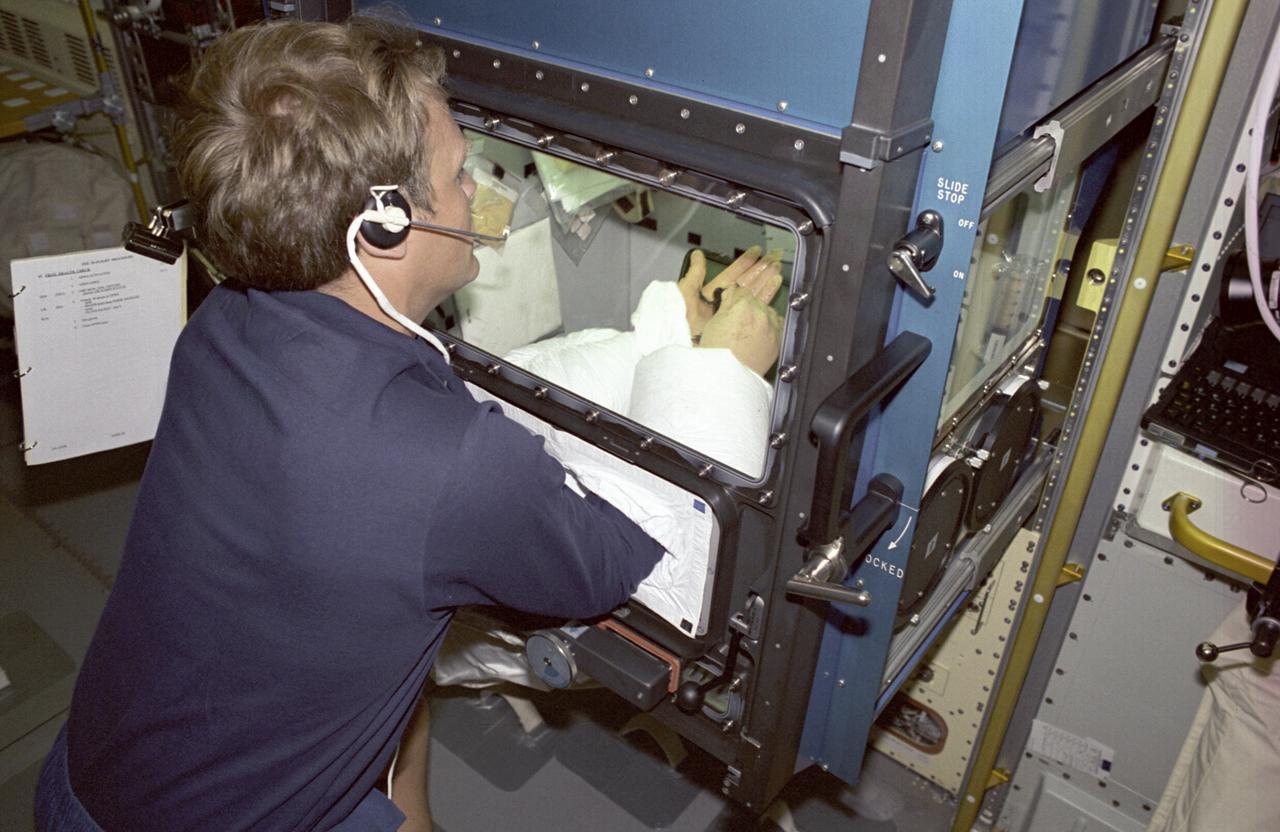
The Spacelab-J (SL-J) mission was a joint venture between NASA and the National Space Development Agency of Japan (NASDA) utilizing a marned Spacelab module. Materials science investigations covered such fields as biotechnology, electronic materials, fluid dynamics and transport phenomena, glasses and ceramics, metals and alloys, and acceleration measurements. Life sciences included experiments on human health, cell separation and biology, developmental biology, animal and human physiology and behavior, space radiation, and biological rhythms. Before long-term space ventures are attempted, numerous questions must be answered: how will gravity play in the early development of an organism, and how will new generations of a species be conceived and develop normally in microgravity. The Effects of Weightlessness on the Development of Amphibian Eggs Fertilized in Space experiment aboard SL-J examined aspects of these questions. To investigate the effect of microgravity on amphibian development, female frogs carried aboard SL-J were induced to ovulate and shed eggs. These eggs were then fertilized in the microgravity environment. Half were incubated in microgravity, while the other half were incubated in a centrifuge that spins to simulate normal gravity. This photograph shows an astronaut working with one of the adult female frogs inside the incubator. The mission also examined the swimming behavior of tadpoles grown in the absence of gravity. The Spacelab-J was launched aboard the Space Shuttle Orbiter Endeavour on September 12, 1992.
The Spacelab-J (SL-J) mission was a joint venture between NASA and the National Space Development Agency of Japan (NASDA) utilizing a marned Spacelab module. Materials science investigations covered such fields as biotechnology, electronic materials, fluid dynamics and transport phenomena, glasses and ceramics, metals and alloys, and acceleration measurements. Life sciences included experiments on human health, cell separation and biology, developmental biology, animal and human physiology and behavior, space radiation, and biological rhythms. Before long-term space ventures are attempted, numerous questions must be answered: how will gravity play in the early development of an organism, and how will new generations of a species be conceived and develop normally in microgravity. The Effects of Weightlessness on the Development of Amphibian Eggs Fertilized in Space experiment aboard SL-J examined aspects of these questions. To investigate the effect of microgravity on amphibian development, female frogs carried aboard SL-J were induced to ovulate and shed eggs. These eggs were then fertilized in the microgravity environment. Half were incubated in microgravity, while the other half were incubated in a centrifuge that spins to simulate normal gravity. This photograph shows astronaut Mark Lee working with one of the adult female frogs inside the incubator. The mission also examined the swimming behavior of tadpoles grown in the absence of gravity. The Spacelab-J was launched aboard the Space Shuttle Orbiter Endeavour on September 12, 1992.
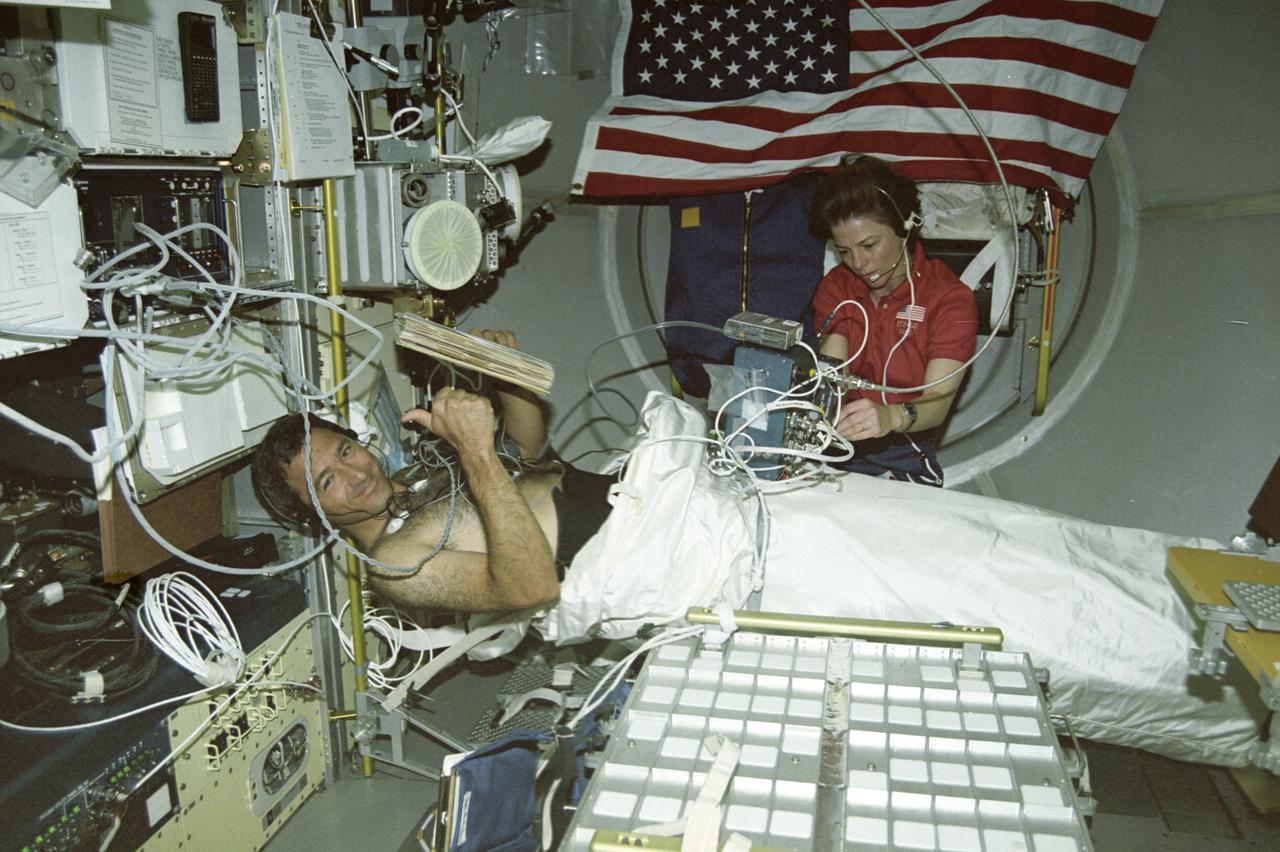
The first United States Microgravity Laboratory (USML-1) flew in orbit inside the Spacelab science module for extended periods, providing scientists and researchers greater opportunities for research in materials science, fluid dynamics, biotechnology (crystal growth), and combustion science. In this photograph, Astronaut Bornie Dunbar and Astronaut Larry DeLucas are conducting the Lower Body Negative Pressure (LBNP) experiment, which is to protect the health and safety of the crew and to shorten the time required to readapt to gravity when they return to Earth. When humans go into space, the lack of gravity causes many changes in the body. One change is that fluids normally kept in the lower body by gravity, shift upward to the head and chest. This is why astronauts' faces appear chubby or puffy. The change in fluid volume also affects the heart. The reduced fluid volume means that there is less blood to circulate through the body. Crewmembers may experience reduced blood flow to the brain when returning to Earth. This leads to fainting or near-fainting episodes. With the use of LBNP to simulate the pull of gravity in conjunction with fluids, salt tablets can recondition the cardiovascular system. This treatment, called "soak," is effective up to 24 hours. The LBNP uses a three-layer collapsible cylinder that seals around the crewmember's waist which simulates the effects of gravity and helps pull fluids into the lower body. The data collected will be analyzed to determine physiological changes in the crewmembers and effectiveness of the treatment. The USML-1 was launched aboard the Space Shuttle Orbiter Columbia (STS-50) on June 25, 1992.
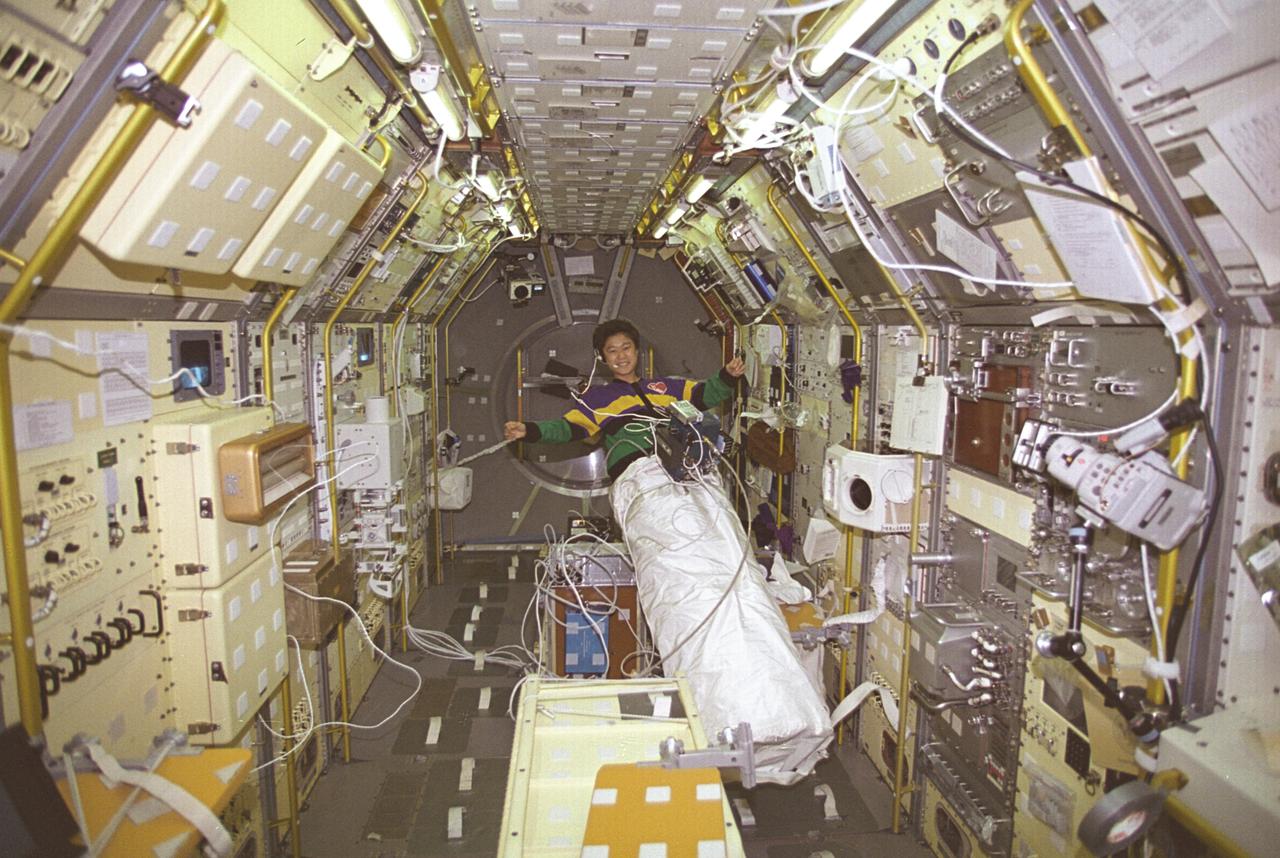
Astronaut Chiaki Mukai conducts the Lower Body Negative Pressure (LBNP) experiment inside the International Microgravity Laboratory-2 (IML-2) mission science module. Dr. Chiaki Mukai is one of the National Space Development Agency of Japan (NASDA) astronauts chosen by NASA as a payload specialist (PS). She was the second NASDA PS who flew aboard the Space Shuttle, and was the first female astronaut in Asia. When humans go into space, the lack of gravity causes many changes in the body. One change is that fluids normally kept in the lower body by gravity shift upward to the head and chest. This is why astronauts' faces appear chubby or puffy. The change in fluid volume also affects the heart. The reduced fluid volume means that there is less blood to circulate through the body. Crewmembers may experience reduced blood flow to the brain when returning to Earth. This leads to fainting or near-fainting episodes. With the use of the LBNP to simulate the pull of gravity in conjunction with fluids, salt tablets can recondition the cardiovascular system. This treatment, called "soak," is effective up to 24 hours. The LBNP uses a three-layer collapsible cylinder that seals around the crewmember's waist which simulates the effects of gravity and helps pull fluids into the lower body. The data collected will be analyzed to determine physiological changes in the crewmembers and effectiveness of the treatment. The IML-2 was the second in a series of Spacelab flights designed by the international science community to conduct research in a microgravity environment Managed by the Marshall Space Flight Center, the IML-2 was launched on July 8, 1994 aboard the STS-65 Space Shuttle Orbiter Columbia mission.
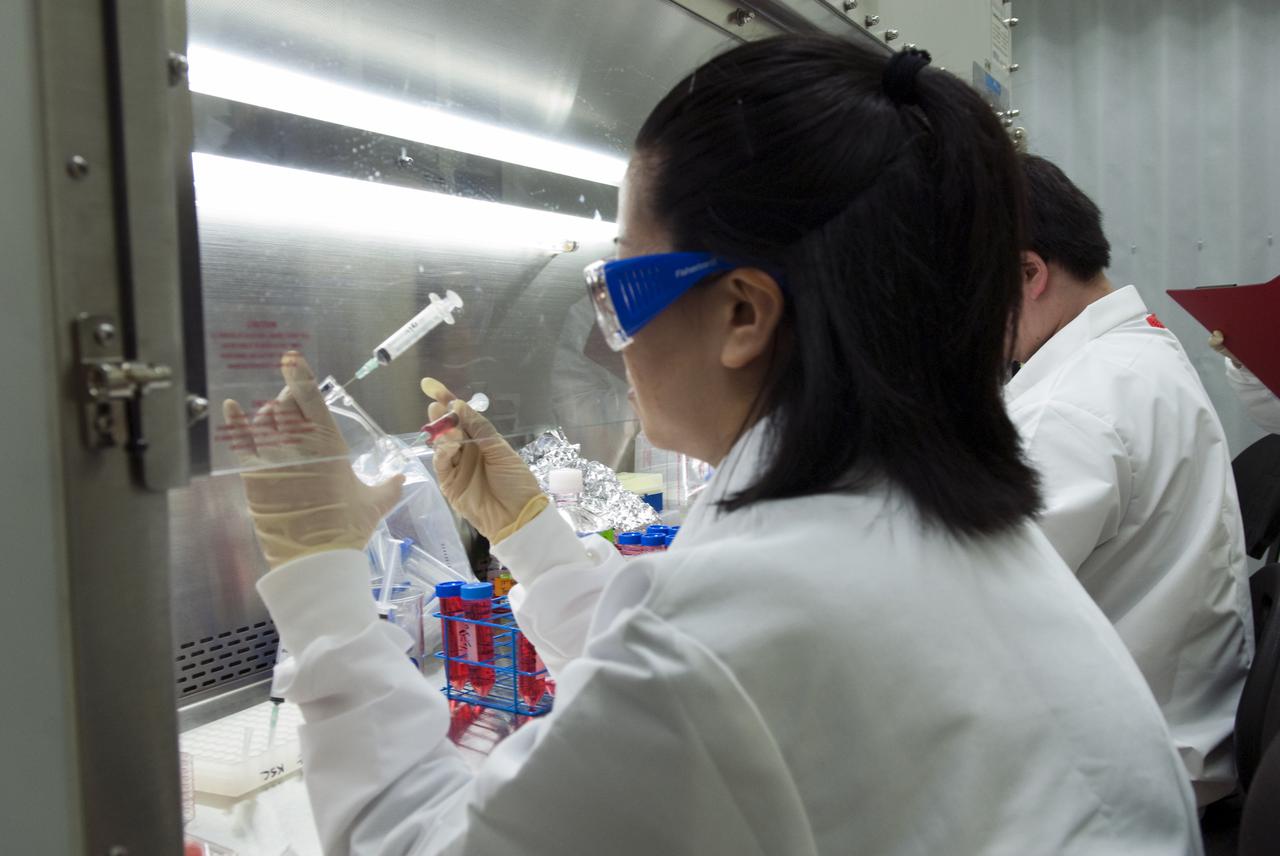
CAPE CANAVERAL, Fla. - Inside a laboratory in the Space Station Processing Facility at Kennedy Space Center in Florida, a Japan Aerospace Exploration Agency scientist prepares samples for the Molecular Mechanism of Microgravity-Induced Skeletal Muscle Atrophy – Physiological Relevance of Cbl-b Ubiquitin Ligase, or MyoLab, experiment. MyoLab will be delivered to the International Space Station aboard Discovery on the STS-131 mission. MyoLab will study a rat muscle gene modified cell line to determine the effects of microgravity. The MyoLab experiment is one of several biology and biotechnology, human research, physical, materials science and technology experiments that will be delivered to the space station aboard Discovery. The STS-131 mission also will deliver the multi-purpose logistics module Leonardo, filled with resupply stowage platforms and science racks. STS-131, scheduled to launch at 6:21 a.m. on April 5, will be the 33rd shuttle mission to the station and the 131st shuttle mission overall. For more information on the mission and crew, visit http:__www.nasa.gov_mission_pages_shuttle_shuttlemissions_sts131_index.htm. Photo credit: NASA_Jim Grossmann
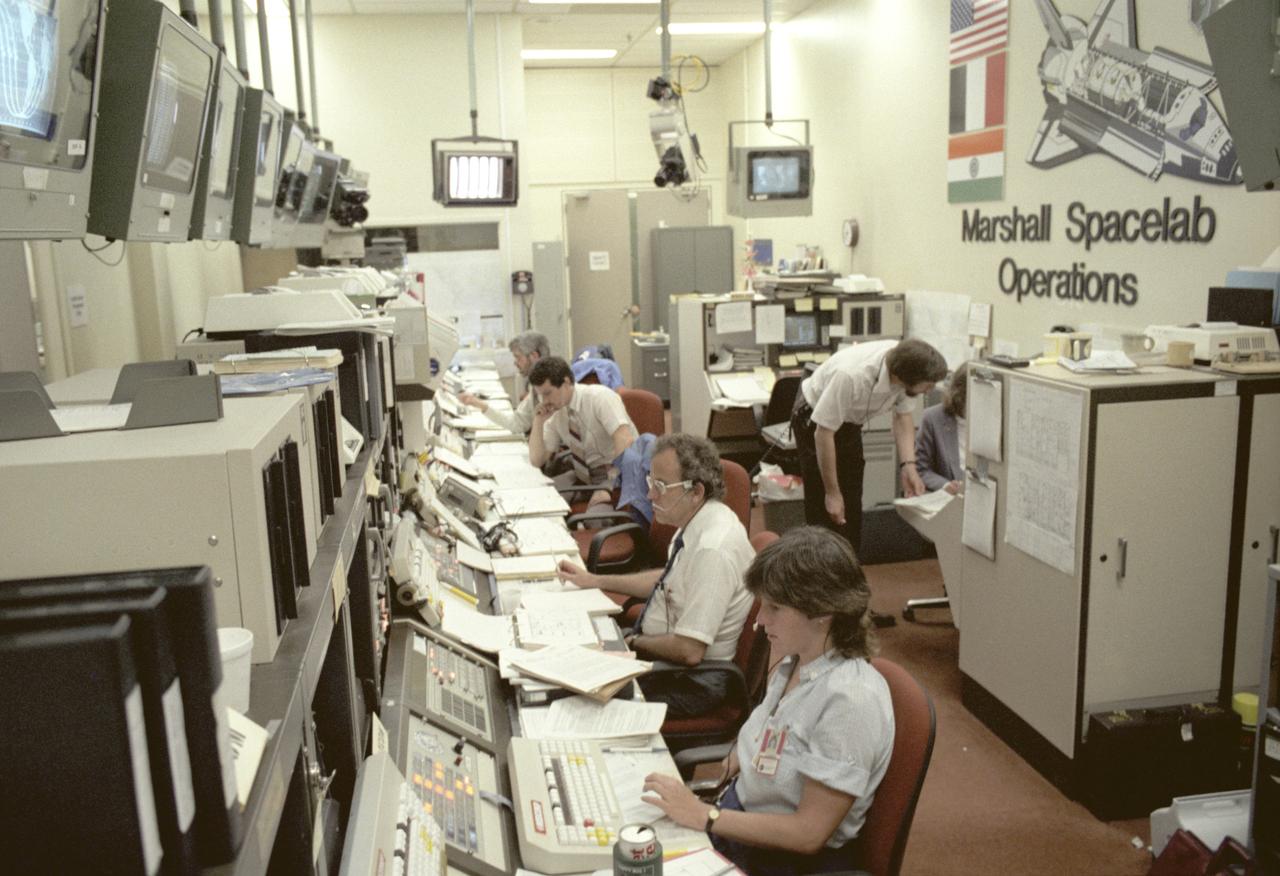
Spacelab-3 launched aboard STS-51B, with the major science objective being to perform engineering tests on two new facilities: the rodent animal holding facility and the primate animal holding facility. In addition, scientists observed the animals to obtain first hand knowledge of the effects of launch and reentry stresses and behavior. The need for suitable animal housing to support research in space led to the development of the Research Animal Holding Facility at the Ames Research Center. Scientists often study animals to find clues to human physiology and behavior. Rats, insects, and microorganisms had already been studied aboard the Shuttle on previous missions. On Spacelab-3, scientists had a chance to observe a large number of animals living in space in a specially designed and independently controlled housing facility. Marshall Space Flight Center (MSFC) had management responsibility for the Spacelab-3 mission. This photograph depicts activities during the mission at the Huntsville Operations Support Center (HOSC) Spacelab Payload Operations Control Center (SL POCC) at MSFC.
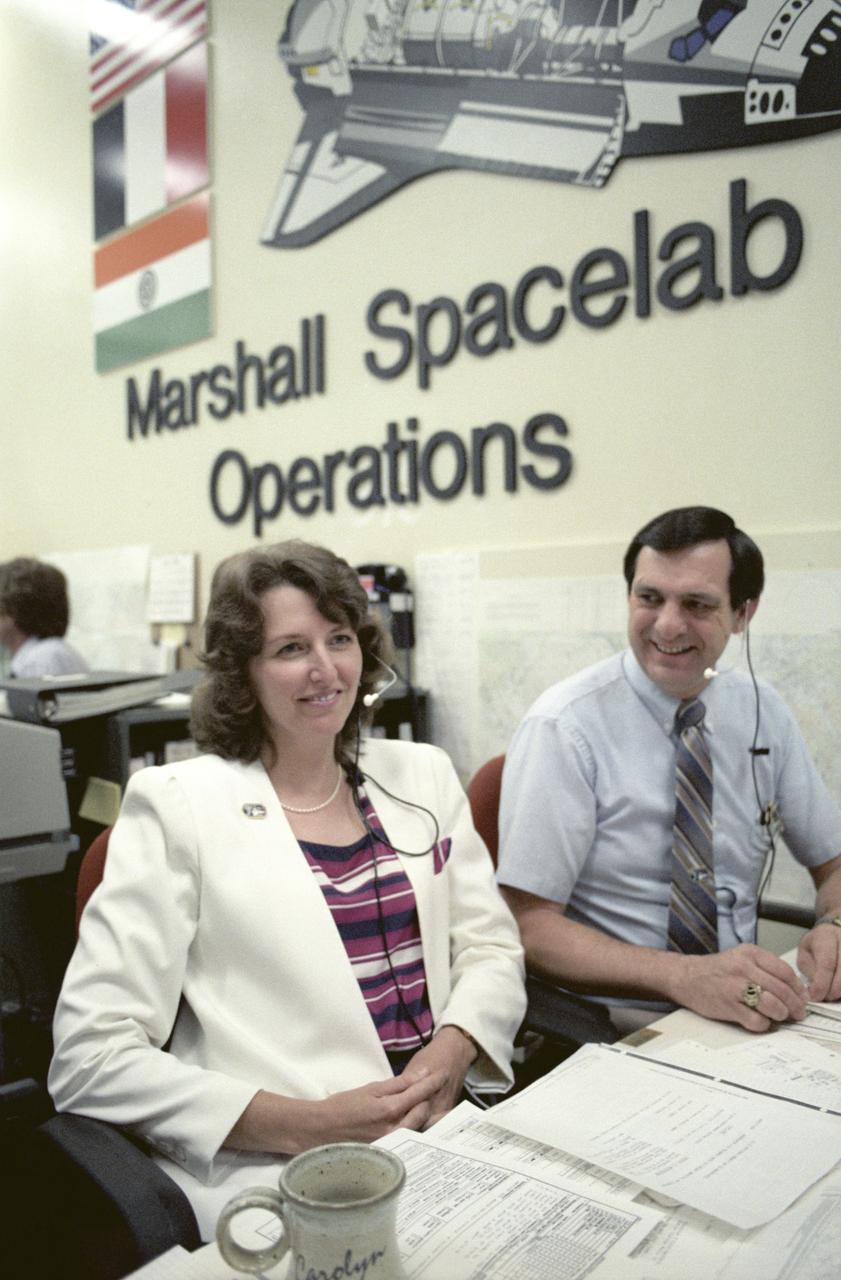
Spacelab-3 launched aboard STS-51B, with the major science objective being to perform engineering tests on two new facilities: the rodent animal holding facility and the primate animal holding facility. In addition, scientists observed the animals to obtain first hand knowledge of the effects of launch and reentry stresses and behavior. The need for suitable animal housing to support research in space led to the development of the Research Animal Holding Facility at the Ames Research Center. Scientists often study animals to find clues to human physiology and behavior. Rats, insects, and microorganisms had already been studied aboard the Shuttle on previous missions. On Spacelab-3, scientists had a chance to observe a large number of animals living in space in a specially designed and independently controlled housing facility. Marshall Space Flight Center (MSFC) had management responsibility for the Spacelab-3 mission. This photograph depicts activities during the mission at the Huntsville Operations Support Center (HOSC) Spacelab Payload Operations Control Center (SL POCC) at MSFC.
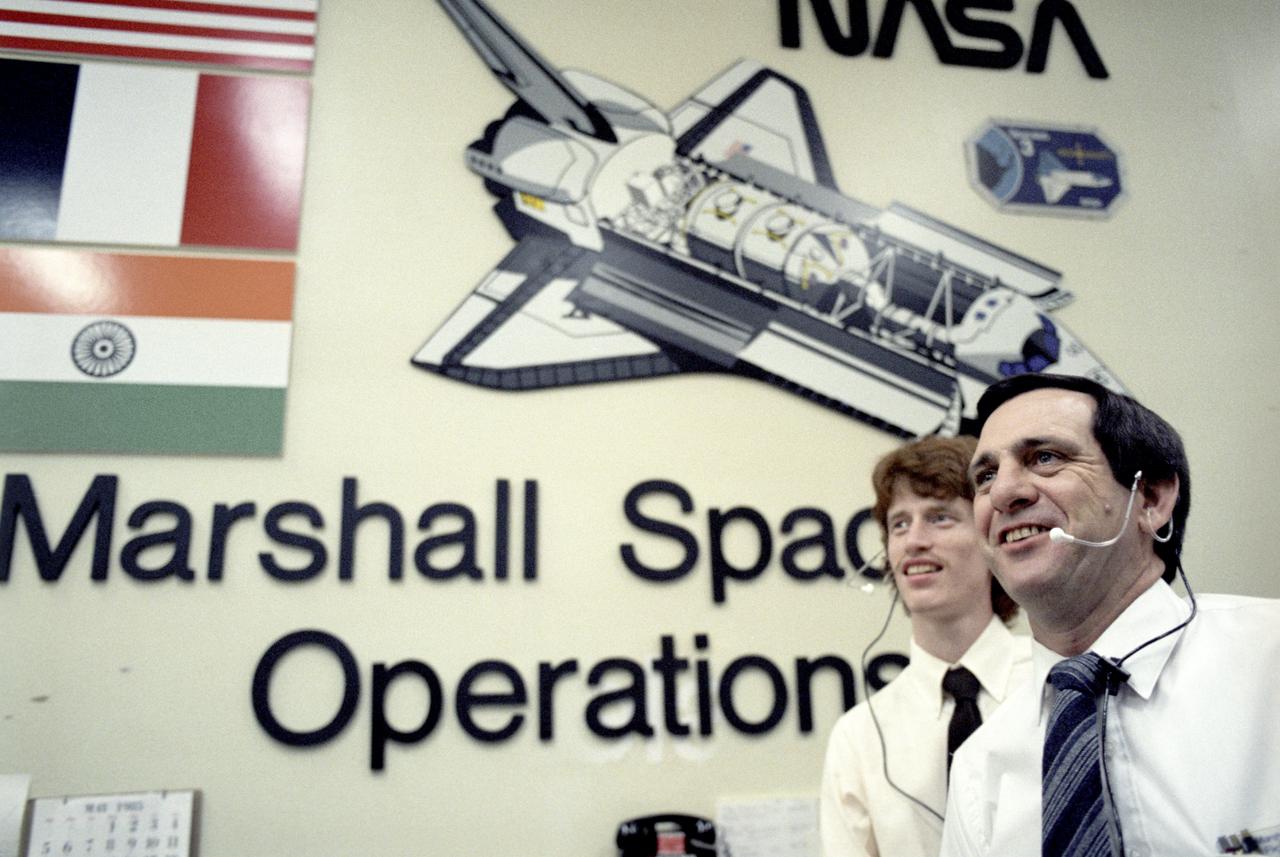
Spacelab-3 launched aboard STS-51B, with the major science objective being to perform engineering tests on two new facilities: the rodent animal holding facility and the primate animal holding facility. In addition, scientists observed the animals to obtain first hand knowledge of the effects of launch and reentry stresses and behavior. The need for suitable animal housing to support research in space led to the development of the Research Animal Holding Facility at the Ames Research Center. Scientists often study animals to find clues to human physiology and behavior. Rats, insects, and microorganisms had already been studied aboard the Shuttle on previous missions. On Spacelab-3, scientists had a chance to observe a large number of animals living in space in a specially designed and independently controlled housing facility. Marshall Space Flight Center (MSFC) had management responsibility for the Spacelab-3 mission. This photograph depicts activities during the mission at the Huntsville Operations Support Center (HOSC) Spacelab Payload Operations Control Center (SL POCC) at MSFC.
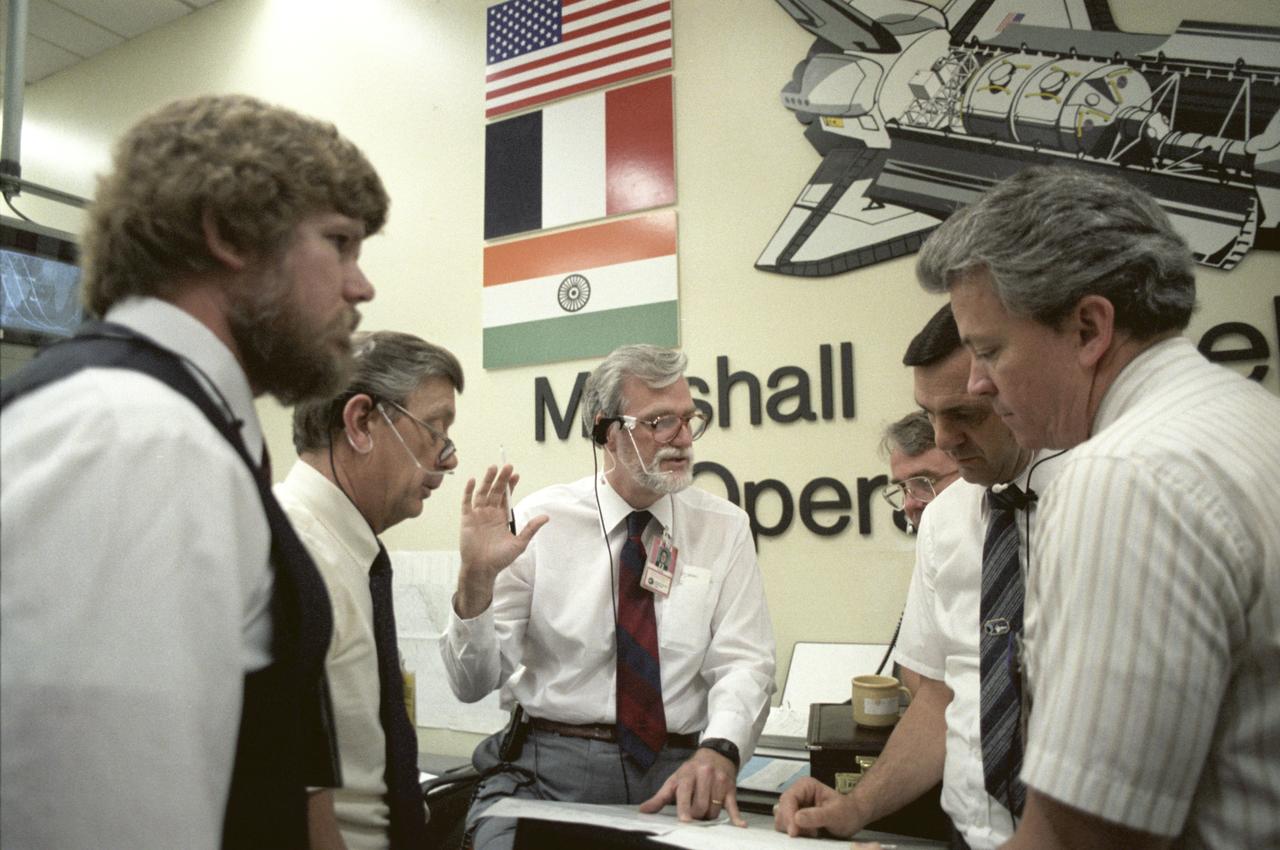
Spacelab-3 launched aboard STS-51B, with the major science objective being to perform engineering tests on two new facilities: the rodent animal holding facility and the primate animal holding facility. In addition, scientists observed the animals to obtain first hand knowledge of the effects of launch and reentry stresses and behavior. The need for suitable animal housing to support research in space led to the development of the Research Animal Holding Facility at the Ames Research Center. Scientists often study animals to find clues to human physiology and behavior. Rats, insects, and microorganisms had already been studied aboard the Shuttle on previous missions. On Spacelab-3, scientists had a chance to observe a large number of animals living in space in a specially designed and independently controlled housing facility. Marshall Space Flight Center (MSFC) had management responsibility for the Spacelab 3 mission. This photograph depicts activities during the mission at the Huntsville Operations Support Center (HOSC) Spacelab Payload Operations Control Center (SL POCC) at MSFC.
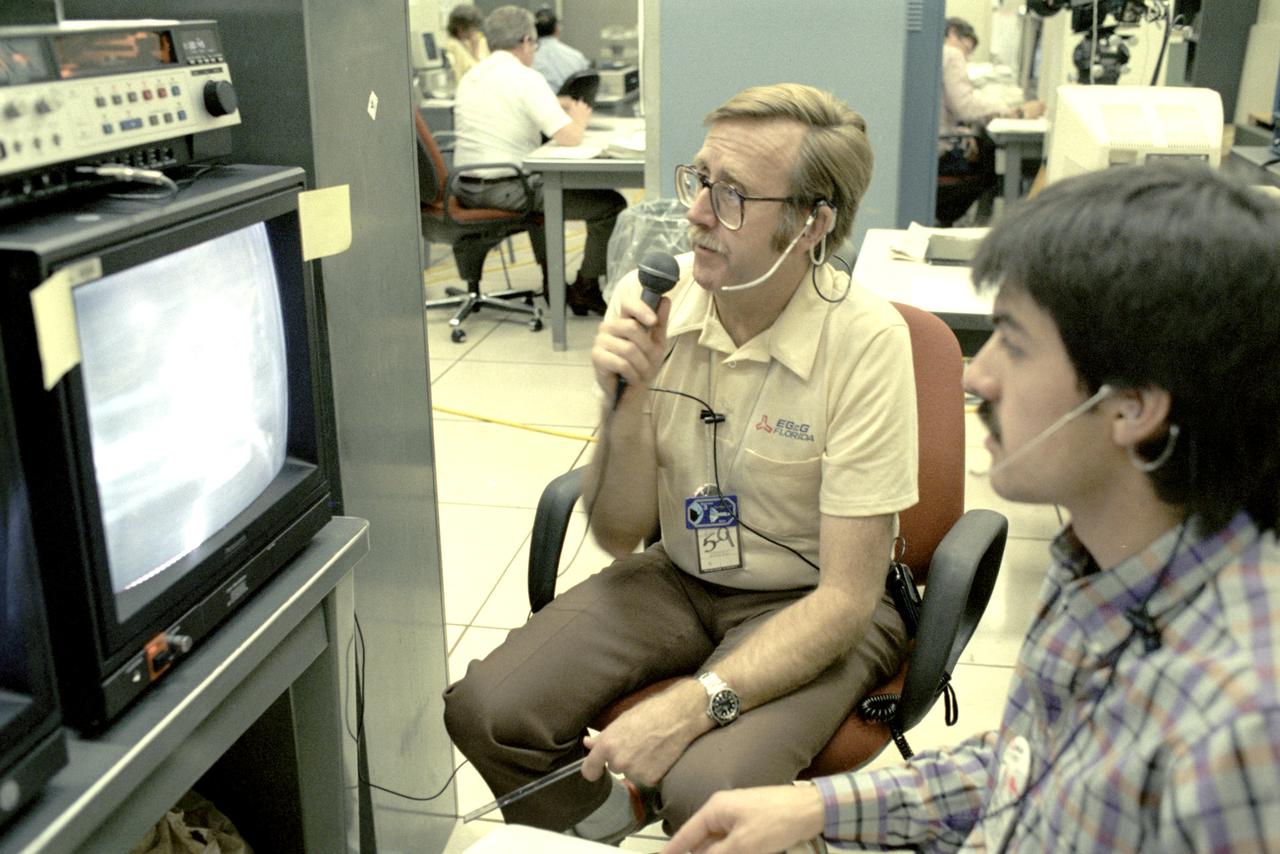
Spacelab-3 launched aboard STS-51B, with the major science objective being to perform engineering tests on two new facilities: the rodent animal holding facility and the primate animal holding facility. In addition, scientists observed the animals to obtain first hand knowledge of the effects of launch and reentry stresses and behavior. The need for suitable animal housing to support research in space led to the development of the Research Animal Holding Facility at the Ames Research Center. Scientists often study animals to find clues to human physiology and behavior. Rats, insects, and microorganisms had already been studied aboard the Shuttle on previous missions. On Spacelab-3, scientists had a chance to observe a large number of animals living in space in a specially designed and independently controlled housing facility. Marshall Space Flight Center (MSFC) had management responsibility for the Spacelab-3 mission. This photograph depicts activities during the mission at the Huntsville Operations Support Center (HOSC) Spacelab Payload Operations Control Center (SL POCC) at MSFC.
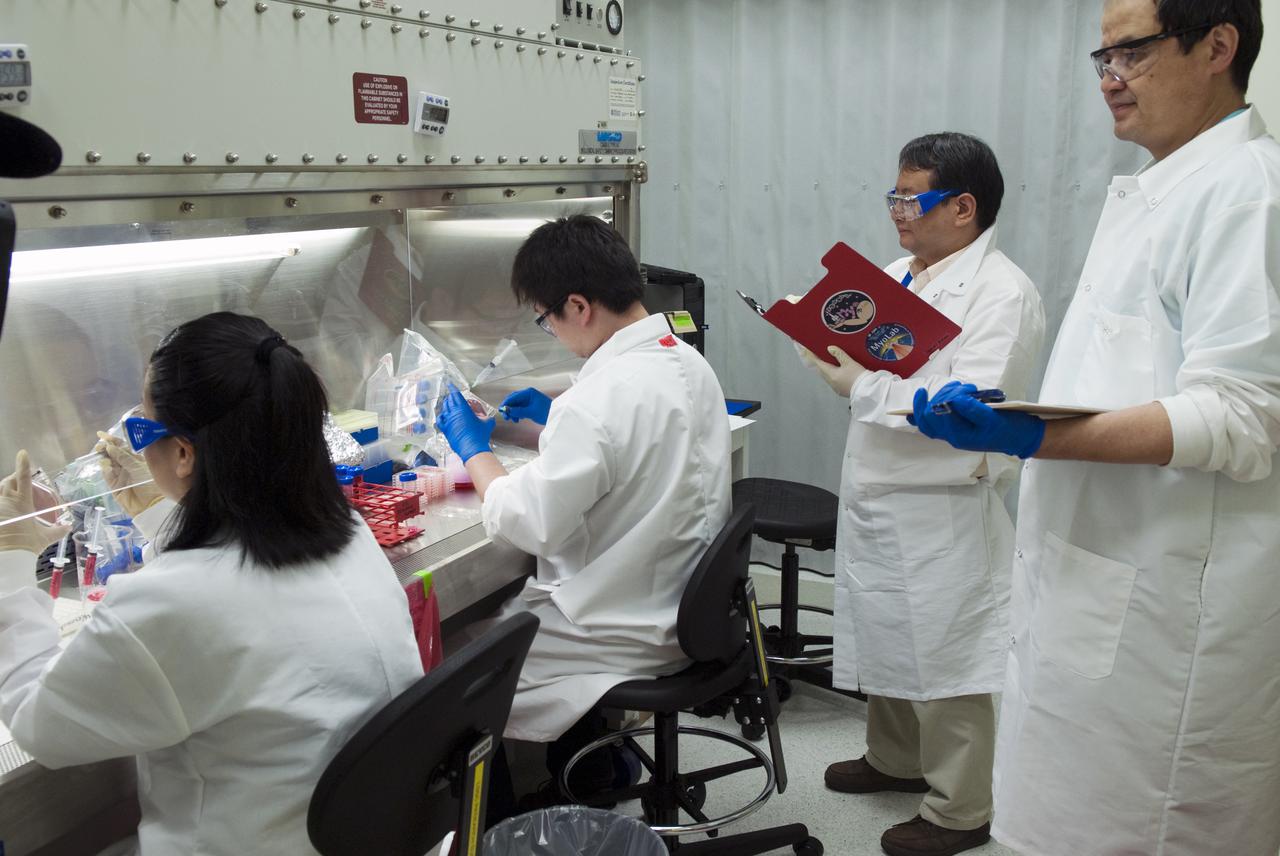
CAPE CANAVERAL, Fla. - Inside a laboratory in the Space Station Processing Facility at Kennedy Space Center in Florida, Japan Aerospace Exploration Agency scientists prepare samples for the Molecular Mechanism of Microgravity-Induced Skeletal Muscle Atrophy – Physiological Relevance of Cbl-b Ubiquitin Ligase, or MyoLab, experiment. MyoLab will be delivered to the International Space Station aboard Discovery on the STS-131 mission. MyoLab will study a rat muscle gene modified cell line to determine the effects of microgravity. The MyoLab experiment is one of several biology and biotechnology, human research, physical, materials science and technology experiments that will be delivered to the space station aboard Discovery. The STS-131 mission also will deliver the multi-purpose logistics module Leonardo, filled with resupply stowage platforms and science racks. STS-131, scheduled to launch at 6:21 a.m. on April 5, will be the 33rd shuttle mission to the station and the 131st shuttle mission overall. For more information on the mission and crew, visit http:__www.nasa.gov_mission_pages_shuttle_shuttlemissions_sts131_index.htm. Photo credit: NASA_Jim Grossmann
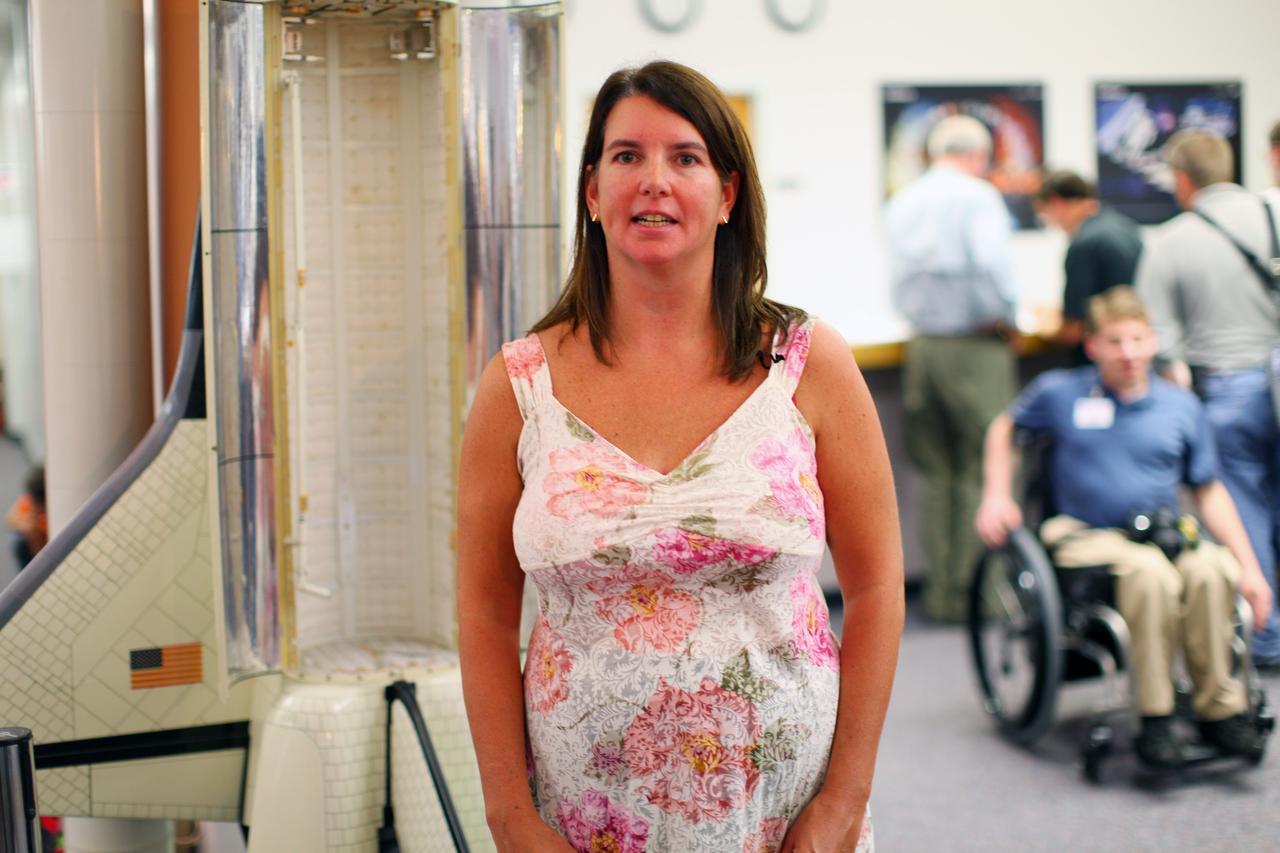
CAPE CANAVERAL, Fla. – Dr. Freya Shephard is interviewed by the media in the NASA Newsroom at Kennedy Space Center in Florida during prelaunch activities for the SpaceX demonstration test flight. Shephard is a researcher from the University of Nottingham in the United Kingdom and mentor to Paul Warren, an eleventh-grade student investigator from Henry E. Lackey High School in Charles County, Md. Warren’s experiment “Physiological Effects of Microgravity and Increased Levels of Radiation on Wild Type and Genetically Engineered Caenorhabditis elegans,” is one of 15 in the Student Spaceflight Experiments Program, or SSEP, being ferried to the International Space Station inside the Dragon capsule. The launch will be the second demonstration test flight for SpaceX for NASA's Commercial Orbital Transportation Services program, or COTS. SSEP, which began operation in June 2010 through a partnership of the National Center for Earth and Space Science Education with NanoRacks LLC, is a U.S. national science, technology, engineering and mathematics STEM education initiative that gives students across a community the opportunity to propose and design real experiments to fly in low Earth orbit. SSEP experiments flew on space shuttle missions STS-134 and STS-135 in 2011, the final flights of space shuttles Endeavour and Atlantis. For more information on SSEP, visit http://www.nasa.gov/audience/foreducators/station-here-we-come.html. Photo credit: NASA/Gianni Woods

Spacelab-3 launched aboard STS-51B, with the major science objective being to perform engineering tests on two new facilities: the rodent animal holding facility and the primate animal holding facility. In addition, scientists observed the animals to obtain first hand knowledge of the effects of launch and reentry stresses and behavior. The need for suitable animal housing to support research in space led to the development of the Research Animal Holding Facility at the Ames Research Center. Scientists often study animals to find clues to human physiology and behavior. Rats, insects, and microorganisms had already been studied aboard the Shuttle on previous missions. On Spacelab-3, scientists had a chance to observe a large number of animals living in space in a specially designed and independently controlled housing facility. Marshall Space Flight Center (MSFC) had management responsibility for the Spacelab 3 mission. This photograph depicts activities during the mission at the Huntsville Operations Support Center (HOSC) Spacelab Payload Operations Control Center (SL POCC) at MSFC.
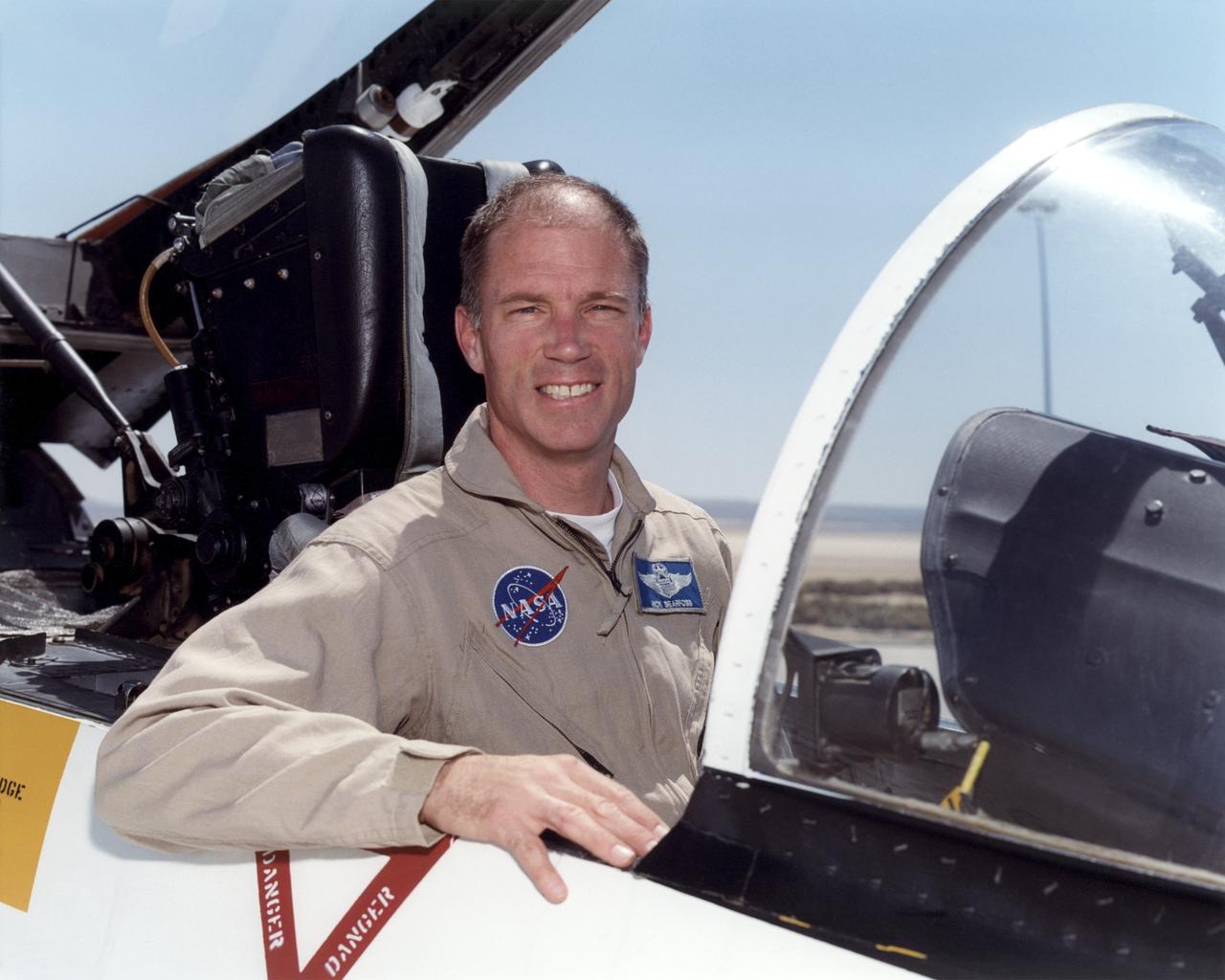
Richard A. Searfoss became a research pilot in the Flight Crew Branch of NASA's Dryden Flight Research Center, Edwards, Calif., in July 2001. He brought to Dryden more than 5,000 hours of military flying time and 939 hours in space. Searfoss served in the U.S. Air Force for more than 20 years, retiring with the rank of colonel. Following graduation in 1980 from Undergraduate Pilot Training at Williams Air Force Base, Ariz., Searfoss flew F-111s at RAF Lakenheath, England, and Mountain Home Air Force Base, Idaho. In 1988 he attended the U.S. Naval Test Pilot School, Patuxent River, Md., as a U.S. Air Force exchange officer. He was an instructor pilot at the U.S. Air Force Test Pilot School, Edwards Air Force Base, Calif., when selected for the astronaut program in January 1990. Searfoss became an astronaut in July 1991. A veteran of three space flights, Searfoss has logged 39 days in space. He served as STS-58 pilot on the seven-person life science research mission aboard Space Shuttle Columbia, launching from NASA's Kennedy Space Center, Fla., on Oct. 18, 1993, and landing at Edwards Air Force Base, Calif., on Nov. 1, 1993. The crew performed a number of medical experiments on themselves and 48 rats, expanding knowledge of human and animal physiology. Searfoss flew his second mission as pilot of STS-76 aboard the Space Shuttle Atlantis. During this nine-day mission, which launched March 22, 1996, the crew preformed the third docking of an American spacecraft with the Russian space station Mir. The crew transported to Mir nearly two tons of water, food, supplies, and scientific equipment, as well as U.S. Astronaut Shannon Lucid to begin her six-month stay in space. Completing 145 orbits, STS-76 landed at Edwards Air Force Base, Calif., on March 31, 1996. Searfoss commanded a seven-person crew on the STS-90 Neurolab mission launched on April 17, 1998. The crew served as both experiment subjects and operators for life science experiments focusing on the effects of m