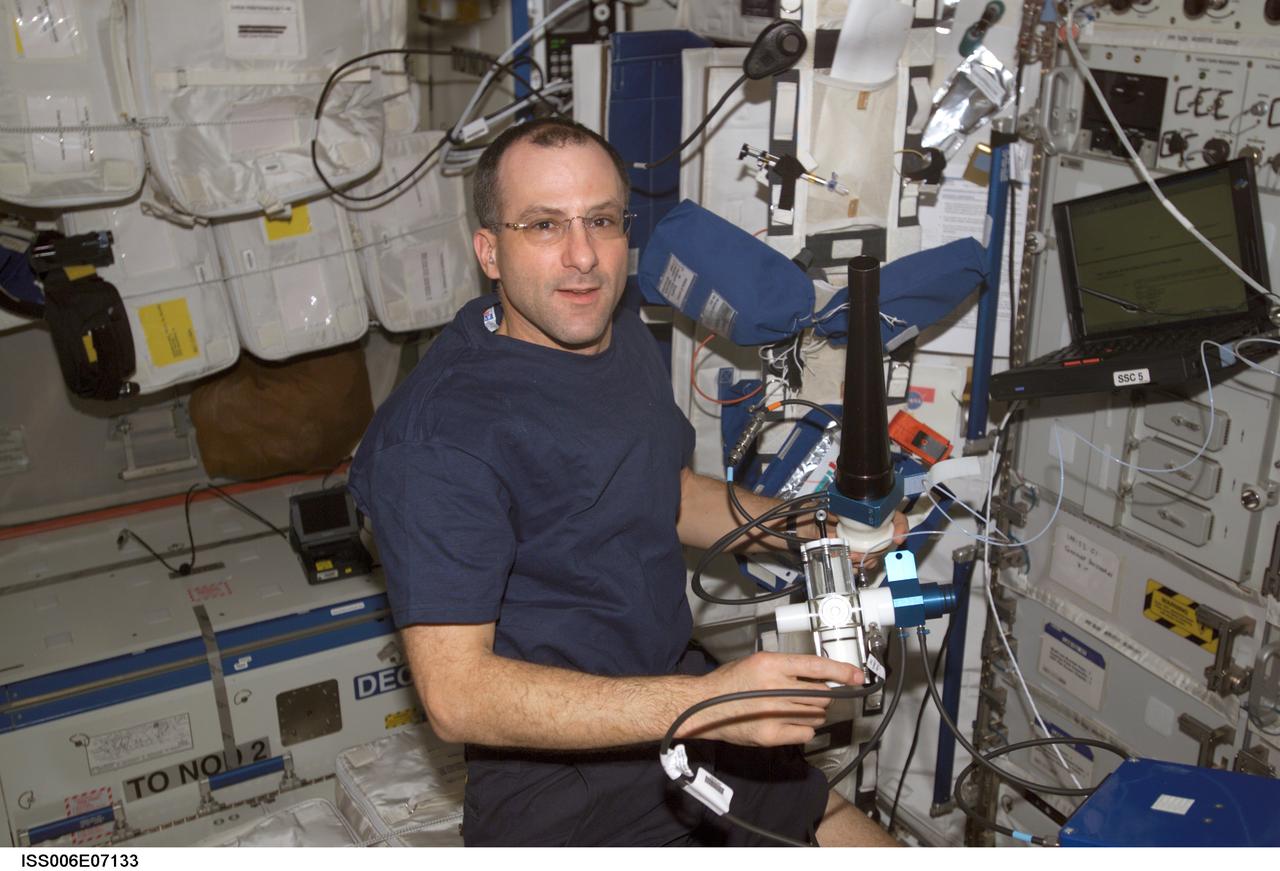
In this International Space Station (ISS) onboard photo, Expedition Six Science Officer Donald R. Pettit works to set up the Pulmonary Function in Flight (PuFF) experiment hardware in the Destiny Laboratory. Expedition Six is the fourth and final crew to perform the PuFF experiment. The PuFF experiment was developed to better understand what effects long term exposure to microgravity may have on the lungs. The focus is on measuring changes in the everness of gas exchange in the lungs, and on detecting changes in respiratory muscle strength. It allows astronauts to measure blood flow through the lungs, the ability of the lung to take up oxygen, and lung volumes. Each PuFF session includes five lung function tests, which involve breathing only cabin air. For each planned extravehicular (EVA) activity, a crew member performs a PuFF test within one week prior to the EVA. Following the EVA, those crew members perform another test to document the effect of exposure of the lungs to the low-pressure environment of the space suits. This experiment utilizes the Gas Analyzer System for Metabolic Analysis Physiology, or GASMAP, located in the Human Research Facility (HRF), along with a variety of other Puff equipment including a manual breathing valve, flow meter, pressure-flow module, pressure and volume calibration syringes, and disposable mouth pieces.
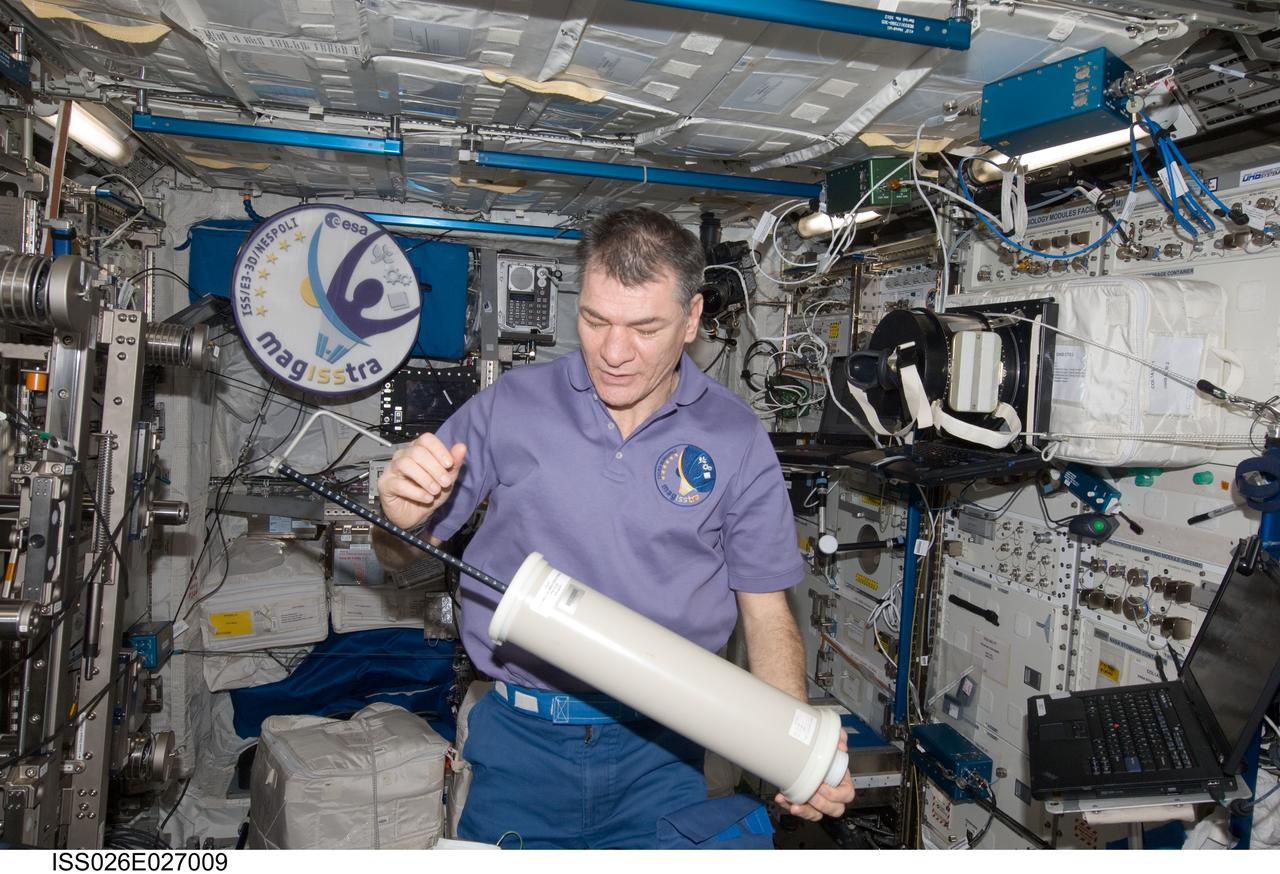
ISS026-E-027009 (14 Feb. 2011) --- European Space Agency (ESA) astronaut Paolo Nespoli, Expedition 26 flight engineer, performs periodic maintenance on the Pulmonary Function in Flight (PuFF) experiment by re-greasing the PuFF calibration syringe in the Columbus laboratory of the International Space Station.
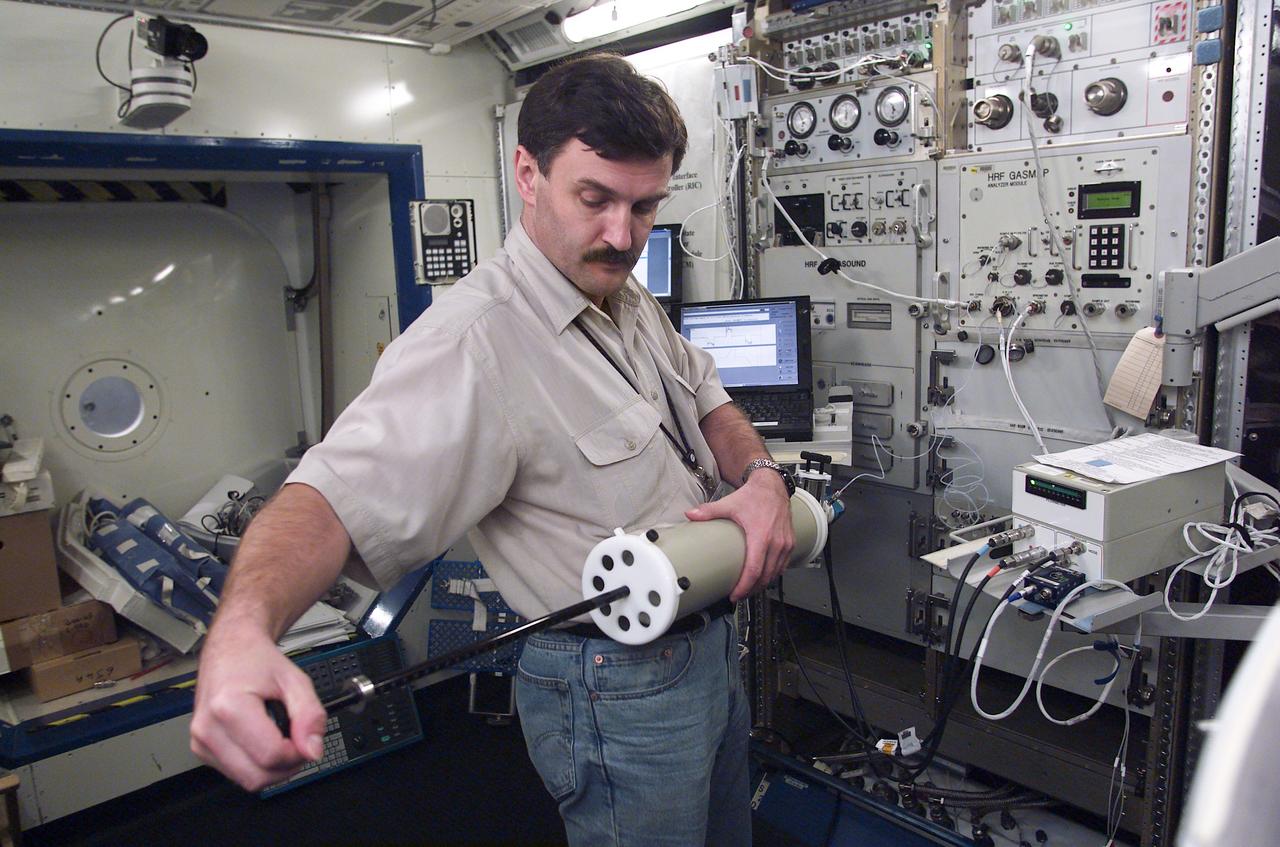
JSC2002-E-04266 (25 January 2002) --- Cosmonaut Alexander Kaleri, Expedition Five back-up crewmember representing Rosaviakosmos, participates in Pulmonary Function in Flight (PuFF) nominal operations training in the International Space Station (ISS) Destiny laboratory mockup/trainer at the Johnson Space Center’s Space Vehicle Mockup Facility.
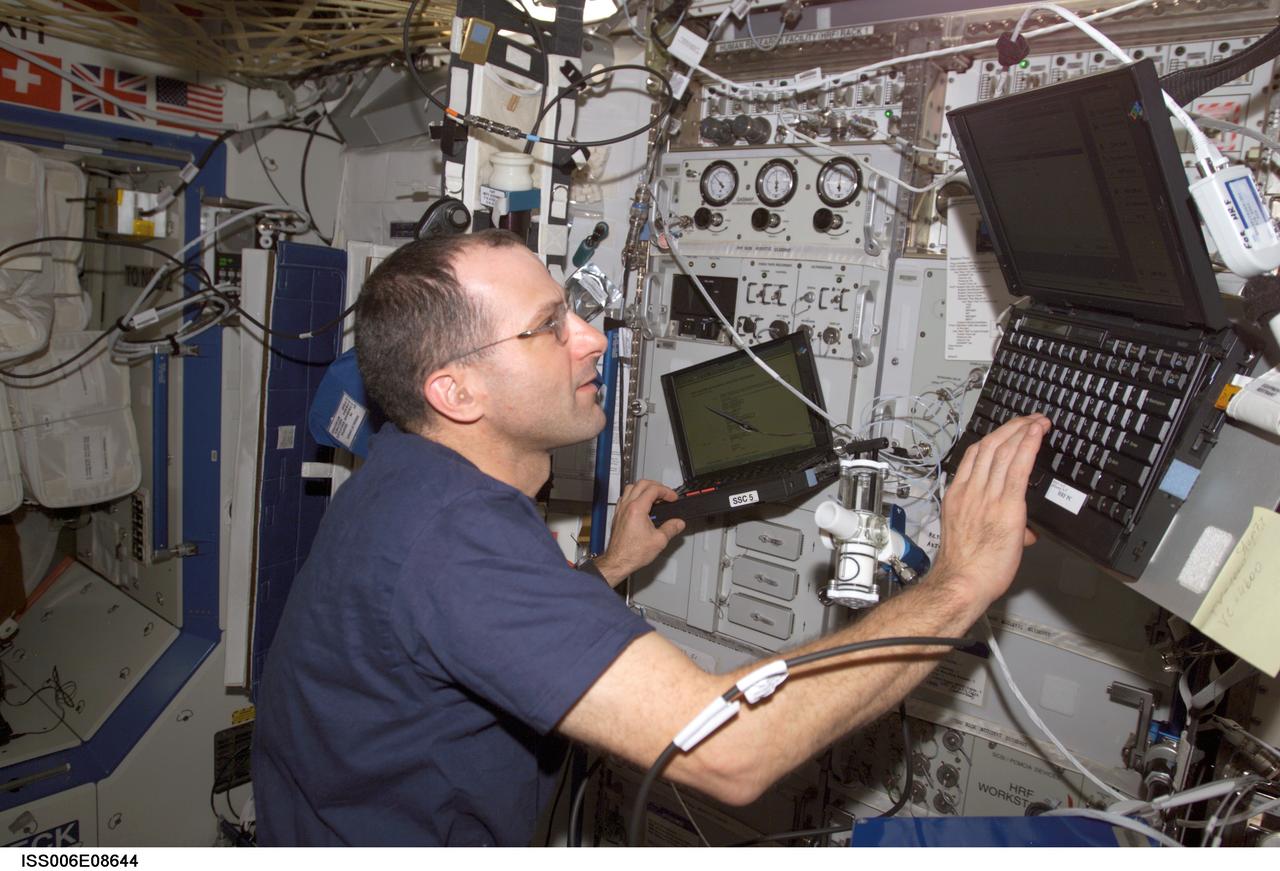
ISS006-E-08644 (9 December 2002) --- Astronaut Donald R. Pettit, Expedition Six NASA ISS science officer, works to set up Pulmonary Function in Flight (PuFF) hardware in preparation for a Human Research Facility (HRF) experiment in the Destiny laboratory on the International Space Station (ISS). Expedition Six is the fourth and final expedition crew to perform the HRF/PuFF Experiment on the ISS.
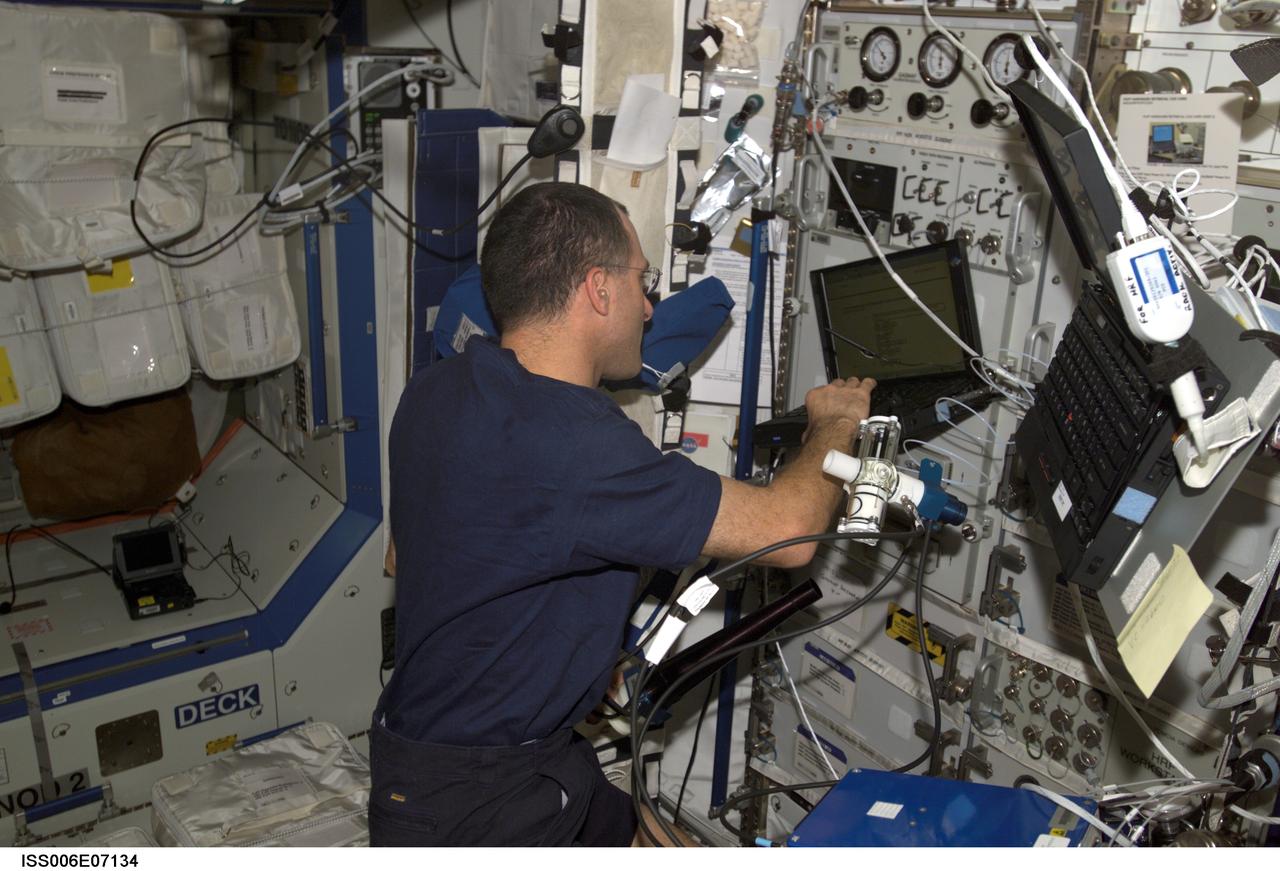
ISS006-E-07134 (9 December 2002) --- Astronaut Donald R. Pettit, Expedition Six NASA ISS science officer, works to set up Pulmonary Function in Flight (PuFF) hardware in preparation for a Human Research Facility (HRF) experiment in the Destiny laboratory on the International Space Station (ISS). Expedition Six is the fourth and final expedition crew to perform the HRF/PuFF Experiment on the ISS.
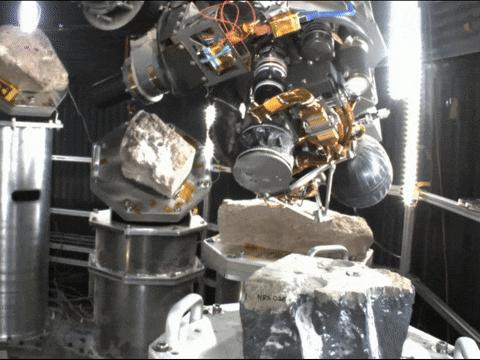
This video of the Perseverance rover's gDRT (Gaseous Dust Removal Tool) in action was taken during a test in a vacuum chamber at NASA's Jet Propulsion Laboratory in Southern California in August 2020. The tool fires 12-pounds-per-square-inch (about 83 kilopascal) puffs of nitrogen at the tailings and dust that cover a rock after it has been abraded by the rover. Five puffs are required per abrasion – one to vent the tanks and four to clear the abrasion. Animation available at https://photojournal.jpl.nasa.gov/catalog/PIA26578
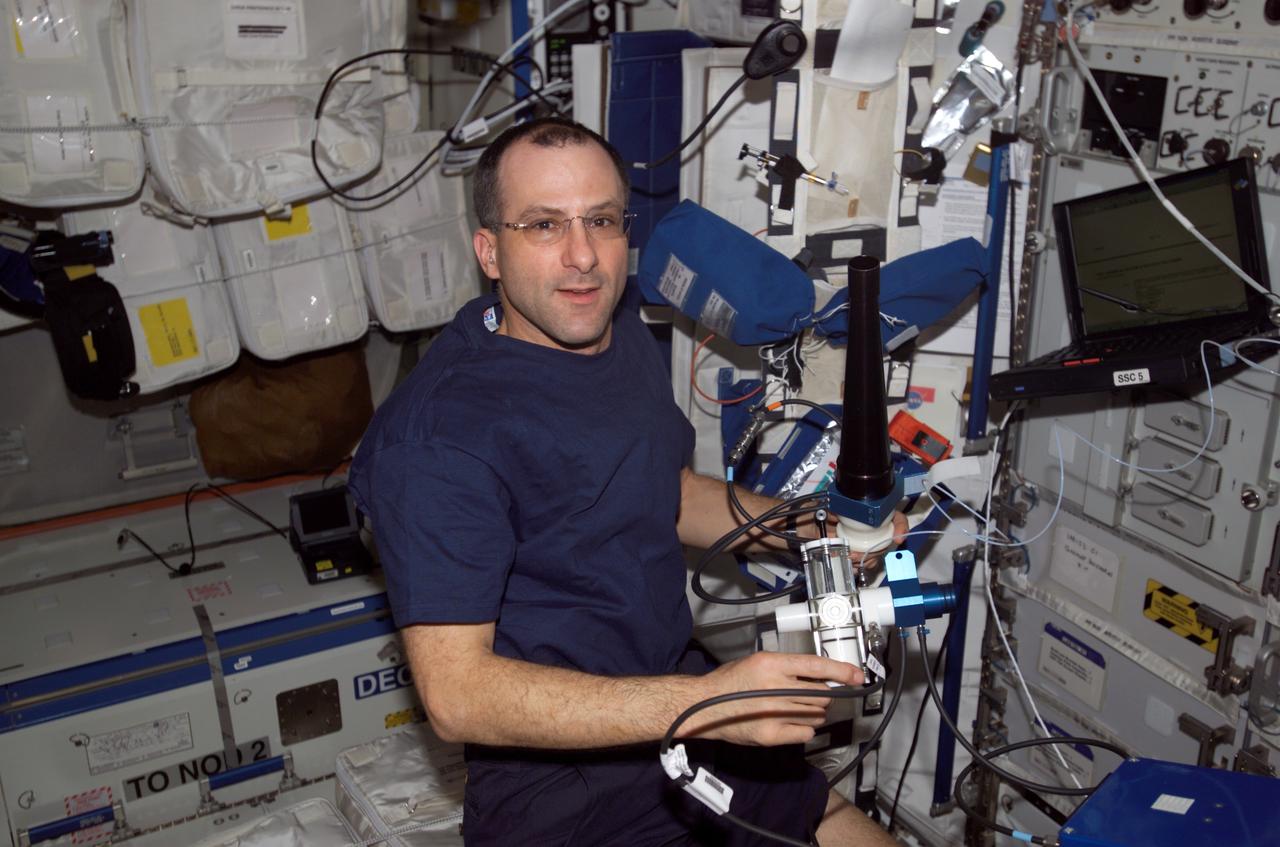
ISS006-E-07133 (9 December 2002) --- Astronaut Donald R. Pettit, Expedition 6 NASA ISS science officer, works to set up Pulmonary Function in Flight (PuFF) hardware in preparation for a Human Research Facility (HRF) experiment in the Destiny laboratory on the International Space Station (ISS). Expedition 6 is the fourth and final expedition crew to perform the HRF/PuFF Experiment on the ISS.
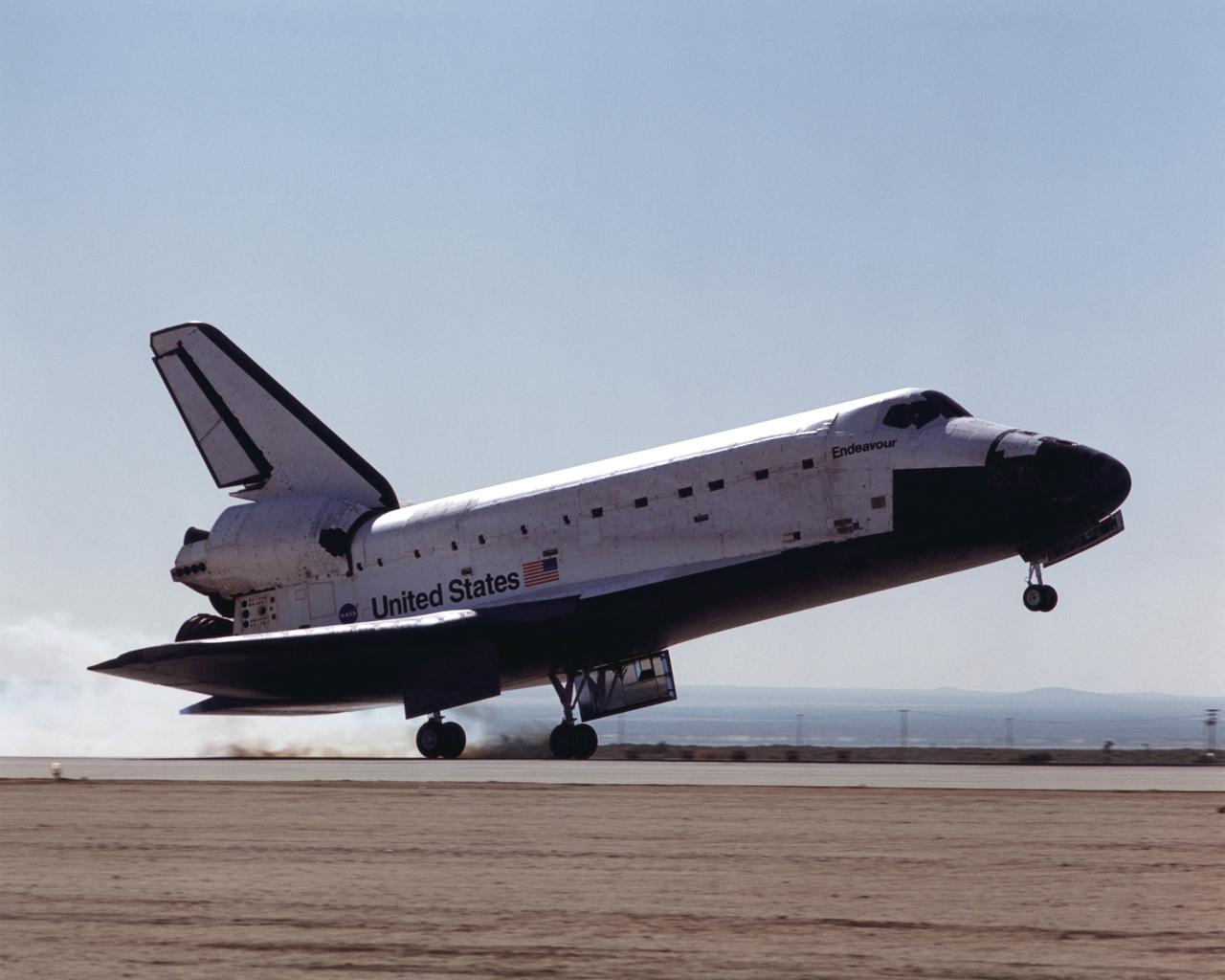
Space Shuttle Endeavour's tires produced a momentary puff of smoke as Mission STS-100 landed at NASA's Dryden Flight Research Center on Edwards Air Force Base, California, May 1, 2001.
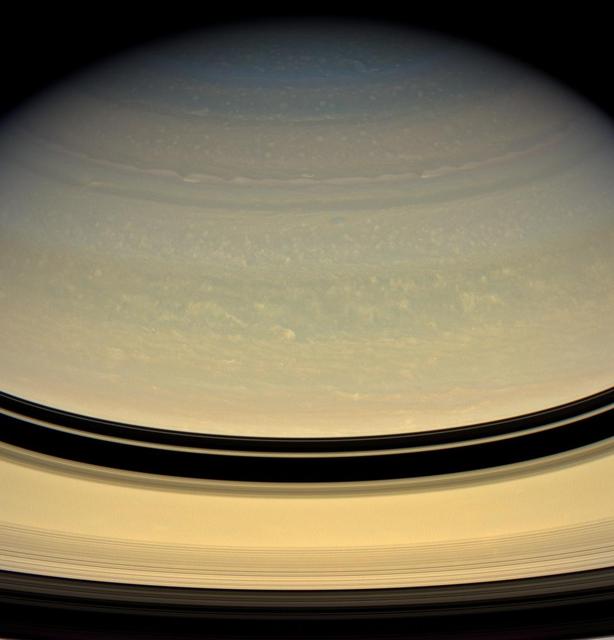
Bright puffs and ribbons of cloud drift lazily through Saturn's murky skies. In contrast to the bold red, orange and white clouds of Jupiter, Saturn's clouds are overlain by a thick layer of haze. The visible cloud tops on Saturn are deeper in its atmosphere due to the planet's cooler temperatures. This view looks toward the unilluminated side of the rings from about 18 degrees above the ringplane. Images taken using red, green and blue spectral filters were combined to create this natural color view. The images were acquired with the Cassini spacecraft wide-angle camera on April 15, 2008 at a distance of approximately 1.5 million kilometers (906,000 miles) from Saturn. Image scale is 84 kilometers (52 miles) per pixel. http://photojournal.jpl.nasa.gov/catalog/PIA09910
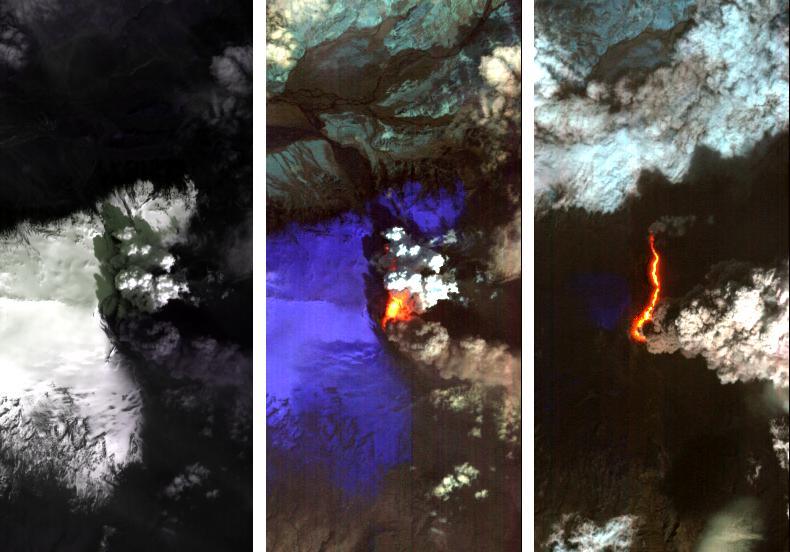
Dramatic changes have been observed at the Eyjafjallajökull volcano in Iceland by NASA's Earth Observing 1 (EO-1) spacecraft. On May 2, 2010, the Hyperion hyperspectral imager on EO-1 imaged Eyjafjallajökull and identified the extent of a lava flow extending northwards from the main eruption vent. This lava flow had been previously reported by volcanologists in Iceland, and is slowly carving its way north through the ice cap. The image on the left (Figure 1) is at visible wavelengths, and shows the persistent dark volcanic plume emanating from the main vent. This plume is still rich in ash, hence its brown coloration. This ash is still causing problems, threatening new airspace closures over parts of Europe. Large cracks at the edge of the crater are an indication of the extent of ice removal from the icecap during the eruption. To the north of this vent is another plume that is very white. This second plume is the result of ice being boiled off, generally non-explosively, by the heat from the silicate lava flow. As a result this plume is probably comprised mostly of water vapour. The black lava shows up clearly against the ice in the left-hand image. The image in the center (Figure 2) is a false-color image in the short-wavelength infrared. In this image, ice appears as blue and hot pixels appear as red. Very hot pixels appear as yellow and white. Red pixels, visible though the plume chart the extent of the lava flow, which has extended some 1.8 kilometers (1.1 miles) northwards from the area of the vent that is emitting the most energy. Total heat loss on May 2 was estimated to be at least 300 megawatts. The image on the right (Figure 3) shows the lava flow on May 4, 2010. The entire lava channel is now exposed, most of the overlying ice having been removed and the white plume has mostly disappeared. Without the plume obscuring heat loss from the lava flow, a better estimate of heat loss can be made. On May 4, the volcano was emitting at least 1,600 megawatts of energy. Each image covers an area measuring 7.7 kilometers (4.8 miles) wide, and has a resolution of 30 meters (98 feet) per pixel. The vertical direction is north-northeast. http://photojournal.jpl.nasa.gov/catalog/PIA13098
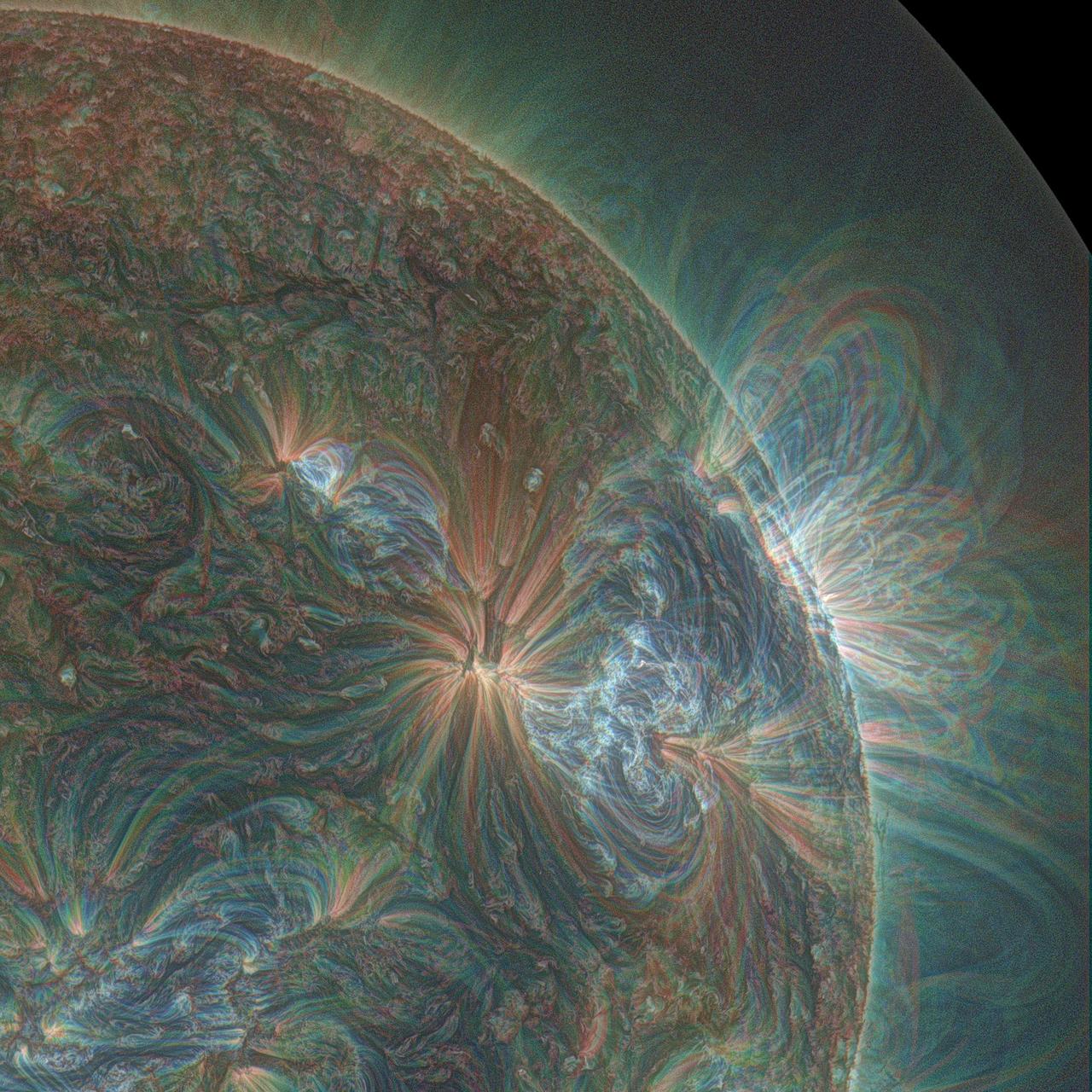
This combination of three wavelengths of light from NASA's Solar Dynamics Observatory shows one of the multiple jets that led to a series of slow coronal puffs on Jan. 17, 2013. The light has been colorized in red, green and blue. Read more: <a href="http://1.usa.gov/UQi41p" rel="nofollow">1.usa.gov/UQi41p</a> Credit: NASA//SDO/Alzate <b><a href="http://www.nasa.gov/audience/formedia/features/MP_Photo_Guidelines.html" rel="nofollow">NASA image use policy.</a></b> <b><a href="http://www.nasa.gov/centers/goddard/home/index.html" rel="nofollow">NASA Goddard Space Flight Center</a></b> enables NASA’s mission through four scientific endeavors: Earth Science, Heliophysics, Solar System Exploration, and Astrophysics. Goddard plays a leading role in NASA’s accomplishments by contributing compelling scientific knowledge to advance the Agency’s mission. <b>Follow us on <a href="http://twitter.com/NASAGoddardPix" rel="nofollow">Twitter</a></b> <b>Like us on <a href="http://www.facebook.com/pages/Greenbelt-MD/NASA-Goddard/395013845897?ref=tsd" rel="nofollow">Facebook</a></b> <b>Find us on <a href="http://instagram.com/nasagoddard?vm=grid" rel="nofollow">Instagram</a></b>
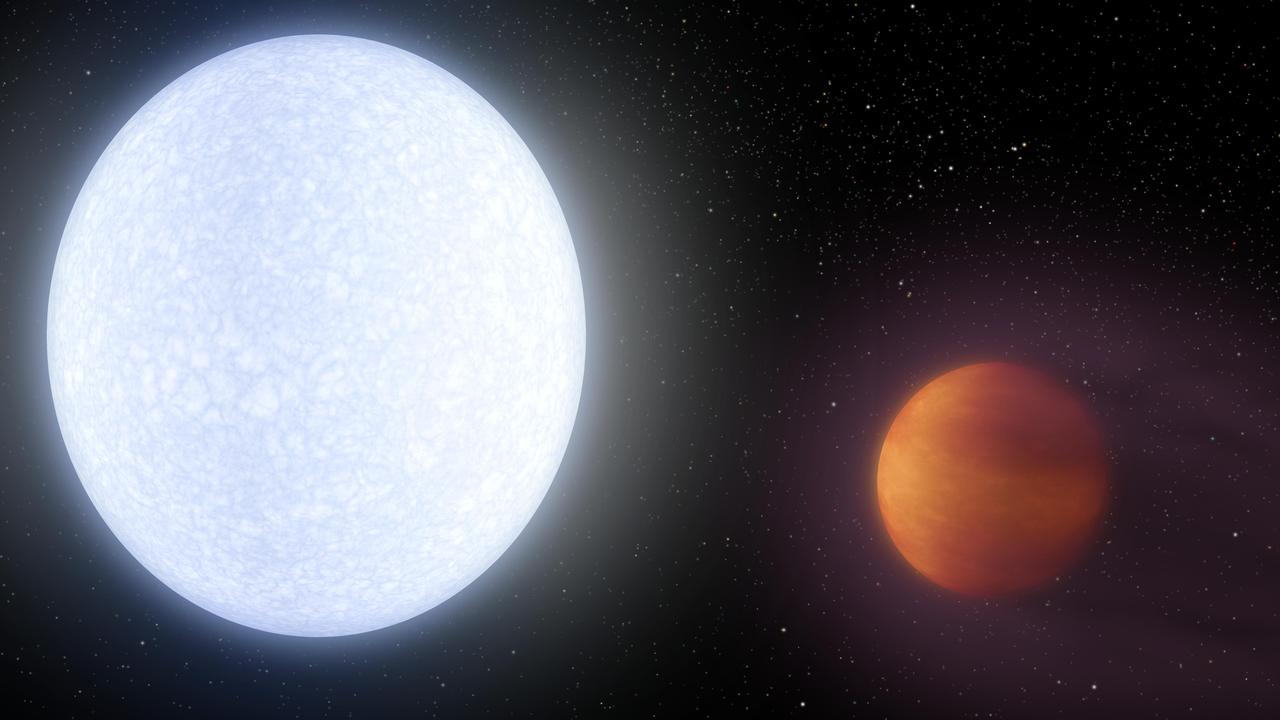
This artist's concept shows planet KELT-9b orbiting its host star, KELT-9. It is the hottest gas giant planet discovered so far. With a dayside temperature of more than 7,800 degrees Fahrenheit (4,600 Kelvin), KELT-9b is a planet that is hotter than most stars. But its star, called KELT-9, is even hotter -- a blue A-type star that is likely unraveling the planet through evaporation. KELT-9b is a gas giant 2.8 times more massive than Jupiter, but only half as dense. Scientists would expect the planet to have a smaller radius, but the extreme radiation from its host star has caused the planet's atmosphere to puff up like a balloon. The planet is also unusual in that it orbits perpendicular to the spin axis of the star. That would be analogous to the planet orbiting perpendicular to the plane of our solar system. One "year" on this planet is less than two days long. The KELT-9 star is only 300 million years old, which is young in star time. It is more than twice as large, and nearly twice as hot, as our sun. Given that the planet's atmosphere is constantly blasted with high levels of ultraviolet radiation, the planet may even be shedding a tail of evaporated planetary material like a comet. An animation is available at https://photojournal.jpl.nasa.gov/catalog/PIA21472
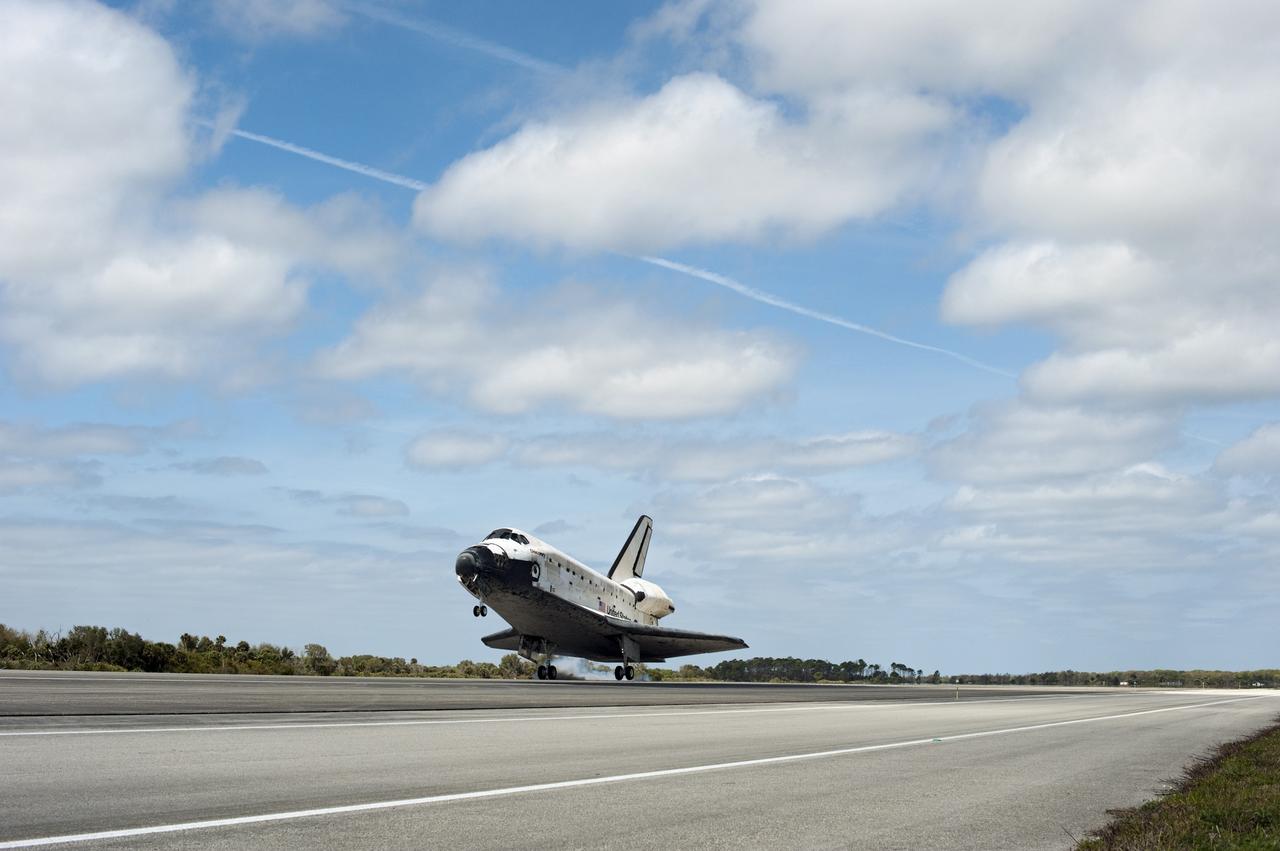
CAPE CANAVERAL, Fla. - A puff of smoke from space shuttle Discovery's tires follows their contact with Runway 15 at the Shuttle Landing Facility at NASA's Kennedy Space Center in Florida. Discovery's final return from space completed the 13-day, 5.3-million-mile STS-133 mission. Main gear touchdown was at 11:57:17 a.m., followed by nose gear touchdown at 11:57:28, and wheelstop at 11:58:14 a.m. On board are Commander Steve Lindsey, Pilot Eric Boe, and Mission Specialists Nicole Stott, Michael Barratt, Alvin Drew and Steve Bowen. Discovery and its six-member crew delivered the Permanent Multipurpose Module, packed with supplies and critical spare parts, as well as Robonaut 2, the dexterous humanoid astronaut helper, to the orbiting outpost. STS-133 was Discovery's 39th and final mission. This was the 133rd Space Shuttle Program mission and the 35th shuttle voyage to the space station. Photo credit: NASA/Sandra Joseph and Kevin O'Connell
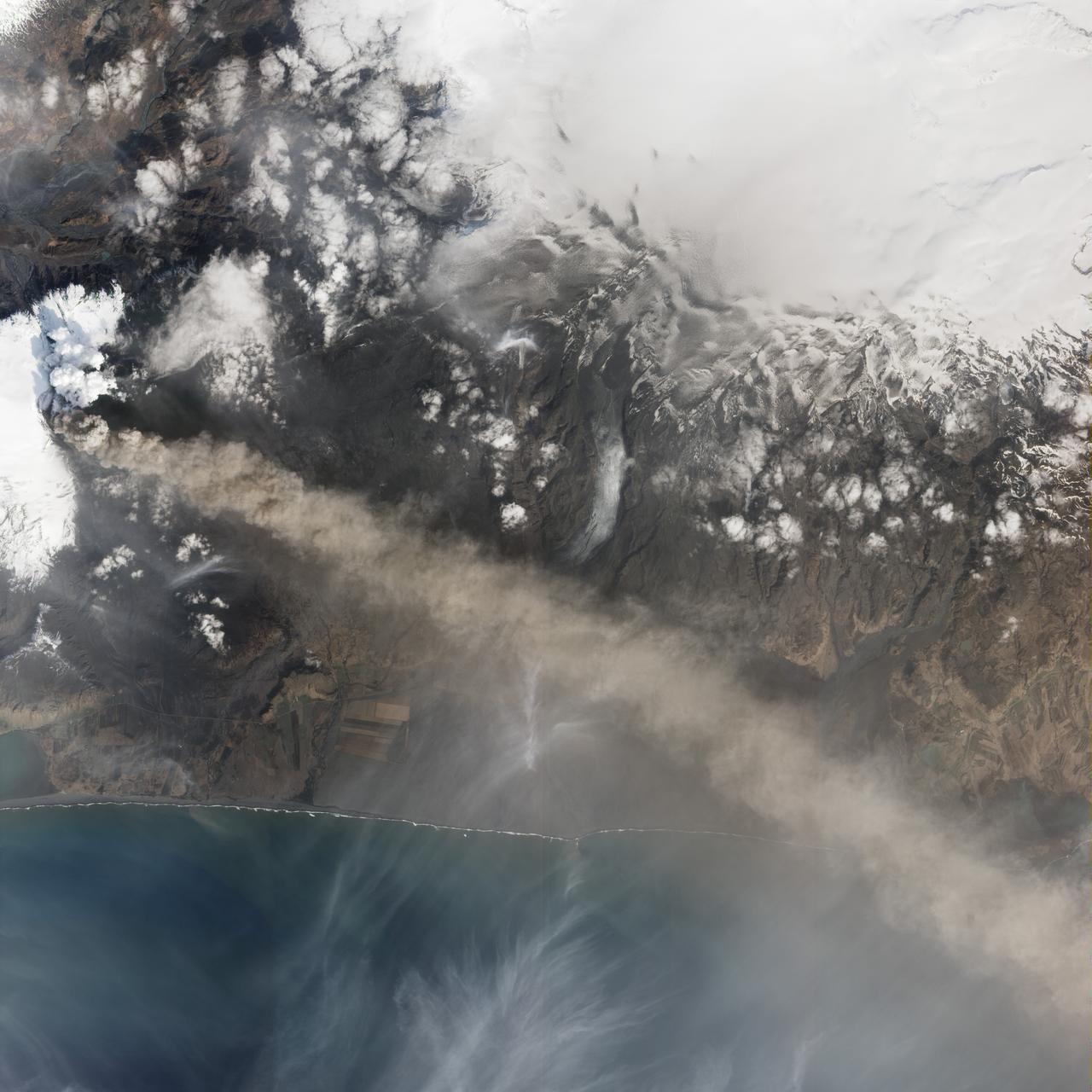
NASA satellite image acquired May 2, 2010 To view a detail of this image go to: <a href="http://www.flickr.com/photos/gsfc/4584266734/">www.flickr.com/photos/gsfc/4584266734/</a> Ash and steam continued billowing from Eyjafjallajökull Volcano in early May 2010. The Advanced Land Imager (ALI) on NASA’s Earth Observing-1 (EO-1) satellite captured this natural-color image on May 2, 2010. The volcano’s summit is near the left edge of this image, capped by a dark plume. The plume is dull gray-brown, indicating that its principal visible component is volcanic ash. Ash from the plume blows toward the east-southeast, passing over a charcoal-colored ash field on the land surface. Just to the north of Eyjafjallajökull’s summit are white puffs of steam, likely from surface lava flows vaporizing snow and glacial ice. On May 4, 2010, the Icelandic Meteorological Office warned that Eyjafjallajökull showed no signs of ending its eruptive activity in the near future. The Met Office reported that ash from the volcano had reached a height of 5.8 to 6.0 kilometers (19,000 to 20,000 feet) above sea level, and had spread 65 to 80 kilometers (40 to 50 miles) east-southeast of the volcano, where it impeded visibility for local residents. The Met Office also reported that lava continued flowing down a steep hill north of the crater. NASA image by Robert Simmon, using ALI data from the EO-1 team. Caption by Michon Scott. Instrument: EO-1 – ALI To view other images from the Earth Observatory go to: <a href="http://earthobservatory.nasa.gov/" rel="nofollow">earthobservatory.nasa.gov/</a> <b><a href="http://www.nasa.gov/centers/goddard/home/index.html" rel="nofollow">NASA Goddard Space Flight Center</a></b> is home to the nation's largest organization of combined scientists, engineers and technologists that build spacecraft, instruments and new technology to study the Earth, the sun, our solar system, and the universe.
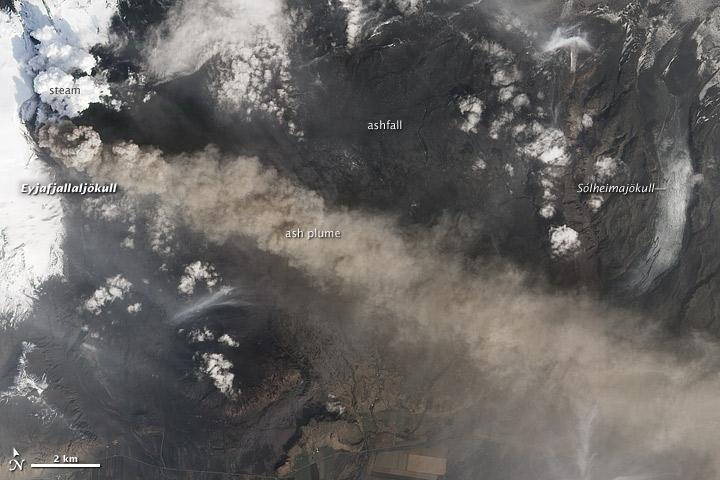
NASA satellite image acquired May 2, 2010 To see the full view of this image go to: <a href="http://www.flickr.com/photos/gsfc/4584266582/">www.flickr.com/photos/gsfc/4584266582/</a> Ash and steam continued billowing from Eyjafjallajökull Volcano in early May 2010. The Advanced Land Imager (ALI) on NASA’s Earth Observing-1 (EO-1) satellite captured this natural-color image on May 2, 2010. The volcano’s summit is near the left edge of this image, capped by a dark plume. The plume is dull gray-brown, indicating that its principal visible component is volcanic ash. Ash from the plume blows toward the east-southeast, passing over a charcoal-colored ash field on the land surface. Just to the north of Eyjafjallajökull’s summit are white puffs of steam, likely from surface lava flows vaporizing snow and glacial ice. On May 4, 2010, the Icelandic Meteorological Office warned that Eyjafjallajökull showed no signs of ending its eruptive activity in the near future. The Met Office reported that ash from the volcano had reached a height of 5.8 to 6.0 kilometers (19,000 to 20,000 feet) above sea level, and had spread 65 to 80 kilometers (40 to 50 miles) east-southeast of the volcano, where it impeded visibility for local residents. The Met Office also reported that lava continued flowing down a steep hill north of the crater. NASA image by Robert Simmon, using ALI data from the EO-1 team. Caption by Michon Scott. Instrument: EO-1 – ALI To view other images from the Earth Observatory go to: <a href="http://earthobservatory.nasa.gov/" rel="nofollow">earthobservatory.nasa.gov/</a> <b><a href="http://www.nasa.gov/centers/goddard/home/index.html" rel="nofollow">NASA Goddard Space Flight Center</a></b> is home to the nation's largest organization of combined scientists, engineers and technologists that build spacecraft, instruments and new technology to study the Earth, the sun, our solar system, and the universe.
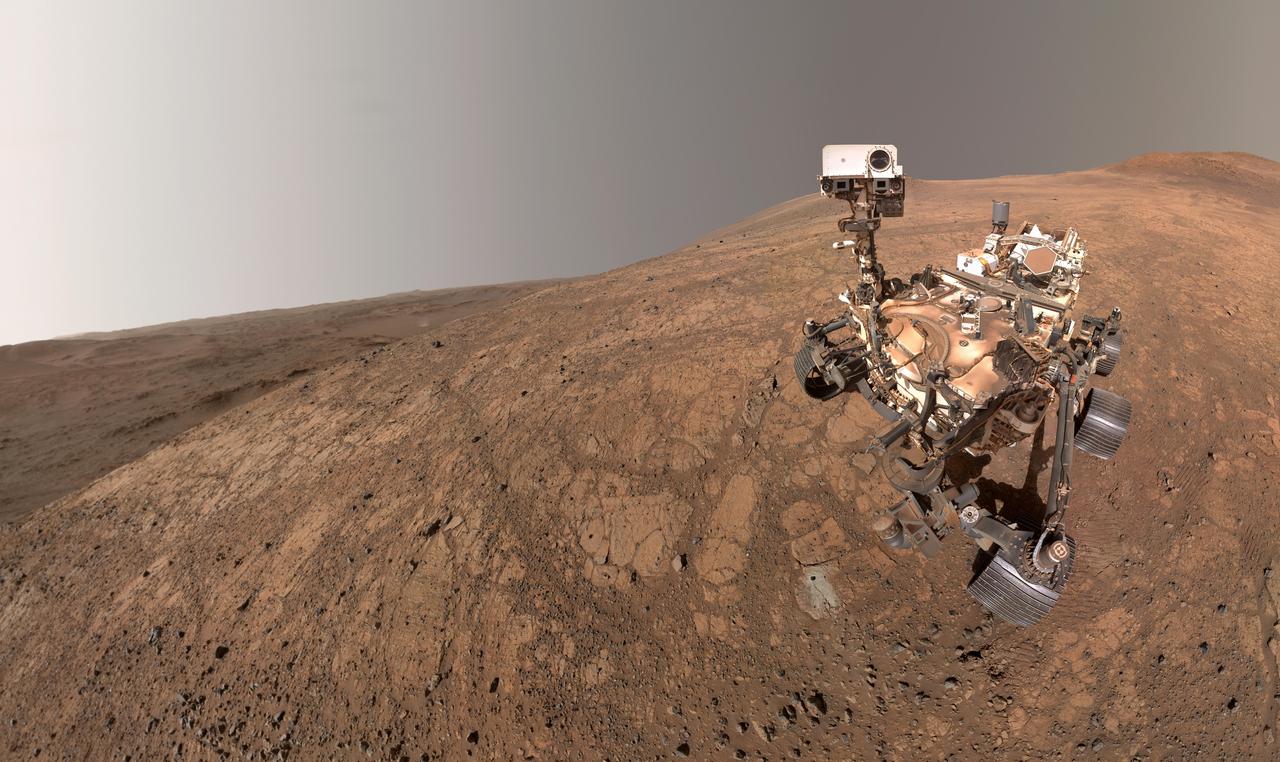
NASA's Perseverance rover took this selfie on May 10, 2025, marking its 1,500th Martian day, or sol, exploring the Red Planet. A dust devil twirls in the background, about 3 miles (5 kilometers) away, to the left of the rover. The small dark hole in the rock in front of the rover is the borehole made when Perseverance collected a sample dubbed "Bell Island." The selfie is composed of 59 images taken by the WATSON (Wide Angle Topographic Sensor for Operations and eNgineering) camera on the end of the rover's robotic arm. The images were stitched together after being sent back to Earth. The selfie was further processed to improve visual contrast and accentuate color differences. https://photojournal.jpl.nasa.gov/catalog/PIA26574
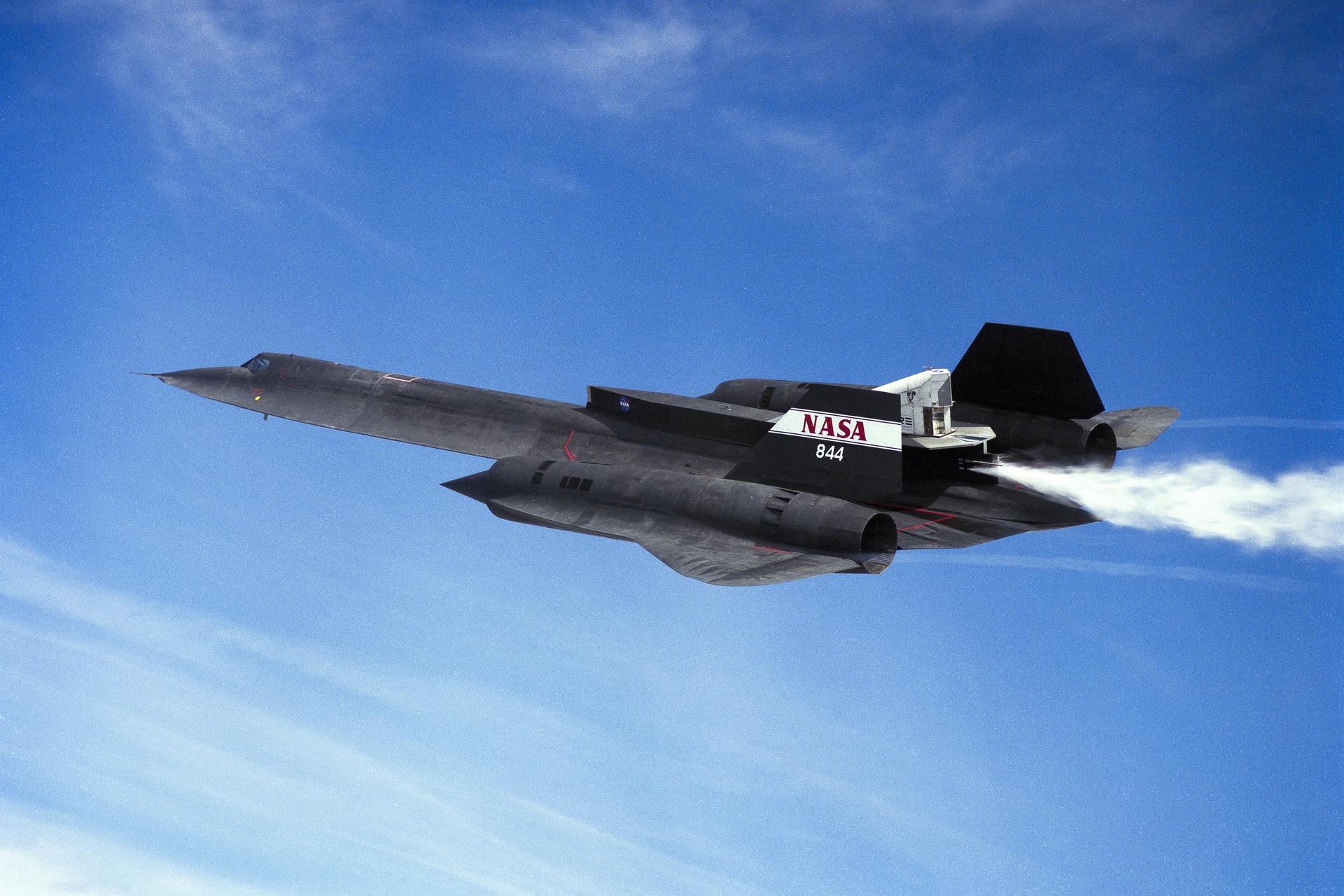
The NASA SR-71 triple-supersonic aircraft carries the Linear Aerospike Experiment on Wednesday, March 4, 1998, during a flight from NASA’s Armstrong (then Dryden) Flight Research Center in Edwards, California. Gaseous helium and liquid nitrogen cycled through the linear aerospike engine during the flight to check the engine’s plumbing system for leaks and to check the engine operating characteristics. Cold-flow tests must be accomplished successfully before firing the rocket engine experiment in flight.